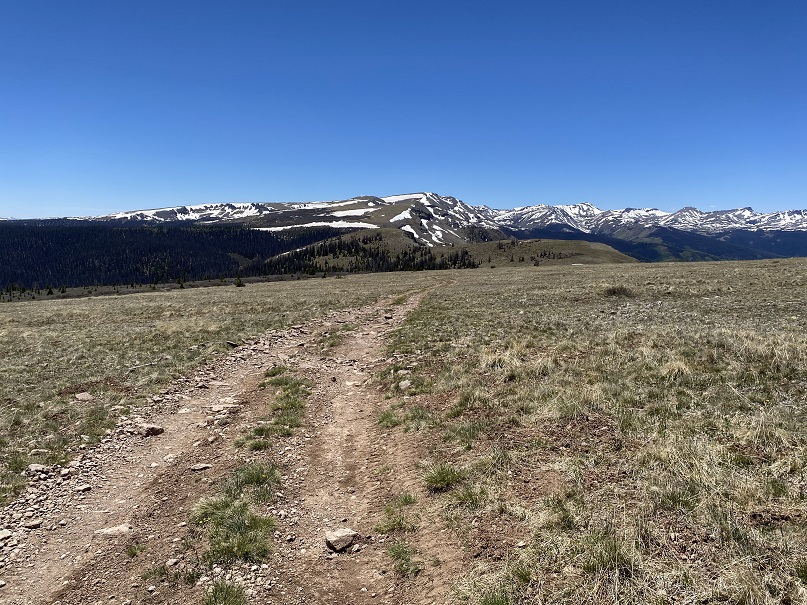
RT Length: 32.25 miles
Elevation Gain: 5511’
I know the traditional way to do this peak is from Carson Pass, but the last time I drove that road I told myself it would be the last time. I had marmot issues parking at the pass, and lost my 4WD on the way down. It wasn’t ideal. Earlier this summer I had attempted to make it to Carson Pass from the bottom of the trail, near where CR 30 and 36 meet. I was greeted with hoards of mosquitoes, and decided to hike another peak instead.
This time, I parked at Spring Creek Pass, knowing it was going to be a long day. What I hadn’t anticipated were all the elevation gains and losses along the way. The parking lot holds about 20 vehicles if everyone parks nicely. Another bonus: It’s a paved 2WD road to get there, and the bathroom was stocked and clean.

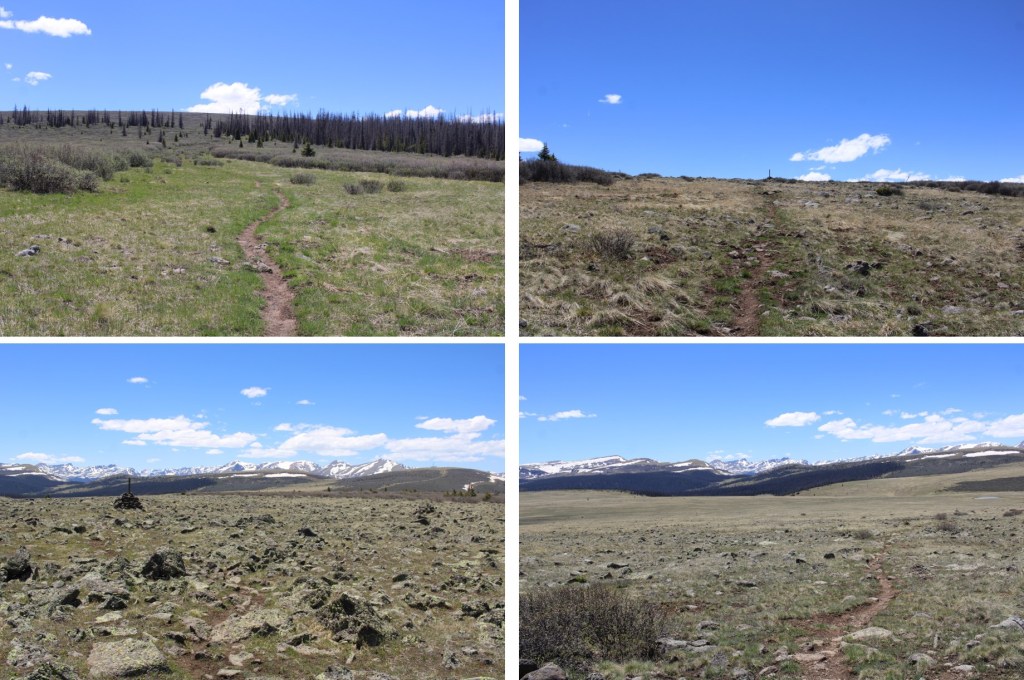
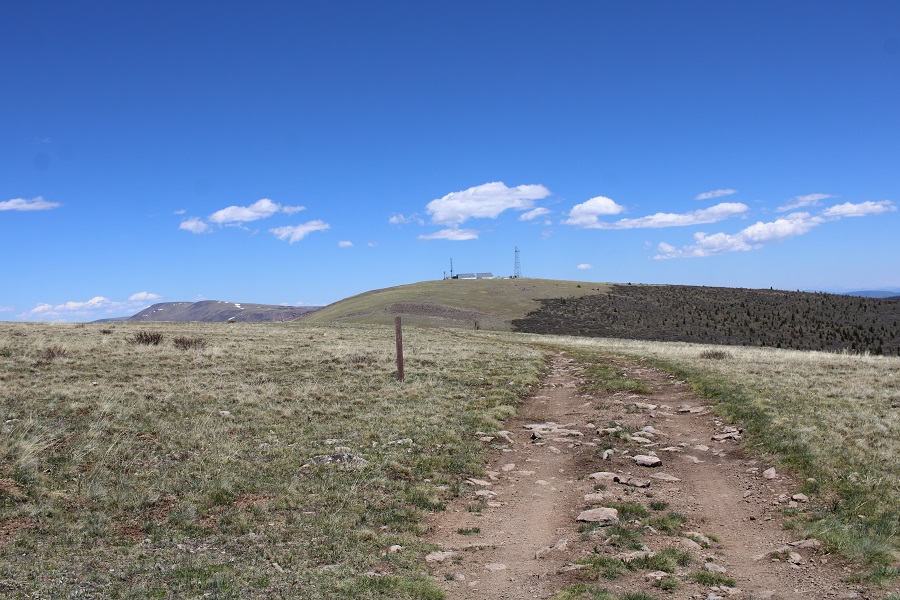
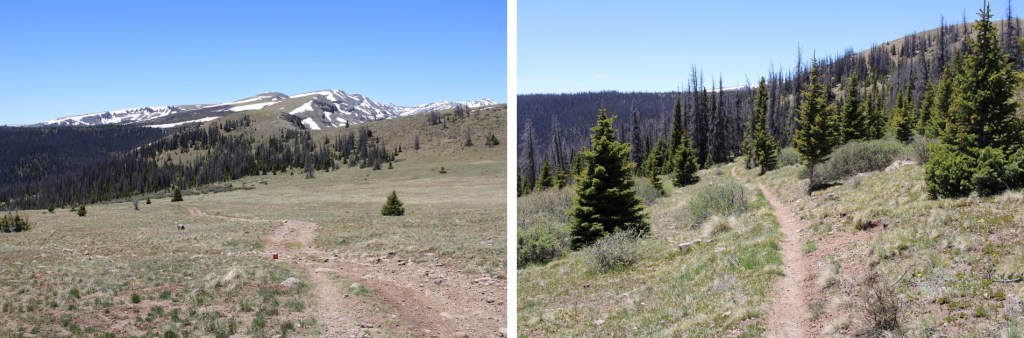
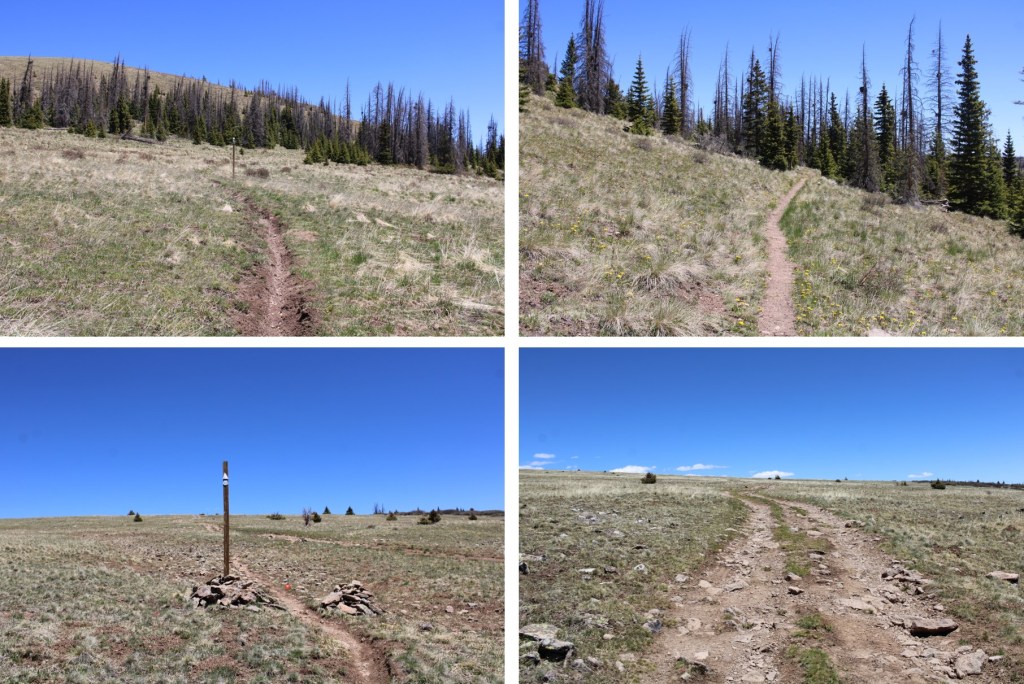
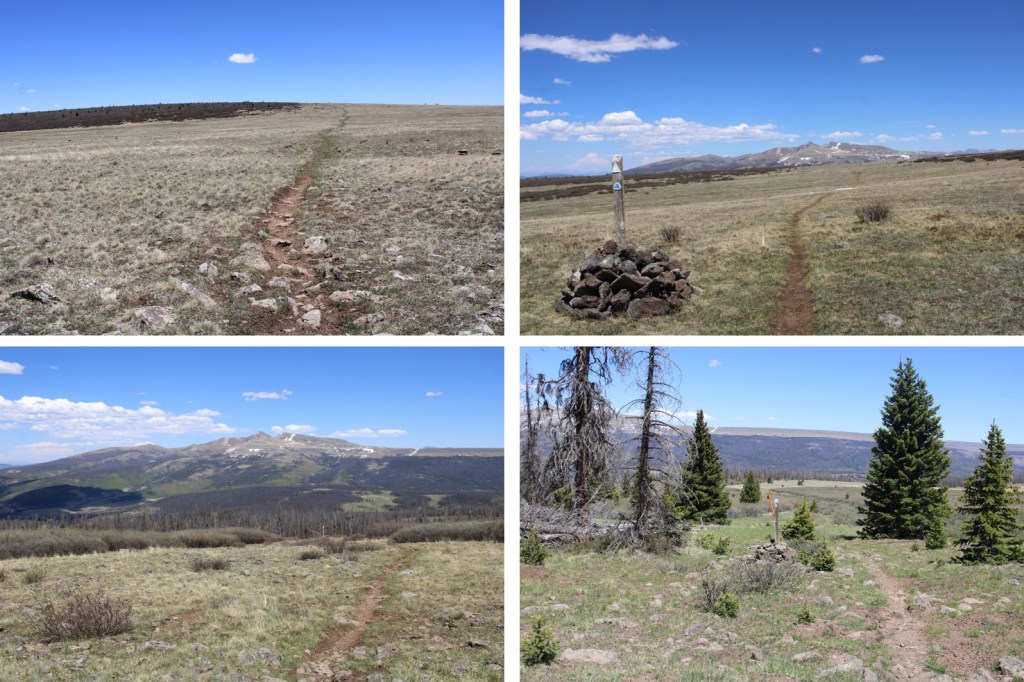
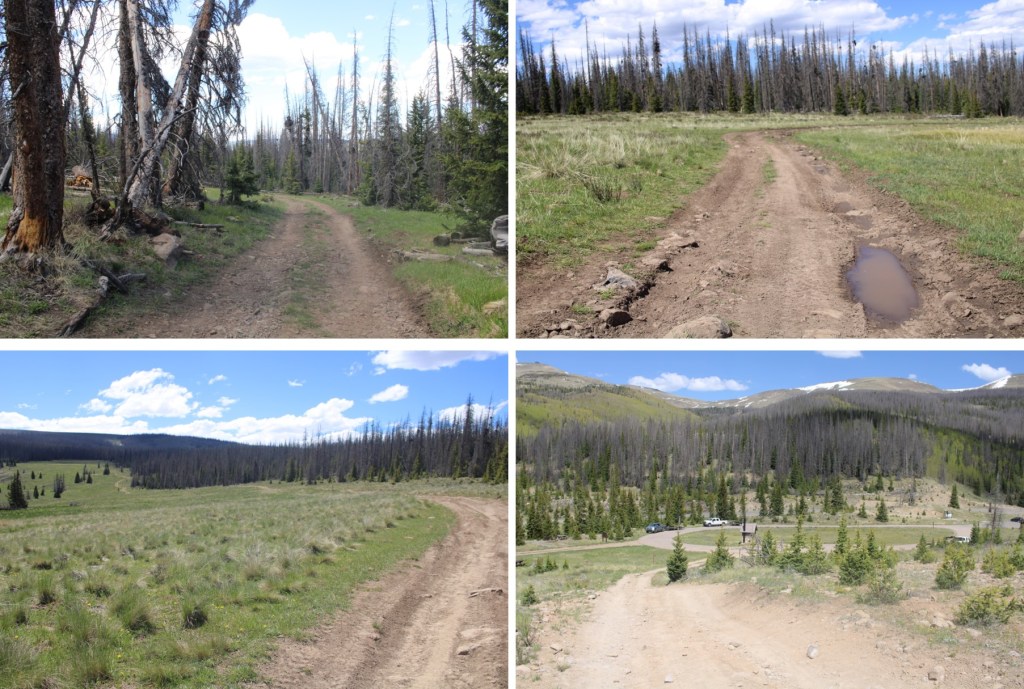
I parked and was on my way at 1:45am. I followed Trail 813/Colorado Trail/Continental Divide Trail for most of this hike. On the way in, in the dark, I took the 4WD road 547.1, which eventually connected back up with the Colorado Trail, but added about an extra mile. I followed the very well-marked trail west for 8.25 miles. Here are some pictures of that well marked trail, as it went in and out of the trees (which it seemed to do the entire hike).

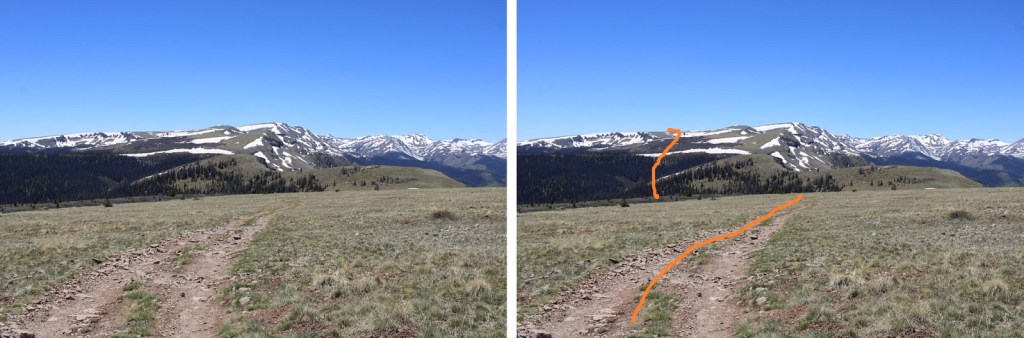
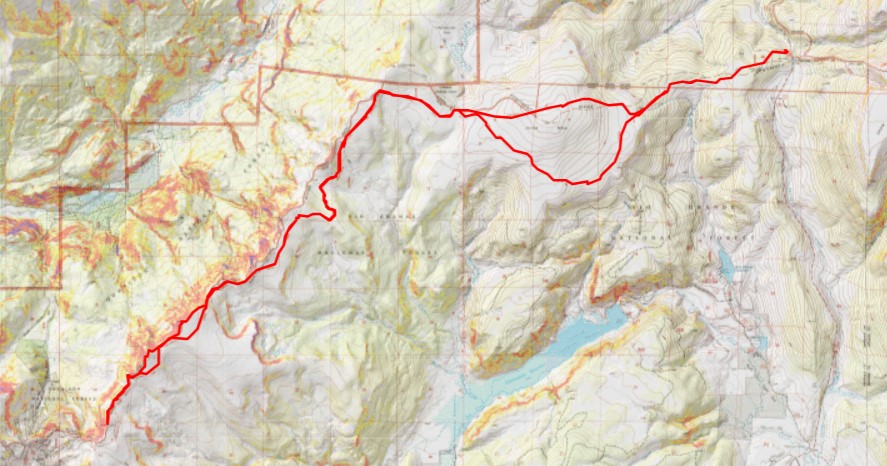
Here’s an overview of the route you can see at this point
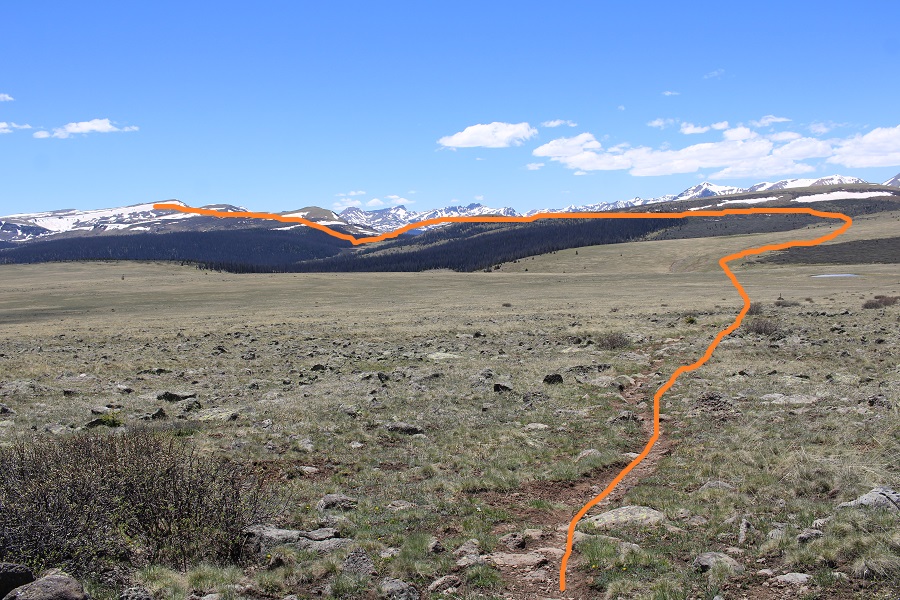

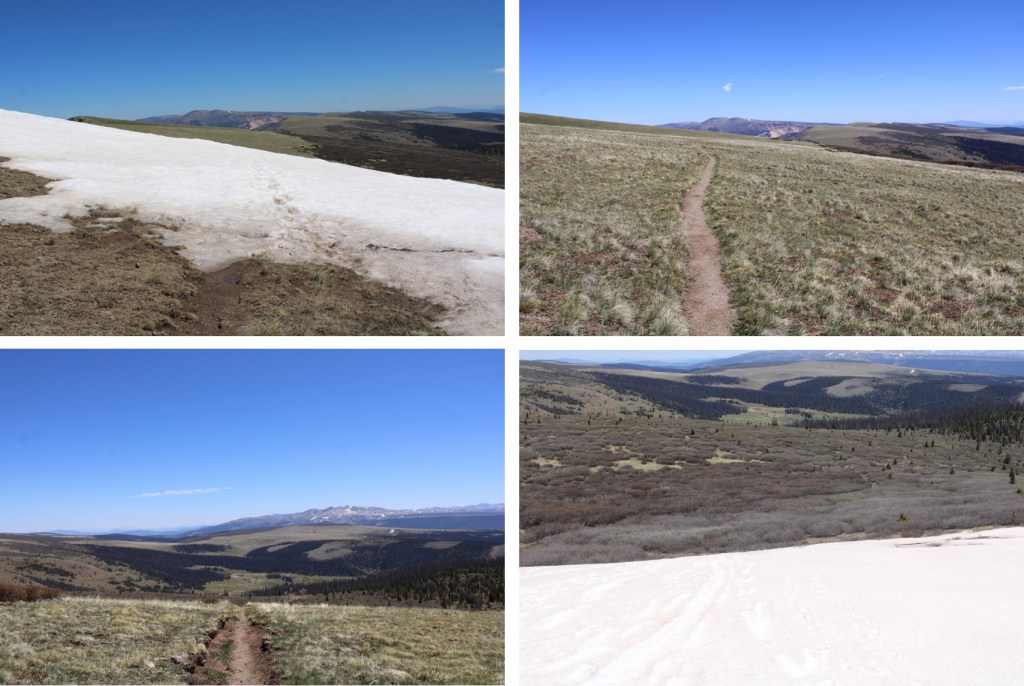
After hiking about 8.25 miles, the road curved to the left, and I was now heading southwest. Here the trail loses about 500’ of elevation as it brings you back into the trees.


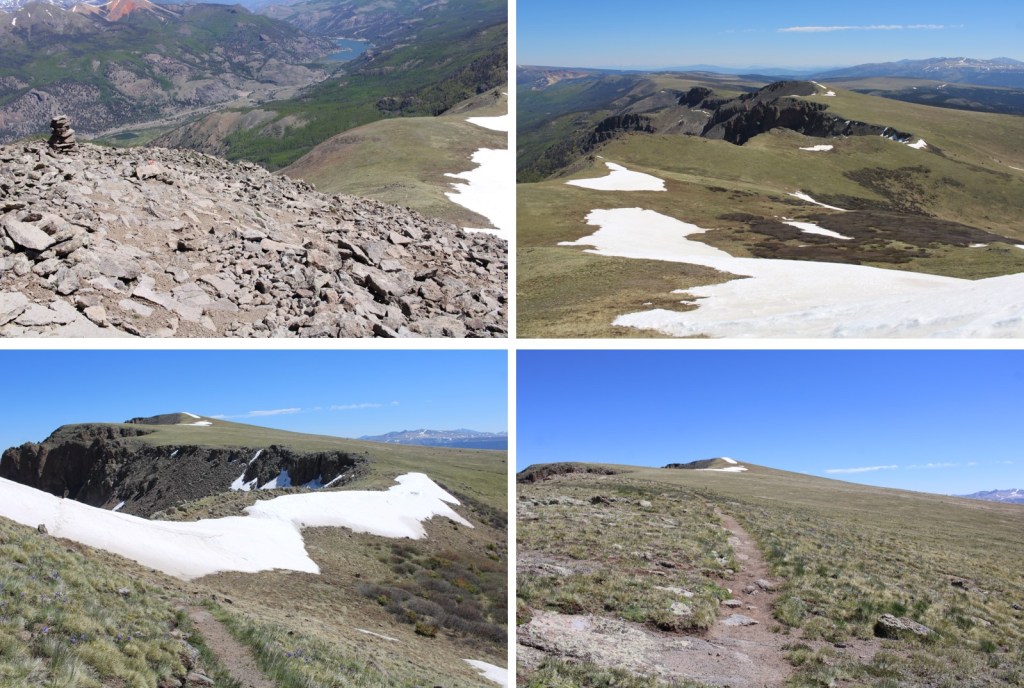
I passed through some willows, and continued following the trail to gain the ridge. This is where the snow began and the trail was no longer obvious. I was able to do all of this with just microspikes, but on the way back, I really, really wished I had an ice axe.
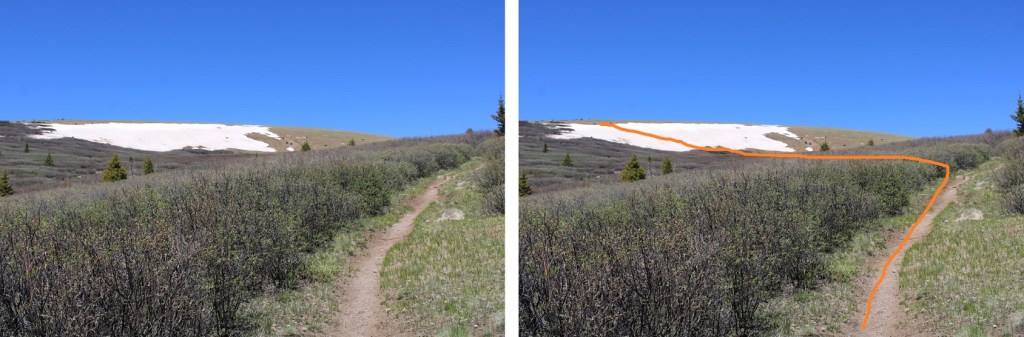
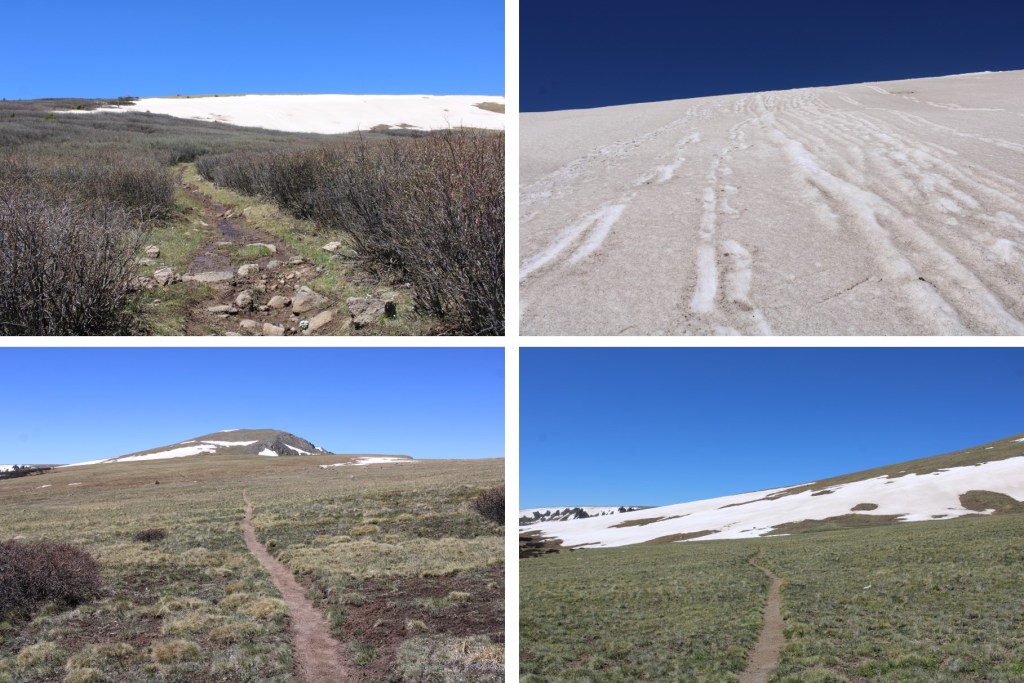

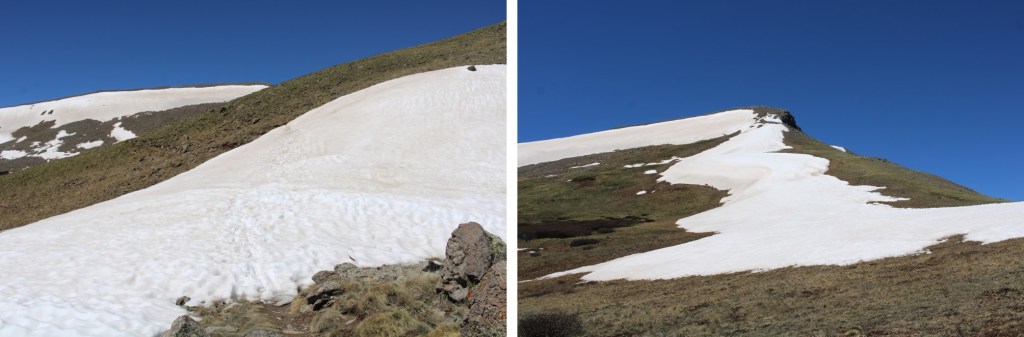
Here the trail was again obscured by snow, so this is the route I took to gain this ridge, keeping it mostly snow free

It was rocky near the top, but still class 2, and there was a large cairn to guide me.
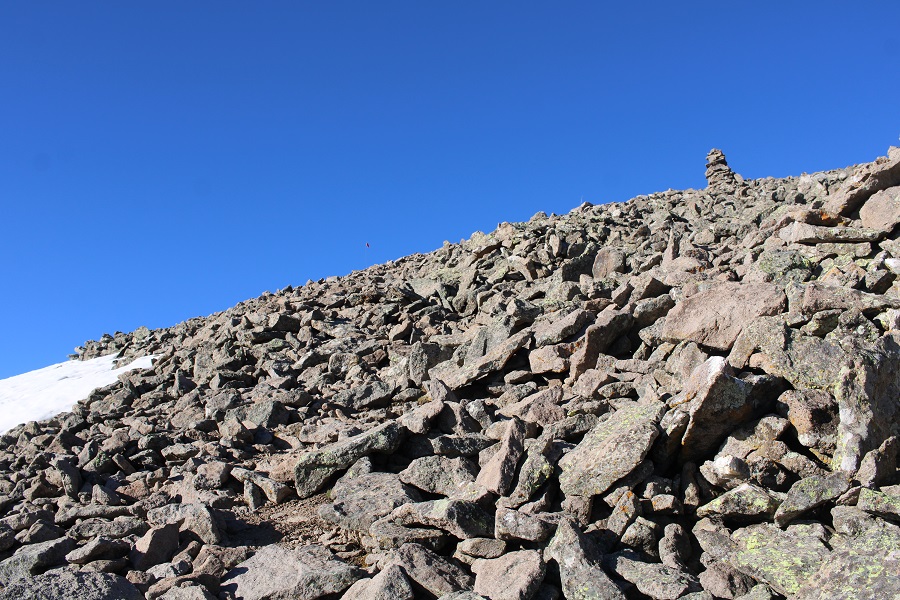
The trail picked back up again, and I followed it southwest, skirting below UN 13138

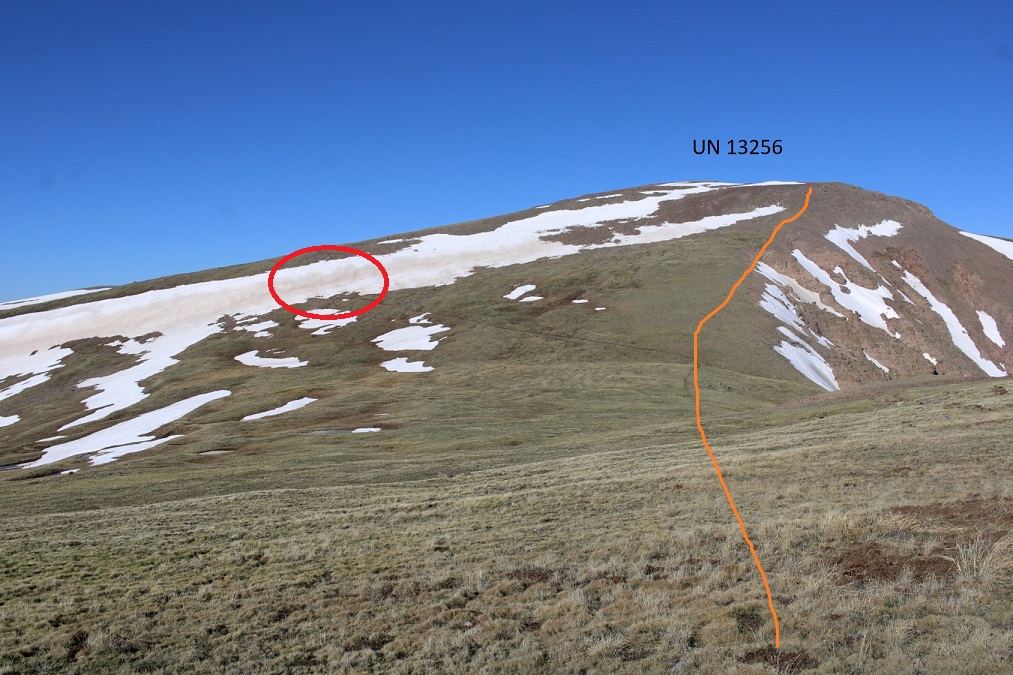
After hiking for 14.5 miles, I could finally see the two ranked peaks I was aiming for today

To avoid the snow on the way up (circled in red) I decided to just ascend straight up the slope. (I crossed the snow on the way back down, and this is mainly where I wished I’d had an ice axe).
The terrain quickly turned from tundra to rocks (still class 2)
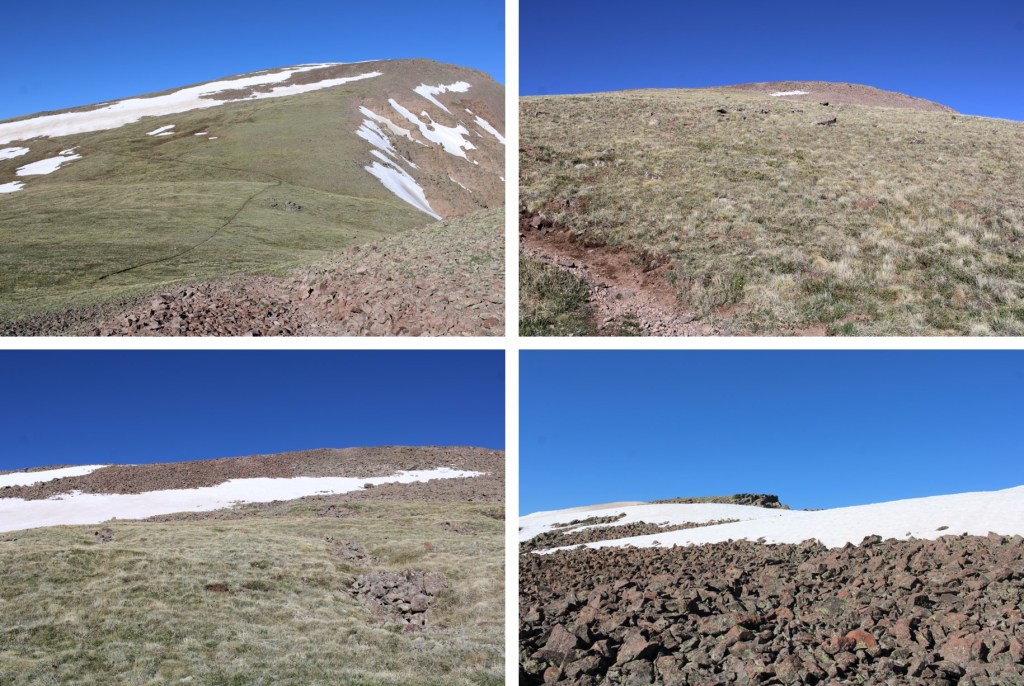
After gaining the ridge, the summit was to the southwest.

I summited UN 13256 at 8:15am.

UN 13256:
To the southwest, I could see Coney Benchmark. I would lose almost 400’ of elevation to get there.
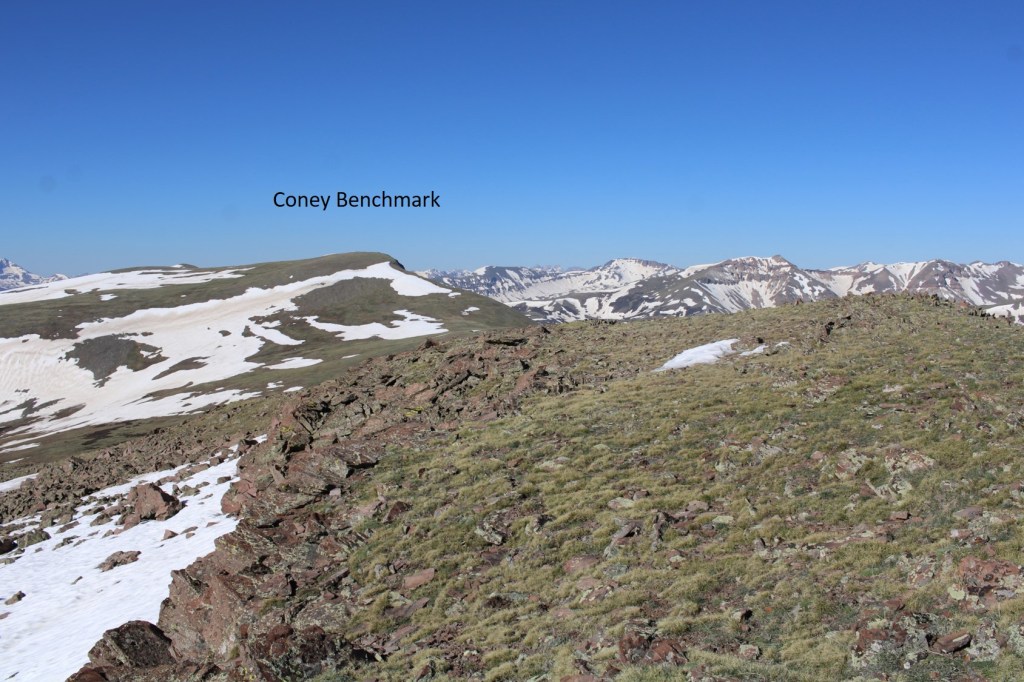
Knowing the Colorado Trail was down there somewhere, I headed south until I found it.

I then gained 475 feet to the summit of Coney Benchmark. Here’s the route I took.
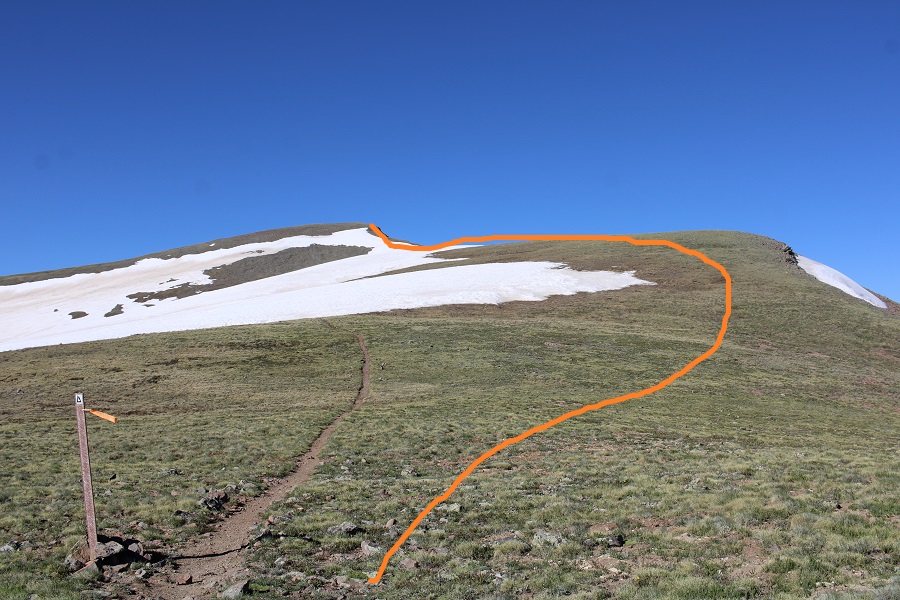
This was all class 2 to the summit.
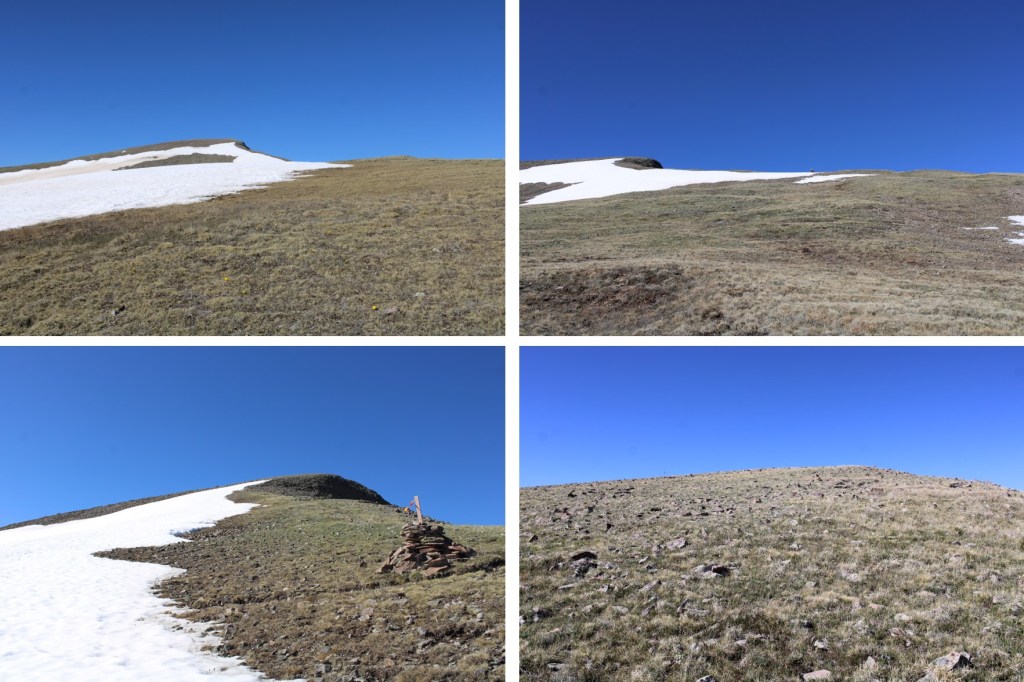
The summit was easy to find, but someone put a plastic summit register at the top, so of course the paper inside was wet.
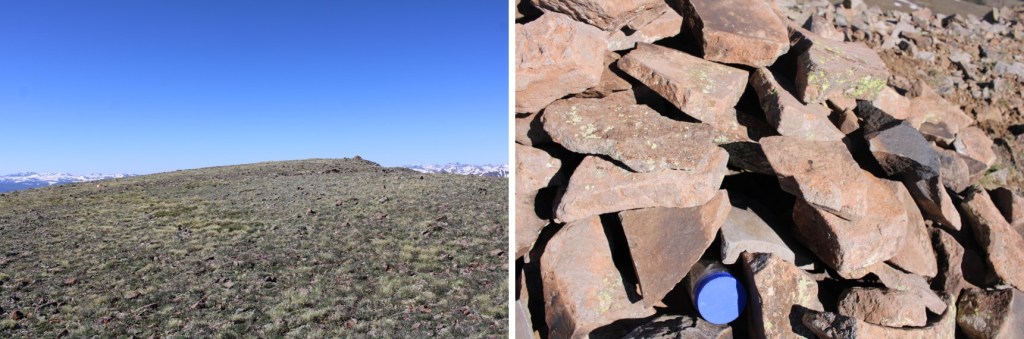

I summited Coney Benchmark at 9:15am

Coney Benchmark:
Looking northeast, back the way I came, I could see UN 13256 and UR 13138
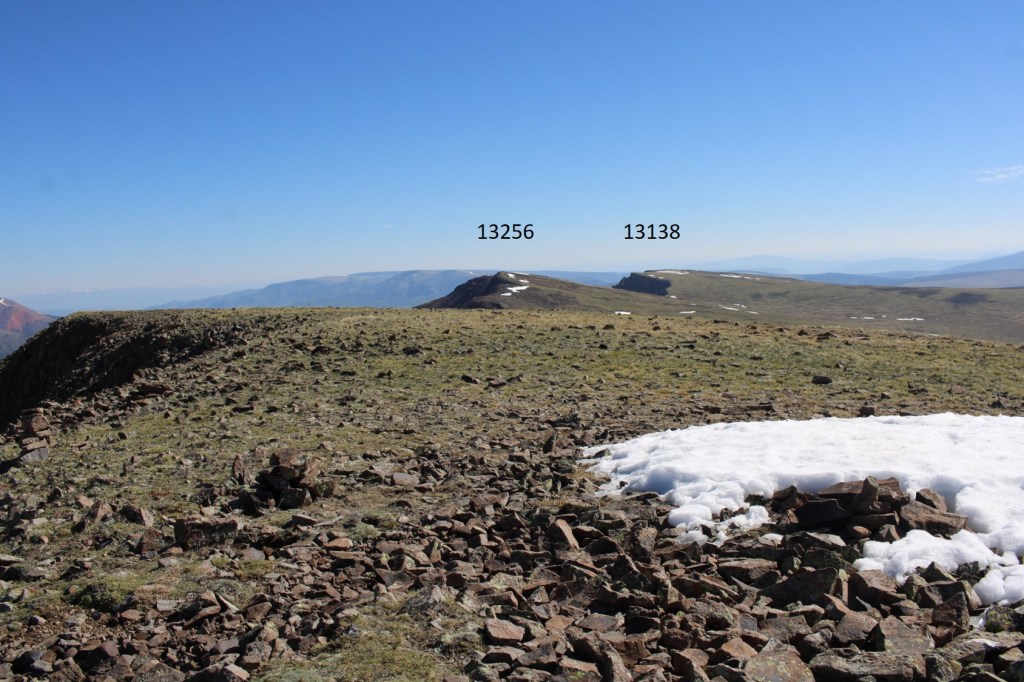
I retraced my steps back to the Coney Benchmark/13256 saddle

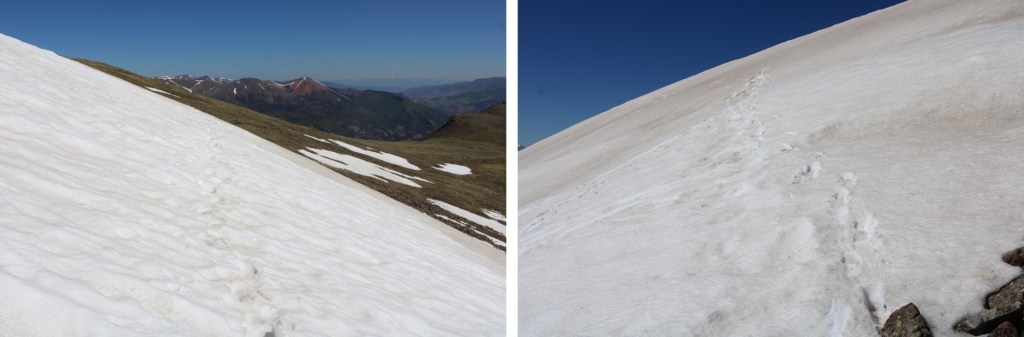
This time I skirted around 13256 and followed the Colorado Trail


This was the sketchy part, where I wished I’d had my ice axe. It’s steeper than it looks.
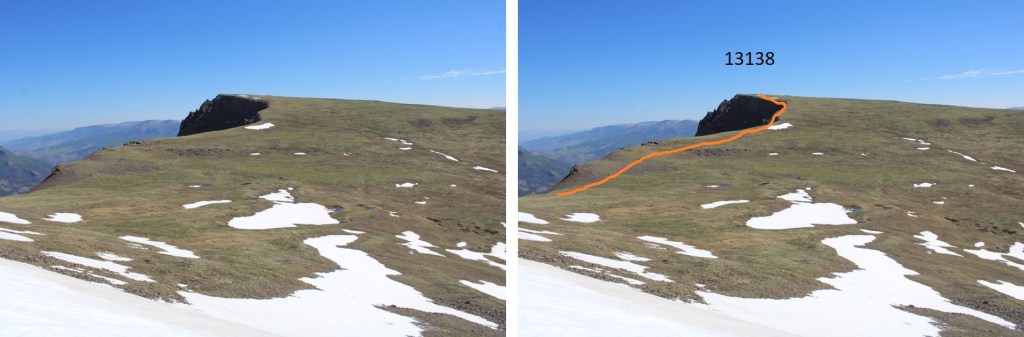
To summit 13138, I made my way to the 13256/13138 saddle, and just followed the ridge. All class 2.
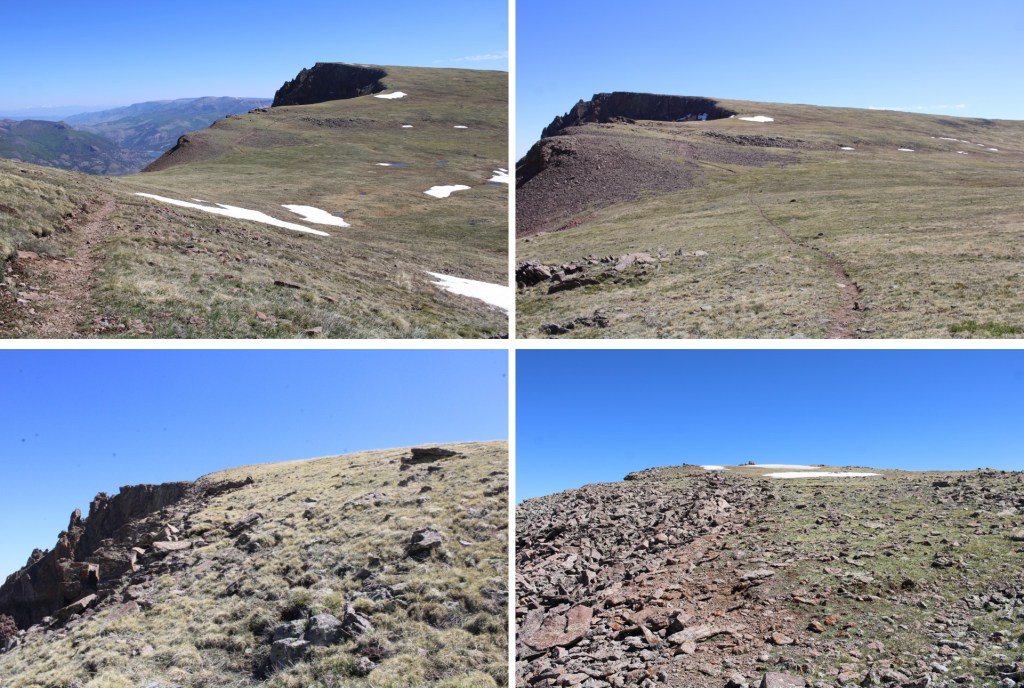
I summited UR 13,138 at 10:35am
UR 13,138:
Knowing if I continued to follow the ridge northeast I’d come back to the Colorado Trail, that’s what I did.

I picked up the Colorado Trail, and followed it 13 miles back to the trailhead, losing and gaining elevation the entire way back.

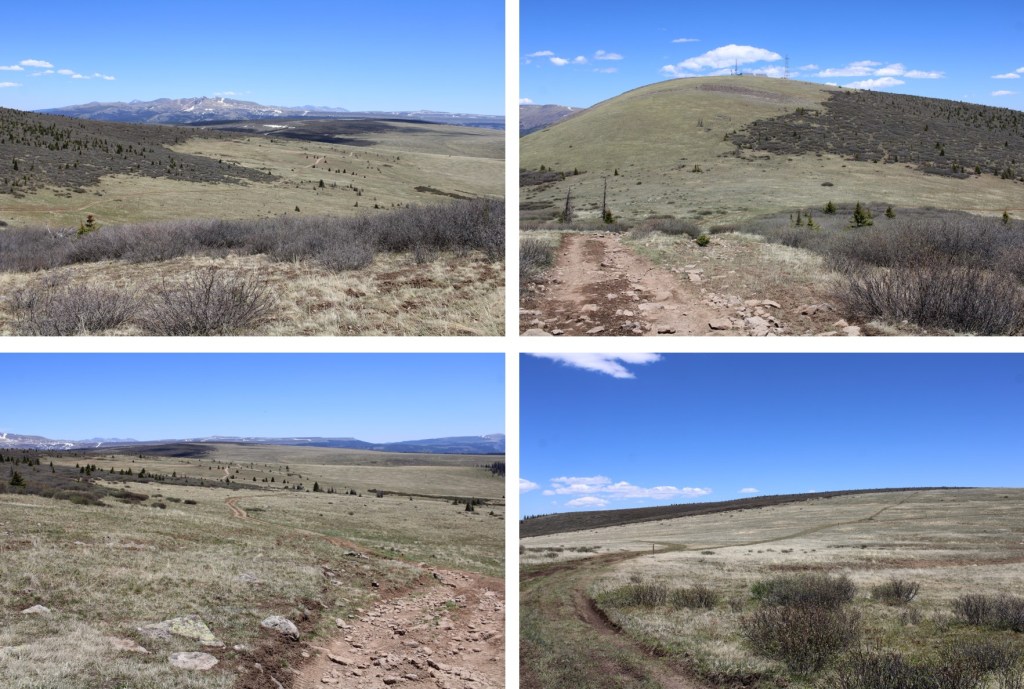
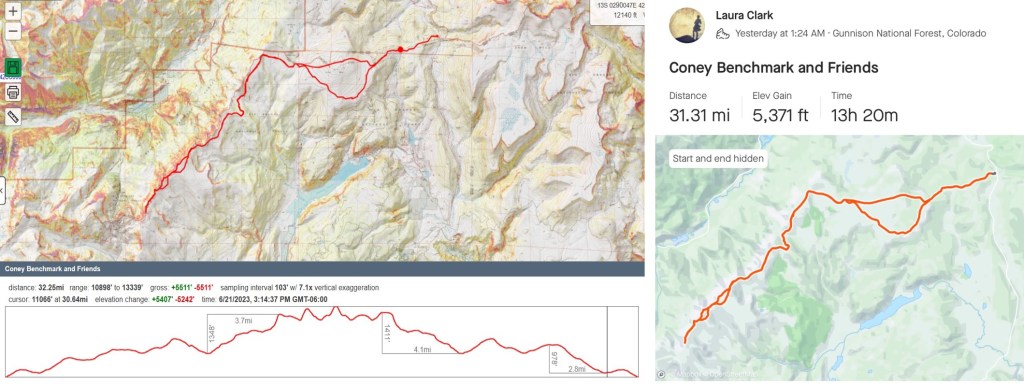
I made it back to my truck at 3:45pm, making this a 32.25 mile hike with 5511’ of elevation gain in 14 hours.
Check out all that elevation gain/loss!
On to the next trailhead!
 Wild Wanderer