I was a little worried it would be too cold to hike
today.When I got to the trailhead it
was 21 degrees.Brrrr!I met Tim at the Starsmore Discovery Center
and we drove up to the trail head at Gold Camp Road and High Drive.
We hiked up Gold Camp Road, past the old tunnel.Tim told me they’d wanted to put a road
through the tunnel, but someone decided to light a huge fire under the tunnel,
making it unstable for that purpose. Hikers…lol!
This trail had plenty of signs, although some of them looked
like they’d been there for decades (the iron signs).A few were misleading (the iron ones seem to
be at junctions and are usually devoid of arrows) but this one had “Turn Back”
written in Sharpee, which was actually the correct thing to do.
The trail to the falls was easy to follow and devoid of snow
directly on the trail (but there was a lot on the ground).The falls themselves were completely frozen
over and very slippery, so we couldn’t cross.
Instead we hiked around them to the right as far as we
could.
Side note:We saw
someone with their dog off leash that shouldn’t have been:the dog ran away, and kept running and
running and running.We’re not sure if
he ever found the pup?Also, it was
cold, but not too bad.Our jackets and
hats and gloves were plenty.
We hiked back to the truck, but it had seemed like ‘too easy’
of a hike, so we decided to take a side trip to Cascade Falls.It’s located very close to Helen Hunt falls,
and is supposed to be a great place to ice climb in winter.There were a few climbers there when we got
there (Tim knew them).Apparently it
wasn’t iced over as well as they’d have liked, but were climbing anyway.
It was cool to see the way the ice formed over the rooster
tail
I’ve put a lot of miles on these hiking boots:In the past year I’ve climbed 35 unique
14ers, but I’ve done over 100 hikes wearing these boots, most averaging around
10 miles each.That’s a lot of mileage
to get out of a pair of shoes!So while I’m a bit upset these boots only
lasted a year and a half, I got great use out of them.Most of the tread has worn off the bottom,
and they don’t grasp like they should.I’m
slipping on the trail again
Up until recently they were completely water proof.I could cross streams without worrying about
my feet getting wet.It was awesome! However,
recently they’ve begun to show their wear. They have several holes both on the shoe itself and on the rubber
sole.That doesn’t help much with water,
not to mention snow and little rocks. The past few hikes I’ve been on I’ve had lots of sand and rocks to dump out
at the end, and since my fingers have been frozen I wasn’t able to take the
rocks out earlier, translating into sore feet.
They were a bit of an impulse buy, and I paid more for them
than I should have:I found the same pair online for half the
price at several other retailers.That
really made me upset, but now I know better: I found a great Christmas deal and ordered the exact same pair, so now I
have time to work them in before hiking season begins again!Woot!
I was particularly excited to go to CityRock tonight because
my kids were going with me.Thomas was a
given, but I had to bribe Emily with pizza. She was tired because today was her first day of Driver’s Ed (8am-5pm
all week!).We ate pizza as I drove,
parked at First Pres, and walked over to CityRock.
Once again, it was packed for a Monday night.I’m not sure when it isn’t packed?I realized when we arrived I’d forgotten my
moleskin again.Oh well, I just prepared
myself to get blisters and put on my shoes. I got to hold the chalk bag.
Thomas is in Rocky Mountain High, so he has quite a bit of
experience rock climbing.He was
impressed with the belay device we just got, and wanted to try it out.I know he knows his knots (being an Eagle
Scout and all), but it’s really cool to see him just use them.He did a great job!Oh, and I had no problems whatsoever with any
of mine.We’ll see what happens next
week…
We all climbed and Thomas and I belayed. I’m not great at belaying, but no one got
hurt. I need some more practice.
It was funny to see Thomas so serious about using the proper
commands and ensuring we tested the ropes out every time.I’m glad he takes safety so seriously!
Thomas and I raced each other at one point.He won, of course, but in my defense he’s had
more practice, I took the harder route, and he’s taller than I am.
We spent some time on the slackline and climbing rope. I was getting pretty good at walking across
the slackline by the end of the night. Thomas was the only one who could climb this
And balance like this…
I left to do some bouldering, and when I looked for the kids
again I noticed Thomas belaying Emily. What a nice brother!I decided to
record them and get a view of the gym too, for those of who’re wondering what a
climbing gym looks like.
Remember that run I tried to do last week and failed?The 5.10-? Well, this time I did it after I’d already successfully done about 4
runs and was successful:so now I can
saw I really was just tired last week!
Yes, I got blisters on my heels, but despite (or maybe
because of?) using chalk I got weird sores on my hands this time.You know when you’re in the pool too long and
your feet and toes get rubbed raw?That
was happening to my fingers and palms.I
seriously need to work up those calluses! On a positive note, I still have my fingernails…
Towards the end I had Emily take a video of me doing an easy
bouldering wall. We actually spent quite
a bit of time bouldering today. One of
these days I’ll probably just boulder. I
tend to start out rock climbing because the gym gets busy and pretty soon the
belays are all taken, but that means I’m already tired when it’s time to
boulder.
We only stayed for about two hours, ending our night with
traversing.I seriously need to work on
shifting my balance while stationary, but I was able to complete the run
successfully.
One thing I realized was how important the belayer actually
is.Tim was much better at belaying than
Thomas.In other words, Tim was making
me look good (Thomas wasn’t bad, but there was a noticeable difference).It was easier to climb with a good belayer, as
they help lift you up.This must be why the
auto-belays aren’t so popular.
I loved being there with my kids!I’m excited to go back later this week with
all 3!
Many of these points I already knew but thought pertinent to remind
myself
I did not include much technical rock climbing information, as I don’t
believe I’m ready for that yet.
P. 29 – the 10 essentials
Map
Compass
Flashlight / headlamp with spare bulbs and
batteries
Extra food
Extra clothing
Sunglasses
First aid supplies
Pocket knife
Matches, in a waterproof container
Fire starter
P. 60-61
P.77 – Good navigators are never truly lost – but having learned
humility through years of experience, they always carry enough food, clothing,
and bivouac gear to get them through hours of even days of temporary confusion.
P. 83 – walk in a single file to protect trail-side vegetation
P. 85 – Screeing – shuffling
your feet to start a minor slide of pebbles and riding it down, in a standing
glissade.
P. 86 – When crossing a large stream / river, cross at the widest part,
as it will be the shallowest.
P. 92 – Rope Care:
A rope used daily should be retired within a
year
A rope used during most weekends should give
about 2 years of service
An occasionally used rope should be retired
after 4 years
After one very severe fall it may be wise to
replace your rope.New ropes are often
certified to take 5 falls, but if your rope is not new, consider all the
factors affecting its condition.
P. 96 -97
P. 107
P. 119
P. 124 – Mϋnter Hitch – the only
traditional belay method that provides sufficient friction regardless of the
angle between the ropes entering and leaving
P. 125-126 –The Hip Wrap – It’s
main advantage is the speed with which you can belay a follower who is moving
rapidly over easy ground. It can be set
up quickly and requires no hardware.
P. 135 – The three factors a belayer can control are
Strength of hand grip
Choice of belay method
The angle of the ropes
P. 139 – Proper and improper positioning of gates on double carabiners
P. 147 – To gain stability while rappelling, your legs must be nearly perpendicular
to the slope.
P. 149 – Potential Problems – Shirttails, hair, chinstraps from a hard
hat, and just about anything else that can get caught in the braking
system.Keep a knife handy in case you
have to cut foreign material out of the system.
P. 162-167
Mantel –
Down-pressure technique. Place both
hands flat on a ledge at about chest height, palms down, with the fingers of
each hand pointing toward the other hand.
Then raise your body up on stiffened arms.
Counterforce – is the use of pressure in opposing directions to help keep you in
place.
Stemming –
A counterforce technique that lets you support yourself between two spots on
the rock that may be of little or no use alone.
Undercling
– The hands, palms up, push up beneath the lip of the rock while the body leans
out and the feet push against the rock.
Lieback
– Another form of counterforce, uses hands pulling and feet pushing in
opposition as the climber moves upward in shuffling movements.
P. 174 – Dihedrals (inside
corners) may be climbed by pure stemming.
P. 187 – Ethics –
Preservation of the rock is paramount
It’s almost never justified to add a bolt to an
existing route.If you feel you can’t
safely climb the route as it is, don’t try it.
Keep other climbers in mind while climbing, both
in your group and of other groups
P. 213 – Determining the fall
factor: dividing the length of a fall by the length of rope run out from
belay.The higher the fall factor, the
greater the force.
Fall factor is lower when the length of rope run
out from belay is relatively great because a long rope stretches more and
absorbs more energy than a short length.
P. 227 – Hauling packs – You may decide to shed your pack sometime
because you can’t fit inside a chimney with it or because the weight would make
a pitch too difficult.Then you’ll have
to haul the pack up after you.
Trail a rope behind you as you climb, tied to the
pack down below.
P. 259 – All ropes should be different colors
P. 286 – Self Arrest
The hands hold the axe in a solid grip, one hand
in the self-arrest grasp with thumb under the adze and fingers over the pick,
the other hand on the shaft just above the spike
The pick is pressed into the snow just above
your shoulder so that the adze is near the angle formed by neck and shoulder.
The Shaft crosses your chest diagonally and is
held close to the opposite hip.Gripping
the shaft near the end prevents that hand from acting as a pivot around which
the spike can swing to jab the thigh.
The chest and shoulder are pressed strongly down
on the ice-axe shaft
The spine is arched slightly away from the
snow.This arch is crucial:it places the bulk of your weight on the axe
head and on your toes or knees, the points that dig into the sow to force a stop.Pull up on the end of the shaft, which starts
the arch and rolls weight toward the shoulder by the axe head.
The knees are against the surface, helping slow
the fall in soft snow.On harder
surfaces, where they have little stopping power, they help stabilize your body
position.
The left are stiff and spread apart, toes digging
in, but if you have crampons on keep them above the snow until you’ve nearly
come to a halt.A crampon point could
catch on hard snow or ice and flip you over backward.
P. 301 – Couloirs – Safe passage
through a couloir is usually depends on time of day.They can be safe in early morning when the
snow is solid and rocks and ice are frozen in place.It’s often a different story later in the day,
when they can turn deadly.Gullies are
the garbage chutes of mountains and with the arrival of the sun they begin to
carry down such rubbish as well as avalanching snow, rocks loosened y
frost0wedgin, and ice blocks weakened by melting.Most of the debris comes down the
center.But even if you keep to the
sides, listen for suspicious sounds from above and keep an eye out for quiet
slides and silent falling rock.
P. 303 –
P. 306 – Four out of five avalanches strike during or just after a storm.
P. 312 – Traversing snowy slopes
– After you’ve checked your avalanche beacon, put o mittens and warm
clothing.Get set to jettison your gear
so it can’t drag you down in the event of an avalanche.Loosen
the shoulder straps and undo the waist and chest bands on your pack.
When the route lies up a slope, head straight up the fall line instead
of switchbacking (which undercuts the snow). Only one person moves at a time, and everyone else watches from safe
places, ready to should if a slide starts. If the climber is on belay, don’t tie the rope directly to the belayer,
who would risk being pulled in if it proves impossible to stop a climber hit by
a wet, heavy avalanche.
Avalanche Rescue:The rescue effort starts even before the
avalanche has stopped.
Someone must pay attention to where a victim is
first caught, where the person disappears beneath the snow, and where the point
of disappearance on the moving surface of the avalanche finally stops, and be
able to relate these three points to fixed objects, such as trees or
rocks.With this information, the search
area is immediately reduced in size.
Then mark these three points and search. DO NOT
GO FOR HELP.This is a critical
principle of avalanche rescue.The
chance of a person surviving depends on everyone staying put, searching efficiently,
and digging the victim from the snow.You
can go for help after all search efforts prove to be futile.
Select a search leader so the operation will be
thorough and methodical.Approach the
scene carefully, posting an avalanche lookout in case of another slide.Start with a quick scruff search of the snow
surface, looking for someone partially buried, castoff equipment, or any
logical spot the victim might have come to a stop against a tree or rock.
The next step is a thorough search with avalanche
beacons, or snow probes.
A probe is anything you can use to pole into the
snow in hopes of finding the victims’ body. Set up a probe line, probing at every step.
P. 323 – Crevasse Rescue –When
the climber in front of you suddenly disappears beneath the snow, Do not stop and think.Your immediate reflex must be to drop into
self-arrest (facing away from the direction of the pull)in the snow and hold
the fall.
P. 397 – Expedition Philosophy
– Members of an expedition need a common code to live by during the weeks they
struggle together.A good one is summed
up in three promises you and your teammates make:
To respect the land
To take care of yourselves
To come home again
P. 403 – Leadership –
Leadership starts with each individual.
Individual leadership means being aware of the
group and its progress, whether or not you’re the formal climb leader.
The complexities of leadership grow as a party
size and trip length increase.
The leader cannot do everything, nor is that desirable.
A leader is also a teacher.
Leaders prepare carefully to meet any major
disaster that could befall their party.
P. 427 –
P. 438 – Lightning facts:Current flows because of a voltage difference
between two points along its path. A person bridging two such points with some
part of his or her body presents a second and probably better path for the
current.
Avoid moist areas, including crevices and
gullies
Span a small distance (occupy as little area) as
possible.Keep the feet close together;
keep the hands off the ground
Sit, crouch, or stand on insulating objects if
possible – a coiled rope or sleeping bag, preferably dry.
Stay out of small depressions; choose instead a
narrow slight rise.A small detached
rock on a scree slope is excellent.
Stay away from overhangs and out of small
caves.Large caves are very good if one
keeps clear of the walls and entrance. However, a cave might well be the lower terminus of a drainage crevice,
and should be avoided.
When on a ledge, crouch at the outer edge, at
least 4 feet from the rock wall if possible. If there is danger of falling off in event of a shock, tie in crosswise
to the prospective flow of current.Make
the tie short and avoid placing the rope under the armpits.
Rappelling when lightning is imminent should be
avoided, but may be a valid calculated risk if it is the quickest way to escape
a danger zone.Dry synthetic rope
presents the minimum hazard.
Contrary to popular belief, metal objects do not
attract lightening as such.However, in
the immediate vicinity of a strike, metals in contact with one’s person may
augment the hazard from induced currents. Induced currents usually are quite small, but when added to ground
currents may mean the difference between life and death.Thus it is best to set aside all metals, but
to keep them close by (don’t worry about an article buried in the pack).A metal pack frame might well be positioned
to provide a more attractive path for ground currents beside and past one’s
body.At distances greater than 100 feet
from a possible strike there is no need to divest oneself of metal
objects.
My directions said this was a 6.5 mile round trip, with 1000
feet in elevation gain and some route finding.
Wrong. Wrong. Wrong!!!
You see, the problem with hiking routes that aren’t hiked
often is you often times need to rely on just one person’s post about the area
because no one else has given any information.
Because this was supposed to be a relatively short hike I woke up at
5am, ran 5 miles on the treadmill, did an hour of yoga, and was on my way.
I looked at how much gas I had: just less than half a tank, and since I was
only going about 30 miles I figured this would be plenty. To get there I needed to take Old Stage Road
for 19.6 miles, which took a lot longer than I’d anticipated: This is a 2wd dirt road normally, turned 4wd
in the winter, but there were a lot of turns and I never went more than 15mph
because it was iced over.
I watched my gas gauge quickly and steadily drop and started
to get concerned I’d get stuck out there, 20 miles off a dirt road, out of
gas. I mentally gave myself a point on the
gas gauge of no return and kept driving towards the trailhead. If worse came to worse I’d hike an extra 5
miles of so to take this hike… it wasn’t that long anyway. I turned right onto forest road 376 and went
for another 3.2 miles to the trailhead at the junction of a locked gate/dead
end and Forest Road 379 (which is part of the ring the peak trail and also the
part that still needs to be worked on, depending on which way you turn).
I was the only car there as I grabbed my gear and headed
east up the 379 at 9am.
This part of the trail was quite steep, and since it’d
snowed recently quite slippery. I didn’t
put on my microspikes, but I did use my trekking pole quite a bit.
I was told to hike to a small meadow and turn left. So I did and the trail went nowhere. I was supposed to be heading towards a
saddle, but the trees were too tall for me to see the saddle. Just for reference, DO NOT TURN LEFT HERE:
I backtracked and looked at my map and the area around
me. I was near the microwave tower, and
I could find where I was on my map. I
could tell by looking at my map the road I went on continued all the way to the
summit of the microwave tower and continued on to Almagre. This was not how I wanted to summit, but I
wasn’t ready to give up yet, so I continued on the road. Eventually I came to a rather large meadow.
I realized this must have been the meadow they meant in my
directions, and headed west, looking for that saddle. At the very northwest part of the trail I
noticed another trail, and took that a short distance to a hold in the fence
Now I was getting somewhere!
This vaguely went along with my directions, and I was following my map,
so I continued up the saddle. This was
no walk in the park! The picture below
doesn’t do that scree justice! It was
steep and slippery and much larger in real life (steeper too)
I made it to the top of the saddle and looked for that trail
that was supposed to be so obvious: It
wasn’t there. I’m blaming the snow, but
no worries, as that didn’t stop me. I
could see the microwave tower, as well as the route to get there, and decided
to just head towards that so I could get in some route-finding.
I headed east, and for some reason this easy hike became
difficult. I haven’t been above treeline
in a month and a half, and my body seems to have forgotten how to breathe! Yes, it was a steep slope and physically
challenging, but this was difficult! I
was sweating up a storm in 30 degree weather.
My calves and shins were screaming.
I kept going.
About here it became difficult to breathe. I hadn’t tied my
hair back so it was a bit unruly, but I figured I’d fix it at the summit. I just got mad at myself for being tired so
quickly and continued onwards. Woohoo! I could finally see the microwave tower
again!
This gave me hope, and pretty soon I summited to a much
larger microwave tower than anticipated!
The views were absolutely amazing! I dropped my bag and took a few pictures
I wanted to take a summit photo to prove I’d made it, and
reached into my bag to get my hairbrush and hat. Unfortunately, both were left on the front
seat of my truck. Drat! Oh well, summit hair don’t care! I was just lucky it wasn’t windy today…
I got my gear back together and looked at the route before
me:
I took a look at my topo map and realized I had two
options: I could hike the ridge to
Almagre or the trail down to the Stratton Reservoir, and then back up
Almagre. It looked like there was snow
either way, but experience has told me rocks mean ice, so I decided to take the
road. My immediate views of Colorado Springs
were amazing!
I’m not sure this was in the end the best choice, as it was
covered in snow. It was kind of cool
seeing all the animal tracks though!
I rounded a corner and could see both Pikes Peak and Almagre
and thought it was the most amazing view ever!
I kept going and could see the rest of the route before
me: Stratton Reservoir (or what’s left
of it) on the left, and the road to the right.
I made it to the reservoir and saw this… I’m not sure what
it is, but it’s obviously not put there as a shelter from lightning…
I crossed the reservoir and headed north
This is where the snow completely covered the trail, but
only enough to get inside my hiking boots.
I was continuously hiking through about 6 inches of snow, but it was up
to 3 feet in areas.
The trail rounded the mountains, and pretty soon I could see
Almagre in front of me. The trail up to the summit covered in snow…
The summit was worth slogging through all that snow! I had a grand view of Pikes Peak, and an
answer to ‘what it was and how to get to that patch of green land I can see
from A-frame’. I’ve been wondering that for years, and today I had my answer! It was Almagre! Awesome!
Now I need to spend the night at A-frame again so I can appreciate it
once more with new knowledge.
I took some pictures to prove I’d summited (once again, summit
hair, don’t care) and headed back down.
Here’s a video of the summit view:
I could have taken the ridge back to the microwave tower and
back down, or any number of routes, but I didn’t feel like summiting again, and
I wanted to see where the road led. Maps are all well and good, but nothing is
as good as visually seeing the trail, as well as the mountains before me. I’d hiked most of them in the past month, and
wanted to see them from this angle. So
when I made it back to the reservoir As
I was hiking here I saw someone hiking up the trail, towards the Microwave
tower. I’m not sure which route he’d
taken because I never saw his footprints. I’m assuming he climbed over from the
west side of the reservoir.
I headed east along a trail that quickly took me to a locked
gate (easily avoided).
From here on out the rest of the trail was lined with 6
inches of snow.
I need new hiking boots (mine have holes) so this was
particularly miserable for 2 reasons:
Sand and rocks getting inside my shoes and snow keeping them wet. At this point I wished I’d brought
gaiters. Microspikes wouldn’t have
helped, floatation would have been nice, but gaiters would have solved a lot of
problems.
The trail back down was slow because of the snow: I kept slipping.
I followed the 379A and had some off roaders in modified
jeeps pass me. I eventually caught up to
them when they were on a break. One guy
asked me “You hiking the ring?” and to save time I told him “Yes! It’s a beautiful day for it!” and continued
on. Hey, I WAS on the Ring the Peak trail,
so I wasn’t lying (I just didn’t want to stop for conversation).
It seemed like it took forever to take this route! It felt like it took twice as long, and it should
have been faster as I was hiking downhill.
However, I eventually made it to the High Park area, and found a trail
that I’m assuming goes to point 12,225’.
I’m going to need to come back and try that one! But not today, because it was probably
getting late… I made it back to the meadow
that has the turnoff for Microwave Tower and noted with a picture the correct
trail to take
Now I was back on the loop, and hiked the mile and a half
back down to mu truck. When I got there
my truck had made a friend! This must be
the truck from the guy I saw at the reservoir.
In any event, here’s the route I took:
I made it back to my truck at 2:30pm. I’m guessing I hiked about 10-12 miles in 5.5
hours. I did the elevation gain when I got back, and it was 3000’ in elevation
gain with all the ups and downs and double summits.
Oh, and my truck made it out just fine (and all the way
home) without needing to stop for gas.
Woot!
Before leaving home I gathered my gear and put it all in one
spot so I wouldn’t forget stuff like last time, and then I quickly made dinner
and got changed out of my work clothes and into something I could climb
in. I only had 15 minutes before I had
to take Thomas to Boy Scouts, so I had to be quick. I looked for my moleskin (my climbing shoes
still need to be worked in and I figured I’d take some preventative measures),
but realized it was in my truck and my truck was still in the shop. This whole not having my truck thing is
getting inconvenient! So instead of the
moleskin I put a couple of Band-Aids on my heels and figured that would have to
work.
Tonight I actually didn’t do any bouldering.From the time I arrived until I left an hour
later Tim helped me with climbing.We
started with attaching the rope to the harness with a figure 8 follow through, and
discussing different types of carabineers. Woohoo!I actually know my knots,
so I was excited to be doing something I considered easy.Well, at first it was, but for some reason I
wasn’t able to tie the knot successfully after that.Actually, I did tie it successfully a few
times, but not on a consistent basis. I
told myself it was because I was holding the rope a different way than I usually
do, and looping it through the harness, but that’s just an excuse, and I hate
excuses.Practice is what I need.
I’m not a good student because I get frustrated easily when
I don’t understand something or when I do something wrong.My defense mechanism is to change the subject
and move on as quickly as possible to the next thing.I’m not used to failing, so this knot-tying incompetency
hurt on a personal level and became a challenge and a focus for me the rest of
my night. The more I focused, the worse I did. I’m sure my attitude became
challenging as well.
I’m not sure what was wrong with me, but I kept messing up
the knot, and it’s a really simple one!!! When Tim asked me if I had any rope to practice on at home I tried not
to laugh:My basement is pretty much a
knots and lashing practice area for the girls, with a large 50 gallon bucket full
of ropes of all thicknesses and sizes.Yes,
I’d be practicing (probably as soon as I got home).
Seriously though, I do need some practice.I want to be able to tie the knot without
thinking, and I suppose that was the problem tonight:I was thinking too much about it.
Tim had hurt his shoulder (or so he says) so he belayed
while I climbed.I was able to successfully
complete three runs without falling, although it felt a little weird to just
lean back and have him control my descent. They gym was crowded (although not as packed as it had been the previous
two weeks) and I didn’t want to hit the climbers below me, so I kept grabbing
at the holds on the wall to push myself away from the other climbers.Apparently this is frowned upon.I’m just supposed to fall backwards, pushing
back from the wall with my feet, but this simple act was difficult for me to
do.Another thing to work on!
The climbing shoes weren’t as uncomfortable as I’d thought
they would be, although they were stiff. They fit well, but were bulky in the front (once again, similar to a tap
shoe).I think they’re supposed to be
like that, and after a few minutes I got used to them.However, I couldn’t help thinking how much
easier it would be to just climb barefoot (traction wise).
Climbing actually gets more difficult the longer you do
it.Well, to be fair, I wasn’t taking
breaks, which was probably the problem: I was wearing myself out.After
the 4th run my forearms started feeling tight.I’ve never experienced that before and it was
really a cool feeling.I could have done
without the veins showing though
On the 5th run Tim gave me some advice:Stop for a second and rest.Ha!Obviously
he doesn’t know me very well.Stopping
and resting are two words not in my vocabulary. I wasn’t able to stop (unless I was stuck), but he also told me to shake
out my arms and angle them down when they got sore, which worked amazingly
well!Something so simple gave me extra
strength.This must have something to do
with blood flow.
I tried a new kind of run today:He gave me advice on angling my arms to get
leverage that really helped!(Manteling?)I do push-ups, but will need to do more to
work on my upper body strength.He also
showed me how to dropknee, but I’m not convinced yet it will give me more
height (but theoretically it should).I
was just too tired by that point to try it successfully.
I also need to work on planning out my route.I just kind of go with it and look for the
right color holds.This often means
back-tracking a bit.It would do me well
to stop and plan a few holds ahead instead of just clambering towards the top. I
should use more chalk too.Several times
my hands just kept slipping no matter how many times I tried to reposition them,
and I think more chalk would have helped: that must be why climbers attach chalk bags to their harnesses and don’t
leave them in their cubby with the rest of their gear…
The last run I did was brutal towards the end.I just didn’t have the strength left in my
arms to lift myself up that last bit, and I wasn’t patient enough to just sit
and wait for the strength to come back (I wasn’t sure it would tonight
anyhow).I ‘fell’ three times, and
finally just yelled down to Tim to let me come back down. I think I’m supposed
to say something like “Lower off” but that made me uncomfortable and sounded
weird:kind of like failure.I was only one hold from the top, and it was
the only run I didn’t complete tonight. I think I can do it though, so if they don’t change the holds I’m going
to try it first next time to see if it was just an ‘I’m exhausted’ thing (and
not an ‘I can’t do this’ thing).
When I made it back down I decided to try and practice that
knot again.The hour passed very
quickly, and before I knew it it was past time for me to go:But I wasn’t done practicing that figure 8
follow through!I wanted to be able to
do it with my eyes closed, and consistently every single time I tried it. But
that wasn’t going to happen tonight.Oh
well.I have all week to practice!
Before I left Tim lent me a book to read Mountaineering:The Freedom of the Hills.It’s all about climbing, and full of clarifying
illustrations.I have no time to read,
so it looks like I’m going to have to make time because there is a lot of really
great information in this book and I’ll feel bad keeping it until I give it
back to him (another area for growth… this list keeps getting longer and longer…lol!).
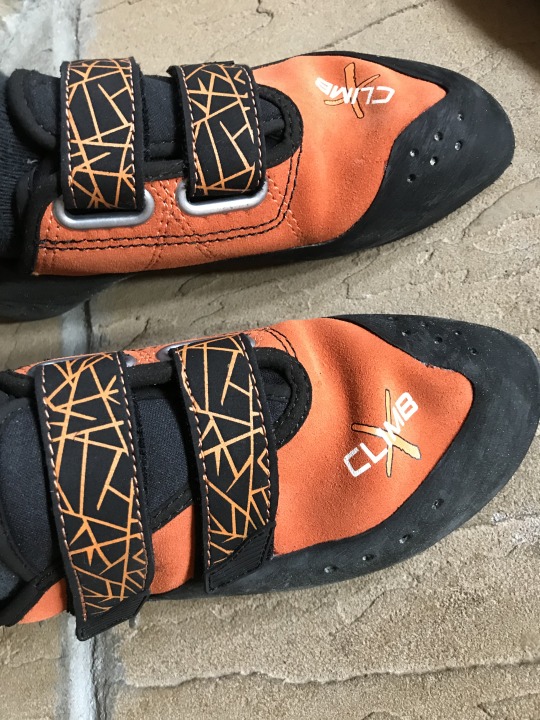
Oh, and lucky me, no blisters!I celebrated by putting my logo on the shoes,
branding them as officially mine 🙂
One of my favorite parts about hiking is the solitude. I love the time to think and process information, and just enjoy being outside with the sun, sky, trees, and animals. Maybe this makes me sound sappy, but I really enjoy the alone time. And since I work in software, time away from a computer is always welcome.
However, I know even when I hike in quite a ways off the well traveled trails to expect people. I’ve seen people in places I didn’t think I’d ever see someone, and in fact their usual response is “I didn’t expect to see anyone this far out”.
We all know most people are found about 2 miles from a trailhead, but even when hiking further in I always assume someone can see me. Several times I’ve been surprised to see people off trail “in the middle of nowhere”, and once I had someone tell me he’d followed me with his binoculars for over a mile before I met up with him (no worries here, it was a hunter who heard a rockslide and thought I’d been hurt… He just wanted to congratulate me for successfully maneuvering the route without dying).
It’s an inconvenient truth that if you’re hiking and you’re drinking water, at some point you’ll need to pee. No one knows this more than I do, and usually the urge comes above treeline, when everything is exposed. I think this is something women are more aware of than men, but something happened to me today that got me to thinking… I’ve seen at least 5 men peeing out in the open this year while hiking, and I haven’t yet seen one woman doing the same. I know the numbers of men hiking far outrank those of women, but come on guys? Seriously?
There are rules about such behavior, for your comfort as well as mine. I realize it’s not always possible to deviate 200 feet from a trail to do your business, but at least do the best you can.
Today while hiking this became a serious issue. Not for me, but for the guy decided to pee on trail, and the woman he was with.
You see, I was on a very well traveled trail, hiking towards a popular junction connecting two trails, about 3 miles from a trailhead. I wasn’t being quiet (I have a walking stick that makes a dreadful noise every time it hits the dirt), and I saw a couple of mountain bikers stopped for a rest. I saw them a good 50 feet before they saw me. In fact, I was about 10 feet away when the man suddenly turned around, whipped it out, and started to pee. I saw the whole process, and was thinking “No, that can’t be what he’s doing”, but yes, it was. It took him at least 2 seconds to realize I was hiking towards him in full view, whereupon he quickly turned (embarrassed), and ended up peeing on his (female) partner who was standing right next to him.
It didn’t end well, and I ended up being the one most embarrassed, even though I’d done nothing wrong.
This brings up so many issues! Men, do you really pee in front of the women you’re with? Is it really so hard to walk a few yards away for privacy? Do you really think you’re the only one on the trail? I’m only bringing this up because it’s happened so many times this year it’s becoming bothersome.
Today was disappointing on so many levels, but wonderful
because I was able to spend some time outside!
I’d wanted to hike a 13er today (the weather was absolutely
perfect!) but due to my truck issues I’m
stuck with a 2WD rental car that wouldn’t make it to the trailhead. So I decided to take another hike in North Cheyenne
Canyon.
I woke up at 5am and because it was still too early (cold)
to head out I ran for an hour on the treadmill, took a shower, and did 30
minutes of yoga.
I made it to the trailhead at 8am and started on the 7
bridges trail. I was aiming at hiking
Runs-Down-Fast mountain, which is on my Atlas but not in my GPS or on any trial
map I’ve seen.
North Cheyenne Canyon has a lot of amazing, well kept
trails. They’ve been doing a lot of work
in the area maintaining their trails, which is great, but in the process they’re
destroying established trails and making new ones, and sometimes changing
existing trails and moving them to other routes. In other words, none of the maps sync. It’s been very frustrating hiking in the area
lately! They have posted signs with
terrible maps that make no sense and are difficult to read. Not all of the trails have trail signs on
them, and some of the names are wrong.
It makes for quite an adventure!
Even with a topo map nothing makes sense (because the trails have
moved).
The 7 Bridges Trail is still the same. Today it was all iced over!
I took 622A to 668 and was looking for the turn off to 622
to bring me west towards the mountain. I
hiked and hiked and hiked, and crossed this area that took a lot of
concentration (I couldn’t tell how tough the ice was or how far the creek
went).
Most of the trail was free of snow at this point
Then I followed the pipeline trail. I tried to find some history on the pipeline
and failed. Basically, it looks old and
it obviously hasn’t been functional for quite a while.
I rounded a corner and saw where the 622 A intersects with
the Pipeline Trail, but there was no route at all hiking west. So I continued to follow the trail for
another half a mile before pulling out my topo and realizing I was way too far
south. So I backtracked to the cutoff,
and nope, still no trail west. I kept
going for another quarter mile and realized my mistake: Just at the creek crossing I was paying so
much attention to was a snowed over trail.
It was unmarked but looked like the trail I was looking for
(it matched on the topo). The only
problem was it was obviously a trail they didn’t want me to follow. It looked like crews had purposely destroyed
it, making it difficult to follow.
I followed it anyway and ended up at intersecting the 667
trail. Ugh! I knew I was too far north
at this point, so I headed back, figuring I’d missed the 720 at some
point. I never found it. Instead I took a route that brought me nowhere. I could tell I was supposed to head west, but
it just didn’t look possible. I bushwhacked
for a bit, heading in the direction of Runs-down-fast Mountain, and eventually
came to some orange marking tape.
Woohoo! I figured
this would get me to the 720 or the Forester Trail, so I followed it for about
half a mile. Nope, it brought me to this
big hole in the ground. Ugh!
However, at this point I heard some motorcyclists and
watched them speed past me about 50 feet up the hill. I headed up to the trail (once again hoping I’d
hit the 720 or Forester) but nope: I was
back at the 667!
Now I was extremely frustrated. I knew where I wanted to go, but apparently
when I’d backtracked the second time I didn’t backtrack far enough. I knew where I was and what I’d done wrong, but at this point I had two options: Backtrack again and try it a third time, or
head back down the trial and make it a look by taking Cap’n Jacks Trail over to
Mt Buckhorn and follow High Drive back down.
I decided I wanted to get back home to my kids, so I took
the loop. Here’s the entire route I took
today:
It was frustrating not summiting anything (especially when I
had 3 ‘easy’ summits I wanted to hit today), and basically hiking in circles,
but I did take a few trails I haven’t taken before, and I was able to problem
solve and route find. I also mapped out
in my head where several trails intersect so next time I’ll be more prepared.
I’m not done searching to summit Runs-down-fast, but I think
I’m going to start at a different trailhead next time, at least until North Cheyenne
Canyon gets their act together and publishes some accurate maps available
online (I mean this with the utmost respect).
I got these in the mail today. They aren’t the brand or color or size or style I wanted, but after three iterations of ordering they’re “good enough”.
I’ve been rock climbing 5 or 6 times and canyoneering as well, and now I’ve been to CityRock as a climber twice, so I knew what size shoes I needed. I found the pair I wanted online and ordered my size. But when they arrived they were way too small. I couldn’t even get my feet inside, let alone close and tie them.
So I returned them for a larger size. Those too were way too small. I did some more research and realized I needed to order two sizes up from my normal size for this shoe. Unfortunately, no one had them in my ‘new’ size.
This process took two weeks (ordering, shipping, returning, etc.) and my whole “saving money on climbing shoes by buying them” thing wasn’t working now that I’d already rented twice.
So I just found a pair of random climbing shoes in stock in my size and ordered them. They arrived today (two days late) and while I’m not happy with the color they do fit (if a little awkwardly). They’re a little big (but tight?) and I can already tell I’m going to get blisters on my heels from them (time to break out the moleskin for preventative measures). I felt like I was wearing tap shoes when I put them on, but they’re here! They weren’t too expensive, so when I decided I want to seriously climb I’ll know what to look for and get a new pair. I’m considering putting my new hiking logo on them in Sharpee to offset the wonderful orange color that I’m sure will go well with my red climbing helmet.
OK, so I’m a little embarrassed about this one. Emily didn’t want to climb today (she’s
thinking once a month sounds about right for her), but she did agree to go with
me and sit in the lounge area and draw.
I think it had something to do with getting pizza on the way…
When I was about half way there I remembered I’d left my chalk bag on
the counter. Whoops! I was also hoping to wear my new rock
climbing shoes today, but I still don’t have them. They came in the mail (twice) but each time
they were the wrong size (more on that once I actually fix this situation). So I rented some very well-fitting shoes and
headed straight for the climbing wall.
Once again there were a lot of people there tonight, and I wanted to
get some practice in before there weren’t any lines left available.
I was doing pretty good today. I
started with a 5.5, and then went on to 5.6, 5.7, & 5.8. Each time I’d successfully make it to the top
(using the correct color routes, of course) I’d try something a little
harder. I was doing great until I got to
5.9: I was two holds away from the top
when I lost my footing and fell. Luckily
I was on a pulley, so I didn’t fall too fast, but I did hit someone on the way
down. He was pretty close to where I was
on the wall next to me, and as soon as I fell I knocked into him (I didn’t have
time to realize what was going on before colliding). He was obviously a much better climber than I
as he was on a pretty difficult run. He
didn’t fall, but I could tell I had jostled him a bit. I apologized profusely, blamed
it on being a novice, and figured that was probably enough rock climbing for
today.
On to bouldering! The runs (I’m
not even sure if that’s what they’re called?) had been changed since last week,
so everything was a bit different.
However, this time I knew to follow the same color run, so I felt a bit
more confident. The lower wall was more
difficult to climb today than it had been last week (and I don’t think that run
had changed?) I decided to skip it and
take the stairs (side note: I came back
to it later and was successful).
My hands were slippery and I had several blisters already (once was
cracked and bleeding) and I’d forgotten my chalk, so I tried to “steal” chalk
from the counters by covertly wiping my hands across them where chalk had
settled from others. I know, I’m
pathetic. Next time I’ll offer some of
my chalk for free to someone to make up for it.
Once again I started with the easiest runs and worked my way up. 5.0-5.4 were easy and I was racing up each
run, over the wall, and back down to try the next in line. There were fewer people bouldering than
climbing, and it was easy to keep advancing without waiting for those around me
to climb.
Then I came to a run that was a bit more difficult. I don’t remember the class, but I was one
hold from the top when I lost my balance and fell. No, I didn’t fall away from the wall like you’re
supposed to, ad I didn’t anticipate the fall.
This time was worse than the first time because I was sideways when I
fell, and my arm hit a couple of holds on the way down. I landed on my backside, not seriously hurt
because of the mats below me (I fell about 10 feet). I didn’t look at my arm when I landed, but I could
tell I’d bruised it pretty well. It felt
like a nasty rug burn.
I looked around and no one seemed as embarrassed as I was about my
fall, so I picked an easier run, climbed just to prove to myself I could, and
then made my way back down to the lower climbing area to lick my wounds where
no one would know what I’d just done.
This time it actually hurt worse than it looked (usually it’s the
opposite). I asked the lady at the front desk if she had
any Vaseline and she looked at me like I was crazy.I guess my type of injury isn’t common.
I made it back down to the lower area and found a couple I’d met earlier
who offered to let me climb with them when they found out I was alone and new
to climbing. I’m really uncomfortable
making friends when I can’t reciprocate, so I didn’t take them up on their
offer to let me climb while they belayed, but I did stand and watch them for a
bit. This is something I need to work
on, but I know it will take me a while to accept help/friendship. I’m slow to
warm, but working on it!