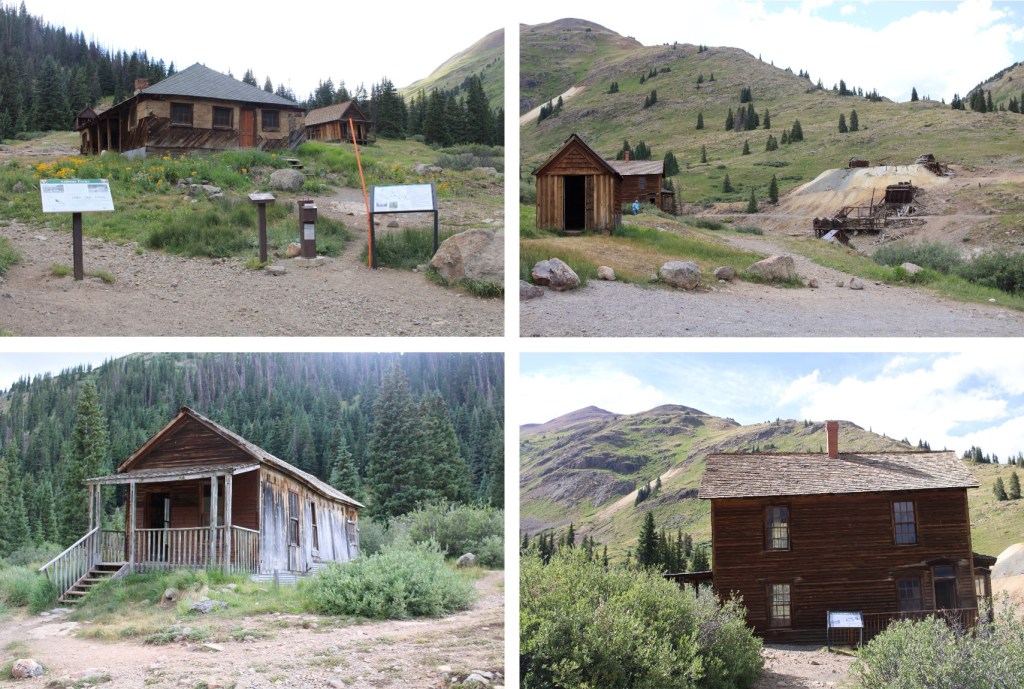
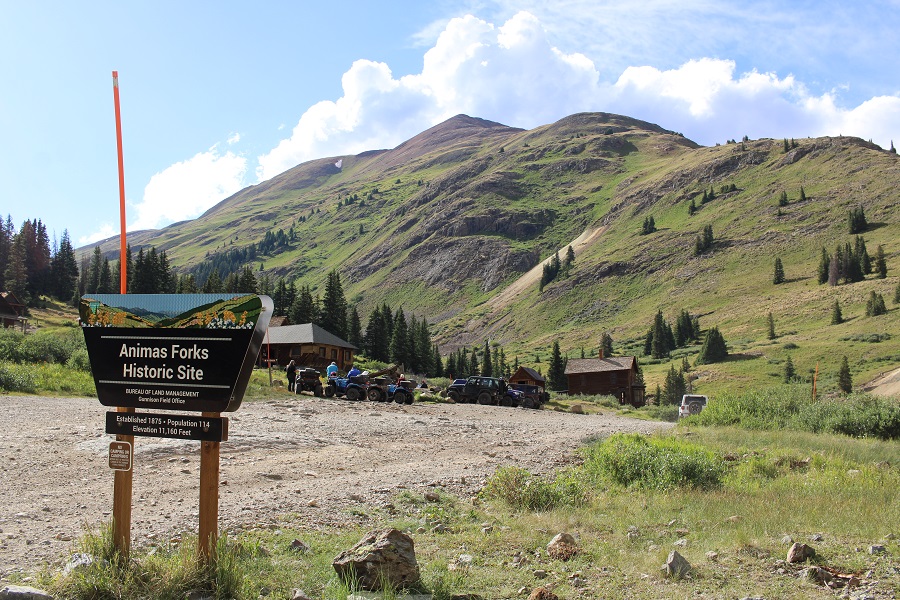
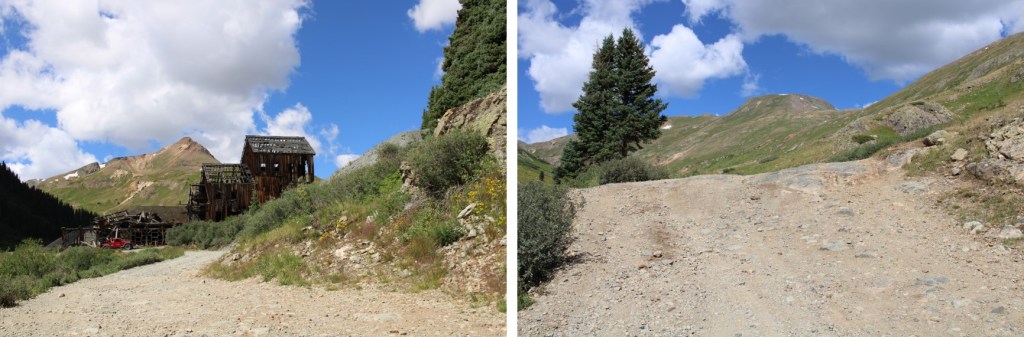
I parked at the Animas Forks Historic Site near Silverton. A couple of notes: the 4WD road in is 4WD, and it’s crowded! The site however, is pretty cool. Lots of stuff to see here, and you can go inside the structures (even the 2 story ones).
There are plenty of spaces to park. I chose one, and was on the trail at 5:45am, after it had stopped raining.
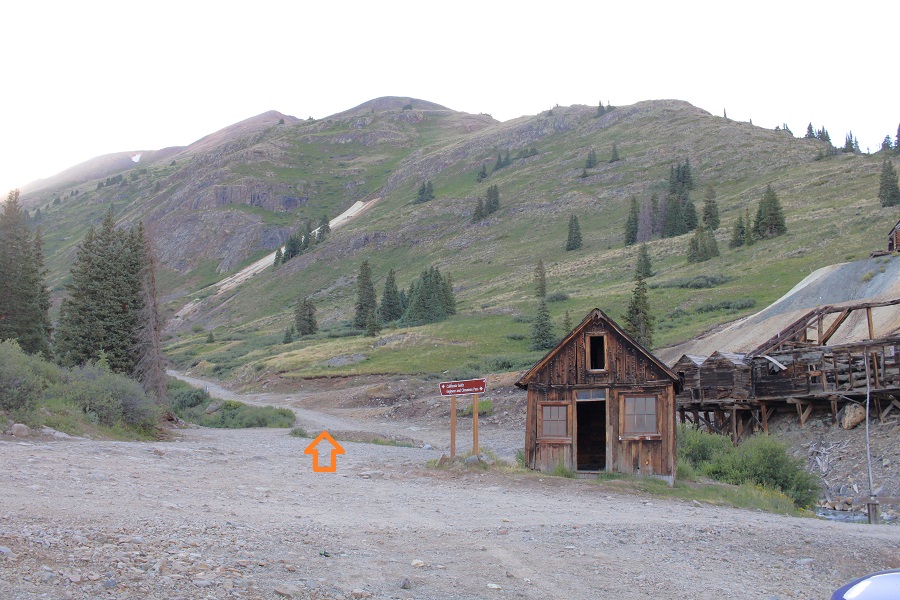
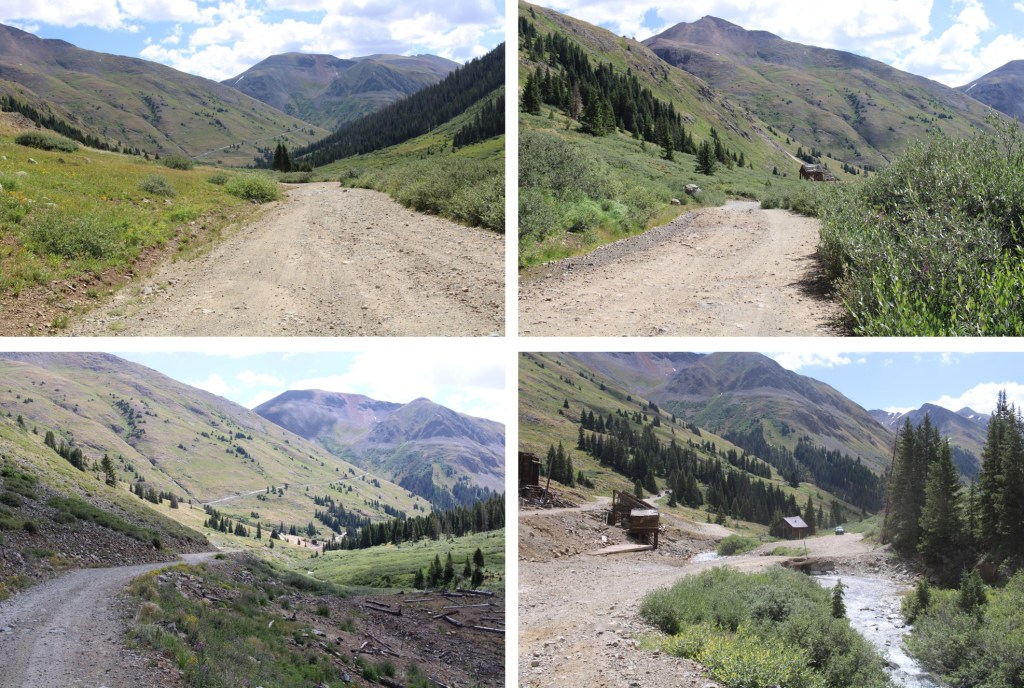
I followed the 4WD road that started to the northwest of the historic site, leading towards California Gulch
I passed a couple of mines in the dark. Apparently, the crows weren’t happy I was there. Nothing spooky about this at all.
Crows:
I followed this road east for 1.25 miles, to the Placer Gulch/California Gulch junction, and continued straight towards California Gulch
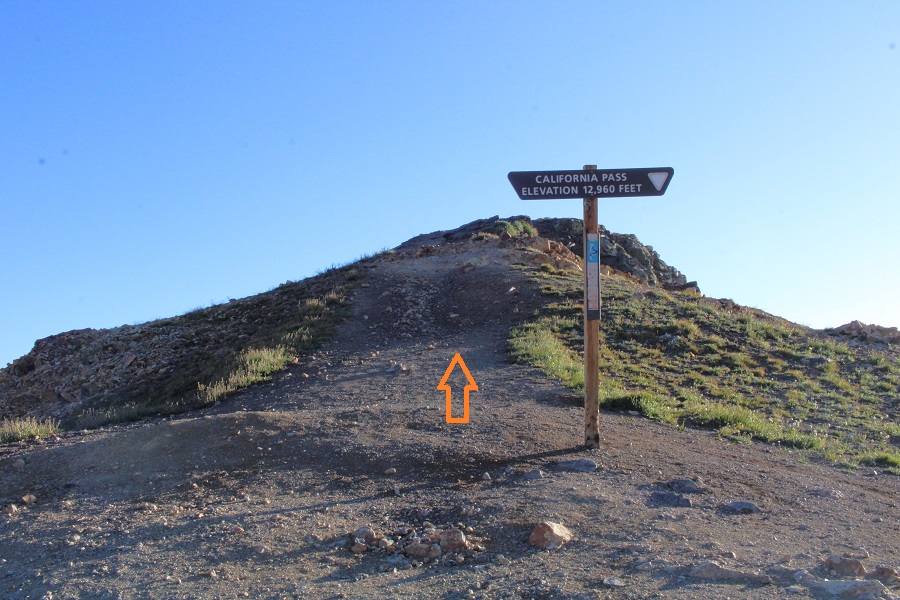
I continued following this trail through California Gulch for a total of 4 miles, all the way to California Pass. This was an easy-to-follow 4WD dirt road, that passed a few abandoned mines.
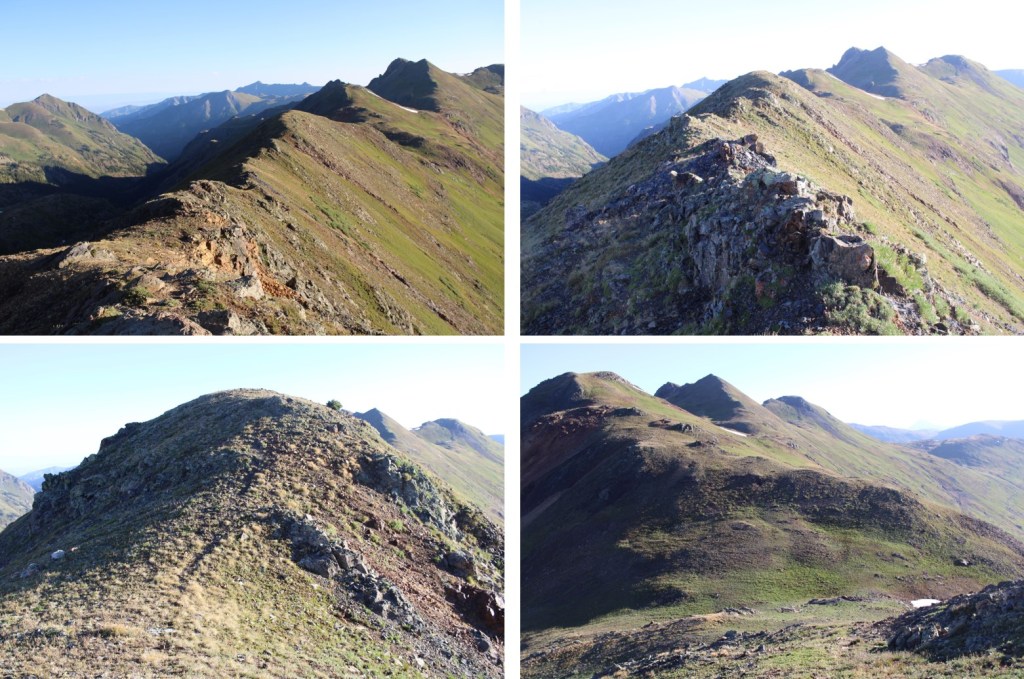
At California Pass, I left the road and followed game trails north along the ridge. This is a class 2 ridge, and easy to follow
Also, I heard coyotes
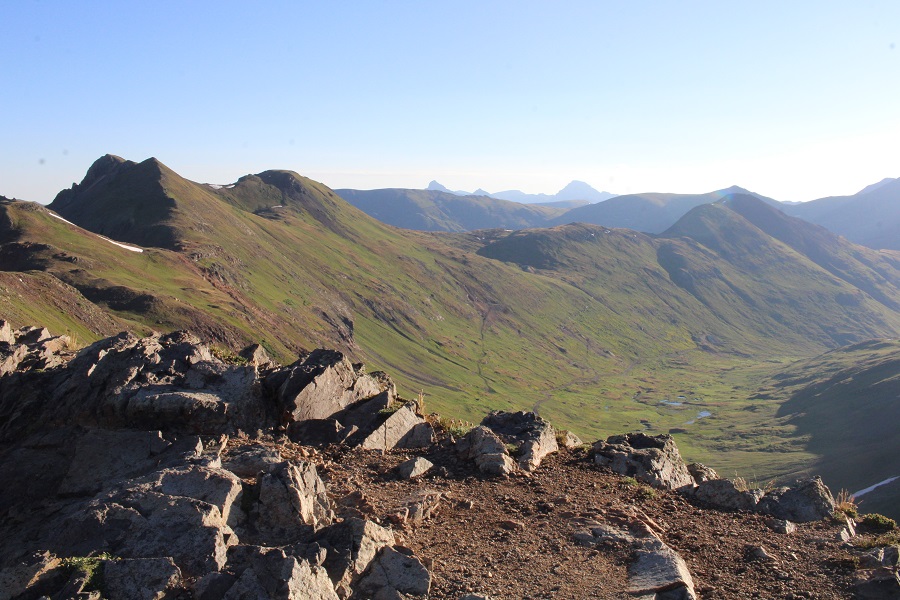
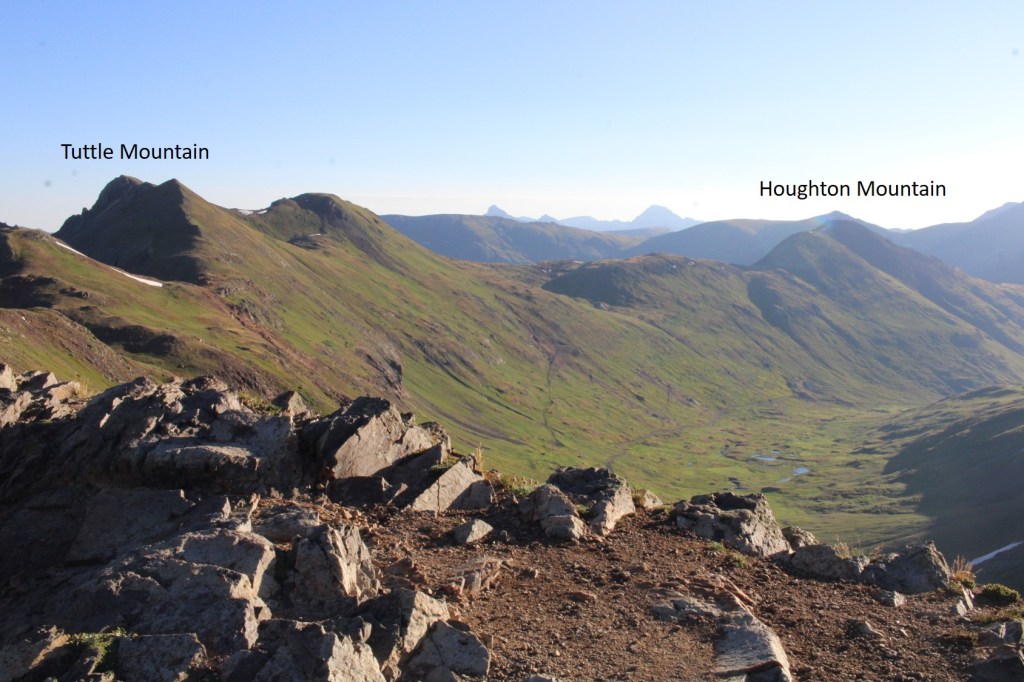
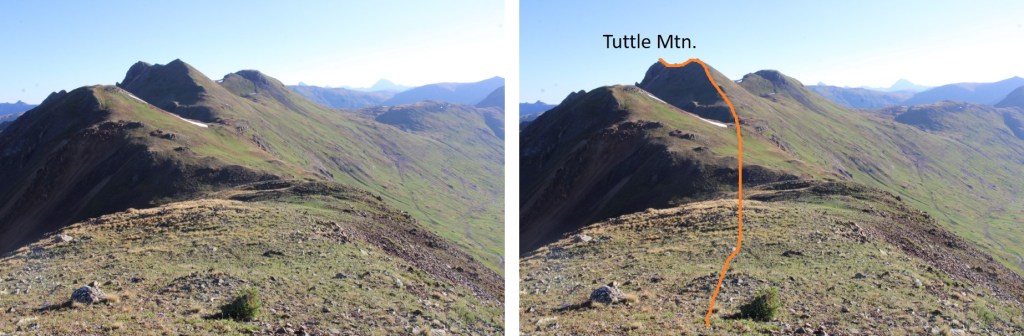
I could also see both peaks from here, Tuttle and Houghton
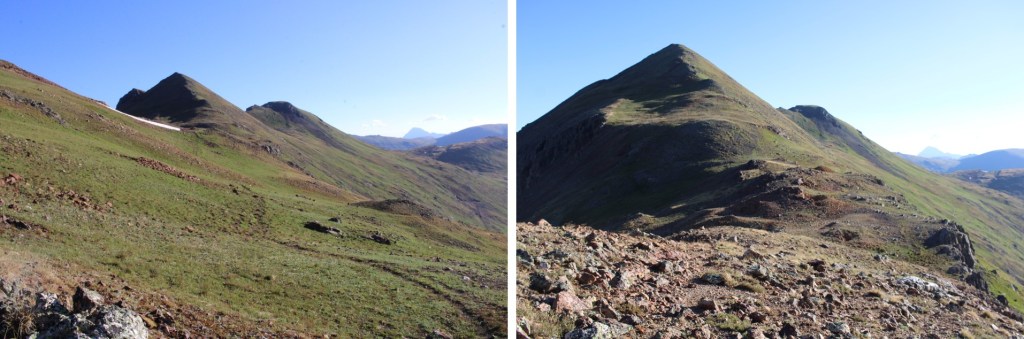
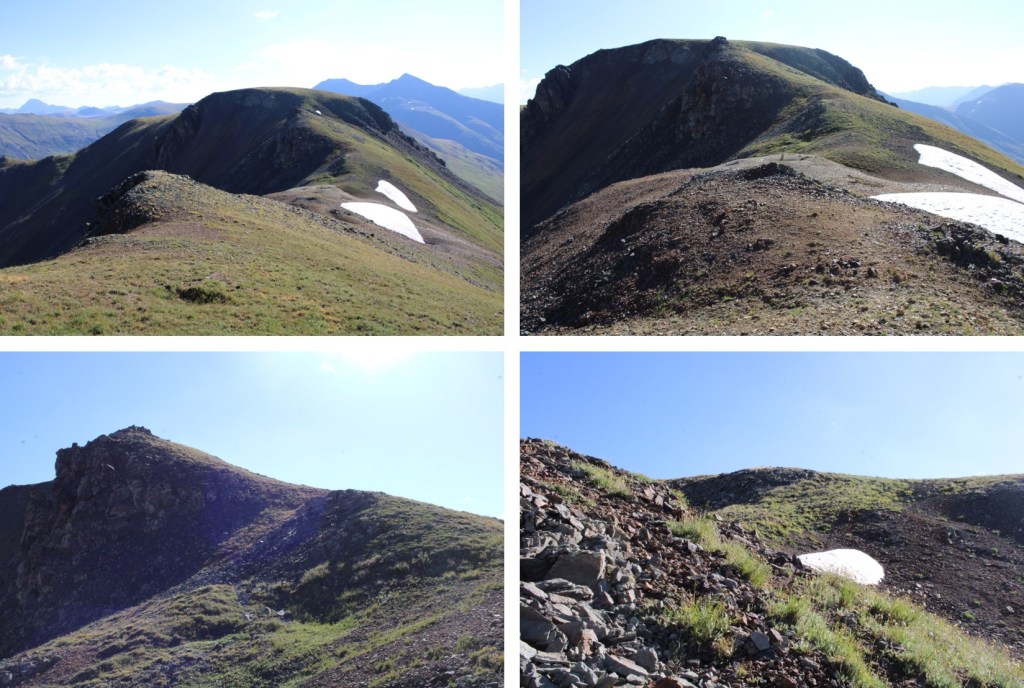
Here are some pictures of that class 2 ridge and the game trails
About halfway across the ridge I took a game trail to go straight towards the peak
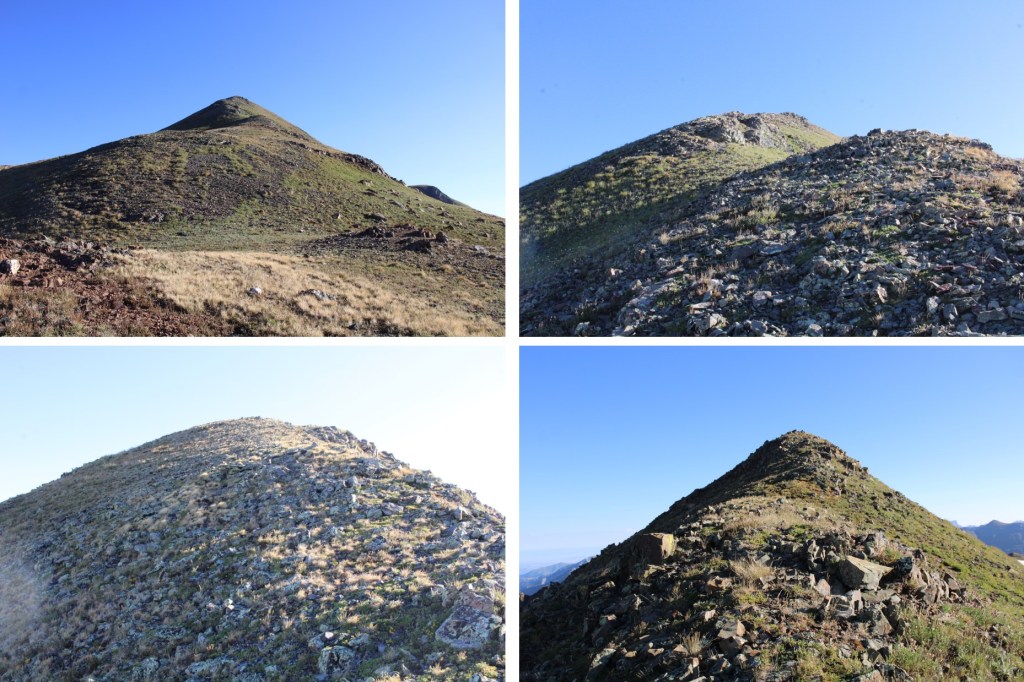
Then I ascended this class 2 ridge to the north, leading to a false summit
It was a quick hike to the actual summit
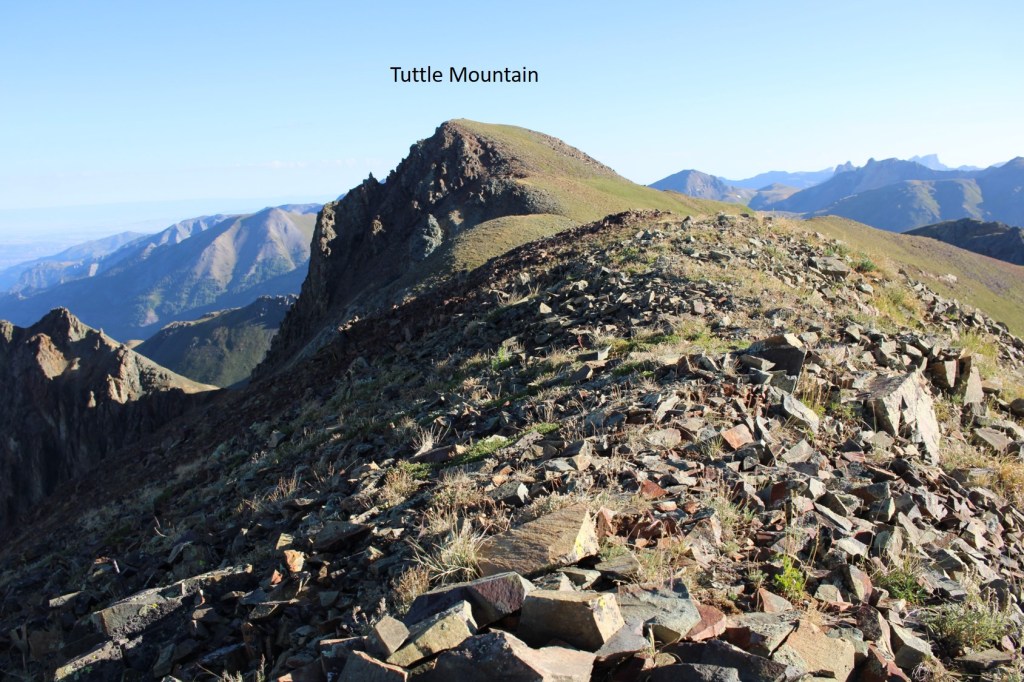
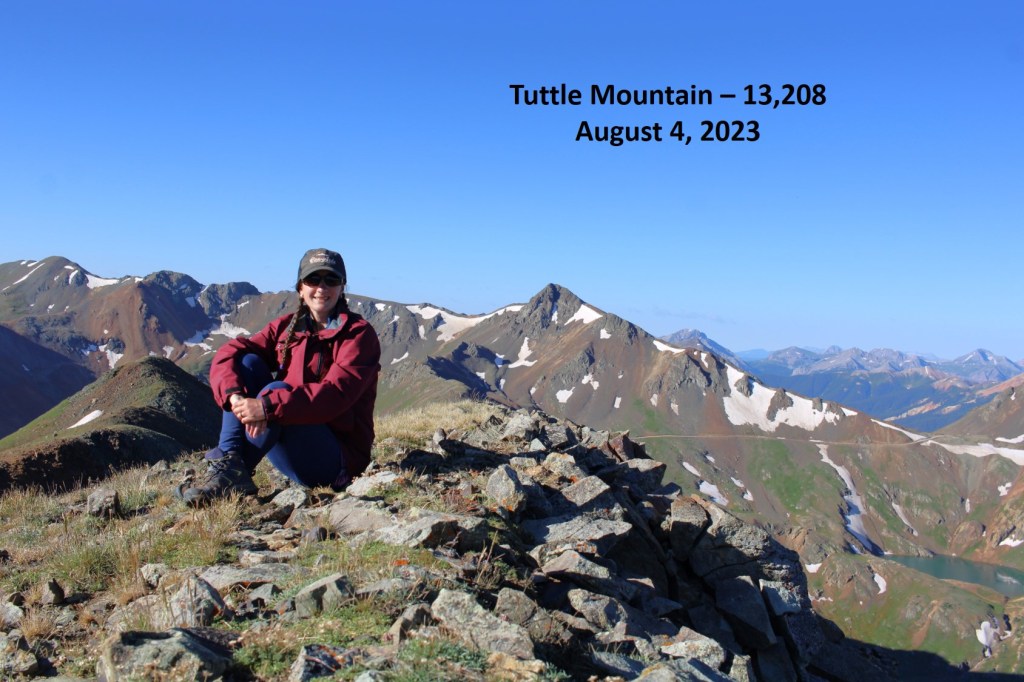
I summited Tuttle Mountain at 8:15am
Tuttle Mountain:
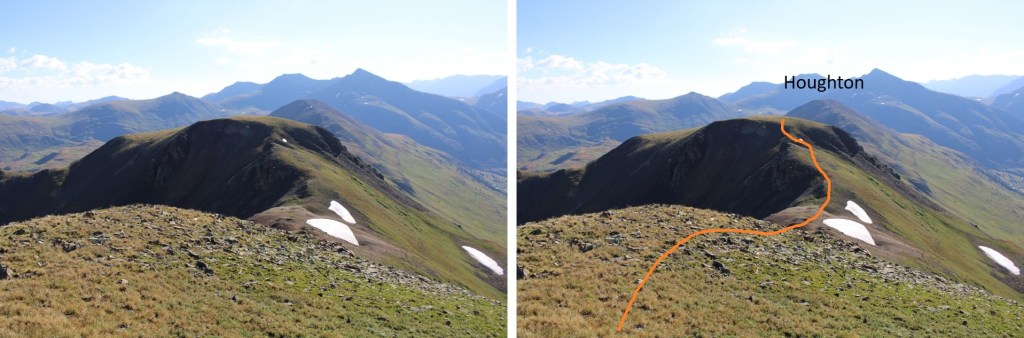
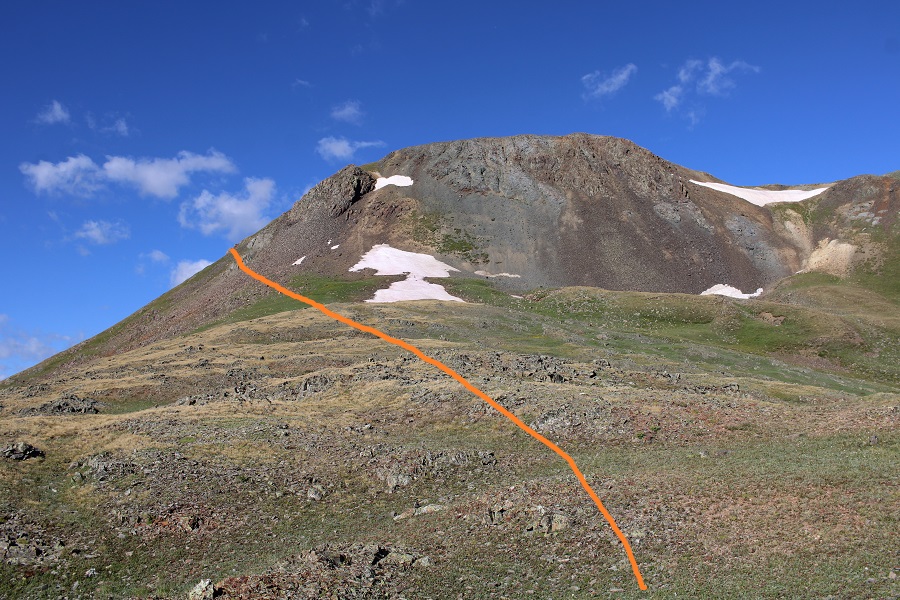
Looking northeast, I could see Houghton Mountain. Before descending to the saddle, I’d go over this hump, then southeast for a bit to avoid some rock outcroppings.
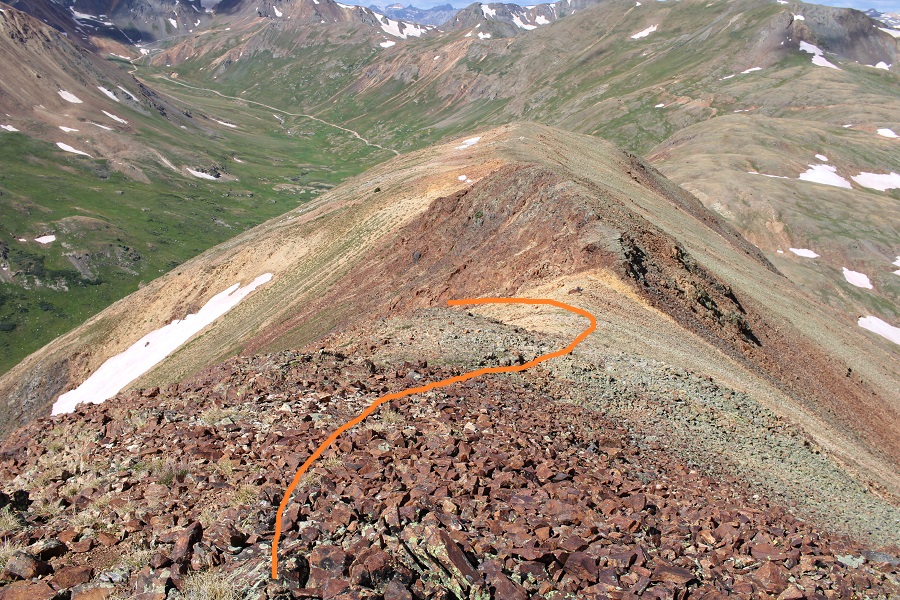
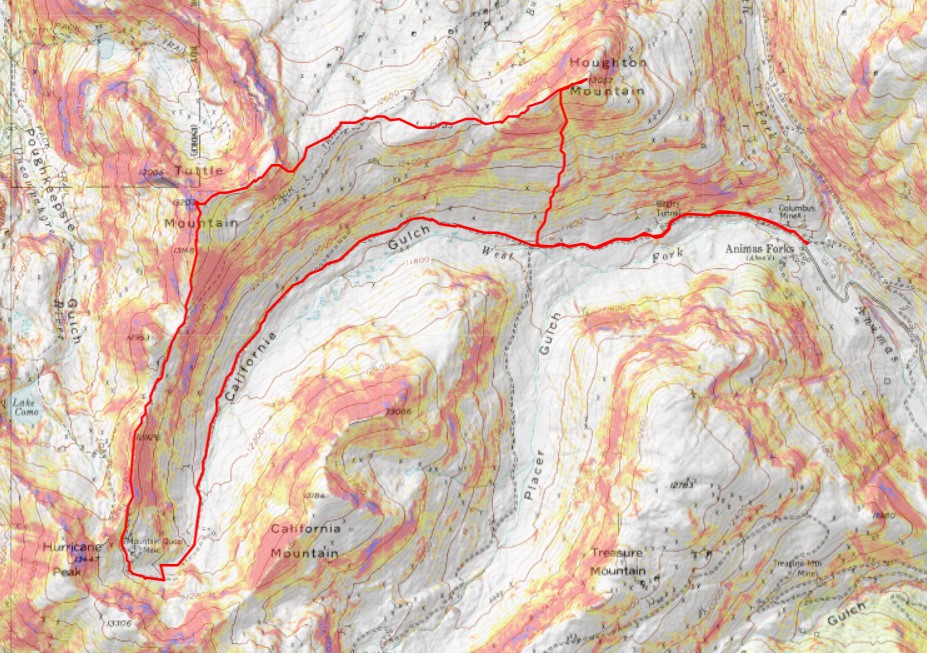
Here’s my route down to the Tuttle/Houghton saddle, first heading southeast to avoid the rocks
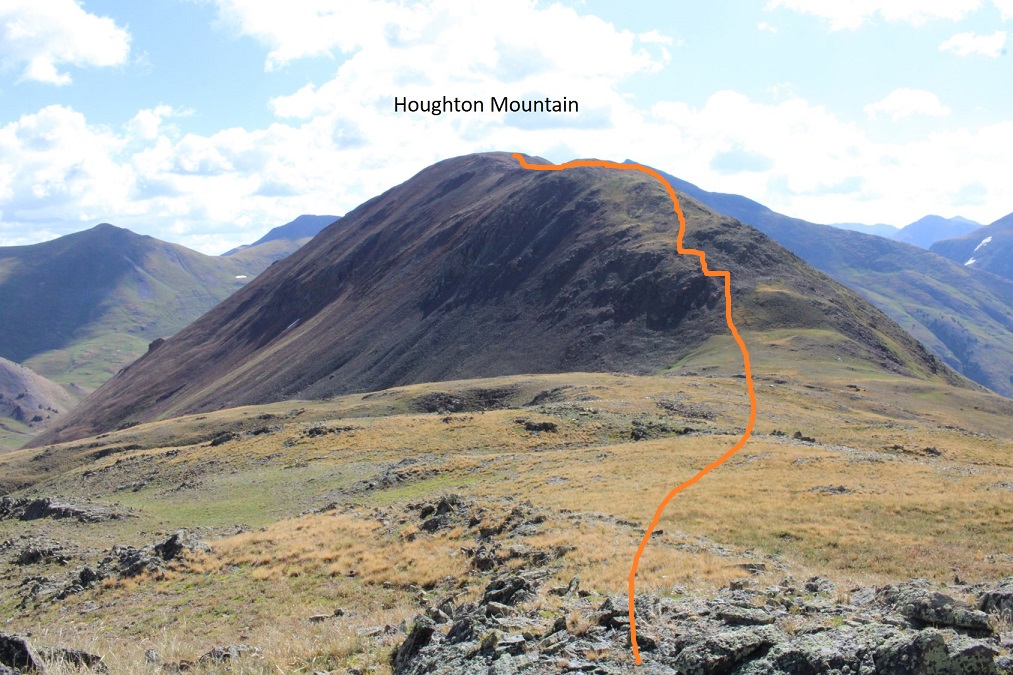
Then crossing northeast towards the saddle, and up the ridge to the summit. This is my overall route to the summit of Houghton. If you like cool rocks, plan to spend a lot of time in the area circled in red.
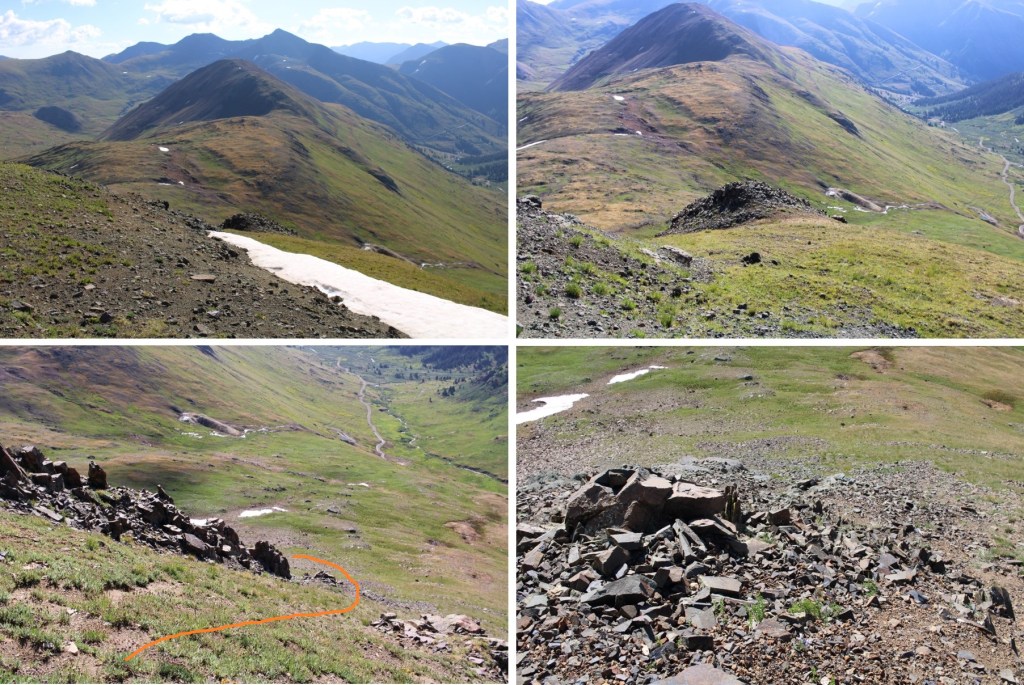
These are the rocks from Tuttle I was trying to avoid, and the route I took down
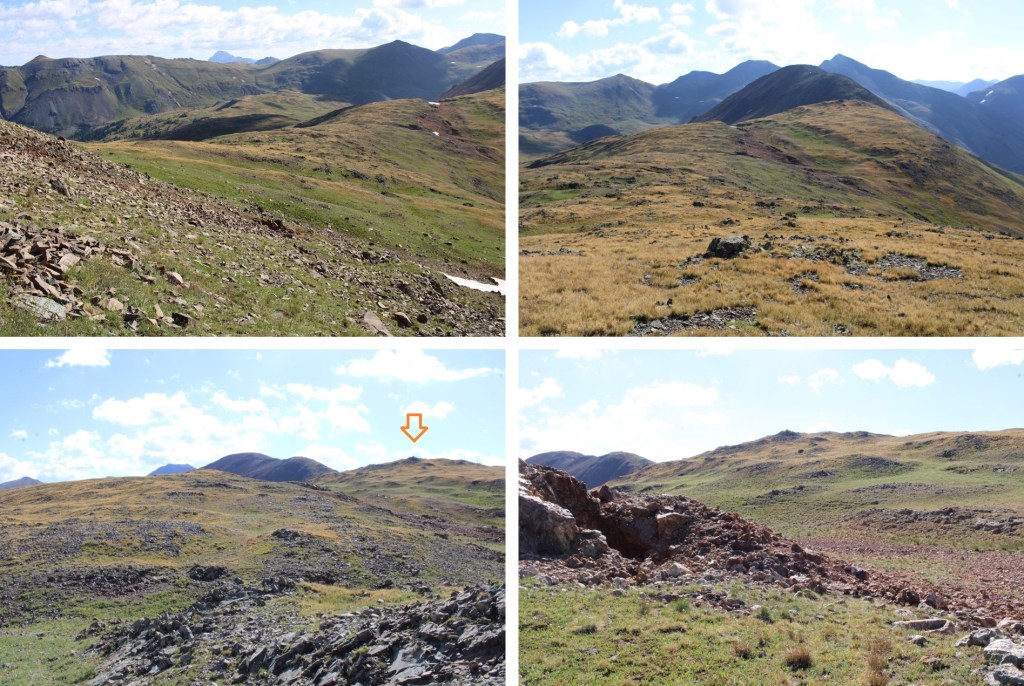
Now to head over to Houghton. This was mostly a class 2 ridge hike through rocky, rolling tundra, littered with a bunch of mines. It was also choose your own adventure on a wide ridge. I was aiming for where the orange arrow is pointing.
Oh, and here is a picture of one of those cool rocks I was talking about
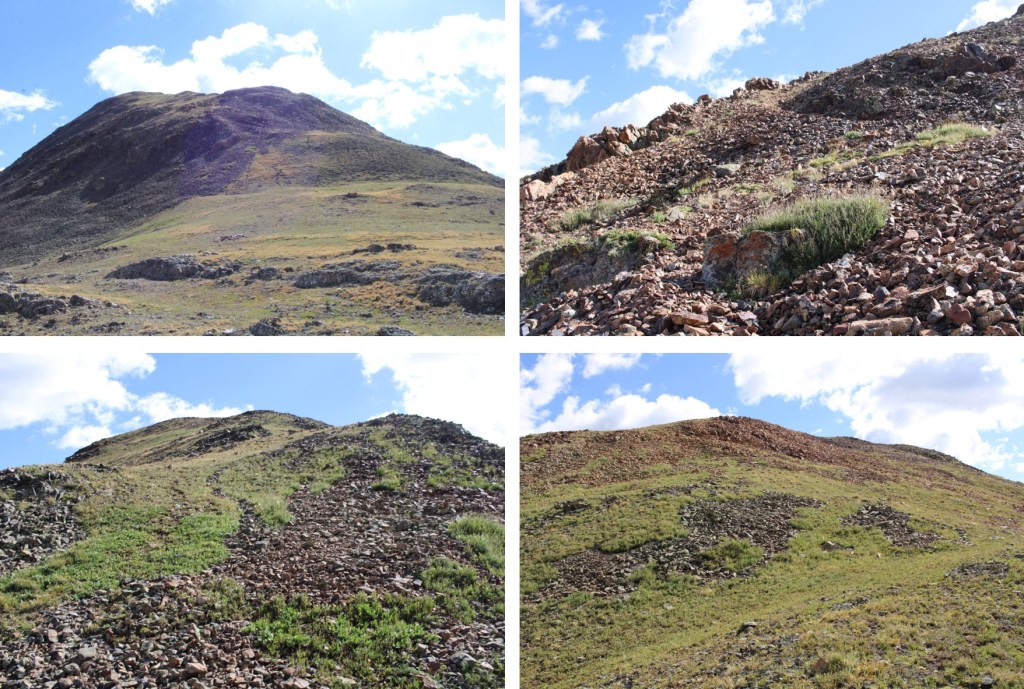
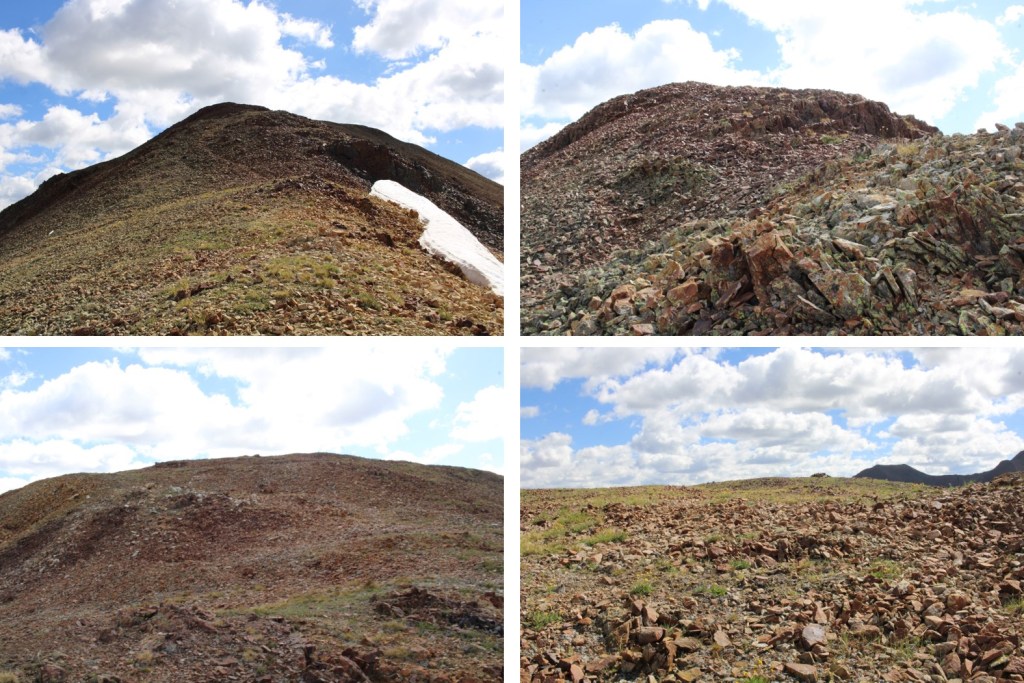
For the rest of the hike to the summit of Houghton, there are slight game trails to follow through both the tundra and eventually scree. I just kept heading northeast, staying to the ridge
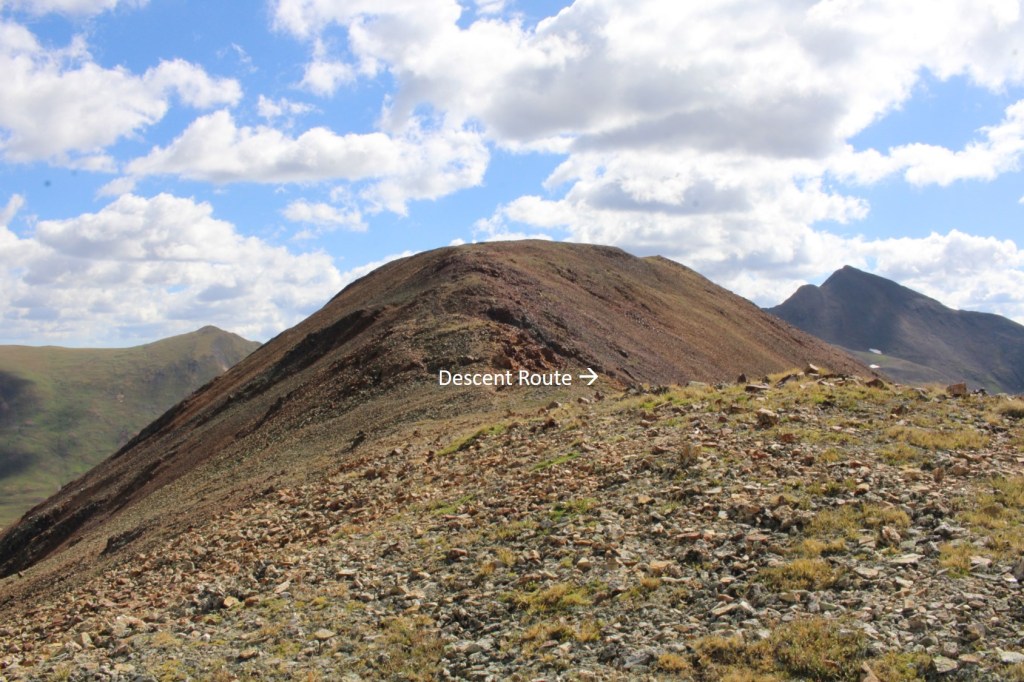
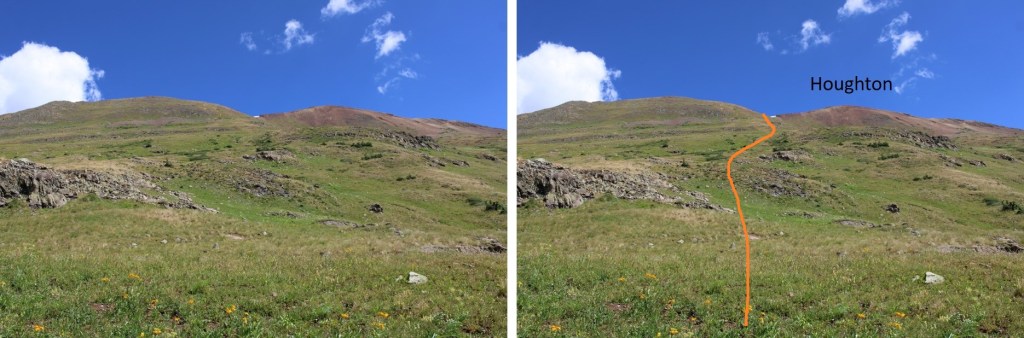
Once you see the change from tundra to rocks, notice the top of this gully. It will be the decent route.
The last push to the summit was rocky, but there were game trails to easily follow
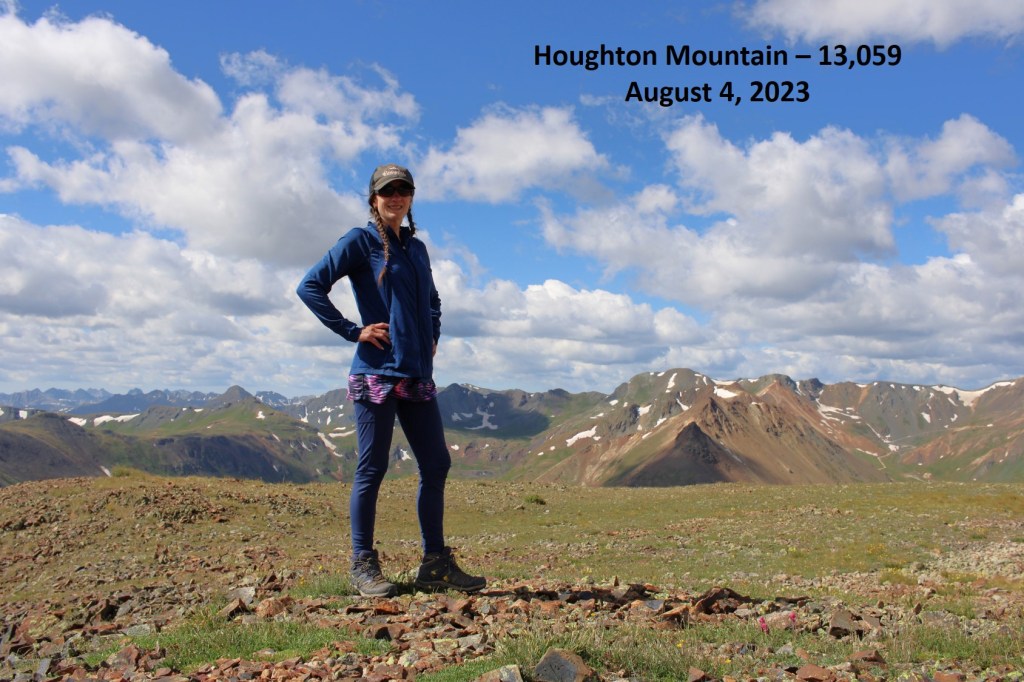
I summited Houghton Mountain at 10am
Houghton Mountain:
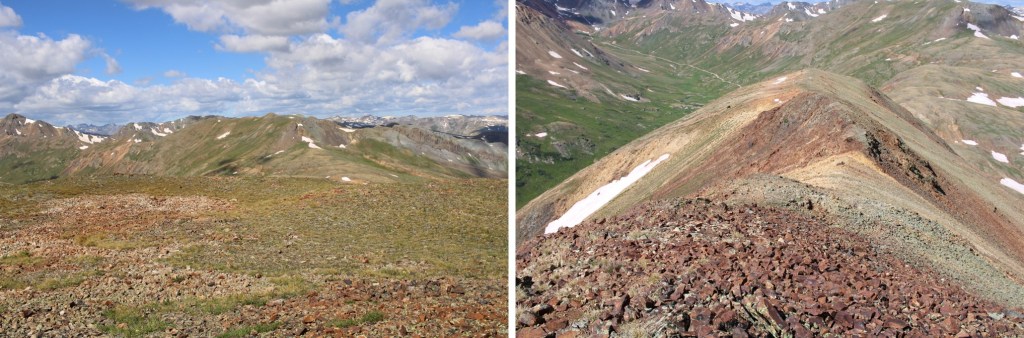
Now to head back down. I retreated the same last rocky section southwest
Then turned left, and descended a gully to the south. This is an easy, tundra filled gully, just be careful, as there are scree rocks here that have tumbled from above and are loose on the grass (but no scree)
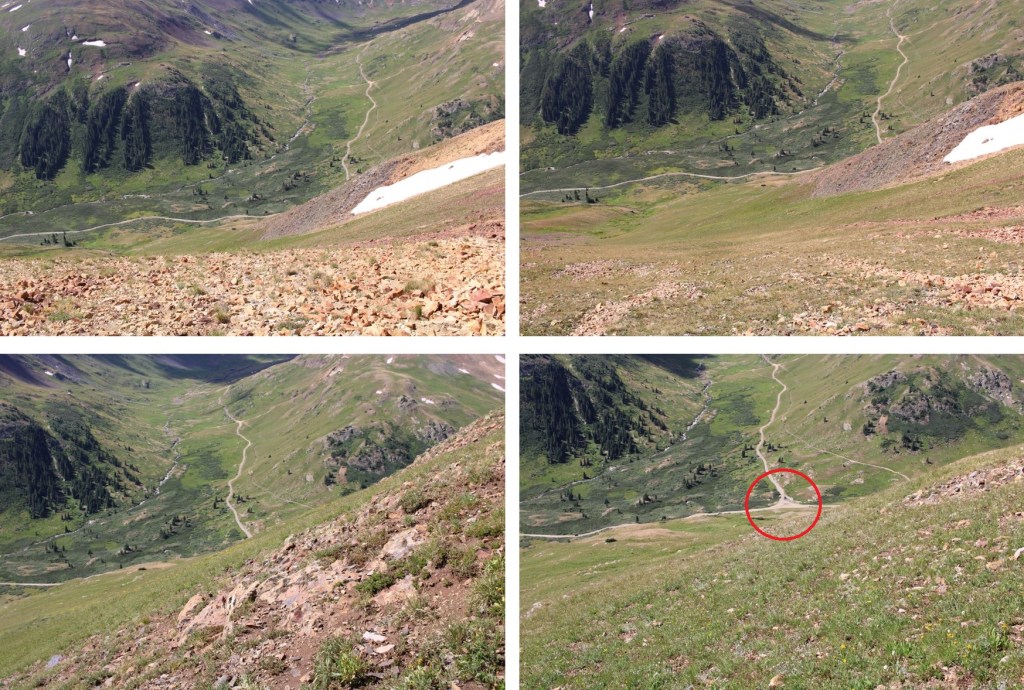
To make this easier, I aimed for the California Gulch/Placer Gulch junction, since it was easy to see (circled in red).
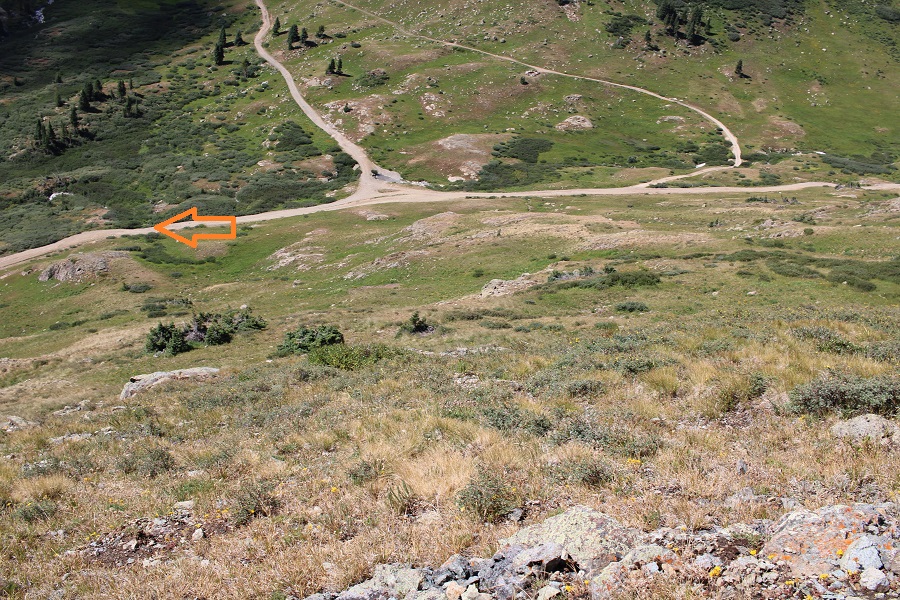
From the junction, here’s the route I took down from Houghton Mountain
At the junction I turned left, and followed the road east back to Animas Forks
I made it back to my truck at 11am, making this a 9.63mile hike with 2935’ of elevation gain in 5 hours 15 minutes.
I’ve hiked Rito Alto Peak before, but due to an early snowstorm had to skip Hermit and Eureka. Today I was going back for those two (but hit Rito Alto again as well because I didn’t get good photographs).
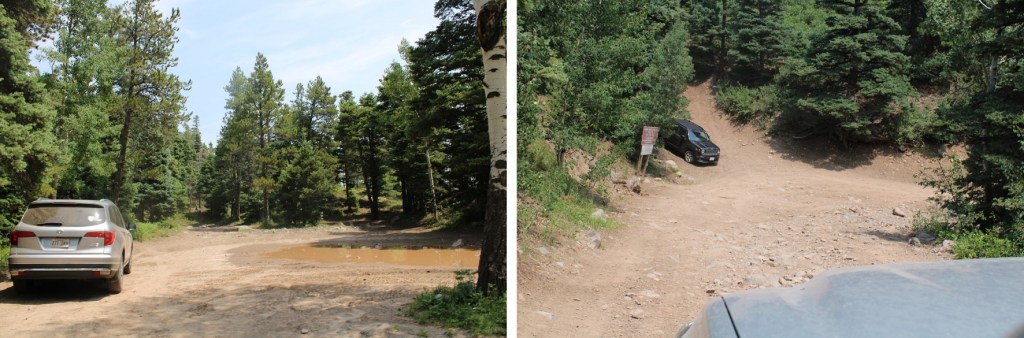
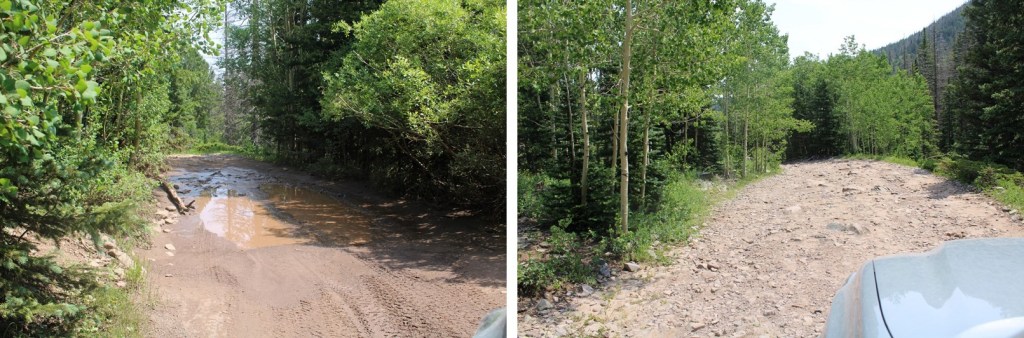
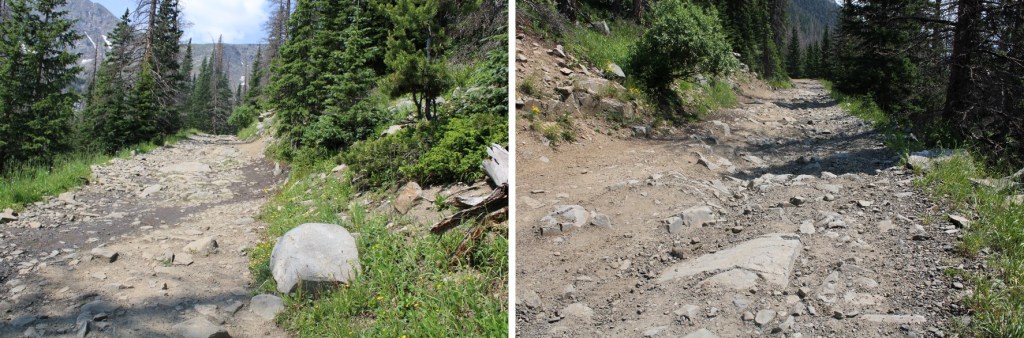
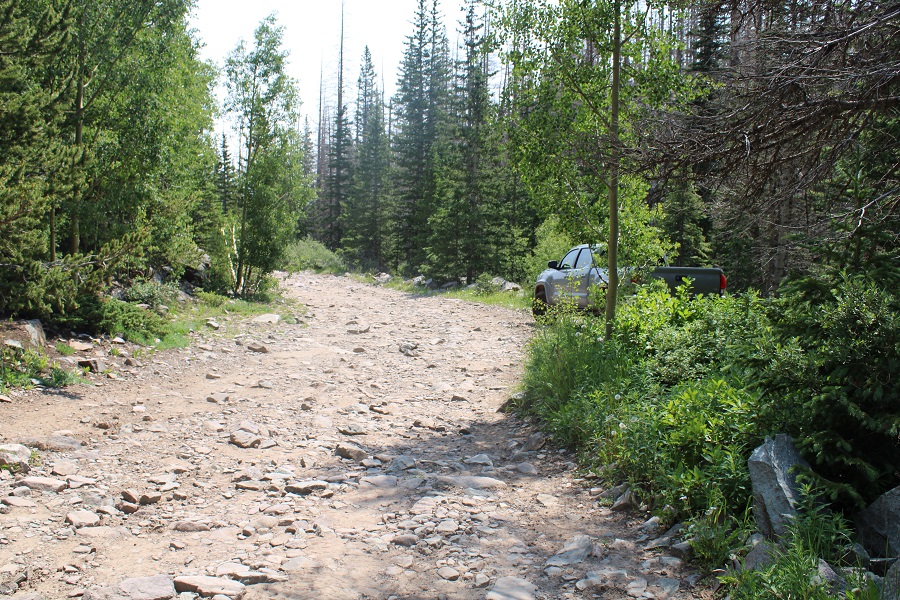
If you love your vehicle, park at around 9000’. Seriously. This road is a lot worse than it was the last time I was here, and even then it was pretty bad. Here’s the parking area(s) around 9000’
I have a new Tacoma, and wanted to see what it could do, so I continued driving further. You’ll definitely want both high clearance and 4WD to continue.
If you can make it past 10,500’ you can make it all the way to the pass. I stopped and parked at a camping area at 10,800’ because that was where I’d parked last time. I gathered my gear and was on the trail at 4:30am.
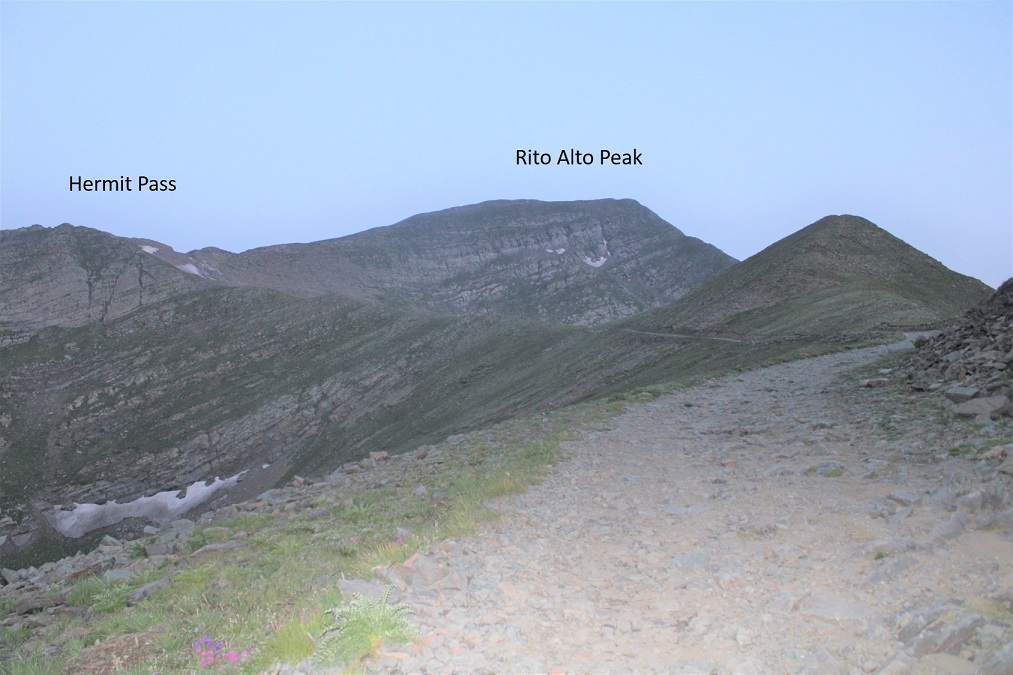
I followed the 4WD road west towards Hermit Pass.
It was early morning, and I could hear the coyotes calling to each other. This lasted for about 10 minutes. I was actually a little concerned when they stopped yipping.
Coyotes:
From my parking spot I hiked 4.2 miles to Hermit Pass
As the sun rose, I could already tell I wouldn’t be getting great pictures today: the haze from the fires wasn’t going to cooperate.
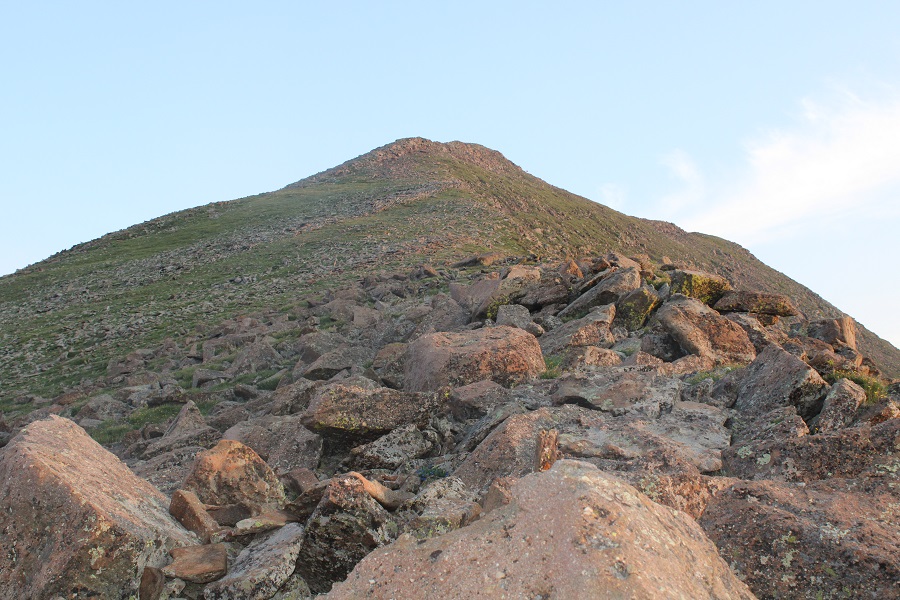
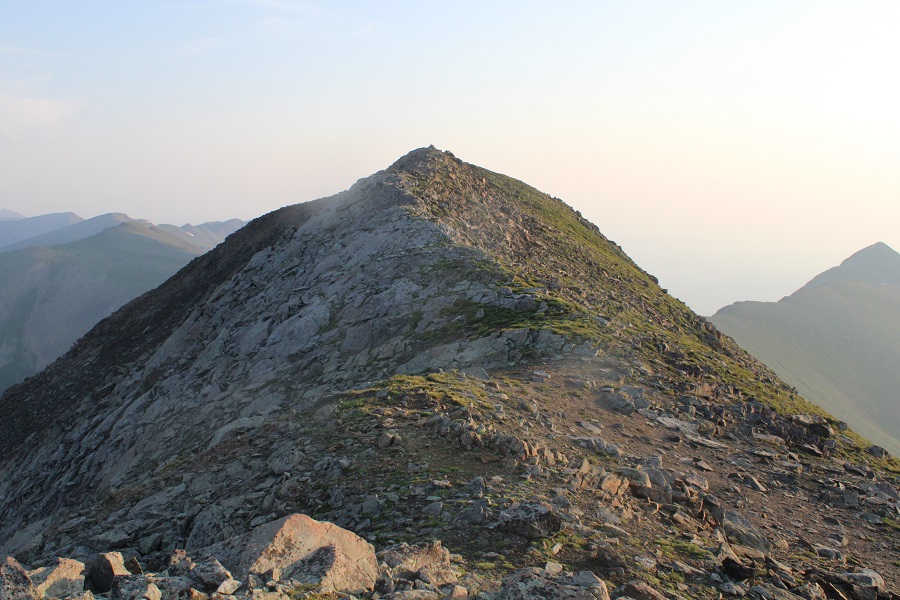
I made it to Hermit Pass, turned right, and followed the ridge northeast to the summit of Rito Alto Peak. This ridge has a lot of large rocks, mixed with tundra. The rocks have the Crestone-grip and most don’t roll.
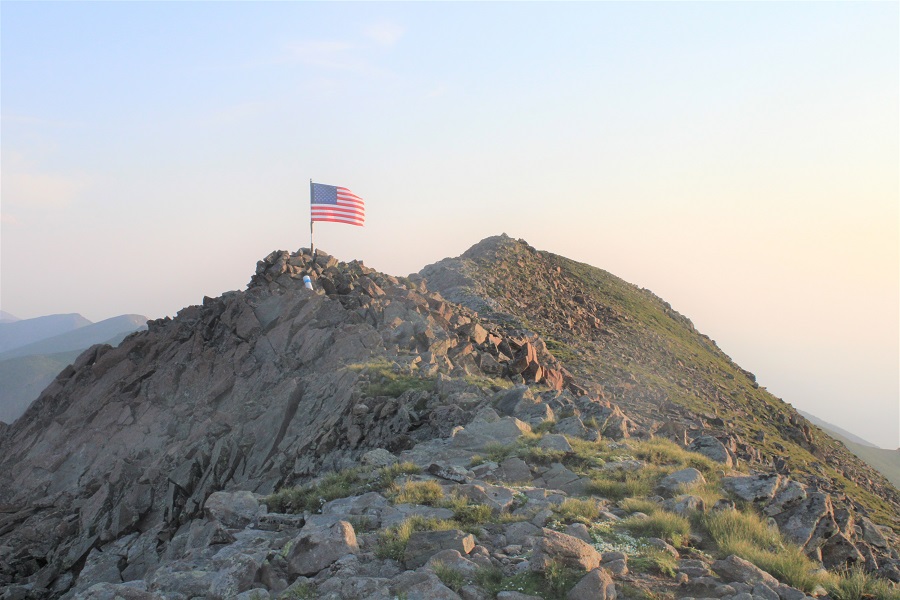
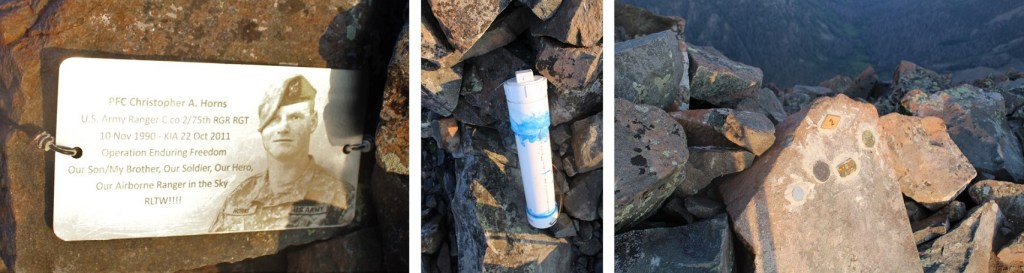
Just before the summit there’s a ‘false summit’ with a memorial to Christopher Horns. They’ve replaced the flag since the last time I was here, and added a large summit register tube.
I continued heading north to the summit of Rito Alto Peak.
I summited Rito Alto Peak at 6:45am. Note, there was a very small summit register here, in a jar that looked to be about 1.5 inches in diameter: like one of those sample jam jars. I left it where it was.
Rito Alto Peak:
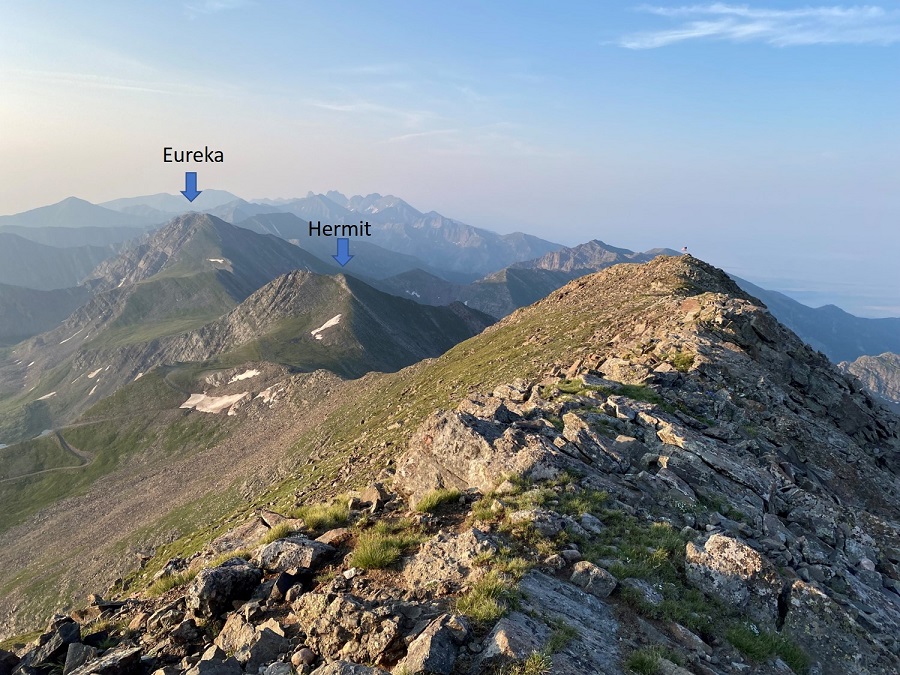
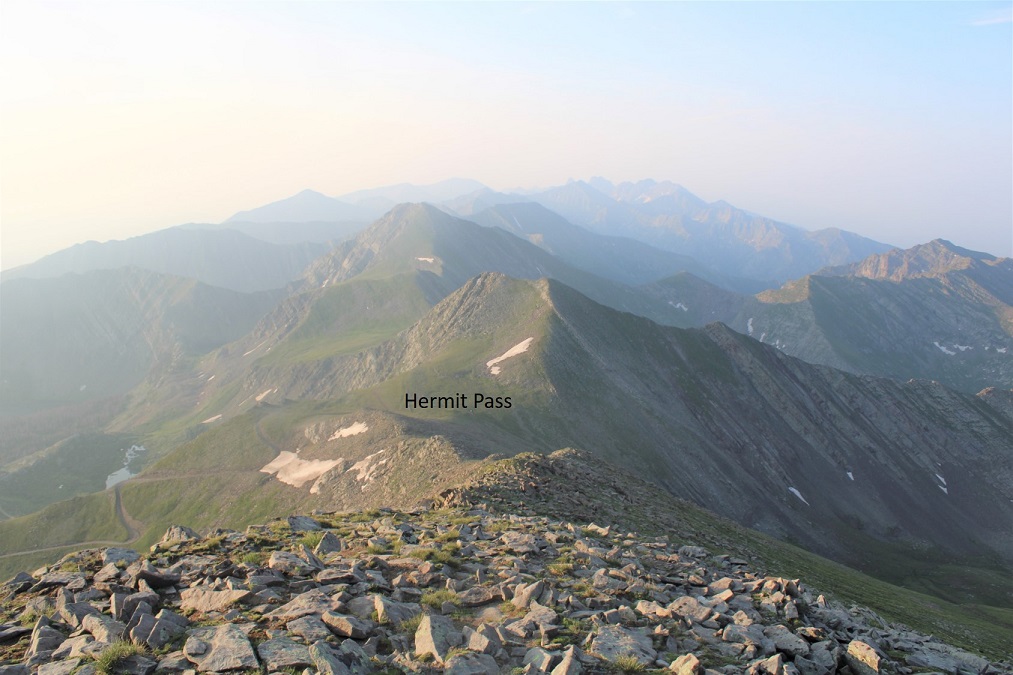
From the summit I had a good view of the other peaks I intended to summit today (if not a good view of the area overall).
I turned and headed back towards Hermit Pass.
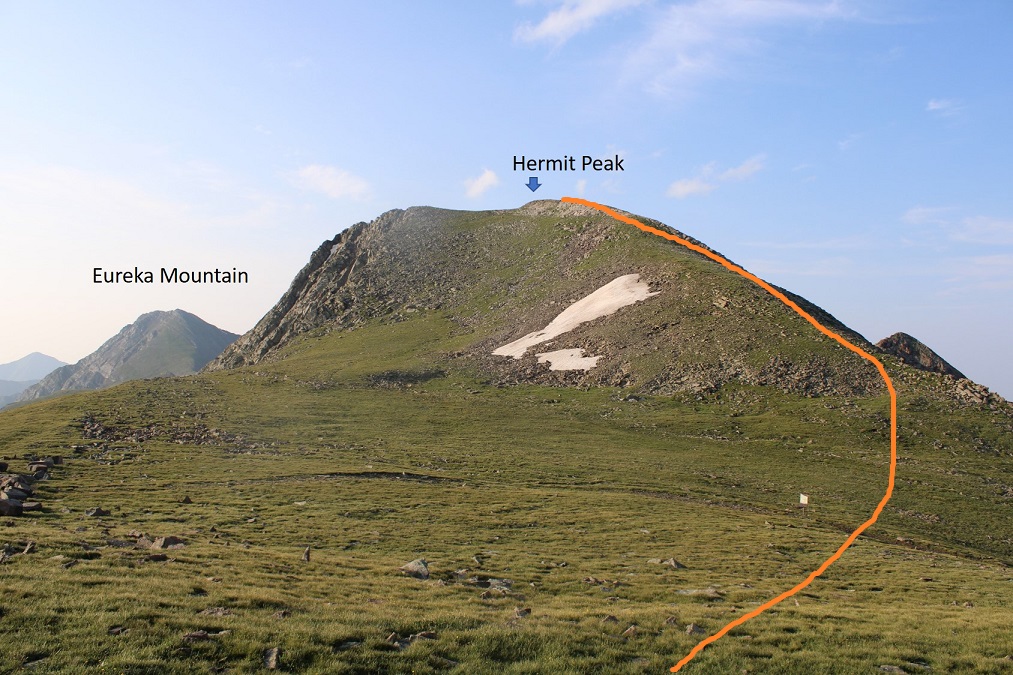
Once at Hermit Pass I chose the path of least resistance to the summit of Hermit Peak, making this a ridge hike. The true summit is hard to determine, as both the east and west ‘highpoints’ look like the summit, and indeed, both have cairns. CalTopo says the true summit is to the right (west).
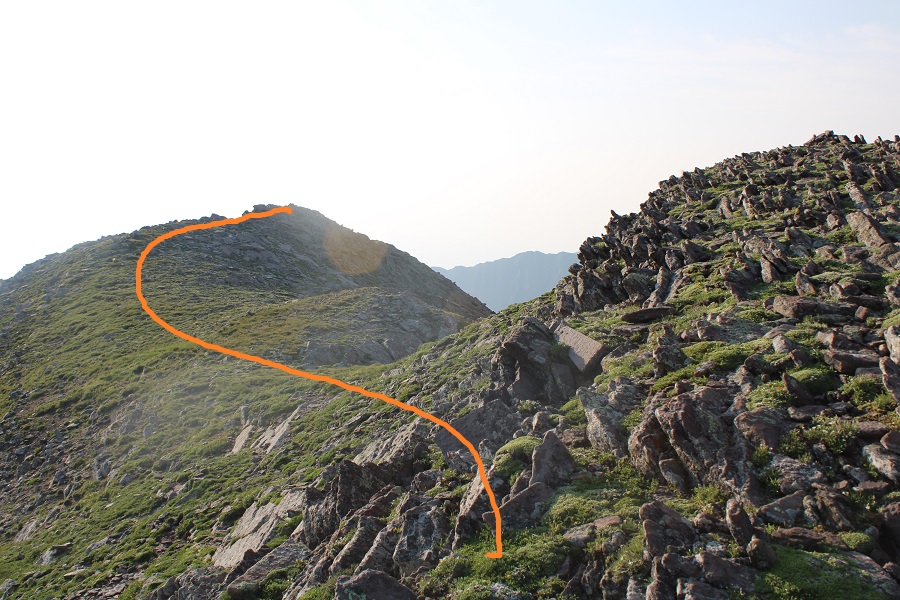
Here are some pictures of the ridge hike, mostly on tundra to the summit of Hermit Peak
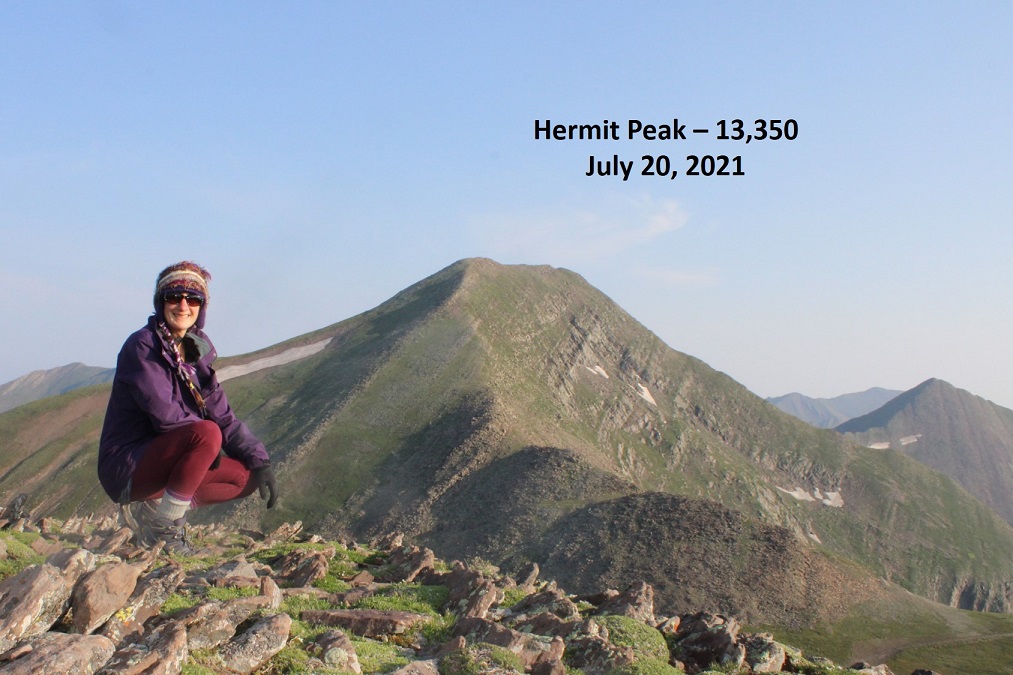
I summited Hermit Peak at 7:40am
Hermit Peak:
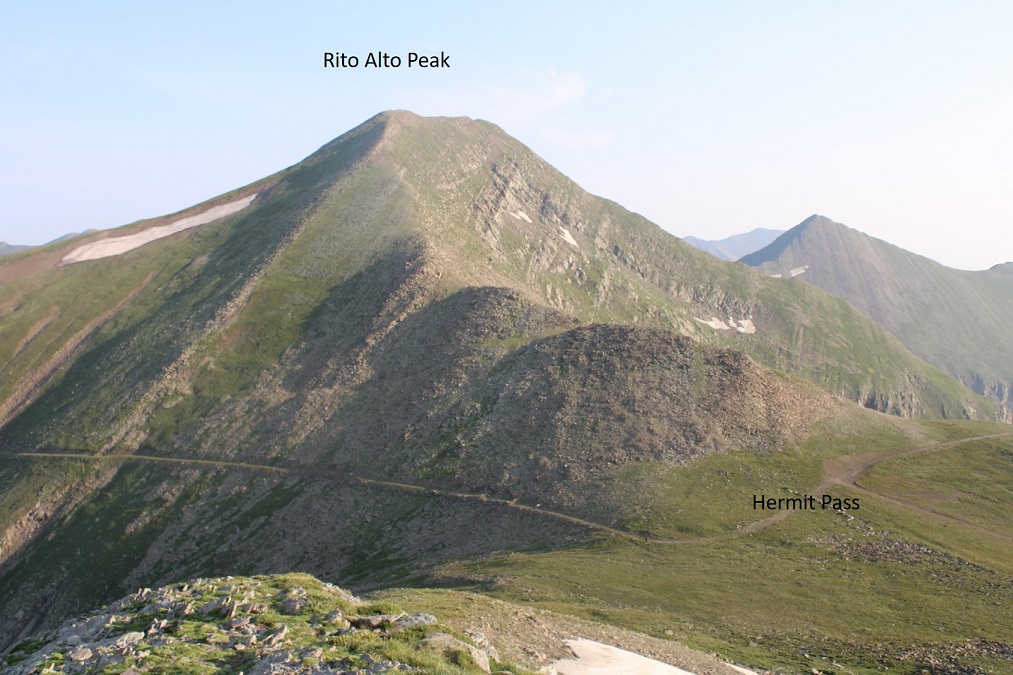
Here’s looking back at Rito Alto Peak
And now, on to Eureka. I first crossed over to the east side of Hermit Peak (which also had a cairn)
Here’s looking back at Hermit Peak from the cairn on the other side
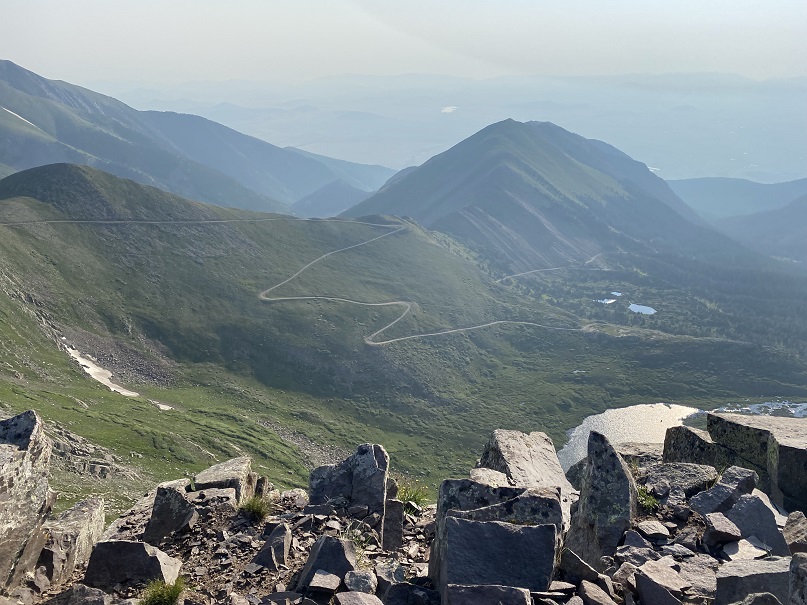
Here’s looking back from that point at the Hermit Pass Road I took hiking in
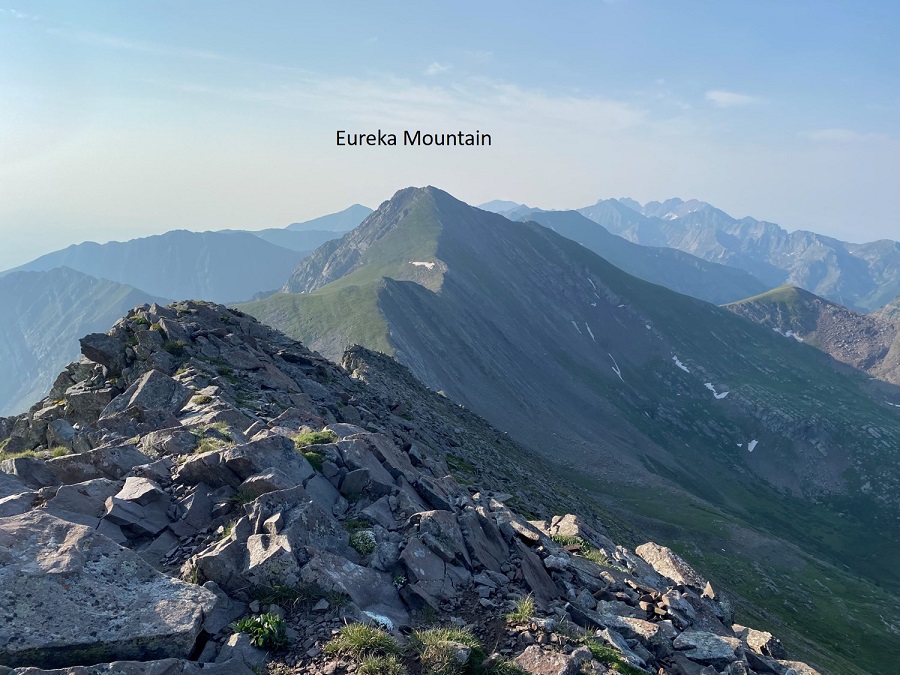
And from that point looking southwest to Eureka. As you can see, this is another ridge hike
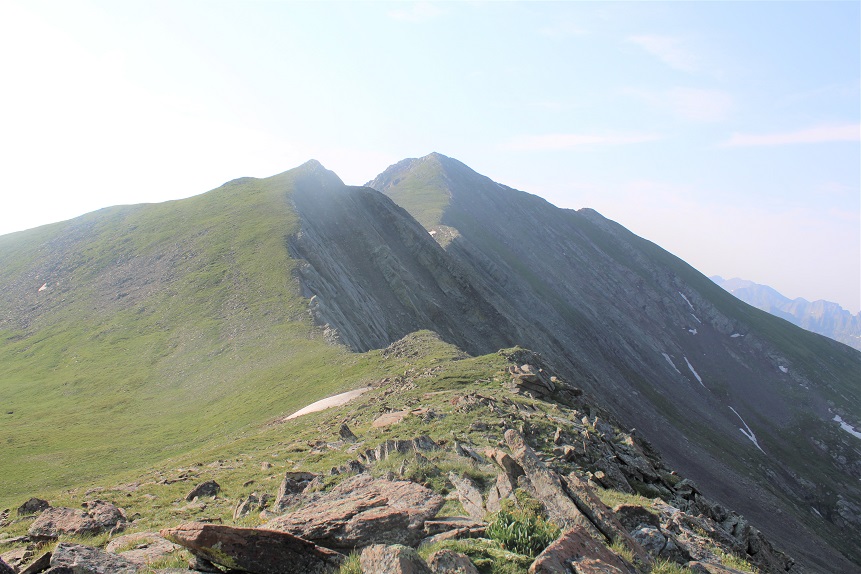
While it might look sketchy, this ridge stays at class 2. First, I descended about 650’ down the ridge
Then ascended 300’
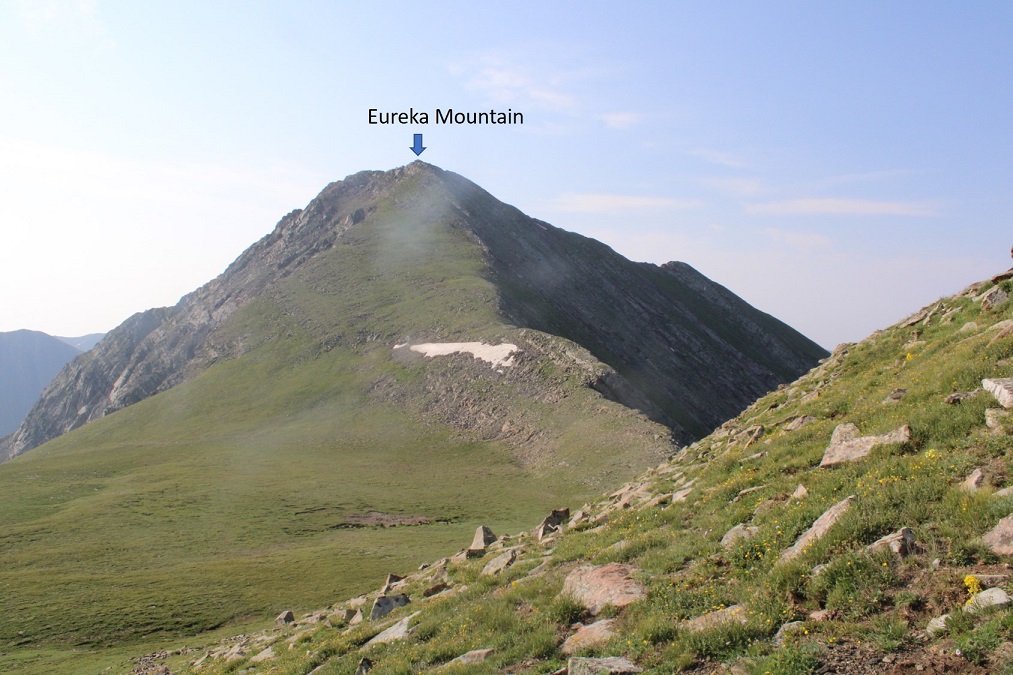
And descended another 150’ before gaining 550’ to reach the summit of Eureka Mountain. Note the true summit here is also to the west (this will be hard to determine when you’re up there, as it looks like it should be the point further east).
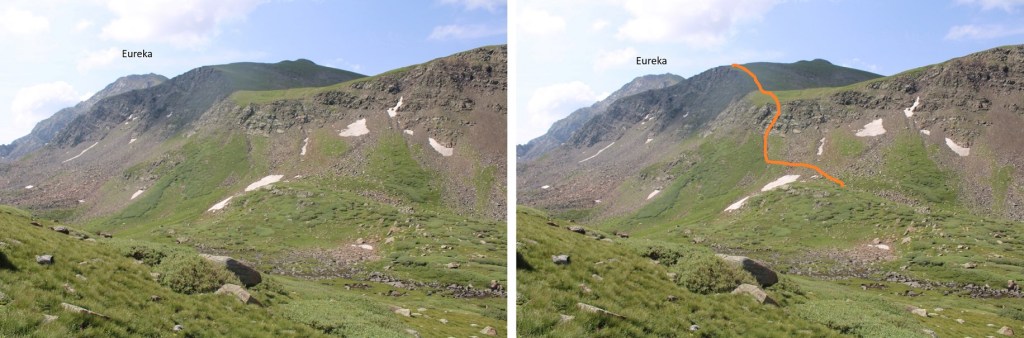
The hike is a tundra/rock ridge hike until the last 20 feet or so. Here’s the route I took, staying above the snow but below a rock formation on the ridge. You could also just go straight up the south face.
Just before the summit there was a little (very easy) scrambling
I summited Eureka Mountain at 9am. It was a small summit, so I sat on it but didn’t stand. I took a selfie instead of setting up my camera.
Eureka Mountain:
From here you can see, looking east, how it looks like that might be the summit. I wanted to be sure, so I hiked over there (sketchy class 2)
This area was actually lower, but gave me a good view of the true (small) summit of Eureka
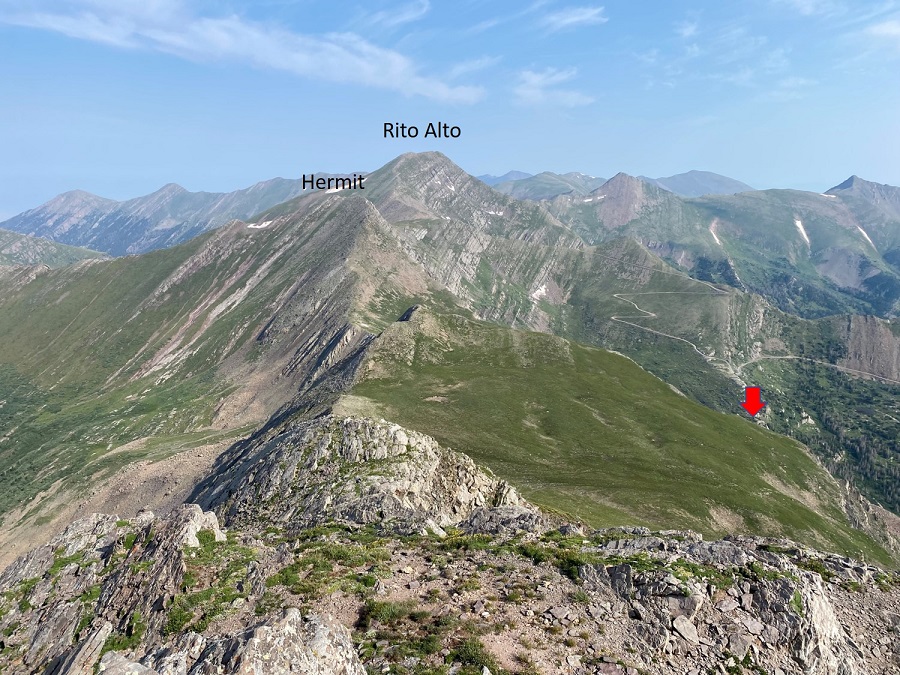
I made my way back to the true summit and headed back down the ridge the way I came, eventually heading towards the red arrow.
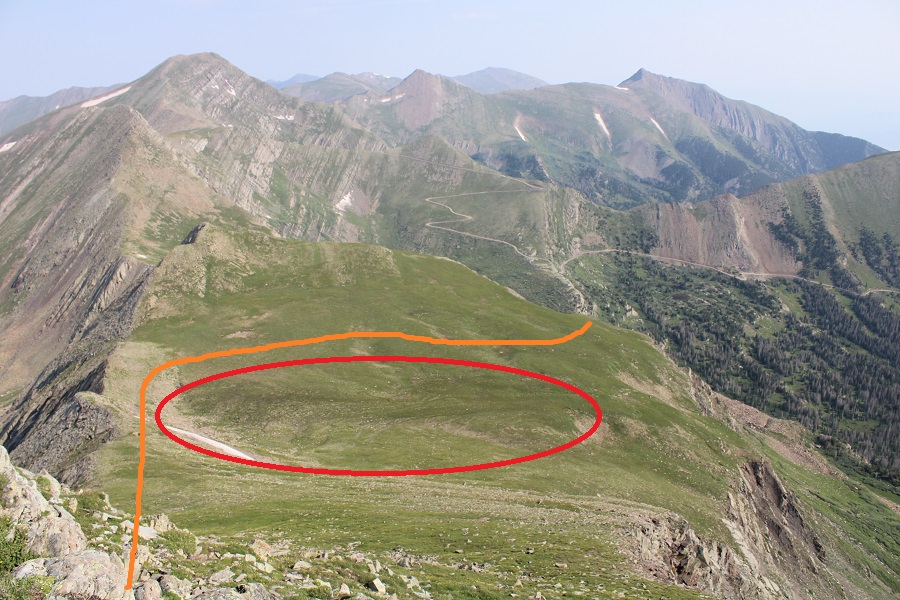
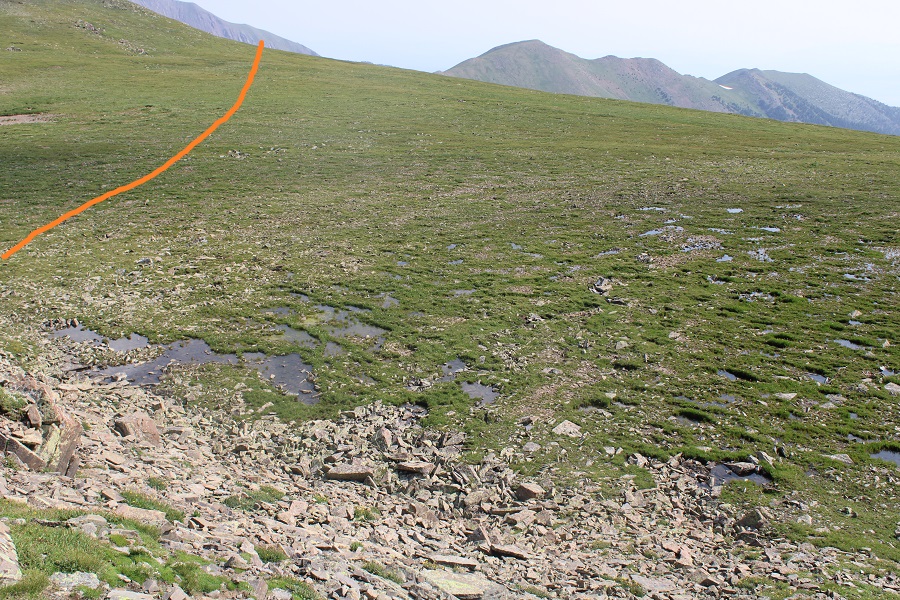
I stayed on the ridge to avoid the marshy area, which didn’t look like a fun time. Once above the marshy area I cut across the tundra to the east side of the mountain
Here’s a closer look at the wet area, and my route across
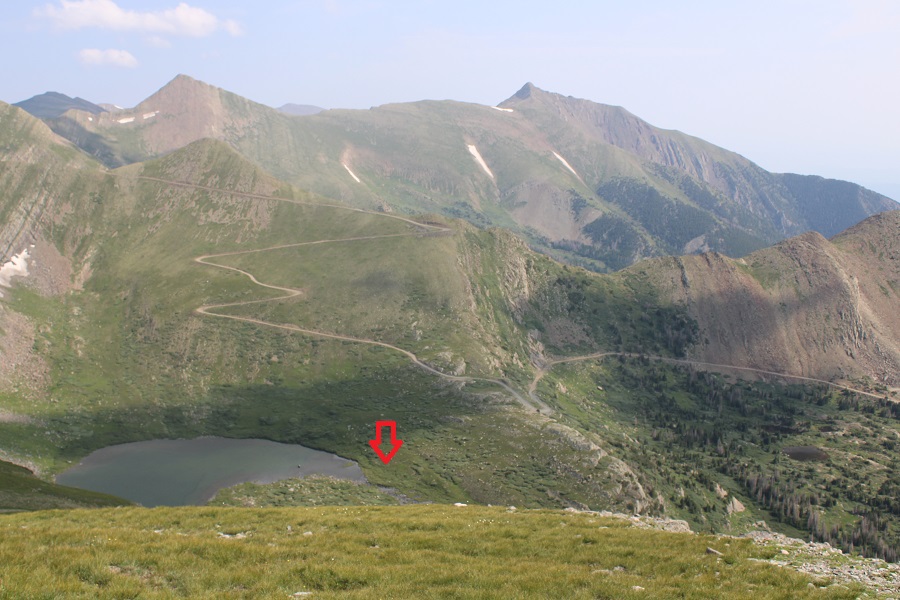
As I skirted the ridge, I could see my intended route back to the road. I was aiming north, towards the smallest outlet of Horseshoe Lake. Once I made it there I would cross the stream and I hike up the hillside, back to the road.
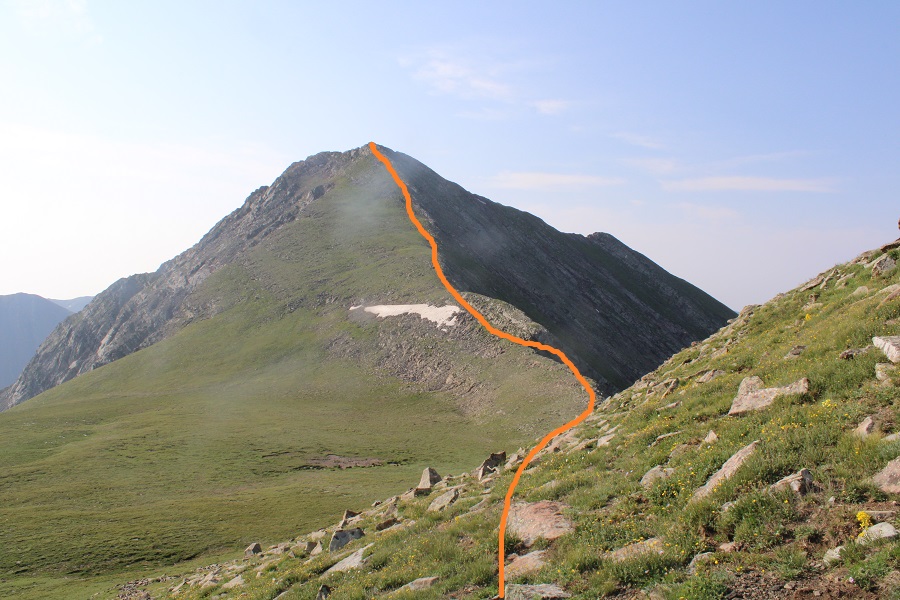
First, I had to descend a gully. This was difficult class 2 at the hardest. There will be pictures later: make sure to descend the correct gully to make this easier.
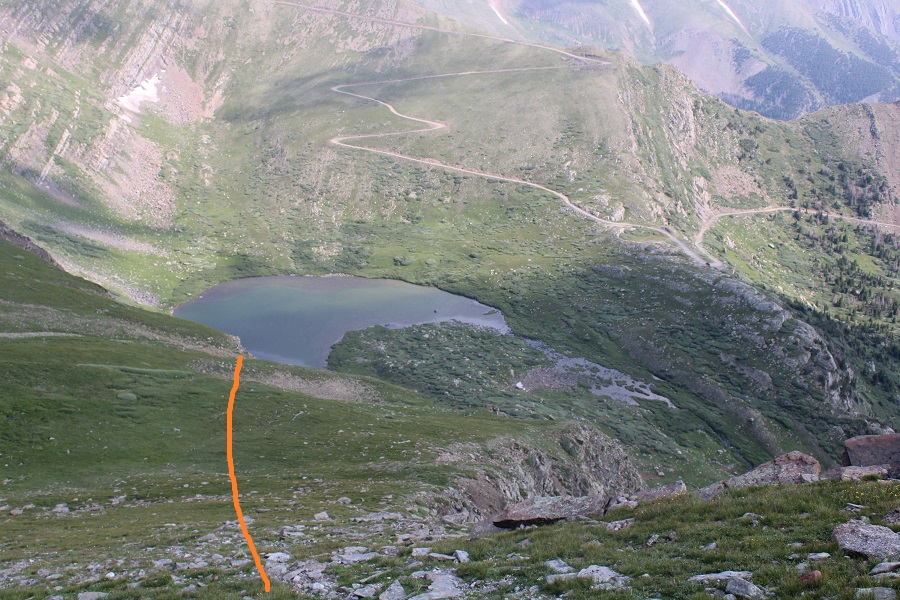
Here’s the route I took down the gully, towards Horseshoe Lake, and back to the road. There were some willows to navigate near Horseshoe Lake, but once again, all class 2.
From the road, here’s a view of the path I took down the gully. If it’s daylight when you’re hiking in, spend some time visually memorizing the route.
Back on Hermit Pass Road, I followed it east back to my truck
The wildflowers were on point
I made it back to my truck at 11:15am, making this a 12.2 mile hike with 4551’ of elevation gain in 6 hours, 45 min.
The drive down wasn’t any better than the drive up, but Miles got his first real 4WD workout, and had fun splashing through the mud!
It was an icy drive to the trailhead. I chose to do segment 3 today because all hikes I was interested in above treeline were too windy. I did realize this hike was a gamble though, as yesterday it had snowed. I wasn’t sure how much, but reports said 4-6”. Since I was here last week, I knew this would be the first accumulation in the area. If figured I could handle 4-6” of snow.
I made it to the Little Scraggy Trailhead to find the gate to the trailhead closed. I was expecting this, as when I was here last I’d noticed the gate was already closed. There are 3-4 parking spaces just outside the gate on the side of the road. There was a lot of snow on the side of the road, so I spent 10 minutes or so backing in and out of a space, packing down the snow. It was 12 degrees outside. I put on all my cold weather gear and was on the trail at 6am. The trail follows the road behind the gate. (Obviously, this picture is from last week, before the snow).
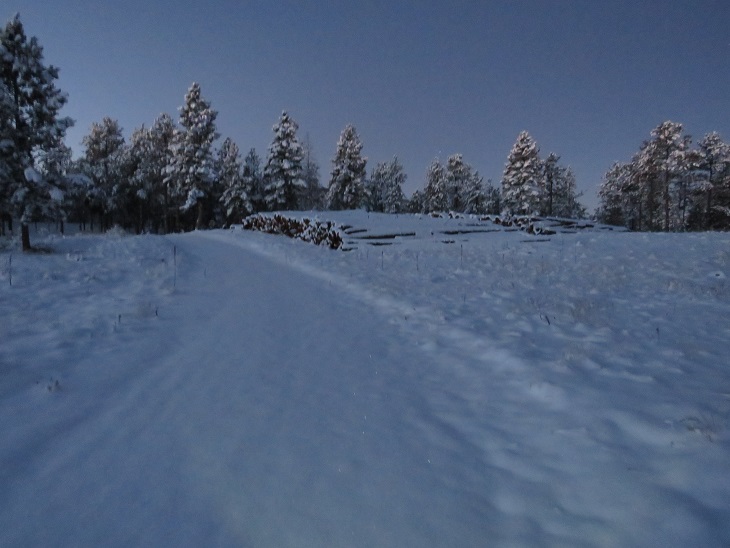
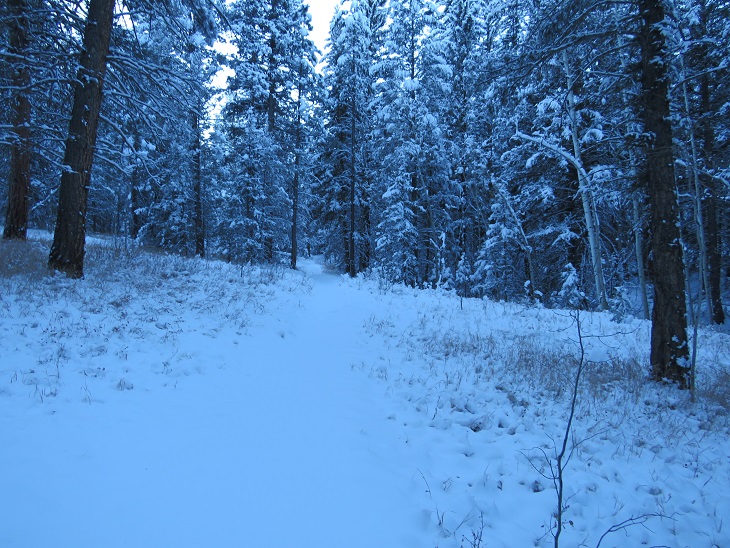
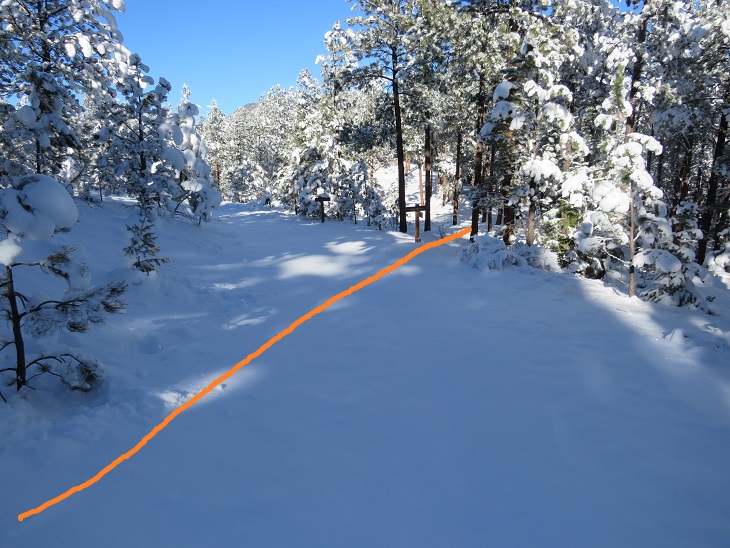
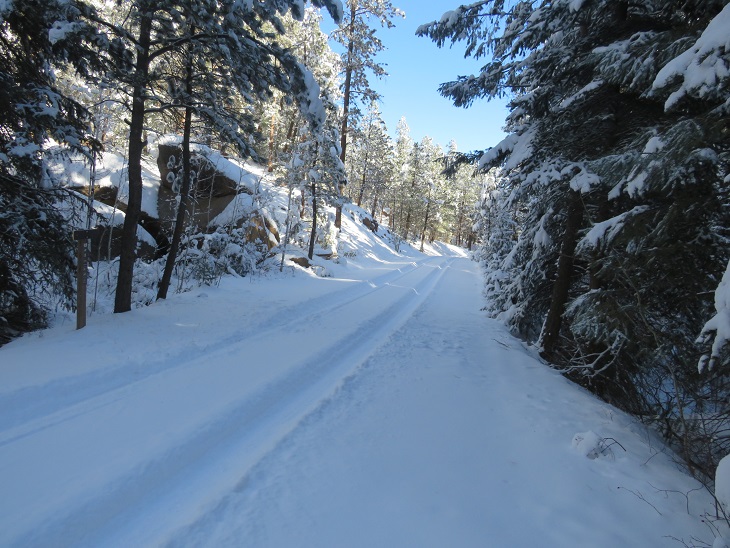
After hiking along the road for about 1 mile I came to the Little Scraggy Trailhead. Even through the snow, the road was visible.
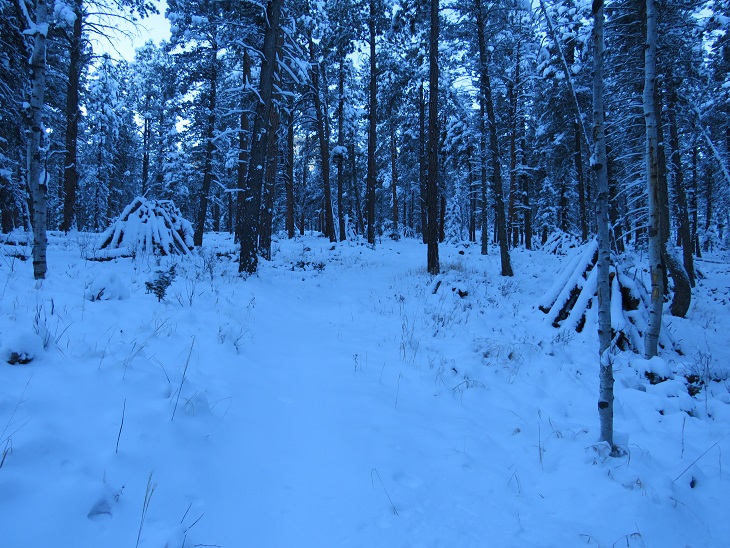
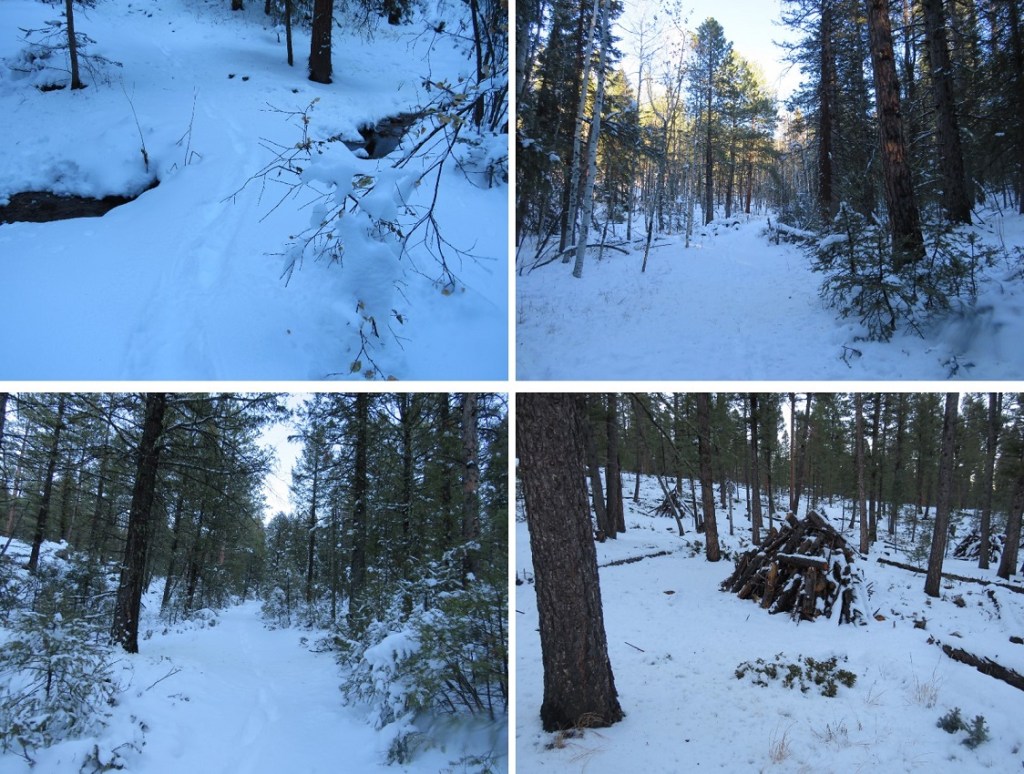
I passed a large woodpile
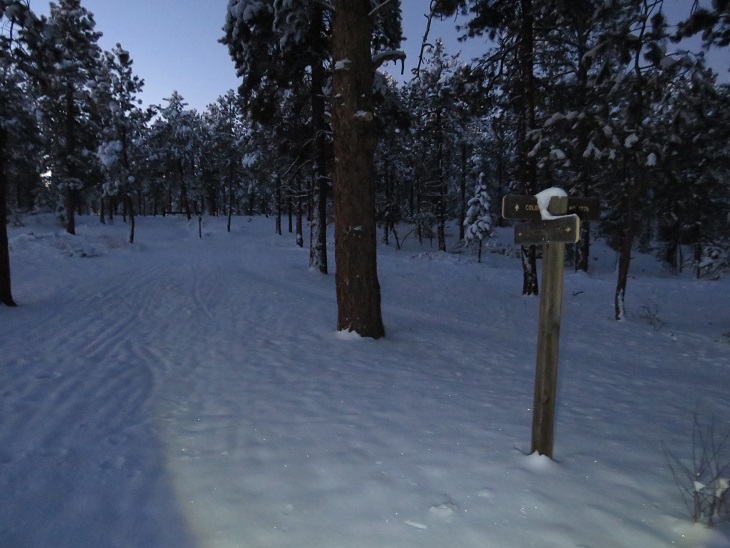
This part of the trail has a lot of obvious signage.
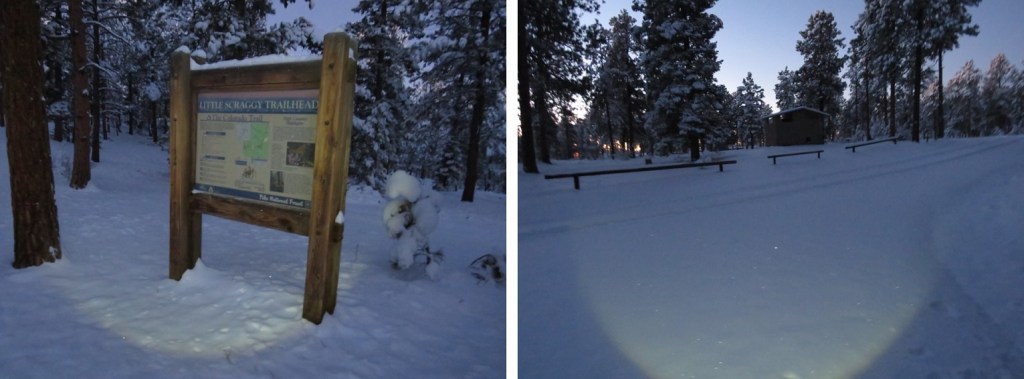
The Little Scraggy Trailhead has an information sign and bathrooms (I didn’t check to see if the bathrooms were closed for winter, but I’m assuming they are, as the road’s closed.
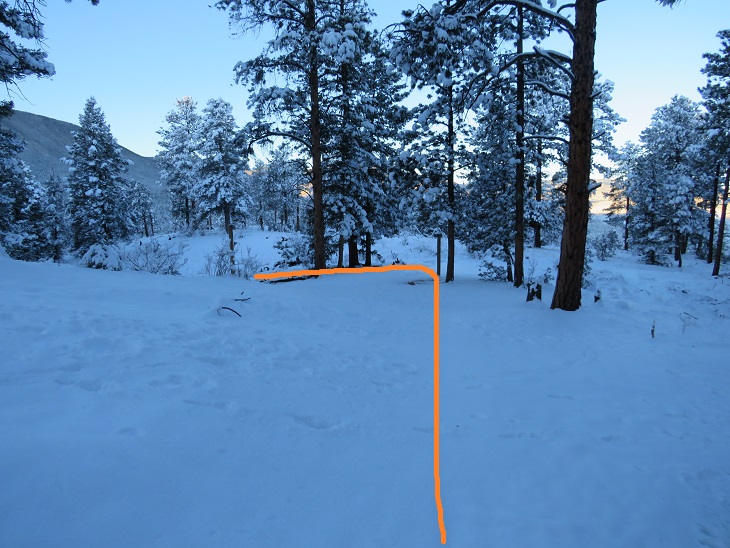
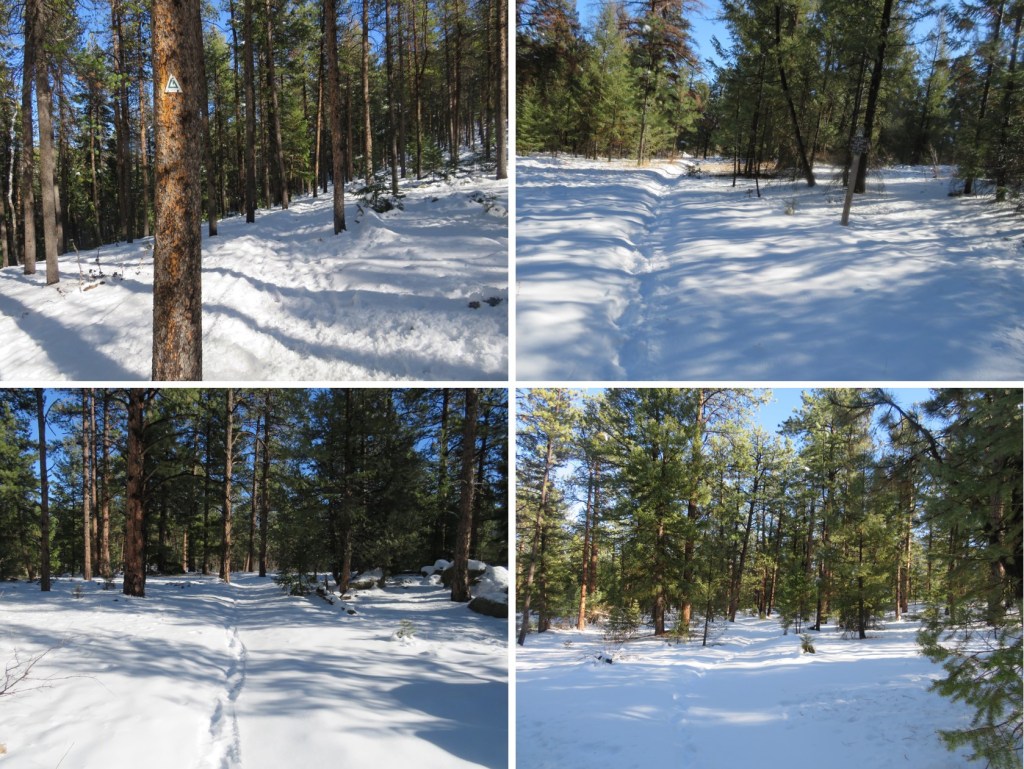
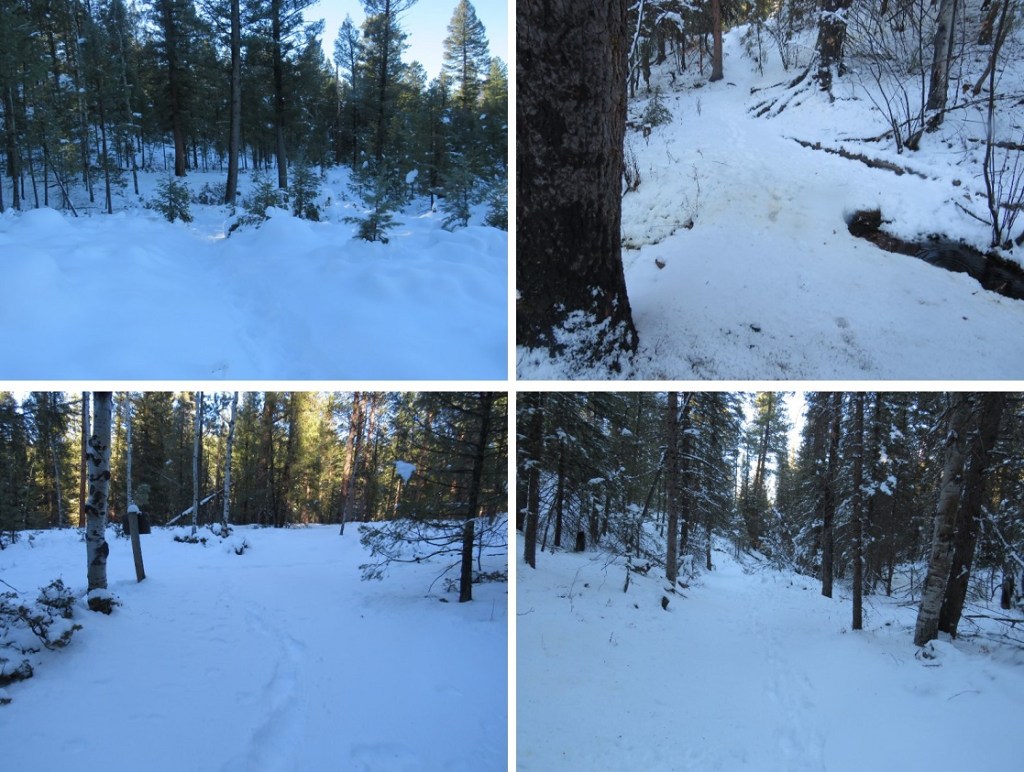
From here I followed a trail instead of a road. The trail was covered in snow, but I was still able to tell where it led (most of the time).
As the sun rose, I passed a really cool rock outcropping that looked like a great place to camp
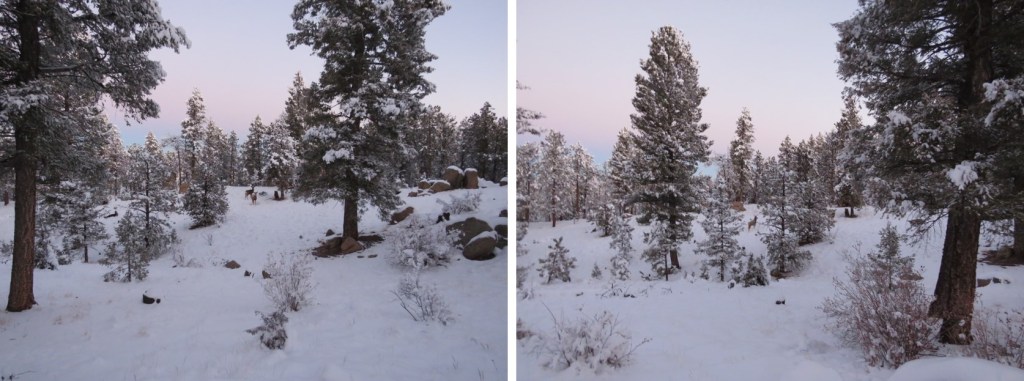
And I started seeing a lot of deer (and deer tracks)
I saw a sign that said ‘overlook’, and wanted to take a look, however, my toes were frozen. I told myself I’d take a look on the way out (which didn’t end up happening, for reasons I’ll explain later). Instead of heading straight I followed the trail to the left. Here I heard a pack of coyotes. They sounded close, yipping just over the hill. At the end of the yips I heard a bark that sounded suspiciously like a dog (but I’m sure what I’d heard initially were coyotes).
This next part of the trail was bitterly cold. I realized later in the day that due to the position of the mountains and time of year, this part of the trail never sees sunlight. The snow was sugary and soft and kept my toes frozen. I kept trying to move my toes inside of my new shoes, willing the circulation to continue flowing. Over and over again I wondered if I should turn back? How did one know when you got frostbite? At what point should I worry? What was the point of no return? Lots of these kinds of thoughts ran through my mind as I continued on. I’m not one to give up easily. The views of Little Scraggy Peak and Green Mountain were nice however.
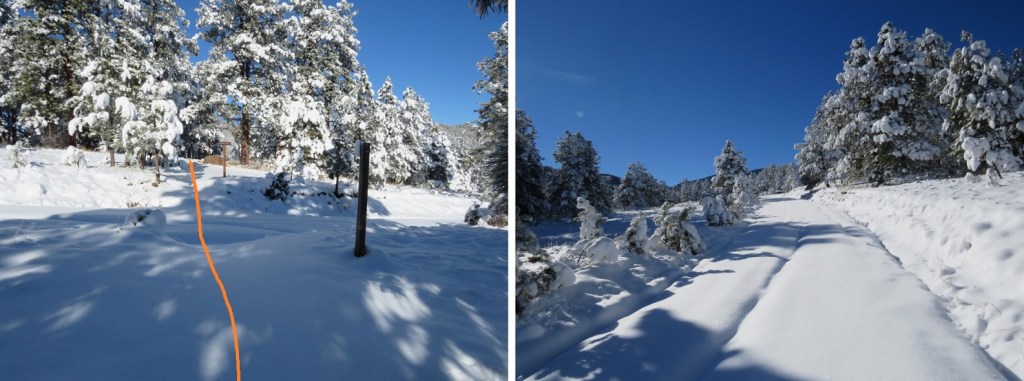
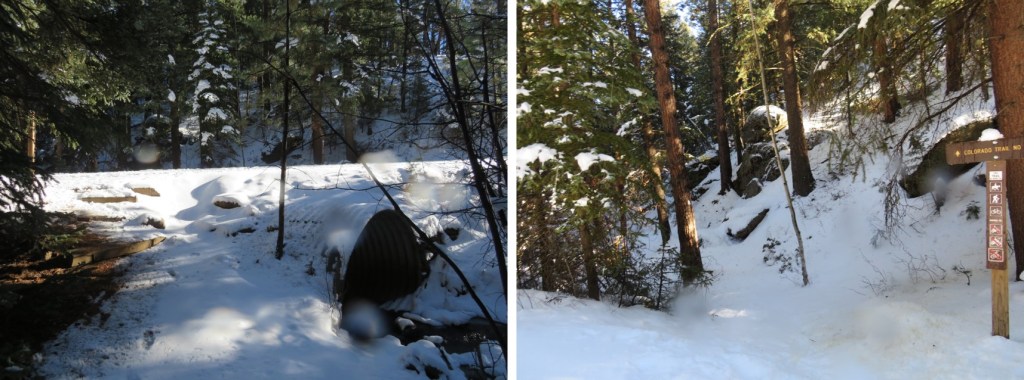
Here are more photos from this part of the hike. Sometimes the trail was easy to follow, and other times (due to snow) almost impossible. Luckily there were good signs at junctions
I passed through a wildfire mitigation area
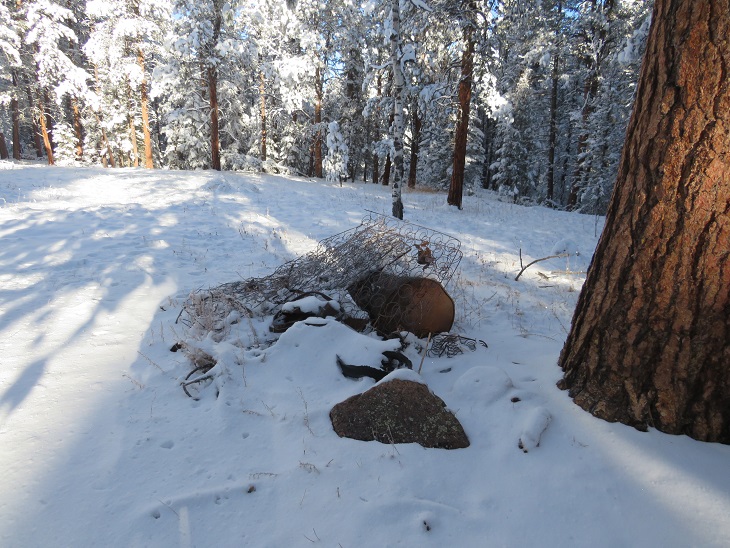
And some historical trash along the side of the trail. It was weird to find an old bedspring and cast iron and debris but no structure.
More good signage
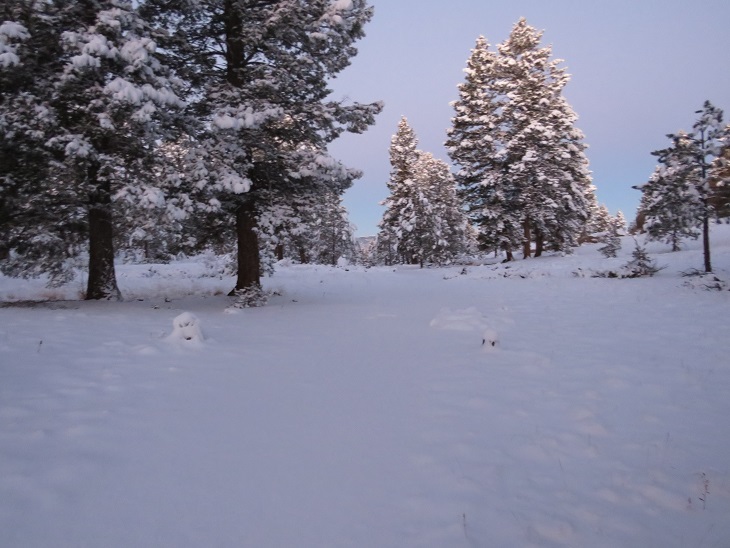
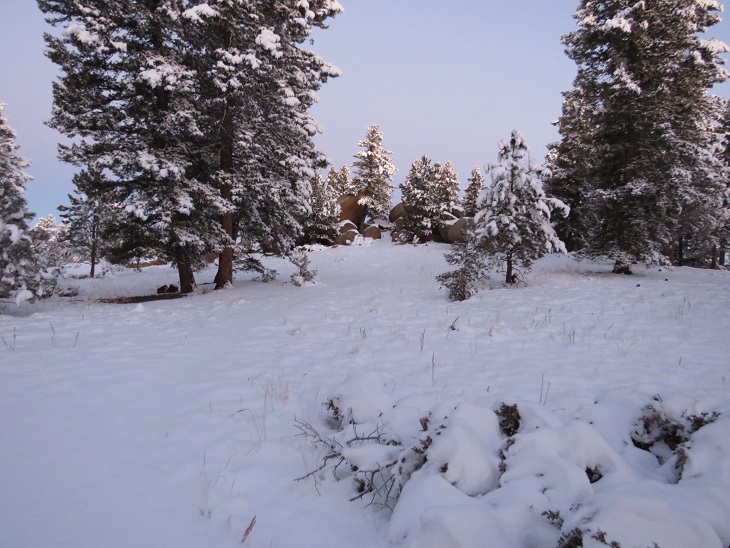
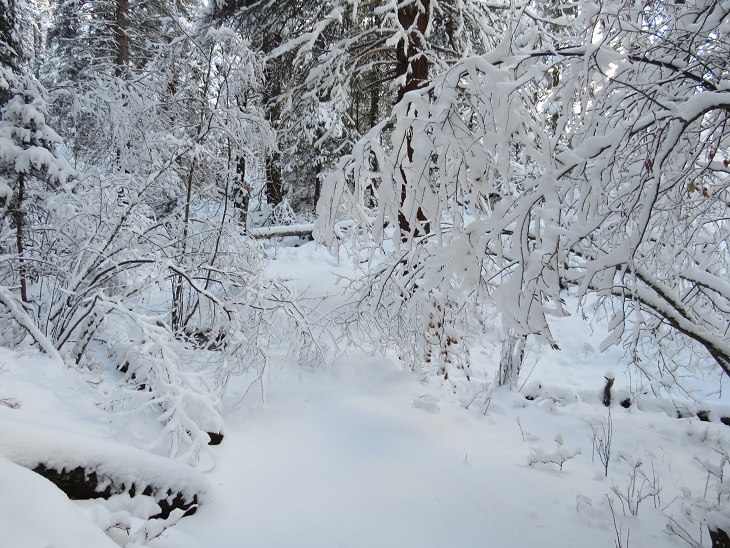
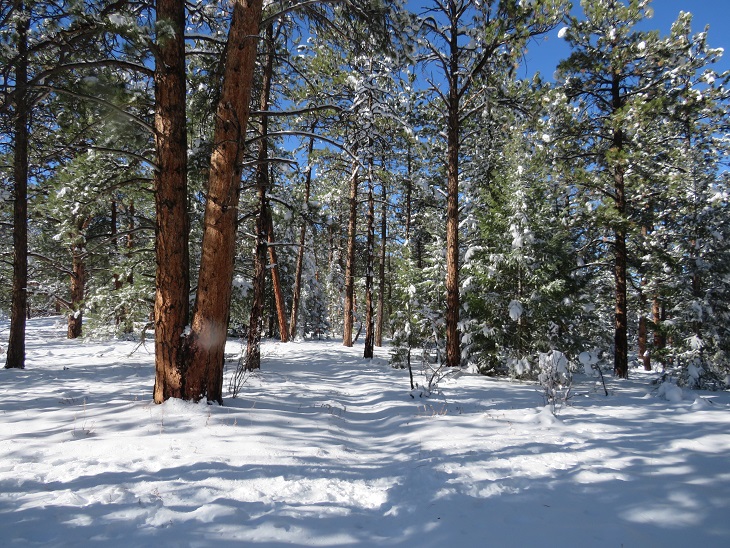
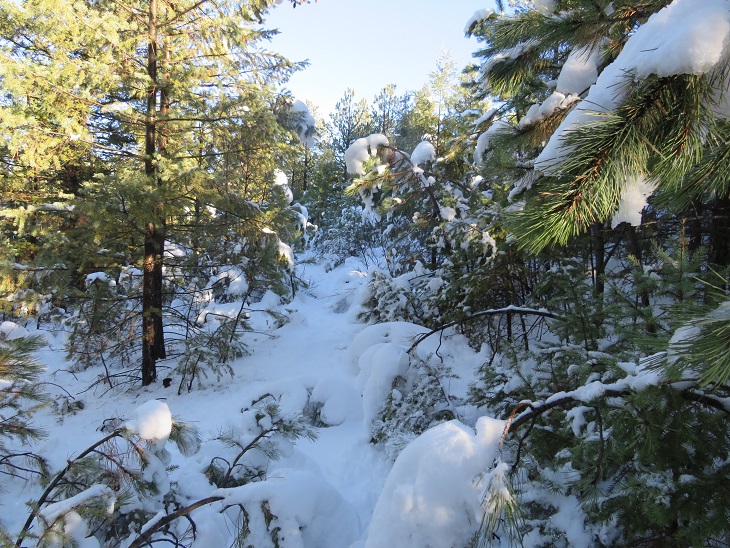
Here I came to the most beautiful part of the hike. The trees and bushes were bent over, their branches weighed down with snow. As the sun rose the forest became magical, and in places the trail became difficult to navigate. After appreciating the beauty I took my trekking pole to the branches to disperse the snow, and the branches bounced back and stood upright again.
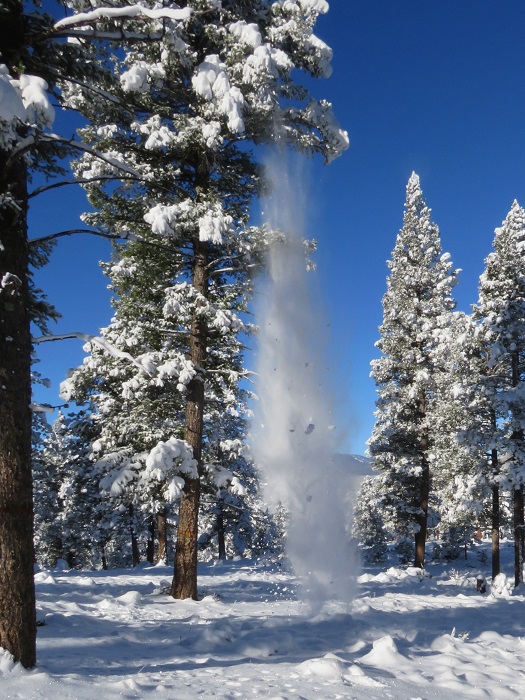
As the sun warmed up the trees, snow started falling from the branches. It was warm out, but I kept my hat on because of the falling snow.
There were several small creeks to cross on this segment, which means plenty of water. These were easy to cross and weren’t entirely frozen over, so I got to hear the water flowing underneath the ice. Most of these areas had logs to walk across. There wasn’t a log here, but the ice was solid enough for me to walk on top (I had microspikes on for this entire hike).
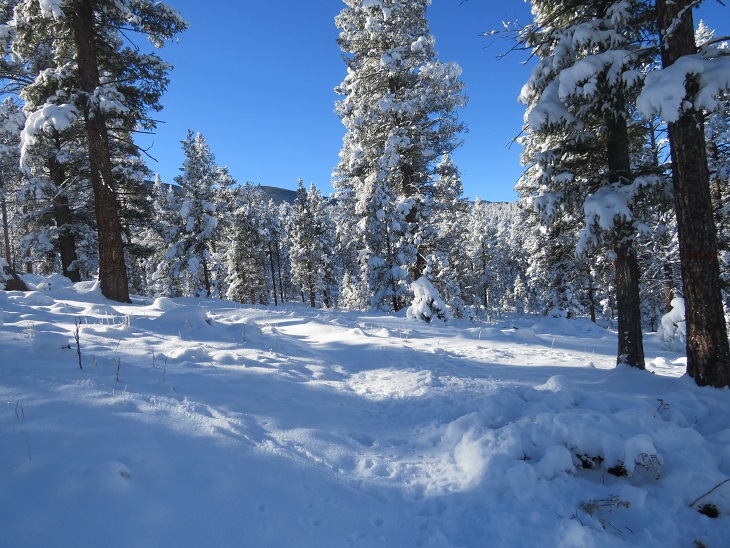
The snow seemed to be heaviest here. I’m guessing 8 inches or so. I contemplated putting on my snowshoes, but that sounded like too much work and brought with it the possibility of frozen fingers, so I postholed instead.
At 8.75 miles I came to the junction with Buffalo Campground
And then crossed three roads. The first went to Meadows Group Campground, but it didn’t look like anyone was headed there today
The next road was road 543. This is the low elevation point of the segment.
The final road went to a rifle range, and actually had tire tracks!
It was so nice to be hiking in warm weather. I use that term loosely (it was still below freezing), but the sun on my face was magical. Also, I could feel my toes again.
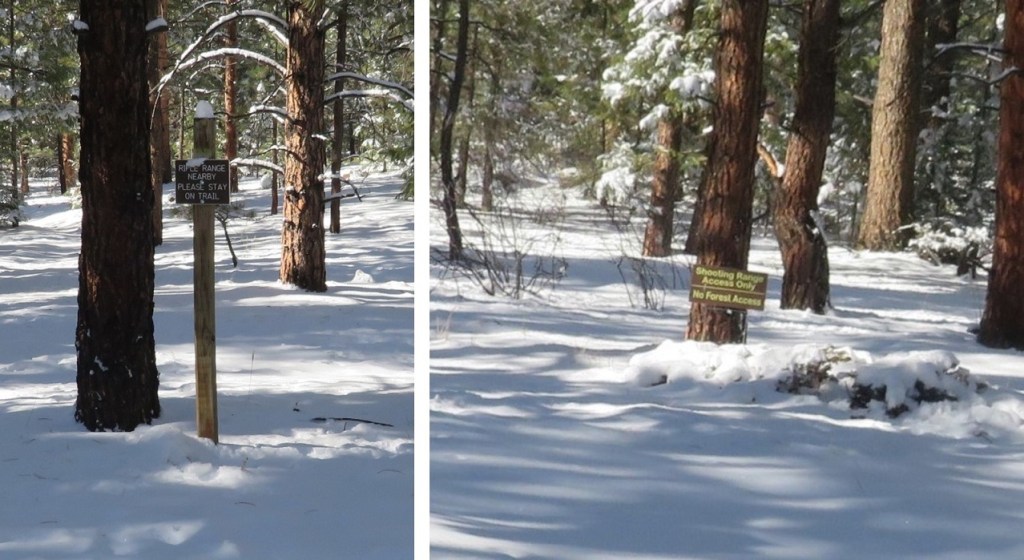
Now I was getting excited. My research had told me this was a 12.2 mile hike, and I knew I had to be getting close to 12 miles. I kept hiking, and came across signs asking me to stay on the trail because I was near a rifle range. No problem!
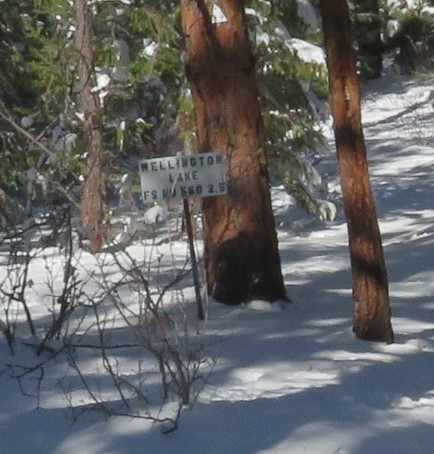
I hiked, and hiked, and hiked some more, excited I was getting near the halfway point for my hike today. I knew I had to be over 12 miles at this point, so I should be turning around soon. That’s when I saw it: a sign saying the trailhead was 2.5 miles away!
NO WAY! My spirits plummeted. I did some quick mental calculations, as I had a decision to make. It was now 2.5 more miles to my turnaround point. This would add 5 miles to my hike, and 2 hours to my day. If I continued on, I’d be hiking 30 miles today in the snow, trenching the entire way. Also, I’d most likely get back after dark, and I didn’t have cell service, so I had no way of telling anyone I’d be home late. In the end I decided I’d already gone this far and I didn’t want to waste the progress I’d already made: I was going to continue on to the Rolling Creek Trailhead. Also, this was going to be a long day! I resigned myself to not getting pictures of the start of this trail, since I’d be both starting and ending in the dark.
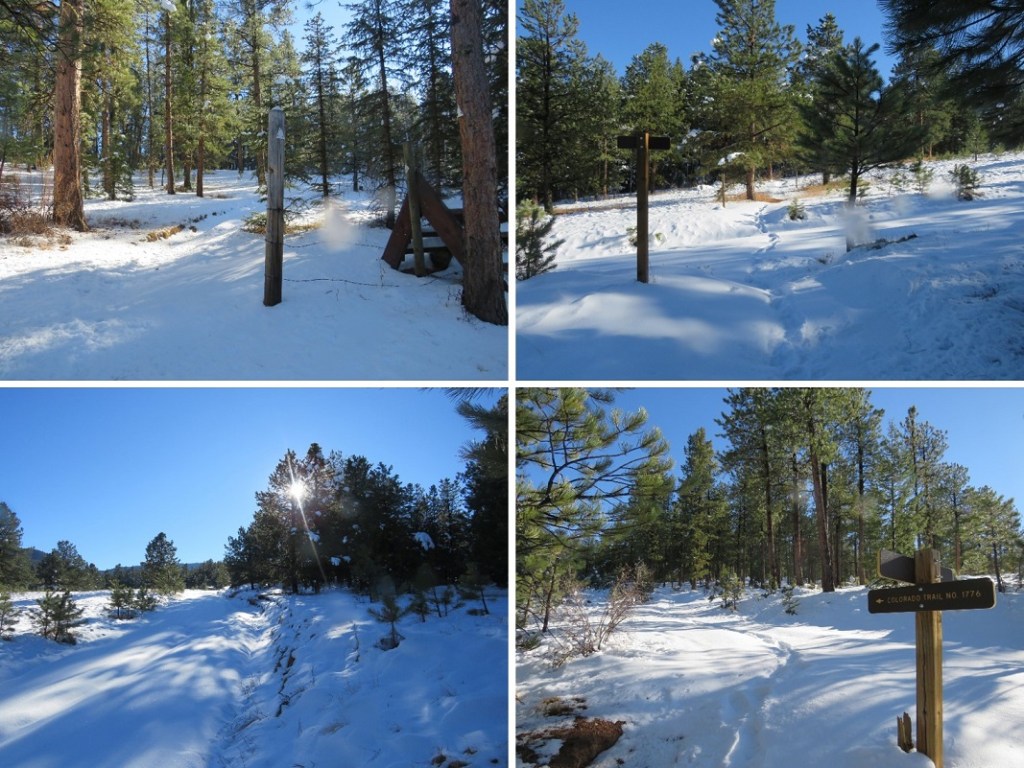
I hiked around what must be private property, given the fencing. This fence must have fallen inwards a few times: they steadied it with a large rock.
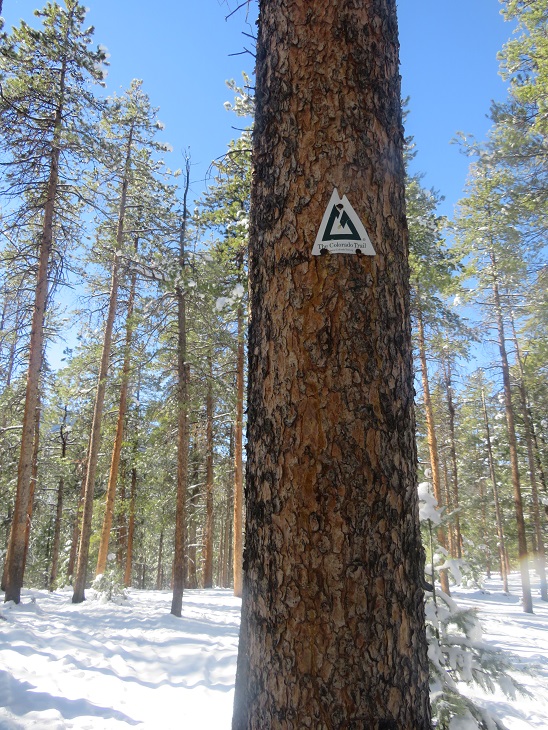
Yep, I’m still on the right trail! I was excited to see a Colorado Trail marker here. They are few and far between on this segment (although there is great signage).
The last 2.5 miles seemed to take forever!
I hit the high point of the trail, saw power lines, and then descended a short distance to the trailhead.
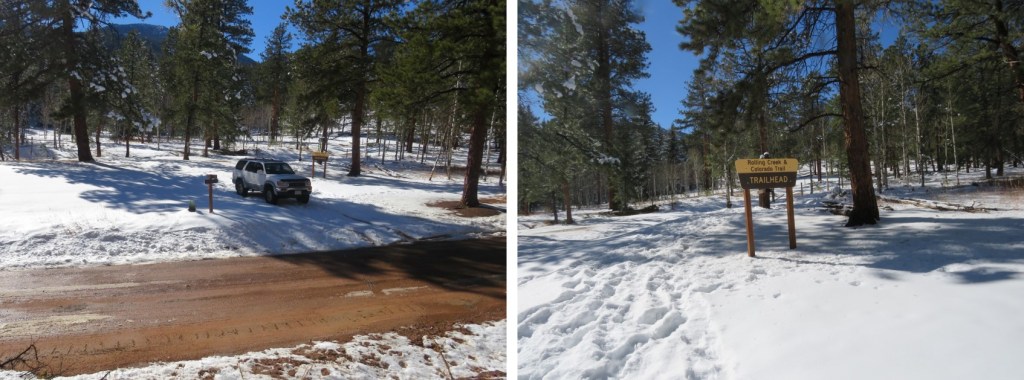
I made it to the Rolling Creek Trailhead at noon. I’d hiked 14.84 miles in 6 hours. Doing the math, I’d definitely be getting back after dark (dark now is 5pm, although, as I was to find later, it comes earlier on this segment). There was one vehicle parked in the small lot at the trailhead (taking up every spot available with the way they’d parked)
Even though it was noon I knew daylight was limited, so I didn’t waste much time here. I quickly turned around and headed back the way I’d come. The segment started with a little bit of elevation gain
Route finding was much easier on my way back, as I just followed my tracks in the snow
One really cool thing about this part of the day: all the snow that had been covering the trees was being warmed by the sun at a dramatic pace. Within minutes the trail became a rainforest, with snow melting and falling all around me as water as I went. It truly felt like it was raining! By the end of this part all the snow was gone from the trees, and there were water marks in the snow below them.
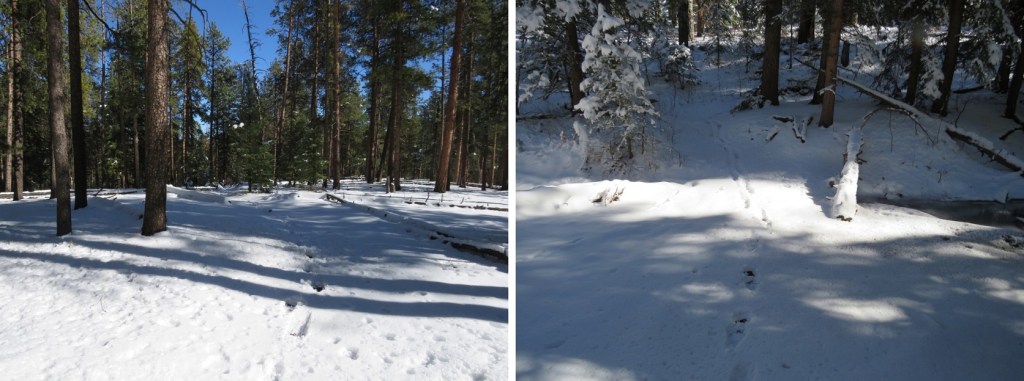
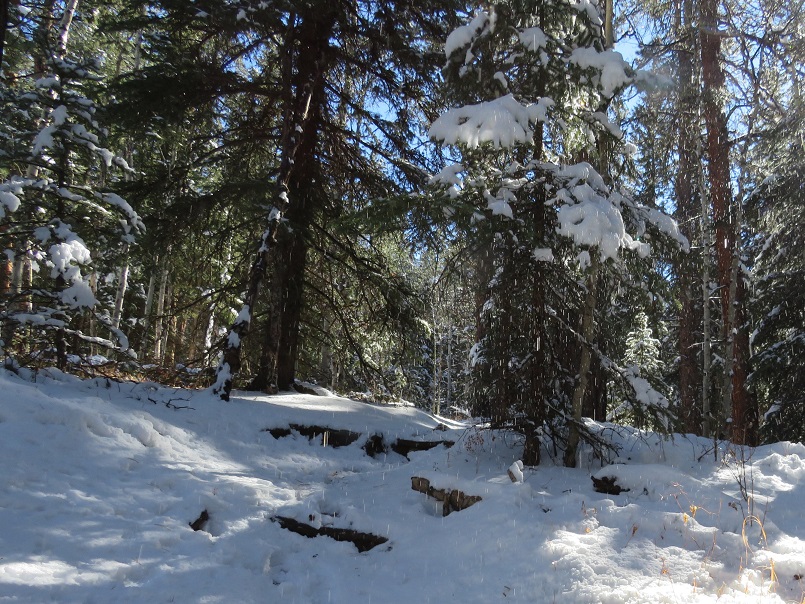
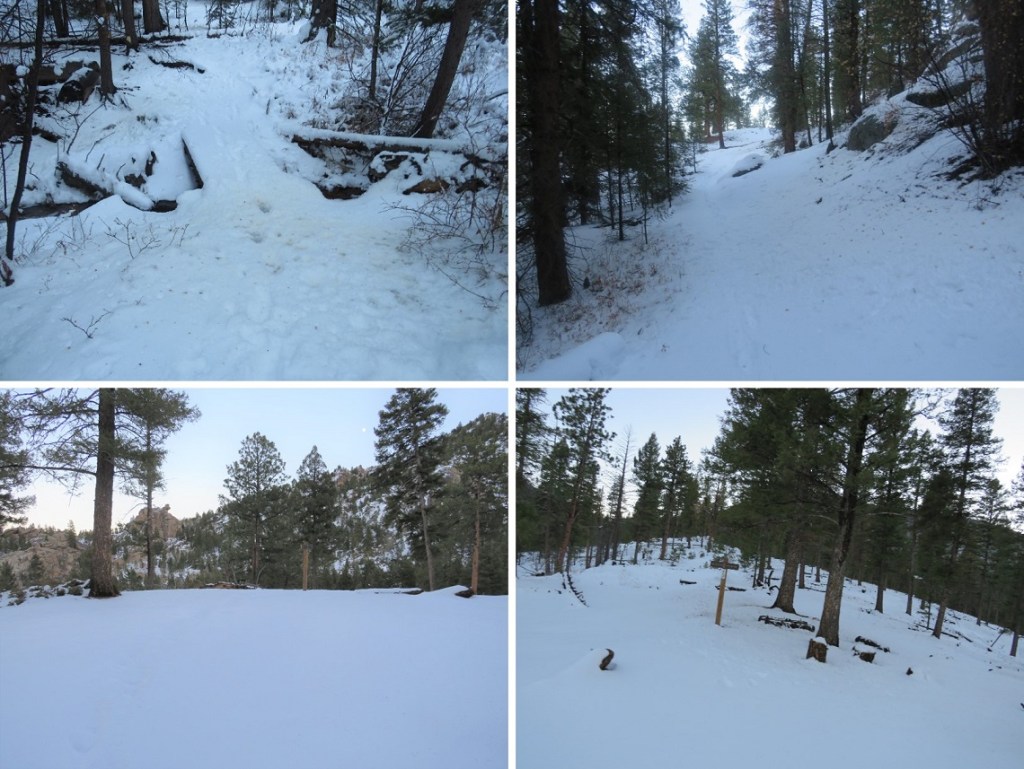
Some more trail pictures
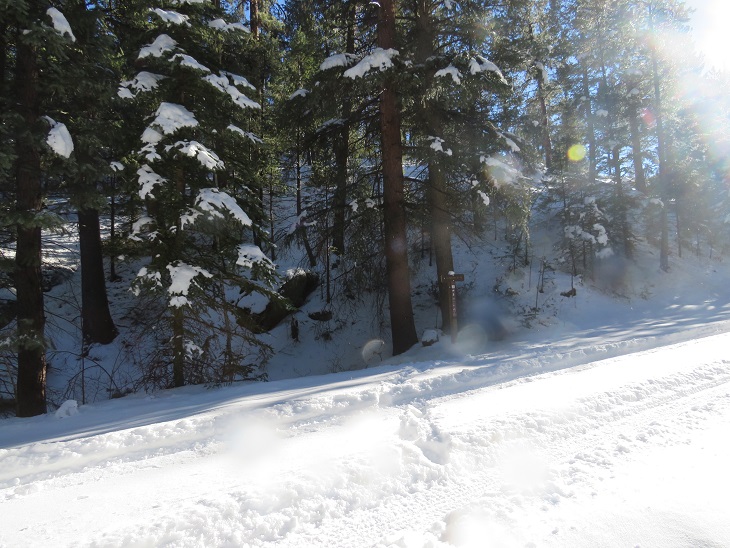
With the snow, much of this trail looks the same. I did see more tire prints on the road on my way back out
(Sorry about the water droplets scarring the picture: the water was falling from the trees at a rapid pace)
Besides the deer, my tracks were the only ones on the trail on my way back
While the sun was quickly melting the snow off the branches at the more exposed spots, snow still lingered on the trees in the shadowy areas. In the morning I’d gingerly walked through this area. Now, I whacked every tree with my trekking pole to remove the wet snow so I could pass.
As I rounded the north side of Green Mountain I once again entered the shadows. It was now I realized this area doesn’t get sun in the winter time. The temperature dropped, and I quickly became cold again. Little did I know, but even though it was still afternoon, I wasn’t going to feel the sun again today.
The snow once again became sugary. I assume this is due to the lack of sun/melting. I passed the fire mitigation area
And followed the well marked “Colorado Trail” signs
The sun was rapidly setting. It wasn’t yet 4pm and it was already getting dark out. I quickened my pace, knowing I still had a few hours of hiking left in my day, and also cognizant of the fact I had people who’d be worried about me getting back after dark.
The sun seemed to abruptly set, just as I passed Road 550. I still had 2 miles left to hike in the dark. I don’t mind hiking in the dark (in fact, I do it on just about every hike), but the lack of a visual aid became troublesome here because it seemed someone had brought their family to go snowshoeing in this area sometime earlier in the day. There were several sets of tracks and prints that didn’t really lead anywhere, and my tracks from earlier were lost in the melee. I also wasn’t able to get any good pictures of the last 2 miles of the trail (which I’d also needed for the first 2 miles).
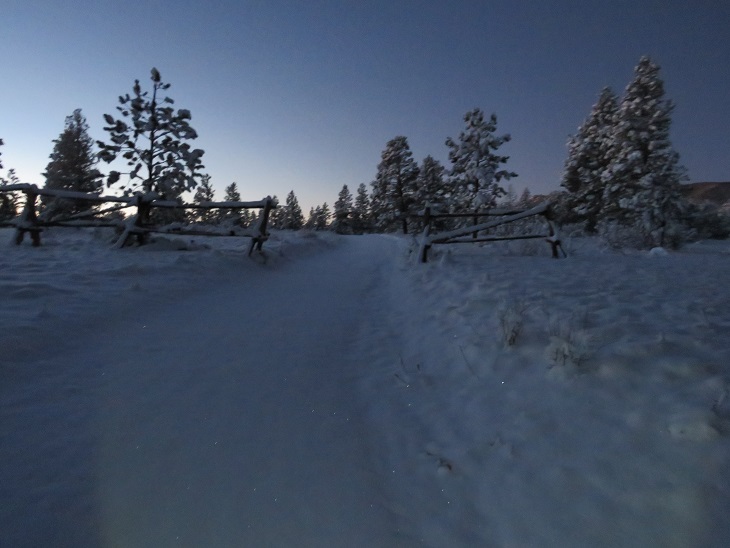
I passed the Little Scraggy Trailhead in deep darkness (despite the early hour) and easily followed tons of tracks in the snow on the 2wd dirt road back to my truck.
I made it back to 126 and, just for good measure, walked to the other side of the road and tapped the Colorado Trail sign on the other side, just to make sure I’d adequately linked segments. I turned around and took a picture of my truck on the other side of the road (and the closed gate)
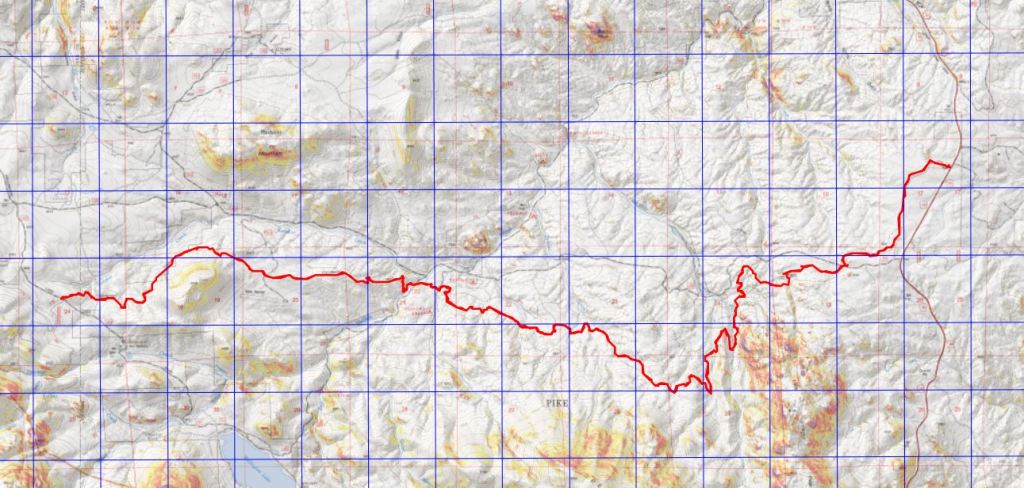
I made it back to the trailhead at 6pm, making this a 29.59 mile hike with 3362’ of elevation gain in 12 hours. I’d like to note I’d expected this segment to be around 23-24 miles, even with the added mileage from parking at the winter closure. Here’s a topo of my route. (Side note: feel free to contact me if you’d like a copy of the GPX file for this route).
My shoes were covered in ice when I got back to my truck. I shook most of the ice off, but some clumps stayed on my shoes for the 2 hour drive home, and even for a while after I set them by the fireplace. I was pleasantly surprised the hiking shoes I’d worn had kept my toes from frostbite in the conditions I’d hiked (30 miles, in consistent, sugary snow, for 12 hours, in below freezing temperatures). I have Raynaud’s, so this is phenomenal!






































 Wild Wanderer