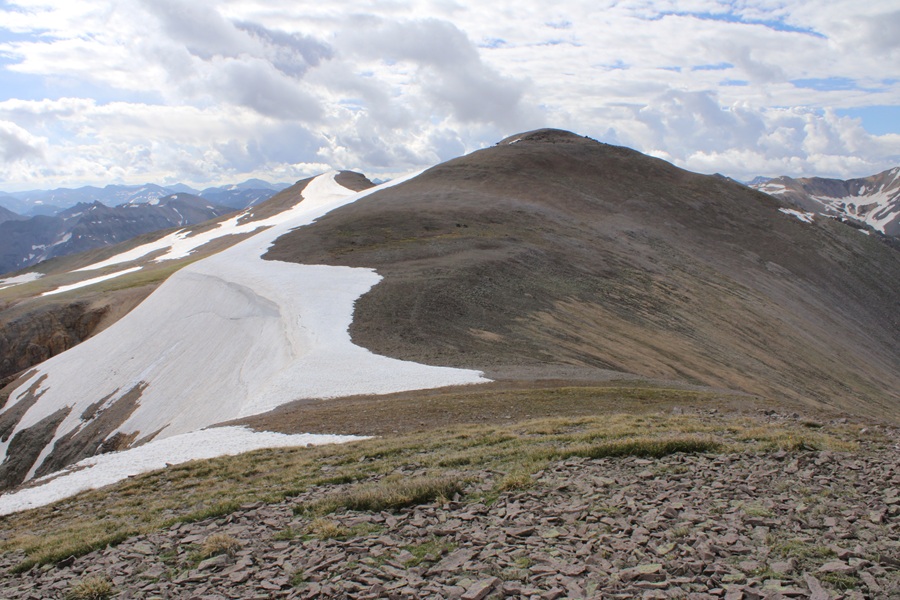
T5 – 13,437

RT Length: 10.6 miles

Elevation Gain: 4688’

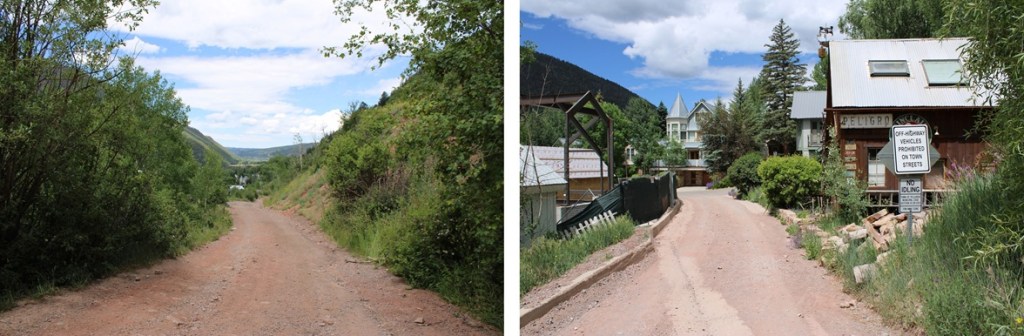
First of all, parking in Telluride is challenging.  I arrived the day before and when I got to the trailhead there weren’t any parking spaces available for any vehicles to park there at all, so I turned around and looked for a place to park in town.  Nope.  Nothing.  There were signs everywhere stating it is illegal in Telluride to sleep in your vehicle (how can THAT be legal?), and all lots had 2am-6am “No Parking or you’ll get towed” restrictions.  Street parking was limited to 2 hours unless you were a resident and had a pass.  This was frustrating!  I was glad I’d arrived a day early.  Not sure of what to do, I called the Chamber of Commerce/Tourism and they told me I could park in the parking garage ($2 per hour, but $50 if I stayed overnight), or try the residential area off Galena and park in front of someone’s house.  I couldn’t park there overnight, but it should be ok for day use.  I found a dispersed campsite away from town and came back early in the morning to try Galena Street.  I was able to find a spot in front of someone’s house, which I felt weird parking in, and I was on my way.  With all of the crazy restrictions I hoped no one would tow my vehicle.  I took Galena to Tomboy and hiked the road to the trailhead.

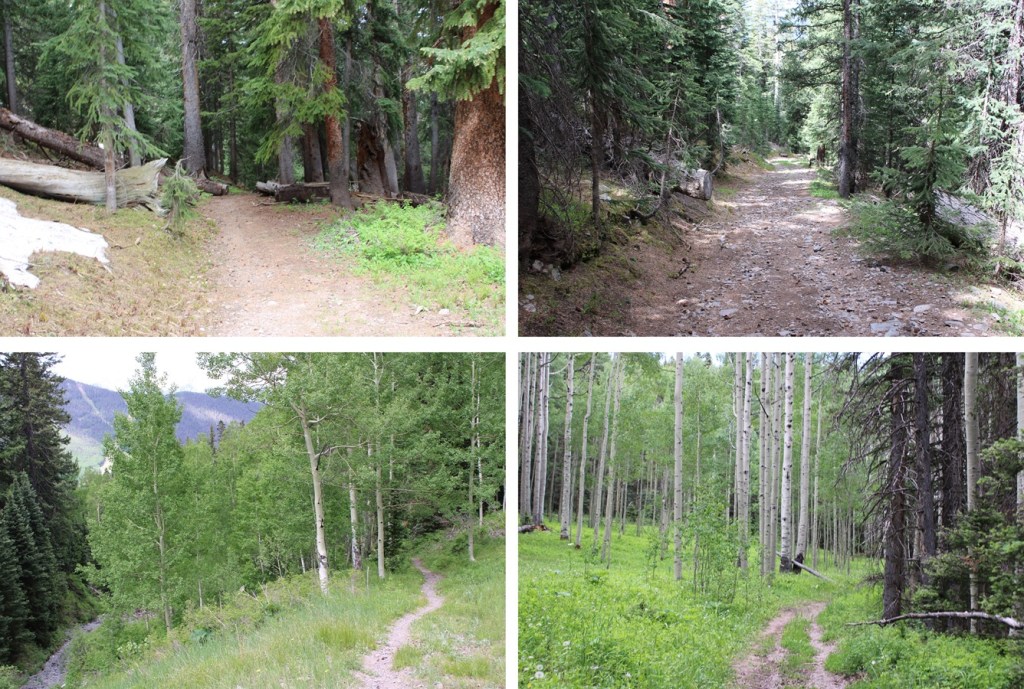
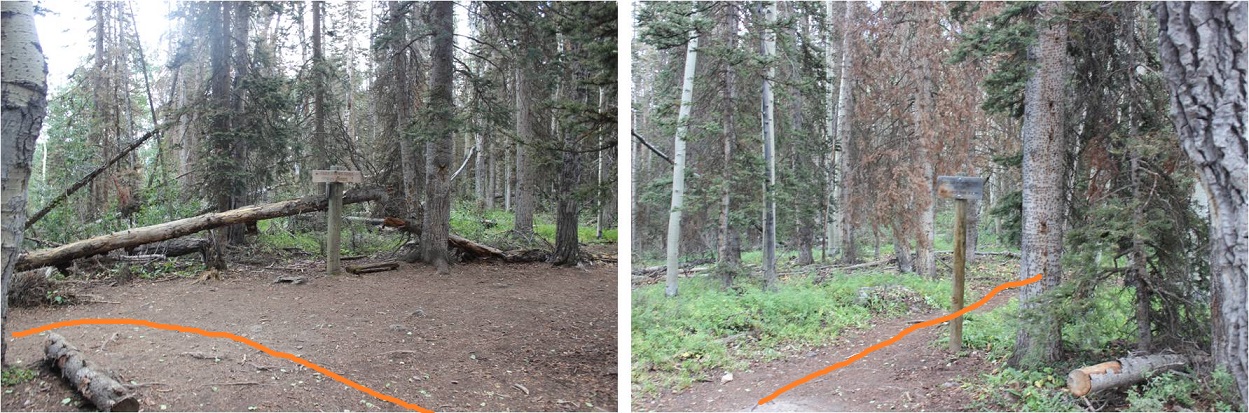
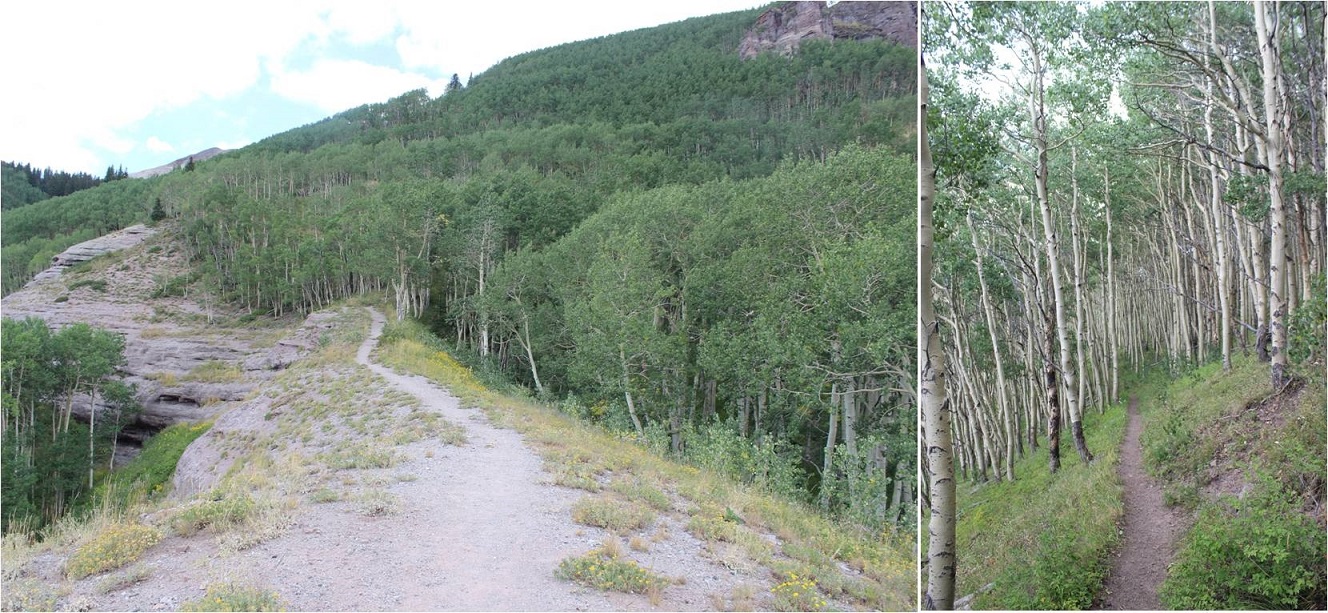
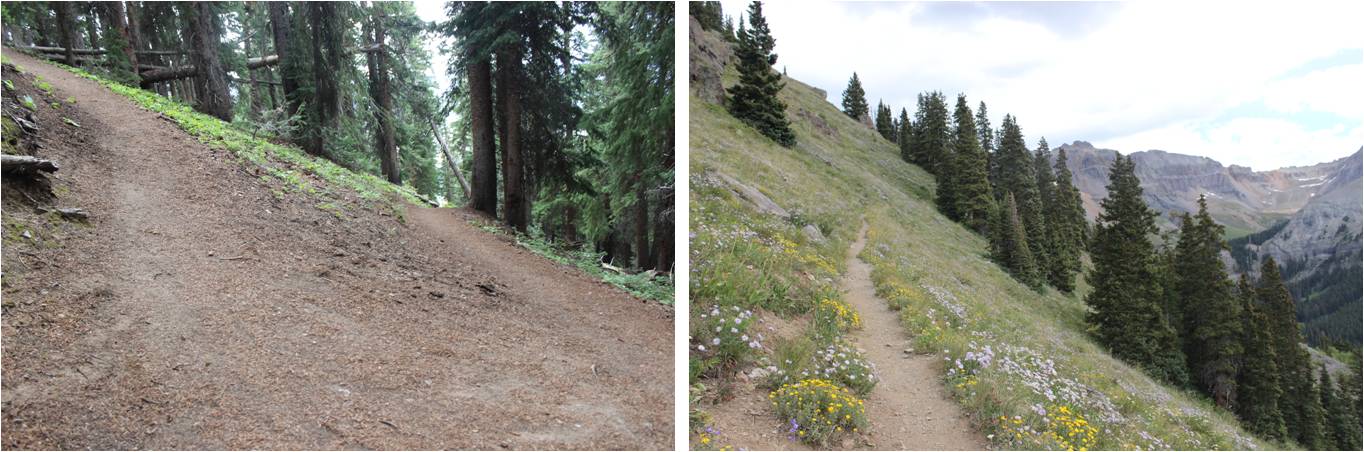
This was labeled on CalTopo as Liberty Bells Trail, but the trailhead called it the Jud Wiebe Trail.  I’ve found a lot of inconsistencies with Telluride trail names.  The gate was locked to vehicles so I walked under it and was on my way.  The trail starts out heading northwest towards some water tanks and then continues heading northeast to treeline.  The trail was very well maintained and easy to follow.  The wildflowers were on point.

On CalTopo this trail is labeled as the Liberty Bell Trail, and it goes through Liberty Flats.  Let me tell you, there was nothing flat about this trail.  It kept climbing up, up, up, alternating from being a trail to being an old 4WD road.
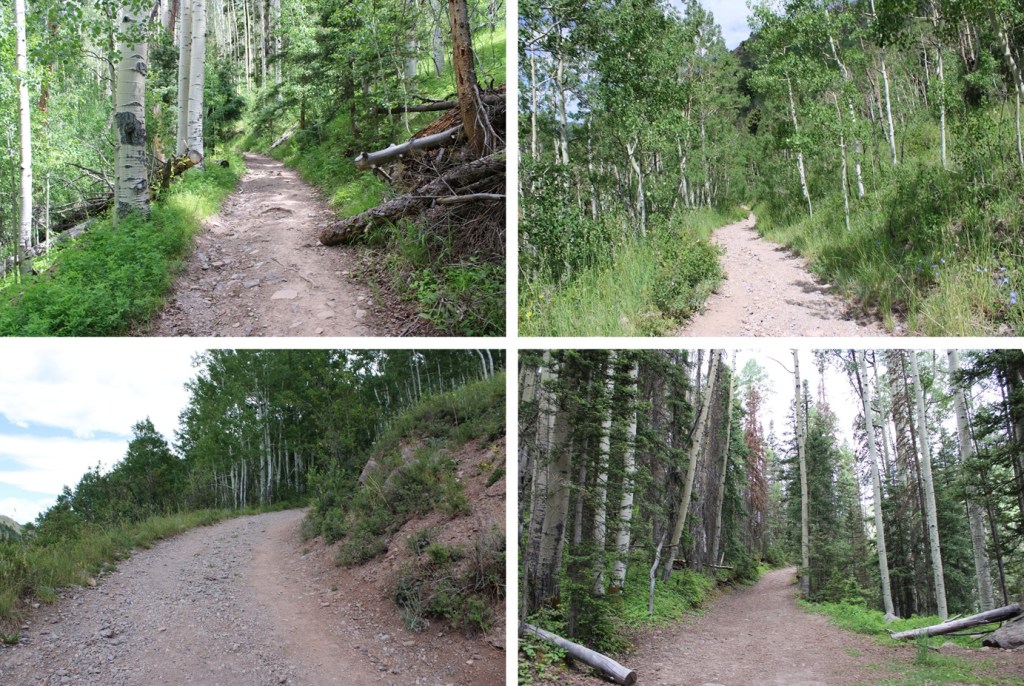
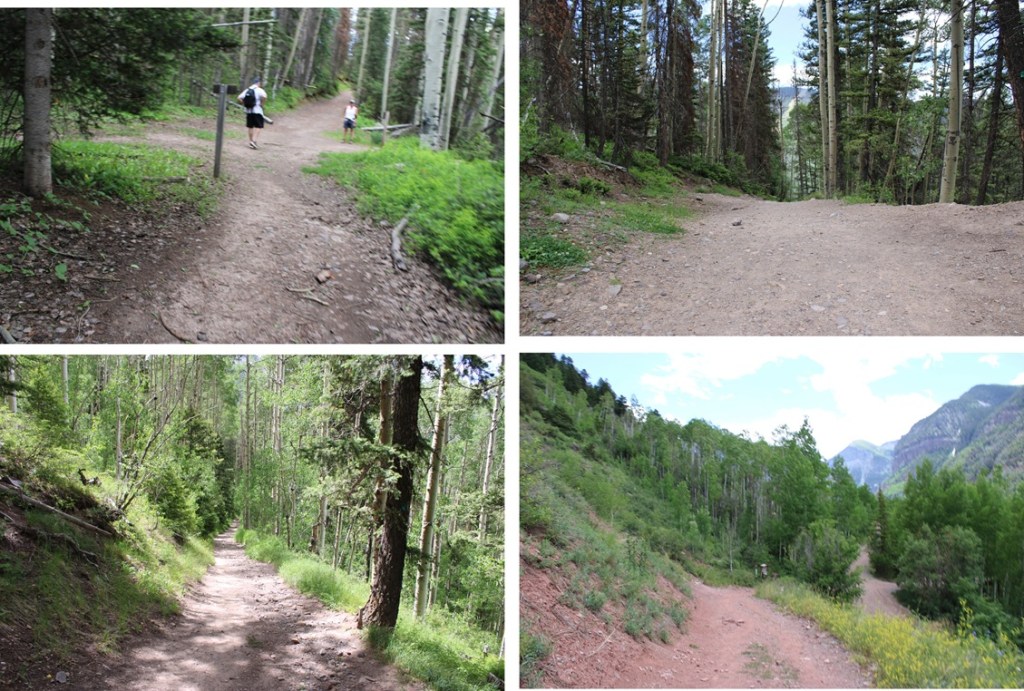
After hiking for around 1.3 miles (from where I’d started) I came to a junction for the Jud Wiebe Trail.  I continued straight on the Liberty Bells Trail.

I came to another unnamed junction, and not really knowing which way to go since it wasn’t on any of my maps I went right.  This happened to be the correct choice.
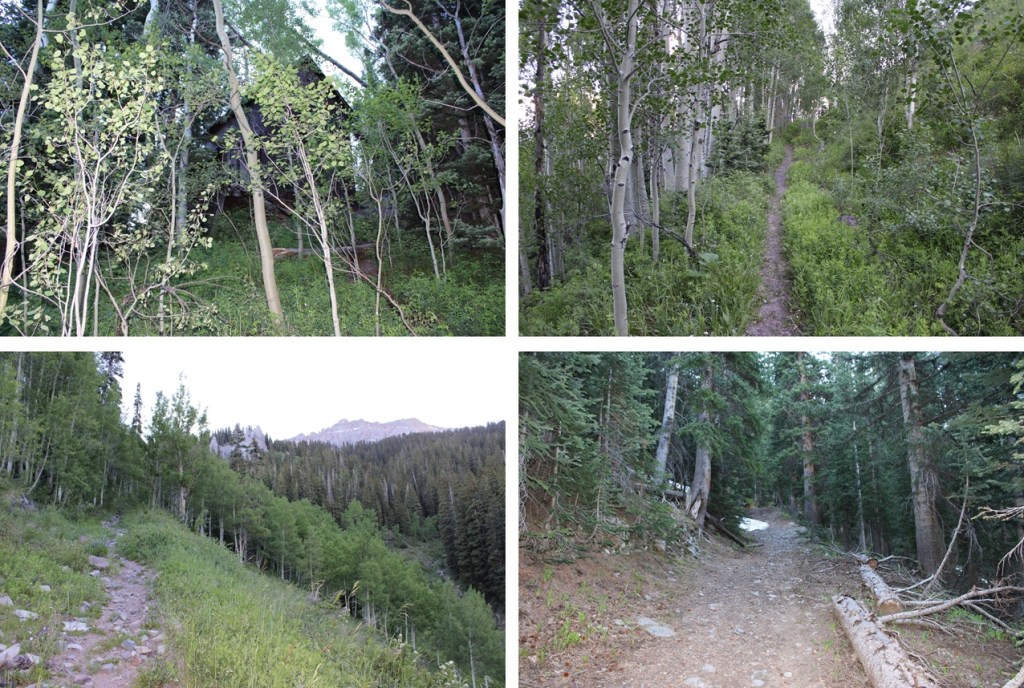
I continued following the trail past an old mine and up to treeline.
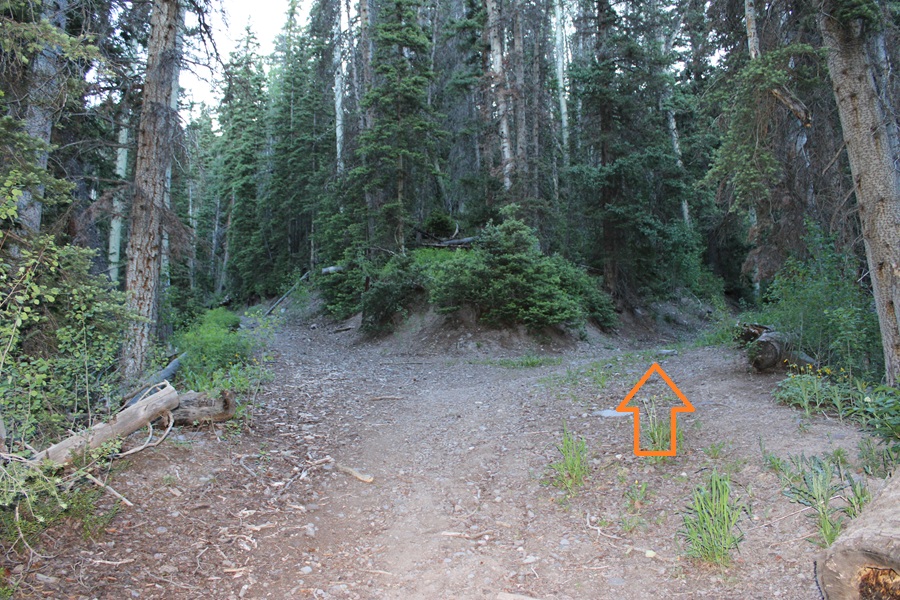
At treeline I came to a junction with the Sheridan Crosscut Trail and turned left.
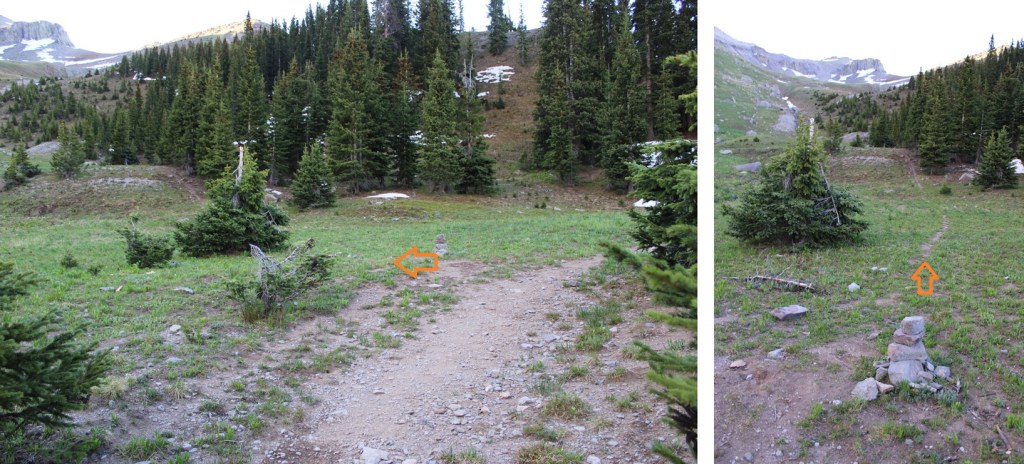
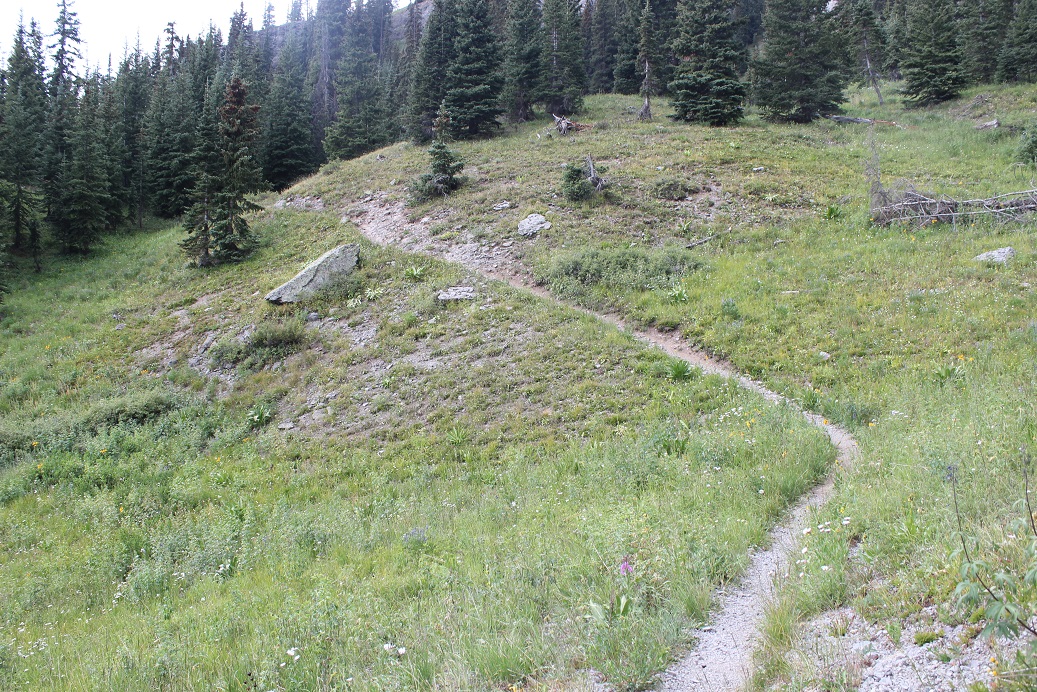
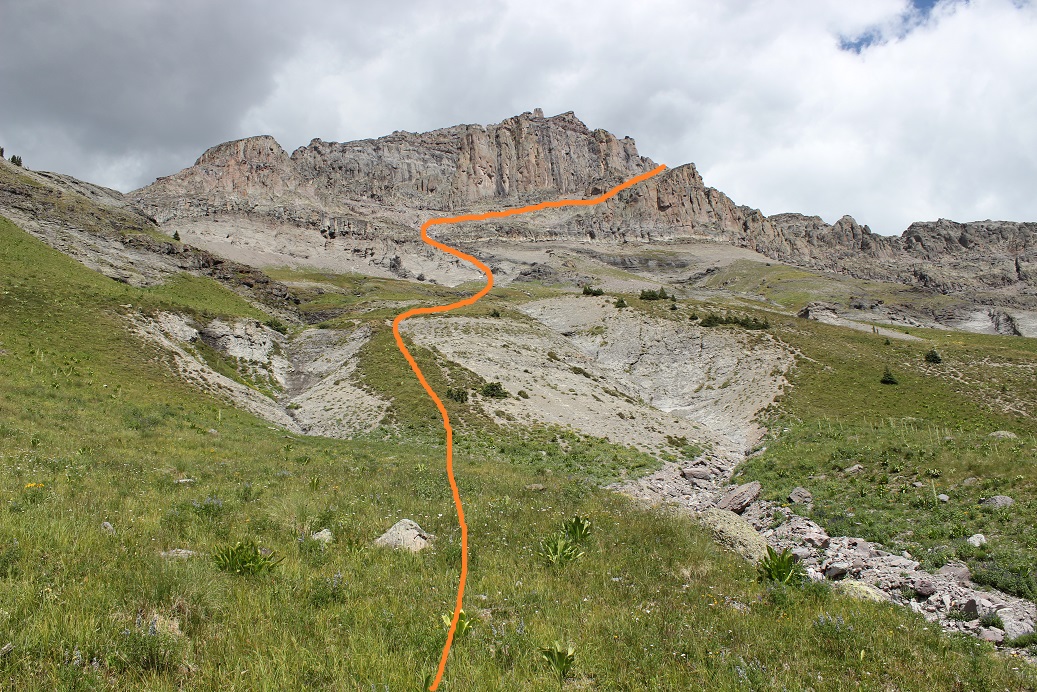
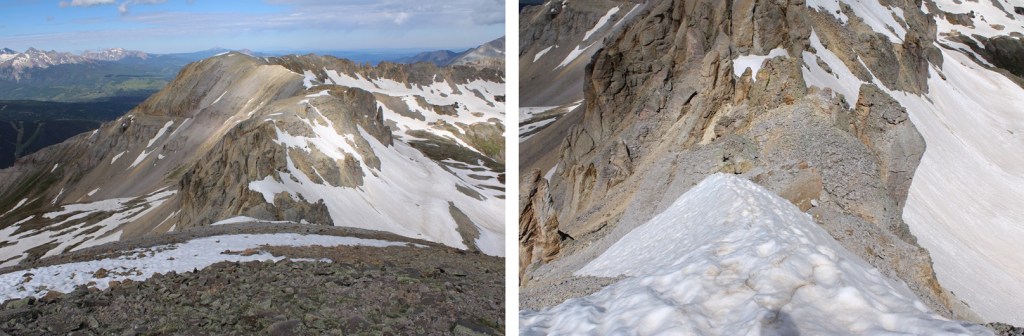
This trail was a bit fainter but still easy to follow.  I headed northeast up the basin to a ridge.  Here’s an overview of the route:
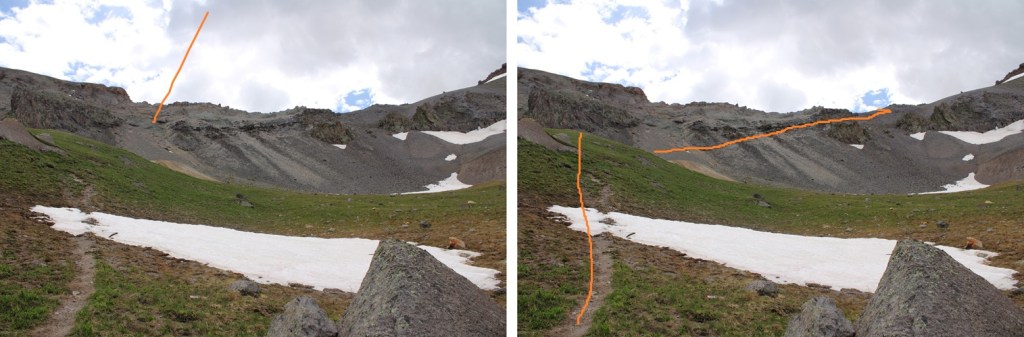
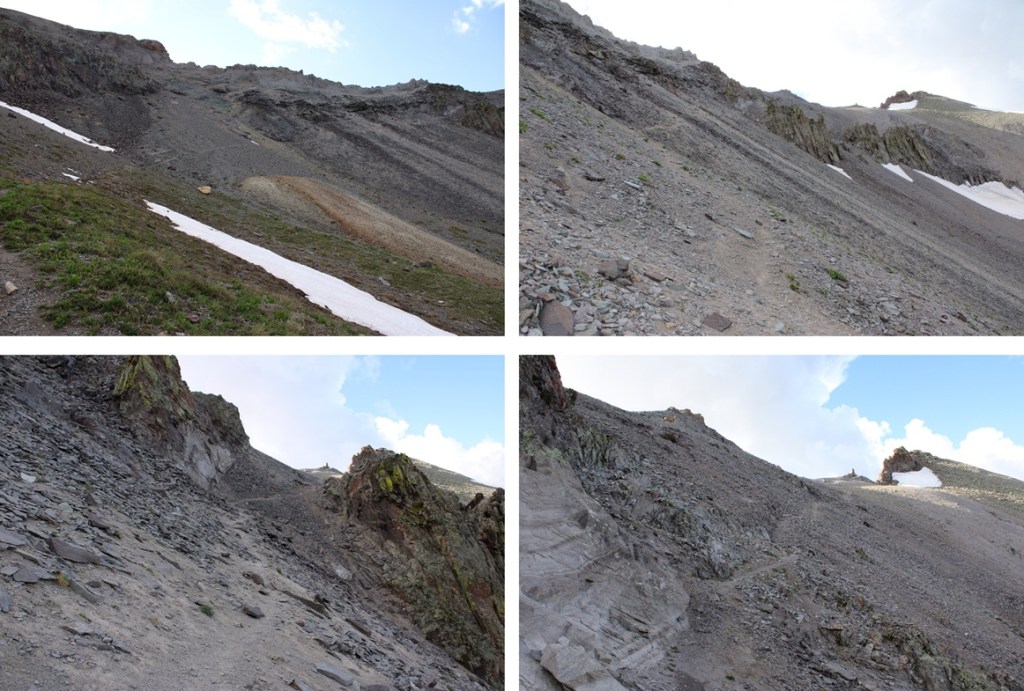
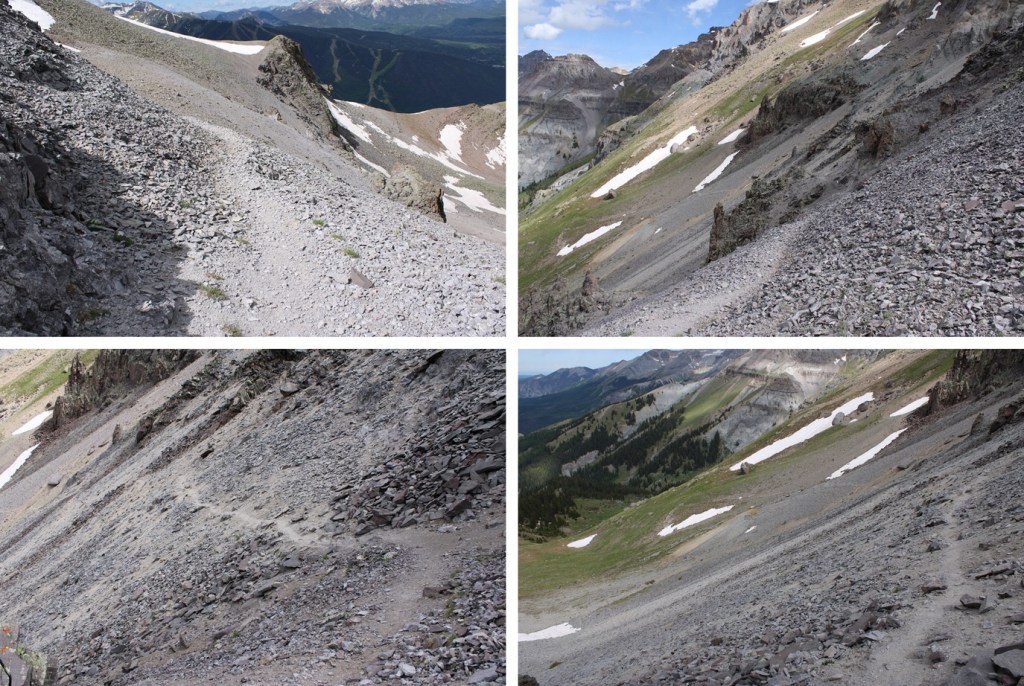
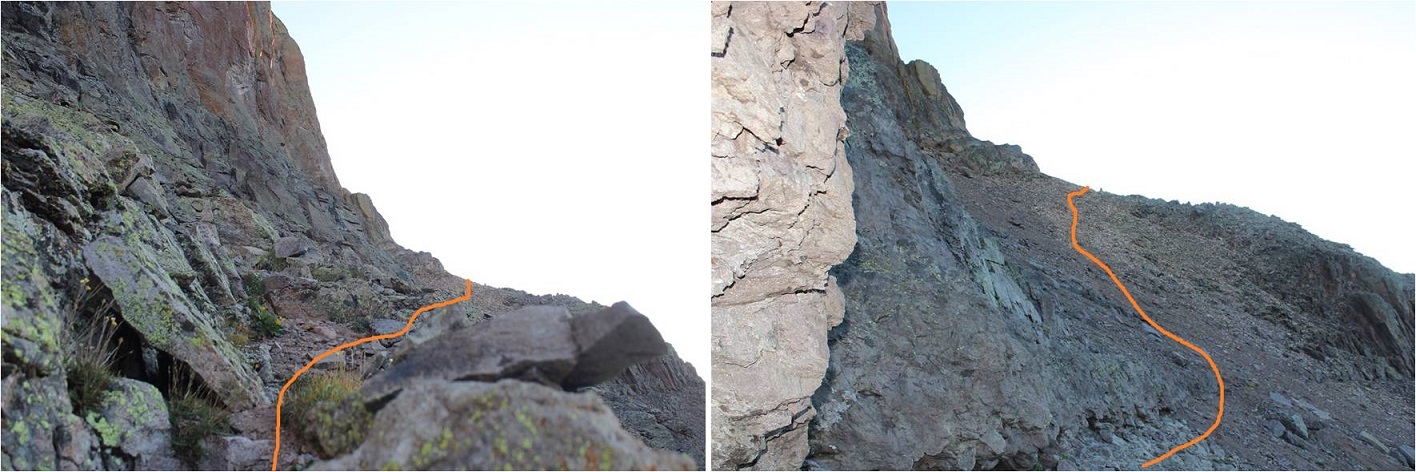
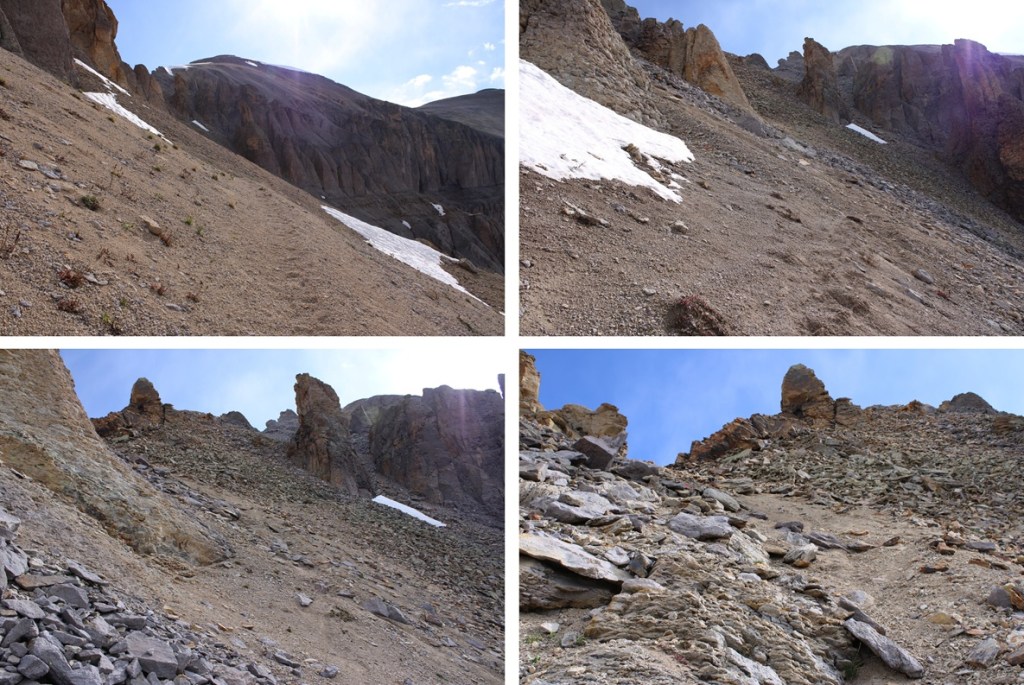
And some pictures to that ridge.  Here is where I put on my microspikes and kept them on to the summit.  The trail in many areas looks like it has been washed out due to rockslides/snow and some of the areas are sketchy.  Unstable scree abounds.

At the top of this ridge the trail turned and started heading northeast, rounding down into the basin and then gaining the ridge.
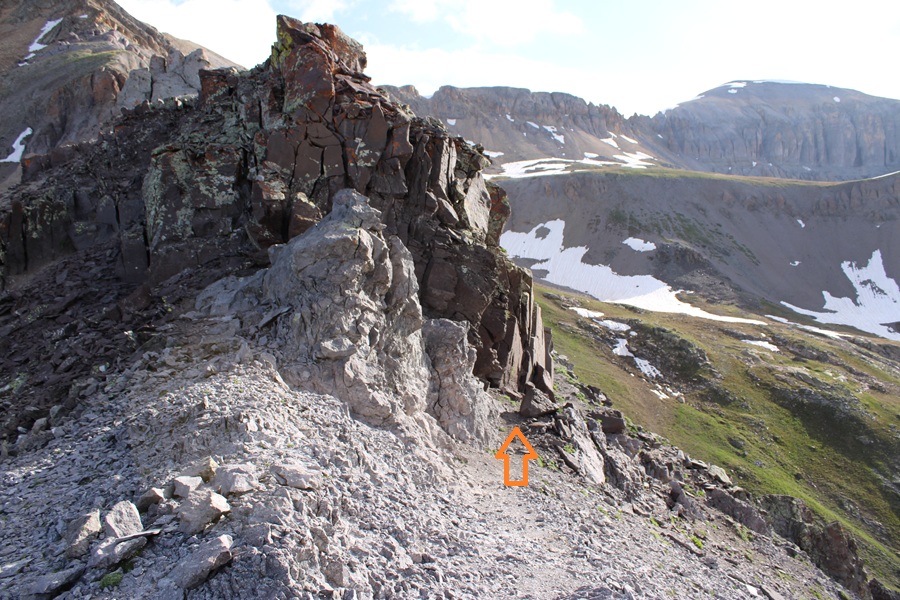
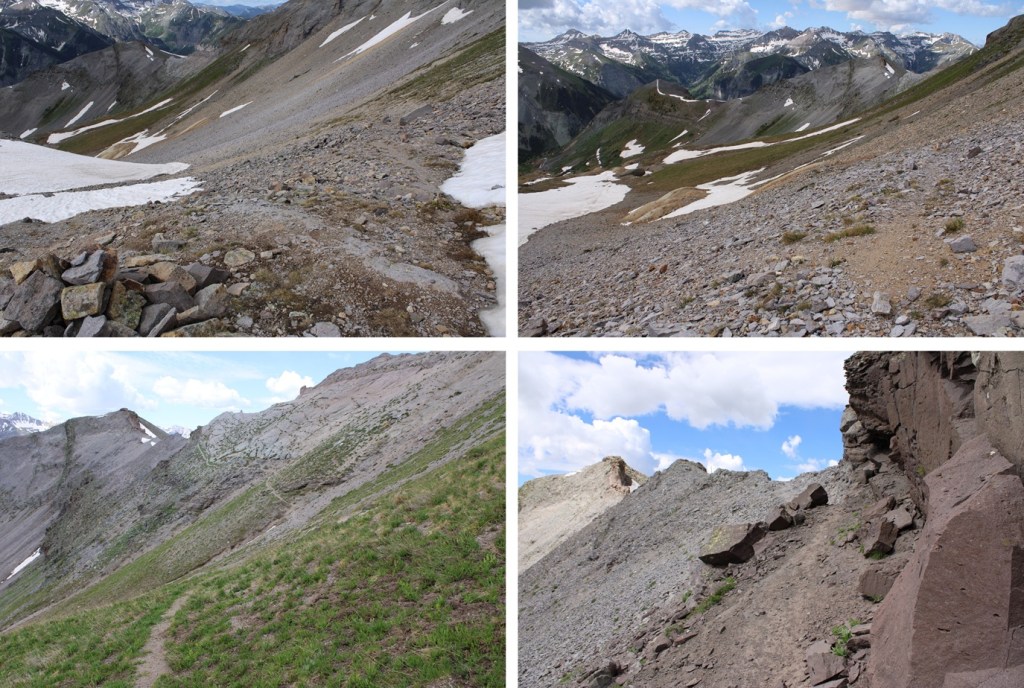
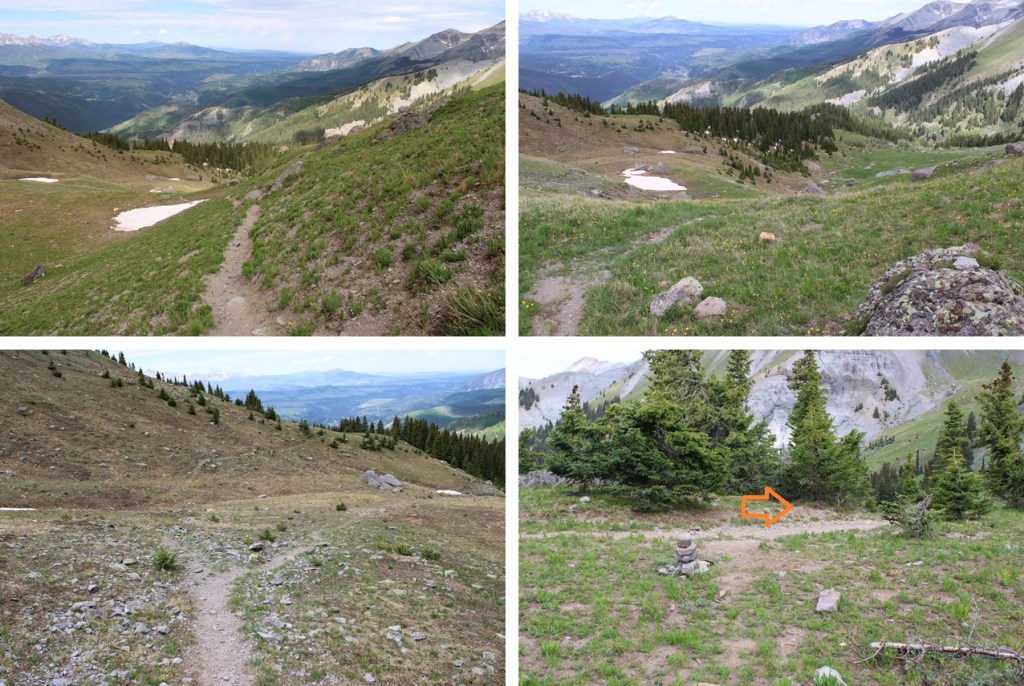
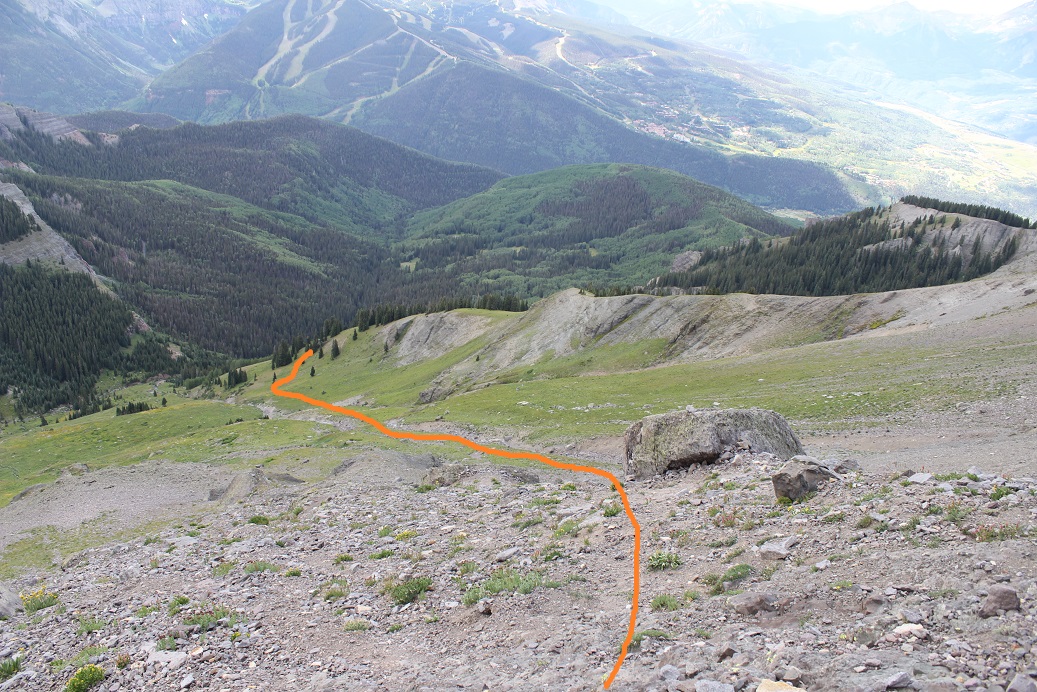
Here’s an overall picture of where you’re headed.  There’s a good trail to get you to the base of a gully in the distance (but still keep an eye out for loose rocks/scree).

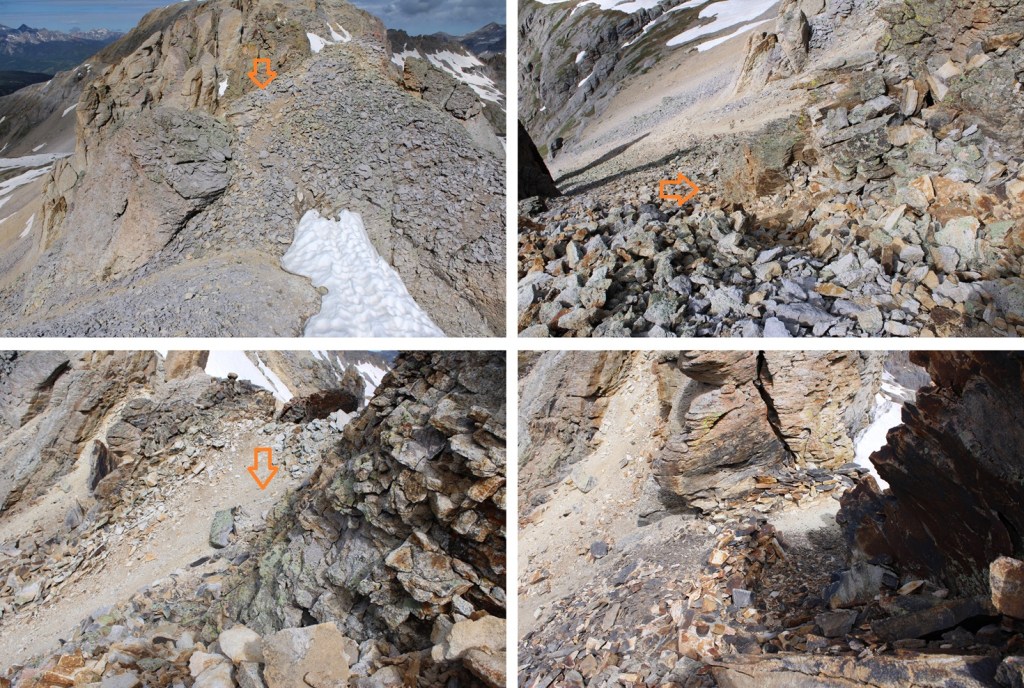
And some pictures along the way to the small gully
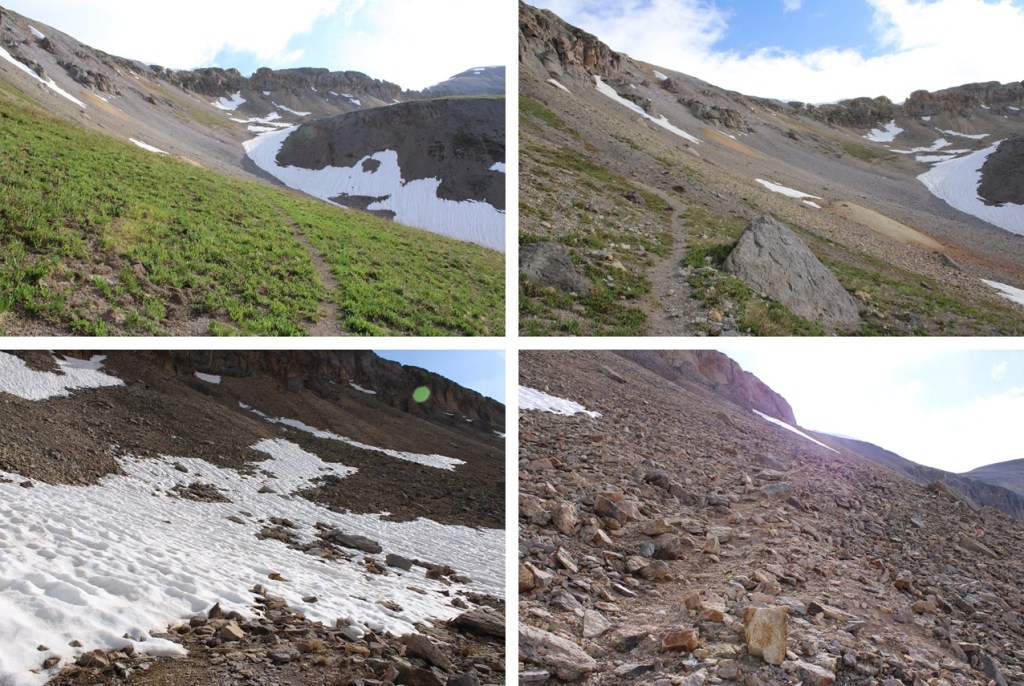
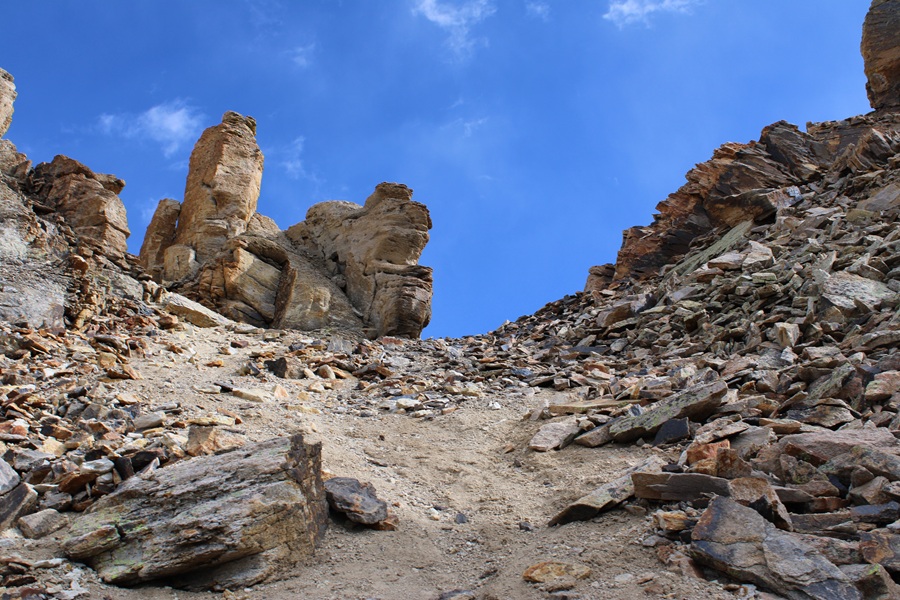
It’s obvious where to ascend the gully, as the trail stops.  I turned and headed north to the ridge.  The gully isn’t very long, maybe 100 feet or so of elevation gain.
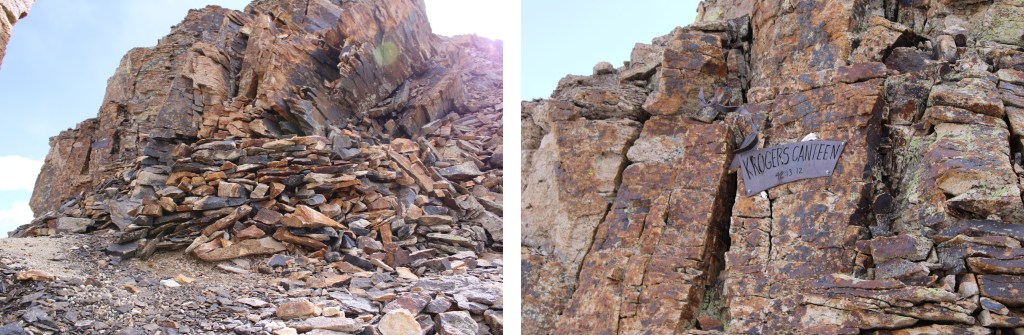
At the top of the gully is a wind break made out of rocks, and a sign that says “Krogers Canteen”.  There were also beer bottles on the ground that hadn’t been opened (but were only halfway full).
I walked through the wind break and followed the ridge east
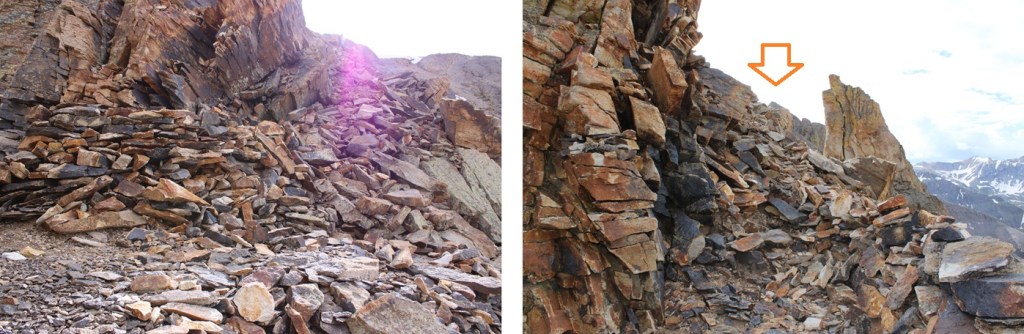
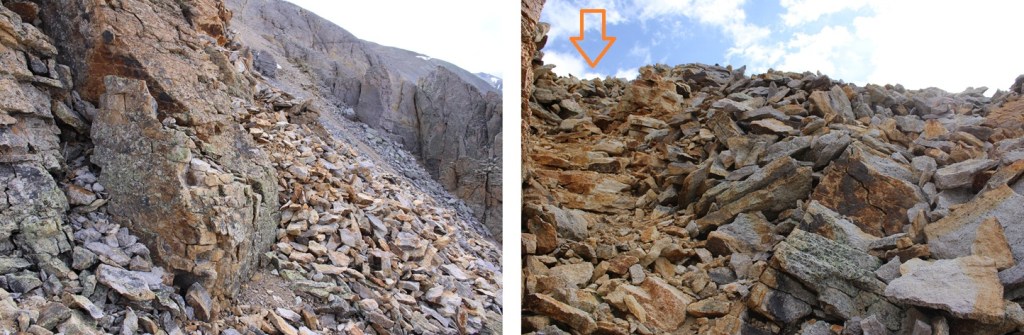
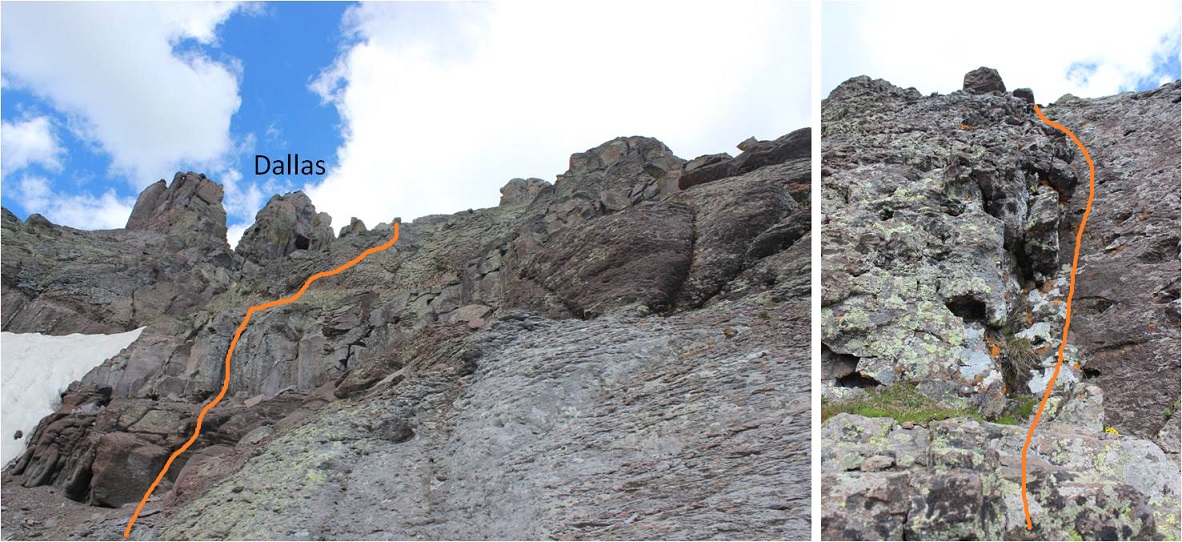
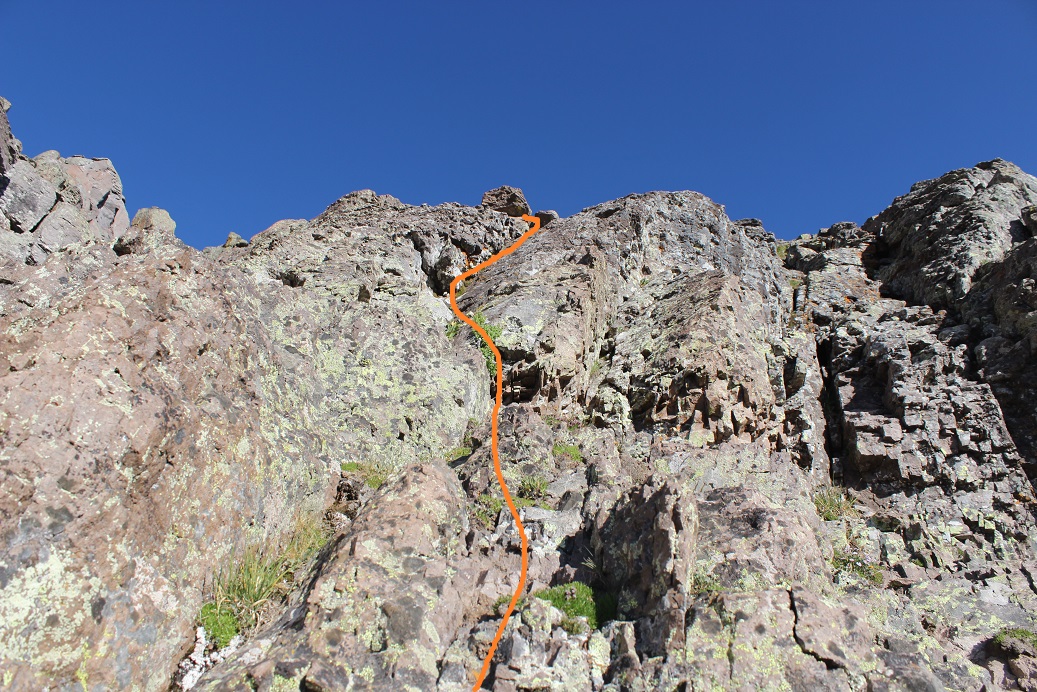
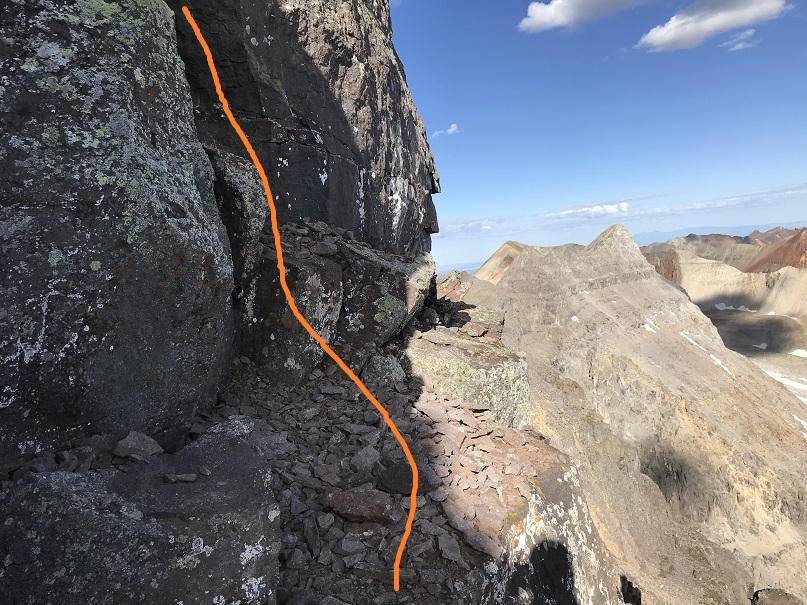
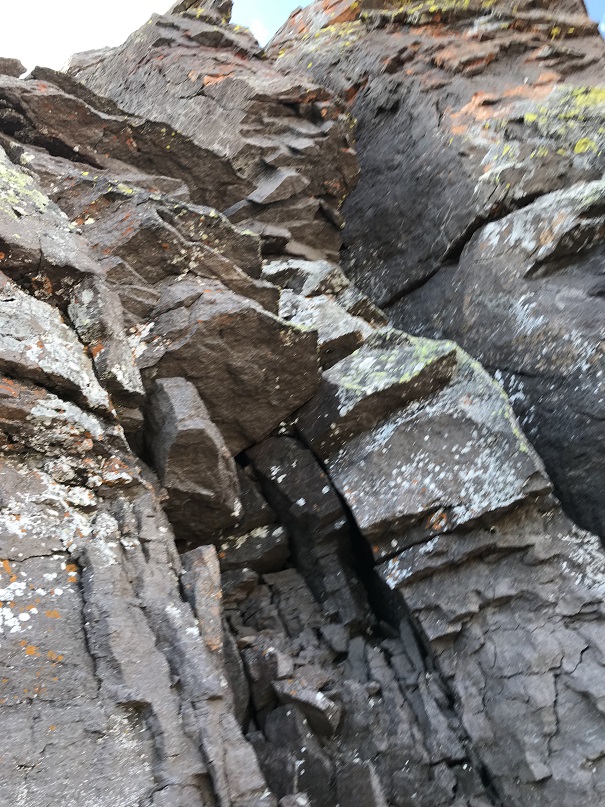
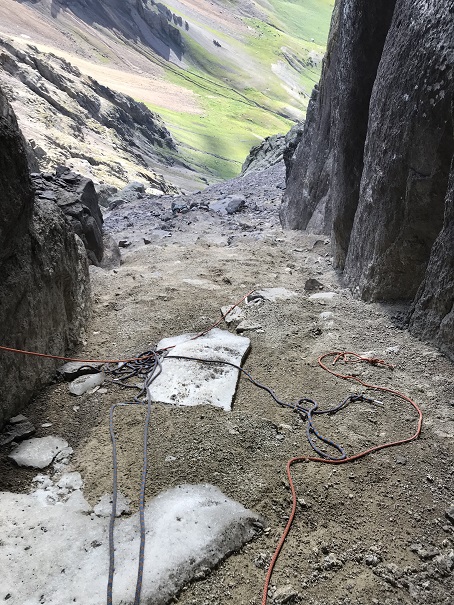
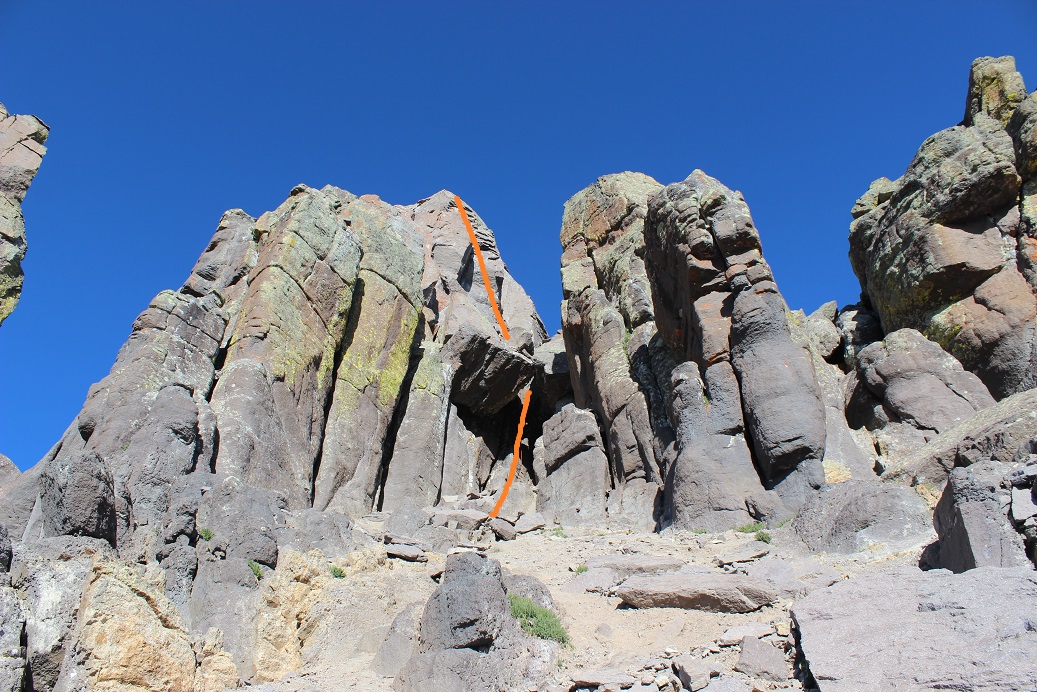
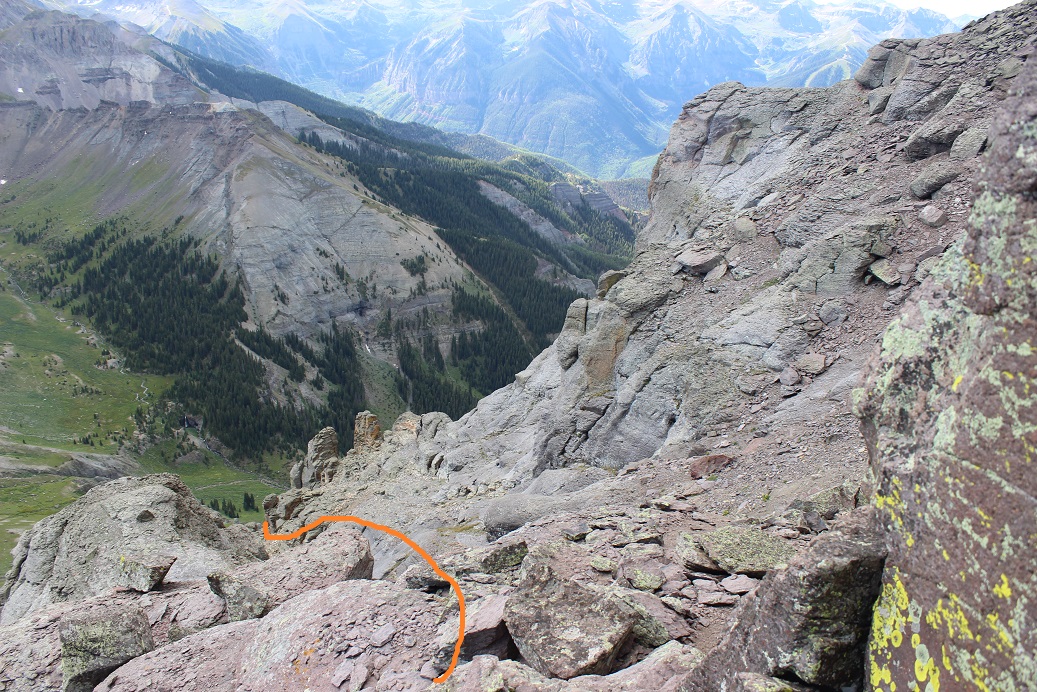
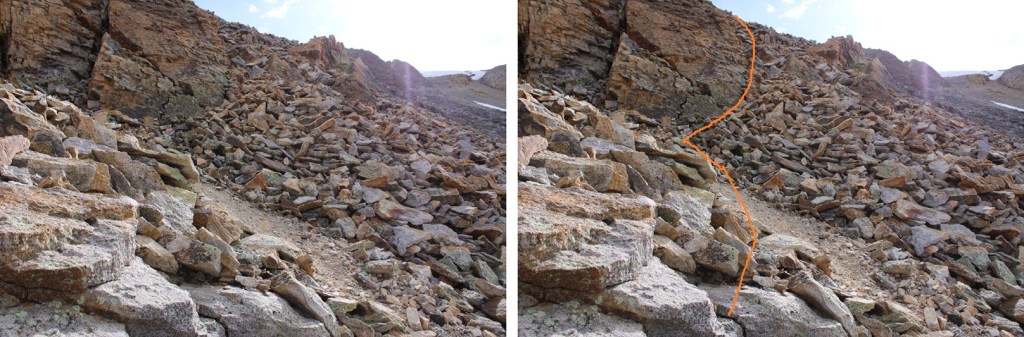
This is what I considered the “spiciest” part of the route.  I’ve outlined the route up, but recent rockfall has made this area especially unstable.  Scree-valanches will start from underneath you and rocks will fall like an hourglass from above and below.  It looks like there used to be an easier way to ascend, but recent rockfall has changed the route.  There are parts of what used to be a trail here.
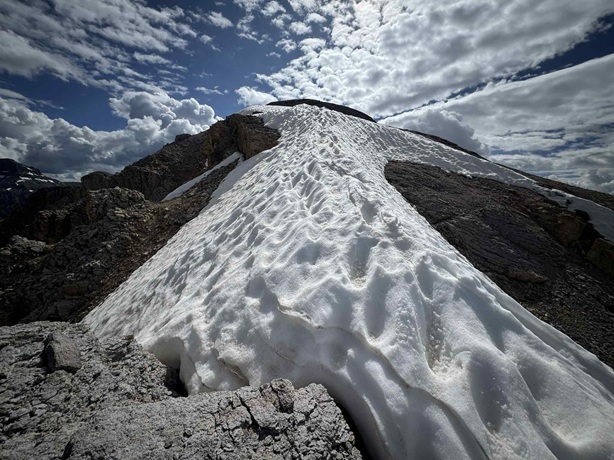
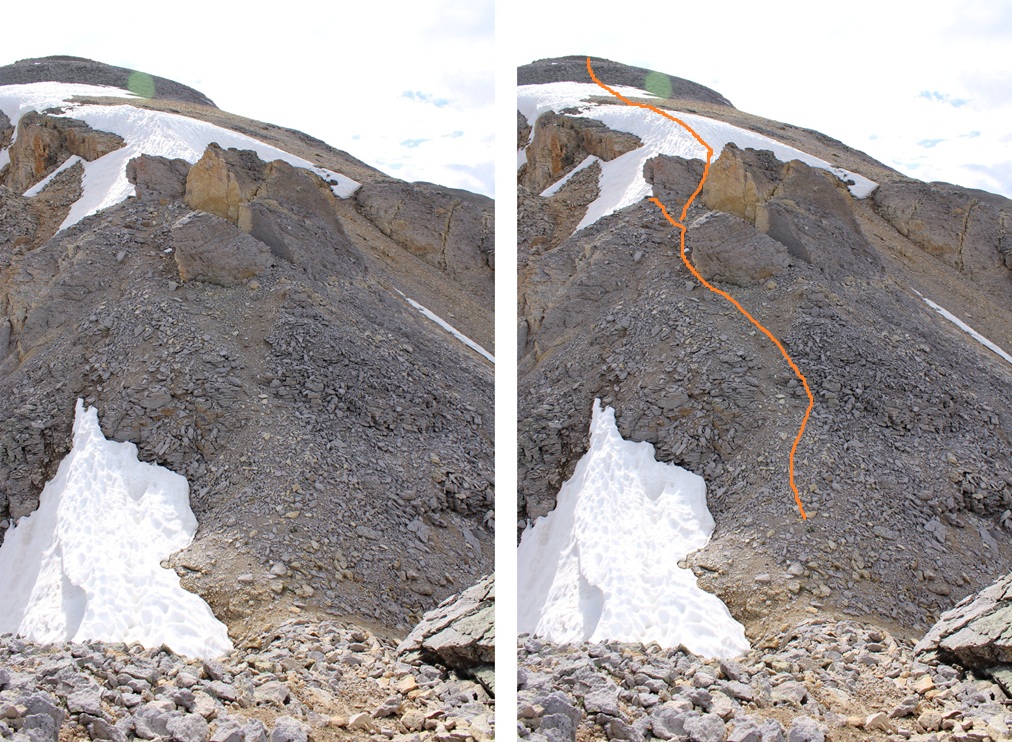
Now on the ridge I followed it east towards 13337 (false summit).  There was some unavoidable snow to traverse. I went both ways around the boulder in the middle, one on the ascent, the other on the descent. Both were class 2.
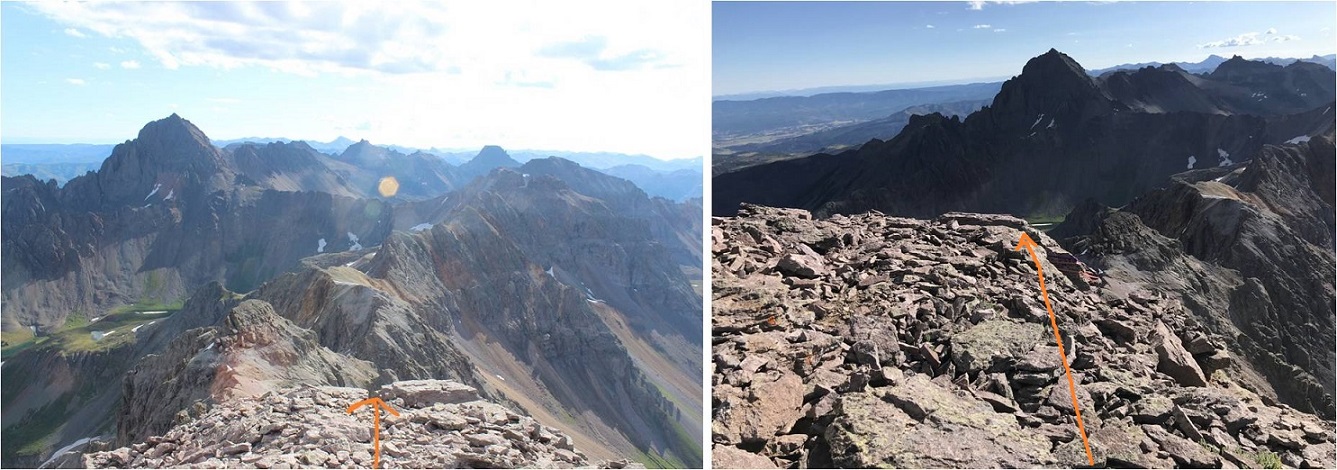
The toughest part was over, now it was a class 2 ridge hike following the ridge to the summit (after going over the false summit first).

From the top of the false summit it was an easy ridge hike to the summit of T5

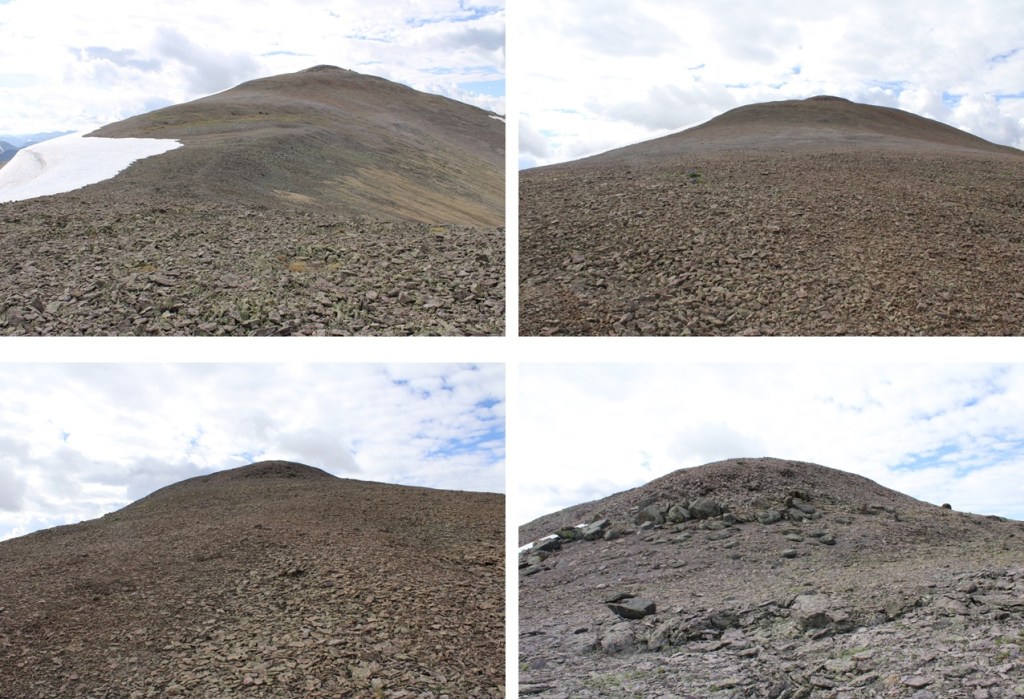
I summited T5 at 9am

T5:

Now to head back down.  This was an out and back hike for me, so I turned around and headed back the way I came.
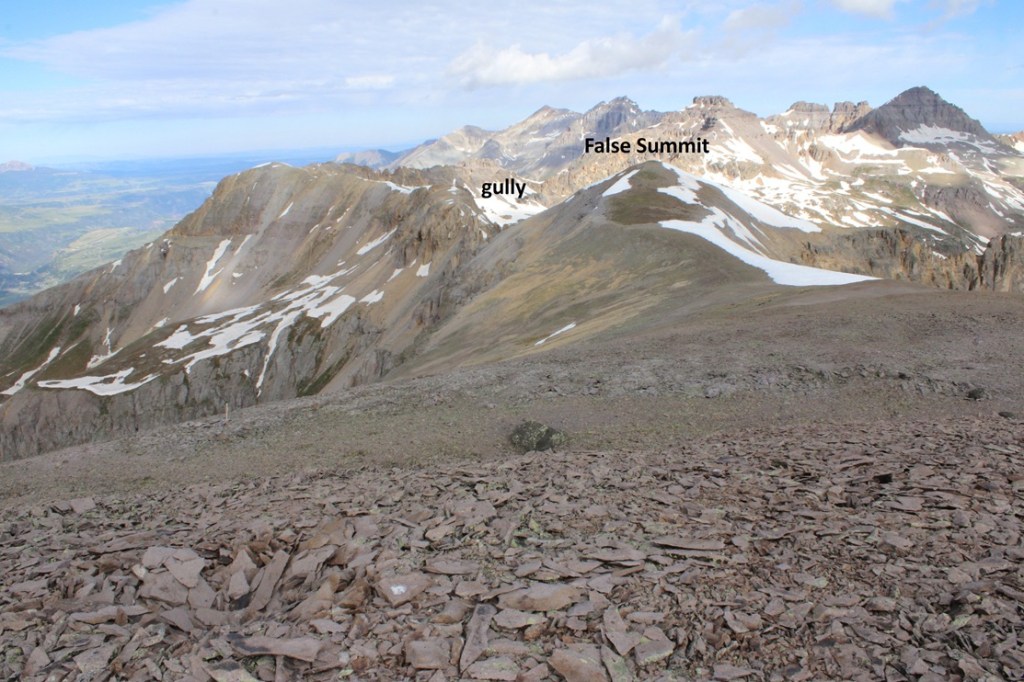
I headed back towards the false summit

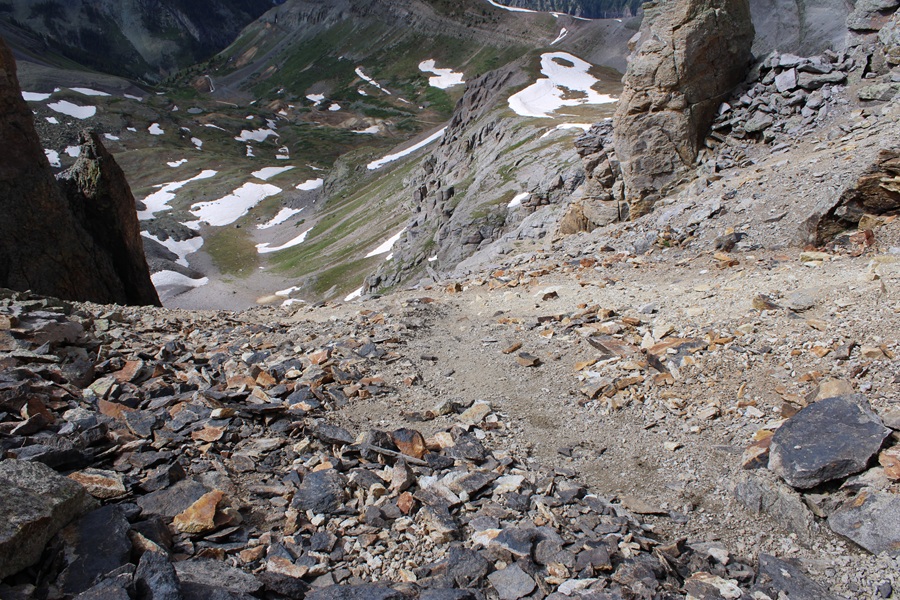
And then back down the snow to the gully
I then carefully navigated my way back down the to the gully and back to the trail below.
Once on the trail I followed it around 4 miles back to the trailhead.
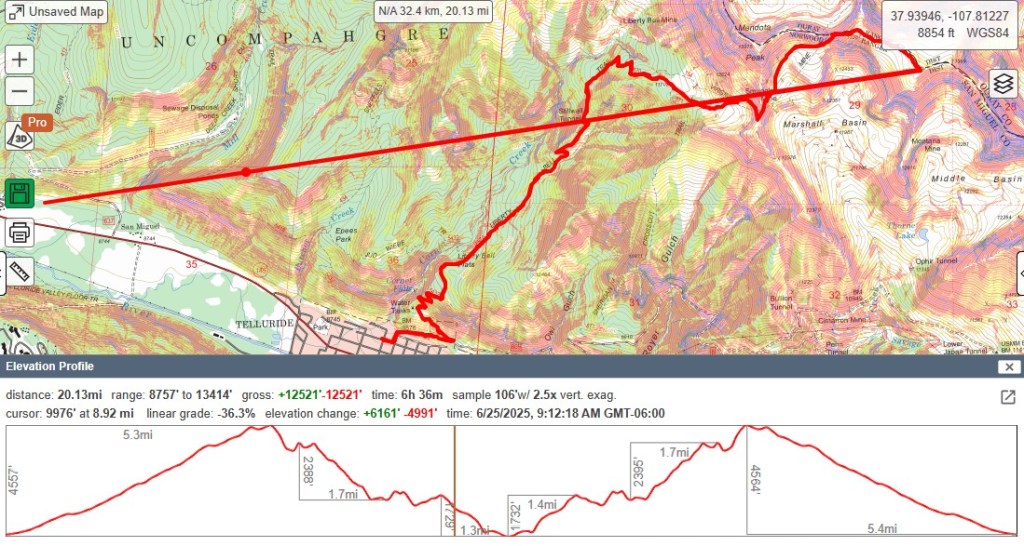
I made it back to my truck at 11:45am, making this a 10.6 mile hike with 4688’ of elevation gain in 6 hours 30 minutes.  Sorry about the poor topo.  Something happened with Strava halfway through my hike and it pinged back near 145, then back up to me for the descent. Gotta love technology.

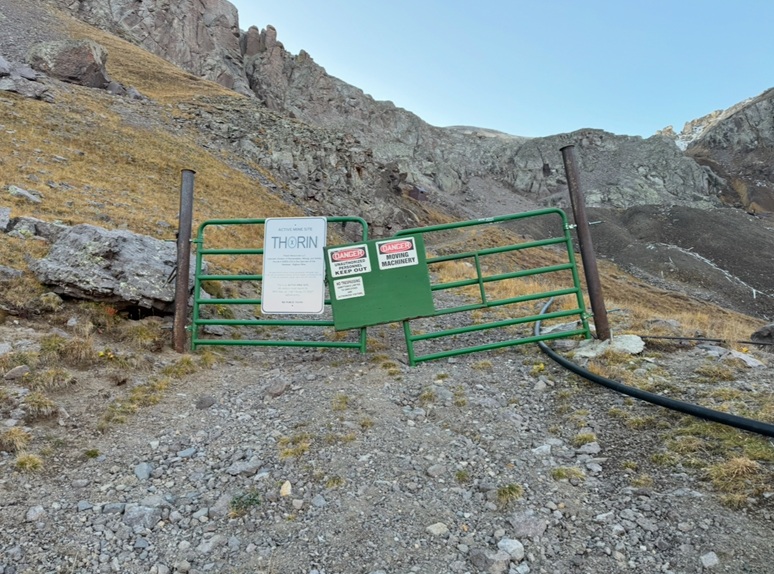
Also, I’d already attempted this peak the easier way, through Governor Basin, but there’s now a sign saying it’s a working mine and you need permission to hike through there, so I turned around and tried a different route.
On to the next trailhead!
Dallas Peak – 13,812

1

RT Length: 12 miles

Elevation Gain: 5445’

There are a lot of really good reports on this mountain, but I’m visual and like a lot of pictures so I’m adding what I have to what’s already out there…

In keeping with my “sleep is for amateurs” theme this month I made it home yesterday just in time to pack up the truck and make it to the campground before dark.  I helped my daughter set up her tent and then walked around the campground talking with the other families (I was hosting a Girl Scout Family campout, which was pretty chill, seeing as how everyone was basically “family camping” at the same spot).  We’ve done this for the past 10 years now so I know every family has their own routine.  Most go off roading and a few go into town.  Everyone canoes/kayaks.  My daughter wanted to get her homework done the first day so she could enjoy the weekend, so I decided to let her do that and I’d go hiking.  4 hours away.  (Hey, in my mind the trailhead was 6 hours from my house, and by combining it with this trip I knocked 2 hours of the drive there and 2 hours back).

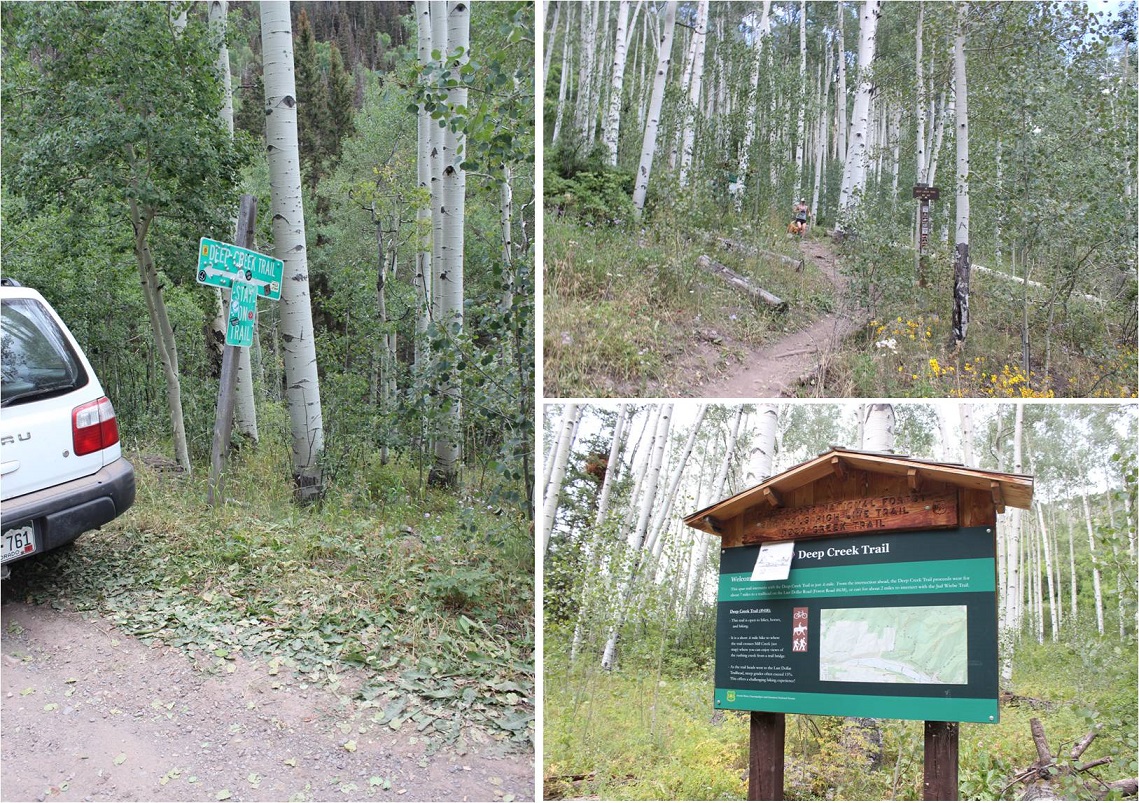
I was able to fall asleep around 8:30pm and got up at 10pm to drive the 4 hours to the Mill Creek / Deep Creek Trail (please do not confuse this with the Mill Creek Campground: you won’t end up in the right spot).

While sleep may be for amateurs, I’d had less than 4 hours sleep in the past 48 due to my South Colony Lake hike yesterday, and I found on the drive to the trailhead I was more tired than I’ve ever been driving. This scared me, so I pulled over to the side of the road and spent 5 minutes trying to fall asleep.  This didn’t work, but it did give me about another half hour of driving in before I felt too tired to go on and decided to set my alarm for 20 minutes.  20 minutes was the magic number, and I was able to effortlessly drive the rest of the way to the trailhead, hike all day, and make it back to the campground without feeling the need to sleep again.

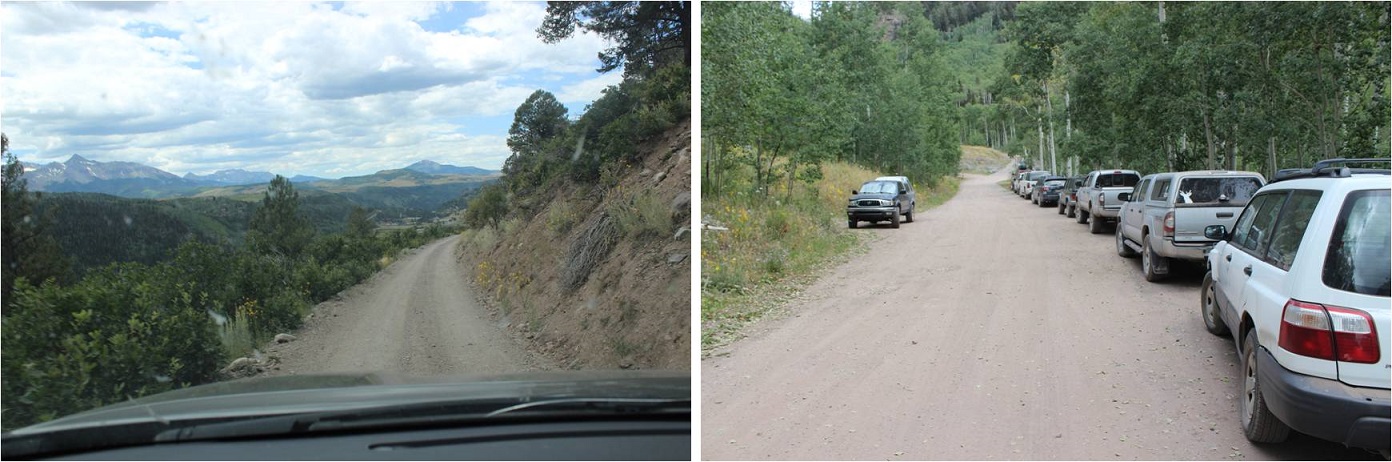
I was surprised to find the trailhead is at the end of a shelf road, and even more surprised to find so many vehicles parked there.

2

I was on the trail at 2:45am, a little disappointed in how heavy my pack was containing all my gear (60 meter rope, harness, belay device, webbing , etc.). I put on my helmet at the trailhead before starting the hike.  The trailhead was very easy to find.  I followed it northeast along the Deep Creek Trail.

3

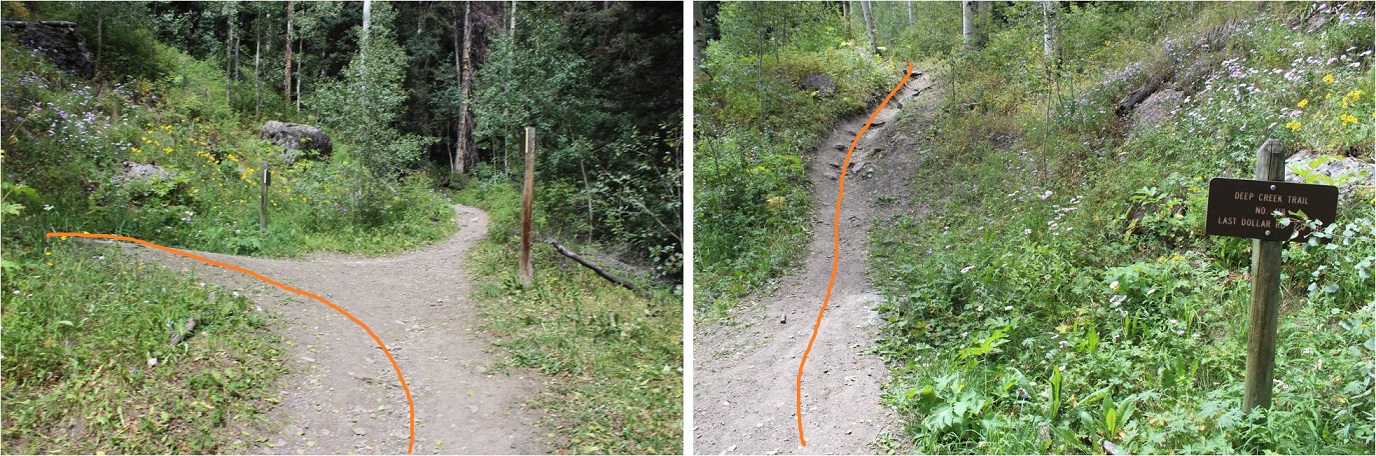
After about half a mile I turned left (west) at this junction and continued on the Deep Creek Trail

4

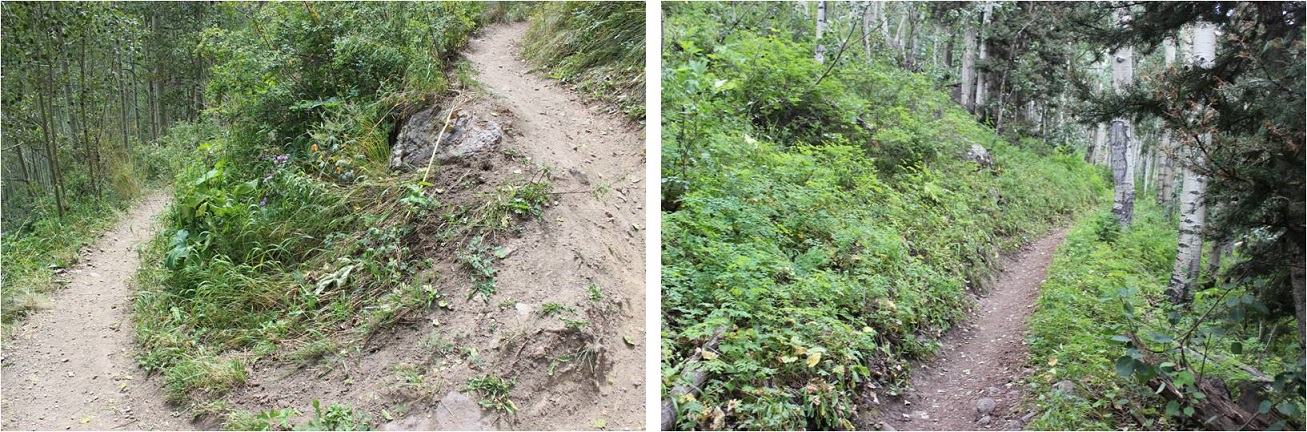
The trail switchbacked 5 or 6 times up the mountainside and then curved north around it, following a well defined trail

5

After a total of about 1.7 miles there’s another trail junction. I turned right (north) here

6

And followed the Sneffles Highline/Deep Creek Trail north through some aspen trees

7

And switchbacked another 8 or 9 times up the mountain, transitioning through pine trees and then tundra mixed with pine

8

I was enjoying the lights of Telluride as I hiked in the dark, but I wasn’t enjoying the soreness in my shoulders.   I took an ibuprofen and trudged on.  This is where the trail looses about 300’ of elevation for no good reason.  Luckily it’s not too drastic of an incline because it’s dispersed over half a mile, but it still hurts on the way out.

9

This decrease in elevation will take you to the base of Dallas Peak. Here you leave the trail and find your own way up the grassy slopes towards the cliff bands.  Here is the route I took:

10

I started this in the dark, and just followed the tundra north, which eventually led me to a gully and a rocky cliff area. There was a lot of loose rock and scree here that slowed me down quite a bit (that and I was tired from all the hiking I’d already done this week).  This is also a good time to put on your microspikes.  I’ve heard there’s class 3 scrambling here but was able to find a class 2+ scree route by following social trails.

Just before making it to the cliffs I turned right (northeast) and followed some cairns to the ridge

11

12

You continue following to the left (northwest)

13

14

Until you see a gully to your left. Ascend via the class 4/5 section to the right of the gully.  There are plenty of hand/foot holds here, and at the top there are anchors to rappel down (I didn’t, but if the rocks were wet I could see how this would be useful).

15

16

Once I gained this section I made my way to the base of the summit block and changed my gear, putting on my climbing shoes (totally worth carrying them) and harness. At this point I was exhausted:  My gear was heavy and that mile of scree/talus had taken a lot out of me.  Here’s the first part of the route:

17

This was as fun class 5 chimney climb that took some fancy footwork (only because I’m short). At times I was pressing my back to the rock for leverage and using my palms for support.

18

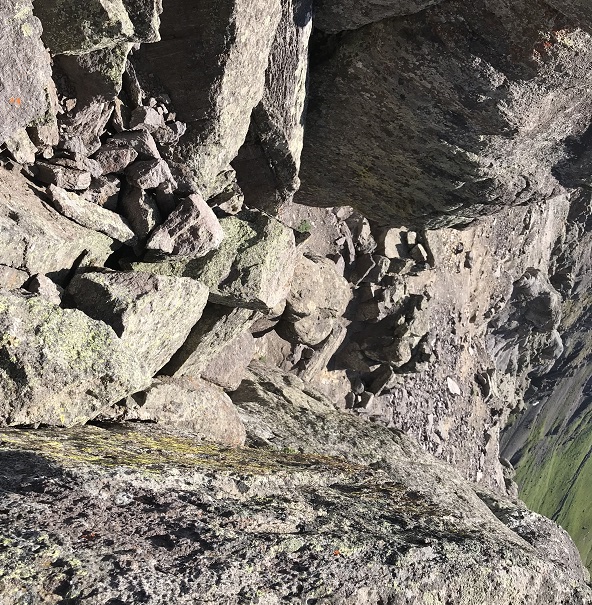
Here’s looking back down on this section

19

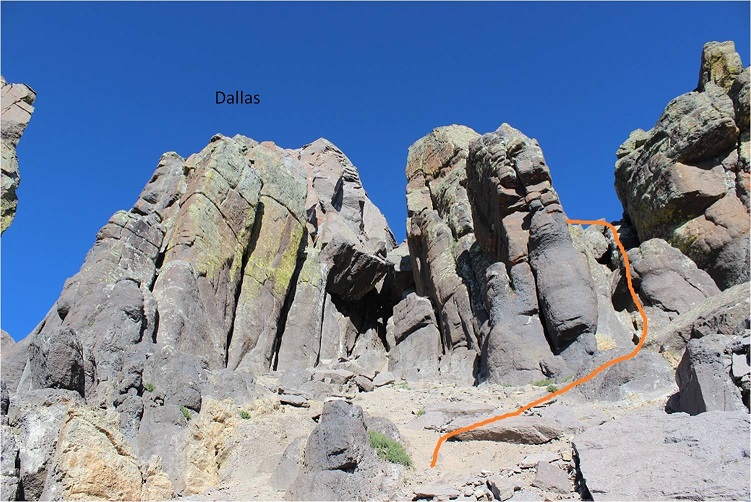
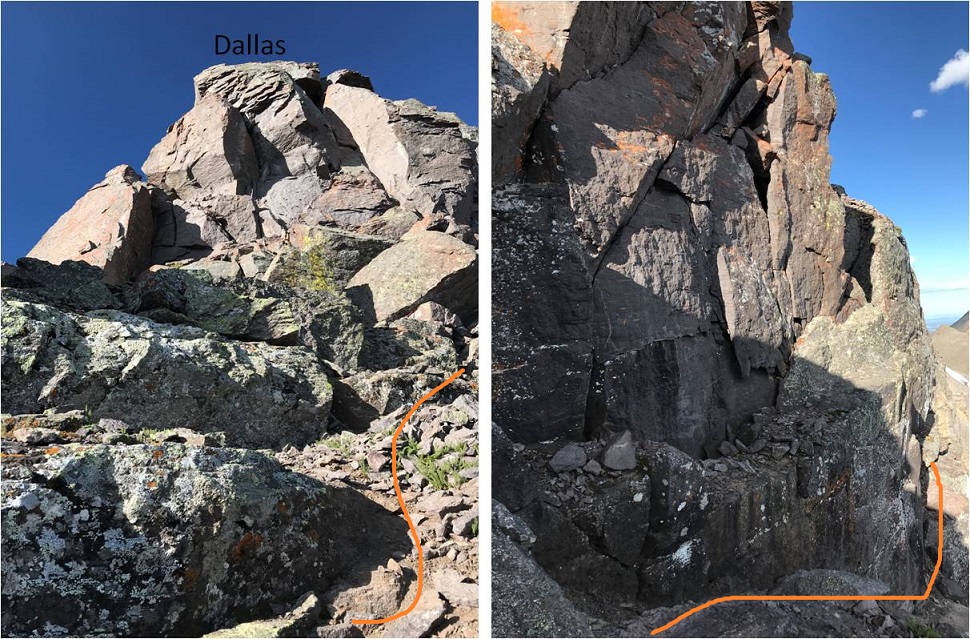
Here is where the route gets tricky. Even though you want to summit by going straight ahead (west) this is not the way to summit. Continue right around to the north side of Dallas.

20

Cairns weren’t helpful here. I kept finding areas that looked ‘summitable’ but for me weren’t.  It was getting frustrating but I refused to give up:  I’d make it half or even three quarters of the way up a line only to find the hand/foot holds ran out, and I knew there had to be a safer way. In total there were two obvious areas I tried that didn’t work before before coming to the correct one at the bottom of a small dirt filled gully on the north side of Dallas

21

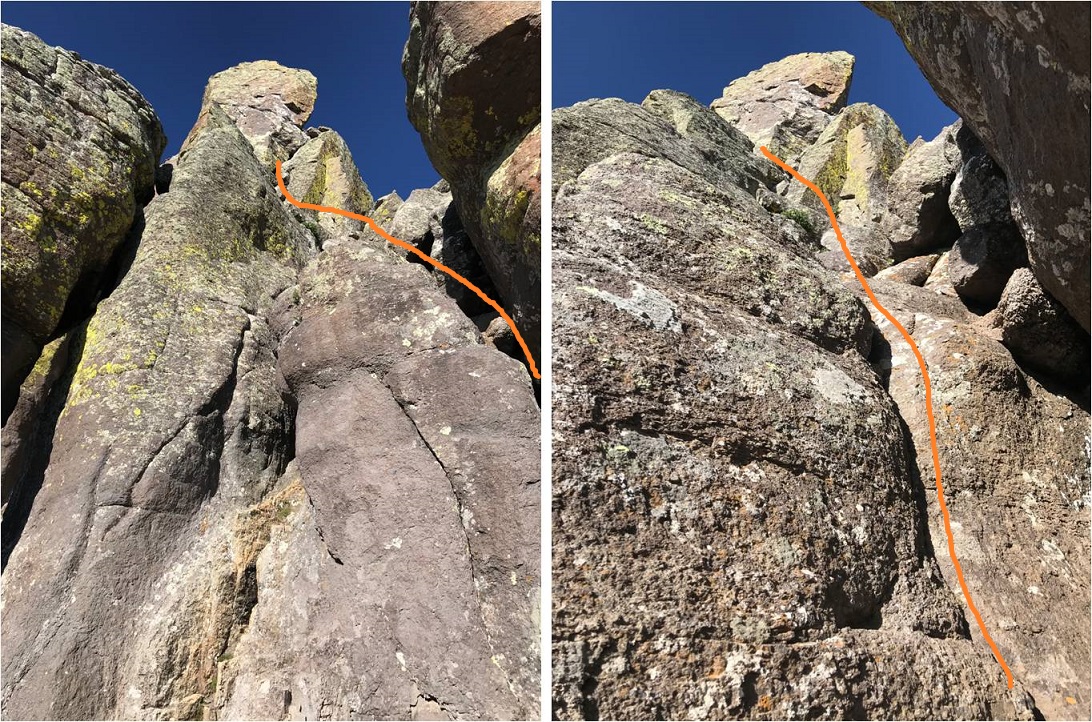
Here’s what it looked like from the bottom

22

I was able to climb up this area without ropes, although it was slow going and I was careful with every hand/foot hold. I was very glad to have my climbing shoes.  I summited at 9:15am.

23

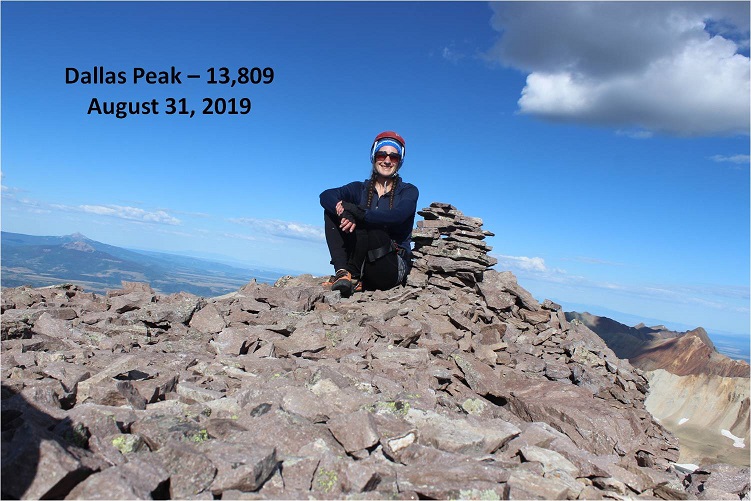
Dallas Peak:

I was quite thrilled with myself for making it up without ropes, and decided to spend a long time on the summit, enjoying my success.

24

The way off Dallas Peak is to rappel to the southeast

25

There was quite a bit of webbing already set up.

26

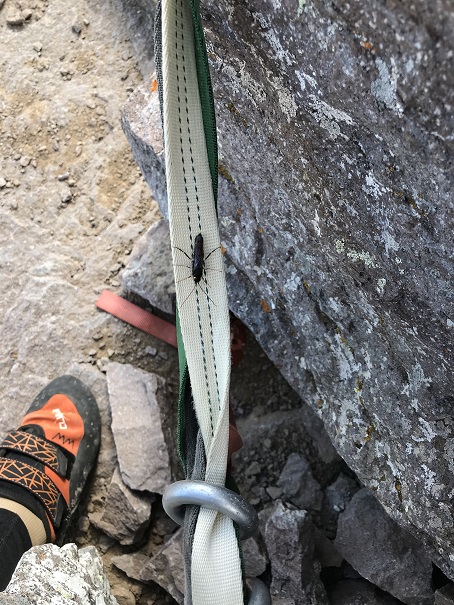
The only problem? This guy.  He refused to move, and quite honestly I didn’t want to scare him and have him bite/sting/fly all around me.  So I talked to him for a bit and told him if he didn’t move, I wouldn’t kill him.  This arrangement seemed to work, as he never left his spot.  He was about 2 inches long.

27

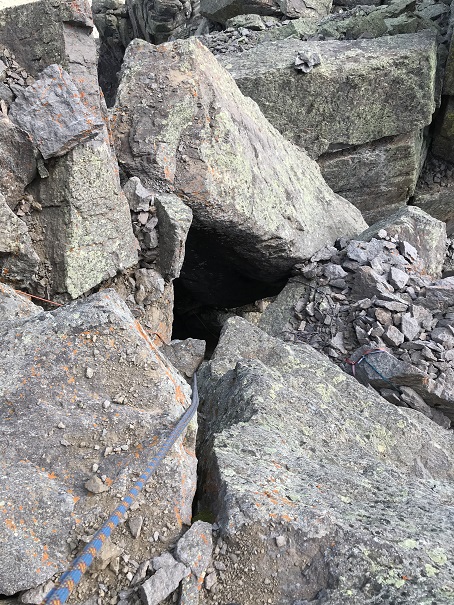
I set up my gear and threw my rope over the side. It got tangled, so I had to haul it back up, untangle it, and throw it again.  Success!  On the way down it’s instantly committing.  You aim for the hole (the hole is the halfway point down).

28

I double checked my set-up, leaned back and felt secure, so I unhooked my slings and started down, aiming for the hole in the rock

29

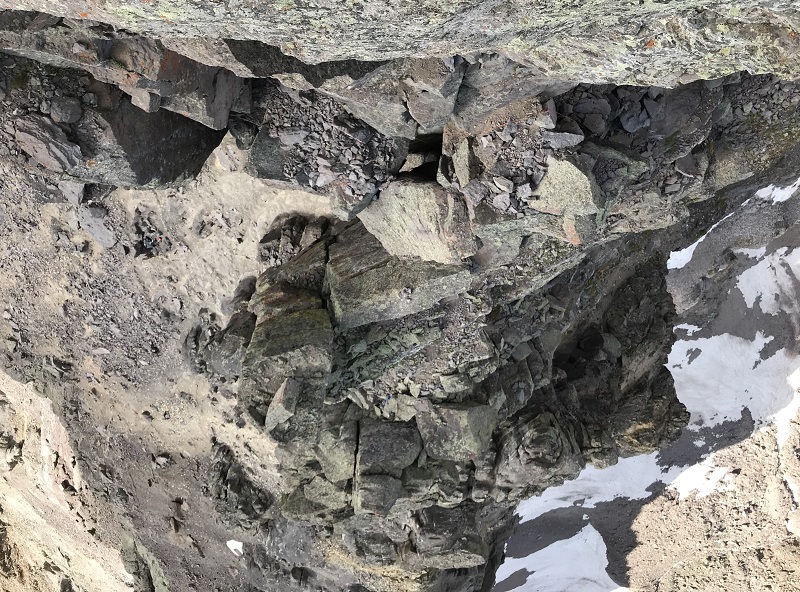
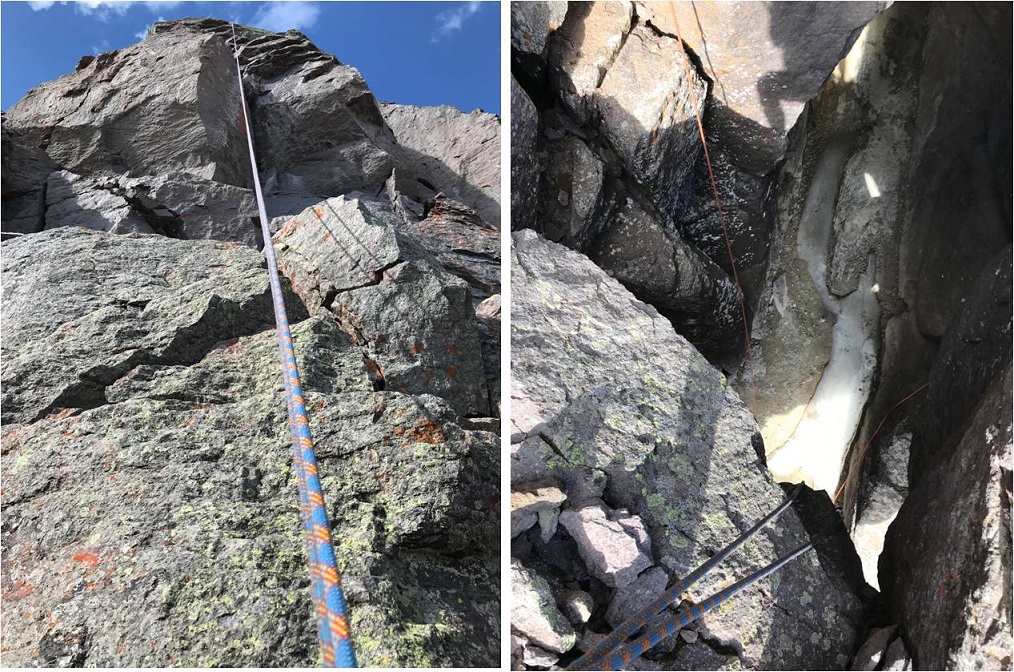
When I made it down to the hole I found it was a ledge: I could have set up a second rappel from here if need be (but my 60 meter rope was more than long enough).  Here’s what it looks like looking up and down from the ledge.

30

I leaned back one more time and started the rappel down through the hole, noticing there was a rope that had been left there. When I made it to the ground I saw a sign on the rope asking others to leave it as they found it, as its owner is coming back this winter to retrieve it.

31

I unhooked my belay device, pulled my rope through and recoiled it, mentally thinking through the rest of the descent. I felt confident I could descend the class 4 section without rope, so I put it away in my bag.

Here’s the way I rappelled down

32

I decided to keep on my climbing shoes until I made it back down past the class 4 section. I wasn’t disappointed, as the rock was easier to navigate than it had been on the way up wearing climbing shoes.  I felt very secure down-climbing this area.  Also, it looks very different on the way down

33

Here’s a look at the way down from the ledge. I stuck to the left (east) of the snow and just aimed for the obvious trail below that cut across the side of the mountain, so glad I was doing this now in the daylight

34

35

36

I made it back to the trail and all I could think about was making it back to the campground as soon as possible: I’d promised my daughter I’d make dinner.  I found some raspberries along the way that were delicious, so that settles it:  Raspberries in the San Juans just taste better.

I made it back to my truck at 1:30pm, making this a 12 mile hike with 5445’ of elevation gain in 11 hours

37

38

I made it back to the campground around 5:30pm and we stayed up and chatted around the lake/campfire until late into the night. This is how I spent the rest of my Labor Day weekend, relaxing in the beauty of one of my favorite Centennials…

39