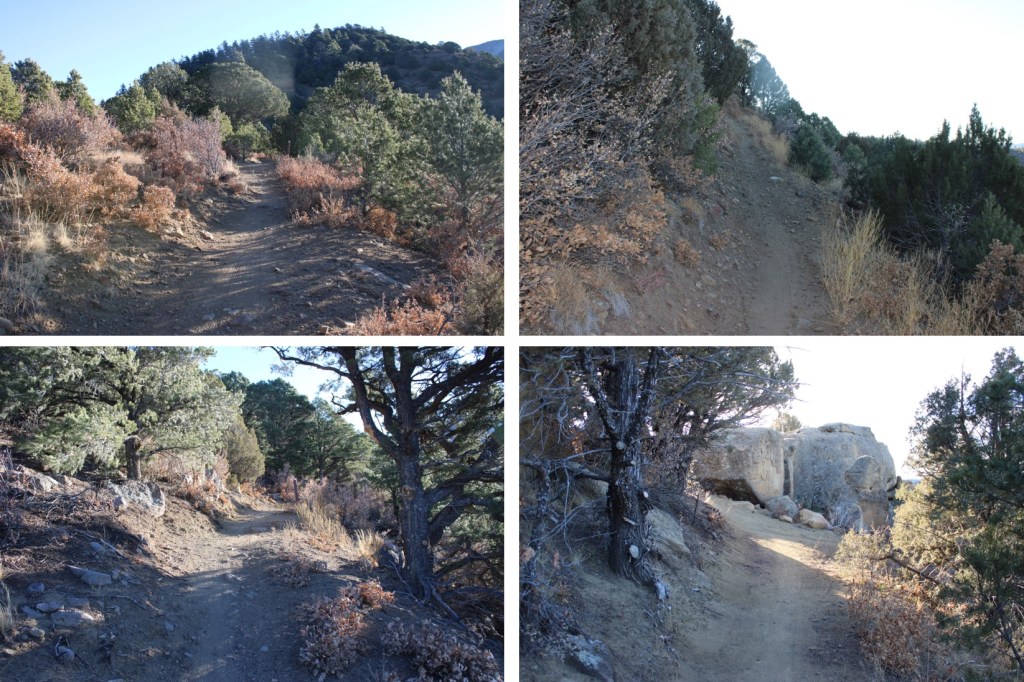
Fishers Peak – 9,637’

RT Length:  15.3 miles

Elevation Gain: 3588’

This peak has been on my bucket list for a while, but it was located on private property.  Recently this property became a Colorado State Park (currently you need the Colorado State Parks Pass or to pay the $10 to park at the kiosk), and I was able to legally climb the peak.  The park is open sunrise to sunset, so I didn’t get my usual pre-dawn start.  There is plenty of parking at the trailhead, along with vault toilets and trailhead signs.
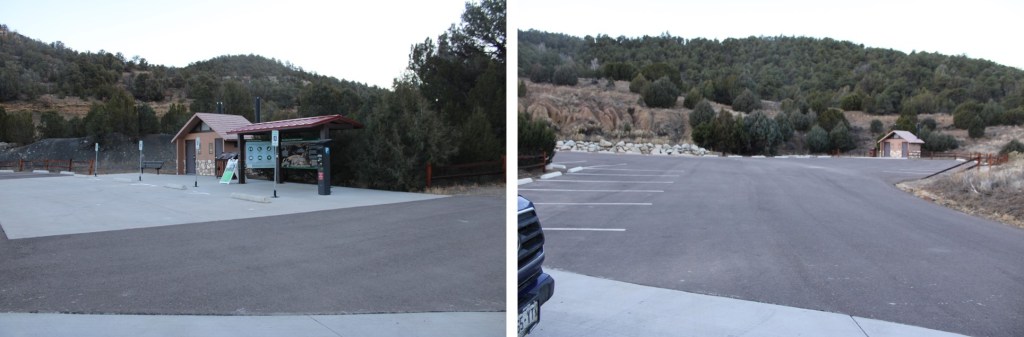
I parked at Fishers Peak Trailhead (the only trailhead in the park) and was on my way at 7am.  The trailhead is obvious, at the east end of the parking area.
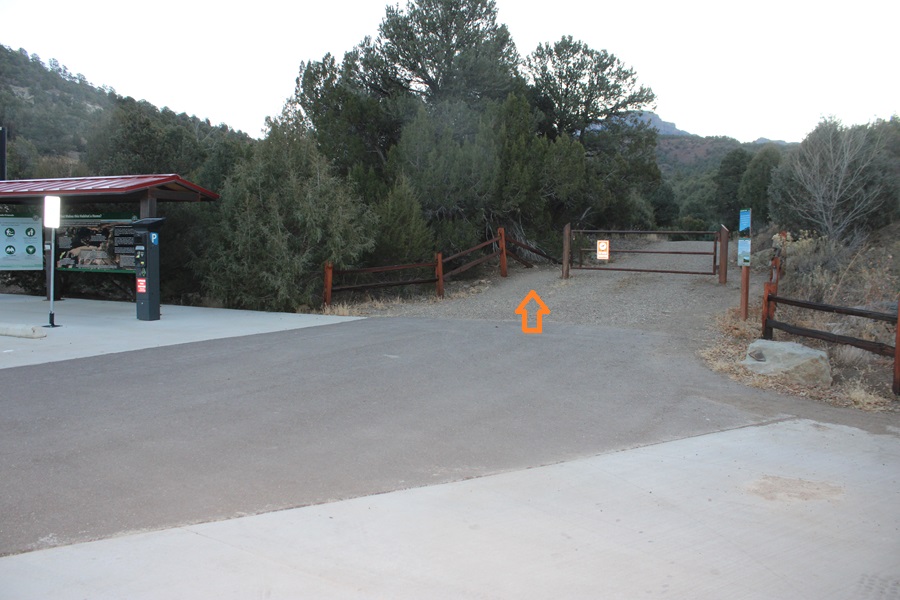
There were a limited number of trail maps at the trailhead, and I snagged one.  If there isn’t one there, here’s a copy.  I can tell you this isn’t the best map, and the signs can be confusing, but you basically want to take trail 1 to trail 2 to trail 3, then 4, 5, and 6.  This may sound obvious, but trail 8 and 10 and 9 all lead to trail 2 as well (they just meander a bit). 

Trail 1: Navy Blue on Map, Challenge Hill Section

Trail 2: Dark Magenta on map (as opposed to light Magenta), Osita Ridge Section

Trail 3: Blue on map (as opposed to Navy Blue or light blue), Shady Forest Section

Trail 4: Green on map, Stone Guard Section

Trail 5: Light blue on map (Peak Approach Section)

Trail 6: Brown on map (Summit Loop Section)

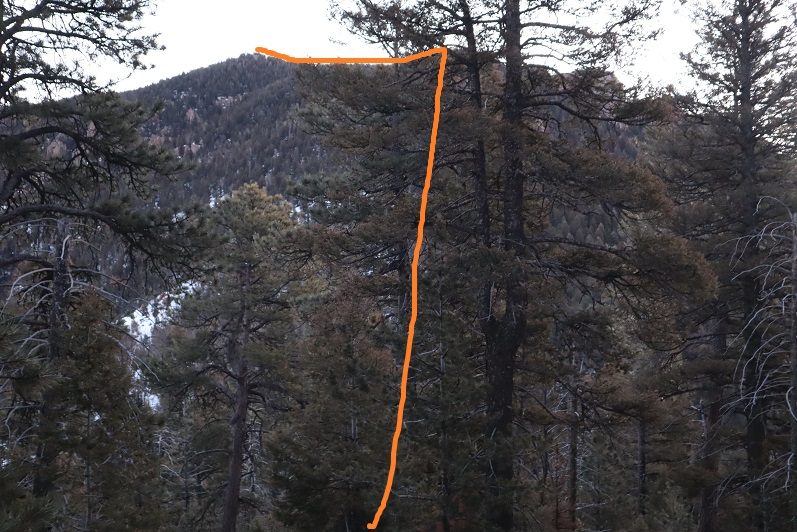
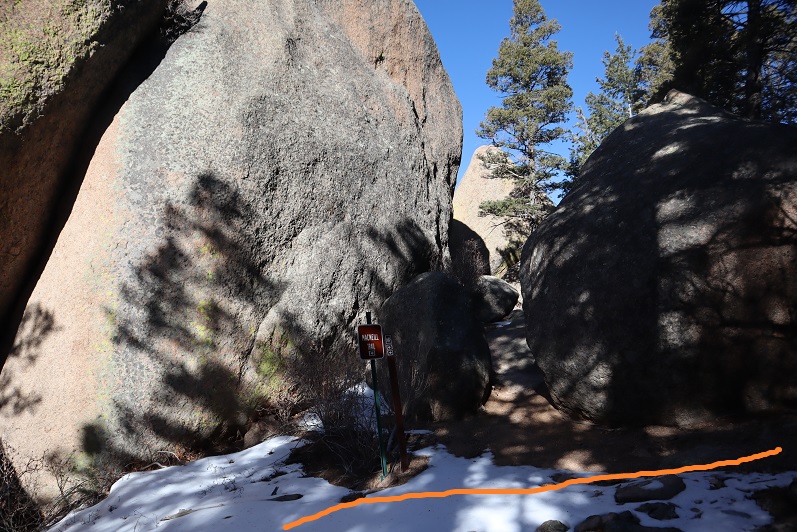
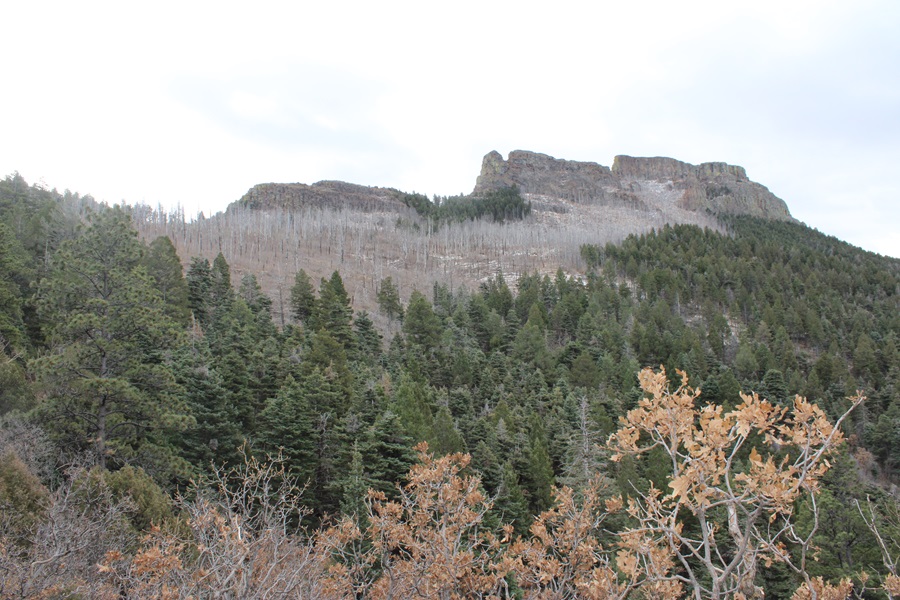
I followed the Challenge Hill section for a short while (maybe 100 yards) before coming to a junction with several other trails.  I could see Fishers Peak from the parking area.

At the junction I stayed on the Challenge Hill Section, which is the wide path that goes straight (yes, this can be confusing, stay on the road).

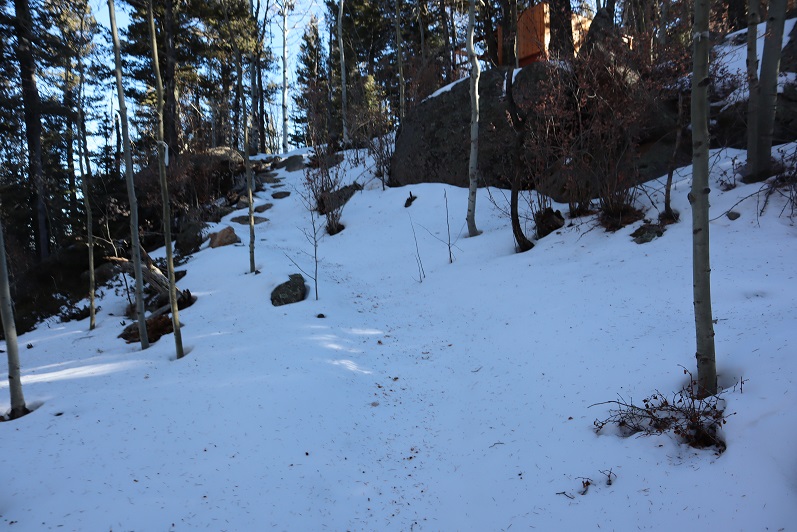
The road quickly begins to gain in elevation.  I gained 770’ of elevation in just under 1.5 miles.
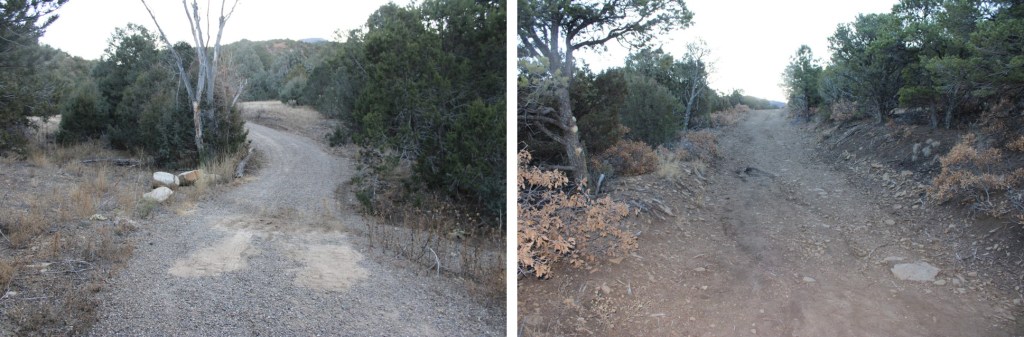
After hiking for about 1.3 miles, I came to another junction.  If you accidentally took trail 10 or 8 or 9, you’ll end up here as well.
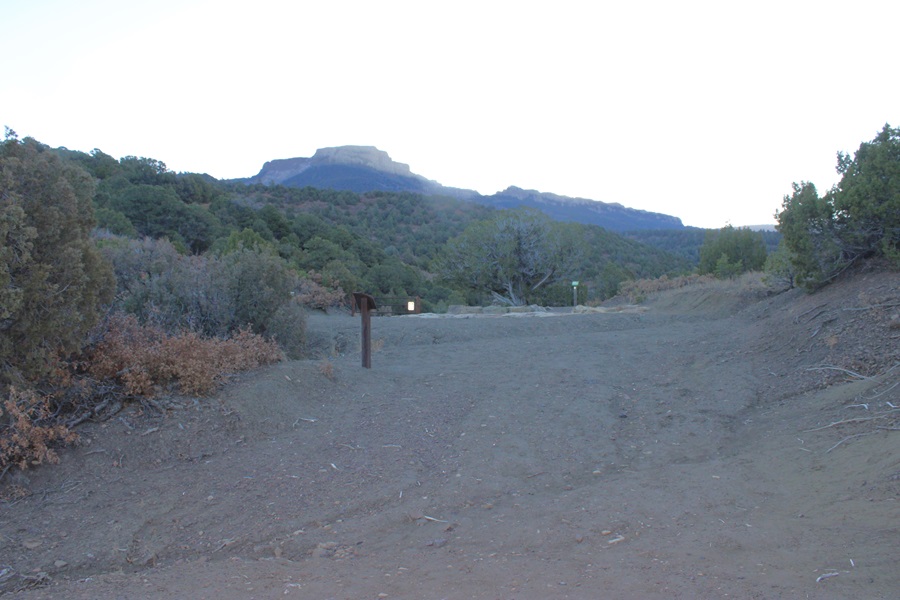
I continued east, taking the Osita Ridge Section

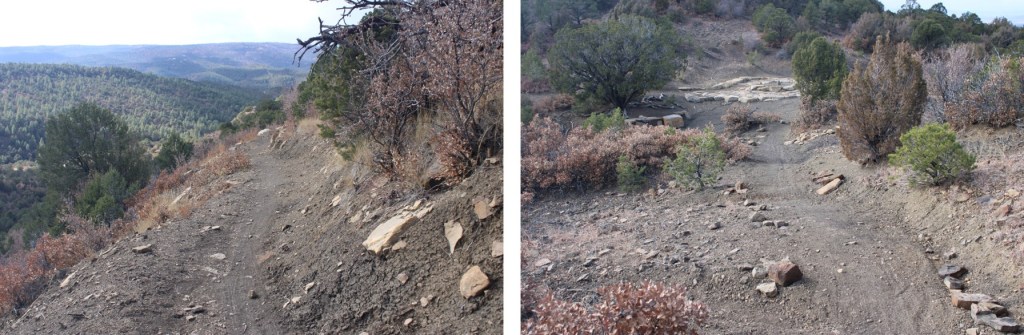
Now the trail became more of a bike trail than a hiking trail.  It meandered around mountainsides instead of over them, and had a lot of small ups and downs, which I’m assuming make biking up hill easier?  I can see problems in the spring with rain and runoff collecting in pools on this trail, but for now it was just mildly annoying. 
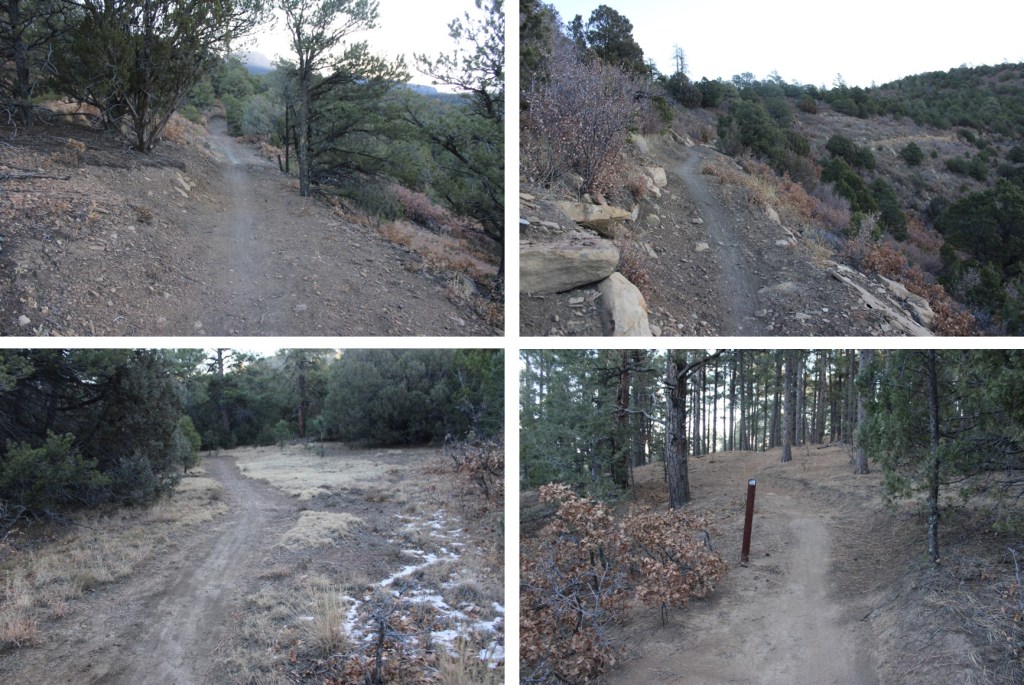
After hiking for 3.85 miles I came to a junction, which congratulated me for making it halfway.  I like how the sign asks the hiker if they are truly prepared for the second half of the hike.
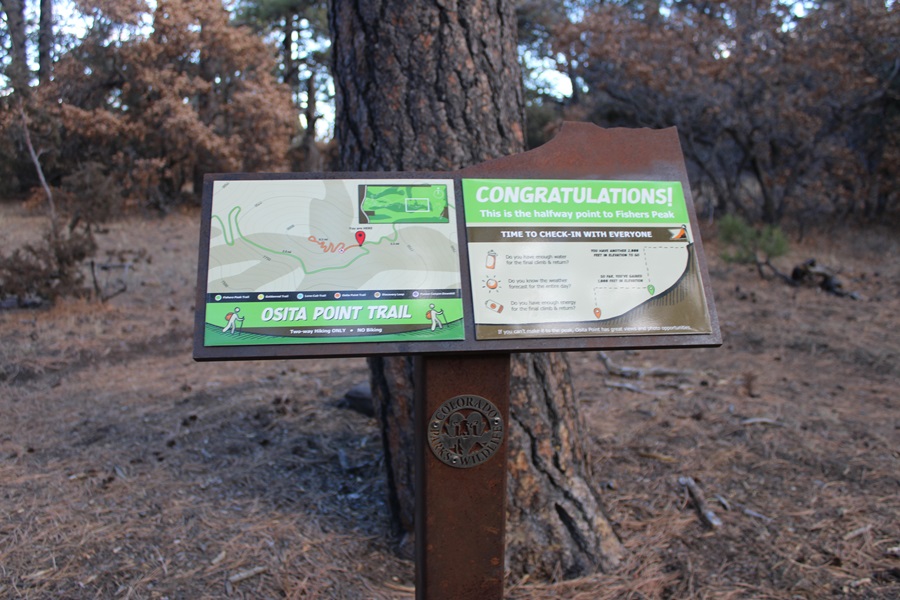
At this junction I turned right, and followed the Shady Forest Section.  If you go left, you can hike .4  miles up to Osita Point.

About 2 miles of hiking brought me to a gate.  The sign says this portion of the trail is closed March 15-July 31 for Raptor breeding season.  So if you’re going to do the peak, don’t plan on coming during that time.  This is also a good place to leave your bike if you rode one, as the trail becomes much more rocky and there are stairs involved. 

I was now in the Stone Guard Section, and followed the class 1 trail south as it gained the ridge.
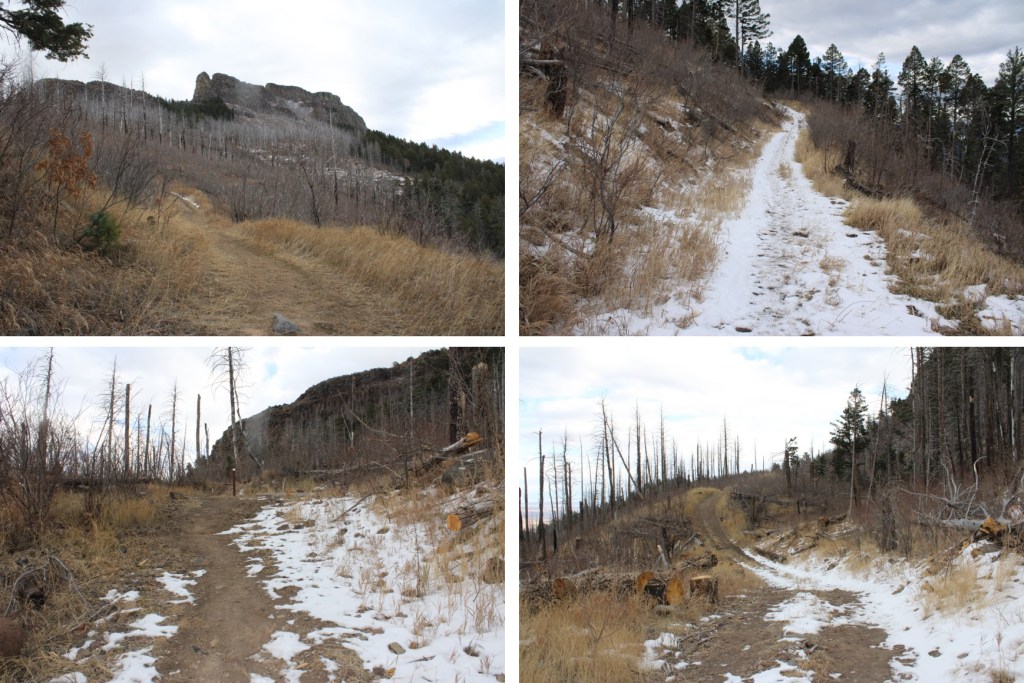
There are a couple of gates here, but the trail doesn’t intersect them, and the path is obvious

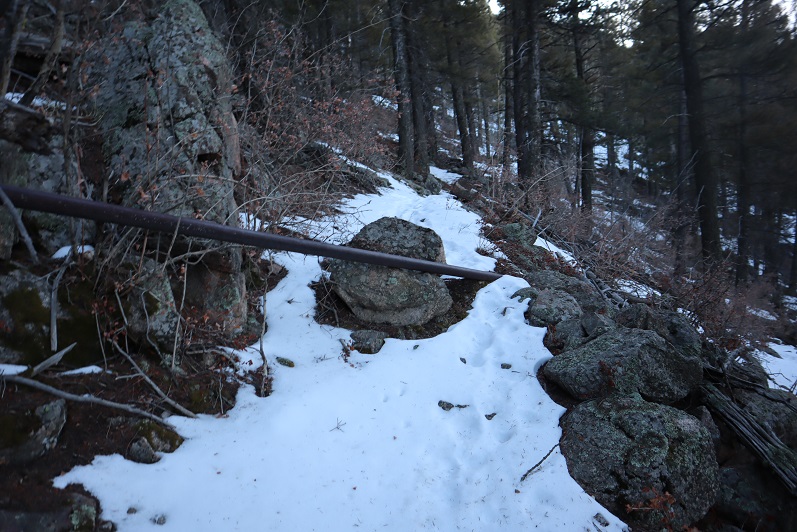
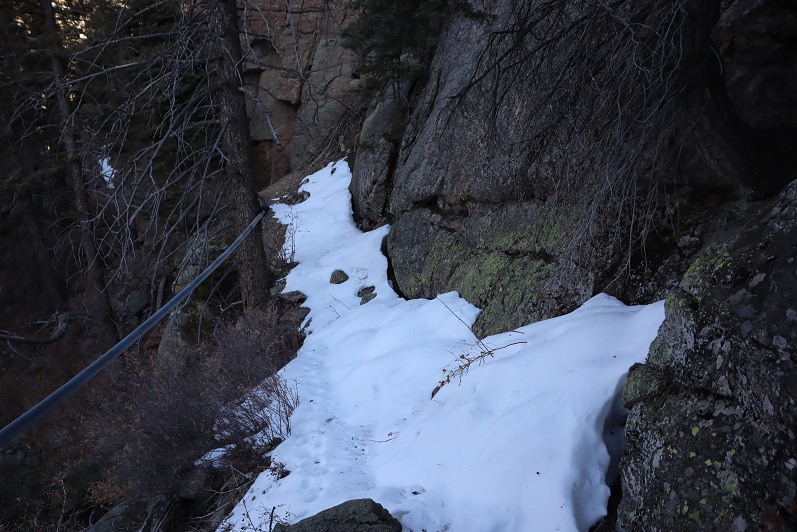
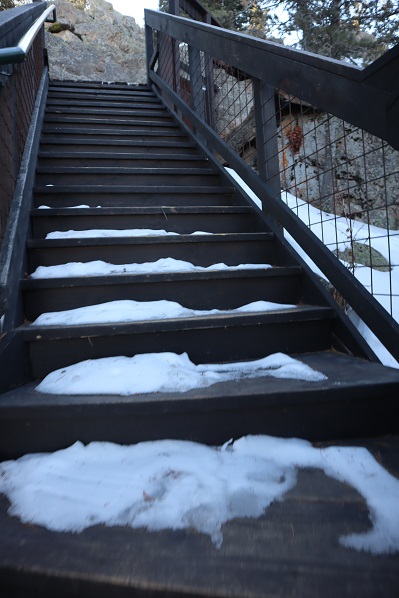
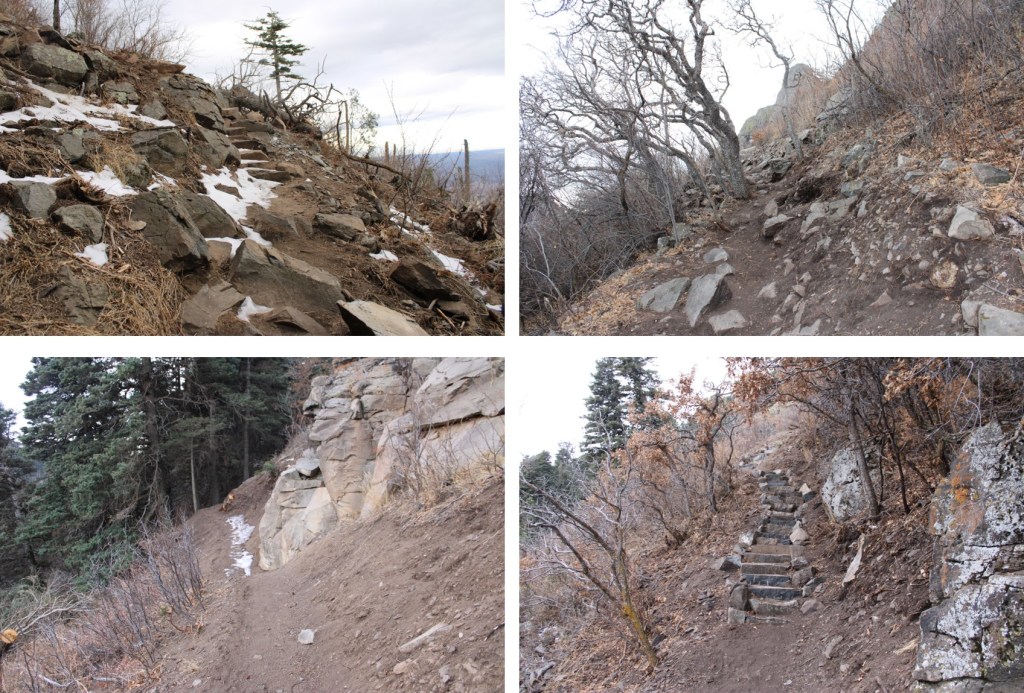
I came upon some stairs, which is the beginning of the ‘hard’ part of this climb.  This is a fairly new trail, but the workmanship in the stair and narrow areas doesn’t look like it will last long.  I can see it eroding in a year or two, or even after this winter/spring season.  Although this is a class 1 trail, care should be taken not to dislodge a rock or slip off the side of the trail.
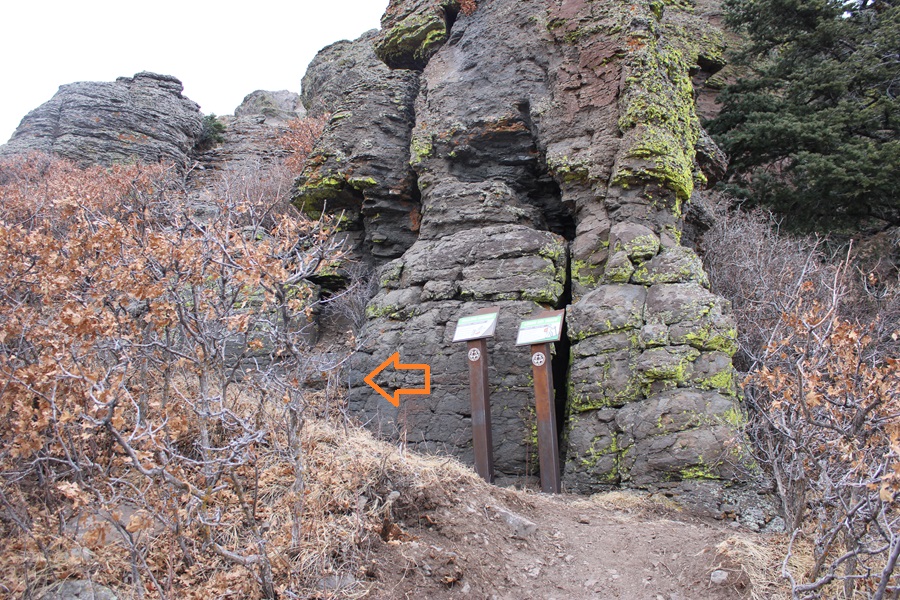
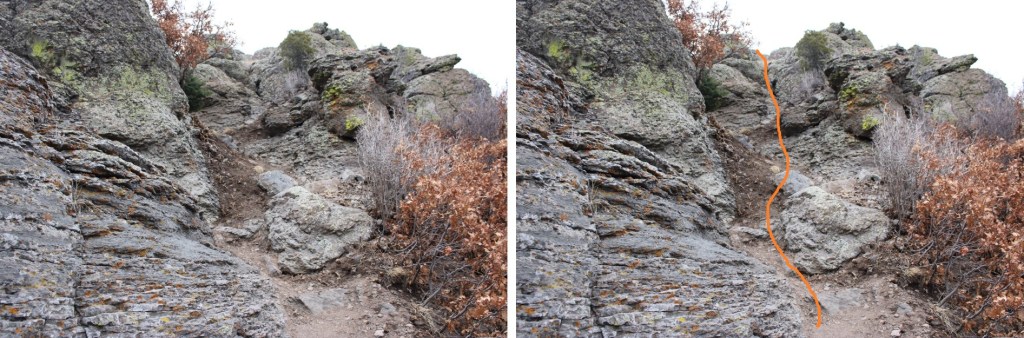
When you see these signs, you’re almost to the summit. There’s a little bit of scrambling here, but only for about 20 feet or so. 
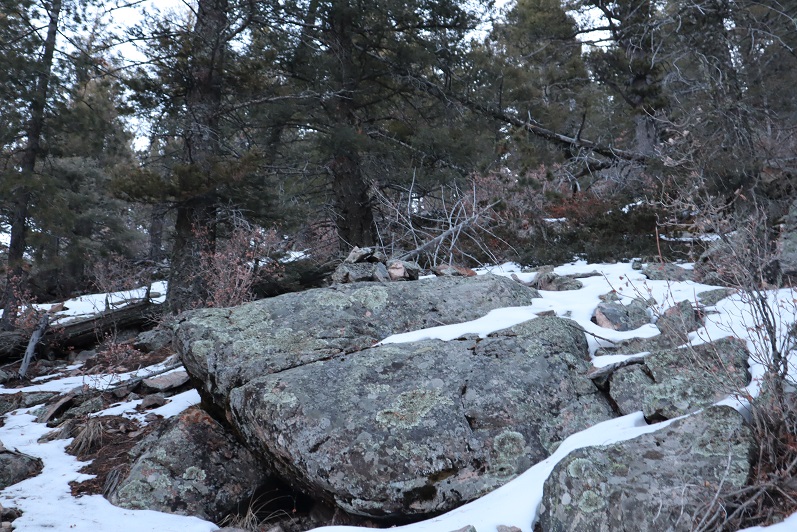
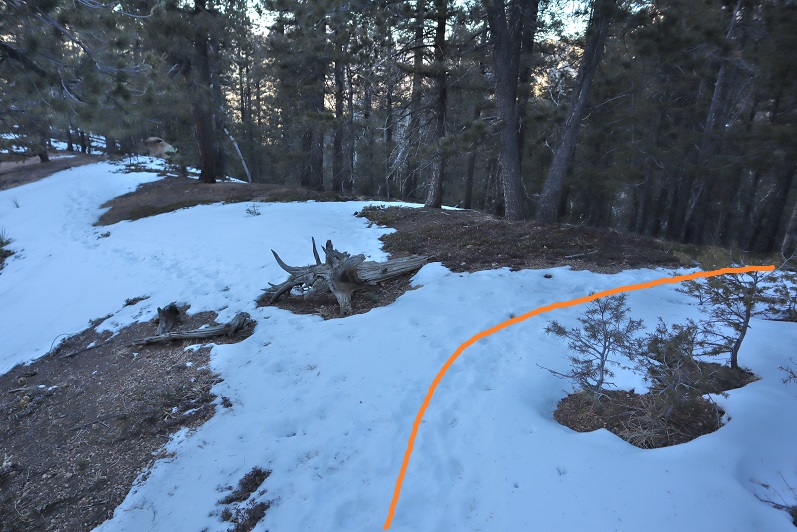
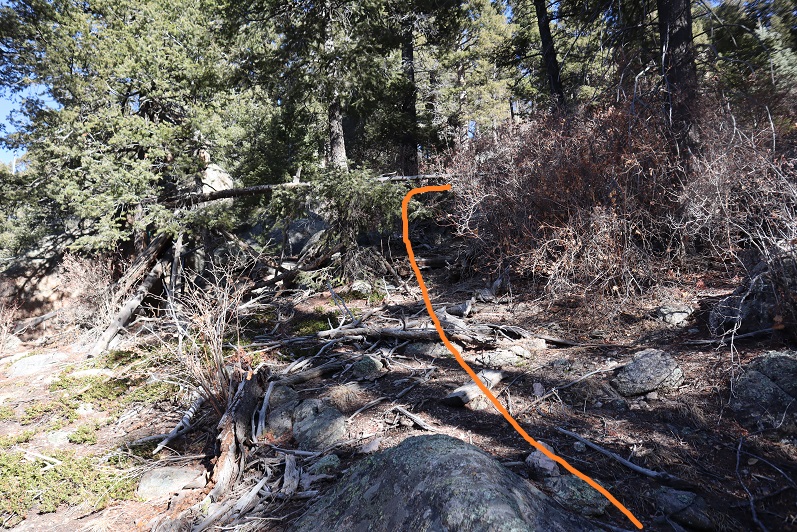
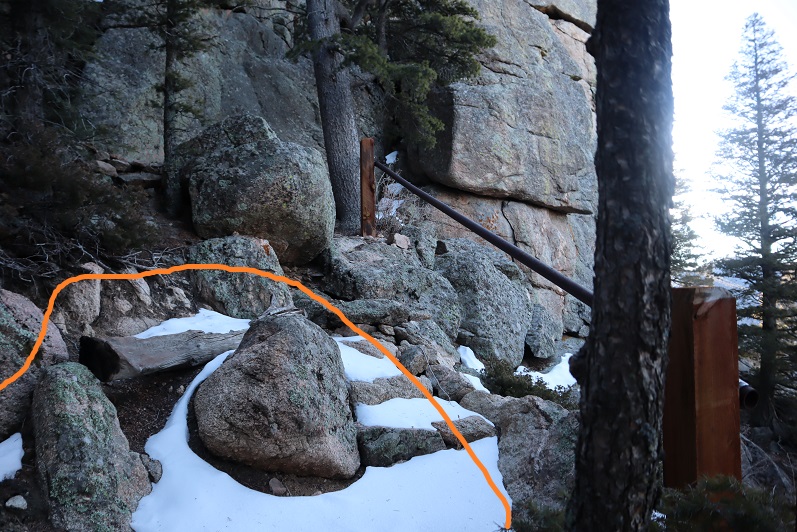
The trail here is not obvious, but you’re trying to ascend these rocks.
At the top of the rocks I was surprised to be greeted by a mesa.  There is a well-established trail here, that goes around the mesa.  You can go either left or right.  I went left.  This is the Summit Loop section of the trail.

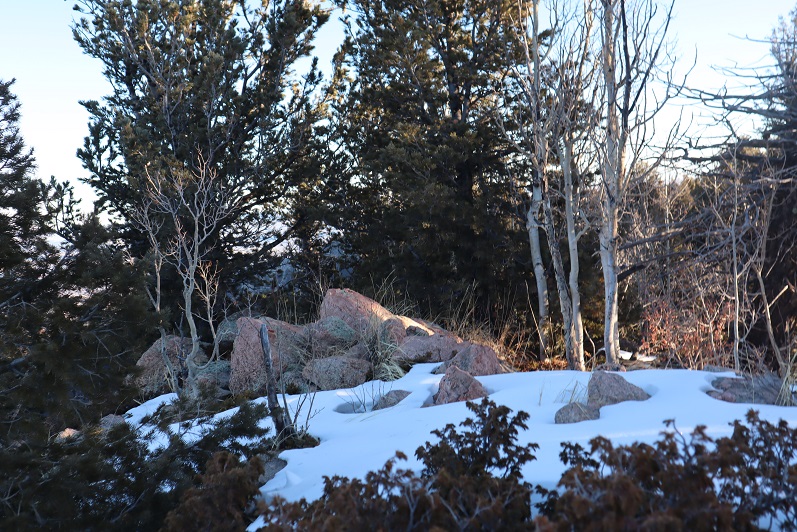
The actual summit can be difficult to discern, as there are multiple large cairns that look like the summit.  It you go left as I did, the summit will be the first large cairn you come to.  Because I wasn’t sure at the time, I went all over the mesa to make sure this was indeed the true summit.
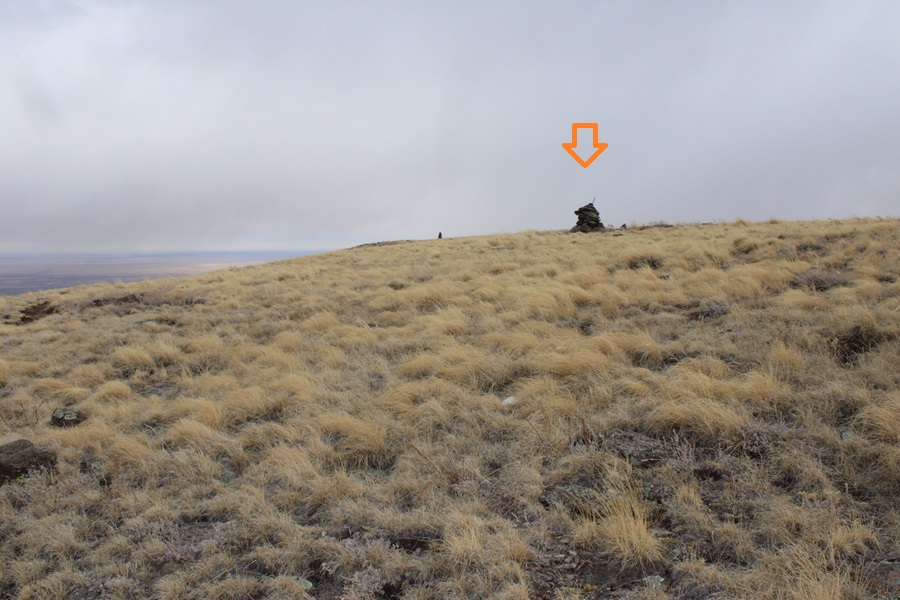
I summited Fishers Peak at 10:15am.  This video is from the middle of the mesa.

Fishers Peak:

Now to head back down.  I simply re-traced my steps back the way I came

Back down the rocky area

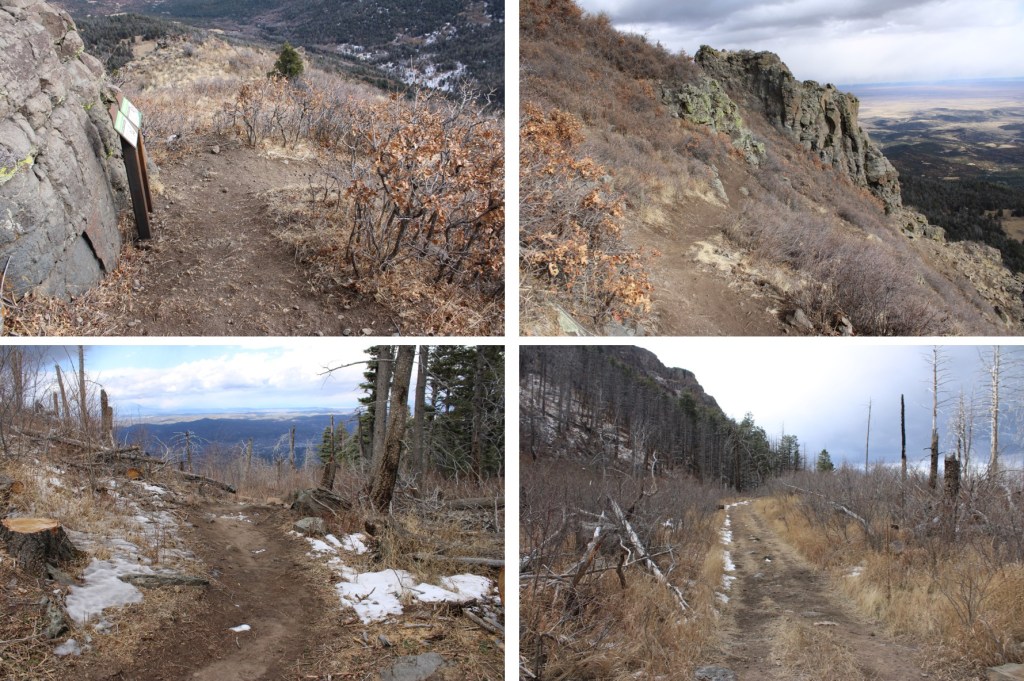
Then I followed the trail backwards, taking sections 5-4-3-2-1
It wasn’t supposed to start snowing for another two hours, but mountains have a way of making their own weather.  It started graupeling pretty heavily.

Graupel:

I continued on through the graupel, following the well established trail

At the junction of trail 1,2,9 & 10 I followed trail 1, the Challenge Hill Section (the one that’s a dirt road), back to the trailhead.  You can take any of the routes, the others will just be longer.
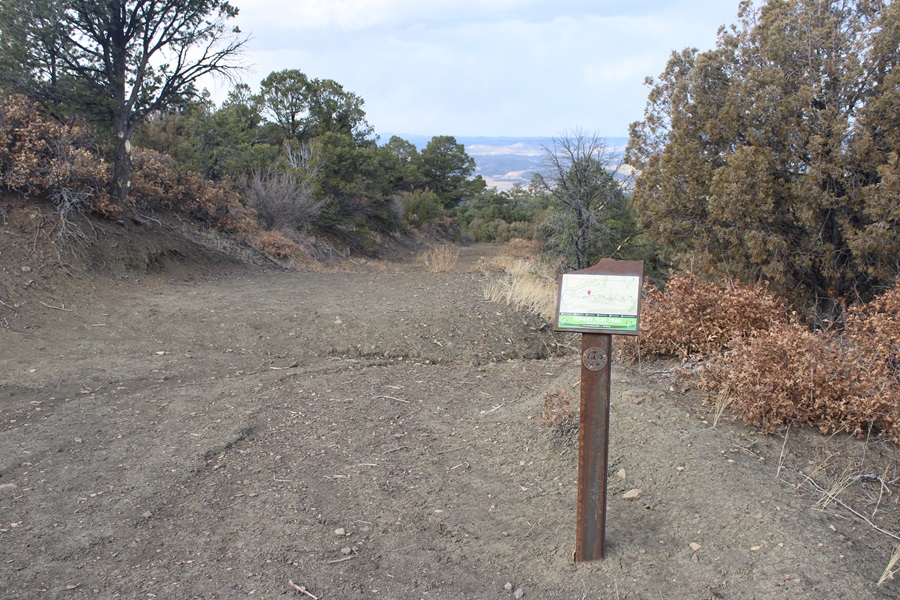
When I got back to the trailhead, my truck was still the only vehicle in the lot, leading me to believe not many people know the park is open
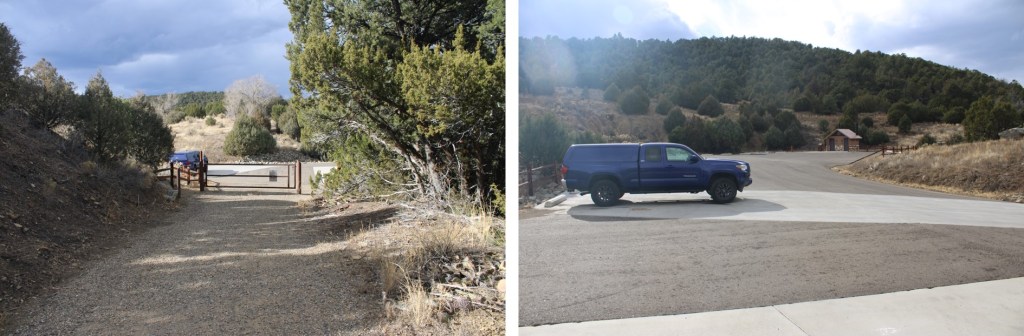
I made it back to my truck at 12:45pm, making this a 15.3 mile hike with 3588’ of elevation gain in 5 hours, 45 minutes
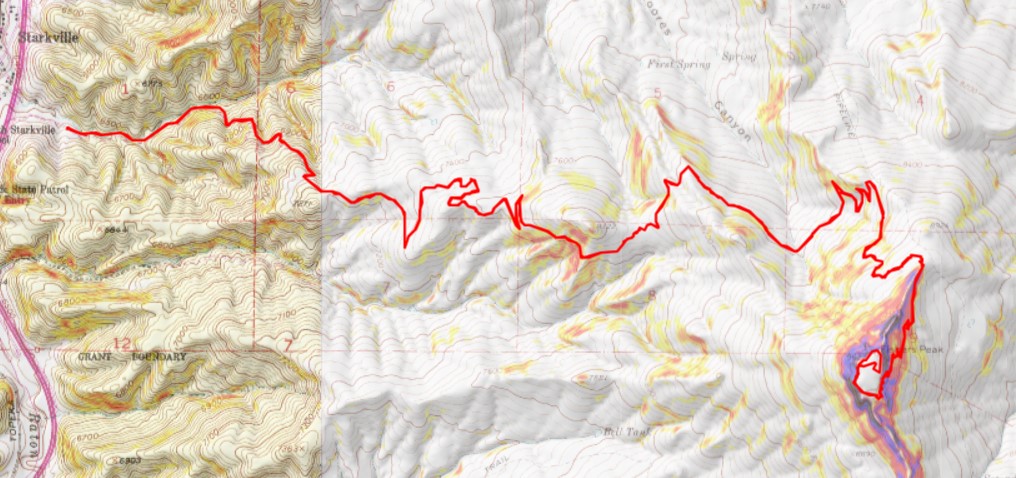
On to the next trailhead!

Cheyenne Mountain – 9565, The Horns – 9212 & Sugarloaf Mountain – 9633

1

RT Length: 10.5 miles

Elevation Gain: 4712’

Time: 6 hours 15 min

Partner: Steffen


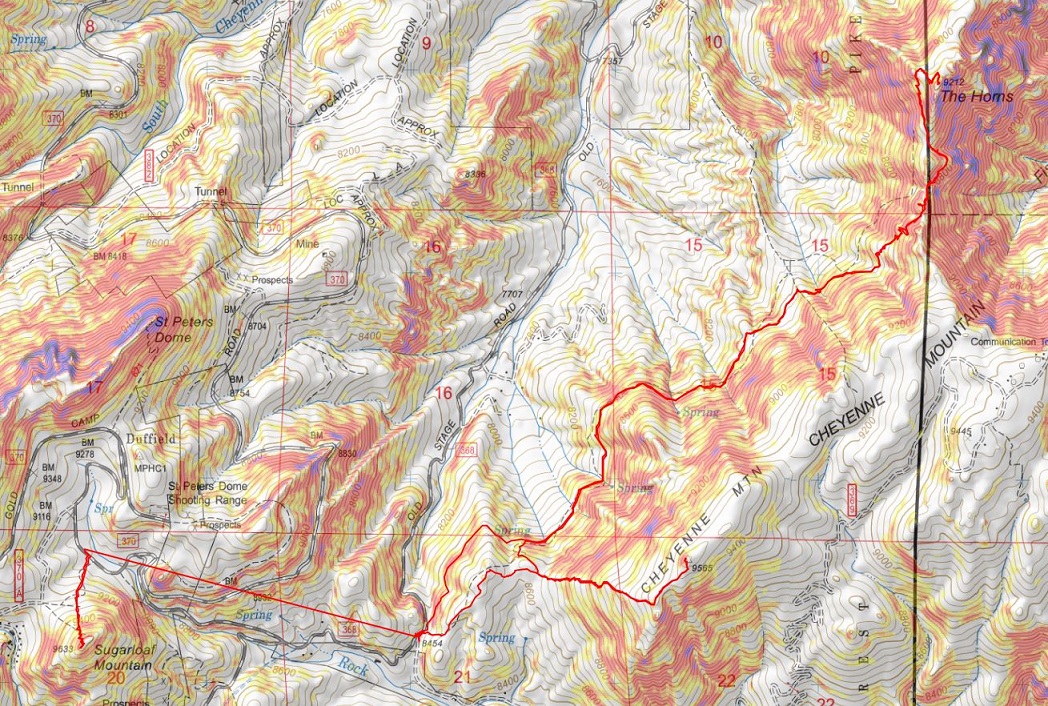
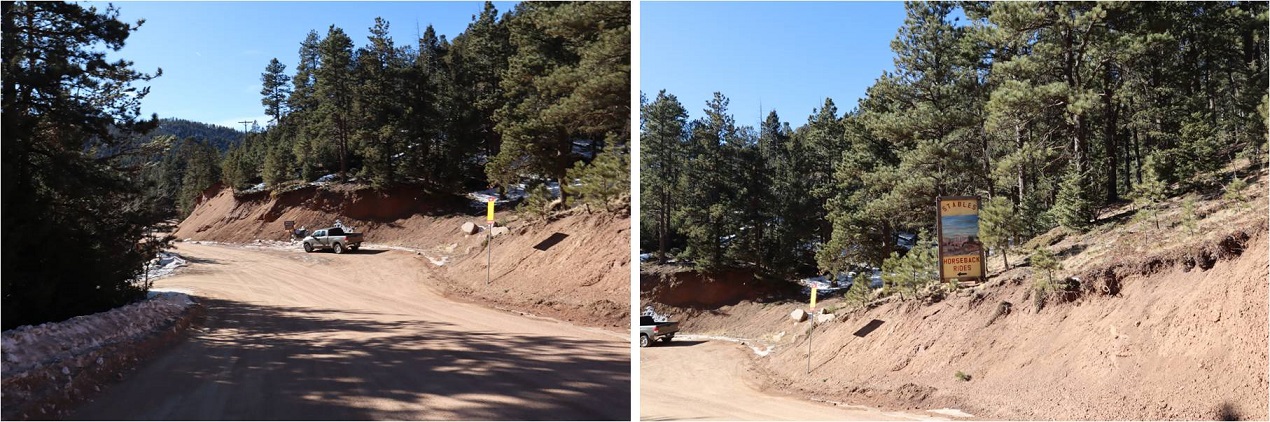
With the weather iffy in the high country I decided to tackle one of my 2020 goals early: climb 3 El Paso County Highpoints.  Steffen is training to hike 14ers this year so I invited him to go along.  Before heading out I used Caltopo to make a route of the drive in, not being sure just how Old Stage Road would look this time of year.  It ended up being almost completely clear of snow.  I parked near the stables.

2

Cheyenne Mountain 9565’:

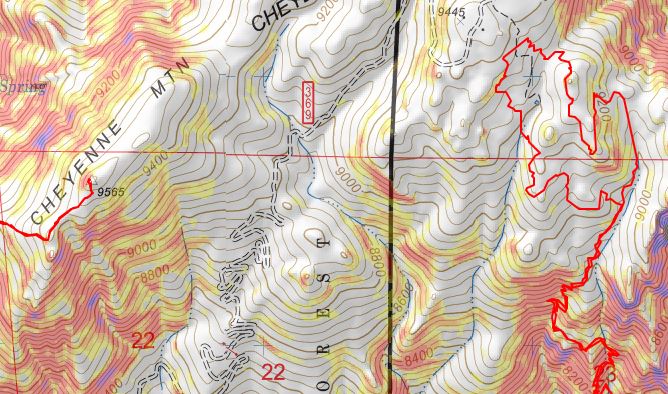
Just to clarify, we summited the highpoint of Cheyenne Mountain. There have been articles written and news posts stating the Dixon Trail goes to the top of Cheyenne Mountain:  It doesn’t.  The Dixon Trail goes through Cheyenne Mountain State Park and up the side of the east side of the Cheyenne Mountain range near the communication towers, but it doesn’t summit anything, and in fact if you were to go off trail and scramble to the top of Robbers Roost you’d still be over 100 feet shy and about a mile of bushwhacking away from the true summit of Cheyenne Mountain.  Here’s topo proof:  On the left is the true summit of Cheyenne Mountain, and on the right is where the Dixon Trail takes you.

3

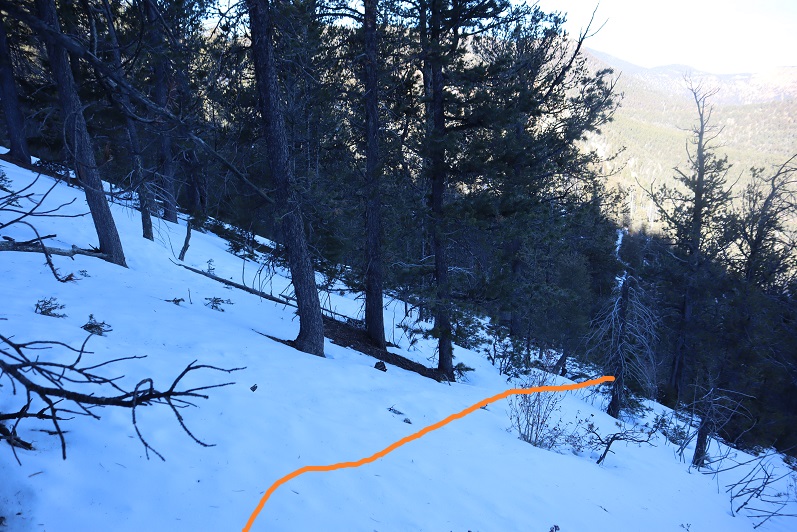
In any event, at 6:30am it was 14 degrees outside when we donned our gear (microspikes) and headed east over a snow bank and up the mountainside, dipping about 200 feet before starting the ascent.

4

5

This hike was entirely below treeline with no distinct trail so we just aimed for the ridge and ascended the mountain on its west side. The ground had many dry spots but we tried to stick to the snow as much as possible so we’d see our footprints upon our return.

6

About three quarters of the way up the mountain we started running into cairns and surveyors tape, which was a nice surprise (until they stopped). We also found some bear scat that looked to be from last fall.  This seemed a good area to find a bear.

7
Once on the ridge we came across some mountain lion tracks that looked to be a few days old.  This area also seemed like a good place for a mountain lion to den, with a lot of large rocks and boulders to hide in.  We followed the ridge left (north) to the summit.

8

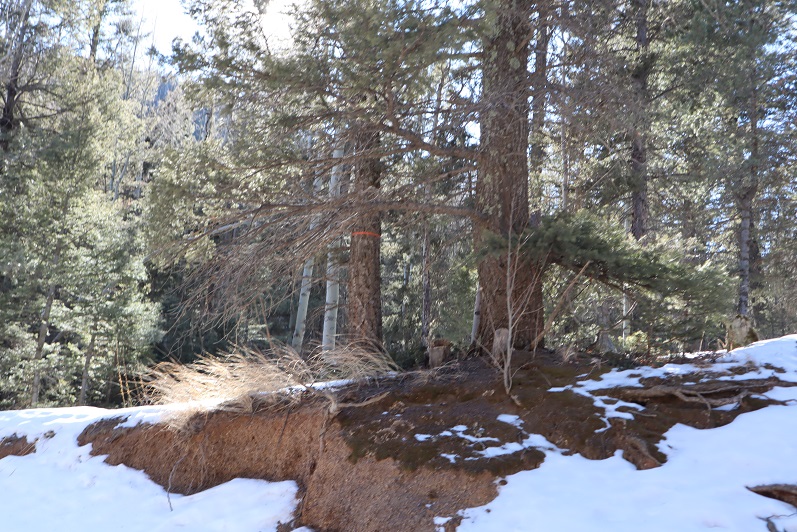
Once at the summit we found a summit marker! This was cool because it was totally unexpected.
9

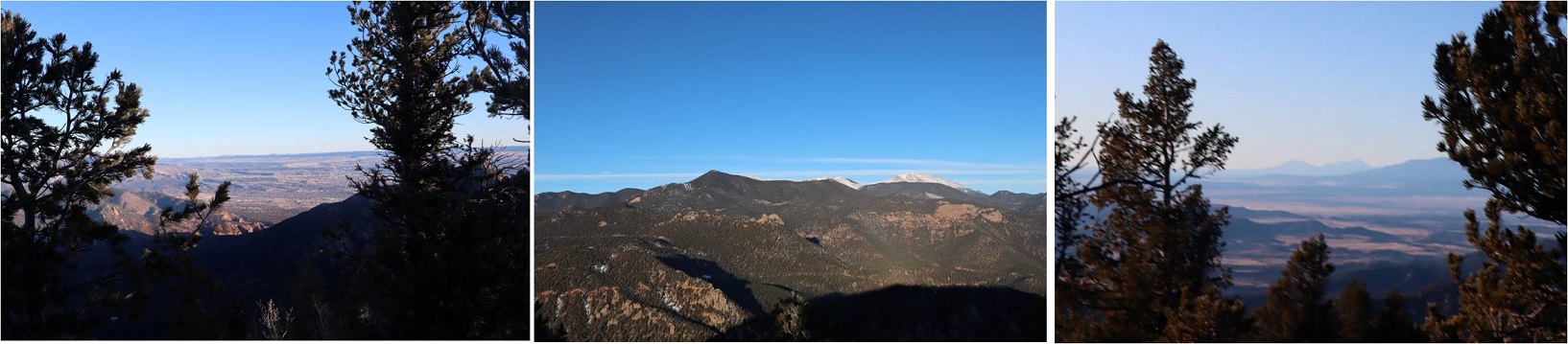
Our summit views included Colorado Springs, Almagre with Pikes Peak, and The Spanish Peaks

10

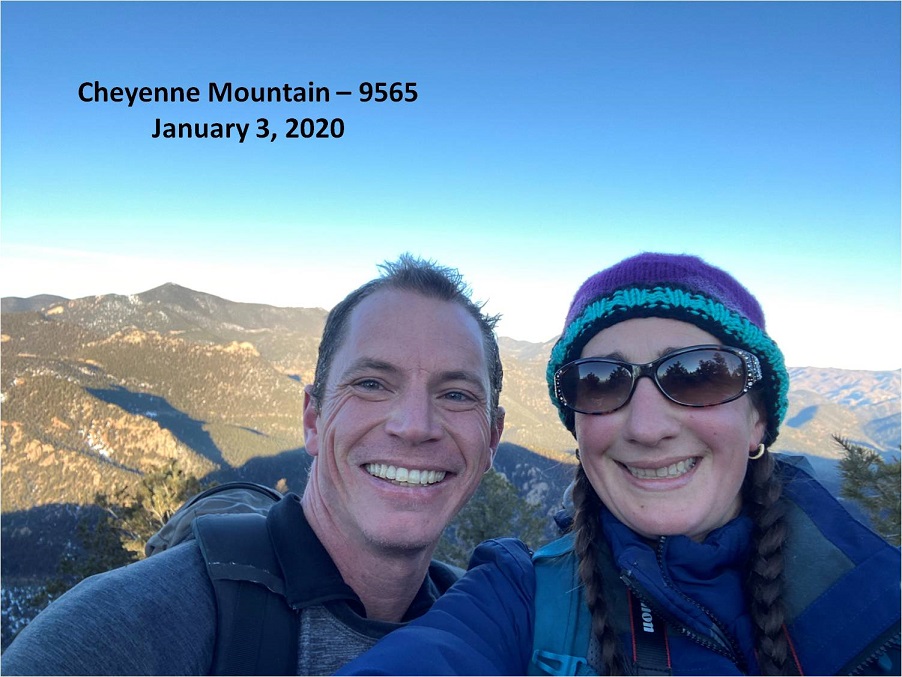
Summit Picture

11

There was about 6 inches of snow on the ground towards the top so we followed our tracks back down the ridge

12

Cheyenne Mountain wasn’t our only goal for today, and after looking at a topo map we didn’t want to re-ascend the hill that led back to the parking area. We decided to traverse the north side of the mountain instead. There was more snow on the north side and we were frequently knee deep in powder

13

But after just a few minutes we came across the MacNeill trail, and check it out: it had tracks!

The Horns 9212’:

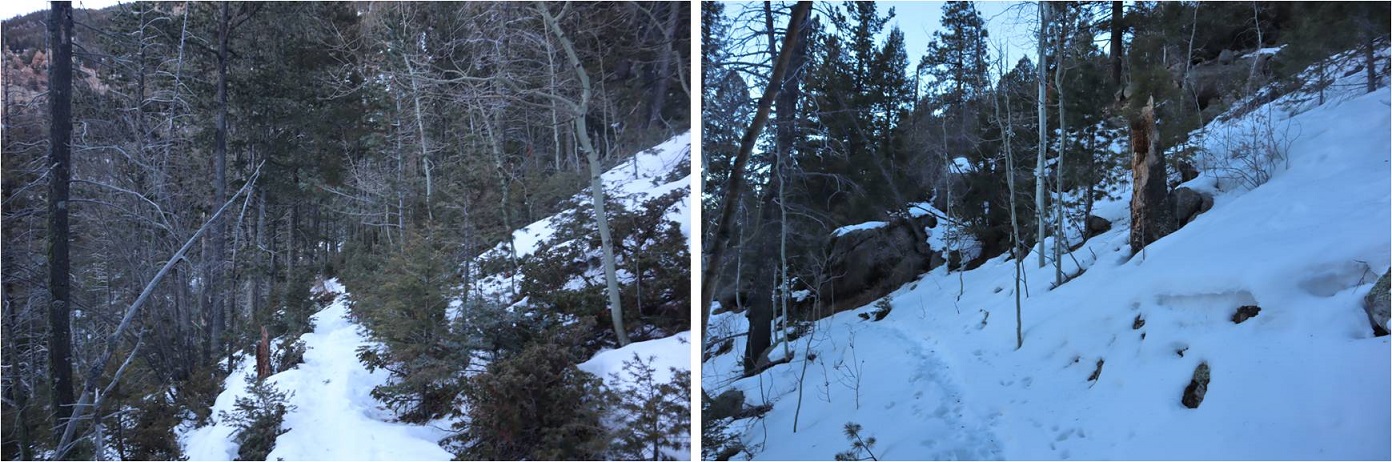
This was awesome! We just followed the class 1 trail as it curved northeast around the mountainside

14

It can be tempting at times to veer off trail, so be sure to stick to the side of the mountain. There were downed trees everywhere.  There is also a lot of up and down, meaning you’ll gain elevation on the way out as well.

15

We came across an old water pump and frozen waterfall/stream

16

There were broken pipes littering the trail from here just about up to the summit, as well as varying depths of snow. We kept our microspikes on.

17

We made it to the top of the ridge and now lost elevation as the trail continued on the east side of the mountain and then snaked back to the west side. Here’s where the tracks ended, but luckily the trail was still easy to follow.  There was more snow on the east side.

18

The trail snaked back around to the left (west side) and into an area filled with boulders. There was one spot that was tricky to pass due to the snow, but with the help of microspikes and trekking poles it wasn’t too bad. I didn’t touch the pipe.

19

We continued on the trail as it once again curved east around the mountainside

20

And came across a trail sign

21

We followed the trail towards what looked most likely to be the summit on top of a rocky area

22

23

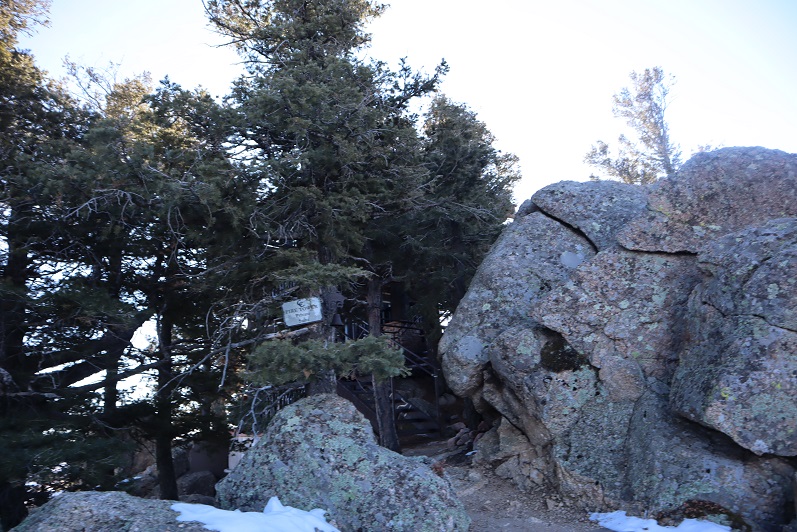
We came across cabins, which I wasn’t prepared for. There wasn’t a camp on my topo map (Pikes Peak Atlas).  It didn’t look like anyone was at camp today so we continued on towards the highest point, which seemed to be up these stairs

24

At the top of the stairs was a large boulder and what looked to be a fire tower.

25

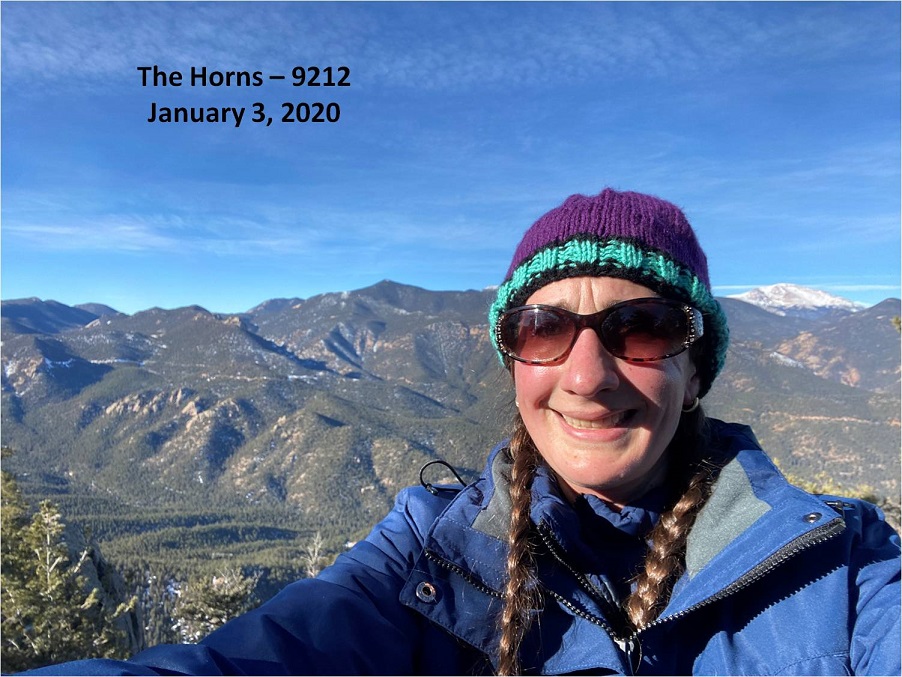
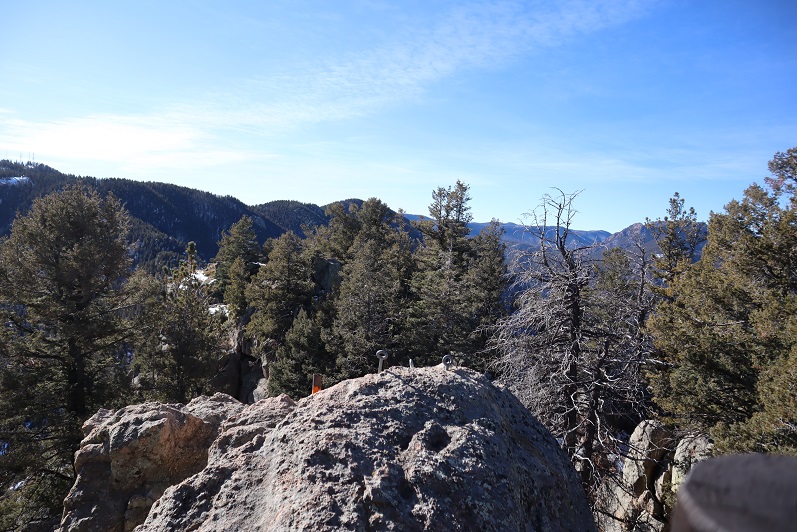
We climbed the boulder carefully (class 3) and looked around. It seemed this was the summit, so we took a few pictures.  There was a puddle of ice over what we assumed was the summit marker (if there was one?)

26

27

As we looked around it was unclear if we were at the true summit or if the rock about 15 meet away but near the cabin was the true summit, so we downclimbed and walked up the stairs of the fire tower. This was referred to as “The Horns” so it made sense there were two rocks.

28

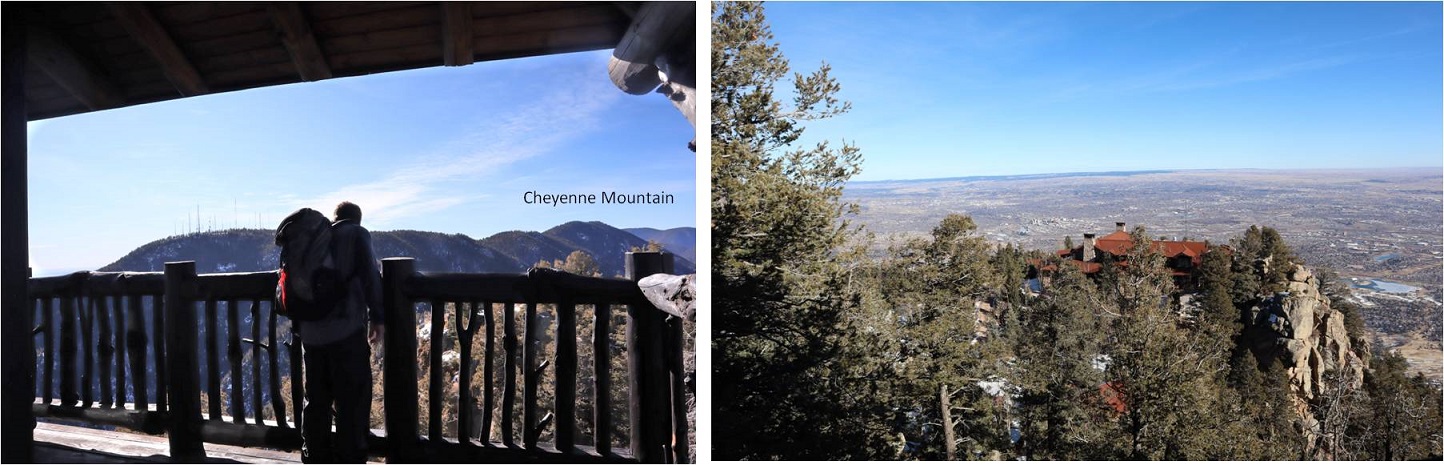
The points looked to be about even, with the one on the north maybe just a little higher? It was here we noticed the security cameras.  There were many and although we weren’t doing anything wrong we decided to leave.  From the tower we could tell this place was bigger than we’d thought (later we realized this is “Cloud Camp” owned by the Broadmoor).

29

Time to head back down. The boulders here really look fun to climb/rappel.

30

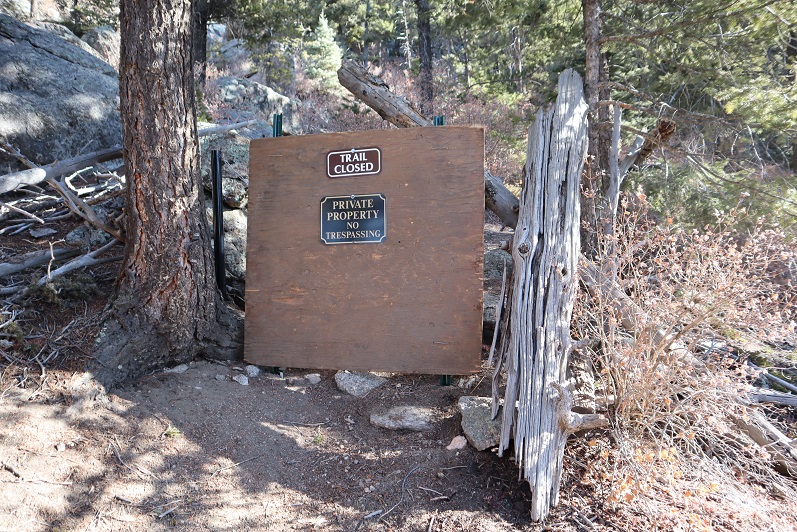
We hiked along the MacNeill trail for a little ways and suddenly came across a small wooden gate in the middle of the trail. Why hadn’t we seen this before?  We walked around a bit and realized the gate had a sign that said “Trail Closed”

31

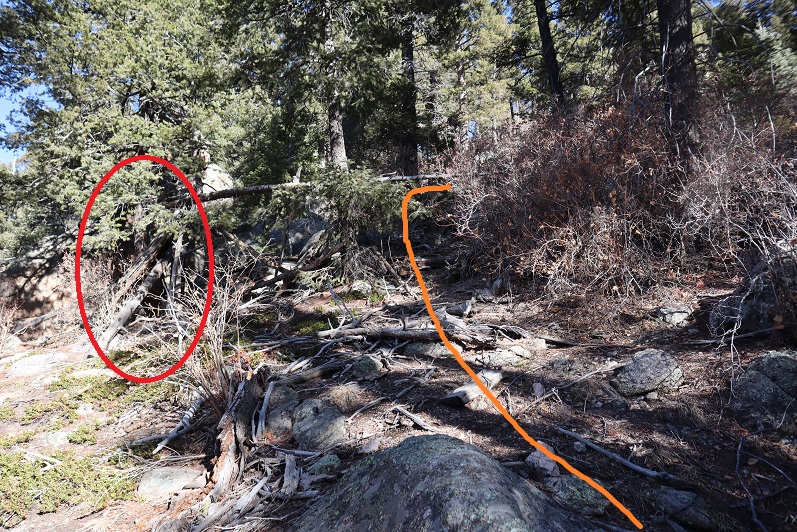
Whoops! Due to the switchbacks and amount of snow we’d never even seen the sign!  Check this out:  this is the way we hiked in, and the red circle is where the sign is located

32

As you can see, from the trail going to the summit the gate closure isn’t obvious, but on the way back down or from a different angle you can see it perfectly. In fact, you run into it.

33

I’m not sure about the legalities here, but it seems they don’t want the public highpointing on their property. They need to work on the placement of their signage if this is the case.  This was the only sign we saw.

We continued to head back down and got a good glimpse of the fire tower (a fire tower wasn’t on my topo either?)

34

There was also a good view of our way in/back out

35

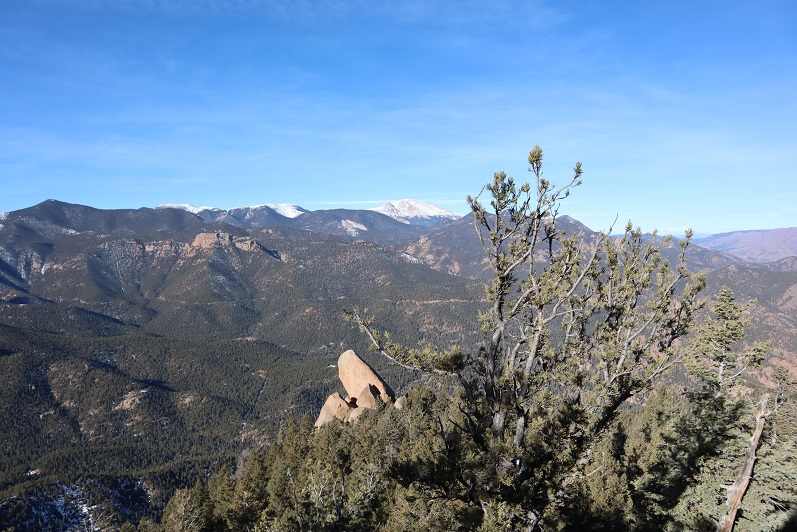
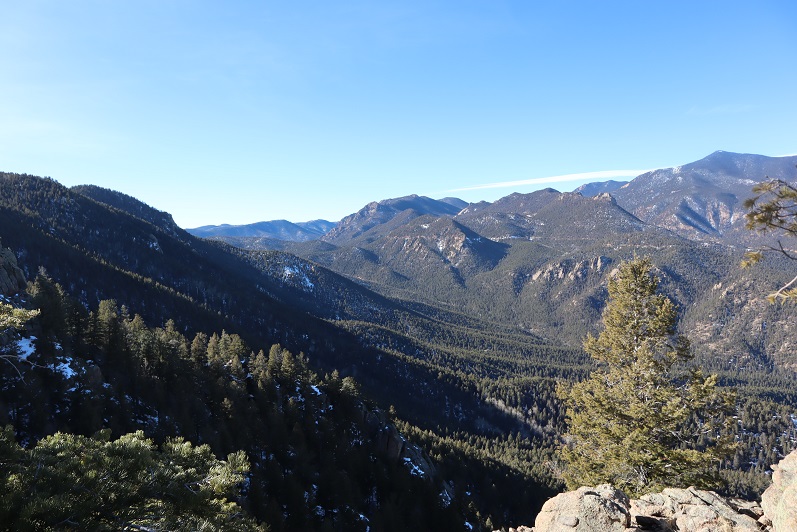
And of Pikes Peak (etc). I had fun naming all of the summits from here…

36

On the way back we decided to follow the footprints on the trail instead of our tracks back the way we’d come (if we could avoid it we didn’t want to re-ascend the hill). This ended up being a great idea and in no time at all we could see Old Stage Road and my truck. This trail ended just where we’d began, it just went more north than east (the way we’d begun)

37

We made it to my truck at around 12:30pm, but our day wasn’t over yet.

Sugarloaf Mountain 9633’:

Without taking off our gear we drove further along Old Stage Road and parked directly at the base of Sugarloaf Mountain.

38

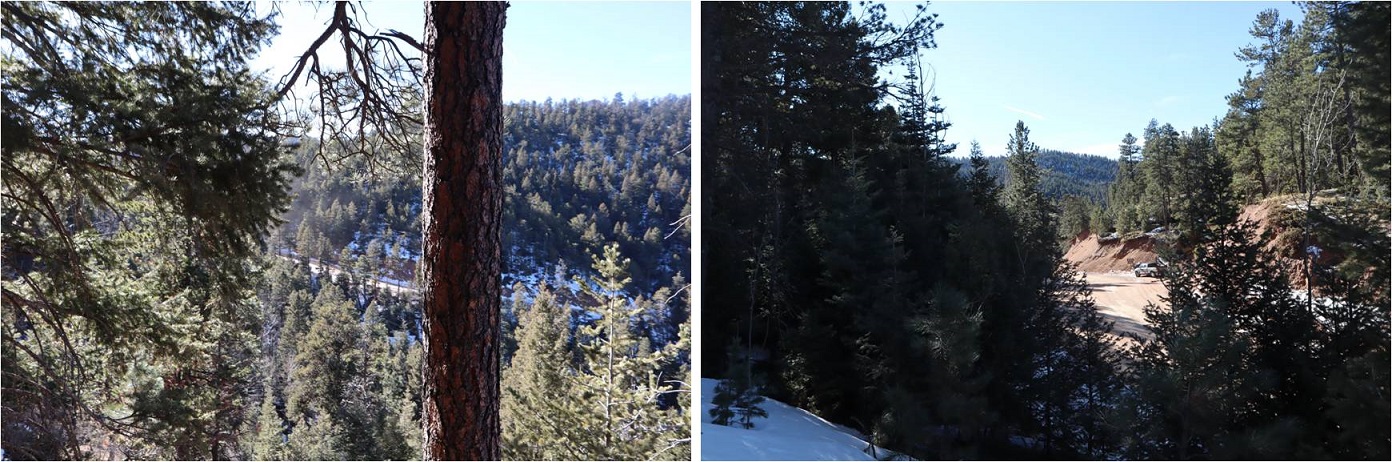
It looked like a quick hike to the top of this El Paso County Highpoint, so we headed off into the trees, starting at the surveyors tape tied around a pine.

39

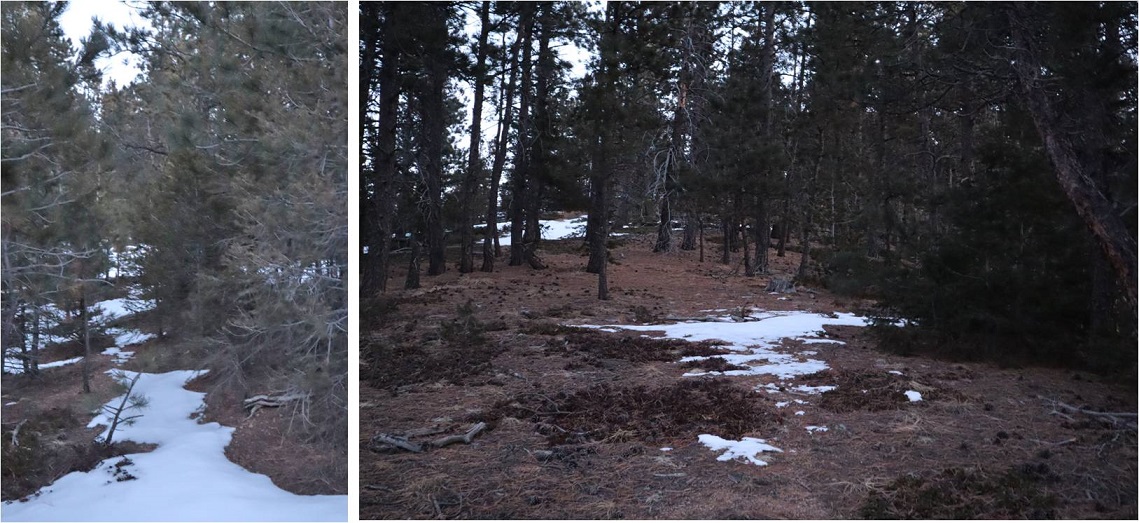
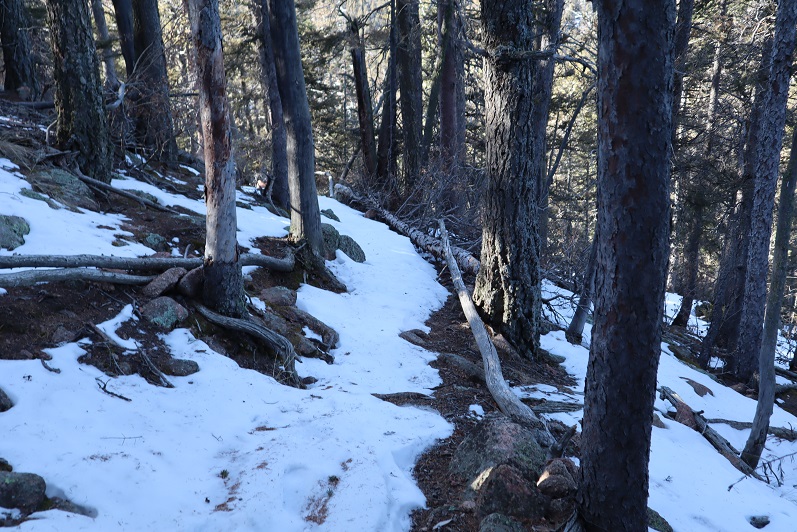
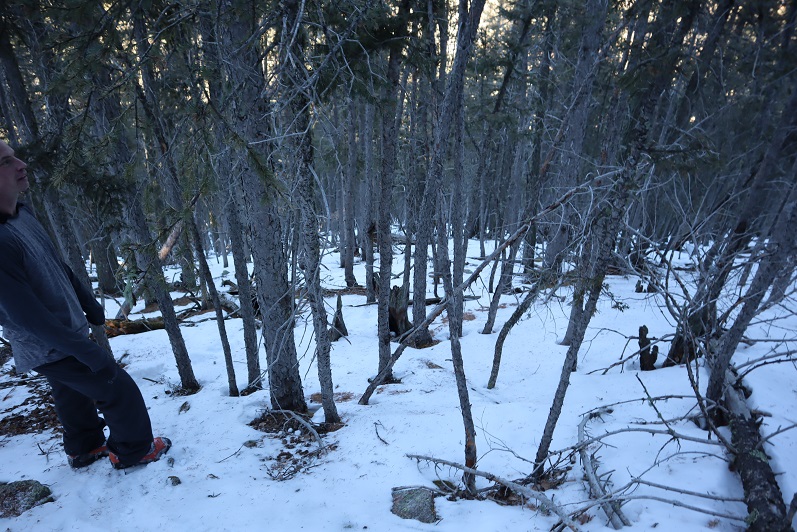
If there was a trail here it was covered in snow, so we just trekked south, straight up the hillside. This area was steeper, covered in more snow, and more heavily treed than the other mountains had been today. Downed trees made the trek ‘fun’

40

When we were about 30 yards from the summit we came across a trail, which started from the opposite side of the mountain (south) and worked north. We hadn’t taken this established trail because I believed it started on Private Property (but couldn’t be sure).  In any event, I didn’t want to push my luck.

41

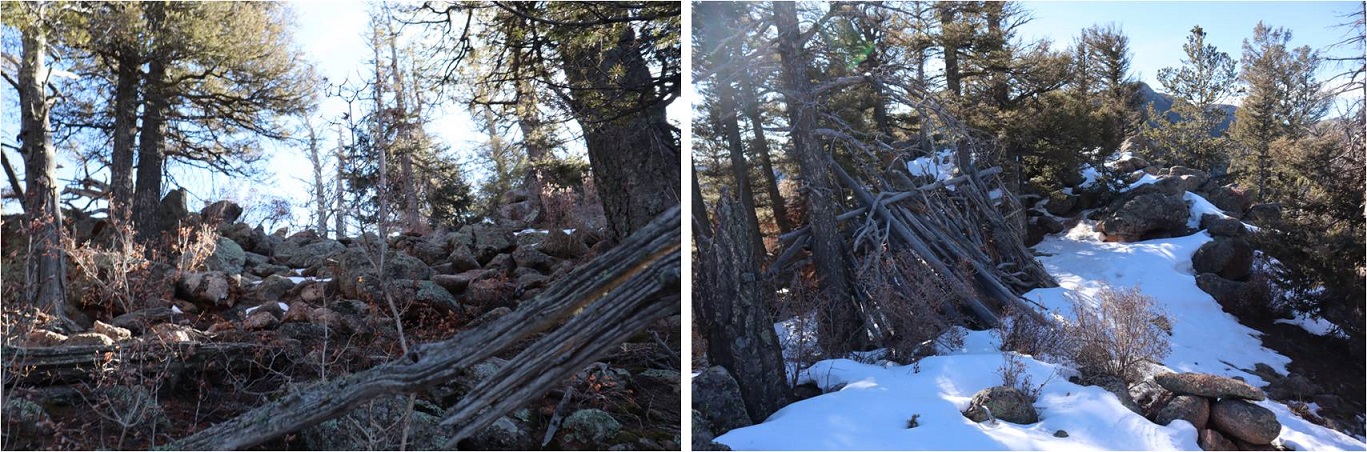
We came across a rocky area and a wiki-up

42

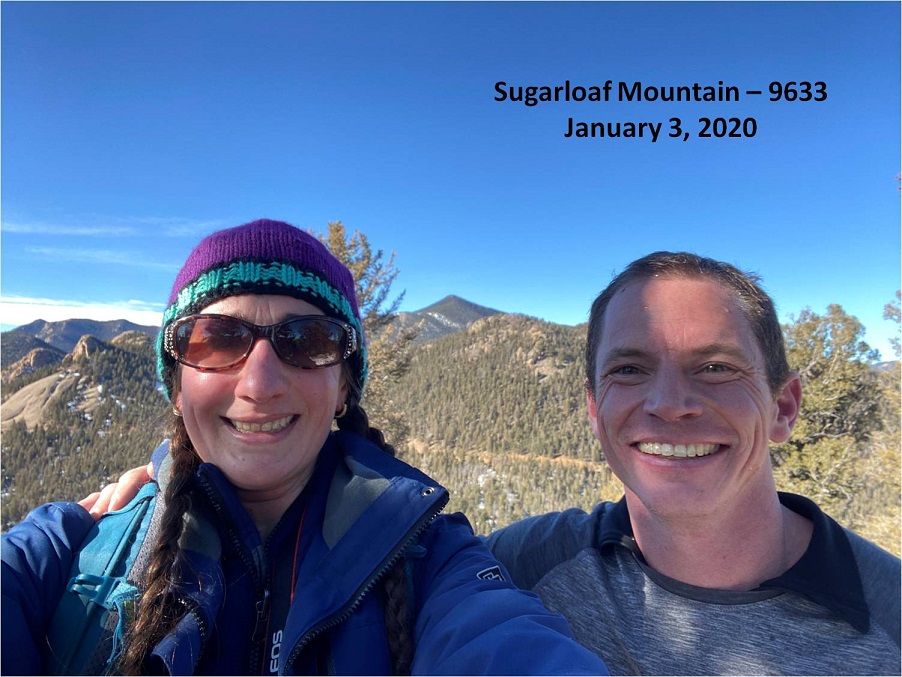
And quickly found ourselves at the summit. It had totally been worth adding the extra peak: In total it only added about a mile to the day.

43

There wasn’t a summit marker or registry, but we were sure we were at the summit.

44

45

We once again followed our tracks back down, Steffen aspen tipping along the way

46

We made it back down to my truck at 1:20pm, making this a 10.5 mile hike with 4712’ of elevation gain in just over 6 hours.

47