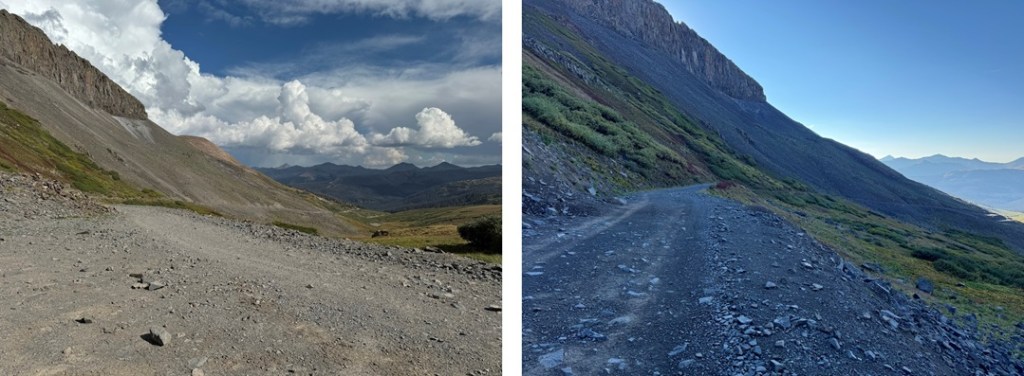
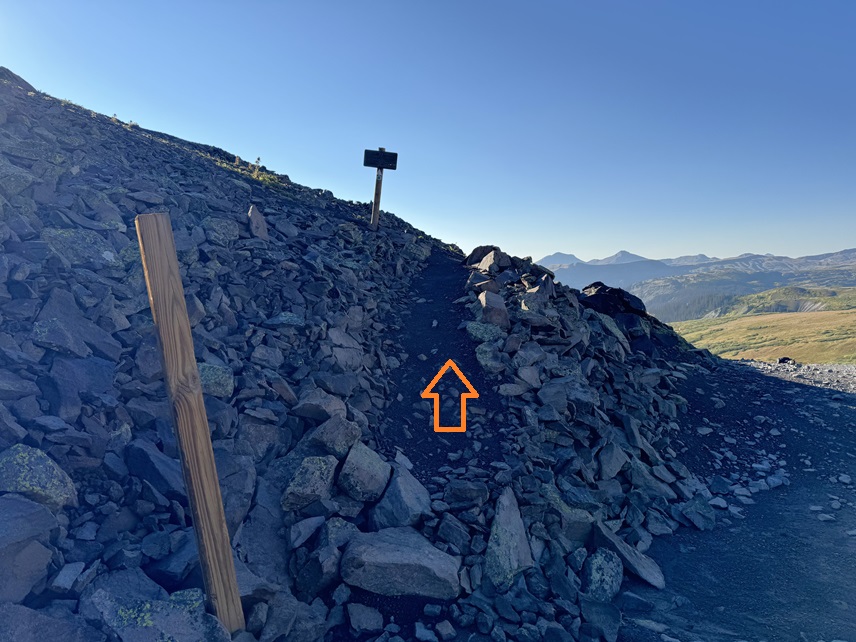
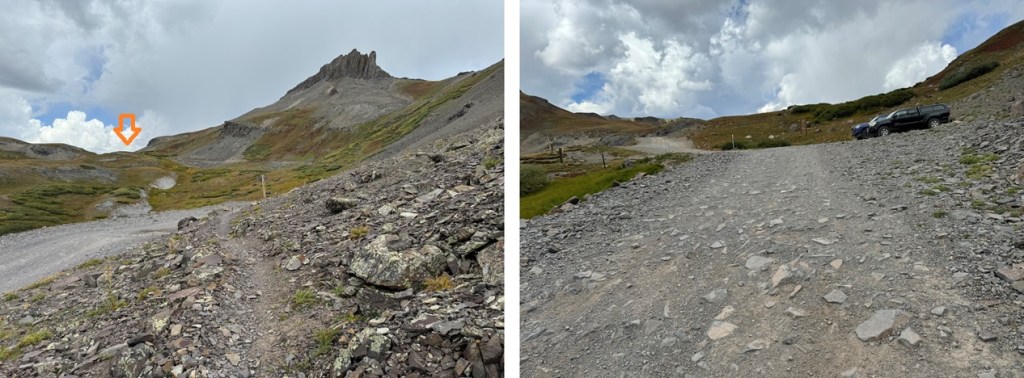
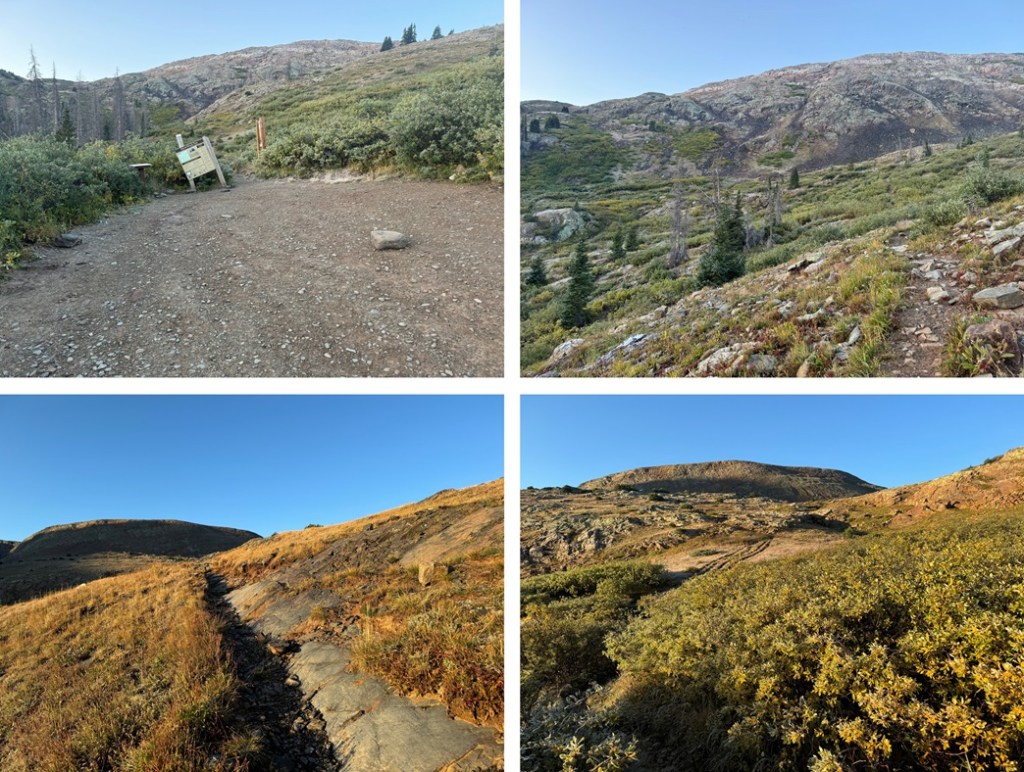
I woke up nice and cozy in the bed of my truck and sat there in the dark waiting for my alarm to go off. After waiting quite a while, I looked at my phone and noticed it was 8:15am! My alarm hadn’t gone off, and I was late getting on the trail. I was ready 15 minutes later, following the 4WD southeast towards the CDT trailhead. Doing this meant I lost 160’ of elevation in .3 miles, which I would need to regain at the end of my hike. There is one parking space near this trailhead, but when I got there the day before there was an ATV parked there, taking up the entire spot.
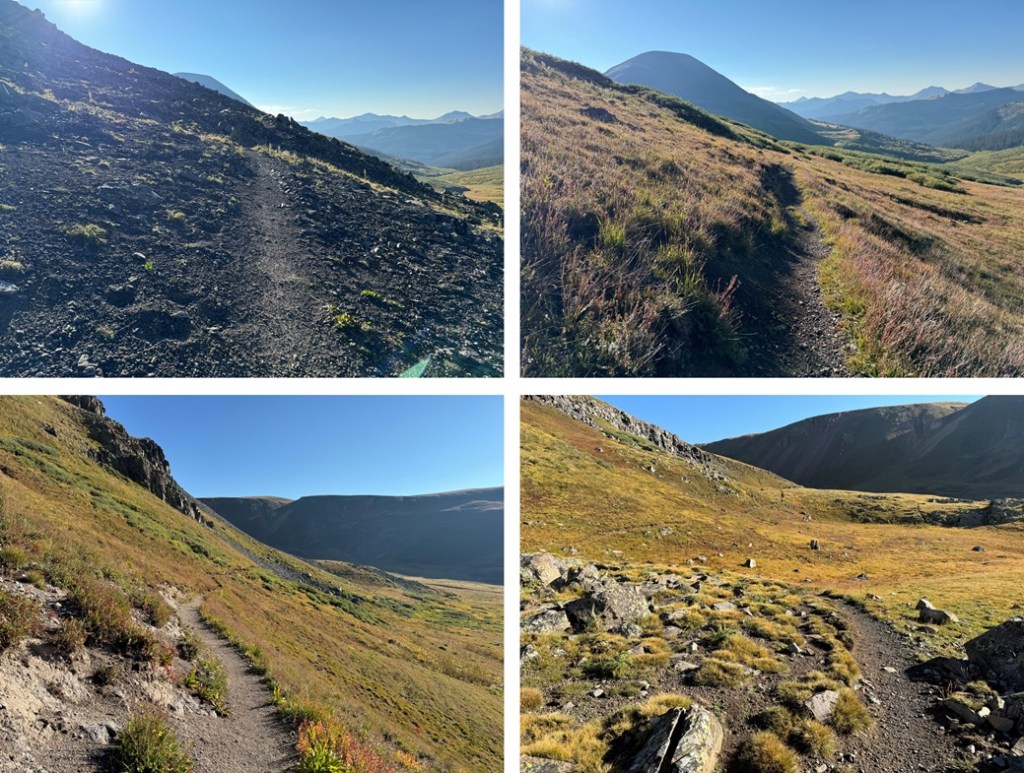
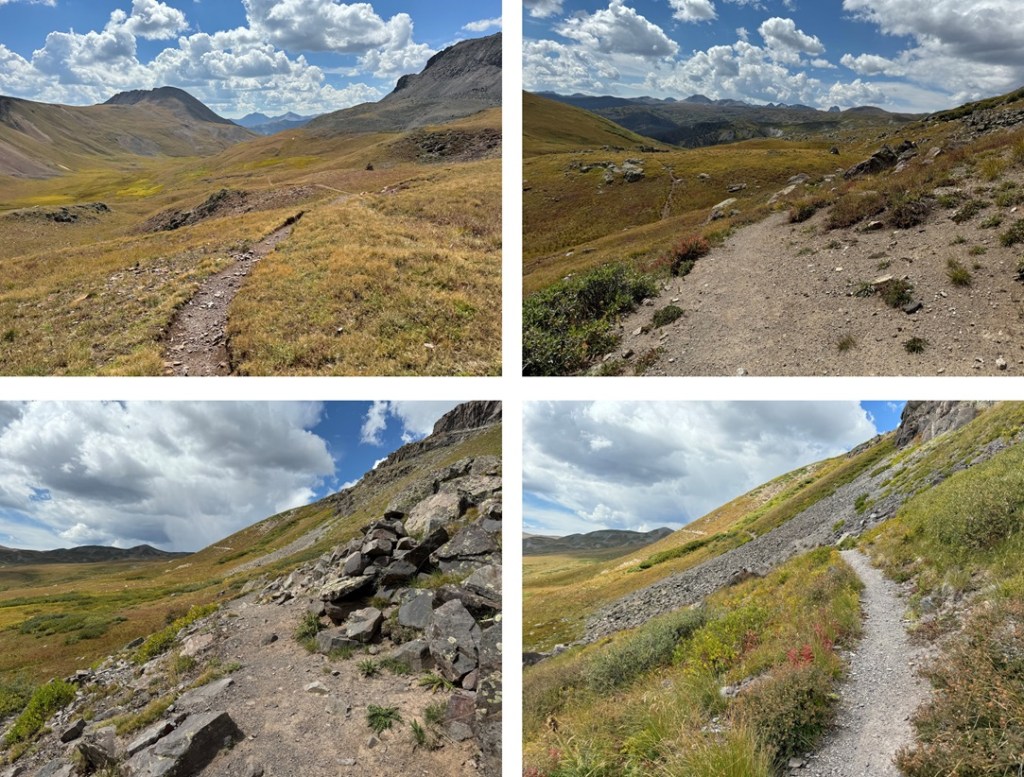
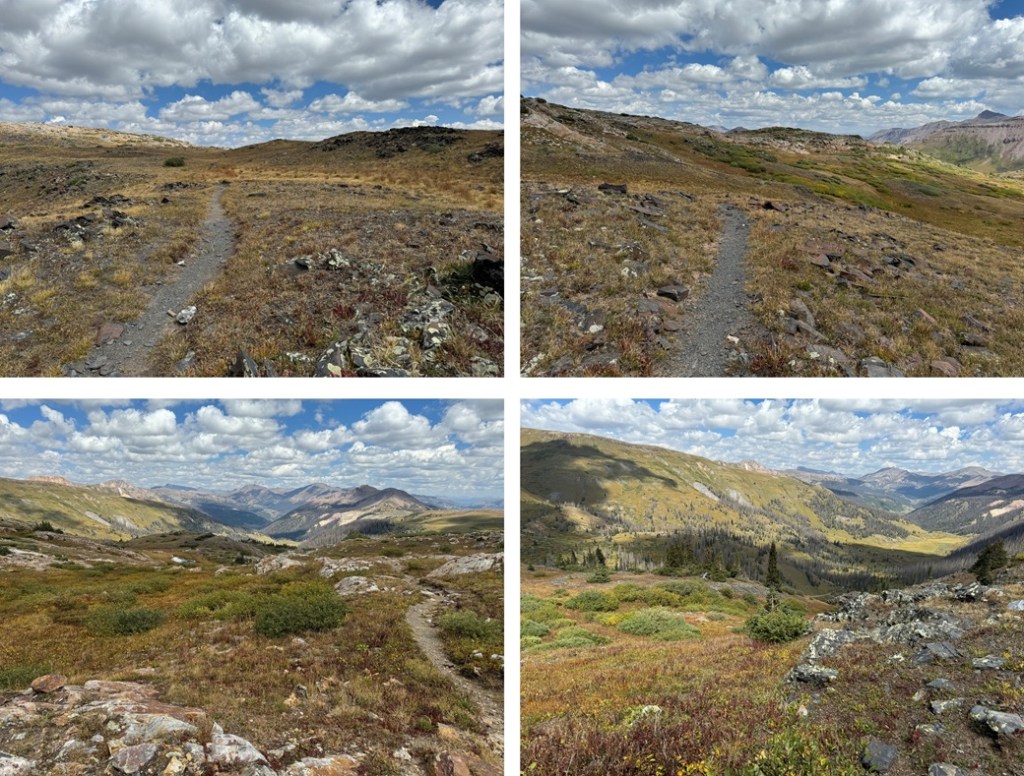
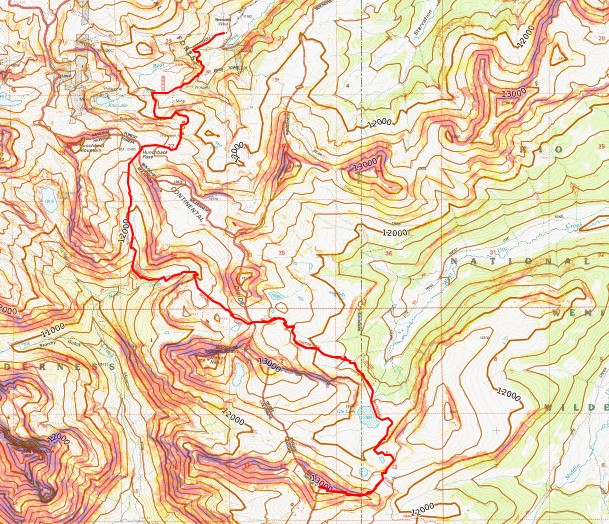
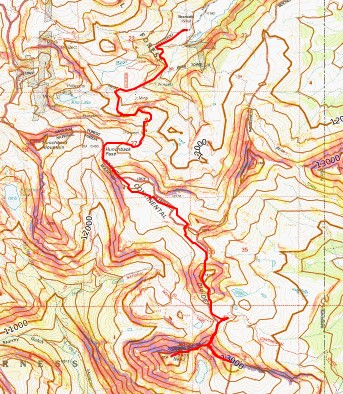
Once at the CDT trailhead, I followed the CDT north for a total of about 3.5 miles, gaining and losing elevation as I went.
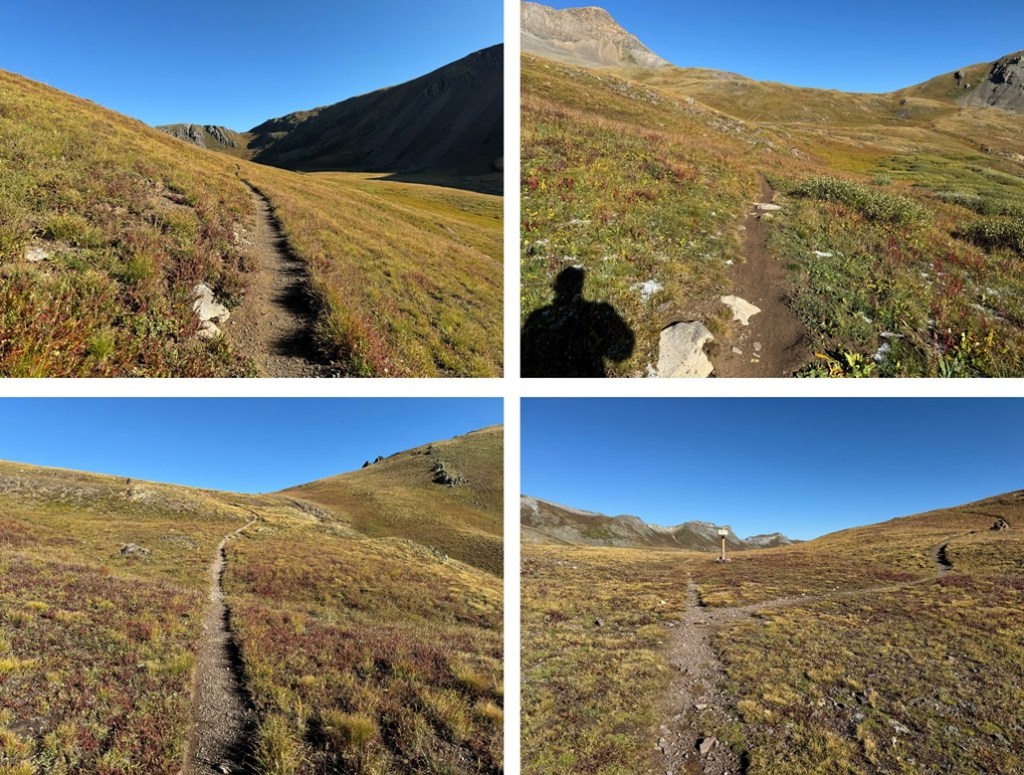
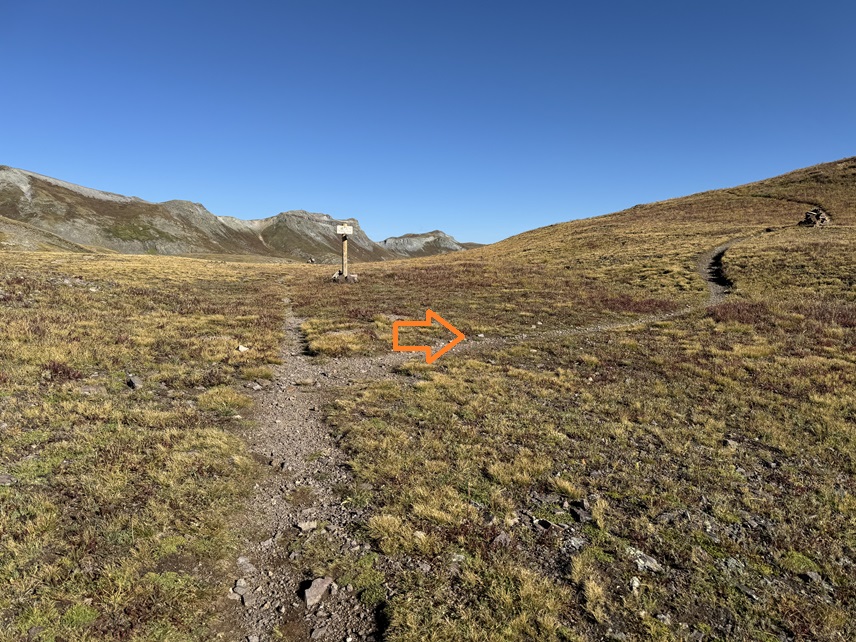
At the top of a small pass I came to a junction for the CDT and Moose Gulch, and turned right, continuing on the CDT.
I continued on the CDT until I made it to 13000’
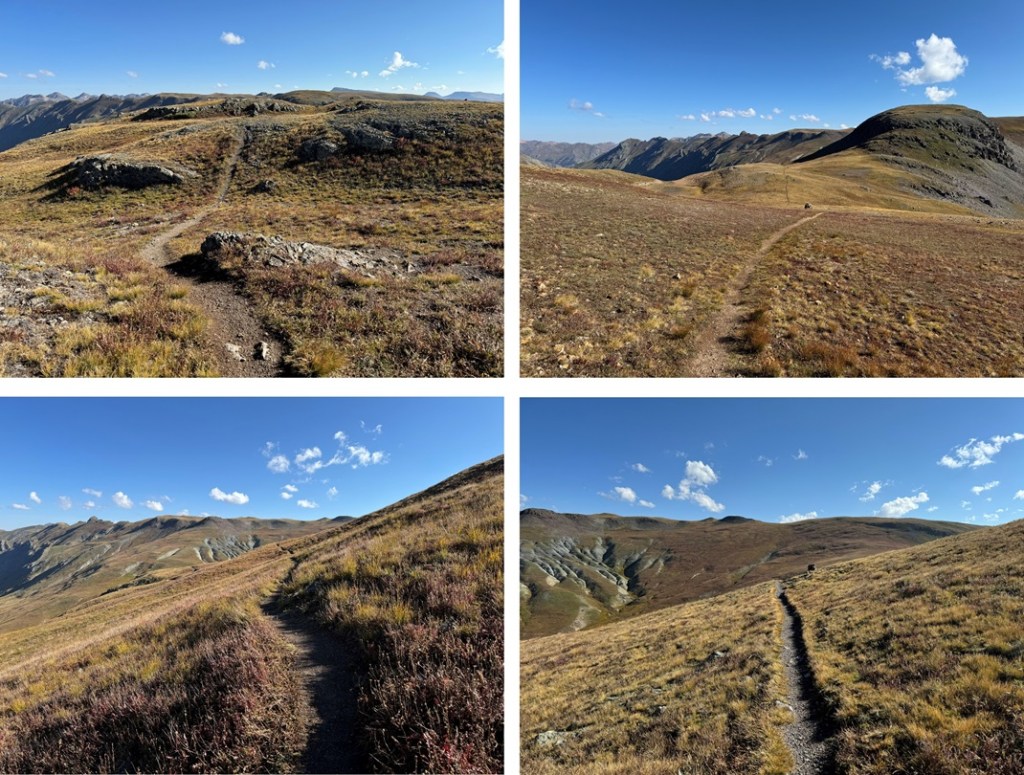
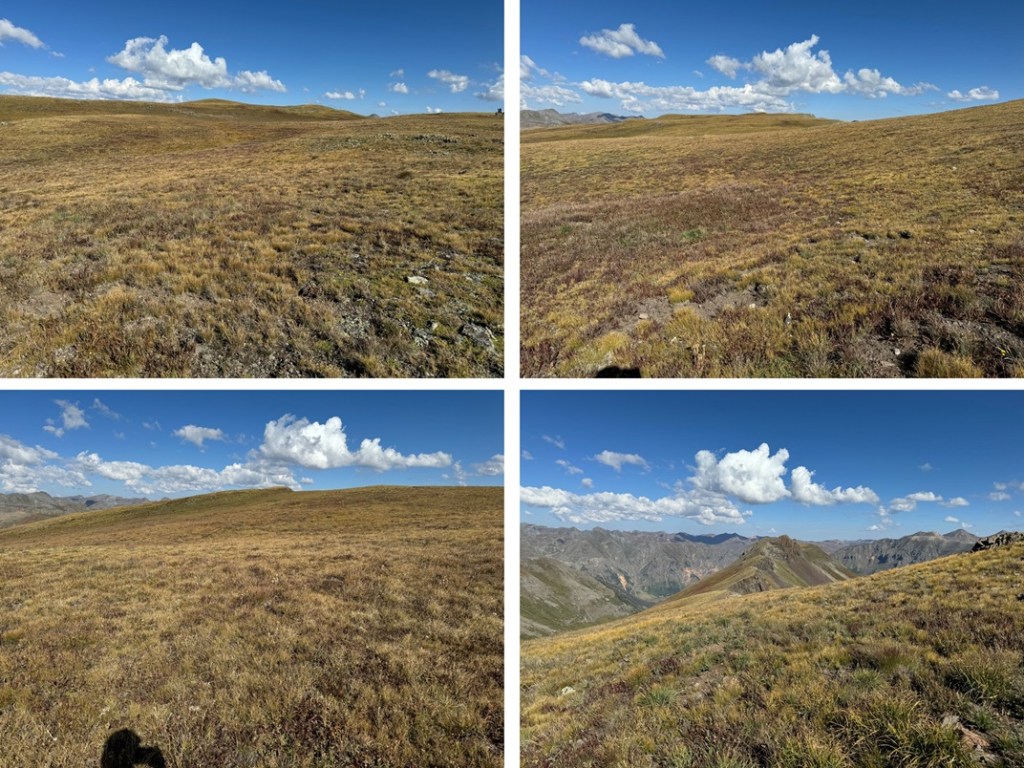
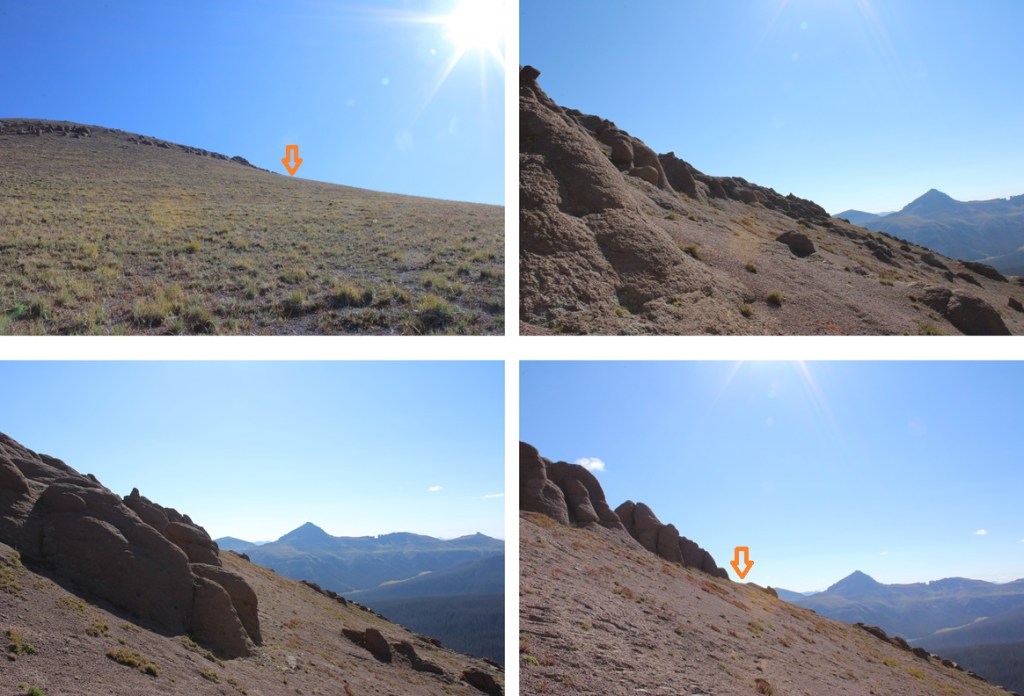
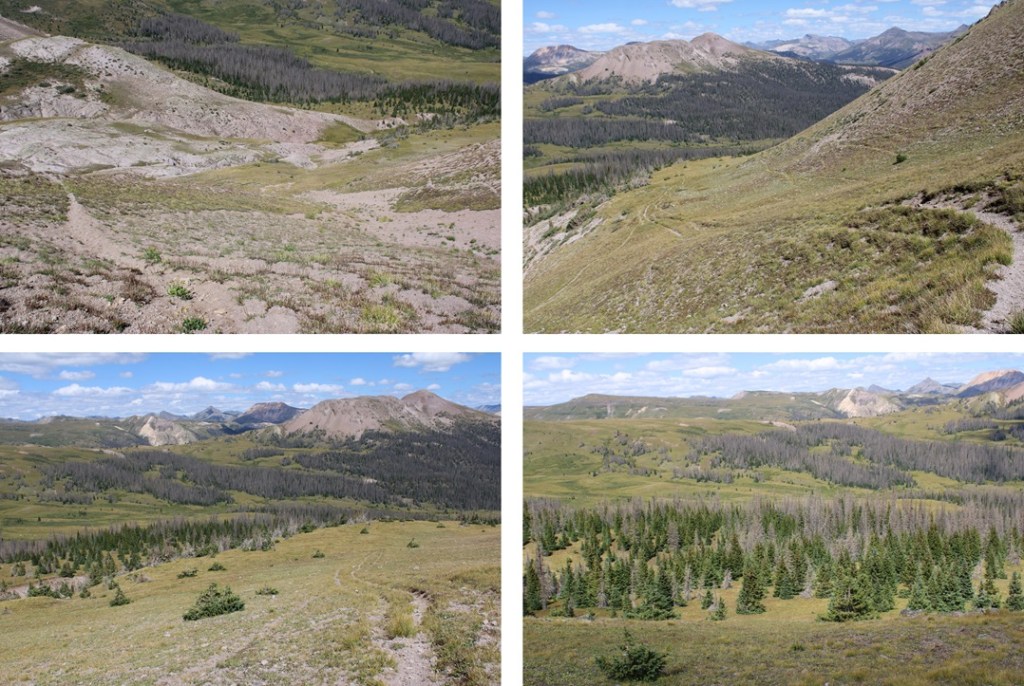
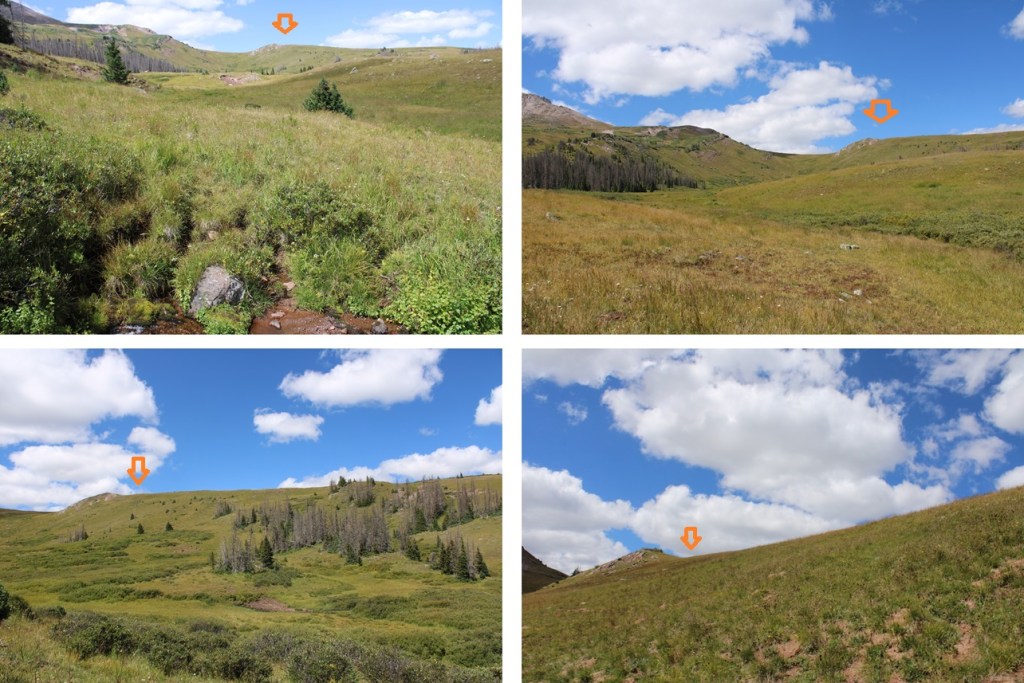
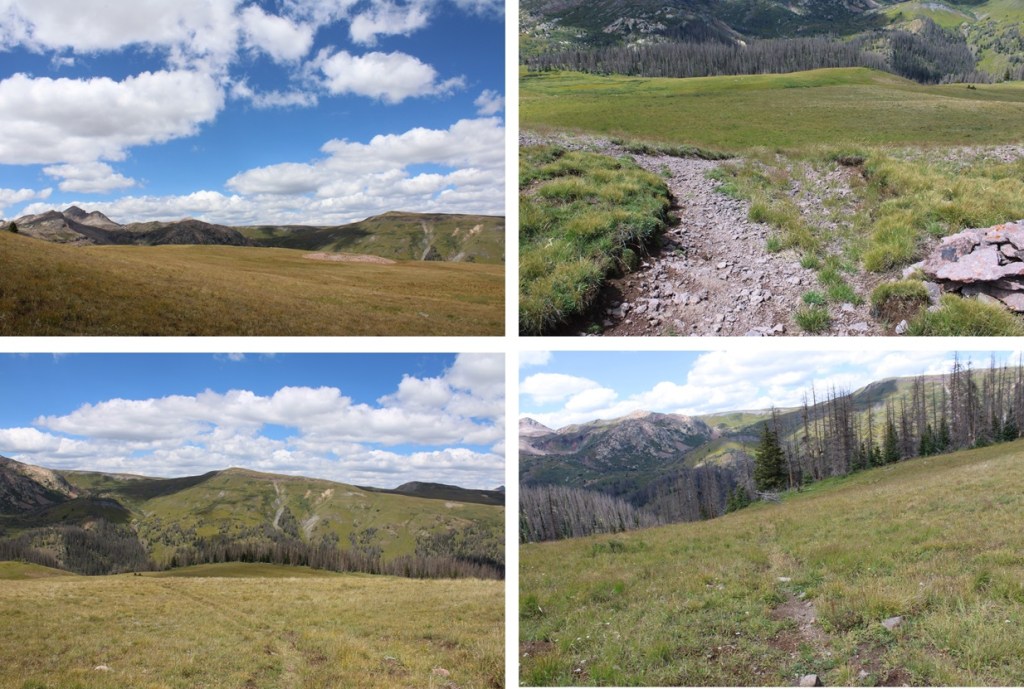
I then turned left, and walked across the tundra northwest, following the gently sloping tundra on the ridge.
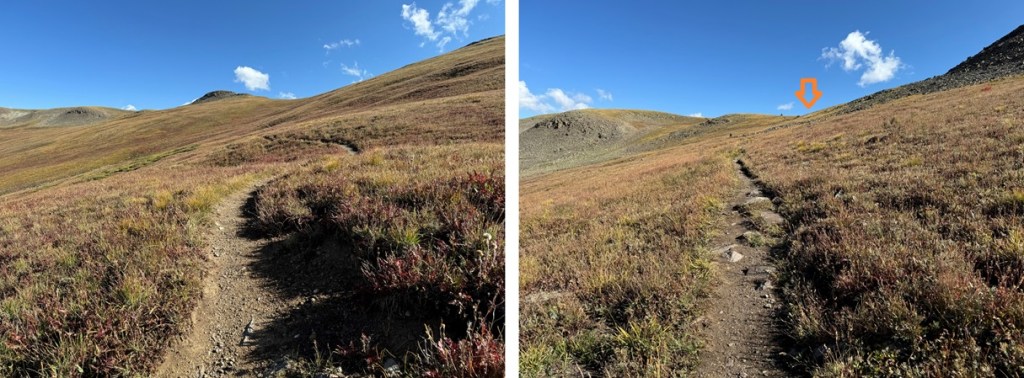
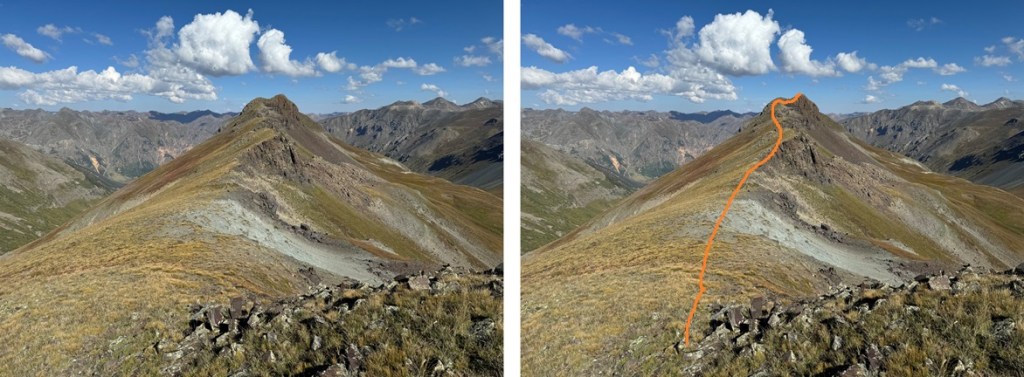
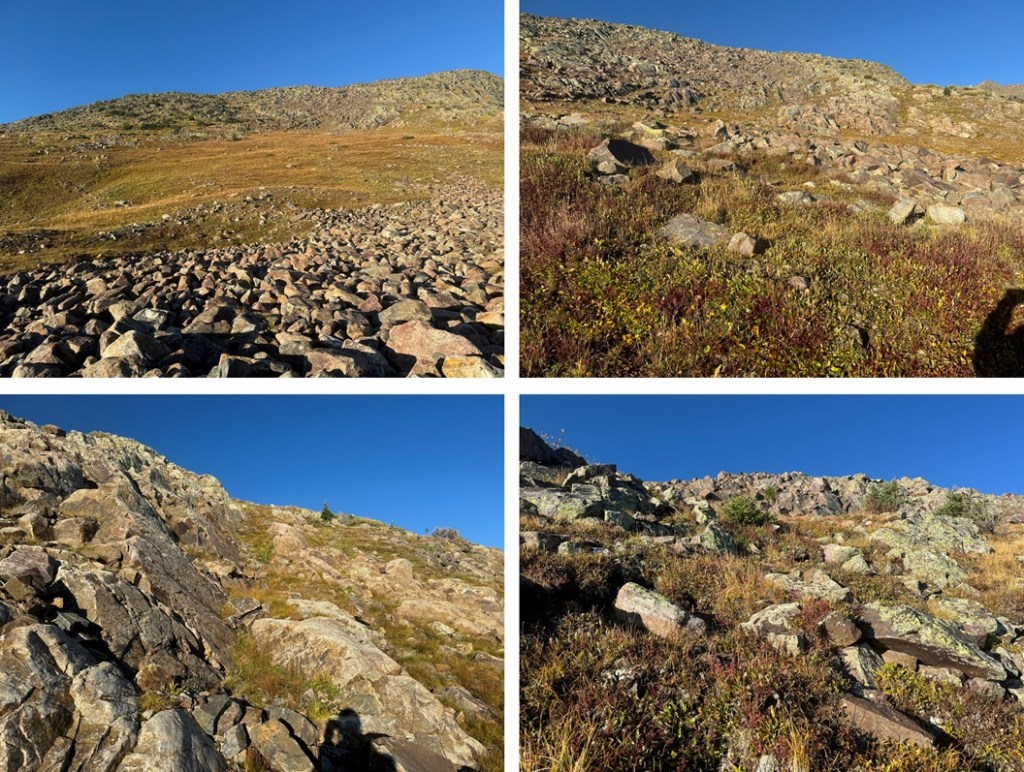
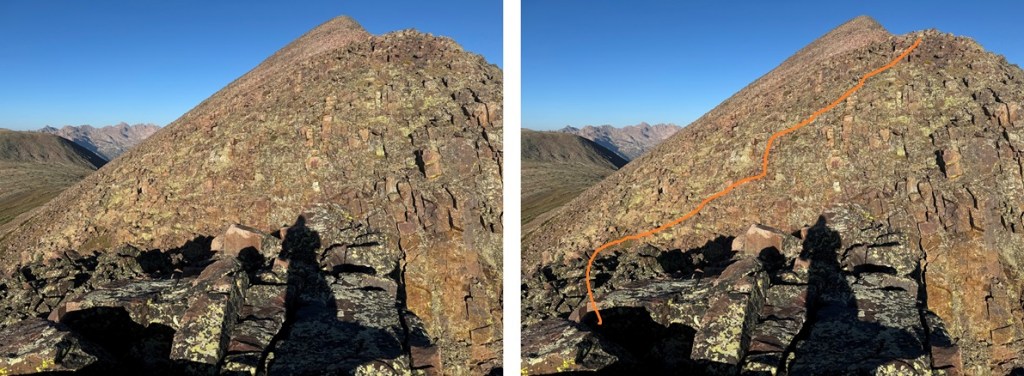
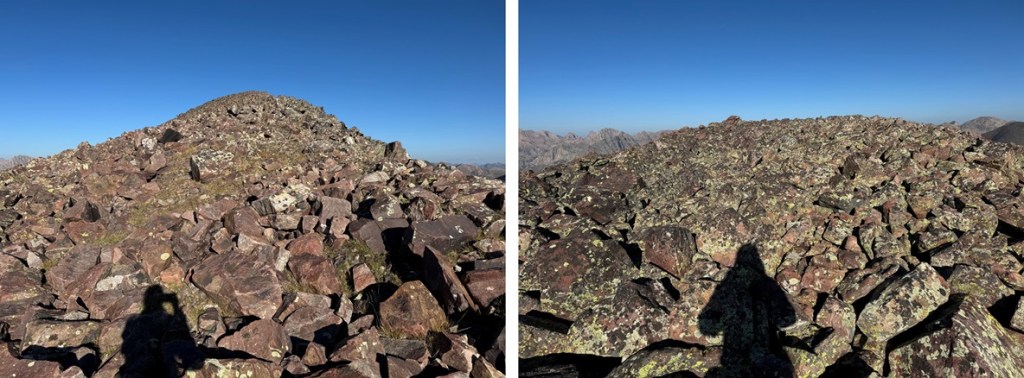
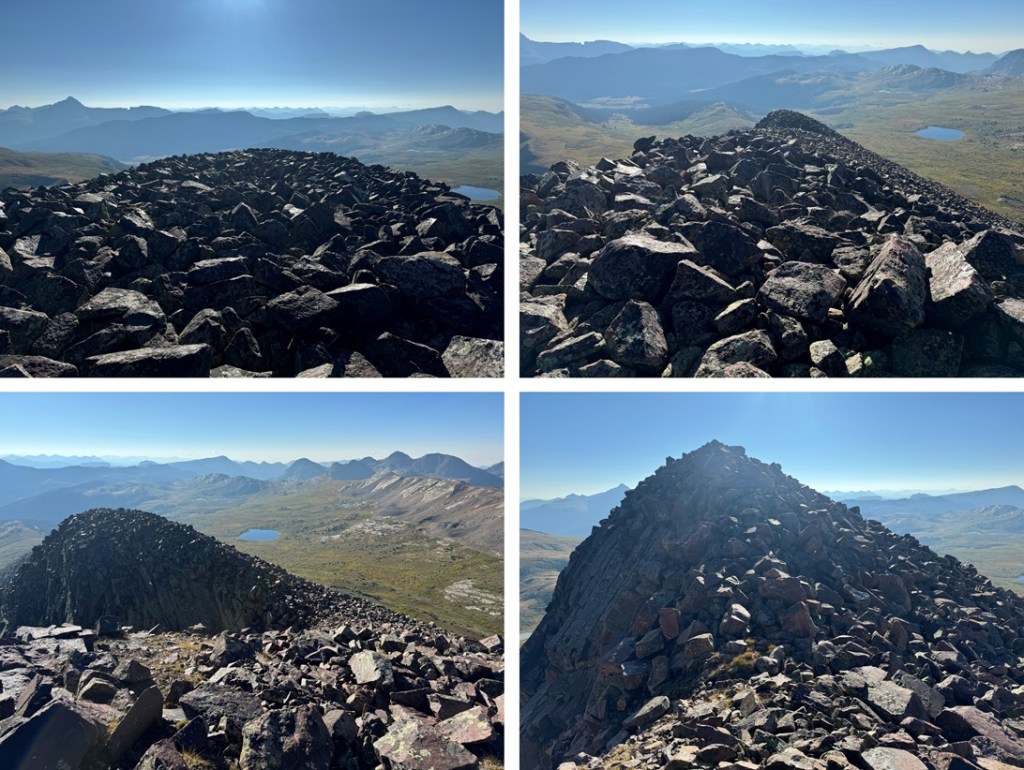
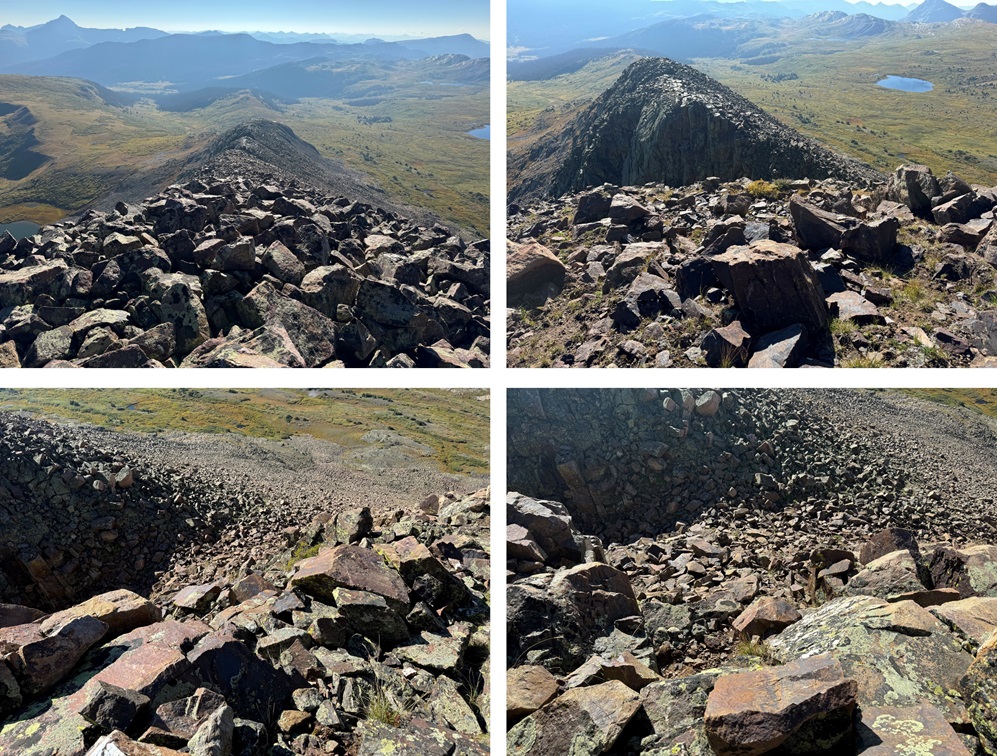
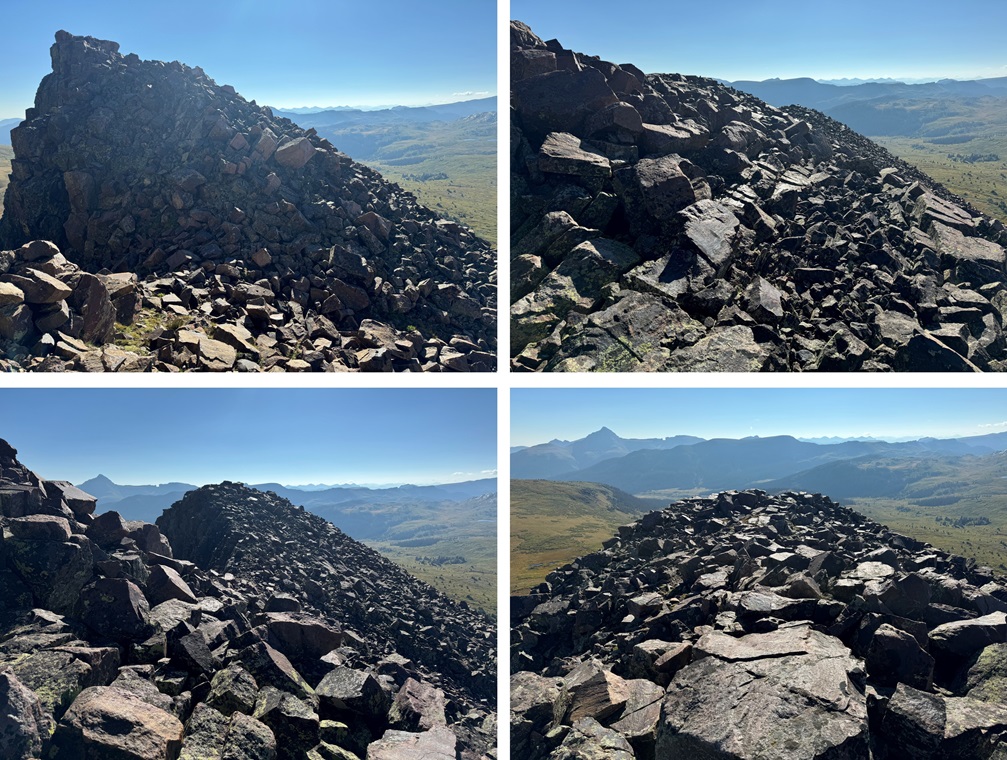
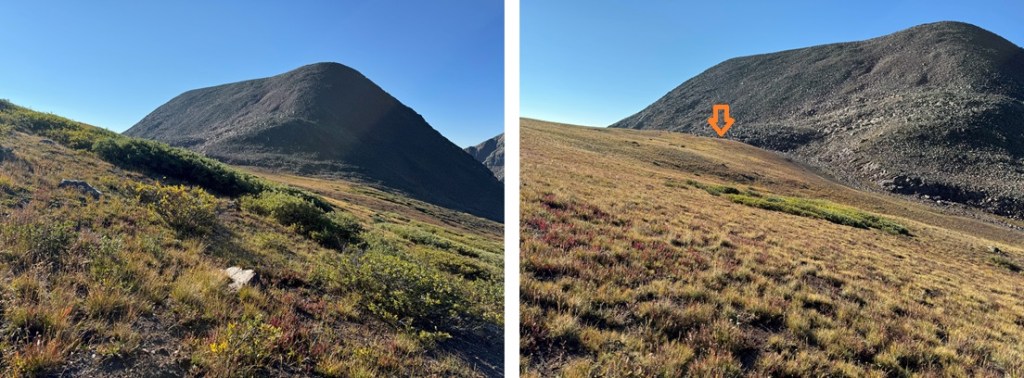
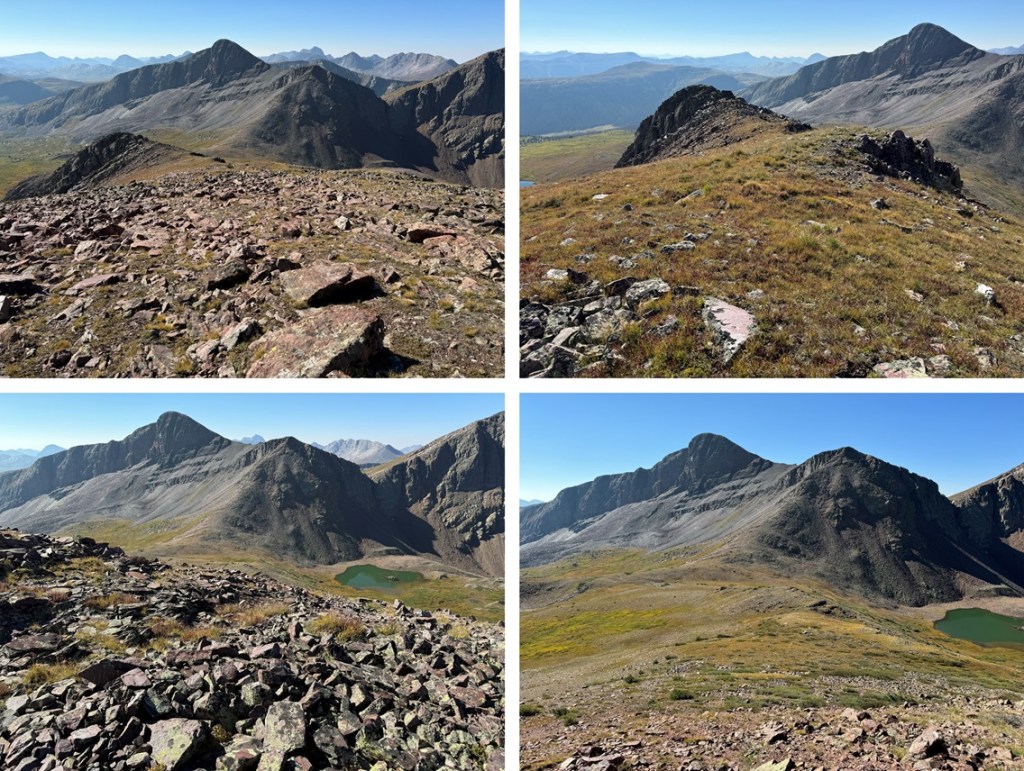
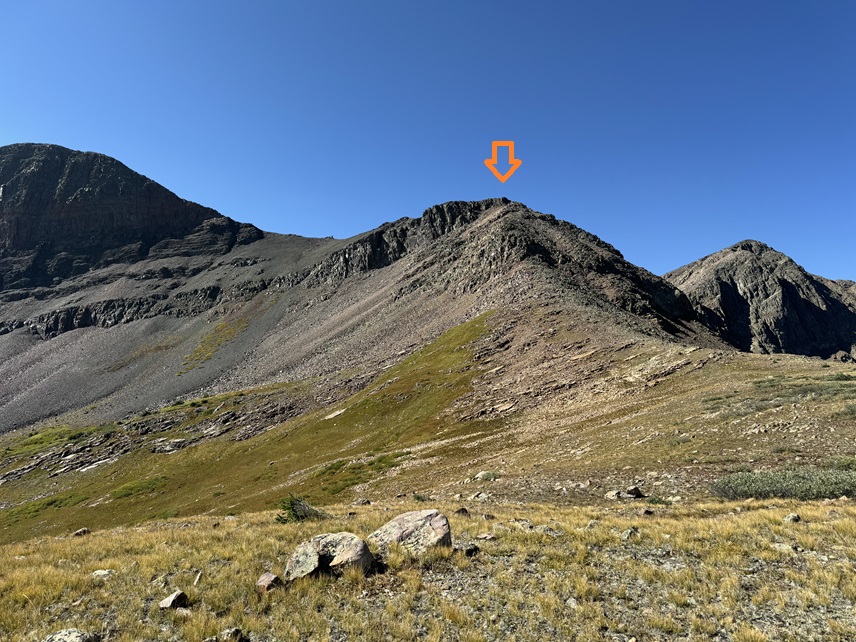
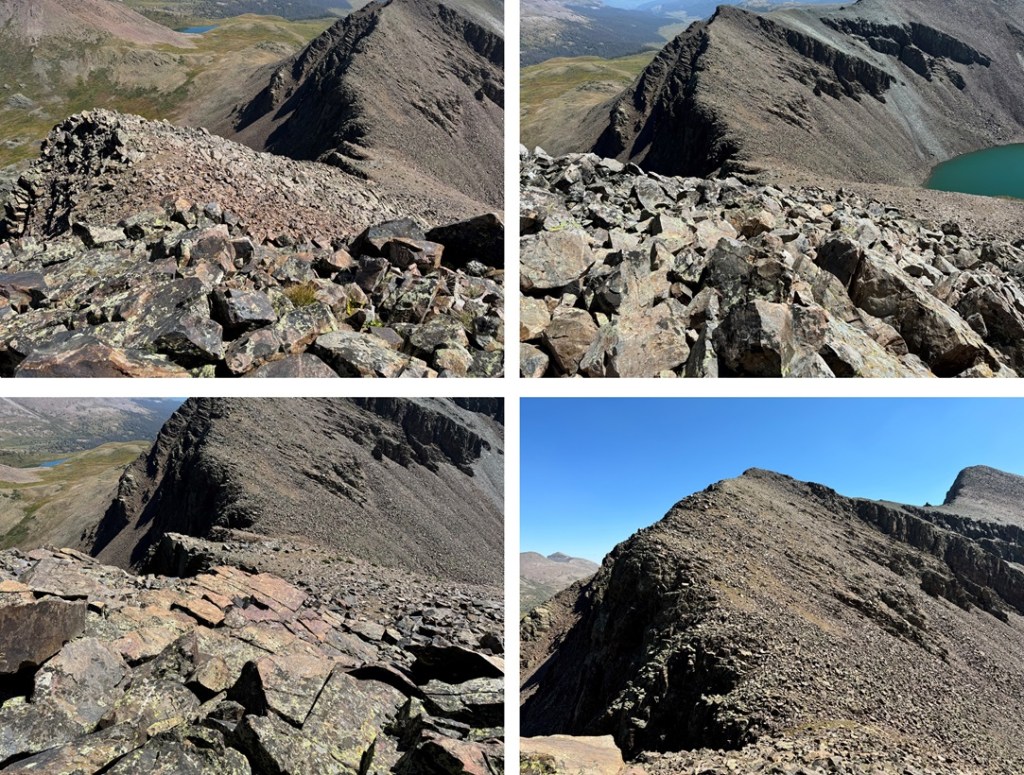
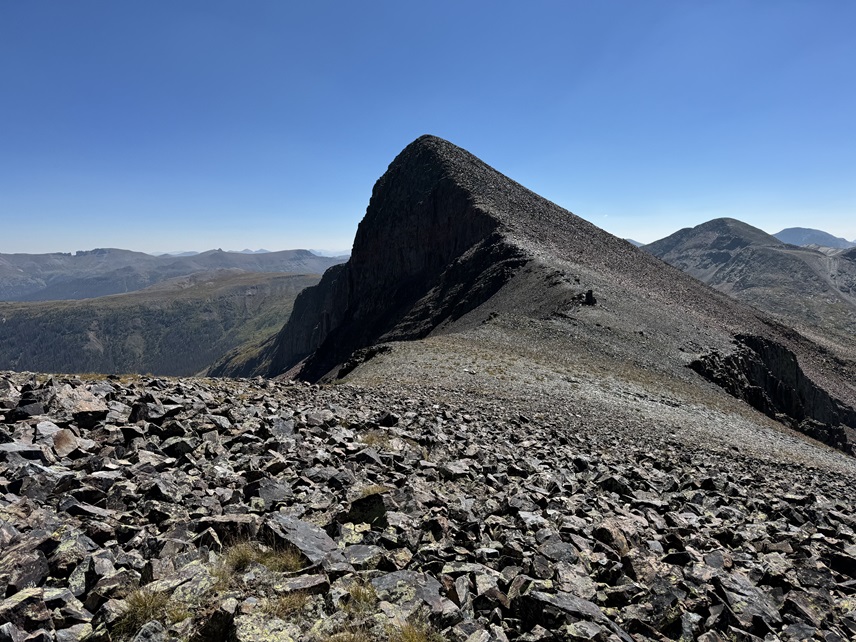
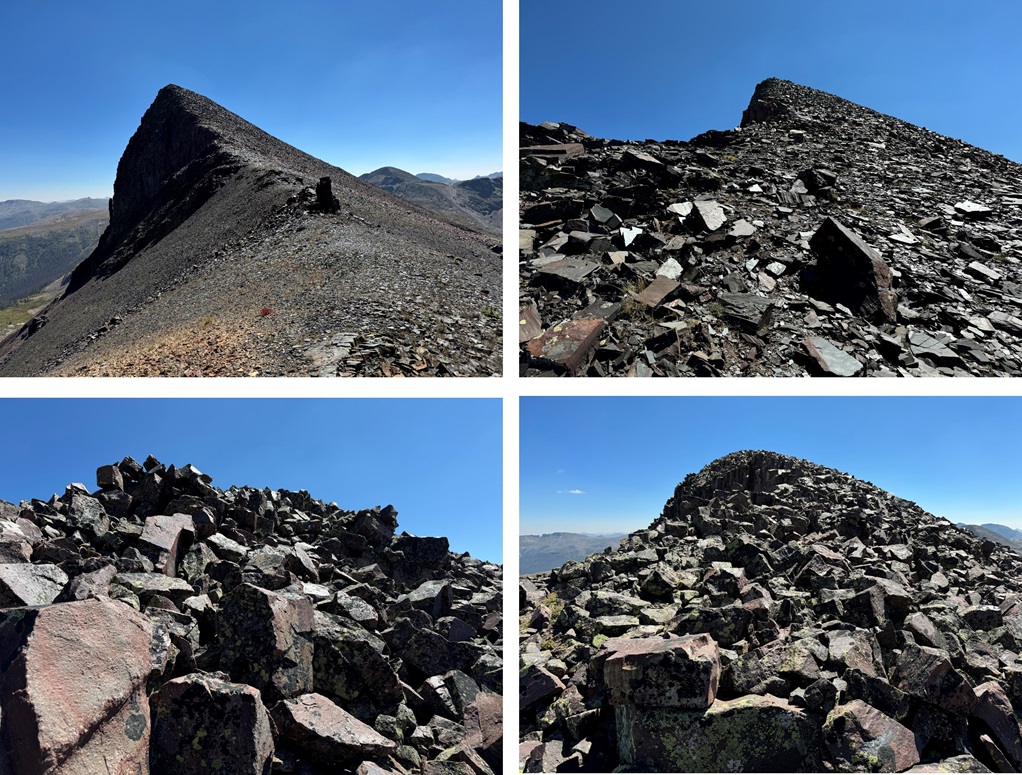
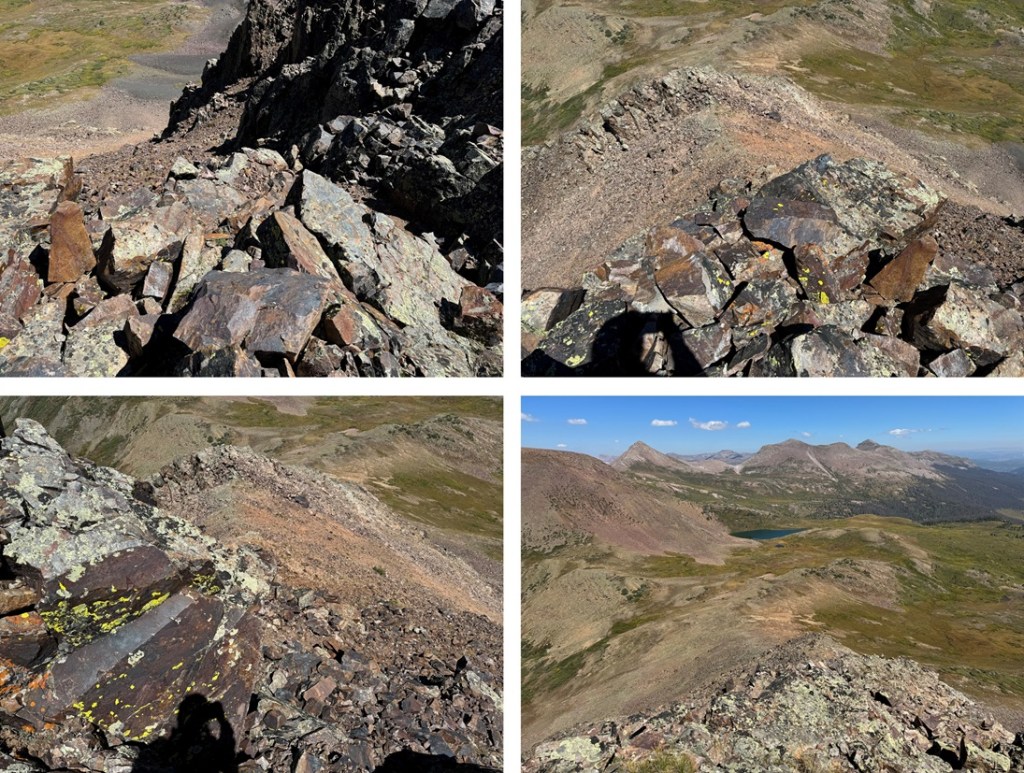
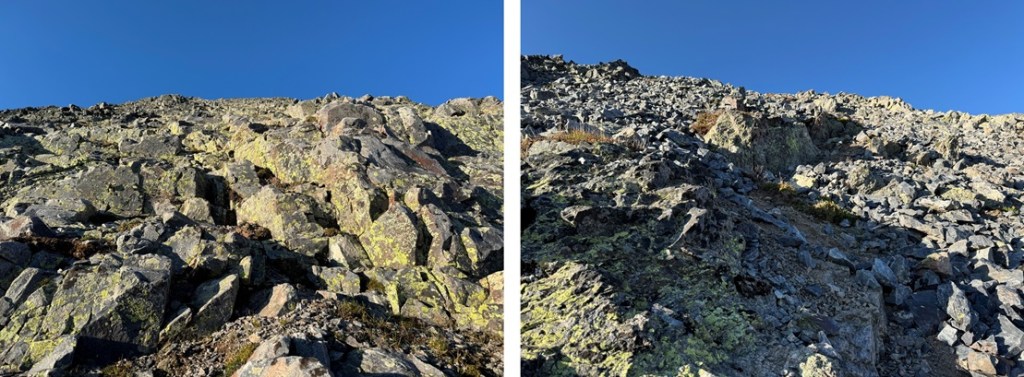
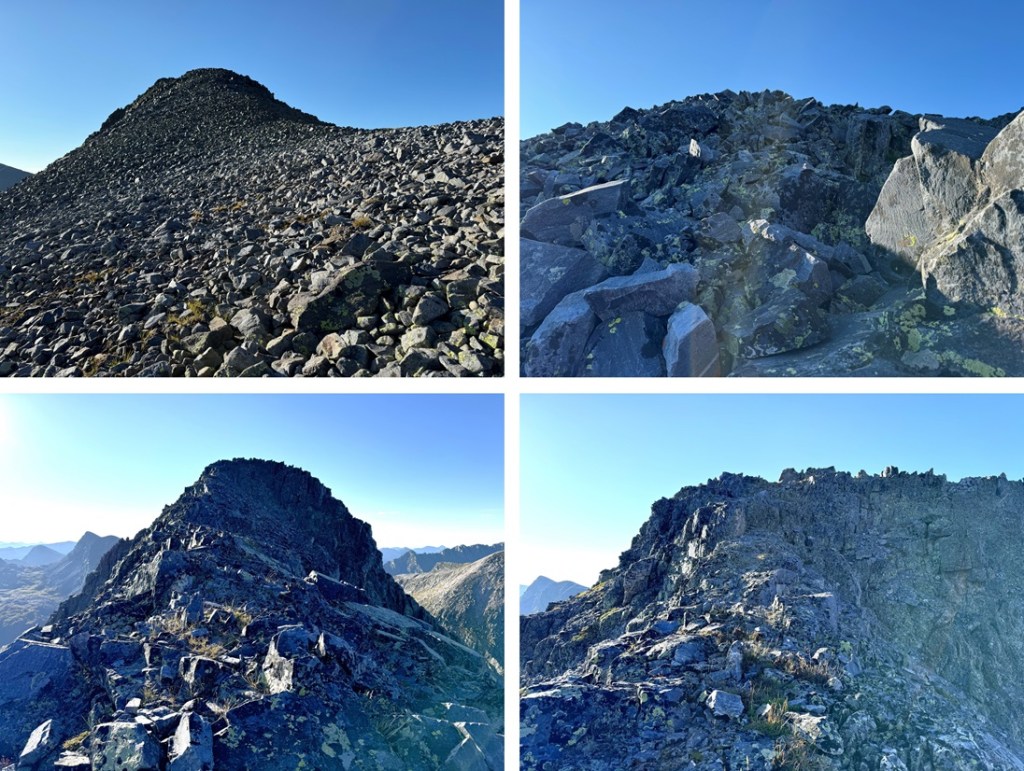
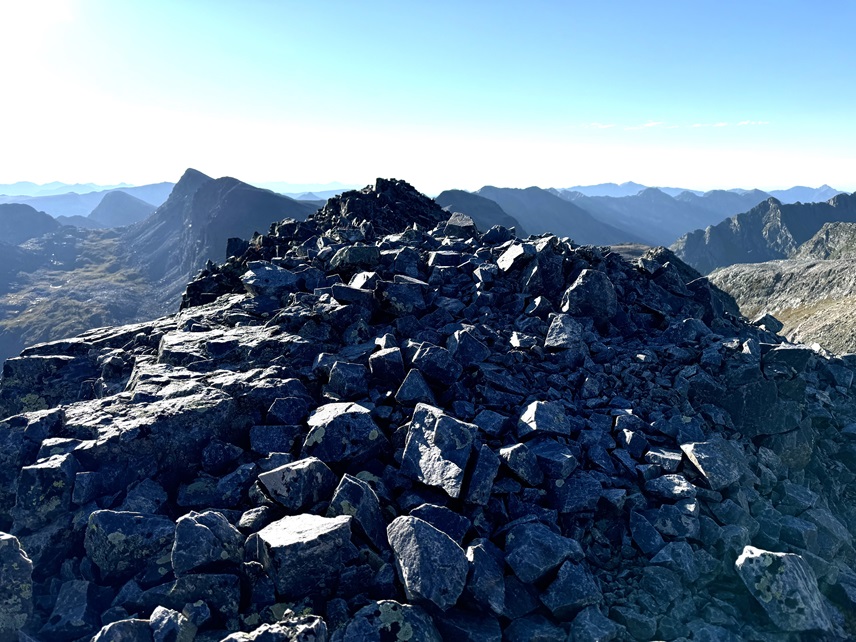
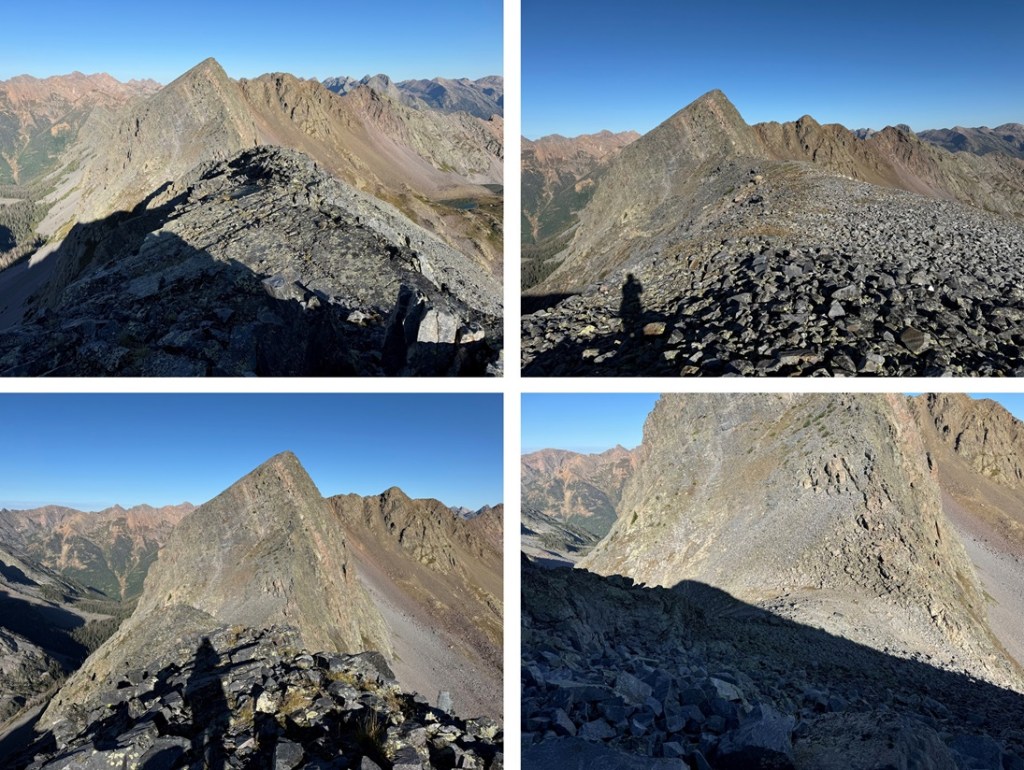
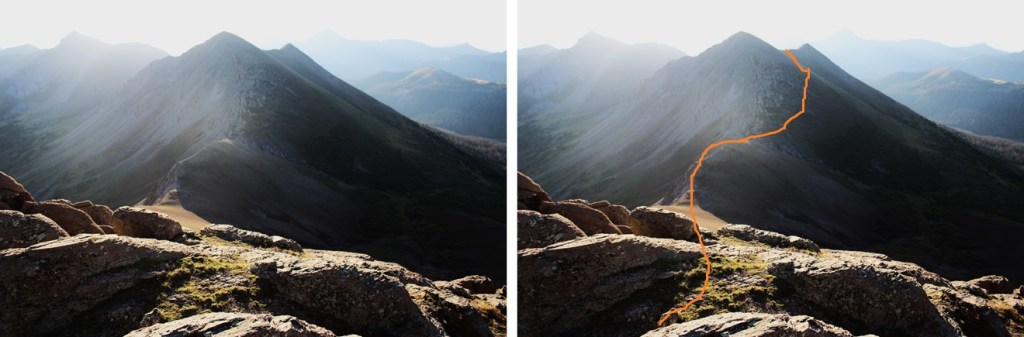
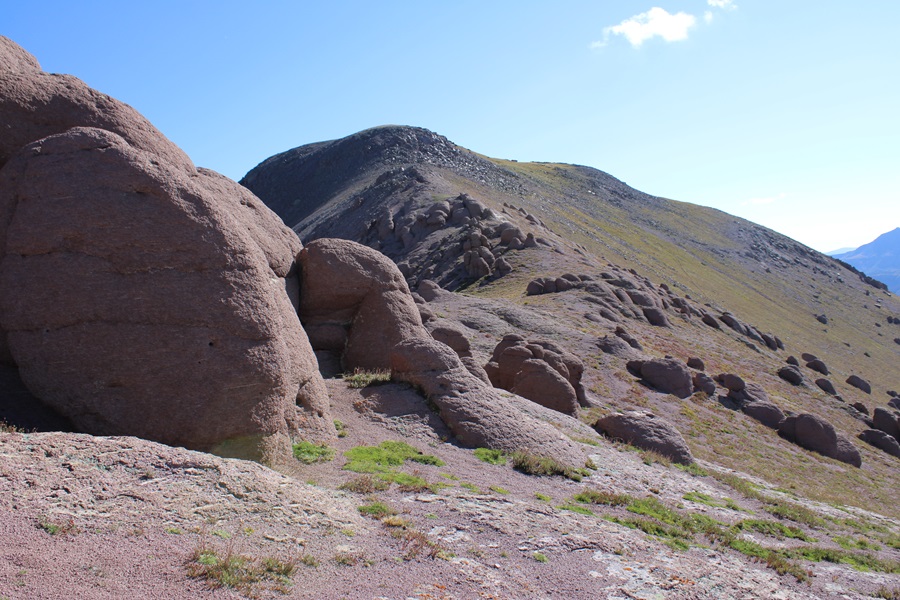
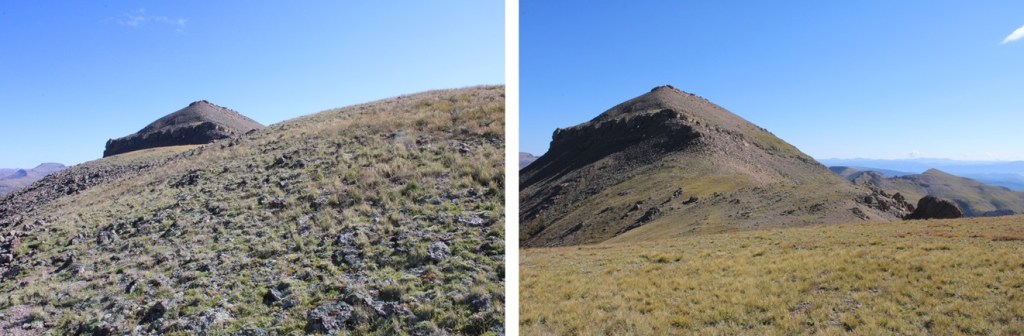
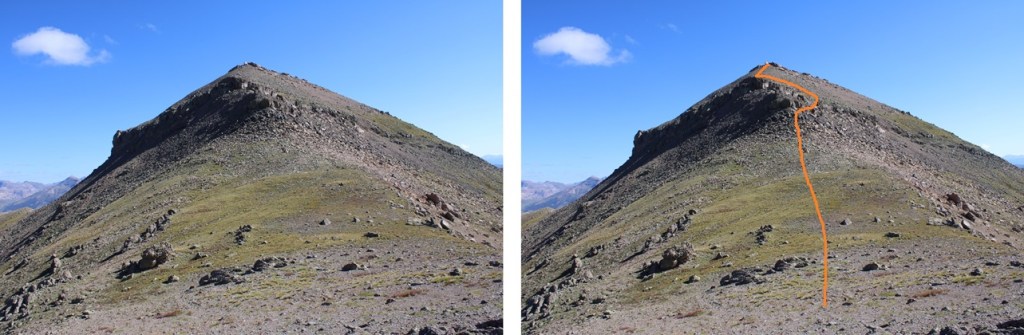
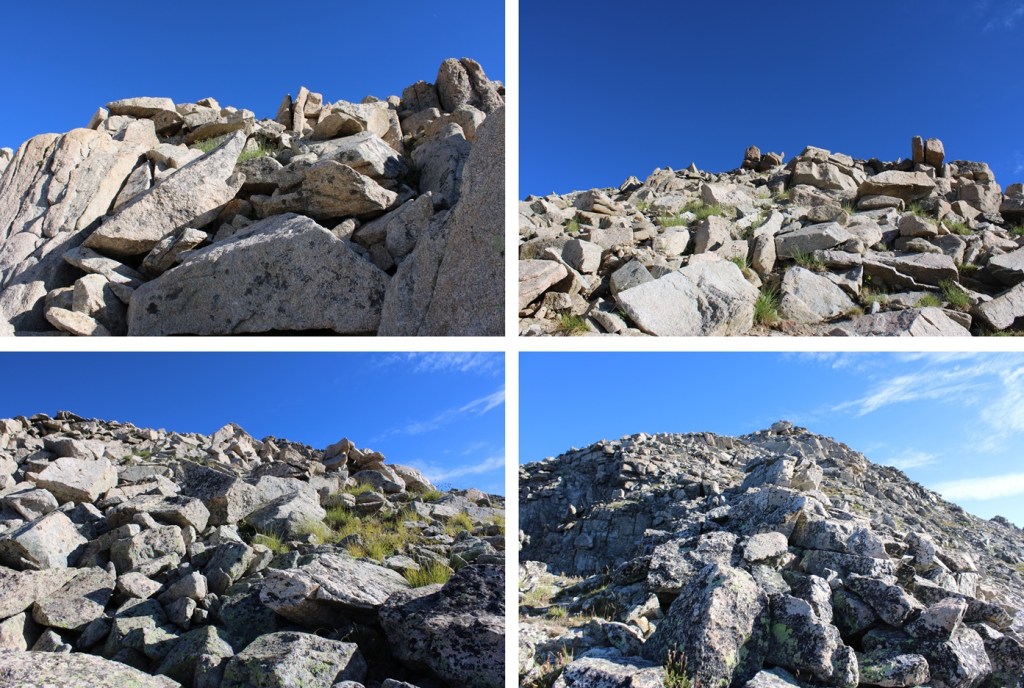
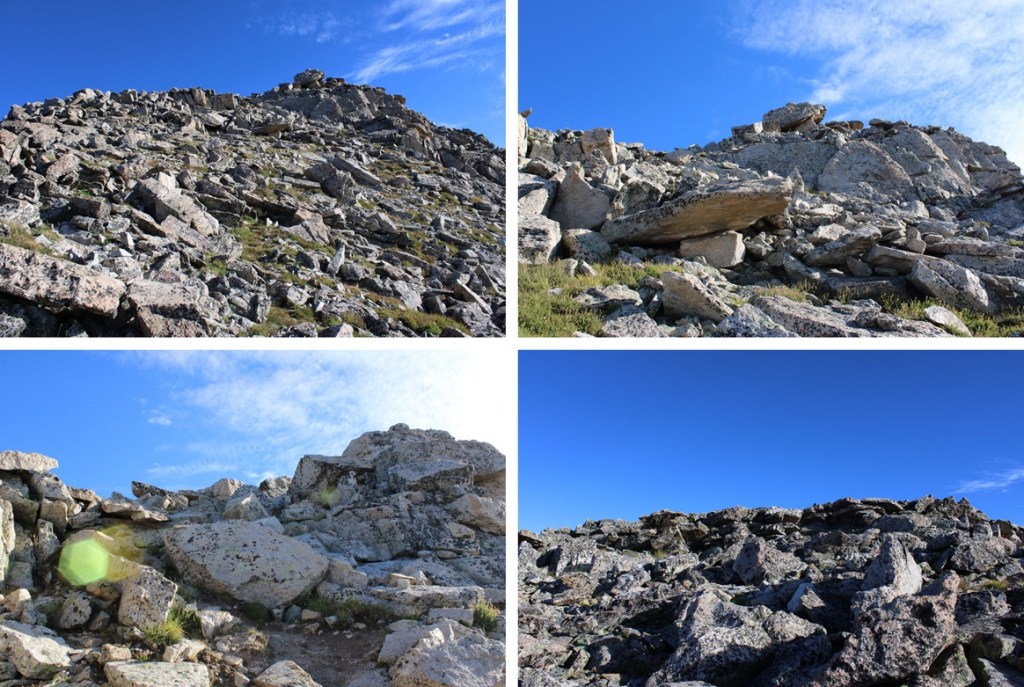
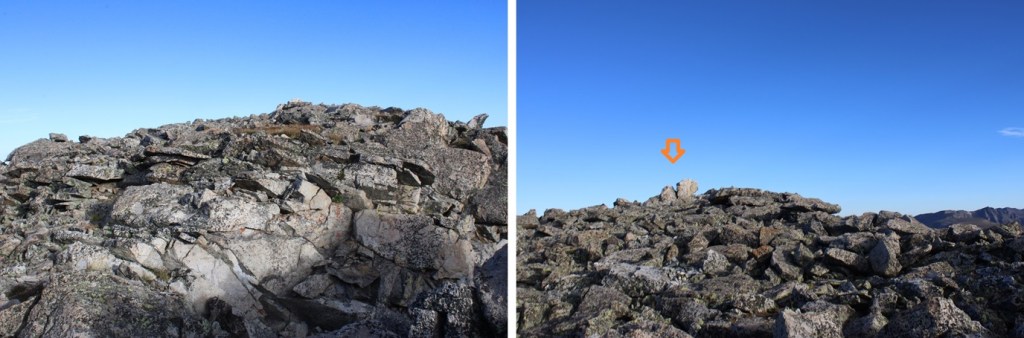
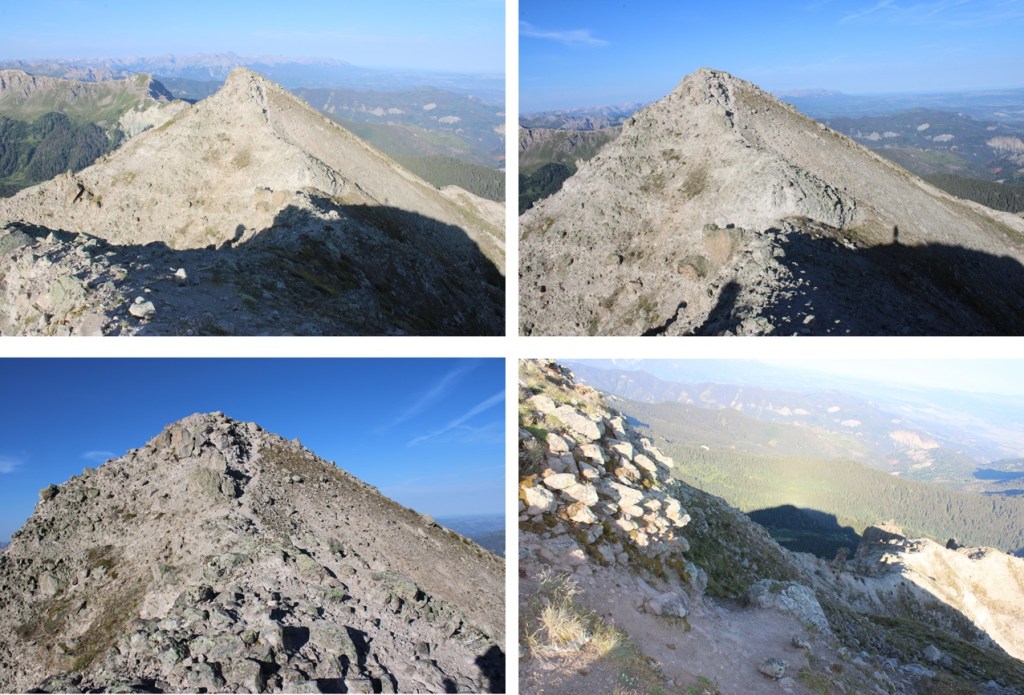
Eventually, the peak came into view. This looks harder than it is. By sticking to the ridge, this is all class 2.
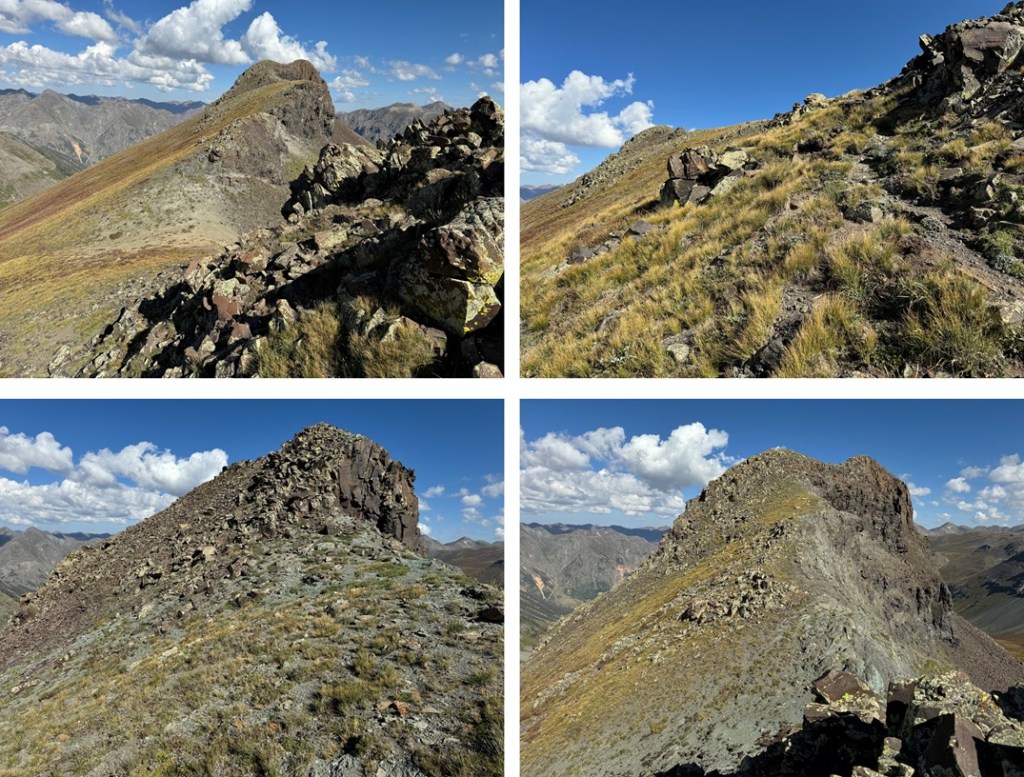
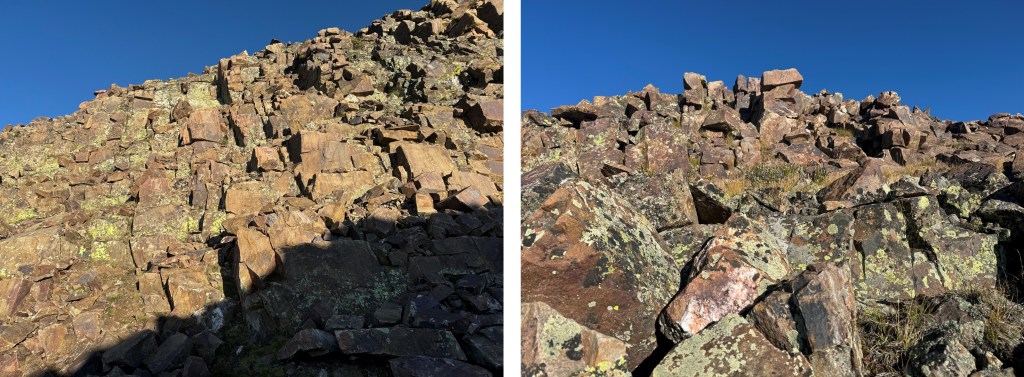
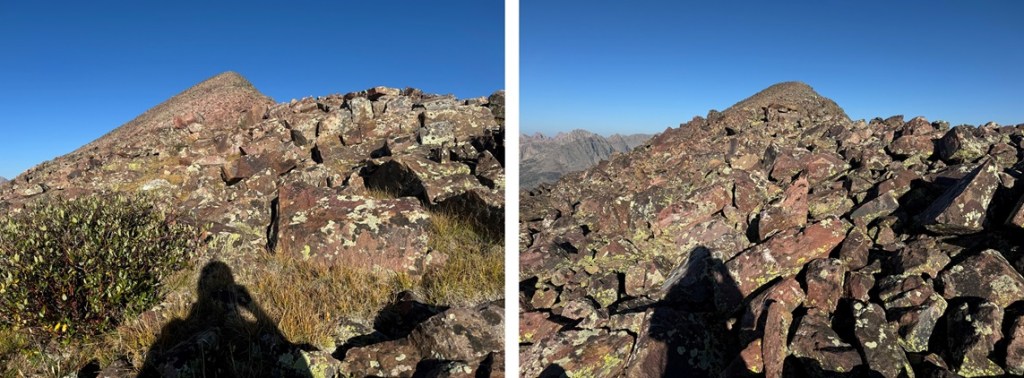
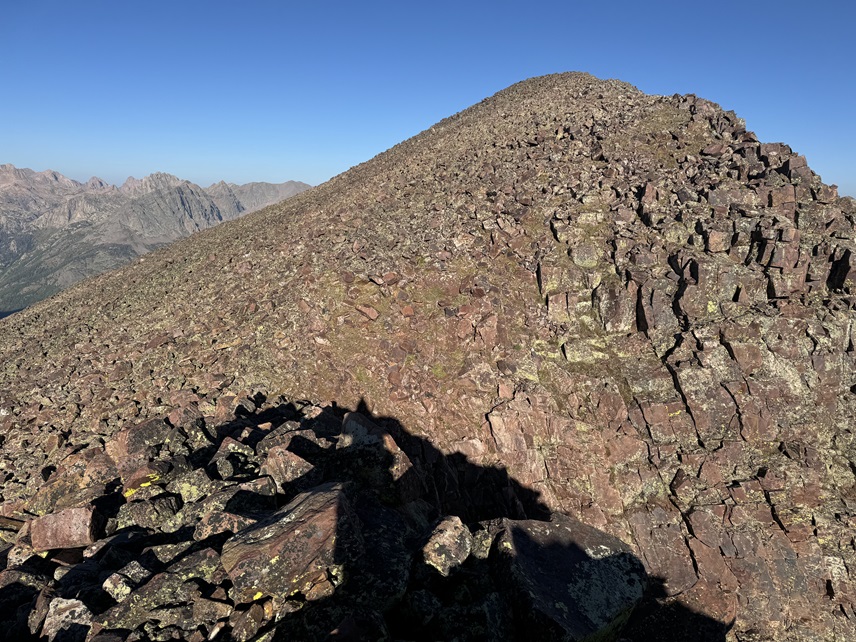
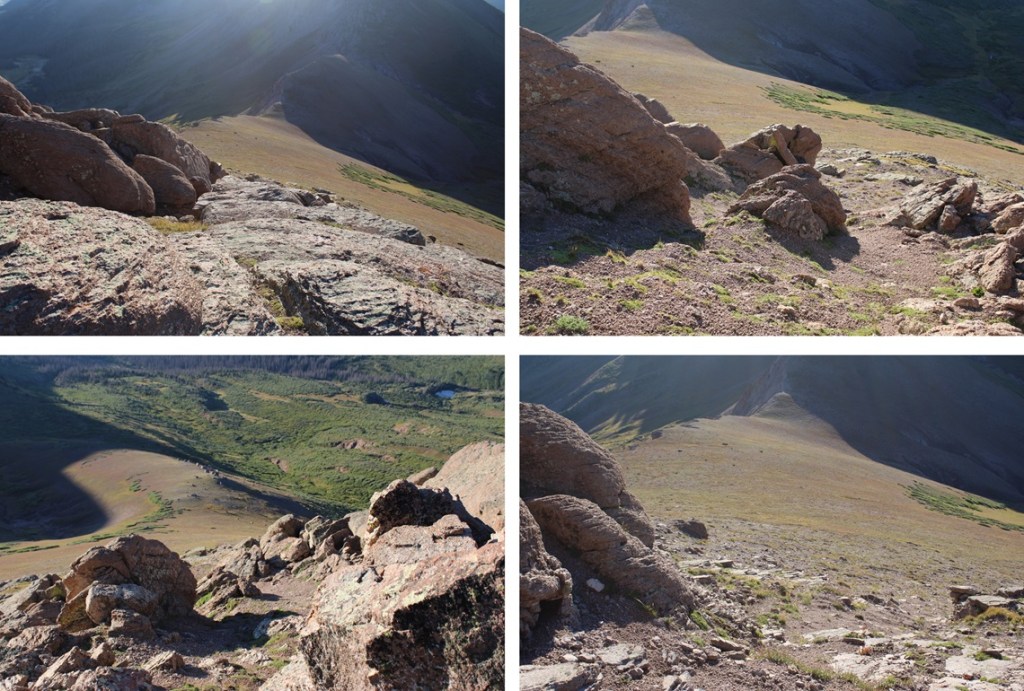
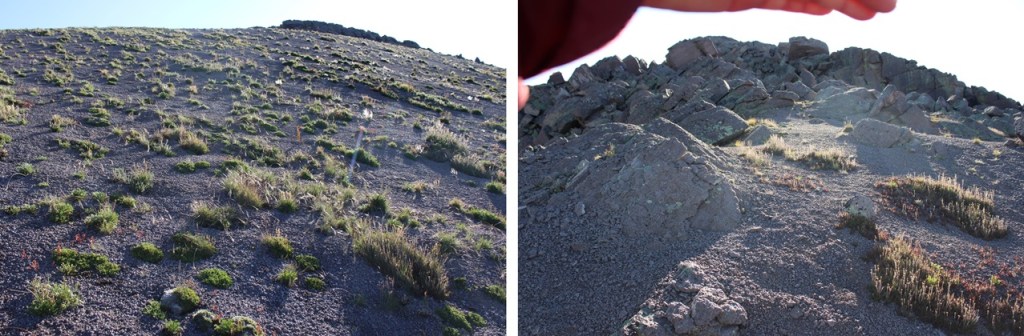
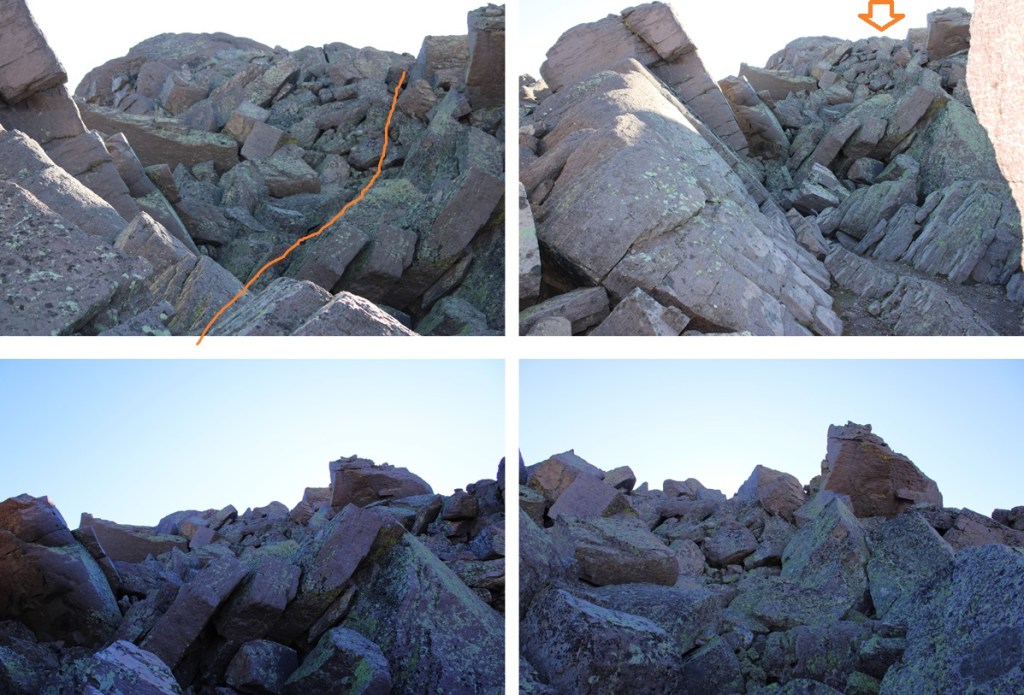
Here are some pictures of the class 2 ridge to the summit.
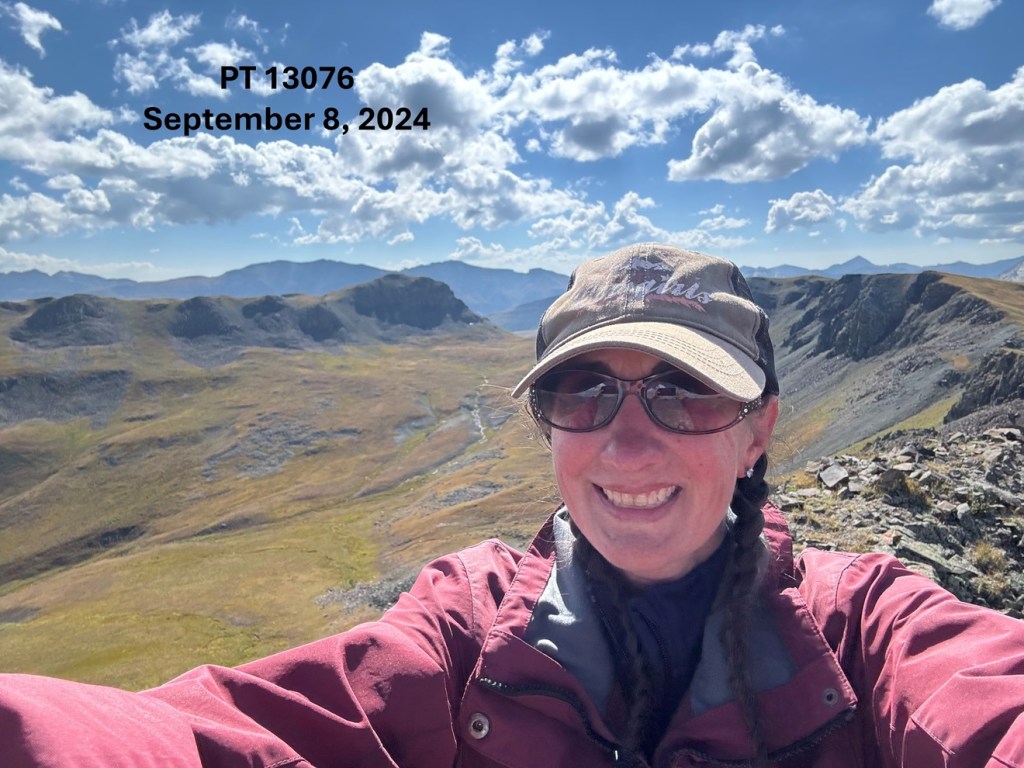
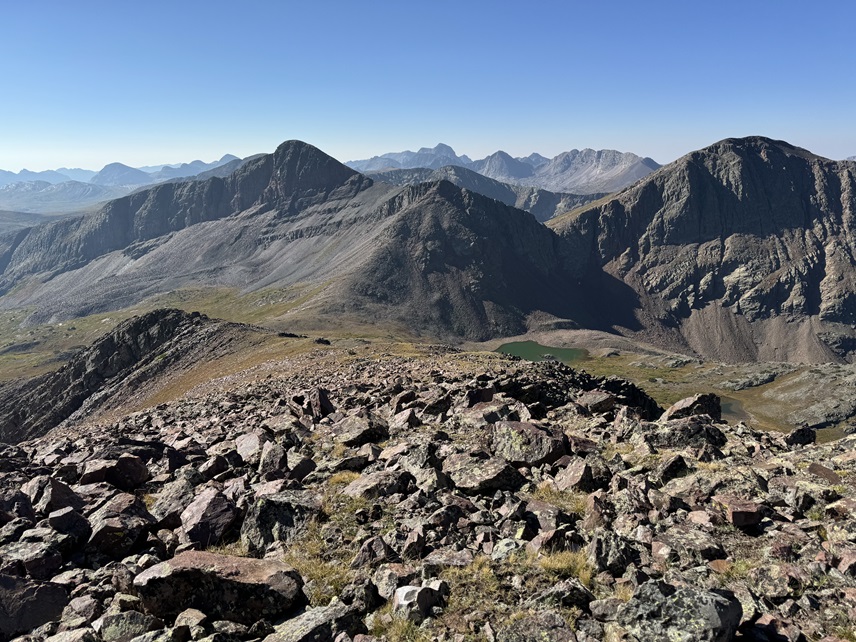
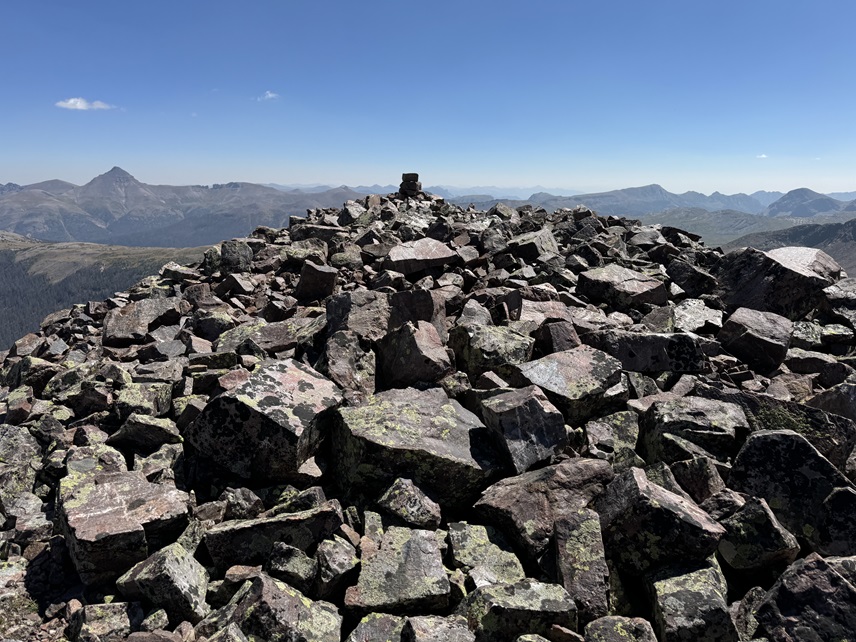
I summited PT 13076 at 10:15am
PT 13076:
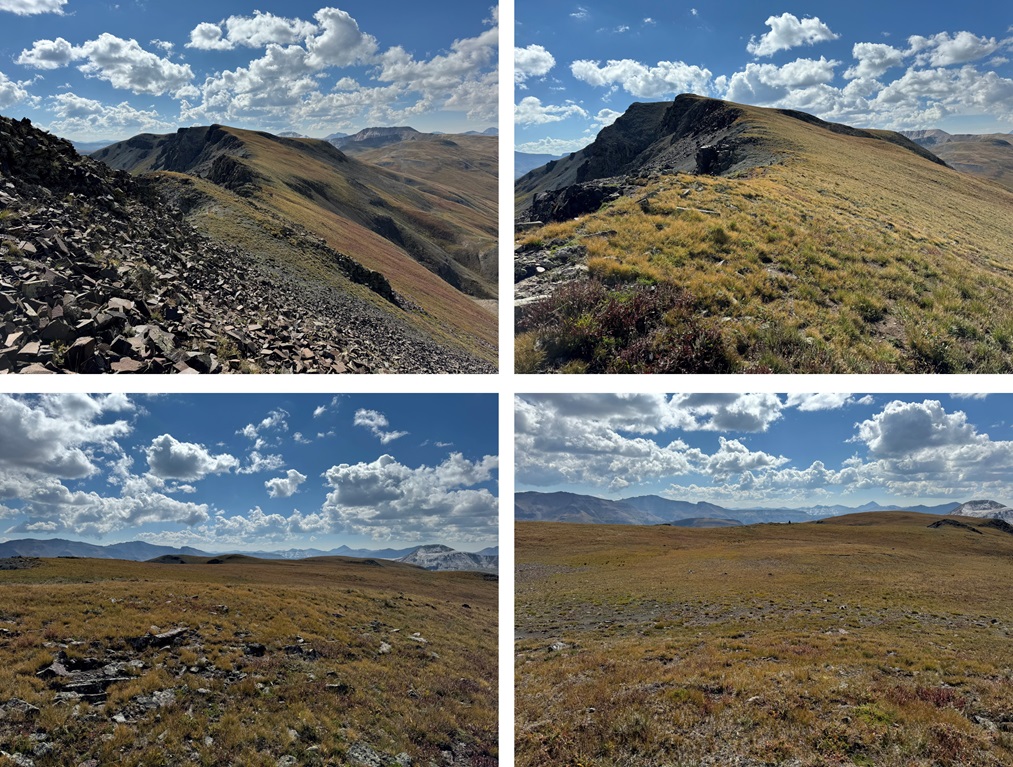
This was an out and back hike for me, so I turned around and followed the ridge southeast back to the CDT.
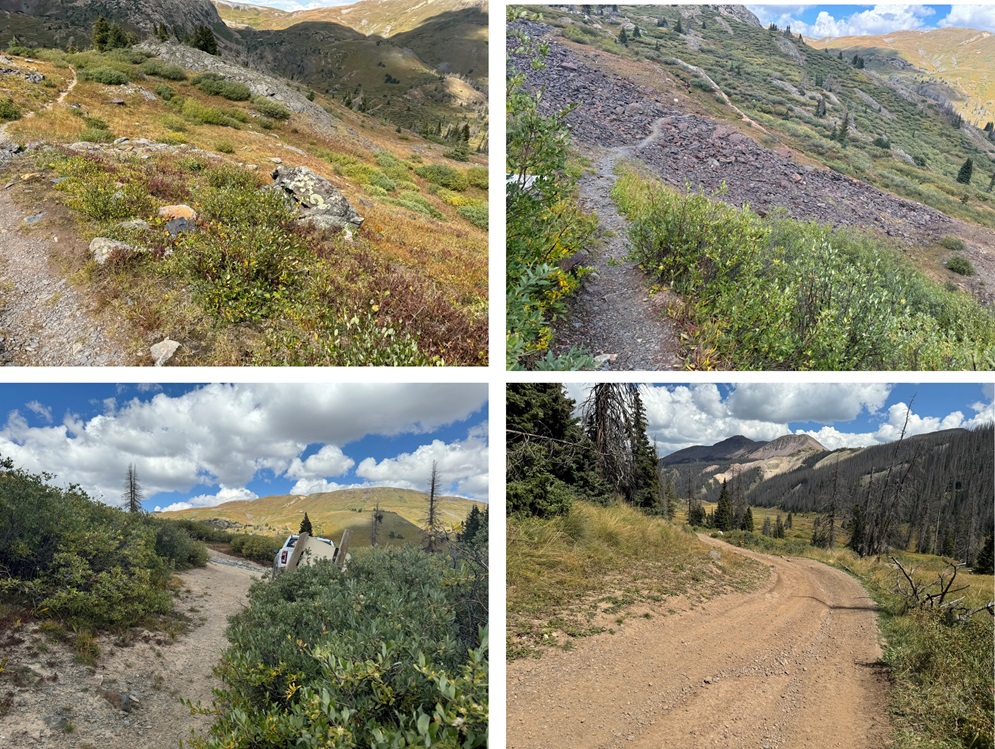
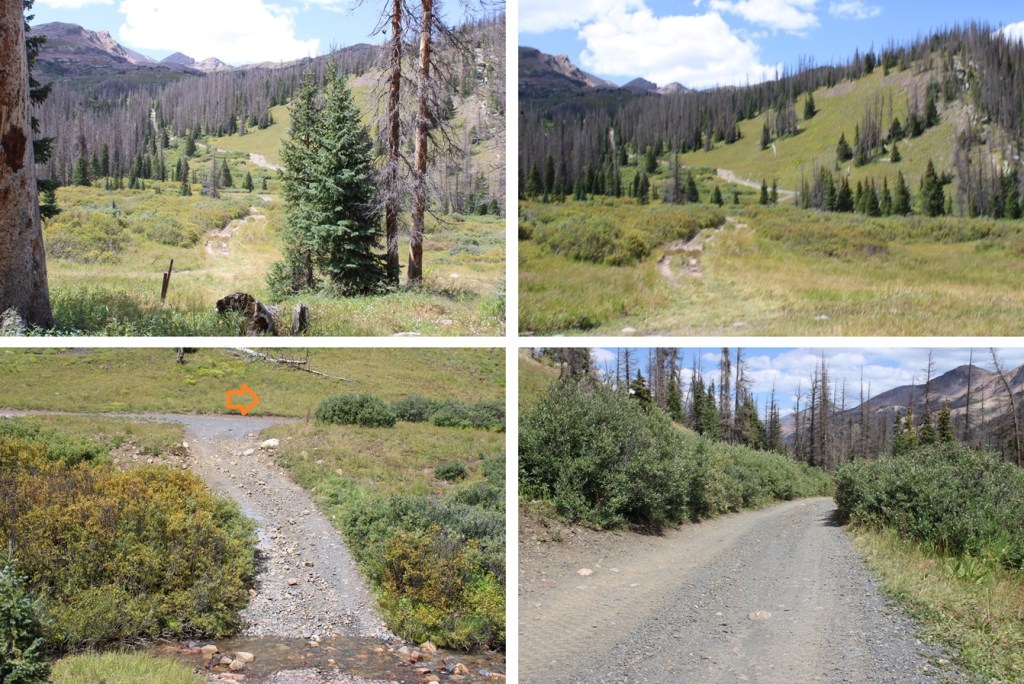
Once back to the CDT I turned right, and followed it south as it wound back to the 4WD dirt road.
I then followed the dirt road back to my truck, parked at Stony Pass.
I made it back to Stony Pass at 12:30pm, making this a 9.64 mile hike with 2129’ of elevation gain in 4 hours.
I was exhausted, and decided to take a lunch break at my truck.
To see the approach, view my previous post of Mt Nebo from Beartown, as this was the second day of my trip. Or, if you’re only doing this peak, the hike in from Beartown to the Nebo Creek Trail is easy to follow, and described on my descent.
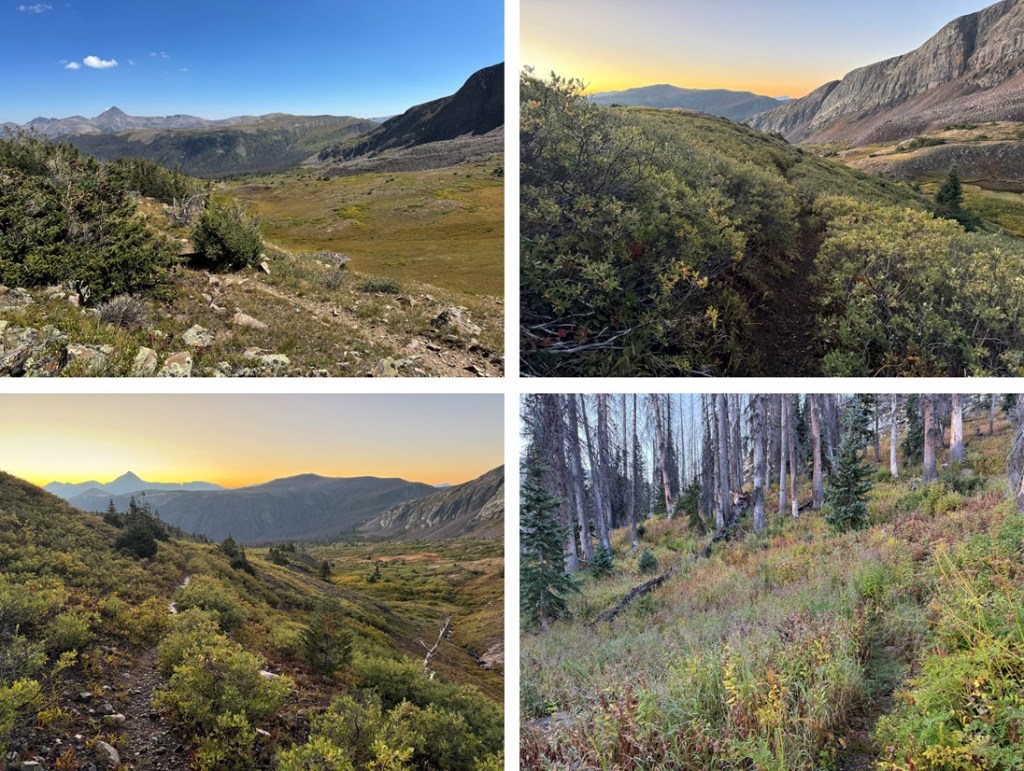
I was up and on the trail at 6:30am, startling a small herd of elk as I opened up my tent. I continued following the CDT east, down towards West Ute Lake. I lost about 700’ of elevation as I headed back down to treeline. This is an easy to follow, class 1 trail.
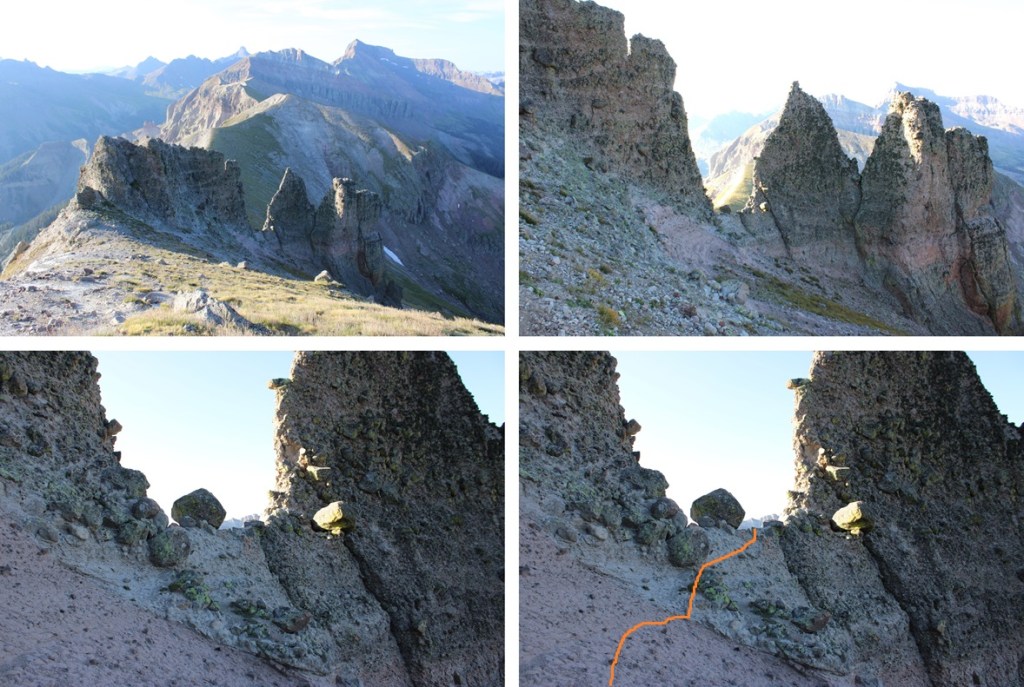
From West Ute Lake, I could see PT 13171, and I followed the trail up to the saddle. From this vantage point, you can see 3 notches in the ridge to the peak. The first notch is class 2, the second is class 3 or 4 (depending on the route you choose), and the third is class 2.
At around 12250’ of elevation I left the trail, and headed for the ridge, doing my best to avoid the willows. The route here is all class 2, and you can pretty much pick any line of tundra and it will get you to the ridge. This is the route I took:
Once on the ridge, I turned right and followed it west. The ridge was rocky, but went at class 2 (except for the second notch). The first notch was an easy class 2 walkaround.
The second notch was an easy downclimb, then a choose your own adventure upclimb. I kept it class 3 by staying to the right of the white rock. The rock was solid, but there was also a lot of talus littering the solid rock. This is the route I took:
I made my way back to the ridge
Here’s a look at that third notch, another easy class 2 workaround by going left
Then it was a rocky, class 2 hike to the summit
I summited PT 13171 at 8:30am
PT 13171:
This was my only peak for the day, so I re-traced my steps back down the rocky ridge
Then I navigated my way down off the ridge, back to the CDT
Back on the trail, I followed it forth (then northwest as it curved)
There was one point where the trail intersected with the West Ute Trail, just after West Ute Lake. I didn’t notice it on my way in, but if you notice it here, go left.
I made it back to treeline, then gained 725’ of elevation back to my campsite at 12500’
I took down my tent, and continued hiking west on the CDT, towards Vallecito Trail.
Once I made it to the Vallecito Trail, I turned right, and followed it north to Hunchback Pass, gaining 955’ of elevation up to the pass
Then I continued following the trail back down to Beartown, and my truck.
I made it back to Beartown at 1:30pm, making this a 13.85 mile hike with 3207’ of elevation gain, including campsite tear down, in 7 hours.
I was up and following the 4WD road towards the Hunchback Trailhead at 6:30am. It was cold because it had rained the night before, and everything was covered in a film of ice. I followed the road for 1.5 miles to Hunchback Pass Trailhead.
I then followed the trail another 1.5 miles to Hunchback Pass
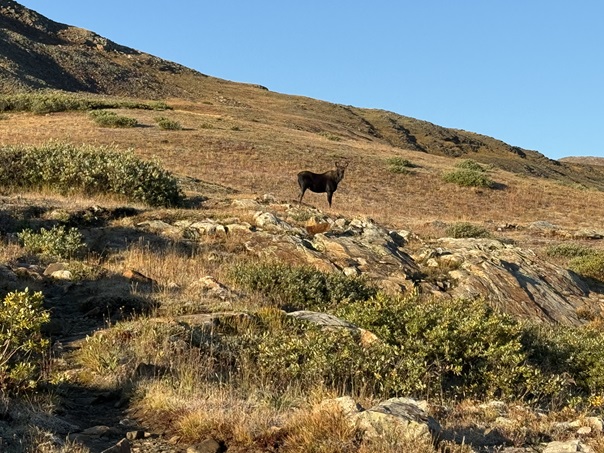
Oh, and I saw a moose along the way. Well, actually two moose, but the male got scared and ran away before I could get a picture. The female wasn’t too bothered.
Once at Hunchback Pass, I turned left, and followed the ridge south, then southeast. Here’s the general route I took. This is choose your own adventure, and this morning I went slow because the rocks were icy.
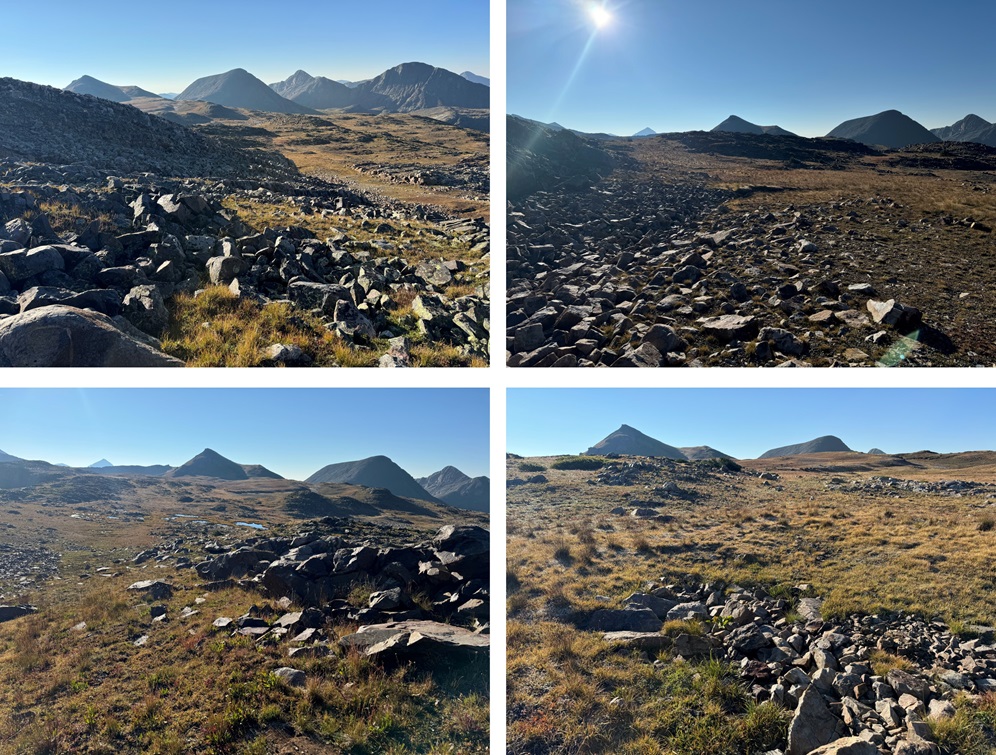
At the top of the ridge I could see PT 13121, Mt Nebo, and PT 13232 in the distance. I followed the tundra towards PT 13121. If you are following my GPX file, you’ll notice it’s a little erratic here. That’s because my compass kept doing crazy things. Just keep heading towards the base of 13121.
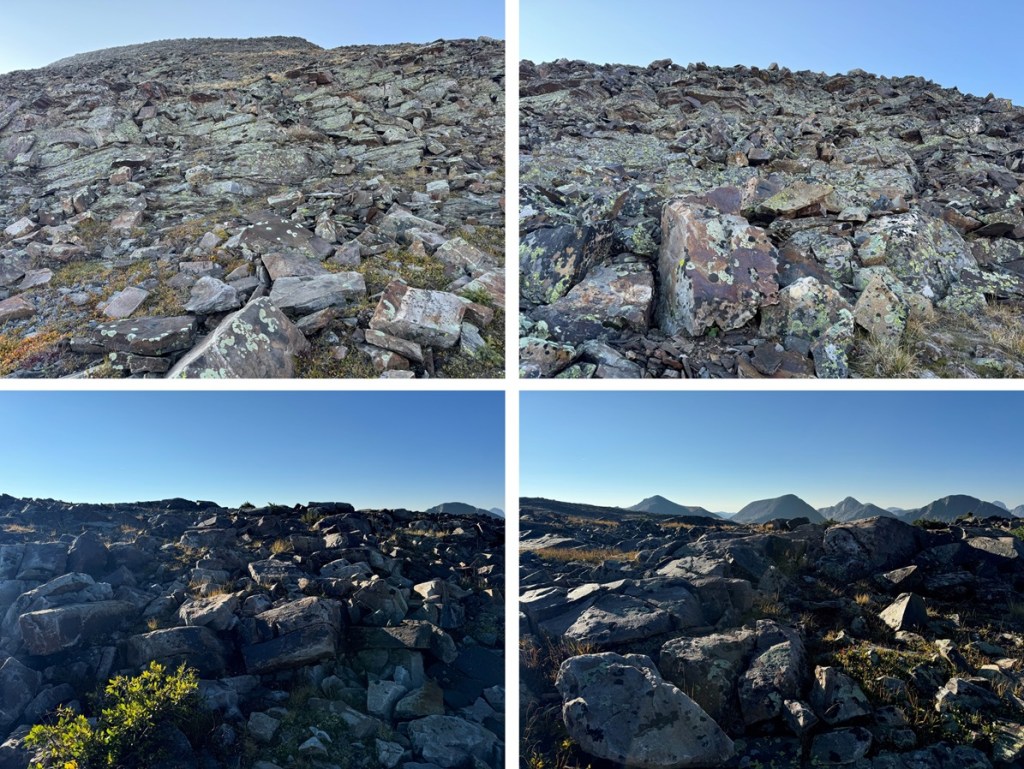
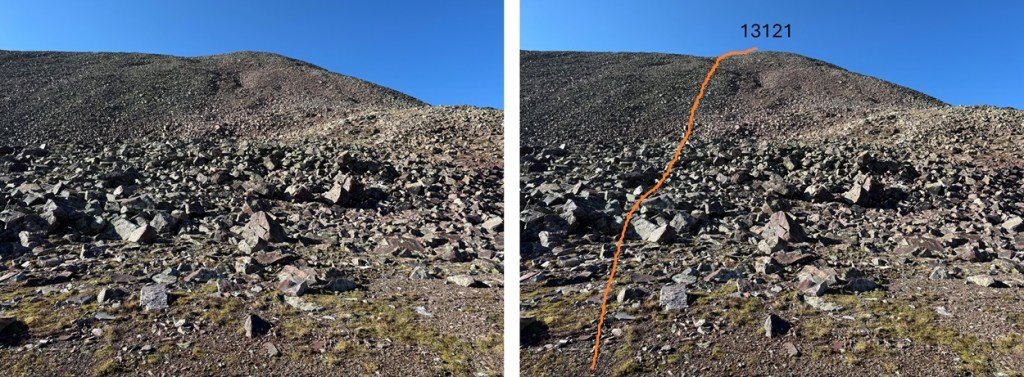
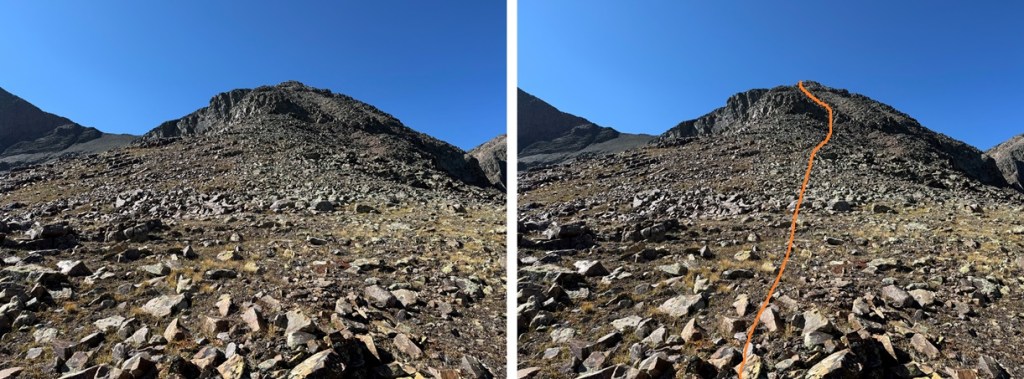
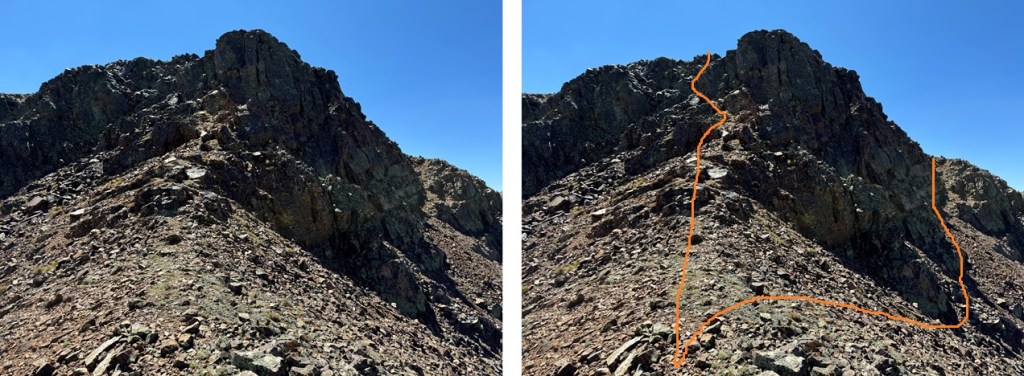
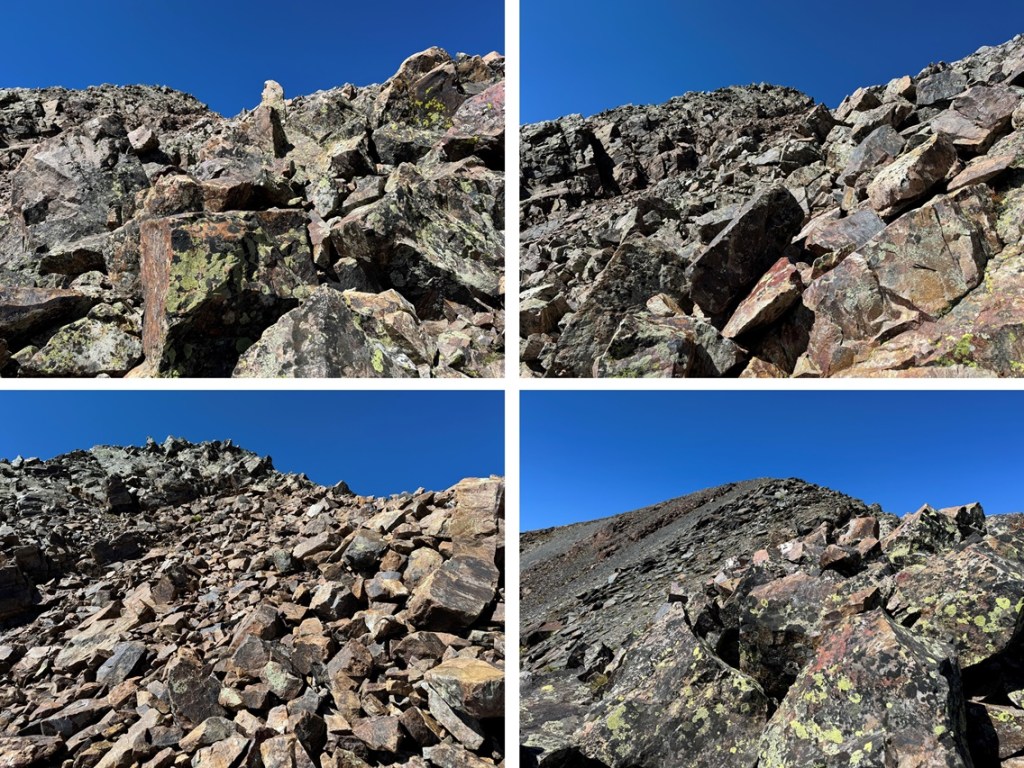
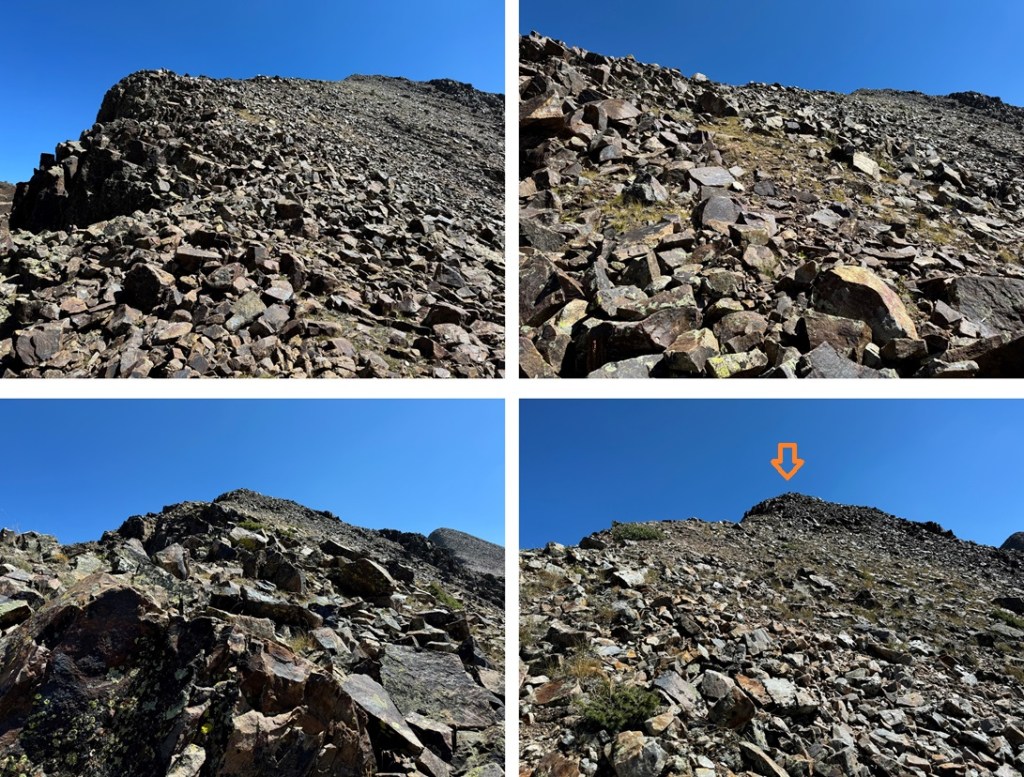
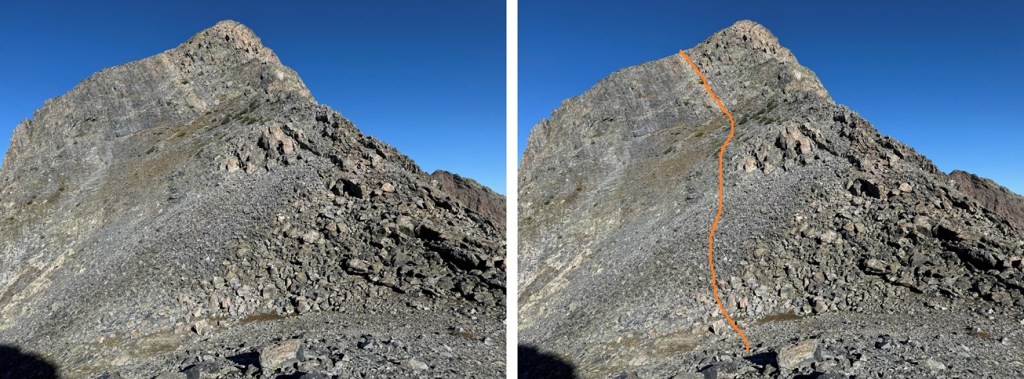
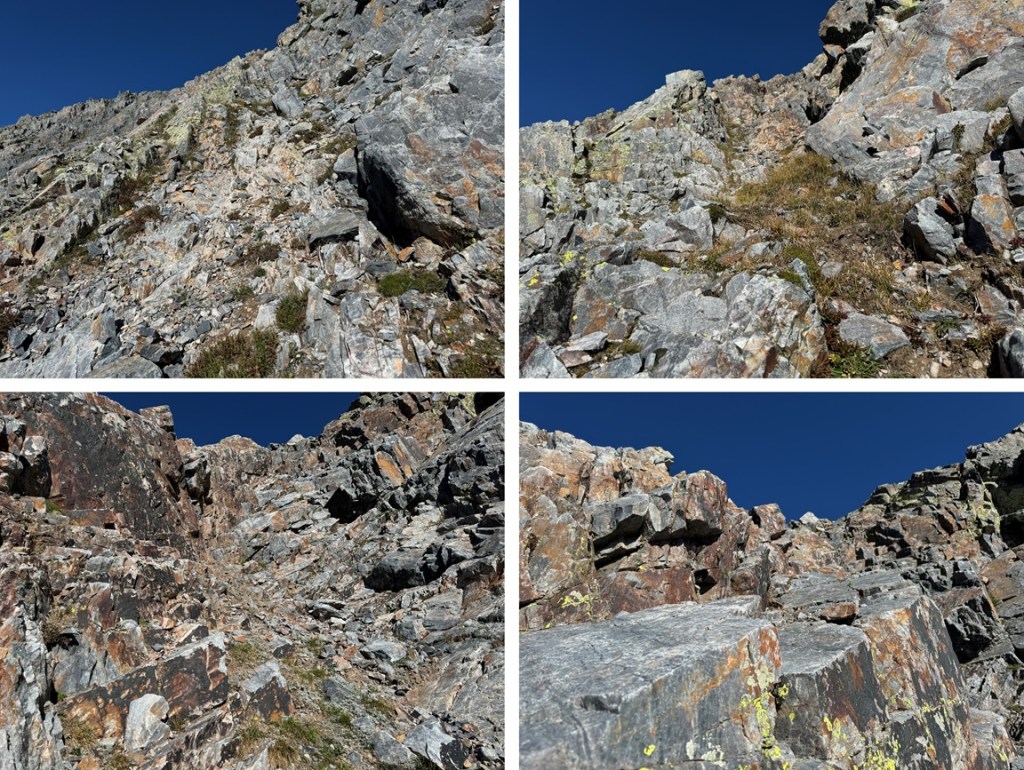
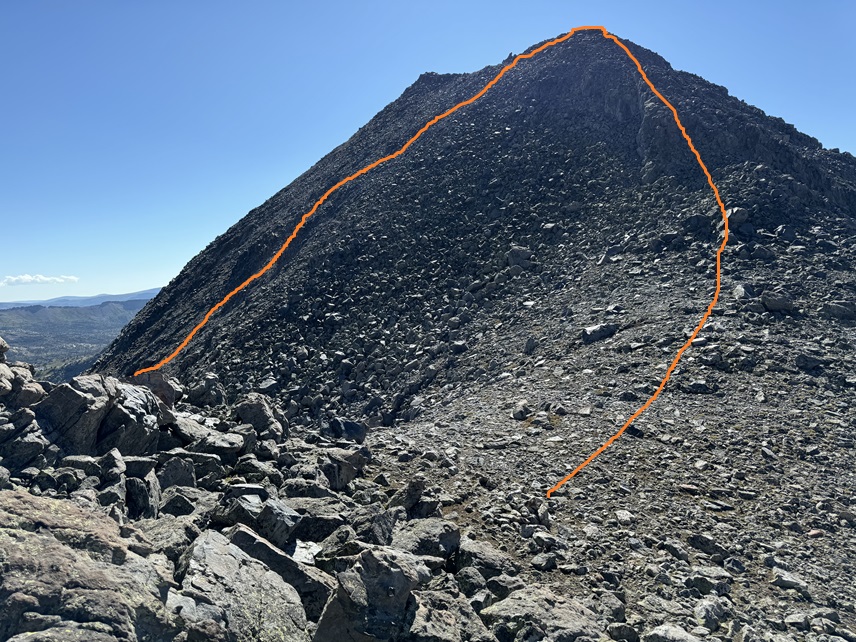
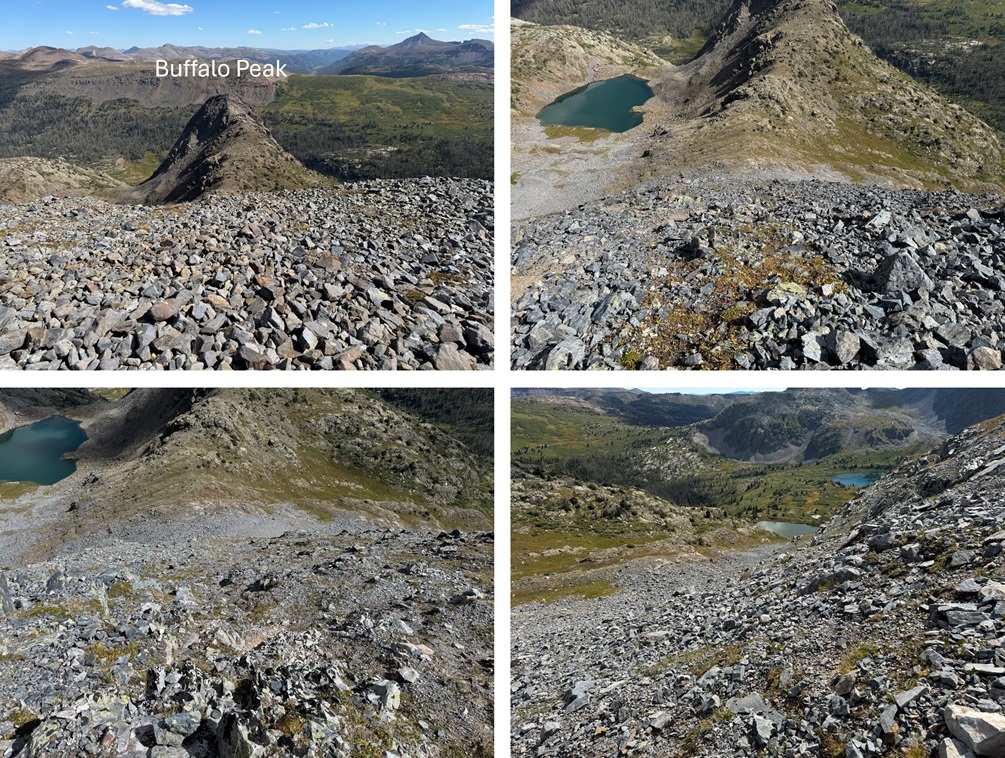
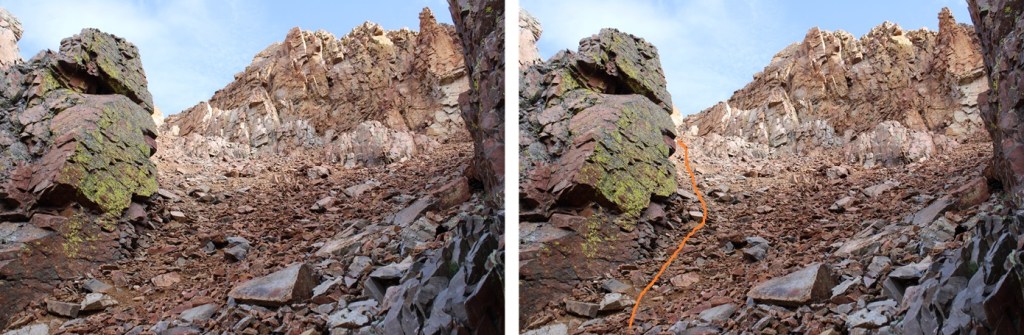
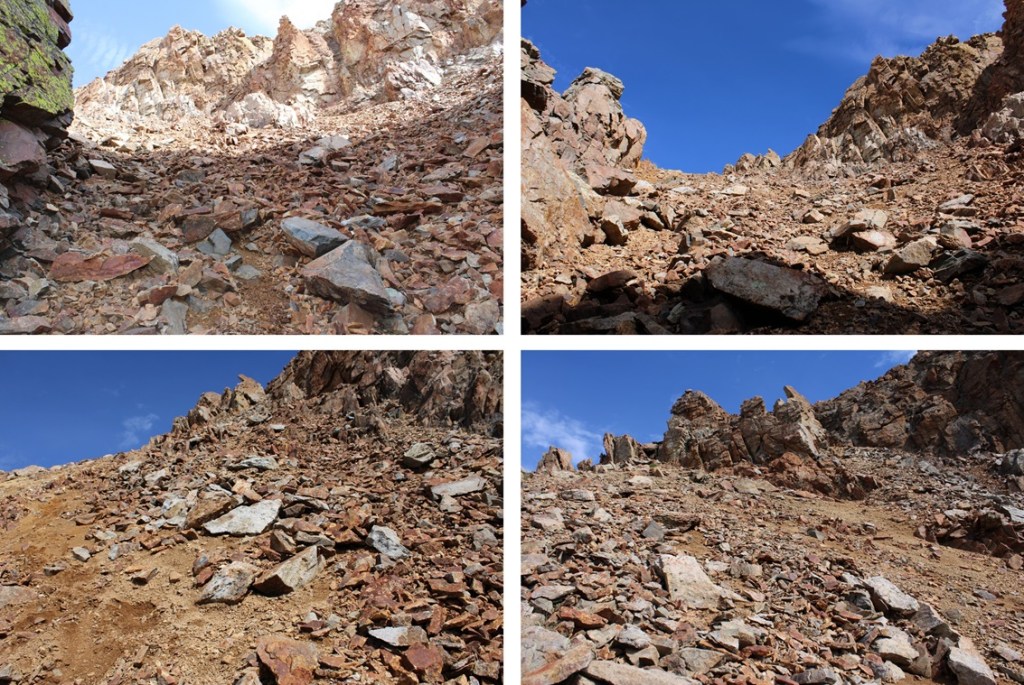
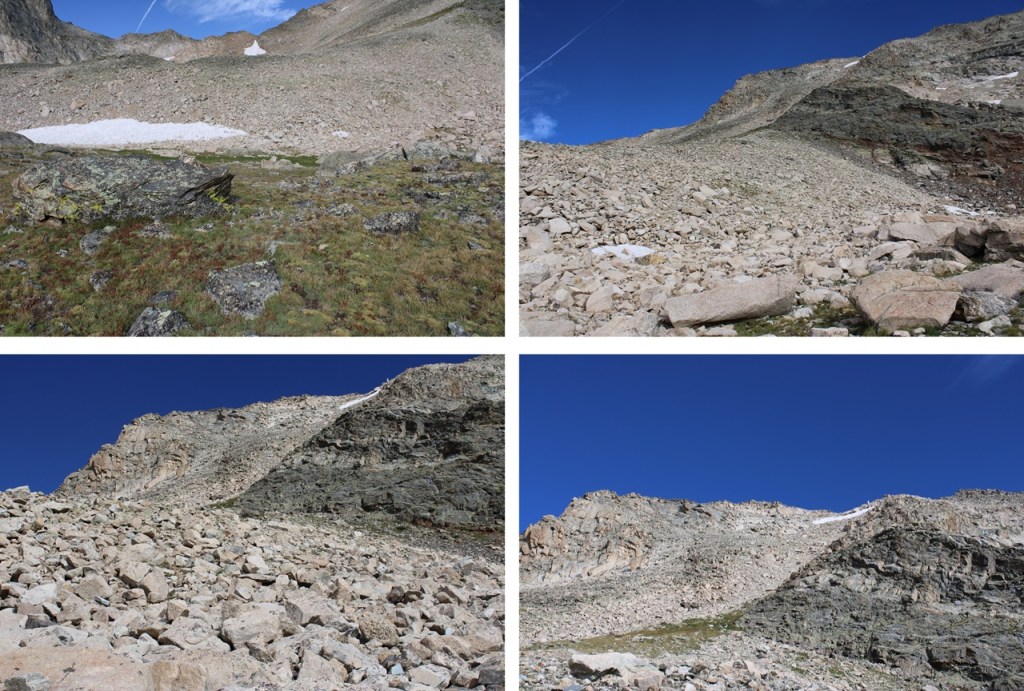
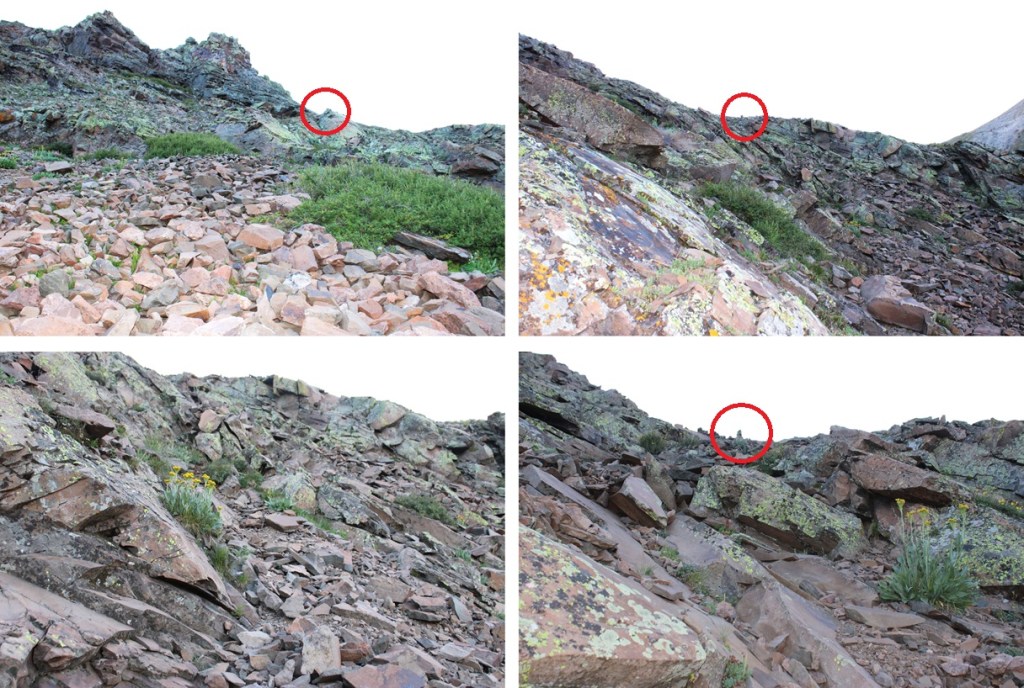
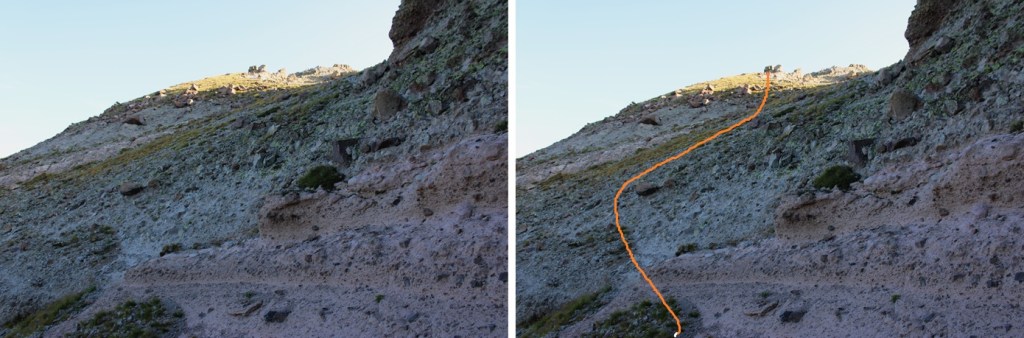
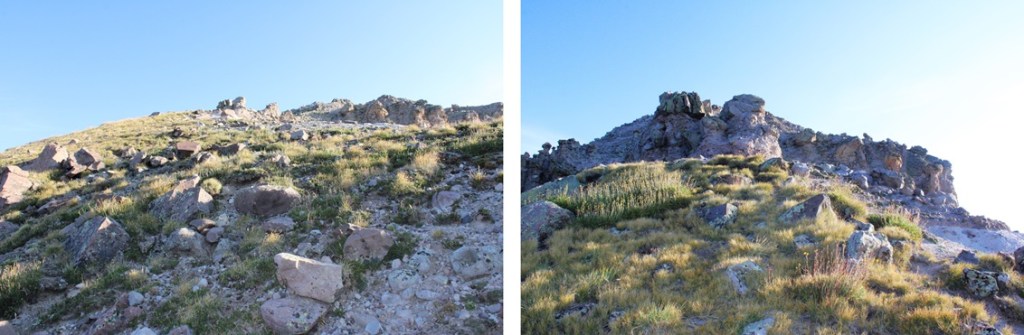
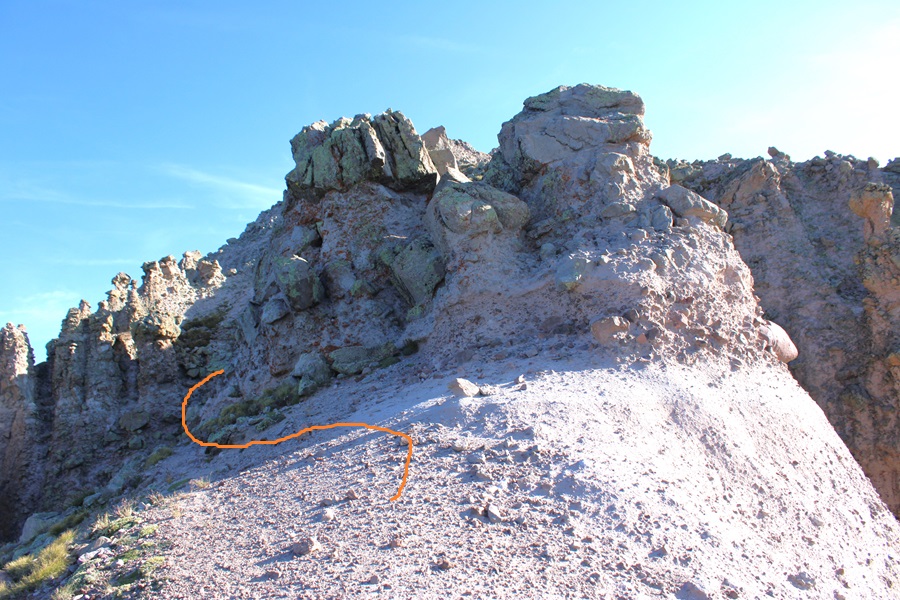
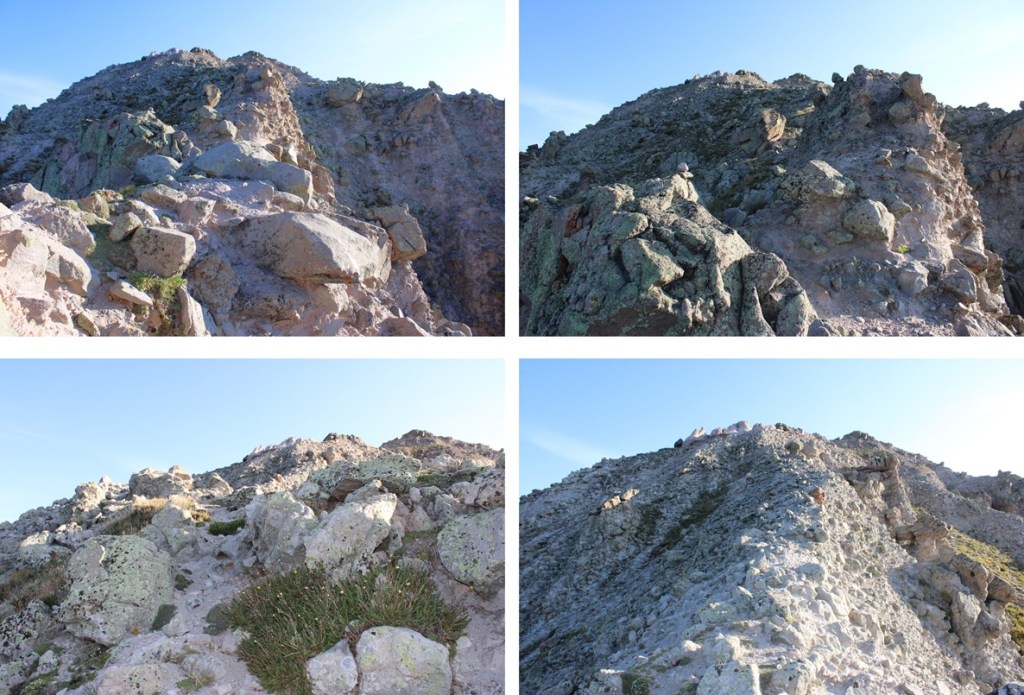
From the base of PT 13121, I headed south on the rocks towards the summit. I would gain 400’ in .2 miles to get to the ridge. The rock here was loose and steep and not fun to climb at all. If you have the option, I’d summit this peak from the way I descended. However, I did not do that, so here is my route, and a few pictures of the rock mess towards the ridge.
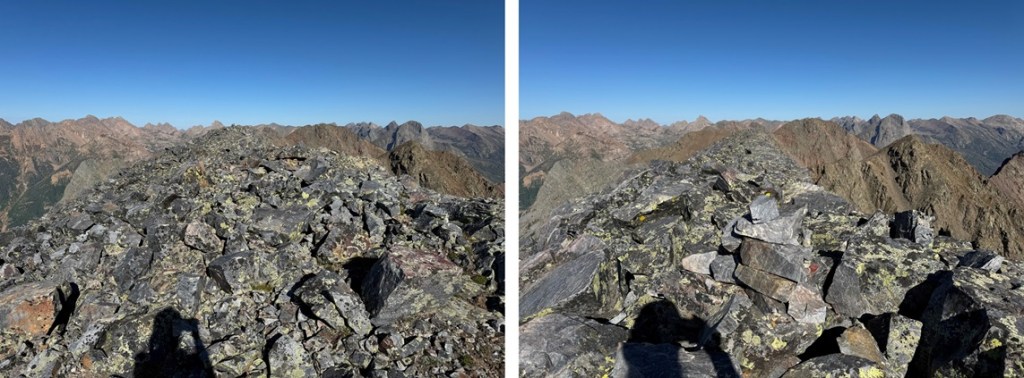
When I made it to the ridge I turned right, and walked the short distance to the summit
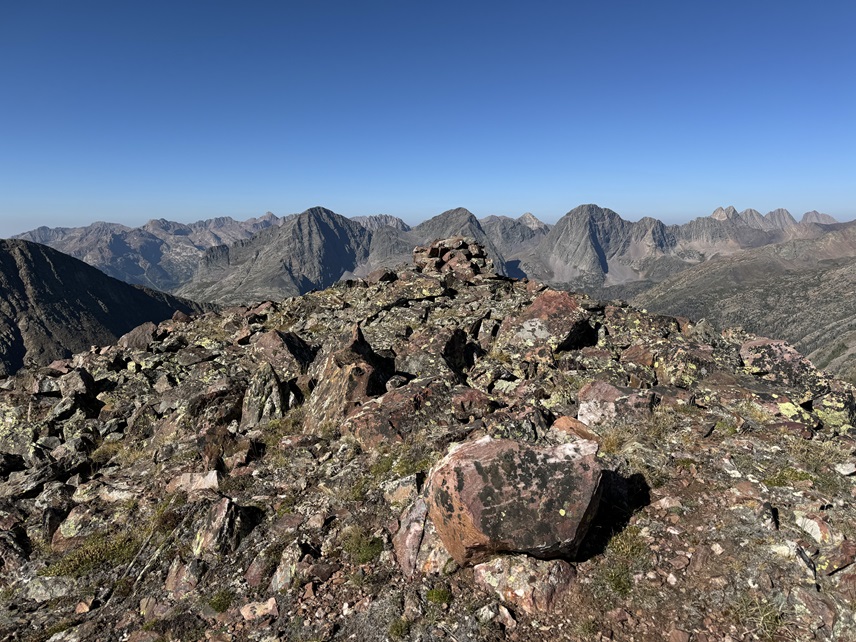
I summited PT 13121 at 9:40am
PT 13121:
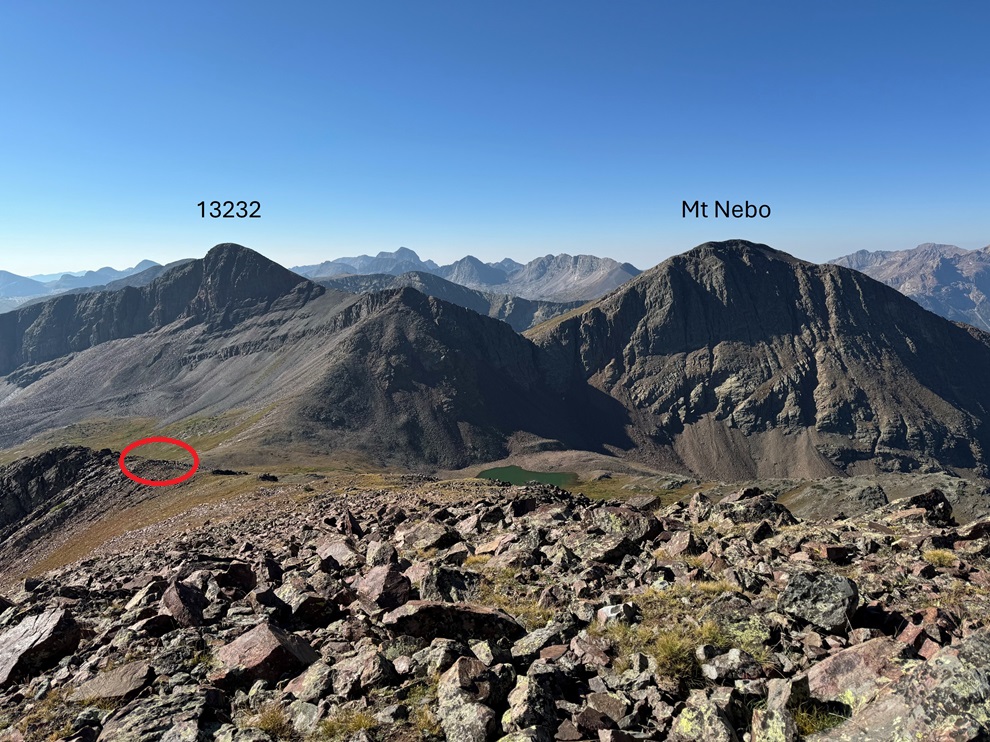
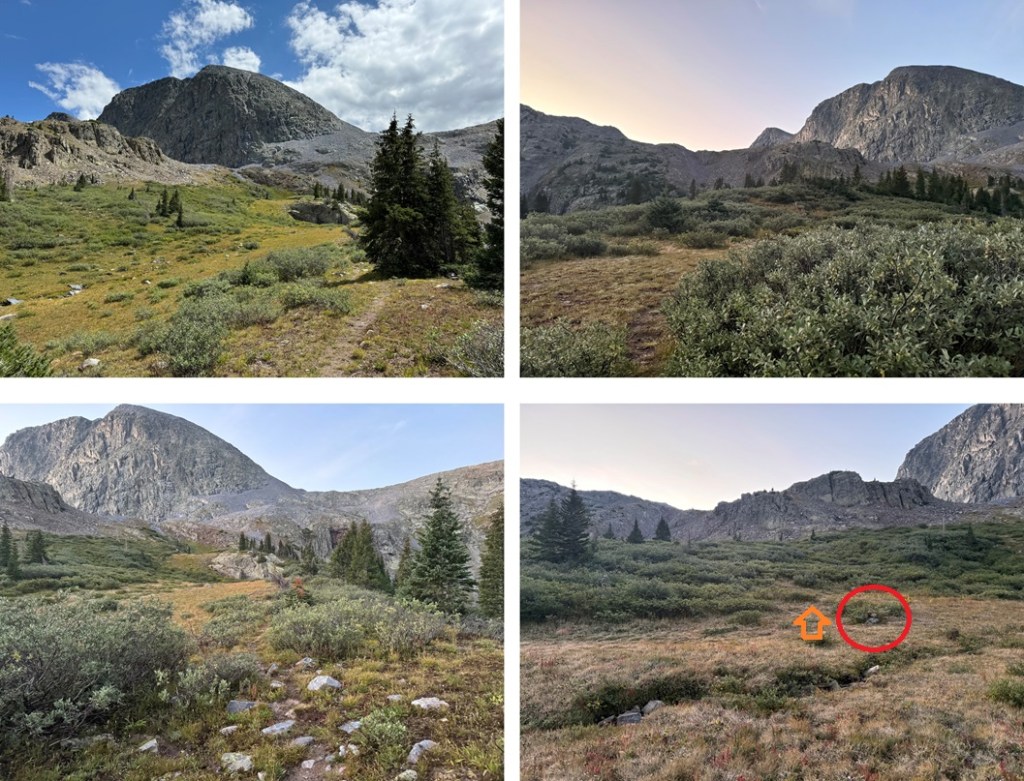
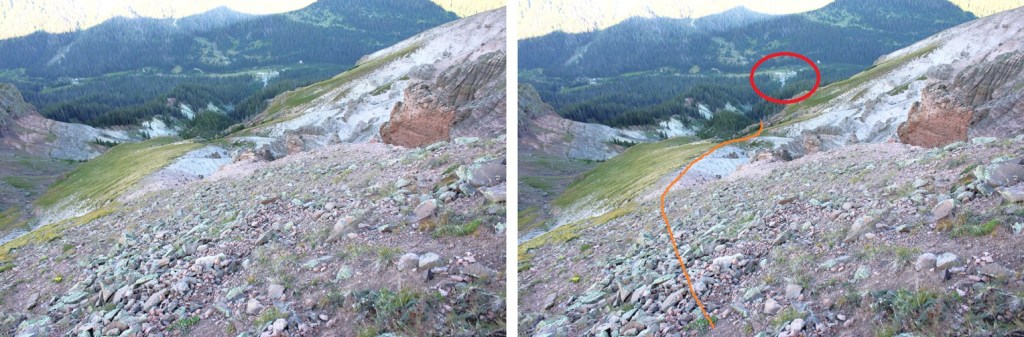
I could see PT 13232 and Mt Nebo to the south. I descended the rocky and tundra ledge towards the PT 13121/Mt Nebo saddle. Circled is where I set up camp for the night. That’s where I was headed. It’s adjacent to the CDT.
I took some time to set up my tent, then I was on my way again, headed up this ridge
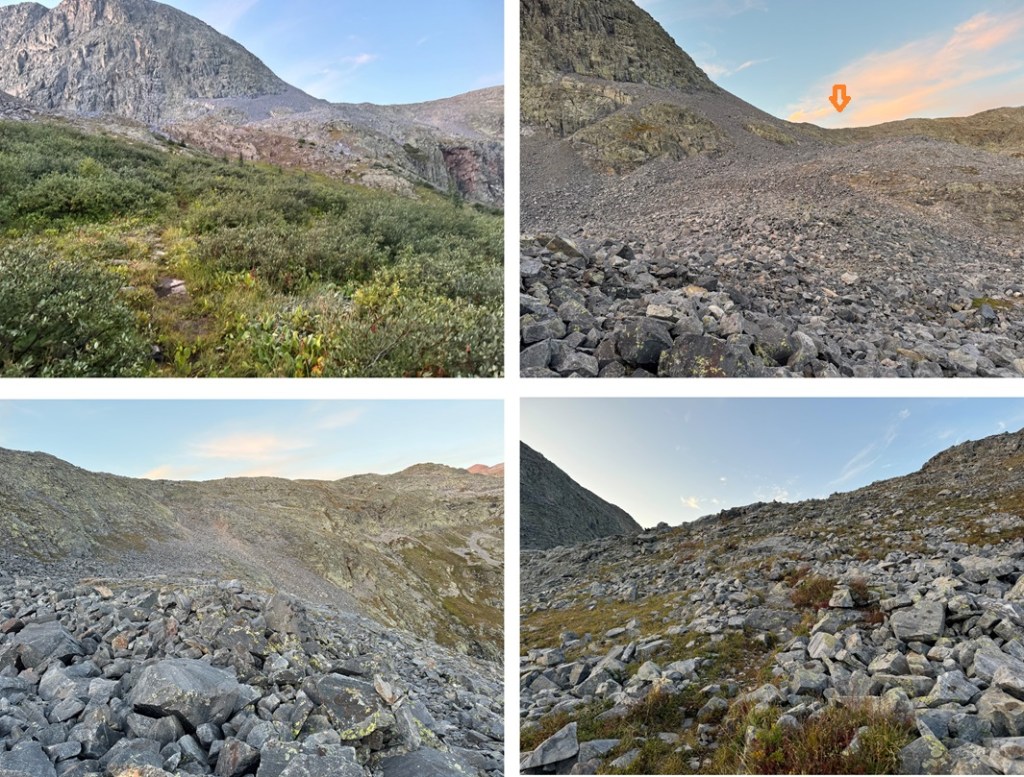
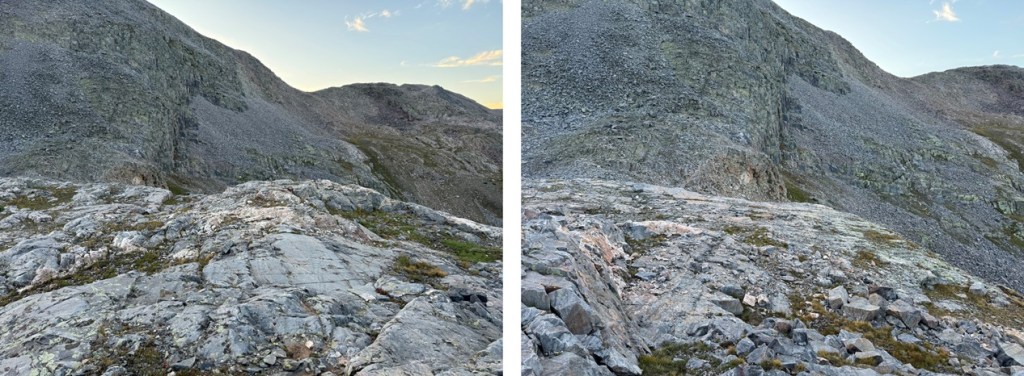
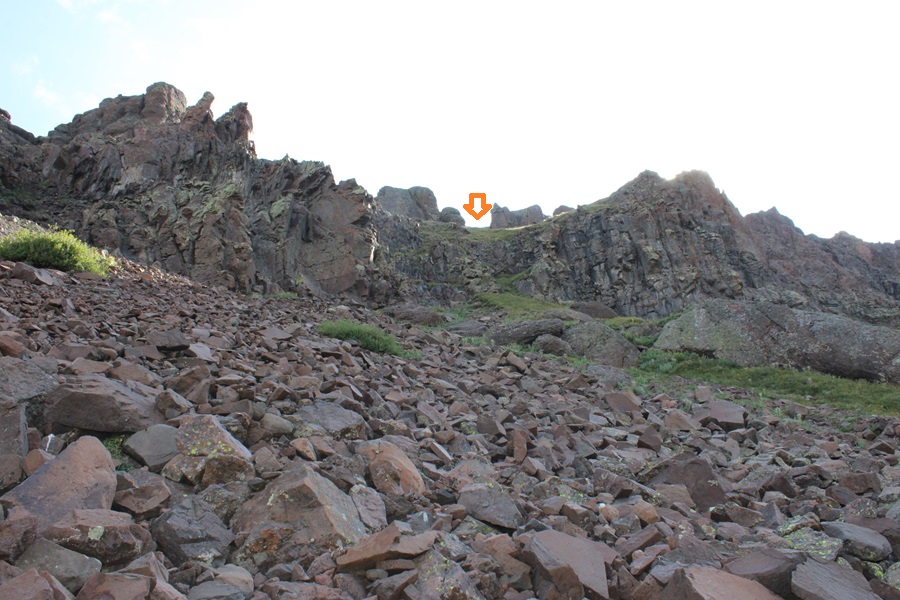
There was a lot of scree and talus here, but it’s all class 2+. There’s a bulge in the middle I skirted to the right, then headed back to the ridge proper, and towards the top you can go either to the left or the right, and I chose right for the way up (towards Nebo), and left on the way down.
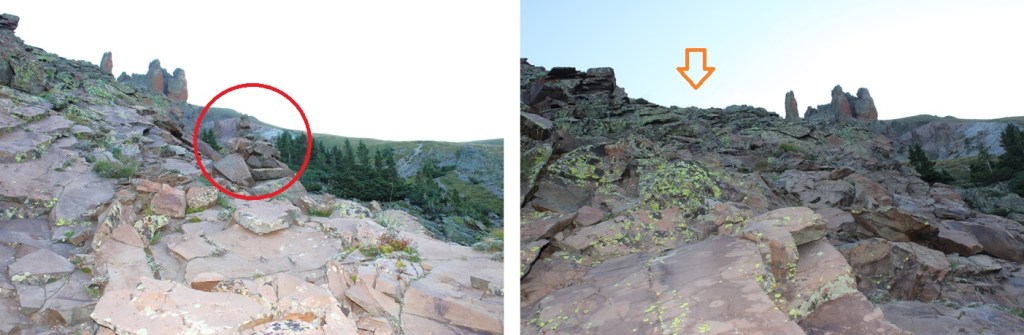
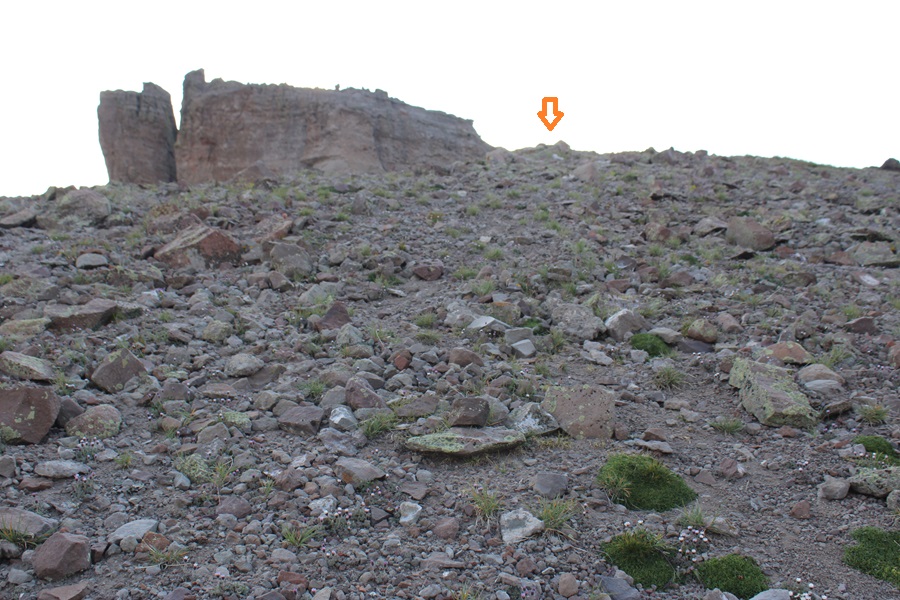
Here’s the option to go either right or left. Both class 2, but the left is on more solid rock.
I chose to go right (there’s a cairn where the arrow is)
From here I could see Mt Nebo to the west
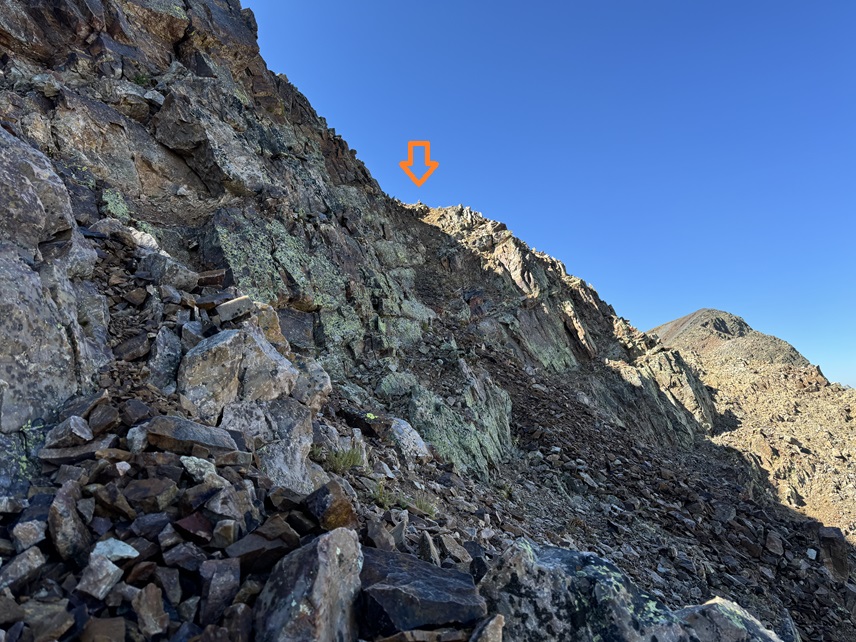
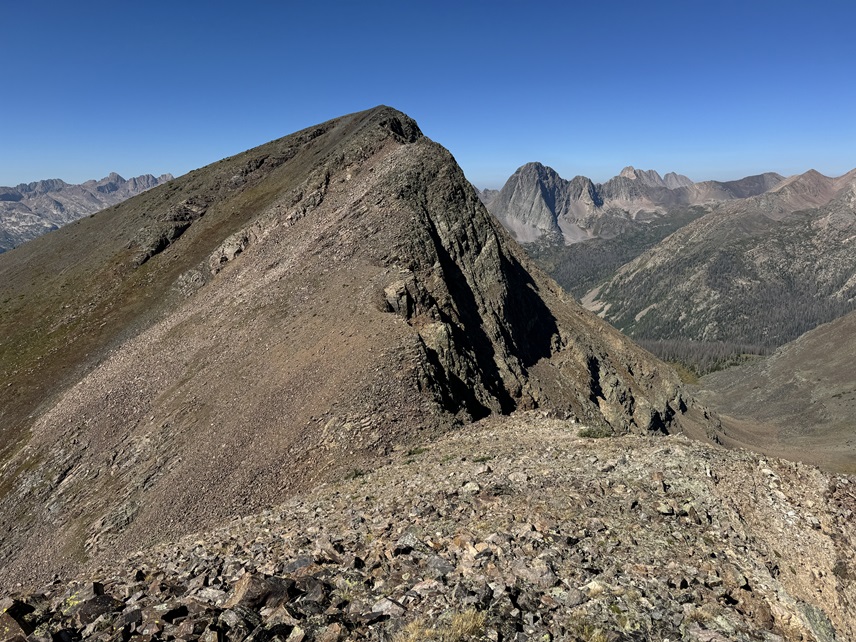
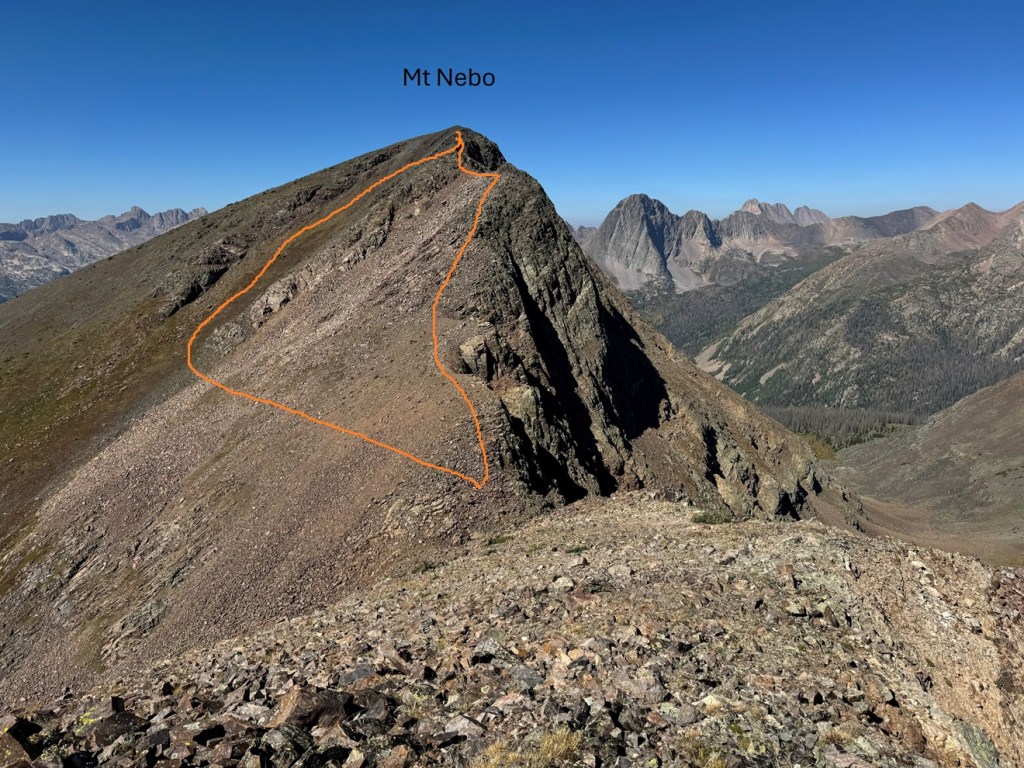
I needed to make my way towards the saddle, but now is a good time to choose your route, You can go up the tundra that turns to talus on the left, and keep this route 2+, or you can take the ridge to the right, which goes at difficult class 2, maybe some easy class 3, and includes a lot of rock/boulder hopping. I chose to stick to the ridge.
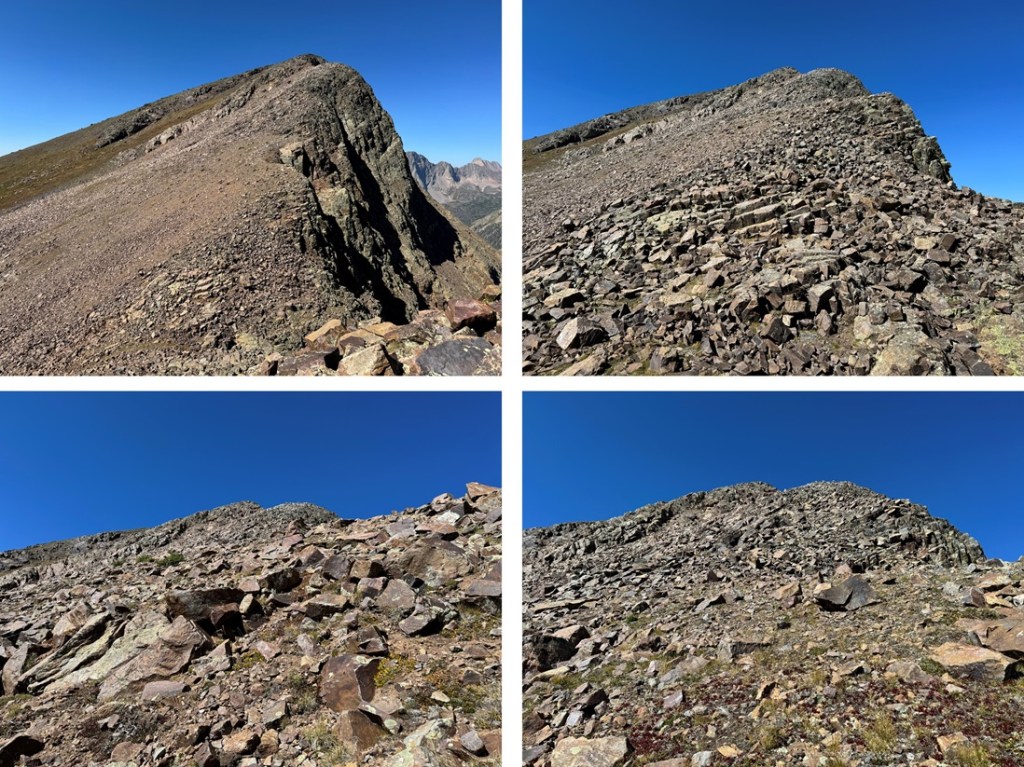
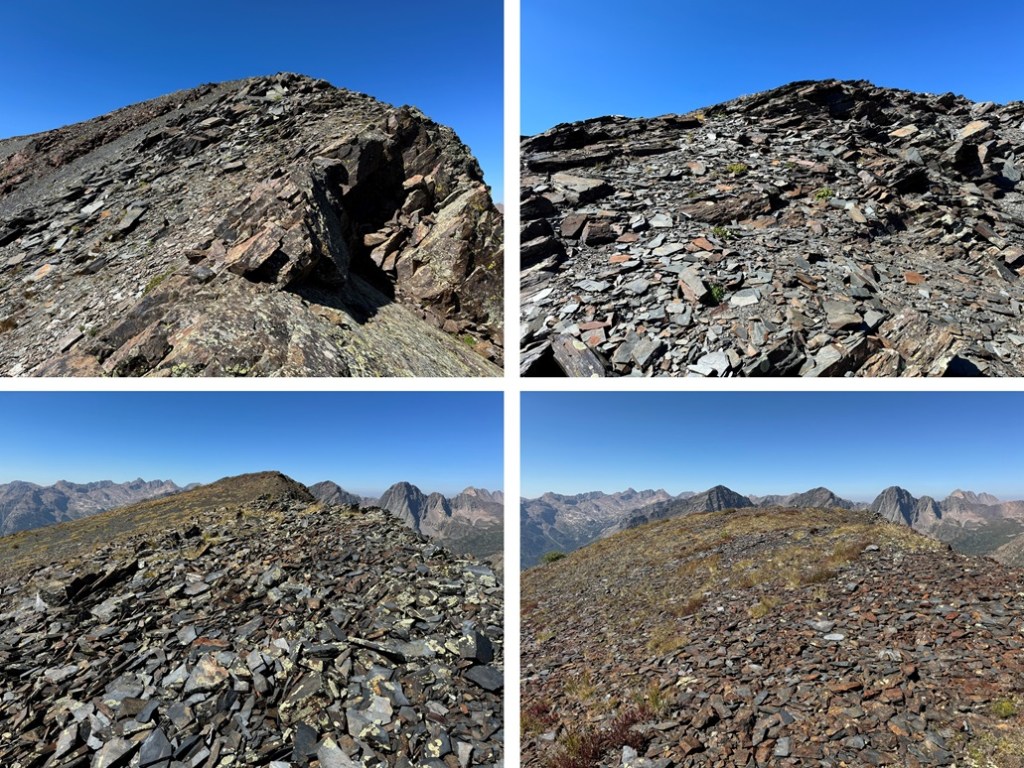
But first, descending down to the saddle. This was rocky, but class 2. From the saddle, here are some pictures of the route up the ridge towards the summit
There was one ledge section that went at class 2 but had some exposure. I crossed the ledge, and it was an easy hike up talus to the summit.
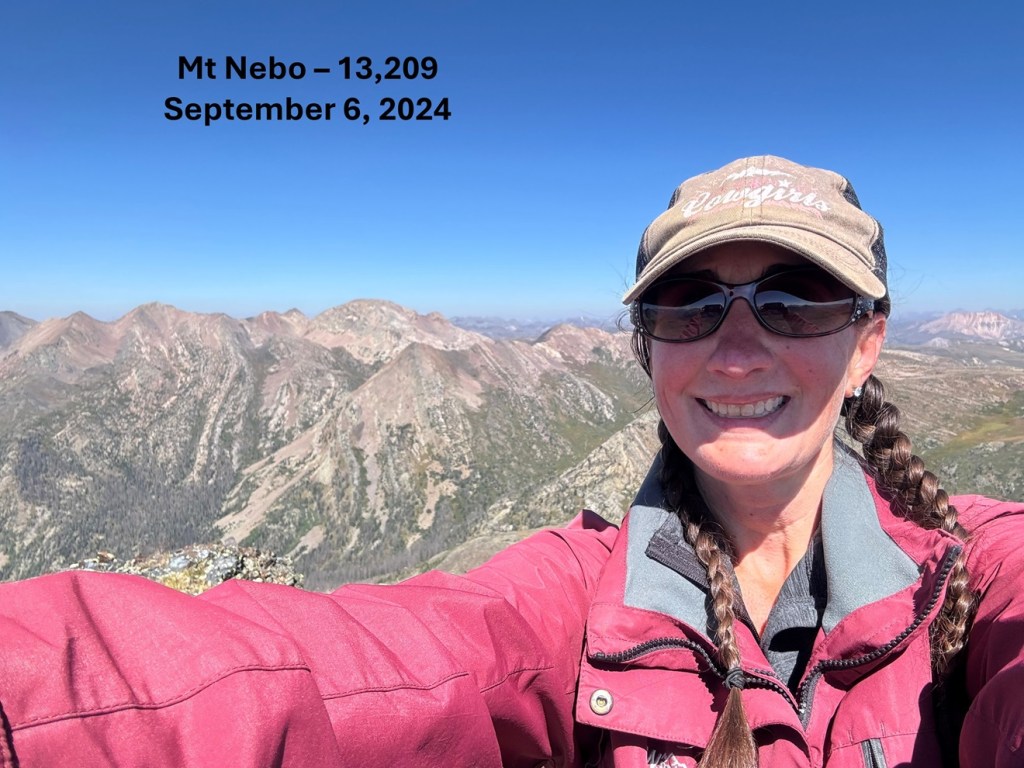
I summited Mt Nebo at 11:30am
Mt Nebo:
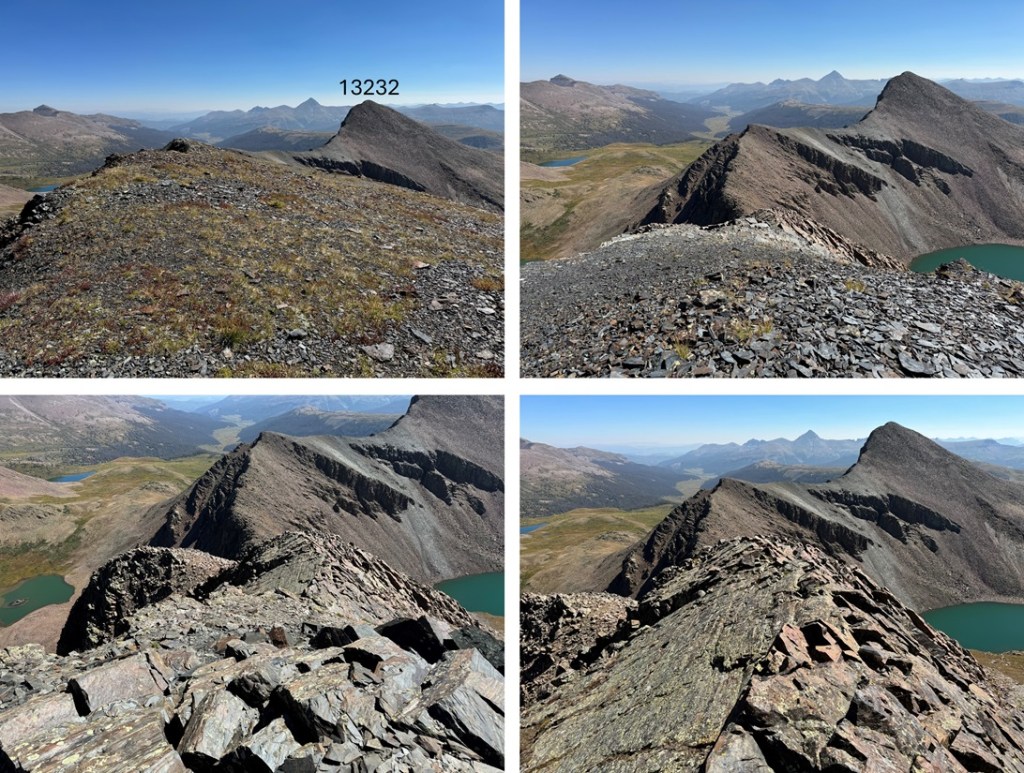
To the east was PT 13232. I descended back to the saddle.
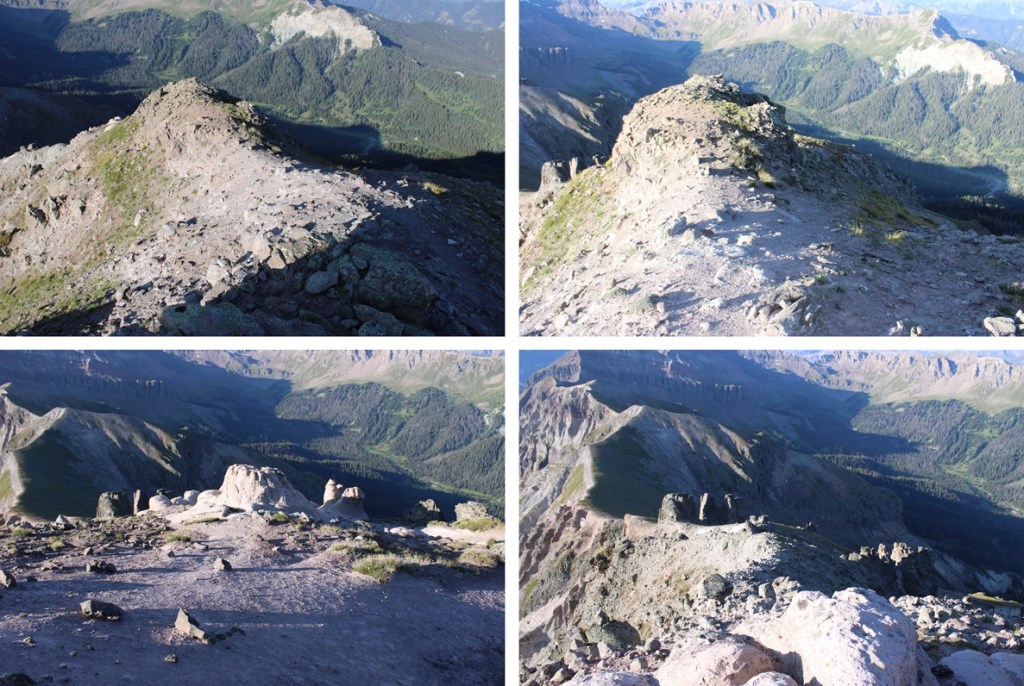
Then it was back up the rocks, following the ridge. The rest of the hike was all class 2 to the summit, mostly boulder/rock hopping.
Once back on the rocky point that splits the two peaks, it was now easy to hike southeast to the summit. I followed the talus to the rocks, and kept ascending. The ridge proper goes at class 2. Here are some pictures of the route.
I summited PT 13232 at 12:30pm
PT 13232:
Now I was headed back to my campsite. I turned around, and followed the ridge as it descended northwest.
I then went right when I made it to the bump in the ridge, descending on talus and rocks before making my way back to the ridge.
I then followed the ridge back to my campsite and the CDT, being careful to go left to avoid the steep sections.
I made it back to my campsite at 1:15pm, making this a 8.55 mile hike with 3732’ of elevation gain in 6 hours, 45 minutes, including time to set up my camp and eat lunch. This report continues with PT 13171 the next day, along with a hike out back to Beartown.
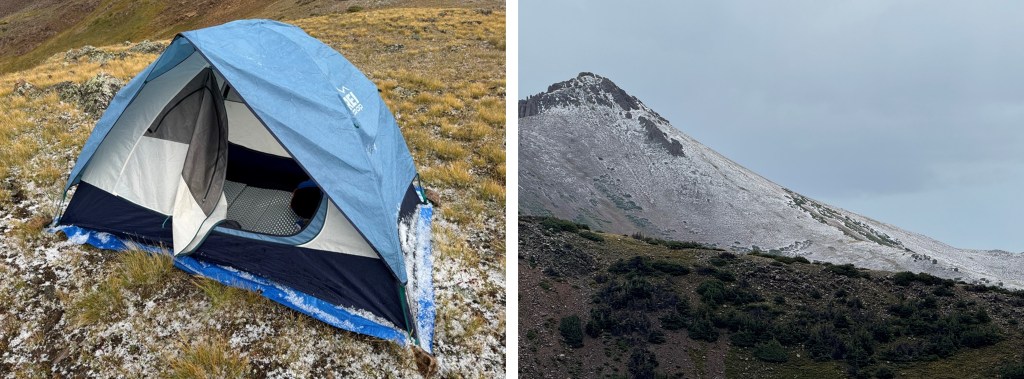
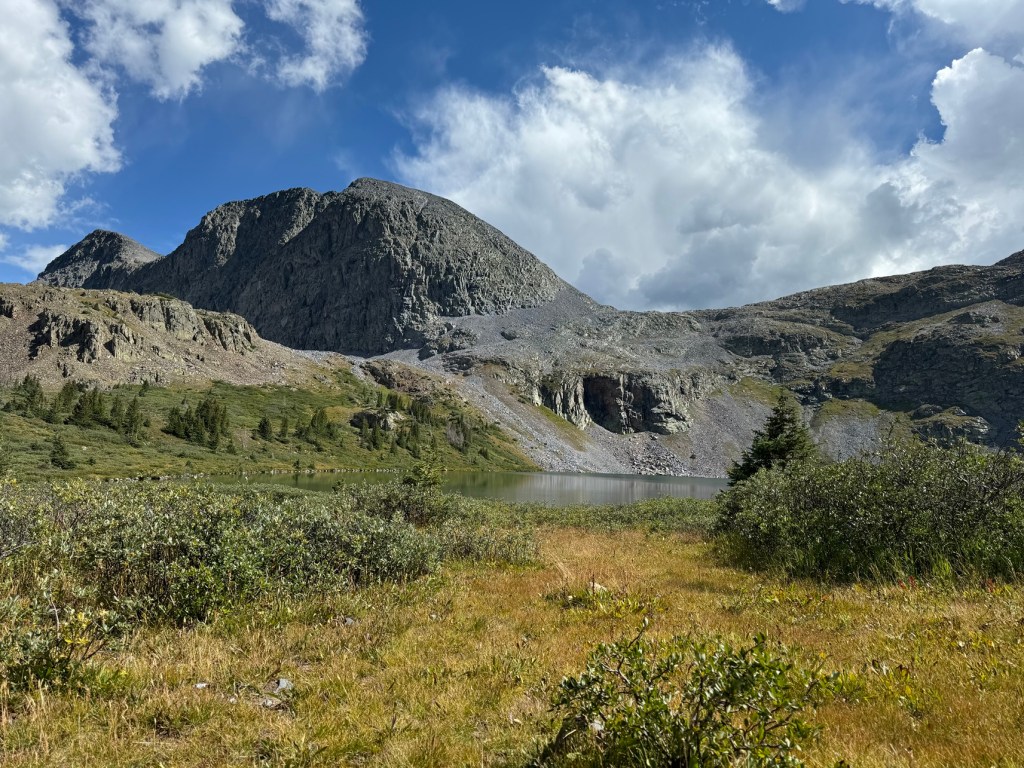
Oh, and it rained and hailed and graupled that night. For hours. I kept punching the top of my tent to get the slush off so it wouldn’t freeze overnight. Here’s a picture from about half an hour into the 4 hour storm, when I got a little break. Gotta love late summer storms above treeline! Good times!
From my base camp at Rock Lake, I was up and on the trail at 6:30am, headed for the pass that leads towards Moon Lake. There’s a nice trail that will lead you all the way from the left side of the lake to the pass.
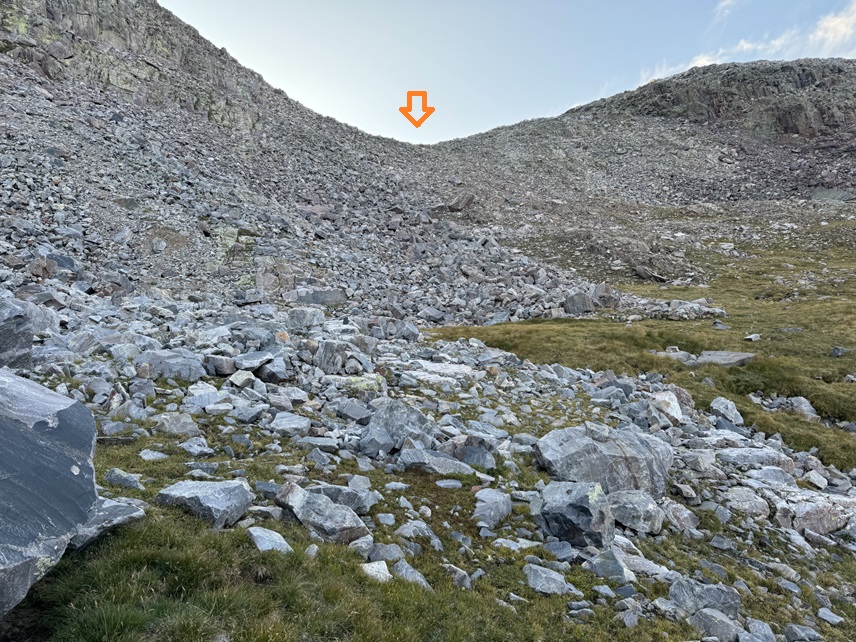
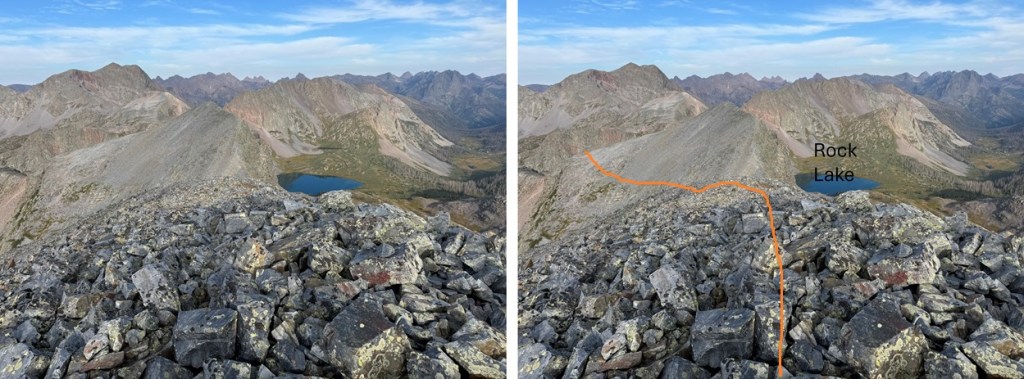
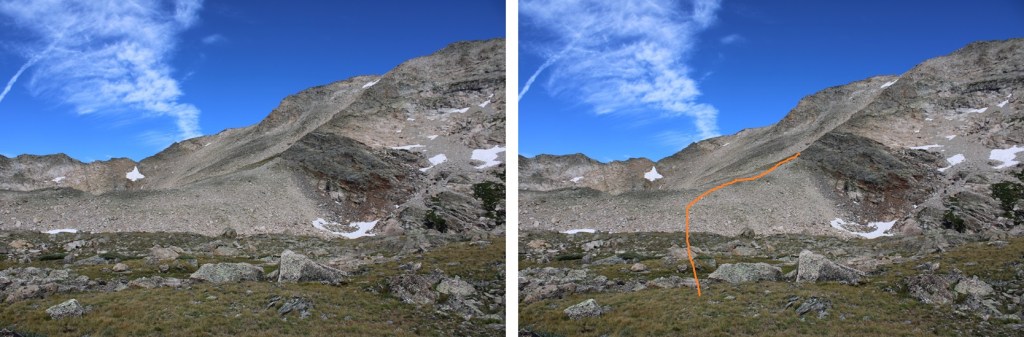
Once at the top of the pass, I looked left, and found the route I wanted to take to get to the gully. I aimed for the white strip of rock in the middle, staying on tundra and solid rock most of the way. This was all class 2.
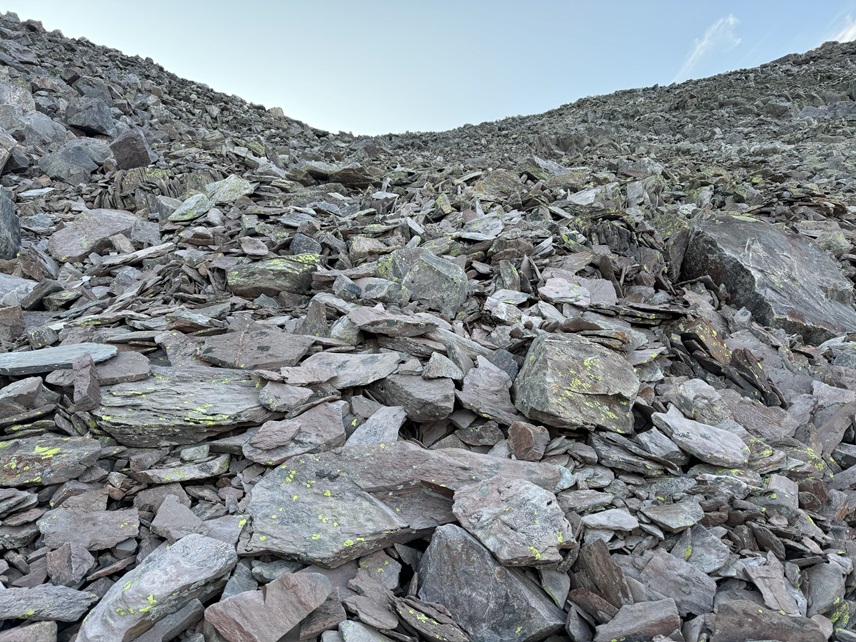
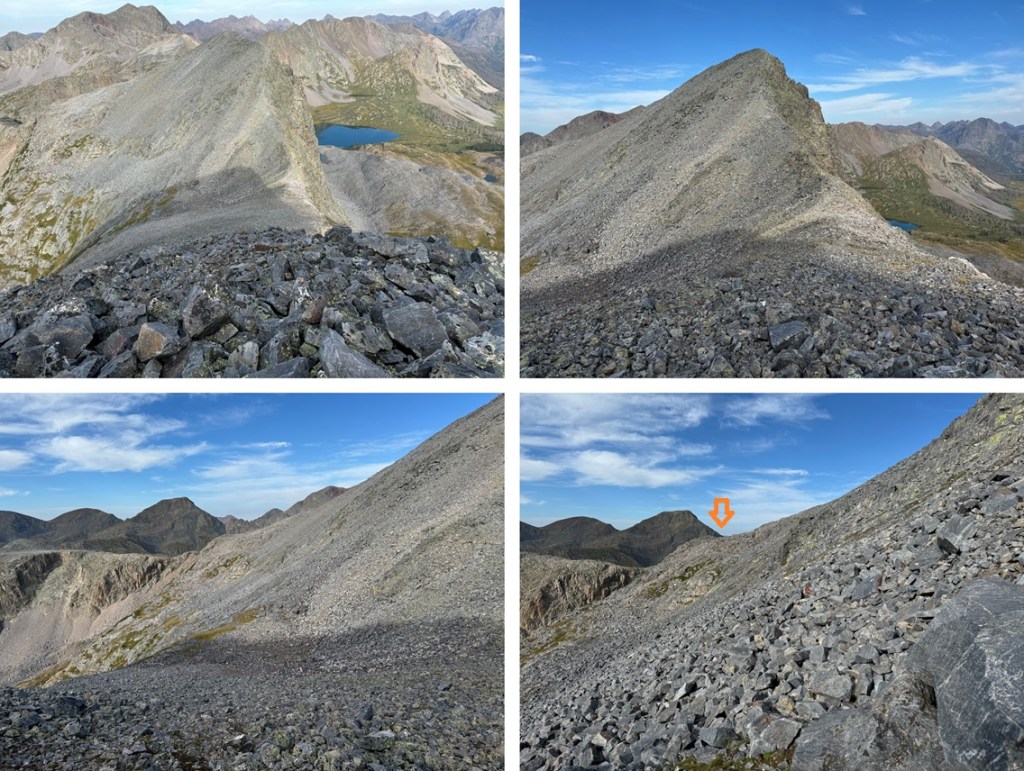
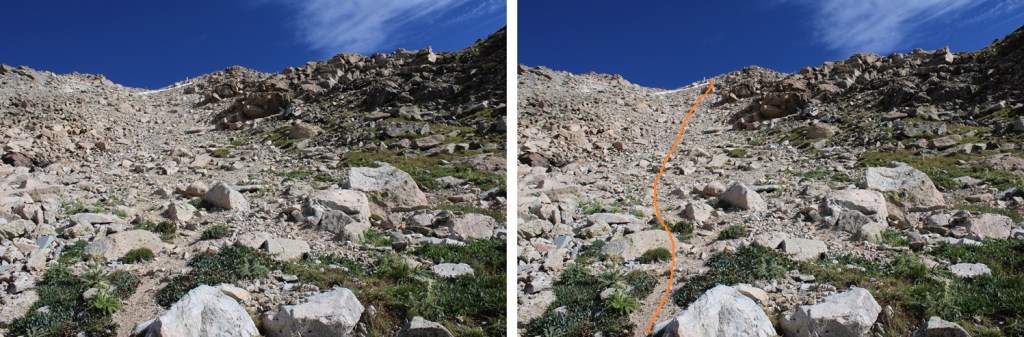
Once in the gully, I followed it east towards a saddle. There was a lot of loose rock in this area, but it was all class 2.
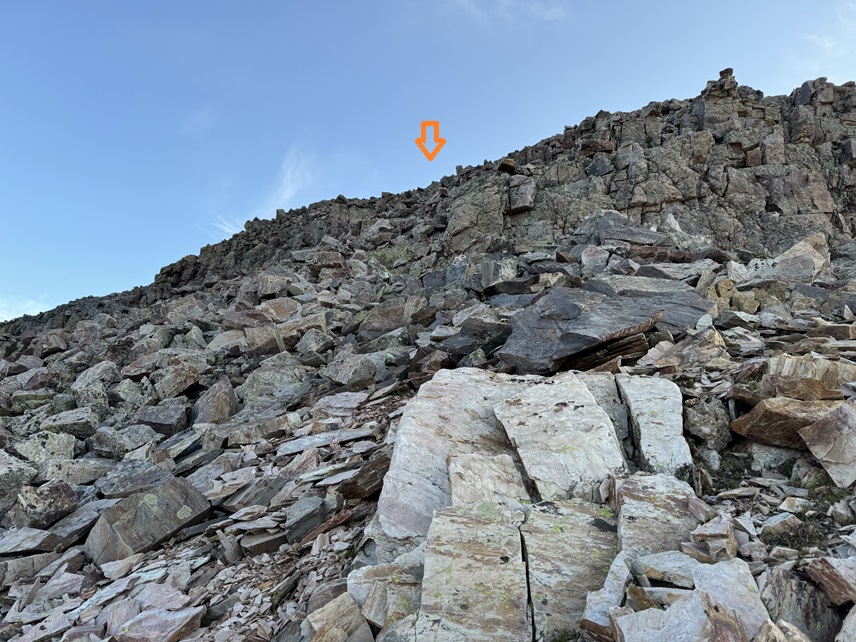
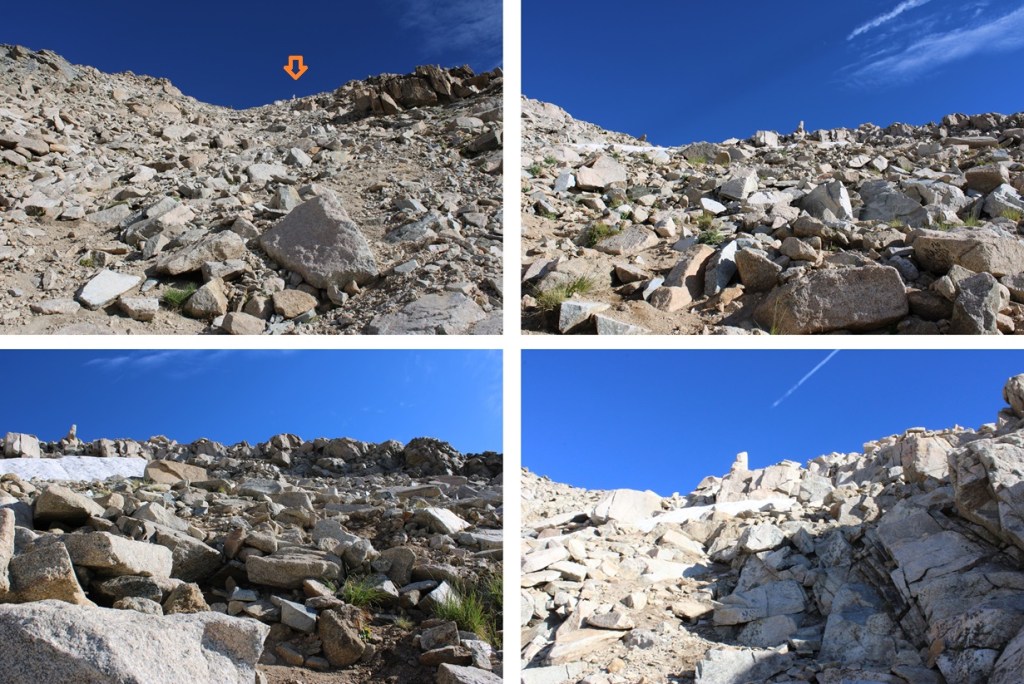
Once at the top of the gully, I turned left and headed north up to the ridge. The rocks here were large, loose, and easy class 3 terrain. The rest of the route to the summit would be rocky.
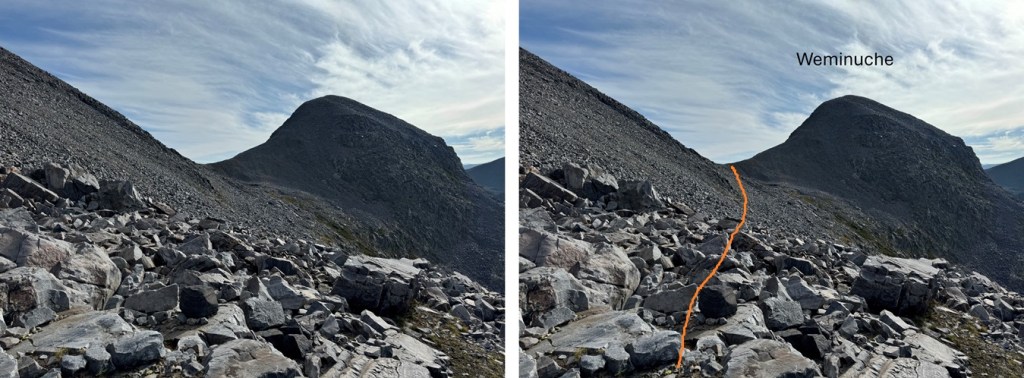
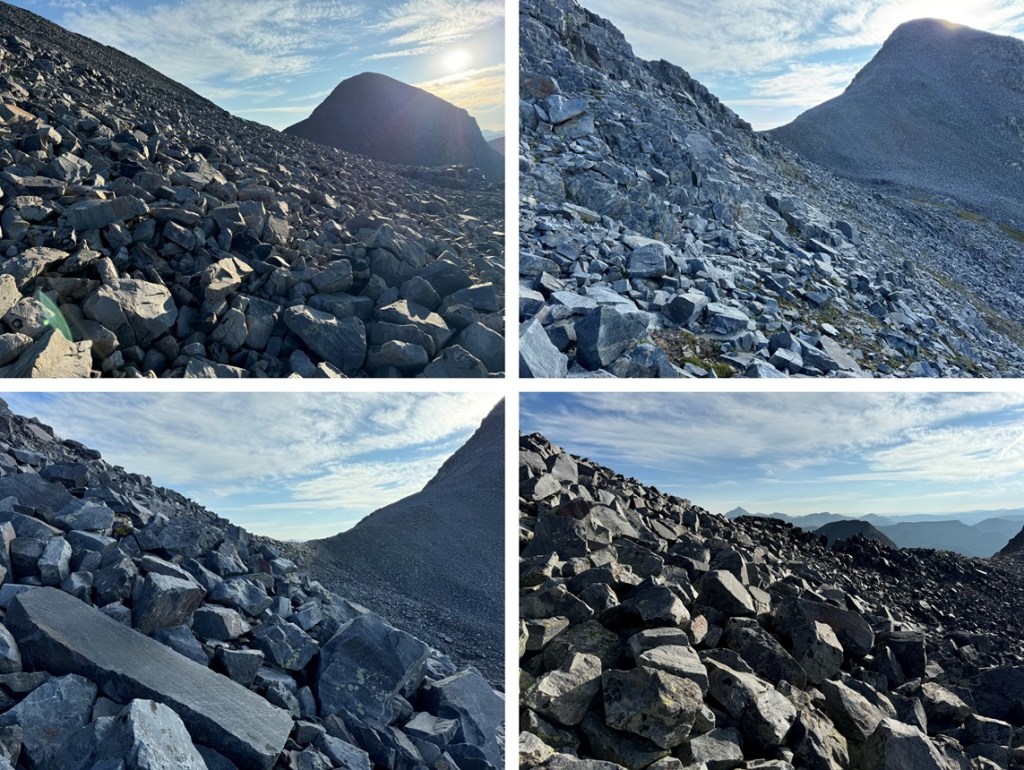
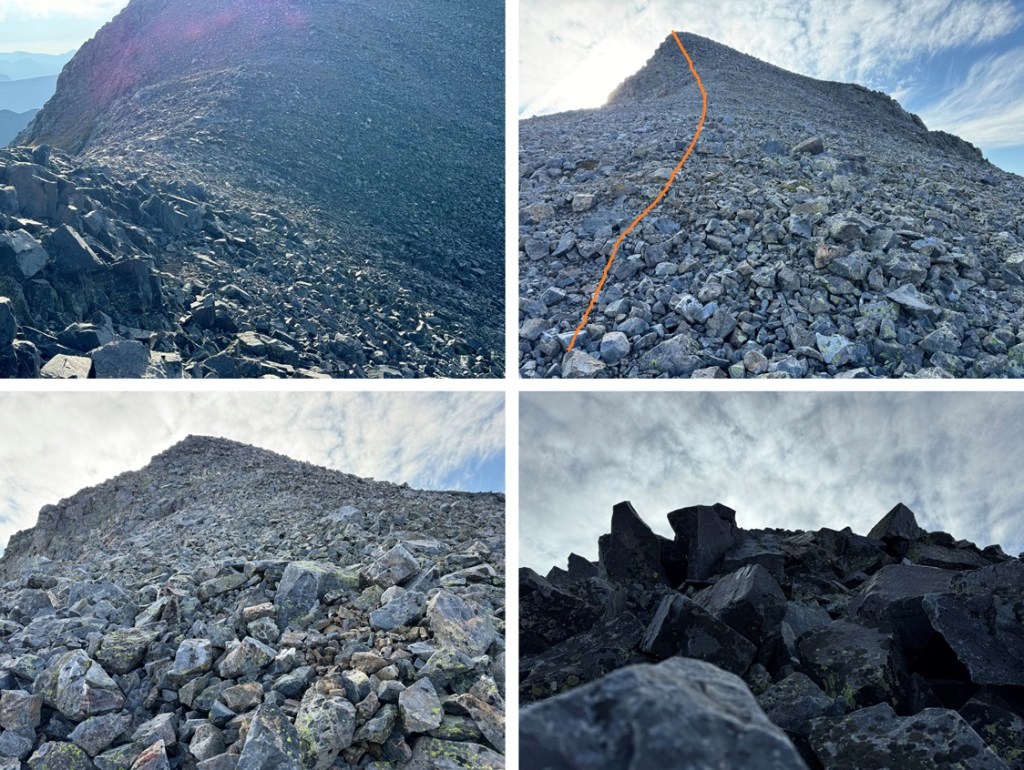
I could now see Weminuche Peak to the east. To get there, I’d need to gain another saddle. This is choose your own adventure, but this is the route I took to the next saddle. Very rocky terrain here.
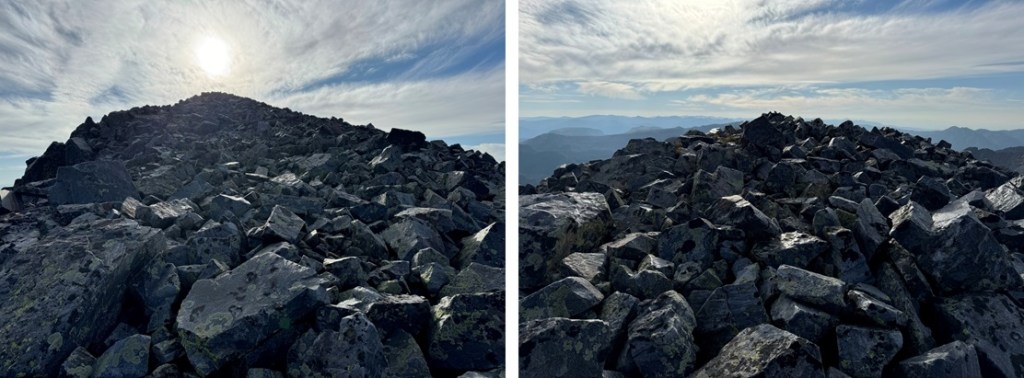
Once at the next saddle, I followed the rocky ridge east to the summit. This is class 2+. The rocks are the size of microwaves, and many of them are loose, or surrounded by talus. There are no game trails here.
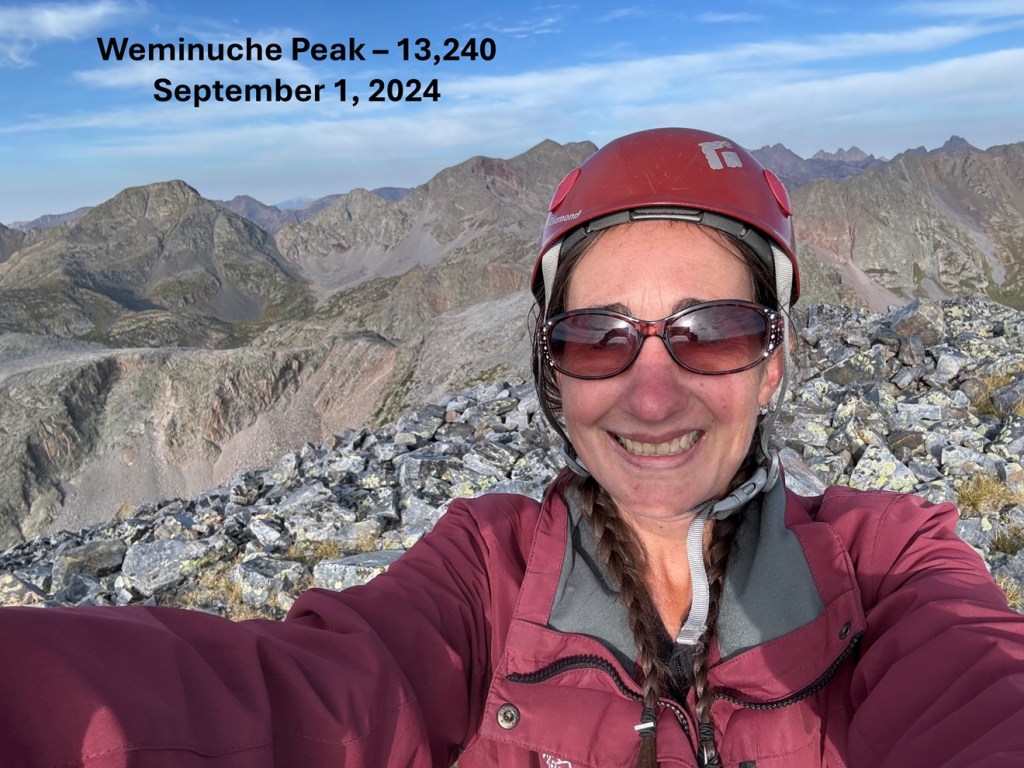
I summited Weminuche Peak at 8:20am
Weminuche Peak:
This was an out an back hike for me, so I turned around and retraced my steps back to Rock Lake. Here’s my overall view of the route back down.
First, heading west down the ridge to the saddle
And then heading southwest towards the next saddle
Back down the short but mighty rocky section
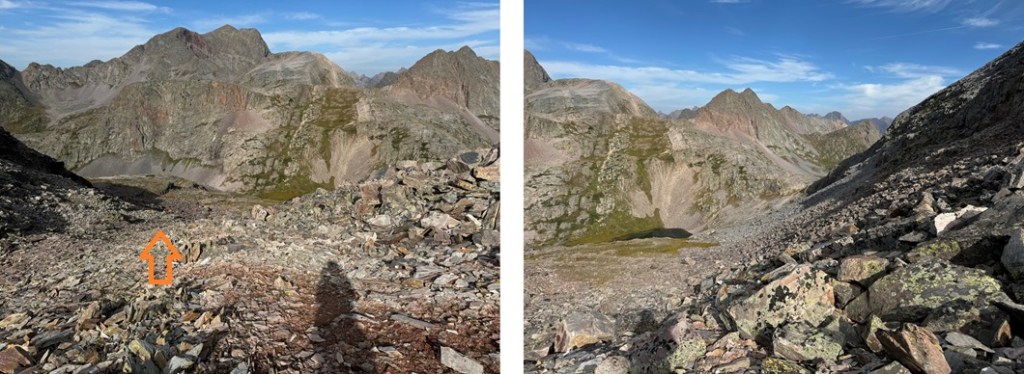
And then northwest down the gully until I could see the pass to my right that would lead me to Rock Lake.
I headed towards the pass, staying mostly on rocky tundra.
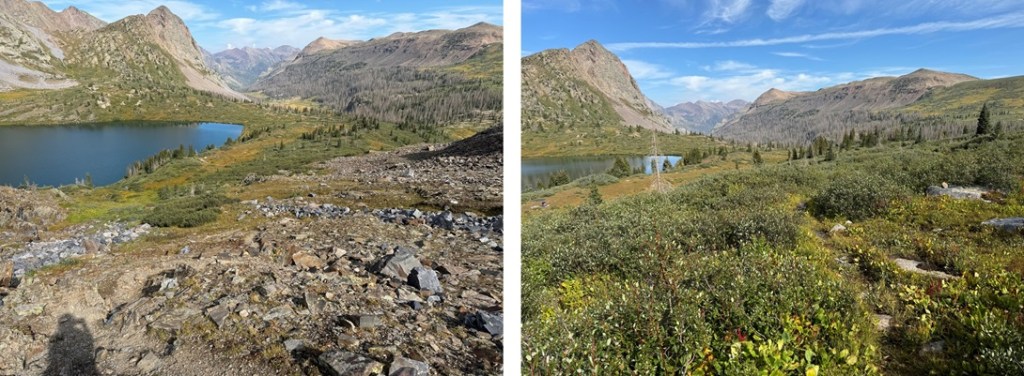
Once at the pass, I picked up the cairned trail that would lead me back to Rock Lake
I made to Rock Lake at 10am, making this a 4.16 mile hike with 1550’ of elevation gain in 3.5 hours
From my campsite at Rock Lake, I was up and on the trail at 7am, heading west towards the pond at 12000’
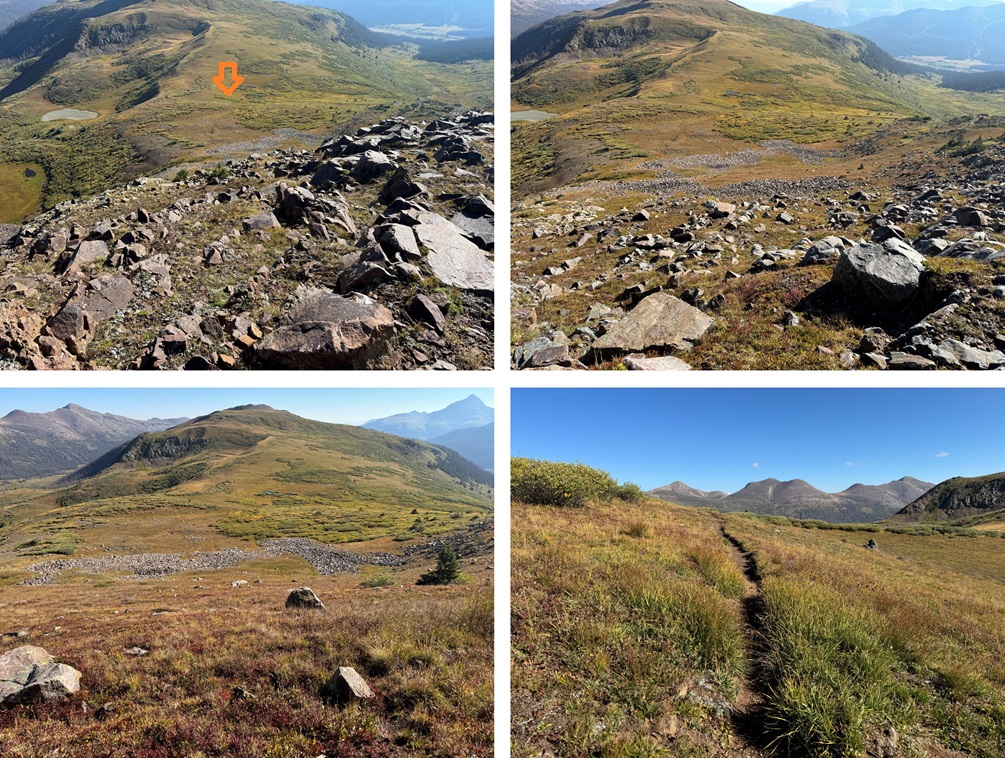
I skirted the pond to the left, and ascended on the tundra parallelling the small rock pile
At the top of this small pile of rocks was a much larger pile of rocks. I continued following them west to the Peters/Buffalo saddle.
At the saddle I turned left, and headed southwest up the slope to the ridge. This was 600’ of elevation through kitty-litter scree and talus in .2 miles. This was class 2+ choose your own adventure, but this is the basic route I took:
At the top of the ridge I turned left, and rock-hopped to the summit. This was all class 2 or easy class 3.
I summited Peters Peak at 8am
Peters Peak:
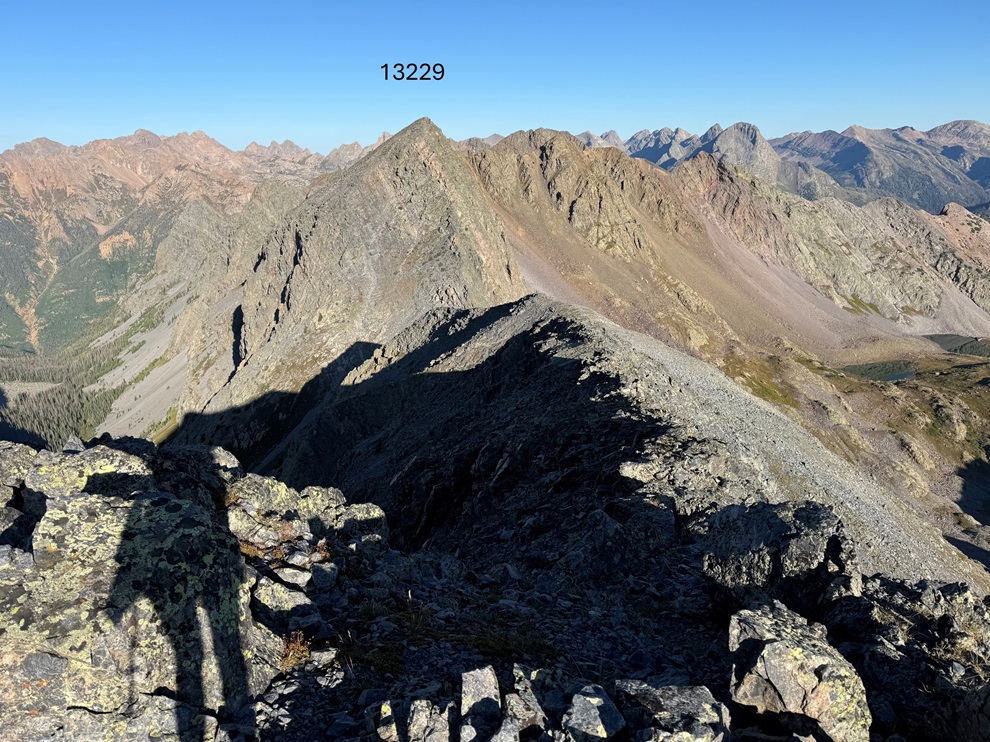
From Peters Peak, I could see PT 13229 to the northwest. I turned and headed back down the ridge, but not to the Buffalo Peak saddle. Instead, I followed the ridge west, all the way to the saddle of Peters Peak and PT 13229. This was rocky, but could all be kept class 2
From the Peters/13229 saddle, I looked for a yellow gully in the rock, and aimed for it. This is the basic route I took, all class 2 until the gully.
The gully itself goes at class 3, but you can find more stable (also class 3) rock about halfway up to the left. The gully itself was pretty stable, but there was scree littering the rocks. The goal is to gain the ridge.
Once on the ridge, I turned right, and followed it a short distance north. There were cairns here. It was rocky, and the rocks were loose.
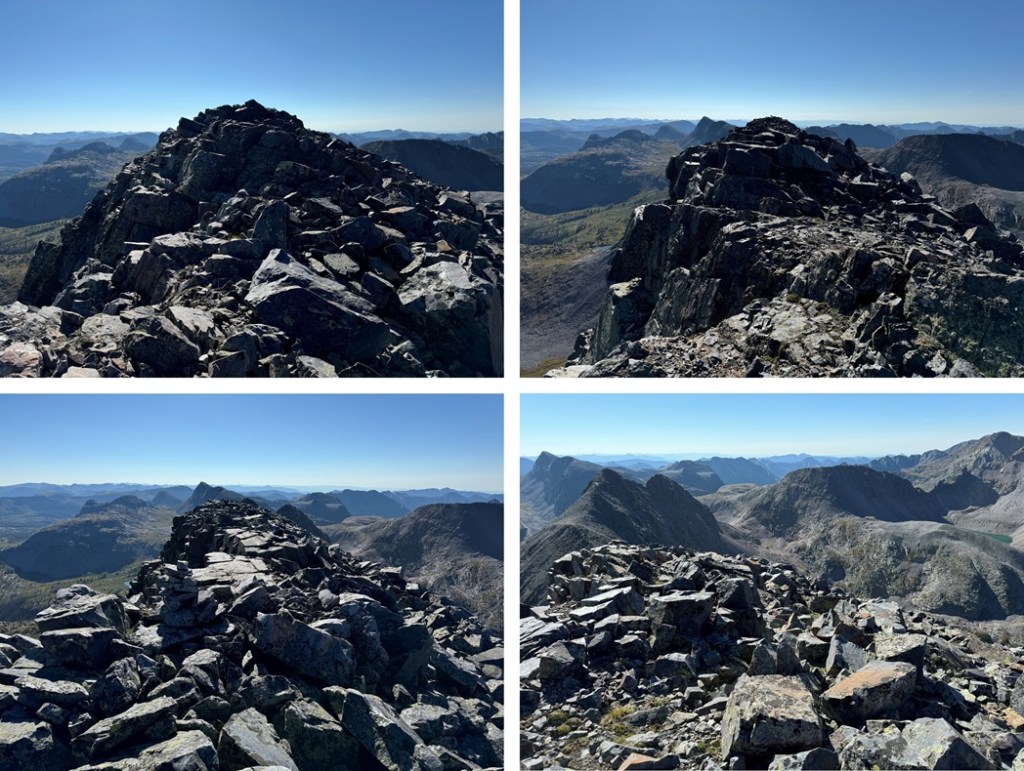
At the top of the ridge there were more cairns, all going left, following the ridge west. The ridge was pretty flat, and there were several large cairns (most likely for the traverse). I wasn’t able to tell where the actual summit was, so I just hiked the entire rocky, class 2 ridge.
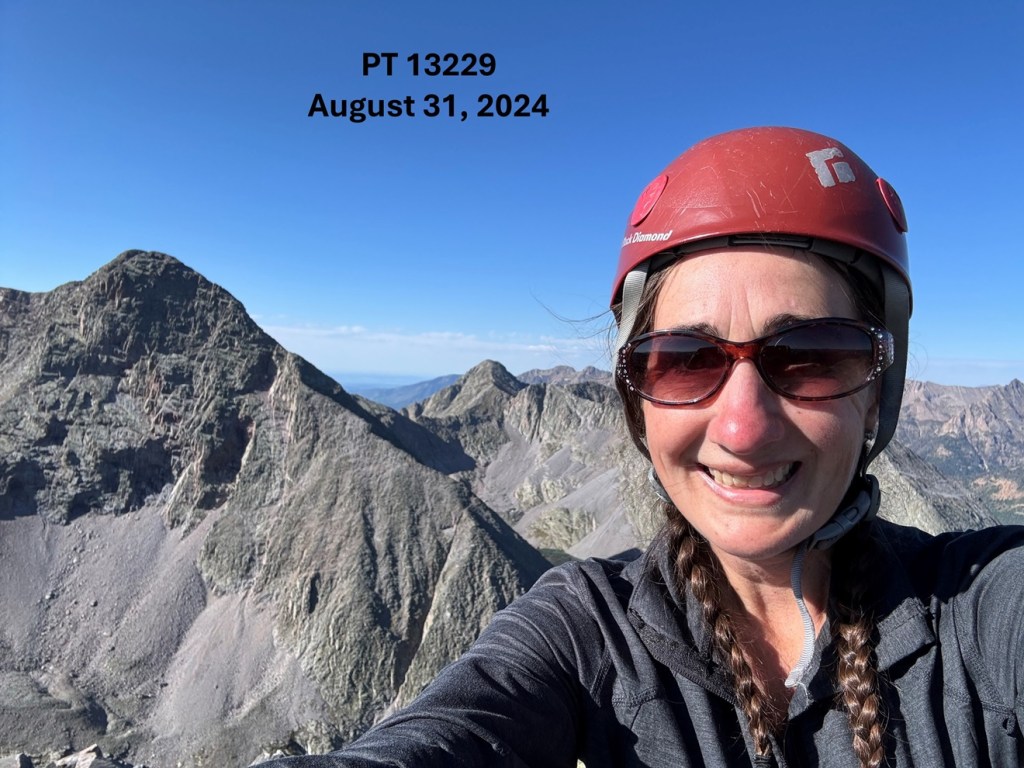
I summited PT 13229 around 9:15am
PT 13229:
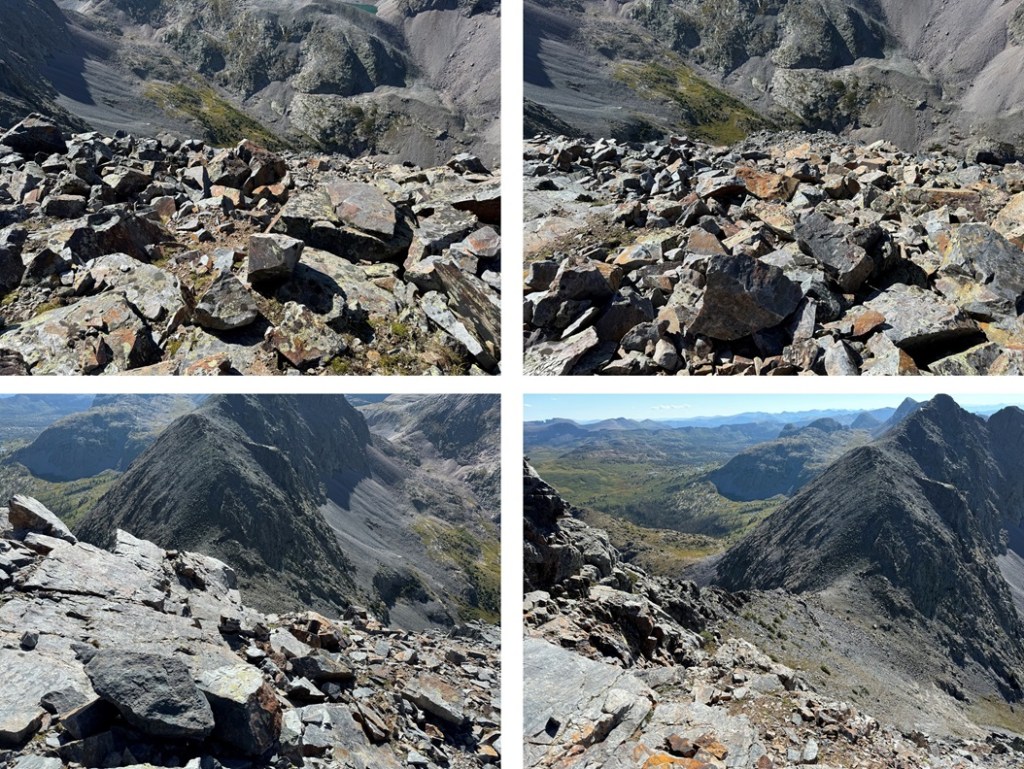
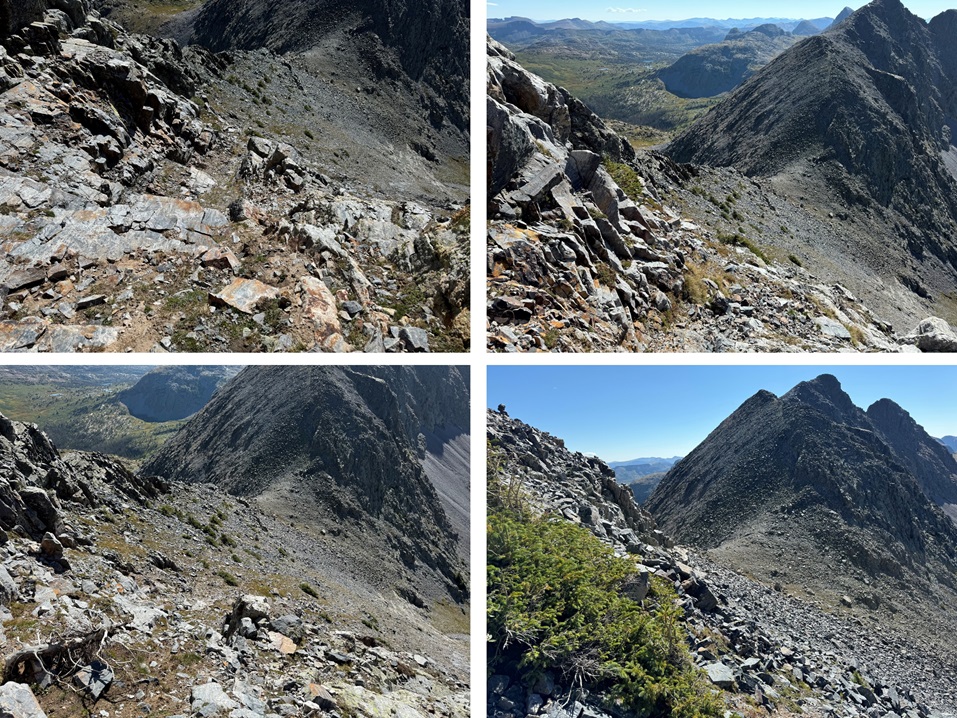
I was not doing the traverse today. While the skies were currently clear, it would be pouring down rain in another 2 hours, and I knew I had to get back to camp. So, I turned and headed back towards the Peters/13229 saddle.
I headed south towards the yellow gully
Then took the yellow gully down to the 13229/Peters saddle
Once at the saddle, I re-ascended much of the ridge to Peters Peak, then descended to the northeast, avoiding cliffing out below the Peters/13229 saddle.
First, up the ridge
Then, down to the Buffalo/Peters saddle
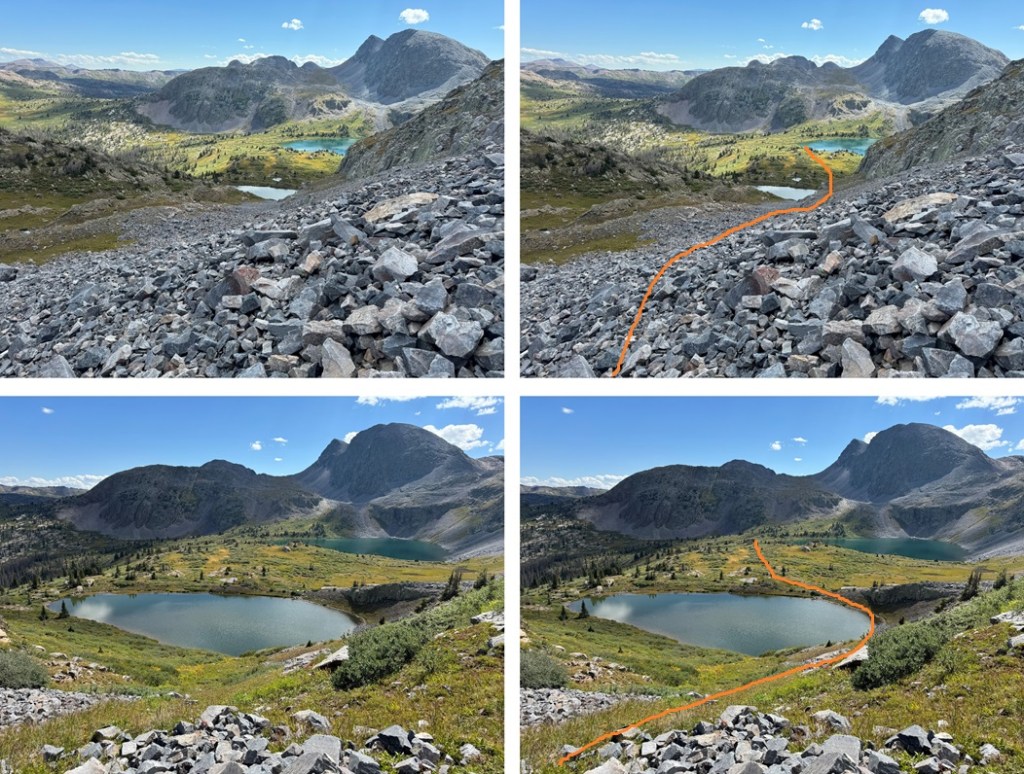
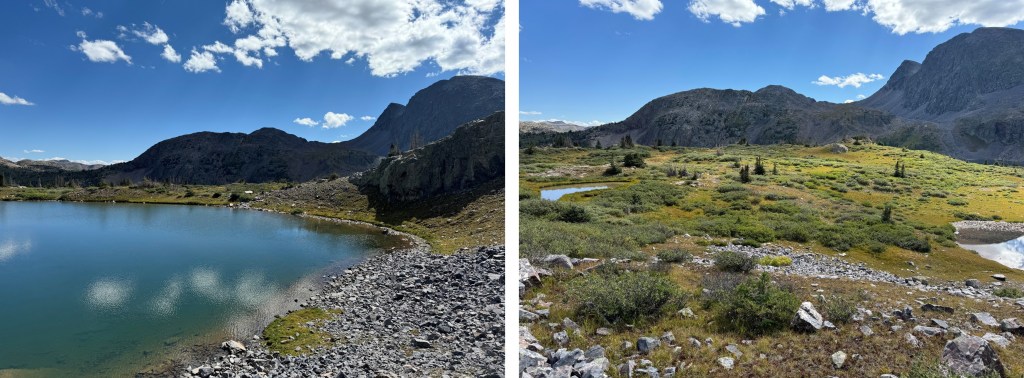
Once at the saddle I turned right, and followed the drainage east back towards Rock Lake
I made it back to Rock Lake at 11am, making this a 4.1 mile hike with 1897’ of elevation gain in 4 hours.
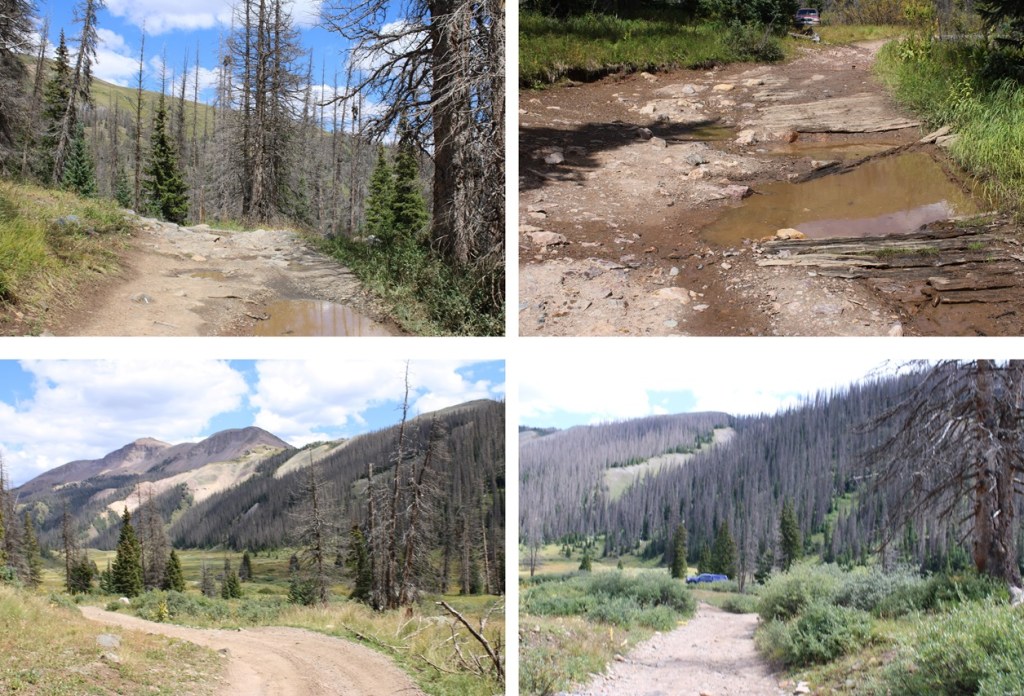
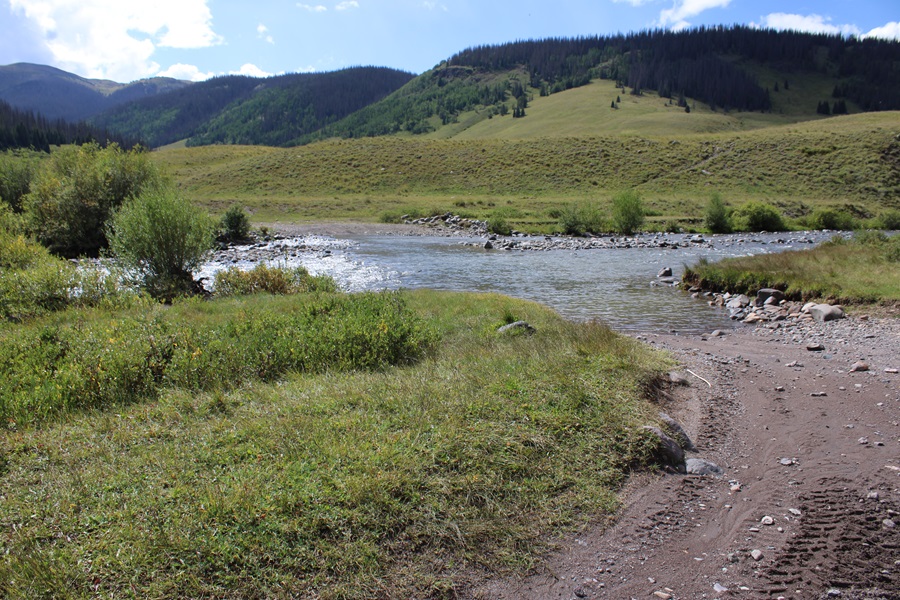
I started this hike from Beartown. I’ve made the drive into Beartown now 4 or 5 times, and from what I remember, the road and river crossings were better this time than my previous visits, but once I made it after the river crossings the road was much worse. It has rained a bunch recently, and all of the potholes were now lakes. From my parking spot at around 11250’, I headed southwest, following the 4WD road.
After hiking for about .4 miles, I came to a junction and turned left, heading towards the actual trailhead.
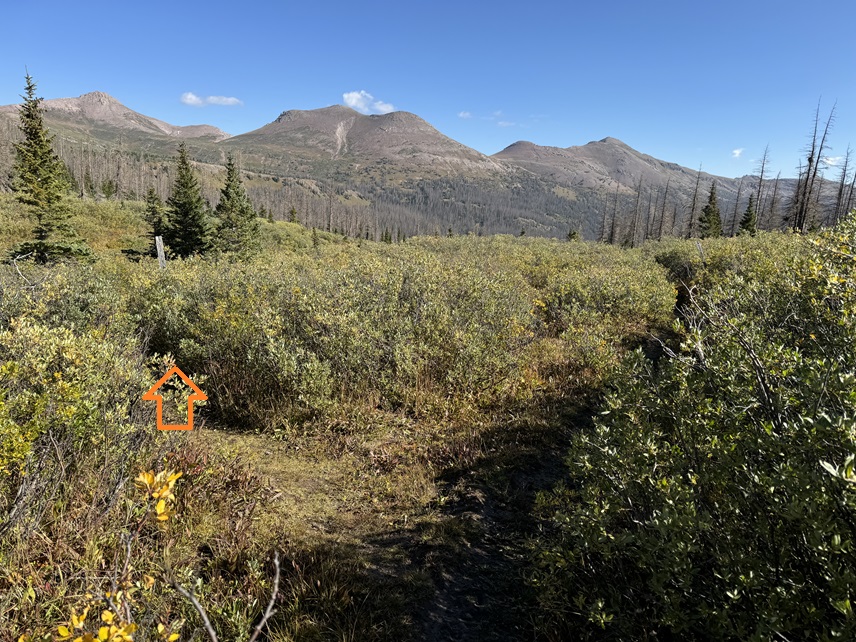
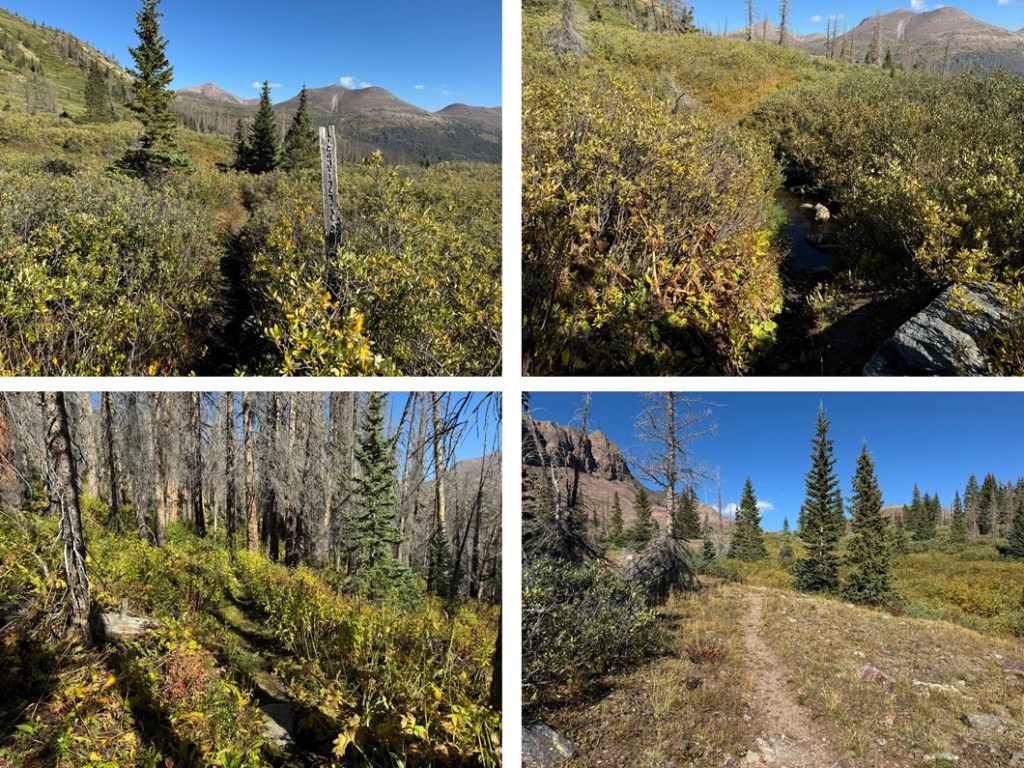
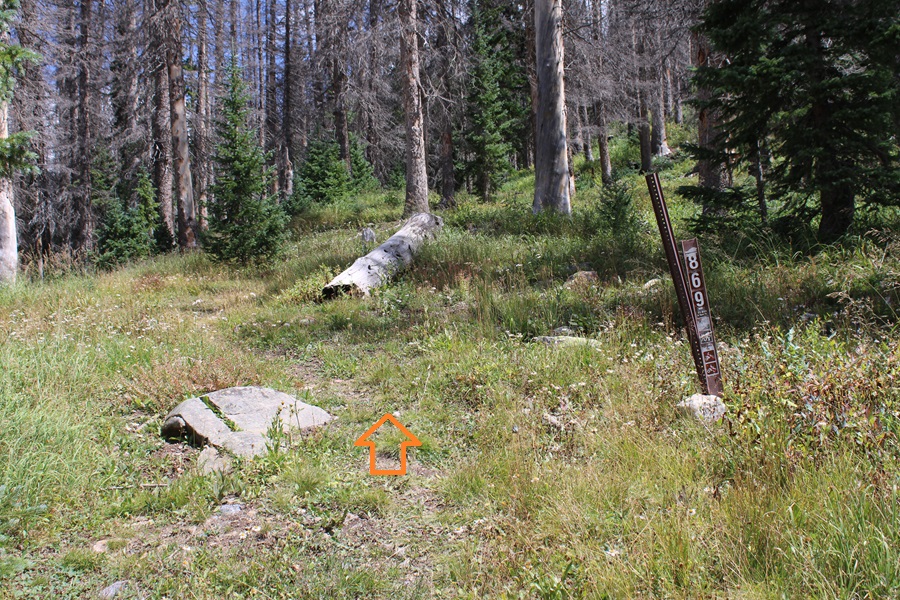
I was now at the trailhead for Trail 869. I followed this trail to treeline. The trail is class 1, except where there are downed trees and overgrowing vegetation covering the trail. Then some route finding is required, but the trail always picks back up again. Once above treeline, the trail is easy to follow.
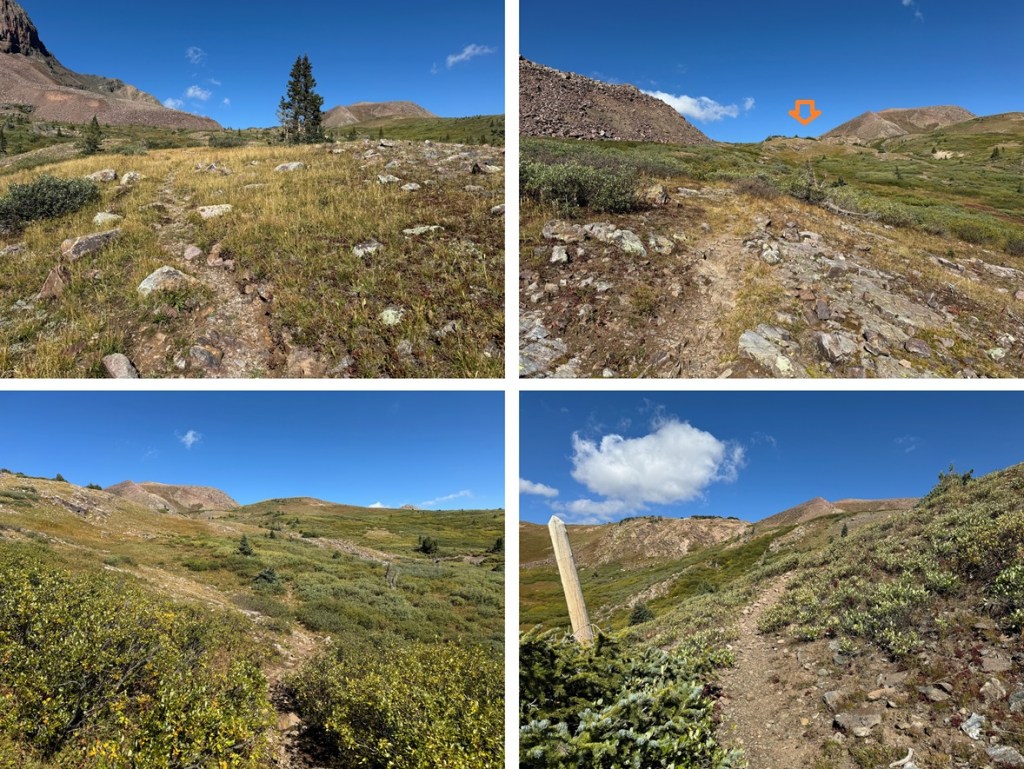
At treeline, I continued following the trail south
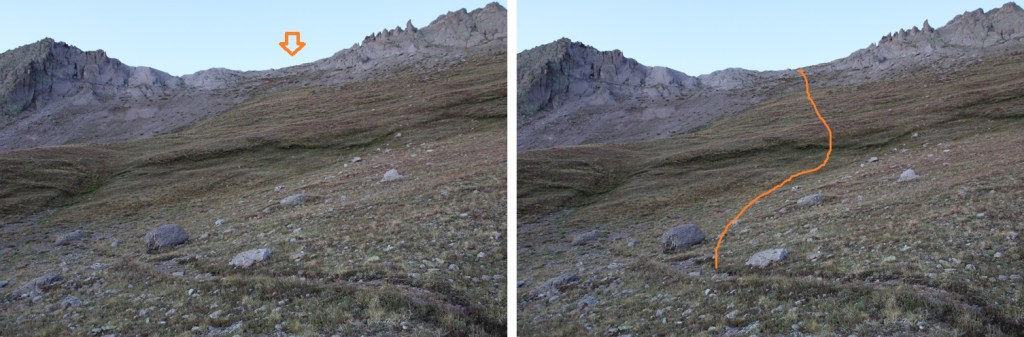
The trail was headed towards the saddle of 13318 and 13351, but before reaching the saddle I aimed for this point in the ridge. There are game trails to get you there, but the route is pretty obvious.
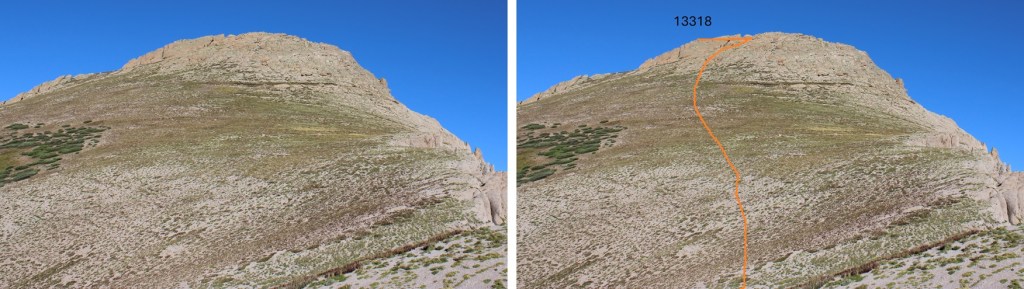
Once on the ridge, I turned right and headed west. Here’s my overall route to the summit. This is all class 2, with some scree mixed in. The boulders can be avoided on class 2 terrain, but be prepared for lots of kitty litter. Look for an access route to the left and center of the boulders, and you’ll find a scree path.
When I made it to the ridge, I realized I was at a false summit, turned left, and boulder-hopped to the true summit.
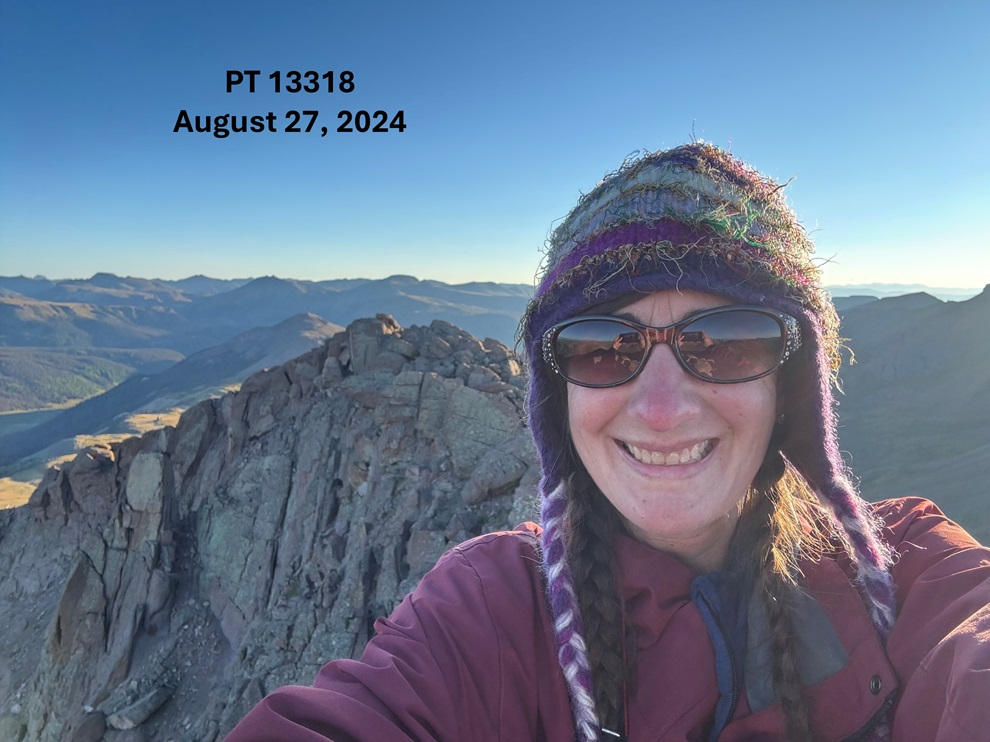
I summited PT 13,318 at 7:15am
PT 13,318:
My next goal was PT 13351, to the east. The summit is hidden in this picture by a false peak, but this was my route to the summit. I curved to the right of the peak, avoiding the rocky areas by staying on tundra, then headed for a small saddle.
First, to make my way down to the 13318/13351 saddle.
Then I headed up the slope, staying on tundra, circling around until I could see a small saddle at the ridge.
Once on the ridge, I turned right, and headed east towards the rocky area.
This rocky area was class 3, and once again choose your own adventure. The rocks were loose, and there seemed to be many options to make it to the summit. This is the route I chose:
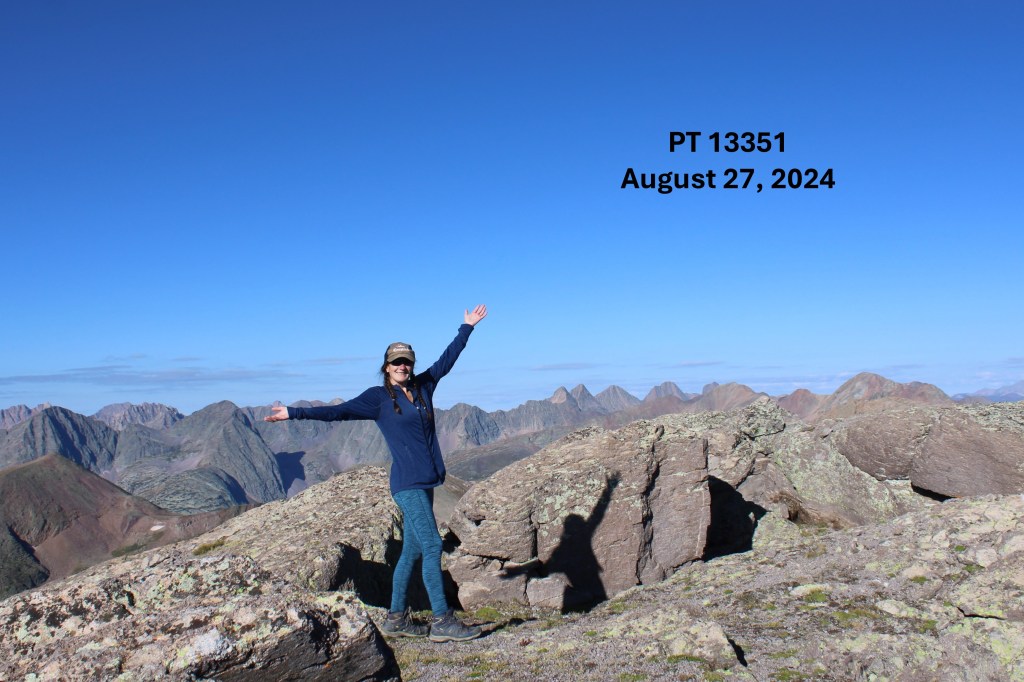
I summited PT 13,351 at 8:30am
PT 13,351:
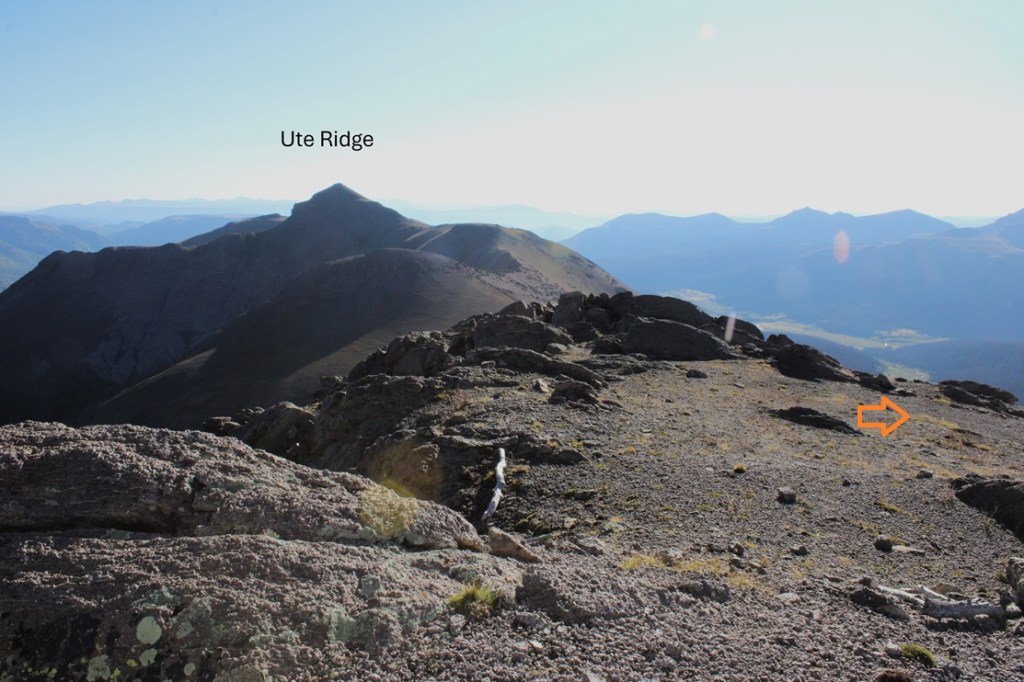
My next goal was Ute Ridge, to the northeast
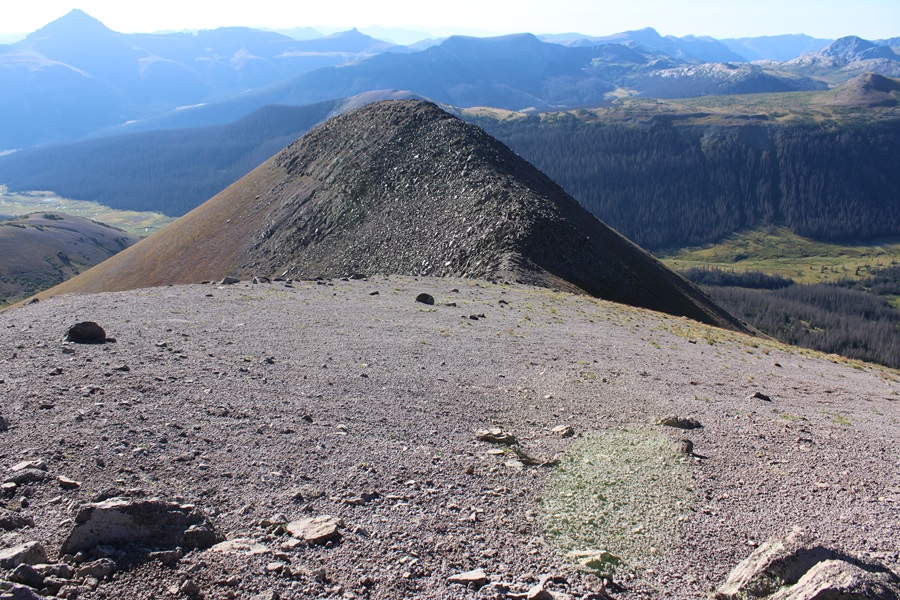
Fist, I’d have to follow the ridge southeast and gain this point before heading down to the 13351/Ute Ridge saddle.
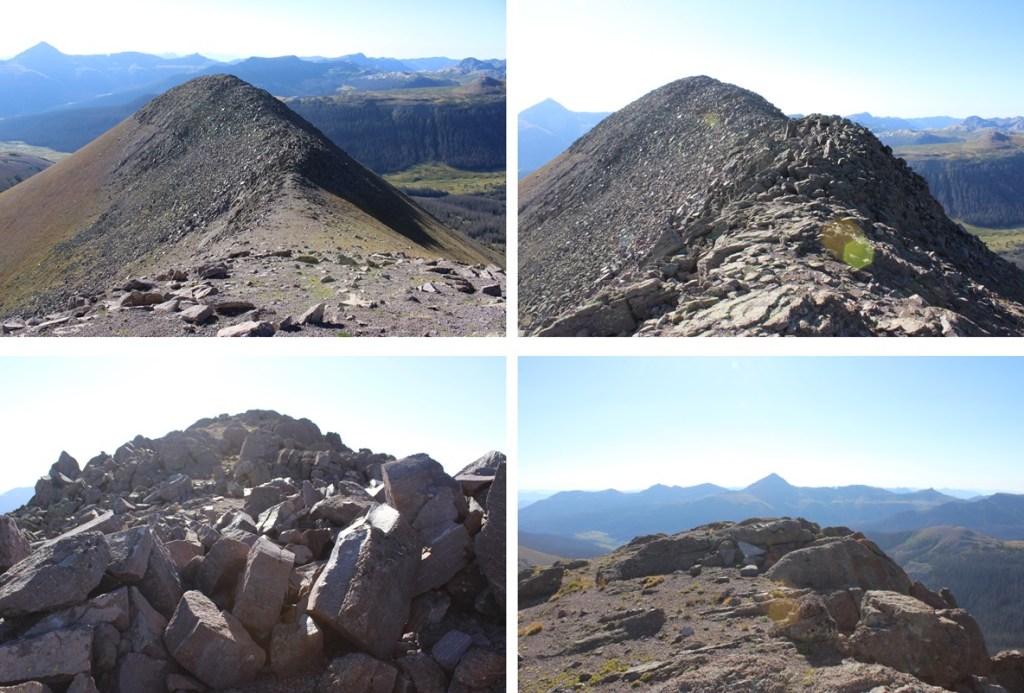
I headed towards the unnamed point. A few thoughts on this ridge: It’s rocky, and loose. It can be kept class 2 if you stick to the right of the ridge, class 3 ridge proper. Once again, ALL of the rocks are loose.
I was able to follow scree and tundra down to the 13351/Ute Ridge saddle. Now is a good time to look at the route you want to take to gain the ridge. I stayed below the rocks, but was able to find game trails through the scree to the ridge. The ridge proper has a lot of unavoidable rock formations, so I wanted to stay below them until they were gone before gaining the ridge.
And now to gain the ridge while avoiding the rock formations
And then following the ridge proper.
I came to a rocky area, and found a game trail up to the left
Then I continued following the tundra towards Ute Ridge
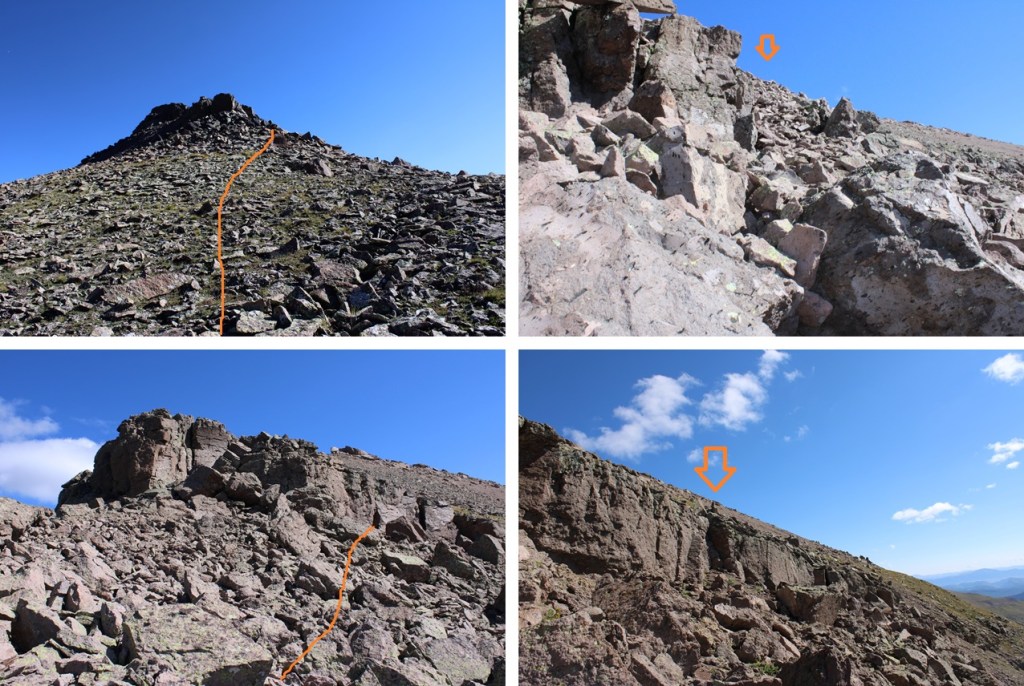
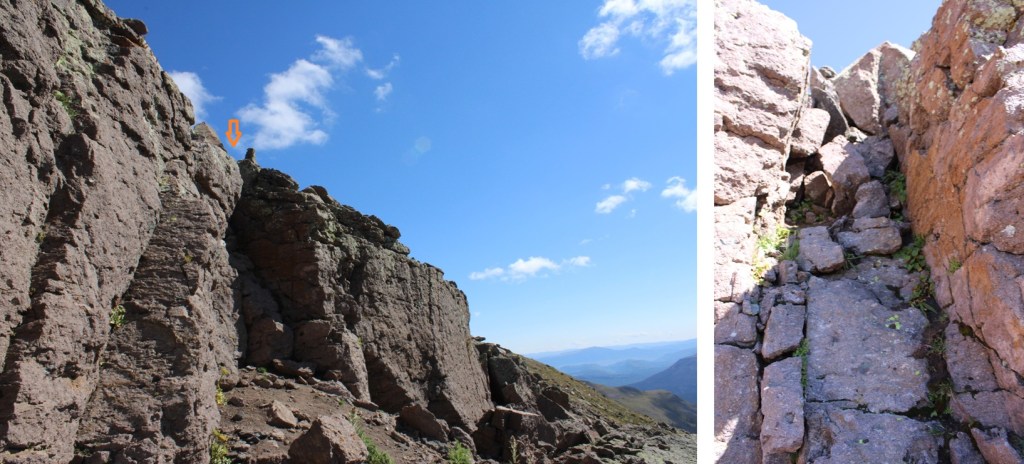
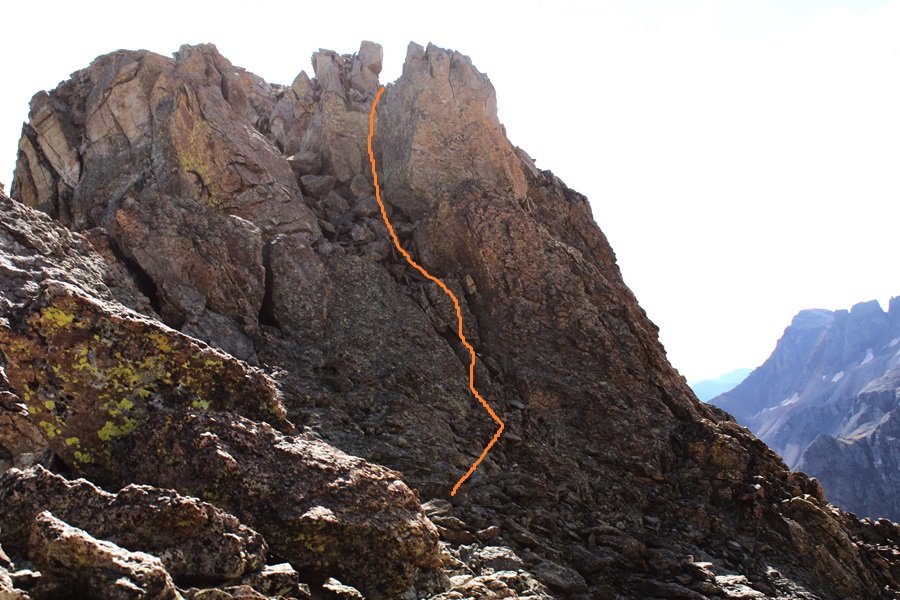
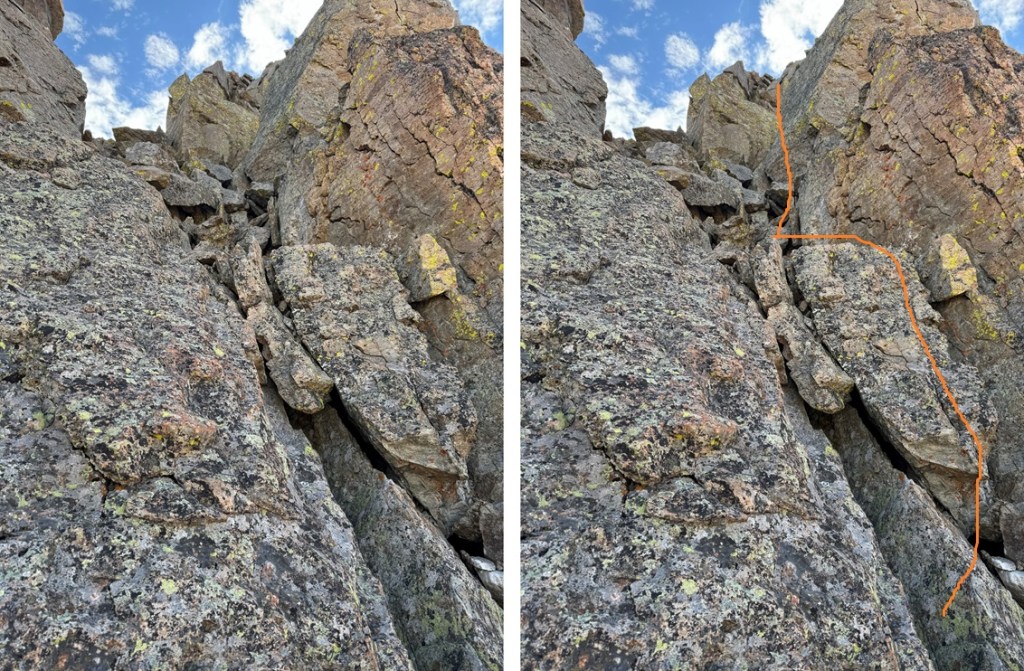
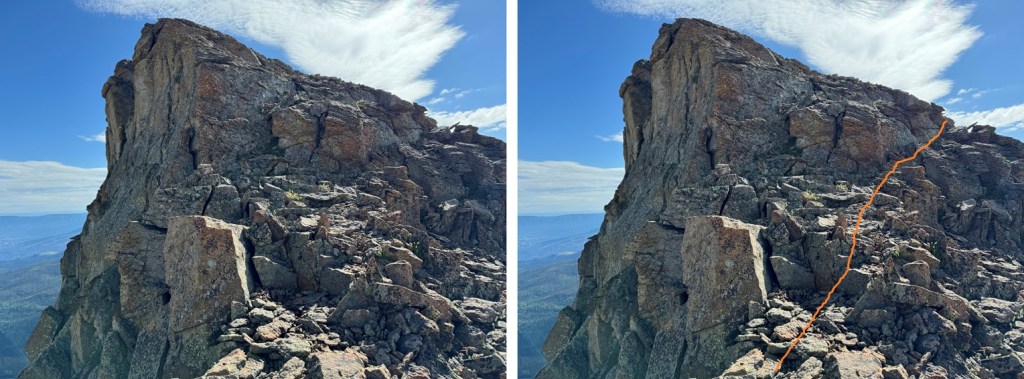
This next section is a little tricky when you’re down in it, so now’s a good chance to take a look at your route. The rocks here are loose. I chose to go right of the ridge when I had the chance. Just before the summit is a large rock band. There were several chimneys there to use as access. I ended up choosing the third chimney I came to, although they all had cairns indicating they “went”. If you want to avoid the chimneys altogether, you can continue further right and use class 2 terrain (although it looks like steep scree is involved).
Here’s the route I took:
This is the chimney I took:
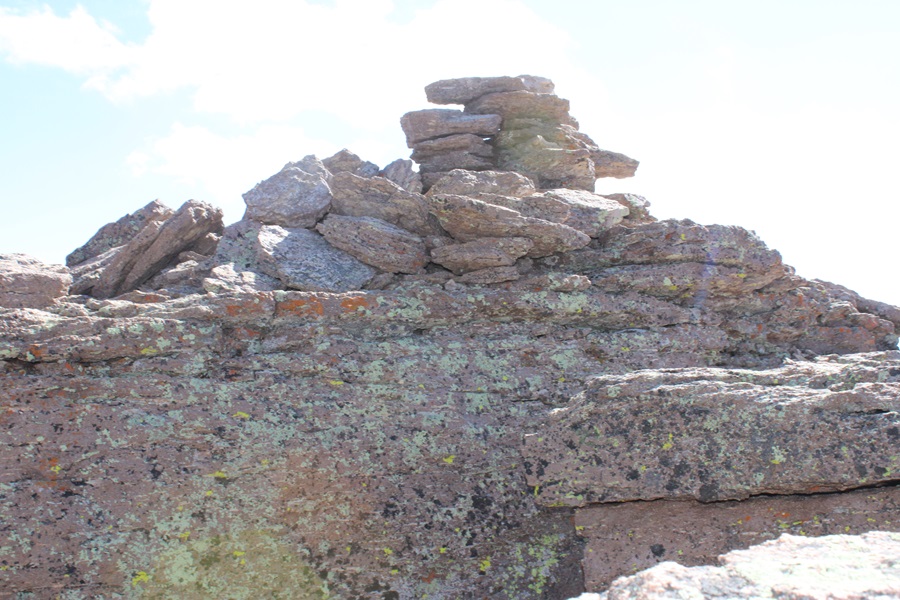
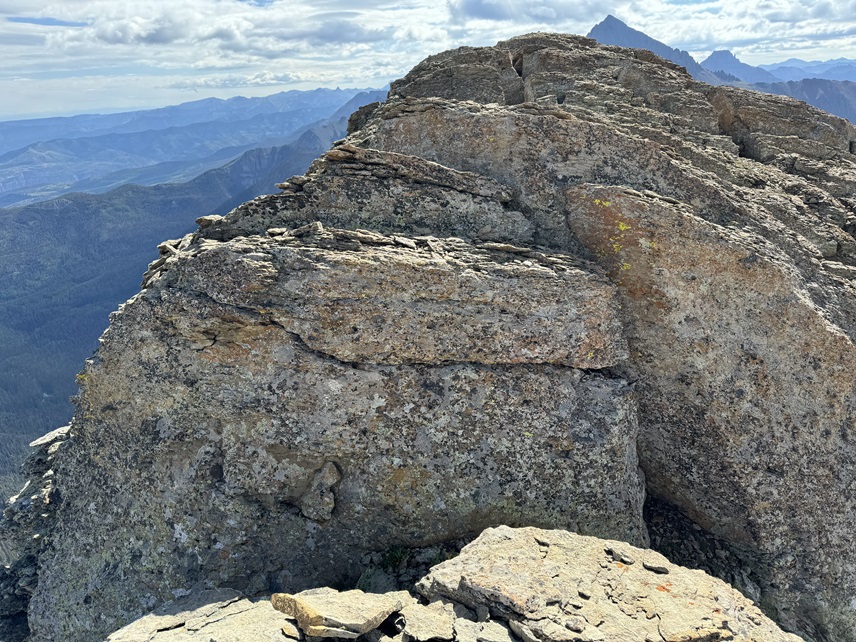
At the top of the chimney I headed back towards the ridge, and followed the rocks to the summit. The boulders at the top are so large you can walk around them to the summit.
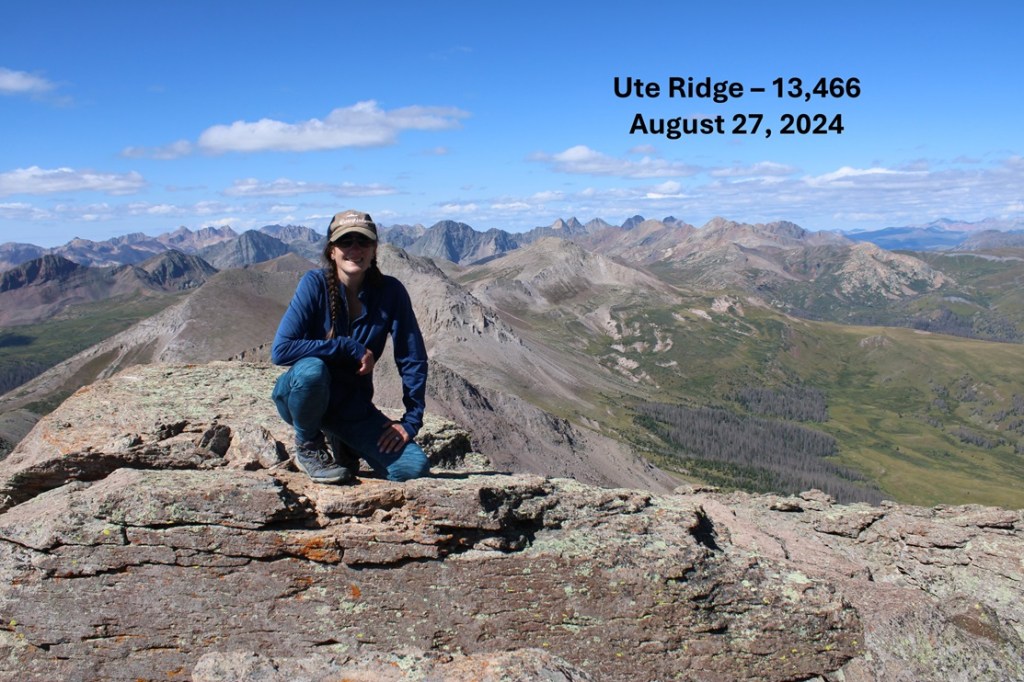
I summited Ute Ridge at 10:30am
Ute Ridge:
And now to head back down towards the chimney
Down the chimney, and back towards the 13551/Ute Ridge Saddle
From the saddle of 13551/Ute Ridge, my intention was to make it back to the ridge and the trail I’d hiked in on from Beartown. The trail goes along much of the ridge, so I just needed to aim for the ridge. You can do this by aiming for the gully, or taking the slope. I took the slope to avoid the willows. Once I was down in the gulch, I gained about 950’ to the ridge.
Here are some pictures of the route:
Heading west on the tundra eventually brought me back to the easily identifiable trail that would lead me back to Beartown
Once back on the 4WD road, I followed it back to my parking spot
I made it back to my truck at 1:15pm, making this a 12.29 mile hike with 4438’ of elevation gain in 8 hours, 15 minutes
For those of you interested, this is what the second river crossing looked like in late August of 2024:
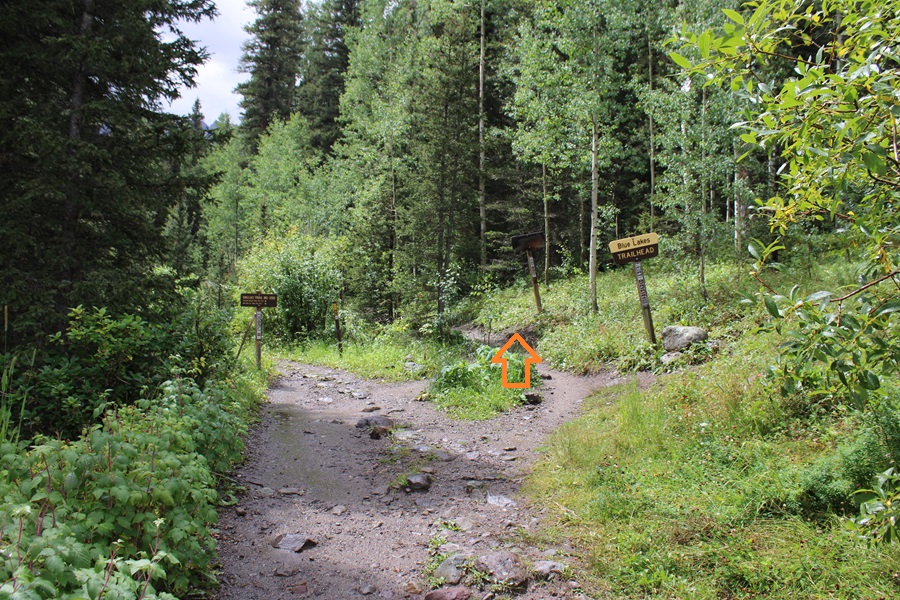
There were only two other vehicles in the lot when I parked at the Blue Lakes Trailhead. It was raining, so I waited for the rain to stop, and was on the trail at 5am. The trailhead starts at the south end of the parking area, and is clearly marked.
Immediately after the trailhead there’s a junction. I went right, taking the Blue Lakes Trail.
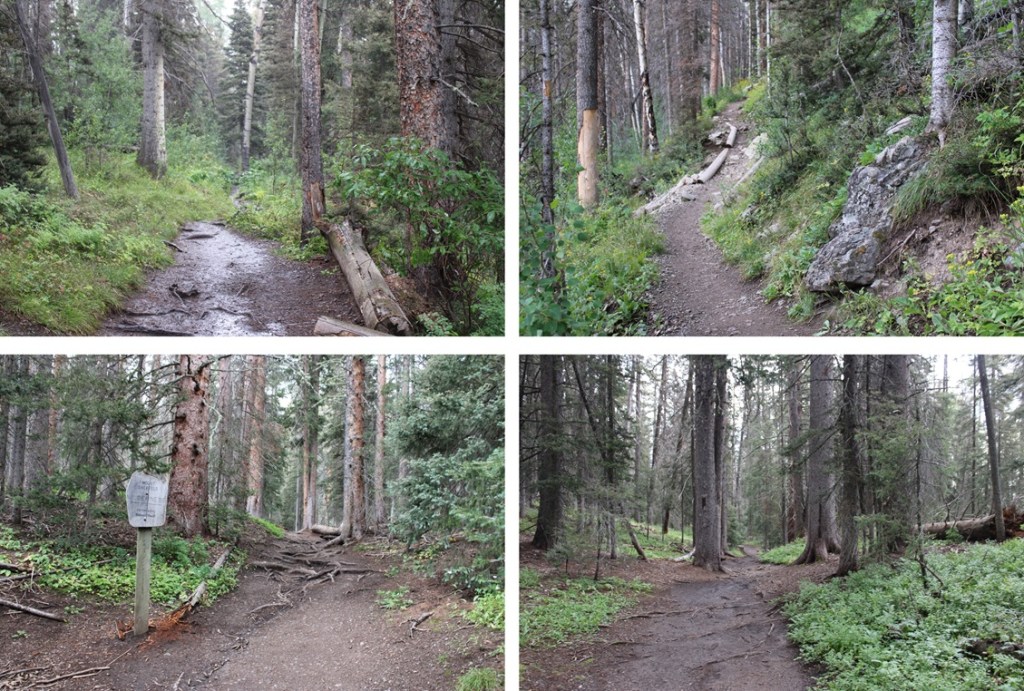
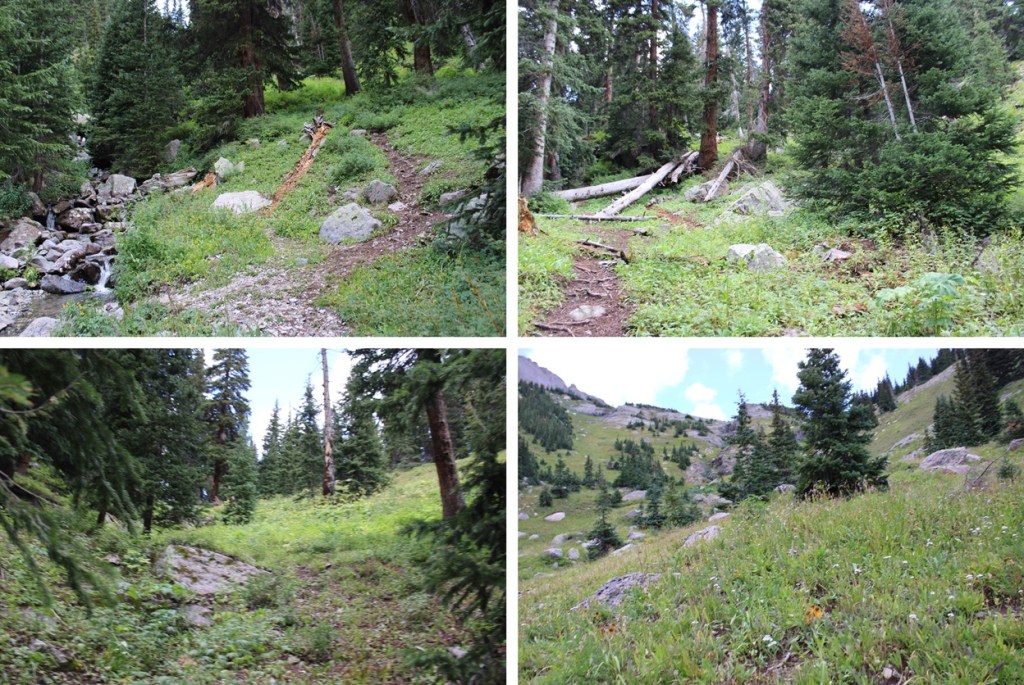
This was the only junction until I made it to Blue Lakes. I followed the trail 3.5 miles to Blue Lakes. About 2.5 miles into the hike it started raining again, and I had to take shelter for a bit under a tree. However, the trail was class 1, and easy to follow the entire way.
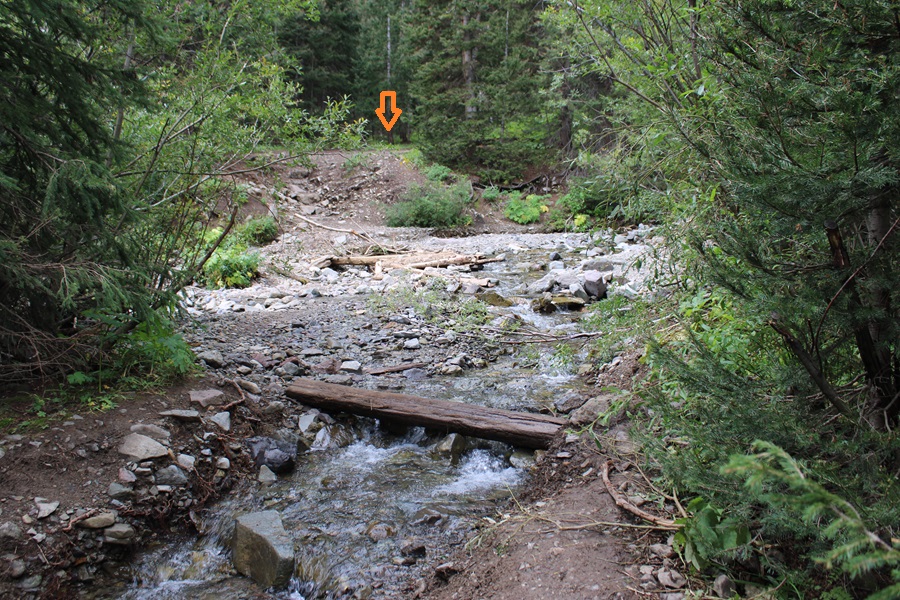
There was an easy creek crossing
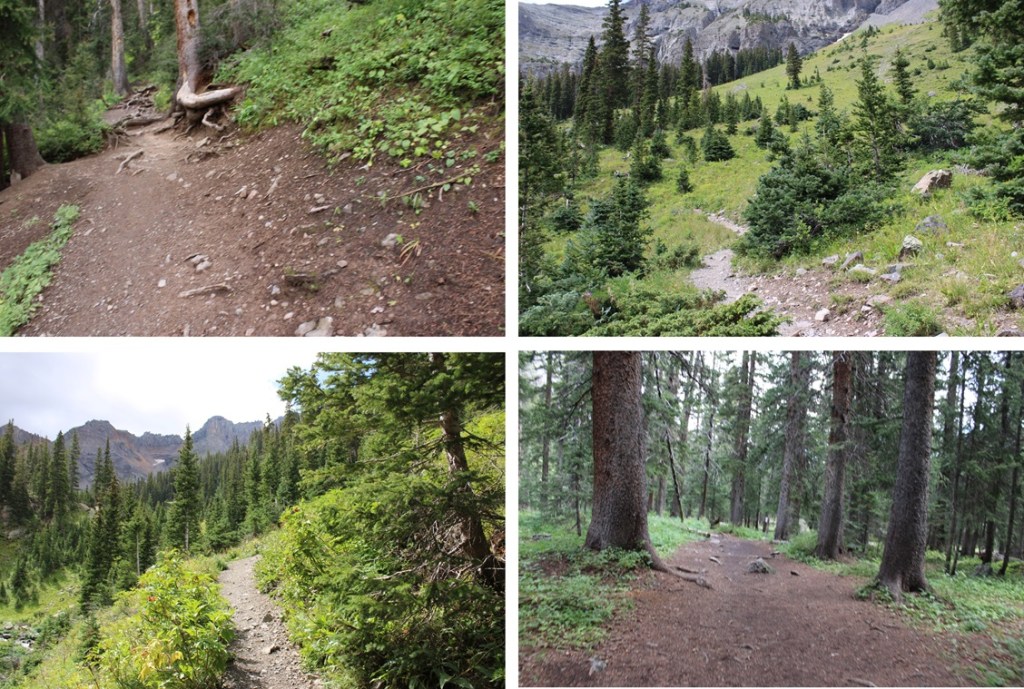
And then I continued my way up to Blue Lakes
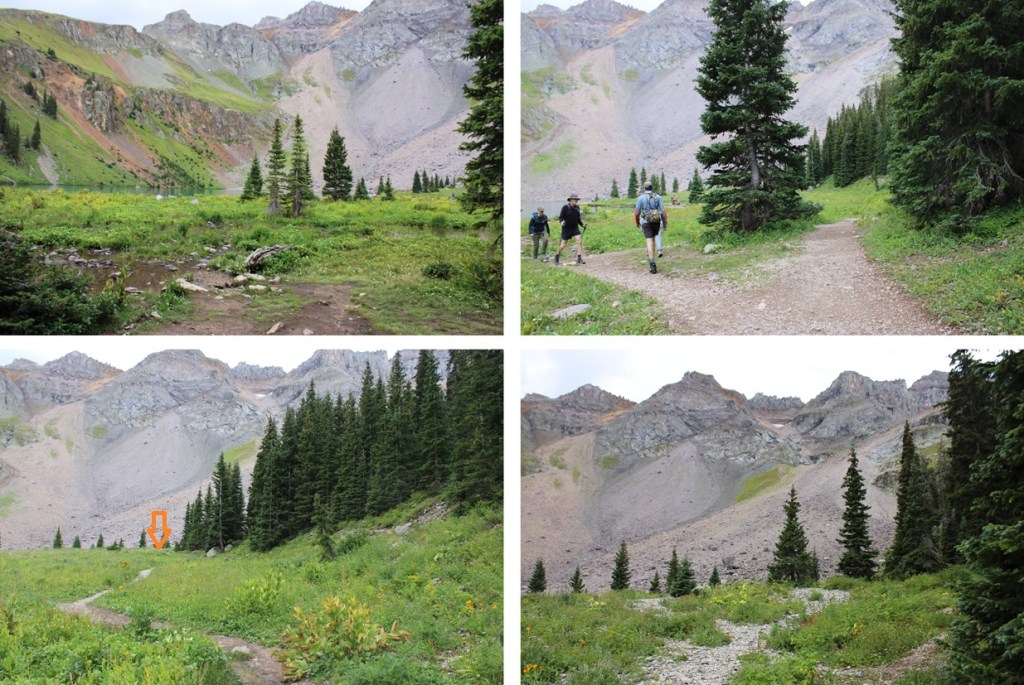
Once I arrived at Blue Lakes, there were several social trails to campsites. I stayed on the trail closest to the lake, skirting the west side, towards a creek flowing into Blue Lakes.
At the last campsite before the creek, I followed the drainage on the right side of the creek up to treeline.
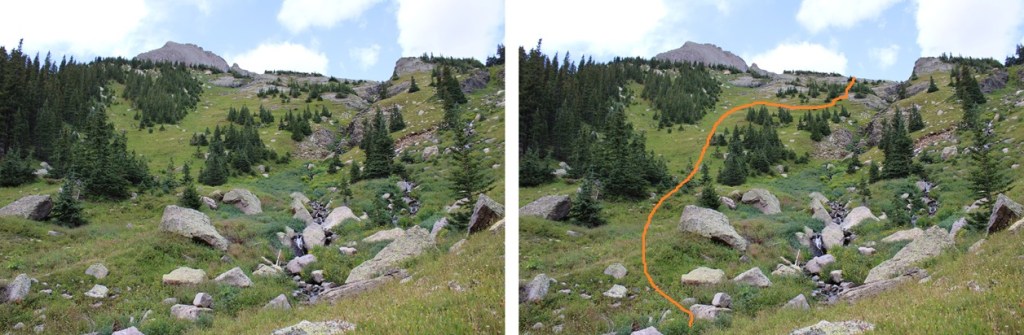
Once at treeline, or at least very close in a wide open space, I crossed the creek and headed west up the slope, keeping the creek to my right.
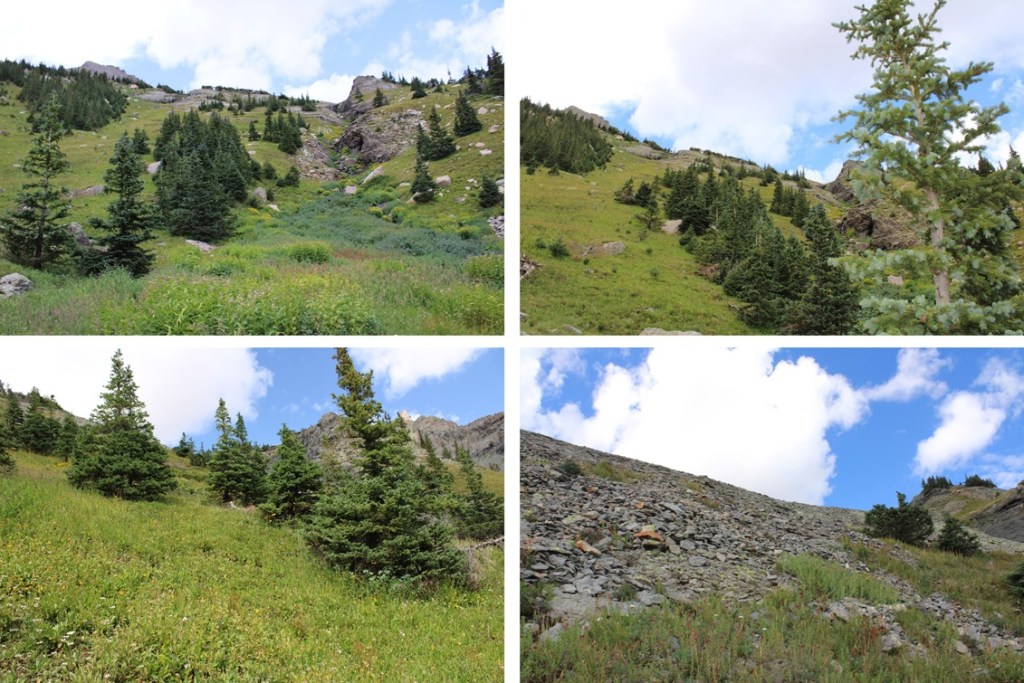
At the top of the slope I continued heading west, staying on the tundra. You can go right and use the talus, but it’s going to be a LONG day of talus, and I’d rather use the tundra when available.
At about 12330’, I went right and dropped about 50 feet down to the talus. There is a game trail here on the talus that will bring you to the upper basin.
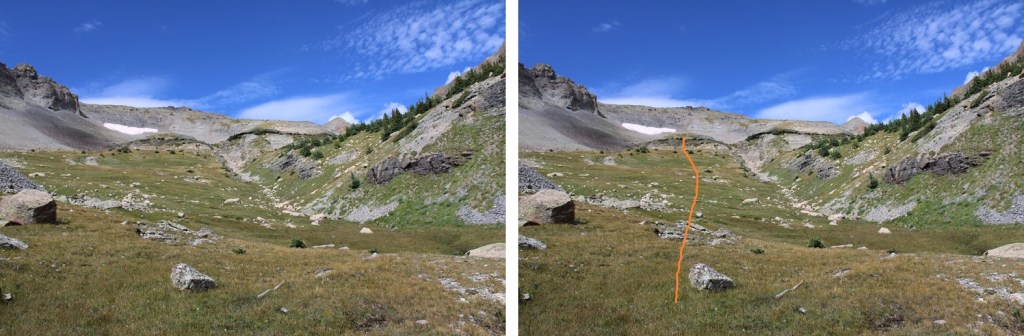
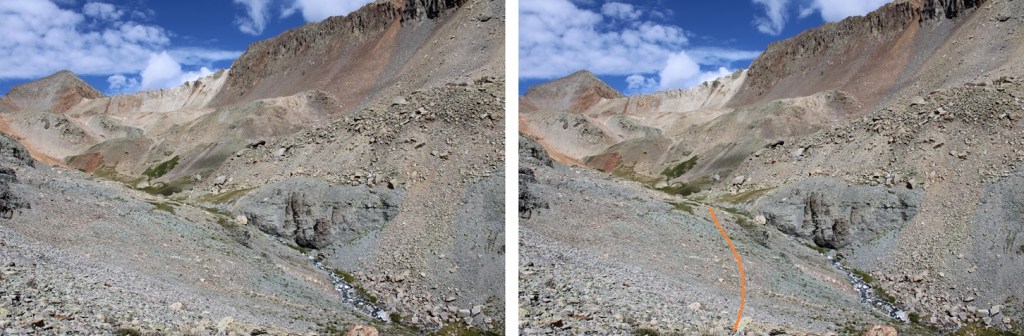
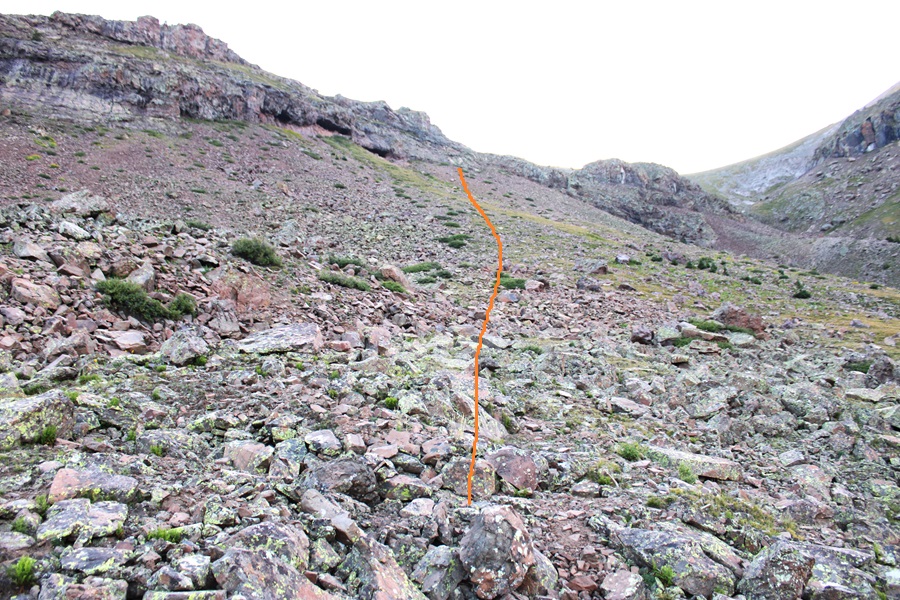
Once in the upper basin, there will be an obvious drainage to the right. I went through the drainage, rock hopped for a bit, and then ascended 600’ of the worst talus ever to a gully. I put on my helmet and started up. Here’s the overall route:
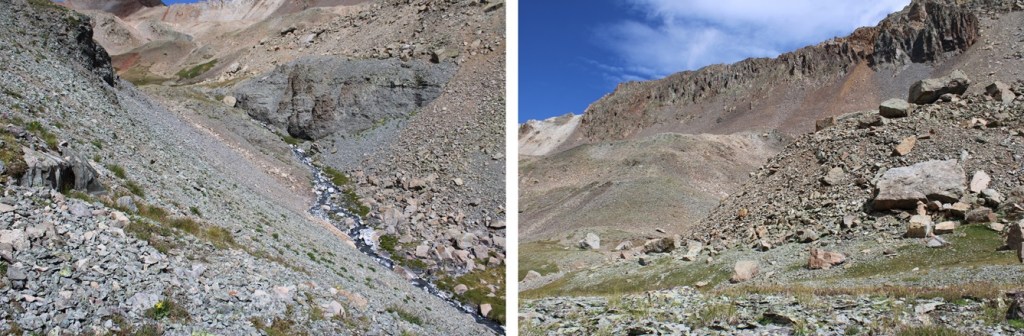
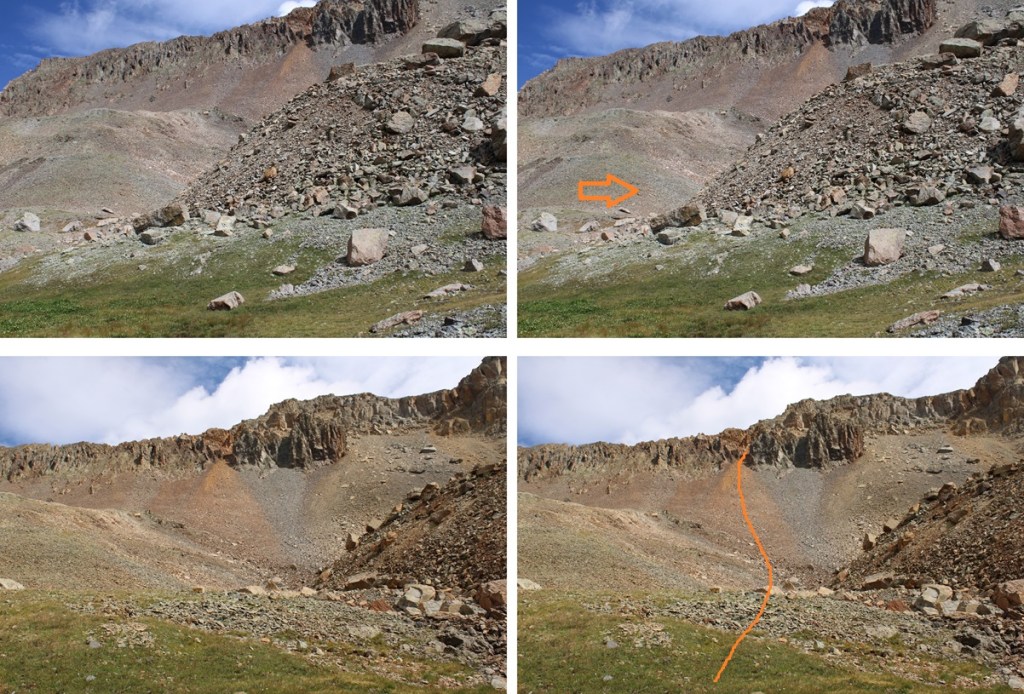
As I ascended further up the gully, the talus became looser, but there were also areas of sand mixed with scree. The rain that morning had turned the sand into a thicker substance, which gave me some much needed traction. When you enter the gully, stay to the LEFT. I tried to stay to the right because it looked more stable, but found I was unable to cross over to the left when the time came, because I was now in an hourglass, and traversing it meant rocks above and below me would give way in a rockslide towards the base of the gully, like a funnel (or an hourglass). After the first few attempts at traversing from up high and sliding several feet before stopping, I downclimbed and re-traced my steps up this part of the gully, sticking to climbers left. Also, if you’re doing this with other people (in your group or not) stay clear when someone is in the gully, and even if you don’t think anyone is below you on your descent, yell to see if anyone is there. Large rocks will fall as you ascend and descend (there’s nothing you can really do to prevent it).
Keep heading left, until the scree ends
Once the scree ends, if you haven’t already, now is the time to put on your helmet. The rest of the summit is class 3 and class 4 on the loosest terrain I’ve ever experienced. NOTHING is stable. Trust nothing above, in front of, or below you without attempting holds several times to make sure they are solid. There is large kitty litter on solid rocks, loose talus, and rock slabs that look stable but are hanging precariously, especially from above.
From the top of the gully I headed east, to follow the ridge. Here’s the route I took:
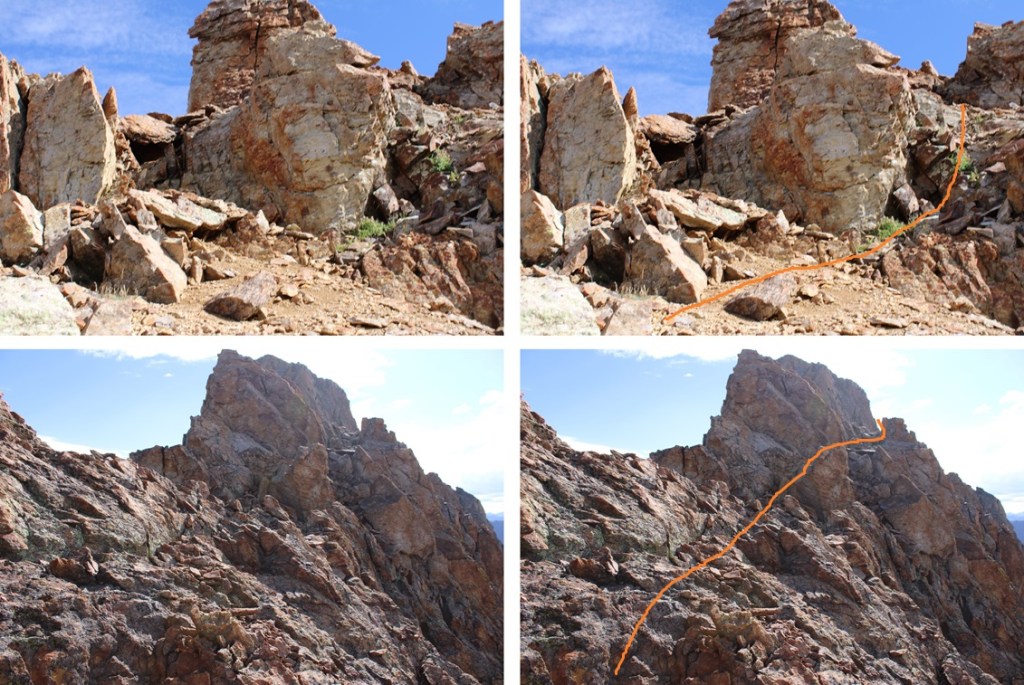
You should now have a good view of the class 4 chimney to the summit. This is a very loose chimney, and it stops halfway and starts again. Even the large boulders are loose, so be careful with hand and footholds until you’re sure it won’t move. I started out by climbing straight up the center, until I came to a “y” where both sides looked perilous. I decided the right side looked more protected. The were both loose, sometimes with just large wobbly boulders stacked on top of each other to climb, and sometimes what looked like 10 foot boulders sitting atop rocks the size of a microwave. Between the two chimneys, there’s probably 40 feet of climbing. I wouldn’t trust an anchor here: to many of the boulders are loose. (There weren’t any anchors set up).
Here’s the overall route I took:
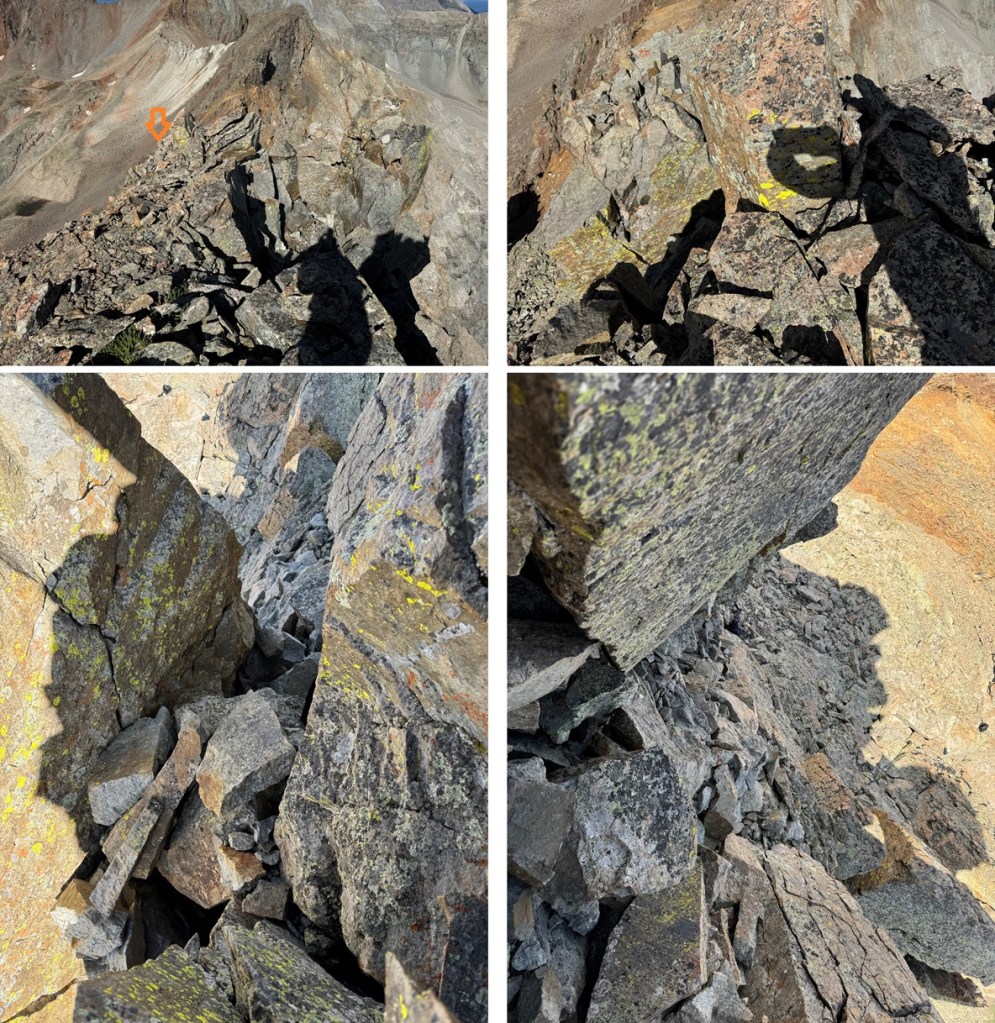
And some closer pictures of the chimney(s)
Chimney 1:
Chimney 2
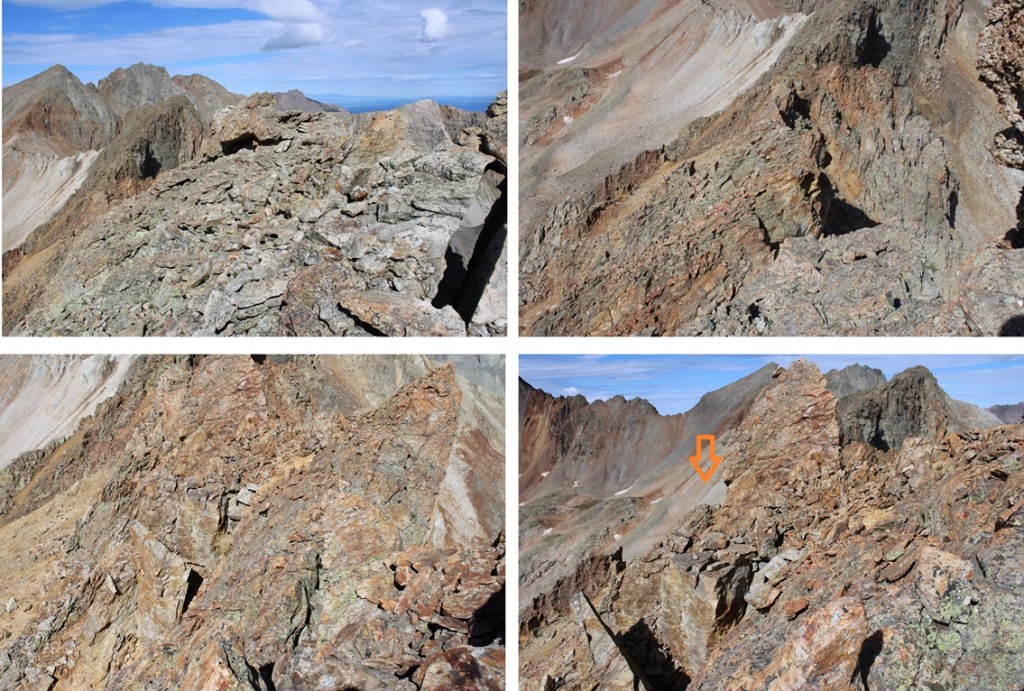
From the top of the second chimney to the east you can see the route you scramble up to the summit
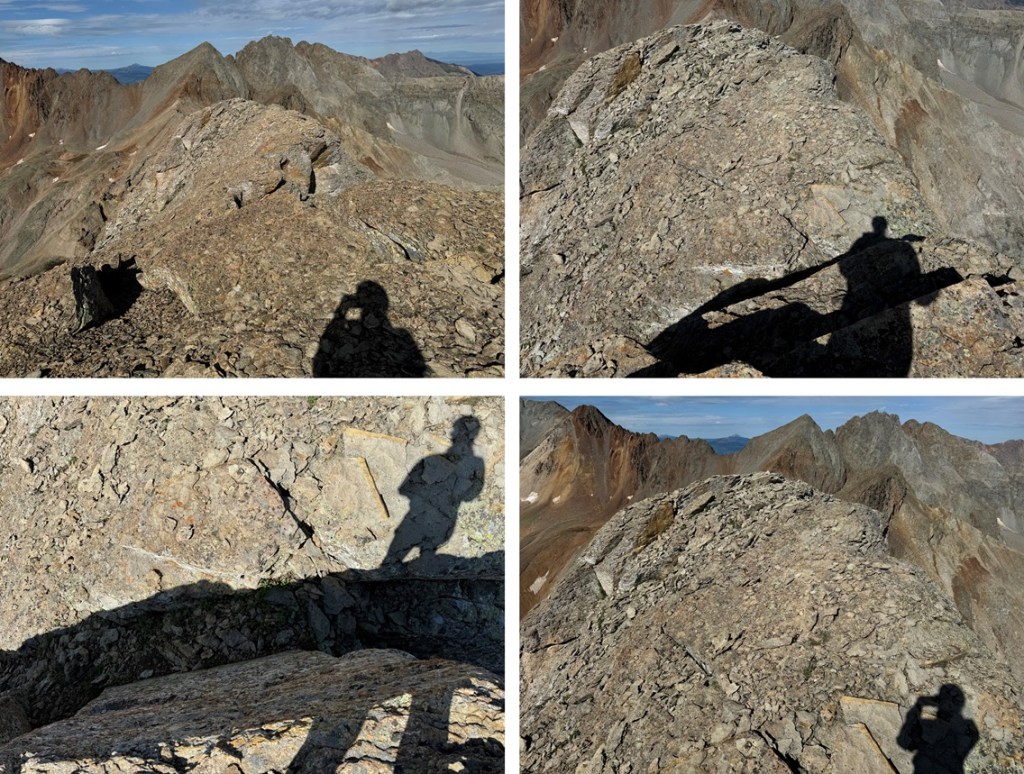
But wait! There’s more! Keep heading east, and climb down and then up this rock slab covered in kitty litter. It’s not tall, maybe 7 feet, but another fun surprise!
And then it’s a quick walk to the actual summit, on… you guessed it, more talus!
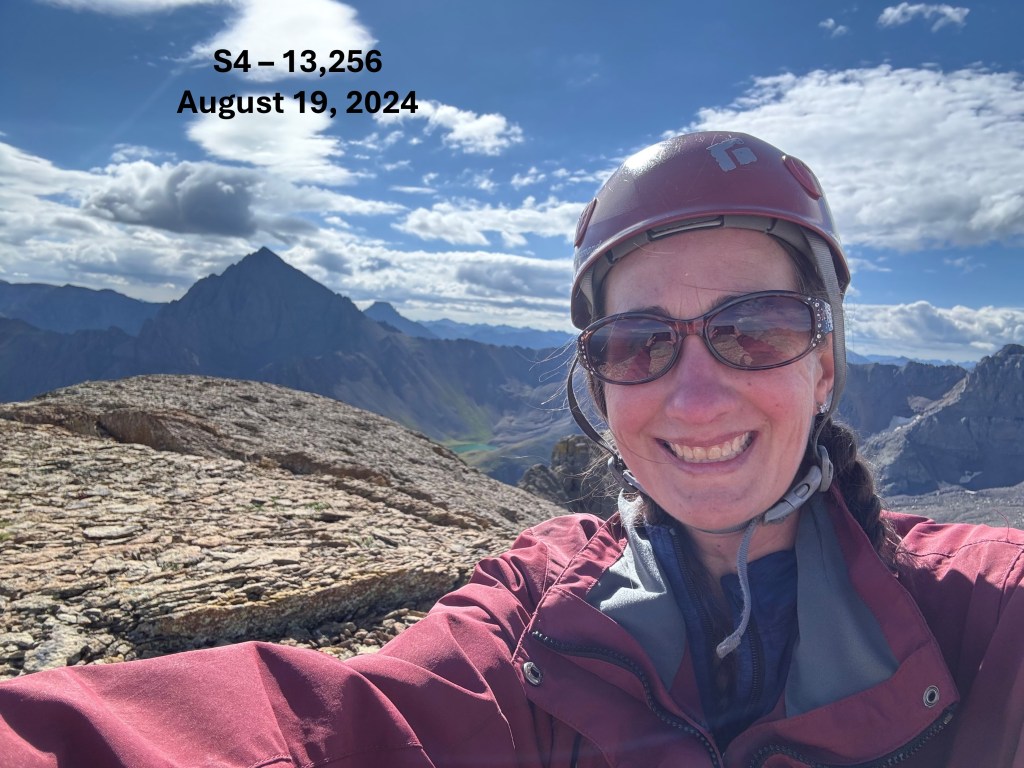
I summited S4 at 9:40am
S4:
And now to head back. I re-traced my steps to the chimney(s)
Safely down the chimney(s), I made my way back to the top of the gully.
Here are some pictures of the descent down the gully
And the route down into the basin
Once in the rocky basin, I stayed to the right of the creek and descended on the talus to the tundra towards Blue Lakes.
I headed east back to treeline and crossed the creek
Then headed north back towards the Blue Lakes Trail
And followed the trail in the rain all the way back to the trailhead
I made it back to the trailhead at 12:30pm, making this an 11.57 mile hike with 4082’ of elevation gain in 7.5 hours
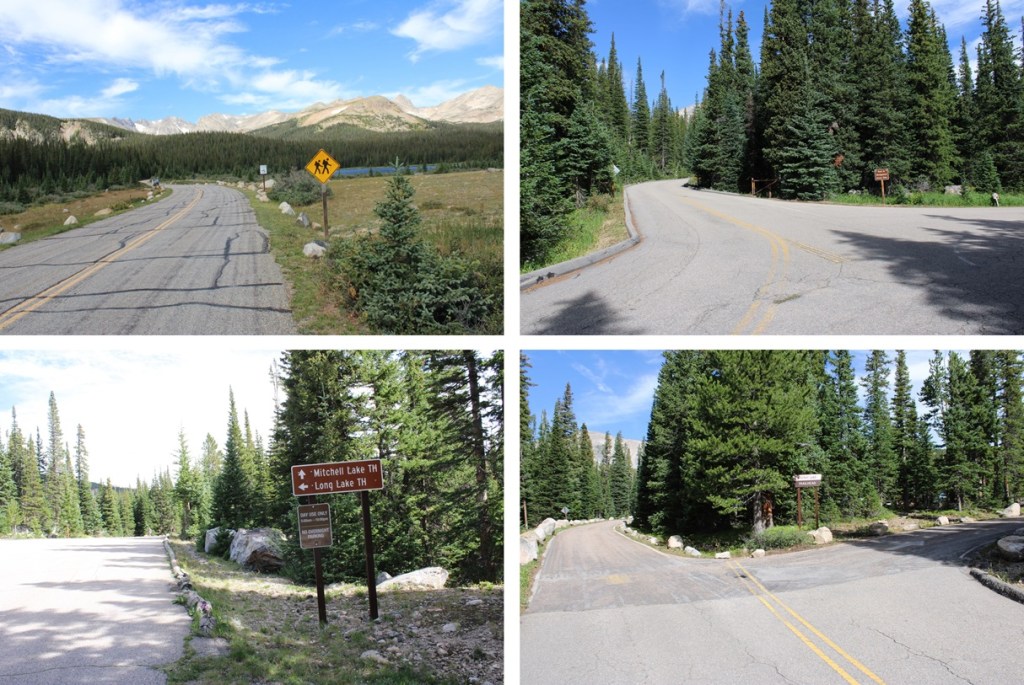
I was parked at the Brainard Lakes parking lot. I already posted about why I was parked there, and not the Mitchell Lakes trailhead, so I’m going to skip that part this time.
I was on the trail at 4:30 am. My first order of business was to hike the 1.3 miles to the Mitchell Lake Trailhead.
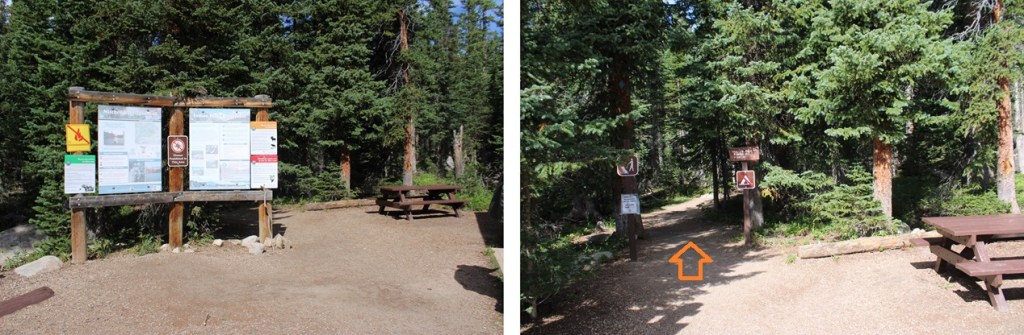
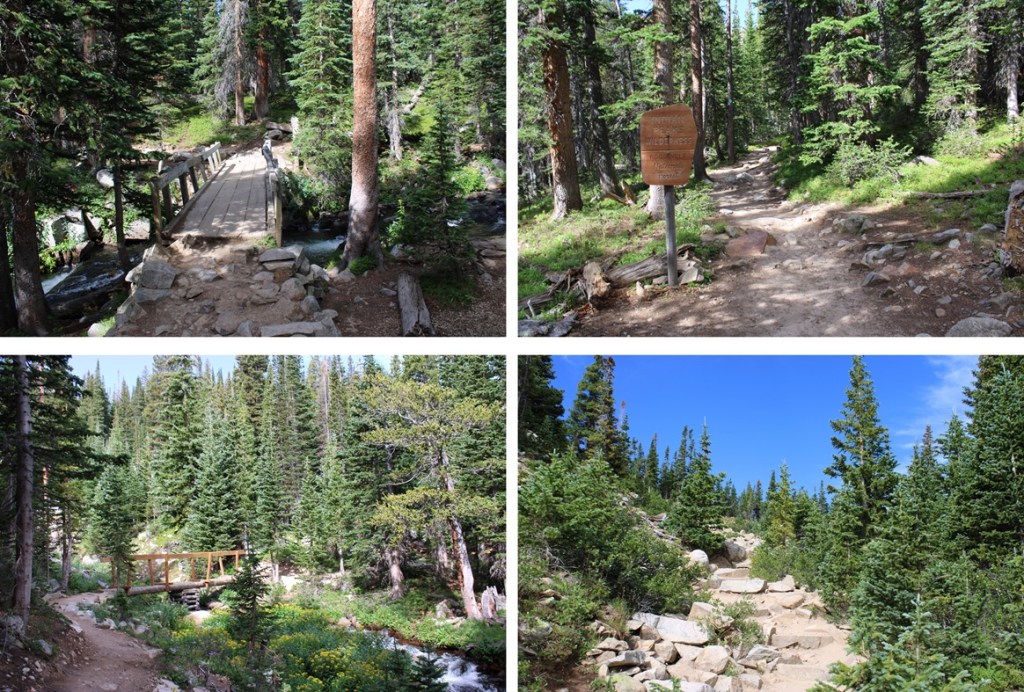
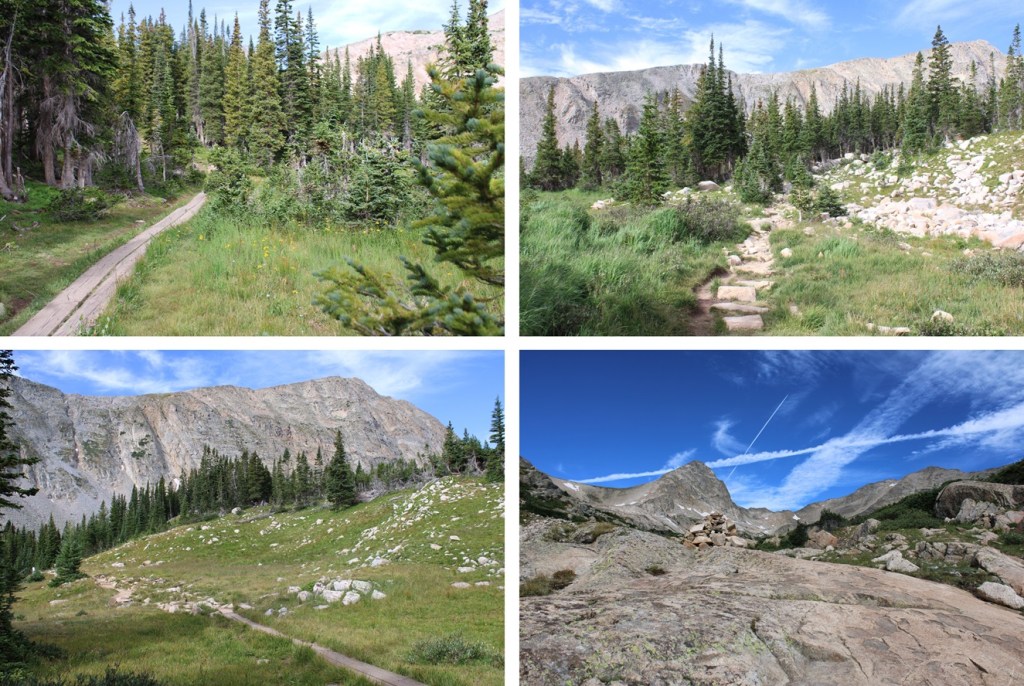
From the Mitchell Lake Trailhead, I followed the Blue Lakes Trail west towards Blue Lake. This is a well defined, class 1 trail with no junctions, so I was able to follow the trail the entire way. From the Mitchell Lake Trailhead, it was around 3 miles to Blue Lake.
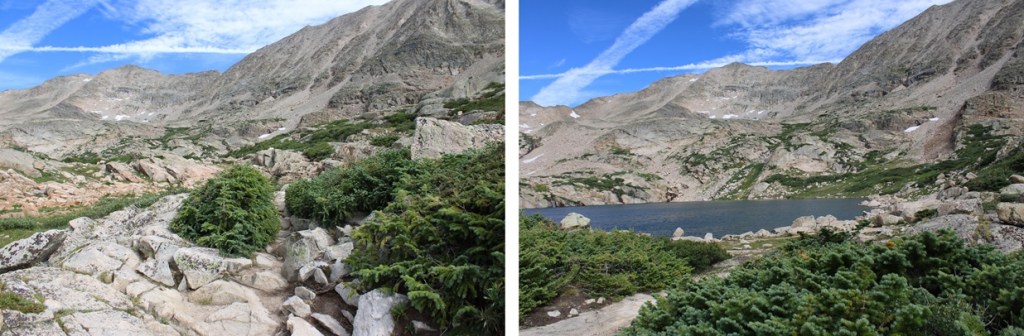
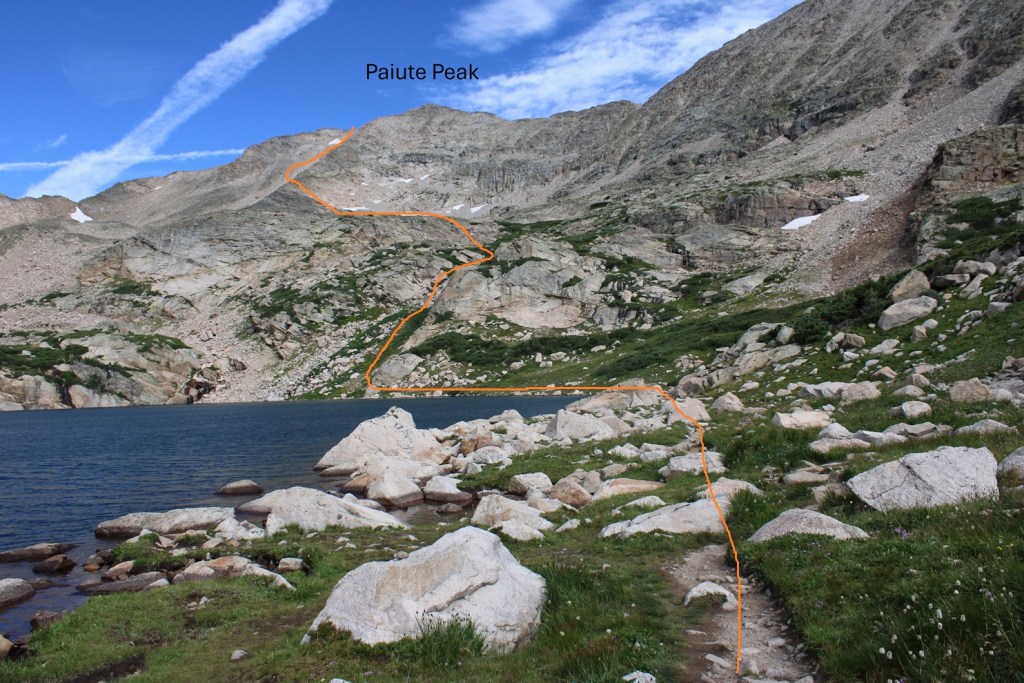
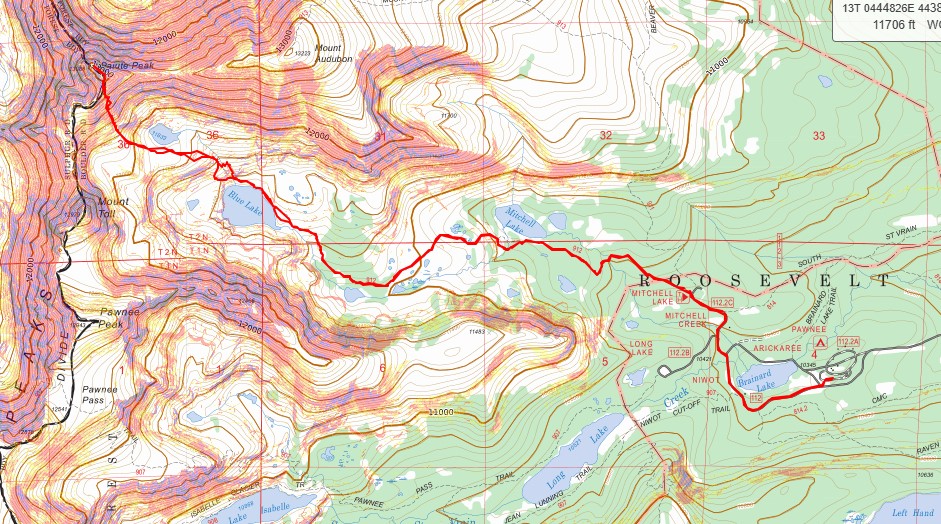
From Blue Lake I had a clear view of Paiute Peak. Here’s an overview of the rest of my hike
First, I followed the trail around the north side of the lake
When I came to a grassy drainage, I left the trail and followed the drainage north
At around 11580’ I crossed the creek at a small waterfall, and headed northwest.
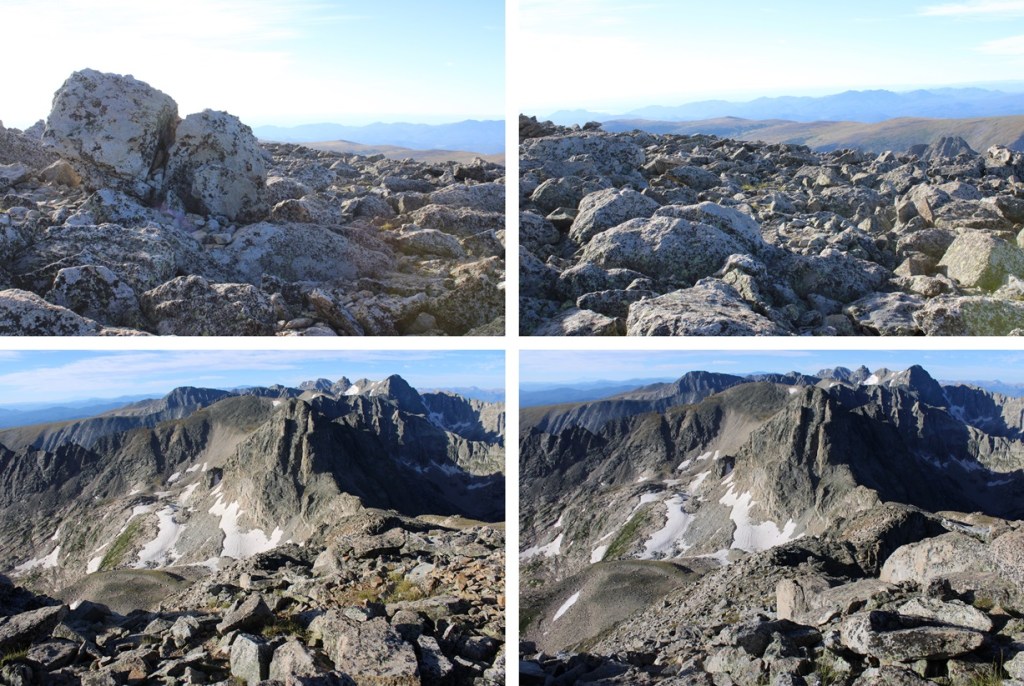
After crossing the waterfall I kept heading west, aiming for the ridge in the distance. This was choose your own adventure. I chose to go up and over the rocky gullies, doing my best to avoid the snow. This can all easily be kept class 2.
At this point , the lake at 11833’ was to the north of me, on my right. I kept heading west, to gain this ridge. There are a couple of cairns here, and parts of a game trail, but the main goal is to head towards the gully.
And now to head up the gully. I did this by heading north, staying to the right of the snow. If there isn’t snow when you’re doing this route, you can aim for a rather large vertical rock sticking up straight (you’ll know it when you see it, as it stands out). This gully had game trails leading to the top, and I’m sure you could take them all the way to the top of the gully. However, I stayed to the right of the snow and then climbed up the rocky rib. This was mostly class 2, with a few easy class 3 moves thrown in.
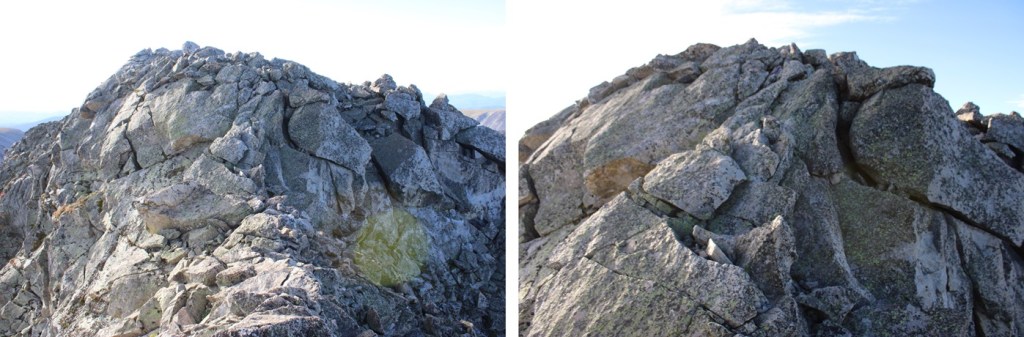
At the top of the rock rib, you’ll see what appears to be the summit of Paiute Peak to the north. It’s actually a false summit, but aim for it.
From here, the true summit is to the northeast. Head towards two boulders that look like the summit (they’re another false summit)
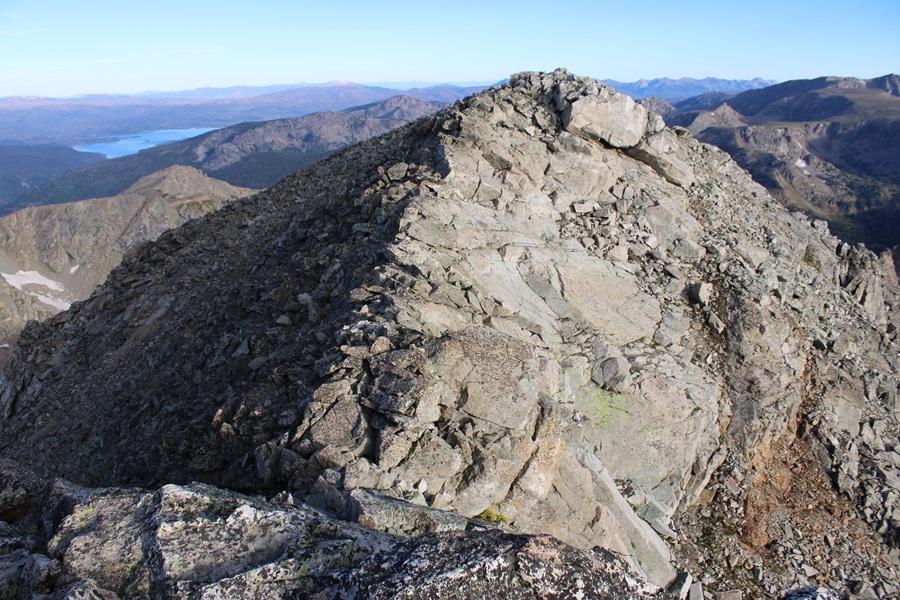
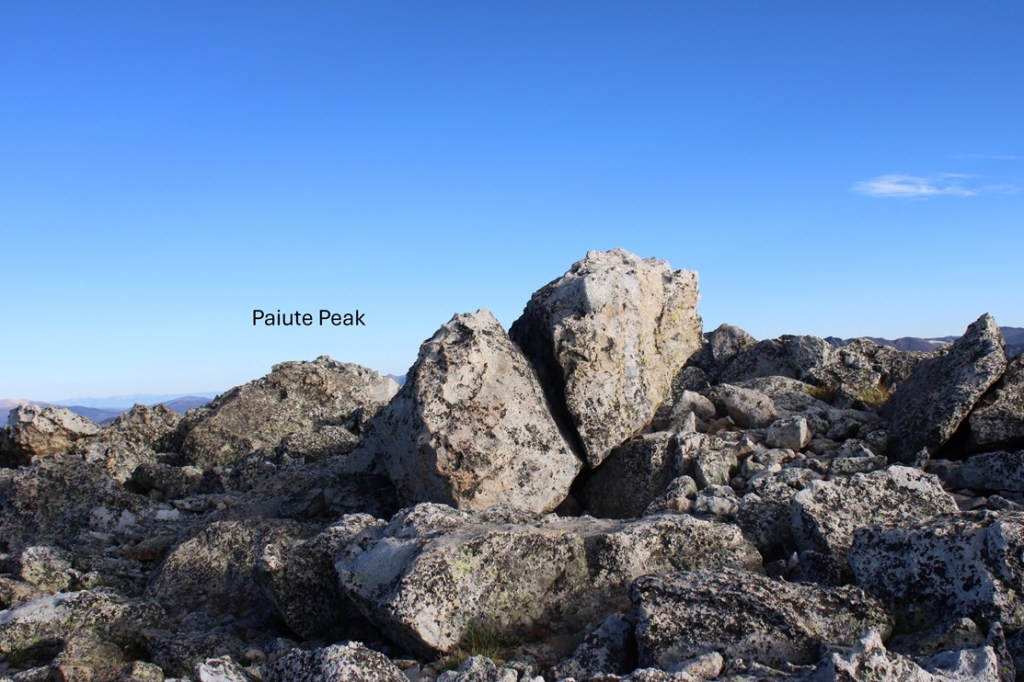
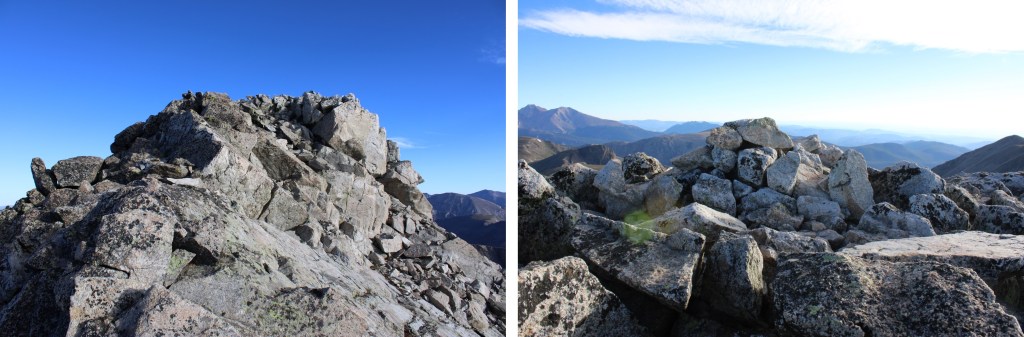
From those two boulders, the summit of Paiute Peak is visible to the north.
To get there I downclimbed a difficult class 3 section (or easy class 4) with exposure. This was much more difficult to downclimb than to upclimb. And it was very windy this day, making this ridge extra spicy. The route down and then up to the summit are obvious. There was a cairn at the top, and a summit register.
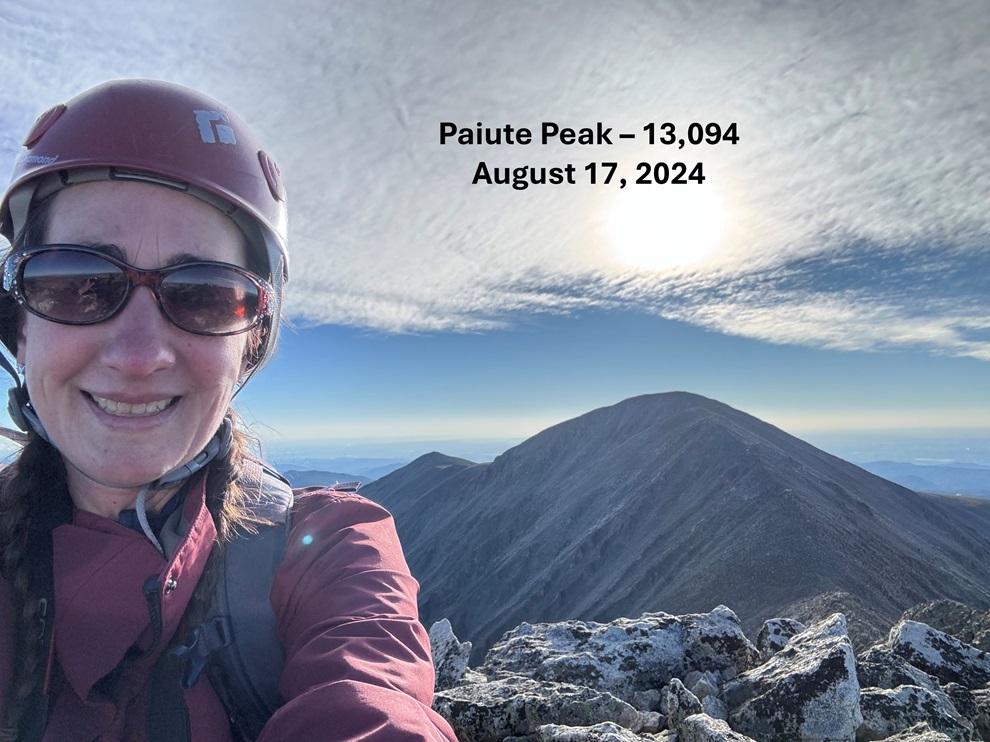
I summited Paiute Peak at 7:30am
Paiute Peak:
From the summit looking back, it really, really looks like where those two boulders are is higher, but there was a register here, so I’m assuming it’s the true summit. Now to head back. This “v” was much easier to upclimb. I used the same route down as I did on my way back up.
I then made my way towards the gully.
I went southeast down the rocky rib
Then descended the gully
At the bottom of the gully I turned left, and made my way back towards Blue Lake
I aimed for the drainage, then followed it south towards Blue Lake and the trail below
Back on the trail, I followed it east back to the Mitchell Lake Trailhead, passing several lakes along the way.
Back at the Mitchell Lake Trailhead, I followed the road back to the Brainard Lake parking area.
I made it back to the Brainard Lakes trailhead at 10:30am, making this an 11.32 mile hike with 2781’ of elevation gain in 6 hours.
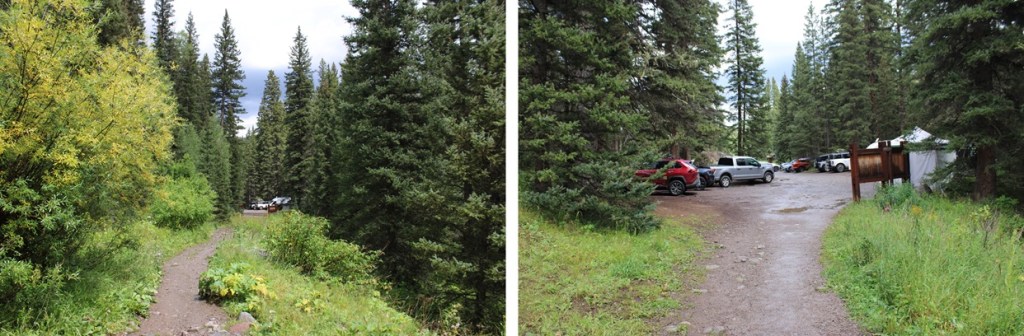
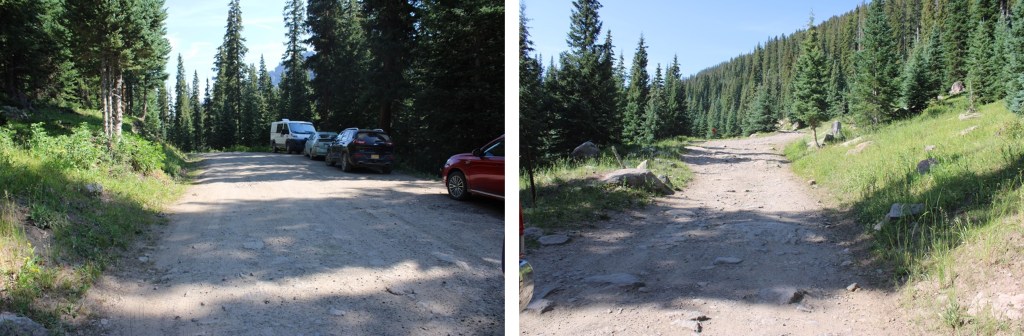
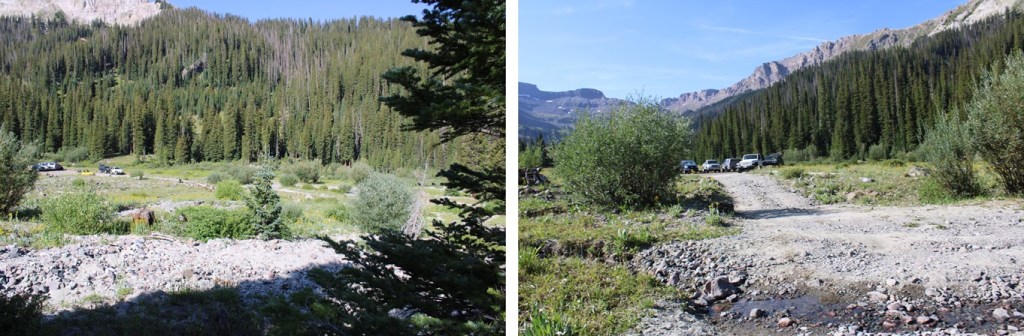
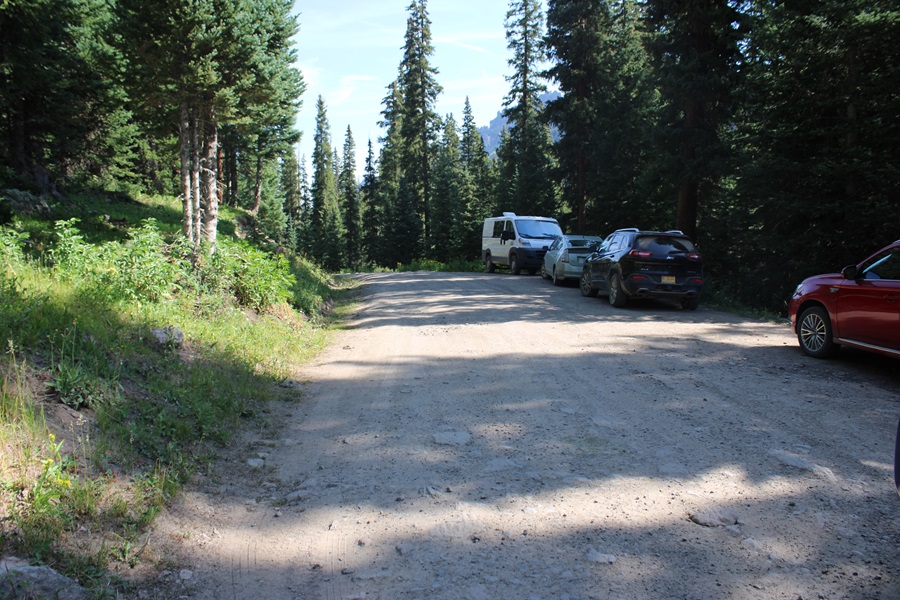
I know most people do Fortress and Precipice together in one day, but for personal reasons, I wanted to spend more than one day in the basin, and these were the only two peaks I had left, so I made it a two-day trip. I parked at the Wetterhorn Basin Trailhead, at about 10750’. The road to get in is mostly 2WD, until the last 2 miles, which are 4WD and requires clearance. Here’s where you park for the 2WD trailhead
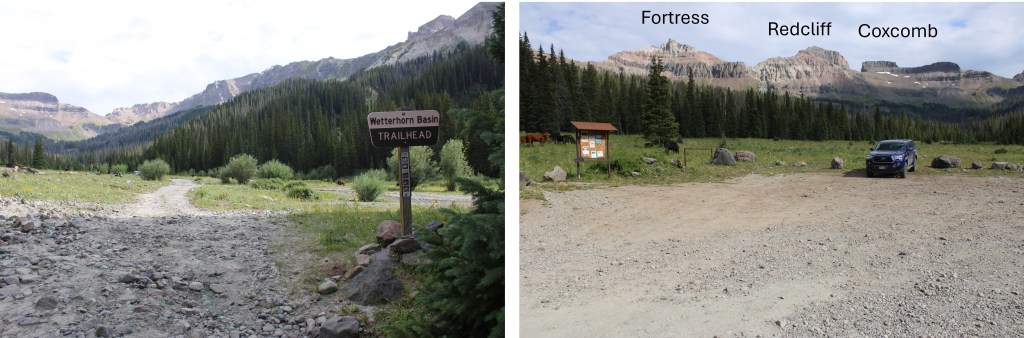
And here’s a picture of the Wetterhorn Basin Trailhead parking area. The road in was worse than I remembered from two years or so ago.
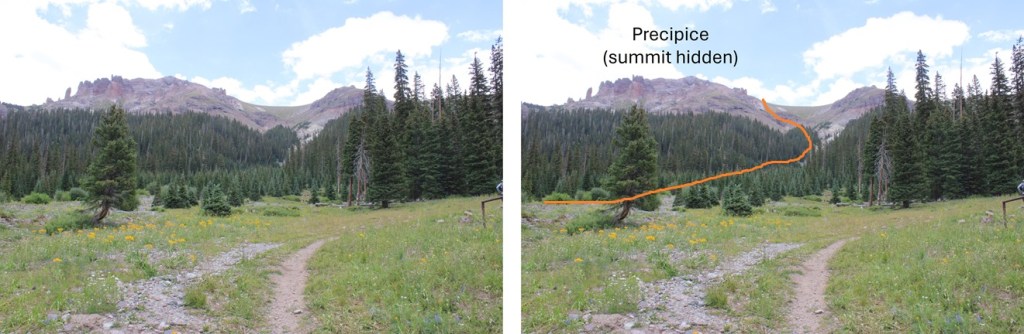
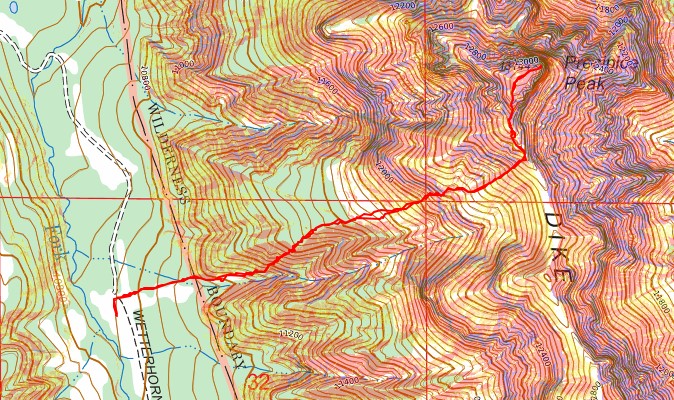
From the parking area, here’s a visual of the route to the ridge
The route starts to the north of the parking area, parallel to the “Wetterhorn Basin” sign, at the drainage. I headed east up the drainage.
There’s a faint trail here, that I kept finding and losing, but as long as you stay to the left of the drainage and right of the hillside, heading east, you’re going in the right direction.
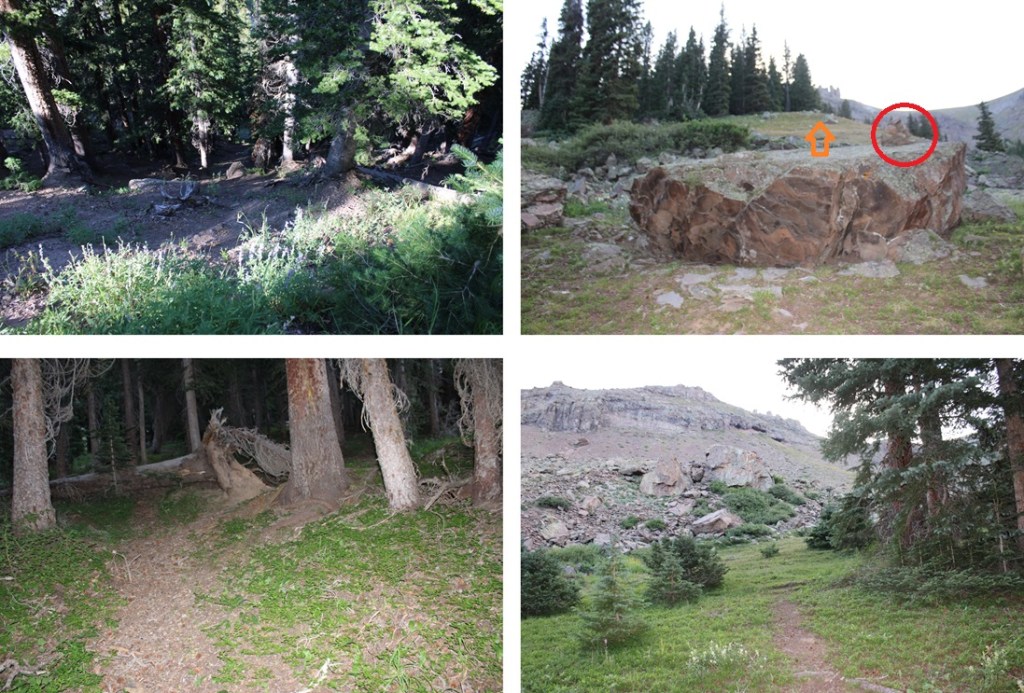
After hiking for about half a mile, there will be a large tree blocking the trail (the trail is obvious here). Climb over the tree, and head north/northeast, looking for a dirt gully. There are a few cairns in this area to help, but I wouldn’t rely on them.
I found the dirt gully and headed up, towards the ridge. This dirt is very steep and very slippery. I’d recommend wearing microspikes for traction. I gained about 300’ of elevation to 11400’.
At the top of the gully, around 11400’, a trail will pick up that heads right (east) along the ridge. There are cairns here to help get you to treeline, and a faint game trail to follow. There are also cairns in the clearings (but I didn’t find any in the treed areas).
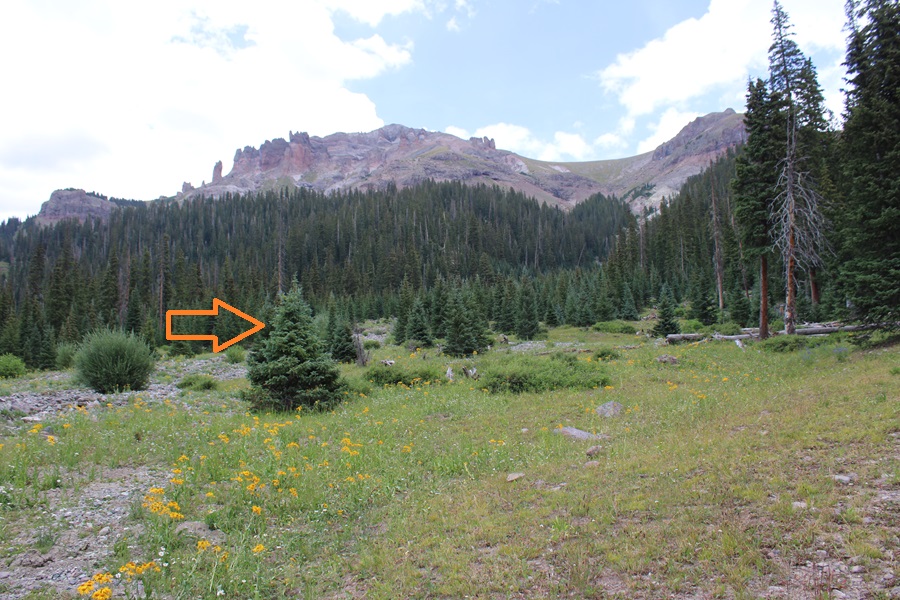
Once at treeline, here’s a visual of the route to the saddle
First, I went around this large rock, which has a cairn on it. It’s important to remember because it’ll be your exit point on your descent.
Then I headed northeast, across the rock/scree field, aiming just to the right of the caves in the distance.
At the base of the caves, a faint trail picks up, and you should be able to spot cairns in the distance to your right. Put on your helmet, and follow cairns through the class 3 rocky terrain.
When the rocks end, so do the cairns, but from here the route is easier to figure out. You’ll want to dip down a bit into this drainage, and ascend on the tundra towards the large rock towers
Stay to the right of the towers, aiming for this small saddle
When you hit this small saddle, turn left, and head towards the window in the rock ahead of you. There will be a very good trail leading the way.
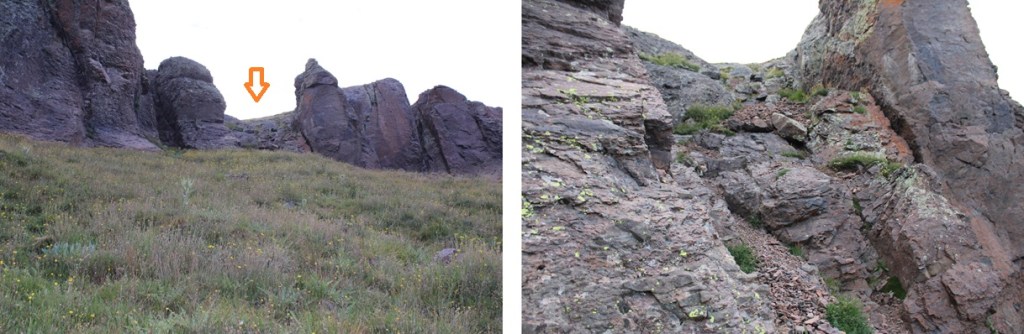
Climb up and over the center of the window. This is class 3, and there are plenty of hand and footholds. It’s probably no more than 7 feet high. Just be careful, as the holds are rocks in held together by loose dirt, and could come loose.
Once you climb through the notch, turn right, and ascend this hill. I did my best here to stay on the scree and tundra, away from the rocks.
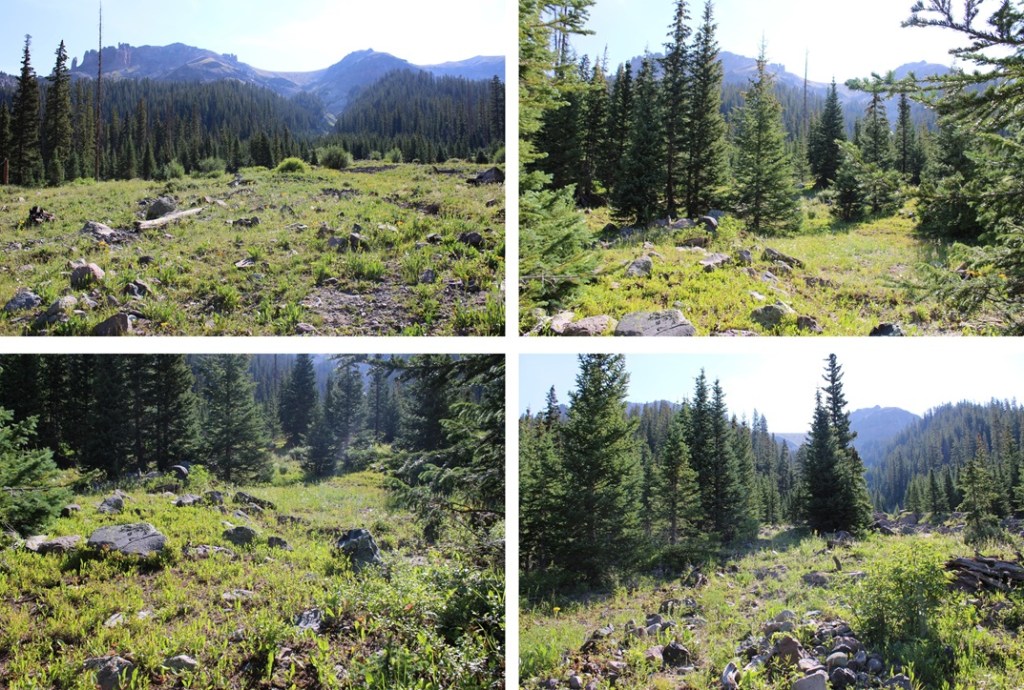
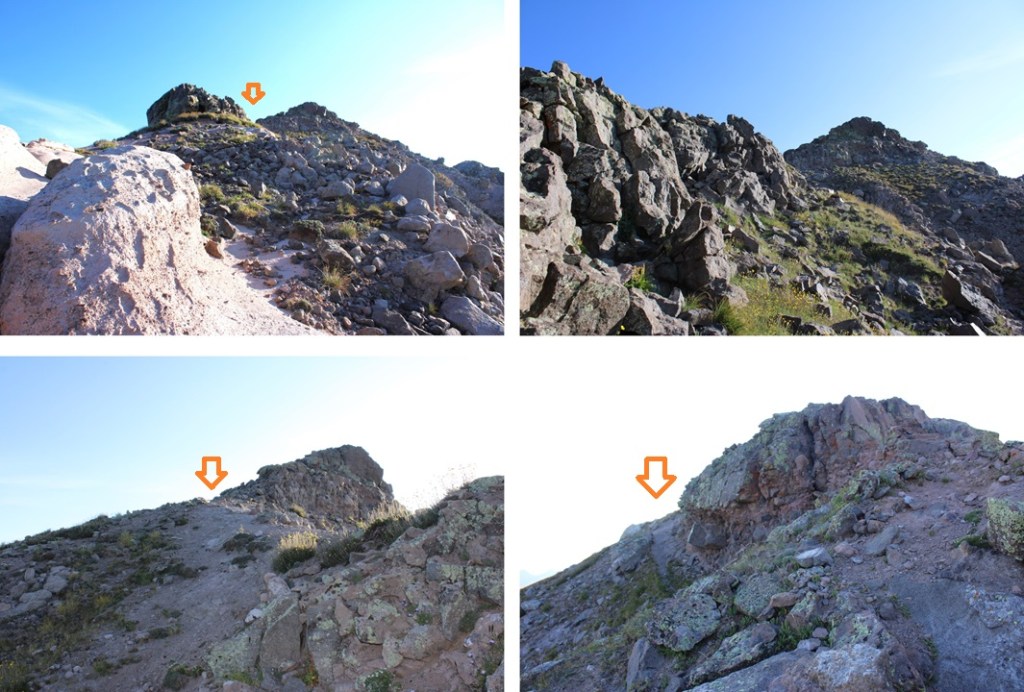
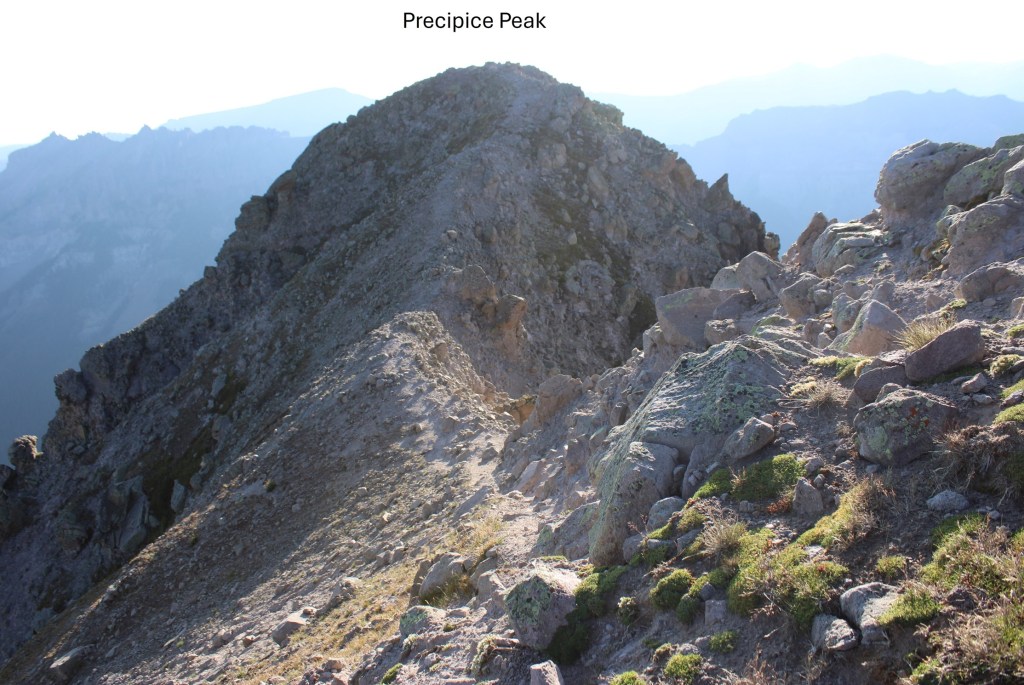
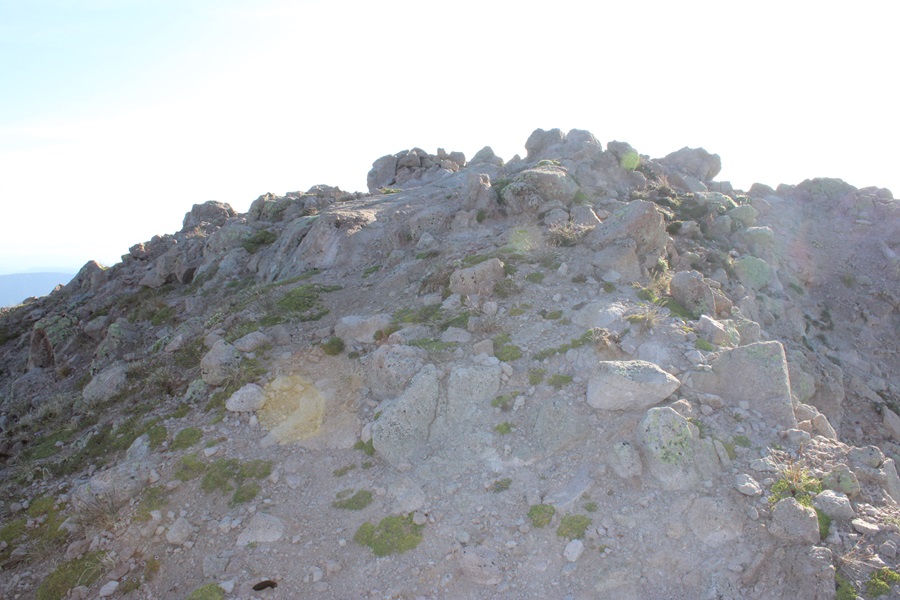
From here I mainly stuck to the ridge, except for two times when I went left to keep this class 2. There is a visible (yet faint at times) trail from here to the summit. Here are some pictures of my route up the ridge.
Here is what I thought was the summit. It’s not. This was the second time I went left, around the block on a nice trail
And from here I could see the true summit, which was an easy hike on a well-worn trail
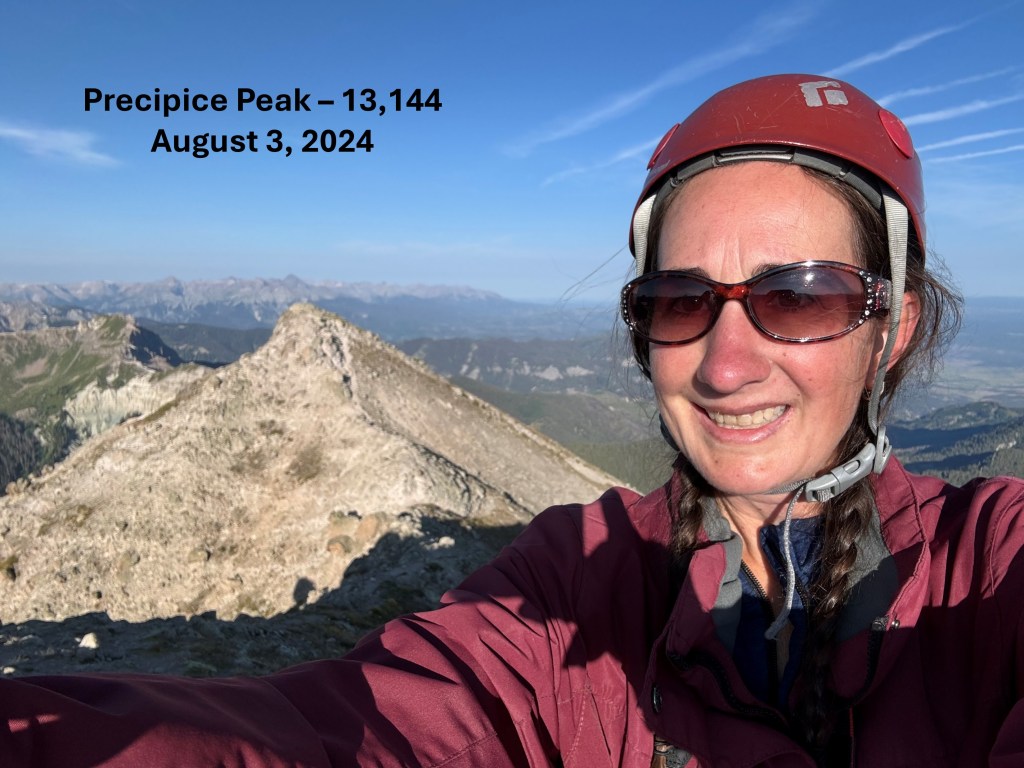
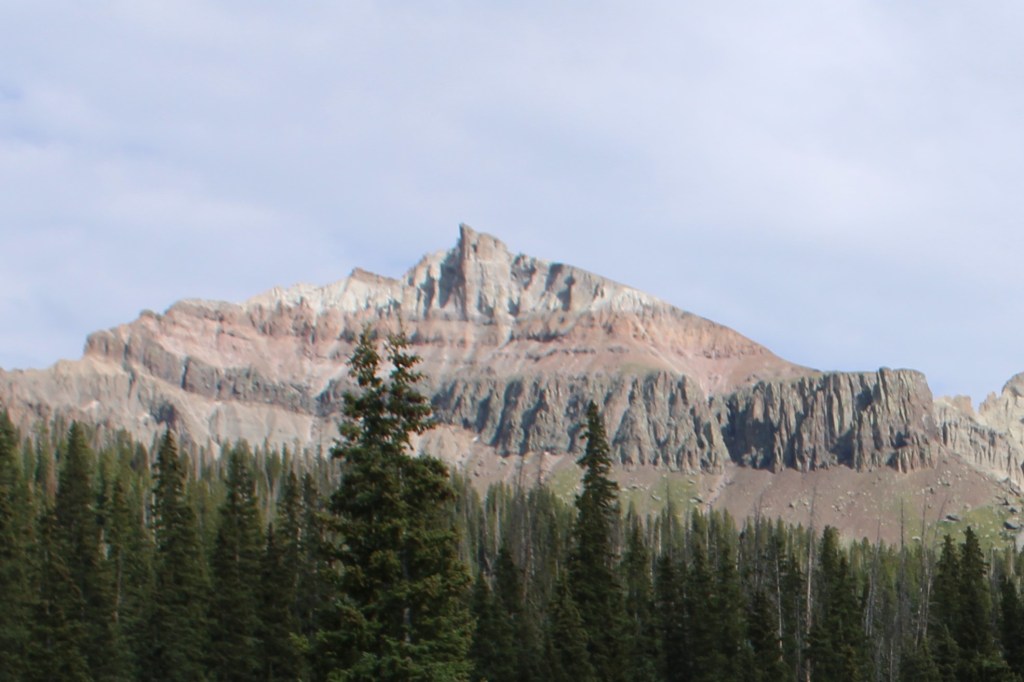
I summited Precipice Peak at 7:45am
Precipice Peak:
This was an out and back hike for me, so I turned around and made my way back to the false summit
And then back down the ridge to the notch
I climbed through the notch
And made my way back down to the tundra
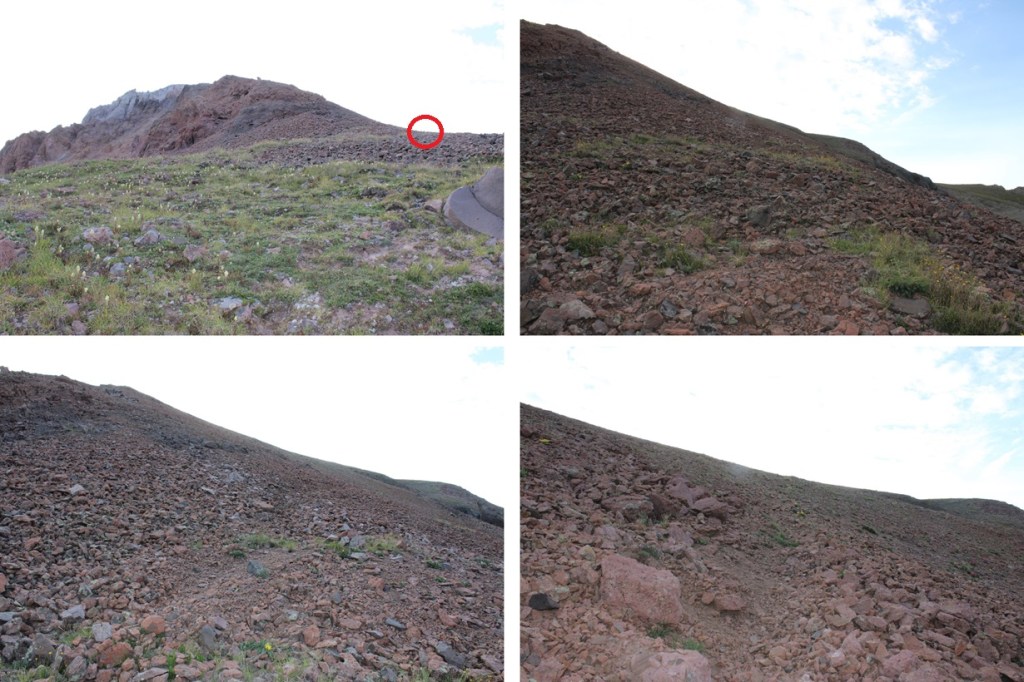
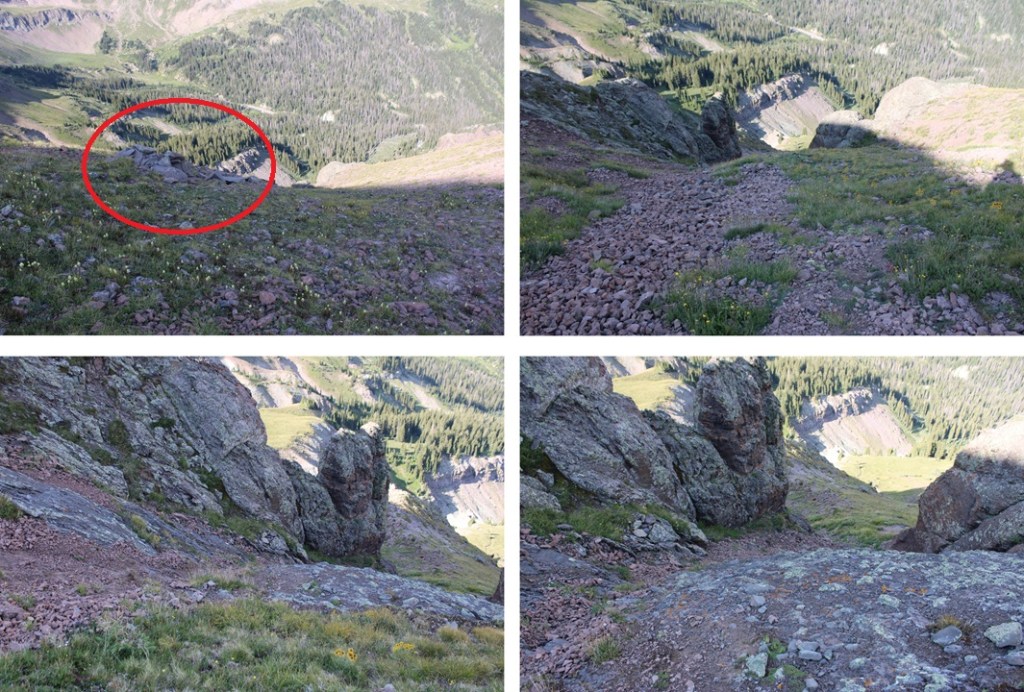
Where the tundra stopped at the rocks I turned right, and headed back down towards the basin. Also, from here I could see the parking area (circled in red)
I made my way towards the rocky area, and followed the cairns back down into the basin
I was aiming for that large boulder in the distance
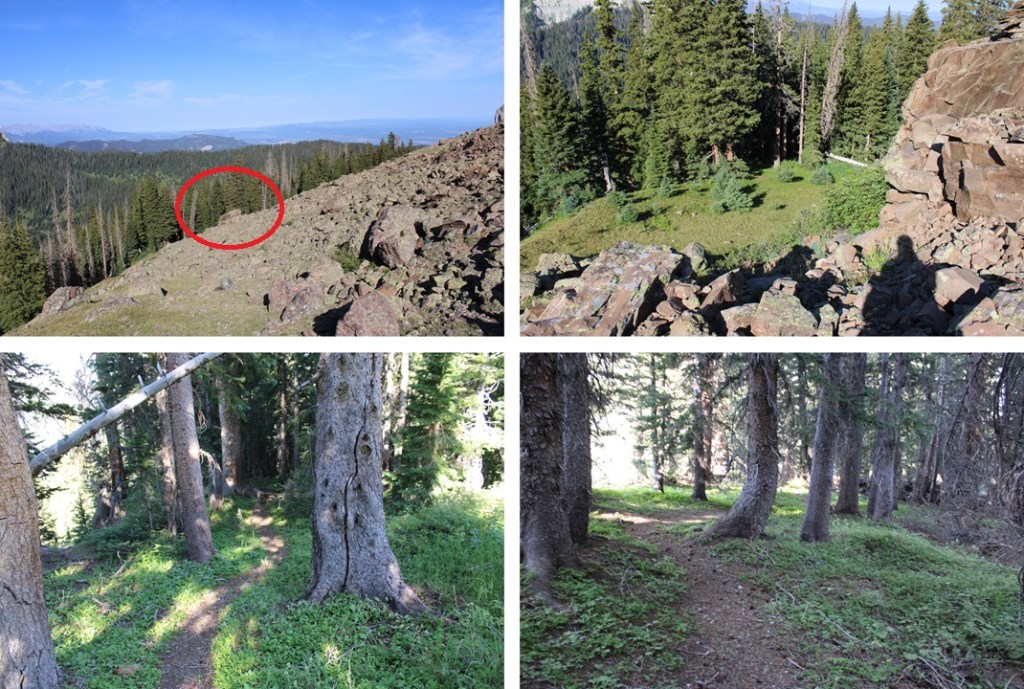
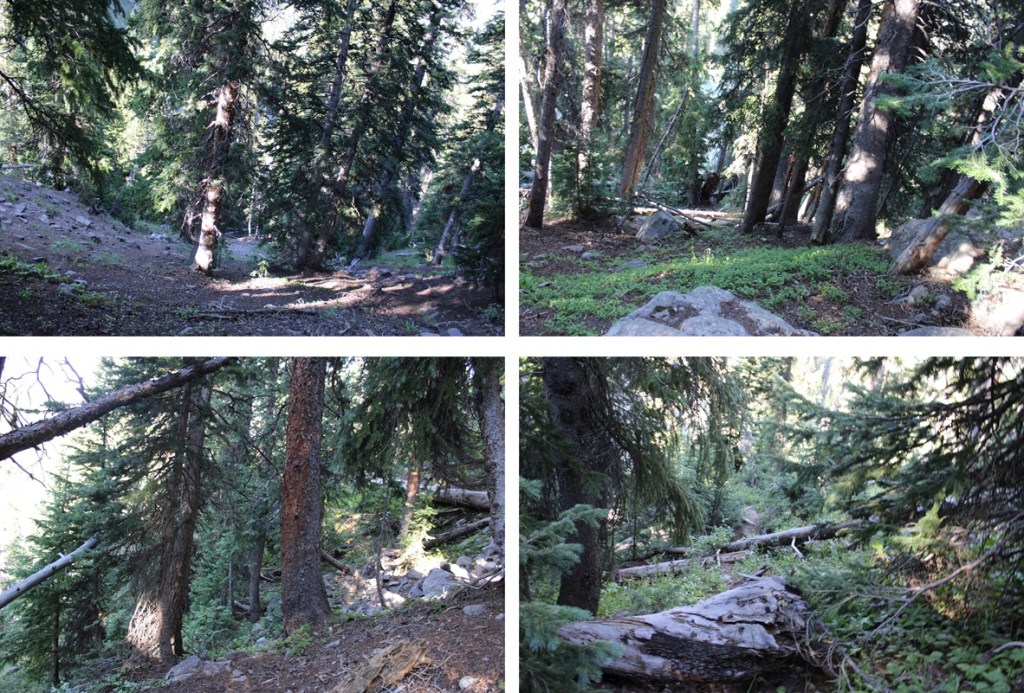
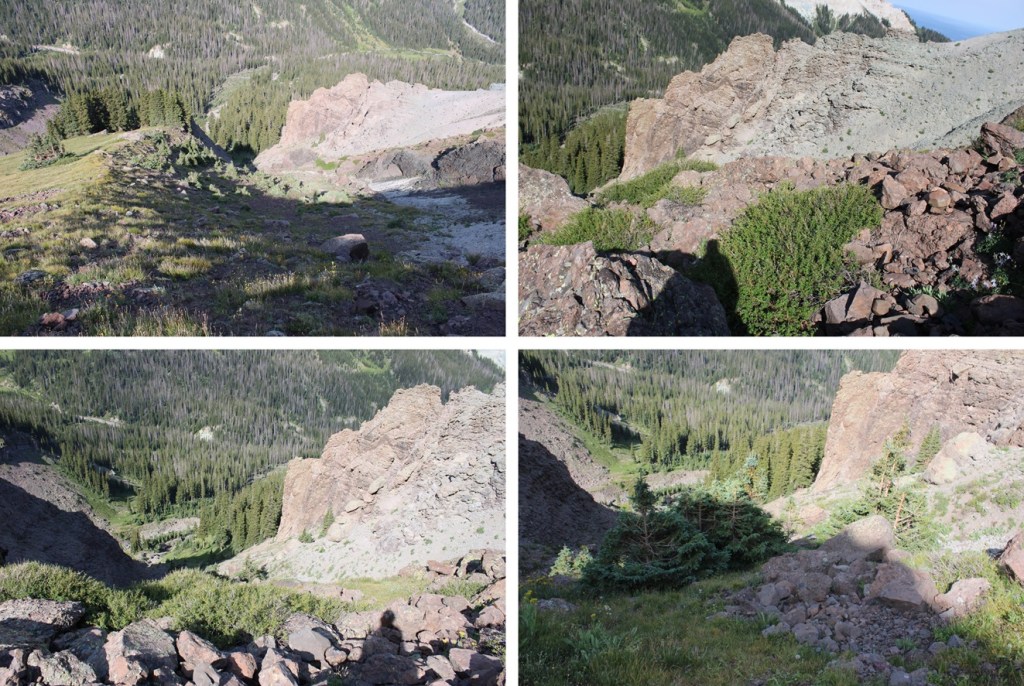
Once at the boulder, I picked up the trail through the trees, and followed it until about 11400’
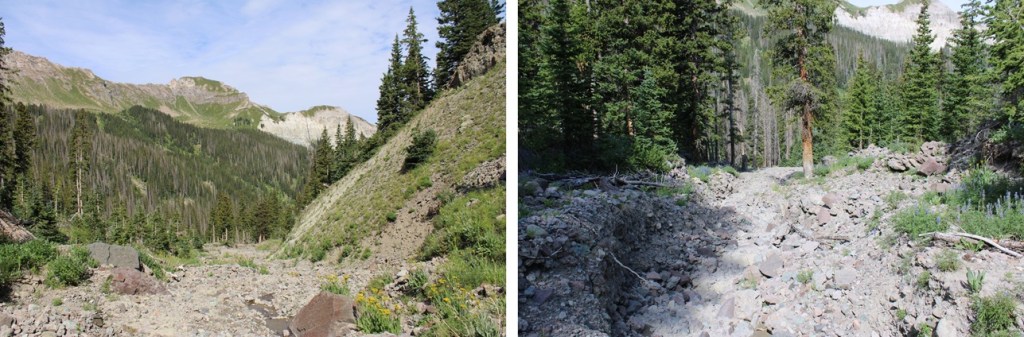
At 11400’ I found that dirt gully, and headed southwest towards the drainage, losing 300’ of elevation.
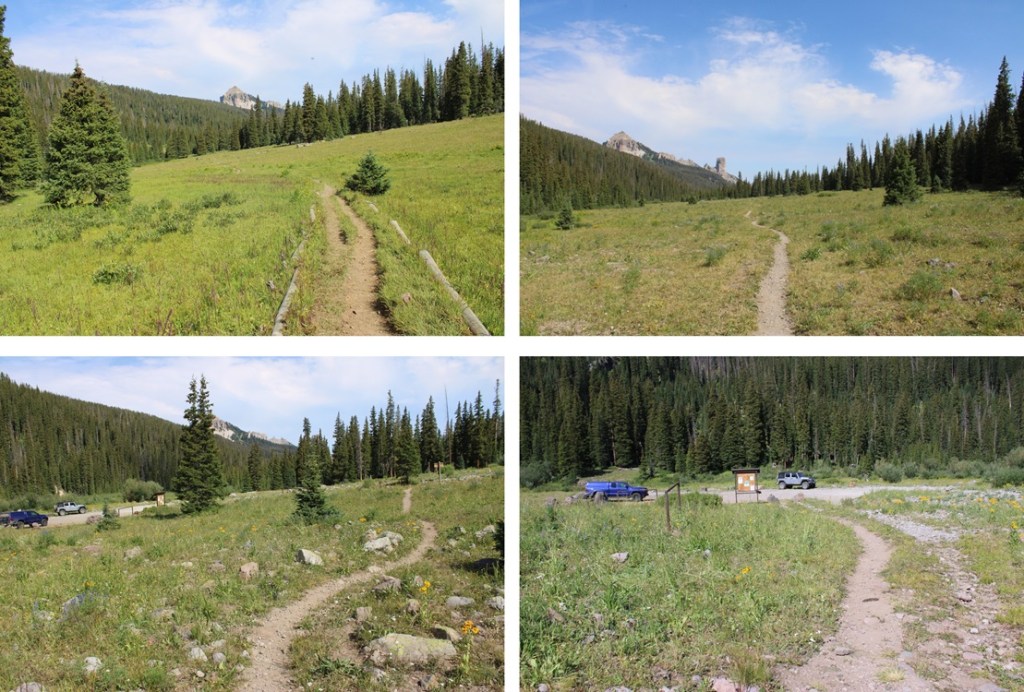
Once I was close to the drainage, I turned right, and followed a slight trail west towards the parking area
I made it back to my truck at 9:30am, making this a 4 mile hike with 2364’ of elevation gain in 3 hours, 45 minutes.
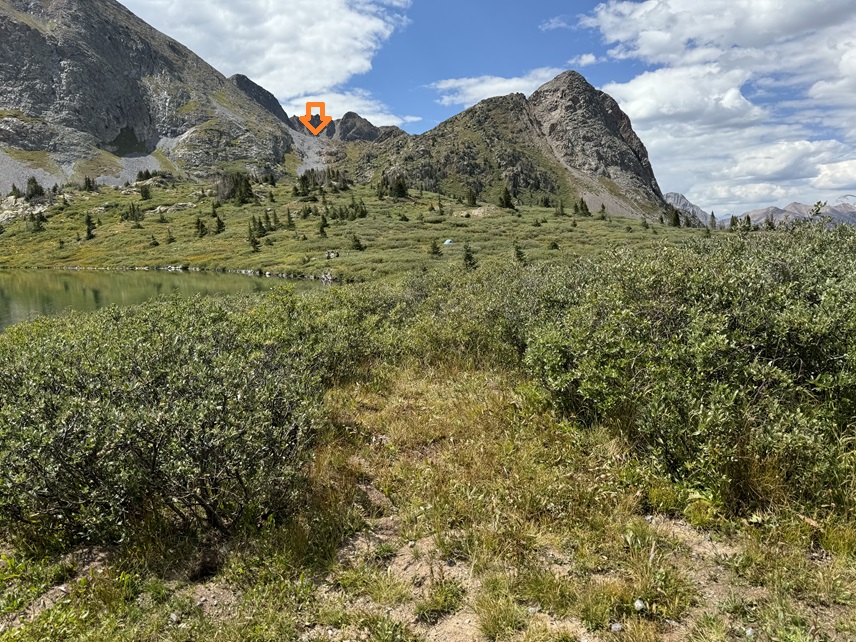
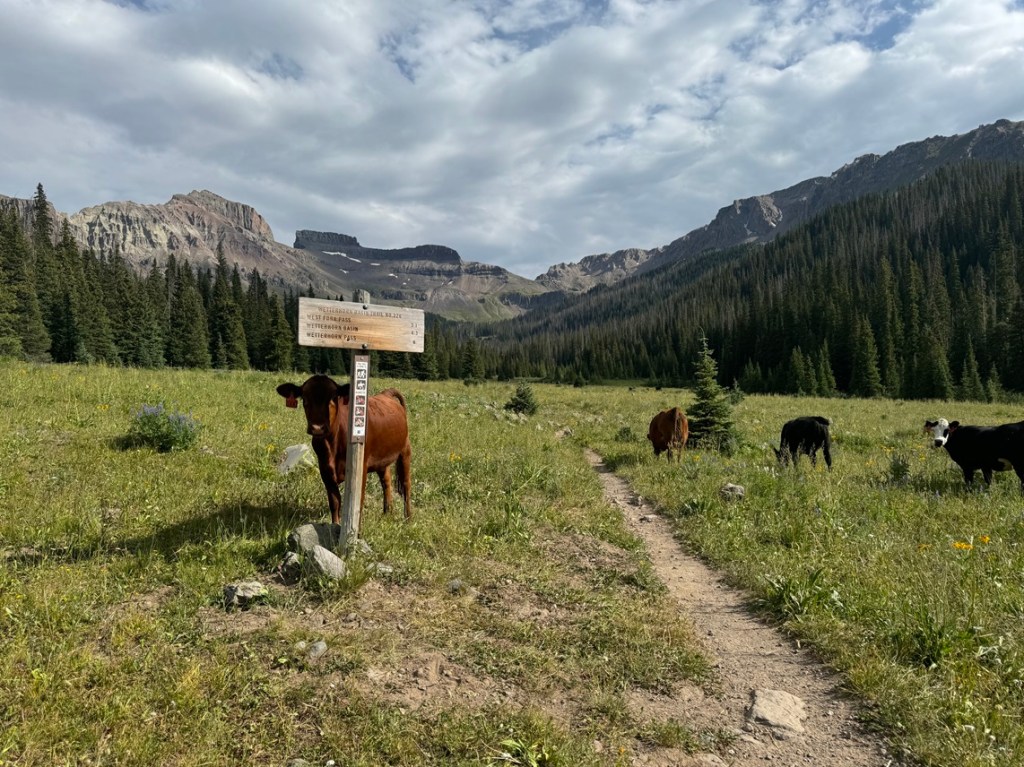
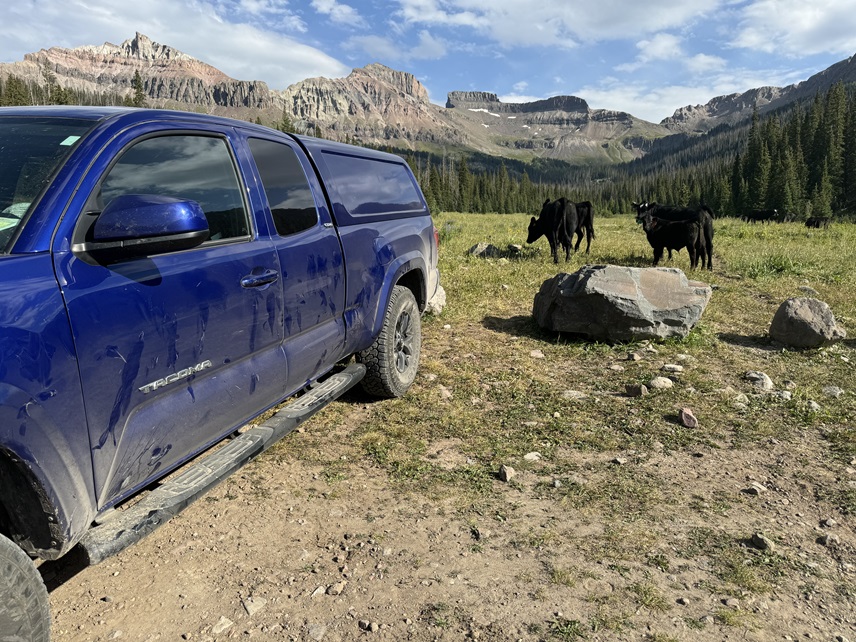
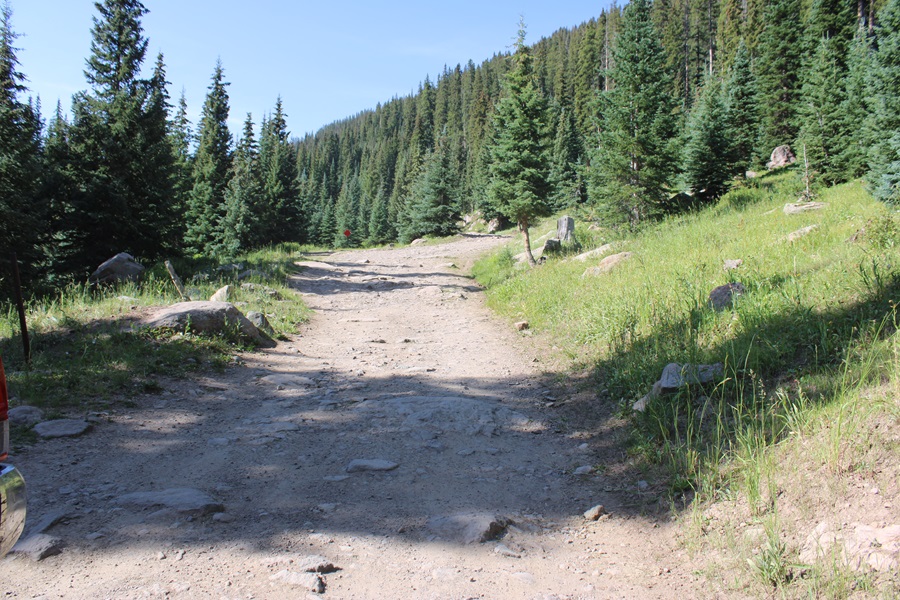
I parked at the Wetterhorn Basin Trailhead, and was greeted to a herd of cows. They were all over the basin, and would be my companions for the next few days. They had a penchant for licking my truck. The drive in is 2WD on a dirt road until 2 miles before the trailhead, where it becomes 4WD and requires clearance. None of these pictures are as clear as I’d like. The fires weren’t helping in the morning, and the sun wasn’t helping with shadows in the early afternoon. I know not to head east early in the morning, but I did it anyway. Sorry!
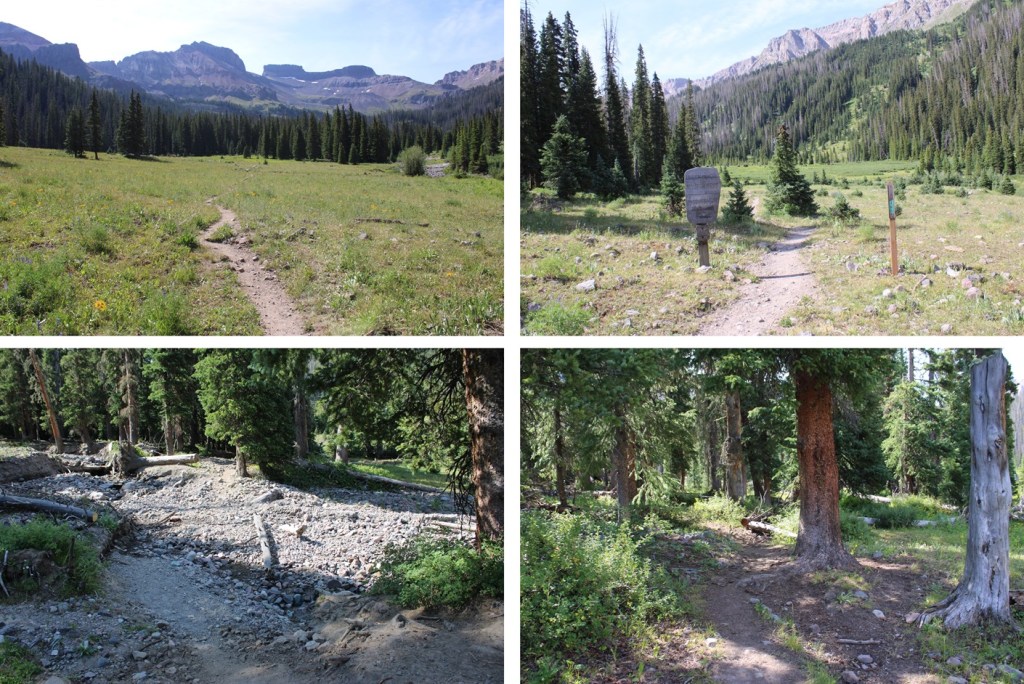
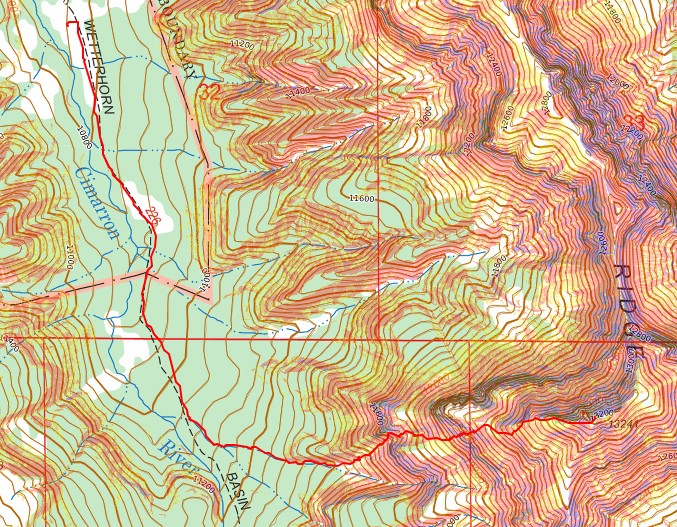
I was on the trail at 6am, following Wetterhorn Basin Trail No 226 south for just under 1.5 miles.
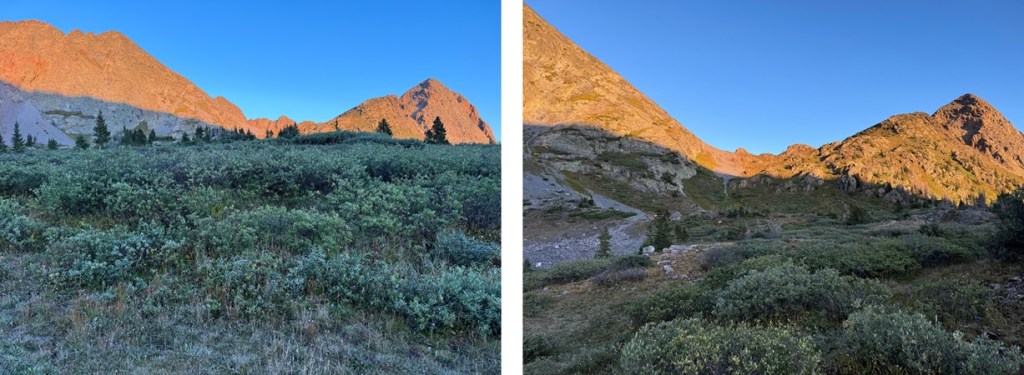
After hiking for 1.4 miles, and at around 11050’, I came to a drainage, and followed it east
I came to an obvious “y” in the drainage, and went left, still following a drainage.
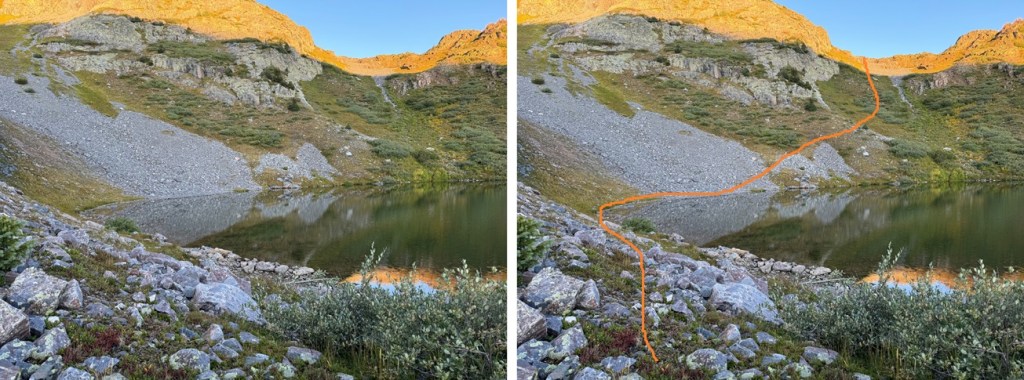
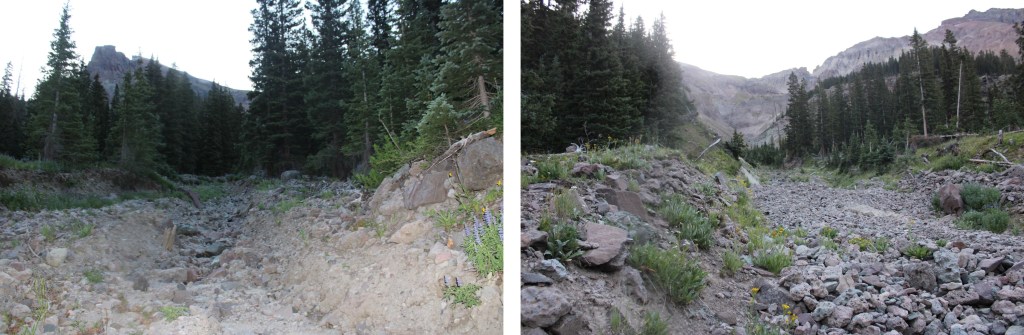
The drainage became narrower, so now I hiked to the left, trying to stay on tundra, but mostly staying on rocks
This next part is difficult to explain. You’re going to WANT to head straight up to the rock formation in front of you, but don’t do that. Instead, continue following the drainage, but aim to the right of the rock formation.
You’re trying to avoid the mess to the right of this picture… loose kitty litter on solid rock
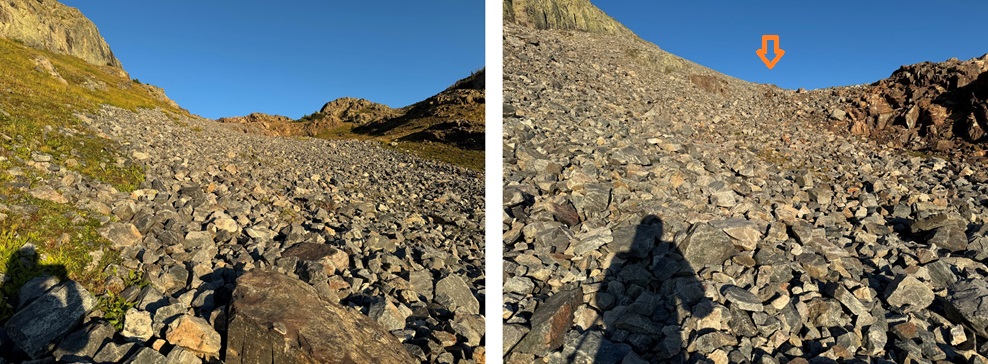
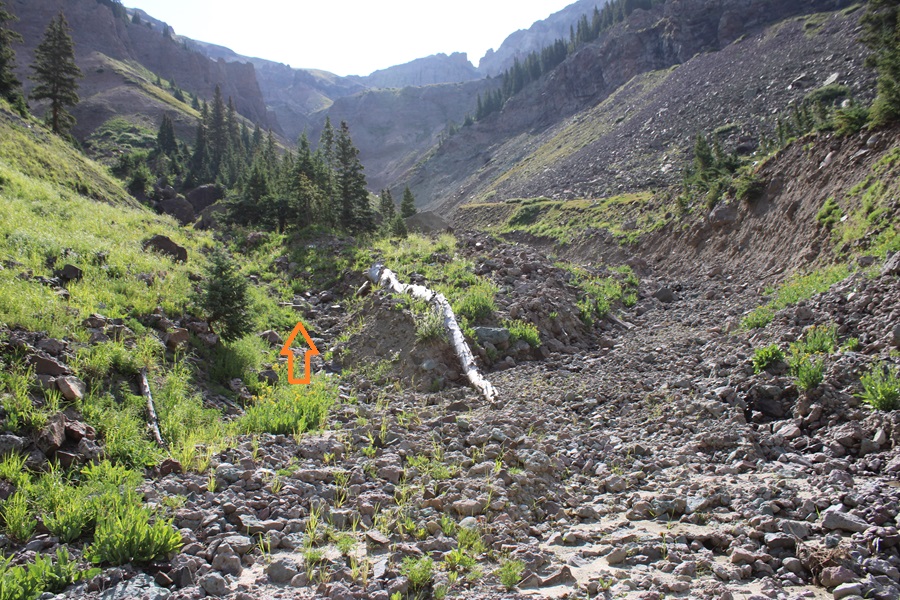
Now is the time to put on your helmet. Ahead there’s a more solid gully to climb. You can climb either to the left or right, I chose right.
At the top of this gully is another gully to the northeast.
This one was more difficult then the last. Solid on the sides with large scree down the center. I went straight up the center
And then walked on tundra to the ridge.
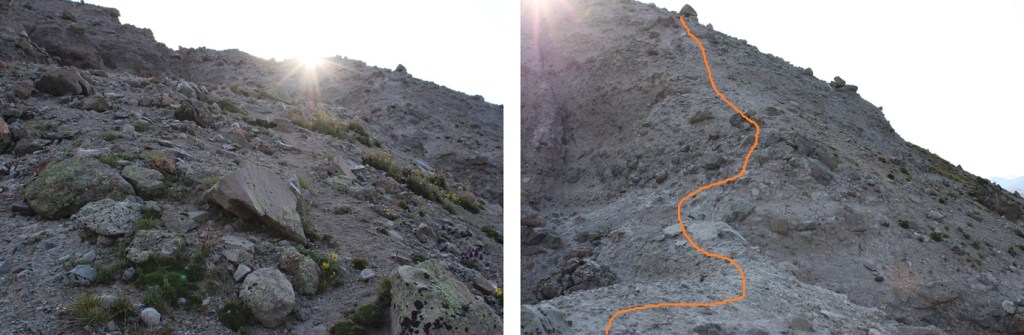
Once on the ridge, I turned right and followed it east, staying below the ridge. I noticed a cairn that marked an ok game trail, and followed that trail as it skirted below the ridge. The cairns especially helped in this area.
At 12700’, just before the rock formations directly in front of the trail, I left the trail and headed northeast for the ridge once again, this time on scree.
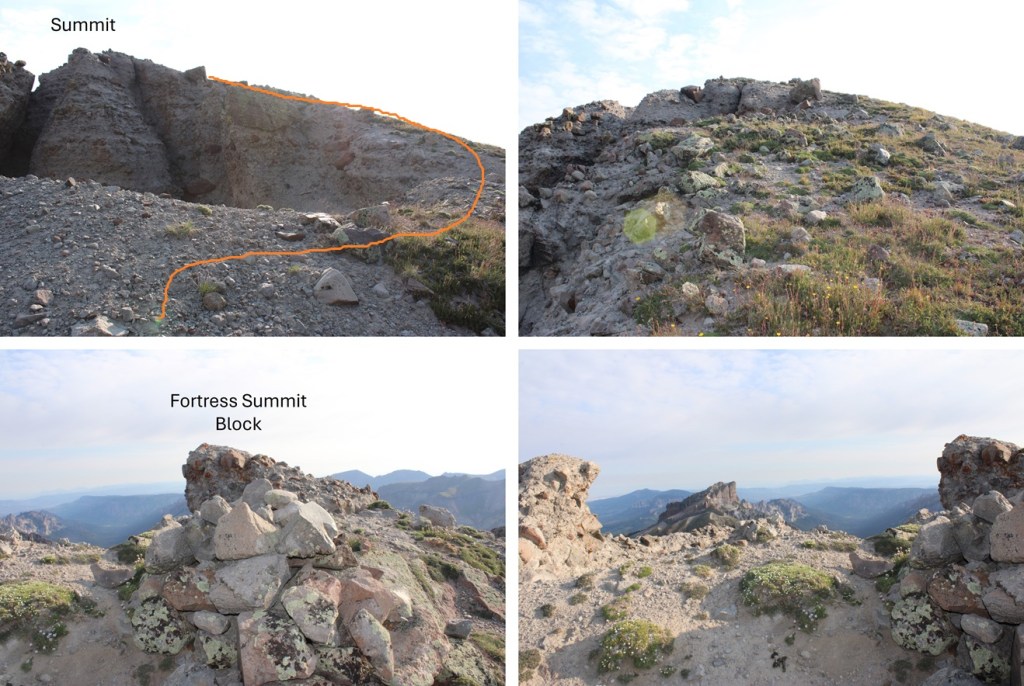
Back on the ridge, I followed it east towards the summit. The terrain here became slippery. Rocks the size of softballs and footballs were held together by dirt, and that’s what I was walking on. There were steep runnels on either side of the trail, which at times was less than 2 feet wide. A slip would have been dangerous here, on either side. This was all class 2, but I’d advise wearing microspikes for traction.
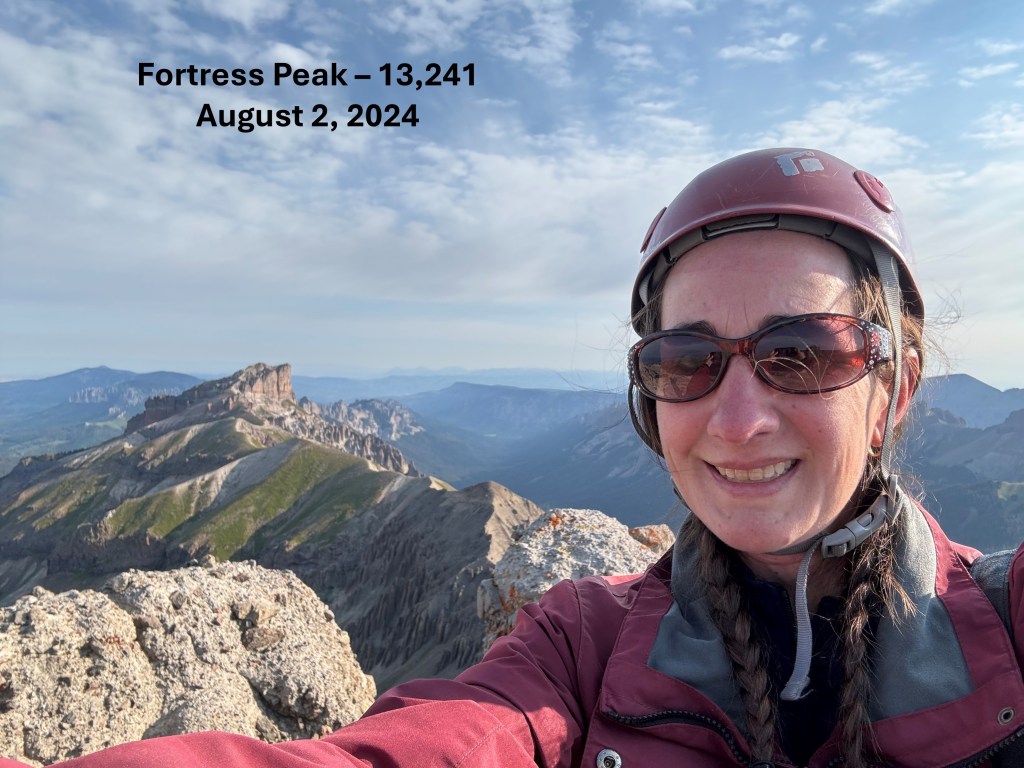
I summited Fortress Peak at 8:15am. There was a summit register in one of those pipe tubes, but the paper inside was so wet I didn’t want to disturb it, so I left it alone.
Fortress Peak:
Here’s what some of that exposure looks like
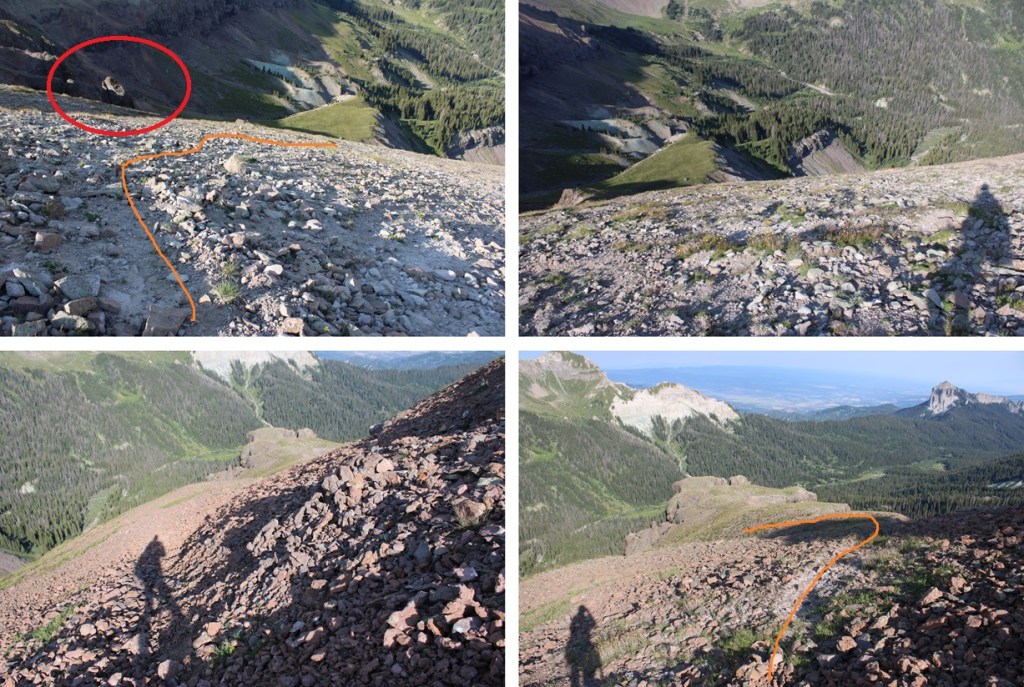
Now to head back down. This was an out and back hike for me, so I just retraced my steps, back down the sketchy section with no traction just below the summit.
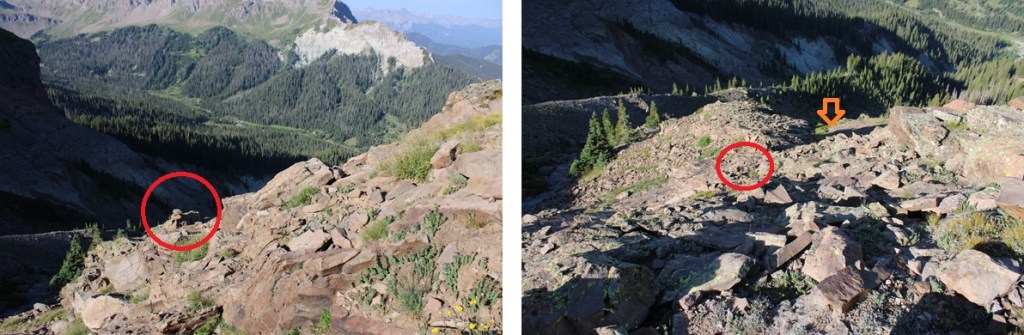
Then I hiked down the ridge until I was parallel with the rock formations on my left (circled). Here I turned and headed southwest towards the game trail.
I then followed the game trail south, back to the gullies. I descended near this big rock (circled).
Now for the second gully.
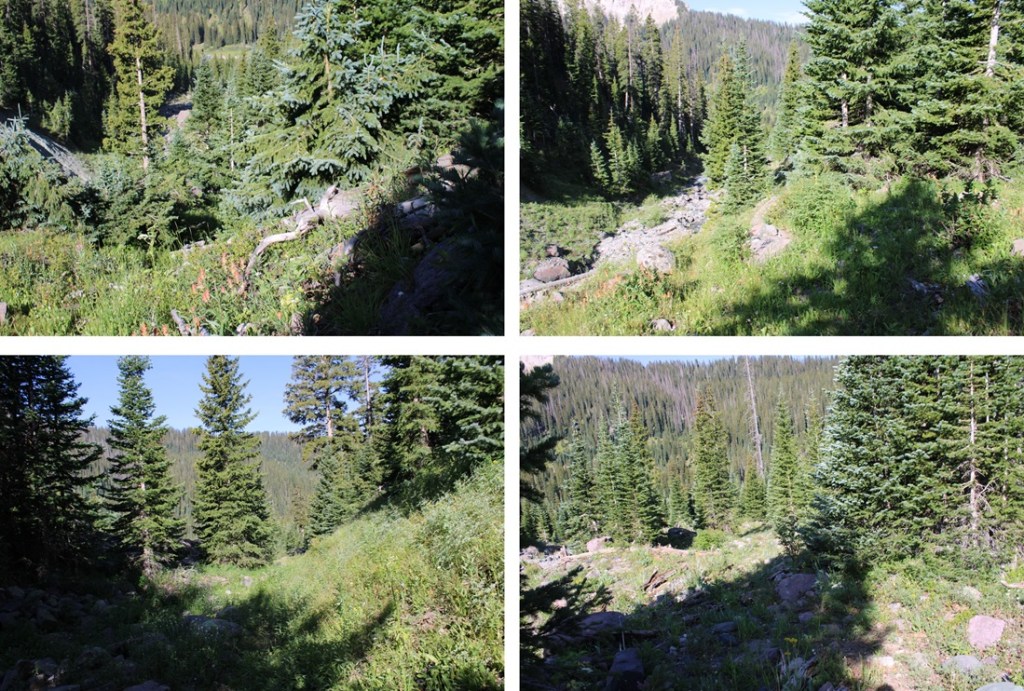
At the base of the second gully, I headed west towards the tundra ridge that would bring me to the drainage.
And now to follow the drainage back to Wetterhorn Basin Trail No 226
Back on Wetterhorn Basin Trail No 226, I followed it 1.4 miles north back to the trailhead.
Where the cows were still licking my truck
I made it back down to the trailhead at 10:30am, making this a 5.76 mile hike with 2482’ of elevation gain in 4.5 hours.
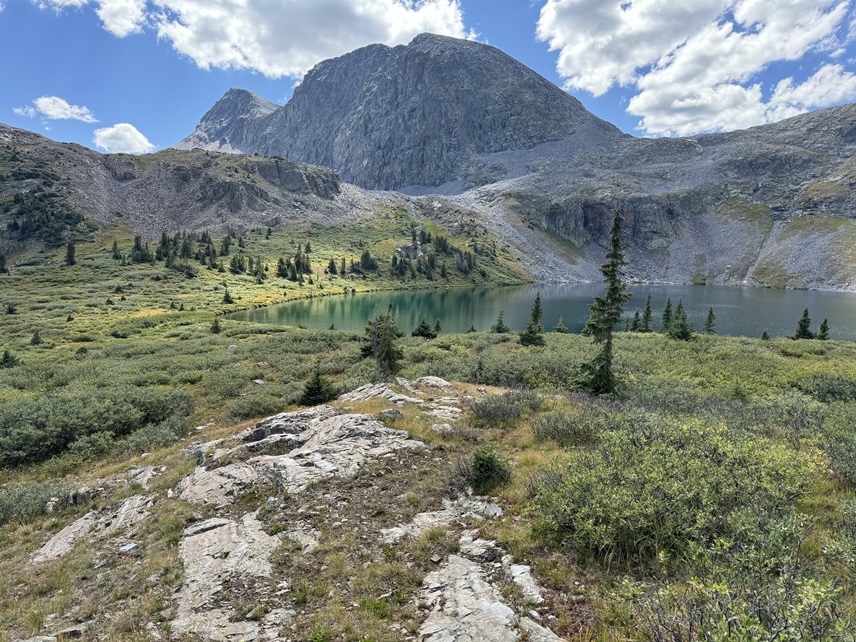
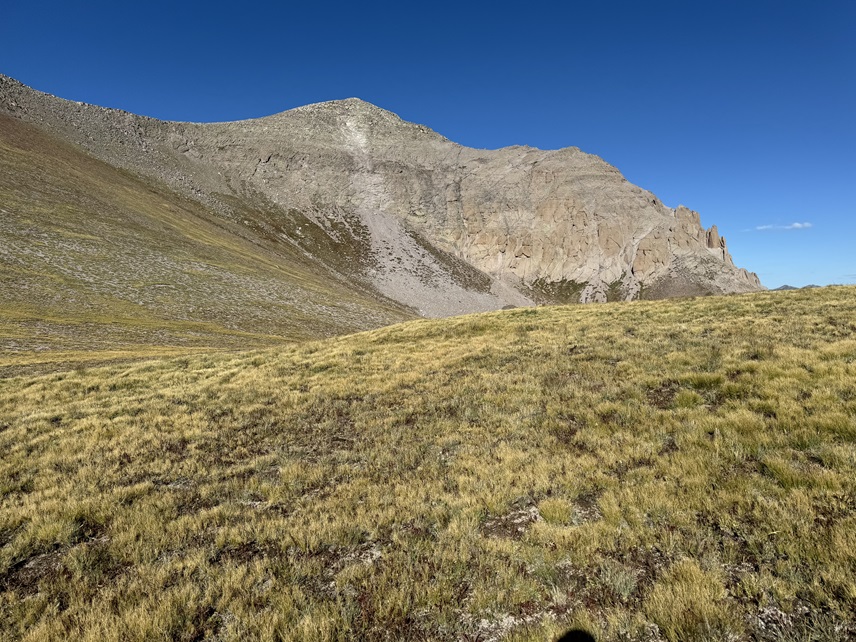
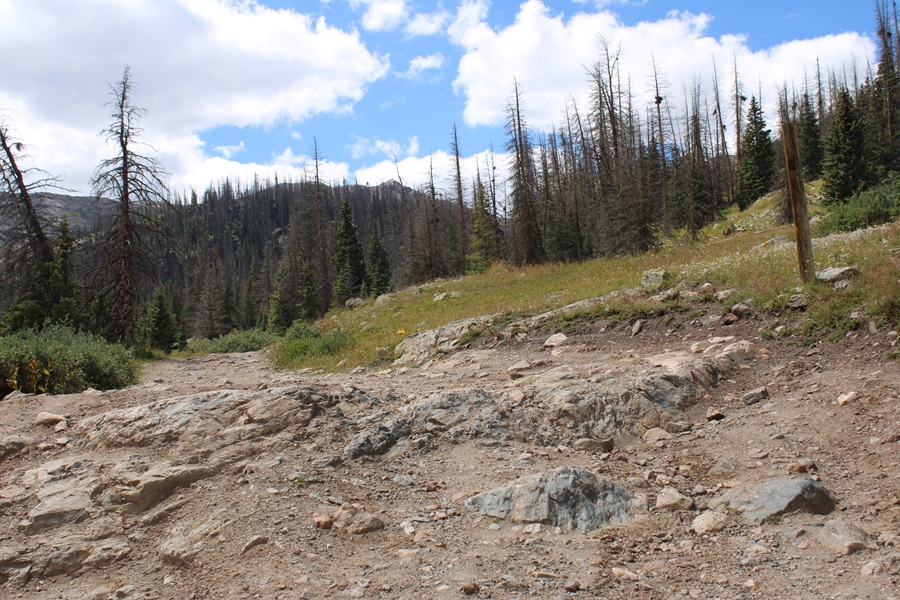
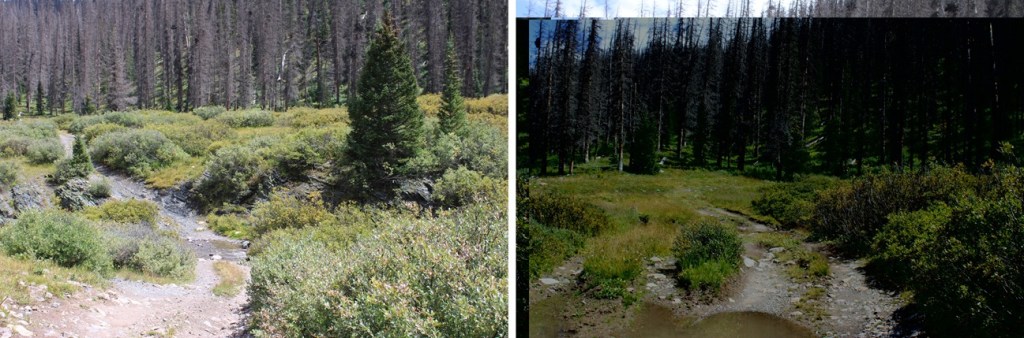
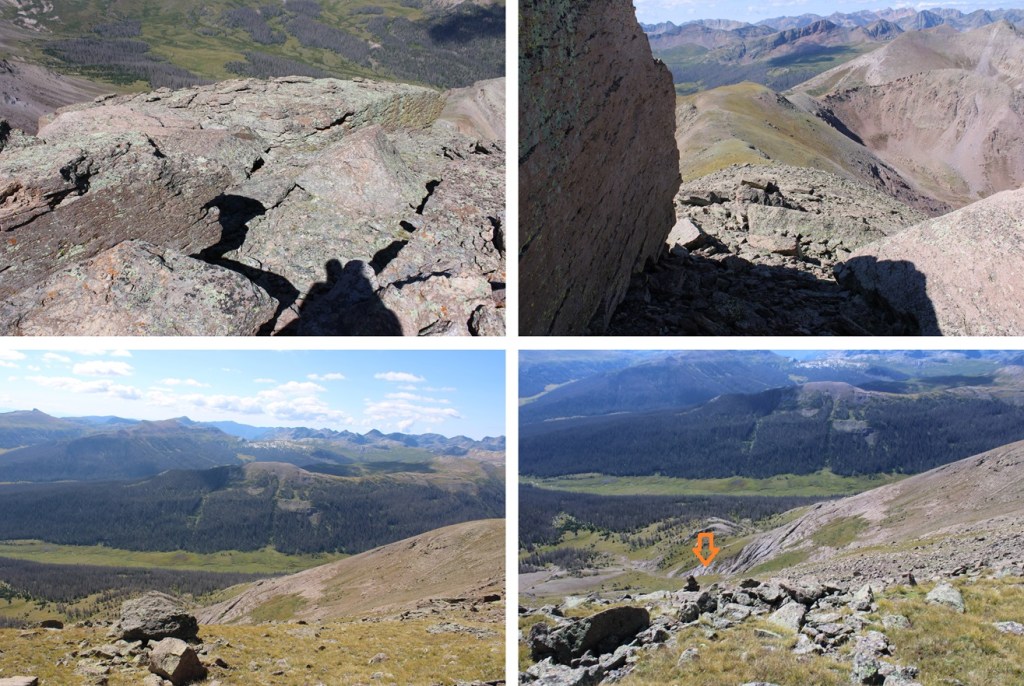
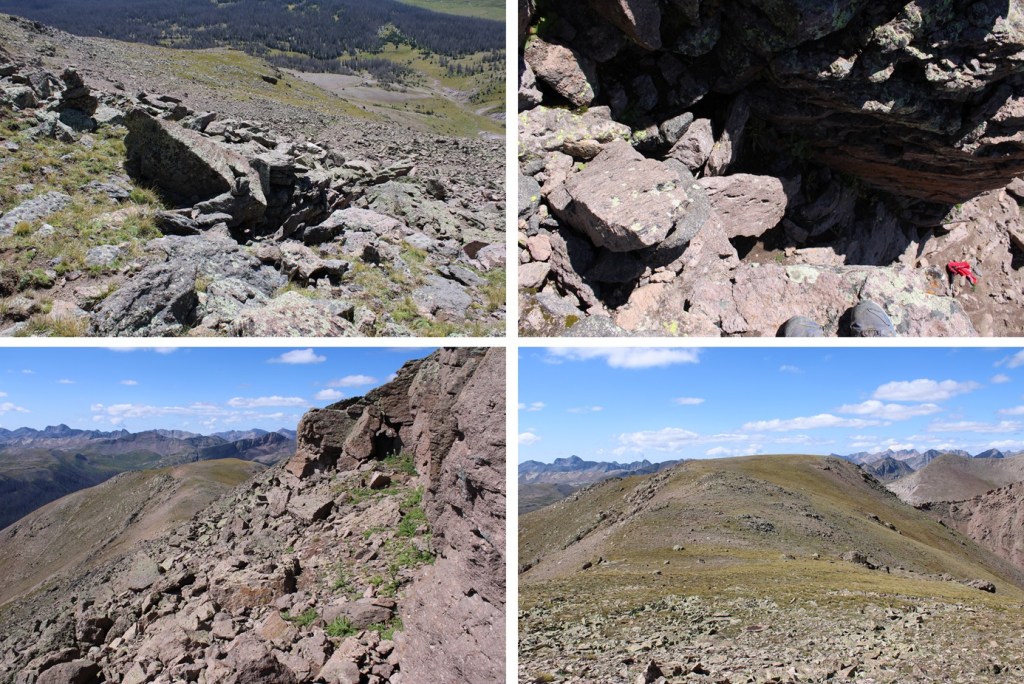
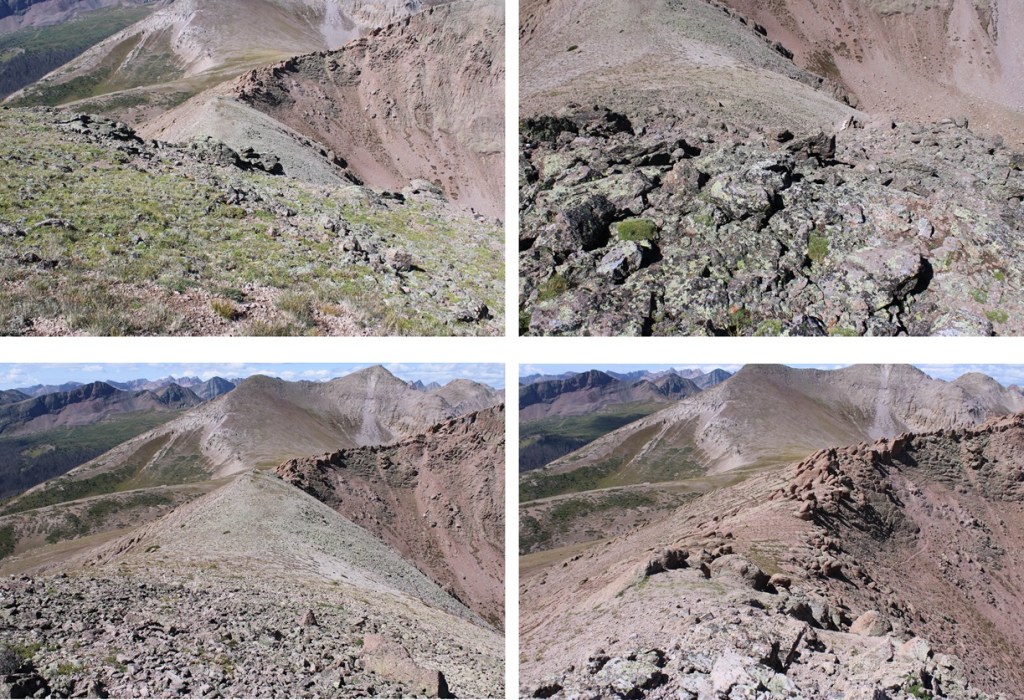
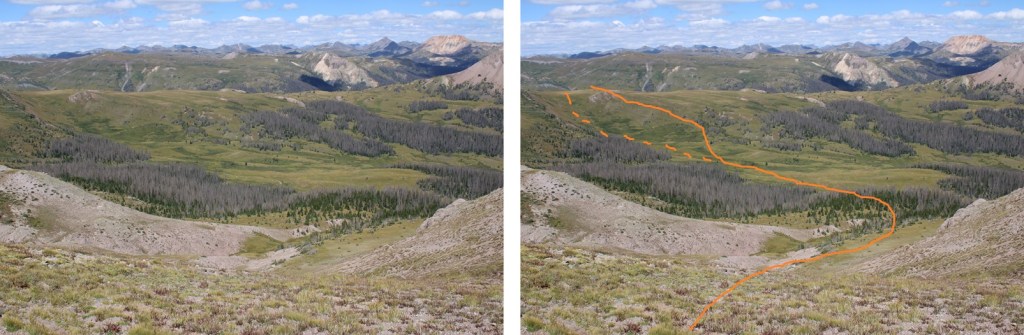
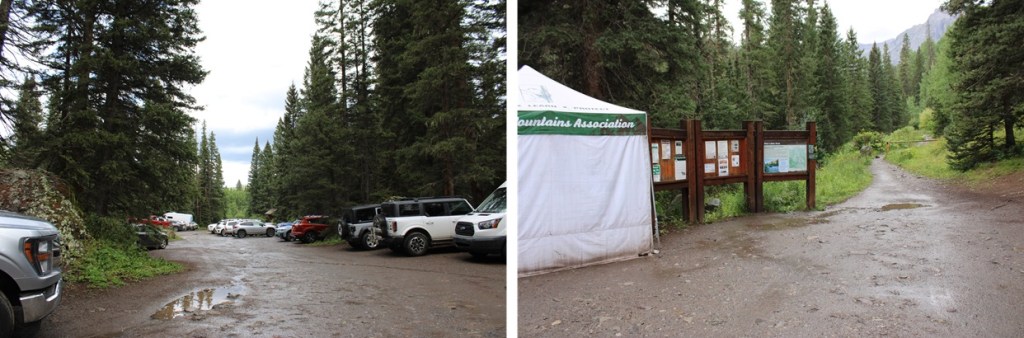
Here are pictures of the start of the 4WD road, and where to park if you have a 2WD vehicle













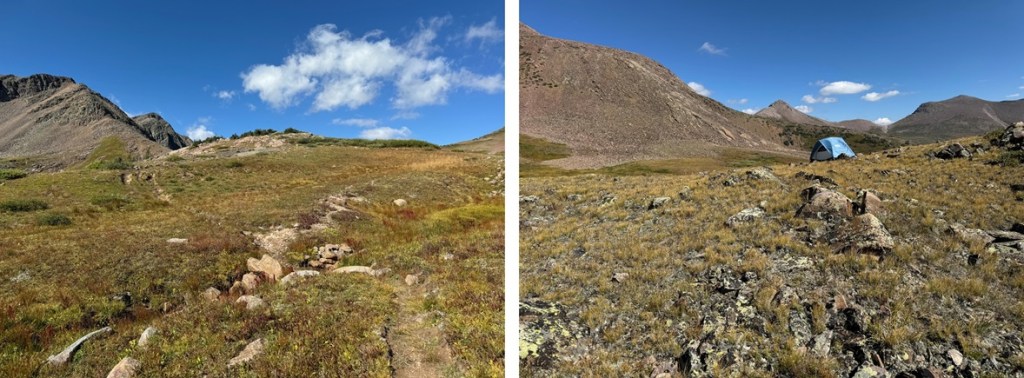
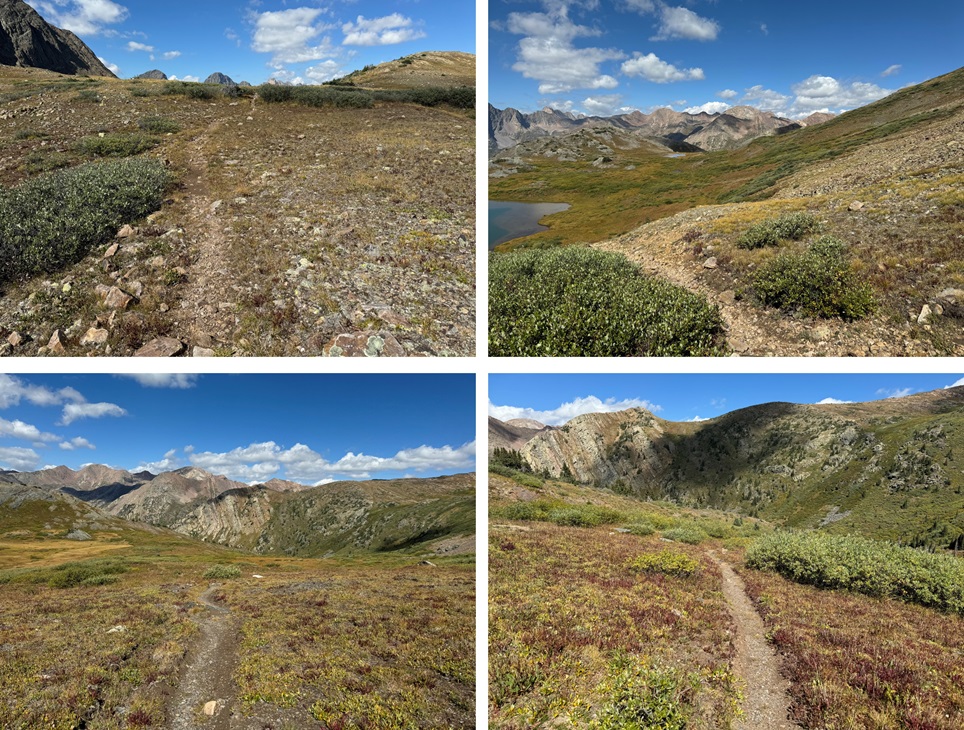
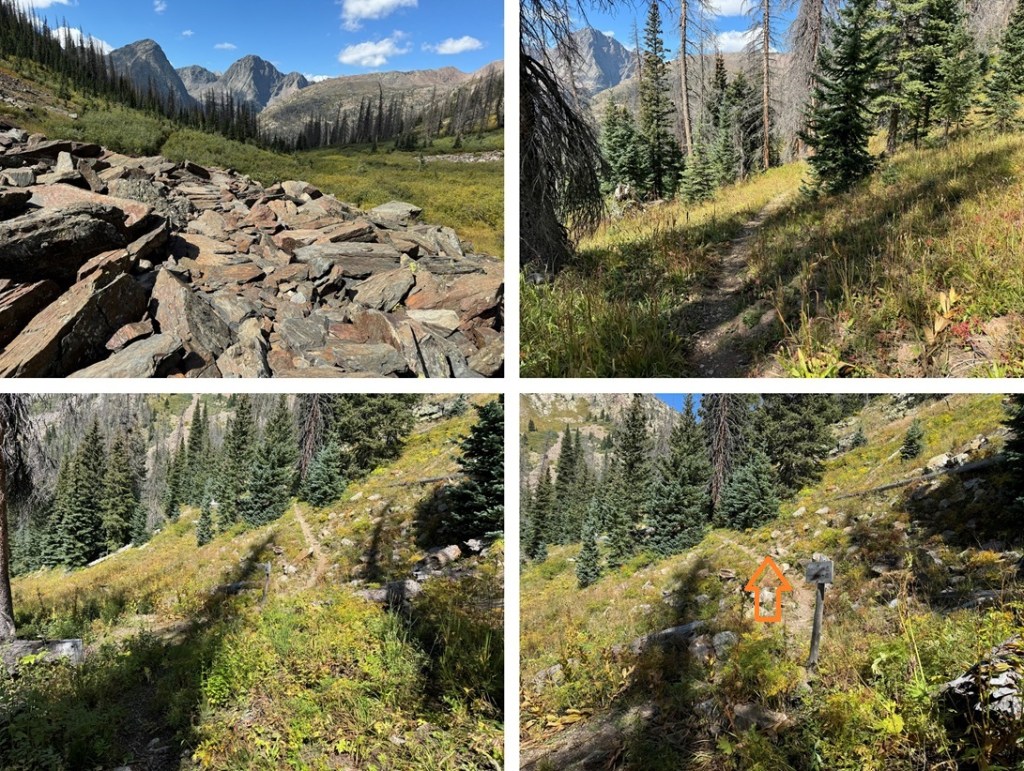

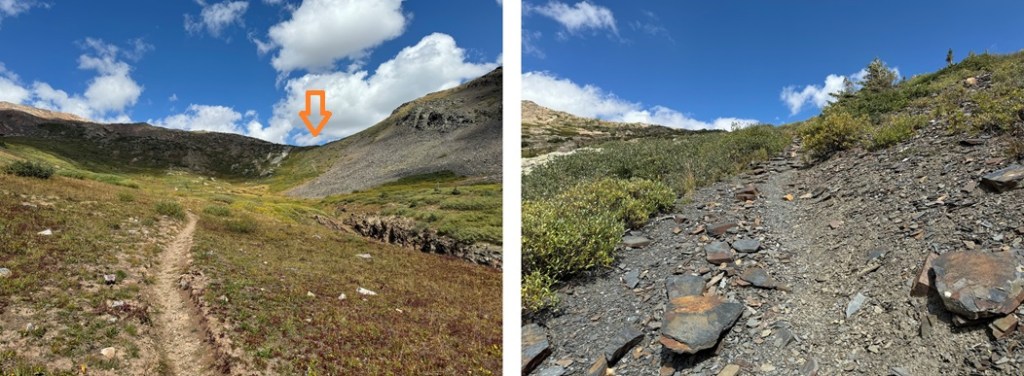




















































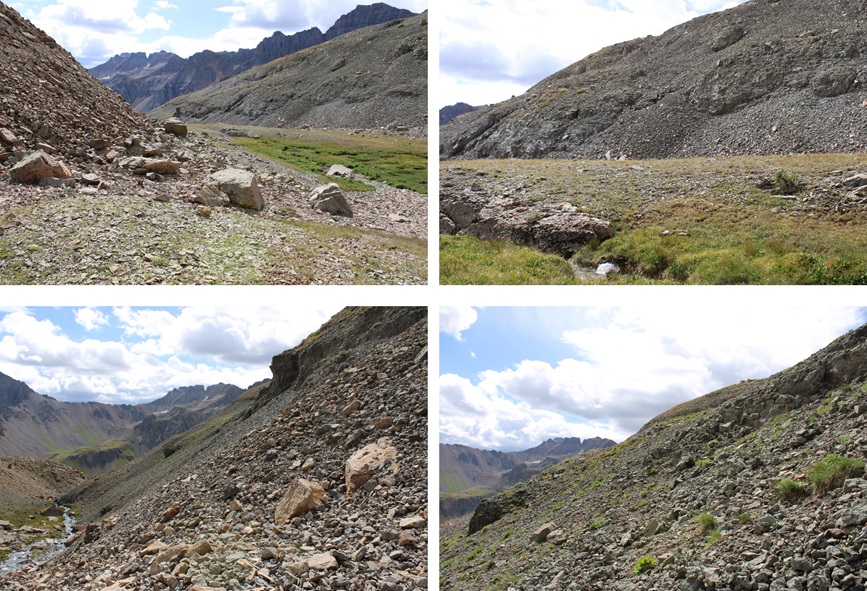
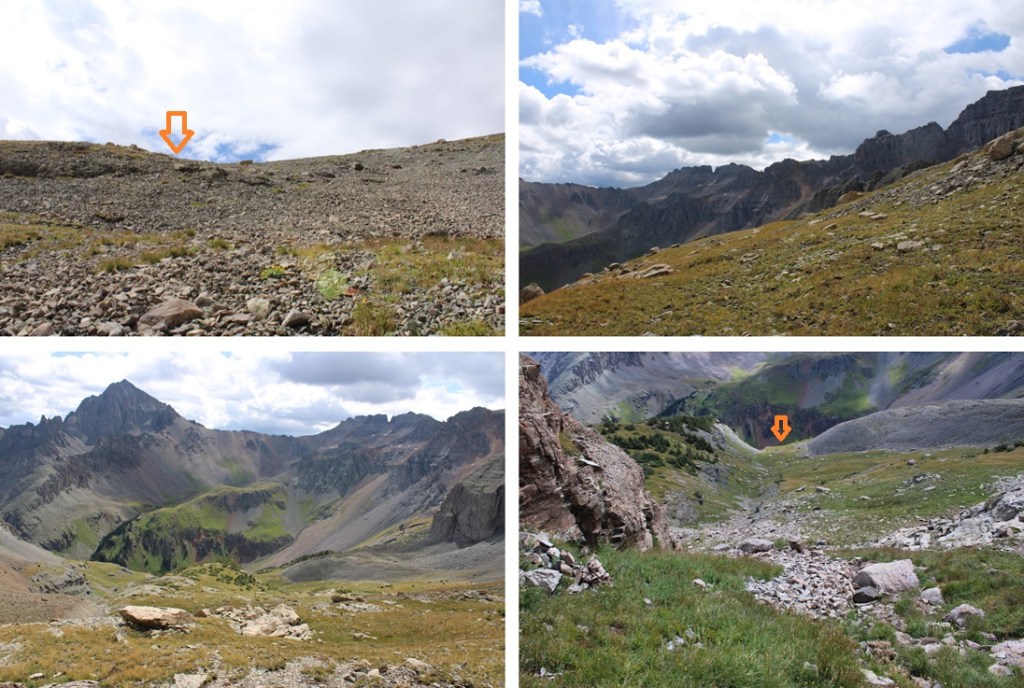
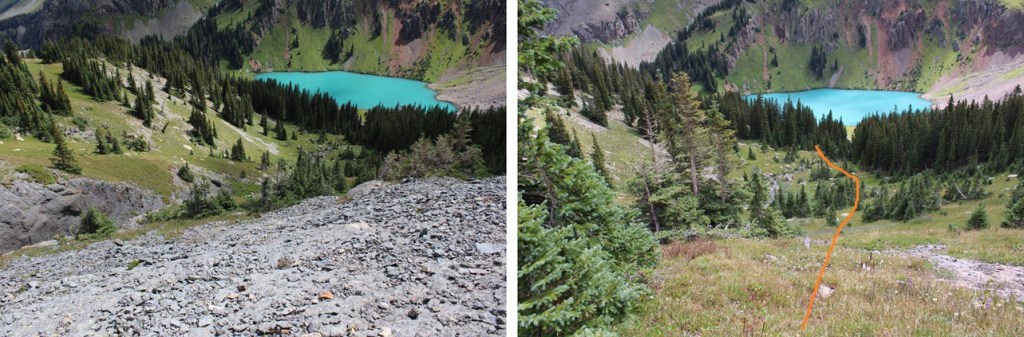
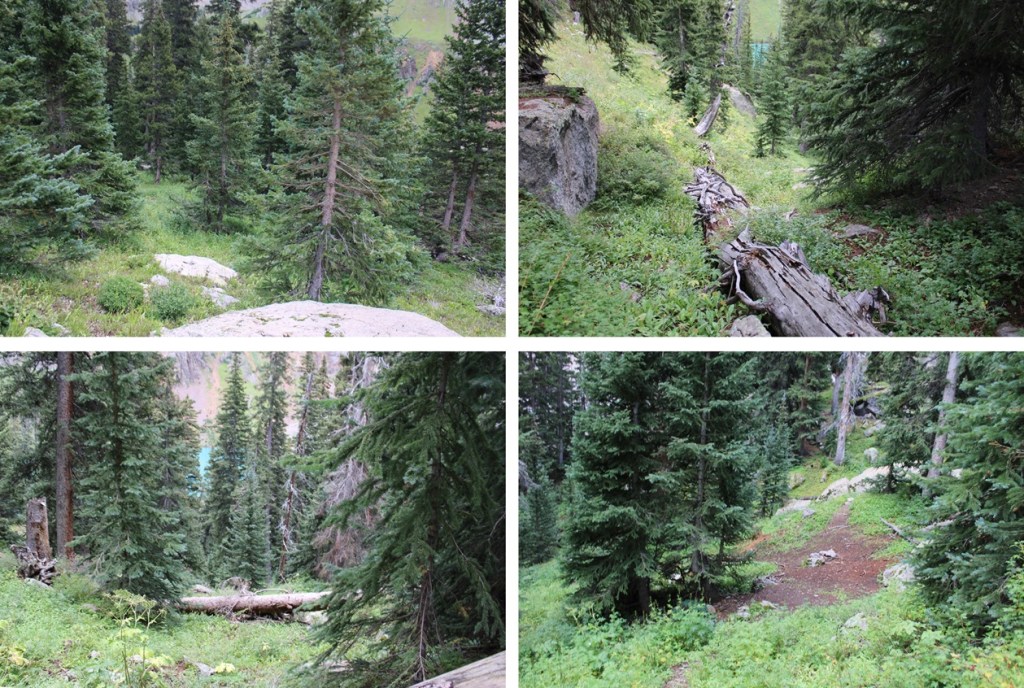











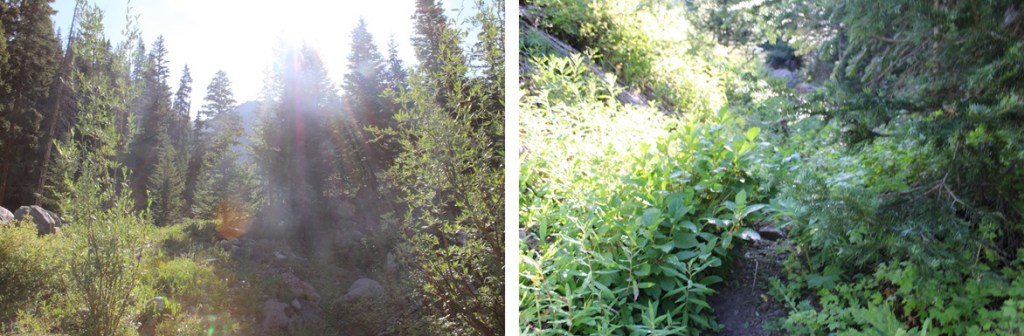
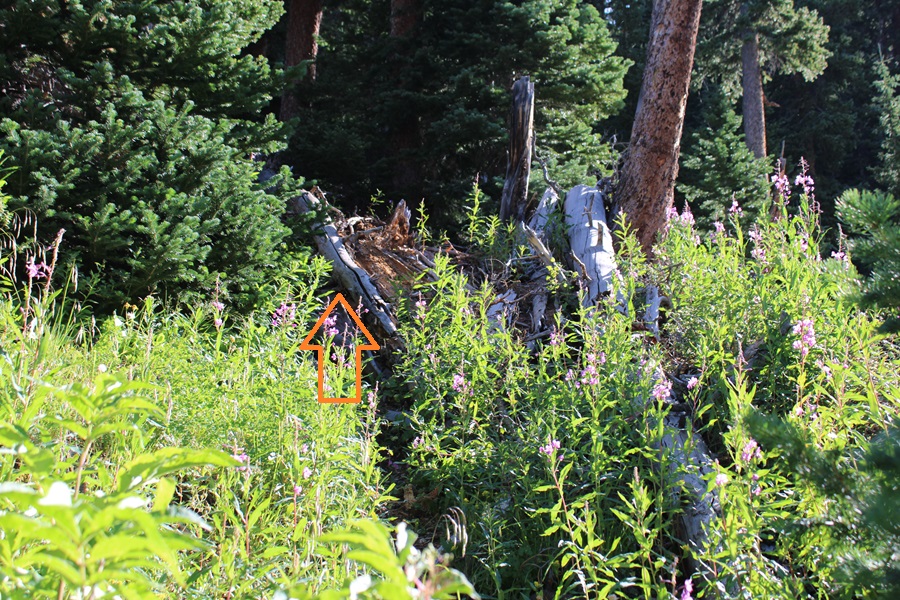
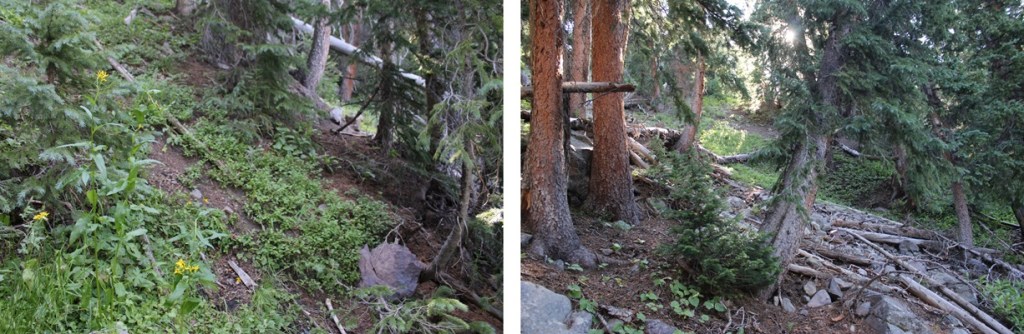
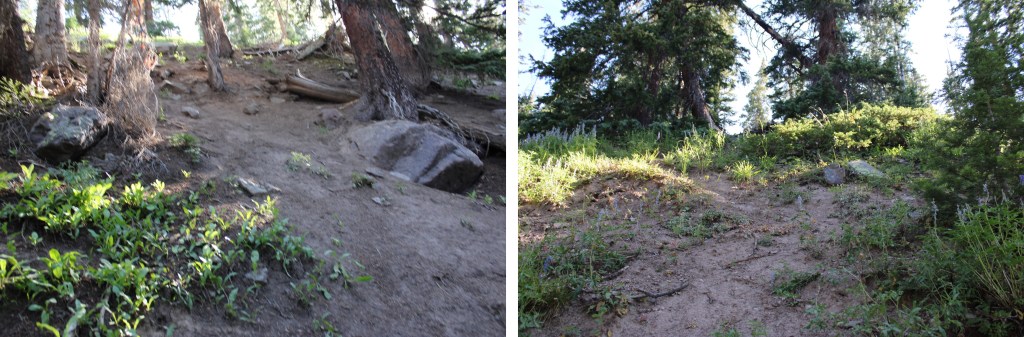



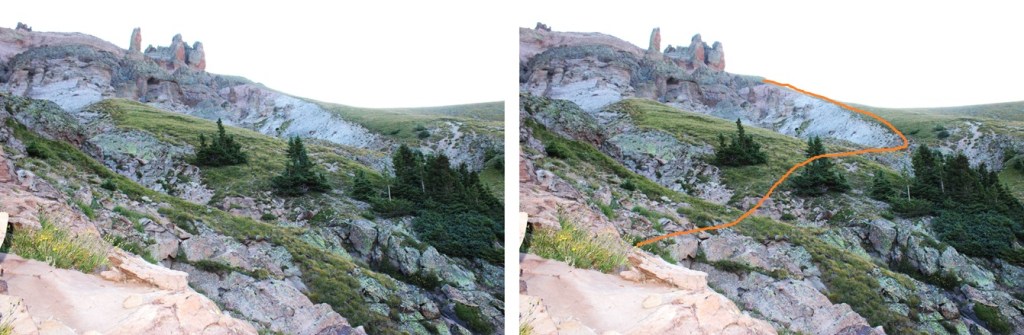
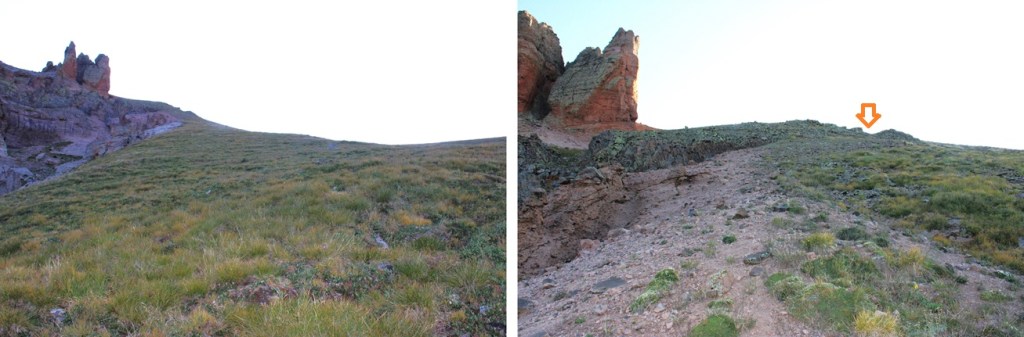
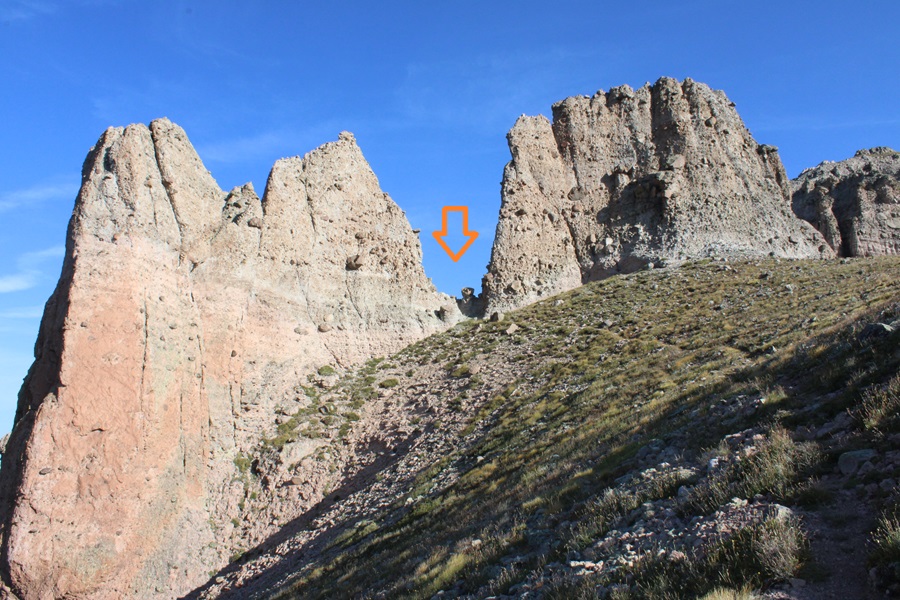
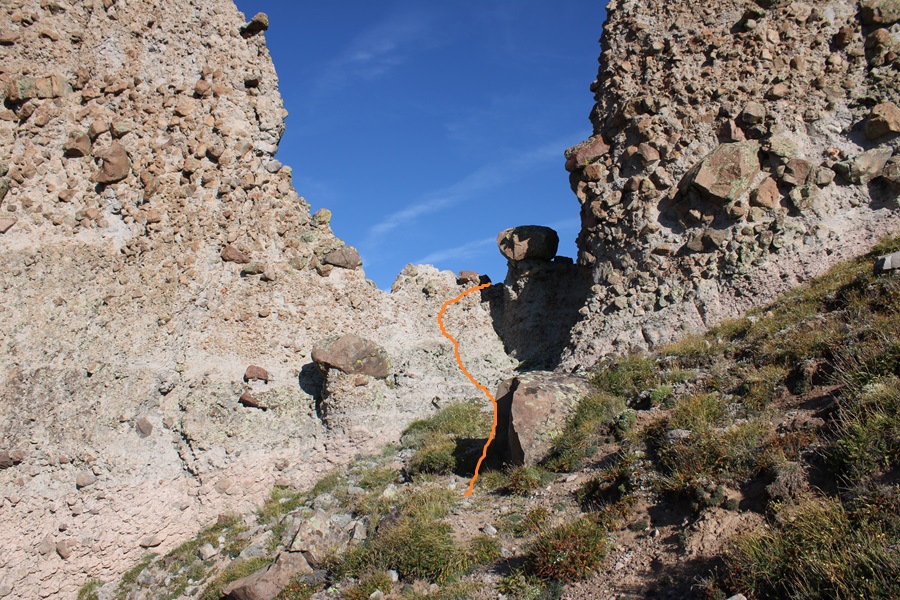
















 Wild Wanderer