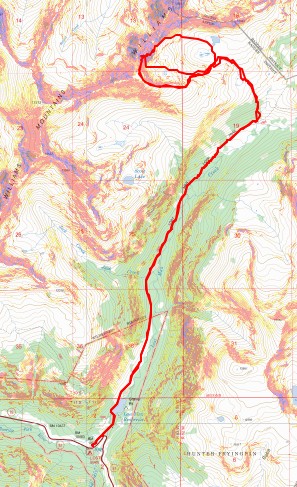
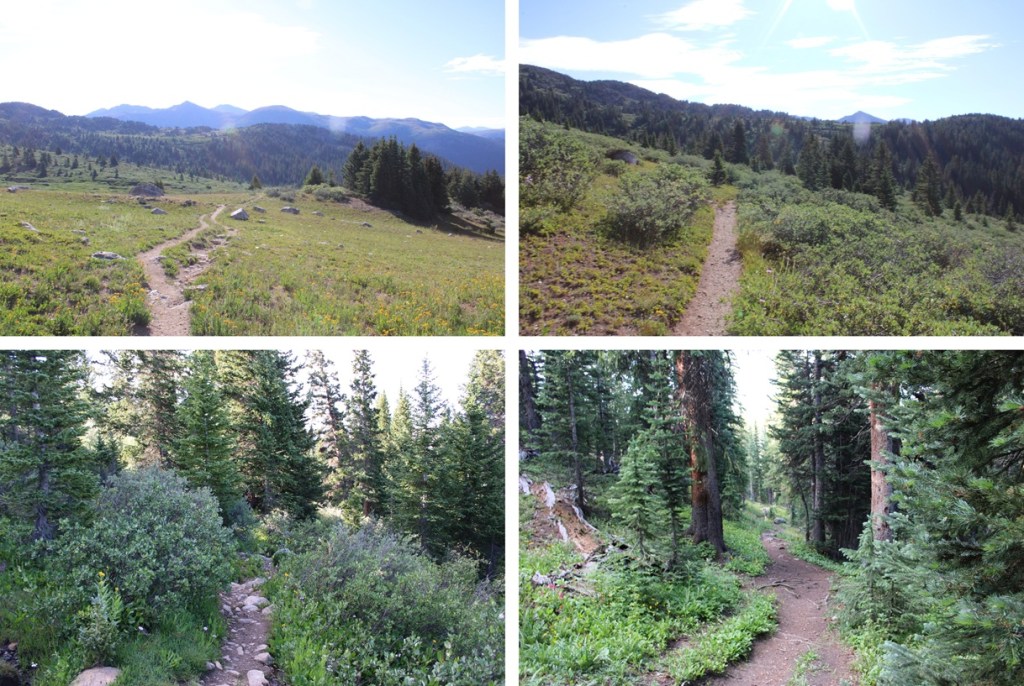
This was my final peak in the Williams Group. I didn’t want to do the traverse but instead wanted to camp in remote basins and find alternate routes. I thoroughly enjoyed the solitude of this peak. I started from Lost Man Trailhead at 2pm and made it to my campsite by 4:45pm. From the trailhead I headed northeast for 3.75 miles on the class 1 Lost Man Loop trail.
After following the trail for 3.75 miles and at 11370’ of elevation I came to an obvious avalanche area to my left.
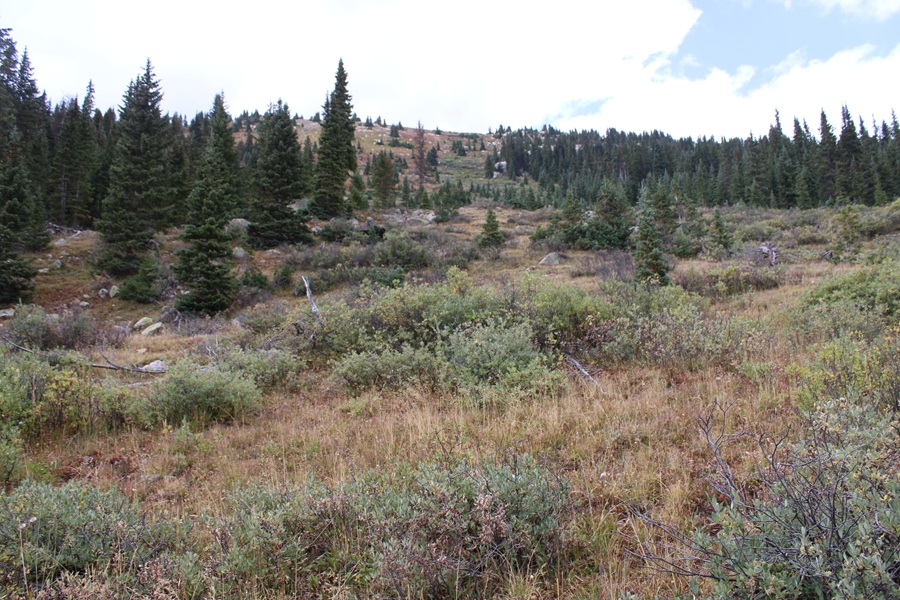
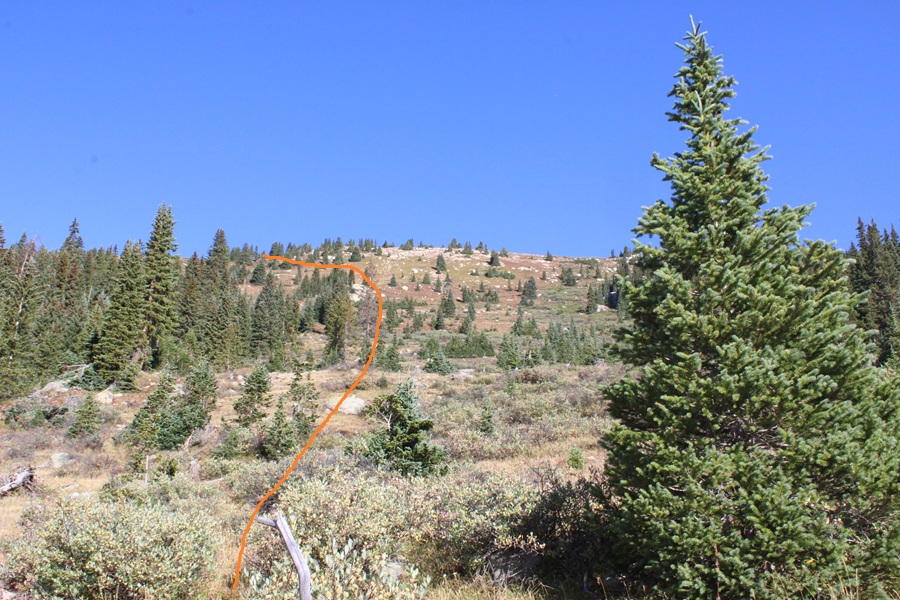
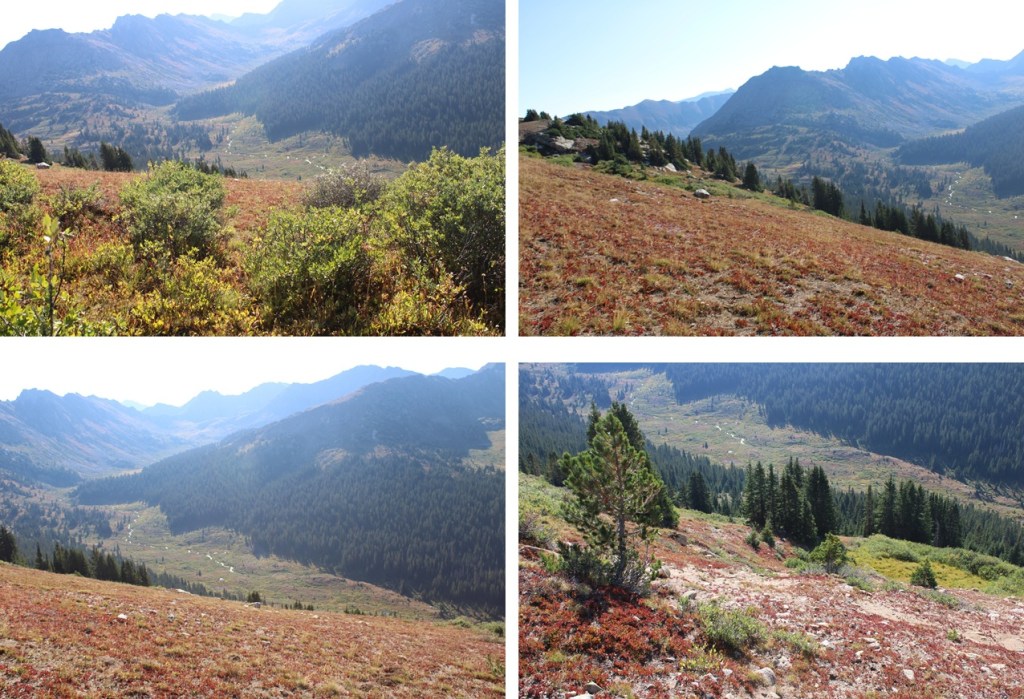
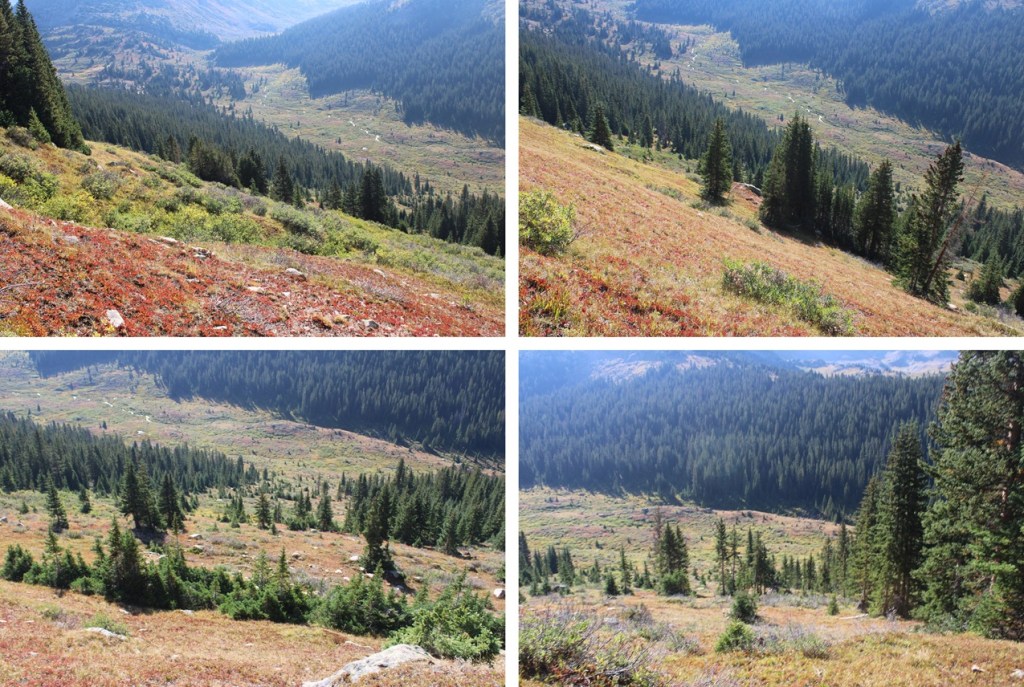
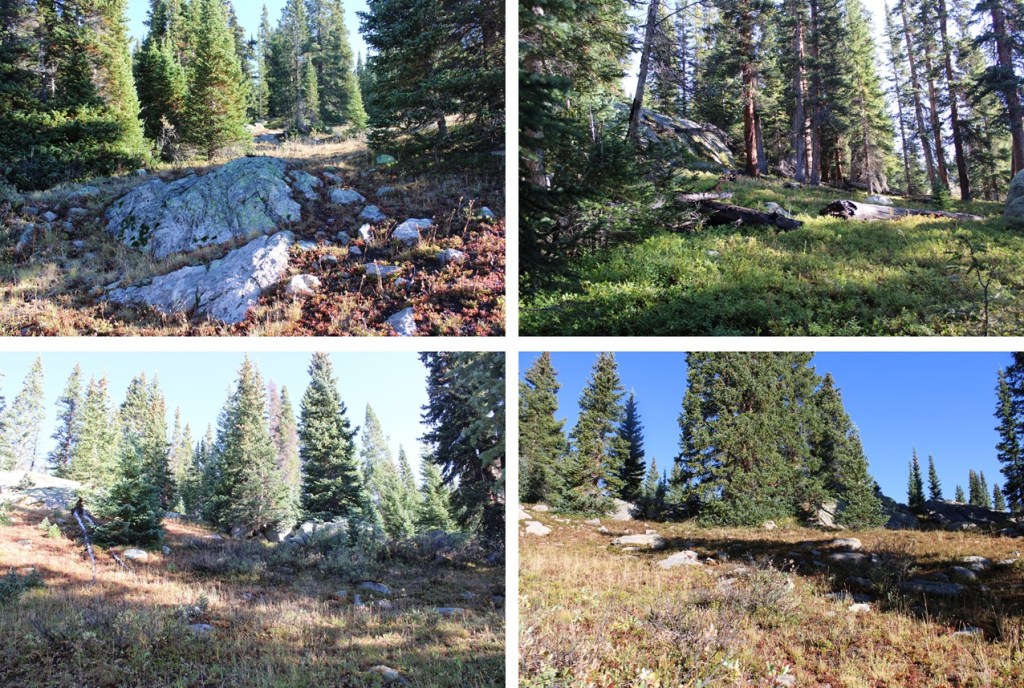
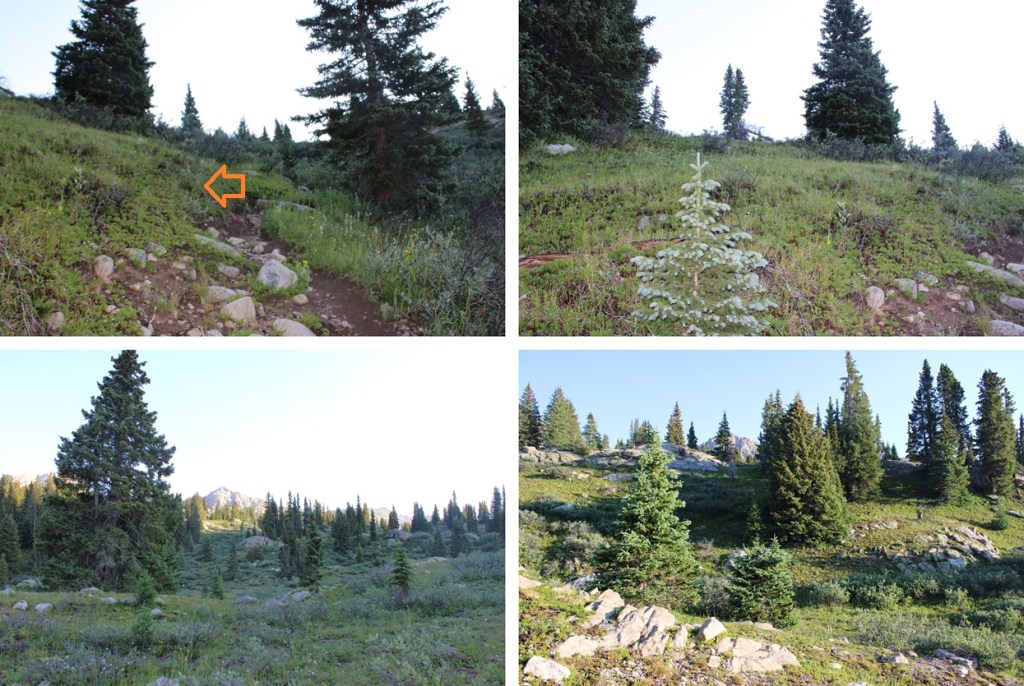
I followed the avalanche run northwest to treeline. I didn’t head straight to the trees but diverted a bit to the left to make it to the ridge. This was by far the most difficult part of the hike, as the elevation gain is steep.
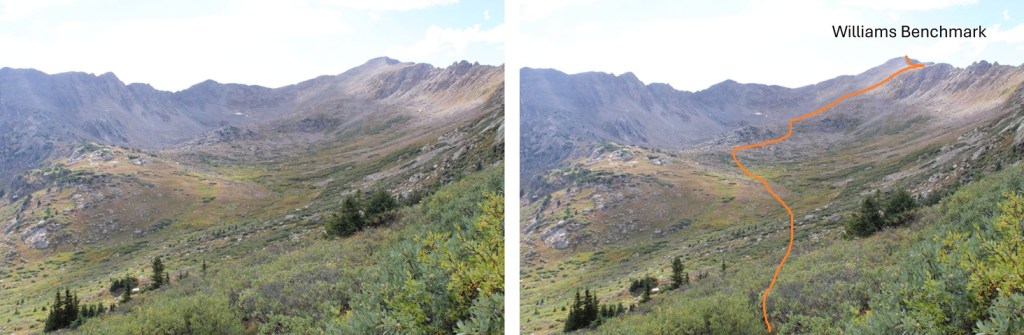
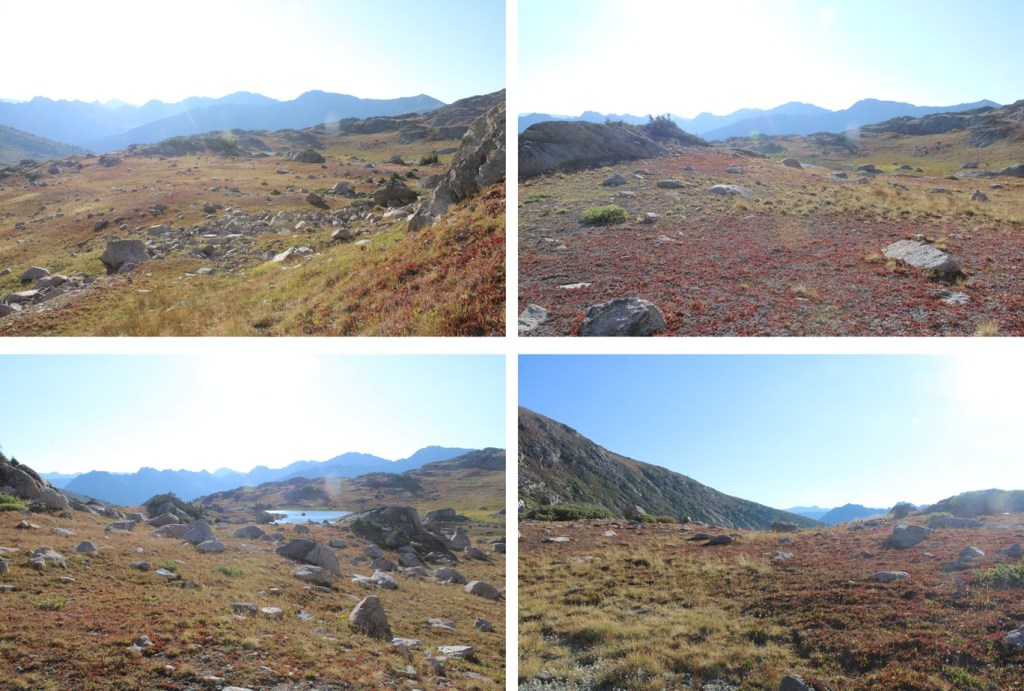
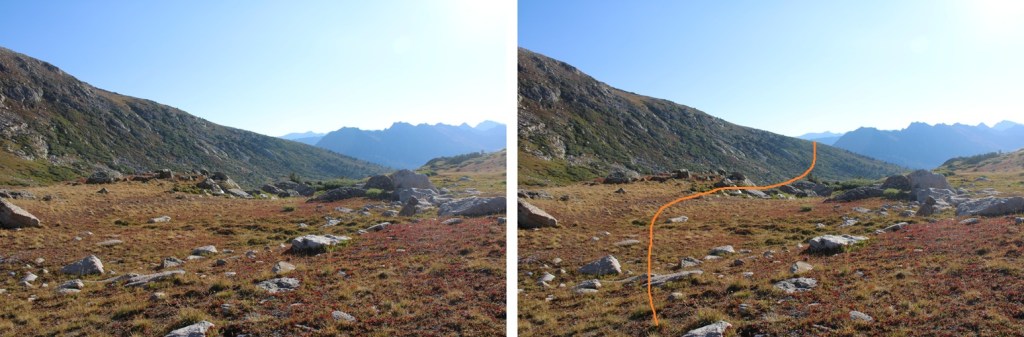
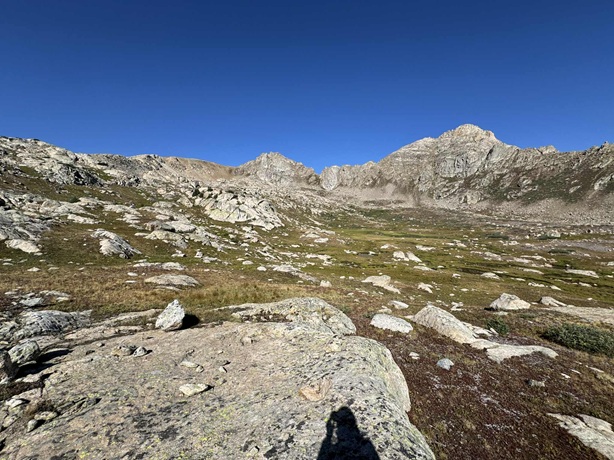
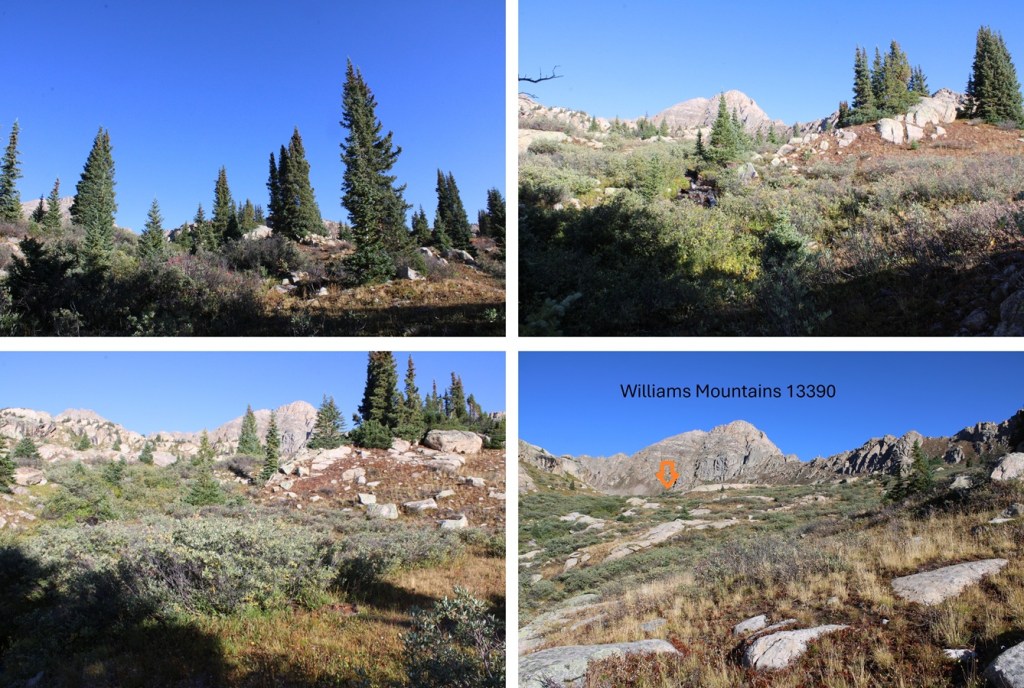
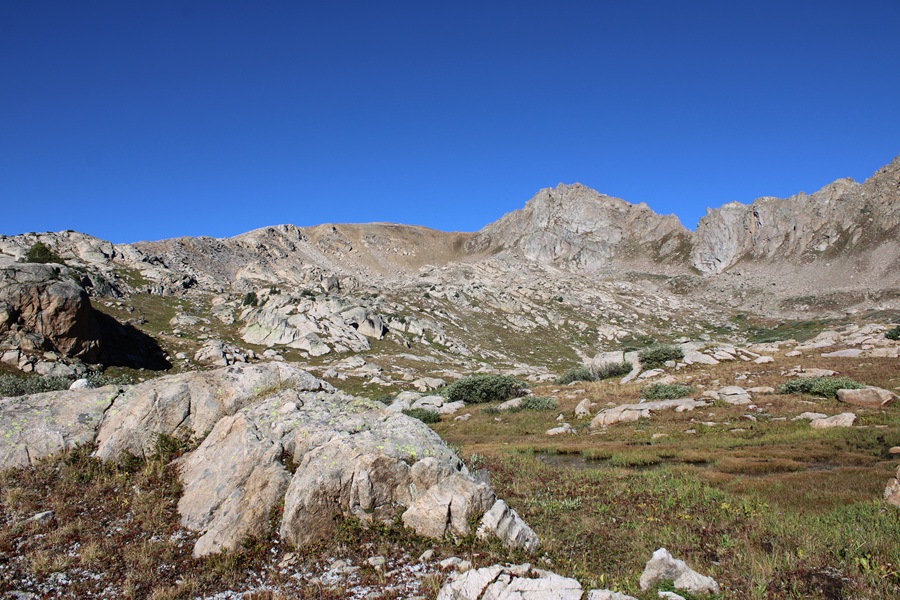
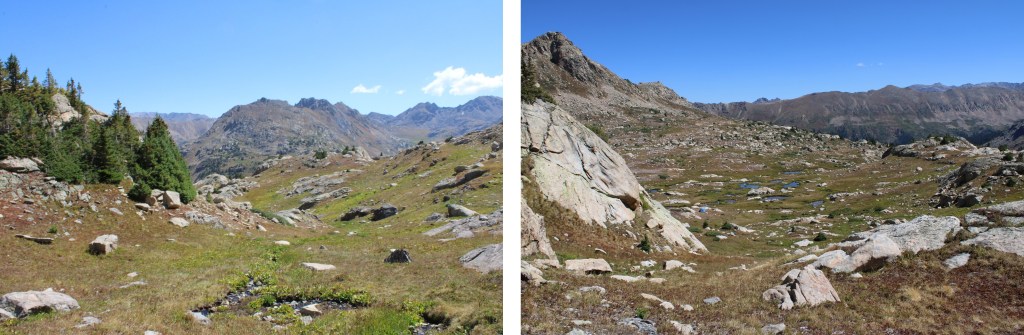
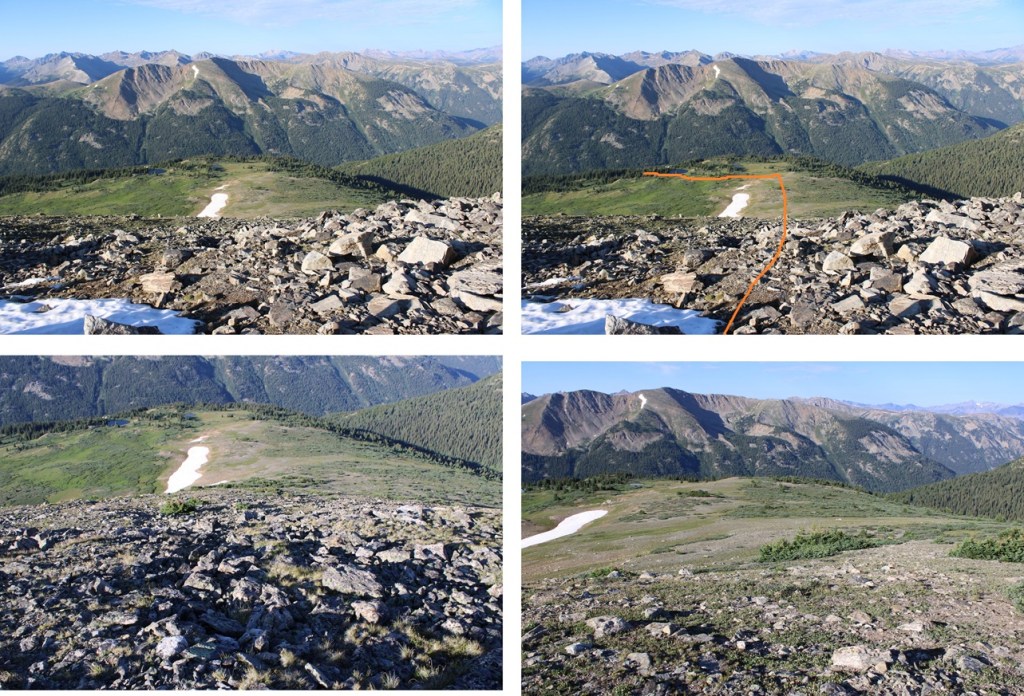
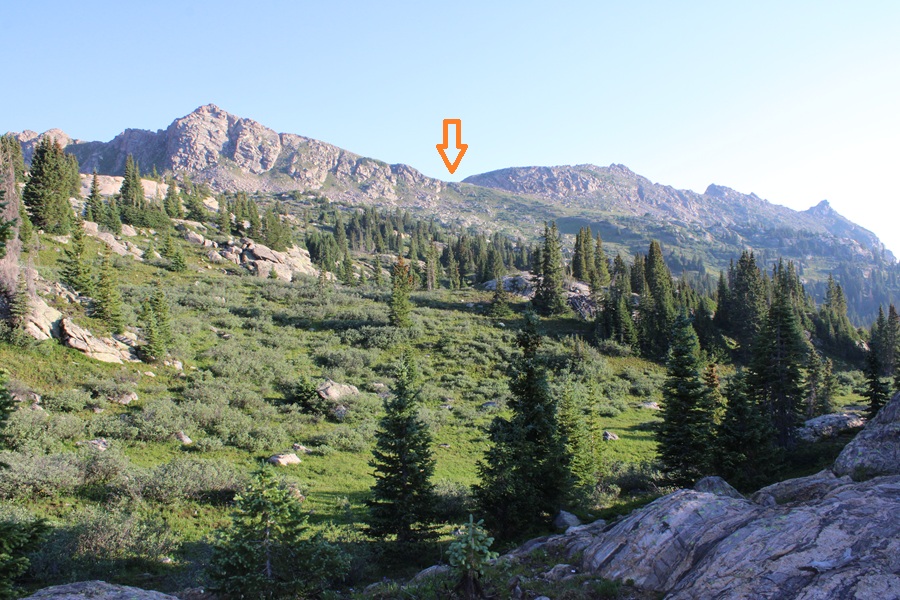
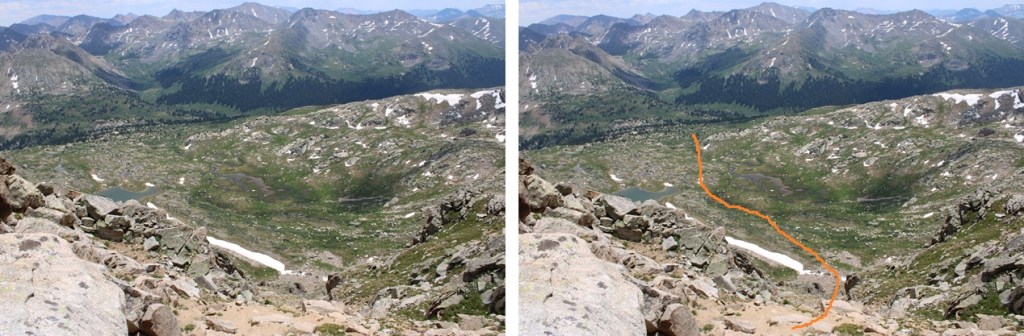
At the top of the avalanche run I could see a large unnamed basin (on a topo map it’s north of Scott Lake). This was where I planned on setting up camp. I could also see the rest of my route to the summit. As you can see from the picture, I needed to lose about 200’ of elevation as I headed into the basin. There are tons of willows here, but also several game trails to navigate through them.
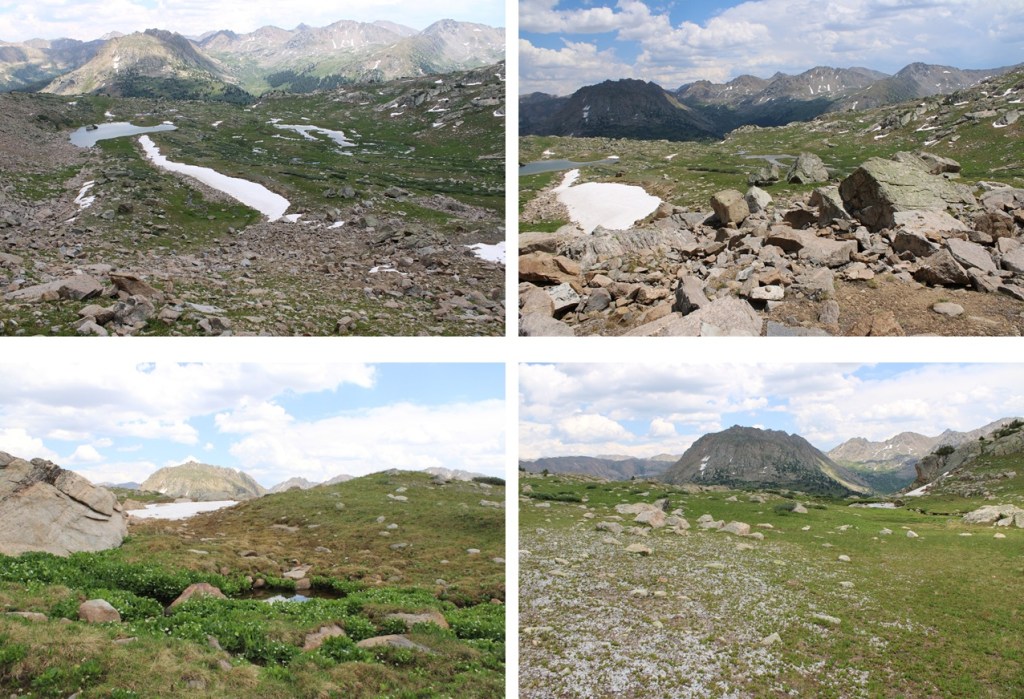
I headed west and found an unnamed lake/pond at around 12150’, went past it and found a campsite.
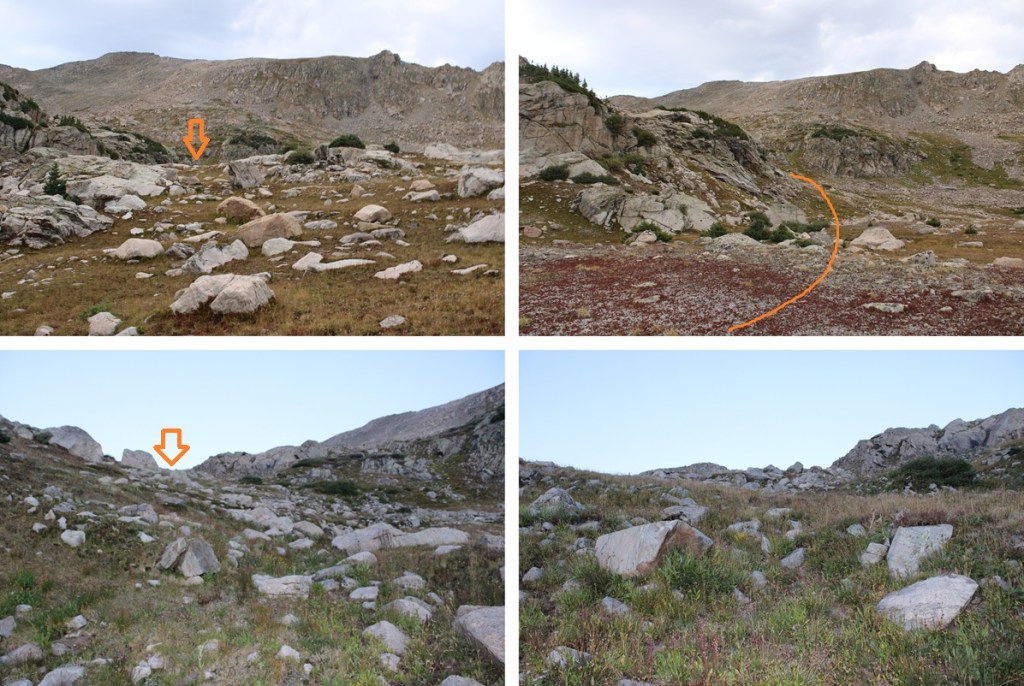
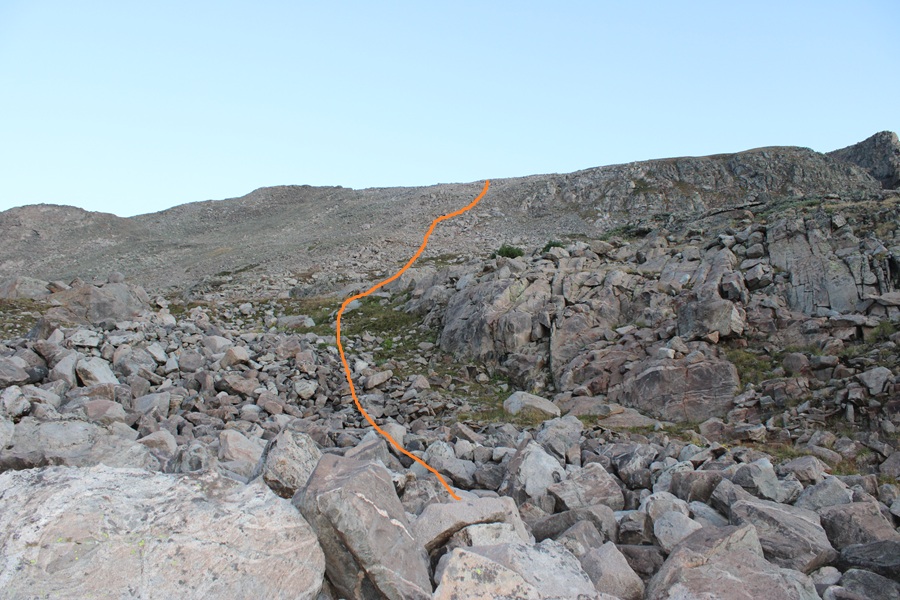
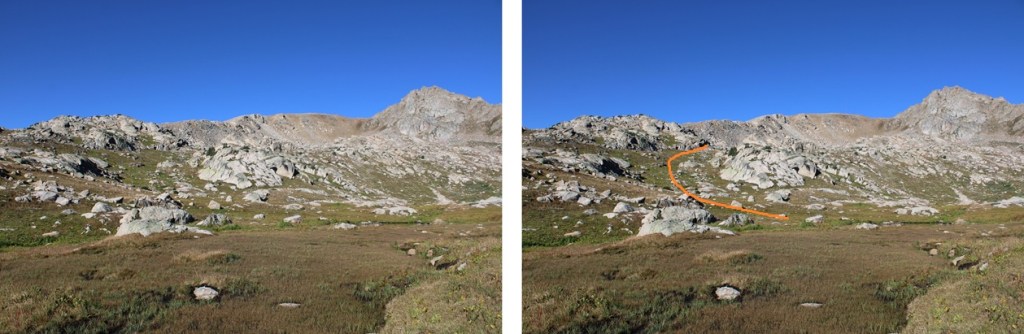
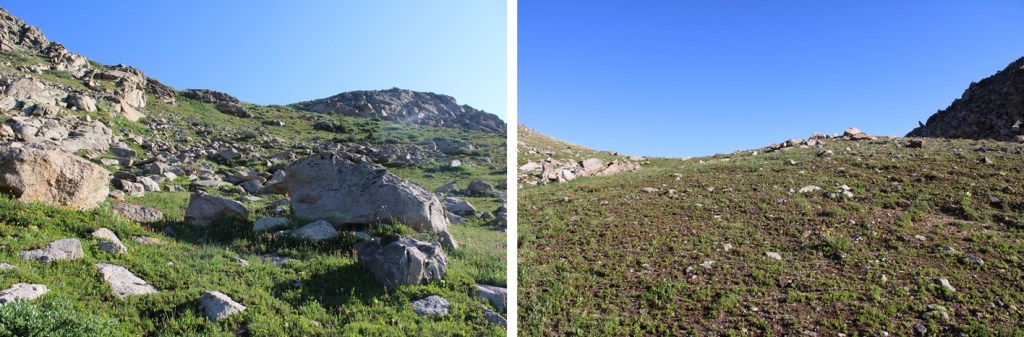
After spending a wonderful night in the basin I was up and hiking again at 6:30am. I started by finding an easy gully and ascending it west.
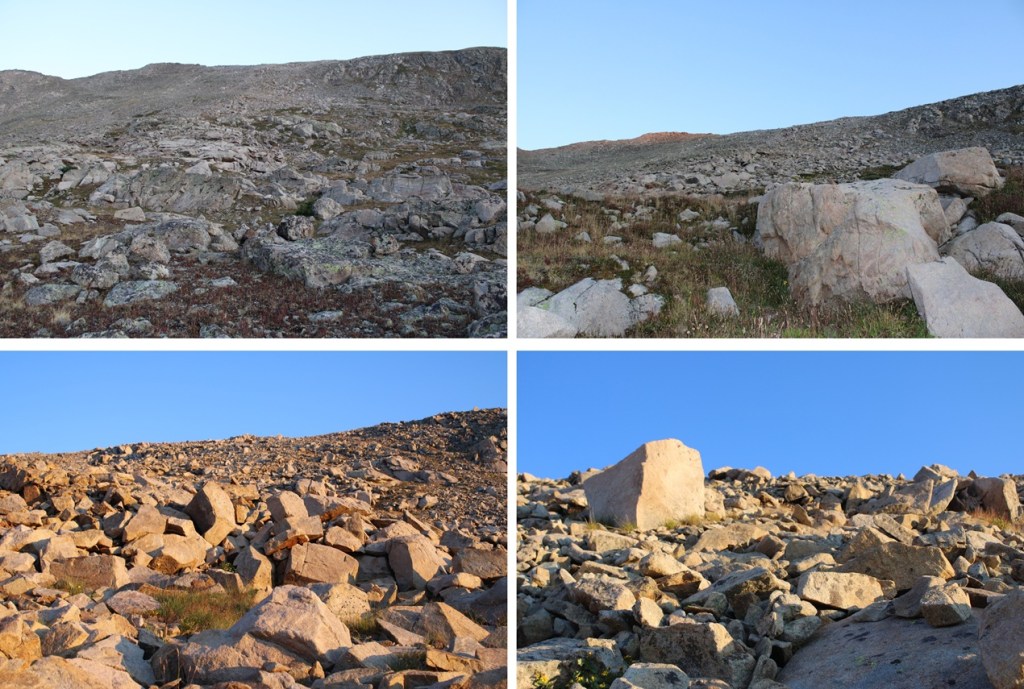
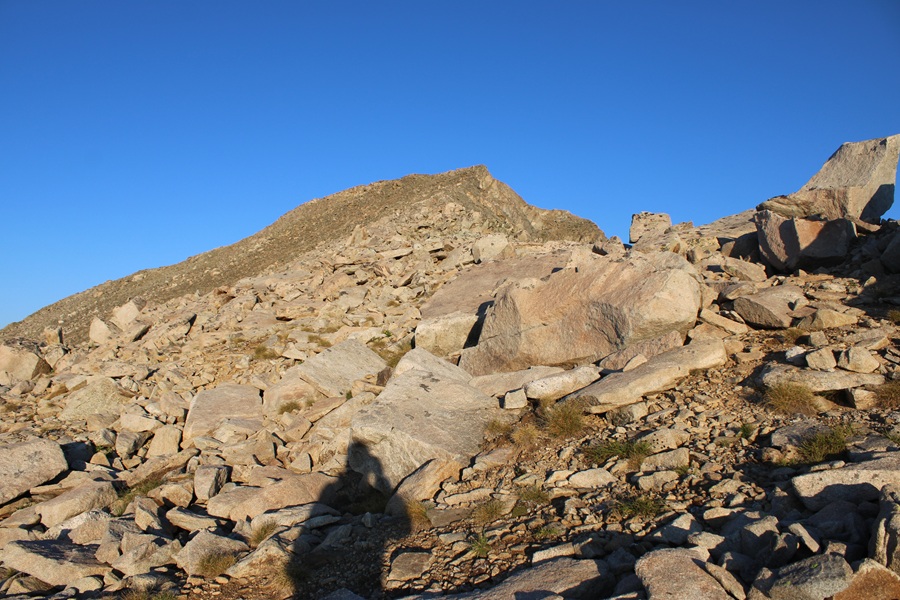
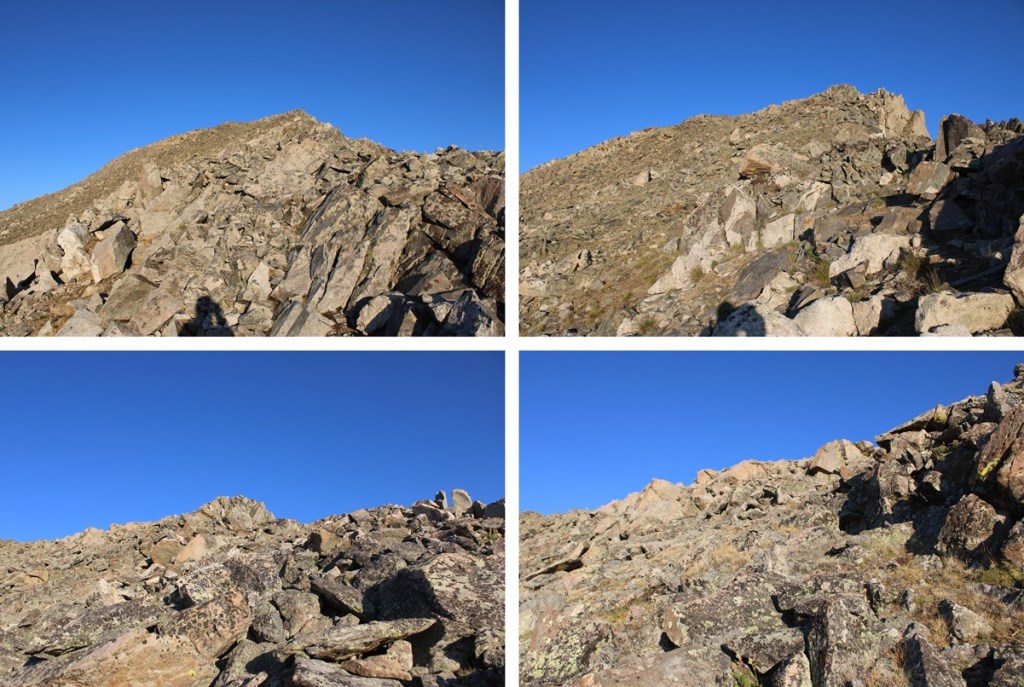
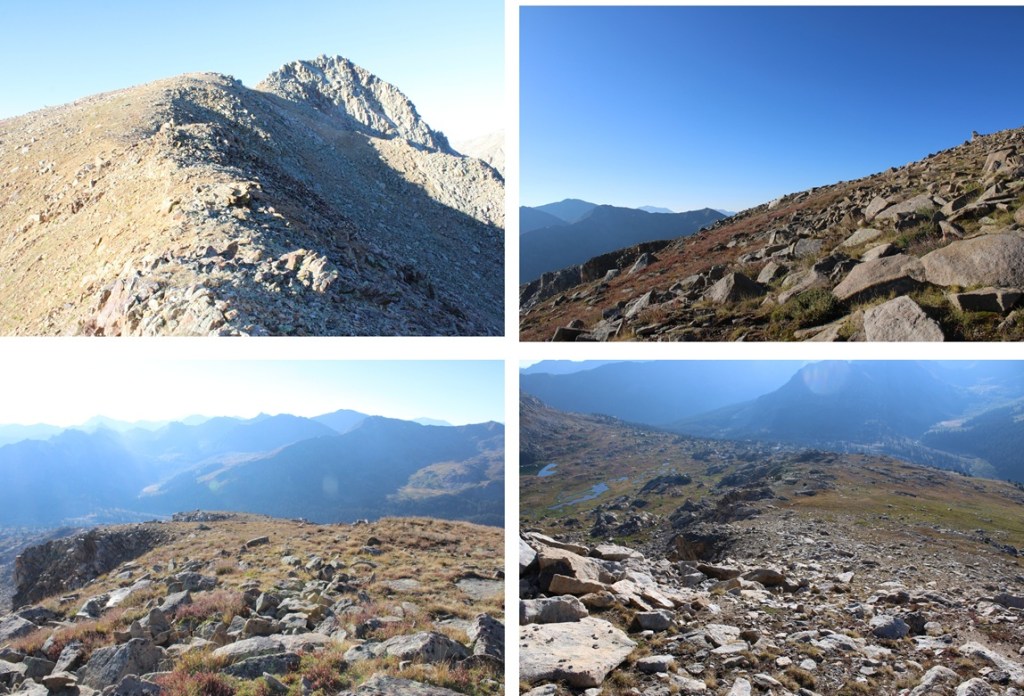
At the top of this small gully I turned right and headed up the ridge. To make it easier for me I looked for large boulders to the northwest and followed them to the ridge. This entire hike is class 2, and ascending the ridge was easier than ascending the avalanche run.
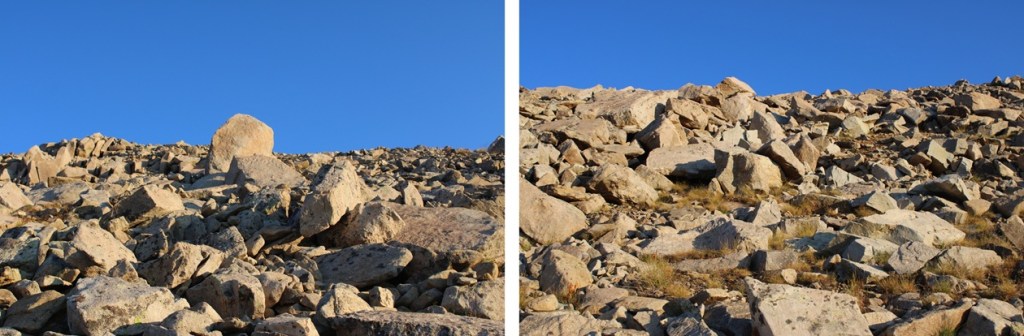
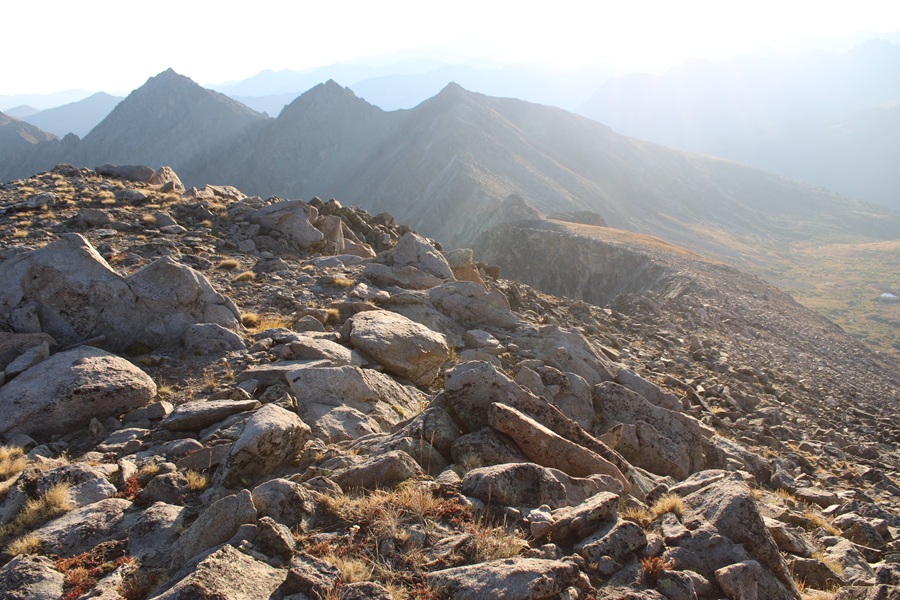
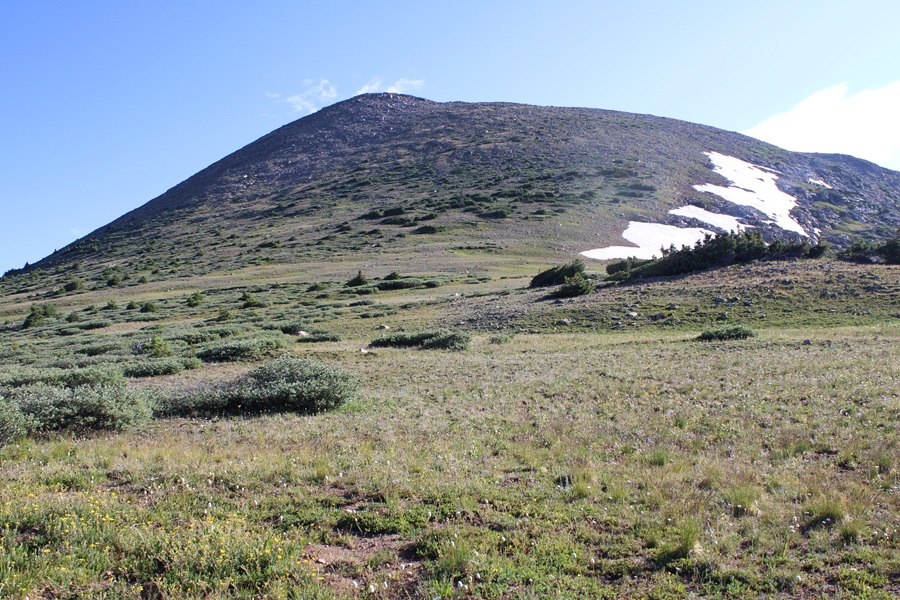
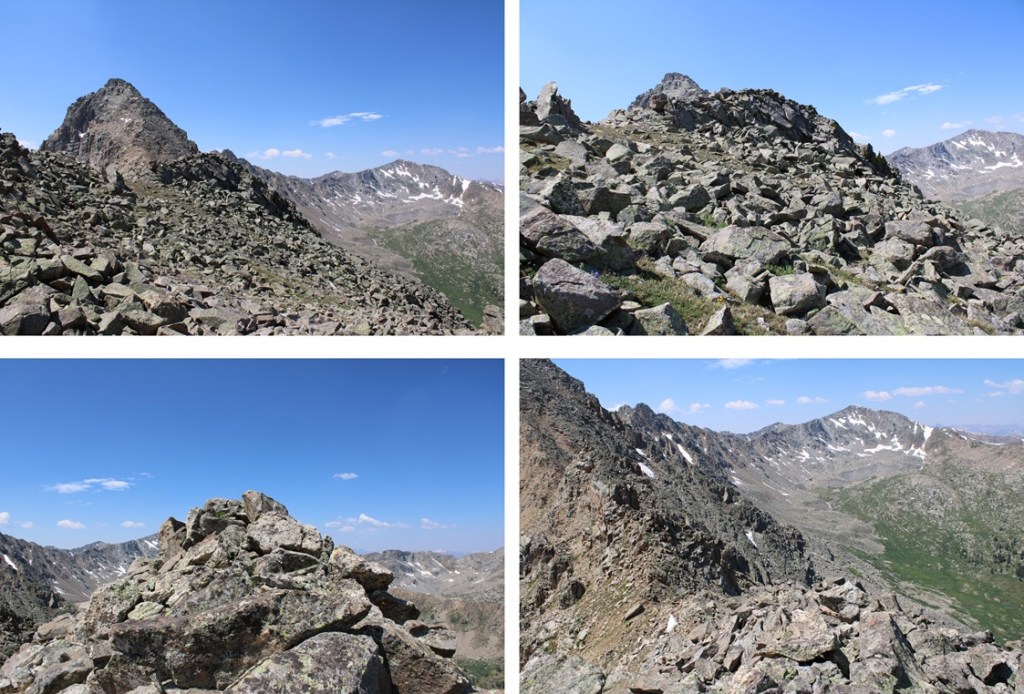
Once on the ridge I turned left and followed it west to the summit. The ridge proper goes at class 2. This was an easy yet rocky trek.
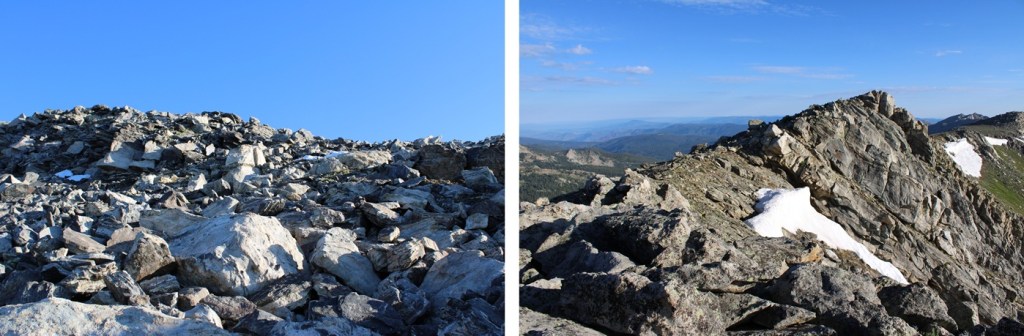
The true summit was difficult to determine, as there were two humps very close together on the relatively flat summit and both looked higher than the other, so I walked all around the summit to make sure I stood on the actual summit itself.
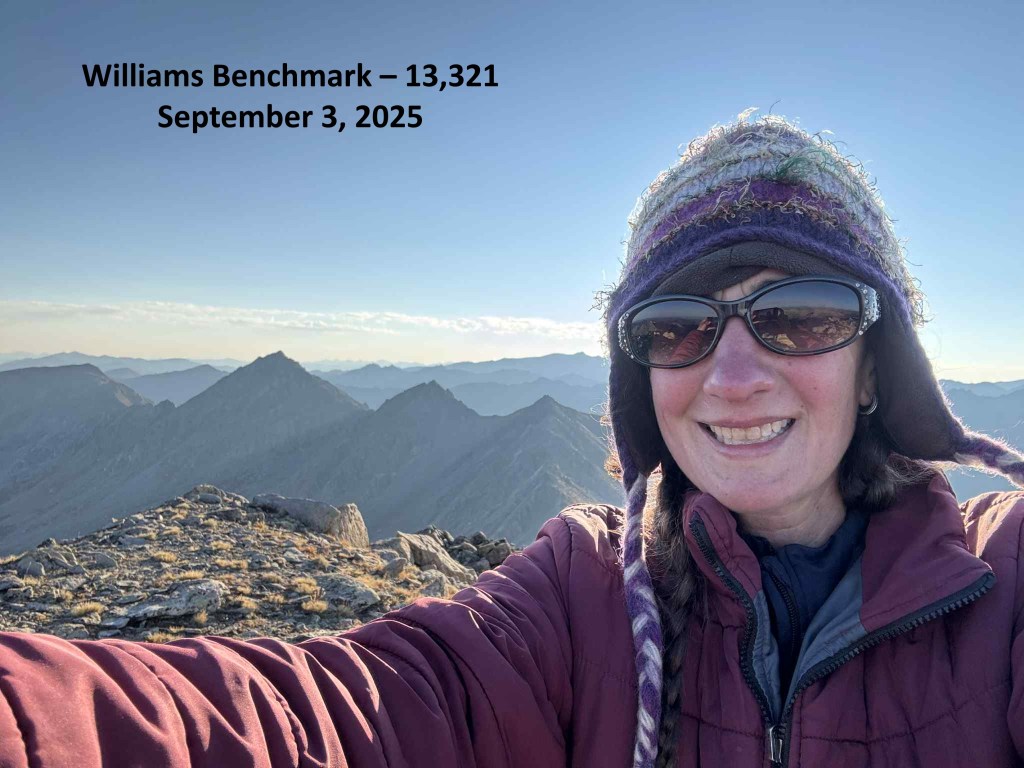
I summited Williams Benchmark at 7:25am
Williams Benchmark:
This was an out and back hike for me, so I turned around and descended the ridge the way I’d summited, heading east.
Just before the grassy area on the ridge I turned right and descended southeast back into the basin.
Back in the basin I would need to regain that 200’ to the ridge above the avalanche slide.
Then it was back towards Lost Man Trail, heading southeast down the ridge.
Back on Lost Man Trail I followed it southwest to the trailhead.
I made it back to my truck at 10:40am.
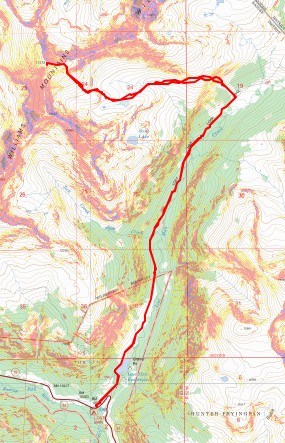
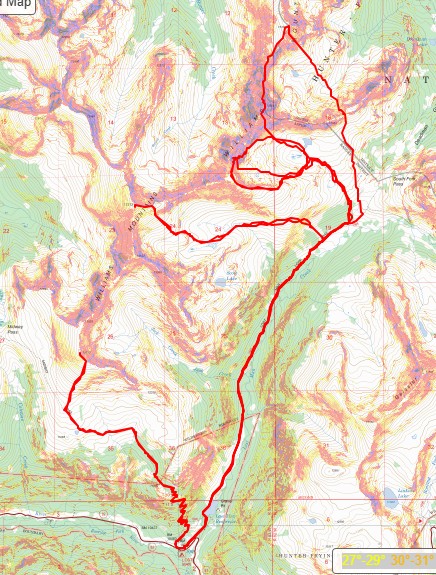
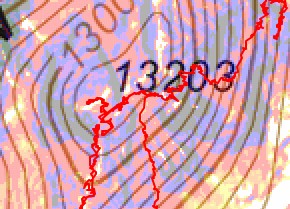
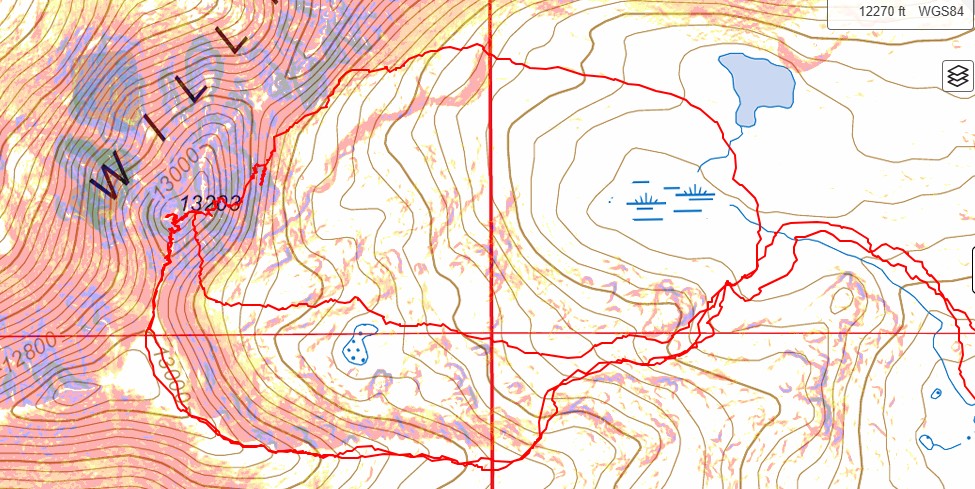
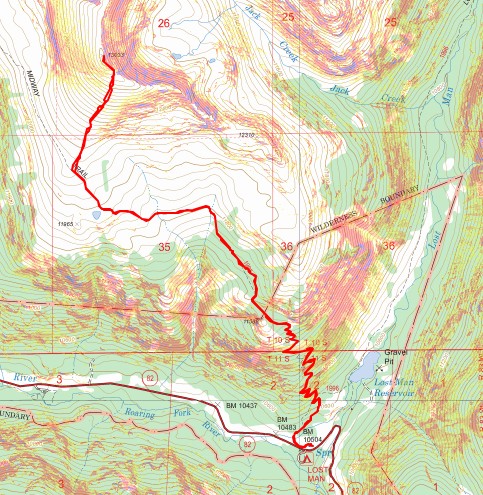
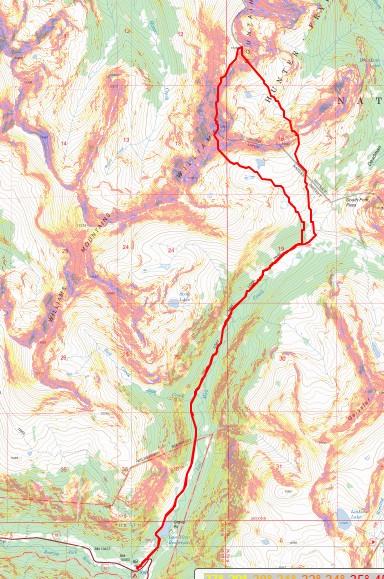
This finished my peaks in the Williams Group. Here’s a topo from all the peaks I did in the area, avoiding the traverse. If anything, they can serve as bailout points if needed.
Elevation Gain: Varies depending on route (see below)
This is a three-trip-report peak for me, so my numbers are all splattered together. I had an idea this peak would take me several attempts to get, so I came prepared and brought my backpacking gear. I’m going to give you the three reports as they happened. I found a way to make this a class 4, 3, or 2 peak. You can choose your route. Either way, the approach to the place I camped in the upper basin is the same.
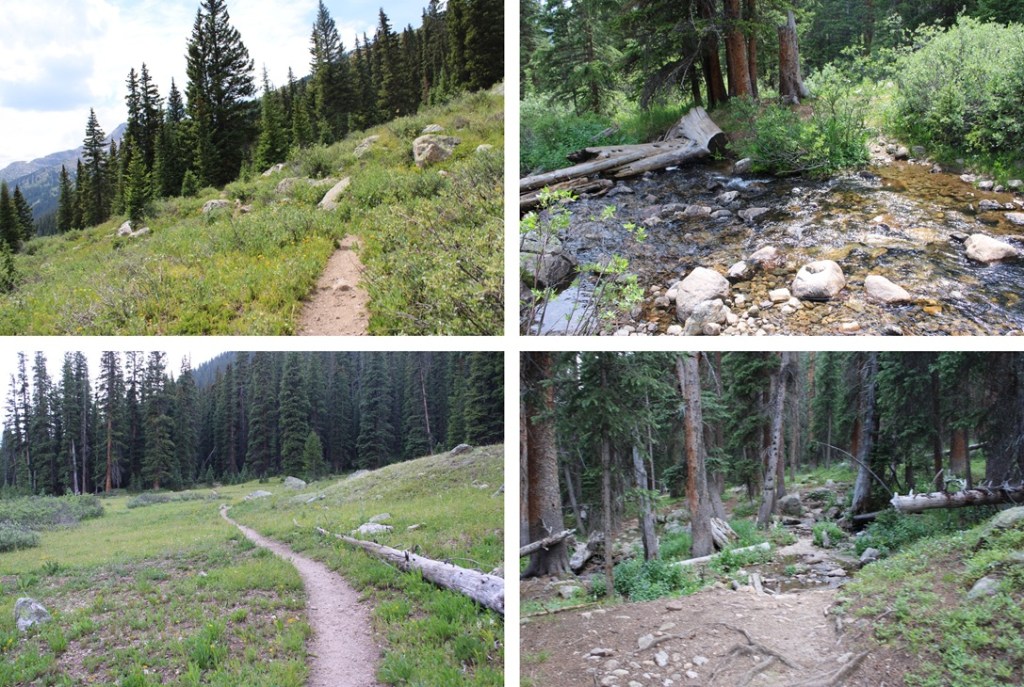
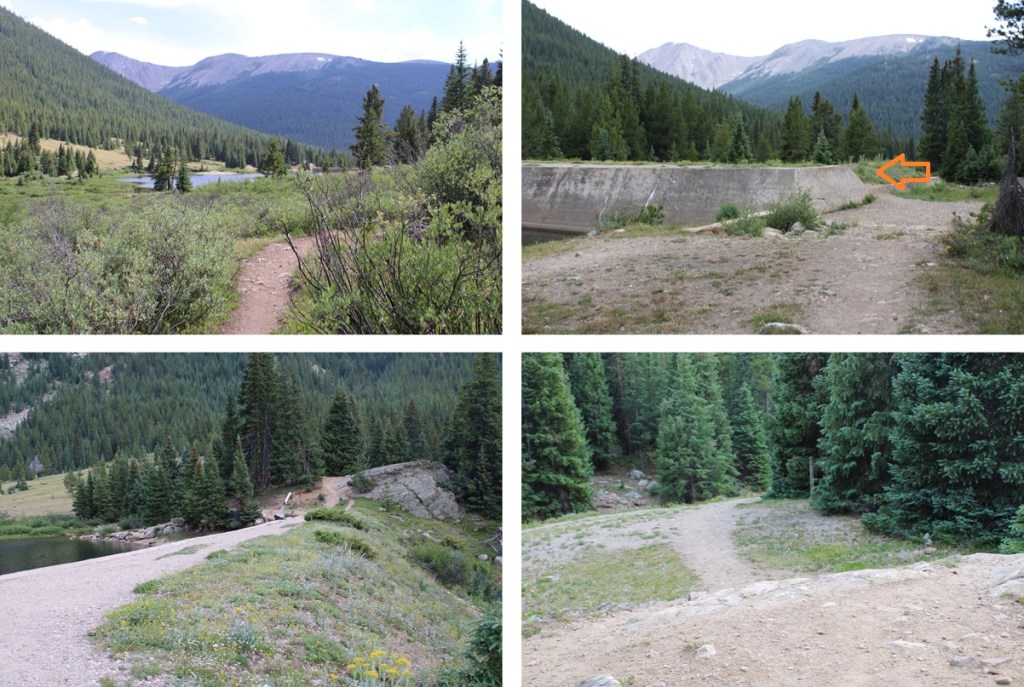
I started at the Lower Lost Man Campground and followed the trail (1996) north past Lost Man Reservoir and up towards South Fork Pass. This is a class 1 trail I followed for about 4.25 miles.
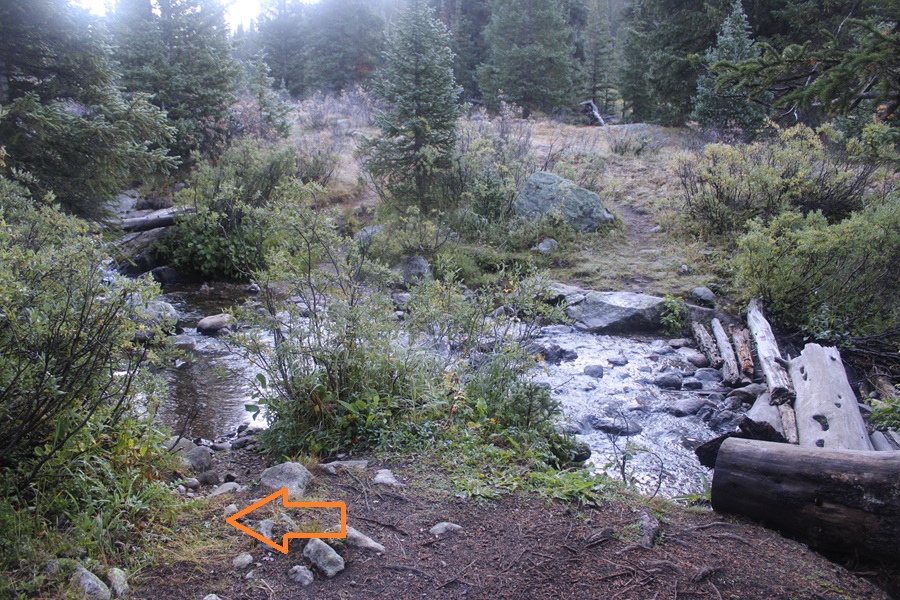
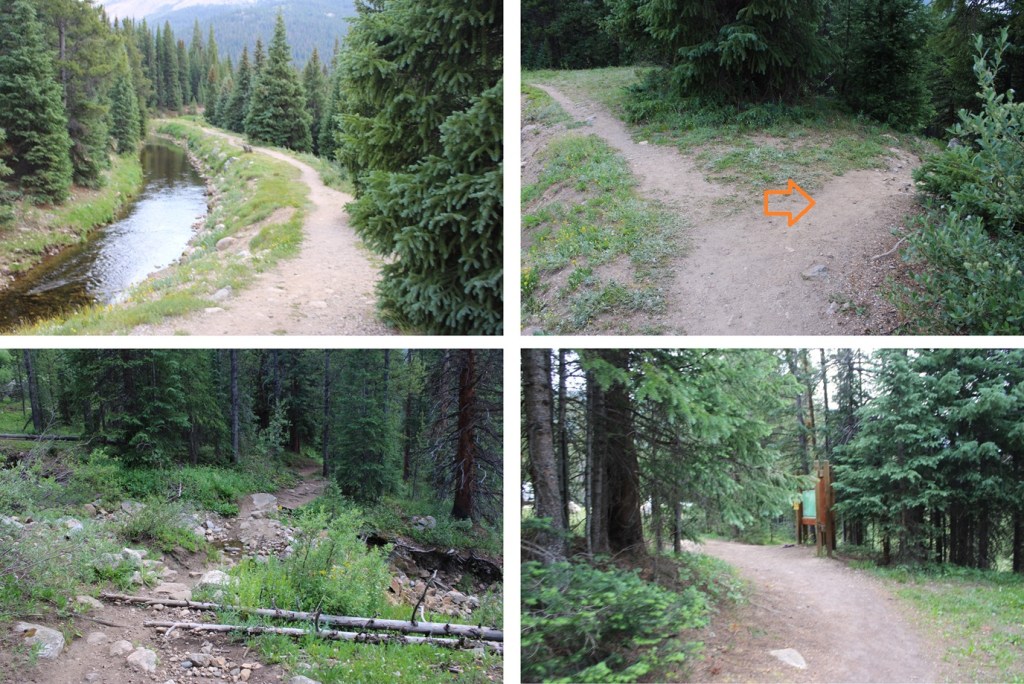
After about 4.25 miles, at 11430’, and just before the third creek crossing I turned left and followed the creek for about 20 yards before crossing the creek and then following the creek up to an upper basin, heading northeast. This creek isn’t named, and neither is the basin, but following it will put you just east of 13024. This is class 2. It’s less than a mile to make it into the basin once you leave the trail.
This put me into an upper basin. From this point there are several options to climb 13024.
I found a camping spot and set up for the night. This area is boggy/marshy, and it’s difficult to find a spot 150’ from water, but I found one underneath a large rock outcropping. As you can see by the picture below, I found three different routes up/down PT 13024. The orange route is class 4, the blue route class 2, the pink route class 3 (I didn’t really know this beforehand). My first attempt the next morning was going to be to the left hand side, as I didn’t yet know if the ridge would go, and had heard it was the easier side (it wasn’t). I’d been in the area before, and the ridge looked like it went, so in the morning I was going to take the ridge to the summit from the left.
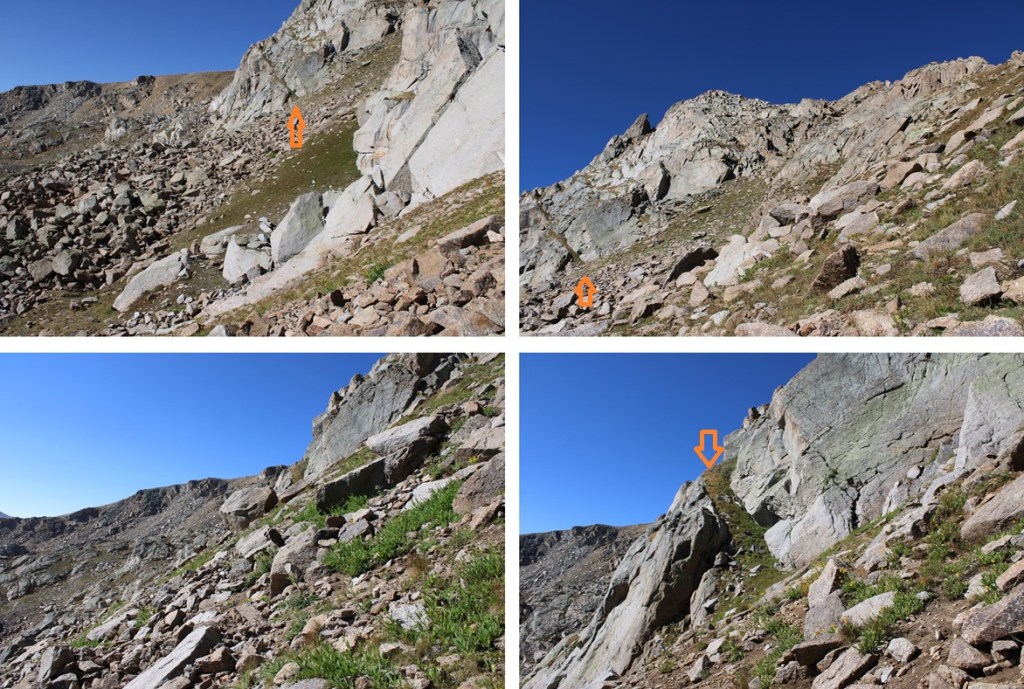
I set up my tent and had the late afternoon to just chill and relax (a goal of mine while climbing this year). While I was there a couple of hunters hiked in, scouting the area (hunting season was to start in a couple of days). I saw them pointing in the distance and getting out their binoculars and looking, then pointing again. I gave them their space, but half an hour later they started hiking towards me and my tent. They whistled and said “Just so you know, there’s a bear behind you about 200 feet, behind the rock you’re set up next to.” I was thrilled with this information, but a bit upset it took them HALF AN HOUR to let me know a bear was behind me. I got up, got my trekking pole, and spent the next 2 hours looking for the bear. I never saw it. I was mentally ok and prepared for the night (bear cannister and all), but still a little upset I never actually got to see the bear. I did hear cow elk calling to their babies in the night, but no more sighting of that bear. In the morning I was off at 6:30am to attempt the ridge (orange route). I started by following the grassy area southwest towards the ridge.
I then found a small gully and gained the ridge on tundra. This was all easy class 2.
Once on the ridge it was an easy class 2 hike as I followed the ridge west/northwest.
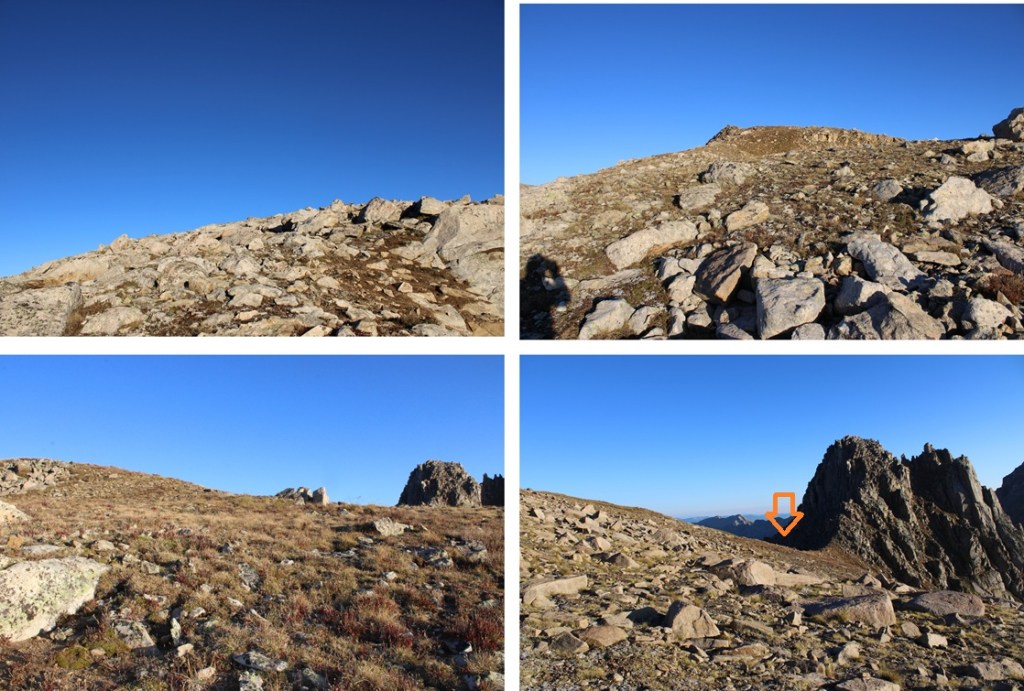
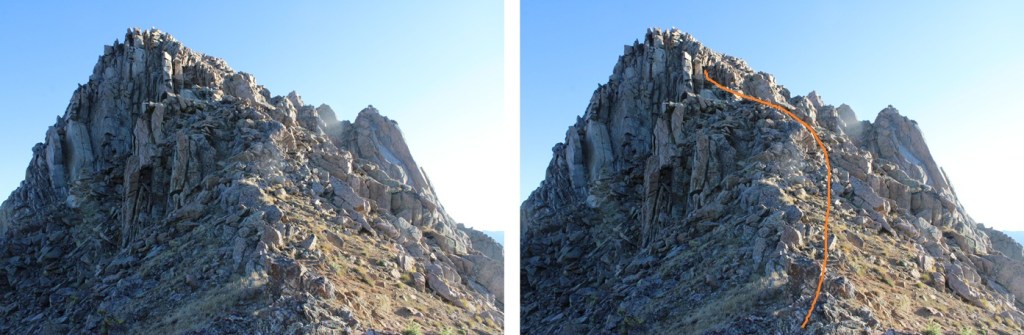
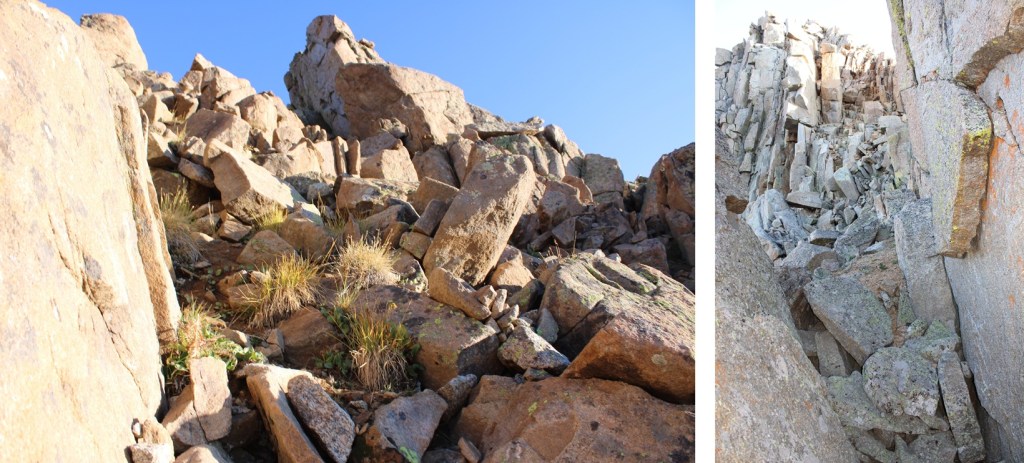
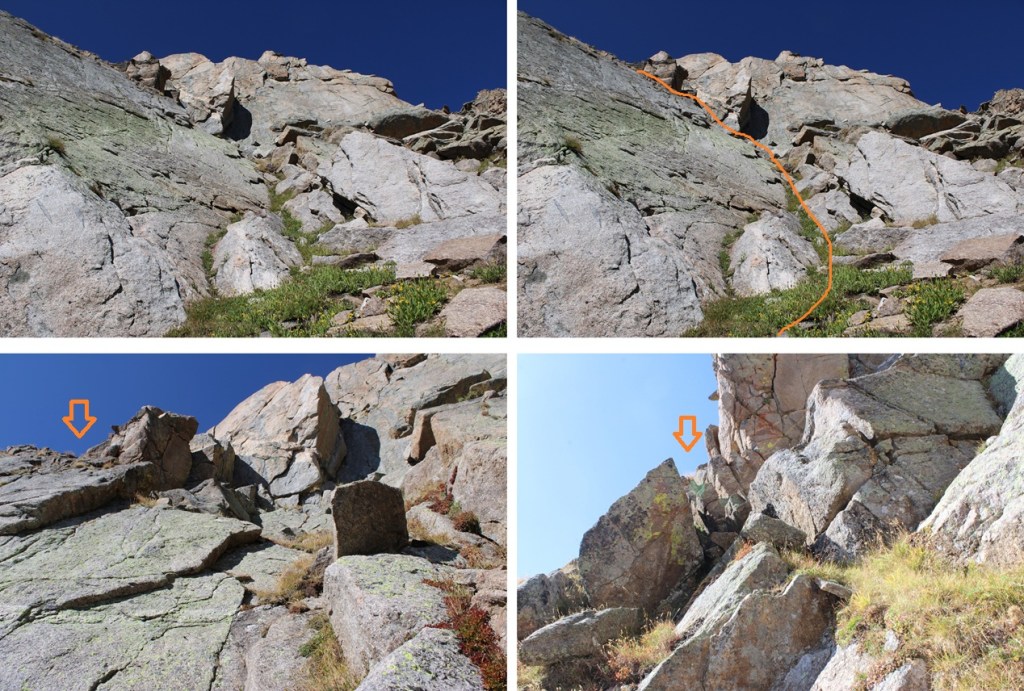
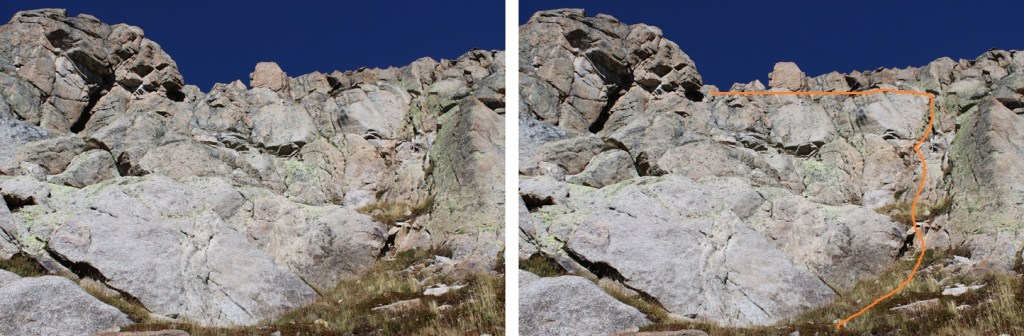
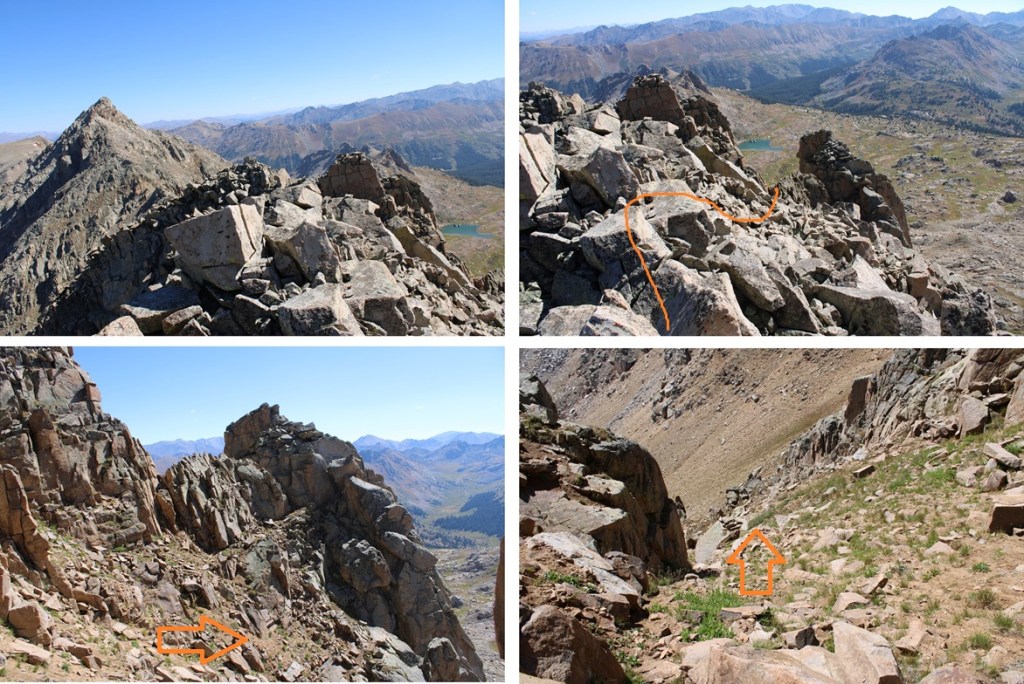
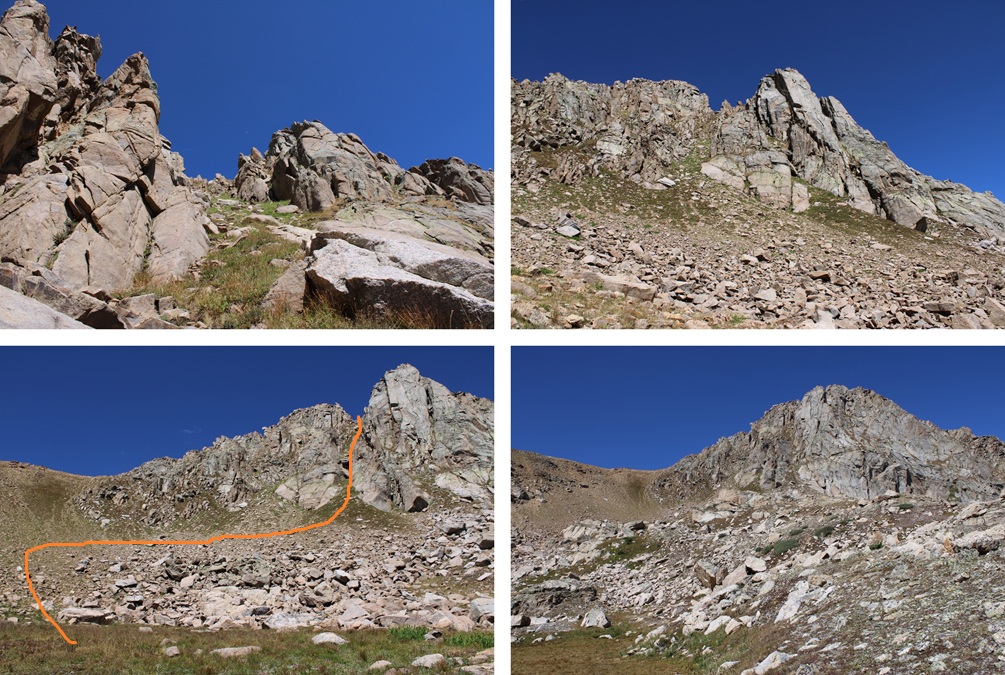
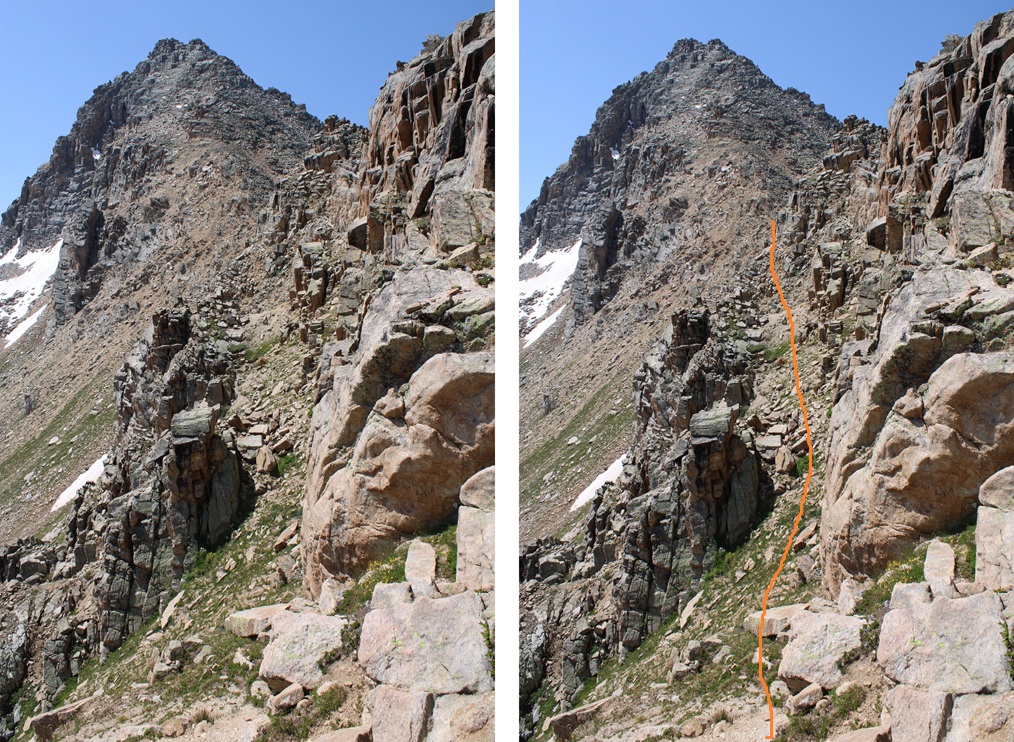
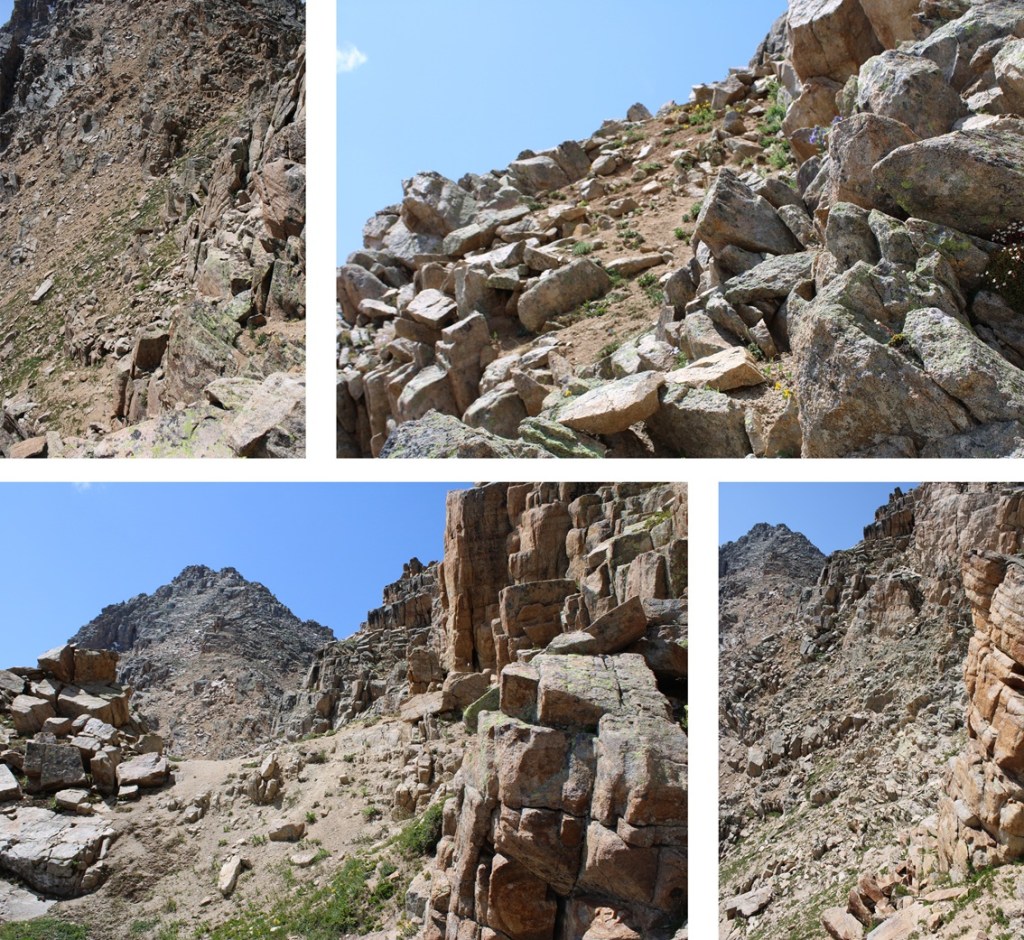
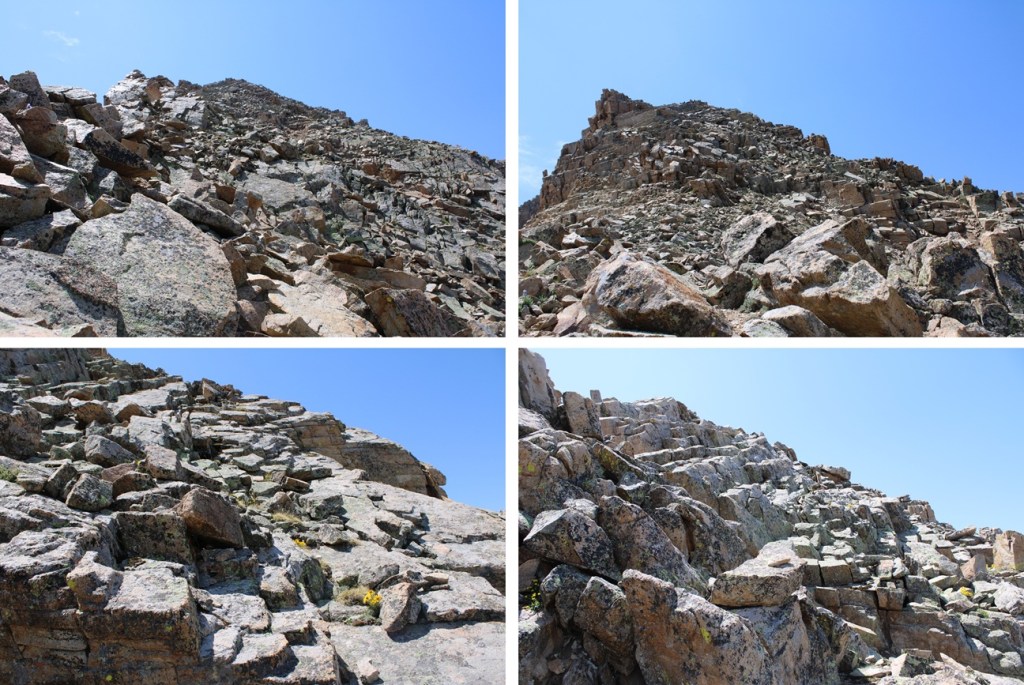
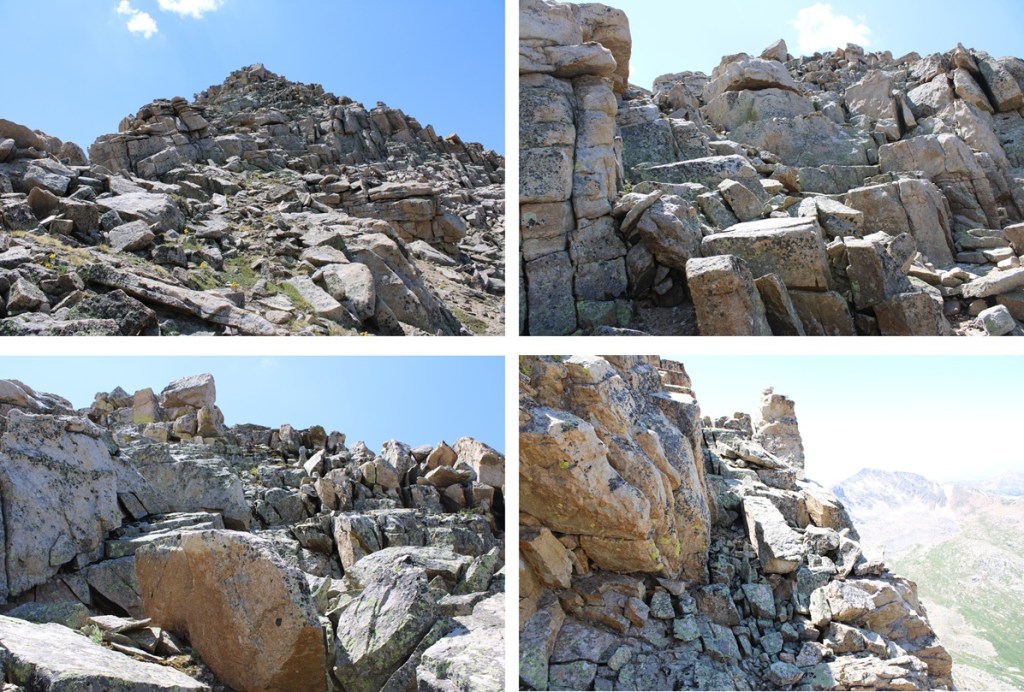
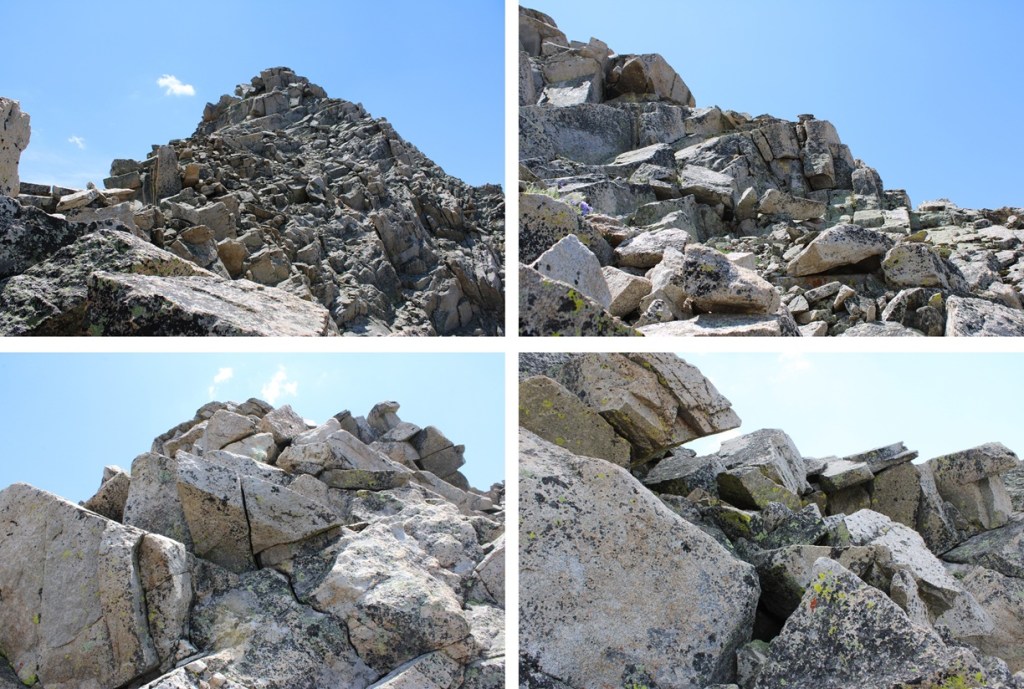
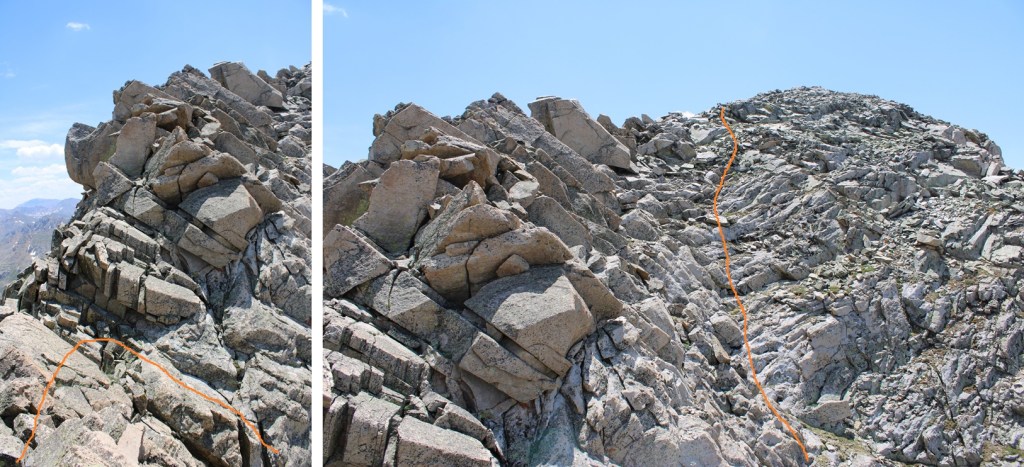
At the top of the ridge I could see 13024 to the right. I followed the ridge on class 2 terrain to the base of the rocky area. From here it’s only 1/10th of a mile and less than 200’ of elevation gain to the summit. It’s mostly class 2 or easy 3, but there was one class 4 move I didn’t feel comfortable attempting without ropes. Where the orange line ends is where I stopped, about 100’ from the summit.
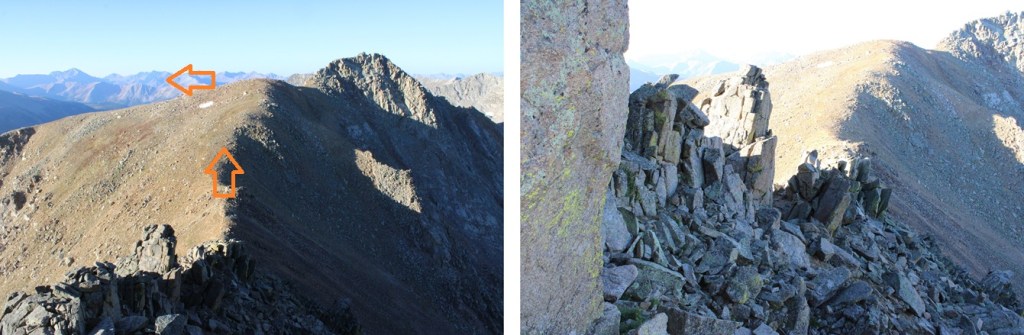
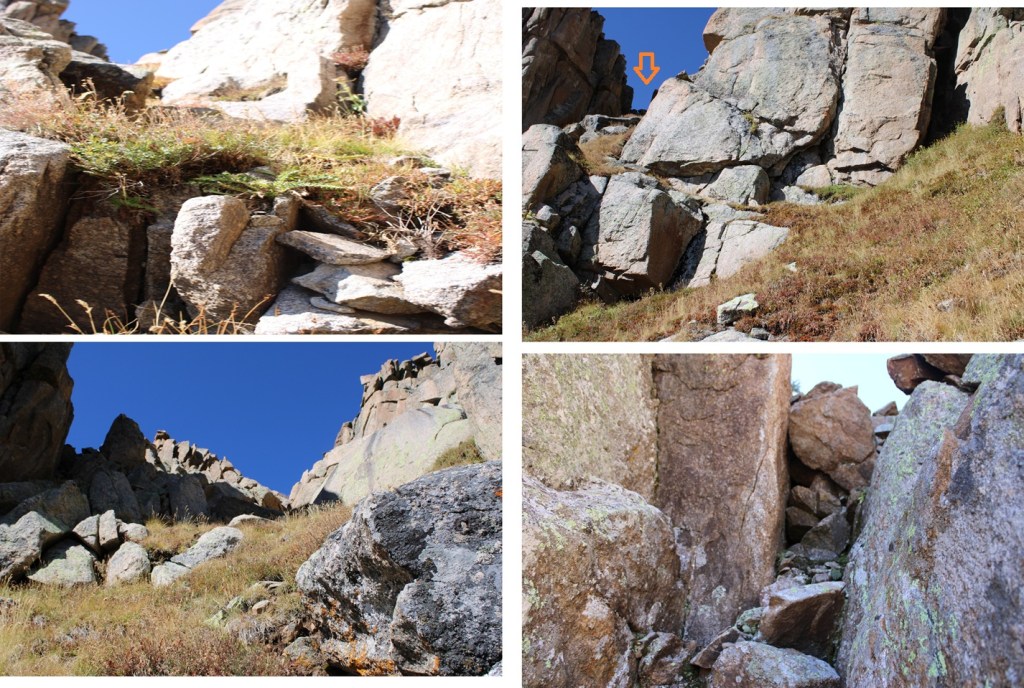
Here are some pictures of the route to that point.
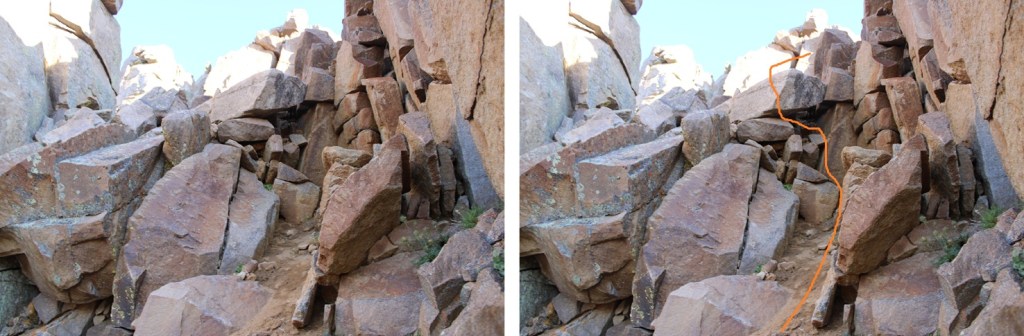
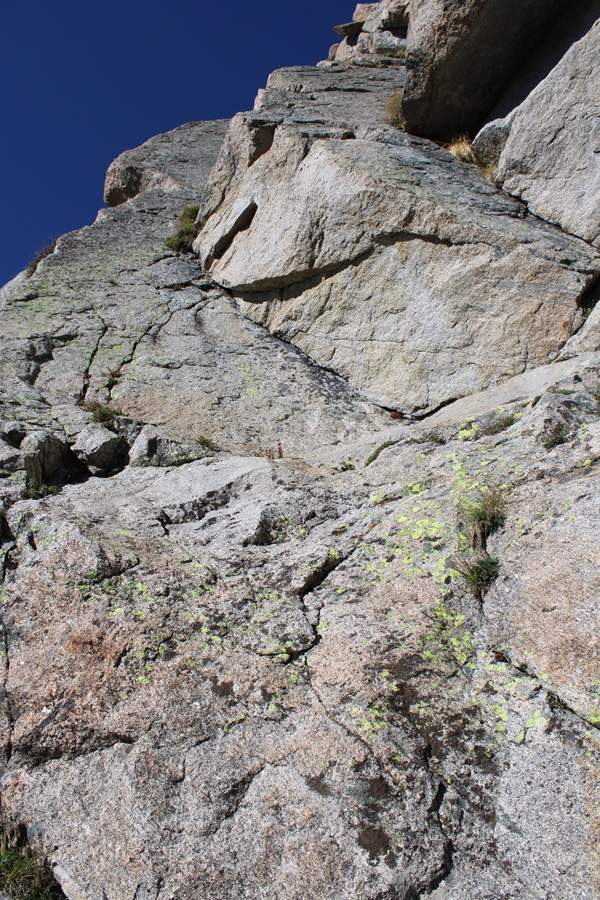
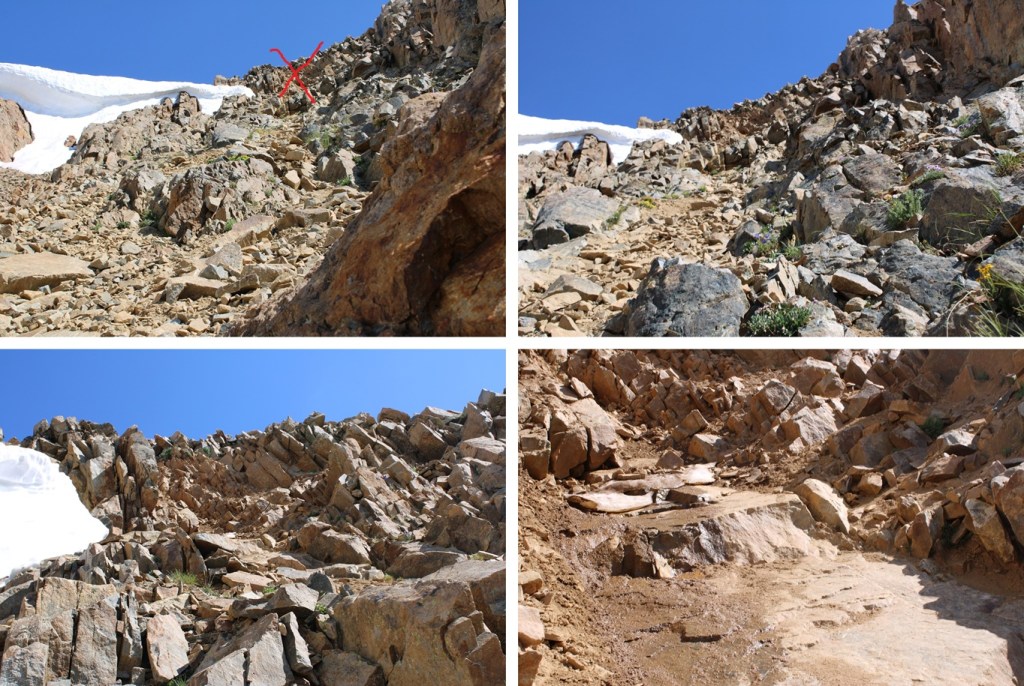
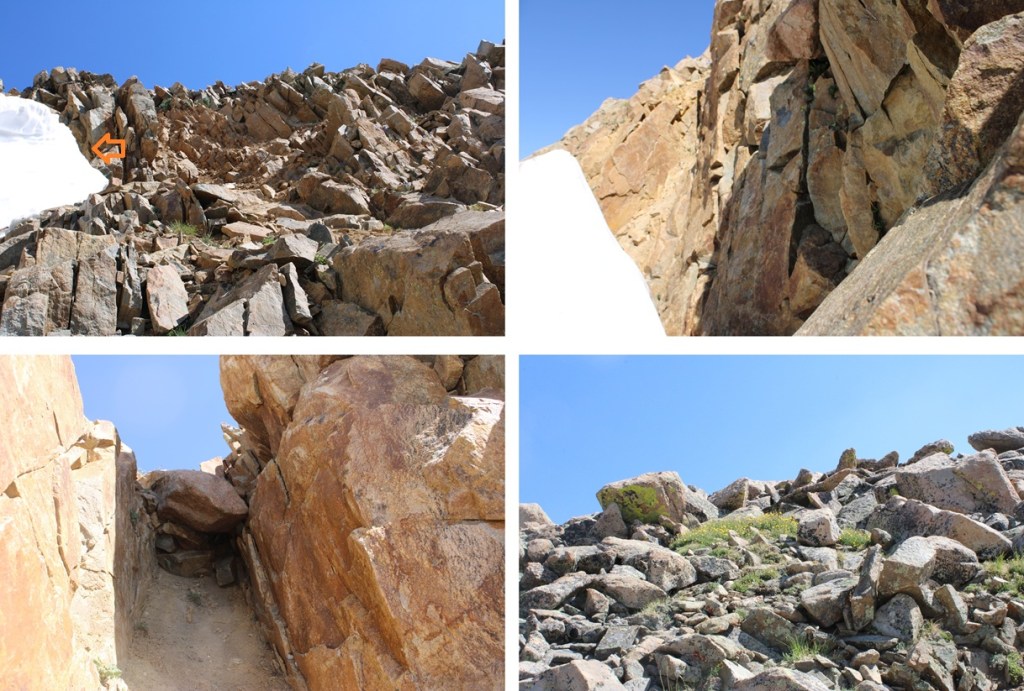
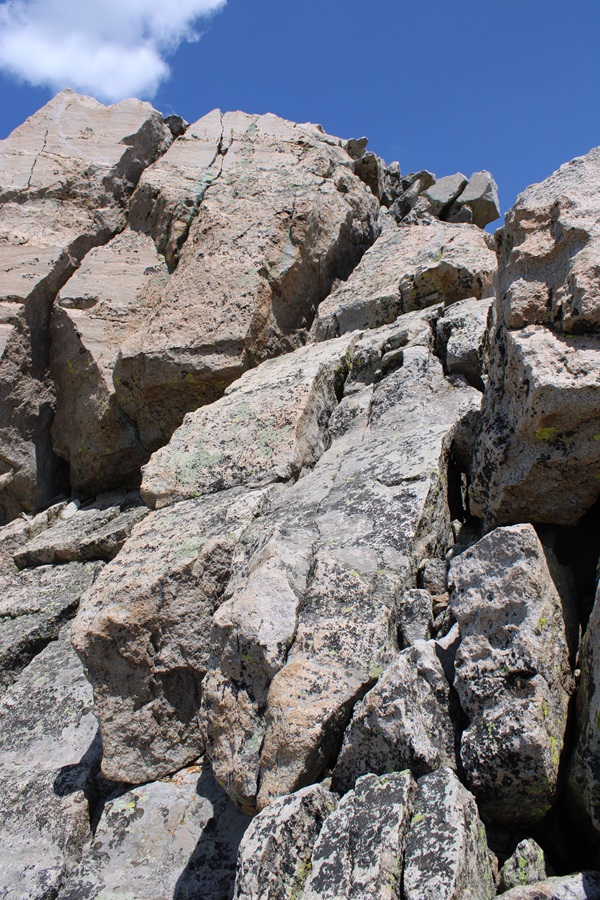
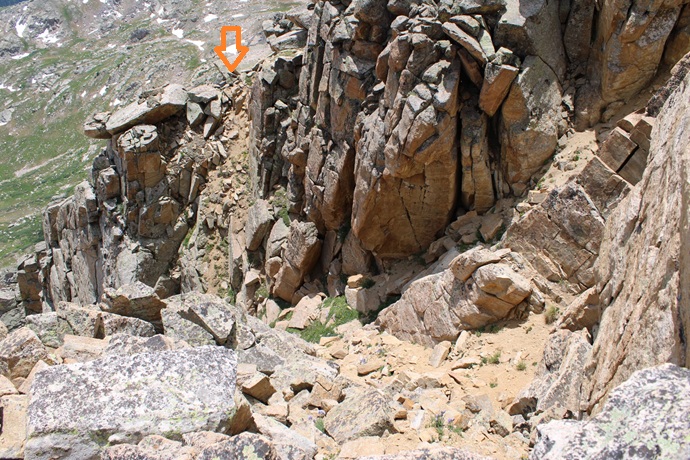
This was the move that I didn’t feel comfortable attempting without ropes. It was very similar to the final crux on Jagged after the rockfall, but when I was there I had rope to help me. The rocks above this problem overhang several feet over what look like easy steps from below, and it’s steep on all sides and all the rocks are loose, making depending on them for support/balance poor judgement. The picture doesn’t do this area justice, and it wasn’t until I was under the rocks I realized the difficulty. If I saw this picture, I’d go for it, but when I was there I knew it was too dangerous for me to do solo. I could see where I needed to place my hands/feet, but I wasn’t tall enough to make the moves. Rock climbing shoes might have helped, and a rope definitely would have, but I had neither. I spent about 15 minutes trying to find a way up/around this, and in the end turned around. I’d just been on an amazing podcast (seriously, you should listen to it just to know the podcaster: it’s called “Going in Blind” and will change the way you think of your own life experiences). We talked about failed attempts, turnarounds, risk tolerance, etc. and this move was above my risk tolerance for soloing. How terrible would it have been if I’d just talked about my many, many failed attempts and turnarounds and attempted this and failed because I was overconfident? I’d look like a fool. If I’d been with a friend they could have cheerleader lifted me and I could have pulled them from above but solo I didn’t feel comfortable attempting this move. I felt there was a 75% chance I could make it up, which just wasn’t good enough, especially when going solo. However, if you can get over this class 4 move it’s an easy class 3 climb to the summit.
As I said, I turned around and headed back down to the basin, retracing my steps on easy class 2 terrain.
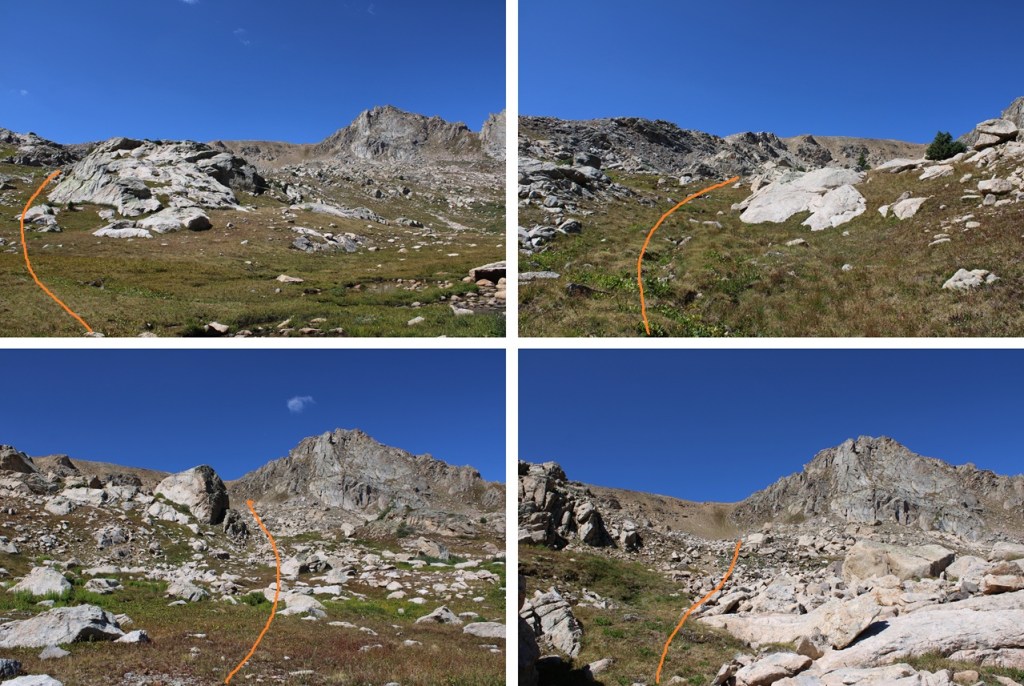
Back in the basin at my campsite it was only 9am. I had a quick snack and started out again, this time taking the pink route up to 13204. I started out by heading northwest up the basin towards the base of a large rock outcropping. This is choose your own adventure, and all of it is class 2, just make your way towards the large rock outcropping.
From the base of this large rock outcropping I looked for a grassy ramp in the distance to the south/southwest. It’s small, and the access point for the rest of the climb.
I hiked up the grassy ramp and came to some willows. My beta said from here to climb up the rock slab. This was obviously class 4+ and I once again didn’t feel comfortable climbing up this rock face.
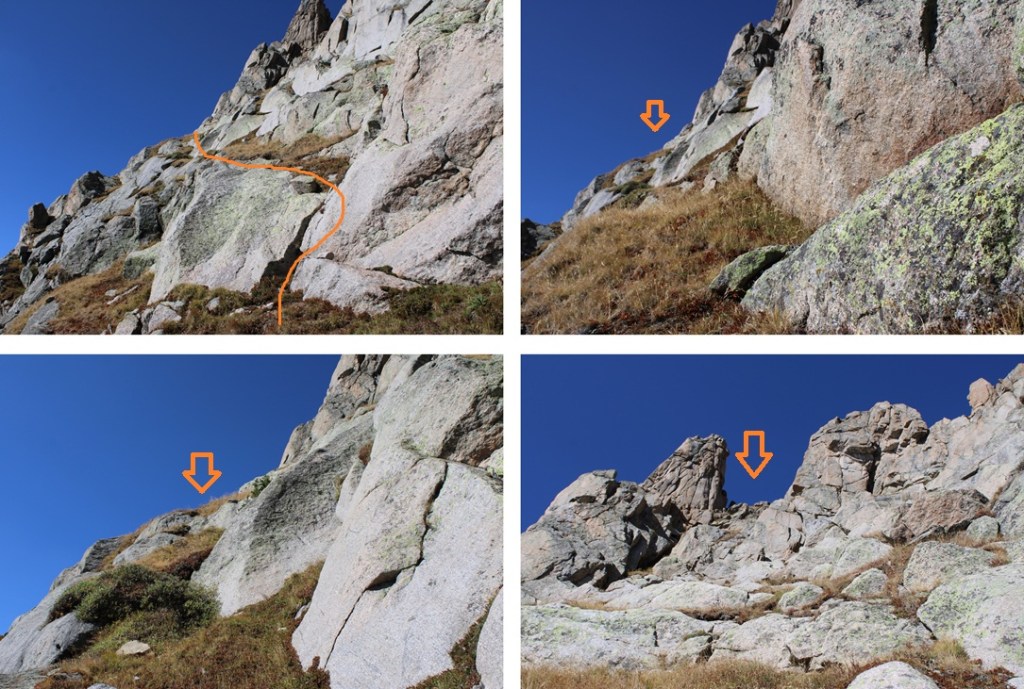
So I did some scouting around. BEFORE you see this rock face and before you make it to the willows (which are obvious) there is a nicer class 3 grassy slope. Take that up and follow it to the left and it will keep you on route but keeps it class 3. There’s some exposure, but I felt much safer on this route, and put up some cairns to indicate where you ascend.
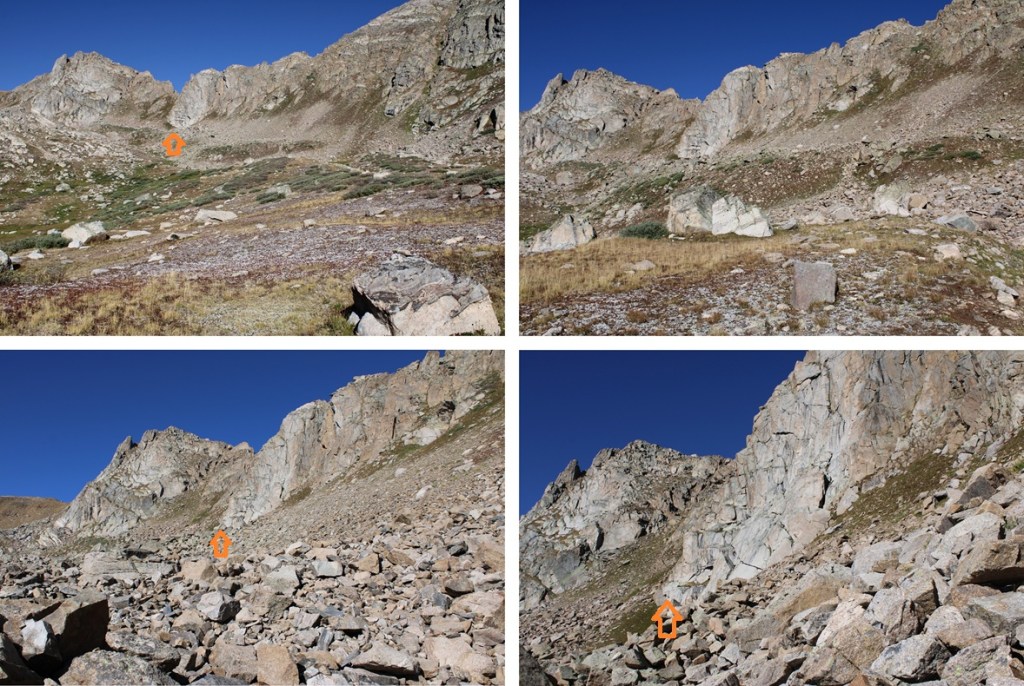
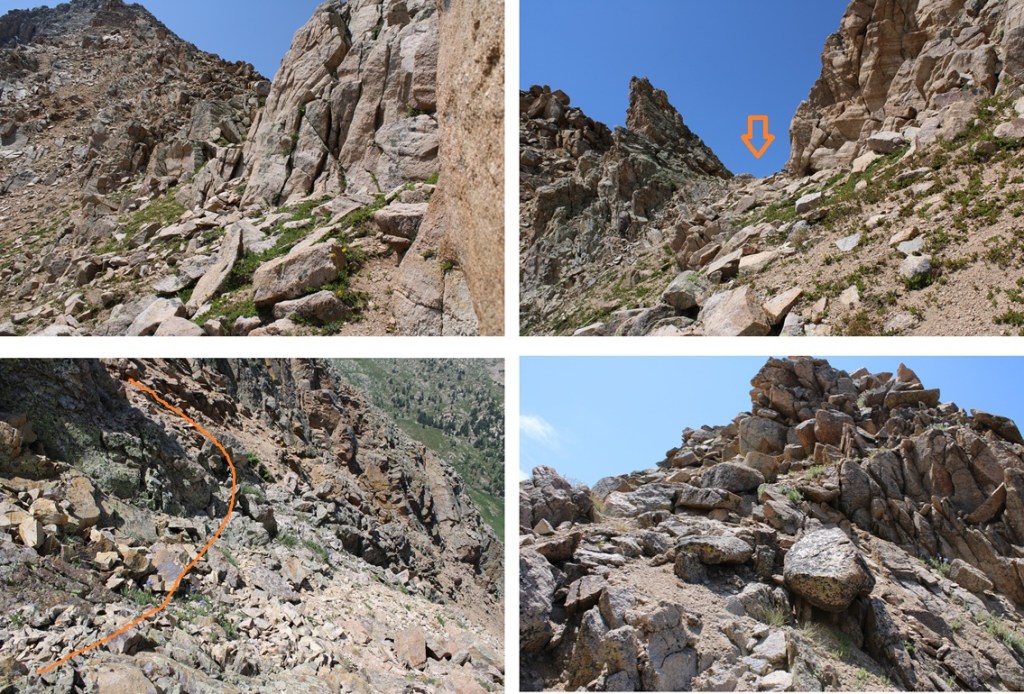
From here on out it’s class 3 choose your own adventure up the grassy slopes. There is exposure here and be extra careful if the foliage is wet (which it was during my trip). I was aiming for a notch in the mountain, heading west.
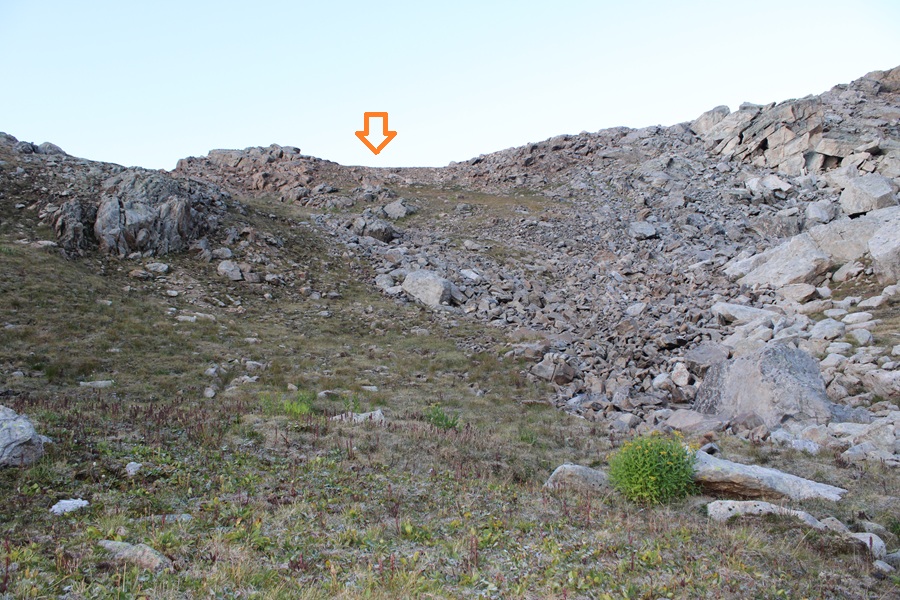
Here’s looking from below the notch, and the route I took, class 3
Once over the notch I needed to descend about 20 feet into a gully, then re-ascend to the other side.
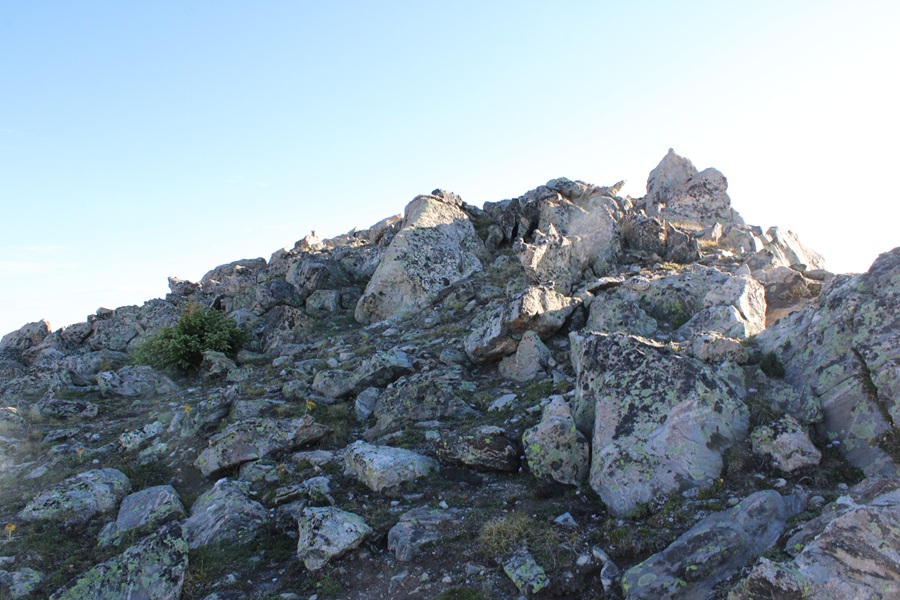
Now I found cairns leading me north and then west to the summit. From this point on it was difficult class 2, easy class 3 to the summit. It was choose your own adventure, and the routes were obvious.
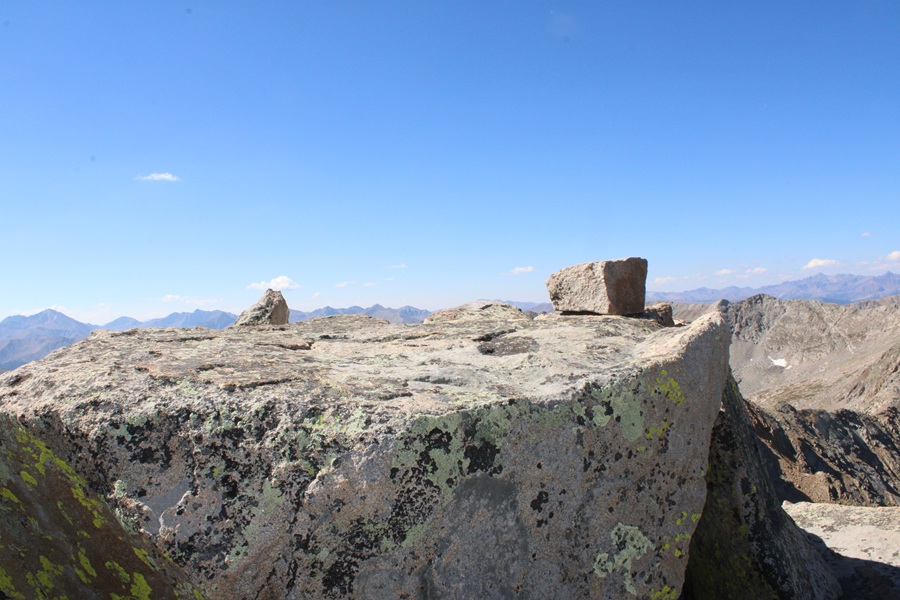
The true summit is to the left, with a small rock on top of a large boulder.
I summited 13204 at 10:50am
13204:
Now you might think I’d head back the way I’d summited, but I was curious as to if I could have made it down that class 4 route I’d attempted earlier, so I headed back the way I’d summited, then headed down southwest to try to link up my climb from earlier in the day. It was all class 2 until I got to the class 4 part, and I was glad I’d turned around.
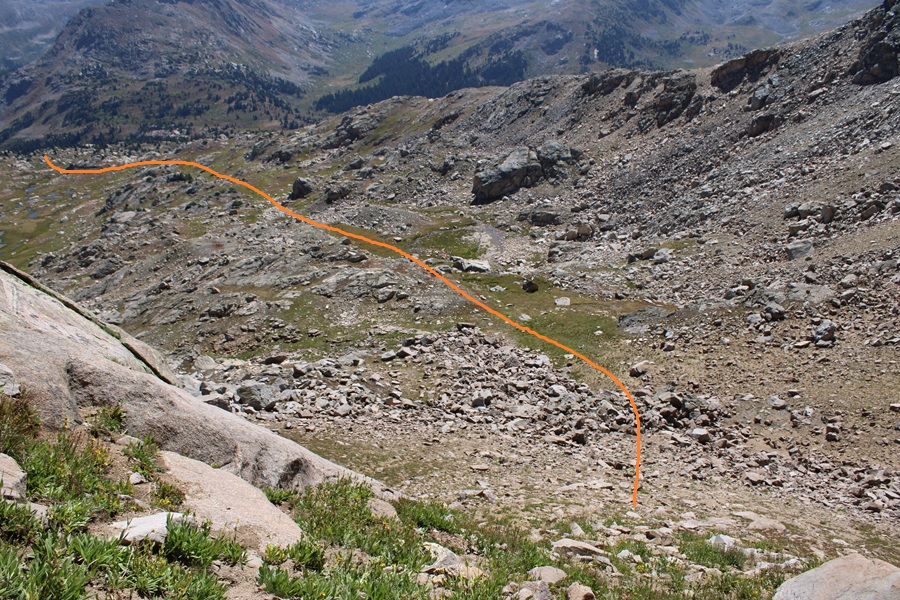
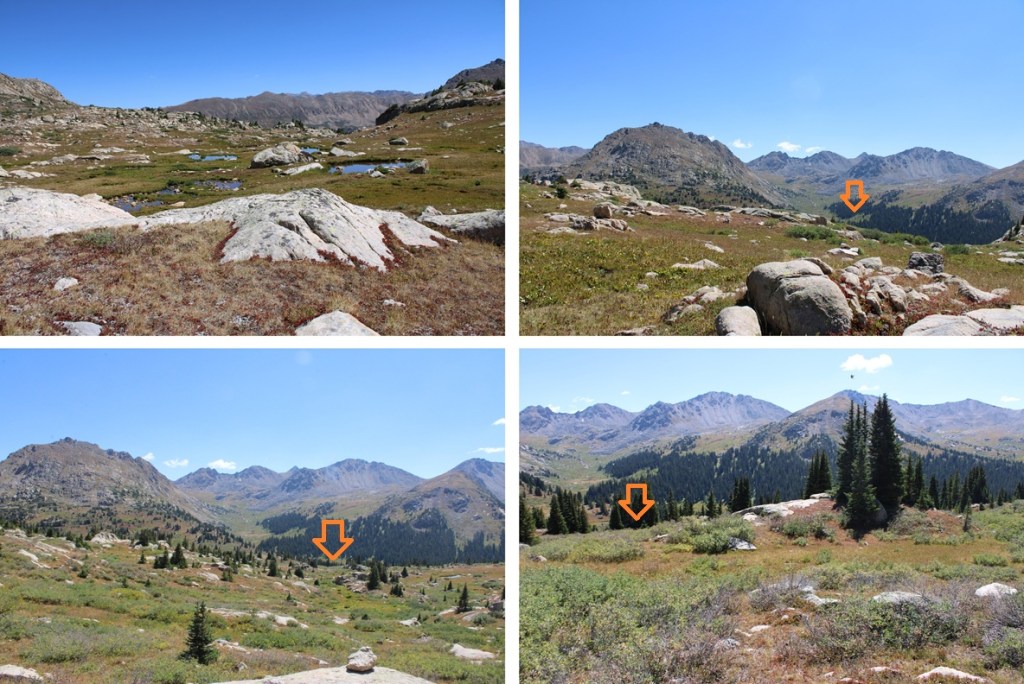
Seeing it wasn’t any better from this angle I reascended and found a gully to head down. I could see all the way down to the valley, it looked class 2, so I decided to go for it. I started at 13100’ and descended the entire way down on class 2 terrain just below where I’d dropped down and re-ascended again on the ascent. The place just before the notch on the return. That gully goes at class 2. I could see the access point from the summit.
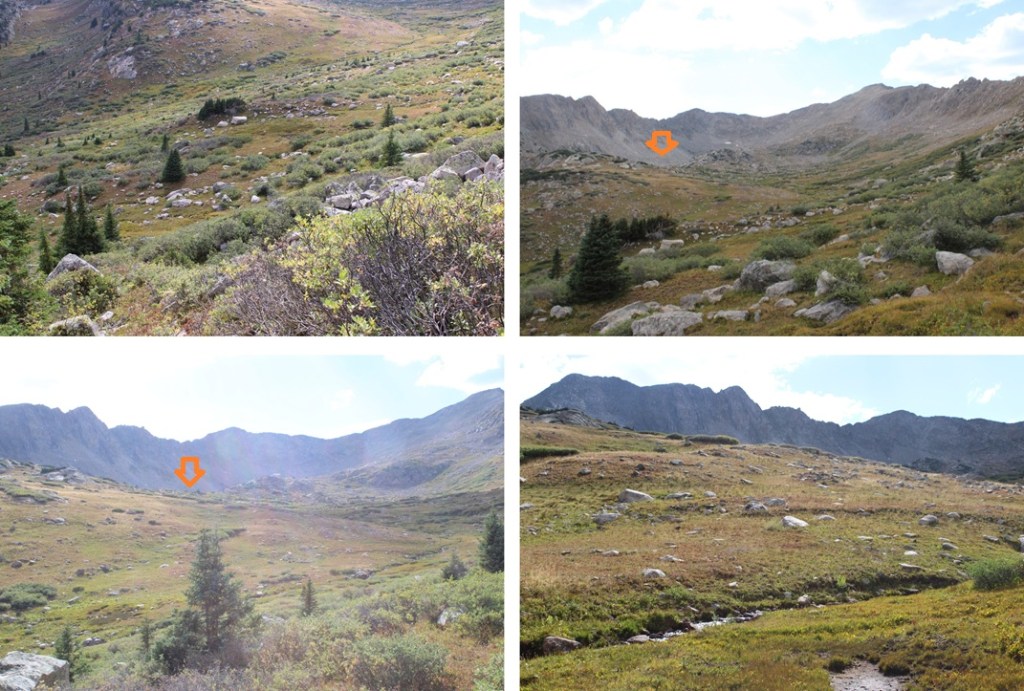
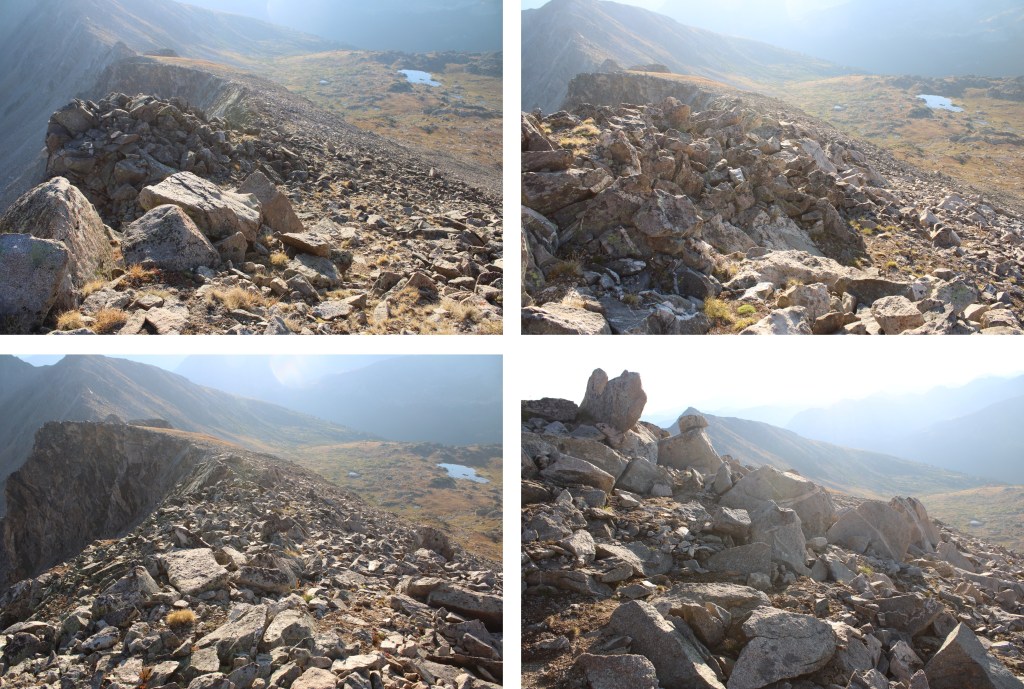
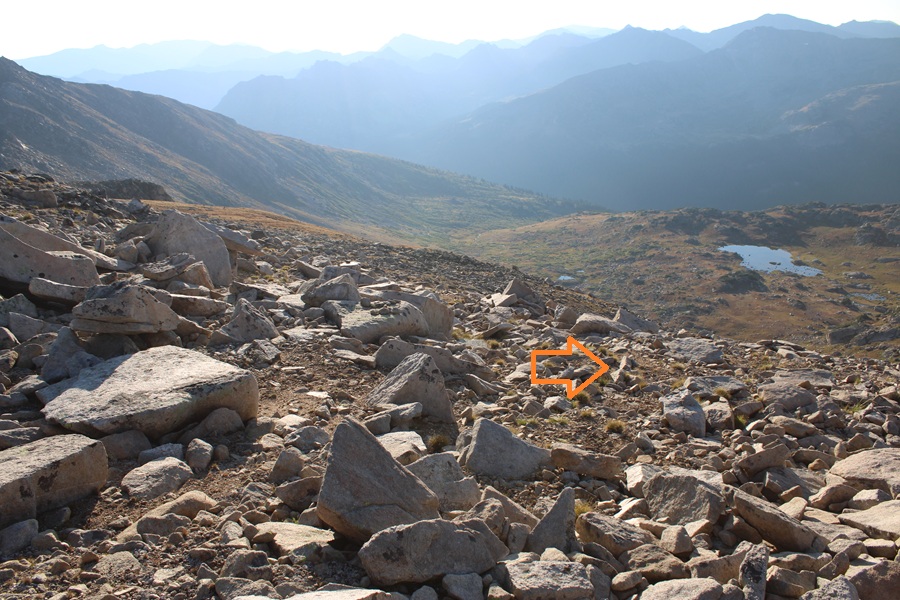
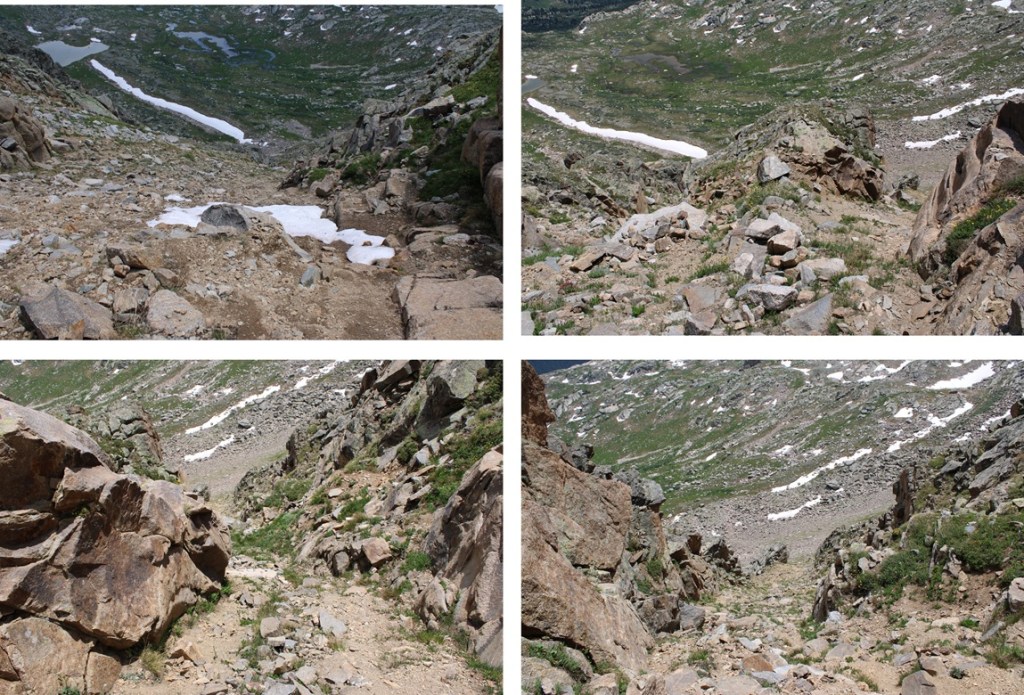
Here are some pictures looking down the gully. It splits at least twice, but each option is class 2, so pick the route you like the best. If I were to do this peak again, I’d take the gully. Tons of game trails, not a lot of scree, lots of elevation gain but no exposure. Just keep this as an option as a bail out point, or another way to summit this peak if you’re dividing the peaks and not doing the traverse.
From the base of the gully I paralleled the ridge I’d hiked that morning, heading west until I’d reached my camping spot.
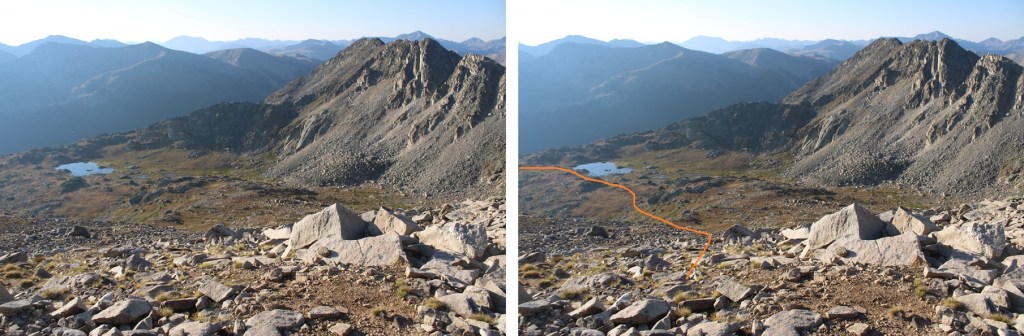
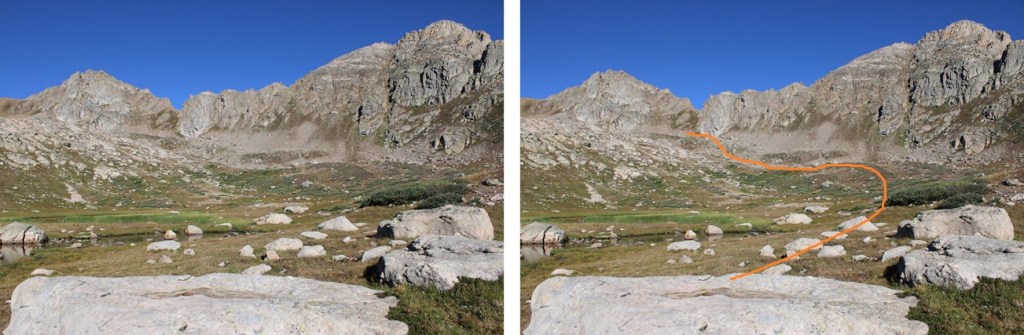
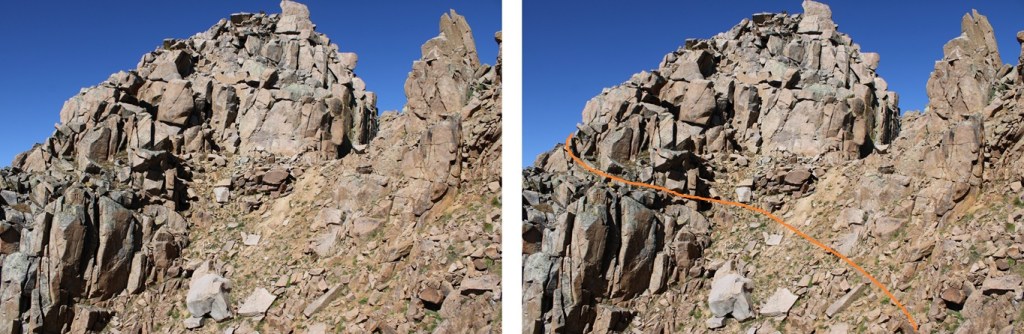
If you’re heading up from the basin doing this class 2 route, this is how the route would look:
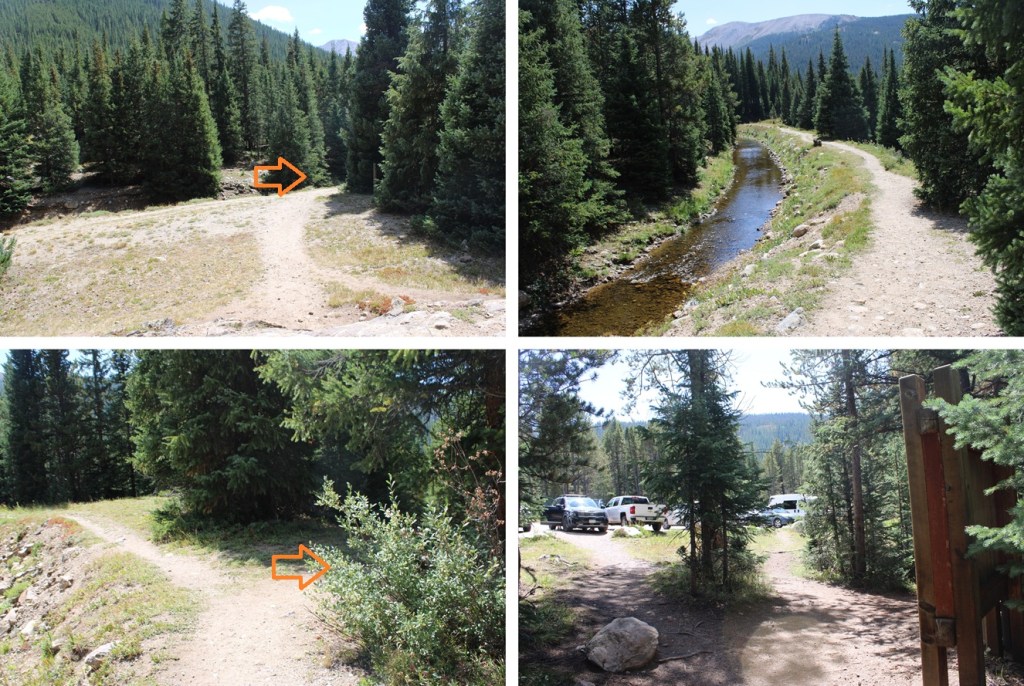
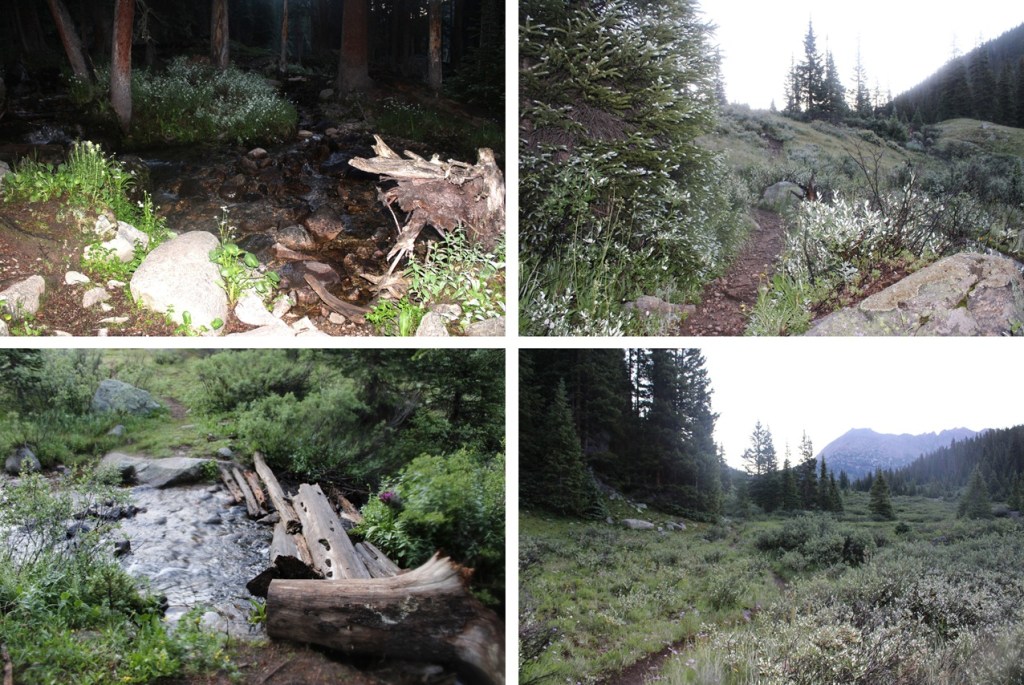
Back in the basin I followed the stream back down, heading Southeast, staying to the left of the stream until I was about 20 yards from the trail, then crossing the stream on an obvious area, and linking up with Lost Man Trail.
Back on Lost Man Trail I turned right and followed it back to the trailhead.
I made it back to my truck at 1pm. Total stats for this hike vary.
Parking Area to campsite/upper basin: 5.43 miles, 1600’
Campsite to first attempt and back: 2.5 miles, 1000’
Campsite to class 3 summit: 1.3 miles, 1100’
Down summit class 2 route: 1 mile, 1100’ elevation loss
While the Williams Group is a serious class 3 scramble, PT 13039 is an easy climb. I just had a few hours this morning, so I decided to take a hike to the top to get a look at the terrain. If you’re looking for a great class 2 13er in the Sawatch Range that’s straightforward and not crowded, try this one out!
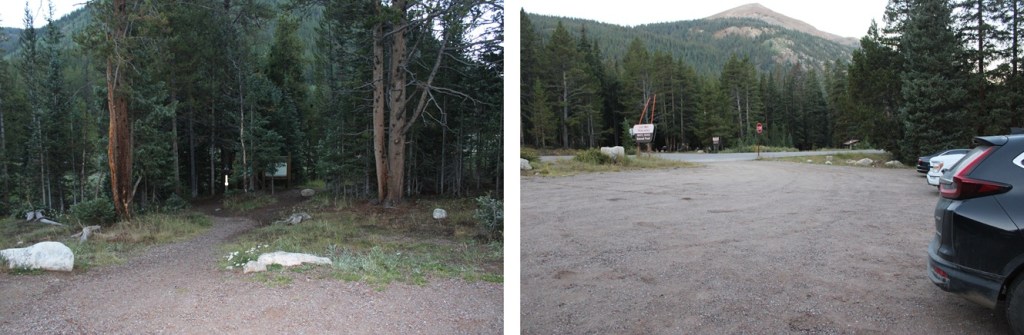
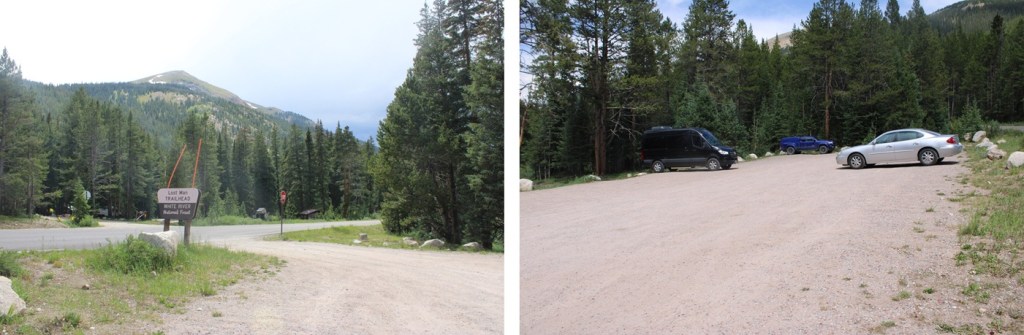
I started from the Lost Man Trailhead at 5am. This trailhead has plenty of parking (but it fills up on weekends), and is the one located directly across from Lost Man Campground. I just found out there’s a lower and upper Lost Man Trailhead. This is the Lower Lost Man Trailhead.
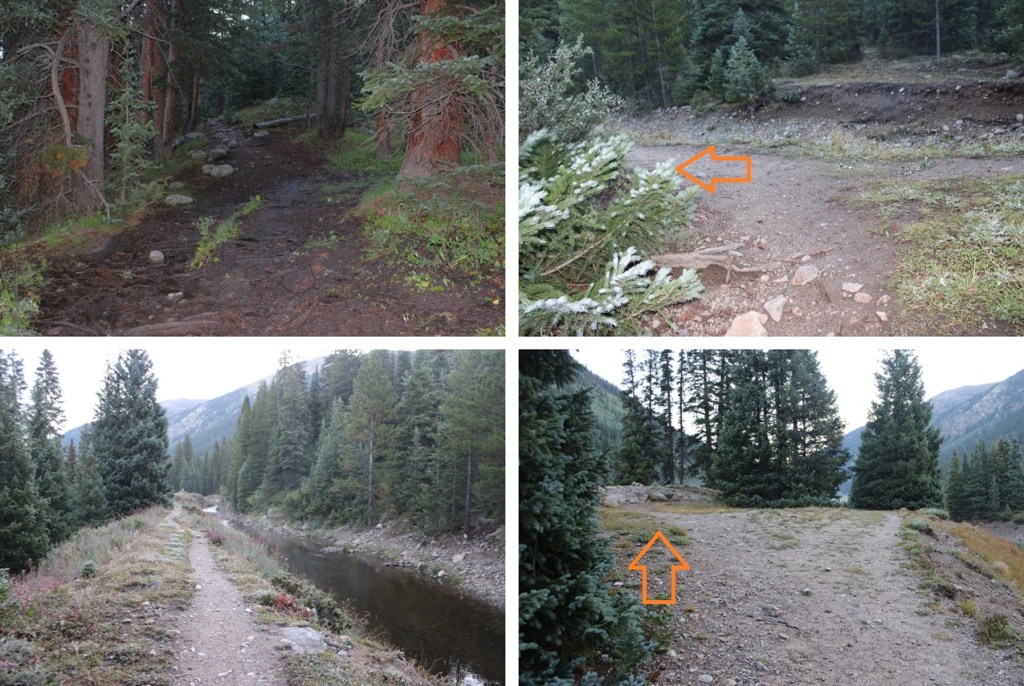
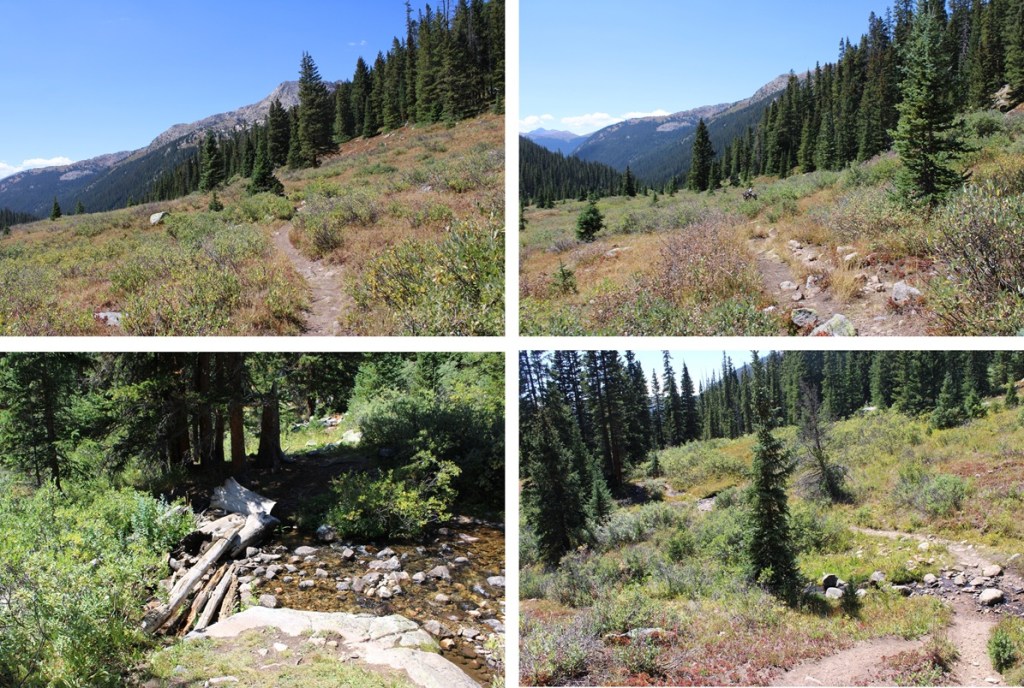
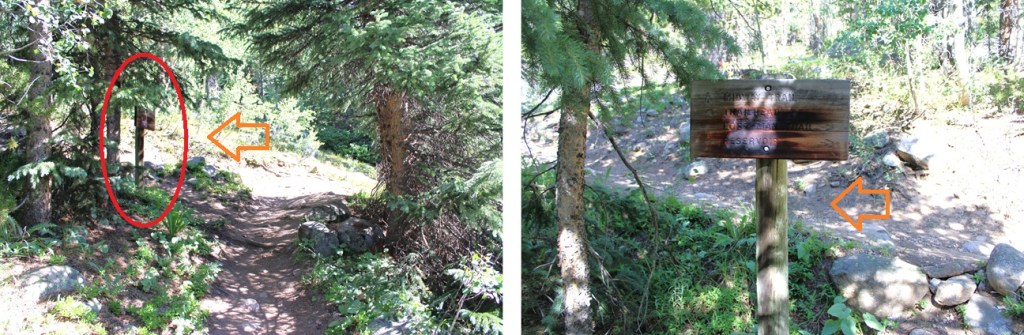
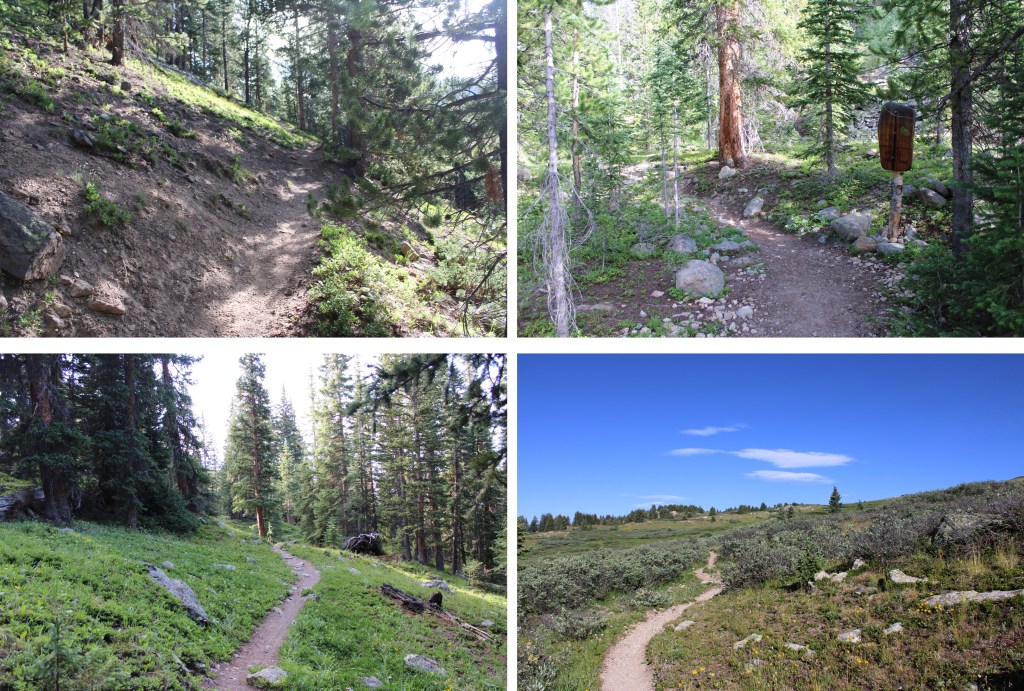
At the trailhead sign I went left and followed Midway Trail. It started out with willows that quickly changed to pine trees, then back to willows around treeline. If it’s been raining in the past day or so, you’re going to get wet walking through those willows, but the trail is easy to follow. There was also an abundance of wildflowers and I could hear the traffic from 82 below as I ascended.
Midway Trail is an easy-to-follow class 1 trail. I followed it over a bridge.
And then turned left at this junction to stay on the Midway Trail for as long as I was on a trail.
The trail switchbacked up to 11500’ and then continued along the south side of the slope.
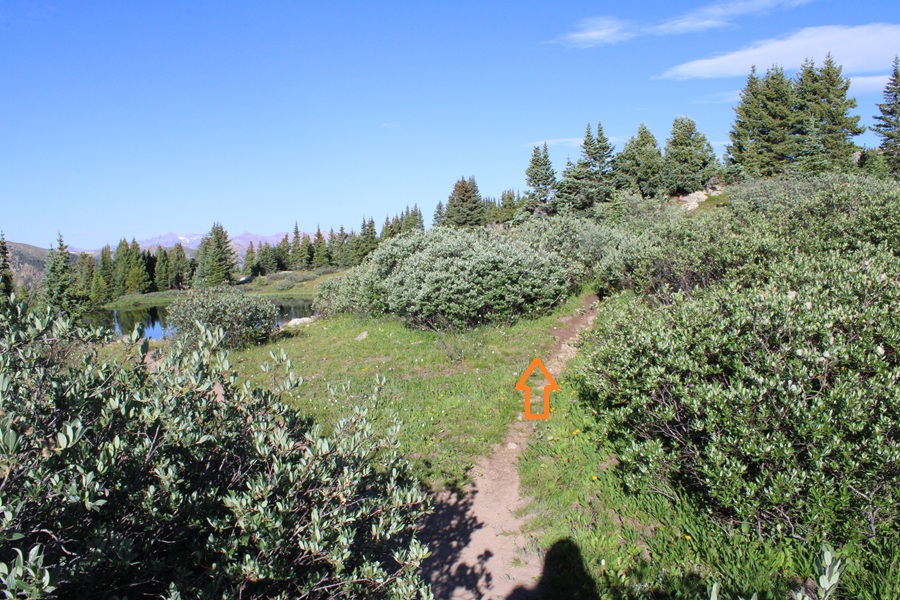
Just at about treeline I came to a small pond (11990’), and skirted it on the trail that goes to the right, following the trail up to 12100’
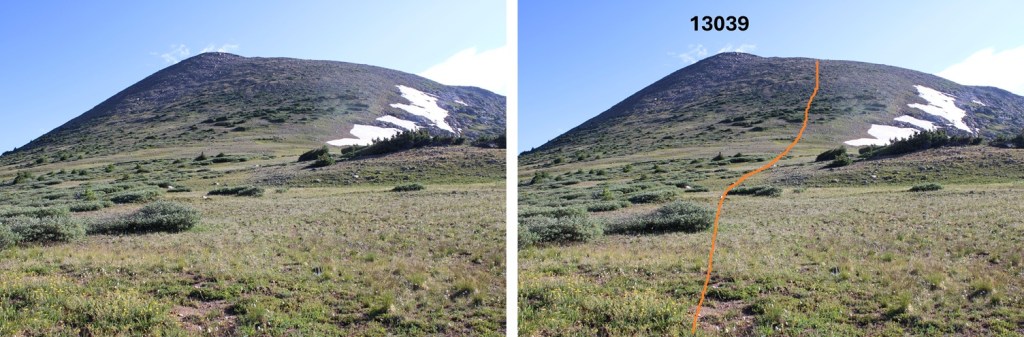
At 12100’ of elevation, just as the trail was starting to level out and after about 3 miles of hiking from the trailhead, I turned right and headed northeast up to the ridge of 13039. This is choose your own adventure, and all class 2. I did my best to avoid the willows and pine trees and aimed straight up the ridge, gaining about 850’ of elevation. Most of the rocky terrain can be avoided until you get to the top.
Once on the ridge it was a short, rocky, class 2 climb following the ridge west and then north to the summit.
I summited 13039 at 7:30am
13039:
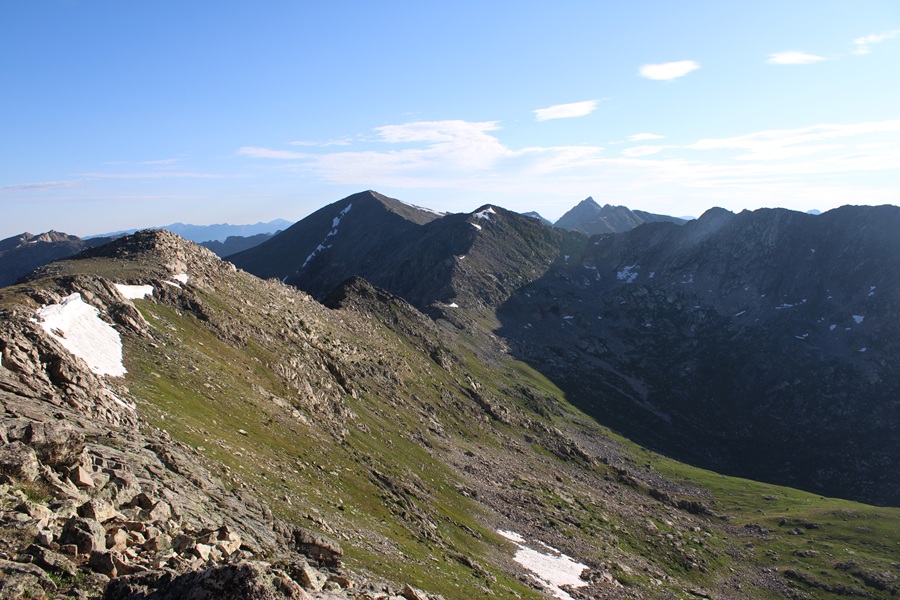
Due to time constraints this was my only peak of the day, but here’s a view of some of the other peaks you can link with this climb to make it a long and challenging class 3+ day:
I turned and made this an out and back hike. I followed the ridge back down the way I’d ascended.
Then I headed south/southwest down the slope back to the Midway Trail.
Back on Midway Trail I followed it around 3 miles back to the trailhead.
I made it back to my truck at 9am, making this a 7.81 mile hike with 2560’ of elevation gain in 4 hours.
On to the Western Slope to volunteer at a Girl Scout camp for a week!
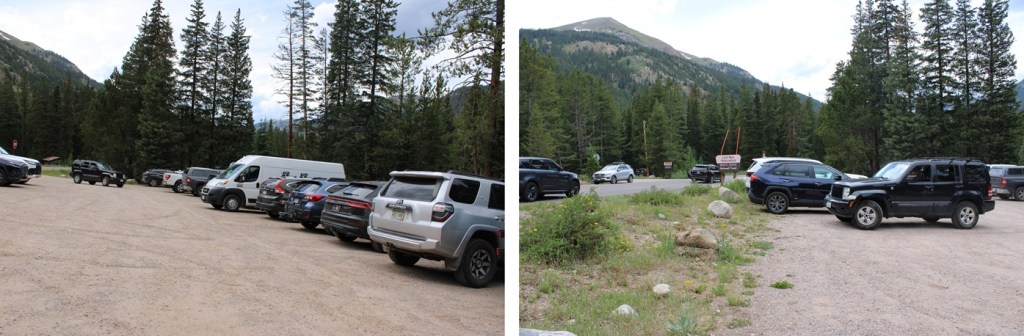
I started from the Lost Man Trailhead at 5am. This trailhead has capacity for around 35 vehicles, if everyone parks nicely. The trailhead is obvious.
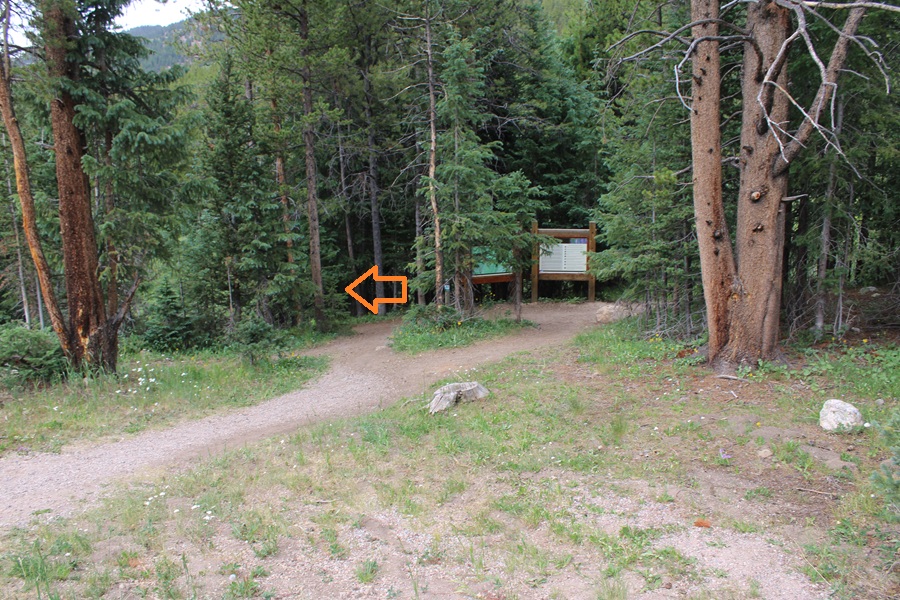
At the trailhead sign I went right, following the Lost Man Loop Trail.
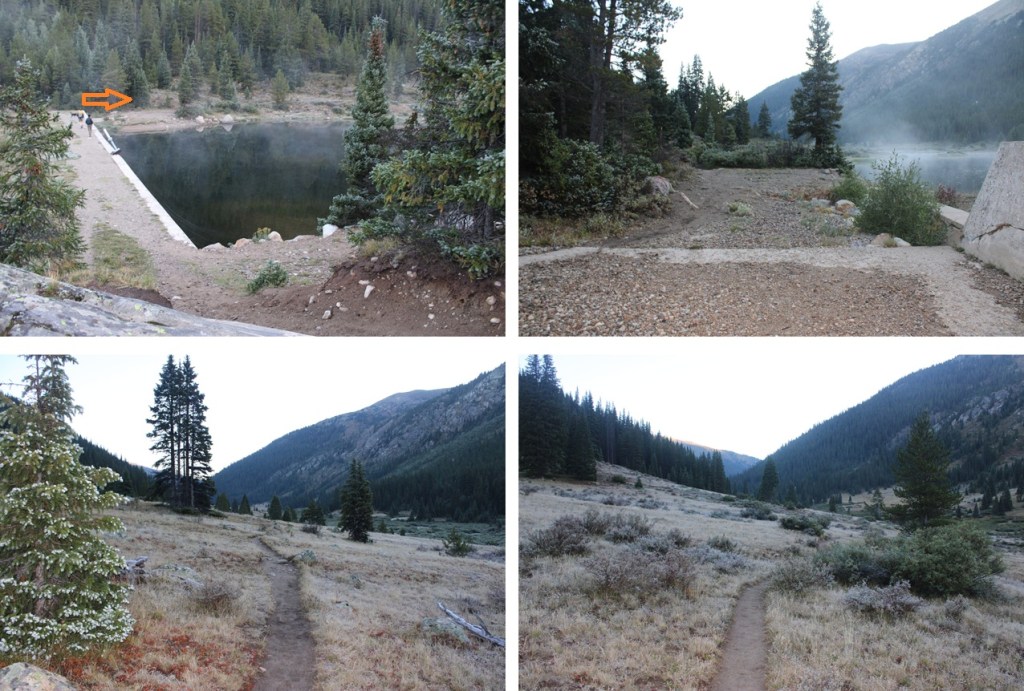
This is a well-maintained class 1 trail that passed by Lost Man Reservoir and then continued north, paralleling Lost Man Creek.
I followed this trail for about 4 miles. If you make it to South Fork Pass you’ve gone too far.
At 11550’ of elevation I left the trail and headed north towards an unnamed pass to the right of PT 12683.
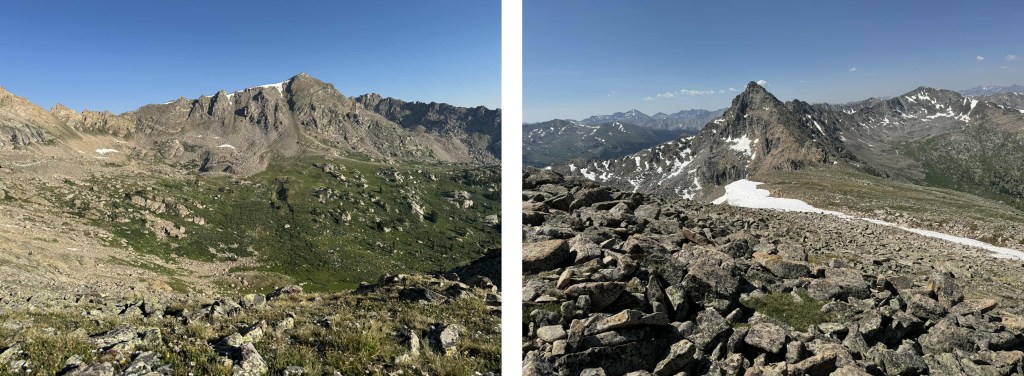
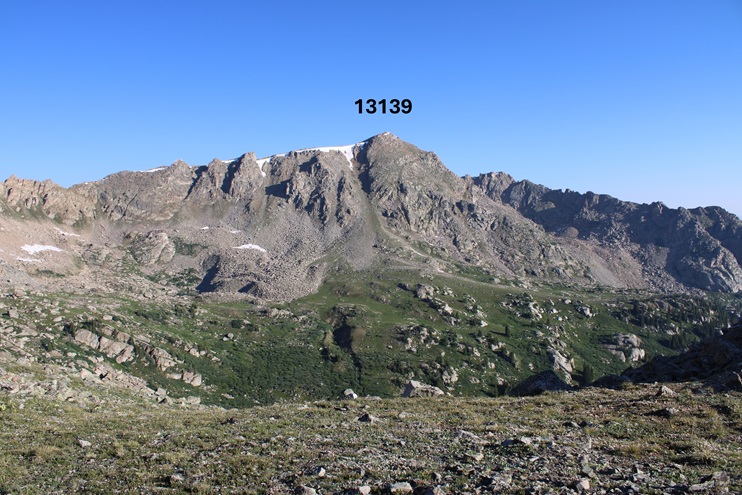
For a visual, I was headed here:
When I got to the top of this small pass I had a visual of the route before me to PT 13139.
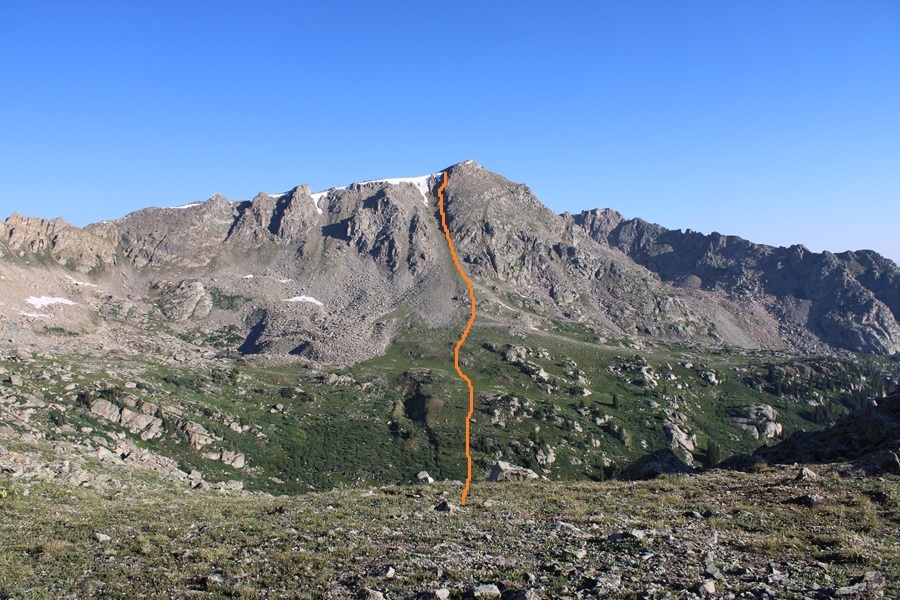
I was disheartened. That cornice looked big. I sat on that pass for longer than I wanted, contemplating my next move. It was only July 15, and I’d already had over a dozen failed attempts already this year. Mostly due to cornices, but also due to wildfires (I evacuated twice) and getting “the knock” twice and being told I can’t park my vehicle at a trailhead overnight (even to leave it to go backpacking: it would be towed). I remembered hearing (somewhere) that the entire Williams traverse was clear of snow this week, so in my mind I figured it was possible to make it around the cornice. Needing a ‘win’ I decided to go for it. Here’s my route, dropping 620’ into the basin on an adequate game trail, staying to the right of the creek and avoiding the willows, and then climbing up the gully.
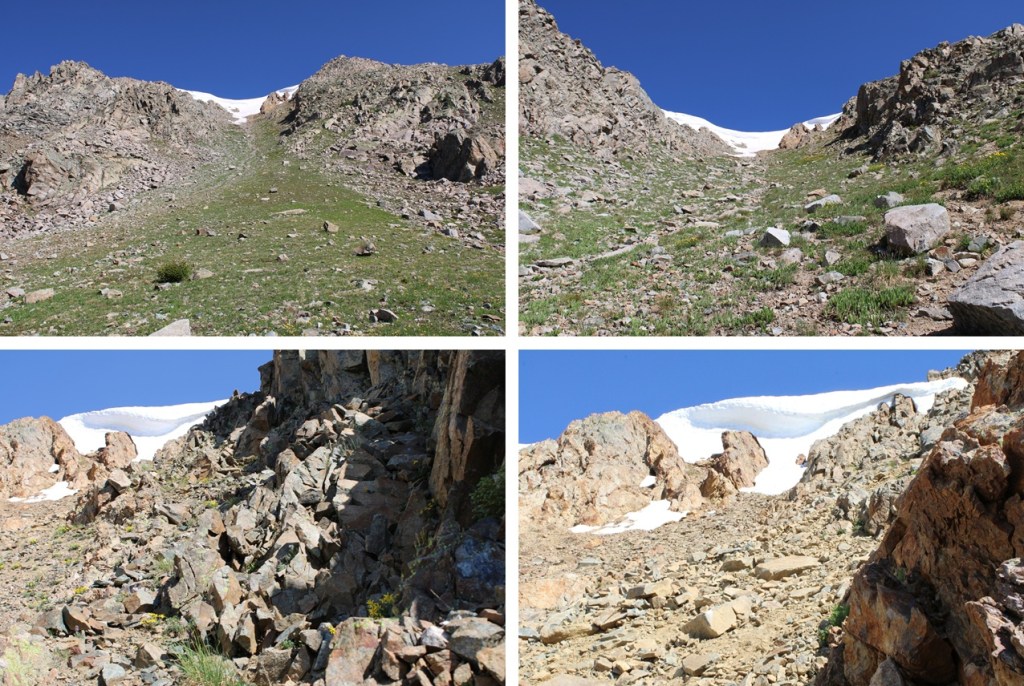
At the base of the gully I once again stopped to rest and contemplate the ascent. That cornice looked really big (it was). But it also looked like I could go around it to the right. I ascended the gully, trying to stay in the middle but drifting towards the right because the terrain there was more stable. This gully is steeper than it looks and it took quite a while to ascend.
The cornice was indeed large. At the base of it I thought I saw a line to the right that would lead me to the ridge, so I headed that way. Long story short, it did NOT go. I got myself into a very scary situation where the rocks and dirt (which was wet) caved out from underneath me and slid down, leaving me standing on a slick rock slab with no traction, and no way to go up or down. While it looks like it goes, even when standing right beneath it, it does not (at least not safely). It is much steeper than it looks from below.
I was frustrated, especially since I’d heard someone else had already done the route this year. There were no footprints to be seen (I didn’t see any at all the entire hike), and no clear line to the ridge. I was heading back when I took a different look at the cornice, this time from above. There was about a foot of space behind the cornice I could crawl through (and get wet in the process) that would lead me to the ridge. I squeezed behind it and was quickly standing on the ridge.
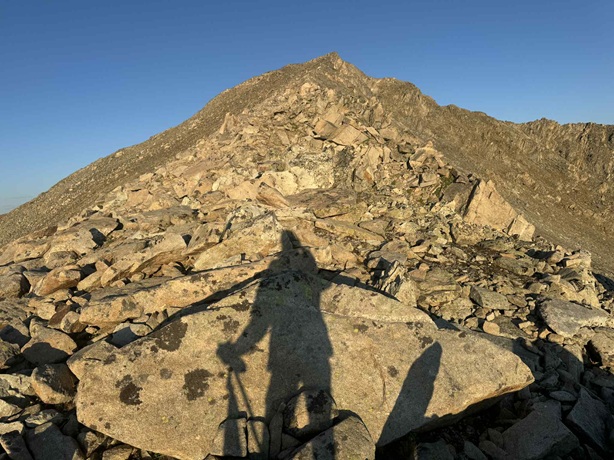
Once on the ridge I turned right and headed northeast to the summit. The terrain was class 2, and very rocky.
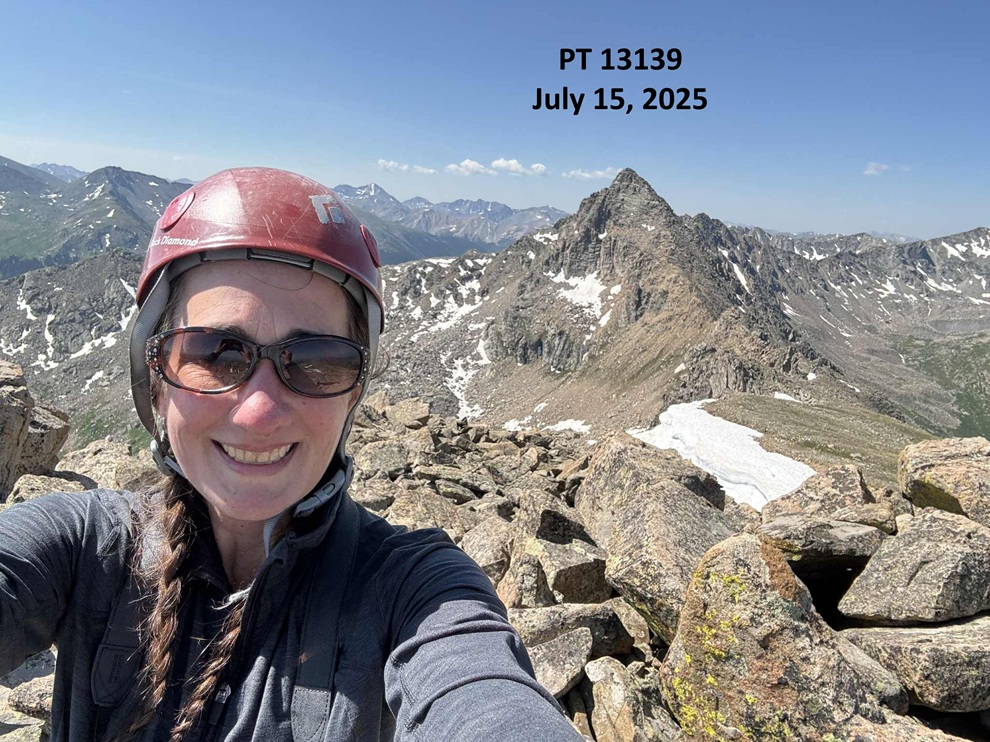
I summited PT 13139 at 10:40am
13139:
Once again I had a chat with myself on the summit. I am getting closer to finishing the 13ers, and when they’re done for me that’s it. I’m not going for 12ers, etc. because I’m starting a new phase of my life. However, I want to enjoy the 13ers for as long as possible. That’s a long way of saying I’m trying to stretch out my remaining climbs by making them multiple day trips. I’d planned on doing the Williams group in 3 days, but since if I returned the way I’d summited I’d need to gain over 600’ of elevation anyway, I figured I’d head over to Williams Mountain and summit that one today as well. So, I turned and headed southwest along the ridge towards Williams Mountain.
The ridge started out calmly, then quickly became rocky. I stayed to the ridge proper on class 2 and 3 terrain.
Until I came to this point, where I dropped down to the left and followed the scree filled slopes before regaining the ridge.
While it may look flat, there were a lot of ups and downs along the way.
Once on the ridge again I followed it south. There were large boulders to navigate, but the rock was pretty solid. This is where the ‘fun’ begins. For the rest of the route to the summit it’s intense class 3, if not class 4. It’s probably the most difficult class 3 I’ve done to date, bordering on class 4 in areas (I’m short, so a lot of the holds are a stretch). There are a few cairns in this area, but don’t rely on seeing them. This was an intense, exposed scramble, and more than once I got myself ‘stuck’ in a not so friendly position and had to backtrack (which was also not so friendly). Be sure of your holds, be sure of your moves, and please have climbing experience before attempting this climb because it only gets more difficult as you ascend. I stuck a little to the west of the ridge, heading south.
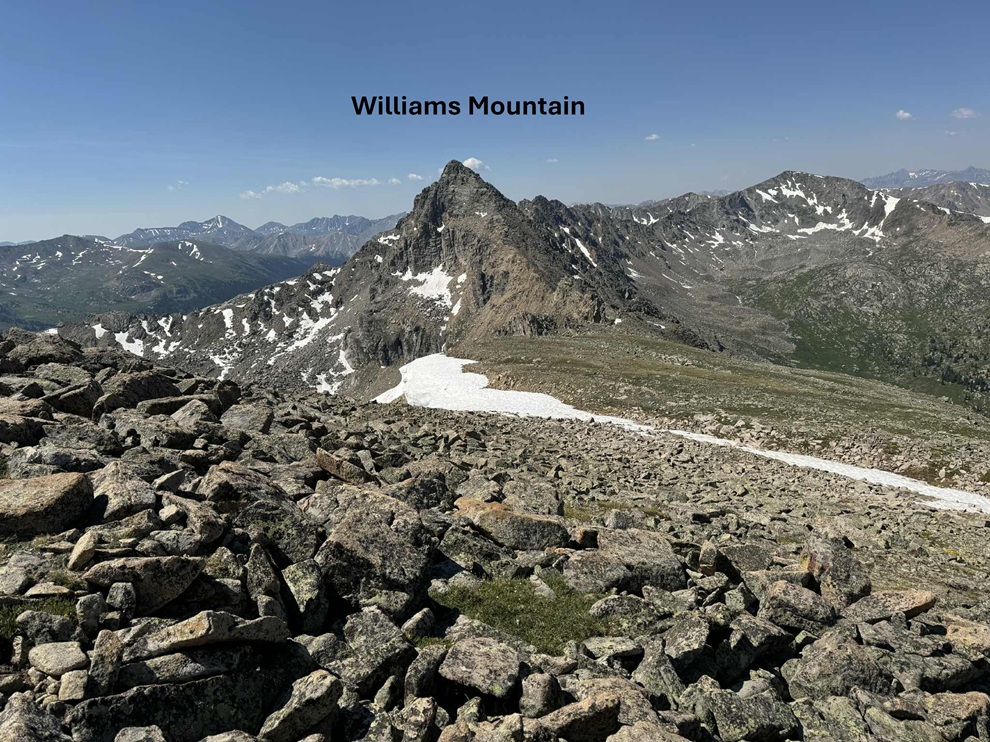
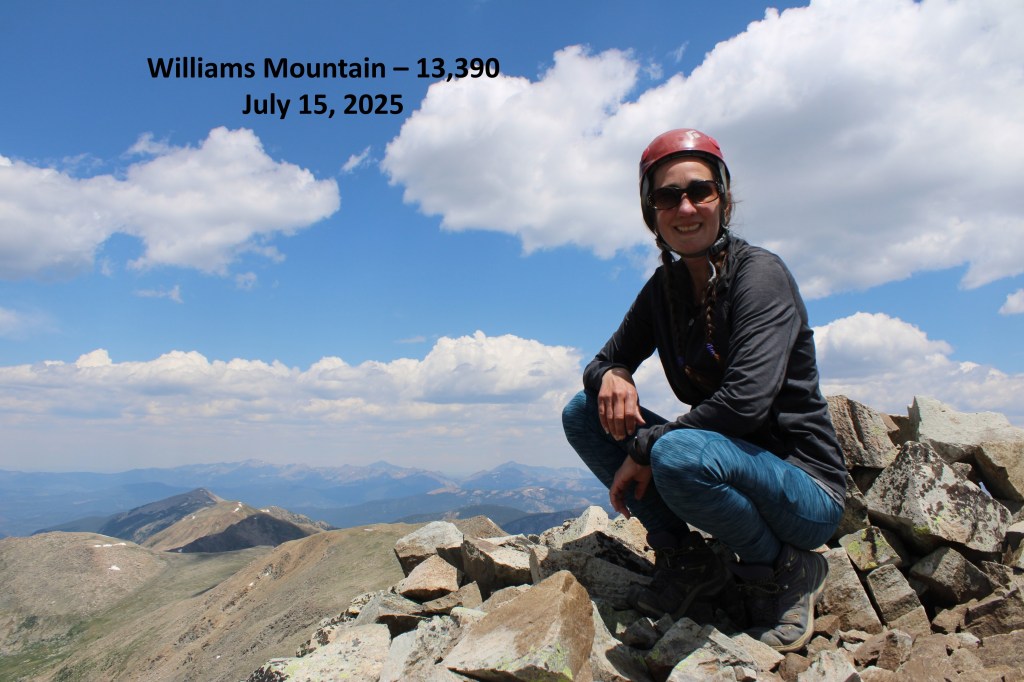
I summited Williams Mountain at 12:55pm
Williams Mountain:
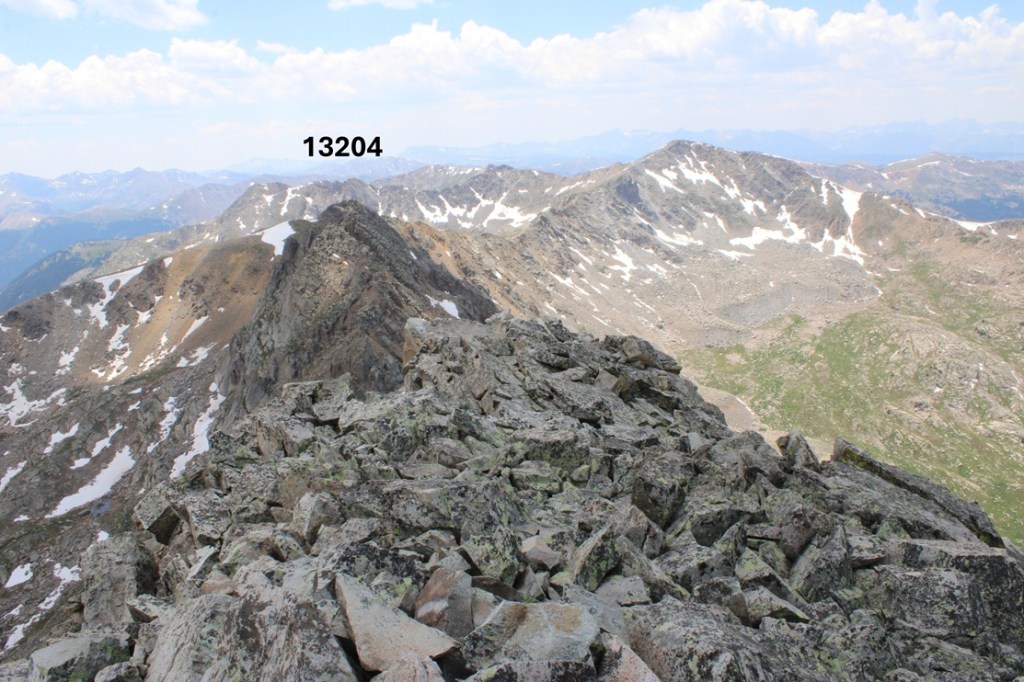
After summiting I kept heading south, towards 13204.
I’d thought the difficult climbing was over, but I was wrong. Almost immediately I was greeted with a rock slab I’d need to descend. I butt-schooched down this thing.
Here’s looking back up at the rock slab
That was the worst of it though. I went left and descended and then reascended this little gully
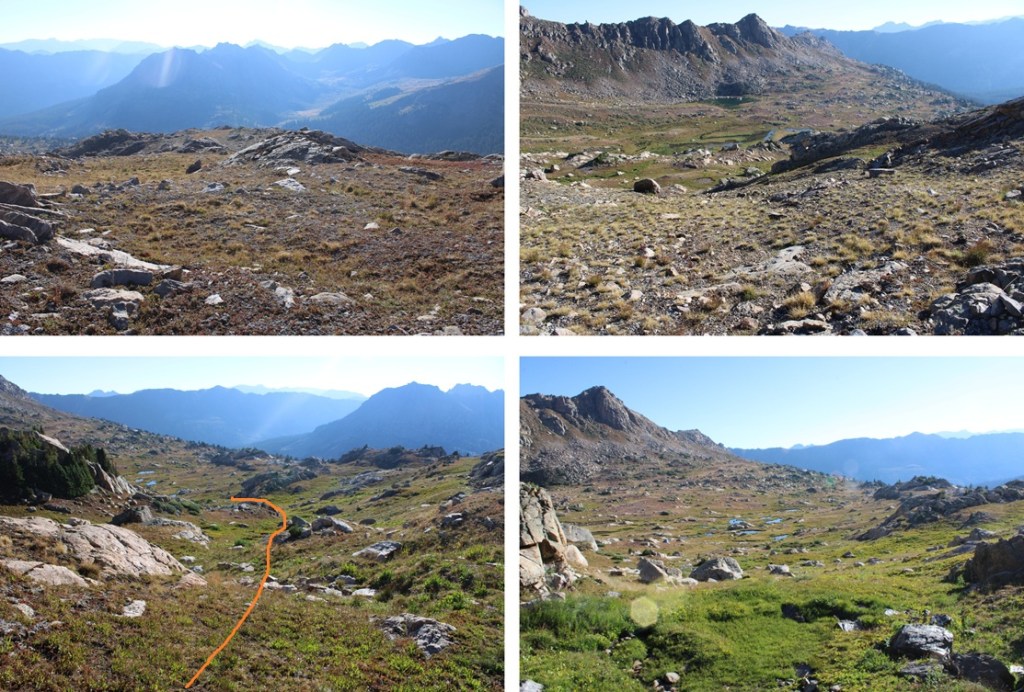
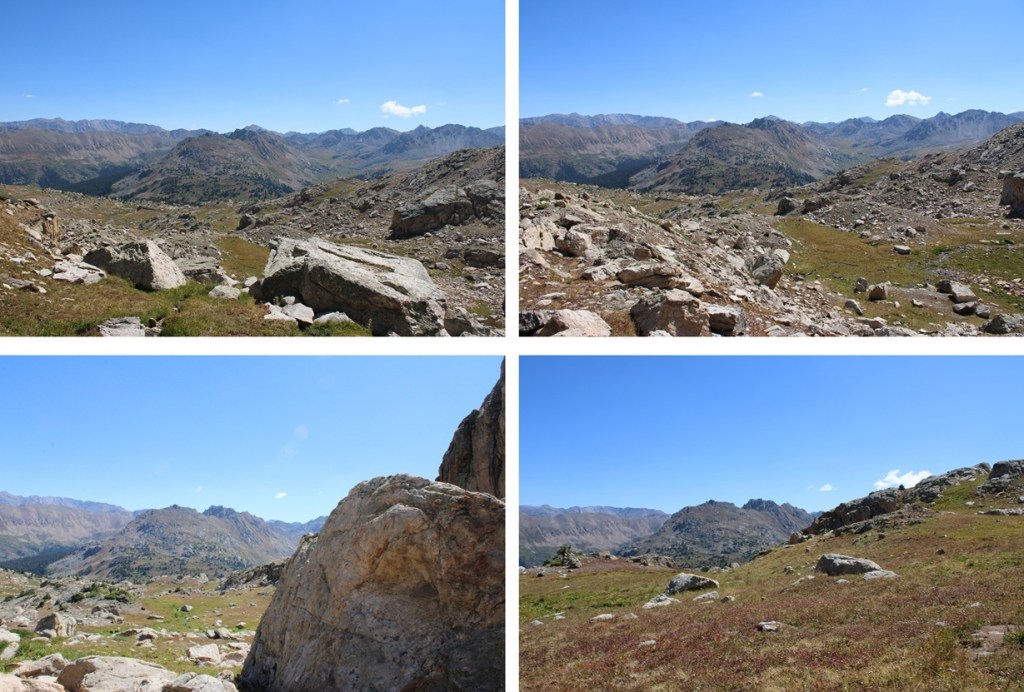
Then I made my way down the ridge to a larger gully and followed it southeast into a basin. This gully was easily manageable, with game trails to follow. Towards the middle there were options to go left or right. Both went, but I took the right side.
From the top of the gully you can see my route out of the basin.
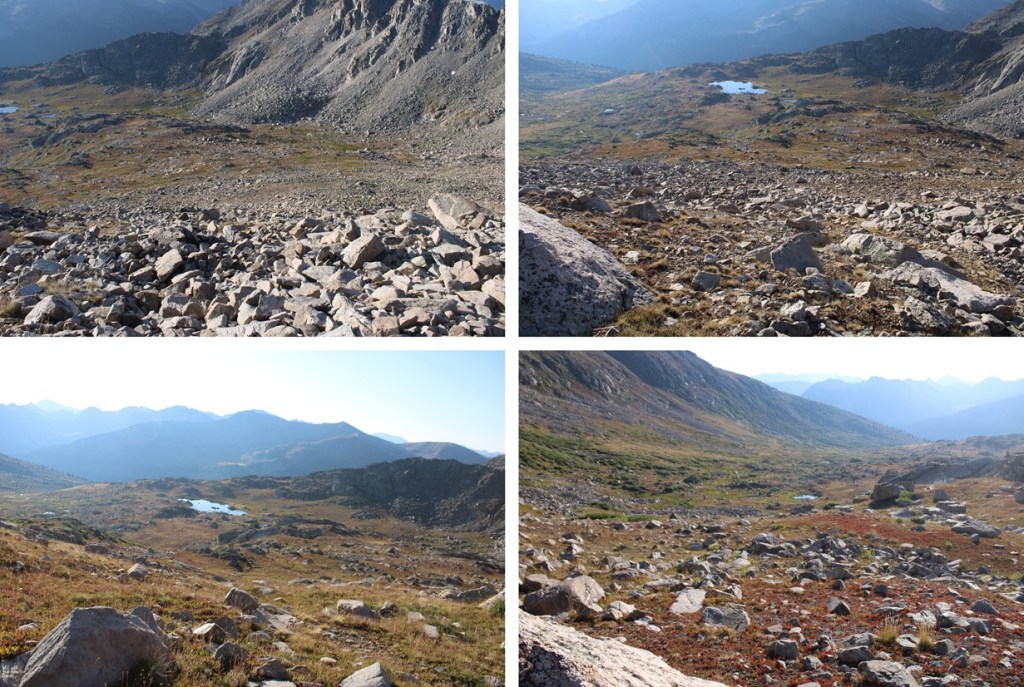
Here are some gully pictures
At the base of the gully I headed southeast along the basin.
At the end of the basin I followed the stream that was running pretty strongly all the way back down to Lost Man Loop Trail, staying to the left of the stream the entire time.
Back on Lost Man Loop Trail, I followed it southwest back to the trailhead.
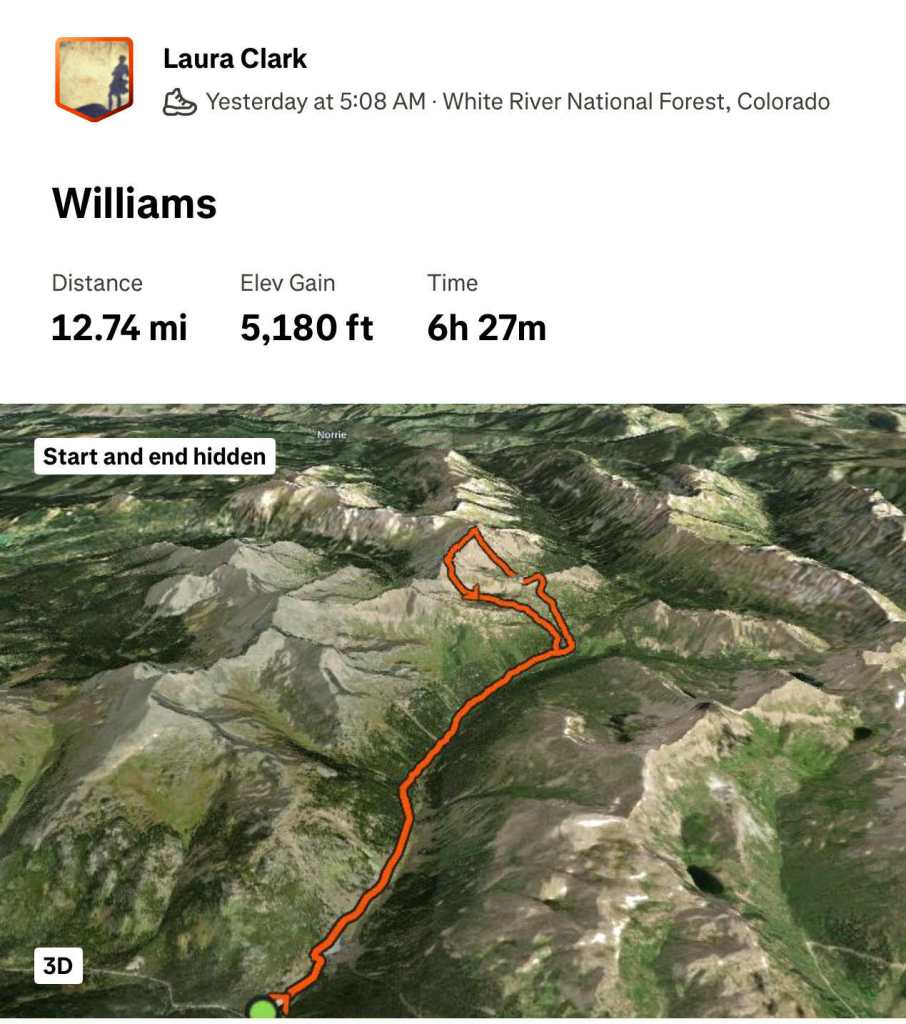
I made it back to my truck at 4pm, making this a 15.26 mile hike with 3918’ of elevation gain, according to CalTopo. My numbers with Strava were different.




































 Wild Wanderer