La Plata Peak in Winter – 14,336

RT Length: 10.93 miles

Elevation Gain: 4620’

Detailed La Plata in Winter Report  

I’ve already done a detailed trip report on this route, so I’m just adding pictures and some notes/a story for today’s hike.  Funny thing:  It’s been almost exactly 2 years since I’ve done this hike. The end of January seems to be a good week for La Plata in winter.

I was really, really tired on the drive in, so when I got to the trailhead I decided to take a 20 minute nap before starting.  I was also hoping someone else would arrive so we wouldn’t be the ones doing all the trenching:  no dice.  We started out at 6:30am, and were the only ones in the parking area, so we had no hopes of anyone trenching before us. 
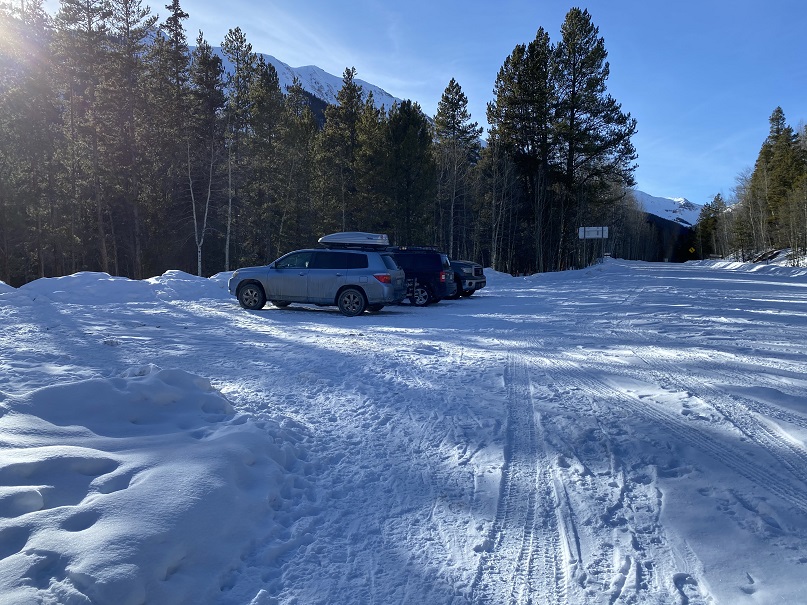
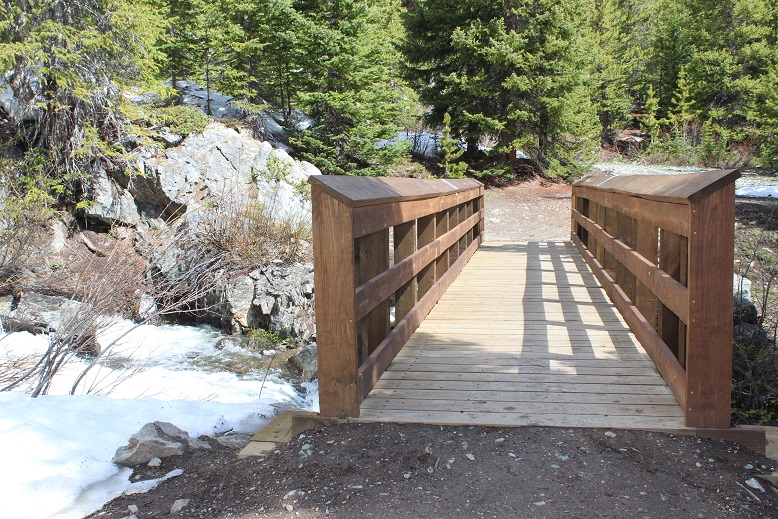
I put on my snowshoes at the truck, knowing I’d eventually need them and not wanting to take off my gloves to put them on.  It was -2 degrees when we started hiking.  I kept the snowshoes on for the entire hike.  We started out following road 391 to the trailhead.  This was a well packed down road, but not in the beginning.  It looked like someone had tried to drive the snow packed road.  They made it across the bridge, then obviously backed up.  Funny:  that was probably the hardest part of the road.
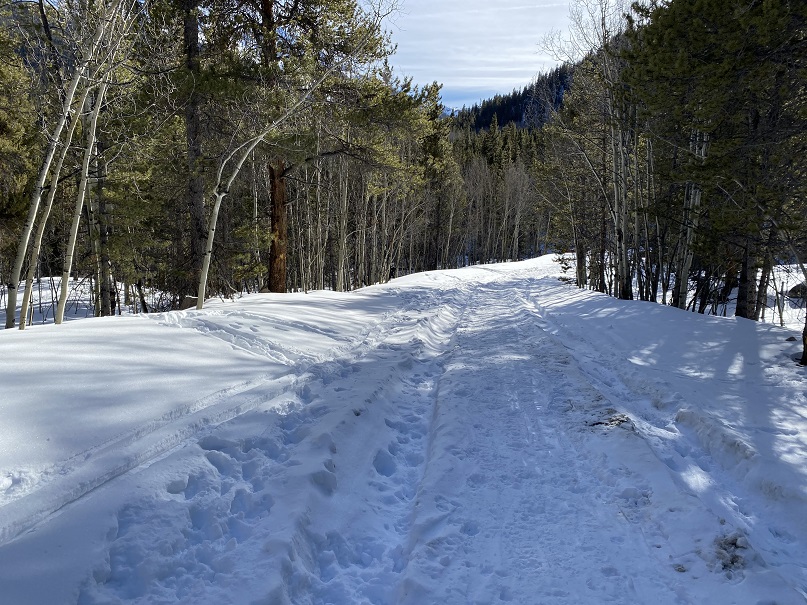
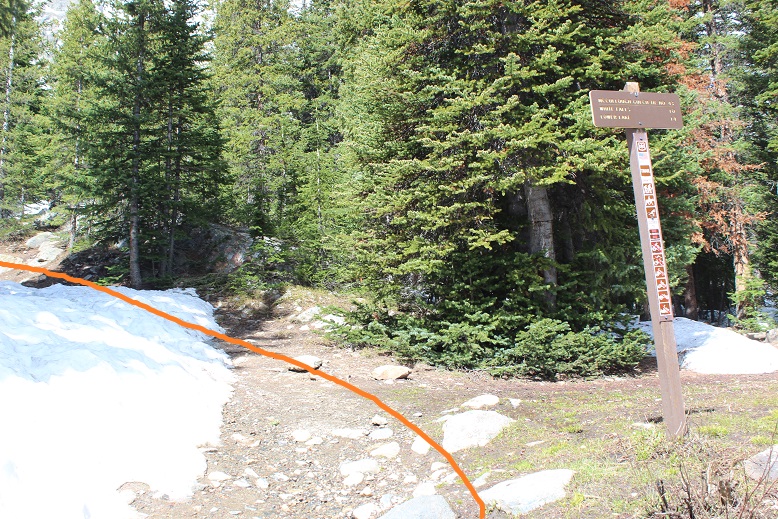
Here’s the trailhead.  Note, there’s private property all around:  stick to the trail
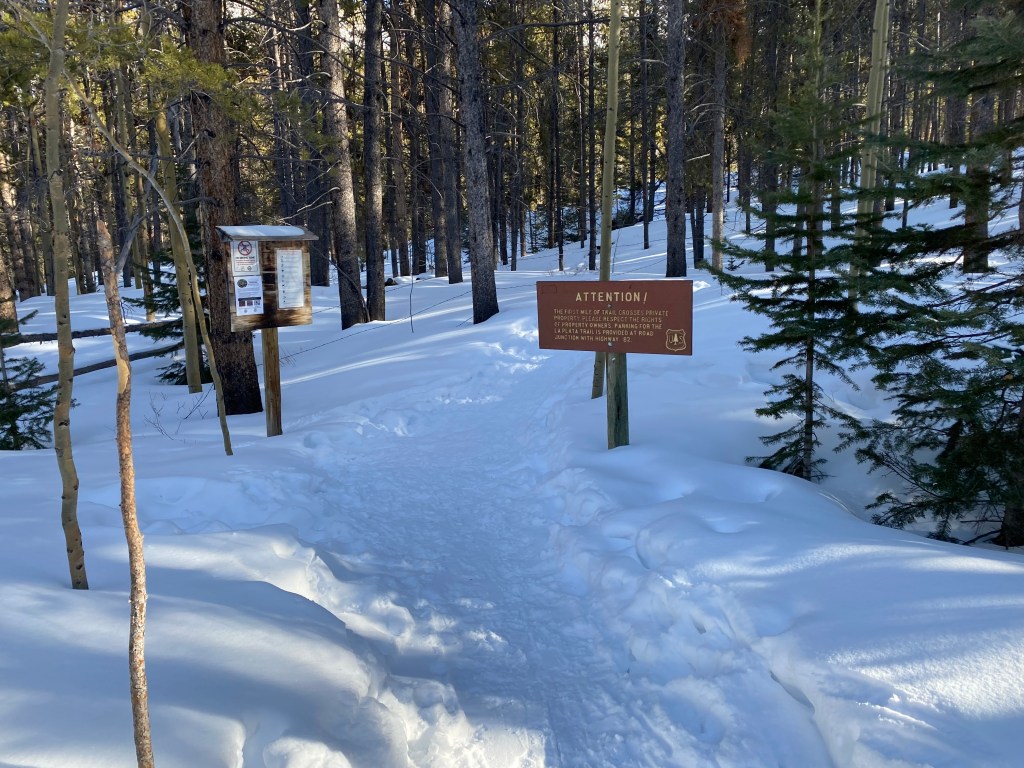
The trail was trenched!  Woot!  We followed the trail a short ways, and check this out:  An old cabin!  This is my 5th time on this trail and I’d never see the cabin before.  On our way back we spent some time trying to figure out how old it was by looking at the boards, logs, chinking, etc. 

On we went, following the trench as it wound through the trees and across the log bridge/through the willows. From here, it’s all uphill. 
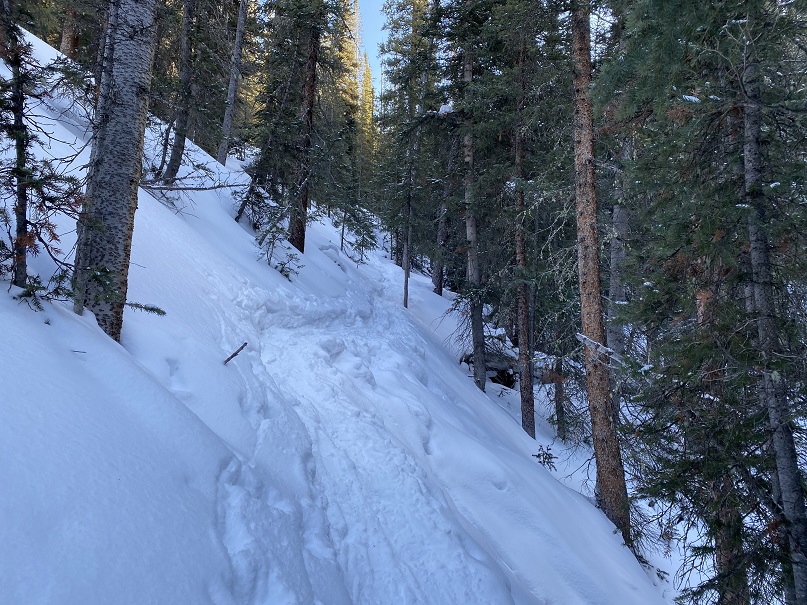
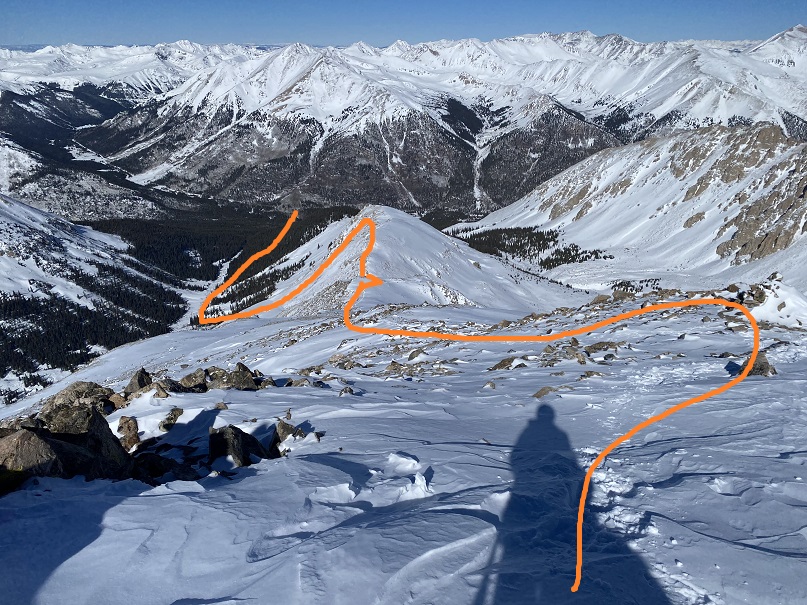
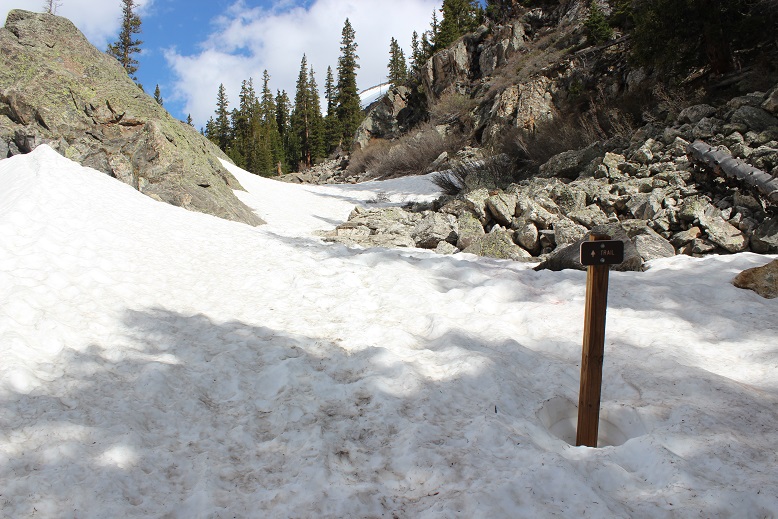
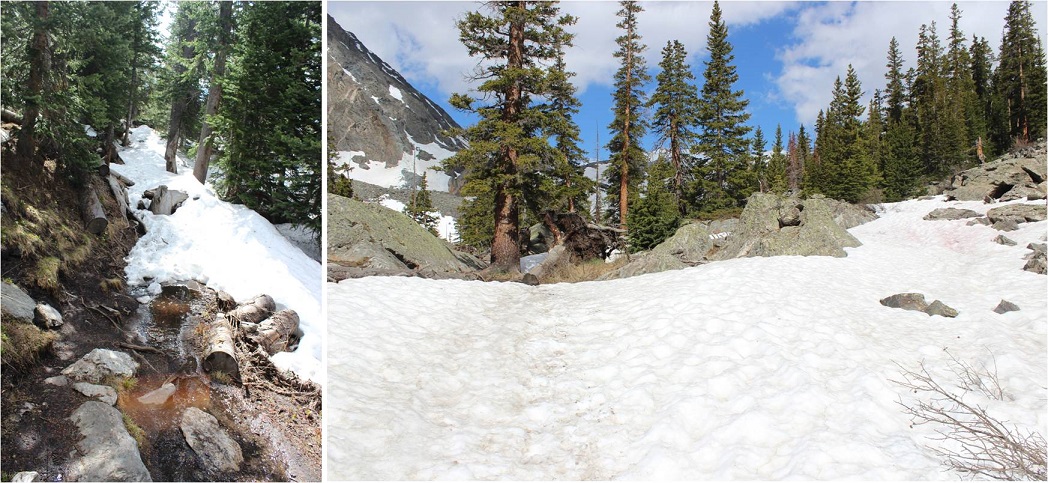
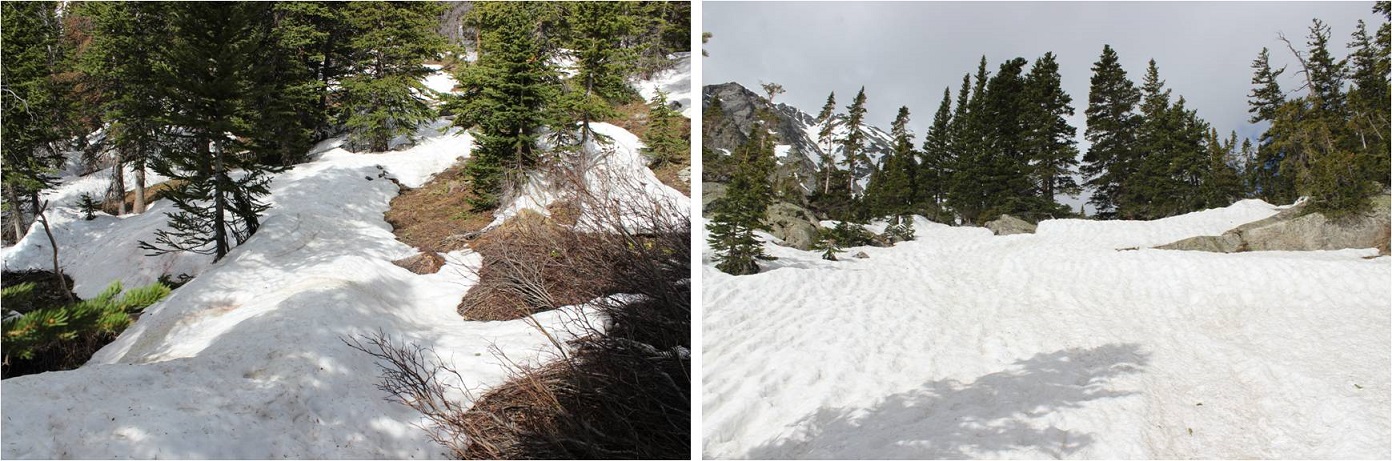
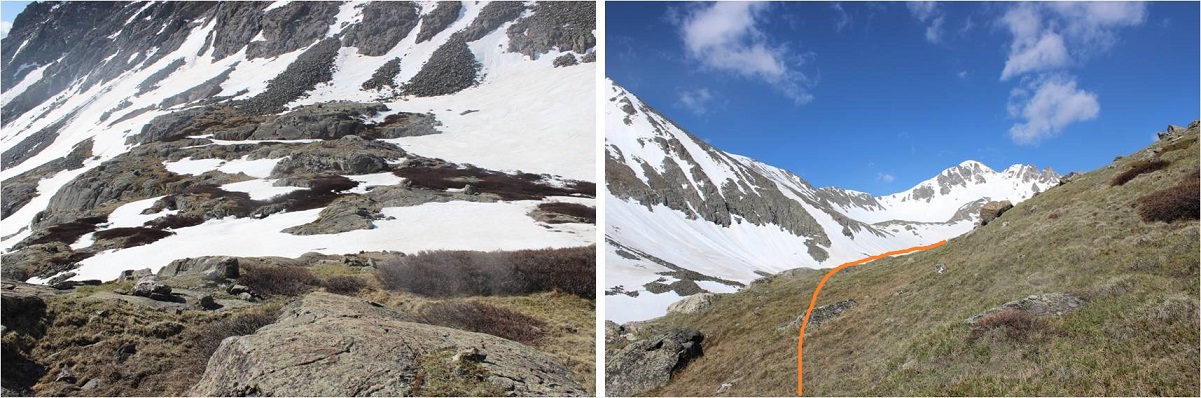
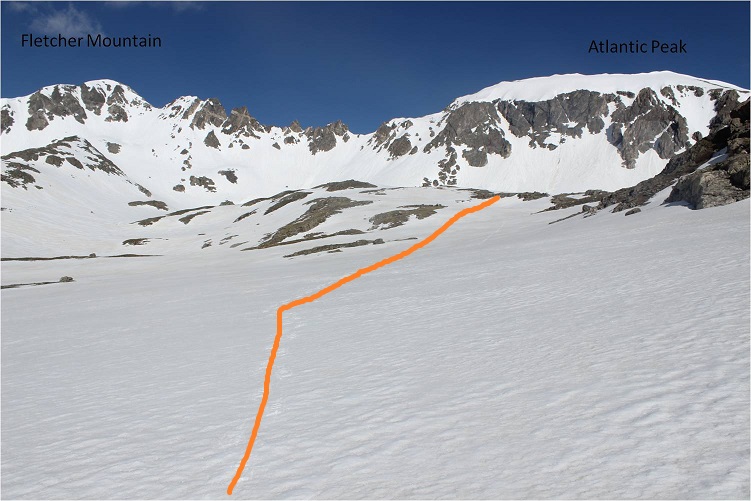
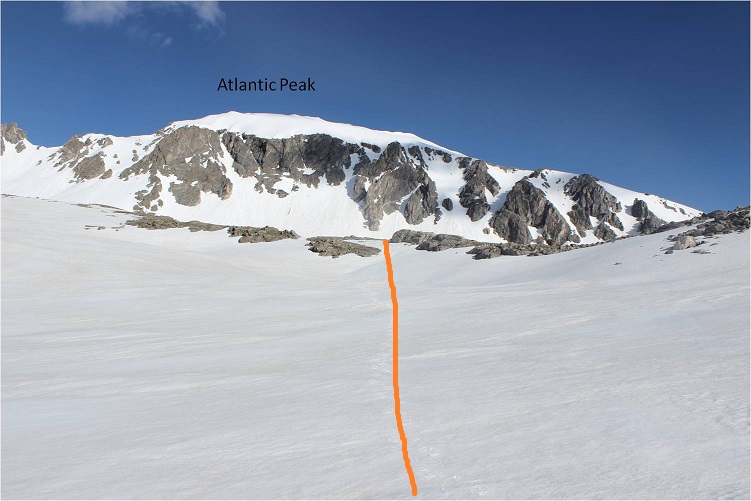
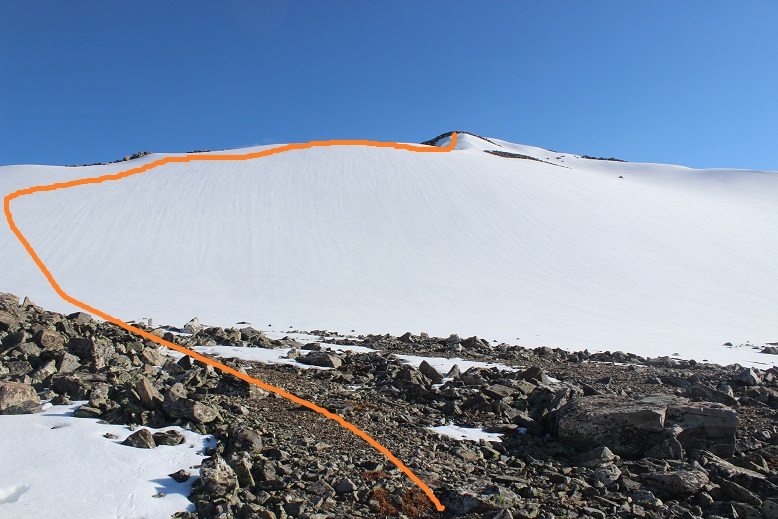
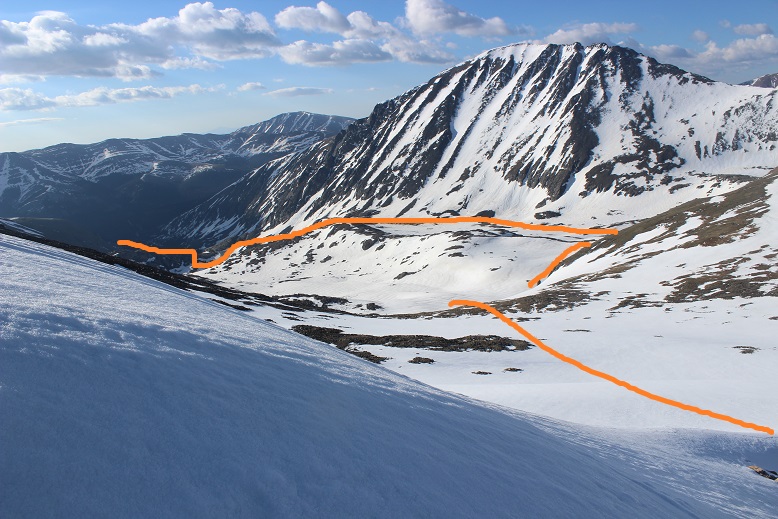
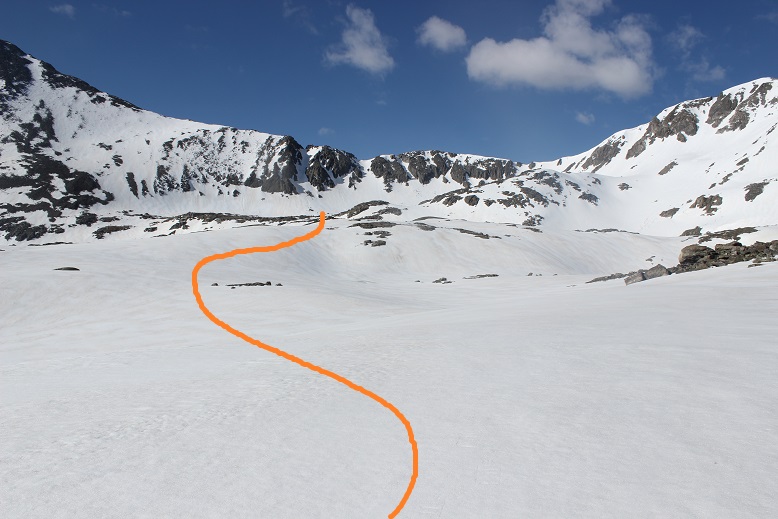
We were following the summer route, and I kept looking for a trench indicating the winter route, but we never came across one.  It’s my goal this year not to let a good trench go to waste, so we decided to follow the summer route to the basin and see if we’d be able to summit this way.  We hiked on some seriously steep slopes below treeline, where a slip off the trenched trail would send you sliding quite a ways into the drainage below.  The trench ended as soon as we made it to the basin, so we decided to make our own trench up the ridge to the headwall.  Here you can see our basic route
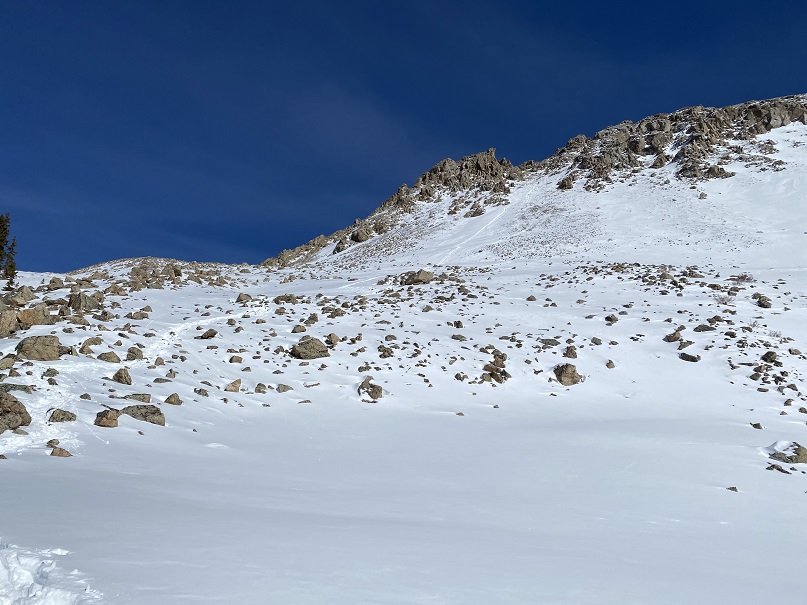
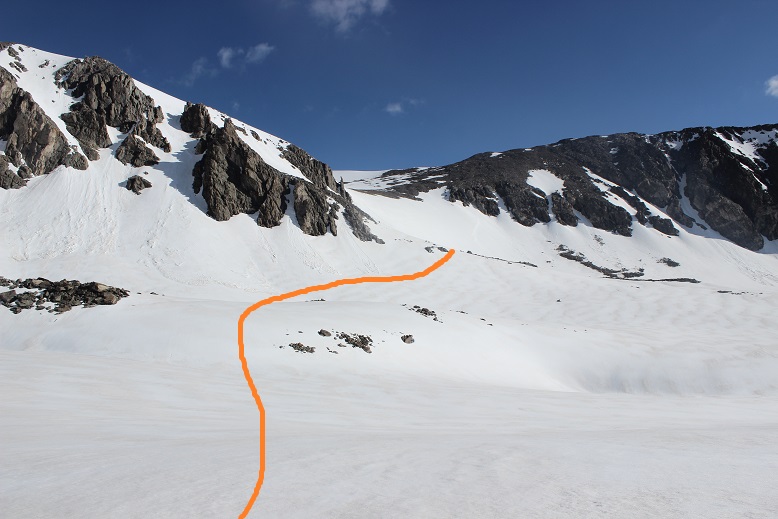
Also, I don’t recommend this route in winter:  there’s avy danger.  Today however we didn’t see enough snow to be worried.  I’d wanted to teach SkydiverHiker how to use his ice axe, and there didn’t seem to be enough snow/ice to make it relevant on the way up.  Here’s our route up the headwall.

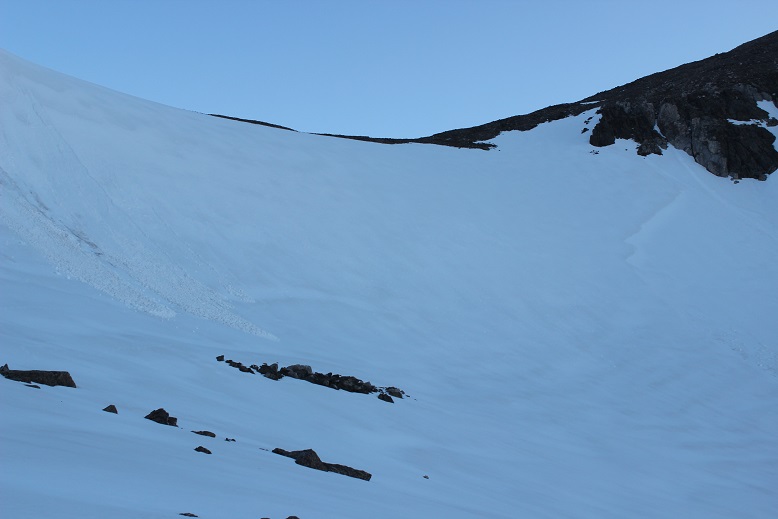
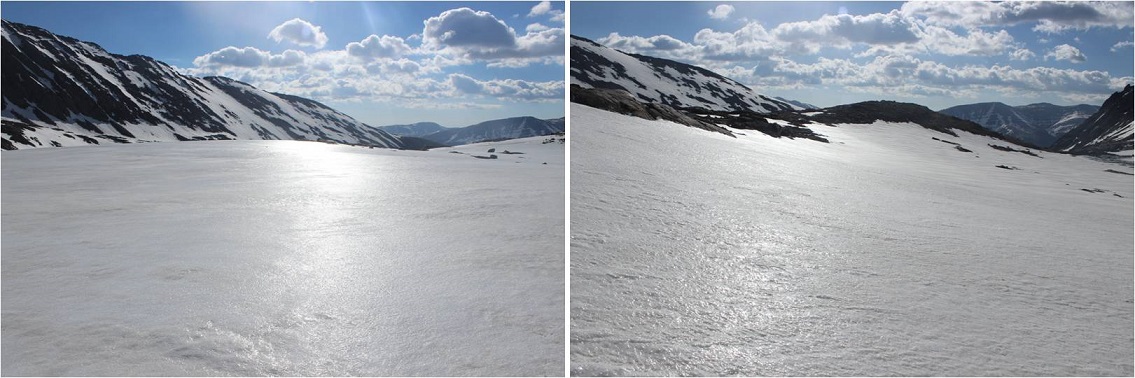
I should also note it was really, really cold in the morning before the sun reached us.  Several times we considered turning back, but in the end we knew the sun was just over the ridge:  all we needed to do was make it up the headwall and we’d be fine.  This part was slow going and slippery.

Once we made it to the ridge and I felt the sun warm my face I was ecstatic!  Also, I screamed.  Raynaud’s attacks are no fun, and now that the sun was warming my fingers and toes the blood rush felt like I was picking up a hot pan I couldn’t let go of.   Not fun.  Luckily SkydiverHiker is used to this and let me scream as loud as I needed without judgement.

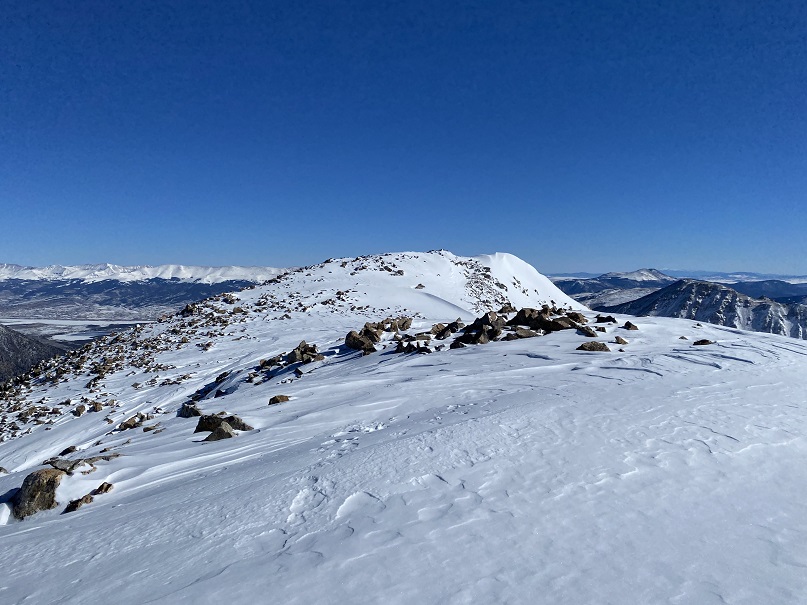
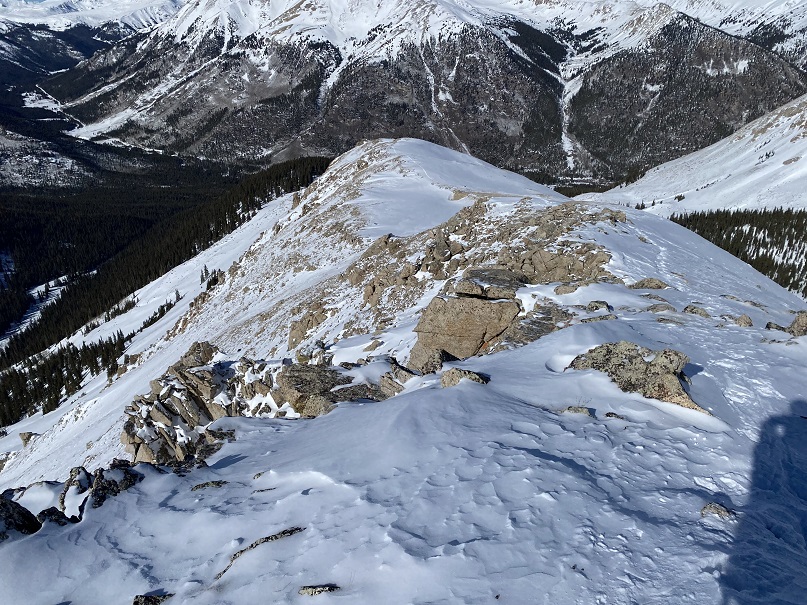
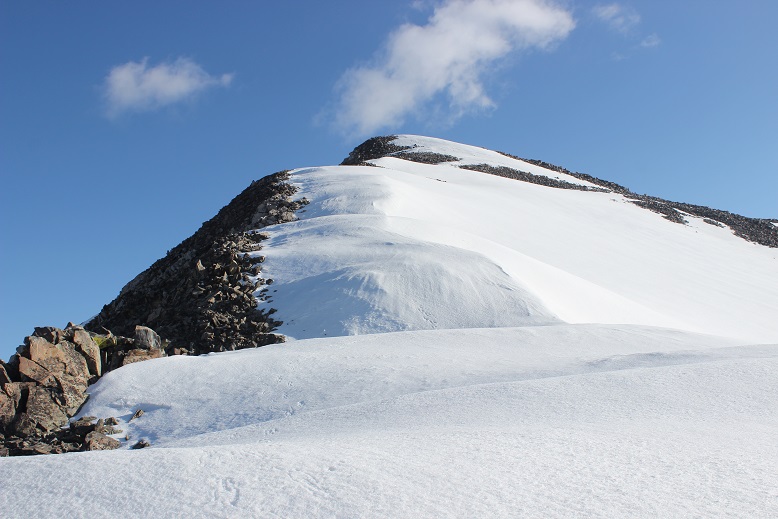
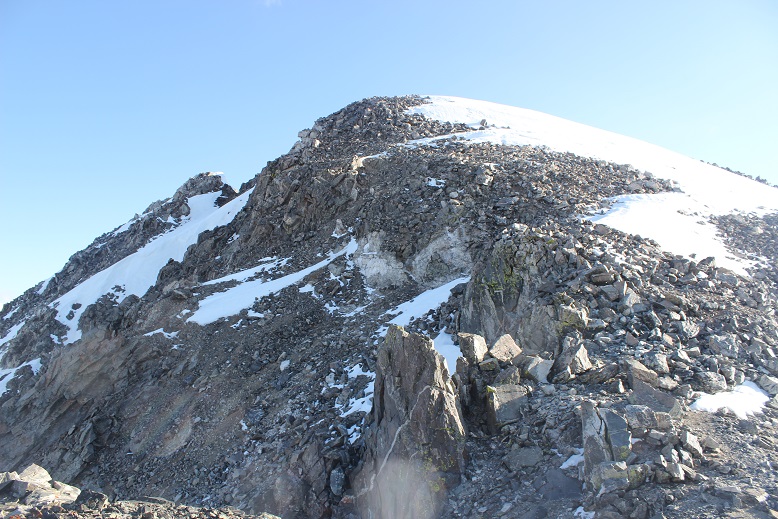
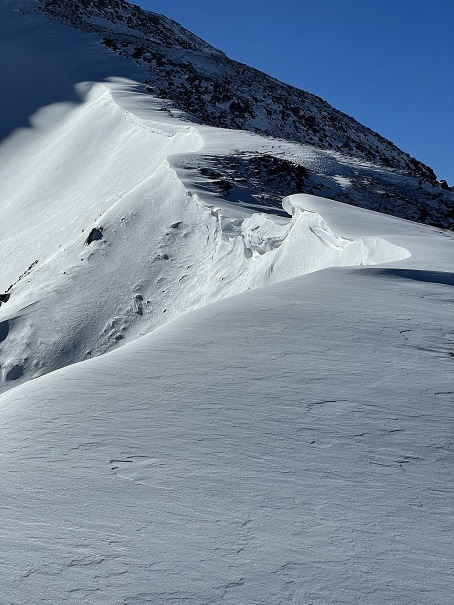
It’s a really long ridge hike to the summit of La Plata Peak.  My route says about 2.3 miles of ridge work.  I don’t have a lot of pictures of the hike in due to my frozen fingers, so all of these pictures are from the hike out.  Here’s a look at the ridge today

We trudged up this ridge, but it was such a nice day we didn’t mind much. 
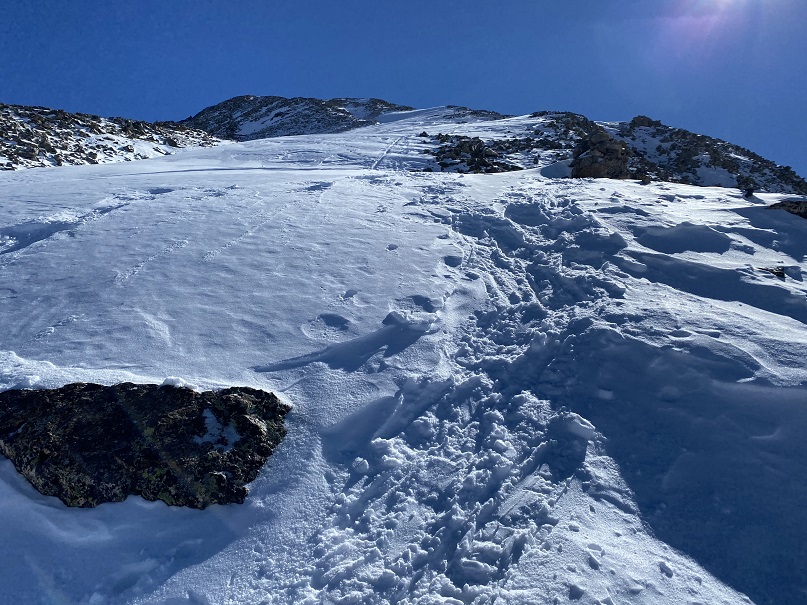
I kept looking back to see if anyone was poaching our trench, but never saw anyone.  Such a shame!  There were some small cornices forming on the ridge. Nothing too dramatic, but we stayed away from them.
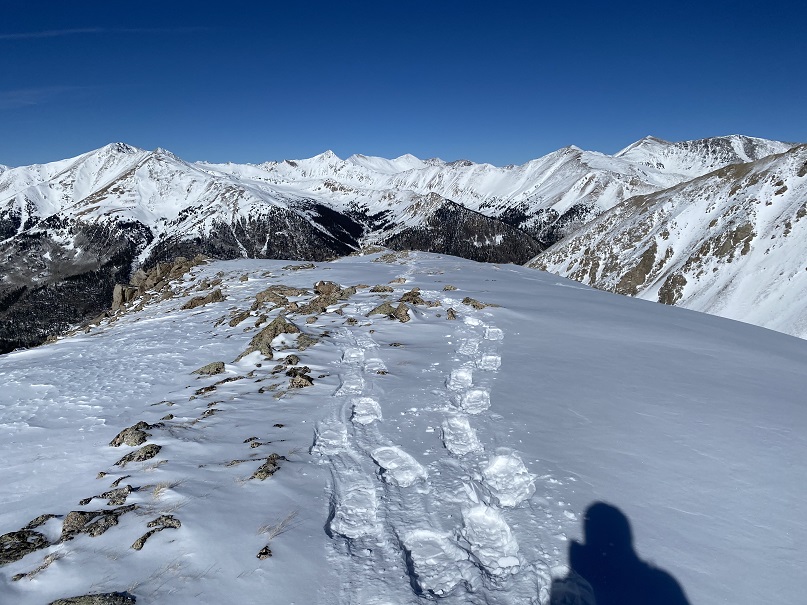
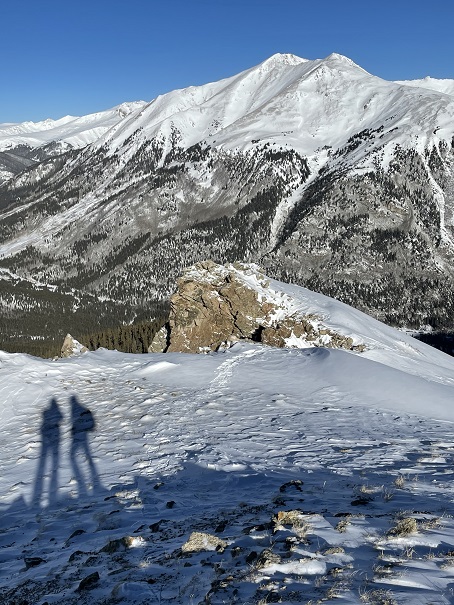
At one point we stopped to get a shadowselfie and a picture of Sayres Benchmark
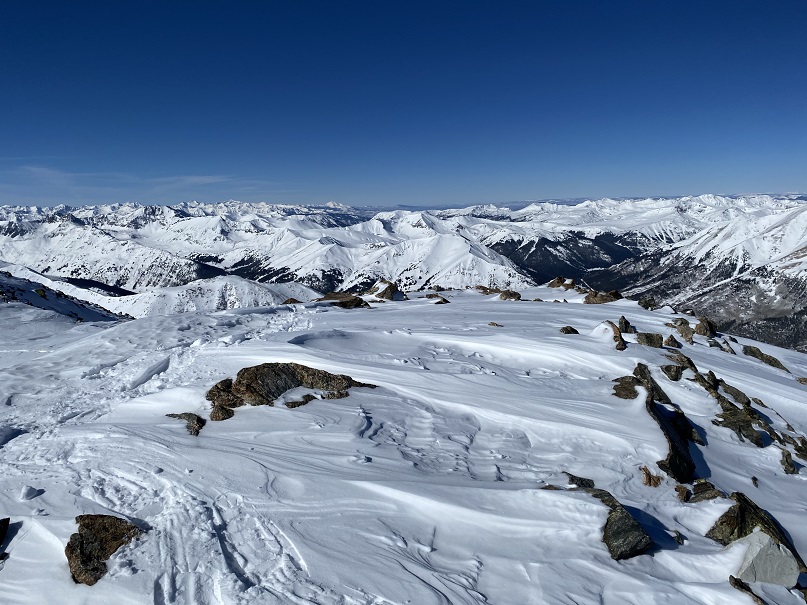
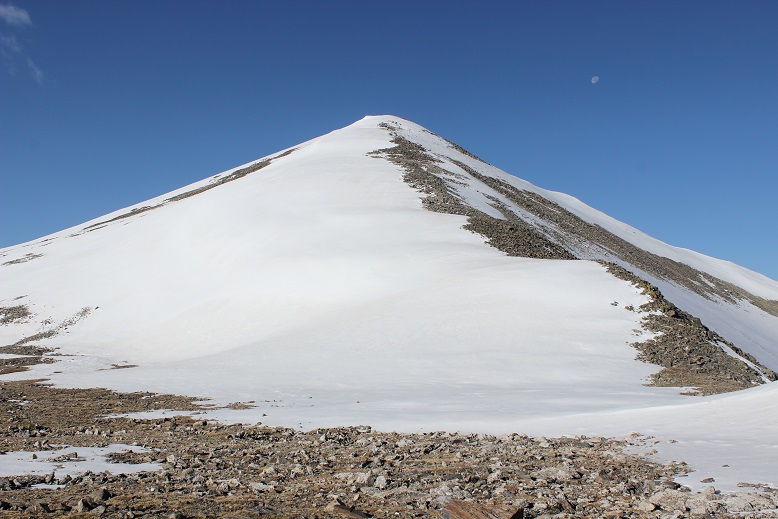
We summited in bluebird conditions:  no wind, no clouds, just a nice, sunny day. There were some small cornices at the top.
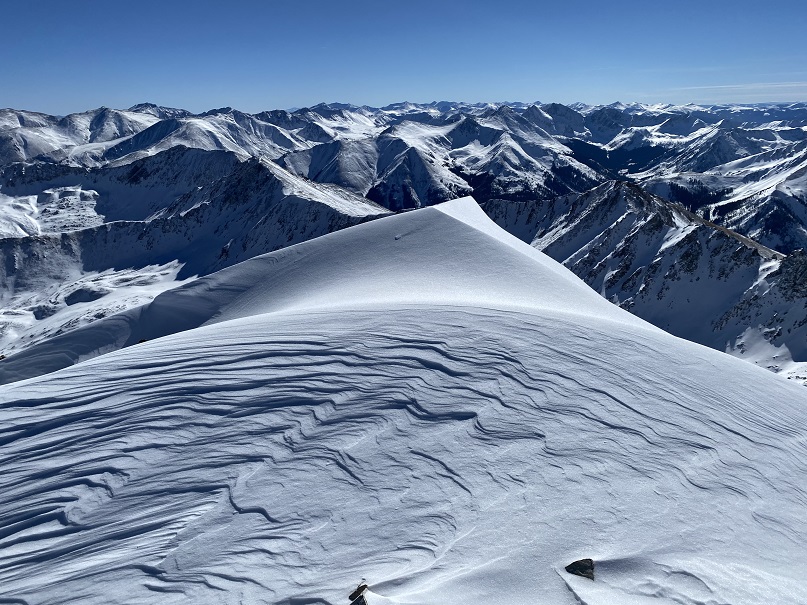
Here’s a summit photo and video of the summit

NE La Plata
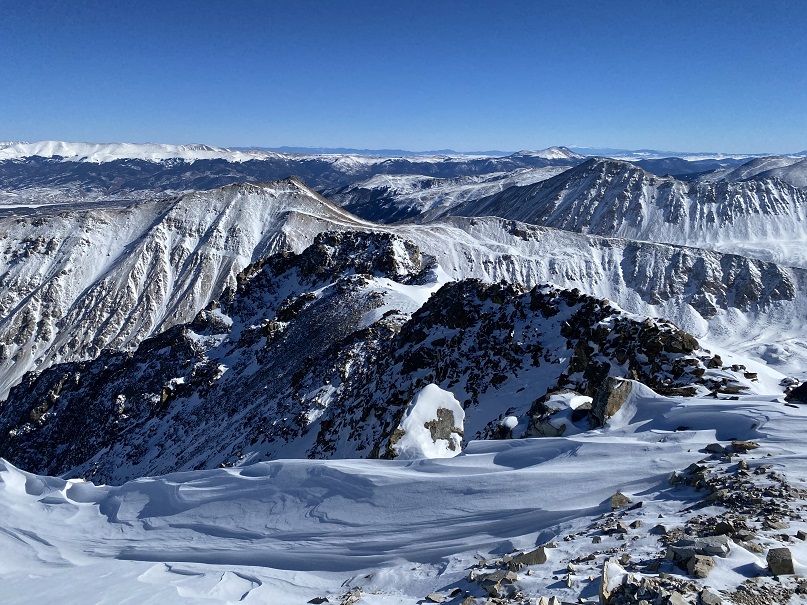
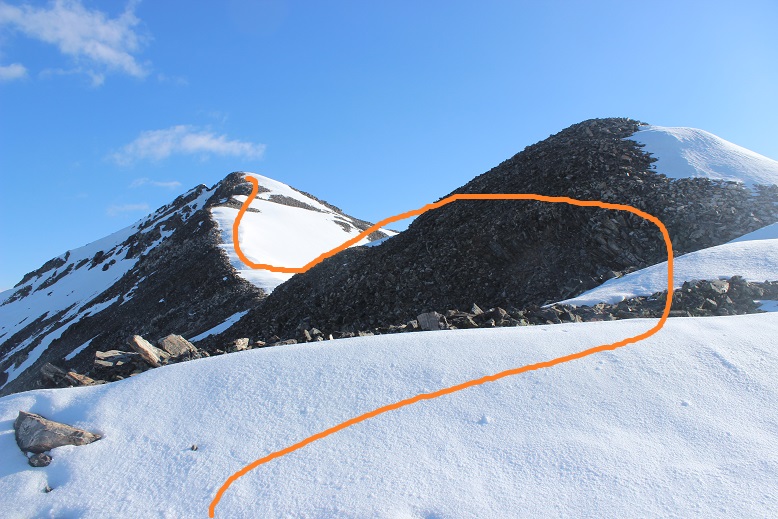
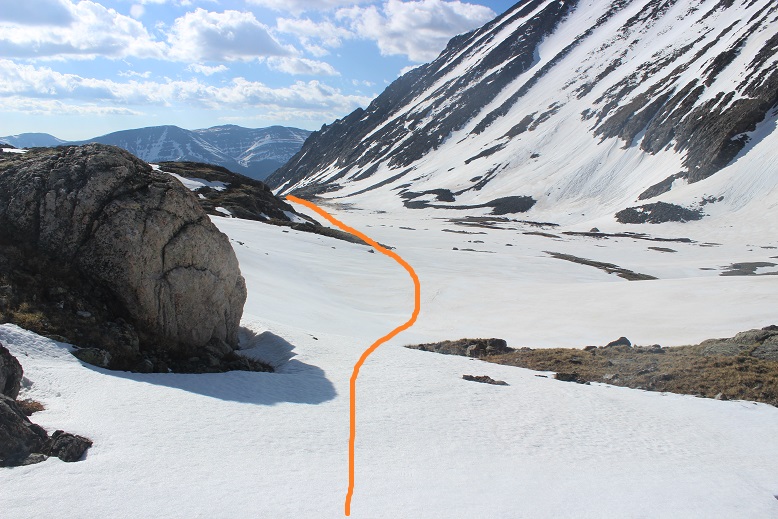
We actually stayed for a but at the summit because the weather was so nice.  The views were amazing, and demanded to be appreciated.  I should have put on sunscreen, but didn’t.  I have much better pictures of the route down because:  warmth.  Check out that ridge!  Here’s the overall route.

And some step by step to the headwall

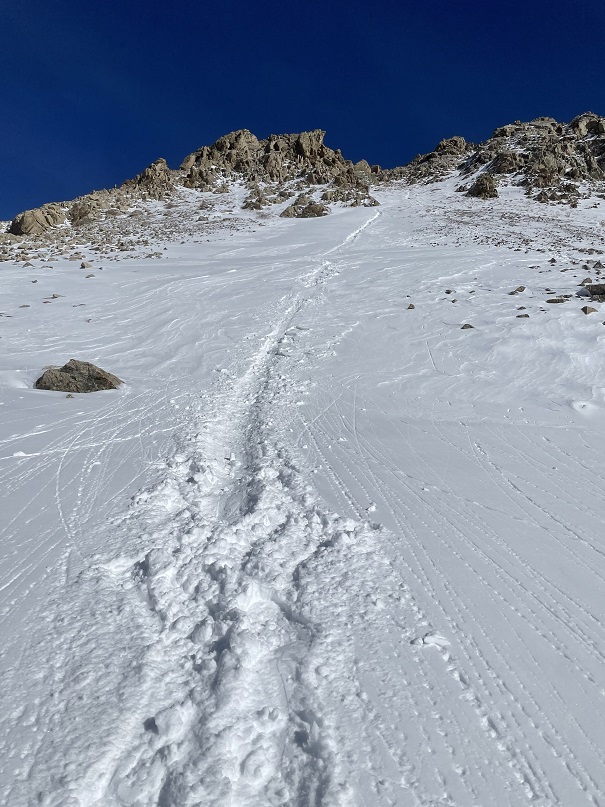
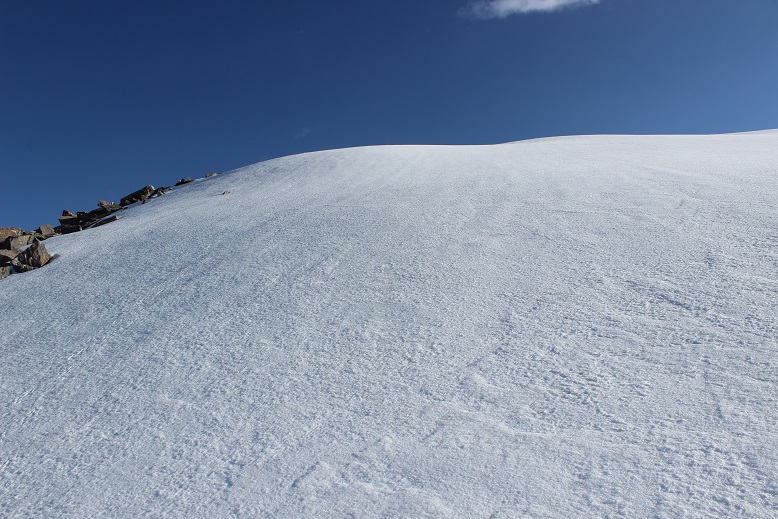
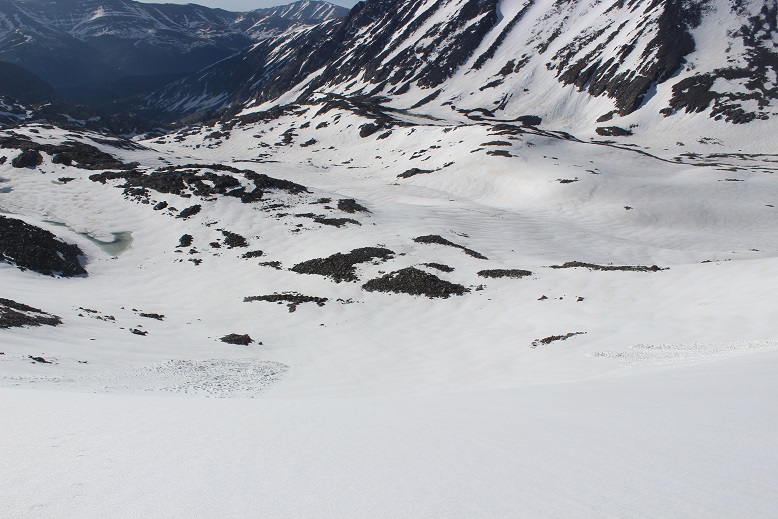
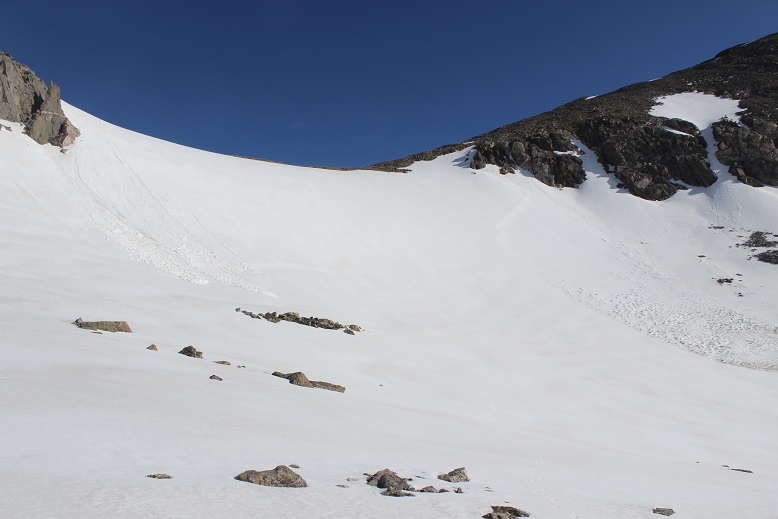
Here’s looking down the headwall
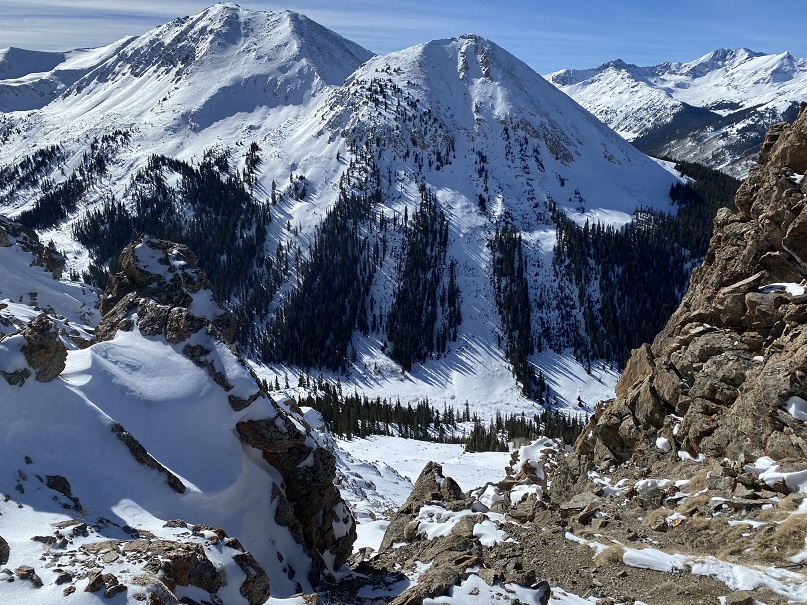
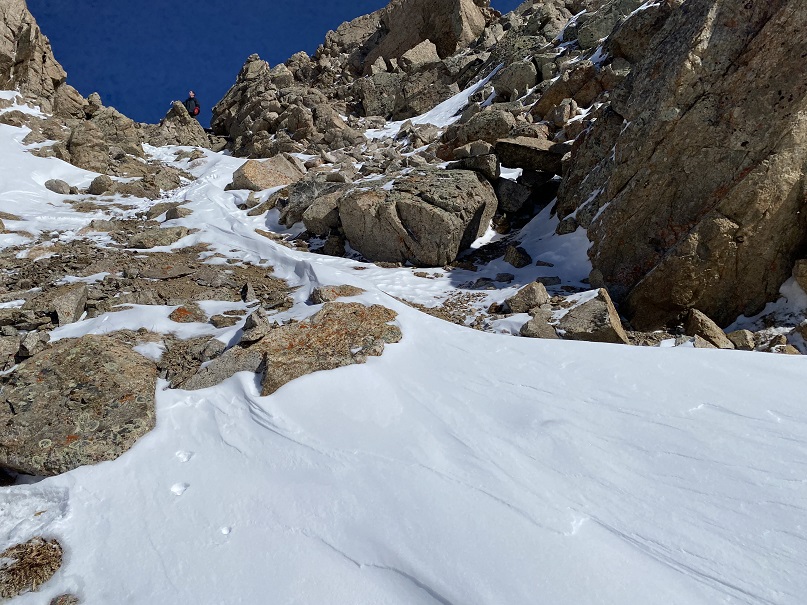
I decided to go first to blaze a trail.  Here’s looking back up at SkydiverHiker, waiting patiently
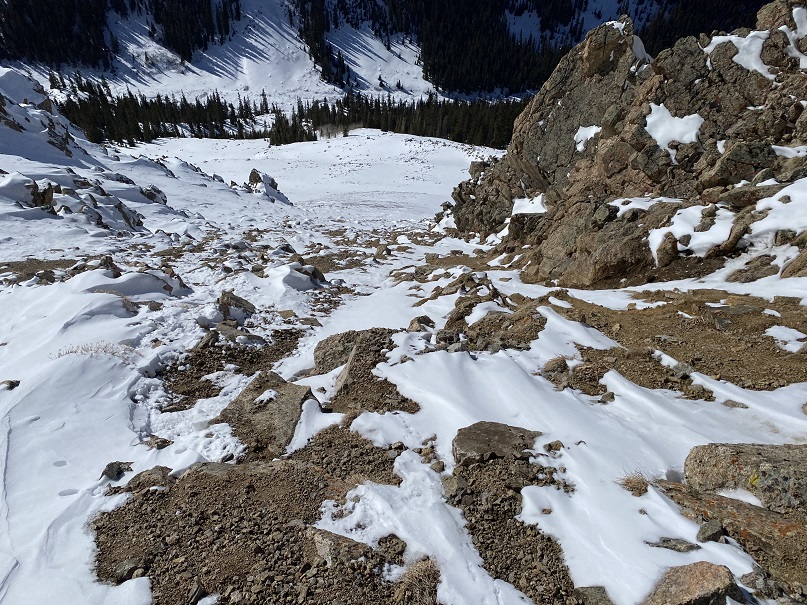
I spent a long time gingerly making a nice trail for SkydiverHiker to scree surf down
SkydiverHiker decided to glissade down instead (smh).  This was his first real time, as I’ve had him practice before, but never where the run out was so long.  He learned first hand about hitting rocks, keeping his feet up, and how long it takes to stop once you place your ice axe. He may have rolled a few times (on purpose, of course).

The snow was getting dangerously soft:  we were booking it out of there, but I got a final shot of our paths down (lots of rollerballs).

We made it back to the trench and started our hike out

This part was pleasant, but my feet were thawing out, so every once in a while I’d get a sharp pain in my toes (note:  two days later, I’m still having pain.  Raynaud’s sucks).  We saw our first people of the day; snowshoers who were just following the trench as long as it went.  We let them know they had another 20 yards or so to go, and continued on our way.
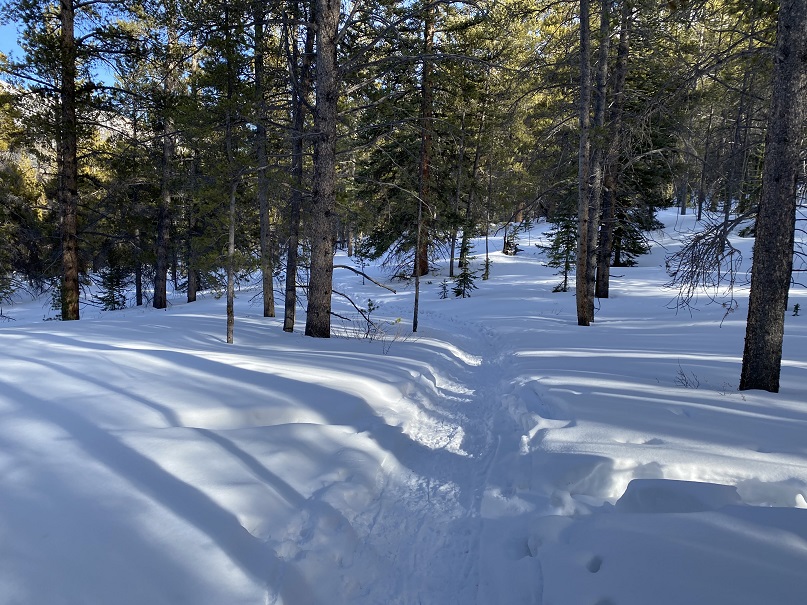
We took some pictures of Lake Creek as we crossed
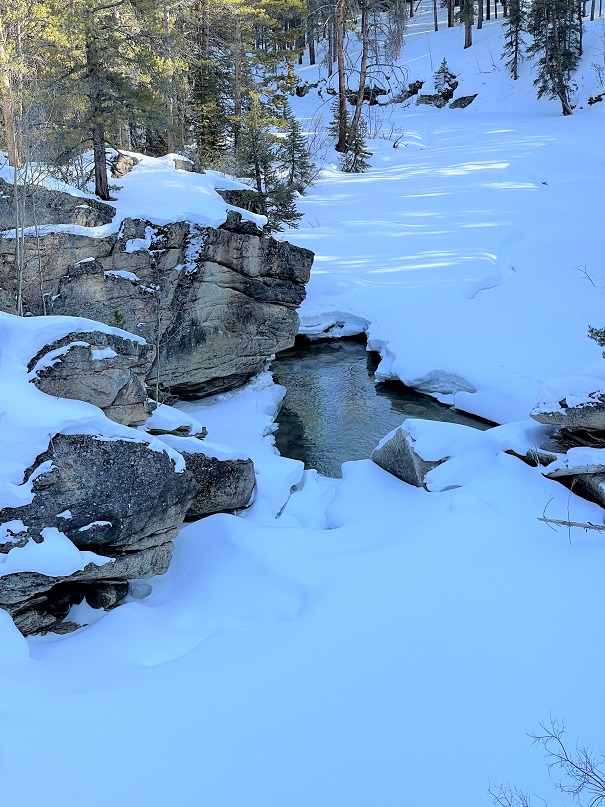
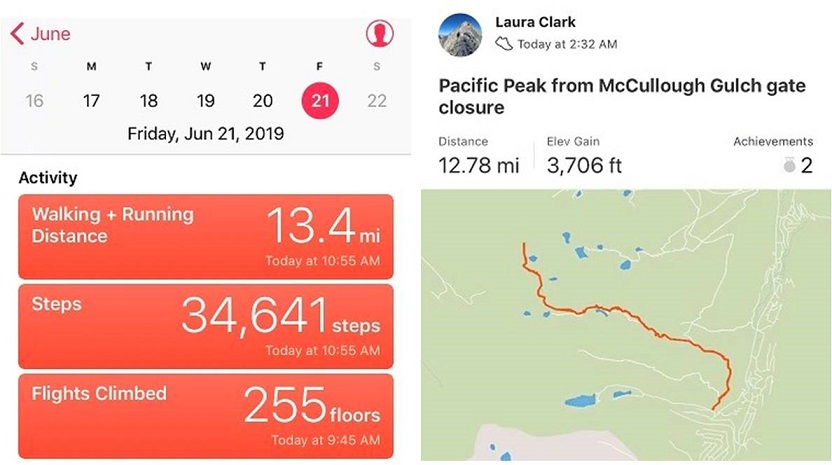
And made it back to my truck at 3:15pm, making this a 10.93 mile hike with 4620’ of elevation gain in 8 hours, 45 minutes.
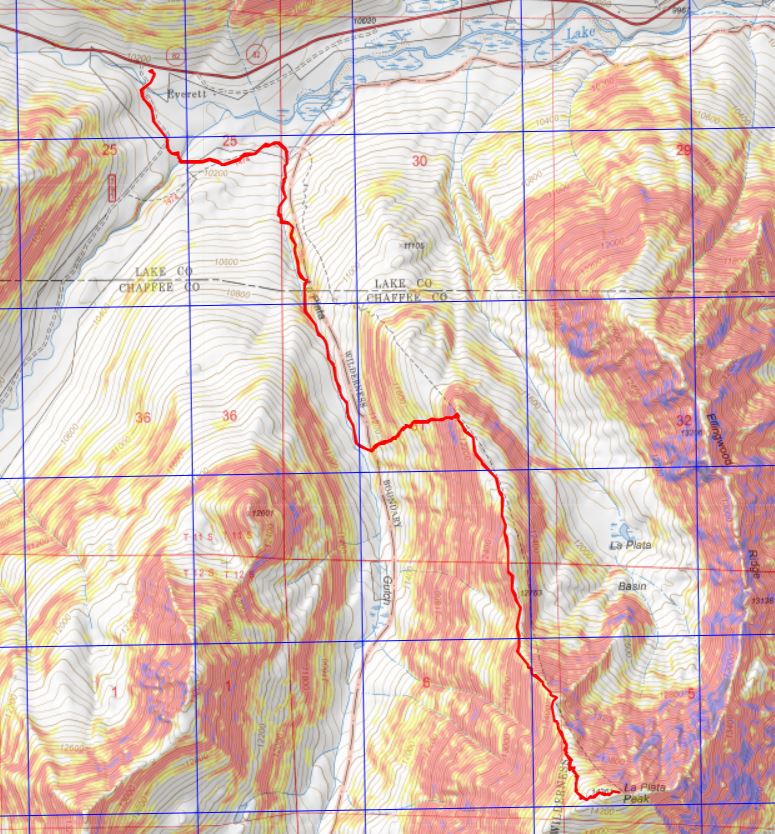
Some final thoughts:  It was a shame we were the only ones on the summit today, as it was a beautiful day. Also, if possible, take the standard winter rout that goes up the ridge sooner:  our route had more avy danger than is recommended. 
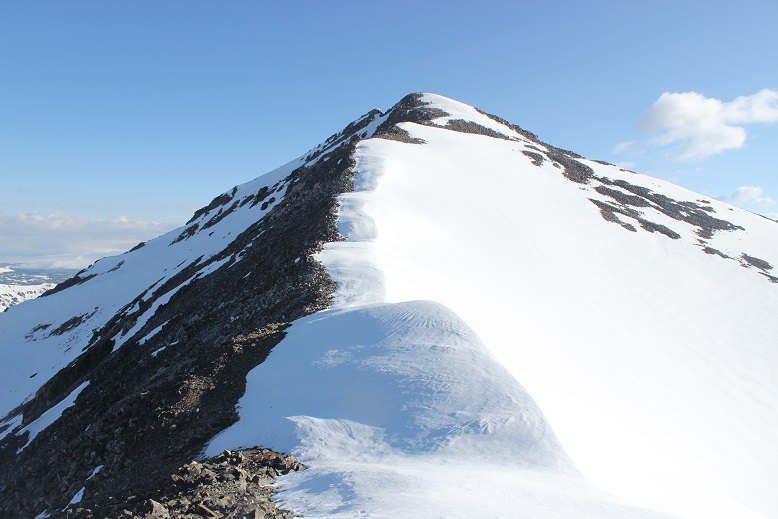
Pacific Peak – 13,965

1

RT Length: 13 miles

Elevation Gain: 3706’ (From McCullough Gulch lower gate closure)

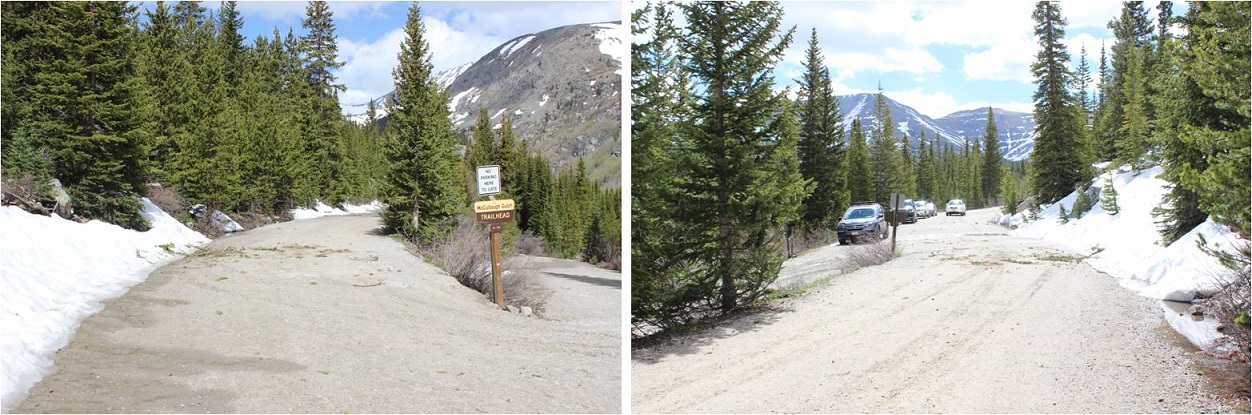
There are so many routes up Pacific Peak I wasn’t sure which one to take? I ended up making the decision the night before, and decided on the Southwest Slopes because I liked the way it looked best on a topo map (particularly the headwall area).  I arrived at the Blue Lakes road and found the gate closed to the McCullough Gulch Trailhead.  So I parked at the closed gate, right next to a small stream of water running off the road.  I gathered my gear and was off at 2:30am.

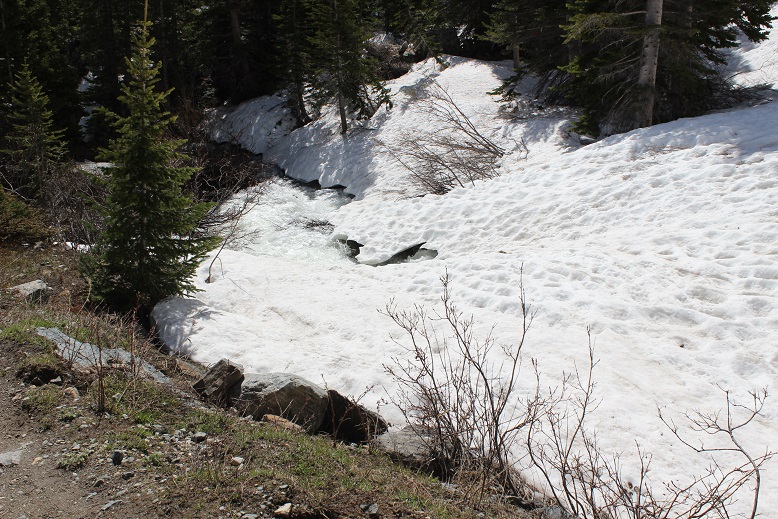
About 20 yards into my hike I heard a loud noise that sounded like a large animal slipping and sliding on the scree below the road and to the right of me. Well… at least whatever it was was running away from me.  Quickly.  The 2WD dirt road to the trailhead was clear, dry, and easy to follow.  I was confused as to why it was still closed, since besides some extremely minor avy debris and a short area with water running by the side of the road, the road was clear.

2

3

I hiked on this dirt road for 2.2 miles from the closed gate to the start of trailhead. This is where the snow started, and in the dark obscured the beginning of the trail.

4

For the next mile the snow was intermittent and soft. I’d need snowshoes for about 30 steps, then not need them for dozens of yards, and then I’d need them again for 30 steps or so.

5

I crossed a bridge

6

And headed left on a trail (the road ended here)

7

This is where I put snowshoes on and wore them for the rest of the hike. This is also where the trail finding became difficult.  I kept losing and finding the trail and losing it again, so I gave up trying to stay directly on trail and just headed northwest, keeping the creek to my left and the ridge to my right.

8

At the end of the boulder field I came across a sign indicating the trail kept going straight. Here I turned right (at the cairn) and followed the gully up and to the northwest, avoiding the large boulders

9

10

At the top of the gully I rounded the hillside and was deposited below a lake. I walked around the right side of the lake, found the rock rib, and decided to climb the snow next to it to the notch(so I didn’t need to take off my snowshoes again).

11

Here’s a look back down from the notch

12

I was at the top of the waterfall area and just needed to turn the corner to the right to see more of the basin

13

Wow! Lots of snow here!  I headed northeast, skirting what was probably a small lake to my left and couldn’t help but wonder how many feet of snow I was standing on top of?  Way to go June 2019 in Colorado!  You’ve got the snow thing down!

14

I kept rounding the basin, staying to the right

15

16

Once again: So.  Much.  Snow!  I kept heading northwest towards the end of the basin.  It’s best to stay high here so you don’t have to regain elevation.

17

I made it to the headwall. This is the crux of the route, and I decided it was time to take off my snowshoes and put on my crampons.  I got out my ice axe and garden tool (haven’t purchased a second ice tool yet).  The sun was just starting to rise

18

I was pleasantly surprised at the conditions of the headwall: continuous snow coverage that was consolidated just right for crampons.  It was tiring, but I had no difficulties gaining the top of the headwall.  I mentally high fived myself for choosing this route today.  Ok, just a few hundred more feet of elevation gain and I was there!  I made it to the saddle between Atlantic and Pacific, singing “Home for the Holidays” as I went.  To be honest, I that song was in my head for most of this hike.  Oh, and that’s a false summit…

19

There was a lot of snow here, and some of it felt steeper than the headwall

20

It seemed pointless to summit the false summit, so I skirted the bump to the left and continued towards Pacific.

21

From here the postholing began. The snow here looks solid, but it hugs a ridgeline and much of the snow underneath has melted away, leaving a hollow cap.  At times the cap was thick enough to support my weight, and at others I postholed up to my waist into (or between) large rocks.  I have a few bruises from the fun

22

Still, it was better than hiking with crampons on the rocks (I was too lazy to take them off, so I stuck to the snow)

23

I summited at 6:45am

24

Summit Video

Here’s a look back on the route from the saddle to the summit

25

The wind was intense here, so I decided to head back down. I made it to the saddle and Atlantic looked very inviting. I’ve already summited Atlantic, and I’m on a bit of a time limit today, so I didn’t feel it necessary to summit Atlantic as well (but it was tempting… you should do it!).

26

I had to stop and enjoy the view from the area just below the saddle (where the wind finally let up a bit). It was breathtaking!

Saddle

From here you can see most of the route back. It’s important to follow the basin and stay close to Quandary Peak on your way out to exit in the correct area.

27

OK, time to start down the headwall.

28

The headwall was steep (so steep you can’t see the route down it here), but not as bad as a lot of gullies I’ve done lately. It’s supposed to be 40-45 degrees at points, but I was able to walk down the entire headwall without turning and facing the mountain.

29

30

At the base of the headwall I switched out my crampons for snowshoes, but kept ahold of my ice axe. I followed my tracks southwest

31

Rounded the ridge, and walked out of the basin

32

The snow was really starting to soften up at this point. For June 21, this is a ton of snow!

33

I made it down past the rib area without incident, and was just getting ready to skirt the small lake when it happened.
34

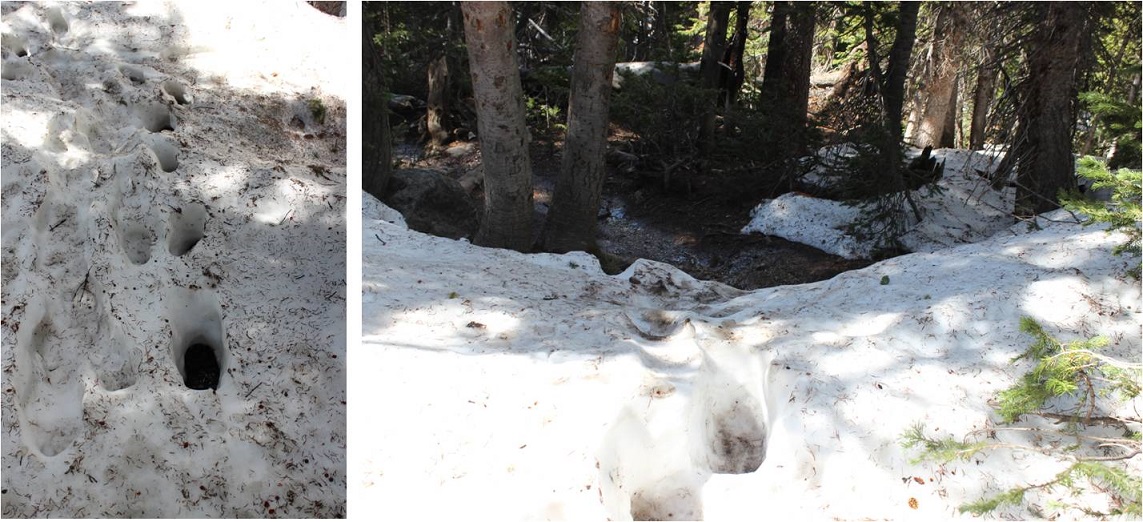
I was stepping off a rock and into snow and immediately my left leg sank and slid up to my upper thigh. I’ve postholed thousands of times, but never experienced anything like this:  Try as I might, I couldn’t move my leg.  It wasn’t hurt, but my snowshoe was stuck in the snow and keeping me from being able to move my foot and leg.

As I’d stepped on and slid into the deeper snow the snow had immediately softened up and settled like concrete around my leg, making it immobile. I thought to myself  “So this is what they mean by not being able to get yourself out of an avalanche because the snow settles like concrete” and got to work.  Luckily, this hadn’t been an avalanche and I still had my ice axe in my hand, so I started digging myself out. It took me a solid 15 minutes of work to free my leg.  Also, my butt was now wet from sitting in the snow for so long.  Lovely.  At least no one was around to see.

The hike back to the trailhead was uneventful. In the light of day I was easily able to follow the trail and saw things I hadn’t before, like the log bridges and small pools and the actual trail itself…

35

36

There was also a lot of evidence of postholing from previous hikers using the trail. I hadn’t seen any of this in the dark (I’d paralleled the actual trail)

37

There was a snowbridge over the creek, and the creek was raging!

38

Stream

Back on the 2WD road I started seeing other hikers. Quite a few of them actually, and I figured they must have opened the gate. Sure enough, they had and there were cars parked at the summer trailhead as I passed.
39

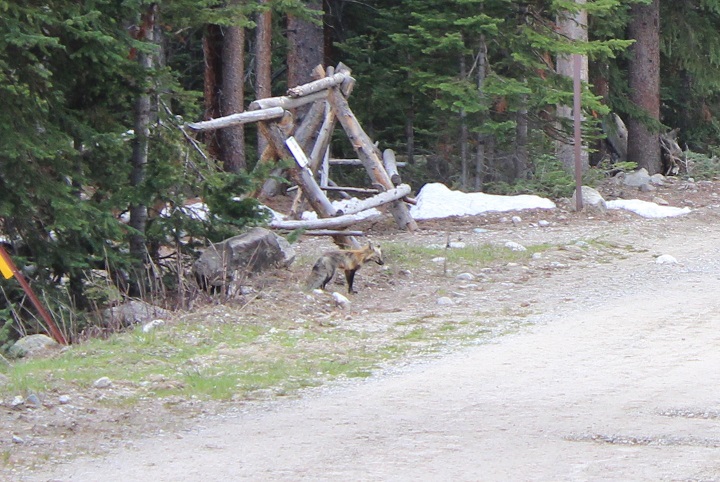
I still had 2 miles to go however, but on a positive note, I saw a rather scruffy looking fox on my way back

40

Fox

Yep, the gate was now open

41

I made it back to my truck at 10:45am, making this a 13 mile hike with 3700’ in elevation gain in just over 8 hours.
42

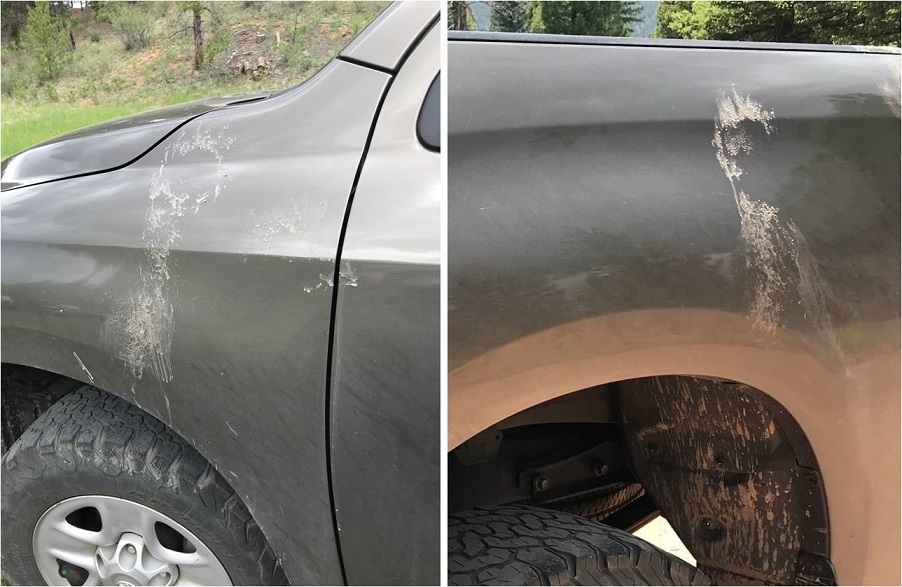
Ugh! It looked like some kids had thrown mud at my truck!  There was dried mud/dirt on every corner, like someone had used my truck for target practice with mud pies.  I was going to have to wash it after picking my daughter up from camp (she’s a counselor at a Girl Scout Camp and off this weekend so I was on my way there now to pick her up).  It was a 3 hour drive, and I made it in plenty of time before release.  While we were walking back to the truck my daughter said “How did your truck get so dirty?”  I told her I it happened at the trailhead this morning.  She went and took a closer look, put each of her hands on two of the marks and said “Mom, how big are bears?”  That’s when I took a closer look at the blobs and realized no one had thrown mud at my truck:  It’d been visited by a bear!  I could see swishes of hair and even faint claw marks on the paint.  Cool!  Maybe that’s the animal I’d heard at the start of my hike?  Now I didn’t want to wash my truck!  Luckily, I took a few photos before it rained on my way home.  I just wish I’d looked at the ground around my truck when I’d noticed the mud… I would probably have seen bear tracks!

43