This peak has been on my bucket list for a while, but it was located on private property. Recently this property became a Colorado State Park (currently you need the Colorado State Parks Pass or to pay the $10 to park at the kiosk), and I was able to legally climb the peak. The park is open sunrise to sunset, so I didn’t get my usual pre-dawn start. There is plenty of parking at the trailhead, along with vault toilets and trailhead signs.
I parked at Fishers Peak Trailhead (the only trailhead in the park) and was on my way at 7am. The trailhead is obvious, at the east end of the parking area.
There were a limited number of trail maps at the trailhead, and I snagged one. If there isn’t one there, here’s a copy. I can tell you this isn’t the best map, and the signs can be confusing, but you basically want to take trail 1 to trail 2 to trail 3, then 4, 5, and 6. This may sound obvious, but trail 8 and 10 and 9 all lead to trail 2 as well (they just meander a bit).
Trail 1: Navy Blue on Map, Challenge Hill Section
Trail 2: Dark Magenta on map (as opposed to light Magenta), Osita Ridge Section
Trail 3: Blue on map (as opposed to Navy Blue or light blue), Shady Forest Section
Trail 4: Green on map, Stone Guard Section
Trail 5: Light blue on map (Peak Approach Section)
Trail 6: Brown on map (Summit Loop Section)
I followed the Challenge Hill section for a short while (maybe 100 yards) before coming to a junction with several other trails. I could see Fishers Peak from the parking area.
At the junction I stayed on the Challenge Hill Section, which is the wide path that goes straight (yes, this can be confusing, stay on the road).
The road quickly begins to gain in elevation. I gained 770’ of elevation in just under 1.5 miles.
After hiking for about 1.3 miles, I came to another junction. If you accidentally took trail 10 or 8 or 9, you’ll end up here as well.
I continued east, taking the Osita Ridge Section
Now the trail became more of a bike trail than a hiking trail. It meandered around mountainsides instead of over them, and had a lot of small ups and downs, which I’m assuming make biking up hill easier? I can see problems in the spring with rain and runoff collecting in pools on this trail, but for now it was just mildly annoying.
After hiking for 3.85 miles I came to a junction, which congratulated me for making it halfway. I like how the sign asks the hiker if they are truly prepared for the second half of the hike.
At this junction I turned right, and followed the Shady Forest Section. If you go left, you can hike .4 miles up to Osita Point.
About 2 miles of hiking brought me to a gate. The sign says this portion of the trail is closed March 15-July 31 for Raptor breeding season. So if you’re going to do the peak, don’t plan on coming during that time. This is also a good place to leave your bike if you rode one, as the trail becomes much more rocky and there are stairs involved.
I was now in the Stone Guard Section, and followed the class 1 trail south as it gained the ridge.
There are a couple of gates here, but the trail doesn’t intersect them, and the path is obvious
I came upon some stairs, which is the beginning of the ‘hard’ part of this climb. This is a fairly new trail, but the workmanship in the stair and narrow areas doesn’t look like it will last long. I can see it eroding in a year or two, or even after this winter/spring season. Although this is a class 1 trail, care should be taken not to dislodge a rock or slip off the side of the trail.
When you see these signs, you’re almost to the summit. There’s a little bit of scrambling here, but only for about 20 feet or so.
The trail here is not obvious, but you’re trying to ascend these rocks.
At the top of the rocks I was surprised to be greeted by a mesa. There is a well-established trail here, that goes around the mesa. You can go either left or right. I went left. This is the Summit Loop section of the trail.
The actual summit can be difficult to discern, as there are multiple large cairns that look like the summit. It you go left as I did, the summit will be the first large cairn you come to. Because I wasn’t sure at the time, I went all over the mesa to make sure this was indeed the true summit.
I summited Fishers Peak at 10:15am. This video is from the middle of the mesa.
Fishers Peak:
Now to head back down. I simply re-traced my steps back the way I came
Back down the rocky area
Then I followed the trail backwards, taking sections 5-4-3-2-1
It wasn’t supposed to start snowing for another two hours, but mountains have a way of making their own weather. It started graupeling pretty heavily.
Graupel:
I continued on through the graupel, following the well established trail
At the junction of trail 1,2,9 & 10 I followed trail 1, the Challenge Hill Section (the one that’s a dirt road), back to the trailhead. You can take any of the routes, the others will just be longer.
When I got back to the trailhead, my truck was still the only vehicle in the lot, leading me to believe not many people know the park is open
I made it back to my truck at 12:45pm, making this a 15.3 mile hike with 3588’ of elevation gain in 5 hours, 45 minutes
My trail name is Wild Wanderer. I’m a mountaineer, and I have Raynaud’s. I’ve summited over 500 peaks above 13,000’, many of them in winter conditions. With the cold weather approaching (or already here!) I’ve been asked to put together some tips on how I successfully mountaineer in the winter and manage my Raynaud’s. I believe these tips can help all cold weather hikers and adventurers.
Disclaimer: These tips in no way all-inclusive or a substitute for the education you should receive before entering the backcountry in winter. Please consider taking classes in alpinism, orienteering, avalanche awareness, and wilderness first aid before entering the backcountry, especially in winter.
Raynaud’s causes some areas of your body — such as your fingers and toes — to feel numb and cold in response to cold temperatures or stress. In Raynaud’s disease, smaller arteries that supply blood to your skin become narrow, limiting blood flow to affected areas (vasospasm). This can happen even in warm weather. The picture below was taken of my fingers while camping on a 70-degree day.
And these are my feet having an attack while I was at work, sitting at my desk
During an attack of Raynaud’s, affected areas of your skin usually first turn white. Then, they often turn blue and feel cold and numb. As you warm and your circulation improves, the affected areas may turn red, throb, tingle or swell. This can be a very painful experience. Many people mistake it for frostbite. This time I’d earned my blue toes, as I’d been snow-shoeing without the proper gear
Winter hiking is a wonderful experience. There’s a special reverence and tranquility to a winter mountain landscape. The trails are less crowded, the views are amazing, the wildlife easier to spot, and with this comes a unique sense of achievement to summiting a mountain covered in snow and ice. However, the cold and wind can be a barrier to this sport. I’ve been a mountaineer for 6 years now, and I’ve learned quite a few tips and tricks to keeping myself (and my digits) warm and attack free. It all comes down to prevention and preparedness.
What to Wear
I usually wear the same outfit every time I mountaineer, emphasizing moisture wicking layers and fleece. It’s kind of boring and predictable, but it keeps me warm.
Here’s what I wear, from head to toe (scroll down for detailed information):
Knit/Wool Hat
Balaclava
Sunglasses / Snow Goggles
Sports Bra
Moisture wicking tank
Moisture wicking jacket
Puffy Jacket
Jacket Shell
Yoga Pants
Snowboarding Pants
Wool Socks
Mountaineering Boots
Gloves
Bandana
Extra Gear (depending on weather/conditions)
Snowshoes
Microspikes
Ice Axe
Crampons
Solar Powered Battery Charger
Surveyors Tape
Note: Do not wear Cotton:
Knit/Wool Hat:
Balaclava: If it’s windy you’re going to want one of these. Make sure it covers your whole face and nose, is made out of a breathable fabric (polyester works) and covers your neck and is long enough to be tucked underneath your inner layers.
Sunglasses / Snow Goggles: The snow can be blinding, and you’d be surprised how a good pair of goggles cuts down on the cold the wind can bring. I put my sunglasses in my jacket pocket before setting out, so they’re easily accessible. I like sunglasses over goggles because they don’t fog up.
Upper Layers: I rarely take layers off during a hike, as I’d rather be too hot than too cold. With Raynaud’s it’s easy to cool off when hot, but difficult to warm up once cold. I wear a moisture wicking sports bra, tank, and jacket all the time, no matter what. On top of that I have a puffy and a shell (the shell doubles as a rain jacket). The shell has a hood, which I have prepped to fit my head if needed to block out the wind.
Bottom Layers: To prevent chaffing, I like to wear form fitting yoga pants (polyester/spandex) under fleece lined snowboarding pants. These snowboarding pants will get torn up from crampons, microspikes and snowshoes, so I reserve a pair primarily for mountaineering. NOTE: Ski bibs are a terrible idea, as you need to take off unnecessary layers to use the restroom. Make sure your pants are just that: pants.
Wool Socks: Not cotton. Not too snug. You want your feet to be able to breathe and circulation to flow. Also, this is an instance where two is not better than one: only wear one pair of socks.
Mountaineering Boots: This is going to be a highly personal choice. I go through 4 pairs of boots a year, but to be fair I put a lot of miles in a year – around 2500 and over a million feet of elevation gain. What’s important here is to buy a pair a size larger than you’d normally wear, and, unless you have extremely narrow feet, get them in a wide size. This is because your feet will swell above treeline and you want them to have room to do so freely. A constricted foot is a cold foot. You don’t want to wear anything too constricting on your hands or feet. The footwear should also be waterproof, have a good tread, be flexible, and feel comfortable. Go to an outdoor recreation store and try on a few pair to see what works best for you before buying. If you plan on carrying more than 30 pounds of gear, you’ll want the added ankle support.
Gloves: Unfortunately, hand warmers have never worked for me (not the chemical ones, the battery-operated ones, or the ones that use fuel). Note: If you have Raynaud’s you can never take off all your gloves while winter hiking. Never. The cold will zap the heat out of your hands instantly, and regaining that heat is difficult.
I bring along 3 pairs of gloves: I wear two at a time, and have the third in reserve in case I loose one I’m wearing: The wind above treeline can be ferocious, and I’ve seen gloves blow away in the wind. If you have Raynaud’s and you lose a glove above treeline it’s quite possible you’ll be losing fingers with it. I buy all gloves one size bigger than I normally wear. This allows for my hands to swell at altitude and makes them easier to put on/take off as needed.
The first pair I wear is made of a 95% polyester, breathable, wicking, quick drying fabric with 300-weight fleece and a 100 weight fleece liner. I always have a glove with fingers as the base layer so I can move my fingers to perform tasks that require dexterity with a layer still on, protecting my hands from the elements. I never take these gloves off. Ever. (See stylus information below).
The second pair I wear is a shell. They’re waterproof, breathable, windproof, wicking, fully seam-taped with a water-resistant leather palm. These do a great job keeping out the wind, and are easy to take on and off. It’s important the outer layer are mittens and not gloves because my fingers and hands stay warmer in a mitten.
My reserve pair is also a pair of mittens. They’re fleece lined and come with the outer mitts. I keep these as a back-up in case I lose one of my other gloves.
Bandana: This is very important! I tie one to a carabineer and put it on the side of my pack so I have easy access to blow my nose. My nose drips like a faucet above treeline, and it’s nice to have something readily available to wipe my nose. (Yes, learning how to clog one nostril and blow is helpful, but not practical with large mountaineering gloves). The bandana should be made of polyester so it dries out fast. If you buy a cotton one it will freeze faster, get stiff, and be unusable until it melts. It becomes frozen snot.
Snowshoes: When it comes to snowshoes, you most likely won’t be putting these on at the trailhead, but later in your hike. Thus, ease of use is very important: you want to be able to put them on without taking off your inner glove. The three things I look for in a snowshoe are that they’re made of steel (not aluminum), have heel risers, and ratchet bindings. Ratchet bindings are the most important feature: I climbed all of Colorado’s 58 peaks over 14,000’ in a cheap pair of snowshoes, but I wouldn’t have been able to accomplish this if they hadn’t had the ratchet bindings.
Microspikes: Don’t spend a lot of money on these, as a good pair is $10. I use them year-round (they work great on scree for stability). My advice here is if there’s any ice at the trailhead to put them on while you’re still in your vehicle, keeping your hands warm while doing so. I’ve worn microspikes for miles when they weren’t needed, and it didn’t damage them. It did however keep my fingers from getting needlessly cold by taking them off. (Remember, when it comes to the cold, prevention is key). Microspikes can also be worn with snowshoes: There’s no need to take microspikes off to put snowshoes on.
Ice Axe: These are usually made of stainless steel/aluminum, which gets cold. I have an ice axe with a rubber grip (which is moderately warmer) and a leash. The leash goes around my wrist, under my outer glove but on top of my shell. I try to hold the ice axe by the leash when it’s not necessary to hold the shaft for safety purposes. Another way to avoid the cold here is to put a bandana around the shaft while gripping it.
Crampons: Make sure they’re made of steel and not aluminum (aluminum bends) and have front facing spikes for traction. Learn how to use these before trying them in the elements for the first time, as they can be tricky to put on correctly, especially while wearing gloves.
Solar Powered Battery Charger: Never worry about your phone losing battery again! I clip one of these onto the outside of my pack, and allow it to charge all day. Most double as a flashlight as well. Just make sure you remember to bring a cord for your device.
Surveyors Tape: I use surveyors’ tape as a way to self-rescue if I think I’m lost. I have a roll I bought at home depot, in a bright color so I can see it, like yellow or orange. I precut about a dozen or so strips about 12 inches long, put them in ziplock bag, and bring the roll with me as well. If I feel like I’m lost, I stop where I am, and create a ‘home base’. I get out my compass, and point it in the direction I think I should be going. Let’s just say that’s north. Then I mark a tree, rock, etc with a piece of the tape, and follow my compass north, adding strips as needed as I go. If I don’t find my way back on route, I follow the strips back to where I started, collecting them on my way. Then I try another direction, like east, and do this over and over until I find my way back on route. Surveyors’’ tape can also be used to mark and entry or exit point, or to signal danger. It’s inexpensive and lightweight and worth having in your pack
Keep Your Pack Packed
Unfortunately, those of us with Raynaud’s don’t have the luxury of packing light: we need to be prepared for all types of weather, and due to the possibility some of our gear might fail/get lost, we need backups. I like to keep all my gear in my backpack when not in use. When I get back from a hike, I usually wash my bandana, refill my water bottle, wash my sunscreen compact, and put them all back in my pack. I don’t forget important gear at home, as it’s always in my pack. In addition to the 10 essentials, I carry the following items (scroll down for detailed information):
Carabiners
Jetboil
16oz water bottle (in addition to my regular water bottle)
Stylus
Vaseline
Sunscreen
Camera
Collapsible trekking pole
Shovel
Carabiners: Carabiners are your friend! The larger the better, so they’re easier to manipulate while wearing gloves. I use them to attach my water bottle to my pack, as well as my ice axe, bandana, and any other gear I want easily accessible.
Jetboil and 16oz Water Bottle: Jetboils are a useful tool, as they are relatively lightweight and can boil water very, very quickly. I have one in my pack during the winter, along with a 16oz Nalgene. Before the hike I warm up water, put it in the Nalgene, and keep this smaller water bottle close to my skin as I hike (sometimes in a pocket, or the waist of my pants, etc.) This helps keep me warm. I also start my hike with warm water in my drinking water bottle to help prevent it from freezing. Keeping the water bottle close to my body (and not in my pack) helps to keep the water from becoming frozen during the hike. The Jetboil comes along with me, and if needed I can warm up the water again, or, if the water is frozen, I can quickly heat up snow.
Stylus: These are so helpful to people suffering from Raynaud’s! Our fingers don’t register well on touch screen devices, including ATMs, gas station machines, phones, and tablets. A stylus is cheap (I bought 12 in a pack from Amazon for $4) and solves the problem of using our fingers on screens. A stylus while hiking has the added benefit of reducing the need to take off your gloves to use your phone or GPS device to take pictures or find direction. I keep a stylus attached to all my devices that require touch to operate.
Vaseline: I’m in love with Vaseline/Petroleum Jelly. Movie stars have sworn by its beauty effects (wear it to bed to keep skin soft and younger looking), it helps wounds heal faster, restores moisture after wind burn, and when you’re a mountaineer, it keeps your nose from freezing. Before hitting the trailhead I slather a generous layer of Vaseline on my nose to keep my nose warm. It works wonders!
Sunscreen: OK, so it’s cold above treeline, but due to the reflection of the sun on the snow sunscreen is still needed. This can be problematic because a tube of sunscreen freezes in the winter above treeline. Using an aerosol spray isn’t practical for obvious reasons (wind) and the sunscreen that comes in a deodorant-like stick doesn’t apply evenly/melt when frozen. To combat this, I went to the dollar store and bought a compact, took out the powder, cleaned the compact out, and filled it with my favorite sunscreen. Then I placed a new compact sponge over it (30 sponges for $1 at the dollar store) and let the sponge absorb the sunscreen.
I keep the compact in my pocket as I’m hiking (inside of a plastic ziplock bag) and when the sun comes up, I take out the compact and apply the sunscreen. The first time I did this I was surprised at how well it worked: The sunscreen doesn’t freeze this way, and is easy to apply. The only downside is the set-up needs to be washed/replaced every time you use it.
Camera: Of course, you’ll want to bring a camera, and the specific kind is up to you. Did you know cameras get cold too? The batteries freeze and they stop working. To combat this, I put my camera on a strap around my neck, and in between snapping photos keep the camera between my puffy and outer layer. This keeps the battery from freezing.
Collapsible Trekking Pole: These are indispensable for a variety of reasons at all times of the year. In the winter they are used for probing the snow to measure snow depth, determining the stability of ice at frozen stream/river crossings, and to whack snow off trees bent over with snow and blocking the trail. Make sure the handle is made of cork or plastic (not metal/aluminum) and easy to manipulate while wearing gloves. When not in use because you’re using your ice axe, collapse and attach to your pack with a carabiner. Also, a trekking pole is your first line of defense against 2 and 4 legged animals.
Shovel: Two different types, one for digging out of avalanches, one to dig your vehicle out of the snow.
Trail Tips and Tricks:
Use a water bottle, not a water bladder: The hoses in water bladders freeze in the winter, making them inoperable. I like a water bottle with a large opening, as it takes longer to freeze. I like to start with warm water, and if it’s very cold out, place it close to my body so it doesn’t freeze as quickly. Warm water in a water bottle is also a great way to warm up your hands.
Keep your toenails cut short: This will help prevent excess rubbing, discomfort, and blisters.
Get dressed in your vehicle: It’s cumbersome to drive to the trailhead wearing all my winter gear, so when I arrive at a trailhead I tend to get dressed in the car. I do so with the heat on high, and put all my gear on without opening the car door (this includes snowshoes). It takes a little maneuvering, but I start the hike warm.
Start Early: Just like in summer, when you want to start early so you can be down below treeline before the noon storms,in the winter you want to start early so you can be down before the worst avalanche danger I’ve found the trailheads in Colorado fill up fast! Many of them before 7am. A side note with popular trailheads, don’t keep valuables in your vehicle, as thieves frequent these sites
Tie your hair back: Here I believe a picture is worth 1000 words. I now braid my hair before a climb.
Don’t Wear Cotton: Cotton is heavy, takes a long time to dry, adds to rapid body heat loss, and absorbs too much moisture. That means you stay wet/cold for a long time. This includes jeans and that cool ‘It’s another half-mile or so’ t-shirt. Instead, pick a synthetic fiber such as polyester, nylon, fleece, or merino wool.
Add string to your zippers: Yes, wearing lobster-claw gloves is great for keeping your hands warm, but it makes manipulating your fingers and doing ordinary tasks, such as unzipping a zipper, difficult. I’ve added string to my zippers so they’re easier to grab while wearing bulky gloves. Note: don’t make the string too long, as it will flap in the wind and hurt when it hits you in the face at high speeds. 6 inches of string is best.
Pee Before Treeline: Wind intensifies at treeline, and stripping off layers in these conditions is not a good idea. If you’ll need to use the facilities (always assume you will), do so under the cover and protection of the trees.
Never Leave Gear Stashed: It’s tempting to leave your snowshoes stashed somewhere when no longer needed to pick up on your way back, but I’ve learned it’s important to carry all gear you’ll need to get down the mountain for your entire hike. I’ve had gear taken (either stolen or someone brought it down to the trailhead, thinking I’d lost it) and it’s easy to forget where you’ve placed the items. If you needed the gear to climb up the mountain, keep it with you so you’ll absolutely have it to get back down.
Keep Moving: There are times when rest is necessary, but resting can quickly lead to frigid body temperatures. Never allow your feet to stop moving, as this is when they cool down. If you’re taking a sip of water or rearranging gear, keep your feet engaged, moving them up and down (marching in place) as you do so. This will help prevent cold toes. Pump your fingers back and forth inside your gloves to keep the circulation going.
Become a Hobby Meteorologist: In winter the days are shorter, so daylight hiking time is less than in summer. Always check the forecast, but remember forecasts are often wrong and change during the day. Learn how to read weather forecasts and know how they relate to timing, topo maps, and geographic features. I’d recommend spending time learning how to navigate the NOAA weather forecasting site, particularly as it pertains to hourly weather forecasts for specific regions/peaks. You’ll gain information such as temperature, wind speeds, wind gusts, sky cover, potential precipitation, lightning, etc. in an hourly forecast. What you see may look daunting at first, but a few minutes studying and it’s mostly self-explanatory picture of the day’s conditions, letting you know the best times to climb, or if you should climb at all.
Windy Weather: When reading forecasts, know wind speeds/gusts are often much more important than how cold it is outside. Hiking in 20 degree weather is actually quite nice when prepared in proper gear and the sun out, but add in windchill and it can quickly become hazardous. I’ve mountaineered in winds up to 80mph, and from personal experience, if the wind predicted to be above 20mph I choose a different area or stay below treeline.
Learn how to read the forecasts to see which way the wind is coming from, and then you can plan your route to avoid ridges where there will be more wind, or at minimum design a route that avoids the brunt of the wind for as long as possible by staying below treeline for a longer period or in the shelter of the side of the mountain with less wind.
For example, in the picture below, if the normal route is in red, but there are winds coming from the north or west that day, you could avoid most of the wind by taking the black route instead, limiting your exposure time on the ridge.
The summit is only halfway: Know your limits, and realize when to turn back. People with Raynaud’s experience cold much more intensely than other people, with quicker and more drastic effects. Summiting is optional, making it back to the trailhead is mandatory. Preferably with all your digits intact. Know when to turn back. Also know when to celebrate. While a lot of people like to down a beer or a shot of whiskey at the summit, this is a dangerous practice, as often times the route down is more difficult than the route up. You want full use of all your senses.
Prevention is key: A Raynaud’s attack, once triggered, is very painful and can take a while to recover from, even after the affected area has been re-warmed. Doing as much as you can to prevent an attack is never wasted: Dress warmly, wear a wind barrier (outer shell), never take off your inner gloves, keep all your gear easily accessible, and bring along warm water. Start with short winter hikes and work your way up to longer, more technical climbs.
I hope this article has been helpful for those of you with Raynaud’s, as well as those of you who may not have Raynaud’s but are interested in staying warm while winter hiking. I’d love to hear from you! Do you have any advice for winter hiking? Comments? Questions? Is there a topic you’d like me to discuss? Contact Wild Wanderer here.
I know I’ve been silent for a few months, and I want to thank those of you who reached out to me asking how I was doing. Yes, I was still summiting peaks, but I was summiting repeat peaks, so I wouldn’t need to write up trip reports. Instead, I was spending my writing time… writing a book! I’m proud to say I’m officially a published author!!! I’m not going to promote the book for a couple of weeks, as I’d like some friends to read it and post reviews first. It takes 10 positive reviews to counter each negative one, so if you enjoy my book, please post a positive review on Amazon. If you notice a spelling error (etc.) please let me know: I can still fix it before the big launch. Please go easy on me: I’m more of a blogger than a writer. Thank you all for your continued support! Don’t buy the hard cover.
Waterton Canyon -> South Platte River -> Waterton Canyon
November 15, 2020
RT Length: 34.18 miles
Elevation Gain: 4308’
High Point: 7517’ Low Point: 5522’
Time: 11 hours, 20 minutes
The Colorado Trail has been calling my name for some time now, so I put it on my list of goals for 2020. When I put down a goal in writing, there’s a 99% chance I’ll hit it. I try to make my goals a bit of a stretch, varying, but still doable, which keeps things fun. This was my last goal to achieve this year, and I honestly didn’t think I was going to make this one. But, a very windy forecast across the state above treeline gave me the opportunity to hike segment 1 of the Colorado Trail (or is it “The Colorado Trail”? Since I’m from California, not putting “the” in front of a trail, road, highway, etc. feels weird, but this is most likely also technically wrong. Please indulge me).
I know I’ll never get enough time off to hike the trail as a thru hike, so I’m going to need to segment hike when possible. The cool thing about this is if I park at a trailhead, hike the segment, and then hike back, I’ll essentially be hiking both SOBO and NOBO. Pretty cool! (Does that mean I get to say I’ve hiked it twice?) At this point I’m thinking I’ll still start out SOBO and try to do the segments in order.
I arrived at the Waterton Canyon trailhead to find the lot empty. This wasn’t strange, as it was 2am, but it did tell me I wasn’t likely to see anyone as I was hiking this morning. The trailhead is positioned close to many large cities, and I was a bit worried my truck would be broken into, since it was the only vehicle in a lot that doesn’t get much ‘midnight traffic’ My only solace: I have a topper and a potential thief wouldn’t know if I was sleeping inside (or not) or if I was armed or not (I always am). It was much colder than I’d anticipated: 18 degrees at the trailhead instead of the forecasted 35 degrees. I knew it was supposed to get up to 60 degrees today, so I forwent the ski pants and instead put on my heavy-duty winter gloves. I said a prayer to the wind gods, asking them to play nice.
I was on the trail at 2:21am. Because it was still dark, most of the pictures I’ll be posting from the hike in were actually taken later in the day, on my hike out. Here’s a look at the parking lot. It was big enough to hold about 100 vehicles, and was past capacity when I got back.
The trail starts at the west end of the parking area. I had to first cross the street. This was easy at this time in the morning, but the button I pushed that enacted the flashing lights on my return to stop traffic were uber useful.
I saw signs indicating I was at the right place!
There was a ‘last chance water station’ that was unfortunately closed (most likely due to COVID). Side note: I didn’t drink a single sip of water on this entire hike, yet I brought along a full water bottle and filtration system. If you’re doing this as a day hike and are an experienced hiker, extra water isn’t a necessity. However: know yourself and your water intake. And prepare adequately. There is obviously water along the first 6 miles of this hike, and also at the end, so filtration is possible, and easily accessible.
From the beginning there were signs indicating dogs weren’t allowed due to the Bighorn Sheep. I hoped this meant I’d been seeing some wildlife today. I also believe this is the only 6 mile segment of the trail dogs aren’t allowed, so if you want to bring along your canine, it might be prudent to start at the South Platte River Trailhead with your pup (well, start at the Waterton Canyon trailhead ad have a good friend bring you your pup the next day, because if you have a canine companion it’d be worth it).
I passed some bathrooms (vault toilets) and smore signage. I just continued following the road west. It was dark out, but at times I could actually smell the bighorn sheep. I knew they frequented this area, and at this point they must have been close. It’s funny how your sense of smell can guide you at times. Side note: in the 6 miles to the Stronia Dam there are 3 bathroom stops. I felt this was quite excessive until I hiked back and saw hundreds of other hikers along the trail.
The road here is wide and there isn’t much elevation gain for the first 6 miles. There are mile markers every half mile or so, which are helpful. Interestingly, the mile markers switch sides of the road halfway through, so in the dark I ended up missing a couple, only to find I’d hiked further than I’d thought. In the daylight this made sense, as they followed the contour of the mountains. On the positive side, the miles were just flying by! This was good, because it was quite cold and I was willing the sun to rise. My fingers were frozen and I kept pumping them back in forth inside my gloves. Also, seriously, my fingers were frozen. I actually gave the thought to going back, but the knowledge it was supposed to be a warm day kept me continuing on.
The road follows the South Platte River, with several bathrooms along the way (no less than 3)
After hiking for 6 miles I came to the last bathroom area, and, in the dark, saw lights illuminating the Stronia Springs Dam on the right (there will be a better picture of this dam later)
I continued following the road for another half mile or so as the road began to narrow.
It was a bit icy out, even on the way back, but nothing that required spikes or even more than common sense to navigate.
The trail is very well marked and easy to follow. I thought it was cool Colorado Trail is Trail 1776.
After hiking for 6.7 miles on a flat road, the real trail began. And so did the wind. I don’t want to make a big deal of this, mostly because the wind across the state this weekend was intense, but the wind didn’t stop for this entire hike. It was insistent, but always above treeline, which made it manageable. Yes, it had been a good idea to take this hike, as anything above treeline would have been intolerable. I’ll stop mentioning the incessant wind here.
I was surprised it was still dark outside. It had been my goal to get to this point before daylight, but daylight was still a long ways off. Woot! I didn’t check my phone to see the time (too cold for that) but the sky wasn’t even beginning to lighten. This was good news. Since I usually do intense elevation hikes I had no idea how long this hike would take me, but it seemed I was making better time than I’d anticipated.
From this point it was 10 miles to South Platte River Trailhead. The trail continues gaining elevation for 1.2 miles, switchbacking south, gaining about 725’ of elevation.
At the end of the 1.2 miles is a sign indicating the Colorado Trail, and a bench entitled ‘Lenny’s Rest’.
You should take time to read the plaque while there. My son is an Eagle Scout, and I’m an avid hiker, so I took time to appreciate this monument. I’m not providing a clear indication of the wording because I believe it’s best experienced in person. Rest here.
From Lenny’s Rest I was disappointed to find the trail started losing elevation. I lost a total of 350’ as I hiked down. Maybe I should have done more research? The hike started in chaparral and ended in pine. This seemed something of a paradox, but also fitting to the area. There are pinon pines, junipers, scrub oak, and ponderosa pines in this area.
You’ll know when you’re at the lowest part when you cross this drain. Maps show this point as crossing Bear Creek. This was more of a jump across a drainage than a creek, but it was late in the year so water was low.
Then, it was all uphill for the next 4.2 miles, as I gained 1332’, switchbacking again. There are a lot of switchbacks on this segment. Switchbacks are a blessing and a curse, depending on where you are in your hike. If I’ to do this entire hike in segments, they will most likely be a curse, as I’d prefer elevation gain, but if I were a thru hiker, I’d appreciate the ease in elevation.
Some of the signage needs work. I’m not sure what the wooden plaque says?
There are a lot of good campsites in this area. I’m guessing that’s because it’s a nice ‘last night’ for Colorado Trail thru hikers before finishing up the next day (that, and camping isn’t allowed along the road). If this is the end of your NOBO journey, this is a great last place to camp. Also, high-five and congratulations!
The highpoint of this hike came below treeline, where these metal signs are present. From here, it was (mostly) all downhill.
The sun hadn’t yet risen, and I was getting excited about my time, mentally calculating how much longer I had to reach the South Platte River Trailhead and the distance to my halfway point for today. As I hiked, I contemplated the different trail signs, which ranged from actual signs (wooden or metal) to the Colorado Trail Marker and blazes on the trees, both etched and painted. It seemed a shame the trees had been blazed, but this also makes sense, as the paint eventually goes away and people steal the markers (or the trees eat them).
Sometimes the markers are placed over the blazes. There were quite a few markers (it’s difficult to get lost on this trail). I spent a lot of time contemplating most of this. Also, if you’re hiking the Colorado trail and want a marker as a memento, you can buy one here for $5 and not have to carry it with you, and you don’t need to feel the need to take one from the trail (don’t take one from the trail. Don’t).
The trail continued to wind around the mountain
There was a considerable number of downed trees in this area, and also tree cutting boundary signs. (Another side note: a forest fire has decimated the corresponding segment, most likely spreading quickly due to dead/downed trees. This area needs to be cleared, or is most likely next to go up in flames).
I hiked around a spot that looked like it’d be a fun rappel point (for new learners)
And kept hiking, losing elevation as I went
In total, I’d lose 1375’ before making it to South Platte River trailhead. There was a small plateau with a great view of the South Platte River trailhead. I hit this point at sunrise, with the sun was rising behind me.
From here I swtichbacked what seemed like another 50 or so times before making it to the bottom. The good news: the sun was starting to rise and I had a great visual of the trail.
I made it to my half-way point, South Platte River Trailhead, at 8am. There were some other vehicles in the lot, with hikers putting on gear, getting ready for their morning hike. I was quick, took a few pictures to prove I’d made it, turned around and headed back. It had taken me 5 hours, 40 minutes to make it the 16.7 miles. I considered this a good time.
There is a vault toilet at this trailhead. It was now 8am and I’d hiked 16.91 miles so far this morning (in about 5.5 hours.
To head back, I just retraced my steps. However, now it was daylight, so I’d be able to get some appropriate pictures. Starting from South Platte River Trailhead, heading NOBO: The trail starts at the east end of the parking area
There are several great camping spots along the trail, just a few dozen yards from the parking area. I’m sure these are for CT hikers on their first (or last) nights. Lots of room here for a dozen or so campers that play nice.
This was a very easy to follow trail that switchbacked northeast along the mountainside, first through chaparral, and then pine trees. There are lots of areas with chaparral, pinons, and pines along this trail.
Here’s another look at the quick plateau
And more hiking through pine trees. I promised I wouldn’t say anything more about the wind, so I won’t.
Here’s a cool log I hopped over on the trail. I’m a fan of the markings the beetles make, if not a fan of the beetles themselves.
And now I was back up at the highpoint/ridge
From here I’d lose 1319’ of elevation as I wound my way back down the mountain
There are several good camping spots directly off the trail, just before the low point and after (if you’d want to camp closer, rather than later in your end hike).
When you see this metal drain you’re at a low point. I believe this is Bear Creek.
From here I gained the last 350’ of this hike in elevation as I hiked back up to Lenny’s Rest
Another camping option, although this one is kind of steep to get to.
I made it to Lenny’s rest, and stayed straight to stay on the Colorado Trail (going right brings you to Roxborough Park
From here I switchbacked and switchbacked and switchbacked back down to the road.
This is also where I encountered my first ‘people’ of the day. These people were riding bikes. I’ve encountered a lot of bike riders in my hiking experience, and I’d like to note everyone I encountered today was cordial. In Colorado Springs I’ve found the bikers had attitudes, but not here. I did my best to give them passing room on the trail, and they verbalized thank you’s. However, I was still frustrated. Over and over and over and over again I passed bikers headed towards me. Because I was hiking I gave them room and stepped aside. Again, and again. And again, and again. And again, and again. There were so may bikers I lost over an hour of hiking time giving them room. This was the right thing to do, but very, very frustrating. This is November, how many bikers could there be? (side note: dozens, if not hundreds). The trail eventually led to the road that navigates through Waterton Canyon
I was quite excited to see during the day what I’d missed hiking in at night. The first thing I noticed was a sign stating “This part of the Colorado Trail is maintained by the Colorado Mountain Bikers Association”. Well, that explained a lot. I just needed to prepare myself for bikers that wouldn’t end. The road led me past a maintenance yard and a ‘private residence’, which I believe belongs to a permanent/stationed worker here.
I quickly came to the Strontia Springs Dam, and got the feeling I’d be seeing a lot more people today than I’d imagined. And a lot more bikers. Sigh. Well, at least this was happening at the beginning of my journey. Also, I don’t dislike bikers, sharing trails is great, but I think we can all agree separate bike-motorcycle/ hiking trails is the optimal solution.
Most of the hike out was uneventful. I hiked for 6.2 miles along a well-maintained dirt road, doing my best to stay out of the way of the hundreds of bike riders along the way. Yes, hundreds. It was insane. There were bathrooms and picnic areas every 2 miles or so.
This road follows the South Platte River, which, according to the dozen or so fishermen I saw along the trail, is a good place to fish. Unfortunately, it must be too late in the year, as I didn’t see a single of these dozens of fishermen with a caught fish.
I saw birds nests in the trees
And wood ducks (the kind with red heads) floating in the river
There were several interpretive signs along the trail as well
I passed the Marston Diversion Dam. At night, this was hard, yet amazing to see. Here it is in daylight.
And some more buildings/houses. It looks like they store snow equipment here
This is where it got really interesting: I could see people gathered along the side of the road ahead of me, and to the left of the road there was a large herd of bighorn sheep.
That’s when I heard it: the thundering of hooves quickly approaching from behind me. I turned and saw a rather large ram chasing an ewe down the mountainside at breakneck speed. They made it to the herd and everything settled down.
Well, kind of. It seems this is mating season, at least for the males. The rams kept chasing the females, sniffing their backsides and sticking out their tongues, testing if they were ready to mate. The females were having none of it, and kept darting away. You could see the power these animals have: lots of muscles and agility.
Bighorn Sheep – Waterton Canyon
Head Butt:
I was surprised at how close the people were to all this madness. There are signs posted asking you to stay a minimum of 25 feet away from the Bighorn Sheep, but it seems many people either hadn’t read the signs or forgot this. The sheep were all riled up (due to mating) and unpredictable.
I passed so many people on the way out. Hundreds of hikers, bikers, walkers, runners, and lots and lots of children on the trails. OMG, this was an insane entry point: One I’d love to do again, but never with this may people. INSANE.
Here are some pictures of the end of the trail
And a picture to prove I made it back
I made it back to my truck at 1:45pm, making this a 34.18 mile hike with 4308’ in elevation gain in 11 hours, 20 minutes. Added bonus: My truck was as I’d left it. I’d been a little bit worried, because about 5 miles in I realized I’d forgotten to lock the topper. Whoops! I was lucky this time. Here’s a topo of the route. (Side note: feel free to contact me if you’d like a copy of the GPX file for this route).
The most difficult part of this hike ended up being the drive out. It took no less than 15 minutes for me to leave the parking lot, due to the number of people using the crosswalk and drivers coming each way. A nice person finally realized my predicament and waved me on, even though they had the right of way.
When I got home I took out my journal to write notes, but decided I’d rather start a specific journal, just for the Colorado Trail. I have some stocked up, for just this reason. Emily drew the Colorado Trail logo on the front, and I started jotting down notes. I’m kind of liking this journal…
I took the girls to Red Rocks today to get out side. While they are fond of staying inside and playing on their phones (etc.) I suspect they’re beginning to get a bit of cabin fever. The parking lot was full when we arrived, but the nice thing about trailheads is once the parking lot is full, no one else can enter, so social distancing takes care of itself. There were signs asking people to practice social distancing
Because of where we ended up parking we decided to do the loop backwards, starting instead by the pond.
We continued past all the rock climbers and did a bit of scrambling ourselves.
I took the girls to see the landfill. I’d never really mentioned it to them before and they were curious as to why the city would pick it’s most beautiful location to dispose of trash, but on the bright side it looks like they’re trying to clean it up.
Next we hiked up the quarry
and then made our way back to the truck. There were a lot of people on the trails today but social distancing was no problem at all with the wide trails and lots of open space. I think we need to make hiking as a family a bi-weekly thing as long as we’re still allowed to be outside… I fear it won’t be long before our parks and open spaces are closed as well, which is truly a shame because it’s how I keep my mental and physical health…
We got in about 3 miles and 750′ of elevation gain in today.
I won the lottery! Well, not really. I applied for the Whitney Lottery, didn’t win any of the dates I selected (even though I put in 15 different dates) and then had to hound the site for a dropped spot. Long story short I scored a day trip pass to hike Mt Whitney and considered it my birthday present this year, as every year around my birthday I try to check off a bucket list adventure, and it’s my birthday this week.
Hiking Mt Whitney has been a goal of mine ever since I attended Girl Scout camp in middle school. I didn’t know much about it other than it was the highest point in the continental United States and was supposed to be a strenuous hike. At this point in my life as a mountaineer I can tell you the most difficult part of this hike was obtaining the permit: basically it’s a long walk up a very well maintained trail with no route finding involved. I didn’t get out my map once (but bring one!)There aren’t cairns because they aren’t needed. If you’re in good shape, the weather’s good and you start early you should have no difficulty hiking this mountain.
I was a little bummed my new camera hadn’t arrived yet: My old camera had been destroyed in the weather on Jagged, so I’d ordered a new one and it was supposed to arrive the day before my trip (side note: it still hasn’t arrived, even almost a week later). This meant I’d need to use my phone camera, which wasn’t ideal because it had been acting “iffy” lately, but worked as a decent backup. It just meant selfies as summit shots.
I woke up at 1am, worked out on the treadmill for an hour and drove 2 hours to the airport. I was very light on gear, bringing only my small backpack and small hiking pack, both carry-ons. The only reason I needed two packs was my sleeping bag took up too much room in my day pack, so I had to bring another. They were both light and no I had problem carrying them through the airport.
I get stopped at security every time I pass through an airport. Every time. Usually it’s because of some sort of food item (dried mangoes, beef jerky, Girl Scout cookies, etc.) but this time it was for a valid reason: I’d left a small pocket knife in one of my bags (an honest mistake, as I’d thought I’d cleared all such items out before packing but apparently I’d missed the knife as it fell into the spot my water bladder rested). Funny thing, they took no issue with my crampons. My flight was only about half full so I got a window seat and sat back and relaxed. There must be a body building competition in Vegas this weekend because the plane was full of body builders. My toes were already burning so I took off my shoes, sat back, and read a book.
My first stop after landing in Las Vegas was to obtain my rental car. I’d reserved one online, intending to upgrade when I got to the facility. The lady at the reception desk was nice but English was her second language and her first was outside of my skill set (Thai?). I asked her over and over again about ground clearance and told her I’d be driving on 2WD dirt roads. To her my only options were a Toyota or a Hyundai. I took the Toyota Corolla and was on my way.
My second stop was the local Walmart for supplies I couldn’t take with me on the plane: food, bottled water, and a trekking pole. I also picked up a few birthday crowns (they were out of hats, boas, etc, so I took what I could get) and snacks (peanut butter – also not allowed on planes, milk duds, and dried mangoes).
I’m not a fan of Las Vegas. I used to frequent the city as a teenager (read fake IDs and freedom 3 hours from So Cal) but once I turned 21 it lost its appeal. Las Vegas today was simply a conduit for a larger goal: it was the closest reasonable airport to Mt Whitney, and still a 4 hour drive to get there.
No worries though, because I love to drive! The only downside was the automatic beeping noise the rental car dashboard made when I was “drifting into the next lane”, which drove me crazy because:
I wasn’t drifting into the next lane
I was driving on curvy mountain roads and at times if I wasn’t hugging the center line I’d be falling over a cliff
It went off when I wasn’t using my blinker and switching lanes (who uses their blinker when they’re the only one driving for as far as you can see?)
It oftentimes mistook skid lines on the road for the center line and went off ‘randomly’
It told me it was time to pull over and take a “coffee break” because I was driving erratically (this was a bit insulting, but I understood the intended purpose)
In short, I will NEVER buy a vehicle that has this mechanism. I’m sure there was a way to turn it off but I was unable to figure it out. The constant beeping was annoying, but I got over it by turning up the volume on the radio.
My drive took me through Death Valley which was cool because its lowest point is 282 feet below sea level (the lowest point in the US) and the next day I’d be hiking to the highest point in the continental US, so it seemed fitting to start from the bottom. The lowest elevation I was able to tag as a photo with my phone altimeter was 130 feet below sea level. The weather was about 100 degrees outside; not bad for September.
I drove from Las Vegas to the Eastern Sierra Interagency Visitor Center to pick up my permit.
Side note about the permit process: I completely understand the need for a permit system on this mountain, yet I seriously hope the permit system never comes to Colorado. The permit system as it applies to hiking is one of the (many) reasons I left California: you need to get the permit several months in advance of your intended hike, they cost money, parking is an extra fee (passes were $60 a year when I left in 2007) and you’re screwed if the weather is bad on the date of your intended hike (especially if you’re coming from out of state). Many people feel the financial NEED to summit on their given permit date due to the time/work it takes to obtain a permit and the necessary reservations for the hike.
There are also separate overnight and fire permits you need to apply for in addition to a hiking permit (god forbid you need a fire and don’t have a permit to build one…). I also don’t like the government knowing where I am at any given time (weird, I know, but it bothers me). I’m not averse to paying to use public lands (although many people are), I just don’t appreciate the lottery system: It took me years to obtain a permit to hike this one mountain. Also, walk-up permits are no longer allowed. I’d be more in favor of a hiking license (similar to a hunting/fishing license). I’m not sure how this would look exactly, but in any event, I beg you Colorado: please don’t implement the permit system: It stinks!
Ok, off my soap box. I picked up my permit, wag bag, and bought a shirt and patch for good measure. I was extremely lucky the weather forecast was perfect for this weekend.
There were several people waiting outside the permit office hoping to get a day permit. Most were internationals who didn’t understand they don’t issue day permits for Mt Whitney. These people were seriously bummed (having travelled thousands of miles for this opportunity) and were told to keep scrolling online, looking for a dropped spot. I felt sorry for them: permit slots aren’t open immediately after someone drops them; they come up randomly afterwards with no rhyme or reason.
From the permit office I travelled north on US 395 to the first and only stop light in town, turned left, and drive for 13 miles to the Whitney Portal/parking/camping area for the Whitney trail.
The parking area held about 200 vehicles and was completely full, so I drove around and finally found a parking spot in the overflow area. Bonus: it was in the shade! The campground looked like a typical California campground with sites piled on top of each other, all full, with no privacy from the campers next to you.
I parked the Corolla in backwards and since it was still early I decided to do a little exploring. I walked a quarter mile up the road to the portal store
The portal store was like a mini and overpriced REI, with everything from camp stoves and winter weather gear to patches, souvenirs, t-shirts, duct tape, and emergency supplies. I wasn’t in need of any gear so I walked around a bit more. There were bathrooms and a place to throw away wag bags and a separate area for all kinds of trash.
There was a water pump directly outside the bathrooms with a sign indicating you couldn’t wash there, which is totally understandable but a missed opportunity for income on the part of the portal: They should have paid showers somewhere in this place. I’d have paid for them, and I know tons of other thru hikers would have seized the opportunity as well.
I’d heard from people there was no overnight camping in your vehicle at the portal, yet there were dozens of people doing so and no signs indicating you weren’t allowed to. I saw trucks with tents set up in their beds, and even RVs in parking spaces (you KNOW people are sleeping in those).
I felt it was busy, yet overheard the workers at the portal store comment on how slow it was for a Friday, and how the season must be winding down. When I asked the lady working at the portal store if I was allowed to sleep in my vehicle she said “Why not? Everyone else does.” So that’s what I decided to do.
I took a selfie at the beginning of the trail and also took a picture of where people weigh their bags before beginning their hike. Today I was hiking light (my pack couldn’t have been more than 10lbs) so I didn’t weigh it.
I talked to a bunch of people while walking around and everyone I talked to said they intended to be “on trail” by 1am. I thought that sounded like a great idea so I decided to get to bed early for an early start. I packed up all my gear, set out what I needed for the morning, and was asleep in the back of the Corolla by 4pm. The last thing I saw before closing my eyes was a very small and very pink smart car racing down the road back to US 395.
I woke up at 1am and groggily took a look around. What I thought were dozens of people with flashlights getting ready to hike ended up being the full moon reflected on the windshields of all the vehicles in the parking lot. I was on the trail by 1:30am, curious how I couldn’t see any flashlights ahead of me.
The first thing I thought to myself as I started this hike was “it smells like the California mountains”. I’m not sure how to describe it, but the mountains here just smell different than the ones we have in Colorado. It must be the serrano, sage, mahogany, pine and scrub oak combination.
The hike starts at the Mount Whitney Trail and switchbacks and switchbacks and switchbacks. And switchbacks. If you’re on the Mount Whitney Trail you’re on a switchback. The first set of switchbacks head north and then west
I crossed several well-maintained creek crossings in the dark (so well maintained they took the “fun” out of crossing the creek)
And after 3.1 miles came across this sign (apparently up until this point you don’t need a permit to hike here?)
I crossed some more well maintained creek crossings
And in the dark saw the bear canisters set out on rocks before the tents at outpost camp. I couldn’t help thinking what a rotten place this seemed to camp: full of rocks and dirt.
There were people still sleeping in their tents so I passed through quietly and continued up the trail
The moon was bright and I didn’t need my flashlight to see. I still couldn’t see any flashlights shining ahead of me and wondered about all those others who’d intended on a 1am start?
Treeline in California seems much lower than in Colorado (I encountered it here at 10,800’) so much of this hike was done surrounded by huge boulders.
Luckily there was an easy trail to follow: I had no difficulties in the dark
This area was kind of fun. In the dark it looked like you were supposed to just walk right through the water to get to the other side, so I just rock hopped the large boulder to the left. On the way back I could see an obvious trail to the right and took that instead
Now I was in a big basin. Here I saw dozens of flashlights and wondered how so many people got ahead of me so quickly, until I saw all the tents. This is another camping area (Trail Camp) which also looked like a bummer place to camp (similar to the Boulder Field on Long’s Peak).
Still on a well maintained trail I continued and encountered more switchbacks. I couldn’t help but think of all the work put into this trail: it was amazingly easy to follow. There’s a “cables section” on this route where I encountered some ice. In an online forum I’d been told to bring microspikes for this area, but these people obviously didn’t have much mountaineering experience/know what microspikes are for: they would have been useless here, and in any event, the ice was avoidable.
Here’s looking down on some of those switchbacks…
I started passing hikers in this area, saluting “good morning” as I passed. My aim was this notch, which is the “trail crest”. This is where my mouth started hurting: my back left molar curiously started throbbing so I took a few ibuprofen and continued on.
The trail crest is at 13,000’: 8.8 miles from the Whitney Portal. I reached it at 5:45am. It took me 4 hours and 20 minutes to get there. From here I could see dozens of headlamps shining on the trail below.
From the trail crest the trail loses a couple hundred feet in elevation as it snakes northwest towards the John Muir Trail. The junction is obvious and less than .2 miles away.
I saw a bunch of gear stashed here that looked like it was from thru hikers who didn’t want to haul all their stuff to the summit: there were bear canisters and even full overnight packs. The views were amazing as the sun began to rise. I kept wanting to stop and take pictures but it was getting cold and I had a summit to gain.
Here’s the trail as it curves around to just below the summit
In this area I encountered a small (40 foot long?) patch of snow that was easily navigable
I turned the corner and followed the trail northeast to the summit of Mt Whitney
I summited at 6:50am: it had taken me 5 hours 20 minutes to hike 11 miles. I reached the summit to cheers: a group of 4 were perched atop a large boulder. They’d been finishing the JMT and hiked up from their camp below. It had been their gear I’d seen on my way in stashed at the junction. One was snuggled in a sleeping bag, another cooking up breakfast in a jetboil. I reached into my pack and took out the ‘Happy Birthday’ crown I’d bought at Walmart the day before and snapped a quick photo.
Summit of Mt Whitney:
It’s your birthday?!?!?! They exclaimed, and then we proceeded to chat for a bit. I actually had cell service (3 bars: Verizon) and they did not (T-mobile). We discussed previous hikes and goals and why we each looked so familiar?
There are a lot of boulders at the top of Mt Whitney, so I started boulder hopping around. There are also a ton of summit markers! I got pictures of a few…
They were all pretty tough to read, and I figured they were from all the various surveys of this mountain (14,494 – 14,496 – 14,505 – 14,508). Currently Mt Whitney’s measured at 14,508’
I was seriously cold (I’m guessing it was closer to the 20* right now than the forecasted 50*) and my tooth has started hurting again so I didn’t stay long. I took a quick look at the cabin
Signed the register (shocking, I know… I’m not sure why I did it?) and was on my way back down, my fingers frozen at this point (I’d need to look into buying gloves at the portal store before tomorrow’s summit)
Here’s a look at hike back to the trail junction
I loved the way this hike looks from just before the trail junction up to trail crest: It’s like something from out of a Tolkien novel.
There were a bunch of people stopped at the junction of the Whitney/John Muir Trails. I’d forgotten I still had on my crown, and several people wished me a happy birthday. It was cool hearing all the different accents from the hikers, and at this point I decided to wear the crown for the rest of the hike.
Check out the reflection of the Hitchock Lakes
Back through the notch I went, and took another selfie
At this point I really started passing people (all those flashlights I’d seen on my way up were now at the switchbacks below the notch). I’m not the kind of person who likes to draw attention to myself so keeping the birthday crown on was a conscious decision I was ready to take back at any moment, but the positive comments I got from the other hikers was a huge incentive to keep wearing it. I got a reaction from about 90% of the people I passed on my way back down (the other 10% were too tired to even look up and notice me).
It was cool: someone would notice my crown and their eyes would light up as they said “Happy Birthday!” No matter how exhausted they were a smile would come to their face when they read the words on the crown. It was like my birthday was giving them some small pleasure. I could tell if they were here visiting from another country (“You have birthday today?!?”) and a few were celebrating a birthday of their own (so I shared my crowns: 4 came in the package). All in all it was a fun experiment and very gratifying. So much so I’m considering wearing a birthday hat on my next popular 14er just to encourage others on the hike (not really, but if it’s your birthday you should wear one; you’d be surprised at how much you’ll brighten everyone’s day). Also, I got really good at saying “Thank You”, something I personally need to work on.
About halfway down the switchbacks below the notch my fingers had thawed out and the sun was getting intense so I stopped to put on my sunscreen. I wasn’t able to find it and realized I must have left it in my other bag in the car. Whoops!
Another note: I passed so many people who looked absolutely exhausted and were only 1/3 of the way (or less) done with this hike. I have doubts as to whether they made it, and physically they should have been up for the challenge. This isn’t a technical hike: the only difficulty is the length and being at elevation. If you’re in decent shape you should be able to summit this mountain. The path is easy to follow (too easy in my opinion) and the elevation gain is spread out over a long distance. I wasn’t even winded when I reached the top, and I’d never taken a single break (but my body’s conditioned to hiking at altitude). The mistake these hikers were making was starting after sunrise. I started at 1:30am and this was a great time to start, but I could have made the sunrise if I’d started half an hour earlier. I wouldn’t start this hike after 3am.
I passed a group of hikers on my way down and we chatted for a bit. Their leader (a male in his late 20s) was taken aback when I said the hike wasn’t really that challenging. He looked like I’d just said the hardest thing he’d ever done in his life was akin to a walk in the park. I had to quickly add “well, it’s going to be much more difficult for you because you’re doing it during the hottest part of the day”. This mollified him a bit, and it’s totally true: why would anyone do this hike, and especially the hardest part of the hike, in the heat of the California sun? My advice is to start early, hike in the dark, and summit as close to sunrise as possible. Then you get to enjoy the scenery on the way down in the daylight when you’re not too tired to enjoy it. This also saves water weight, as you won’t be drinking because you’re hot but instead when you’re thirsty.
I’ve had people ask me which was harder, Mt. Whitney or Pikes Peak via Barr trail? Pikes Peak. Mt Whitney was shorter, had less elevation gain, and felt like a steady climb, whereas Pikes Peak packs most of its elevation gain into the last 3 miles.
I made it back down to the trailhead at 11:20am, making this a 22 mile hike with 6772’ of elevation gain in just under 9.5 hours.
Bucket list item checked!
I headed to the portal store to look for some gloves but didn’t buy any, as their cheapest pair was $50. Don’t they understand thru hikers are poor? Back at the car I immediately put my sunscreen in my hiking bag and got out a fresh set of clothes. I took a wet wipe bath and was quickly on my way to my Nevada for my next summit: Boundary Peak.
The low tire pressure light was on in my rental vehicle which bothered me a bit, but I also knew this was common at higher elevations and crossed my fingers it would go off soon (it did).
Sometimes hiking in the Spring is similar to hiking in the summer, in that you still need to be off the mountain before noon to avoid encountering storms, but spring storms tend to include snow. Today’s forecast called for 70% chance of snow after 12pm so I decided to get an early start. I arrived to what I thought was the trailhead around 3:30am only to discover I was not in fact at the trailhead. You see Google couldn’t find the Deer Creek trailhead so I just set it for Deer Creek Campground and figured I’d find the trailhead from there. I made it to the campground, drove through, and took a dirt road .8 miles only to arrive at a locked gate. I figured this was the trailhead so I found a place to park, got out my gear, and walked to the gate, only to discover this was instead private property, I was being filmed, and there was no public access. OK, so I went back to my truck and tried again. It seems you don’t actually enter the campground, but at this sign turn right and follow the road to the end to find the Deer Creek Trailhead.
This is listed as a 4wd trailhead and I agree, much of the year it’s probably a 4wd TH, but today it was navigable by most 2wd vehicles. There was only one short area where it would give me pause if it was raining, but I’m confident most 2wd vehicles can make it to the trailhead today. It’s located on a well maintained road with several overflow spaces for parking along the road itself.
I made it to the new (actual) trailhead and in the dark couldn’t tell if I was seeing snow or mud or rocks so I just parked as near the entrance as possible for easy exit. I was the only car in the lot when I arrived and when I left, despite this being a Friday (oh, and the parking lot was dry, so I could have parked anywhere).
The trail begins at the west end of the parking lot. I knew I was at the right area immediately because I saw this sign
And within a quarter of a mile I saw this bridge. I hadn’t been expecting a bridge, but I crossed it and continued following the dry trail
This is a well maintained class 1 approach, but in the dark I took a wrong turn somewhere and ended up navigating around a bunch of downed trees. I discovered on my way back I was taking an old trail that was closed due to said downed trees, but in the dark the obvious trail wasn’t so obvious. So, if you’re hiking in the dark note: If you come to an area that’s not passable in the dark stick to the creek. There is an easy trail to follow, (as long as you don’t lose it…)
I crossed another log bridge in the dark
And came to a junction. Here you go right and take the Tanglewood Trail (not the Rosalie trail, even though you’re going to Rosalie).
Shortly after this junction there’s a trail register. A permit is required to hike here. It’s free and you just fill out the information. It just lets you know what Leave no Trace is and asks you follow basic trail etiquette. You let them know how many people are in your party and leave the top half in the box. There were plenty of permits and pencils. I filled one out and continued on my way.
I lost the trail once again for a short while when I encountered old avalanche debris, but turned towards the creek and found the trail again. Once again, this was a “my bad in the dark” kind of situation. In daylight there was no issue.
I was now about 2 miles in and the snow began to cover the trail.
Due to the warm temperatures last night I immediately began postholing. What’s funny is I started seeing tracks that looked like moose or elk tracks. I spent a considerable amount of time trying to decide if they were Elk or Moose, but they looked like both? In the beginning they were confined to just an inch or two of postholing, but eventually the animal(s) were postholing knee deep or more as well. I bet they’re looking forward to the snow being gone.
There were tons of tracks and I was confused because some looked like elk and some looked like moose. I figured the area was more conducive to moose as the willows and creek provide their food source, but I was seeing mixed evidence of both. And then I came upon scat. Tons and tons of scat, and it became evident there are both moose and elk in the area, and probably some babies as well.
The snow didn’t stop until treeline, and if anything the postholing got worse. I was stubborn and didn’t put on my shnoshoes until I made it to the willows, where they were absolutely necessary.
Here I again lost the trail but knew I just needed to gain the saddle so I headed west up and through the willows, only sinking to my waist a handful of times. Oh, and did I mention the elk and moose scat? It was covering the floor of the willows; piles and piles at a time. And those buggers make their own trails through the willows, which stop when they look like they go (and vice versa). This is definitely an area they bed down in.
Just heading towards the saddle…
Here’s where I was headed
There hadn’t been much of a sunrise (no alpenglow) but I was pleasantly surprised there wasn’t a cloud in the sky! This was great news, as there were many peaks I was interested in summiting today and it looked like the weather was cooperating. I gained the saddle and turned left to follow the ridge
This ridge was mostly a gentle ridge. I was lazy and didn’t want to take off my snowshoes so I kept to the snow even though it was avoidable.
This ridge is longer than it looks, and the snow towards the middle gets steep (but nothing too dramatic, snowshoes were fine). I just kept aiming towards the next landmark (rock) and hiked on.
I made it to what I thought was the summit only to be greeted with the true summit in the background
I kept going another quarter mile or so to the summit of Rosalie
The summit was rocky and dry. I summited at about 7:50am
I had some great views of a couple of 14ers, but I was headed towards another 13er: “Epaulie”. I could see some clouds gathering in the background and the wind was picking up, but I wasn’t too worried about the weather; I had until noon for snow, right?
Hiking down to the saddle of Rosalie/”Epaulie” I took off my snowshoes and navigated the rocky slope. At least the rocks were stable.
The entire hike to the saddle I kept my eye on “Epaulie” and tried to decide on the route I wanted to take to the summit
Looking at “Epaulie” from here I thought taking the right side would be a good choice since there was continuous snow, but as I got closer I realized just how steep that snow was and decided to head left instead. This ended up being a good choice. Snowshoes and an ice axe were a good choice as well, as the snow was very consolidated, smooth but rock hard, and steep. Here’s the route I took
Towards the top the snow gets very steep and I was thankful for my ice axe the last 50-75 feet or so. And btw, those are very large rocks encases in ice/snow, not dirt.
The summit made for some fun bouldering
I’m not sure when I summited because it was quite windy and I was keeping an eye on those clouds, which were moving in fast! I took a summit selfie with my DSLR and kept my cell phone in my pocket.
I looked over at Epaulet Mountain. I’d wanted to summit this unranked 13er also today, and the weather was looking pretty good towards Epaulet, but those clouds back over Rosalie were worrying me.
I gave it a quick thought and remembered there was a ranked 12er close to the saddle on my way back down. In the end I decided not to summit the unranked Epaulet and to instead head back and attempt the ranked 12er (if the weather held out). I figured it was better to be closer to a bail out point if the weather turned. It looked like the weather was anxious to get started early this afternoon.
I exchanged my snowshoes for crampons for the way down. Again, another excellent choice.
I turned around and re-summited the rocky Rosalie (taking off my crampons for this part)
And looked at my intended route towards 12er West Pegmatite Points.
This looked easy enough, and in front of me the path seemed clear of weather (but clouds were increasing behind me). I headed down towards the saddle and about halfway down felt my backpack give a quick pull, but didn’t think anything of it until about 200 feet later where I decided I should probably check it out. I took off my pack and it was open! Drat! I rummaged around to see if I’d lost anything and only counted one crampon. Ugh… I needed that crampon for Sunday’s hike. I looked back up the slope and saw something blue and shiny up above. That was my crampon all right. I was going to have to backtrack and trudge up to get it!
I made my way back up the slope and quickly discovered the snow was getting quite slushy. It couldn’t have been past 10:30am, yet the snow was melting fast! I needed to get down to that saddle.
I slogged my way to the saddle and was feeling great so I decided to head over to West Pegmatite Points. There is no route, so I followed the ridge up and over as far as it went
Here’s the path I took, right at these rocks
And around them
Up a small slope to gain the ridge
And then across the ridge to the summit. There was a lot of fun rock scrambling but I’d still keep this at a class 2
I took a quick summit photo and the wind told me my half of hair had come undone sometime on the hike. I was getting strands hitting me in the face, so I quickly re-braided it and without another hair tie just used one to secure both braids. I’m sure I looked amazing…
A storm was coming in from the west, and while the above picture doesn’t suggest a storm, right about now is when it actually started snowing. Just little bits that flew in my face, but I knew more was to come, so I quickly gathered my gear and headed back towards the saddle, aiming for the rock outcropping.
From the saddle I put on my snowshoes and just headed down through the bristlecone pines and willows towards the creek I knew flowed in the trees.
When I made it to the willows I actually found the intended trail and was able to easily follow it all the way back down. It’s amazing how much easier route finding is in the daylight!
I kept looking for those elk/moose, but feared I was making too much noise in my snowshoes and was probably frightening them all away. The snow picked up and felt absolutely amazing on my face! I was flushed and seriously considered putting my face in the creek just to cool off (but didn’t…). Yes, the trail was much easier to follow in the daylight, and I never came upon those downed trees that stumped me before and actually crossed a stream I hadn’t on my way in…
I made it back to my truck at 1:30pm and checked my stats. Whoa! I’d been expecting a 10 mile hike with about 4700’ in elevation gain, yet I’d done 14.5 miles with 5920’ in elevation gain In 9 hours! The best part was I wasn’t even that tired (which I attributed to the relatively “lower” elevation of these 13ers and 12er when compared to the other 13ers and 14ers I’ve been doing lately: breathing at altitude goes up exponentially and tires you out!)
Oh, and there was a small snowbridge to cross just after the snow begins, which was questionable. It doesn’t look stable and didn’t feel stable either. I crossed it in snowshoes so if it broke I’d have stability in the water, but be careful with the rising temperatures crossing these things!
Also, I was glad I had microspikes, snowshoes, crampons, and an ice axe for this hike. I kept changing them out (and at times didn’t wear any of them) but felt good having them all. Oh, and postholing is never fun!
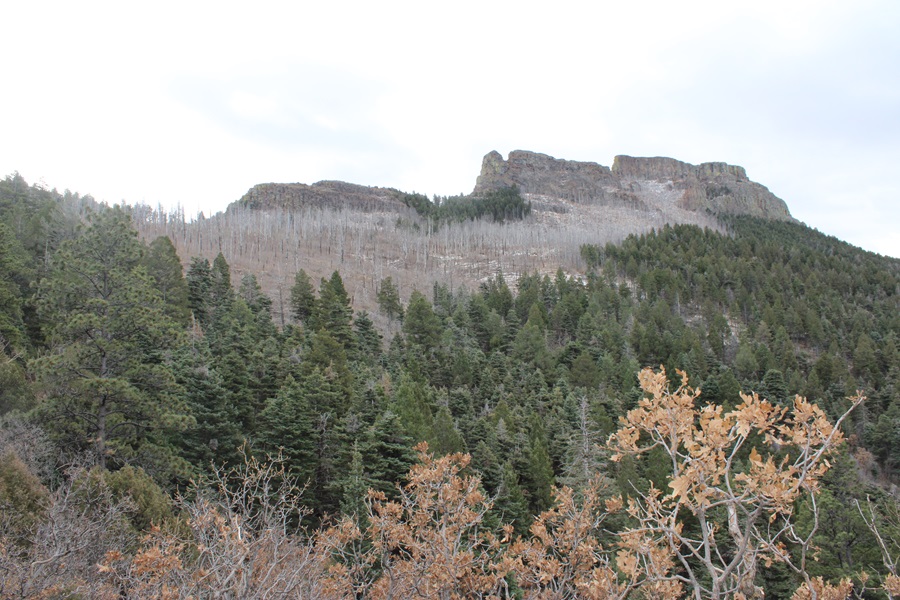
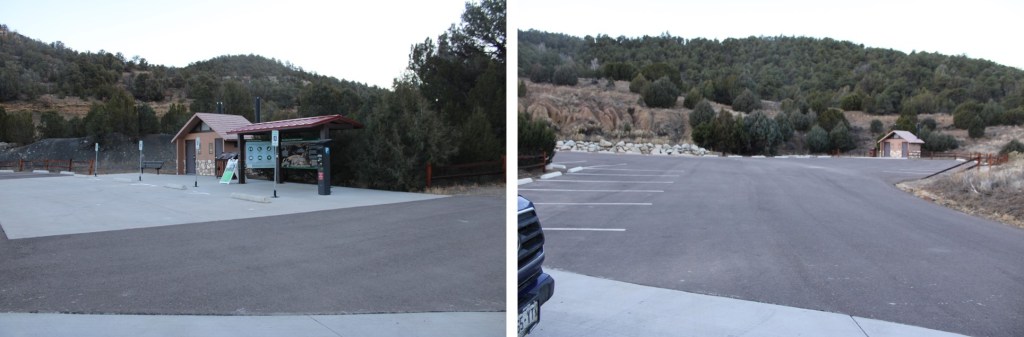
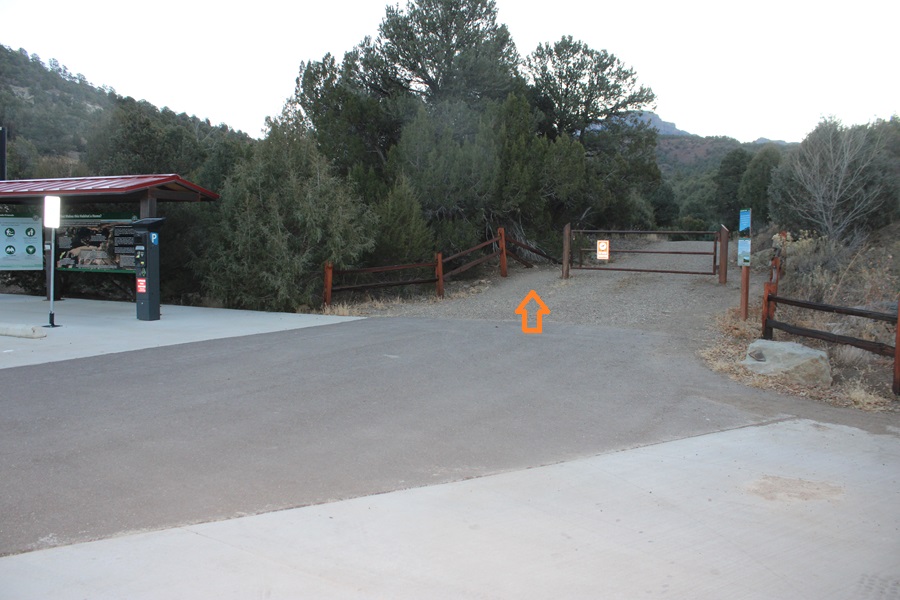


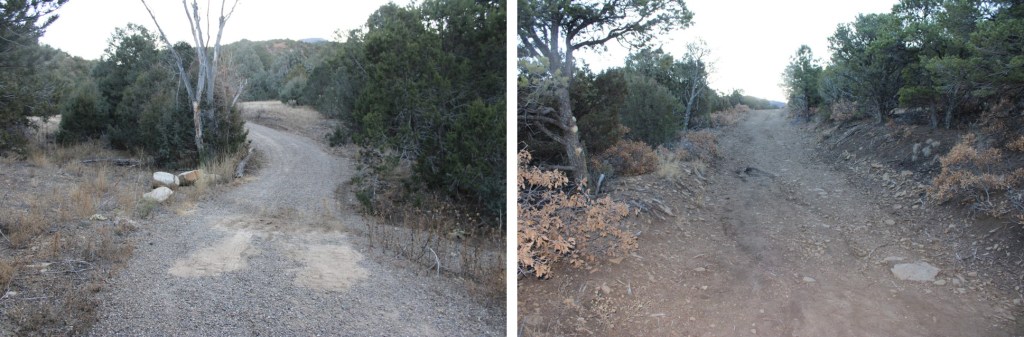
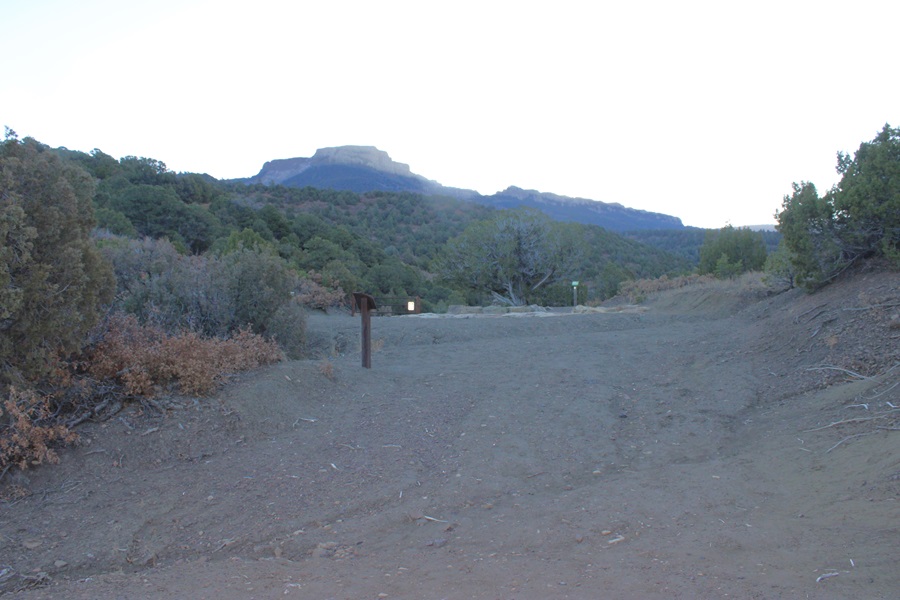

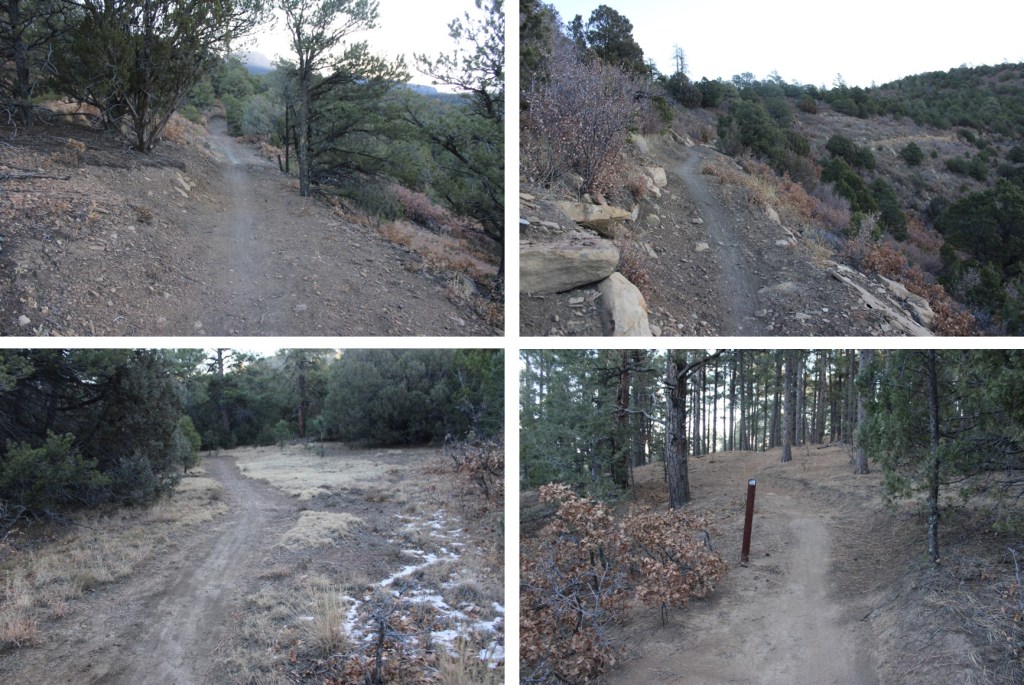
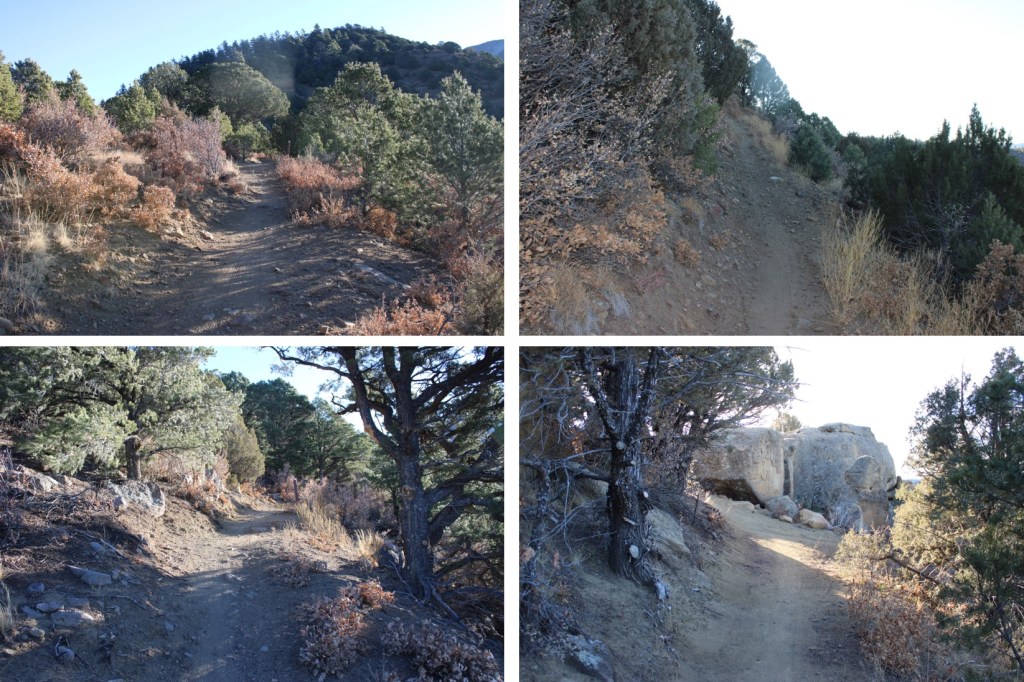
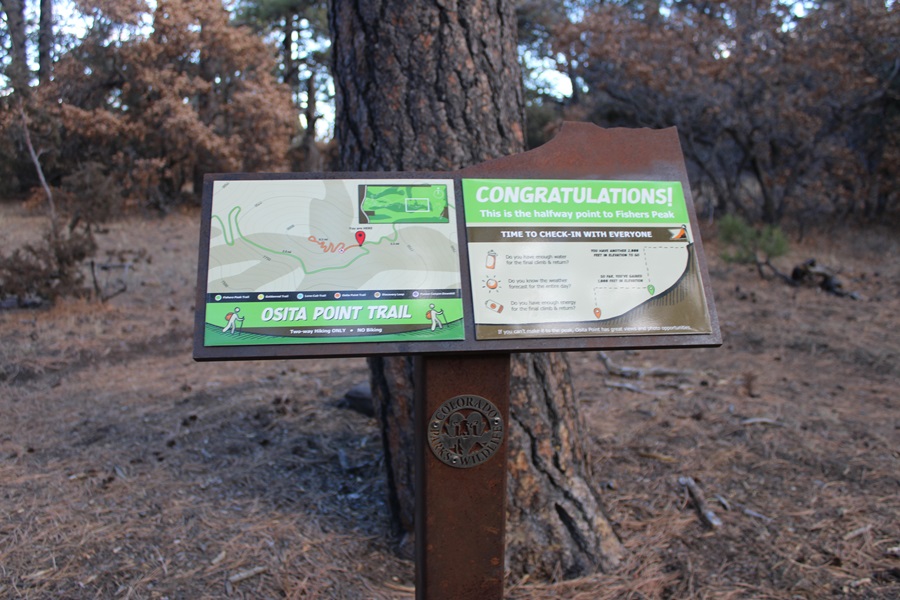


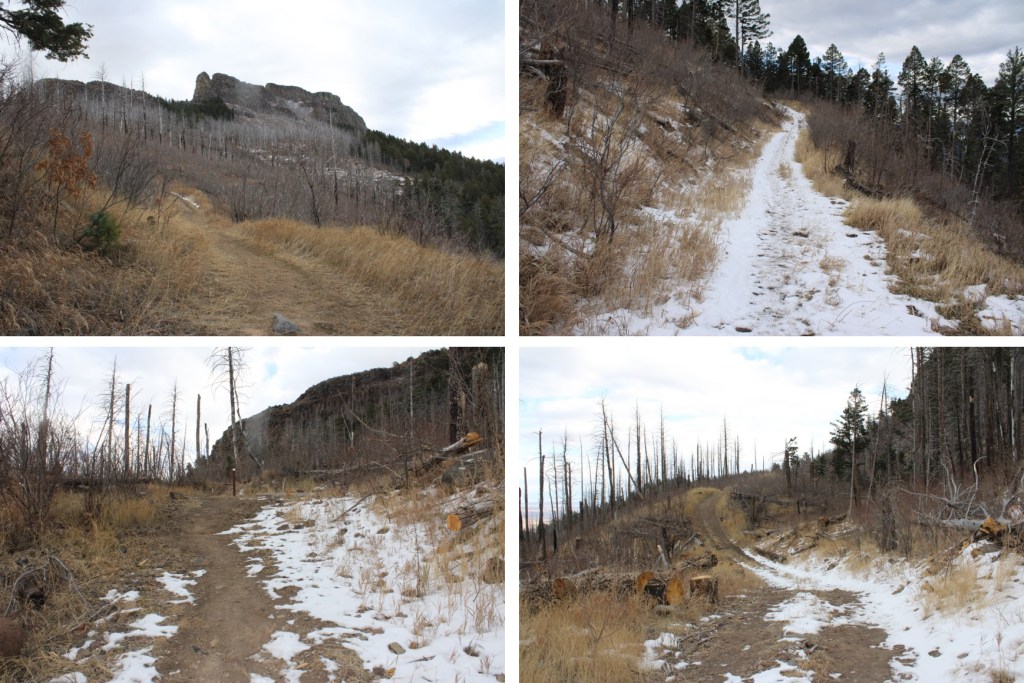

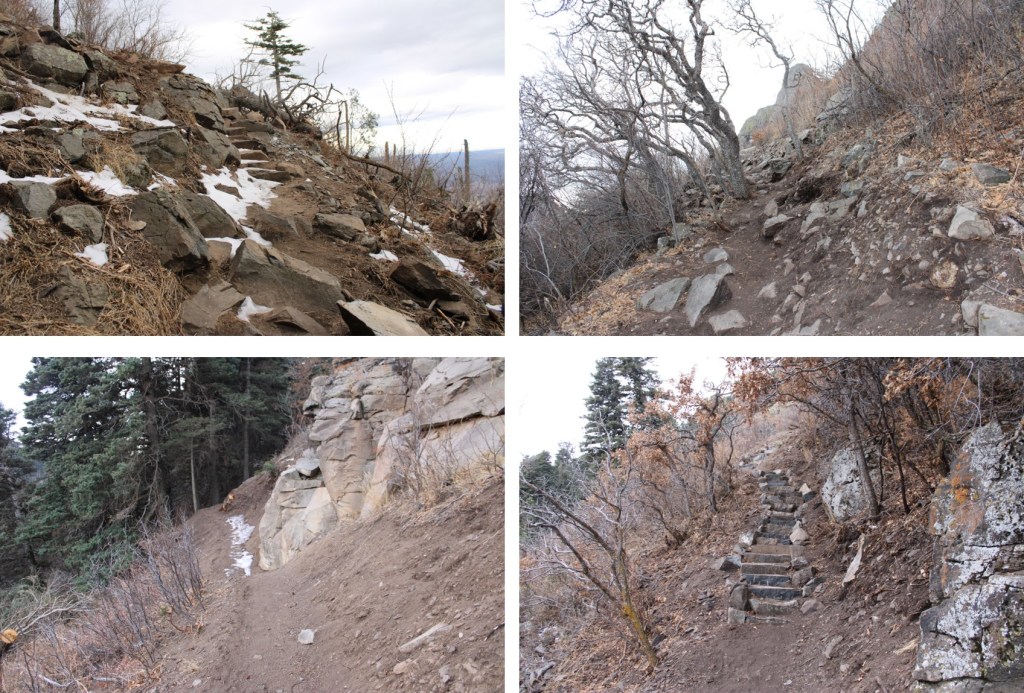

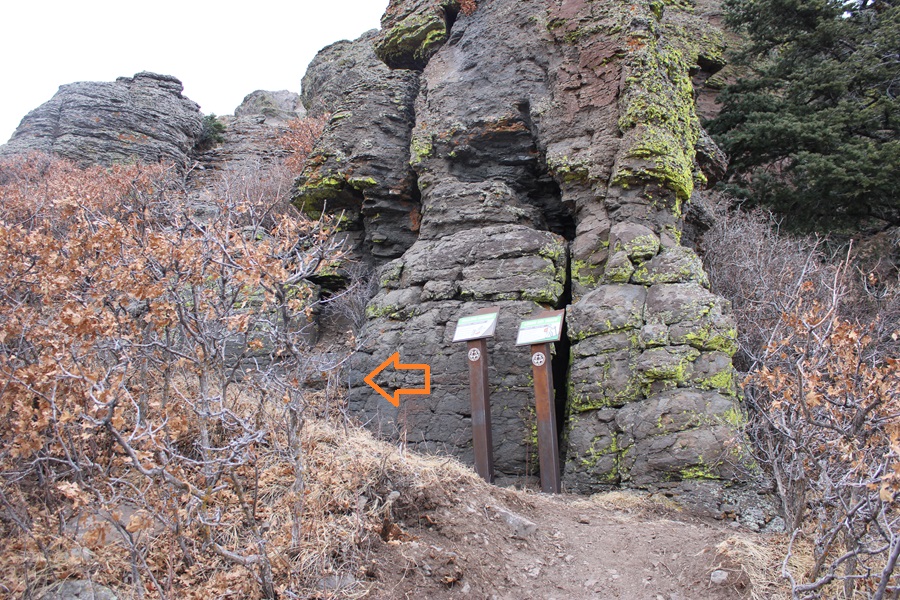
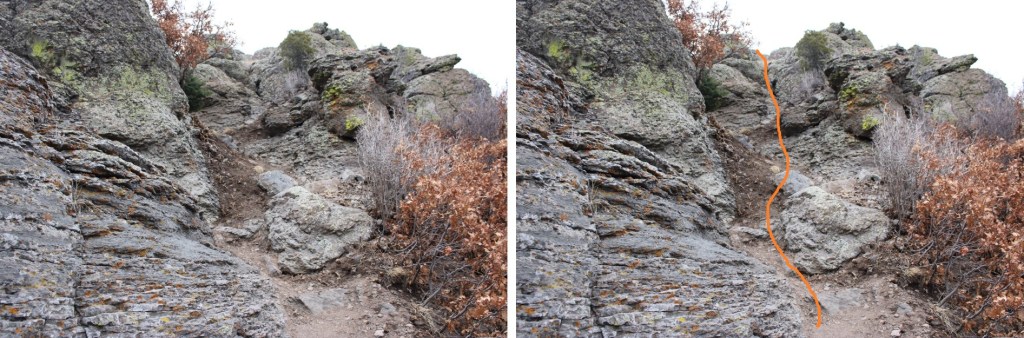

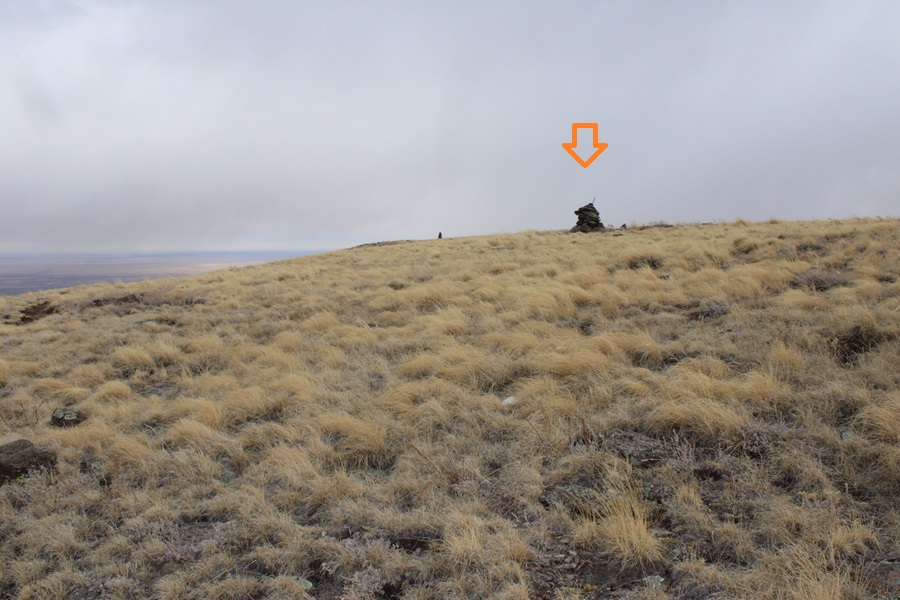


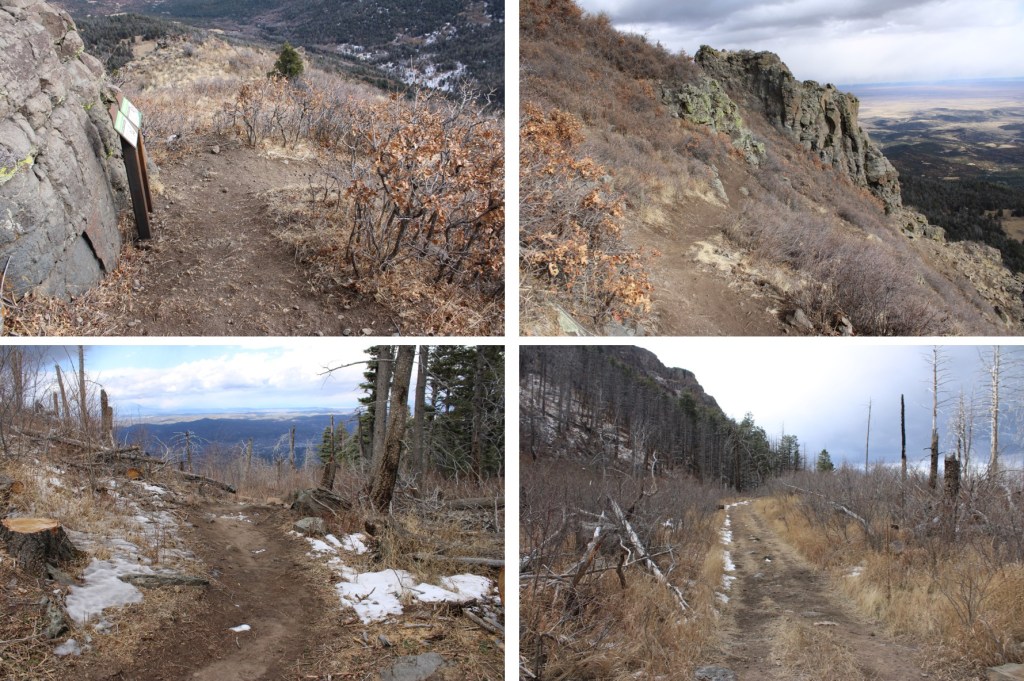


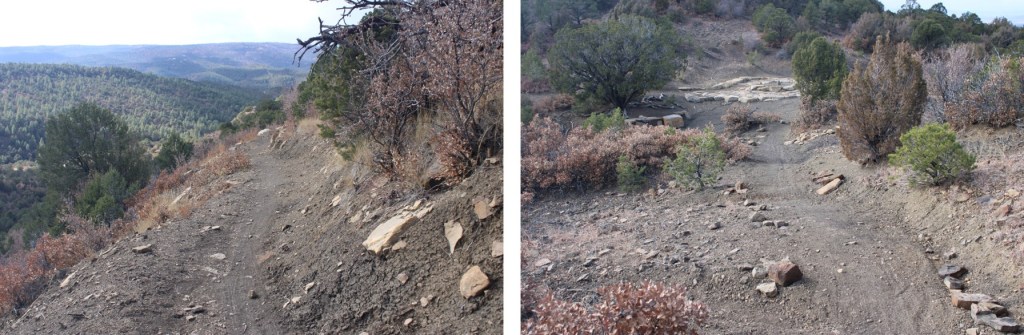
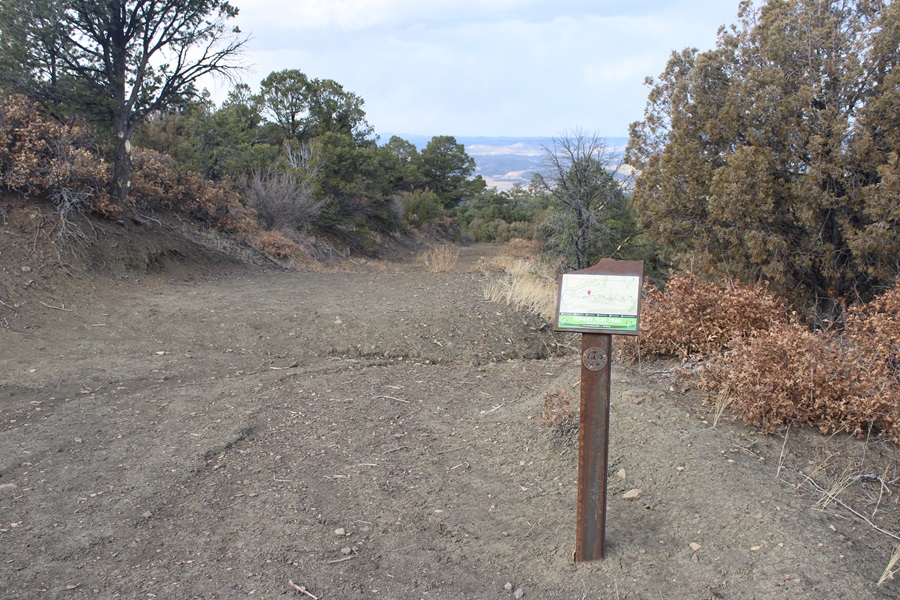

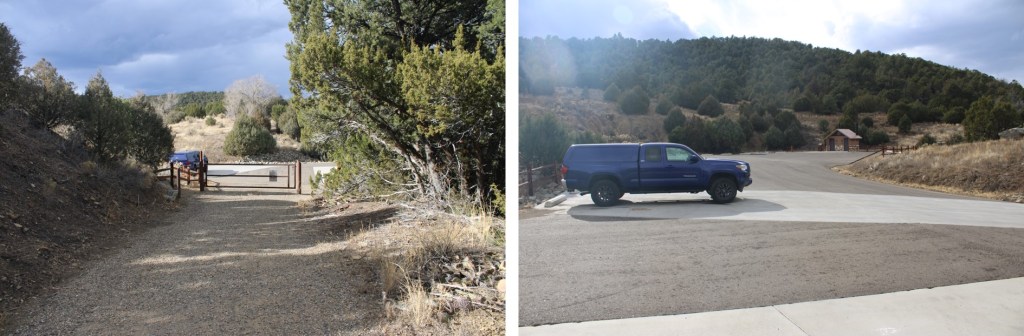
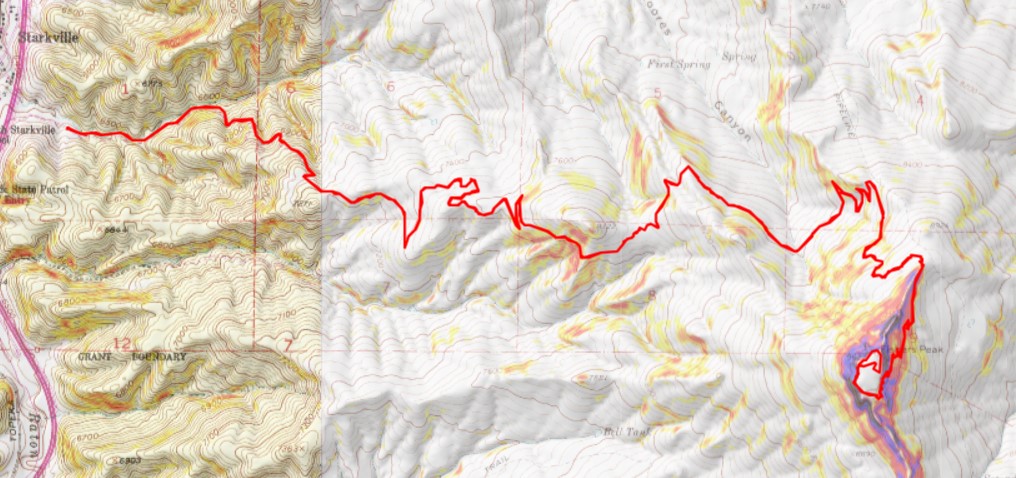
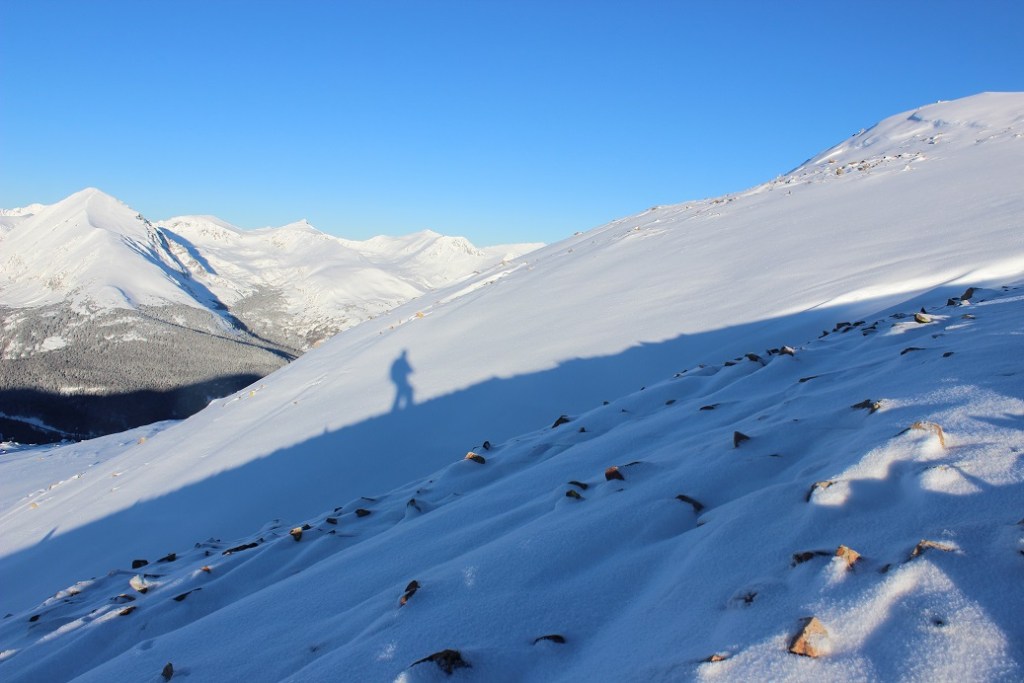
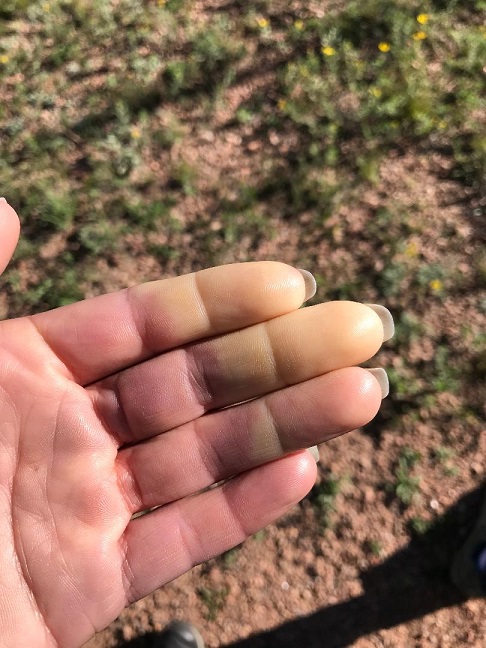
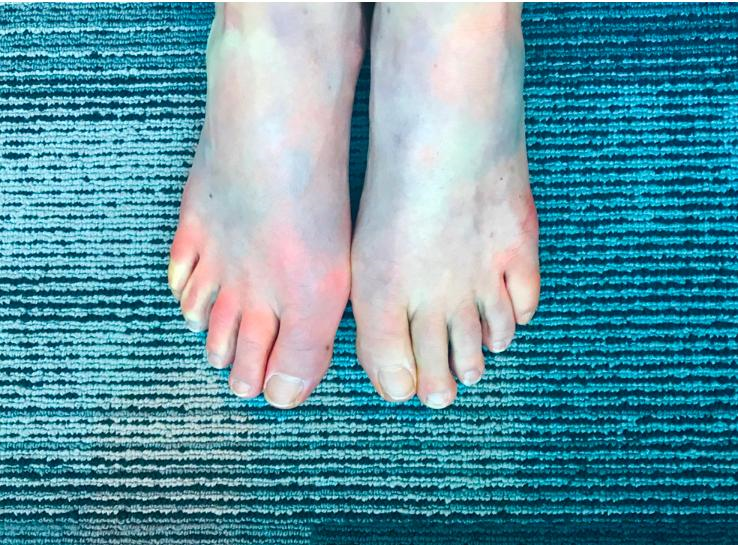
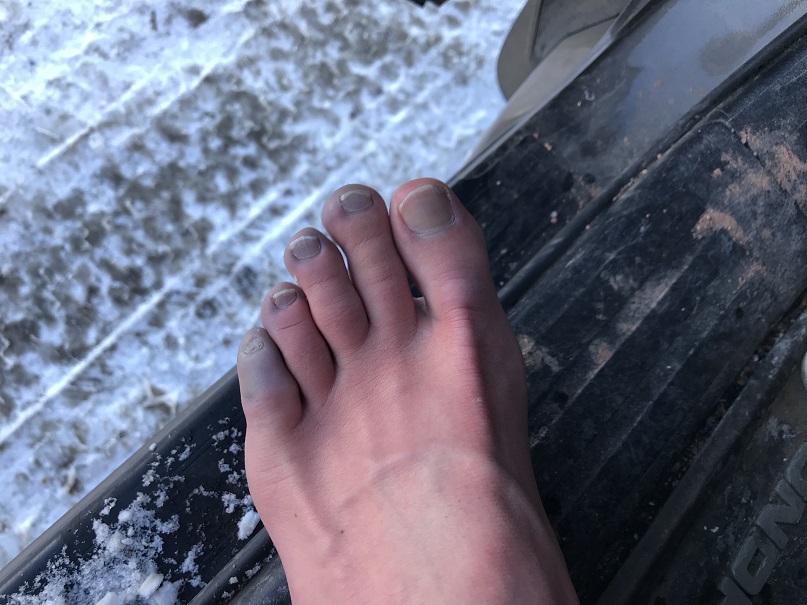
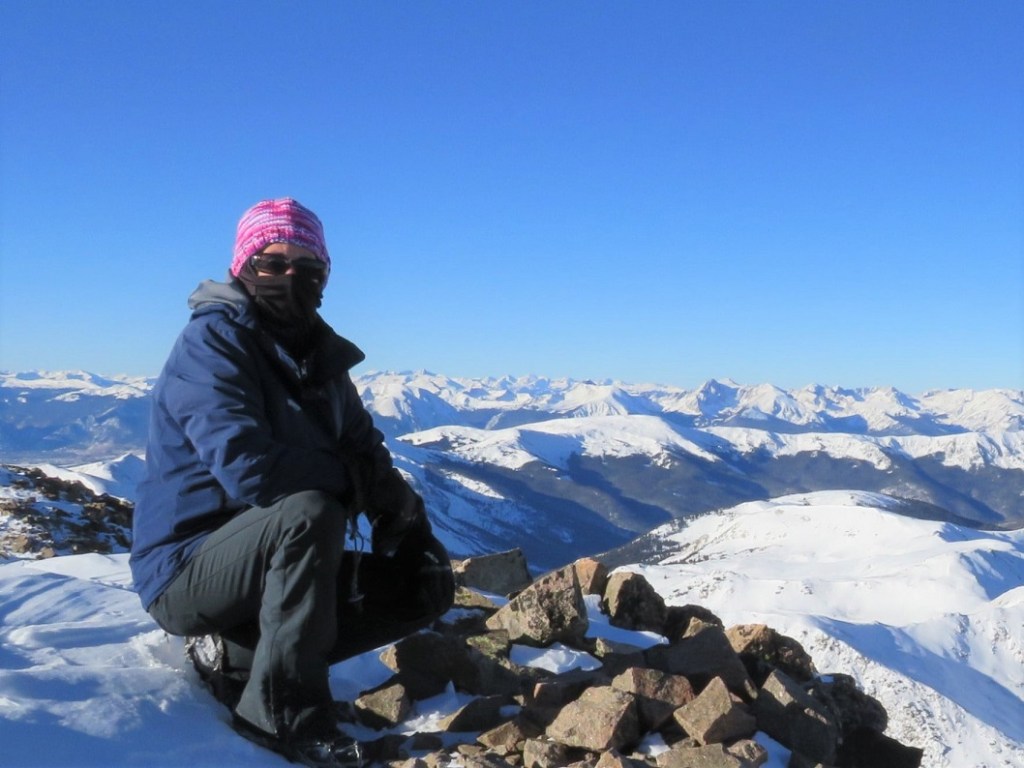
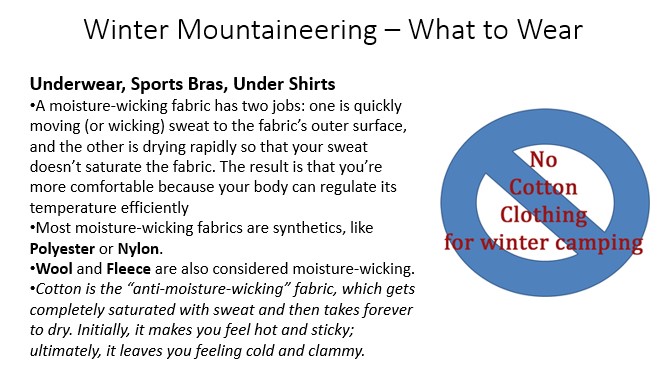
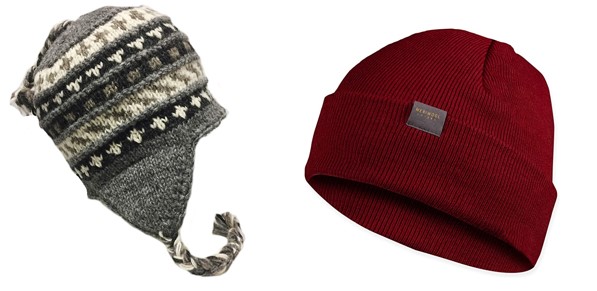


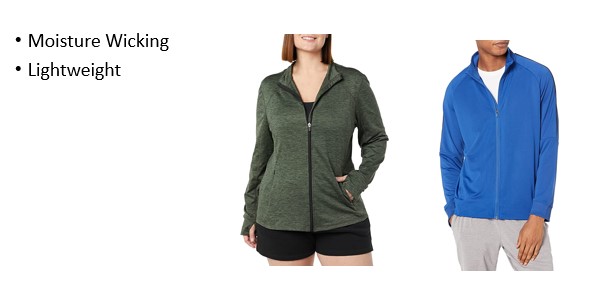
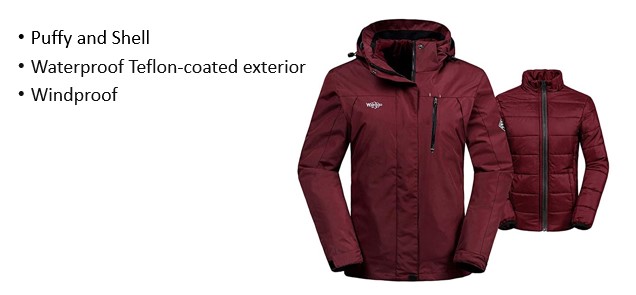
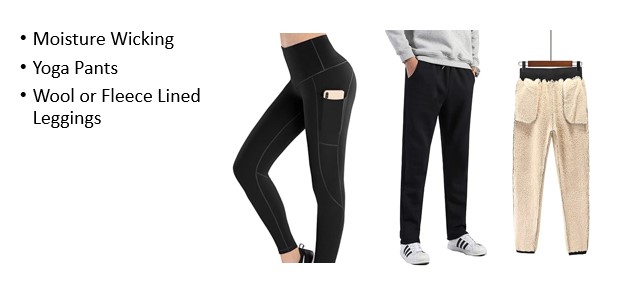
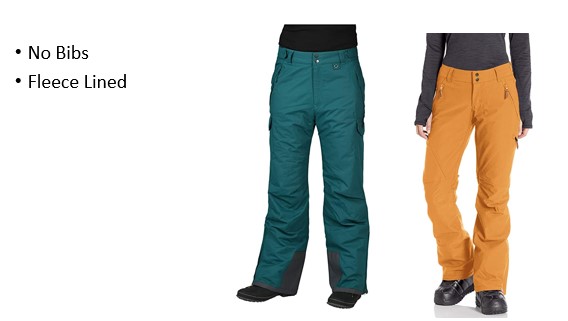
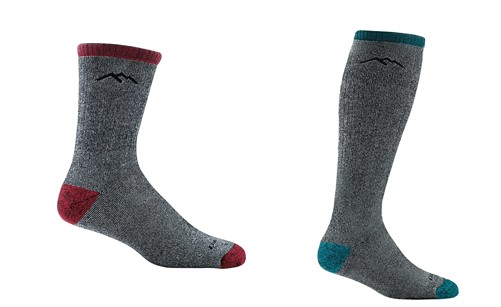
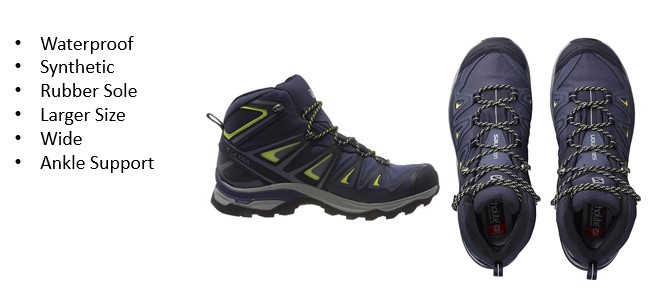
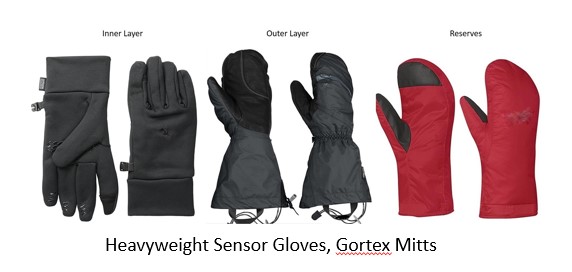
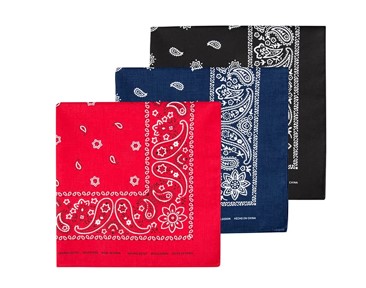

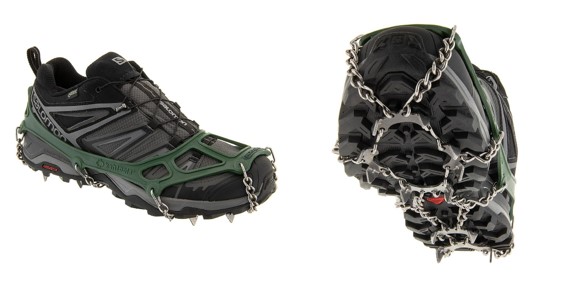
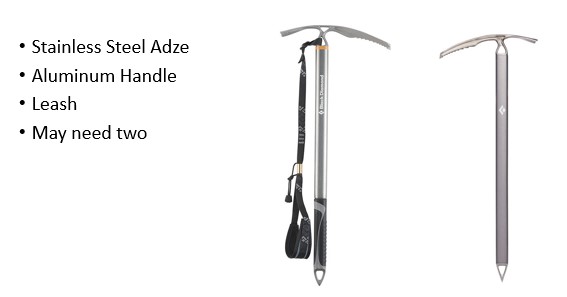

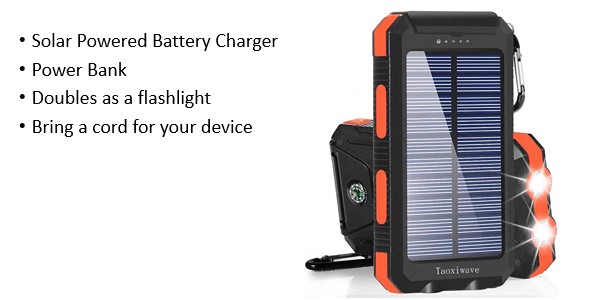
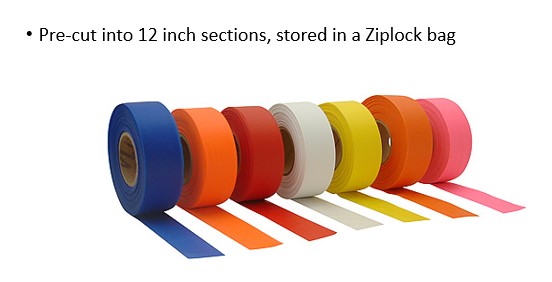
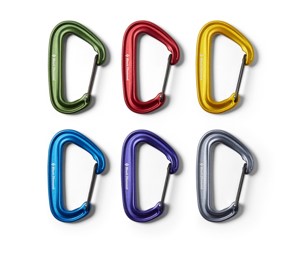
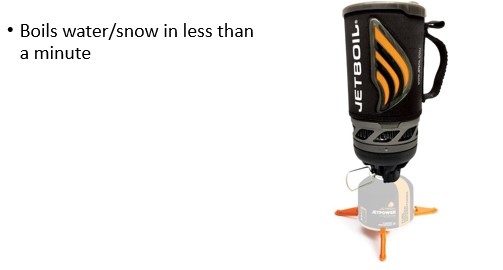

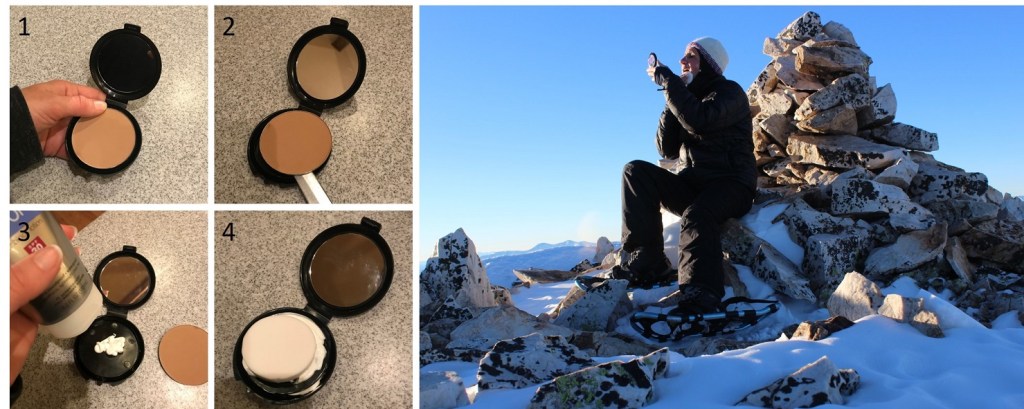
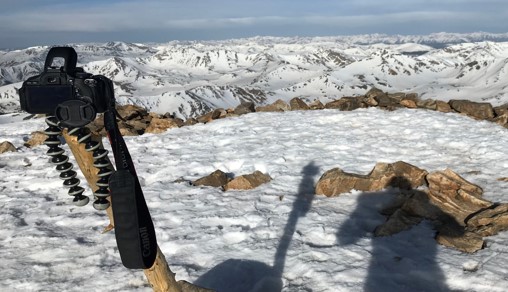
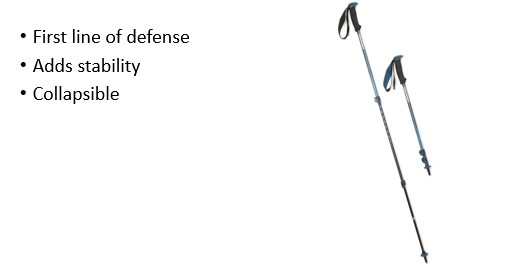

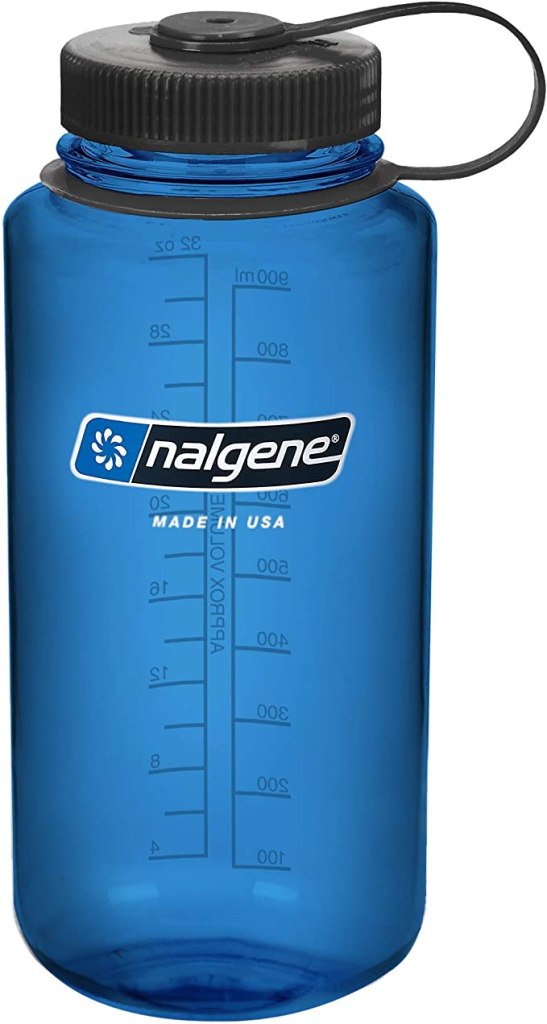
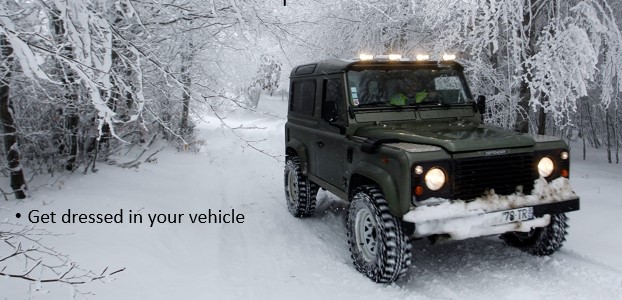
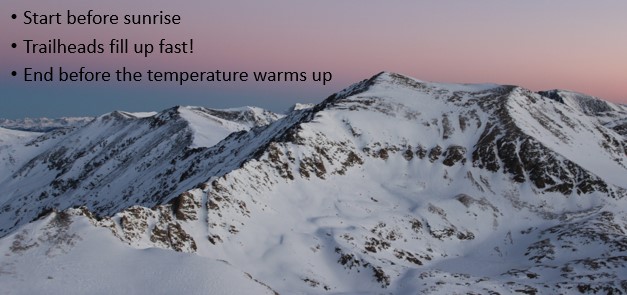
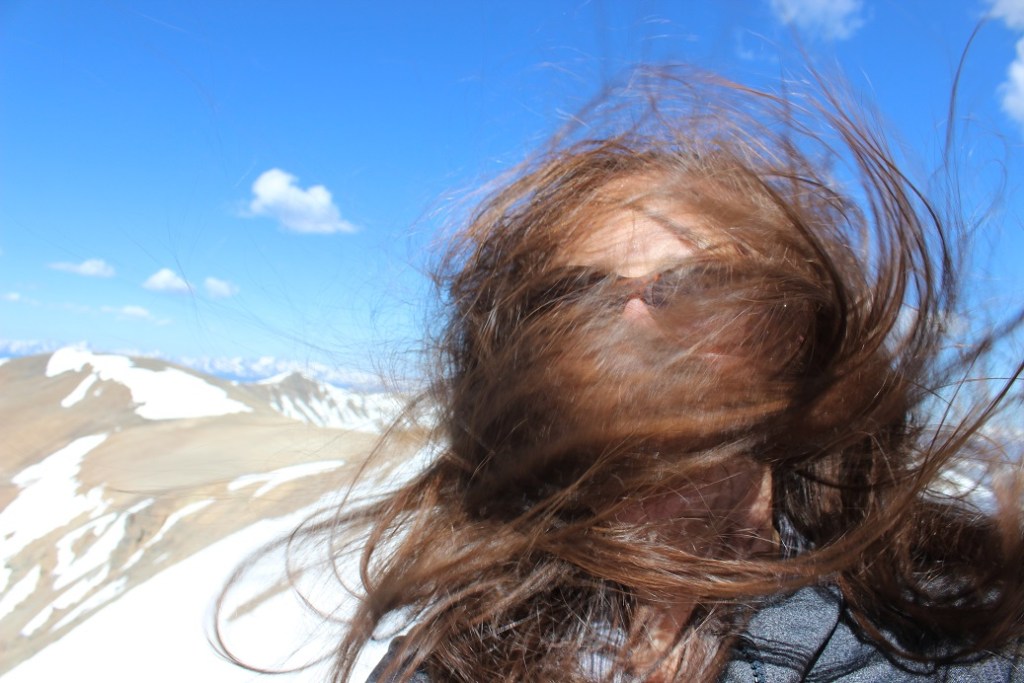
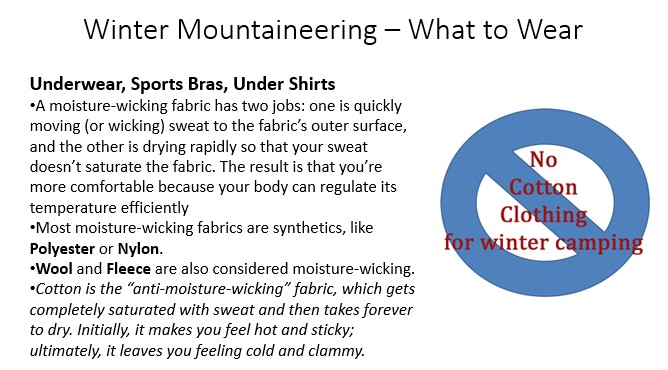

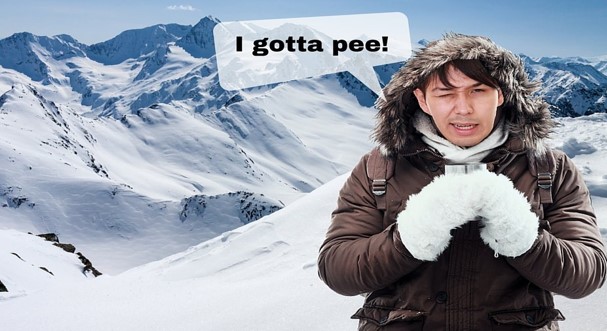

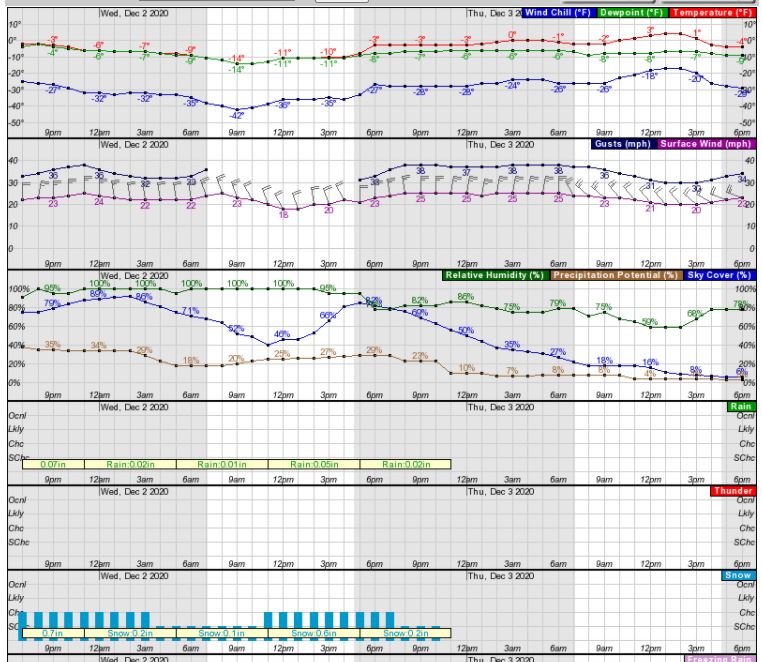
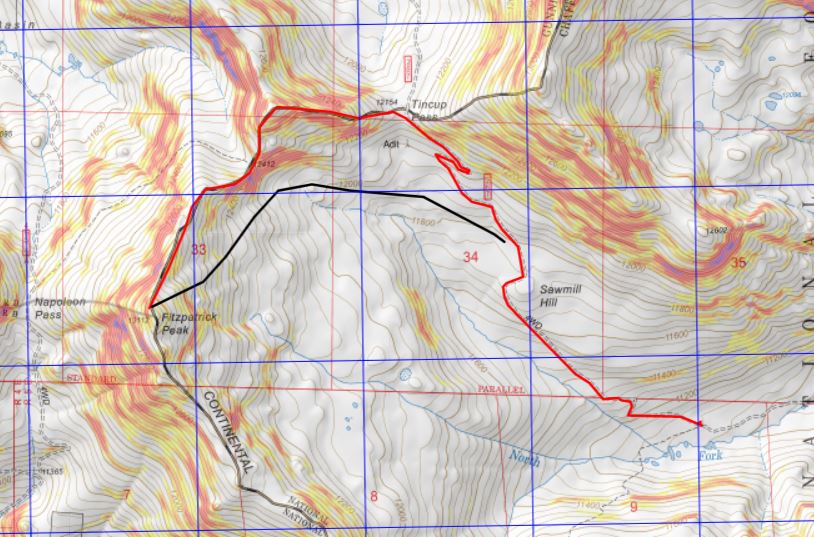
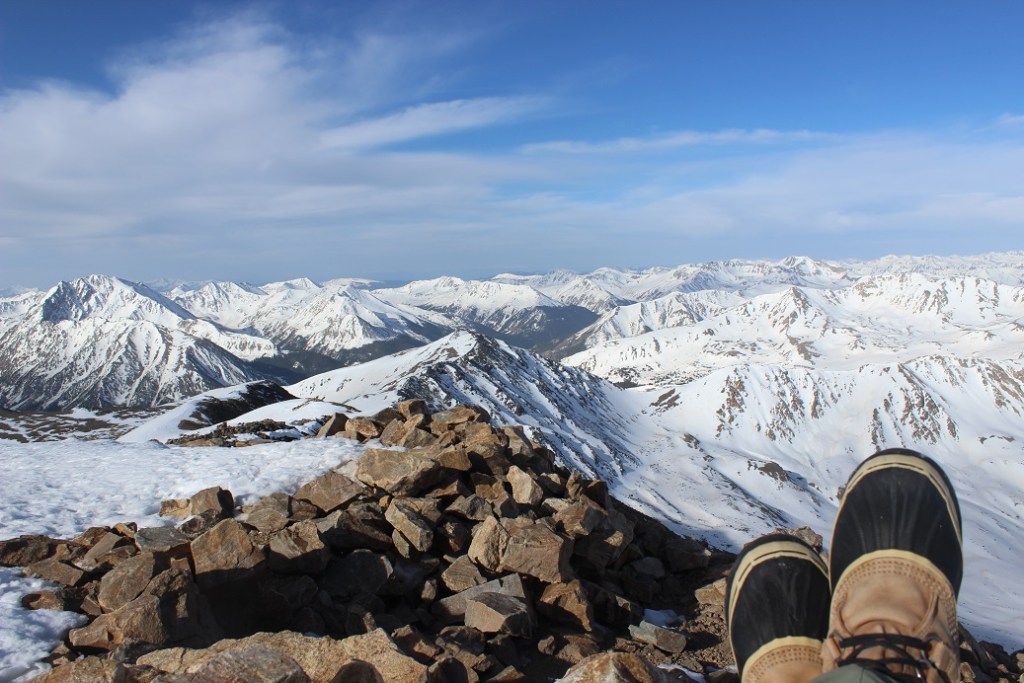
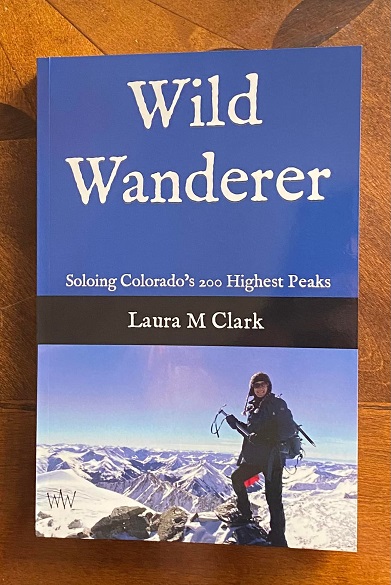
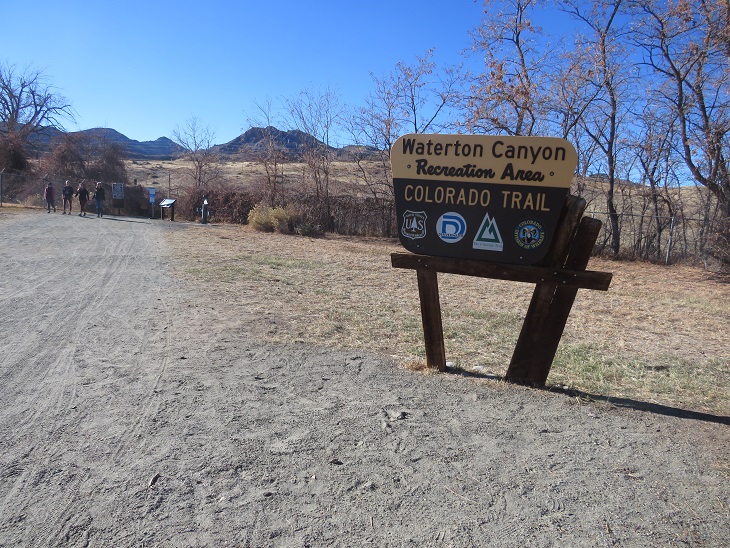
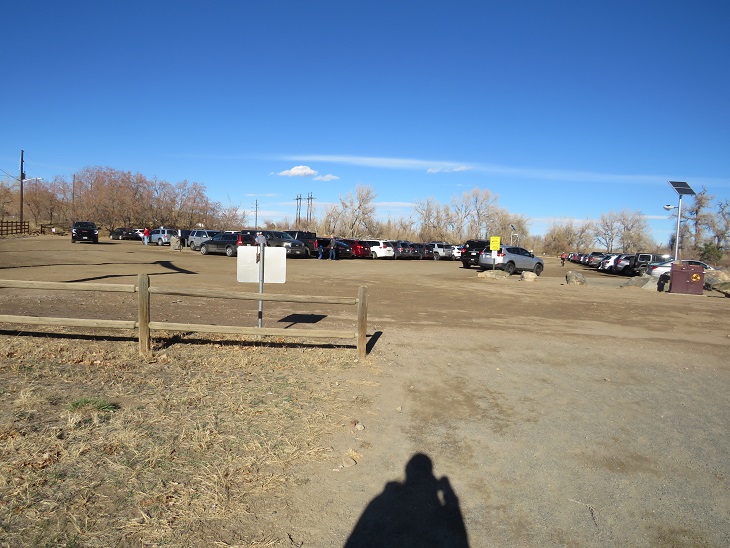

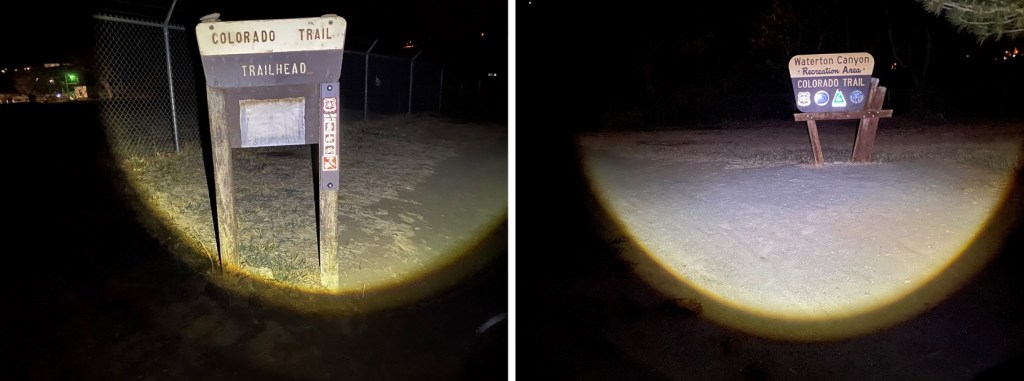
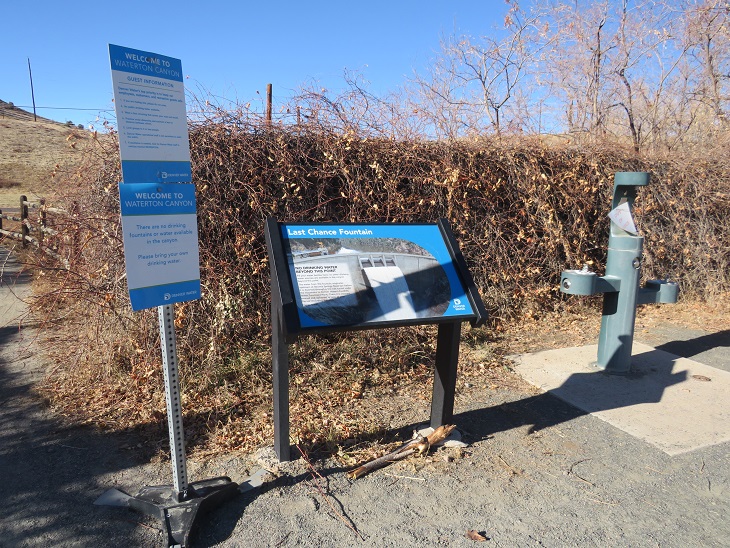
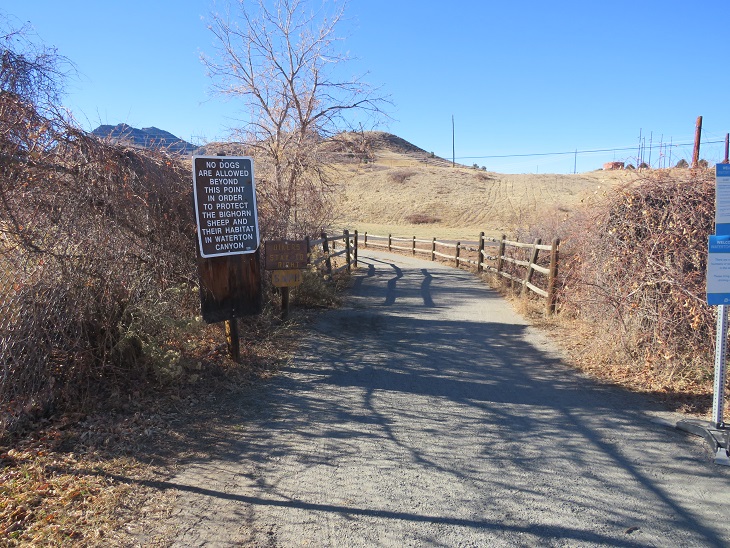
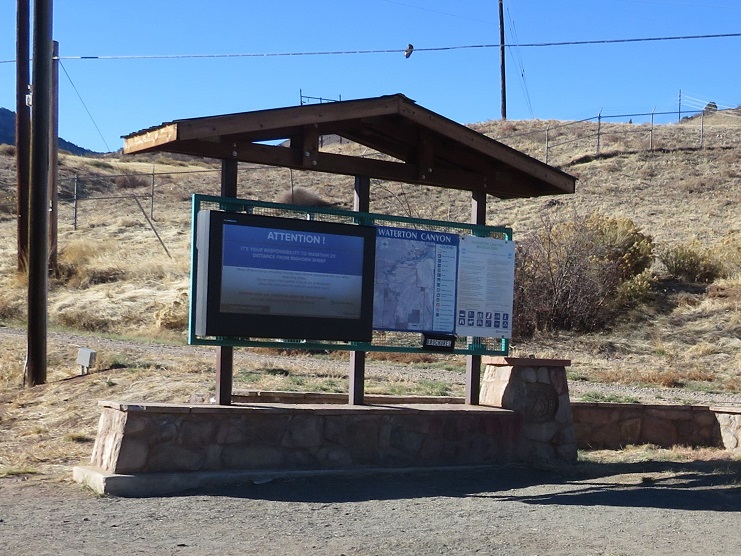

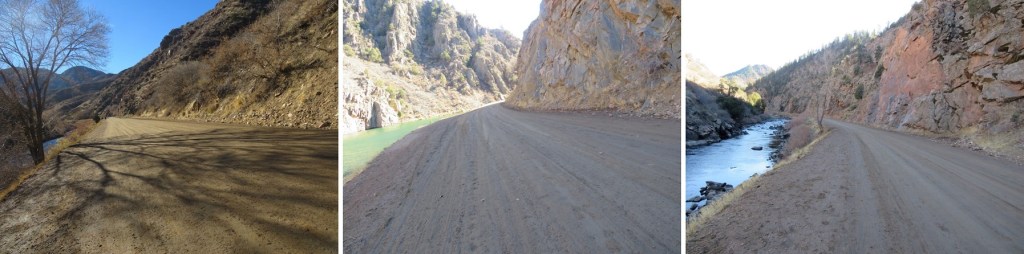
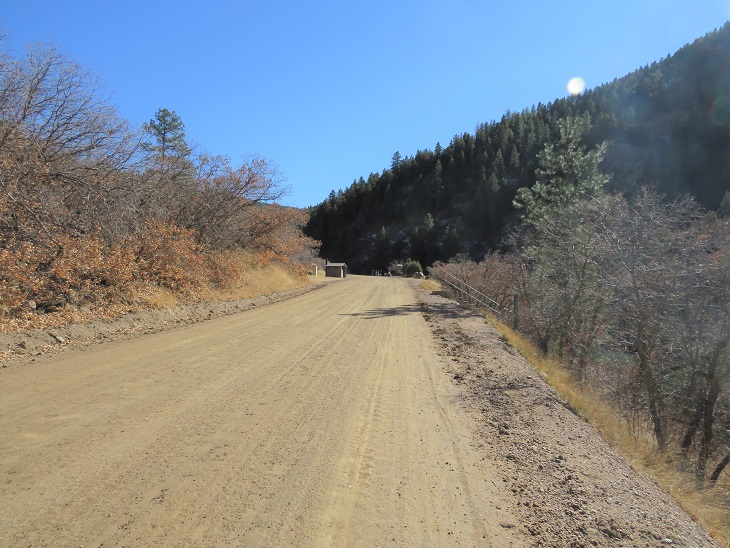
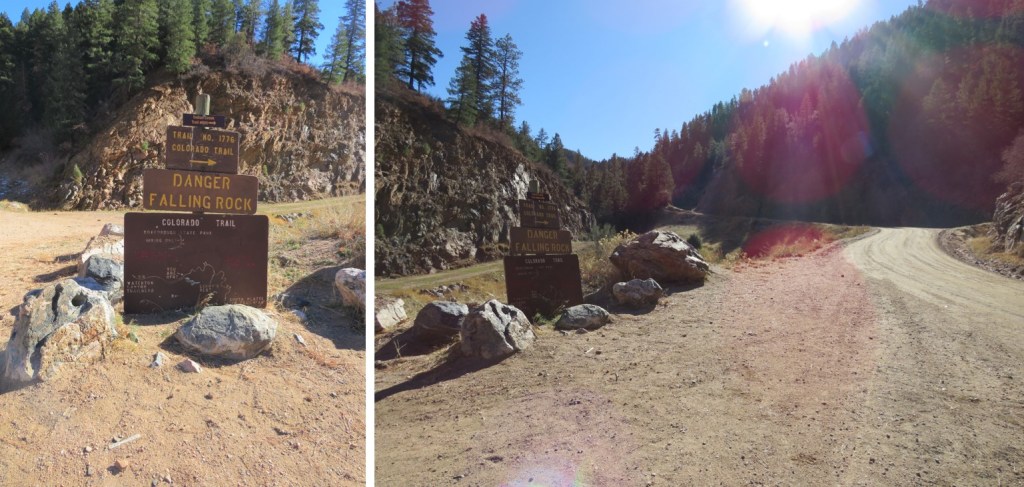
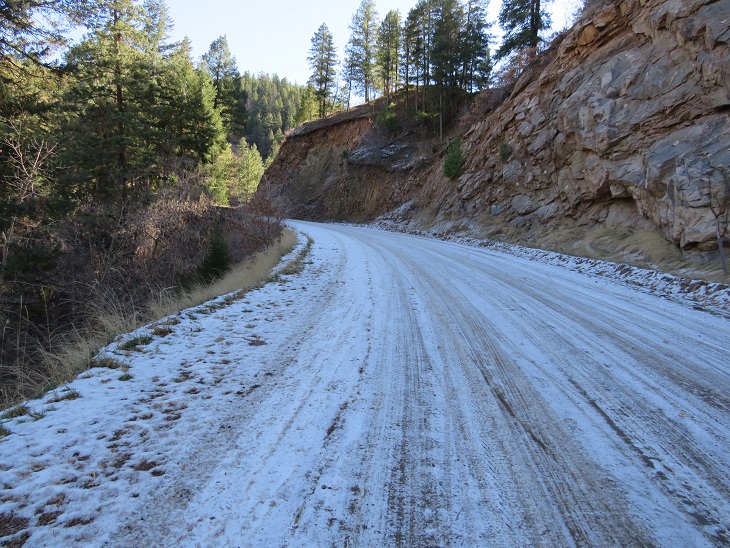
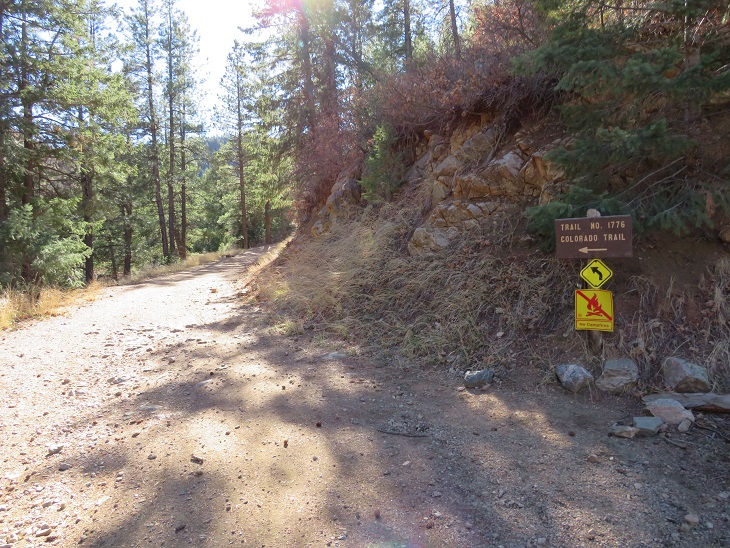
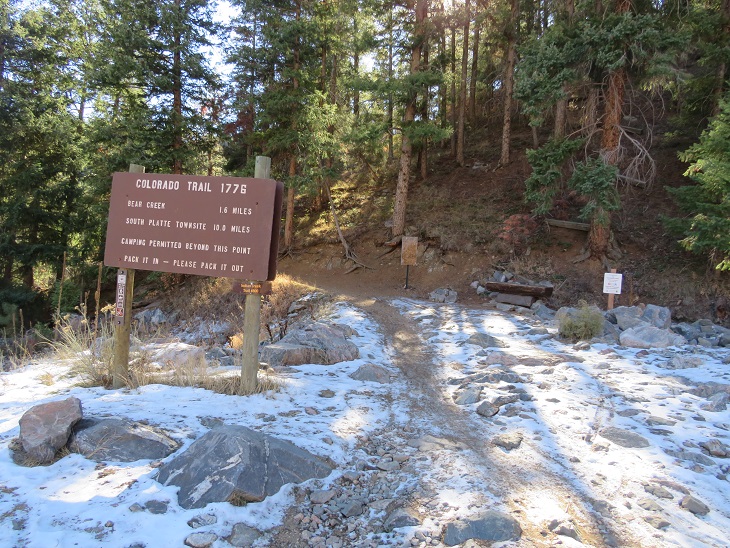
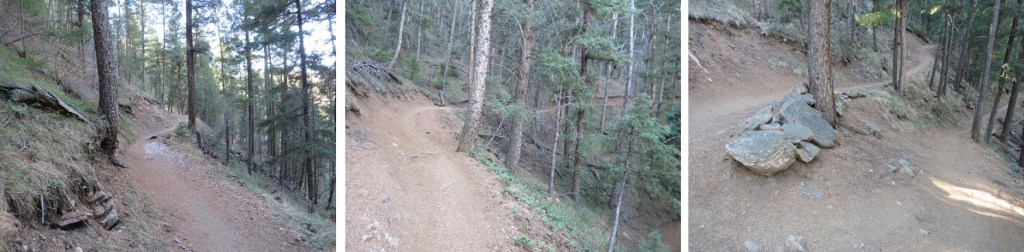
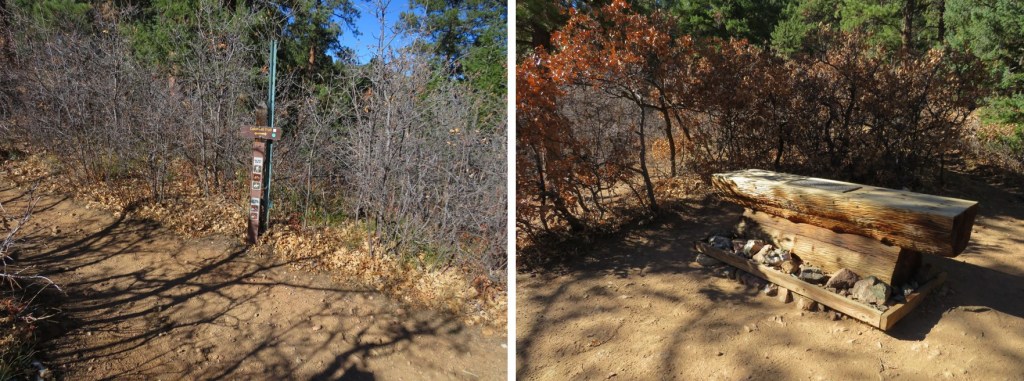
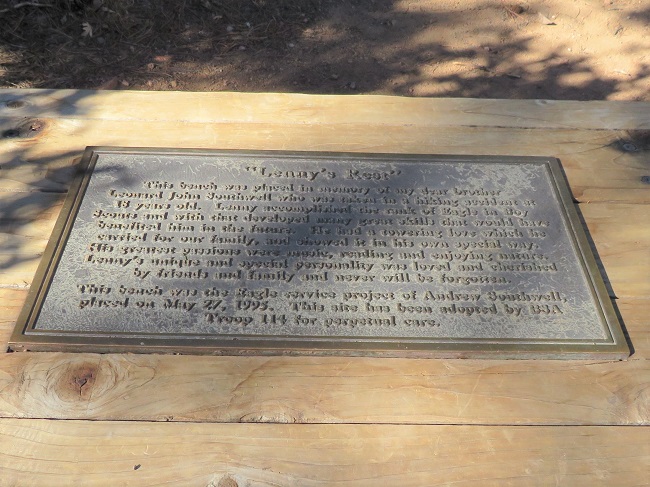

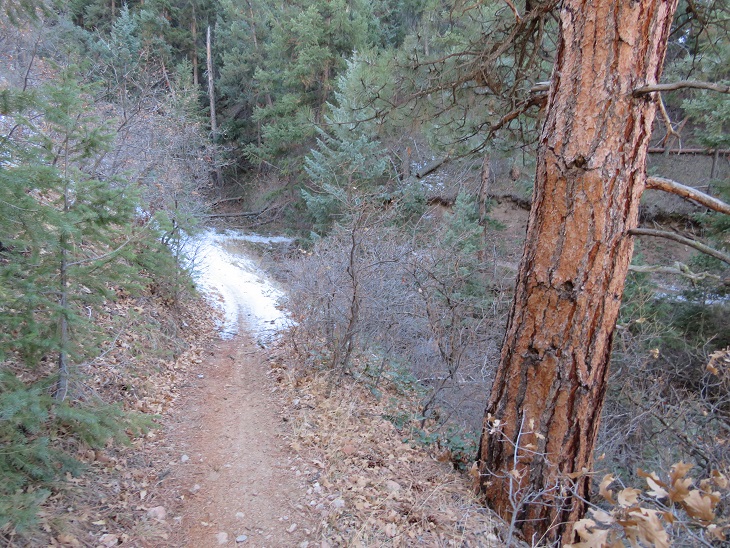
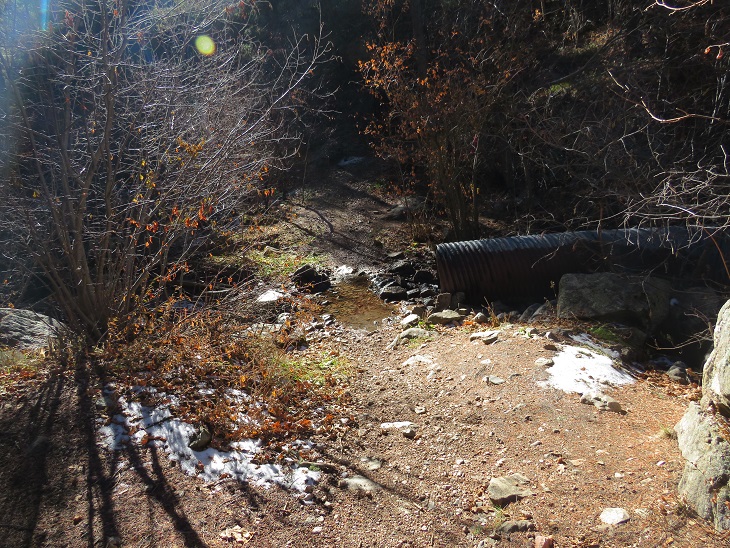
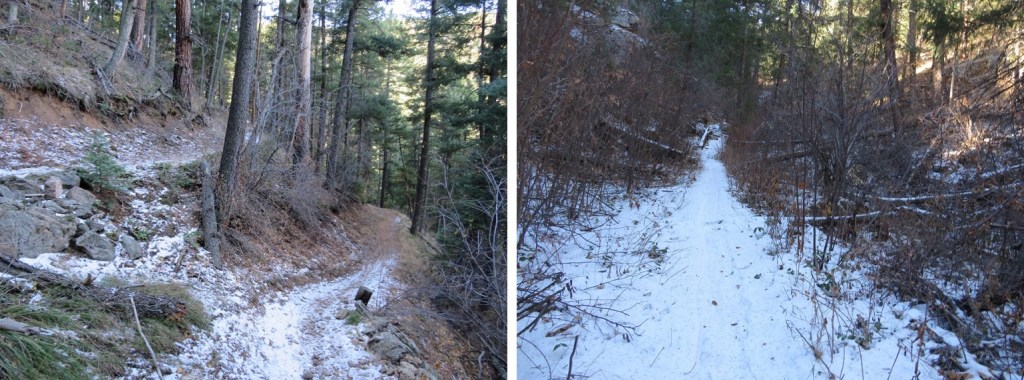
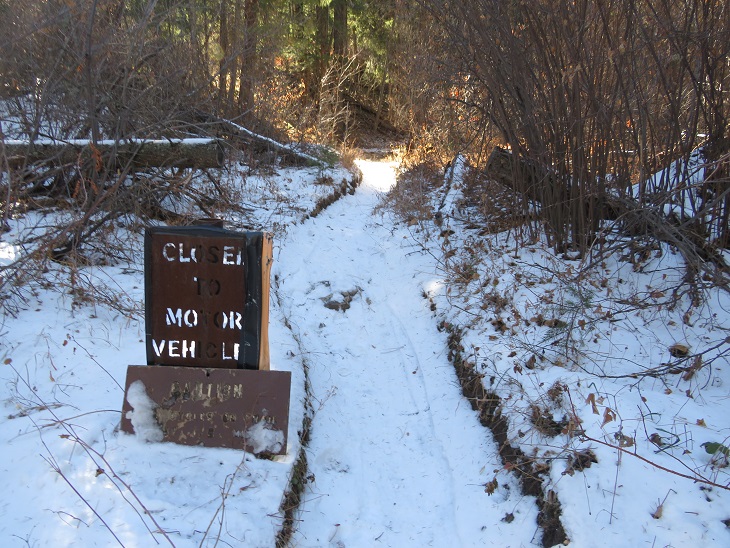
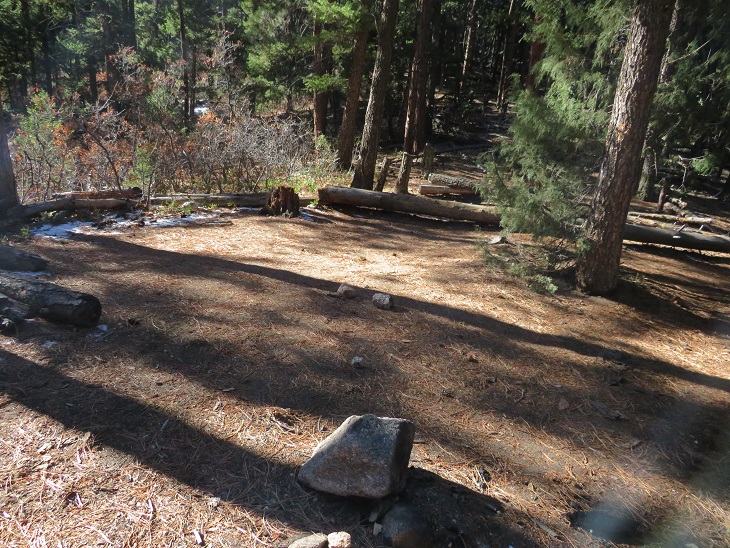

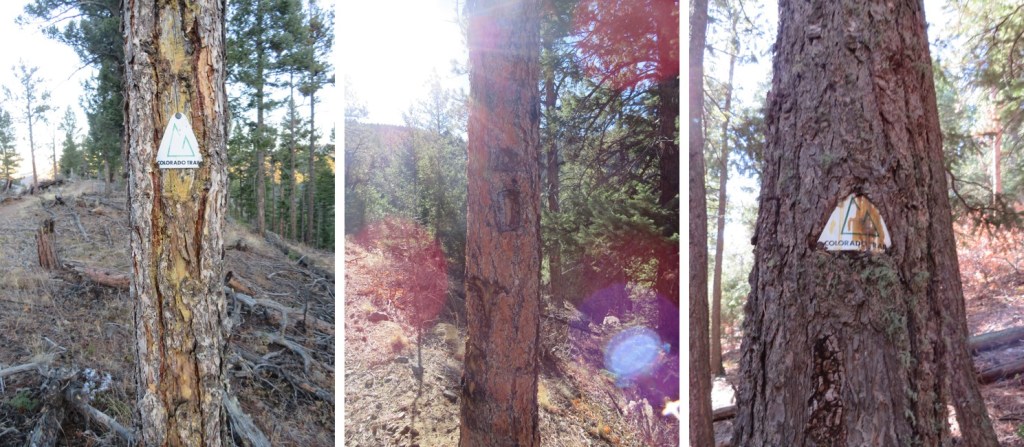
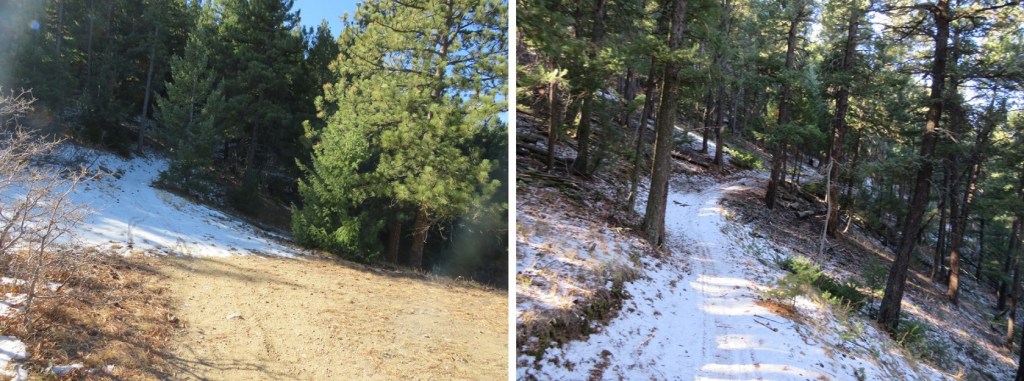

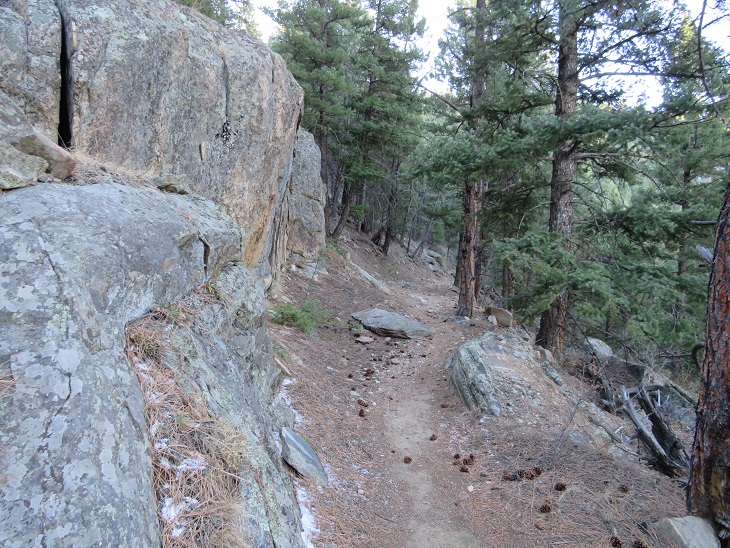
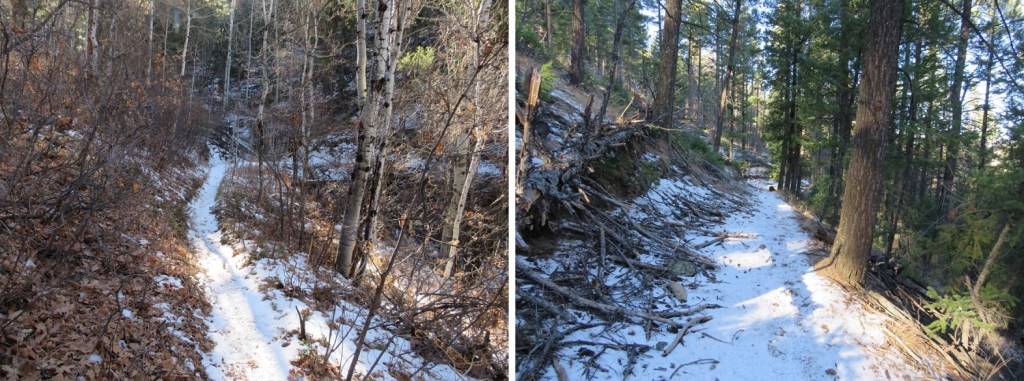
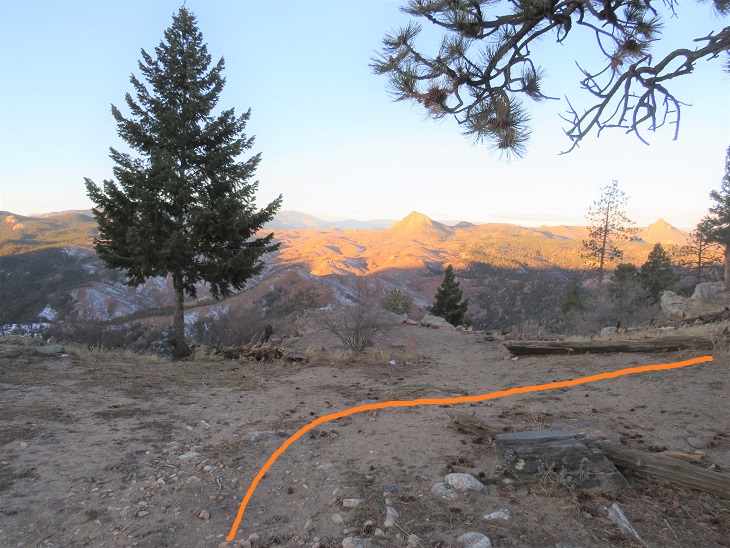
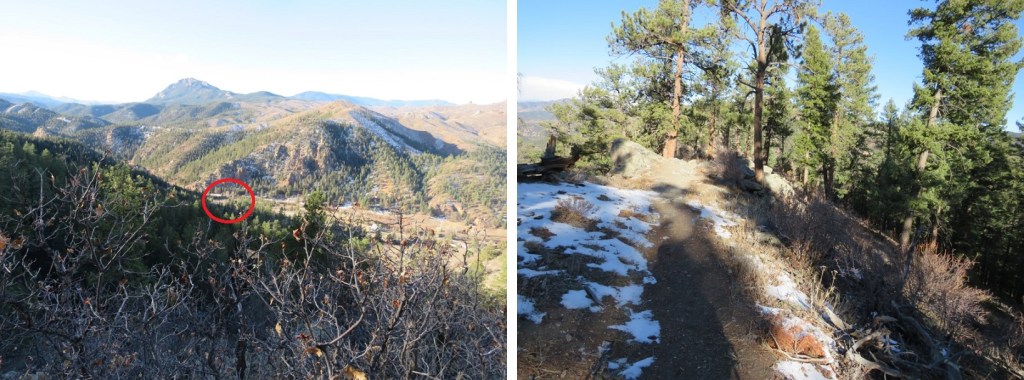
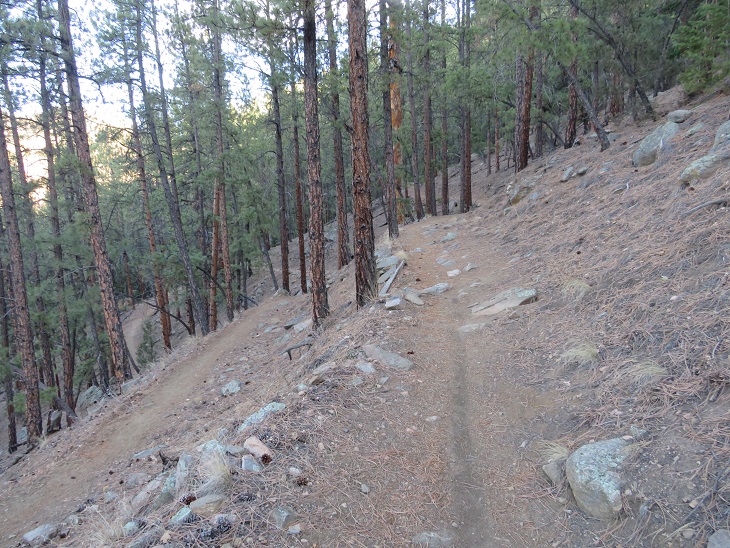


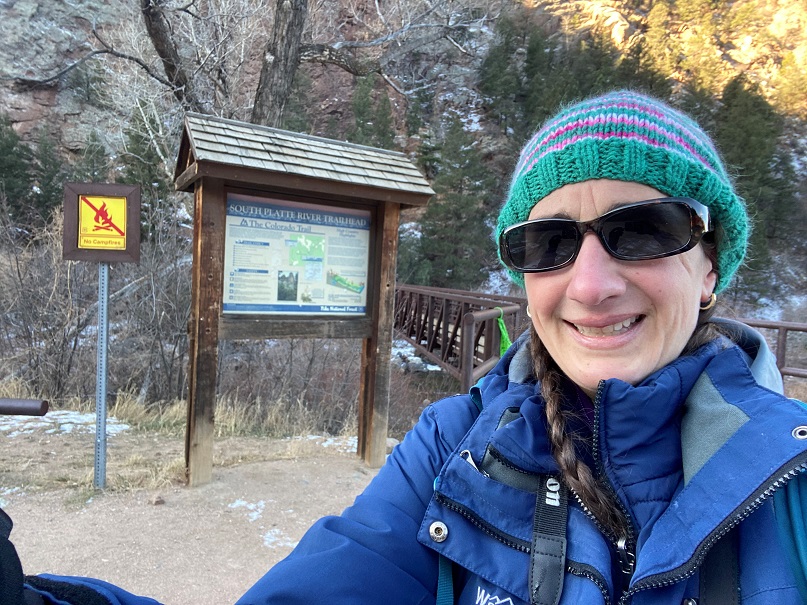


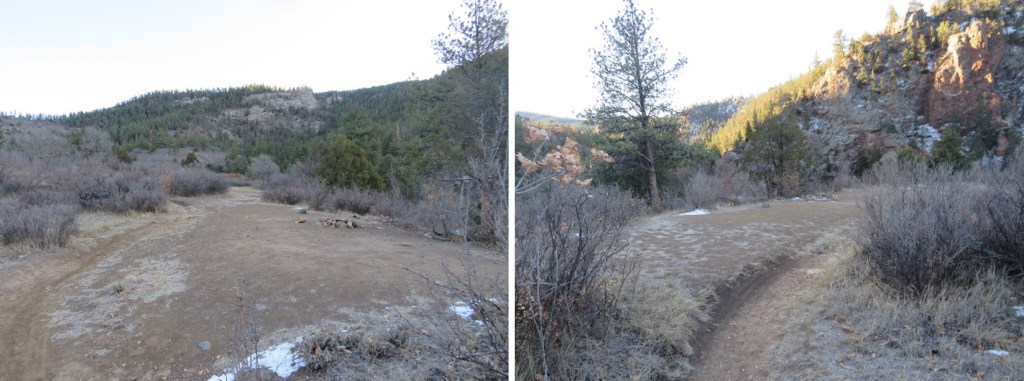


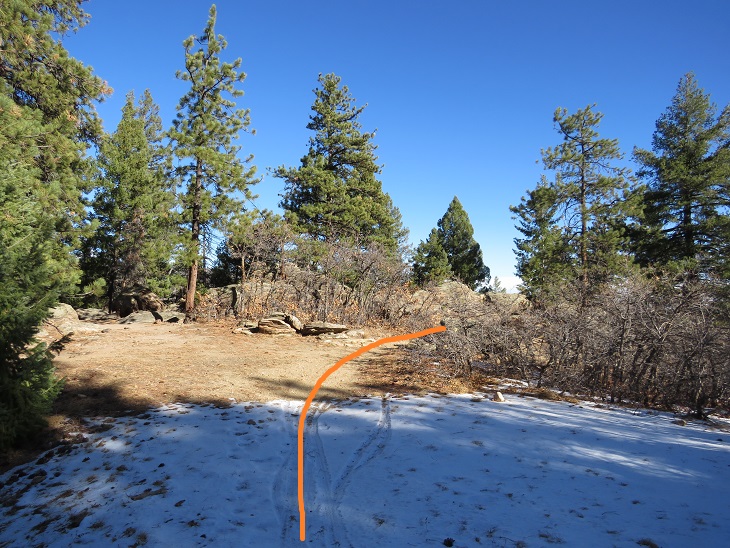
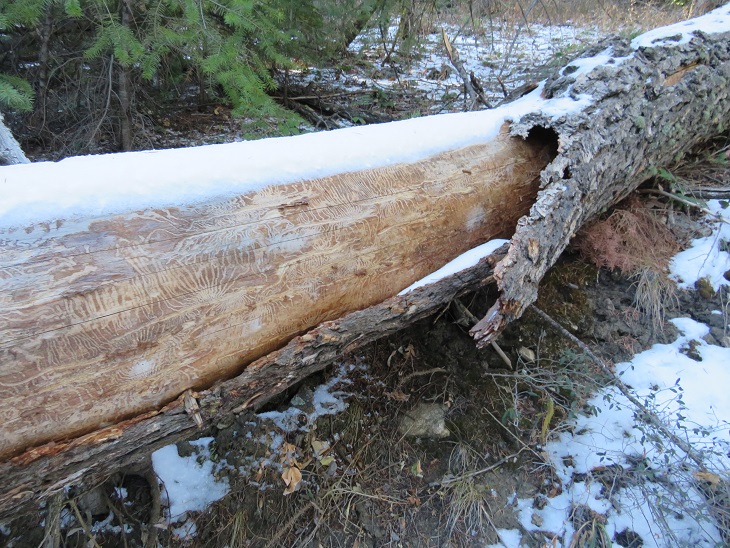

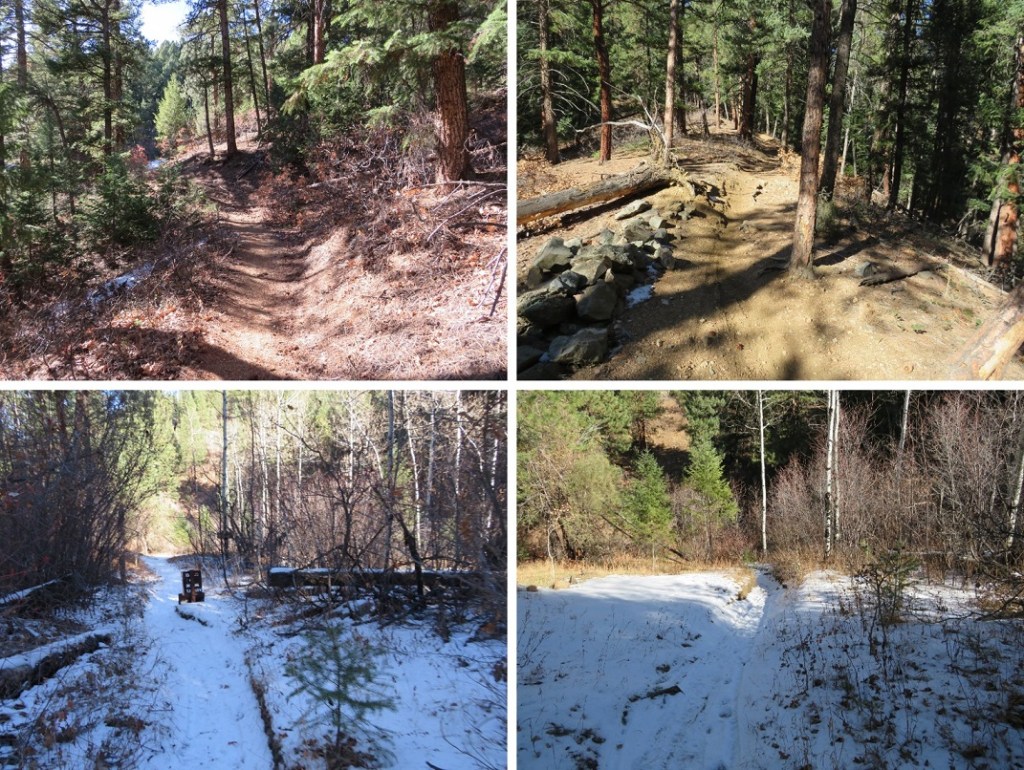
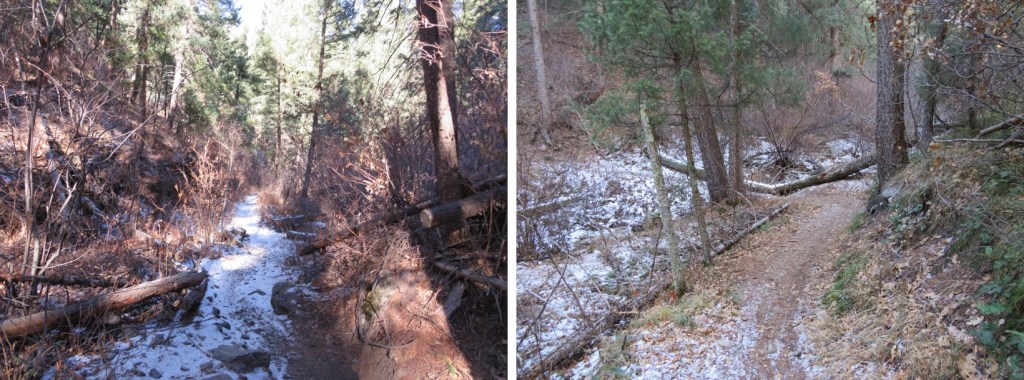
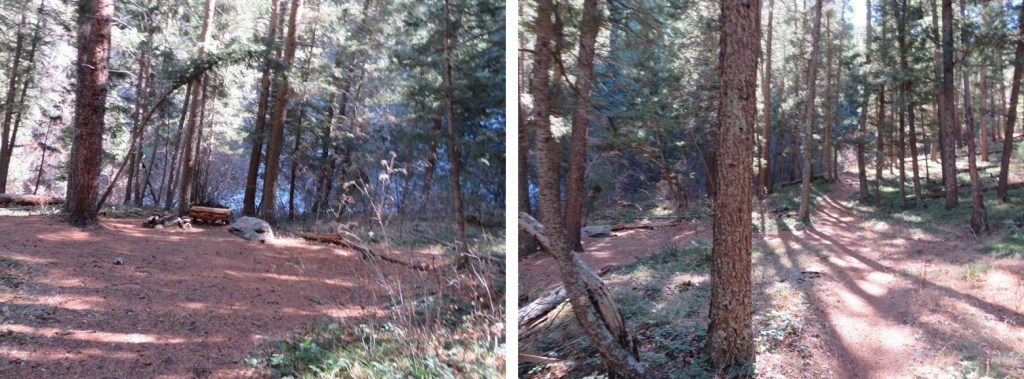
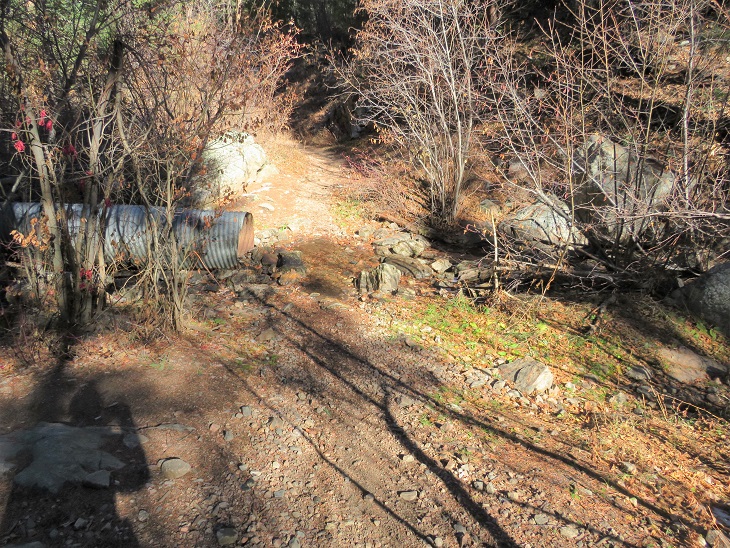
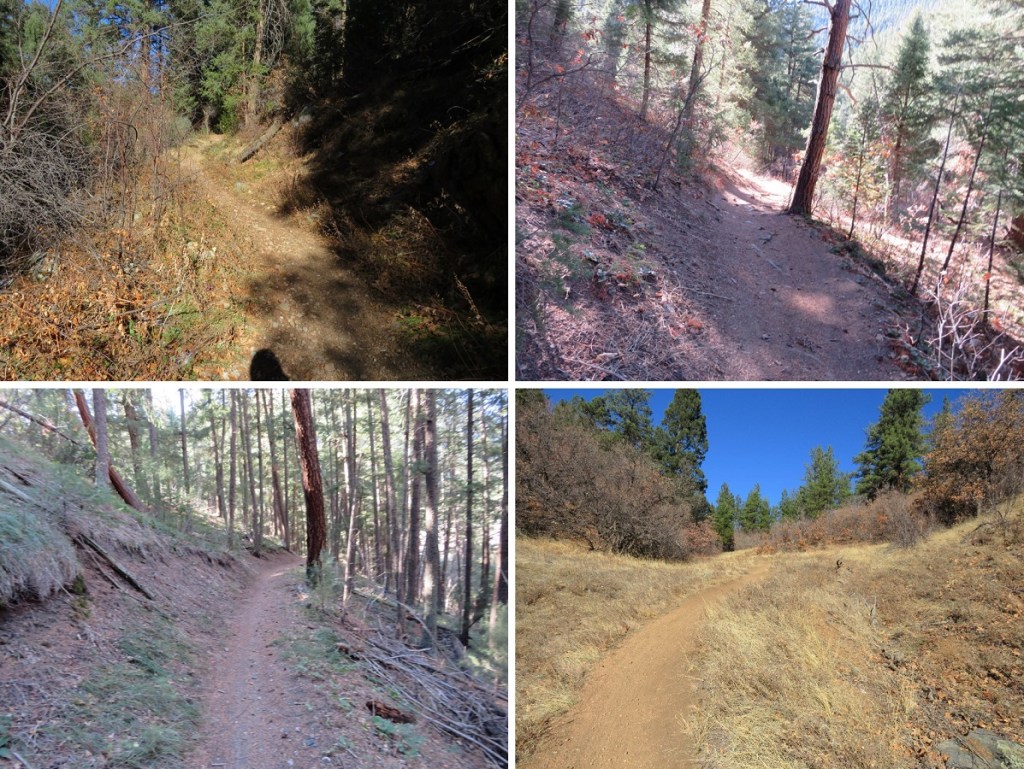
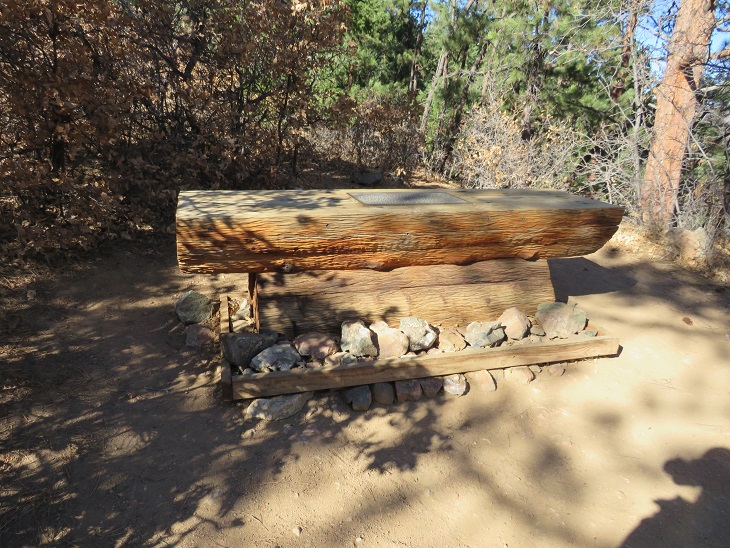
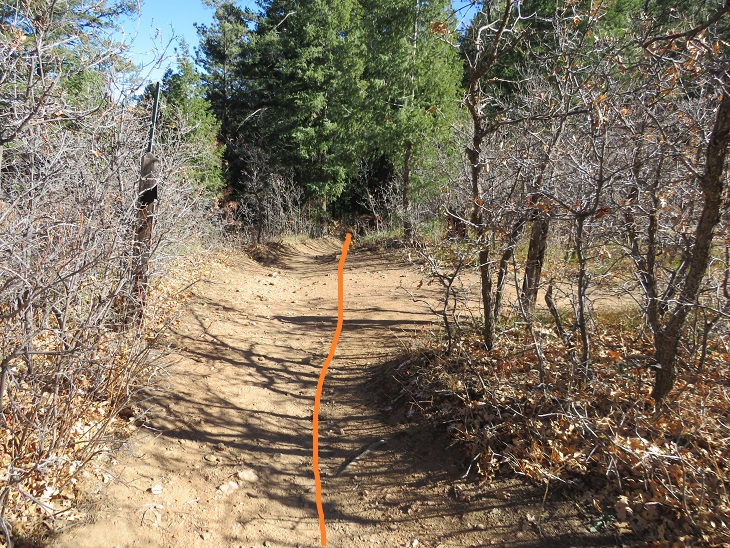
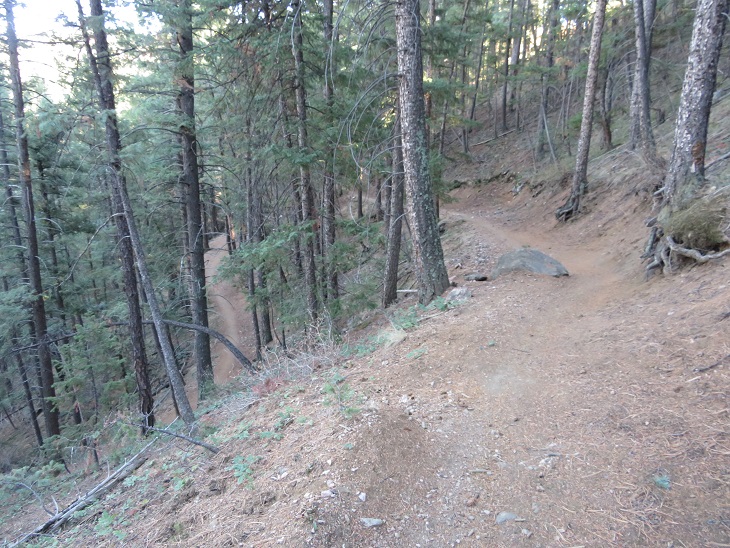
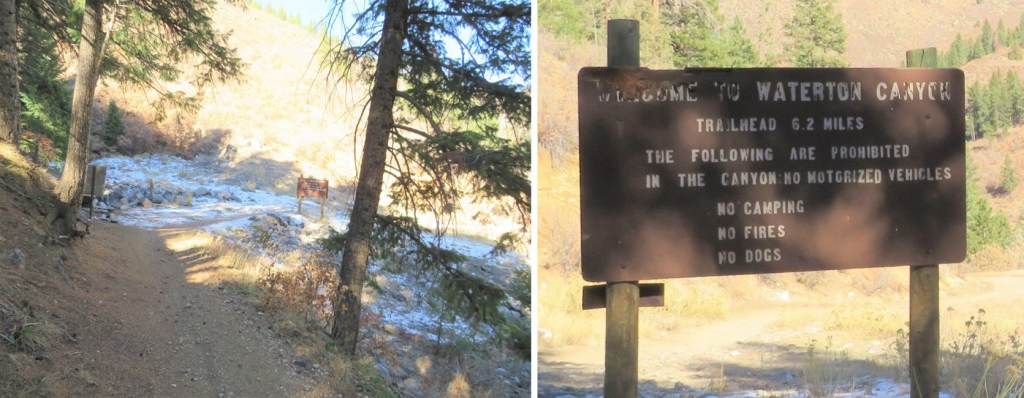
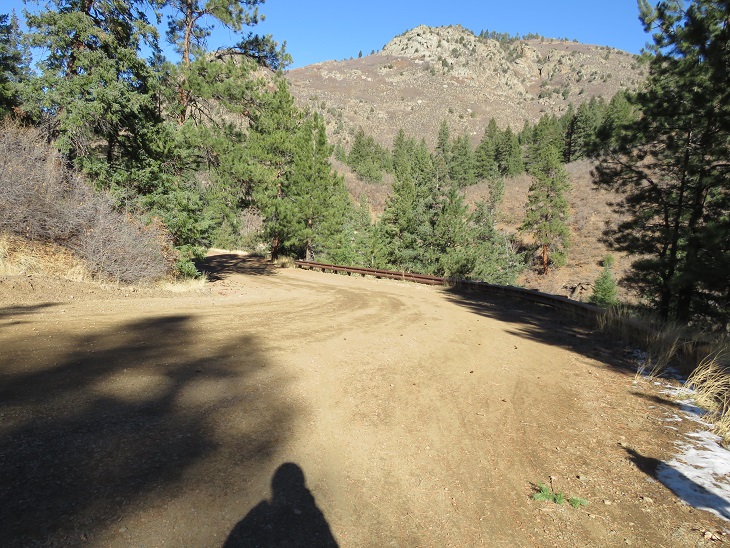

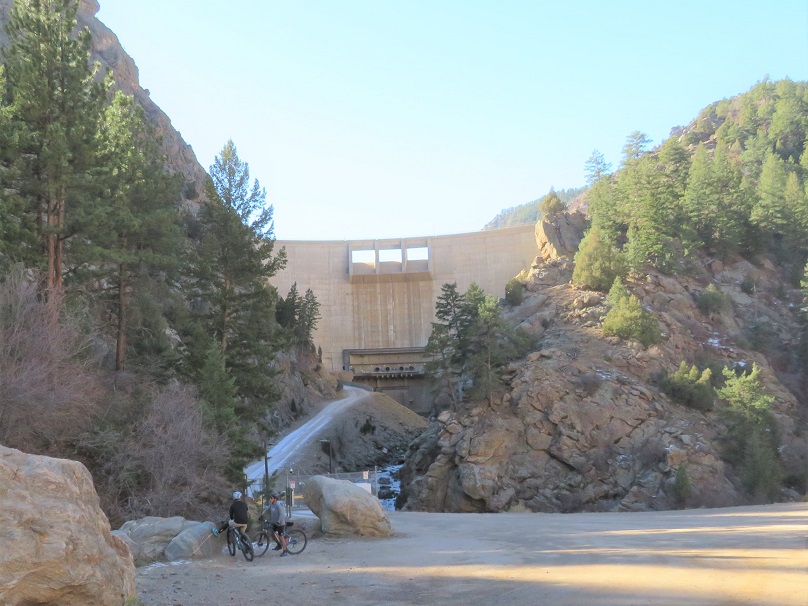
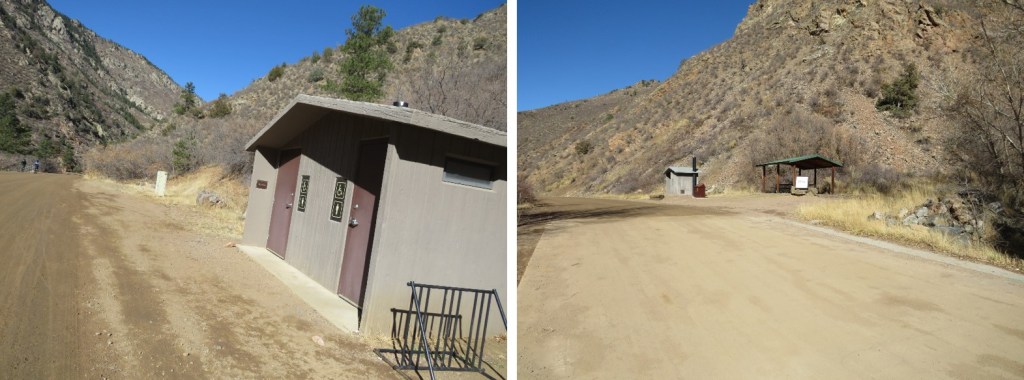
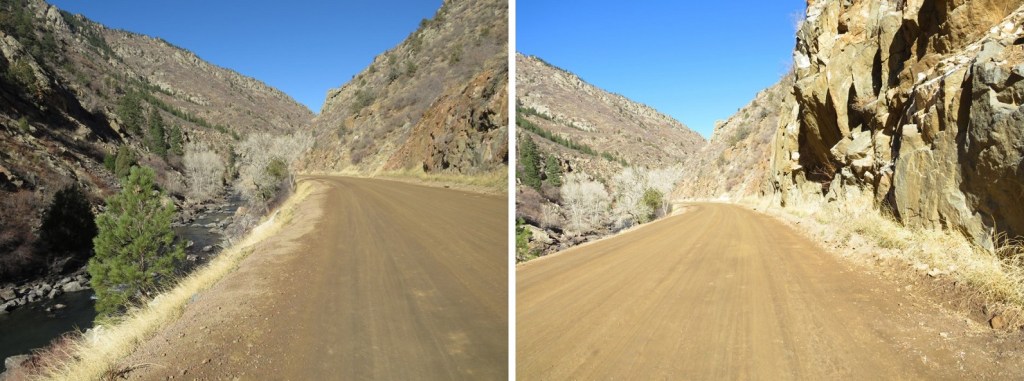
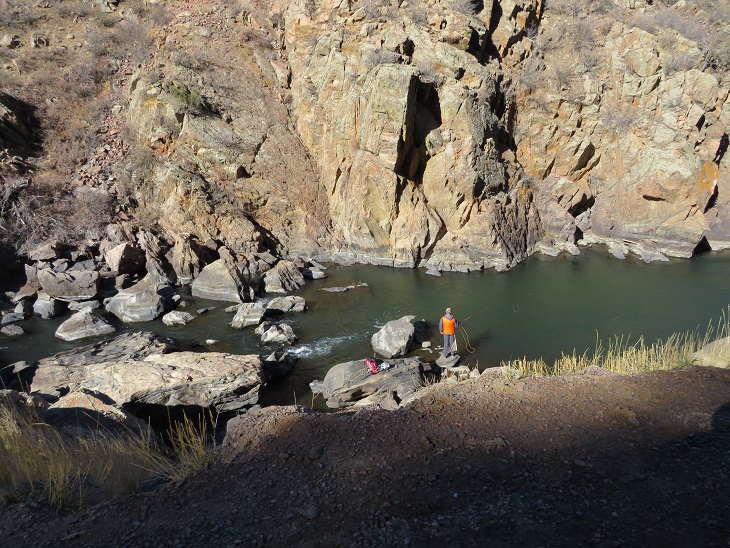
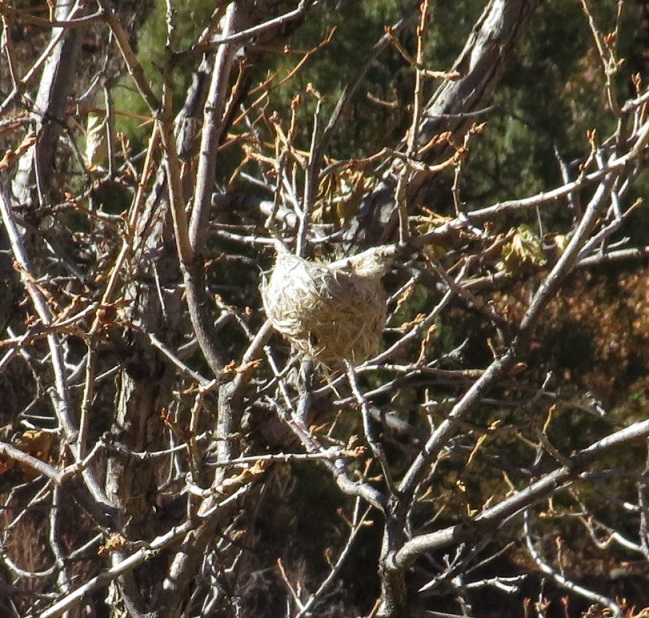
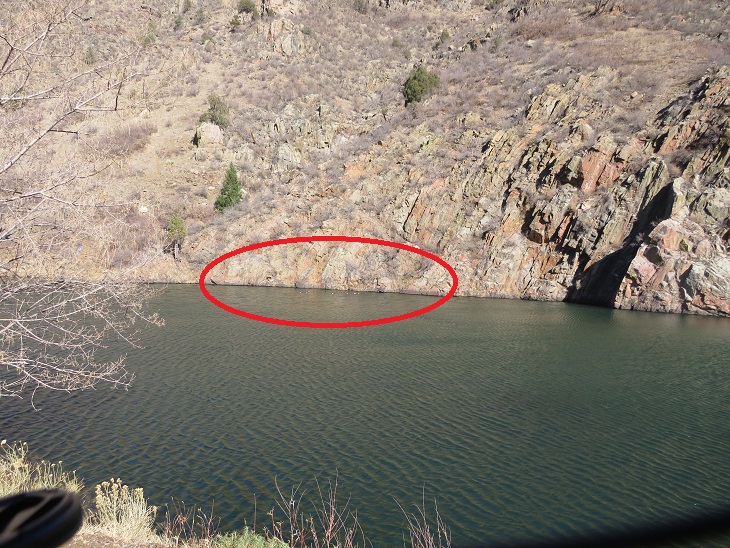
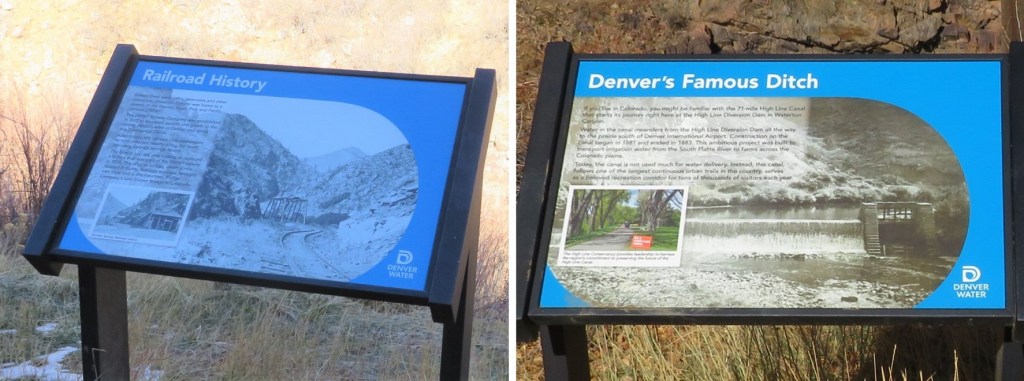
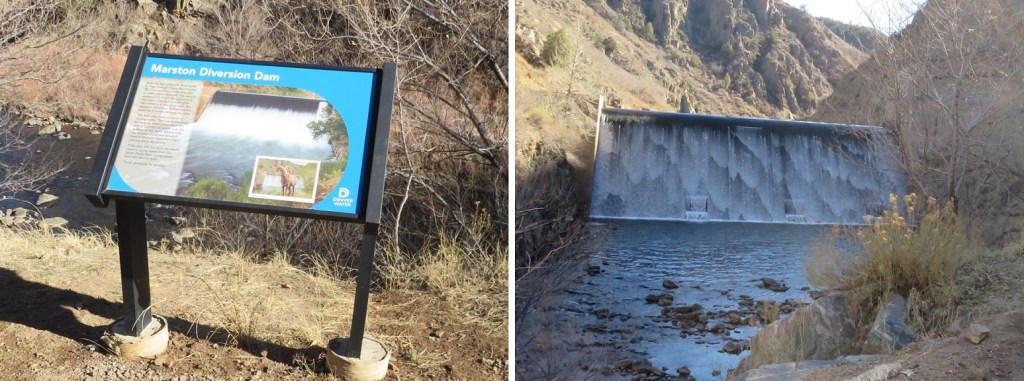
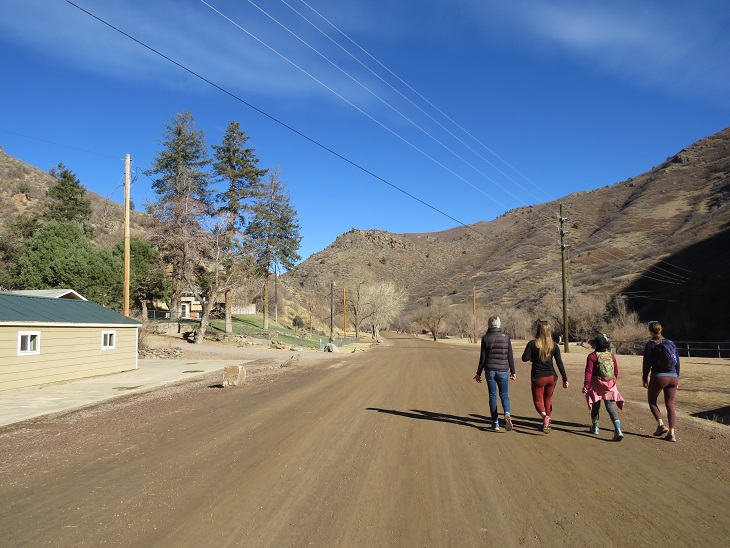
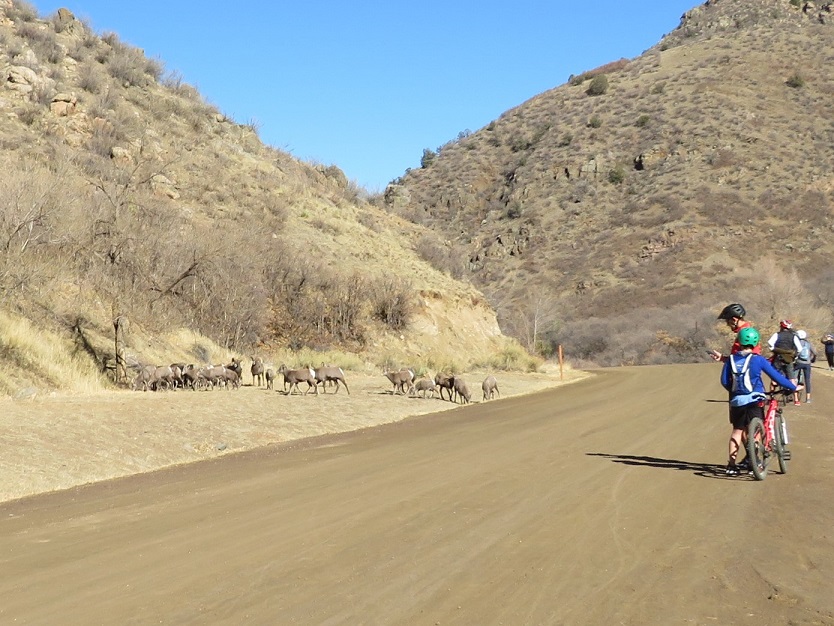
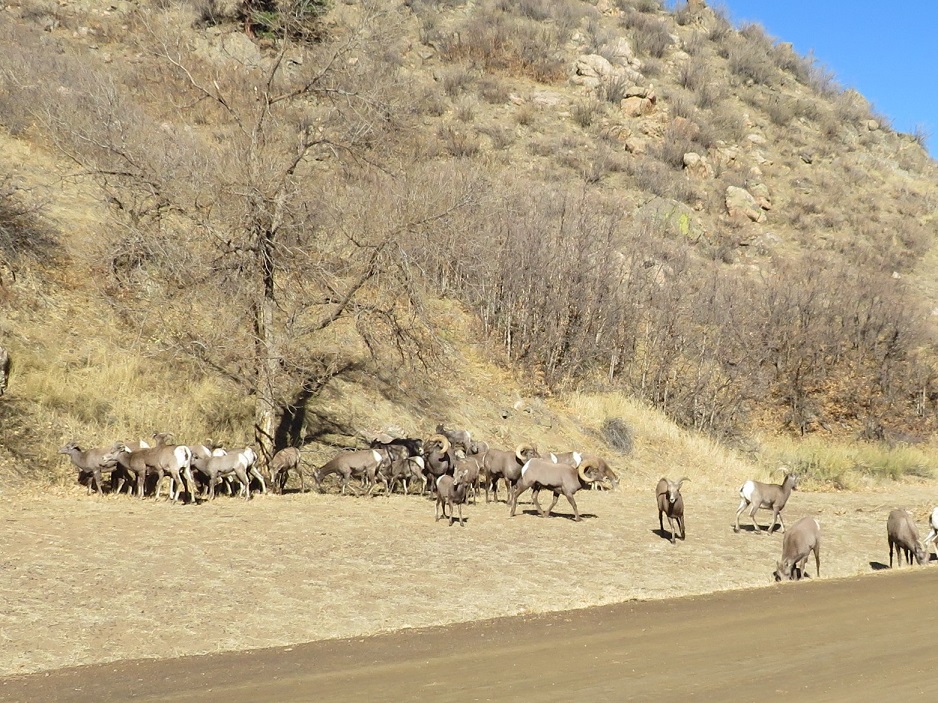
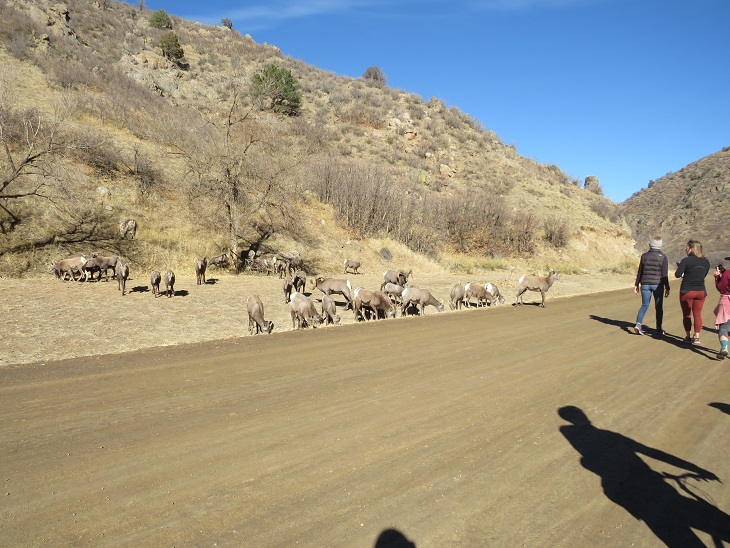
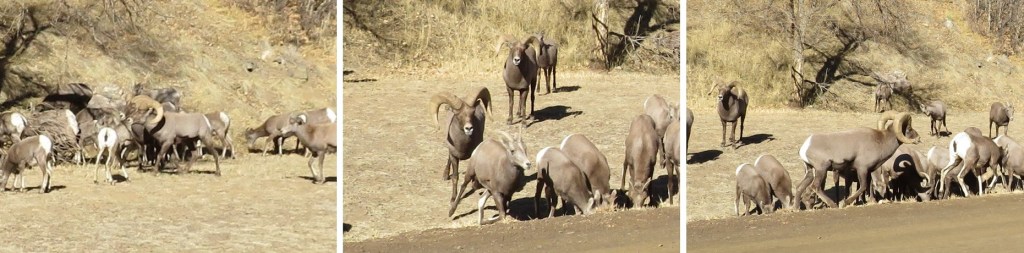
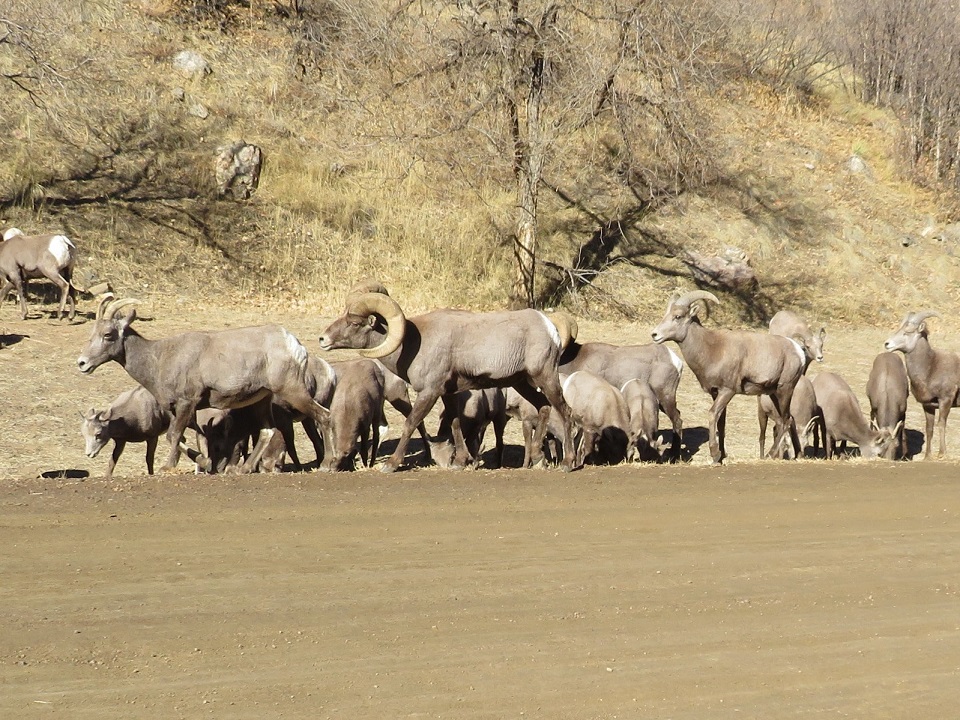
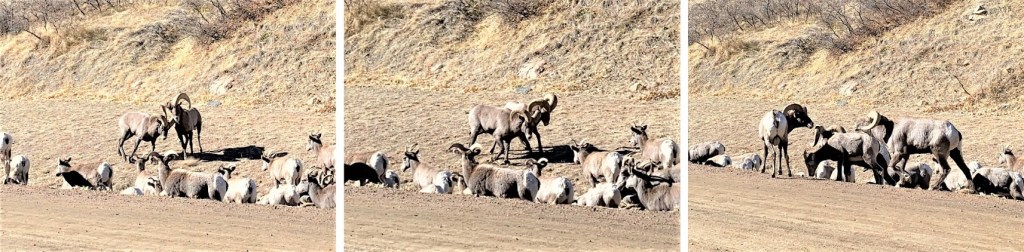
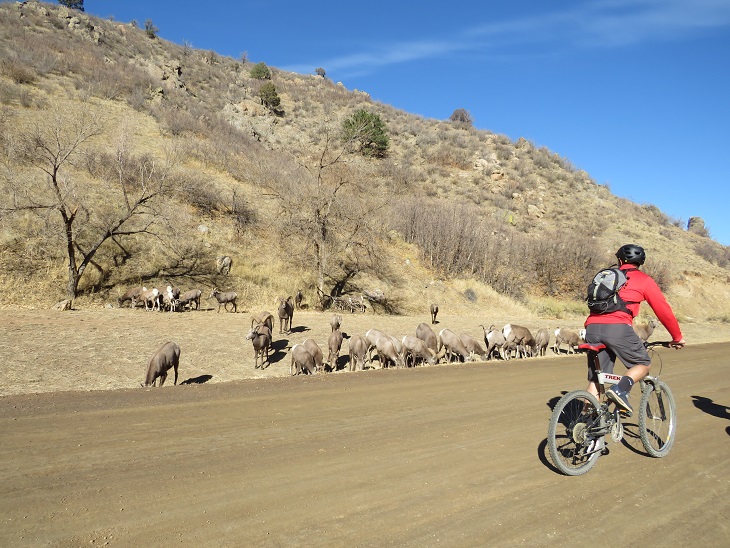
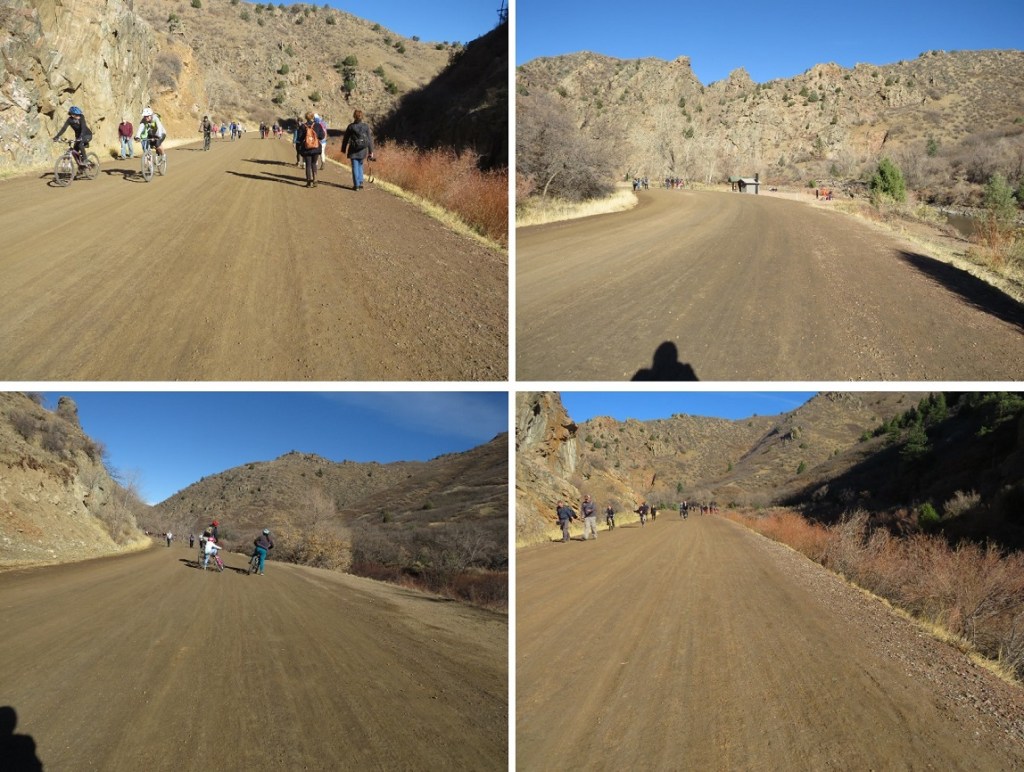

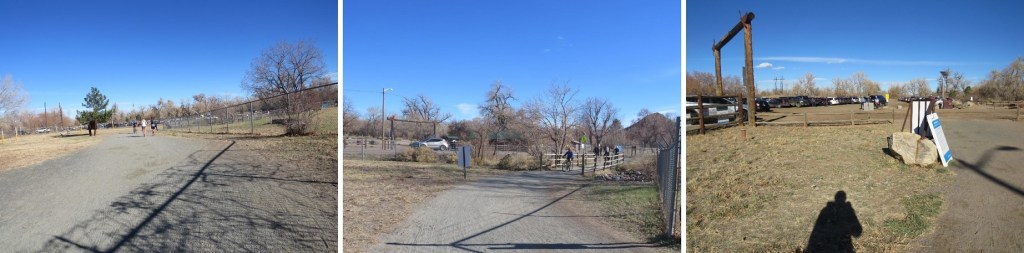
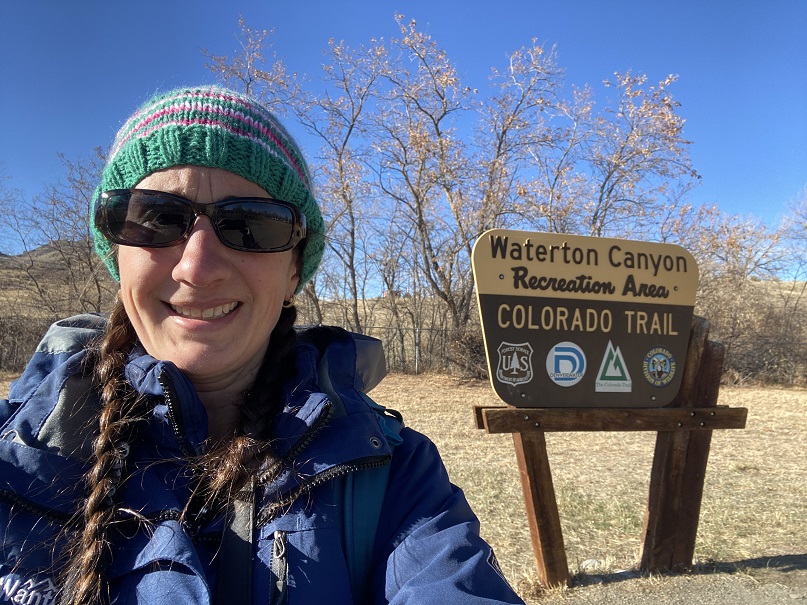
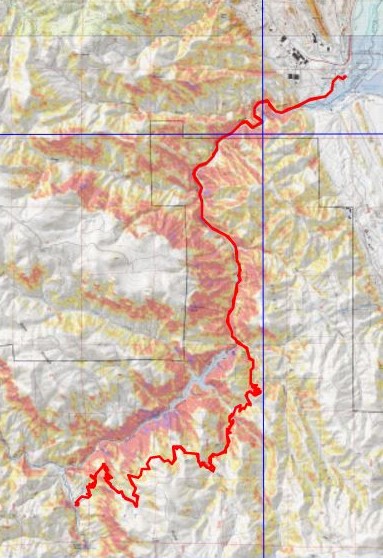

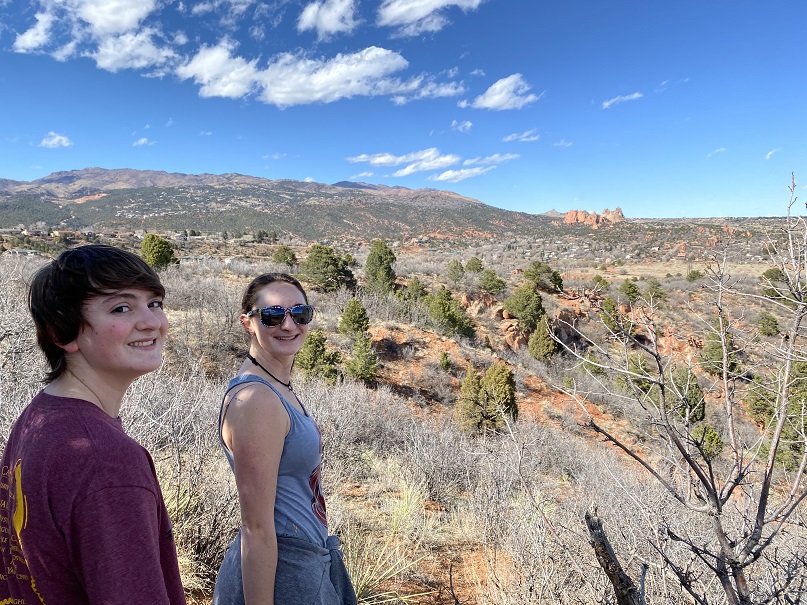
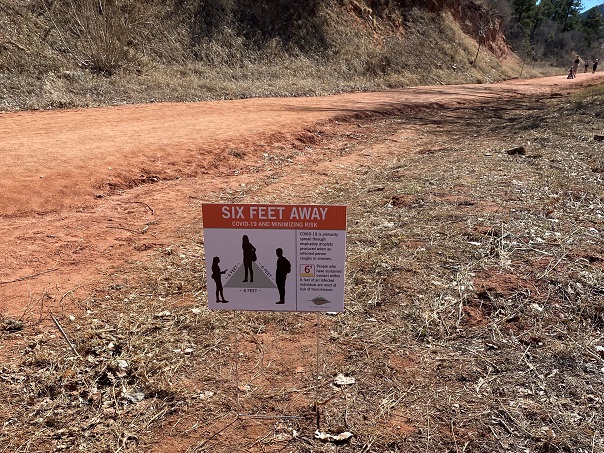

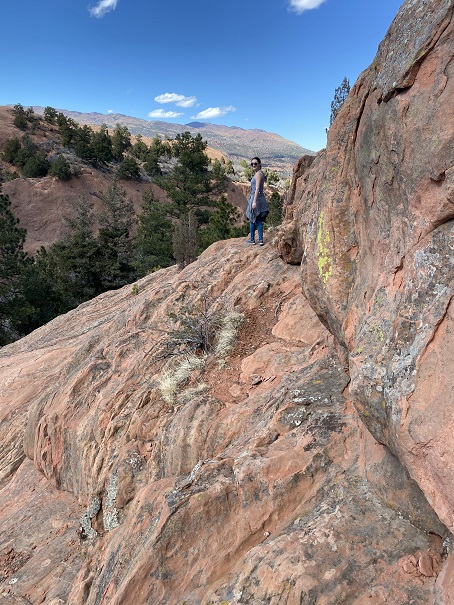
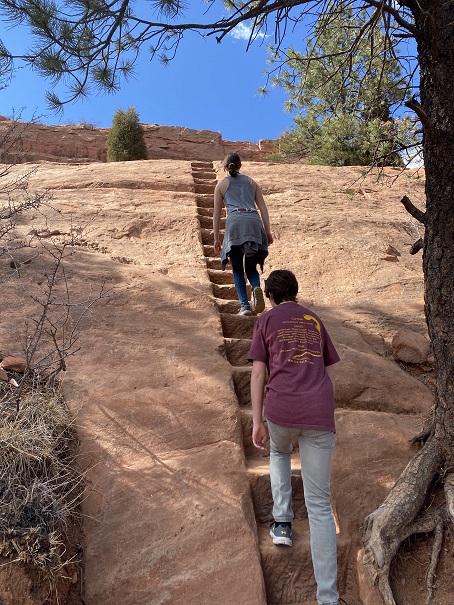
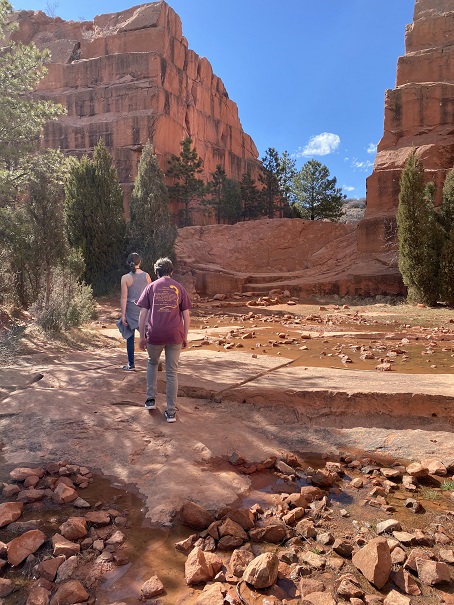
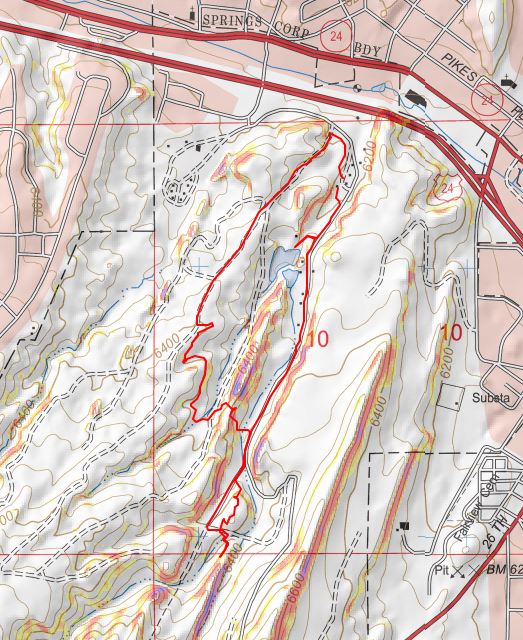
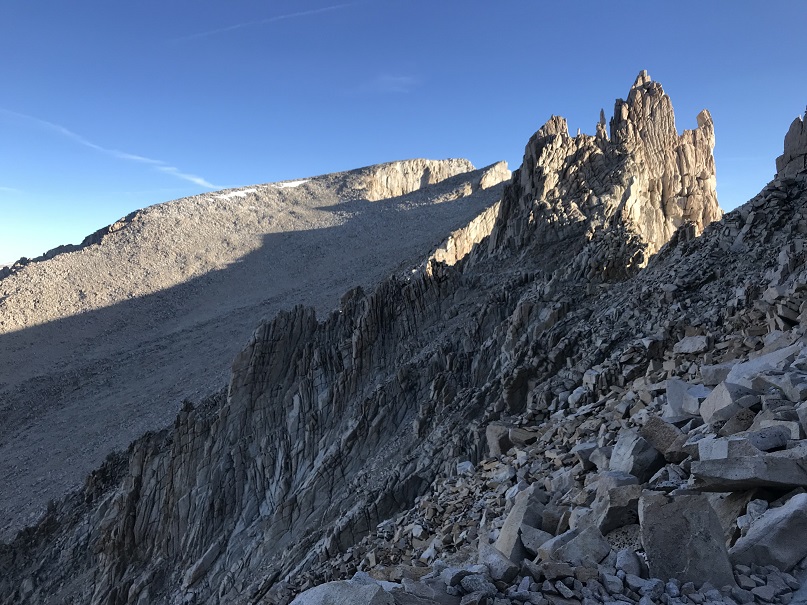

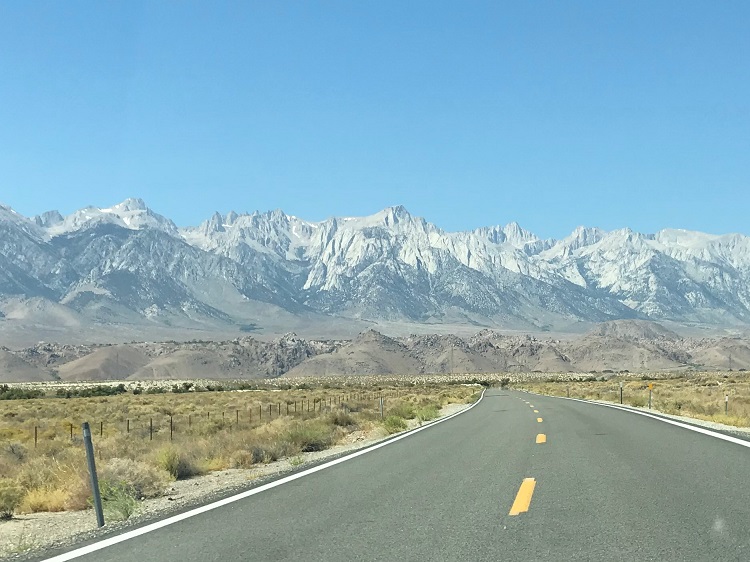
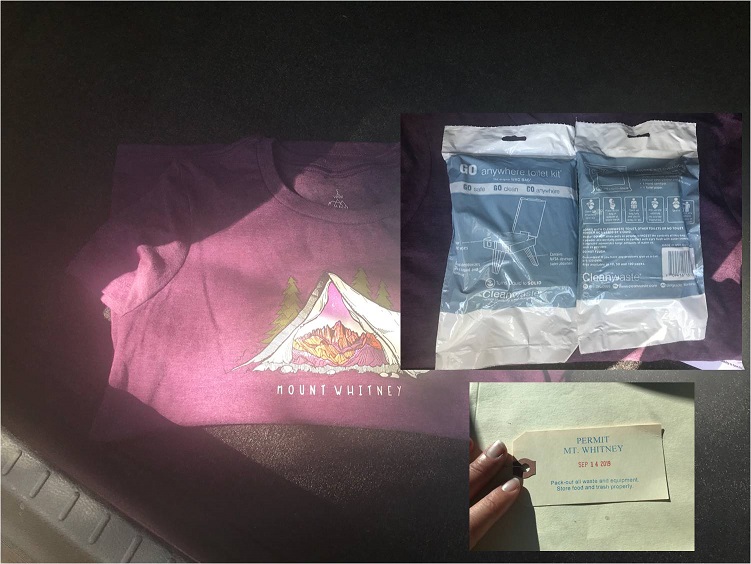
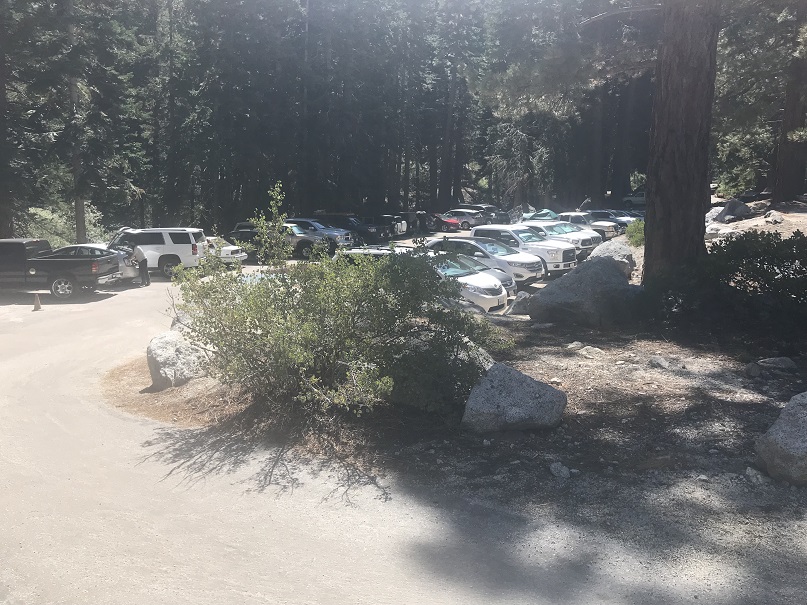
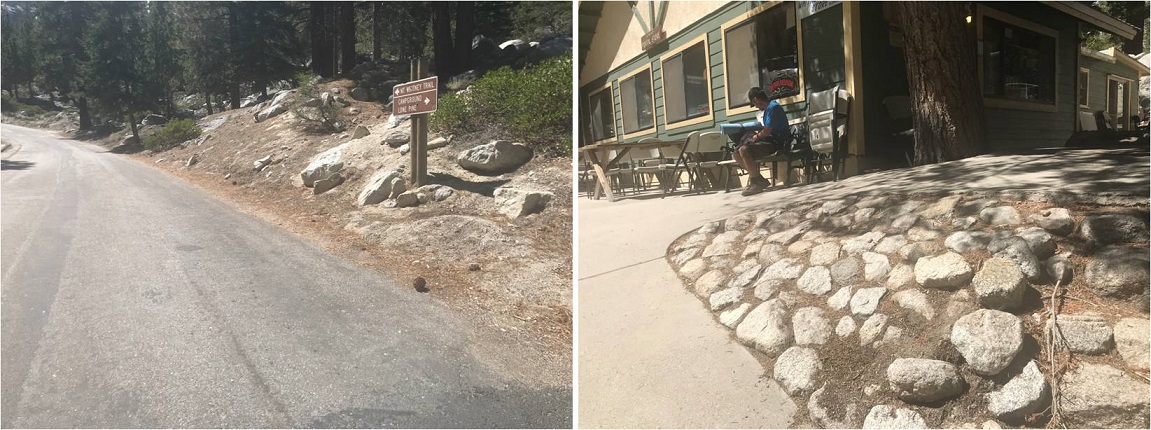
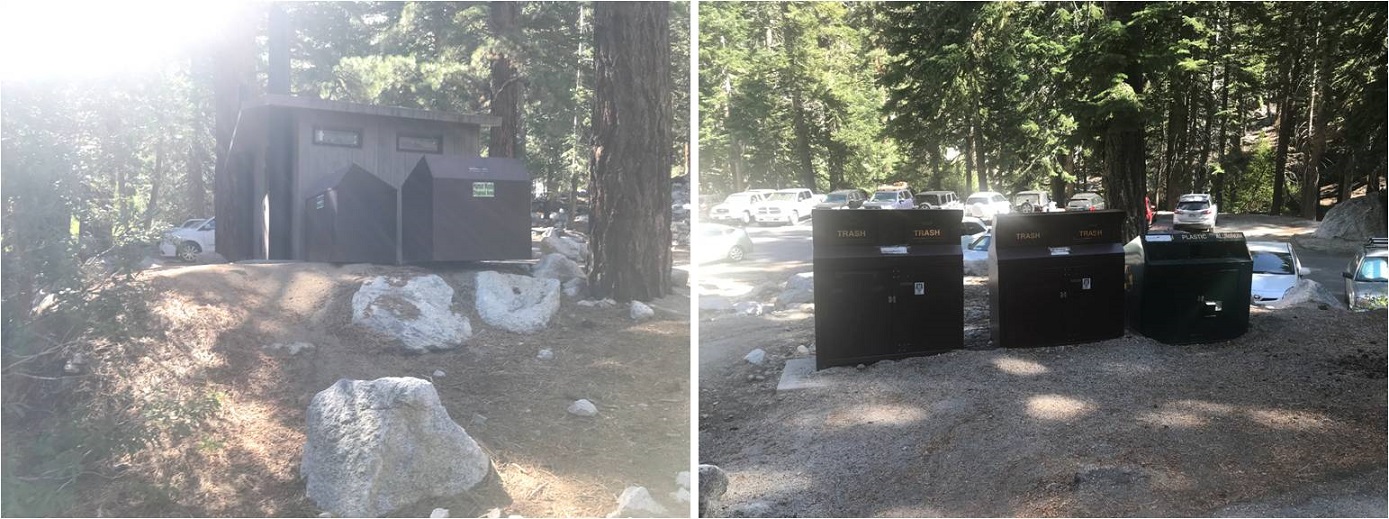
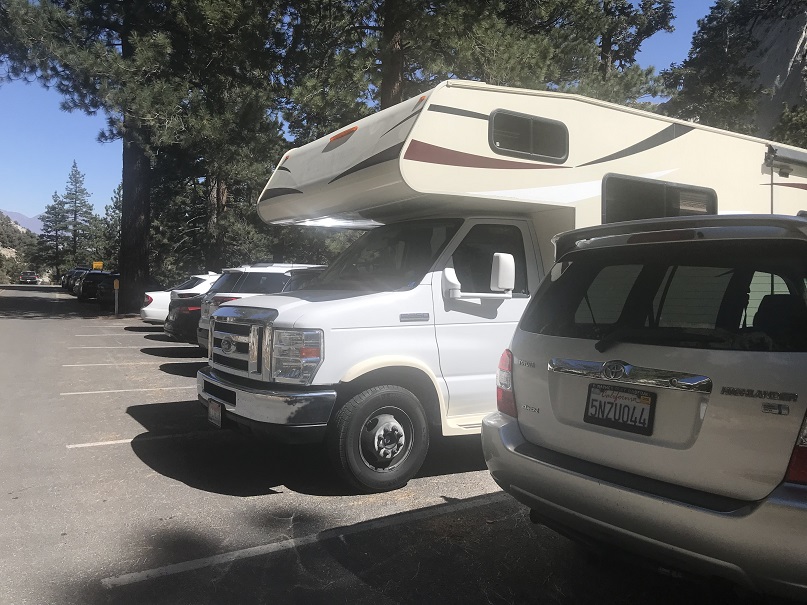
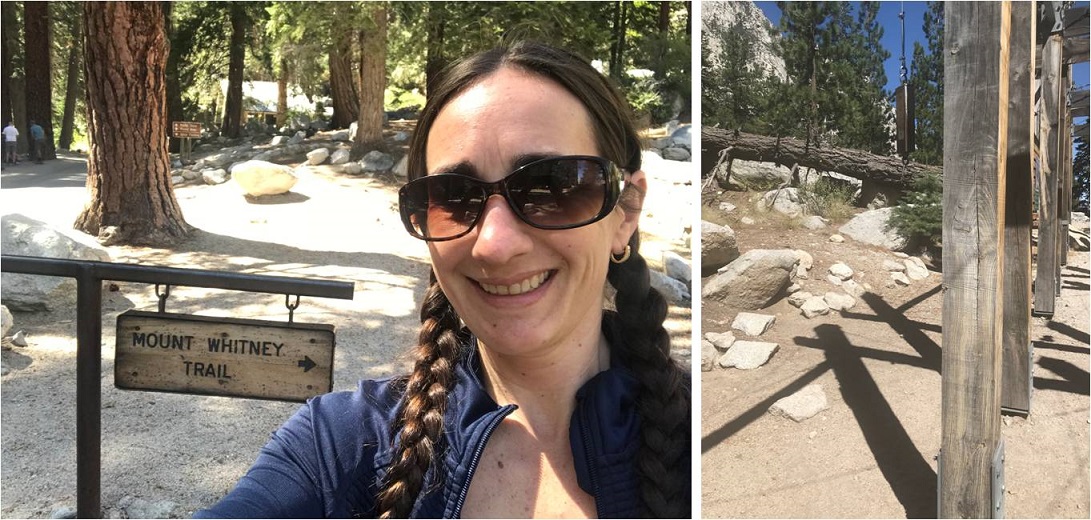
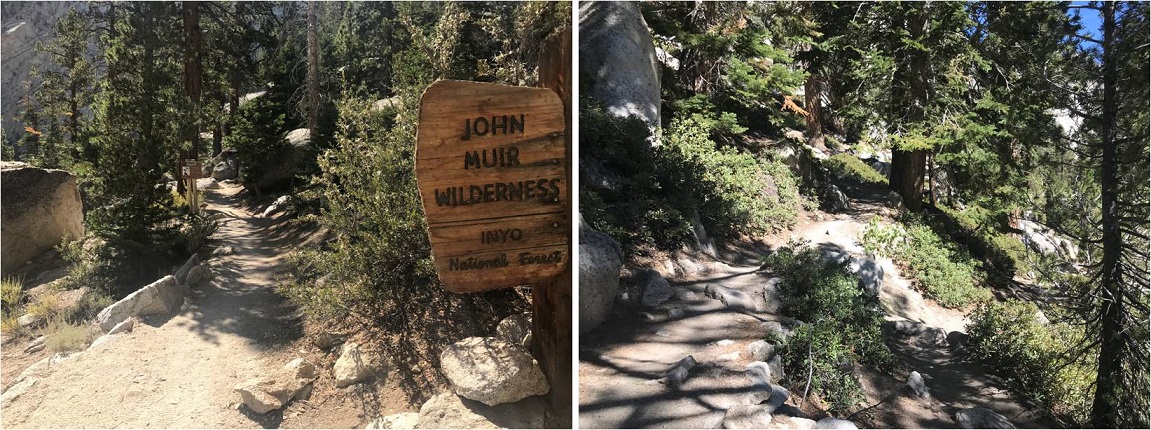
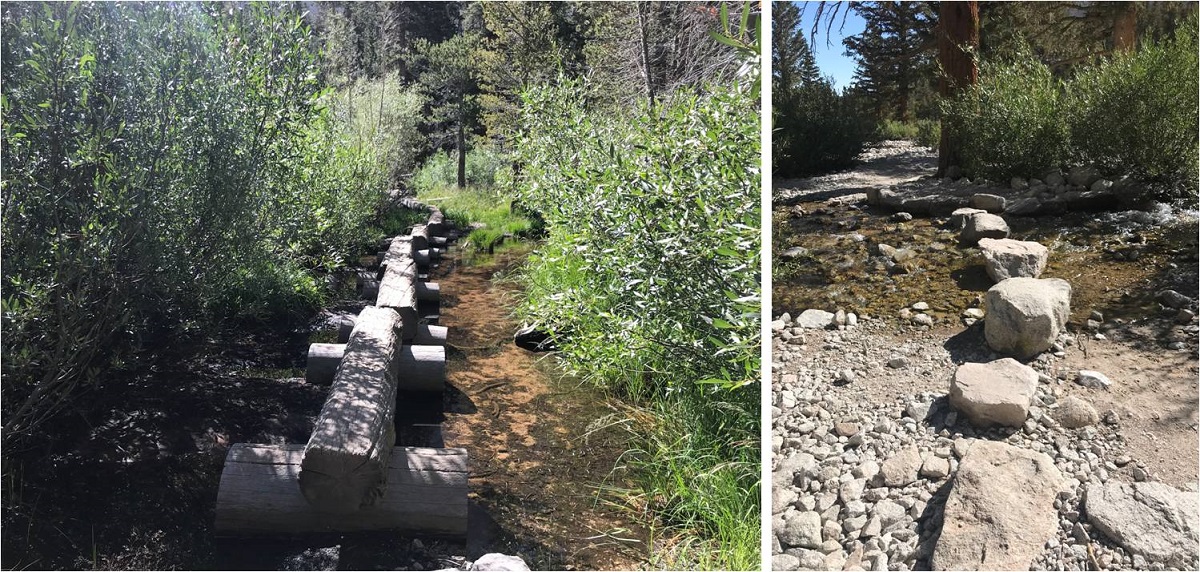
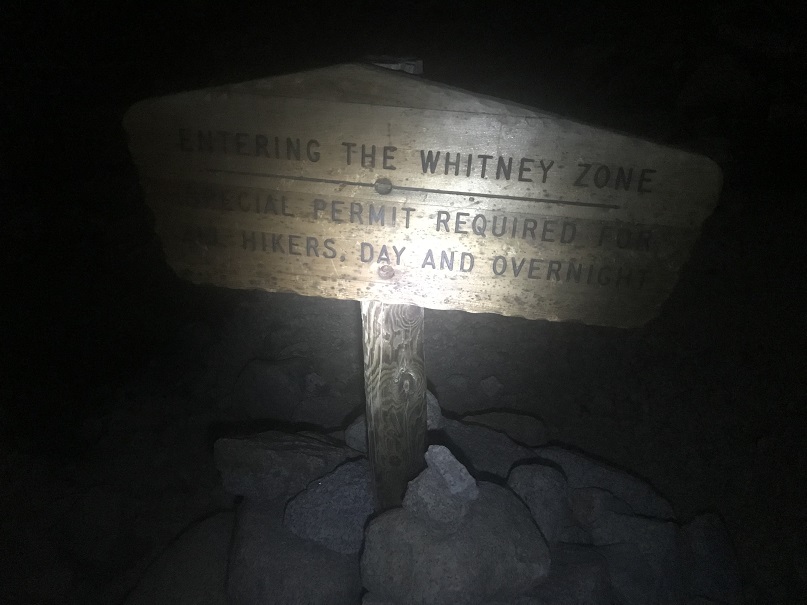
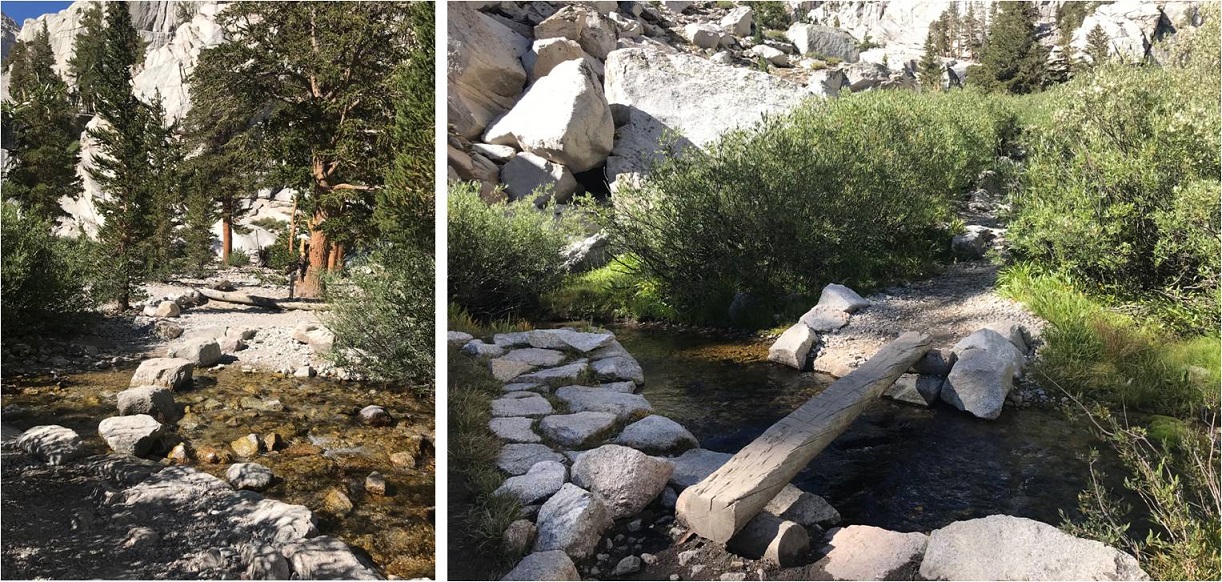
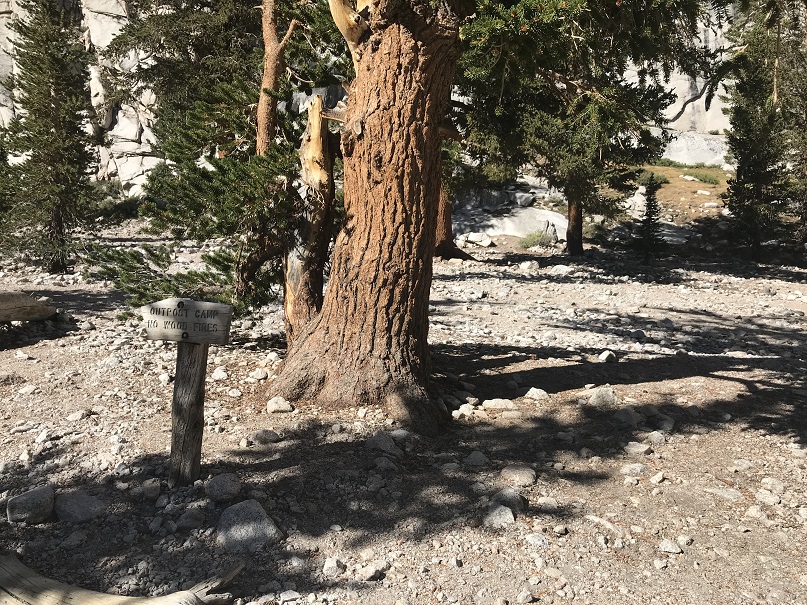
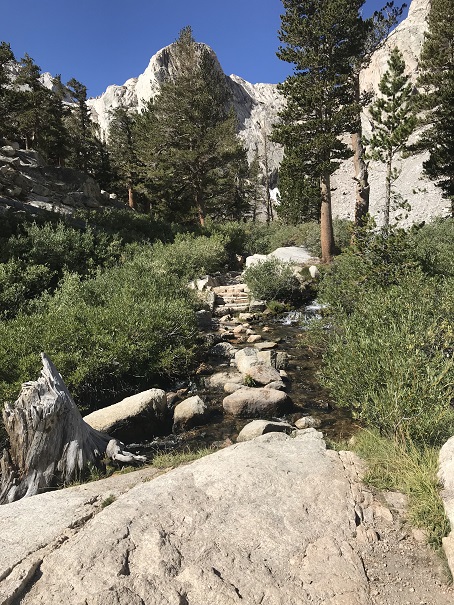

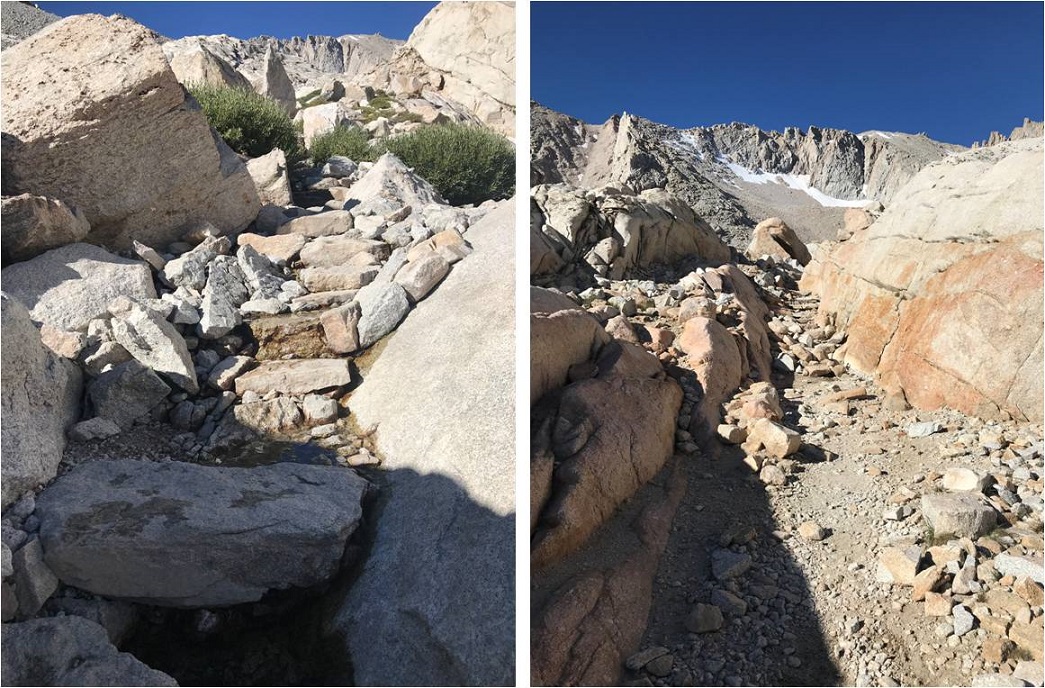
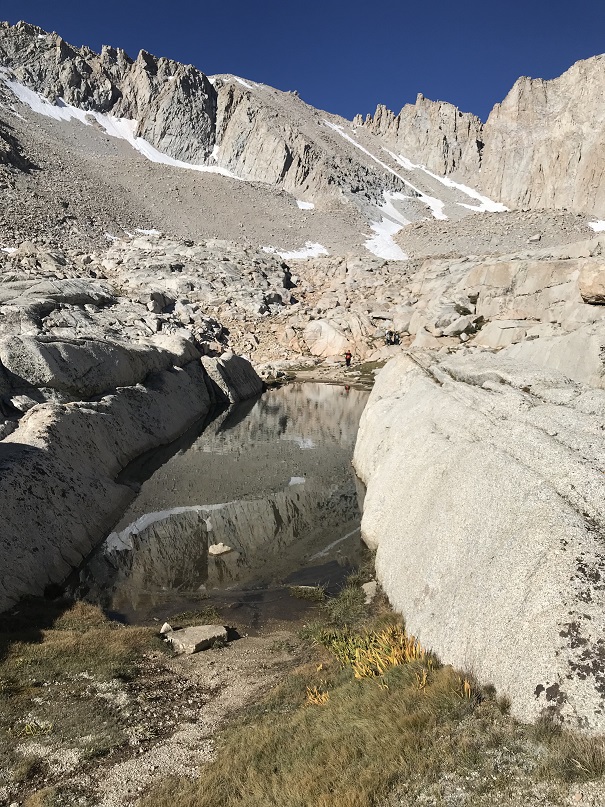
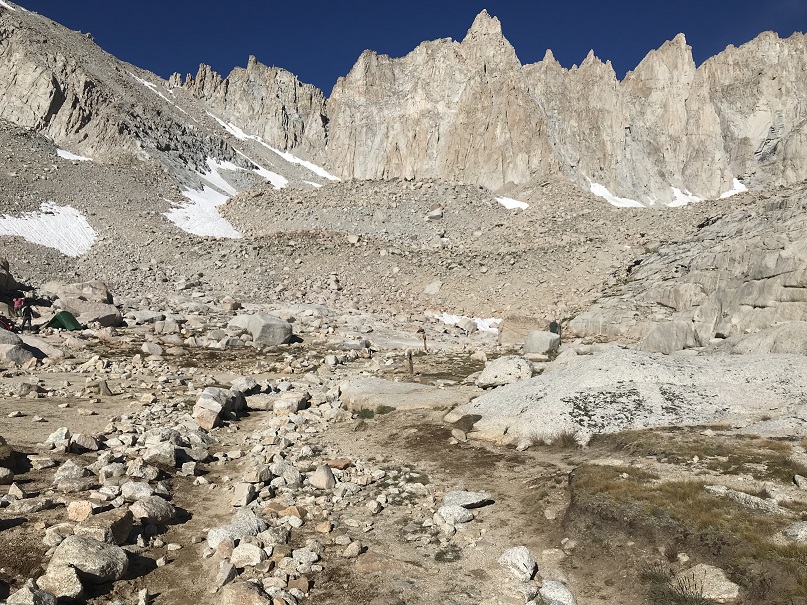
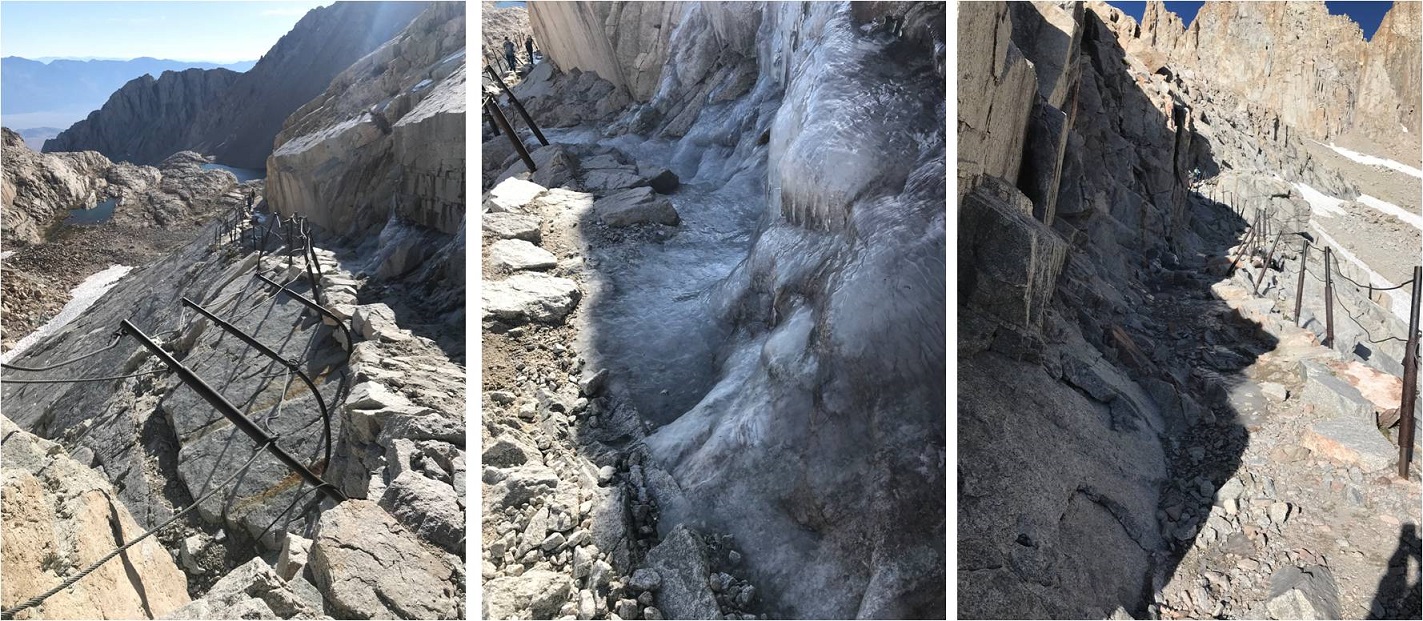
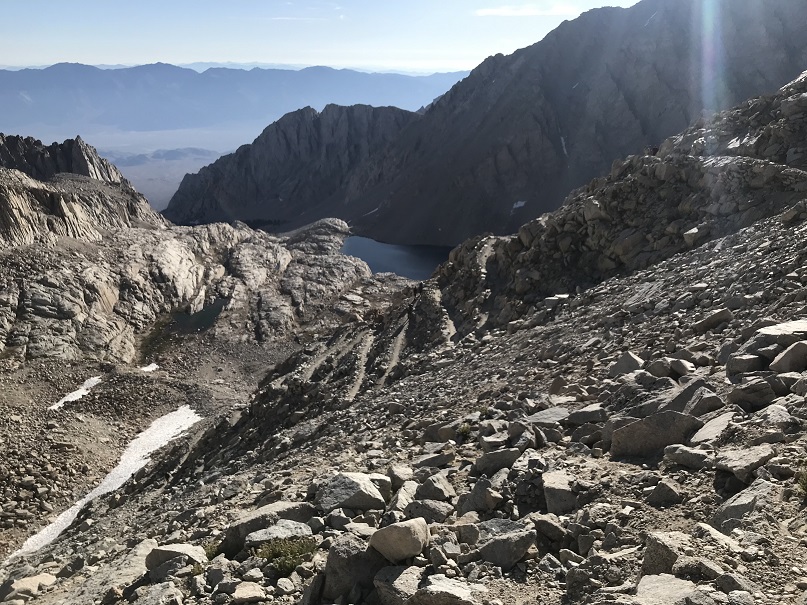
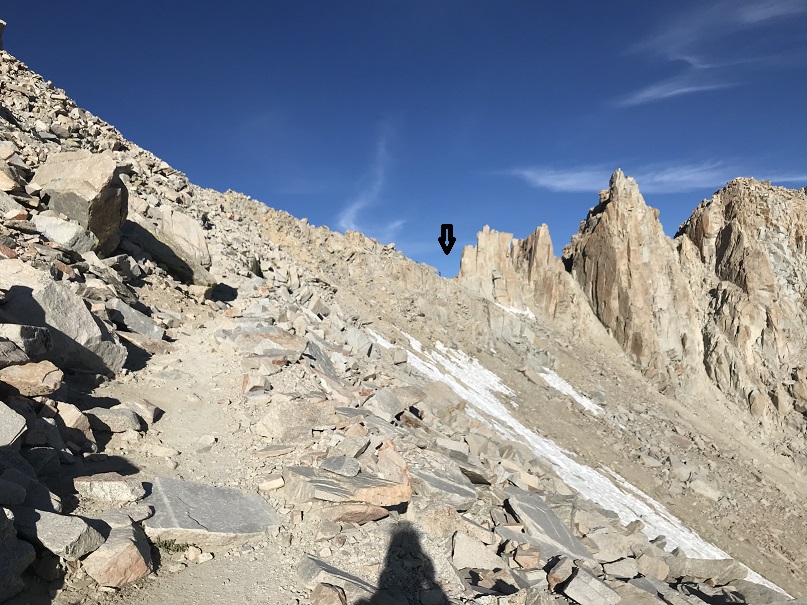
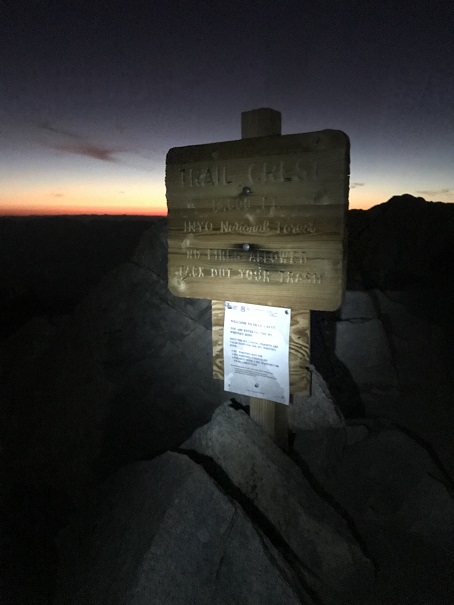


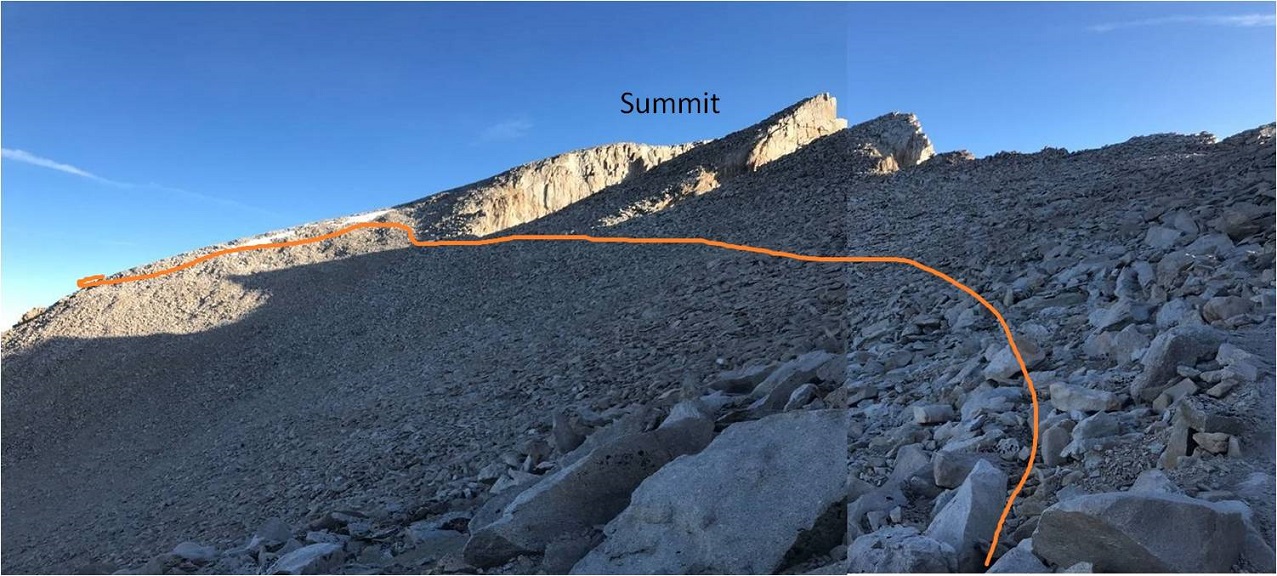
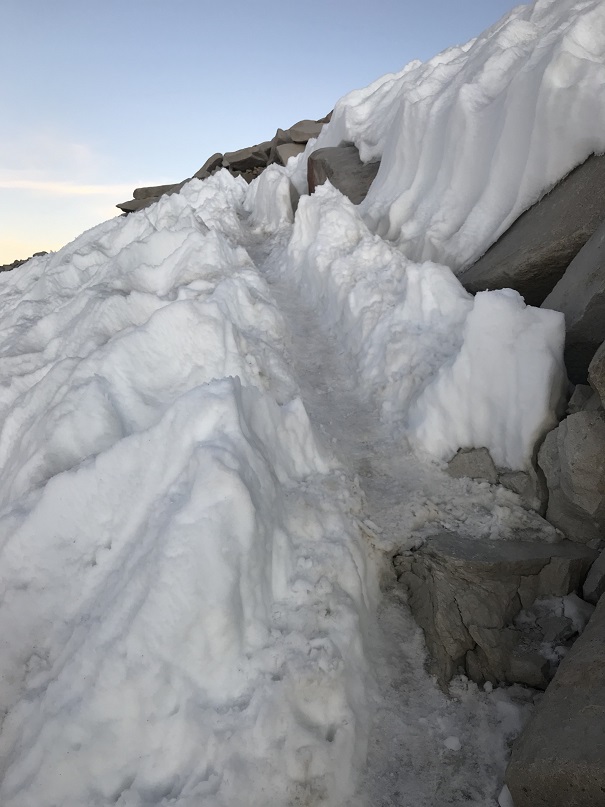
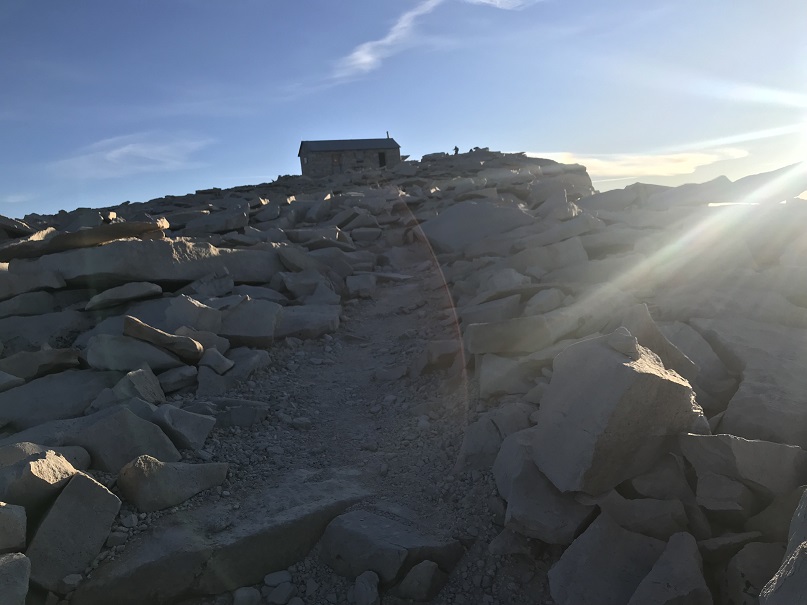

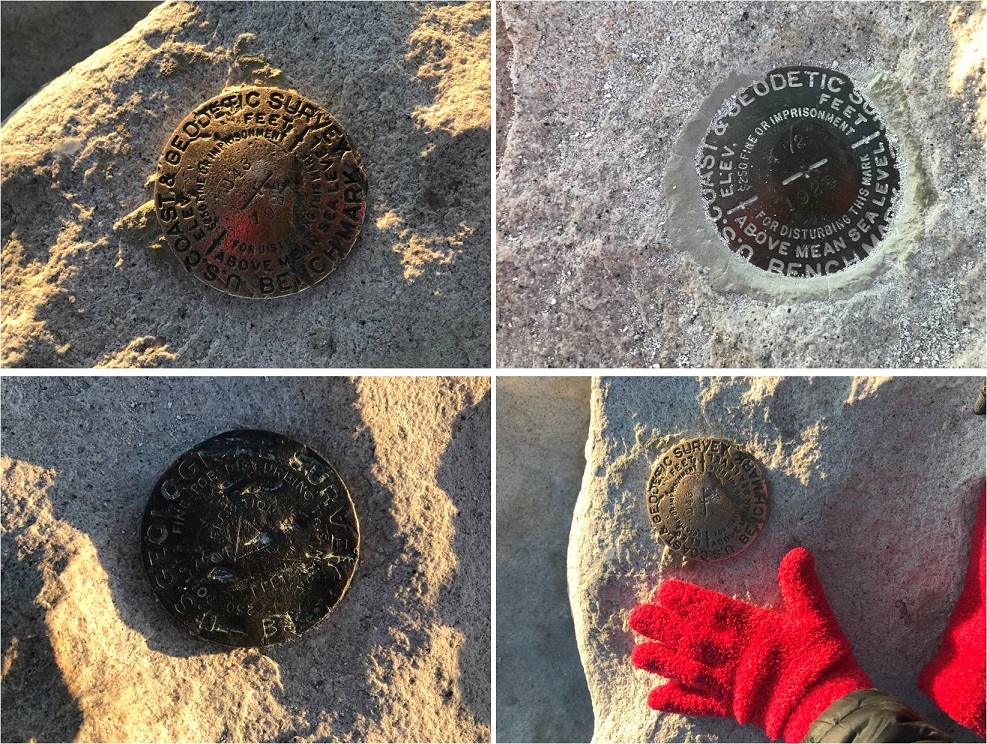
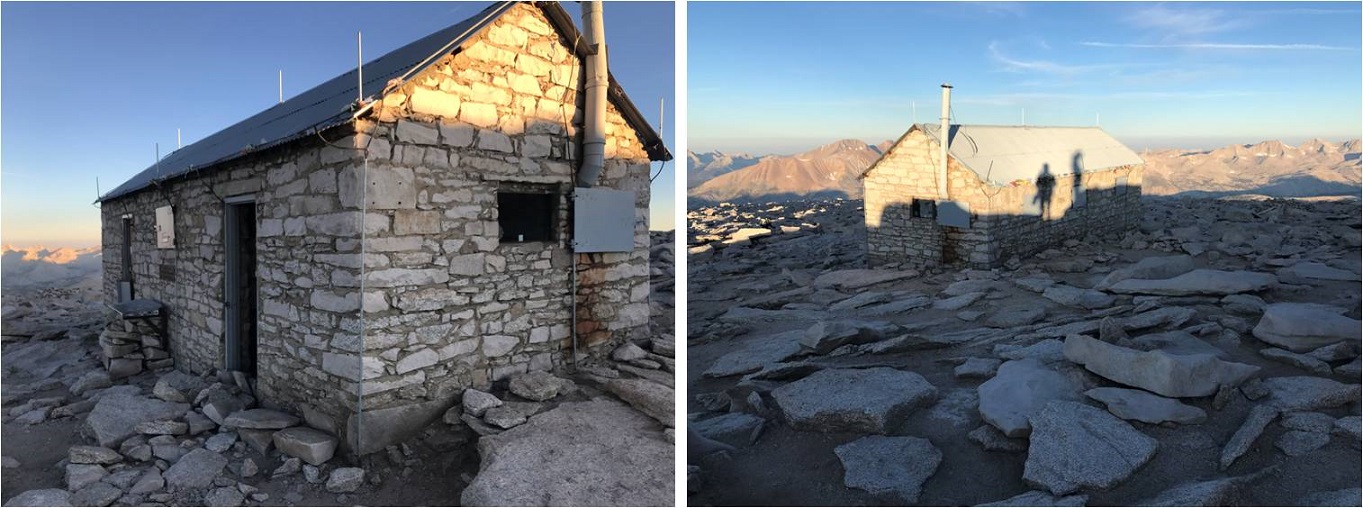
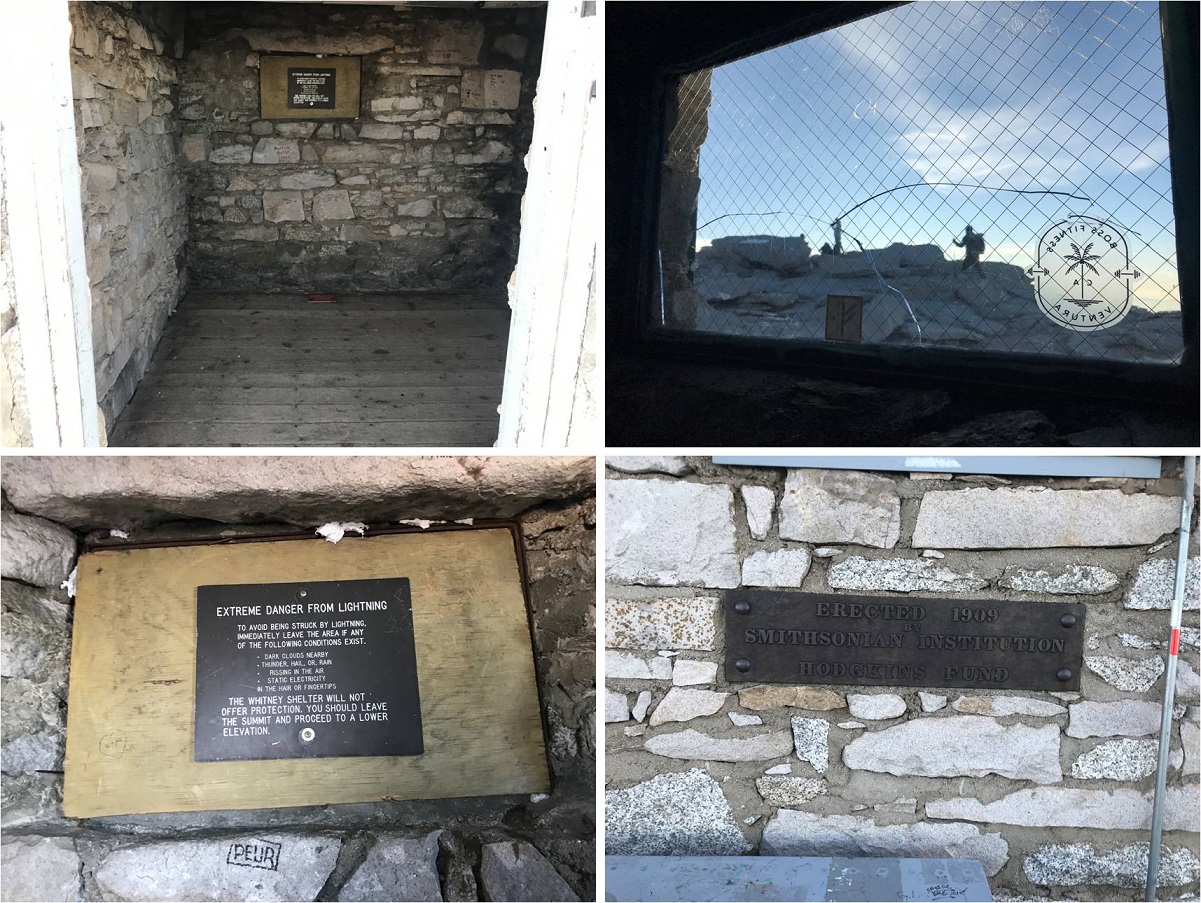
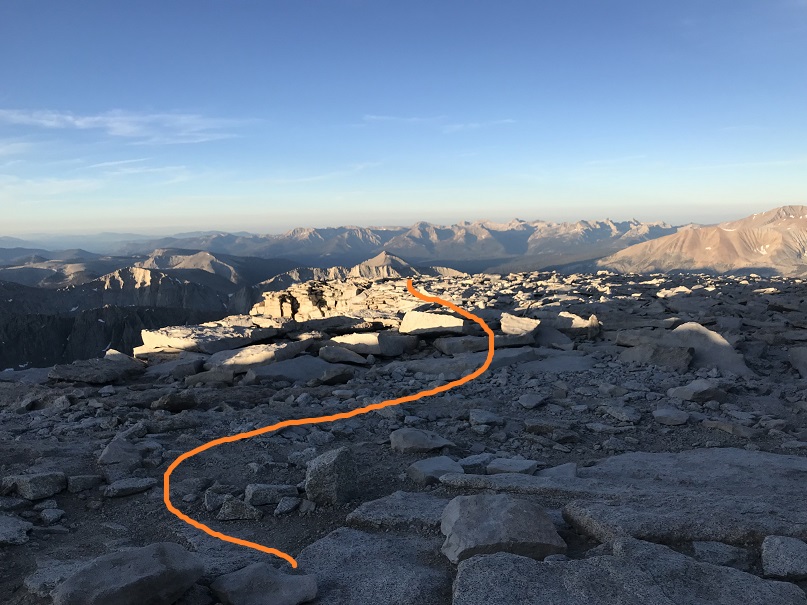
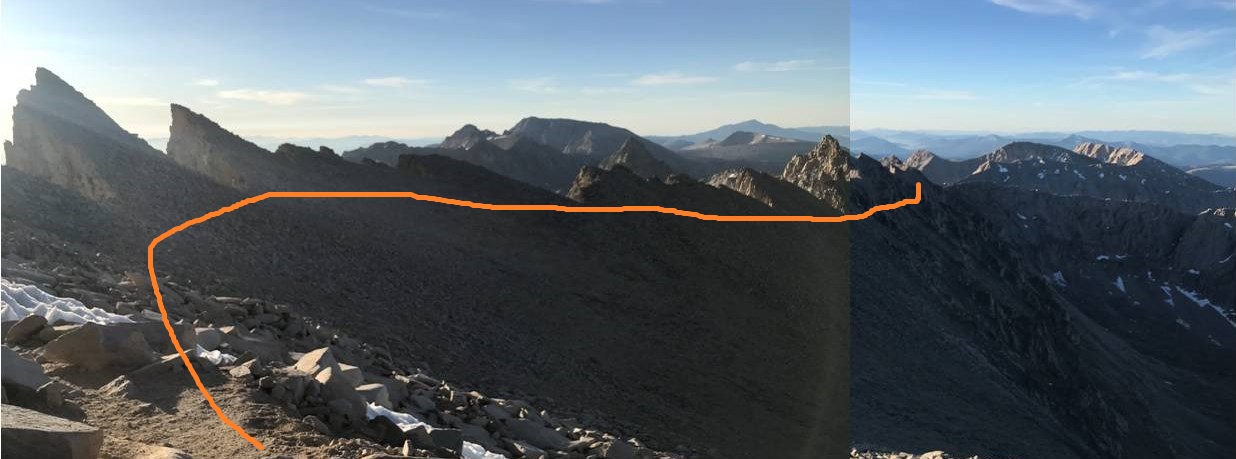

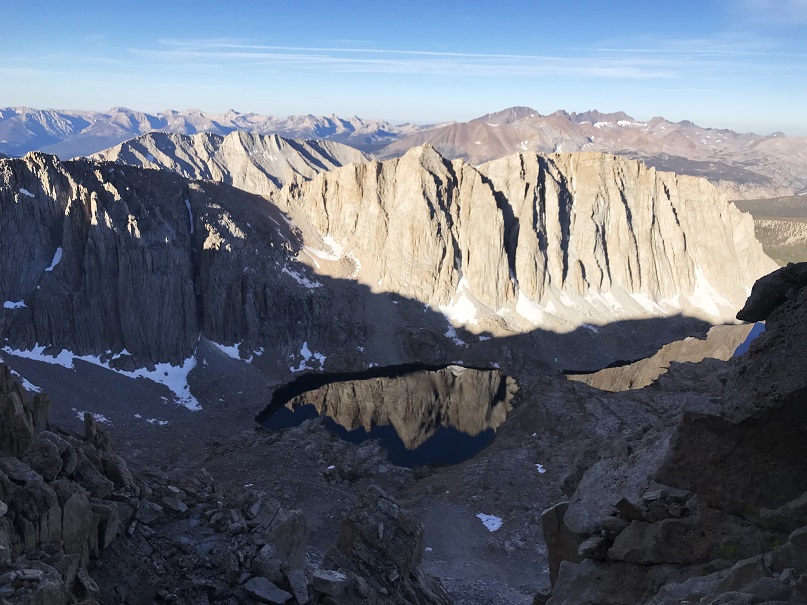
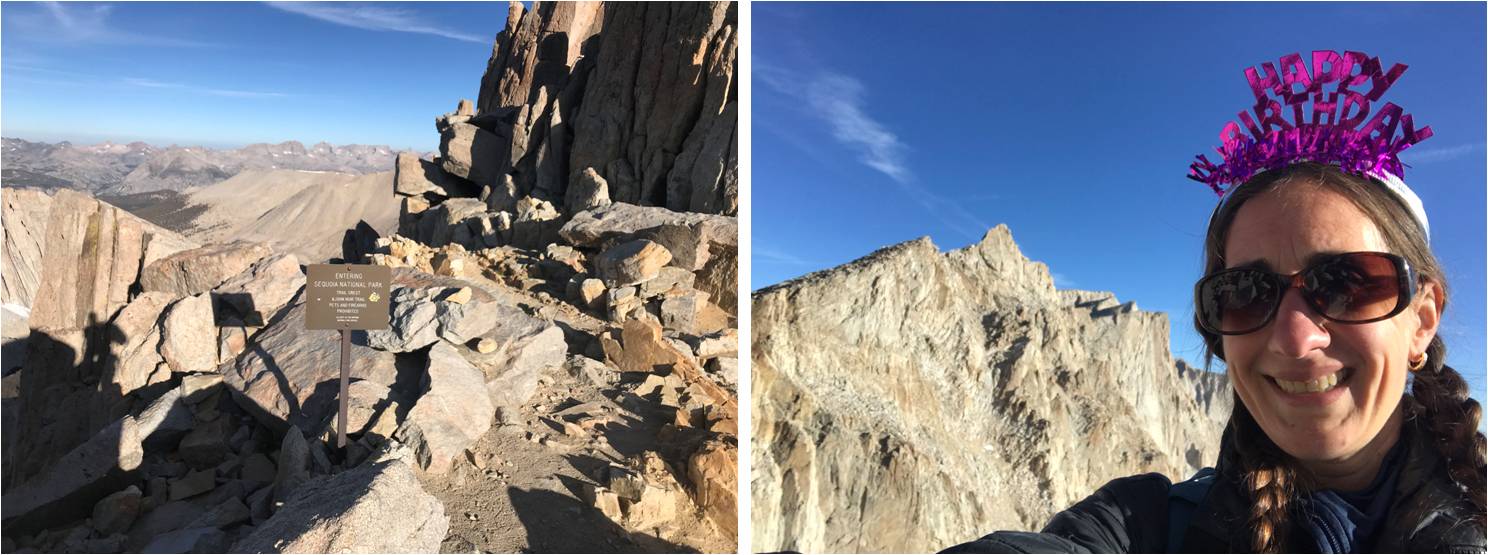
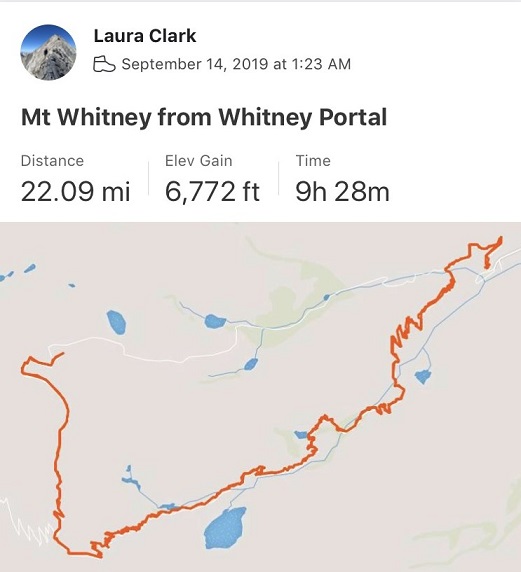

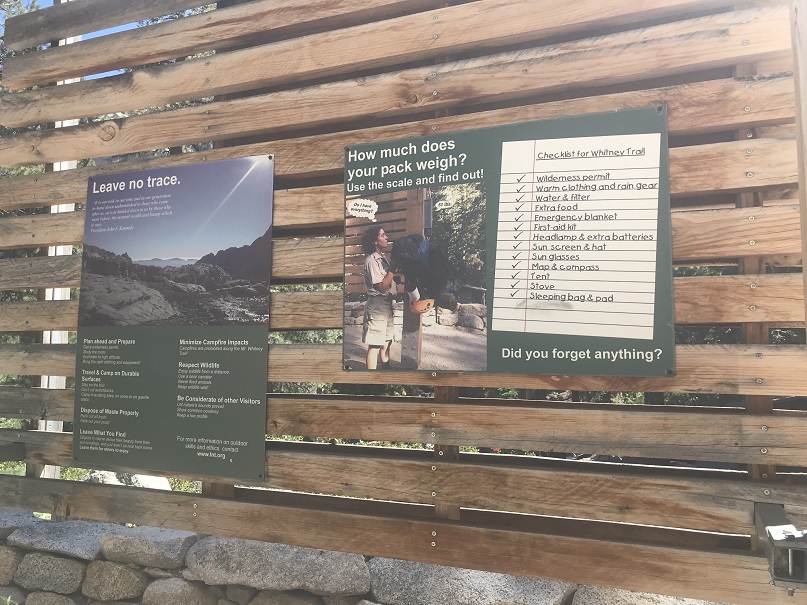

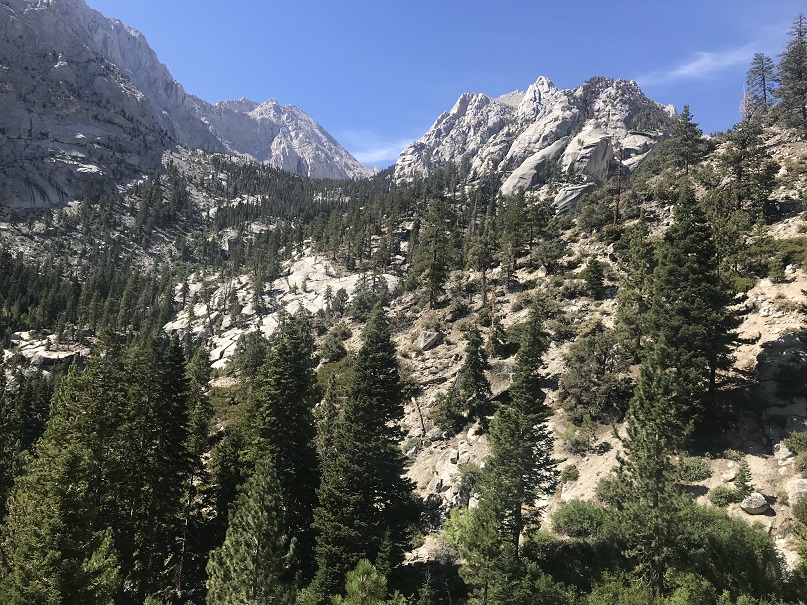

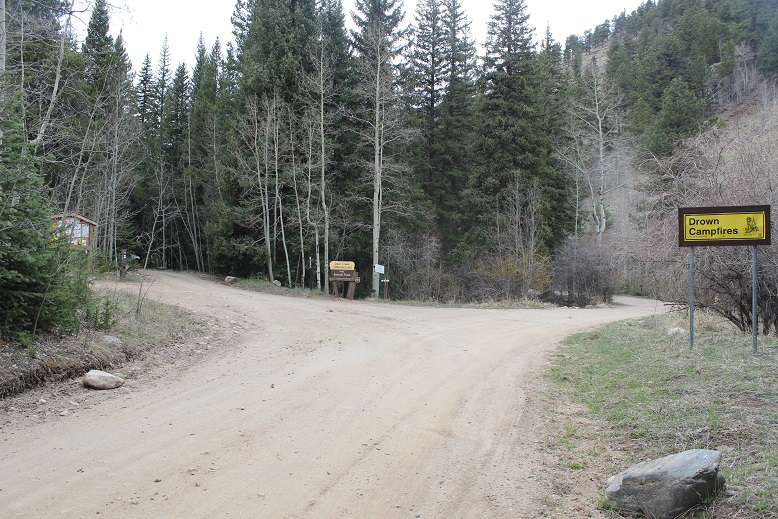
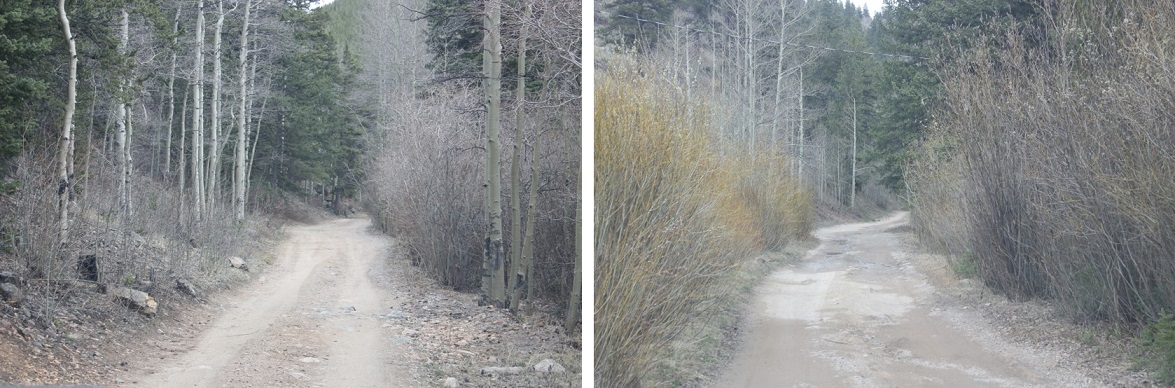
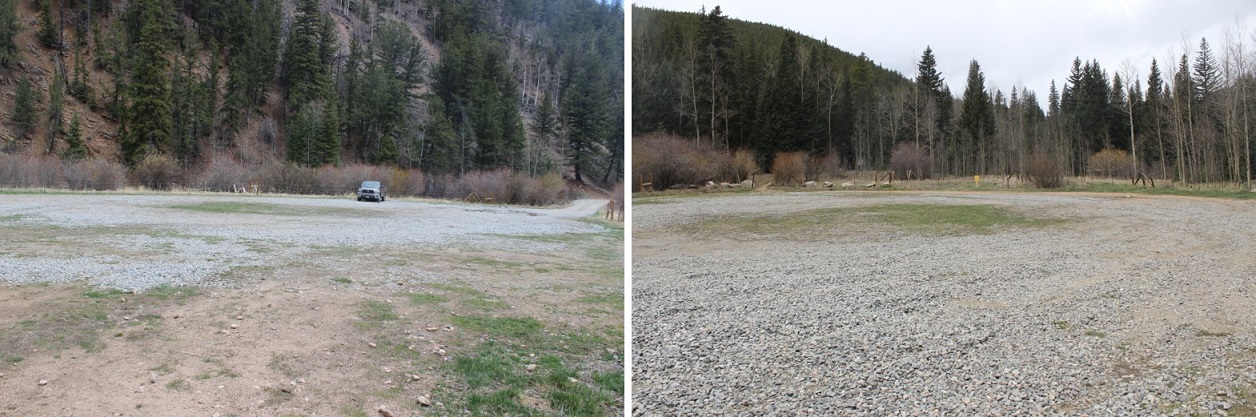
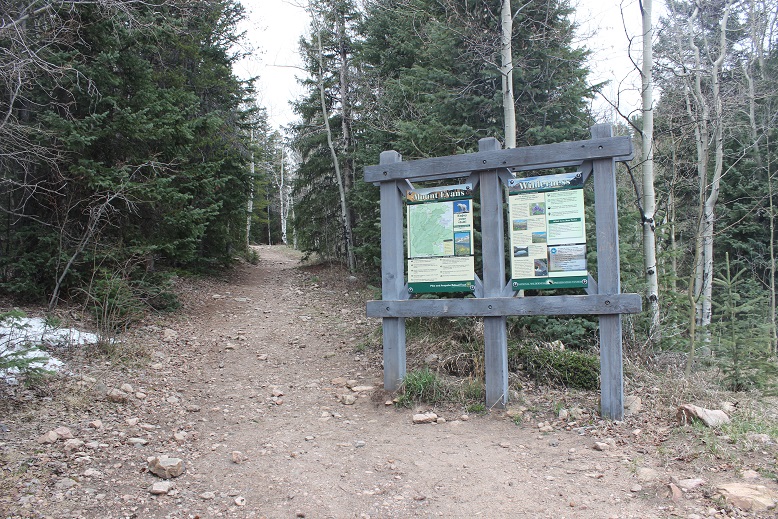


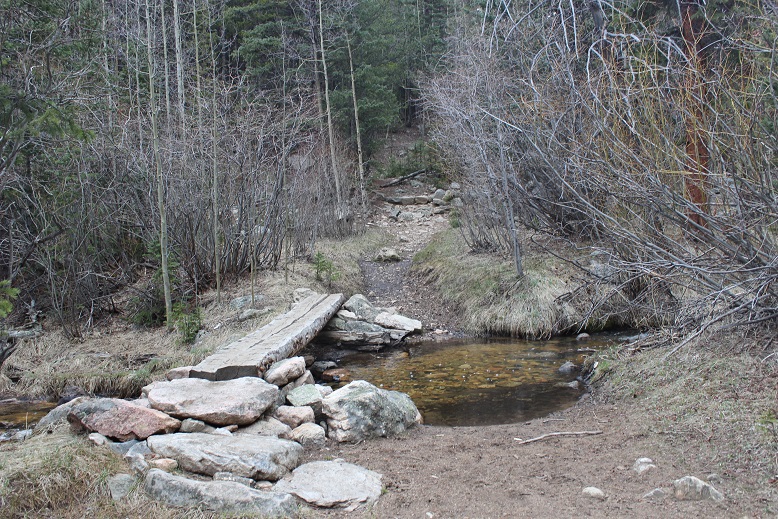
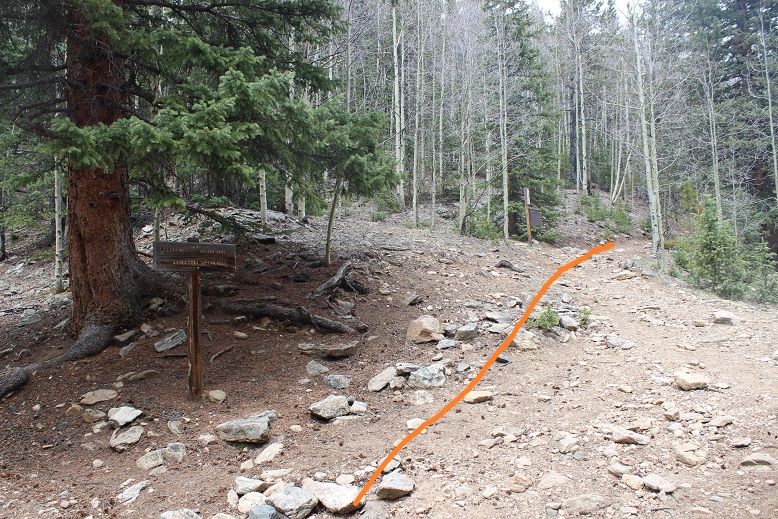
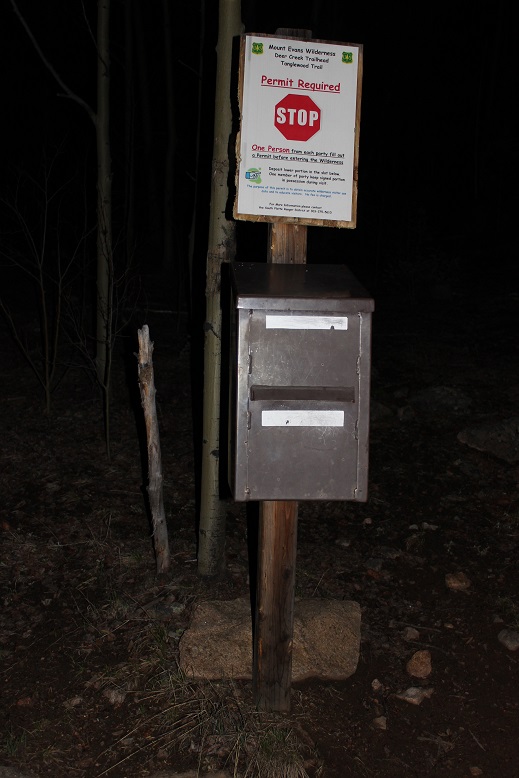

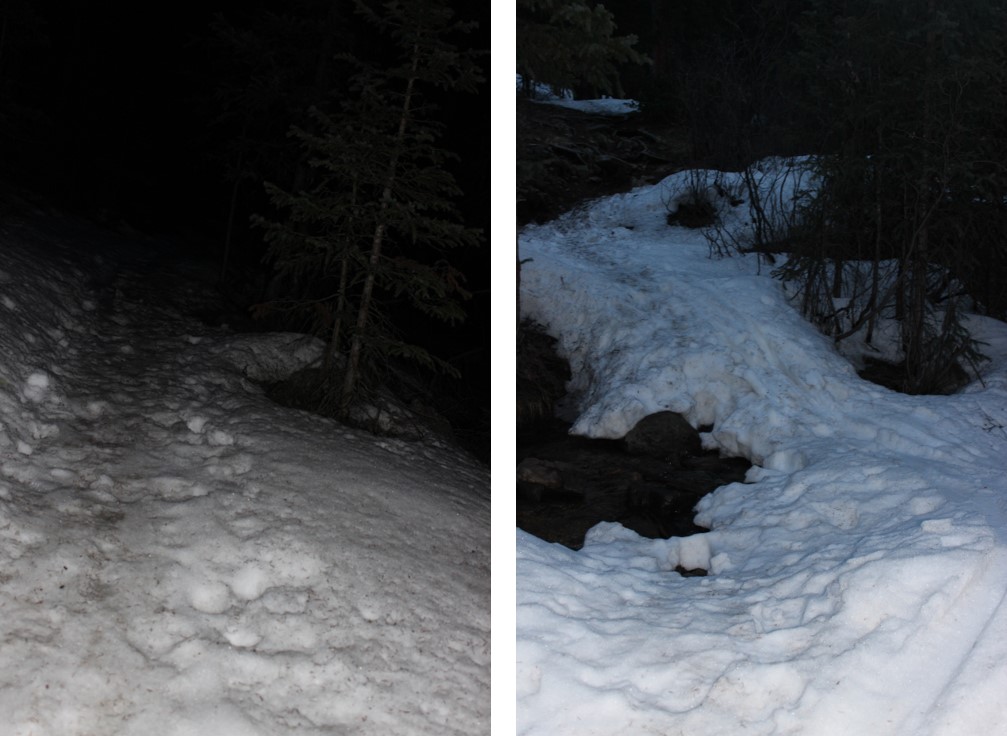

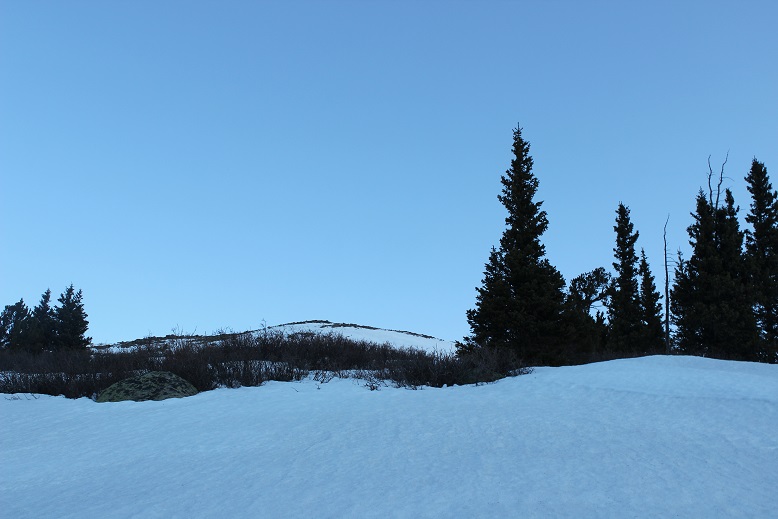
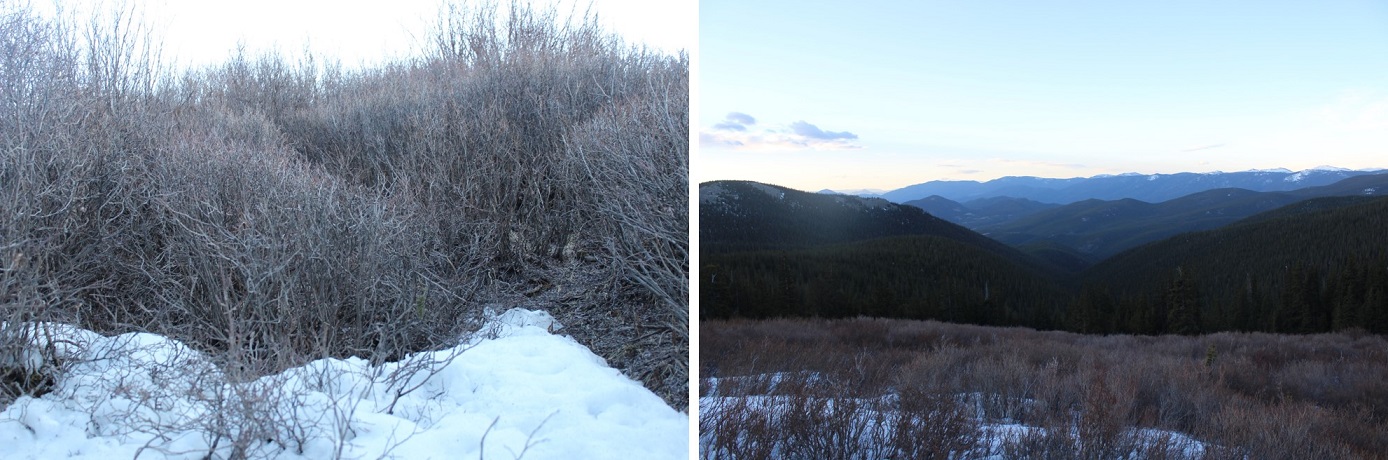
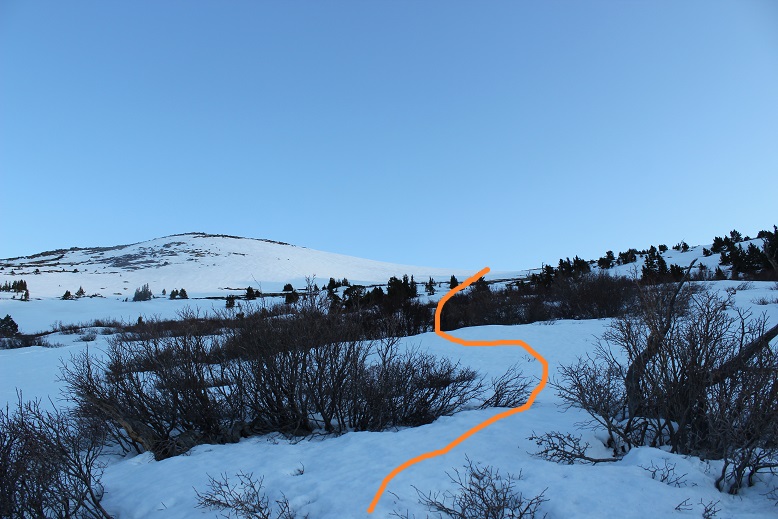
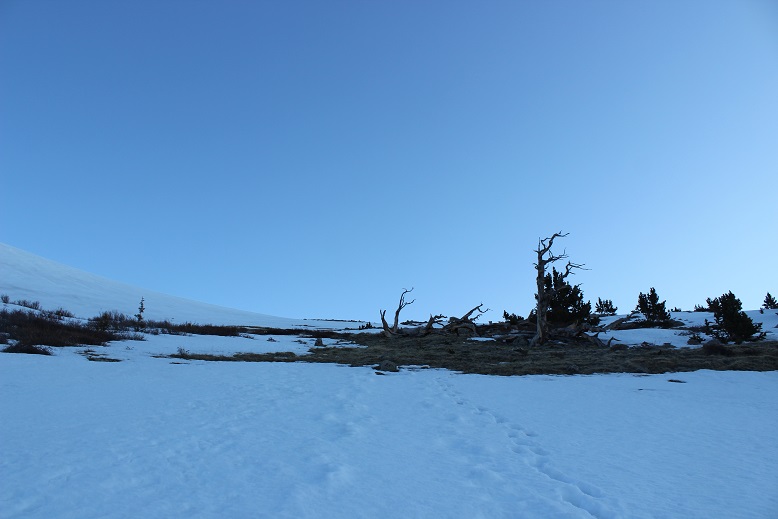
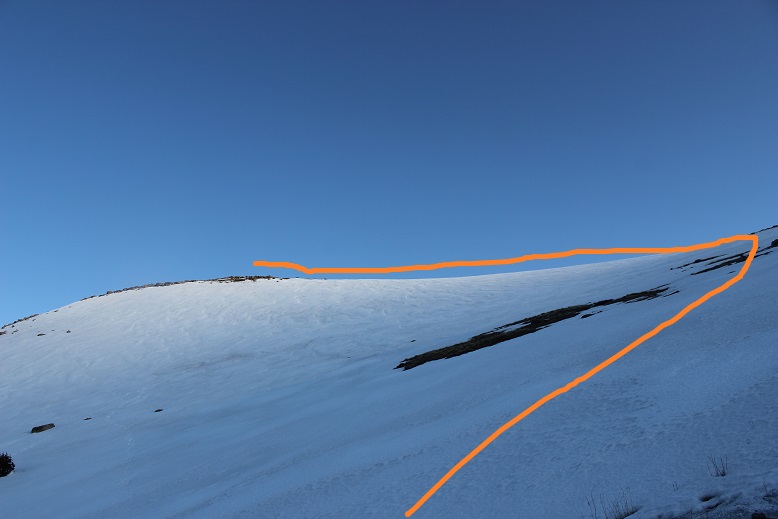
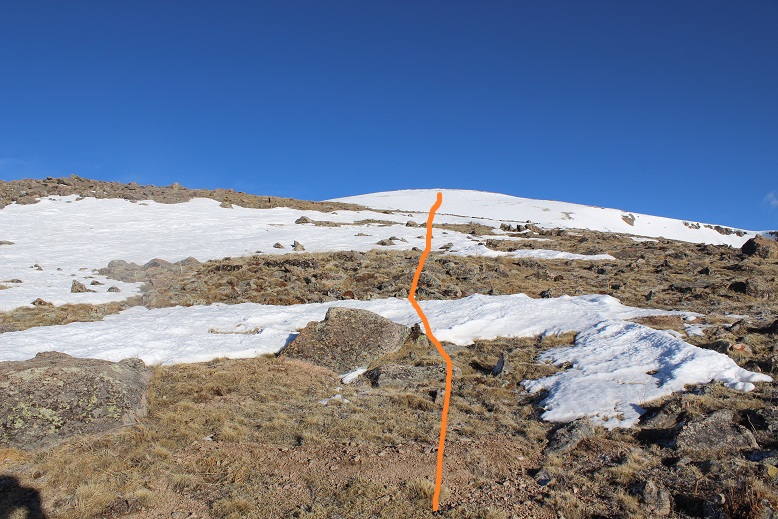

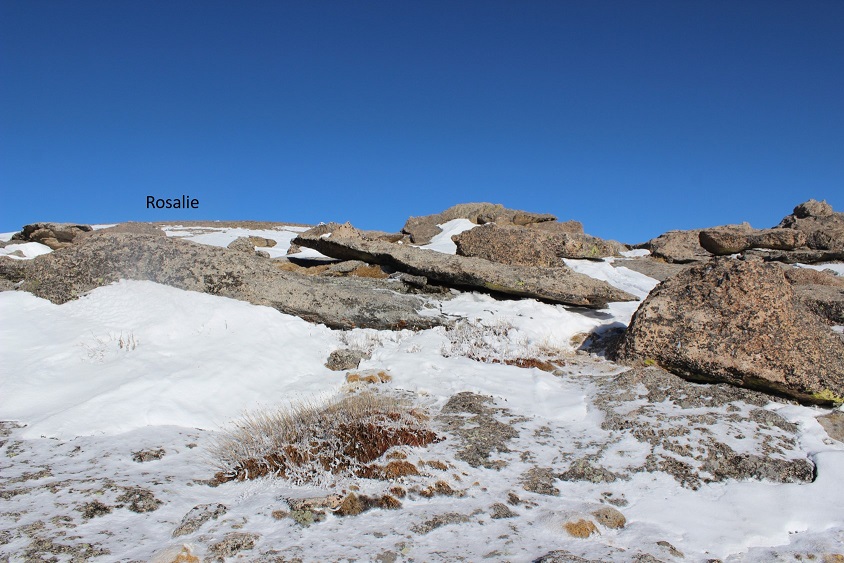
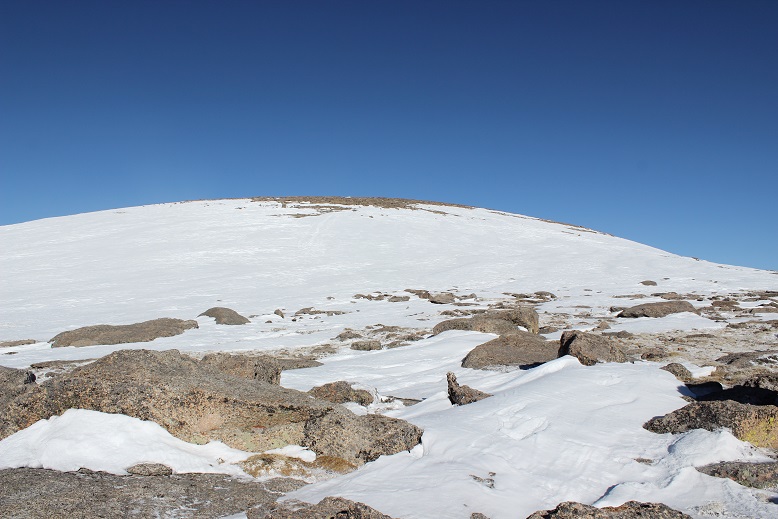
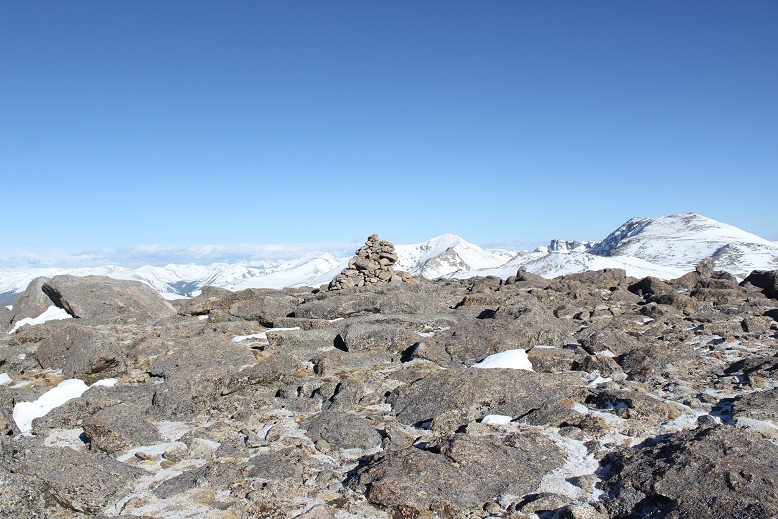
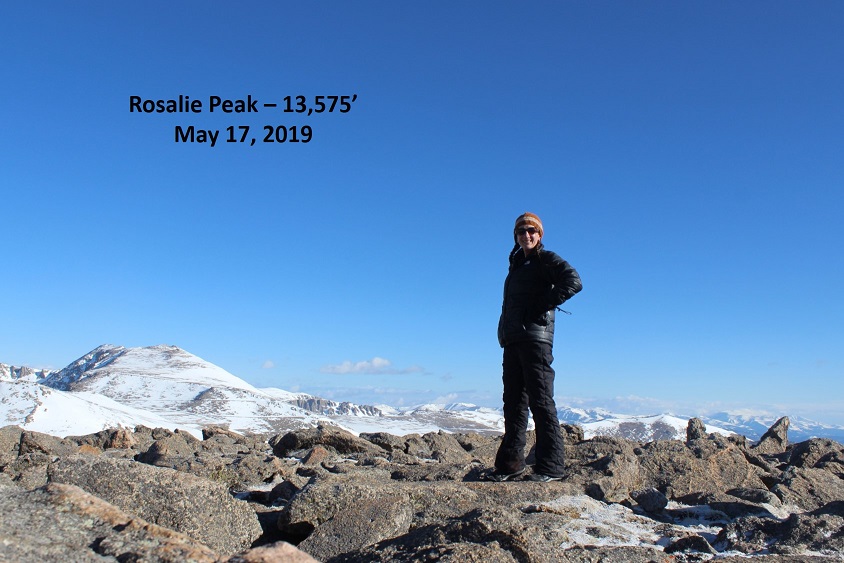
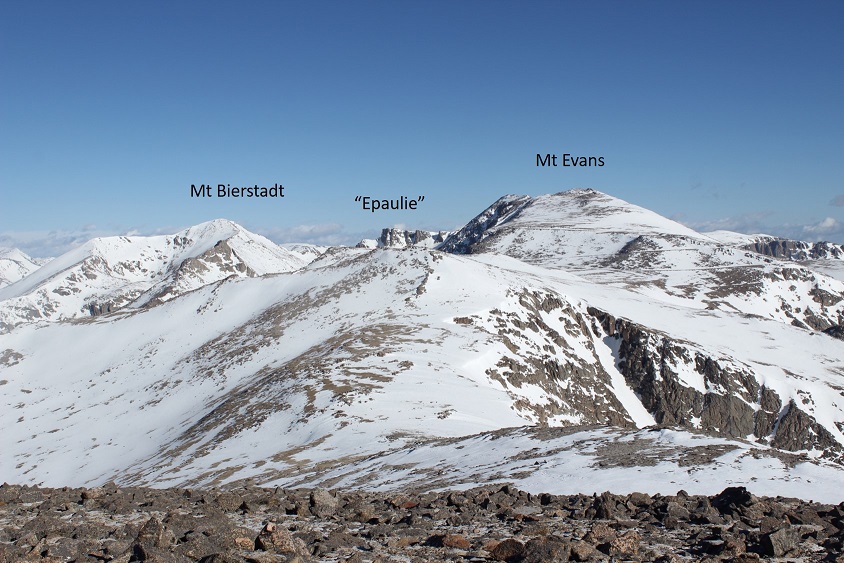
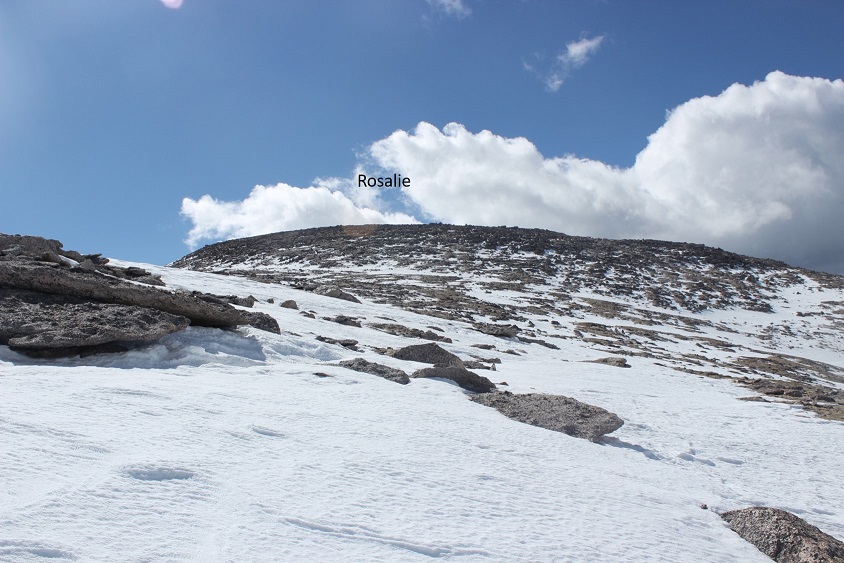
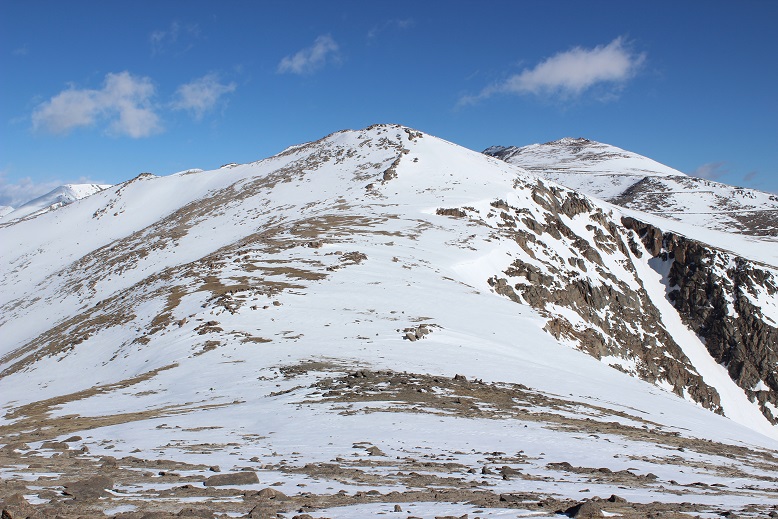
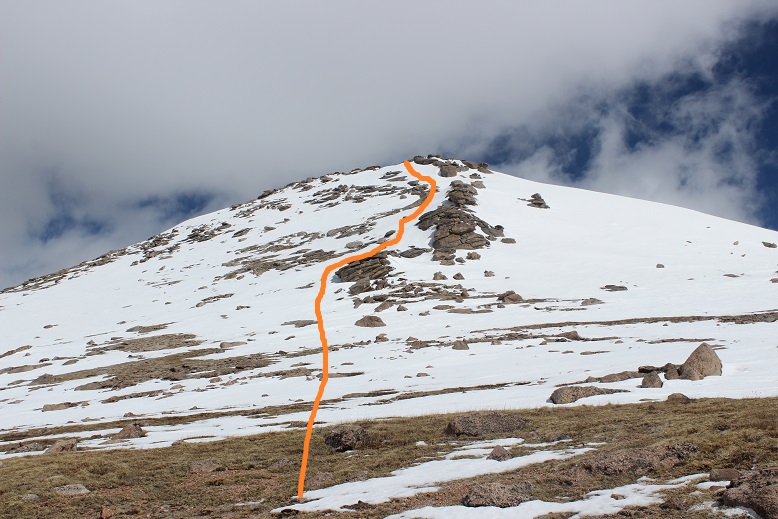

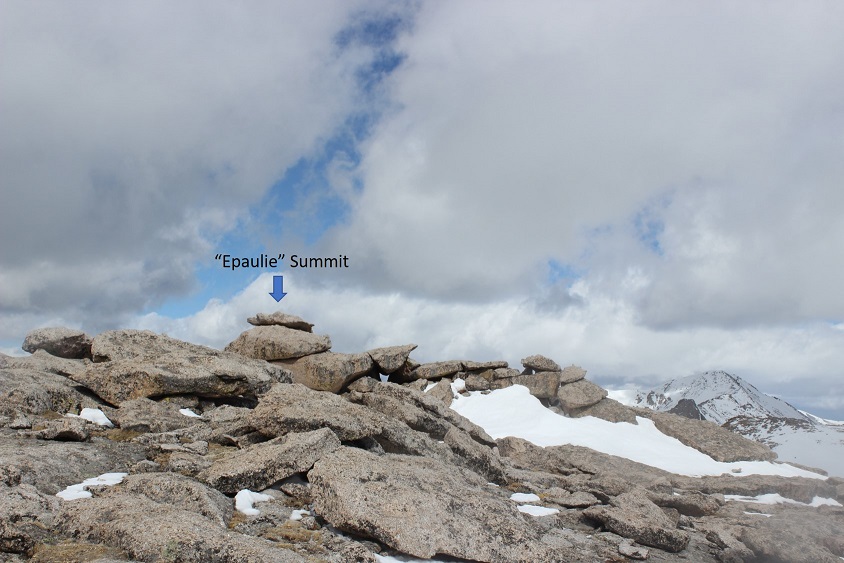
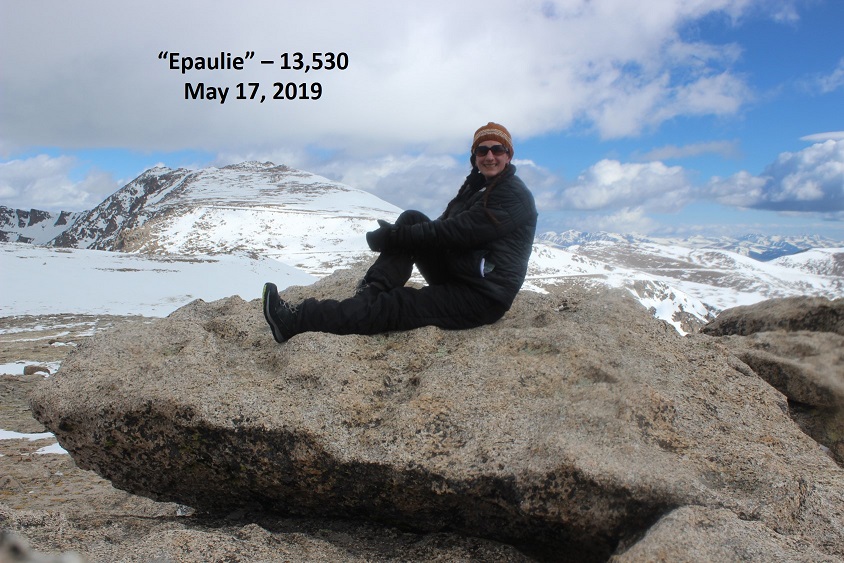
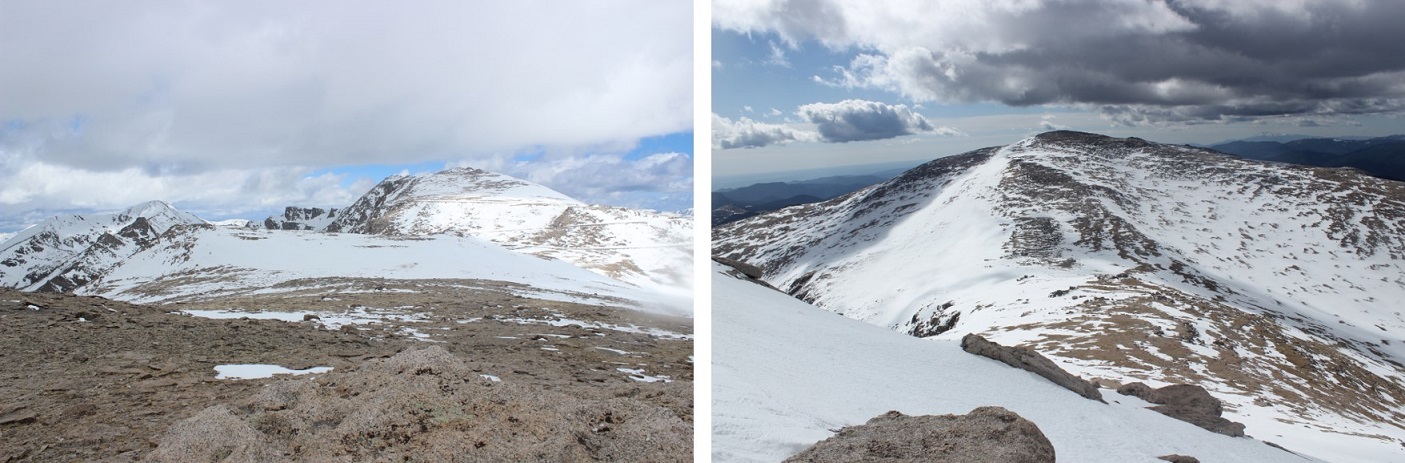
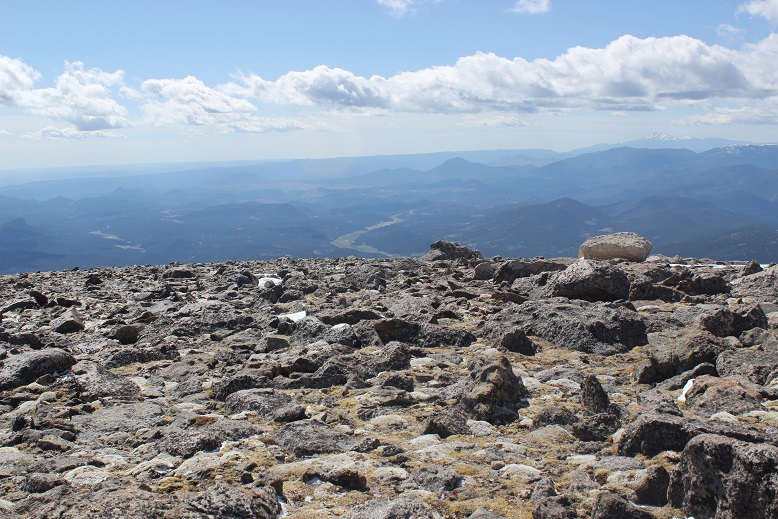
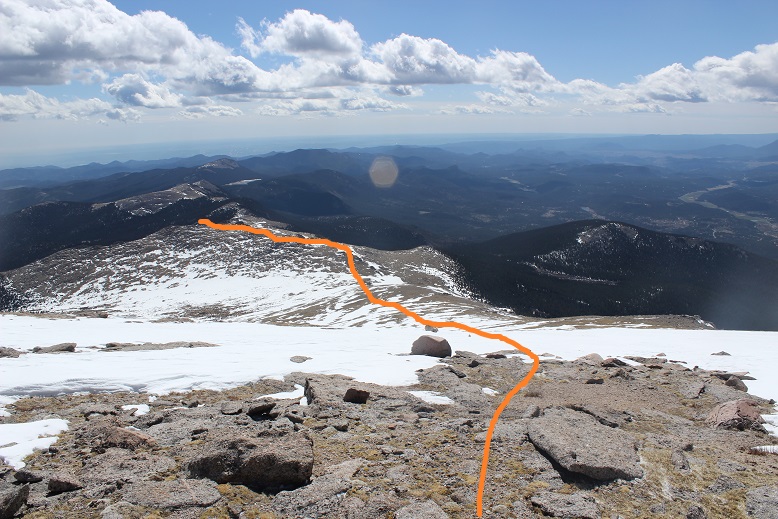
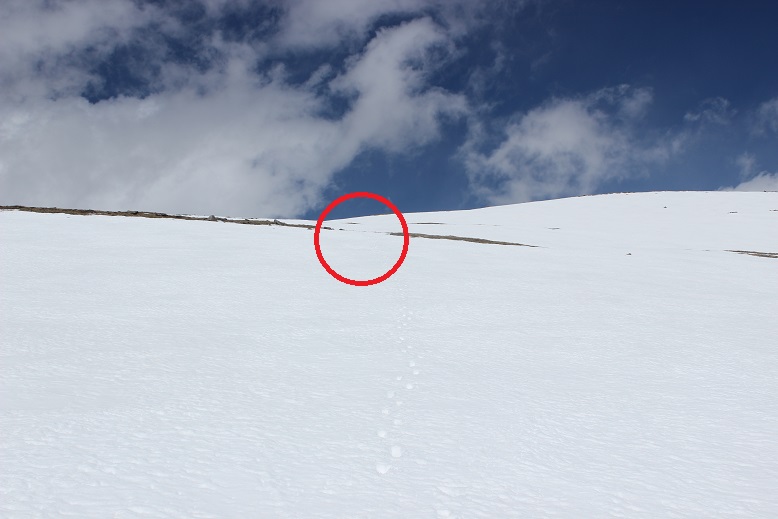



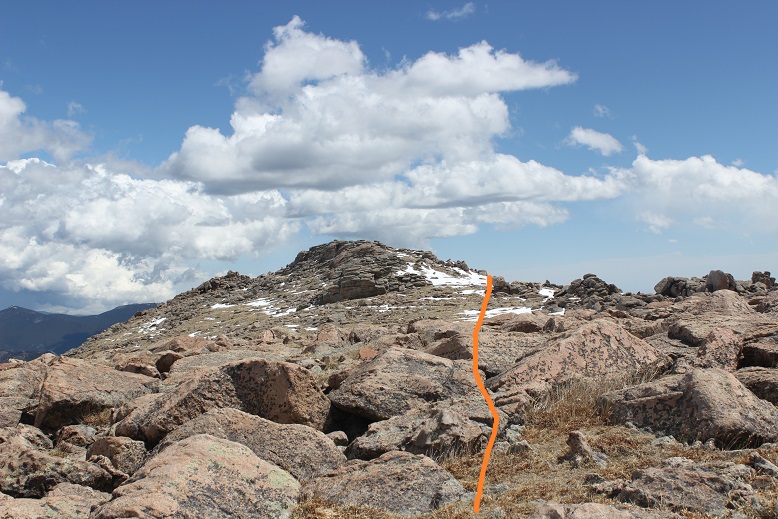
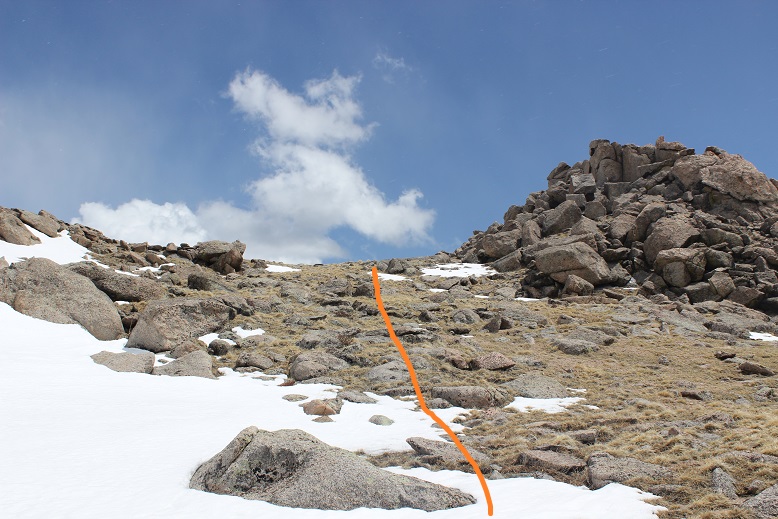
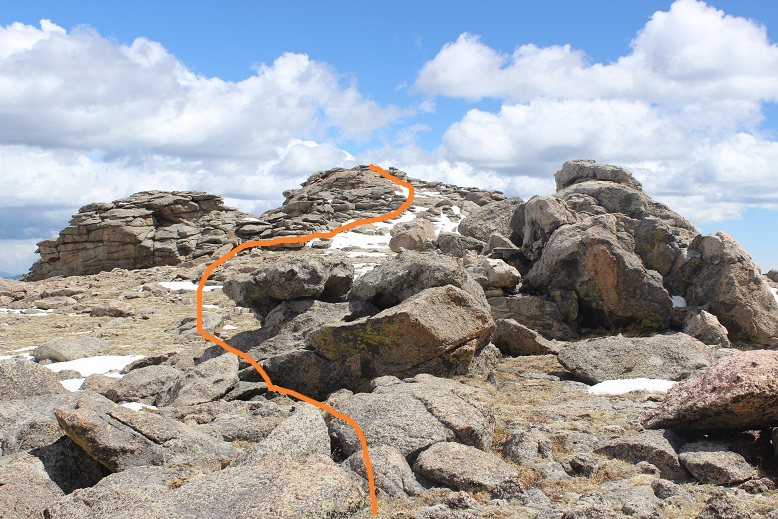


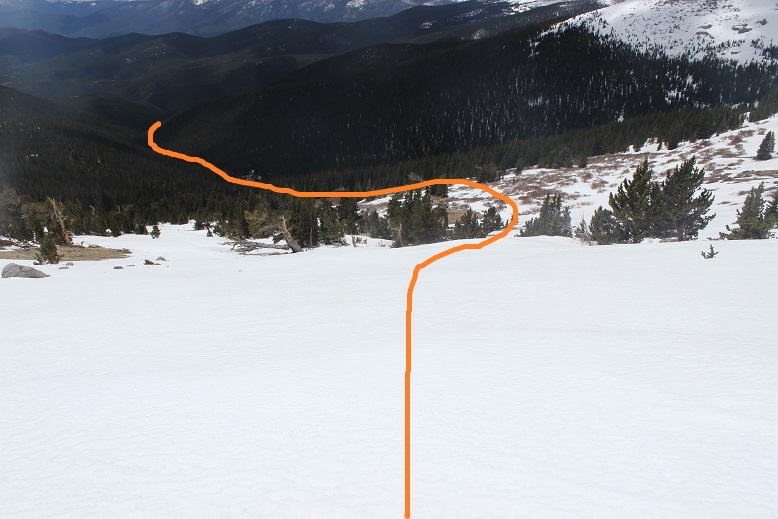
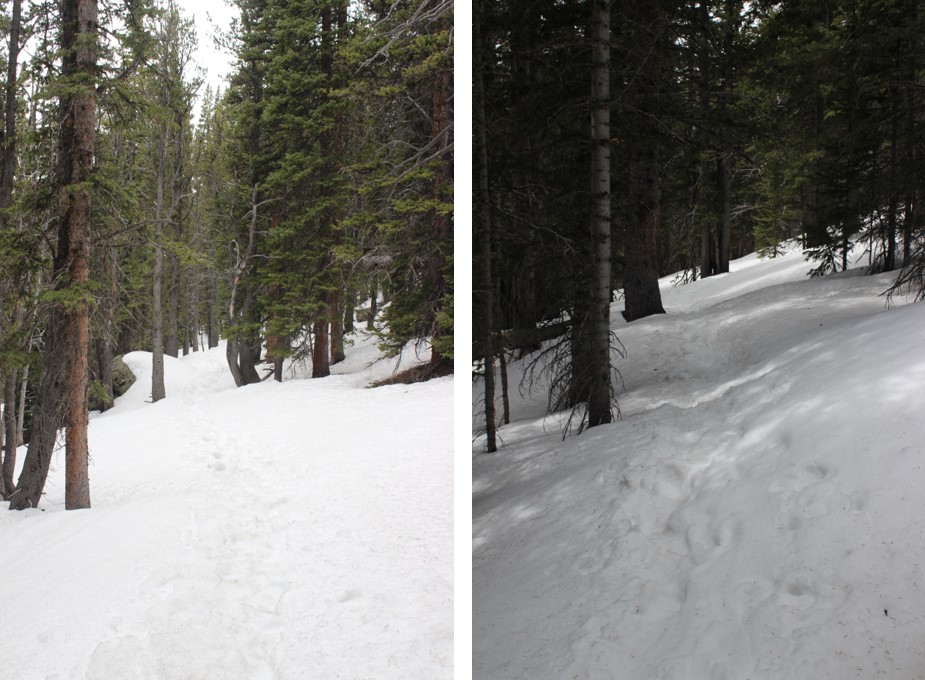

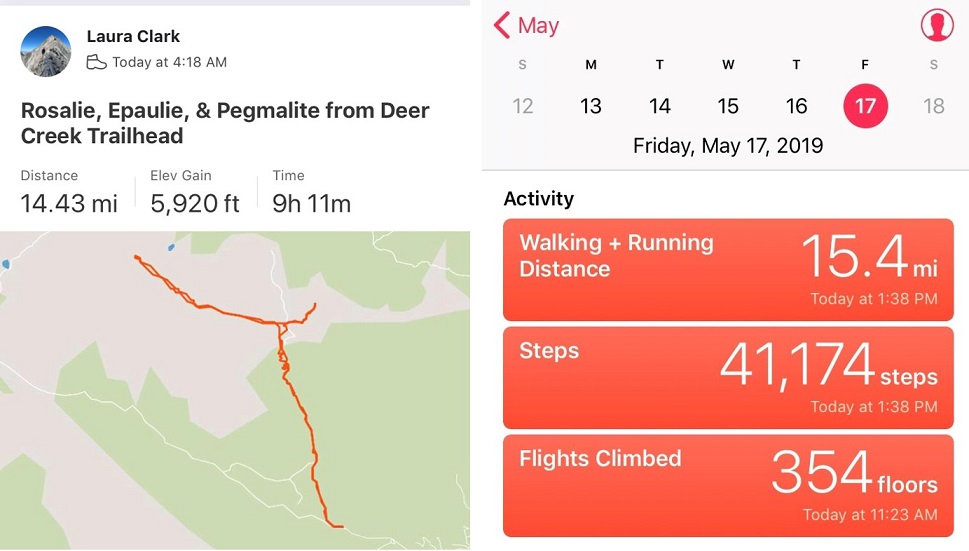
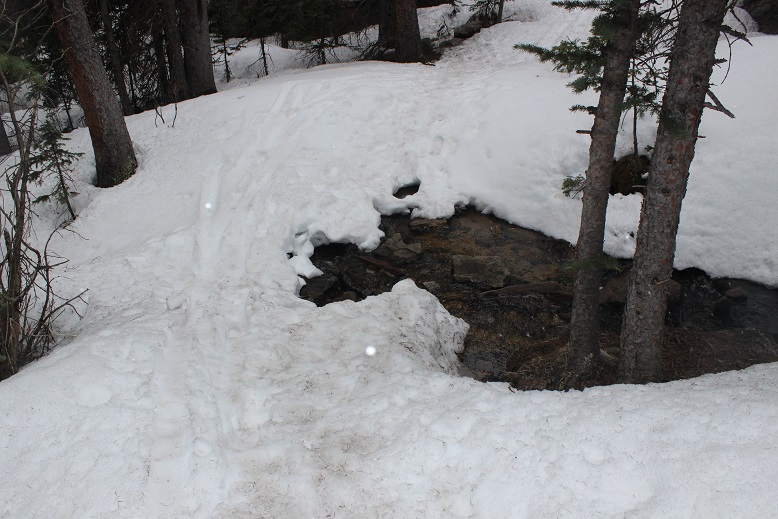
 Wild Wanderer