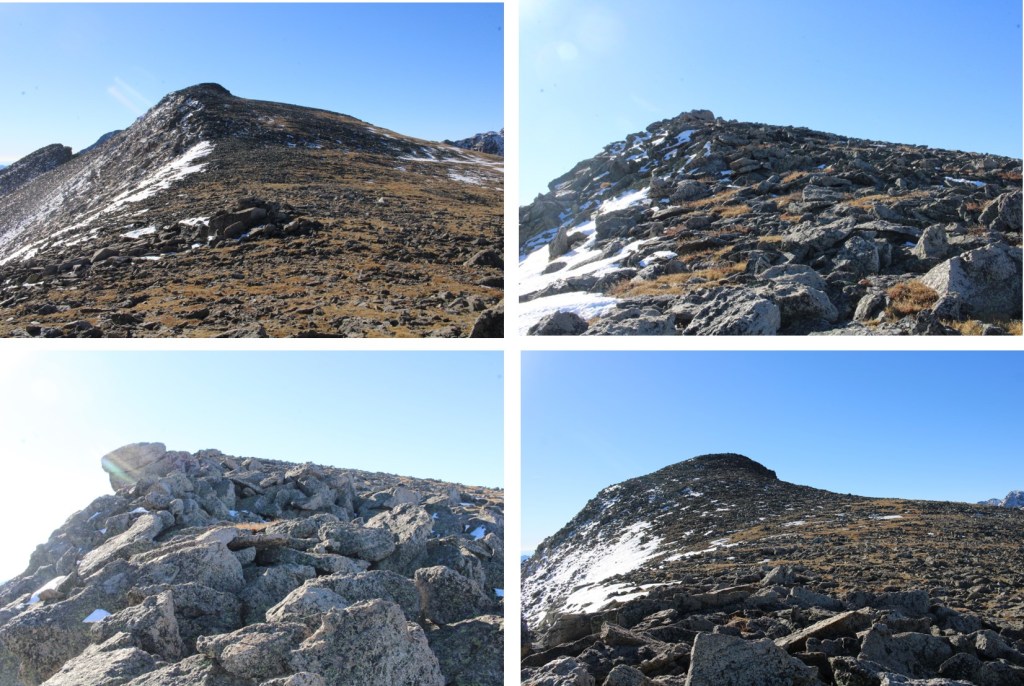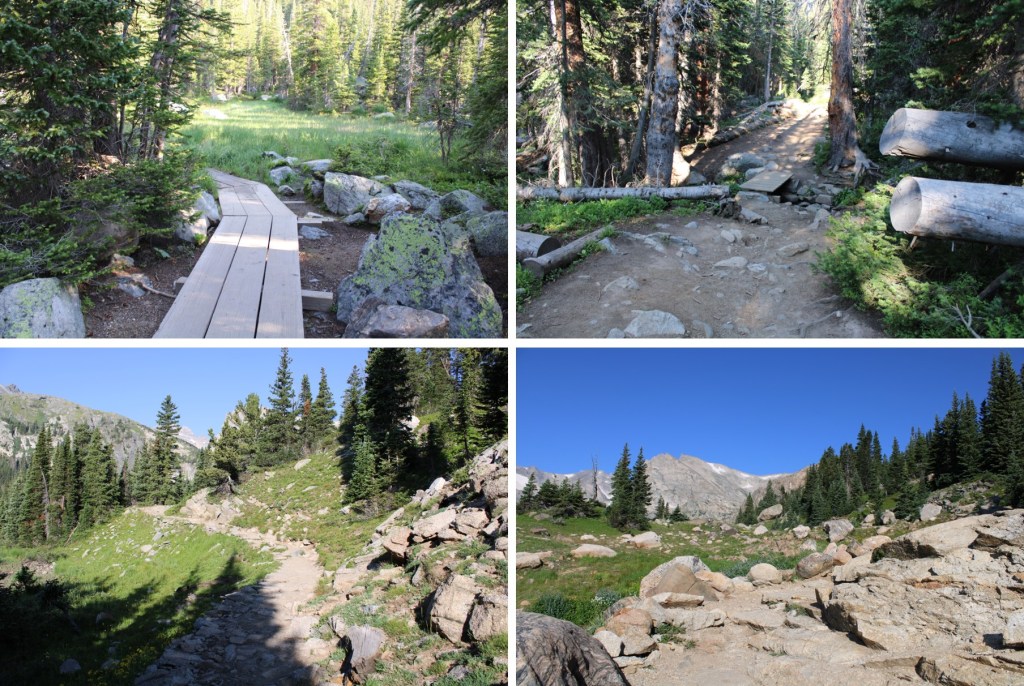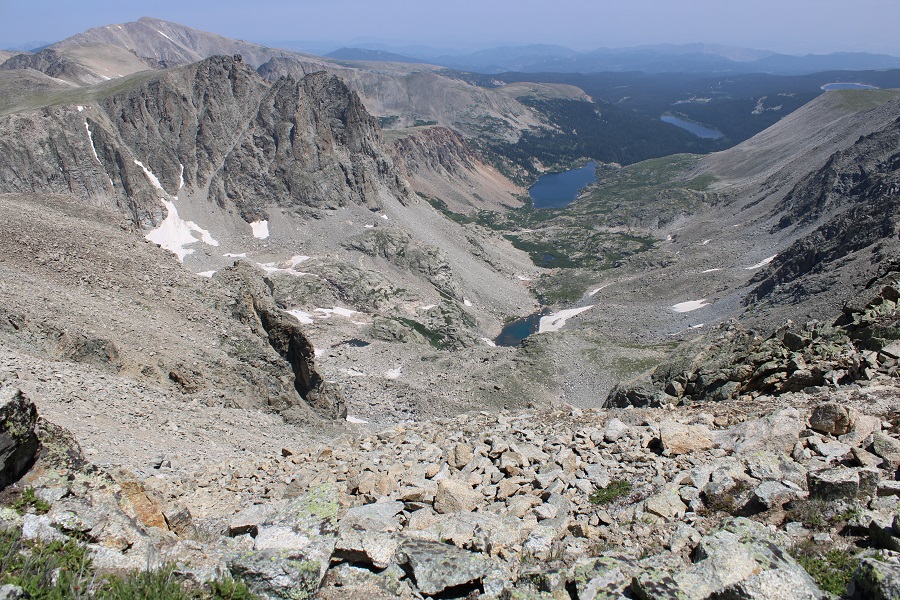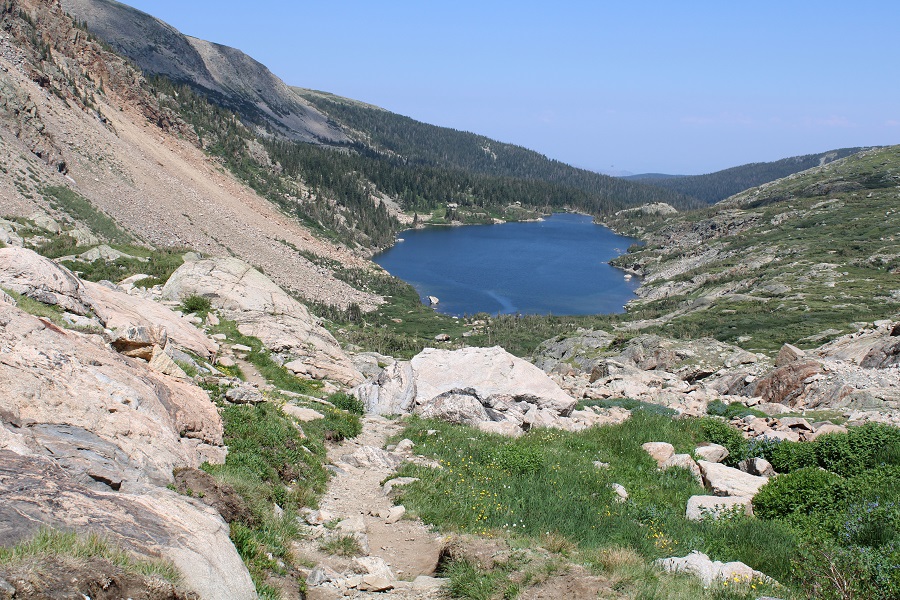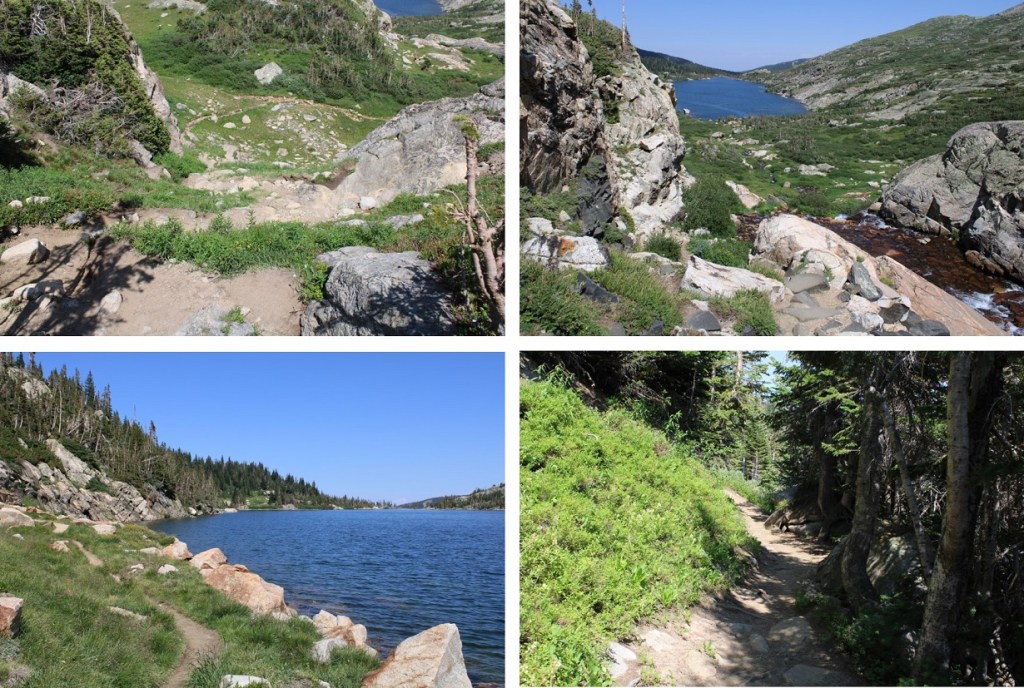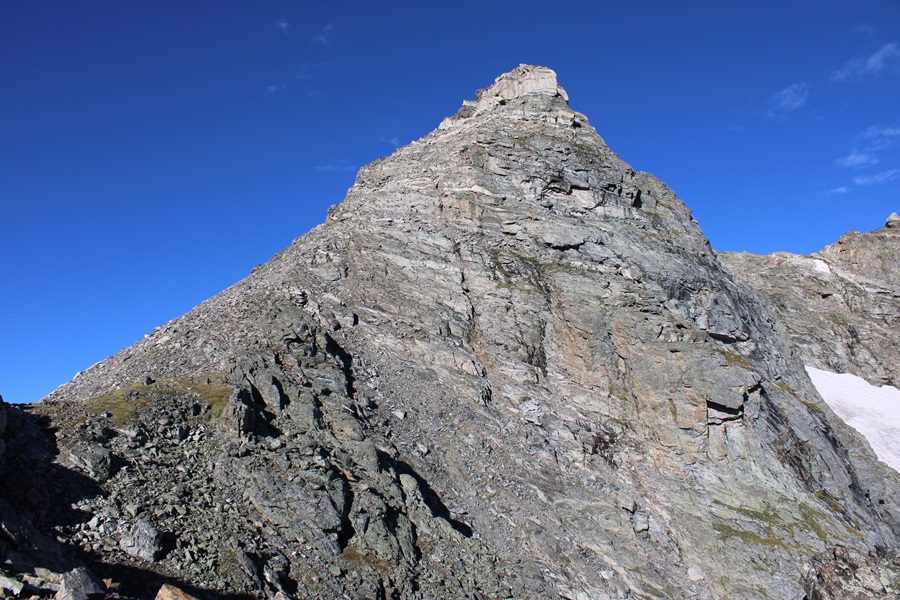
Navajo Peak – 13,419′

RT Length: 14.52 miles

Elevation Gain: 3346’

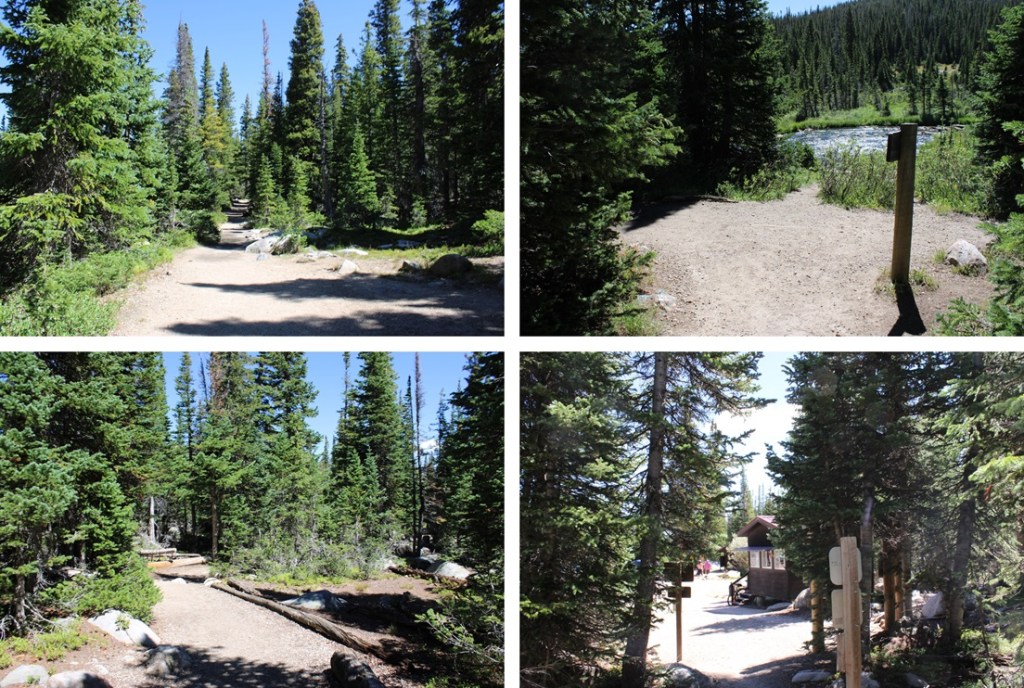
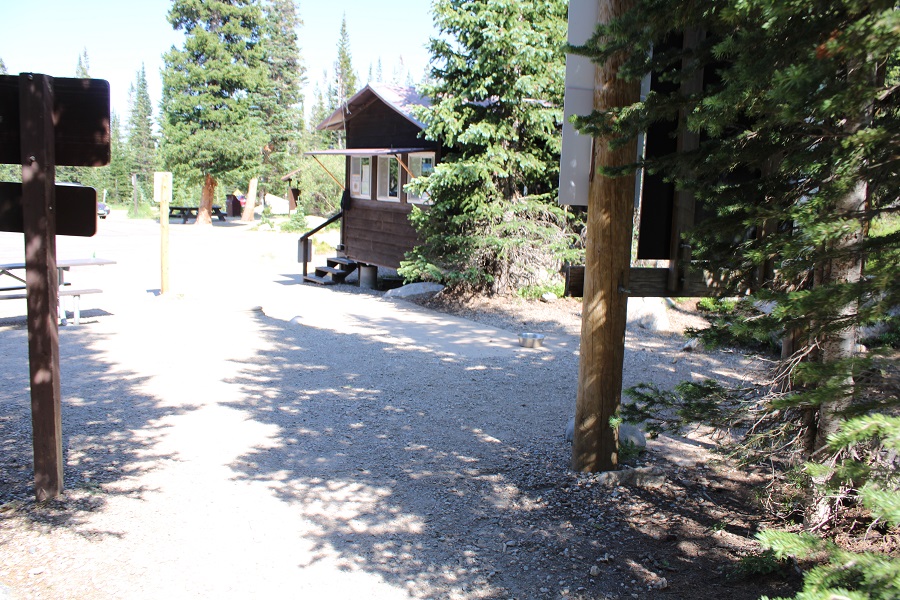
This hike starts from the Long Lake Trailhead inside Brainard Lakes Recreation Area.   This area is permitted.  There are basically two options for permits (I’m summarizing) either timed entry between 8am-5pm, or an overnight permit.  Overnight parking permits aren’t granted unless you have an Indian Peaks Wilderness overnight permit first.  Both permits go on sale at the same time.  Since I wanted to start before 8:30am, I needed to first get an IPW permit, then try to get an overnight parking permit. 

I was able to secure an IPW overnight permit for the weekend but had difficulty securing overnight permits to park inside of Brainard Lake.  Eventually I was able to get two 1-night (overnight) permits, one for Long Lake Trailhead and the other for Niwot Campground.  I tried to get two consecutive in the same area, but they weren’t available for the dates I was allotted my IPW permit. 

When I checked in at the Brainard Lakes Recreation area, they didn’t like what I had done (secured two one night permits at different sites), and decided a better option was to grant me a two night permit for Brainard Lake.  I’d have rather parked for two nights at Long Lake or Mitchell Lake, or even what I had done originally, which was one for Long Lake and the other for Niwot.  But they weren’t having that, so my mileage was increased by a couple of miles for this hike, since Brainard Lake is over a mile from the trailheads.  Also, after you’re inside the park, they have other ‘security checkpoints’ where you need to show you’re your permits again, and they also patrol the parking lots hourly to make sure your permit is valid.  Have I mentioned I’m not a fan of the permit system?  I’ve yet to see one that works smoothly, especially for mountaineers who are concerned with weather and start times.

As I was hiking early in the morning the next day, being flashed with bicycle lights from behind me at 4:30am, I realized there’s another option around the permit system: ride your bike from the winter closure to the trailhead.  I don’t own a bike, but this is definitely an option for the future… if I ever get a bike.

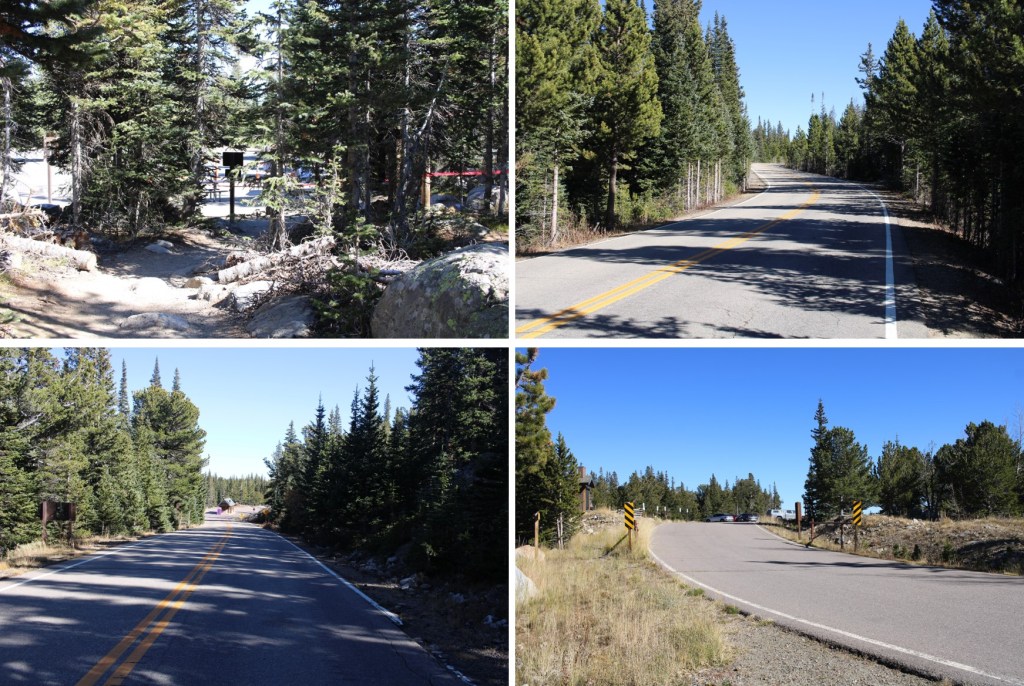
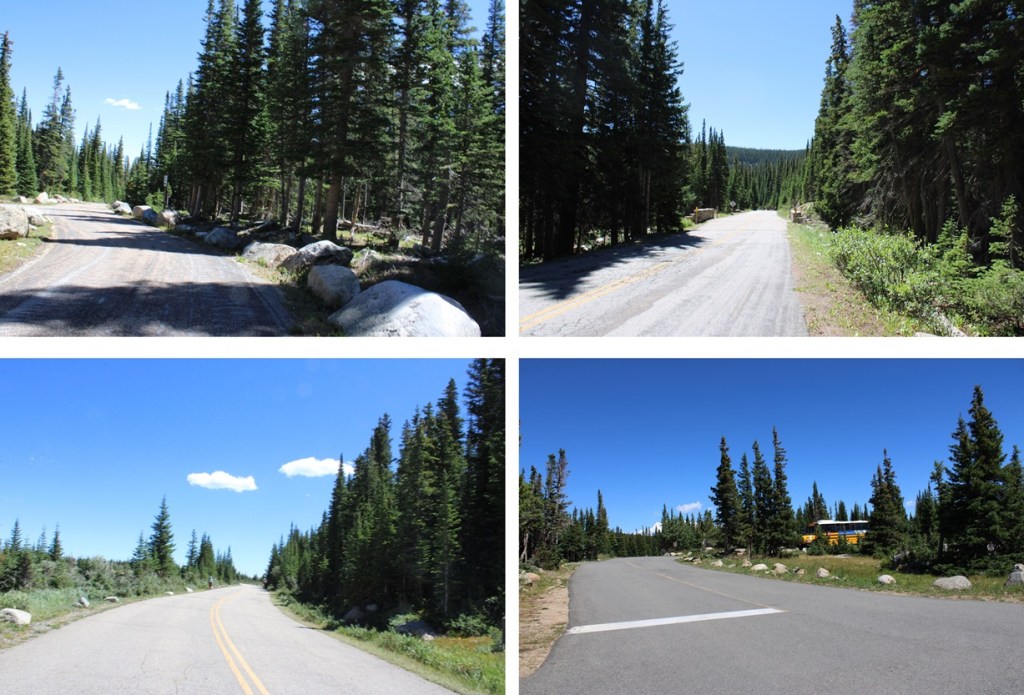
In any event, after minimal drama and parking a little further away than I’d have liked (but hey, it was better than parking at the winter closure…) I was on the trail at 4:30am, starting at the Brainard Lakes parking lot.  My first step was to follow the road for 1.3 miles to the Long Lake Trailhead.

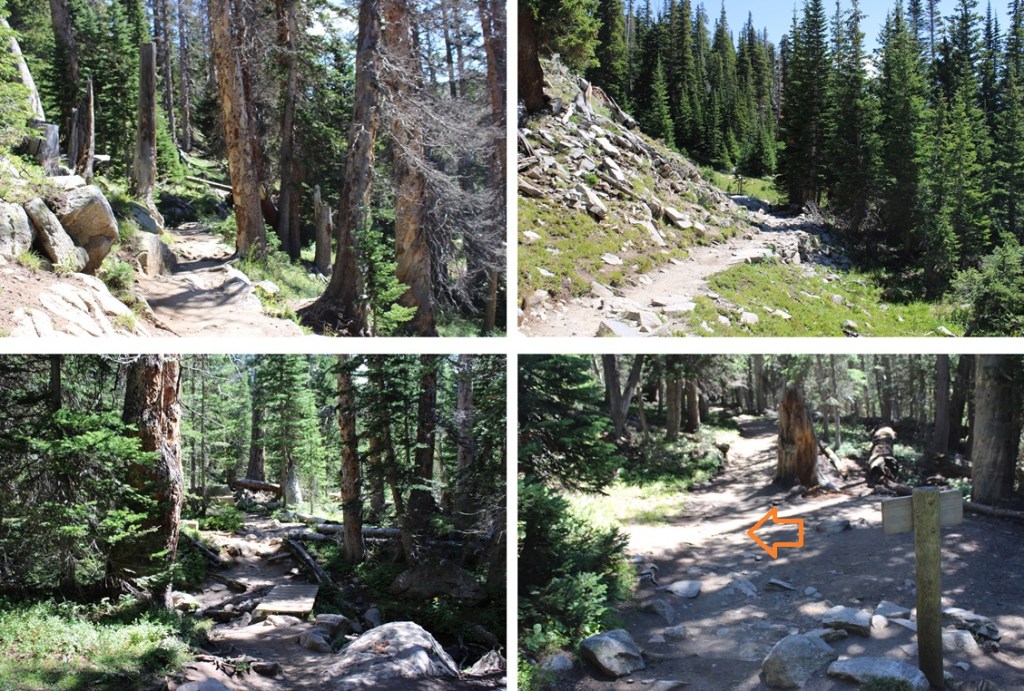
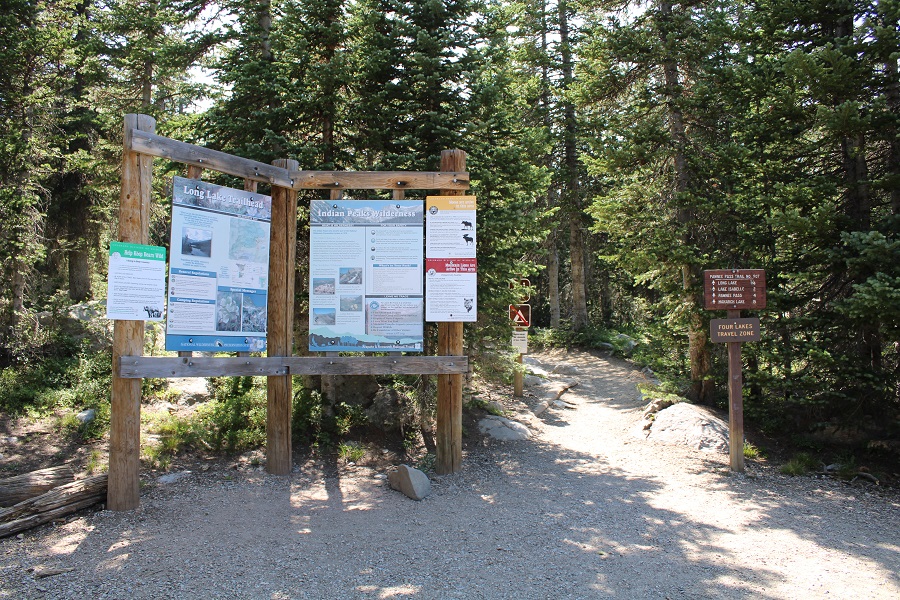
Once at the Long Lake Trailhead, I followed Pawnee Pass Trail west
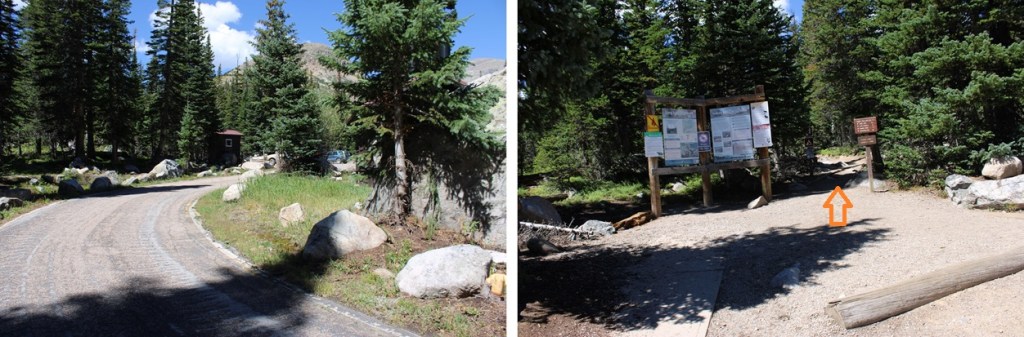
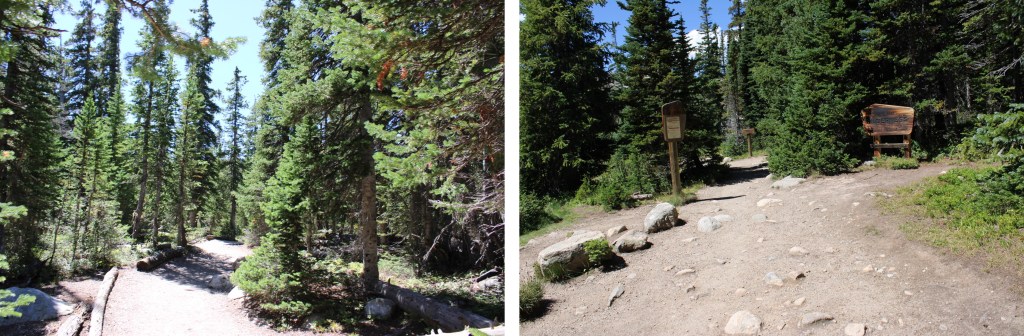
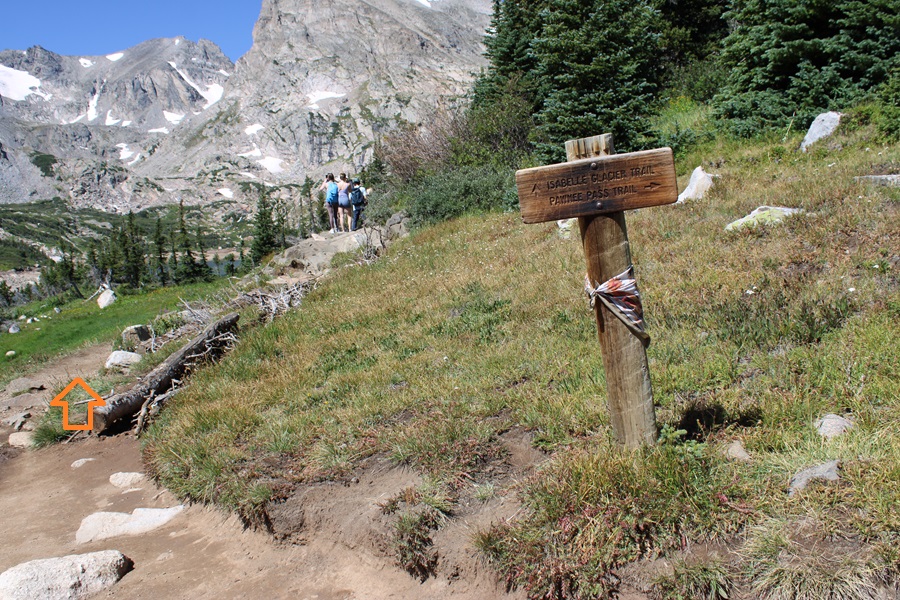
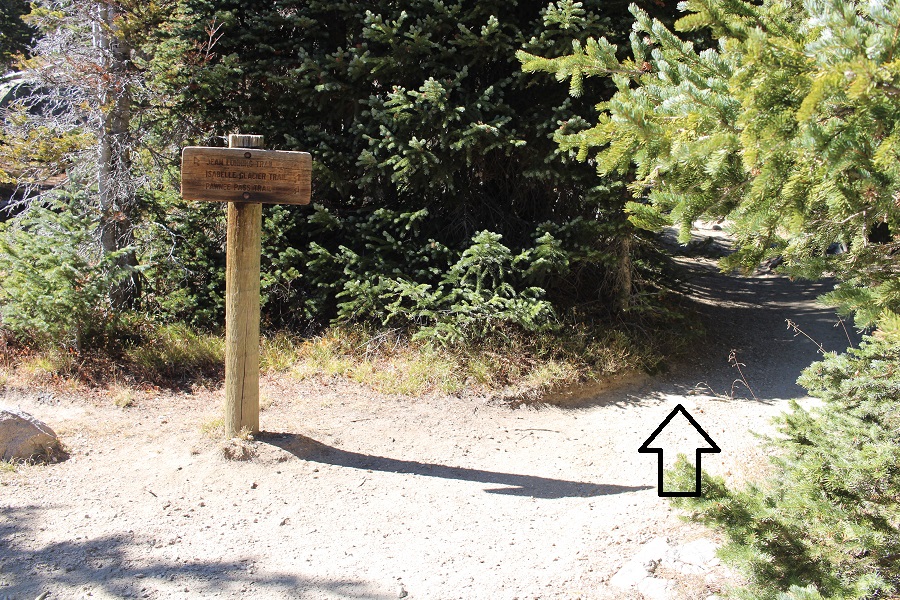
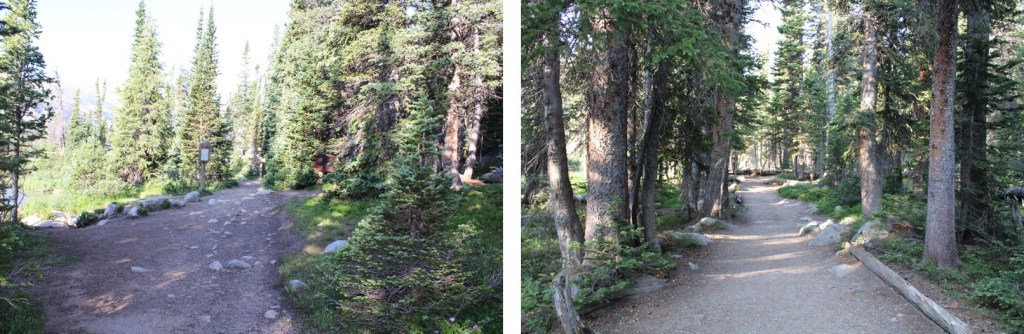
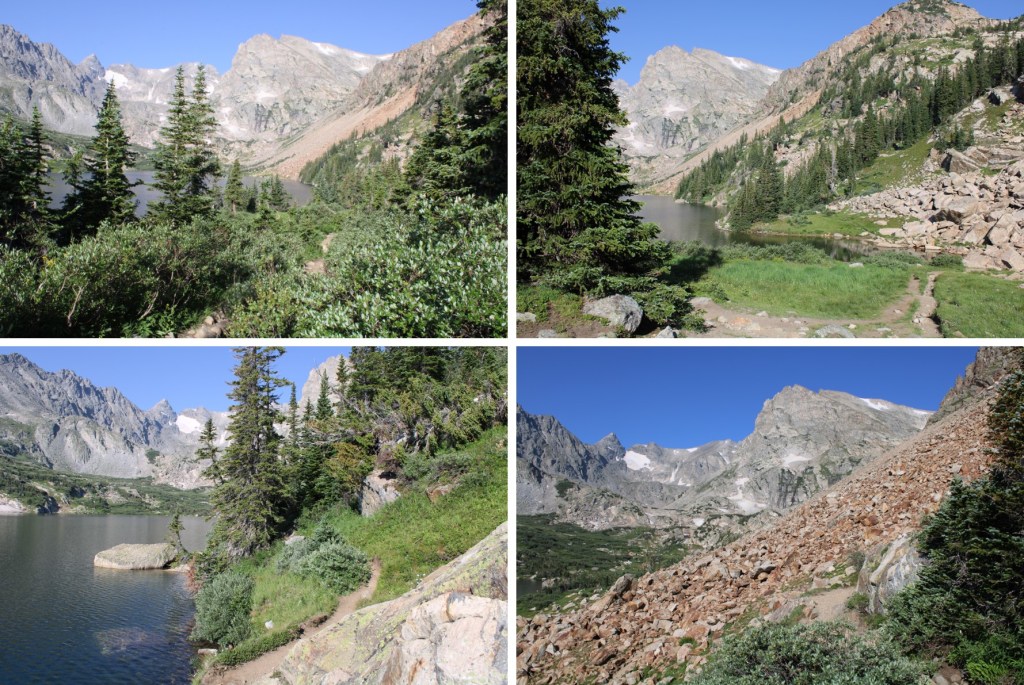
After hiking about 1.5 miles from the Long Lake Trailhead, I came to a junction and went right, following the Isabelle Glacier Trail
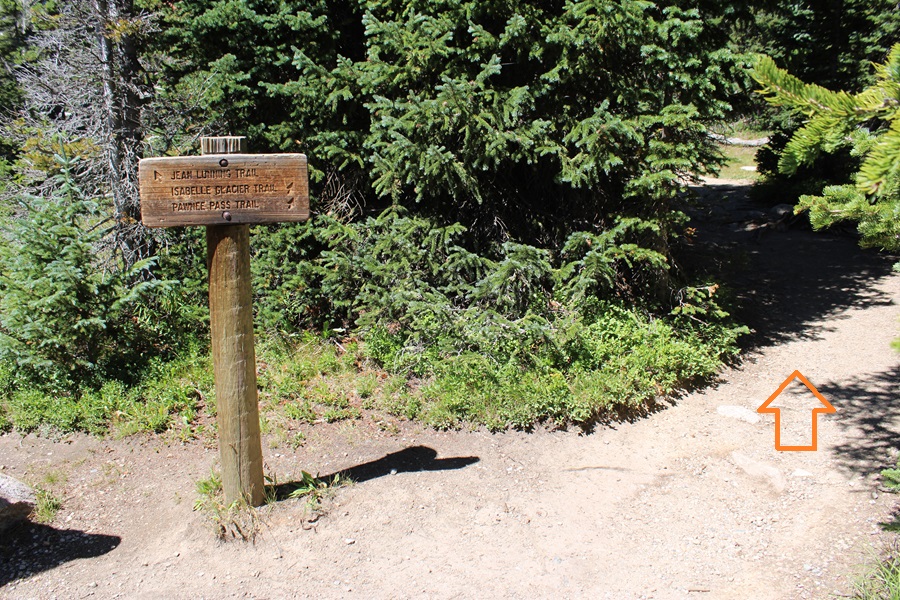
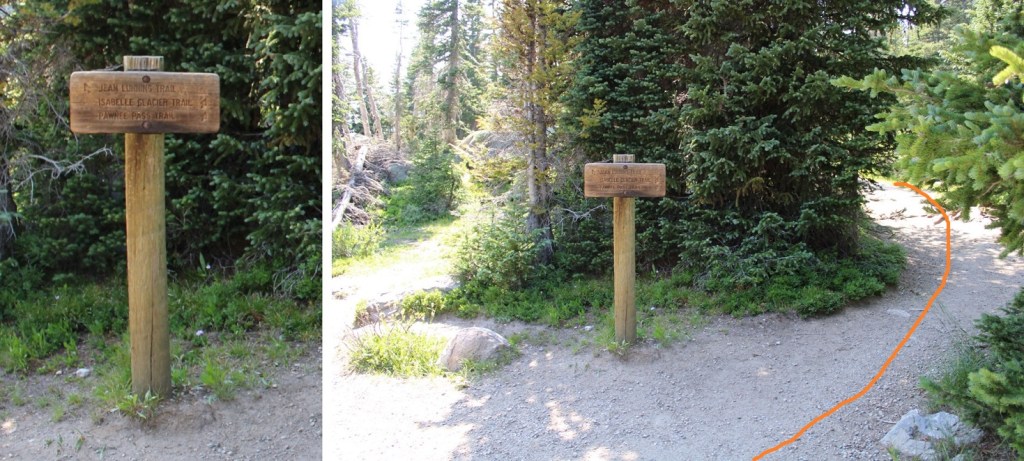
At the next junction I went right again, to continue along the Isabelle Glacier Trail. 
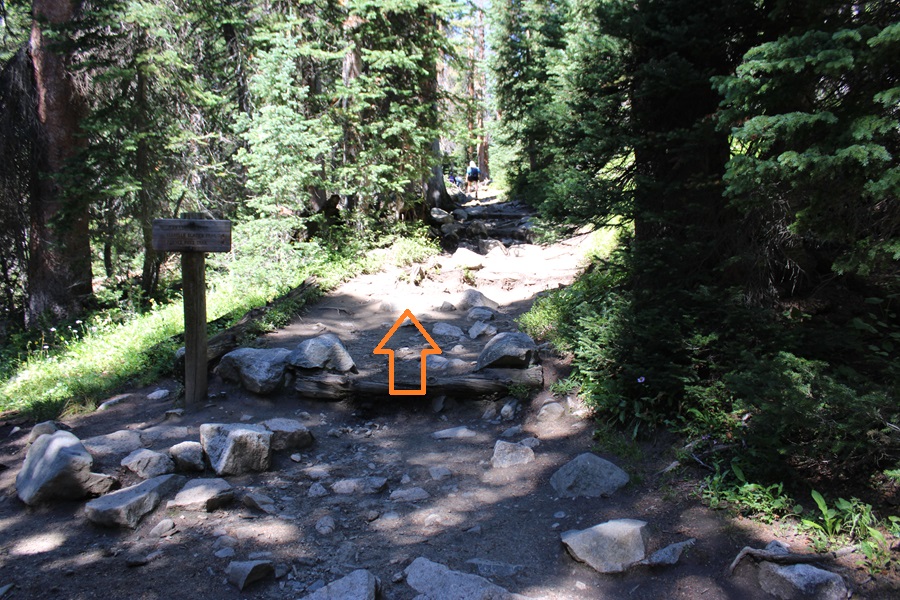
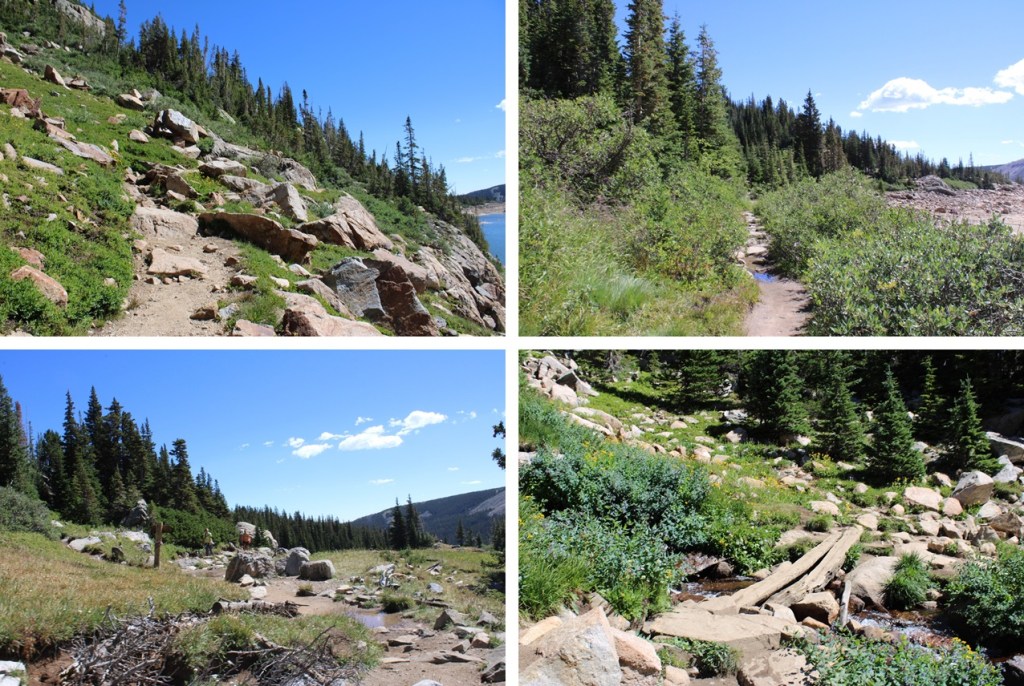
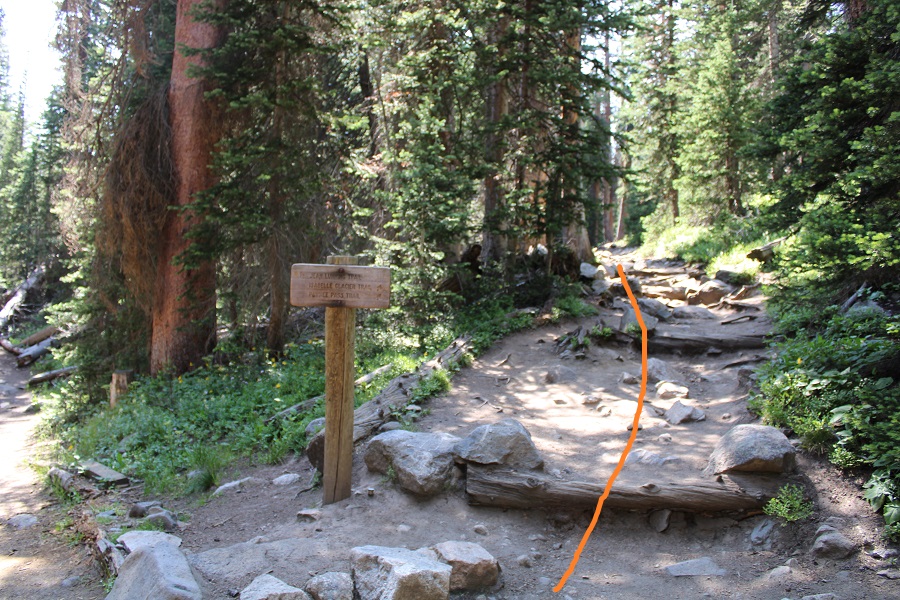
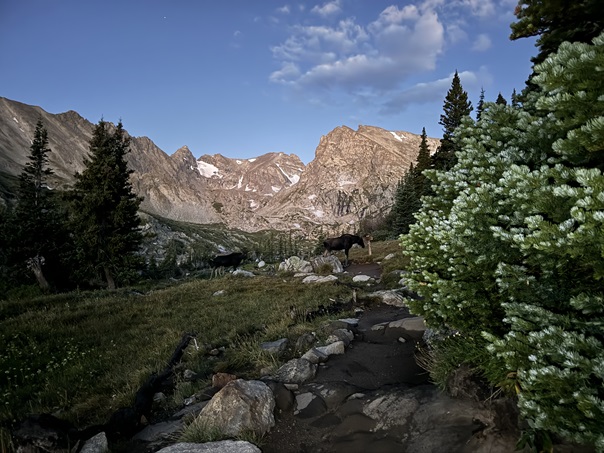
At the next junction, I came upon two bull moose.  When they saw me they snorted and grunted, so I hid behind a tree for 20 minutes until they’d made their way up the hillside, casually munching on willows as they went. I’ve been charged by moose in the past, and while other than the grunting and snorting (which could have meant “It’s too early to be awake”), I kept my distance.  Once they moved, I continued following Isabelle Glacier Trail
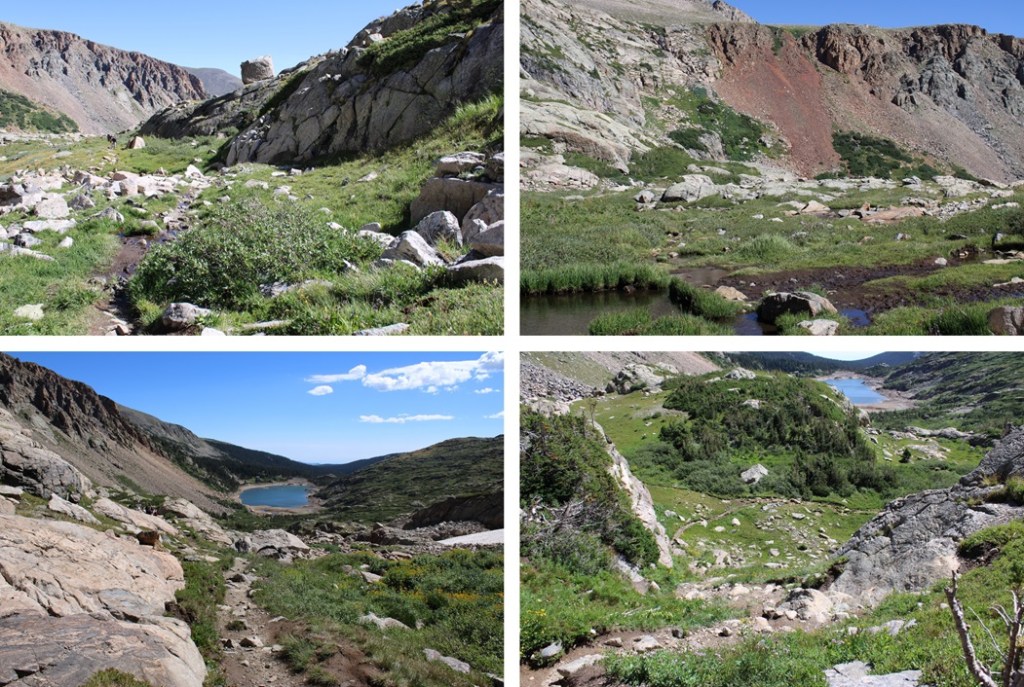
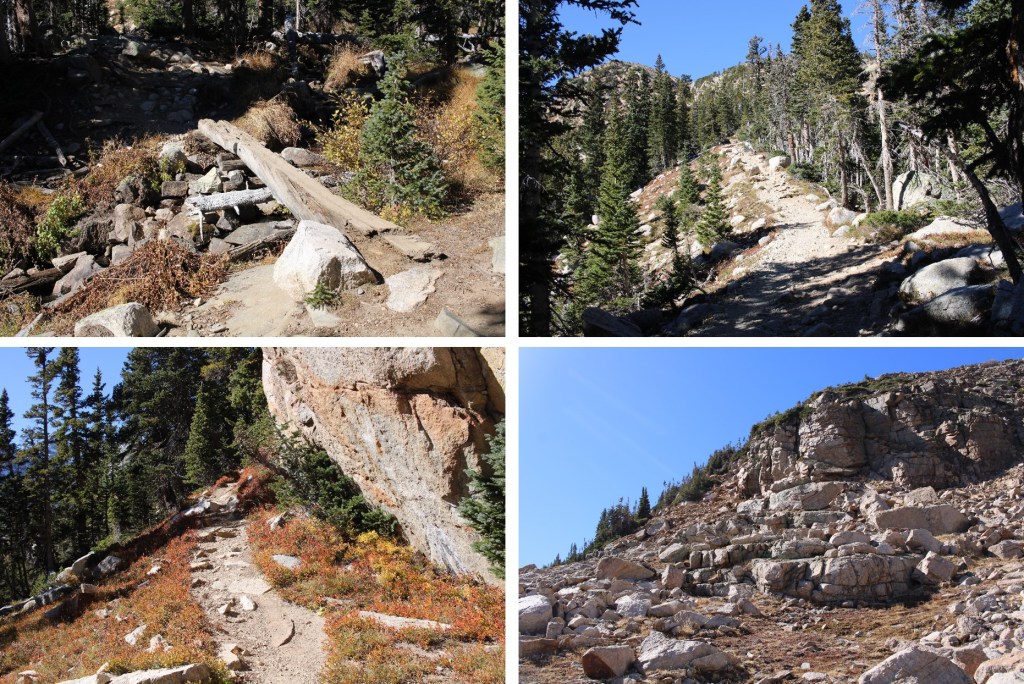
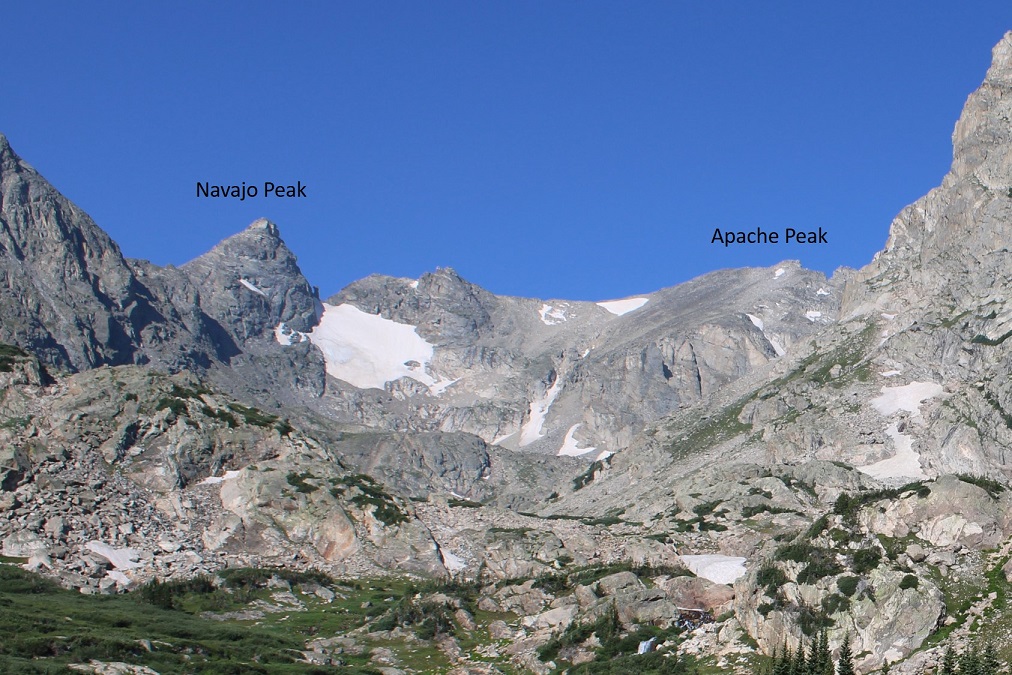
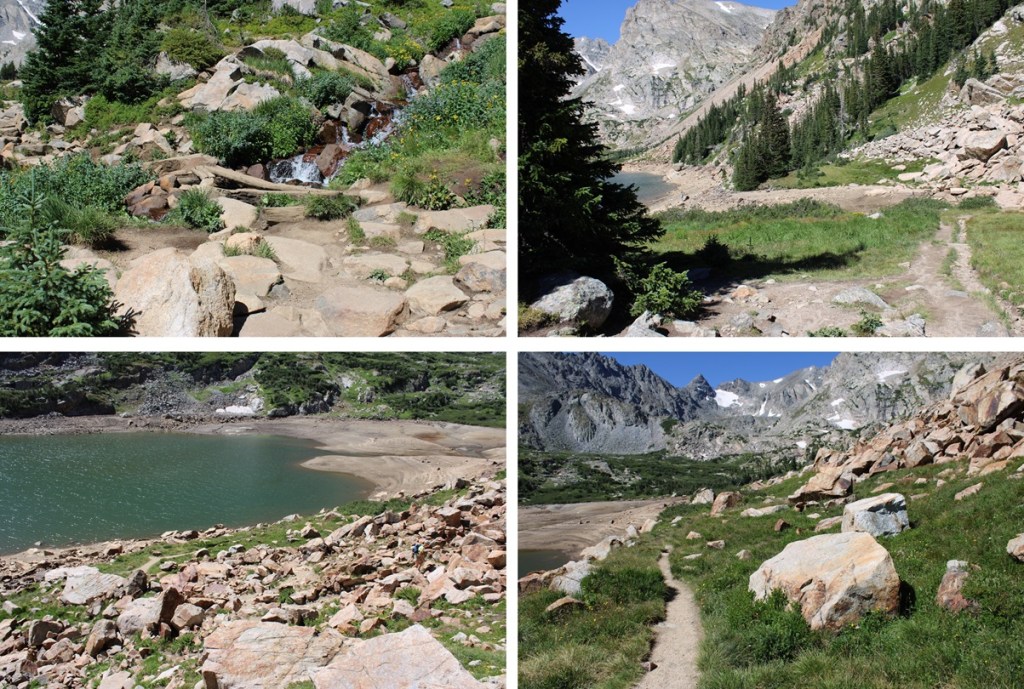
I followed this trail all the way past Isabelle Lake, west/southwest, through rocky areas and willows, towards Navajo and Apache Peaks.  This is a class 1 trail, but the willows, rocks, and creeks overtake it at times. 
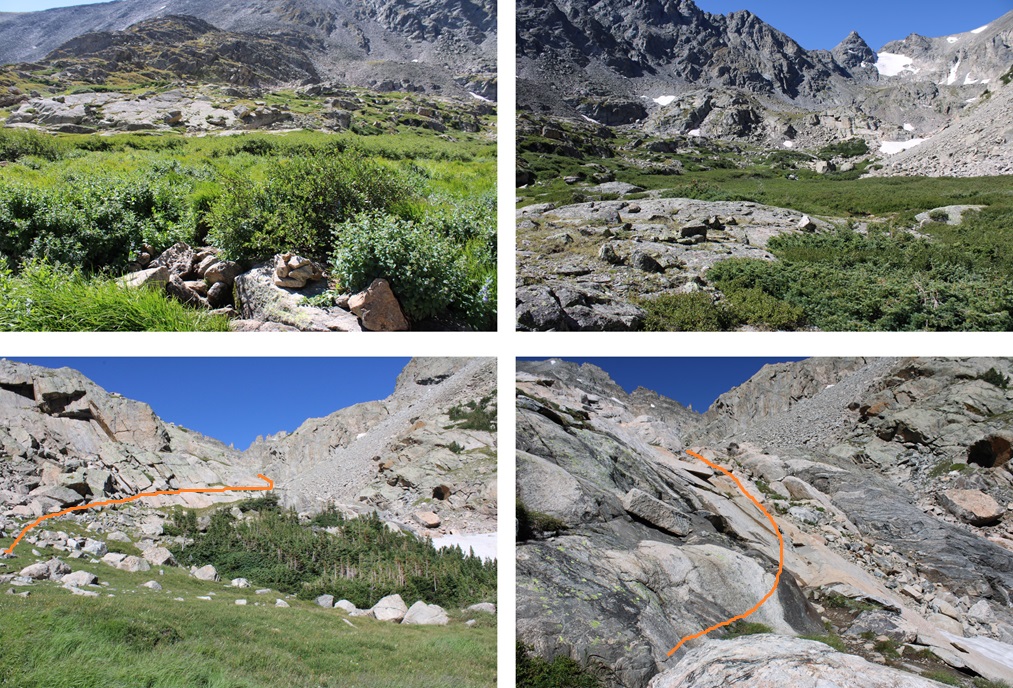
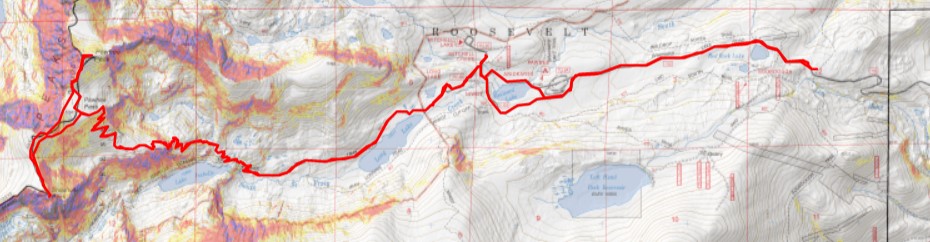
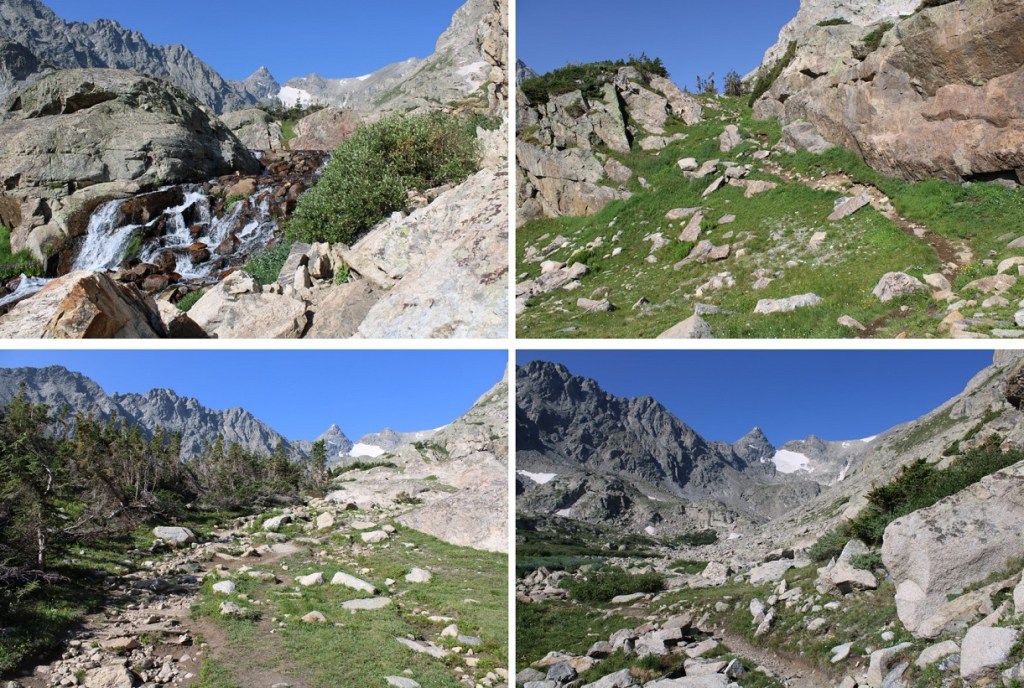
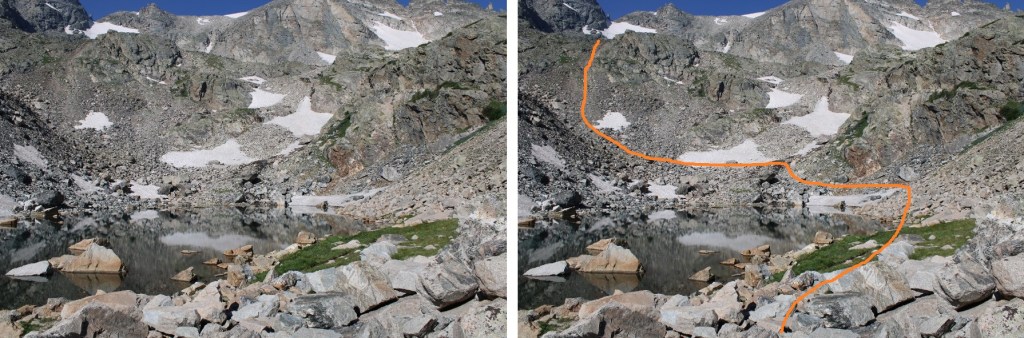
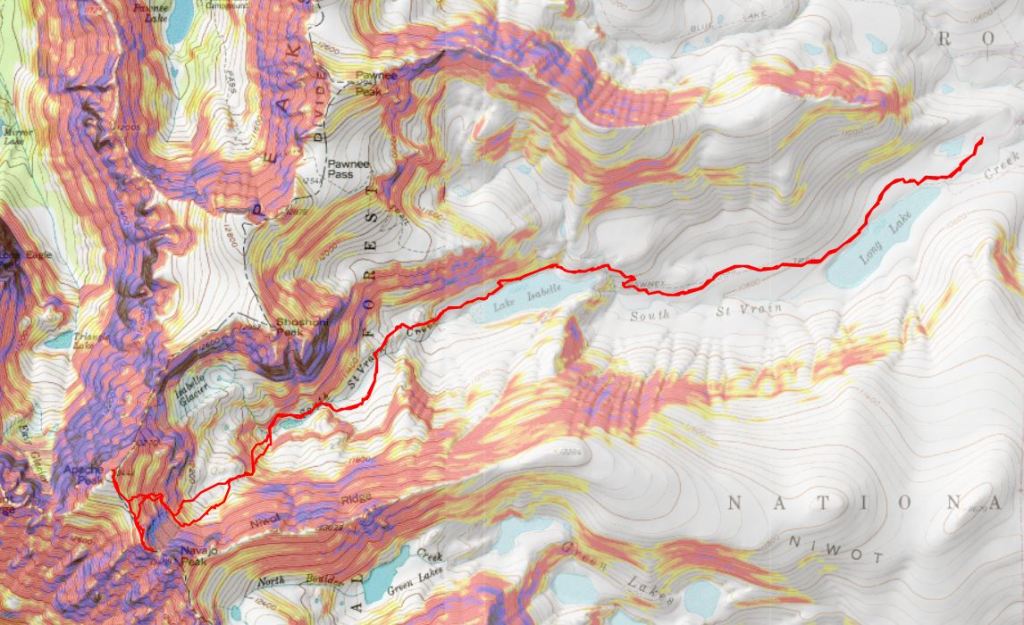
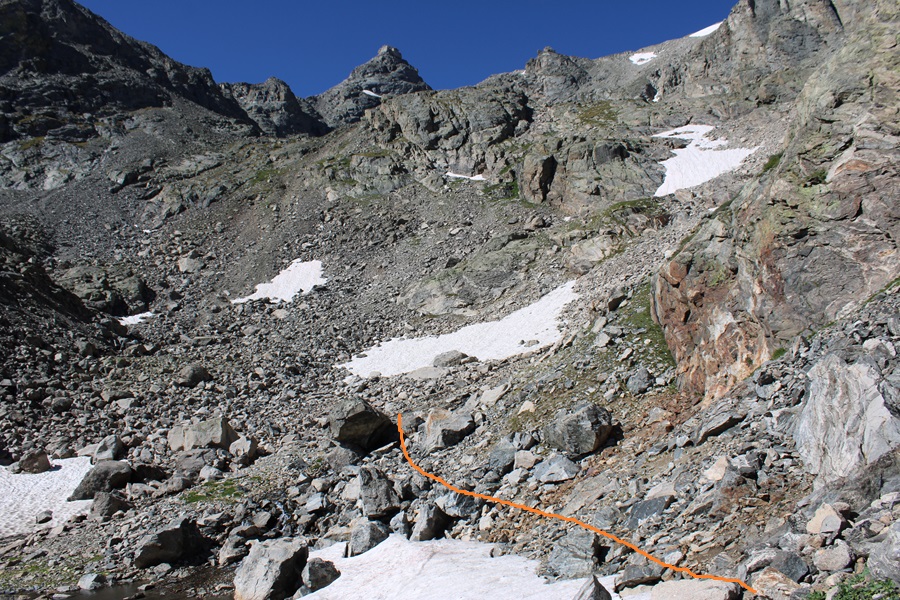
I came to the last pond before the glacier, and left the trail to head southwest into the upper basin.  Here’s the route I took
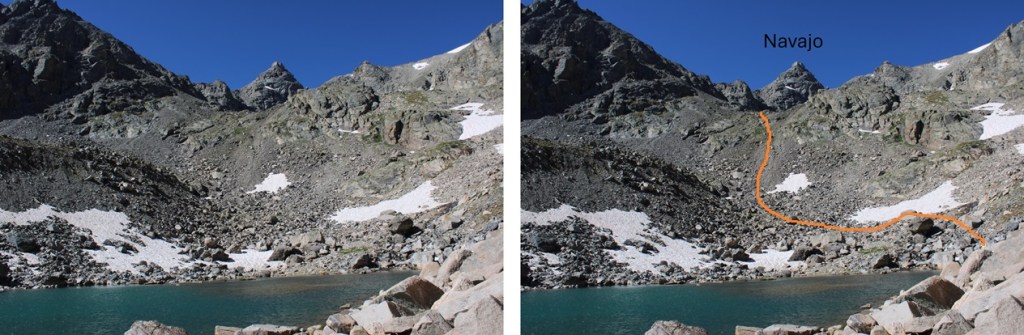
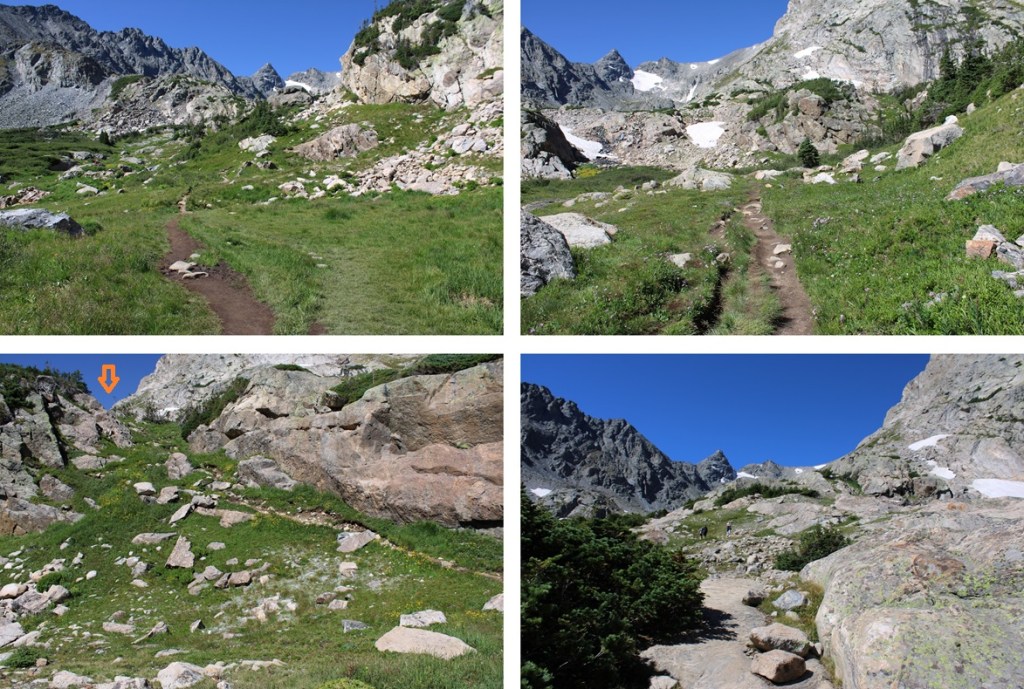
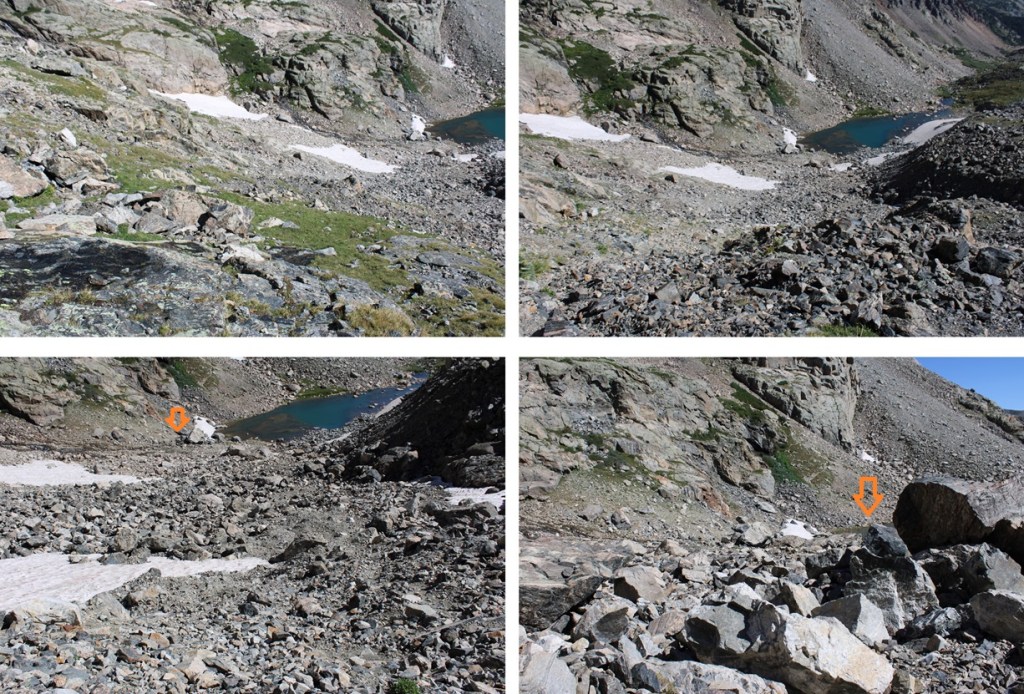
And some step by step pictures.  First, I had to leave the trail.  I crossed over the snow still skirting the lake, and headed towards the large boulder in the distance
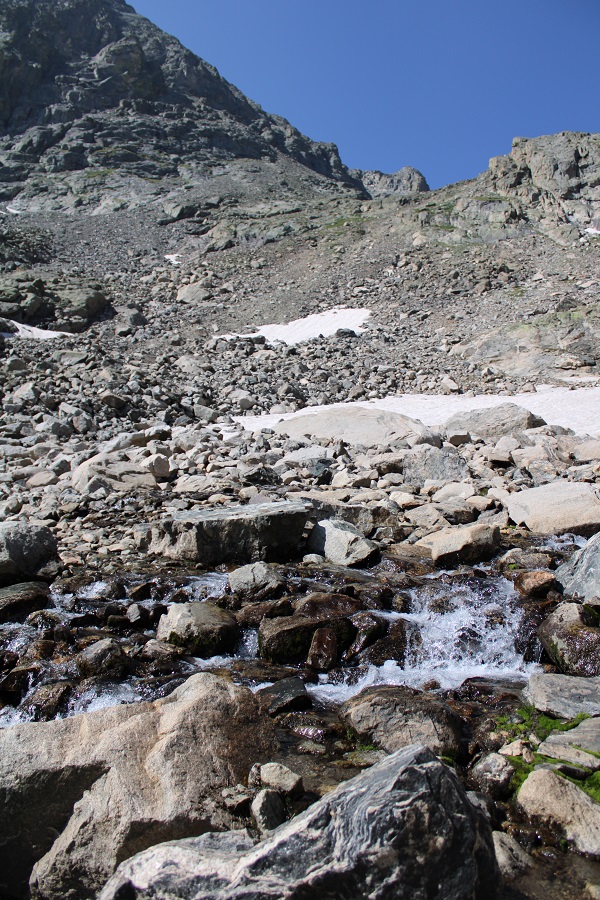
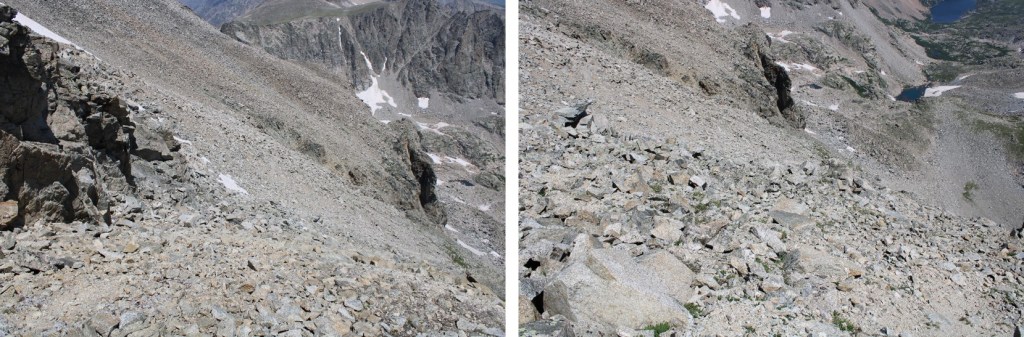
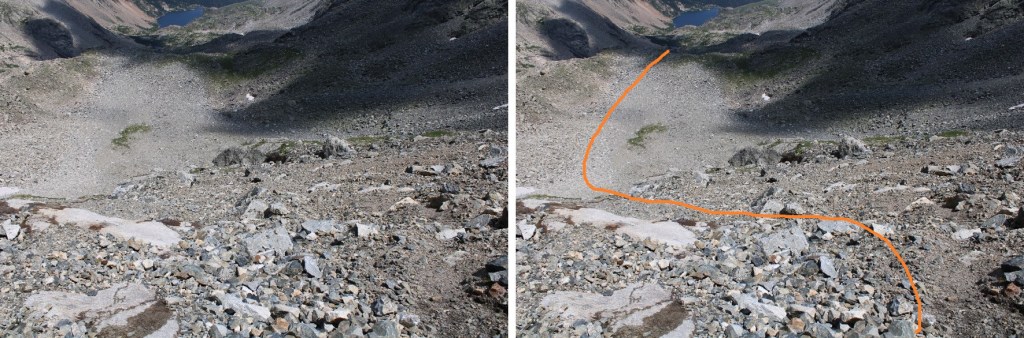
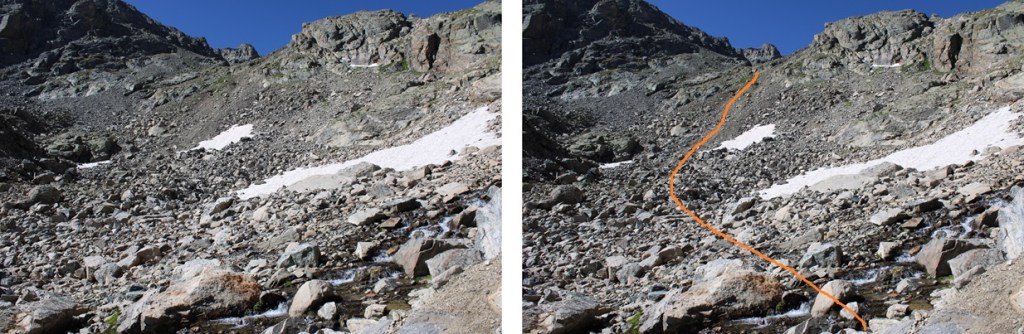
I then crossed the creek, crossed the boulders (some were loose, most were not) and headed for the scree.  Luckily, it had rained last night, so the scree was easy to grip.
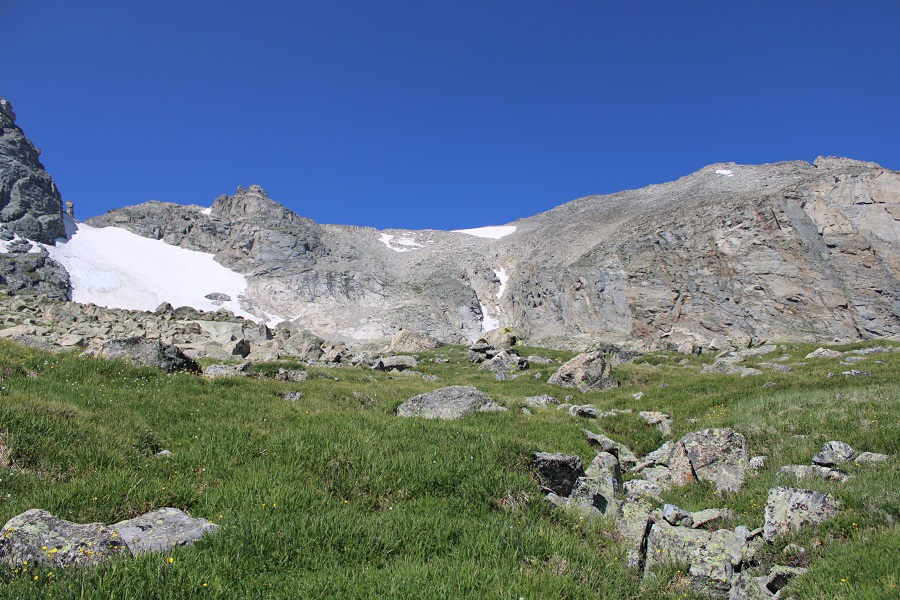
At the top of the scree I was greeted with tundra.  I kept following it, heading southwest
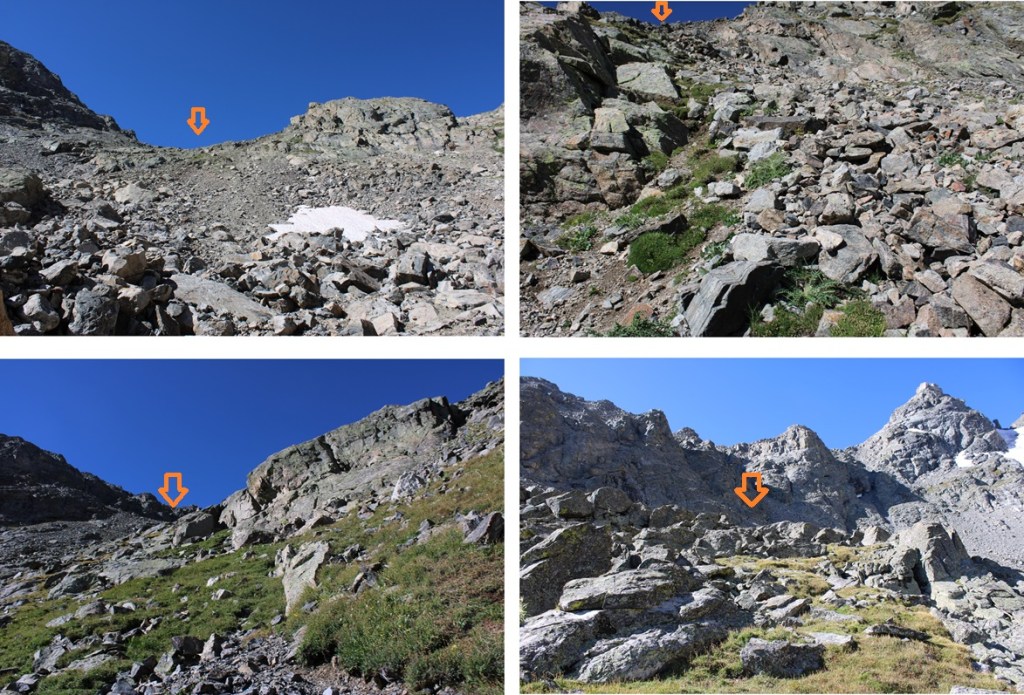
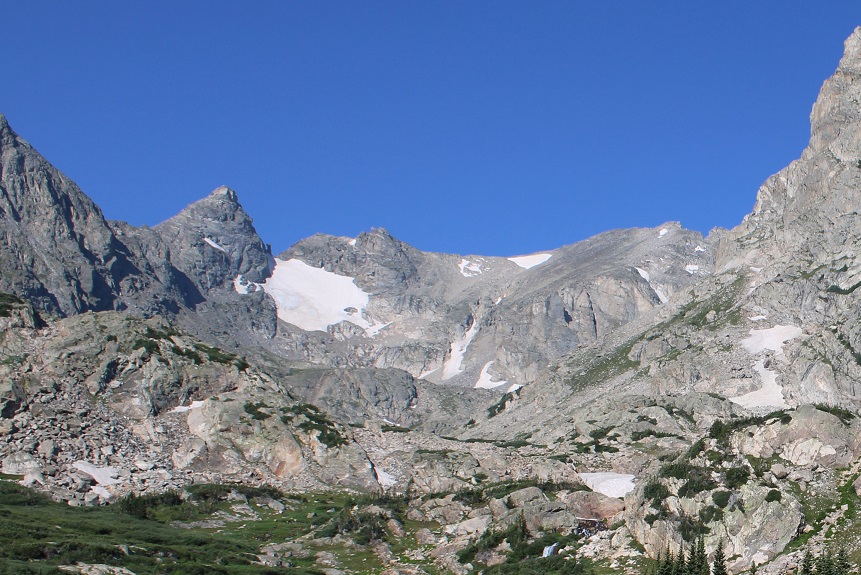
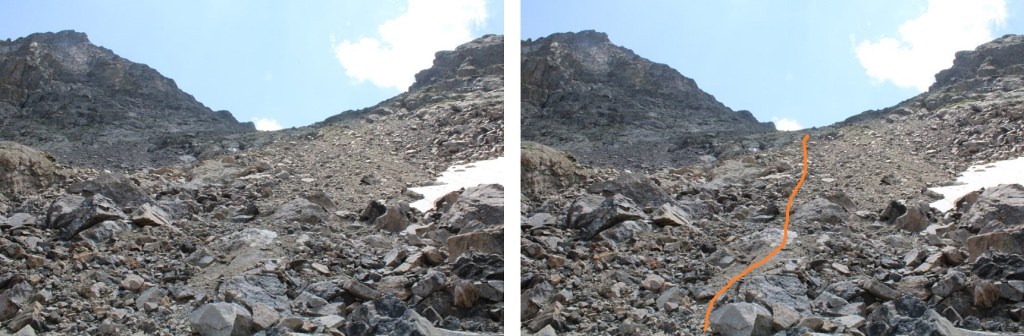
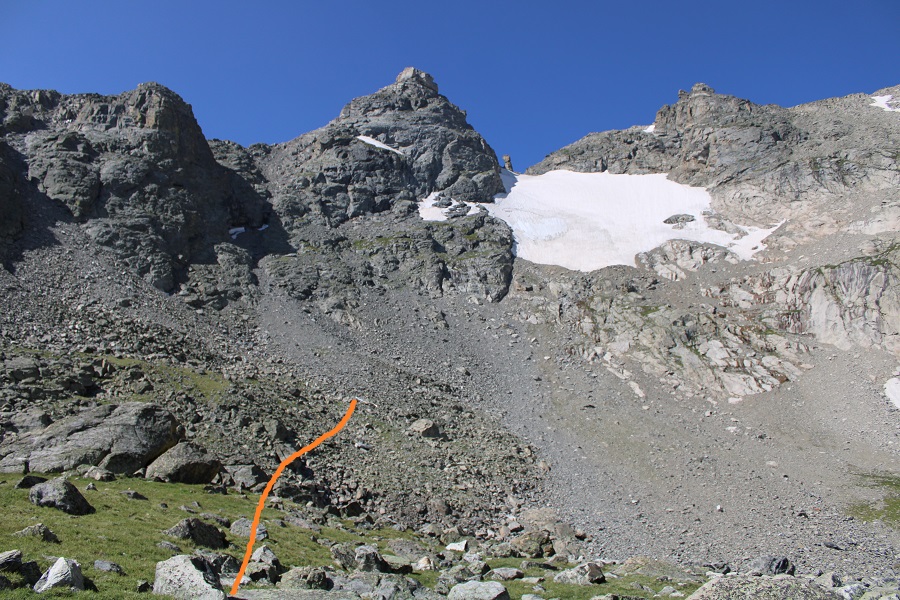
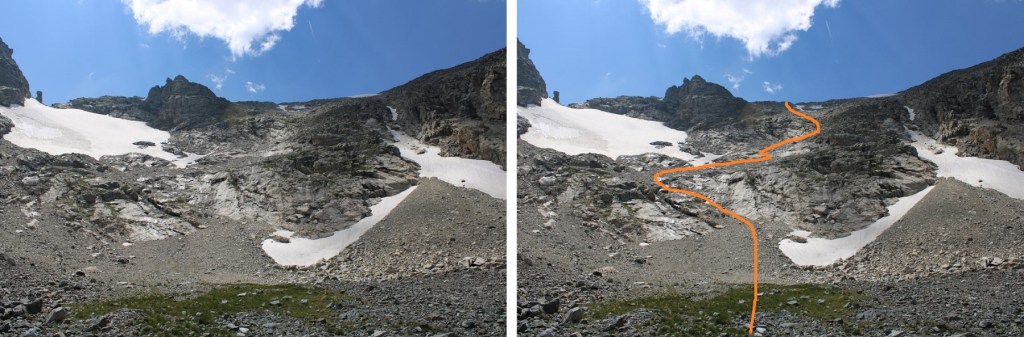
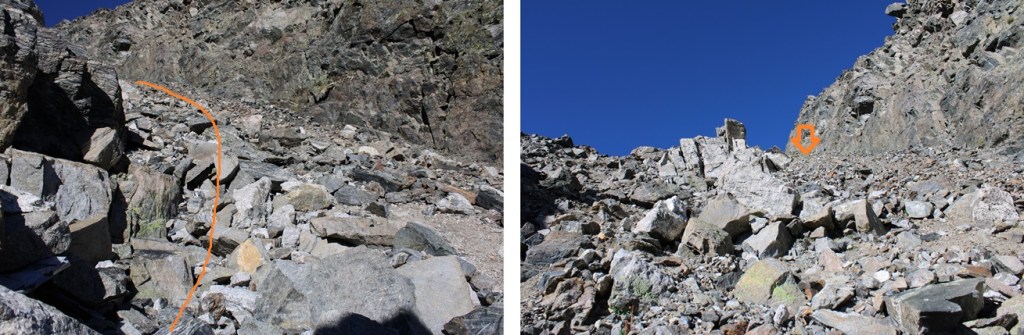
Now in the upper basin, I had a great view of the gully I wanted to take to ascend the ridge.  If you look around, you’ll see remnants of a plane crash that happened in the 1950s.  The higher you go up this gully, airplane gully as many like to call it, the more debris you’ll see.  This is the route I took up the gully.

I made my way southwest over some boulders towards the gully, until I found a scree path.  A few thoughts on this gully:  Besides the fact this was the only part of the hike I experienced insanely intense winds all day, it was easy to navigate, there were social/game trails to follow, it wasn’t very loose, and the scree was solid.  In short, it’s probably one of the easiest gullies I’ve ever ascended, and if they were all like this, I probably wouldn’t mind them so much.  I headed south until I saw an obvious “y” in the gully, and went right.  It’s easy to know where you turn right because you’ll see parts of the airplane to the right.
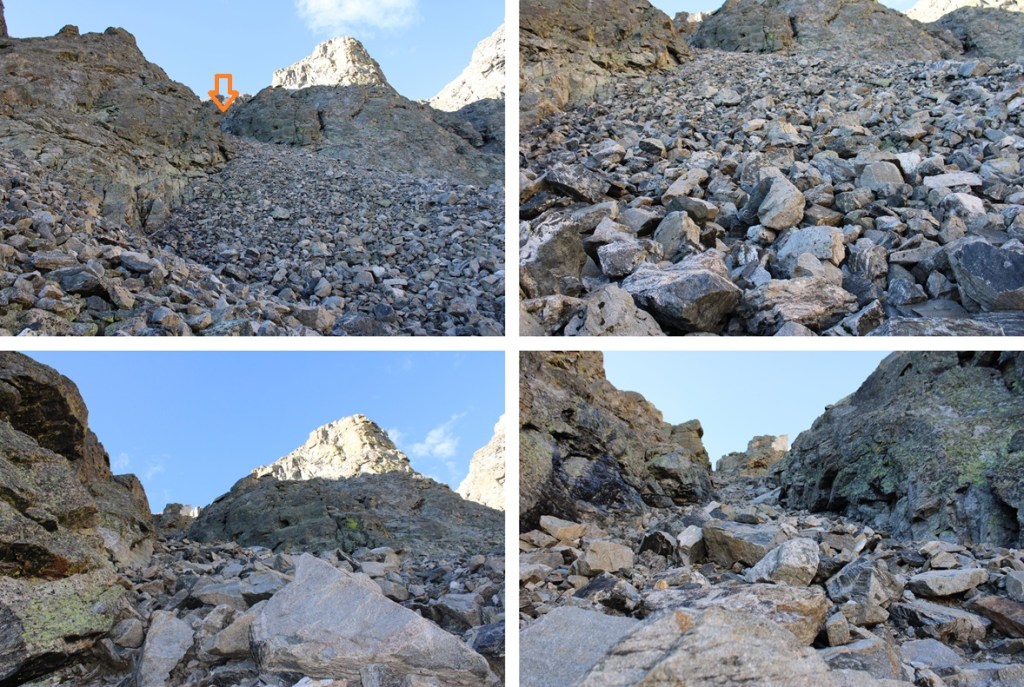
I went to the left of the airplane debris, then followed climbers right of the gully to the ridge (although both sides will get you there, just use the terrain you like best).

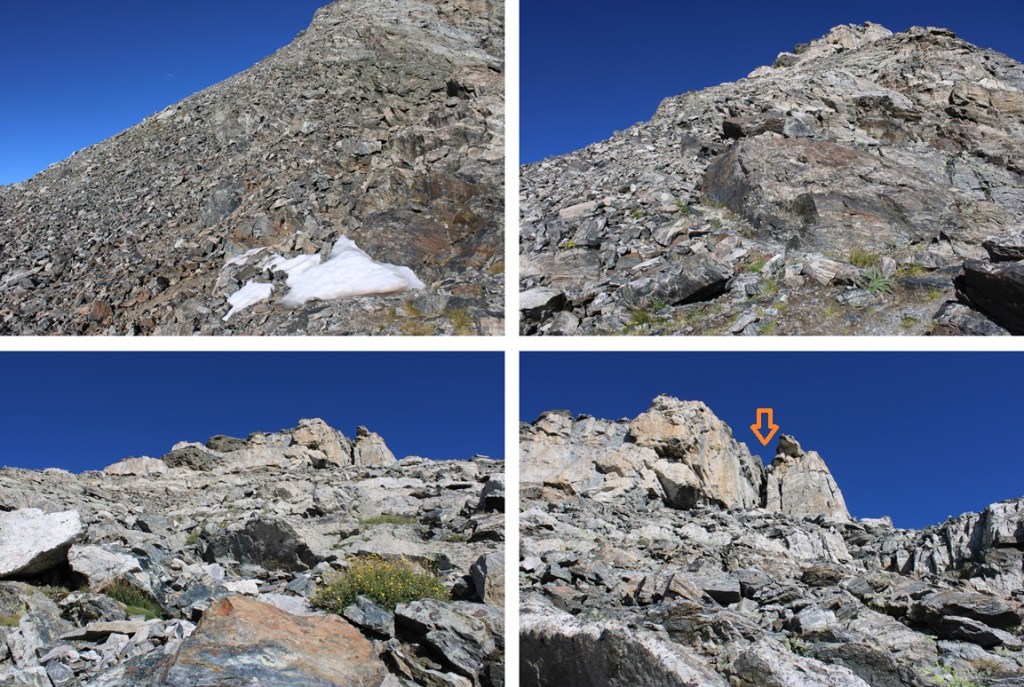
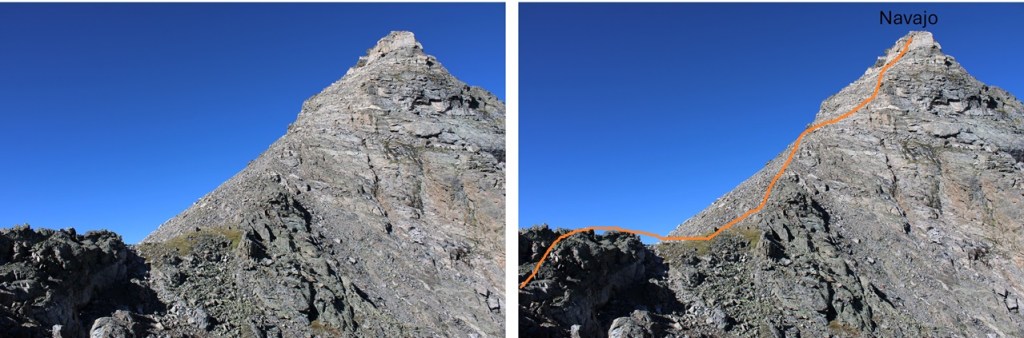
At the top of the gully, I could see the rest of my route to the summit of Navajo Peak.  Until the chimney at the end, the rest of the route is class 2.  If you find yourself in class 3 territory, you’re making it too difficult. 
From the top of the gully I turned left and followed the saddle across a small ridge
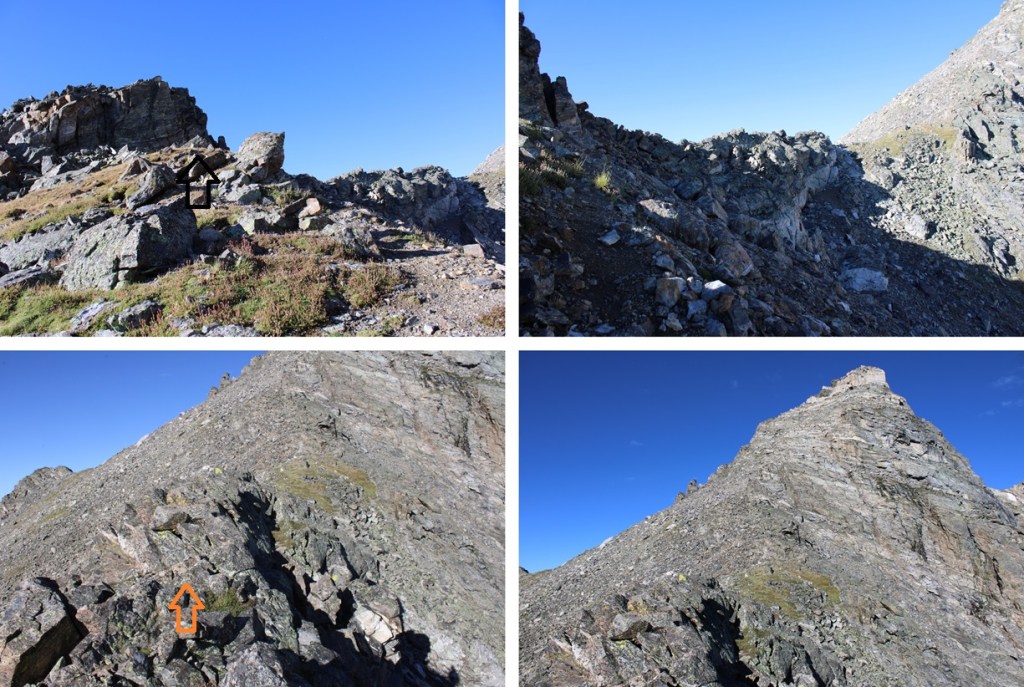
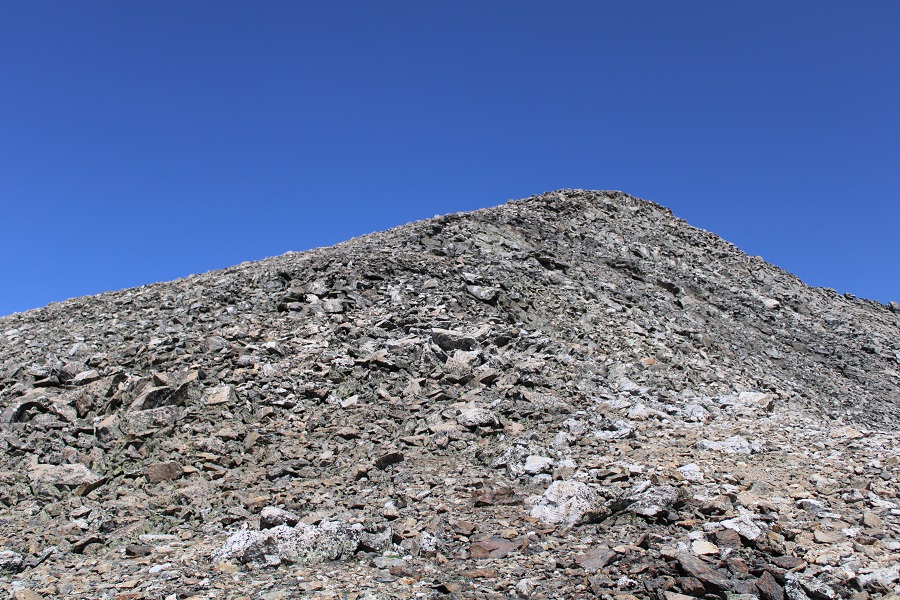
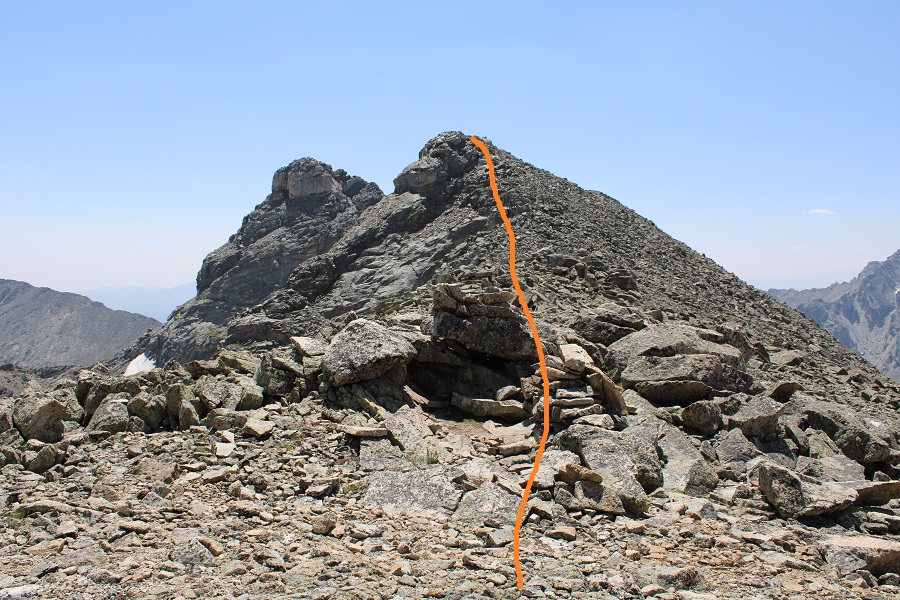
From here the rest of the route looks daunting, but there are tons of game trails that will get you to the right spot.  Aim for the very right edge of the rock formation, where you’ll see a chimney.  Once again, this should all be class 2.
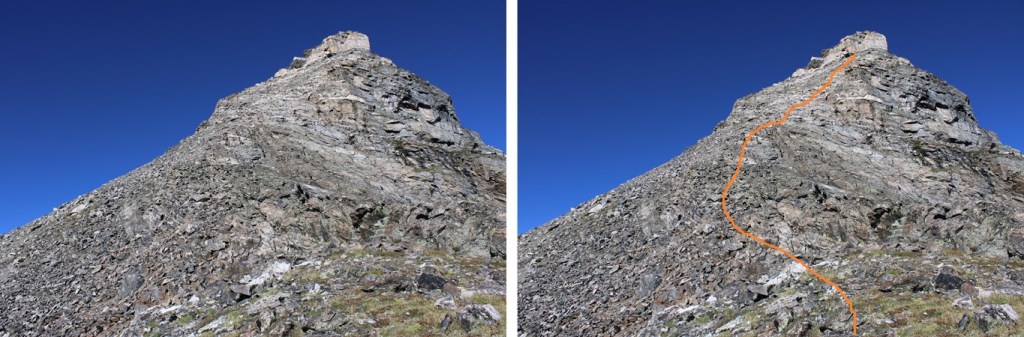
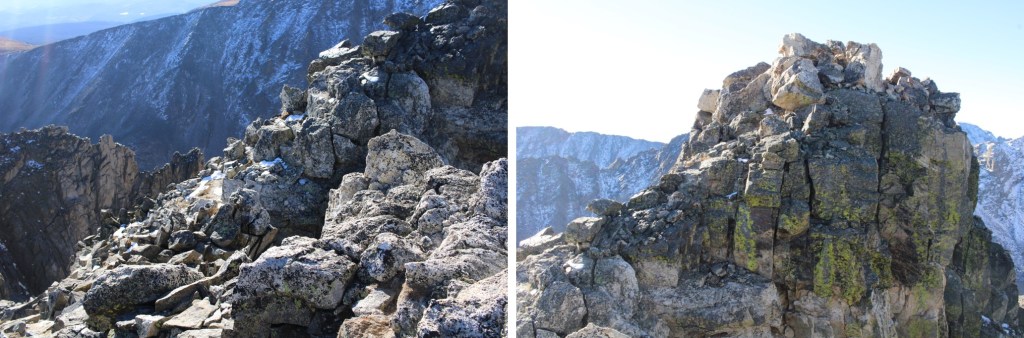
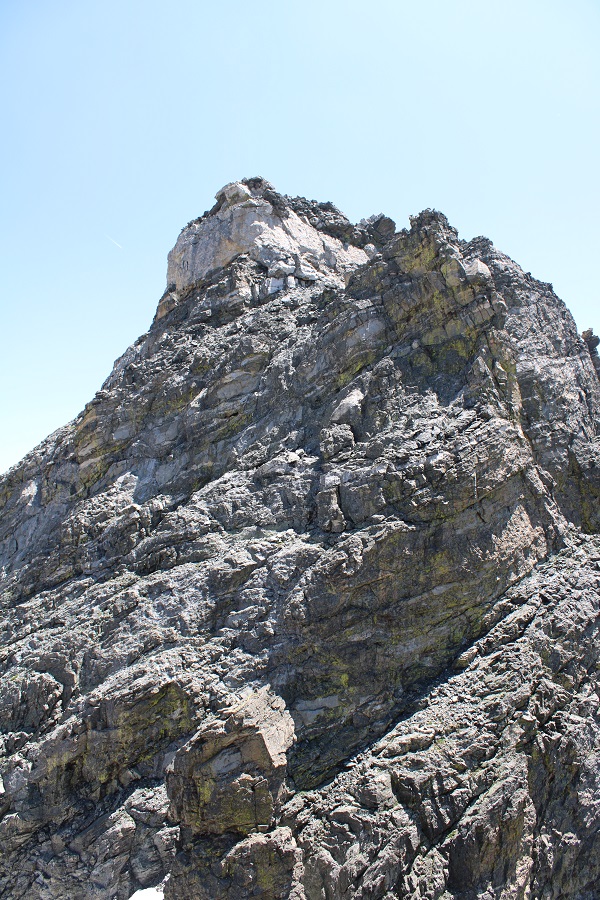
Here’s a look at that chimney.  I found this chimney to be difficult class 3, easy class 4, so if you’re looking for a good practice chimney, this would be it. There isn’t a lot of exposure, and I was able to find adequate hand/footholds if I stretched a bit.  At the top of the chimney, exit left.

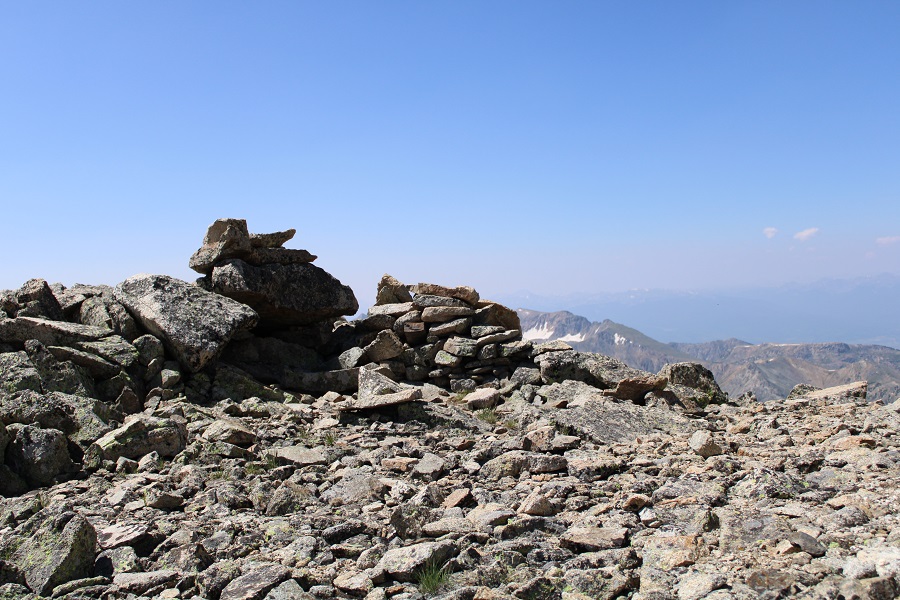
At the top of the chimney I turned left, and climbed over boulders a short distance to the summit
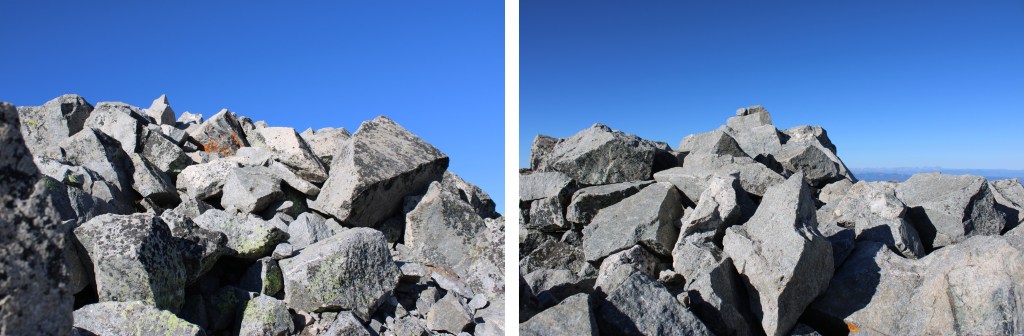
I summited Navajo Peak at 8:30am
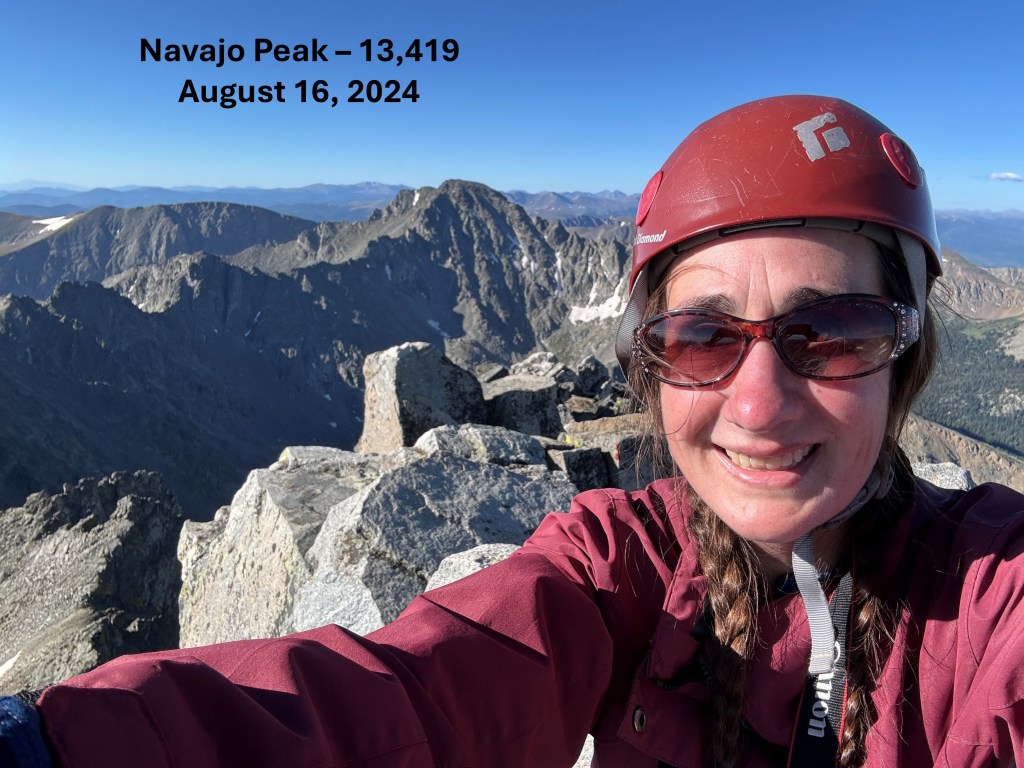
Navajo Peak:

This was an out and back hike for me, so I turned around and headed back towards the chimney.

I descended the chimney, and made my way back down to the saddle.

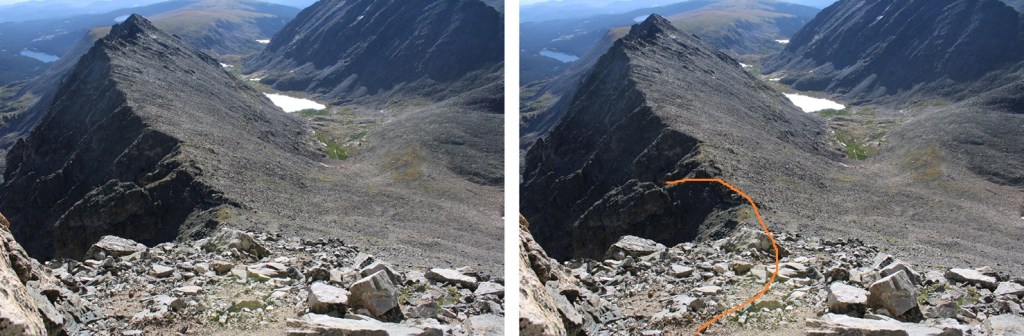
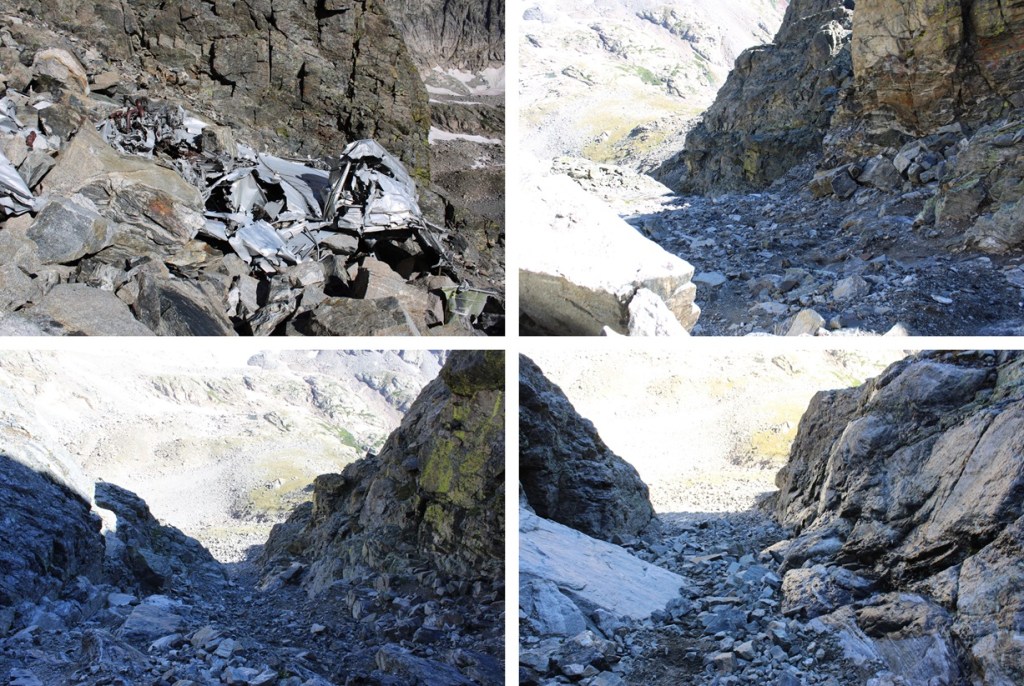
Then headed back down airplane gully
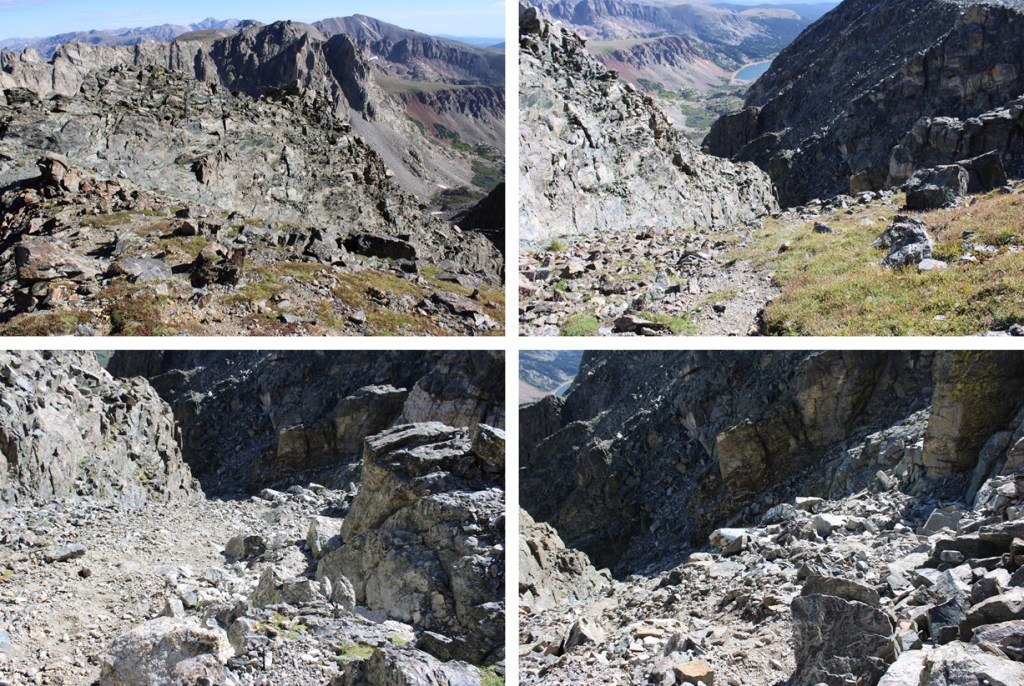
Passing the crash site, and continuing to follow the gully north
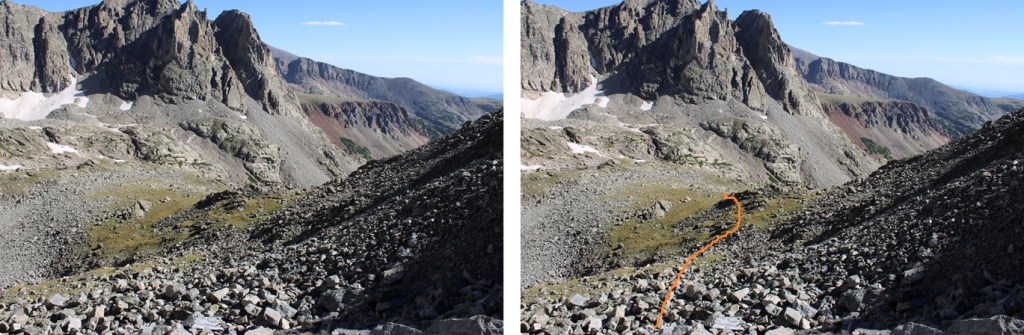
At the base of the gully, I rock hopped towards the tundra I could see in the distance
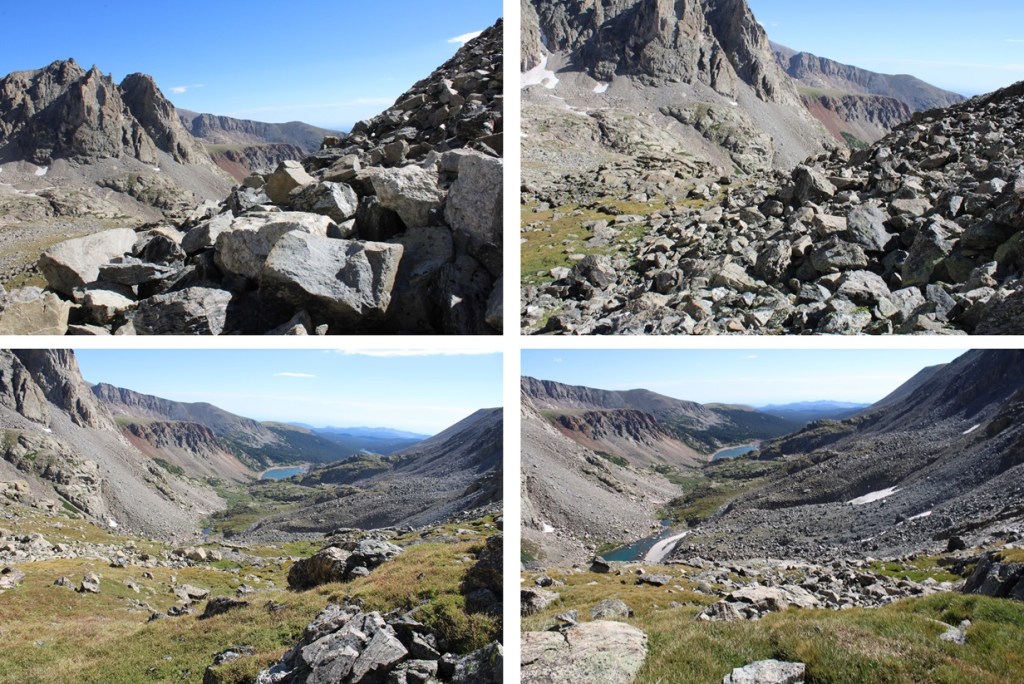
I could now see Isabelle Glacier trail in the distance, and descended down into the lower basin towards the trail. 

Back on the Isabelle Glacier trail, I followed it east back to the Long Lake Trailhead.
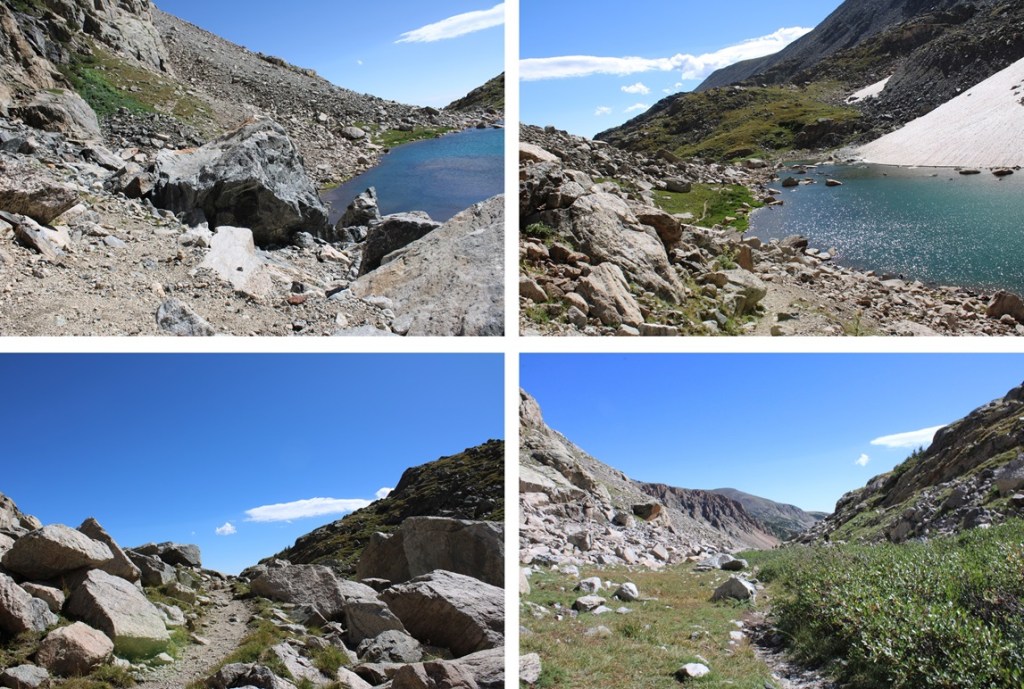
Back at the Long Lake Trailhead, I followed the road 1.3 miles back to Brainard Lake
I made it back to the trailhead at 12:30pm, making this a 14.52 mile hike with 3346’ of elevation gain in 7.5 hours

Shoshoni Peak – 12,979, Pawshoni – 12,888 and Pawnee Peak – 12,943

RT Length: 19.63 miles

Elevation Gain: 3728’

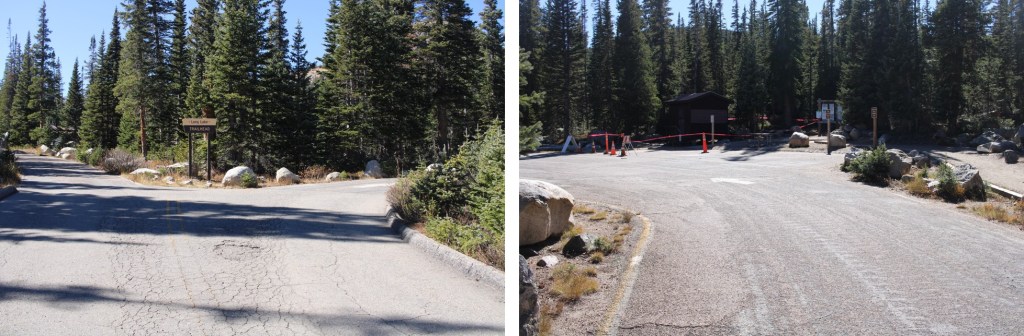
Imagine my surprise when I was heading towards the Long Lake trailhead, only to find the entire area was closed a the Brainard Lake entrance station.  While I’d known the permit system ended October 15 (yay!!!) I’d not heard they planned to lock the gate as well.  Have I mentioned I’m not a fan of the permit system?  In any event, I parked in the winter lot, and was on my way at 5:15am.

I walked for 3.1 miles west, on a snow-free, dry, and clear paved road, to the Long Lake trailhead.

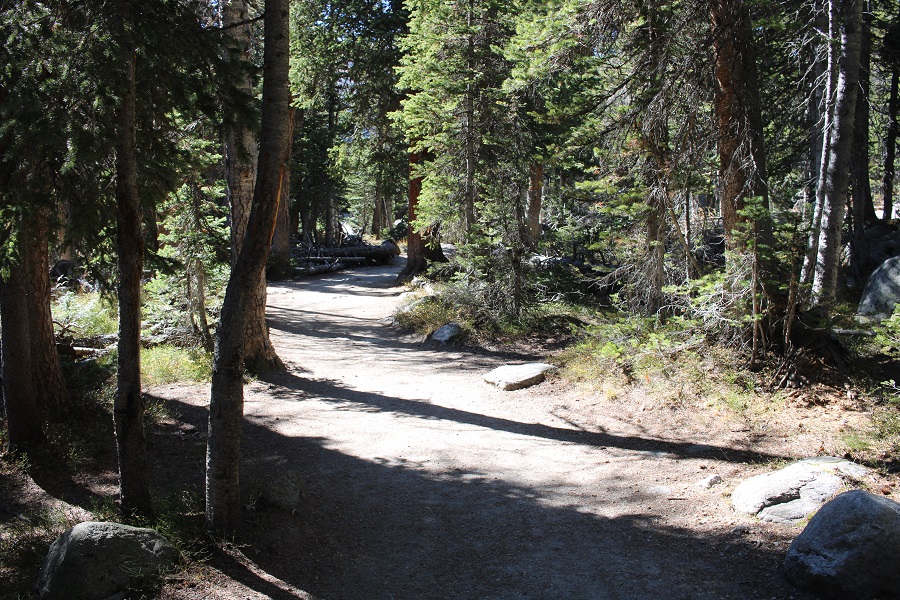
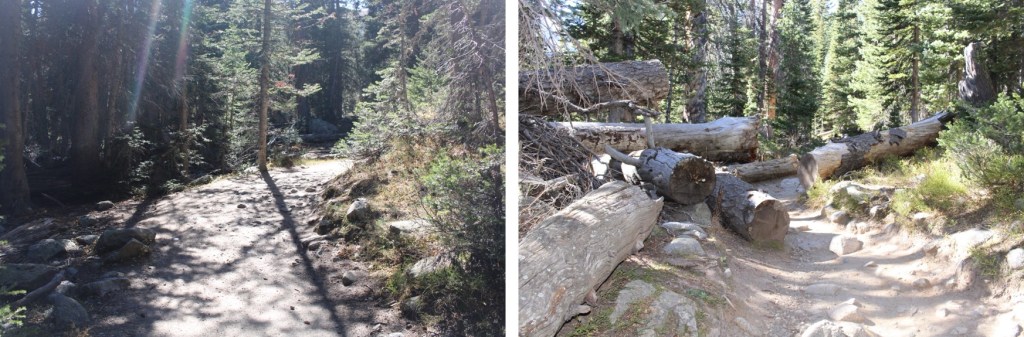
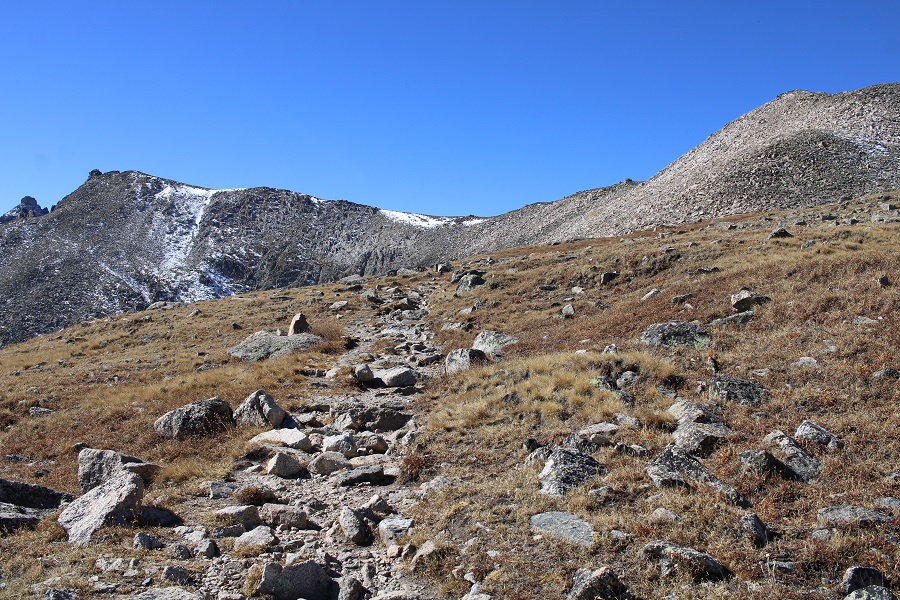
Now on the trail, I followed it west.  This is a very well-marked, class 1 trail, all the way to Pawnee Pass.

There are several junctions.  I went right at each one. First to follow the Pawnee Pass trail.

The second to also keep following the Pawnee Pass Trail

And the third time, just before making it to Lake Isabelle, to also keep following the Pawnee Pass Trail. 

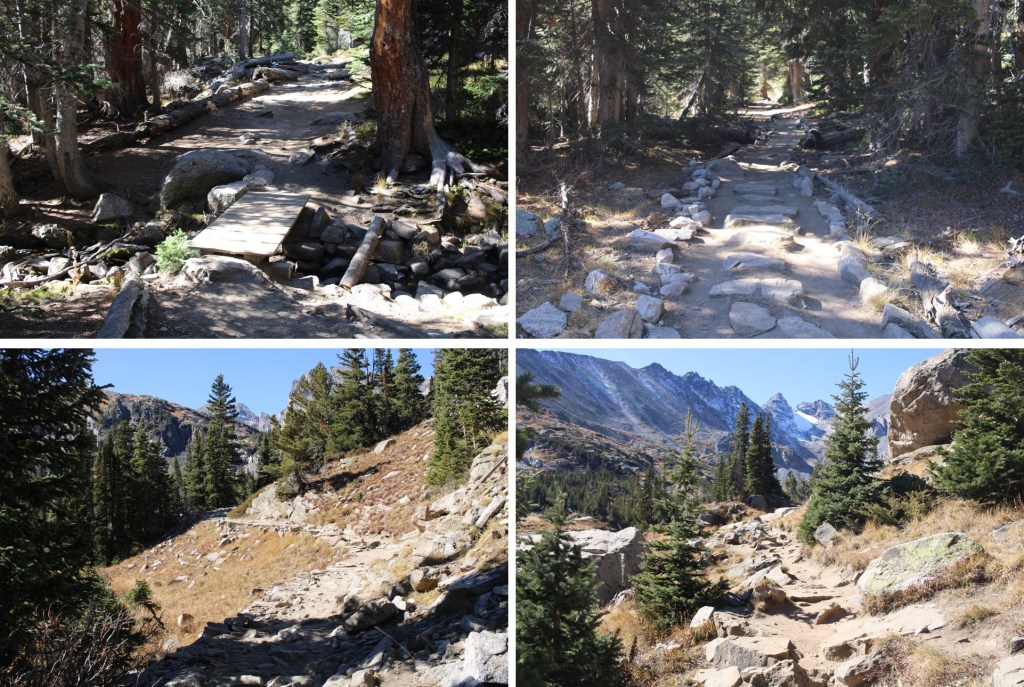
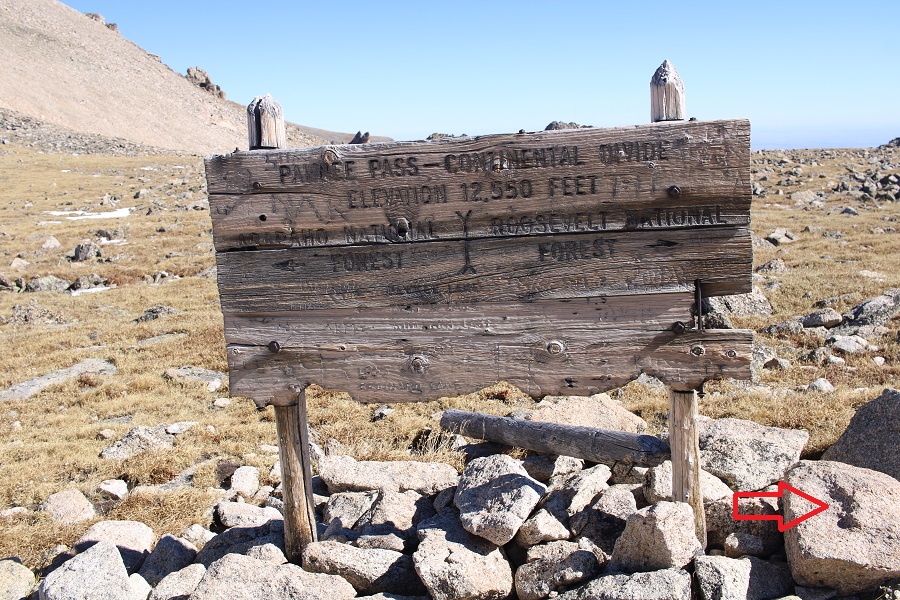
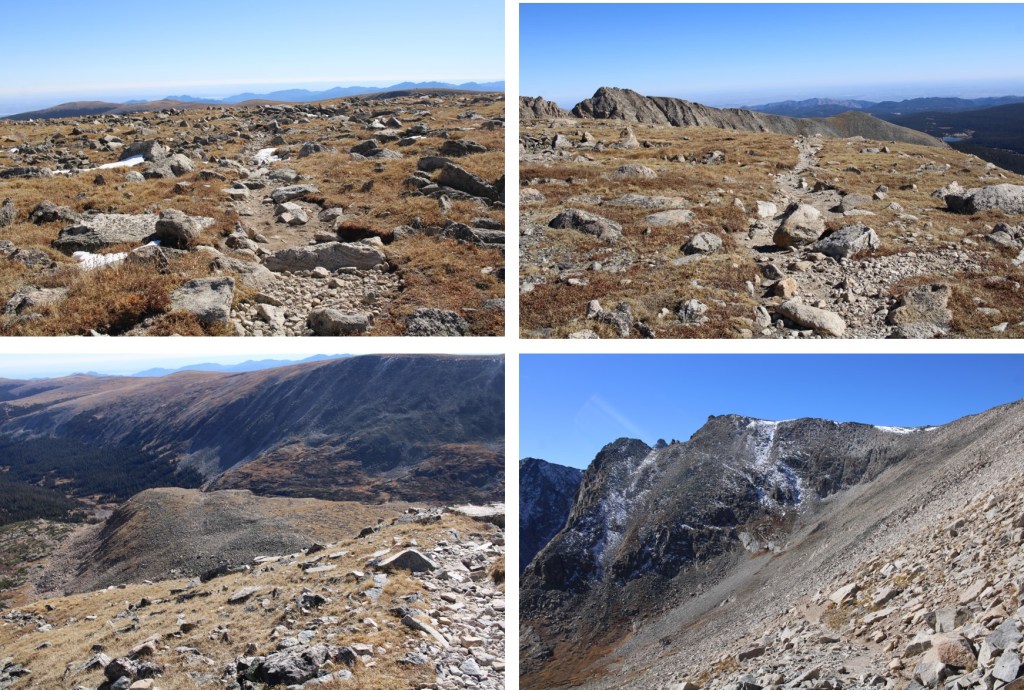
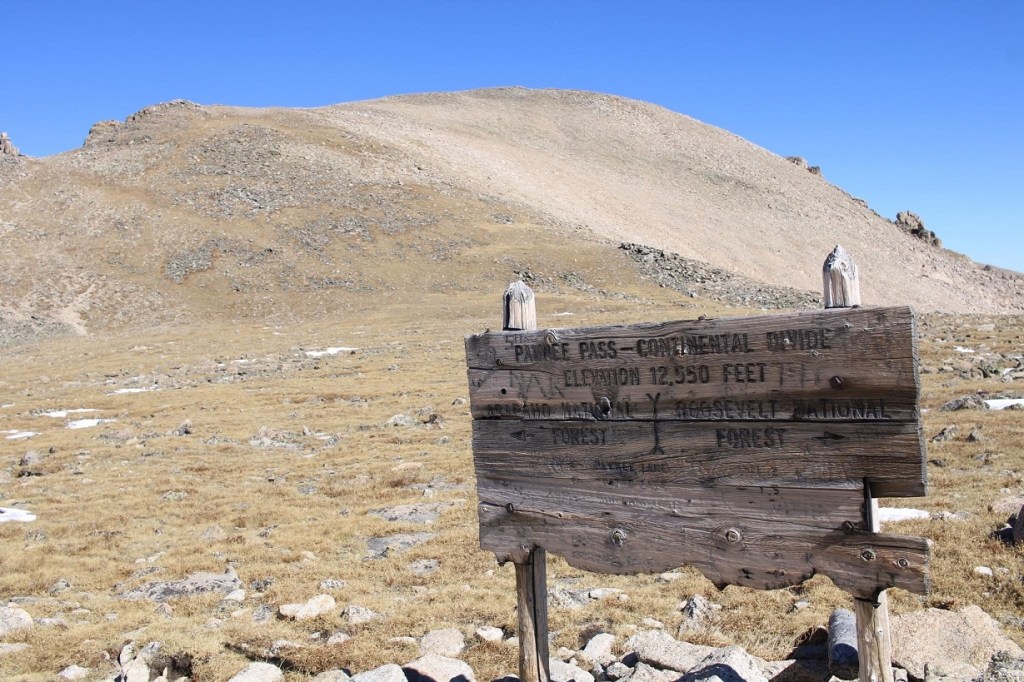
I followed the Pawnee Pass Trail almost all the way to Pawnee Pass

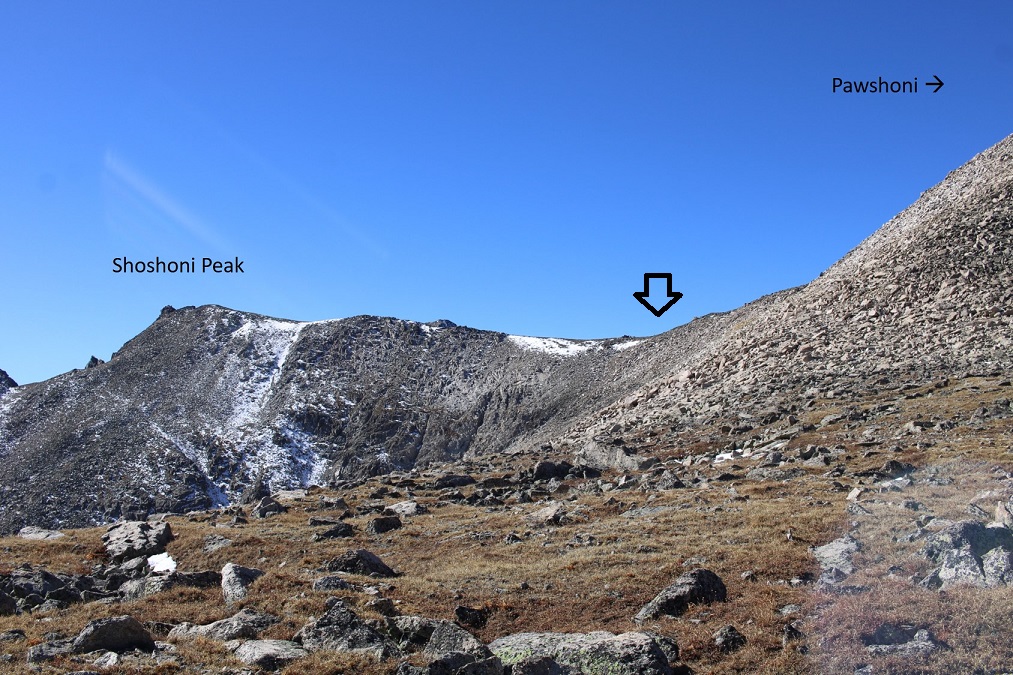
At 12530’ I left the Pawnee Pass trail, and headed southwest towards the saddle of Shoshoni and Paswhoni

This was straightforward, class 2 rock hopping.

When I made it to the saddle I turned left, and followed the ridge south towards Shoshoni Peak

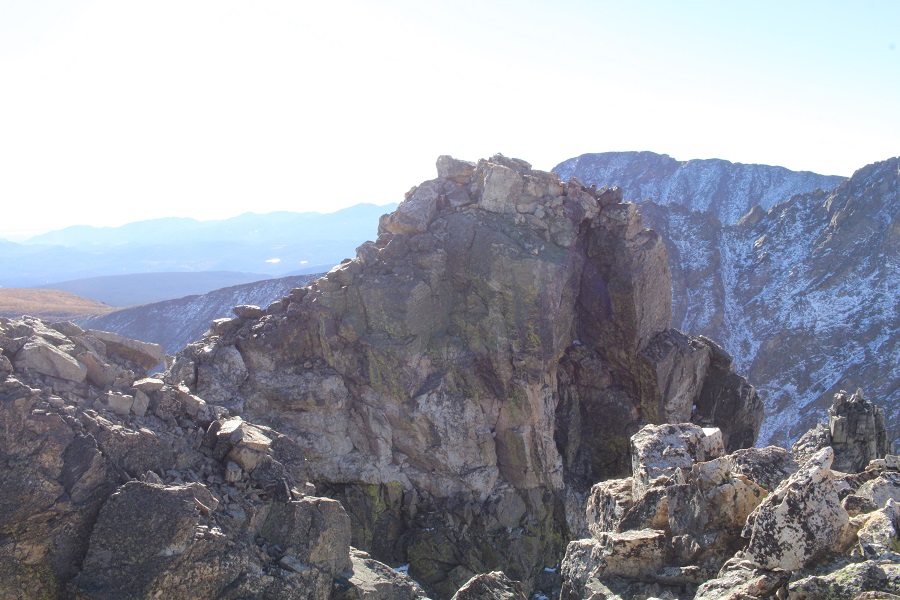
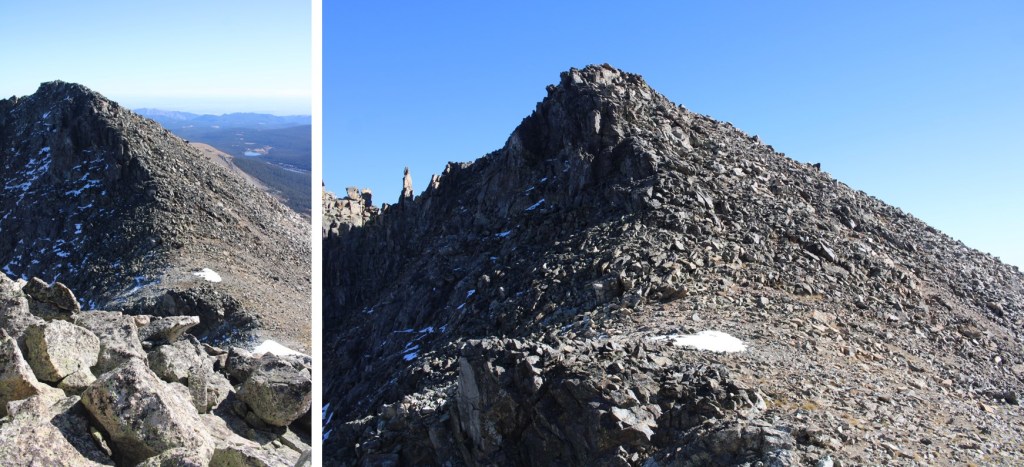
When I got to what I thought was the peak, I saw this

Not sure which was the actual peak, where I was standing or the outcropping in front of me, I decided to climb up the rocks, just to be sure.  This was class 3 climbing.  I ascended on the left

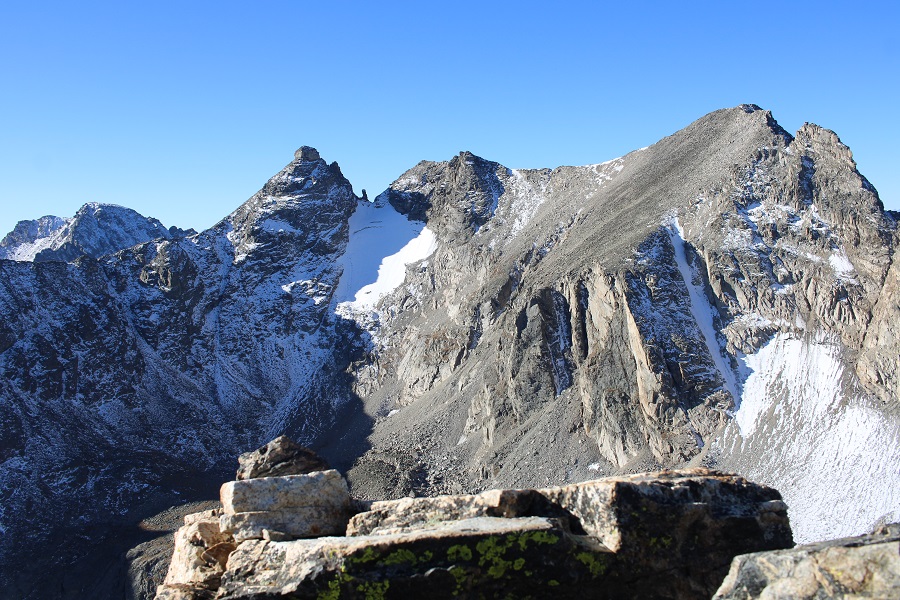
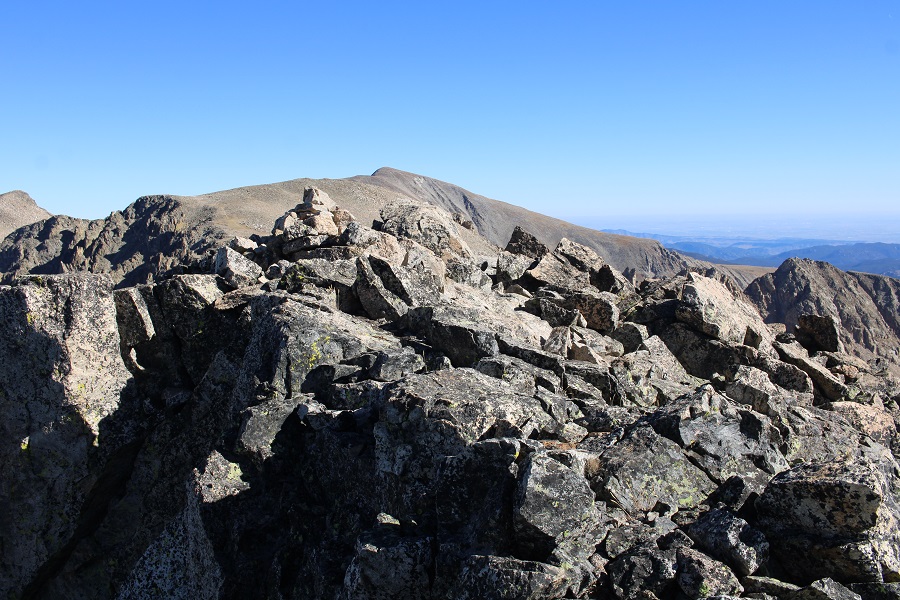
At the summit, the views of Navajo and Apache were amazing

I summited Shoshoni Peak at 9:45am

Shoshoni Peak:

I climbed back down, and retraced my steps to the Shoshoni/Pawshoni saddle on class 2 terrain

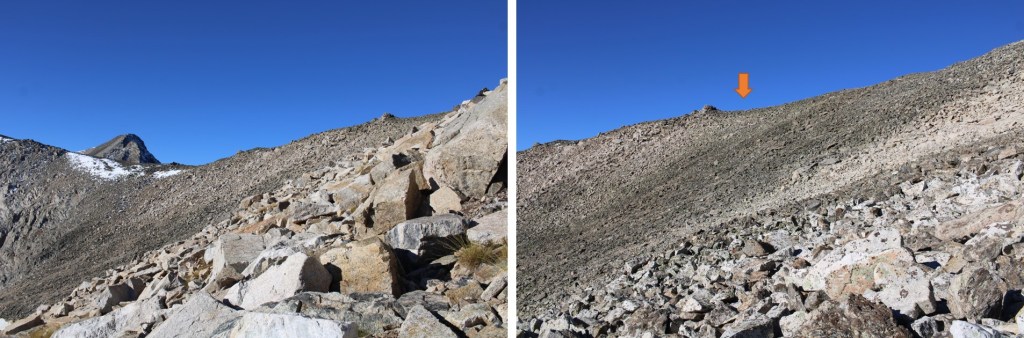
I followed the class 2 ridge northwest and then northeast all the way to Pawshoni

I summited Pawshoni at 10:30am

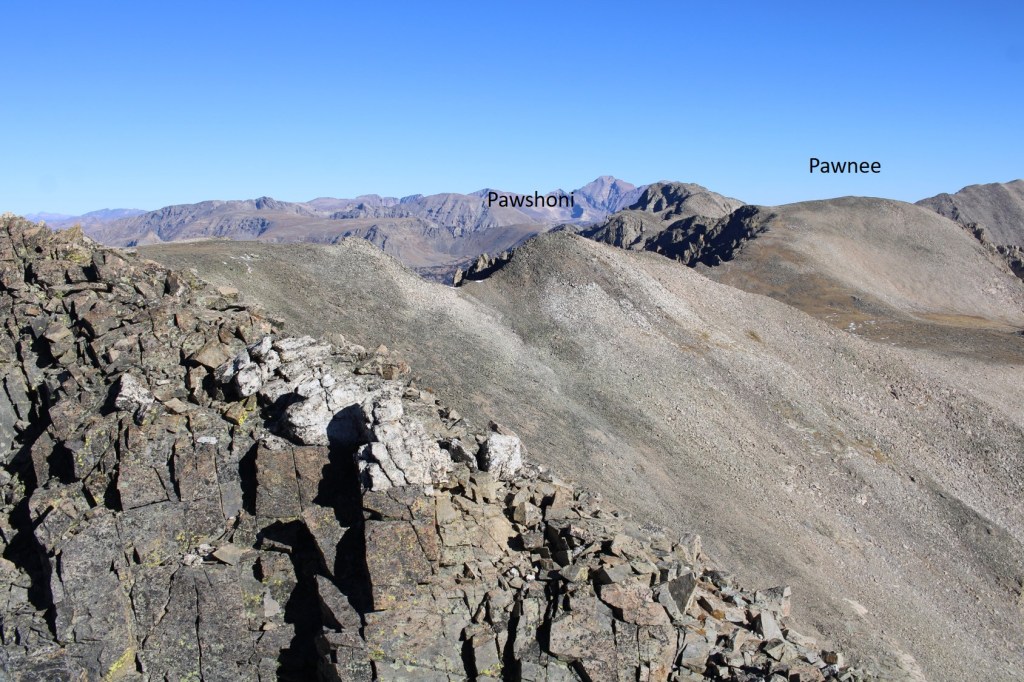
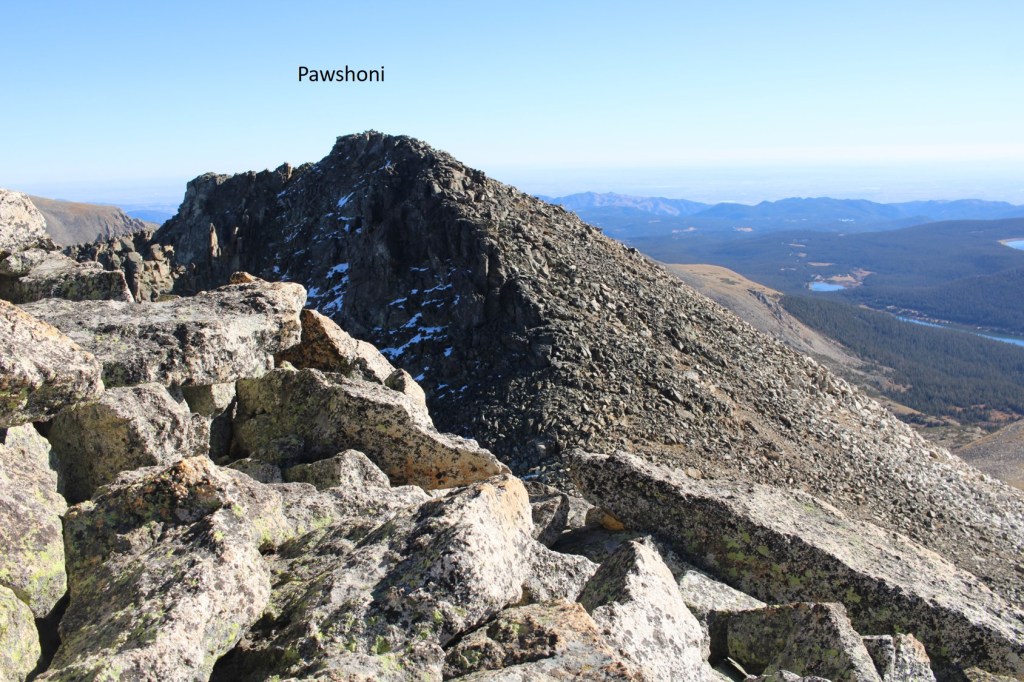
Pawshoni:

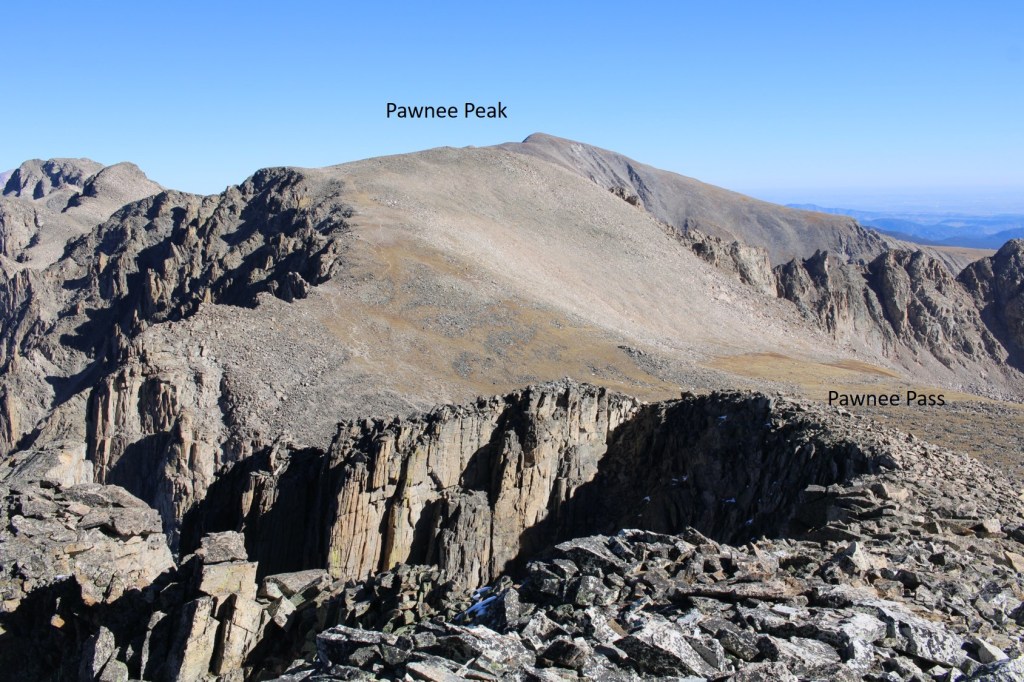
Next up was Pawnee Peak, to the northeast

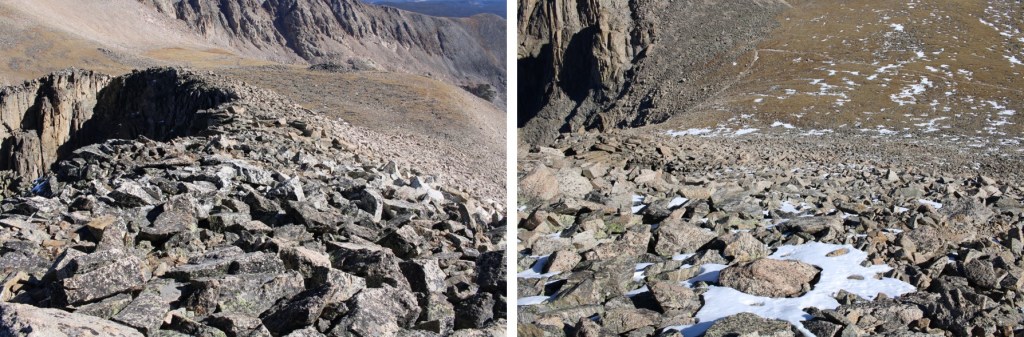
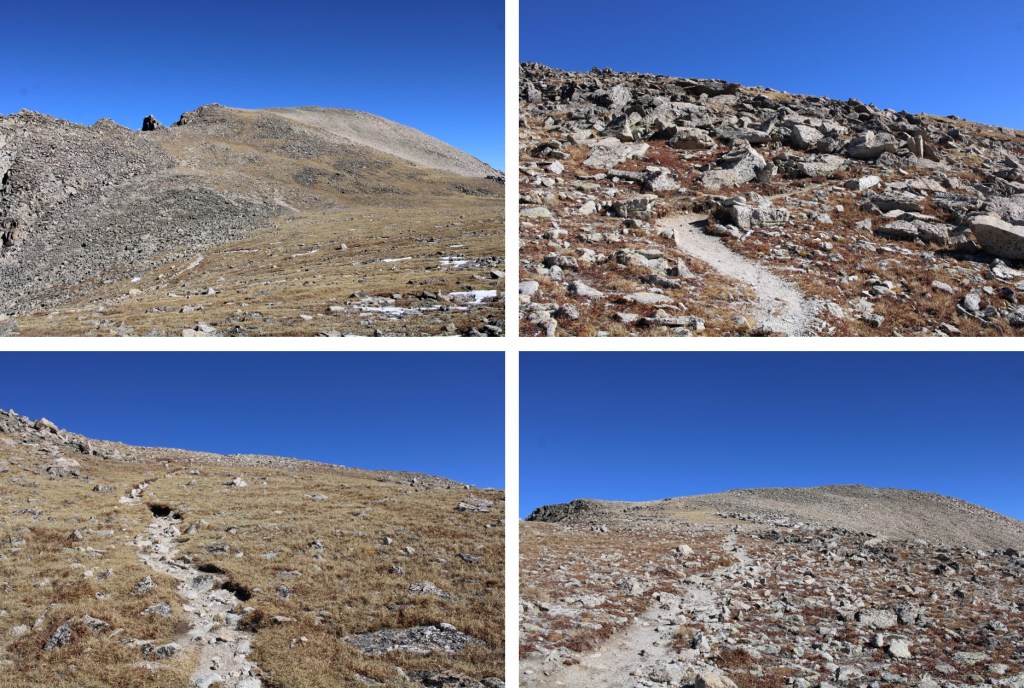
I continued to follow the ridge down to Pawnee Pass, and the up to Pawnee Peak.  Once at the pass, there was a game trail I could follow to the summit.

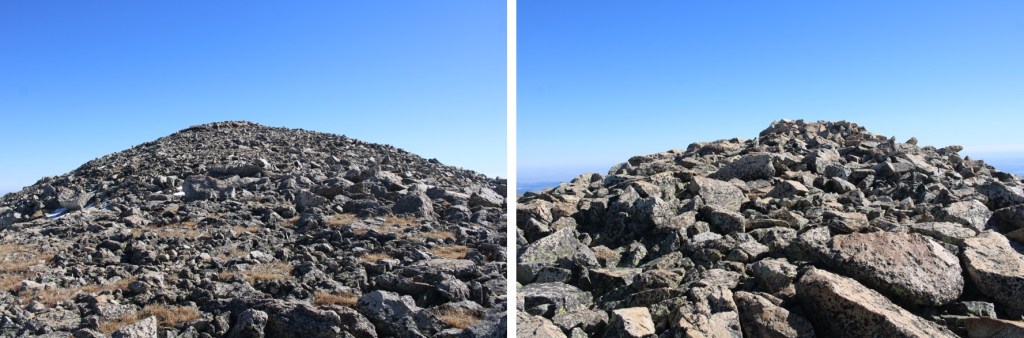
I summited Pawnee Peak at 11am

Pawnee Peak:

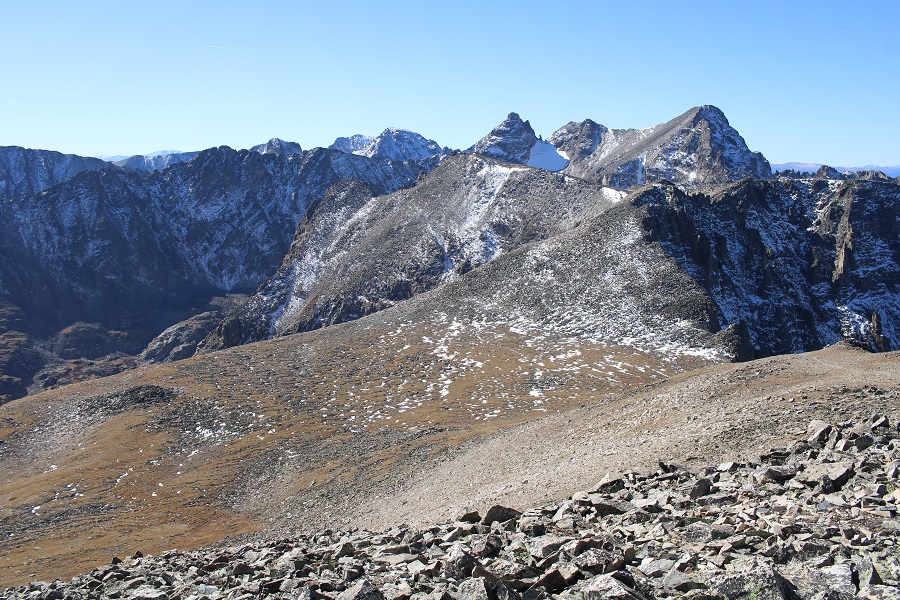
There were some amazing views of the peaks I’d just summited, as well as other 13ers
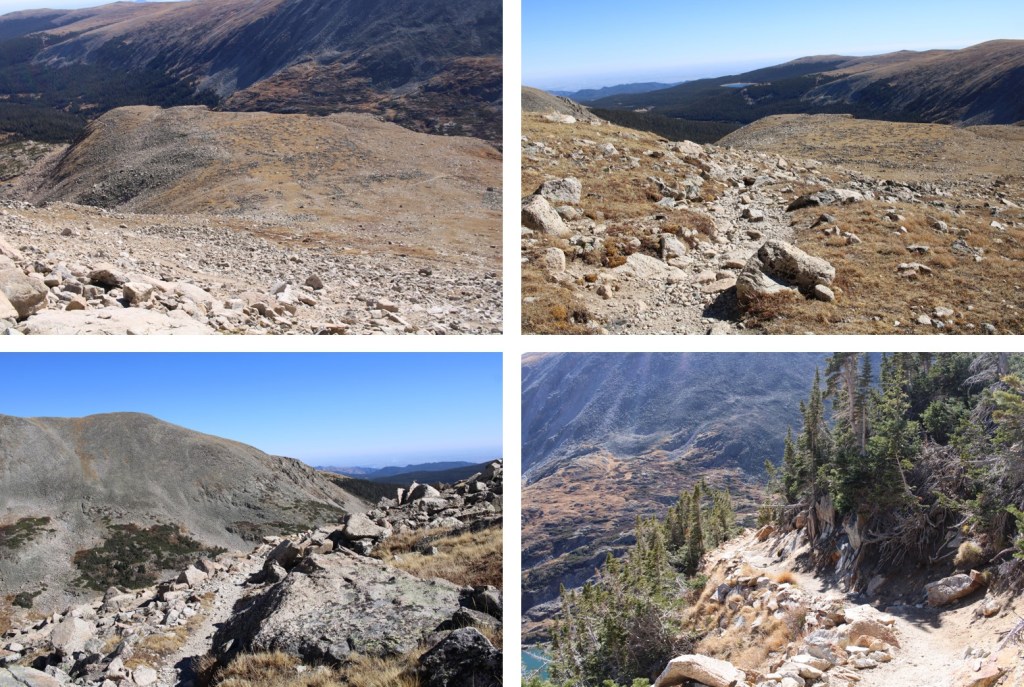
I turned and headed back towards Pawnee Pass, following faint trails along the way

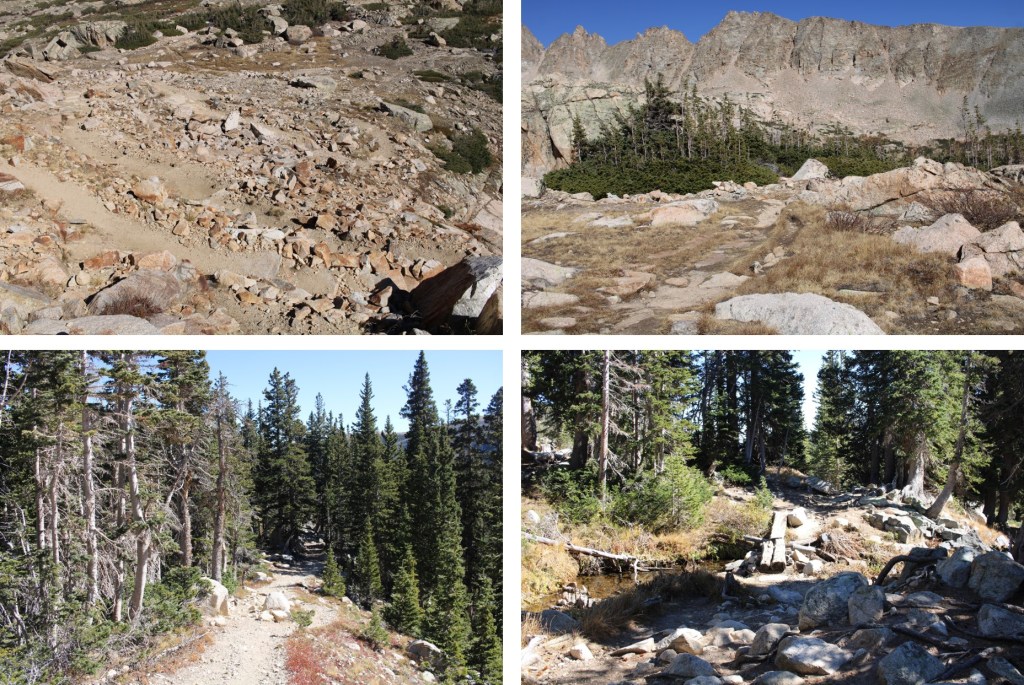
Back on the trail, I followed it as it wound its way and switchbacked east towards Lake Isabelle

Then I followed the trail east back to the trailhead

From the trailhead it was a 3.1 mile walk along the paved road back to my truck

I made it back to my truck at 2:15pm, making this a 19.63 mile hike with 3728’ of elevation gain in 9 hours.

On to the next trailhead!

Apache Peak – 13,450

RT Length:  13.66 miles

Elevation Gain:  4127’

I’m not a fan of the timed permit system, and once again, I was reminded why (feel free to scroll down to avoid the drama/whining, just be sure you have ALL the correct passes you need when you purchase online). 

The night before this hike I was able to secure a dropped permit.  I was looking up available permits on my phone, saw one for tomorrow, and snatched it up.  It was an overnight parking permit that started the day of the hike.  Usually I start hikes around 3-4am, and this permit started later, but at least I’d get into the park.  Since it was an overnight permit it would give me a long time to hike, and I figured I’d just end my hike later than normal.  With any luck, no one would be at the gate that early and I’d sail on by.

No such luck.  The attendant checked my paperwork and told me I had to wait until 8am to check in.  So, at 8am I was back at the gate, checking in.  The attendant looked at my overnight pass and asked me where I was spending the night?  I said I was just day hiking, but it was the only parking permit I could get.  She got upset with me, and told me I ‘stole’ this permit from someone else who already had an overnight camping permit, and I needed an overnight camping permit to use this pass. 

Wait, you need 2 separate permits to be here?  “Yes”, she replied, “sometimes 3, and you made it difficult for someone else to stay that already has one of the other two permits, which they needed to order moths ago.” 

I refrained from letting her know I’d picked up a permit at the last minute, so I hadn’t ‘stolen’ it, and how crazy it was to need multiple permits to hike in one area, and asked her what my options were?  She was ready for this question, as she gets it All. THE.  TIME.  In fact, she already had permits printed and marked up for this exact purpose.  The website verbiage creates a lot of inconsistencies, so most people she talked to had the ‘wrong’ permit when they arrived at the Brainard Lakes entrance.  The website also gives out passes with similar names to other parks (such as Maroon Bells), but the permit names mean different things to different parks.  She gave me a day permit and told me I needed to be out by 5pm.  This wasn’t ideal, but I was getting in, so I took it, thanked her, and was on my way. 

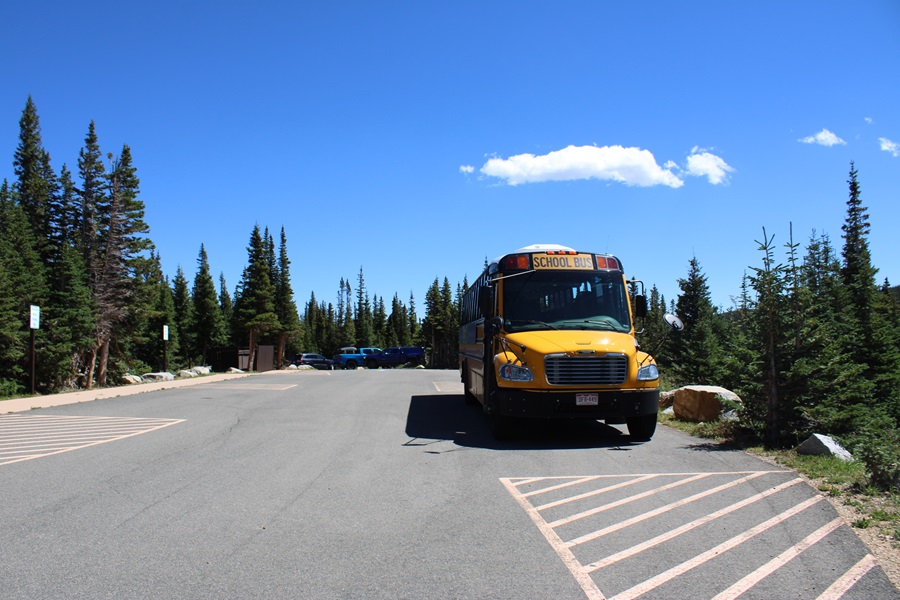
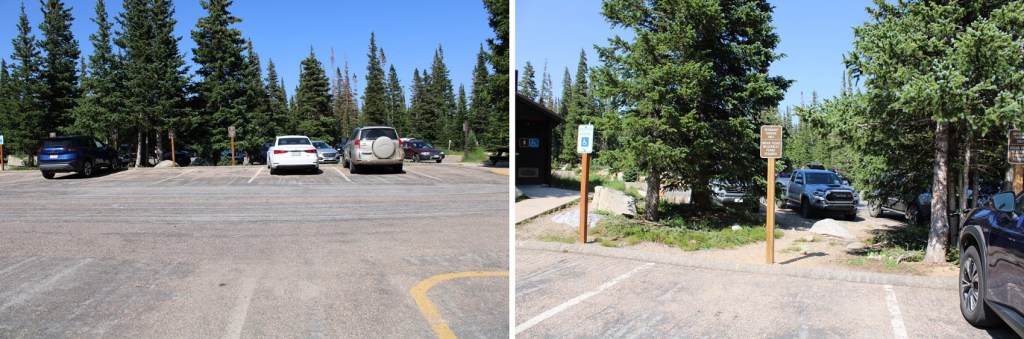
Once they let me in, I had to park in the specific lot they gave me a pass for.  I parked in the Long Lake parking area.  The parking spaces were further labeled according to pass (overnight versus day), and there were rangers stationed at the trailheads, checking permits on vehicles.  This means no parking at the Brainard Lake area if you have a Long Lake Trailhead permit.  Plan on hiking (not driving) if you want to see other areas of the park.

Ok.  Rant over. The weather was scheduled to be perfect today, and I was ready to hike!

I was on the trail at 8:15am.  The trail starts at the west end of the parking area. 

This is a well-marked, class 1 trail

After about a quarter mile of hiking I came to a junction and followed it to the right, following the Pawnee Pass Trail

At the next junction I once again went right

And continued following the class 1 trail

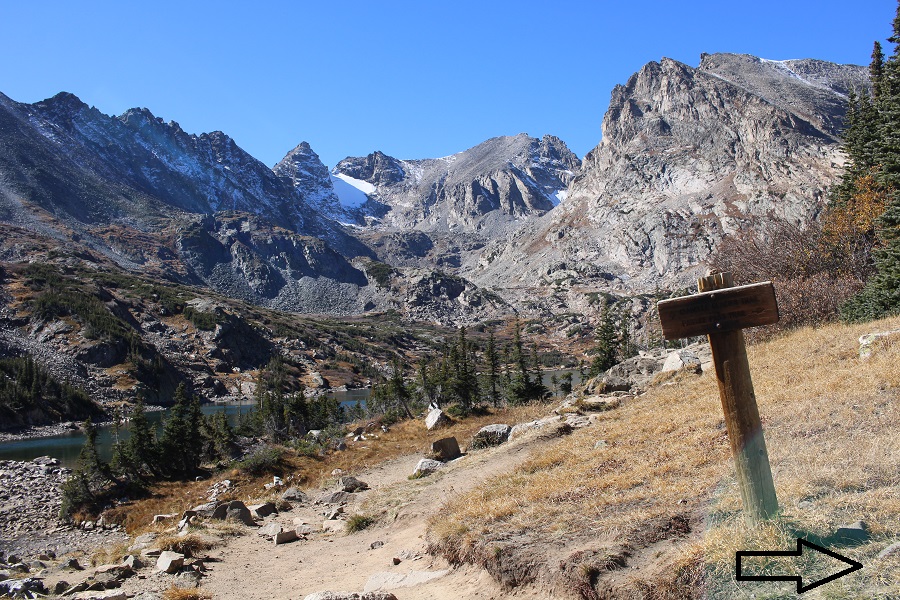
At the third junction I went left, following the Isabelle Glacier Trail

This part of the trail had me skirting the north side of Lake Isabelle

From here you have a good view of Navajo and Apache Peaks

I continued following the trail west

After hiking for 3.5 miles the trail headed south/southwest, through the willows. 

The trail here was muddy, and full of bugs.  I choked on a gnat.

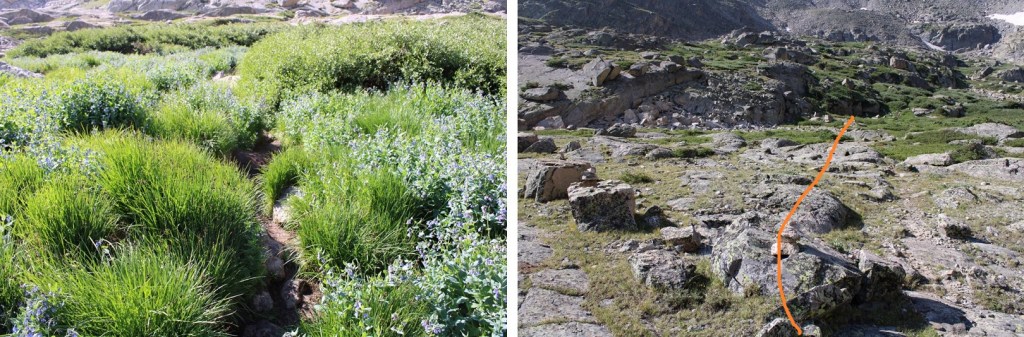
After about 4 miles of hiking, I continued west.  Here’s a visual of how I made it to the last little lake (unnamed).  The rock crossing would be slippery if wet.

Here’s a visual of the route to the upper basin.  I skirted the lake to the right, crossed South St Vrain Creek, and ascended the scree into the upper basin.

Here are some step by step pictures.  The creek was flowing, but I was able to cross without getting my shoes wet.

I then headed south to the ridge

Once I reached the tundra, I followed it west into the basin

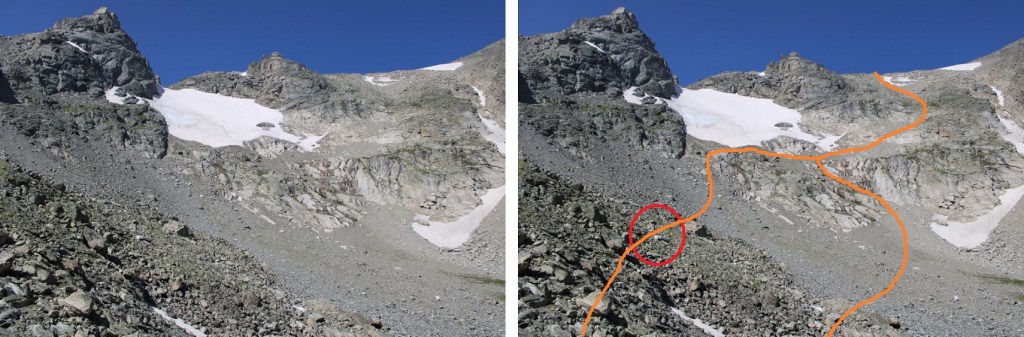
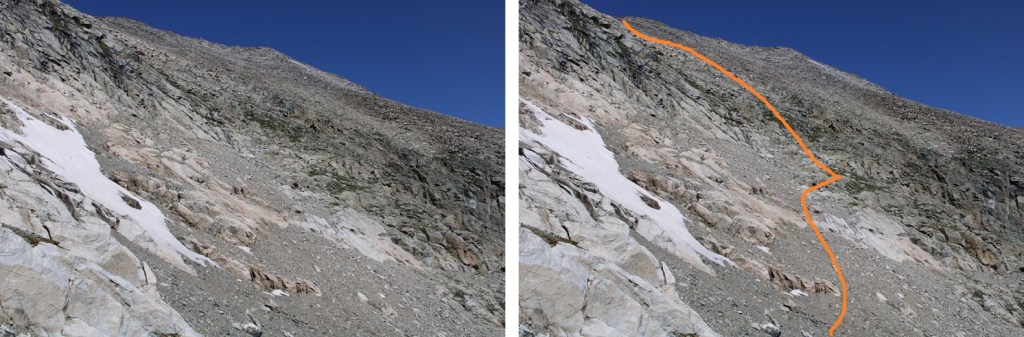
This is where I had a decision to make.  I’d initially wanted to hike both Navajo and Apache Peaks today, but since I now had time constraints, I didn’t think I’d have enough time to do both.  I’d wanted to start with Navajo and see the plane wreckage, then head over to Apache.  But I ‘needed’ Apache before Navajo (Apache is taller, and a tricentennial, so higher on my list of peaks I want to climb).  I decided to head over to the plane wreckage, then skirt the mountainside above the waterfalls and ascend Apache’s east ridge.  On the way down, I took a more direct route.  Here’s a visual of the loop.  The plane wreckage is circled in red.

I headed south to the plane wreckage.  

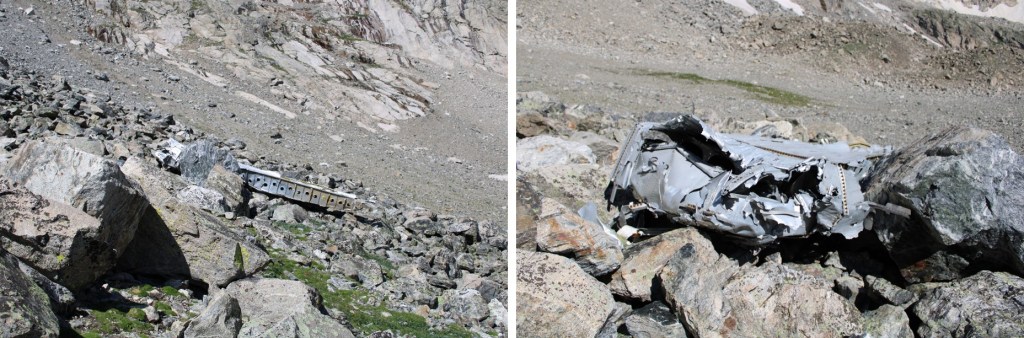
The C-47 went down on January 21, 1948.  It was en route from Denver to Grand Junction, and crashed during bad weather.  Most of the wreckage is up high on the Niwot Ridge (nicknamed “airplane gully”), but some of it can be seen in the basin as well.  This site is considered a historical aviation archeology site, so the wreckage cannot be removed.   

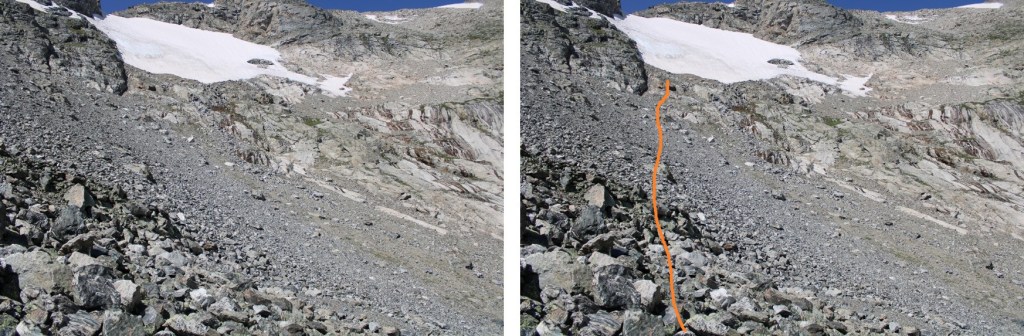
From the plane wreckage at around 12,200’ I headed southwest, aiming for the base of the snow

Once there I turned right and headed northeast on the scree.  I was aiming for the green patch of tundra.  When I hit that, I planed on turning and heading west to the ridge.

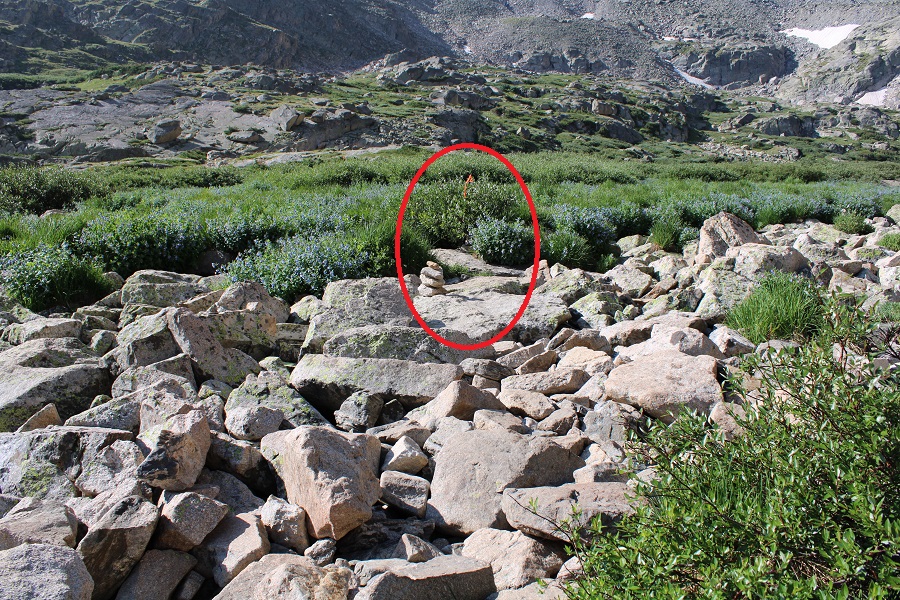
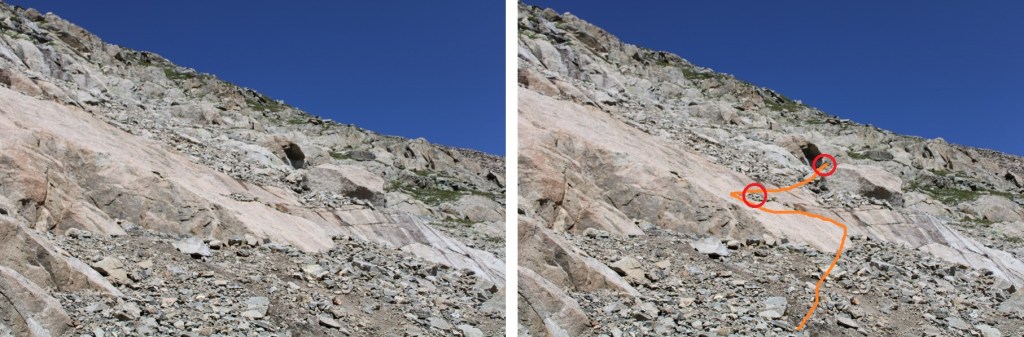
Getting to the tundra proved a little tricky.  There was a fun slab to maneuver (there were small cairns here, circled in red)

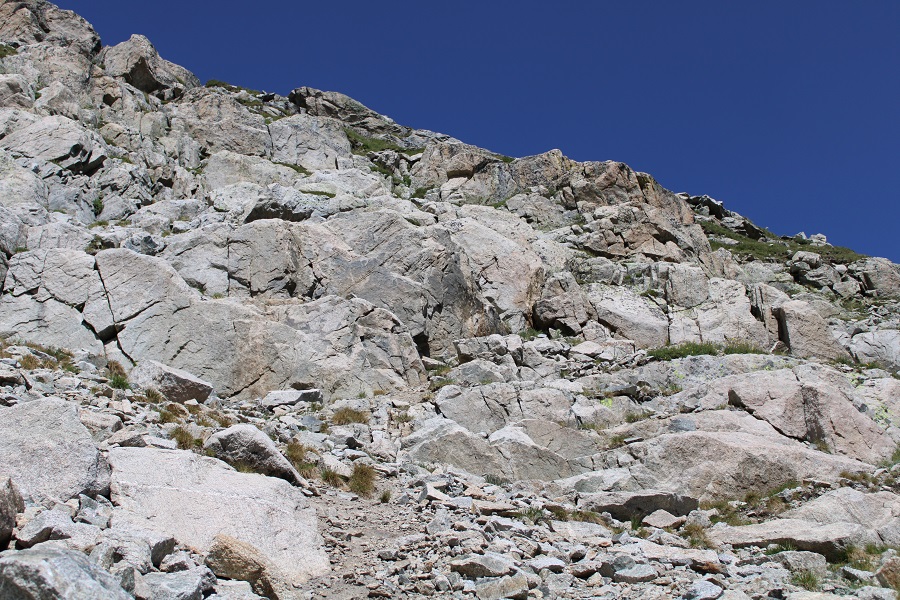
I then aimed for the greenery, and followed it to the ridge

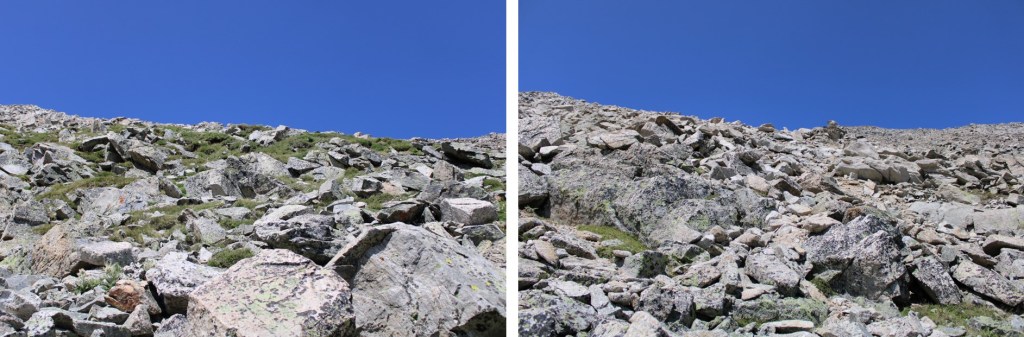
This is choose your own adventure.  I followed the larger rocky areas up, and the scree down.

There was a wind shelter at the top of the ridge.

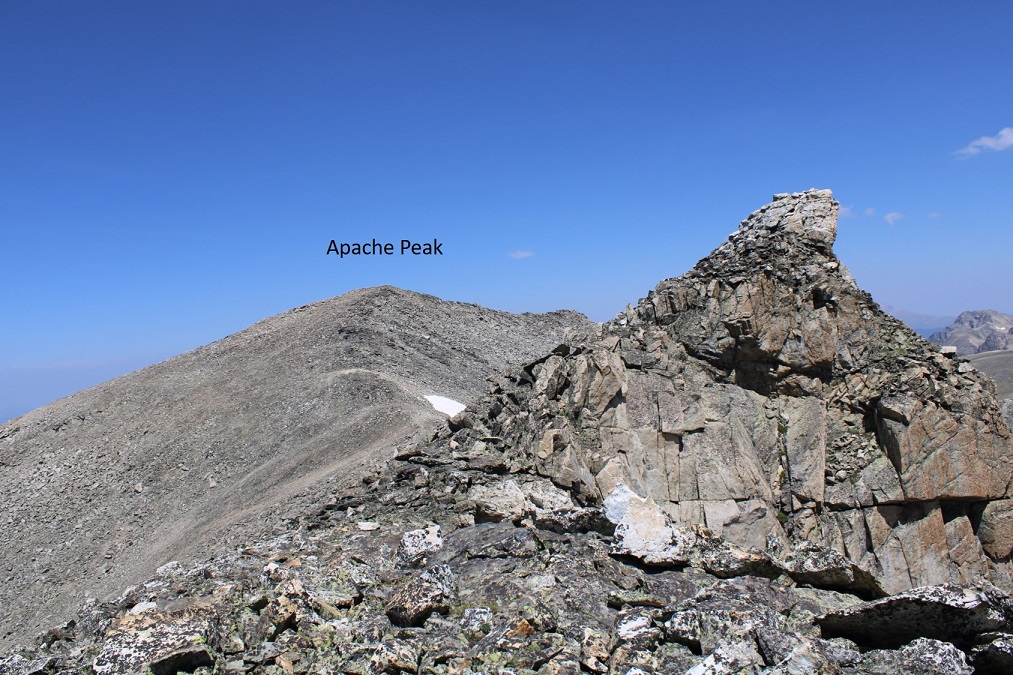
I turned right, and followed the ridge northwest to the summit of Apache.   This was a straightforward ridge hike on large shale.

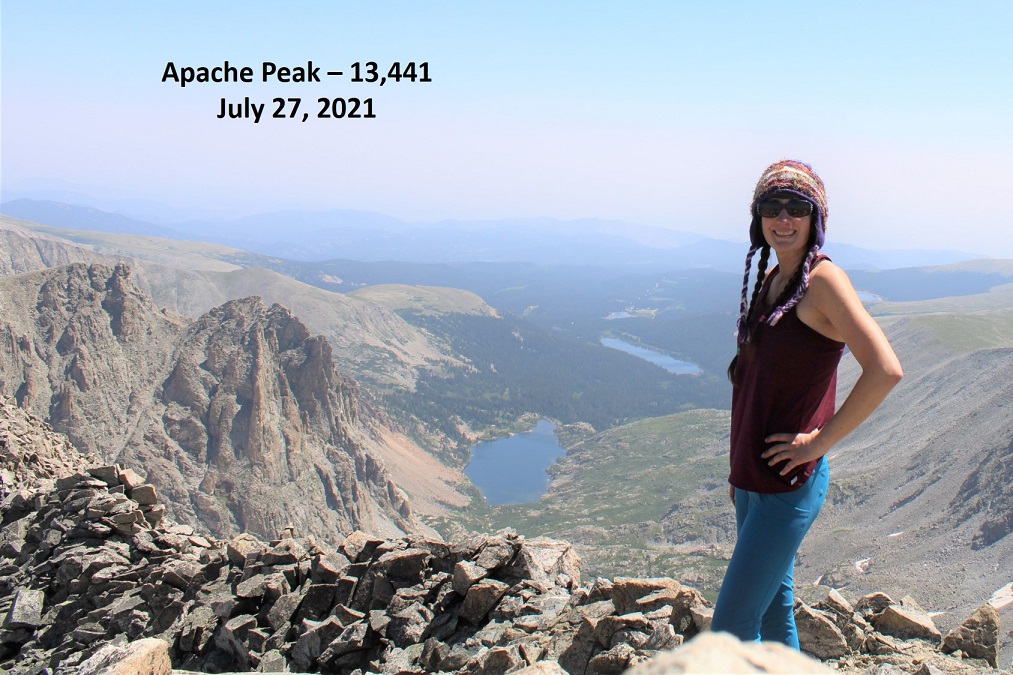
I summited Apache Peak at 11:45am

Apache Peak:  

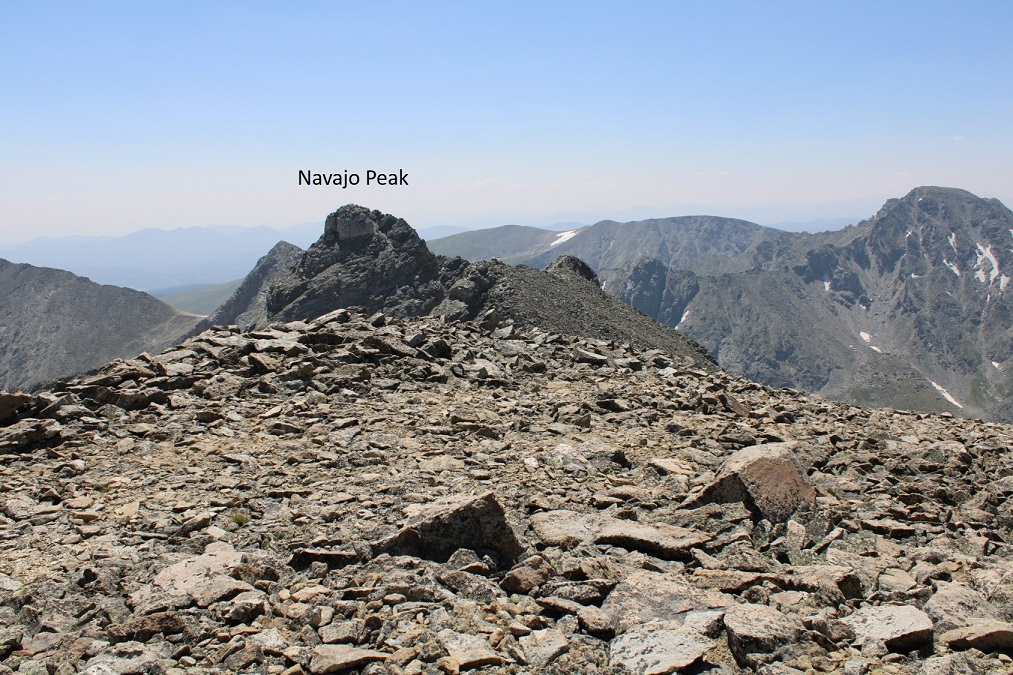
I left a summit register, and headed back down to the saddle.  I could see Navajo Peak to the southeast

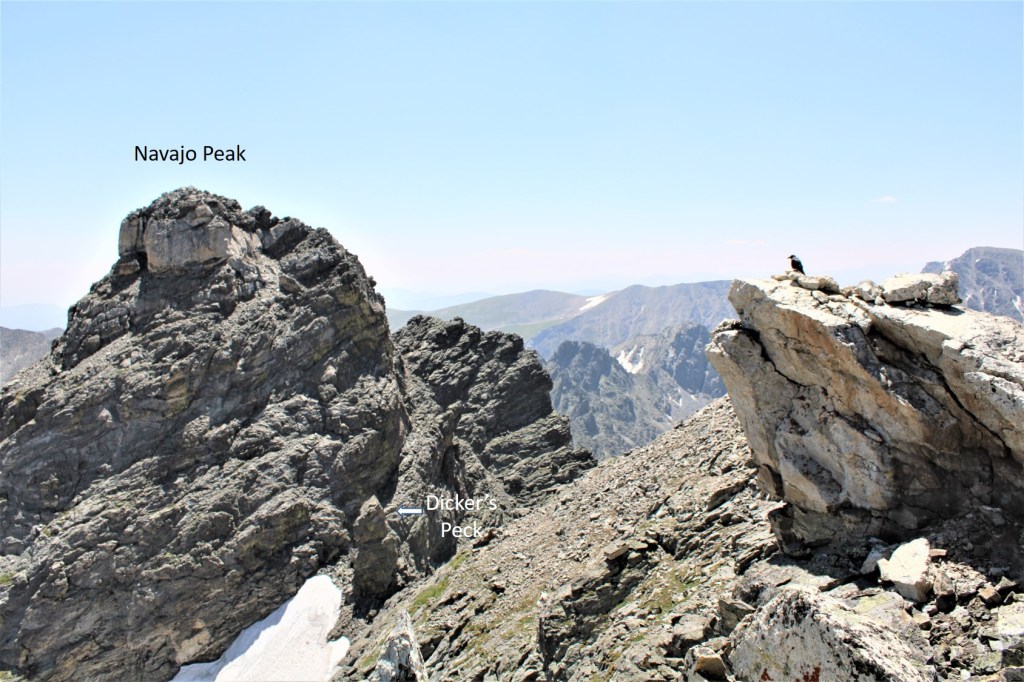
Once back at the saddle I looked at the time.  I knew I didn’t have time to hike Navajo today, but I decided to follow the ridge for a bit and see what it (and Dicker’s Peck) looked like from the end of the ridge.  So, I continued following the ridge southeast.

I climbed to the top of both highpoints along the ridge, made friends with a crow, and got a good view of Dicker’s Peck.  It looks like it has a new anchor at the top.

I continued on to the edge of the ridge, got one final view of Navajo and Dicker’s Peck (the route is snow free from the ridge), and turned and headed back to the wind shelter.

I took a more direct route down this time, following the scree

I made it back to the rock slab, and navigated down.

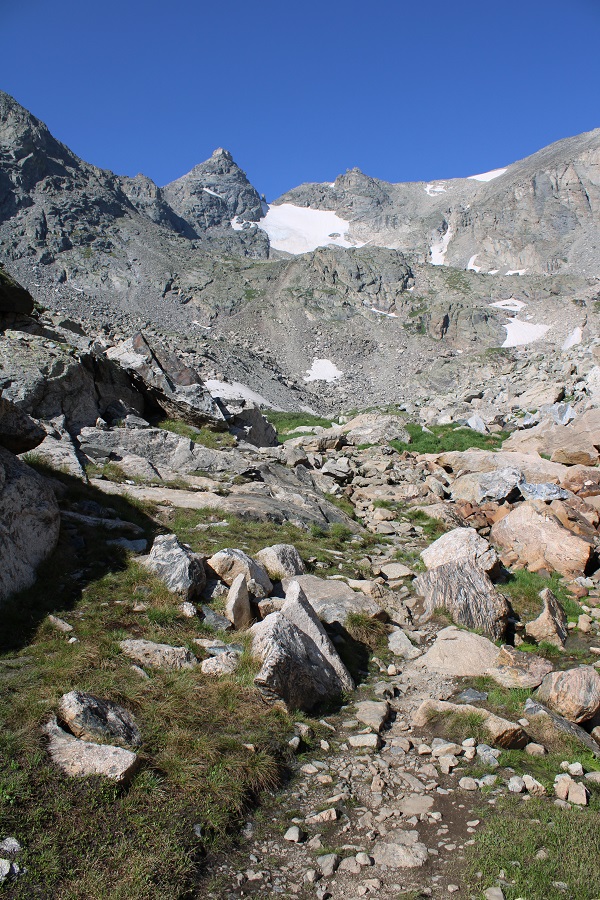
I then followed the scree down the basin

Here’s looking back at my descent route

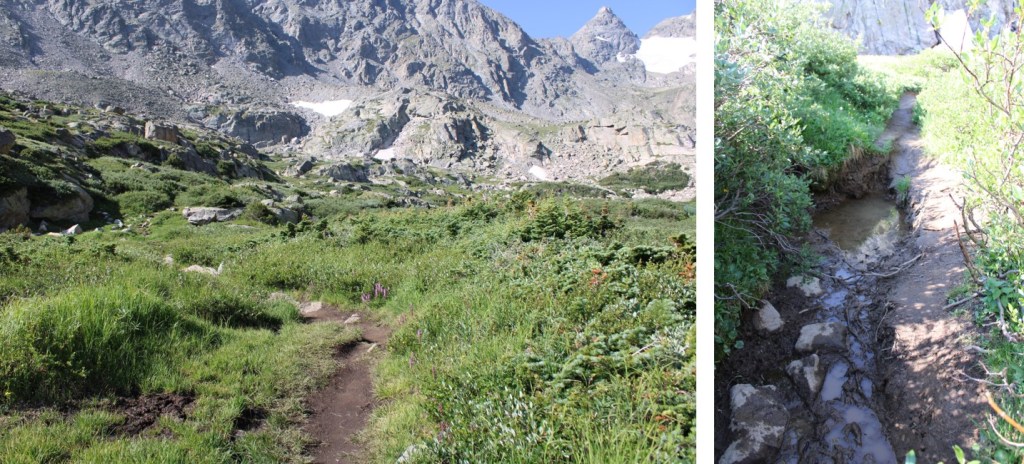
And some pictures of the route back to Lake Isabelle.  It looked like a trail crew was putting in a new trail on the north side of the creek here.

A look at Lake Isabelle.  The trail out goes to the left of the lake

From Lake Isabelle it was an easy, class 1 walk out

I made it back to the Long Lake parking area, where park employees were stationed, ready to check passes.

I hopped into my truck and turned on the air conditioner.  It was 4pm, making this a 13.66 mile hike with 4127’ of elevation gain in 8 hours.  I’ll be back, but I think I’ll wait until the timed entry system expires for the year…