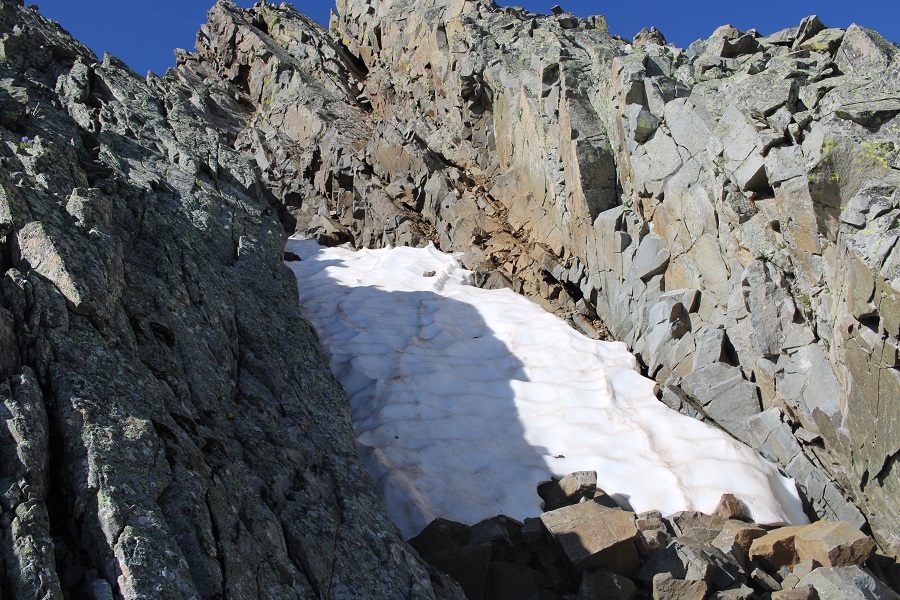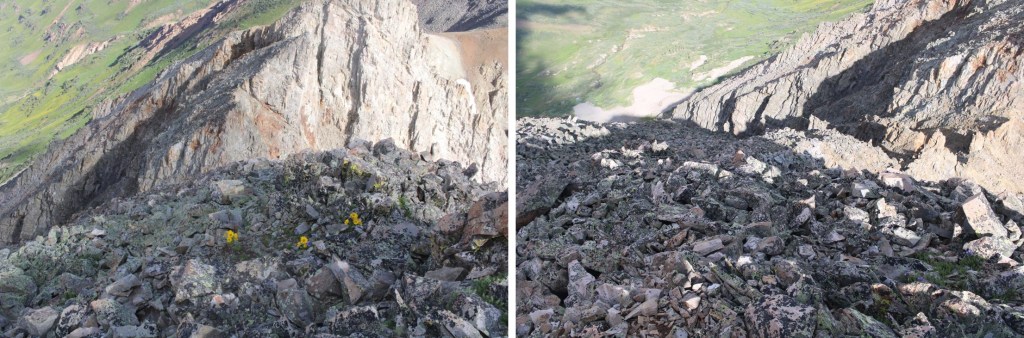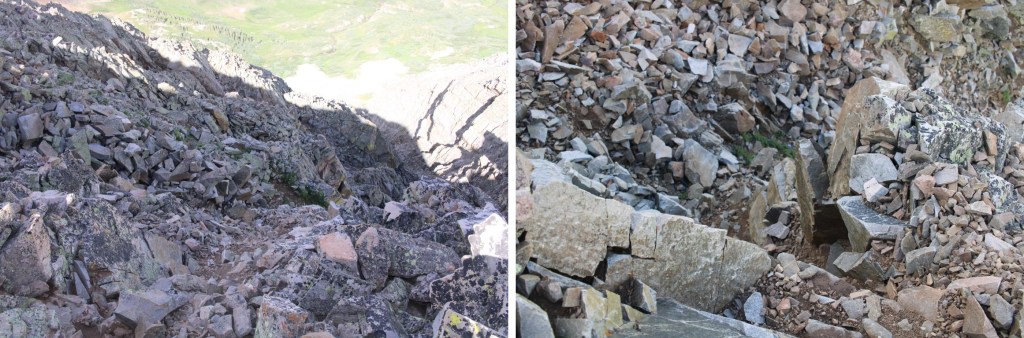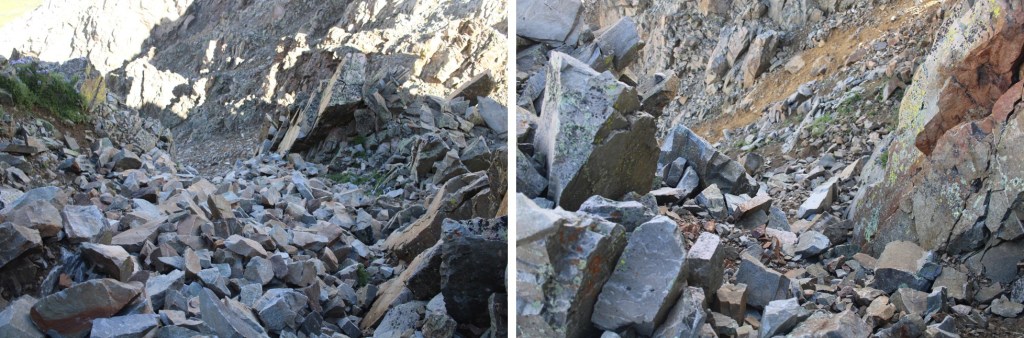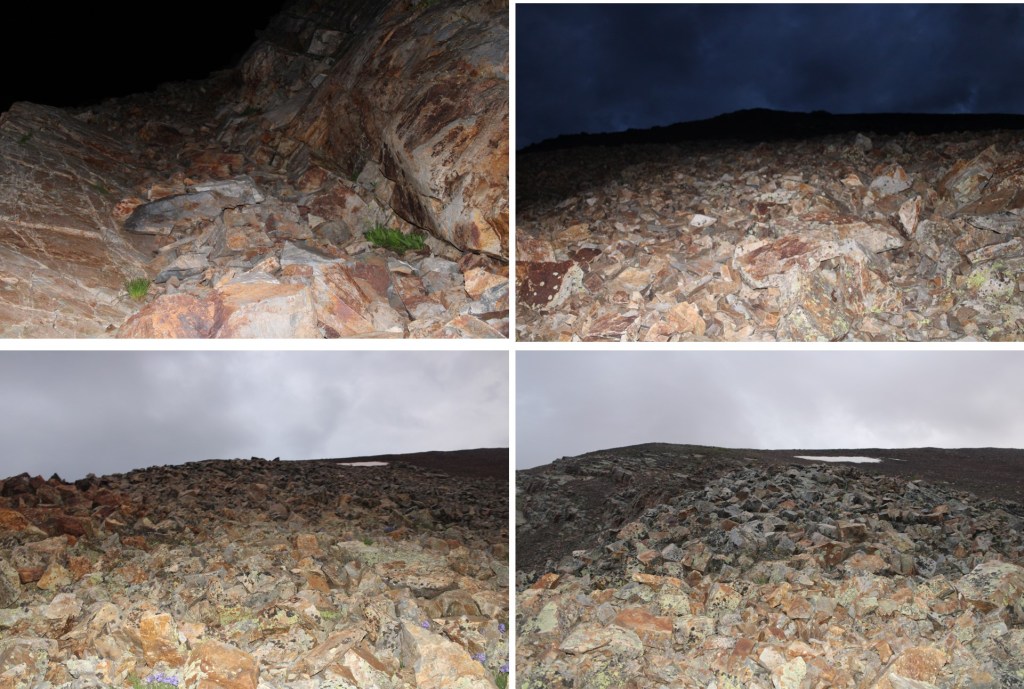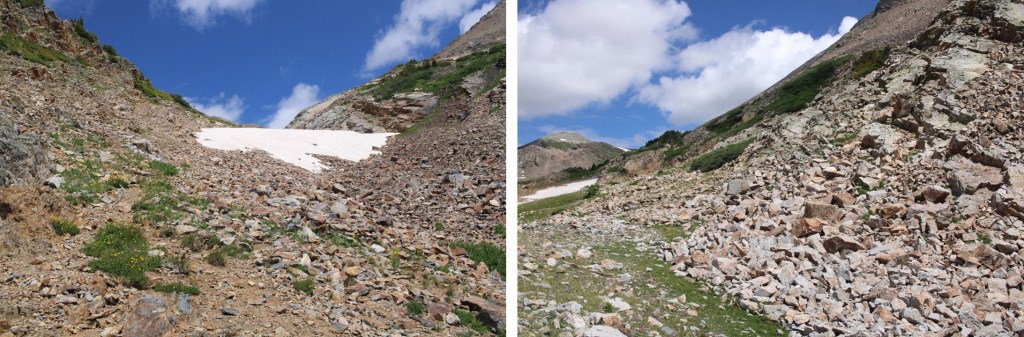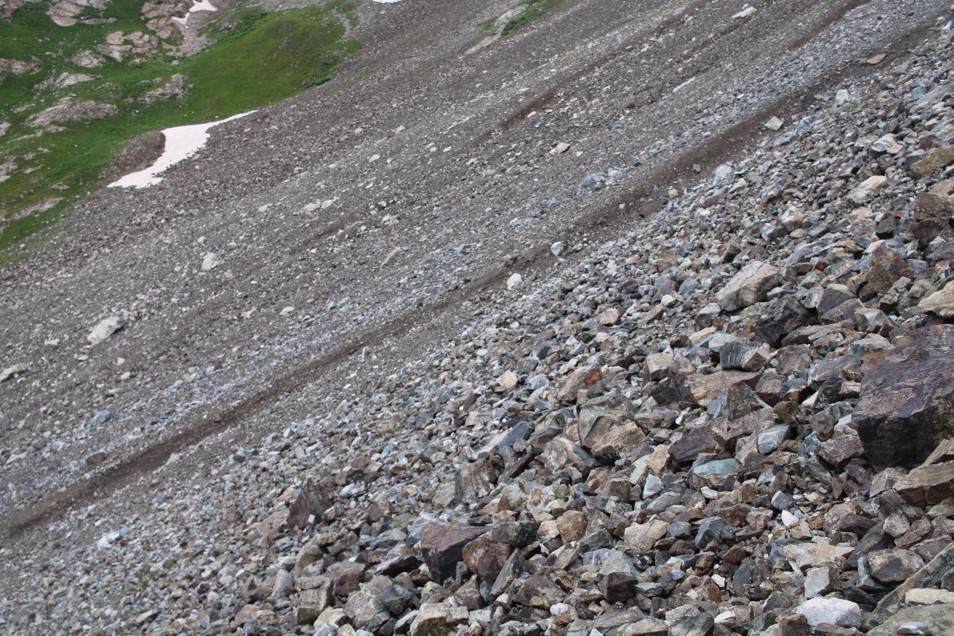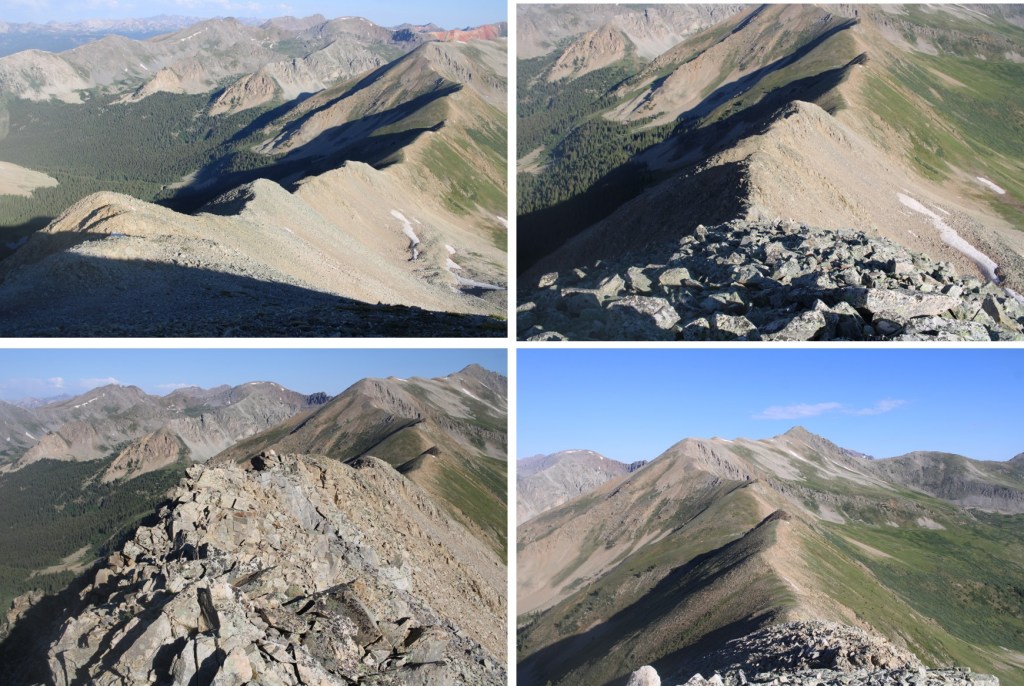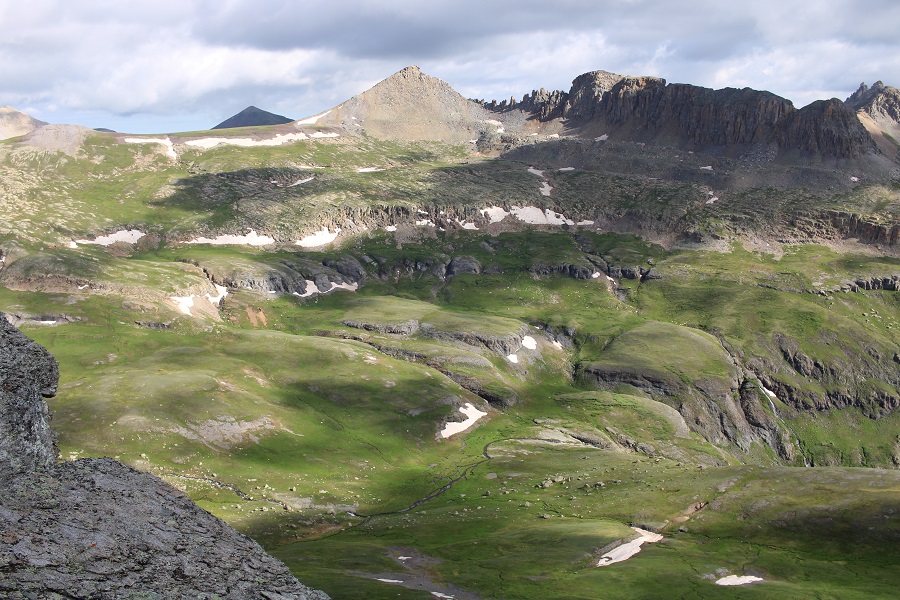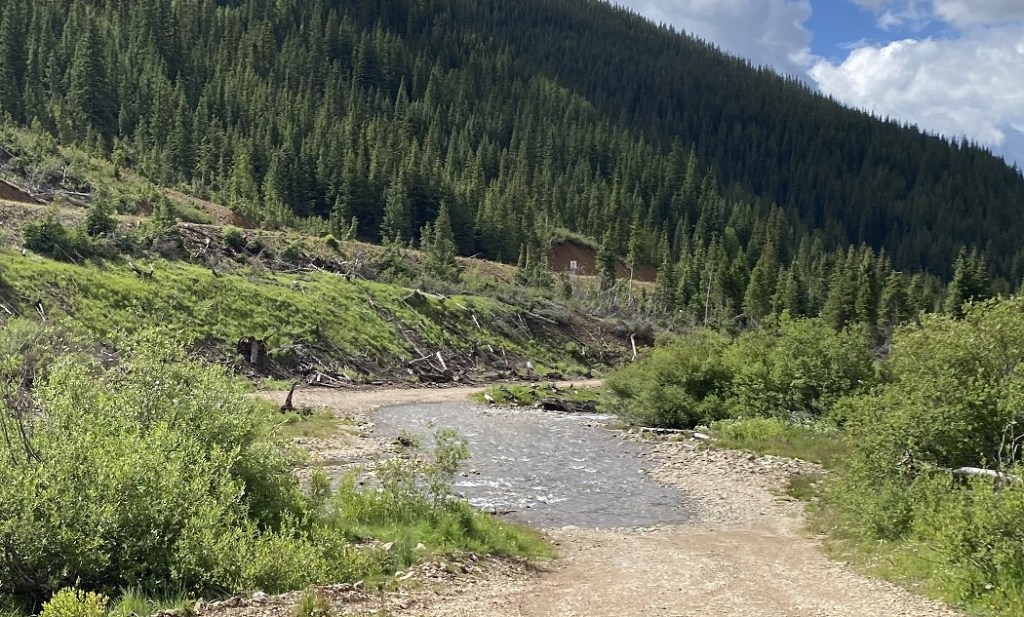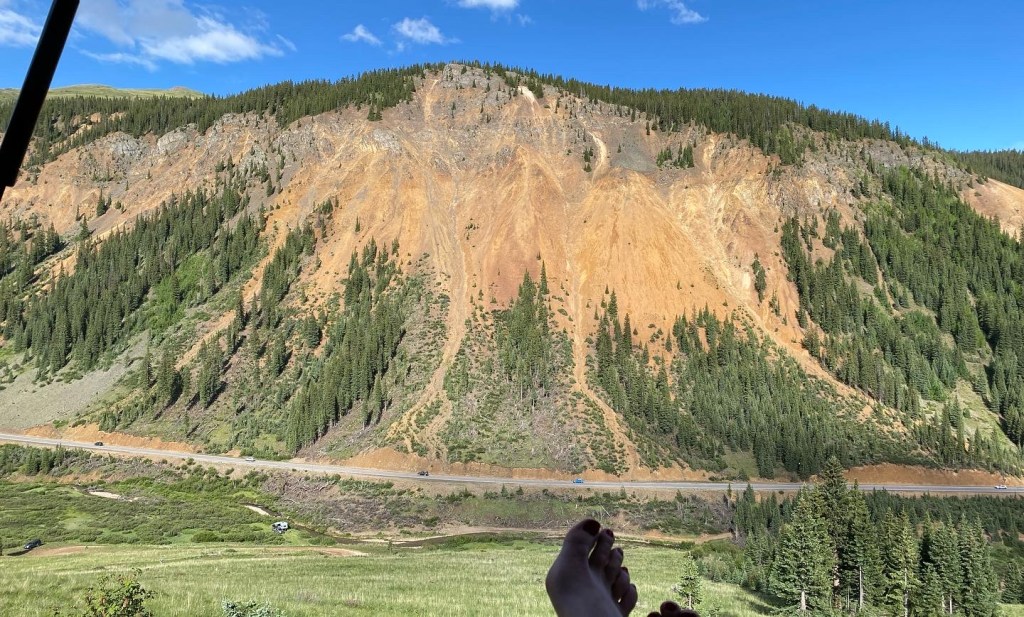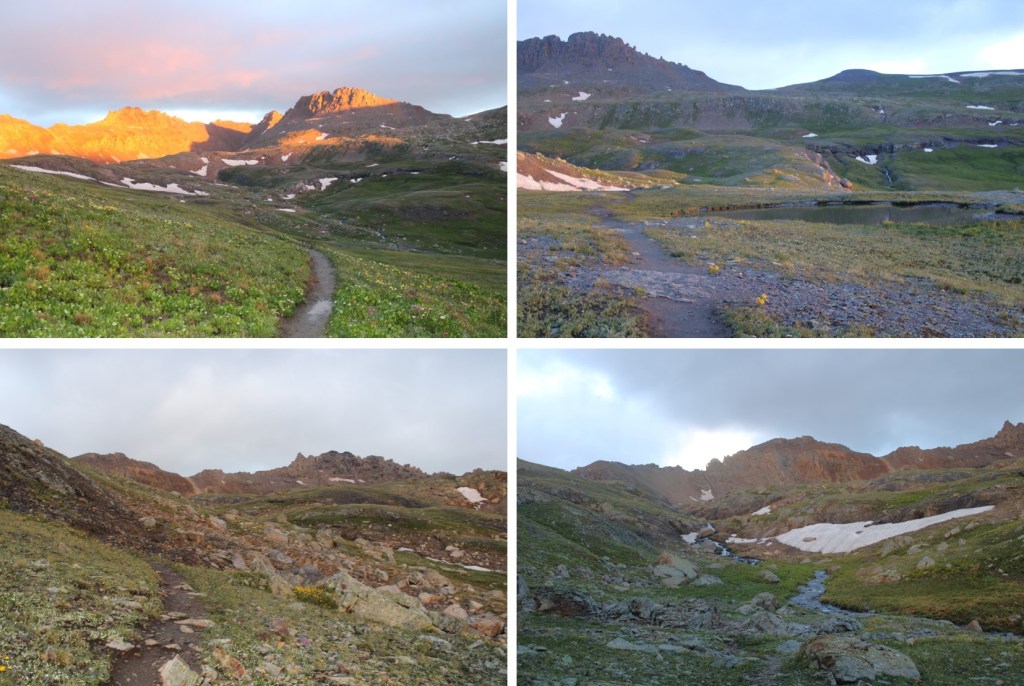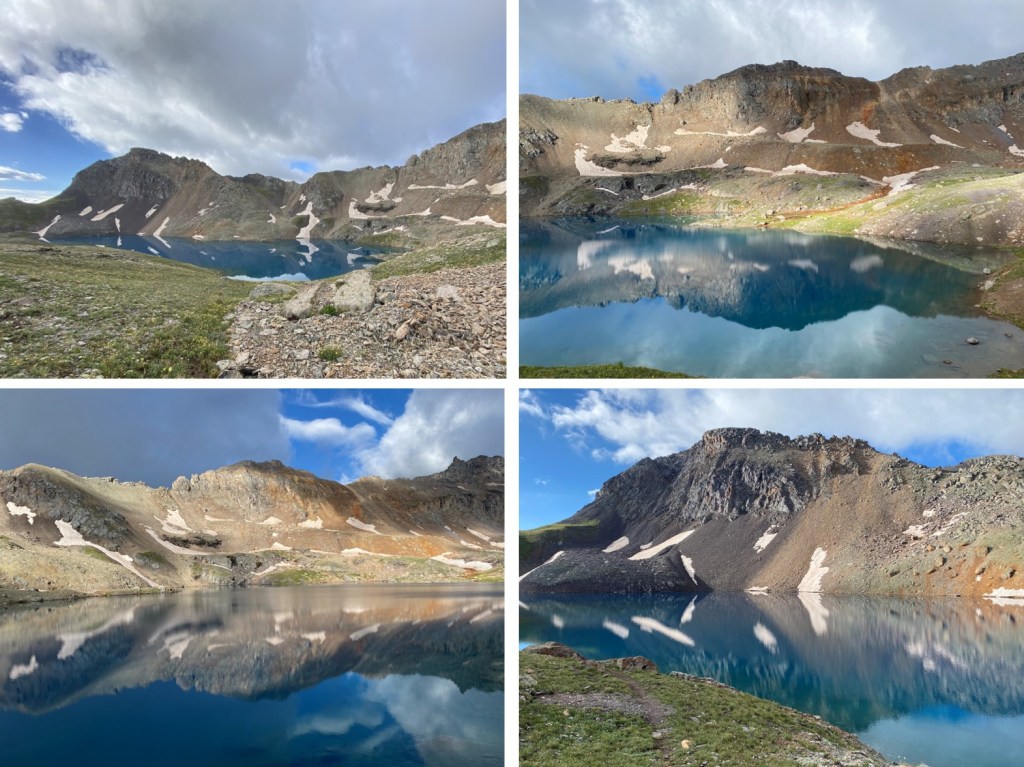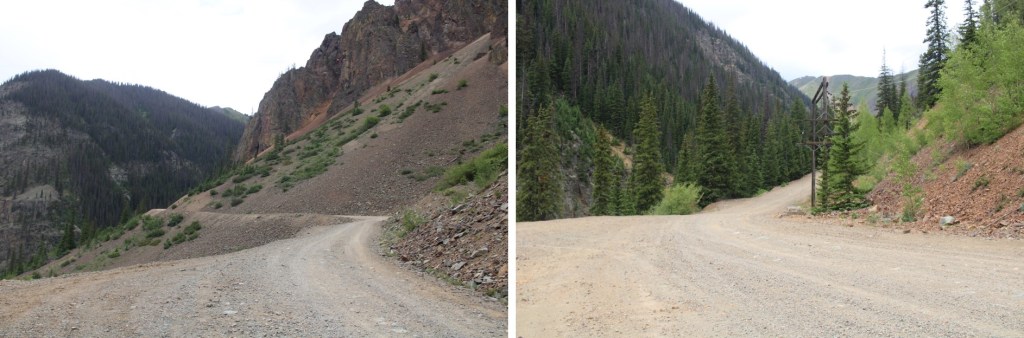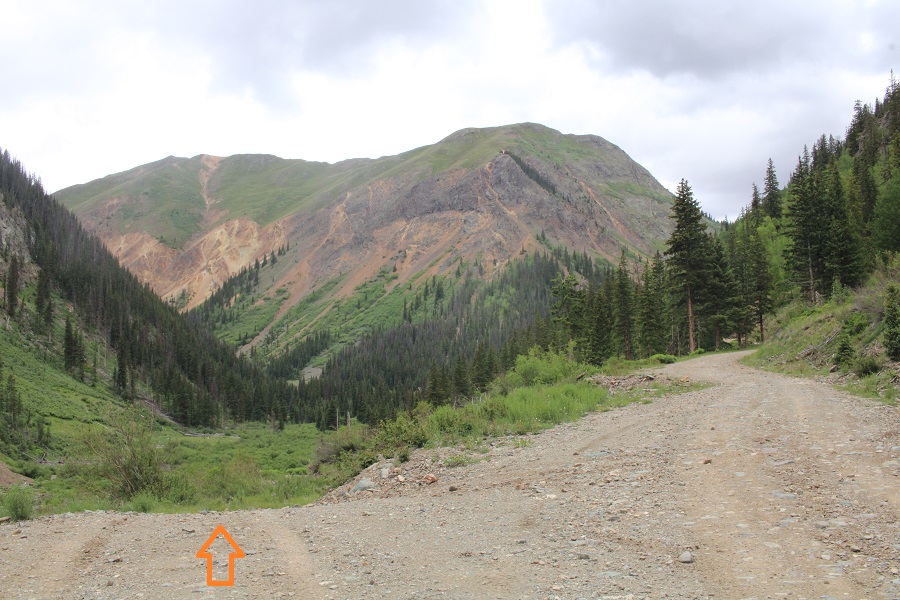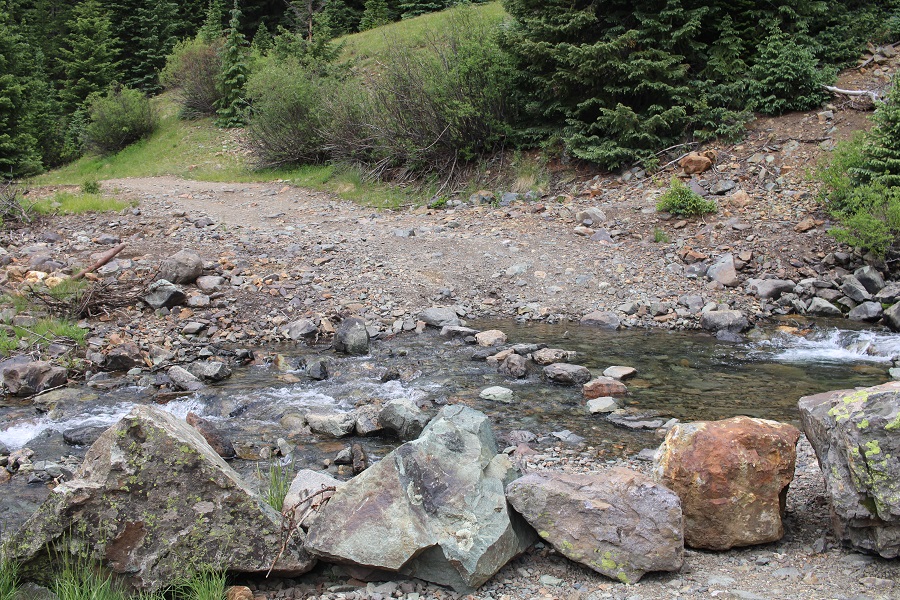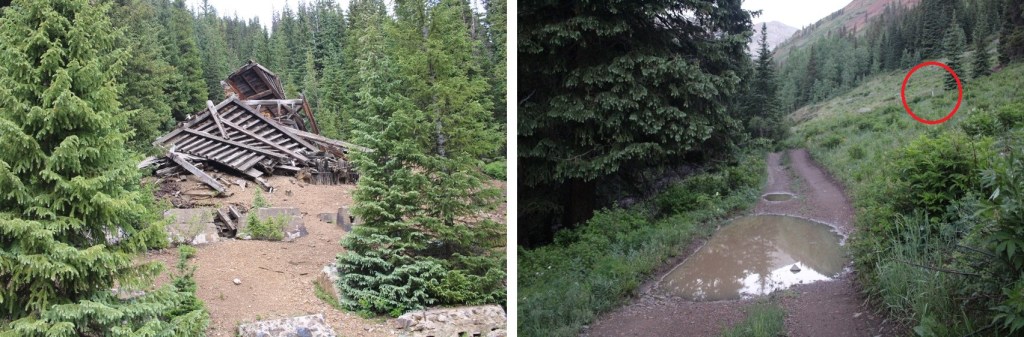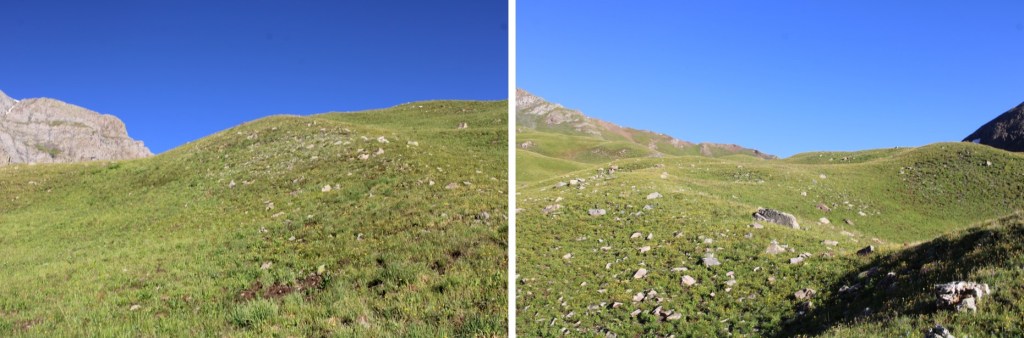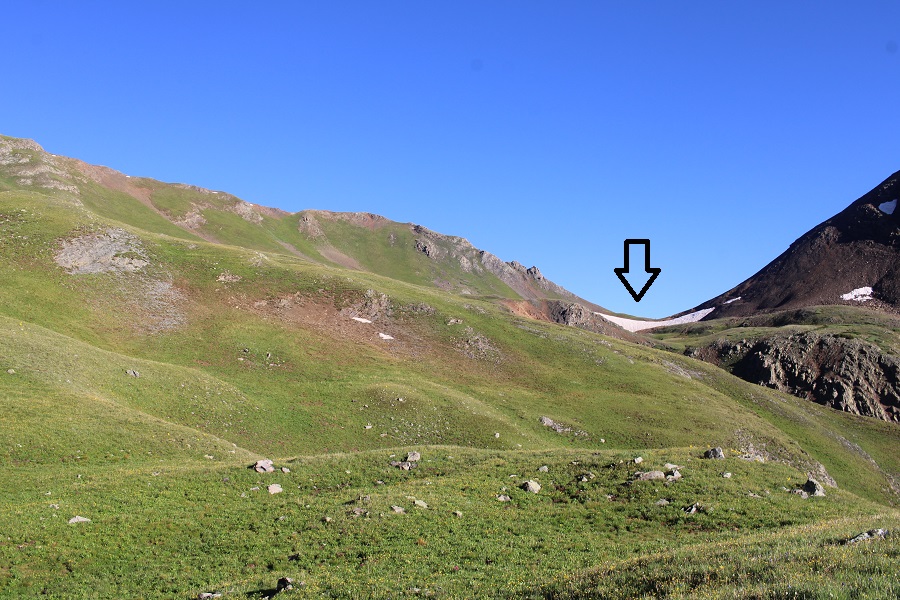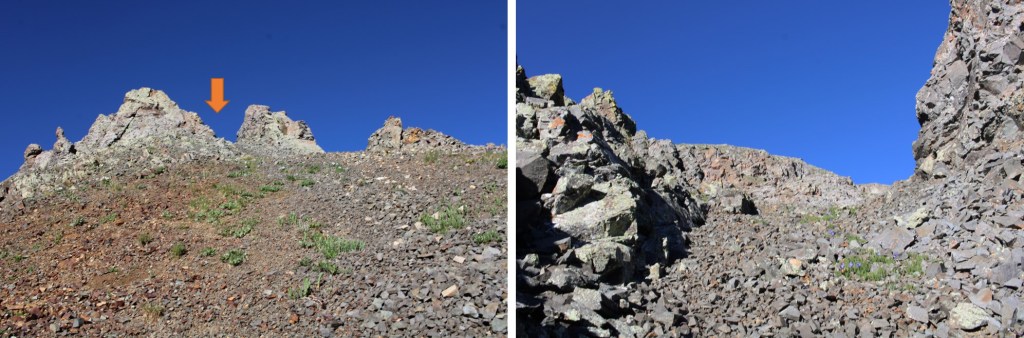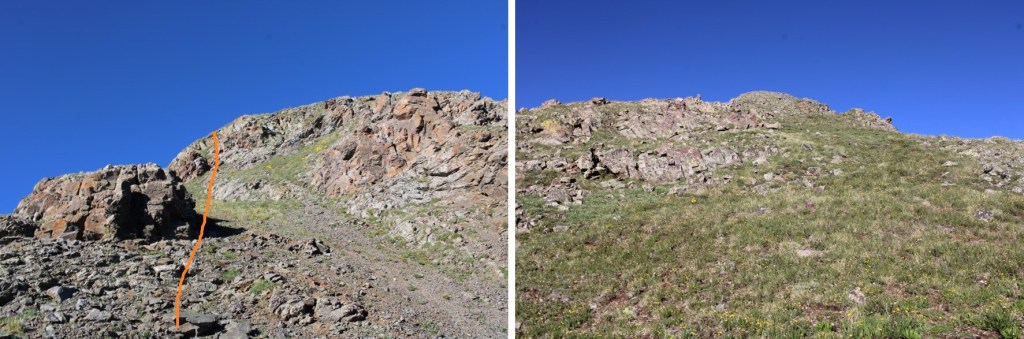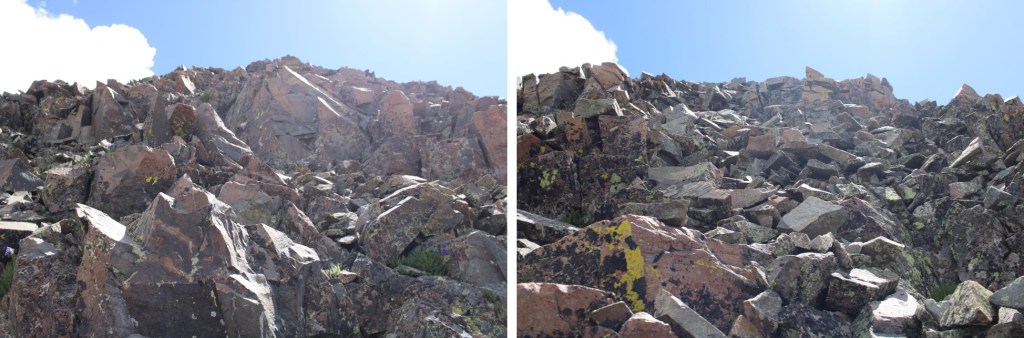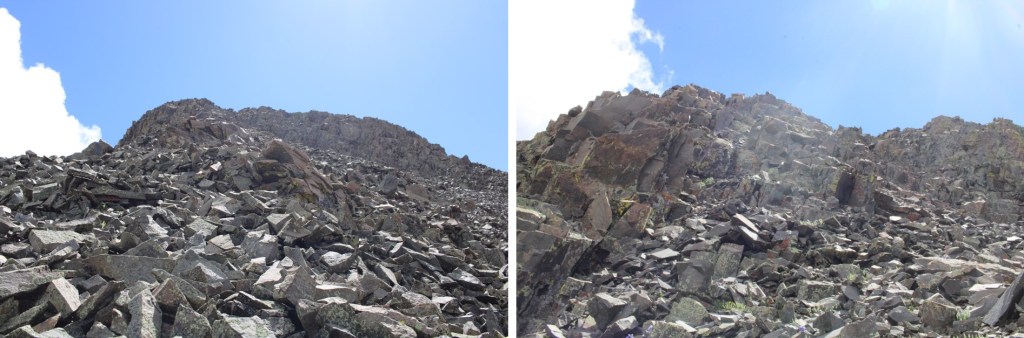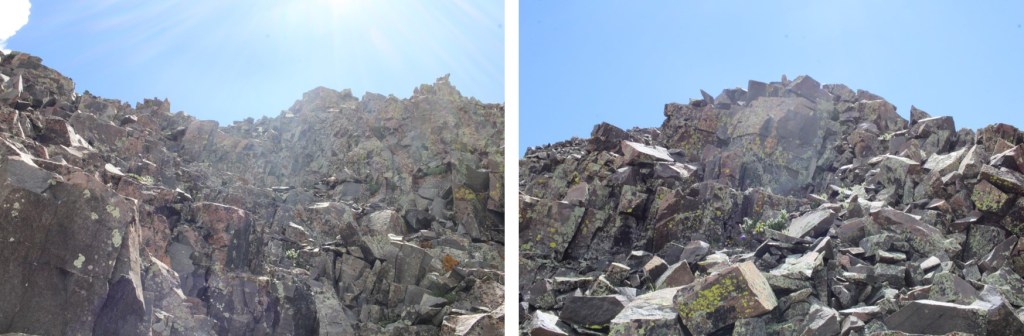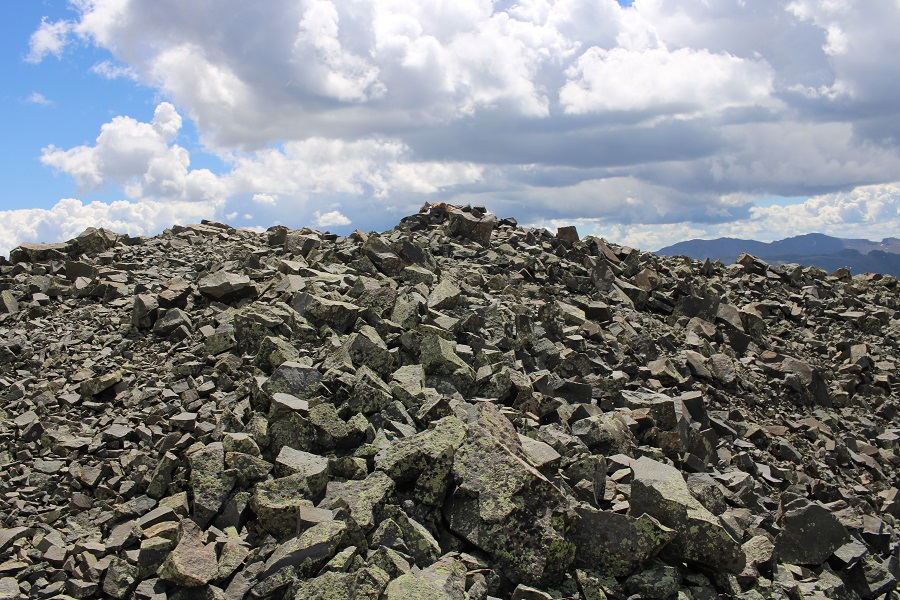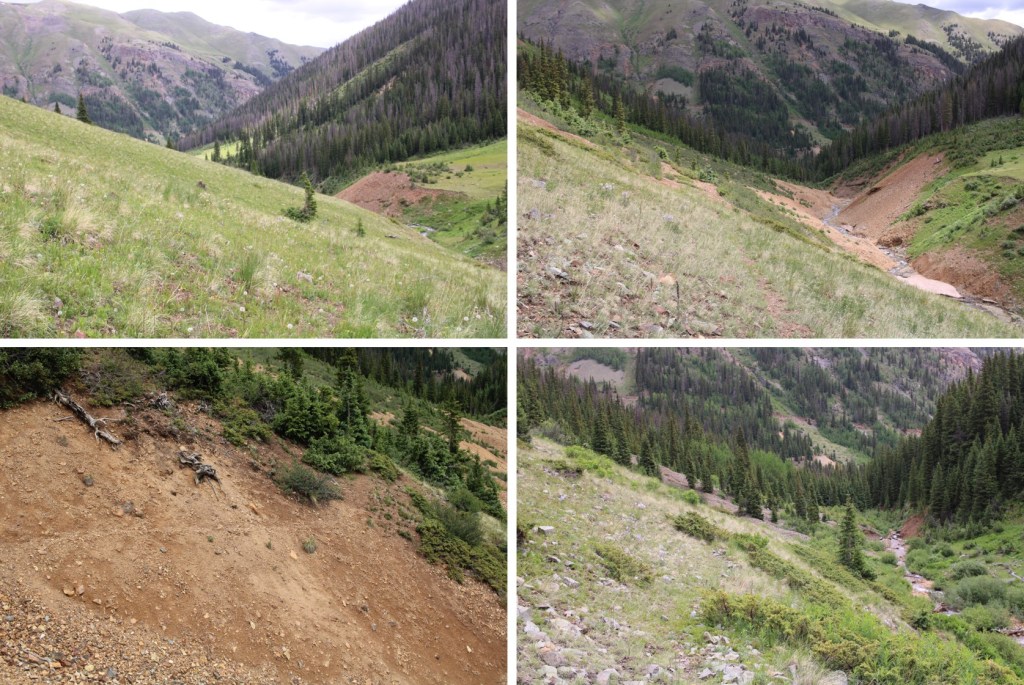
Teocalli Mountain – 13,208, PT 12934, PT 13162, Triangle Peak – 13,380

RT Length:  16.72 miles

Elevation Gain: 5244’

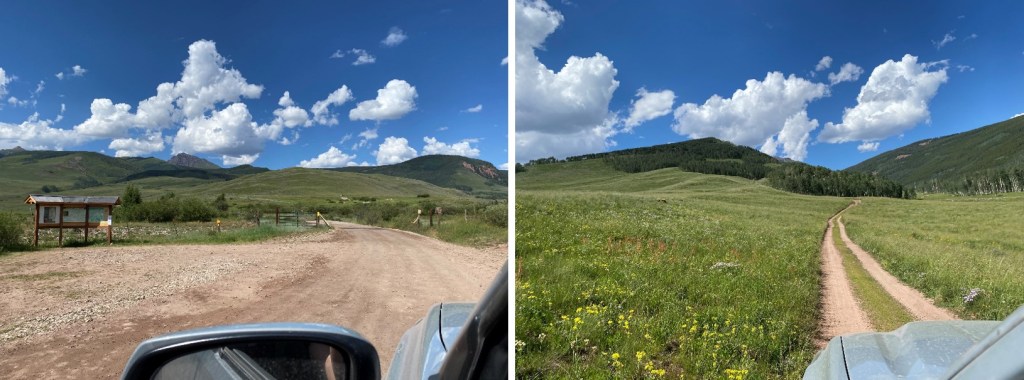
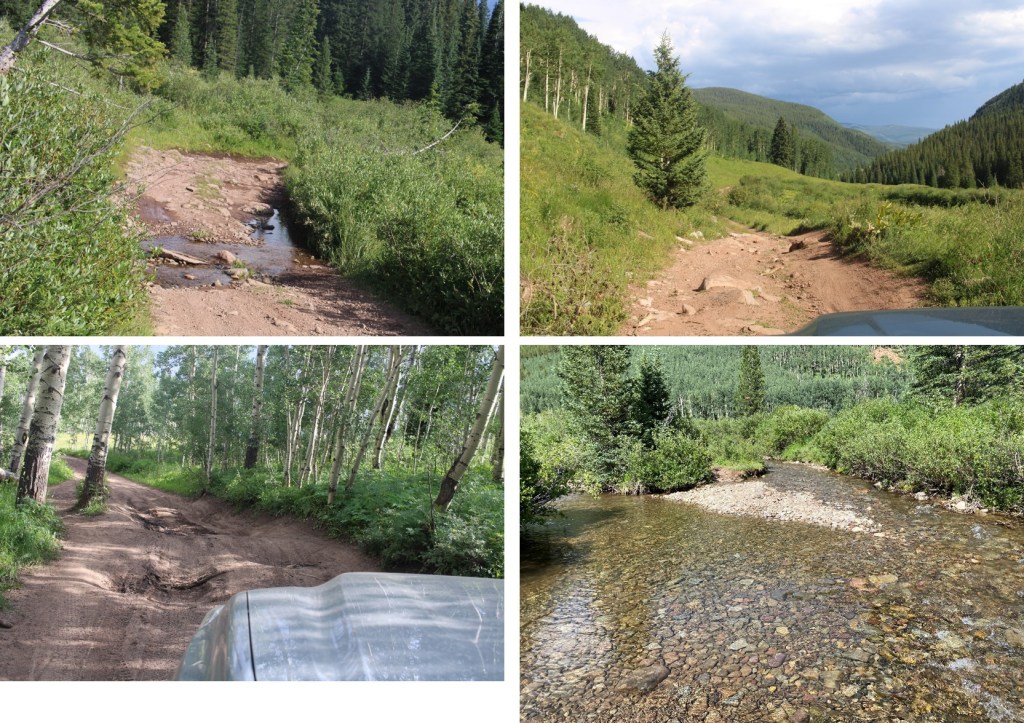
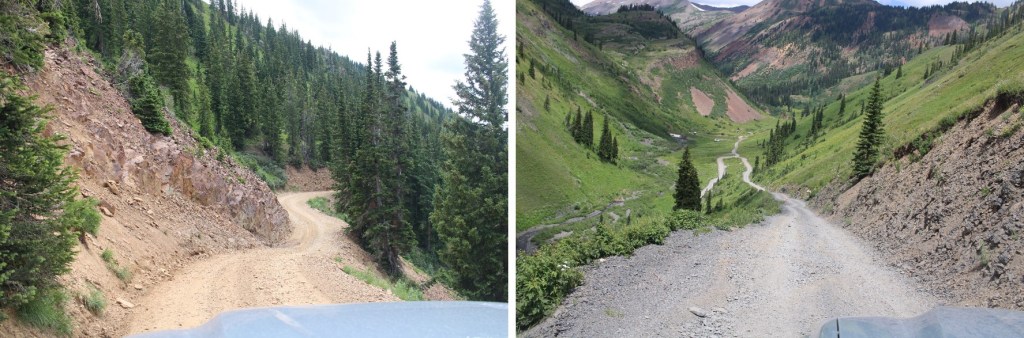
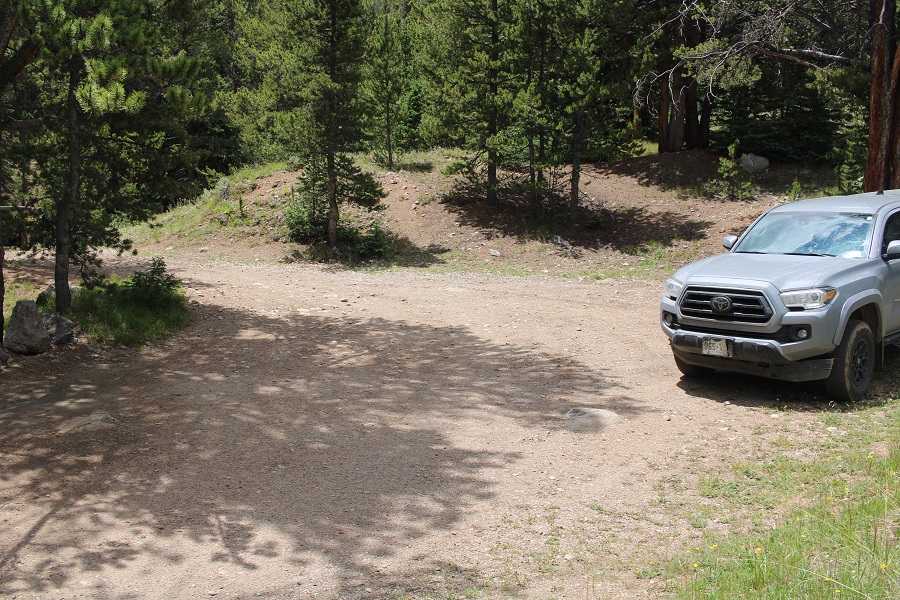
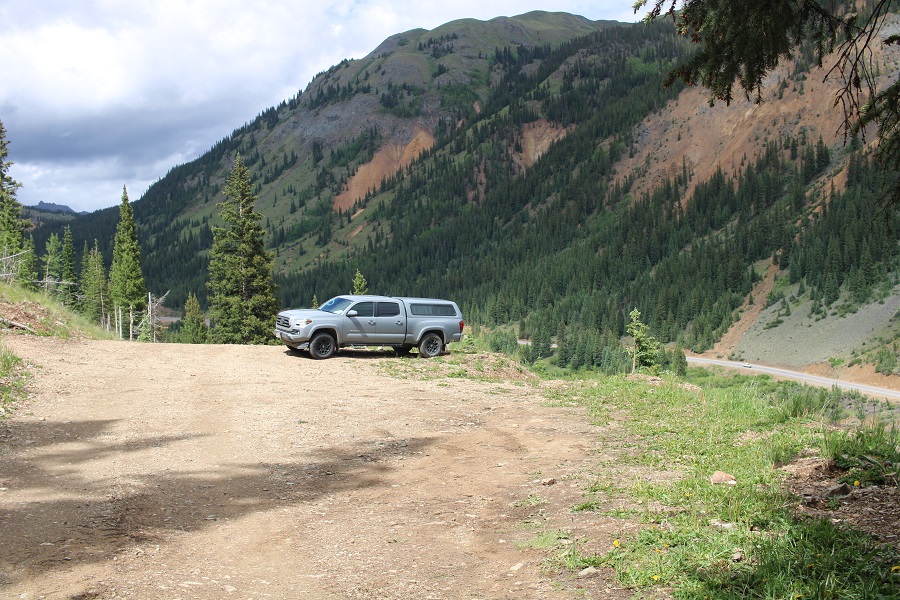
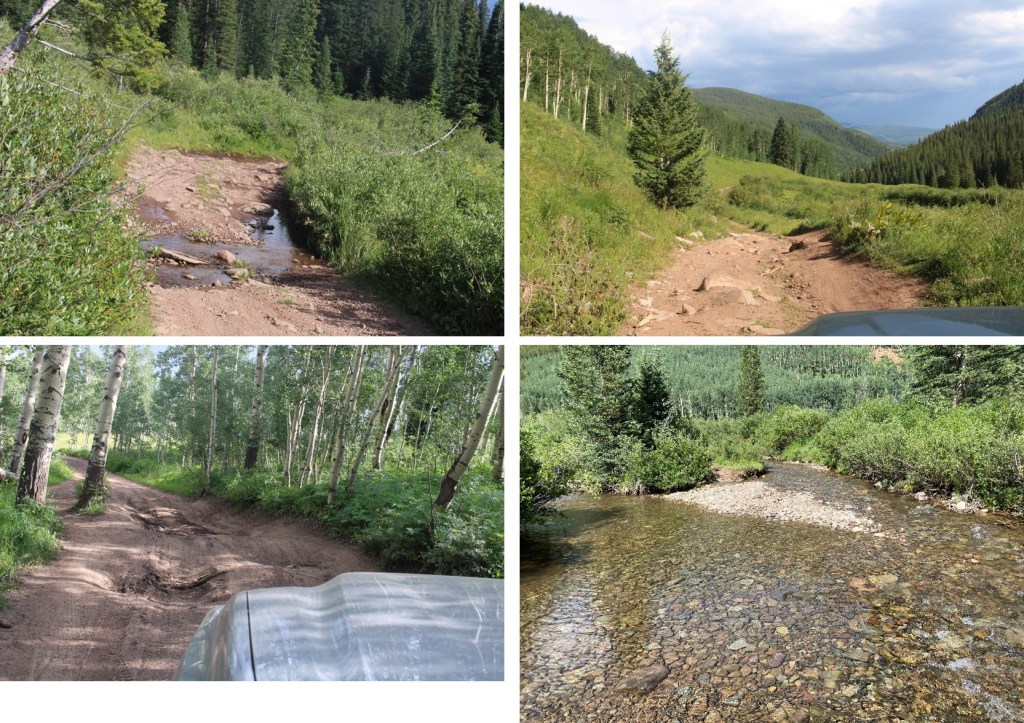
The drive in to the Teocalli Trailhead was sketchy.  My stock Tacoma made it, but the last 2 miles were brutal, and the last quarter of a mile I kept going because I had to and couldn’t turn around if I’d tried.  The drive made for a great incentive not to need to come back to this area. 
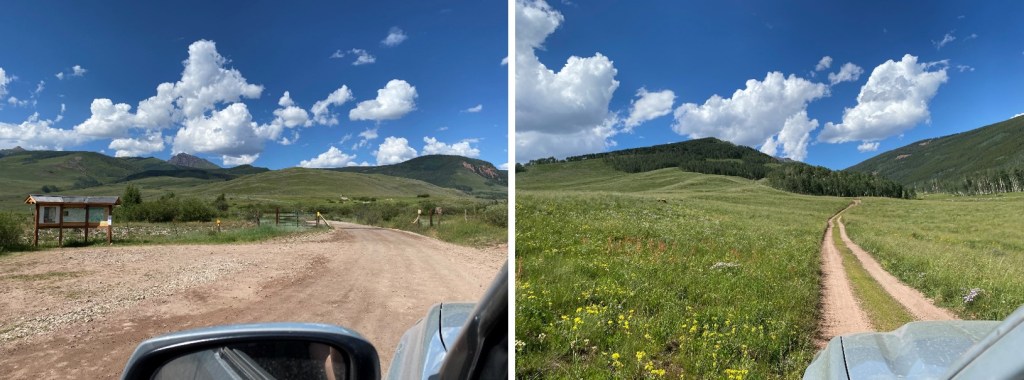
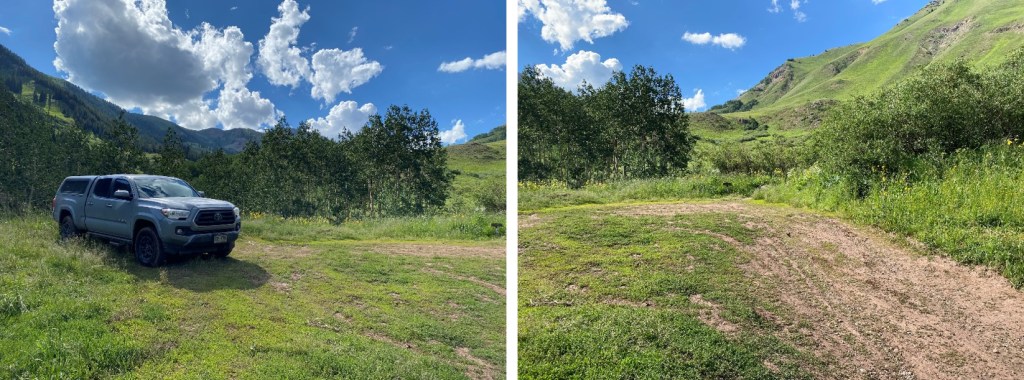
I parked at the trailhead.  There were a ton of flies and mosquitoes out.  The flies looked like normal flies, but when they bit me, I got welts.  The next day they looked like burns.  Bring bug spray.

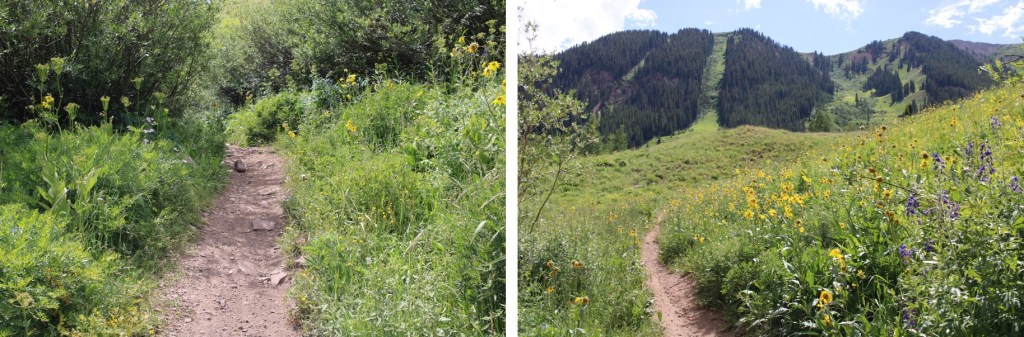
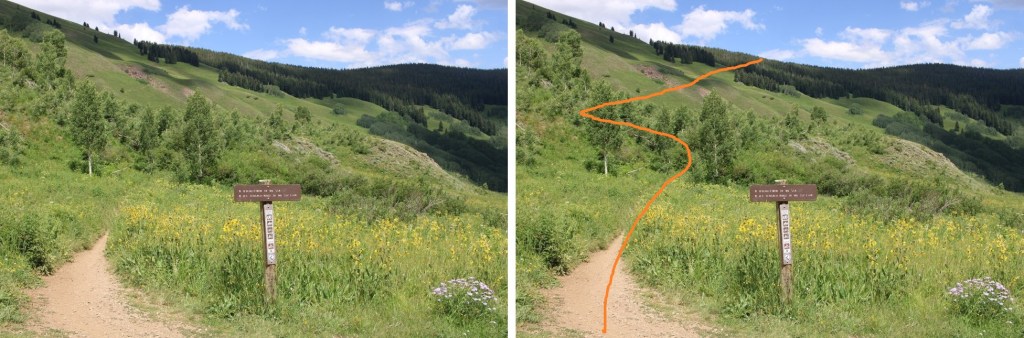
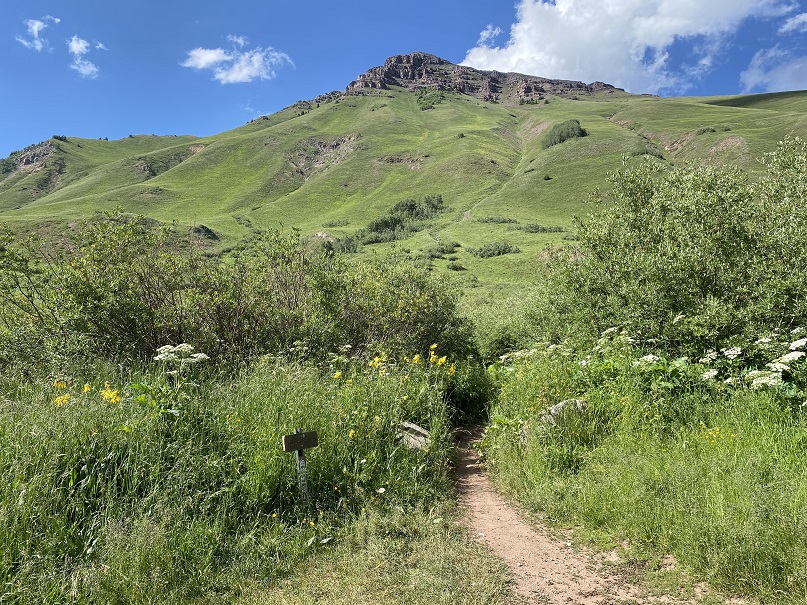
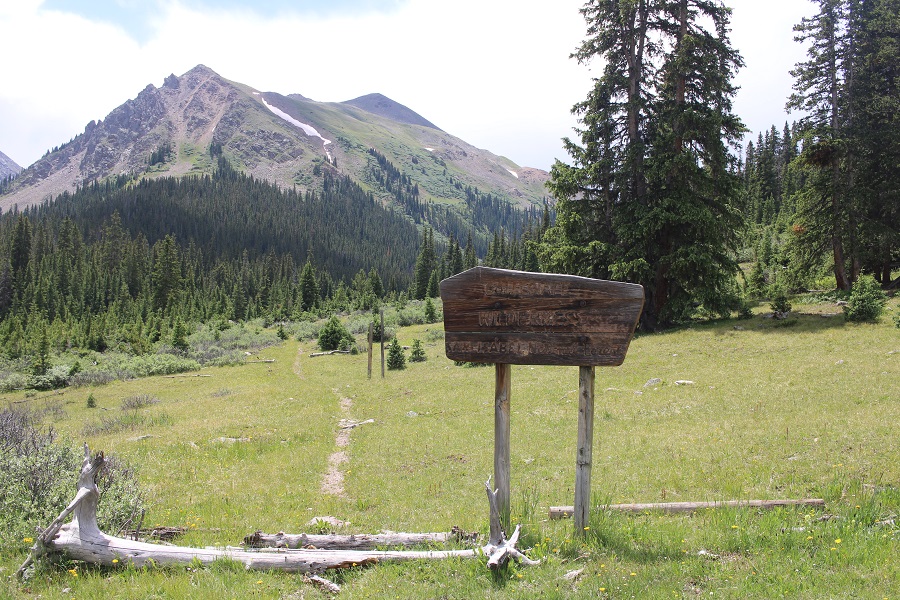
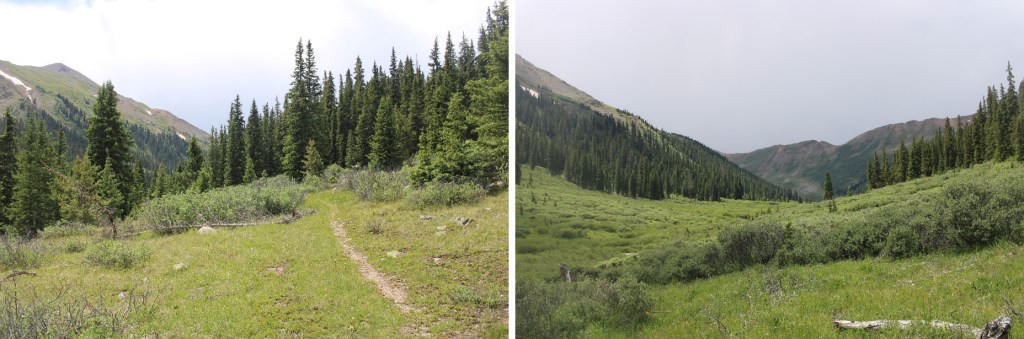
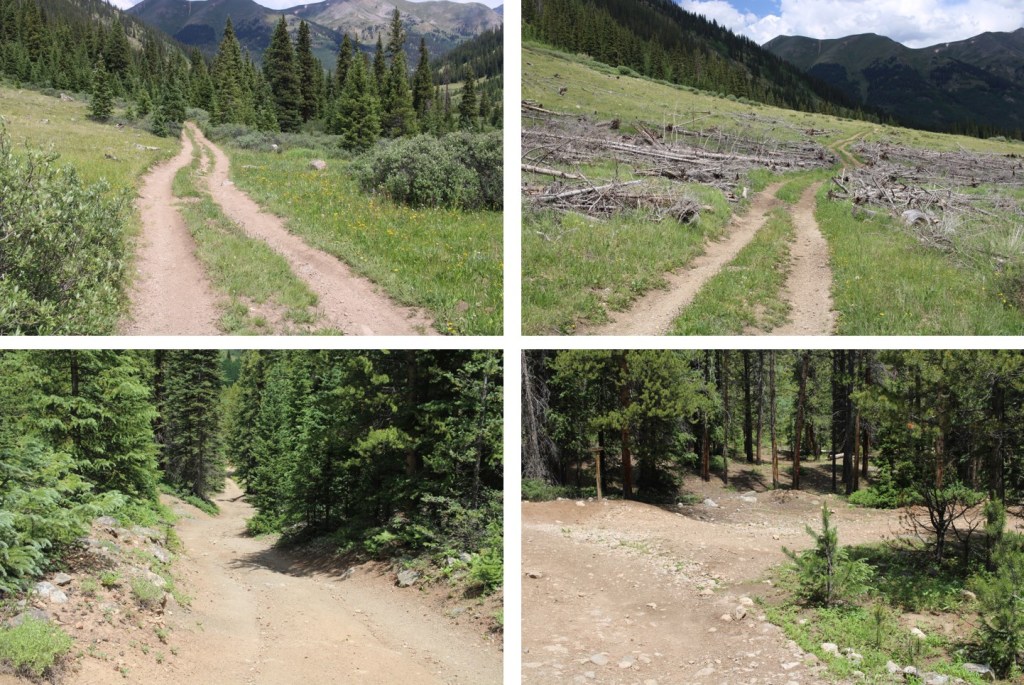
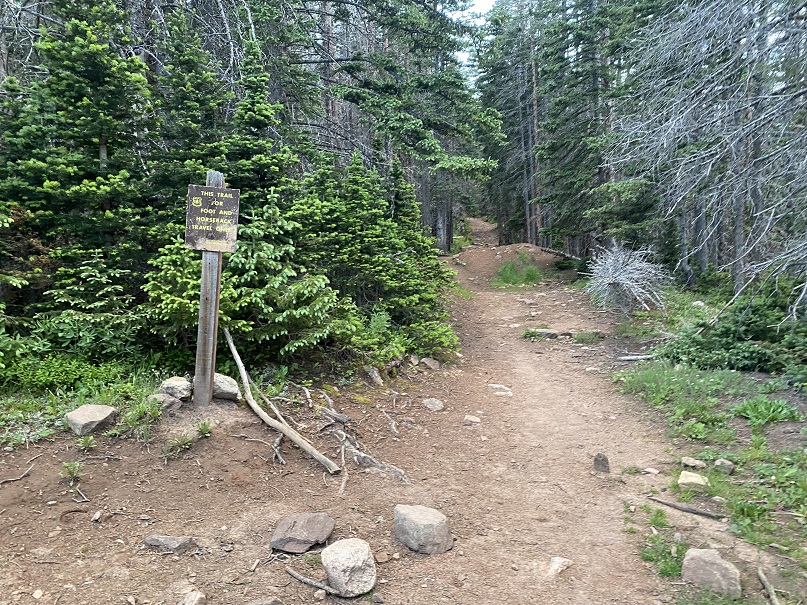
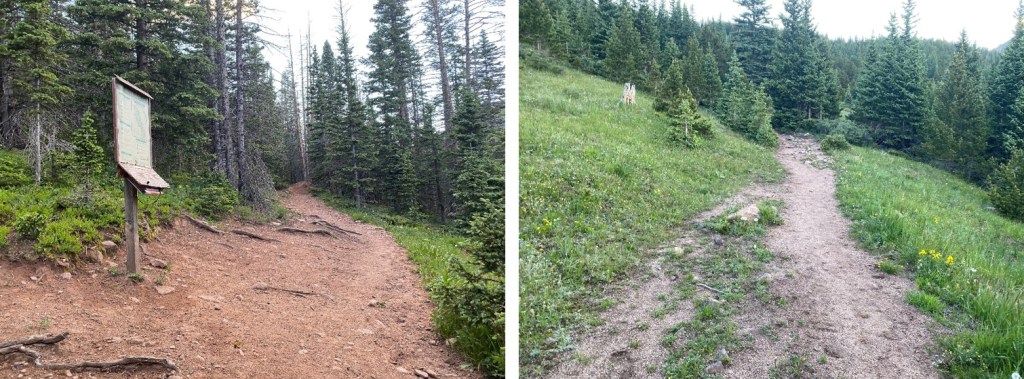
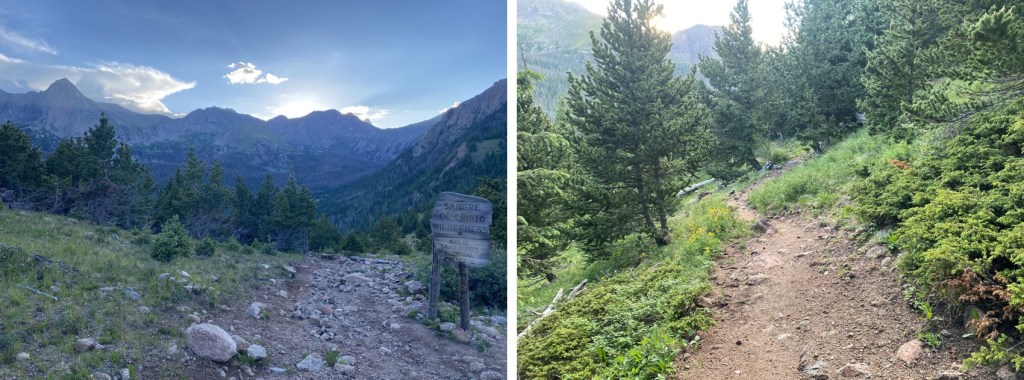
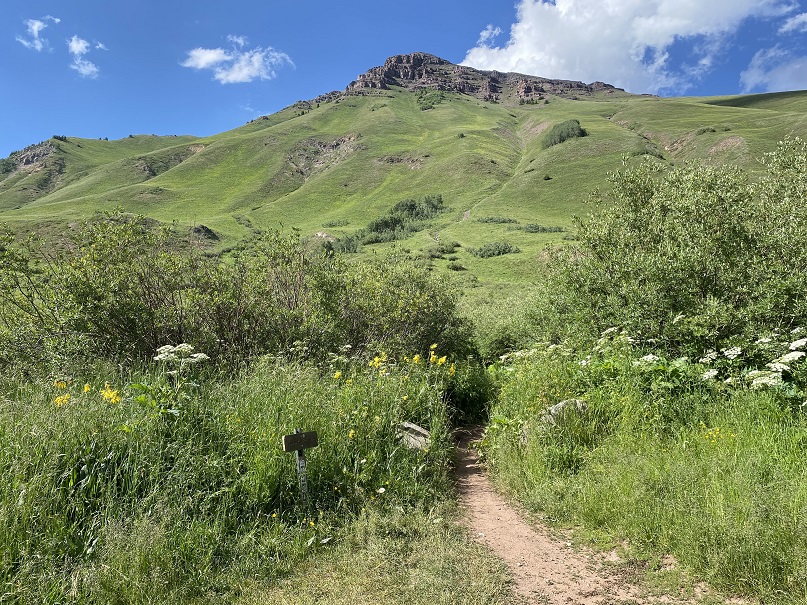
I was up and on the trail at 4:15 am.  The trail was class 1, but overgrown with plants, so at times it was hard to see.  I followed Teocalli Trail NO 554 for .65 miles

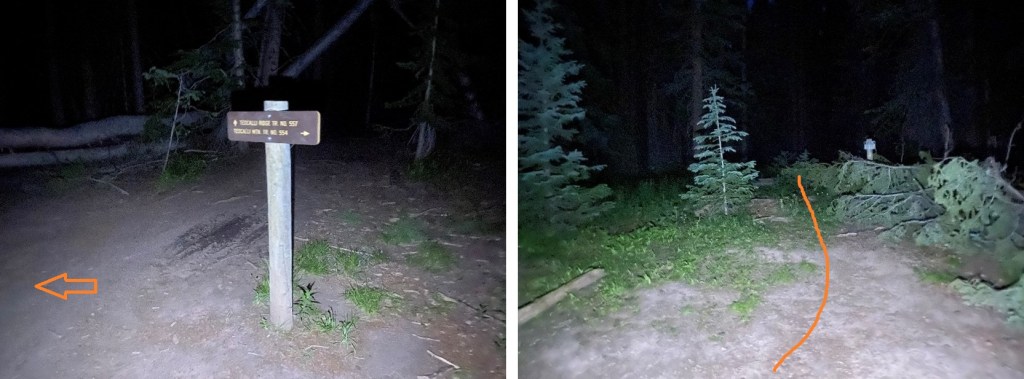
After hiking for .65 miles, I came to a junction.  Here I turned right, and continued following the trail east to the next junction.  This was a class 1 trail. 

The next junction was 1.5 miles away, and clearly marked.  Here I turned left, and followed the class 1 trail north

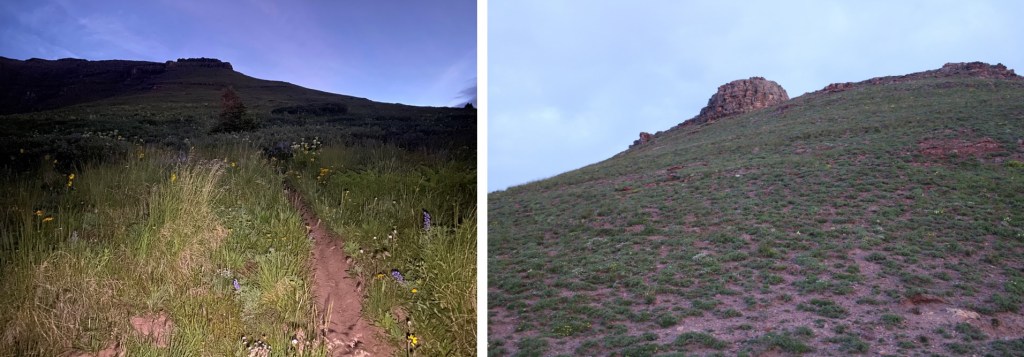
At 12420’ the class 1 trail ended, and became a class 2 trail. 

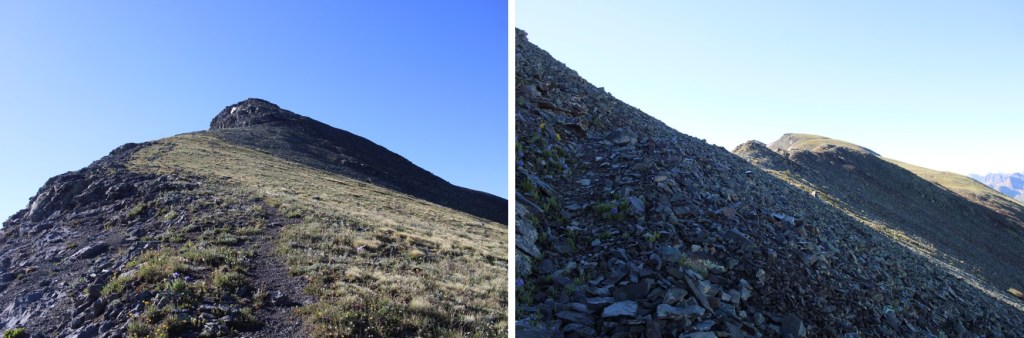
I headed west, to the summit of Teocalli Peak.  Route finding was easy, and I even found a few cairns along the way.

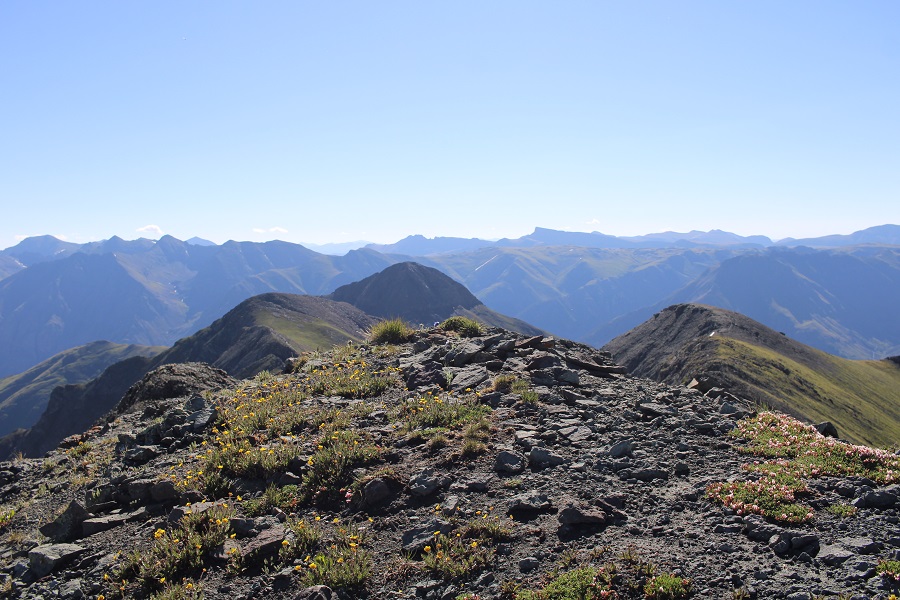
I summited Teocalli Mountain at 6:25am.

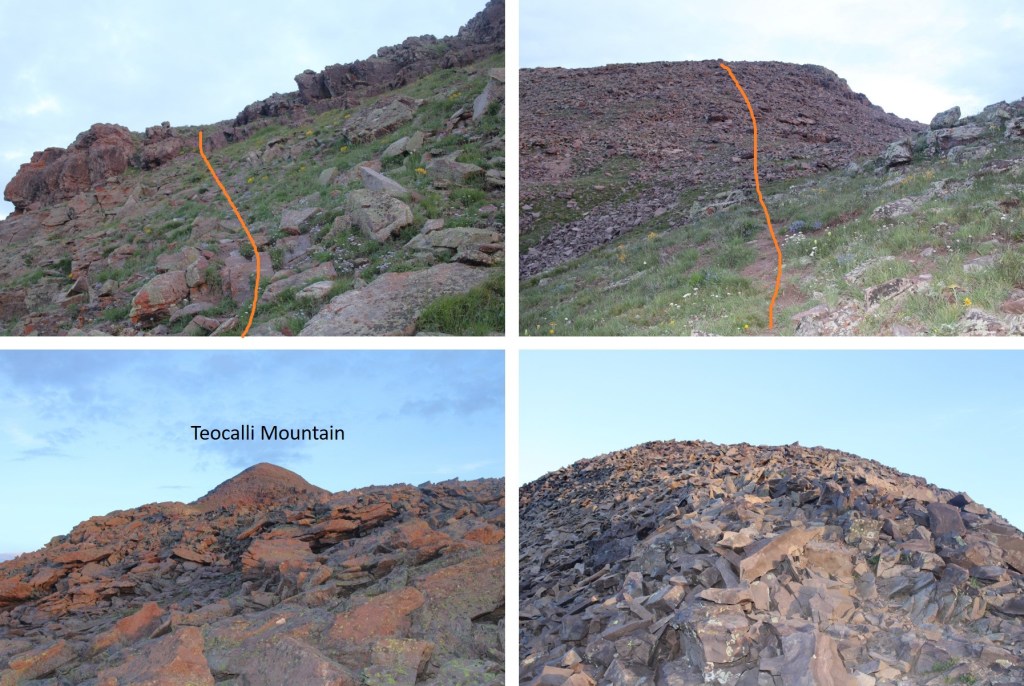
Teocalli Mountain:

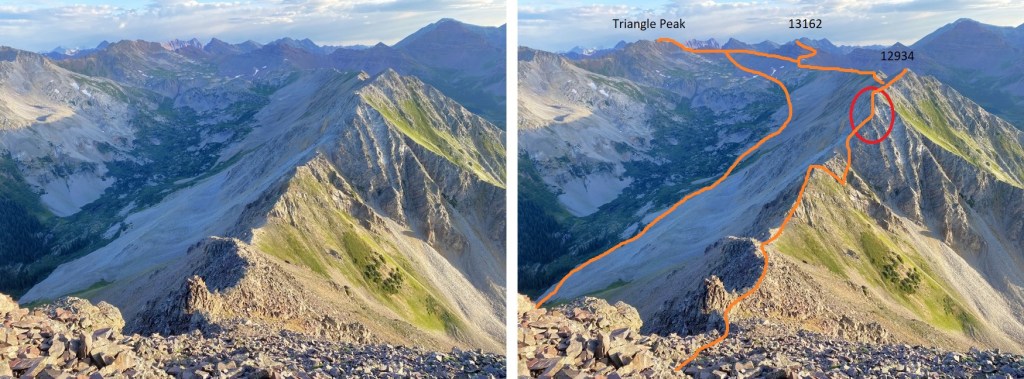
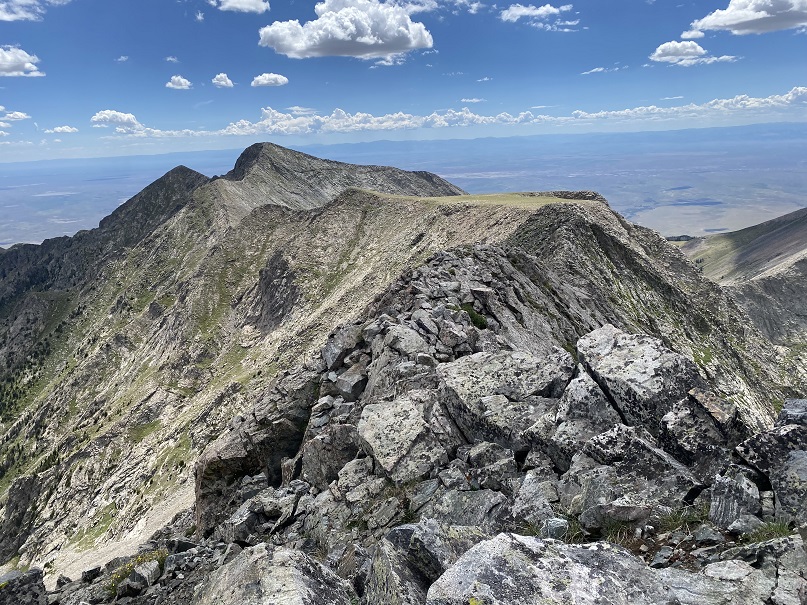
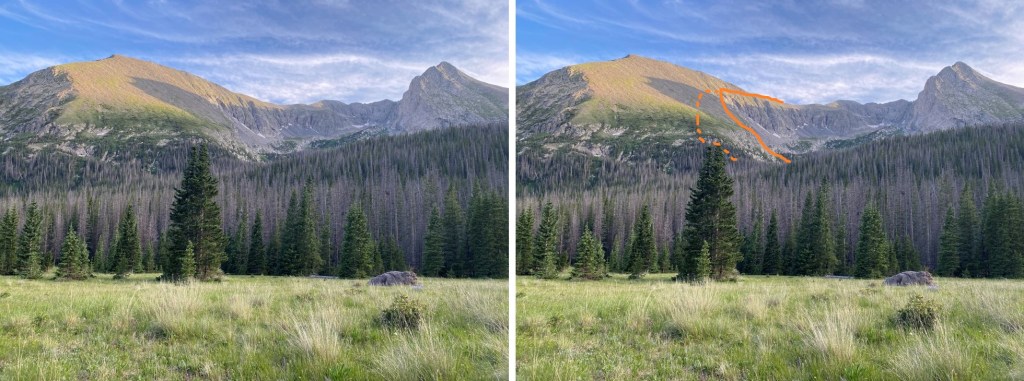
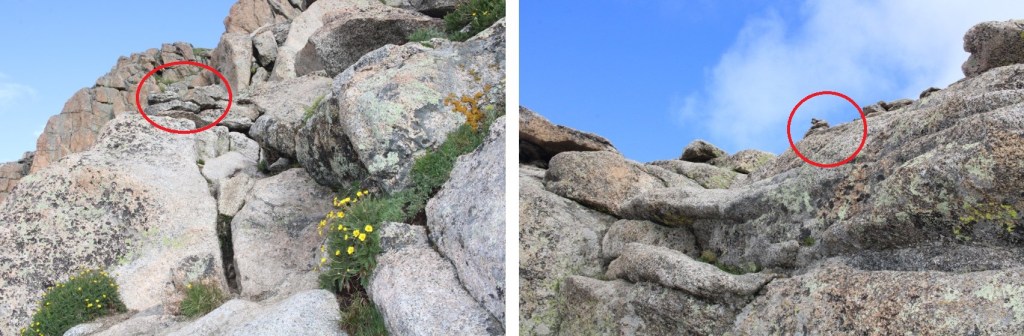
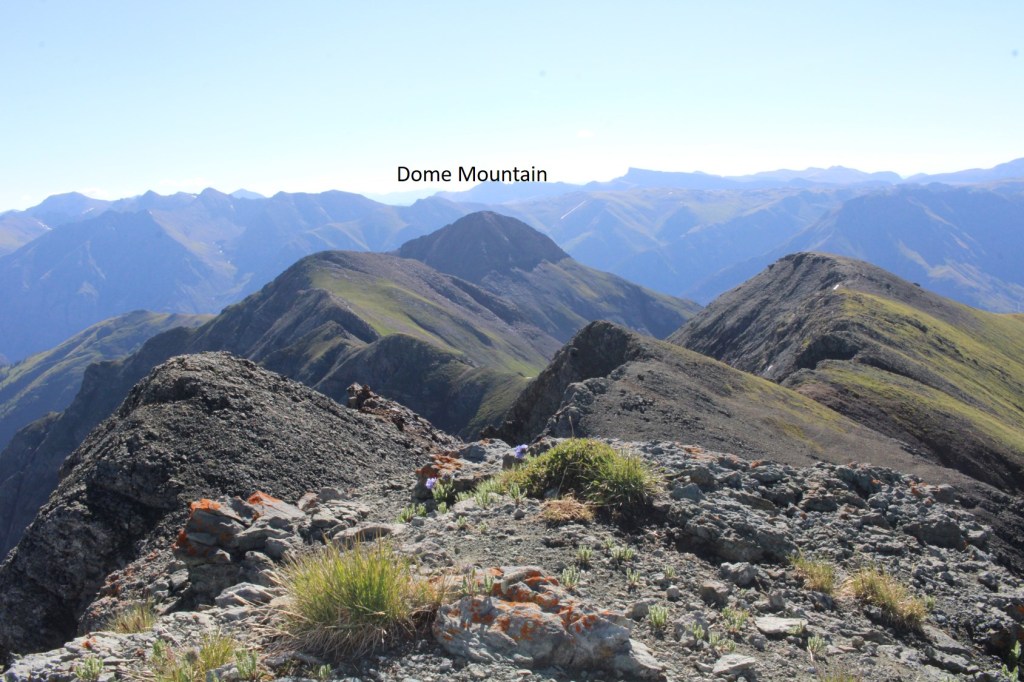
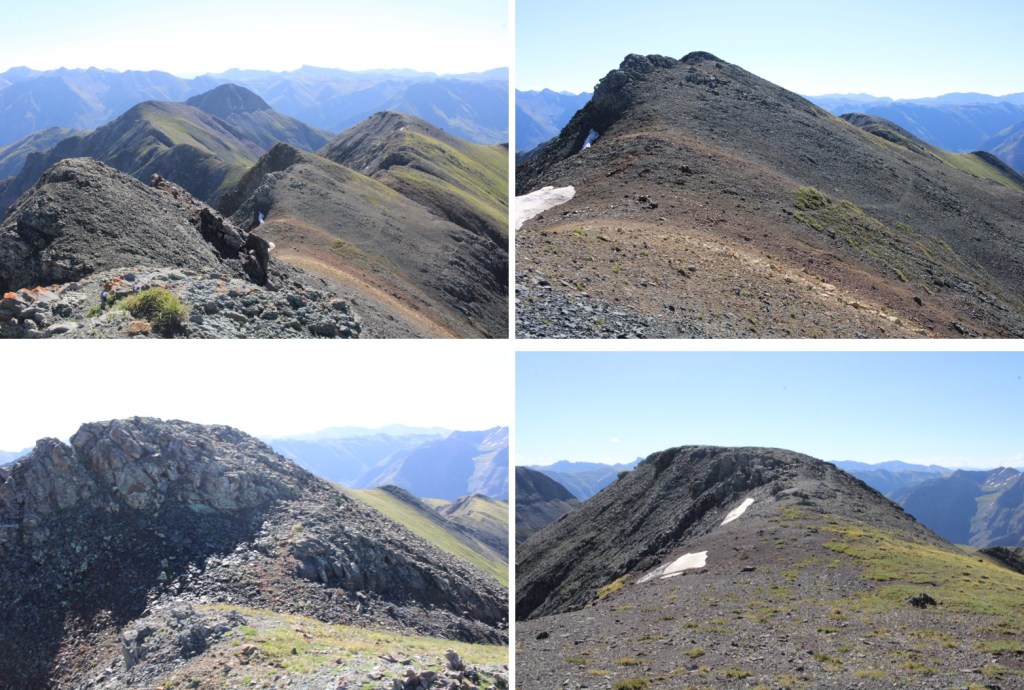
There was a military box chained to a rock as a summit register, but it was open and empty, so I left a new one, and continued north.  If you’re going to do the loop as I did, note you need to be very comfortable with class 4 climbing and exposure, as well as bushwhacking through trees/brush/willows.  There is a knife edge that puts the one on Capitol to shame (circled in red below), and several class 4 chimneys. If you’re not comfortable with this type of scrambling/climbing/hiking, turn back now.  If you are, it’s time to put on your helmet and get ready for some type 2 fun!

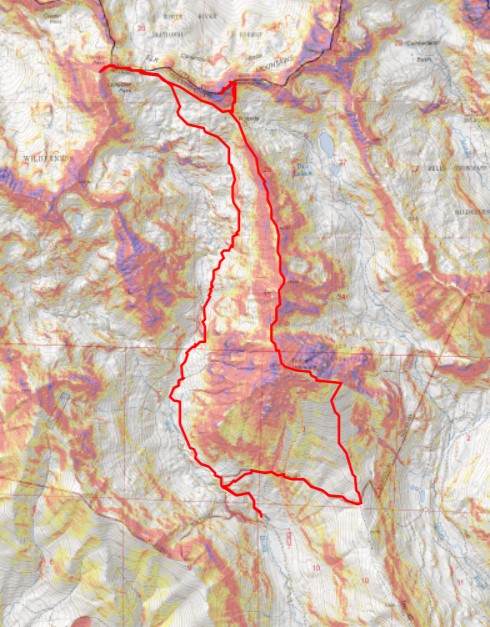
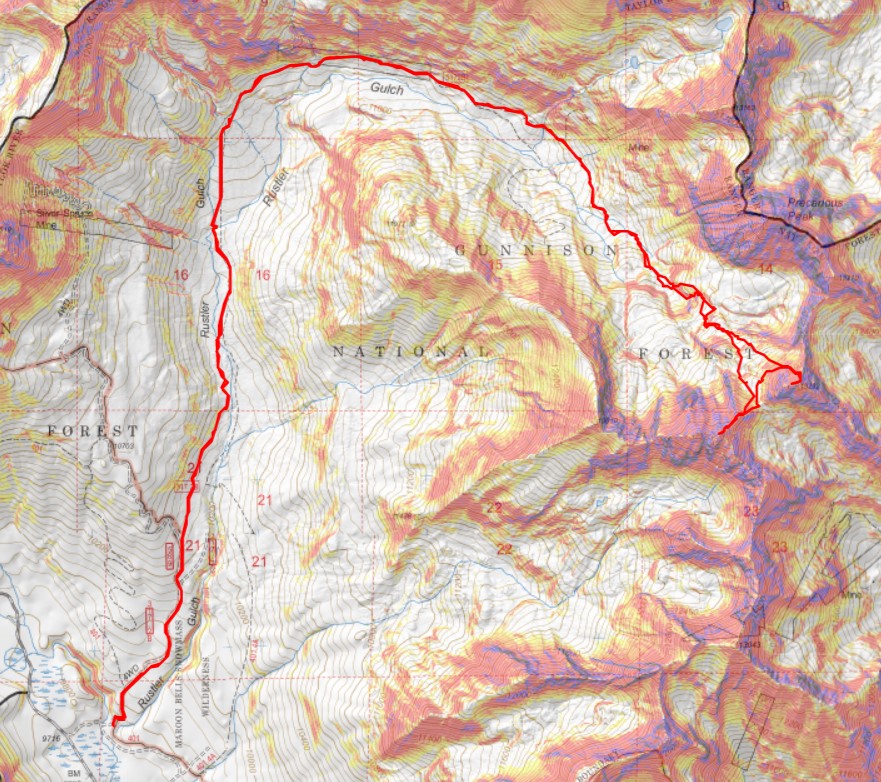
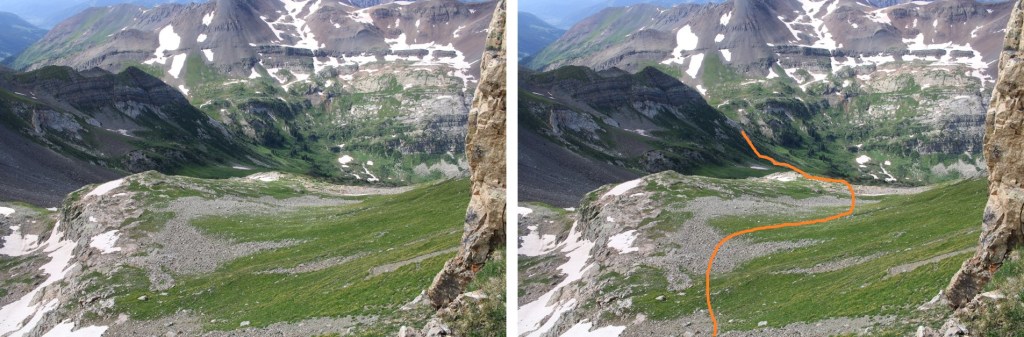
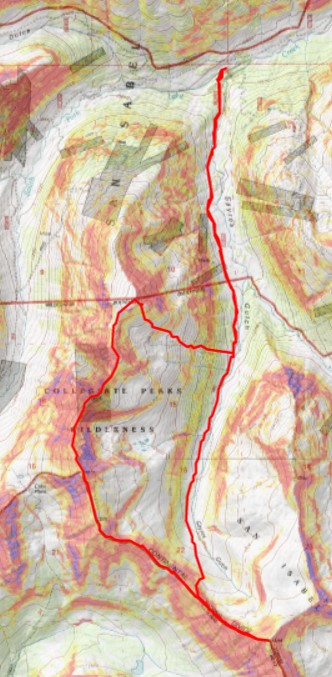
Here’s an overall view of the route.  I spent a lot of time looking at my exit route down the basin, as I wasn’t sure if it would go.  I memorized the terrain in my mind for later in the day. 

I followed the ridge north, as I descended to the Teocalli/PT 12934 saddle.  This was full of loose rock.  I put on my microspikes and navigated down the class 2+ terrain to the saddle.

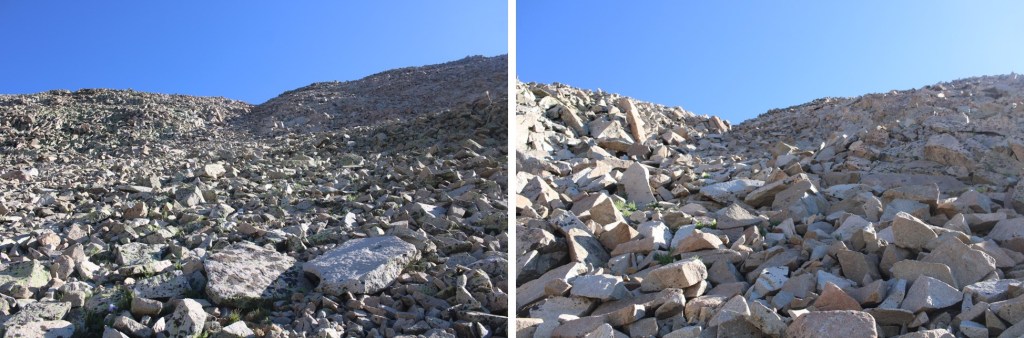
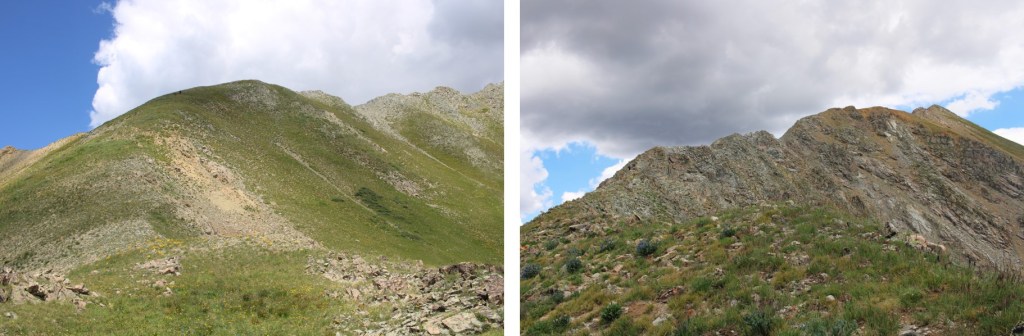
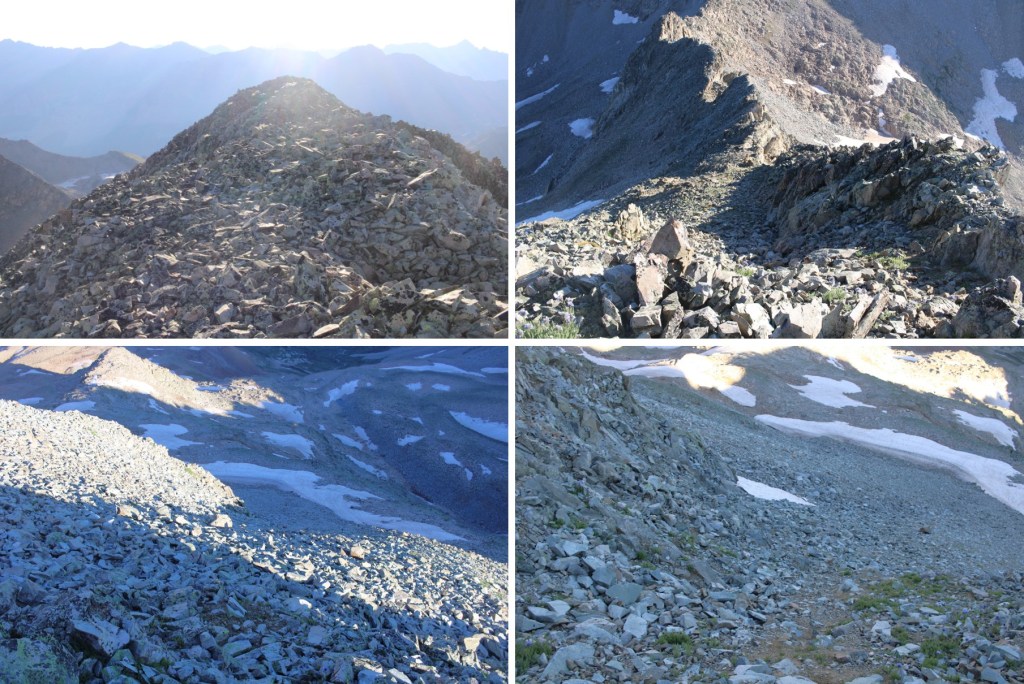
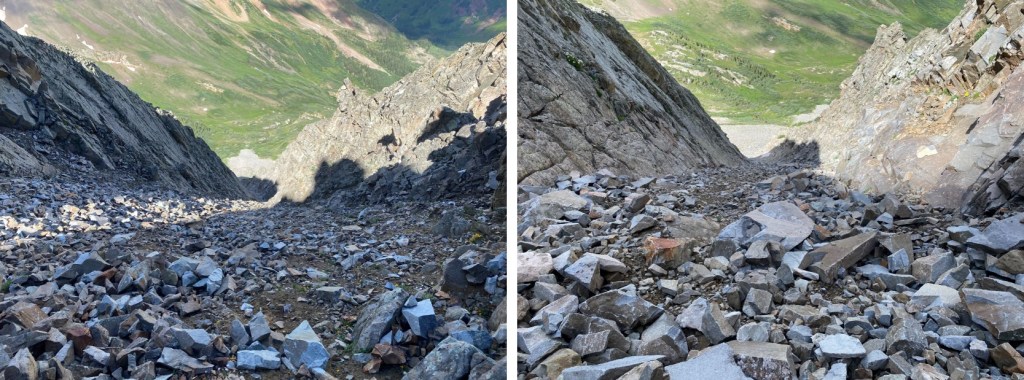
The first obstacle from the saddle is getting around these rocks.  I went right, and up a grass filled gully that turned into a rock filled gully

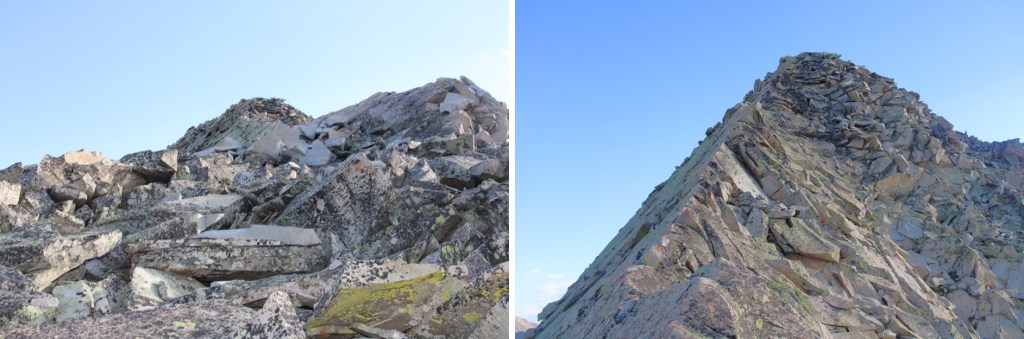
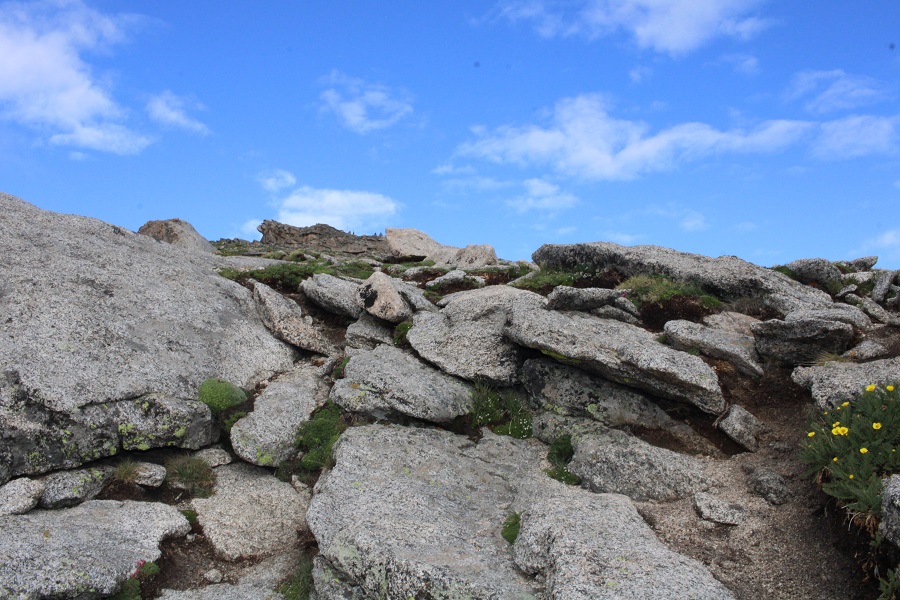
Then the terrain became rocky, and the class 3 climbing began.  I took this route up the rocks initially

And then went straight up the knife edge.  Do not go to the left or right, as the rocks are all loose.  The best way to climb this is to stick to the ridge.

Then it was a rocky, class 2 hike to the summit of PT 12934

I summited PT 12934 at 8:15am

PT 12934:

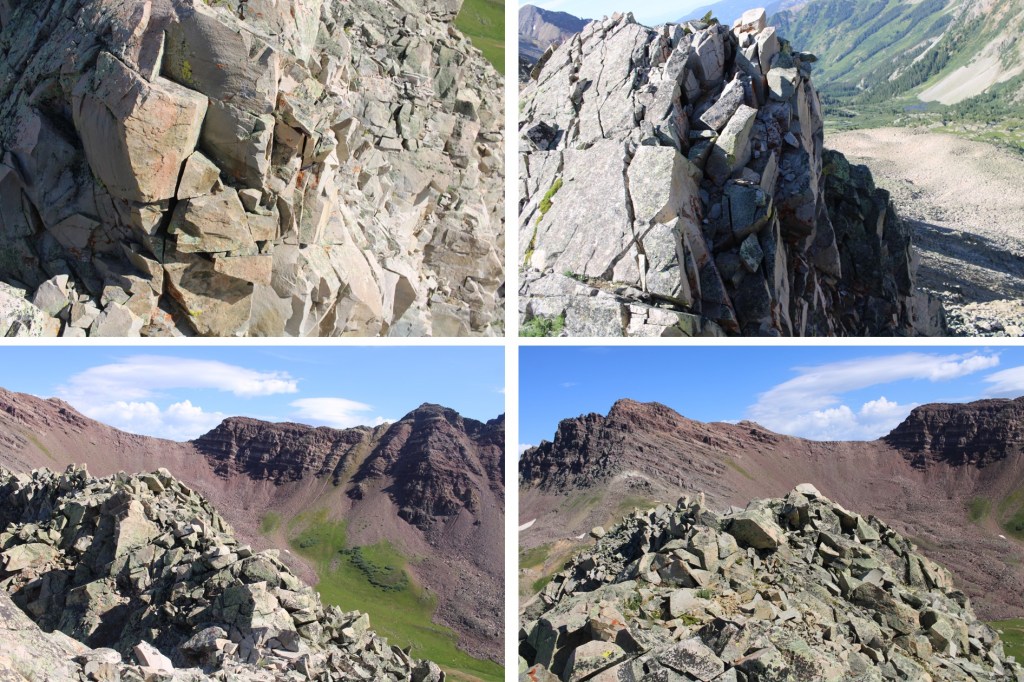
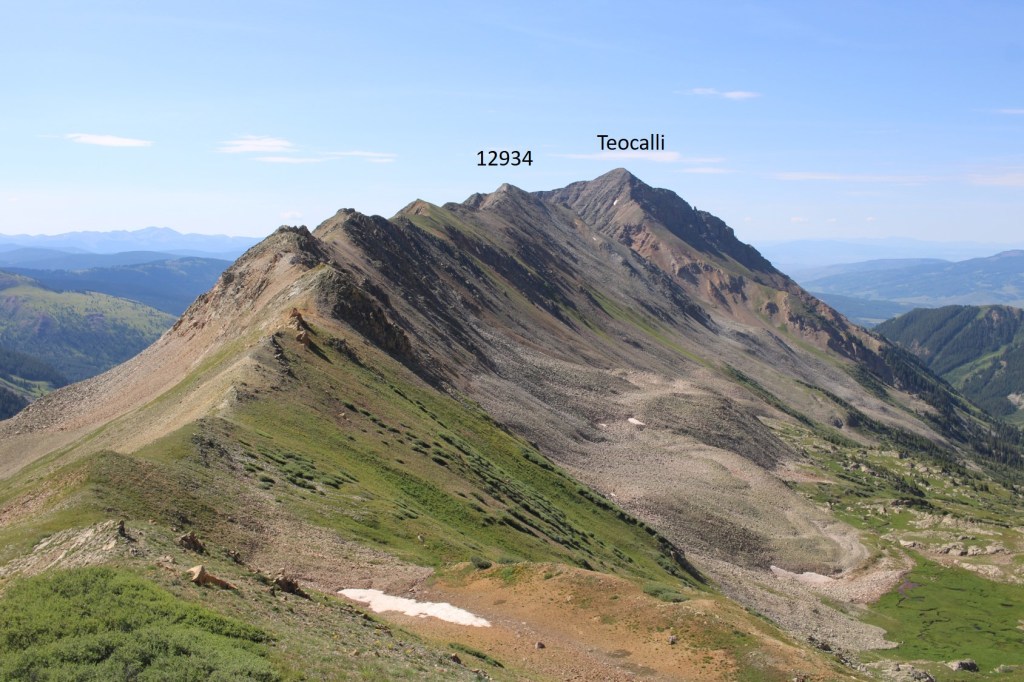
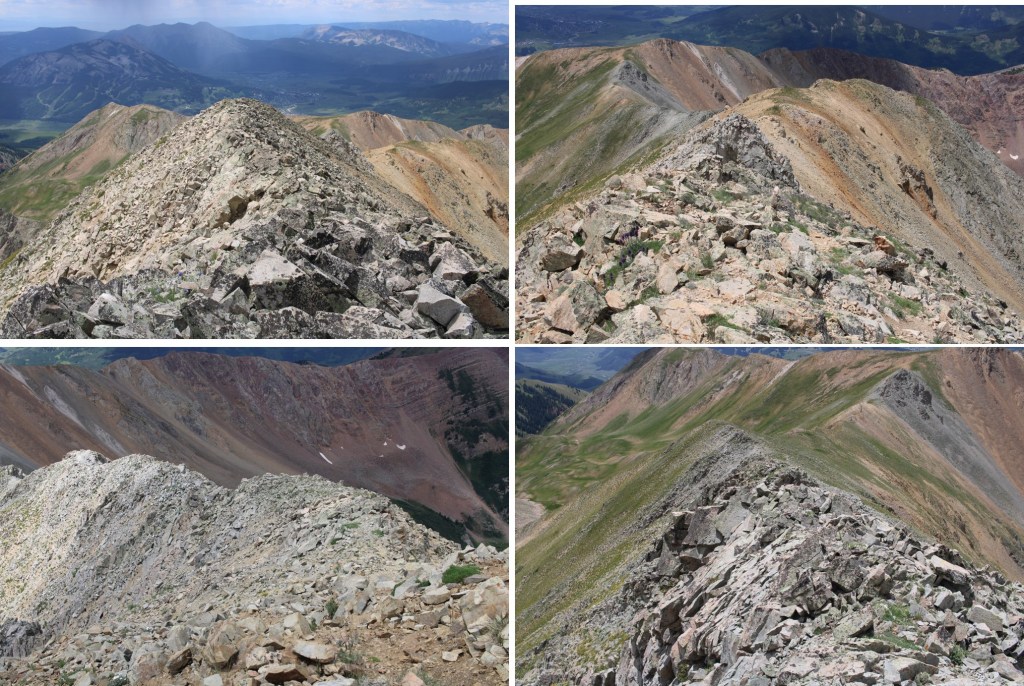
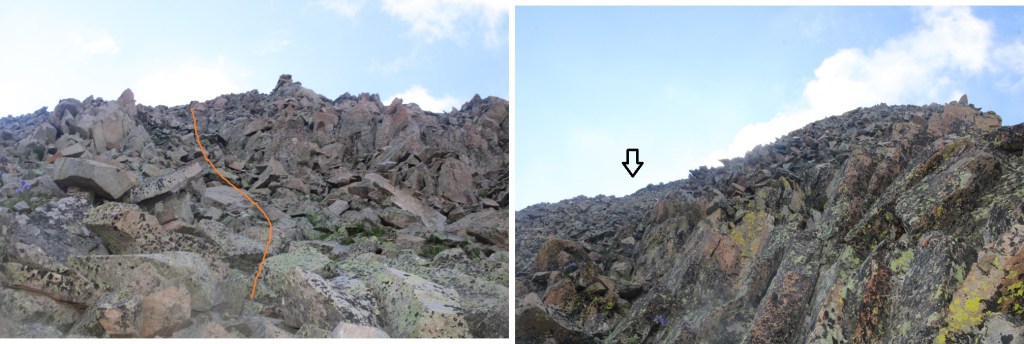
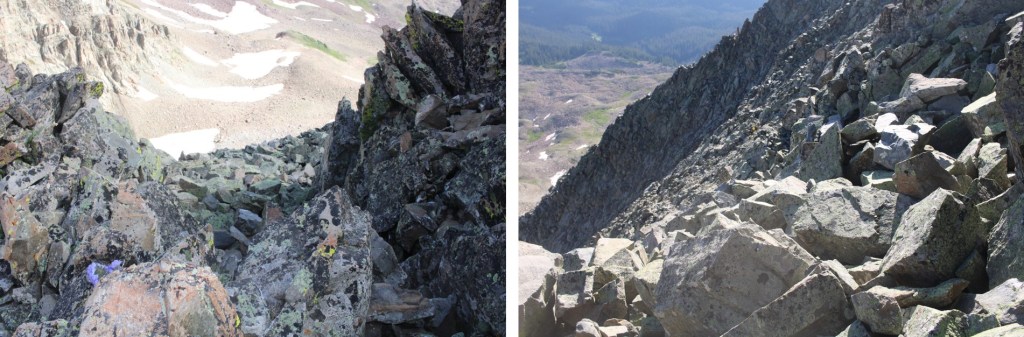
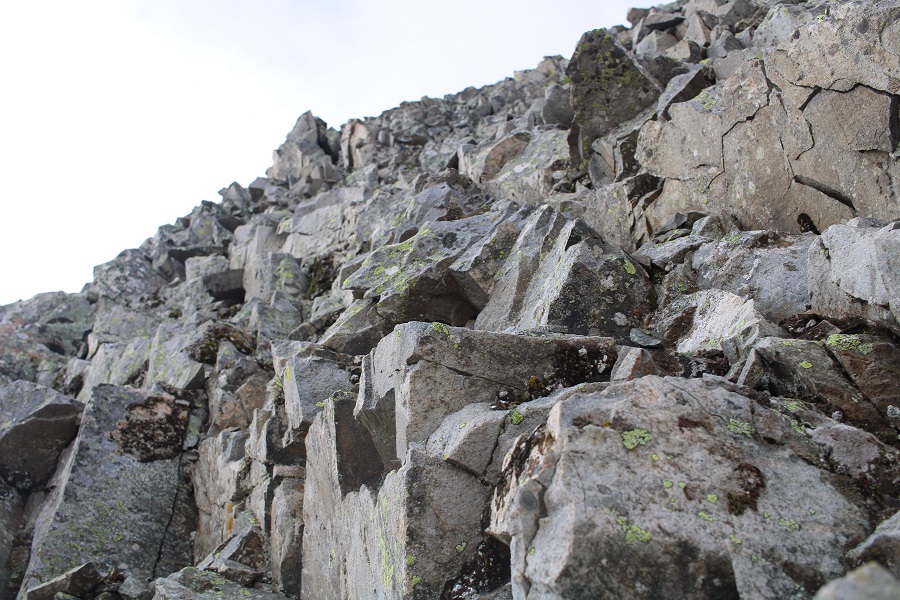
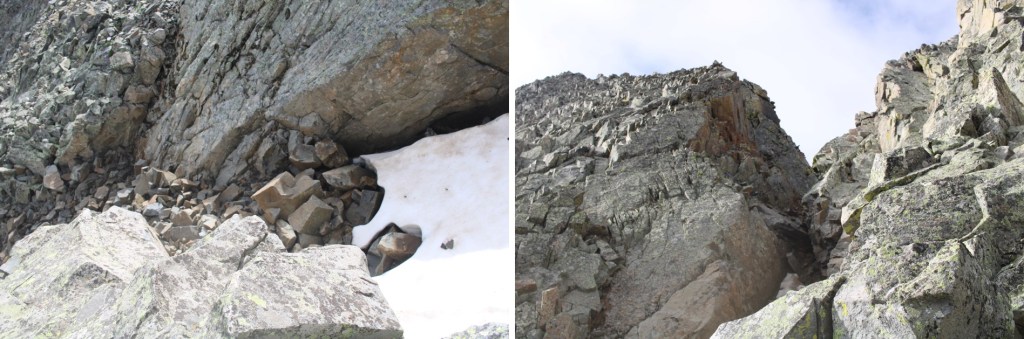
From 12934 it looked like an easy ridge hike to the base of PT 13162, but I was wrong. There is class 3 scrambling and class 4 chimneys to contend with.  There are too many moves to picture, so I’ll surmise the ridge by saying if you have to dip down, go right, but the ridge mostly goes.  Here are some pictures of the fun parts.

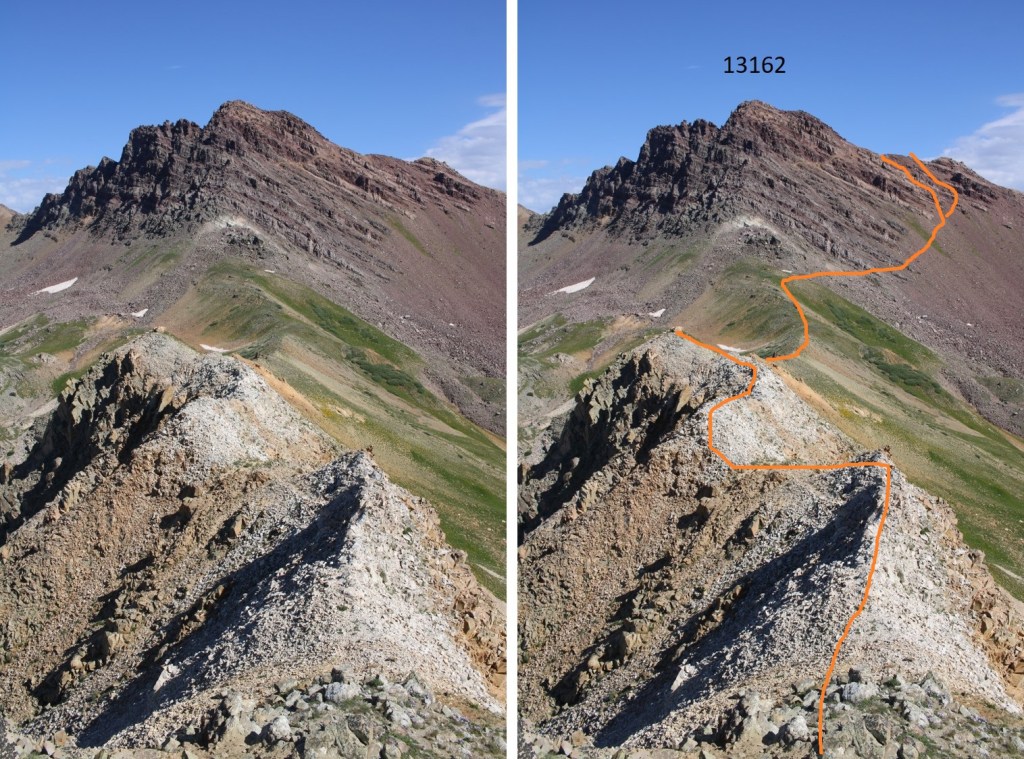
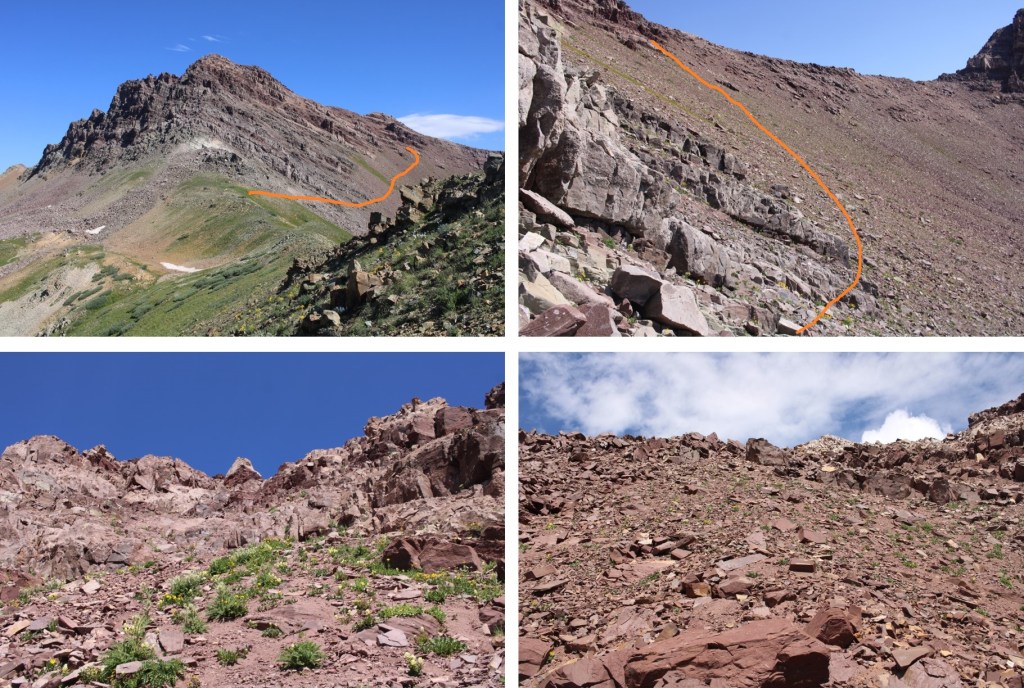
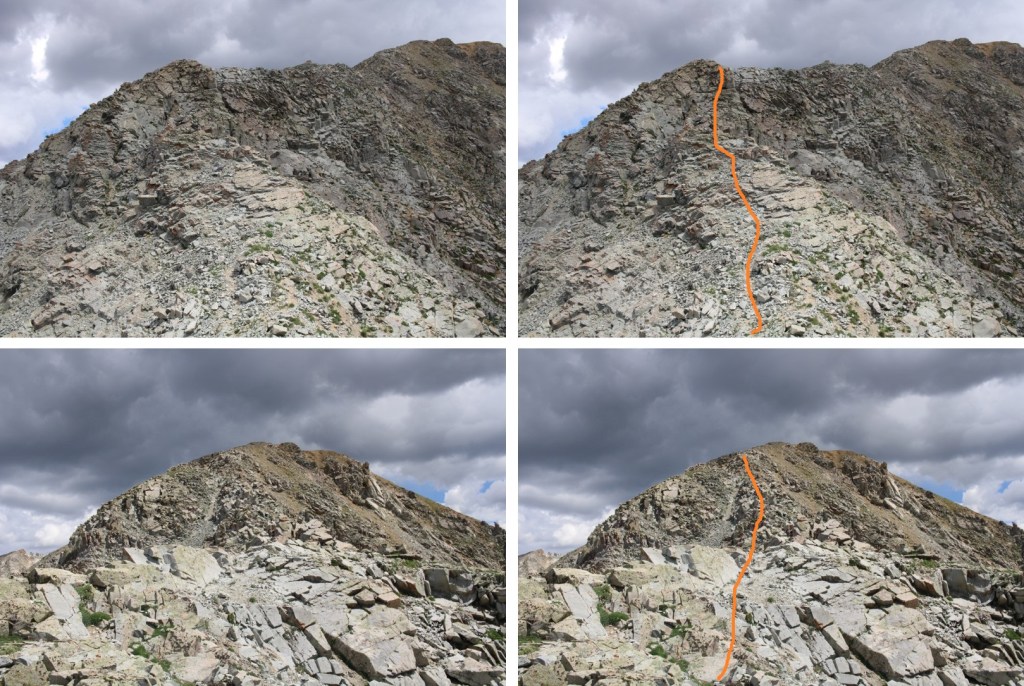
From the 12934/13162 saddle, this is the route to the ridge.  It’s all class 2.  There are actually 2 gullies that ‘go’.  I took one up, the other down, and they both felt about the same difficulty wise (difficult class 2). 

Here’s looking back at that ridge

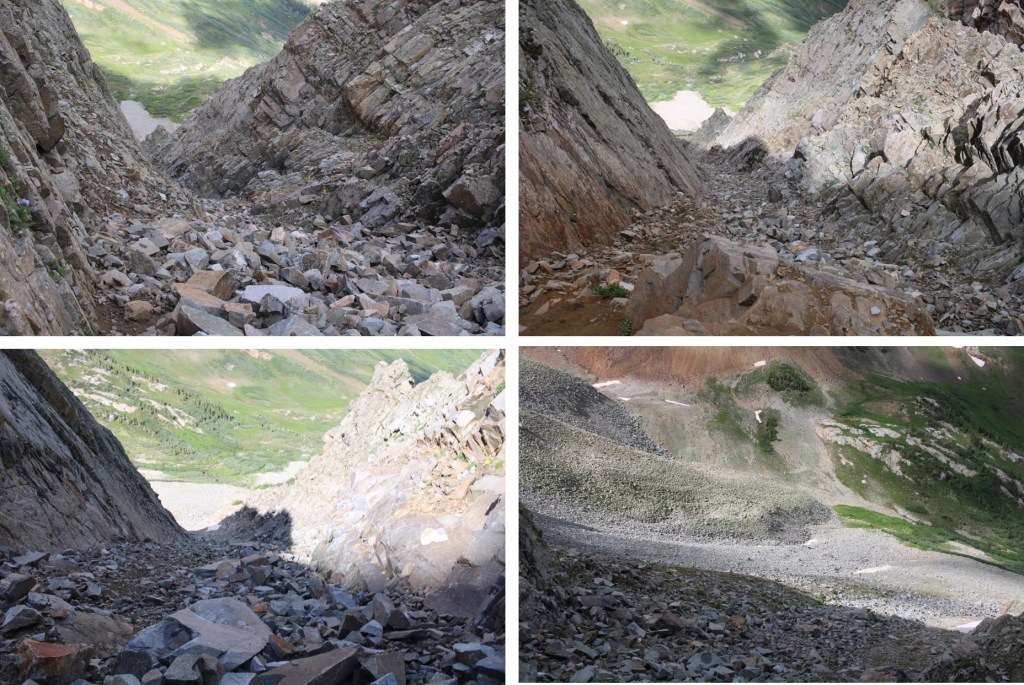
Here are some step-by-step pictures to PT 13162.  Microspikes were very useful ascending and descending the gullies

Now on the ridge, I followed it southwest to the summit.  There was some low class 3 scrambling here.  This is the route I took

I summited PT 13162 at 11am

PT 13162:

From the summit I once again got a good look at my decent route down the basin.  I took a mental picture of it for later

I retraced my steps back to the 13162/12934 saddle.  Once again, both gullies ‘go’, so pick your favorite

Back at the saddle, it was time to head northwest towards the PT 13162/Triangle Peak saddle.  I stayed at about 12600’ of elevation the entire time

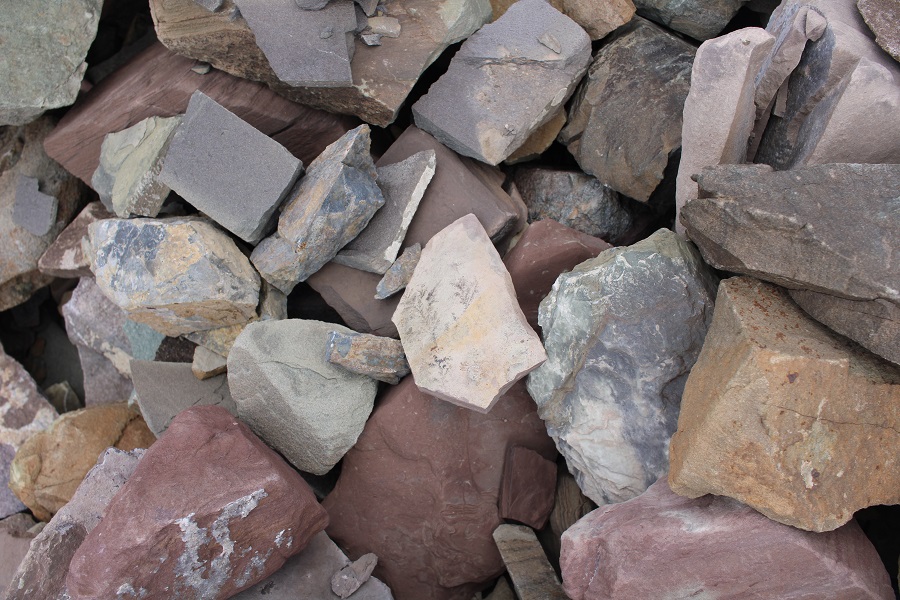
I also found a cool fossil.  I have really good luck finding fossils around 12500’/12700’

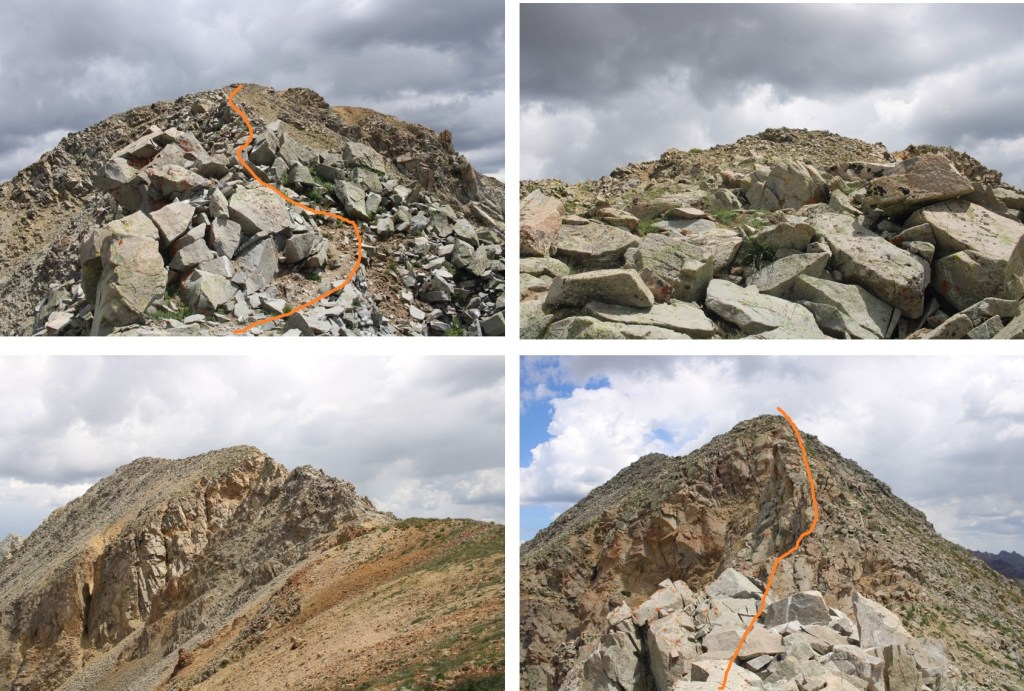
Here are some photos of my way to the Triangle/13162 saddle

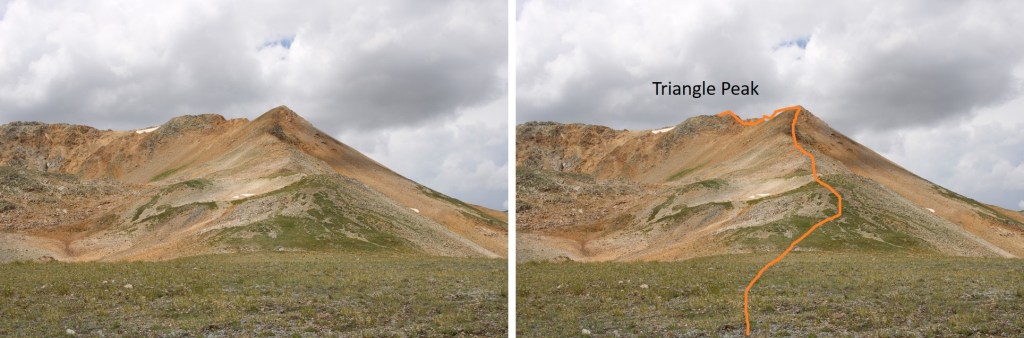
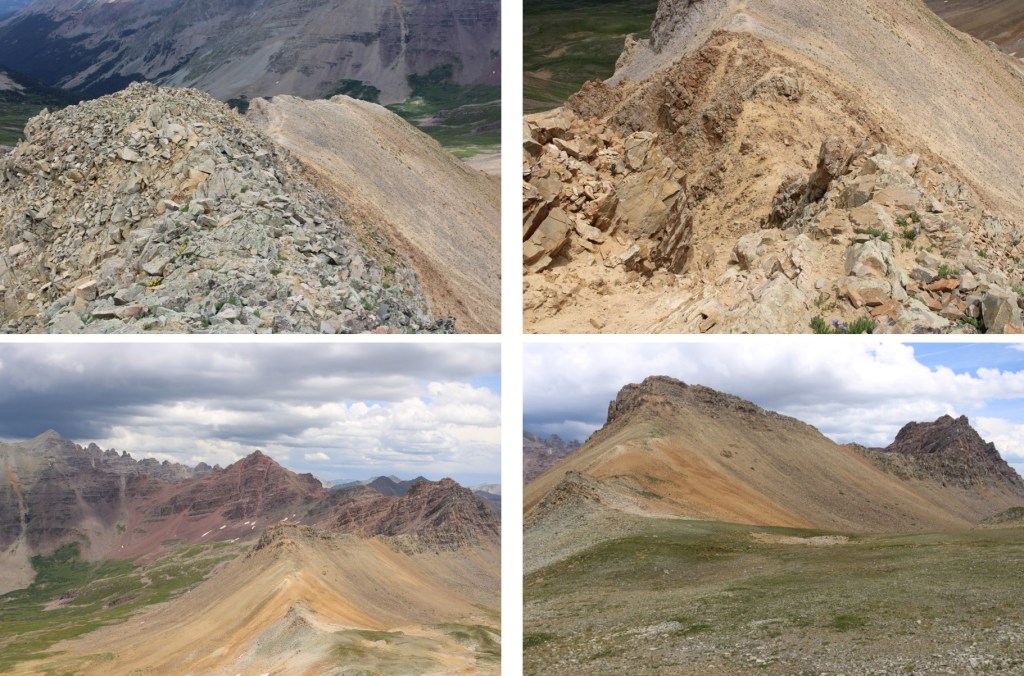
Once there, it as mostly an easy ridge walk to the summit

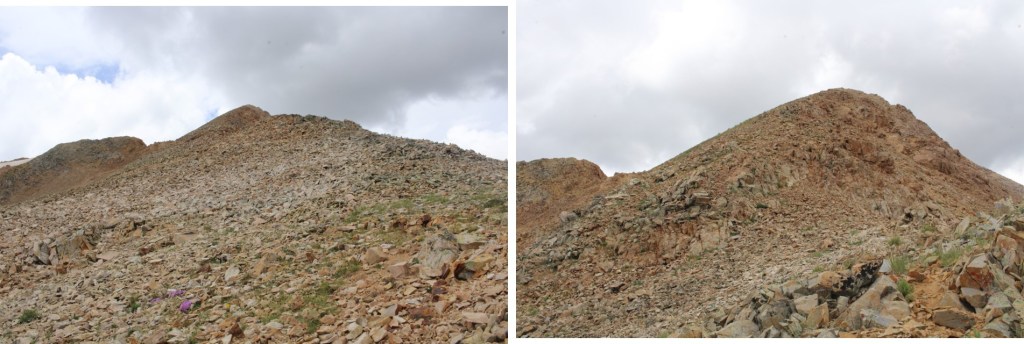
Except for the last bit, which was class 3.  I did not take the scree filled/steep gully, but instead chose the class 3 scrambling route to the left

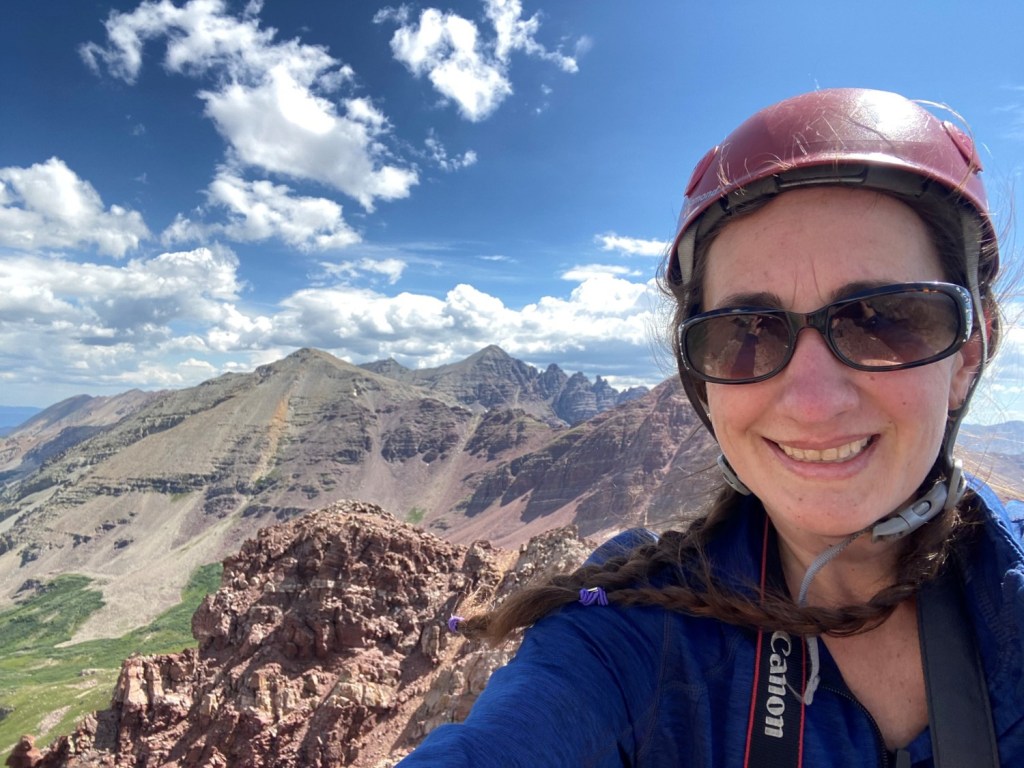
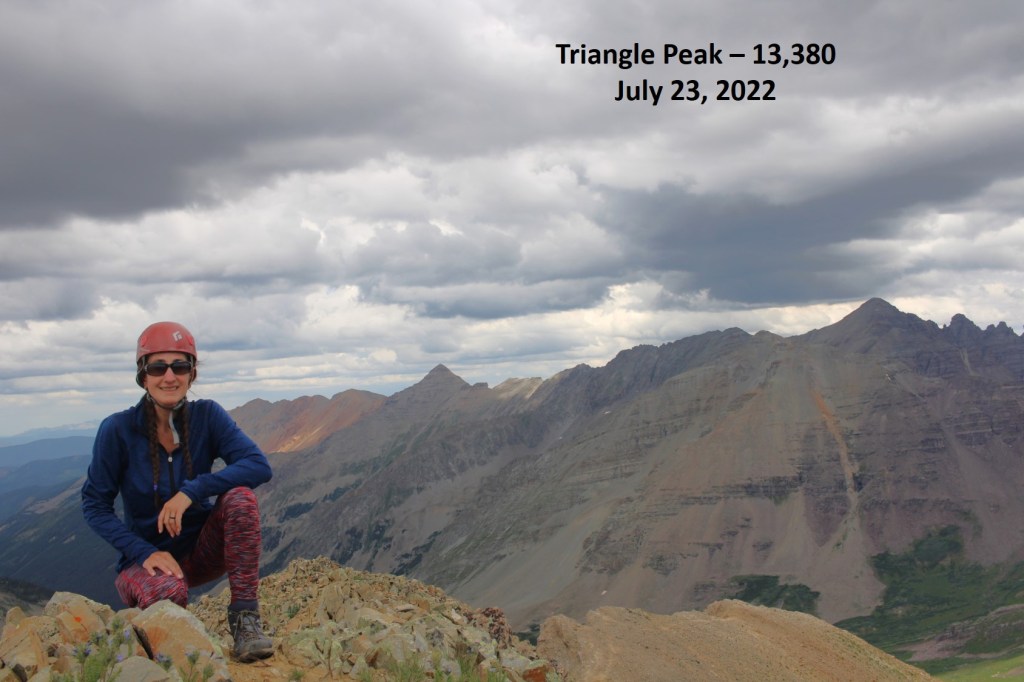
I summited Triangle Peak at 1:20pm

Triangle Peak:

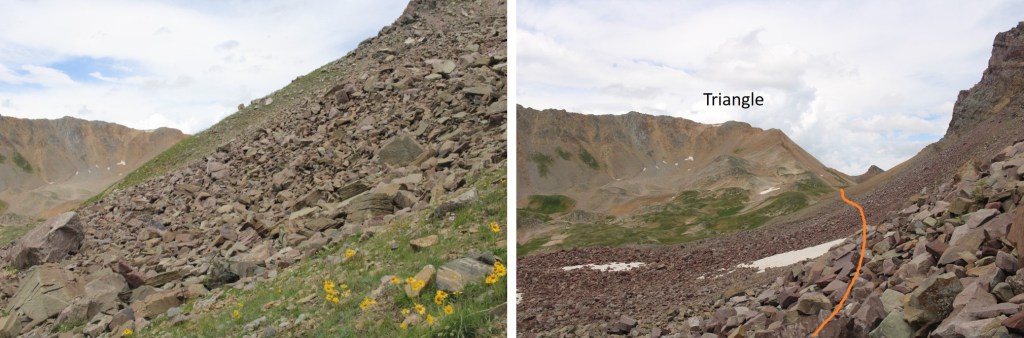
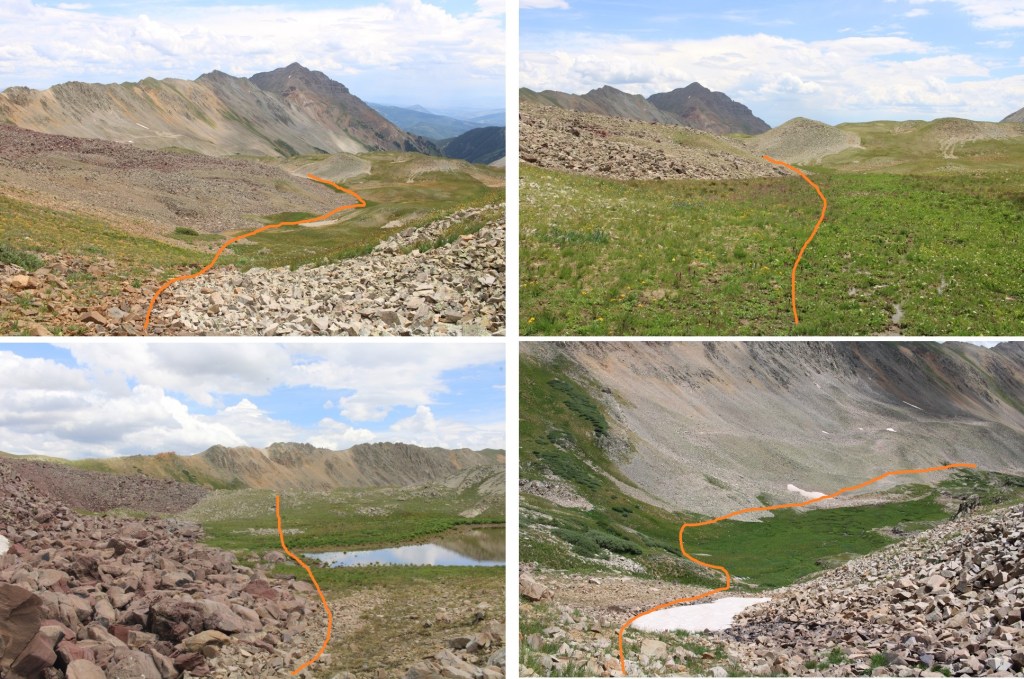
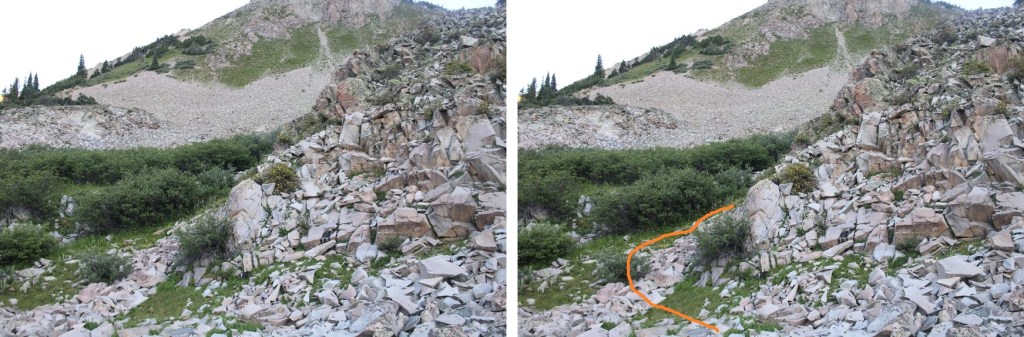
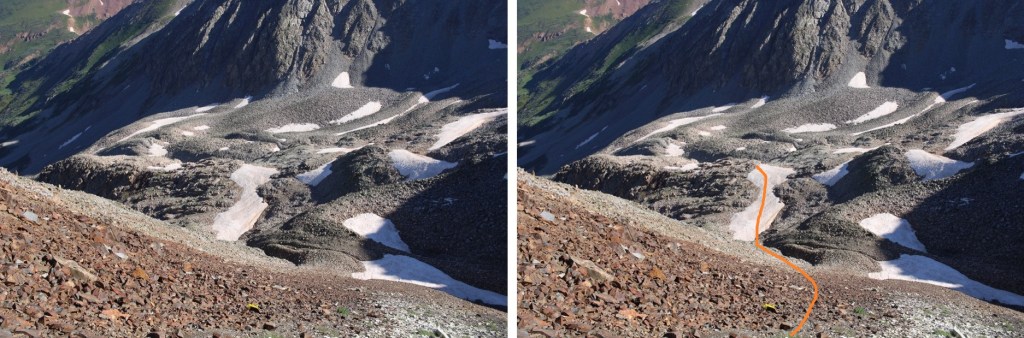
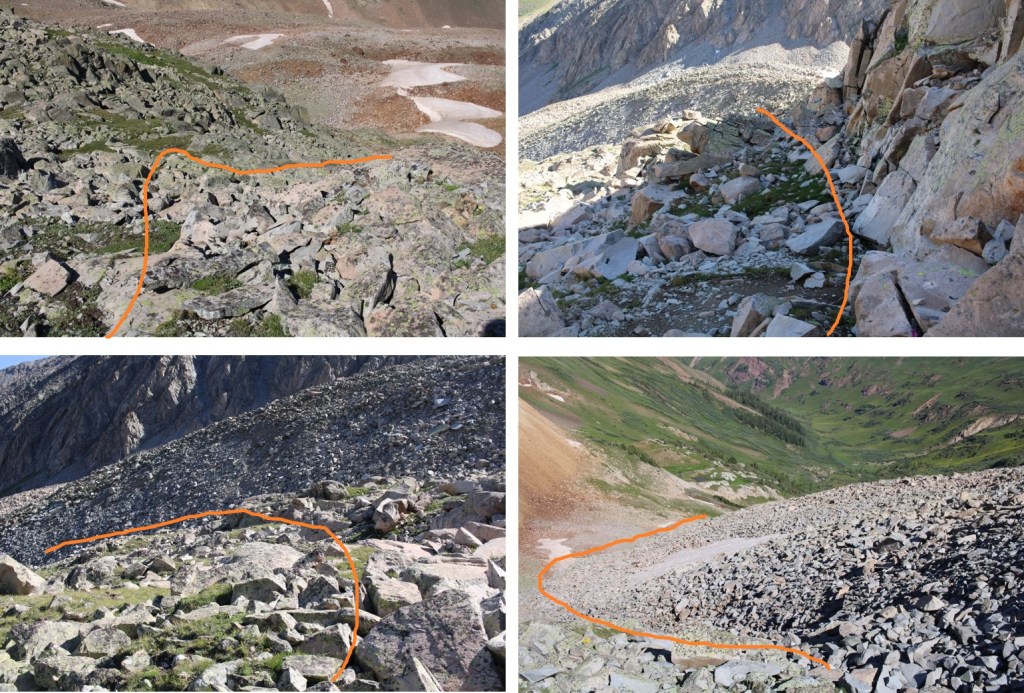
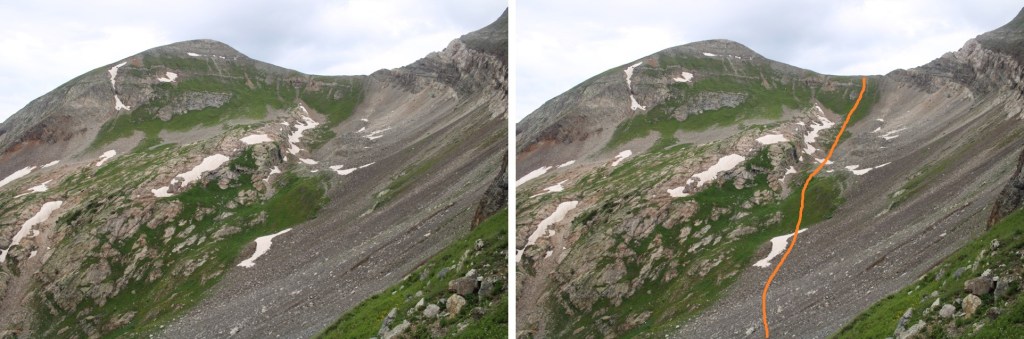
I’d thought about summiting a few more peaks in the area, but as you can tell from the picture above, the weather was moving in, and I wanted to get back below treeline. Here’s the route I took out of the basin.  Basically I made my way to where the maroon rocks met the tundra, and followed the rocks out of the basin. The dotted line is my route from 13162 to the saddle of Triangle Peak

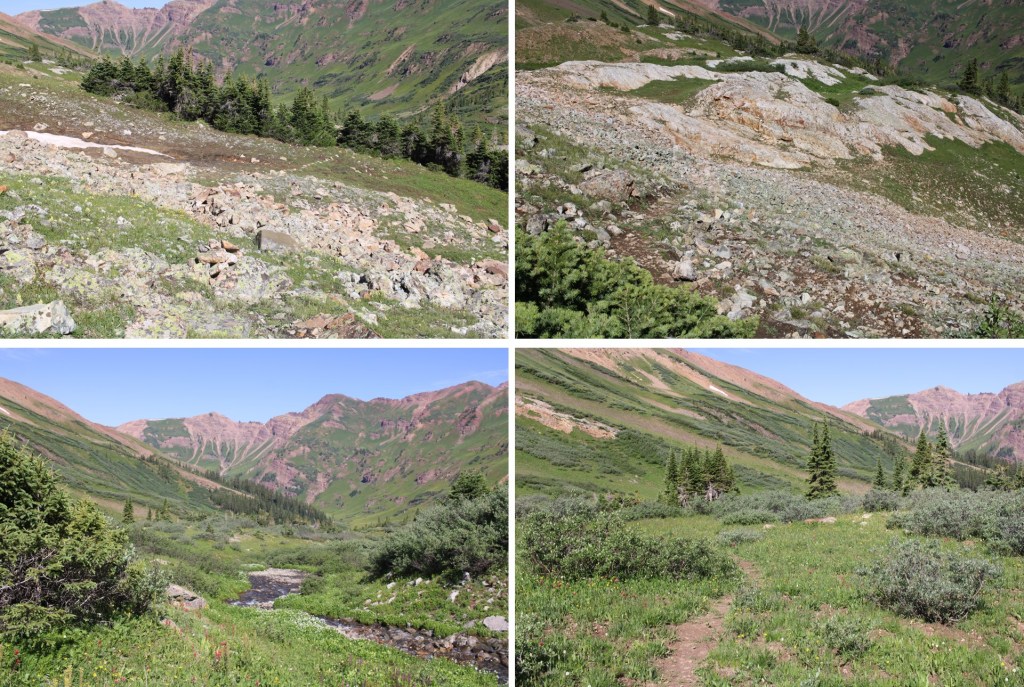
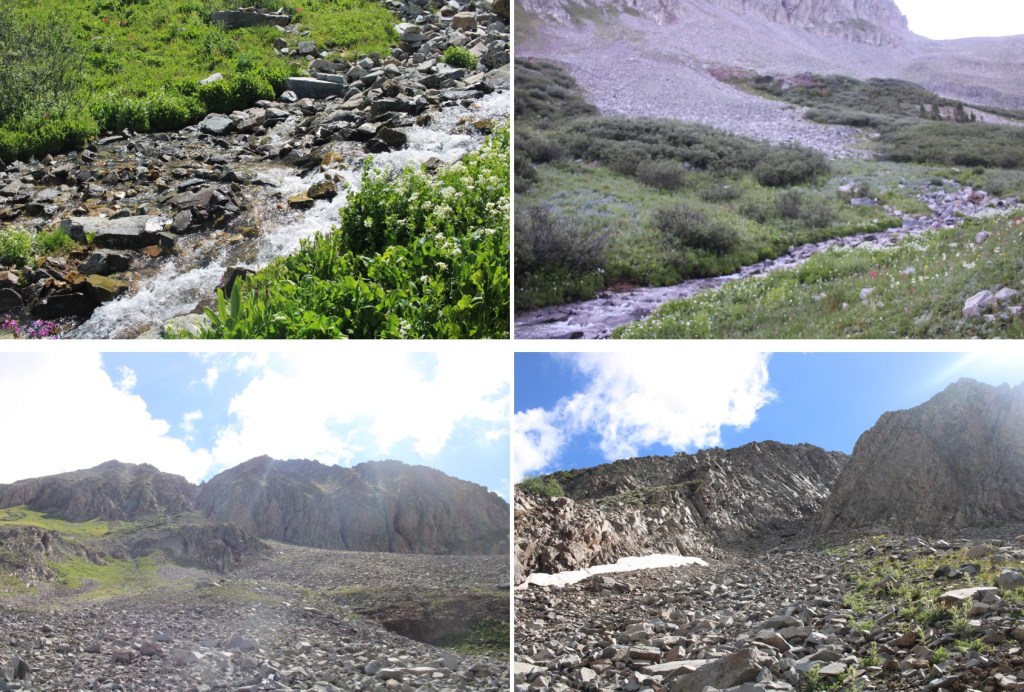
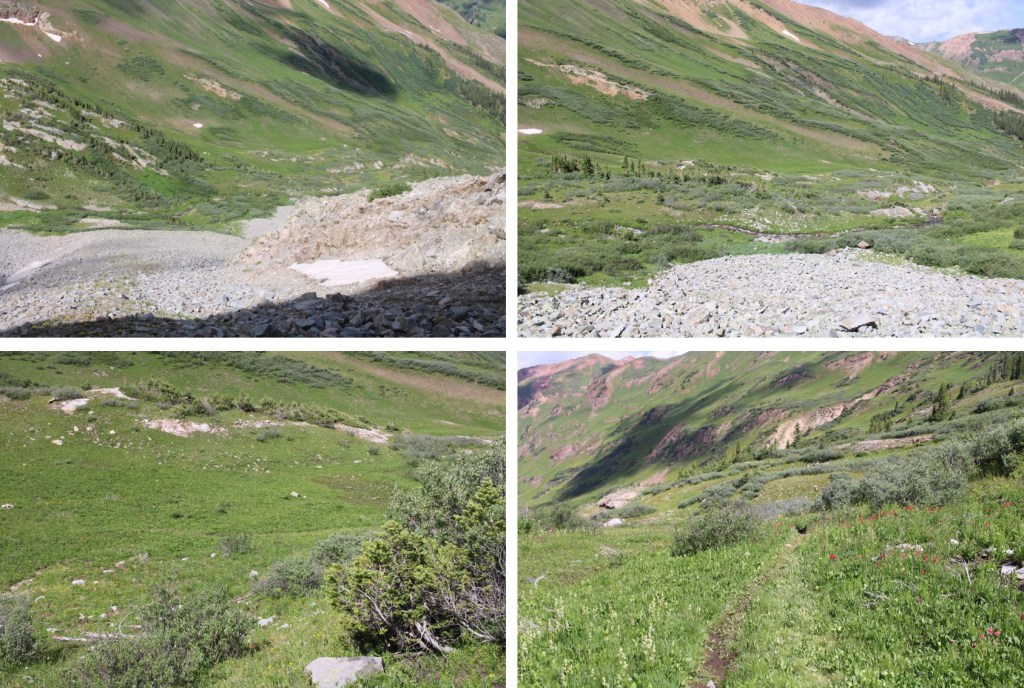
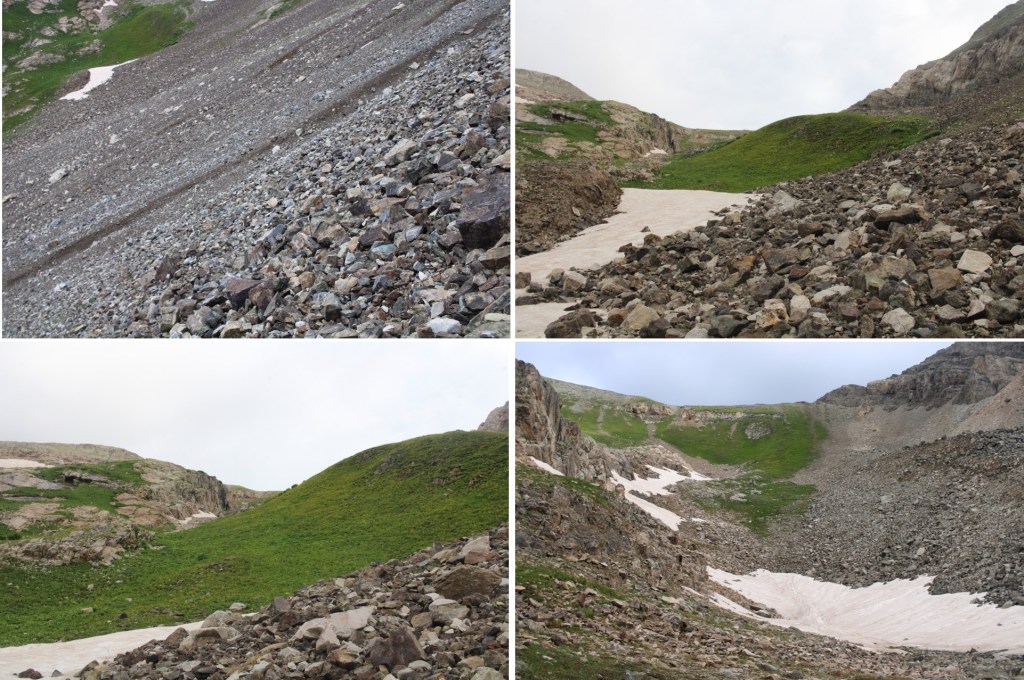
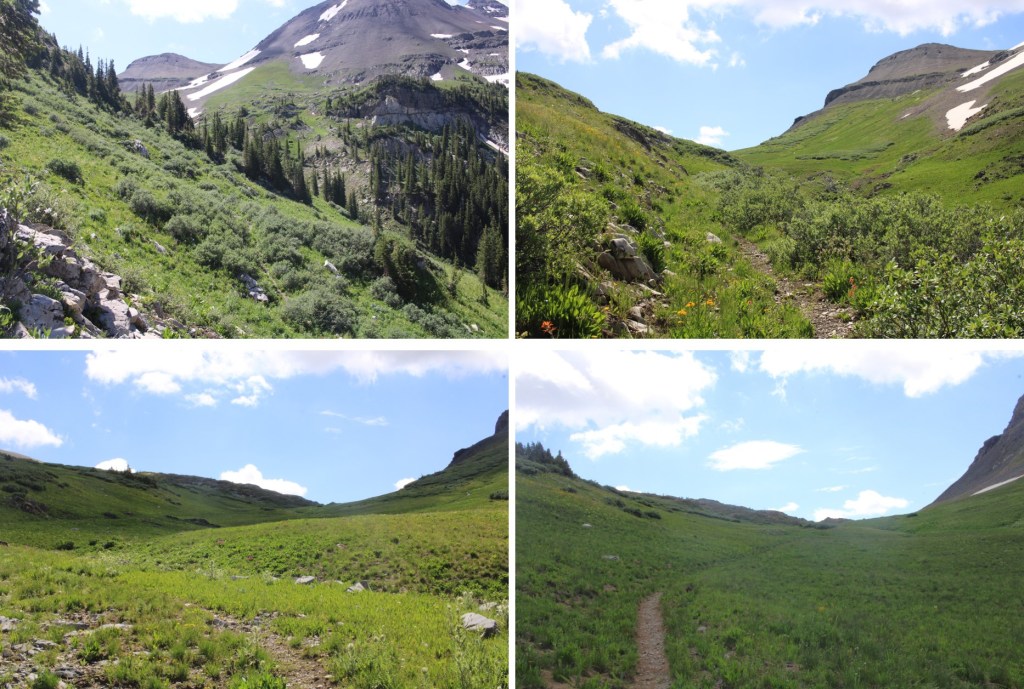
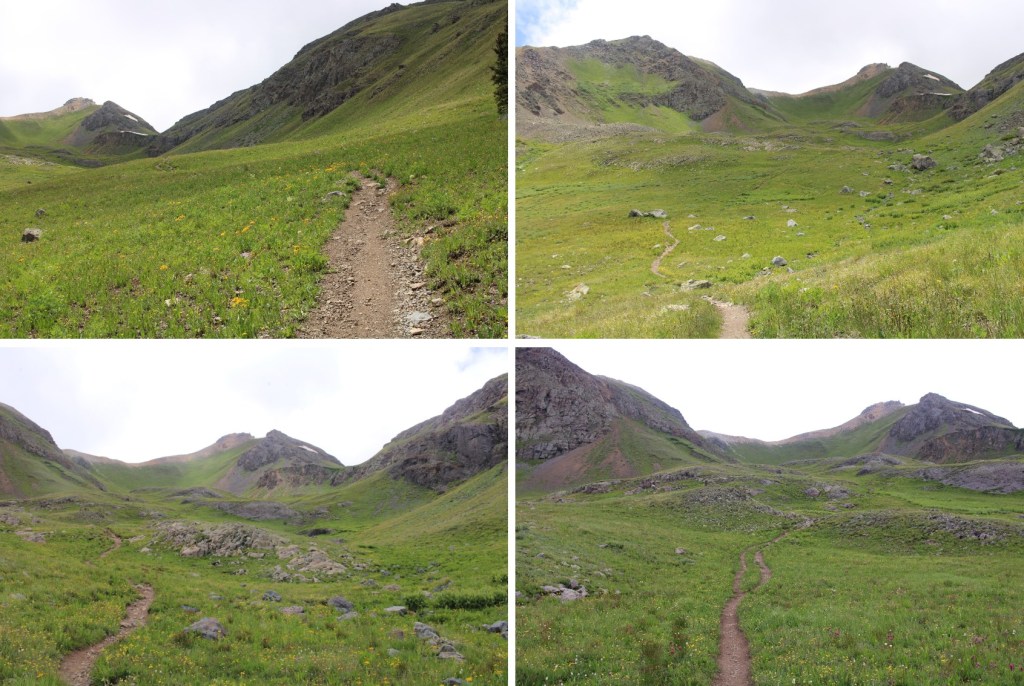
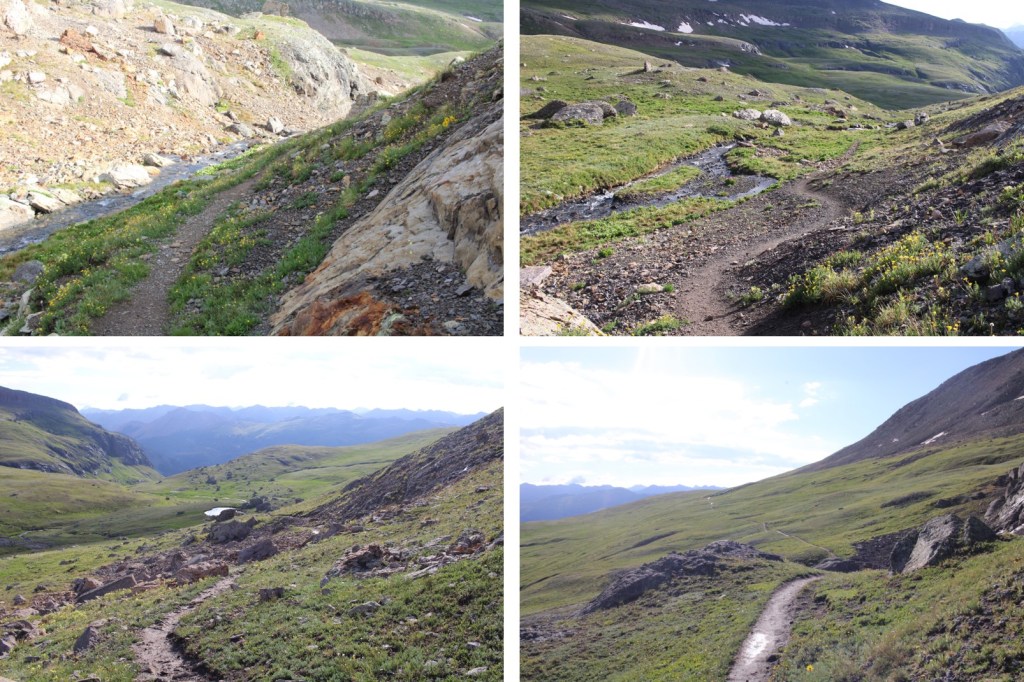
Here are some pictures of my route into the basin

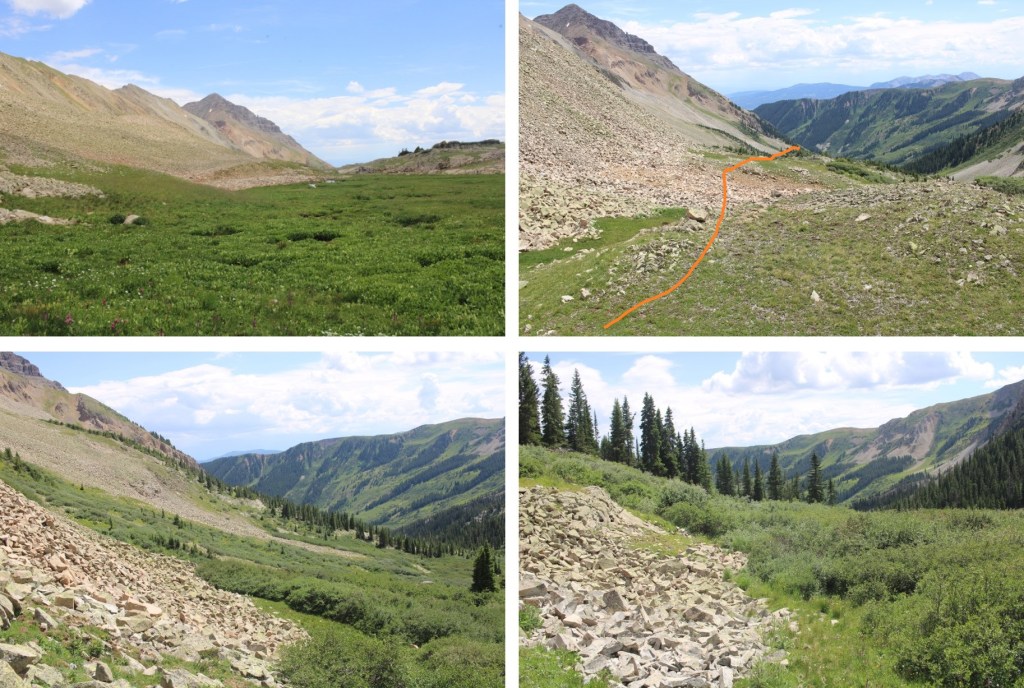
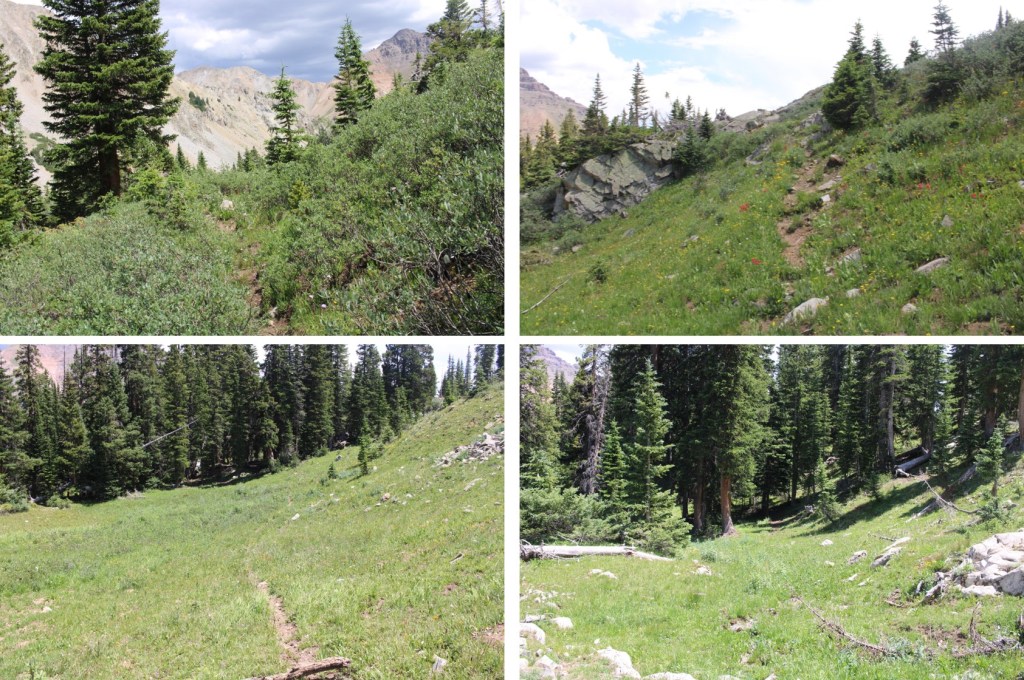
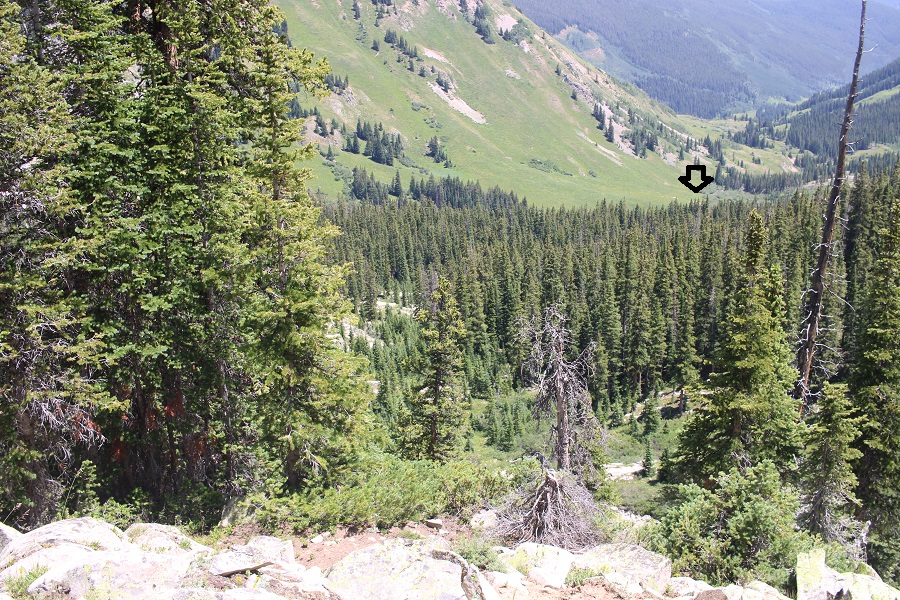
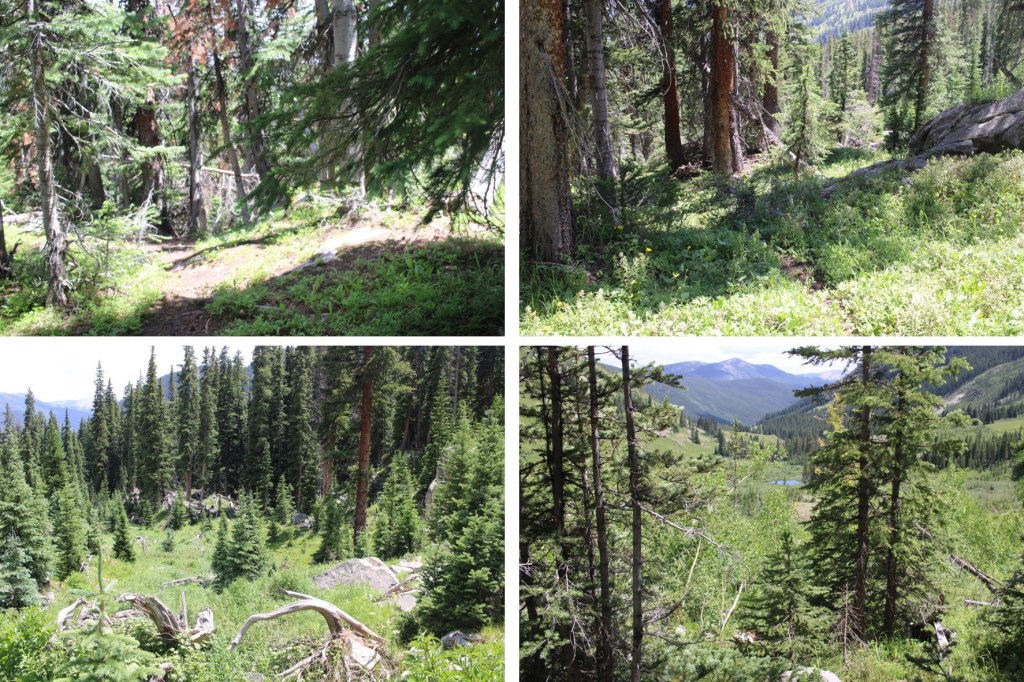
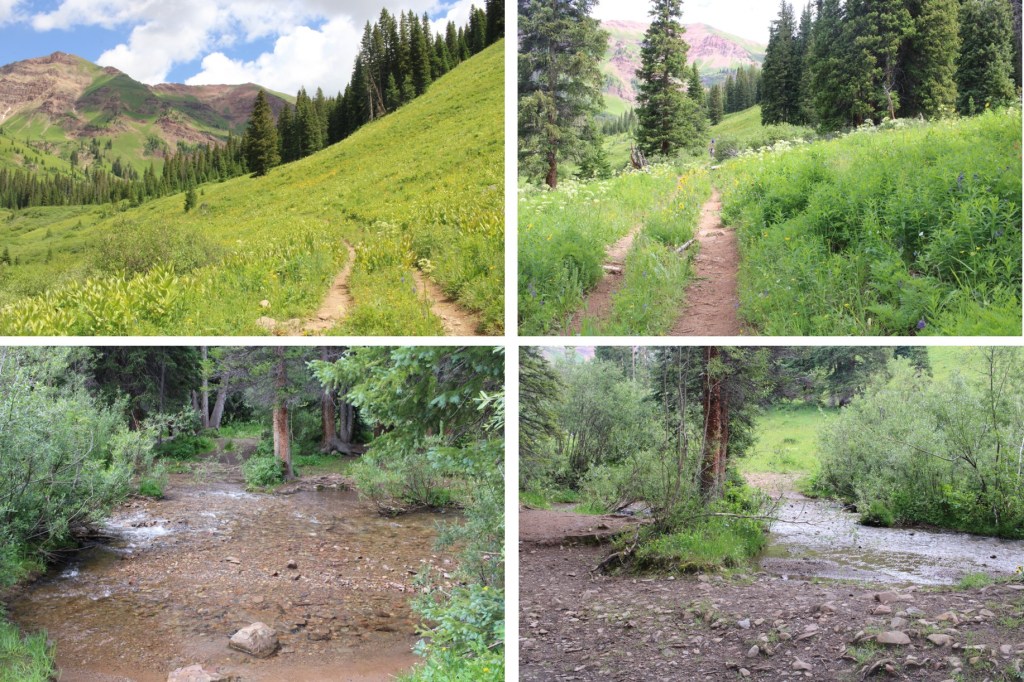
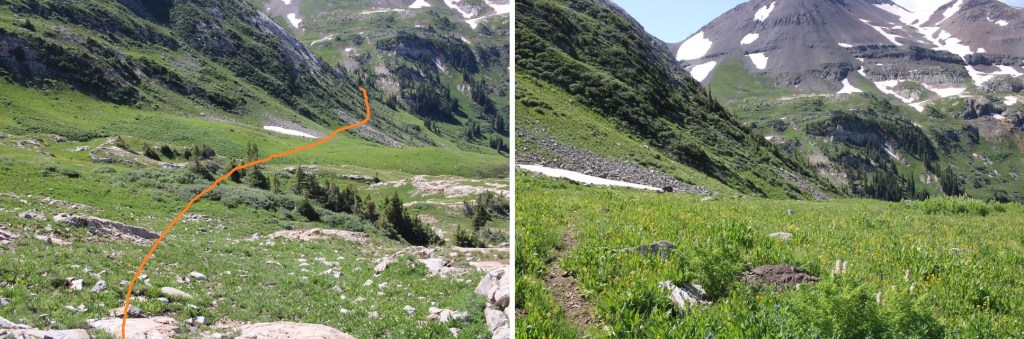
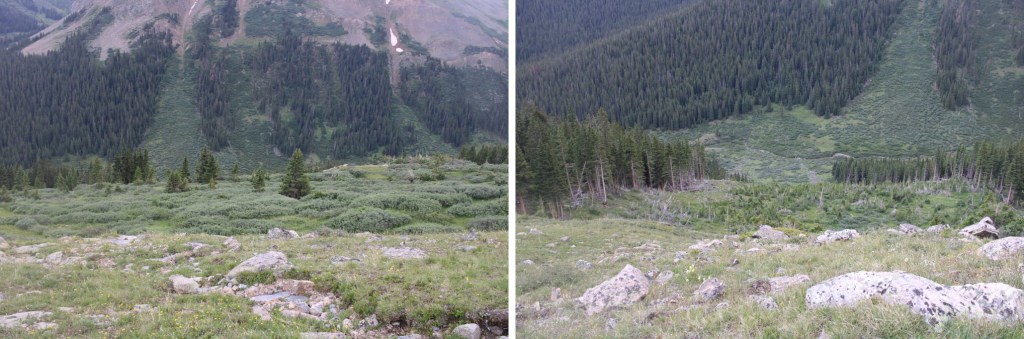
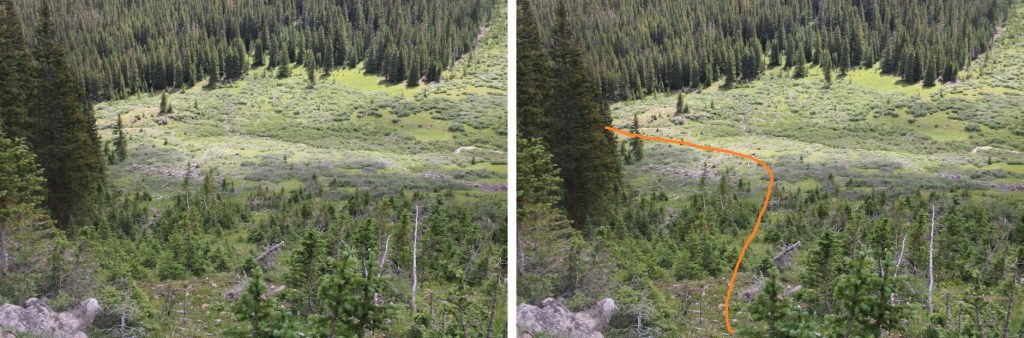
And from the basin back to the trailhead. I stayed left the entire time, keeping the creek to my right.  The creek does flow through terrain too difficult to cross, so don’t follow too closely or you will cliff out. There are no established trails here, but every once in a while, mainly when I was in the trees, I was able to find a game trail to follow. Just keep heading south.

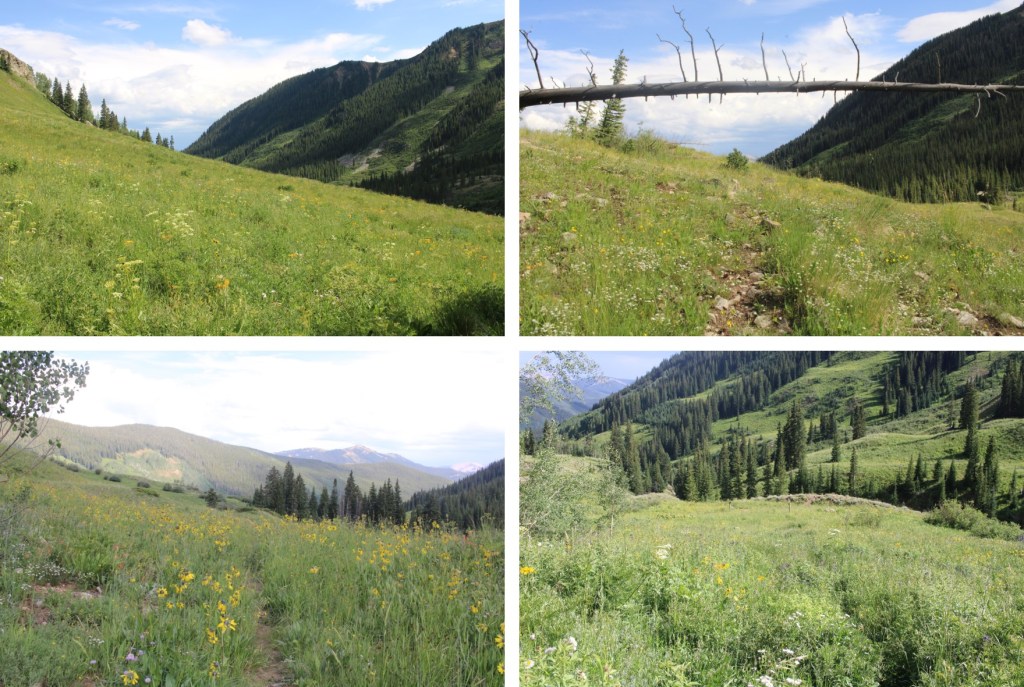
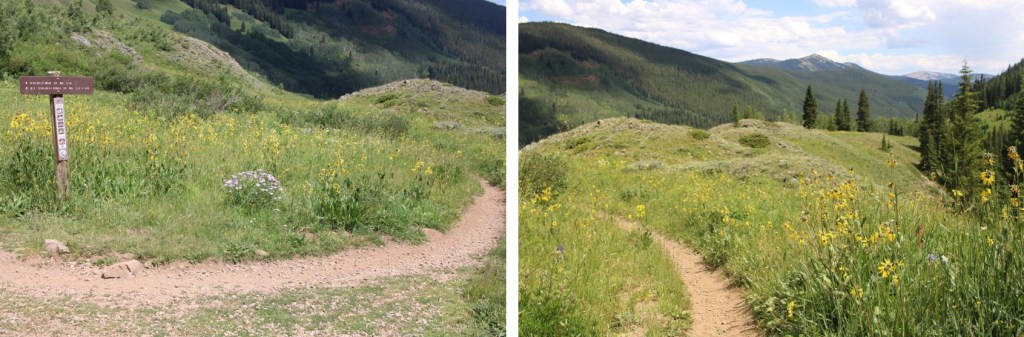
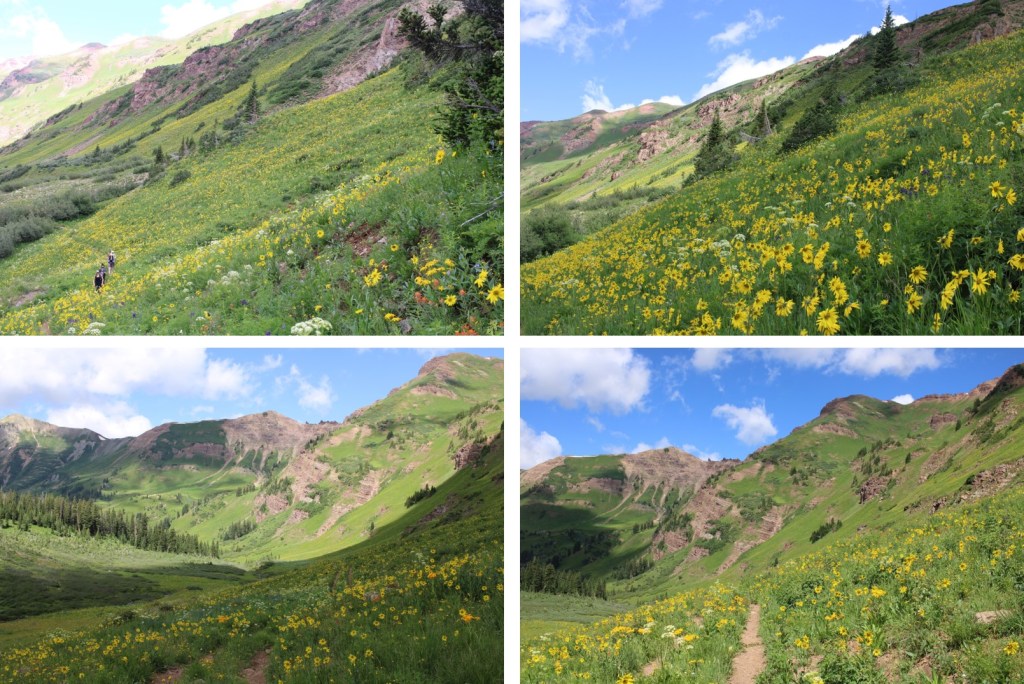
I came to the flower field I knew would eventually lead me to the trail, as I’d been in the area the day before. 

I made it back to my truck at 5pm, making this a 16.72 mile hike/climb with 5244’ of elevation gain in 13 hours.

On to the next trailhead!

White Rock Mountain – 13,540 and White Benchmark – 13,401

RT Length: 11.04 miles

Elevation Gain: 4470’

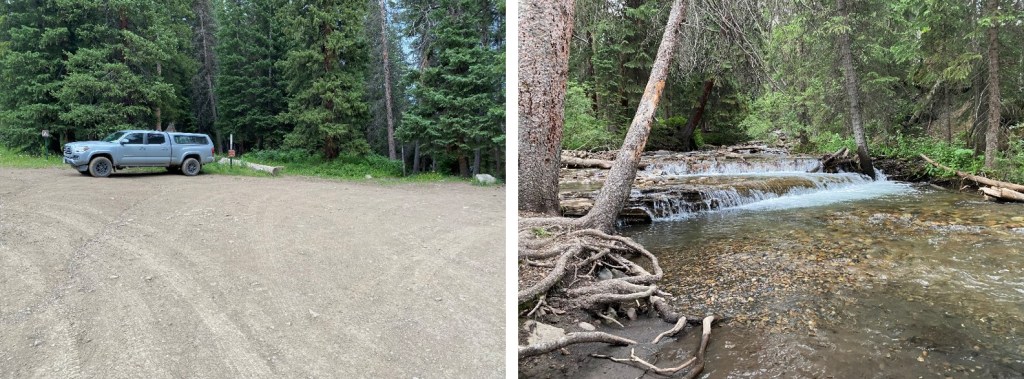
The drive in to the Teocalli Trailhead was sketchy.  My stock Tacoma made it, but the last 2 miles were brutal, and the last quarter of a mile I kept going because I had to and couldn’t turn around if I’d tried.  The drive made for a great incentive not to need to come back to this area. 
I parked at the trailhead.  There were a ton of flies and mosquitoes out.  The flies looked like normal flies, but when they bit me, I got welts.  The next day they looked like burns.  Bring bug spray.

I was up and on the trail at 4:15 am.  The trail was class 1, but overgrown with plants, so at times it was hard to see.  I followed Teocalli Trail NO 554 for .65 miles
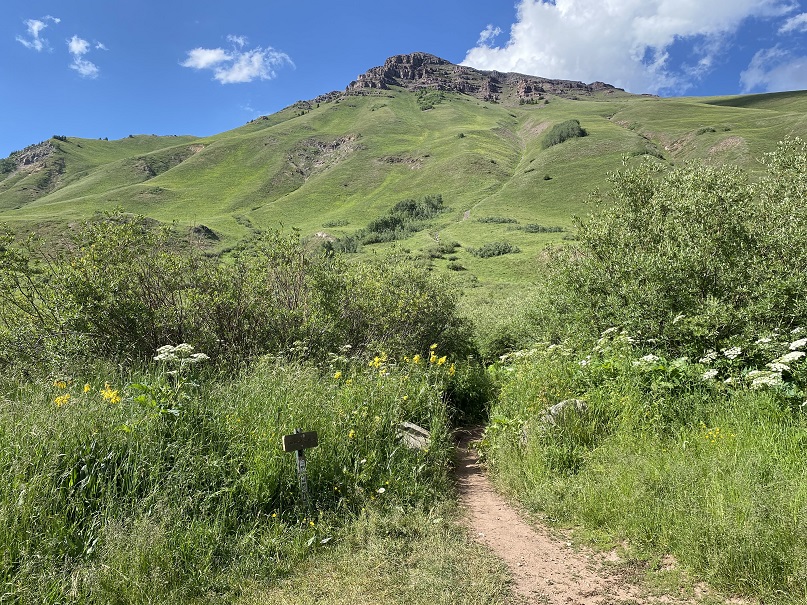
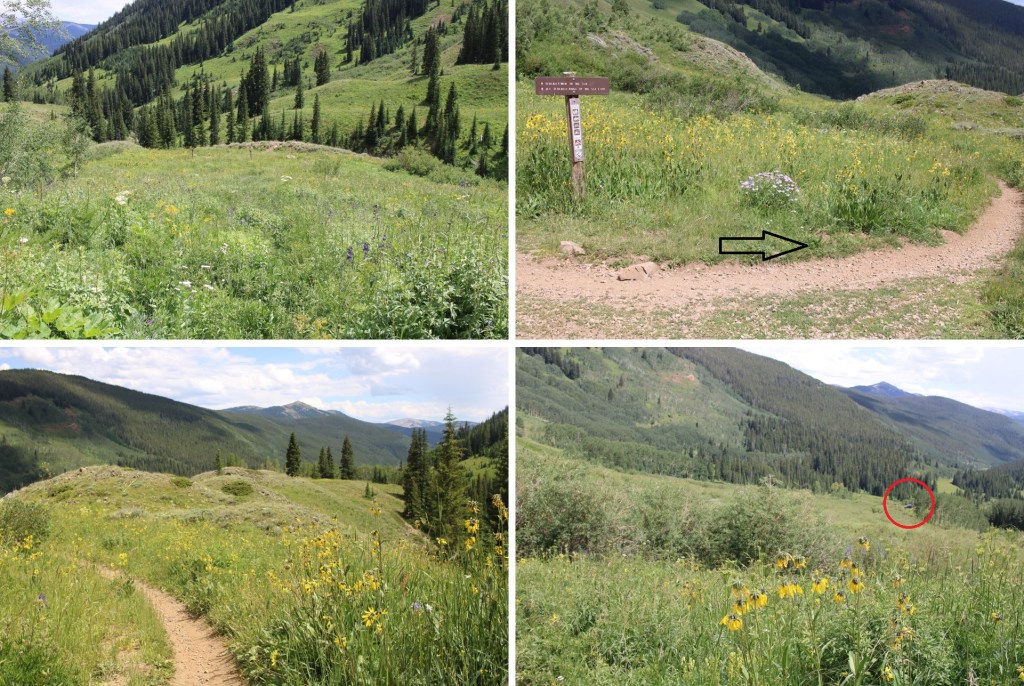
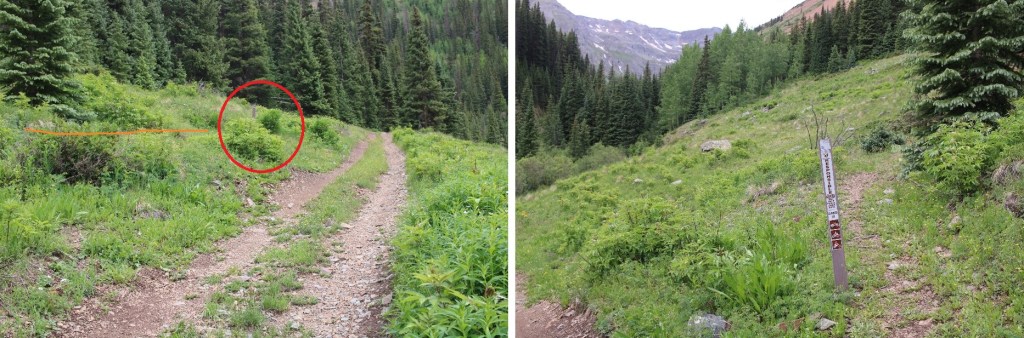
After hiking for .65 miles, I came to a junction.  Here I left the main trail, and took a side trail.  I swear it’s there!  It’s just covered in vegetation.

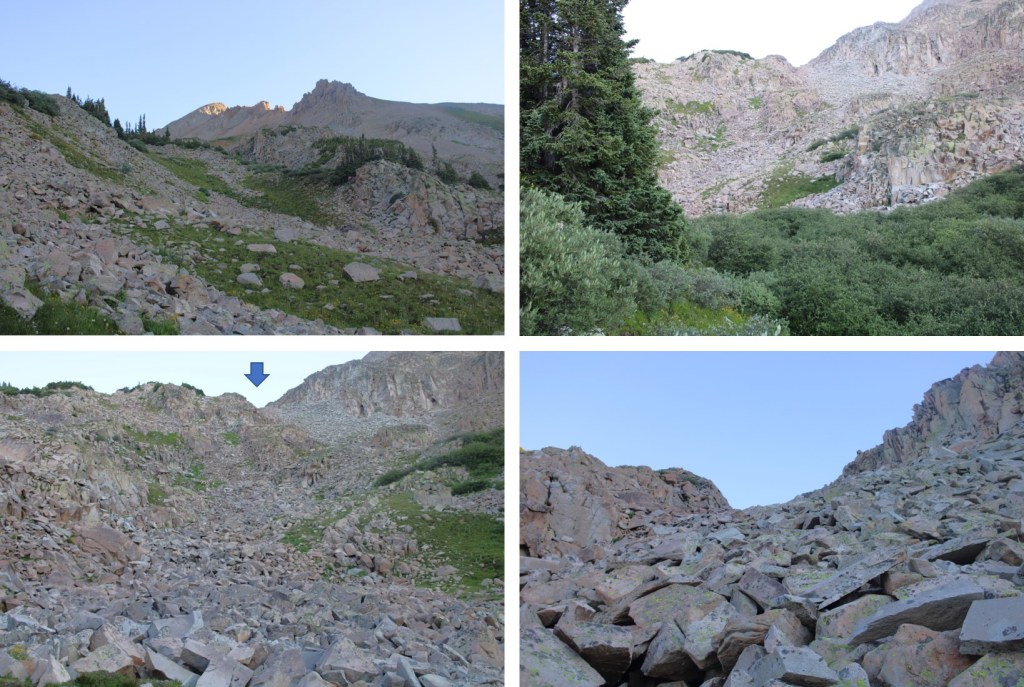
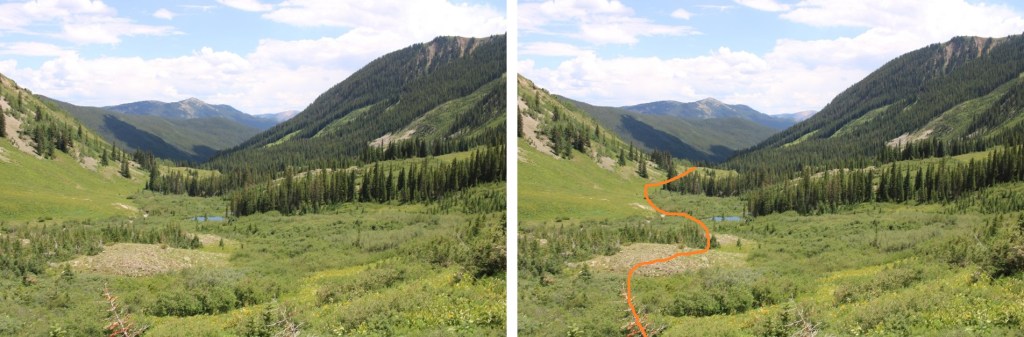
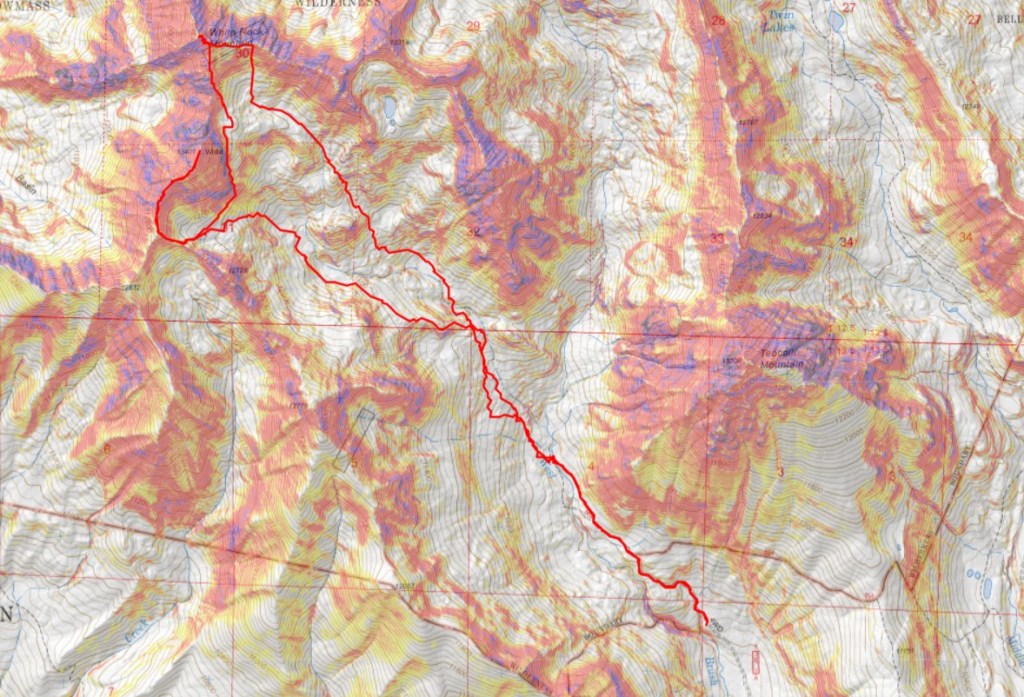
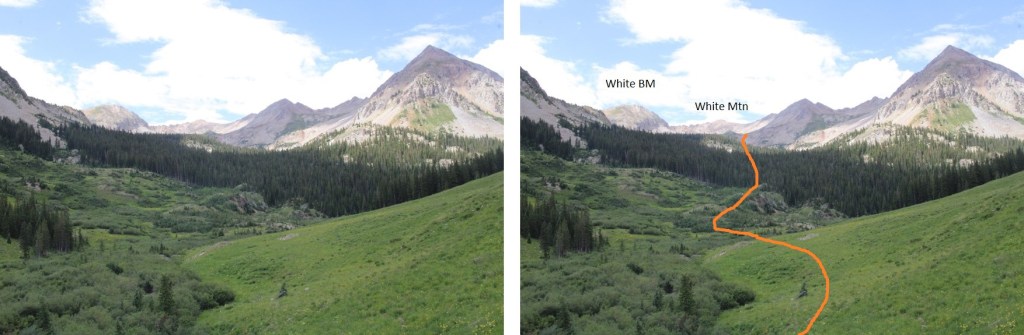
Now is a good time to get a look at the overall route northwest.  Once in the trees, it’s difficult to know where you’re going until you make it into the basin

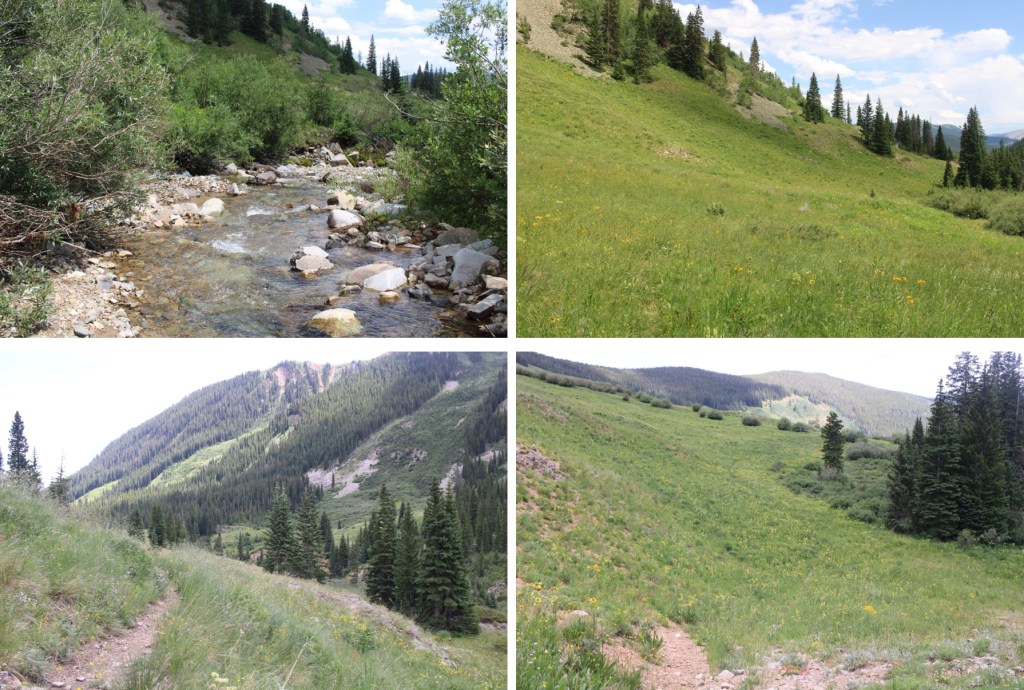
I followed a slight trail until I crossed the creek (creek crossing shoes needed) and then there was no more established trail (but a lot of game trails) I followed the drainage northwest to treeline.  Also, here I saw fresh bear scat (still wet) so be aware there may be a bear in the area.

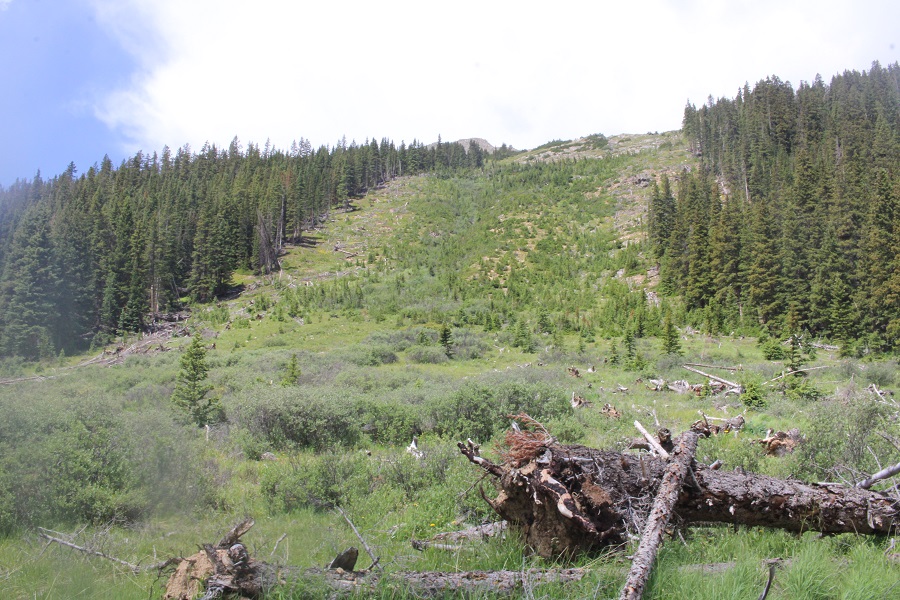
Once at 11570’, I rounded the side of this hill, and headed up

I ascended a small gully to the upper basin

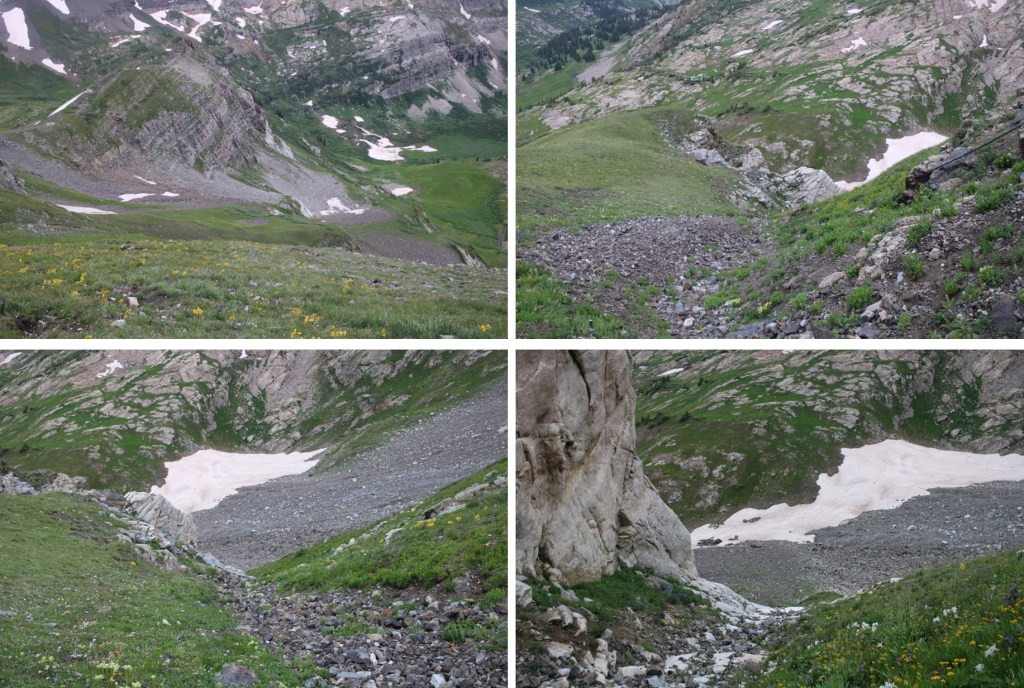
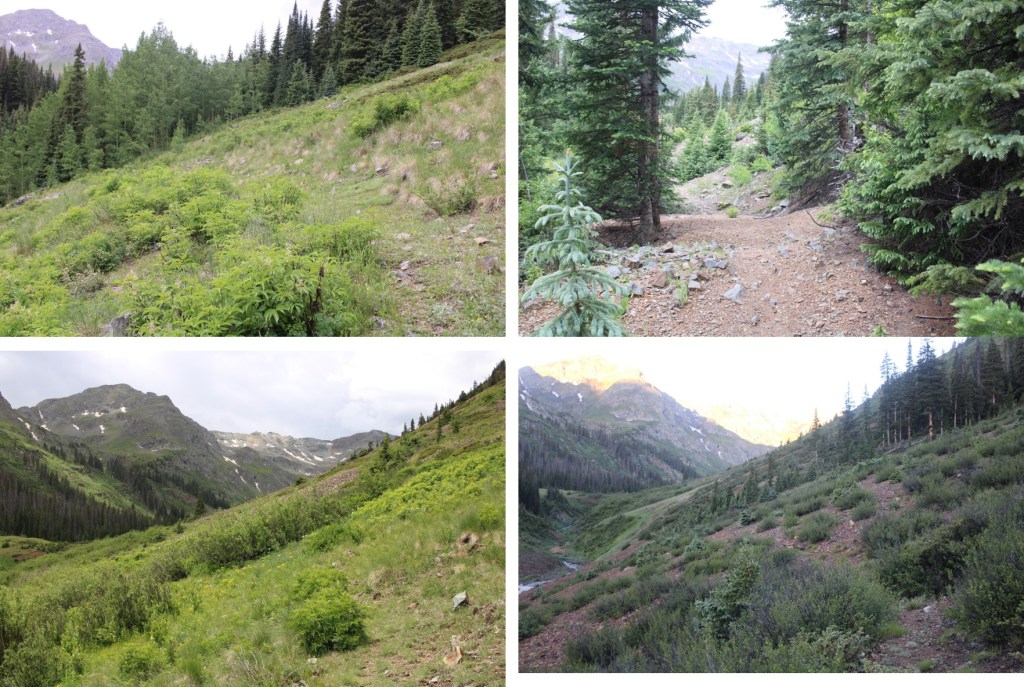
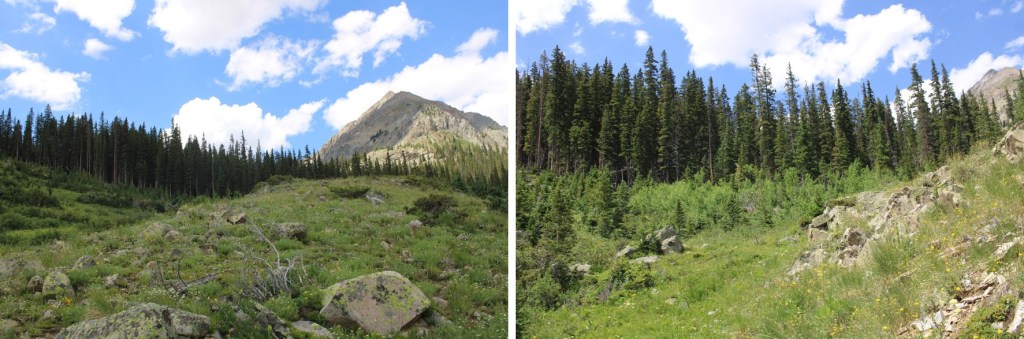
Here are some closer pictures of my ascent into the upper basin

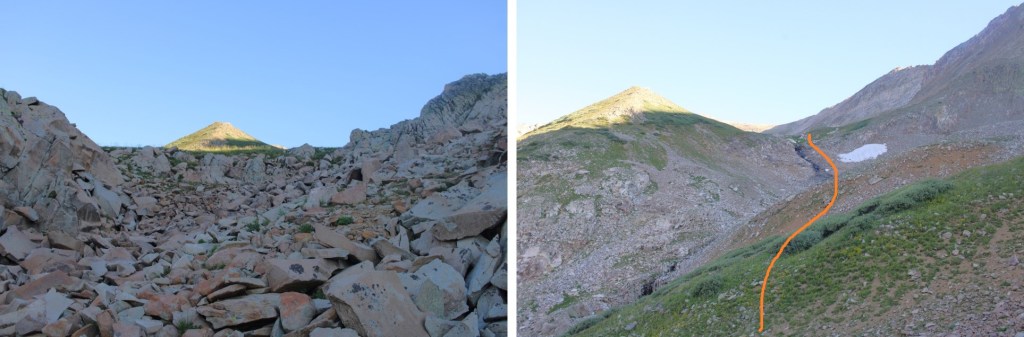
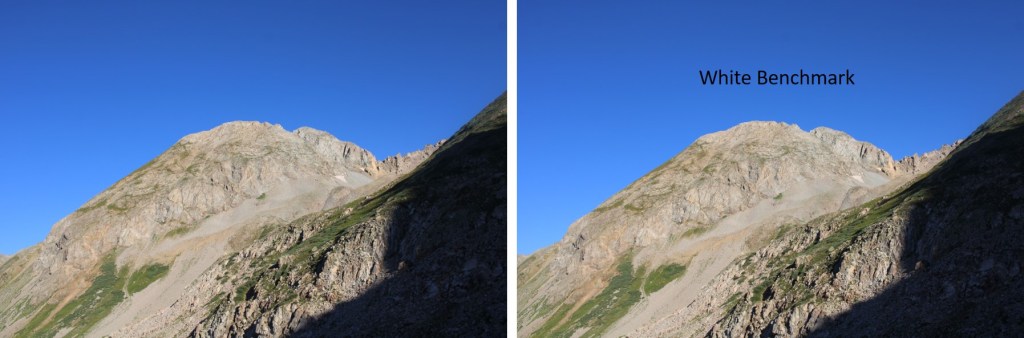
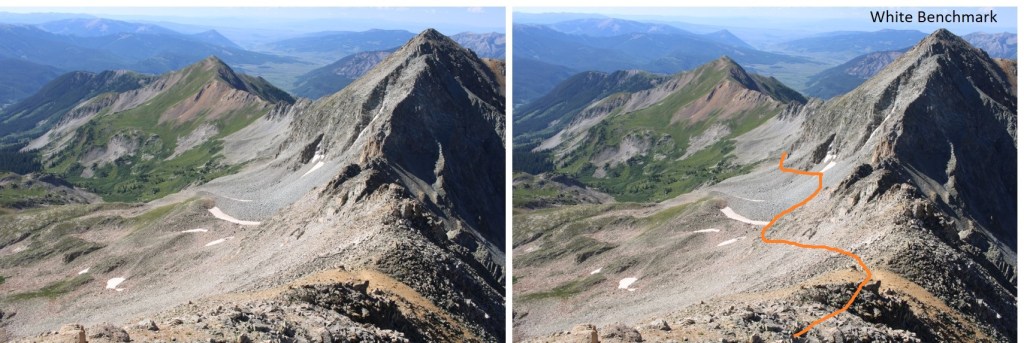
Now’s a good time to look west.  This is the route I took down from White Mountain to White Benchmark.  I stayed just under the cliffs.  You’ll use this information later

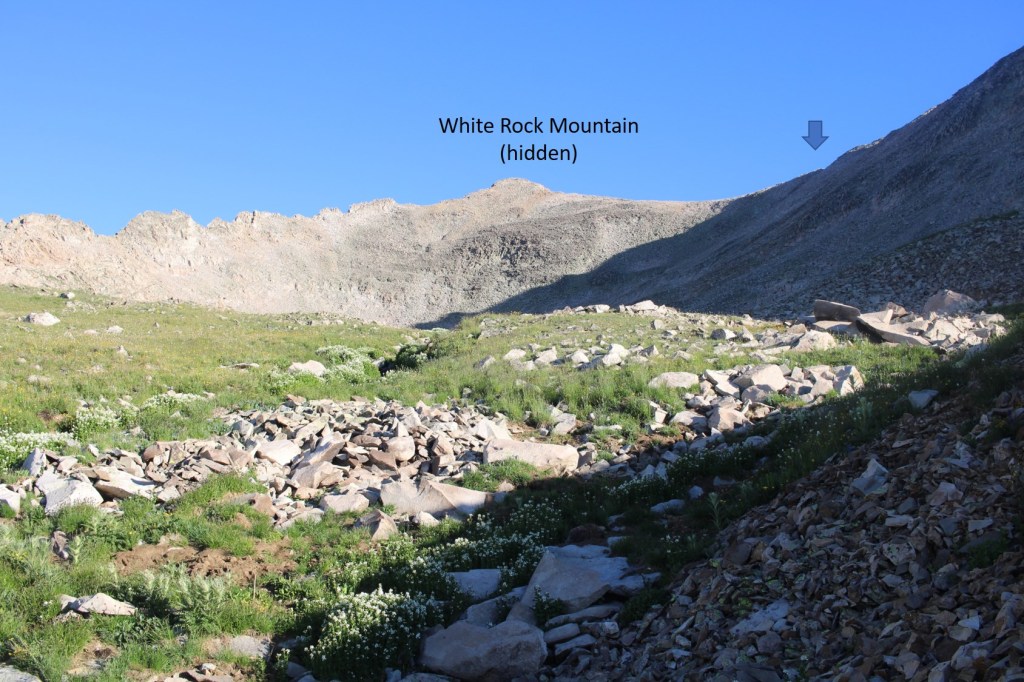
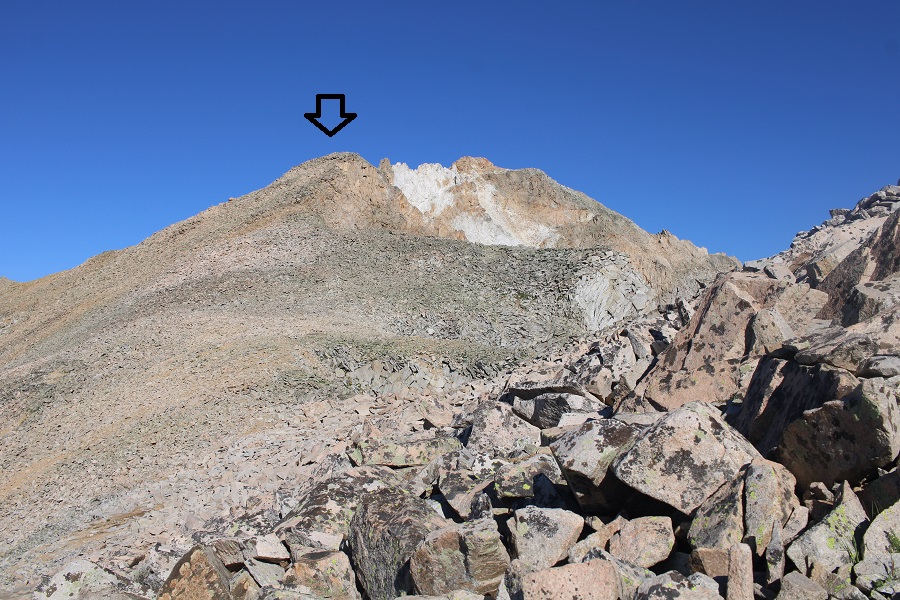
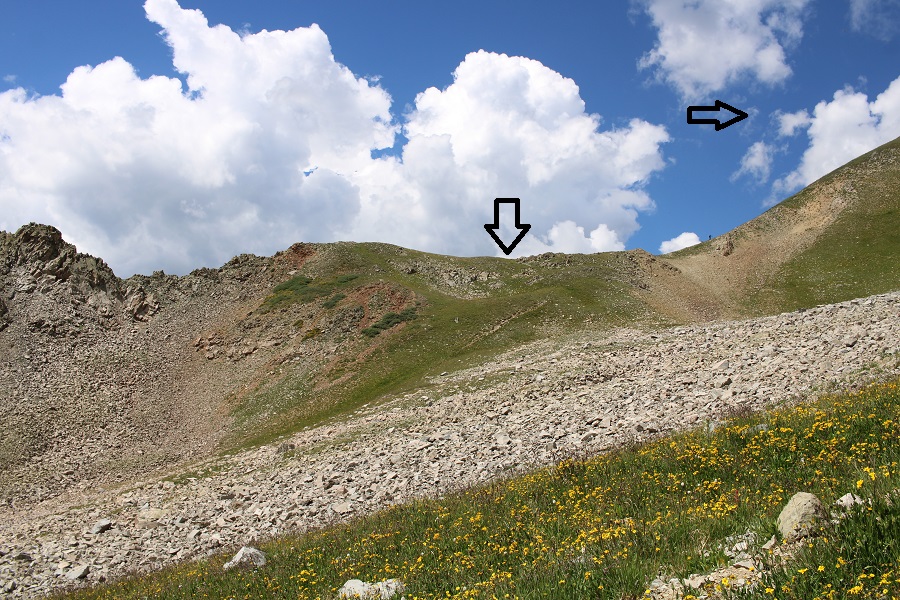
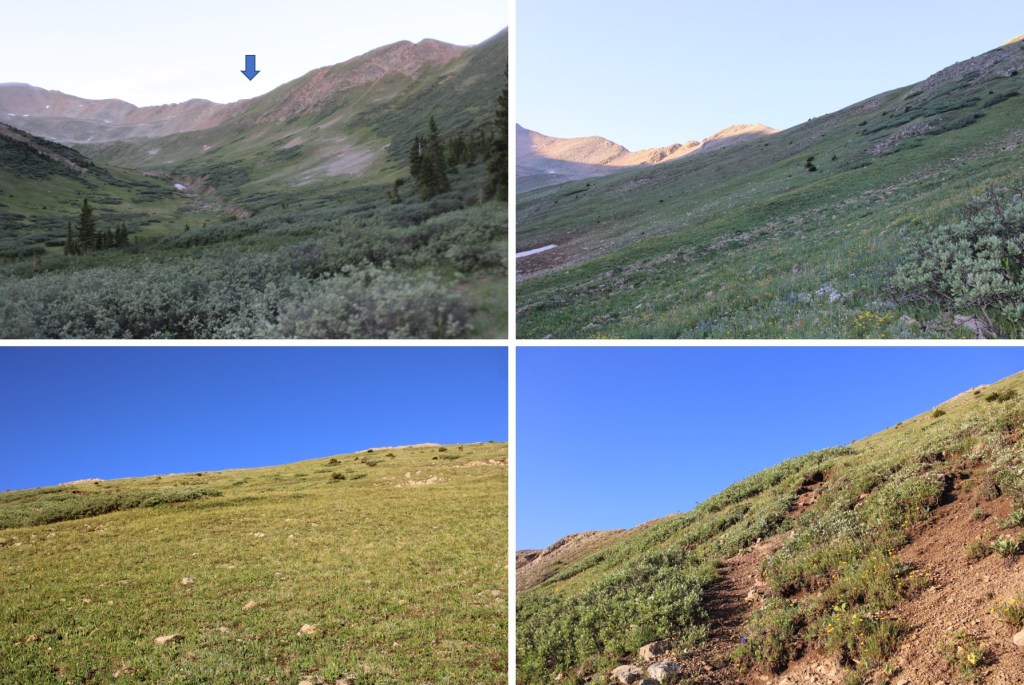
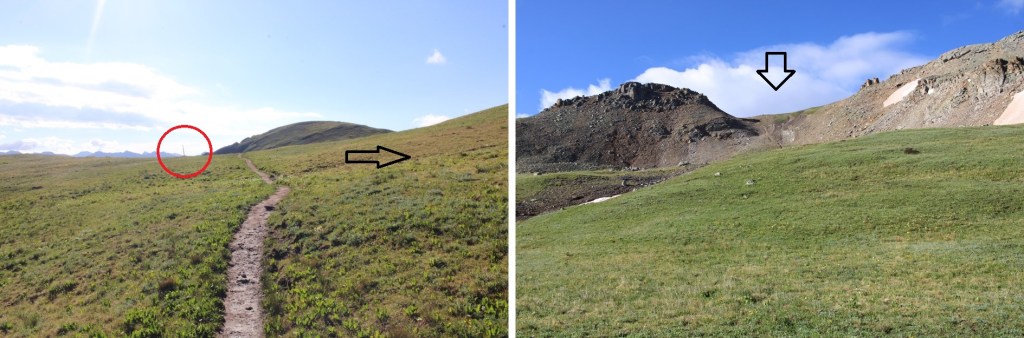
Now in the upper basin here’s my route to the ridge.  This is choose your own adventure, and I’m pretty sure you could pick any line and it would go. The arrow shows where I ascended the ridge, via a small gully.

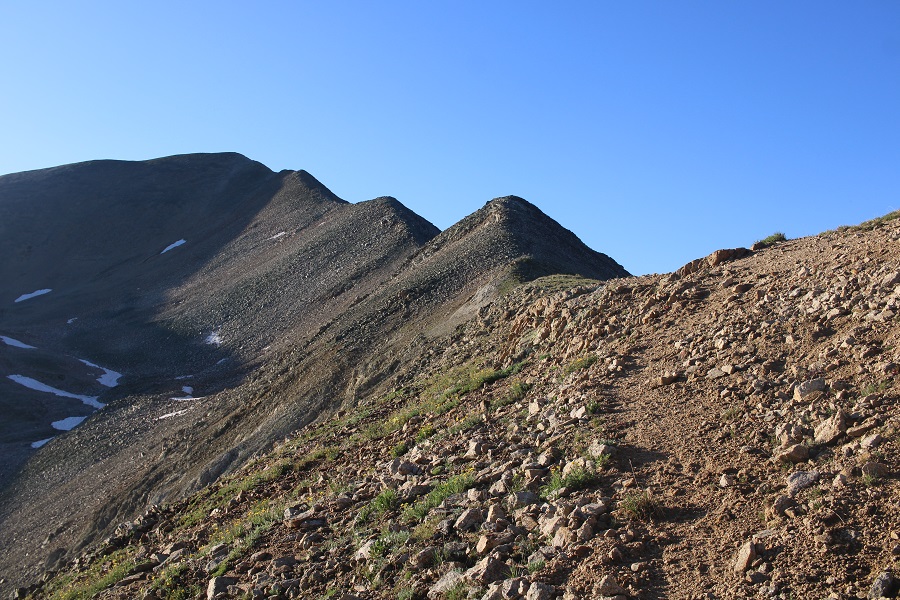
Now on the ridge, I followed it northwest.  Making it to the arrow was all class 2.

Once there, I had to drop a bit in elevation to get around the rocks. I put on my microspikes and went for it

Making it back to the ridge felt like class 3

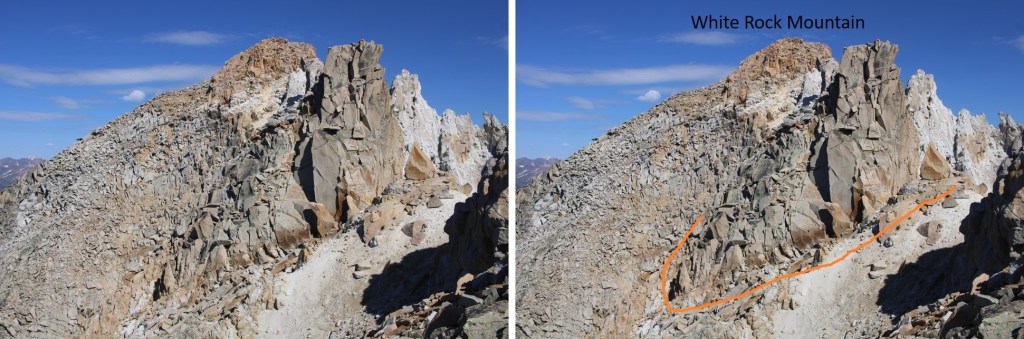
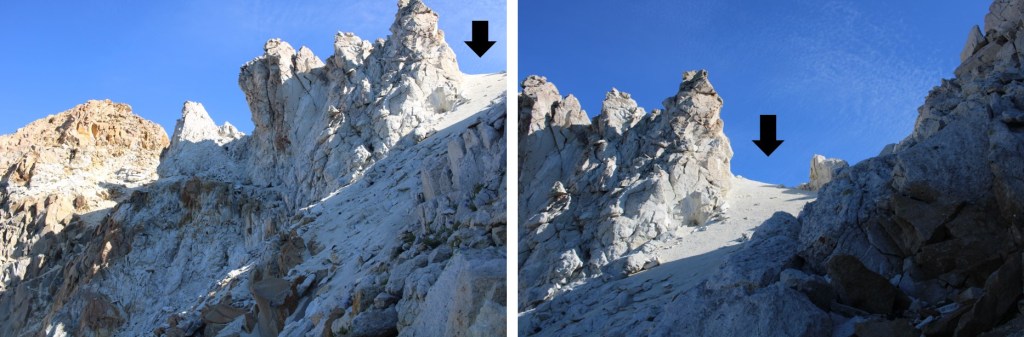
Once around this obstacle, I now had to go around the white rock.  I did this by heading back to the ridge, and then dropping down onto the other side.

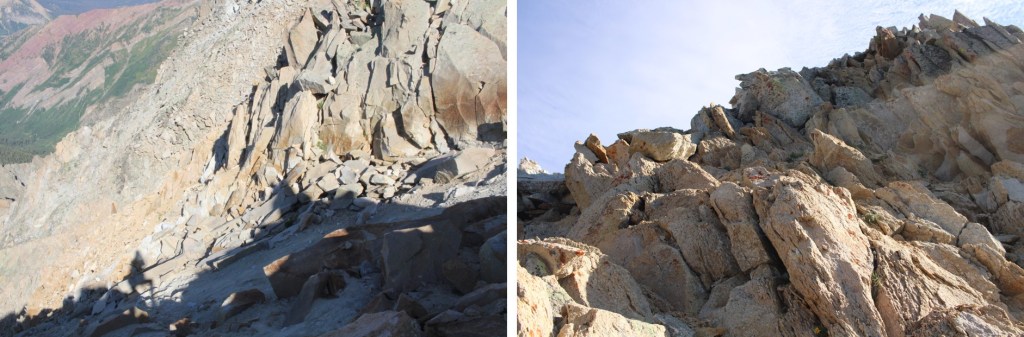
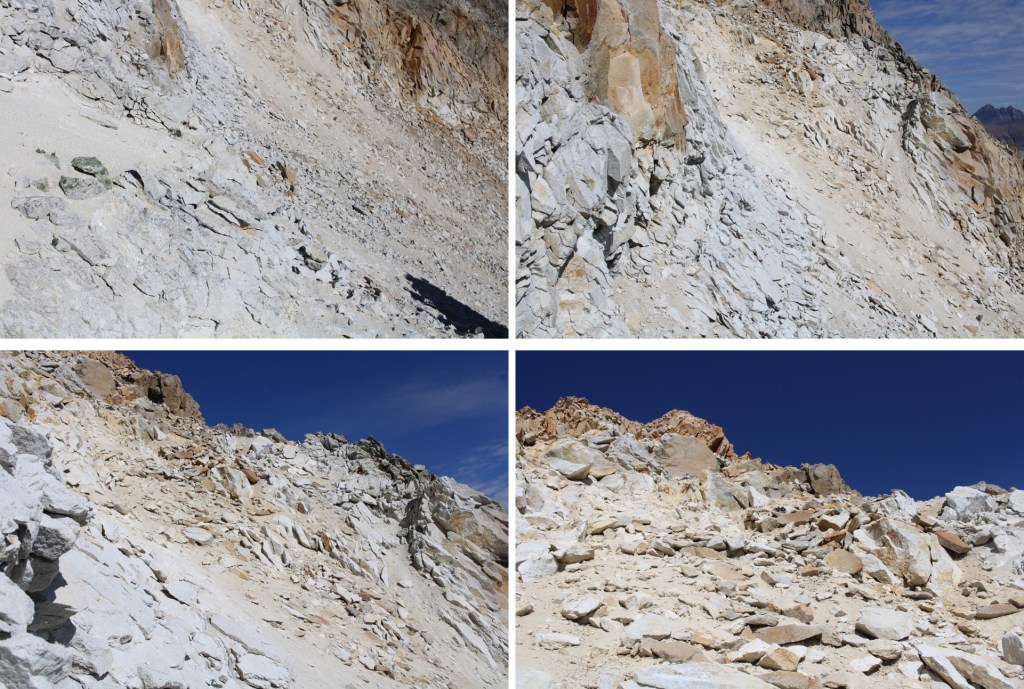
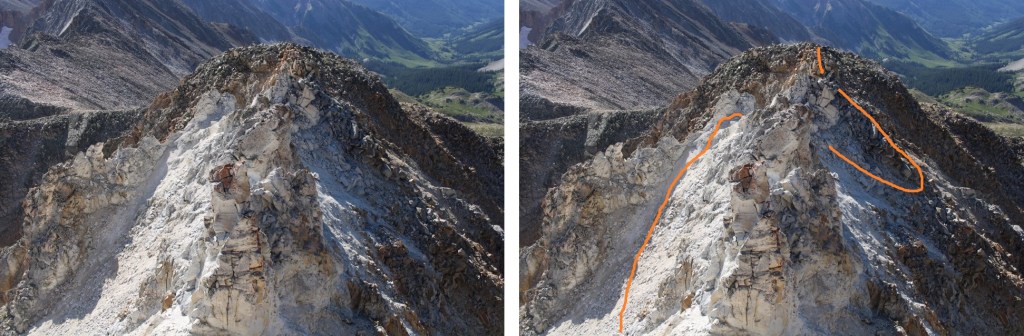
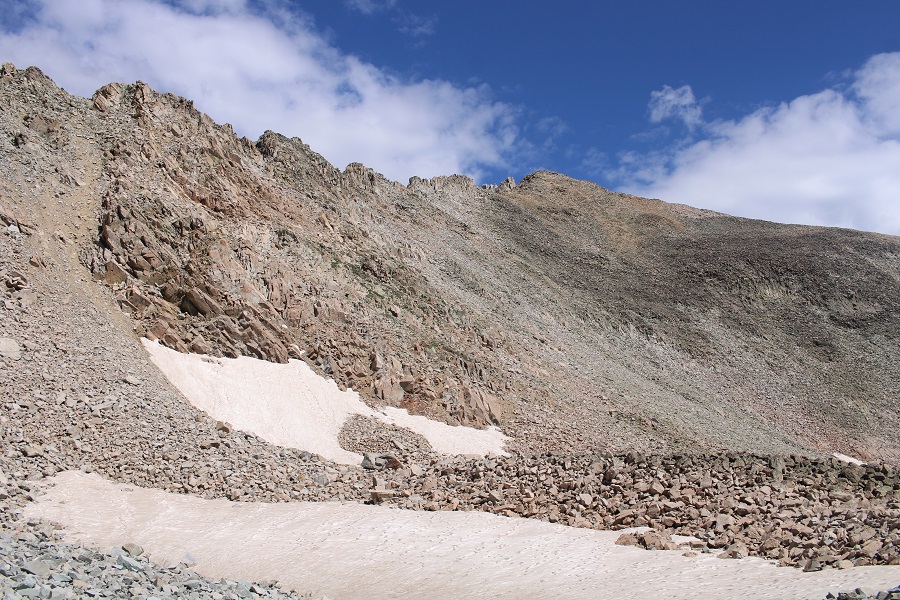
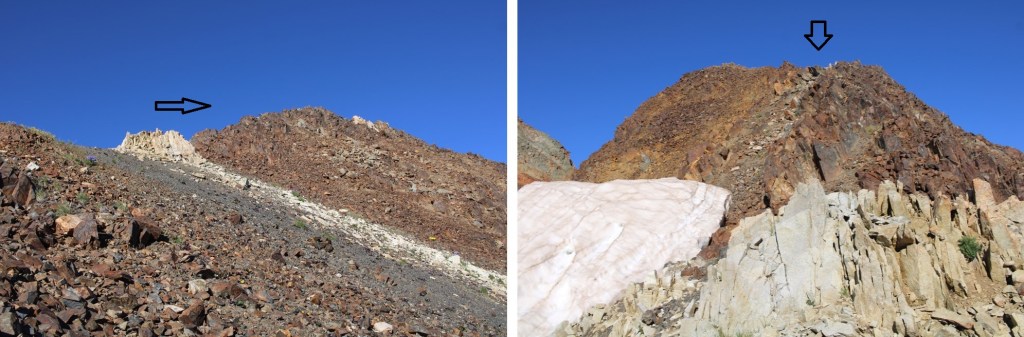
To summit White Mountain, I had to once again dip down, then re-ascend to the ridge.  Microspikes were extremely helpful here.  This is the route I took. Once I left the white dirt and made it to the brown rock, this became a class 3 scramble on questionable rock.  It looks like the terrain shifts constantly, so be careful picking your route

And some step-by-step pictures to the summit

I summited White Rock Mountain at 9:30am.  No summit photo: With all the excitement of a functional summit register that I could actually open and sign, I forgot.  This is also how I knew the sand shifts frequently:  There were signatures from just a few days before, but I didn’t see on shoe track the entire hike, and I was leaving prints everywhere.  

White Rock Mountain:

I retraced my steps back to the ridge

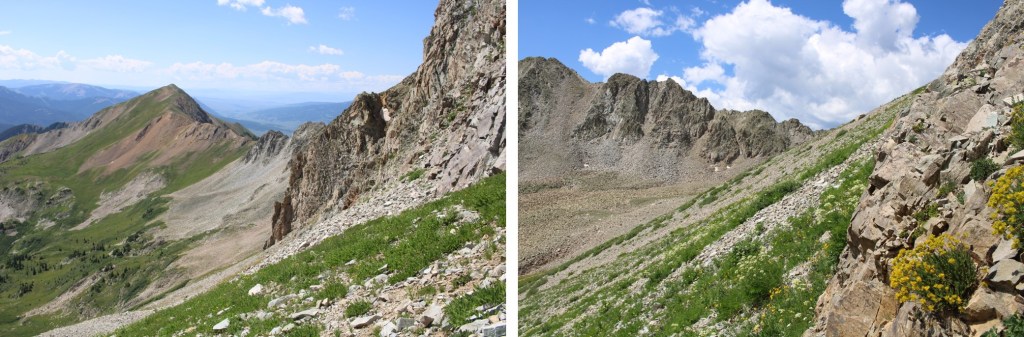
From the ridge I could see White Benchmark.  I decided to stay high, just under the cliff bands

The rocks were relatively stable, but it was slow going

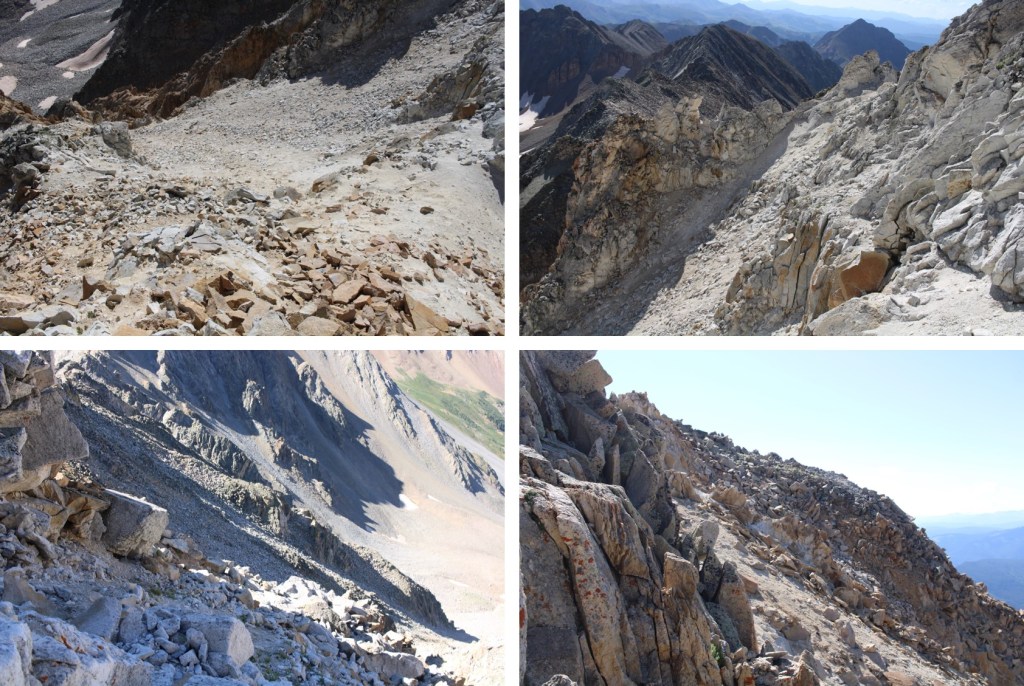
Here’s looking back at my decent route off White Mountain

I kept rounding the ridge to the south, and eventually could see the 12728/White Benchmark Saddle, and a trail!

Once on the saddle, I followed it north.  It started out as easy tundra

But eventually switched to rock.  I still had on my helmet.  The route is fairly obvious.  You can stick to the ridge the entire time, keeping it at class 3.  If you opt to dip down to the left or right you might be able to keep it difficult class 2/easy class 3.

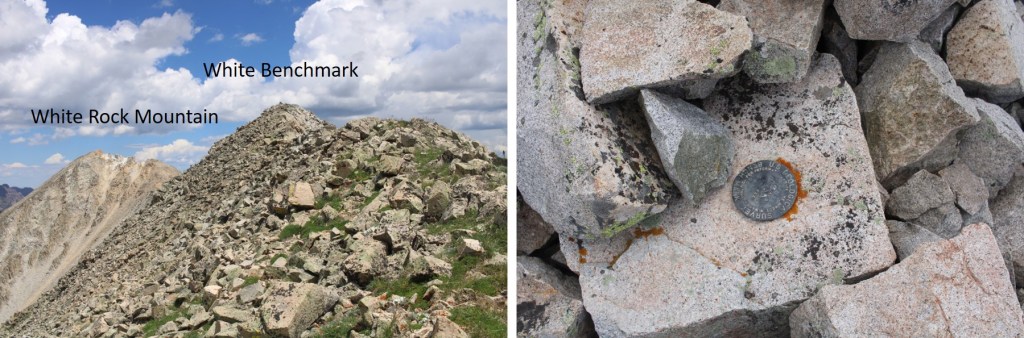
I summited White Benchmark at 12:30pm

White Benchmark:

I made my way back to the 12728/White Benchmark Saddle

Once there, I picked up the faint game trail.  This trail has the potential to lead you all the way into the trees and beyond, if you don’t lose it.  It avoids the willows below, and becomes quite robust at times. 

Once in the trees, route finding becomes more difficult. There are many game trails in the area. Pick one and follow it southeast until it runs out, then pick another one and continue following it southeast.  Repeat.  Keep the creek/drainage to your left (east).

Once you exit the trees, aim for the small pond below, and then re-cross the creek and pick up the trail you walked in on

The parking area is circled in red

I made it back to my truck at 3:15pm, making this a 11.04 mile hike with 4470’ of elevation gain in 11 hours.

On to the next trailhead!

Cassi Peak – 13,380 and Golden Tops – 13,262

RT Length: 14.51 Miles

Elevation Gain:  4021’

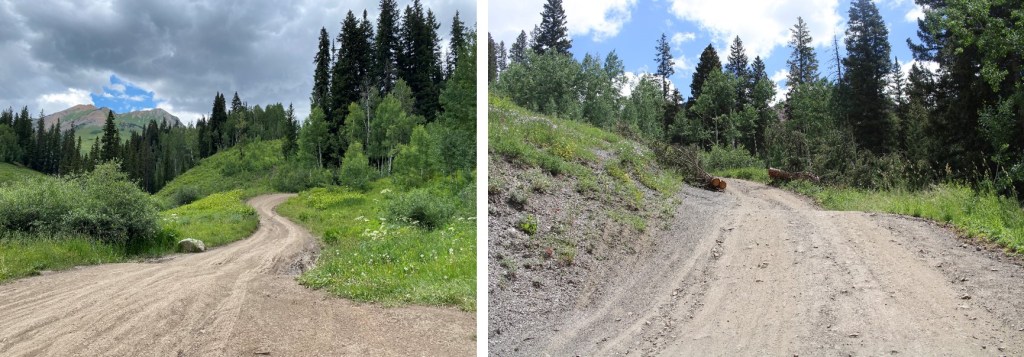
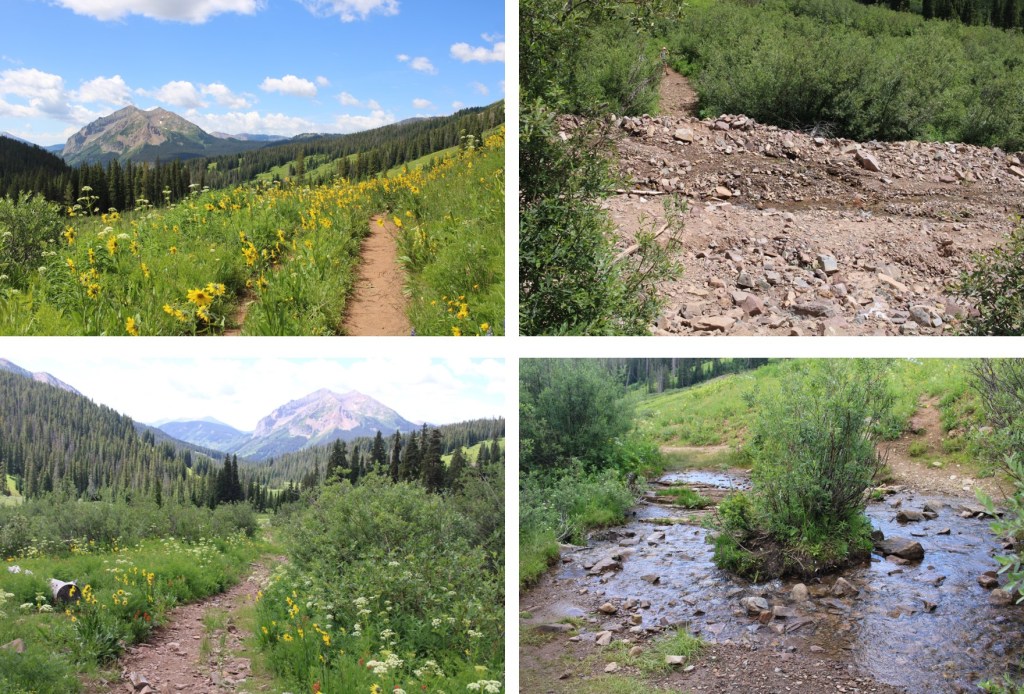
Yes, I’m recycling the approach pictures/description because all the info’s the same.  The Rustler Gulch Trailhead was full.  I tried to drive up the road several times, but kept getting greeted by vehicles coming down.  The drivers didn’t understand up had the right of way, and all of them seemed to be in vehicles too big for them to maneuver.  After backing up over half a mile for the third time, I decided to just park below.  I’d find out the next day it’s peak wildflower season in Rustler Gulch, and the tourists were flooding in to see them. Parking down below added about 2 miles to my trip and 500’ of elevation gain, which was negligible. Bonus:  There was a creek behind me to enjoy as well.

I was on the 4WD road that led to the trailhead at 2:30 am.

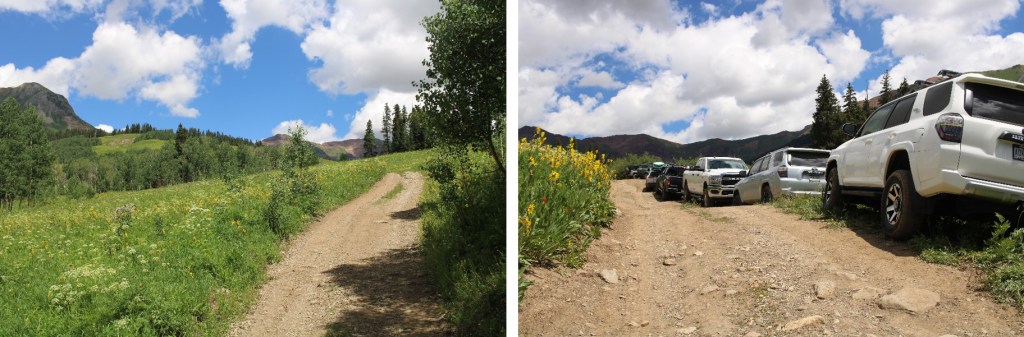
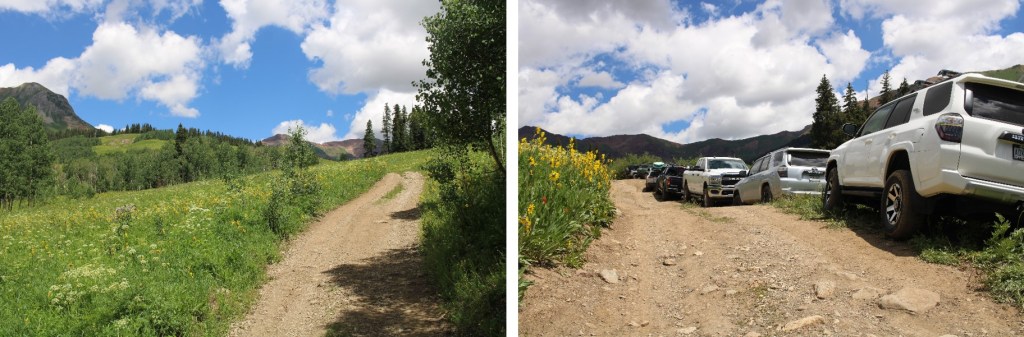
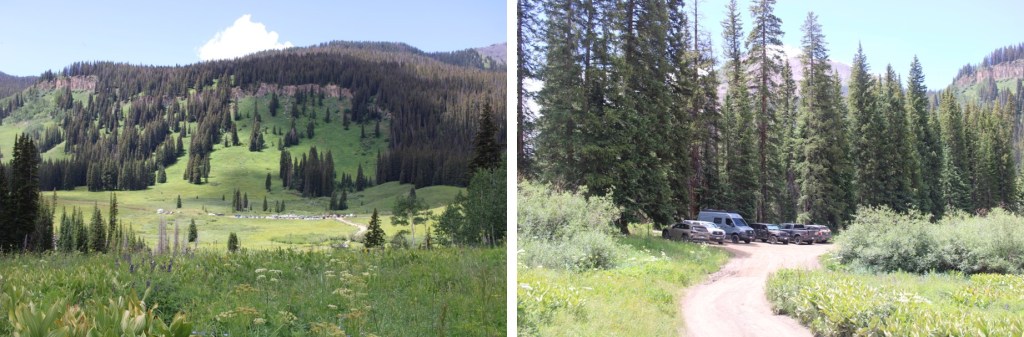
I followed it 1 mile to the actual trailhead, which was overflowing in the afternoon

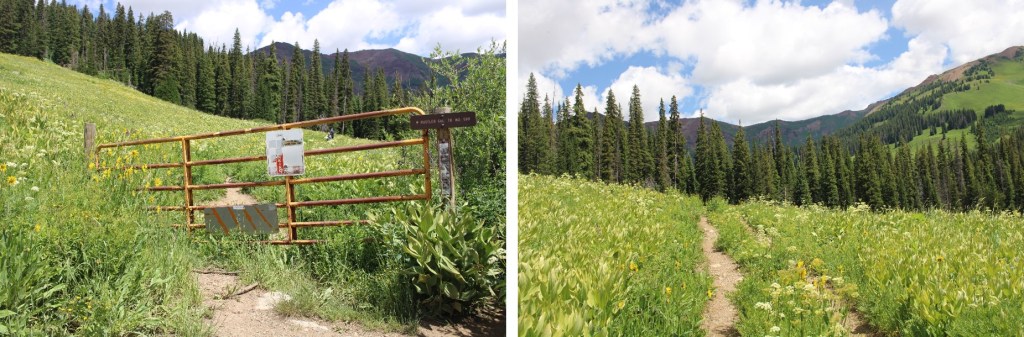
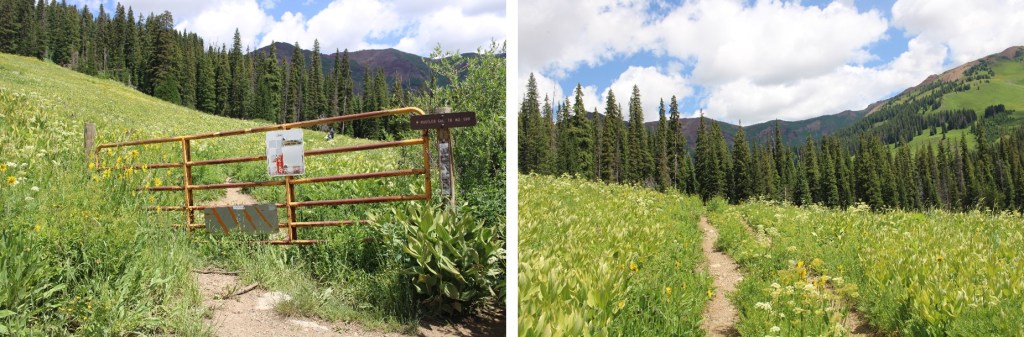
I passed around the gate, and followed Rustler Gulch trail #599 north into the gulch.

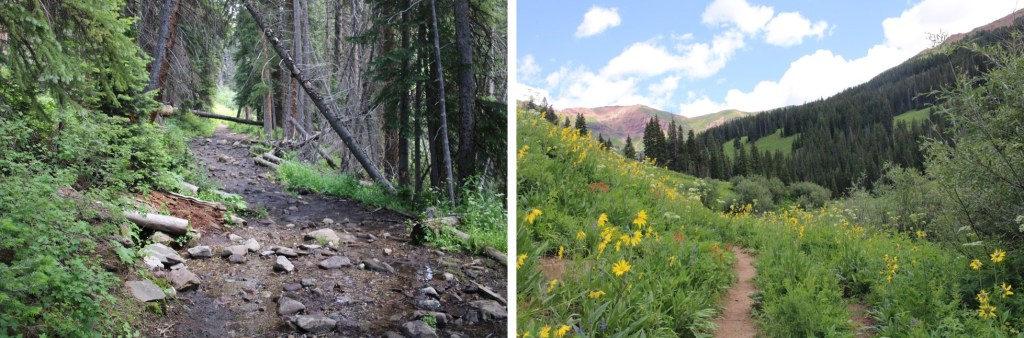
There were several stream crossings to cross, all of which had rocks or logs so my feet didn’t get wet.

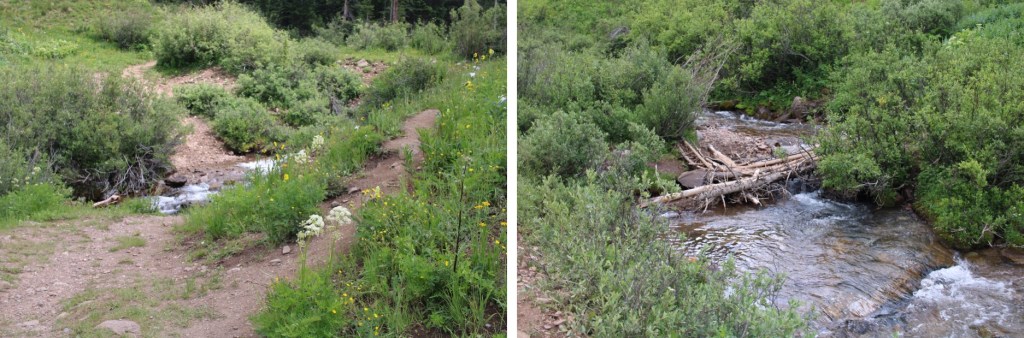
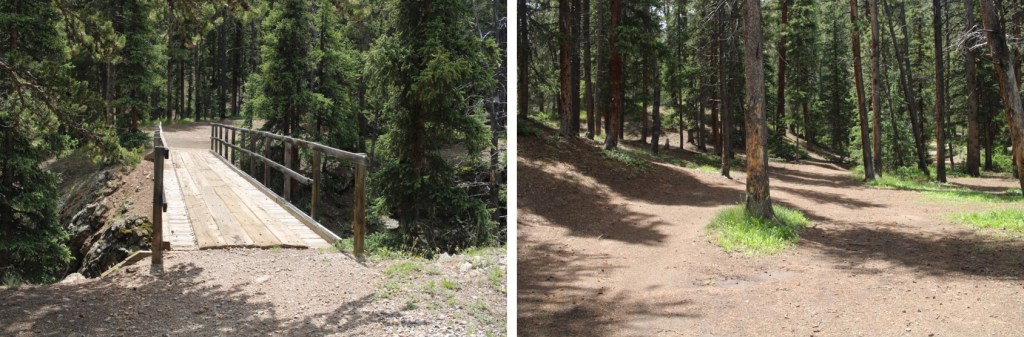
When I got to this creek crossing, I went right, and found a footbridge

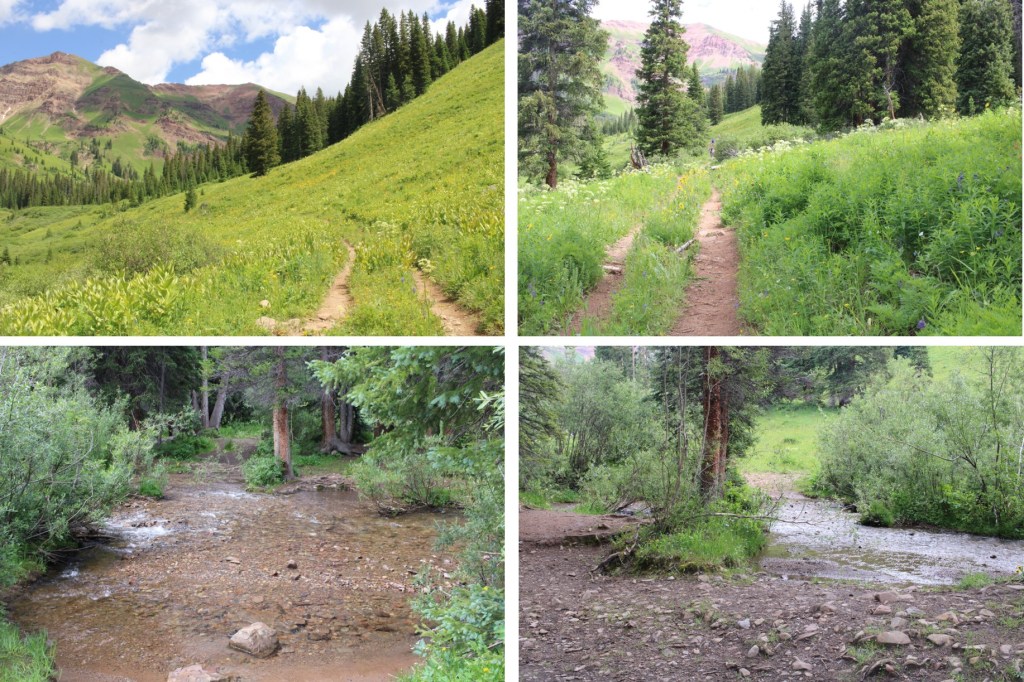
I continued following the trail, and crossing creeks, through the gulch on a well-marked trail

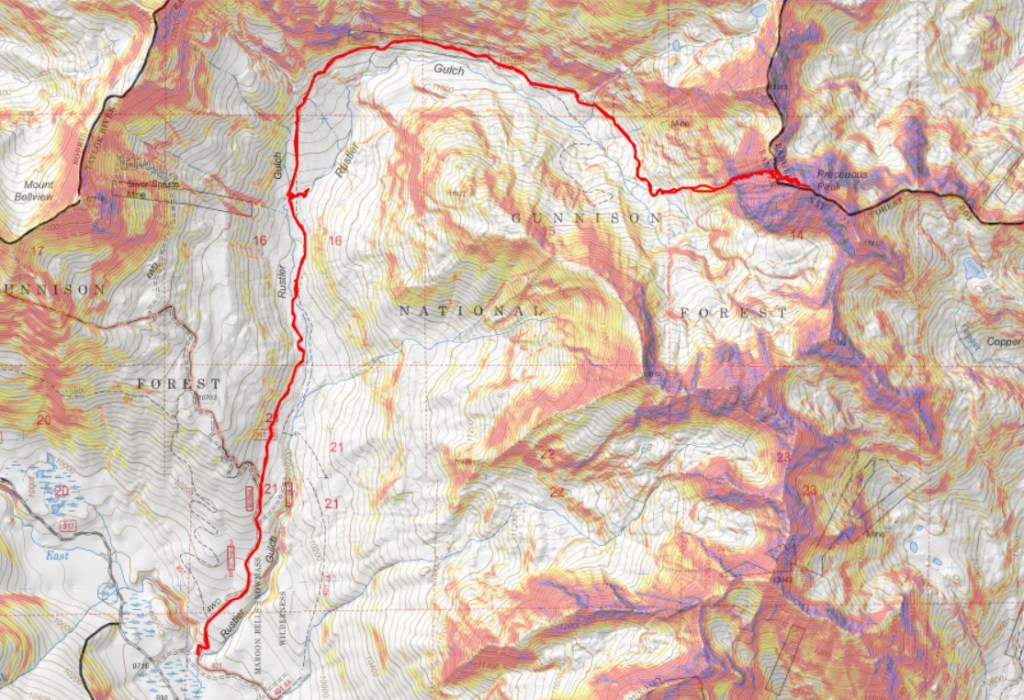
Here’s my route into the upper basin.  This is all done on a class 1 trail

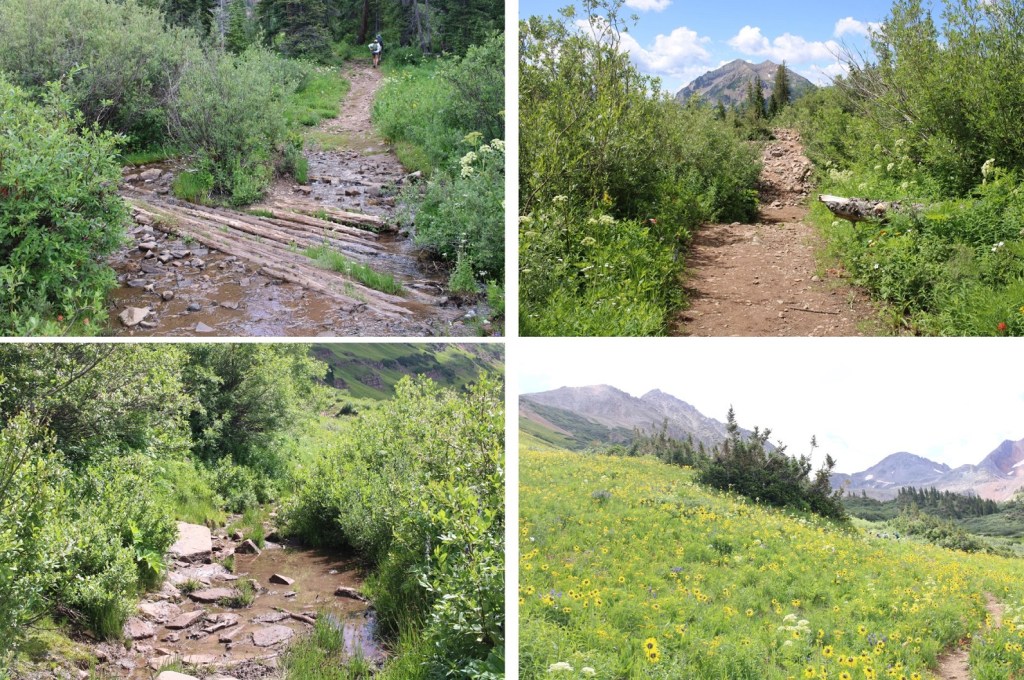
Here are some more pictures

After hiking for 5.3 miles, I crossed a creek, and continued following the trail.  The trail became faint, but if I looked closely, I could follow it all the way to the rocky basin

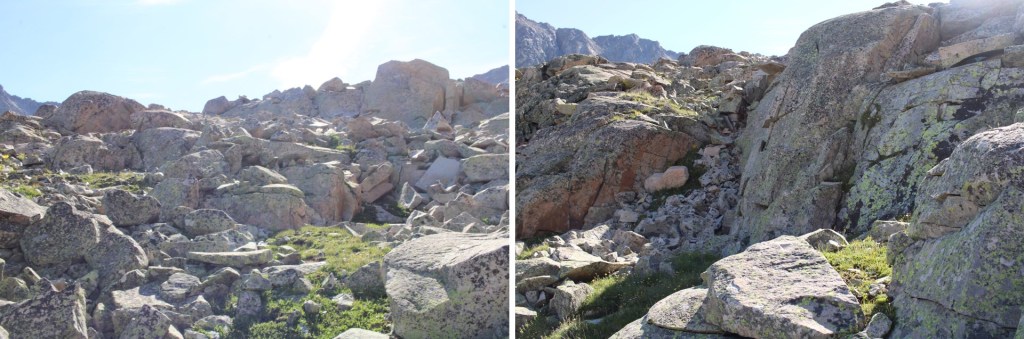
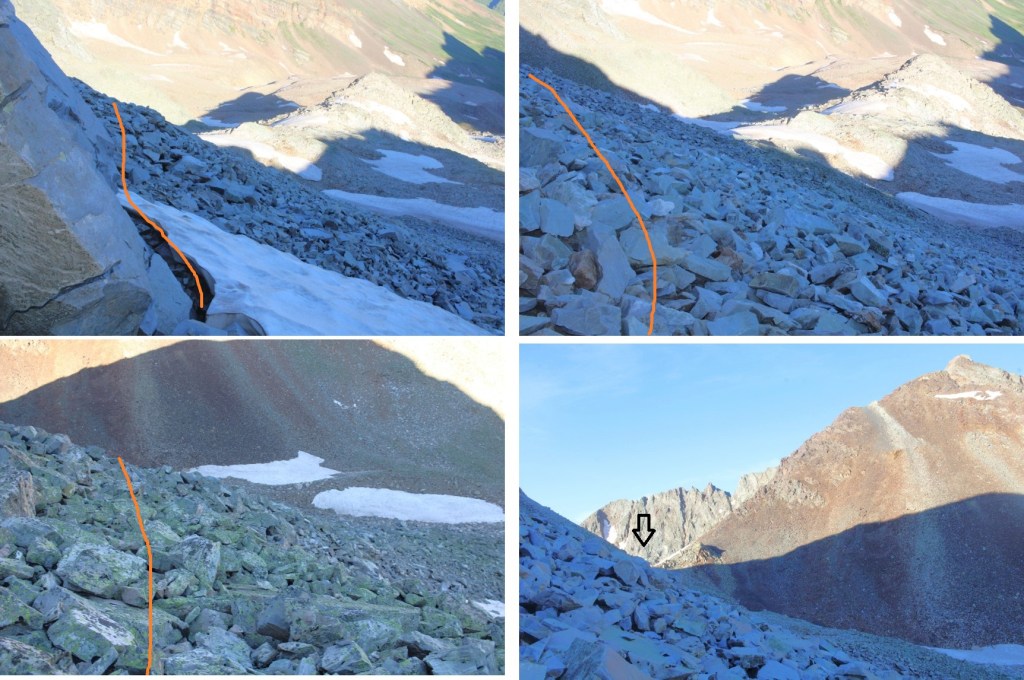
I needed to get to the upper basin. There are several ways to do this.  I took the gully to the left, but you could also go right.

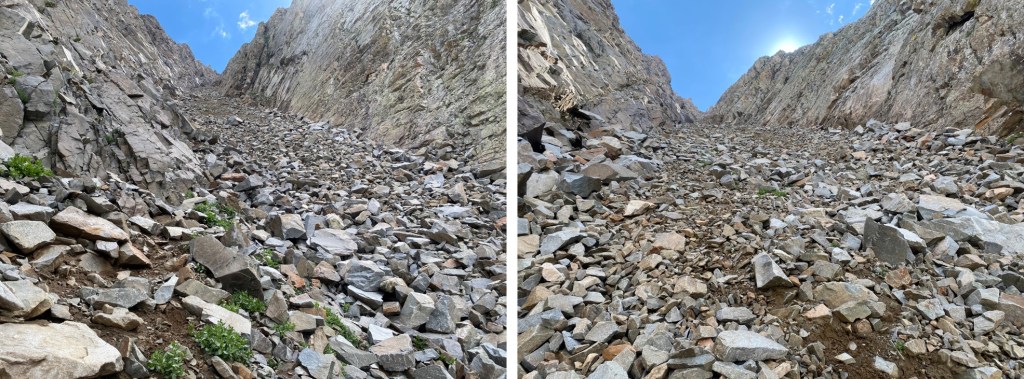
Here are pictures of my way up the gully

You have several options

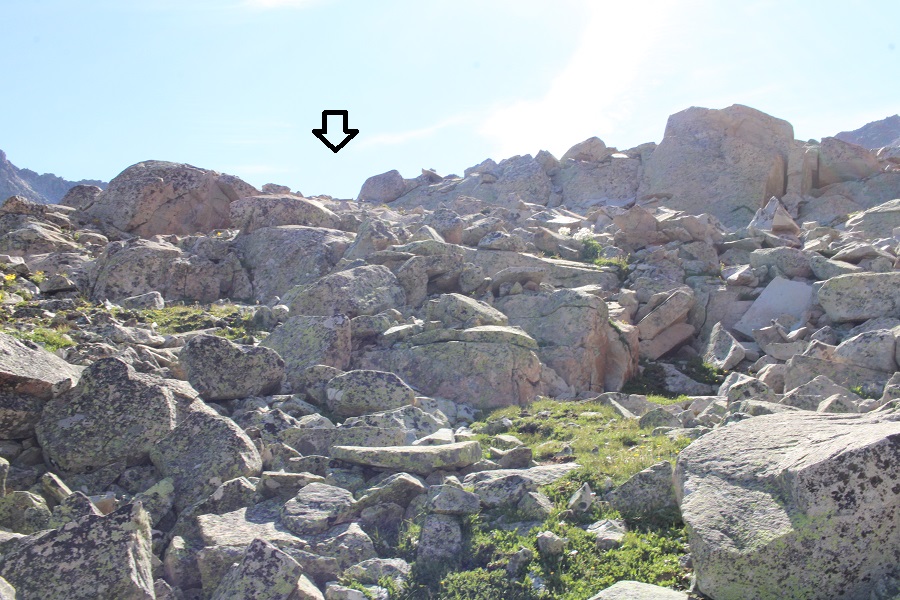
Once in the upper basin, I navigated the rock outcroppings to the right/southeast.  Here’s my route

Now to get up these rocks.  This was an easy scramble, and choose your own adventure. 

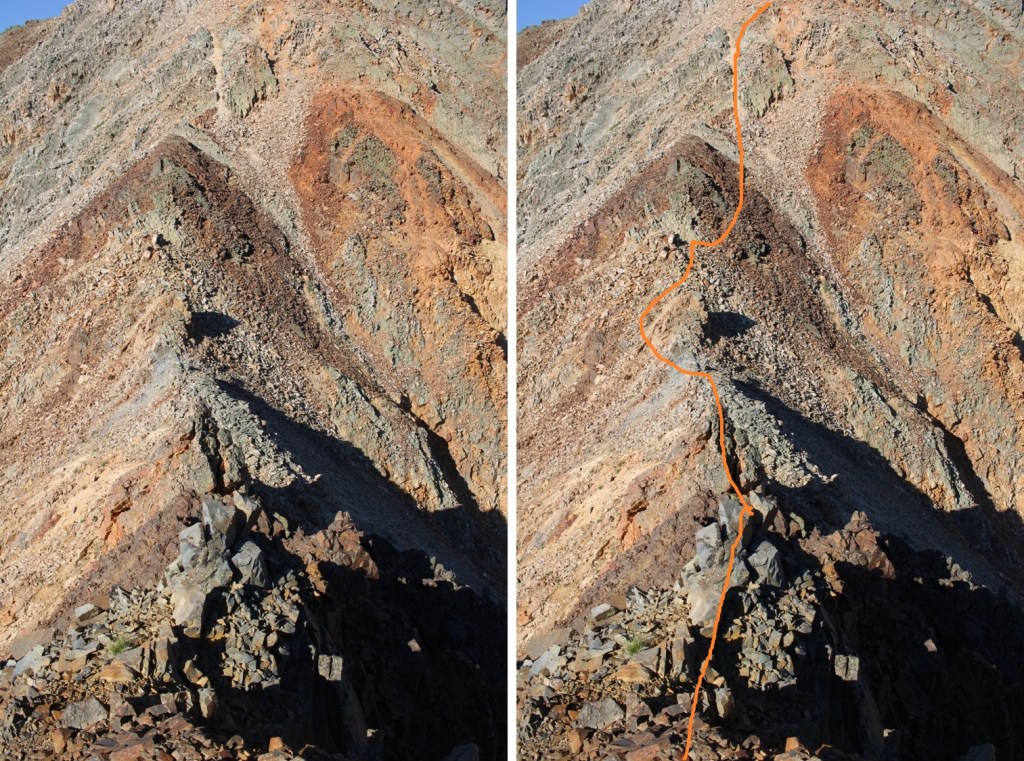
I now had a clear picture of Cassi Peak.  This is the route I took to get to the top of the last set of rocks

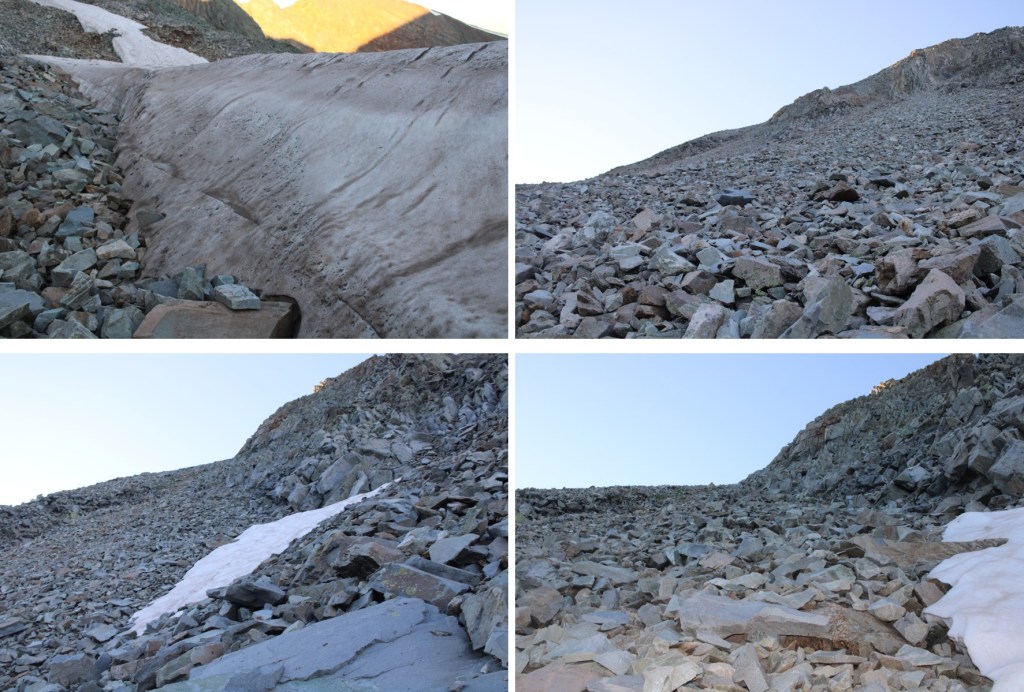
Now to get up to the ridge.  This is the route I took, all class 2.  The rocks were mostly stable, but the gully was steep.  I had to cross a solid streak of snow several feet deep at the beginning, and was glad I’d brought microspikes

Here are some pictures of the route up the gully

Once up the gully, I aimed for the ridge, which was much more solid

Once on the ridge, I followed it south, then west to the summit

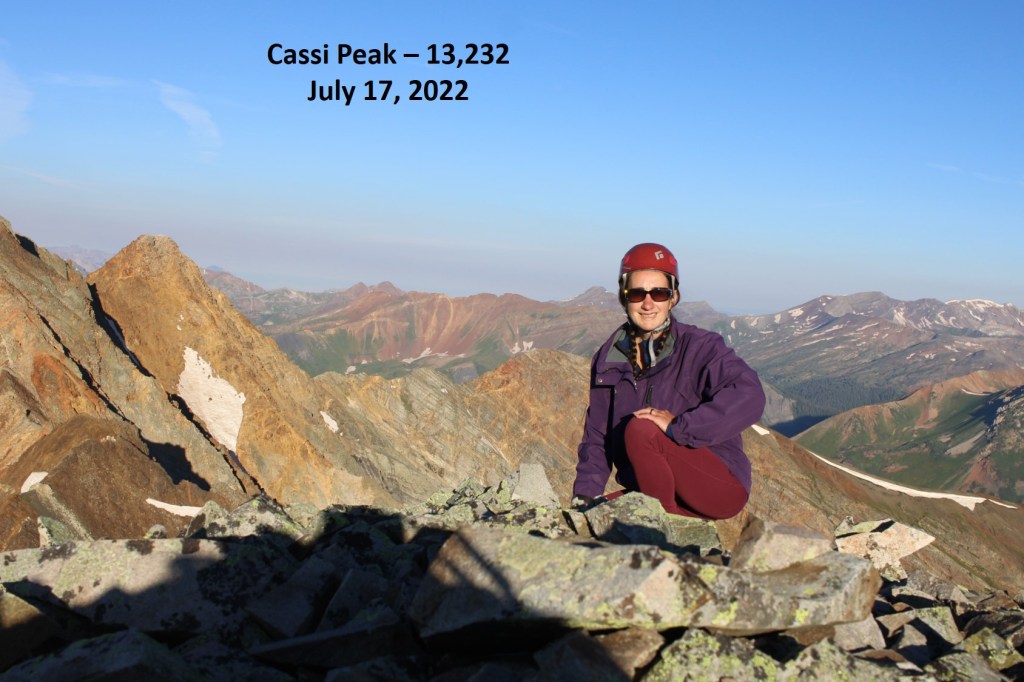
I summited Cassi Peak at 7am

Cassi Peak:

From the summit I could see Golden Tops to the southwest.

To get there, I re-traced my steps back down the ridge and through the gully

This time, when I made it to the gully, I stayed high.  I actually crossed above the snow, and gasped as two boulders larger than microwaves cleaved off the rocks.  Be careful in this area near the rock walls.  I stayed high, as I was aiming for the Cassi/Golden Tops saddle

I climbed up some scree to the saddle

Then turned right, and followed the ridge.  This was class 2, with some easy class 3 scrambling thrown in.  The route will be obvious:  just follow the scree rubble west

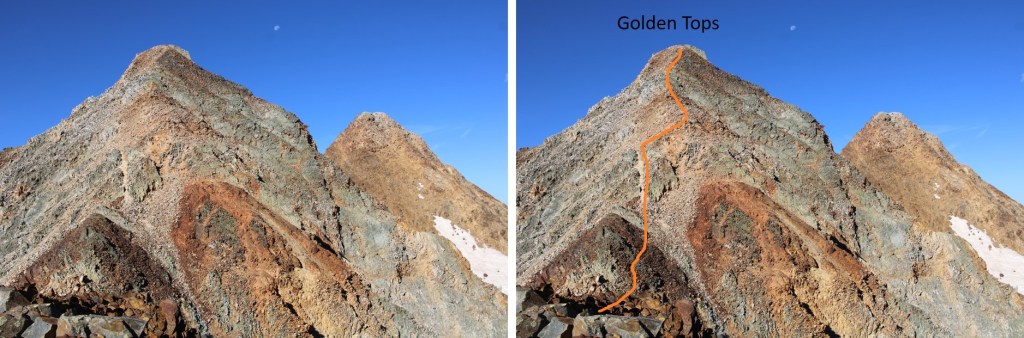
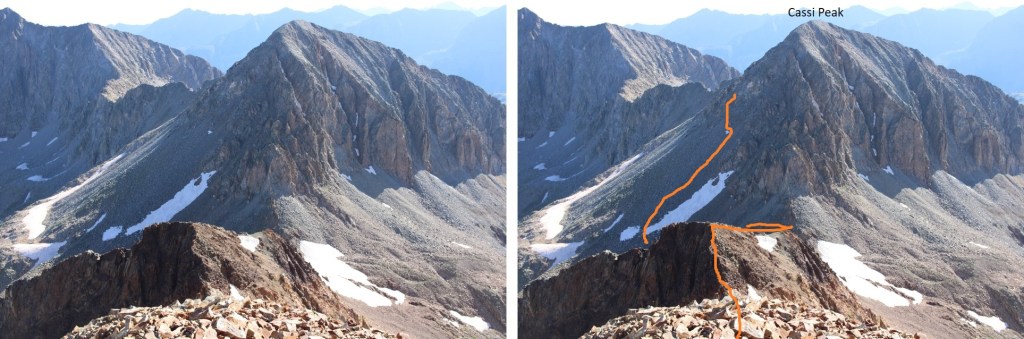
From the top of the first point I could see Golden Tops to the southwest.  This is my route

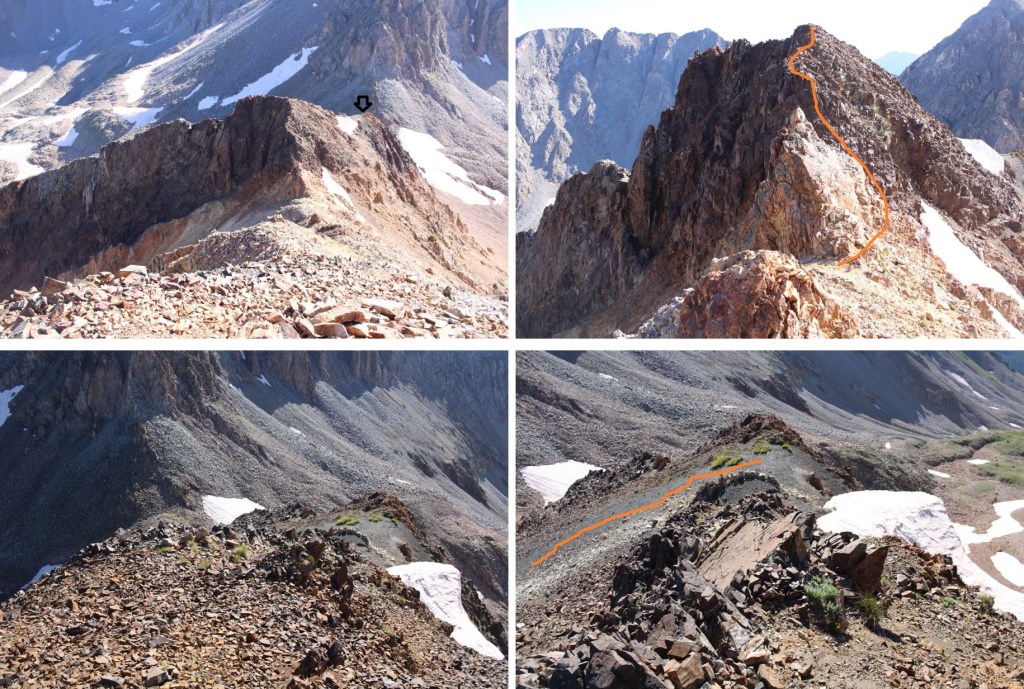
And some step-by-step pictures. This is where the climb becomes class 3, heading down this small saddle.  This is how I navigated the class 3 section, by going straight up and over the first obstacle, which is like a mini knife edge, then around the second to the left.

The rest of the route followed the ridge to the summit

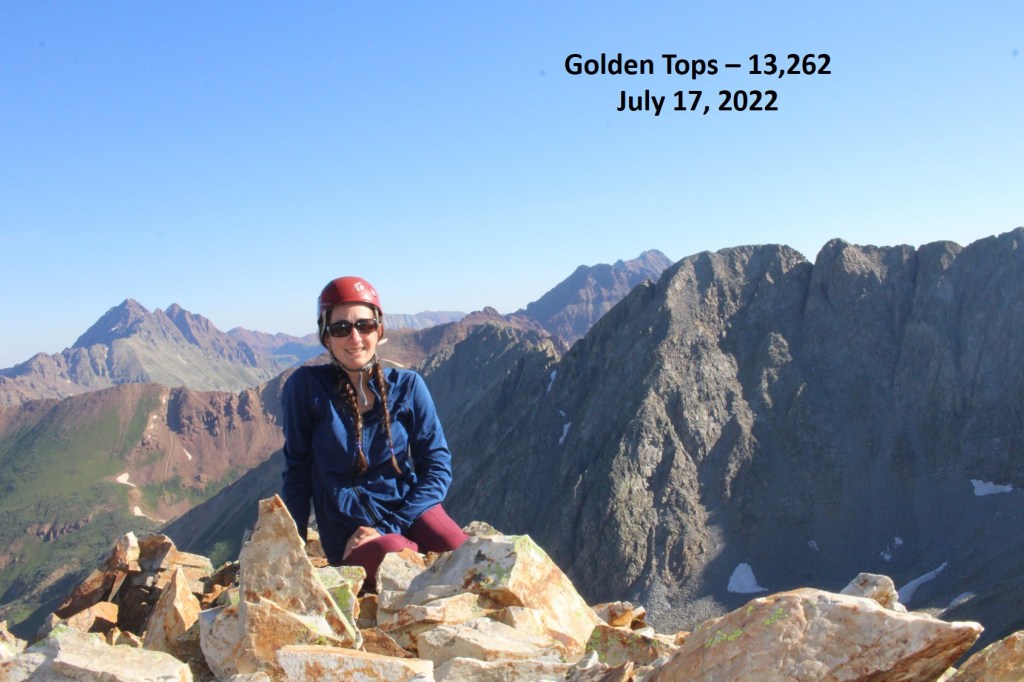
I summited Golden Tops at 8:30am

Golden Tops:

Looking back, here’s my route from Cassi Peak

Now to head back to the Cassi/Golden Tops saddle

Just before making it to the saddle I turned left, and scree-surfed north, back to the rocky ledges I’d ascended that morning

And now to exit the upper basin and head into the gulch

Here I picked up the faint trail that brought me back to the waterfall and the mining area

There were so many people, and so many wildflowers!  I can see now why this trail was so popular.

Rustler Gulch Wildflowers:

Here are a few pictures of the way back to the trailhead

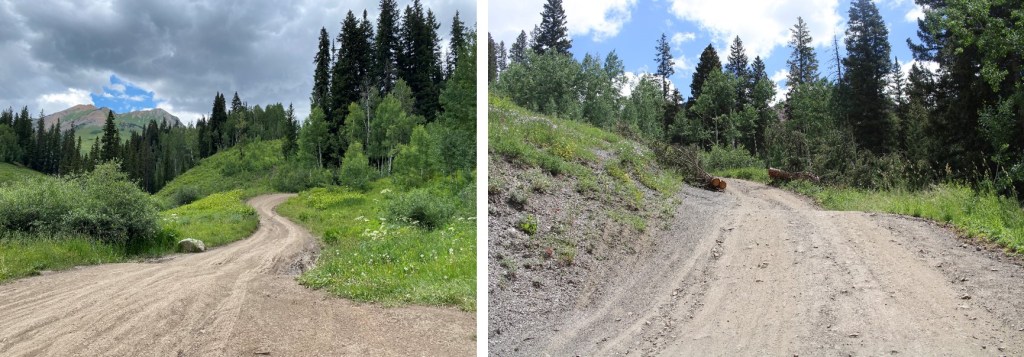
And from the trailhead to my parking spot

Here you can see even more of the overflow/2WD parking below

I made it back to my truck at 11:30am, making this a 14.51 mile hike with 4021’ of elevation gain in 9 hours.

On to the next trailhead!

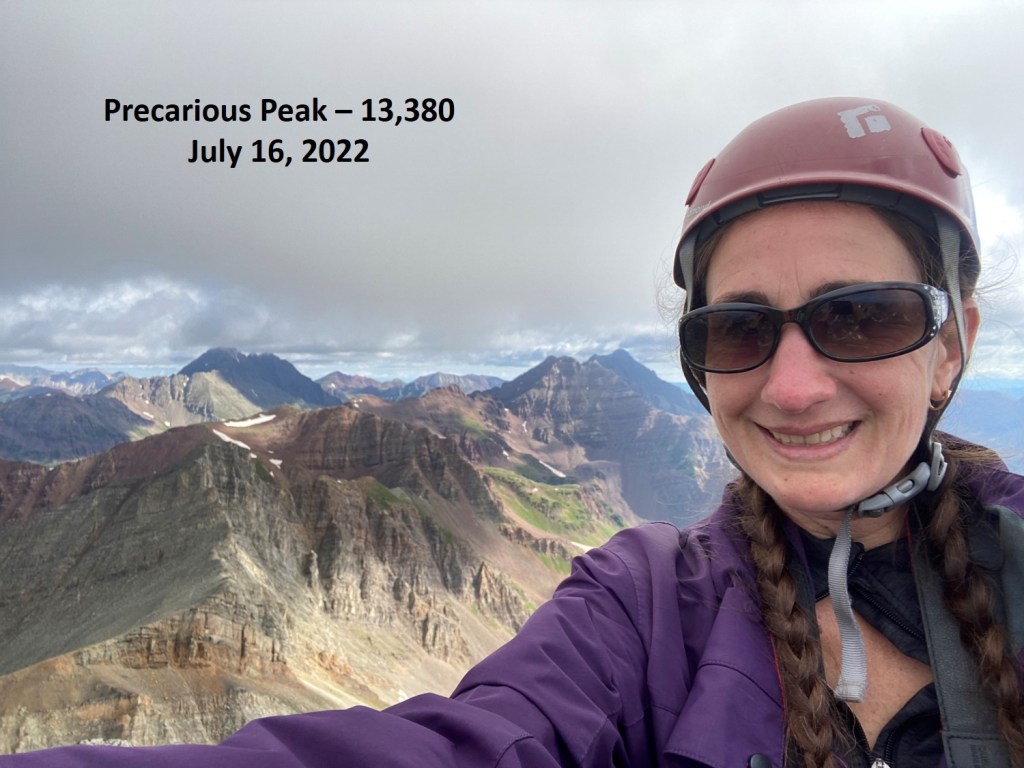
Precarious Peak – 13,380

RT Length: 13.79 miles

Elevation Gain: 3714’

The Rustler Gulch Trailhead was full.  I tried to drive up the road several times, but kept getting greeted by vehicles coming down.  The drivers didn’t understand up had the right of way, and all of them seemed to be in vehicles too big for them to maneuver.  After backing up over half a mile for the third time, I decided to just park below.  I’d find out the next day it’s peak wildflower season in Rustler Gulch, and the tourists were flooding in to see them. Parking down below added about 2 miles to my trip and 500’ of elevation gain, which was negligible. Bonus:  There was a creek behind me to enjoy as well.

I was on the 4WD road that led to the trailhead at 3:30 am.

I followed it a mile to the actual trailhead, which was overflowing in the afternoon

I passed around the gate, and followed Rustler Gulch trail #599 north into the gulch.

There were several stream crossings to cross, all of which had rocks or logs so my feet didn’t get wet.

When I got to this creek crossing, I went right, and found a footbridge

I continued following the trail, and crossing creeks, through the gulch on a well-marked trail

Here’s my route into the upper basin.  This is all done on a class 1 trail

Here are some more pictures

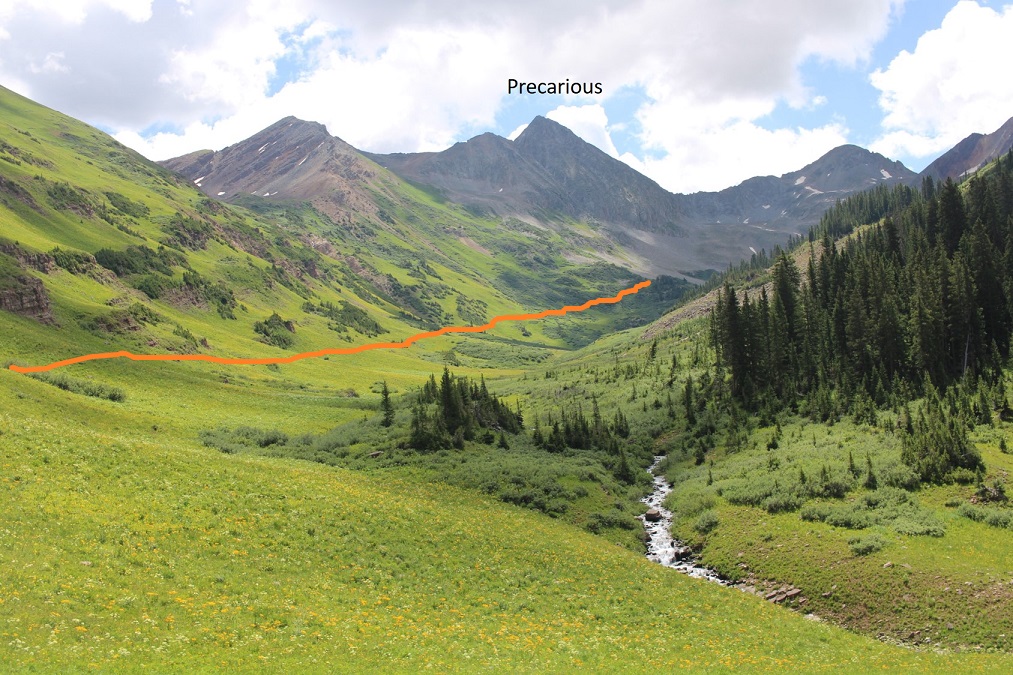
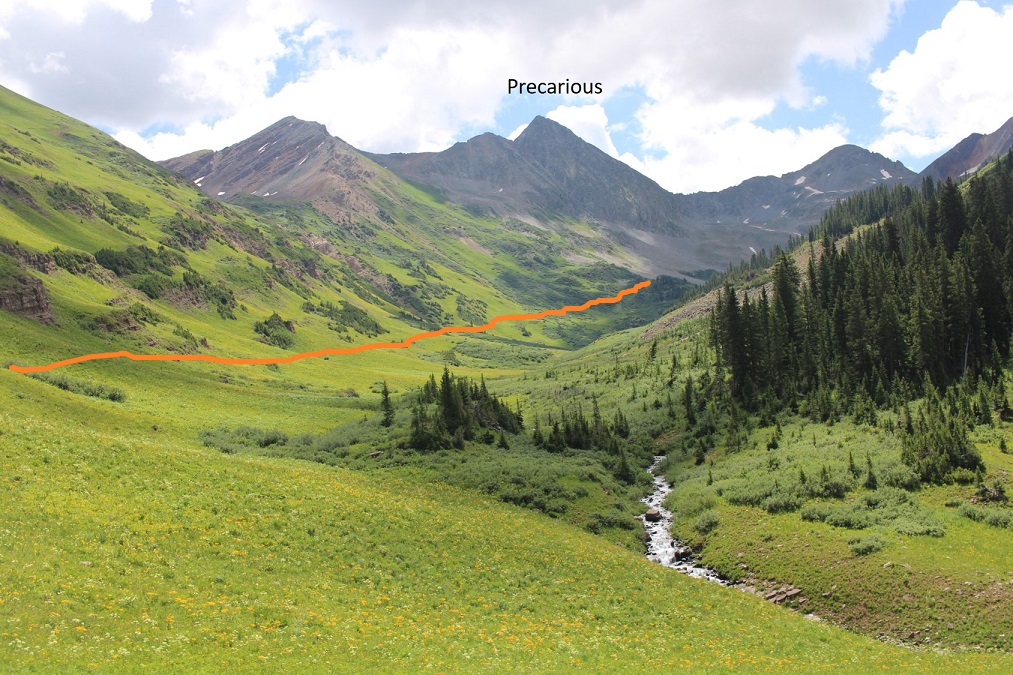
After hiking for 5.3 miles, I crossed a creek, and left the trail.  I could see my route before me to Precarious’ access gully.

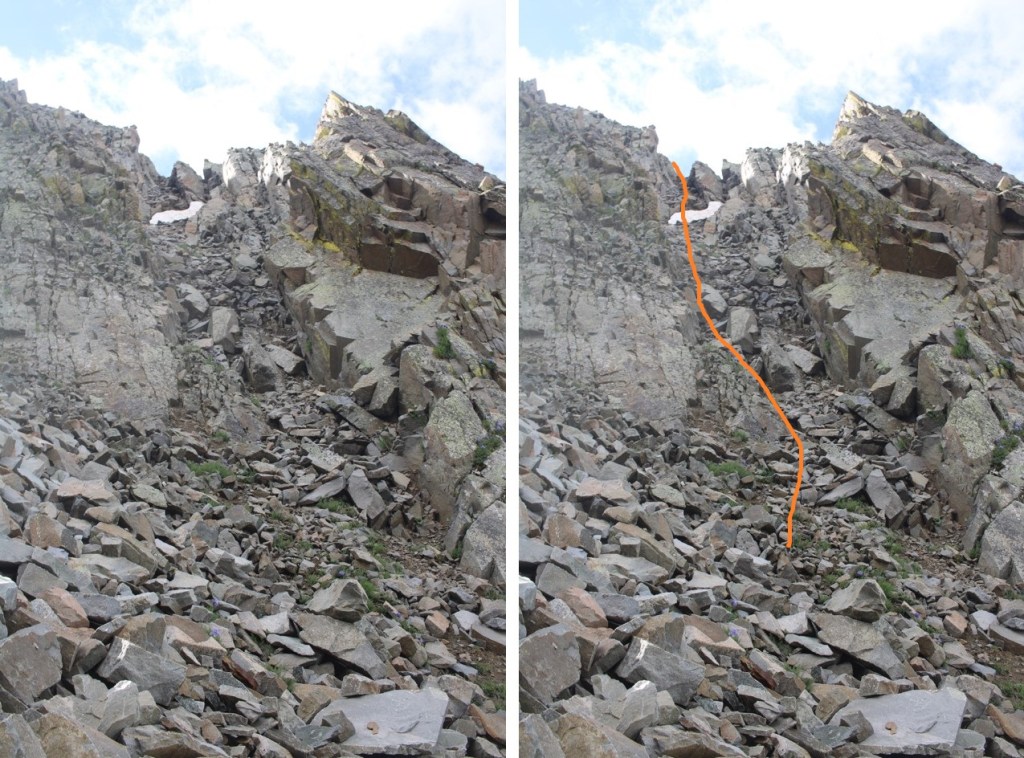
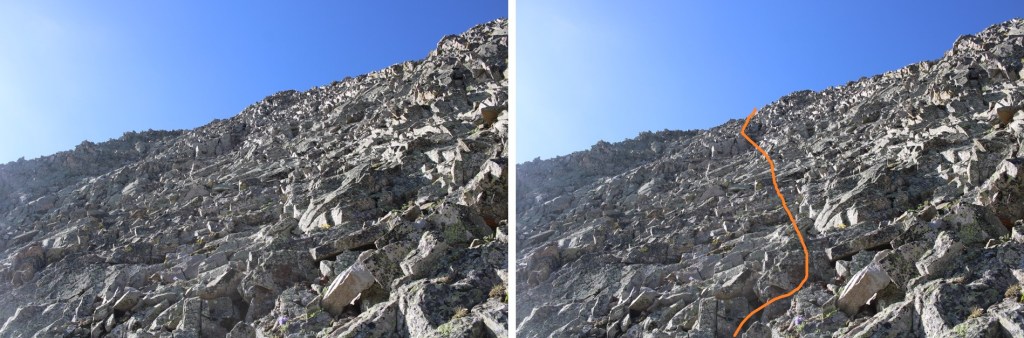
This is the route I took

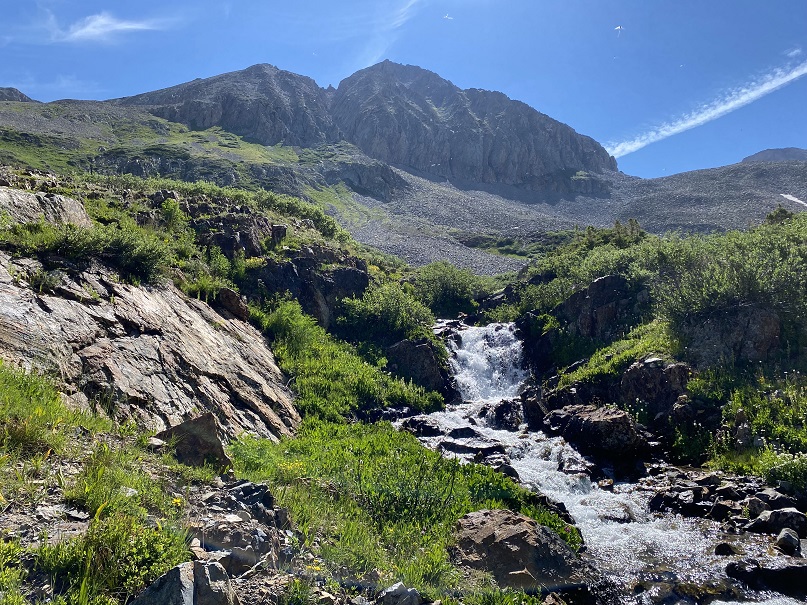
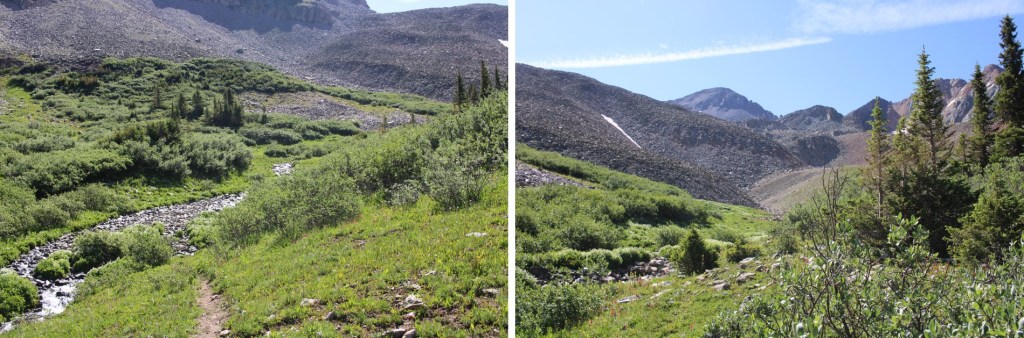
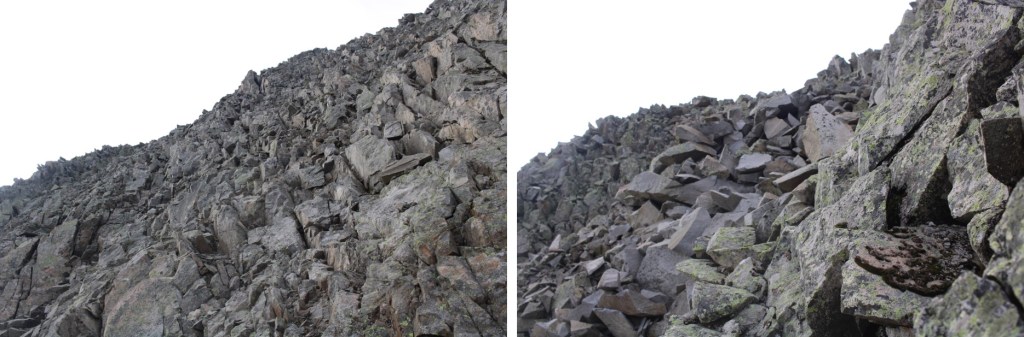
And some step-by-step pictures to get there

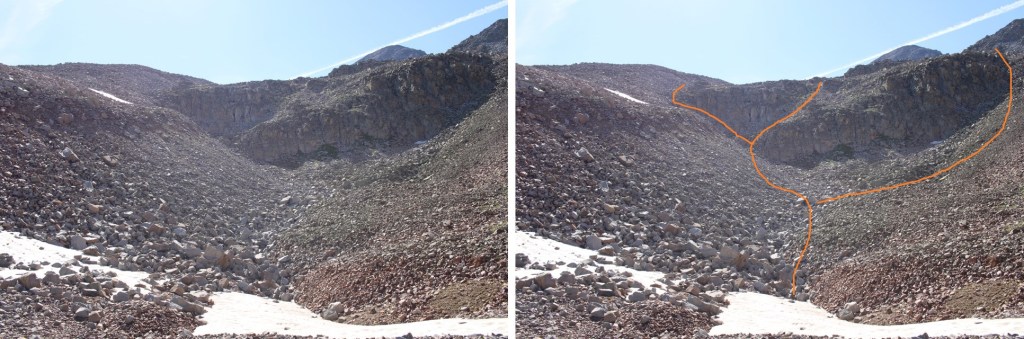
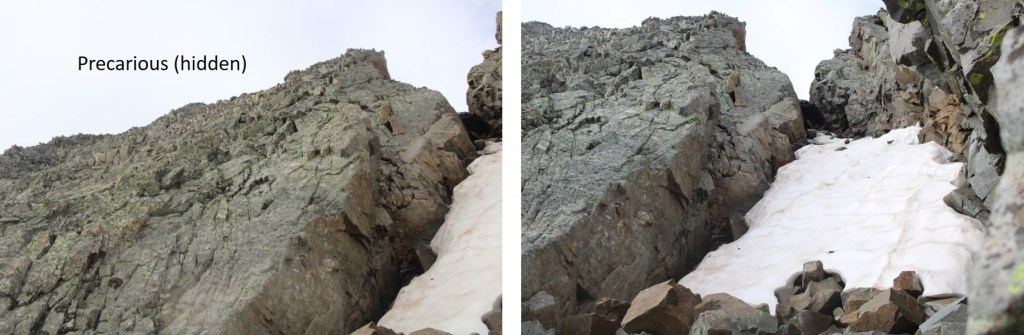
At the base of the gully I put on my microspikes and started climbing.  This is choose your own adventure of 850’ of elevation gain.  This felt class 2+.  I’ve definitely been in worse gullies, but still be sure of every step.  I didn’t have any rocks fall down the gully, but I did make a few slide a few feet. It had rained the night before, so the scree was mushy and easy to grip.

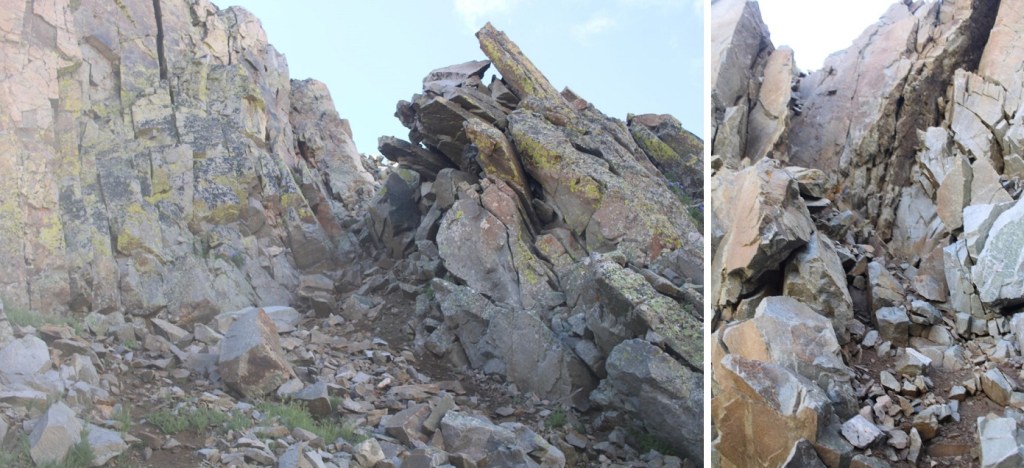
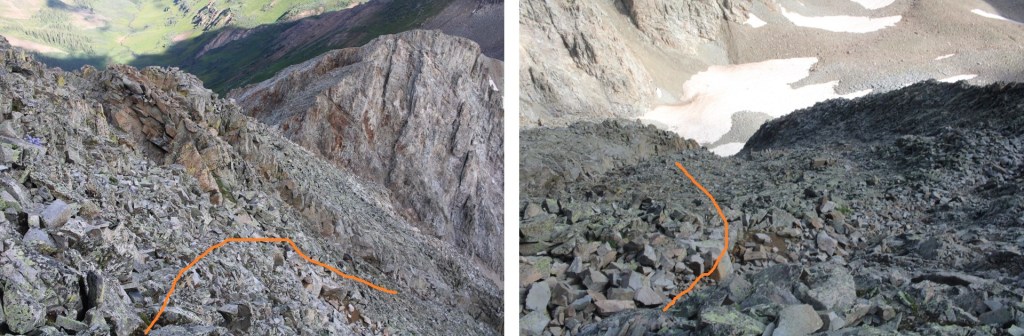
There are two ways to top out of the gully.  I took the first one up, the last one down.  If I were to do this again, I’d take the one closest to the top up and down, as it felt more secure.  Here’s the one I took up, which still had snow in mid-July:

And the one I took down (snow free)

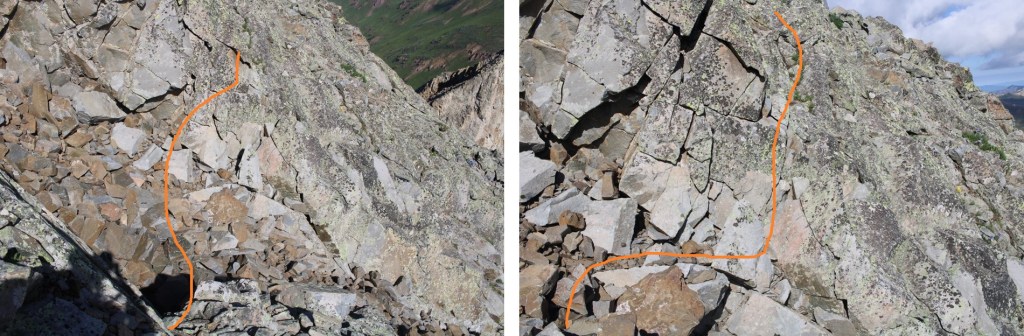
They both led to the same place:  Class 3 scrambling. 

I aimed south, towards what looked like the ridge, but went too far up, where the route cliffed out.  Instead, head east.  At around 13190 there’s a path to go around the mountain. I had to descend about 50’

When I got there this is what I saw:  A snow filled gully!!!  I was so upset, thinking my climb was over…

Until I realized I just needed to cross the gully, and then head towards the summit on the other side (all class 3 scrambling). 

I crossed the gully just at the base of the snow

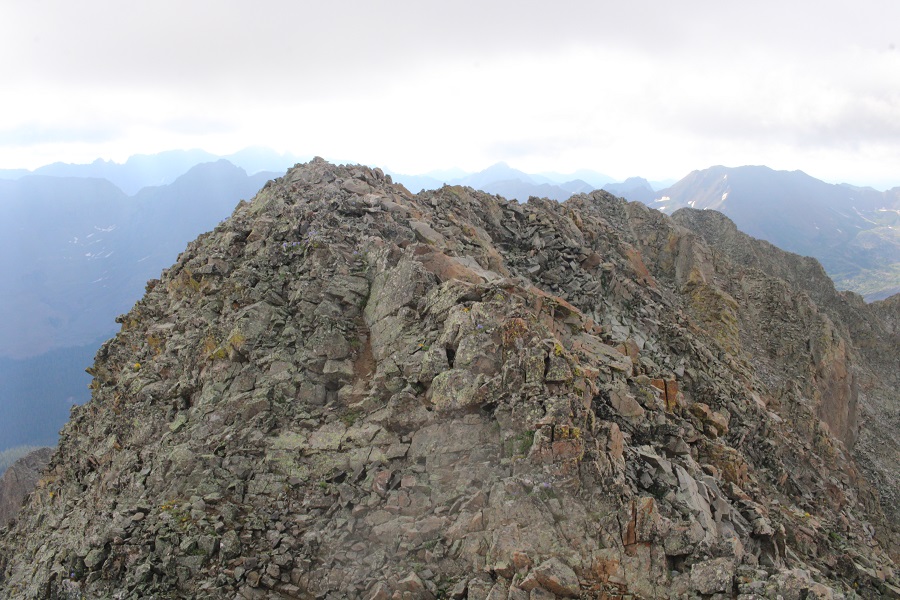
And then scrambled to the top

To find I wasn’t yet at the top…  This was all class 3 scrambling as well

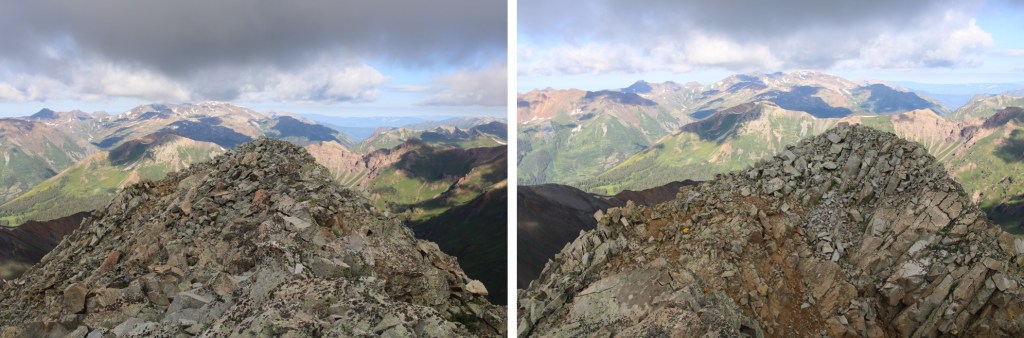
I summited Precarious Peak at 8:30am

Precarious Peak: (Yes, I called it the wrong name.  I knew it was wrong at the time, but didn’t care to take the video again)

There were two summit registers, and when I went to open them I found out why:  The older one was sealed shut.

I backtracked the way I’d summited back to the snow filled gully

Crossed the gully

And made my way back to the ridge

Then back down to the gully that would take me to the access gully

OK, time to put back on my microspikes to descend the 850’ that is the access gully

I stopped on my way down to get a video

Precarious Gully:

Then continued to its base

At the base of the access gully I took off my microspikes, and then headed for the obvious trail below.

I crossed the creek, and spent some time looking at some old mining equipment.

Then I followed the trail back down the gulch

There were so many people, and so many wildflowers!  I can see now why this trail was so popular.

Here are a few pictures of the way back to the trailhead

And from the trailhead to my parking spot

Here you can see even more of the overflow/2WD parking below

I made it back to my truck at noon, making this a 13.79 mile hike with 3714’ of elevation gain in 8.5 hours.

On to the next trailhead!
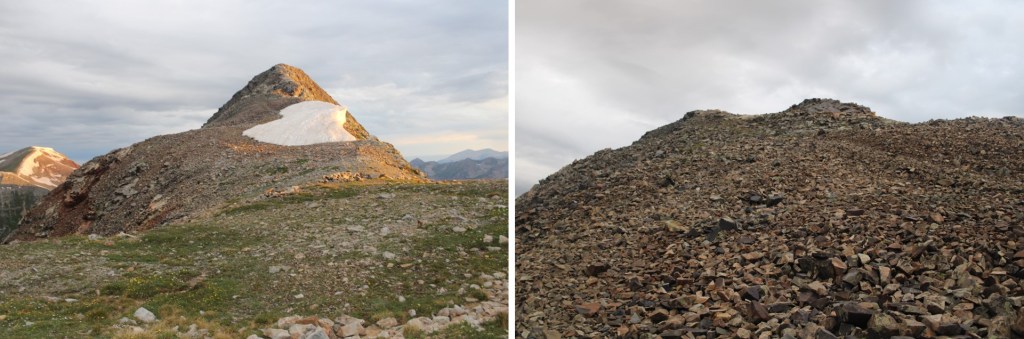
Treasury Mountain – 13,462 and Treasure Mountain – 13,528

RT Length: 12.90 miles

Elevation Gain: 4689’

I made it to the Yule Pass Trailhead the night before, driving in on a well maintained, 4WD shelf road.  I’m pretty sure a 2WD vehicle could have made it to the top, but passing other vehicles was a problem.  Several times on the way in and out either I, or the other vehicle, had to back up on some pretty steep roads and squeeze into the mountain so the other could pass by.

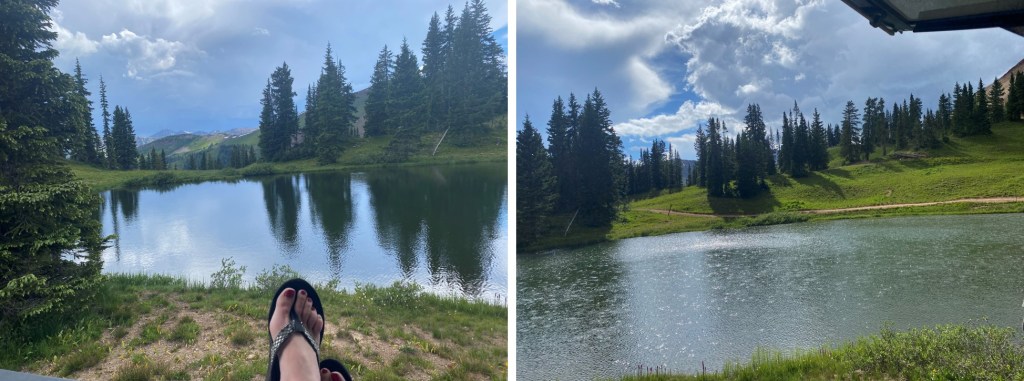
It was a Thursday around 3pm, but all the dispersed camping spots were already taken.  I later learned there were several friends camping together, and each felt they needed their own campsite.  No worries though, as I was able to park by a small pond.

I was able to relax and read as a summer storm passed by, listen to my neighbors yelling at each other from across campsites (“DO YOU HAVE THE MATCHES?!?”, “WHAT????” , “I SAID, DO YOU HAVE THE MATCHES???”   “I THINK IT RAINED WHILE WE WERE GONE” ,  “WHAT???”  “RAIN!  I SAID I THINK IT RAINED!!!” – they probably should have shared a common site) and visually planned out my route for the next morning.

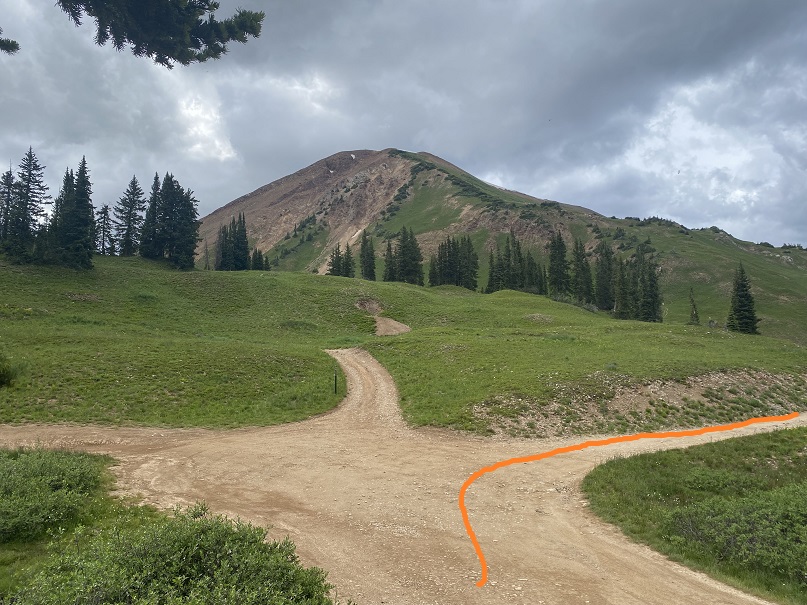
From my parking spot, there were several forks in the road.  This is the correct one for Yule Pass

I contemplated hiking the 12er Cinnamon Mountain before bed, but the thunder and lightning didn’t stop until it was too late to make an attempt, so I made it an early night, and was on the road at 3:30am, in an effort to finish my hike before the early afternoon storms materialized.

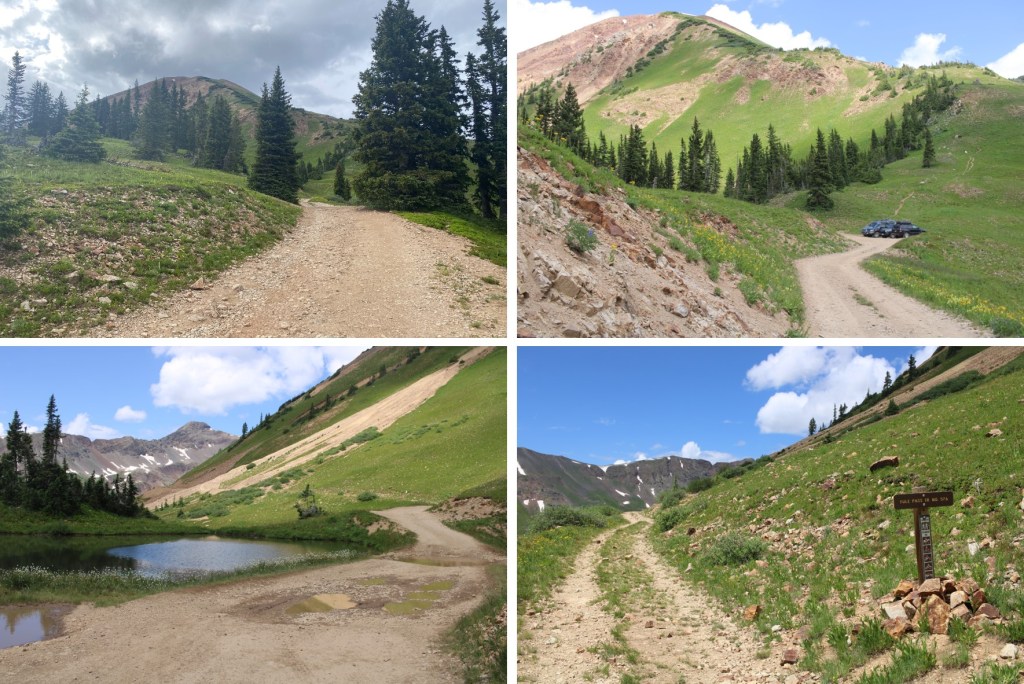
I followed the 4WD road to the Yule Pass Trailhead, Yule Pass Trail #576

From there, I followed Yule Pass Trail to northwest.  This trail used to be a mining road, but the mountain has re-claimed it and is healing its scars.  In a lot of areas it’s impossible to tell there was ever a road around this mountain.  Some areas were steep, but the runnels were all crossable. 

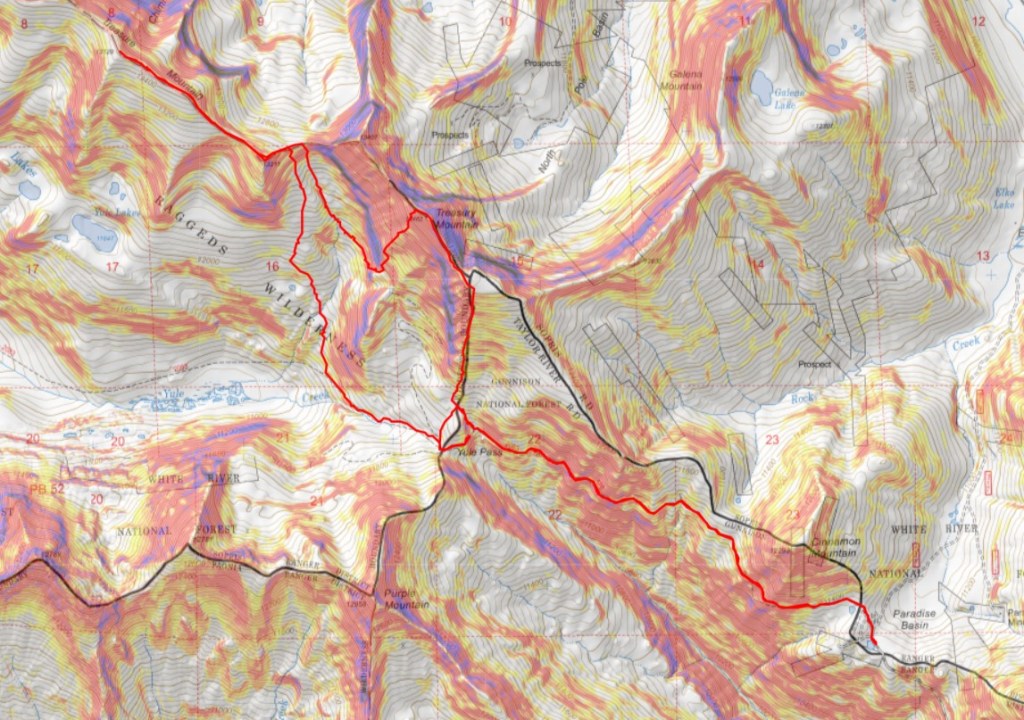
After hiking for 2.5 miles, I came to a gully just before Yule Pass.  I would use this gully to access Treasury Peak.  Also note the snow covering the trail to the left.  I was unable to see this in the dark on my way in, and it proved a problem on my way out. I had to re-trace my steps, but I was able to stay safe by exiting down the same gully I ascended.

I’d made great time, and it was still dark.  I couldn’t see much, so I waited for 20 minutes for the sun to rise.  There were a lot of clouds in the sky, and the sun refused to make a timely arrival, so I continued on.  Here’s what my ascent looked like

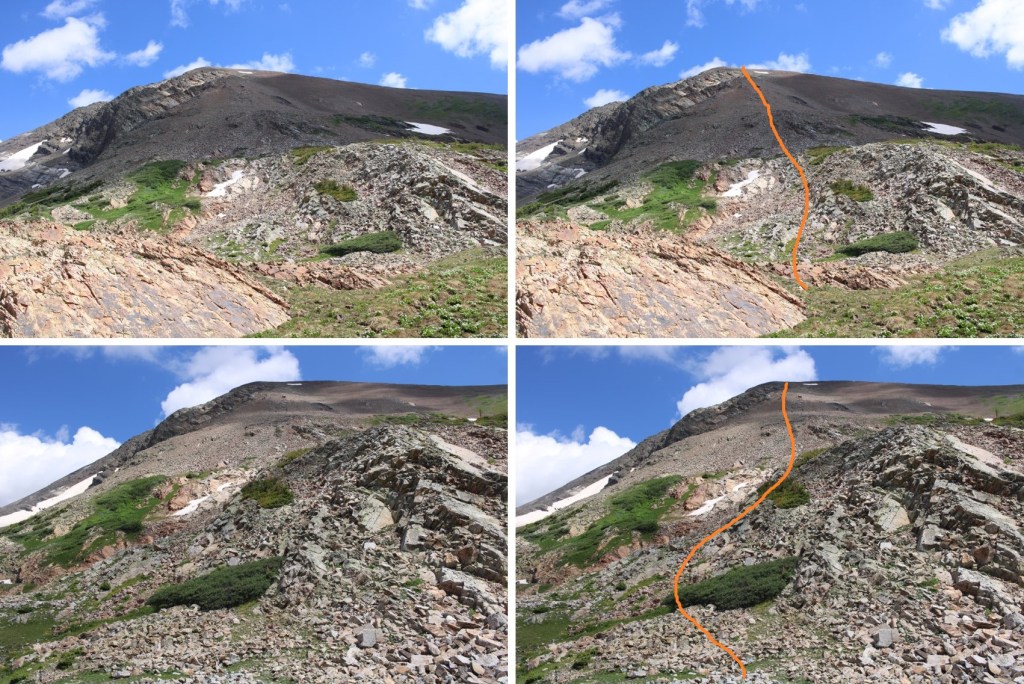
I know those pictures weren’t helpful, so, from later in the day, here’s a visual of how I ascended the ridge to Treasury Mountain

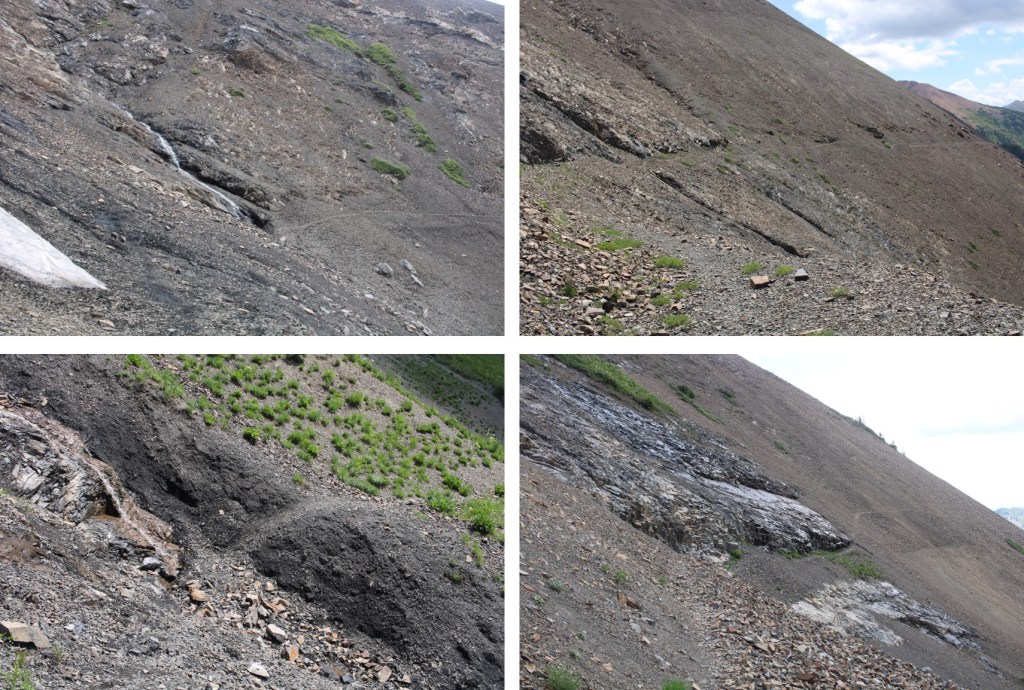
The terrain was full of loose rocks and smooth slabs, which gave way to smaller loose rocks and scree.  No worse than 2+.  I wore a helmet, and stuck to the runout until I made it to the ridge.

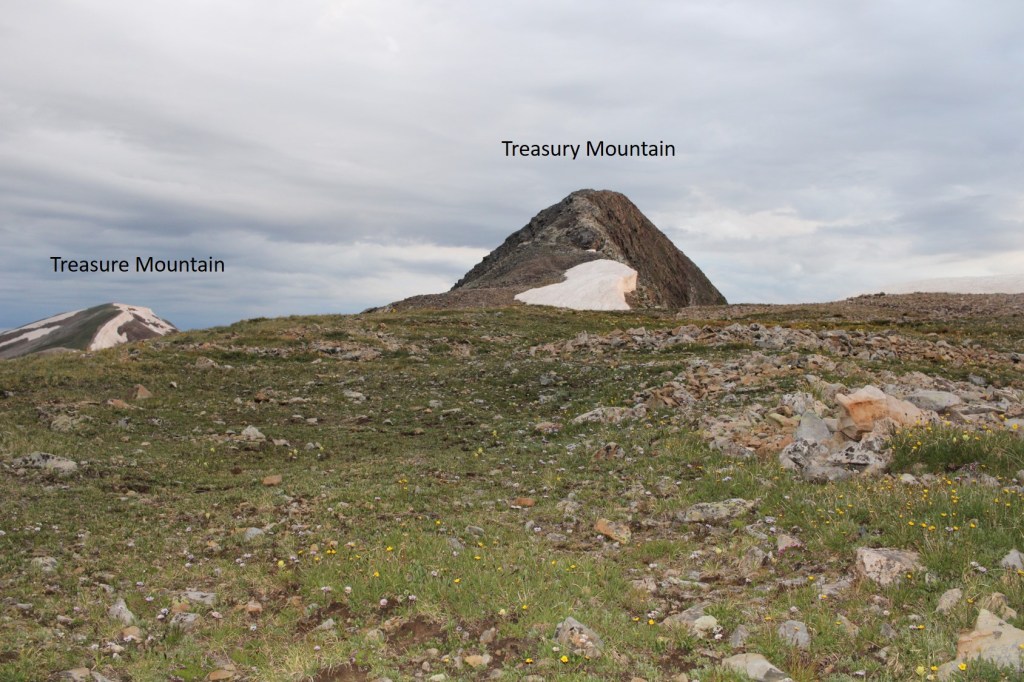
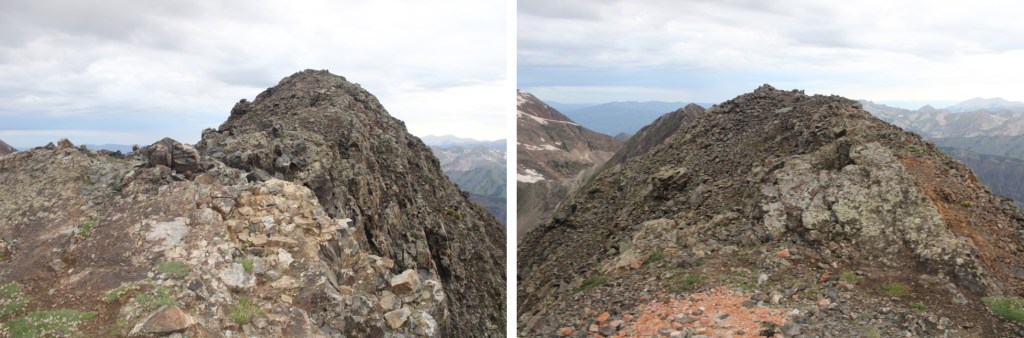
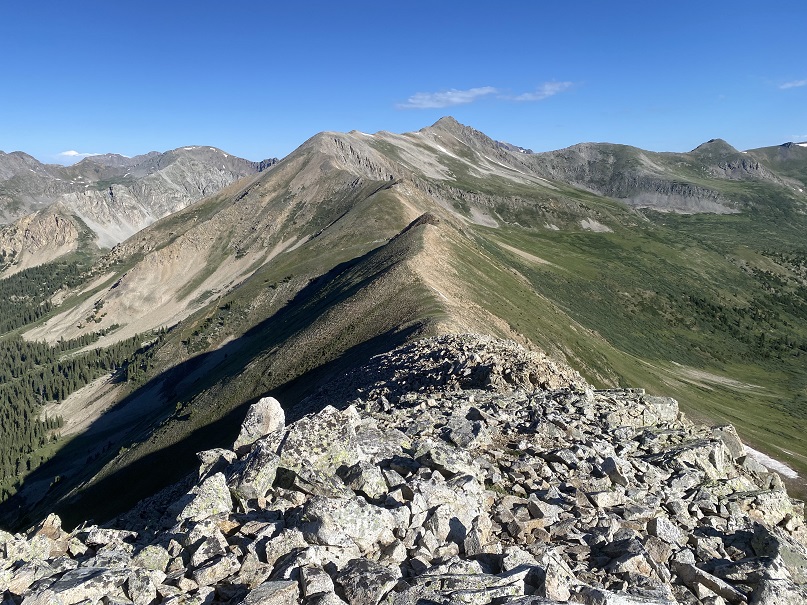
Once on the ridge, I could see Treasury Mountain to the northwest

This was a straightforward ridge hike, until the last bit, where the ridge became a series of slabs.  These would have been sketchy if they were wet, or if my shoes were lacking traction, but I was able to take the smooth rocky ledges to the summit. There’s a class 2 bypass below if needed.

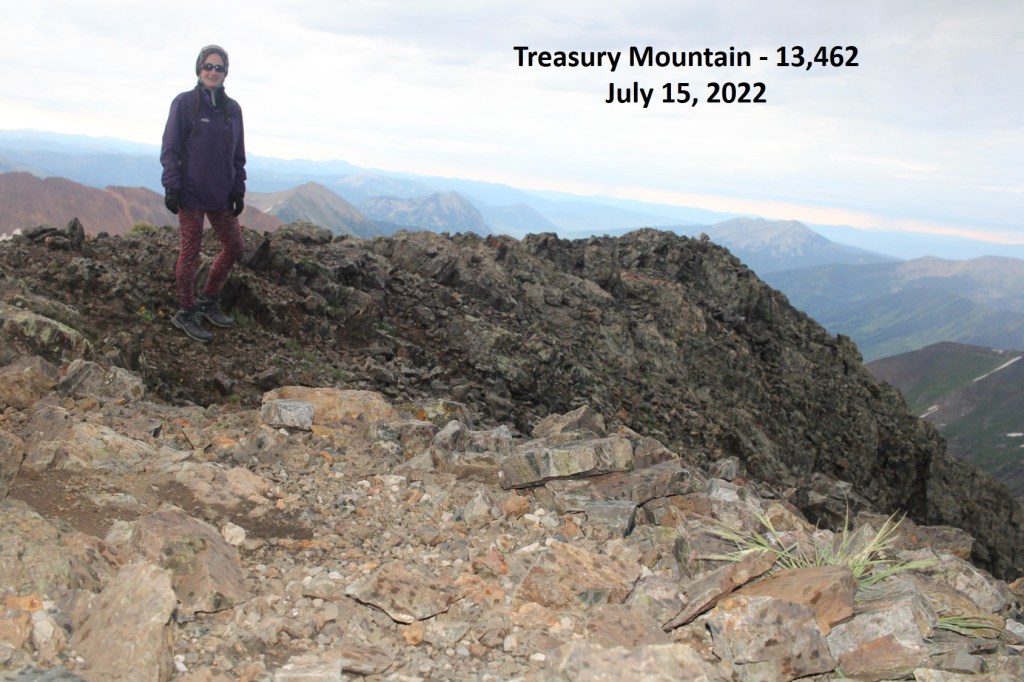
I summited Treasury Mountain at 6:20am, just as it started to rain

Treasury Mountain:

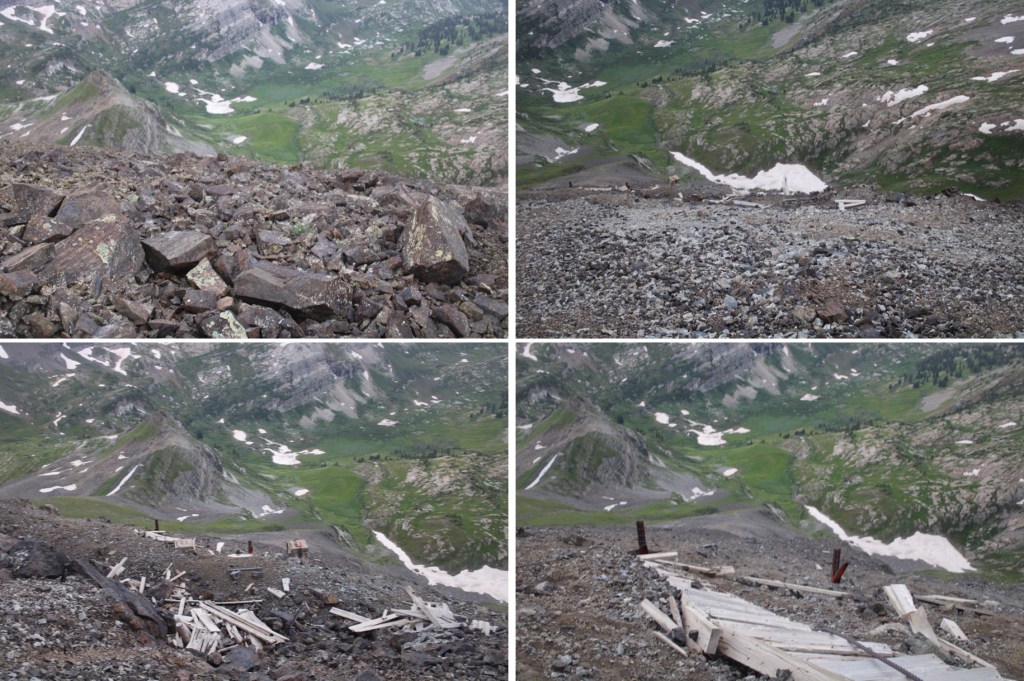
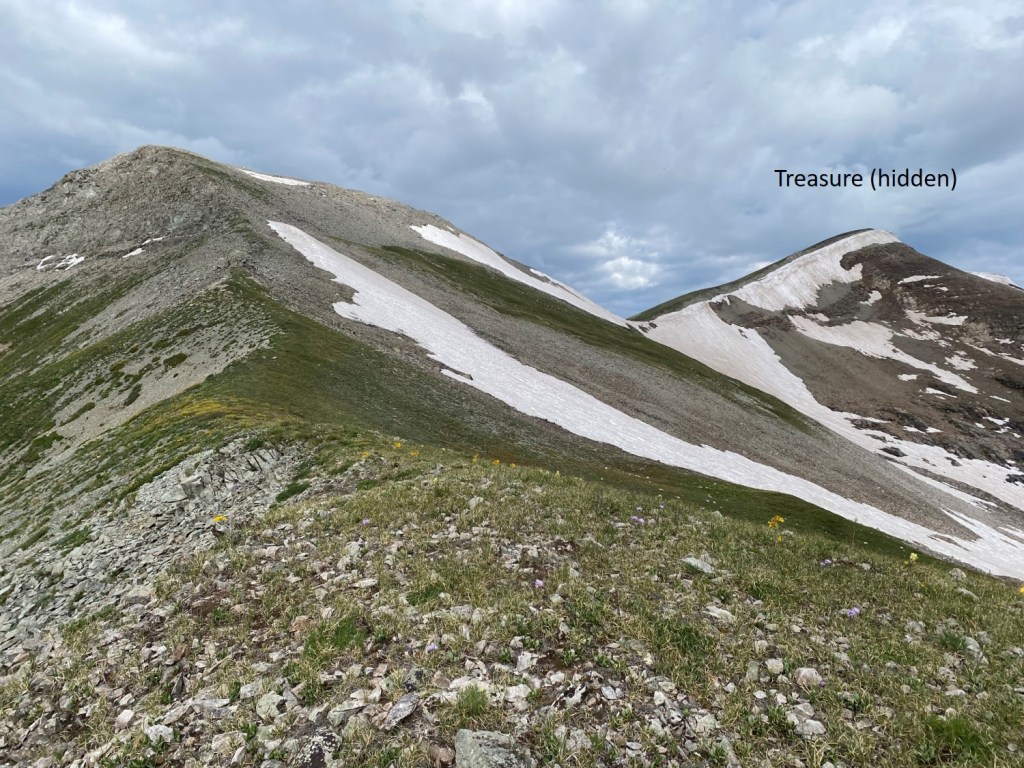
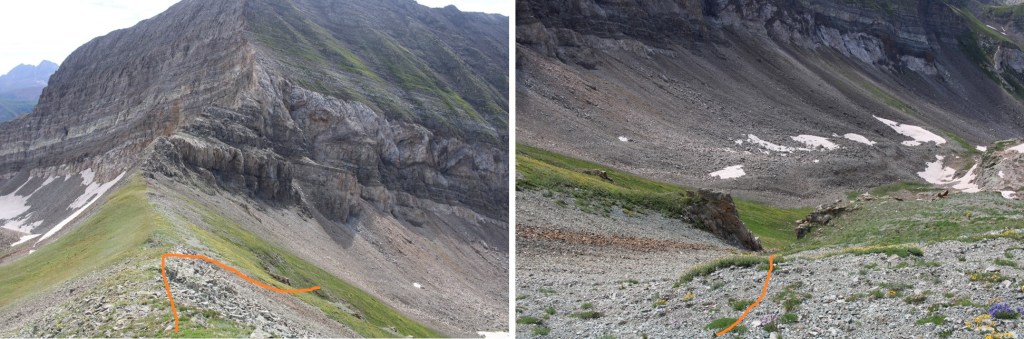
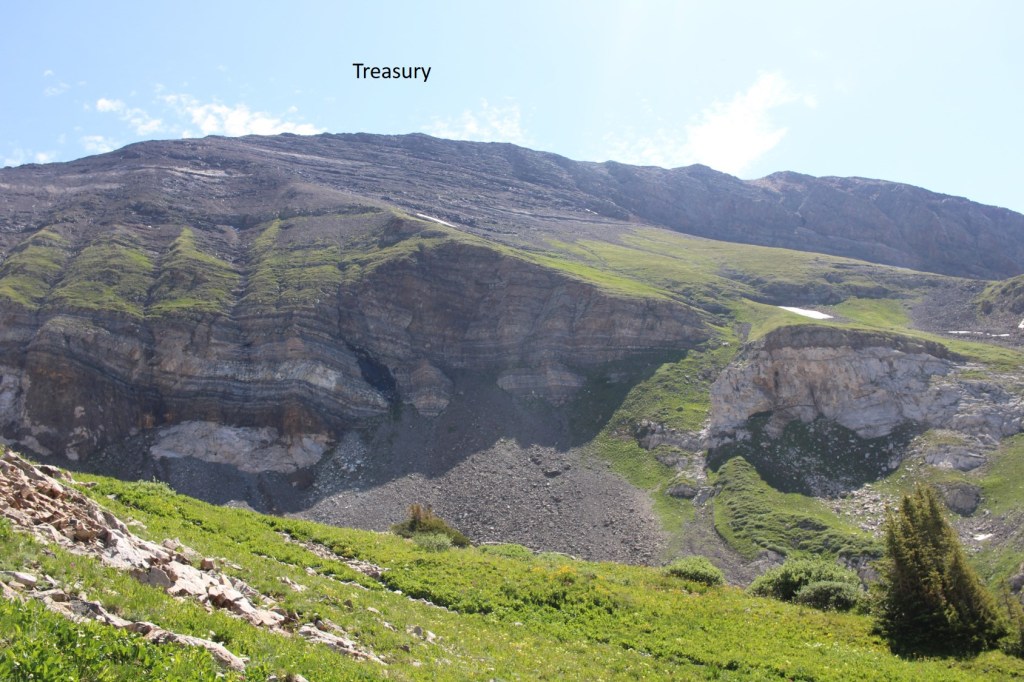
I was glad I didn’t have to downclimb those slabs, as when wet they would have been a challenge.  Instead, I continued on towards Treasure Mountain, following the ridge for a bit to the northwest, then dropping down once I could see the defunct mine below.  From the summit of Treasury, it looks like the ridge goes all the way to Treasure, and it does, most of the way, but the area circled in red isn’t climbable without rope.  It’s part of a band of rock in the mountain that spans its whole side, so I would need to descend 1370’ to avoid this area.

I put on my microspikes and descended on scree past an old mine (not much is left)

I descended to 12400’, to a gully I’d descend to put me in the basin below. The gully was class 2, and easier to navigate if I kept to the right. 

At the base of the gully I could see the route before me I needed to take, to gain the ridge. This was all class 2. I lost several hundred more feet of elevation on my way, then gained it all back making it to the ridge

Here’s that rock band I was trying to avoid that all cliffed out

Here’s looking back up at the gully I descended

And now to gain the ridge.  Here are some step-by-step pictures of the terrain

Once on the ridge, to my left I could see the part of the ridge I was trying to avoid

I turned left and headed west along the ridge

Here are some close-ups of the ridge.  There are a couple of false summits, but if you got a good view of Treasure from Treasury, you already know this

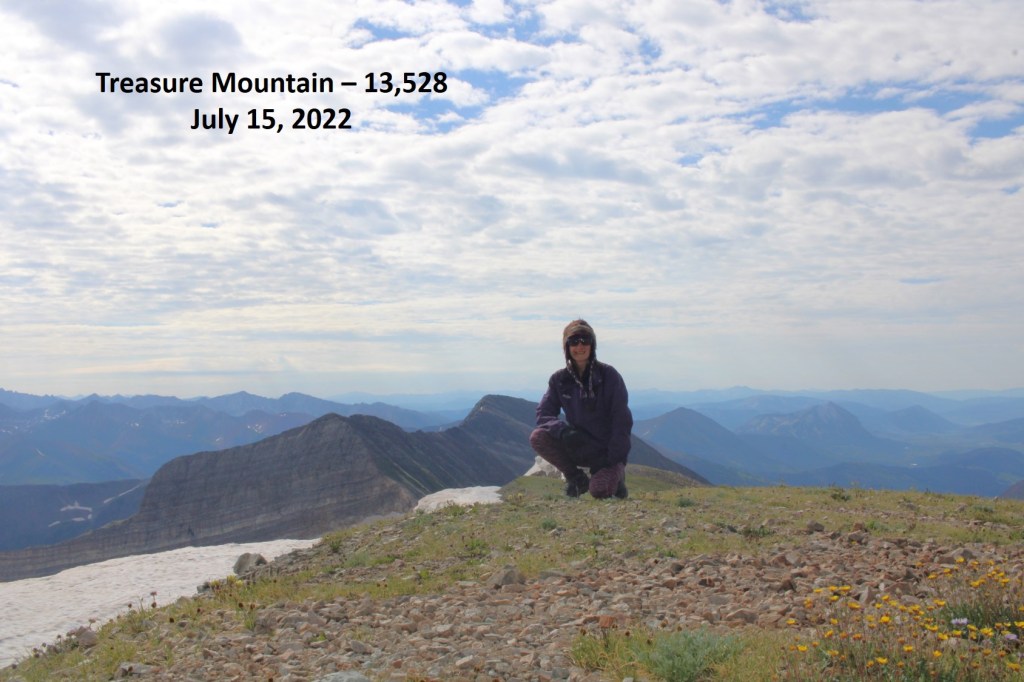
I summited Treasure Mountain at 9am

Treasure Mountain:

Now to head back to the saddle.  I was going to descend similarly (but different) to the way I gained the ridge

Once back on the saddle, I aimed for this gully, put on my microspikes, and descended through it

Once down the gully, I stayed right of the rock rib, but headed back towards Yule Pass. 

Here are some step-by-step pictures.  I stayed above the small marshy area

Here’s another view of the gully I took down from Treasury

Eventually, I was able to see a game trail below, which led me to the actual trail

I then took the trail back up to Yule Pass

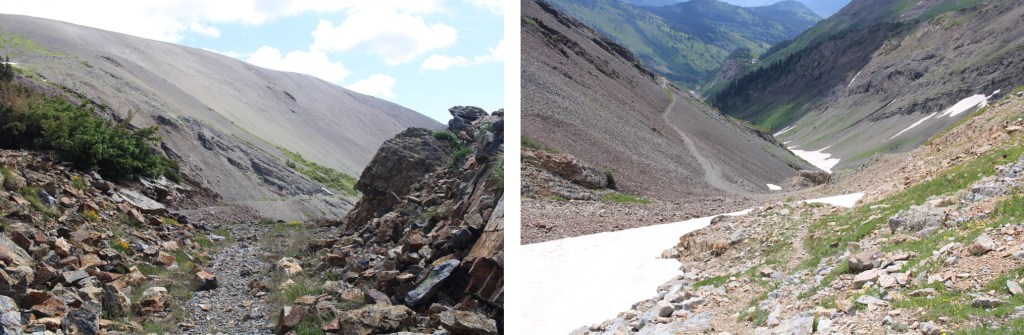
Once there, I should have been able to take the road back to my truck, but there was snow still covering it, even in mid-July, so I retraced my steps and took the first gully of the day again, but you should be able to take the road back all the way.  If not, it’s an easy and obvious workaround.

I now followed the road back to my truck

I made it back to my truck at 12pm, making this a 12.89 mile hike with 4689’ of elevation gain in 8.5 hours.

On to the next trailhead!

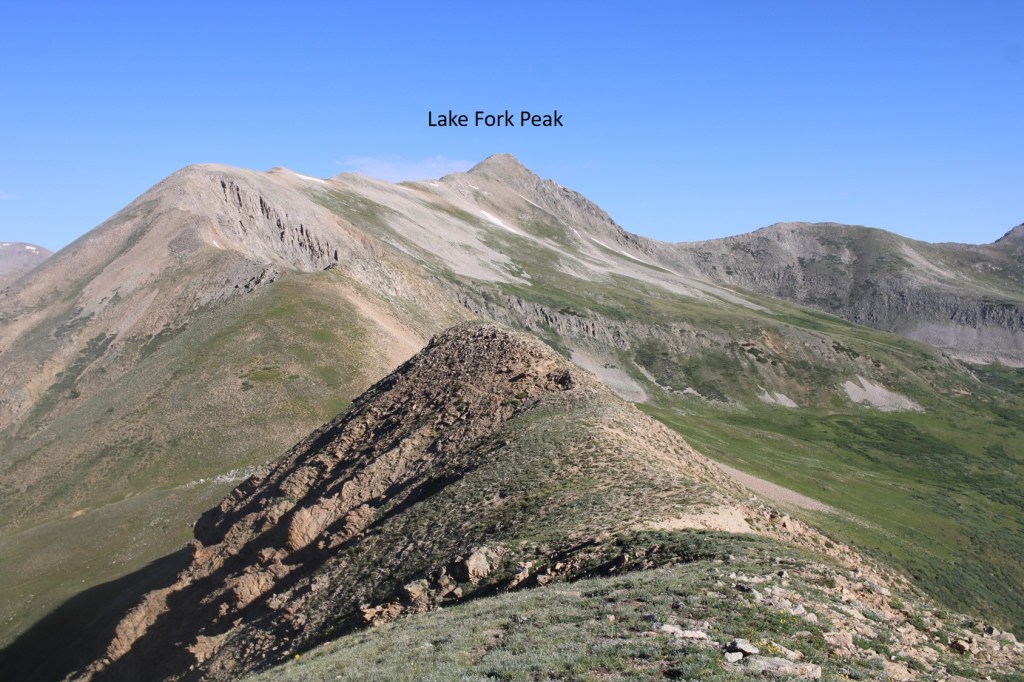
13295 & Lake Fork Peak – 13,322

RT Length:  13.27 miles

Elevation Gain:  4196’

I drove to the La Plata Gulch Trailhead, then took 391 to 382 and parked just before the bridge. 

I gathered my gear and was on the trail at 4:40am.  The trail began by crossing the bridge, and then following 382.  This was a 4WD road that’s closed to vehicles because of the bridge.

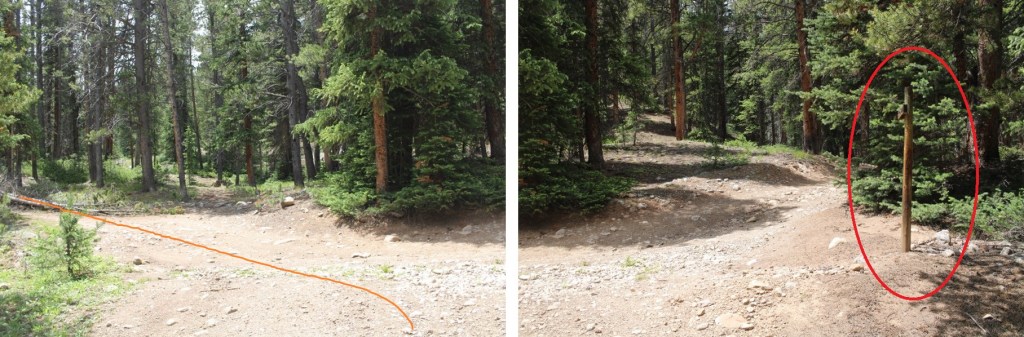
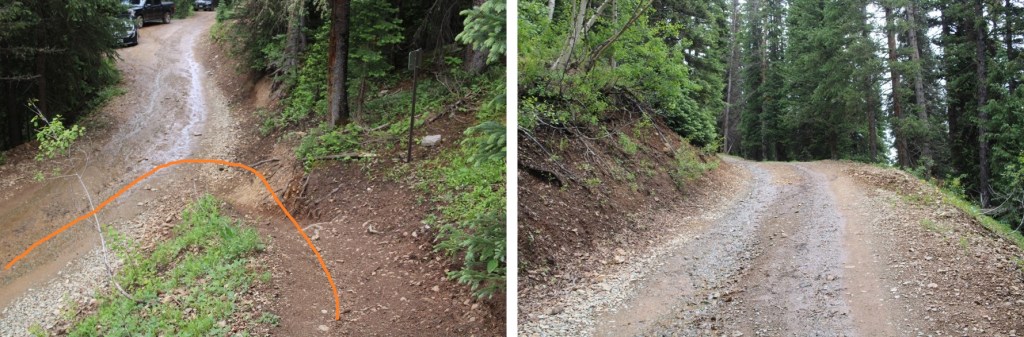
Go left here.  It’s not a well-marked junction, and it’s not on a map, but it’s the way road 382 goes.  The sign on the right says “Trail”.

I followed 382 until it ended

And then picked up trail 1465.  This is actually a pretty decent trail for about half a mile, and then it gets lost in the willows.  No worries though, route finding is easy on this hike.  Just keep following the gulch, heading south.

After hiking for 2.7 miles I came to an avalanche runout.  This is where I would descend later in the day

I continued heading south.  There are game trails here to pick up through the willows if you look hard enough.  As far as willows go, these weren’t too bad.  As the sun rose, I could see my intended route to the ridge.  There are several options here, as the slope is gradual on both sides.  There is a grassy area that goes all the way to the ridge, which looked better to me than ascending via scree.  This is the route I tool.

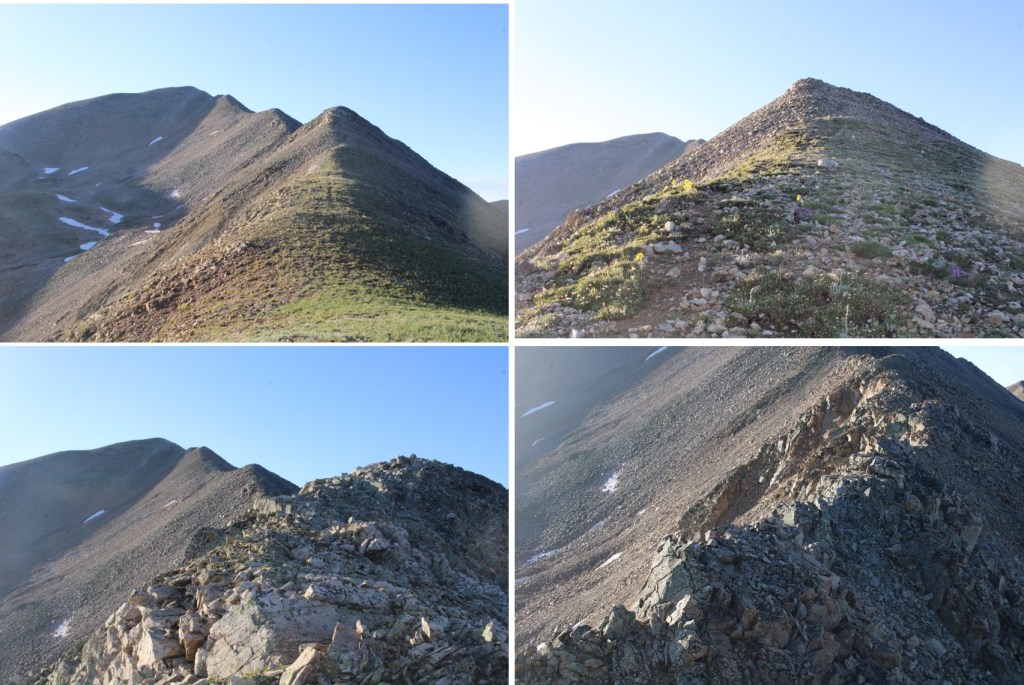
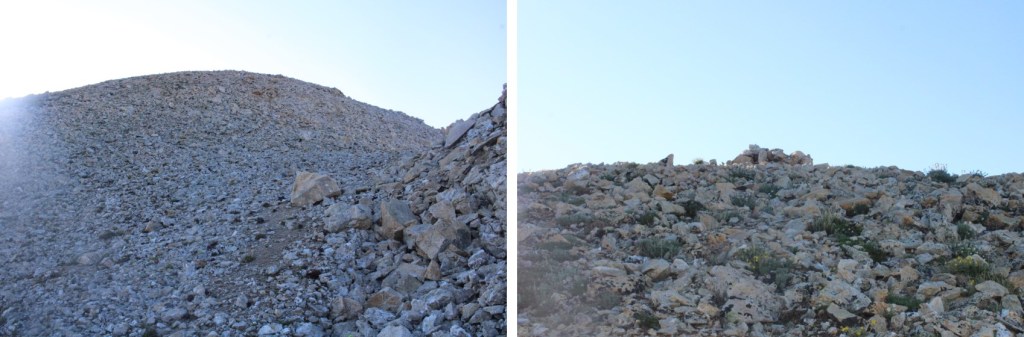
Here are some step by step pictures.  As I ascended, towards the top, there were game trails that led me to the ridge.

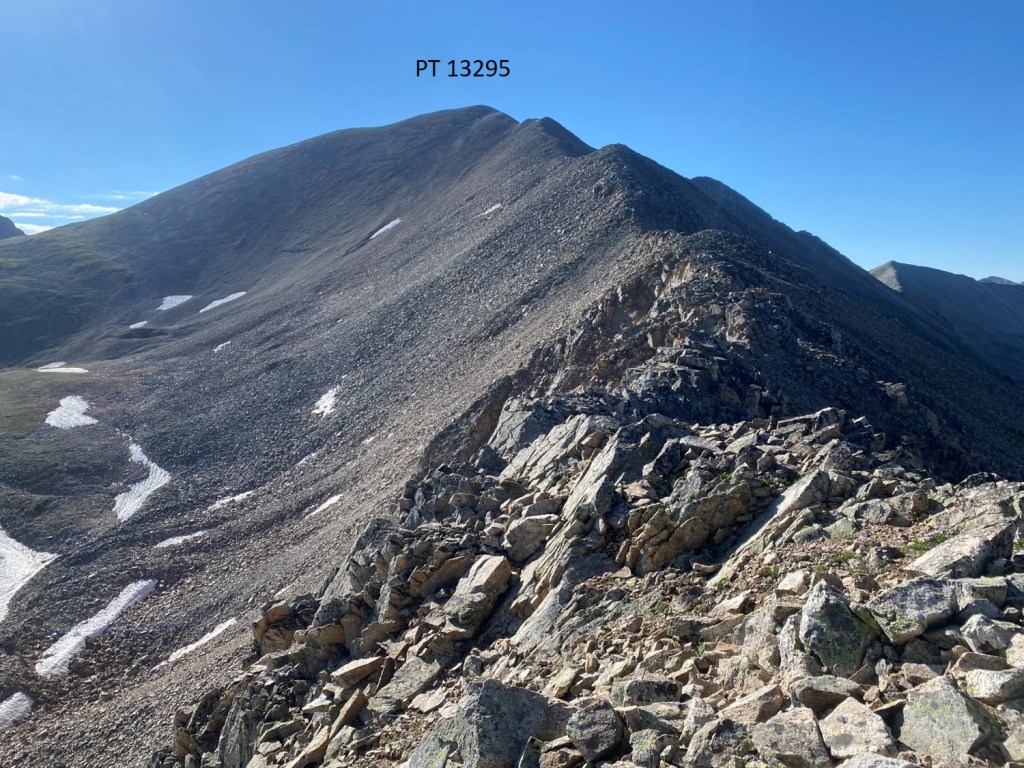
Once on the ridge, I followed it southeast to the summit.  This ridge was class 2, with some narrow spots that may feel class 3 to some.  I wore my helmet, but it was all intuitive. 

I summited PT 13295 at 7:35am

PT. 13295:

My second peak of the day was to the northeast, Lake Fork Peak

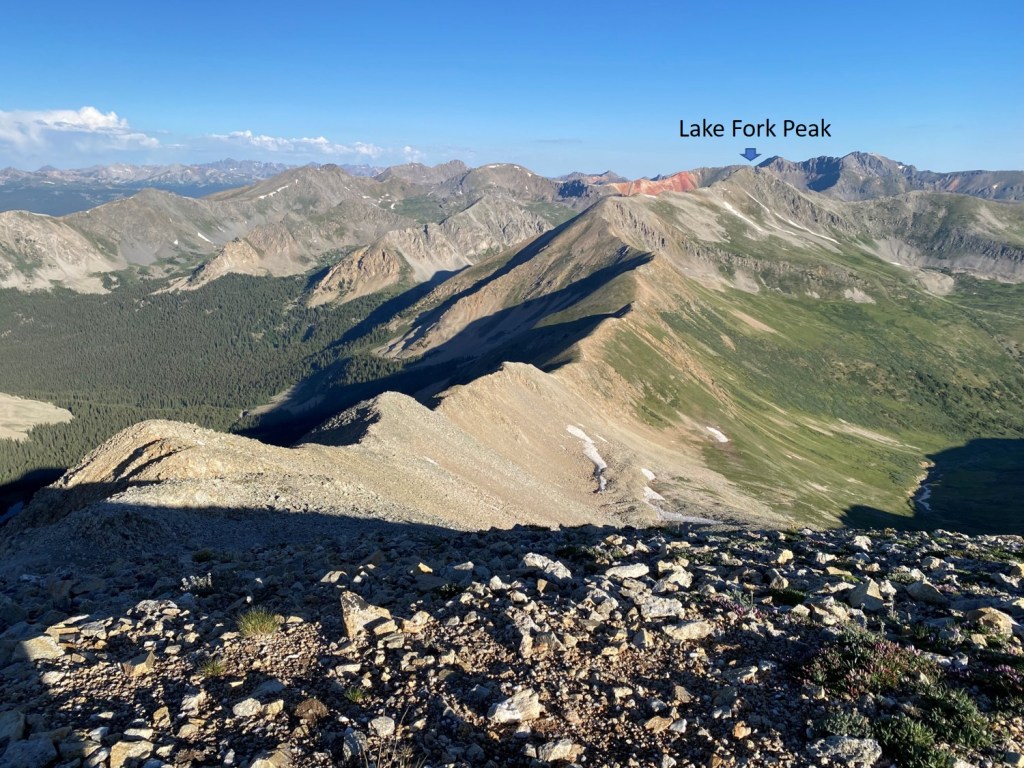
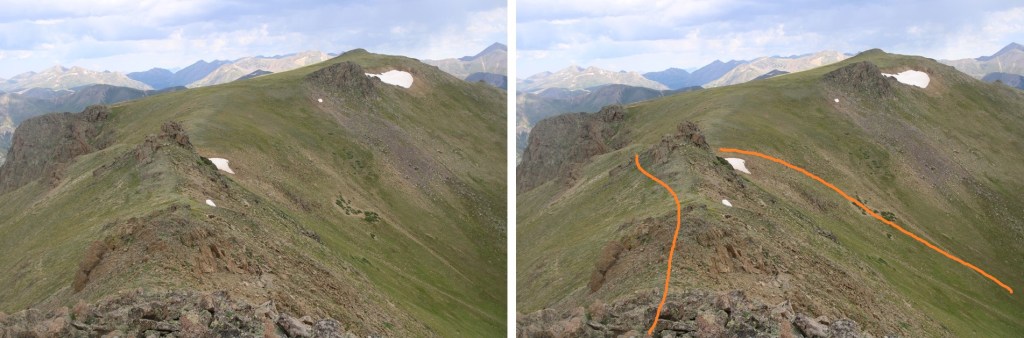
To get there, I re-traced my steps back down the ridge, and then followed the ridge to the summit of Lake Fork Peak. Also, now is a good time to get a visual of the decent route from Lake Fork Peak via the avalanche runout.  This is the overall route:

I made my way down to the 13295/Lake Fork Peak Saddle

Here you can see the route I took up to the ridge from the basin. If you’re just doing PT 13295, this is an easy decent route as well. This is also a good view of the avy area you could descend from if you’re summiting Lake Fork Peak.

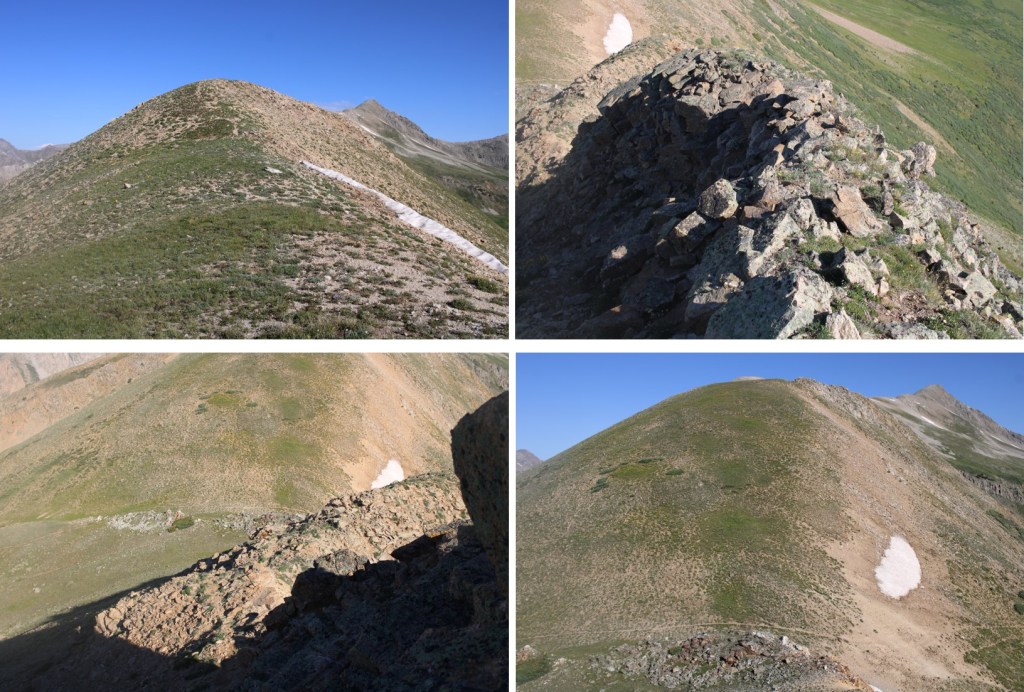
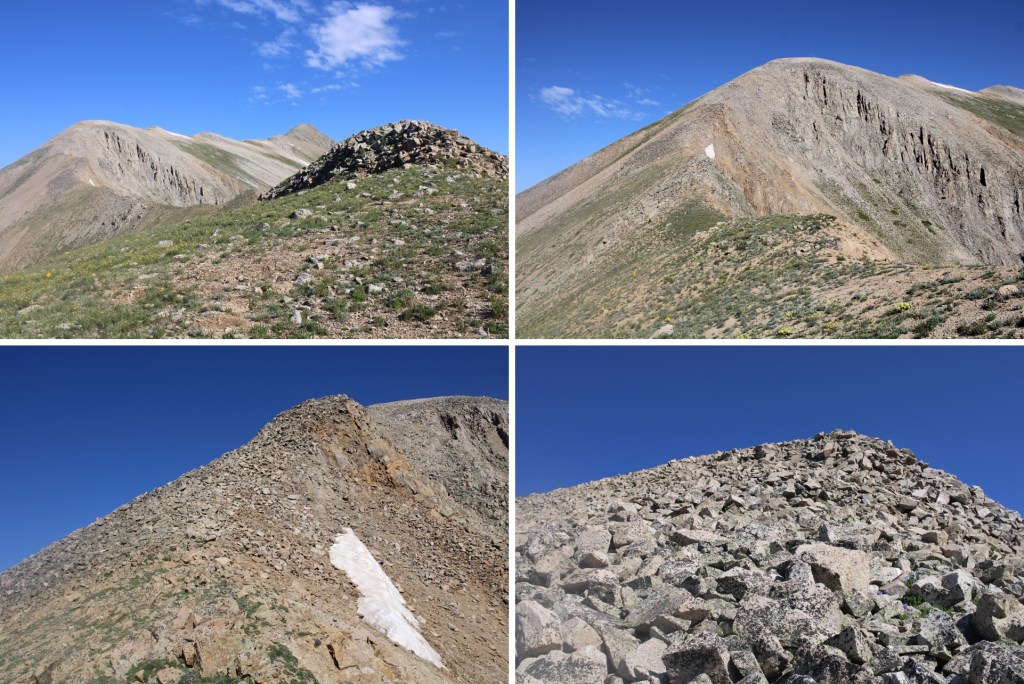
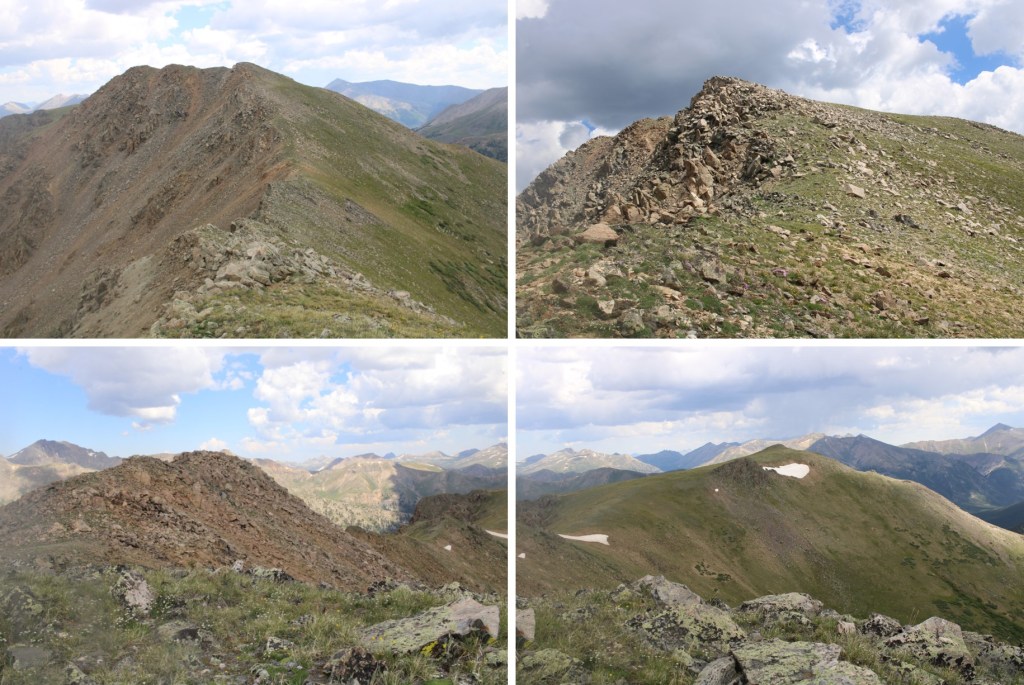
Now, on to the summit of Lake Fork Peak.  This was a class 2 ridge walk the entire way, with some loose boulders thrown in for fun on some of the steeper parts.  All along this ridge, I could hear, but not see, elk.

I summited Lake Fork Peak at 9:45am

Lake Fork Peak:

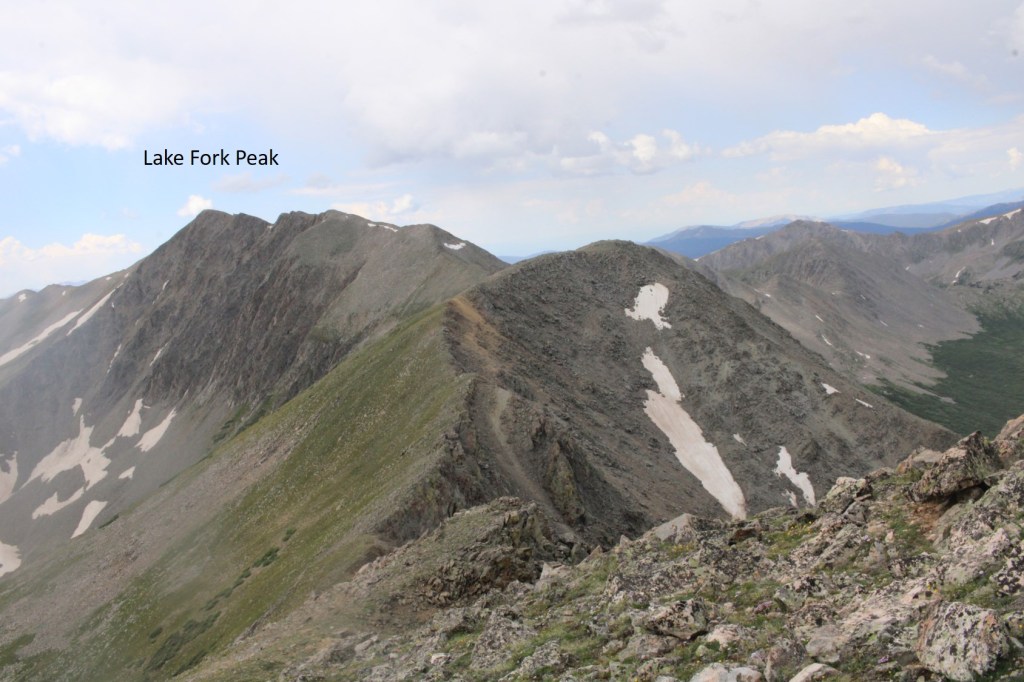
Here’s looking back at PT 13295

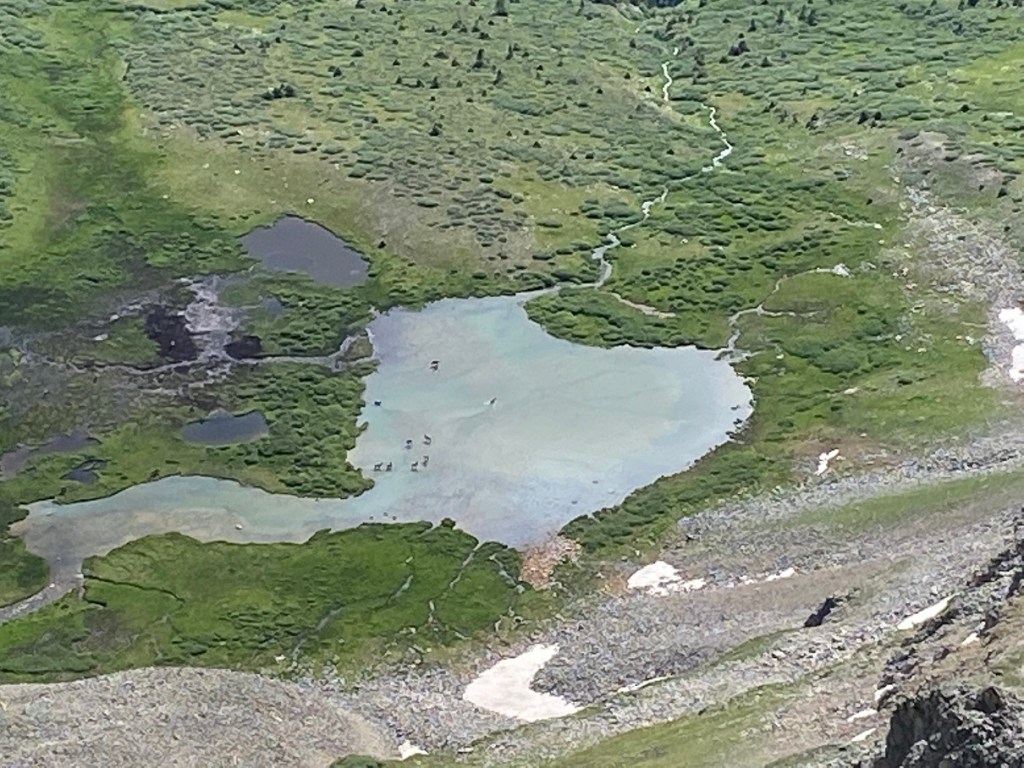
I looked down below, and could finally see the elk.  They were enjoying an afternoon swim in the alpine pond below.  There are more elk than you can see here, as they’re in the marshy areas as well. 

Elk:

I kept a watch on the elk as I continued hiking.  Eventually they got tired of the water and sat down in the willows to rest.  I continued on my hike, making this a loop.  I headed northeast and continued following the ridge. This was all class 2.  I went up and down several bumps that weren’t ranked summits

Here’s looking back at Lake Fork Peak

When I was directly above the avalanche area, I descended back down to the trail

Then followed the trail, and the road, back to my truck

I made it back to my truck at 12:40pm, making this a 13.27 mile hike with 4196’ of elevation gain in 8 hours.

On to the next trailhead!
13403, Cleveland Peak – 13,414, 13384, & Dead Man Peak – 13,050

RT Length:  23.05 miles (CalTopo), 17 miles (Strava)

Elevation Gain:  7080’ (CalTopo), 9474’ (Strava)

I parked at the Music Pass trailhead the night before, the only other vehicle in the lot until a 4Runner pulled up. 

I made it an early night, and was on the trail at 4am, heading west towards Music Pass.

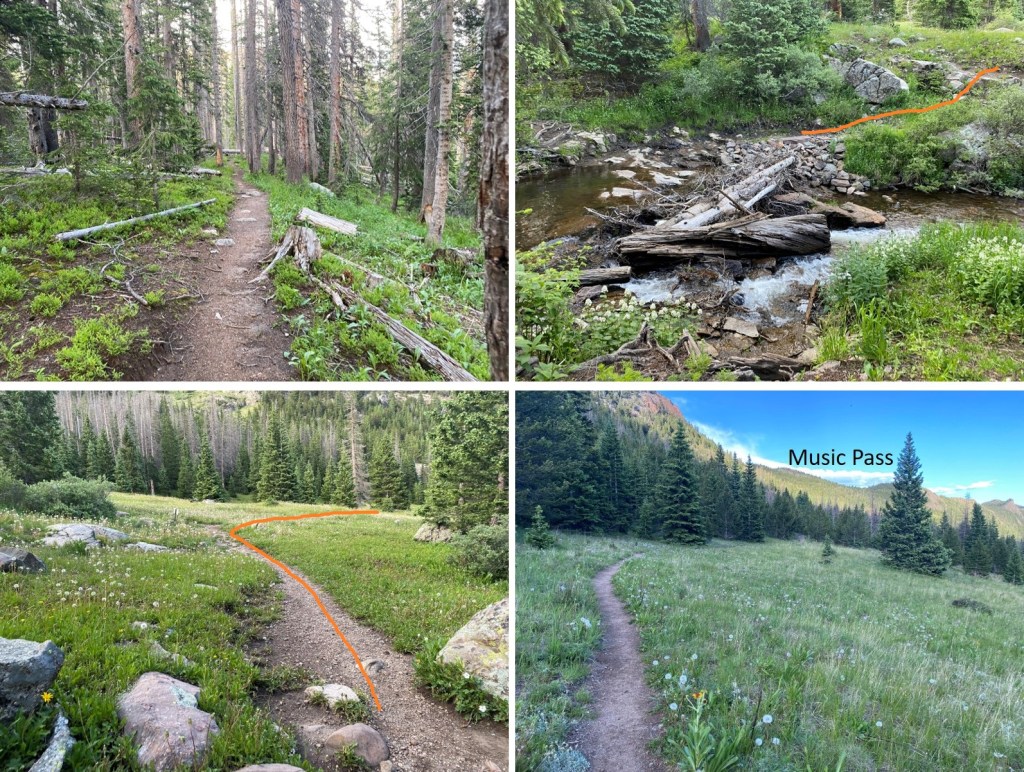
I passed a trail register, which was full of moths and only one piece of paper.  I didn’t bother signing it.  The trail is class 1 and easy to follow

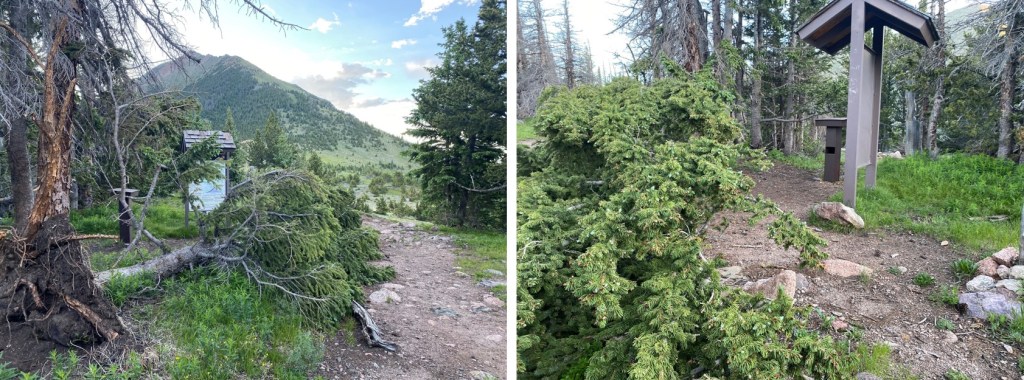
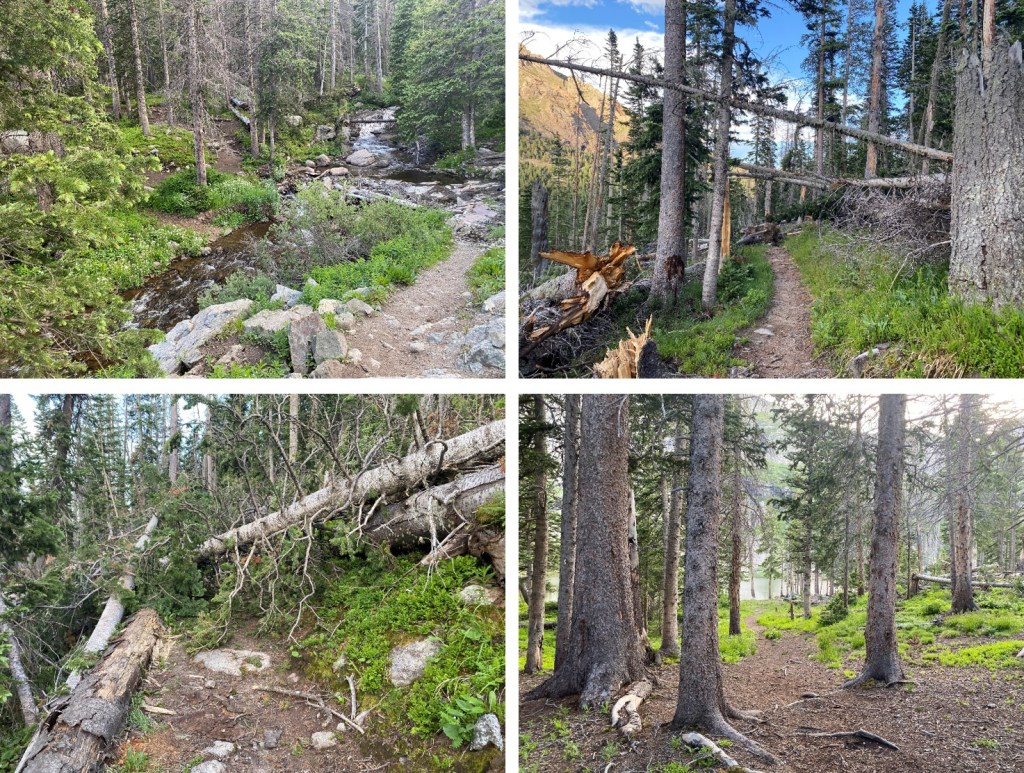
A tree has recently fallen near the signs at the top of Music Pass.  I continued on the trail and lost 450’ as I descended to Sand Creek below.

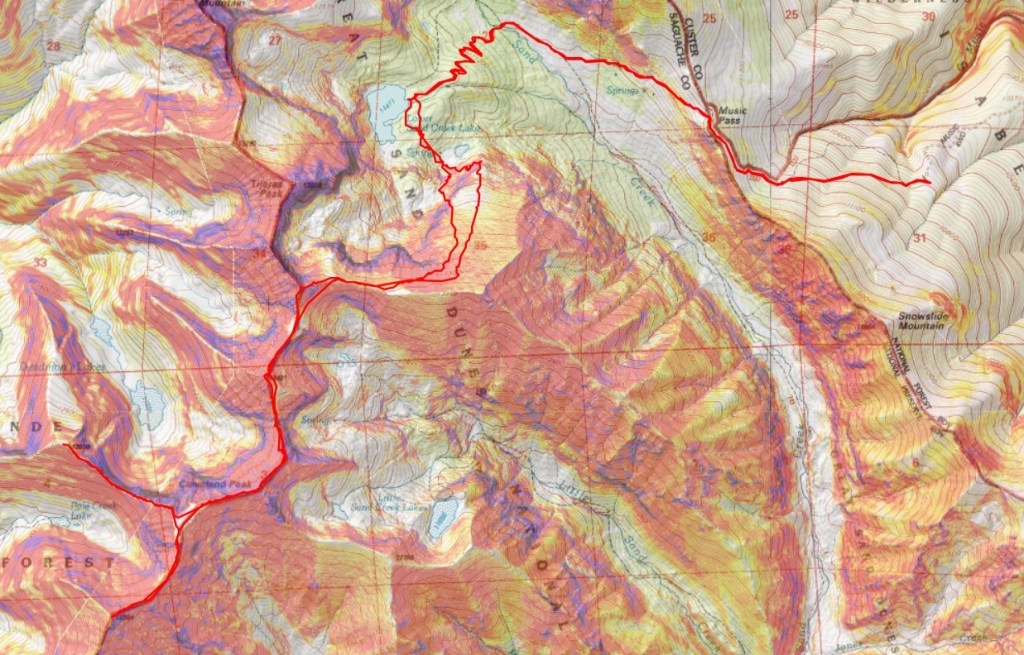
Now is a good time to get a look at how you’re going to ascend the ridge from Sand Creek Lake.  Getting up the ridge is not easy.  I would not recommend the route I took up (dotted line).  The easier route is up a gully.  Also note the cliffs you’ll want to avoid.  It’s important to make it to at least 13000’ before traversing to the ridge, as there are cliffs and chutes you’re trying to avoid. This is the overall route I took

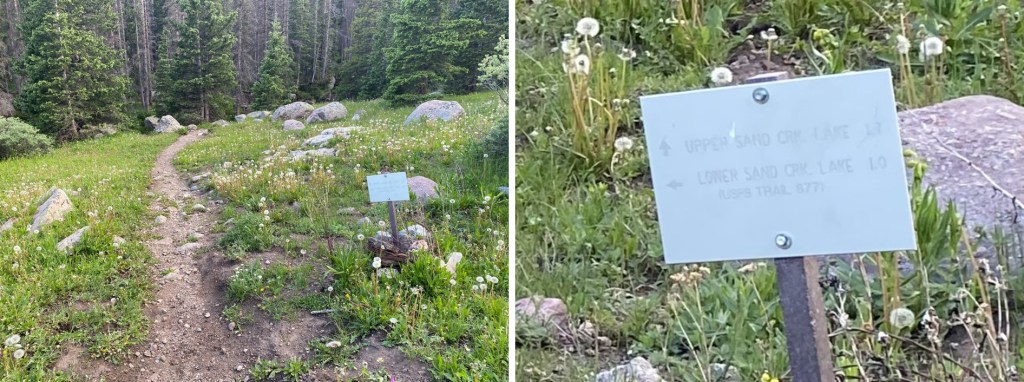
After 3.3 miles I took the second junction and turned left.

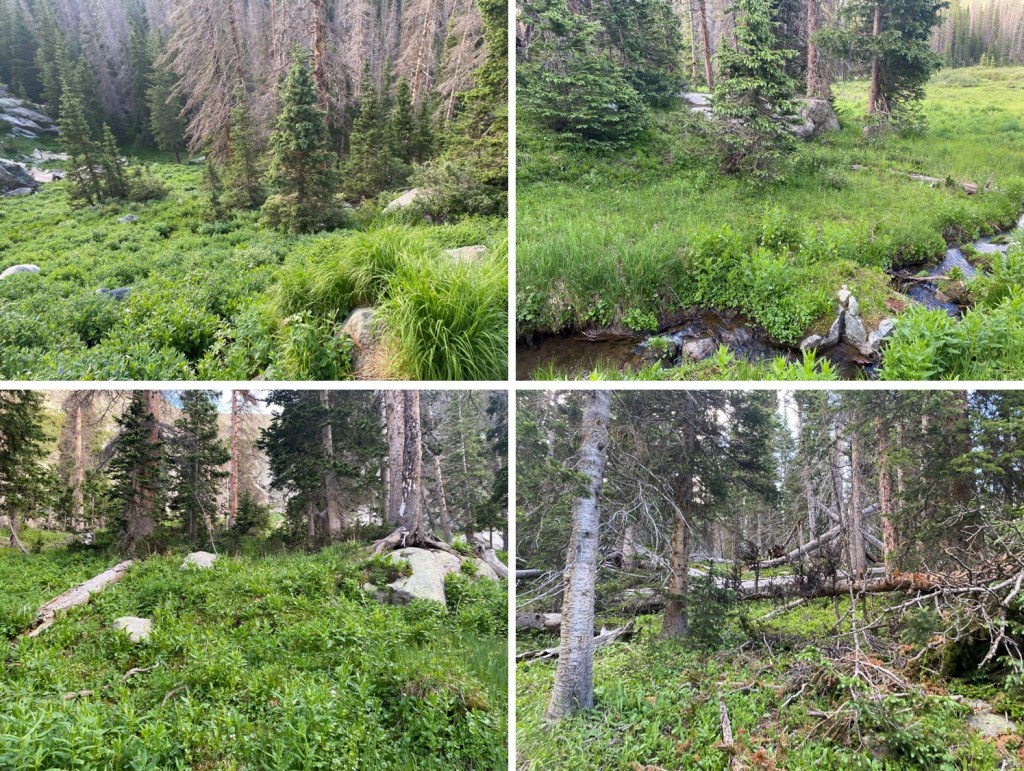
I crossed Sand Creek and made my way to Sand Creek Lake on the class 1 trail.  There was a lot of deadfall in this area

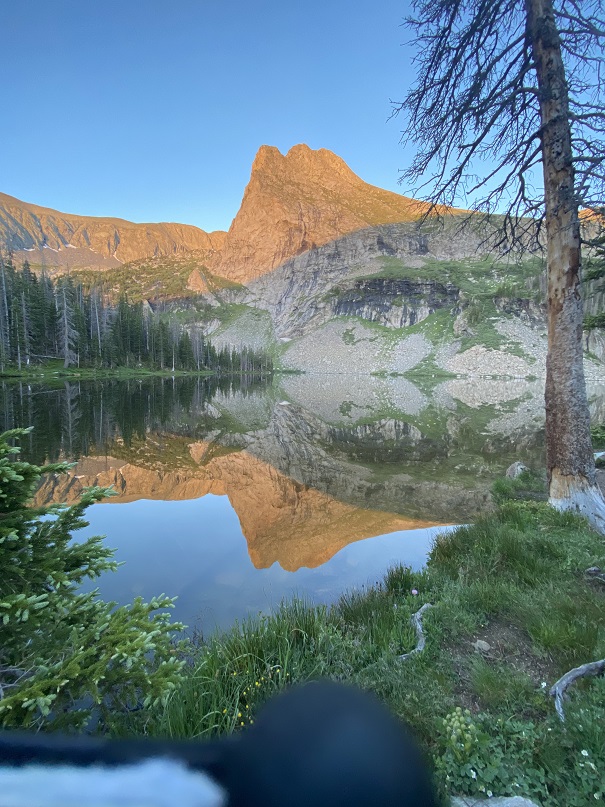
I made it to the lake as the sun was rising.

At the lake the trail ended.  I knew I needed to ascend the ridge, so I headed south, which required some bushwhacking.

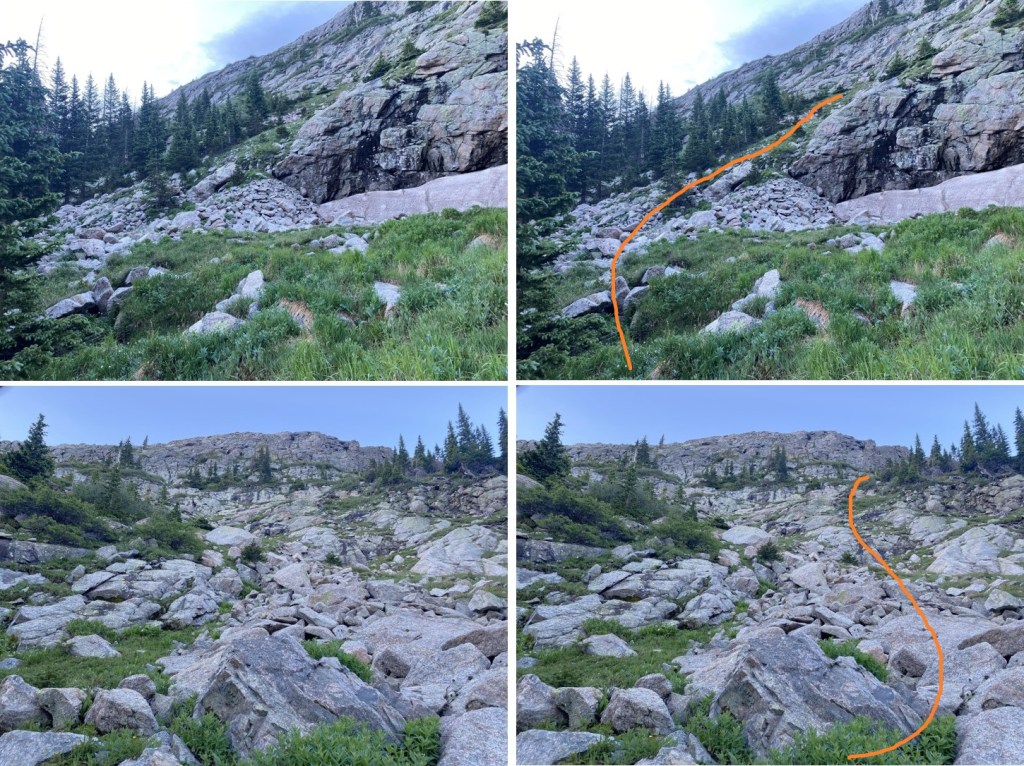
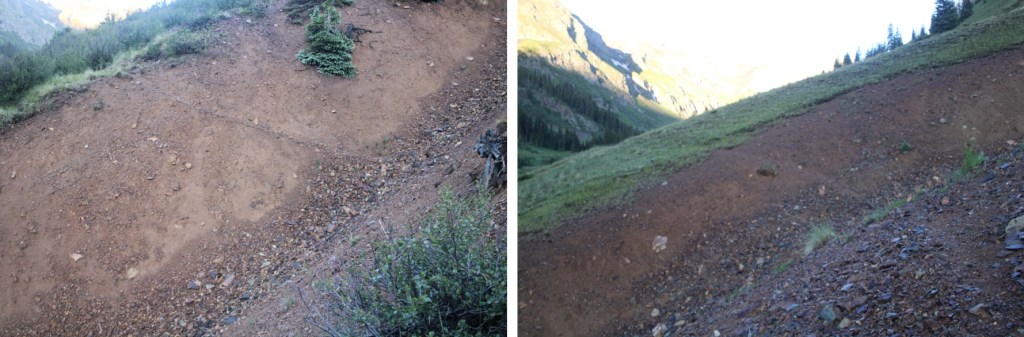
From here I’m going to show you how I descended, as it was much safer than the way I ascended.  At around 11,400’ there’s a gully.  It’s obvious, and the only one.  Follow and ascend the gully southwest and then south.

This is where you ascend the gully. This can be done mostly on grassy ledges. 

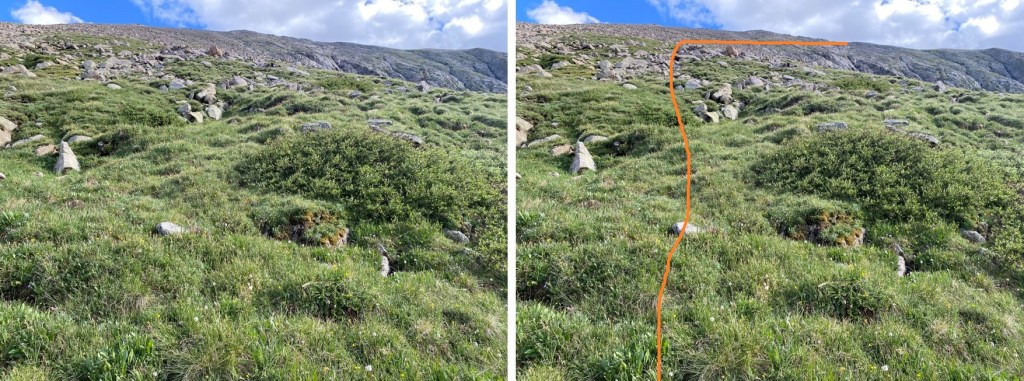
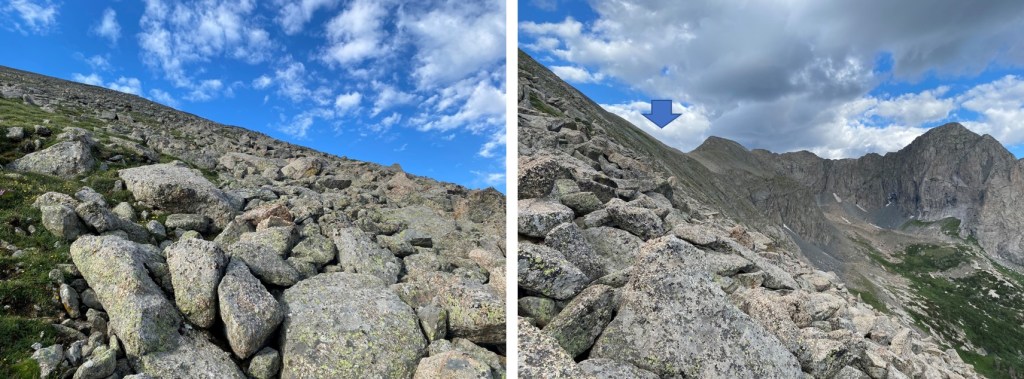
Once up the gully, it’s time to make it to the ridge.  You don’t need to go all the way to the top, instead, ascend to about 13000’, then traverse over to the ridge at its lowest point. It’s important to make it to at least 13000’ before heading west to the ridge, to avoid the drop offs and smooth gullies. The terrain here is full of loose rocks.  Every one rolls, so be prepared to wear your helmet and take your time.

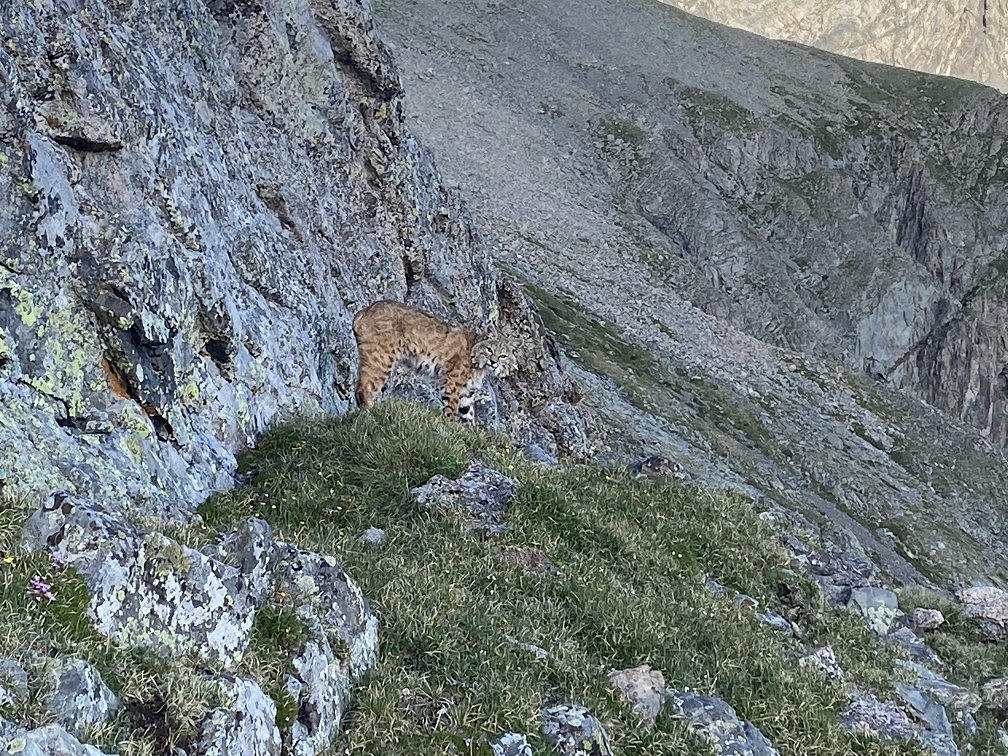
It was at 13000’ I unexpectedly awoke a bobcat.  He was not happy with me, but allowed me to take his picture before bounding off.

Bobcat:

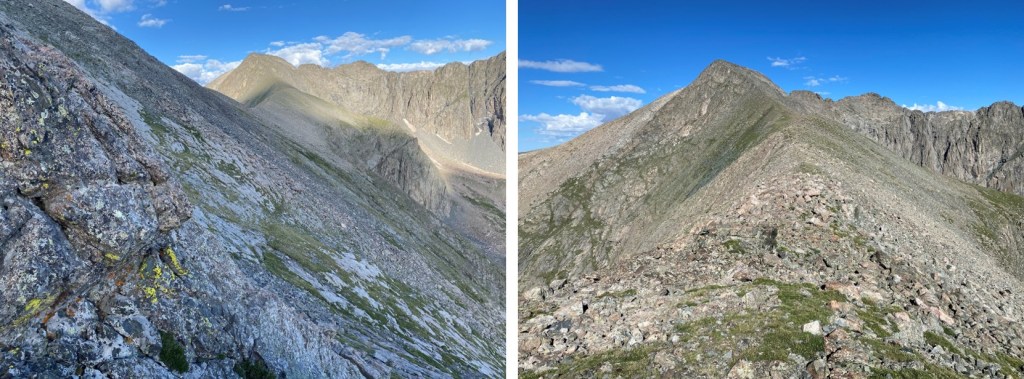
I continued heading west, across some tundra and rock filled gullies, towards the ridge.

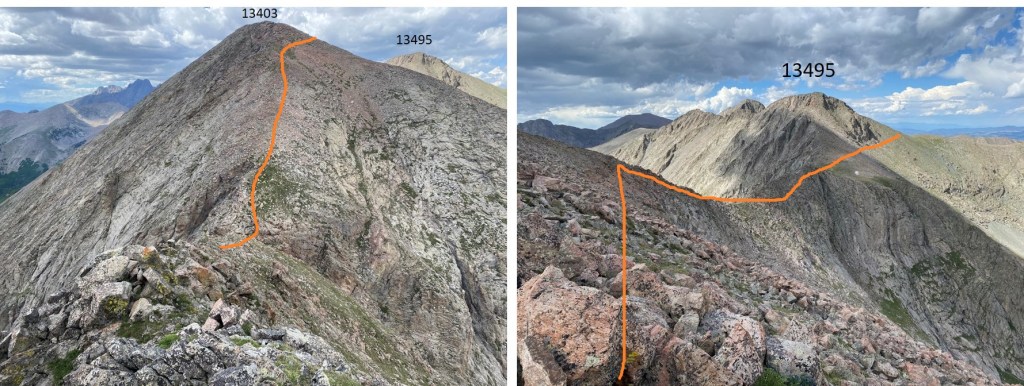
Once on the ridge, I followed it straight up to PT 13495.  However, this is an unranked point, so there is no need to go there.  Instead, you can skirt this summit and instead head over to PT 13403 (also unranked).  If you decided to go up and over PT 13495, it’s all class 2, both up and down.

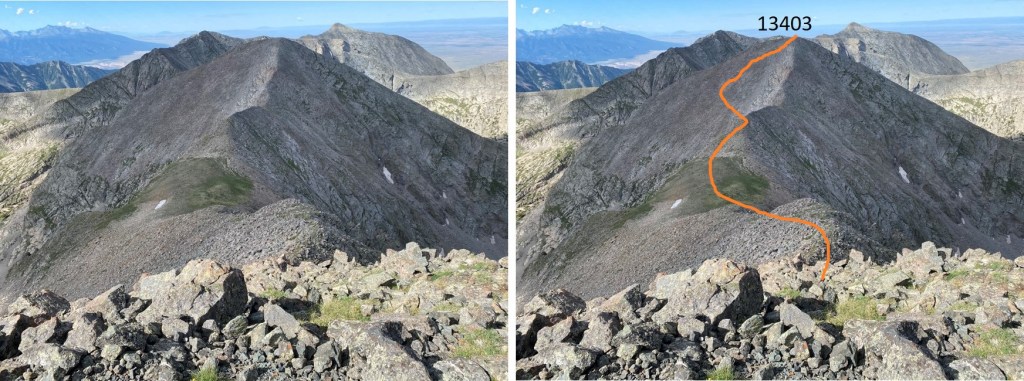
From the summit of PT 13495, this was my route up 13403.  The ridge looked like it went at class 3, but I decided to keep it class 2 and ascend the face

And some closer pictures

I summited PT 13403 at 10am

PT 13403:

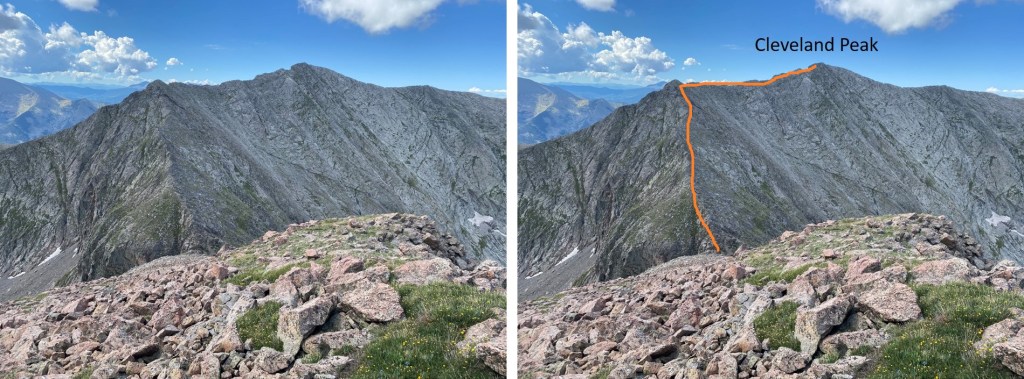
My next objective was to follow the ridge south towards Cleveland Peak.  Here’s my overall route up (going down I stuck to the ridge, which was class 3 with maybe a few class 4 moves)

I made it down to the saddle, and crossed over on some scree. 

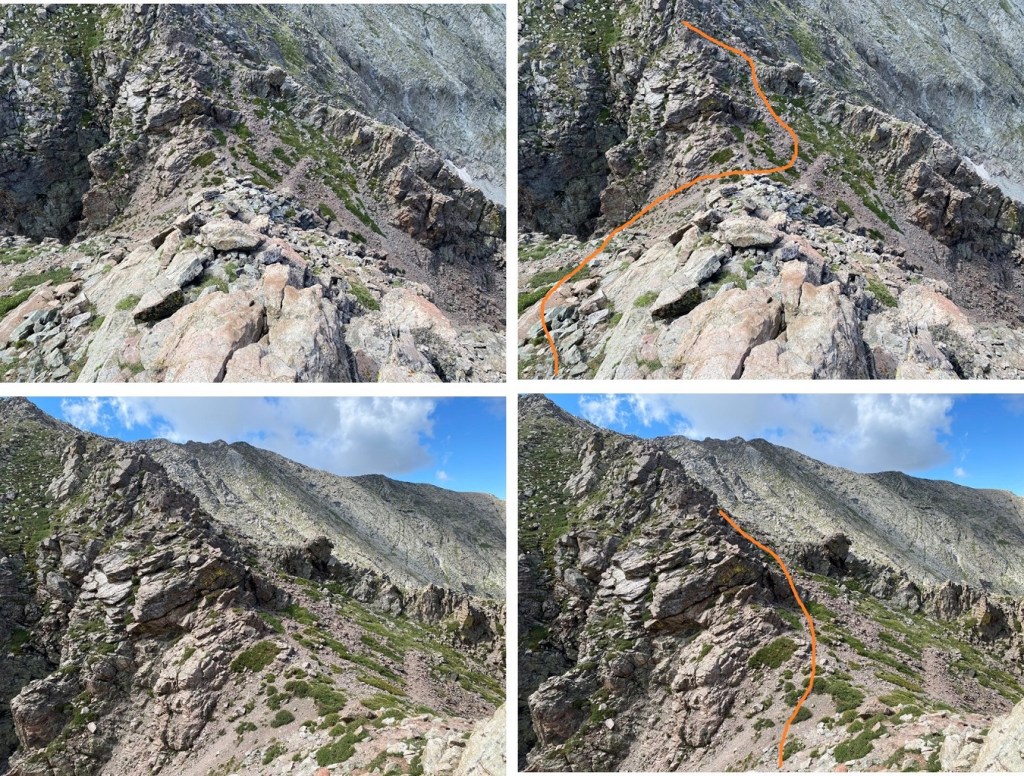
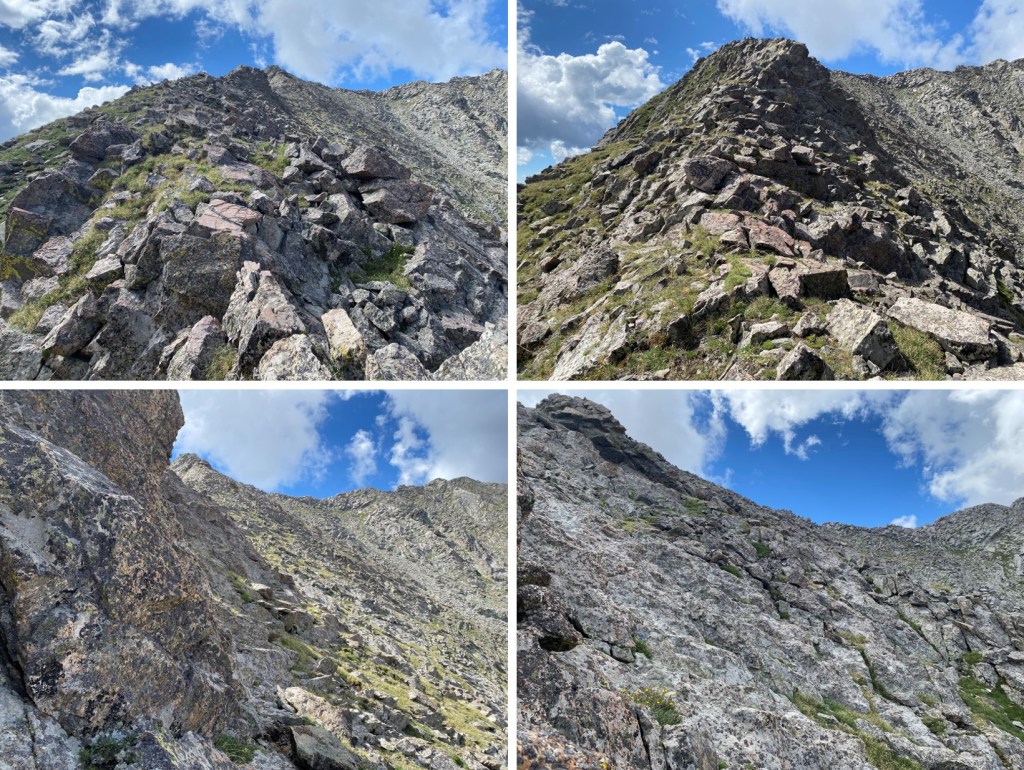
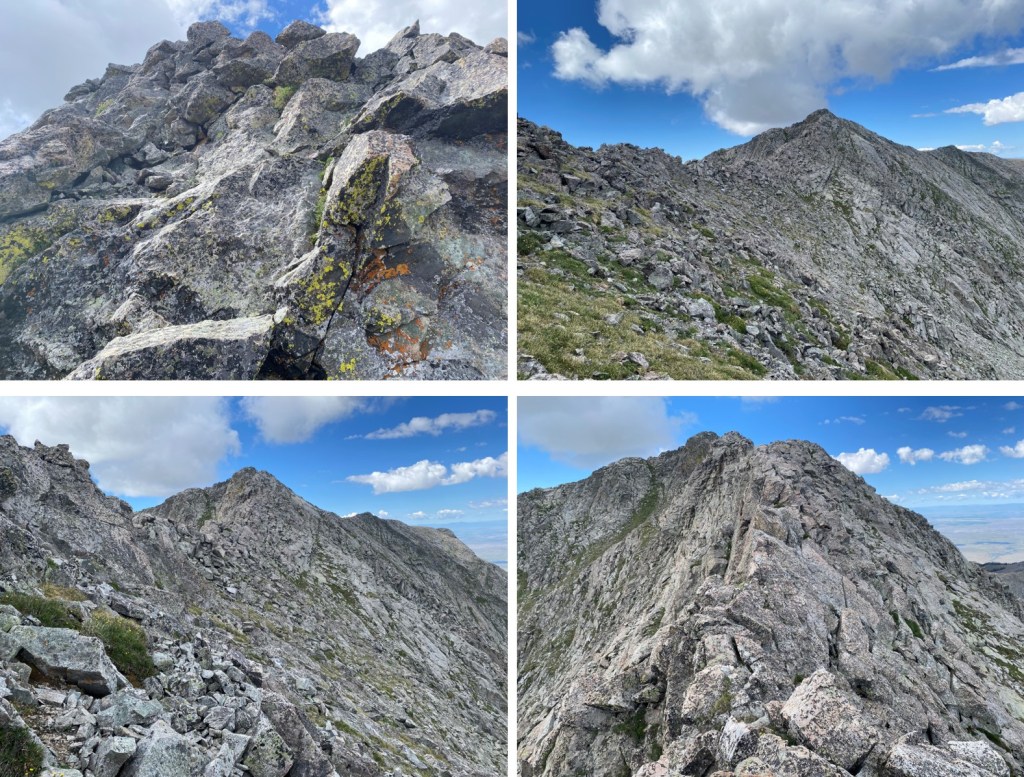
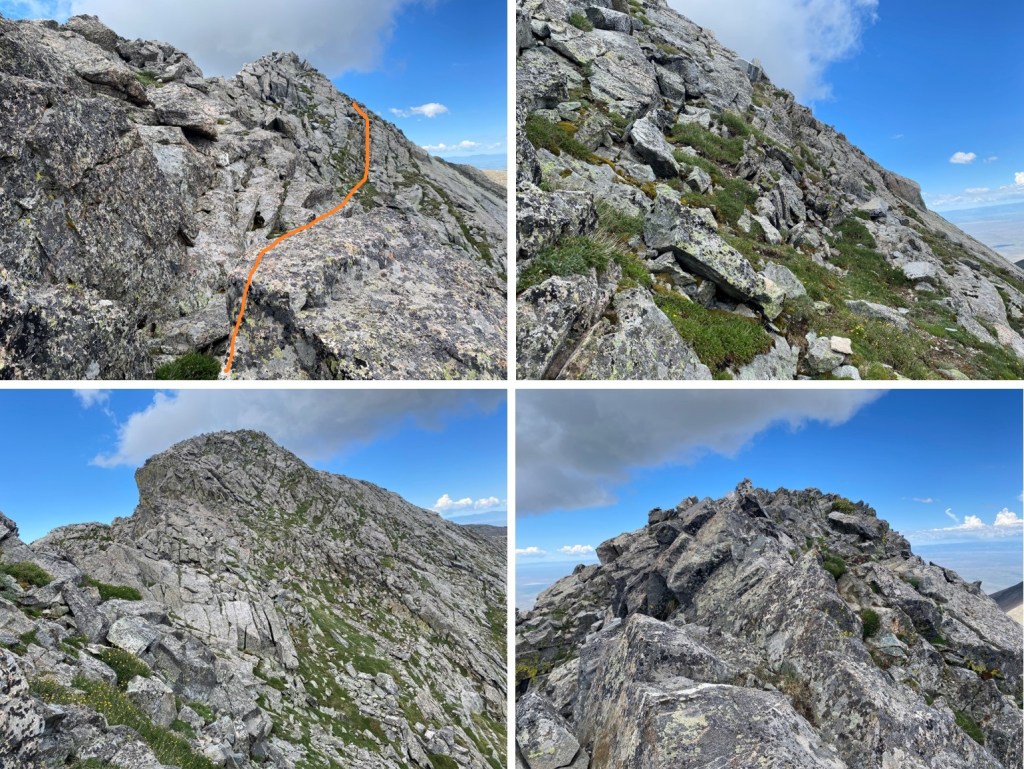
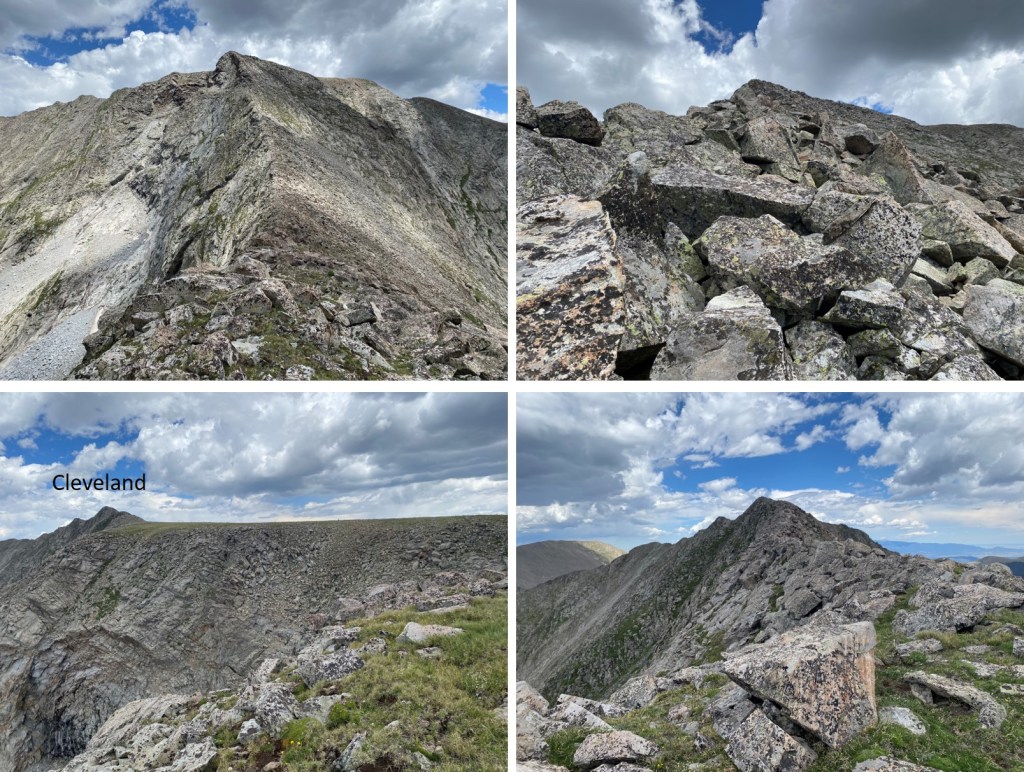
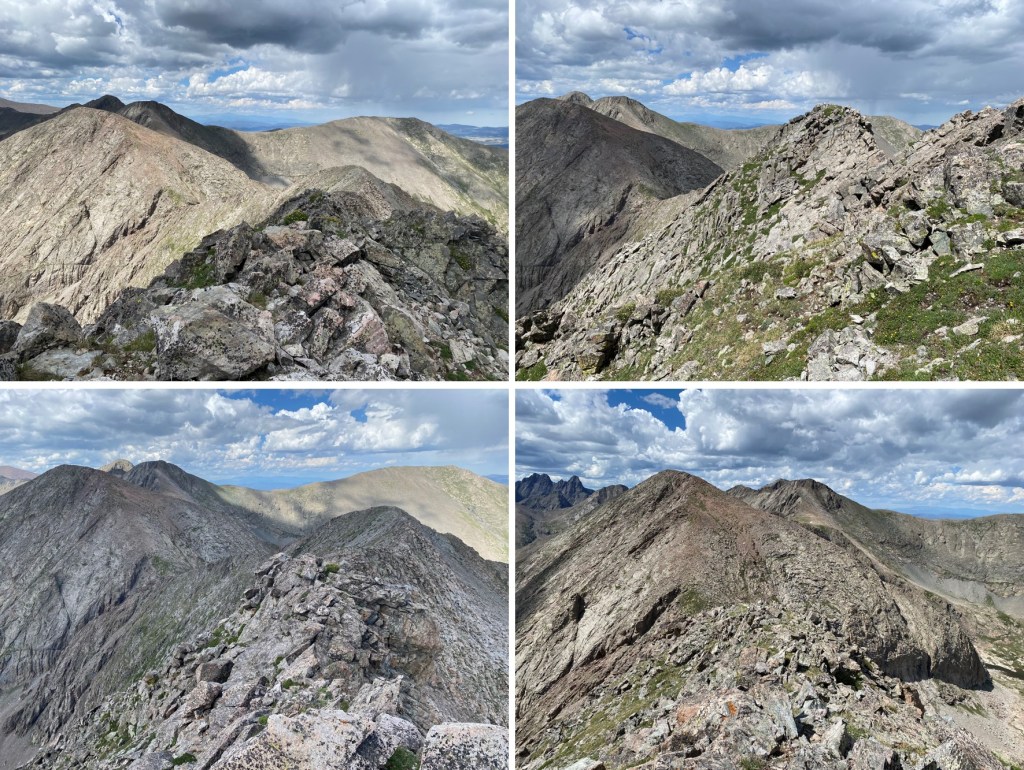
From there I tried to stick to the ridge, but every so often I had to drop to the right.  This is choose your own adventure.  The ridge goes at continuous class 3, easy class 4, and was the most difficult climbing of the day. 

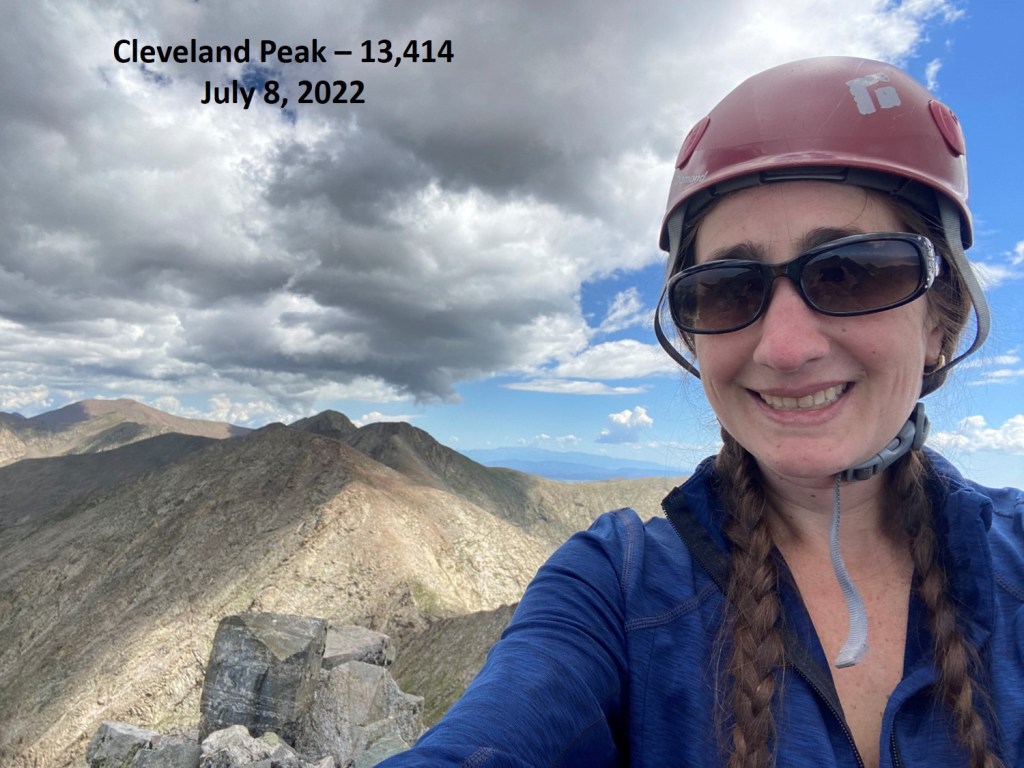
I summited Cleveland Peak at 11am

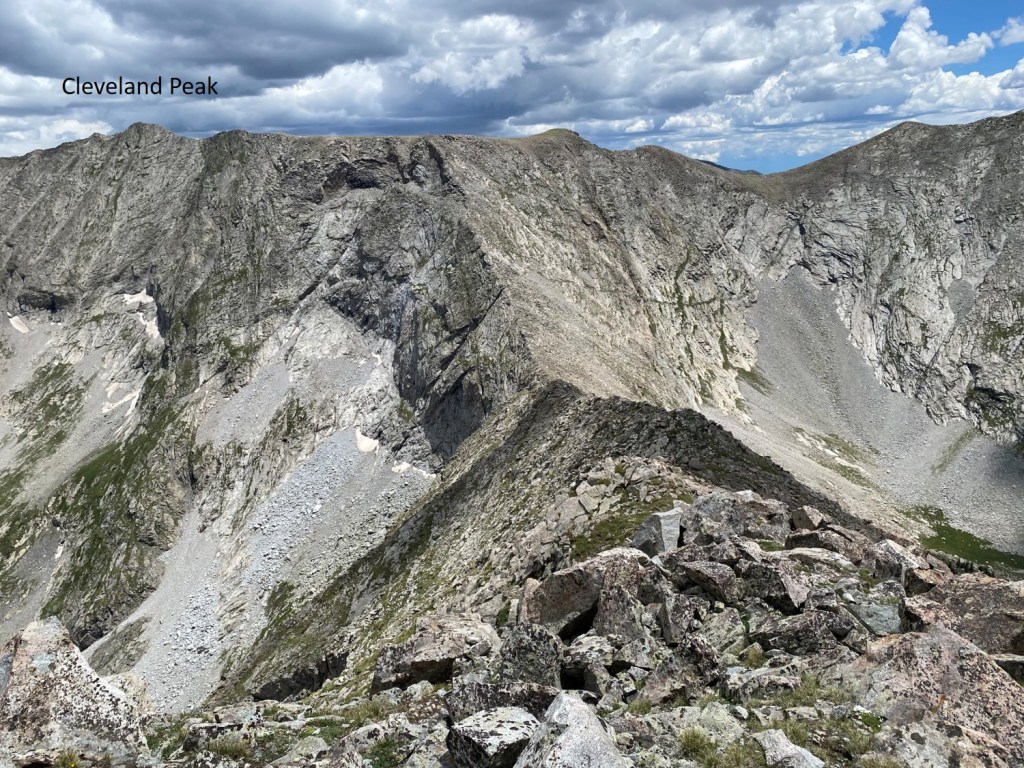
Cleveland Peak:

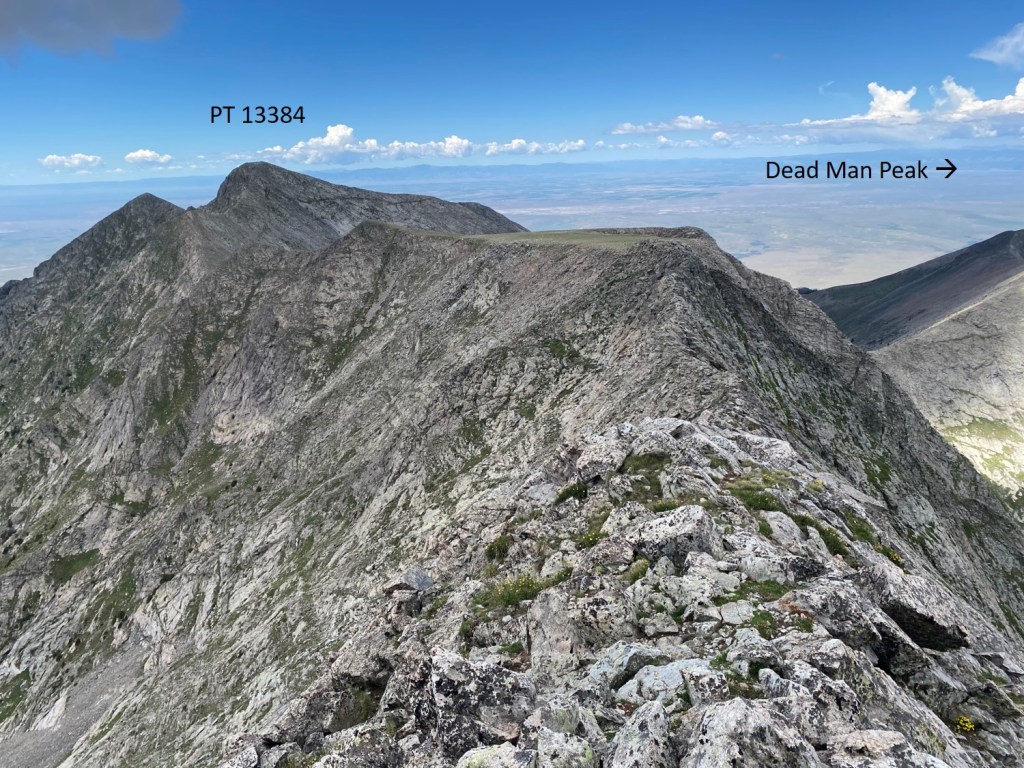
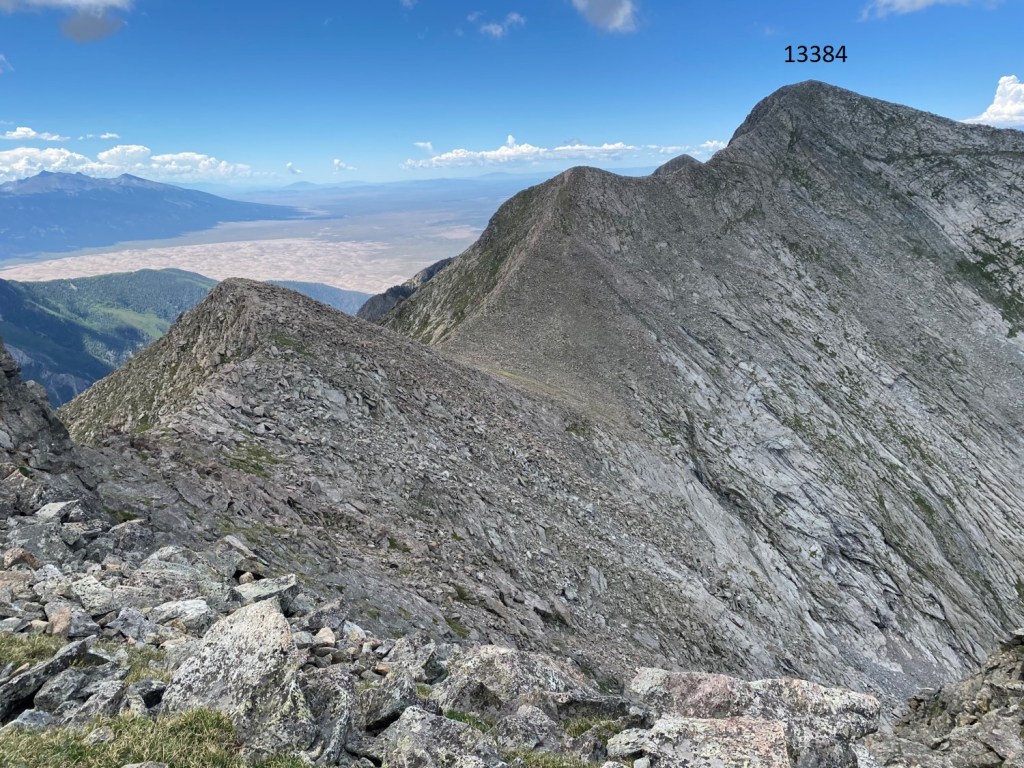
My next goal was PT 13384, to the southwest.  There was a little more class 3 ridge work, and then I crossed a plateau and made it to the Cleveland/13384 saddle

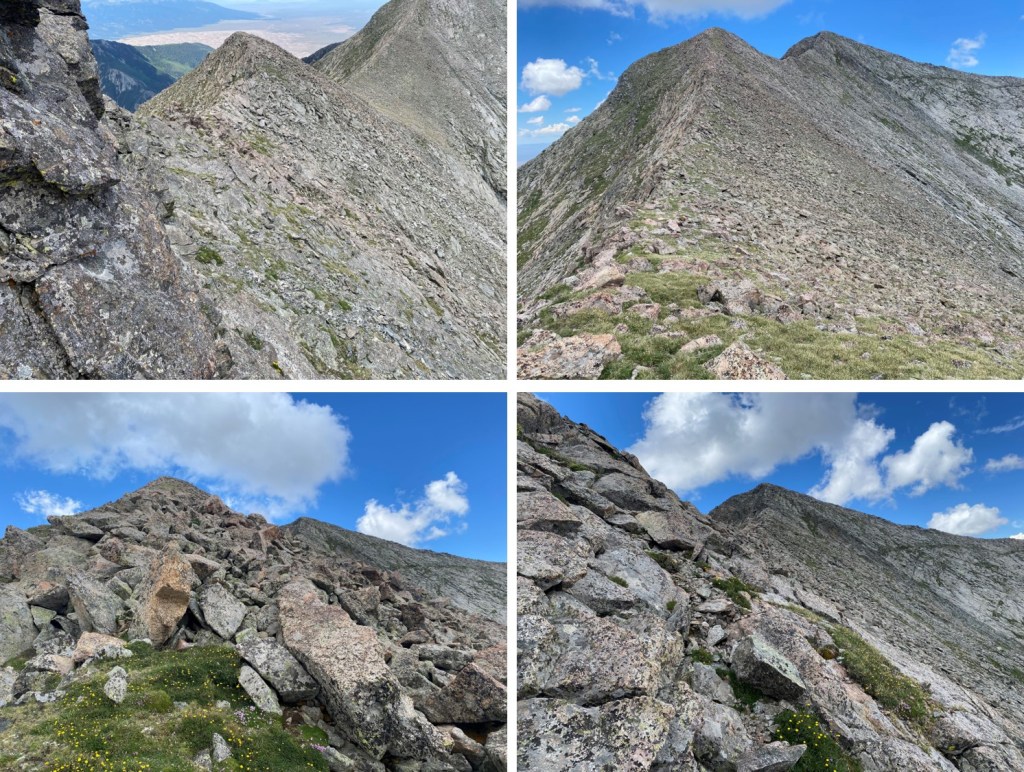
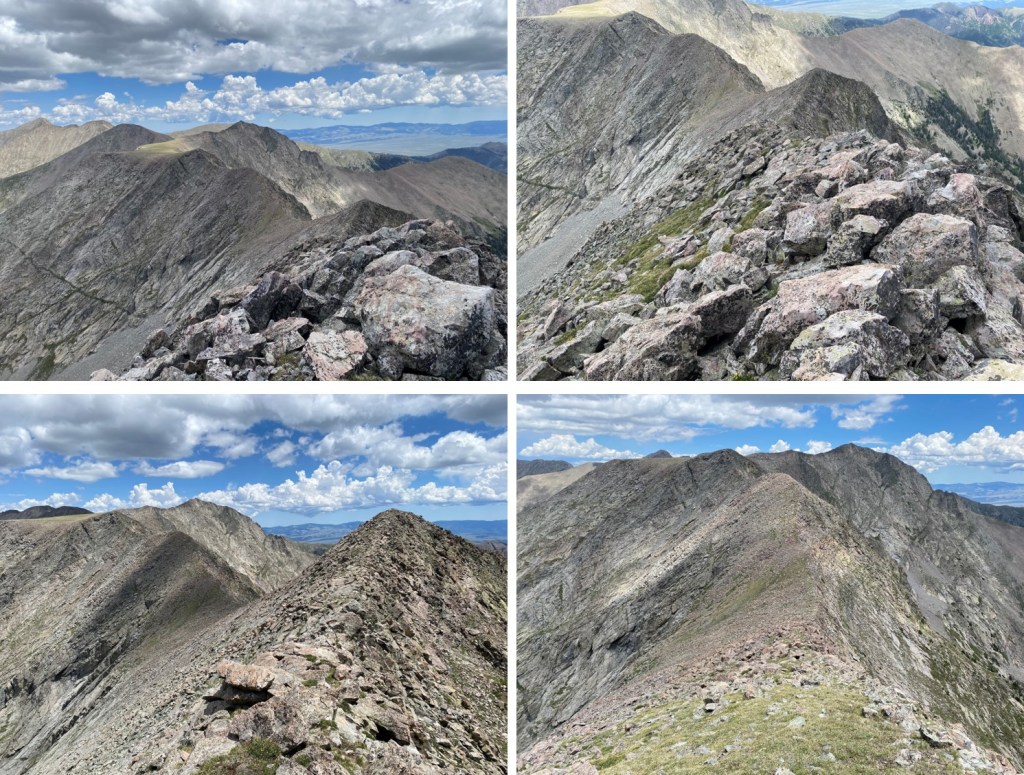
Once there, I followed the ridge to the summit.  The ridge goes at class 3

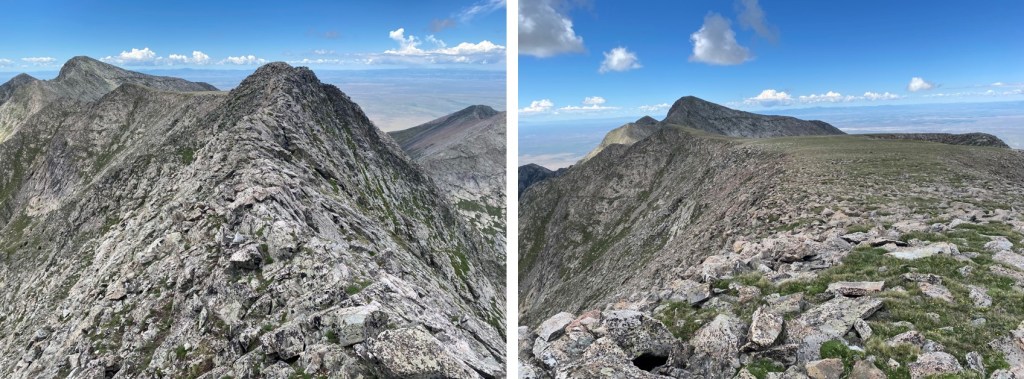
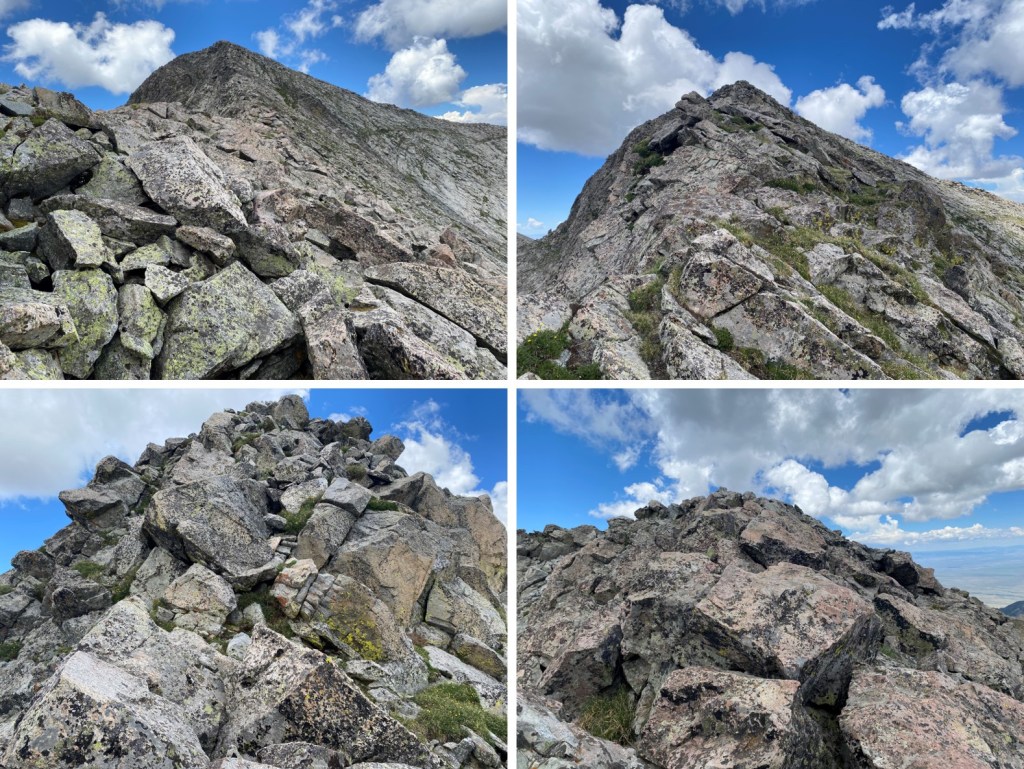
Here are some closer pictures of the ridge

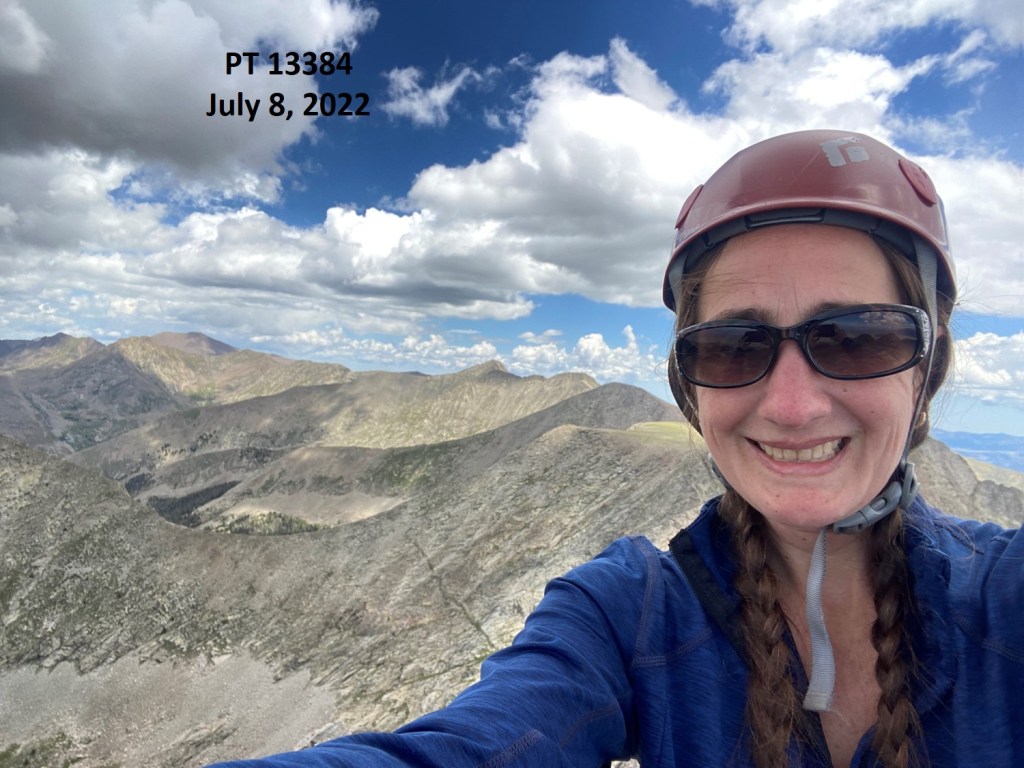
I summited PT 13384 at 12:10pm

PT 13384:

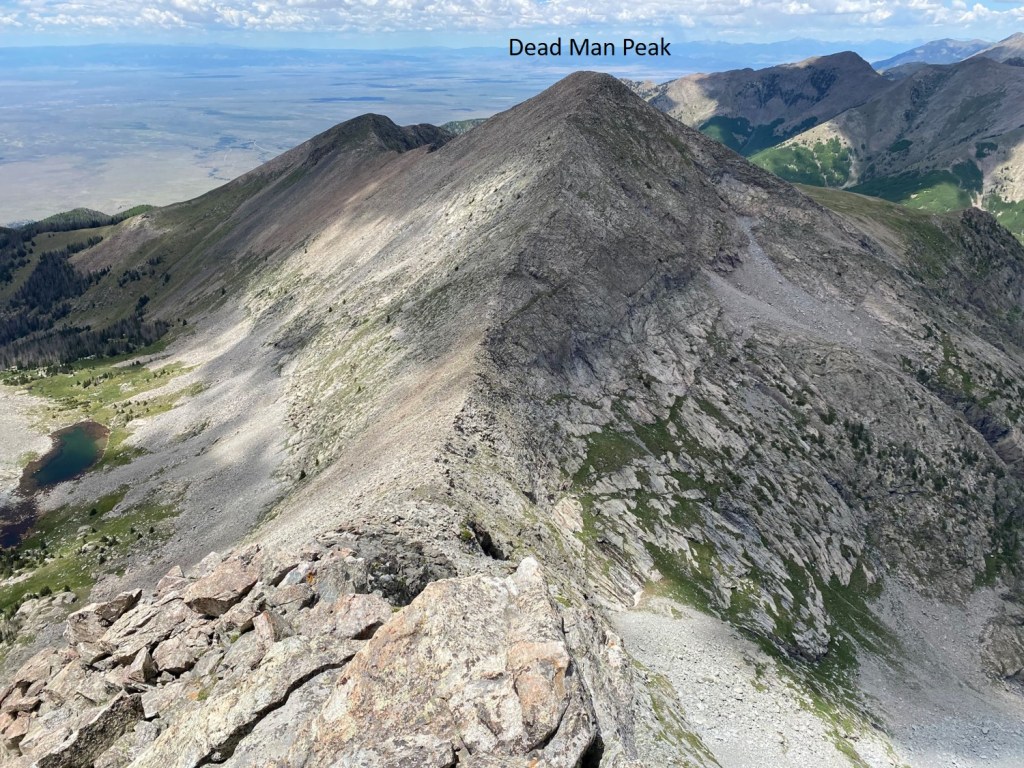
Dead Man Peak was to the north.  To get there, I would have to make my way back to the Cleveland/13384 saddle, re-ascend to the plateau, then head northwest over to Dead Man Peak

I made my way back to the Cleveland/13384 saddle

Re-ascended up to the plateau

Then descended 550’ and re-gained 400’ to the summit of Dead Man Peak.  This could all be kept at an easy class 3 by sticking to the ridge

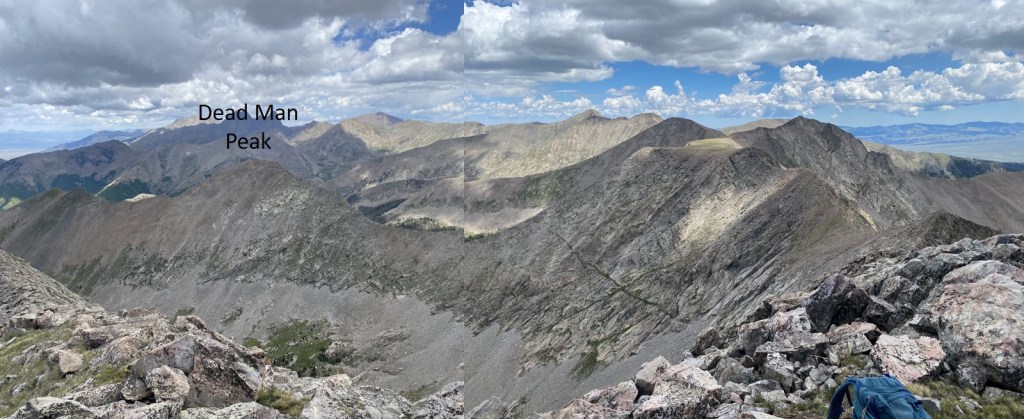
The summit is circled in red, to the northwest

I summited Dead Man Peak at 1:45pm

Dead Man Peak:

To get back to Cleveland Peak, I had to go back down to the saddle, and re-gain 770’ of elevation

After re-summiting Cleveland, I had the most difficult part of the downclimbing to do to get back to the 13403/Cleveland saddle.   

I was able to stick directly to the ridge.

I did not summit PTs 13403 or 13495 this time, but skirted them to the right

Once I could see Lower Sand Creek Lake, I stayed high on the ridge to pass all the cliffs, then descended straight towards the gully below.

I bushwhacked it to northwest to Lower Sand Creek Lake, then found the trail and took it back to Music Pass

Then followed it back to the trailhead

On big days, I tend to get wildly different numbers from CalTopo and Strava.  CalTopo says I did 23.05 miles with 7080’ of elevation gain, and Strava says I did 17 miles with 9474’ of elevation gain.  In any event, the hike/climb took me 16 hours, 15 minutes to complete.   

On to the next trailhead!

Warren Peak – 13,307 – Rogers Peak – 13,391 – Mt Spalding – 13,863 – The Sawtooth – 13,520 – West Evans – 14,257 – Mt Evans – 14,268

RT Length:  10.28 miles

Elevation Gain:  3263’

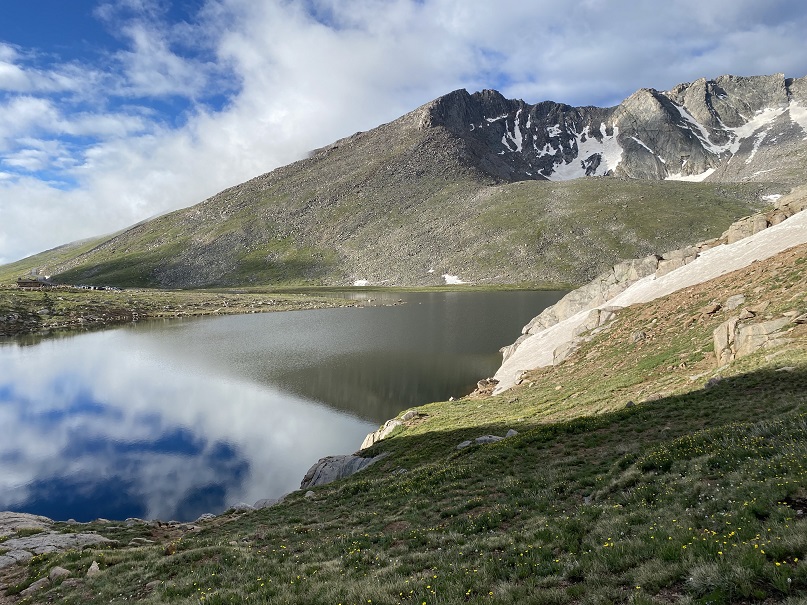
The permit system was simple, especially for Summit Lake. I bought it the day before, and there were 23 spots left for entry between 8-10am, the time I picked since it was the earliest. There were two other vehicles in the parking lot when I was on the trail at 4:45am. 

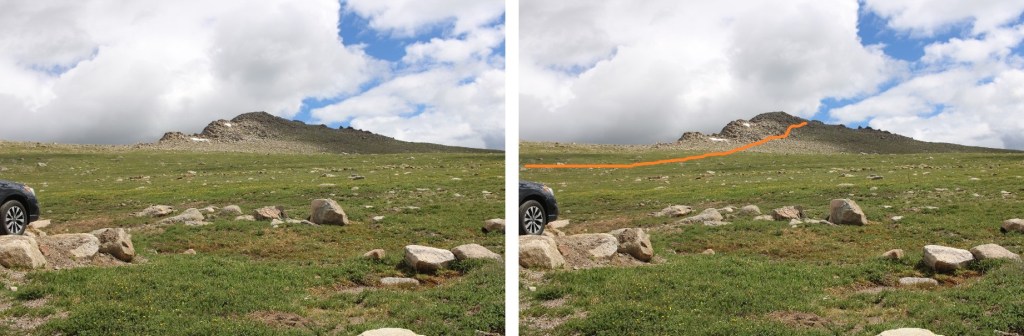
I was headed northeast, to the summit of Mt Warren.  This was simple, class 2, and straightforward.  Except it was dark and the rocks were slippery because of the rain.  Here’s the route I took.

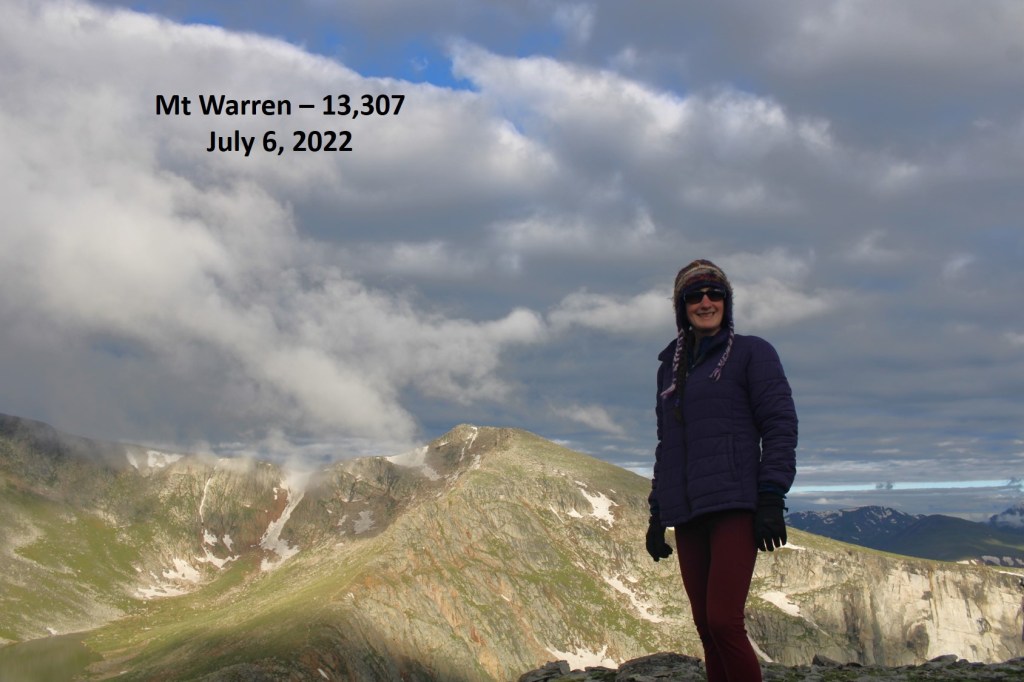
After hiking northwest for .75 miles, I summited Mt Warren at 5:10am

Mt Warren:

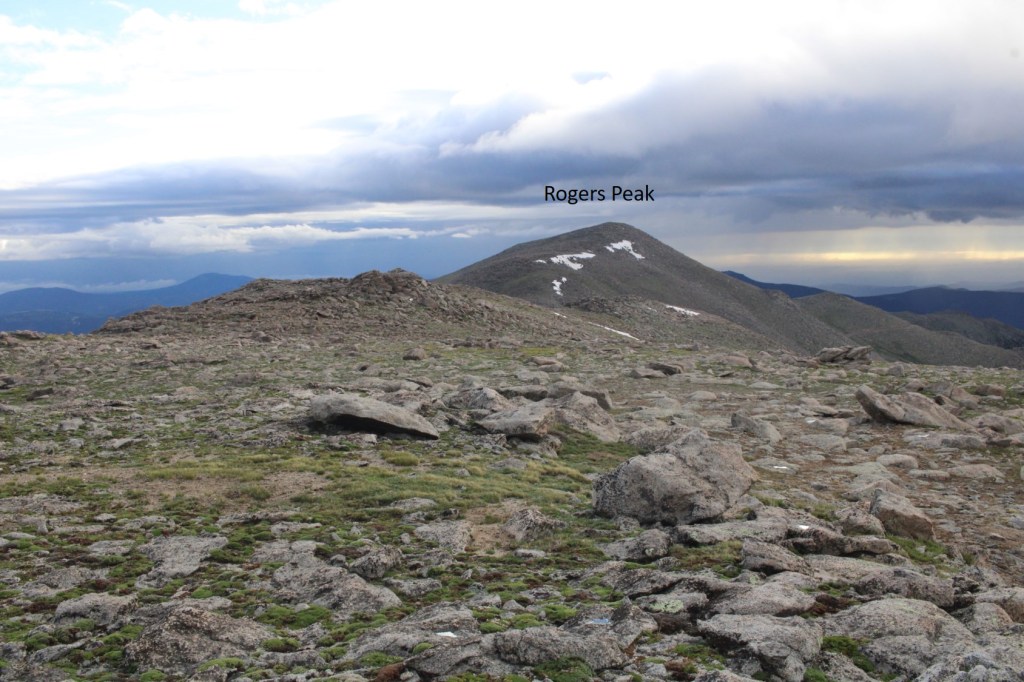
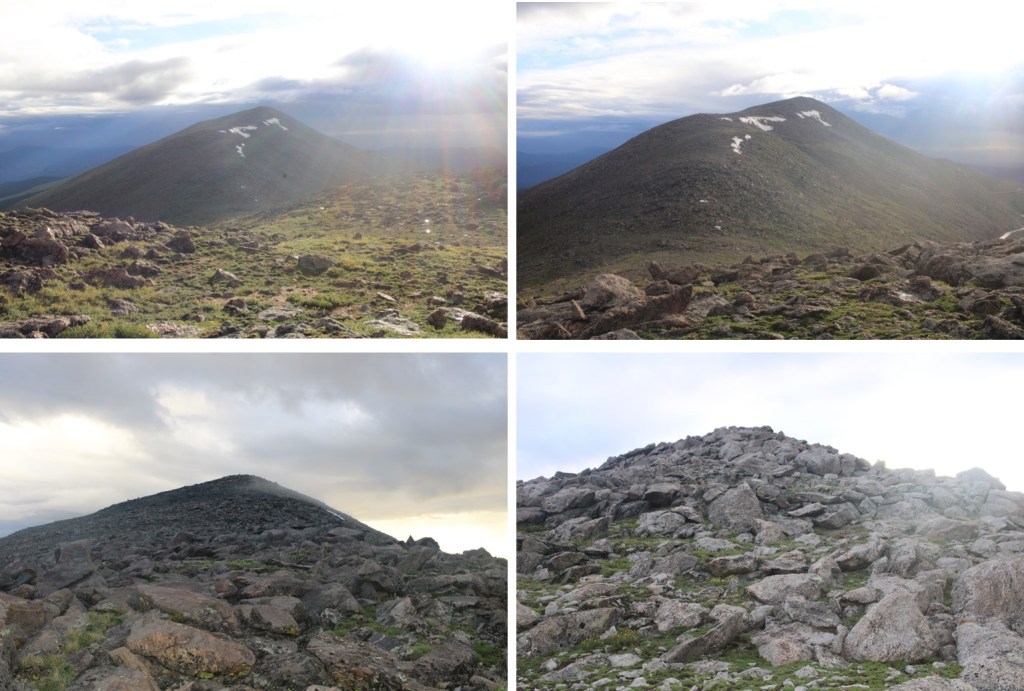
I continued following the ridge northwest, to the summit of Rogers Peak.  This was also class 2

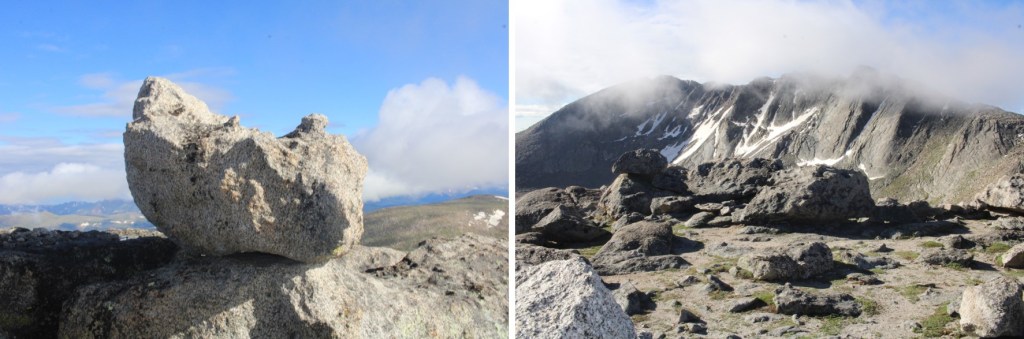
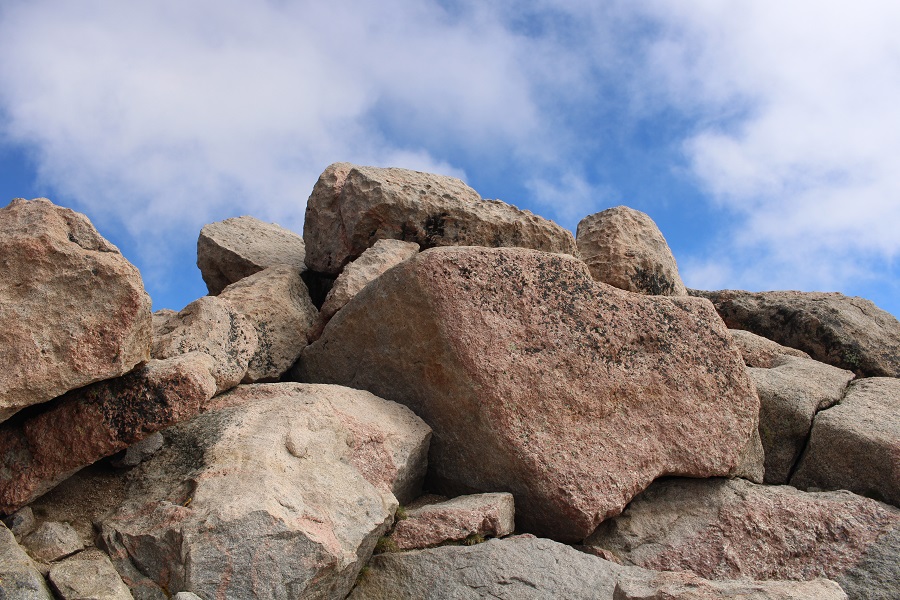
The summit of Rogers Peak is the top of this rock. 

I climbed up it (not difficult) but took the video from below. 

I summited Rogers Peak at 6am

Rogers Peak:  

Now to re-trace my steps back to Summit Lake.

I re-summited Mt Warren, and continued southwest towards Summit Lake

Once at Summit Lake, there was a class 1 trail that let me up to the summit of Mt Spalding

While this was class 1, there were a couple of quick class 3 scrambling moves.  Large cairns made the route obvious

I continued following the ridge west towards the summit, on the class 1 trail

This rock is the summit block. I climbed it.  The summit area (besides the block) is flat

I summited Mt Spalding at 8am

Mt Spalding:

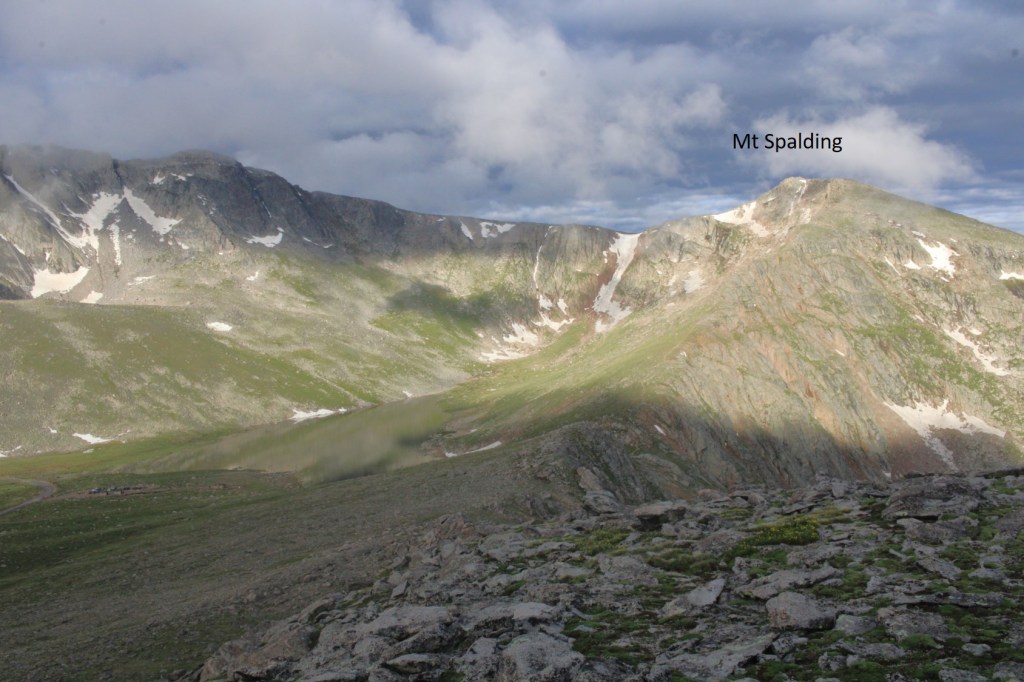
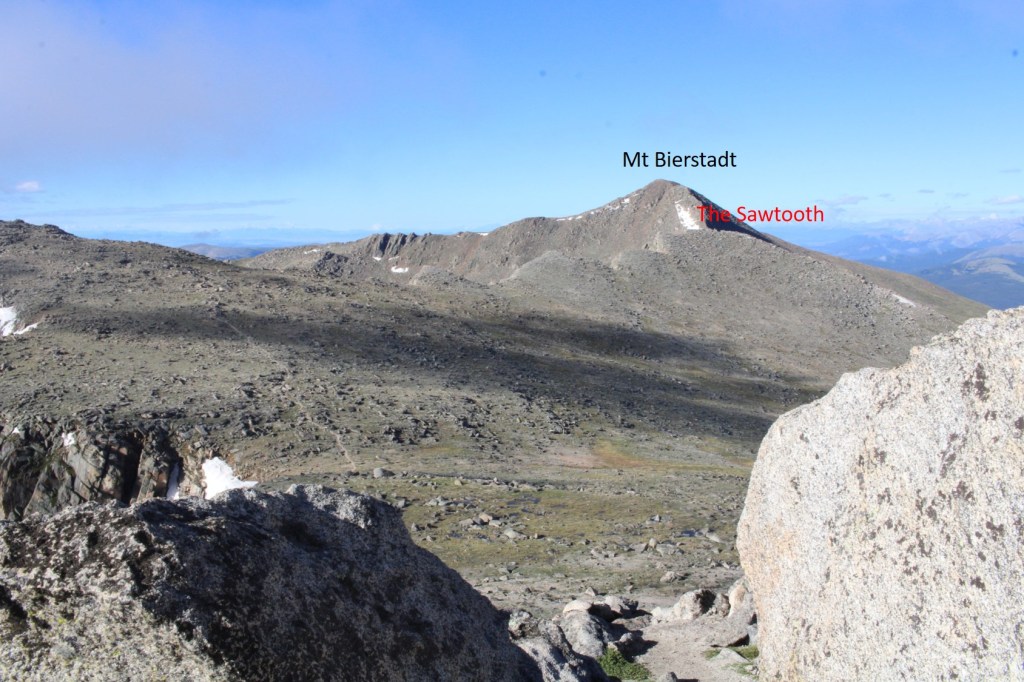
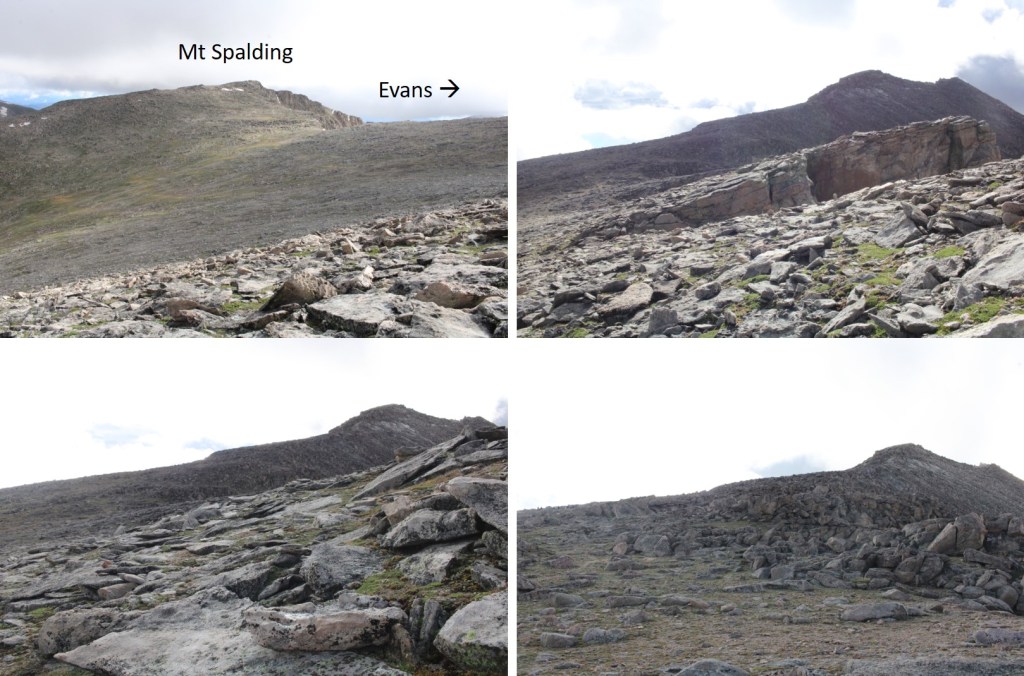
From Mt Spalding I could see my next objective to the southwest:  The Sawtooth

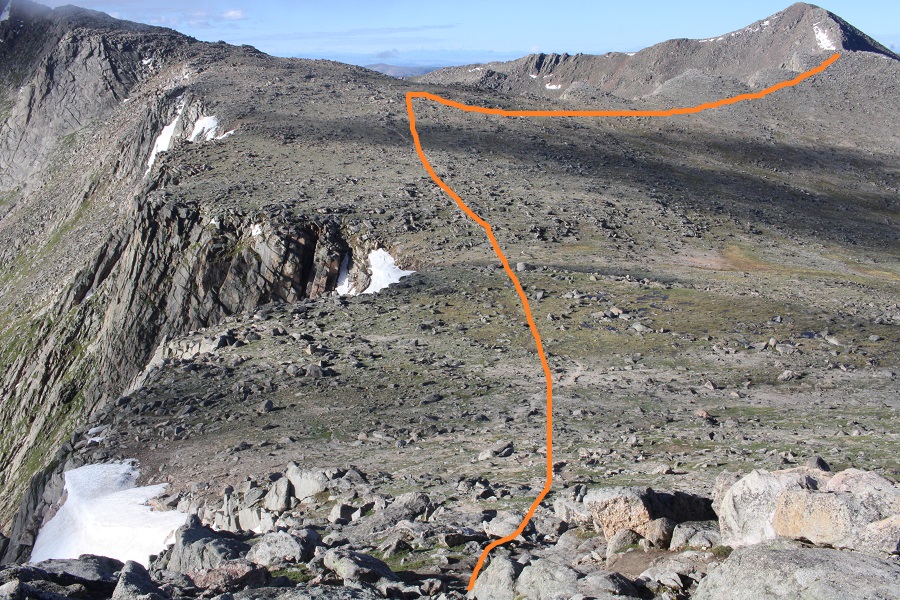
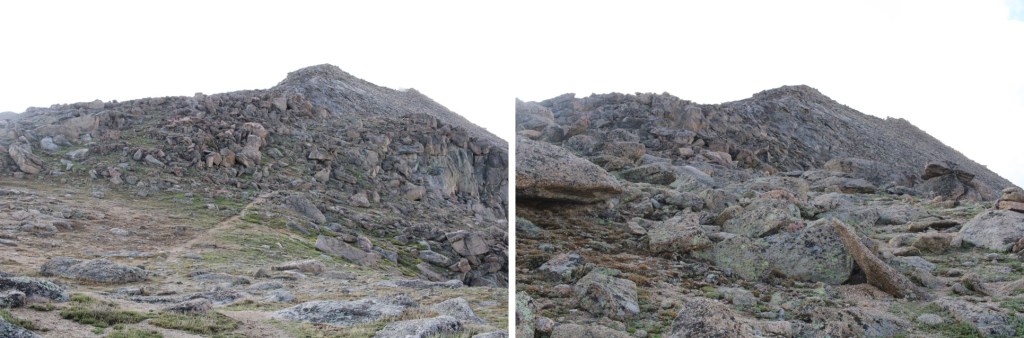
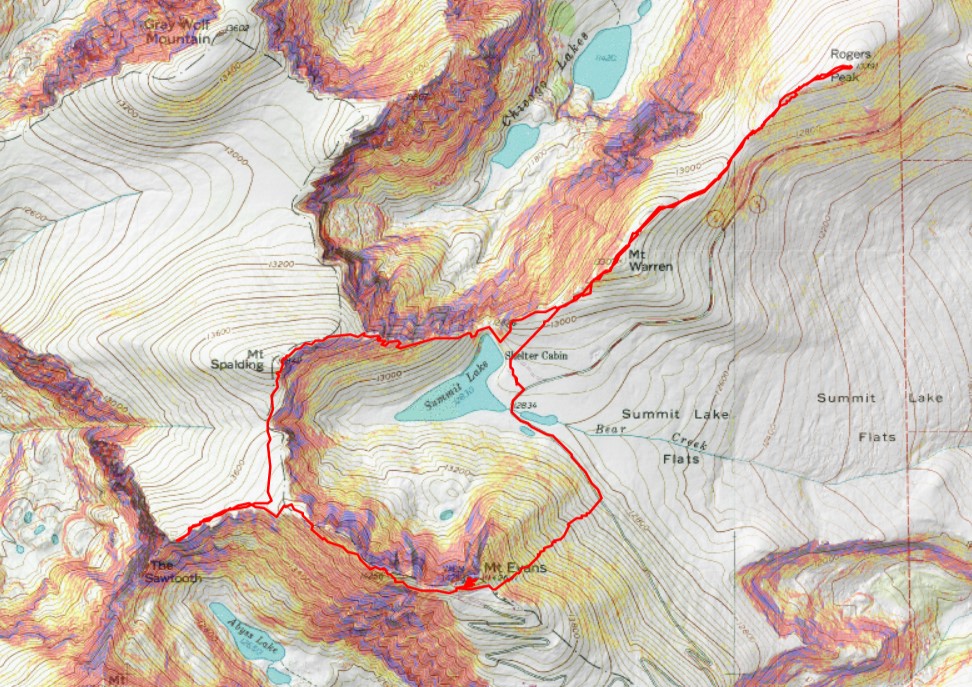
I continued following the class 1 trail south towards Mt Evans, but once I hit the ridge to The Sawtooth I left the trail and headed west. Here’s my overall route

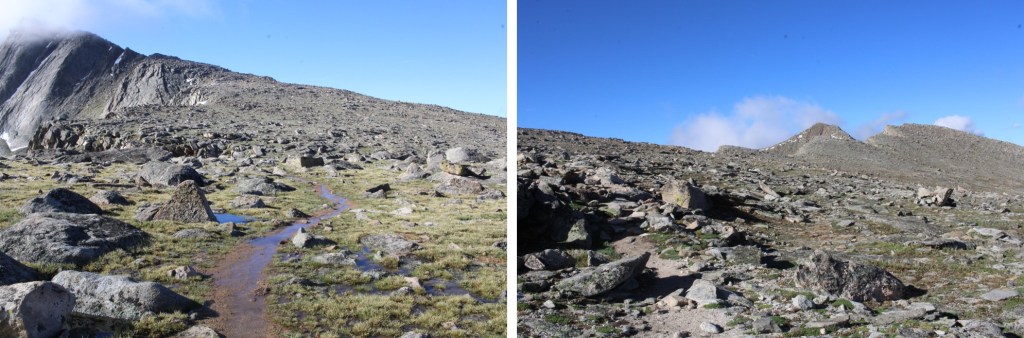
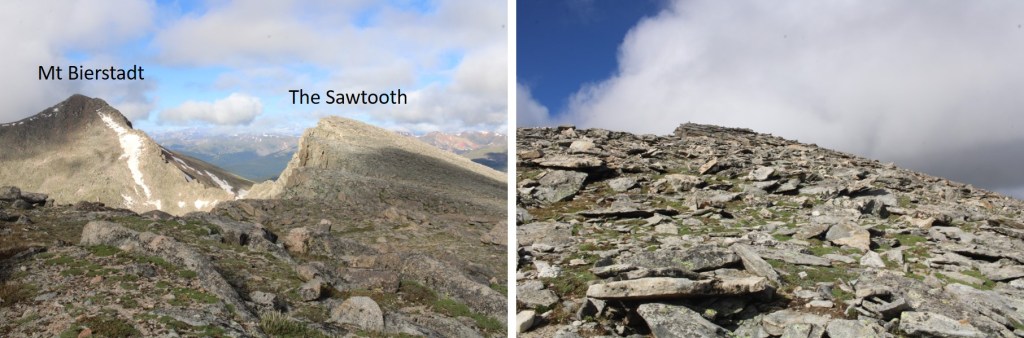
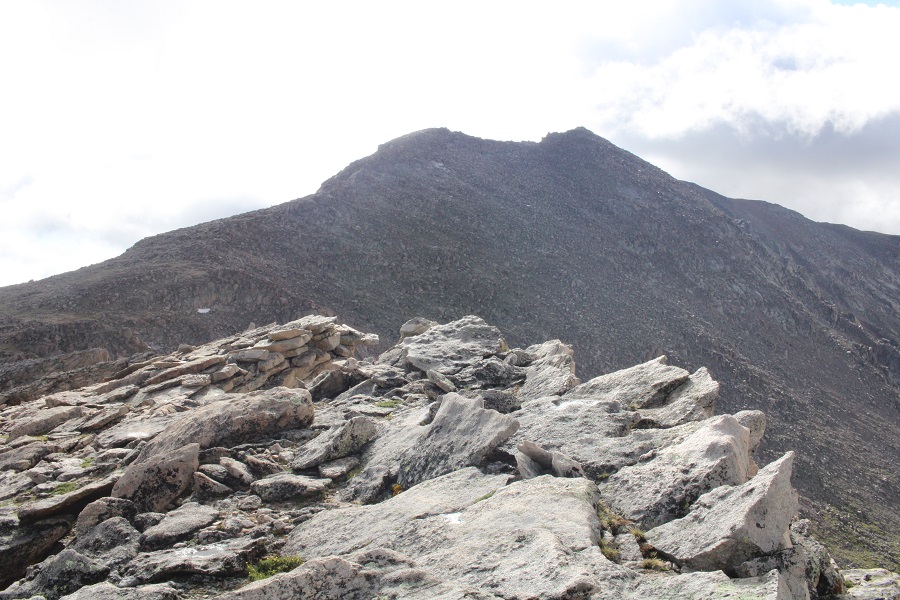
And some step-by-step pictures

I summited The Sawtooth at 8:35am

The Sawtooth:

From The Sawtooth I could see Mt Evans to the east (actual summit hidden)

I made my way back to the Class 1 trail

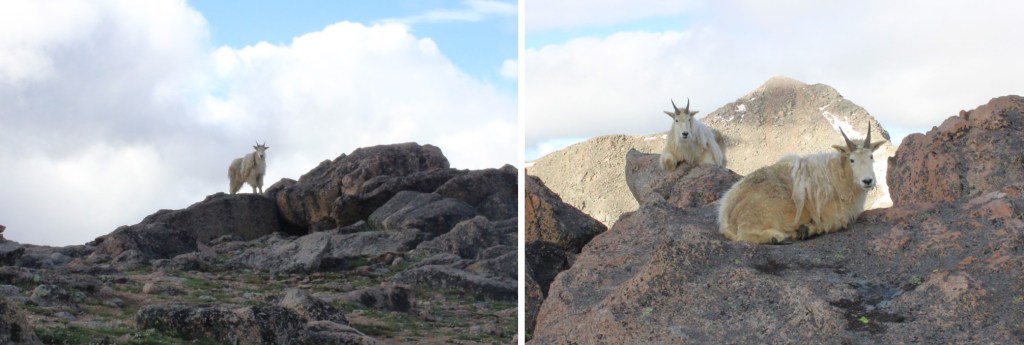
I was still off trail, but just before linking back up with the actual trail I came upon a couple of mountain goats.  They didn’t seem to mind my taking their picture.  I never would have seen them if I’d been 50 feet away, on the actual trail.

Now back on the trail, I followed it southeast

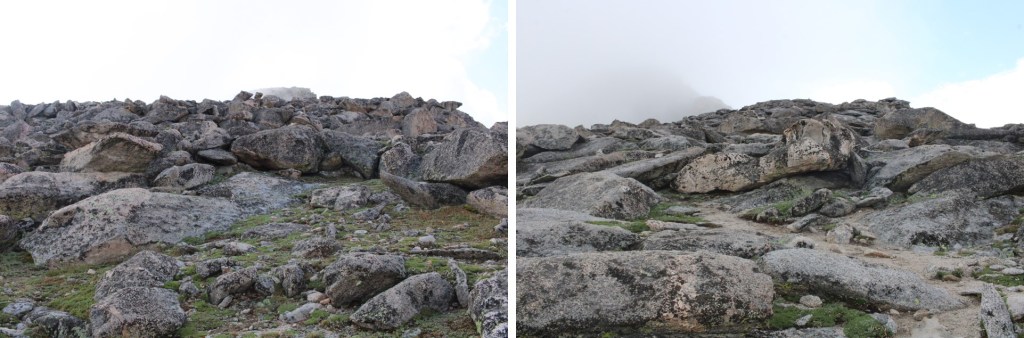
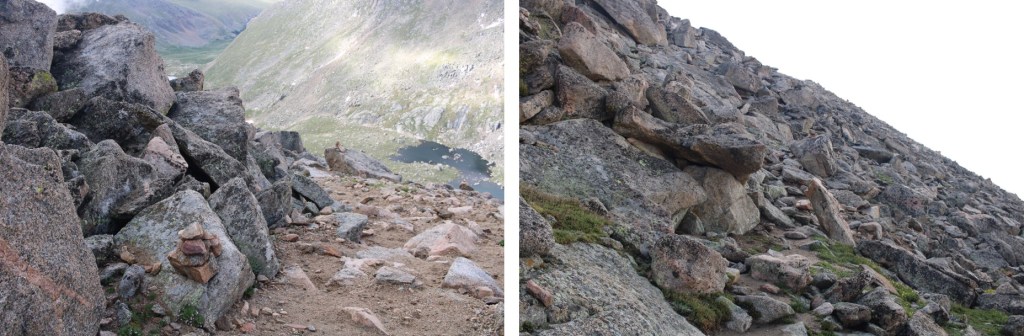
I came to a small saddle, and while there are cairns on the other side, the true trail descends the gully a few feet, and picks up below.  There are cairns to indicate this way as well

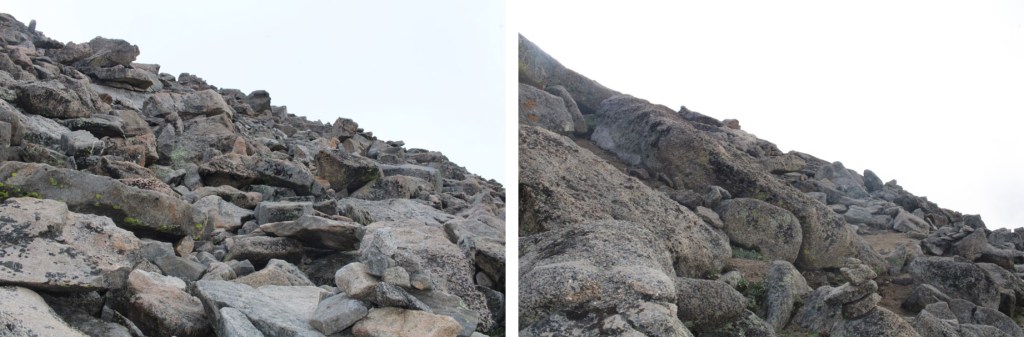
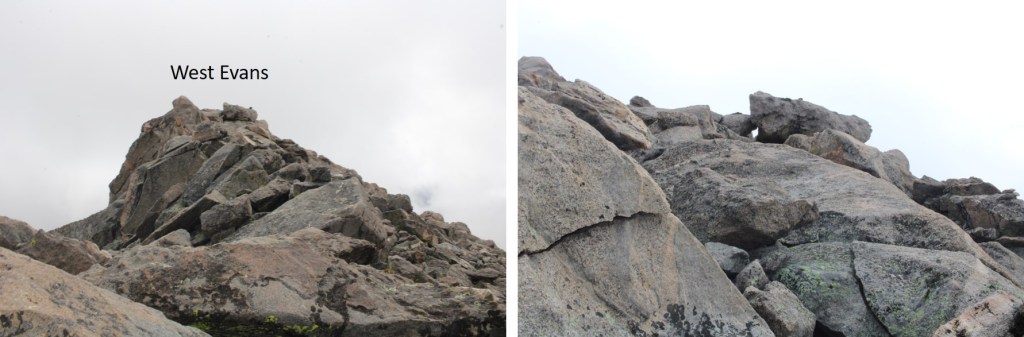
I followed the cairns southwest, until I made it to 14175’.  I then left the trail, put on my helmet, and aimed for the ridge, and West Evans above. This was all easy class 3

I summited West Evans at 9:25am

West Evans:

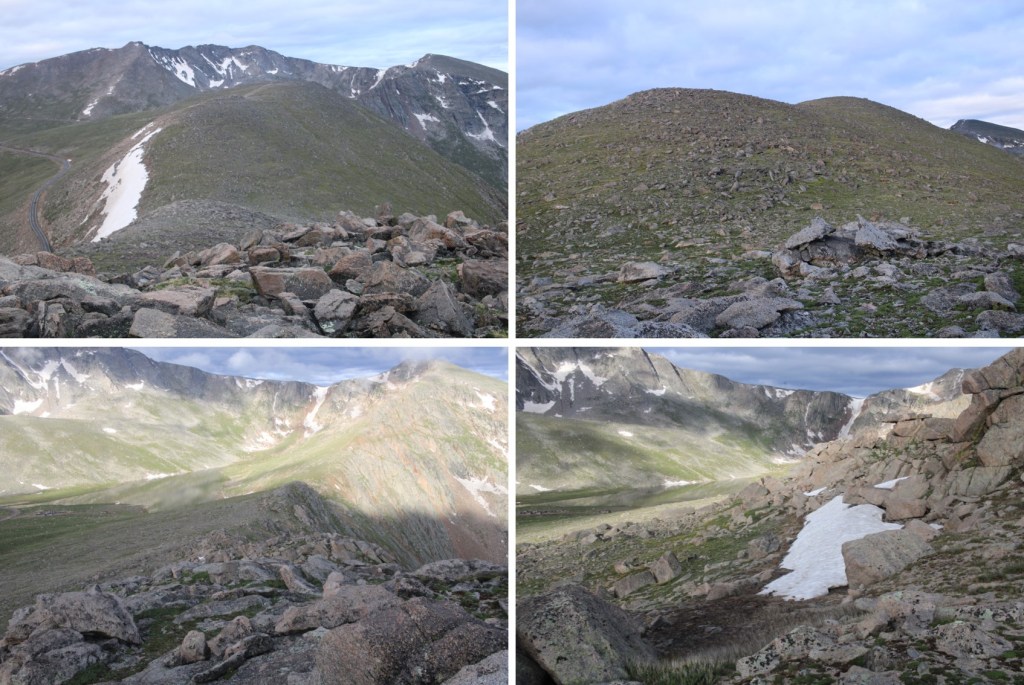
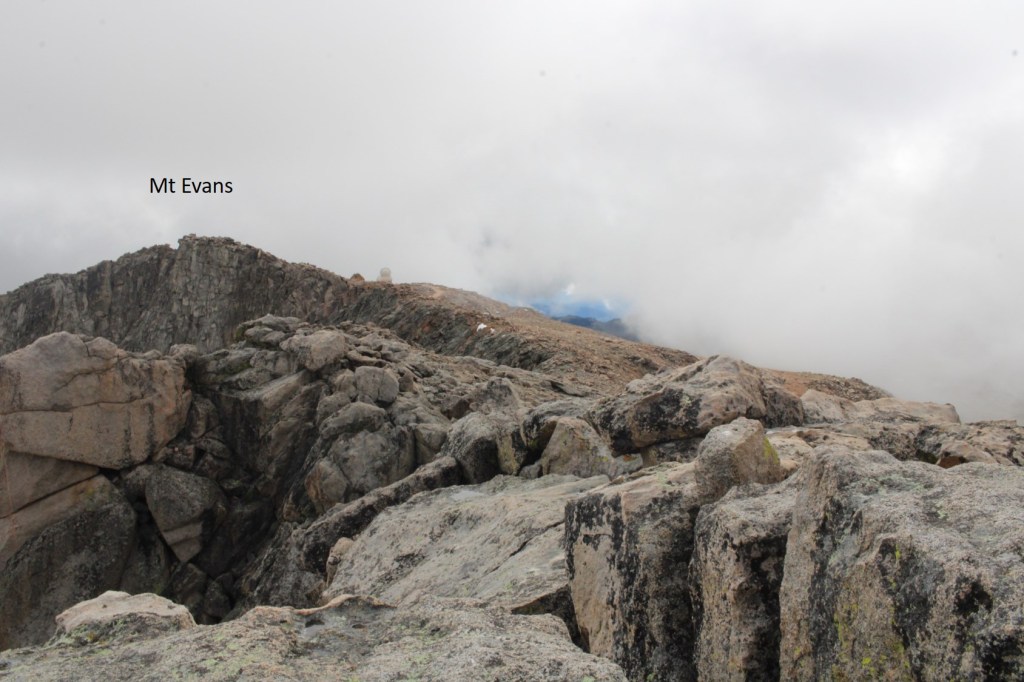
From West Evans I could see the summit of Mt Evans to the east.

I descended back to the class 1 trail, and followed it east to the summit of Mt Evans

Just before the summit I followed the large switchbacks to the summit

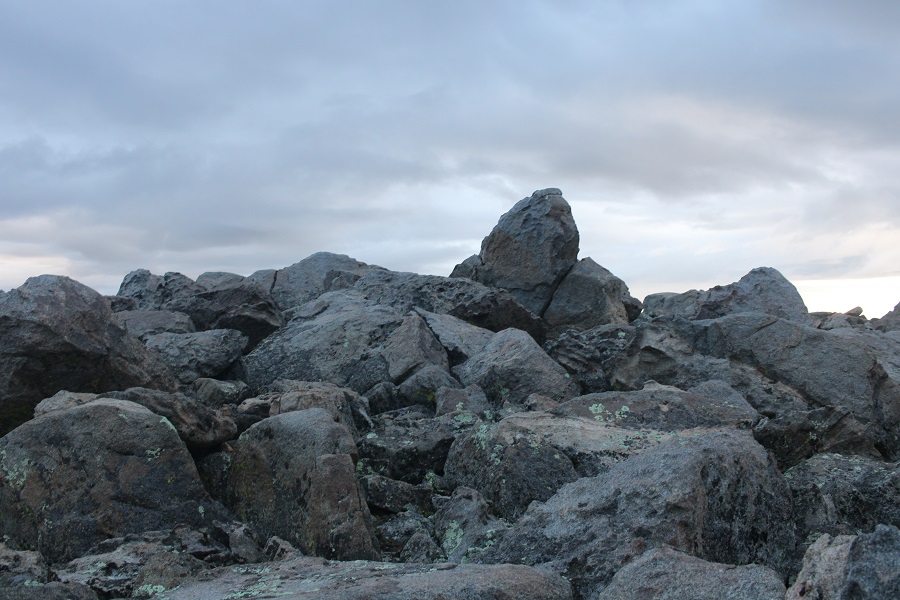
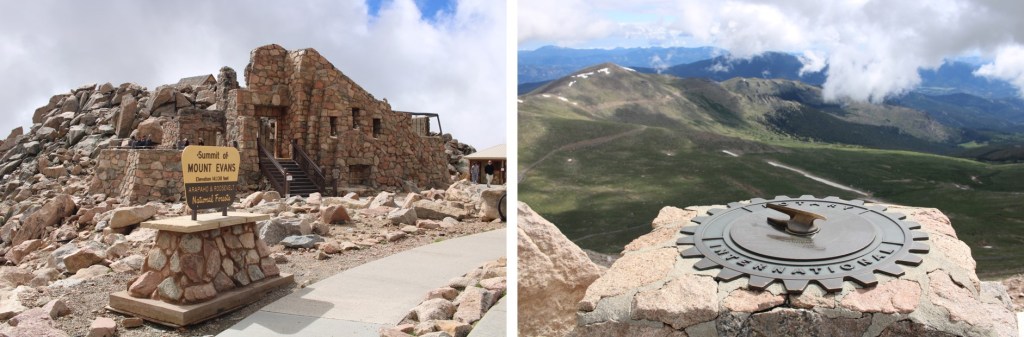
This is the actual summit of Mt Evans. I still had on my helmet, so I scrambled up.

I summited Mt Evans at 9:40am

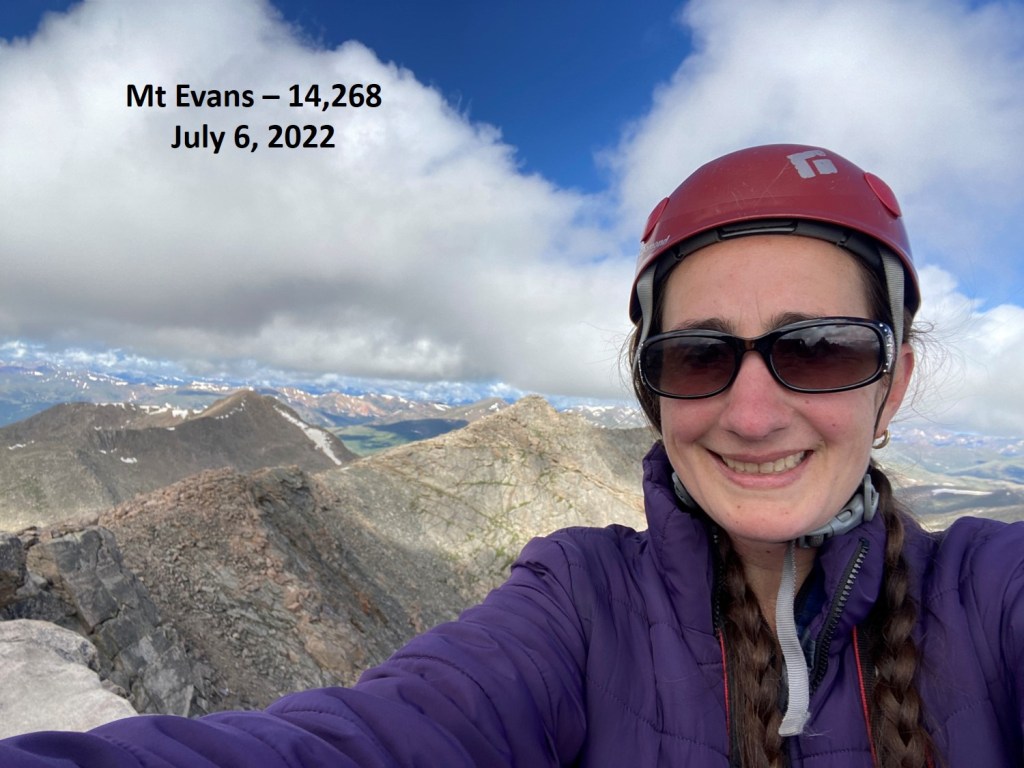
Mt Evans:

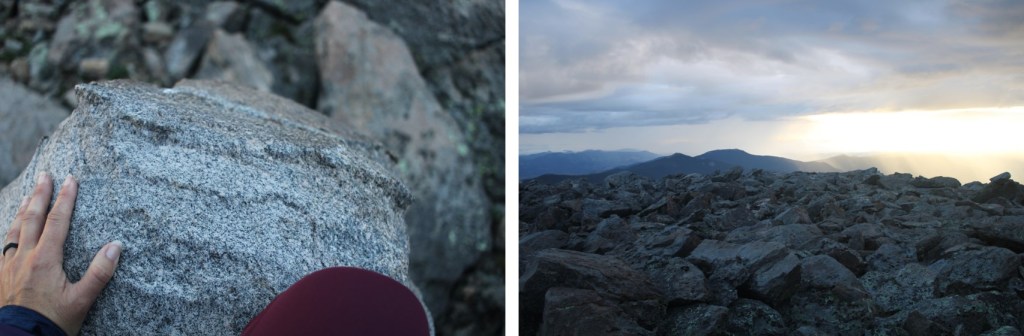
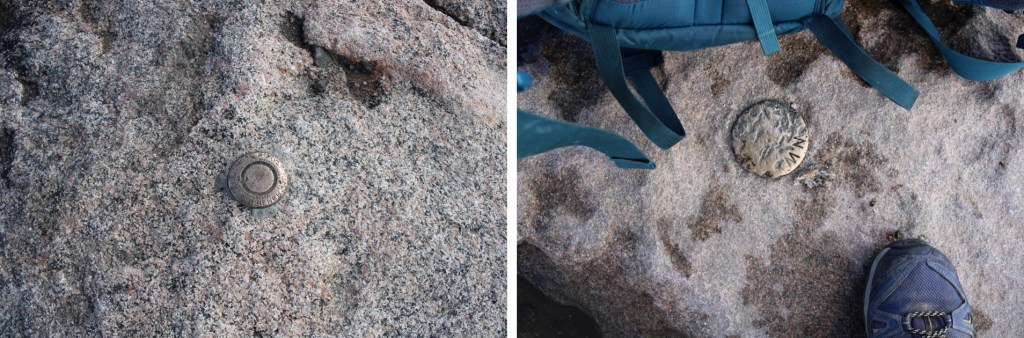
There were summit markers… not on the summit

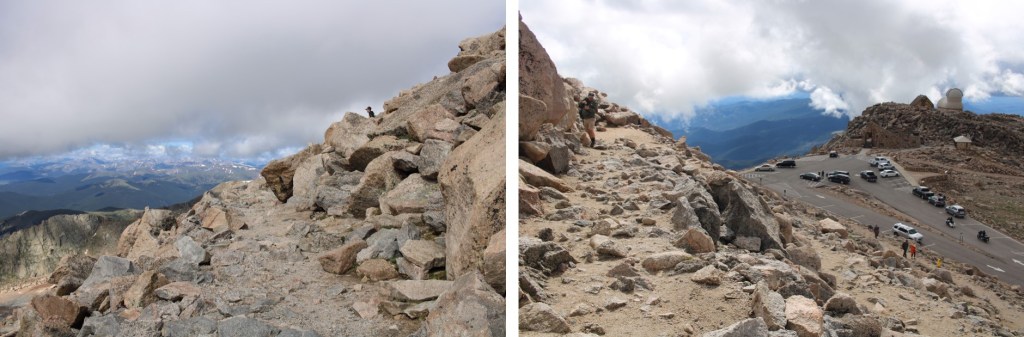
And tons of tourists.  Time to head down.  I made my way back down the switchbacks, and headed east to the summit house

Once at the summit house I continued northeast, back down to the road below. At times there was a well-defined trail here

Back on the road, I followed it north to Summit Lake, and my truck

I made it back to my truck at 10:30am, making this a 10.28 mile hike with 3263’ of elevation gain I 5 hours, 45 minutes.

On to the next trailhead!
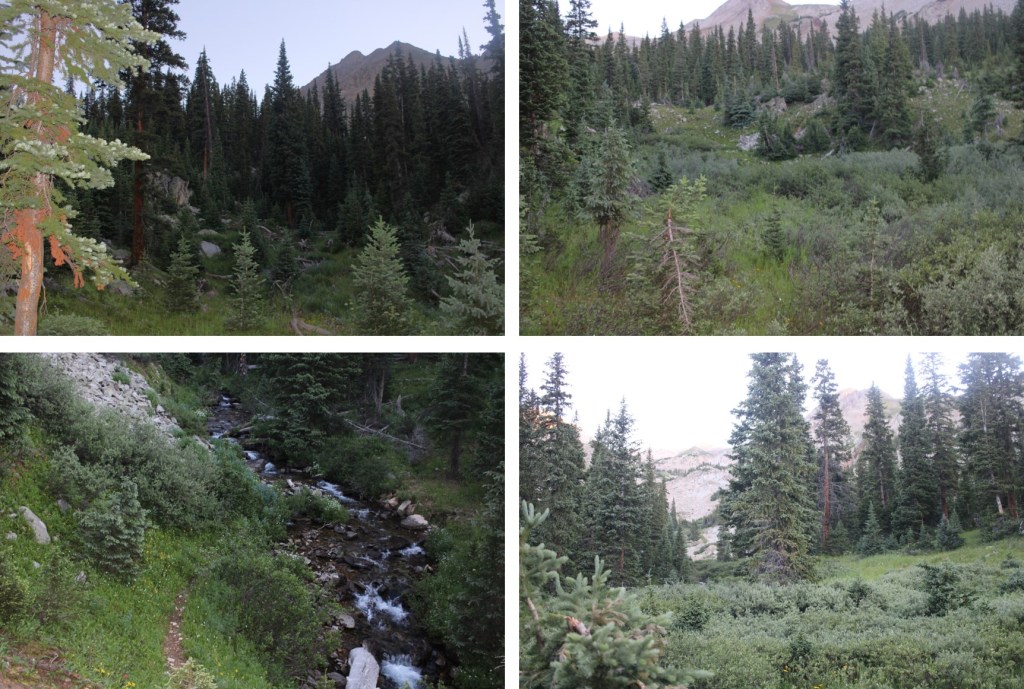
Bridal Peak – 13,514 and PT 13159

RT Length:  11.85 miles

Elevation Gain 4033’

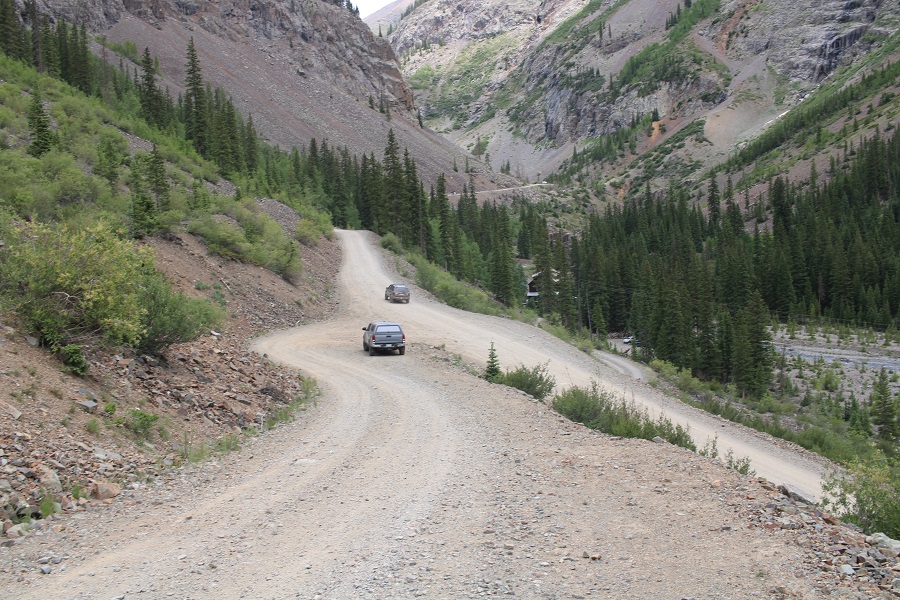
Driving to the trailhead had me crossing Mineral Creek.  The water was low, and it was easily crossable, although I saw several capable vehicles turn back. 

I parked the night before near Imogene Mine, a great view of the Million Dollar Highway below.  I was worried I’d hear traffic all night long, but very few vehicles went by. 

When I woke up, there were several other vehicles parked near me, so I did my best to be quiet as I got my gear together.  I was on the trail at 4am.  I followed the 4WD road south for a quarter of a mile to the actual trailhead.

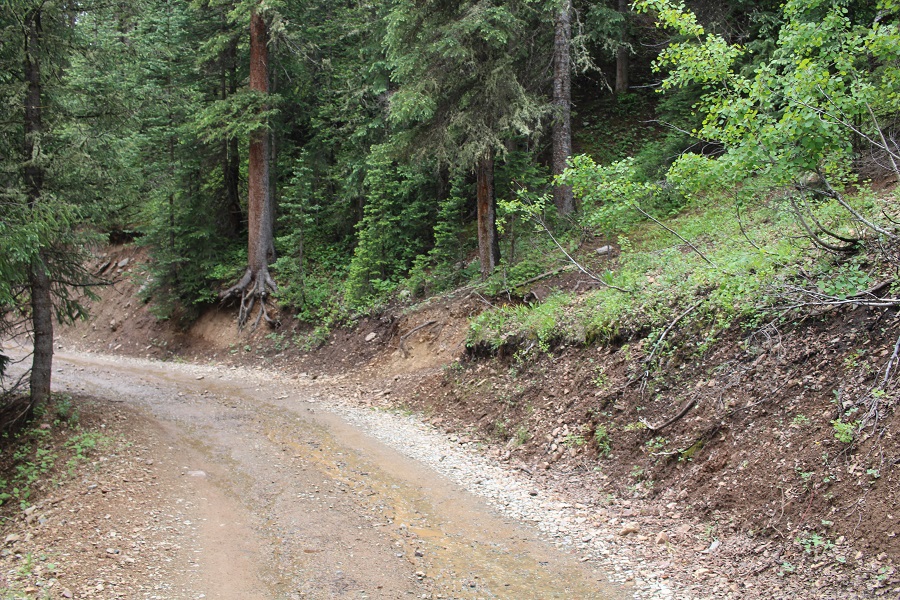
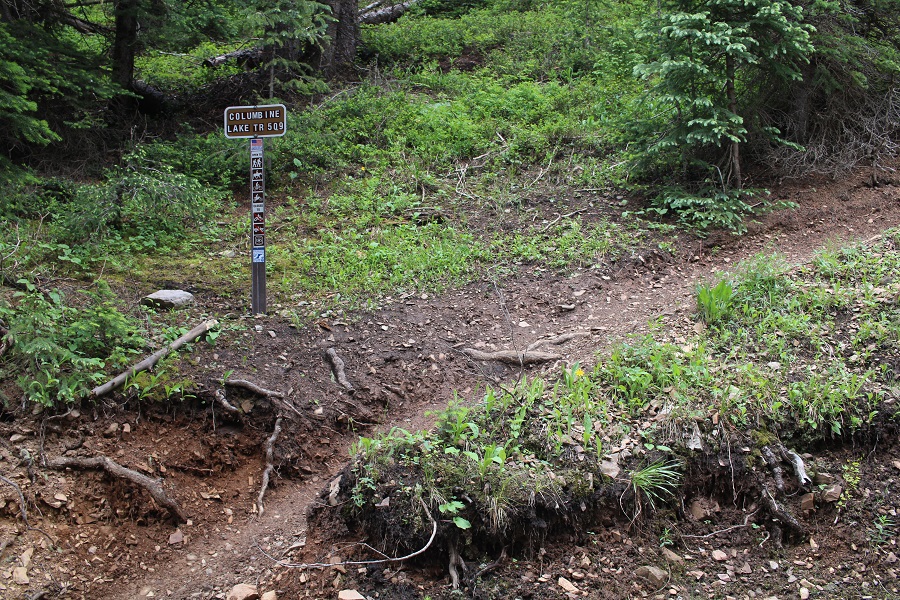
I headed up Columbine Lake Trail 509.  This is a class 1 trail that goes all the way to Columbine Lake.  There are several ways to get to the summit of Bridal Peak, but if you don’t want to lose excessive elevation, heading to the lake first is a great option.

This trail steeply switchbacked up the hillside to treeline.

I entered a small basin, and continued following the trail to the upper basin.  I could hear dozens of ptarmigans and their chicks chirping all around me.  That’s one of my favorite parts about hiking this early in the morning:  hearing everyone waking up. 

I crossed over into the Mill Creek Basin, and continued following the trail west. This is still a class 1 trail. 

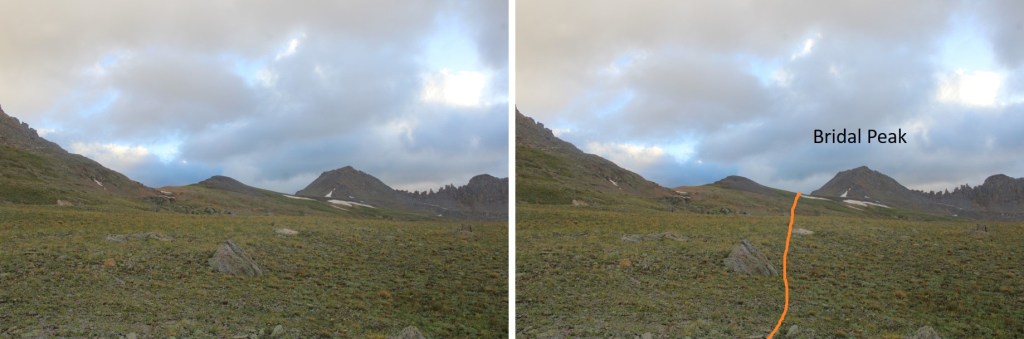
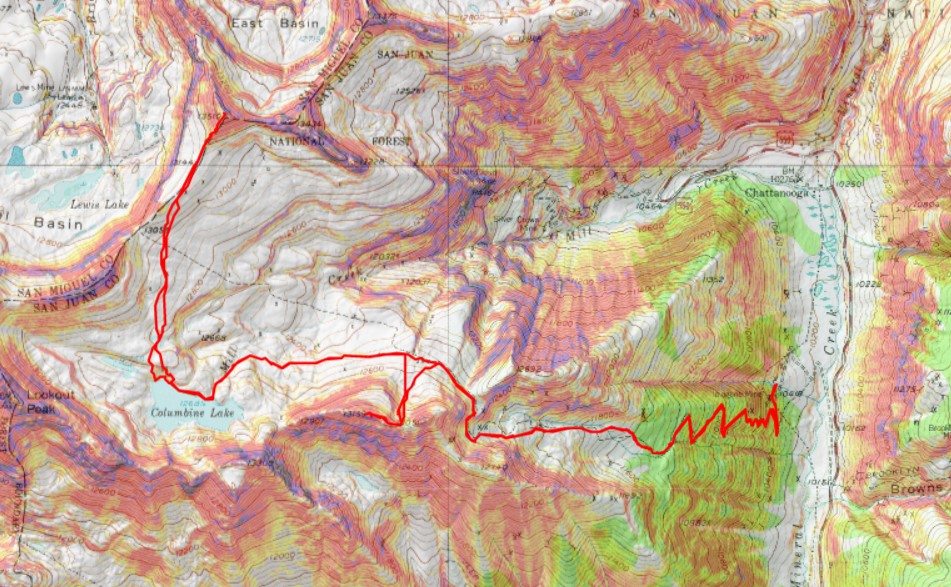
From here you can see Bridal Peak, but to avoid losing and re-gaining elevation, I headed to Columbine Lake first.  Here’s my overall route.

Right about now the sun was beginning to rise…

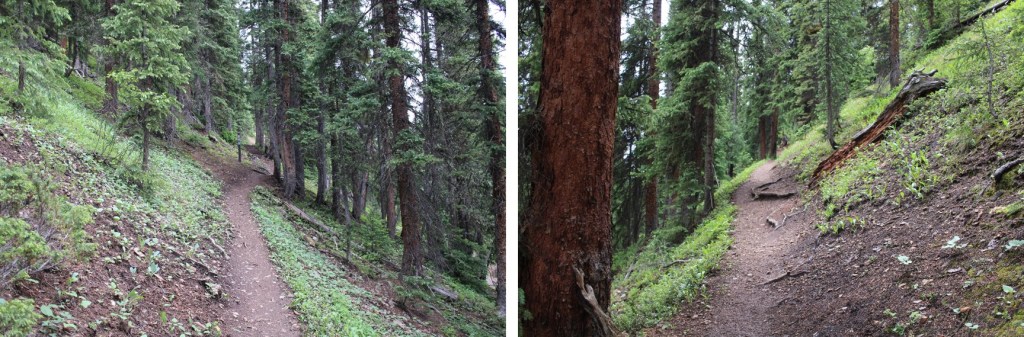
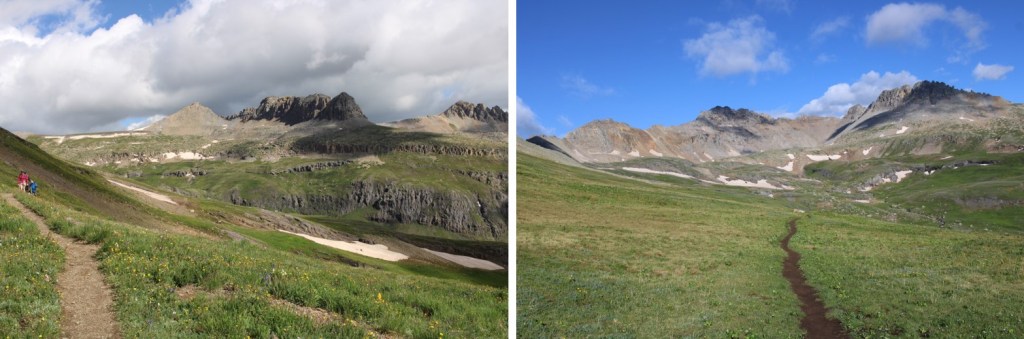
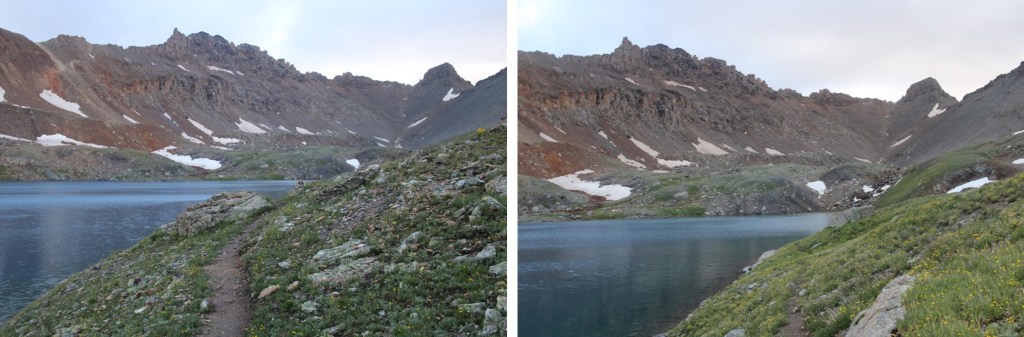
Here are a few more pictures on the class 1 trail to Columbine Lake

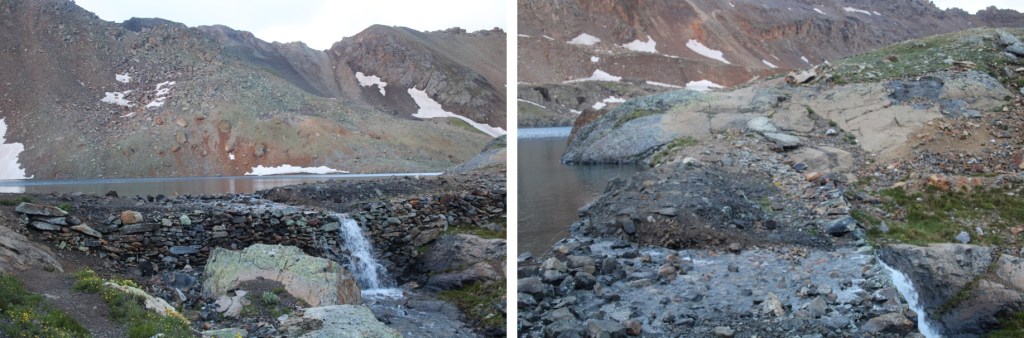
I made it to the lake, crossed the small dam, and followed the shoreline west

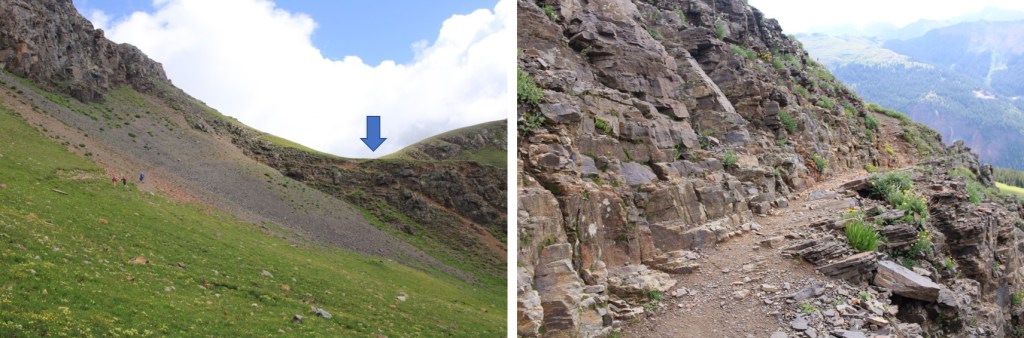
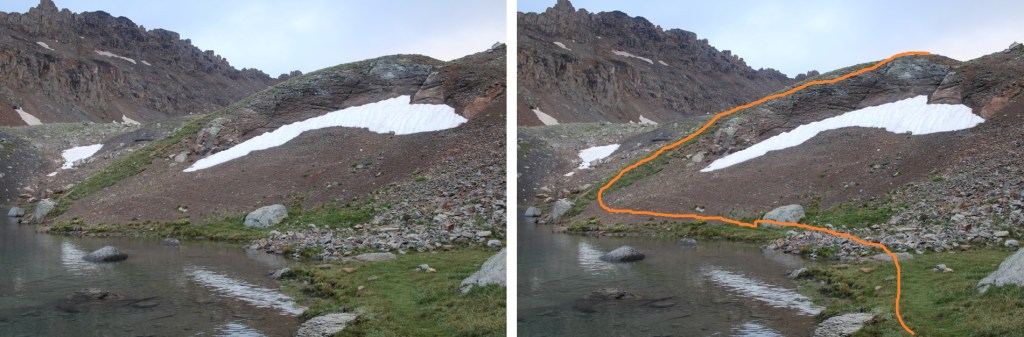
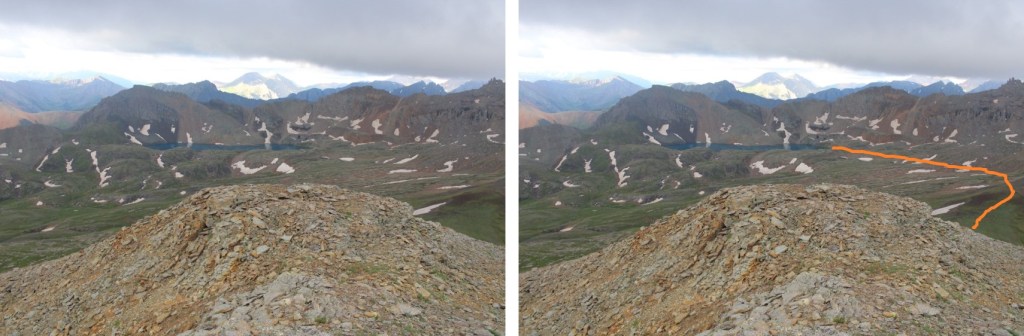
I wanted to ascend to the ridge.  It can be done at just about any point before the small waterfall.  I took a slightly different route up than I did down, but they all lead to the correct area.  This is the route I took

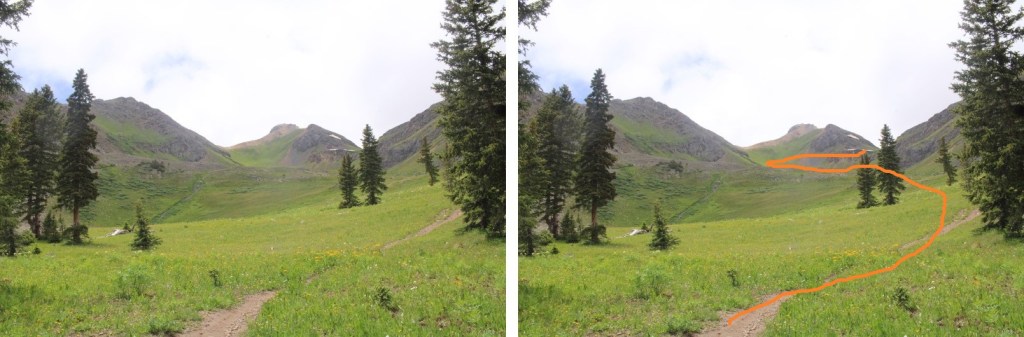
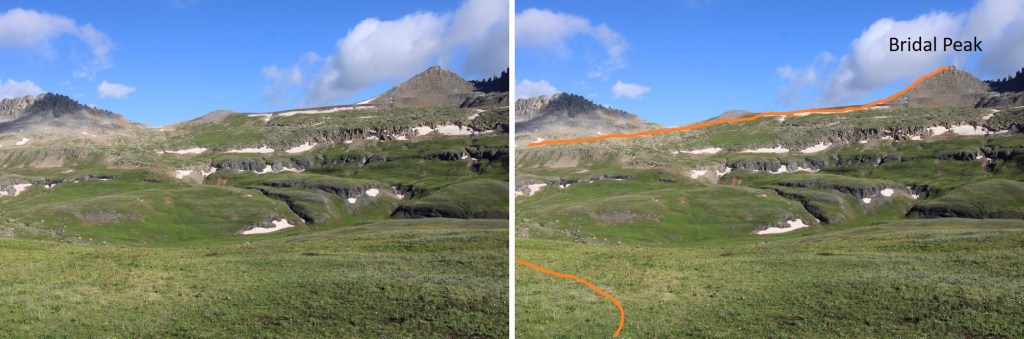
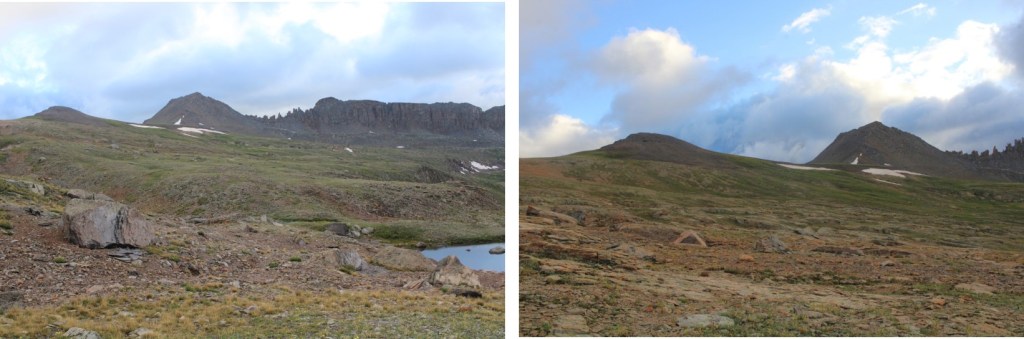
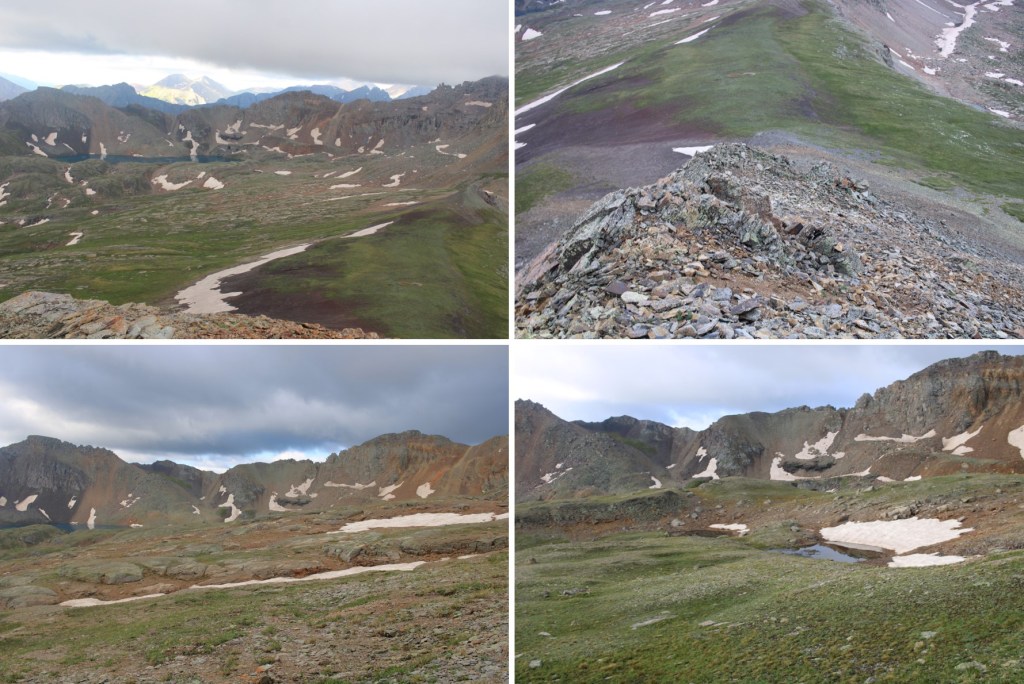
Now to cross the upper basin and head north to the ridge.  Here’s my overall route

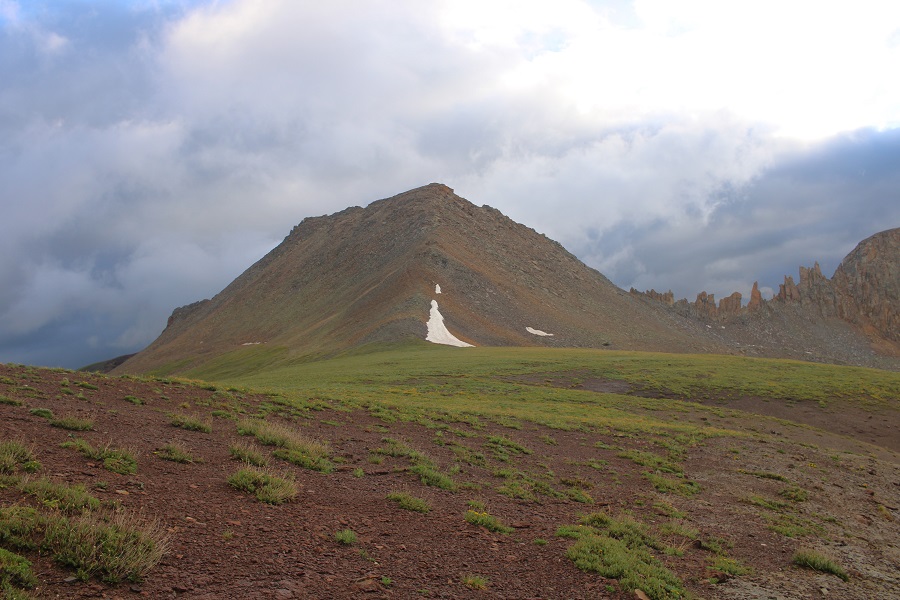
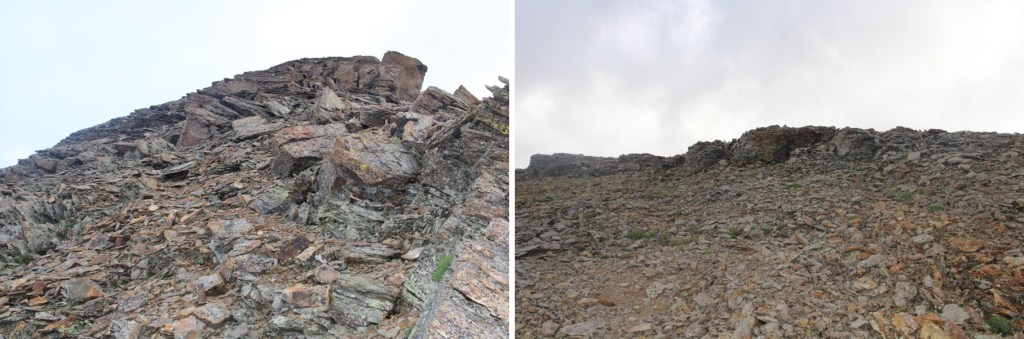
And some step by step pictures

Once on the ridge, it was an easy class 2 trek to the summit.  There’s an obvious trail, but if you don’t see one, stick to the ridge.  This area is covered I shale.

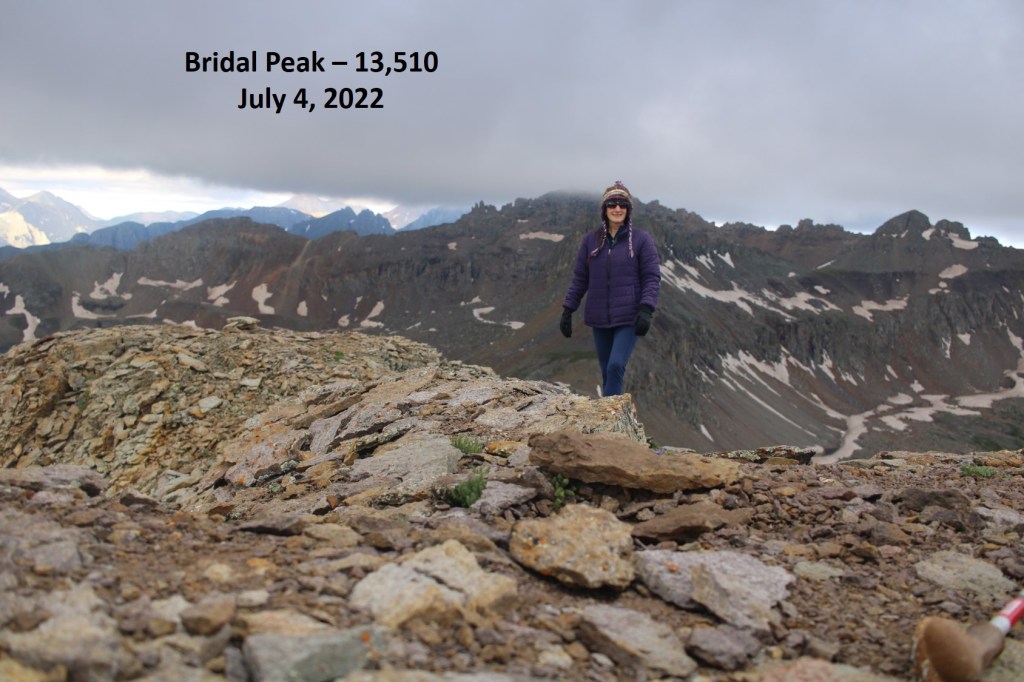
I summited Bridal Peak at 7:10am

Bridal Peak:

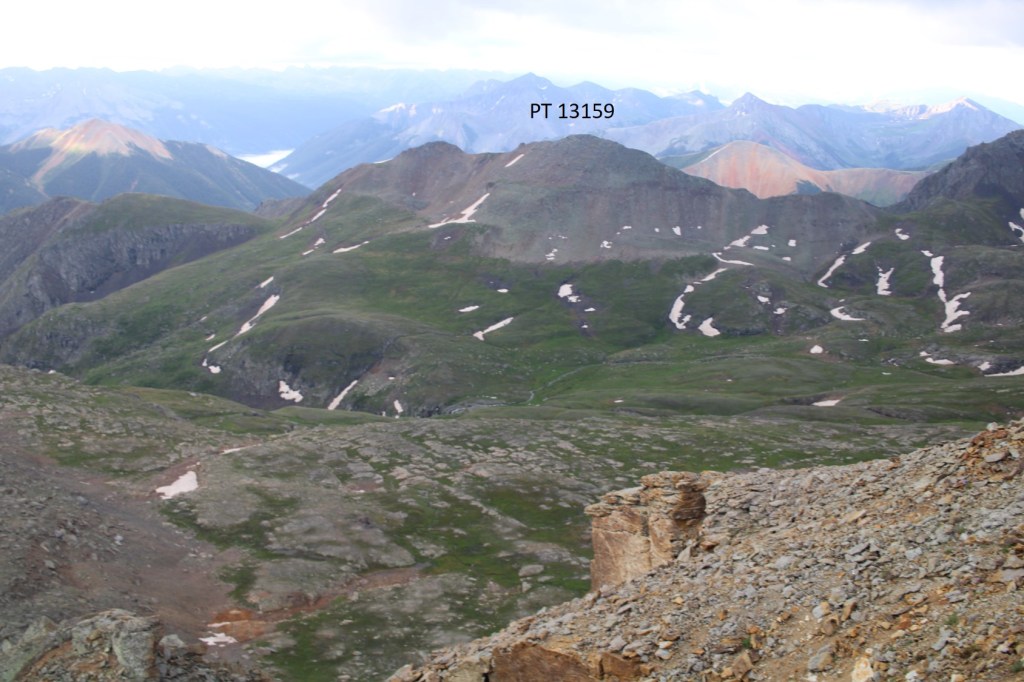
From Bridal Peak I could see PT 13159 to the southeast.

To get there, I made my way back to Columbine Lake

Here are some pictures of the route back to the lake

Once at the lake the sun started to come out, so I took a few pictures.  This is an extremely popular hike, and I started seeing people like ants along the trail.  The lake was beautiful.  Pro-tip:  You get better pictures of the lake, and the mountains mirrored in the lake, from up high. 

I made my way back to the trail

And then followed it east to 12550’

At about 12550’ there will be a post.  At this post, I turned right, and headed south up a gully

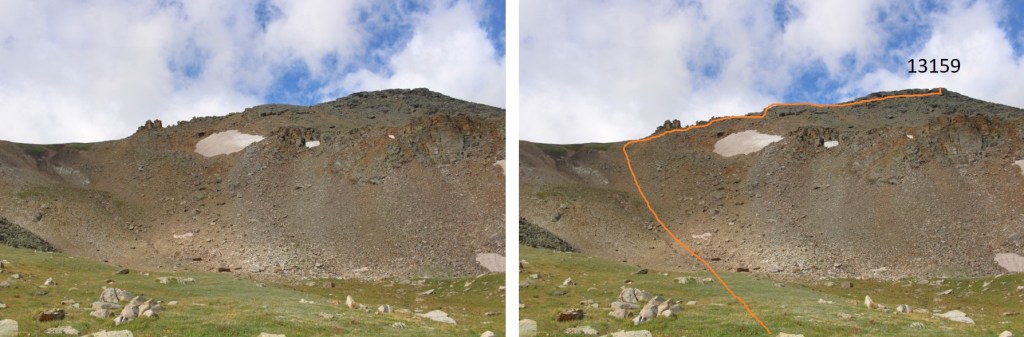
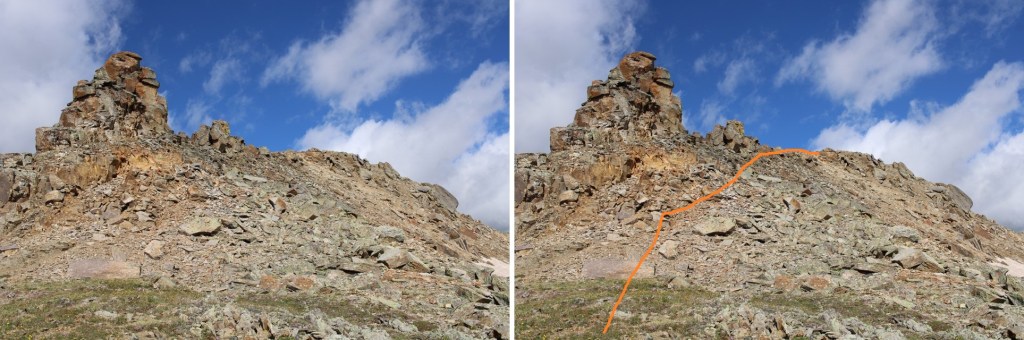
Before going up the gully, get a good look at the route before you.  This can be kept class 2 (maybe easy class 3) if you know what you’re doing ahead of time.  I made this class 4 in sections, not knowing where exactly to ascend at the end.  I kept wanting to ascend too early, and then I’d cliff out.  This is the route you want to take

It might have been due to the recent rain, but this gully was easy to ascend. 

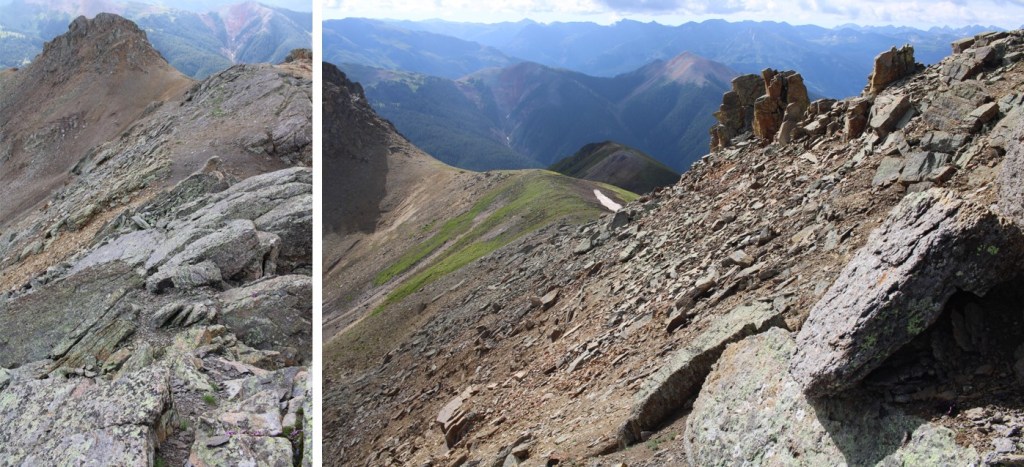
At the top of the gully I turned right, and followed the ridge

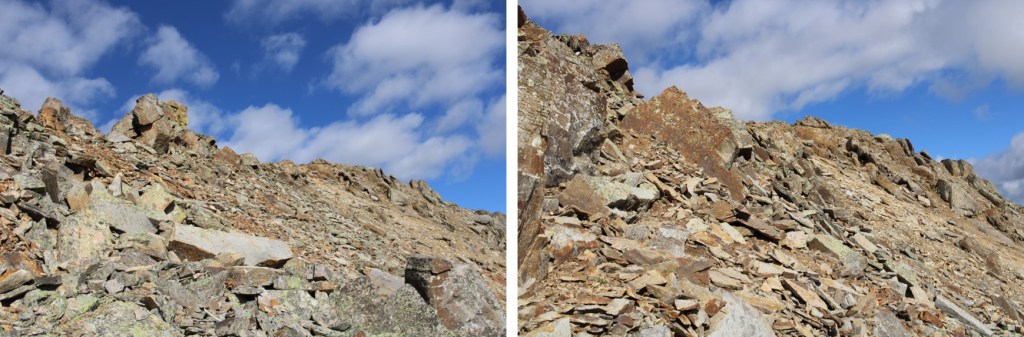
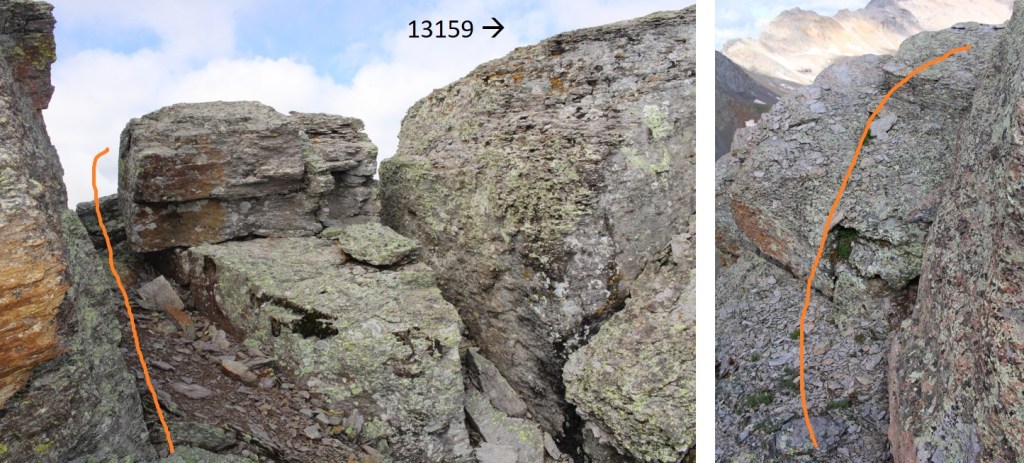
Once I got here, I dipped down a bit.  No longer try to stick to the ridge, as there are large gaps in the boulders too big to jump across.  Also, don’t try to ascend yet:  it’ll be class 4, and the final ‘summit’ is also too far to jump to get to. 

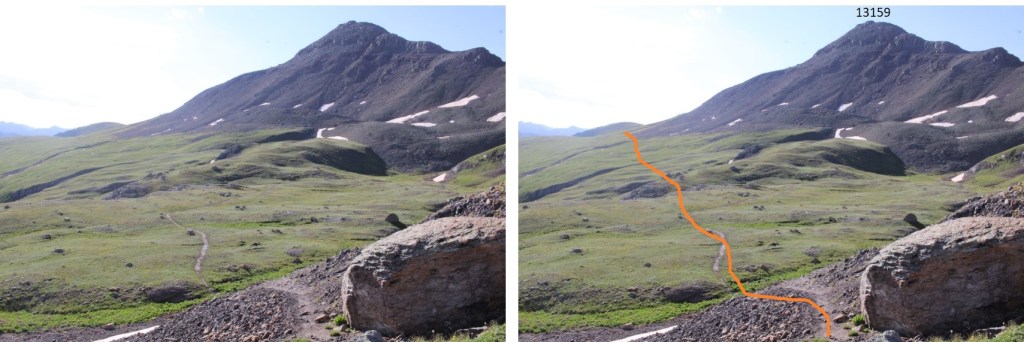
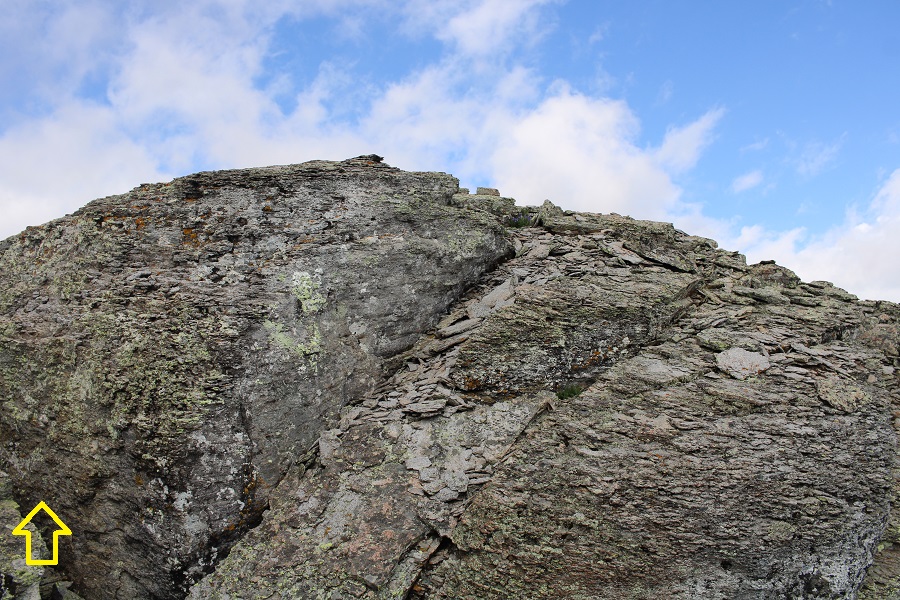
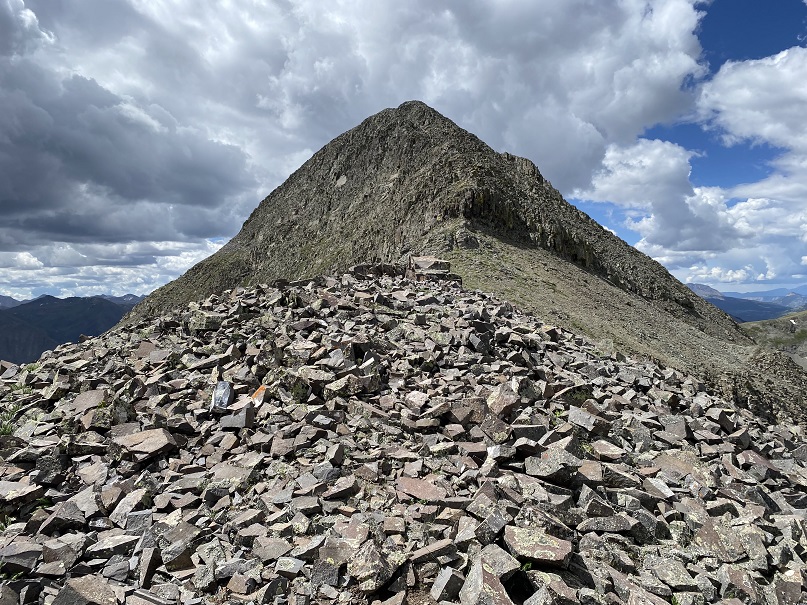
This is what the summit looks like, but it’s actually easy to access, if you go from the left

Go around the boulder, then it’s a simple walk to the summit

I summited PT 13159 at 8:55am

PT 13159:

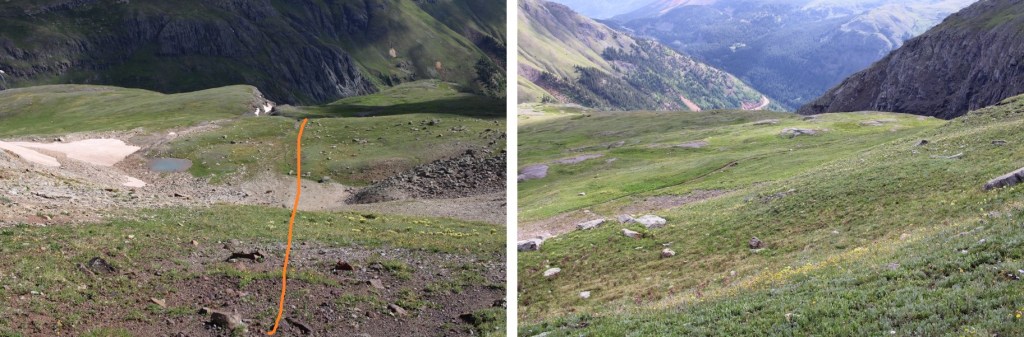
From the summit, I re-traced my steps back to the gully. 

Then descended the gully, and picked back up with the Columbine Lake Trail

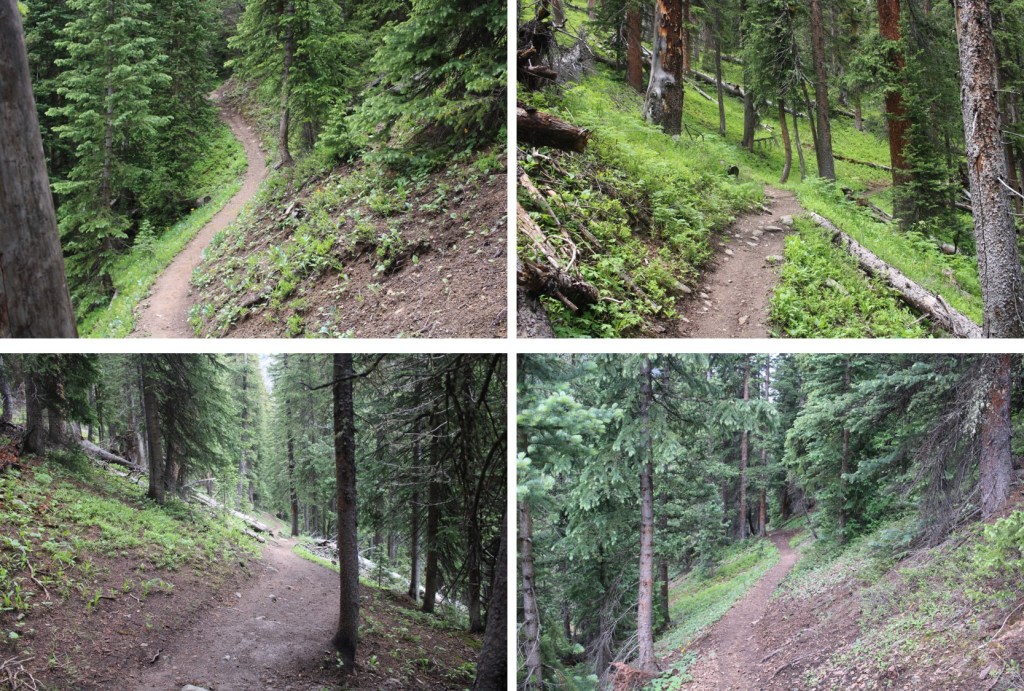
I took the Columbine Lake trail back to the road

Then followed the road back to my truck

I made it back to my truck at 10am, making this an 11.85 mile hike with 4033’ of elevation gain in 6 hours.

On to the next trailhead!

Tower Mountain – 13,549 and Dome Mountain – 13,370

RT Length: 14.13 miles

Elevation Gain: 4500’

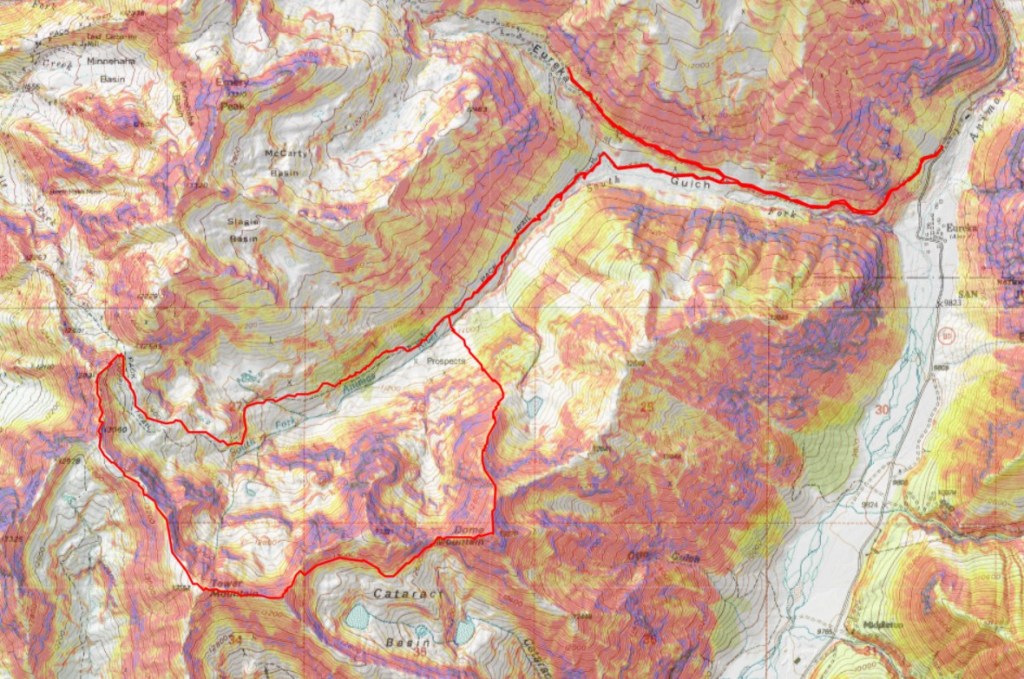
I parked at 10,000’, just after the town of Eureka.  My truck could have driven up the 4WD road, as it was a nicely graded, wide road, but I didn’t know it at the time and figures starting at 10,000’ sounded pretty good. 

We were once again experiencing summer storms, so I was up and on the trail at 4am.  I followed the road as it rounded the mountainside, heading west.

Suddenly, I saw a fox, about 10 feet in front of me on the trail. I shined my flashlight at him, and said “Hey Fox!”  The fox walked up to me, and stood about 2 feet away.  He was brown with black feet, and had a piece of grass sticking out from its lips. He looked up at me like a puppy asking for a treat.  I wanted nothing more than to pet this cute little guy, but knew his behavior was off for a wild animal.  I loudly tapped my trekking pole on a rock and told him to move.  He jumped a few feet in the air, then skirted around me. He didn’t leave though, until I did it again. 

I continued on in the dark, making great time, until the sun began to rise.  That’s when I noticed I was heading the wrong way and realized I’d missed my turn in the dark. I’d gone a mile past my turn, and added 600’ of elevation gain to my day (already taken off my stats).  Drat!  I turned and ran a mile down the road, to the correct turnoff at 10,500’
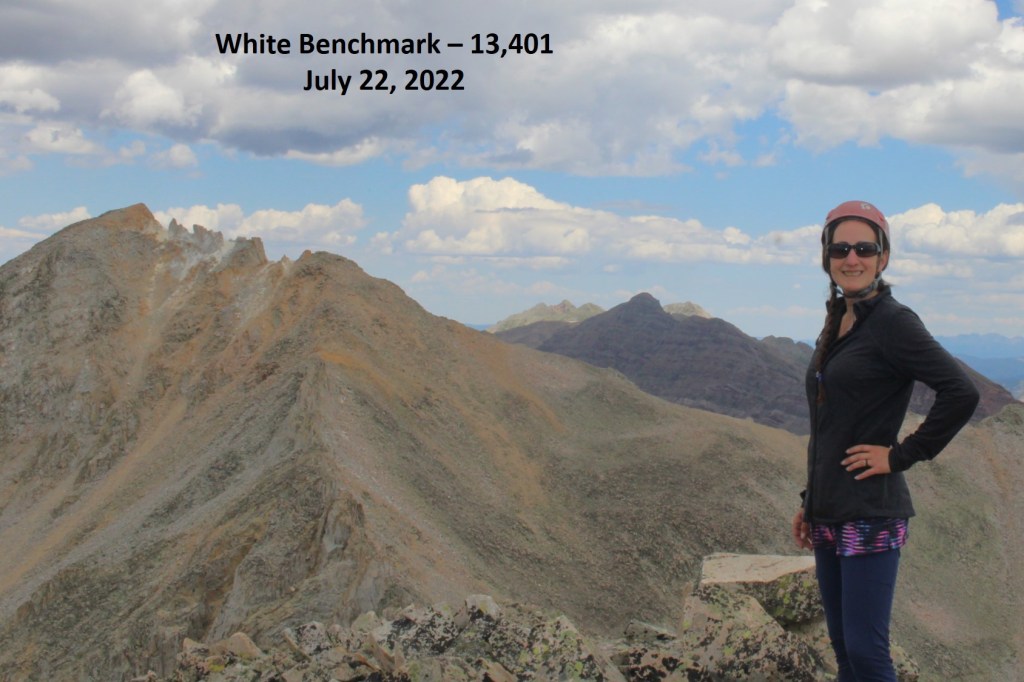
I then followed this road, which paralleled the South Fork Animas River

There were a few dispersed campsites along the way. The road ended at a creek crossing.  Well, it didn’t end, but you couldn’t drive any further.

I crossed the creek, passed an abandoned mine, and the road curved.  This is where the trail began. It’s an unnamed pack trail, and very difficult to follow.  Don’t cross the creek.

I passed several large runnels

And noted now that I had a visual my intended decent route was going to need to be modified, as it cliffed out.  I resolved to instead take a different ridge down, which looked like it ‘went’ and continued southwest to treeline. Once again, there wasn’t a consistent trail here, but I did come across game trails I utilized when available.

Now at treeline, I needed to access the upper basin.  This is how I got there.  There were TONS of game trails in the area.

I was headed northwest, aiming for a saddle

Once at the saddle, I turned left to ascend the ridge and follow it south.  Initially I hit a scree-filled gully, but it was short.

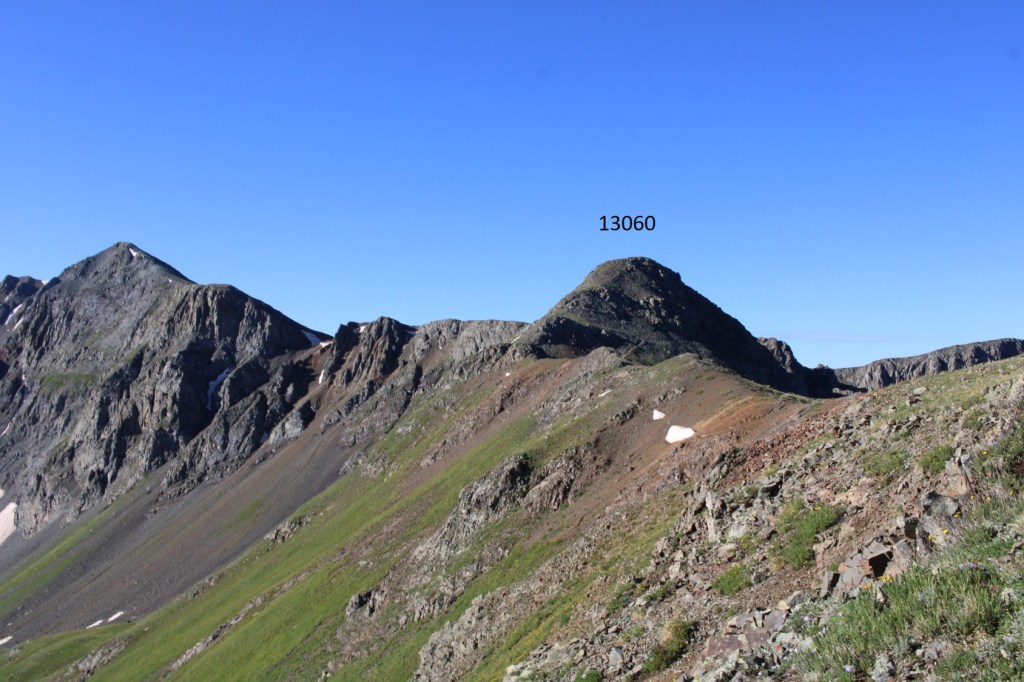
I then hit some rocky tundra area, but once I ascended this I hit a class 1 trail.   This trail took me up and over PT 13060, then it went downhill while I followed the tundra towards Tower Mountain.

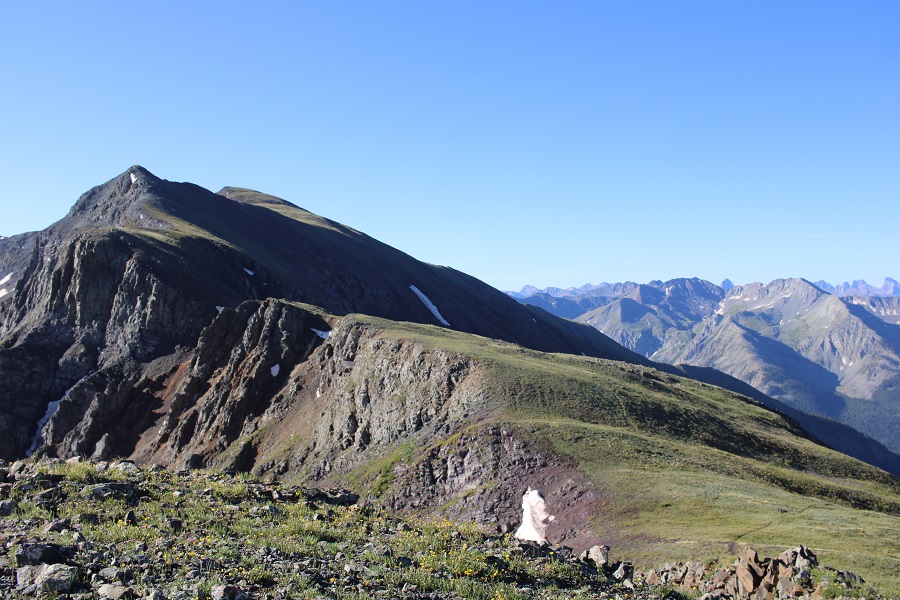
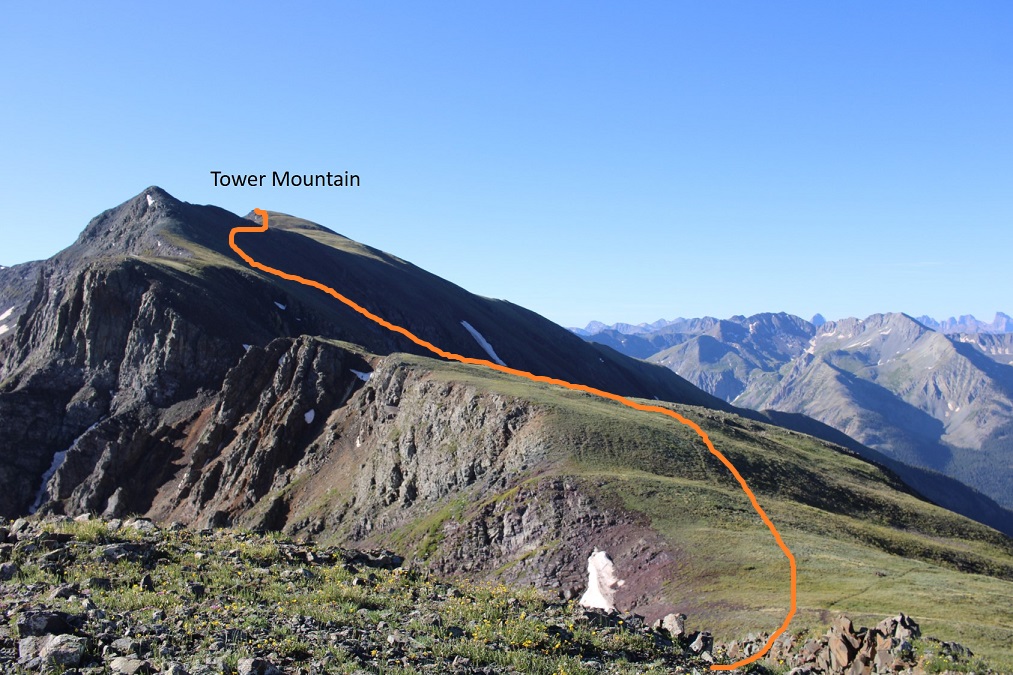
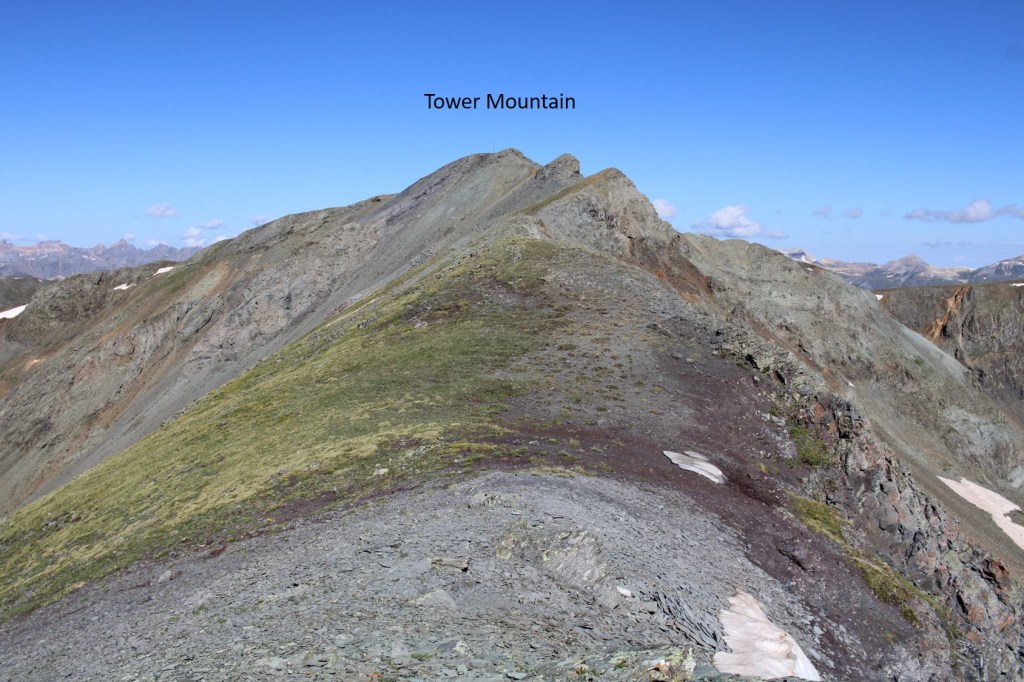
Here’s my route up Tower Mountain (which has a tower…)

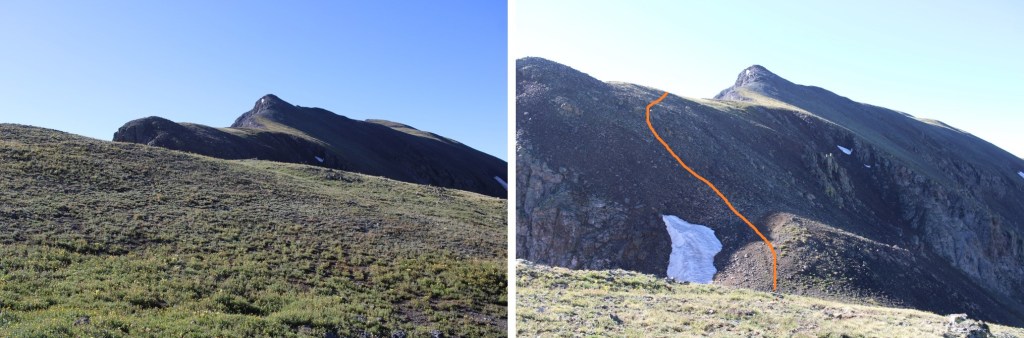
And a few step by step pictures (this is all class 2)

I summited Tower Mountain at 8:50am

Tower Mountain:

From Tower you can see Dome Mountain to the east, but it’s not a simple ridge walk to get there.

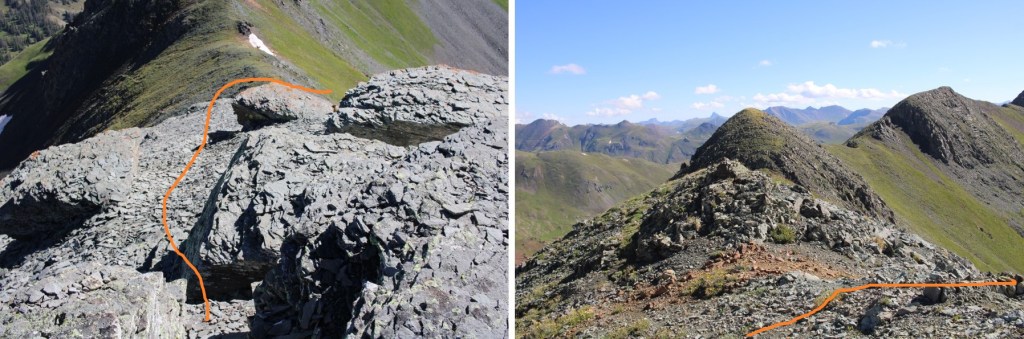
I followed the ridge to the arrow, and then I descended (arrow) to avoid some nasty terrain just before making it to Dome along the ridge.

Here are some pictures of the ridge

Looking back at Tower

This is where the ‘fun’ begins, and doesn’t end until you’re back on the trail you hiked in on…  I left the ridge here, at 13100’, and descended into Cataract Basin, making sure to stay high.  No trails here, unless you stumble upon a game trail.

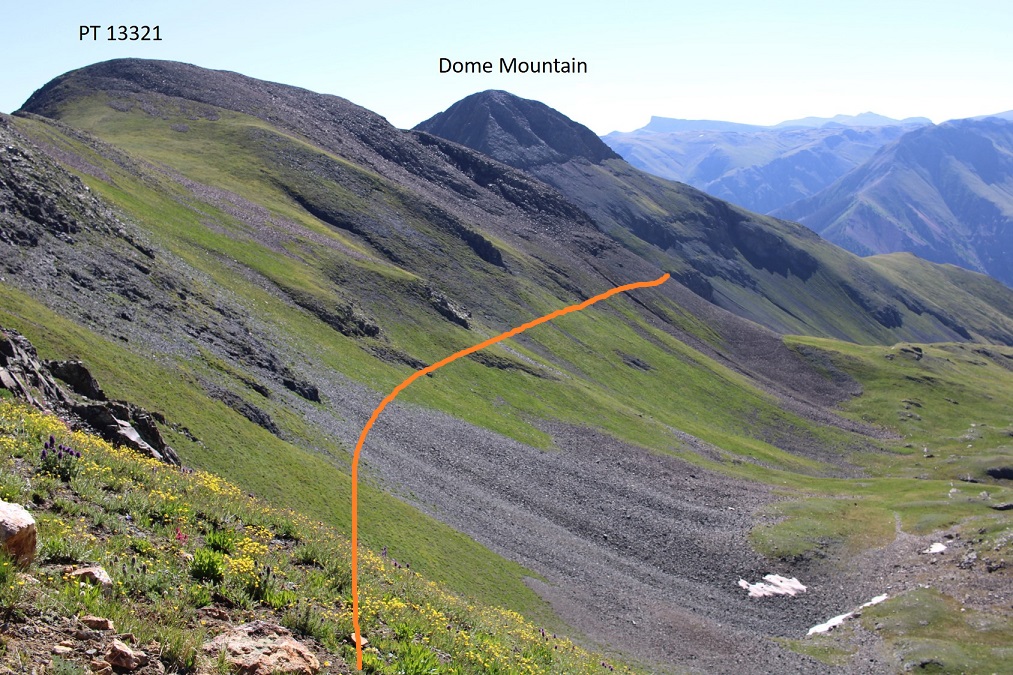
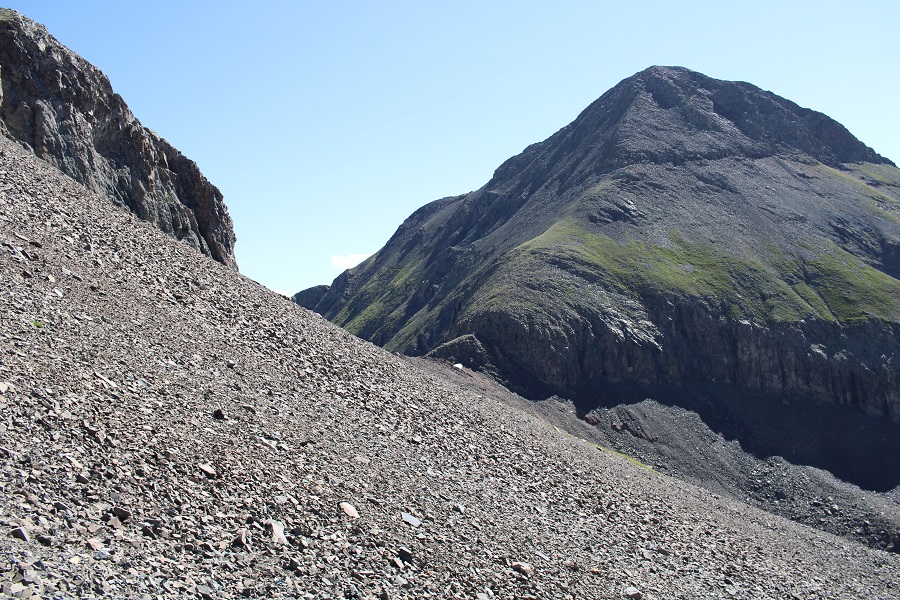
I then ascended the saddle between PT 13321 and Dome Mountain.  There was a lot of scree here.

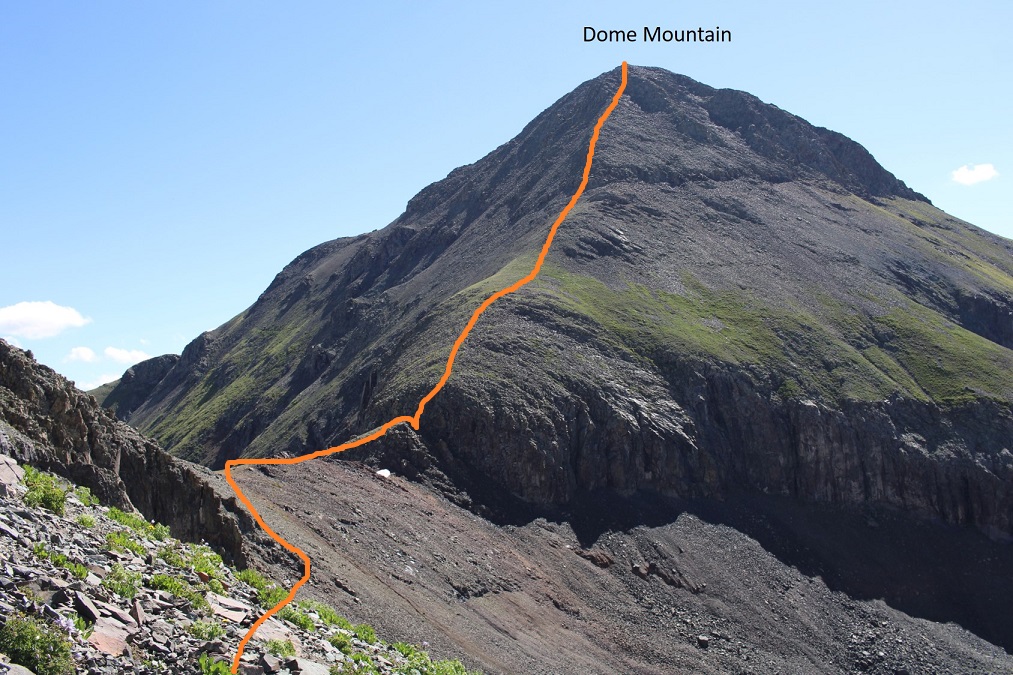
This is my general ascent route up Dome Mountain.  I just went straight up the face, heading east.    Now is a good time to look at your route.

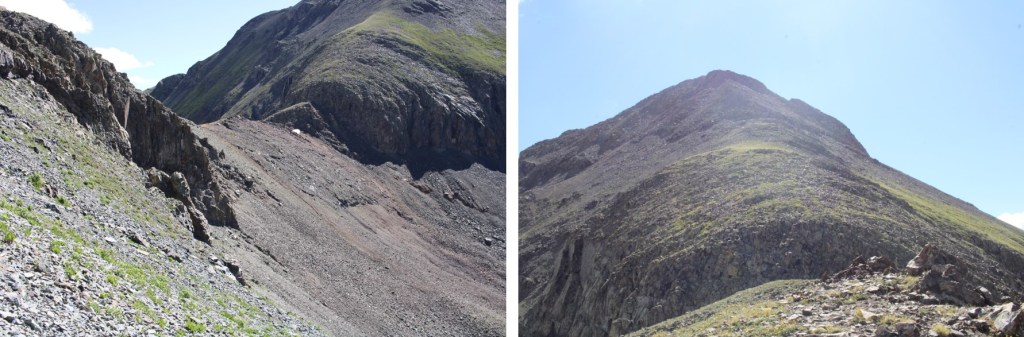
Here are some step by step pictures.  Now is a good time to put on your helmet if you haven’t already

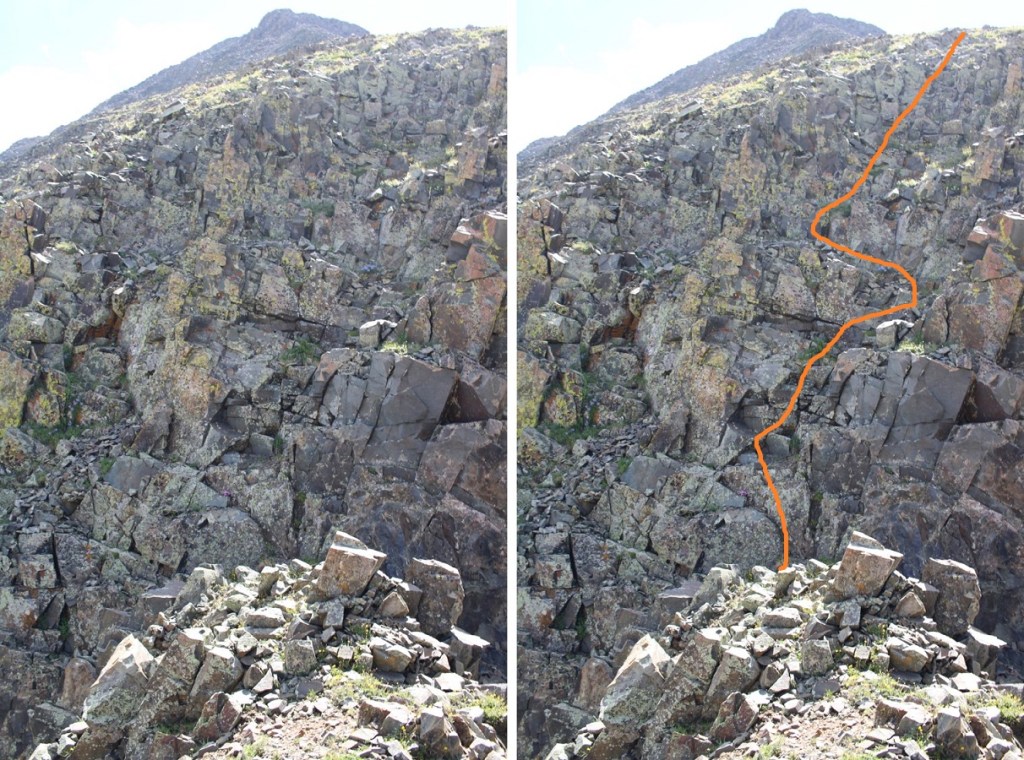
This is difficult class 3, easy class 4, and most of it is pick your own route.  There were plenty of hand and footholds, but there was a lot of balancing involved, and not a lot of room.  Very little margin for error. This is the route I took

That was your warm up.  Now to ascend the larger wall.  Same rules apply, but with an added degree of difficulty

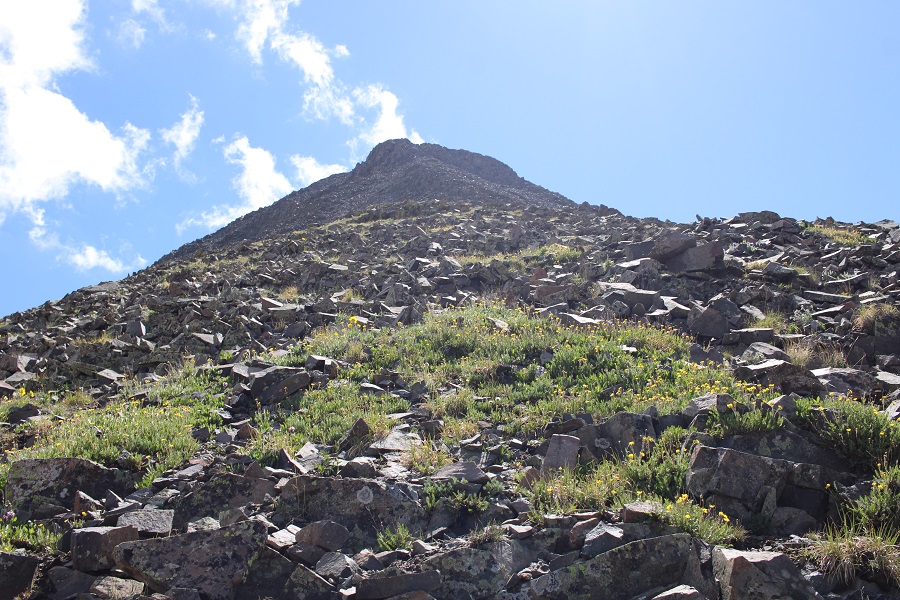
Woot!  Now some tundra to the difficult part
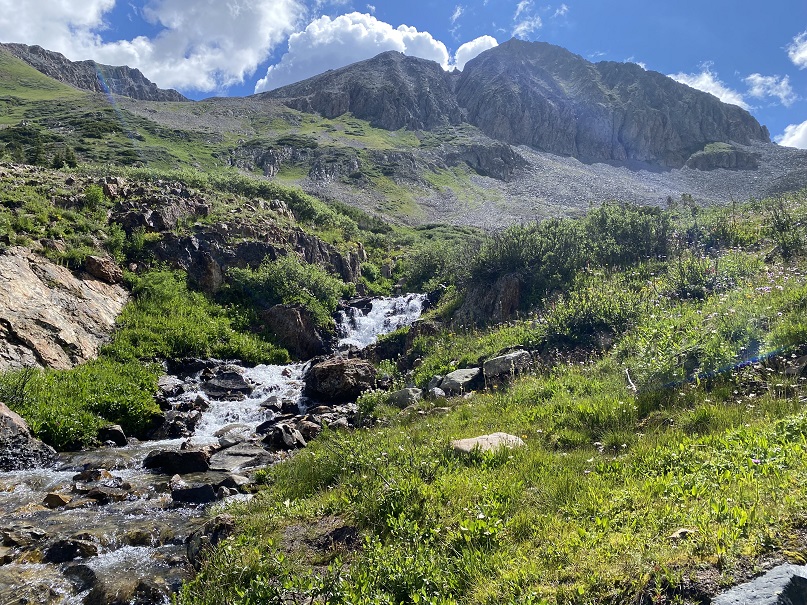
The last 300 feet of climbing is done on very loose rock.  Trust nothing.  It’s all class 3, but the terrain is rotten.  Here are some photos.  I continued east, and headed straight along the ridge to the summit.

I summited Dome Mountain at 10:45am

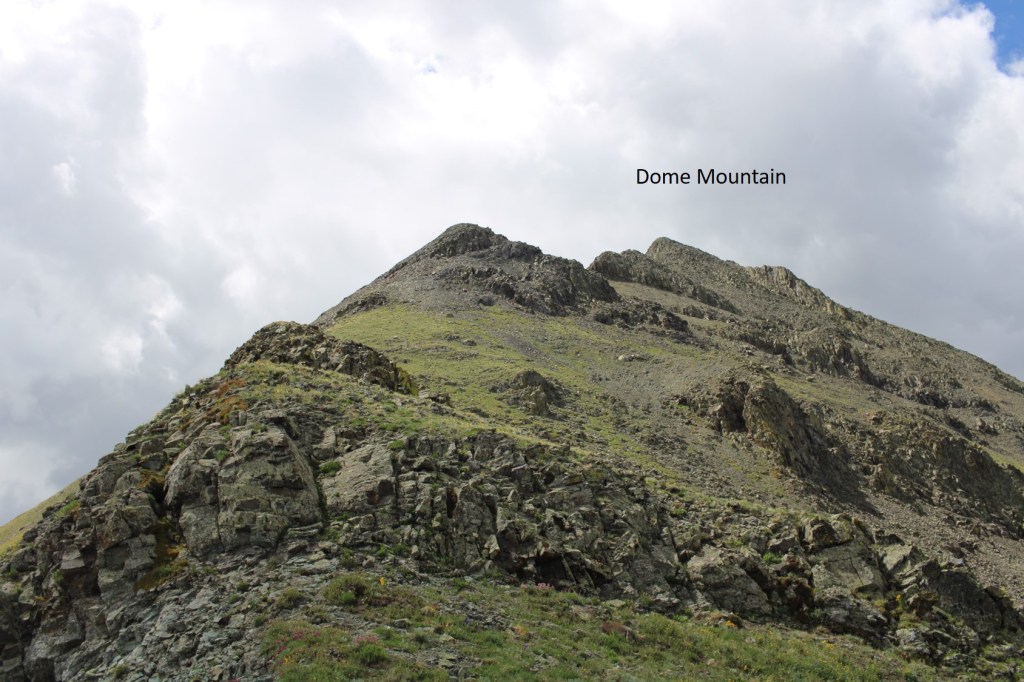
Dome Mountain:

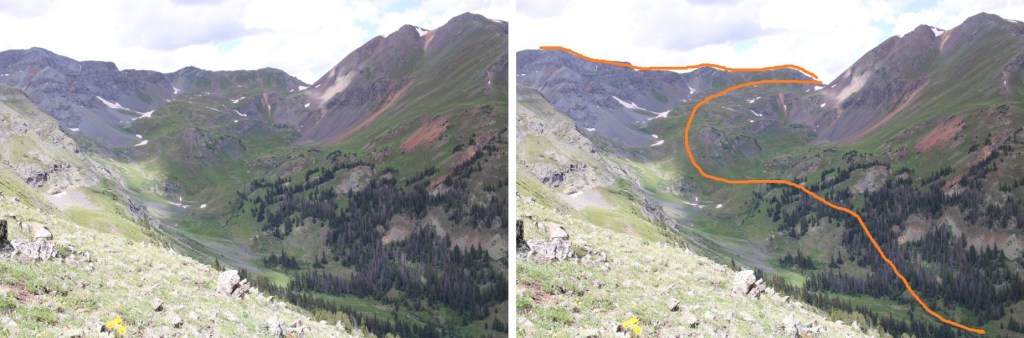
There were a ton of bees and flies at the summit, so I didn’t stay long. I was making this a loop, and wanted to head north into the basin I’d hiked in, towards the South Fork Animas River.  I wasn’t 100% sure this would work, but as I looked this morning from below I knew if I could get down the rocky area I’d be good to go.  I headed south and followed the ridge.  This was also class 3-easy 4, but much more stable and easier to navigate than the ridge I’d taken up.  There are rocky chimneys to descend, but mostly tundra.  If I were just doing Dome, this is the route I’d take up and down.

Here’s looking back on the ridge.  It’s a lot longer than it looks

This is also a good view of my ascent route from this morning

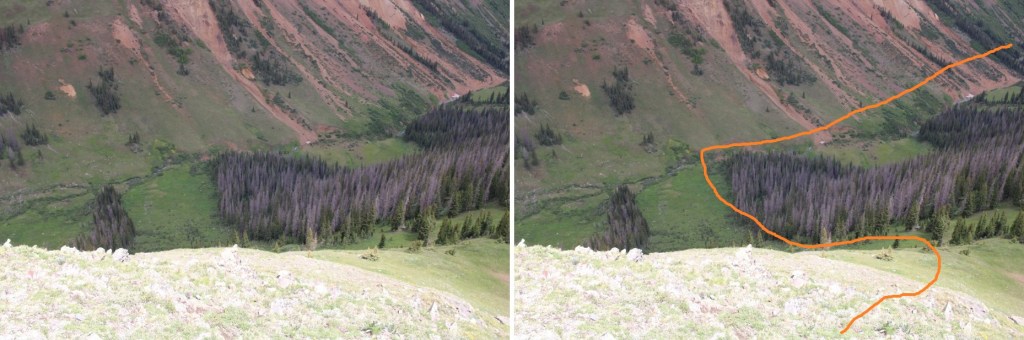
Now all I had to do was head down an avalanche runout, back to the trail.

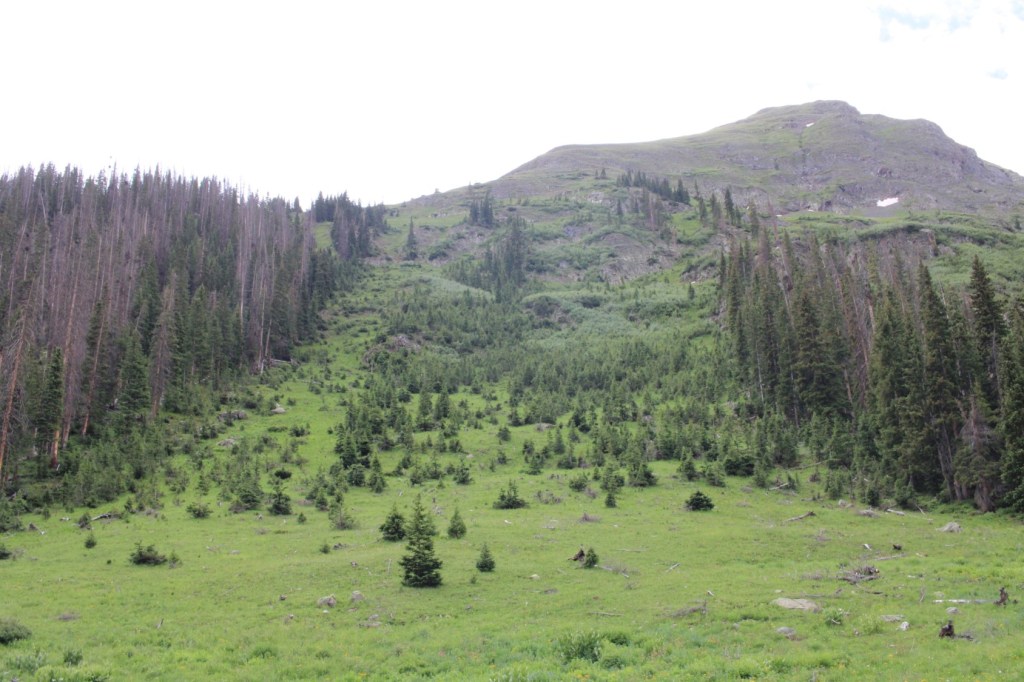
Here’s looking back up that avalanche route

Now back on the trail, I followed it to the 4WD road

And followed the road back to my truck

I made it back to my truck at 1pm, making this a 14.13 mile hike with 4500’ of elevation gain in 9 hours. 

As I was putting my things away, I saw the same fox I’d seen that morning, this time sitting on the side of the road, overlooking Eureka below.