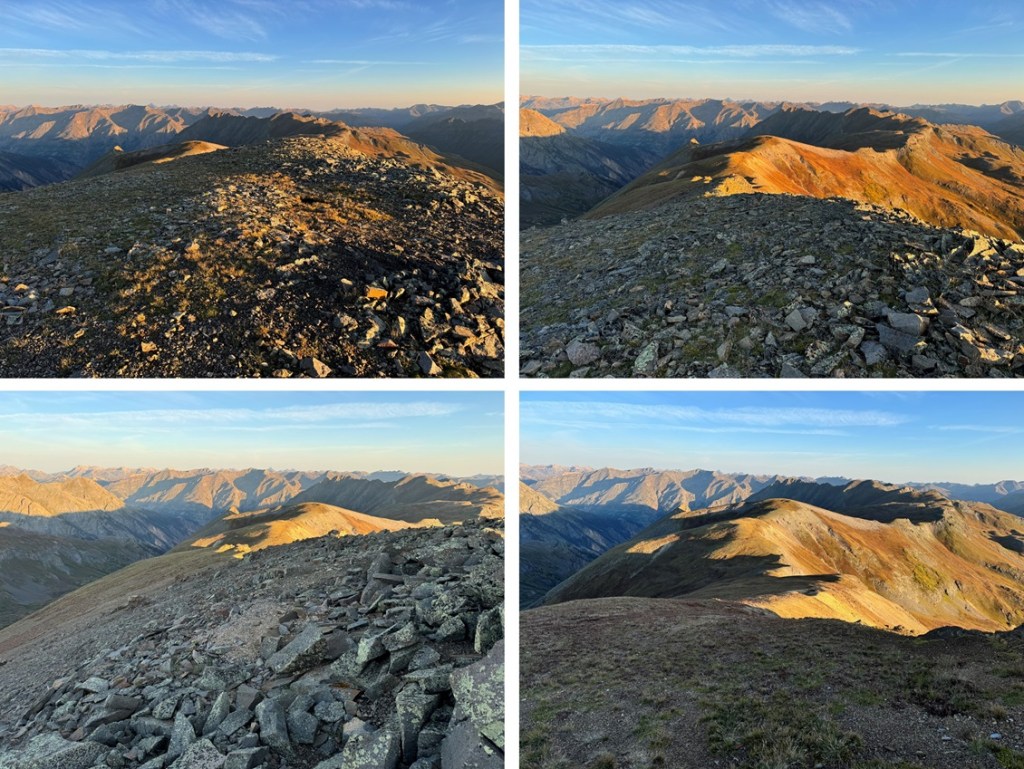
Mt Alice – 13,319

RT Length:  19.98 miles

Elevation Gain: 5159’

This hike, while long, was much easier than anticipated.  I arrived at the Wild Basin Trailhead inside Rocky Mountain National Park and was on the trail at 4am.   I’m sure most of you know this, but the park has an entrance fee, and timed entry for this trailhead between the hours of 9am-2pm.  The trailhead holds dozens of vehicles, and there’s a bathroom there.

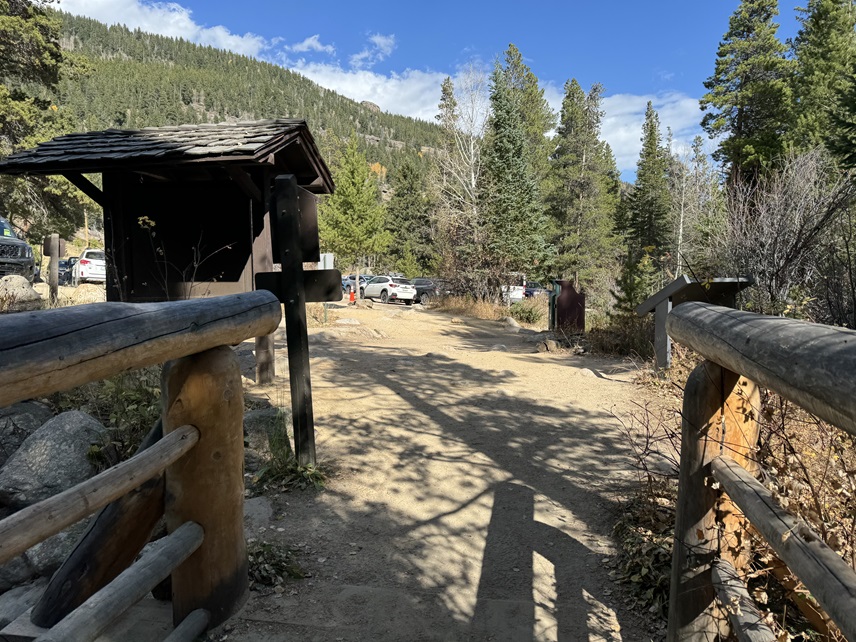
The trailhead starts at the west end of the parking area and is clearly marked.
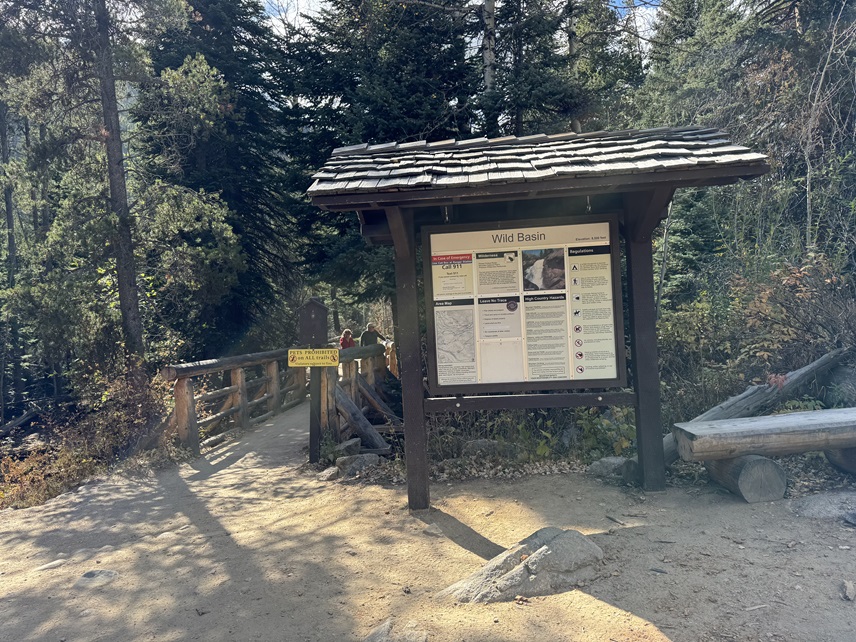
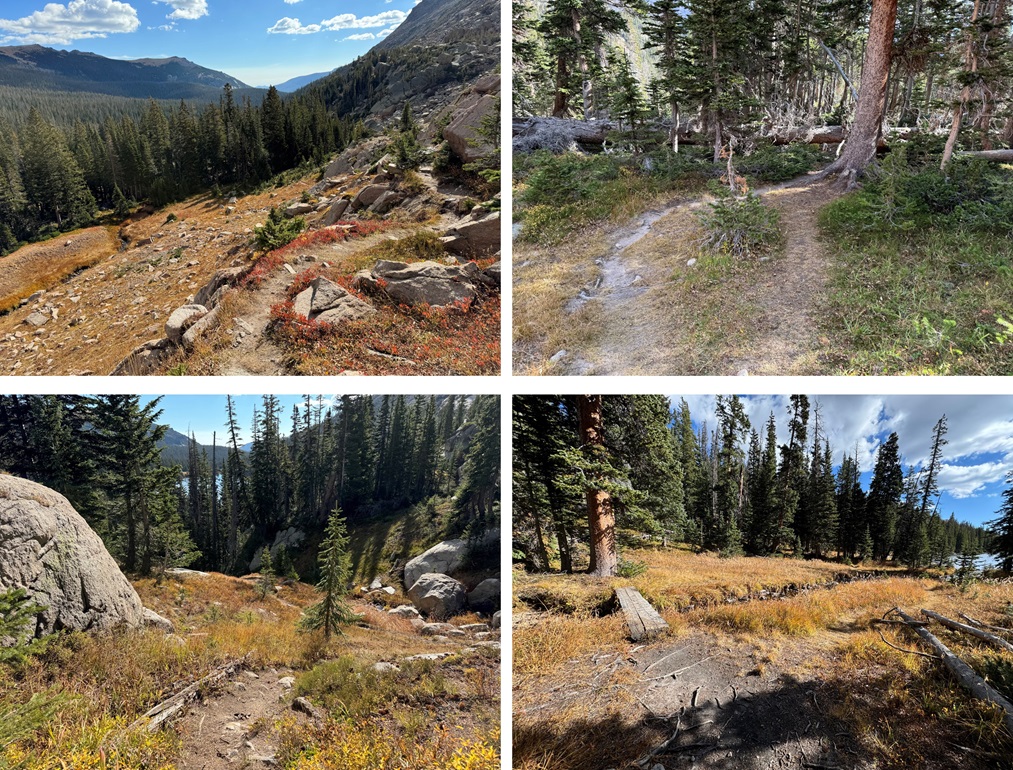
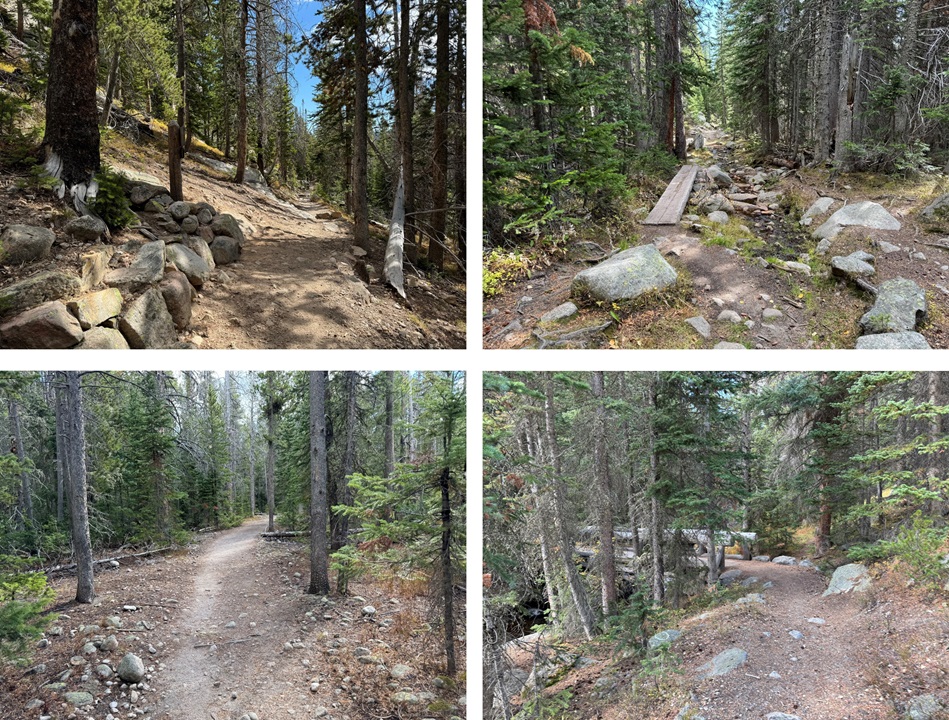
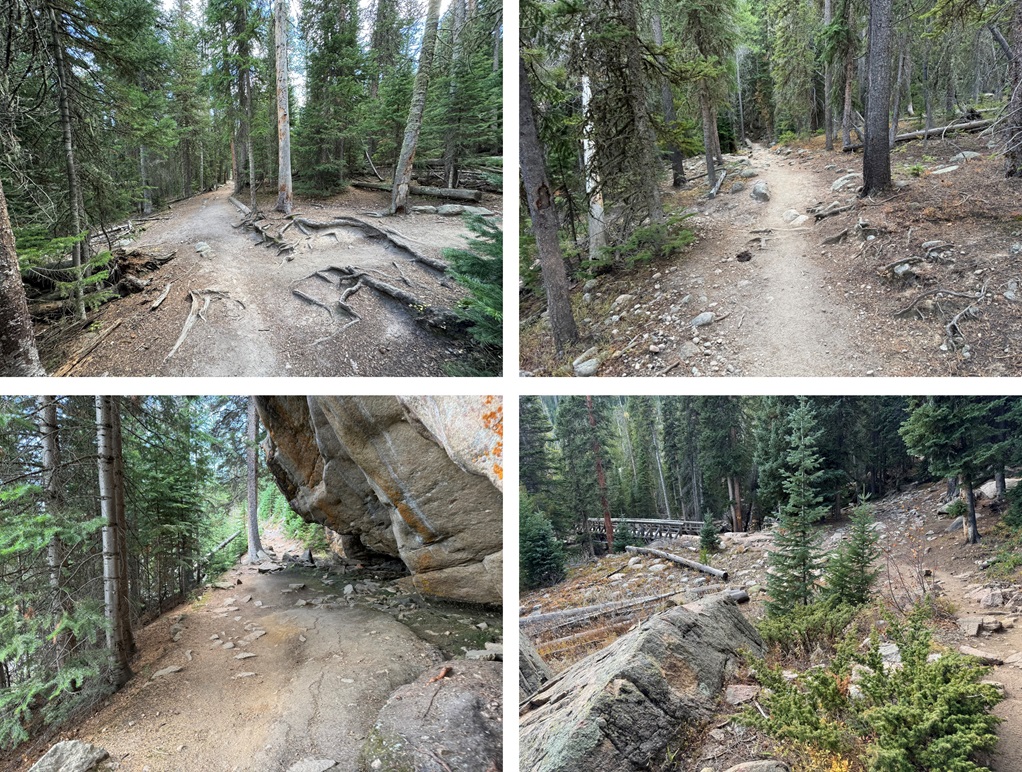
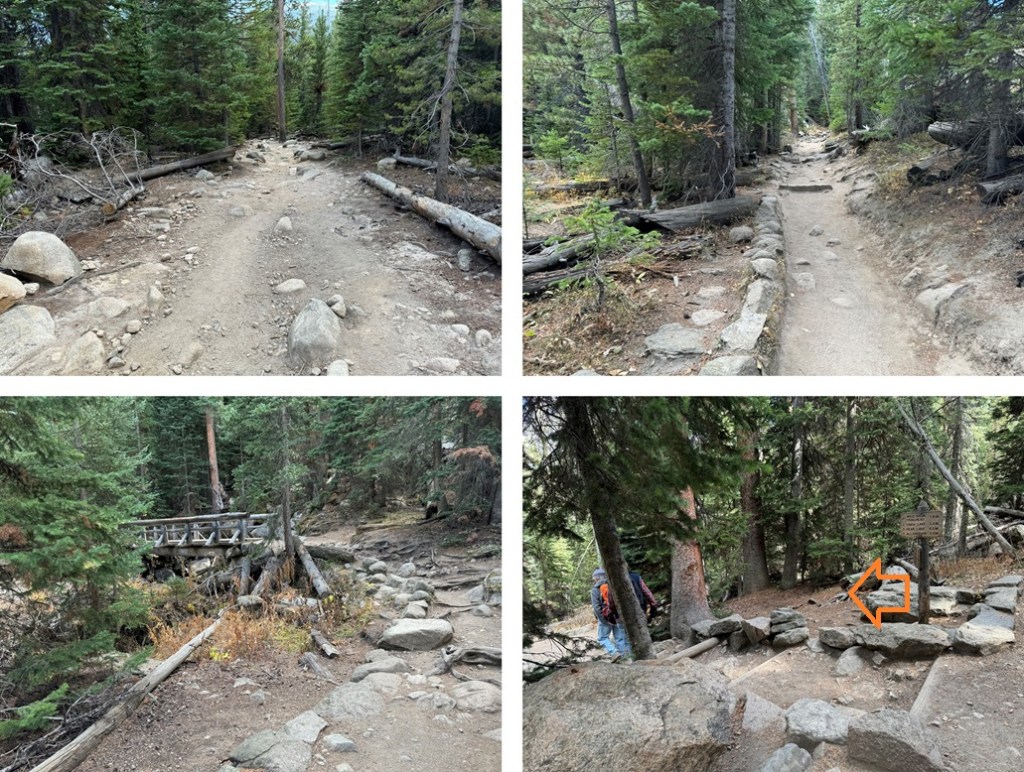
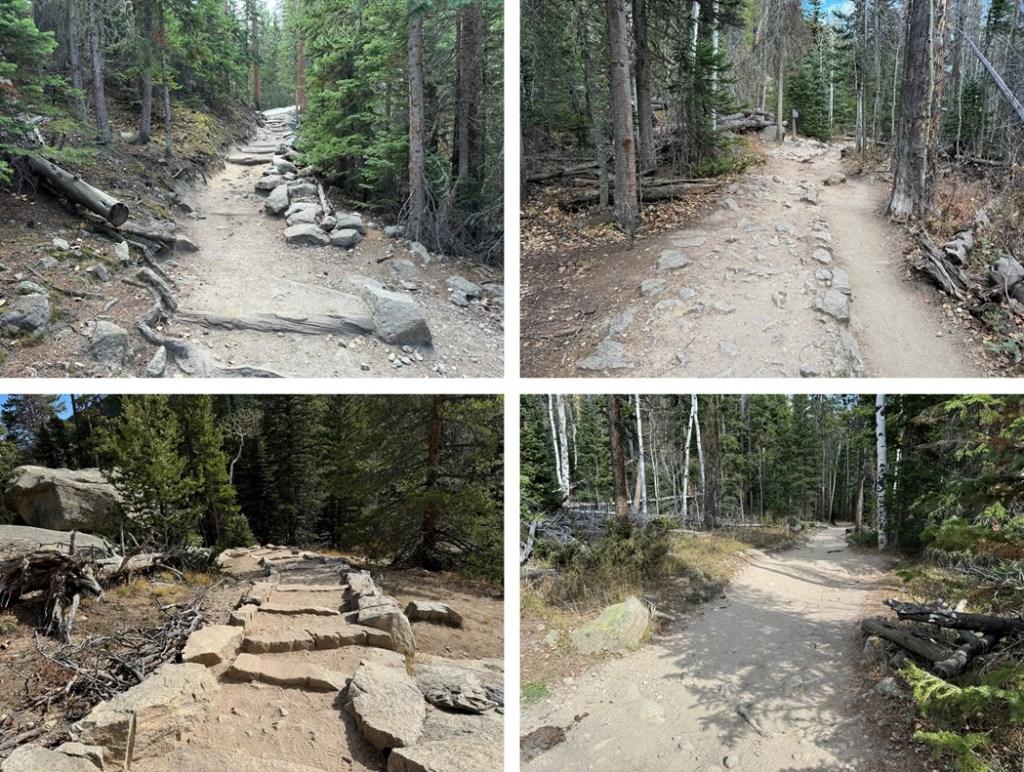
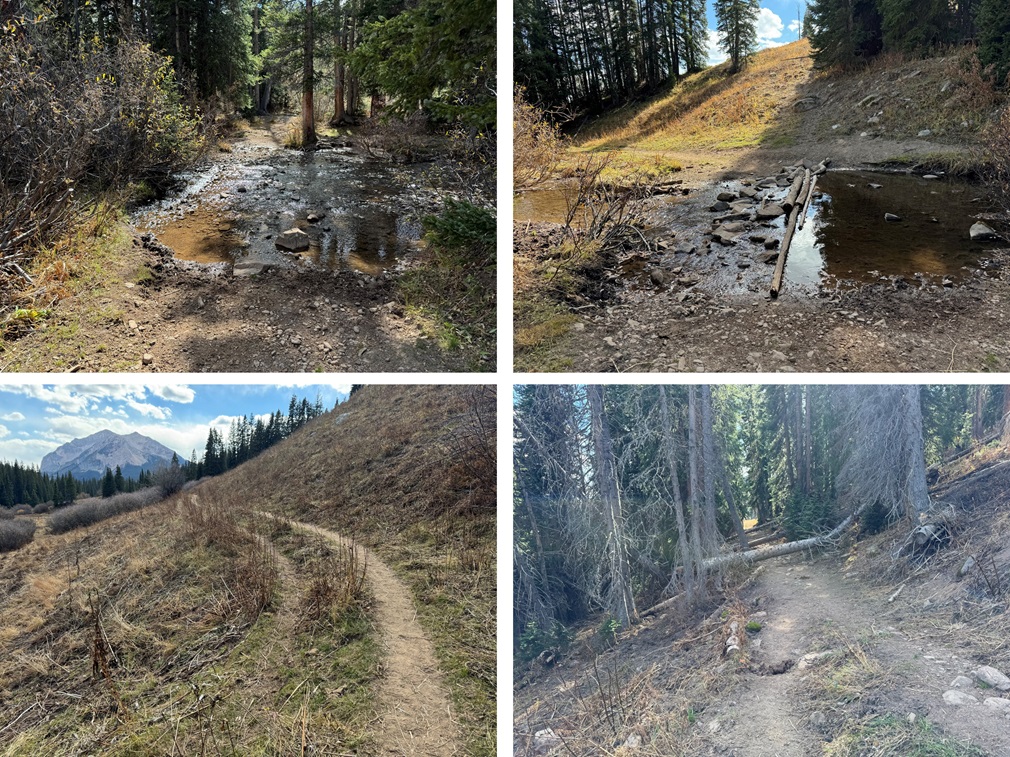
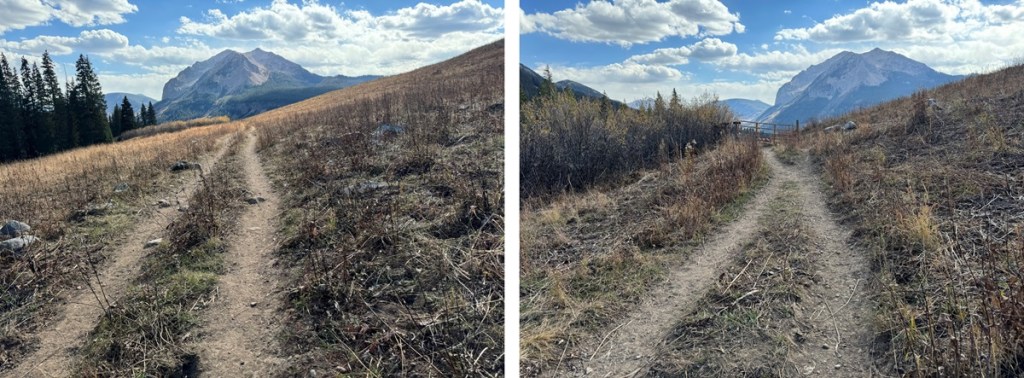
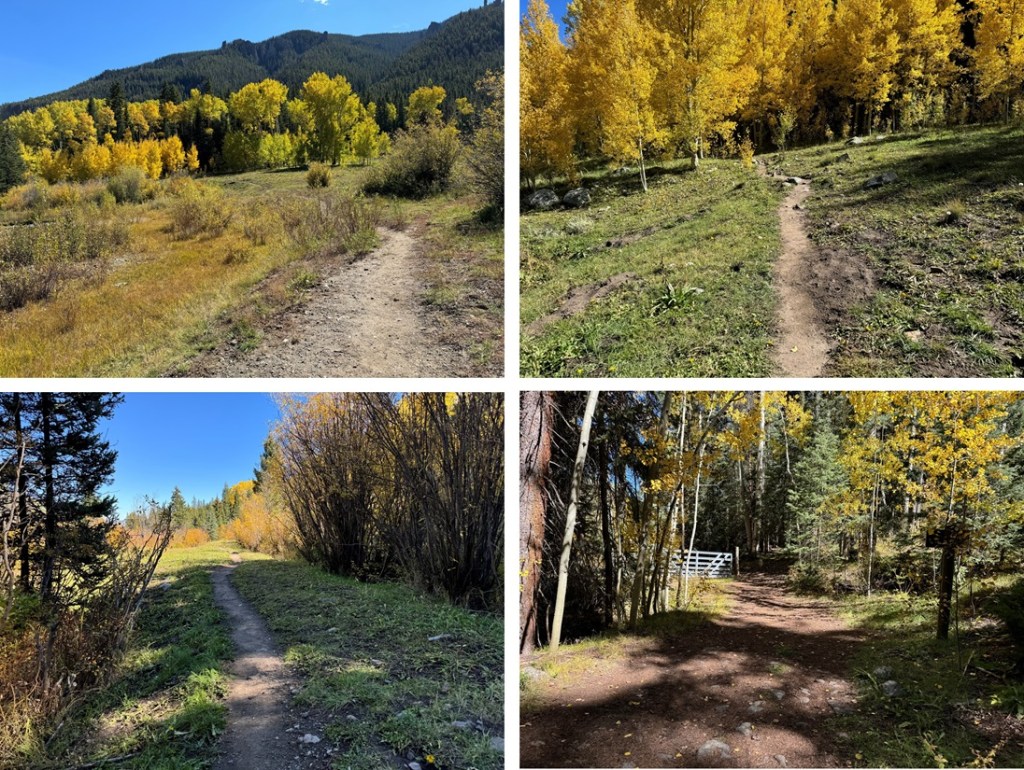
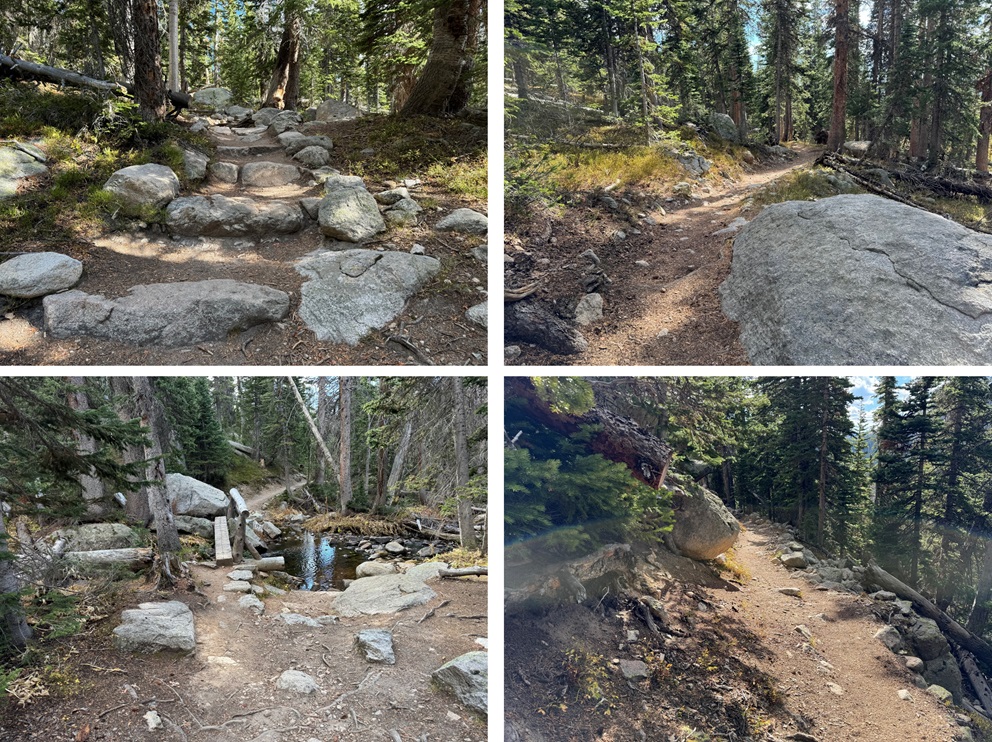
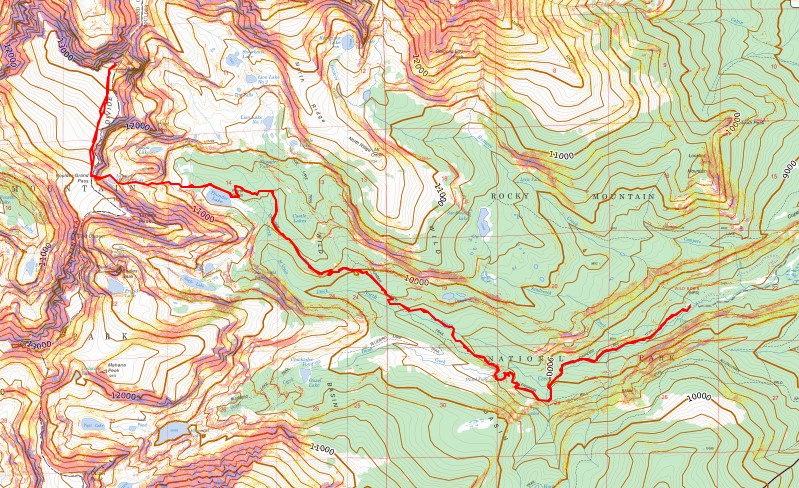
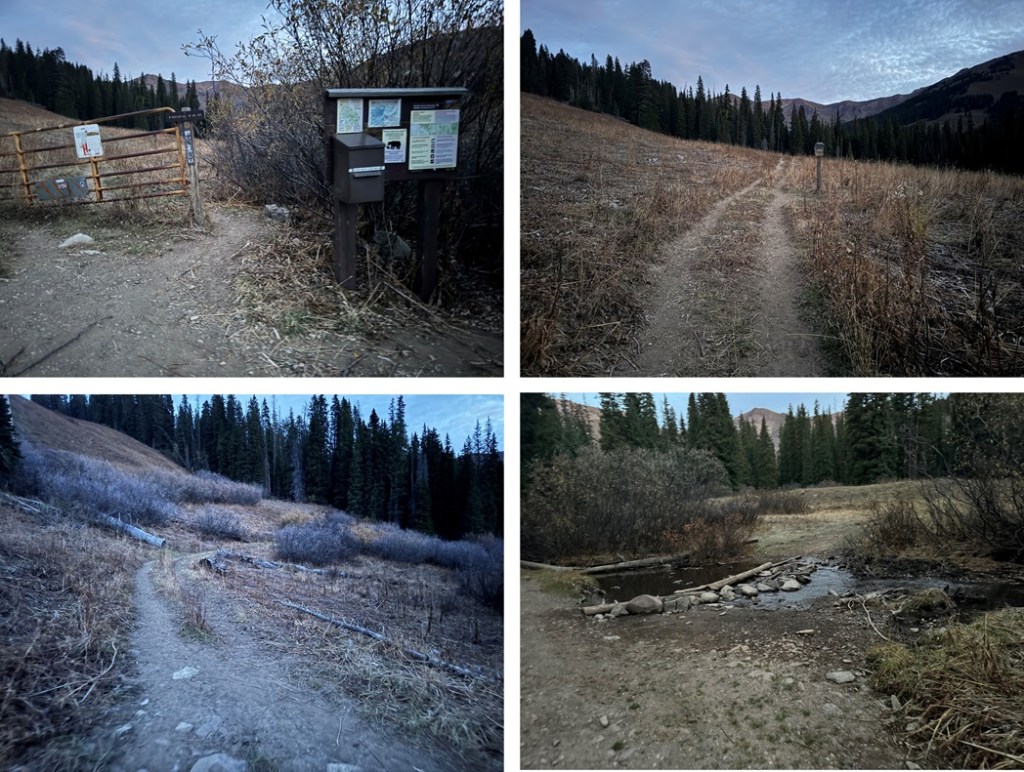
I followed the trail all the way to Thunder Lake. This is a class 1 trail with many junctions, but they are all clearly labeled.  I just kept heading towards Thunder Lake, and if Thunder Lake wasn’t on the trail sign (which it wasn’t always), I followed the signs to Ouzel Falls, and then Thunder Lake was on all the rest of the signs.  Along the way I passed Calypso Falls and Ouzel Falls.  Here are some pictures of the trail and junctions to Thunder Lake:

After hiking for a total of 7.2 miles I made it to Thunder Lake, and the Patrol Cabin (which was now boarded up for the winter).
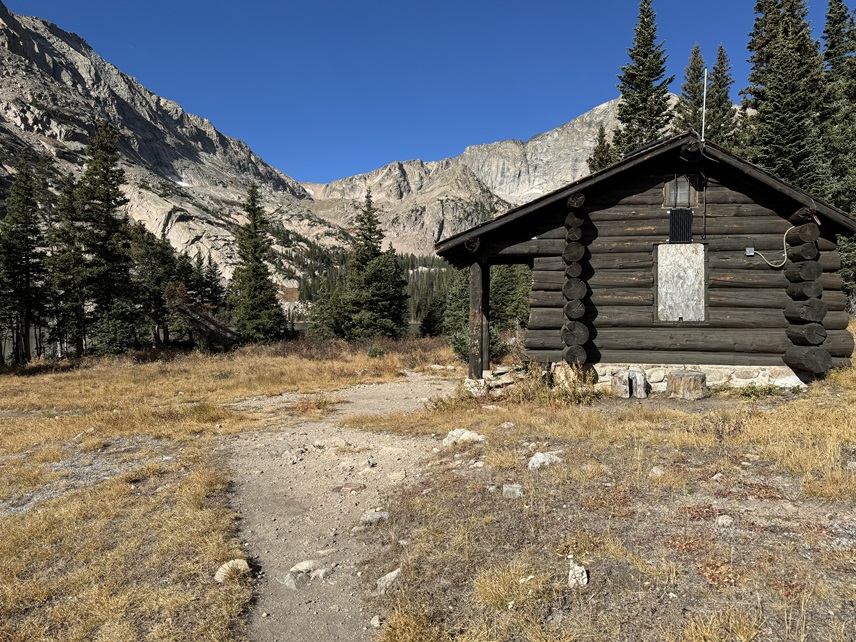
Here the trail continues, skirting the north side of Thunder Lake, then continuing into the trees, heading west all the way up to Lake of Many Winds. 
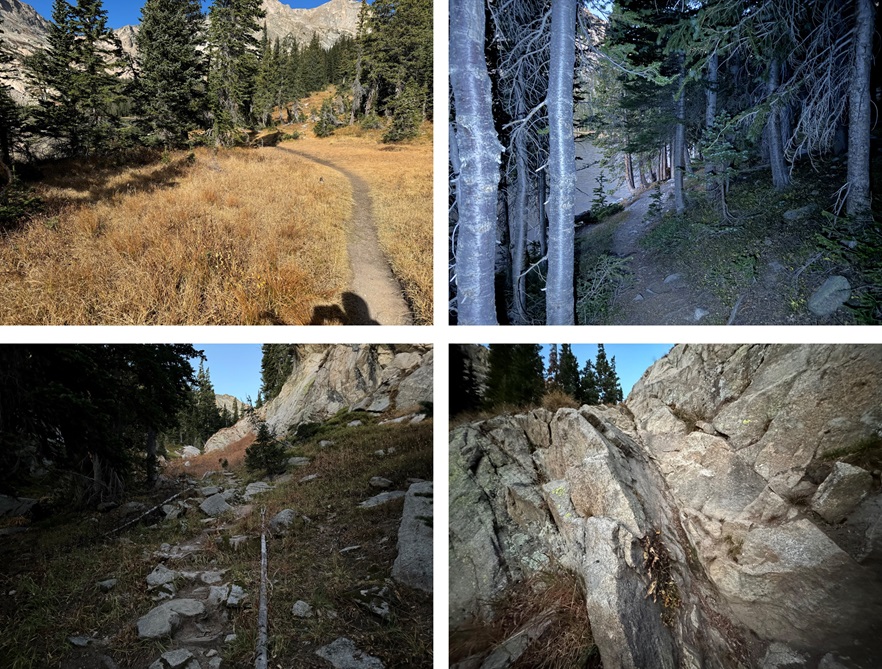
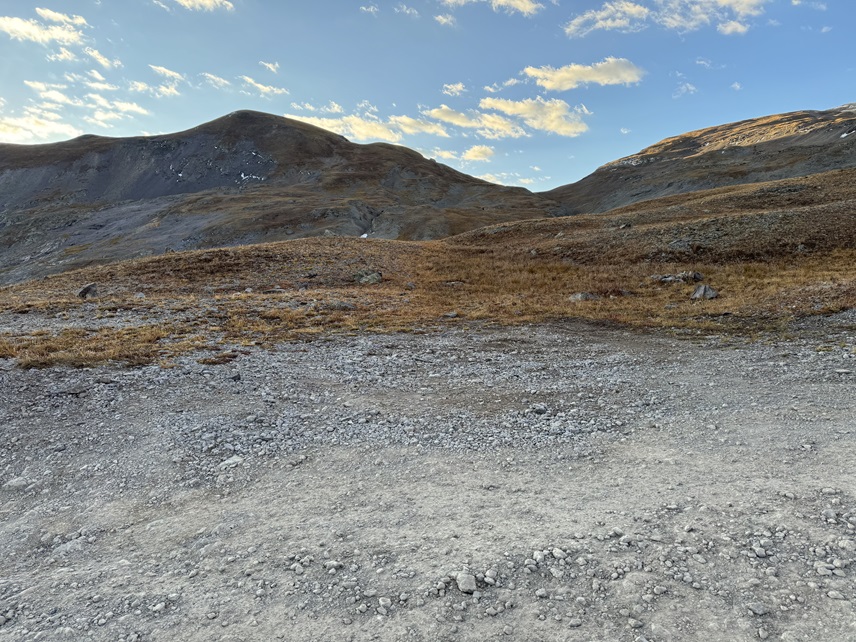
At Lake of Many Winds the trail stops, but the route finding is class 2 and easy to figure out. I kept heading west, aiming for the saddle between 12er Tanima and Mt Alice, otherwise known as Boulder-Grand Pass.
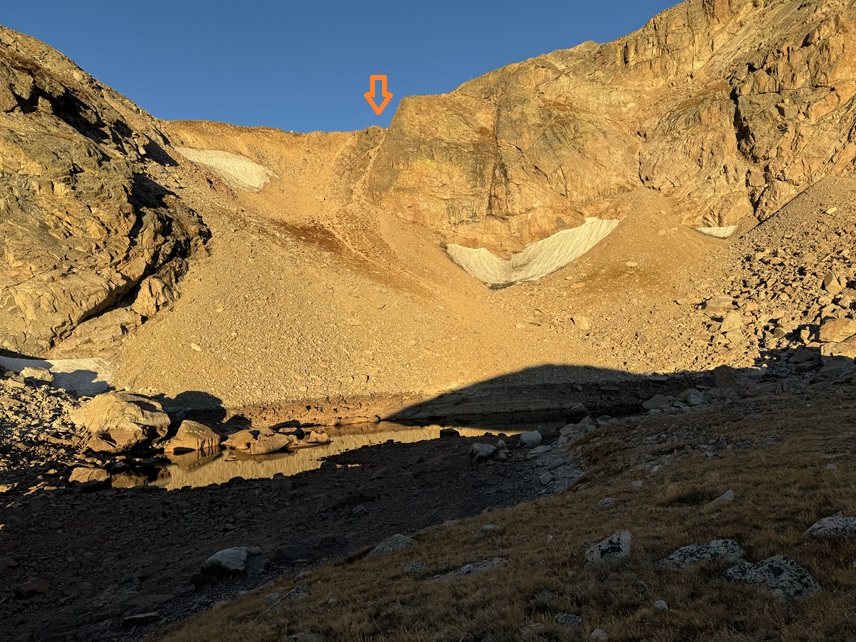
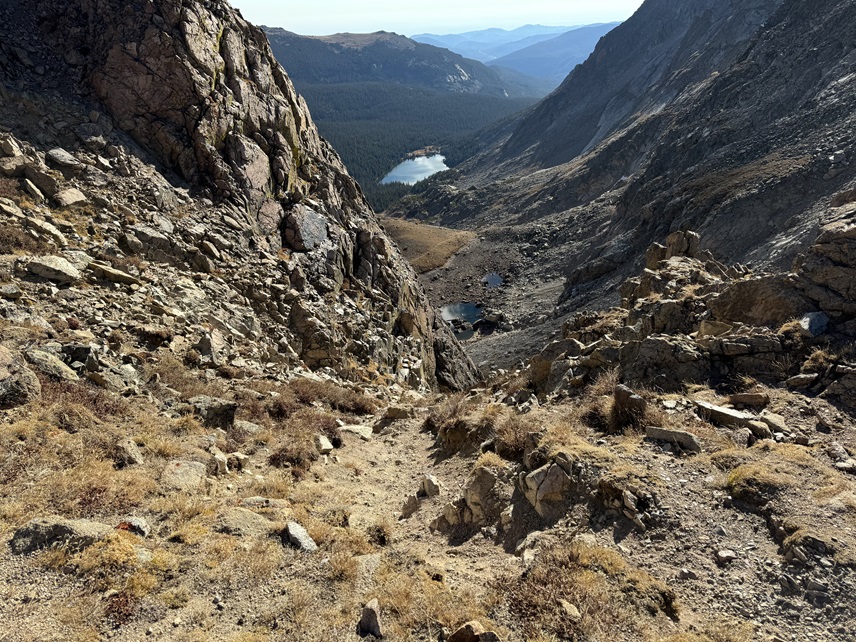
This part is choose your own adventure, but the remainder of the hike is class 2.  You’re just trying to gain the saddle.  I’d been here before (when I was climbing Isolation), and just went down the scree, which worked well.  However, this morning I wanted to try the gully to the right.  It was more solid than the scree and offered hand and foot holds.  You can take the scree up as well, as all routes here lead to the same place.

Once at the saddle, I turned right and ascended the ridge north.  The true summit is to the west (as per LoJ and my Peakbagger app, and summit register placement). 
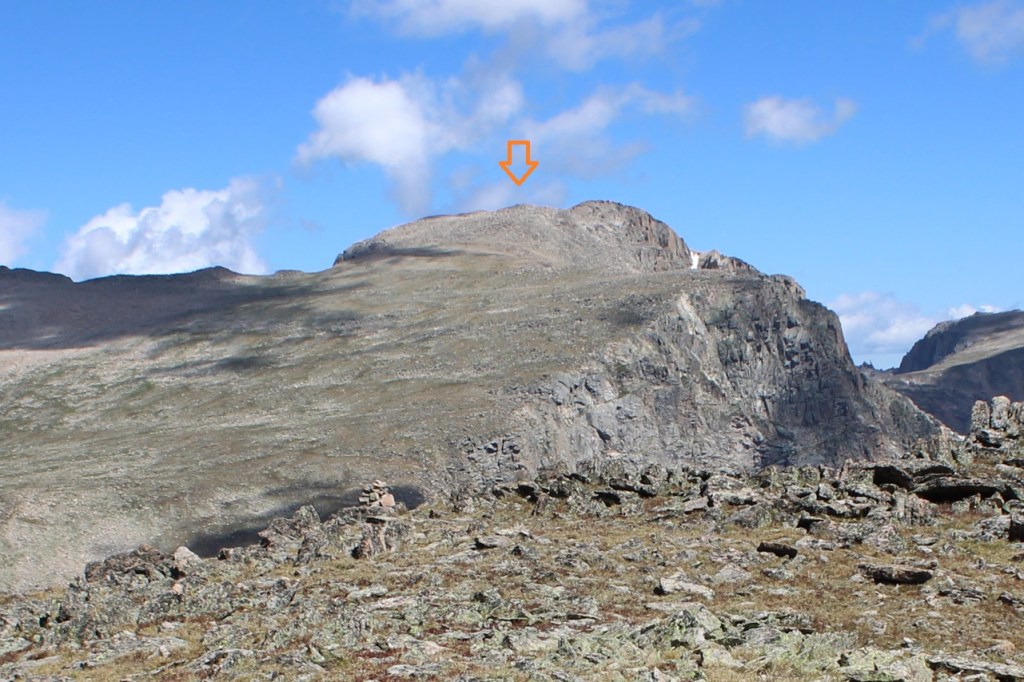
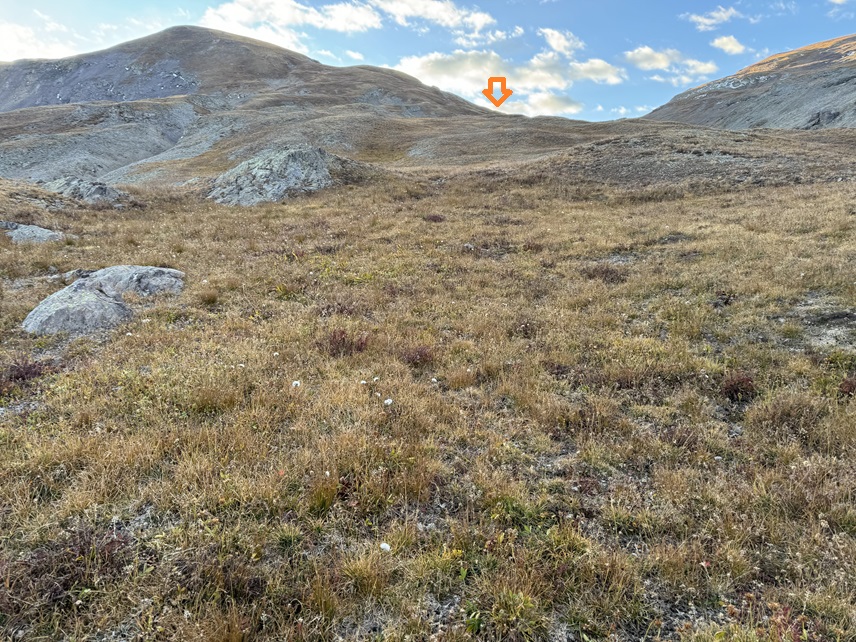
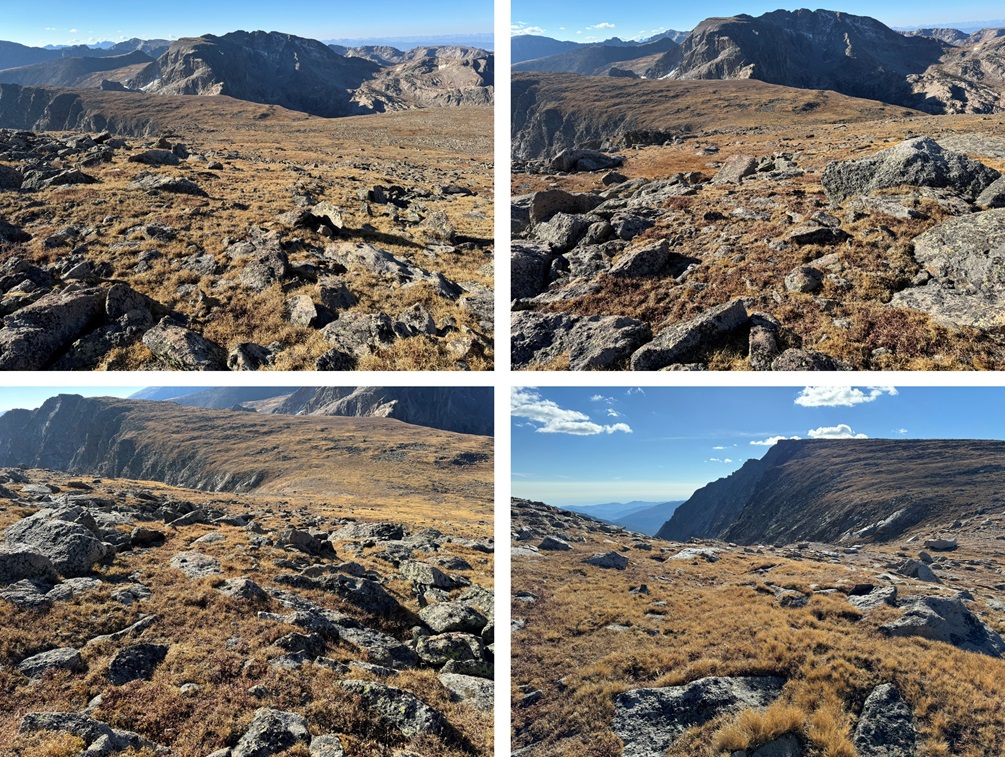
This ridge has a gentle slope and is filled with tundra and large boulders.  I was easily able to navigate around the boulders, staying on tundra most of the way.  I just kept heading north.  I gained 1250’ of elevation in about 1.1 miles to the summit from the pass.
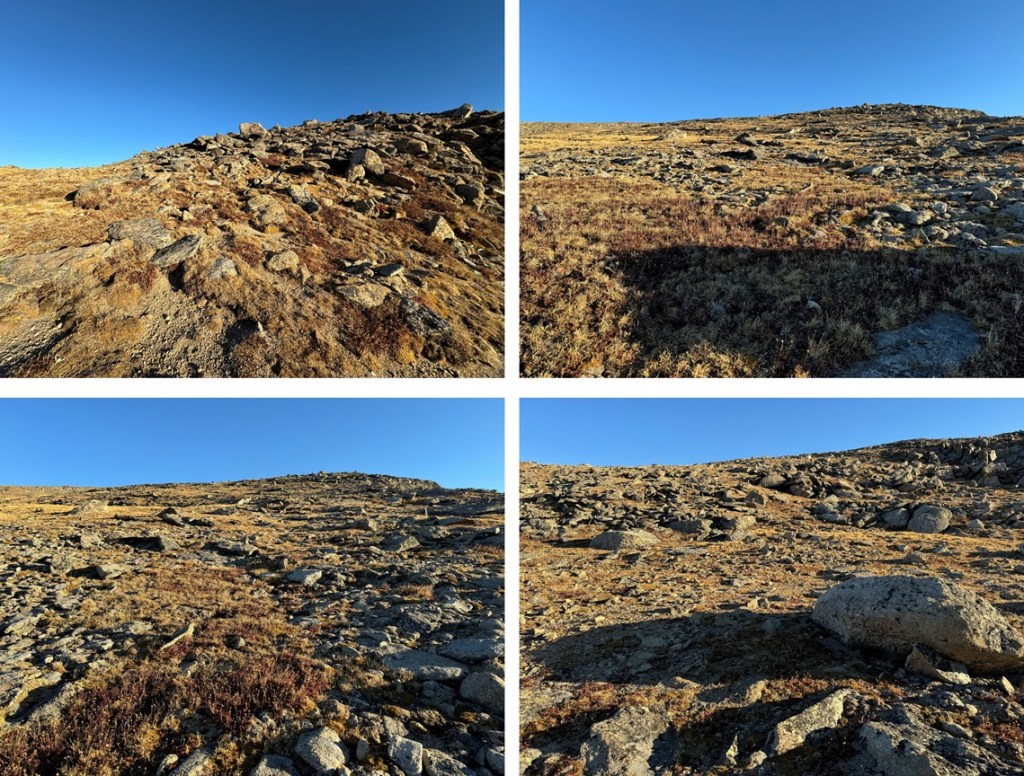
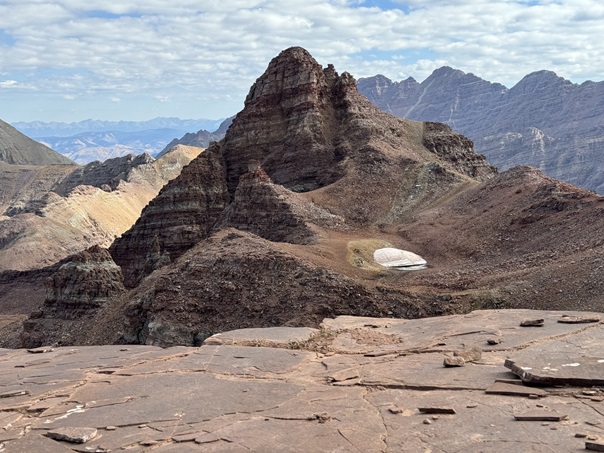
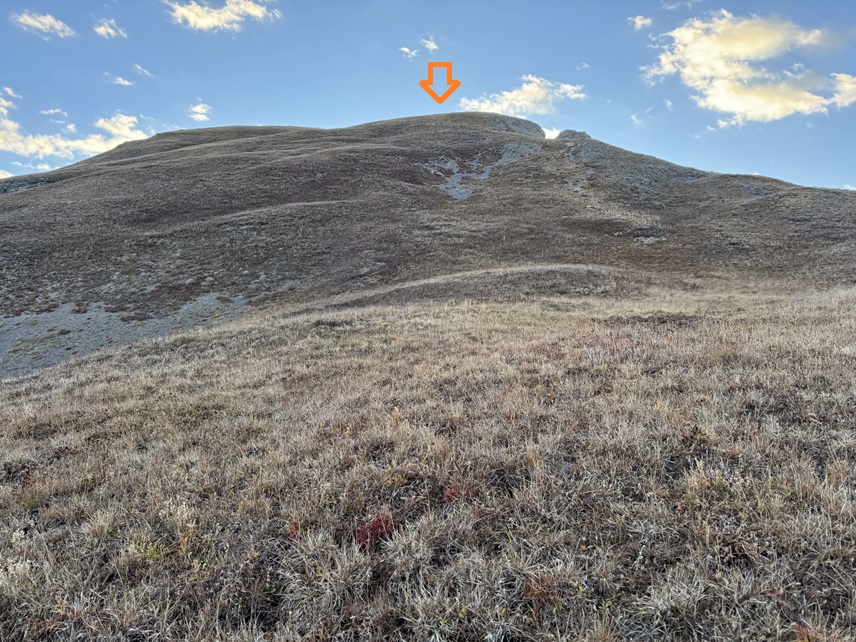
Eventually I could see the summit of Mt Alice come into view
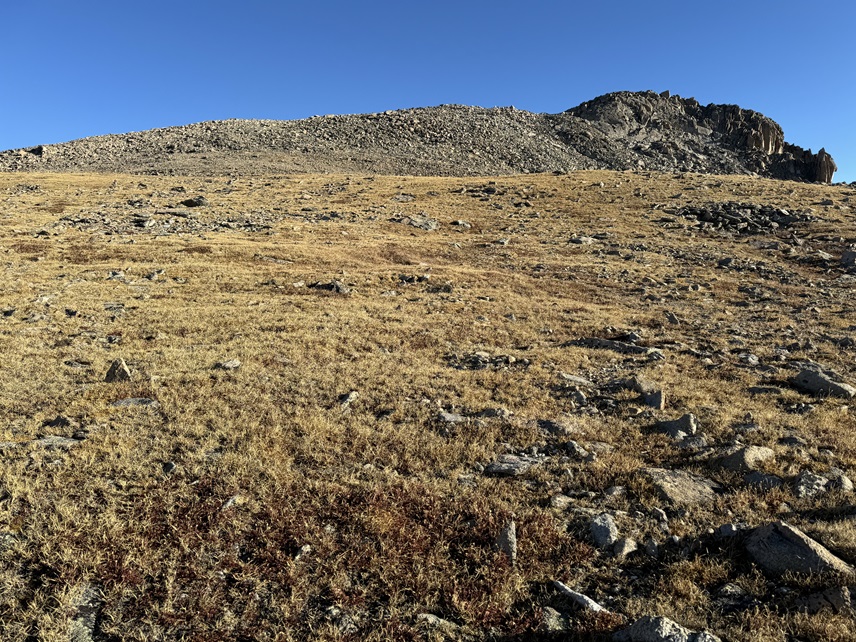
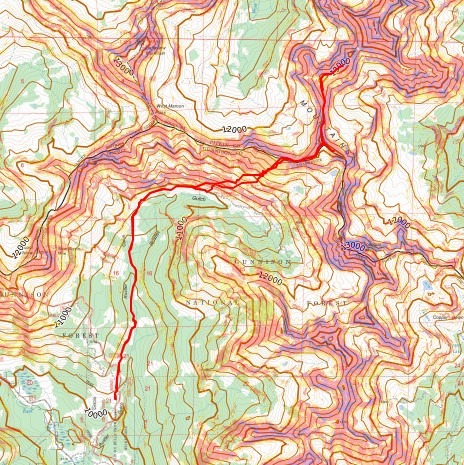
This is the overall route I took to get there

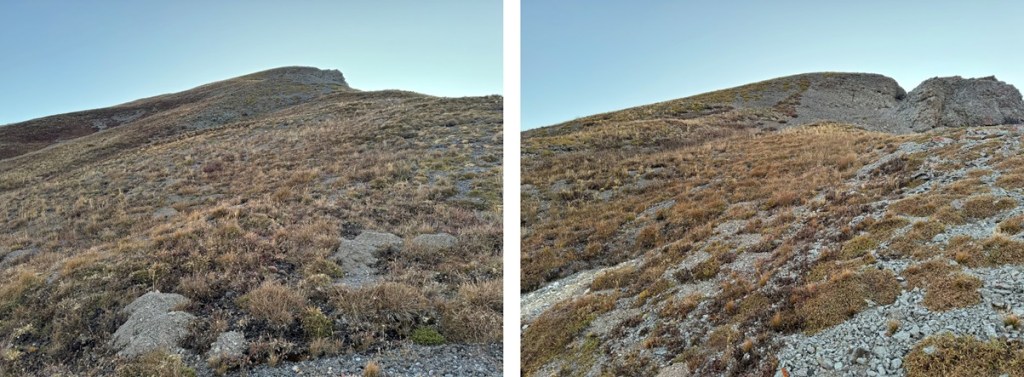
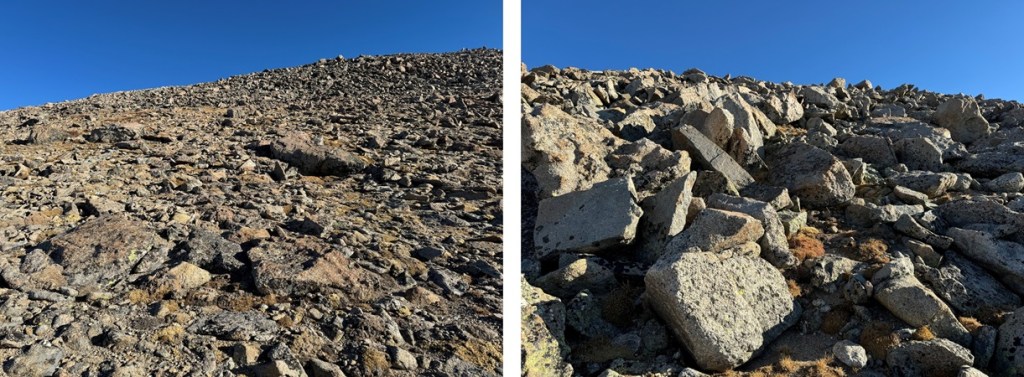
The boulders here were stable, and rock-hopping was quick.  Before I knew it, I was at the summit of Mt Alice (which had a cairn and a summit register, but the register was open and empty).
I summited Mt Alice at 9am

Mt Alice:

Now to head back to Boulder-Grand Pass, I turned around and headed south, back the way I’d ascended.
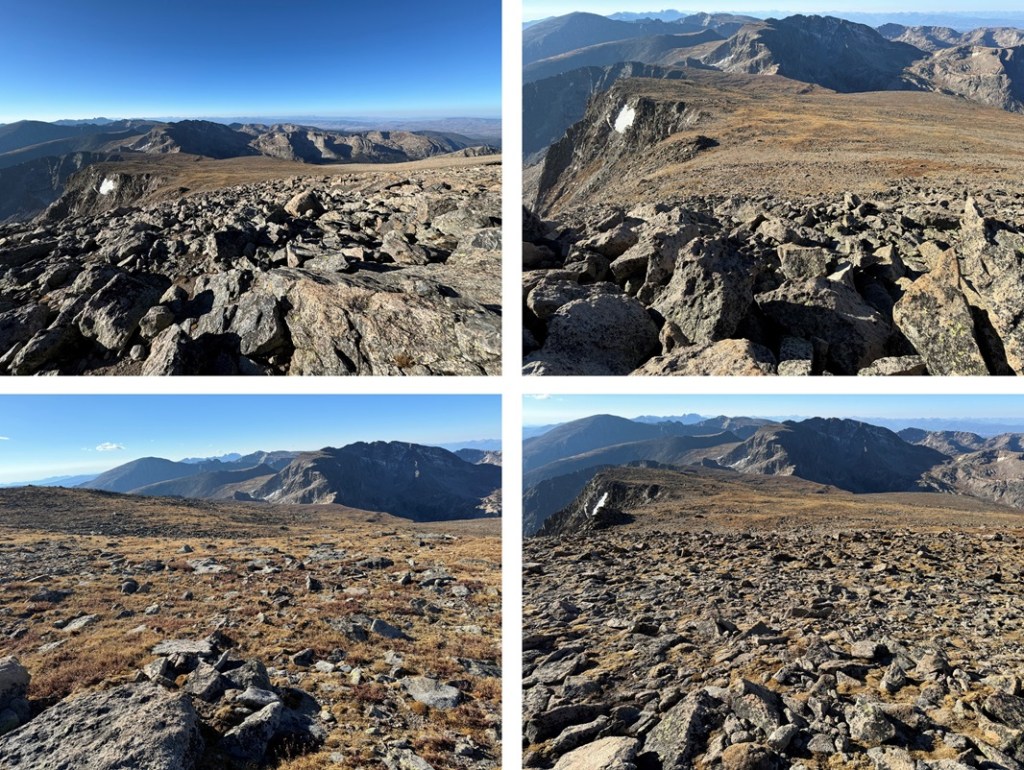
I took the same gully back down to Lake of Many Winds
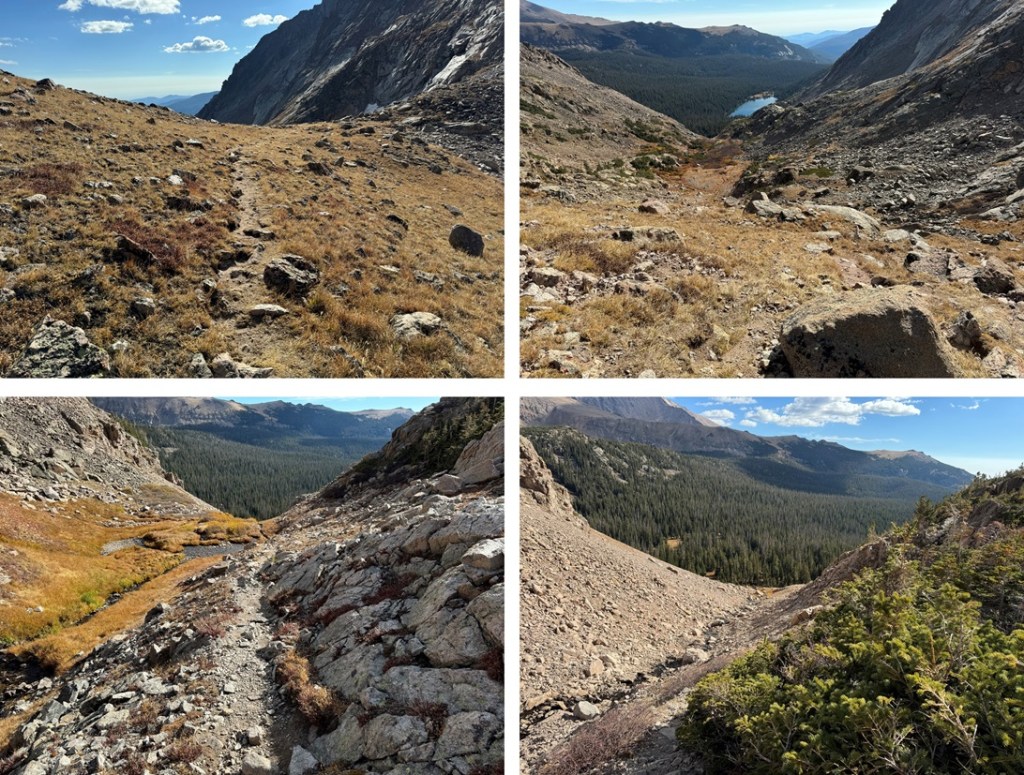
And then picked up the trail that would lead me back to Thunder Lake.
I skirted Thunder Lake to the north, then followed the clearly marked trail signs for the Wild Basin Ranger Station back to the Wild Basin Trailhead

I made it back to my truck at 12:45pm, making this a 19.98 mile hike with 5159’ of elevation gain in 8 hours, 45 minutes.
On to the next trailhead!
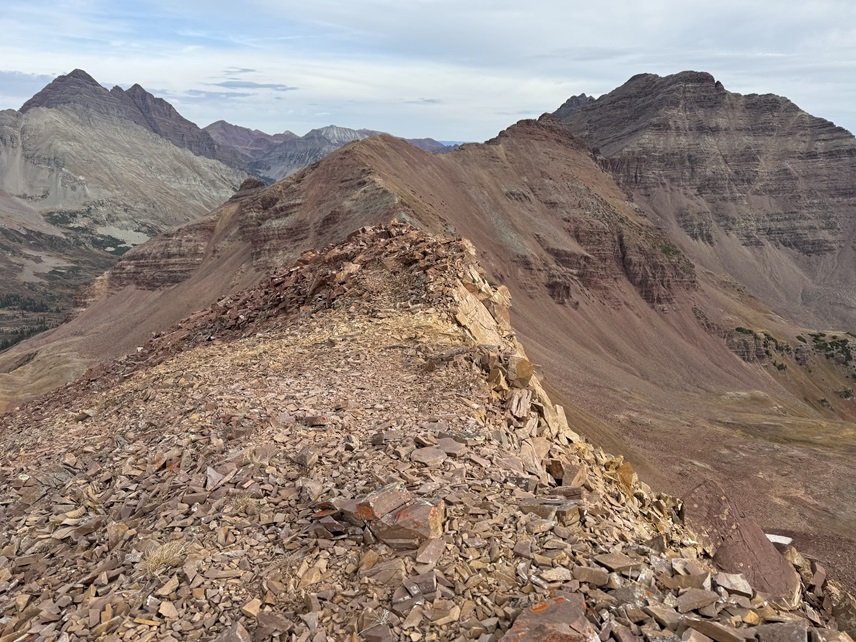
13223 and 13144

RT Length: 11.58 miles

Elevation Gain: 4141’

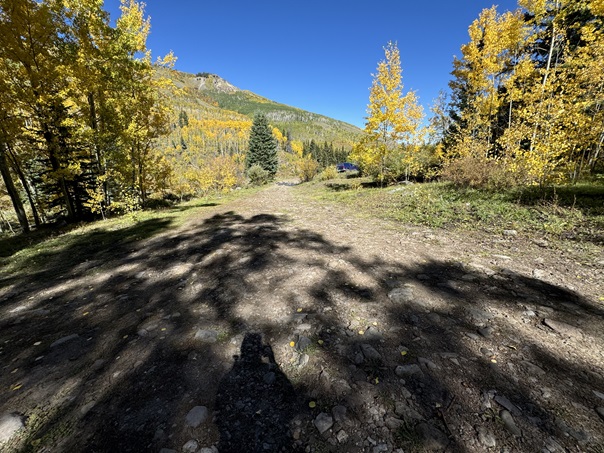
I started this hike at 6:45am from just below Rustler Gulch Trailhead.  Rustler Gulch Trailhead is located off a 4WD road, and while there is a trailhead, there’s really only enough room for one or two small vehicles to park there.  I tried parking my truck near the gate, and it stuck out halfway into the narrow road, so I backtracked and parked a bit earlier along the road. 

I’ve been to this area in the summer, and while the wildflowers are beautiful, I knew I wanted to do this hike in the fall.  In the summer the entire road to the trailhead is packed with vehicles, there are biting black flies, and I’d be hiking with 2000 other hikers.  Not to mention the flowers: they’re beautiful, but I’d need to navigate my way through them (and the bees) to reach the ridge, which I didn’t want to do. 

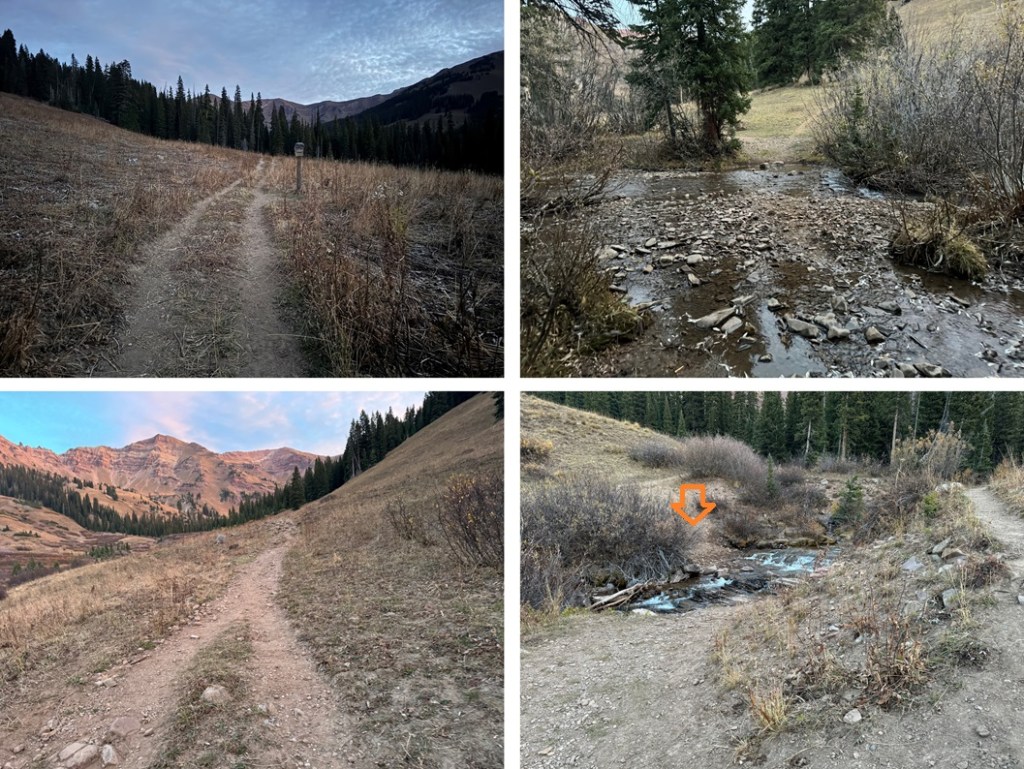
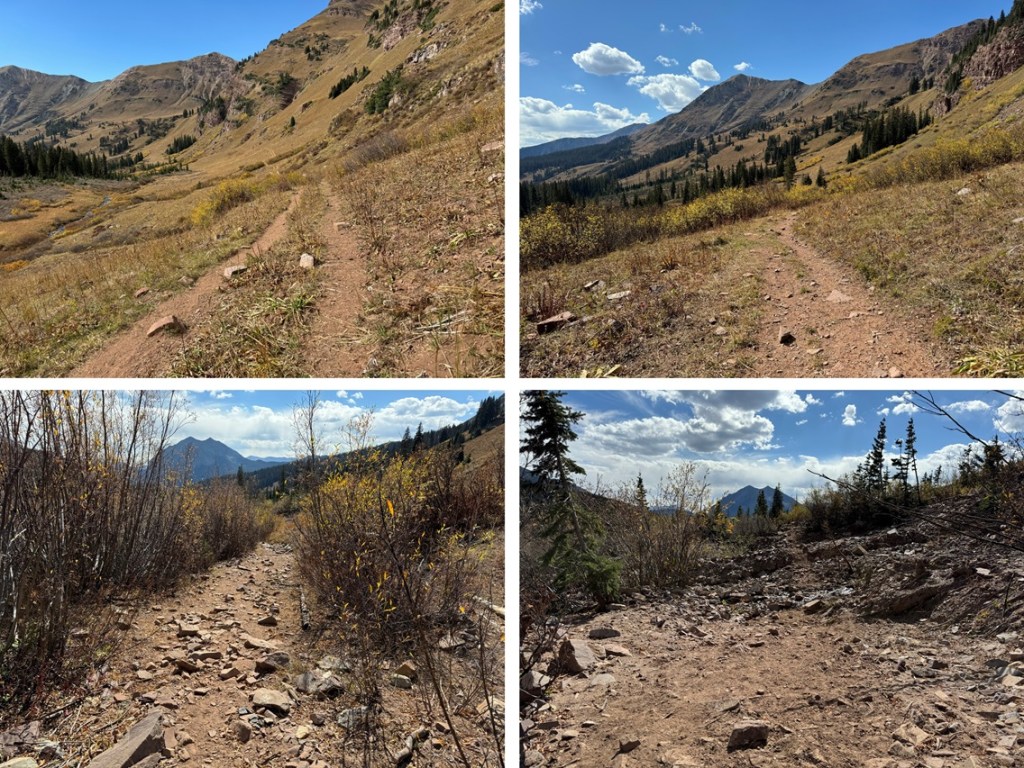
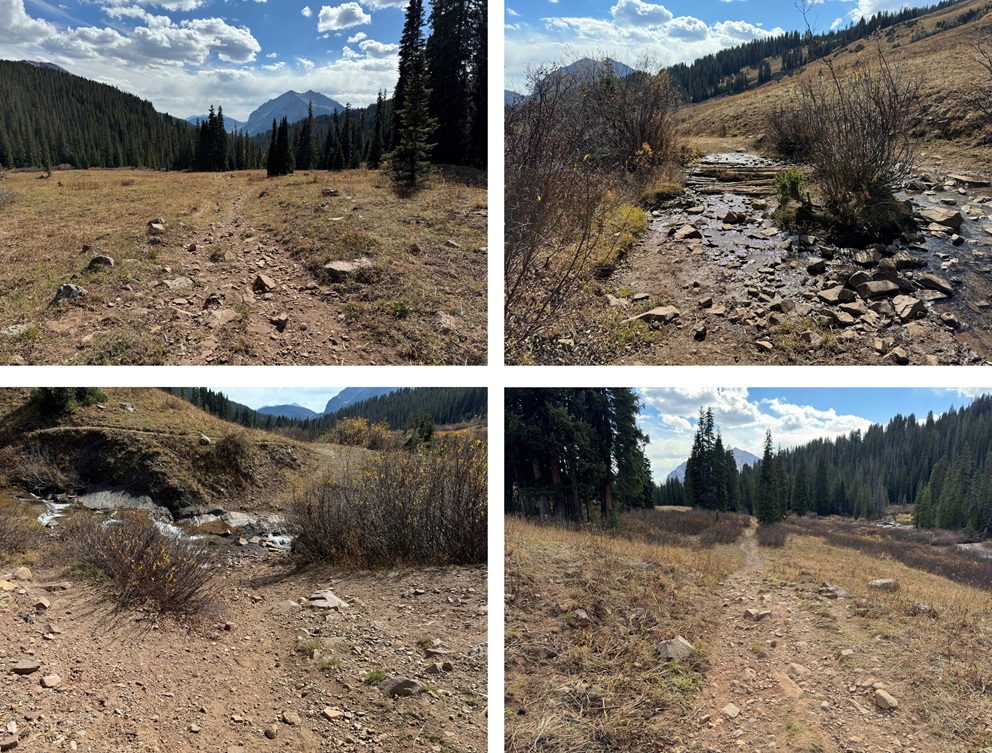
I walked a little bit up the road, and then hiked the Rustler Gulch trail for 3 miles.  This trail is easy to follow, starting out in the trees before crossing several streams and entering the gulch.

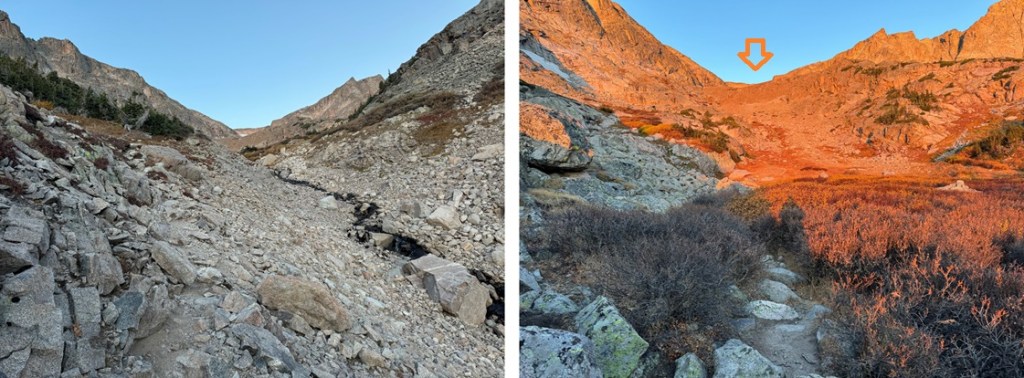
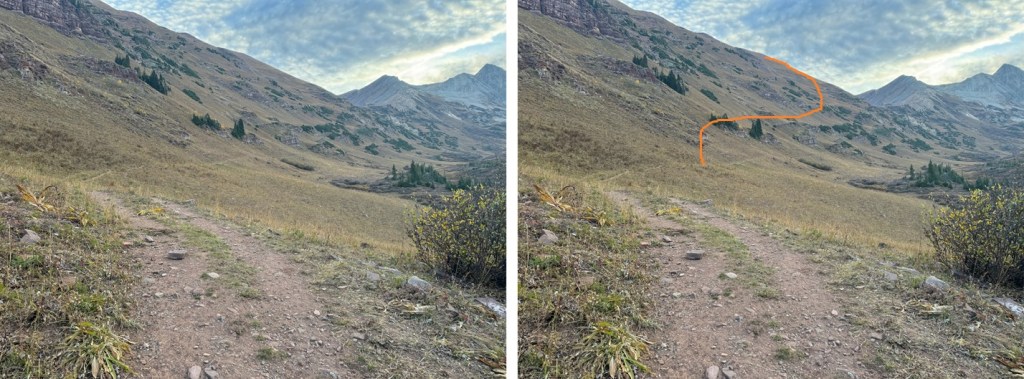
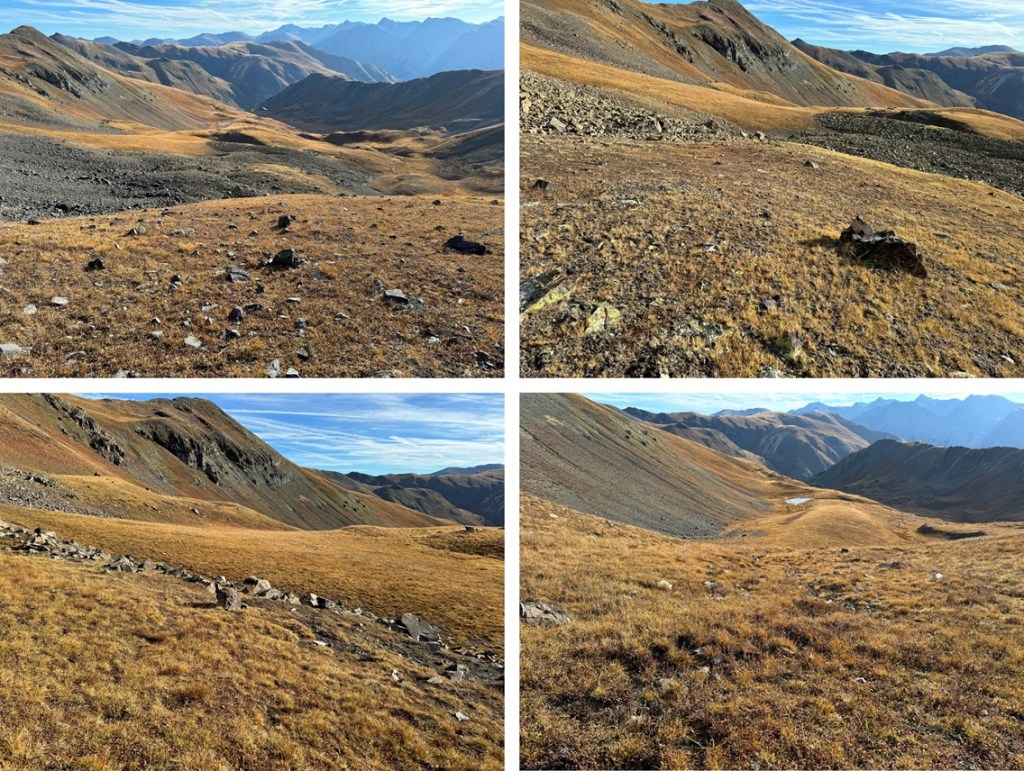
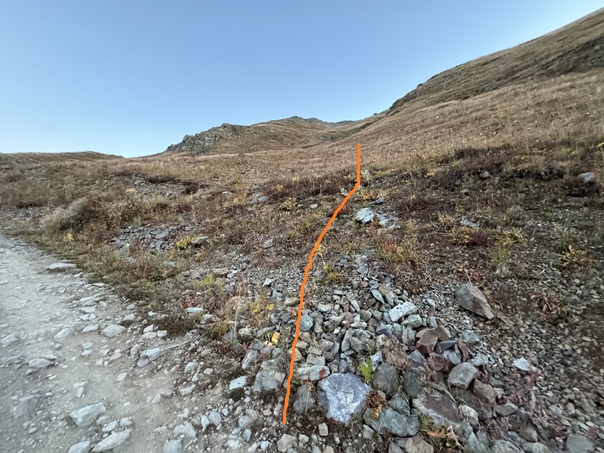
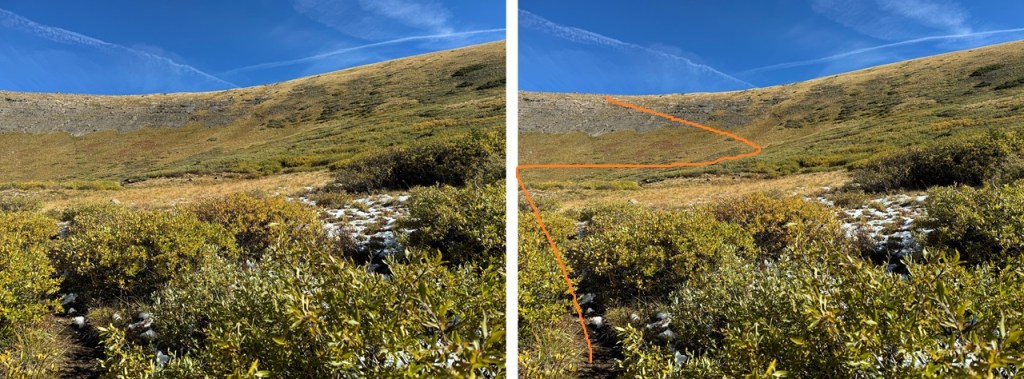
After hiking for about 3 miles, I could see the route I wanted to take to gain the ridge. 

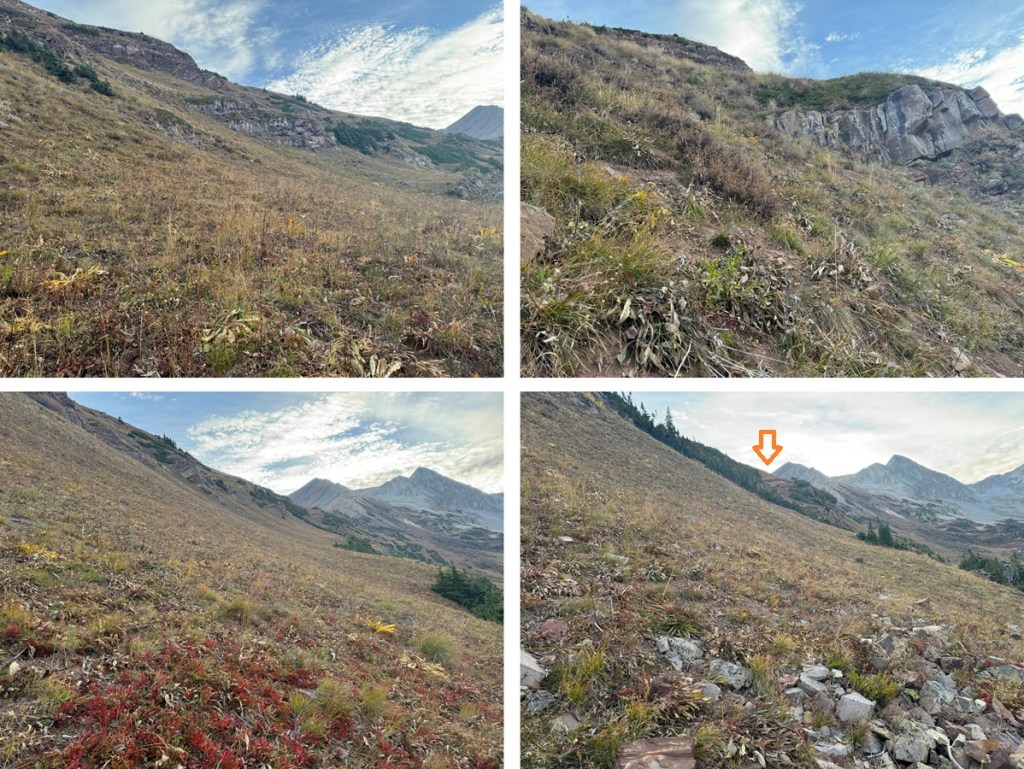
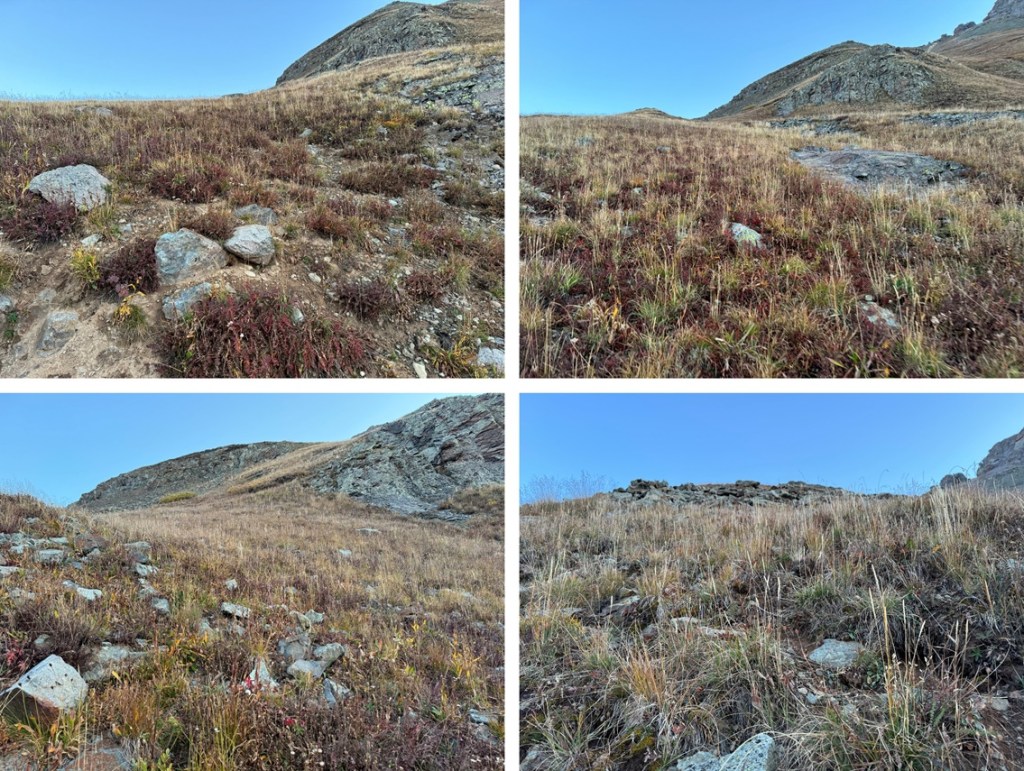
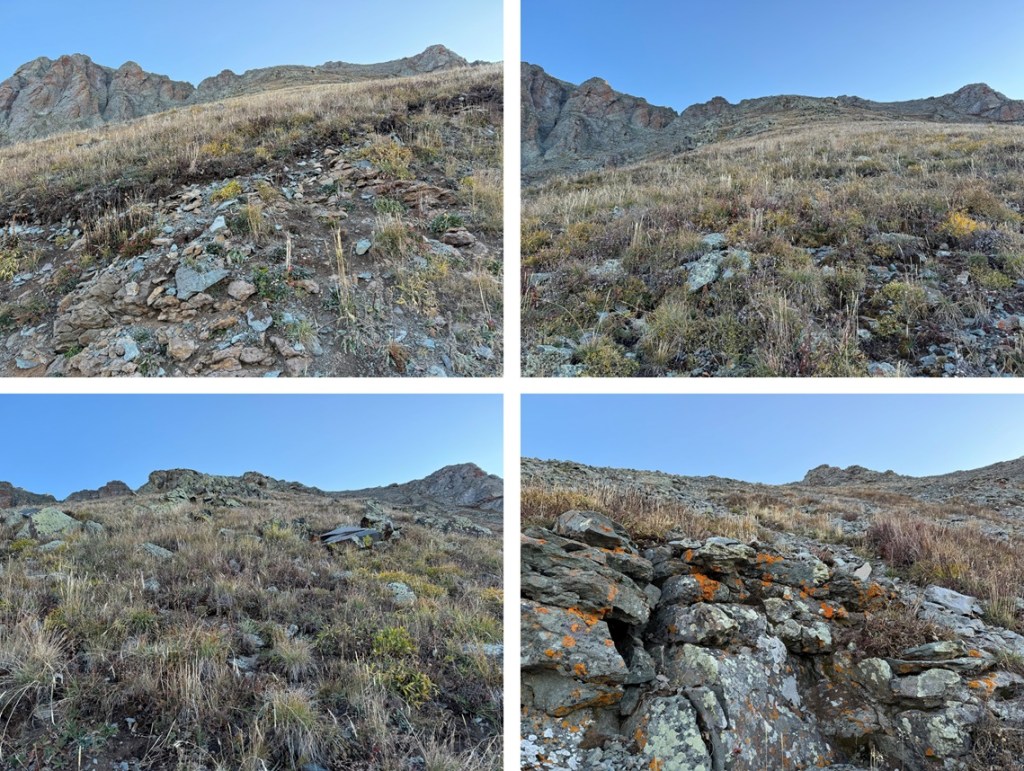
This was fairly easy to do.  I left the trail, and started heading northeast up the tundra slope, avoiding the rock outcroppings and willows along the way.

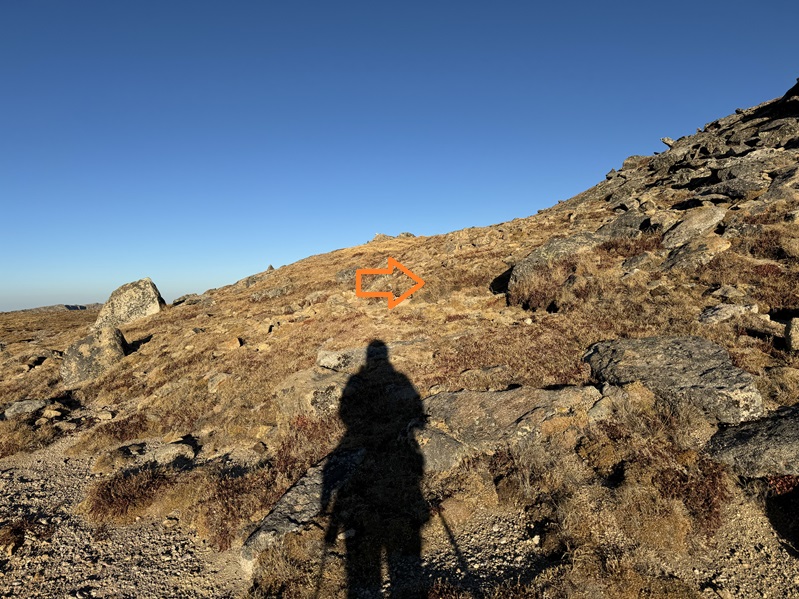
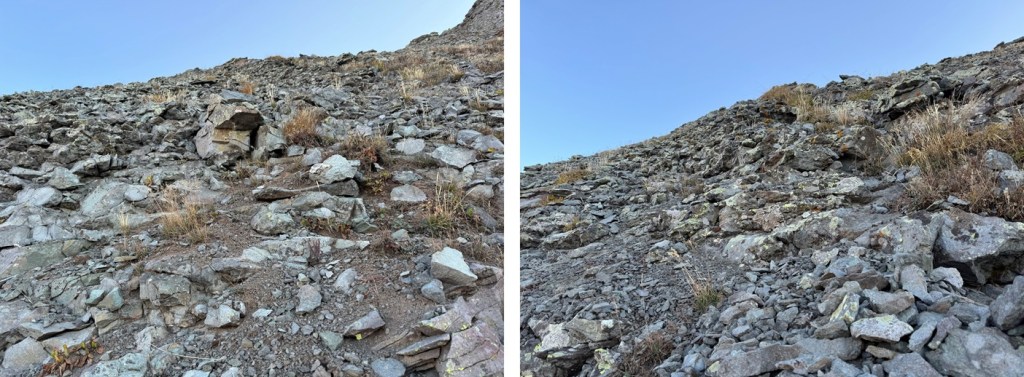
As I continued northeast, aiming for the ridge, the terrain got steeper and it changed from tundra to talus. 

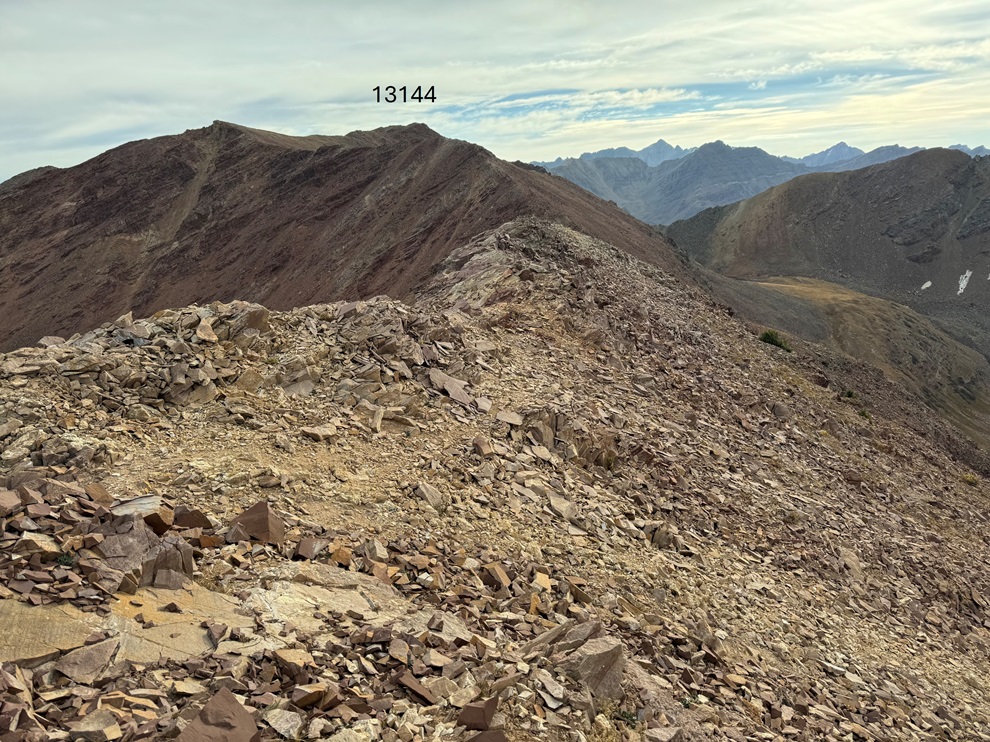
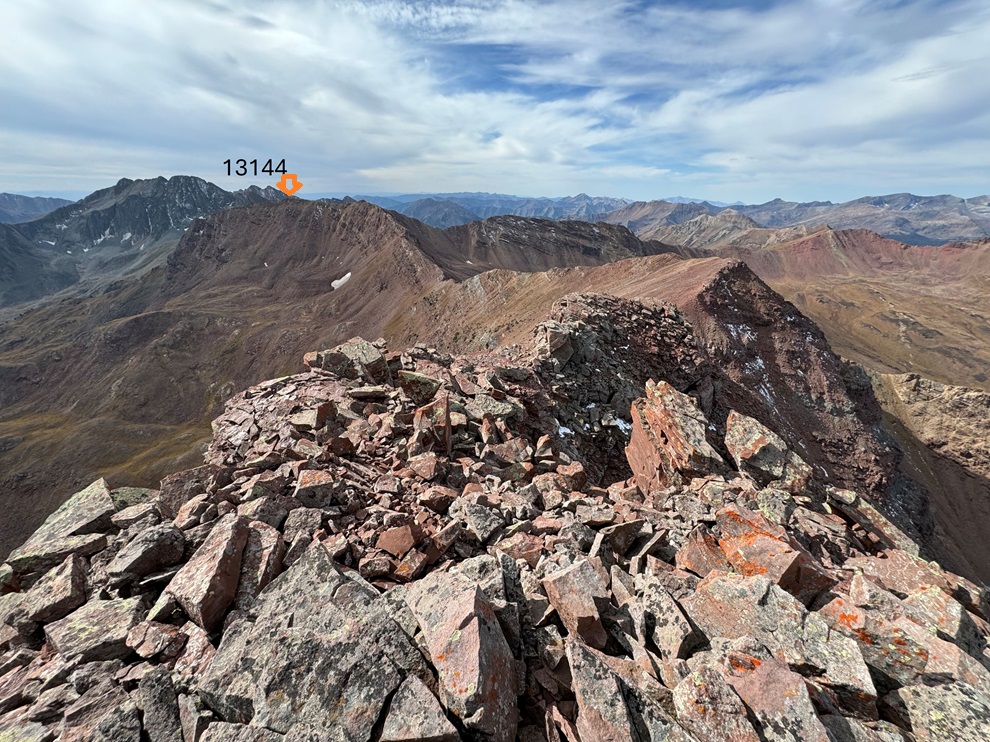
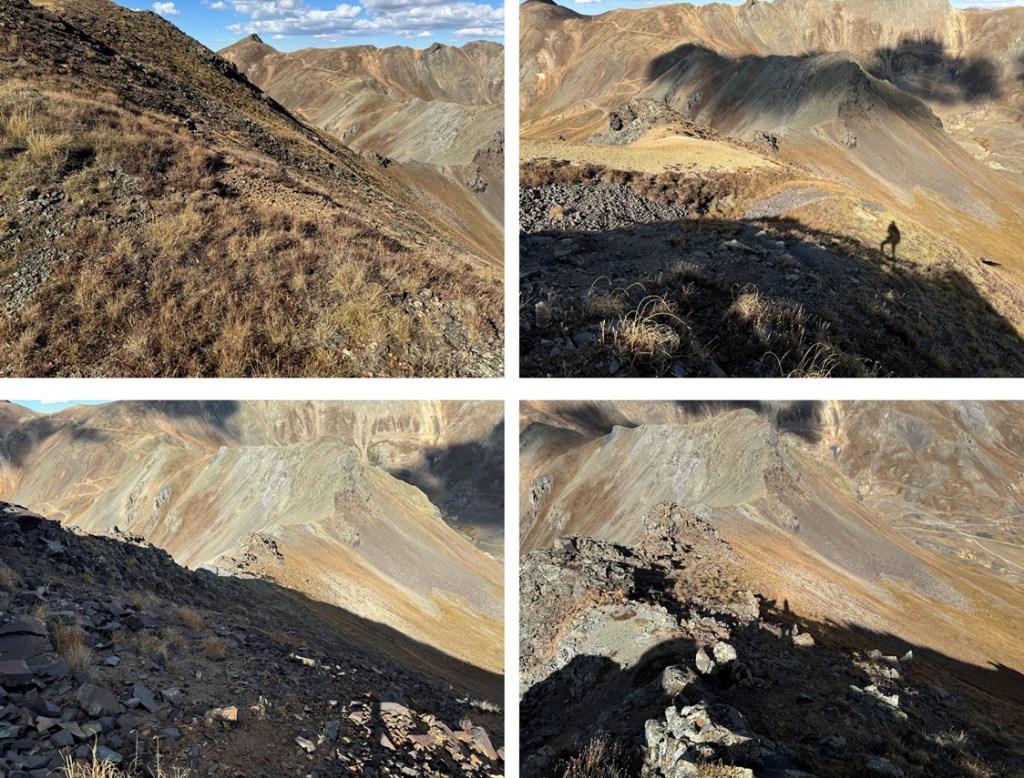
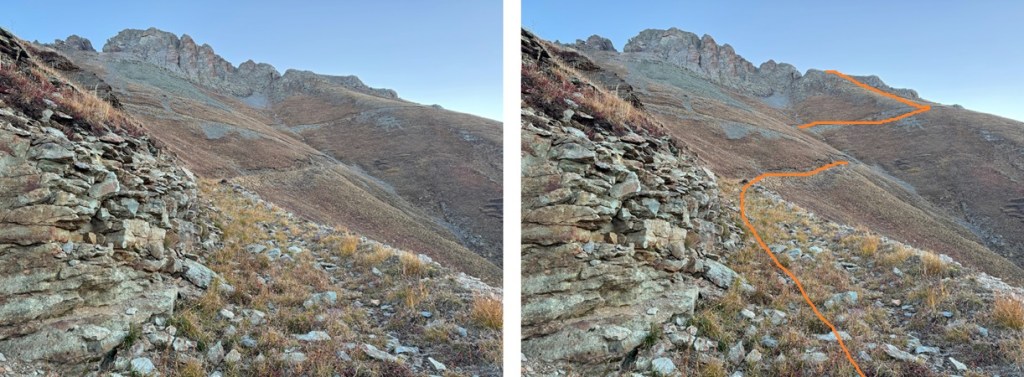
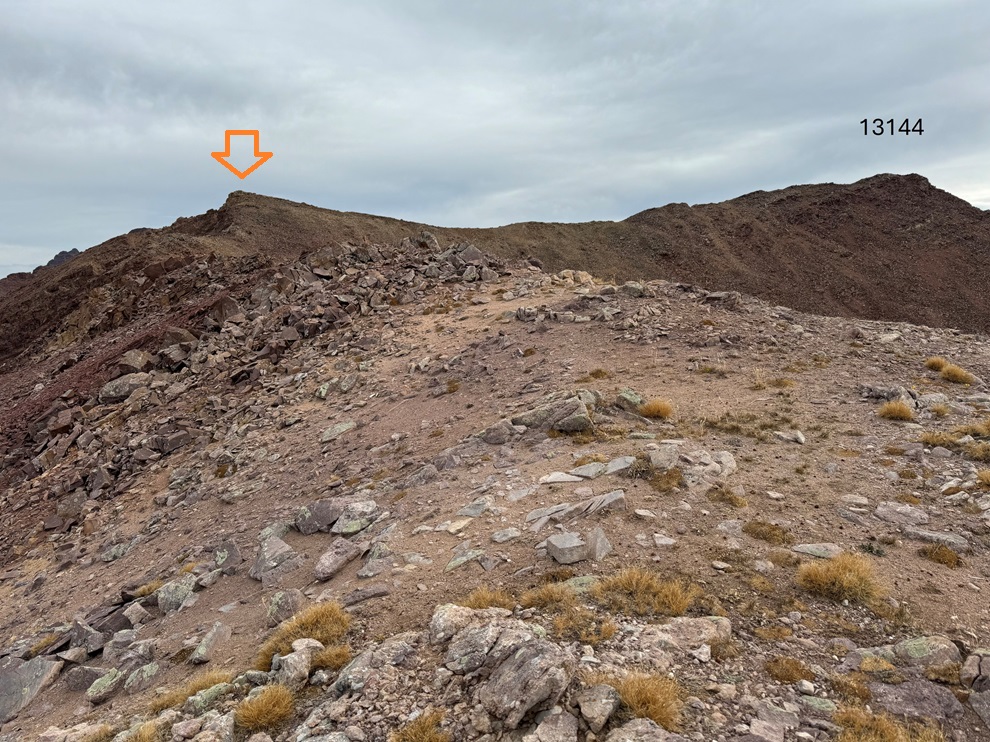
Once on top of the ridge I turned right and followed it east.  I could see 13144 in the distance.

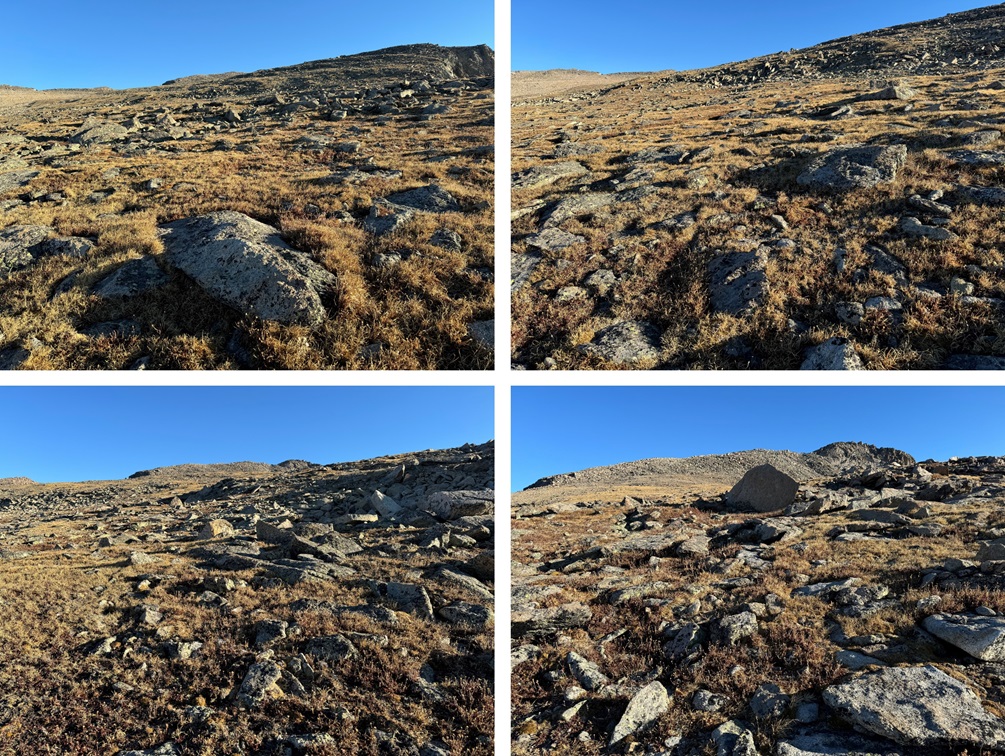
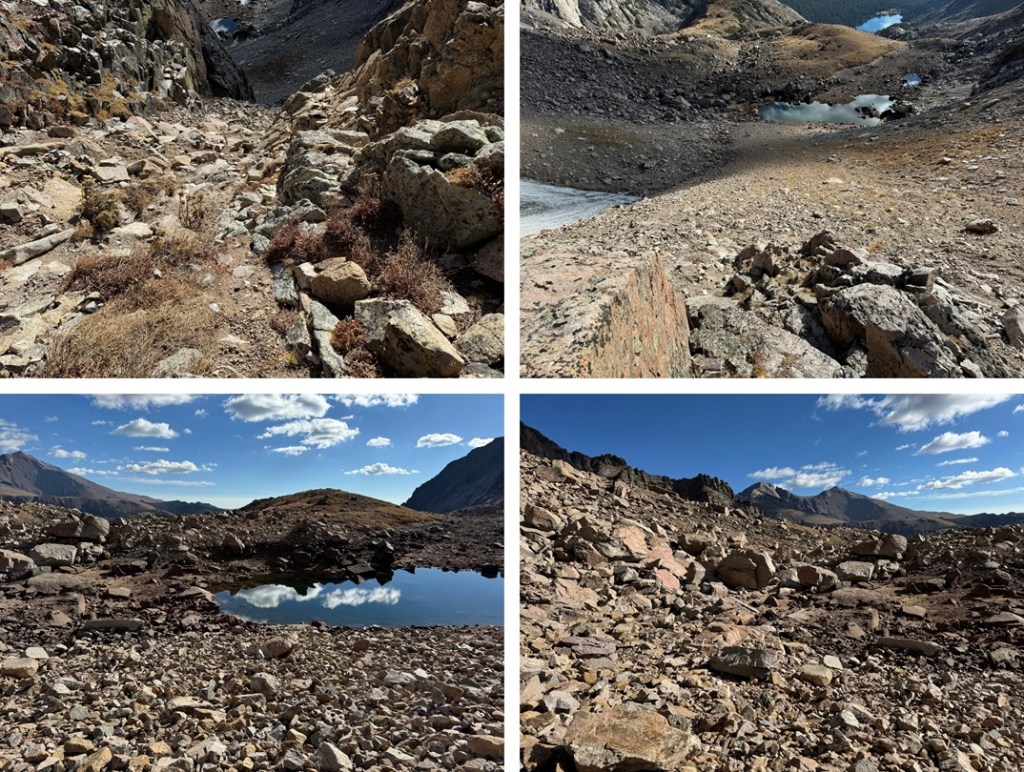
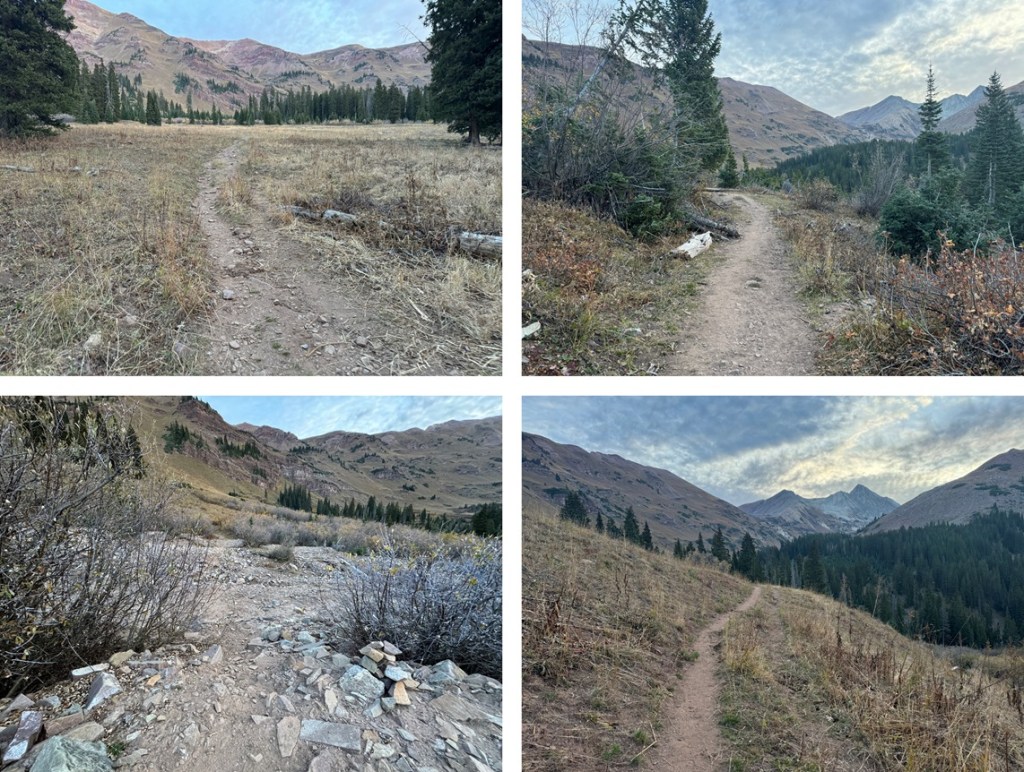
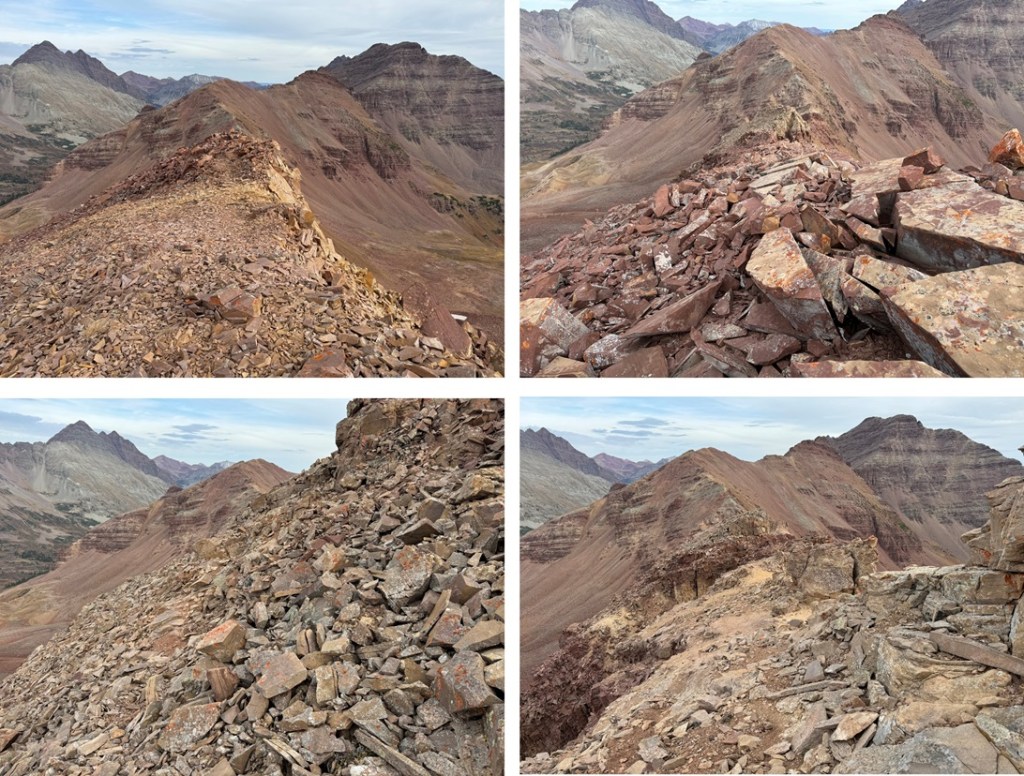
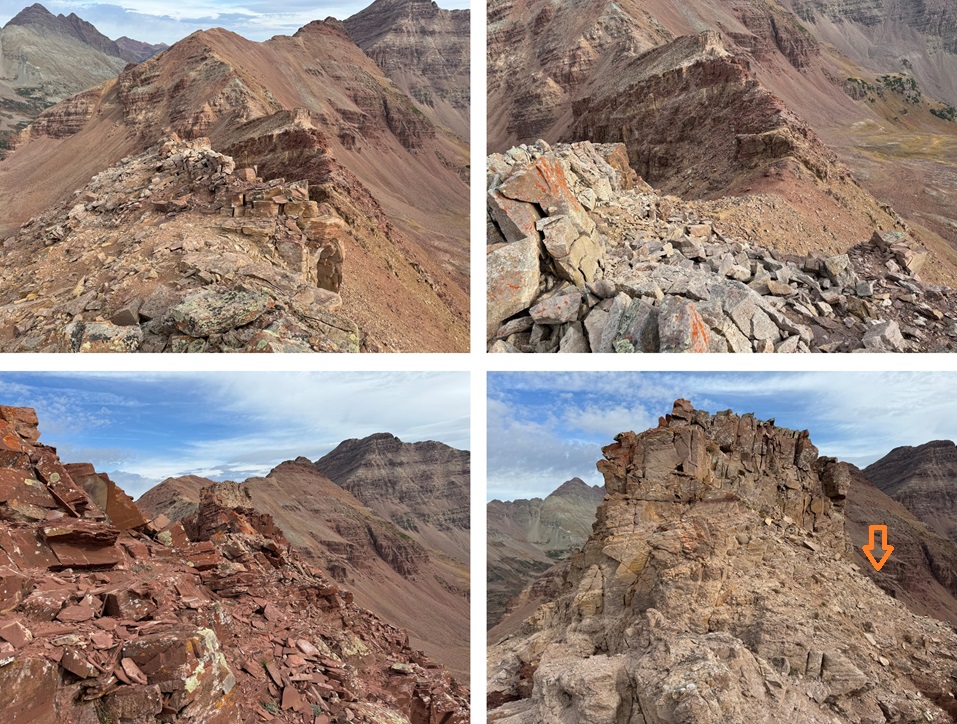
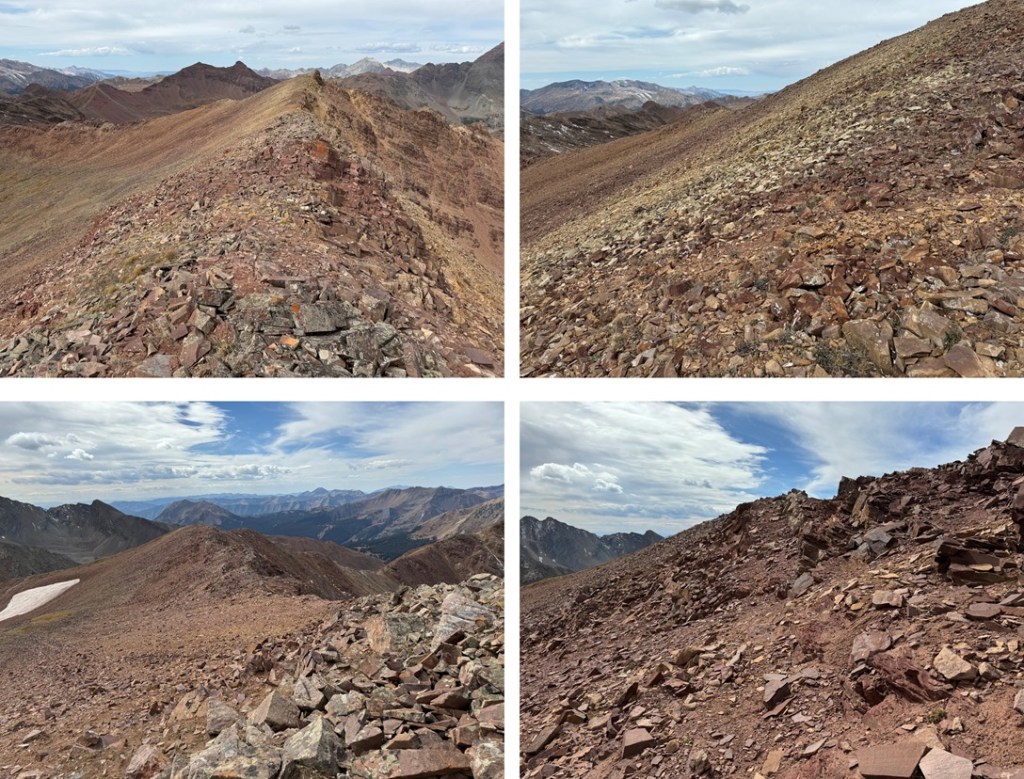
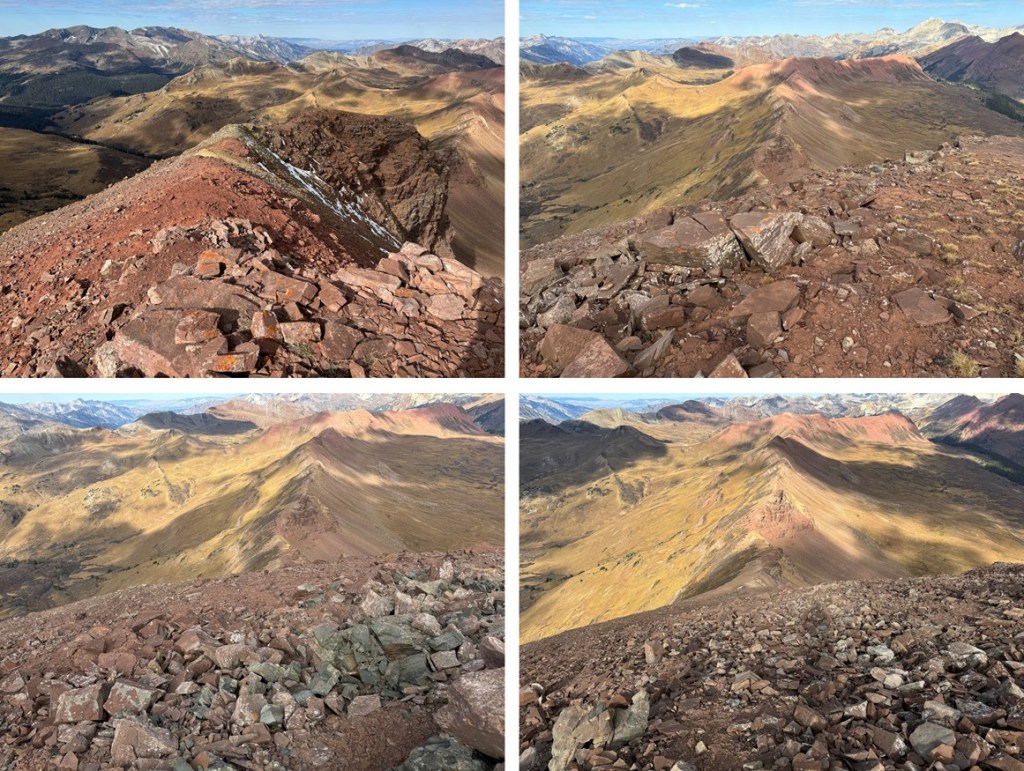
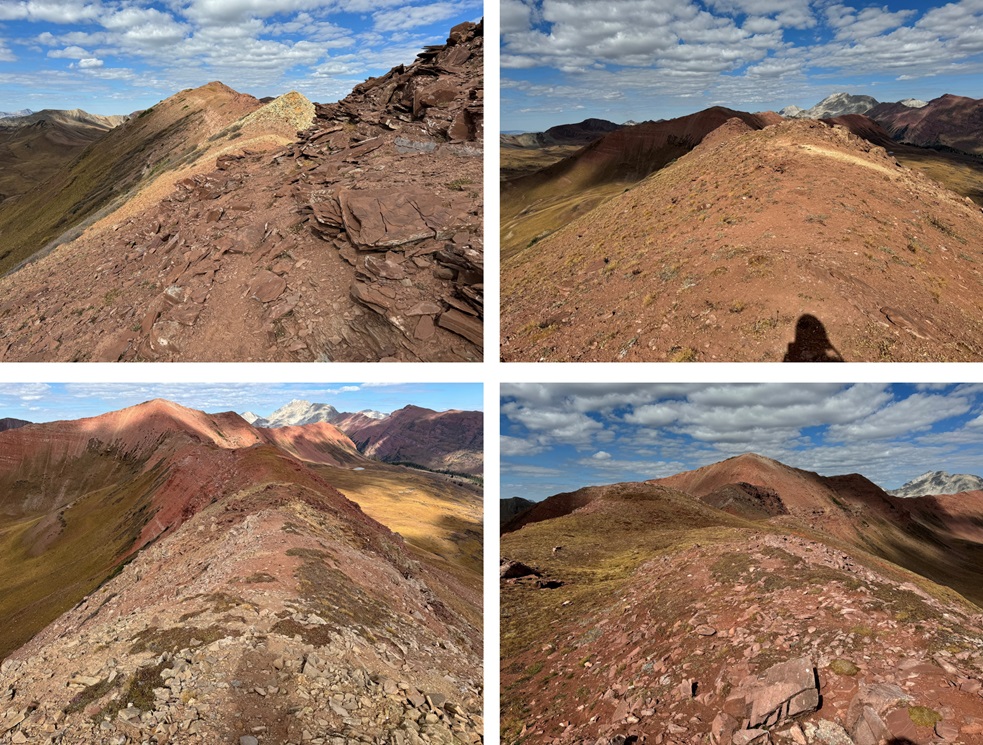
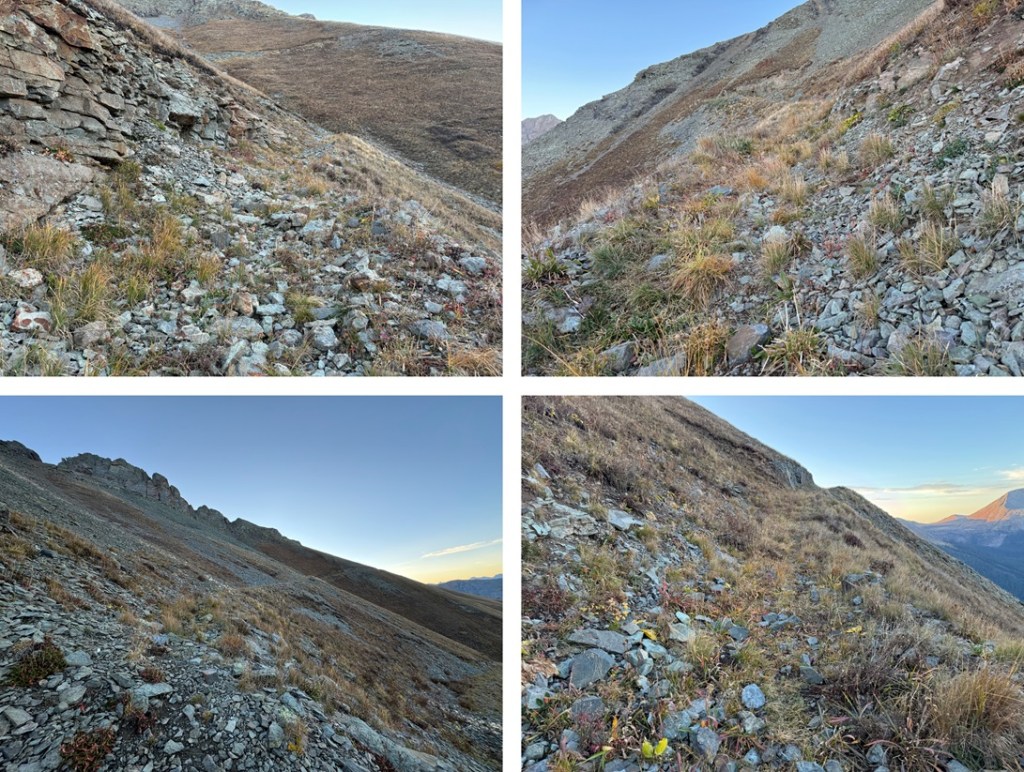
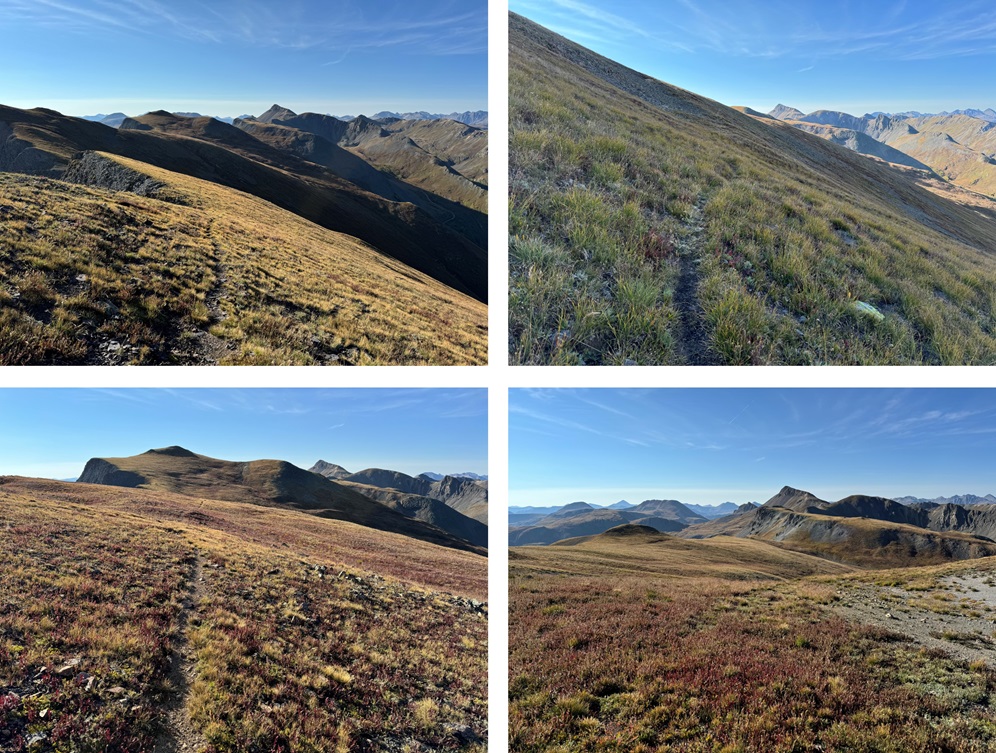
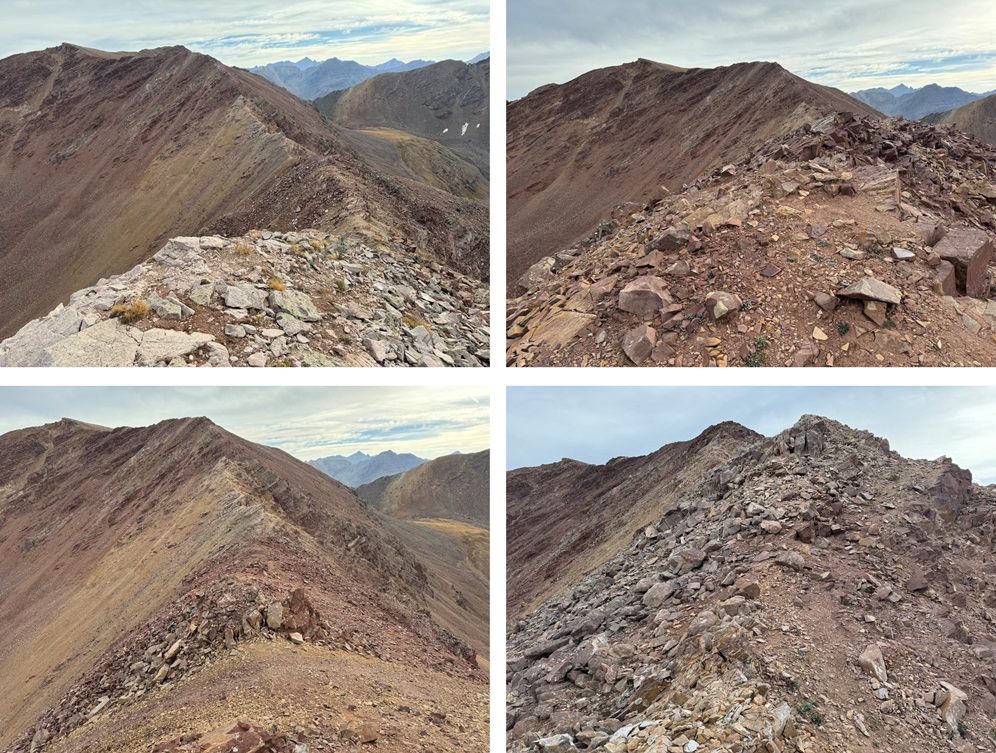
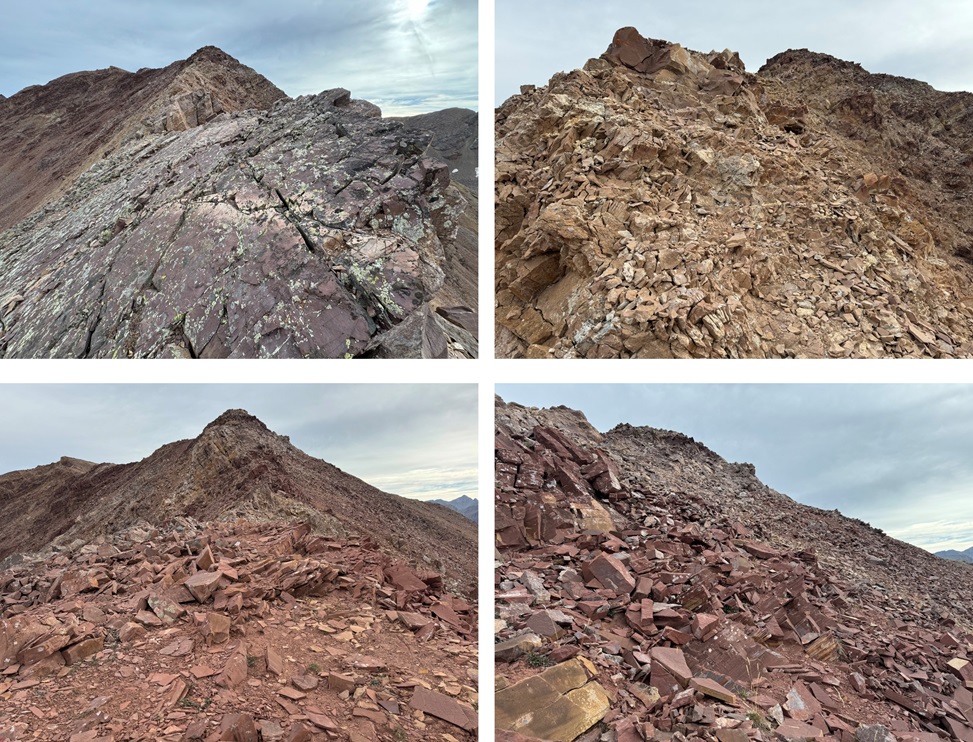
There are a lot of ups and downs along the ridges in this hike, gaining and losing and gaining elevation.  This part of the ridge is class 2.  If you find yourself in class 3 territory, you’re making it too difficult.  Look for game trails to the right to avoid any potential class 3.  Here are some pictures of this part of the ridge.

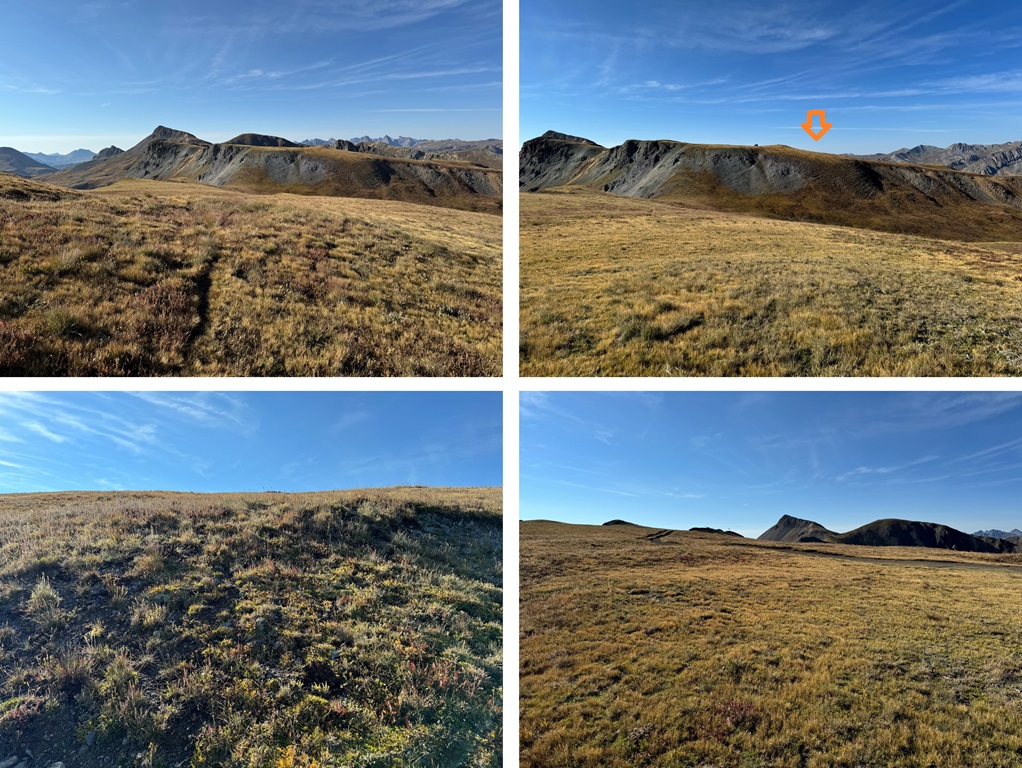
From about halfway along the ridge I could clearly see 13144, but I wasn’t headed there first.  Instead, I was headed here:

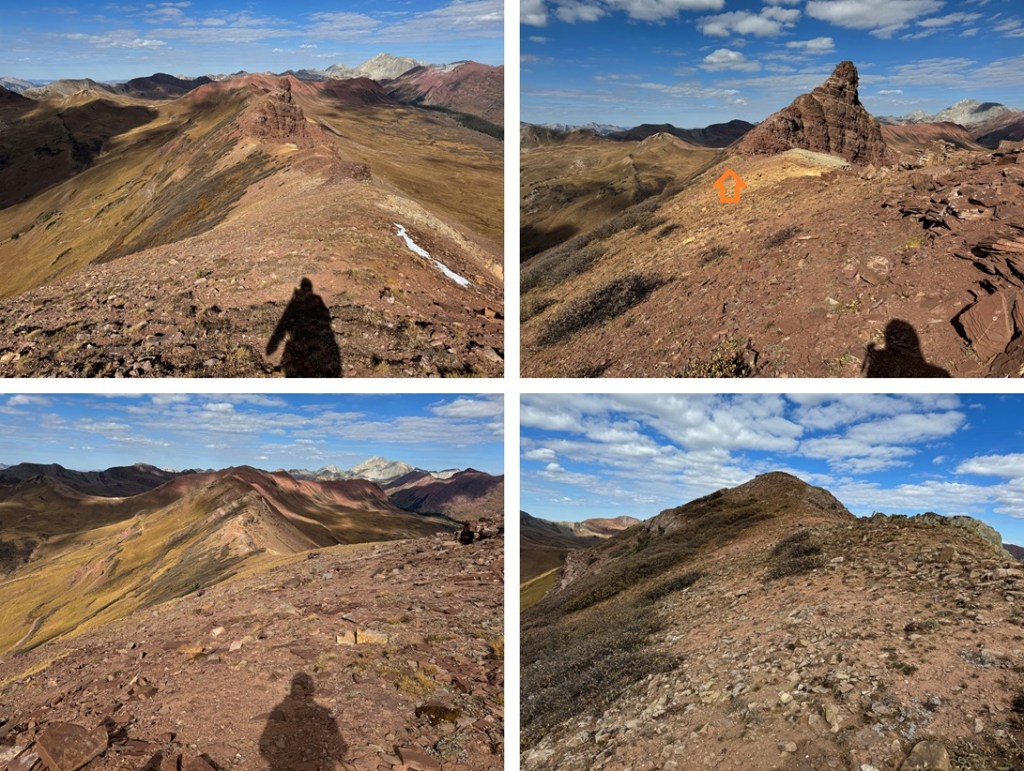
I continued following the ridge (now heading northeast) to that point, still in class 2 territory.

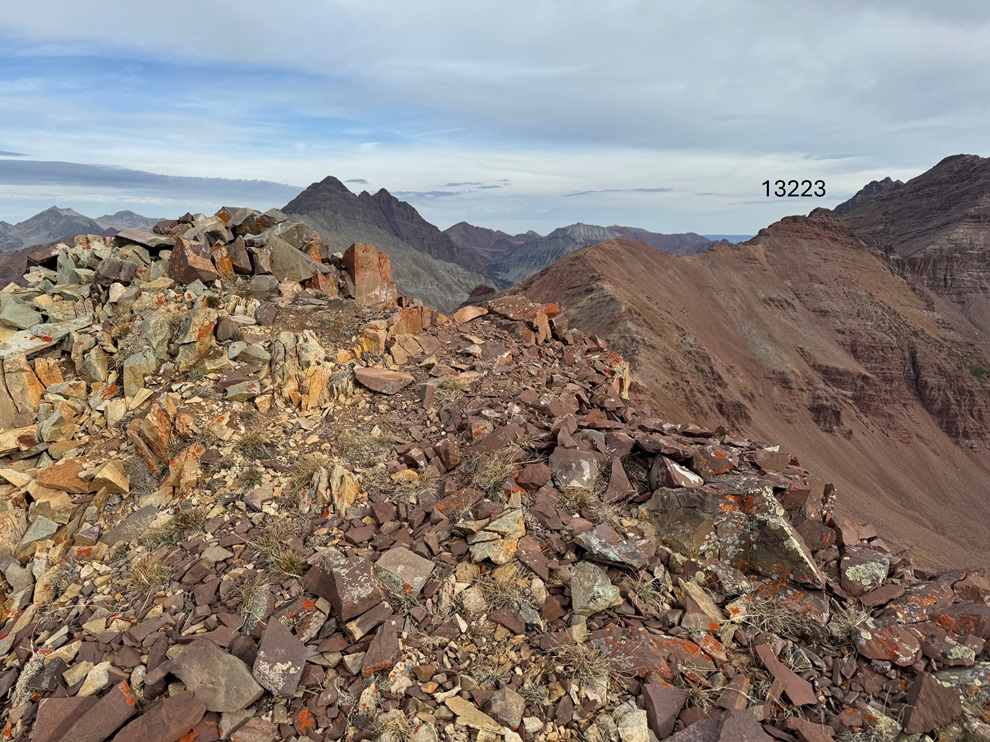
I could now see 13223 to the north/northeast.

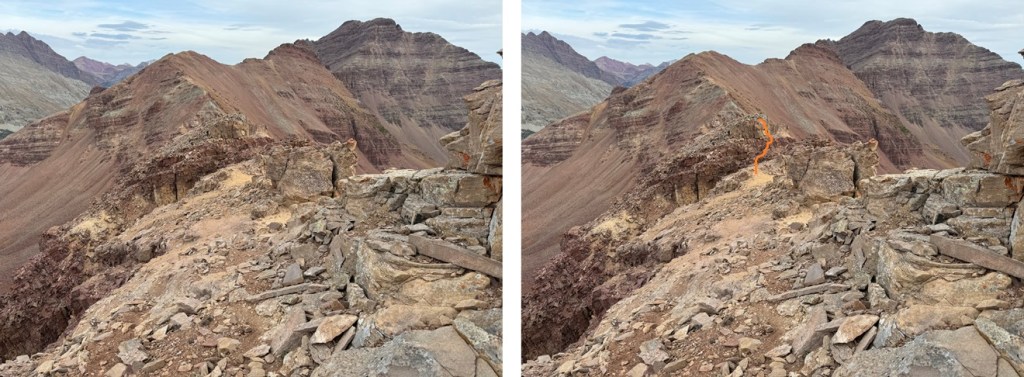
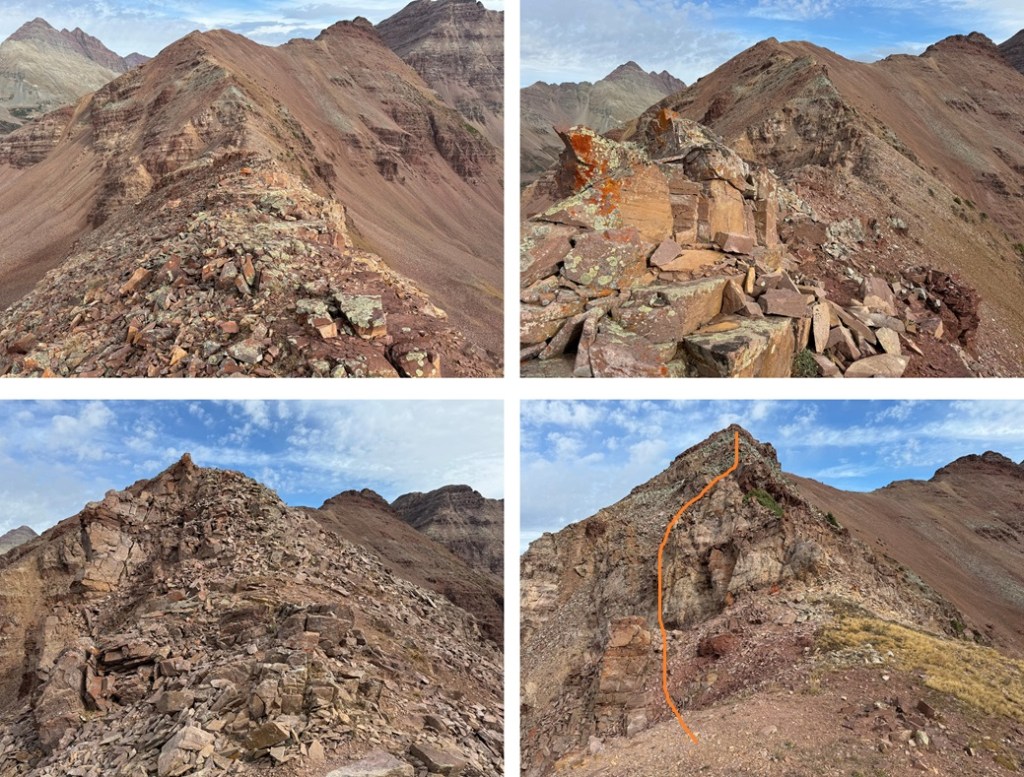
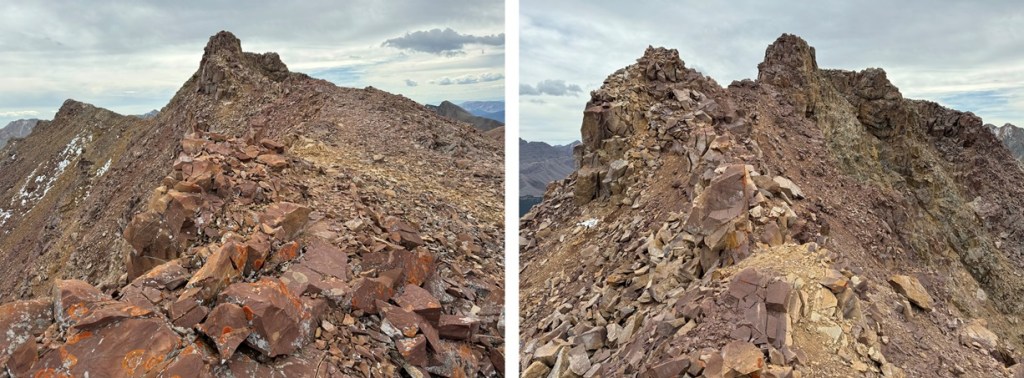
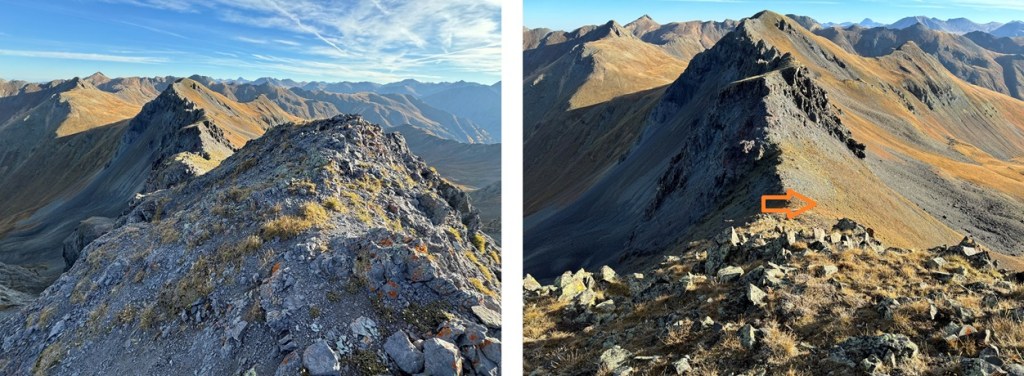
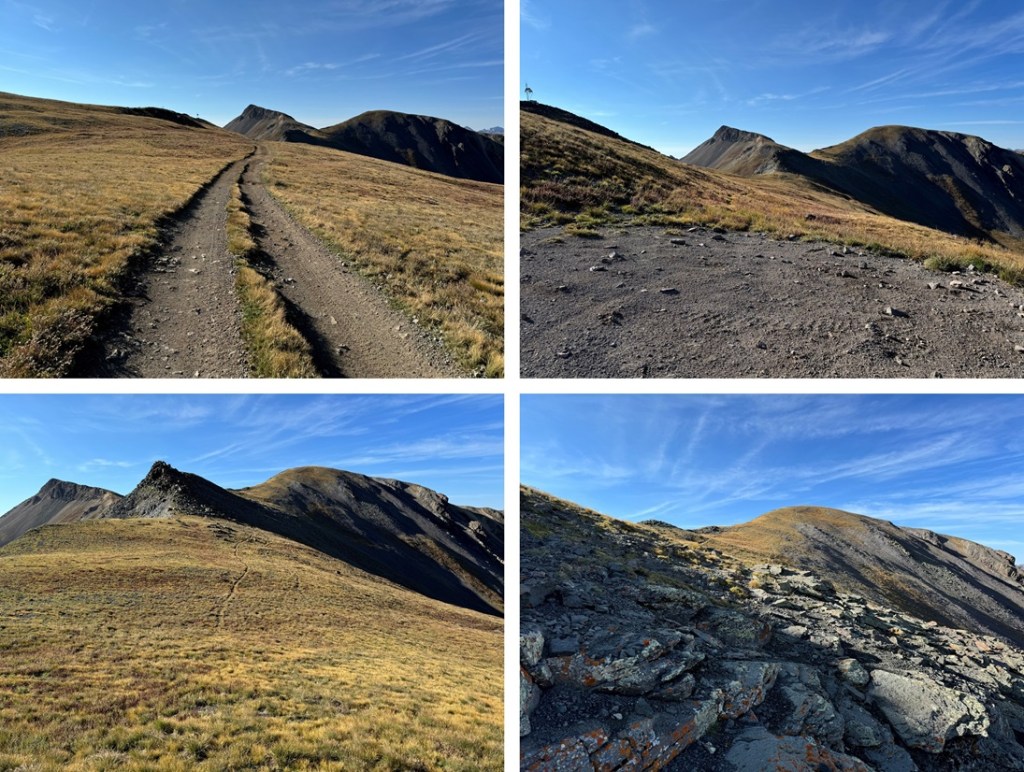
From this point, the most difficult part of the ridge is class 3.  It’s mainly class 2, with a couple of class 3 climbs thrown in, especially at the beginning of the ridge and the final climb to the summit. This part of the ridge starts out with an airy class 3 move.  I went to the right on a narrow shelf of rocks.  Now is also probably a good time to point out the rock here, like the rest of the Maroon Bells area, is unstable and chossy.  Most rocks will move, so be sure of your holds before continuing.

After the initial airy class 3 around the rock outcropping I was back into class 2 territory for a while

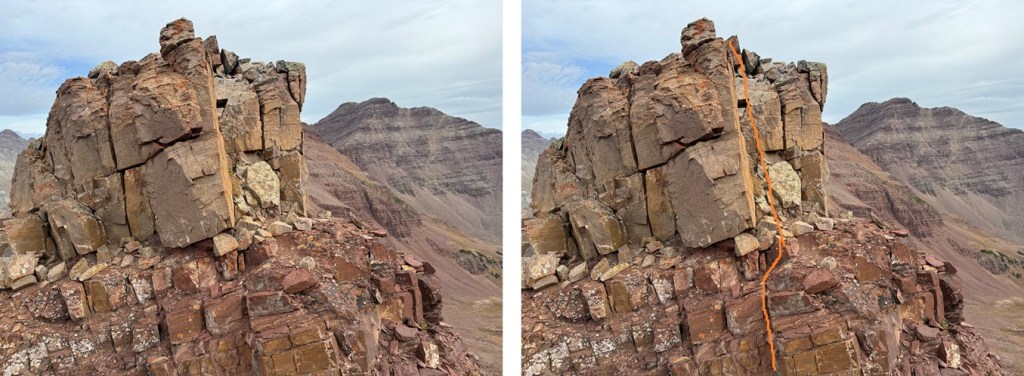
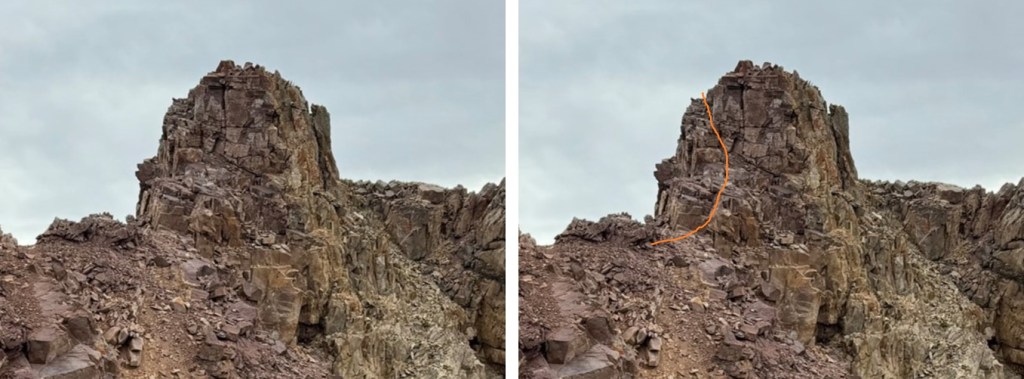
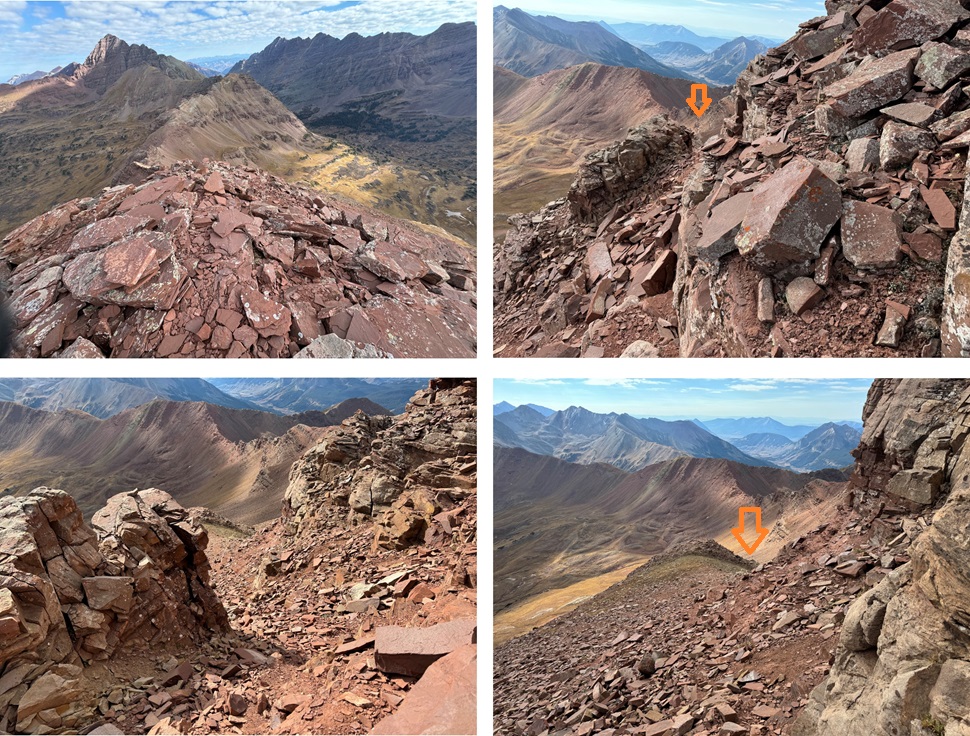
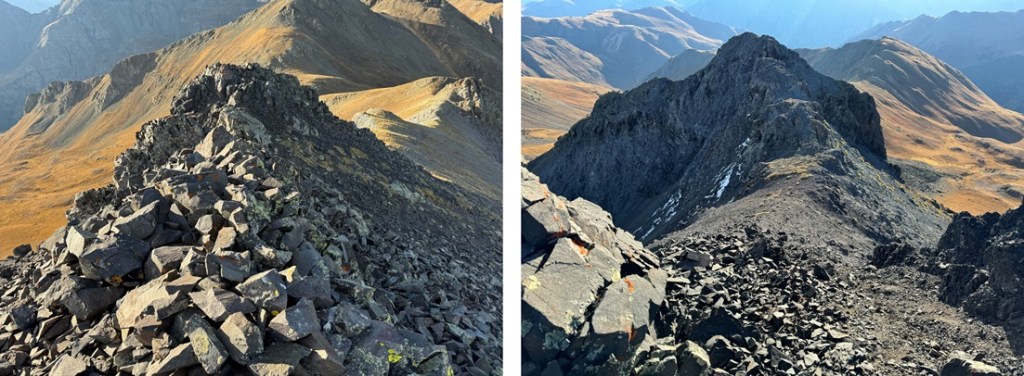
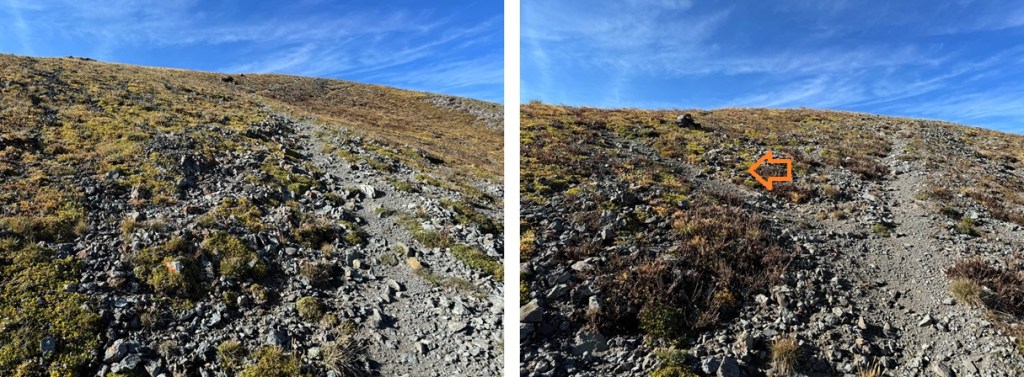
Until I came here.  I came to a point in the ridge that was narrow and had gullies on each side.  While these gullies looked like they went at difficult class 2, they had kitty-litter scree on top of hard sand, steep drop offs, and a lot of exposure.  The best (safest) way to traverse this is to downclimb to the narrow point at the top of both gullies, then climb straight up the rock.  This was the crux of the climb, and had exposure, but it was no more than class 3 (and much easier to downclimb). There are plenty of holds to use, just make sure they’re stable before committing. This is much easier to do than pictures make it look, and indeed, than it looked at the time. 

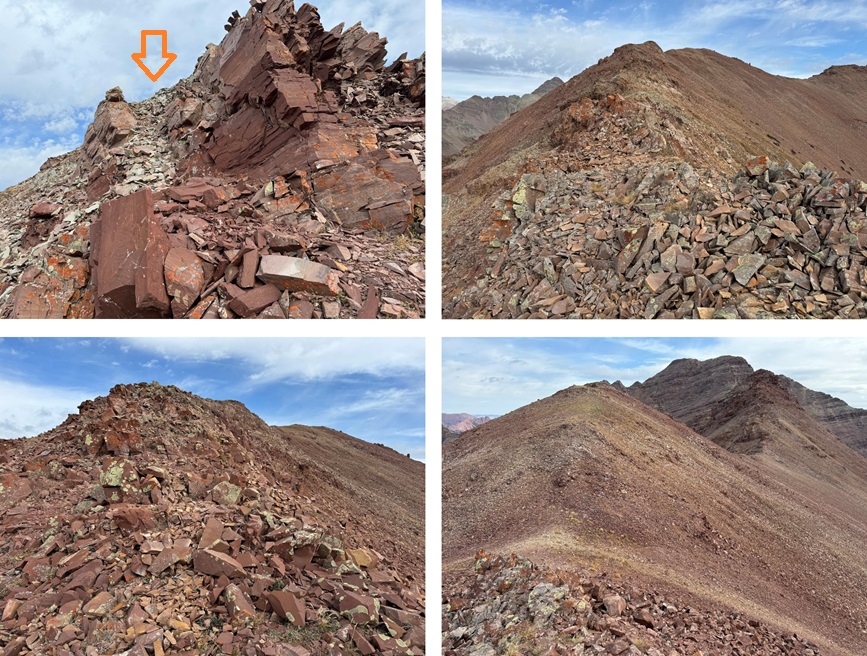
From here, the rest of the ridge is class 2/difficult class 2.  If it looks more difficult than class 2, look for a game trail to the left or the right of the ridge.

There’s a bump in the ridge, which I went over on my way to Belleview

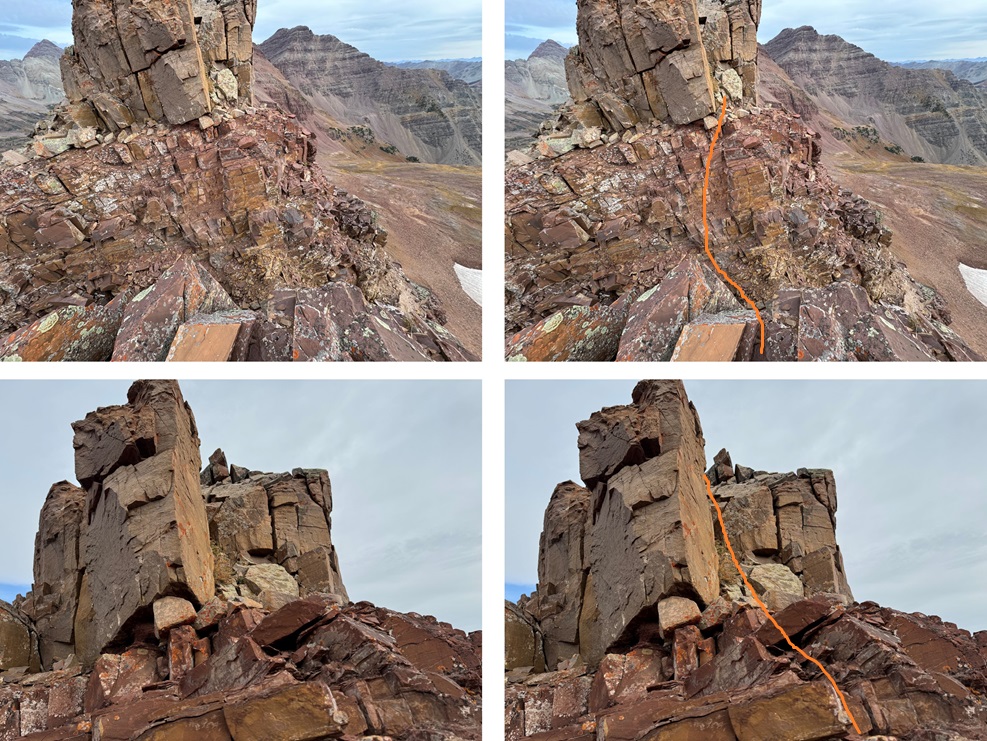
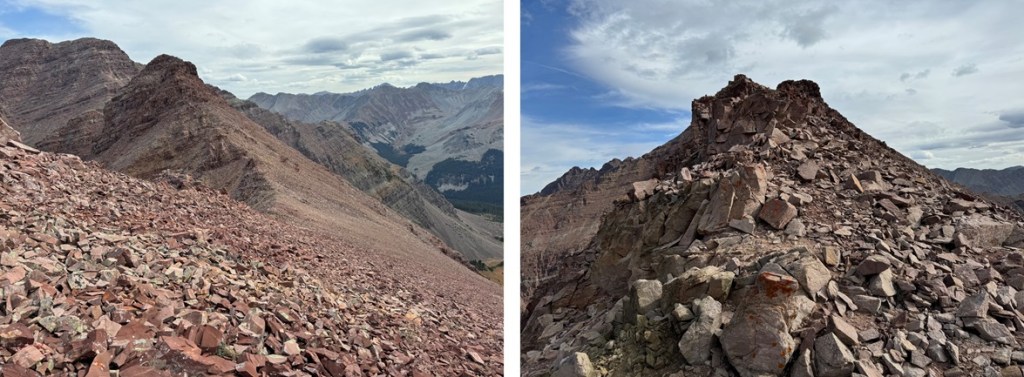
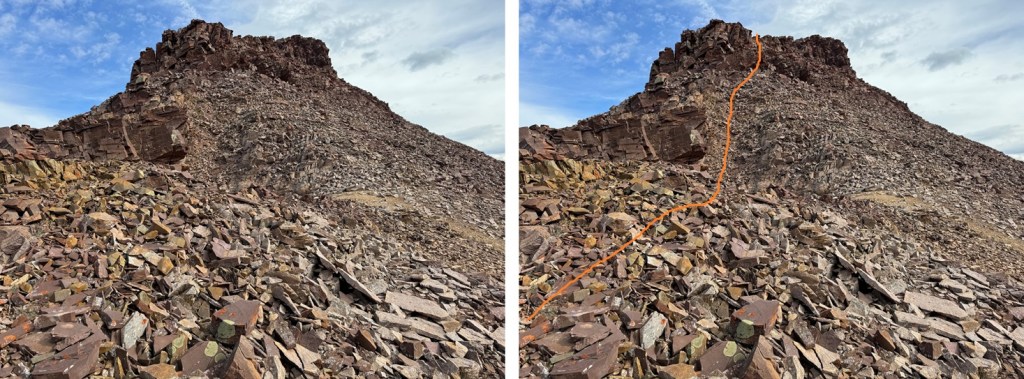
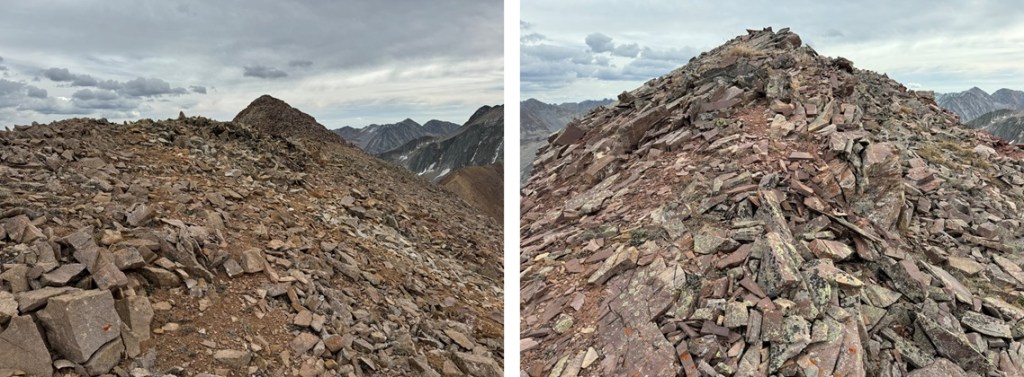
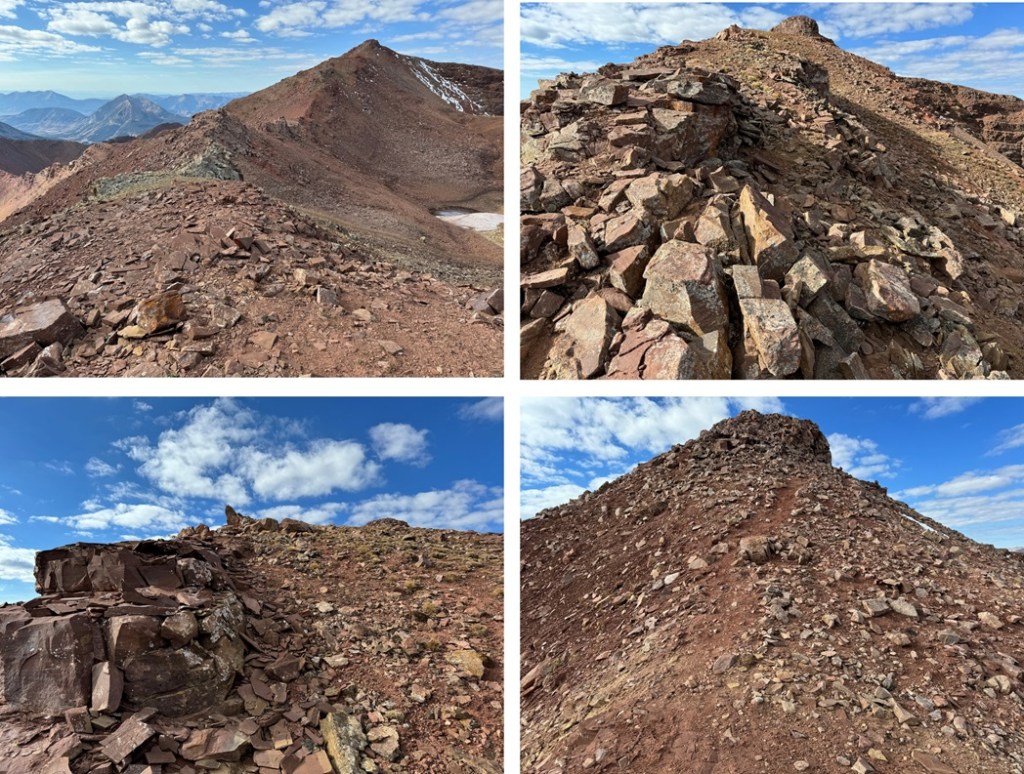
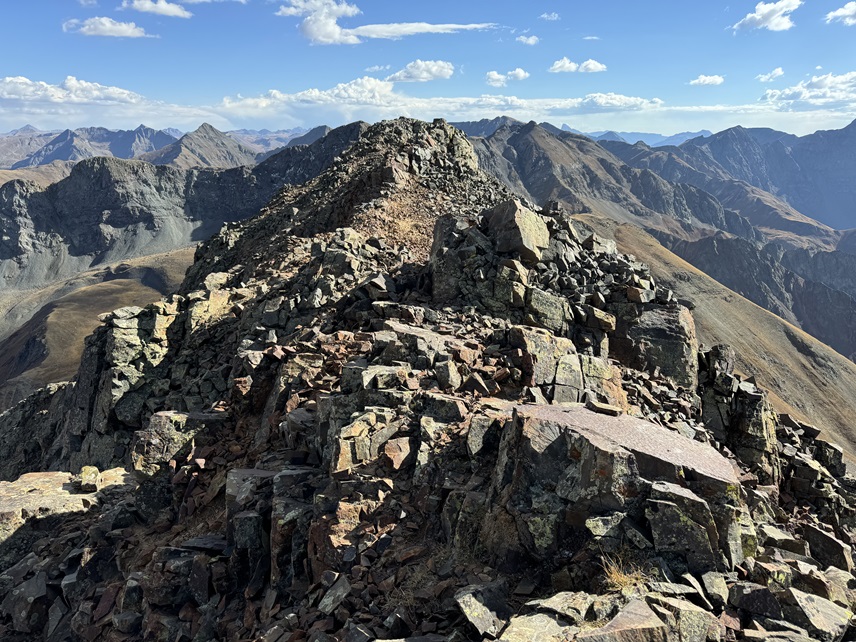
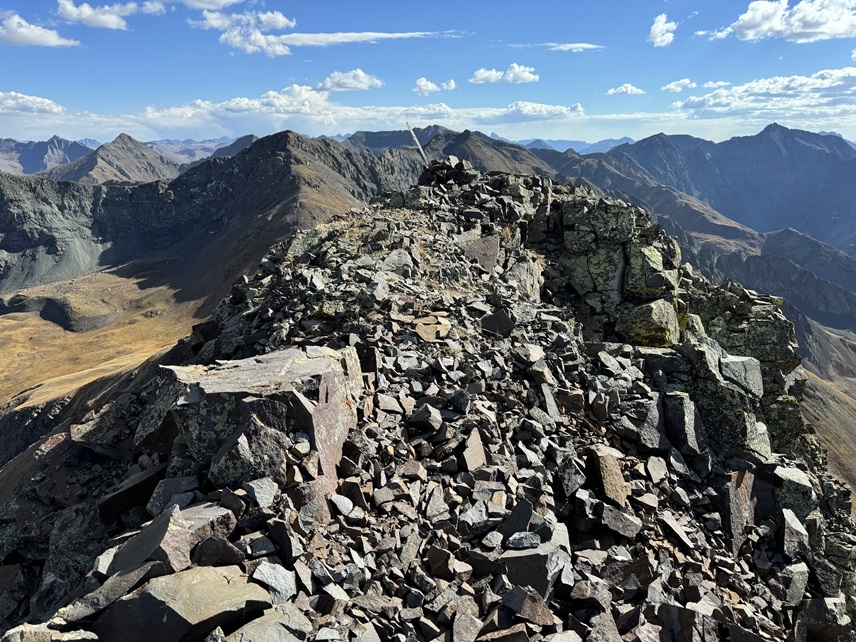
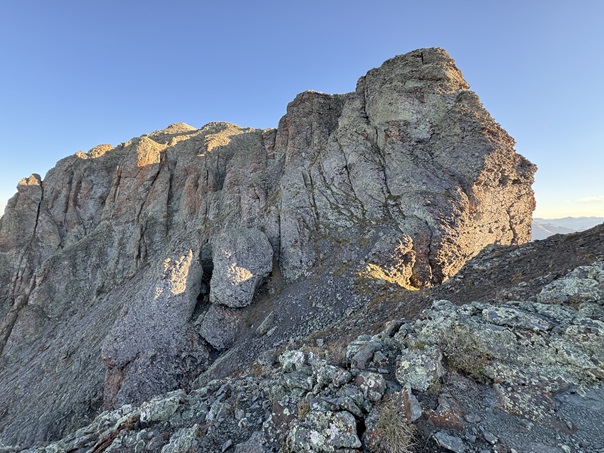
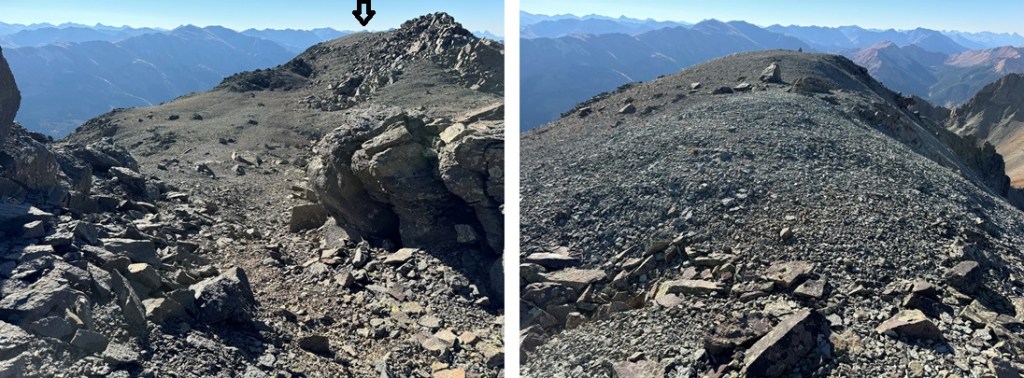
The last bit to the summit starts out as class 2, then becomes class 3.  I aimed for the depression in the rocks.  This area is filled with broken pieces of rock, but there are sections of scree.  Aim for the sections of scree as you ascend.  Getting over this piece brought me to the final push to the summit. 

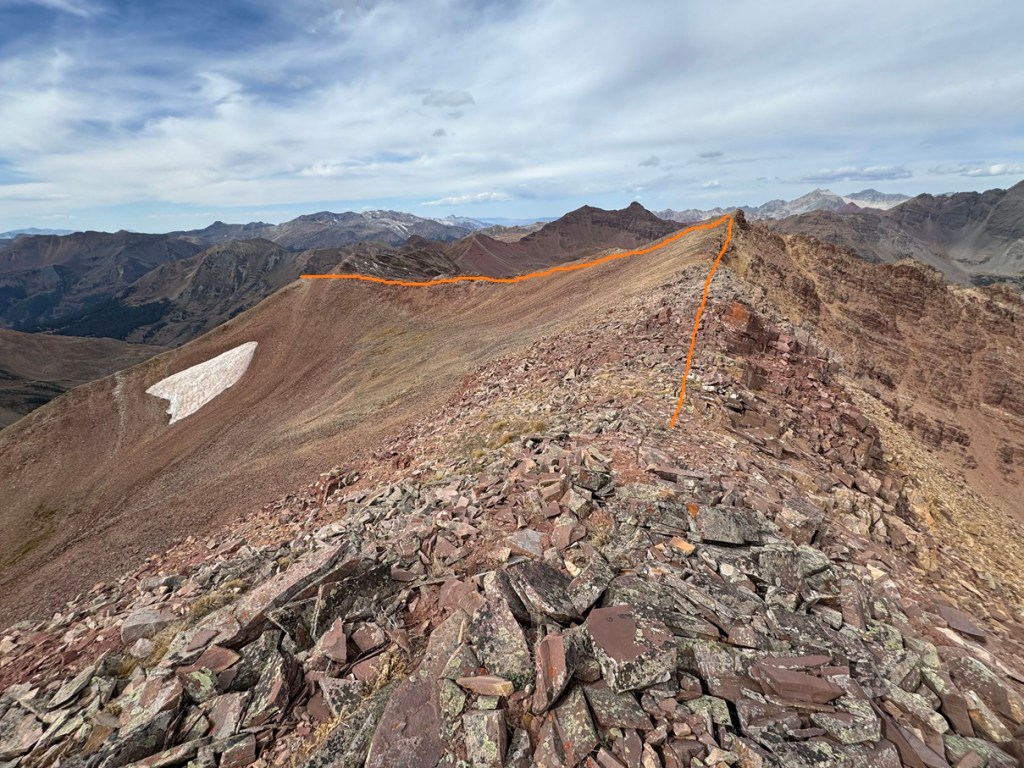
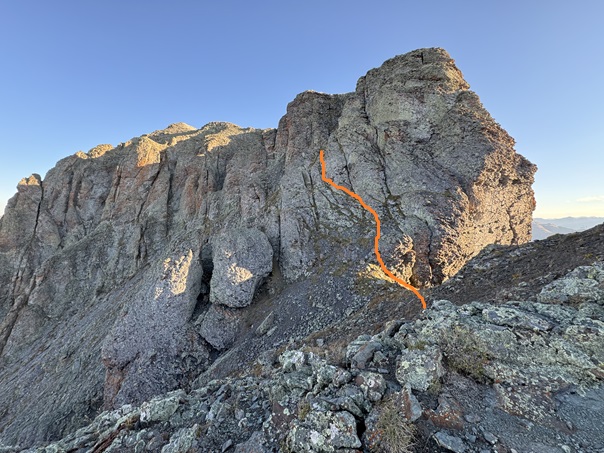
Now I could see the final push to the summit. This is class 3, and loose, but easy climbing.  This is the overall route I took:

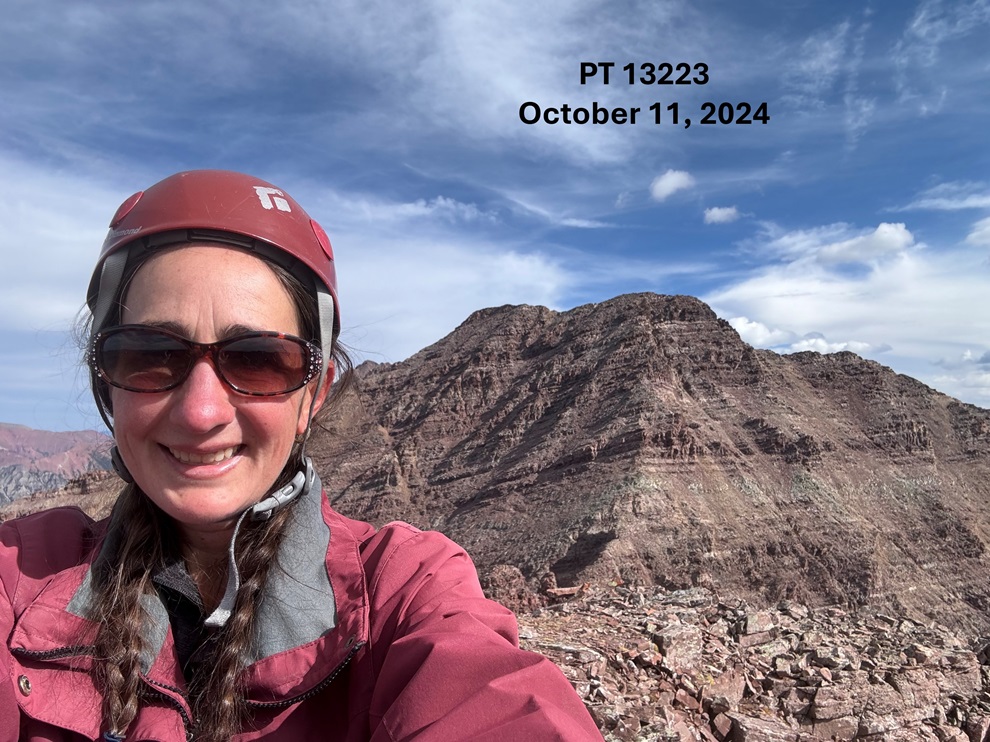
I summited 13223 at 11am

13223:

Now to head back towards PT 13144. 

I descended back to the ridge, and followed it the way I hiked in.

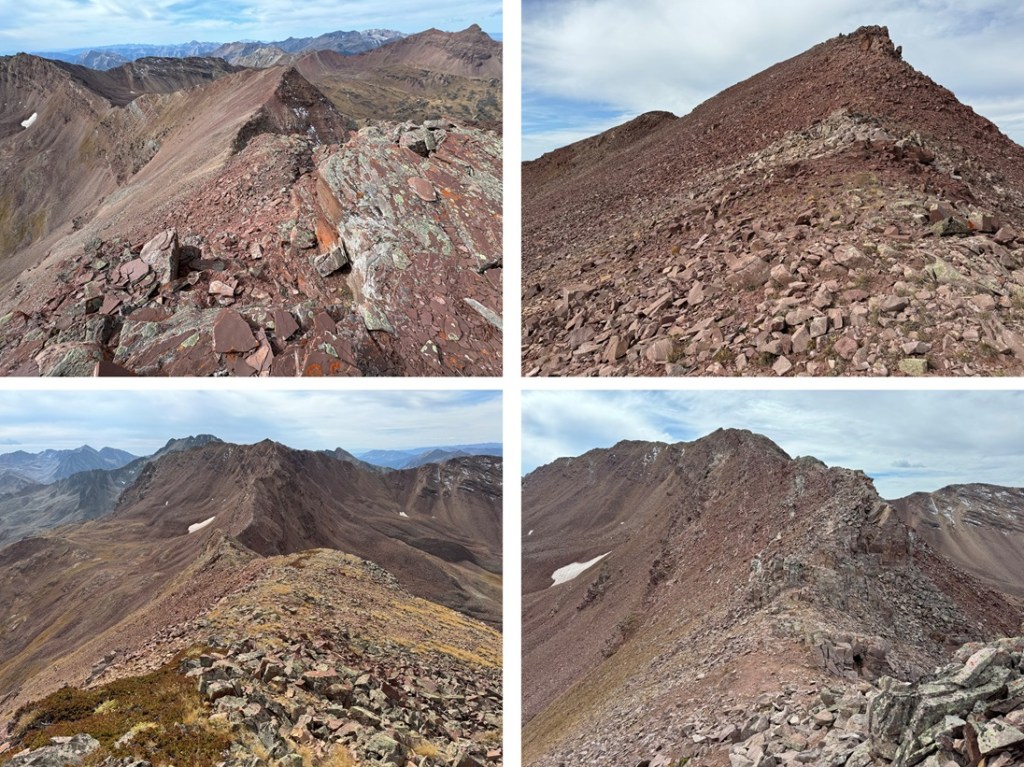
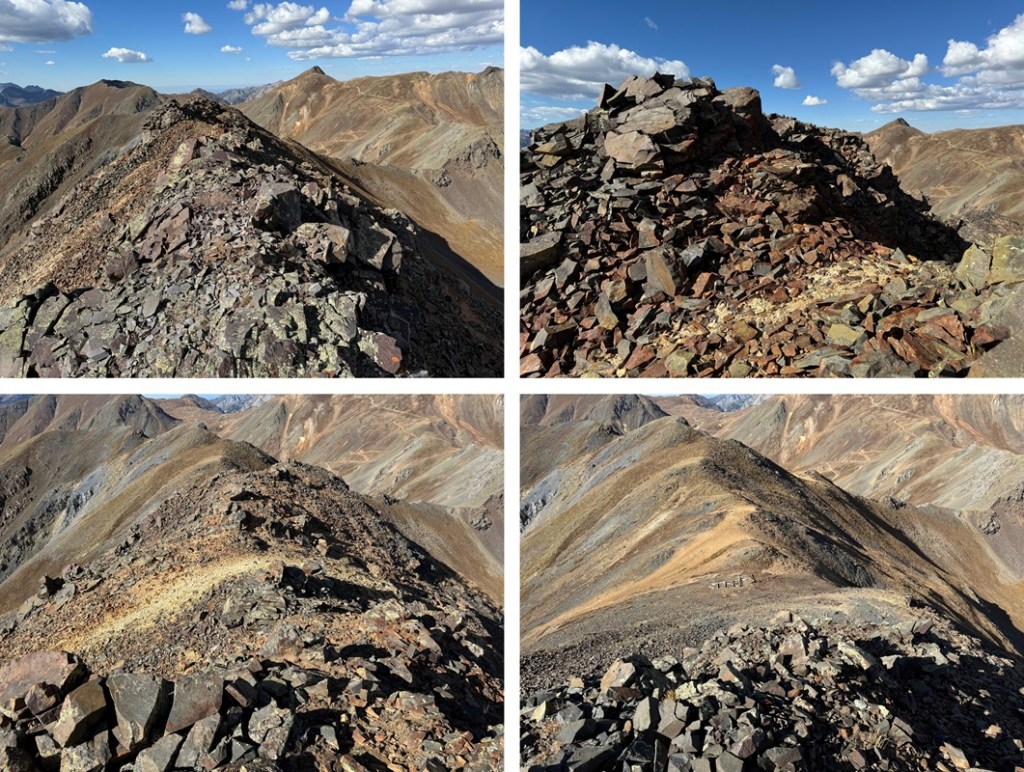
For brevity, and because I’m assuming you already hiked the ridge on the way in, I’m just going to show a few pictures of the ridge back towards 13144

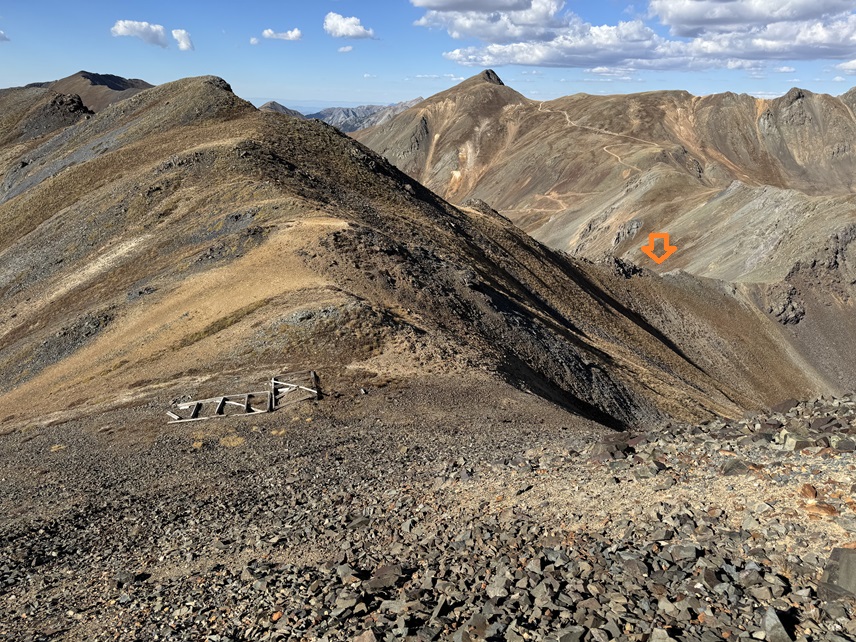
And the final exit off the ridge

From here, it was a quick class 2 hike southeast to the summit of 13144

I summited 13144 at 12:15pm

13144:

I descended much the same way I ascended initially to the ridge.   I headed northwest along the ridge, and then followed the ridge southwest, back towards Rustler Gulch.

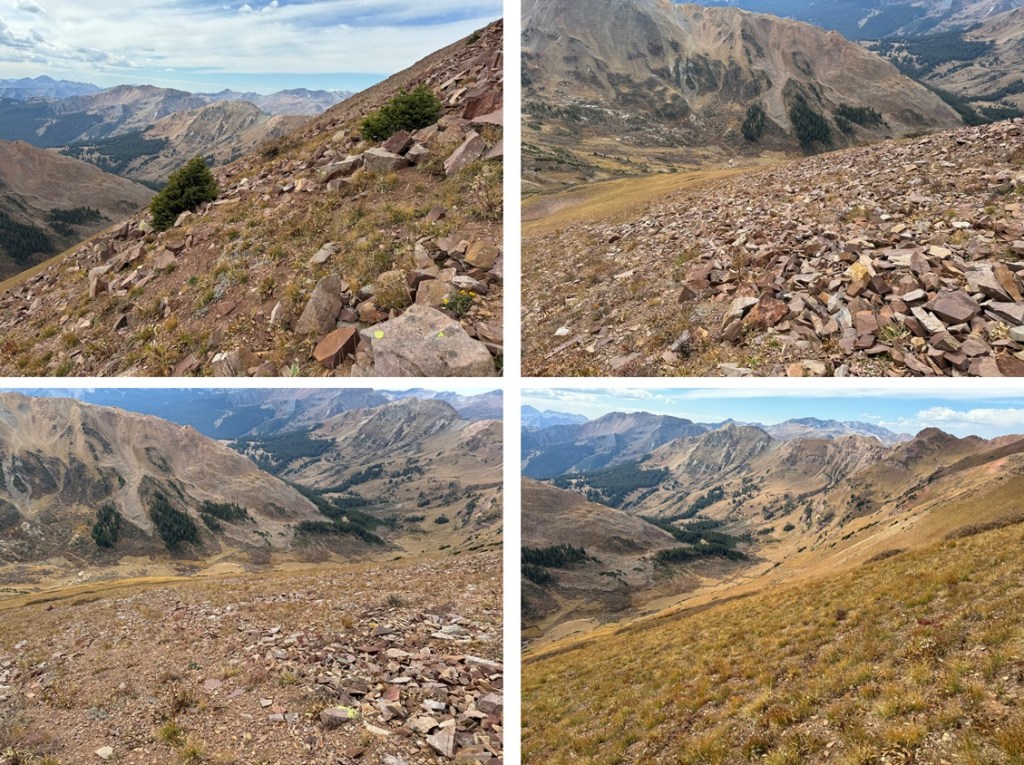
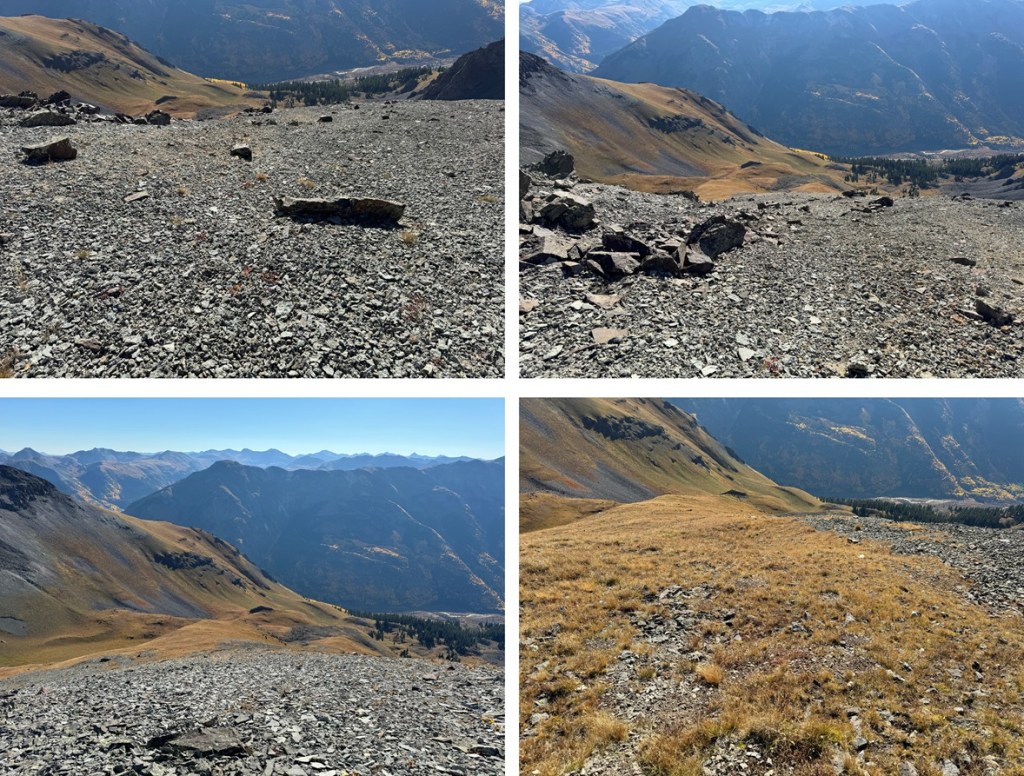
Instead of ascending to the high point on the ridge, this time I descended just below the talus and scree, heading southwest on the grassy slope towards the trail below.

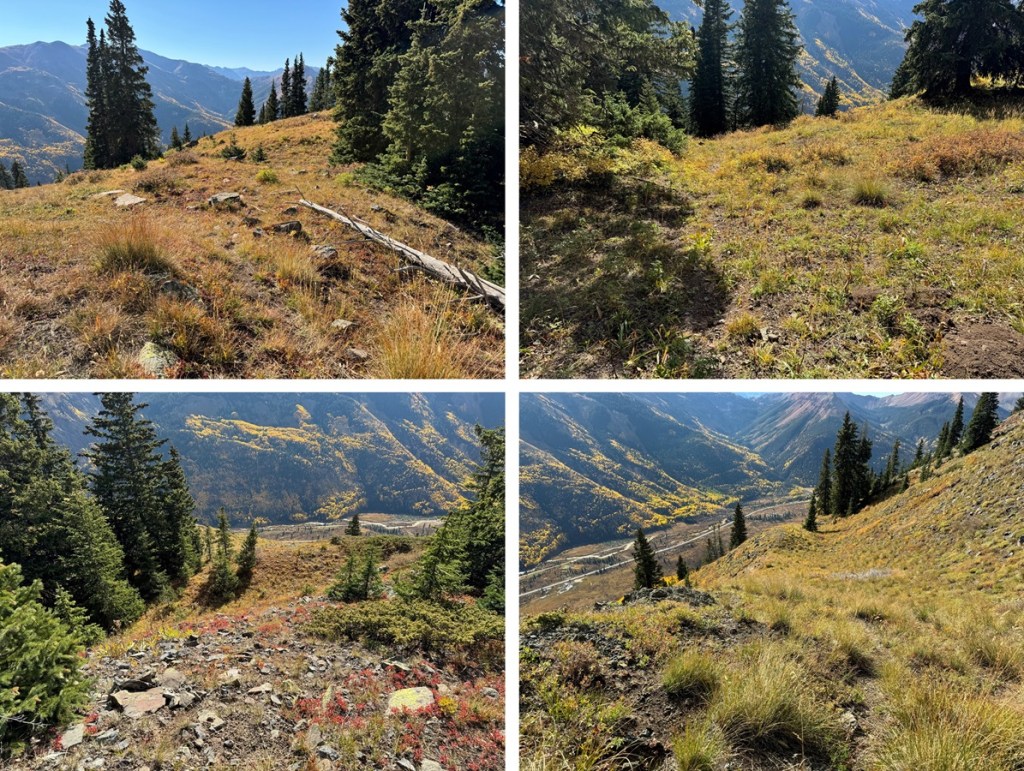
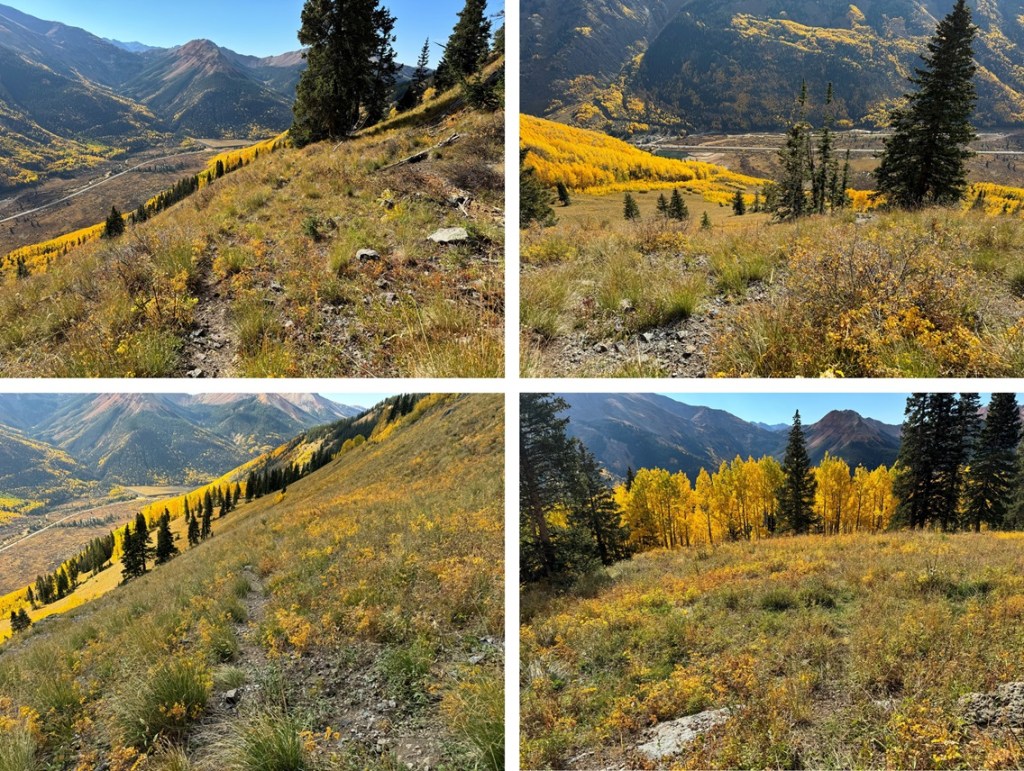
Back on the trail, I followed it west and then south through Rustler Gulch, back to the trailhead. 

I made it back to my truck at 2:45pm, making this an 11.58 mile hike with 4141’ of elevation gain in 8 hours.

On to the next trailhead!

Belleview Mountain – 13,248

RT Length:  12.15 miles

Elevation Gain: 3516’

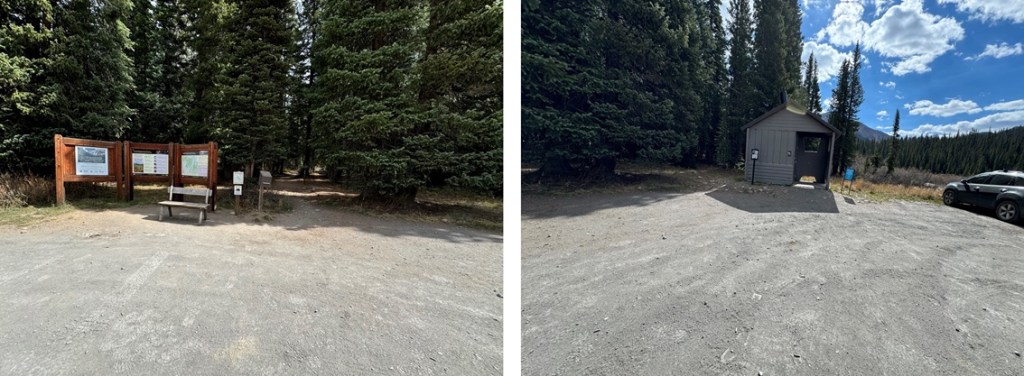
I parked my truck at the East Fork Trailhead outside of Gothic, just passed Schoefield Pass.  The road in is 4WD, but a high clearance 2WD vehicle with a competent driver can make it to the trailhead.  There are bathrooms at the trailhead, and spaces for about 20 vehicles.

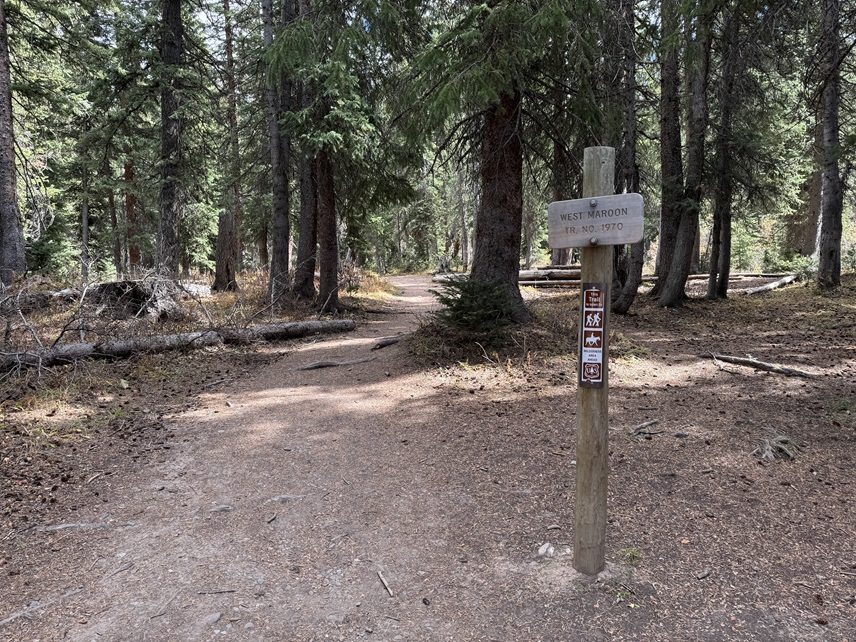
I was on the trail at 7am, following West Maroon Trail 1970

I stayed on this trail for about 2.2 miles.  The trail began at treeline but quickly turned to tundra.

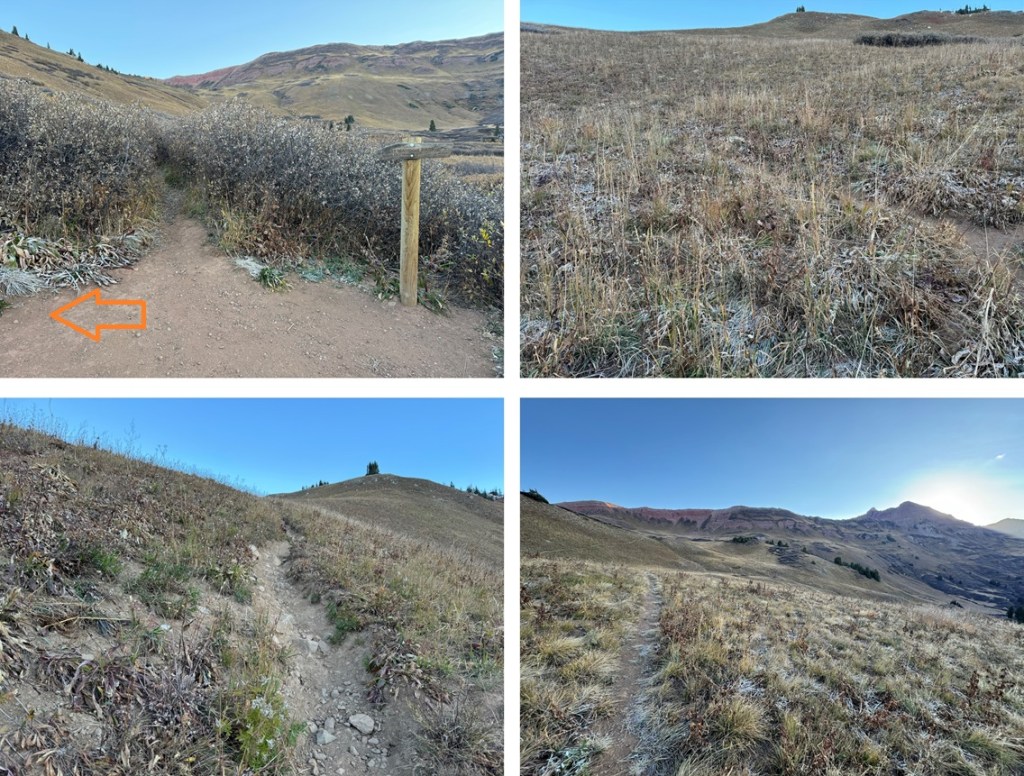
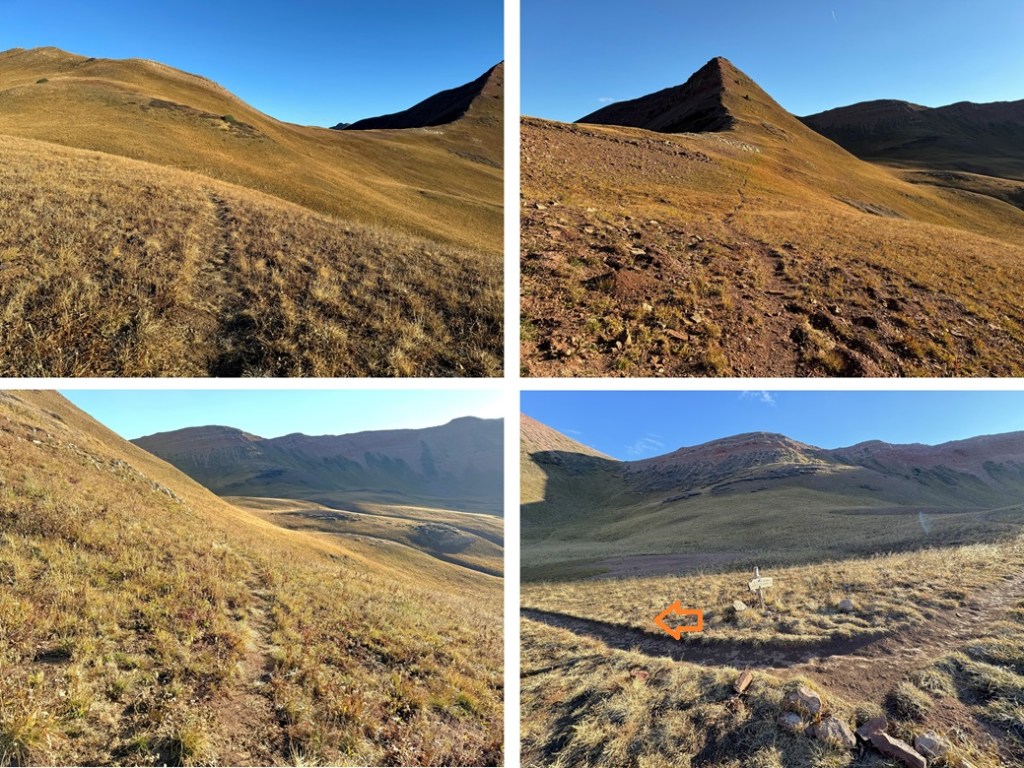
After hiking for about 2.2 miles, I came to a sign that said “West Maroon Pass”.  Here there was a trail to the left that was unmarked.  It’s trail 1974.  I took that trail as it switchbacked northeast up the hillside.

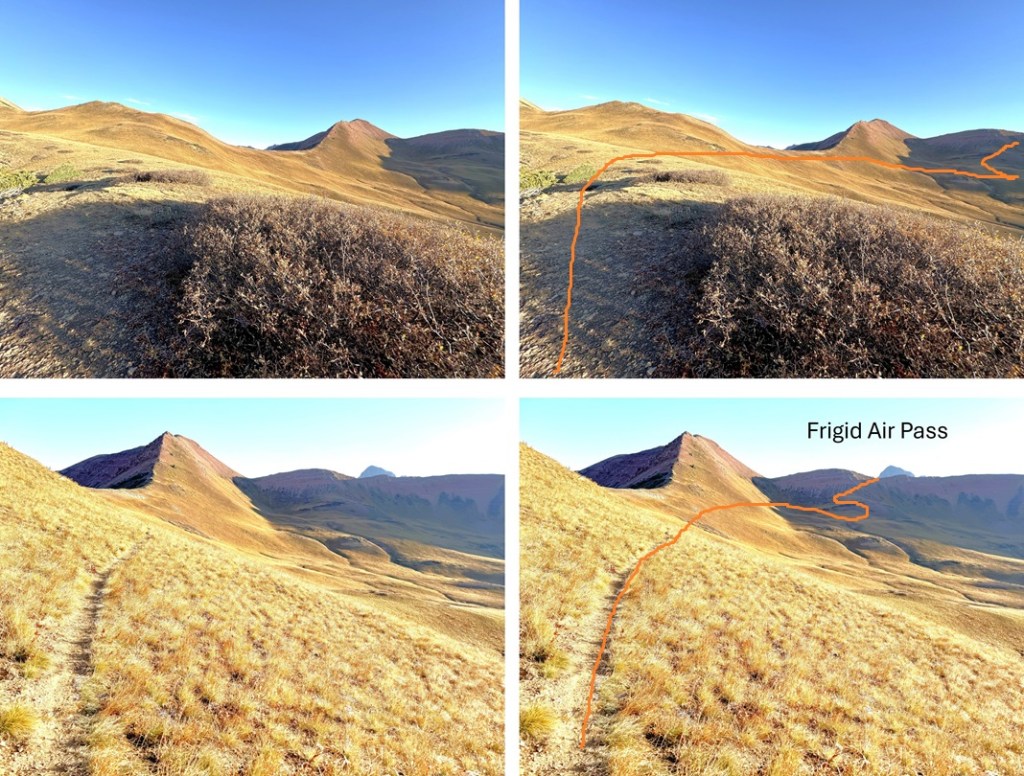
I was headed for Frigid Air Pass on this class 1 trail.

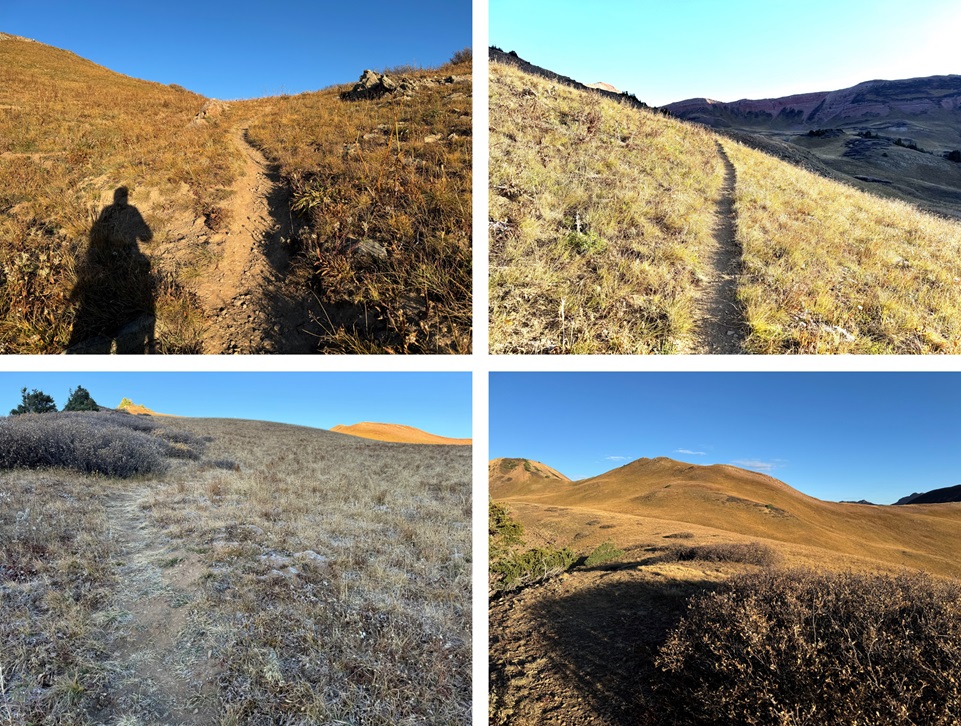
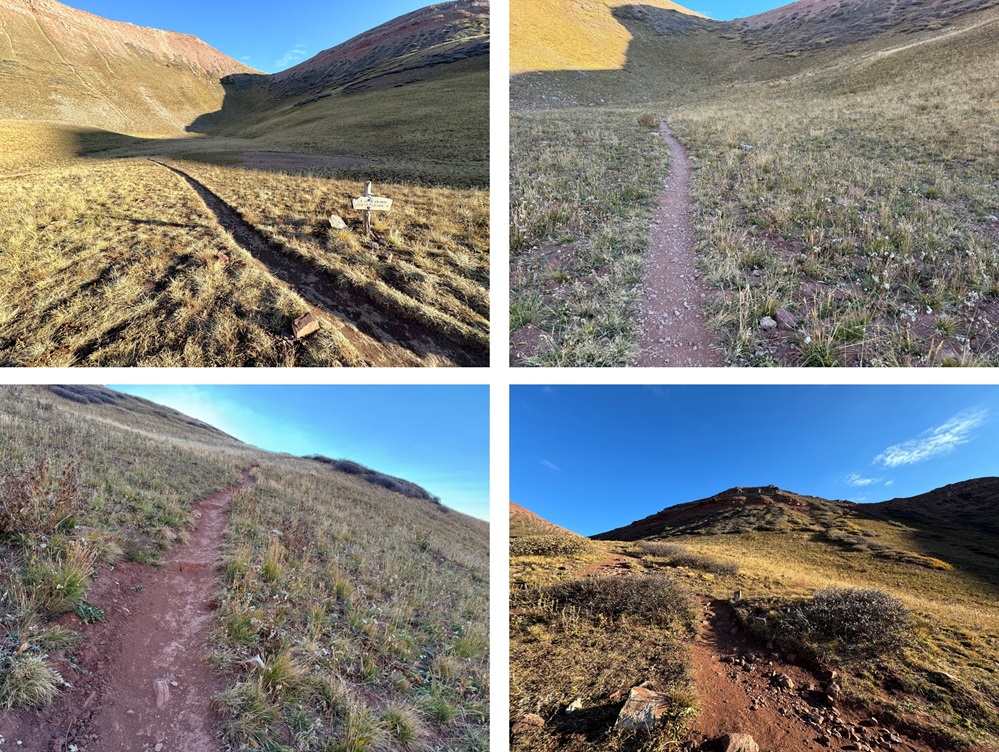
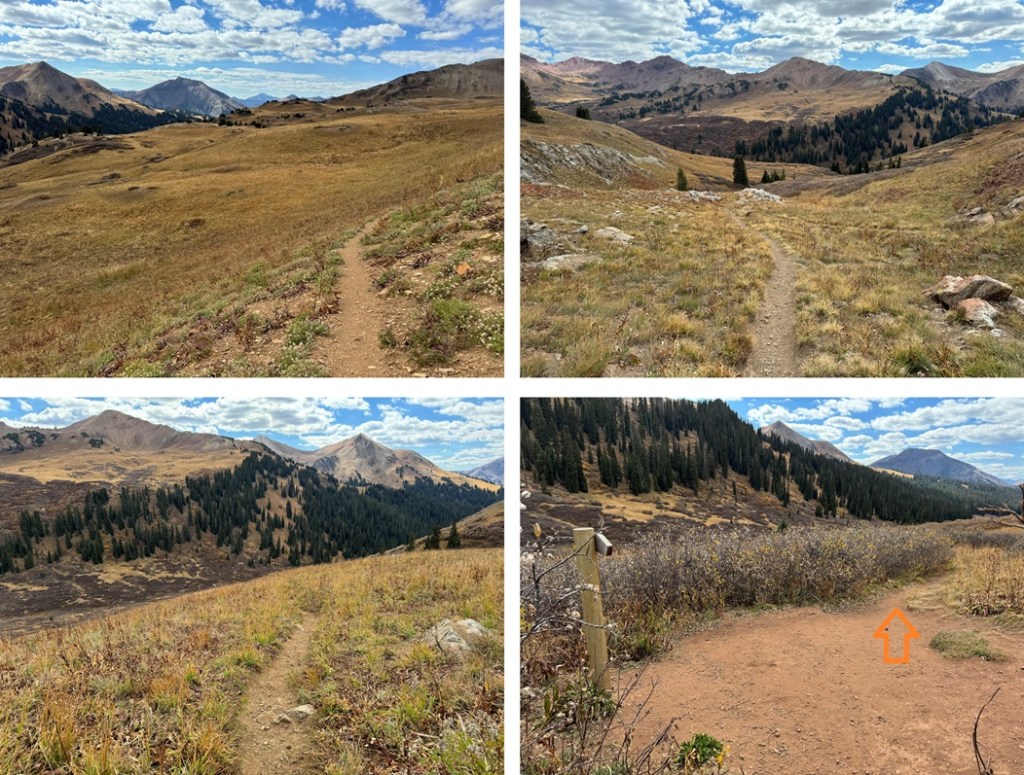
Here are some pictures of the route from the upper basin to Frigid Air Pass.   The trail intersected with the West Maroon Trail again, and I followed the trail north at the intersection to Frigid Air Pass.

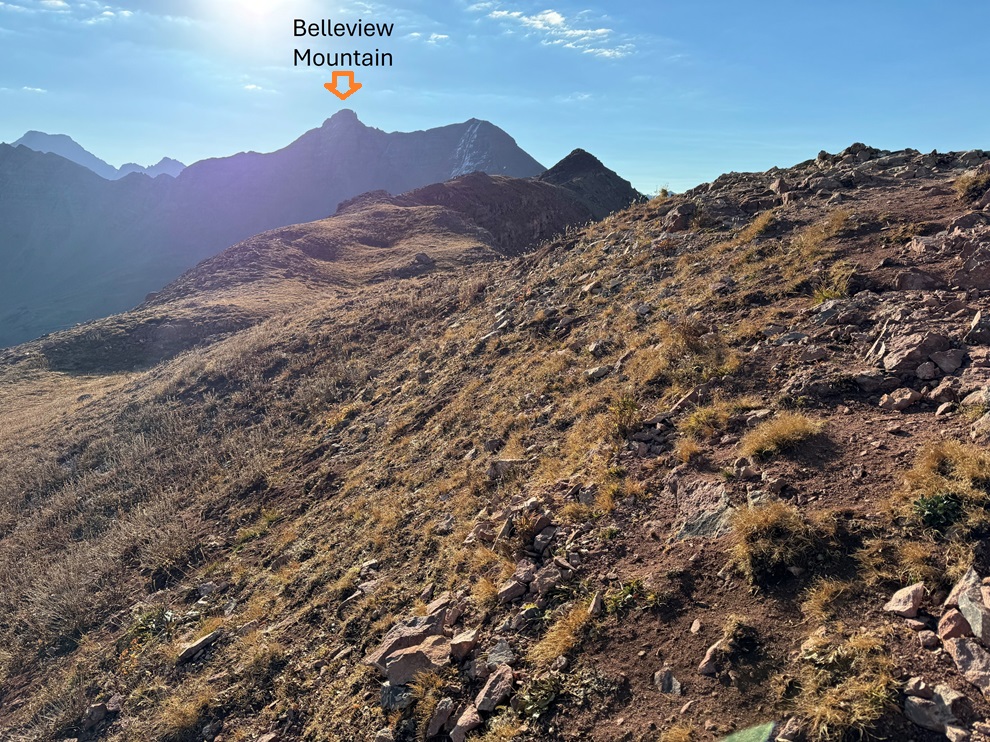
At the top of the pass, I could see Belleview Mountain.  I turned right and followed the ridge southeast.  This is a long ridge, but it’s all class 2, with game trails to follow to the right to keep it class 2

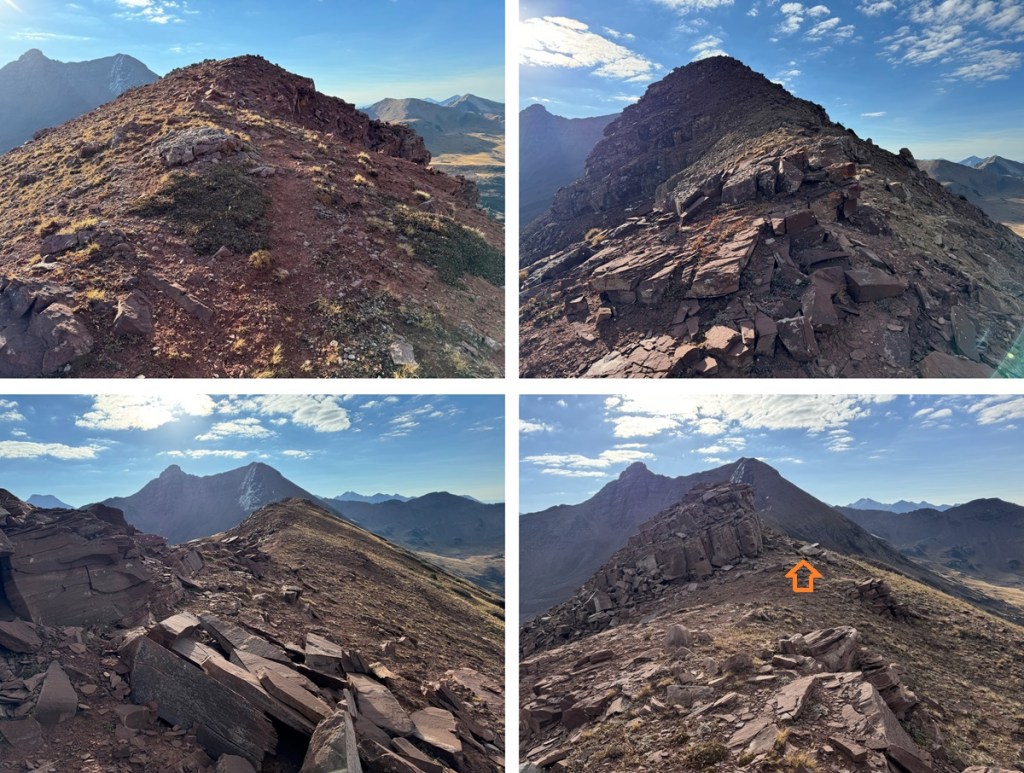
Here are some pictures of the ridge:

12

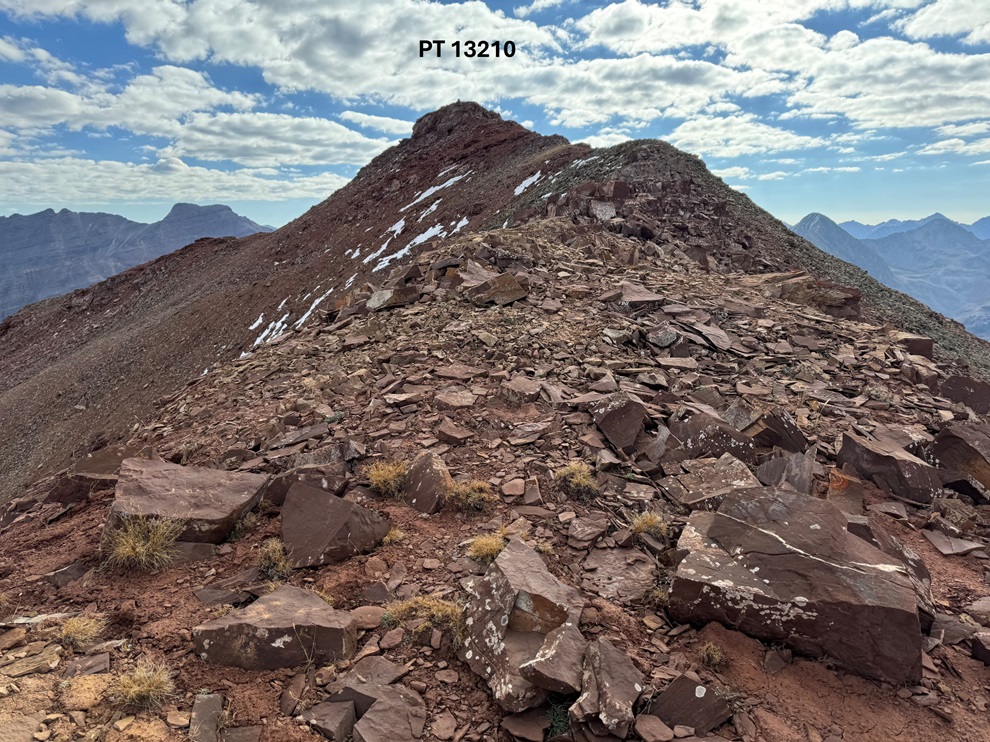
The ridge ran out and it was time to start gaining elevation again.  I continued southeast to PT 13210.  There were no obvious trails here, but there were a lot of loose rocks and scree.  This is still all class 2.

From the top of PT 13210, looking northeast I could see Belleview Mountain.

This is the overall route I took to get there:

I followed the ridge northeast on class 2 terrain, and then stayed to the right of the rock outcropping.

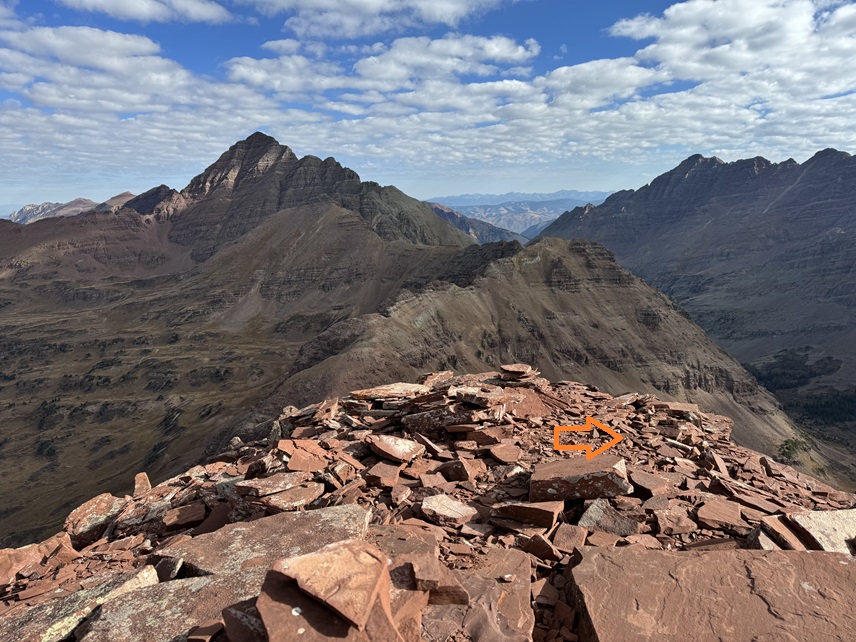
From the top of the small gully I turned left, and had a couple of options.  I could ascend to the summit by going either left or right.  Both options were difficult class 2.  I went to the left first, to the right on the way down.  The left side is difficult class 2, but there is more exposure on that side.

Then it was a class 2 rocky hike to the summit

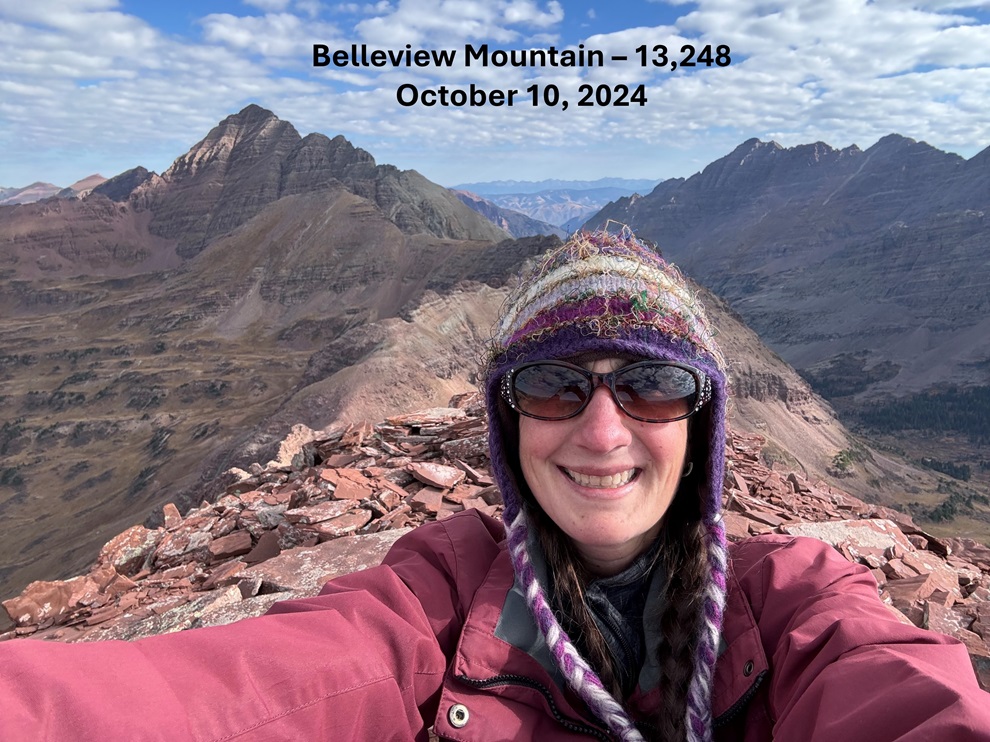
I summited Belleview Mountain at 9:50am

Belleview Mountain:

On my way down I headed to the north of the summit, and then descended back to the small gully by heading south on scree.

Then it was back over to PT 13210

Back at PT 13210, I headed northwest back to the ridge

And then followed the ridge northwest towards Frigid Air Pass.

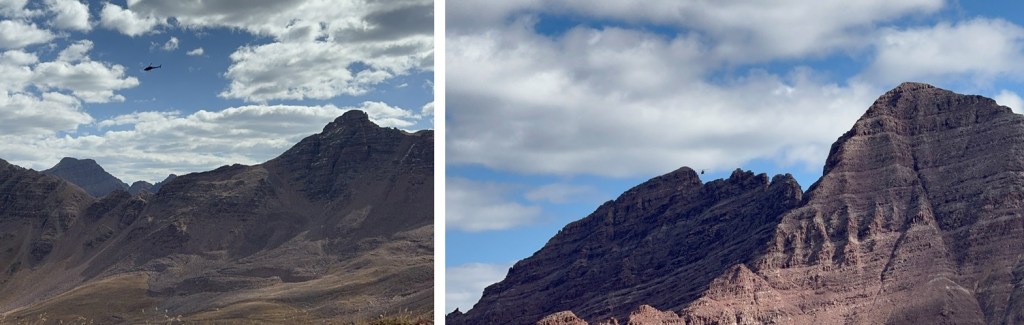
Along the ridge I got buzzed by a fast-flying helicopter, headed over to the Bells.  It circled a few times, and then I never saw it again.  I’m hoping it wasn’t a rescue mission.   It was flying pretty close to the summits and ridges.

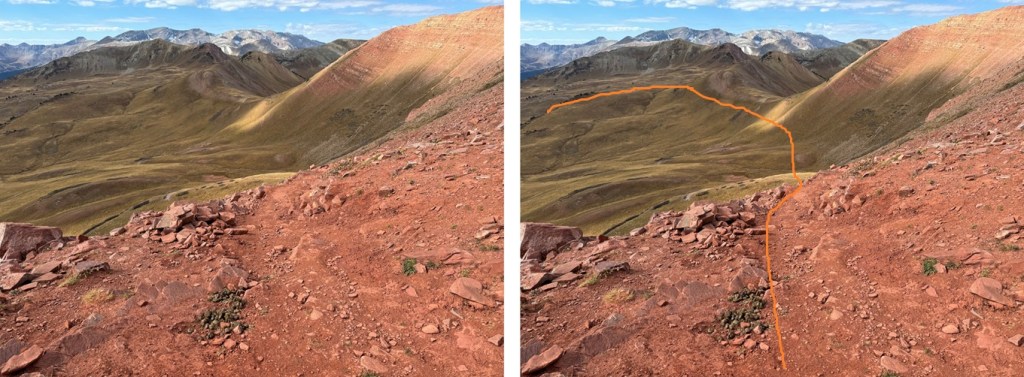
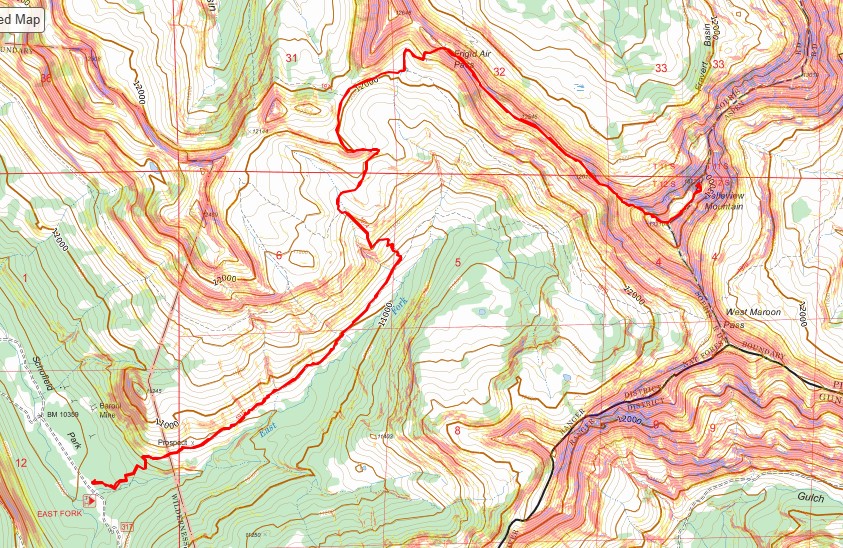
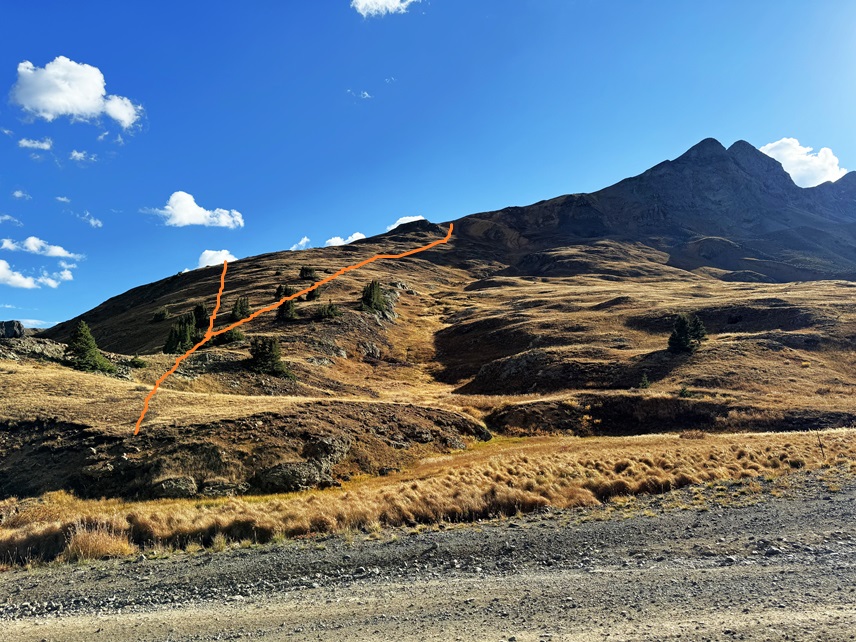
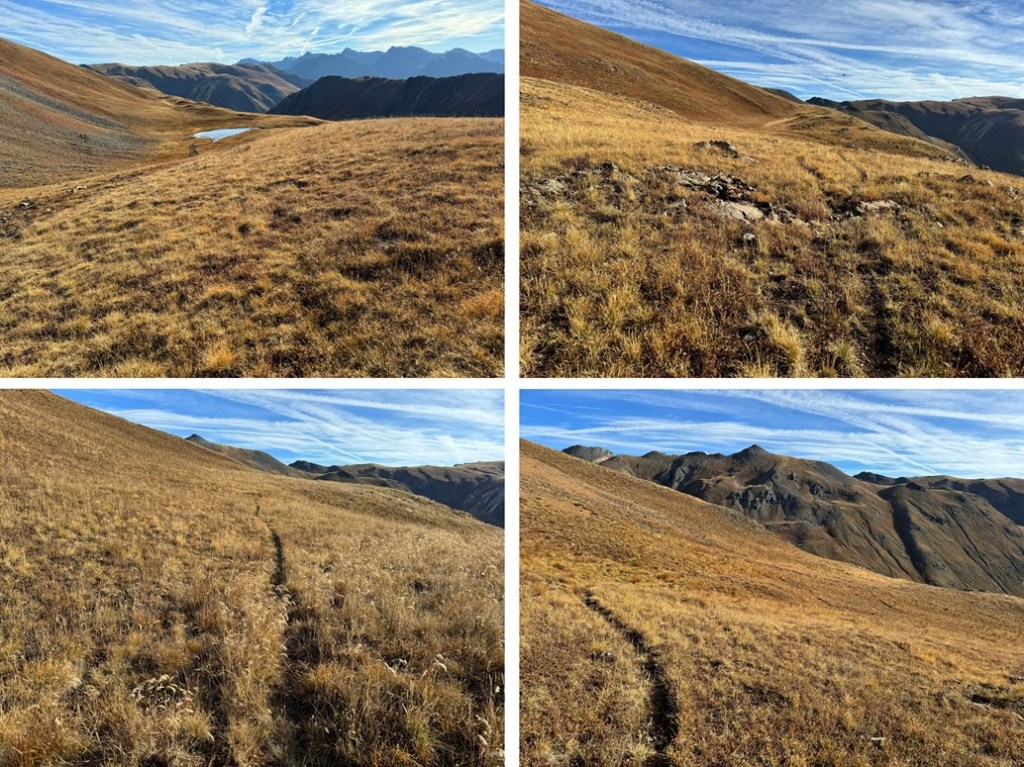
From Frigid Air Pass I regained the trail and headed southwest back into the basin. Here’s a visual of the class 1 route:

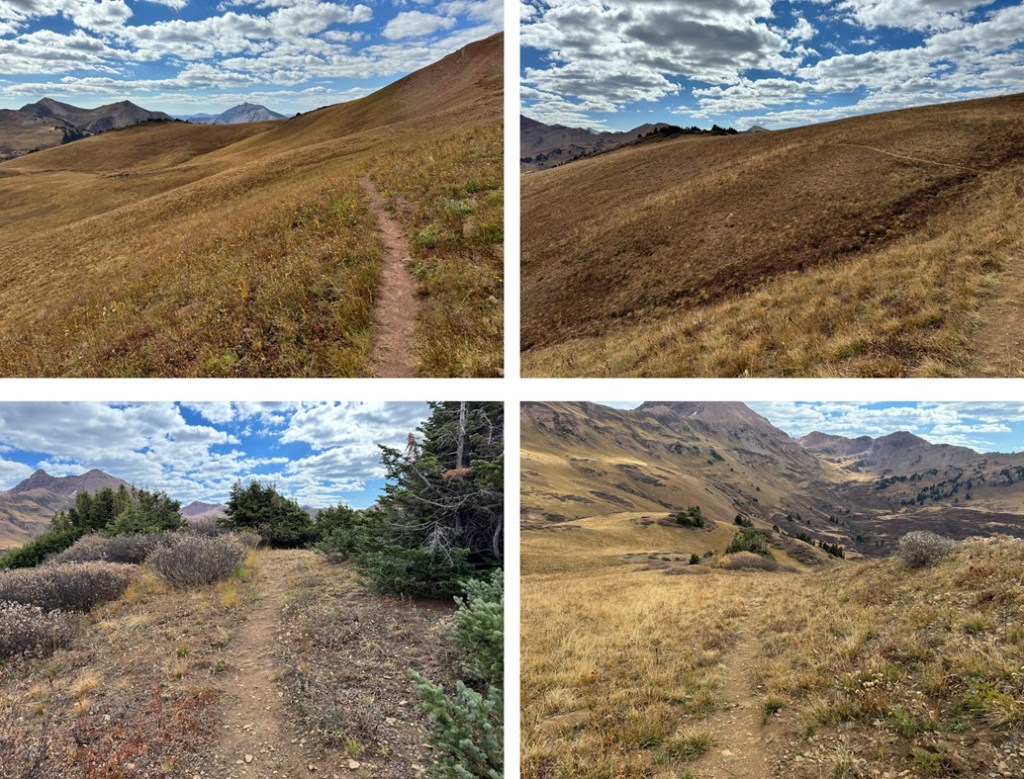
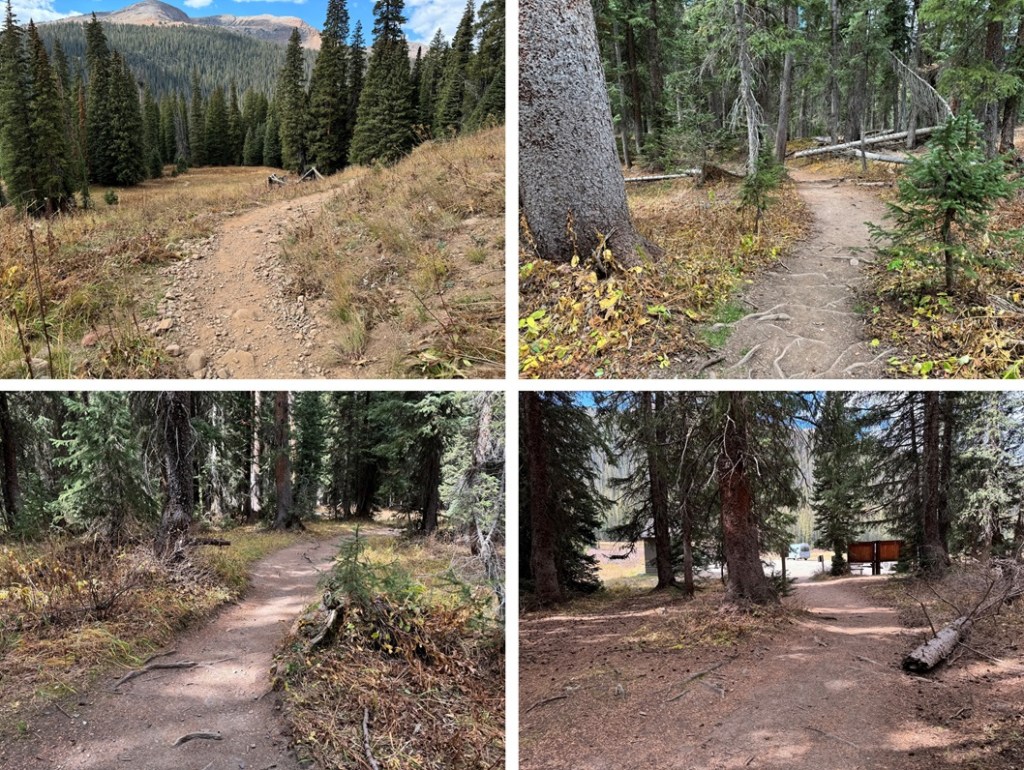
And some pictures.  I took the trail back to the shortcut (1974, not labeled on signs), and then back to the West Maroon Trail

Back on the West Maroon Trail, I followed it southwest back to the trailhead

I made it back to my truck at 12:30pm, making this a 12.15 mile hike with 3516’ of elevation gain in 5.5 hours.

On to the next trailhead!

Proposal Peak – 13,339

RT Length:  3.4 miles

Elevation Gain: 1652’

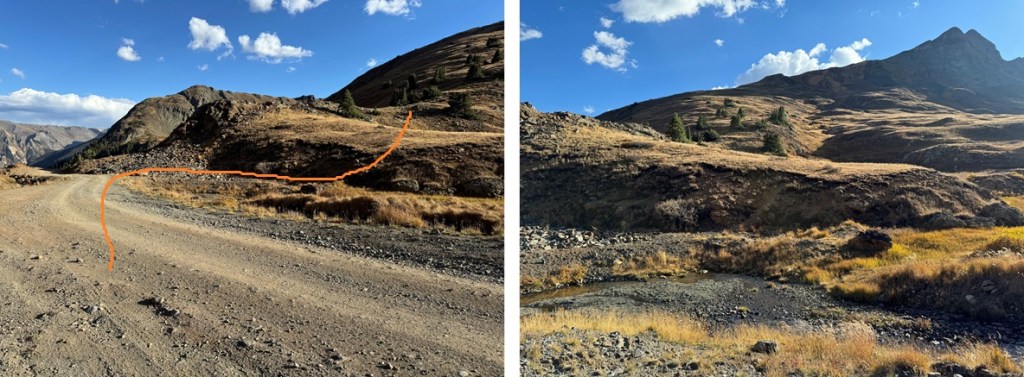
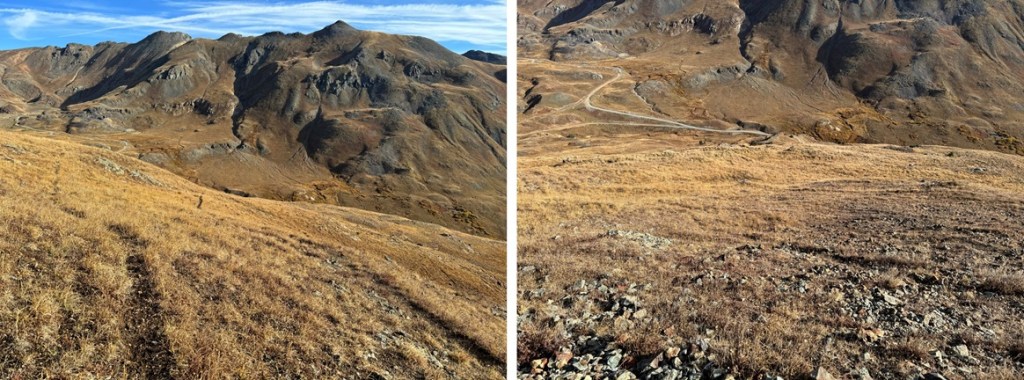
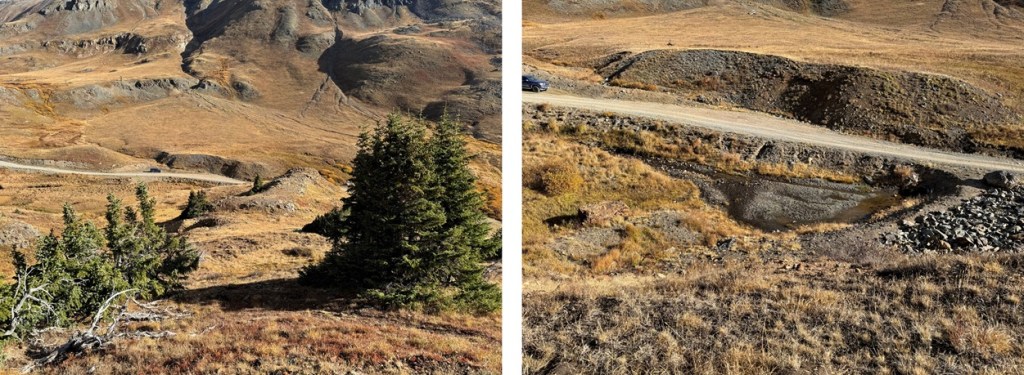
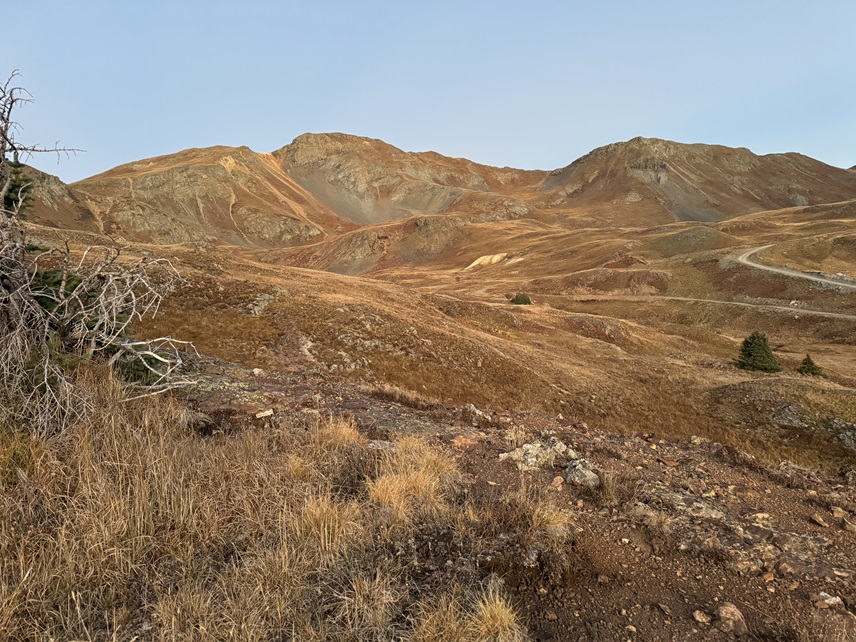
I drove up Eureka Gulch Road to 11930’ and parked on the side of the road.  This is a dirt road but can be driven in a high clearance 2WD.  From my parking spot, I could see the route before me. 

On my way in I went right, which ended up giving me needless elevation gain I would lose later.  Instead, head south/southwest and use the route to the left.  Game trails pick up there that will lead you to McCarty Basin. 

I was on the trail at 6:45am.  I started out by heading south/southwest up the tundra

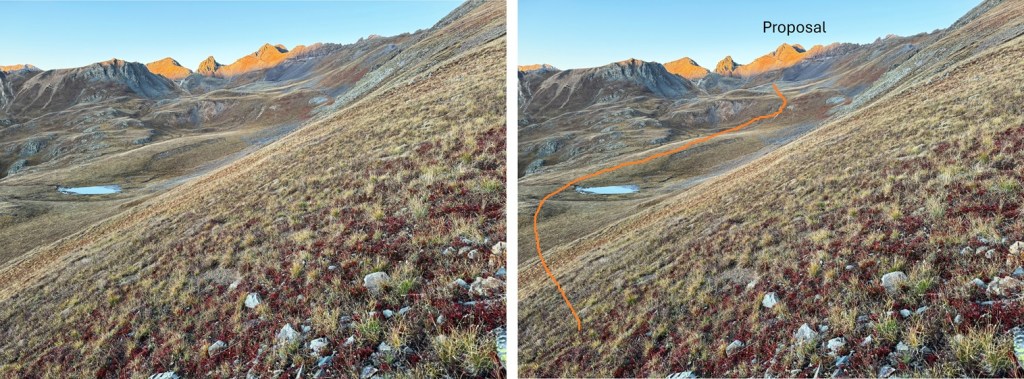
As you can tell, I’d ascended too high and had to lose elevation to head into McCarty Basin.  However, I could now see my route to Proposal Peak

I dropped down into McCarty Basin, and followed the tundra southwest

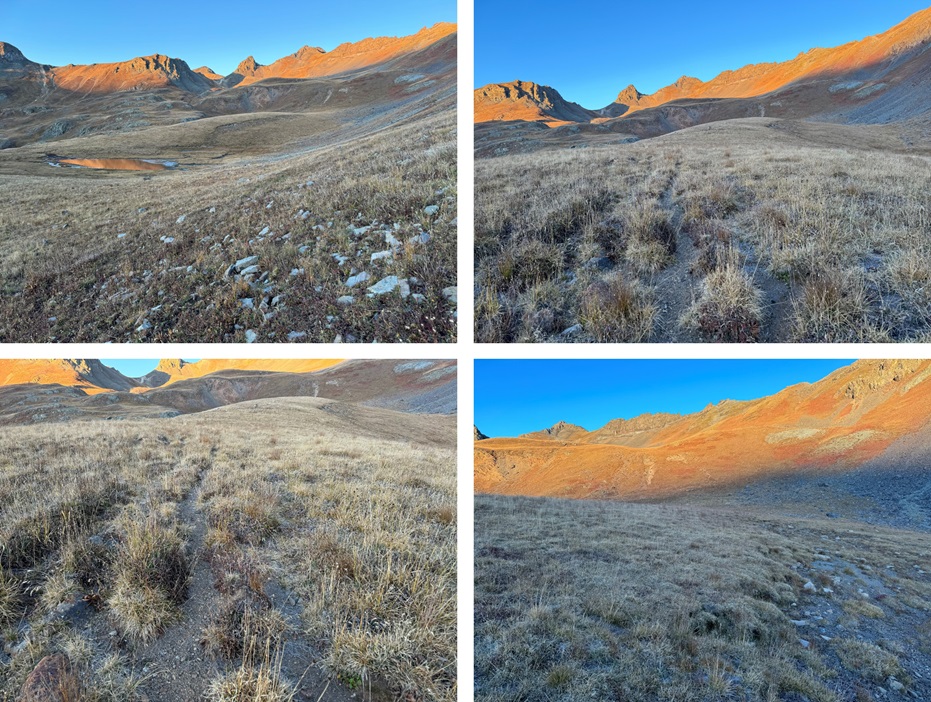
I came to a game trail, that brought me to the upper basin

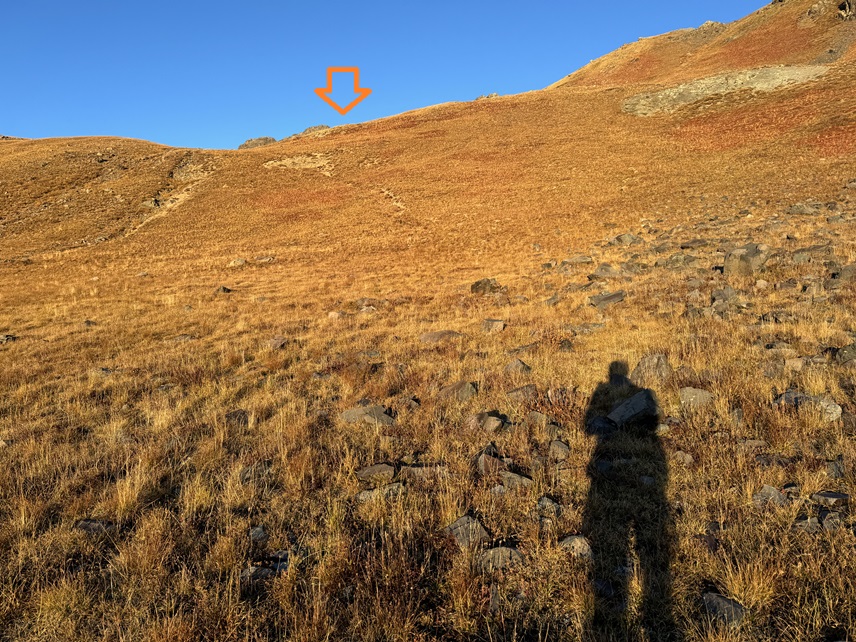
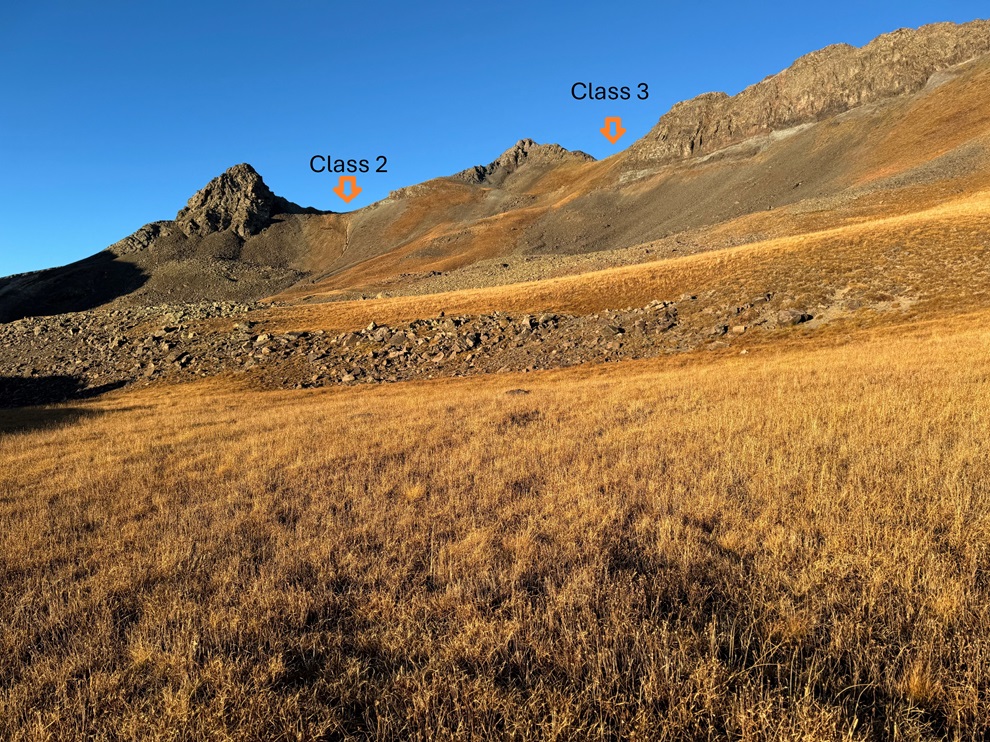
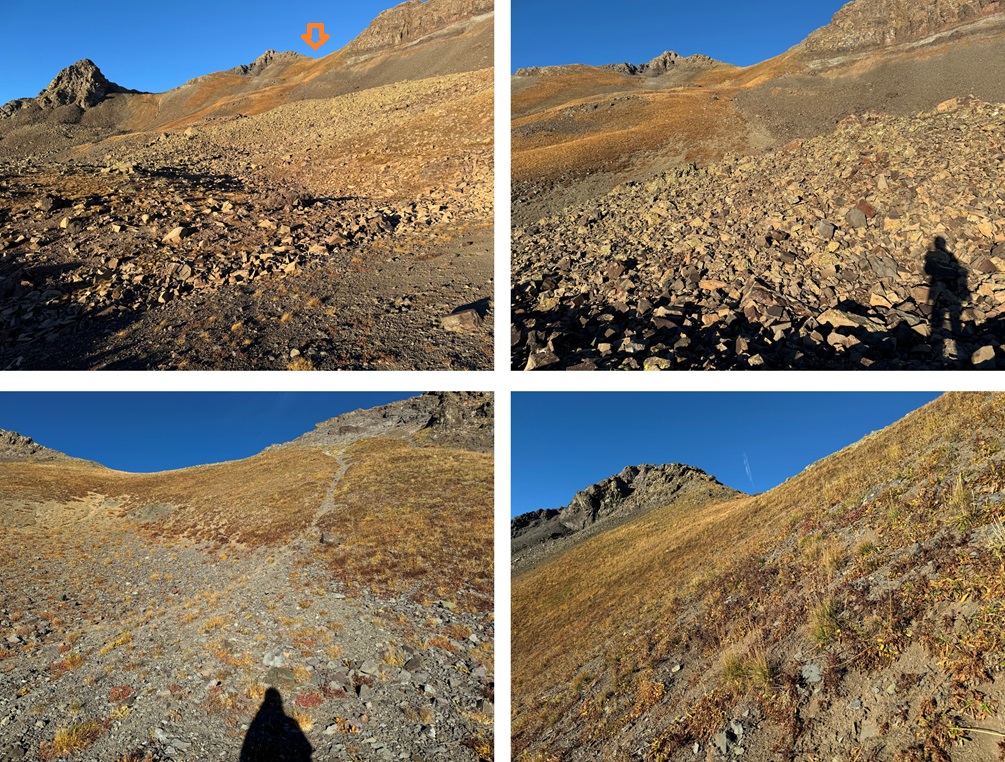
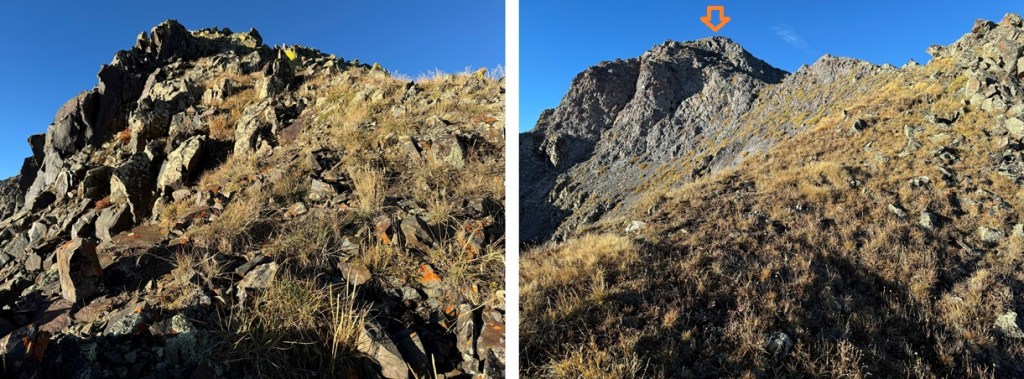
I could now see my route to the ridge.  If you want to keep this hike class 2, ascend to the saddle on the left, and skirt around the south side of the peak.  This will include steep scree, but it will remain class 2.  I chose to gain the ridge (the class 3 option).

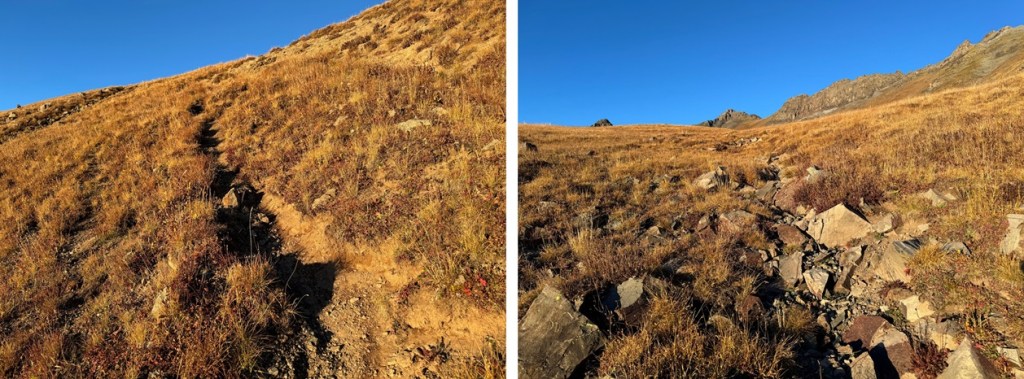
I was able to follow the tundra all the way to the ridge

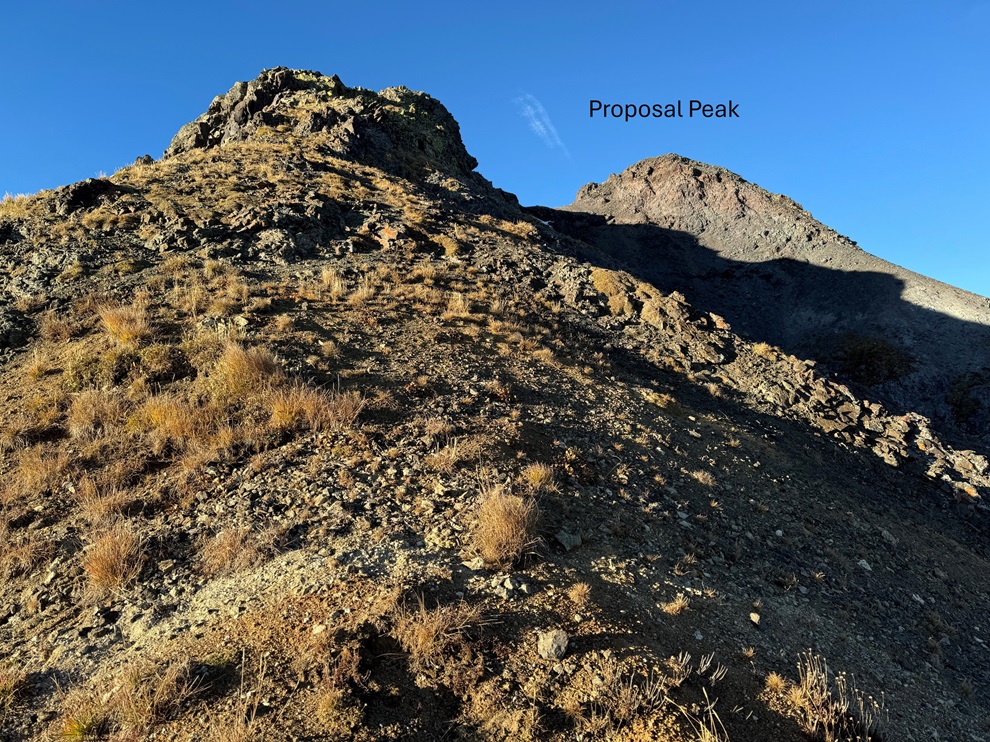
Once on the ridge I could see the true summit of Proposal Peak to the southwest. 

I continued following the ridge south. This was all class 2.

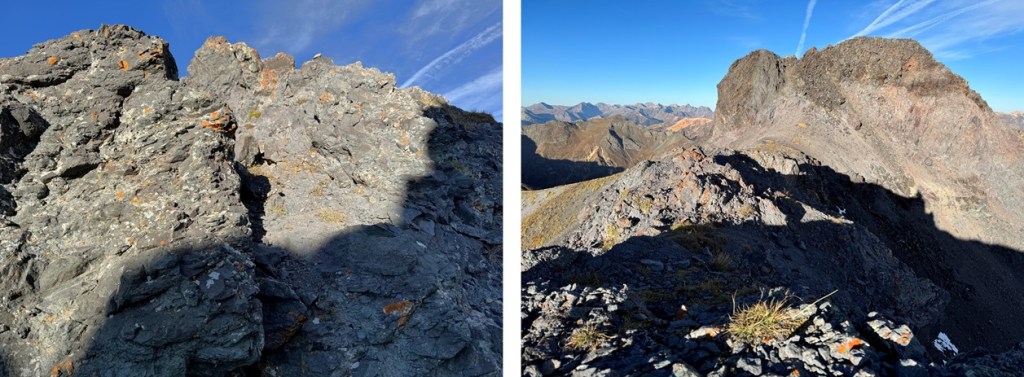
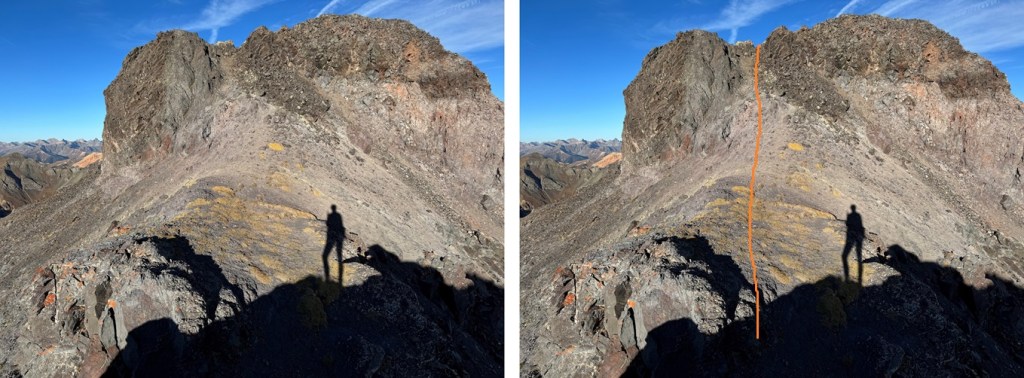
Until I came here.  There’s a short difficult class 3 section here.  I would dare to say it borders on class 4 (if you’re short like me).  It was much harder to navigate down than up, and so steep I couldn’t get a good picture of it looking down (I have a better one on the way back).  I turned and faced the mountain and headed down.  Be careful here: the rocks break off, so make sure you have a solid hand hold before committing your weight to a move. The ridge proper goes here at class 3, and it’s a very short section.

Here’s looking up at what I downclimbed:

Now for another short class 3 section, sticking to the ridge proper, before an easy class 2 hike to the summit.

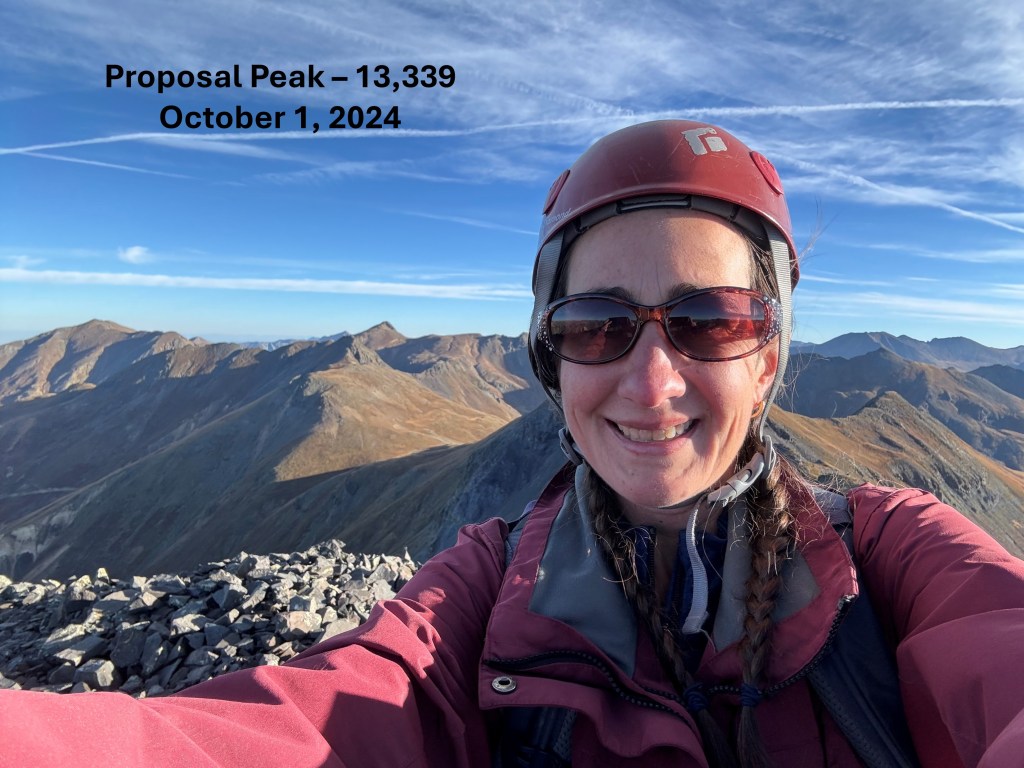
I summited Proposal Peak at 8:15am

Proposal Peak:

Now to head back.  I took much of the same route on my way back down. I followed the ridge to the class 3 section

And then climbed back up the class 3 chimney.  This was much easier to navigate climbing up.

I now followed the ridge northeast, and then descended the gully back down to the basin. 

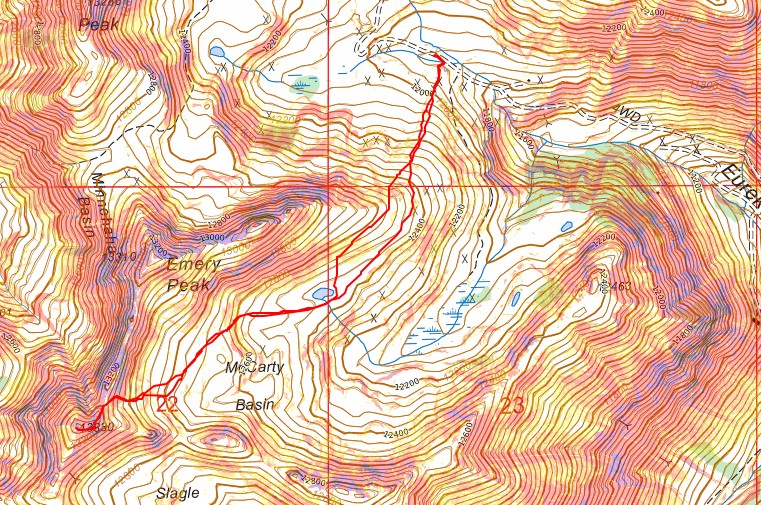
Here’s a look at my route through McCarty Basin

On the right side of a small pond I found a game trail that would lead me almost all the way back to my truck.

With the road in sight, I followed the tundra north back to my truck

I made it back to my truck at 9am, making this a 3.4 mile hike with 1652’ of elevation gain in 2 hours, 15 minutes.

On to the next trailhead!
Bonita Peak – 13,286

RT Length: 1.62 miles

Elevation Gain: 1009’

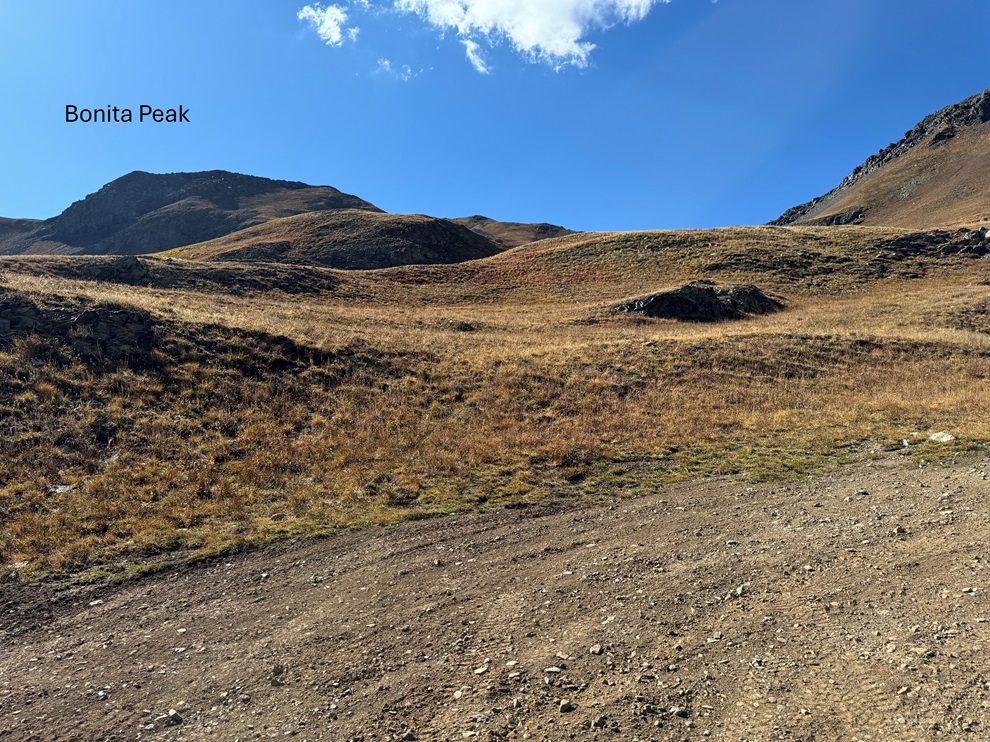
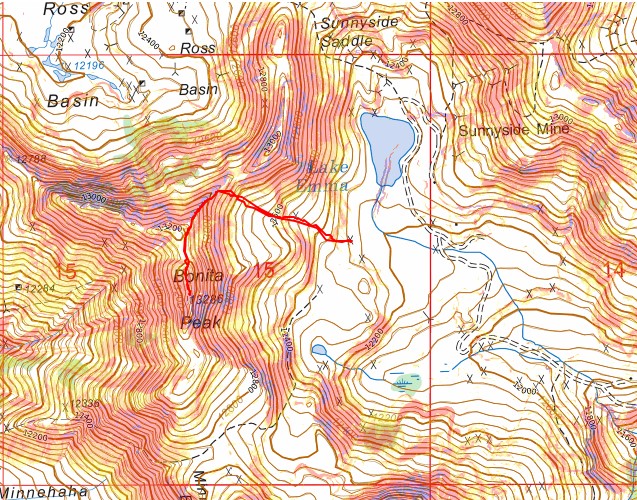
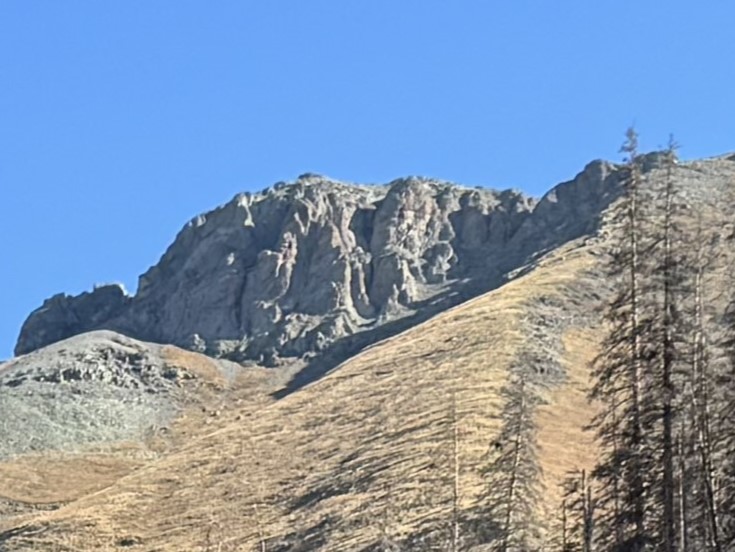
I drove up Eureka Gulch on a 4WD road.  This is a dirt road, but a high clearance 2WD can make it all the way.  I parked at 12275’ and was on the trail at 3:15pm.  This was a quick and easy hike.  From the parking area I could see the peak.

I know I’d already summited V5 earlier that morning, and after heading to town, putting together a trip report, hassling with Verizon being down and having a few work meetings (which luckily were over Zoom, not a phone call), I drove to the next trailhead.  When I got there it was 3pm, and I noticed how quick the summit route looked.  I bet I could get it done in an hour or so, and why put off for tomorrow what I could do today?  I put on my hiking boots and went at it. 

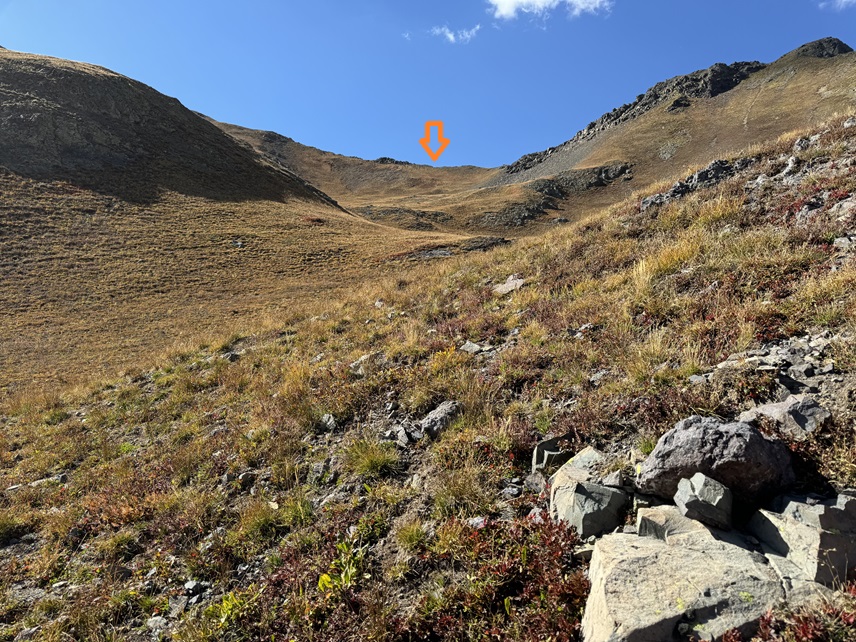
I started by heading west up the tundra to the ridge

Once on the ridge I turned left and followed it south to the summit.  The ridge started out with game trails below the rock outcroppings, and then turned rocky, but this entire hike was class 2.

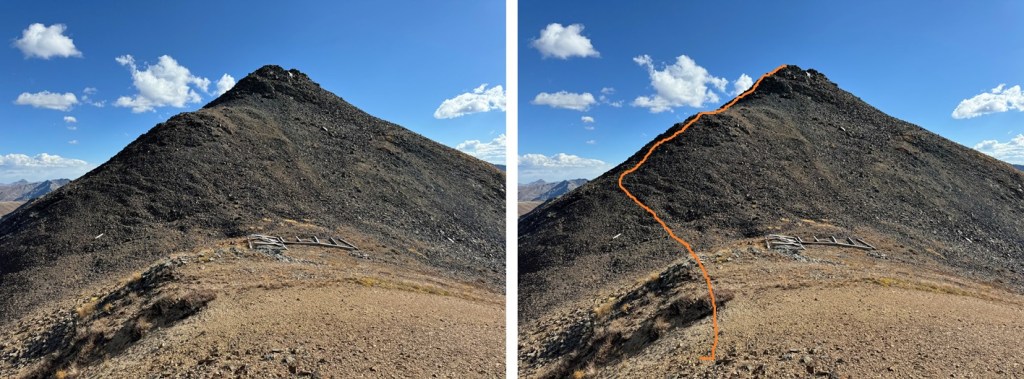
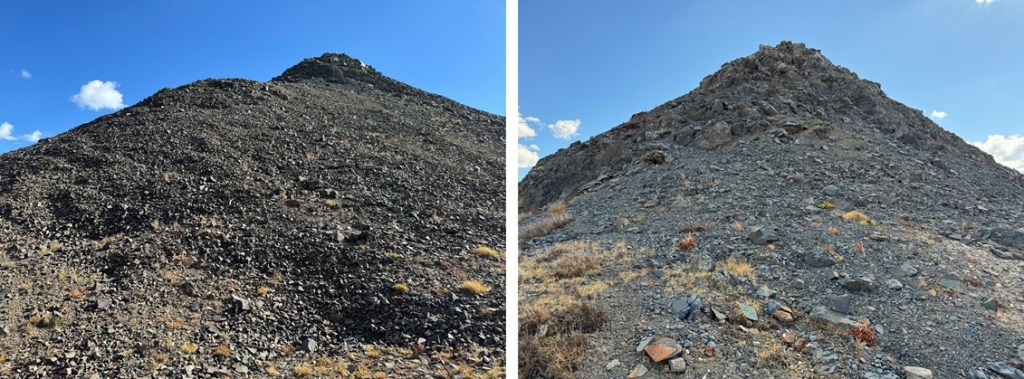
I came to an area filled with scree and headed straight up. 

This is where the terrain became rocky (still class 2).  I followed the ridge south to the summit

I summited Bonita Peak at 3:55pm

Bonita Peak:

Now to head back down.  I followed the rocky ridge north

I continued following it as it turned to tundra.  Here’s where I descended:

And then to descend down the ridge, heading east back to my truck.

I made it back to my truck at 4:20pm, making this a 1.62 mile hike with 1009’ of elevation gain in 1 hour, 5 minutes.  Yep, it was a quick and easy hike.

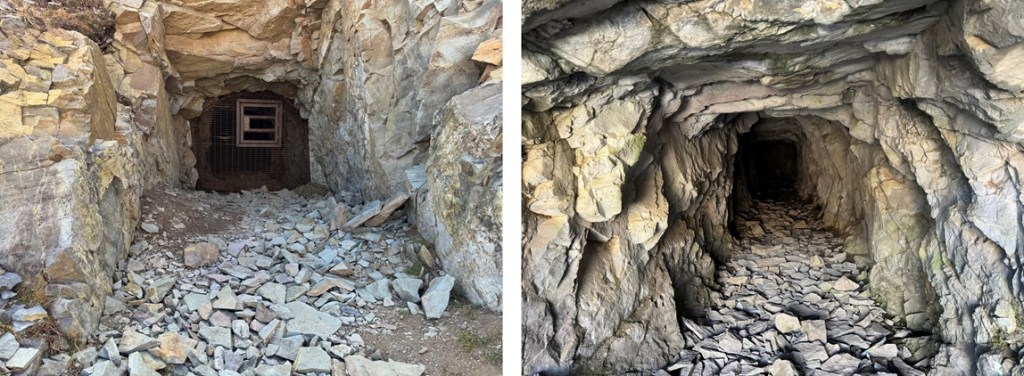
Also, there was a closed-up mine where I parked. 

On to the next trailhead!

V5 – 13,164

RT Length: 9.05 miles

Elevation Gain: 3128’

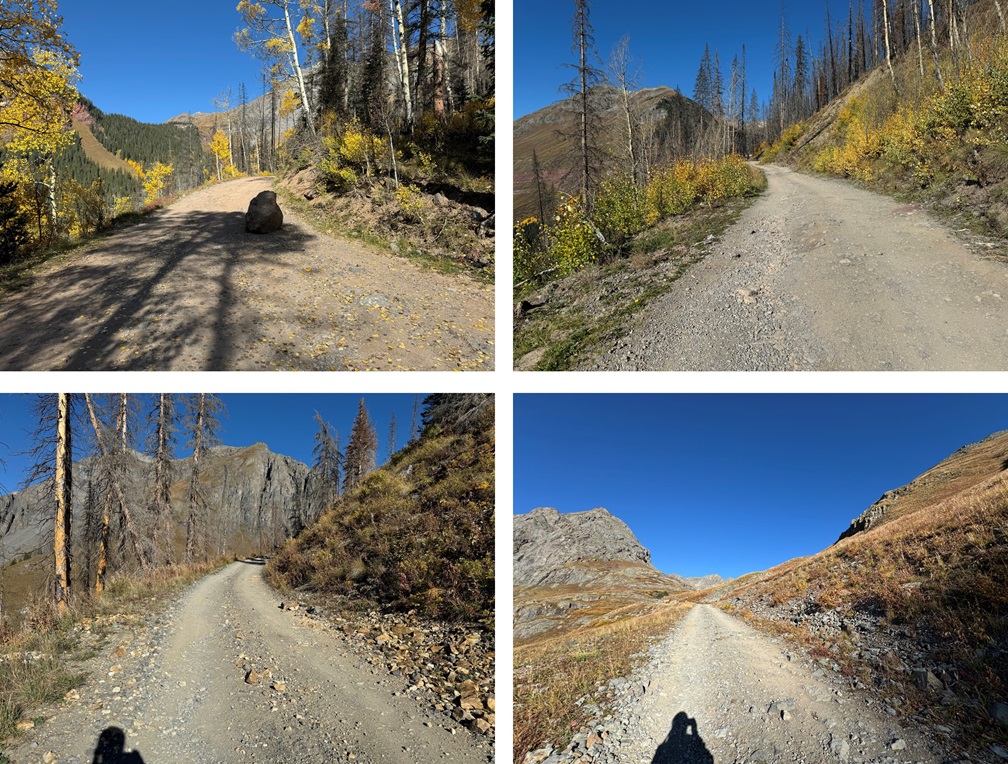
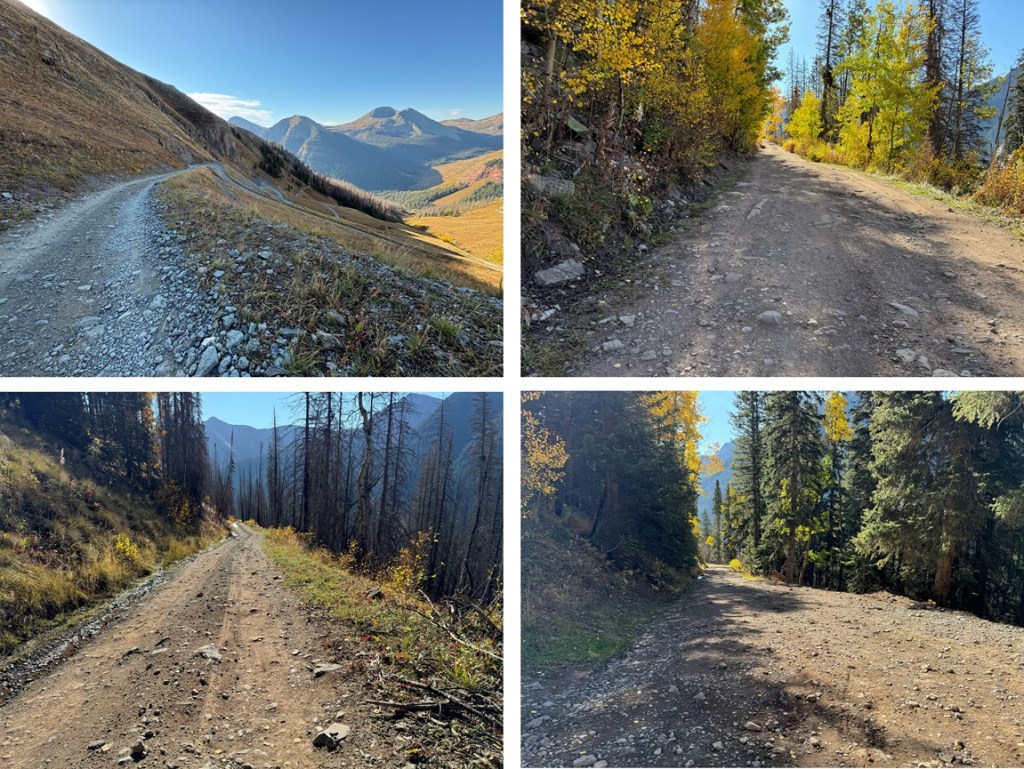
I parked a little ways up Clear Lake Road at a dispersed campsite.  The road is 4WD, but I could have driven all the way to Clear Lake.  If you have a 4WD vehicle, this is an easy road to navigate all the way to the end.  There’s just one obstacle:  A boulder taking up half the road about a mile up.  After that, it’s pretty straightforward.  

I was on the trail at 5:30am.  I followed the road for 3.5 miles up to 11820’

At 11820’ I left the trail, and headed northeast up this tundra slope, towards a mining road

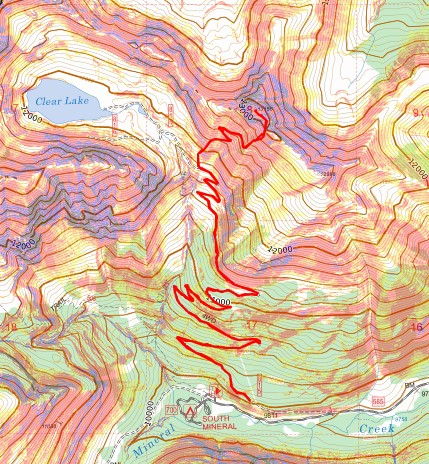
When I reached the mining road I followed it west, then east, then west as it switchbacked to  12530’.  Here’s an overview of my route:

At 12530’ I left the mining road and headed northeast up the tundra.  The tundra eventually changed to scree, but this was all class 2.

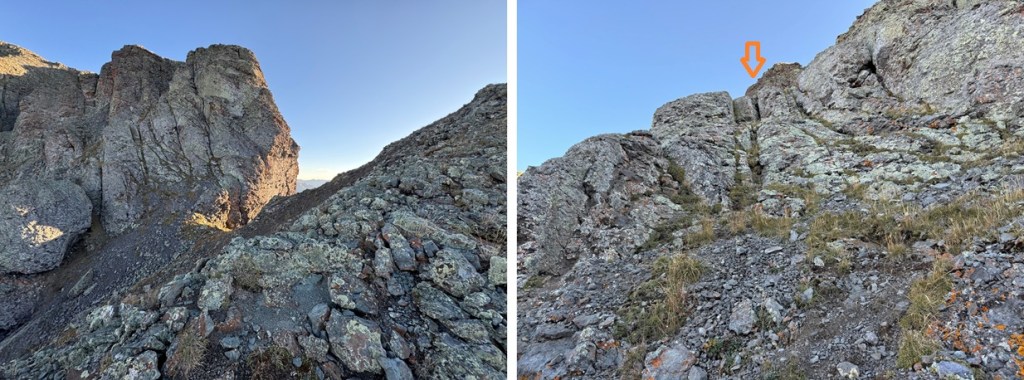
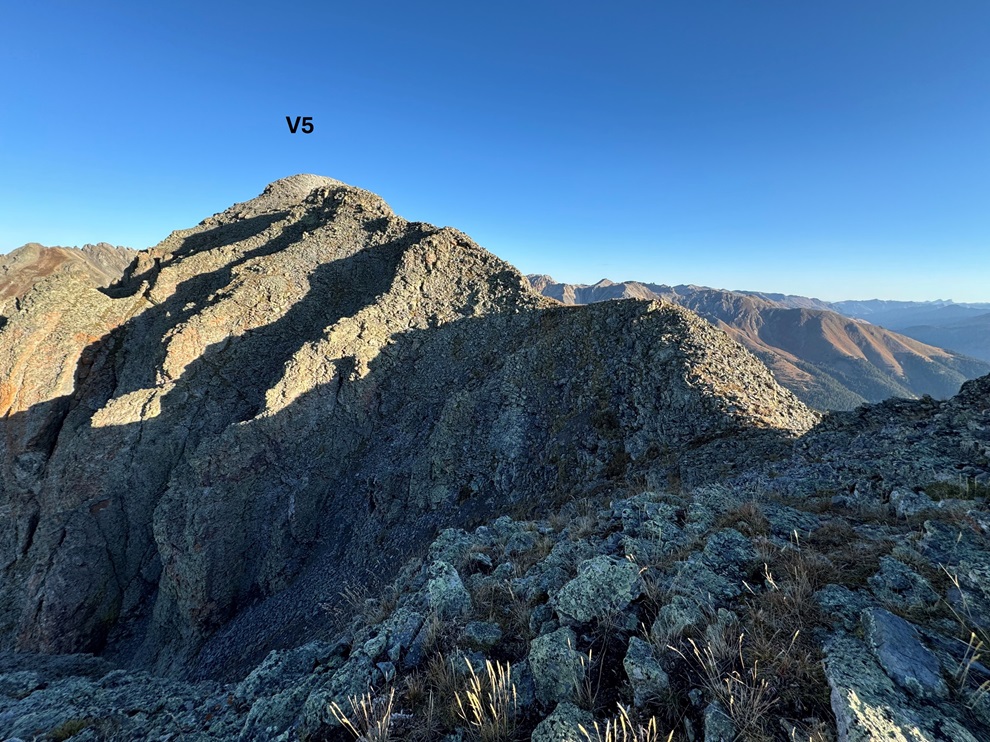
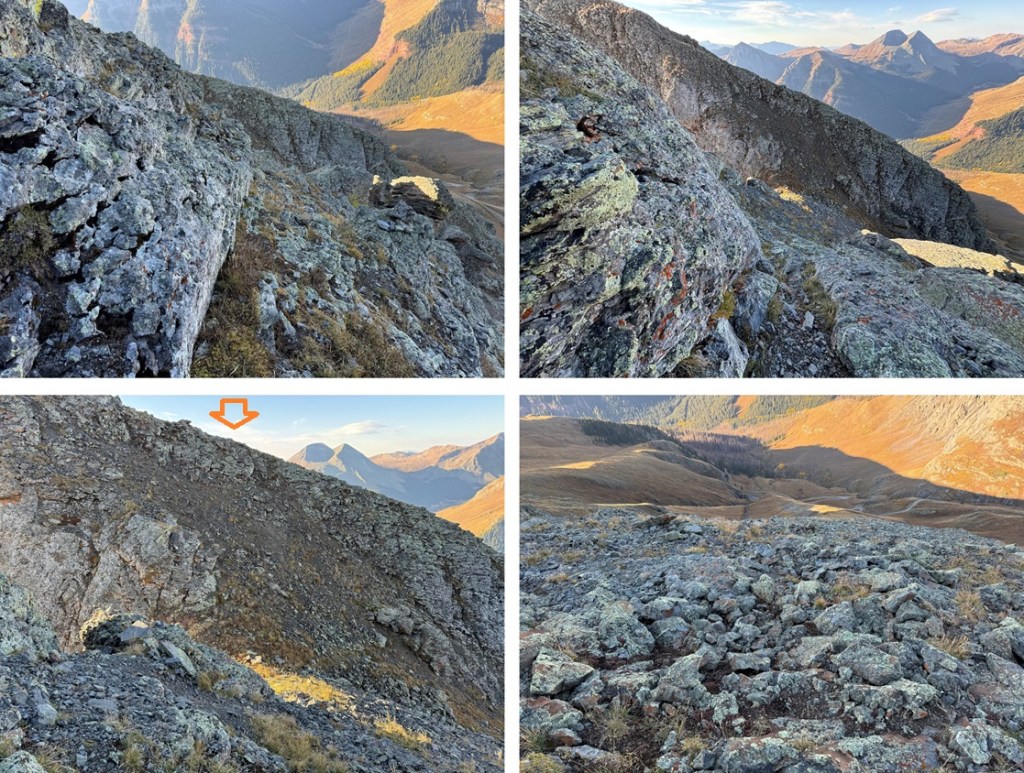
At the top of the scree I was now on the ridge.  If you don’t already have on your helmet, now is the time to put it on.  This next section is a class 3 gully. 

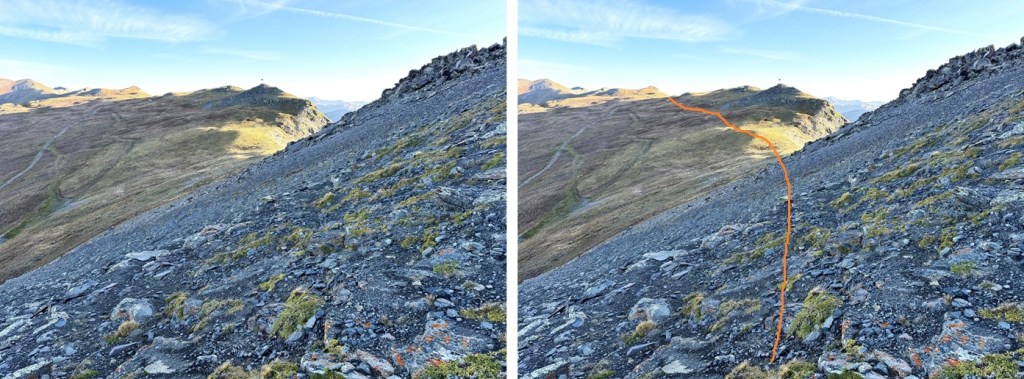
While not entirely solid, it’s much easier to navigate than it looks. This is the route I took to access the gully:

Here’s a look at the class 3 gully.  It’s easier to navigate than it looks.

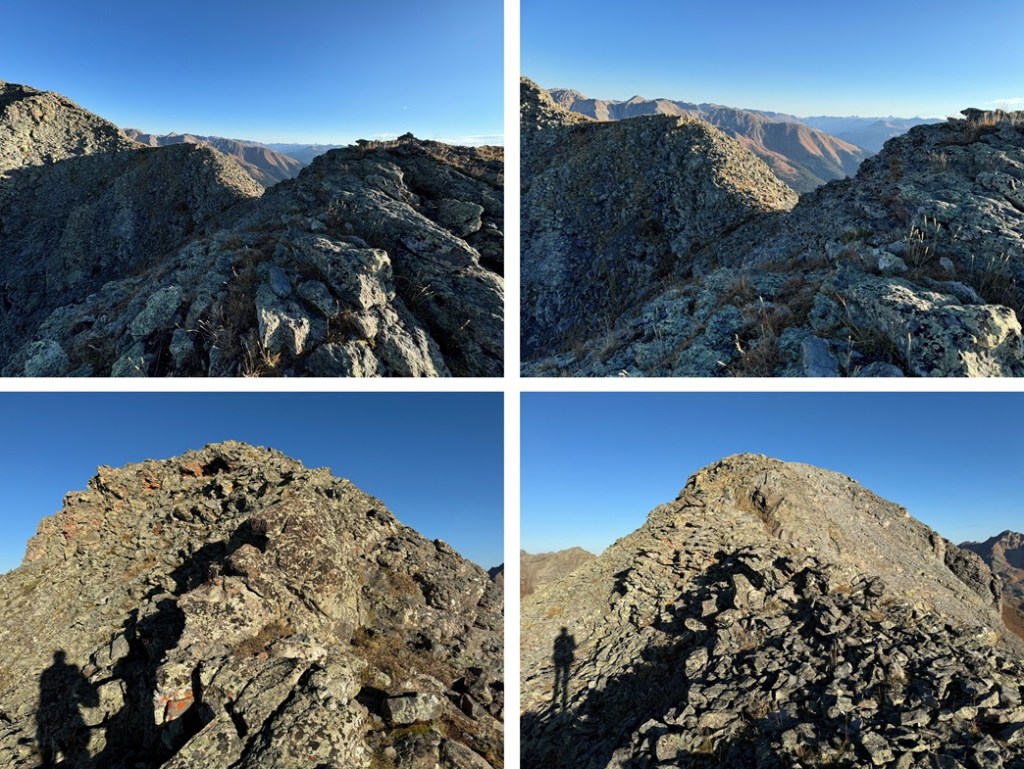
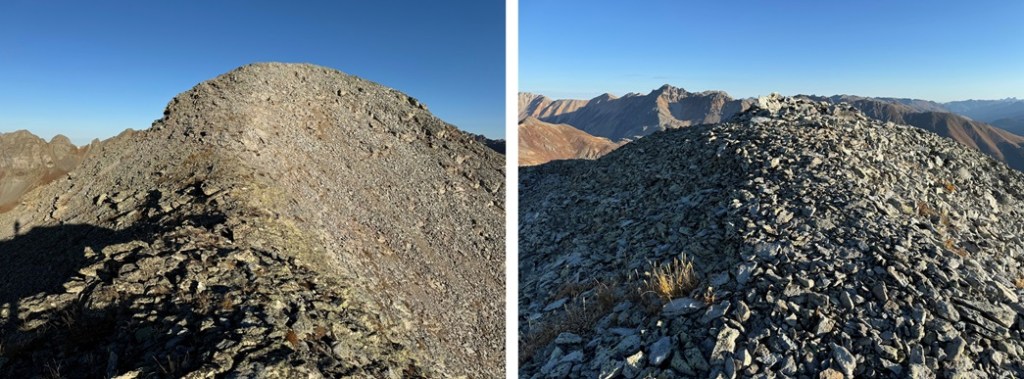
At the top of the gully I turned left and hiked the class 2 ridge northwest to the summit

Here are some pictures of the rocky (but class 2) ridge

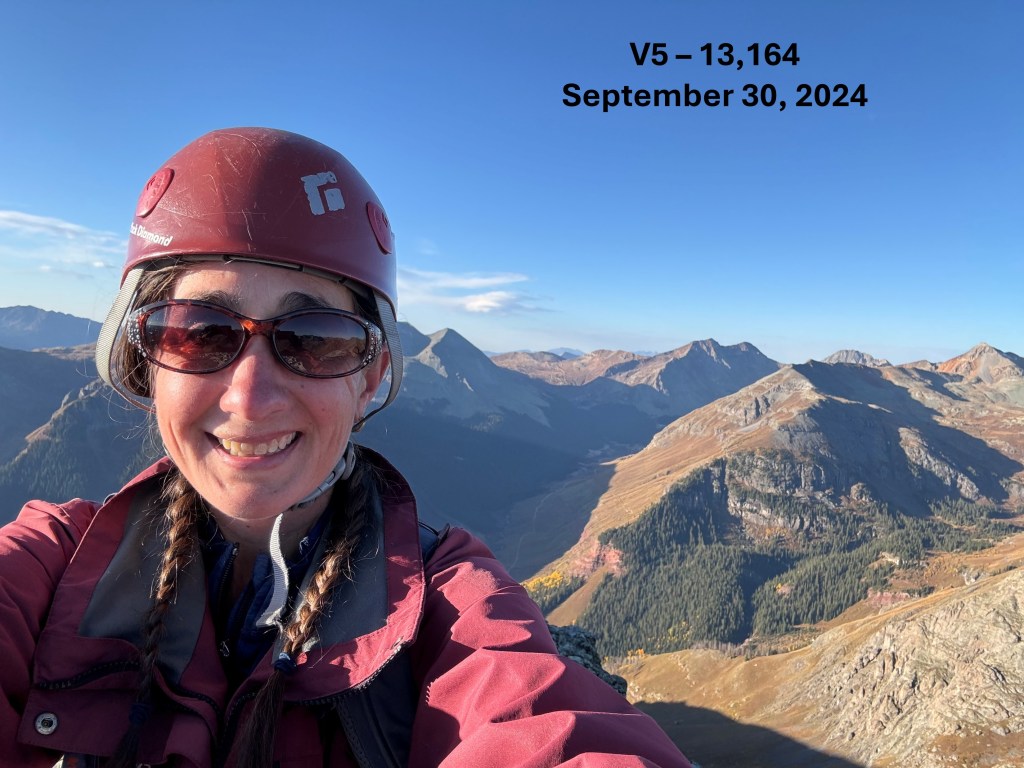
I summited V5 at 8:10am

V5:

This was an out and back hike for me, so I turned around and headed back down the ridge.

Then it was back down the gully

And back to the scree, which turned to tundra, which took me to the mining road

I followed the mining road back to 12220’

And then hiked down the tundra to the road I could see below.

Once on the road, I hiked it back to my truck.

I made it back to my truck at 10am, making this a 9.05 mile hike with 3128’ of elevation gain in 4.5 hours

On to the next trailhead!

Hayden Mountain North – 13,131

RT Length: 6.51 miles

Elevation Gain: 3534’

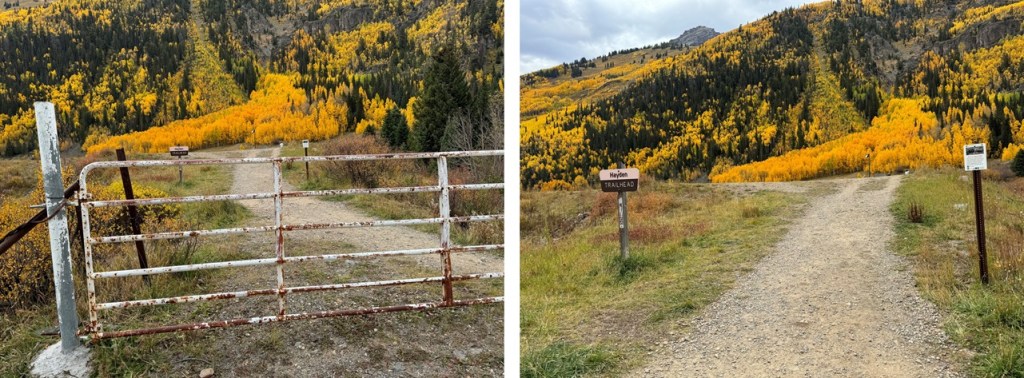
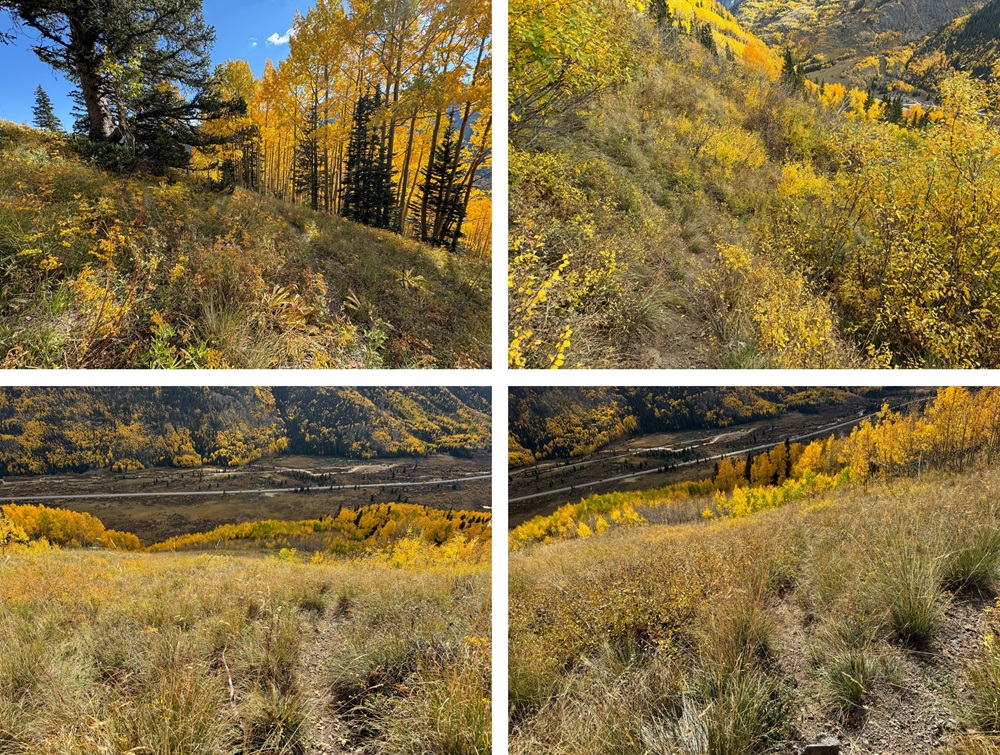
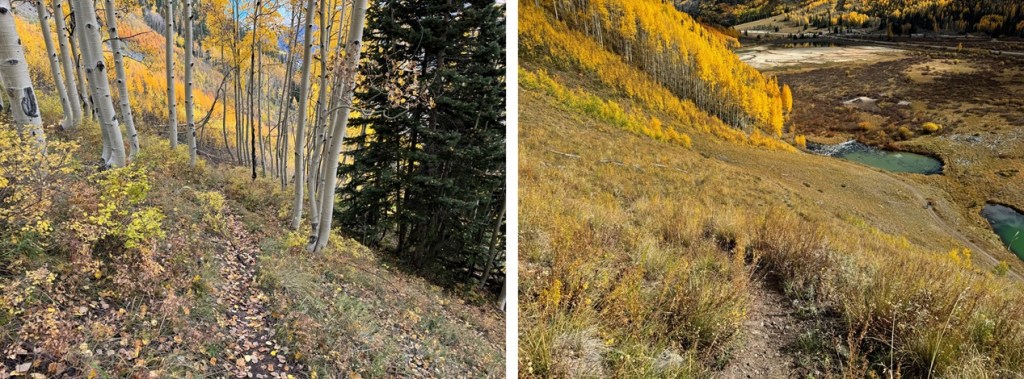
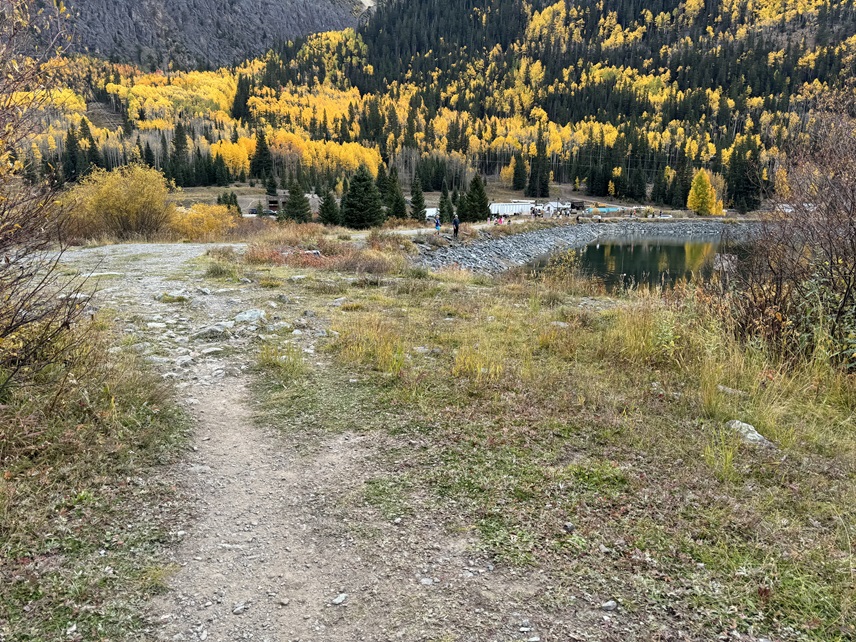
I parked at the Hayden Trailhead at Crystal Lake and was on the trail at 6:45am.  This is a very popular trailhead, especially during the fall color season.  There’s room for about 40 vehicles if everyone parks nicely, but this area does fill up.  The beginning of the trail is obvious, marked by signs and a gate.

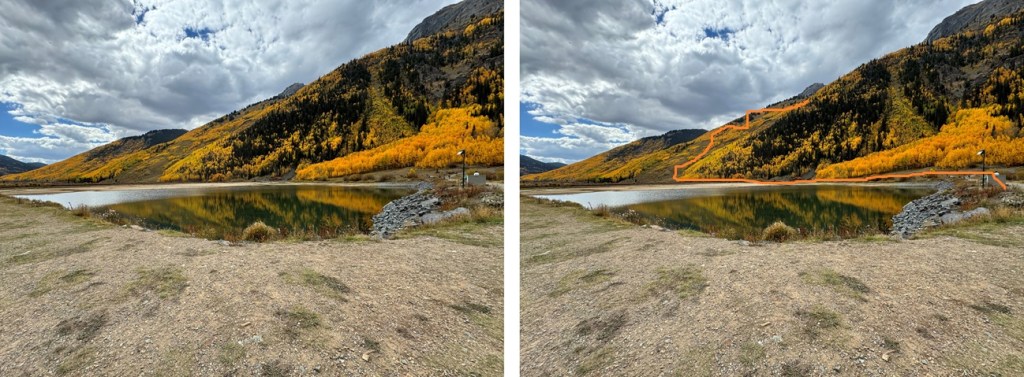
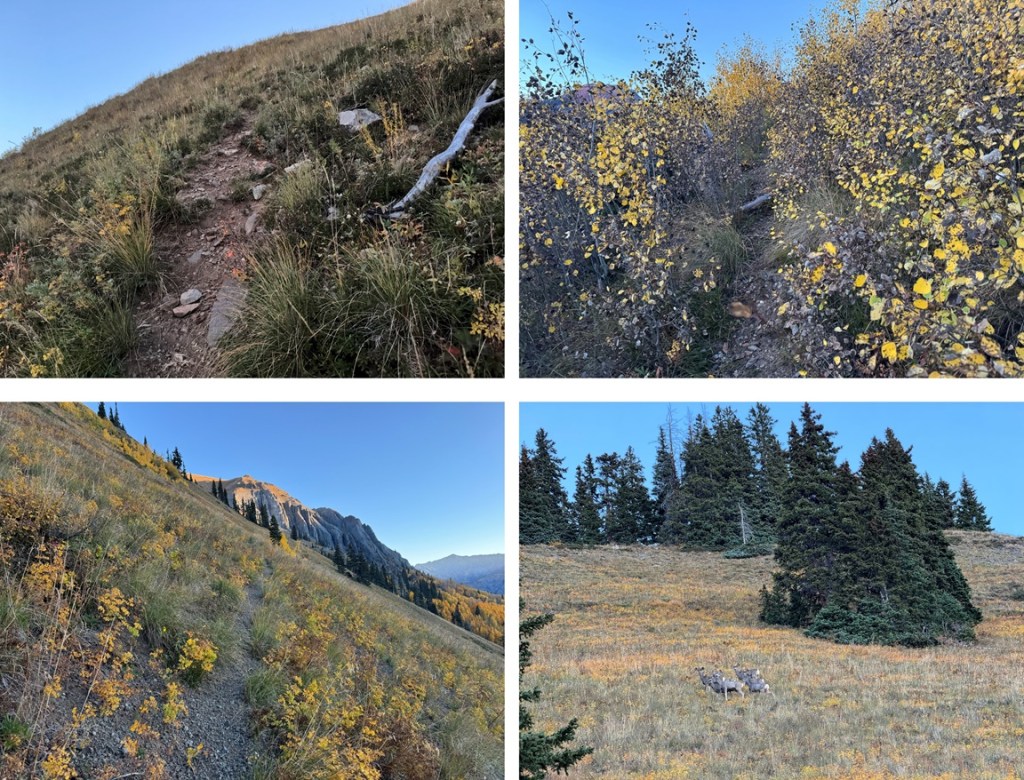
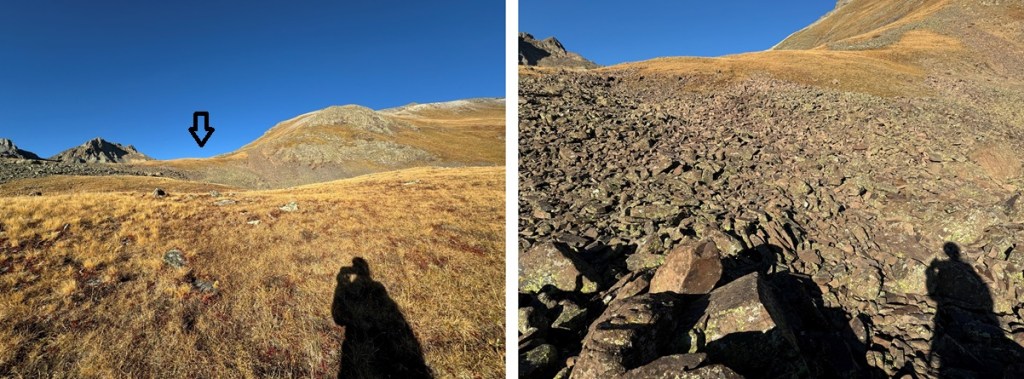
Before you start your hike, you should take a look at where you’re going. There are plenty of game trails to get you there, but that’s just the problem:  There are SO MANY game trails, it’s easy to go the wrong way. I’m sure most of them meet up at times, but it’s a good idea to know where you’re going. Here’s the overall route to treeline:

I took the well established trail around the lake, then looked for the obvious avalanche slide area.  There are two or three trails that pick up here and lead you into the trees.

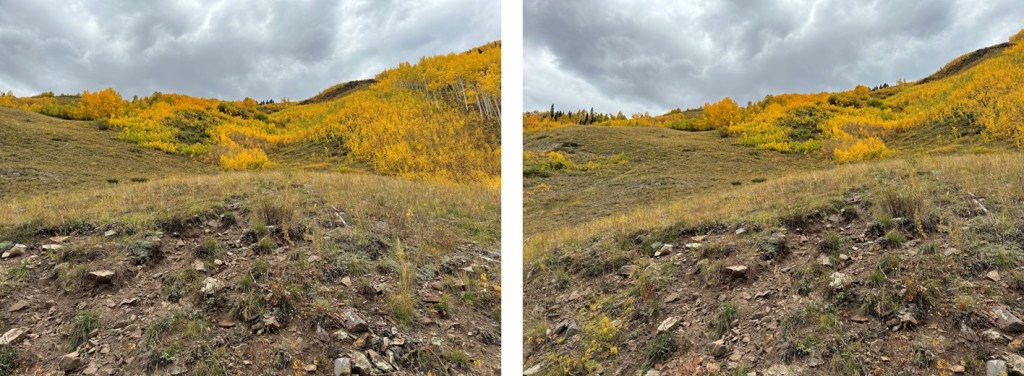
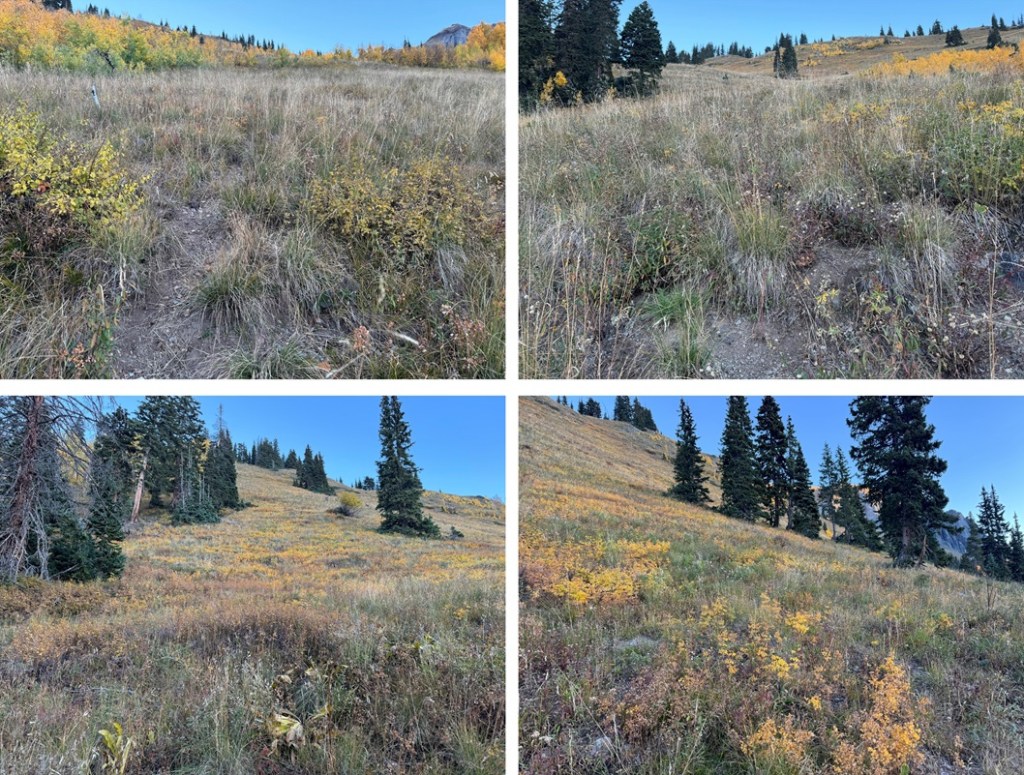
The hardest part about this hike is making it to treeline.  I picked up the most solid game trail I could find and followed it as it switchbacked up to Half Moon Basin.  Every time I came to another game trail (there were dozens) I tried to follow the most established one.   I was heading west until I hit 13125’, then I headed north to treeline.

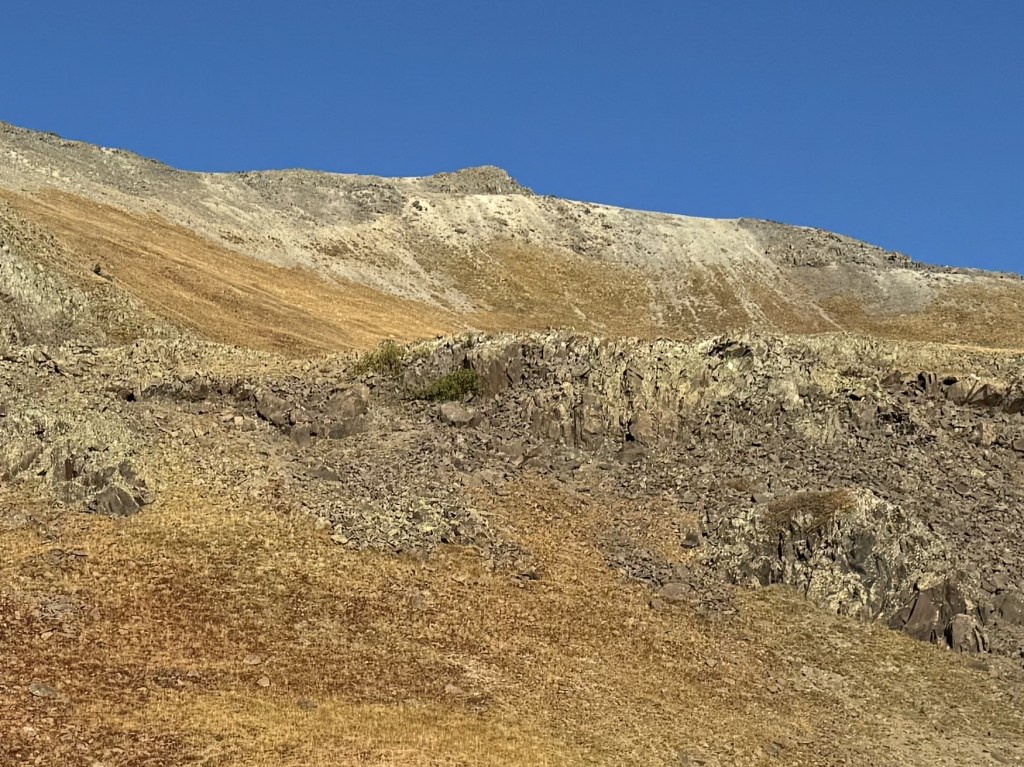
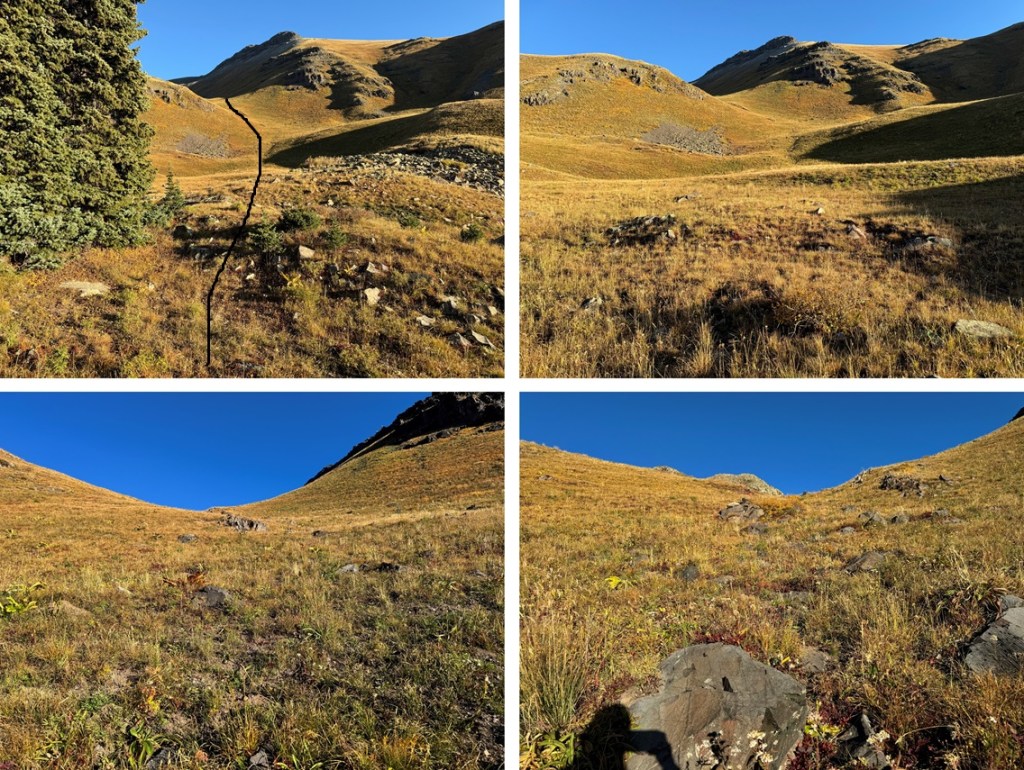
Once above treeline, the rest of the hike was straightforward, but don’t be fooled by all the game trails here as well:  They don’t lead to the summit.  Also, I saw a ton of deer this morning, and a few bighorn sheep, which are most likely responsible for all the trails.  I followed the tundra up this drainage

At the top of the drainage I needed to get up this little ridge.  There was a game trail to the left I took to get there

From here I knew I could go either left or right.  I chose left to make it to the ridge, as the right side had a gully and I’m not a fan of gullies (although on my way down I saw there looked to be a game trail up the right side of the gully, so it probably wouldn’t have been too bad).  Here’s what going left (west) looks like:

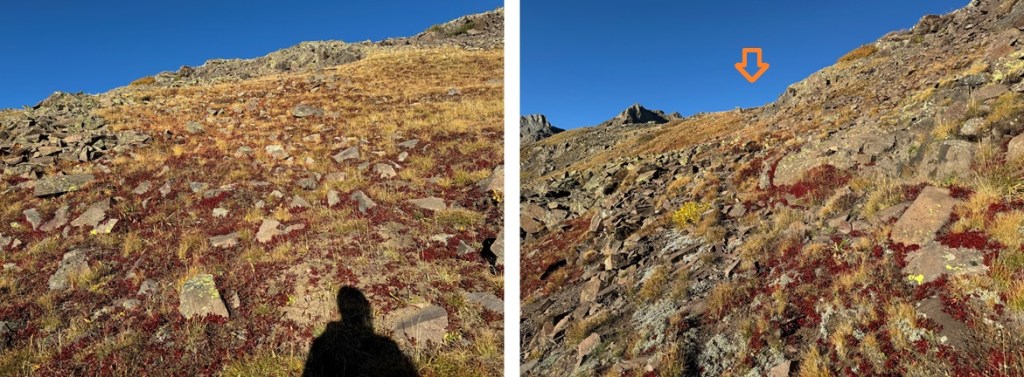
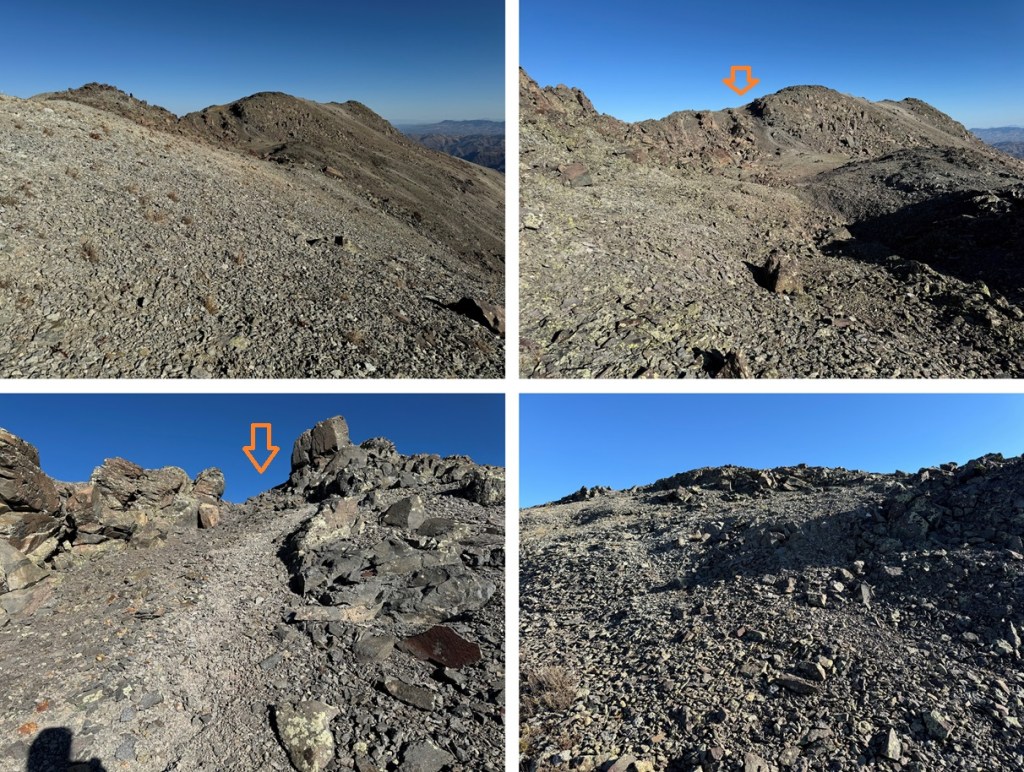
Now I was at the base of the ridge.  I hiked up the tundra slope, then followed the ridge northwest as it became manageable scree.  This was all class 2.

Now I was on top of the ridge.  I turned and followed it north to the summit.  This was rocky, but the route was obvious and all class 2.  Stay below the ridge proper, on the class 2 terrain.  I took the third gully to the right.  All of the gullies went, and they are all easier than these pictures make them look. 

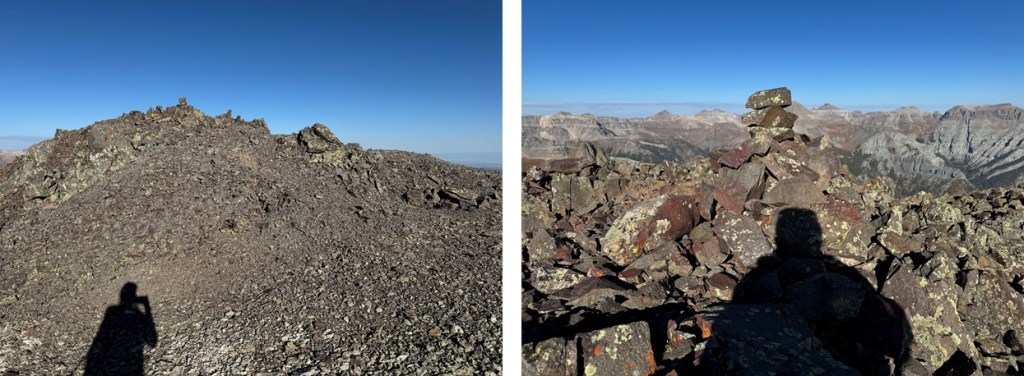
From the top of the gully I could see the summit.  It was an easy hike to get there

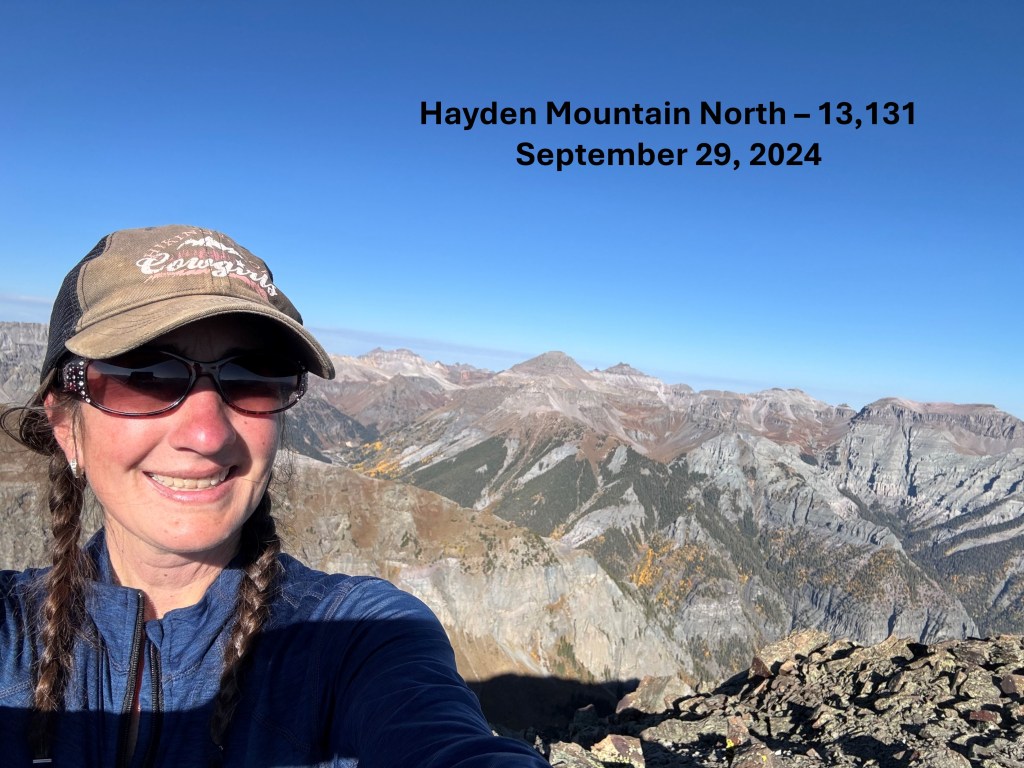
I summited Hayden Mountain North at 9am

Hayden Mountain North:

Hayden Mountain North was my only peak for today, so I turned around and re-traced my steps.  First, the rocky section headed south, down the gully and back to the ridge:

Then the scree/talus ridge down to the tundra

I now made my way back to the drainage

And followed it back to treeline

Once at treeline I had to find my access trail.  This was more difficult than I’d imagined, but I kept heading south/southeast and I came to it. 

Back on a robust game trail, I followed it back to the trail I knew was below me that would lead back to Crystal Lake.   A note about this trail going down:  It’s steep, and I was sliding on the small rocks on the trail.  While I had no problems hiking up, I had to take it slow as I descended so as not to slip and fall down. 

Back on the main trail, I followed it back to the trailhead

I made it back to my truck at 6:45am, making this a 6.51 mile hike with 3534’ of elevation gain in 4 hours.

On to the next trailhead!
T7 – 13,360

RT Length:  1.84 miles

Elevation Gain:  839’

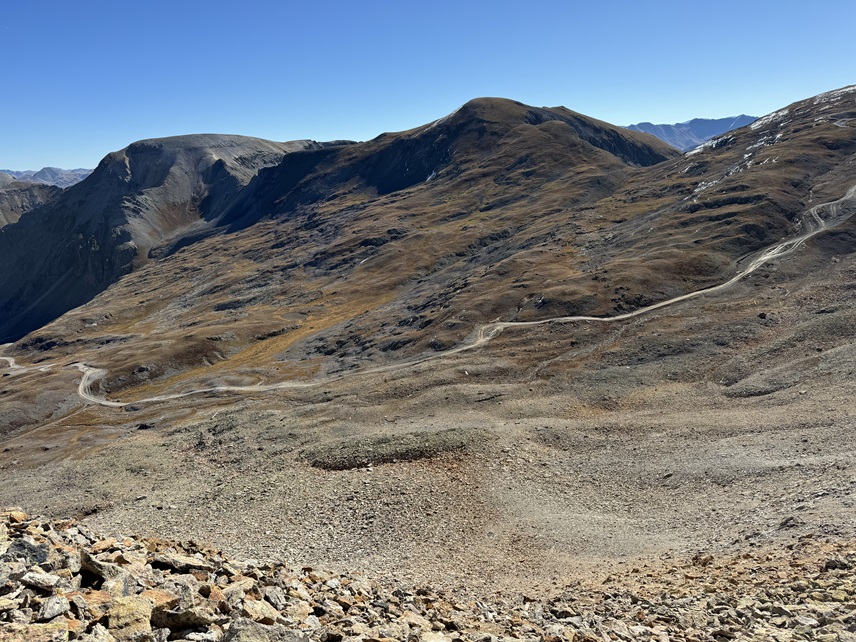
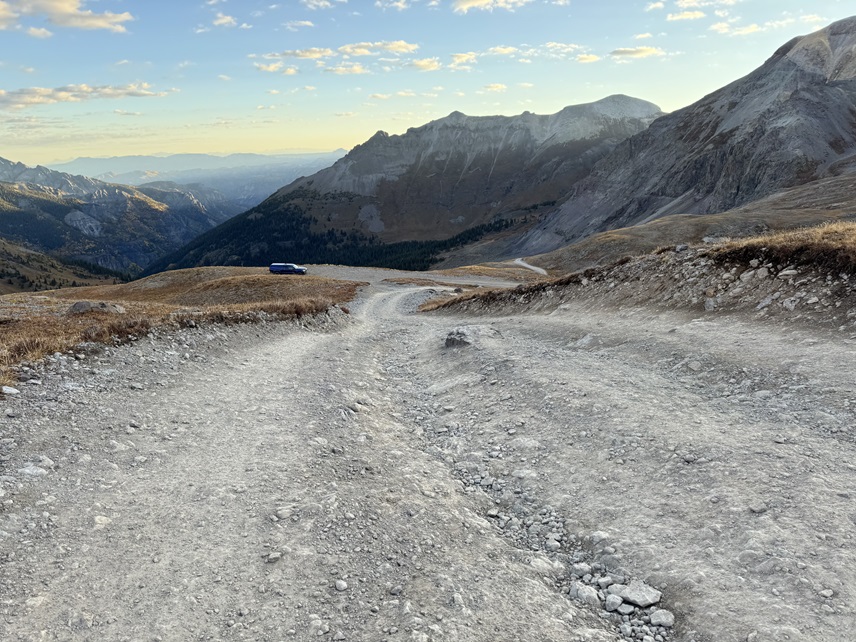
Imogene Pass road is a difficult 4WD road (26A).  Be prepared for large rock slabs and narrow shelf roads.  I parked below Imogene Pass at around 12500’ at a pull off and was on the trail at 6:40am, as soon as I could see well enough to hike without a flashlight.  I started by following the 4WD dirt road towards Imogene Pass.  While it had recently snowed in the area, all the snow was sticking to the north slopes, so there wasn’t any snow on my route today.  I’ve been in the area a few days, and I’d thought the snow would have melted out by now, but it seems to be lingering on. 

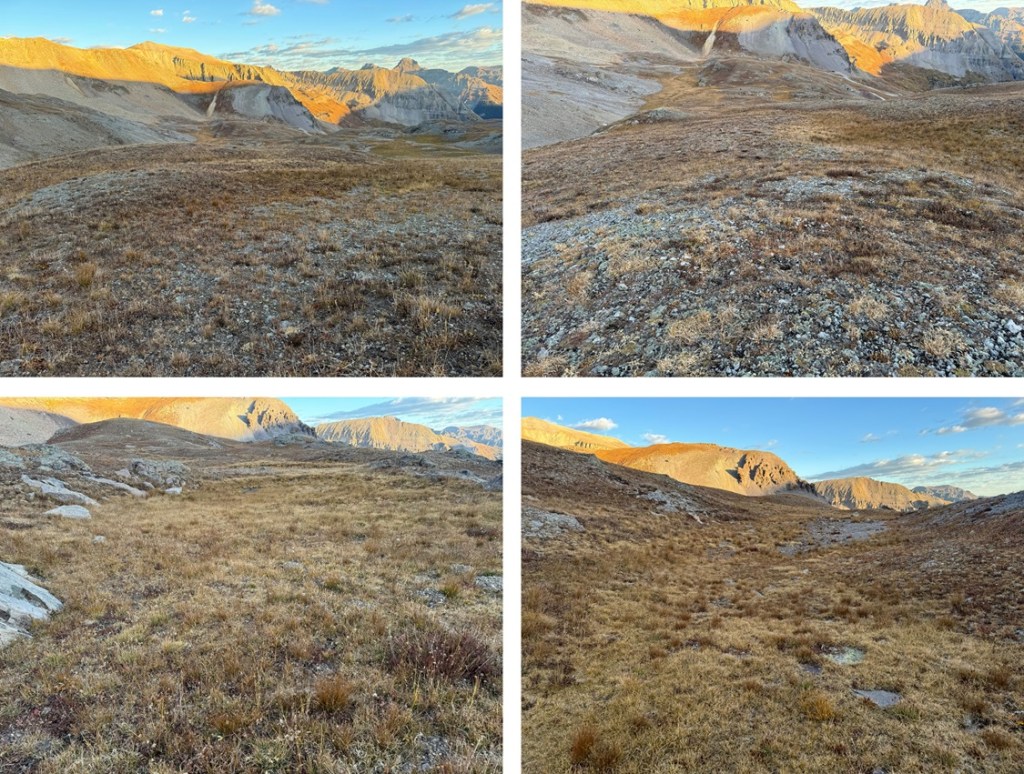
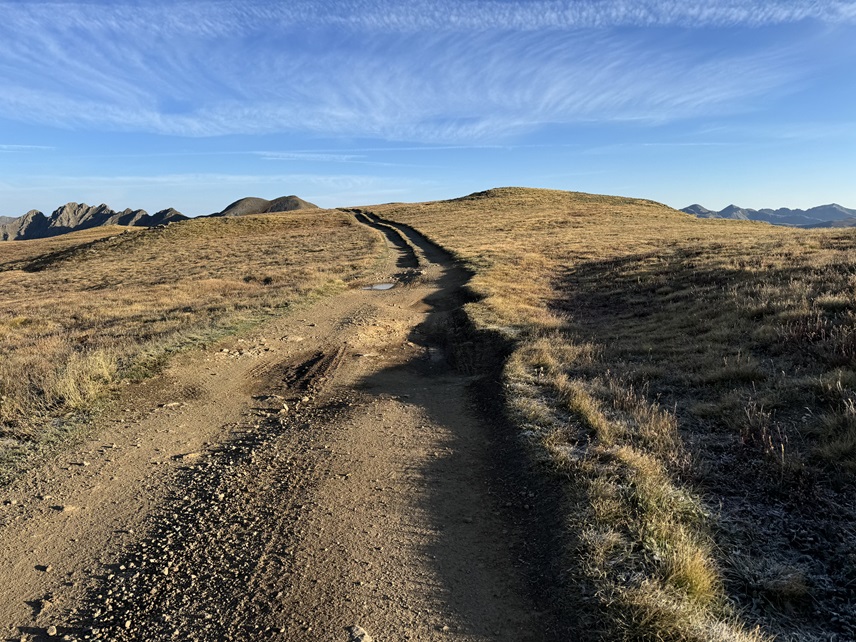
At 12590’ there’s a dispersed campsite with an old fire ring.  This is potentially another place to park.  Here I left the road and started hiking on tundra southeast towards an obvious saddle. 

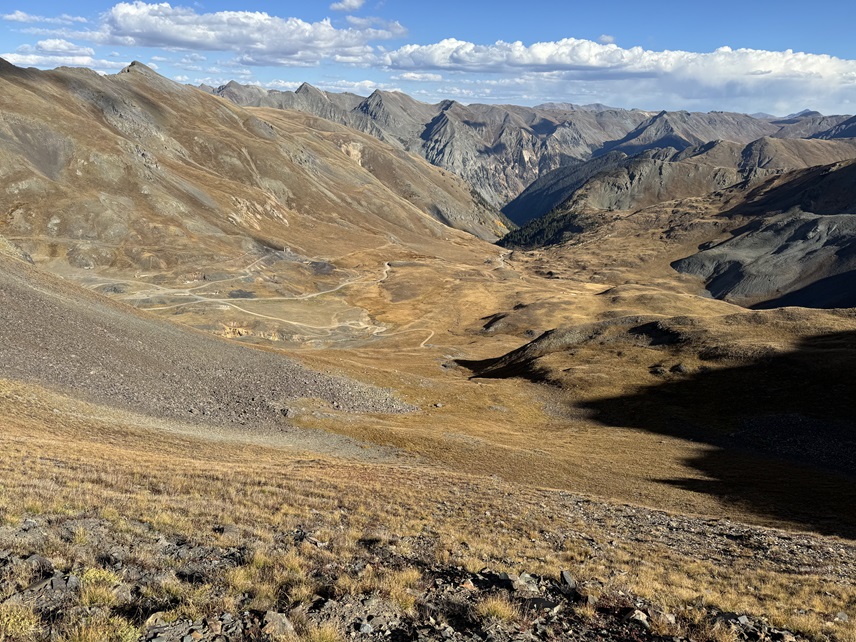
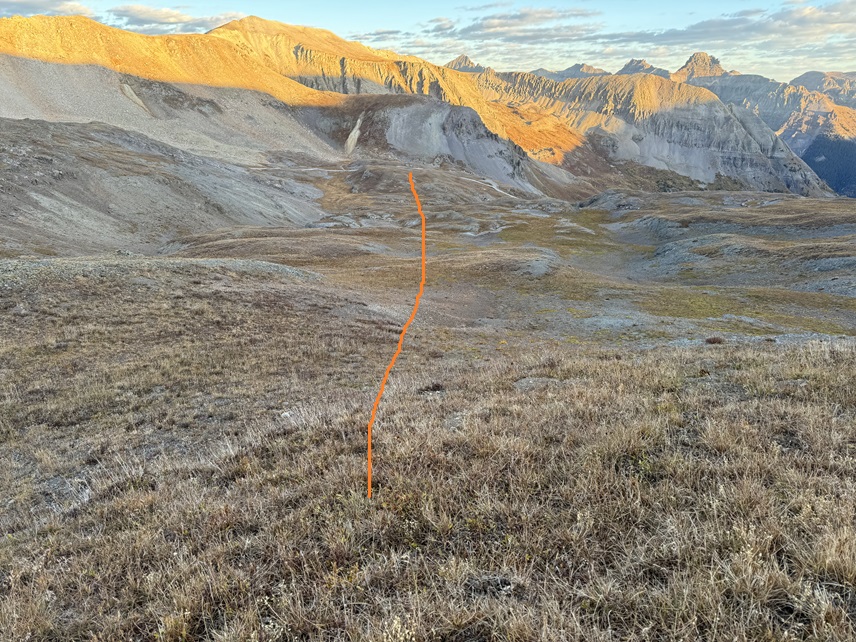
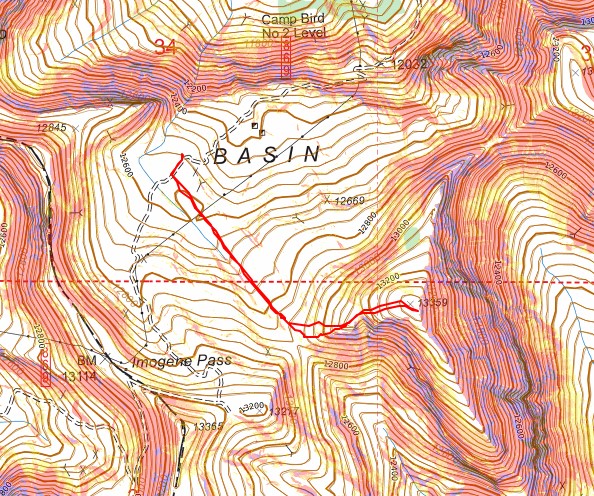
This was a quick and easy hike, all class 2.  Here’s my overall route to T7.

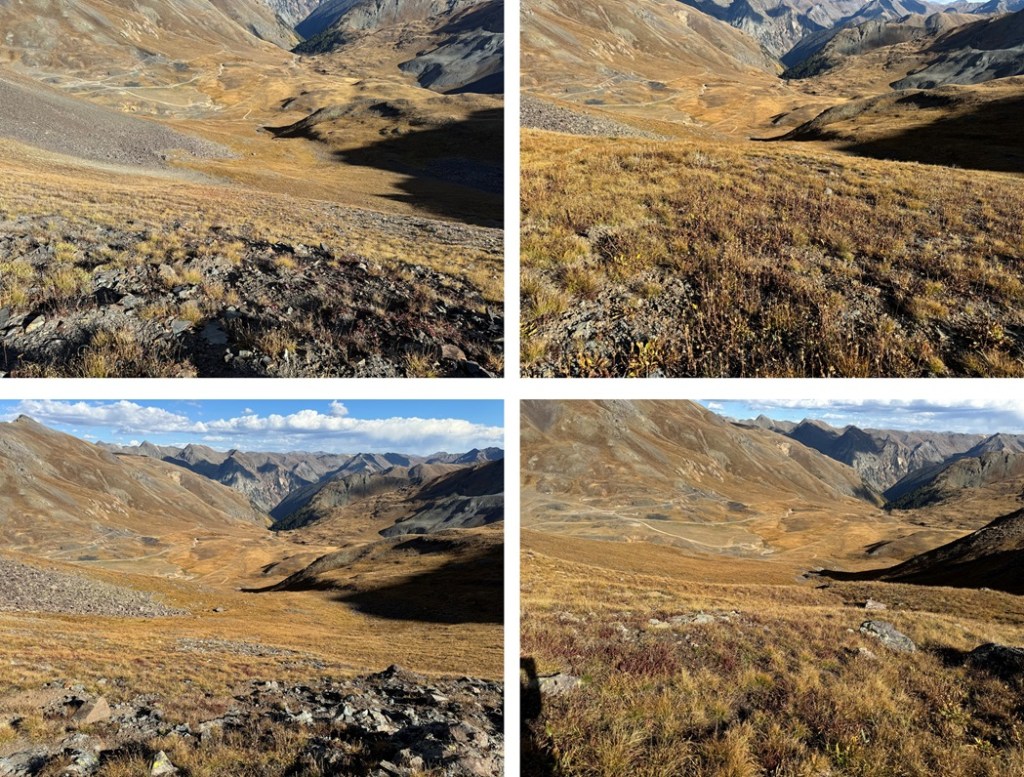
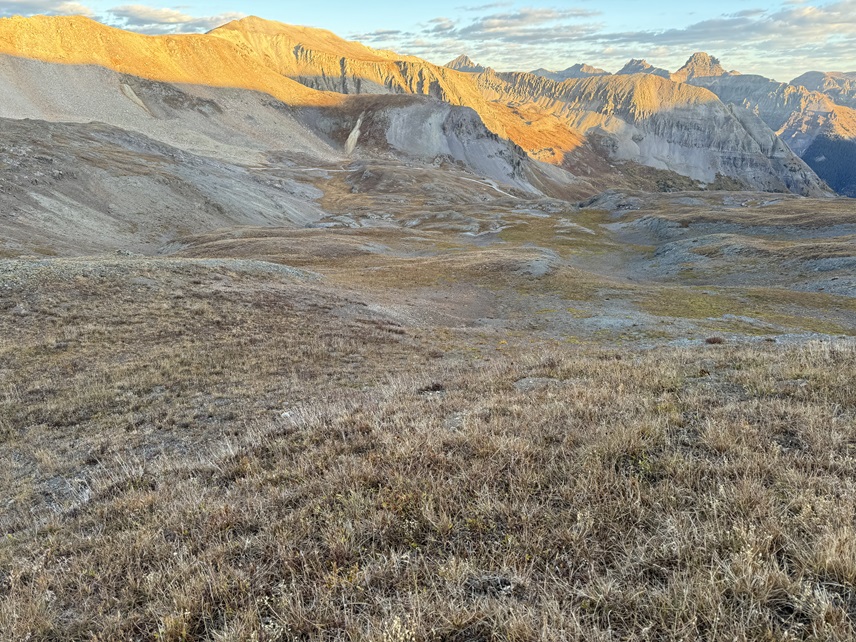
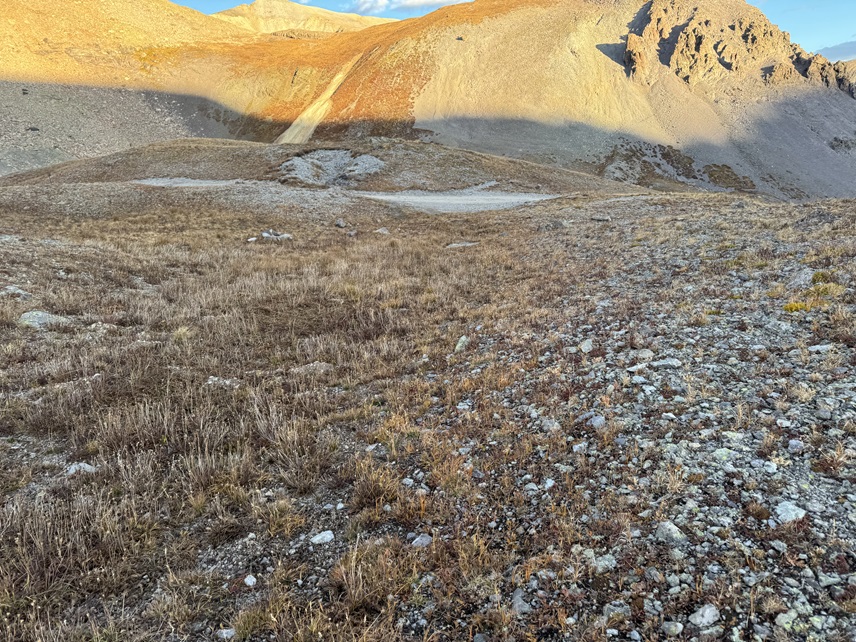
I started by heading southeast towards the saddle, staying to the left and high of the drainage.

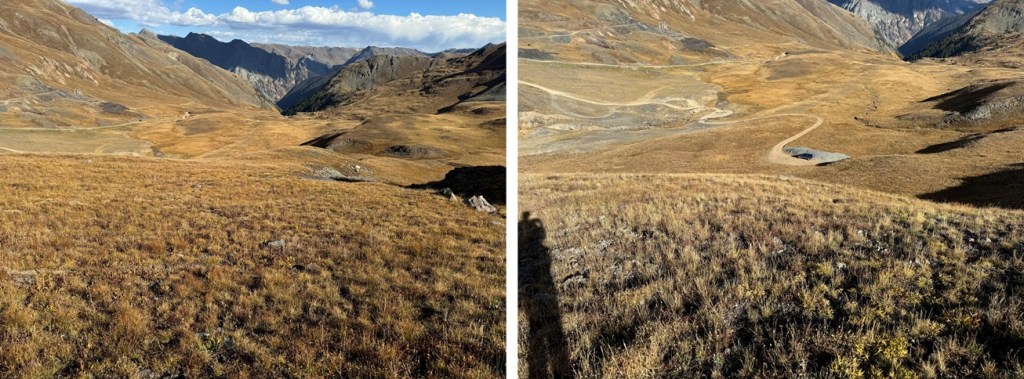
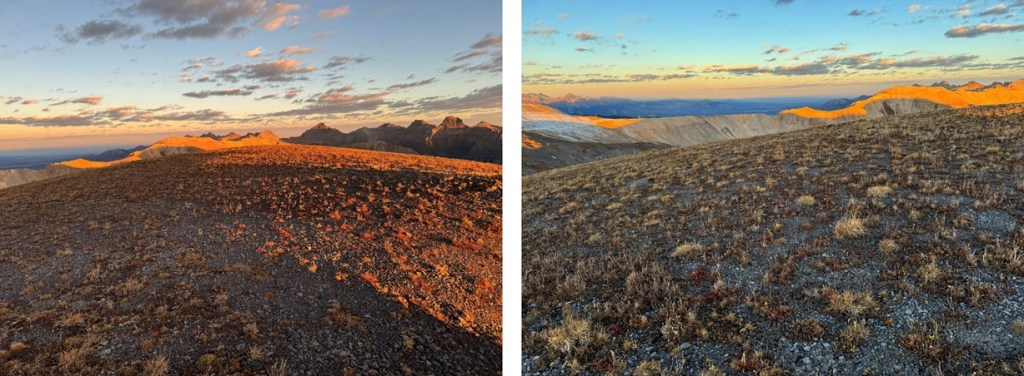
Once I made it to the saddle I turned left and followed the ridge east.  As you can see in the pictures, this hike was entirely done on tundra.

At the top of the ridge, I could see the summit to the east just a few yards away.

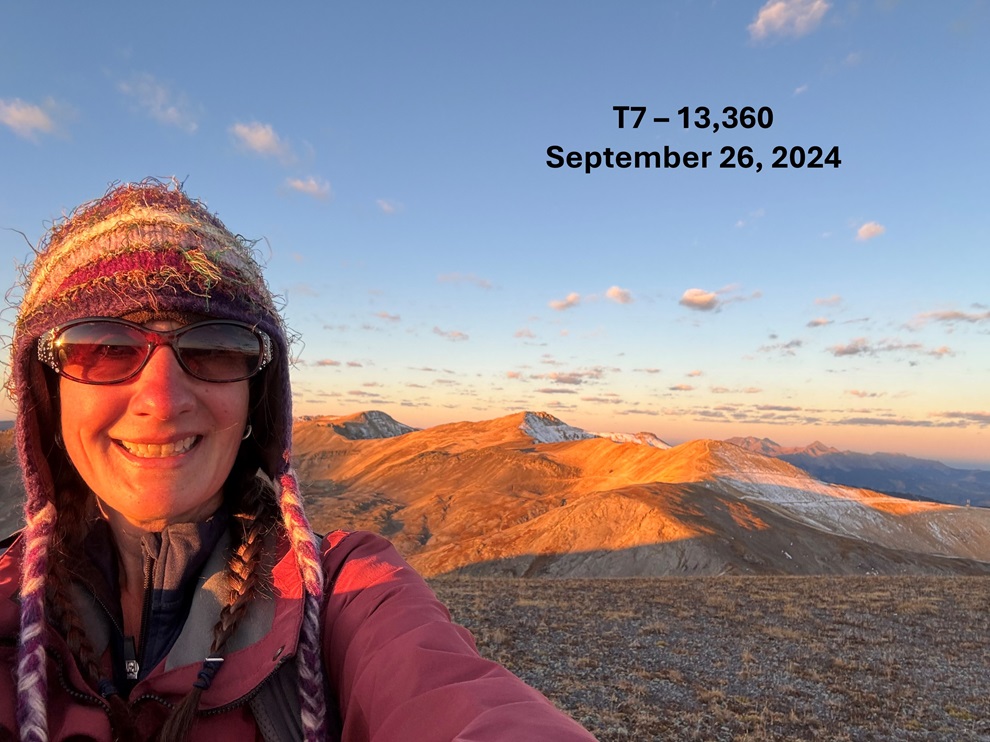
I summited T7 at 7:05am

T7:

This was a quick sunrise summit for me before work, so I turned and headed back the way I came, towards the ridge.  I could see my vehicle below for most of this hike.

I then followed the ridge down to the saddle

Once at the saddle I turned right, and headed northwest back to the road (26A)

Once on the road, I followed it the short distance back to my truck

I made it back to my truck at 7:30am, making this a 1.84 mile hike with 839’ of elevation gain in 50 minutes.

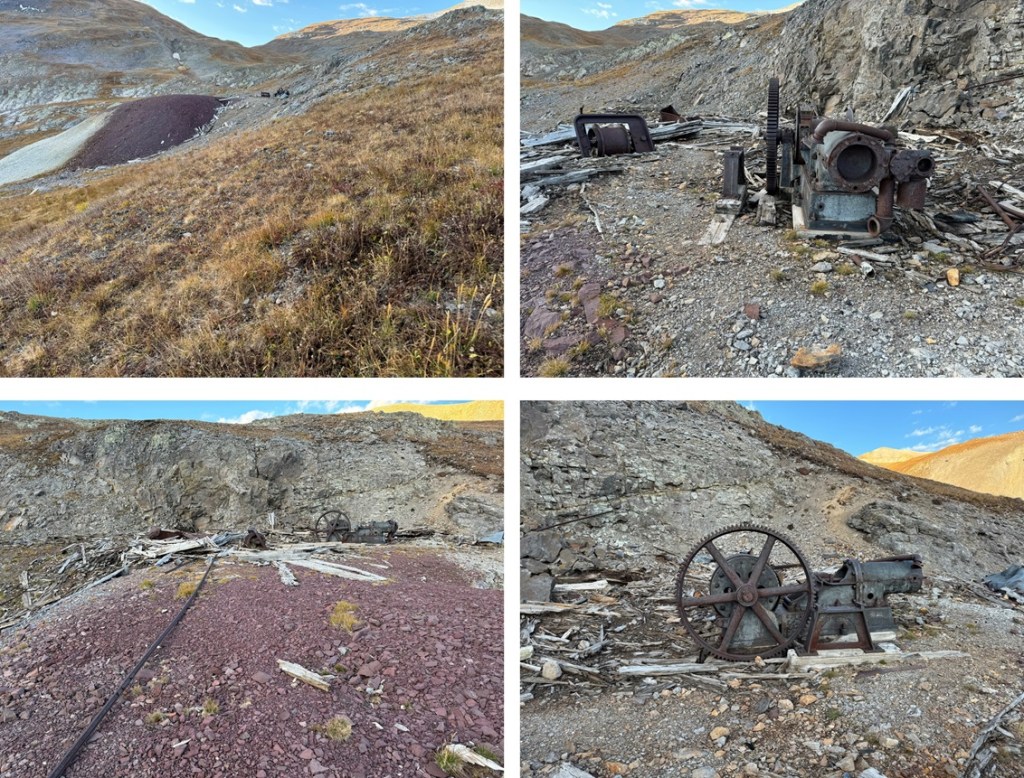
Also, there’s an old mine to check out while you’re there close to where I parked, and several other old relics in the area.  A lot of abandoned mines, equipment, poles, old trolley carts, and other artifacts.  If you take the time to drive all the way up here, you might as well enjoy some Colorado history as well, and maybe get in a few other peaks?  There are several 13ers and more to choose from. 

On to the next trailhead! 
Goat Peak – 12,987 and West Elk Peak – 13,040

RT Length: 19.82 miles

Elevation Gain: 4778’

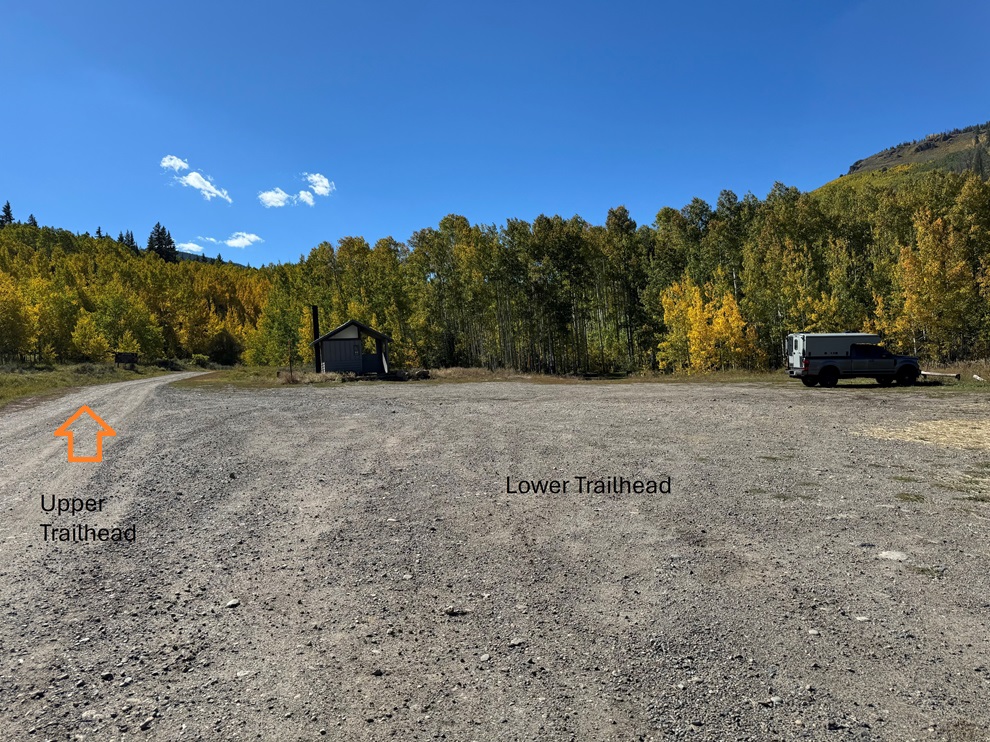
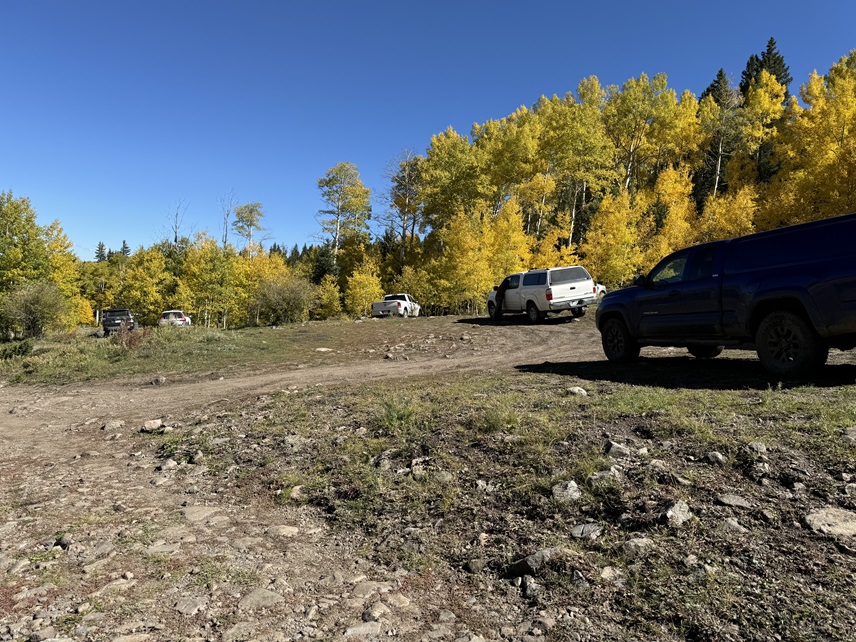
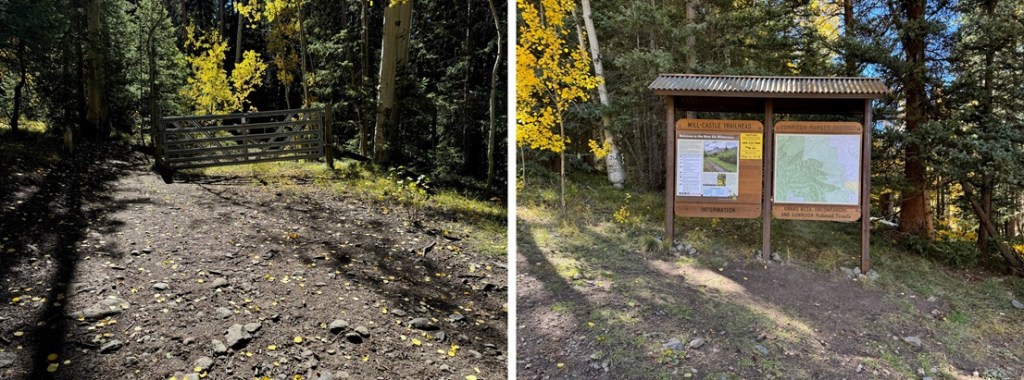
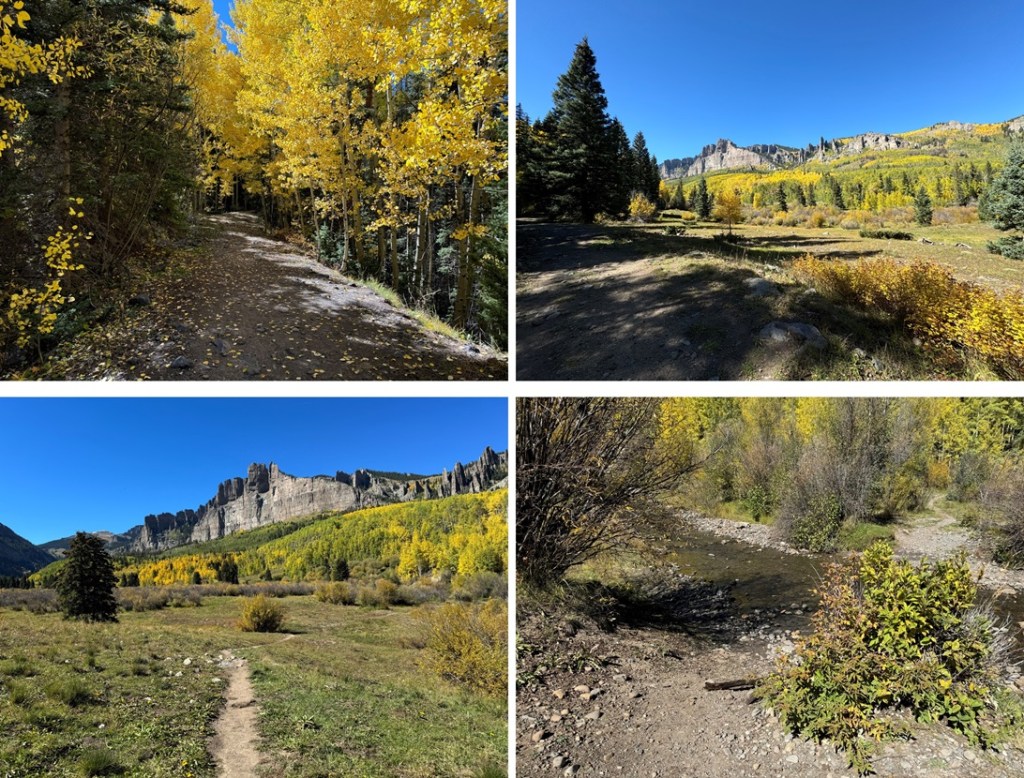
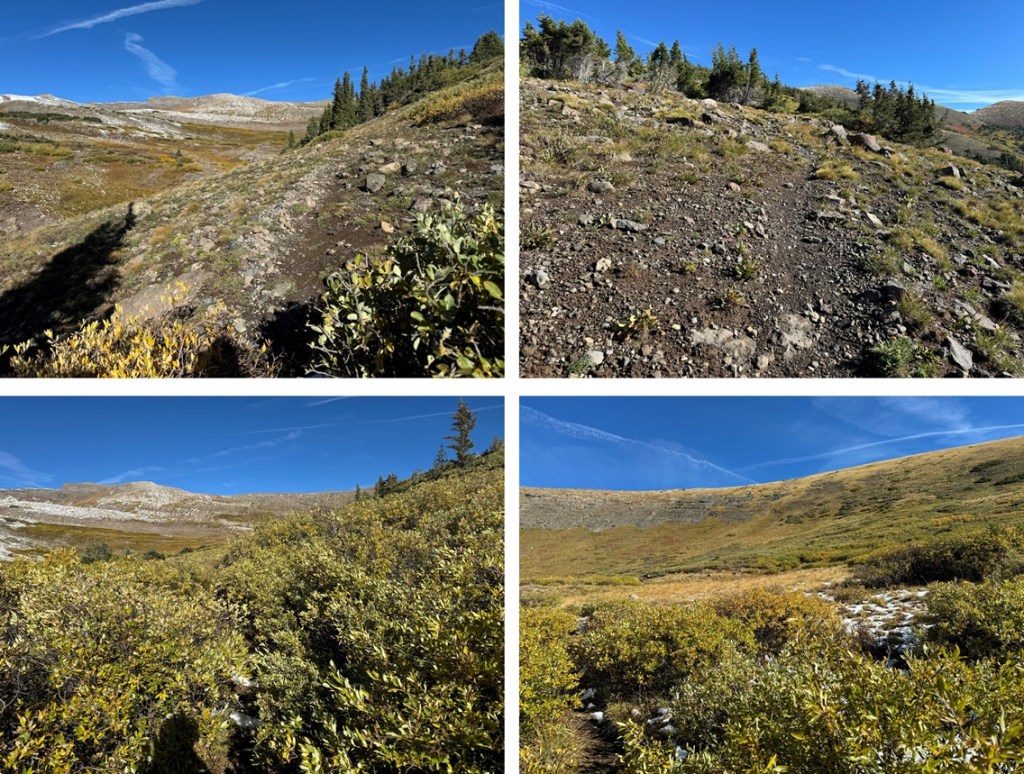
While this trail looks long, it’s actually quite easy.  The elevation gain is gentle, and the views are amazing.  It looked like fall below treeline, and winter above, which was a neat contrast. I parked at the upper Mill Castle Trailhead.  The last mile and a half or so require high clearance, but a 2WD should make it.  If not, there’s a parking area below with vault toilets and plenty of parking.

I was on the trail at 6:30am.  The trailhead is obvious, and as with most of this hike, it starts to the west.

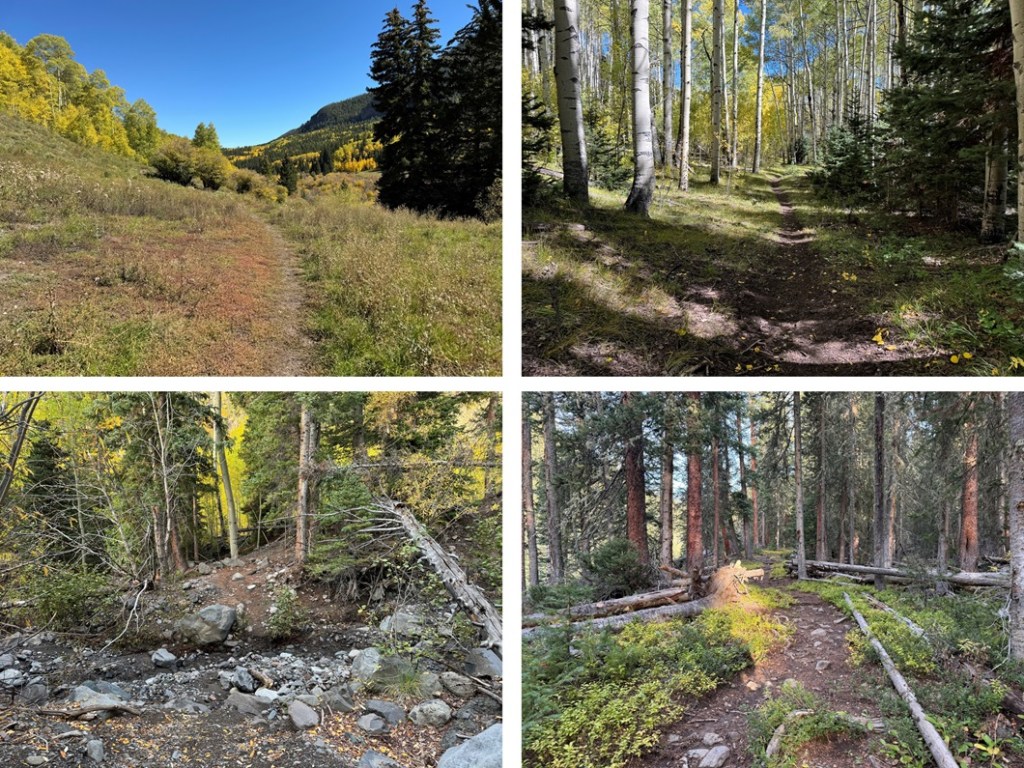
The trail (Mill Castle Trail) starts by going through a gate to what used to be a 4WD road, then changes to a trail.  There aren’t any junctions to this trail, so I followed it west as it paralleled Mill Creek.  There are several creek crossings, as I was hiking up through a drainage, and runnels were entering into the creek from both sides.  It felt as if I was gaining and losing elevation most of the time until I made it to treeline. Every time I’d switchback up a hill, I seemed to head back down for another creek crossing.  It was almost 7 miles to treeline.  On a positive note, the trail was easy to follow, and it was nice hiking in the trees, listening to the birds and squirrels go about their day.

At treeline the trail went through some willows, then west into Mill Basin.

Once in the basin, the trail switchbacked to the right, up to Storm Pass.

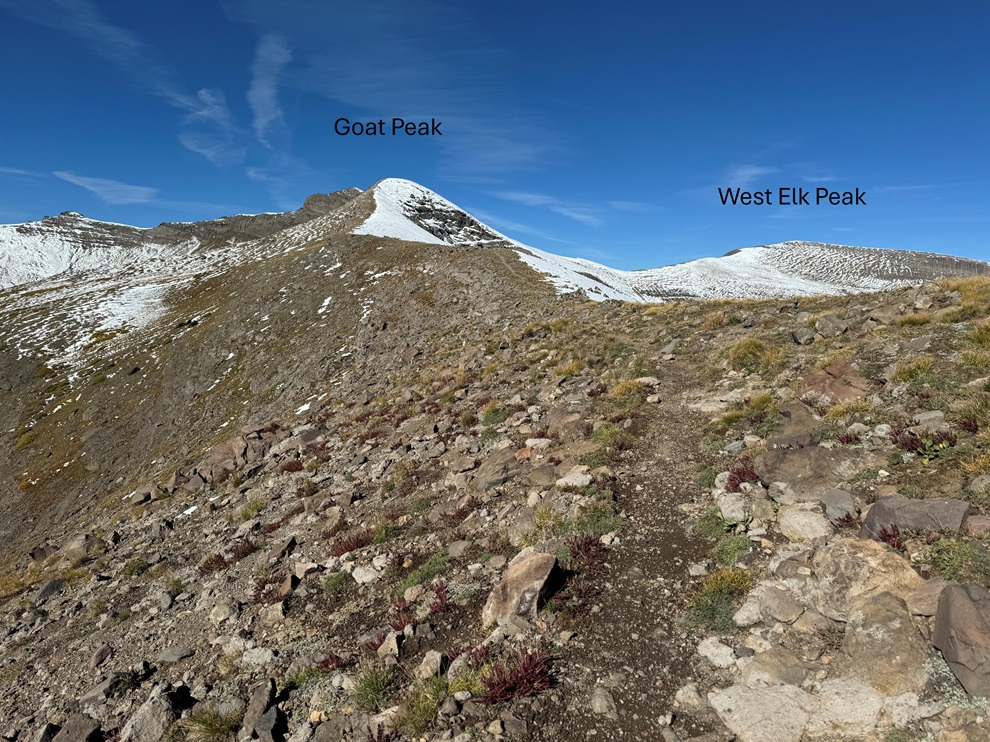
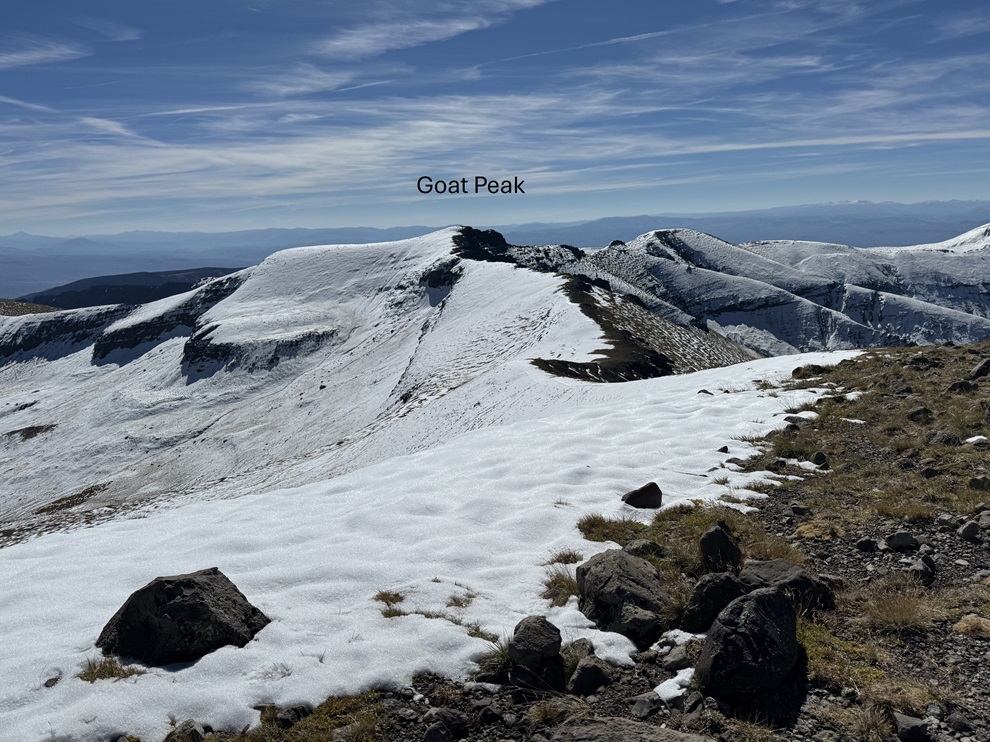
Once at Storm Pass, I could see unranked 12er Goat Peak to the west, and West Elk Peak to the northwest.

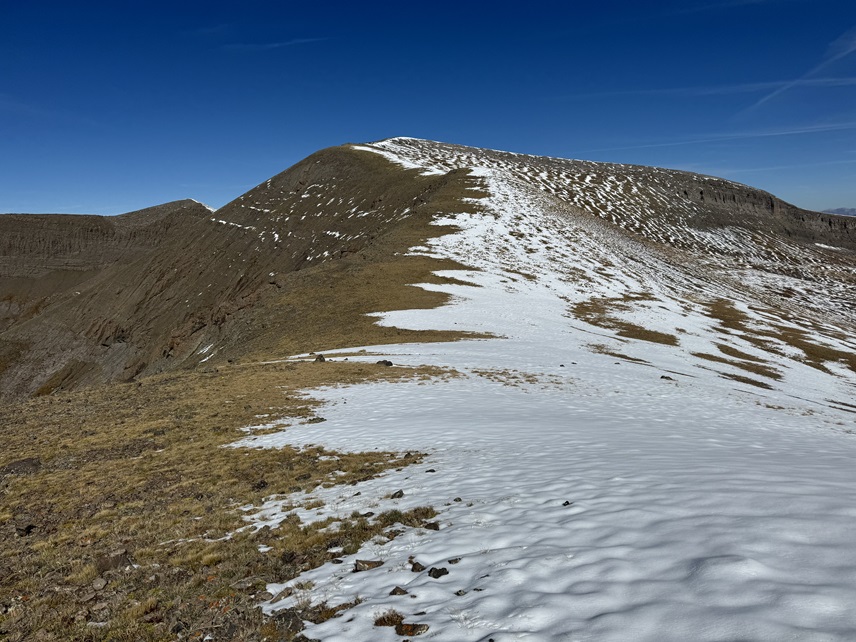
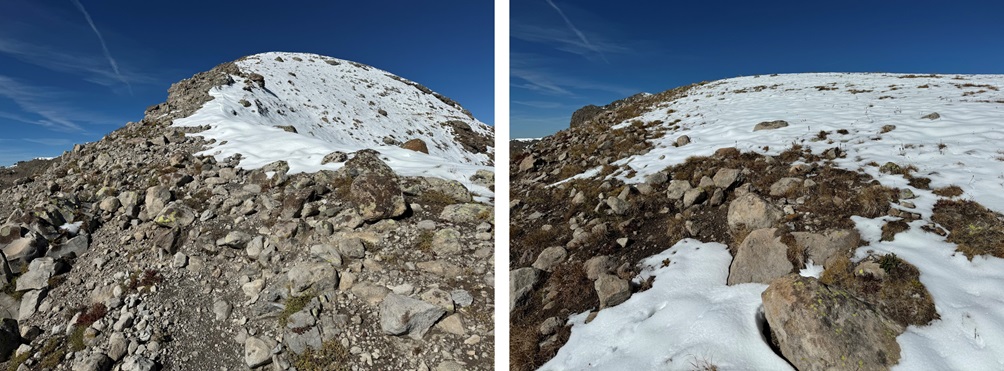
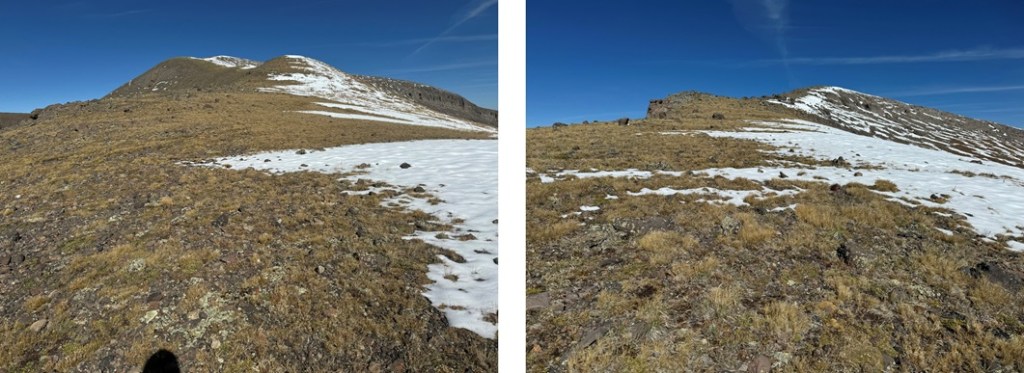
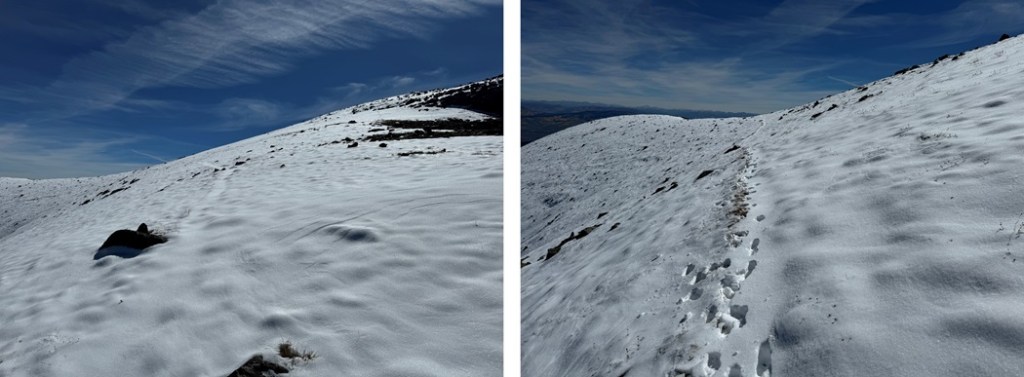
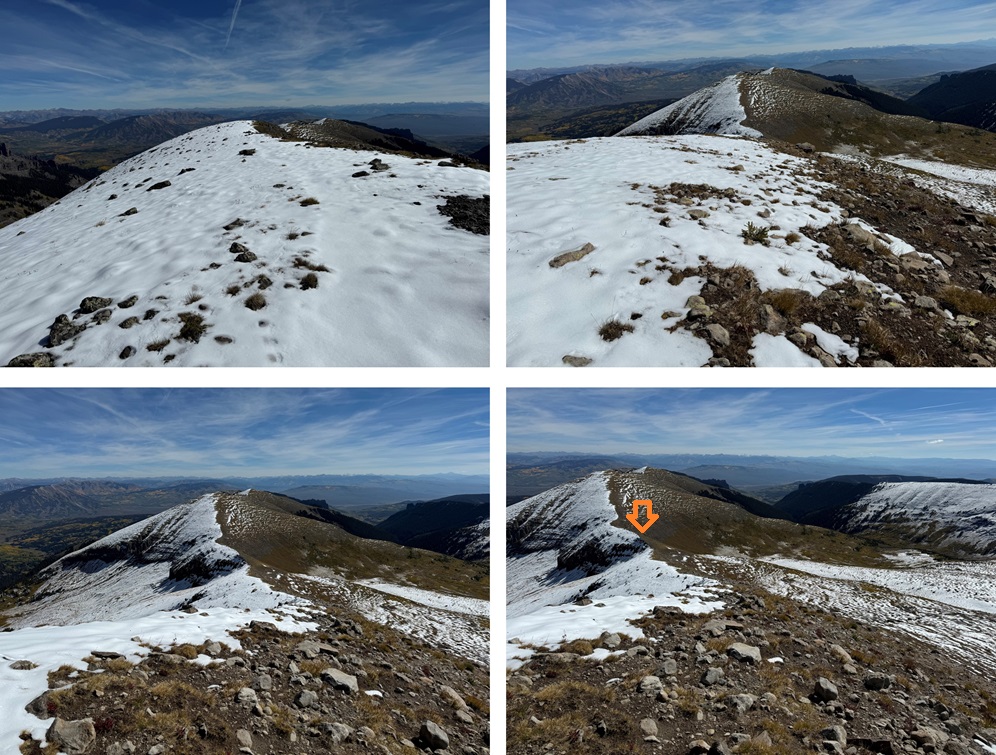
I followed the ridge west on a class 1 trail towards Goat Peak.  I’m assuming the entire trail to West Elk Peak is class 1, but there was snow on the rest of the route, so I’m not entirely sure.  If anything, it’s easy class 2. The snow was solid in the morning, so the terrain was easy to navigate.  Here are some pictures of the ridge to Goat Peak

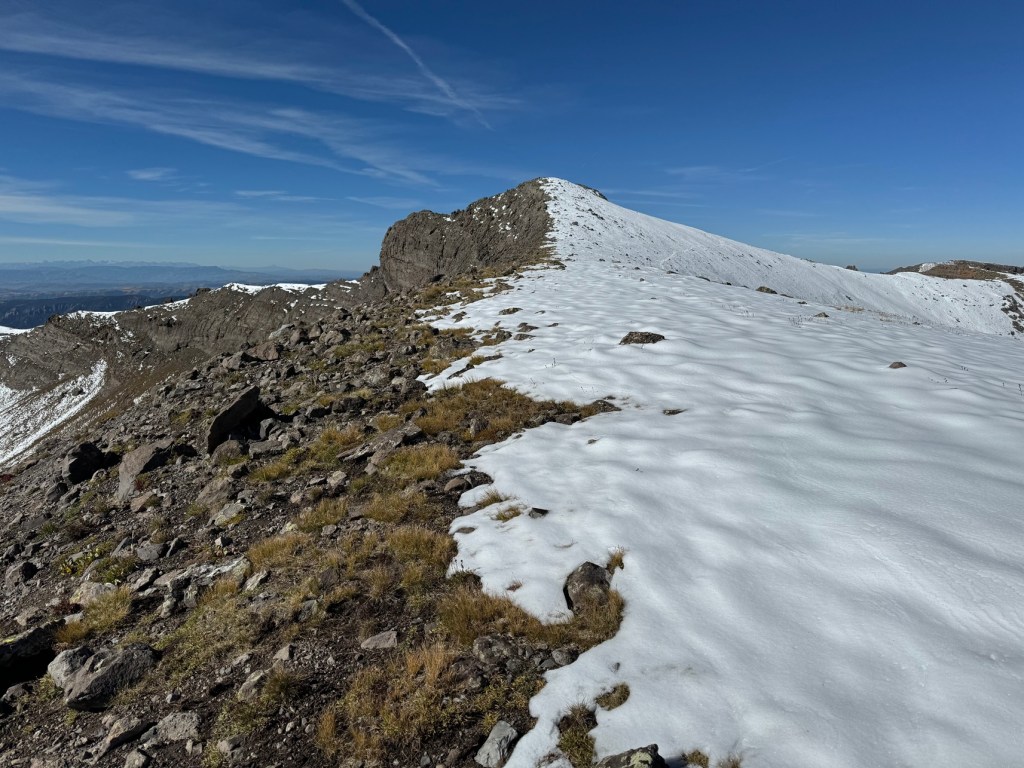
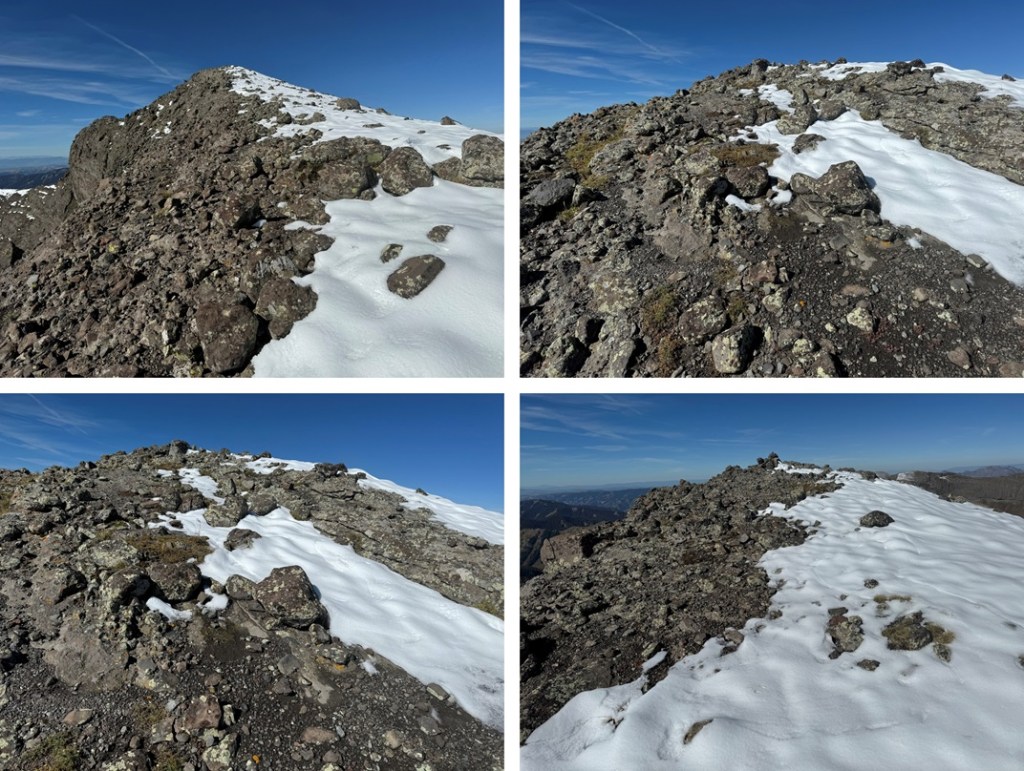
This was a bit of a false summit. Here’s the true summit of Goat Peak

I continued following the ridge as it became rocky.  Still class 1 or 2, depending on snow.

From the summit of Goat Peak I followed the ridge northwest to the summit of West Elk Peak on easy terrain.  I did not see any evidence of a trail here, but it could have been covered in snow.

I summited West Elk Peak at 10:45am

West Elk Peak:

West Elk Peak was my main goal for the day, so I turned around and headed back towards Goat Peak

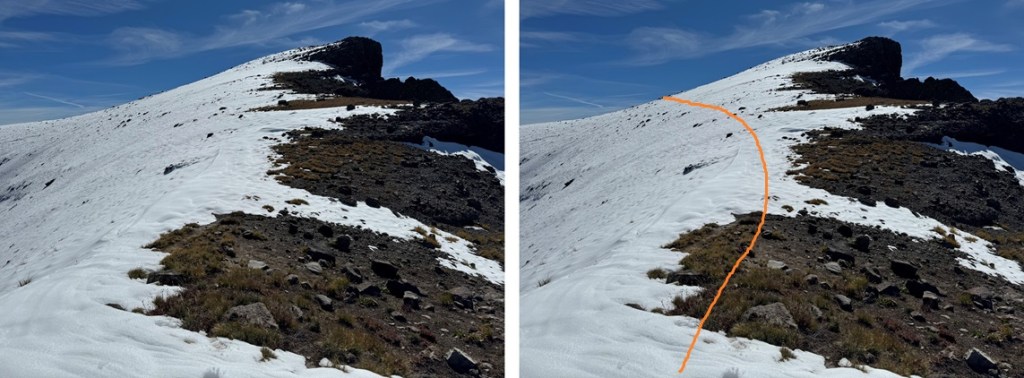
However, on my way back I could see a faint trail under the snow that skirted Goat Peak to the left, so I took that back to the ridge.  I’m not sure if this is an actual trail or a game trail, but it went.

There were some game tracks about half way through skirting the peak, which I followed to the ridge

Once back on the ridge, I followed it east towards Storm Pass

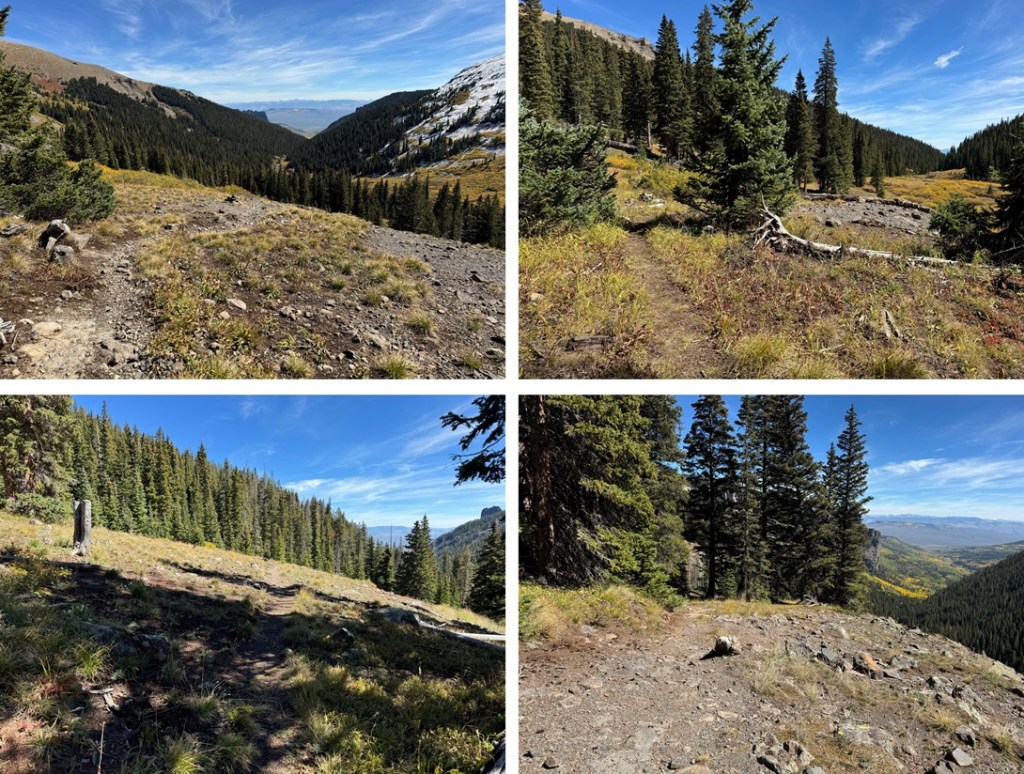
I then picked up the Mill Castle Trail and followed in down the switchbacks, back into Mill Basin

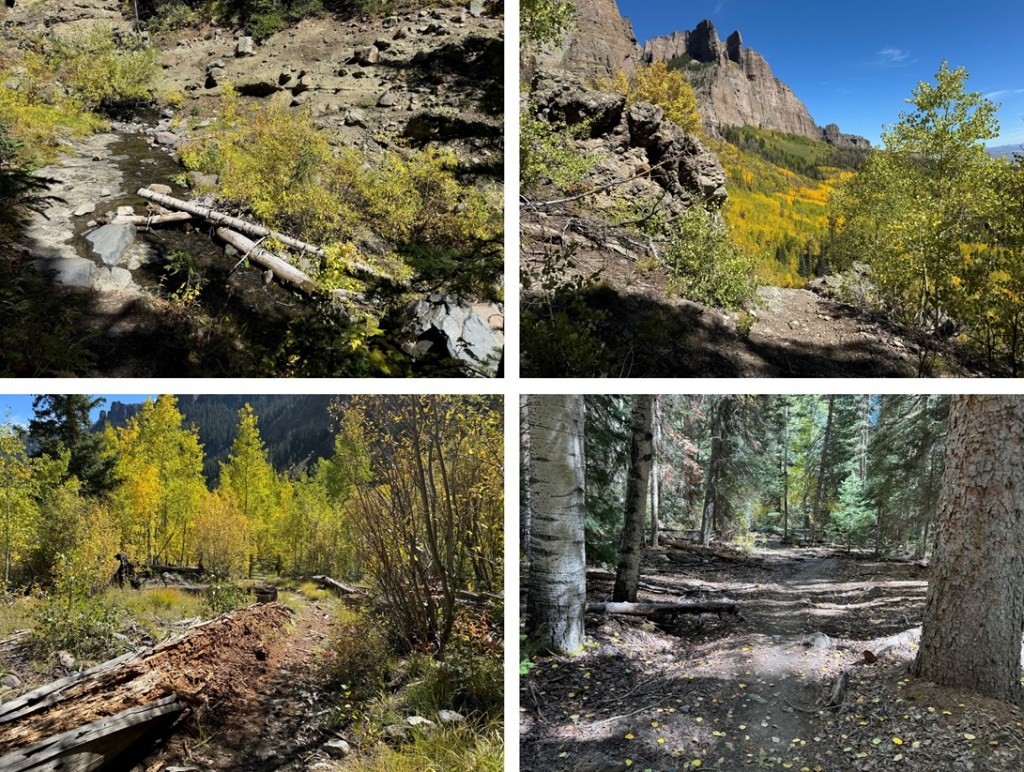
And then all the way back to the trailhead

29

I made it back to my truck at 2:30pm, making this a 19.82 mile hike with 4778’ of elevation gain in 8 hours.

On to the next trailhead!
Canby Mountain – 13,487 and Galena Mountain – 13,307

RT Length: 6.65 miles

Elevation Gain: 2084’

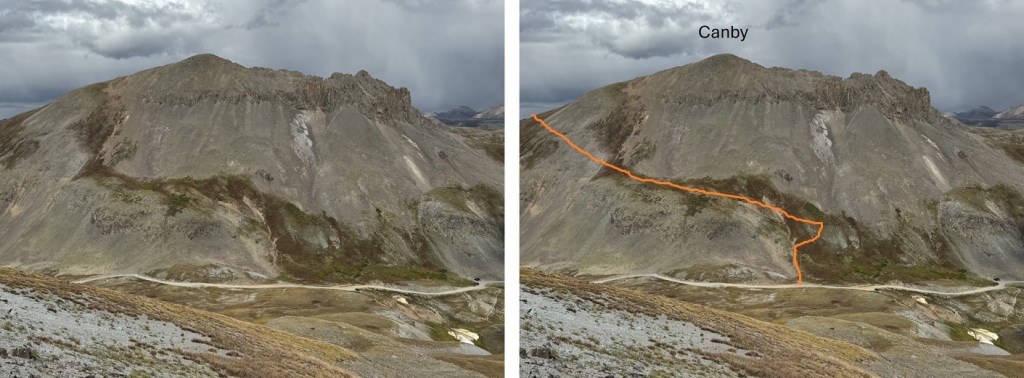
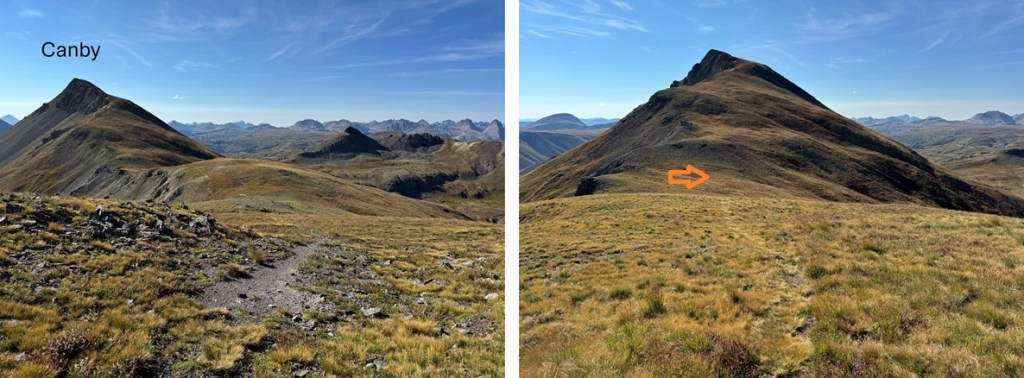
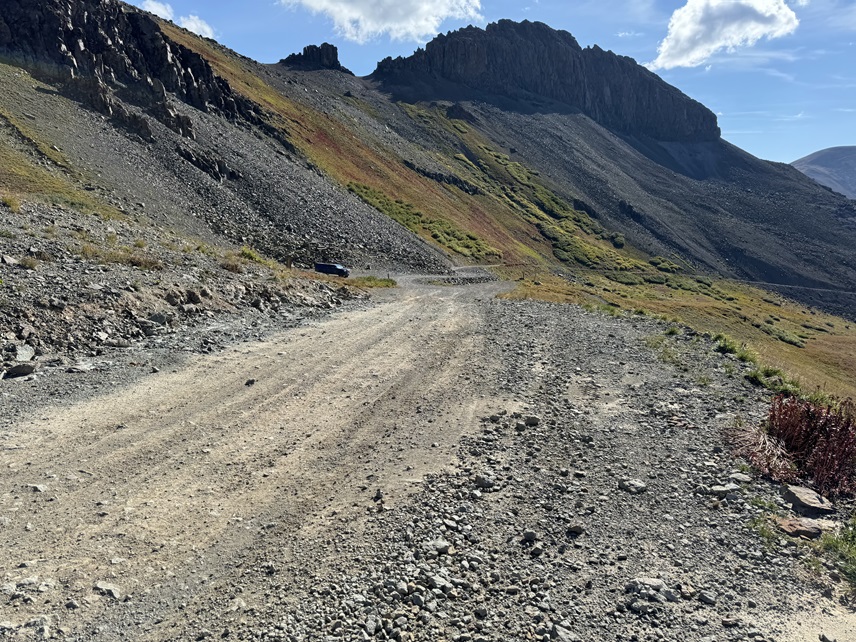
From my parking spot at Stony Pass I was on the trail at 6:30am, following the 4WD road west until the tundra met the rocks, and I was able to find a game trail that picked up on the other side.  This trail starts out difficult to find, then becomes a solid trail for most of the hike.  Here’s what the route looks like from below:

I followed this trail for .85 miles, until I made it to the ridge

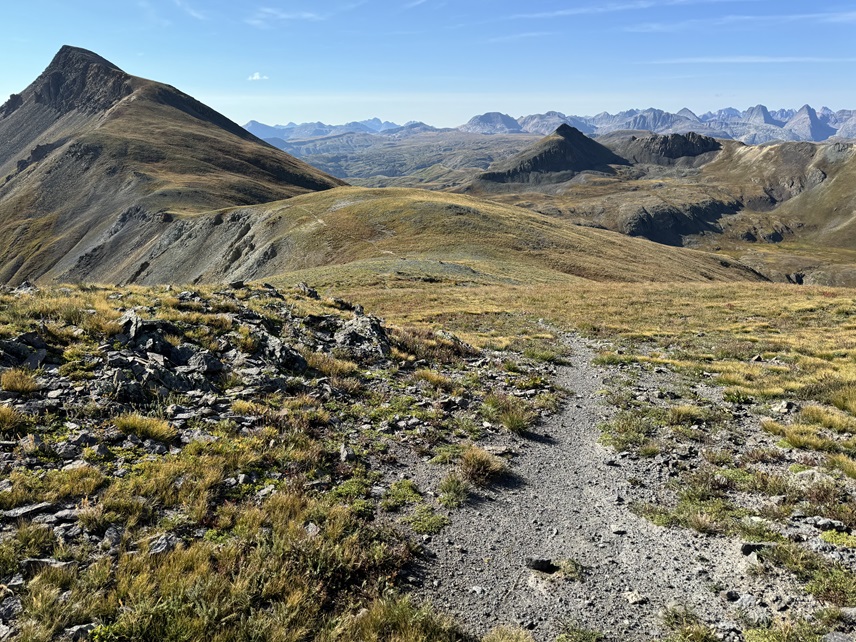
At about 13085’ I hit a saddle, turned right, and followed the ridge to the summit.  This was class 2, but there are a few social trails in the area.  I just kept following the ridge southeast.

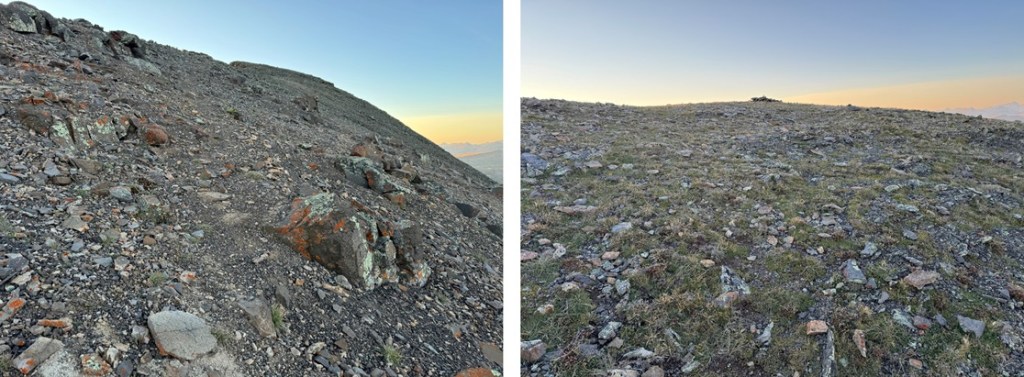
Eventually the ridge became filled with scree, but the angle wasn’t difficult, and it all remained class 2

I summited Canby Mountain at 7:10am

Canby Mountain:

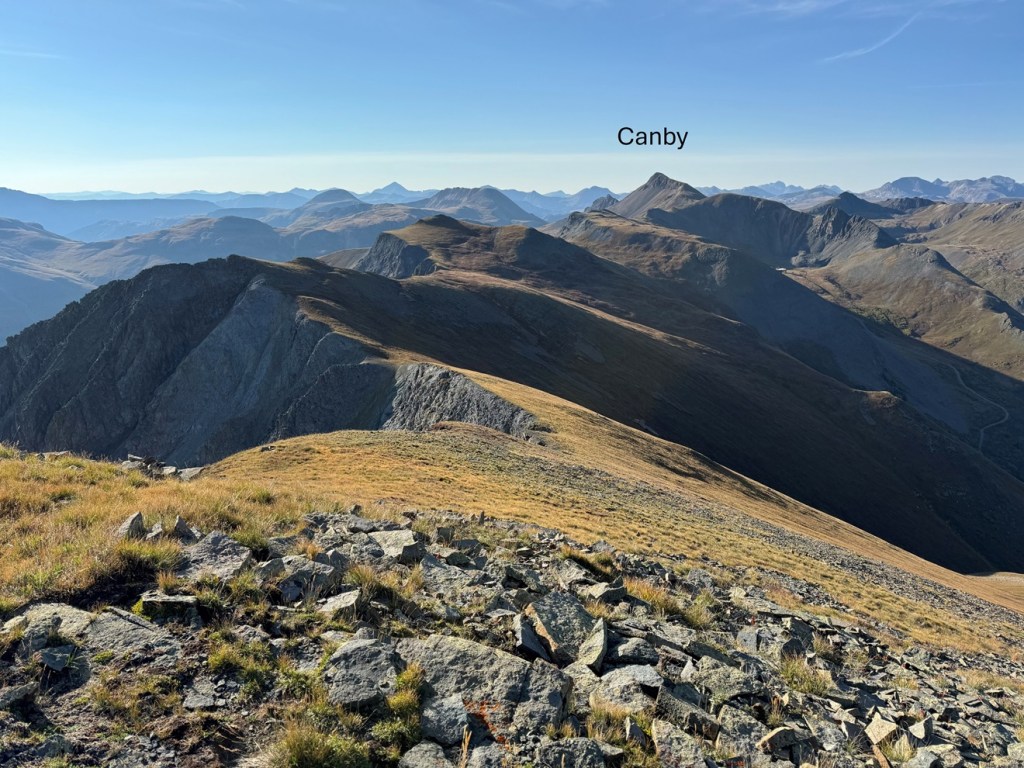
From the summit of Canby Mountain I could see Galena Mountain to the north/northwest.

It was a ridge hike on tundra to get there, and all class 2.  I headed back down to the small saddle, and picked up the trail that follows the ridge.

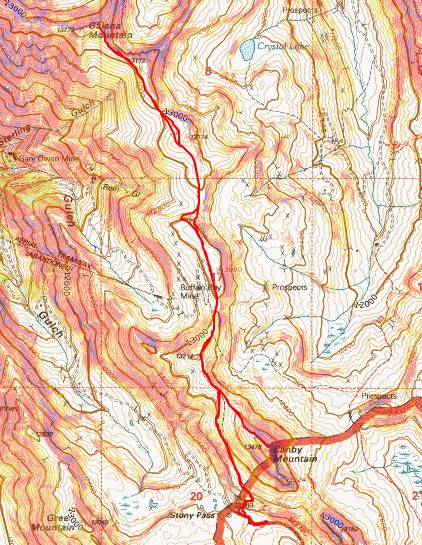
By sticking to the ridge, following it northeast, eventually the trail ends.  You can continue to follow the ridge, however, when I came to the scree area (it’s obvious), I stayed at about 13000’ and skirted the ridge.  There’s an obvious dirt road in the distance you can aim for, and some game trails here.  I aimed for the highest point of the dirt road, and then followed it along the ridge until it ended.

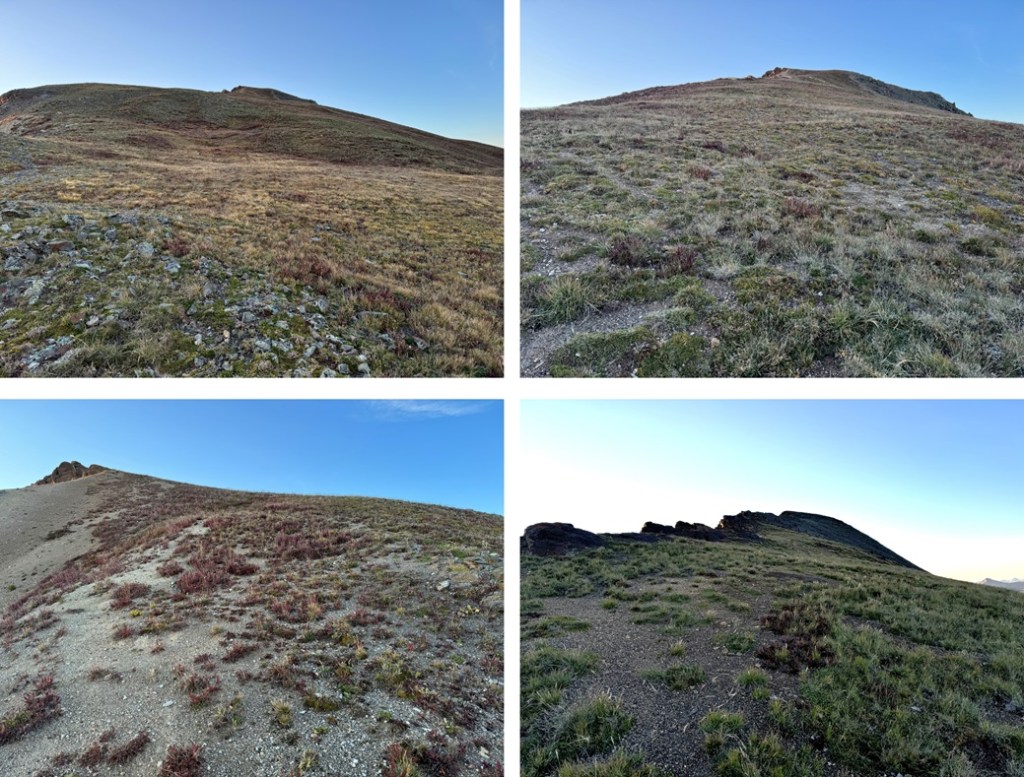
It ended in a roundabout circle, and from there I left the road and continued following the ridge northwest.  This is all tundra, and there are a lot of elevation gains and losses along the way.  Every once in a while I’d pick up a game trail, and follow it to make the route finding easier.

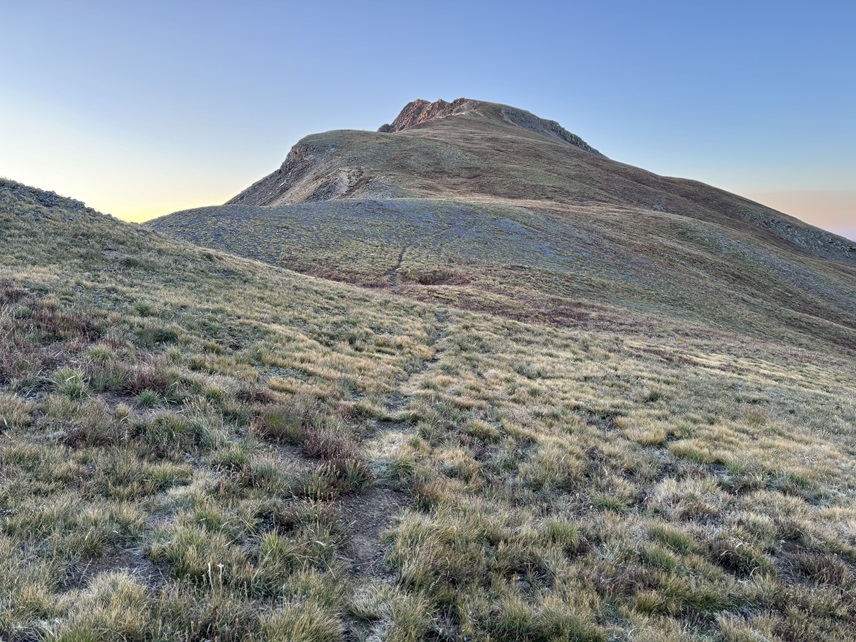
The final trek to the summit was all on tundra and included a faint game trail for part of the way. 

I summited Galena Mountain at 8:35am

Galena Mountain:

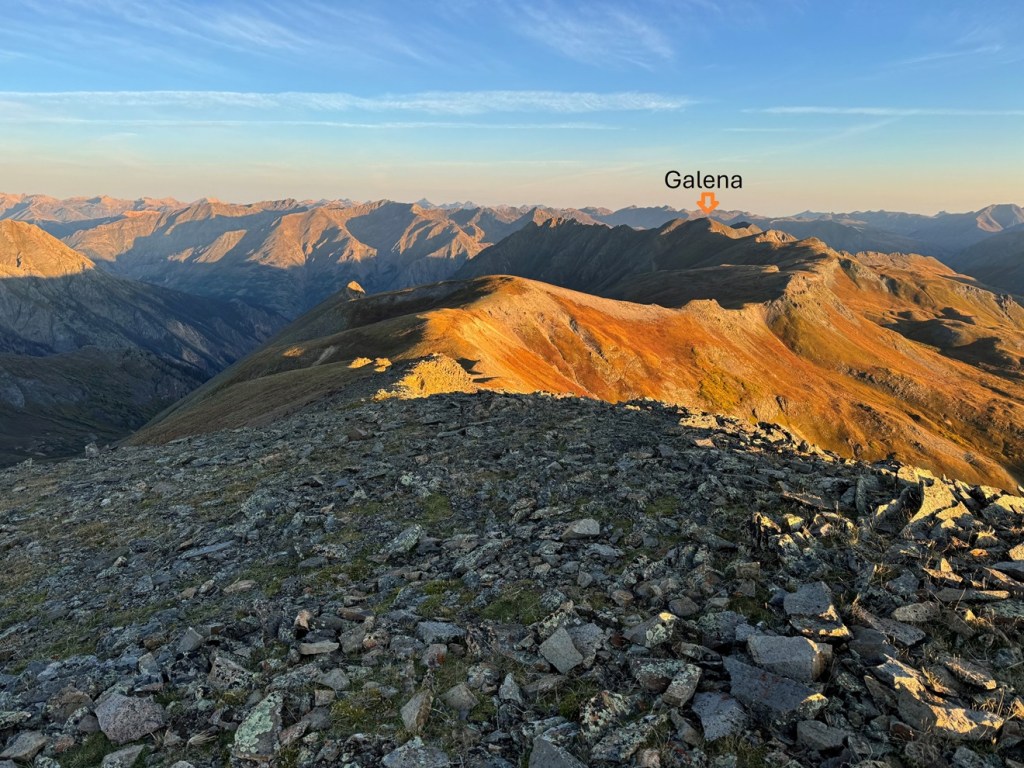
From Galena Mountain, I could see Canby Mountain, and that long ridge, to the south/southwest. 

I needed to get back to Stony Pass, so I descended Galena and followed the ridge back the way I’d summited, aiming for the Canby saddle.

Back on the road, I followed it a short distance, and then aimed for the ridge once again.

This time, when I was on the ridge, I noticed there was a “y” in the trail.  Go left here, towards Canby Mountain

Following this path led me back to the saddle with Canby Mountain

At the saddle I turned right, and followed the trail back down to the dirt road.

I then followed the dirt road back to my truck.

I made it back to my truck at 9:45am, making this a 6.64 mile hike with 2084’ of elevation gain in 3 hours, 15 minutes.