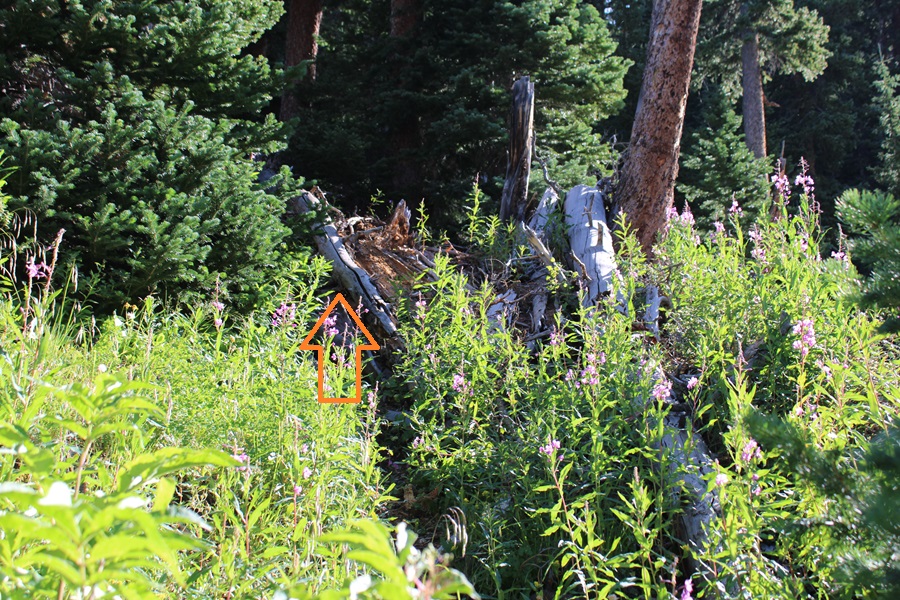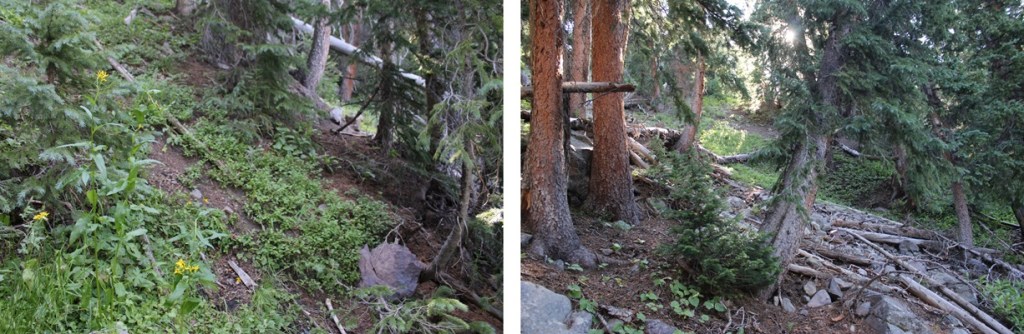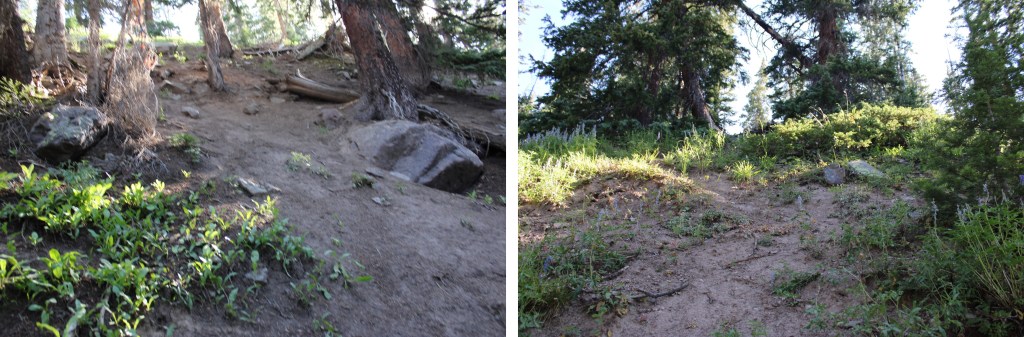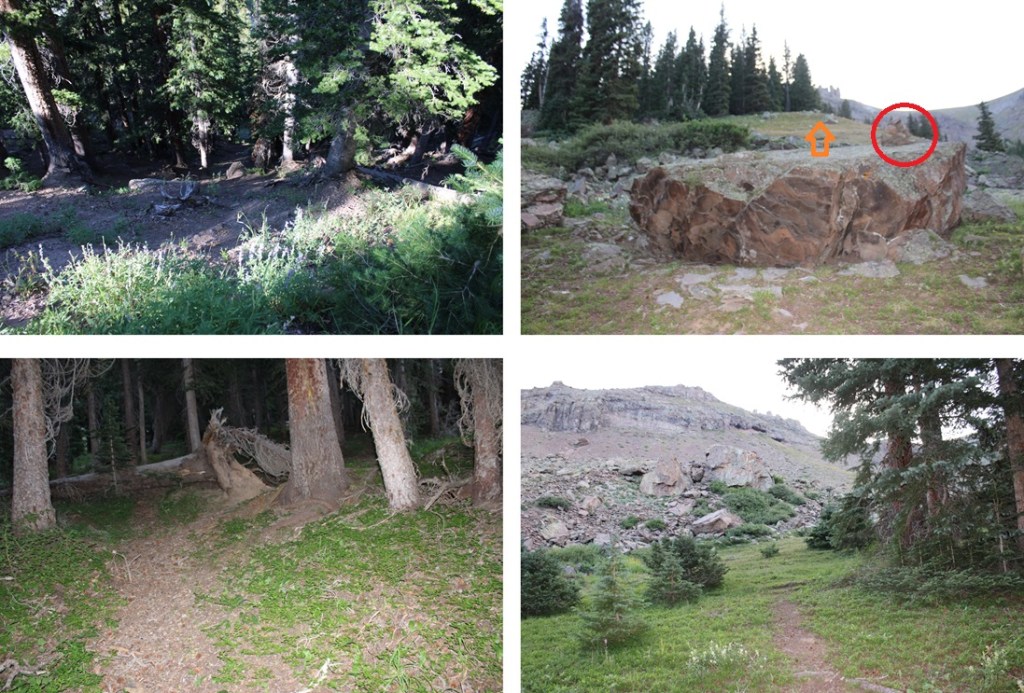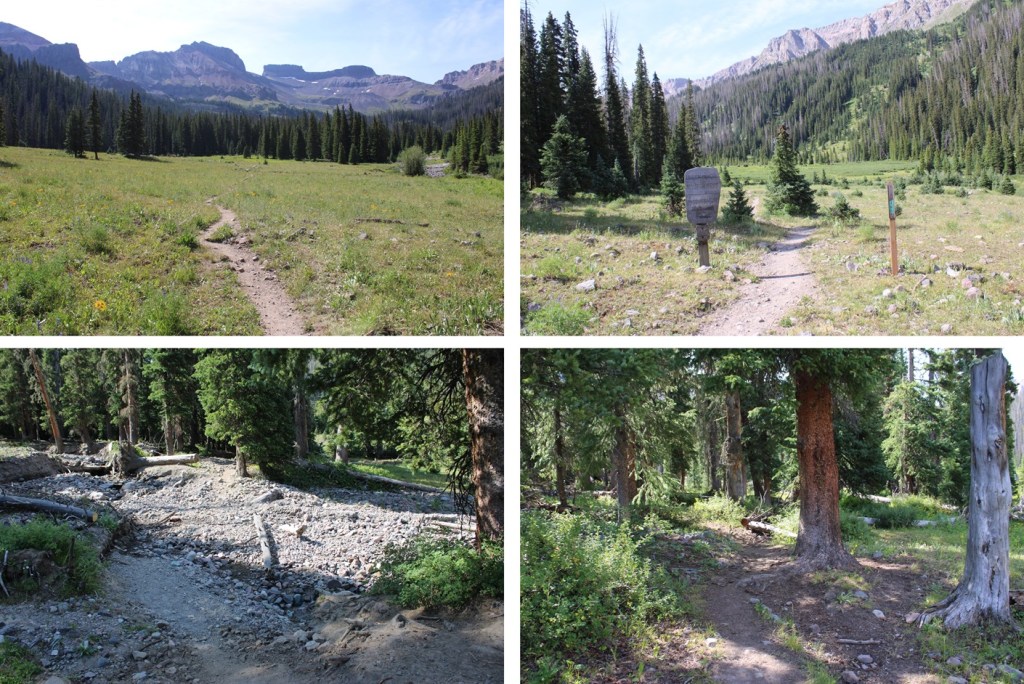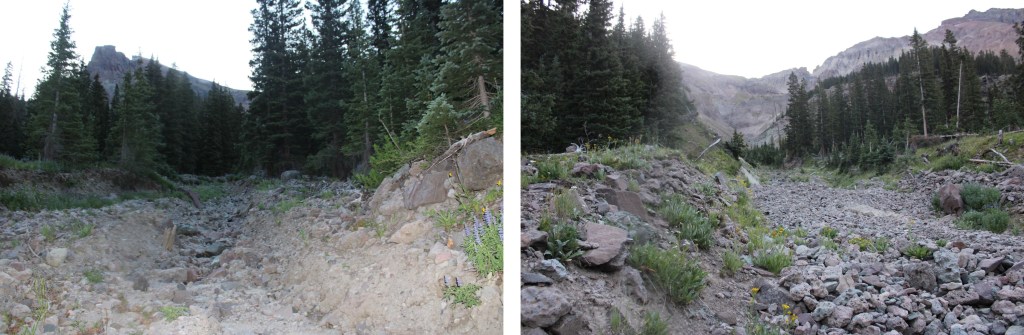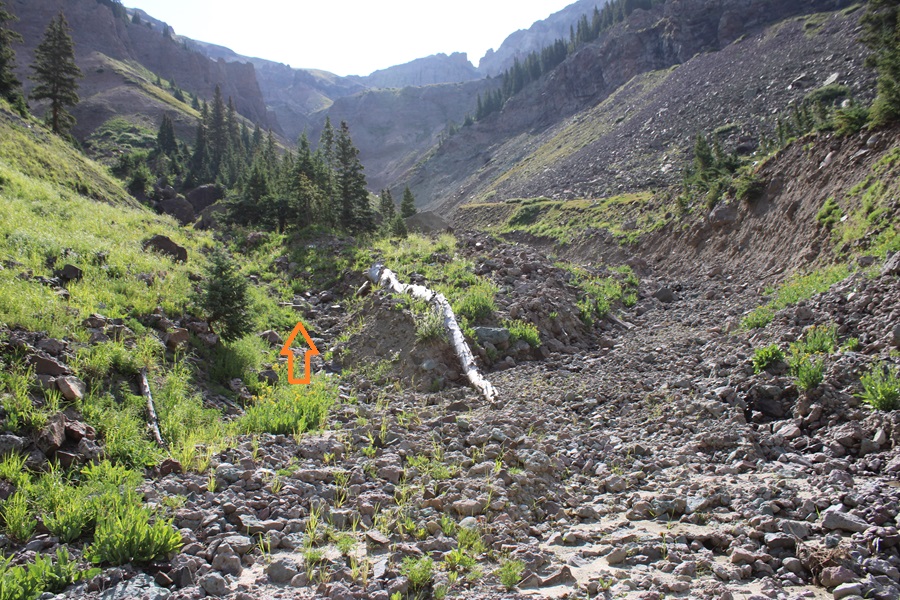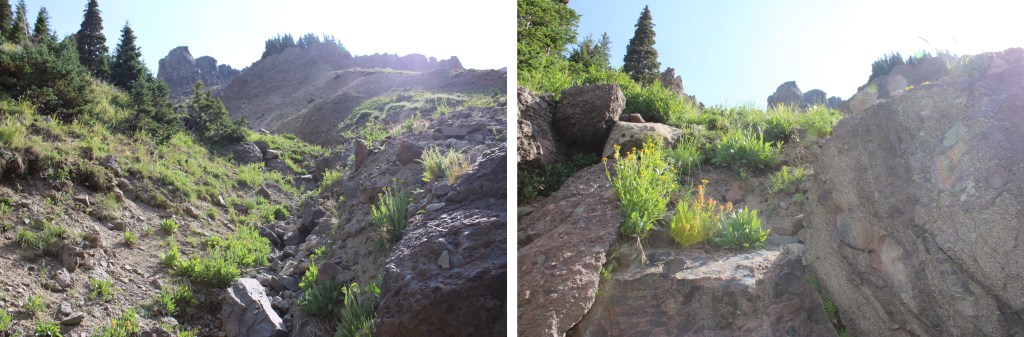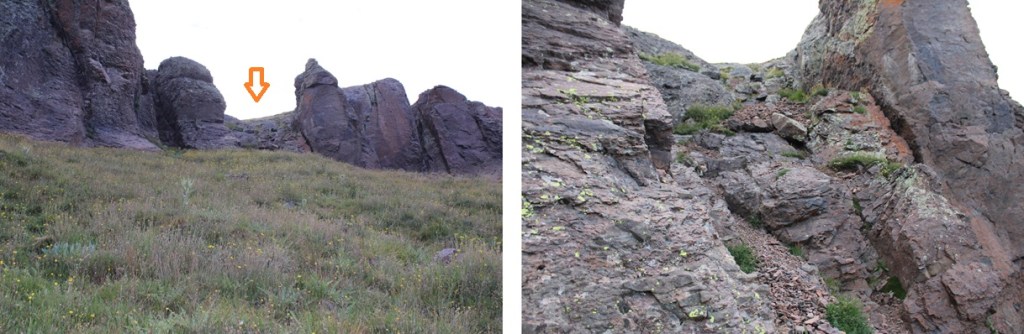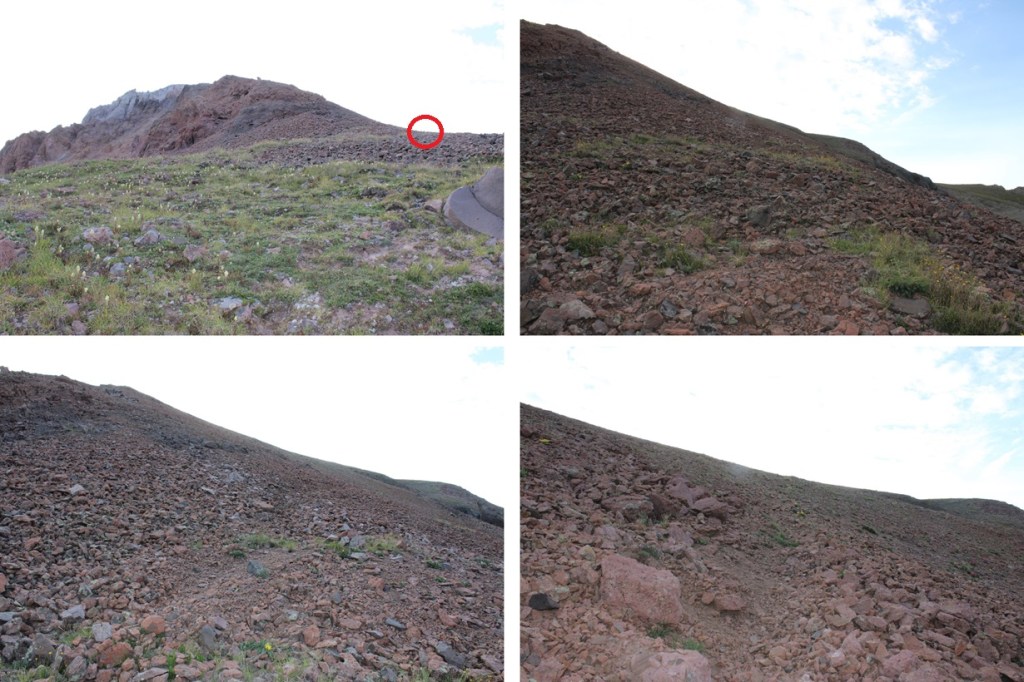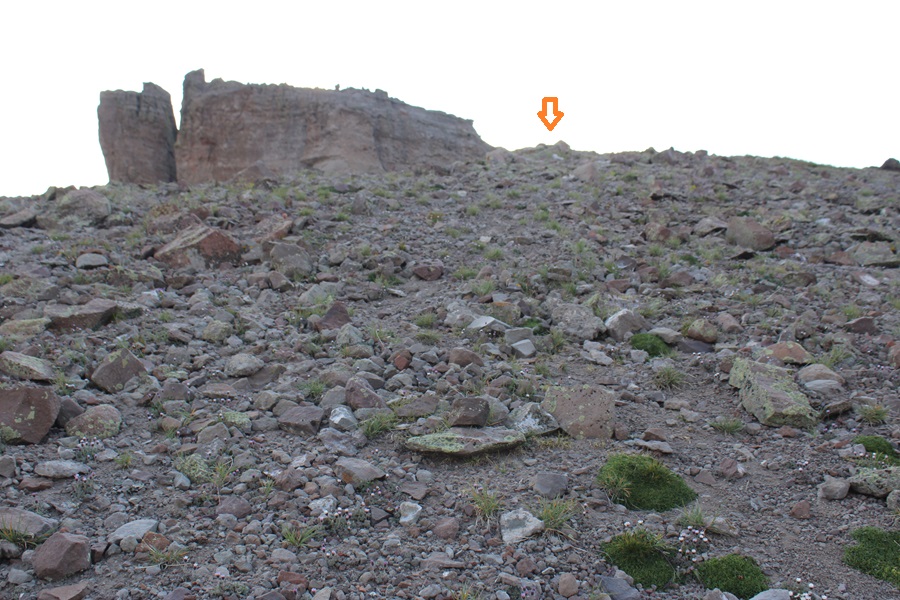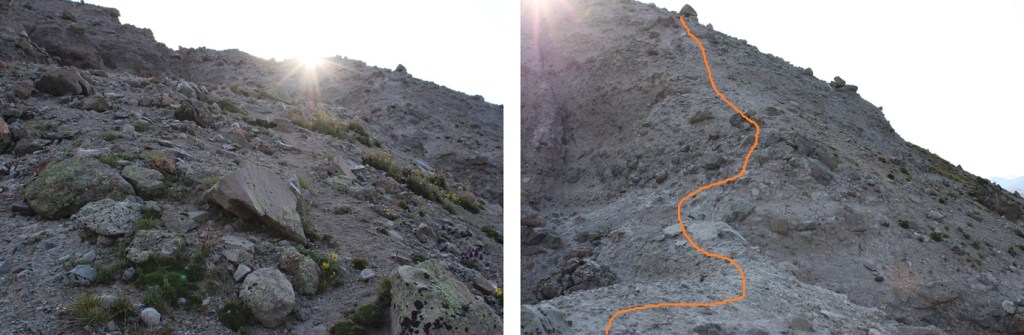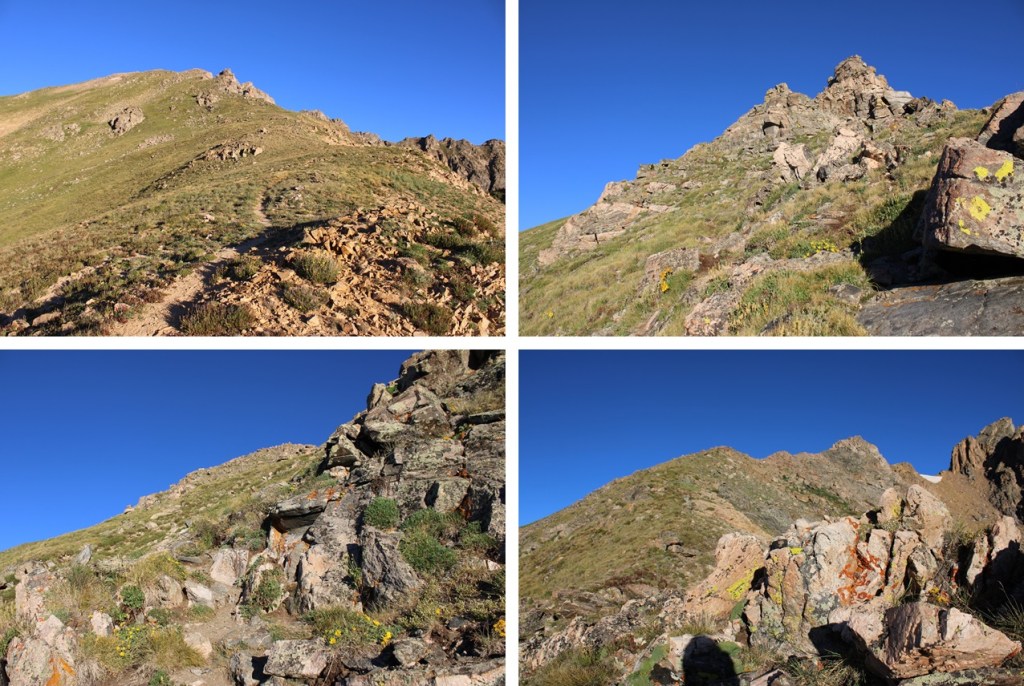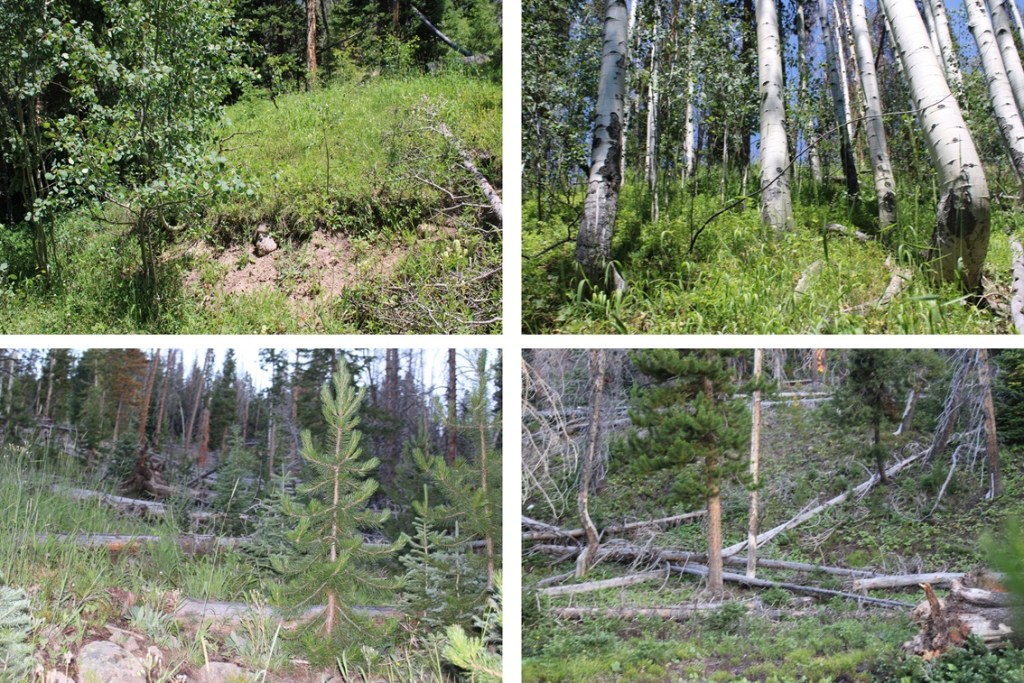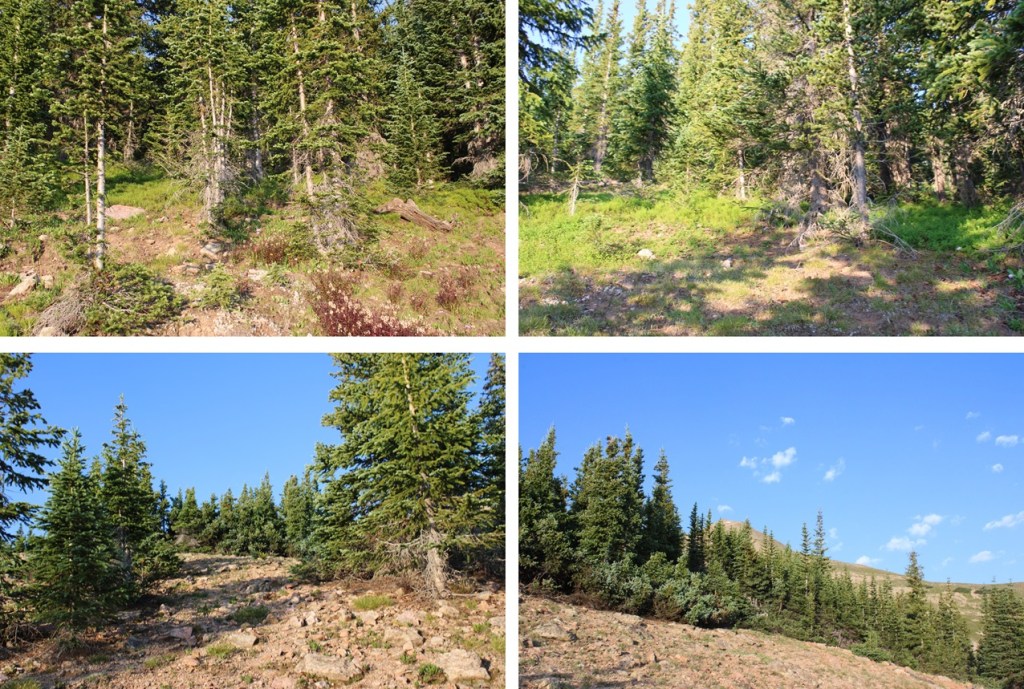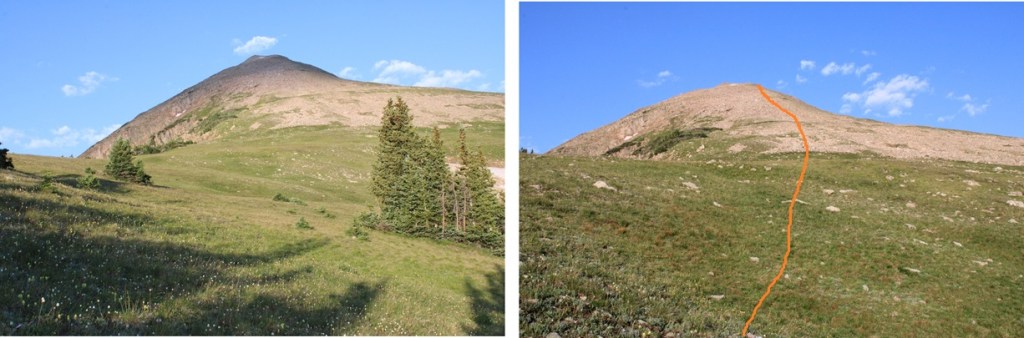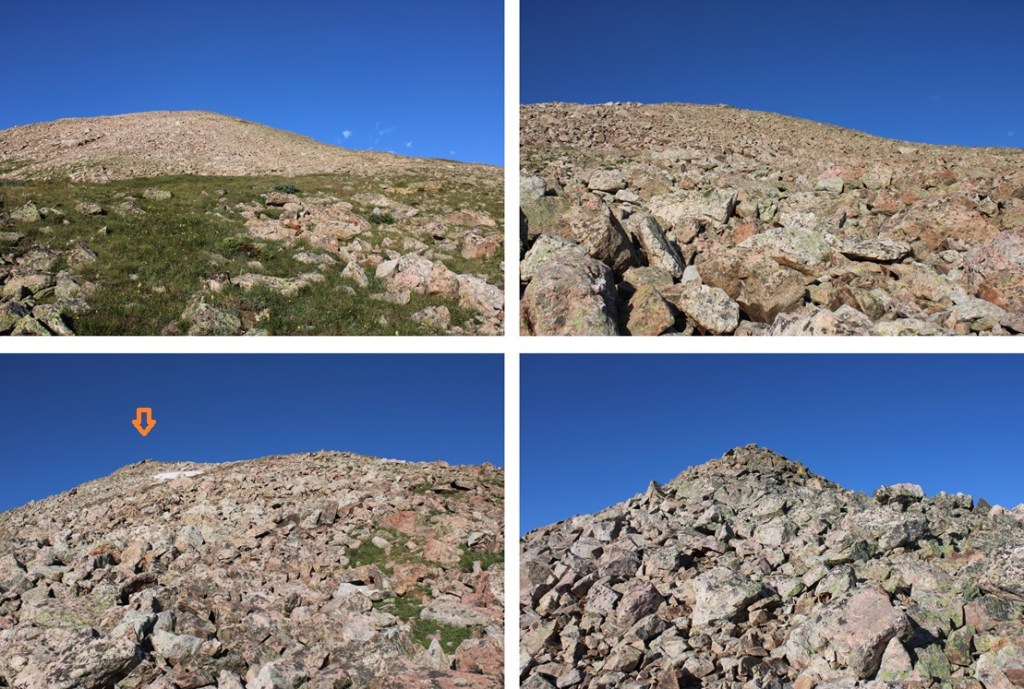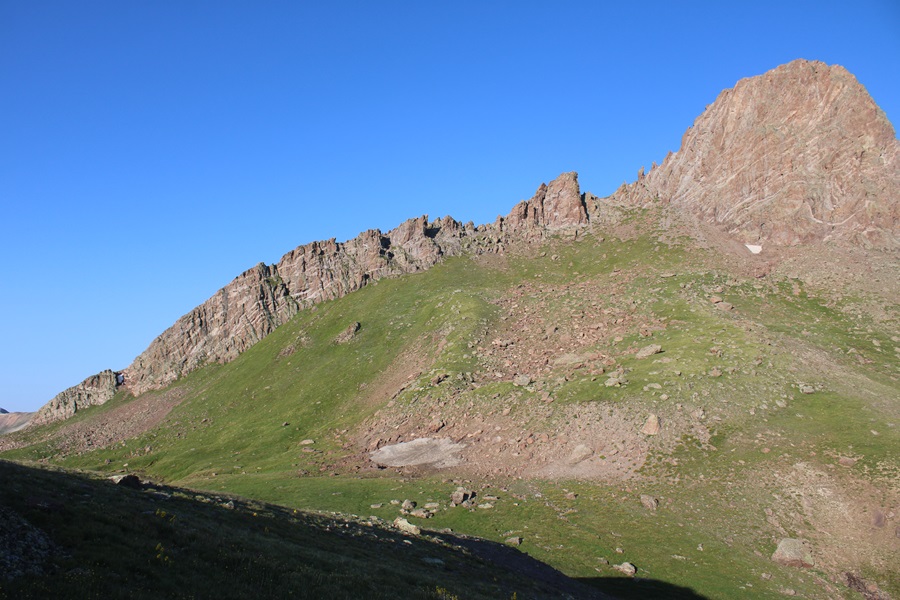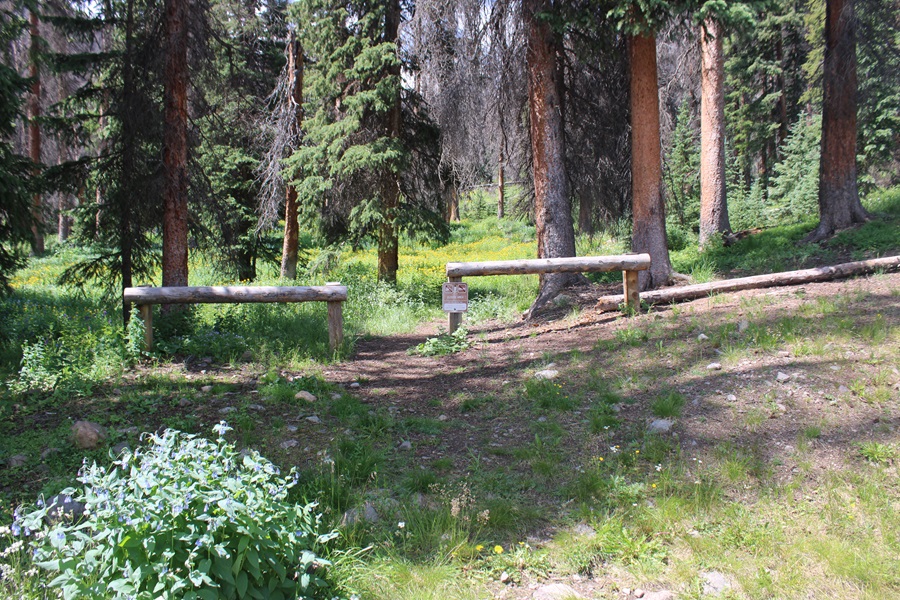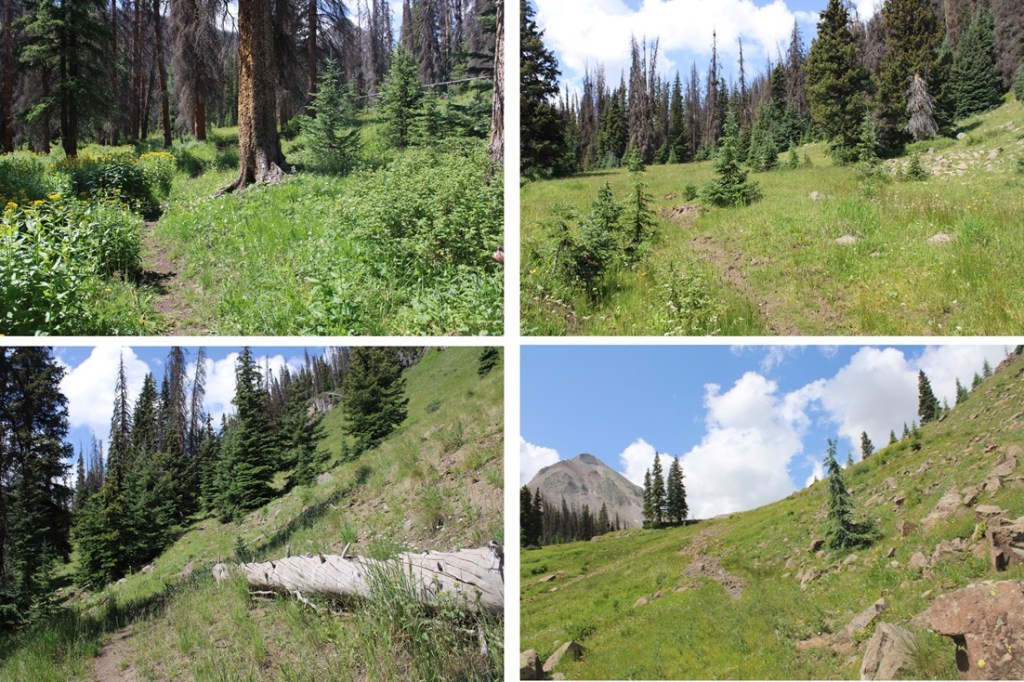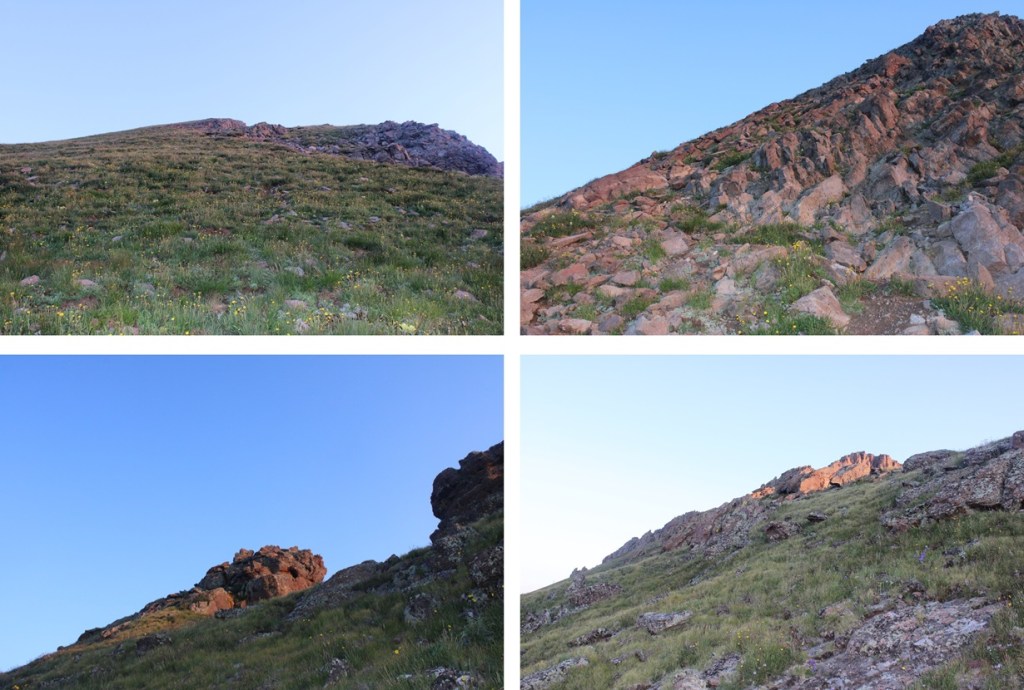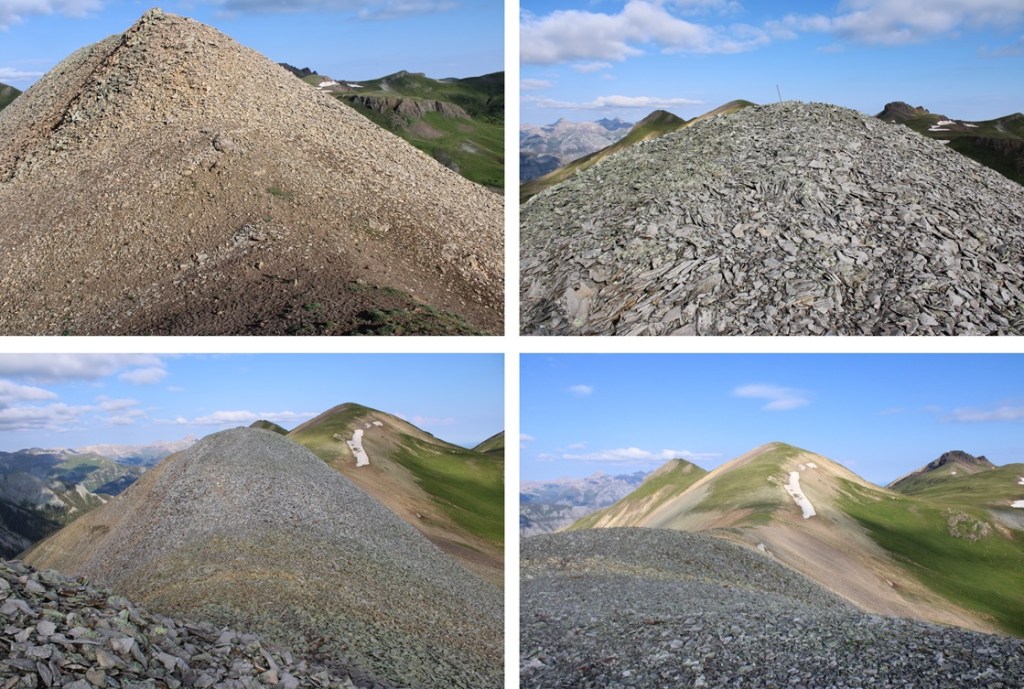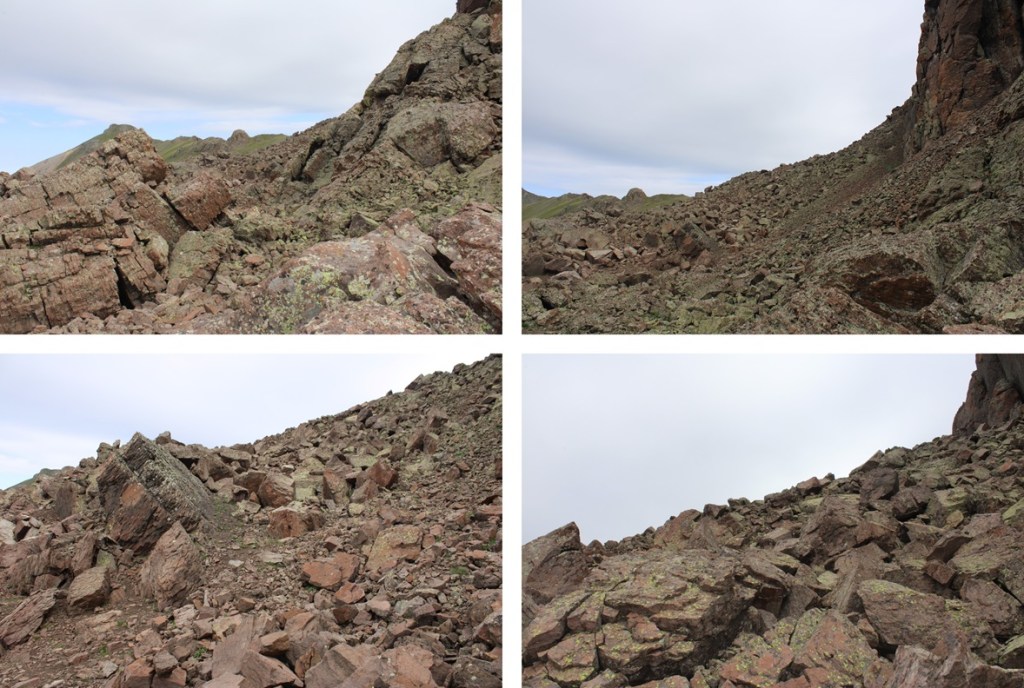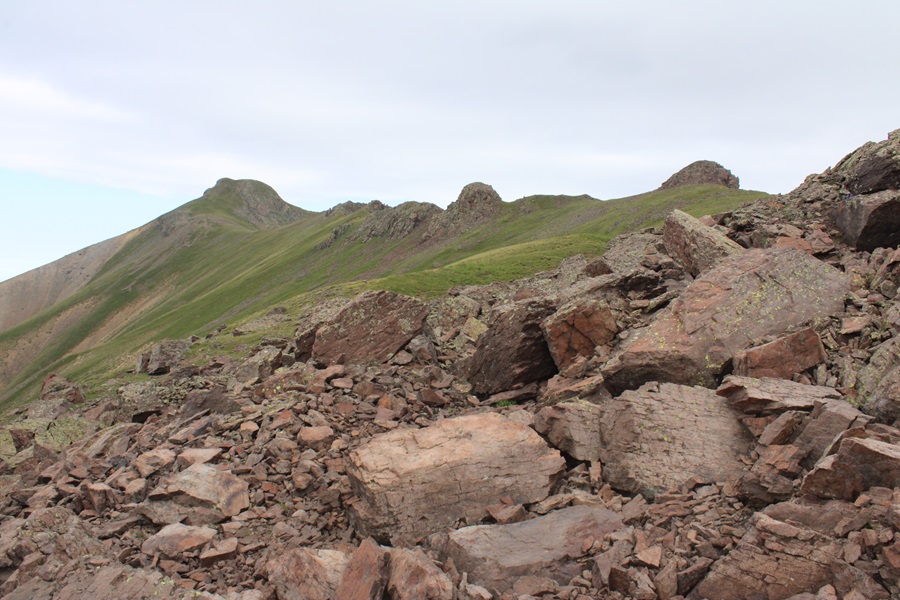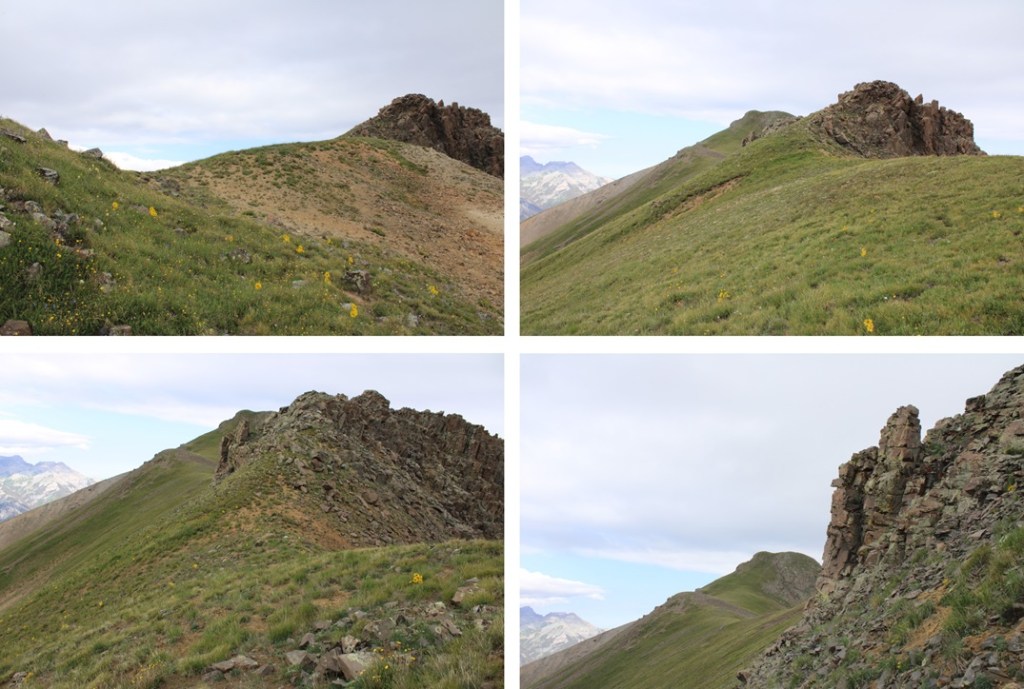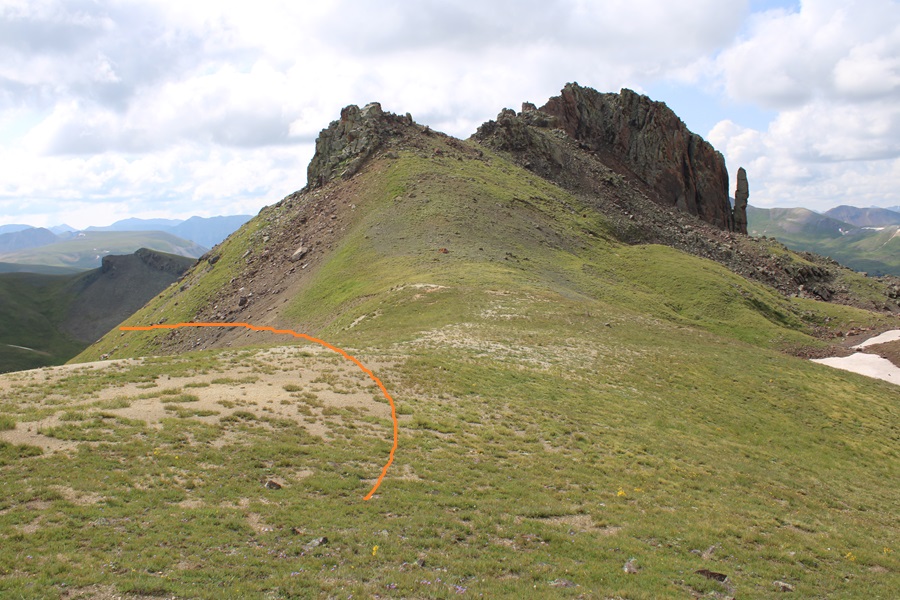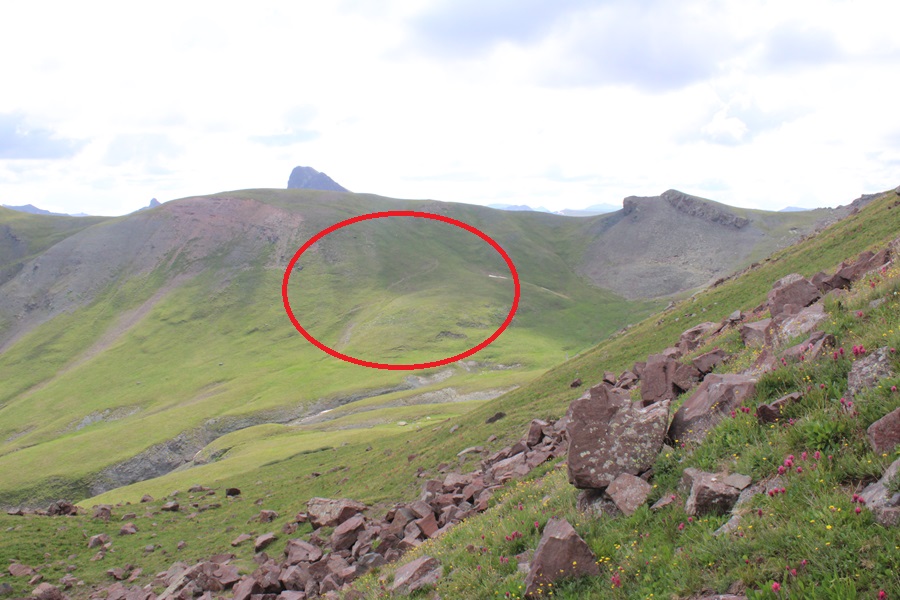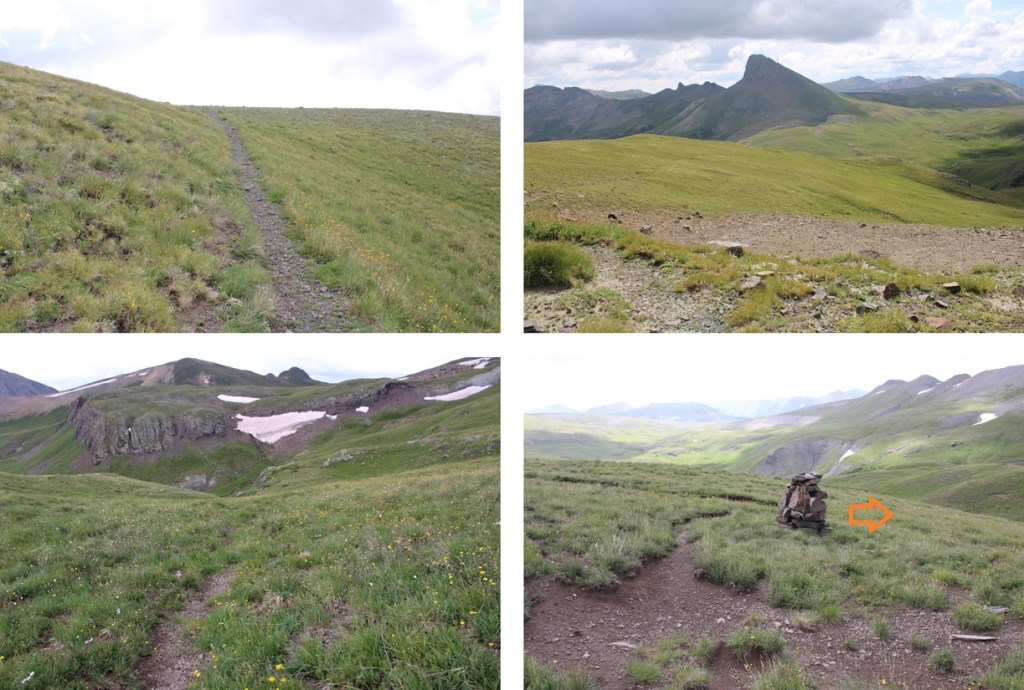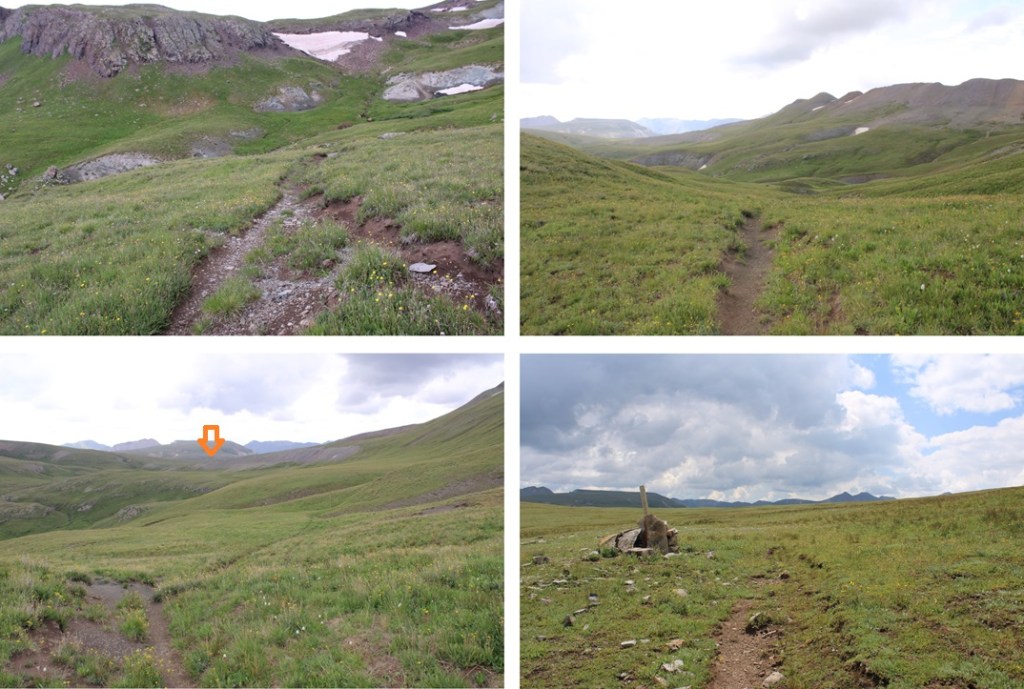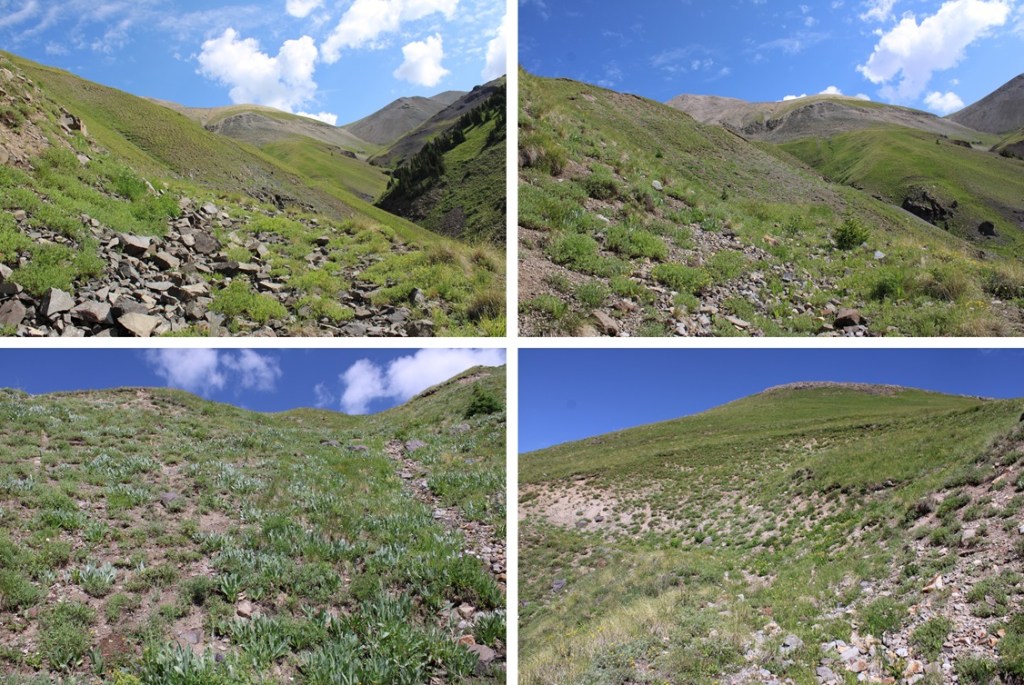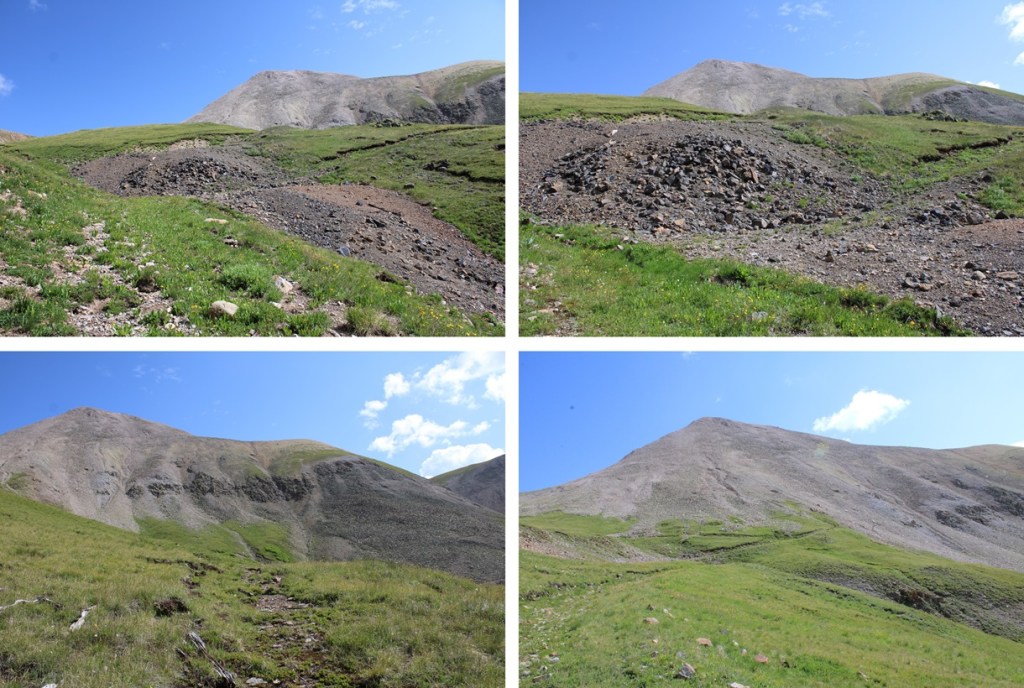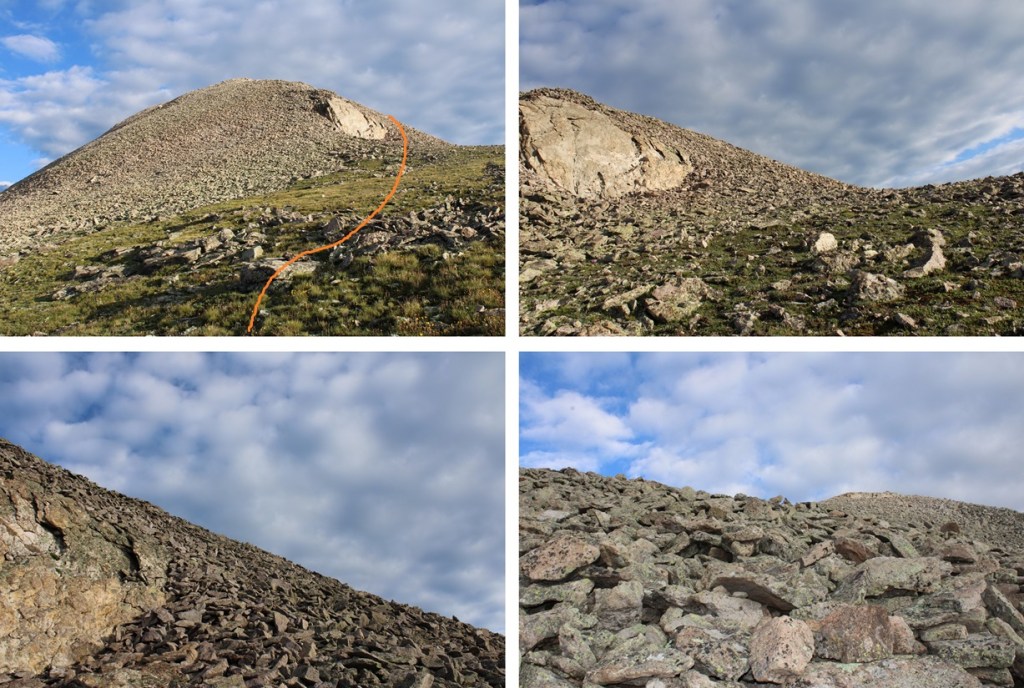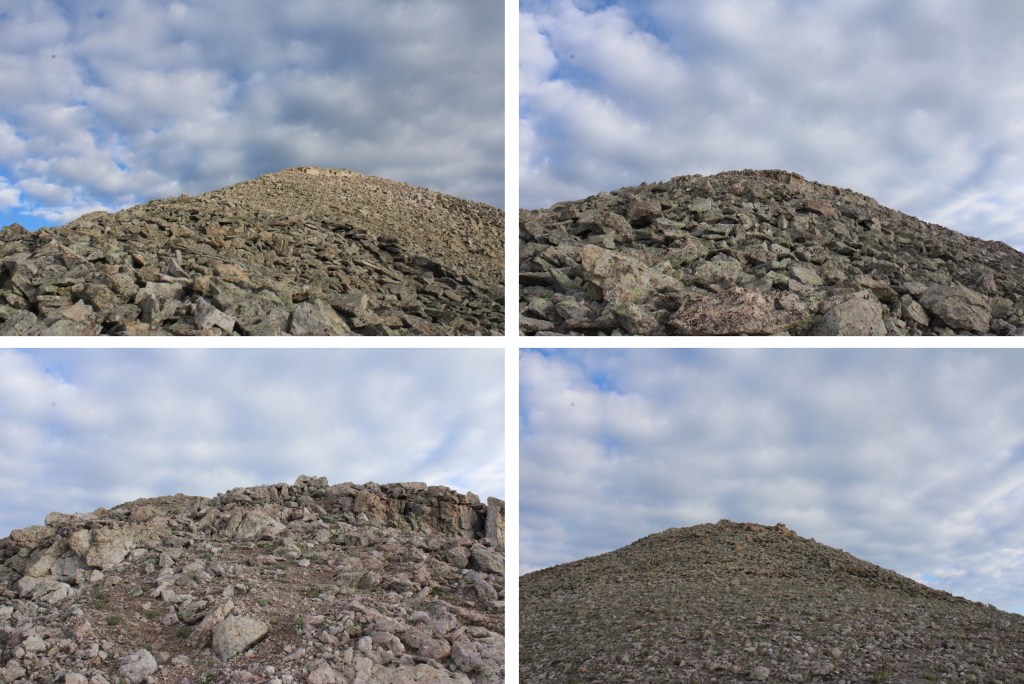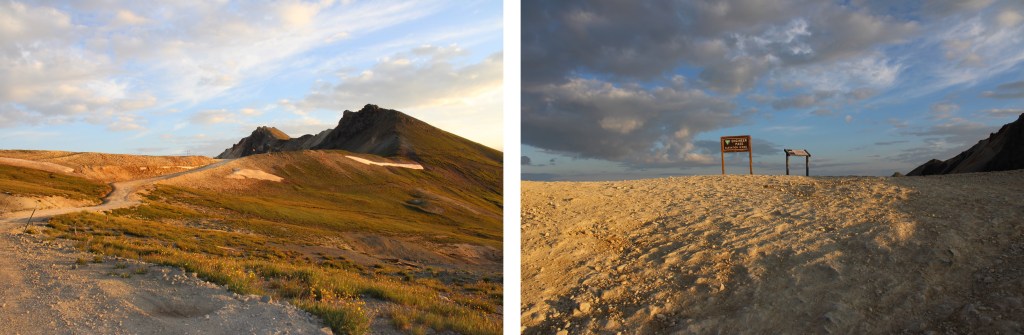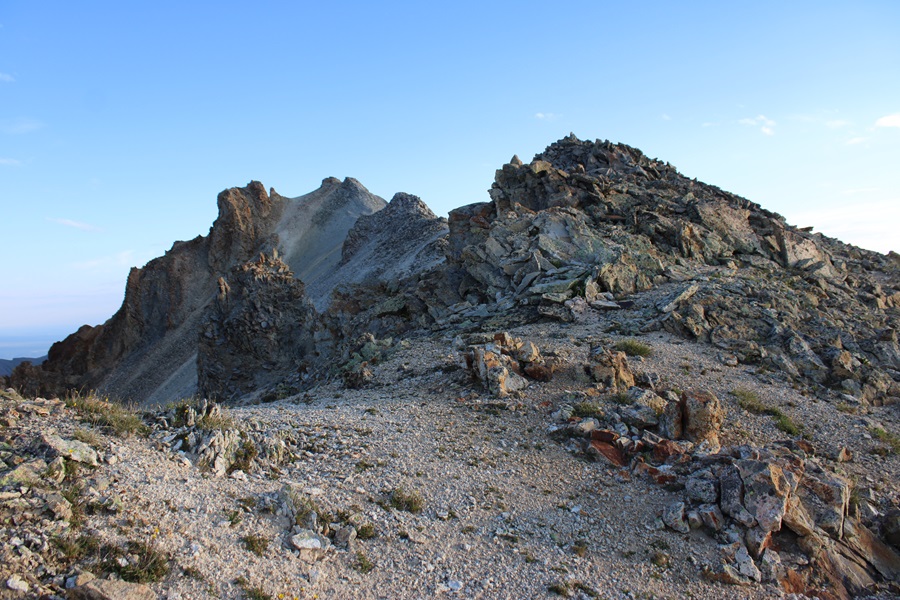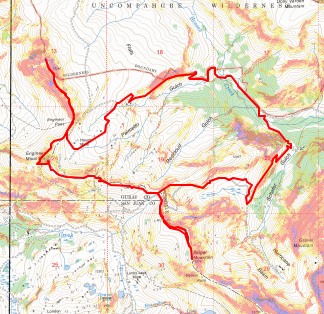
Paiute Peak – 13,094

RT Length: 11.32 miles

Elevation Gain: 2781’

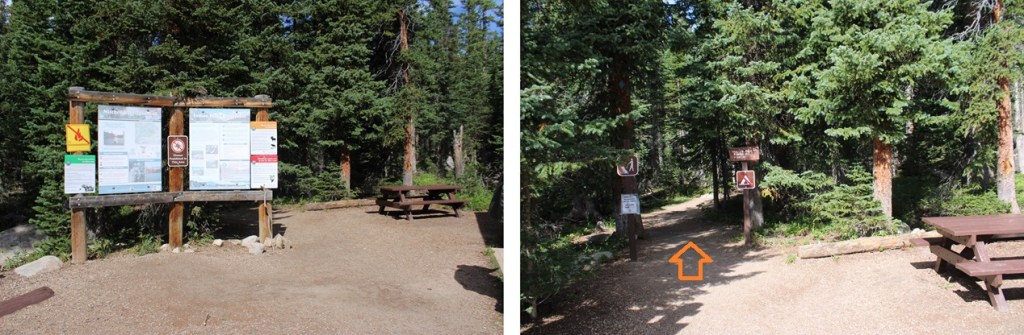
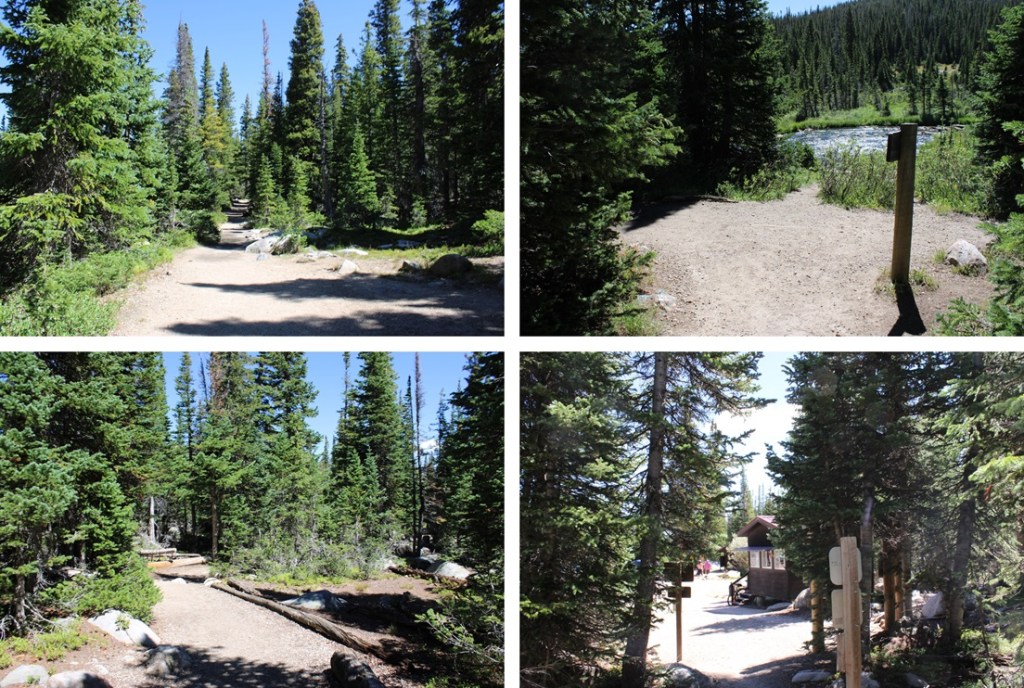
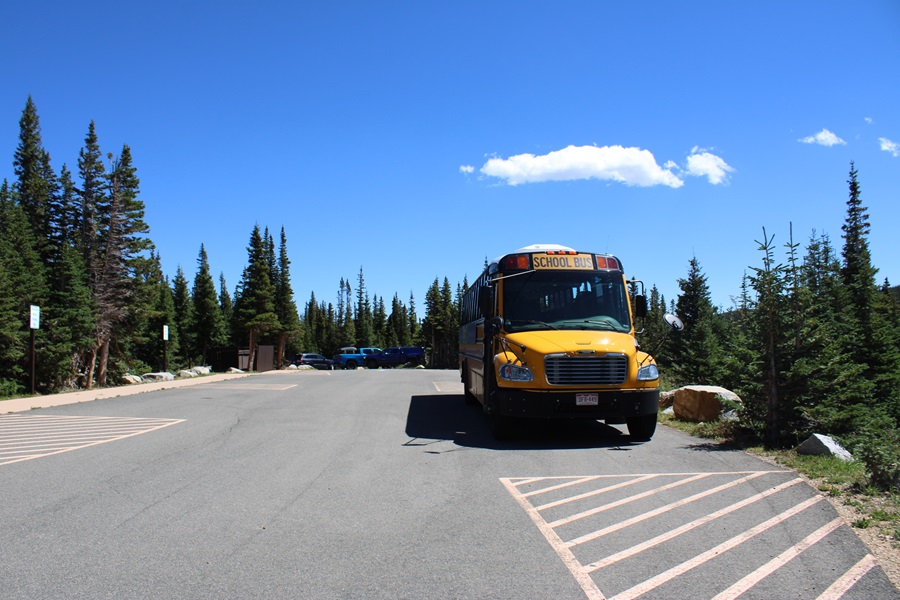
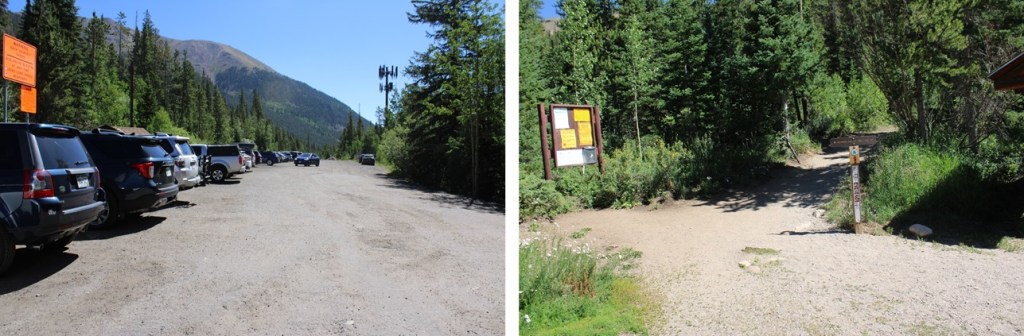
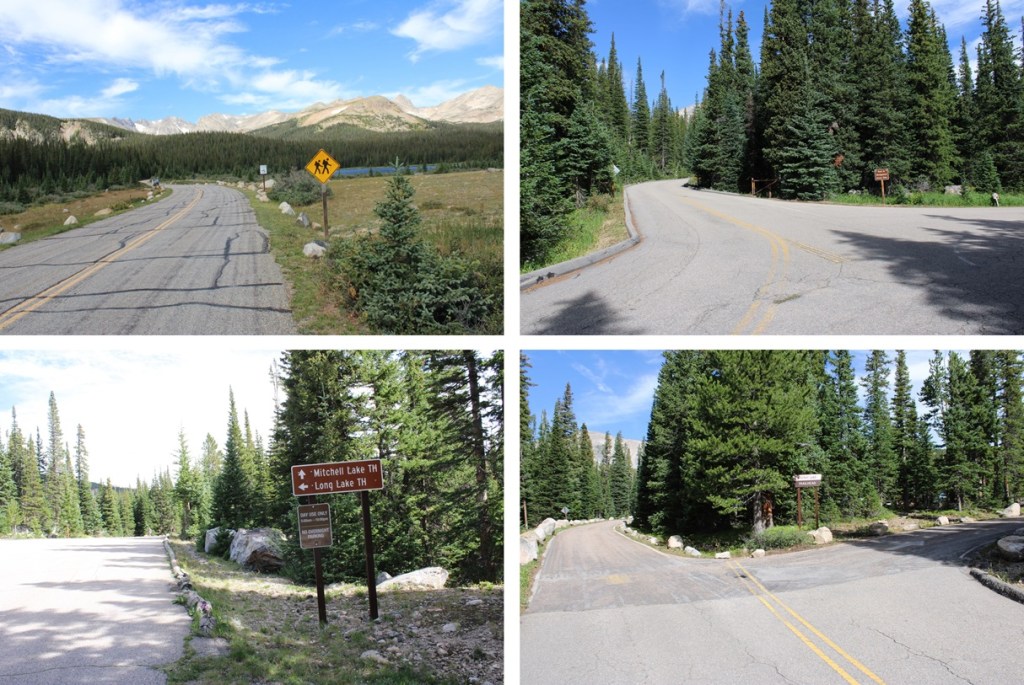
I was parked at the Brainard Lakes parking lot.  I already posted about why I was parked there, and not the Mitchell Lakes trailhead, so I’m going to skip that part this time. 

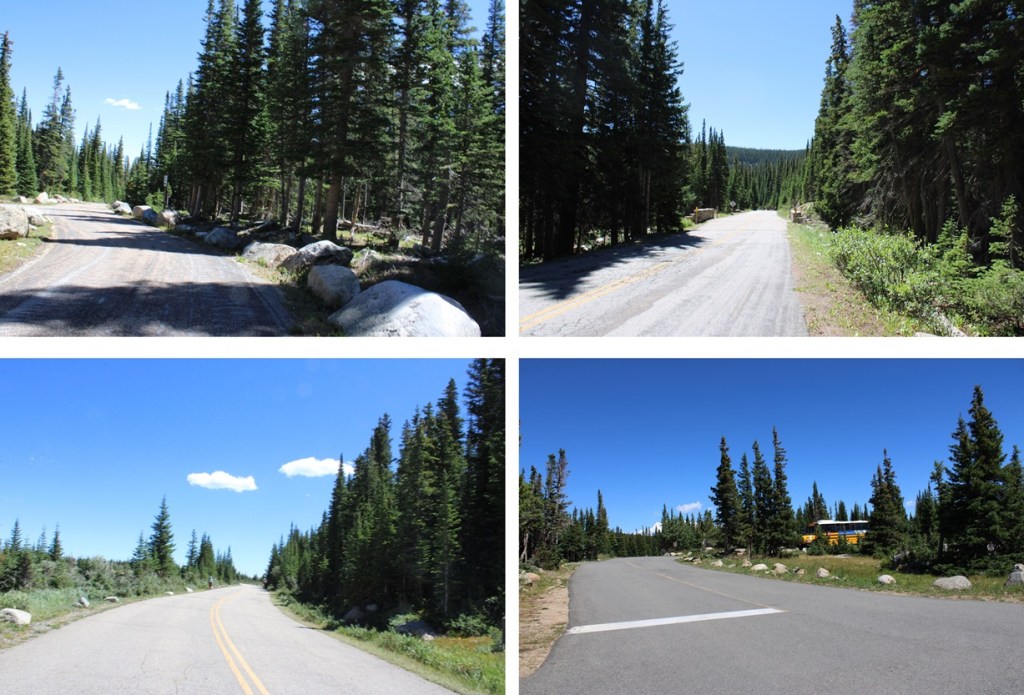
I was on the trail at 4:30 am.  My first order of business was to hike the 1.3 miles to the Mitchell Lake Trailhead. 
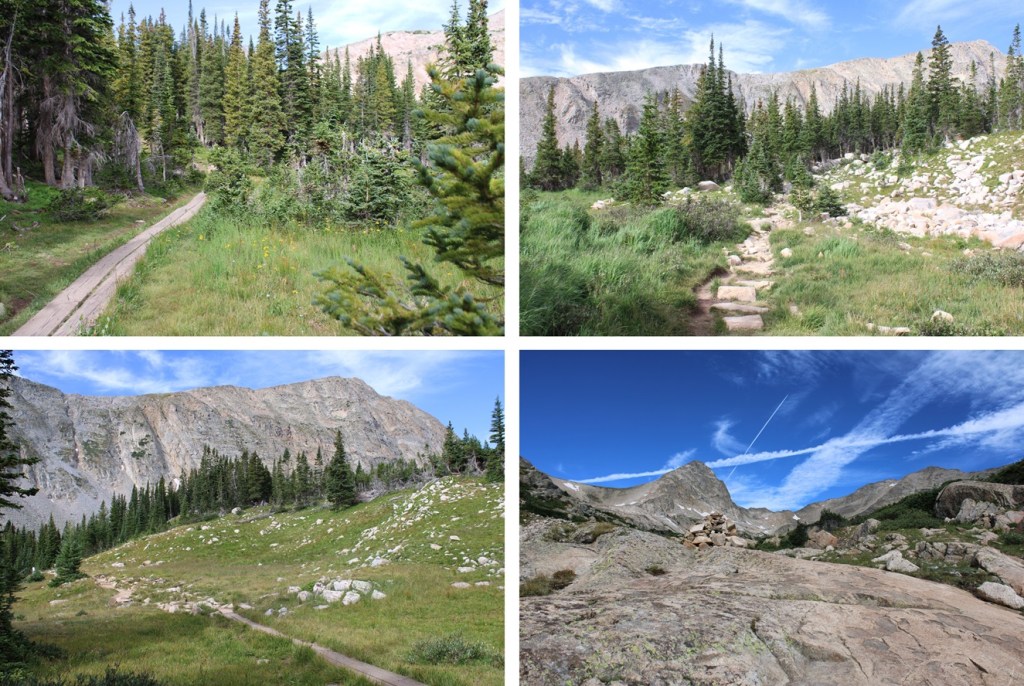
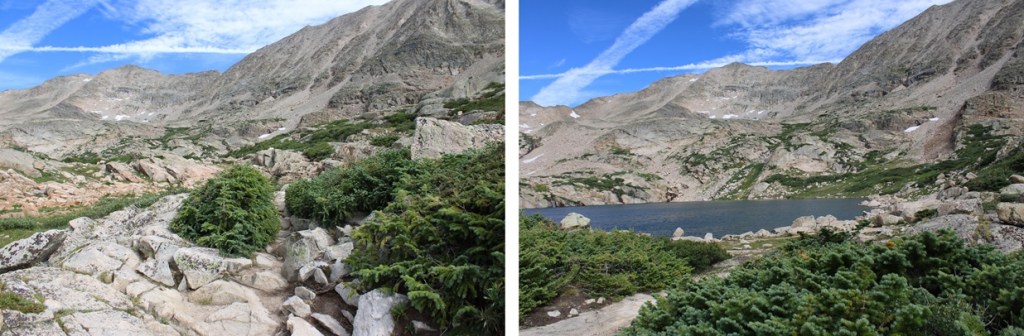
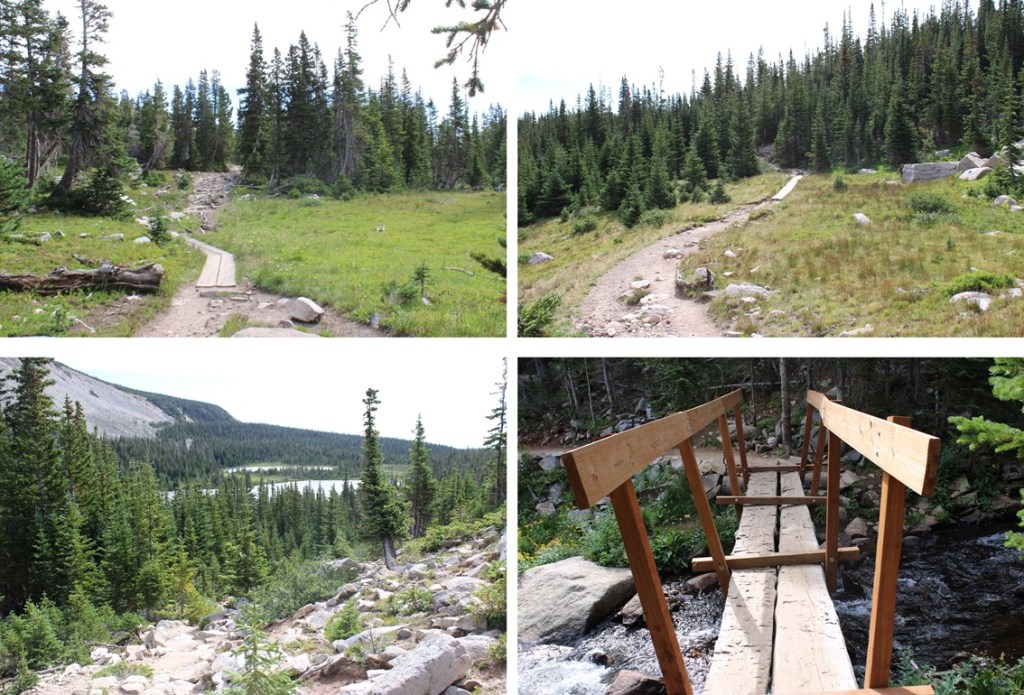
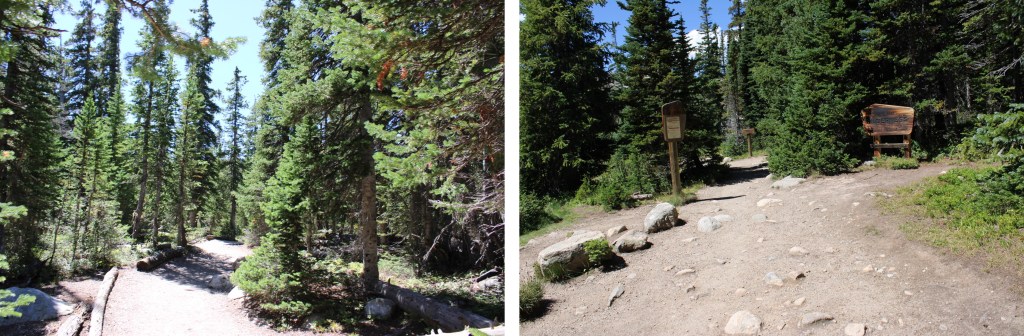
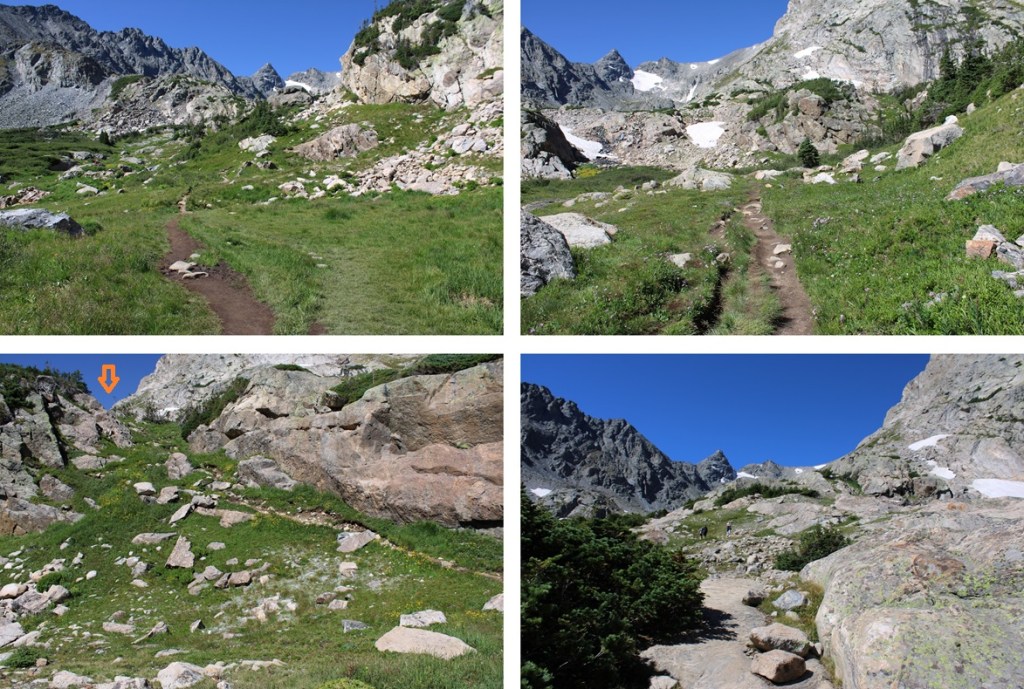
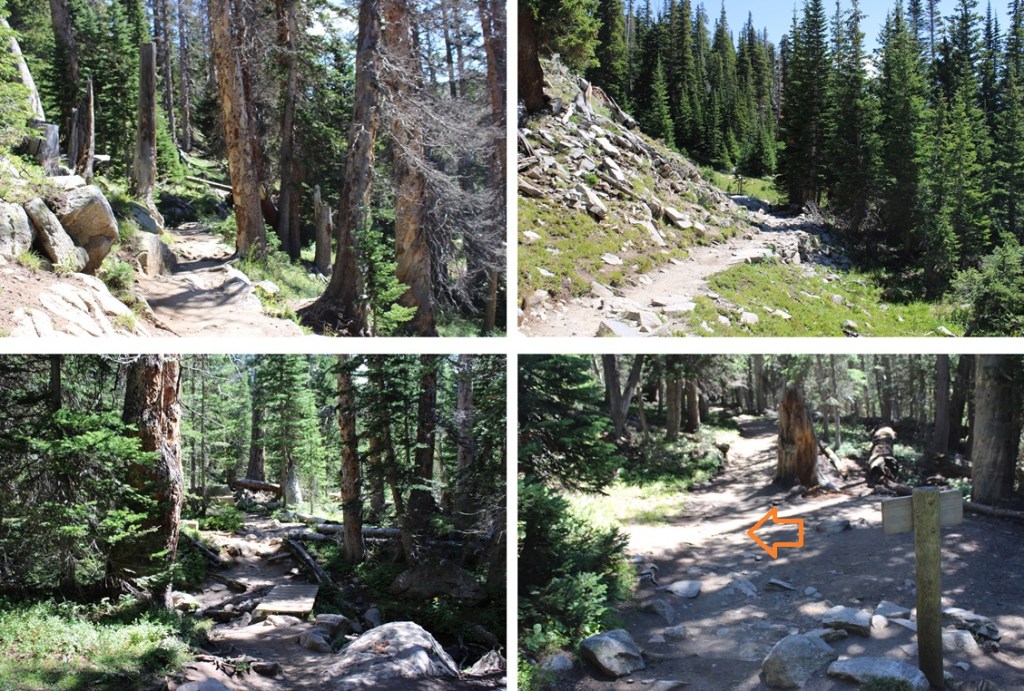
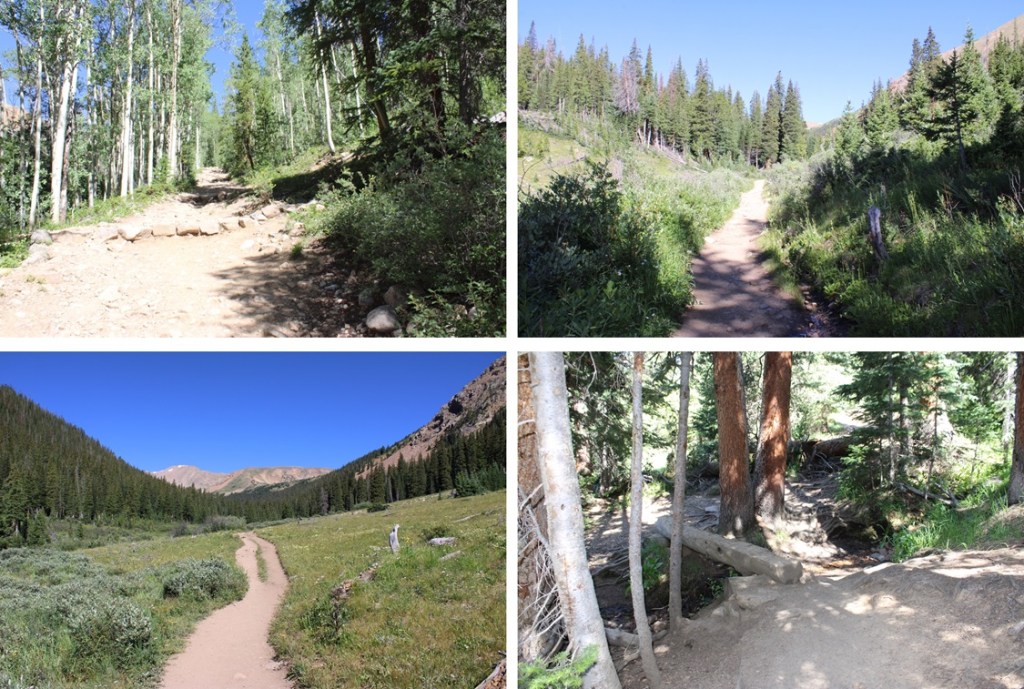
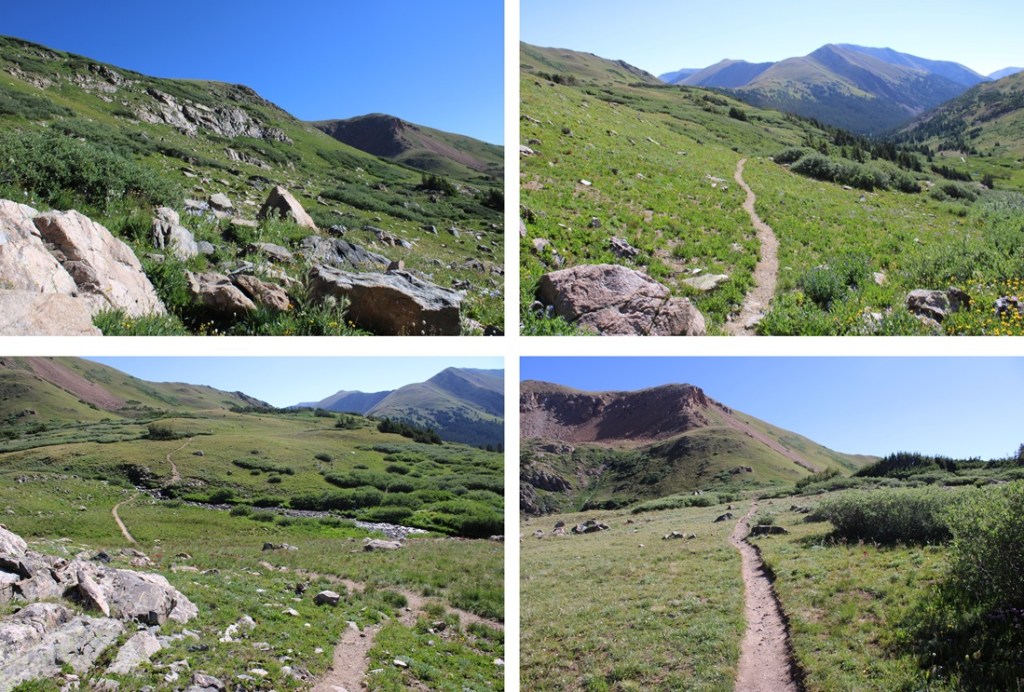
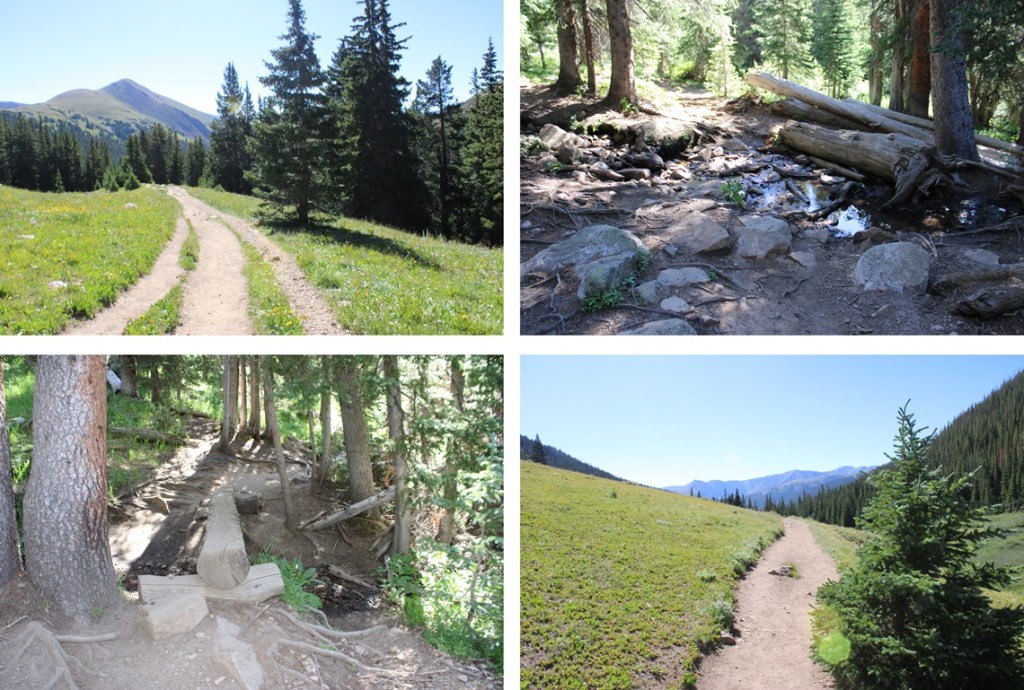
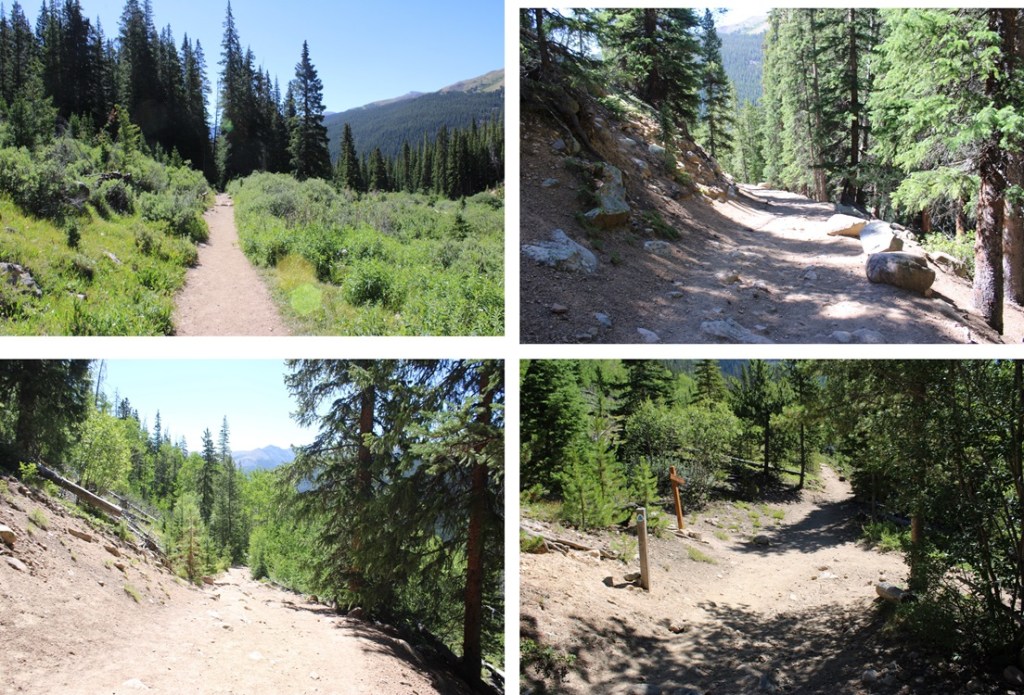
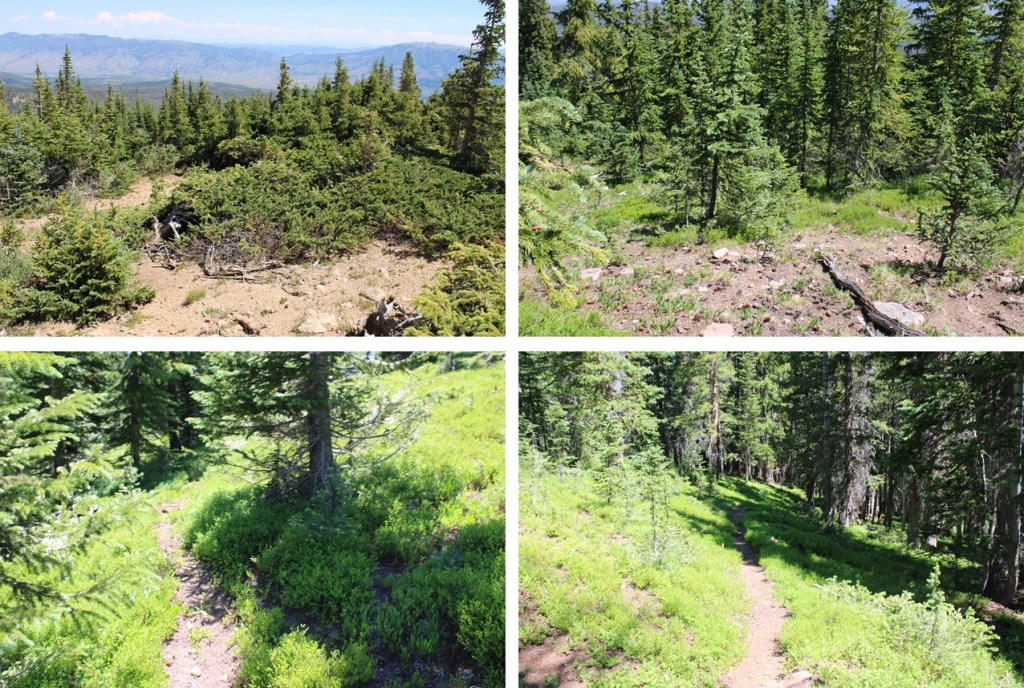
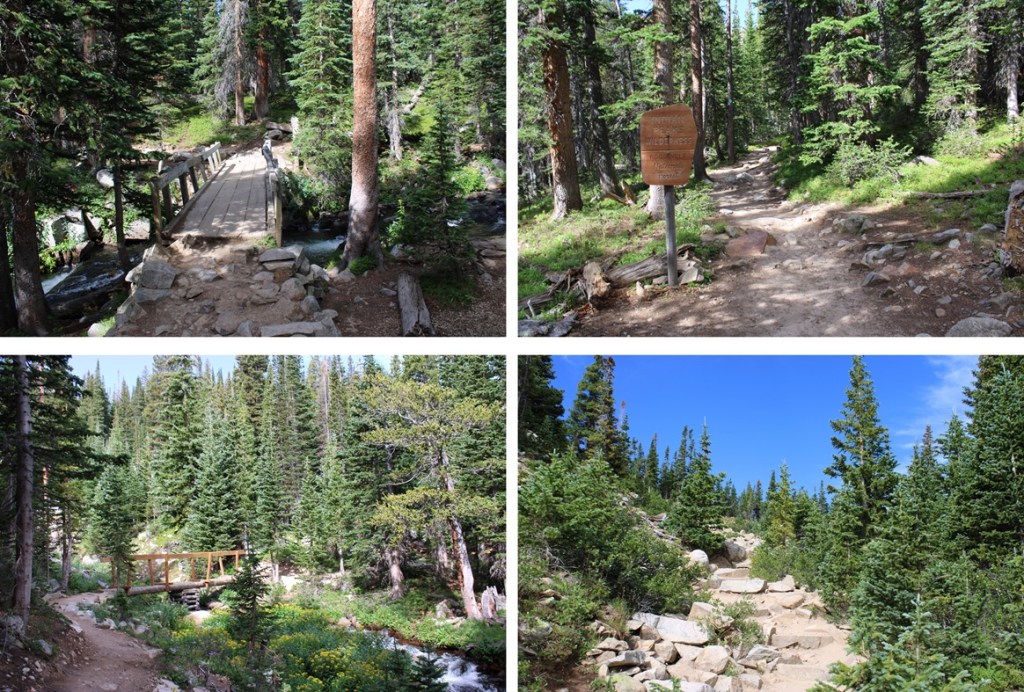
From the Mitchell Lake Trailhead, I followed the Blue Lakes Trail west towards Blue Lake. This is a well defined, class 1 trail with no junctions, so I was able to follow the trail the entire way.  From the Mitchell Lake Trailhead, it was around 3 miles to Blue Lake. 
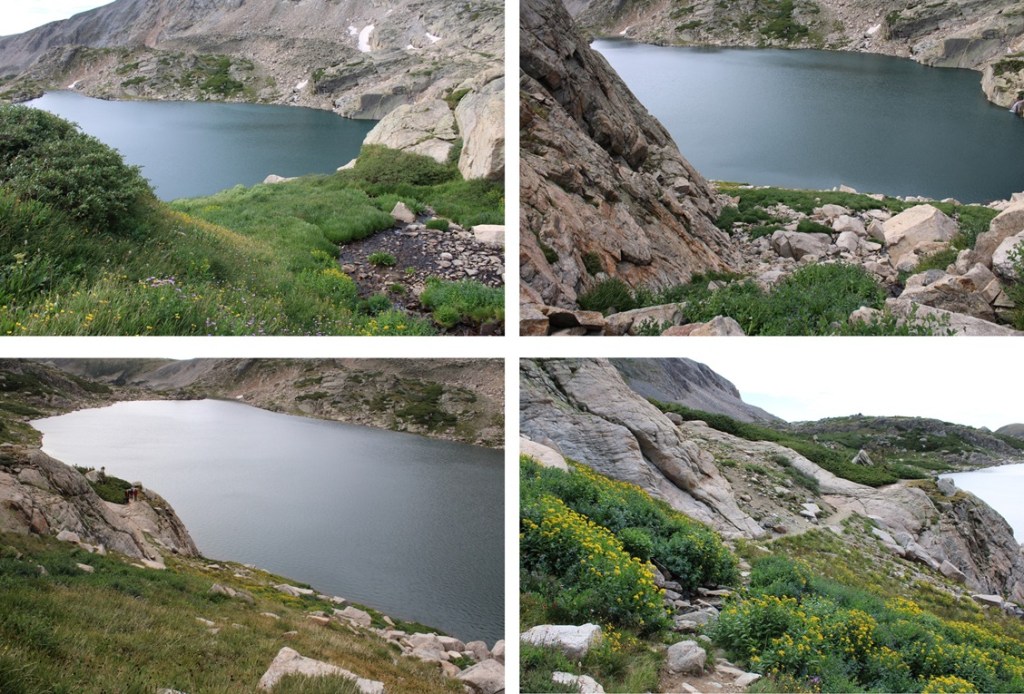
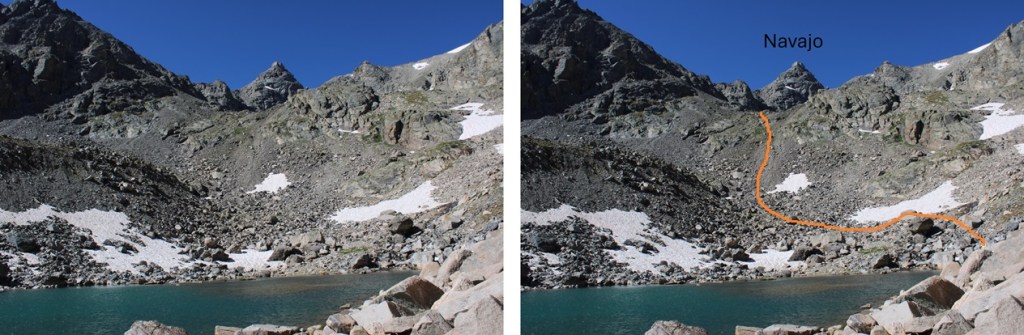
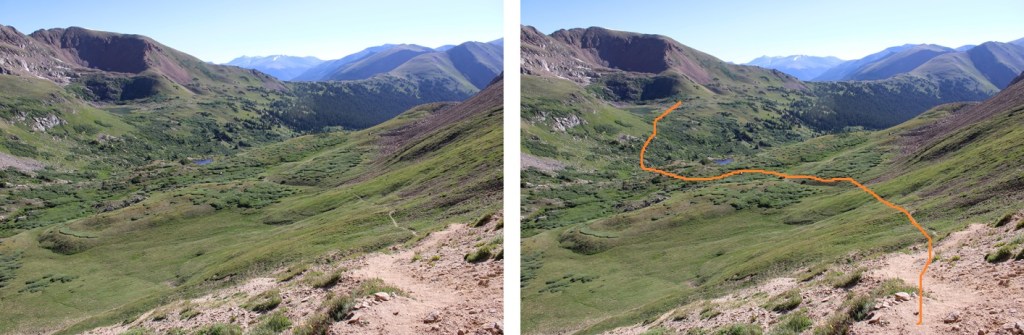
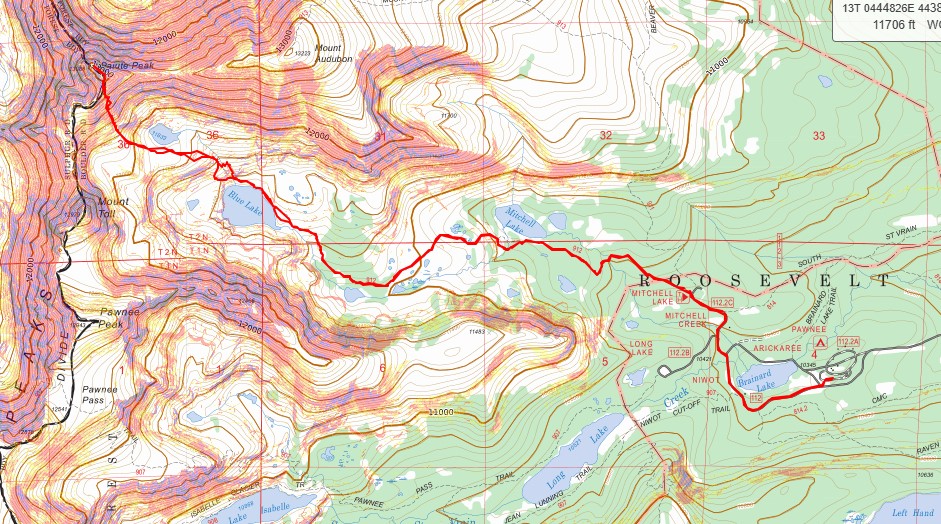
From Blue Lake I had a clear view of Paiute Peak.  Here’s an overview of the rest of my hike
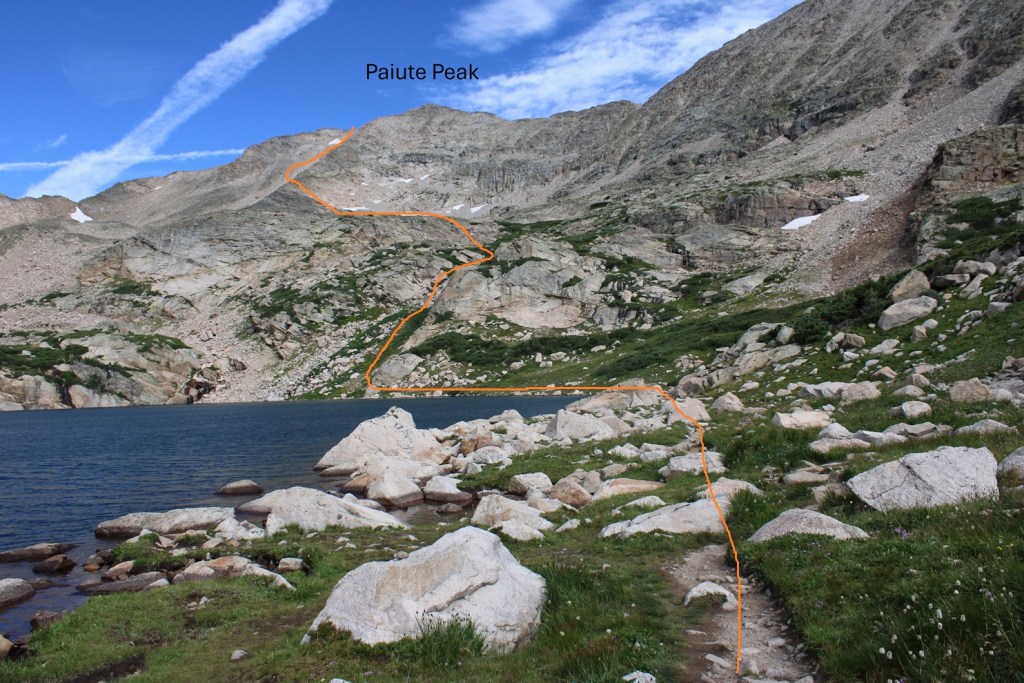
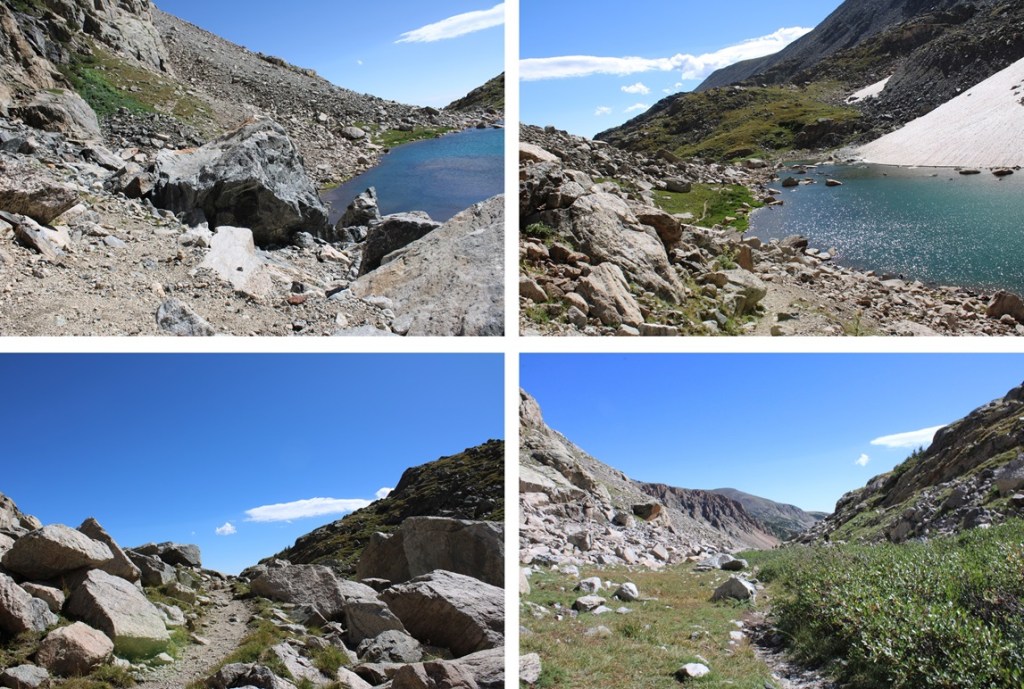
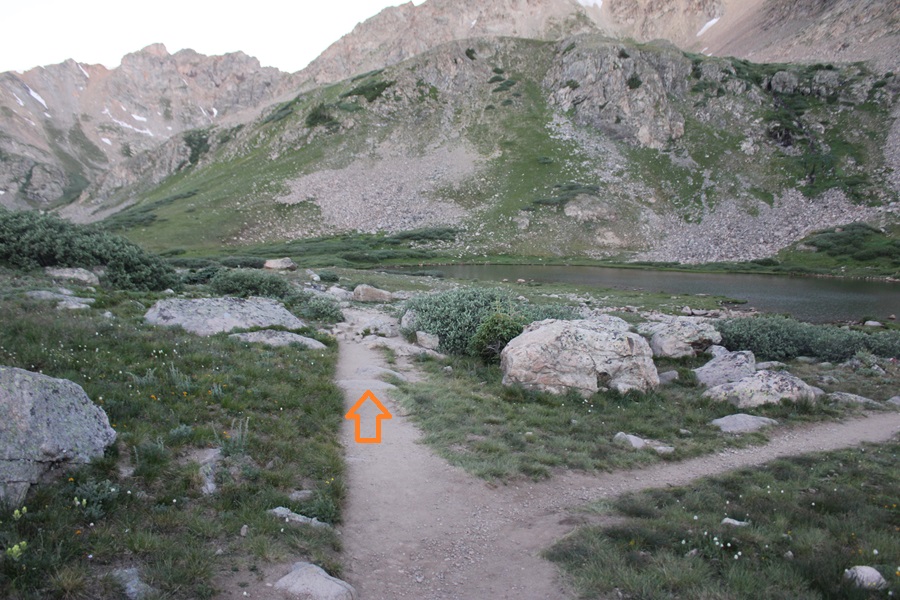
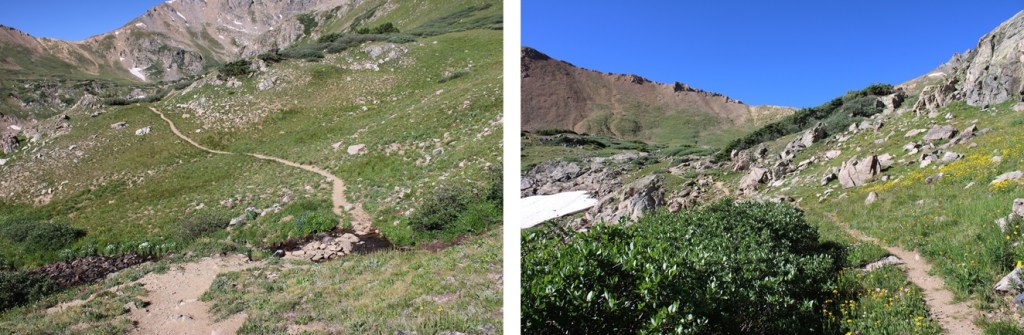
First, I followed the trail around the north side of the lake
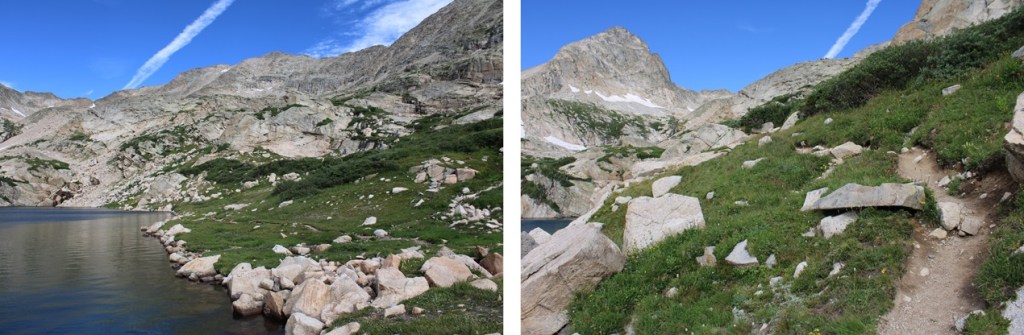
When I came to a grassy drainage, I left the trail and followed the drainage north
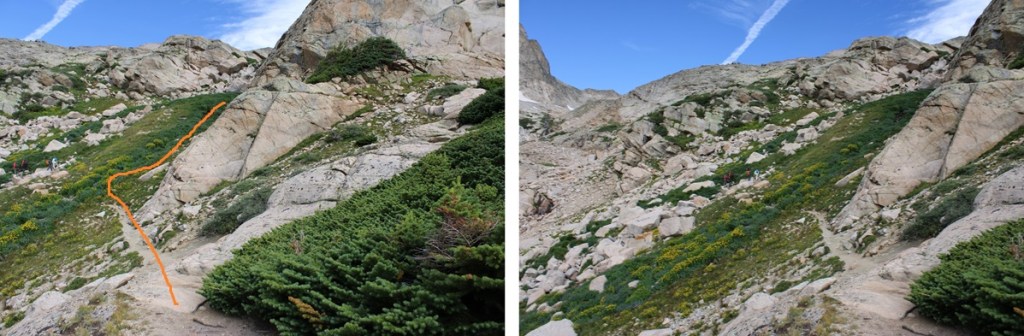
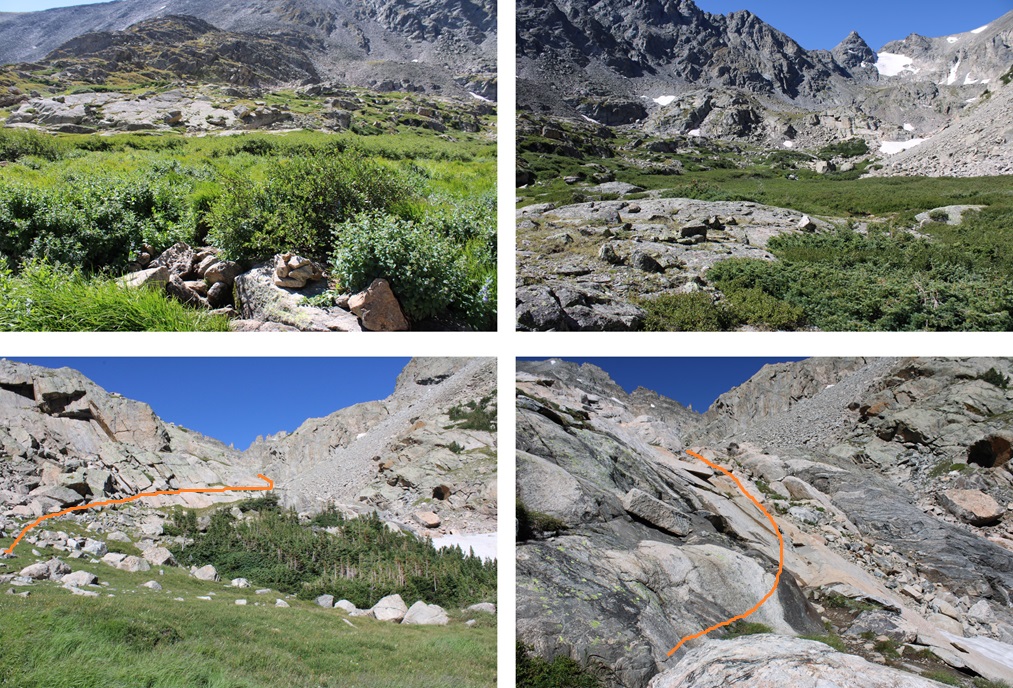
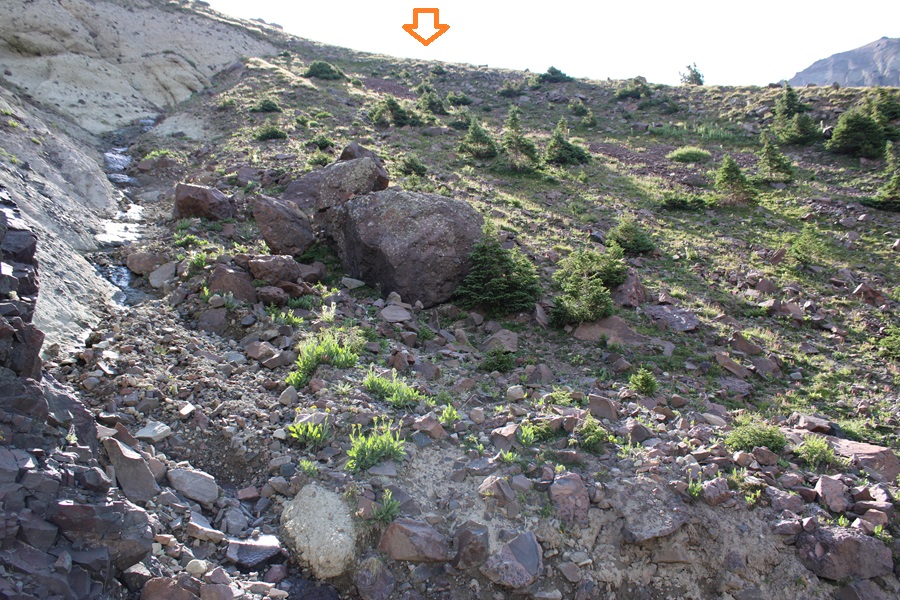
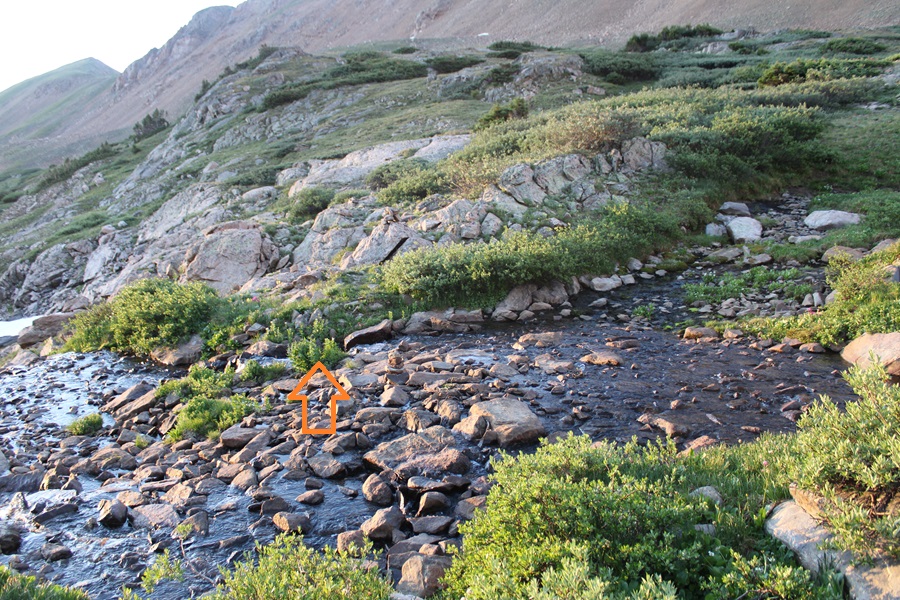
At around 11580’ I crossed the creek at a small waterfall, and headed northwest.

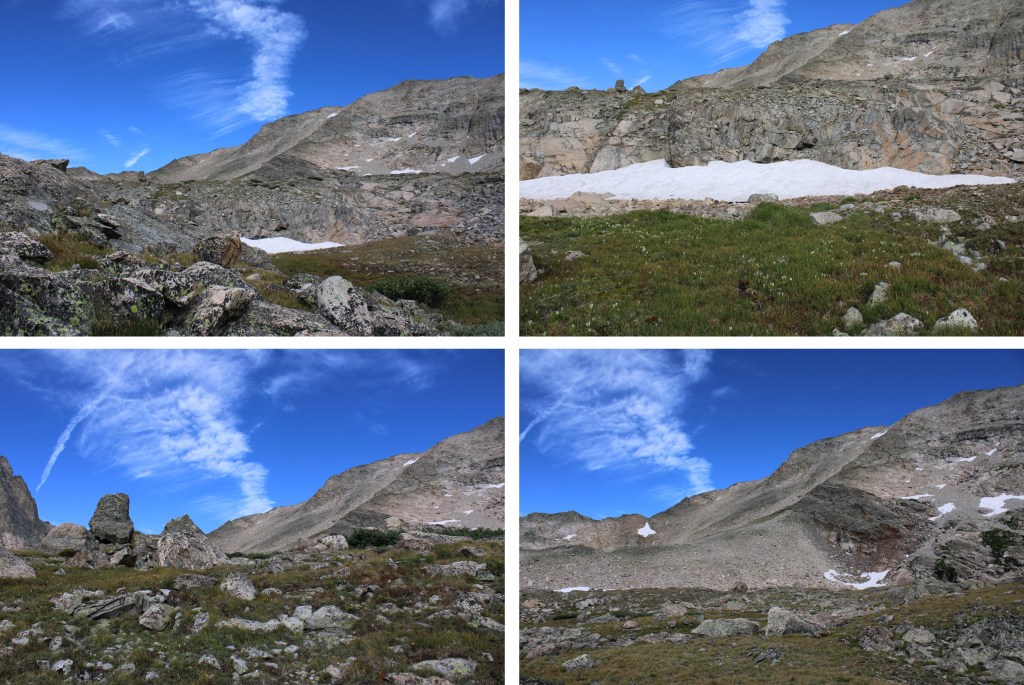
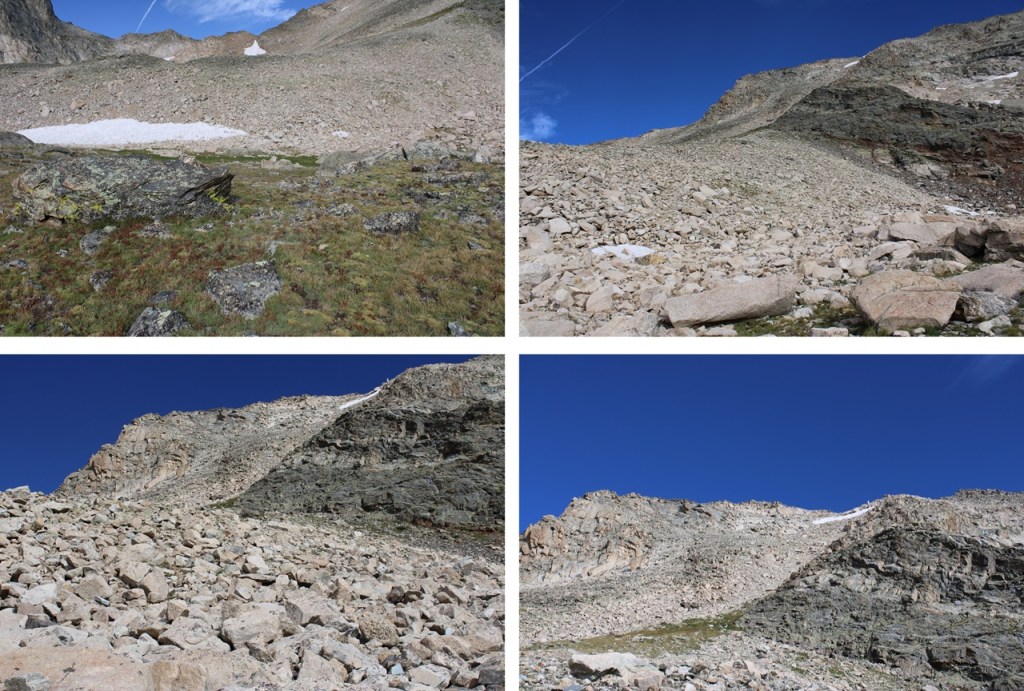
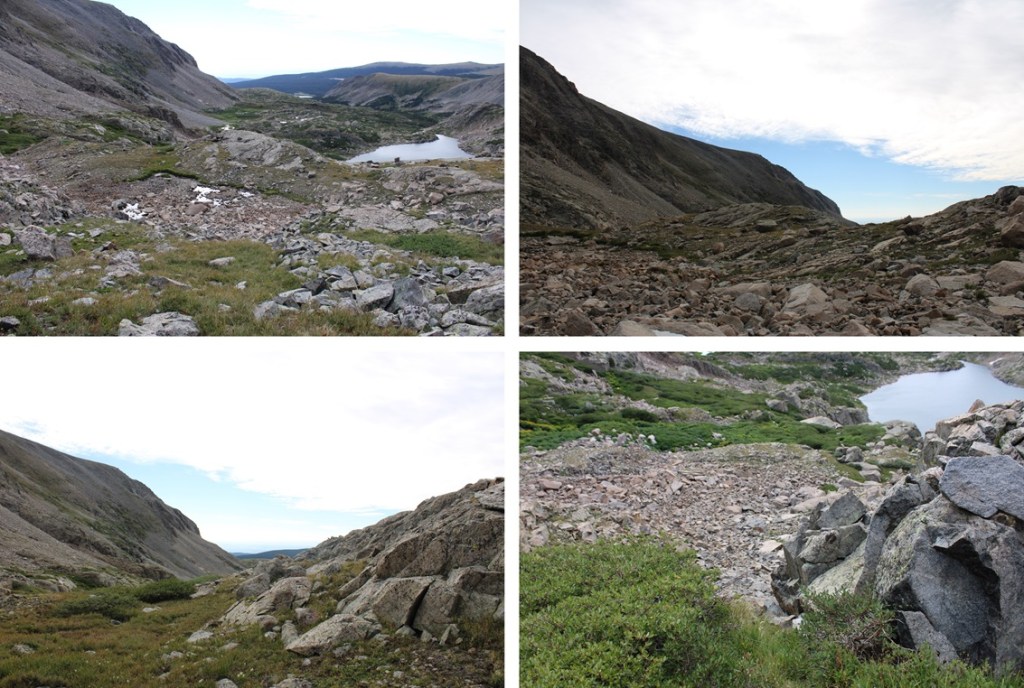
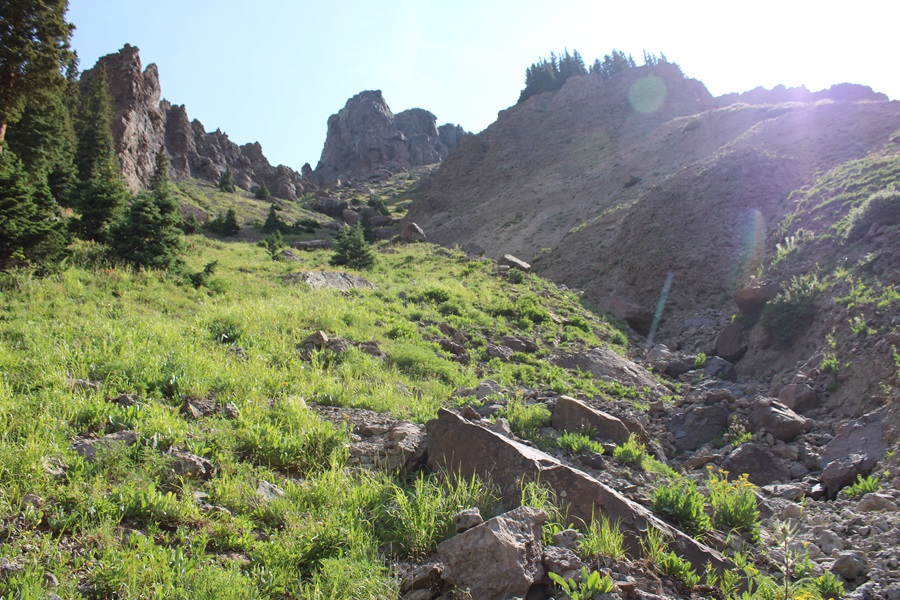
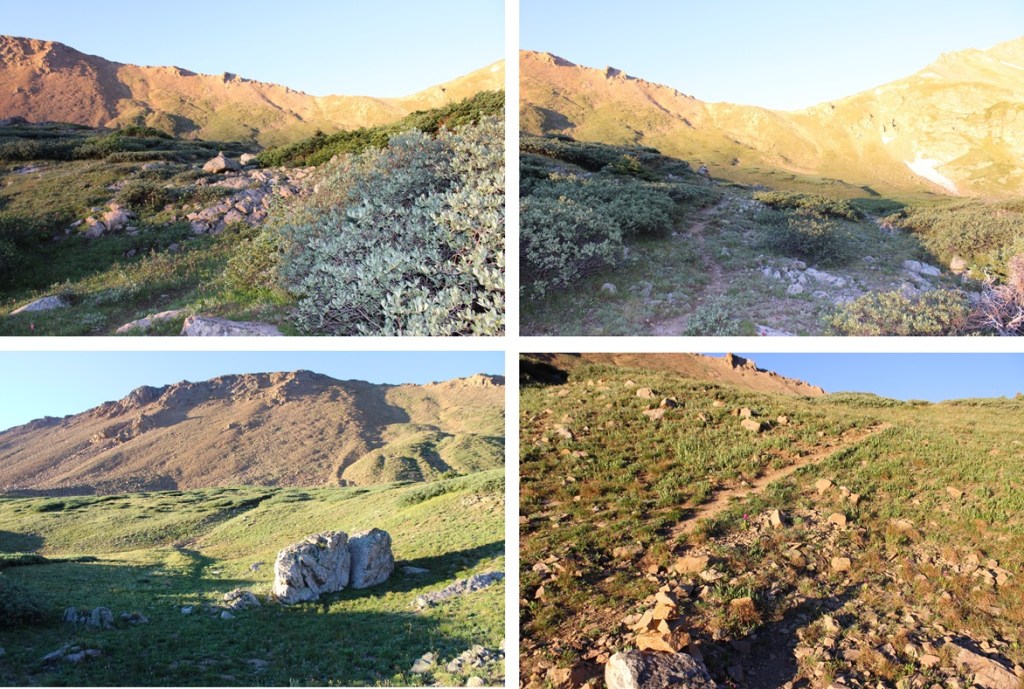
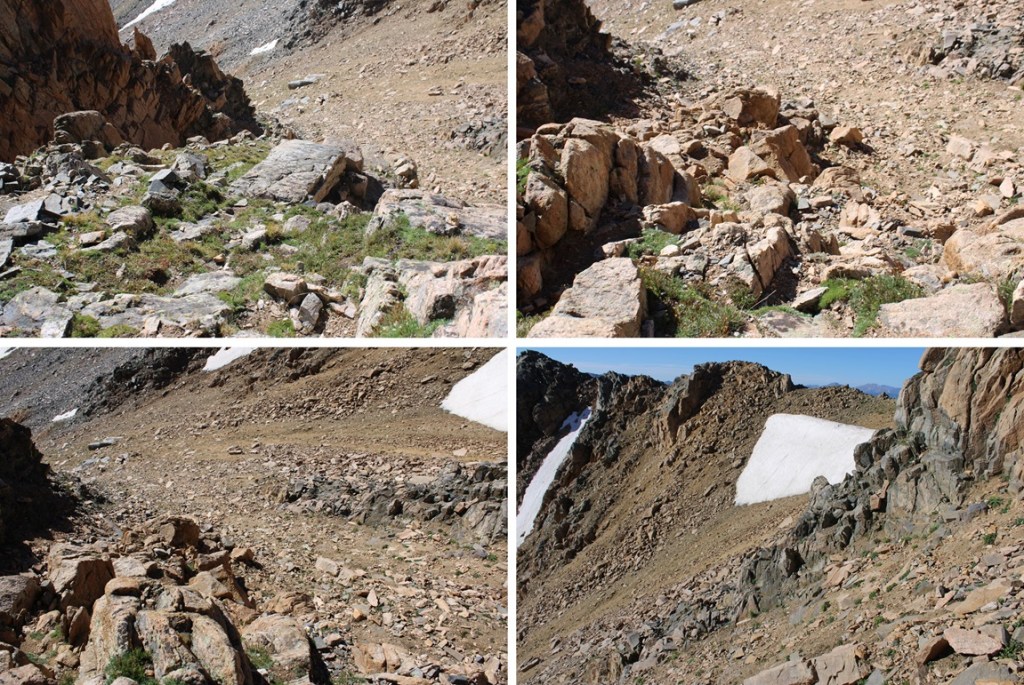
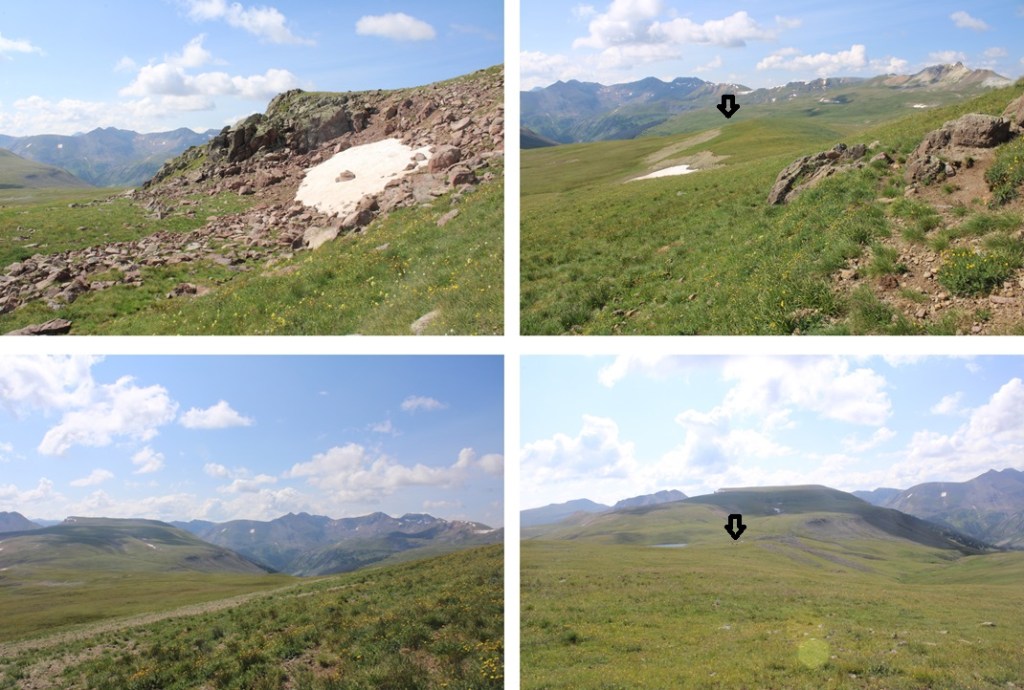
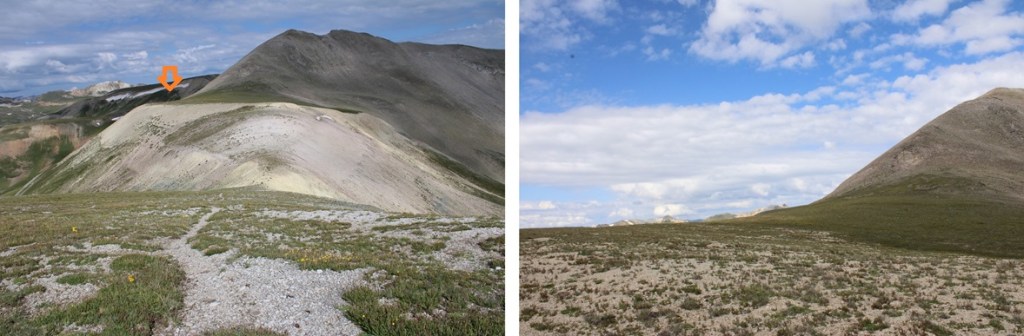
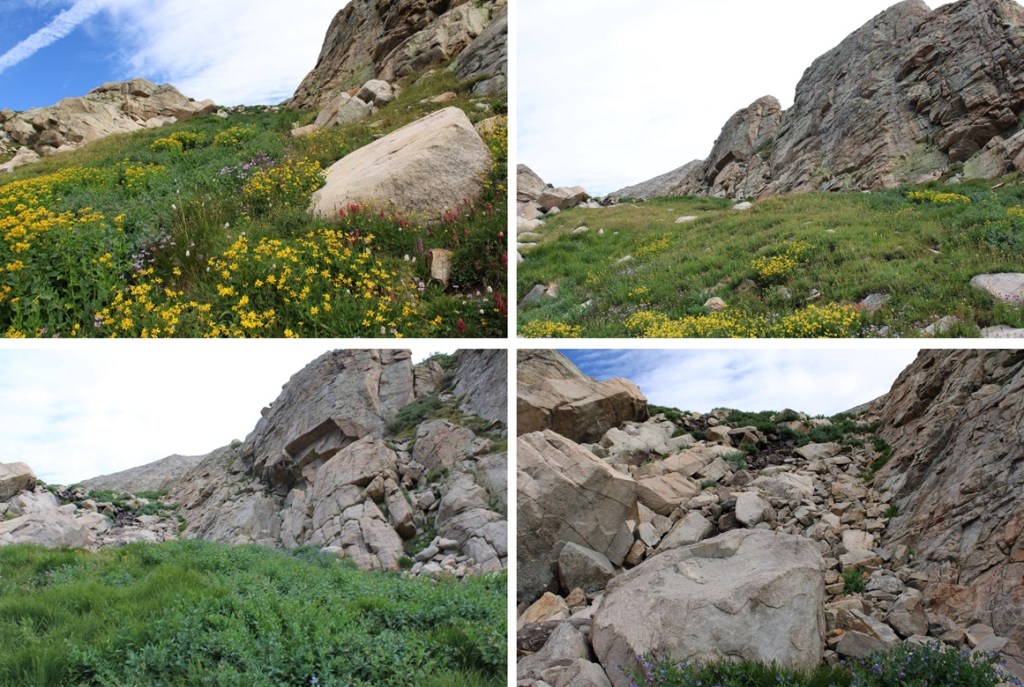
After crossing the waterfall I kept heading west, aiming for the ridge in the distance.  This was choose your own adventure.  I chose to go up and over the rocky gullies, doing my best to avoid the snow.  This can all easily be kept class 2.

At this point , the lake at 11833’ was to the north of me, on my right.  I kept heading west, to gain this ridge.  There are a couple of cairns here, and parts of a game trail, but the main goal is to head towards the gully.    
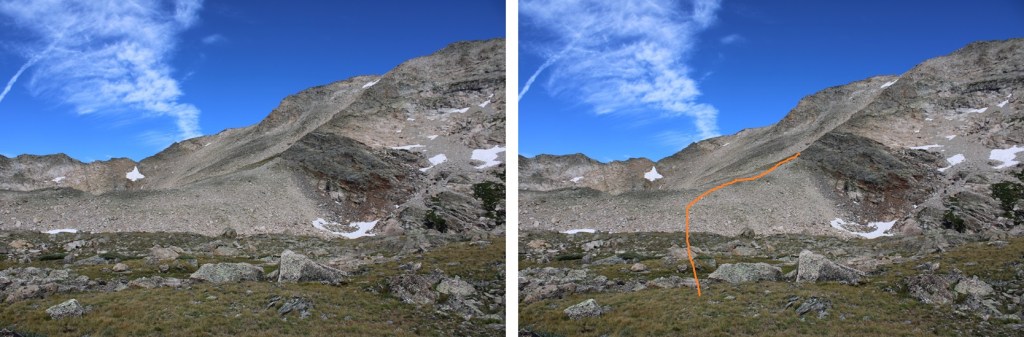
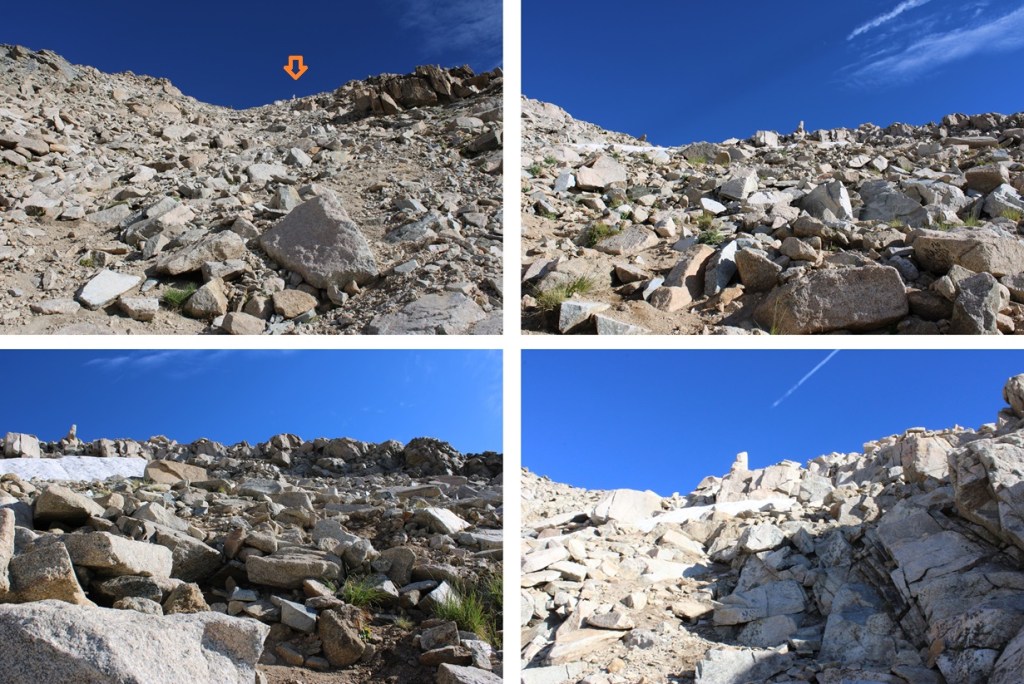
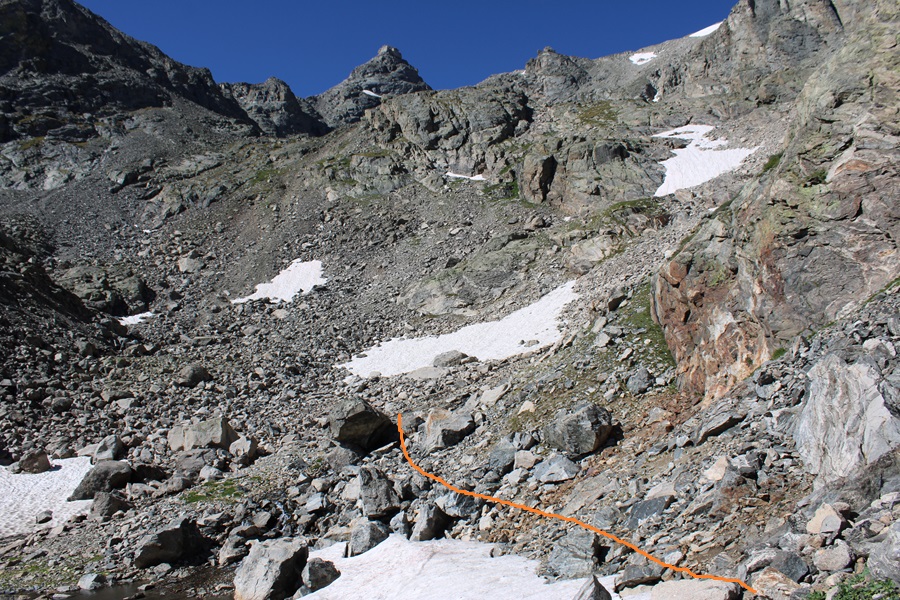
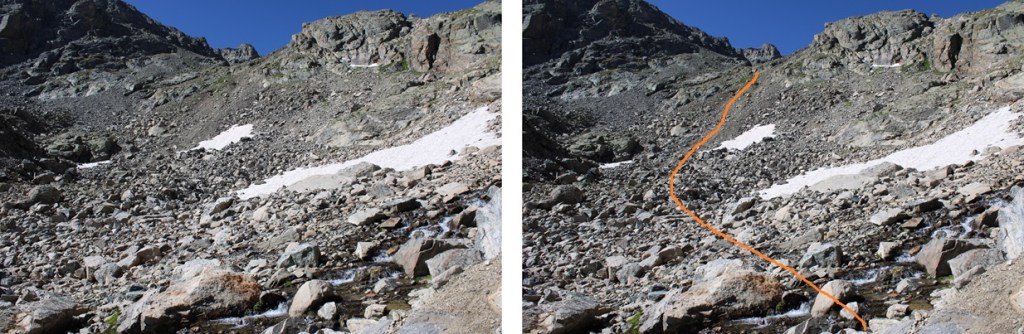
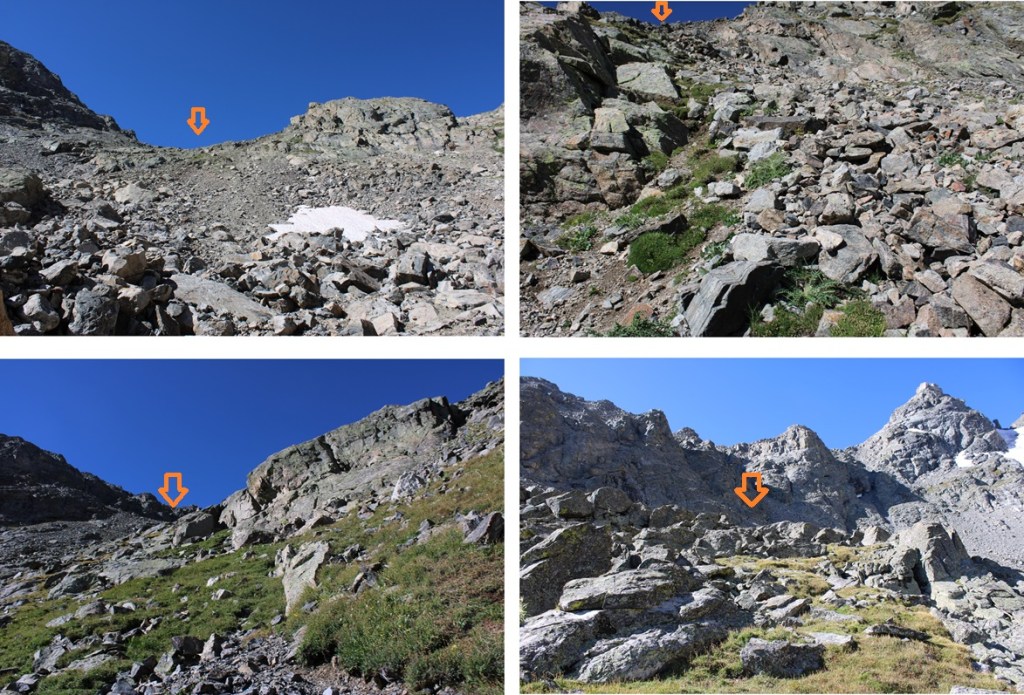
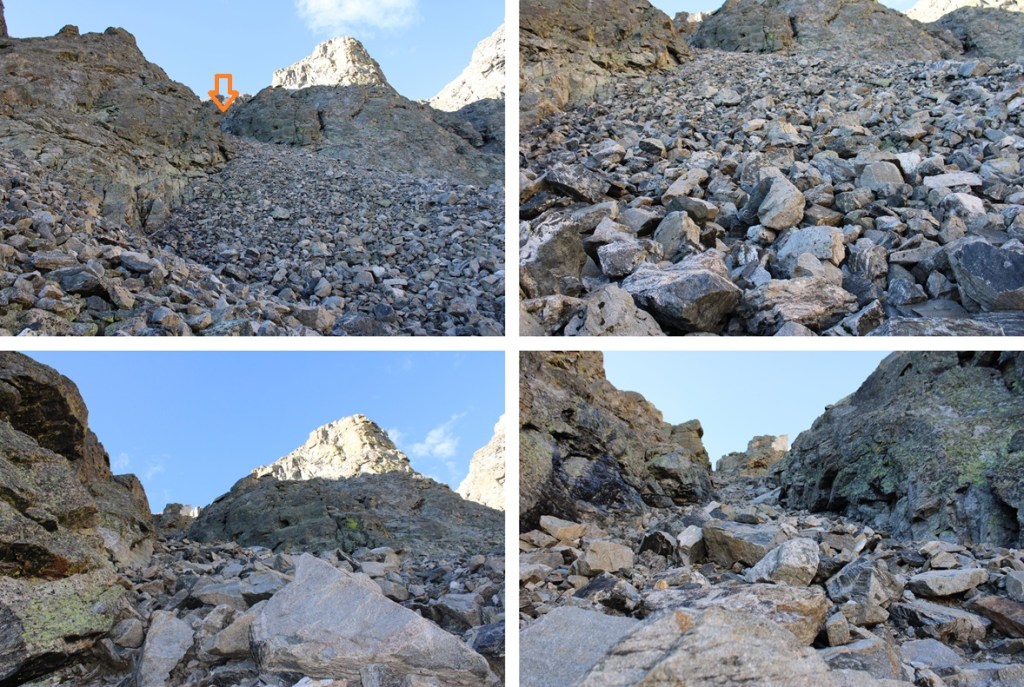
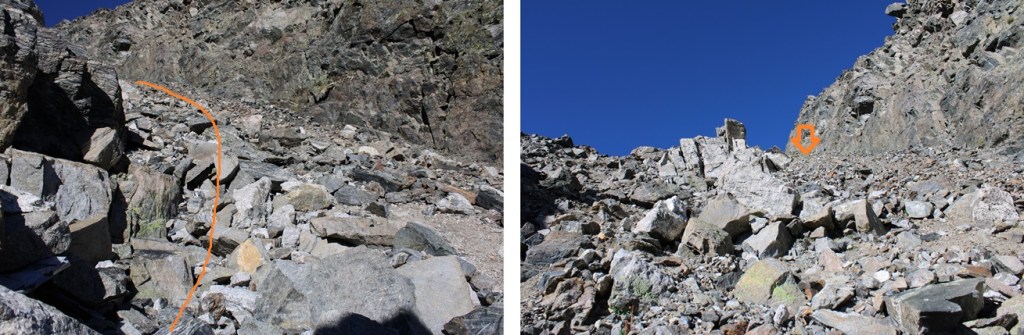
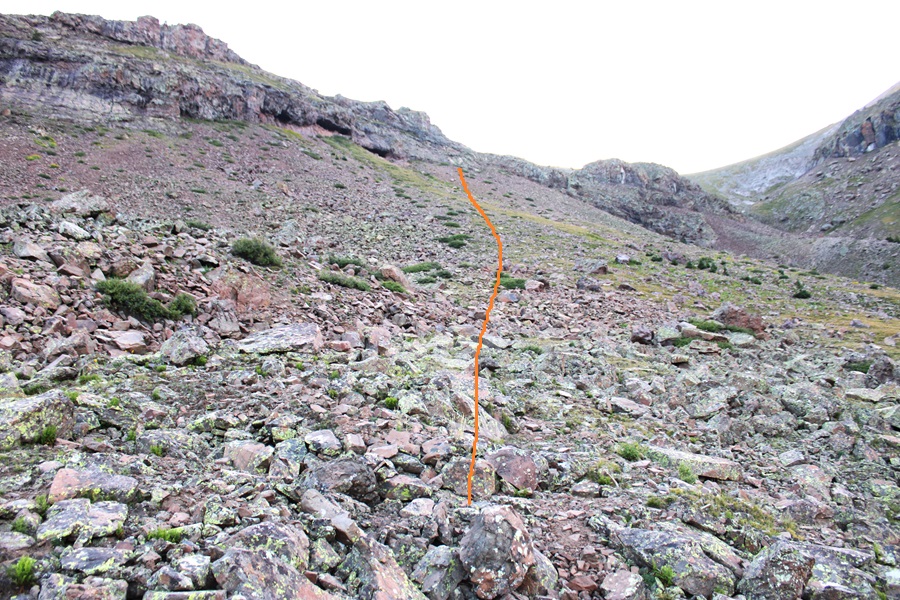
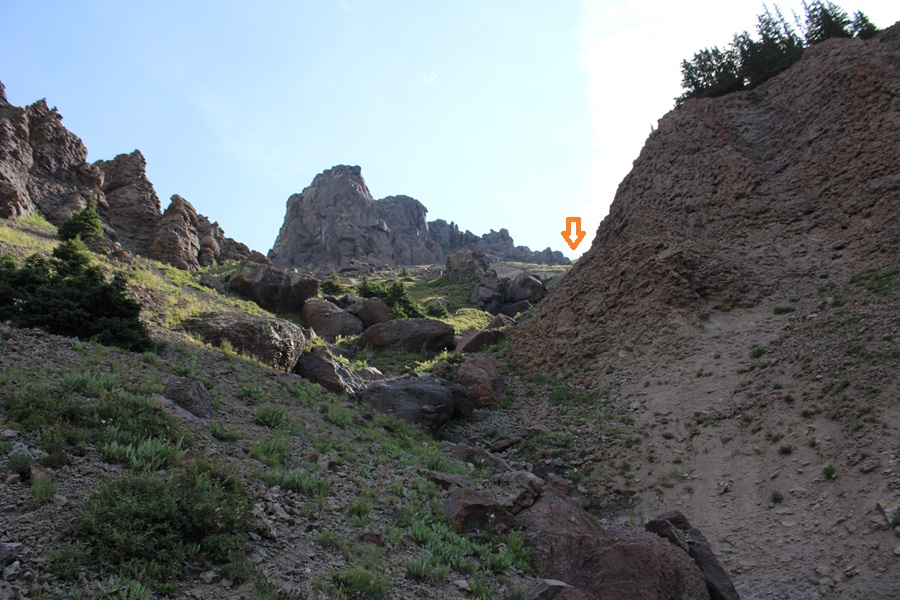
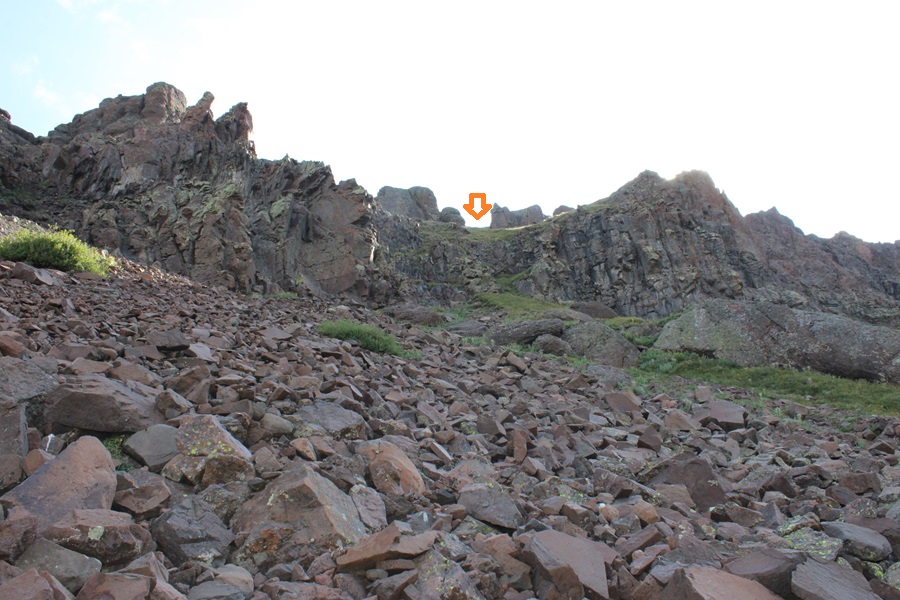
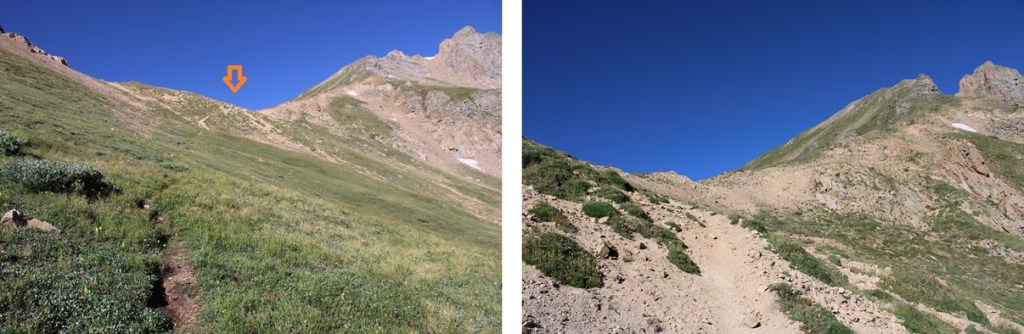
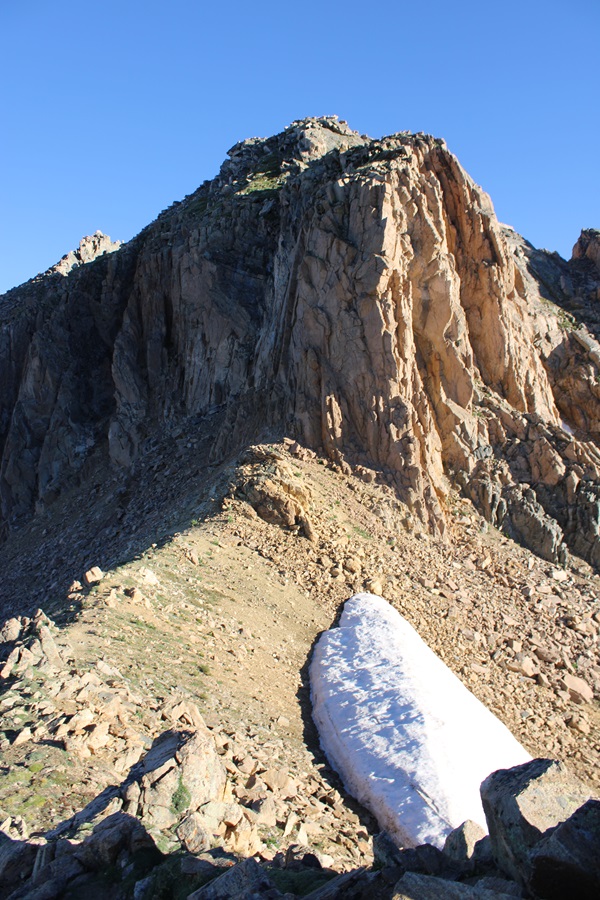
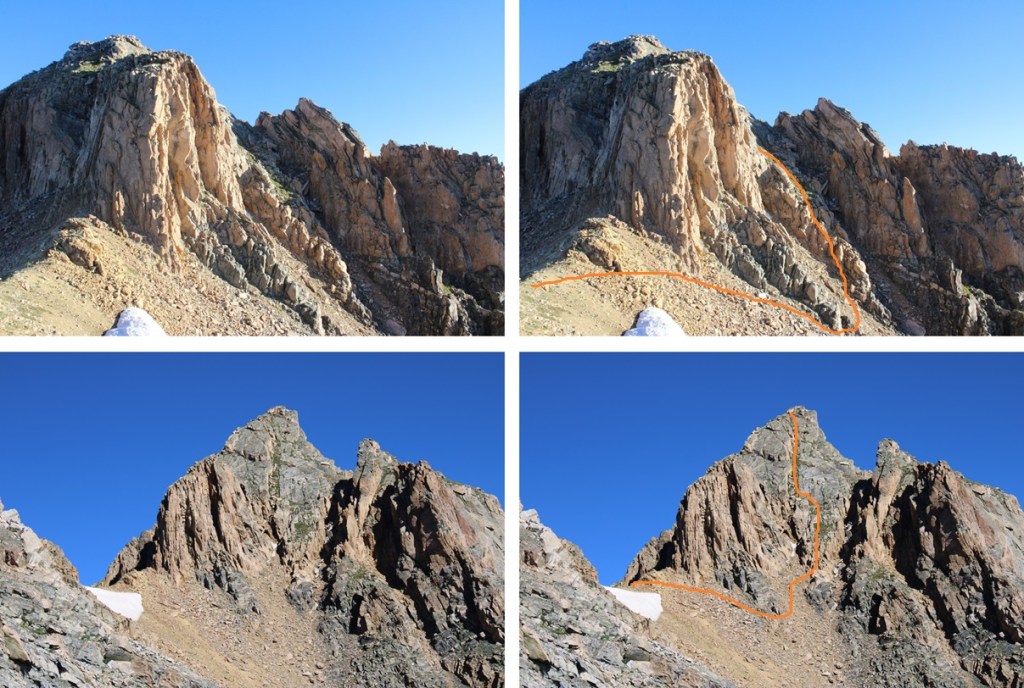
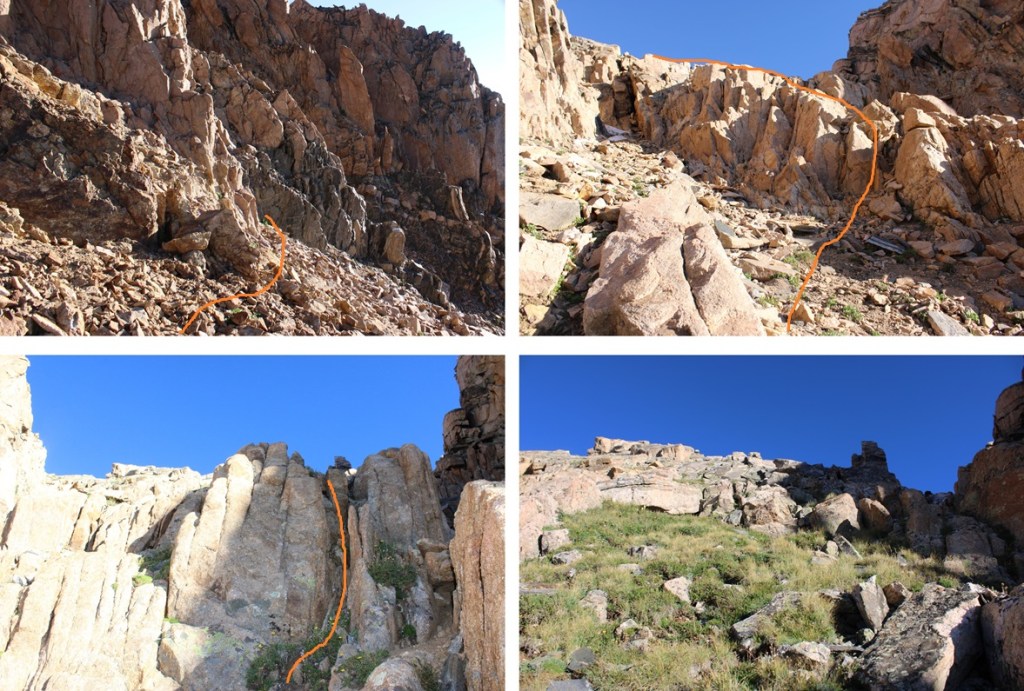
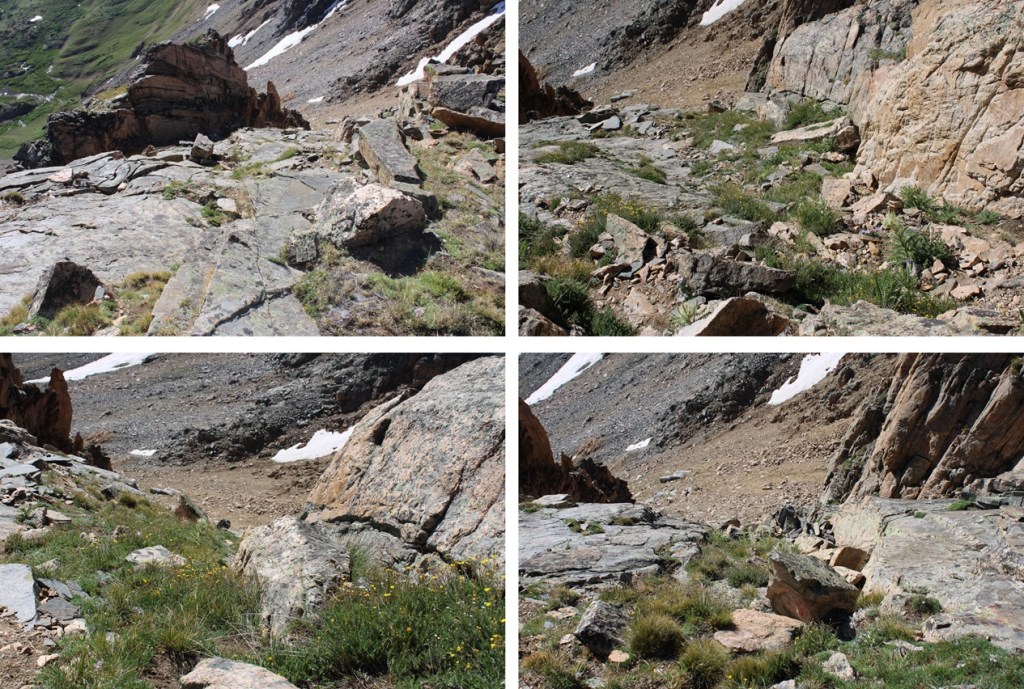
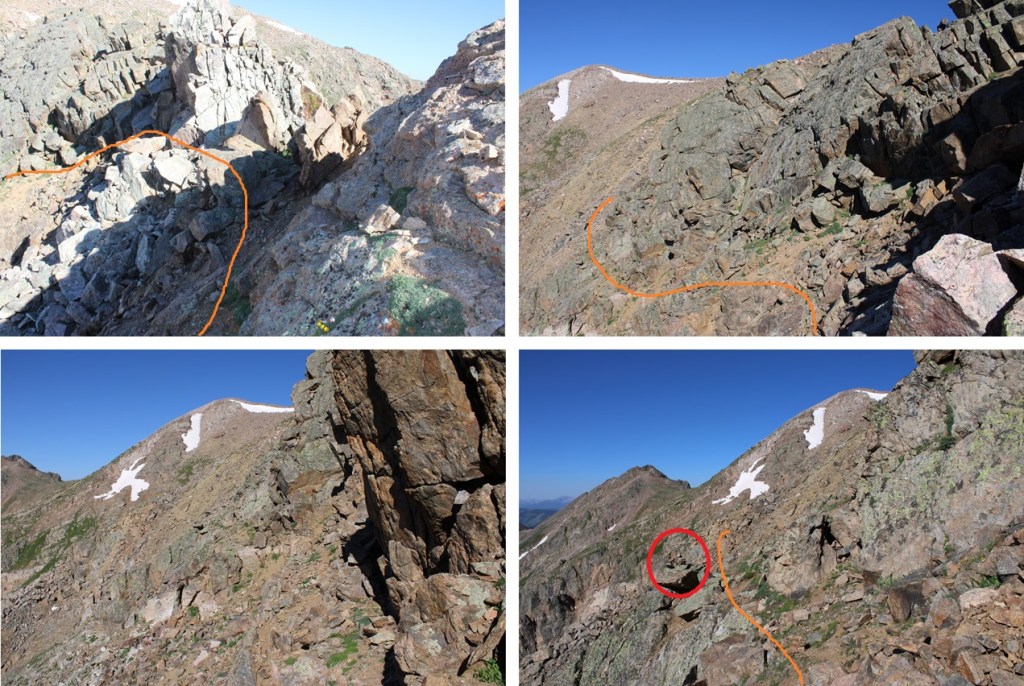
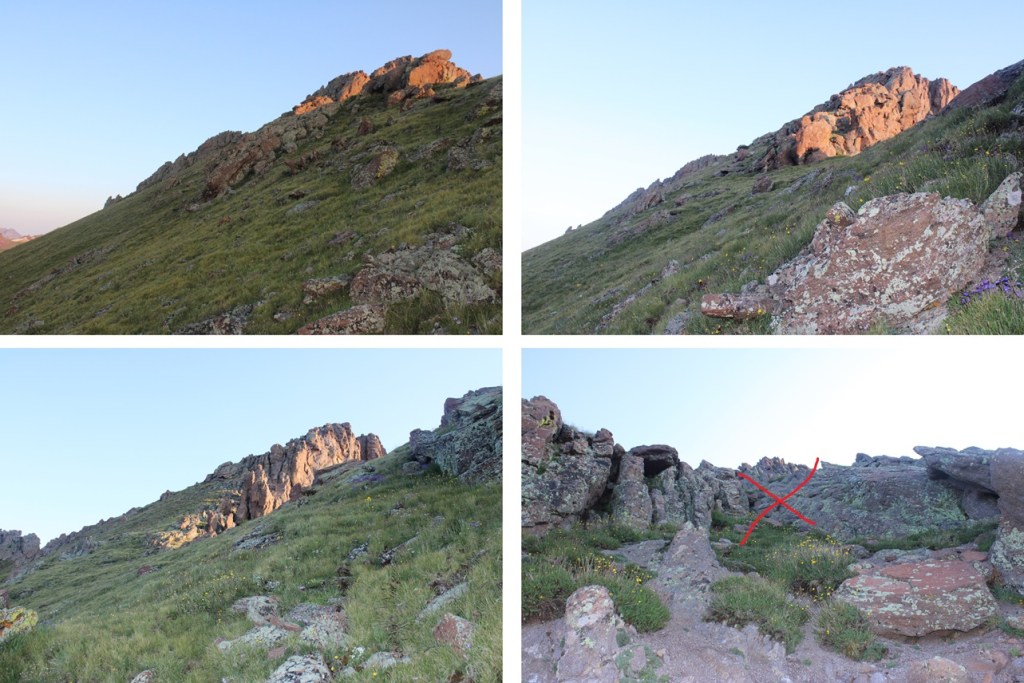
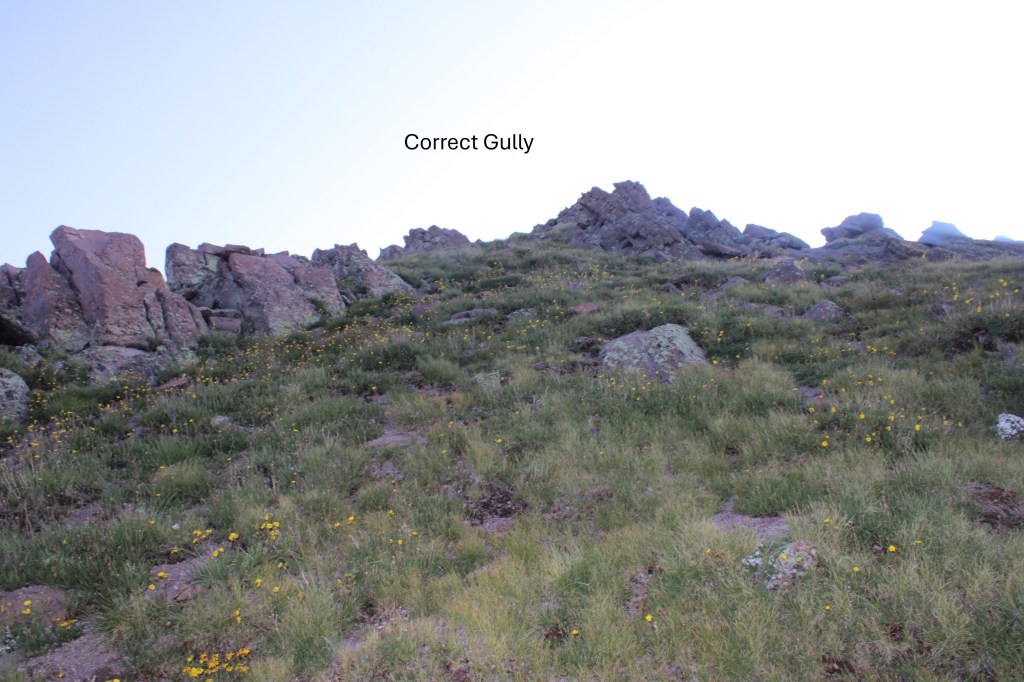
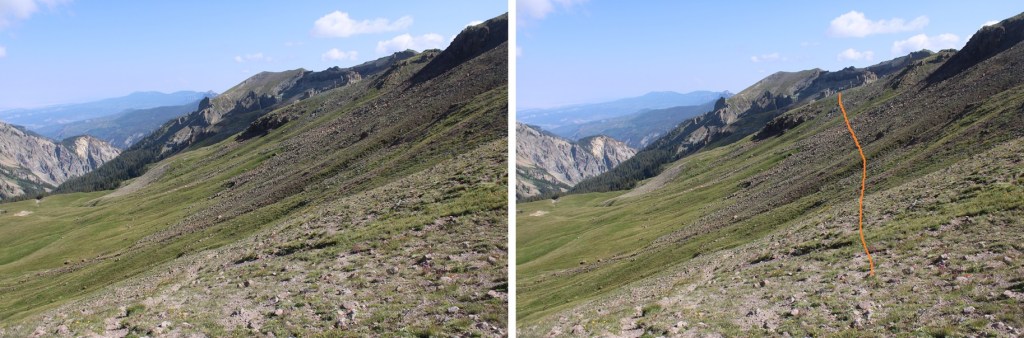
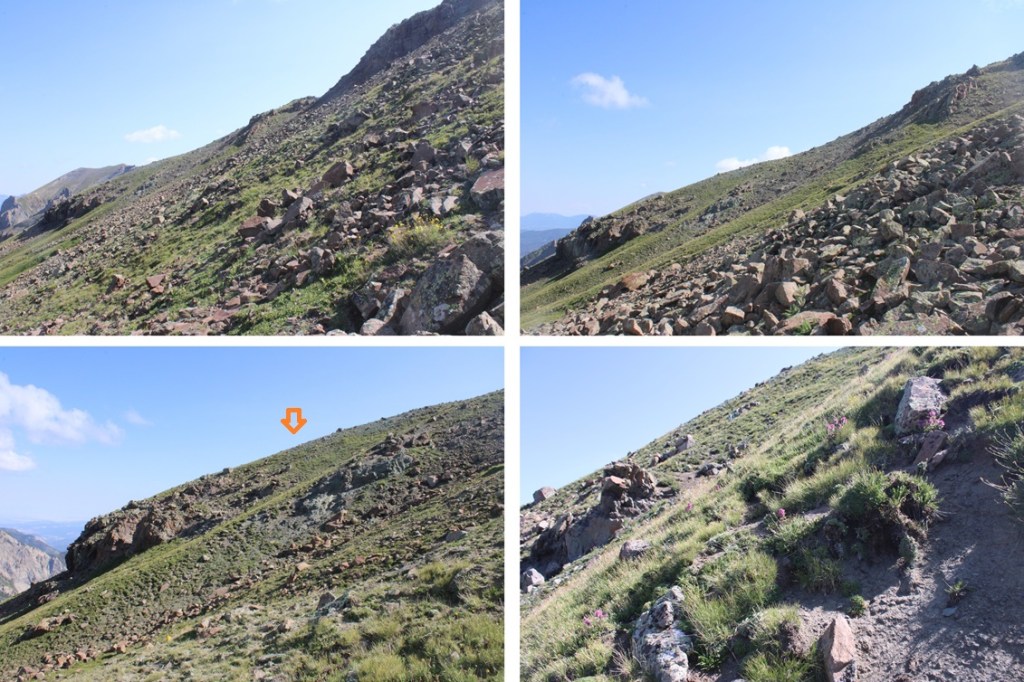
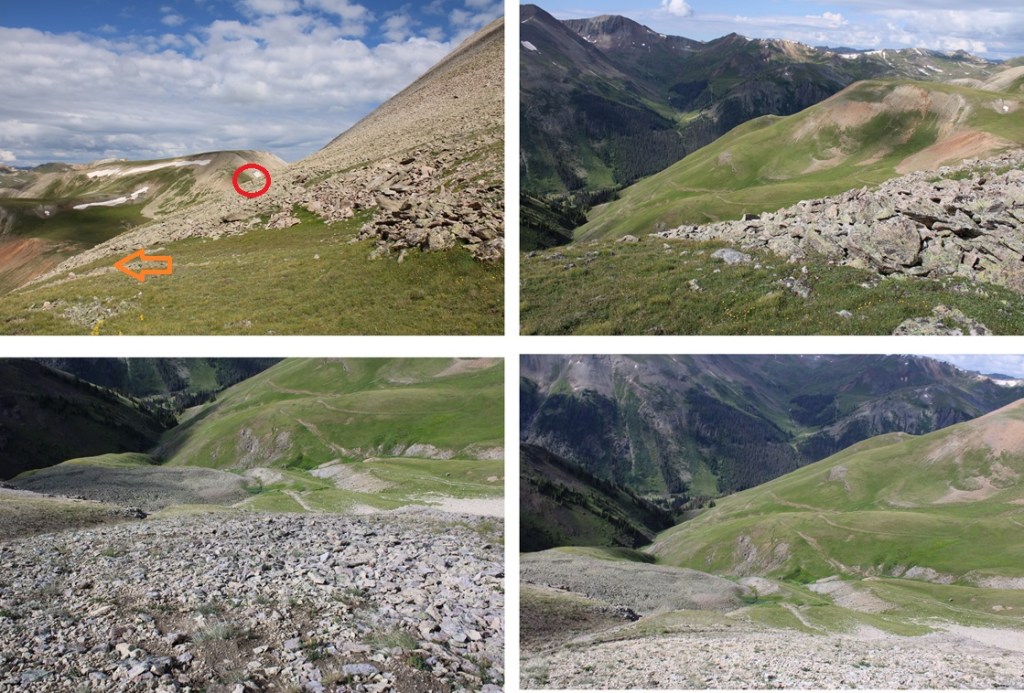
And now to head up the gully. I did this by heading north, staying to the right of the snow.   If there isn’t snow when you’re doing this route, you can aim for a rather large vertical rock sticking up straight (you’ll know it when you see it, as it stands out).  This gully had game trails leading to the top, and I’m sure you could take them all the way to the top of the gully.  However, I stayed to the right of the snow and then climbed up the rocky rib.  This was mostly class 2, with a few easy class 3 moves thrown in.
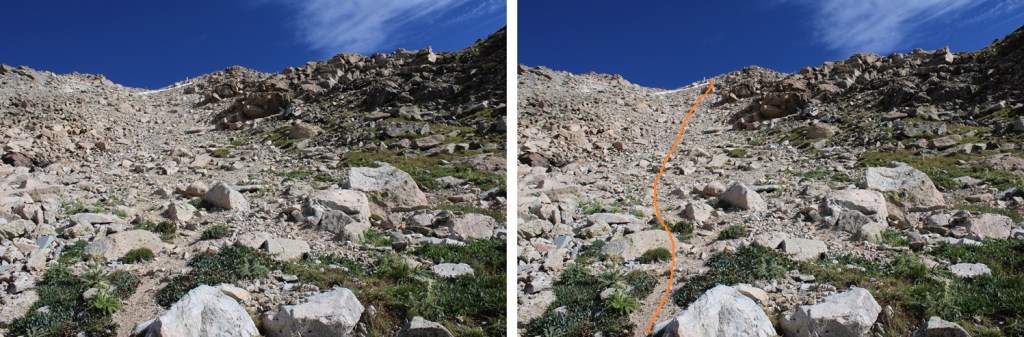
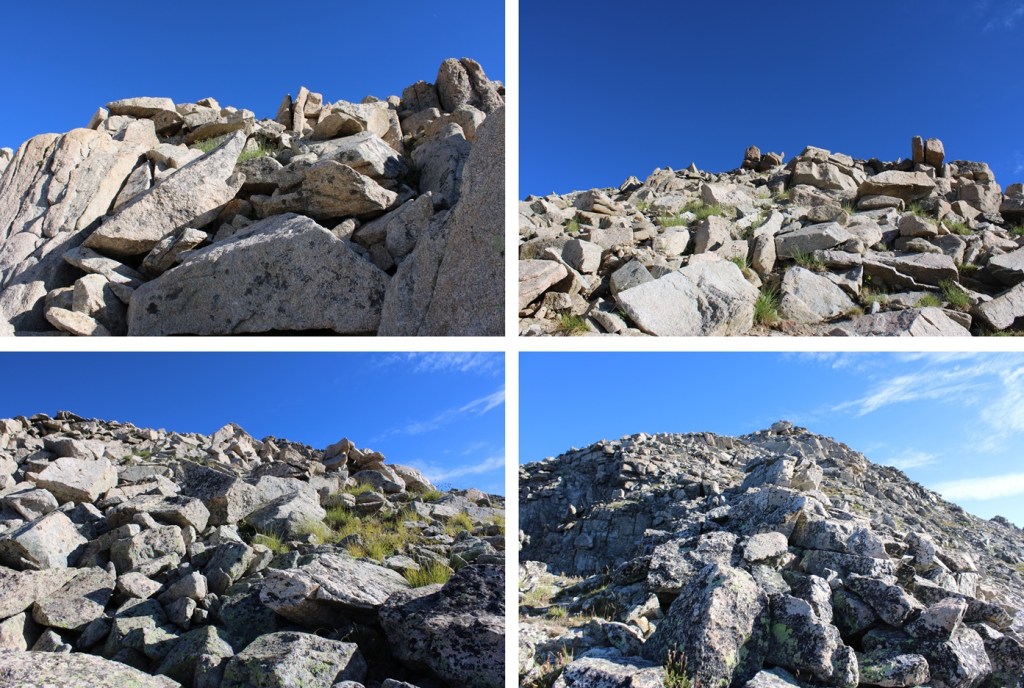
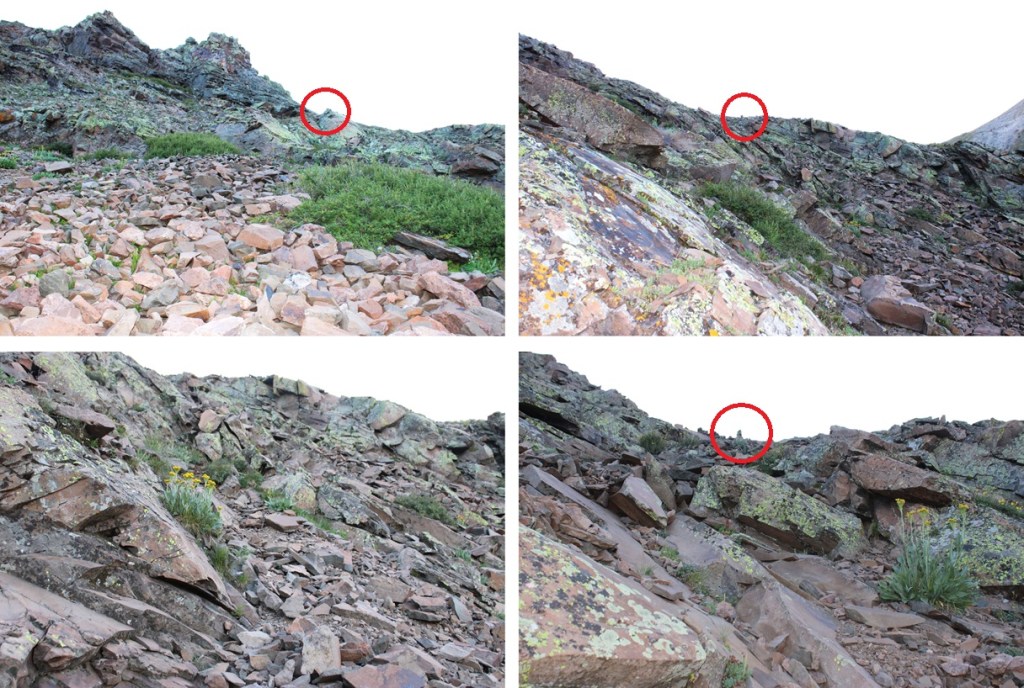
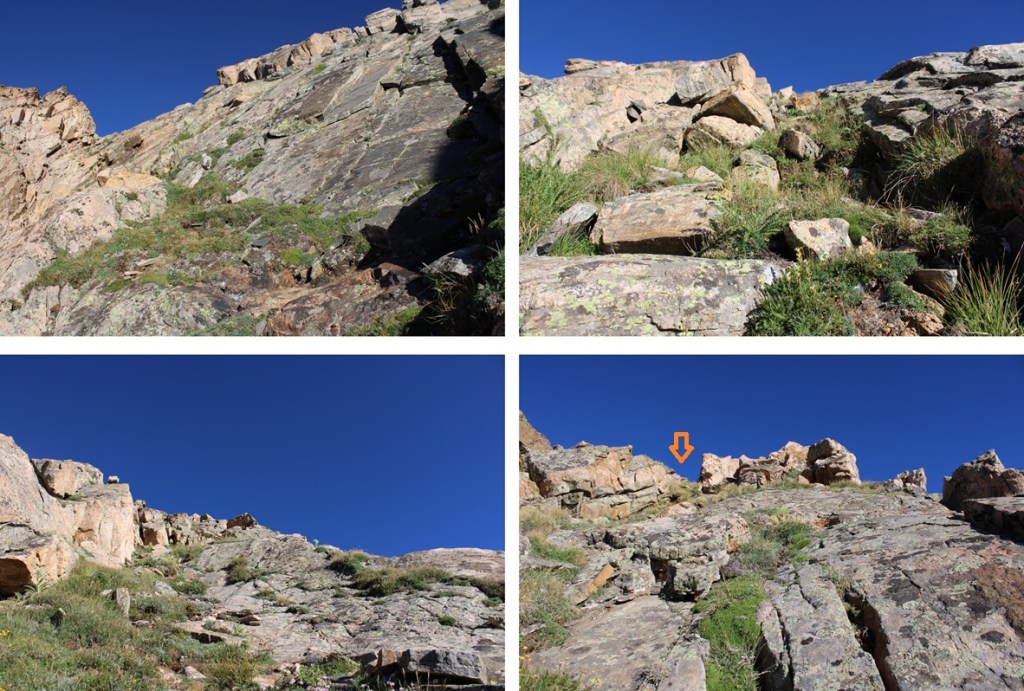
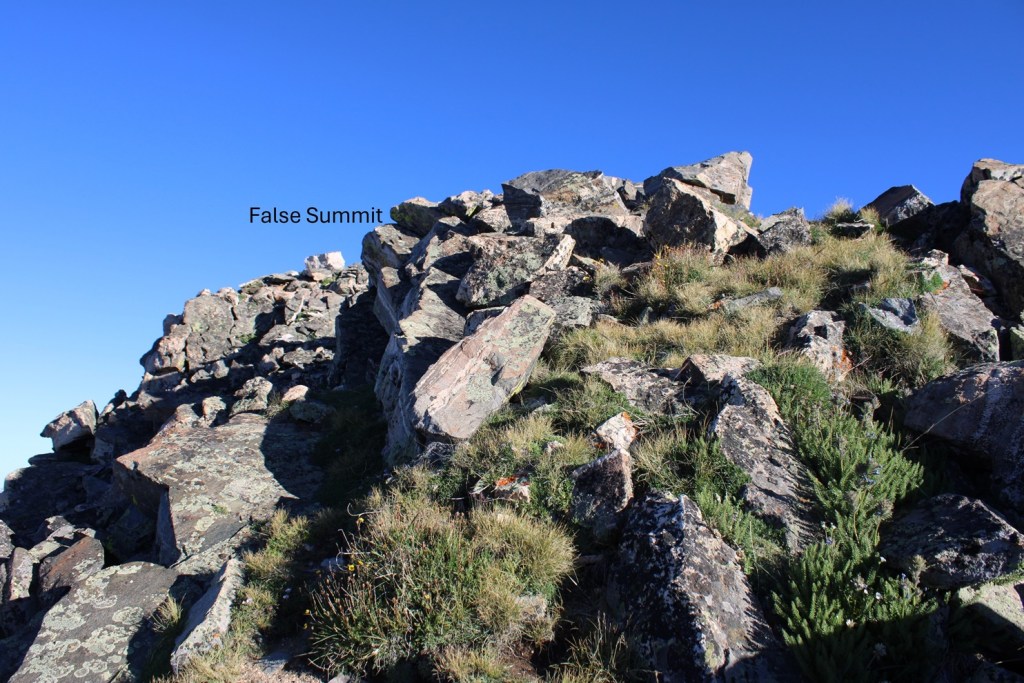
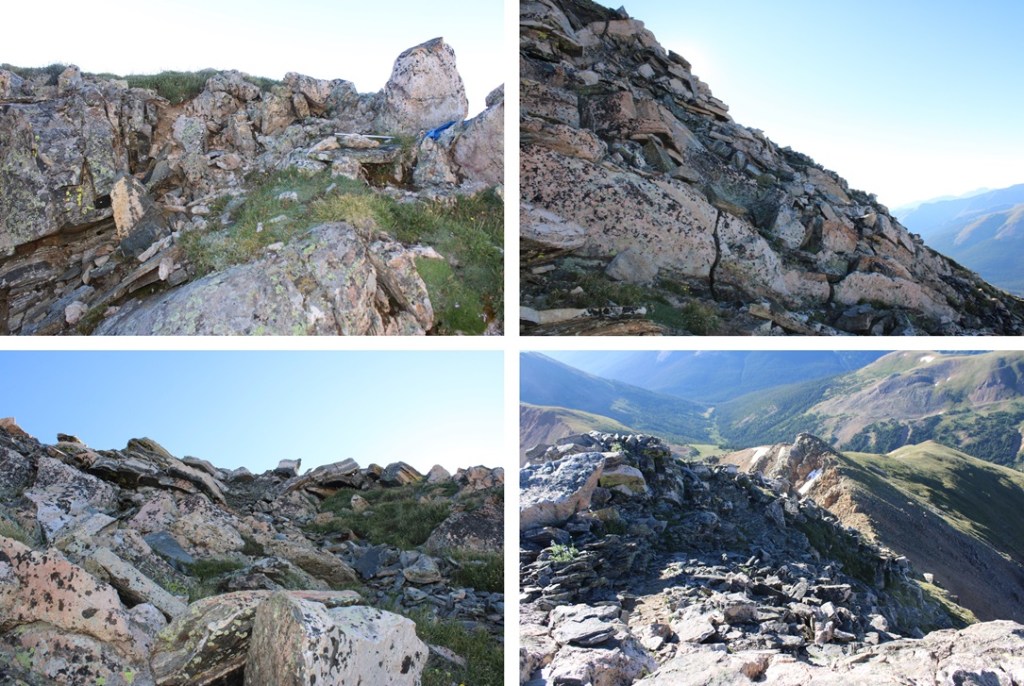
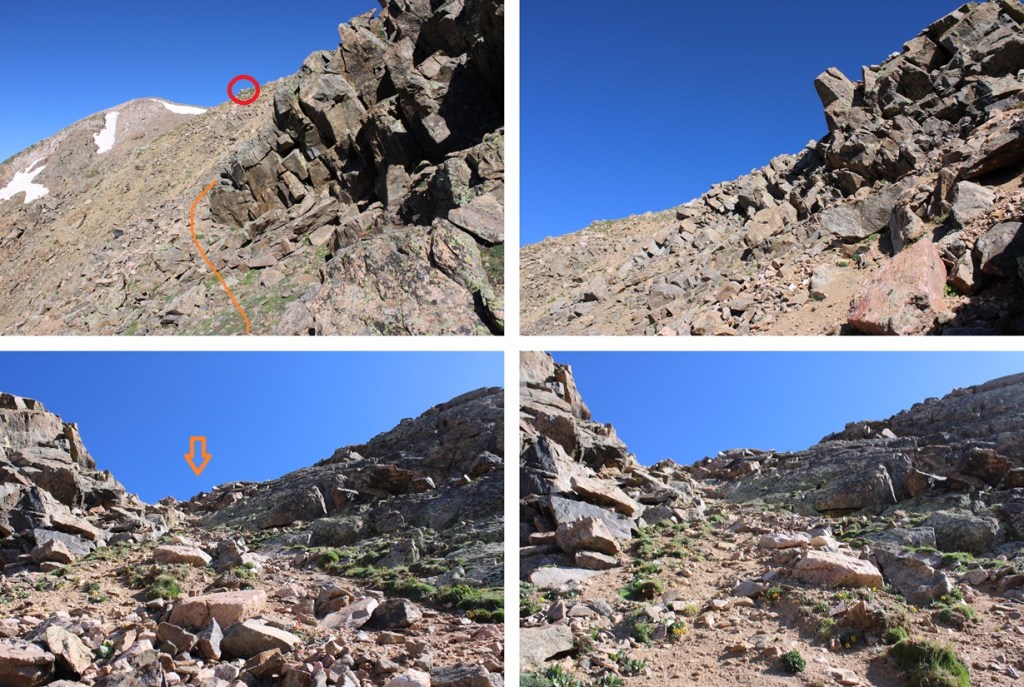
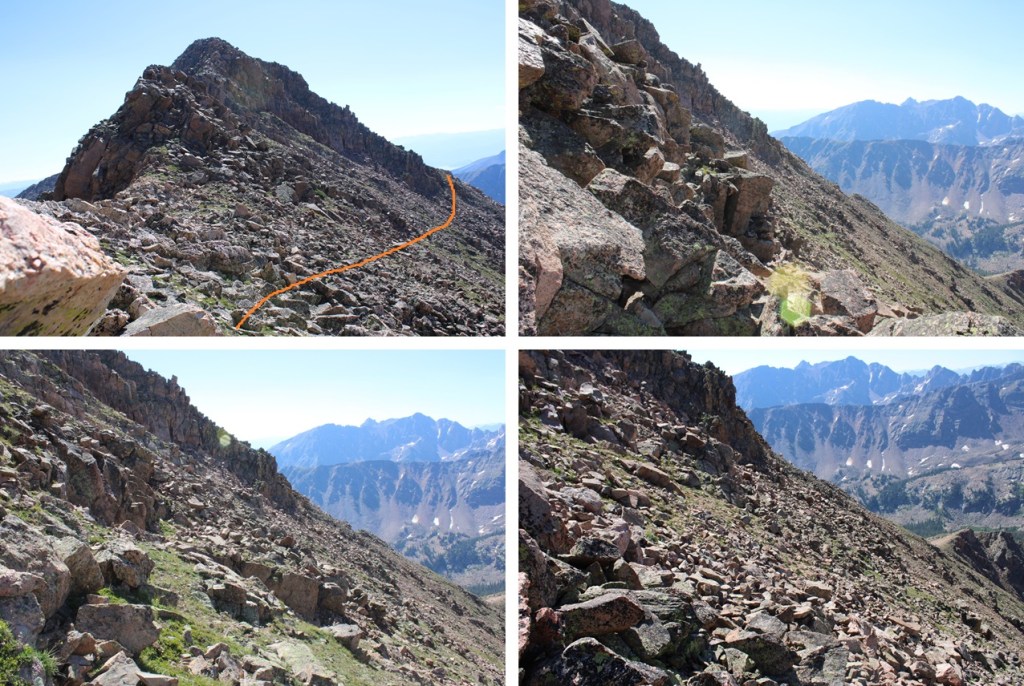
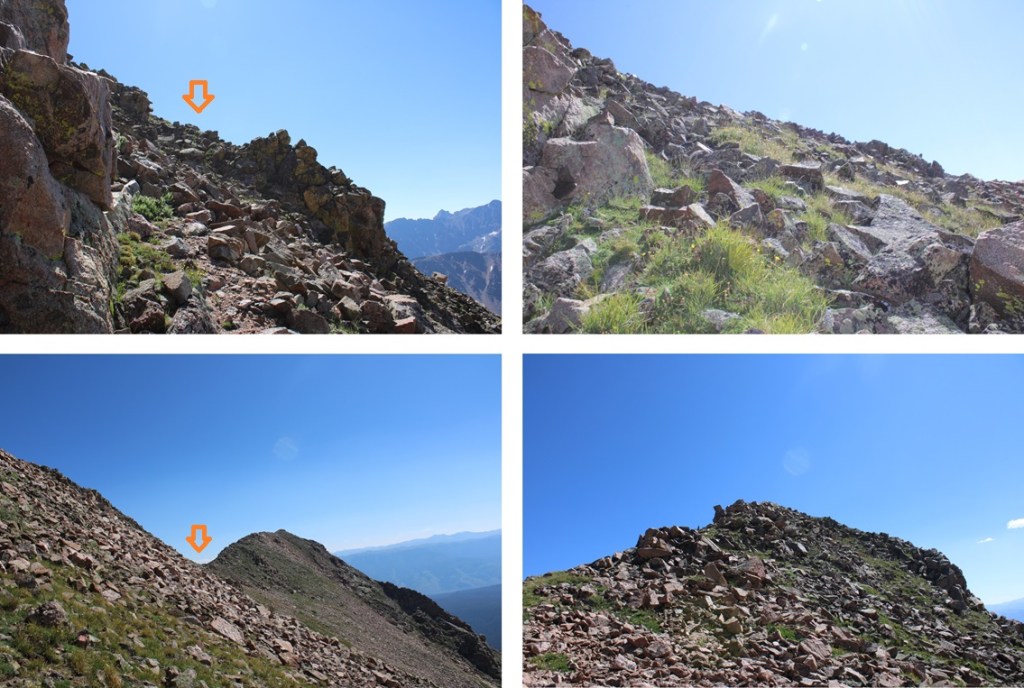
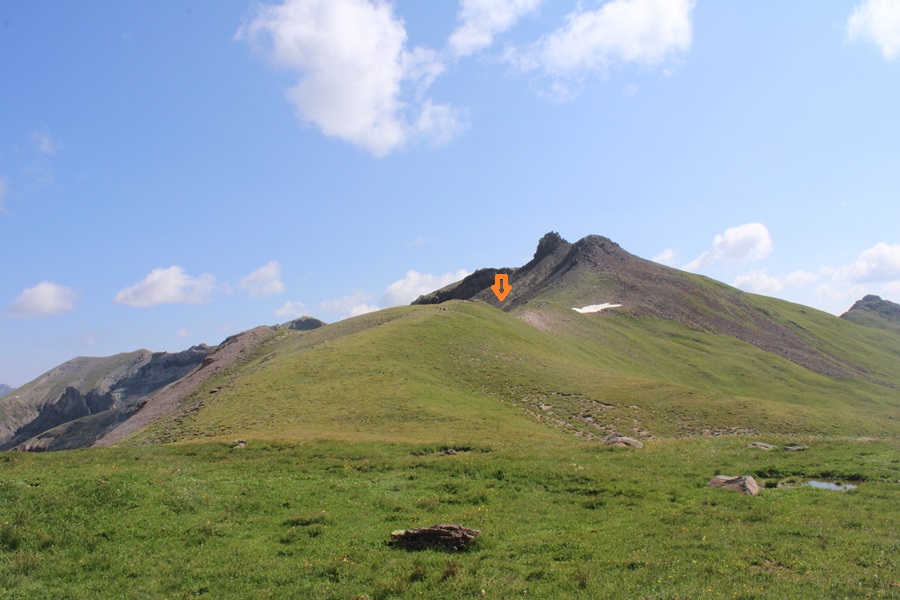
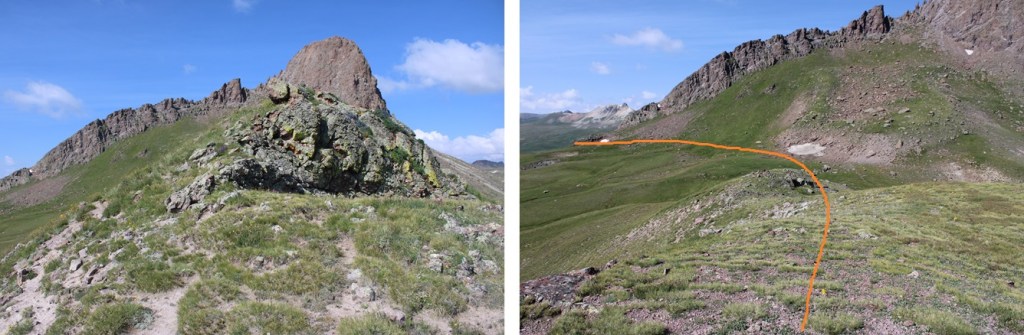
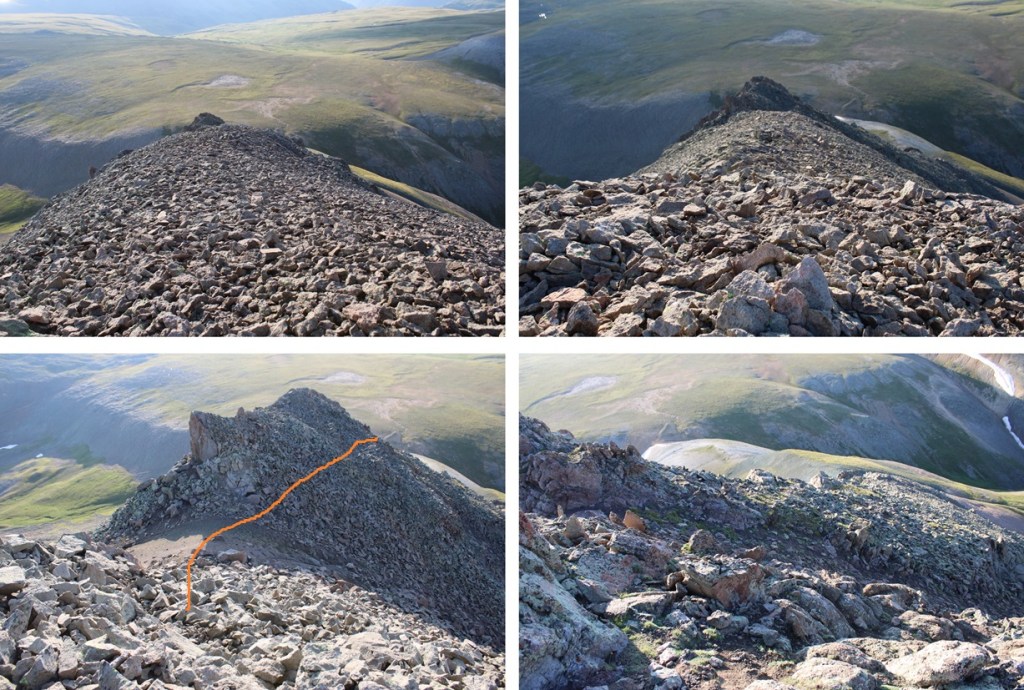
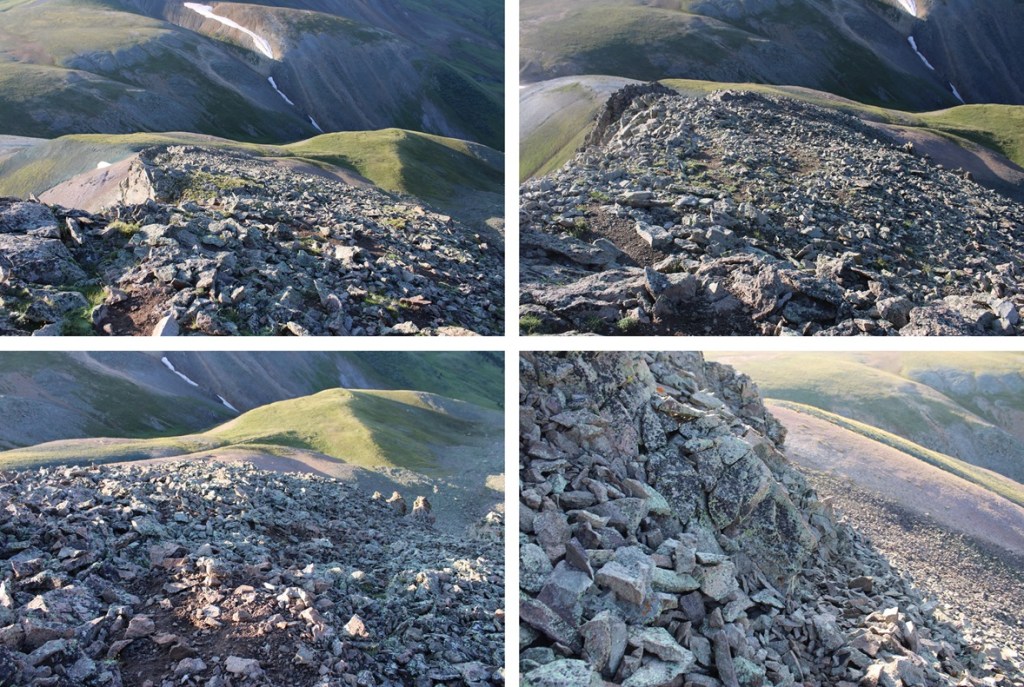
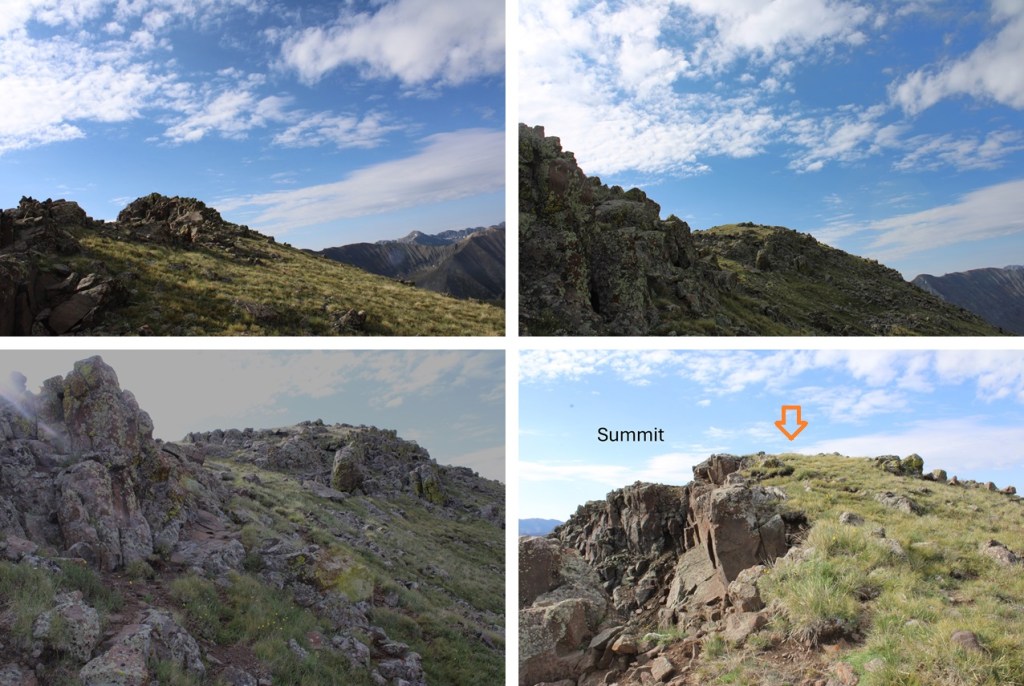
At the top of the rock rib, you’ll see what appears to be the summit of Paiute Peak to the north. It’s actually a false summit, but aim for it.
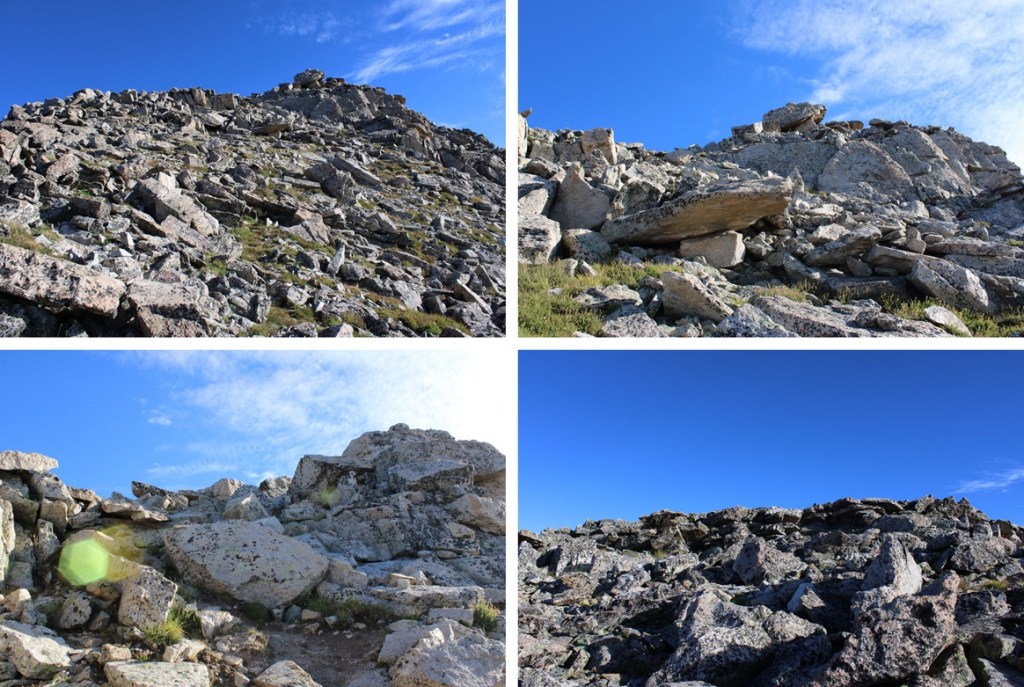
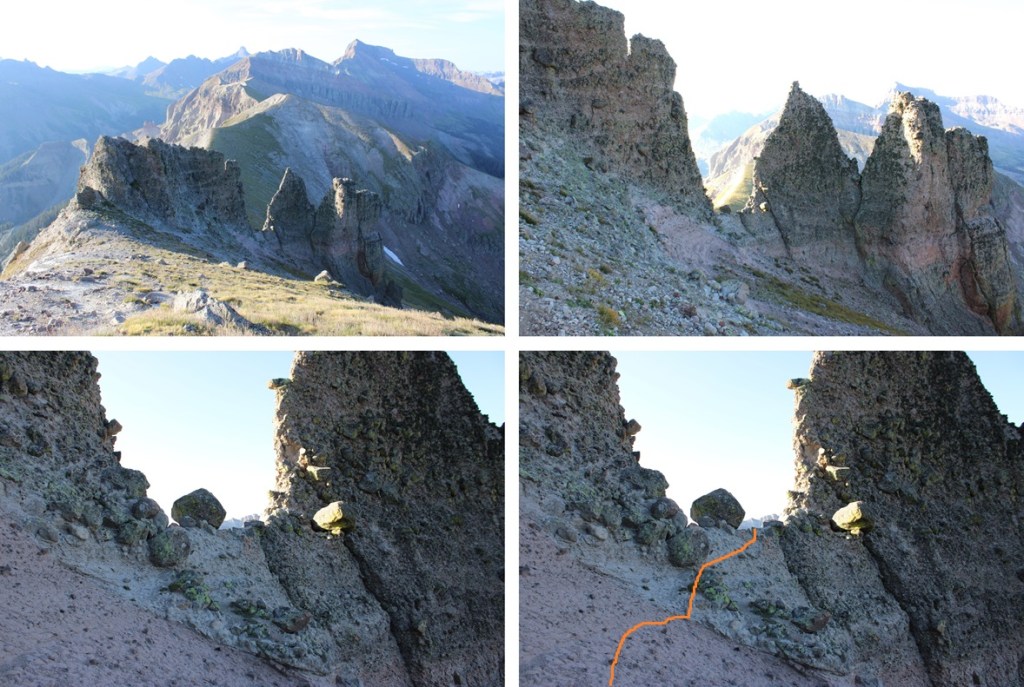
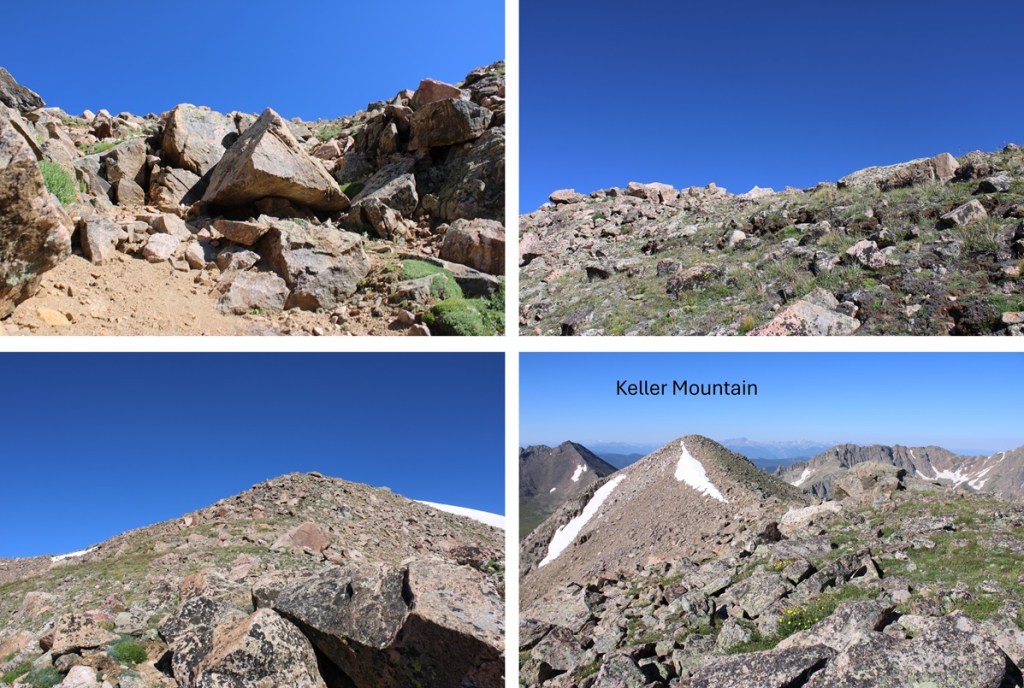
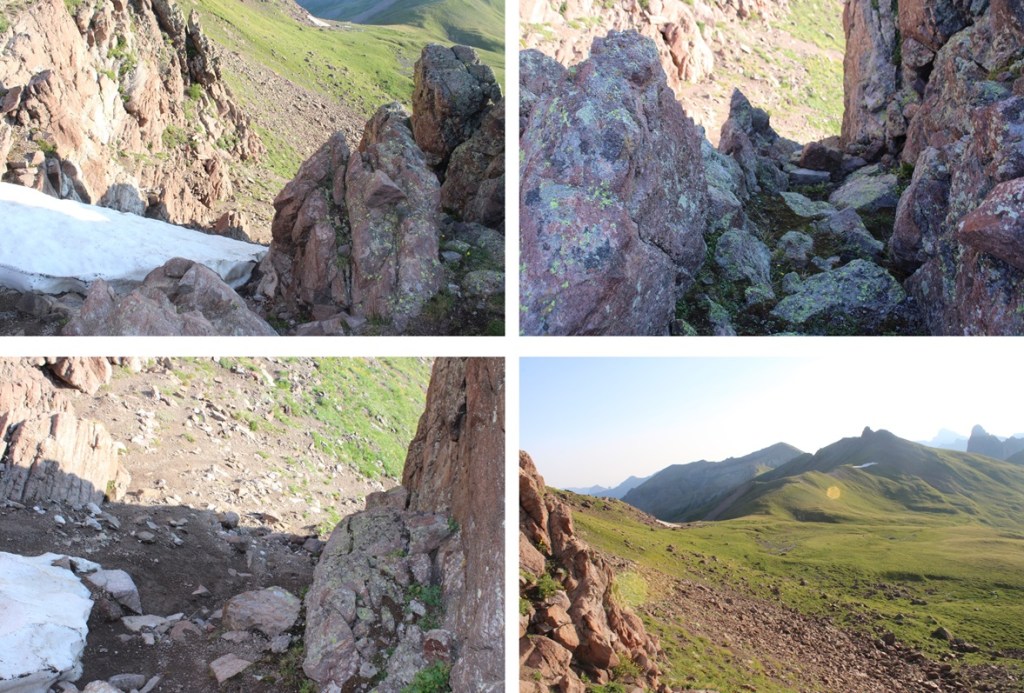
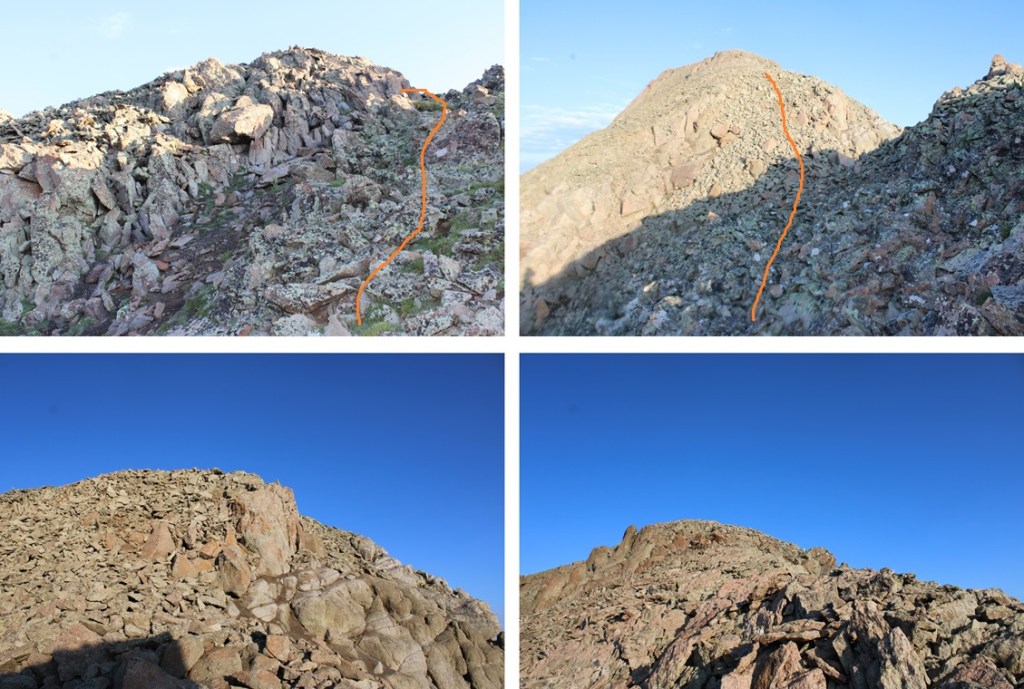
From here, the true summit is to the northeast.  Head towards two boulders that look like the summit (they’re another false summit)
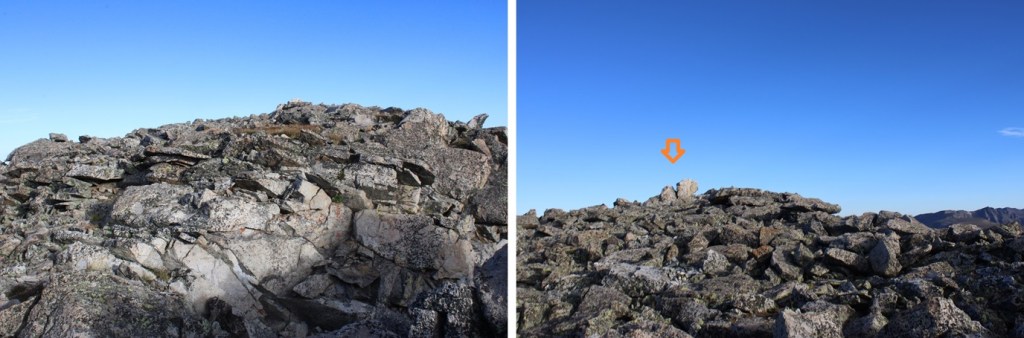
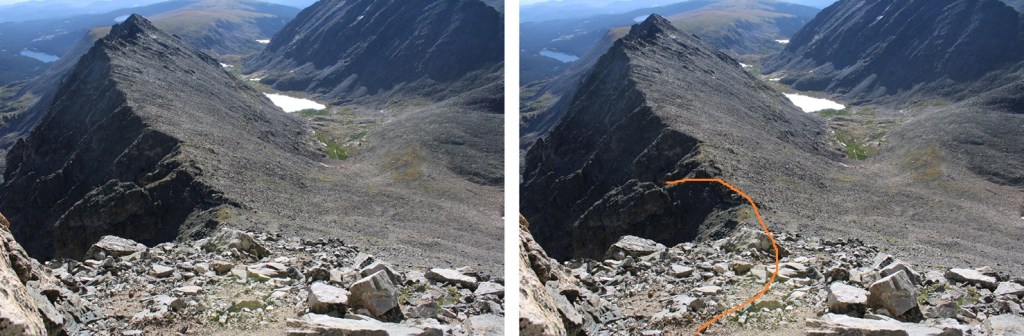
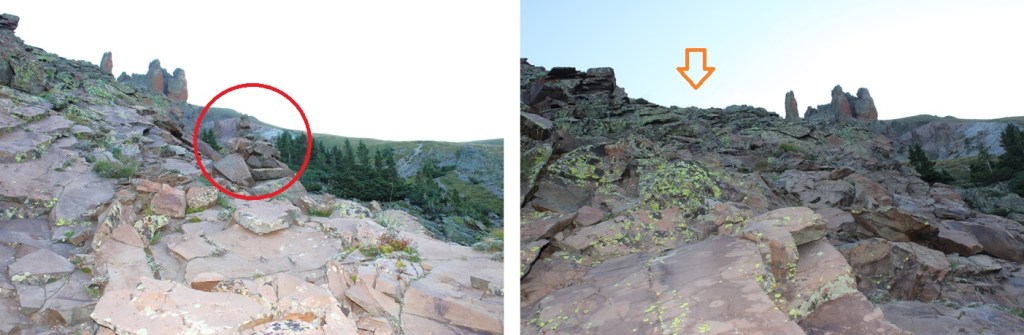
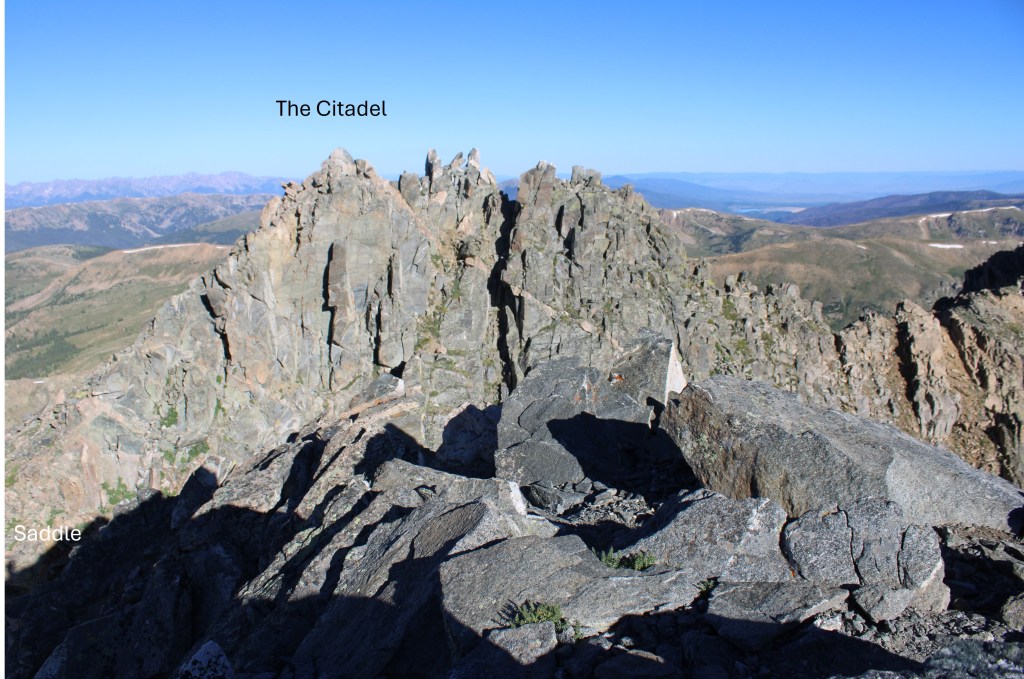
From those two boulders, the summit of Paiute Peak is visible to the north.
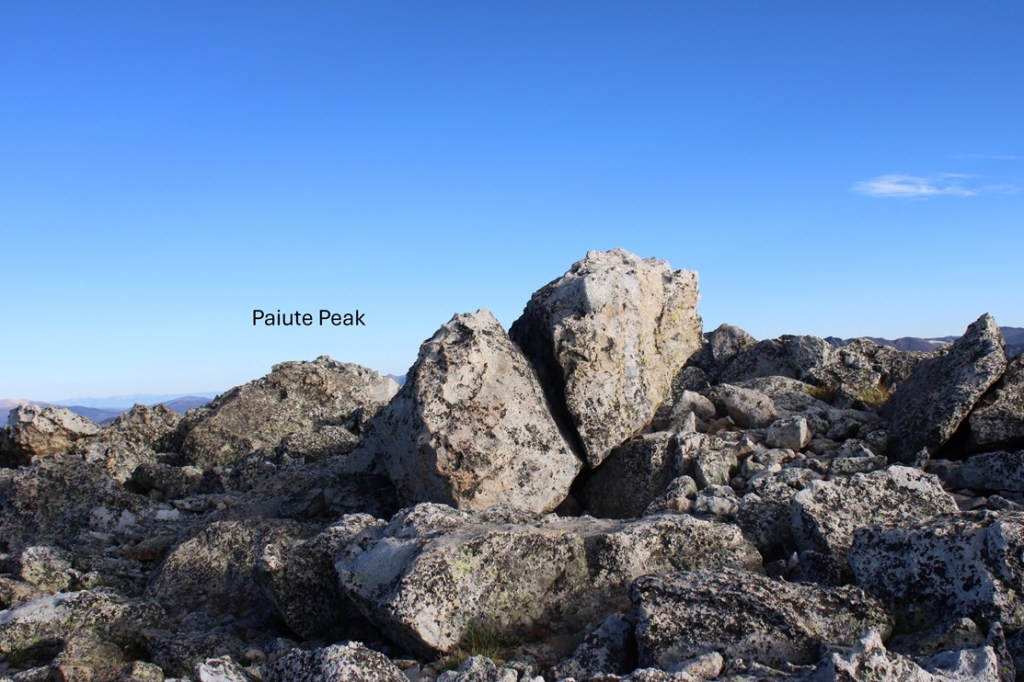
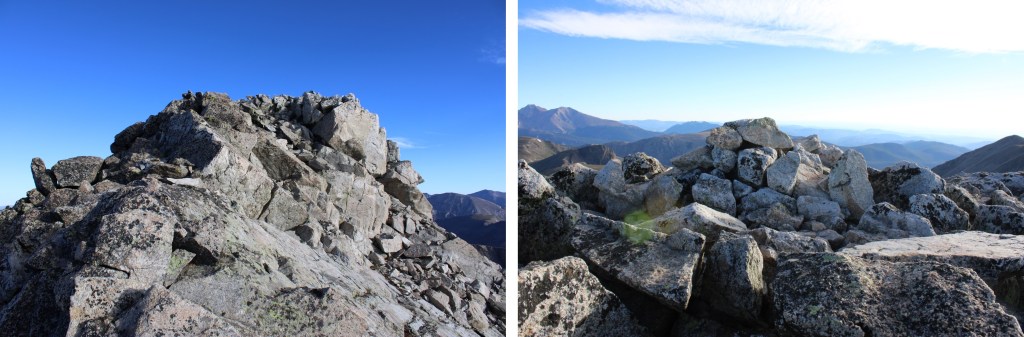
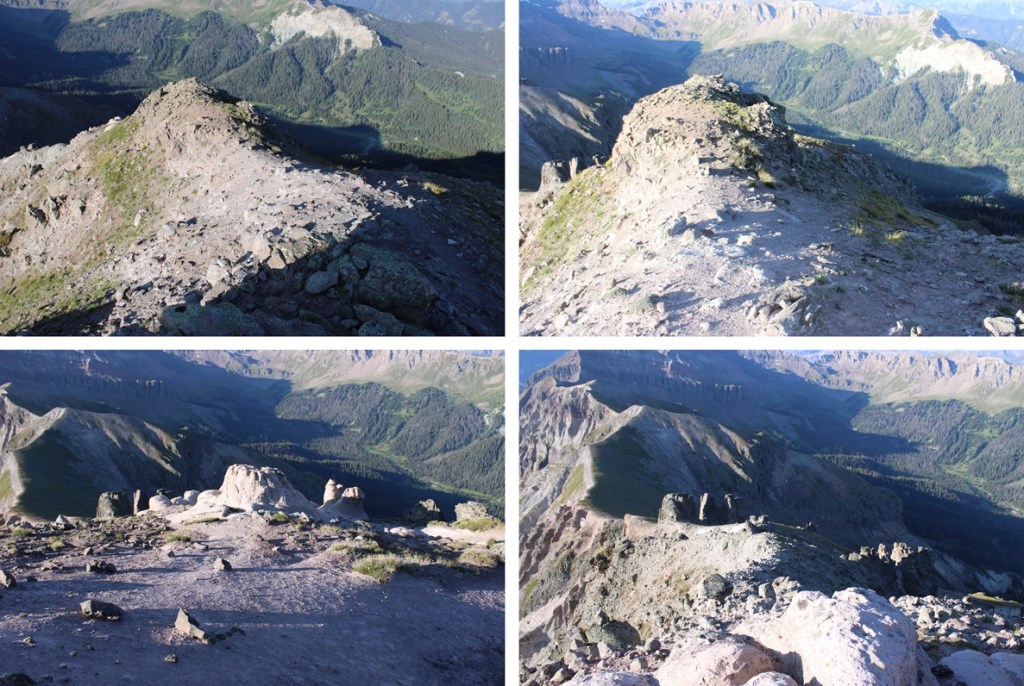
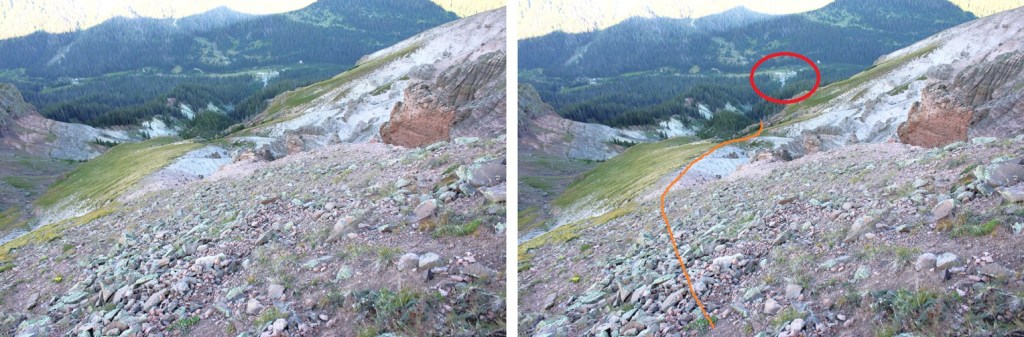
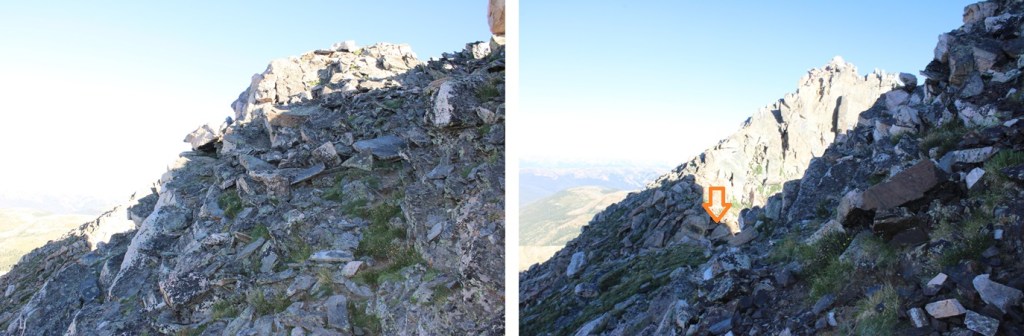
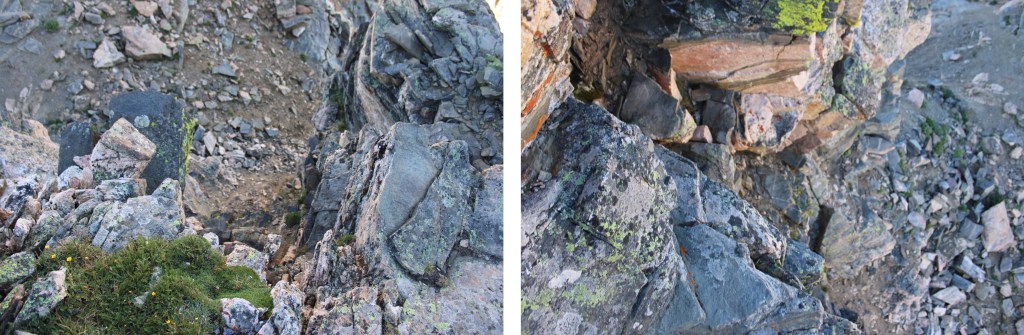
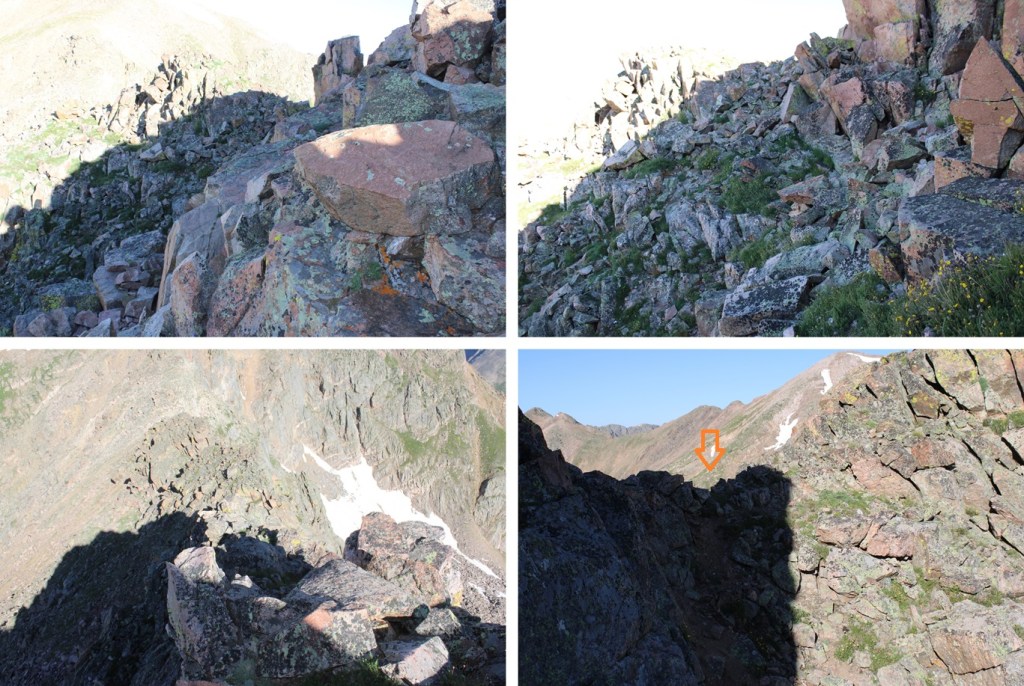
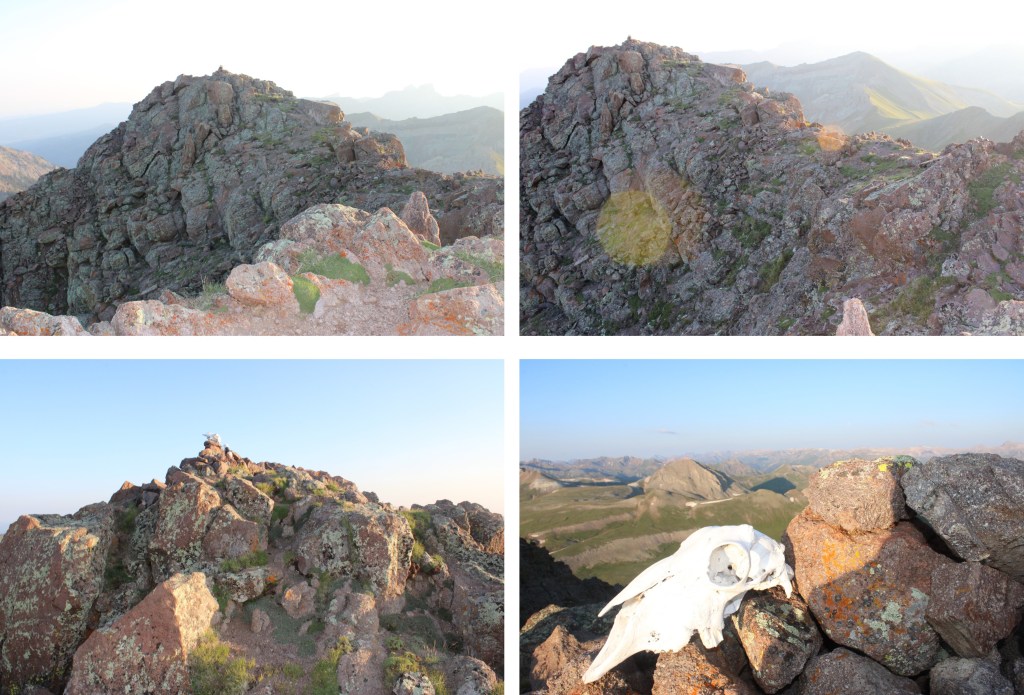
To get there I downclimbed a difficult class 3 section (or easy class 4) with exposure.  This was much more difficult to downclimb than to upclimb.  And it was very windy this day, making this ridge extra spicy.  The route down and then up to the summit are obvious.  There was a cairn at the top, and a summit register.

I summited Paiute Peak at 7:30am
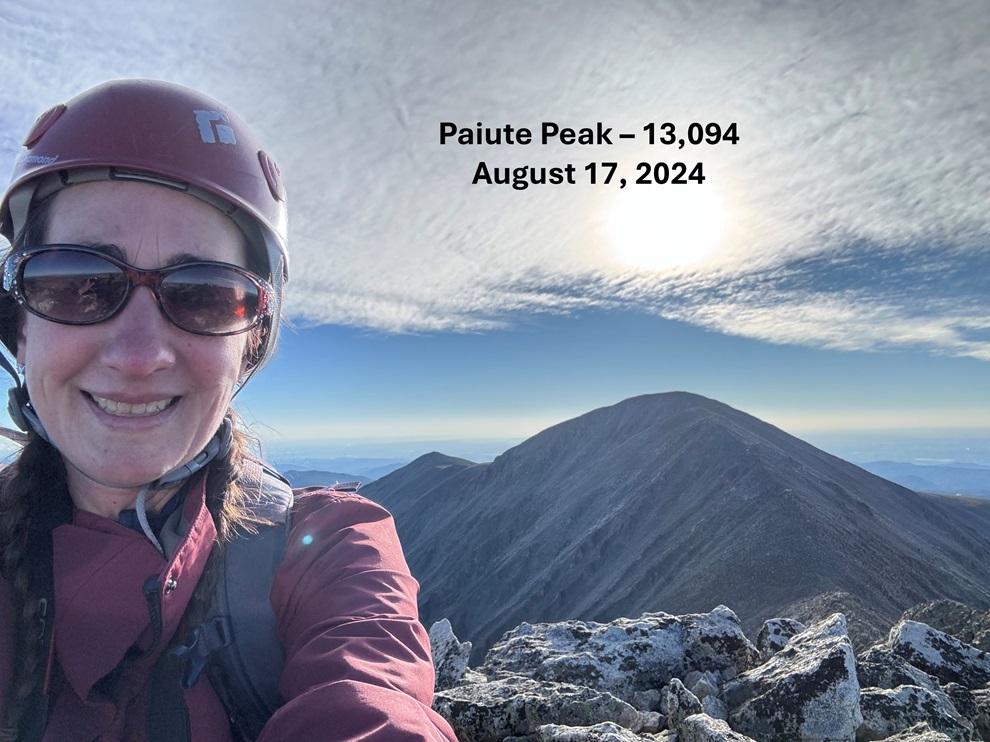
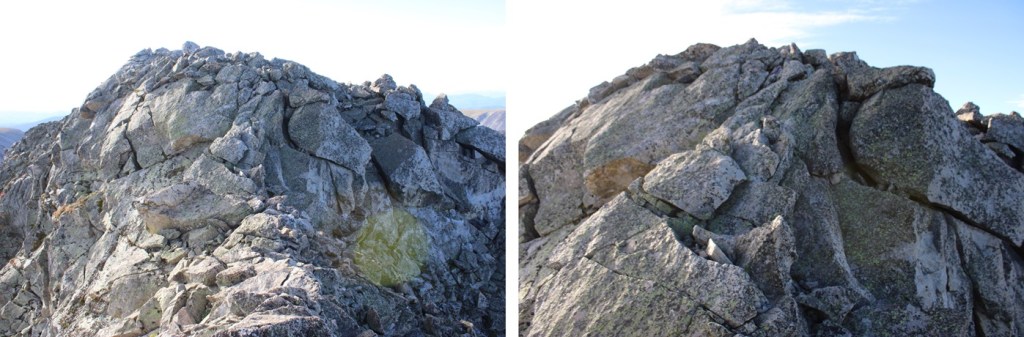
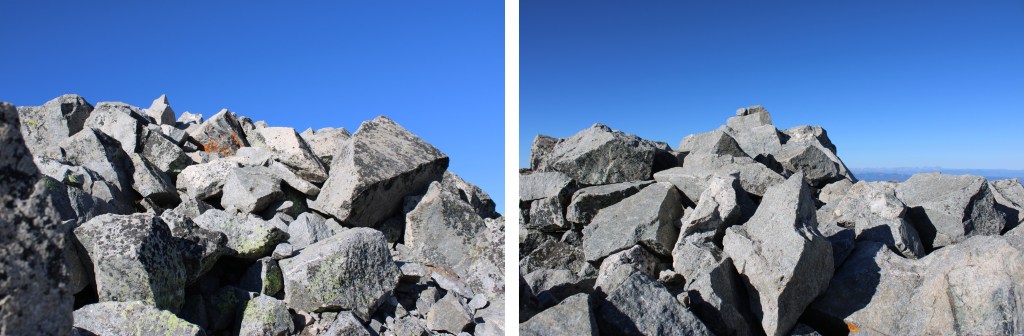
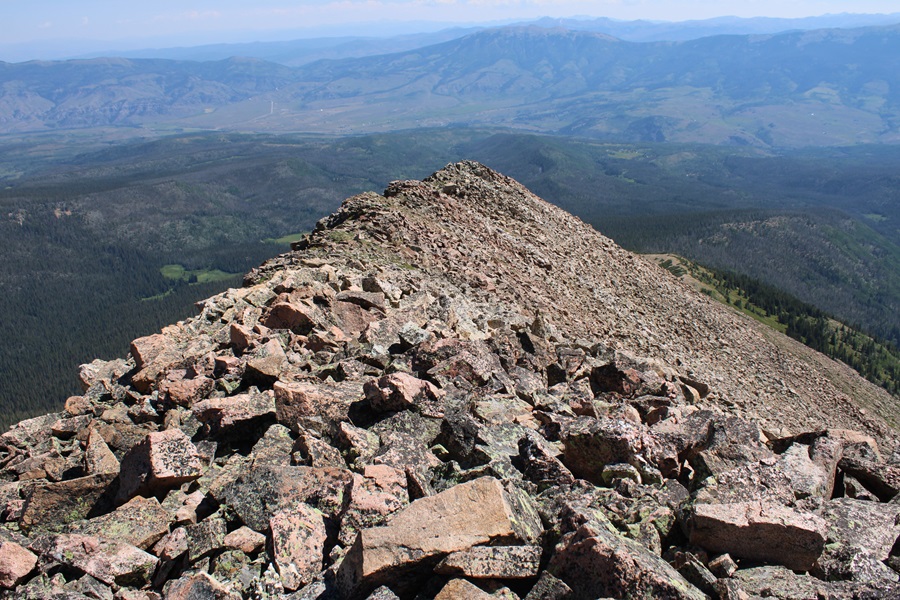
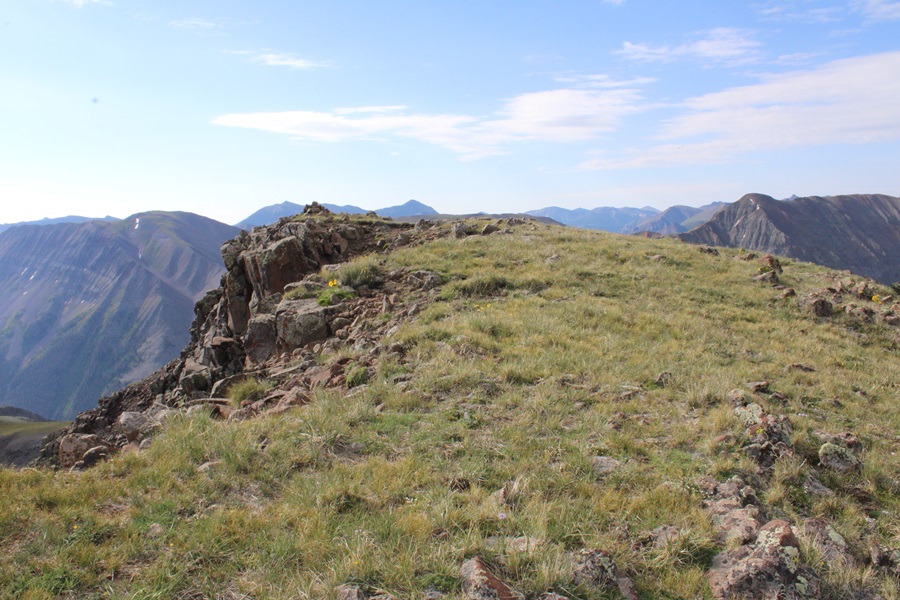
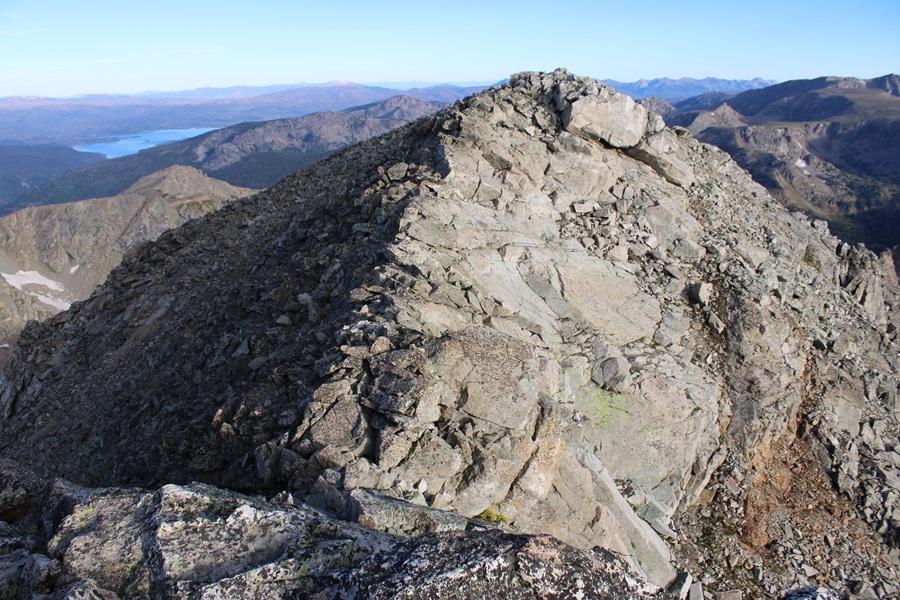
Paiute Peak:

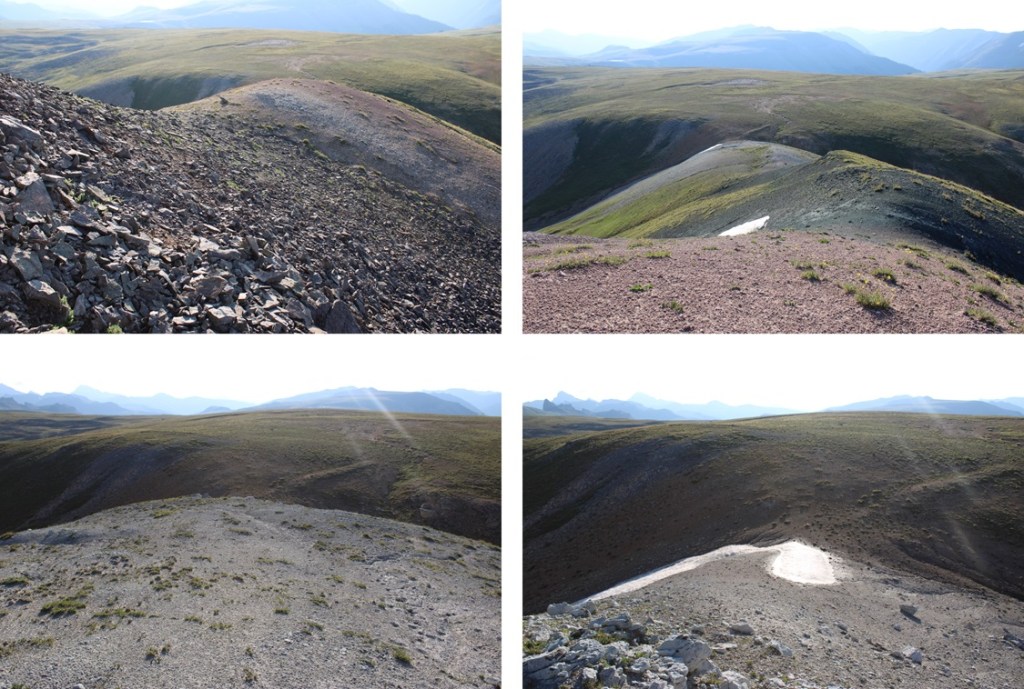
From the summit looking back, it really, really looks like where those two boulders are is higher, but there was a register here, so I’m assuming it’s the true summit.  Now to head back.  This “v” was much easier to upclimb. I used the same route down as I did on my way back up.

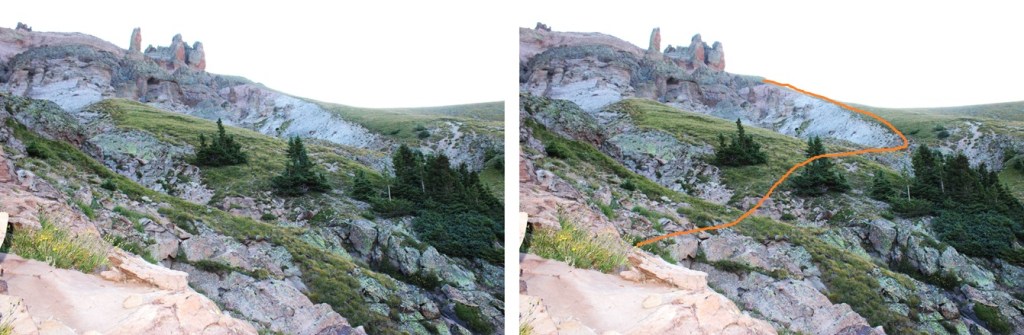
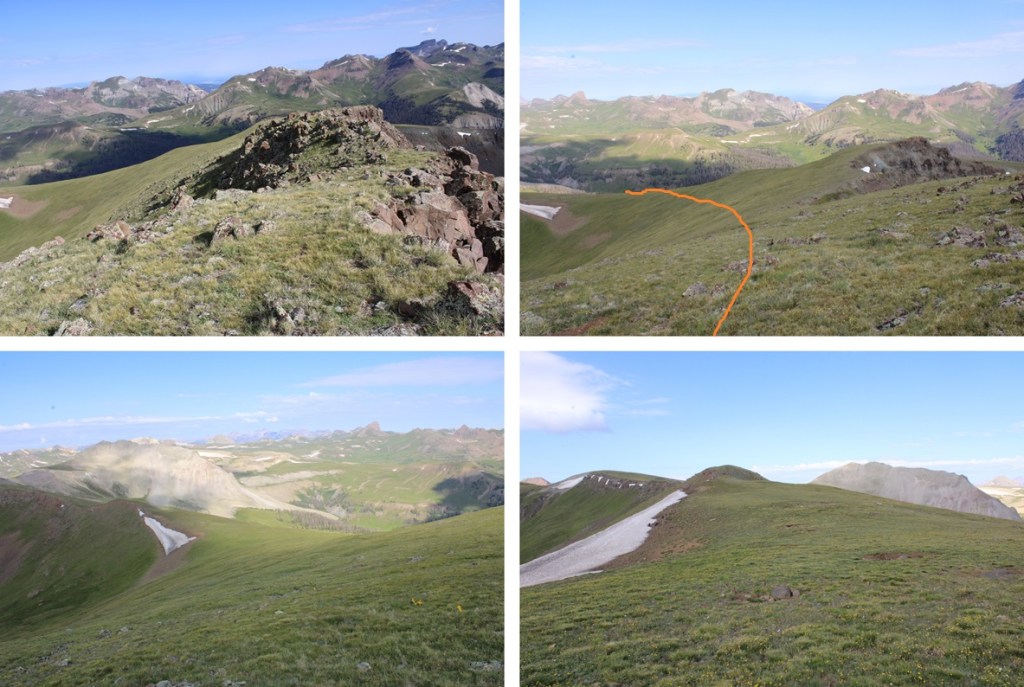
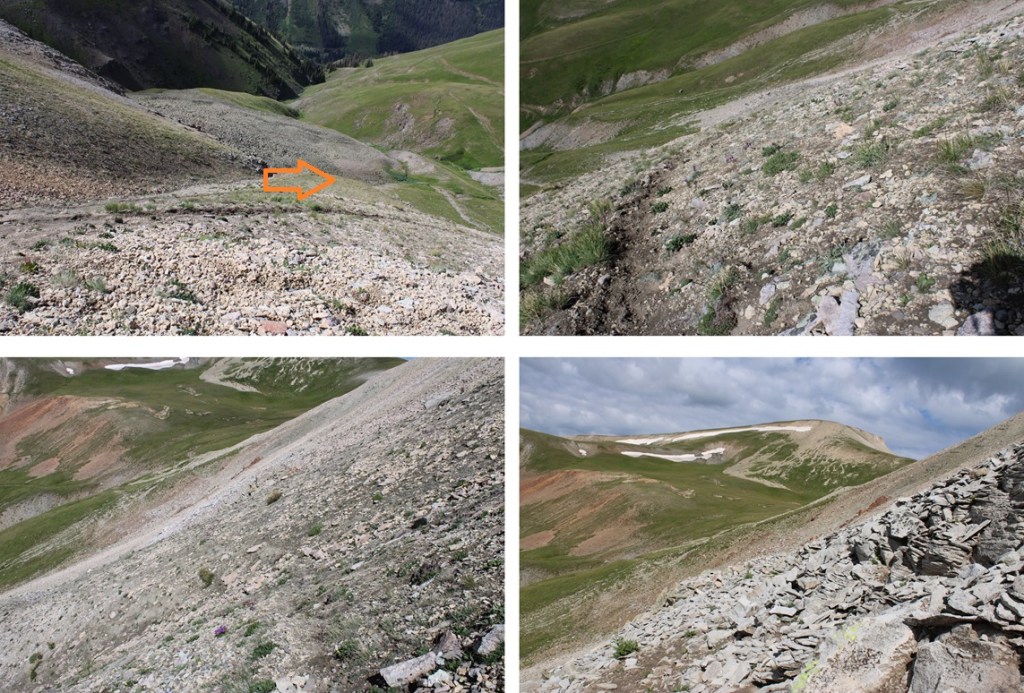
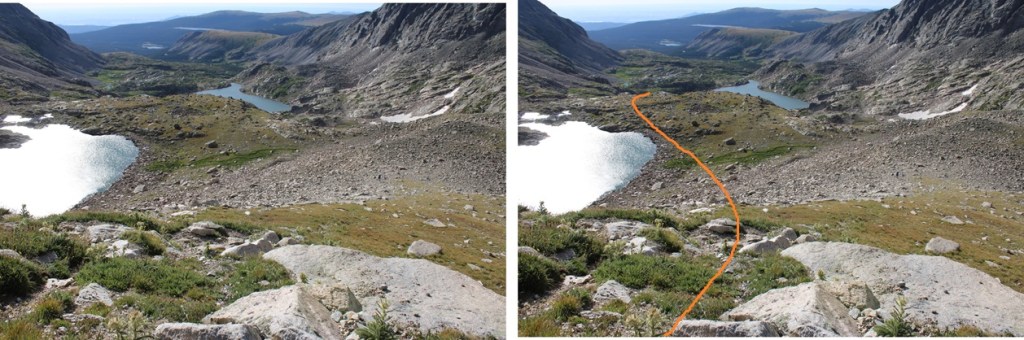
I then made my way towards the gully.
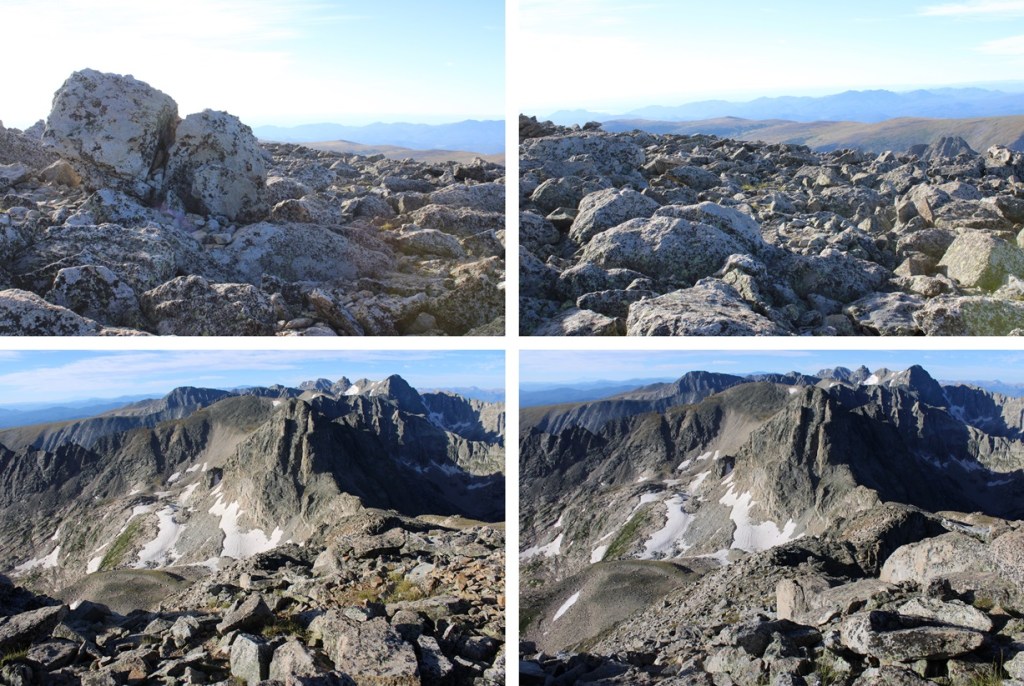
I went southeast down the rocky rib
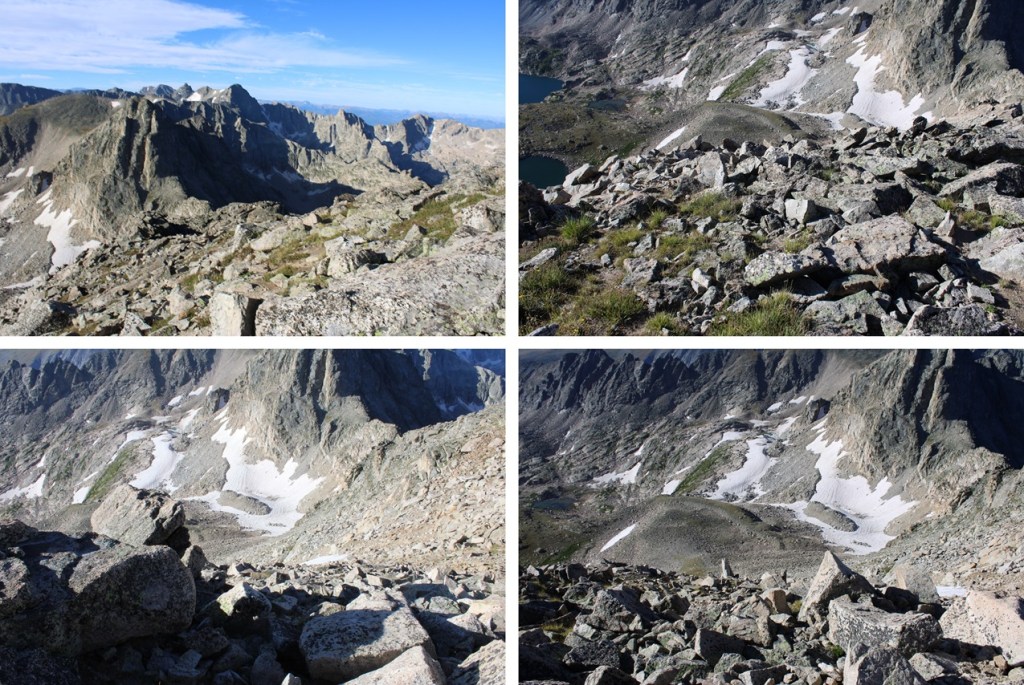
Then descended the gully

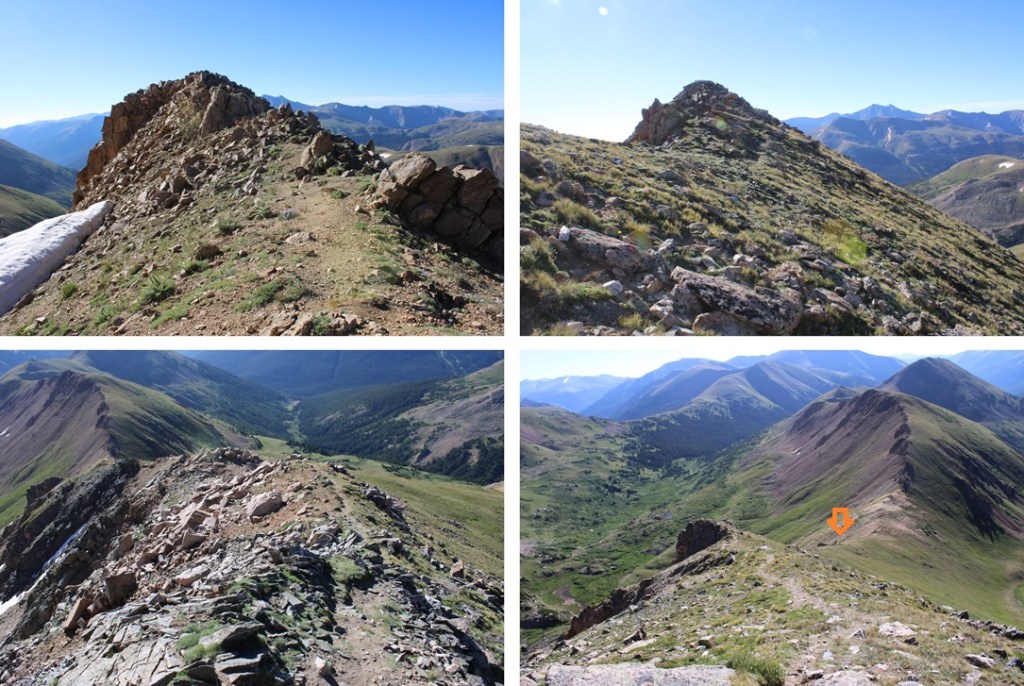
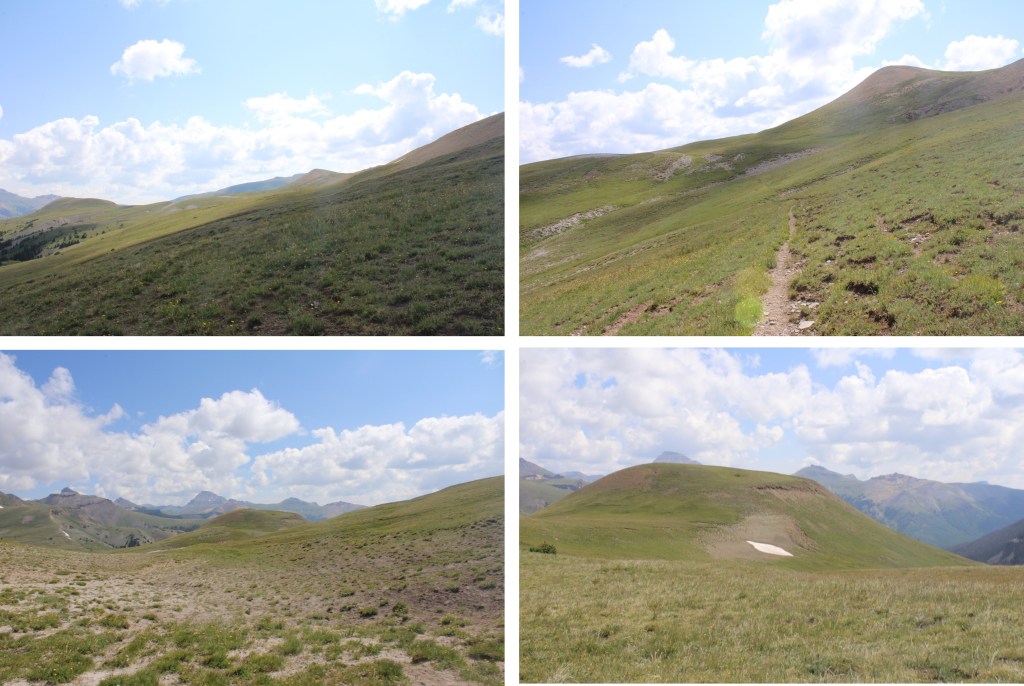
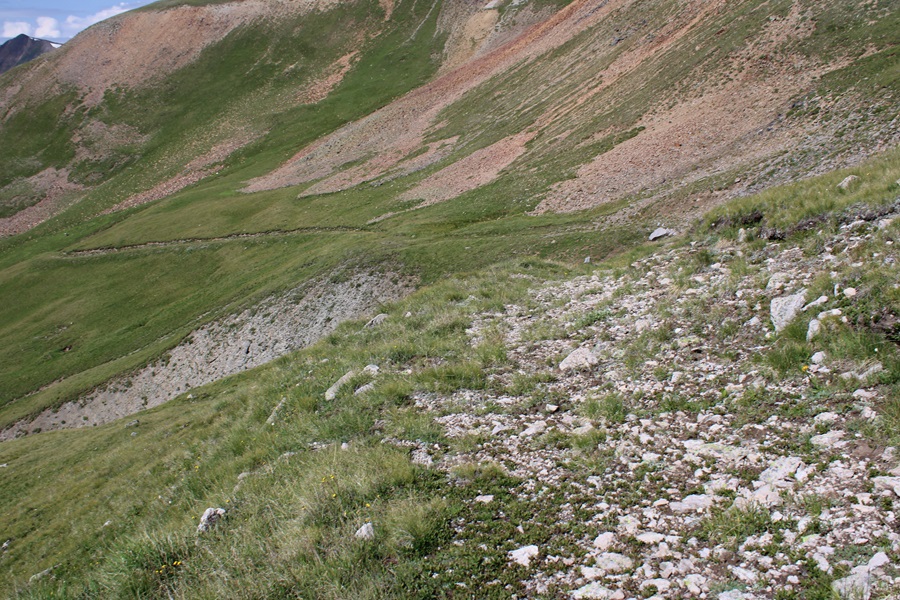
At the bottom of the gully I turned left, and made my way back towards Blue Lake
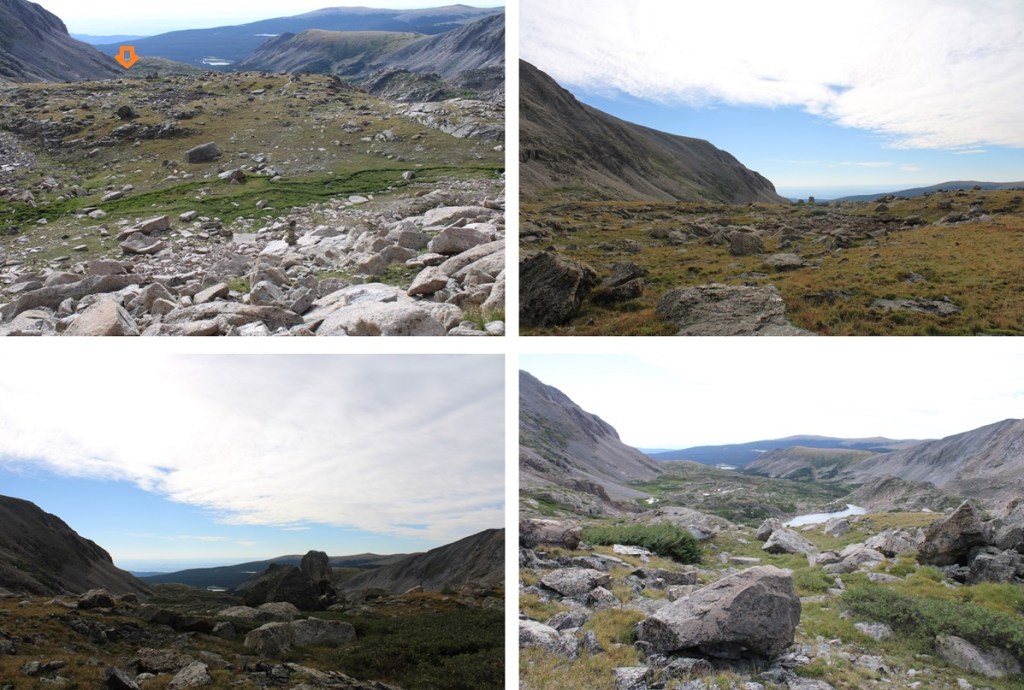
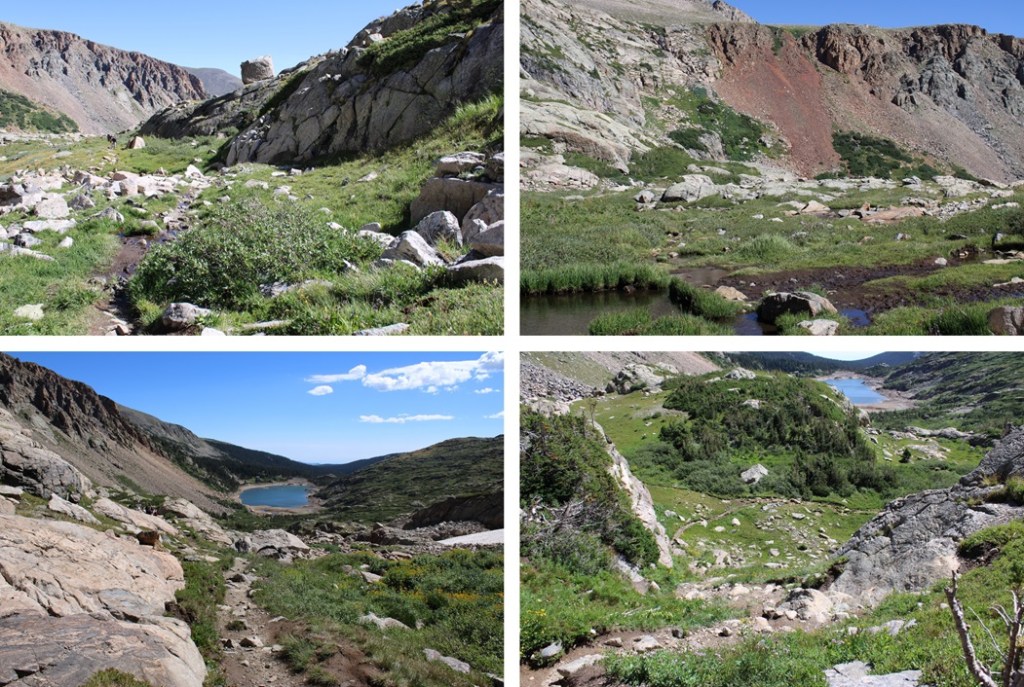
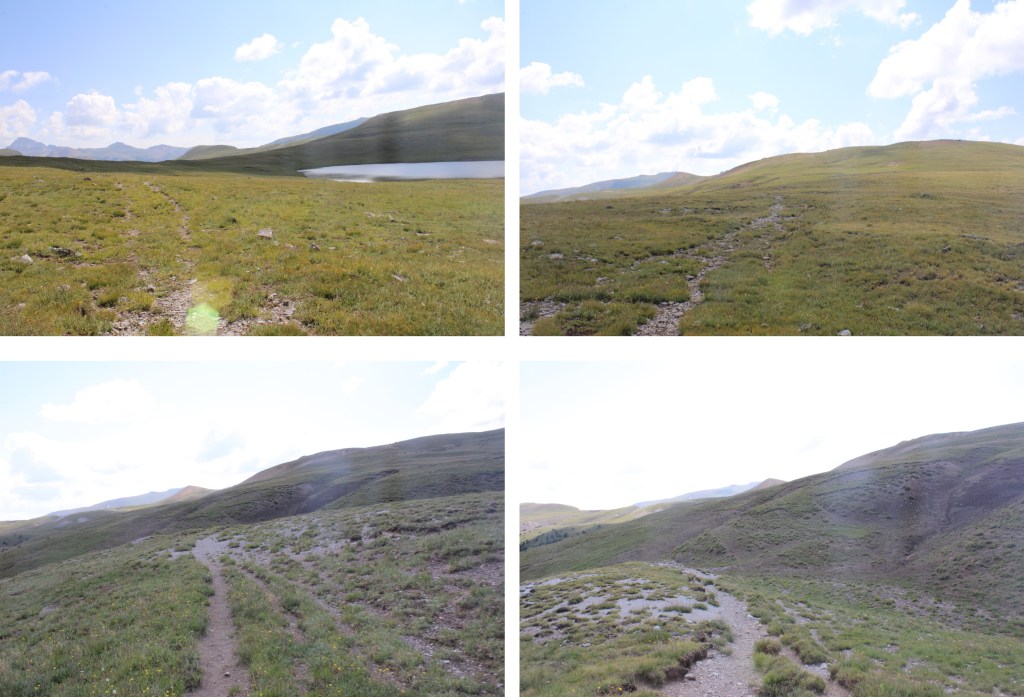
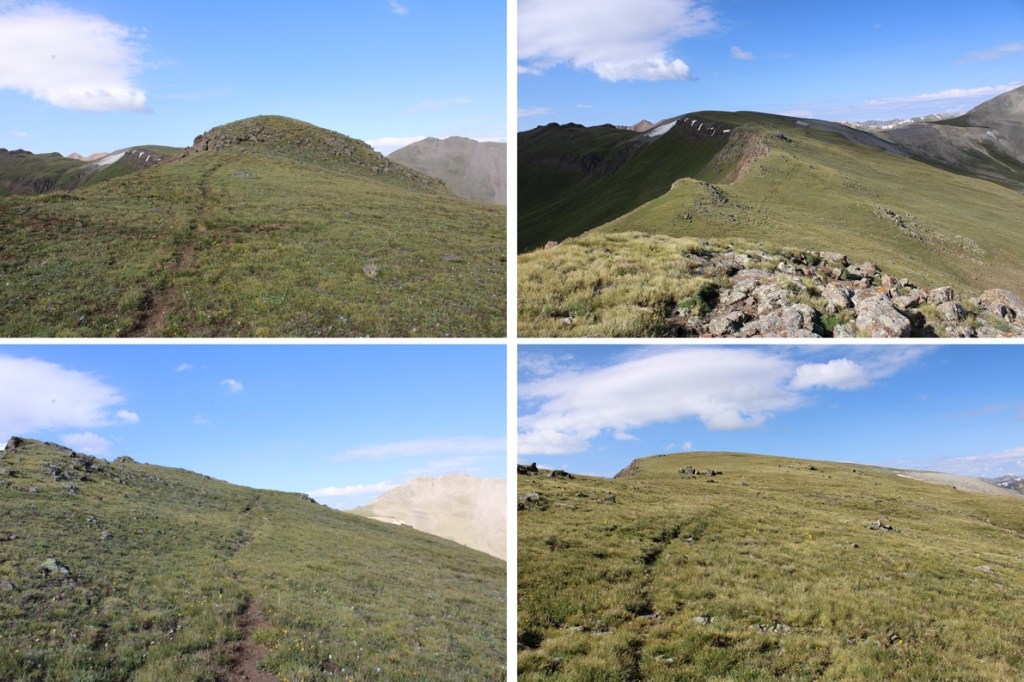
I aimed for the drainage, then followed it south towards Blue Lake and the trail below
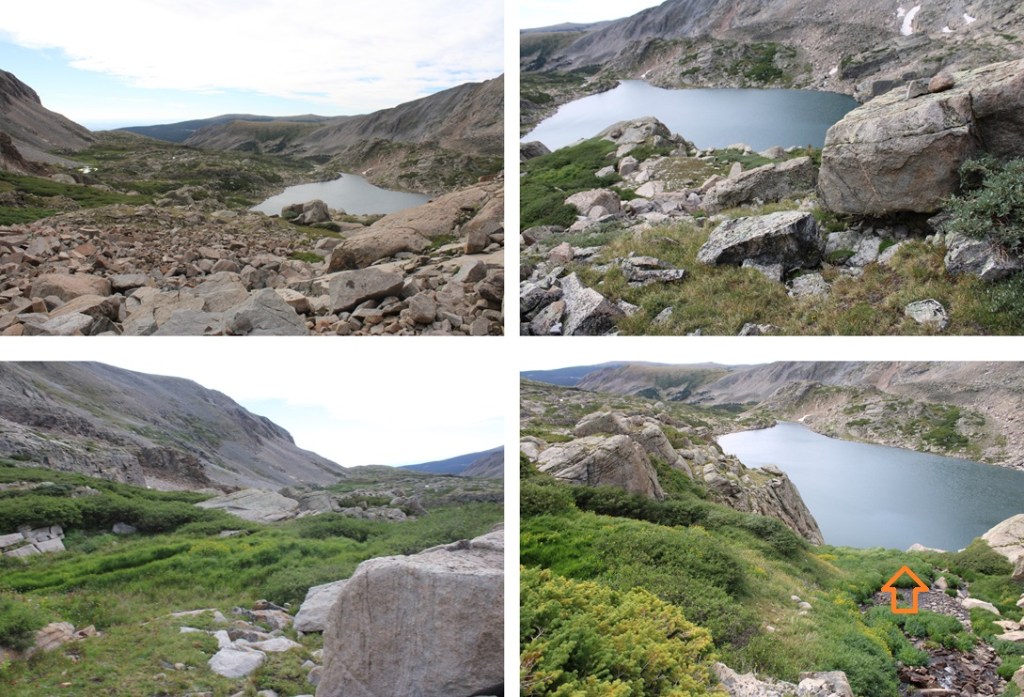
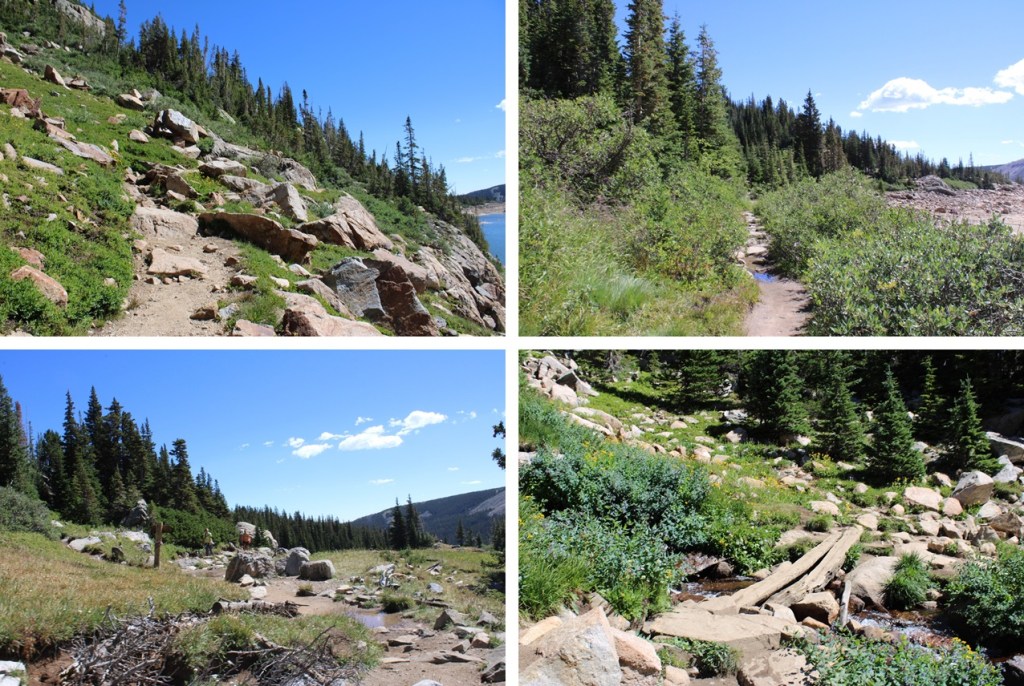
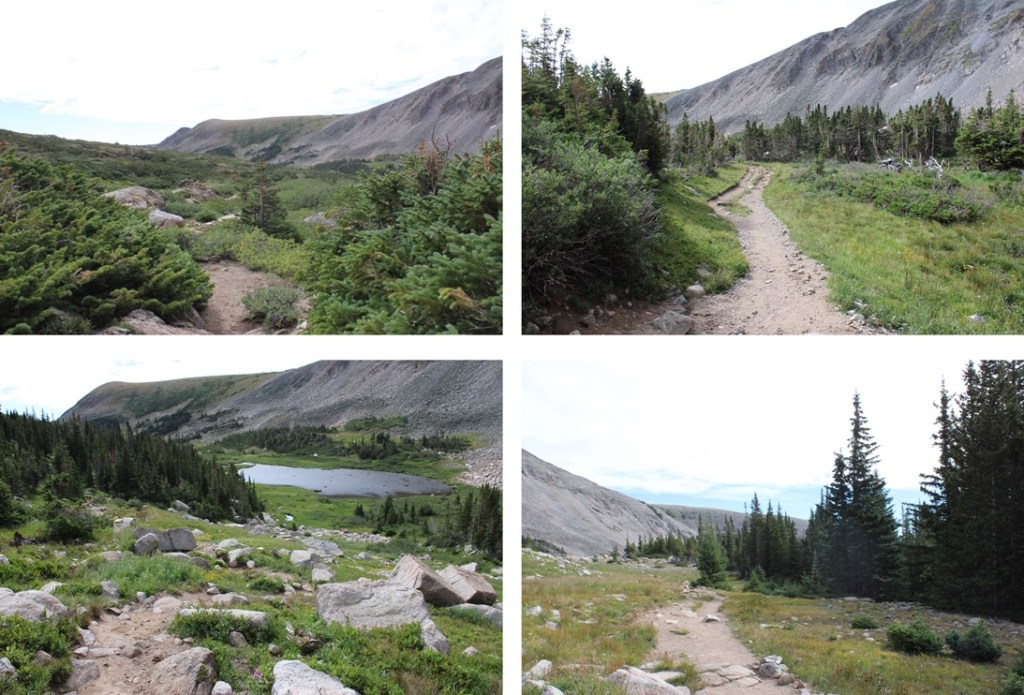
Back on the trail, I followed it east back to the Mitchell Lake Trailhead, passing several lakes along the way.
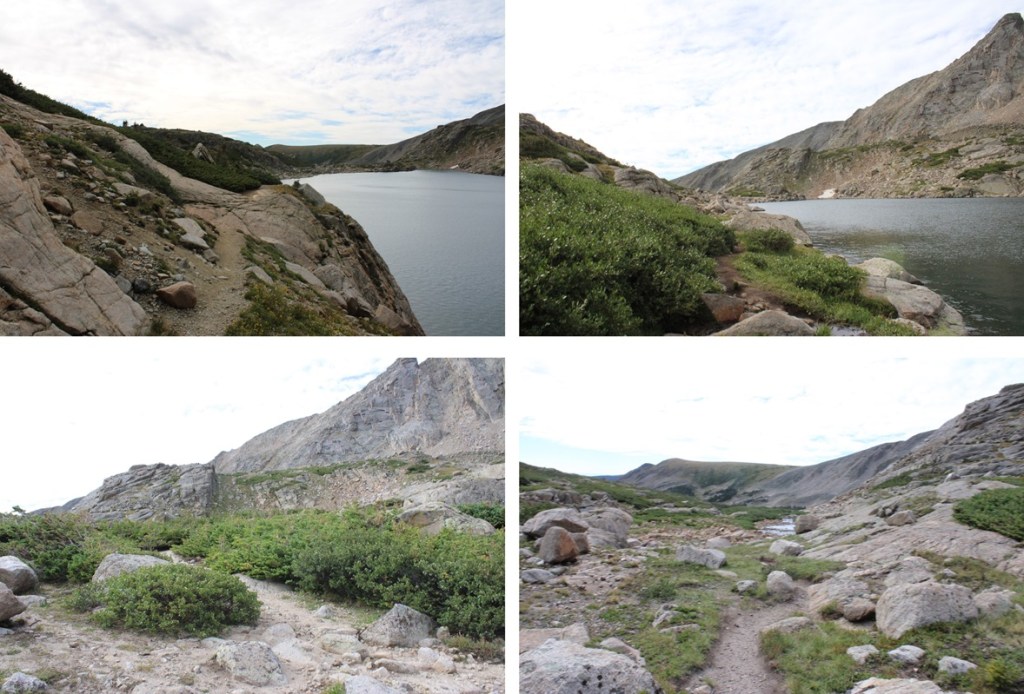
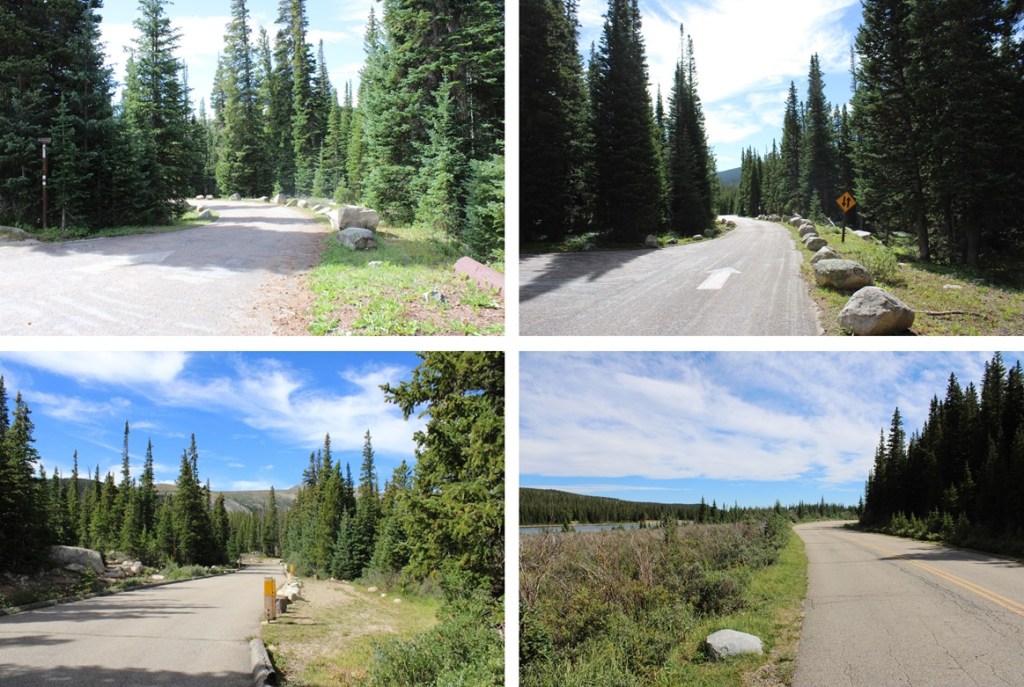
Back at the Mitchell Lake Trailhead, I followed the road back to the Brainard Lake parking area.
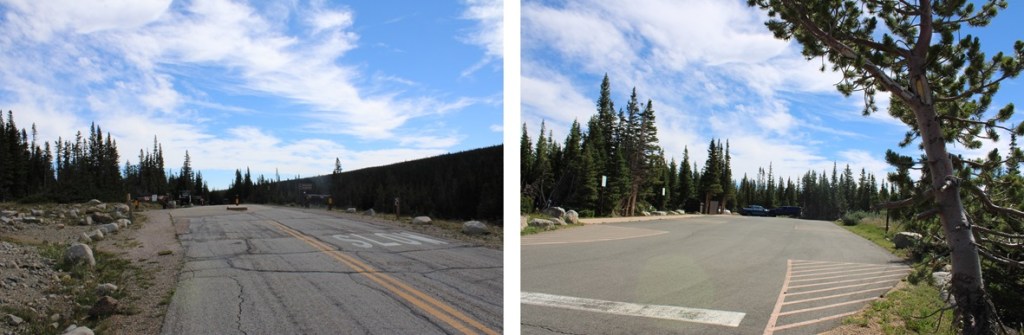
I made it back to the Brainard Lakes trailhead at 10:30am, making this an 11.32 mile hike with 2781’ of elevation gain in 6 hours.
On to the next trailhead!
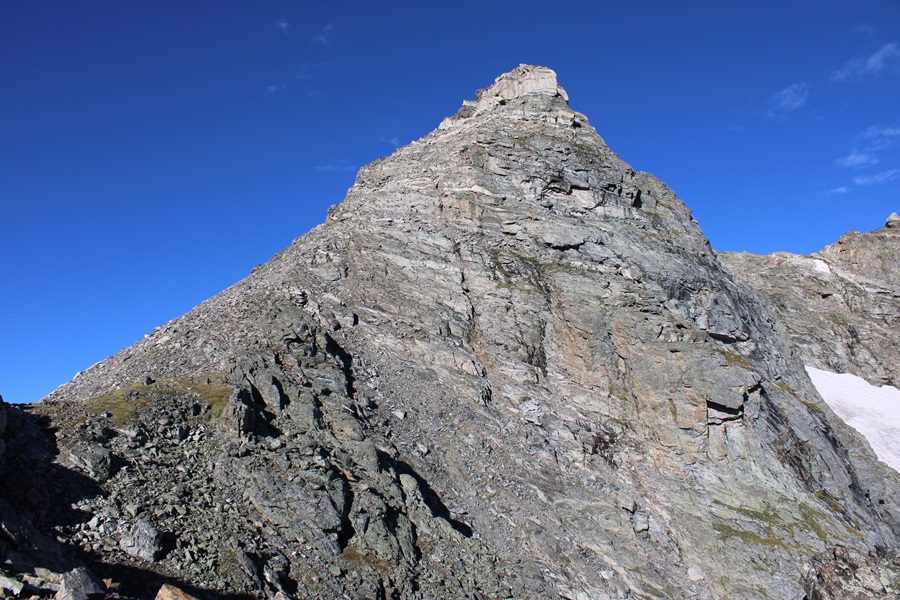
Navajo Peak – 13,419′

RT Length: 14.52 miles

Elevation Gain: 3346’

This hike starts from the Long Lake Trailhead inside Brainard Lakes Recreation Area.   This area is permitted.  There are basically two options for permits (I’m summarizing) either timed entry between 8am-5pm, or an overnight permit.  Overnight parking permits aren’t granted unless you have an Indian Peaks Wilderness overnight permit first.  Both permits go on sale at the same time.  Since I wanted to start before 8:30am, I needed to first get an IPW permit, then try to get an overnight parking permit. 

I was able to secure an IPW overnight permit for the weekend but had difficulty securing overnight permits to park inside of Brainard Lake.  Eventually I was able to get two 1-night (overnight) permits, one for Long Lake Trailhead and the other for Niwot Campground.  I tried to get two consecutive in the same area, but they weren’t available for the dates I was allotted my IPW permit. 

When I checked in at the Brainard Lakes Recreation area, they didn’t like what I had done (secured two one night permits at different sites), and decided a better option was to grant me a two night permit for Brainard Lake.  I’d have rather parked for two nights at Long Lake or Mitchell Lake, or even what I had done originally, which was one for Long Lake and the other for Niwot.  But they weren’t having that, so my mileage was increased by a couple of miles for this hike, since Brainard Lake is over a mile from the trailheads.  Also, after you’re inside the park, they have other ‘security checkpoints’ where you need to show you’re your permits again, and they also patrol the parking lots hourly to make sure your permit is valid.  Have I mentioned I’m not a fan of the permit system?  I’ve yet to see one that works smoothly, especially for mountaineers who are concerned with weather and start times.

As I was hiking early in the morning the next day, being flashed with bicycle lights from behind me at 4:30am, I realized there’s another option around the permit system: ride your bike from the winter closure to the trailhead.  I don’t own a bike, but this is definitely an option for the future… if I ever get a bike.

In any event, after minimal drama and parking a little further away than I’d have liked (but hey, it was better than parking at the winter closure…) I was on the trail at 4:30am, starting at the Brainard Lakes parking lot.  My first step was to follow the road for 1.3 miles to the Long Lake Trailhead.

Once at the Long Lake Trailhead, I followed Pawnee Pass Trail west

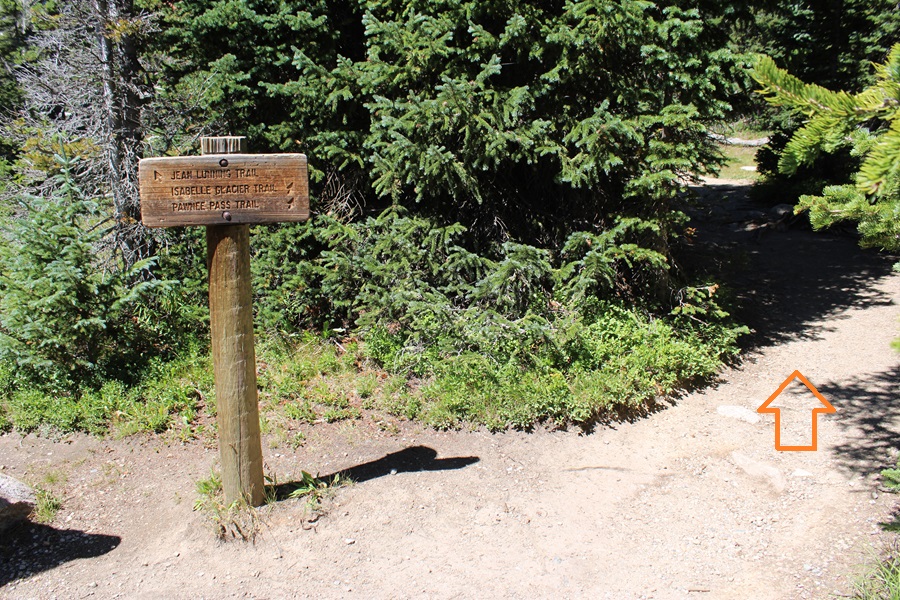
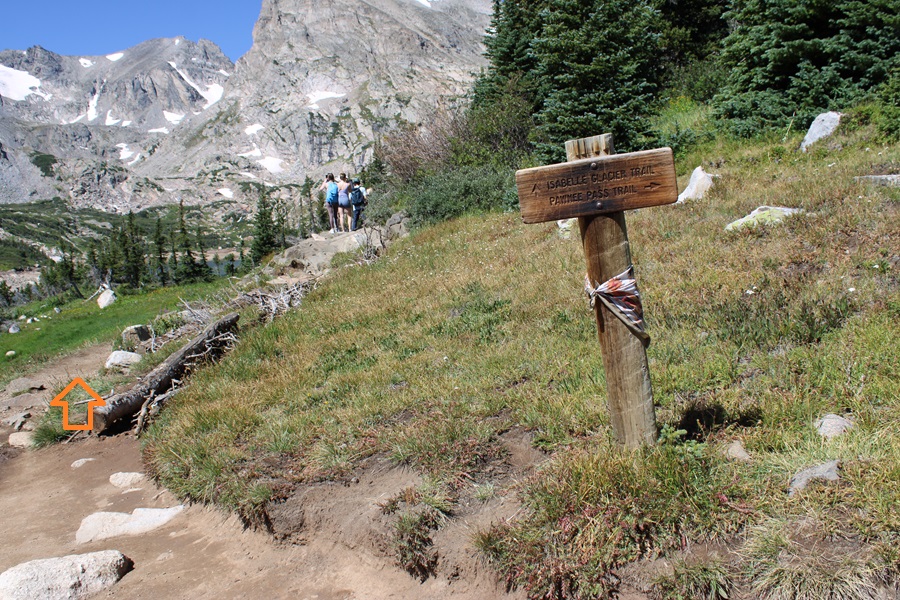
After hiking about 1.5 miles from the Long Lake Trailhead, I came to a junction and went right, following the Isabelle Glacier Trail

At the next junction I went right again, to continue along the Isabelle Glacier Trail. 

At the next junction, I came upon two bull moose.  When they saw me they snorted and grunted, so I hid behind a tree for 20 minutes until they’d made their way up the hillside, casually munching on willows as they went. I’ve been charged by moose in the past, and while other than the grunting and snorting (which could have meant “It’s too early to be awake”), I kept my distance.  Once they moved, I continued following Isabelle Glacier Trail

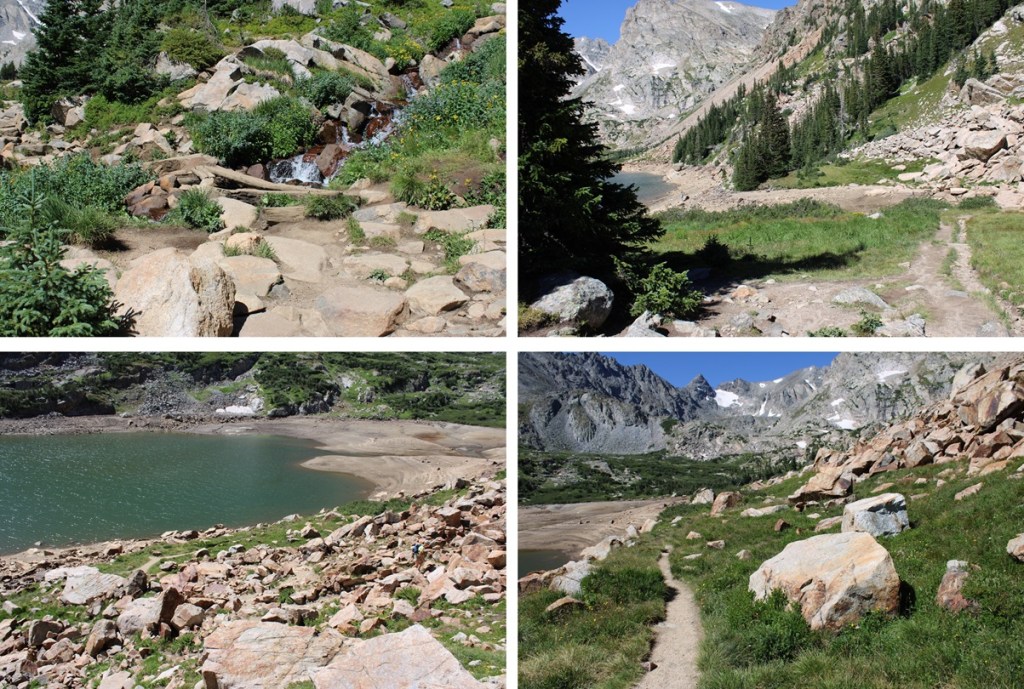
I followed this trail all the way past Isabelle Lake, west/southwest, through rocky areas and willows, towards Navajo and Apache Peaks.  This is a class 1 trail, but the willows, rocks, and creeks overtake it at times. 

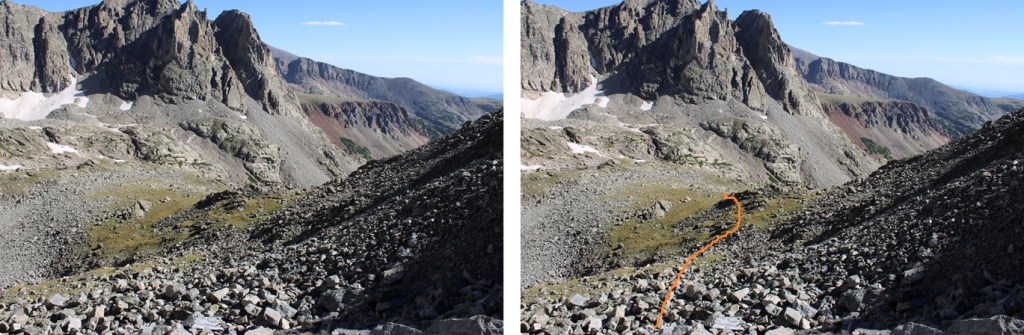
I came to the last pond before the glacier, and left the trail to head southwest into the upper basin.  Here’s the route I took

And some step by step pictures.  First, I had to leave the trail.  I crossed over the snow still skirting the lake, and headed towards the large boulder in the distance

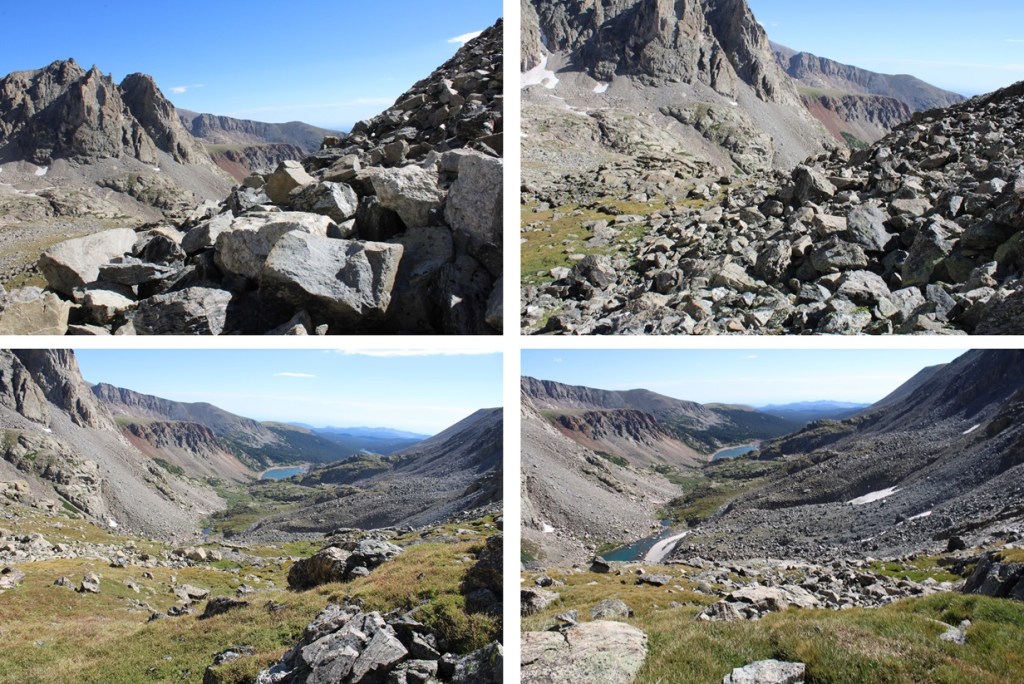
I then crossed the creek, crossed the boulders (some were loose, most were not) and headed for the scree.  Luckily, it had rained last night, so the scree was easy to grip.

At the top of the scree I was greeted with tundra.  I kept following it, heading southwest

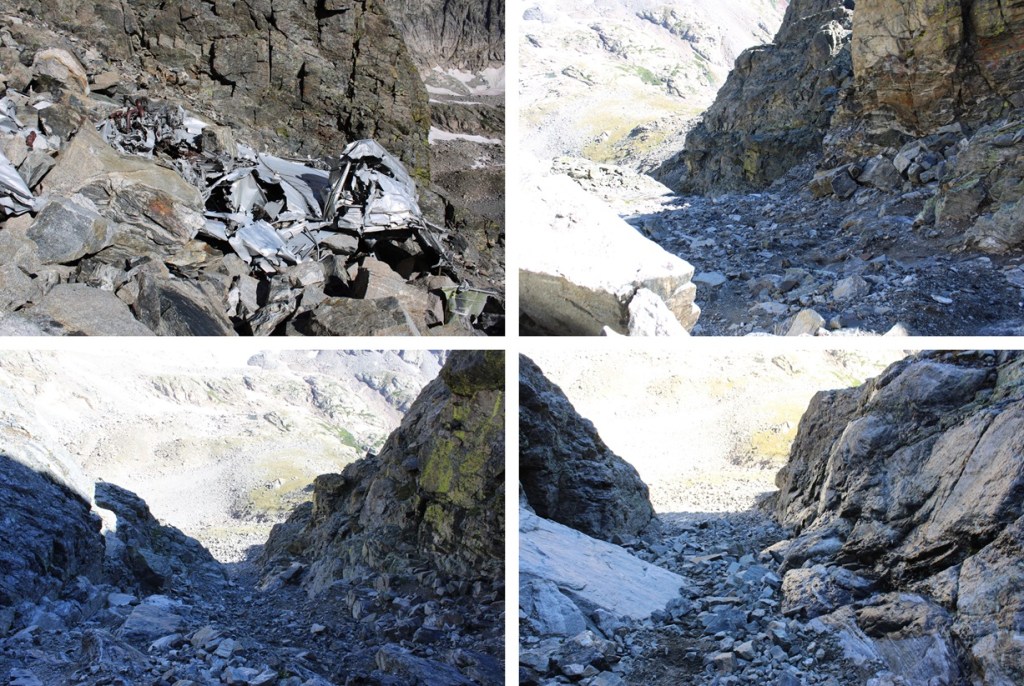
Now in the upper basin, I had a great view of the gully I wanted to take to ascend the ridge.  If you look around, you’ll see remnants of a plane crash that happened in the 1950s.  The higher you go up this gully, airplane gully as many like to call it, the more debris you’ll see.  This is the route I took up the gully.

I made my way southwest over some boulders towards the gully, until I found a scree path.  A few thoughts on this gully:  Besides the fact this was the only part of the hike I experienced insanely intense winds all day, it was easy to navigate, there were social/game trails to follow, it wasn’t very loose, and the scree was solid.  In short, it’s probably one of the easiest gullies I’ve ever ascended, and if they were all like this, I probably wouldn’t mind them so much.  I headed south until I saw an obvious “y” in the gully, and went right.  It’s easy to know where you turn right because you’ll see parts of the airplane to the right.

I went to the left of the airplane debris, then followed climbers right of the gully to the ridge (although both sides will get you there, just use the terrain you like best).

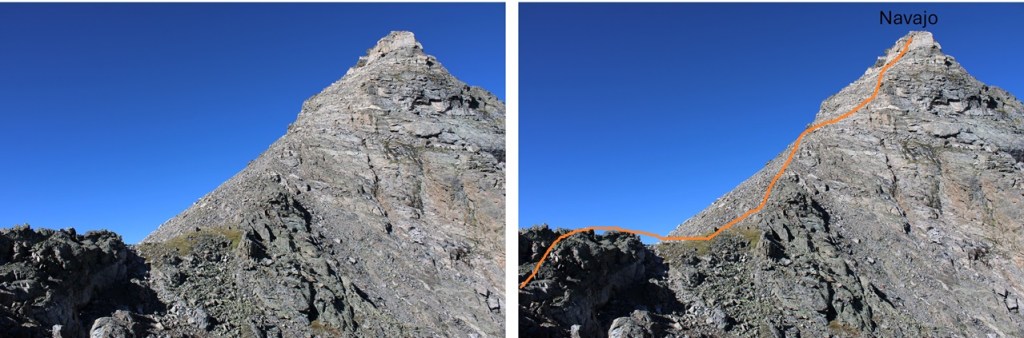
At the top of the gully, I could see the rest of my route to the summit of Navajo Peak.  Until the chimney at the end, the rest of the route is class 2.  If you find yourself in class 3 territory, you’re making it too difficult. 

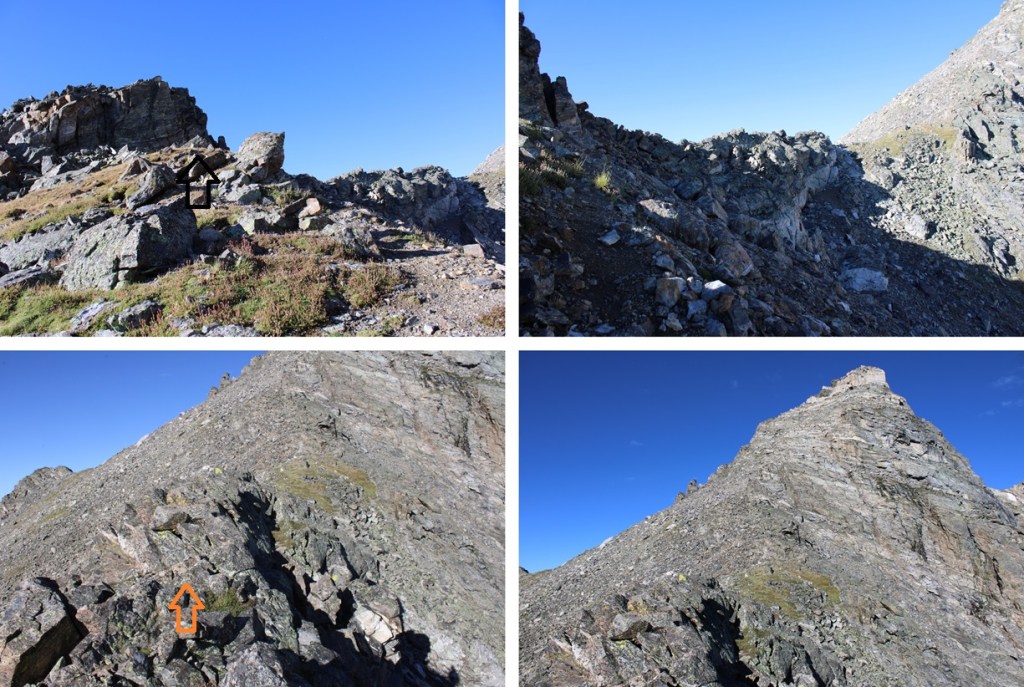
From the top of the gully I turned left and followed the saddle across a small ridge

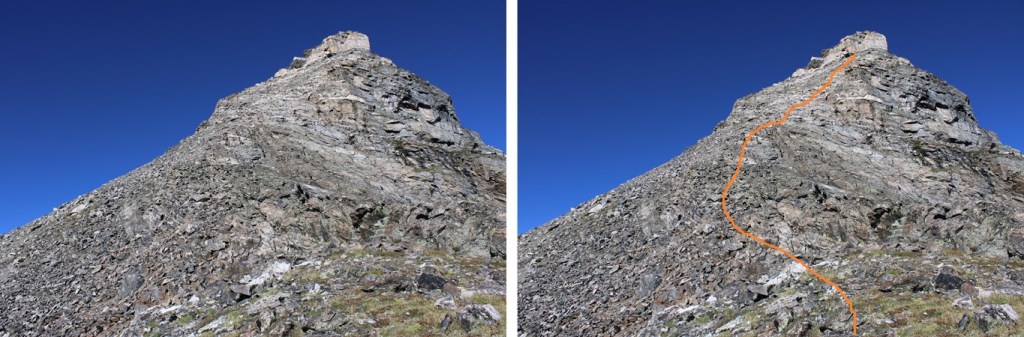
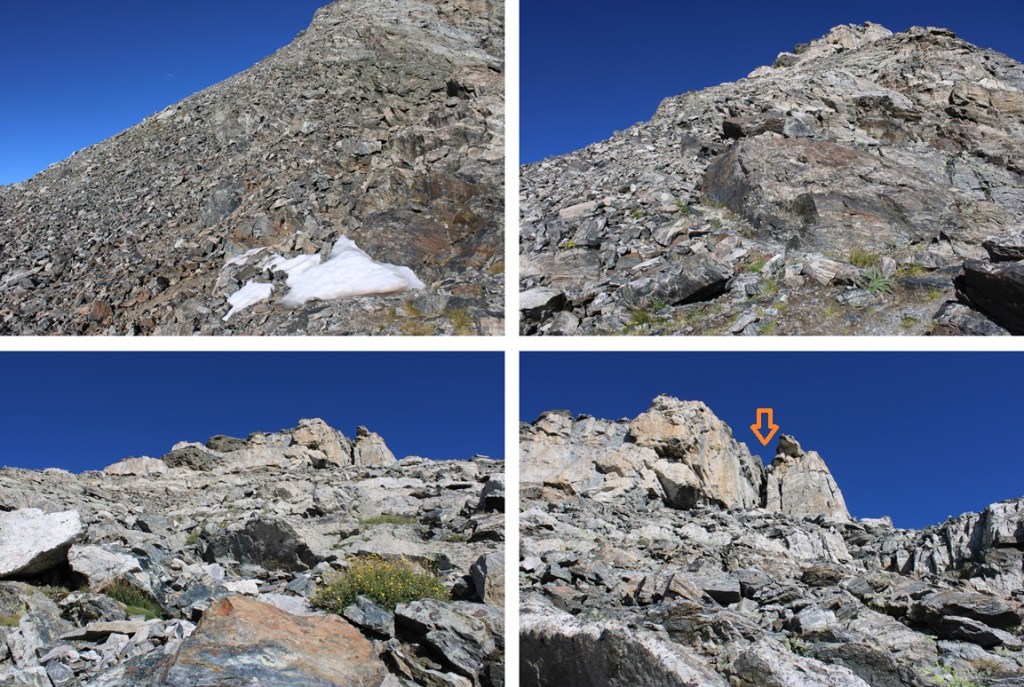
From here the rest of the route looks daunting, but there are tons of game trails that will get you to the right spot.  Aim for the very right edge of the rock formation, where you’ll see a chimney.  Once again, this should all be class 2.

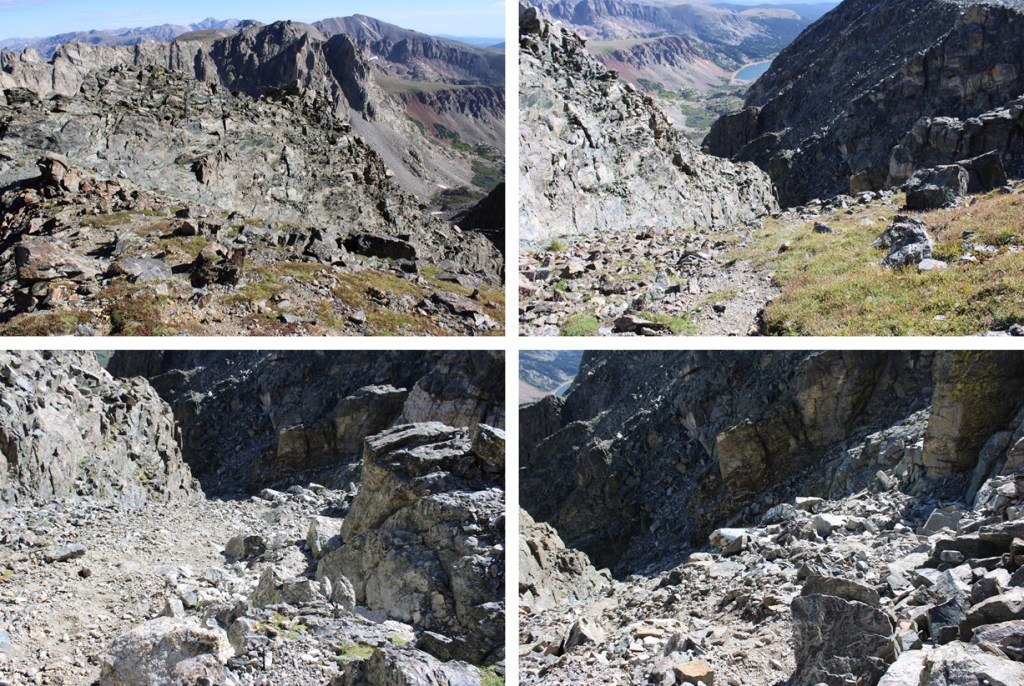
Here’s a look at that chimney.  I found this chimney to be difficult class 3, easy class 4, so if you’re looking for a good practice chimney, this would be it. There isn’t a lot of exposure, and I was able to find adequate hand/footholds if I stretched a bit.  At the top of the chimney, exit left.

At the top of the chimney I turned left, and climbed over boulders a short distance to the summit

I summited Navajo Peak at 8:30am

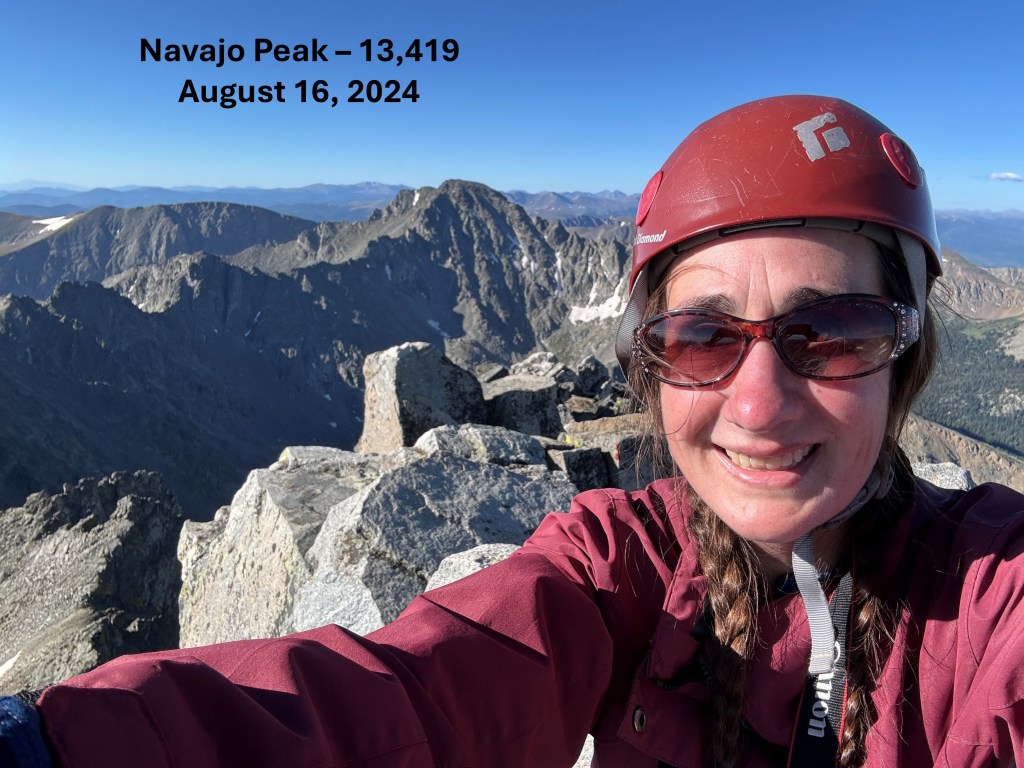
Navajo Peak:

This was an out and back hike for me, so I turned around and headed back towards the chimney.

I descended the chimney, and made my way back down to the saddle.

Then headed back down airplane gully

Passing the crash site, and continuing to follow the gully north

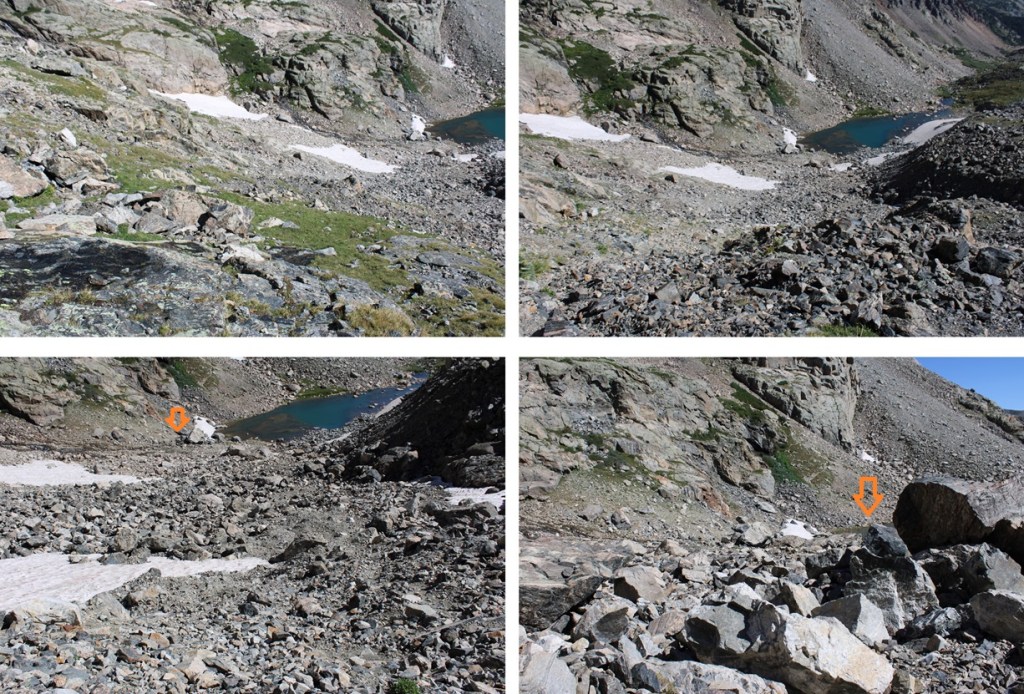
At the base of the gully, I rock hopped towards the tundra I could see in the distance

I could now see Isabelle Glacier trail in the distance, and descended down into the lower basin towards the trail. 

Back on the Isabelle Glacier trail, I followed it east back to the Long Lake Trailhead.

Back at the Long Lake Trailhead, I followed the road 1.3 miles back to Brainard Lake

I made it back to the trailhead at 12:30pm, making this a 14.52 mile hike with 3346’ of elevation gain in 7.5 hours

Precipice Peak – 13,144

RT Length:  4 miles

Elevation Gain:  2364’

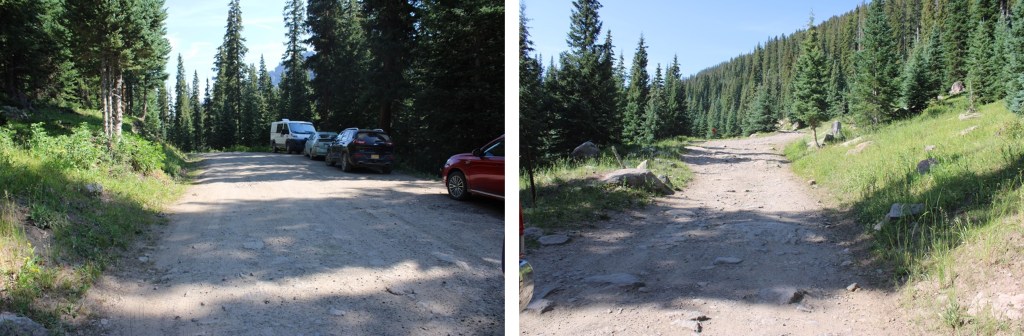
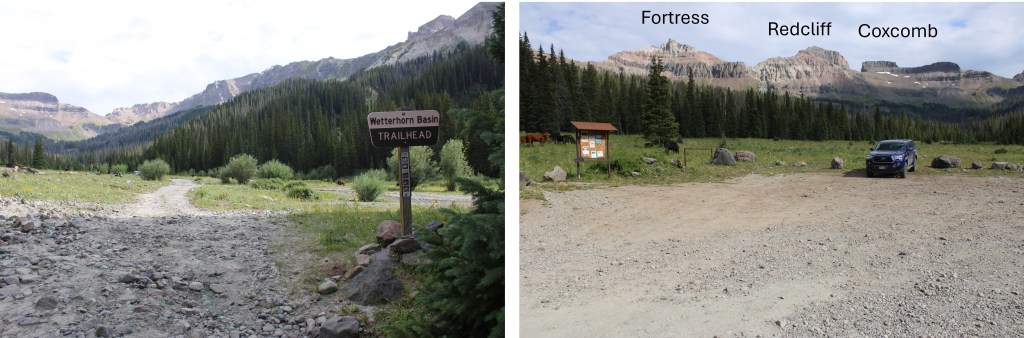
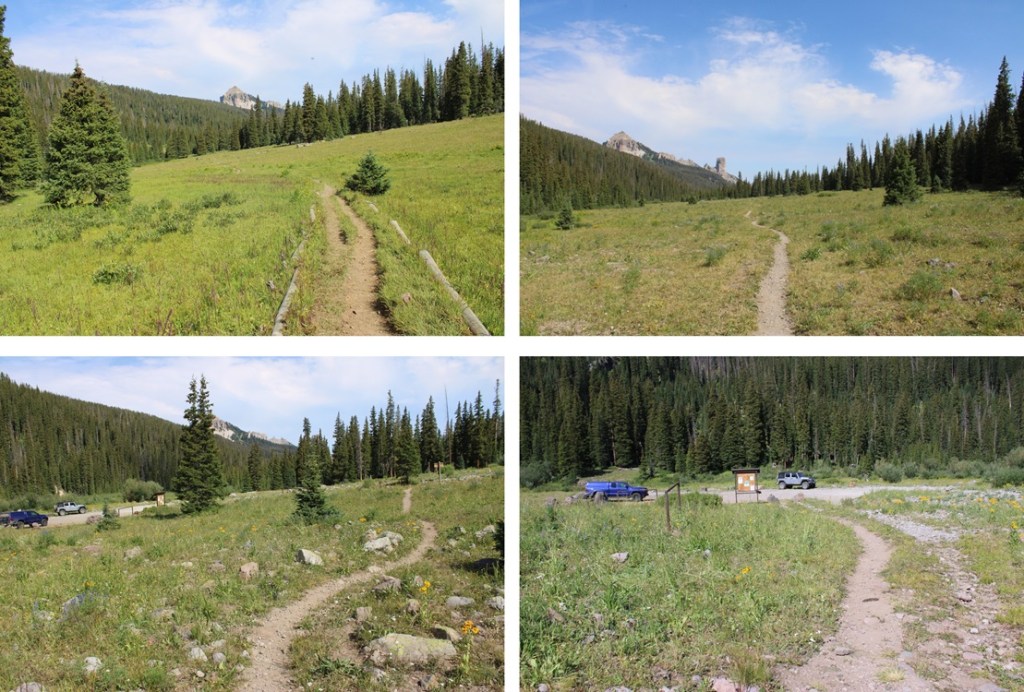
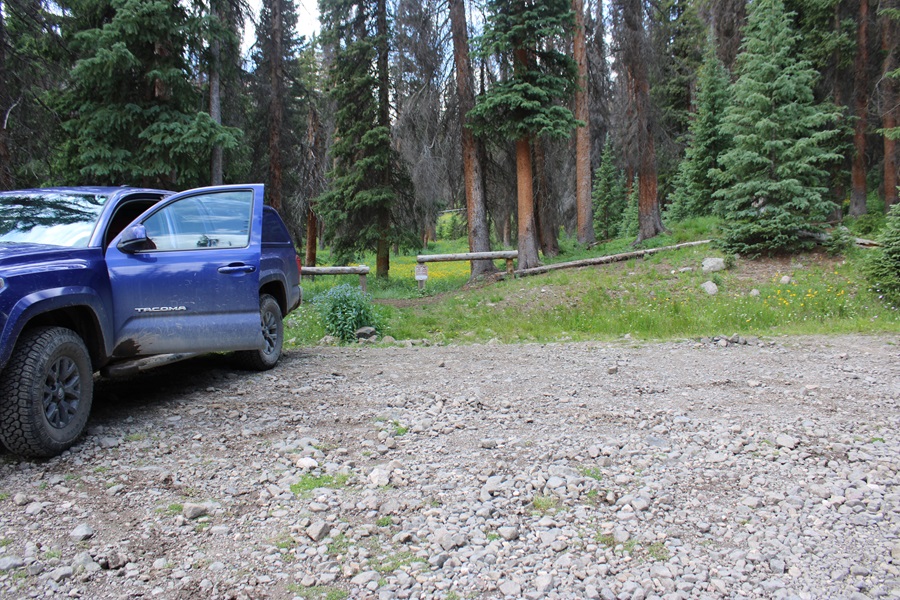
I know most people do Fortress and Precipice together in one day, but for personal reasons, I wanted to spend more than one day in the basin, and these were the only two peaks I had left, so I made it a two-day trip.  I parked at the Wetterhorn Basin Trailhead, at about 10750’.  The road to get in is mostly 2WD, until the last 2 miles, which are 4WD and requires clearance.  Here’s where you park for the 2WD trailhead

And here’s a picture of the Wetterhorn Basin Trailhead parking area.  The road in was worse than I remembered from two years or so ago.

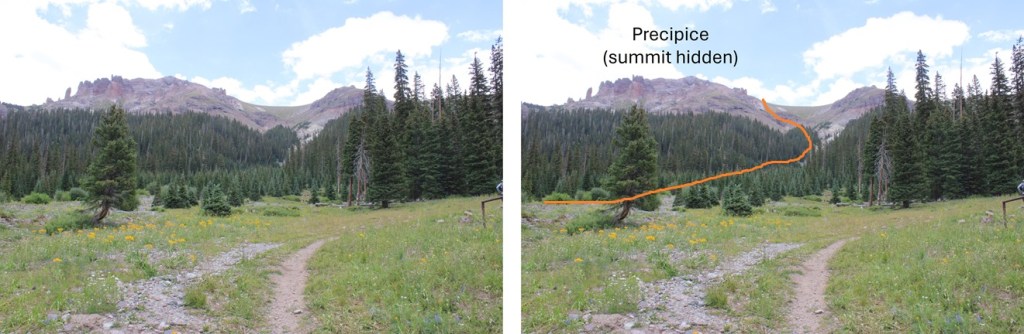
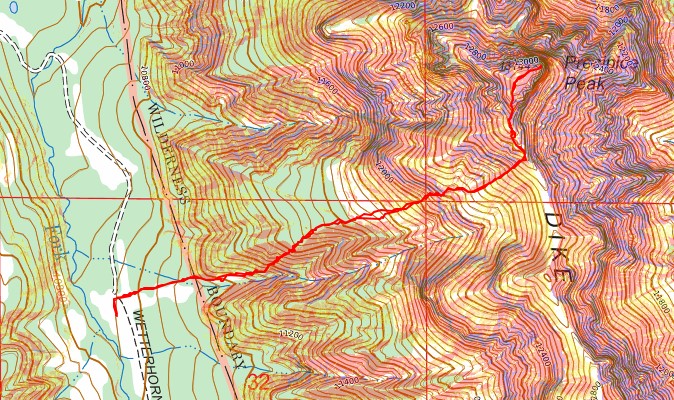
From the parking area, here’s a visual of the route to the ridge

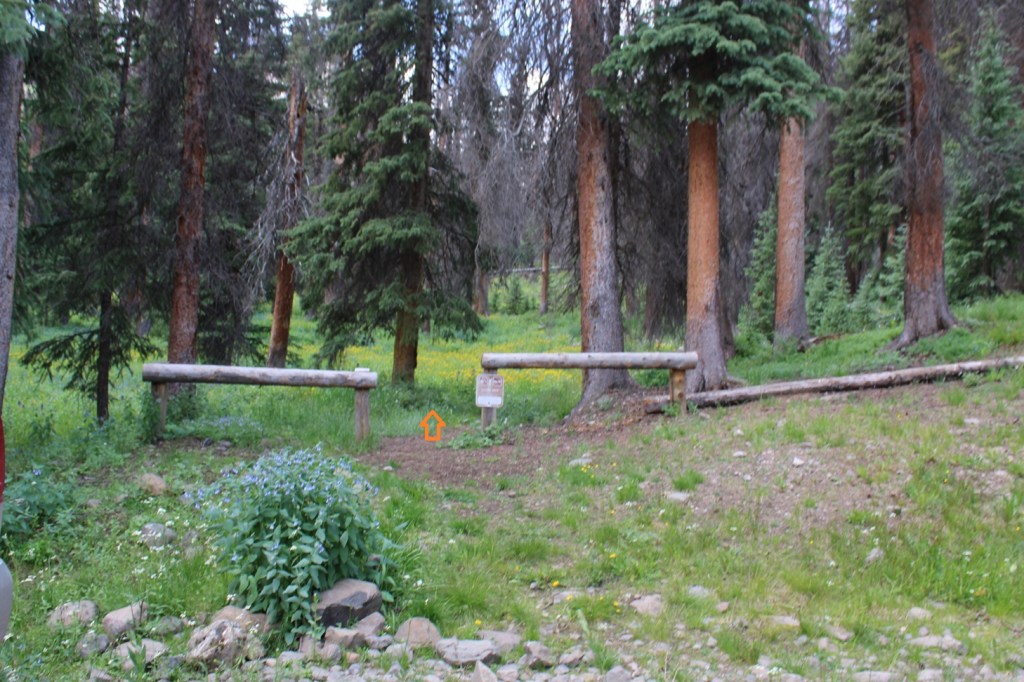
The route starts to the north of the parking area, parallel to the “Wetterhorn Basin” sign, at the drainage.  I headed east up the drainage.

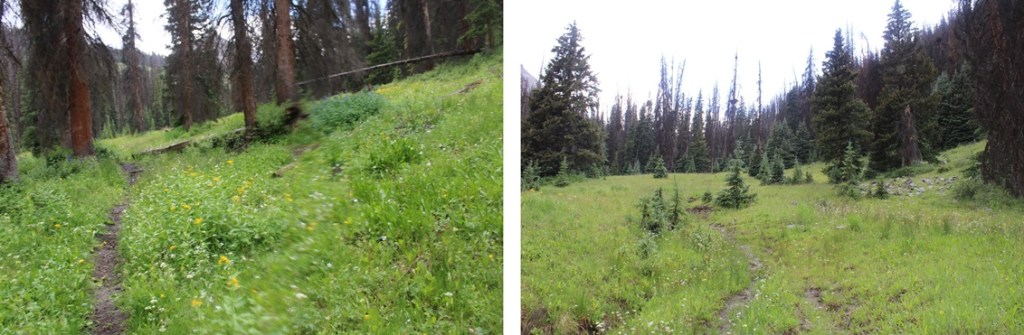
There’s a faint trail here, that I kept finding and losing, but as long as you stay to the left of the drainage and right of the hillside, heading east, you’re going in the right direction.

After hiking for about half a mile, there will be a large tree blocking the trail (the trail is obvious here).  Climb over the tree, and head north/northeast, looking for a dirt gully.  There are a few cairns in this area to help, but I wouldn’t rely on them.

I found the dirt gully and headed up, towards the ridge.  This dirt is very steep and very slippery.  I’d recommend wearing microspikes for traction.  I gained about 300’ of elevation to 11400’.

At the top of the gully, around 11400’, a trail will pick up that heads right (east) along the ridge.  There are cairns here to help get you to treeline, and a faint game trail to follow.  There are also cairns in the clearings (but I didn’t find any in the treed areas).

Once at treeline, here’s a visual of the route to the saddle

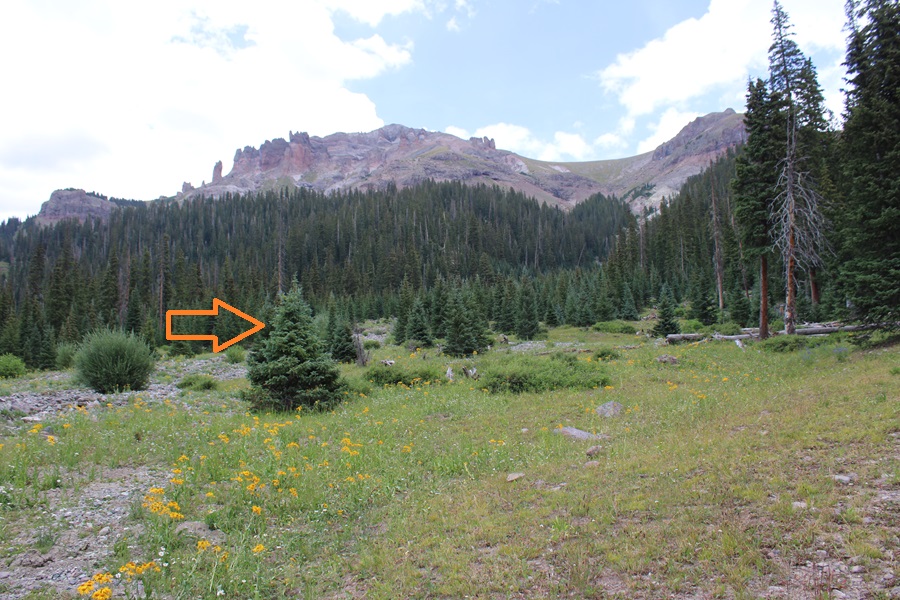
First, I went around this large rock, which has a cairn on it.  It’s important to remember because it’ll be your exit point on your descent.

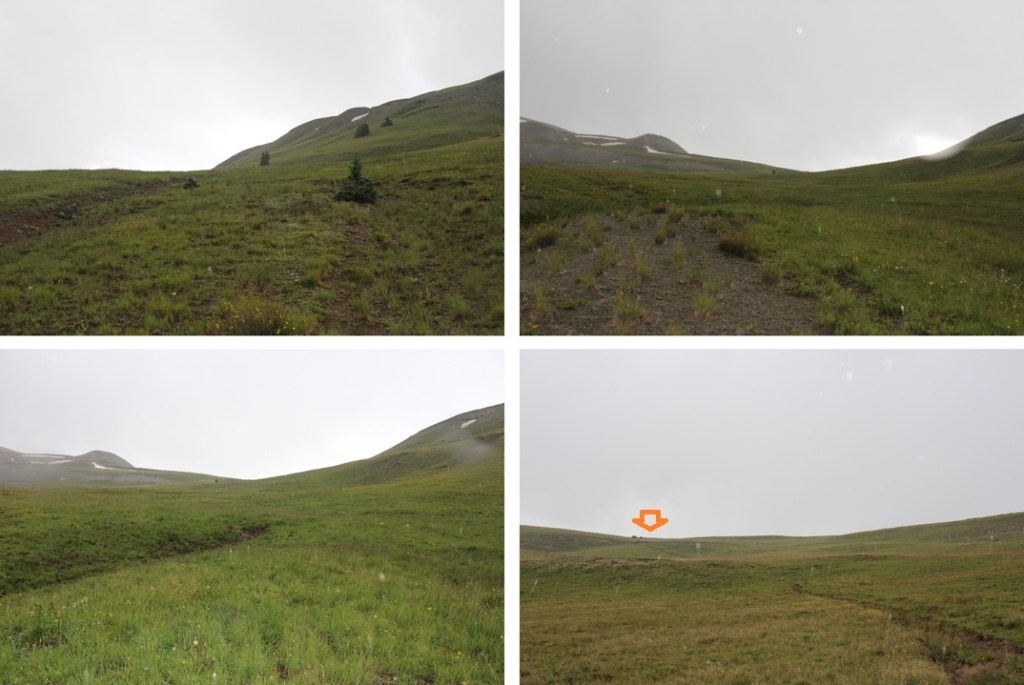
Then I headed northeast, across the rock/scree field, aiming just to the right of the caves in the distance.

At the base of the caves, a faint trail picks up, and you should be able to spot cairns in the distance to your right.  Put on your helmet, and follow cairns through the class 3 rocky terrain. 

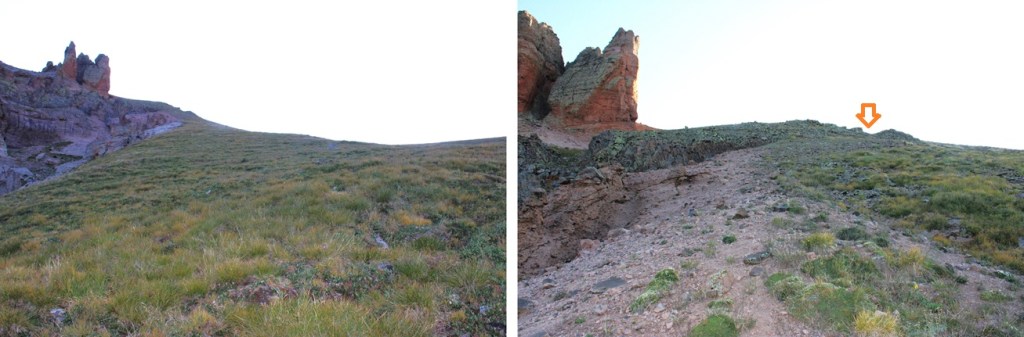
When the rocks end, so do the cairns, but from here the route is easier to figure out.  You’ll want to dip down a bit into this drainage, and ascend on the tundra towards the large rock towers

Stay to the right of the towers, aiming for this small saddle

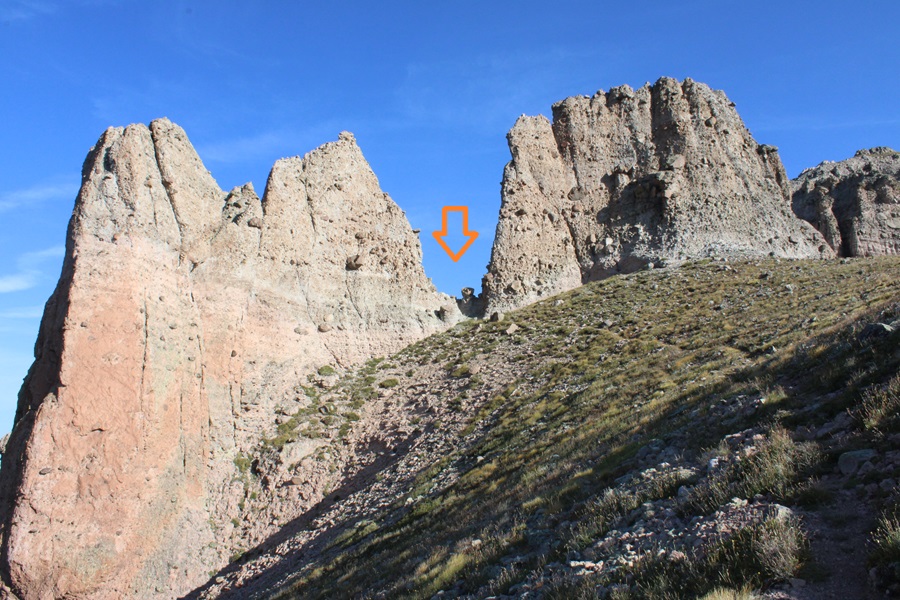
When you hit this small saddle, turn left, and head towards the window in the rock ahead of you.  There will be a very good trail leading the way.

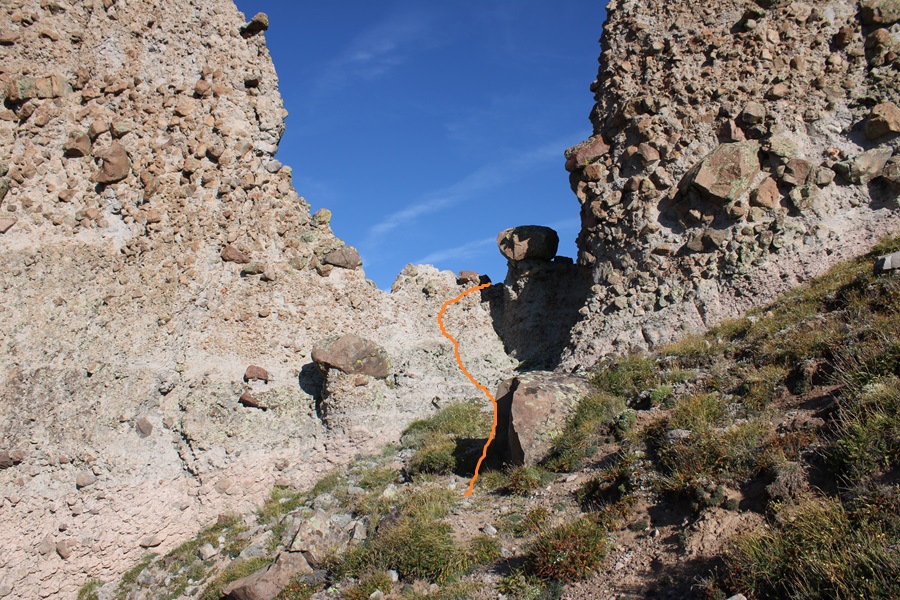
Climb up and over the center of the window.  This is class 3, and there are plenty of hand and footholds.  It’s probably no more than 7 feet high.  Just be careful, as the holds are rocks in held together by loose dirt, and could come loose.

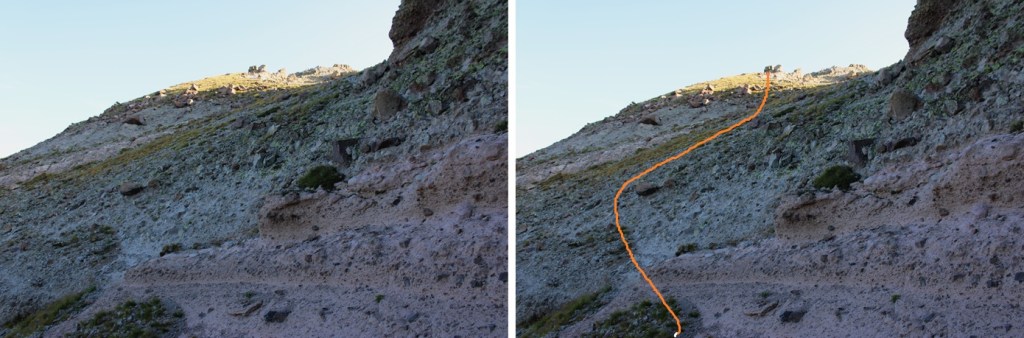
Once you climb through the notch, turn right, and ascend this hill.  I did my best here to stay on the scree and tundra, away from the rocks.

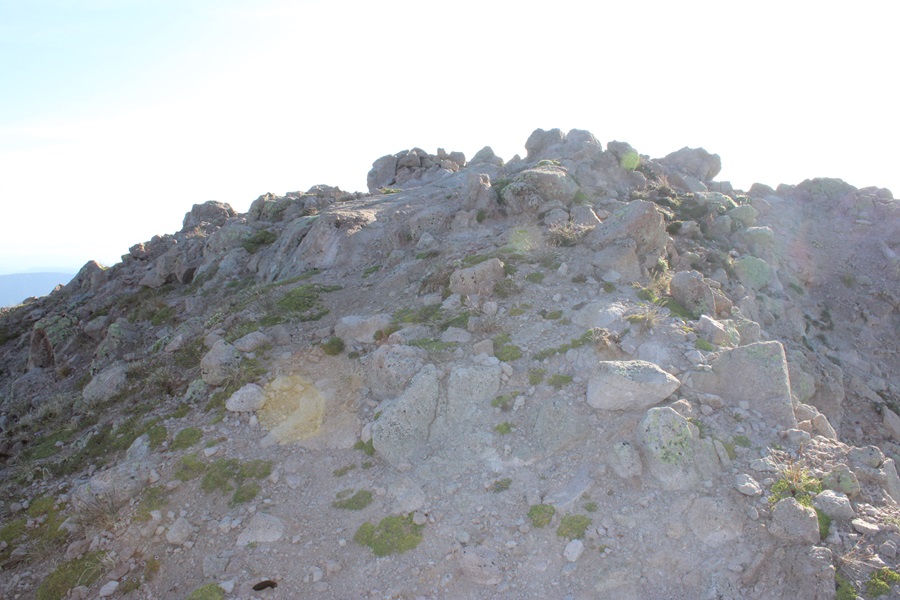
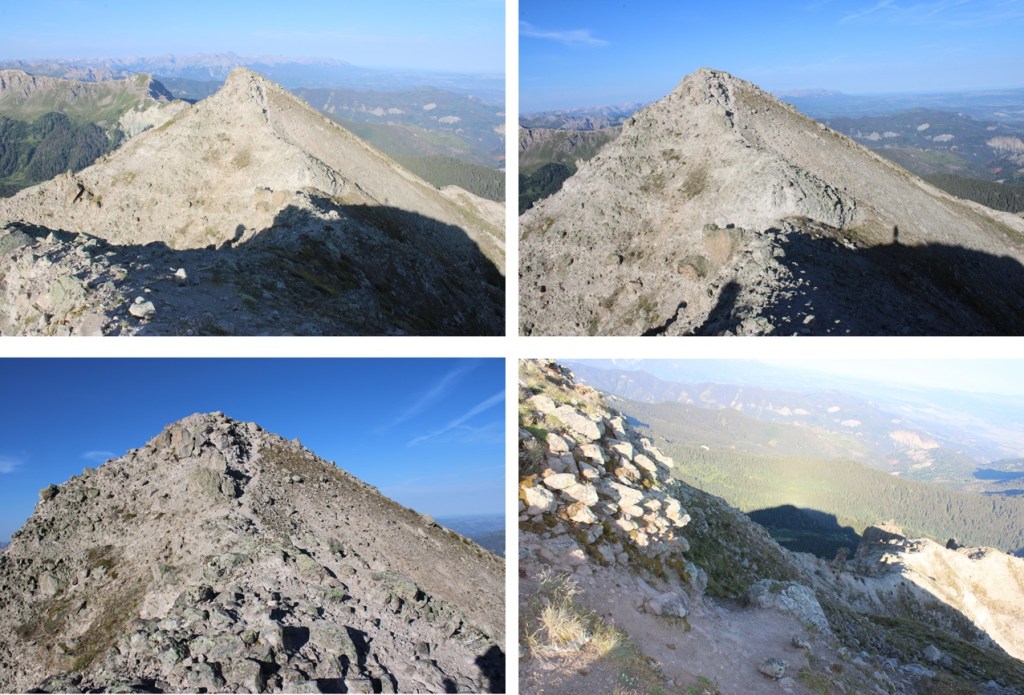
From here I mainly stuck to the ridge, except for two times when I went left to keep this class 2.   There is a visible (yet faint at times) trail from here to the summit.  Here are some pictures of my route up the ridge. 

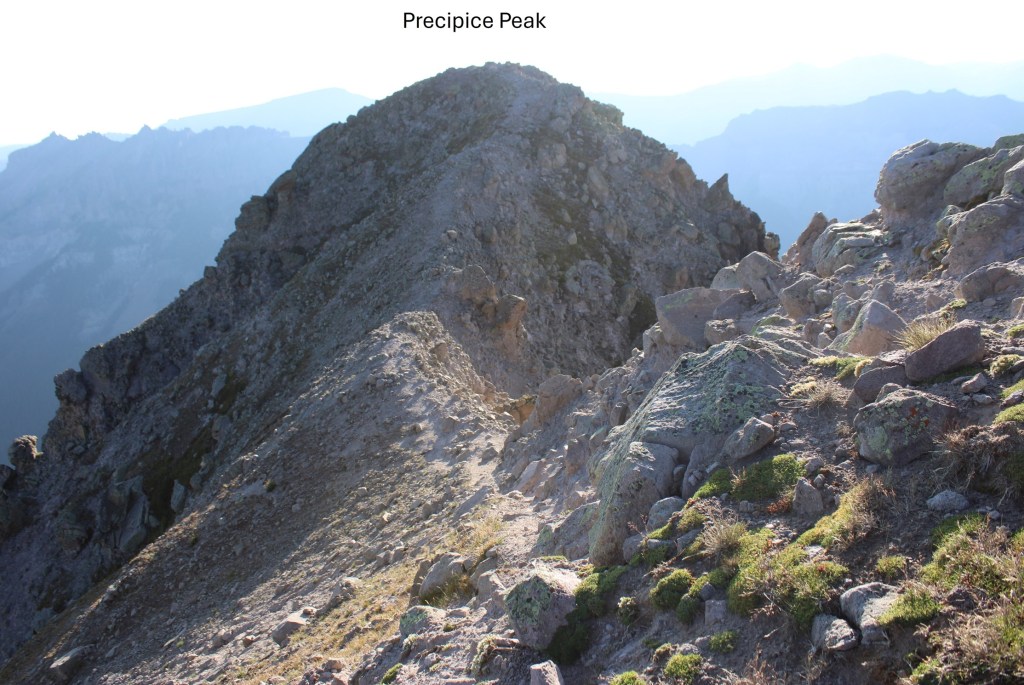
Here is what I thought was the summit.  It’s not. This was the second time I went left, around the block on a nice trail

And from here I could see the true summit, which was an easy hike on a well-worn trail

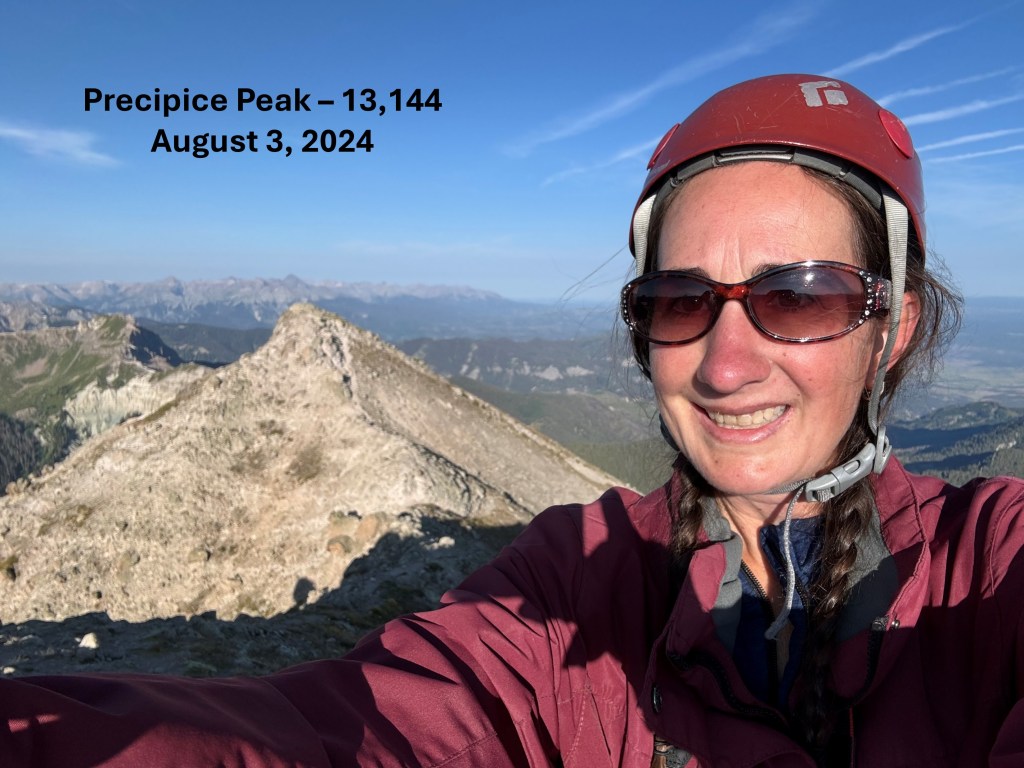
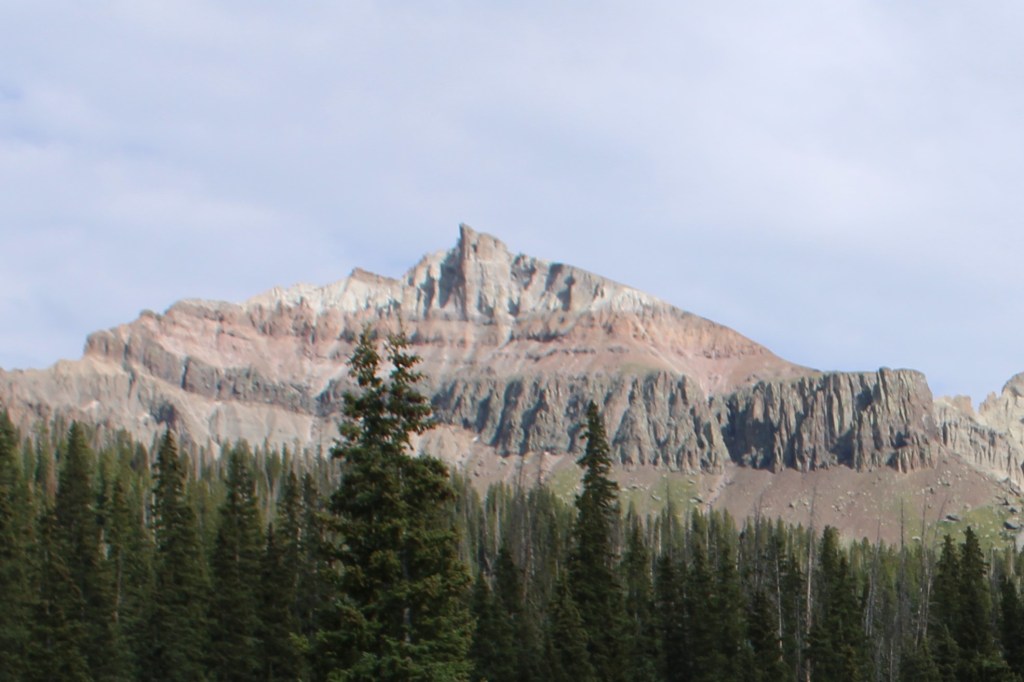
I summited Precipice Peak at 7:45am

Precipice Peak:

This was an out and back hike for me, so I turned around and made my way back to the false summit

And then back down the ridge to the notch

I climbed through the notch

And made my way back down to the tundra

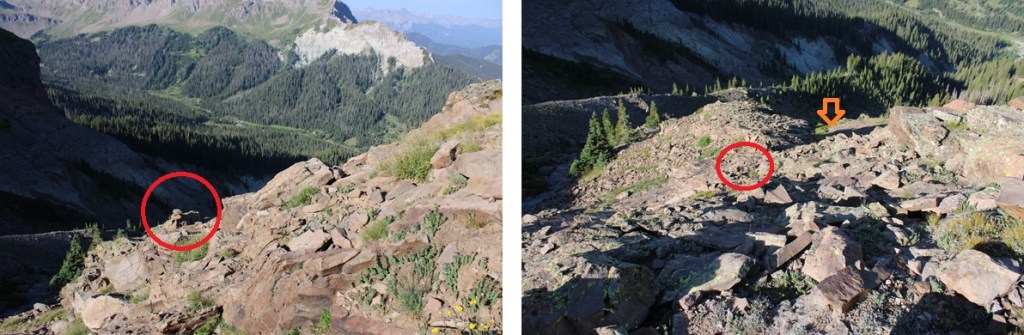
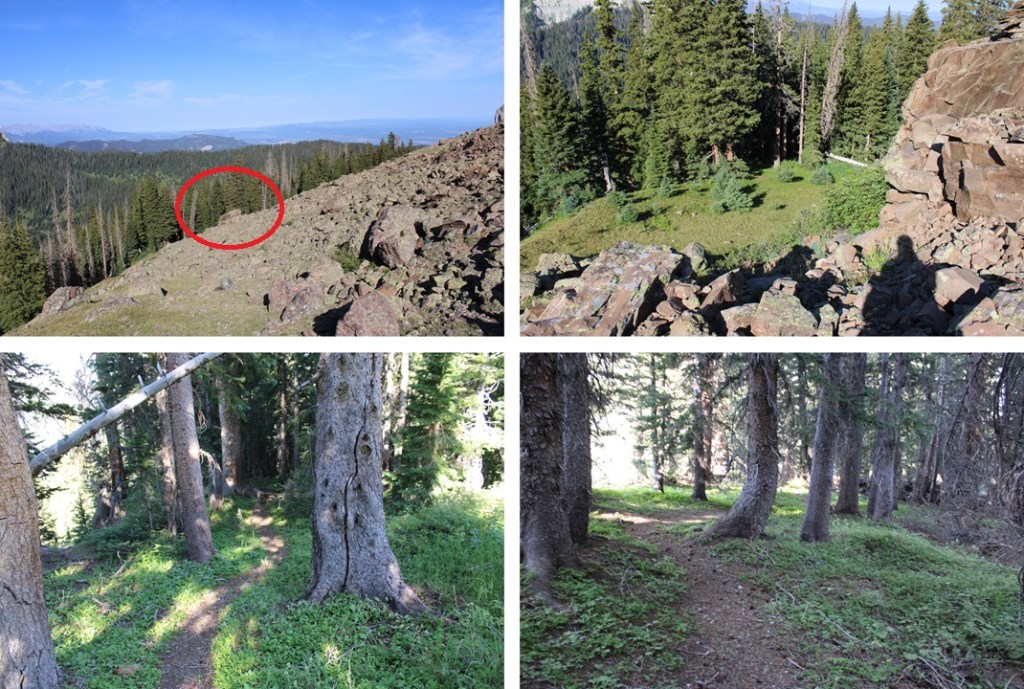
Where the tundra stopped at the rocks I turned right, and headed back down towards the basin.  Also, from here I could see the parking area (circled in red)

I made my way towards the rocky area, and followed the cairns back down into the basin

I was aiming for that large boulder in the distance

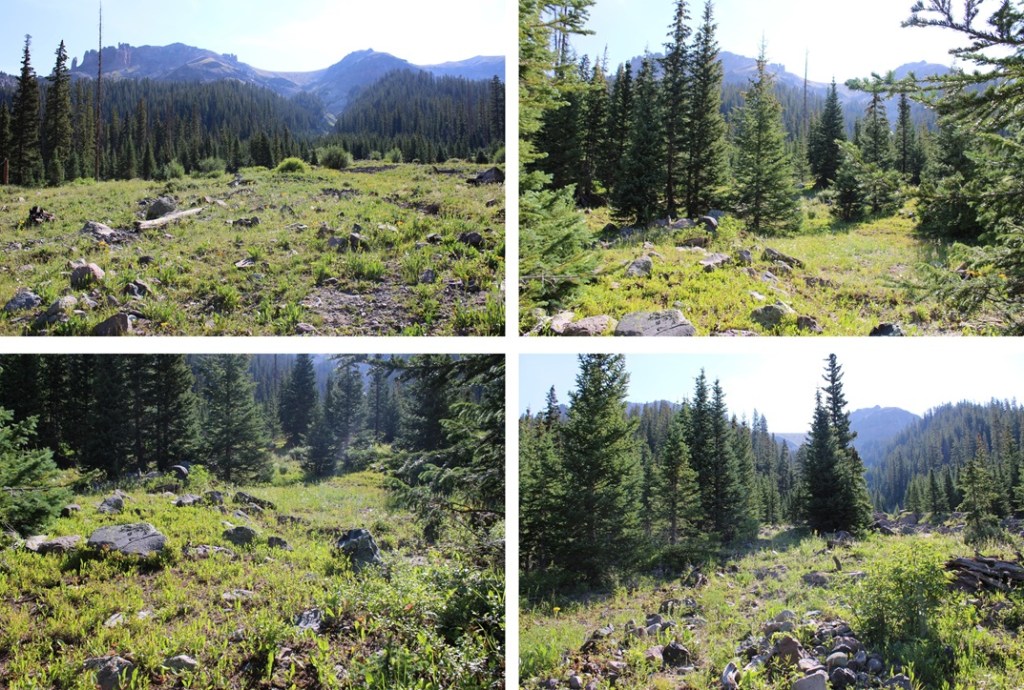
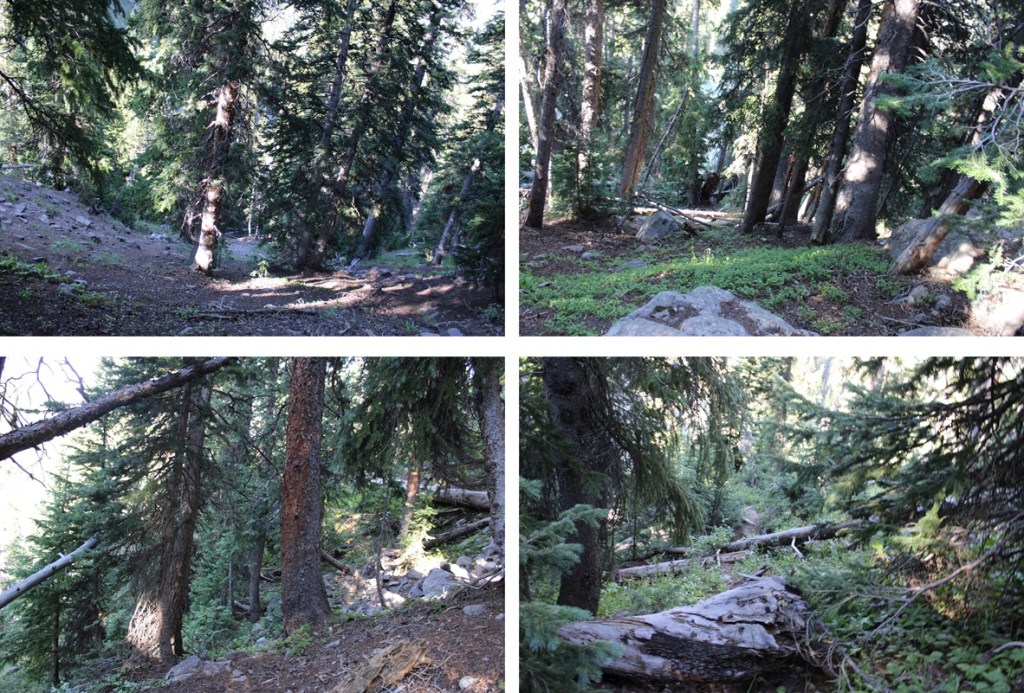
Once at the boulder, I picked up the trail through the trees, and followed it until about 11400’

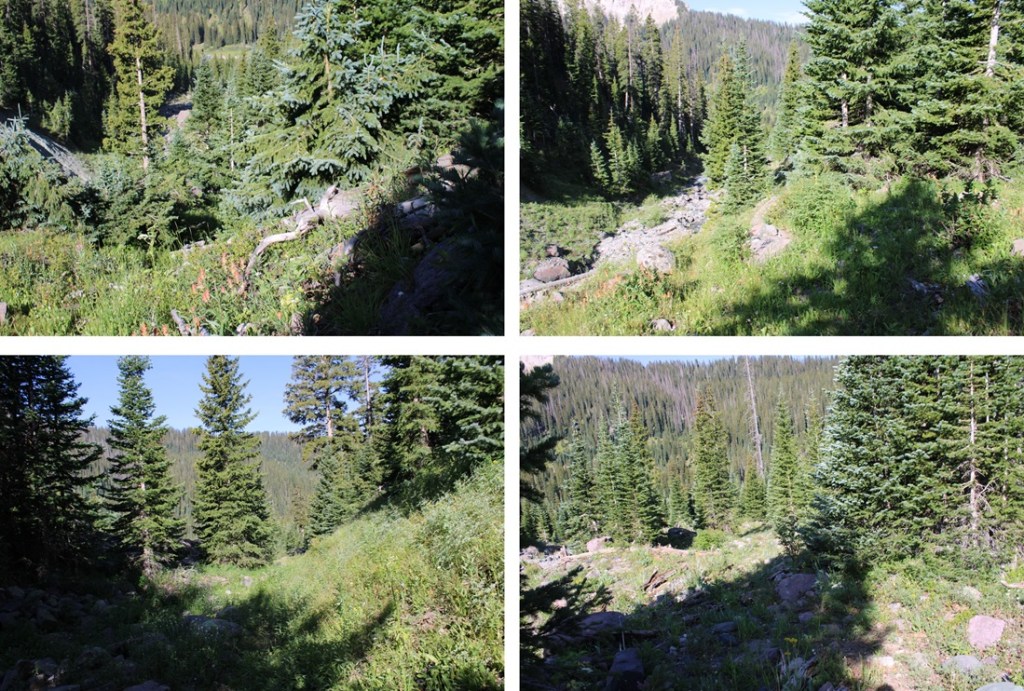
At 11400’ I found that dirt gully, and headed southwest towards the drainage, losing 300’ of elevation.

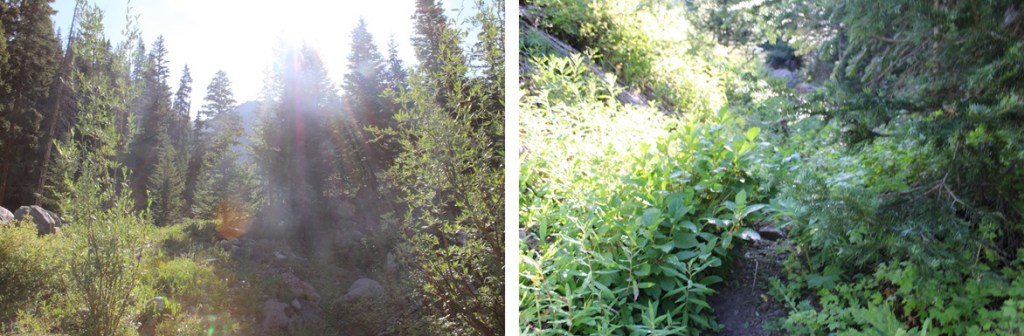
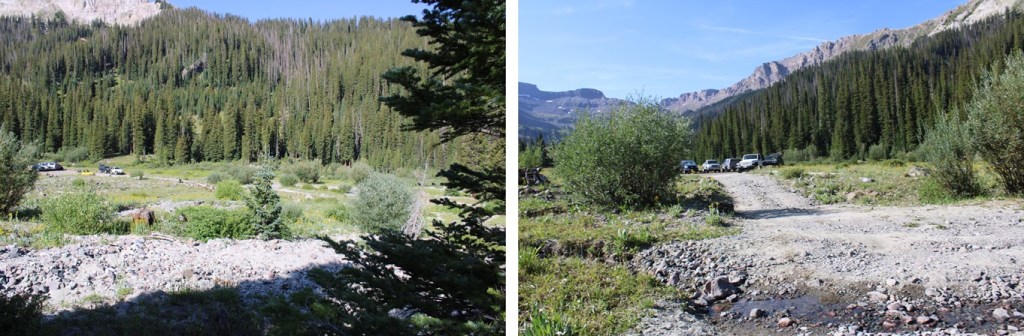
Once I was close to the drainage, I turned right, and followed a slight trail west towards the parking area

I made it back to my truck at 9:30am, making this a 4 mile hike with 2364’ of elevation gain in 3 hours, 45 minutes. 

On to the next trailhead!

Fortress Peak – 13,241

RT Length:  5.76 miles

Elevation: 2482’

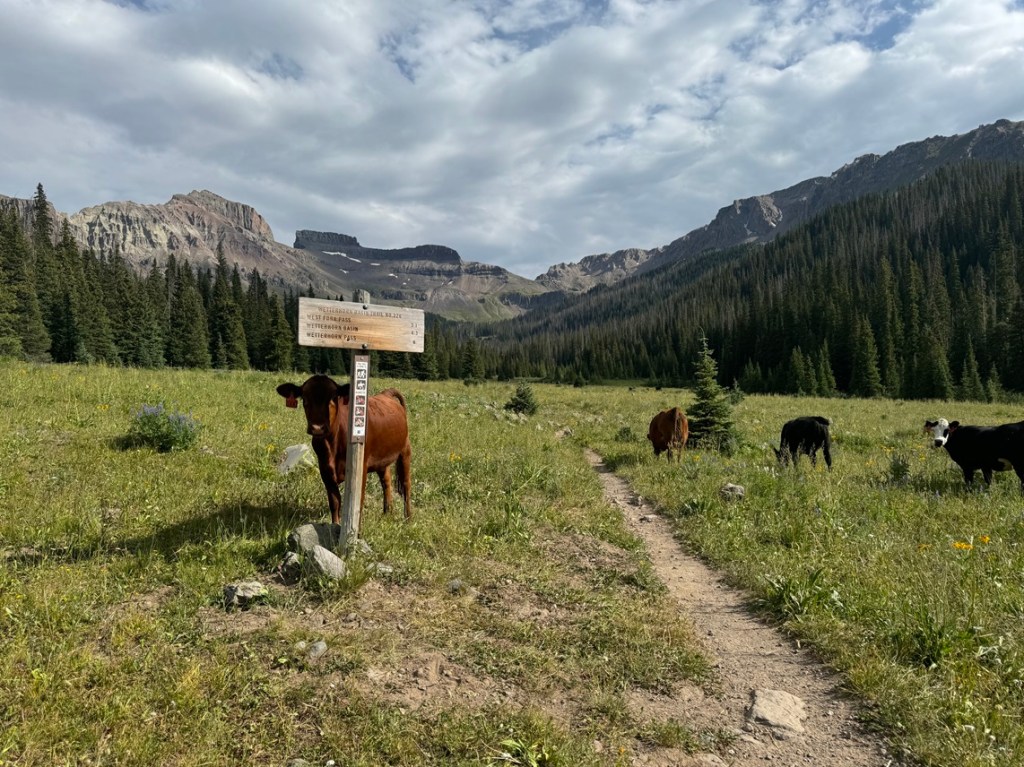
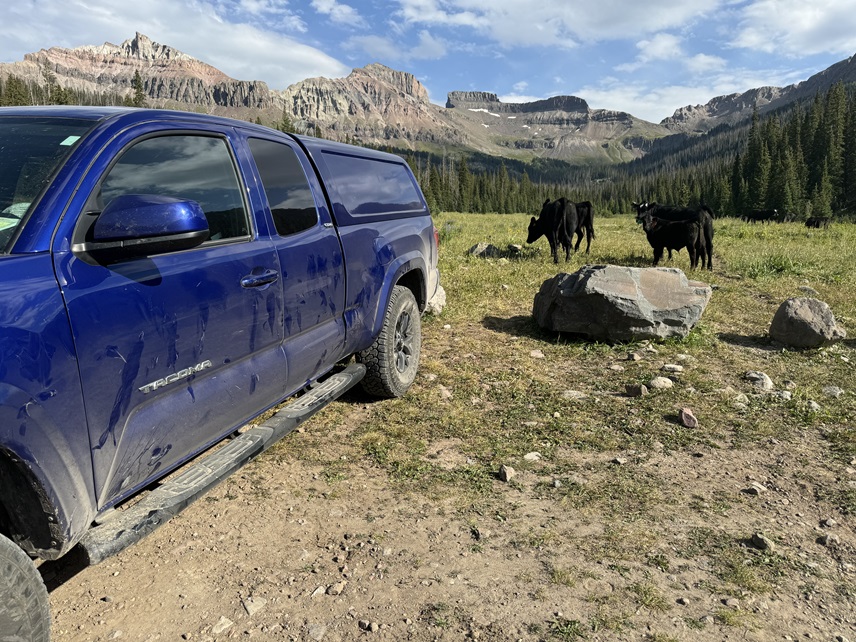
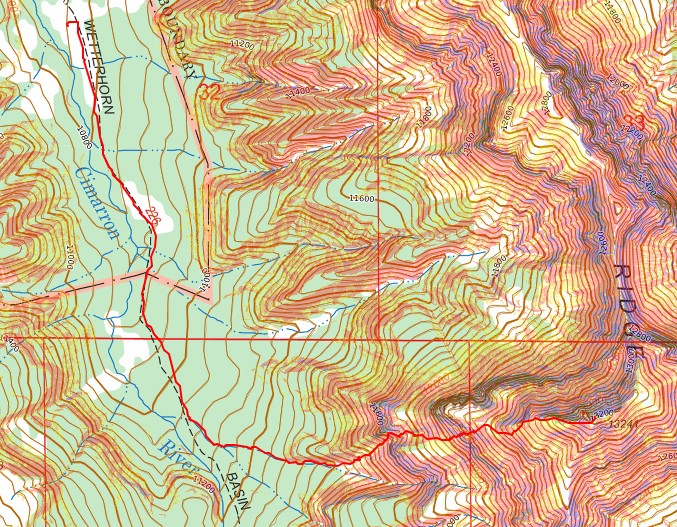
I parked at the Wetterhorn Basin Trailhead, and was greeted to a herd of cows.  They were all over the basin, and would be my companions for the next few days.  They had a penchant for licking my truck.   The drive in is 2WD on a dirt road until 2 miles before the trailhead, where it becomes 4WD and requires clearance.  None of these pictures are as clear as I’d like.  The fires weren’t helping in the morning, and the sun wasn’t helping with shadows in the early afternoon.  I know not to head east early in the morning, but I did it anyway. Sorry!

I was on the trail at 6am, following Wetterhorn Basin Trail No 226 south for just under 1.5 miles.

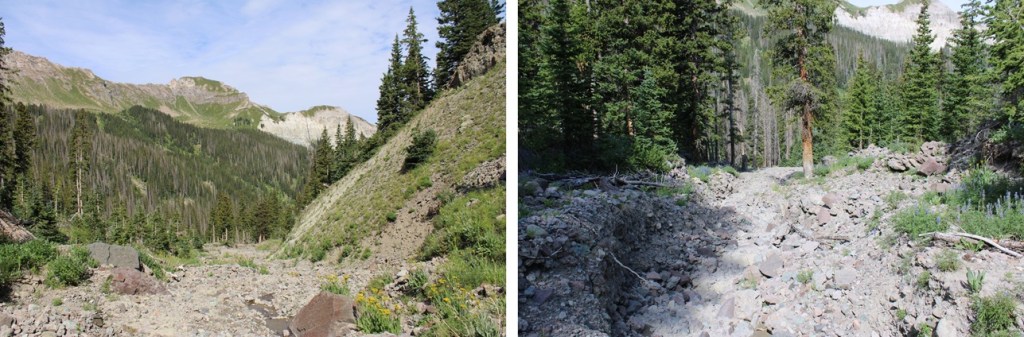
After hiking for 1.4 miles, and at around 11050’, I came to a drainage, and followed it east

I came to an obvious “y” in the drainage, and went left, still following a drainage.

The drainage became narrower, so now I hiked to the left, trying to stay on tundra, but mostly staying on rocks

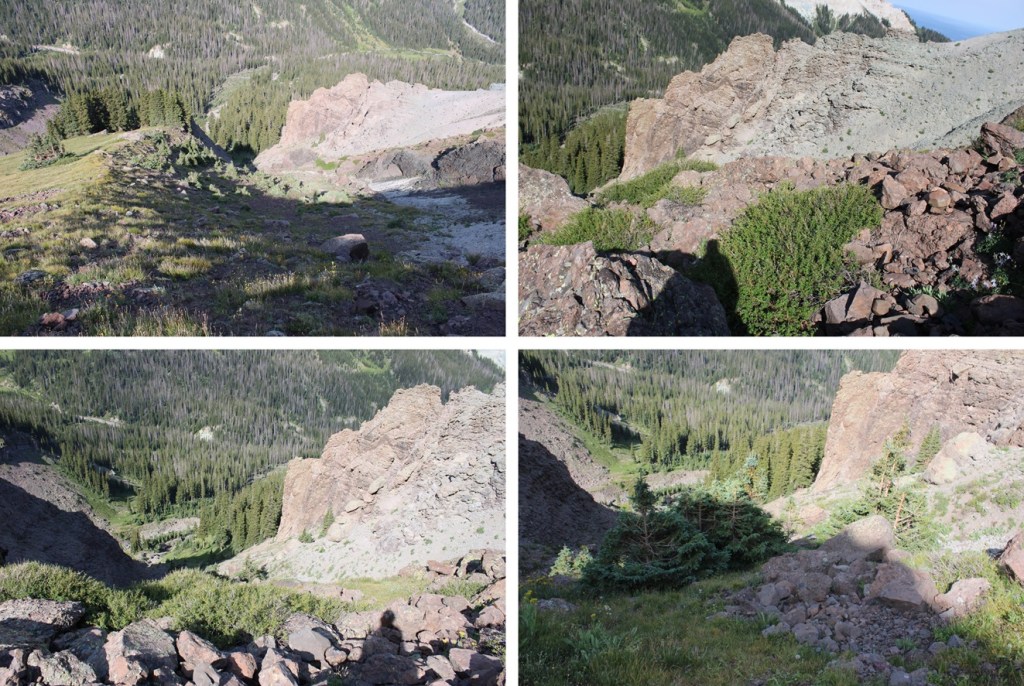
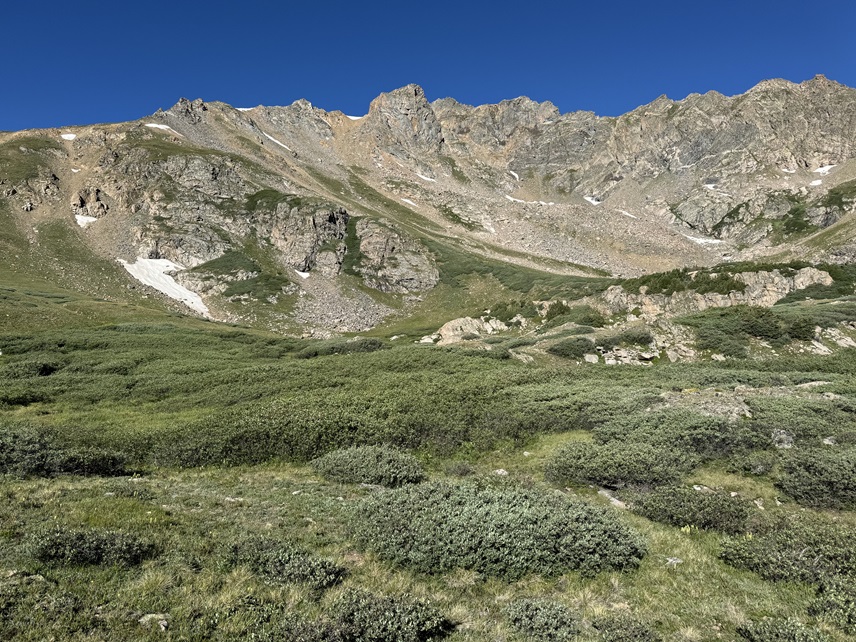
This next part is difficult to explain.  You’re going to WANT to head straight up to the rock formation in front of you, but don’t do that.  Instead, continue following the drainage, but aim to the right of the rock formation. 

You’re trying to avoid the mess to the right of this picture… loose kitty litter on solid rock

Now is the time to put on your helmet.  Ahead there’s a more solid gully to climb.  You can climb either to the left or right, I chose right.

At the top of this gully is another gully to the northeast. 

This one was more difficult then the last.  Solid on the sides with large scree down the center. I went straight up the center

And then walked on tundra to the ridge.

Once on the ridge, I turned right and followed it east, staying below the ridge.  I noticed a cairn that marked an ok game trail, and followed that trail as it skirted below the ridge.  The cairns especially helped in this area.

At 12700’, just before the rock formations directly in front of the trail, I left the trail and headed northeast  for the ridge once again, this time on scree.

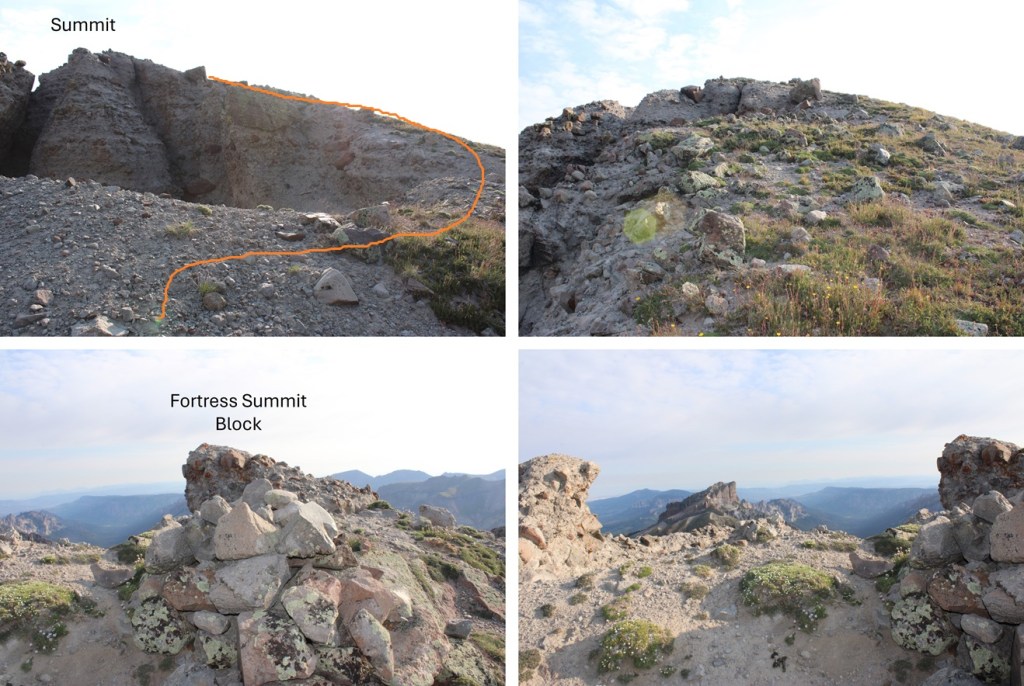
Back on the ridge, I followed it east towards the summit.  The terrain here became slippery.  Rocks the size of softballs and footballs were held together by dirt, and that’s what I was walking on. There were steep runnels on either side of the trail, which at times was less than 2 feet wide.  A slip would have been dangerous here, on either side.  This was all class 2, but I’d advise wearing microspikes for traction. 

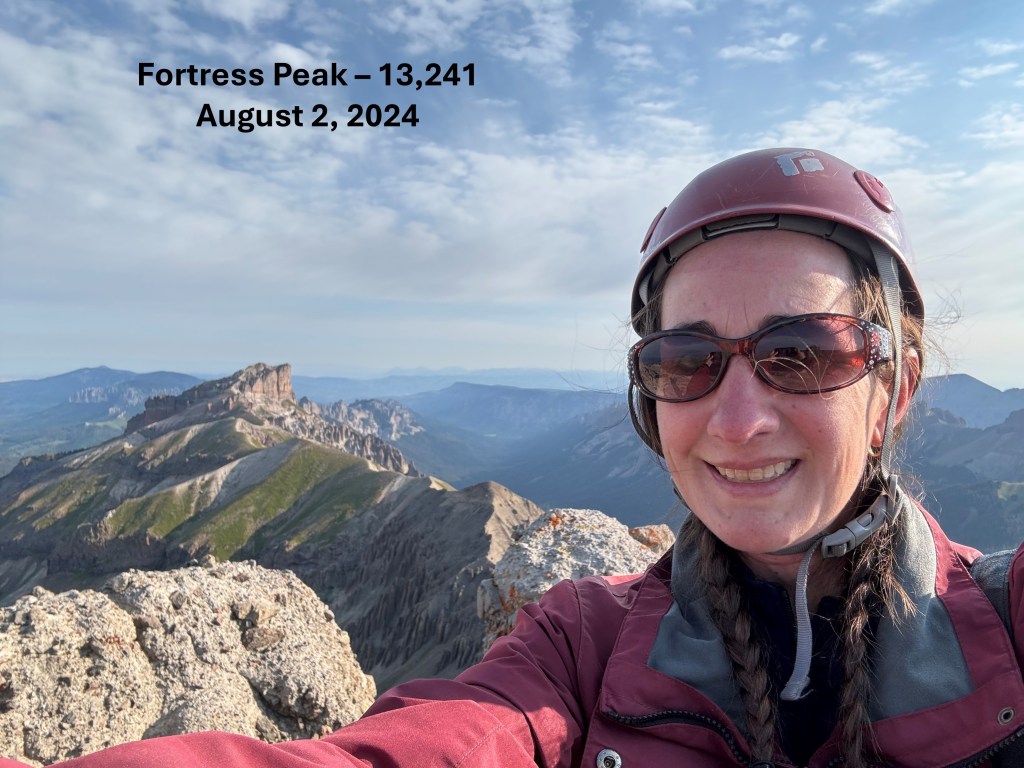
I summited Fortress Peak at 8:15am.  There was a summit register in one of those pipe tubes, but the paper inside was so wet I didn’t want to disturb it, so I left it alone. 

Fortress Peak:

Here’s what some of that exposure looks like

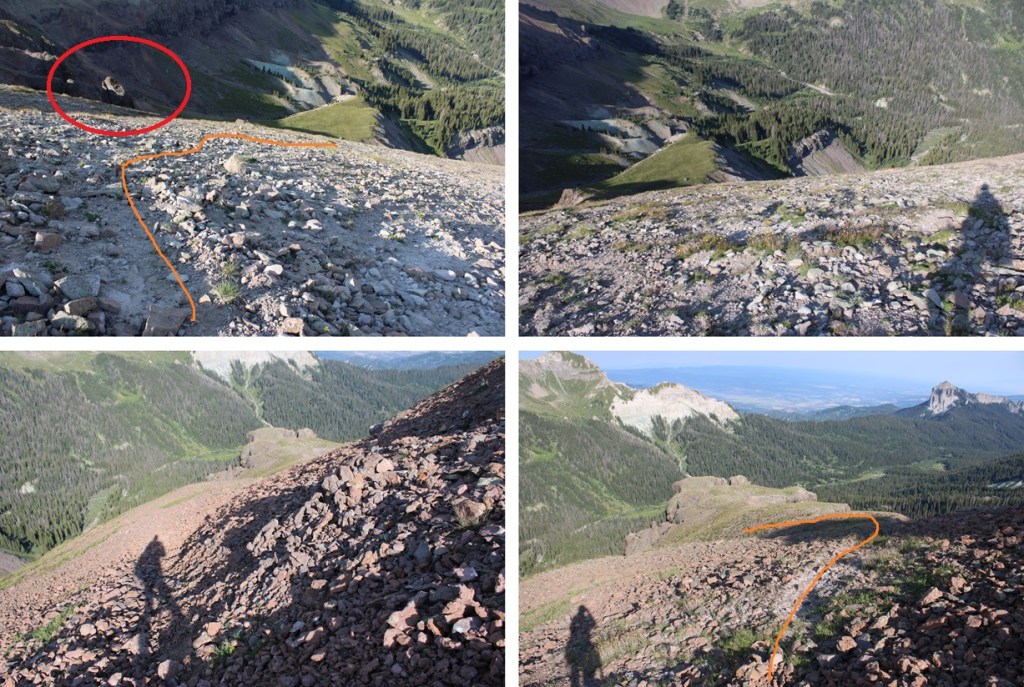
Now to head back down. This was an out and back hike for me, so I just retraced my steps, back down the sketchy section with no traction just below the summit.

Then I hiked down the ridge until I was parallel with the rock formations on my left (circled).  Here I turned and headed southwest towards the game trail.

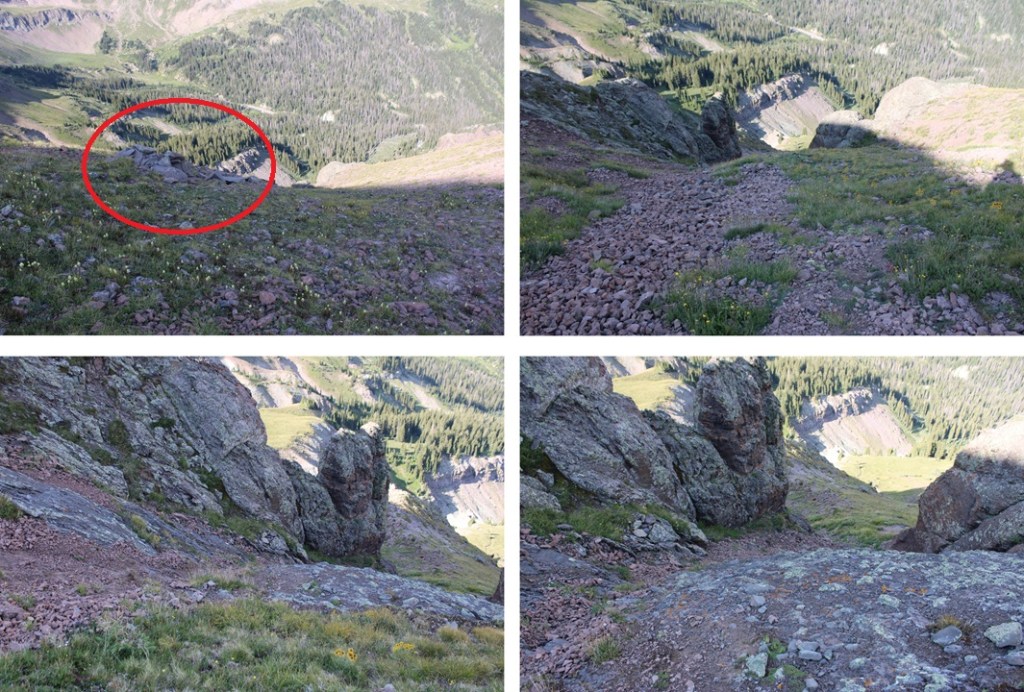
I then followed the game trail south, back to the gullies.  I descended near this big rock (circled).

Now for the second gully. 

At the base of the second gully, I headed west towards the tundra ridge that would bring me to the drainage. 

And now to follow the drainage back to Wetterhorn Basin Trail No 226

Back on Wetterhorn Basin Trail No 226, I followed it 1.4 miles north back to the trailhead.

Where the cows were still licking my truck

I made it back down to the trailhead at 10:30am, making this a 5.76 mile hike with 2482’ of elevation gain in 4.5 hours.

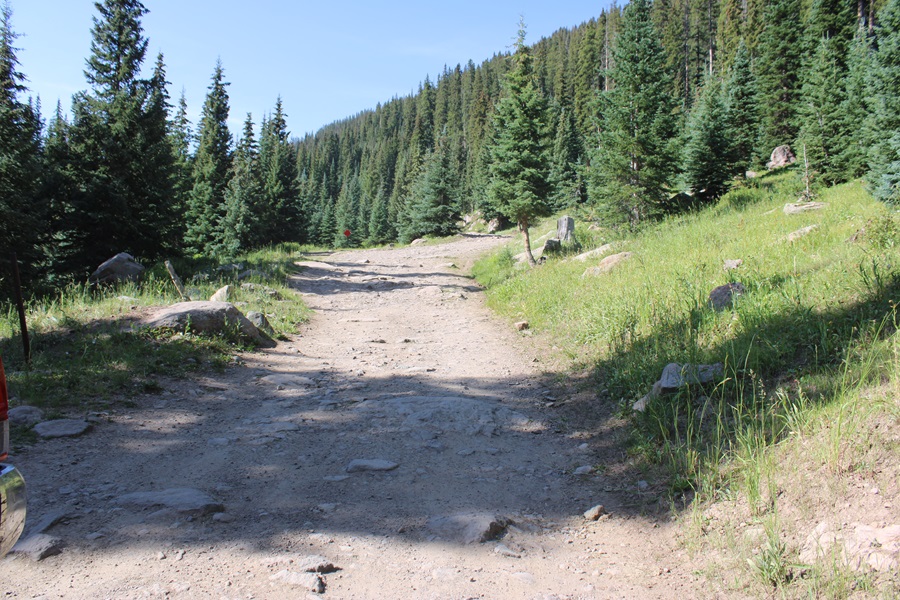
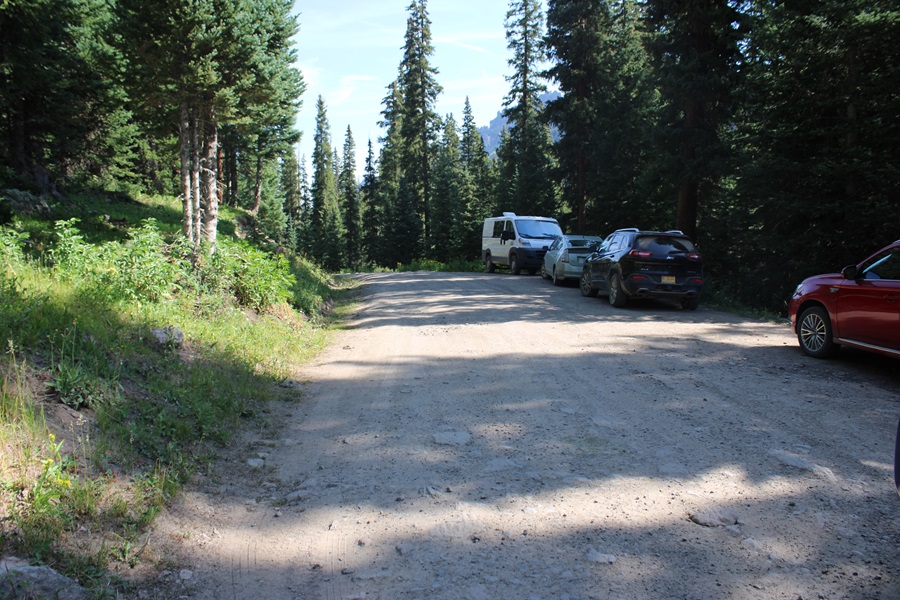
Here are pictures of the start of the 4WD road, and where to park if you have a 2WD vehicle

The Citadel – 13,295

RT Length:  11.45 miles

Elevation Gain:  3255’

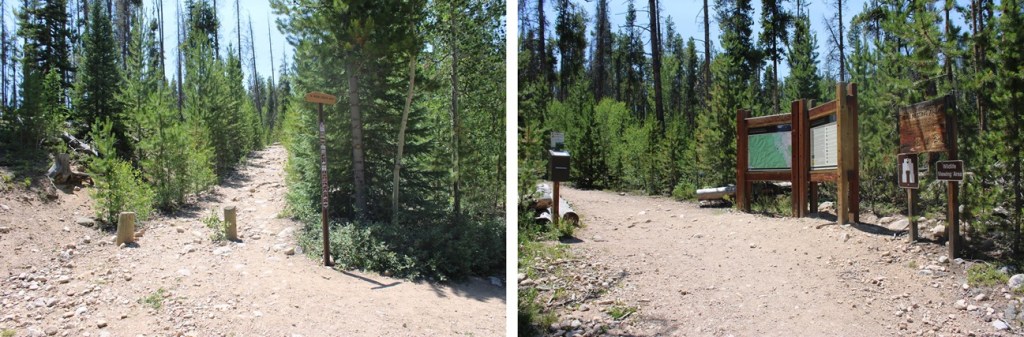
I arrived at the Herman Gulch Trailhead and was on the trail at 4:30am.  The trailhead has spots for dozens of vehicles (if not more), and the trail is clearly marked. 

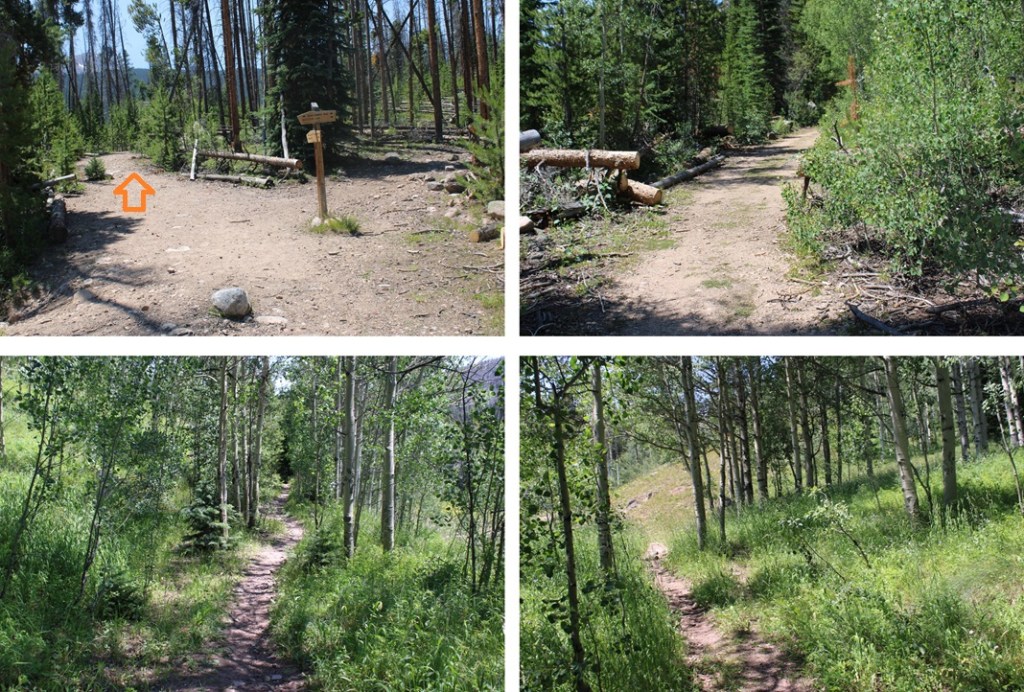
I followed the Herman Gulch trail for less than a quarter of a mile, until I came to the junction with Waterous Gulch Trail, turned left, and continuing following the class 1, well-defined Herman Gulch Trail all the way to Herman Lake.

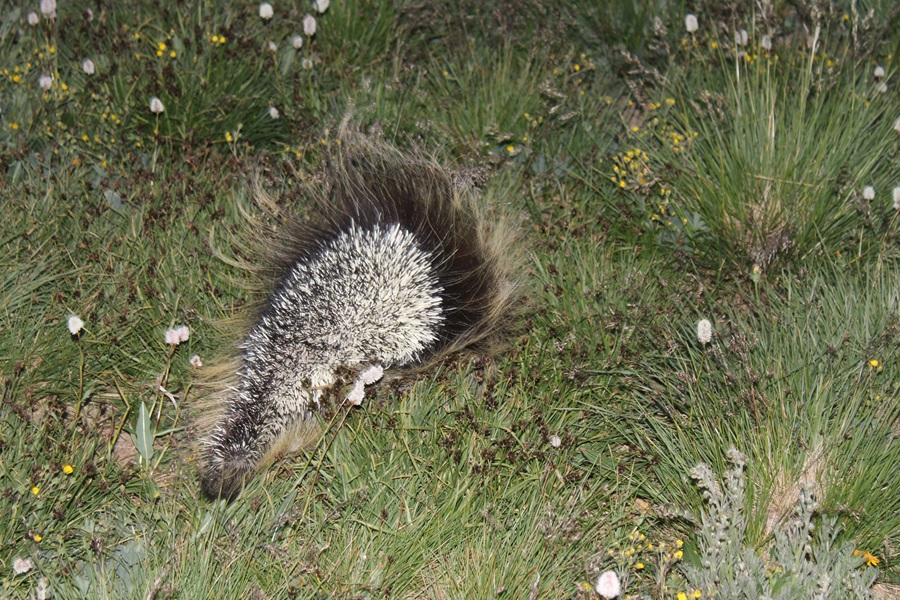
It was at about here I encountered a porcupine, which immediately turned and ran away from me. 

I continued following the trail, skirting the south side of Herman Lake

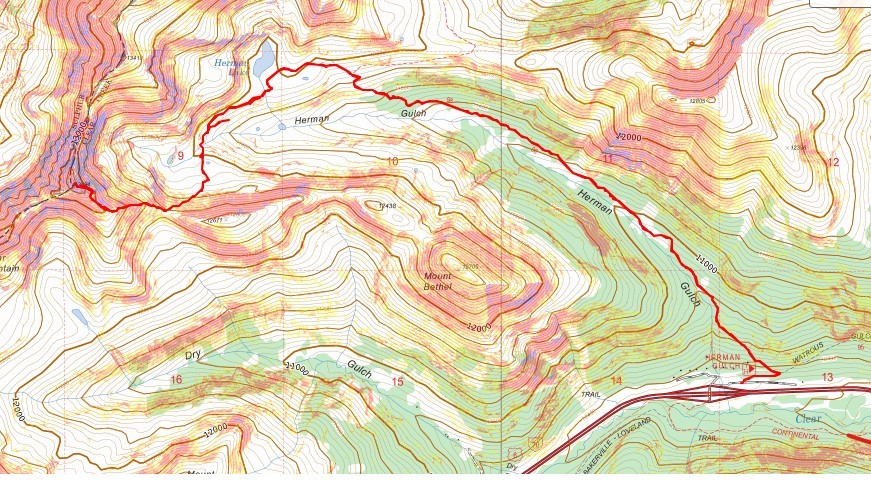
I followed this trail as it headed southwest towards the saddle of The Citadel and PT 12671.  Here’s where I was heading:

There’s a pretty good trail that goes MOST of the way, crossing the creek that flows out of Herman Lake and through the willows.  I lost a little bit of elevation during this part, but it was negligible.

At about 11970’ I came to another large creek, and here I left the trail to cross the creek

From here the trail is difficult to follow, but there are plenty of cairns to follow to get you to the saddle.

Now on the saddle, I turned right and headed west up the ridge, on a good game trail that was easy to follow.

Now to make my way towards the saddle.  The route will be obvious.

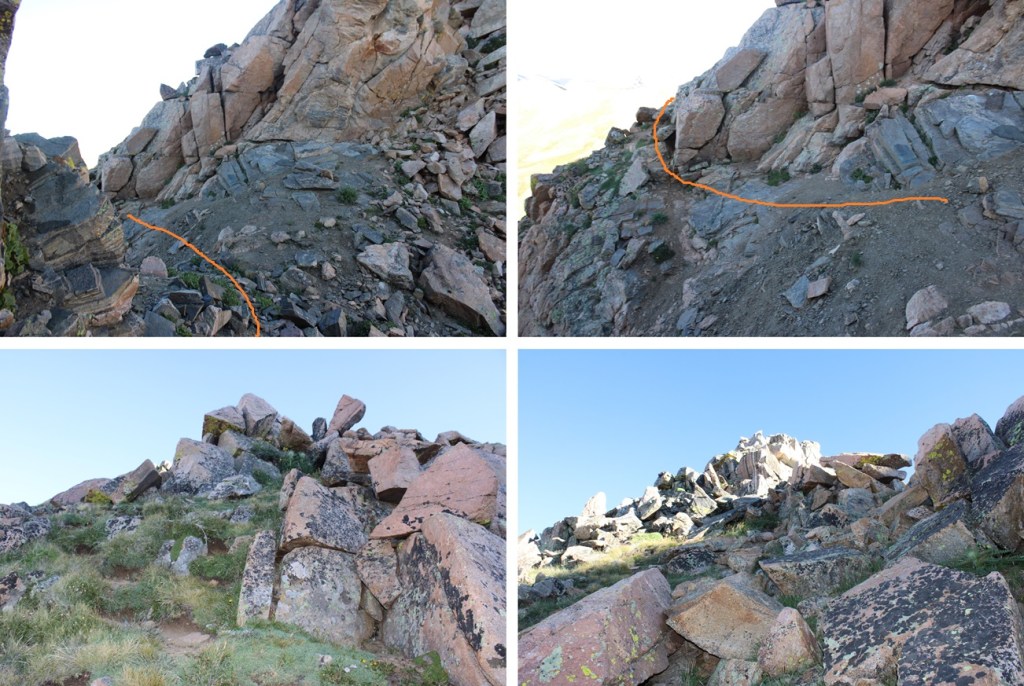
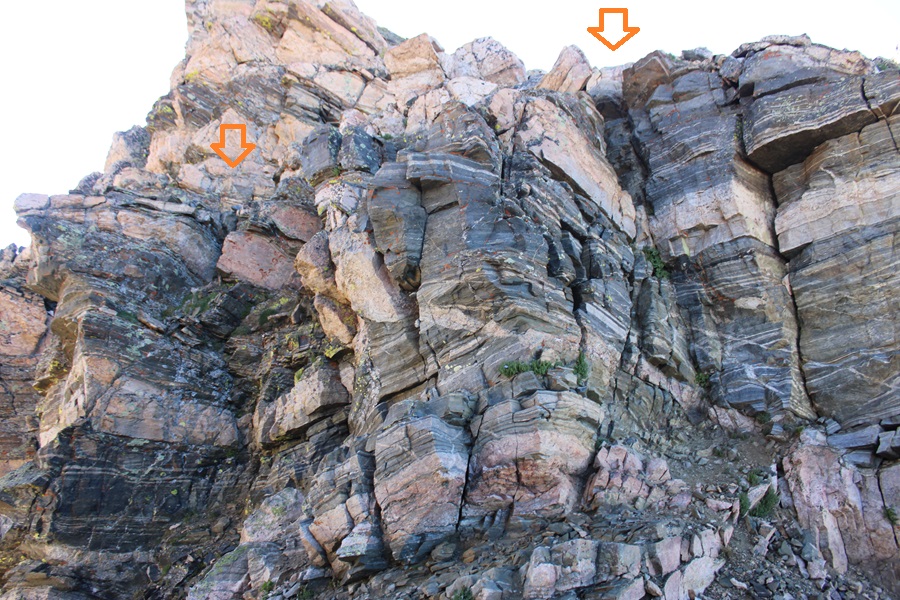
If you haven’t already, now is a good time to put on your helmet.  From the saddle, head northeast and look for a solid band of rock.  This rock band is important, because the gullies are miserable.  Once on the rock band, ascend towards the tundra, then follow the line of tundra northeast.  Once you’re on the tundra, you can stay on tundra until the top.  This is class 3, and a slip would have you falling quite a ways, like hundreds of feet before you stop, so take care in this area.  Here’s a visual representation of how I climbed from two different angles.  It’s probably a good idea to start memorizing the route as you’re hiking up the ridge from the saddle of The Citadel and PT 12671. 

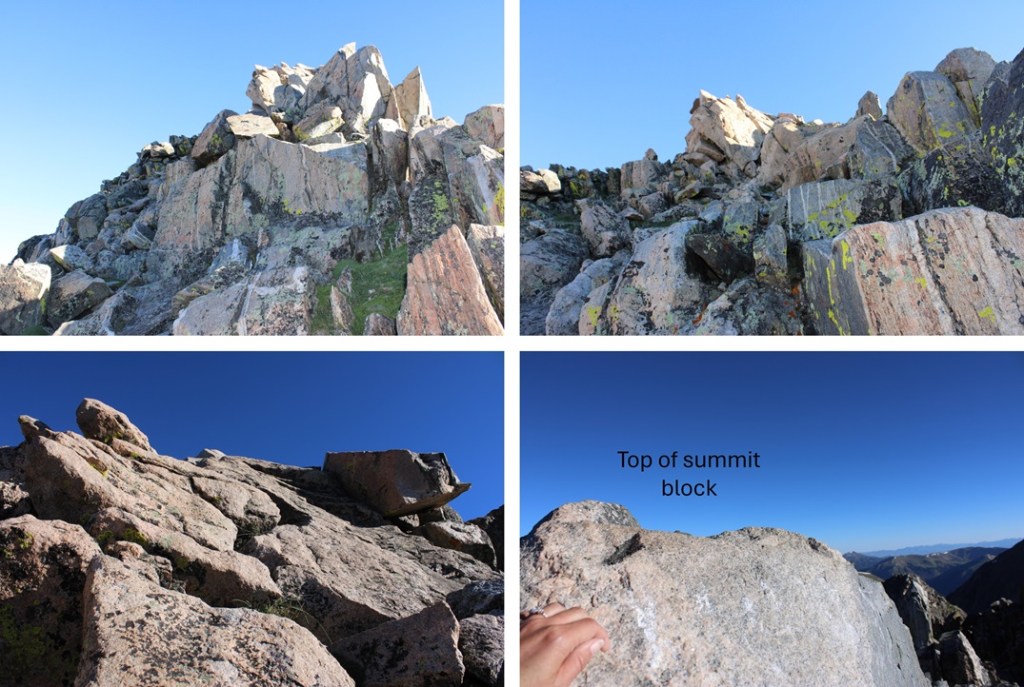
And some pictures of my route:

From here, to the north, I saw what I thought was the summit.  It wasn’t, but I headed towards it anyways.

I made my way to the false summit, and could see the true summit to the west.

So, I downclimbed a bit, and headed towards the saddle ahead of me. 

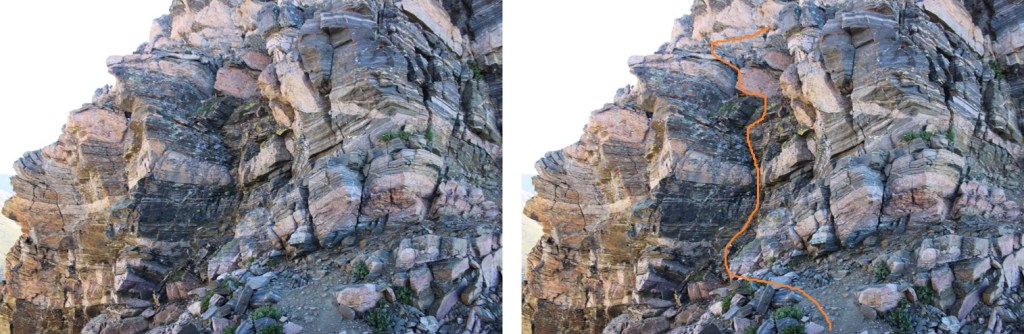
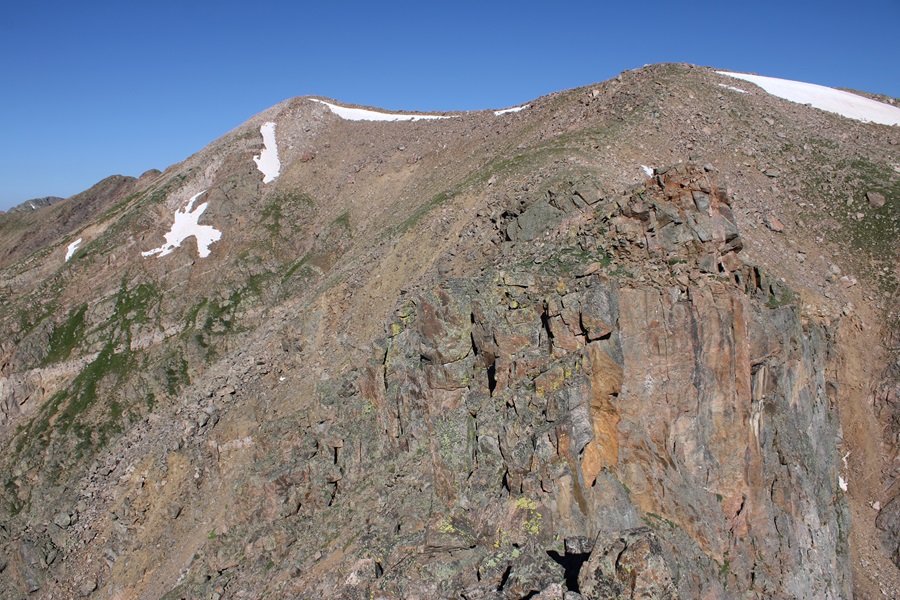
At this saddle, there was what I would consider a class 4 chimney to downclimb.  I sat there for about 10 minutes, waiting for the wind to die down before downclimbing.  The wind was insane, and I had to hide behind rocks to get away from it.  The downclimb was much more difficult than the upclimb, as it was committing, and I wasn’t sure there would be adequate footholds down below where I couldn’t see (there were).  Here’s what the wide chimney looked like to downclimb.  It was probably 10-15 feet of downclimbing.

Now to head to the saddle, and summit the peak.

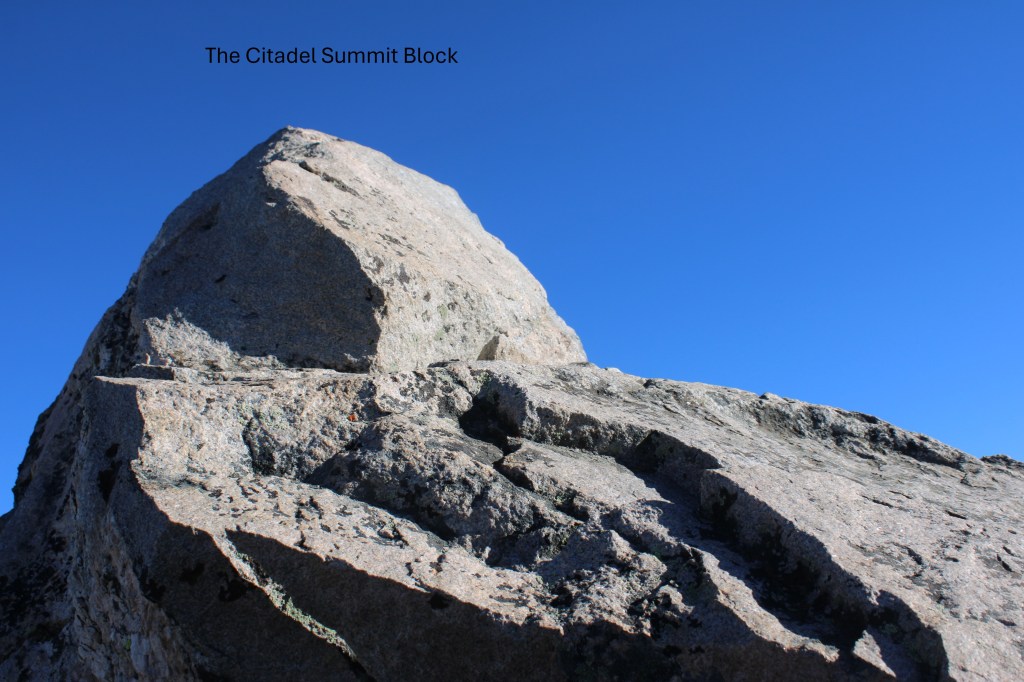
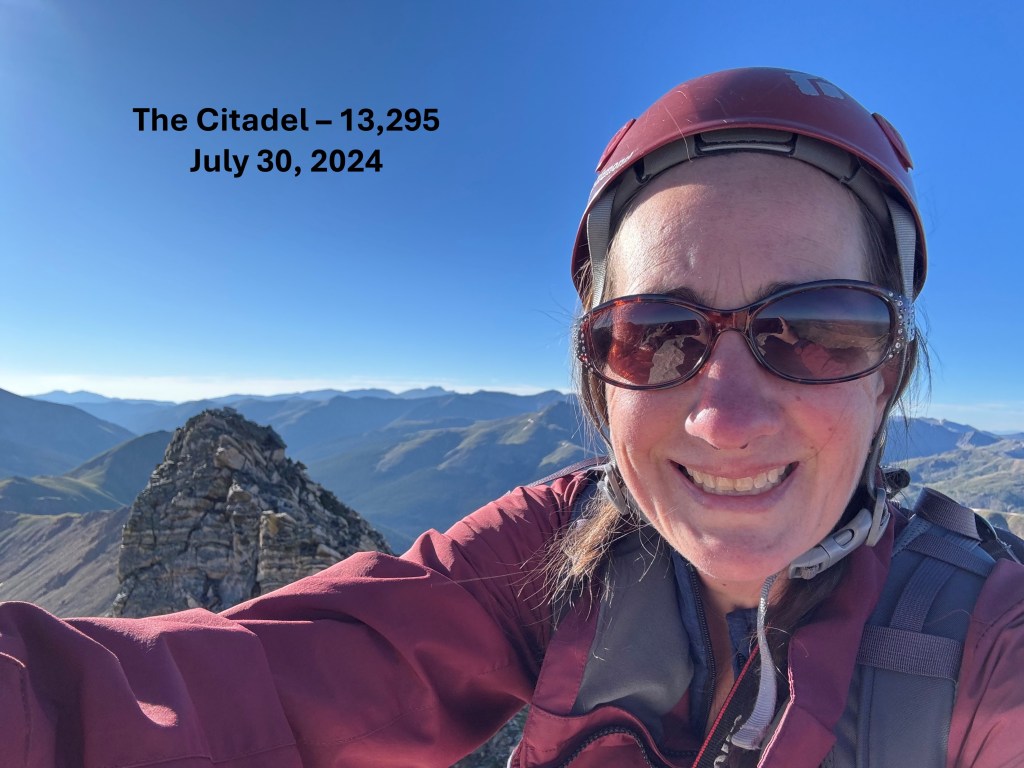
The summit was a short class 3 scramble to the summit block, which is a bit exposed. It was EXTREMELY windy today, and I had to hold on tight to keep from being blown over, but I was able to summit.

I summited The Citadel at 7:45am.  Sorry for the terrible picture and less than stellar video… I only took 1 photo, because I was afraid of losing my phone to the wind, and there wasn’t much room to move around on that summit block without falling (once again, wind).

The Citadel:

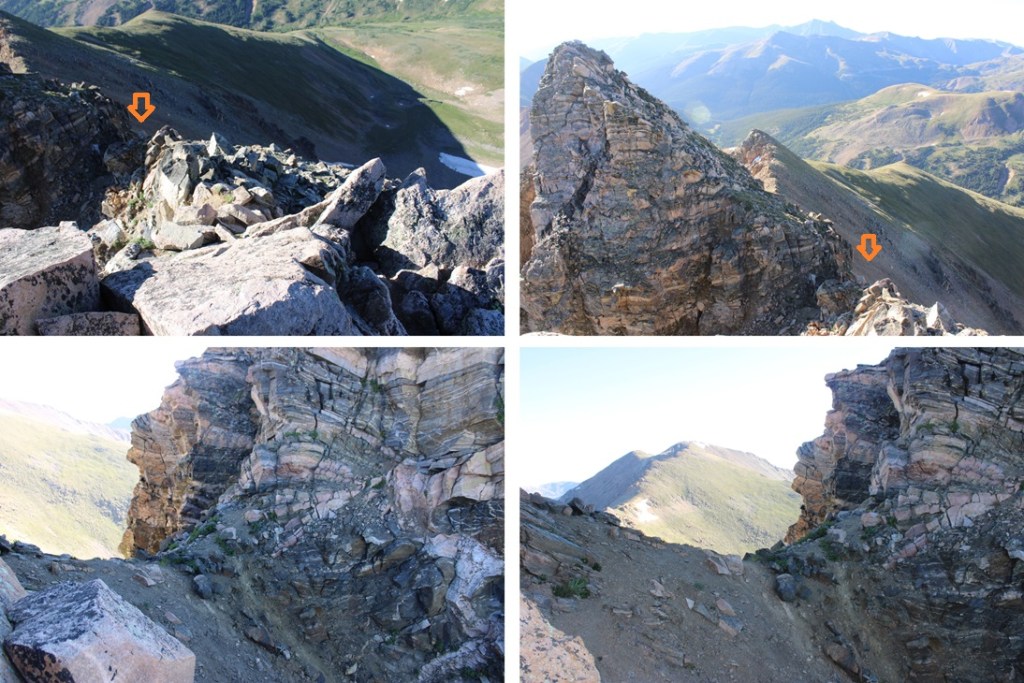
Here you can see the false summit to the east

I made my way back to the saddle between The Citadel and the false summit

Here’s a look at your options to upclimb.  There are two, I took the one to the left do downclimb and upclimb.

And now to make my way back to the grassy ledge.  There’s a cairn indicating where to descend.

And now to downclimb the grassy ledge.   Once again, I stayed on the tundra until I reached the rock rib, then headed for the saddle to the right.

I was now back on a trail, and followed it to the saddle of The Citadel and PT 12671.

Here’s an overview of my hike to Herman Lake from the saddle.  This was on a mostly class 1 trail, with cairns to help when needed.

Back at Herman Lake, I followed the Herman Gulch trail east back to the trailhead.  You’ll know you’re getting close when you can hear the illustrious sounds of I70 in the distance.

I made it back to my truck at 10:30am, making this an 11.45 mile hike with 3255’ of elevation gain in 6 hours.

On to the next trailhead!
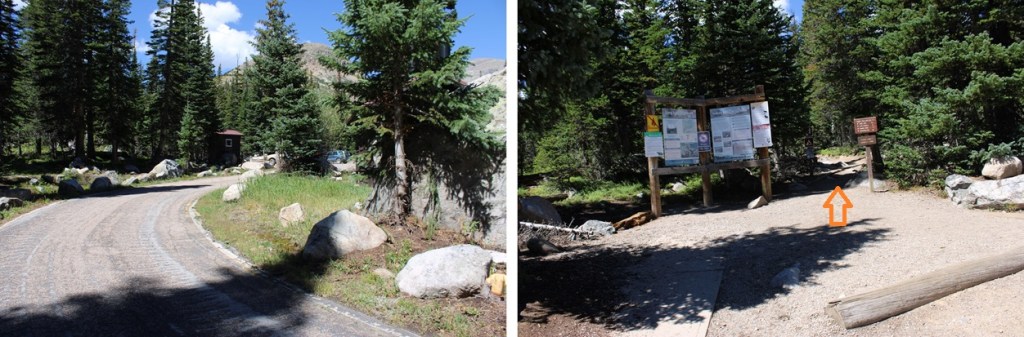
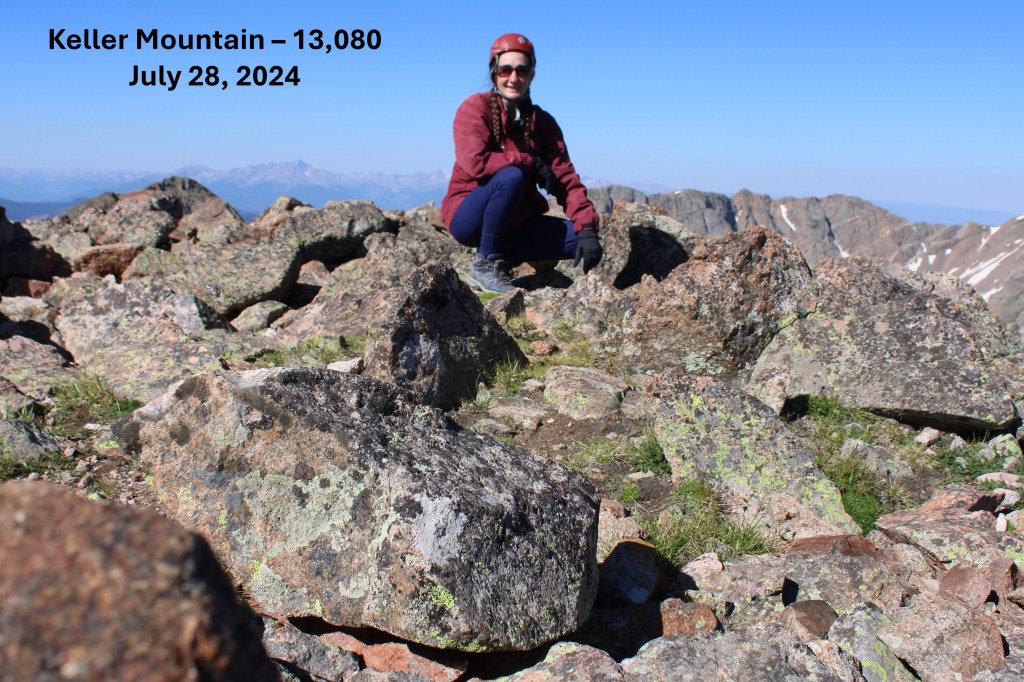
Keller Mountain – 13,080

RT Length:  11.89 miles

Elevation Gain:  4086’

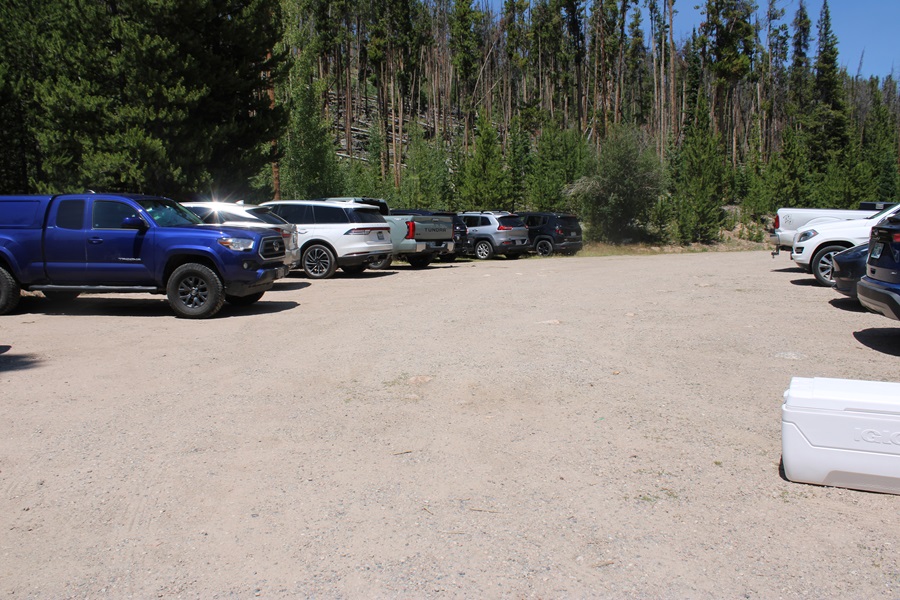
I parked at the Rock Creek Trailhead at 5am, and the parking lot, which holds about 20 vehicles total if everyone parks nice, was already full.  I’m guessing all the vehicles were from weekend backpackers (I arrived on a Sunday morning).  The drive in is mostly 2WD on a dirt road, but you’ll want high clearance for the last quarter mile or so.  I saw someone trying to head down in a Honda Odyssey who was having major issues (although it was probably just the driver, not the vehicle).

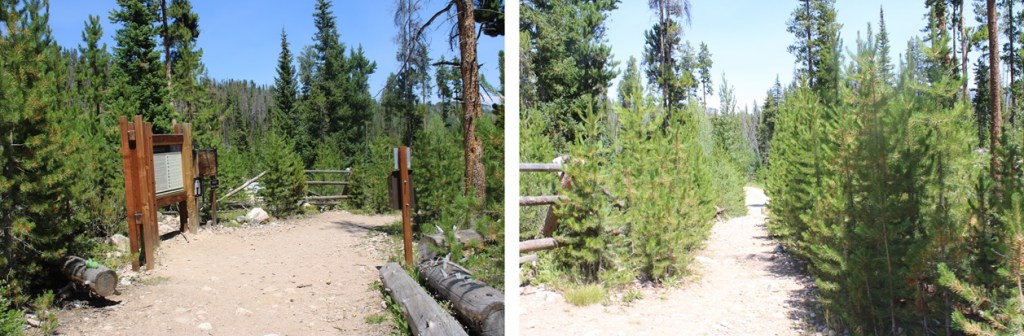
I was on the trail at 5:30am.  The trail starts at the east end of the parking area.

I followed this trail for 2.3 miles, headed west, and staying straight at the first junction to stay on North Rock Creek Trail No. 46.

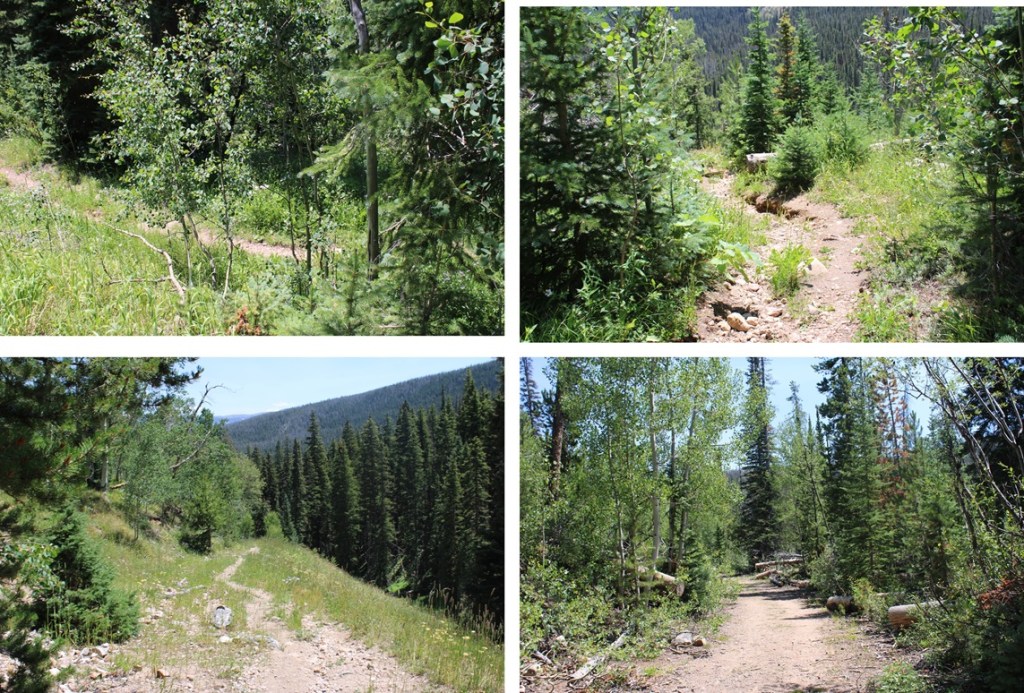
After hiking for over 2 miles on this class 1 trail, I turned right, and started bushwhacking northeast to the ridge.  There were a lot of downed trees in this area, so navigation was an adventure.  I just kept heading northeast, gaining 760’ of elevation in .7 miles as I made my way to 10900’

At 10900’ I came across a well-established game trail, and followed it west towards treeline.

At 11400’ the trail fizzled out, but the route was obvious.  I was headed southwest, following the ridge to treeline.

At treeline my next goal was to ascend the tundra and then rocky slope, still headed southwest.  The rocks here were solid, and easy to navigate.  I just kept following the rocky, class 2 ridge.


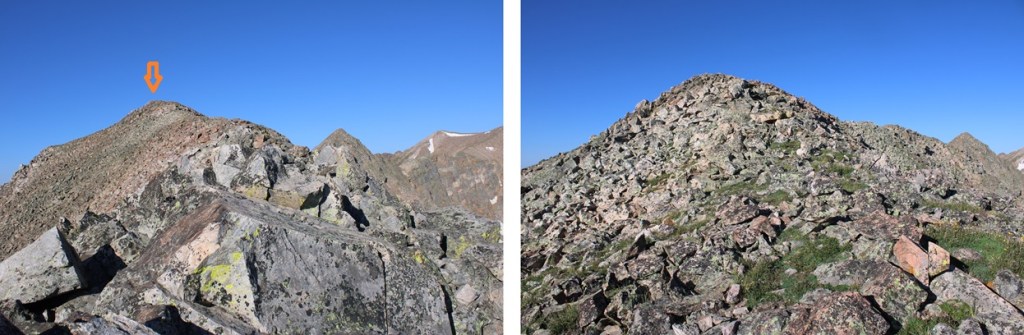
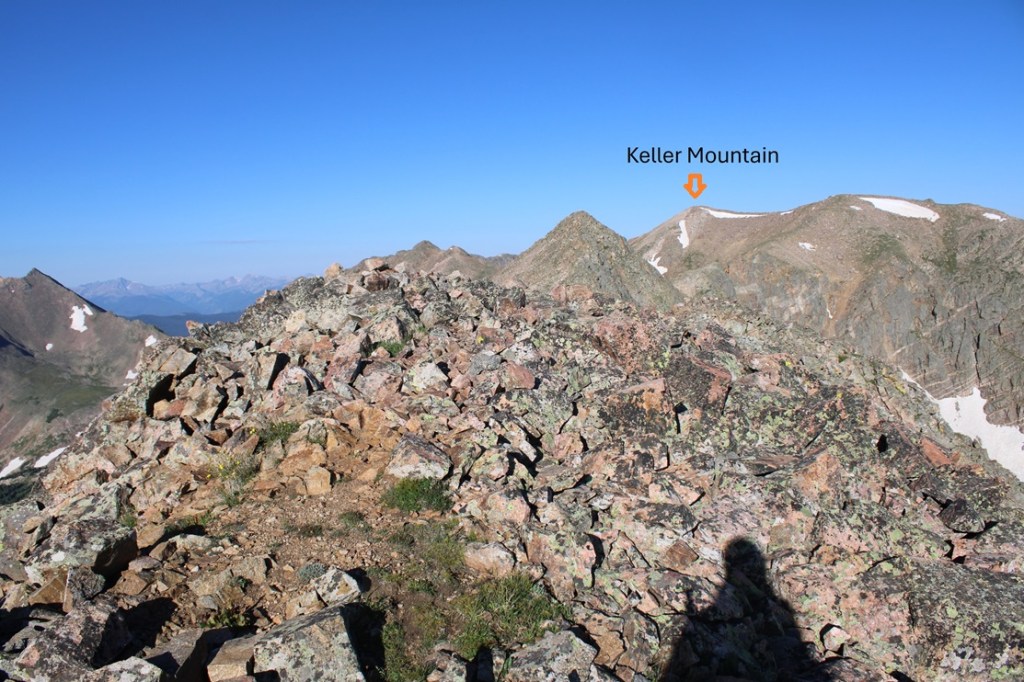
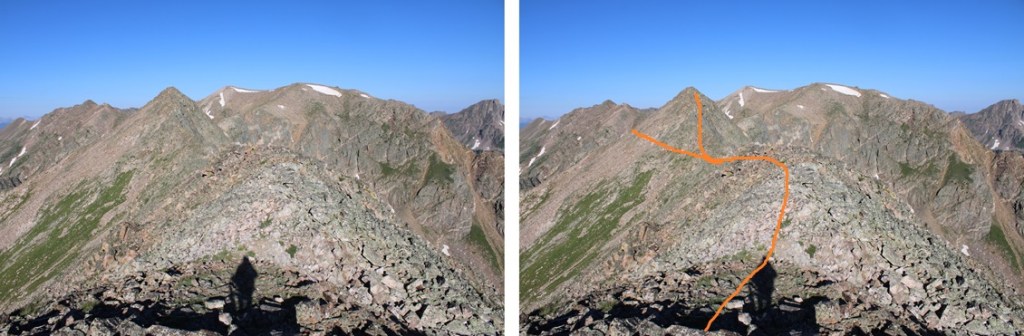
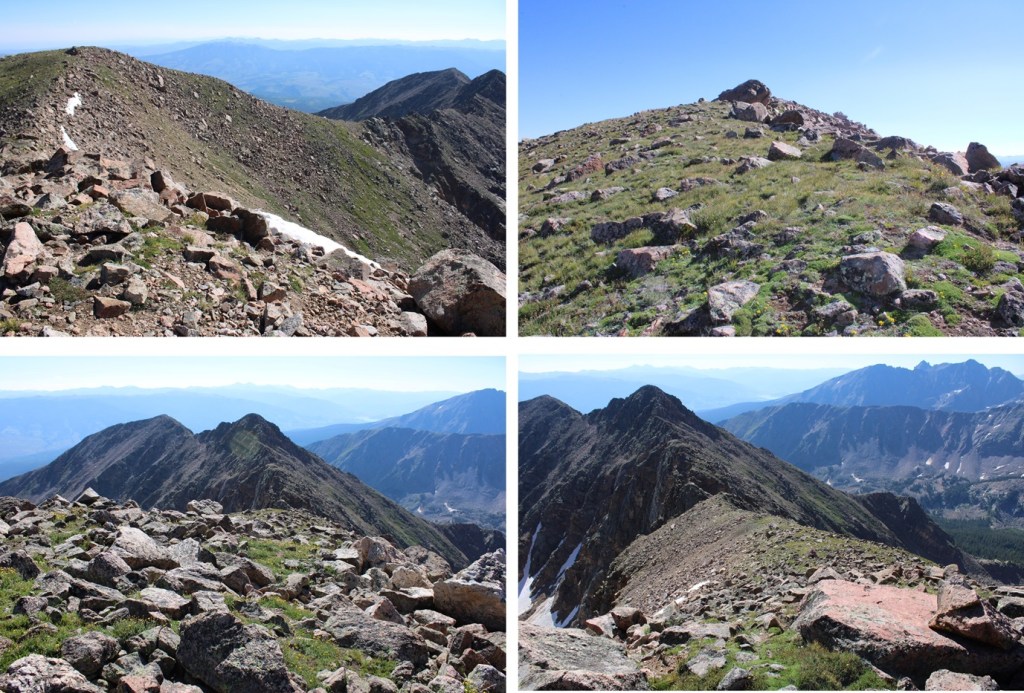
If you get here and think “Wow!  That was almost too easy!” it’s time to strap on your helmet, because you’re only at PT 12847, and the rest of the route is about to get class 3.  Here is the real summit of Keller Mountain, a mile off in the distance and a fun ridge to get there.

First, I had to get around this point.  Going up is straightforward, and I stuck to the ridge.  Going down, however, was a bit more challenging in the route-finding department. You can go directly up and over this class 3 ridge, or descend to 12750’ and keep this section class 2 by skirting the ridge.

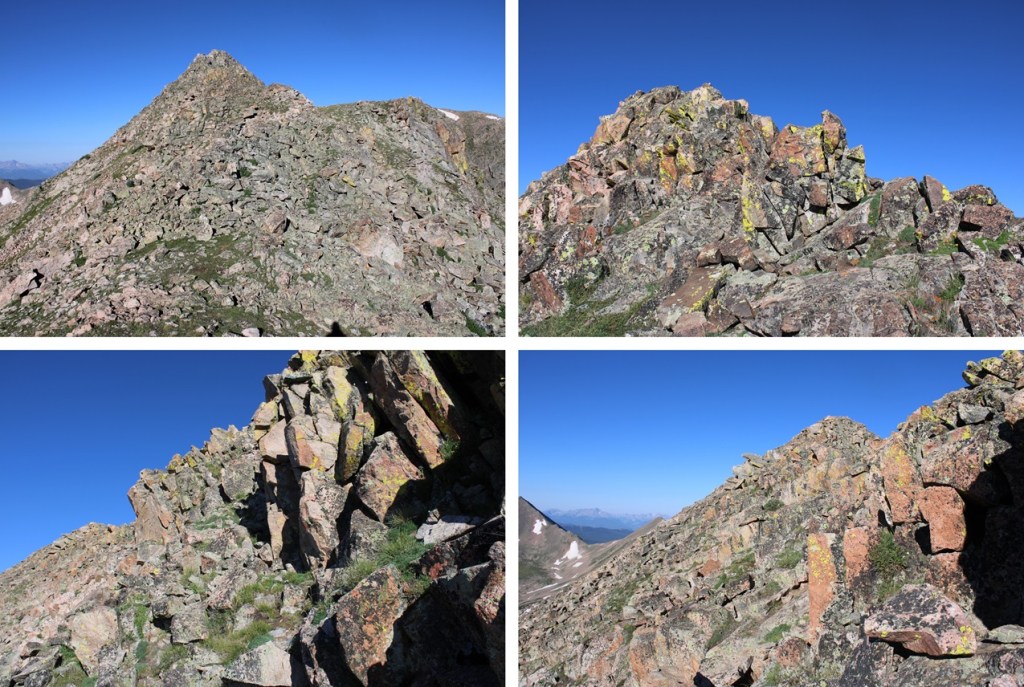
I took the ridge on my ascent, and skirted it on my decent.  Here are some pictures of this ridge. At times I dipped down to the left (never to the right) to ascend on rocky tundra.

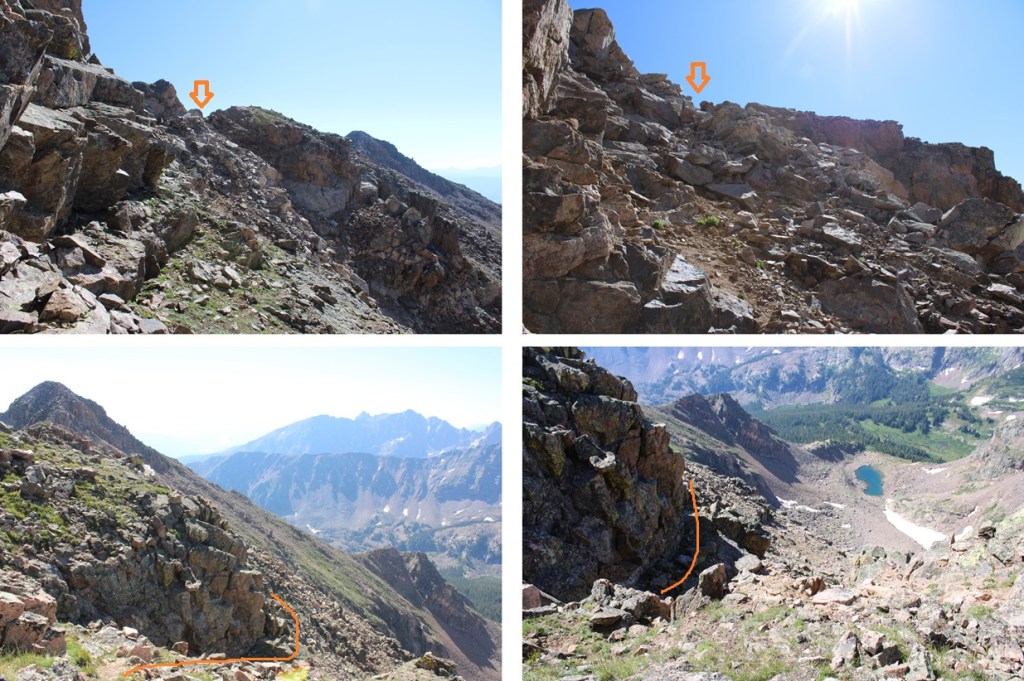
The descent off this ridge was a little more challenging, as there were gullies to navigate that had recent rockfall, and were unstable.  I stuck to the left side of the ridge all but in one obvious spot, where I dipped to the right and re-ascended to this small saddle.

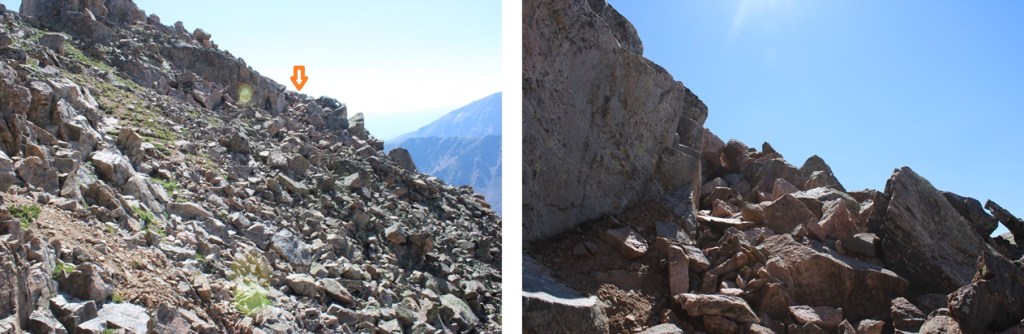
Now the real fun begins.  There are several more gullies to navigate, but luckily here, I found a few cairns.  Once again, I stayed to the left of the ridge.  I kept wanting to head back to the ridge, but found the gullies and large rock outcroppings kept keeping me about 50 feet below the ridge proper, so every time I’d make it to the ridge, another gully or rock outcropping would pop up and I’d have to descend again.  Here are some pictures of my route along the ridge (red circles are cairns).

Here’s a picture of the final gully, the only one filled with scree.  You’ll see a cairn off in the distance here on the tundra ahead of you on the hillside, but don’t aim for it (circled in red).  Go around the rock outcropping and ascend the gully instead.  It keeps you from some sketchy stuff below. 

At the top of this last gully I turned left, and followed the ridge west, and then southwest to the summit of Keller Mountain.  This part was all class 2.  There was no summit cairn, but there was a summit register here

I summited Keller Mountain at 9:15am

Keller Mountain:

Here’s a look back at that ridge, and the route I took to get to the summit.  Notice how you don’t want to dip too low on the ridge, due to the chasm below.

This was an out and back hike for me, so I headed back to the false summit, and descended the ridge back to the gullies

By now I’d had enough of this fun ridge route finding and decided to stay at 12750’ and skirt this part of the ridge, keeping the rest of the hike class 2.

Back on the ridge, I followed it to the top of PT 12847

And then back down to treeline

Once at treeline, I followed the ridge northeast until I came back to the game trail, then followed the game trail to 10900’

At 10900’ I turned and headed southeast down the hillside, aiming for the North Rock Trail No 46 I knew would be below, bushwhacking through grass taller than I was and tons of downed trees. 

Back on the trail, I turned left and followed it just over 2 miles east/northeast back to the trailhead.

I made it back to the trailhead at 12:30pm, making this an 11.89 mile hike with 4086’ of elevation gain in 7 hours.

On to the next trailhead!
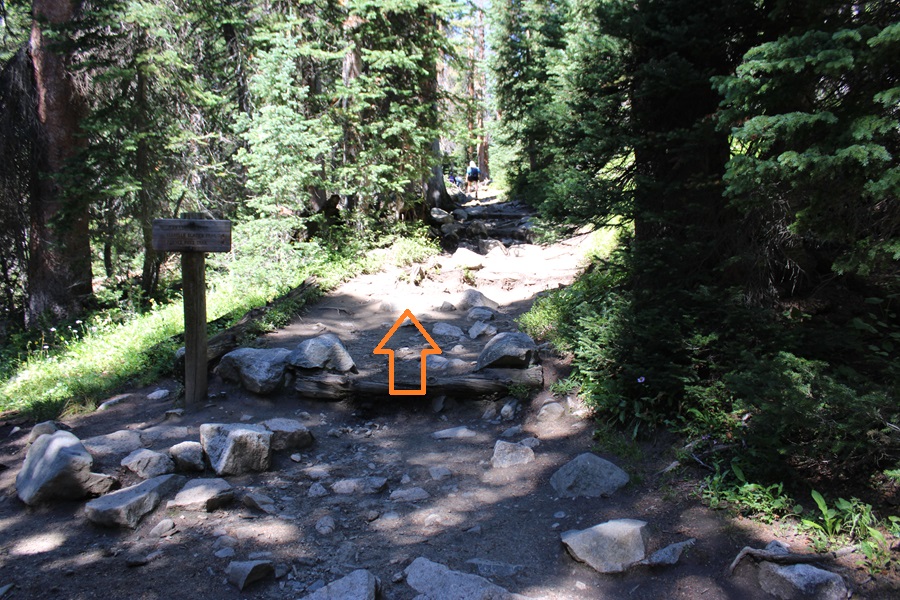
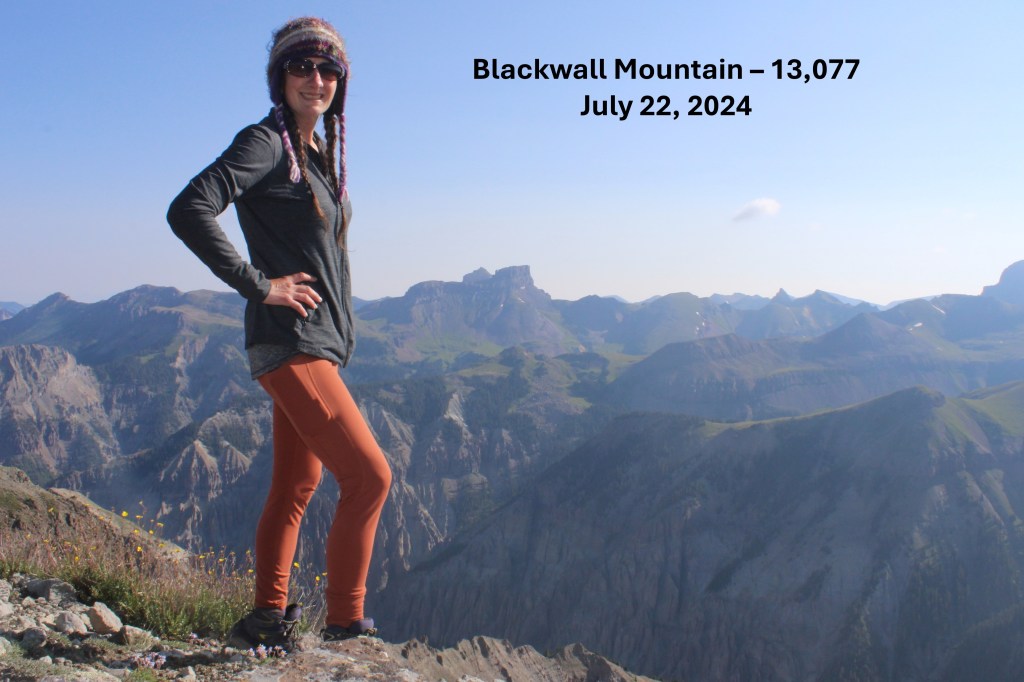
Wildhorse Peak – 13,271 and Blackwall Mountain – 13,077

RT Length:  12.45 miles

Elevation Gain:  3722’

I took CR 20 out of Lake City, turned right at the North Henson road near Capitol City, and parked off 870 at 11200’ at an unnamed trailhead with parking spots for 4 or 5 vehicles.  This is also where the porcupine and marmot and pine marten chewed my wires last week, so make sure your vehicle is rat taped.  Click here if you want to see pictures of the damage done to my vehicle last week.

I was up and on the trail at 4:30am. 

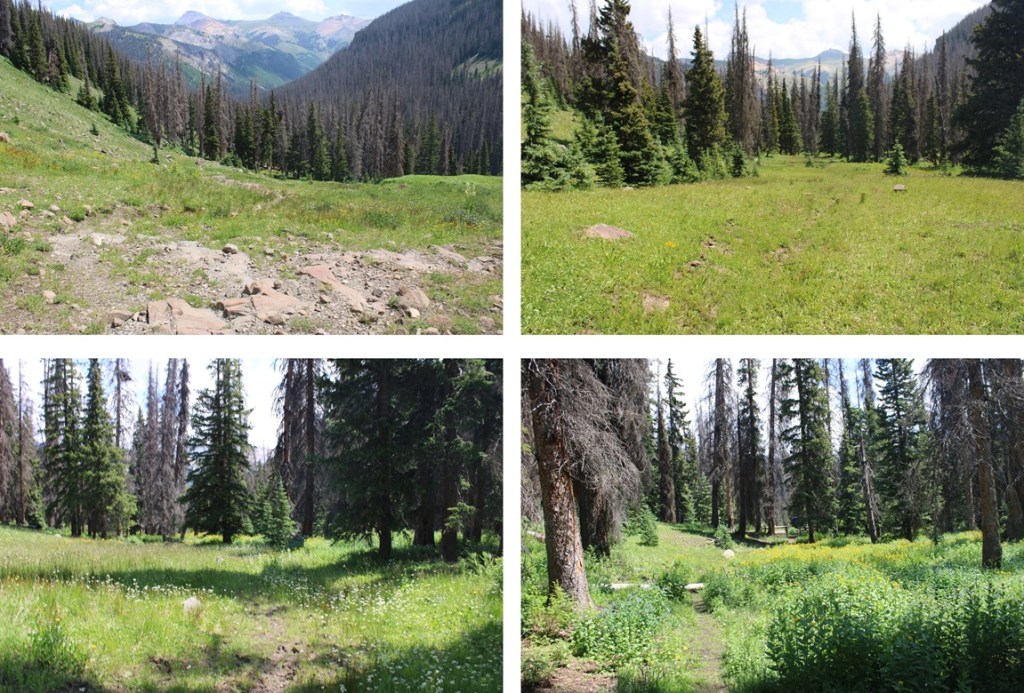
This trail starts out easy to find and easy to follow.  I followed this trail for half a mile, until I made it to a gulch just below treeline

Once here, I turned right and ascended this small ridge.  It doesn’t matter where you ascend, this whole area will get you to the right area.   There are several drainages you can use to ascend.

Once on top of this little ridge I was headed west, through treeline. 

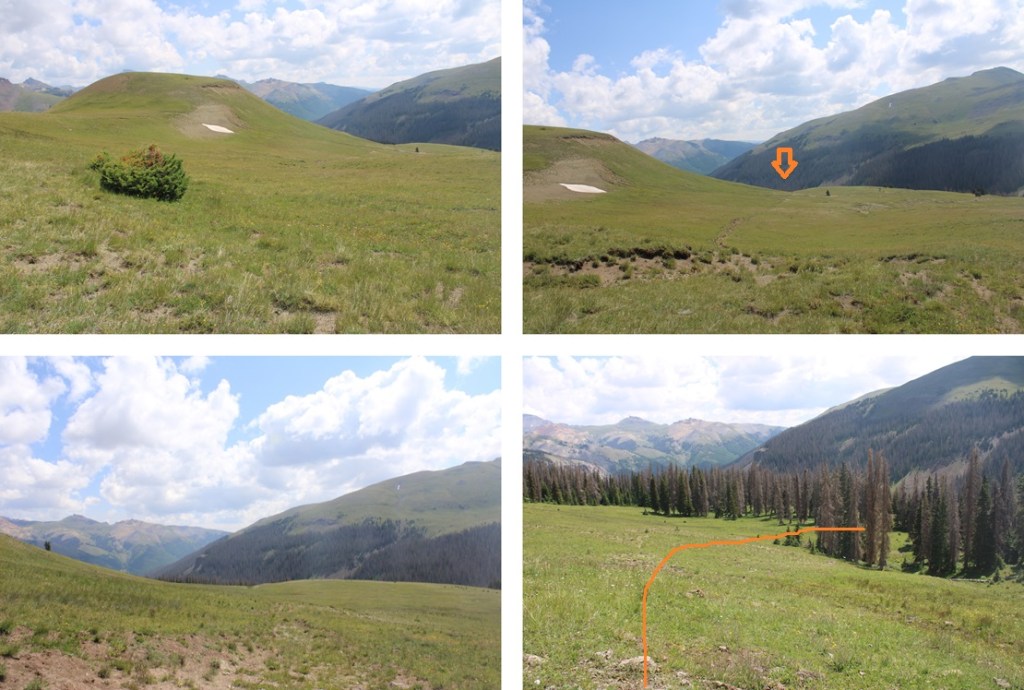
This is a big meadow.  Just keep heading west, towards these two small trees.  The trail here looks like a drainage ditch.  If you see a ditch heading west, follow it.

At the top of this ridge I turned left, and found a game trail that would take me west, towards American Flats.

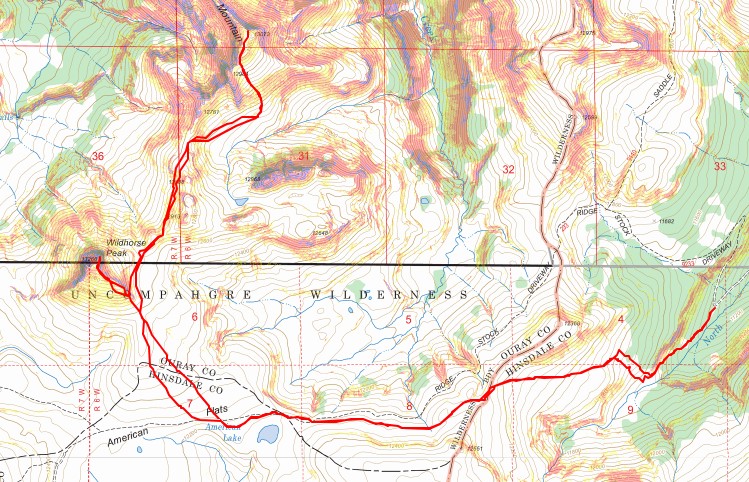
Here the trail got ‘iffy’, as it turned into a kind of mining road that hasn’t been used in several decades.  I followed it as I passed American Lake to my left.  After hiking for a total of just over 3 miles, and at around 12290’ of elevation, I left the trail to head northwest towards the saddle of Wildhorse Peak. 

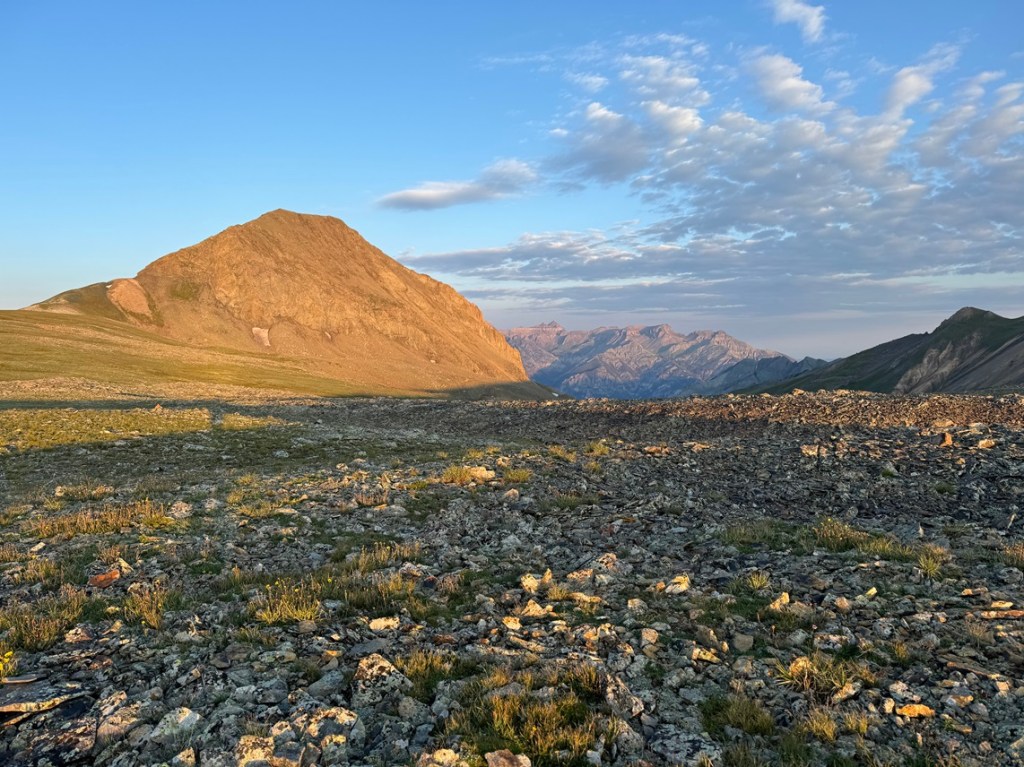
There was no trail, but the route was obvious on rolling tundra.  I kept heading for the base of Wildhorse Peak.

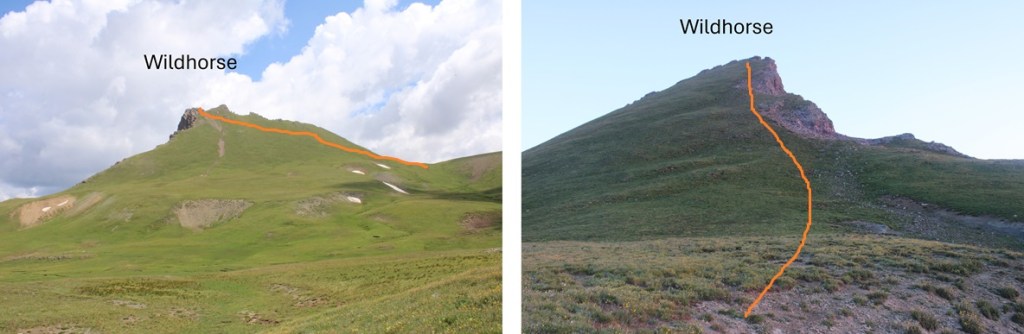
Here are a couple of views of my route up to the summit of Wildhorse Peak.  This is a choose your own adventure kind of hike.  I chose to stick to the ridge as much as possible. 

I started out by heading northwest up the tundra.  Most of this hike is on tundra, and it’s all class 2.  If you find yourself in class 3 territory, you’re making it too difficult. 

As you near the top, you’ll come to a couple of gullies.  DO NOT take the rocky one (the first one your come to).  Well, you can, but you’re making the hike more difficult than you need to.

Instead, head a little further northwest along the ridge and ascend on the tundra. 

This will lead you to almost the summit, which is rocky.  The true summit is to the left, on an airy but class 2 catwalk to the summit.  Also, there was a skull on the summit

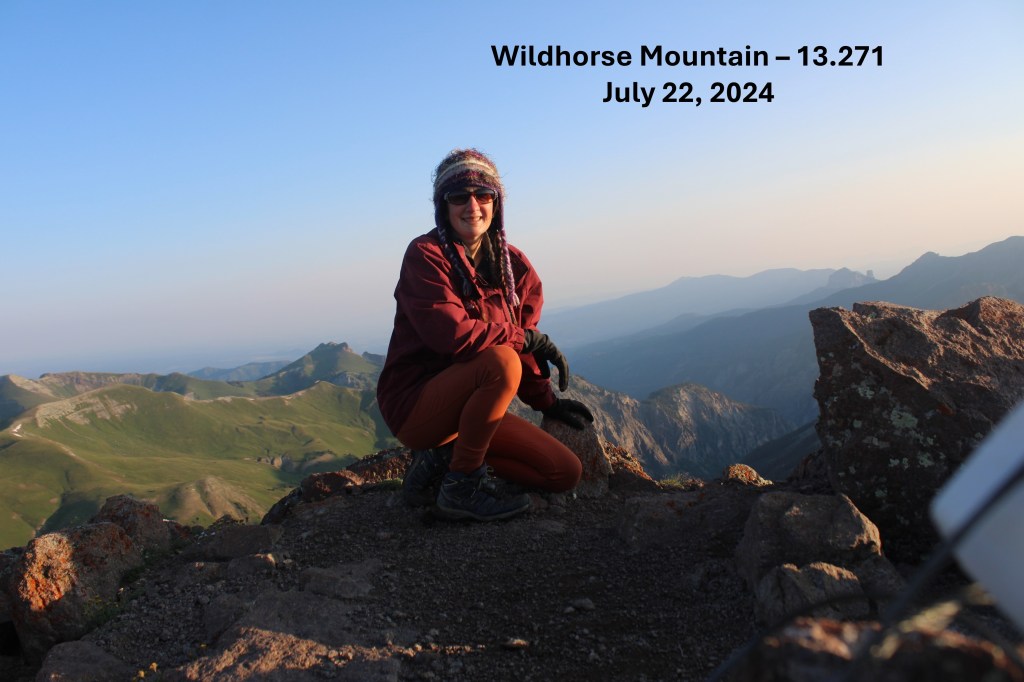
I summited Wildhorse Peak at 6:45am

Wildhorse Peak:

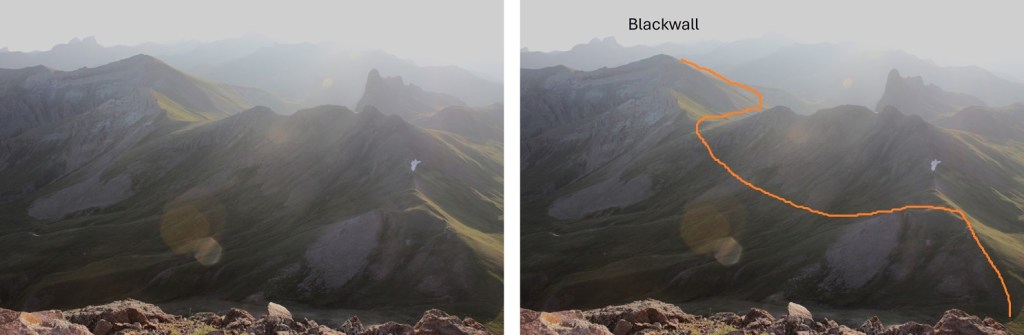
The early morning light and a dirty camera don’t do this picture justice, but I could see Blackwall Mountain to the northeast.  From above, this was my overall route to get there.

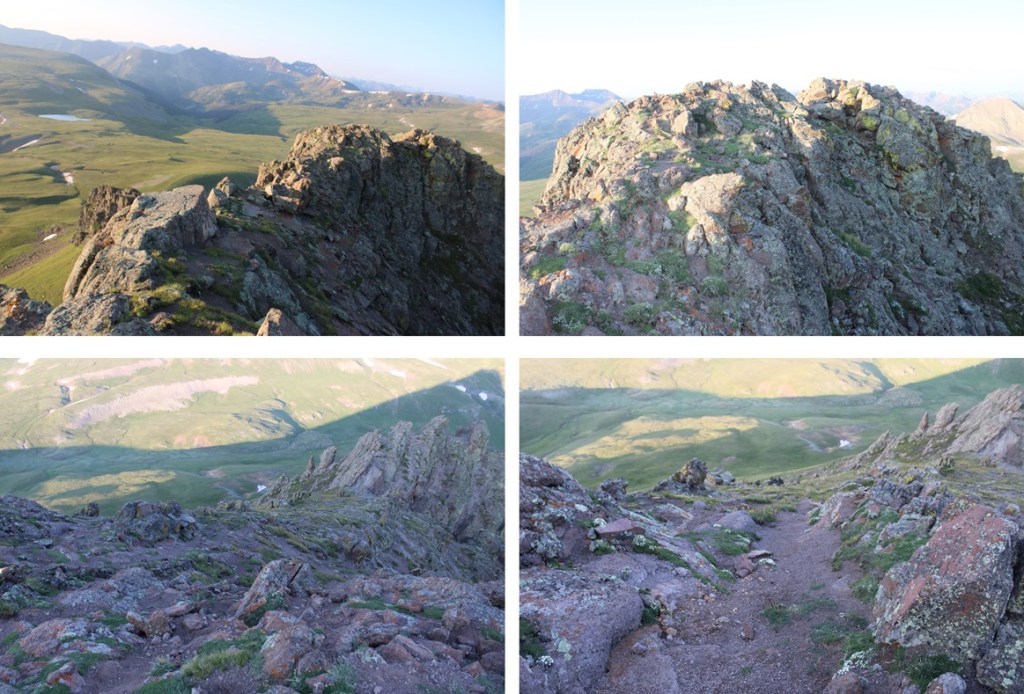
First, to descend back the way I’d come, making my way back towards the saddle. 

When I was almost to the saddle I noticed a gully to my left that still had snow in it, but was easy to downclimb.  I downclimbed this gully (no, not the upper gully, but the lower one), and headed north towards a saddle.

Looking back, you can see the gully I downclimbed.  There is an upper one you can downclimb as well, but when I looked down it, it looked like slick rocks covered in kitty litter, and I didn’t think it was worth the effort.

Next, I was headed here, to this small dip in the ridge

I turned left, and headed north, to the saddle

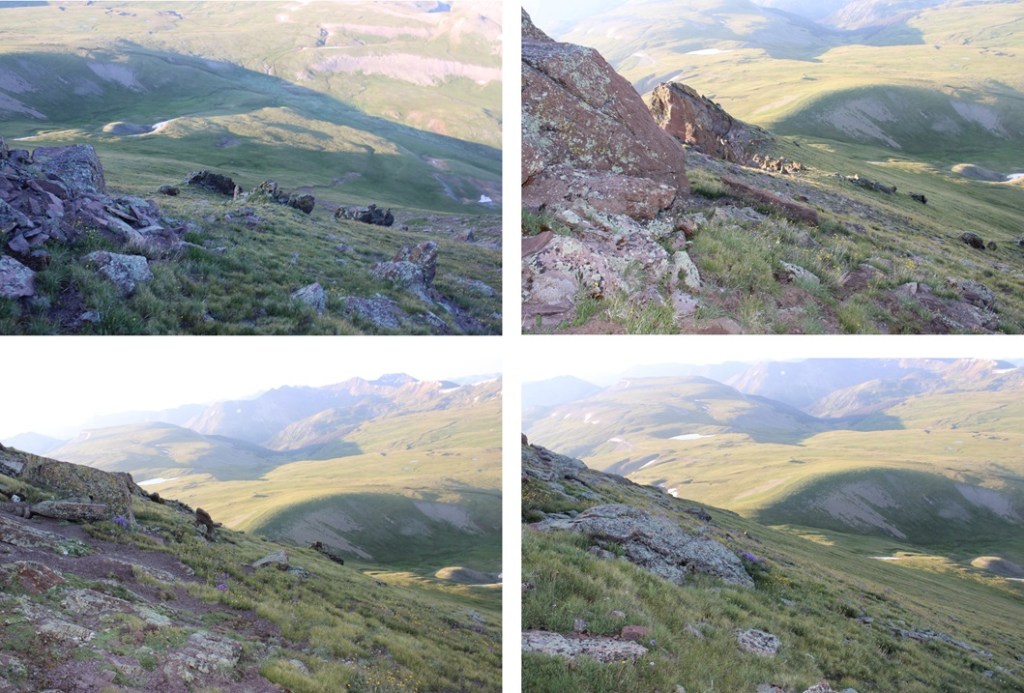
This is choose your own adventure, but I tried to stay level at 12630’ to re-gain the ridge.  I went to the right of the large rock outcropping

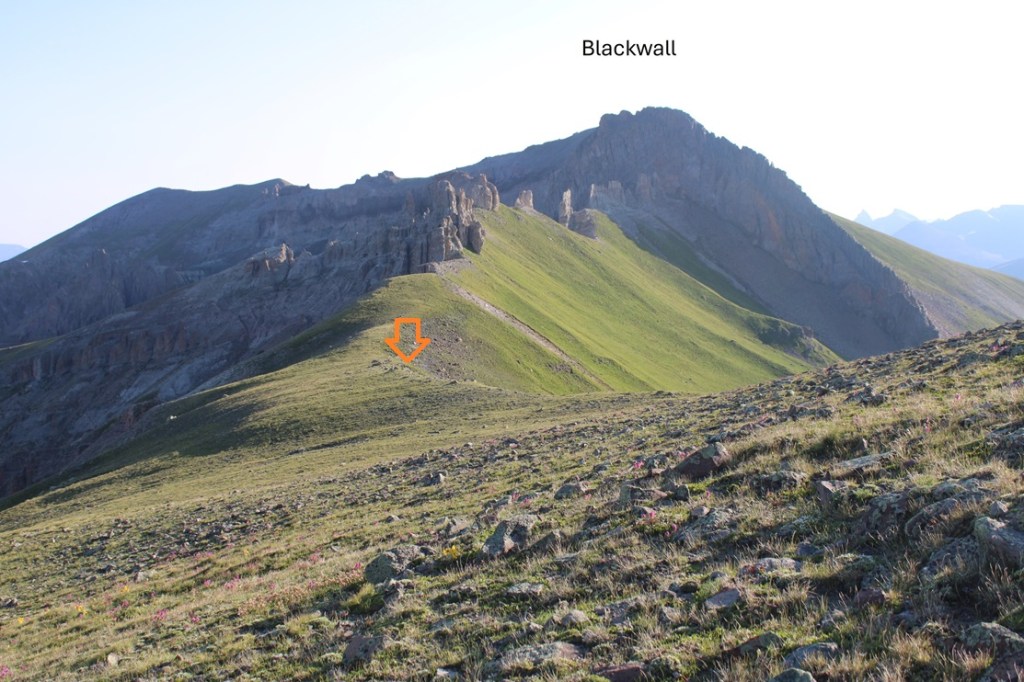
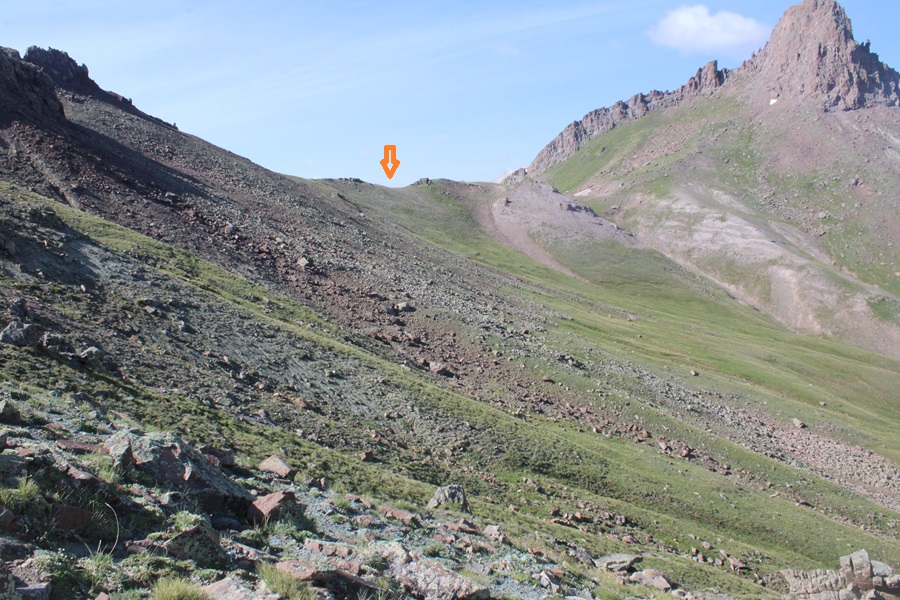
I could see Blackwall ahead of me and walked to the saddle.

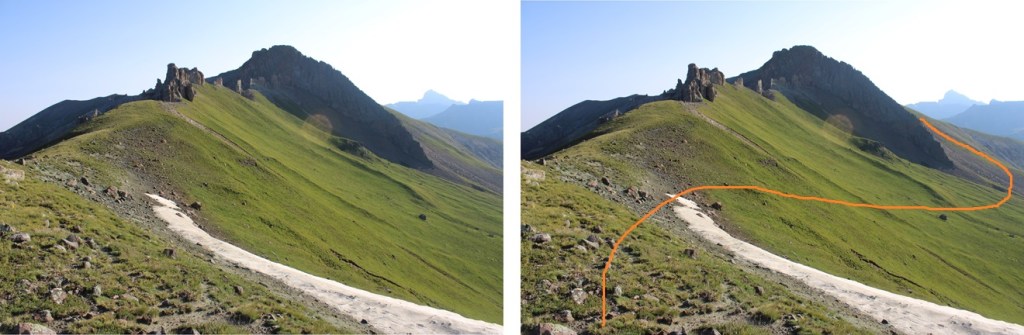
Now I turned right, and descended 400’ into the basin

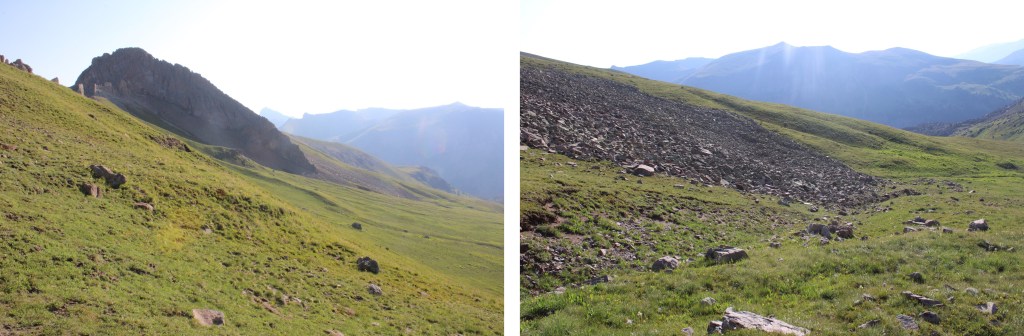
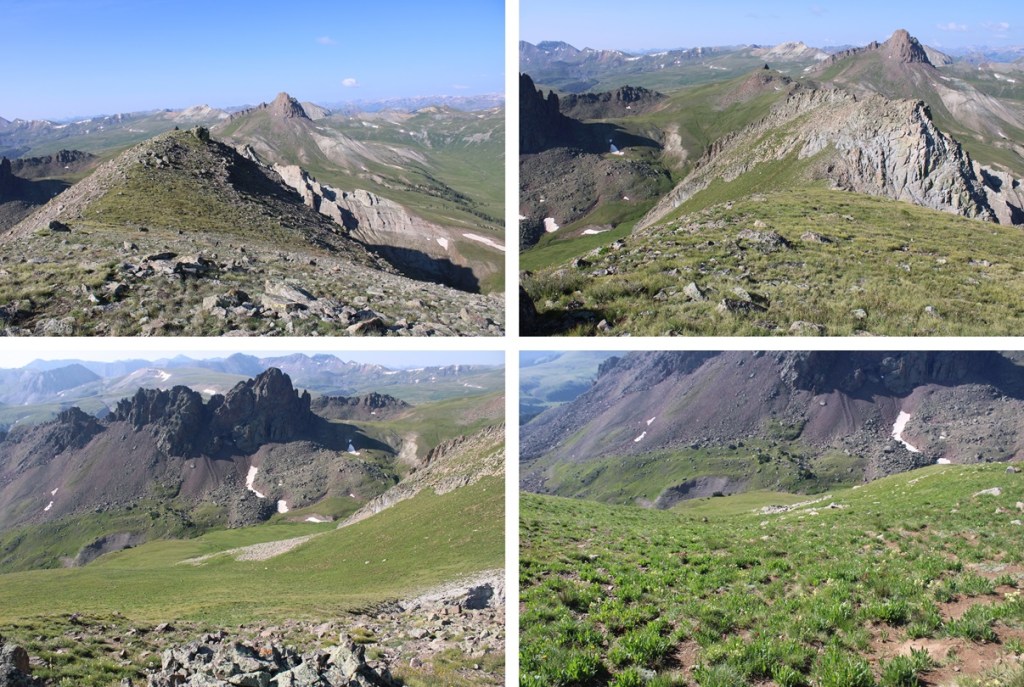
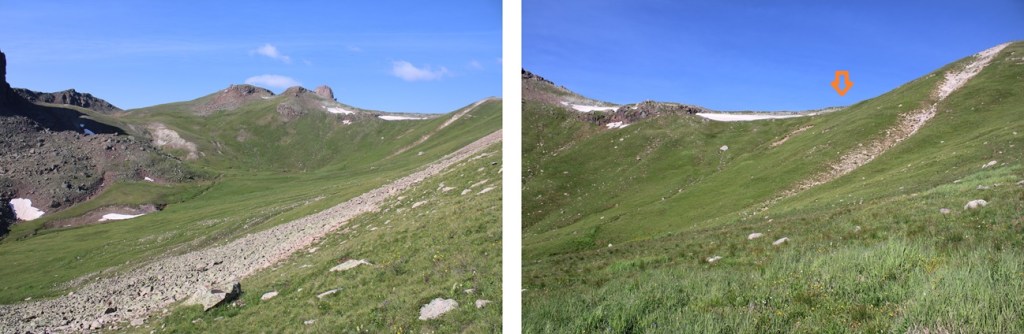
Instead of ascending via the rock rubble, I decided to take a grassy gully instead.  I had to descend a little more than I would have liked, but the easier terrain made up for the loss in elevation. From the bottom of the gully to the summit of Blackwall I gained 791’ of elevation in half a mile.

Just as I was nearing the top of the gully, I saw a bear running around.  Of course, it was running away from me… It was a blonde black bear with dark socks.  Curious coloring for a black bear. 

Bear Video:

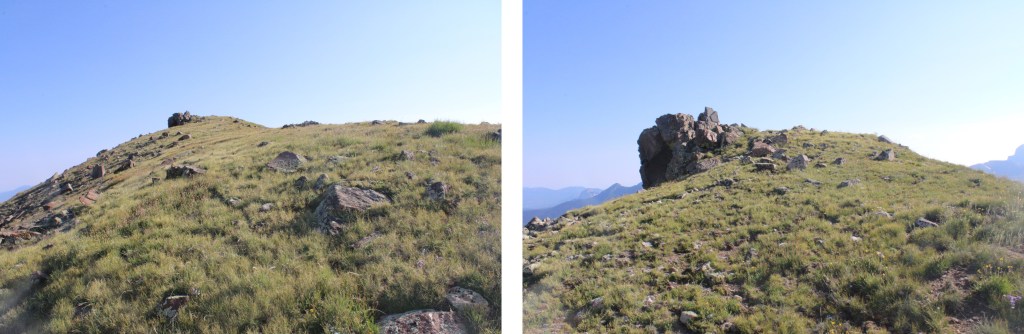
The true summit isn’t the large rock formations you’re seeing to your left, but rather just northeast of the grassy gully.  I ascended out of the gully to the right, and saw where I’m sure that bear had been sleeping overnight.  No scat or footprints in the area, but fur on the rocks. 

It was a short tundra walk to the true summit

I summited Blackwall Mountain at 8:45am

Blackwall Mountain:

Those were the only two peaks I planned on summiting today, so I made my way back much the same way I hiked in.  First down the gully

Then over to re-gain 400’ of elevation I’d lost to this saddle.

From the saddle, I headed southwest towards Wildhorse

Then crossed the upper basin, aiming for a game trail I could clearly see in the distance.

I turned right at the ridge, and aimed for the base of Wildhorse

Once there, I aimed southeast and headed towards American Lake, where I knew there was a trail I could pick up that would lead me back to the trailhead.

Back on the trail, I followed it east towards the basin I wanted to descend

When I found my two trees at the top of the ridge I turned right, and descended east into the basin, following the trail/ditch

Then descended southeast down the small ridge, and back to the trail

Then took this trail the short distance (half a mile) back to the trailhead

I made it back to my truck at 11:30am, making this a 12.45 mile hike with 3722’ of elevation gain in 7 hours

On to the next trailhead!

ST Bear Creek Benchmark – 13,140 and Cow Benchmark – 13,116

RT Length: 16.06 miles

Elevation Gain: 3570’

I parked at the end of North Fork Henson Road off CR 20 in Lake City at about 12000’.  This is a couple of miles past the Matterhorn/Wetterhorn trailhead, and 4WD.  There are parking spaces here for 3-4 vehicles, if everyone parks nicely.  This is also where the porcupine and marmot and pine marten chewed my wires last week, so make sure your vehicle is rat taped.  Click here if you want to see pictures of the damage done to my vehicle last week.

Knowing the high potential for thunderstorms today after noon, I was up and on the trail at 4:30am.   The trail starts out easy to follow, heading southwest.

After hiking for half a mile, I came to treeline, and an upper basin. I turned right, and followed a drainage northwest past treeline.

Sorry for the lack of pictures at this point, but I was in a thunderstorm, experiencing hail and rain when I took these pictures, so they’re few and far between.  I was headed for the ridge.  For a better initial route description, see my Wildhorse and Blackwall trip report, where I wasn’t caught in a thunderstorm.

There are faint trails here, but they mostly look like drainage ditches.  Follow those.

At the top of this hill a fairly good game trail appears.  I followed this west all the way to American Flats and the first junction I came to, which was about 3.5 miles from the trailhead.

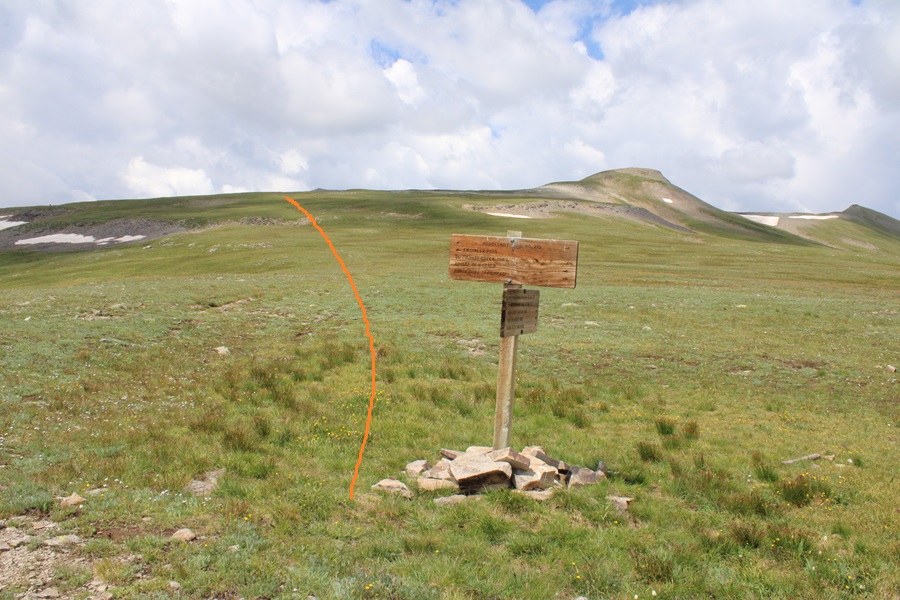
This junction is significant, as I’ll be returning here later, and not on a well-defined trail.   Like so many trails in this area, they aren’t really trails but more of ‘suggestions’, where you follow your best judgement to get to the next post or cairn, and celebrate if you find a game trail.

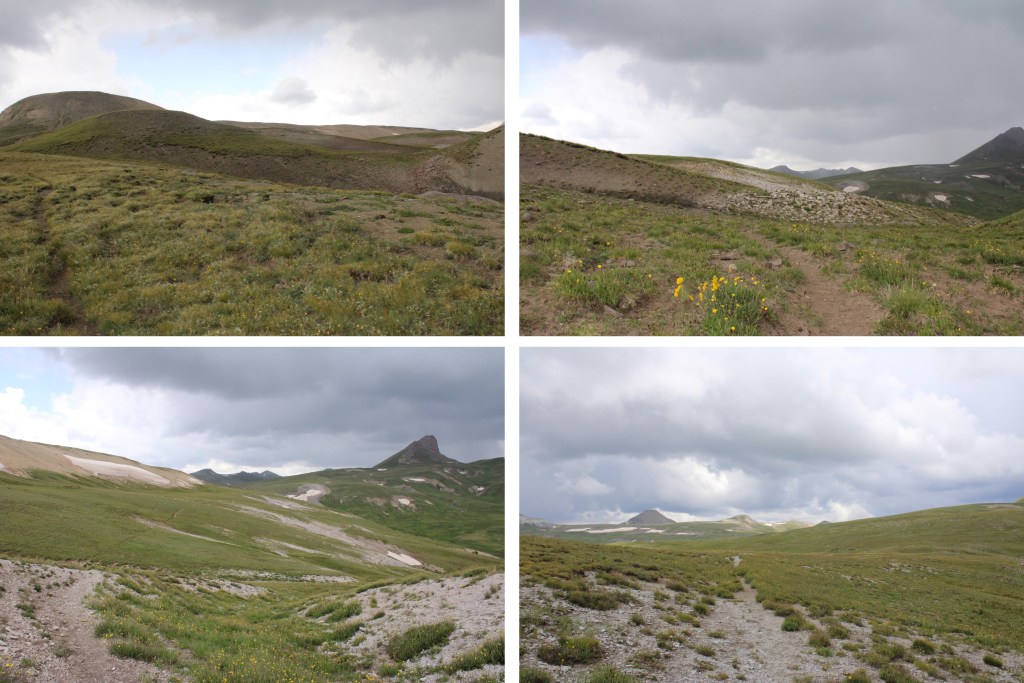
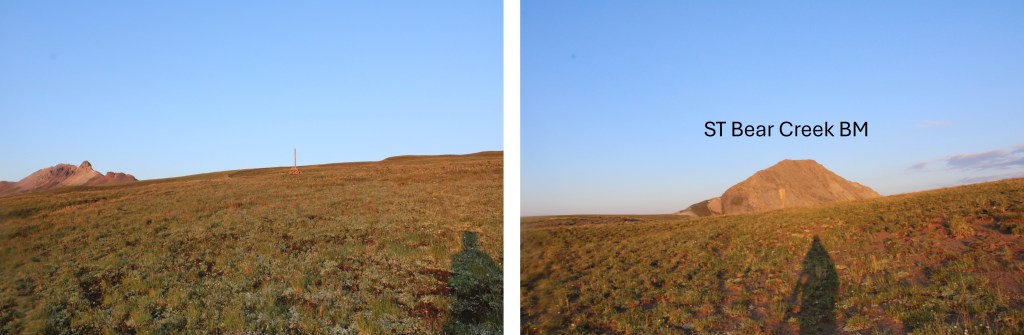
From this junction I headed southwest, following posts and cairns towards ST Bear Creek Benchmark. 

I aimed for the saddle, then started climbing the ridge.  This was all class 2 on easy terrain.

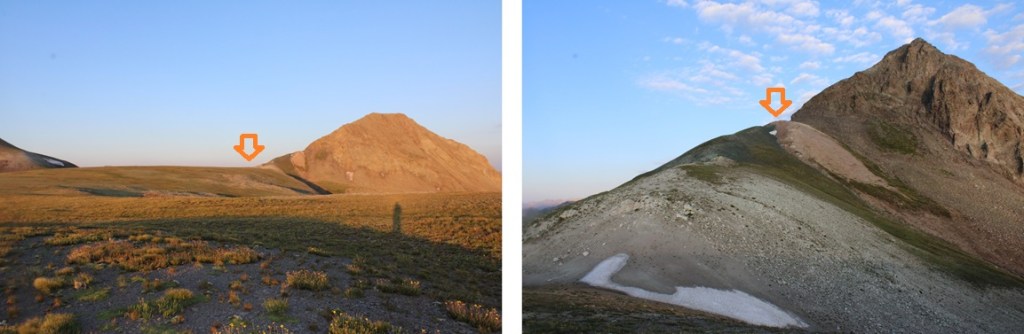
Then the fun started.  At the end of the white sand/scree the choss began, and it didn’t let up until the summit.  This can all be kept class 2, but be prepared for a lot of loose choss and rolling rocks.  I found once I started ascending the ridge, staying to the right gave me game trails to follow.  First, I entered the ridge here

Then ascended, staying to the right as much as possible to avoid the gullies to the left, following game trails.

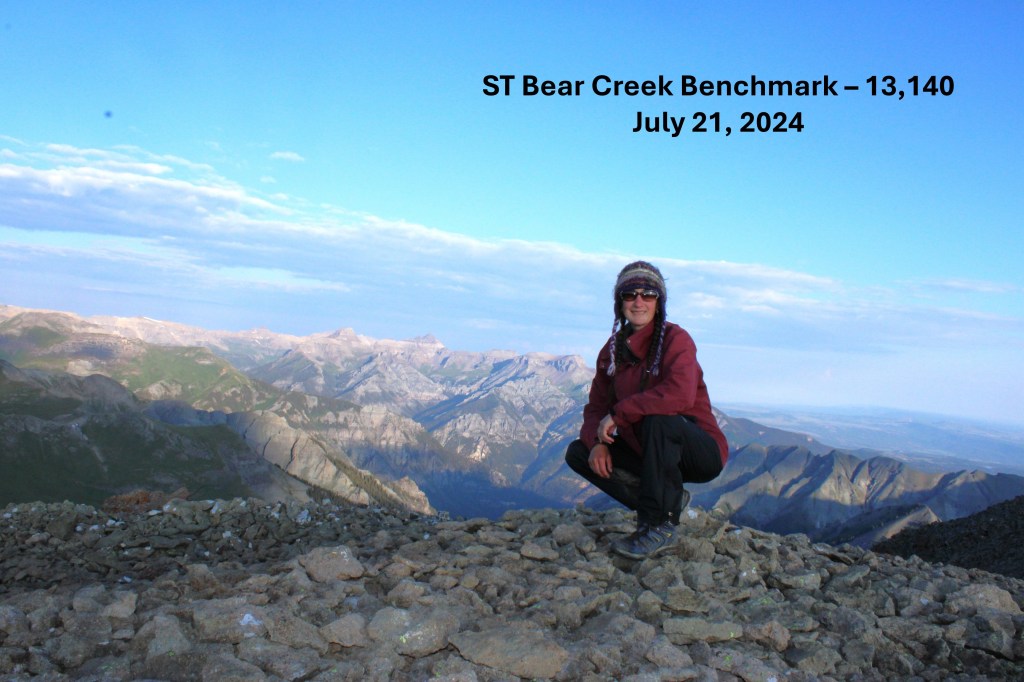
I summited ST Bear Creek Benchmark at 7am

ST Bear Creek Benchmark:

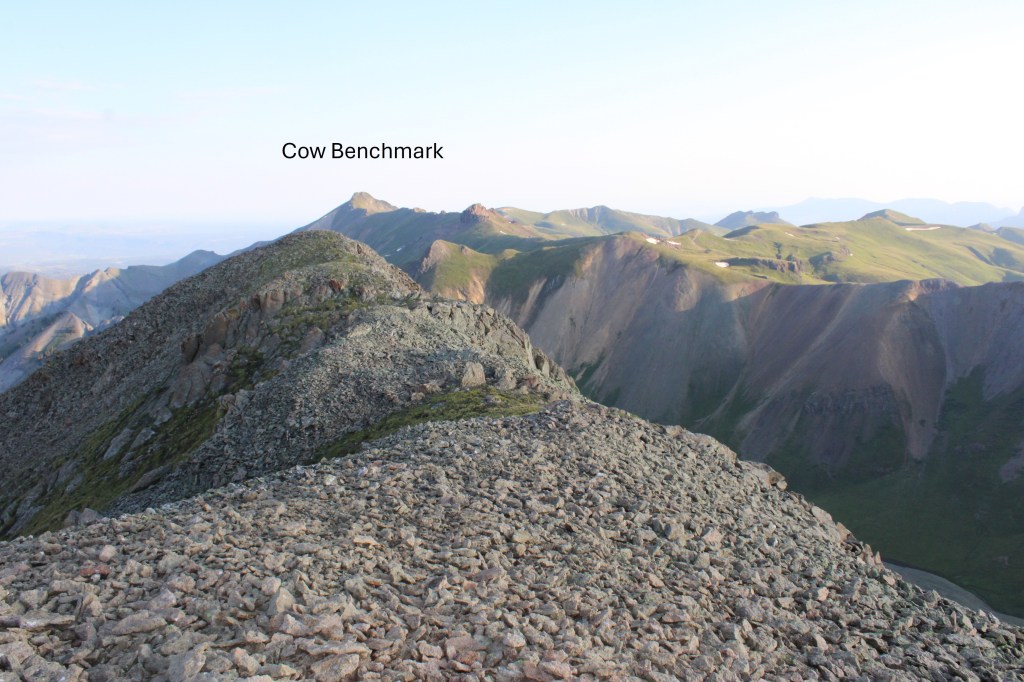
Way off to the northwest I could see Cow Benchmark, my next peak of the day

To get there, I was going to need to descend the way I’d ascended, and head back to the saddle.

There is no good, fast, or easy way to get to Cow Benchmark from here.  I decided to take the ridge, which included a lot of elevation gain and loss.  I aimed for the ridge, and followed it northwest

Here are some pictures of the ridge.  It’s all class 2, and goes for about 1.5 miles.  I cut across the last section (I’d had enough elevation gain and loss by this point)

Here is where I skirted PT 12976 and just headed for the saddle, which just gave me another ridge to climb

This rocky outcropping looks scary, but this can be kept class 2 by skirting it to the left, entering a rocky area, staying at about 12730’, and skirting around to the ridge.  This is choose your own adventure, but the route is obvious.

This brought me to the final ridge. 

Here’s my suggested route to summit the ridge

However, the ridge does go at class 2/easy 3.  Here are some pictures of the ridge, should you wish to climb it. 

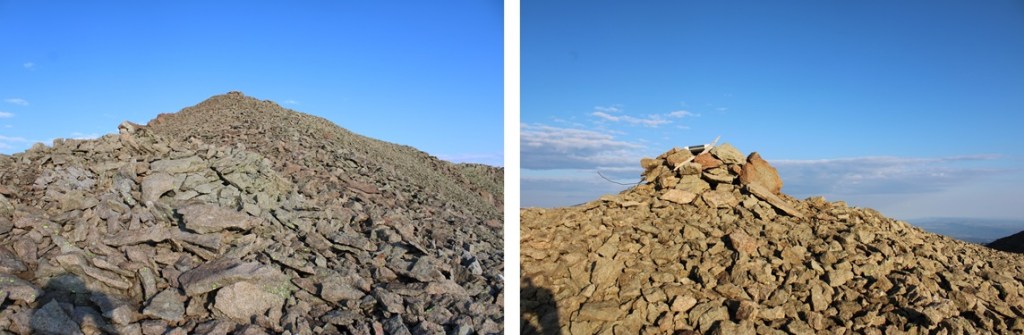
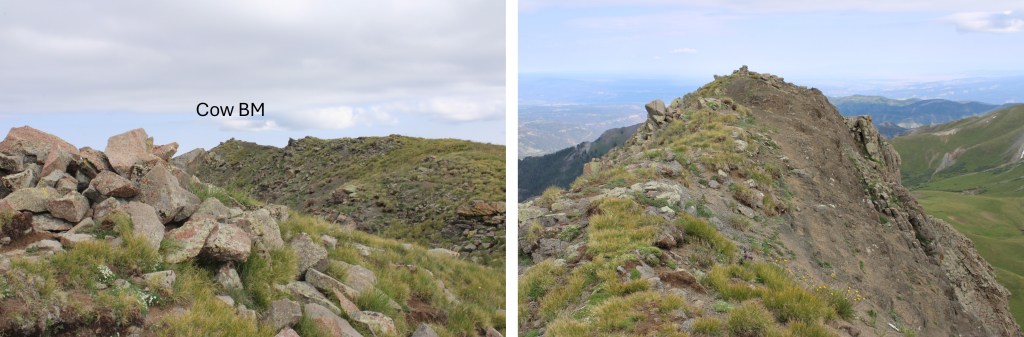
The final push to the summit was steep, but full of tundra.  Also, there’s a false summit, but that’s ok because the real summit isn’t too far away, and it’s a relatively flat walk to get there.

Also, there’s a benchmark, and a marker to let you know where the marker is…

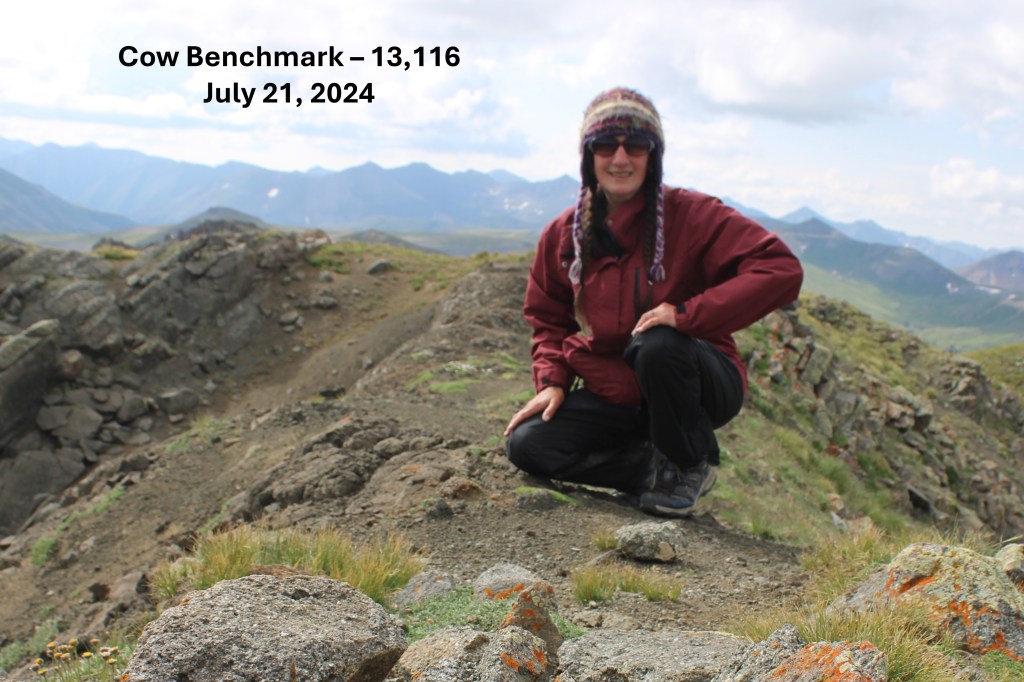
I summited Cow Benchmark at 9:30am

Cow Benchmark:

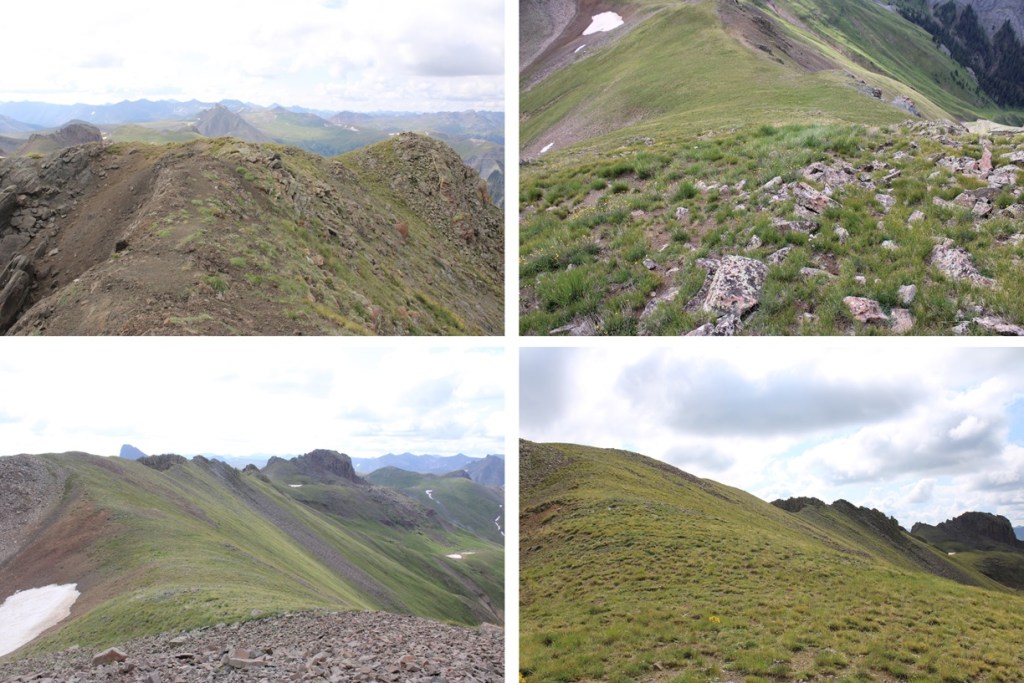
And now to head back.  I turned and re-traced my steps back down to the ridge

This time, I followed the ridge proper

Instead of descending the way I’d ascended, I went left here, descending into the basin.  I knew Horsethief Trail was on the other side, that would eventually lead me back to that junction I pointed out earlier. To I left the ridge, descending to the left

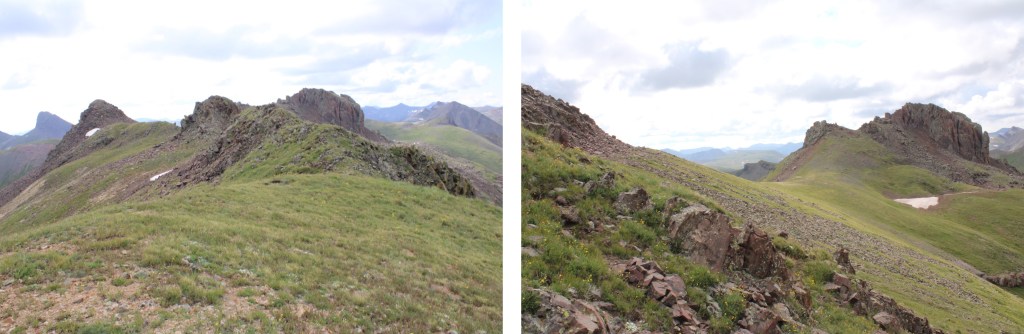
I then looked for the trail on the other side.  When I found it, I tried to lose as little elevation as possible to pick up the trail on the other side.  I’ve circled where the trail is

I skirted the mountain, and made my way towards Horsethief Trail

Here’s a view of how I descended Cow Benchmark back to the trail

Back on a trail, I followed it 2 miles to the junction with American Flats.  However, please remember what I said earlier… about trails being more of ideas than paths in the dirt.  There were times I had to look for posts, or presume which way to go.  Note, if you have the option, stay high instead of taking a trail that leads low. 

It was 2 miles on the Horsethief Trail heading southeast to get me back to the junction, losing the trail several times and looking for a cairn or post to follow.

At the junction I turned left, and followed the trail east back down to the trailhead.  Sorry for the lousy pictures… I know to be down below treeline before noon, but it was 11:45 and I was 15 minutes from treeline when the sky let loose, and it started raining and hailing.  (Forecast said to expect storms between 12pm-1pm, so they weren’t far off, just a little bit early…) 

Once back in the lower basin, I turned left and followed the trail half a mile northeast back to the trailhead.

I made it back to my truck at 12pm, making this a 16.06 mile hike with 3570’ of elevation gain in 7.5 hours

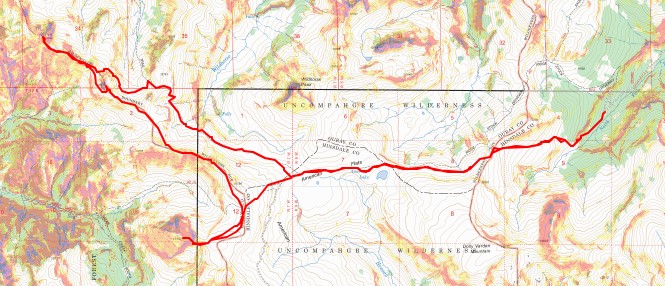
PT 13,094 and Sunshine Mountain – 13,329

RT Length: 8 miles

Elevation Gain: 3171’

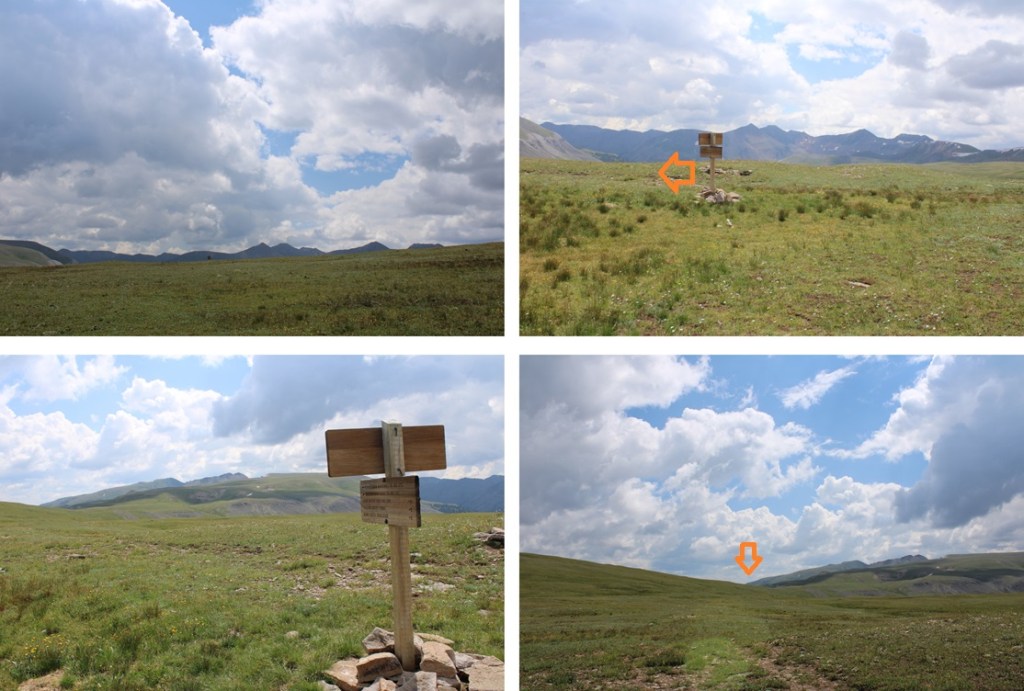
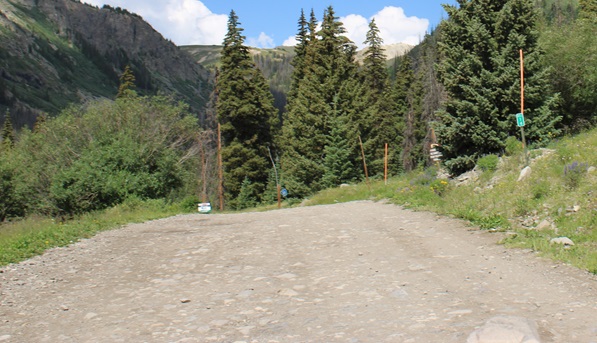
I parked at MM 14 off CR 20 in Lake City, just before the turnoff for 22, at 10900’. 

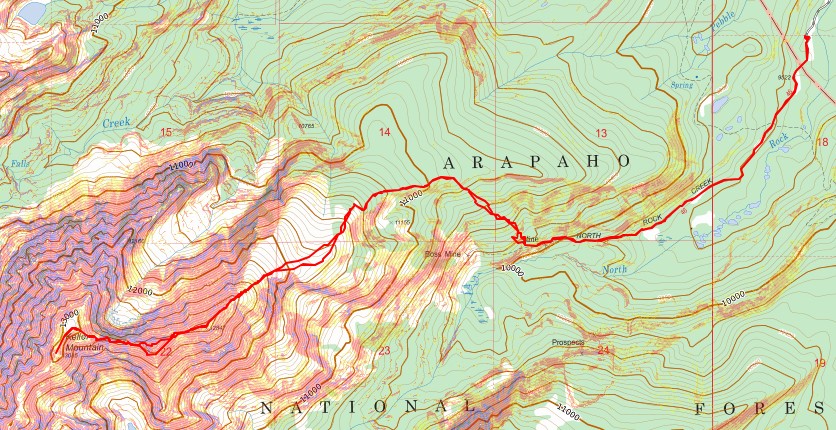
I was up early, but it rained until about 6:15am, so I was on the trail at 6:30am.   As you can see by looking at the topo map,  I didn’t ascend the same way I ascended, mainly because it was terrible.  Down wasn’t great either, but a bit more manageable.  I’m going to describe the route to ascend how I came down.  Note:  There are tons of mining roads in this area, and they don’t all meet up. 

From my parking spot, I needed to be here. 

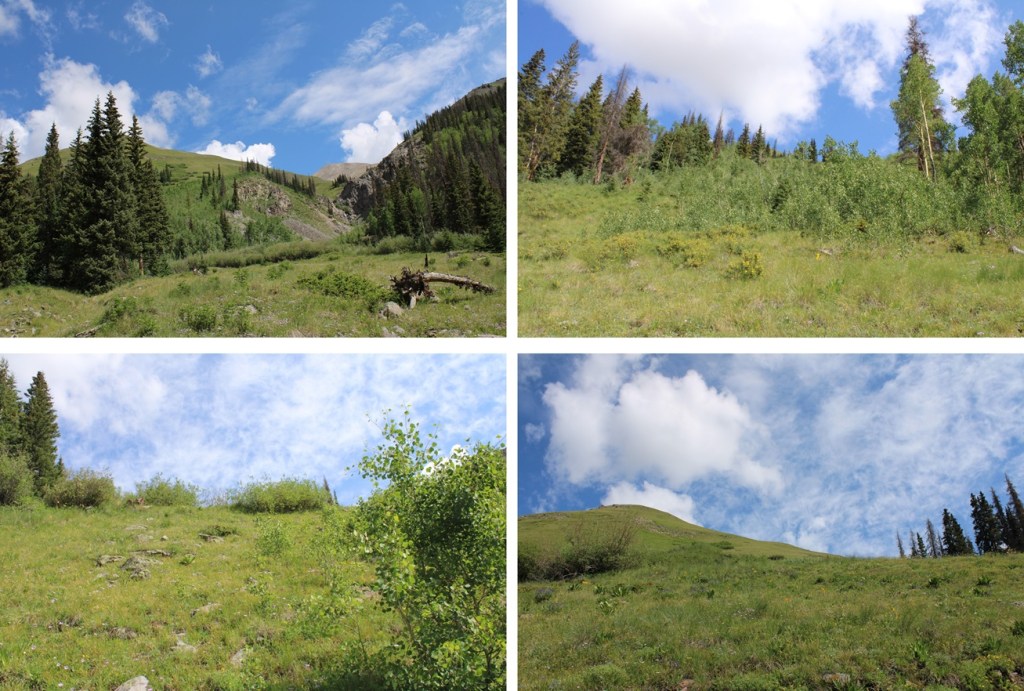
The best way to do this is climb to the left of the gully, navigating through the aspen trees to treeline.    This is choose your own adventure quest, but it doesn’t last long, and is manageable if you have good route finding skills and can follow game trails. 

It’s important to note I passed 2 different mining roads before I hit the one I was looking for, at about 11600’

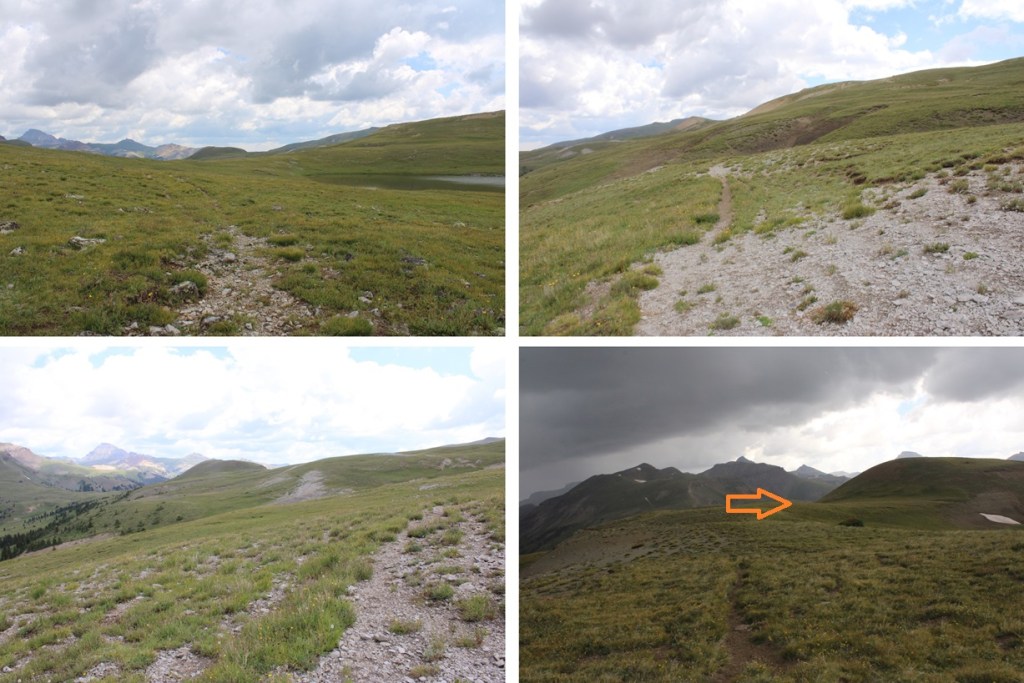
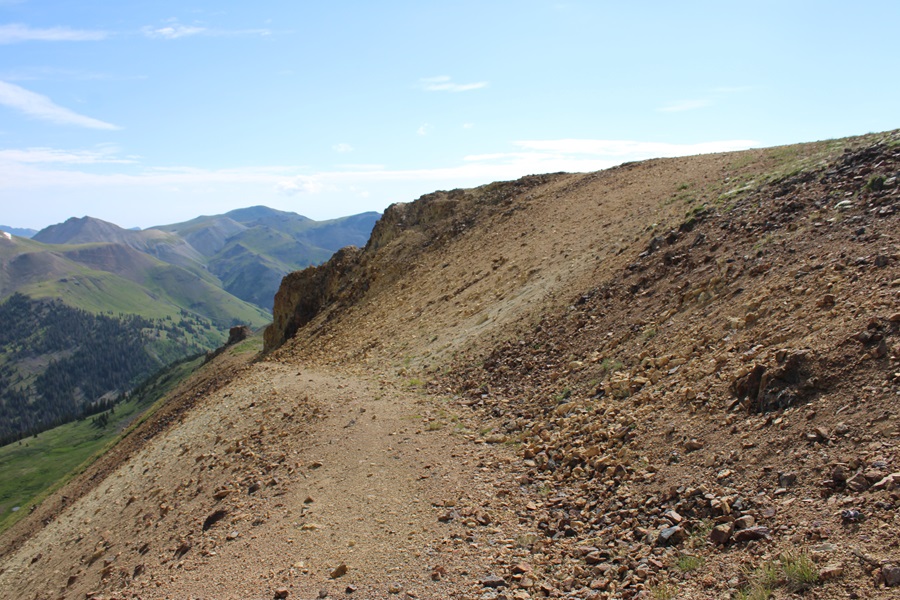
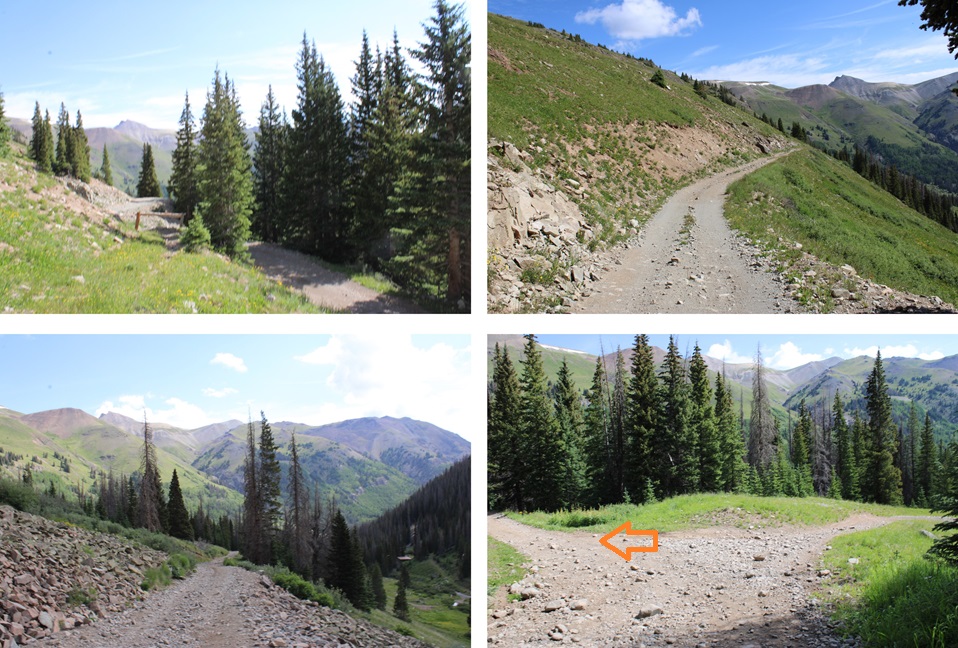
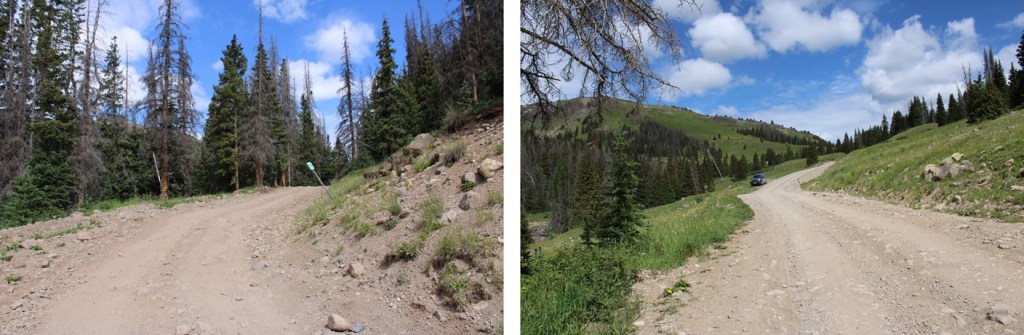
I followed this road as it curved around the mountainside north.  The road was overgrown, and lost in places, and intersected with a lot of other roads.  I just kept turning left if there was an option, heading north.

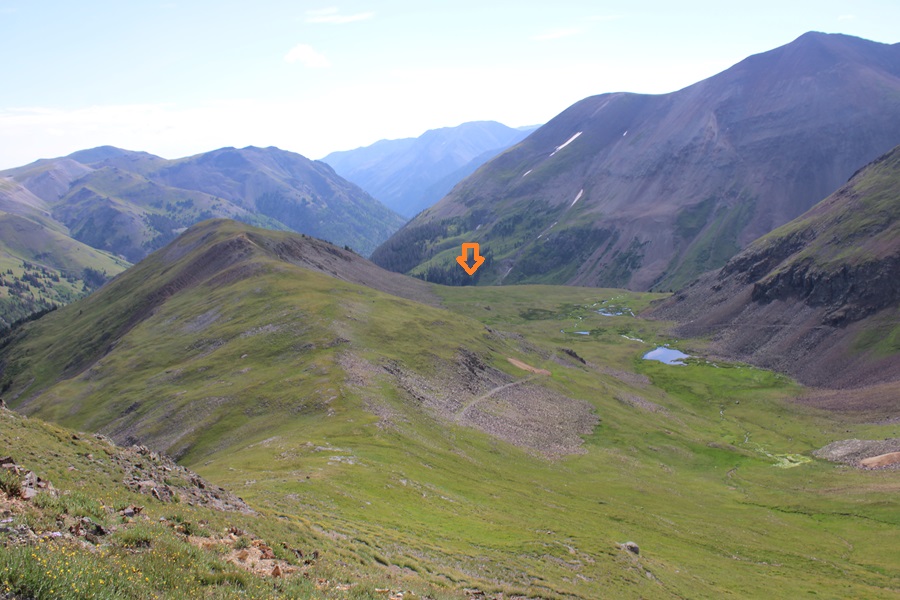
Once in the upper basin, I could clearly see PT 13093.  This is the route I took to get to the ridge. 

I walked the mining road for a while, and then it turned into a game trail.  This is a good game trail I followed east until I came to a sketchy part.  You’ll know it because the dirt turns black.  Here I turned northeast and aimed for the ridge, using fainter game trails.  (On my way down I realized this game trail probably goes all the way to the saddle, but I felt confident in my decision to turn and head for the ridge here. 

I made my way to the ridge

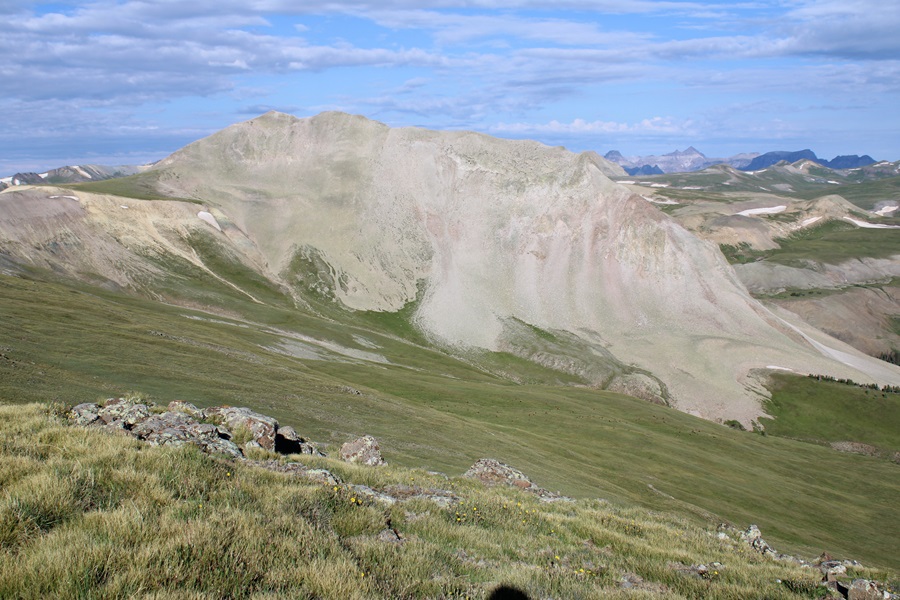
At the ridge, I could see PT 13093 to the northwest

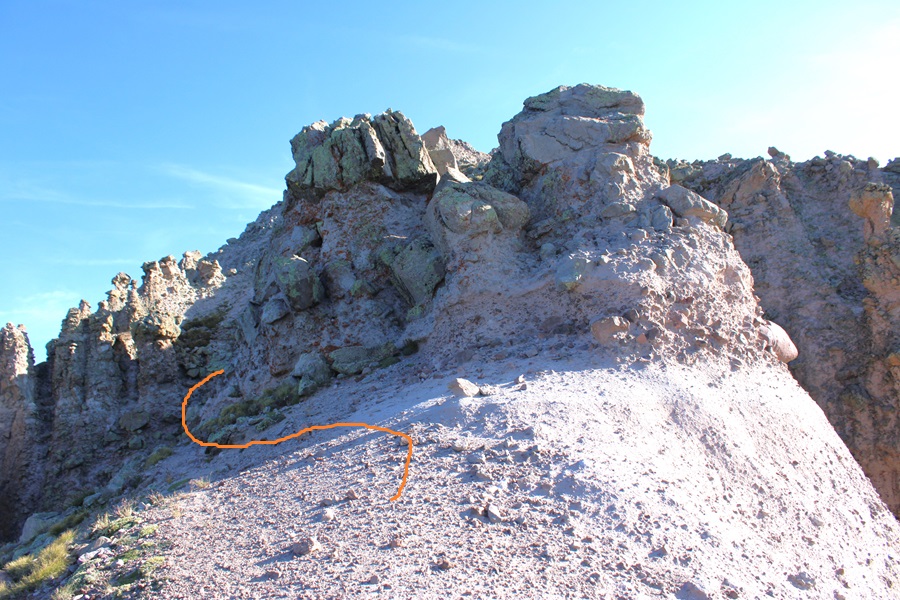
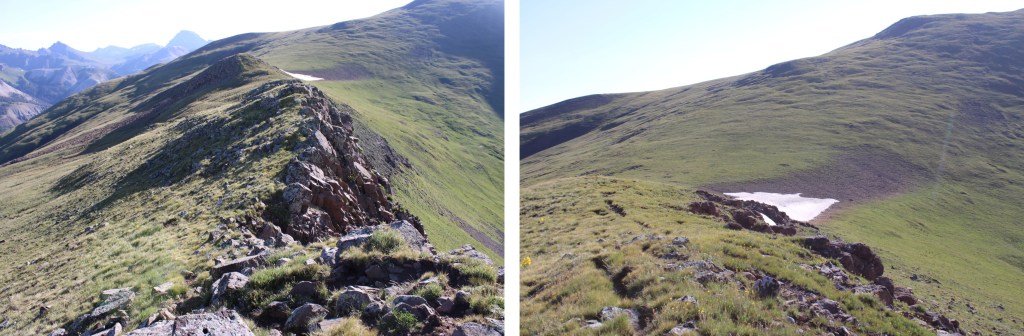
The terrain here was very rocky, and those rocks were loose.  This is how I started my climb, avoiding the rock slab and climbing it to the right

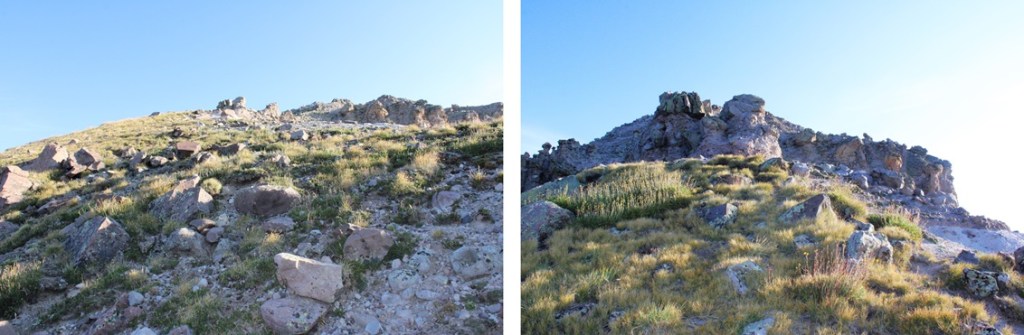
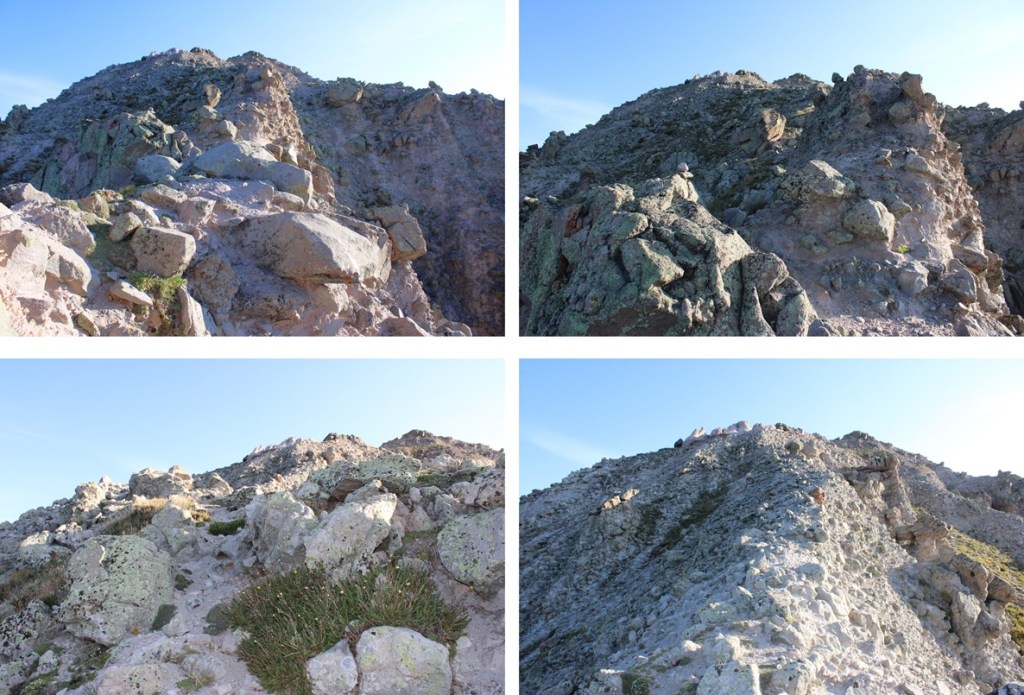
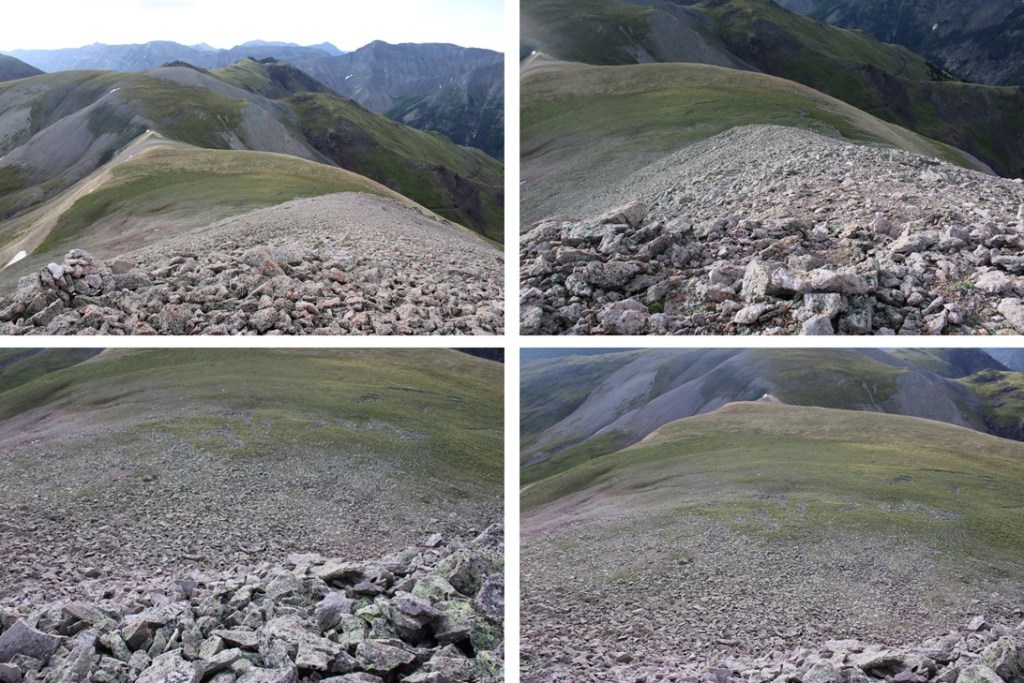
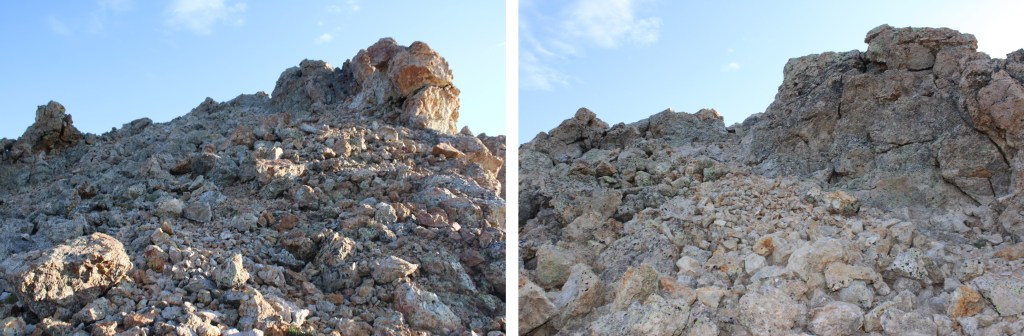
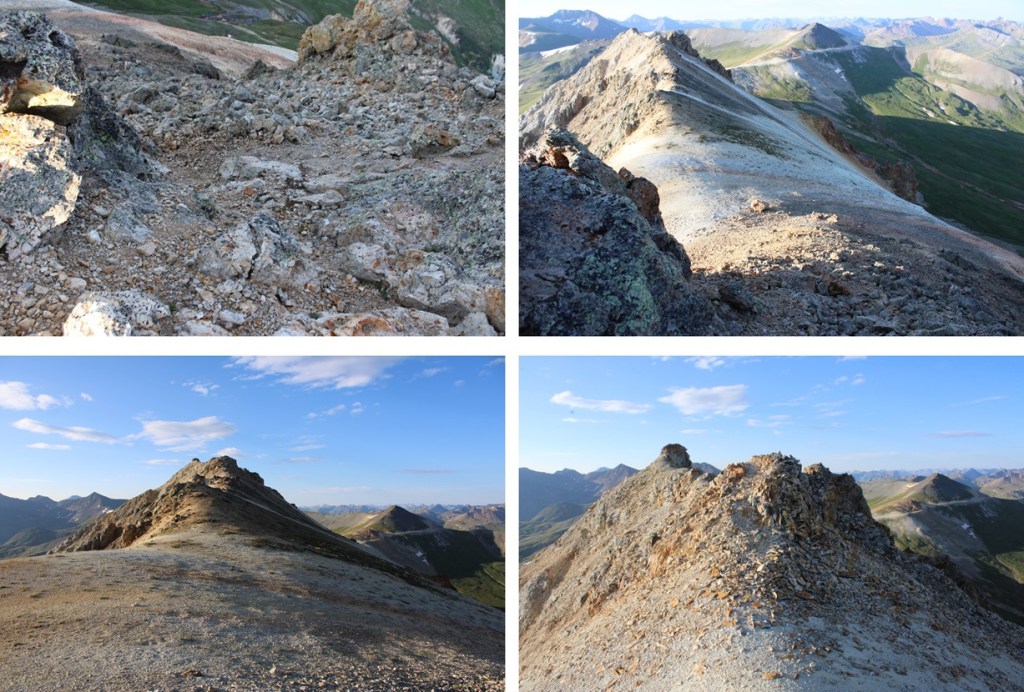
From here, it was a rocky climb northwest along the ridge to the summit.  This was all class 2

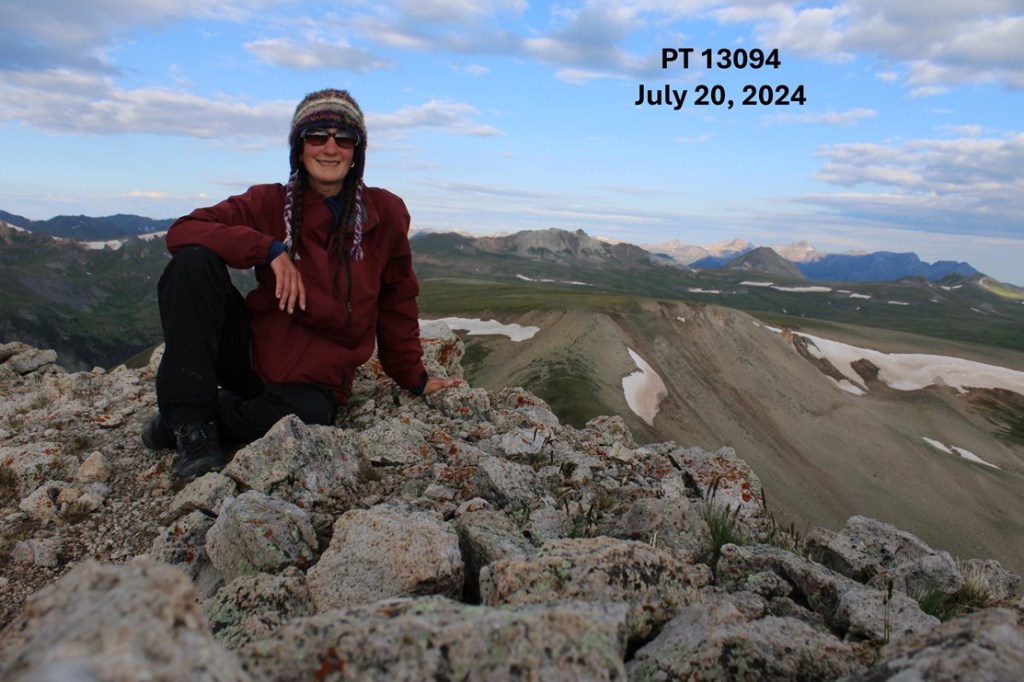
I summited PT 13094 at 7:30am

PT 13094:

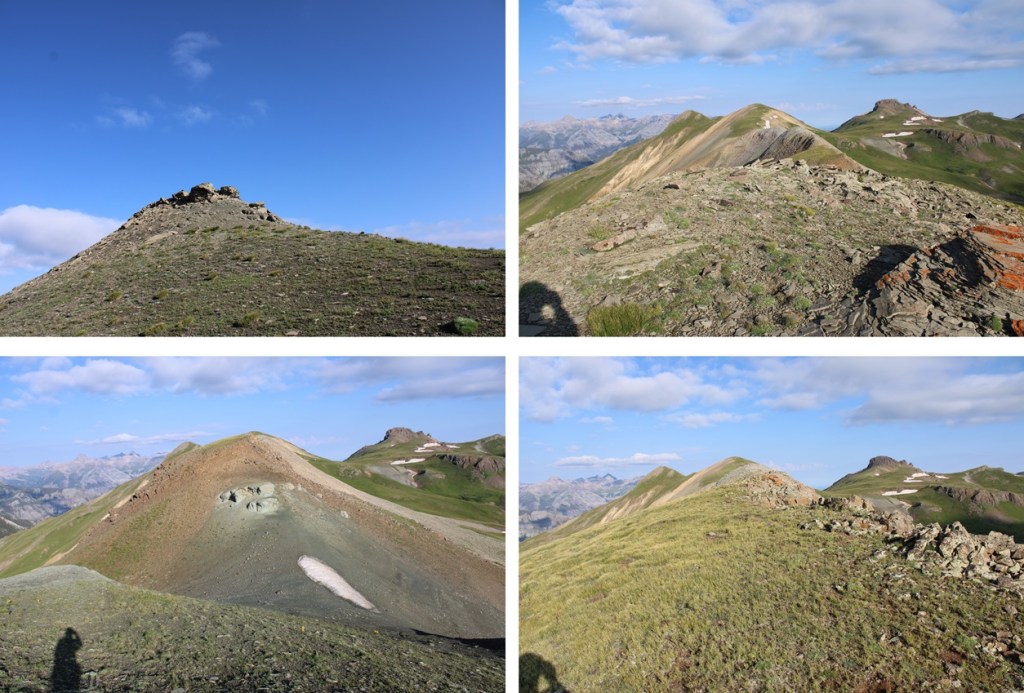
My next objective was Sunshine Mountain, to the northeast

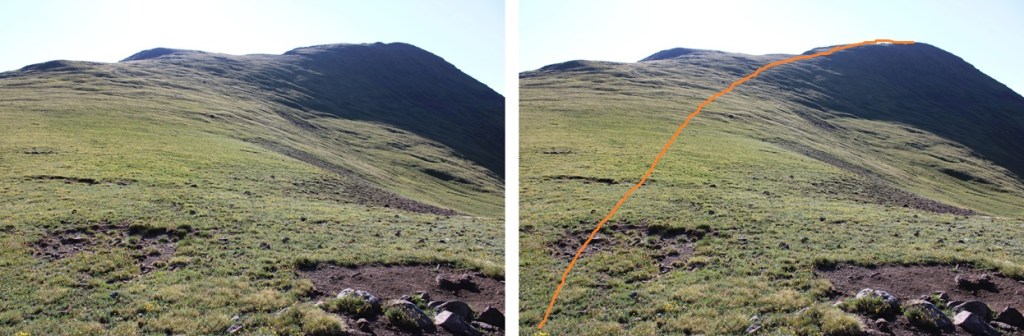
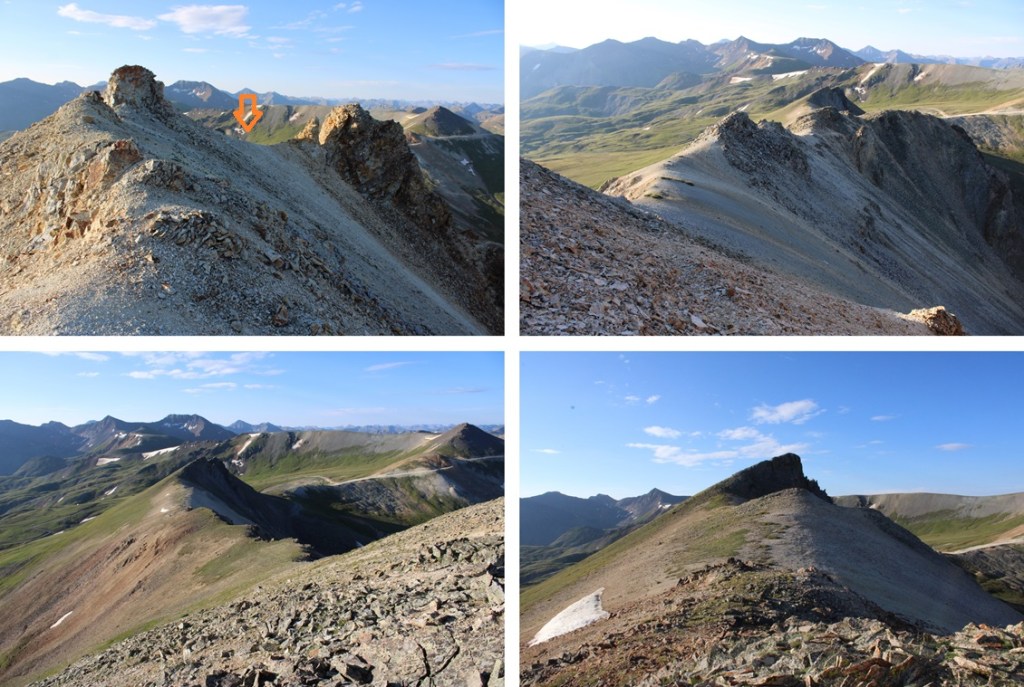
After the initial downclimb off 13093, this was a simple ridge hike on tundra.  This is the overall route I took:

First, I downclimbed the rocky section

Then headed towards the sunshine/13094 saddle

From there I picked up a solid game trail that led me to the ridge, then down to the saddle.

From the saddle I followed the tundra east 570’ towards the summit. 

There was a short rocky section towards the summit, with tons of game trails to the right to keep it class 2, but honestly, going over the rocks is probably class 2 as well. 

I summited Sunshine Mountain at 8:45am

Sunshine Mountain:

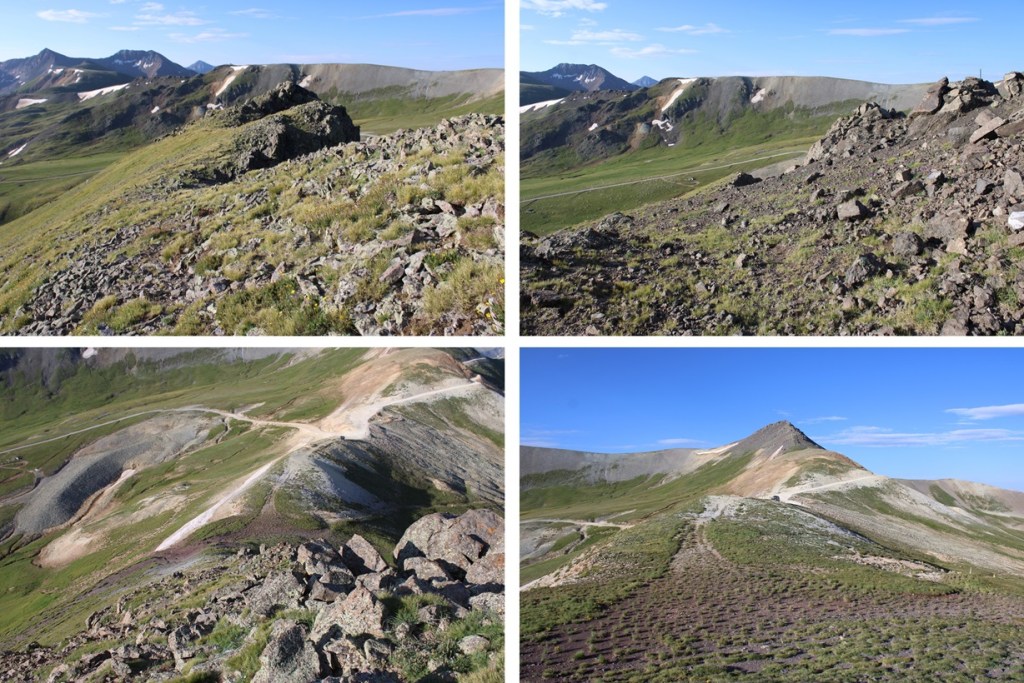
I turned and made my way back down the tundra ridge, and to the saddle

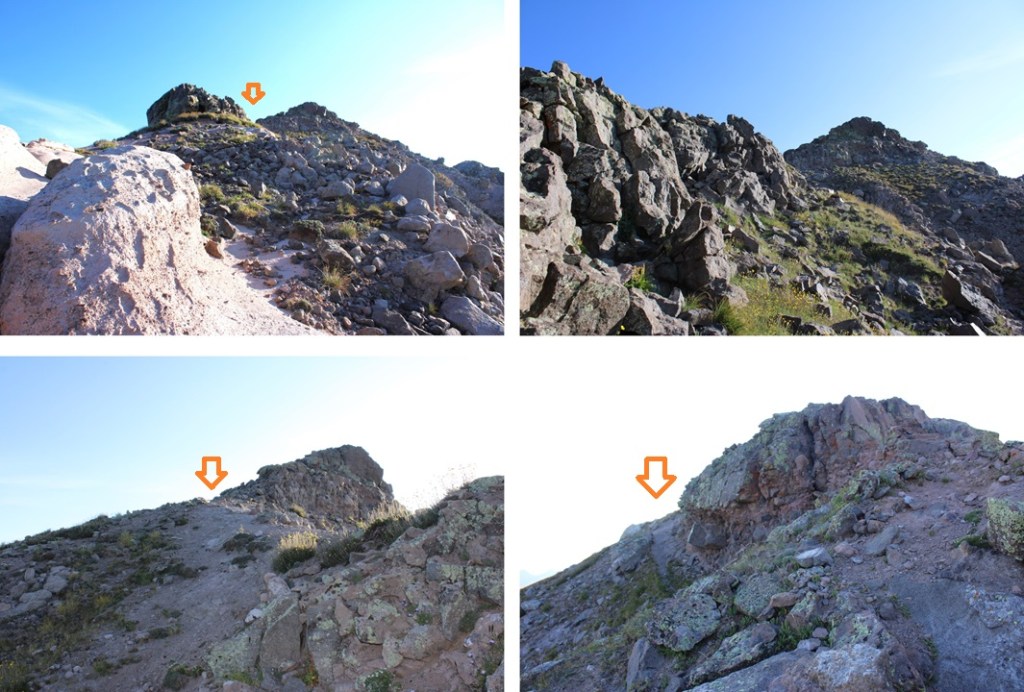
I made my way towards the left side of PT 13094.  Here’s a little hint to help you descend:  There’s a wooden post sticking out of the ground about 20 feet after you should descend.  Use this as a visual for where to start heading down the side of the mountain.

Back on the game trail, I turned right and followed it back to the mining road.

Then I took the mining road back to about 11600’

From here, I could see my truck parked below, and just made my way back to it, bushwhacking the entire way.

I made it back to my truck at 10:30am, making this an 8 mile hike with 3171’ of elevation gain in 4 hours.

On to the next trailhead!
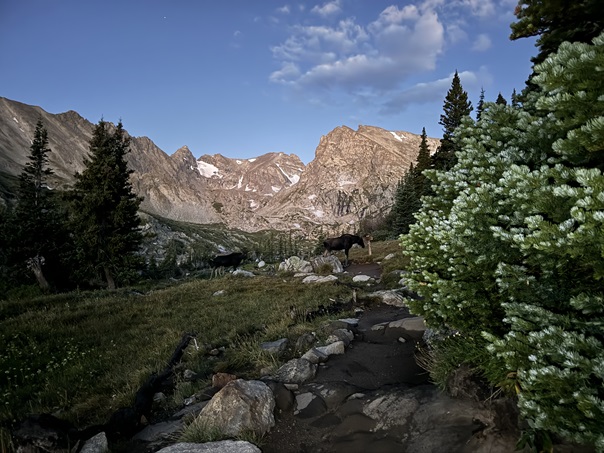
Darley Mountain – 13,275, Engineer Mountain – 13,225, Seigal Mountain – 13,281

RT Length: 11.44 miles

Elevation Gain: 3236’

I decided to park off CR 20 just part MM 15 on the side of the road.  I could have camped at Golconda Mining Complex, but since I only needed a parking spot, not a campsite, I decided to park here.

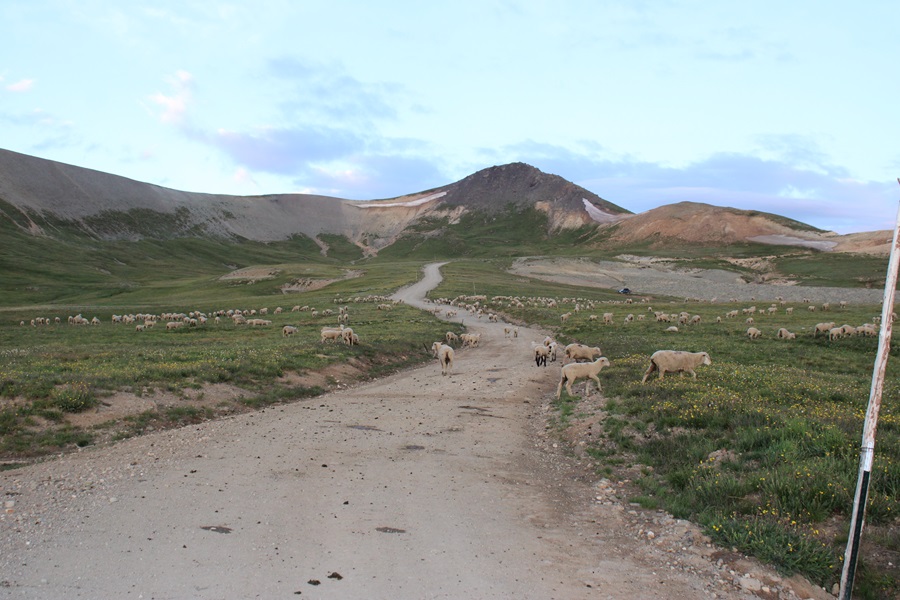
I was up and on the trail at 5:30am.  I began by following the road towards Engineer Pass.  This is a 4WD road, but easy to follow.  From my parking spot, it was about 2.75 miles to Engineer Pass. 

Just before reaching the pass, and just as the sun was rising, I came upon a herd of about 500 sheep.

They all moved and baa’d as I hiked past them, towards Engineer Pass.

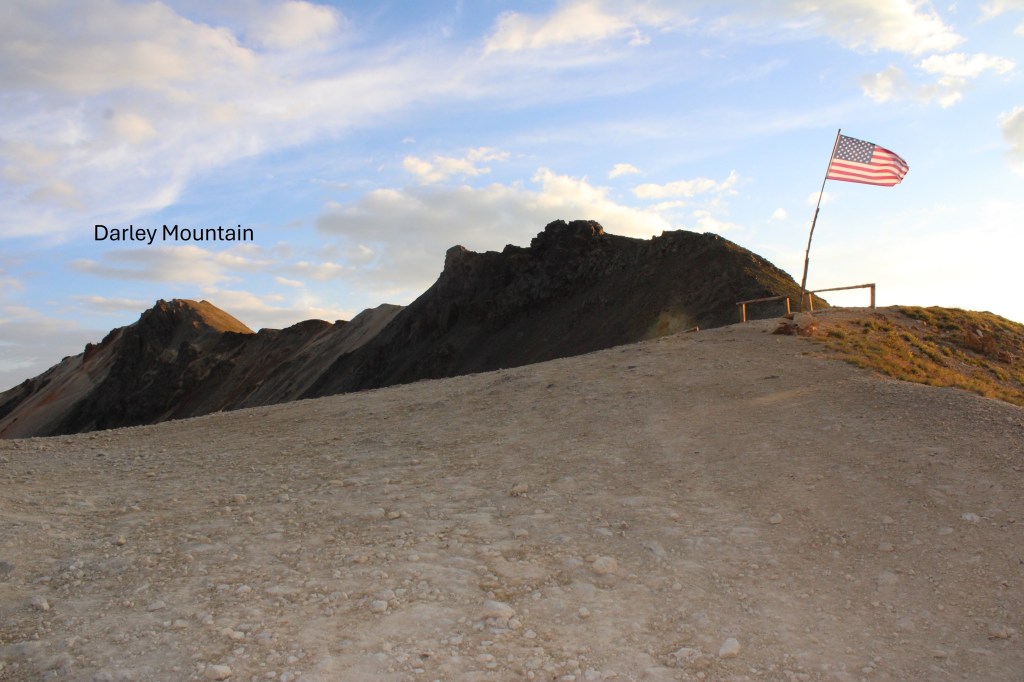
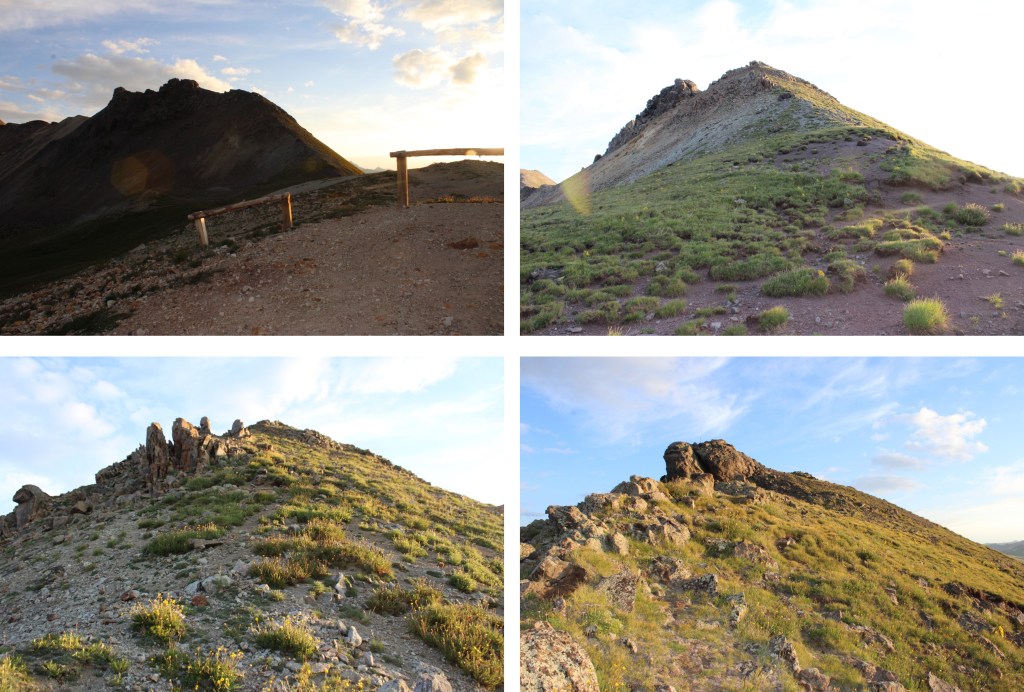
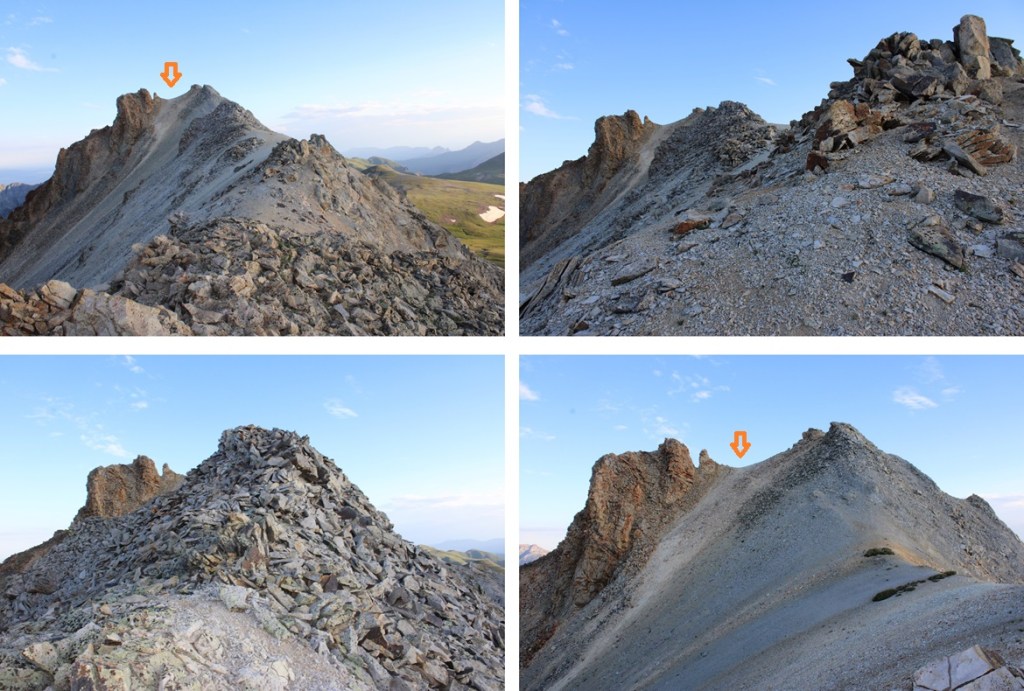
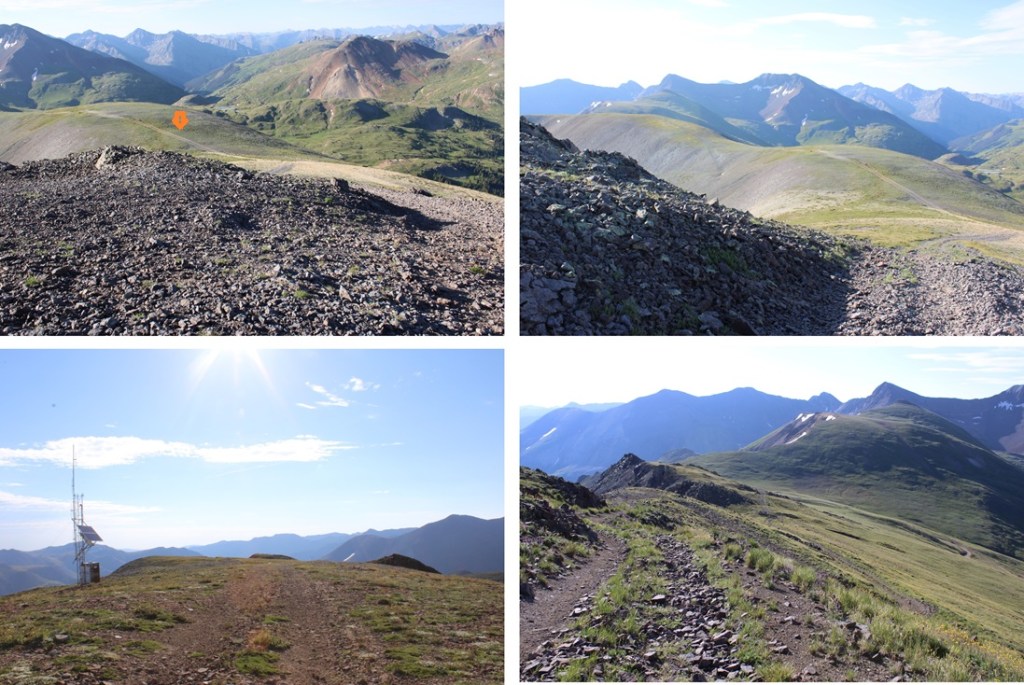
My first peak of the day was Darley Mountain.  From Engineer Pass, I turned right, and headed north along the ridge towards Darley.  This was all class 2, but full of loose scree and choss.  Oh, and several false summits.  I stuck to the ridge.  Here are some pictures of the ascent.

At the first false summit, I stuck to the right, following the ridge on game trails.  There were game trails all the way to the summit.

From here, you can see the next false summit. I continued following the ridge.

And now, the next false summit.  This was much the same as I’d encountered before, and I kept following the class 2 ridge.  This is probably the biggest false summit of the peak.

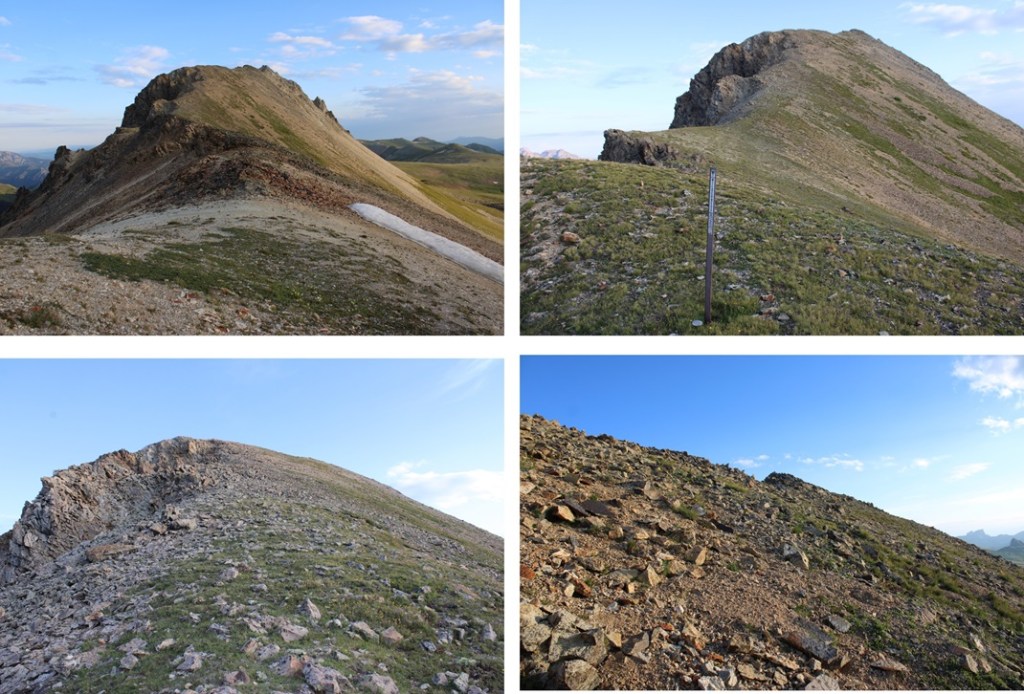
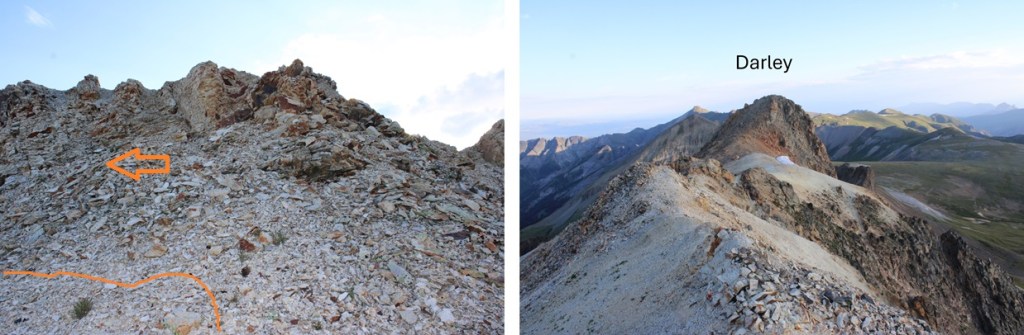
This is where it gets interesting.  This is all still class 2, but very loose scree and chossy.  Microspikes helped here, especially on the way down.  There are plenty of game trails to follow here.   Also, this isn’t quite the summit yet.  Here’s the route I took, following the ridge to get there.

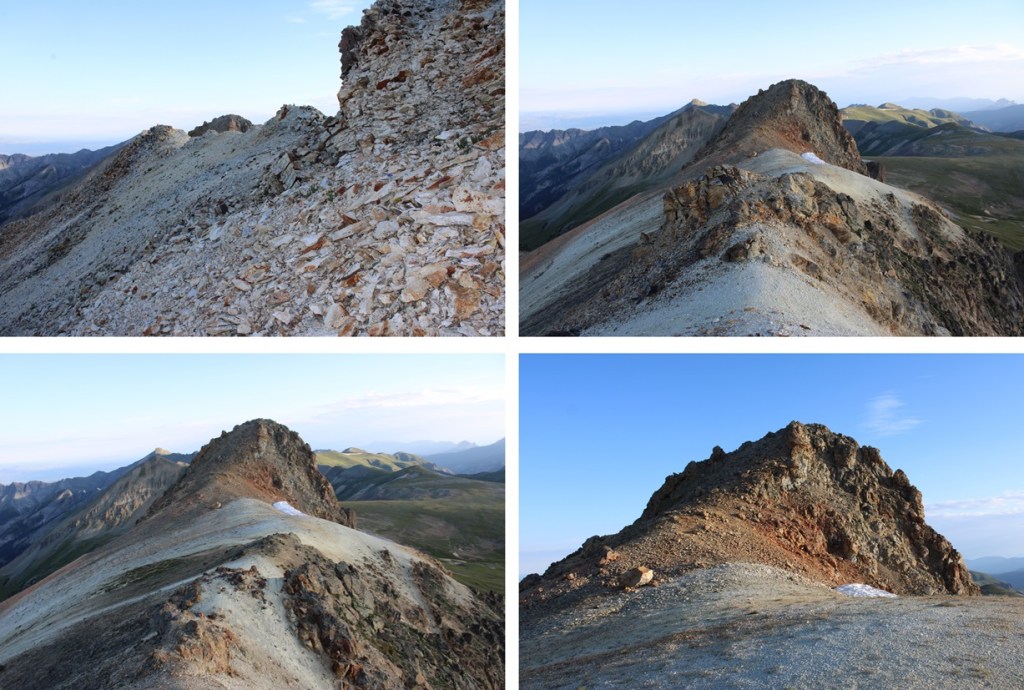
You’re going to want to summit this blob, but it’s not the true summit. The true summit is to the left/northeast.  There are game trails here to follow as well, mostly sticking to the ridge direct, but a few go to the right, and are obvious. 

The last bit was rocky, but still class 2

I summited Darley Mountain at 7am

Darley Mountain:

I turned around, and headed back to the Darley/Engineer saddle, using the same route to descend as I had to ascend.

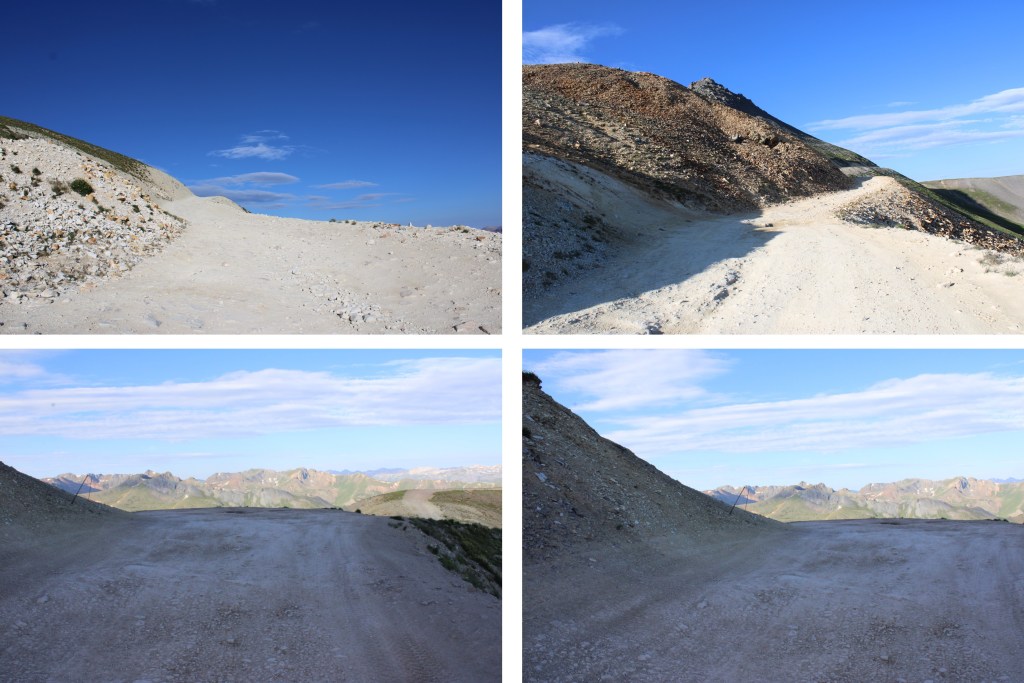
Safely back at Engineer Pass, now I wanted to summit Engineer Mountain.  I continued following the 4WD road southwest, as it continued to ascend in elevation to a junction.

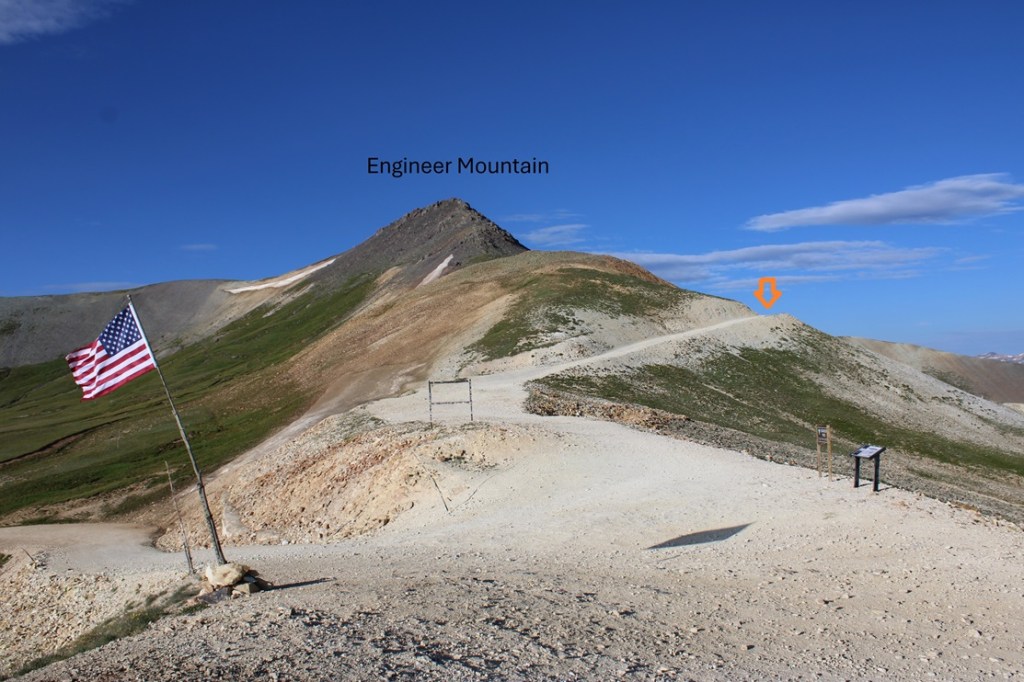
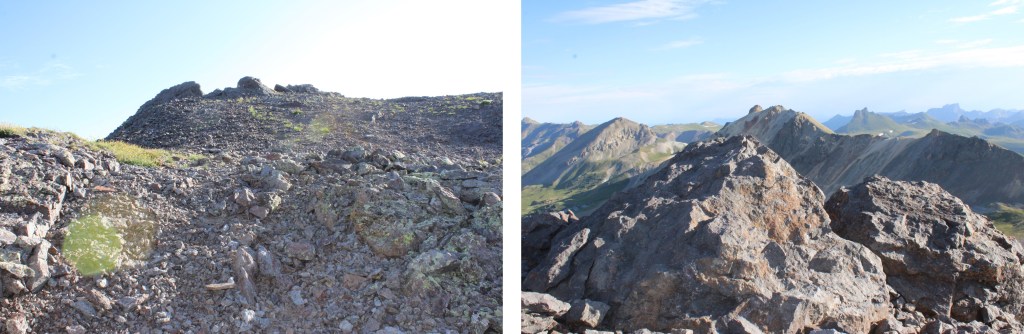
At 12970’ I turned left, and followed a very steep 4WD road (closed to 4WD vehicles) east towards the summit.  The summit has a class 2 boulder, no more than 5 feet wide.

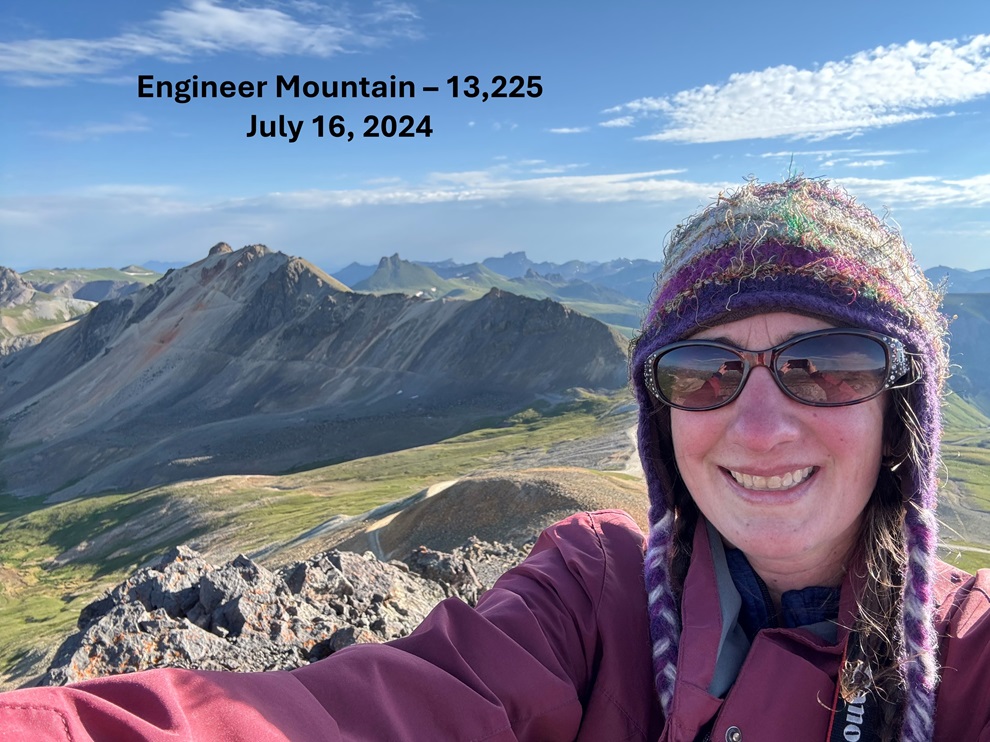
I summited Engineer Mountain at 8am

Engineer Mountain:

To the southeast is Seigal Mountain

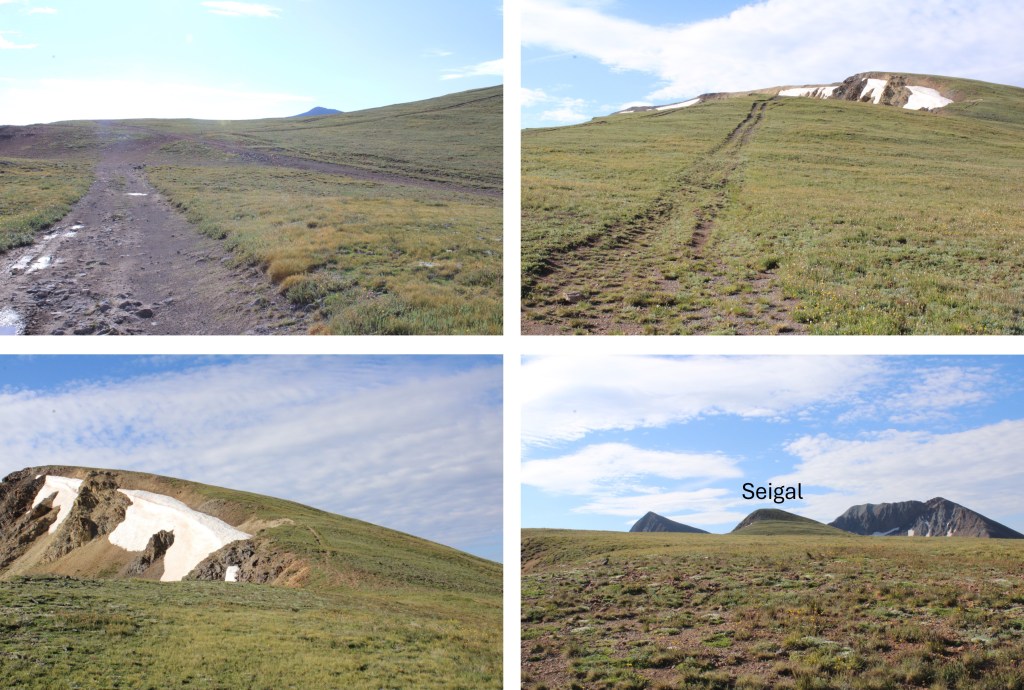
I could see a dirt road in the distance, and headed south to this road.  When on the road, I followed it east to the Engineer/Seigal saddle, descending about 460’ .

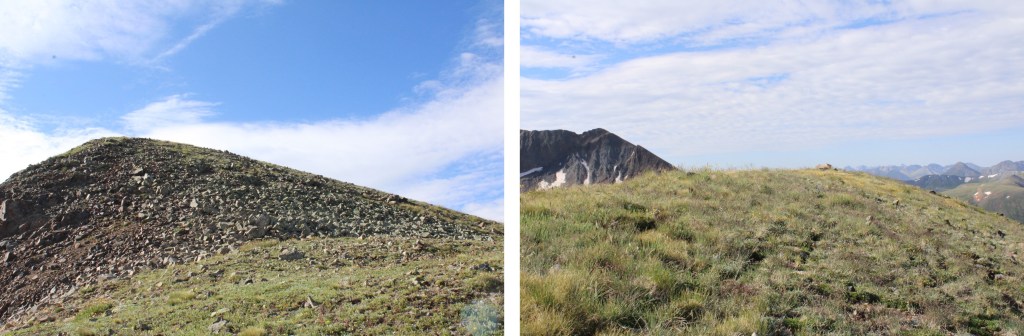
Once at the saddle, I followed the road southwest up the ridge, but eventually the road ended and a slight trail began that ended as well.  It was a class 2 tundra walk to the summit, fairly straightforward.  It got a bit rocky at the very end, still class two, with a tundra workaround to the right. Here are some pictures of the route to the summit of Seigal.

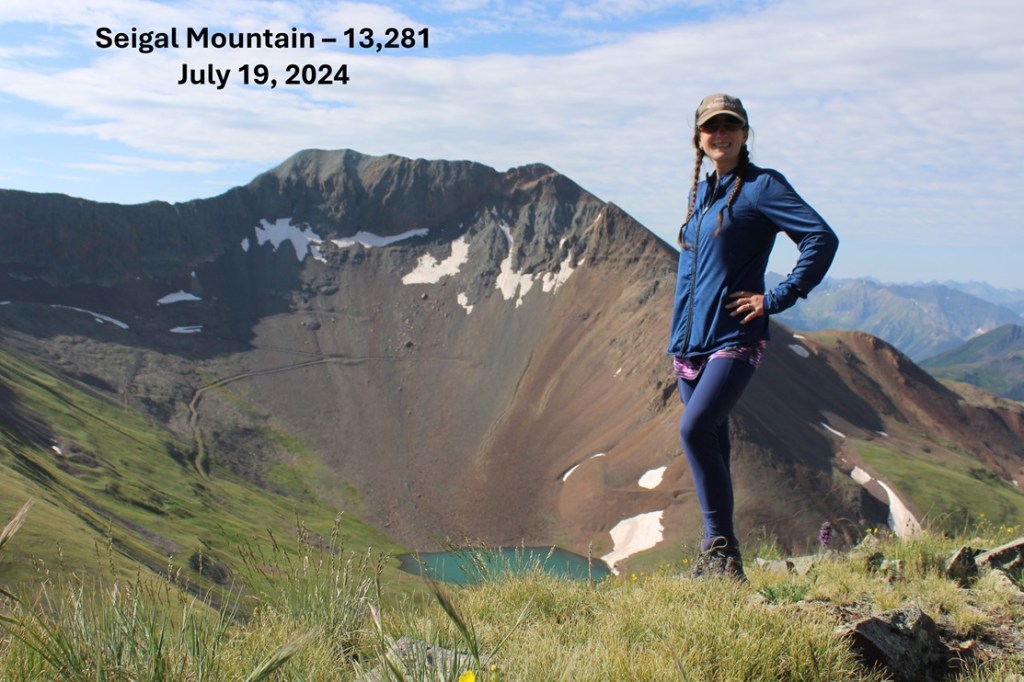
I summited Seigal Mountain at 9am

Seigal Mountain:

I was making this a kind of loop, so I headed back down to the Engineer/Seigal saddle.

At the saddle, I headed a little further north, and found this road that topo maps said would lead me east towards Schafer Gulch.

I followed this road, and yes, it led me in the correct direction, but what maps couldn’t tell me was this was an old mining road that hadn’t been used in years.  So many years much of the road was destroyed due to avalanches or rockslides and due to the road being “closed” to vehicles, much of the road is now grass and flowers.  However, enough of the road was intact for me to figure my way down.  I headed east, following the road when I could, heading towards the obvious 4WD road in the distance paralleling Schafer Gulch when I couldn’t.

If you lose the road, you can just head east on the tundra until you reach the 4WD road.  It’s steep, but it doesn’t cliff out here.

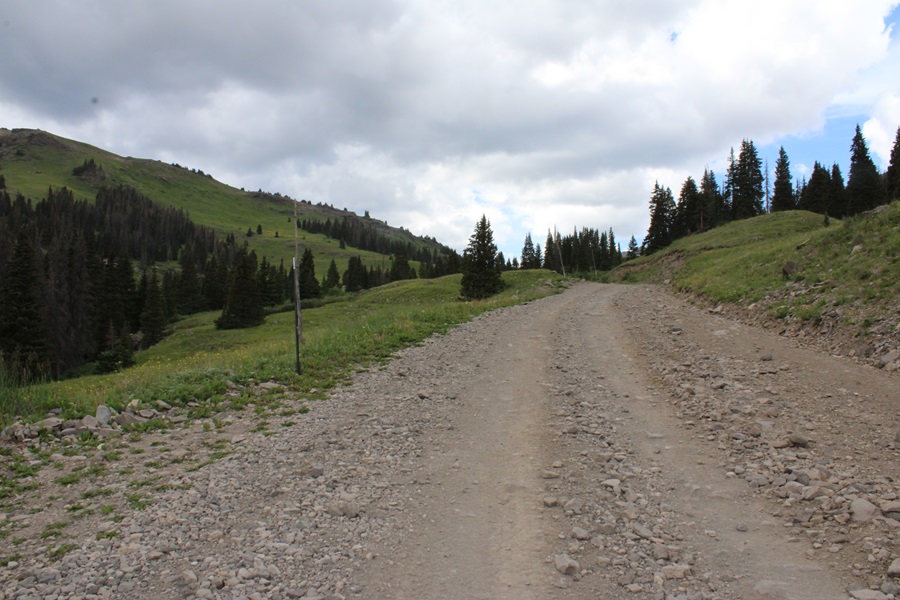
I was now on a solid 4WD road, and followed it north back towards CR 20, turning left at a junction where right went to someone’s dwelling.

I crossed Henson Creek, and followed the road through Golconda Mining Complex back to CR 20

Then followed CR 20 northwest towards my truck.

I made it back to my parking spot at 10:30am, making this a 11.44 mile hike with 3236’ of elevation gain in 5 hours

On to the next trailhead!