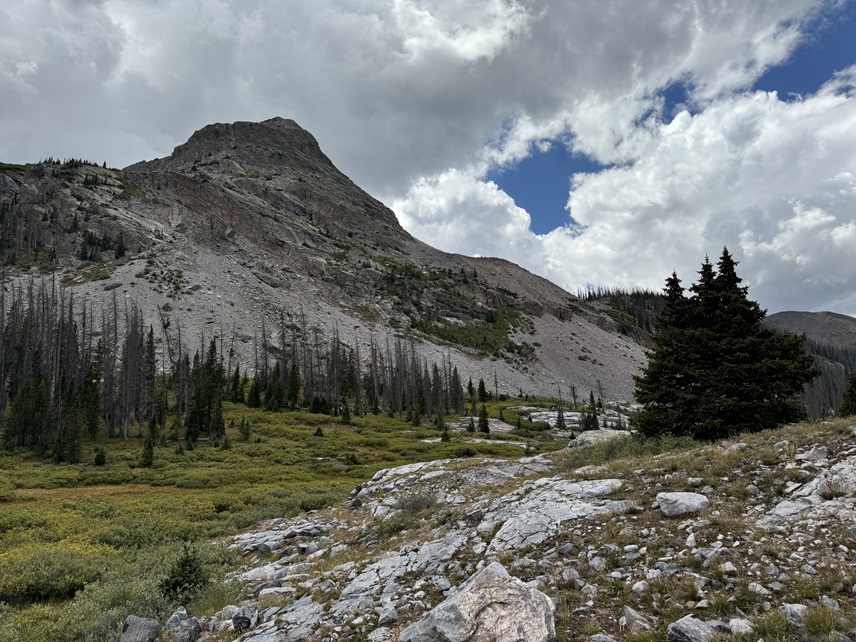
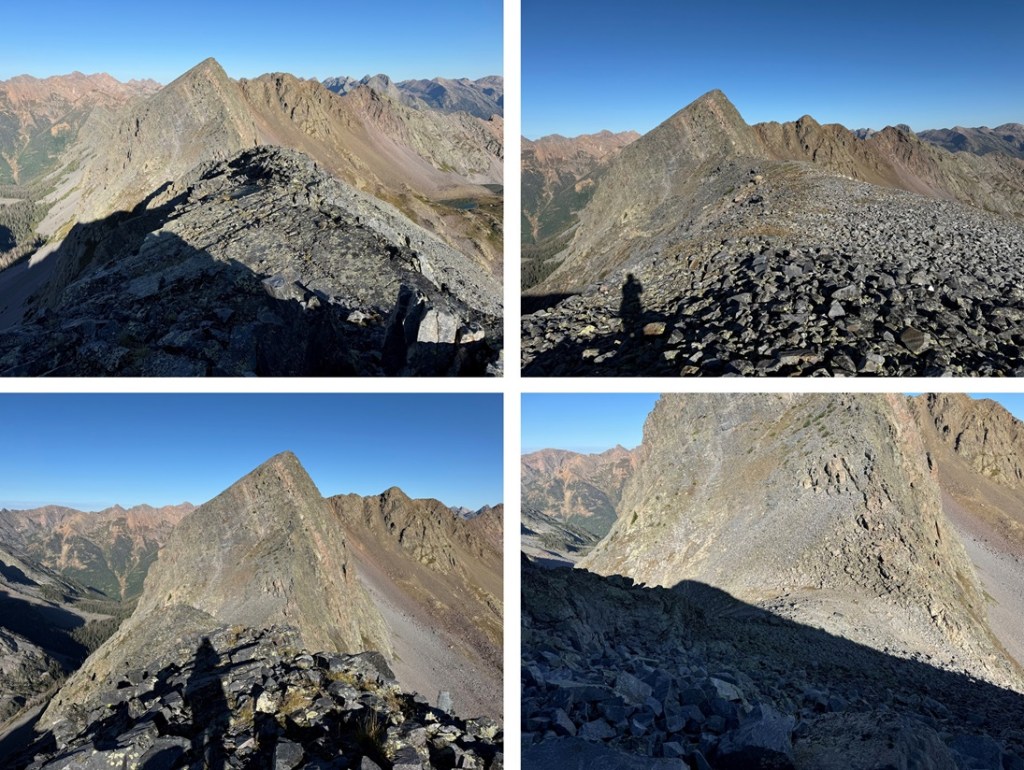
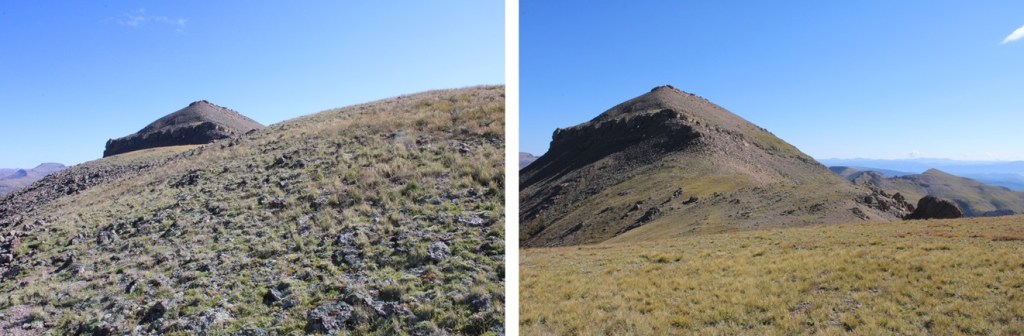
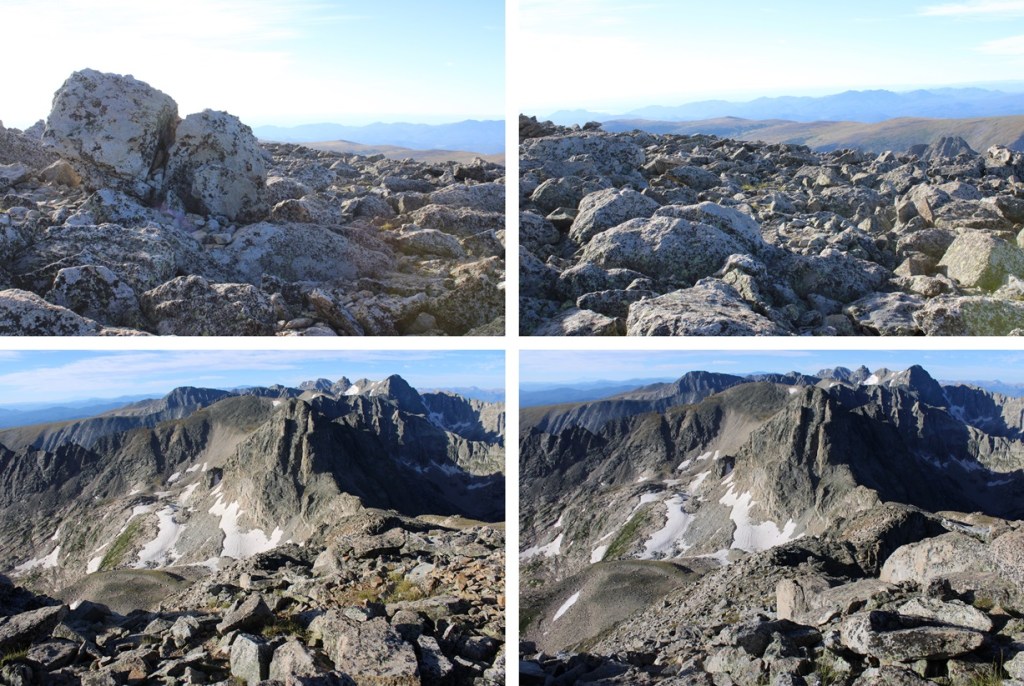
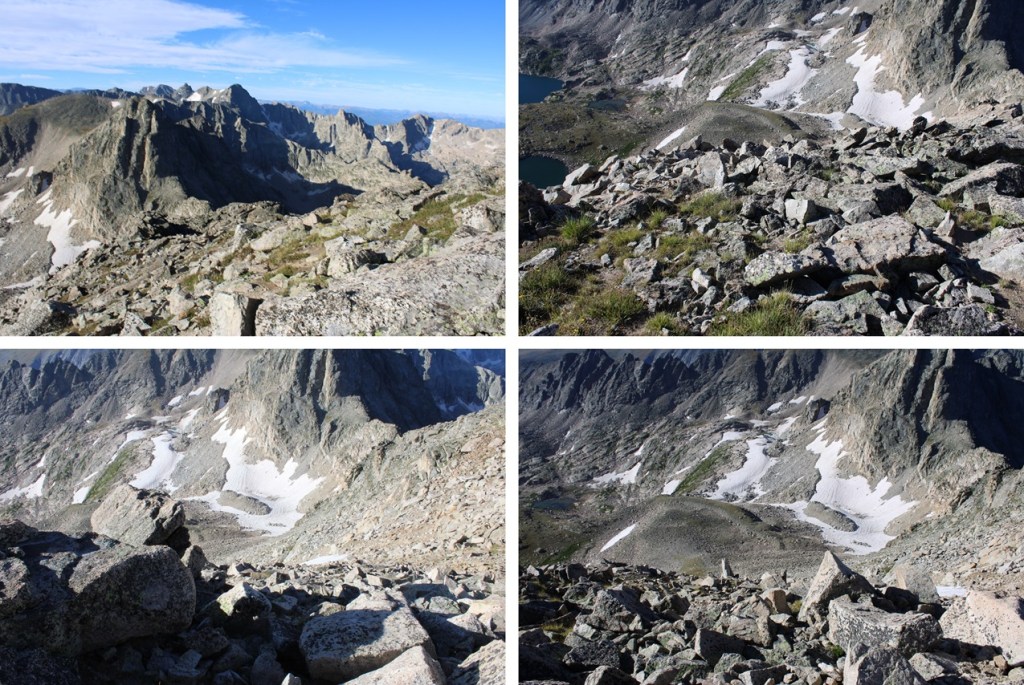
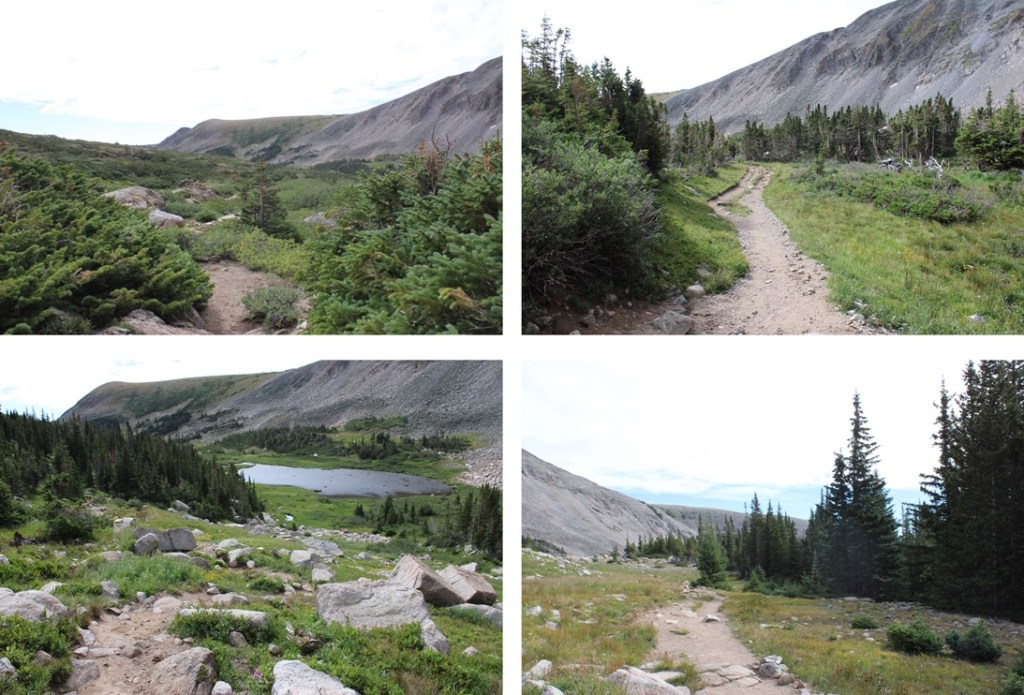
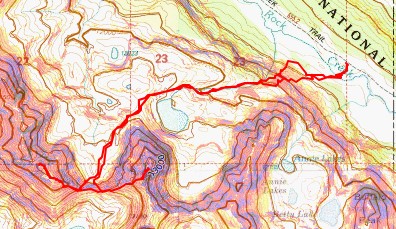
P3 – 13,279 and P2 – 13,288

RT Length:  6.61 miles

Elevation Gain: 2539’

Edited to add:

I came back a month later and was successful in summiting P2.  Details below.

Full disclosure, I did NOT summit P2.  However, I came very close, and thought I’d share the information I have for those who might find it useful. 

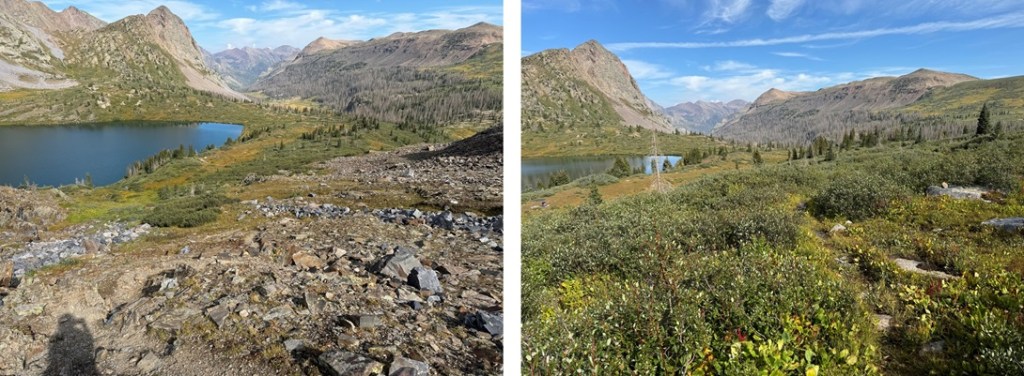
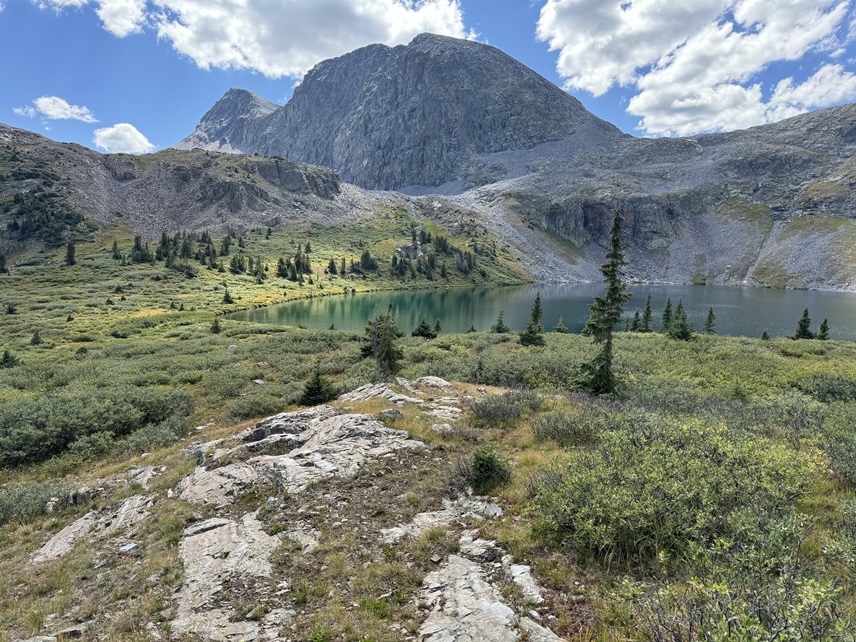
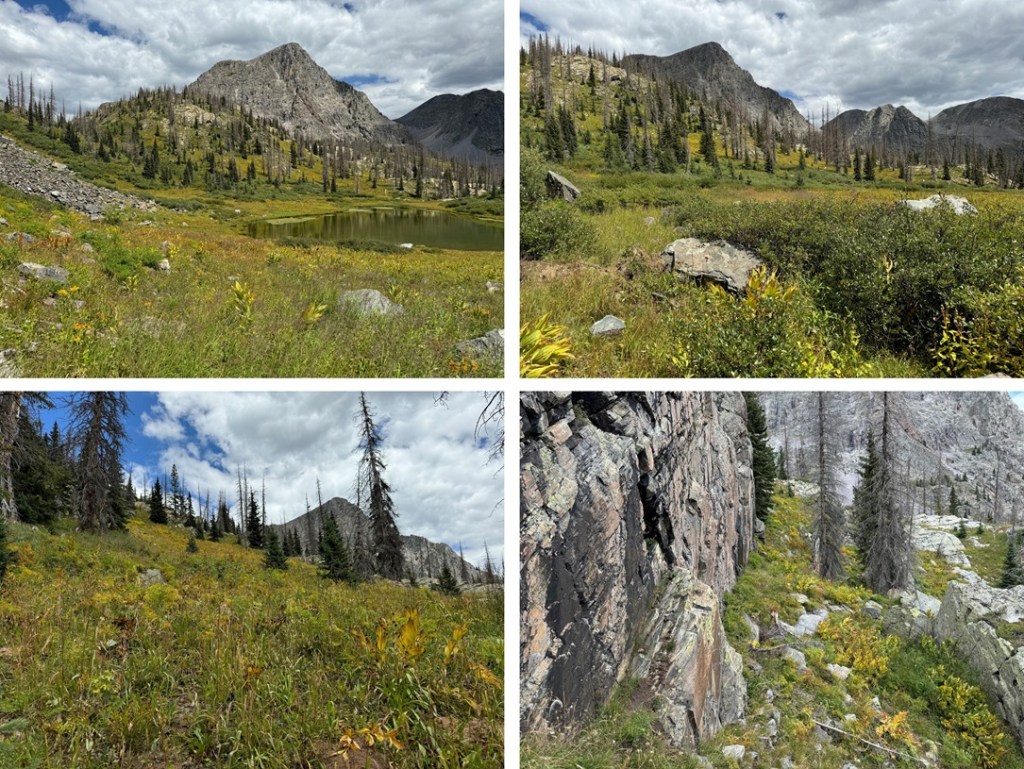
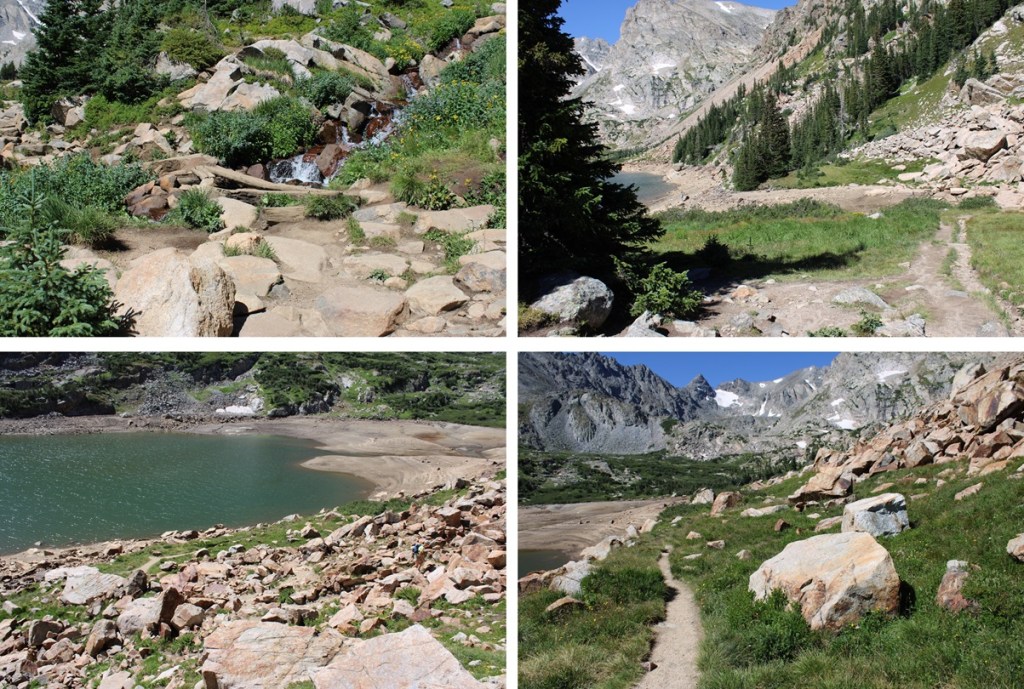
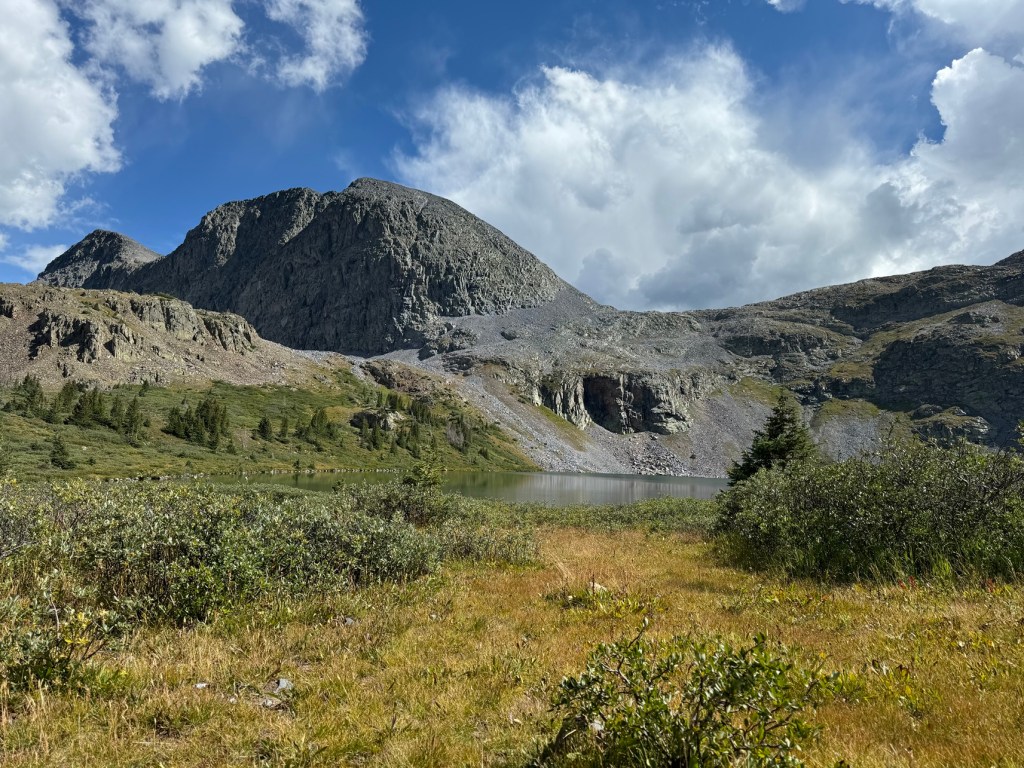
I camped at 11330’ of elevation, along the Rock Lake Trail that parallels Rock Creek in the basin just before Rock Lake

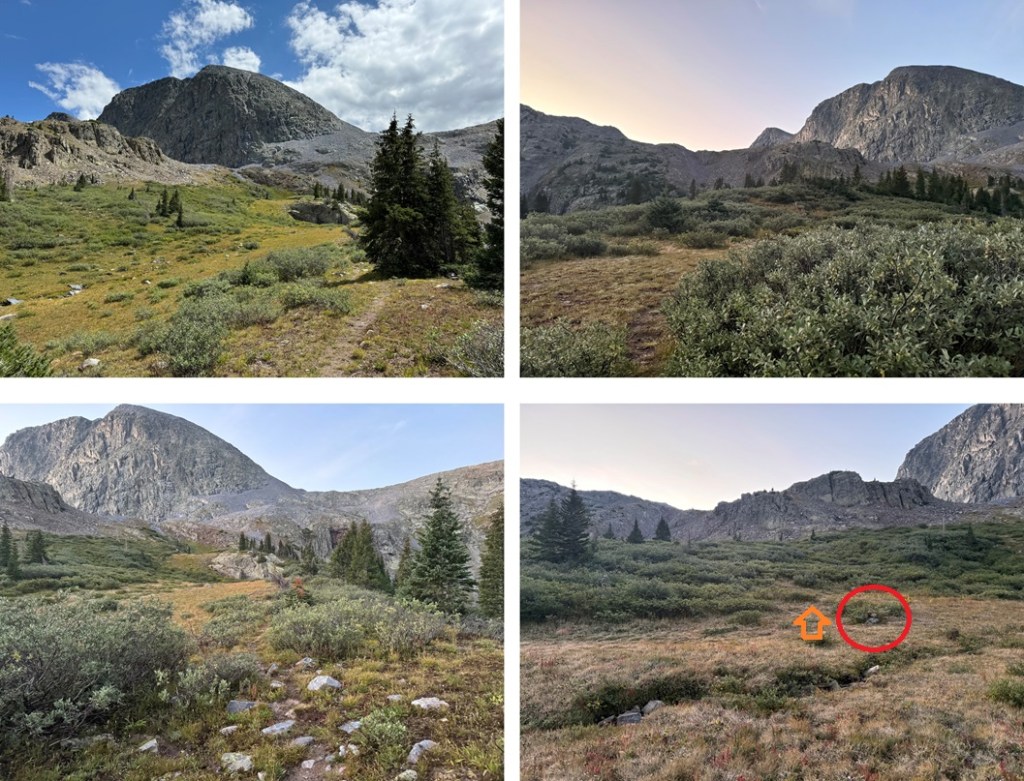
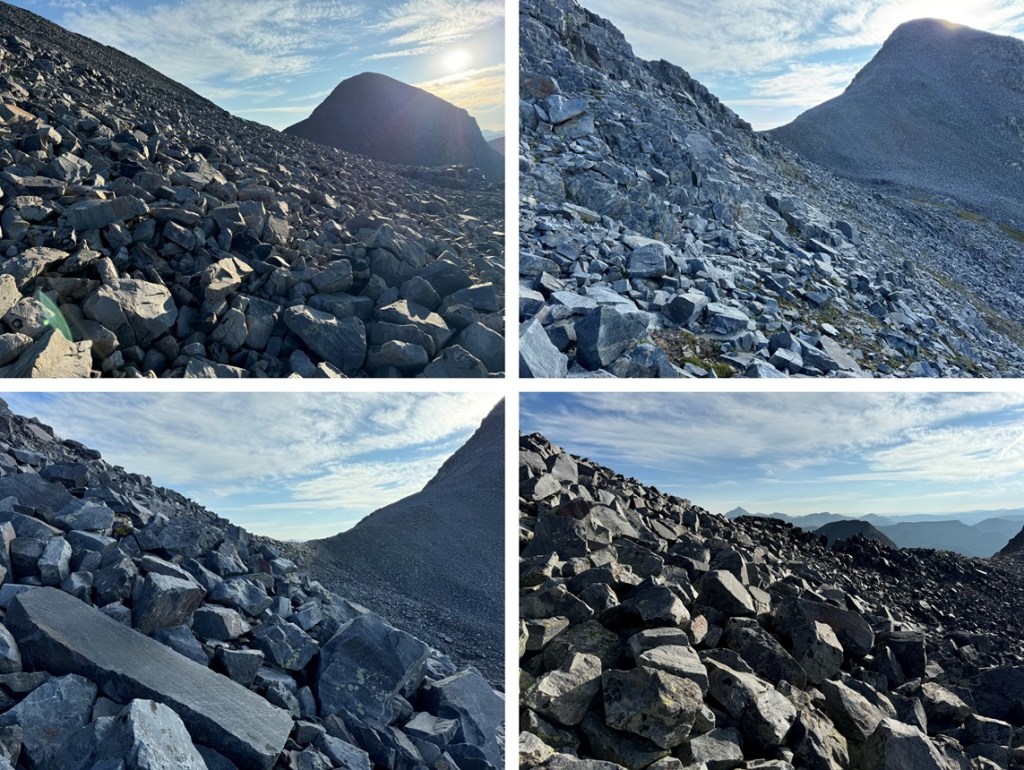
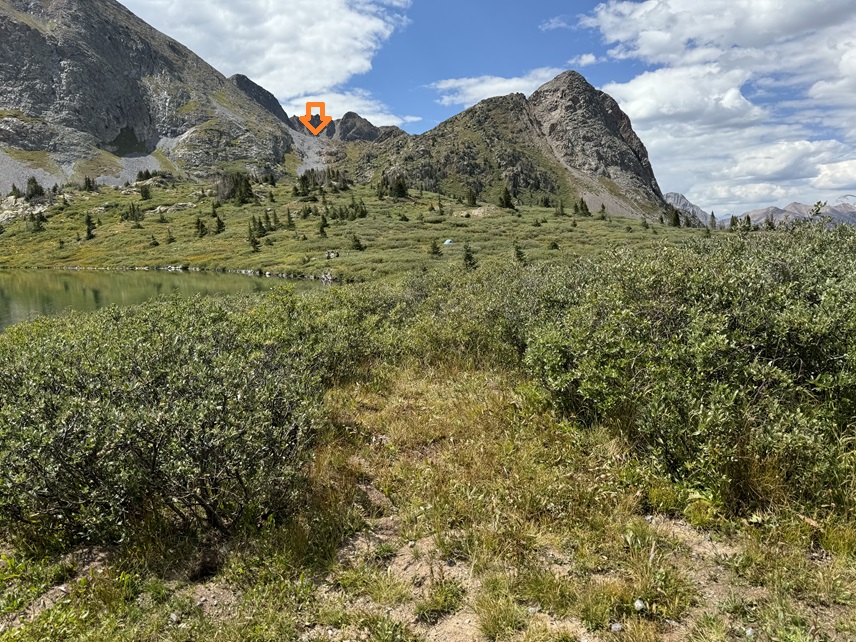
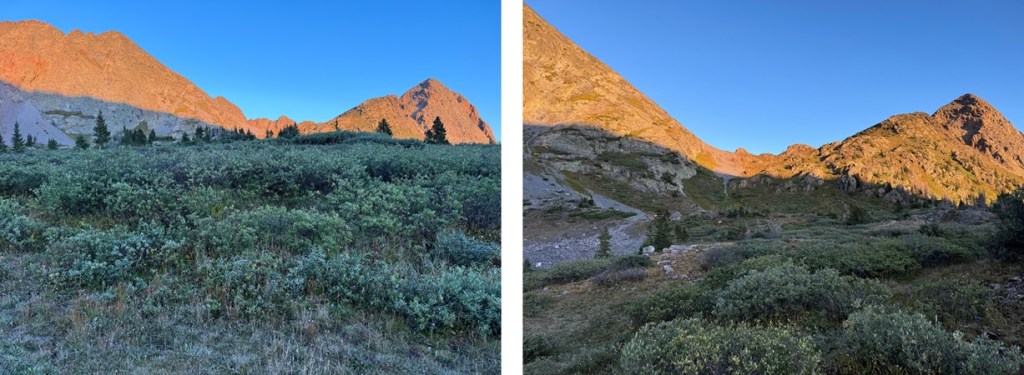
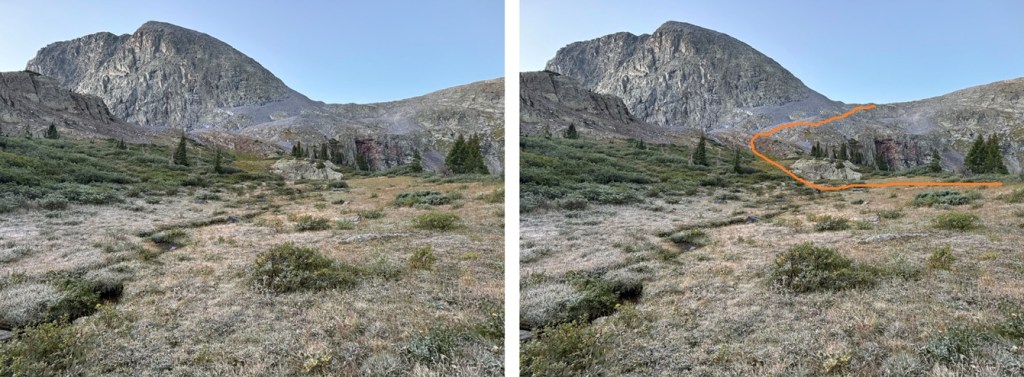
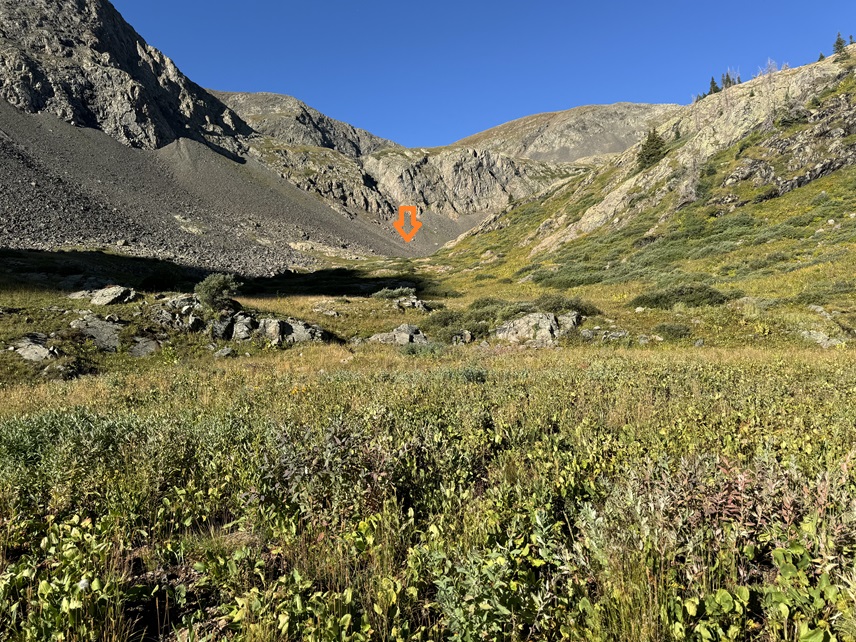
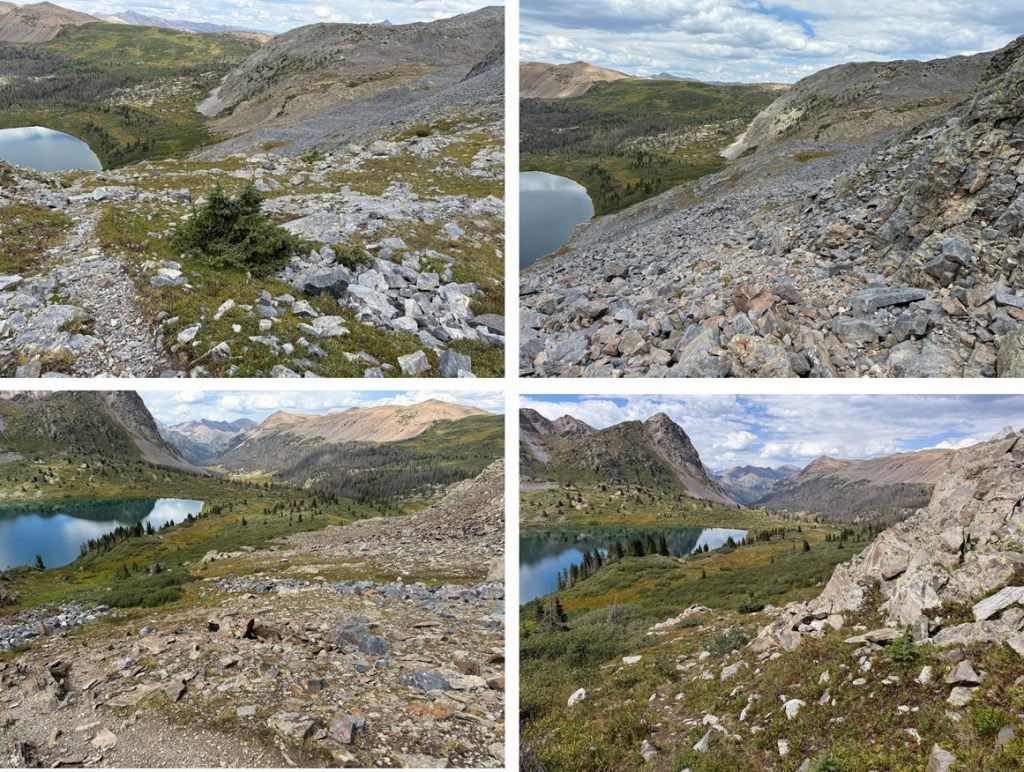
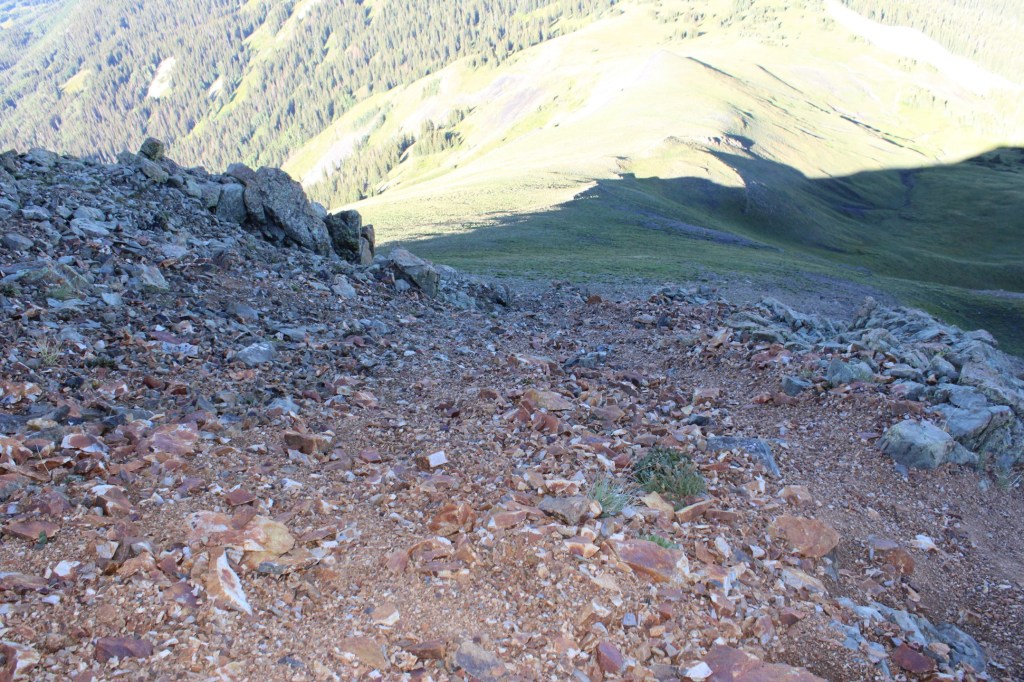
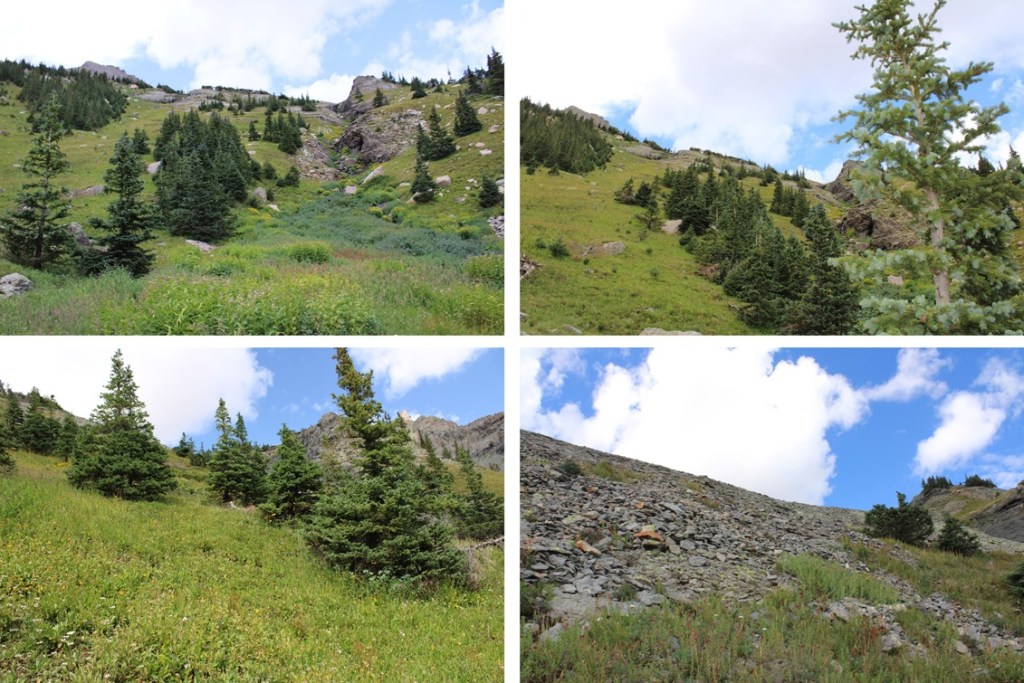
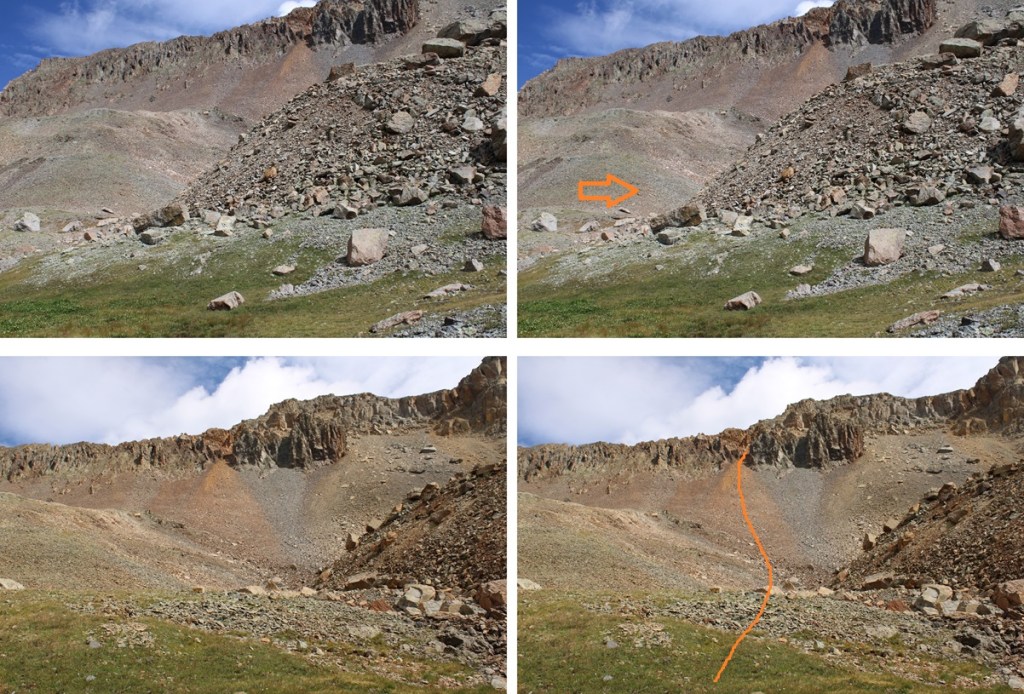
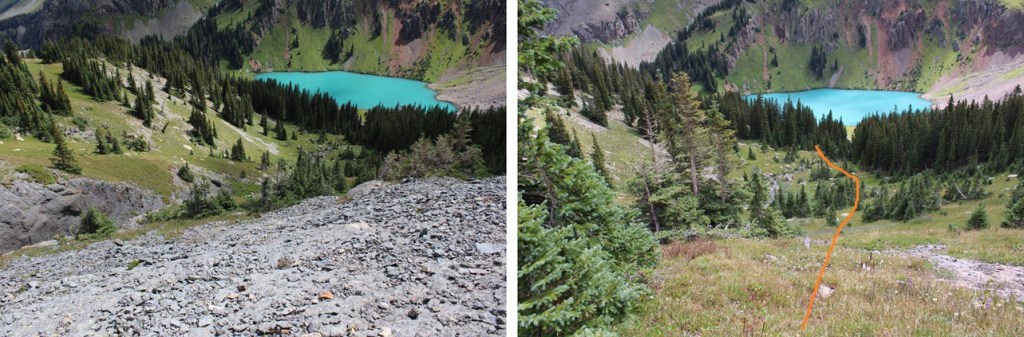
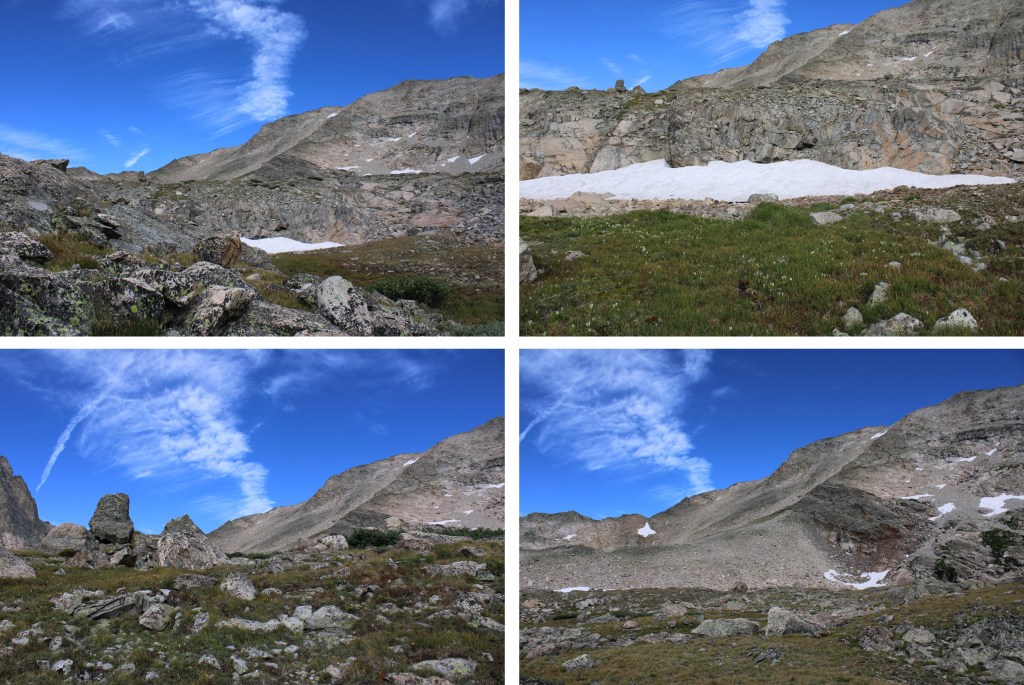
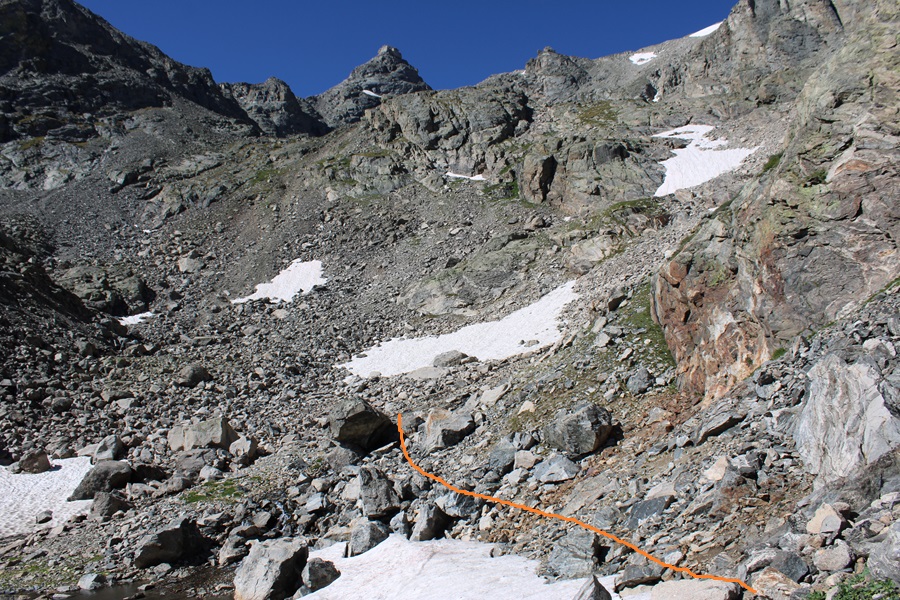
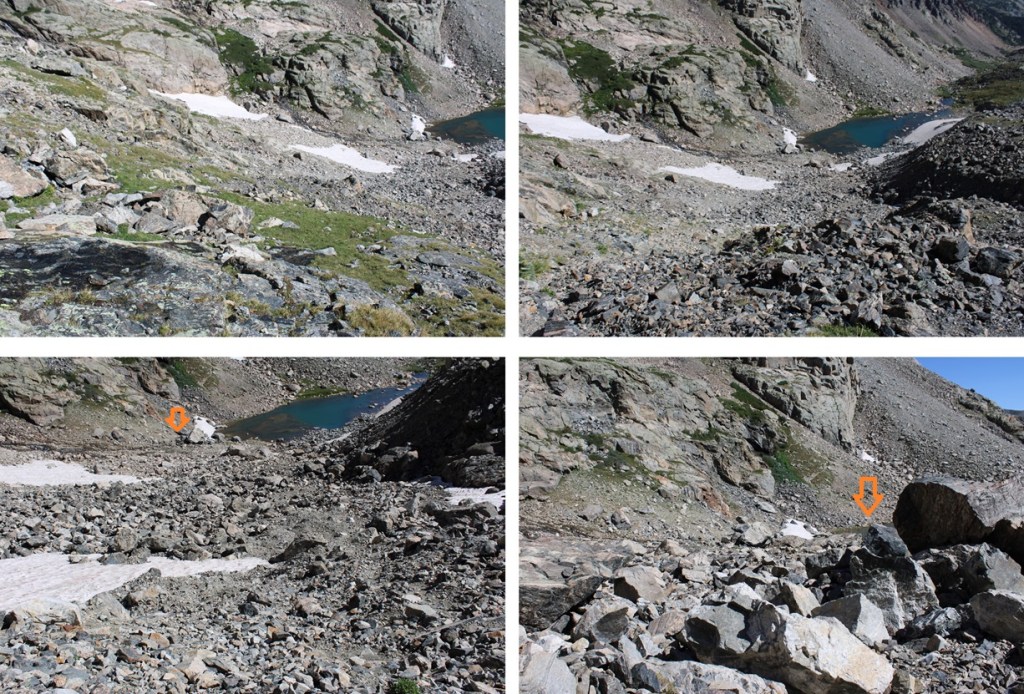
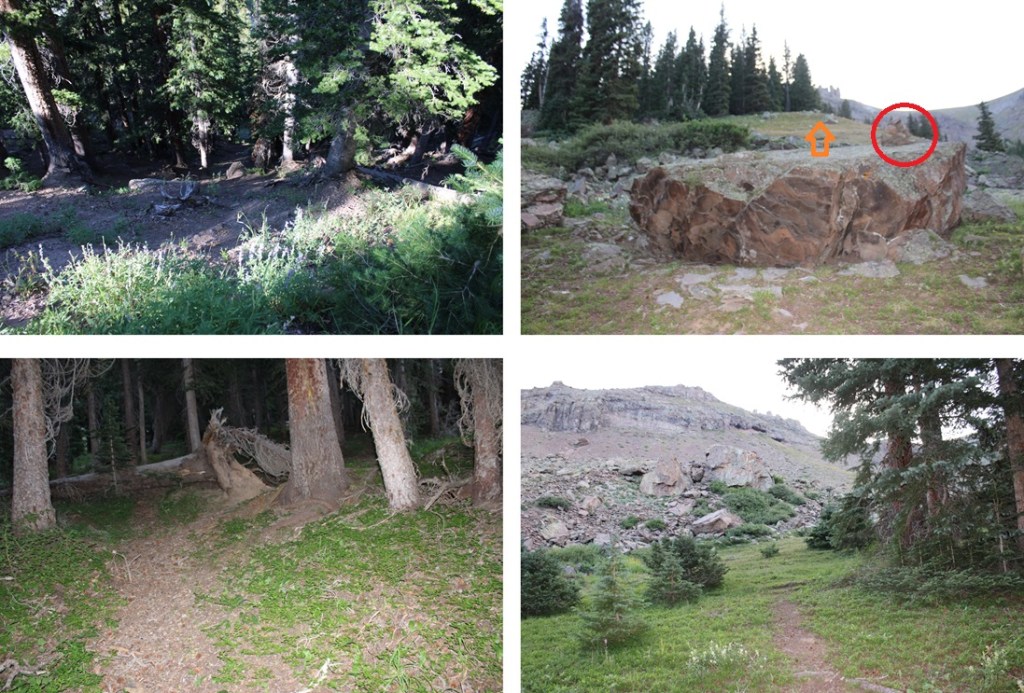
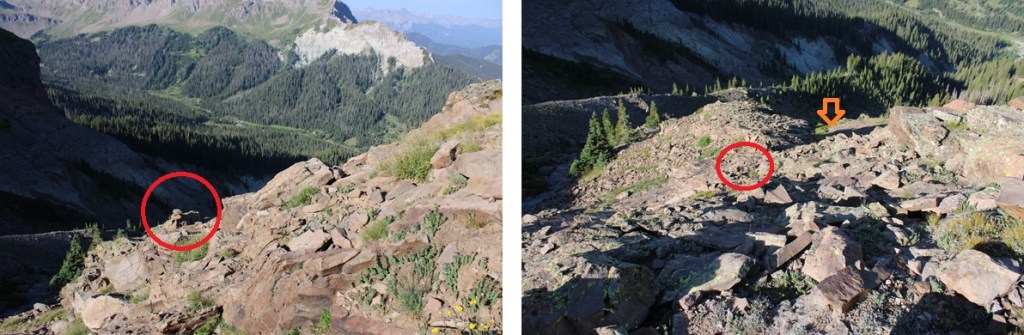
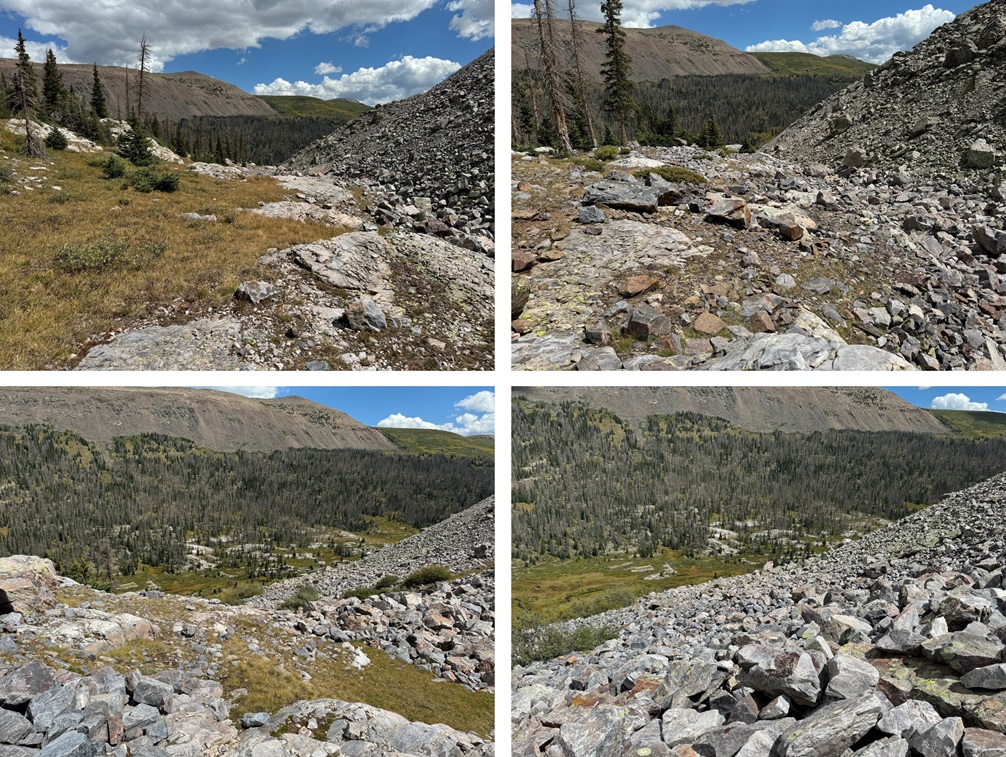
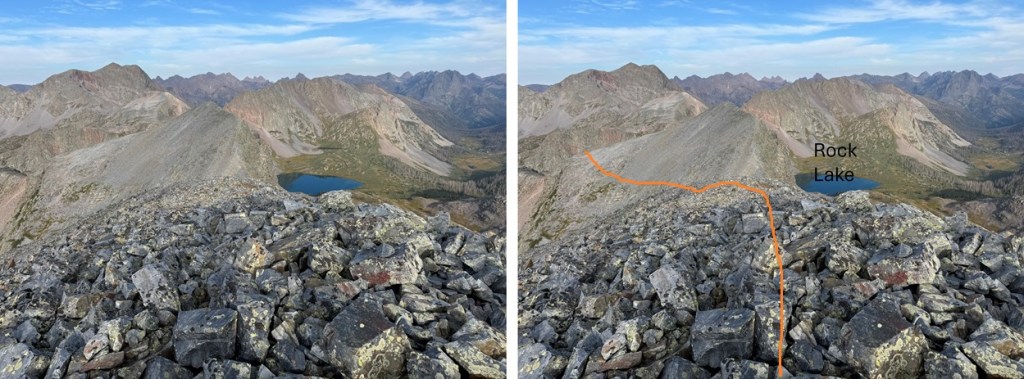
The next morning I was on the trail at 6:30am, heading west.  My goal was to gain this ridge, and I did it poorly.  I spent way too much time route finding, so I’m going to try to make this easier for you.  You need to ascend this ridge, but DO NOT do it here.  There is a way to find a weakness and ascend here, which I did, but I was greeted with the steepest, worst scree I’ve ever encountered, where if I’d have fallen, I would have skidded all the way down, over the edge.  It was dangerous, and put me at a too high position and I needed to descend anyway. 
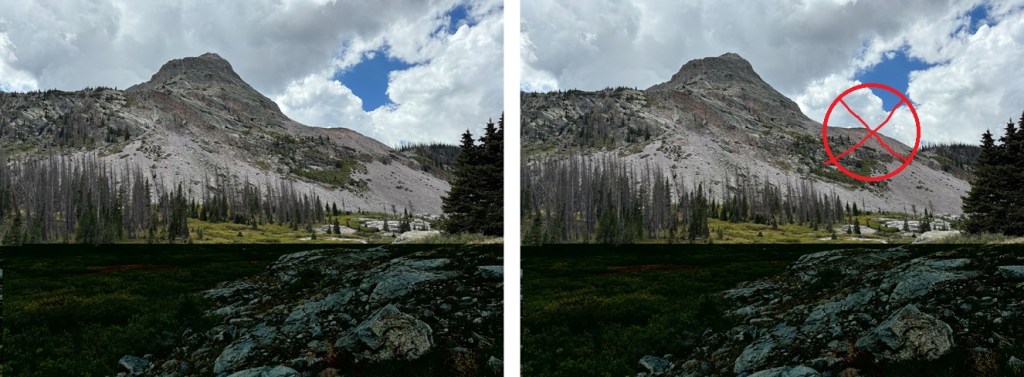
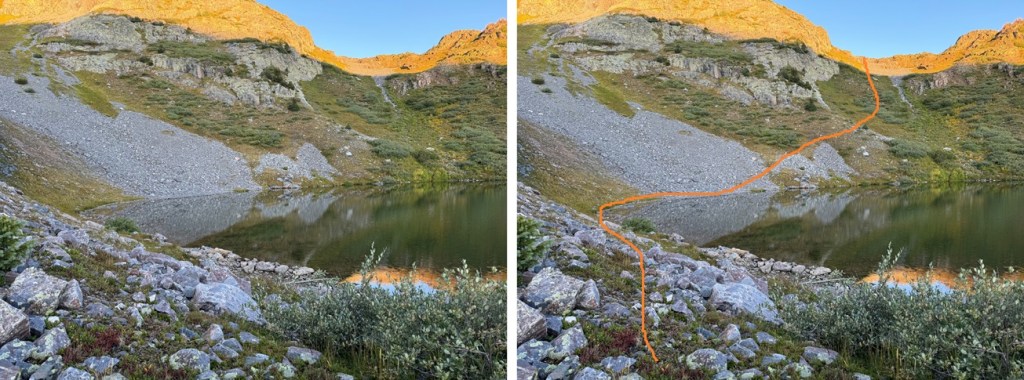
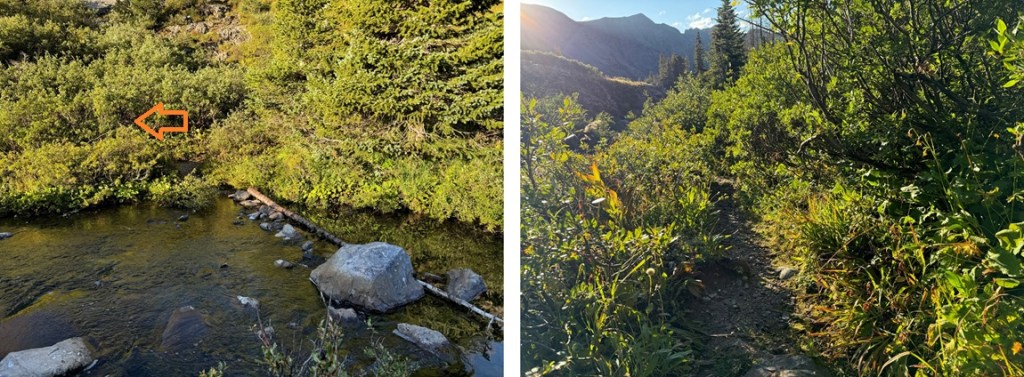
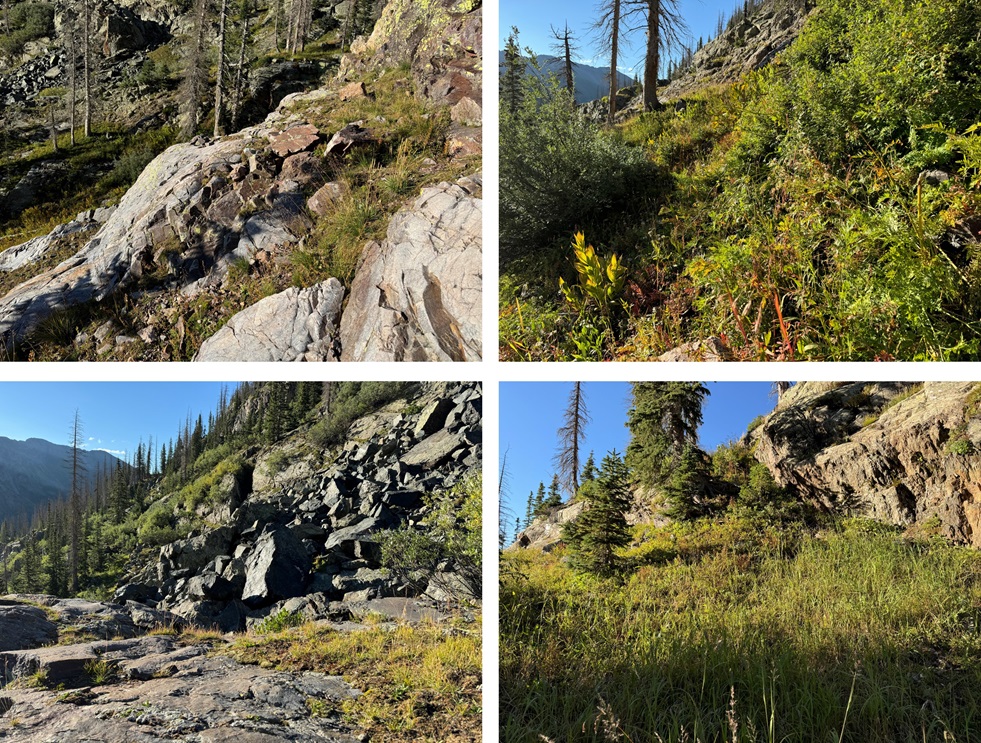
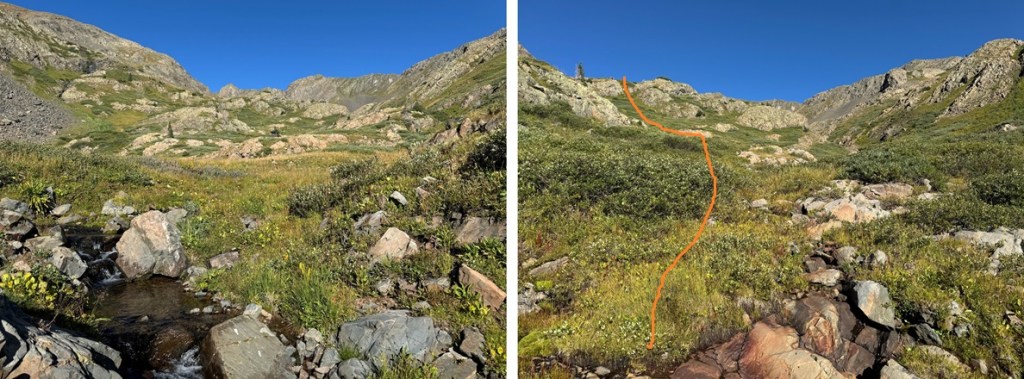
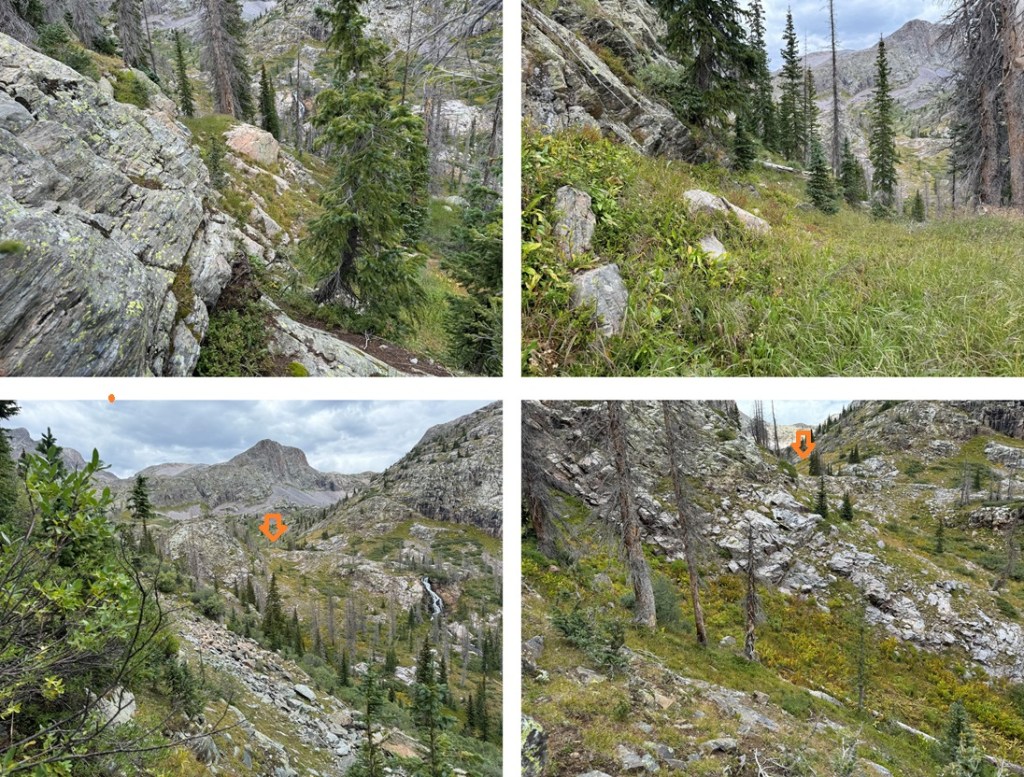
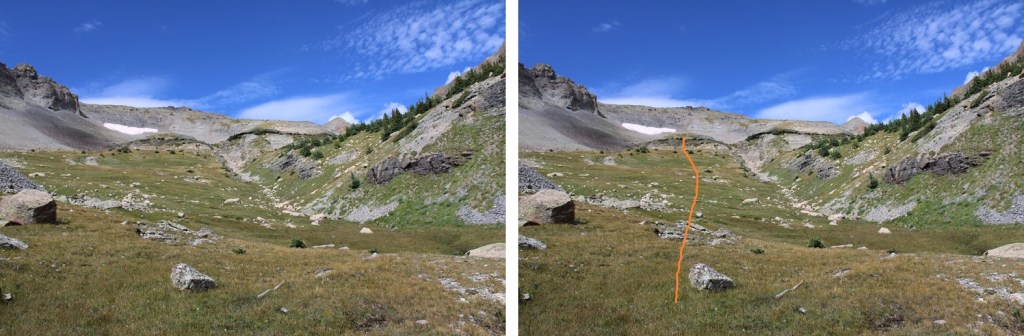
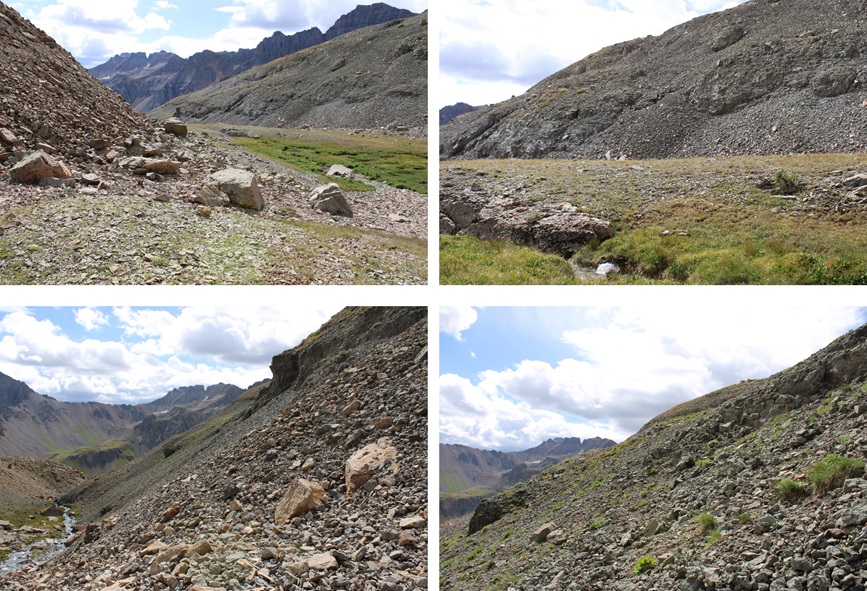
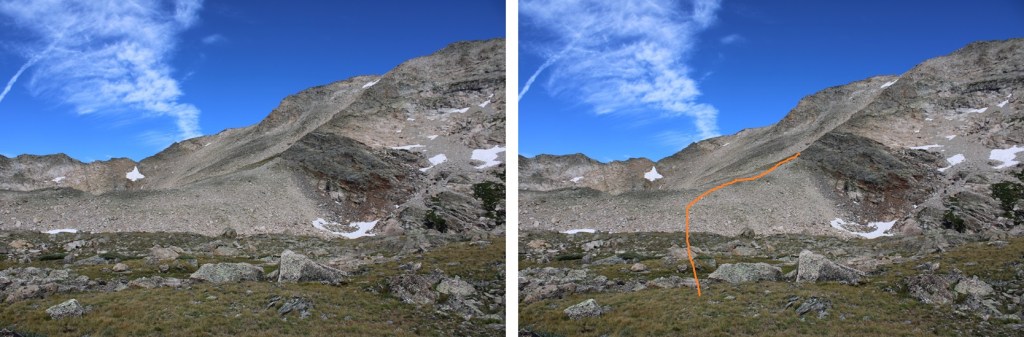
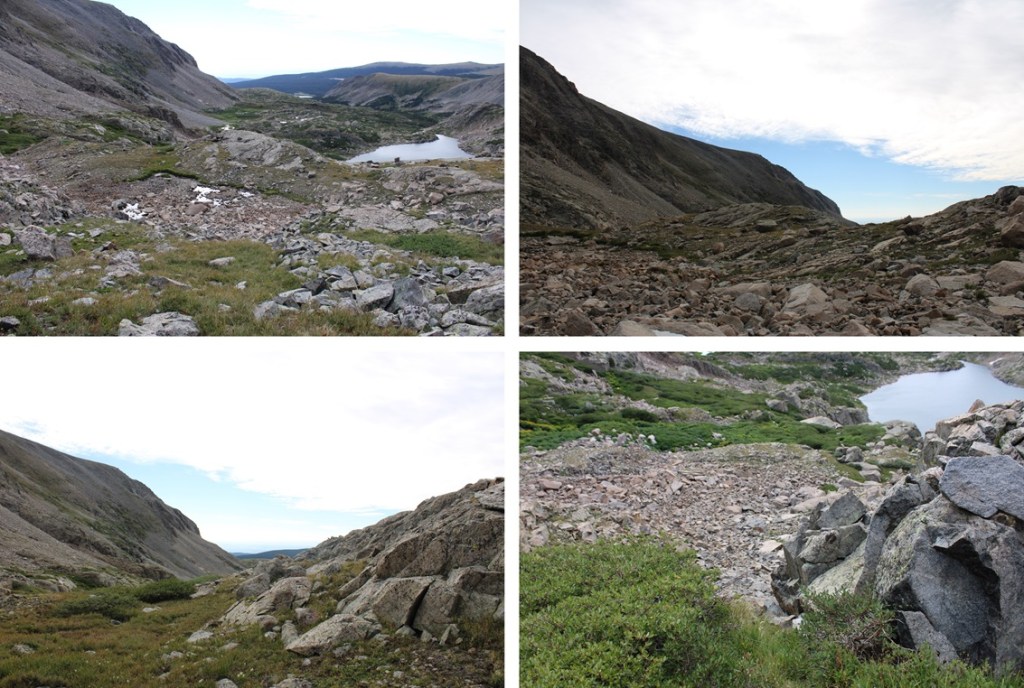
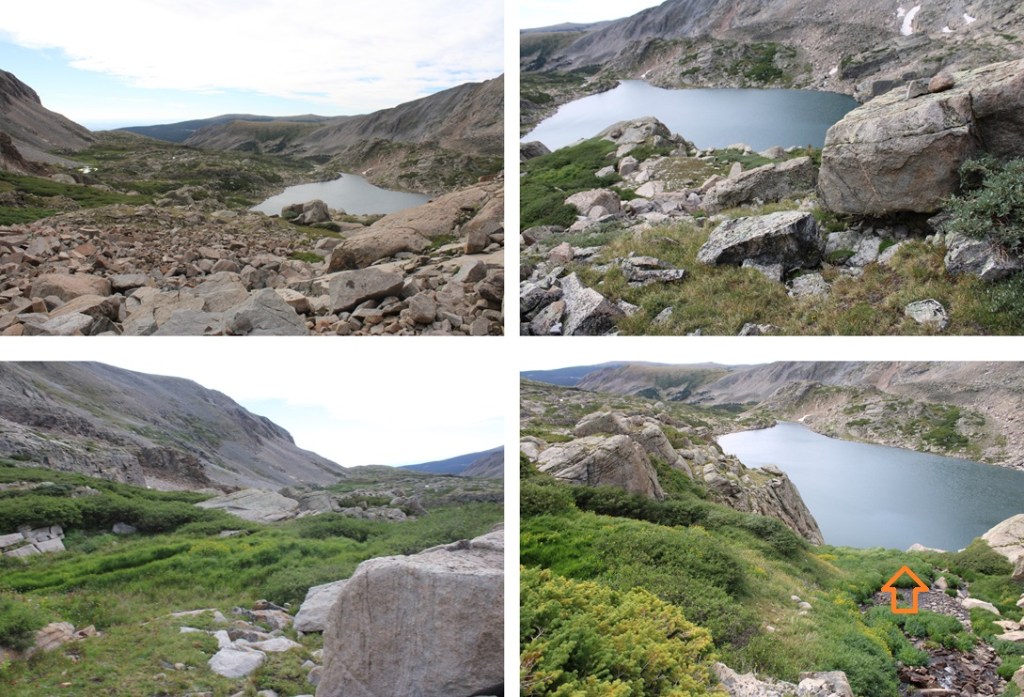
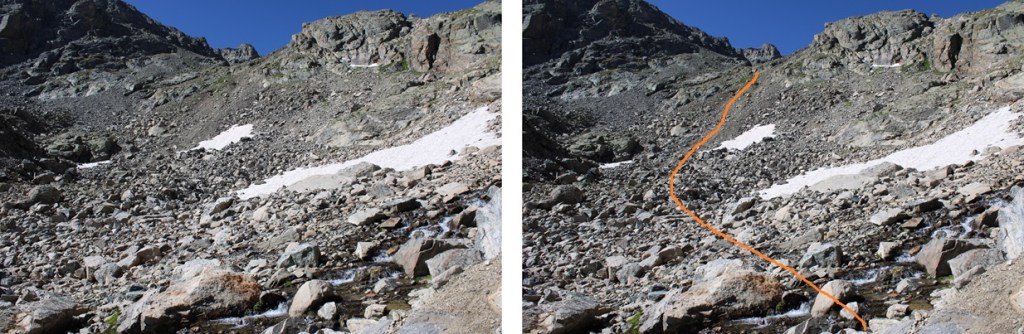
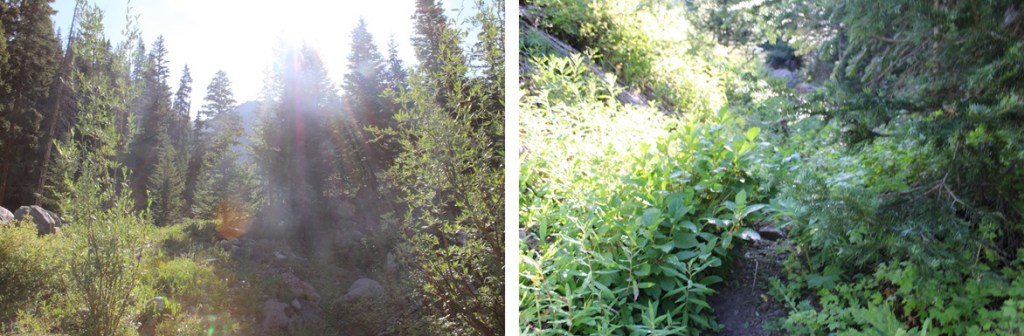
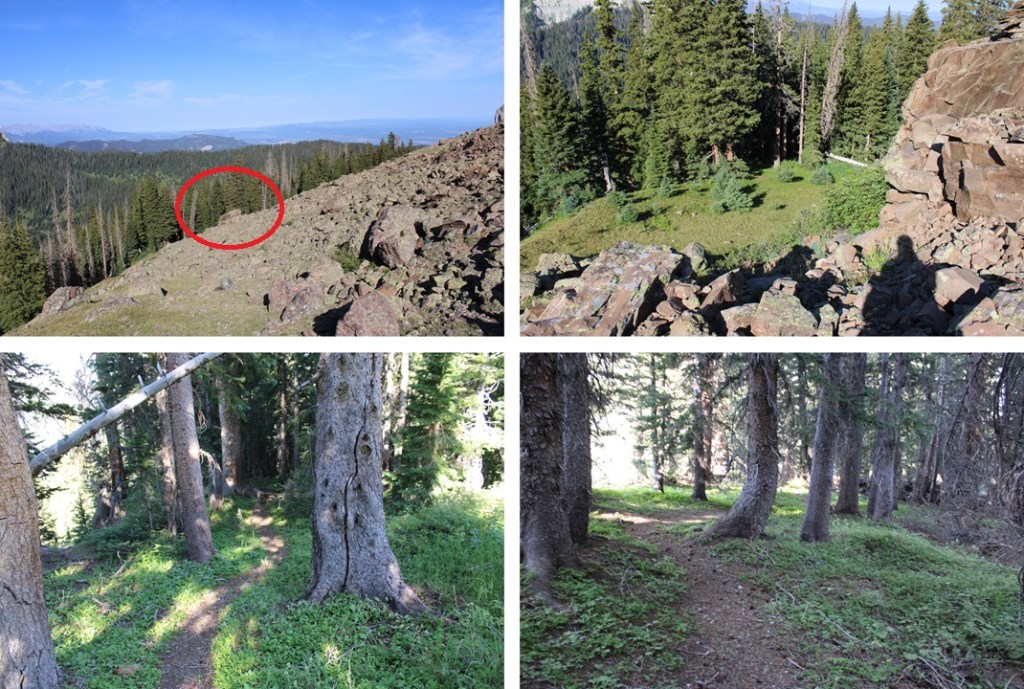
Instead, start out by crossing Rock Creek (I was able to jump across it) and head for the rocky section.

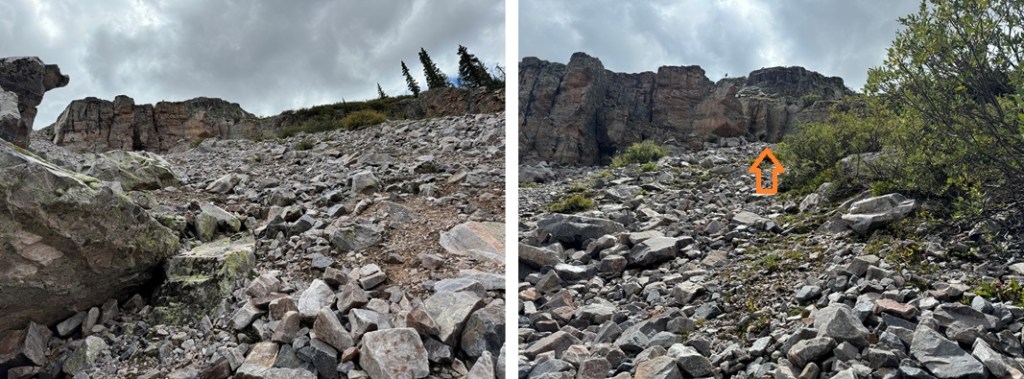
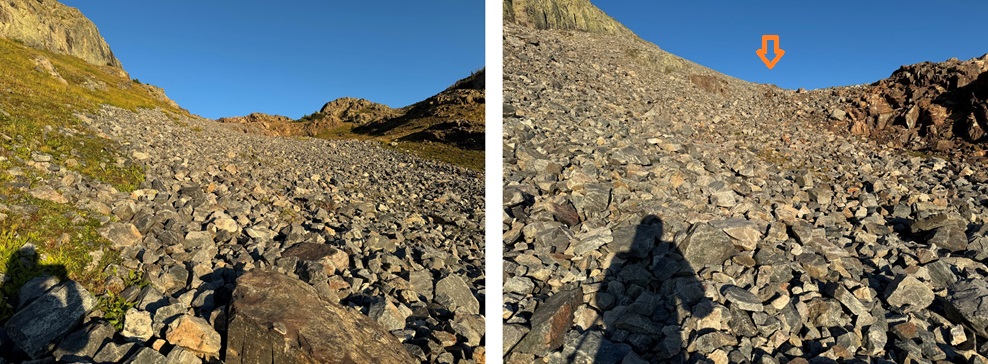
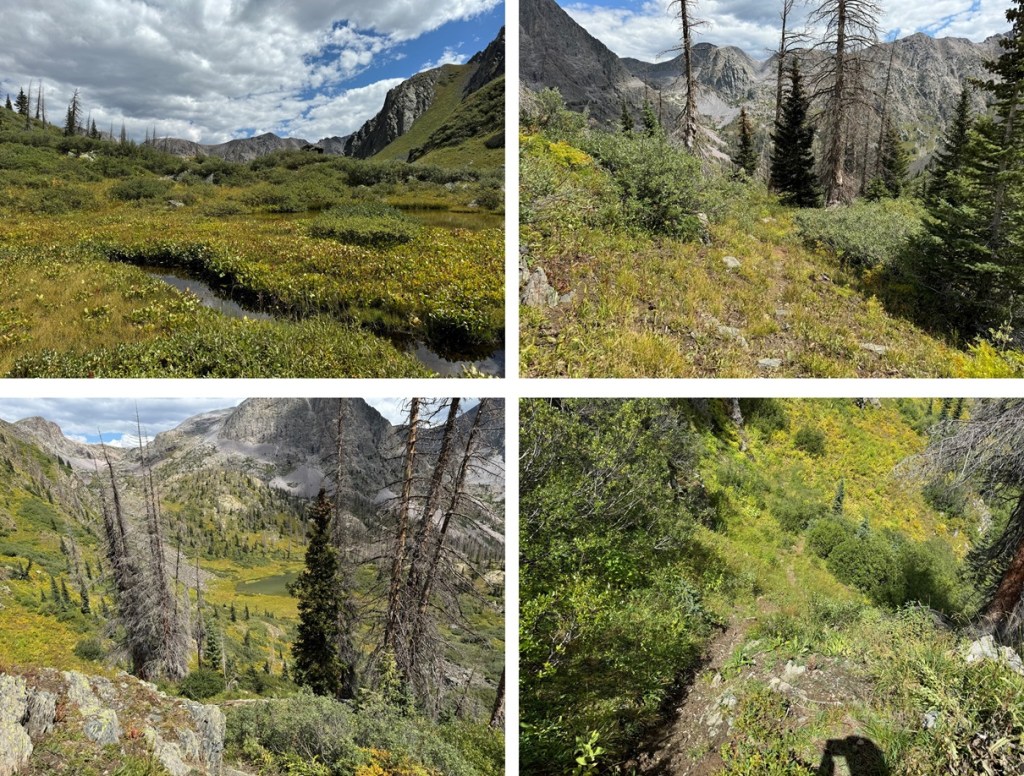
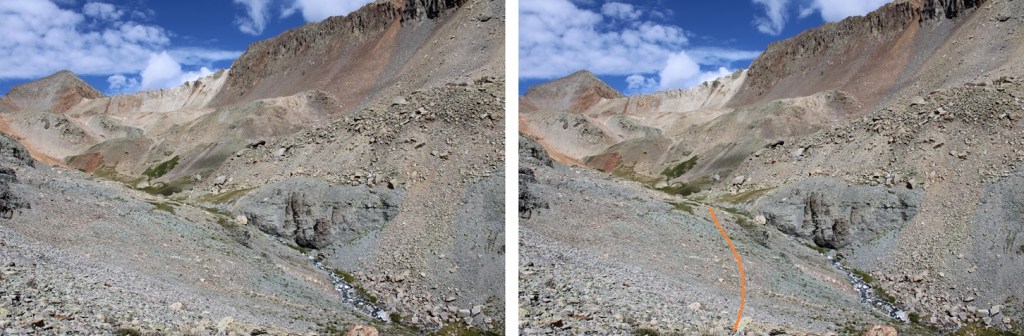
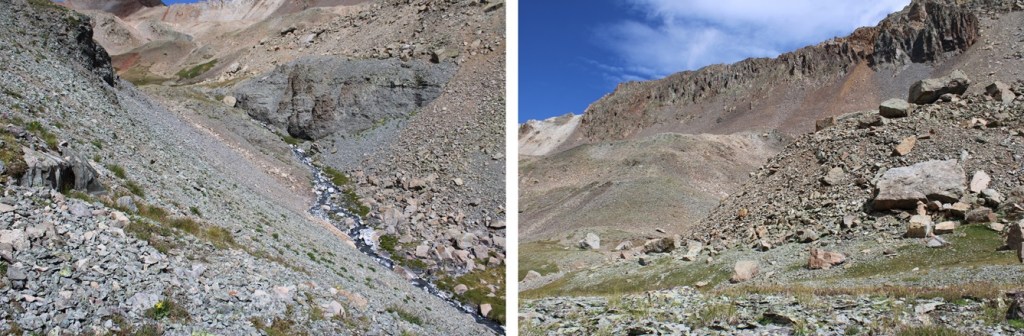
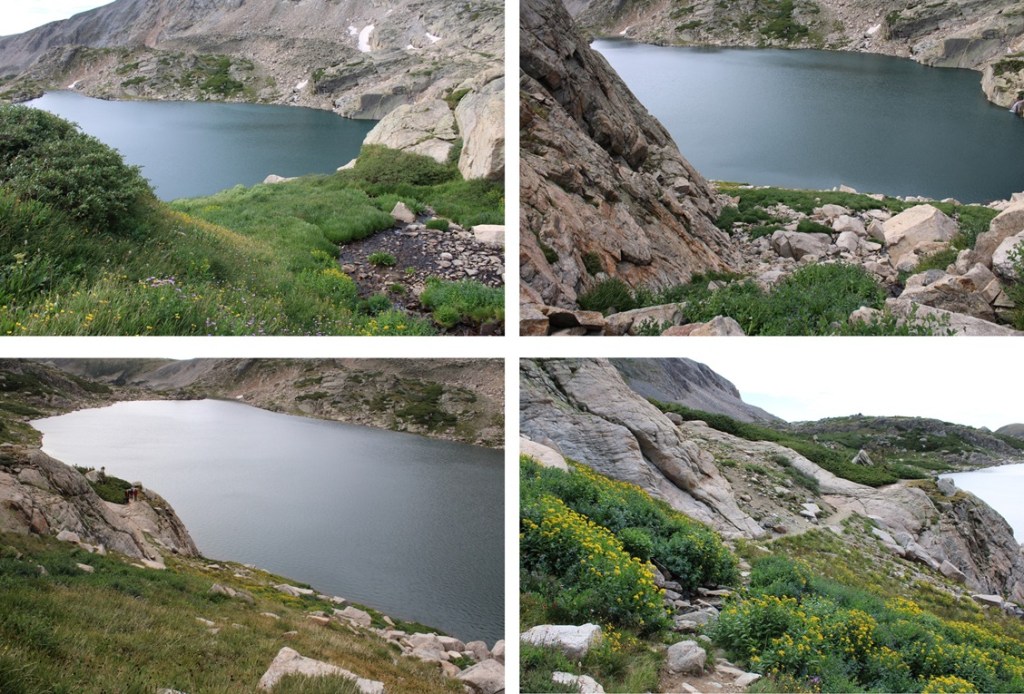
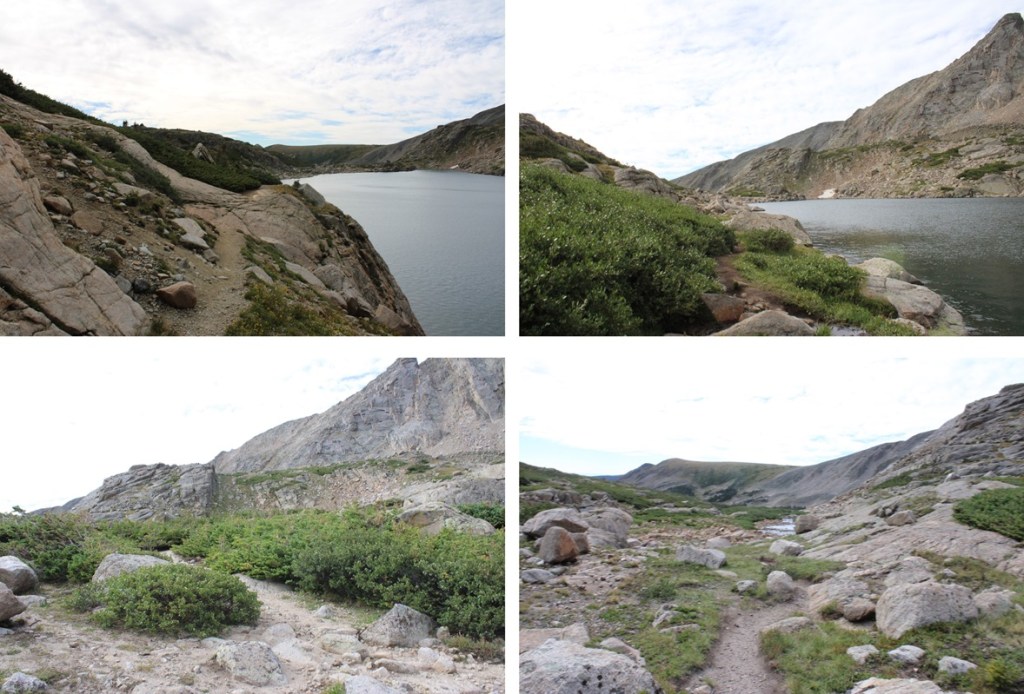
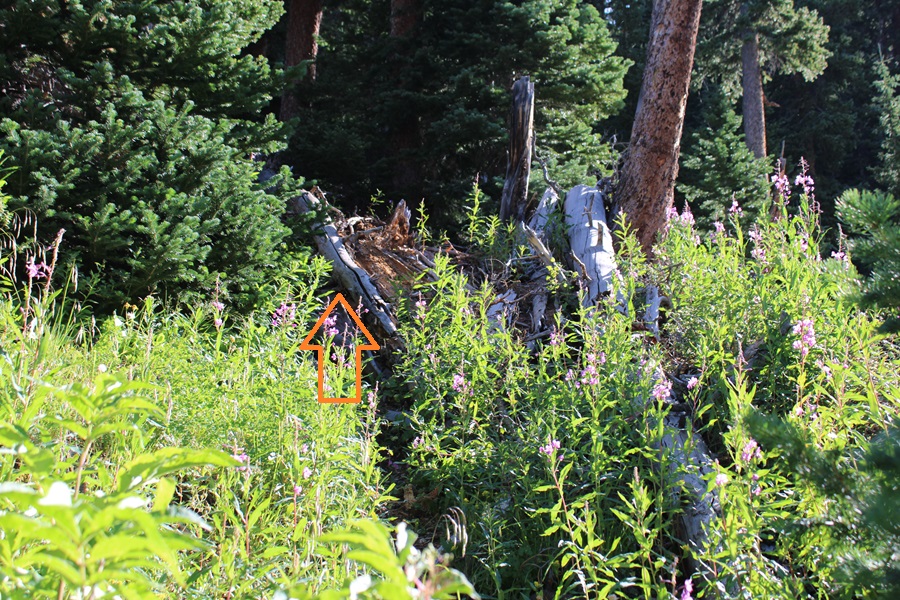
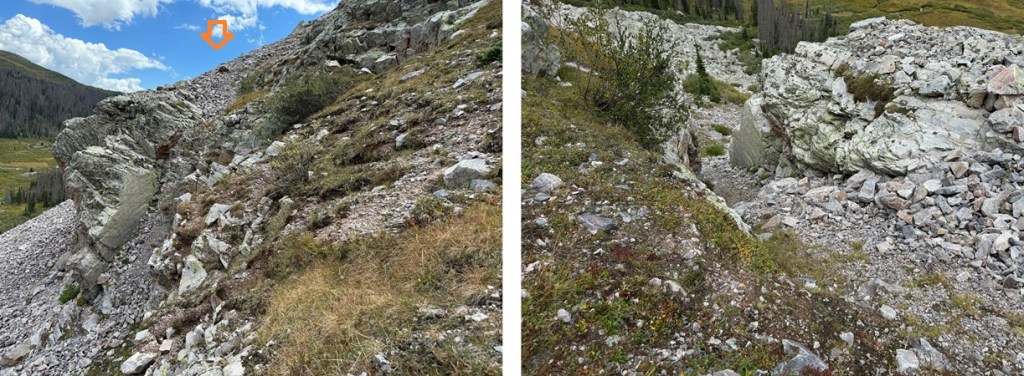
Parallel the rocky section until you come to just before the waterfall.  Then turn left, and head up the scree to what looks like a solid rock wall.  There is a very well-hidden access gully here, that will easily get you where you want to go. 
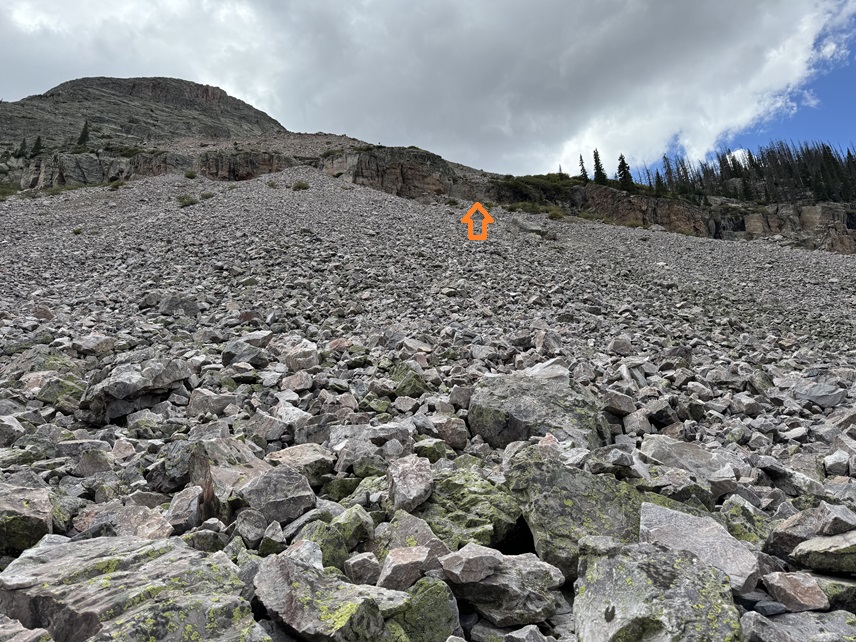
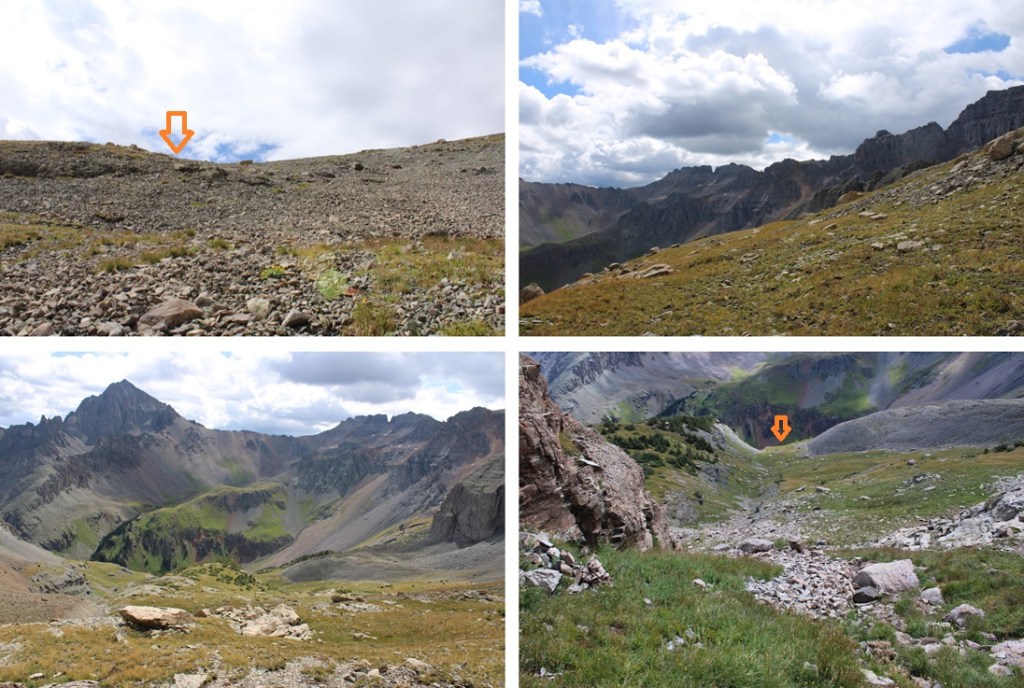
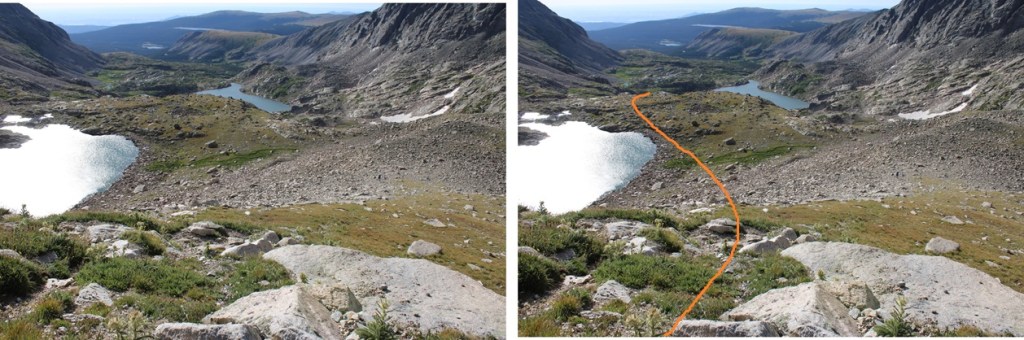
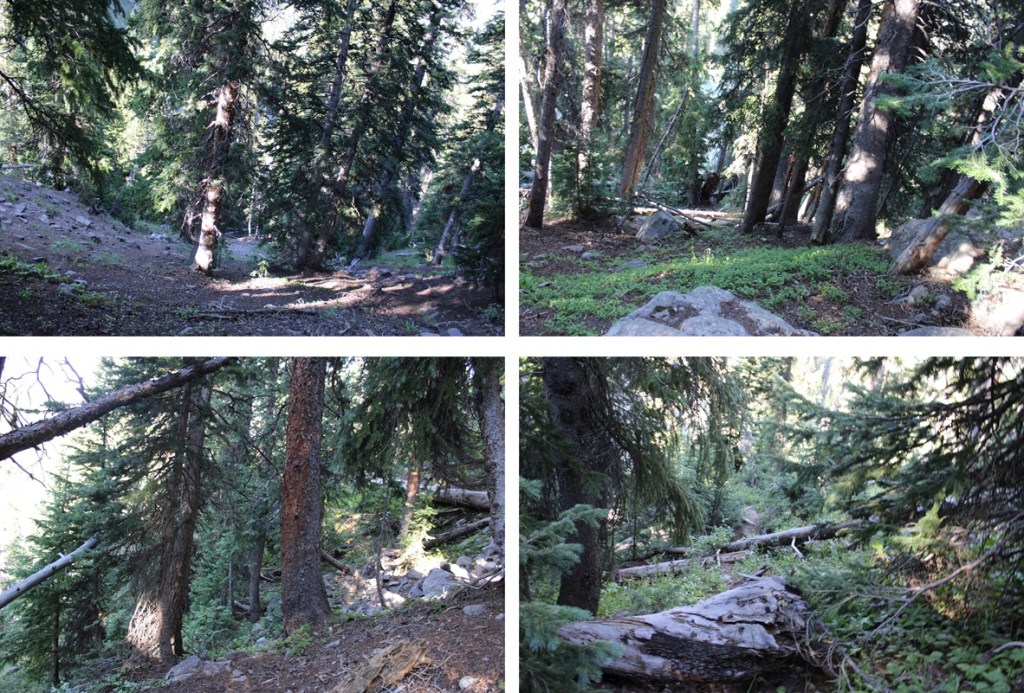
Climb up this easy gully, and immediately turn right, and head towards a drainage.

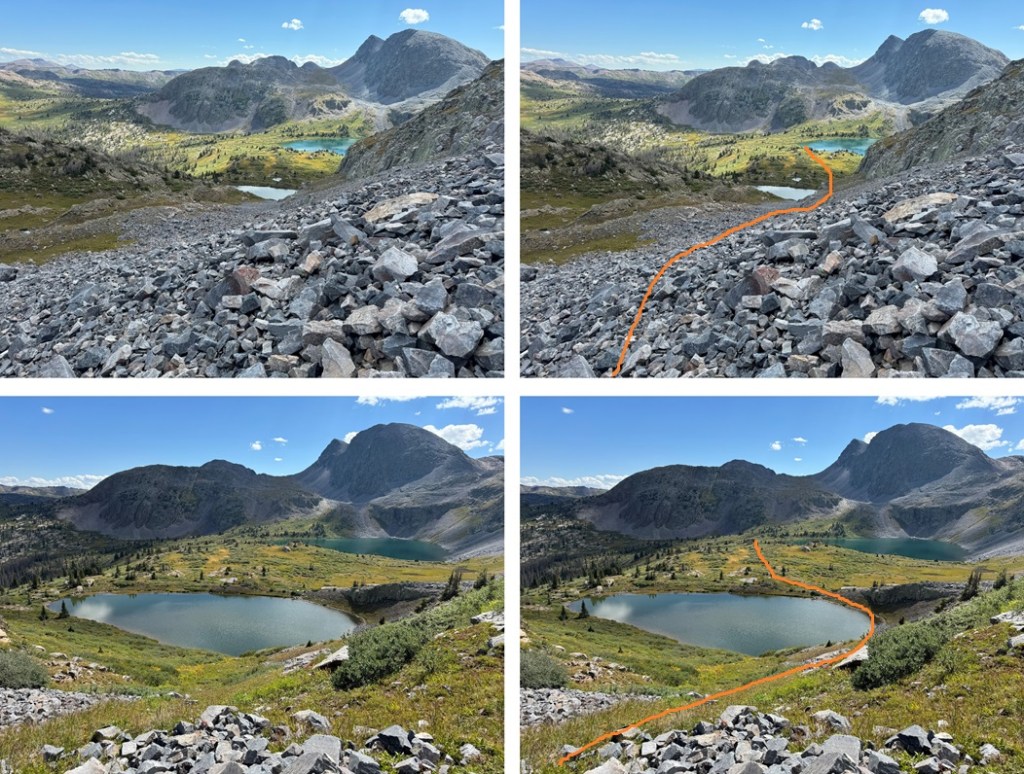
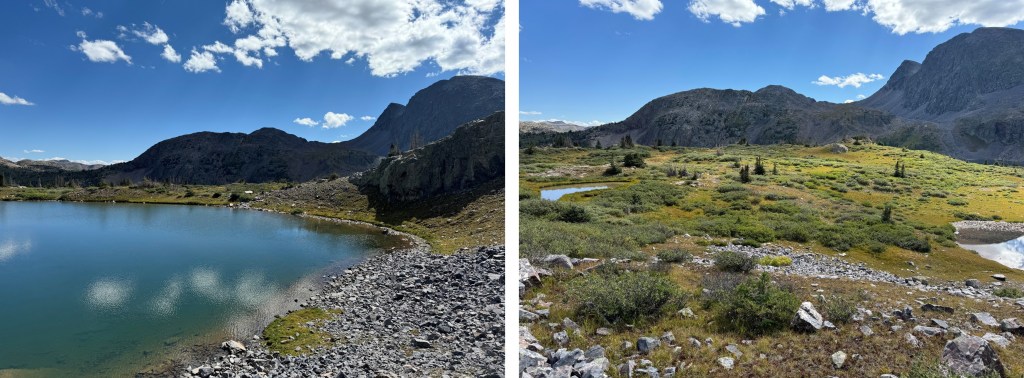
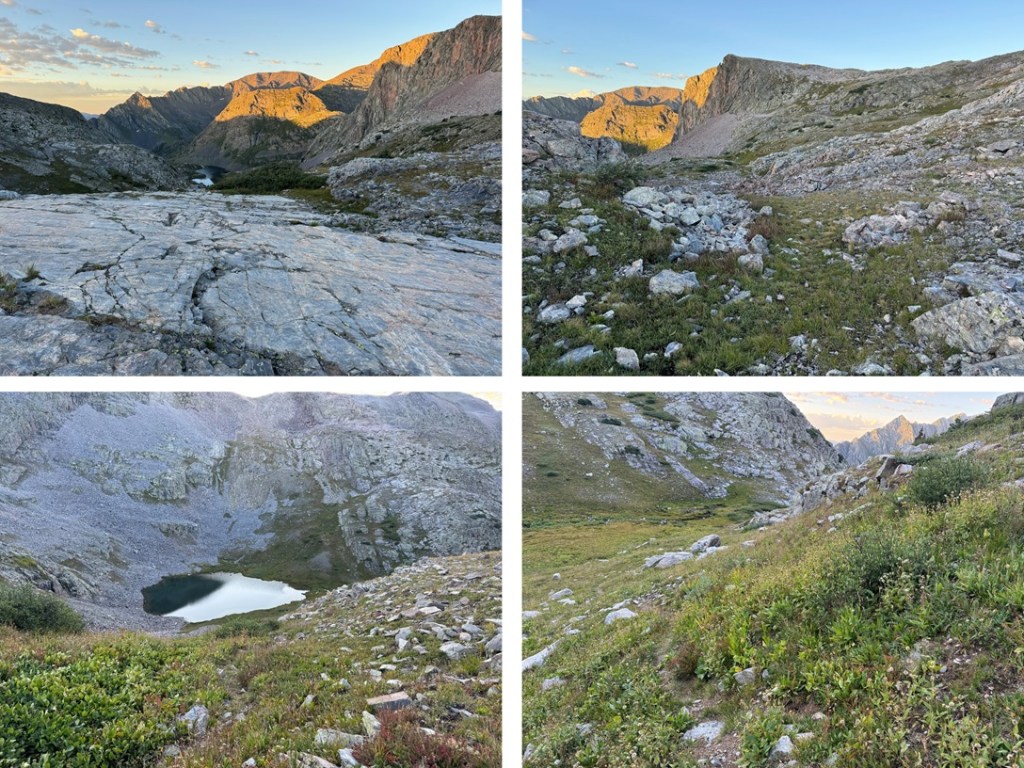
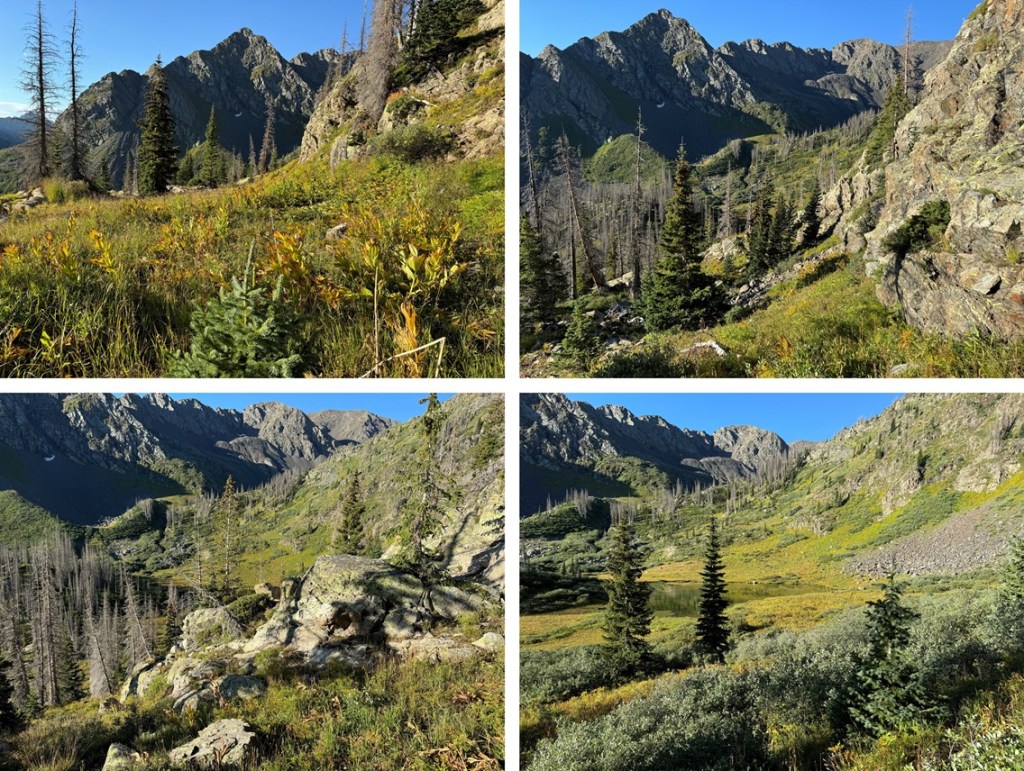
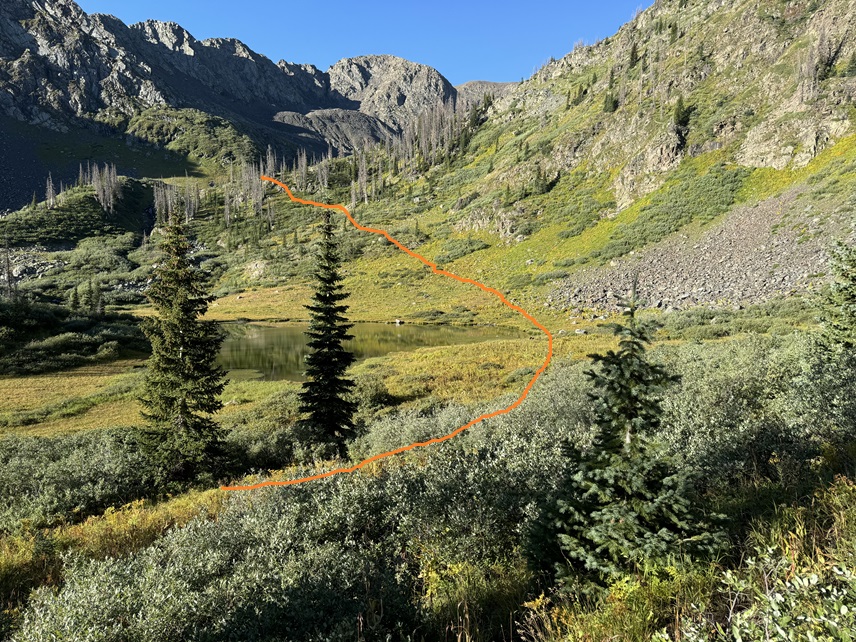
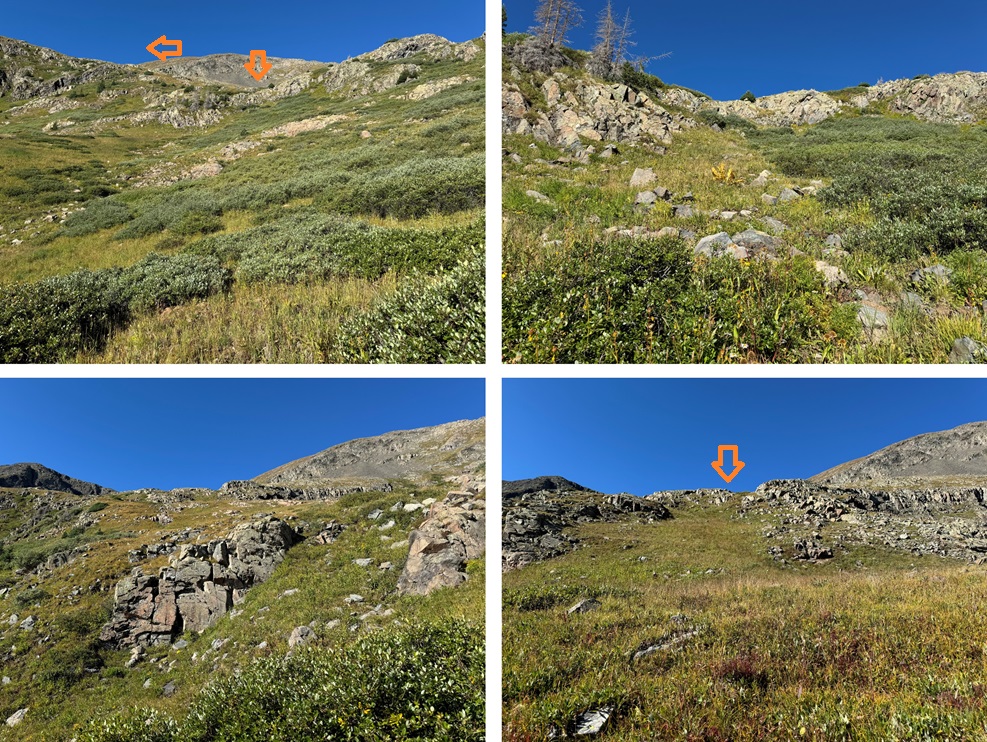
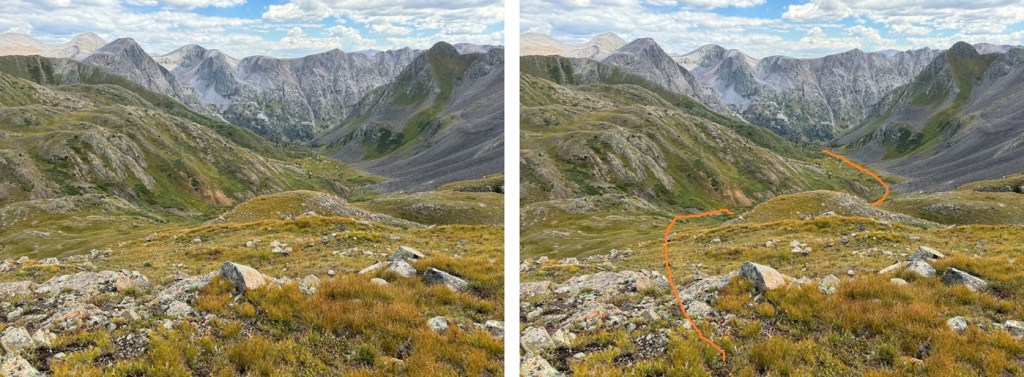
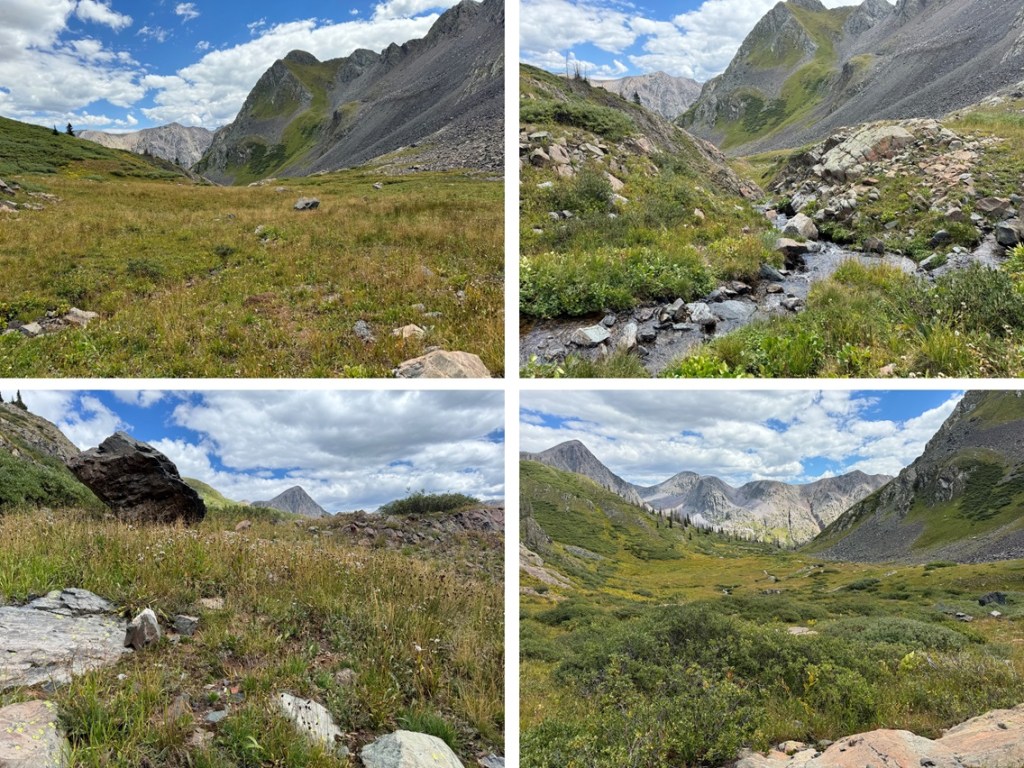
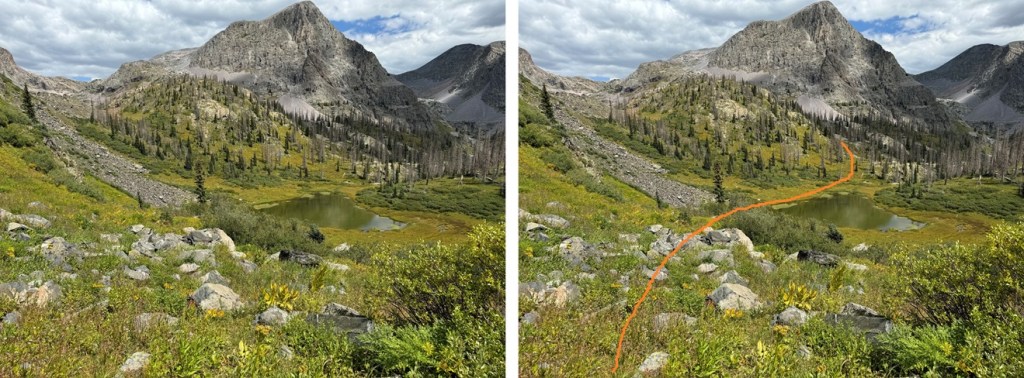
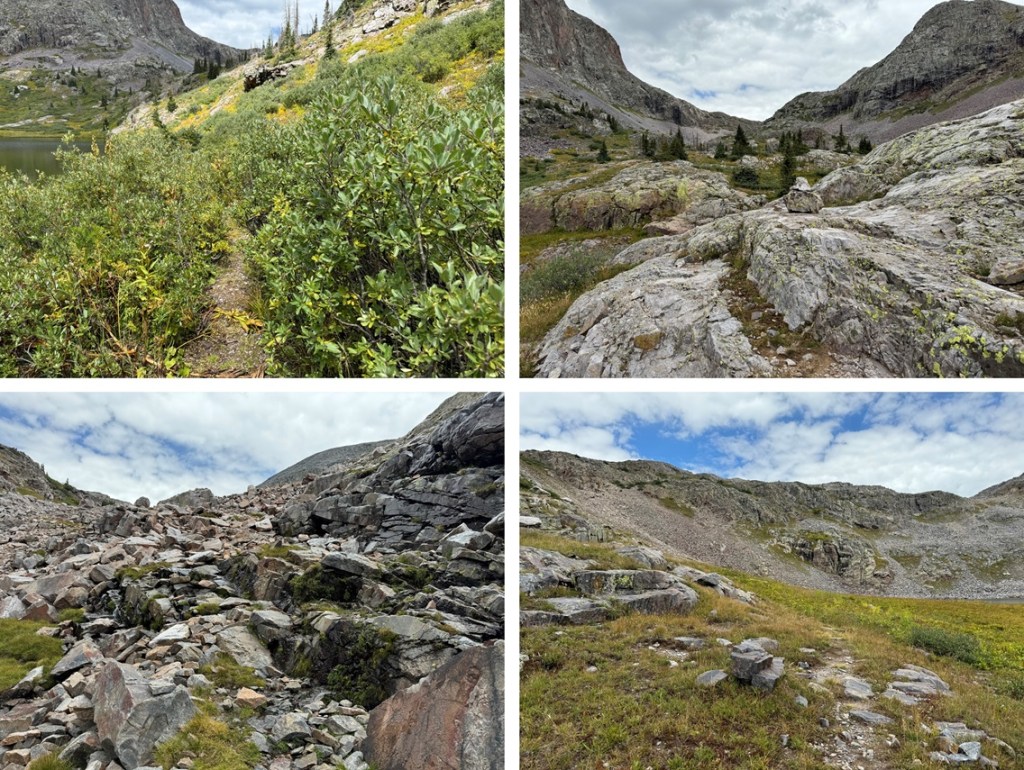
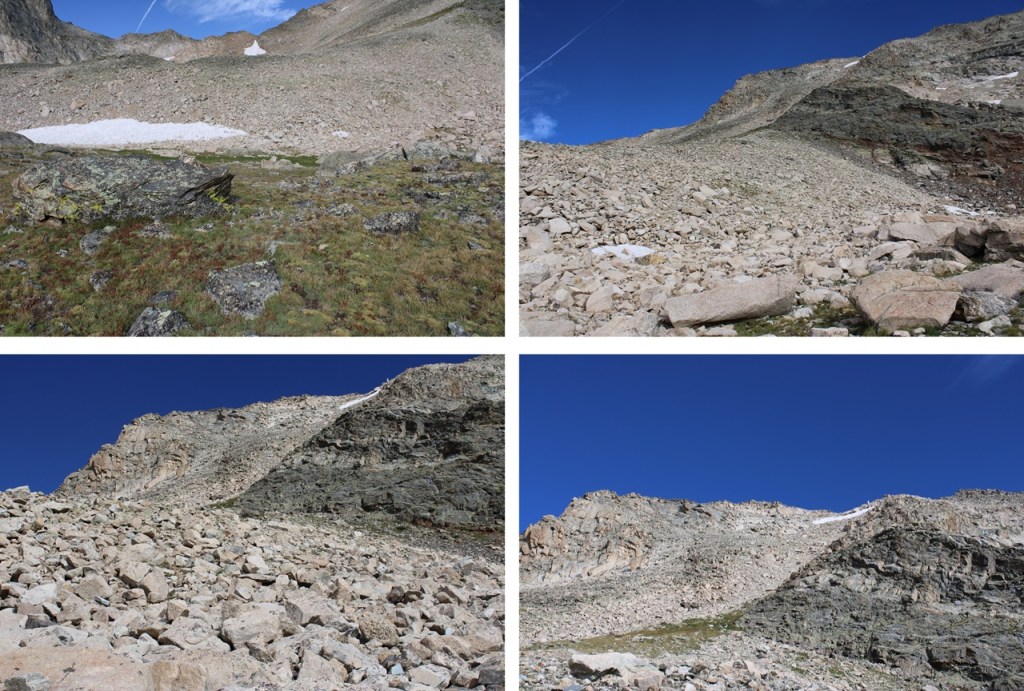
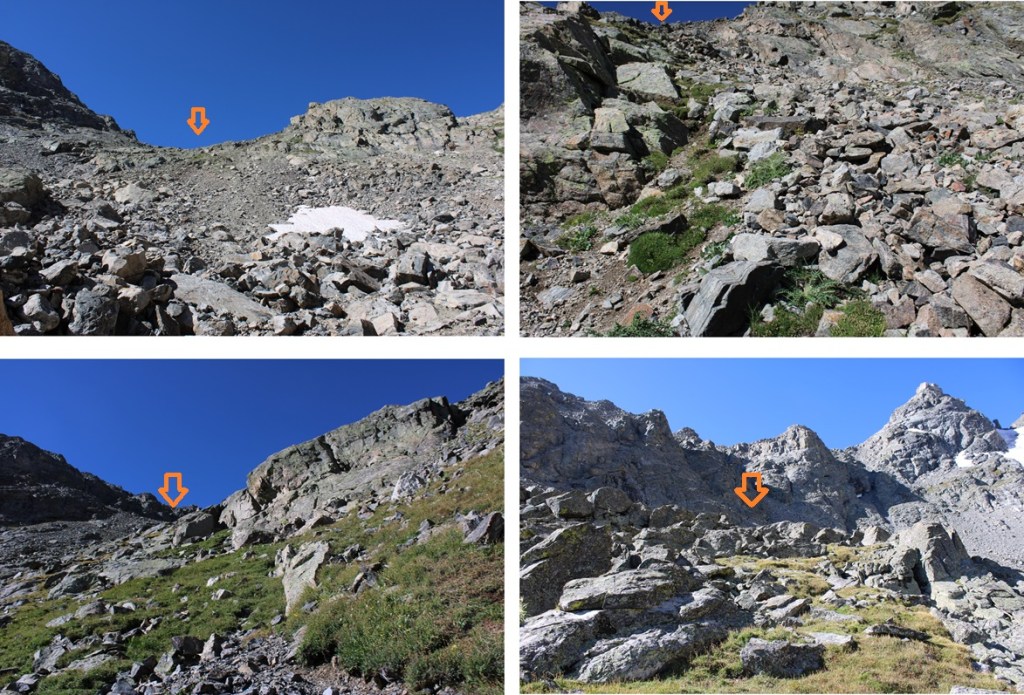
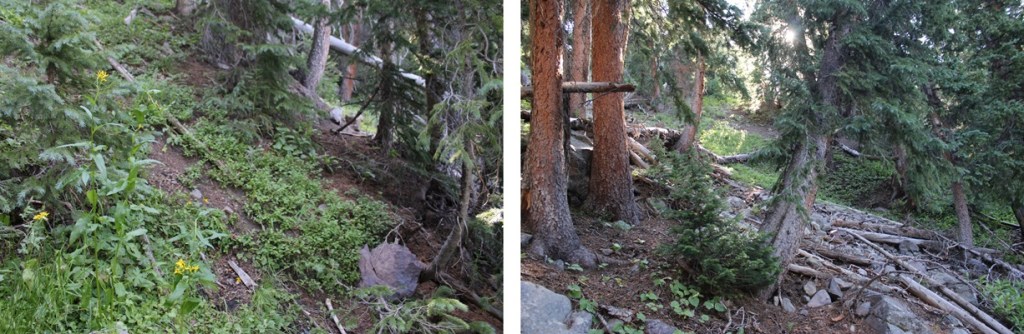
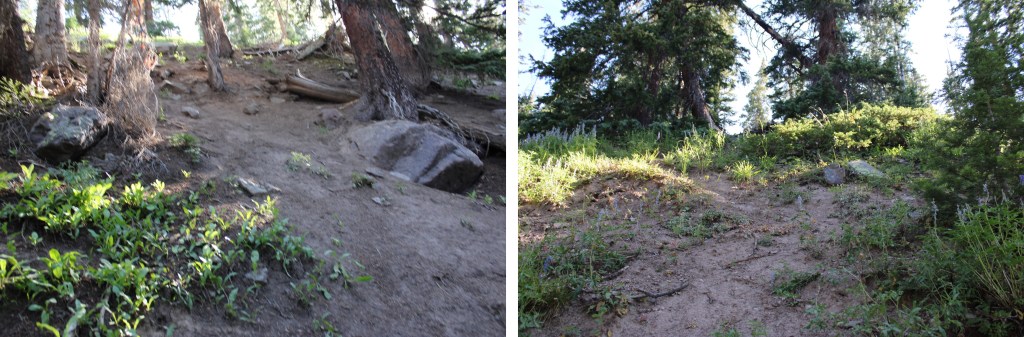
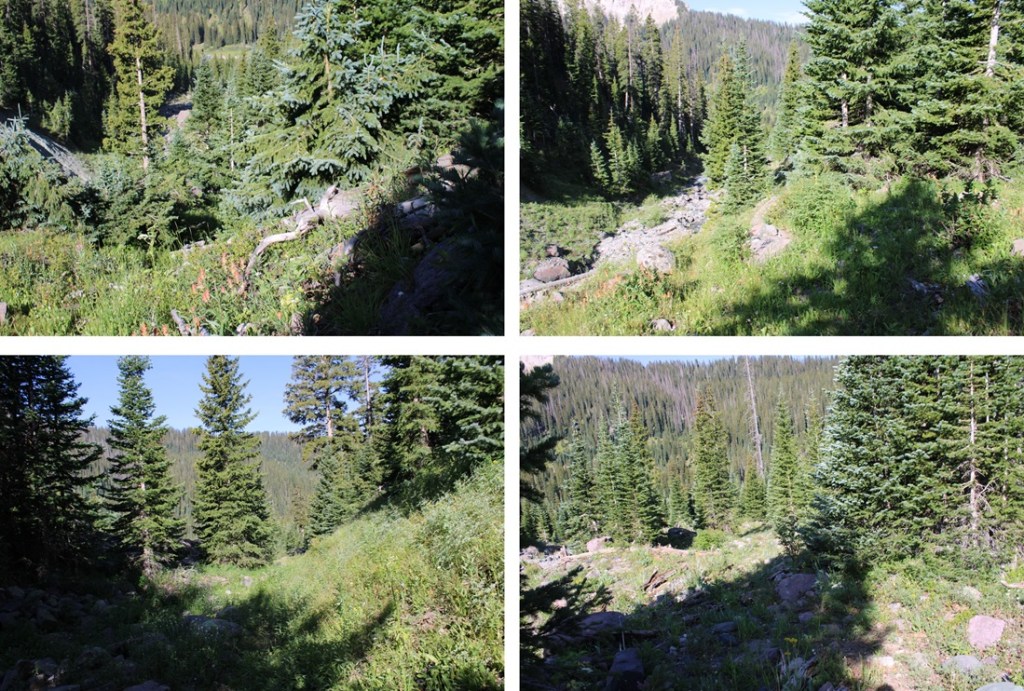
When I made it to the drainage, I followed it west as far as it went, until I was on a small ridge parallelling a pond.  There are a few game trails here that will lead you up.  Stay in the drainage, which goes from rocky to grassy as it ascends.

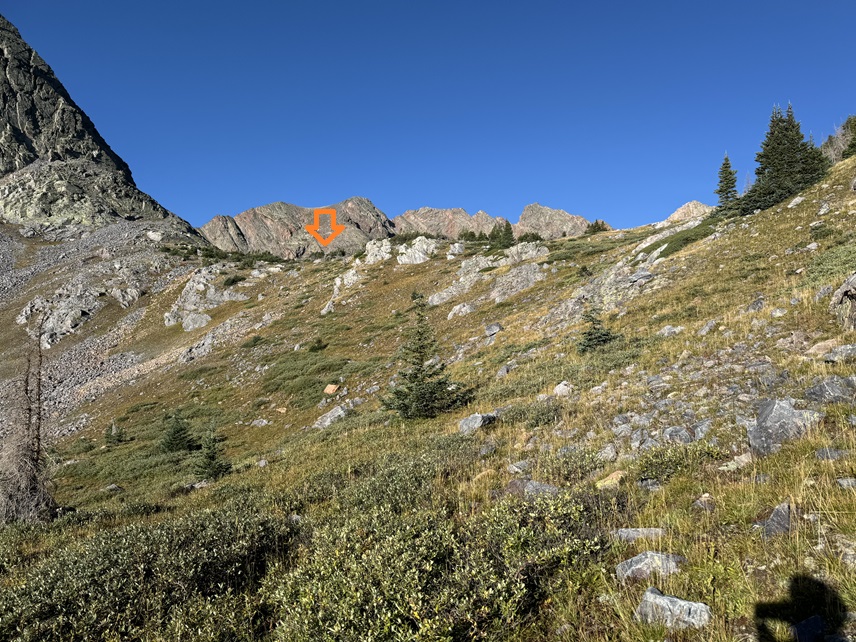
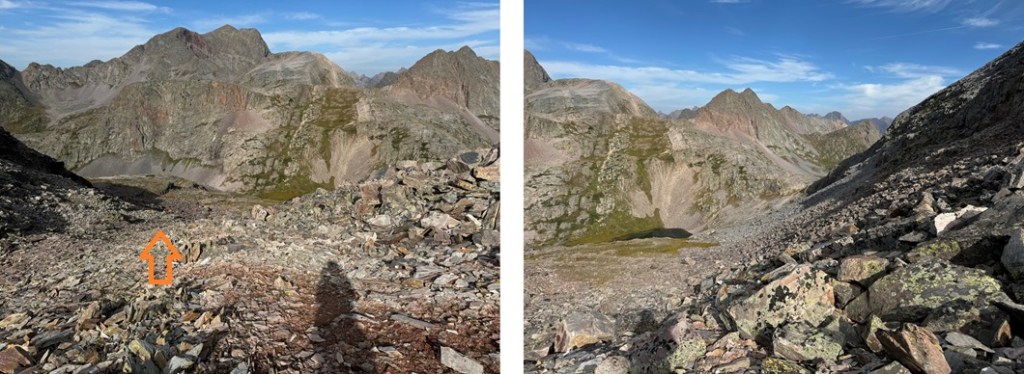
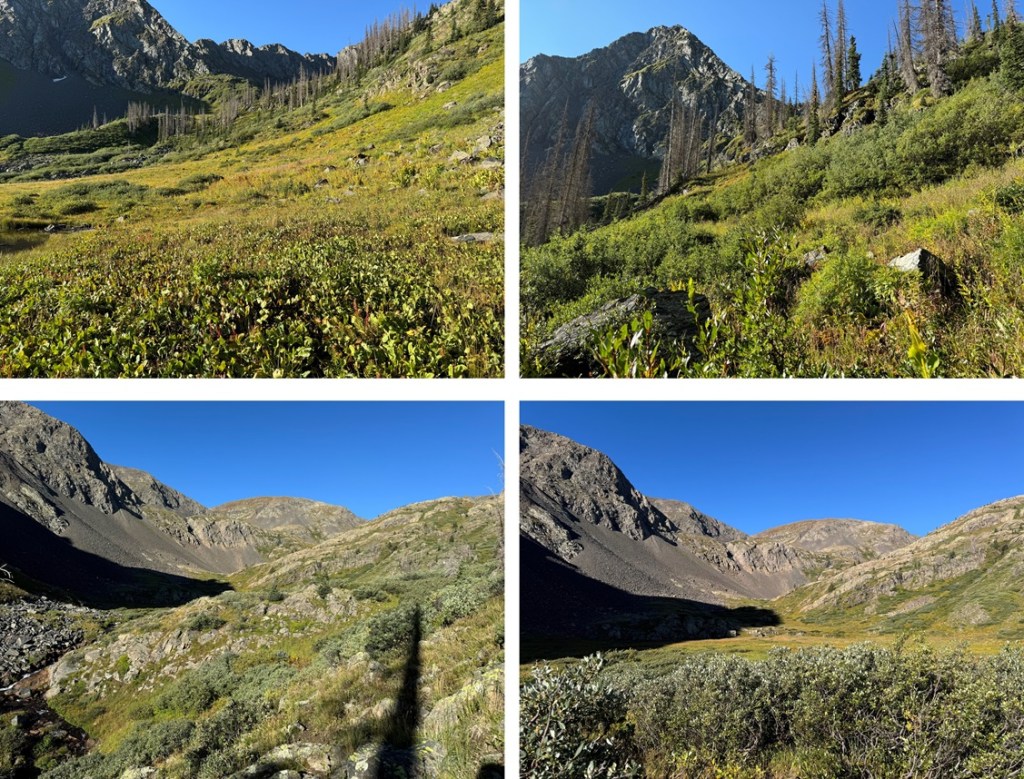
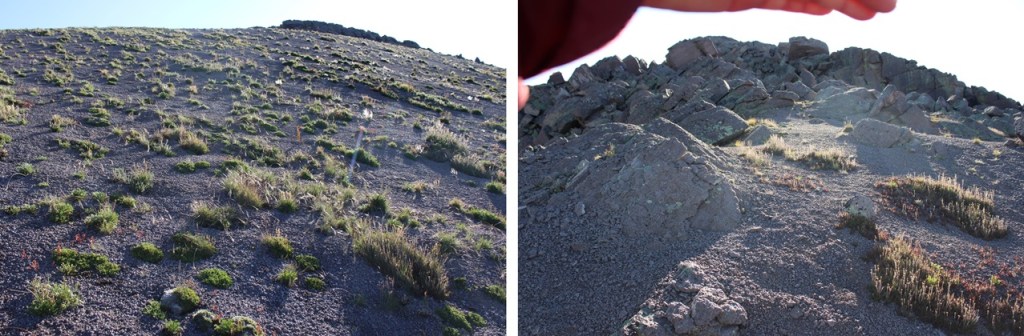
I came to a ridge and turned left.  Here I could see a rocky basin.  I followed the basin southwest, left, until it ended.
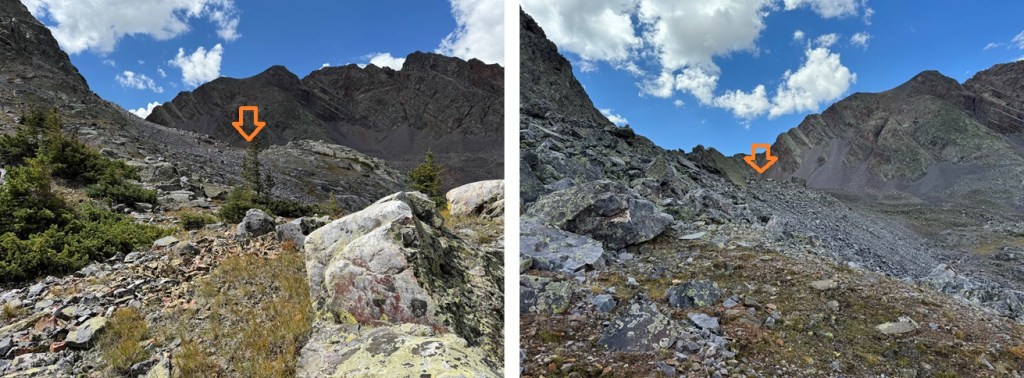
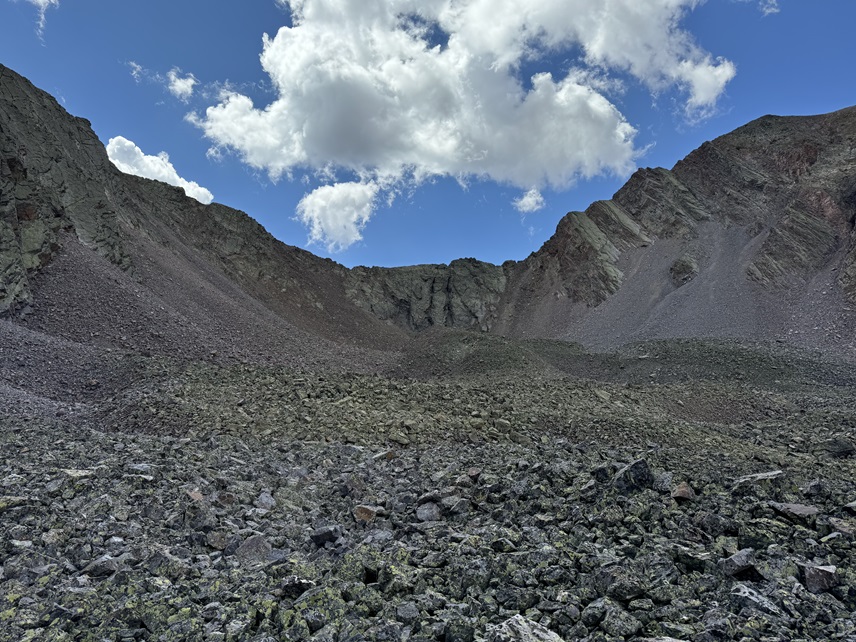
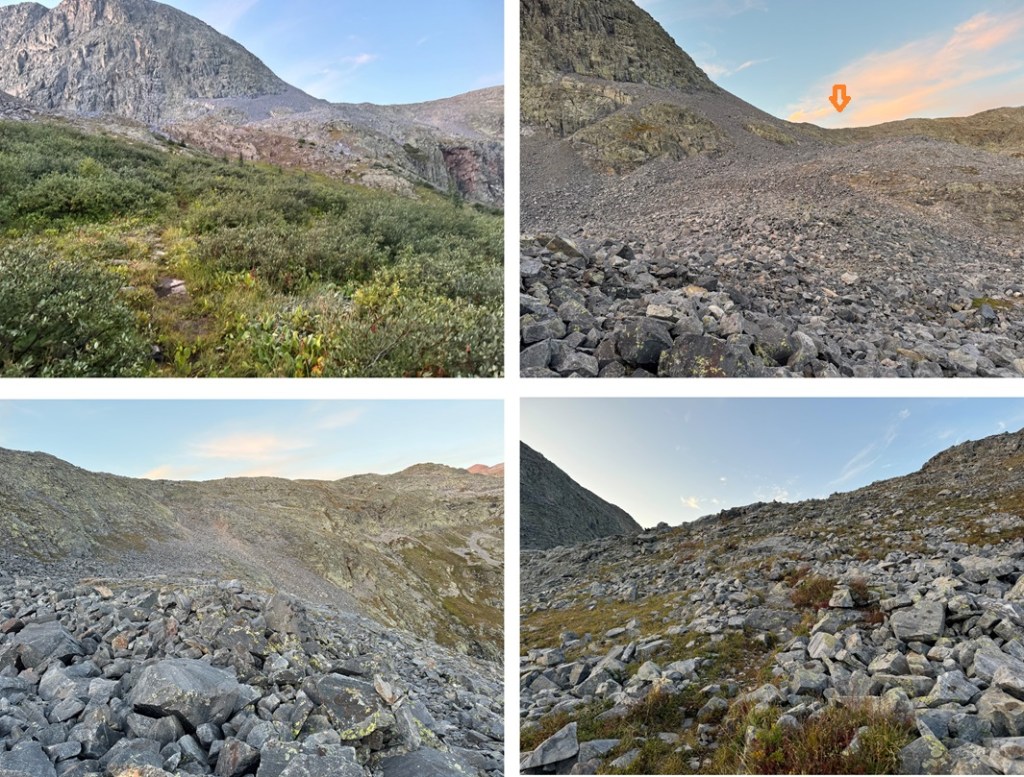
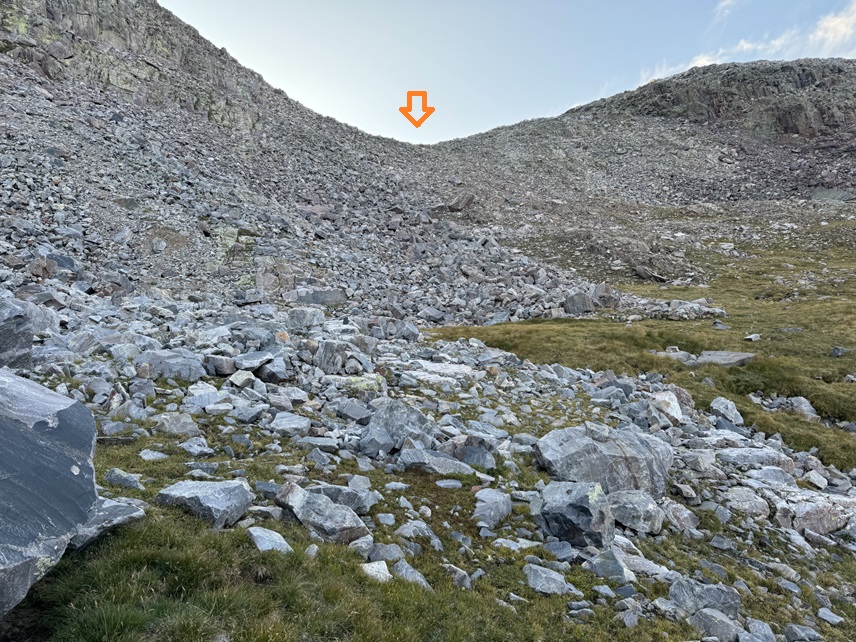
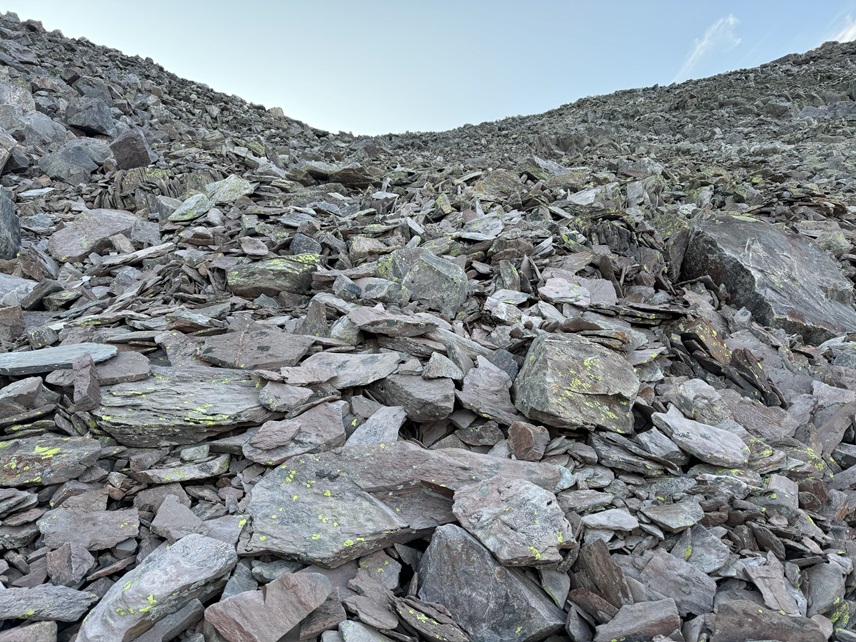
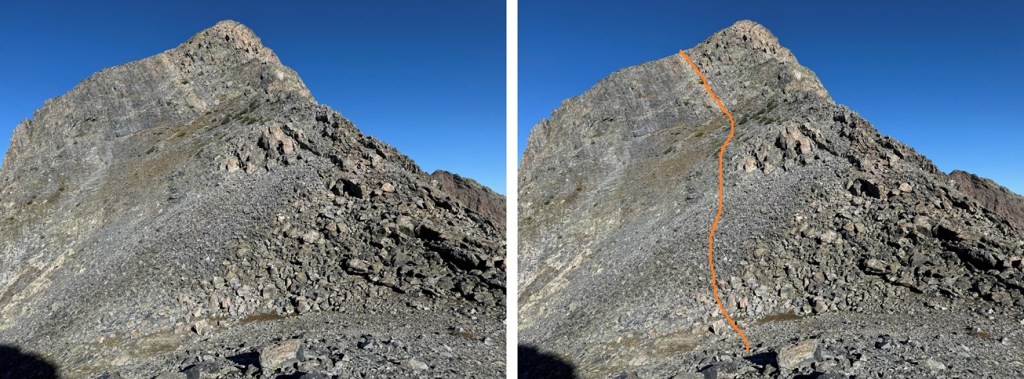
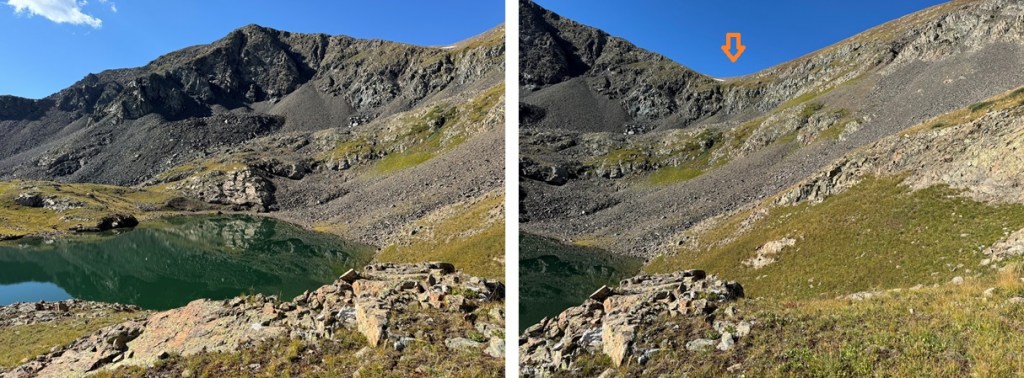
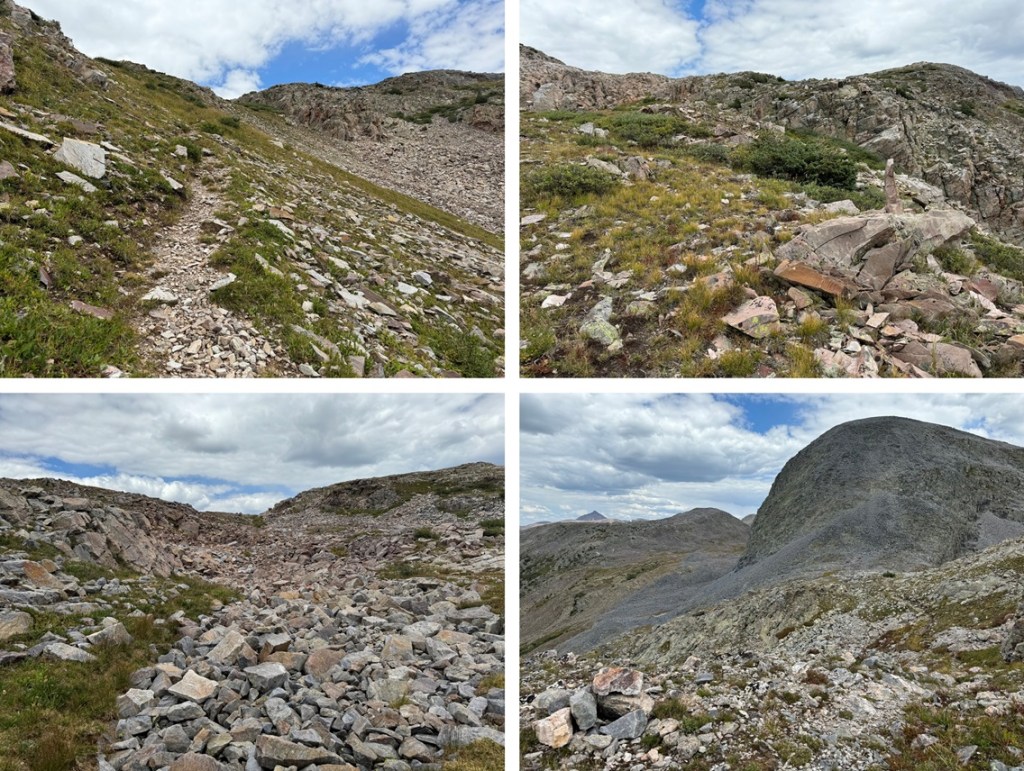
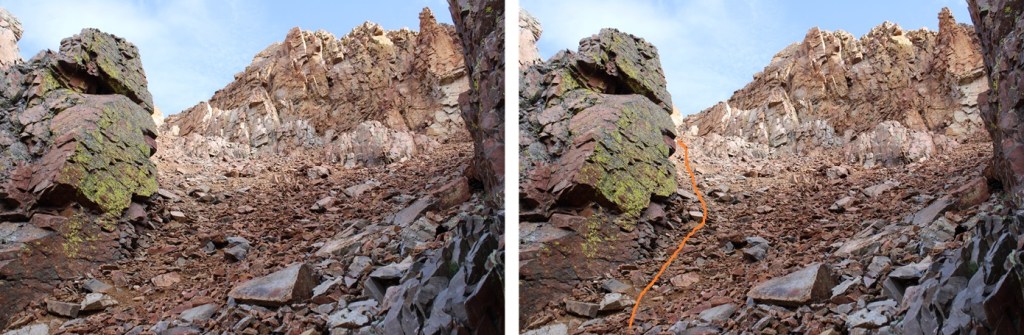
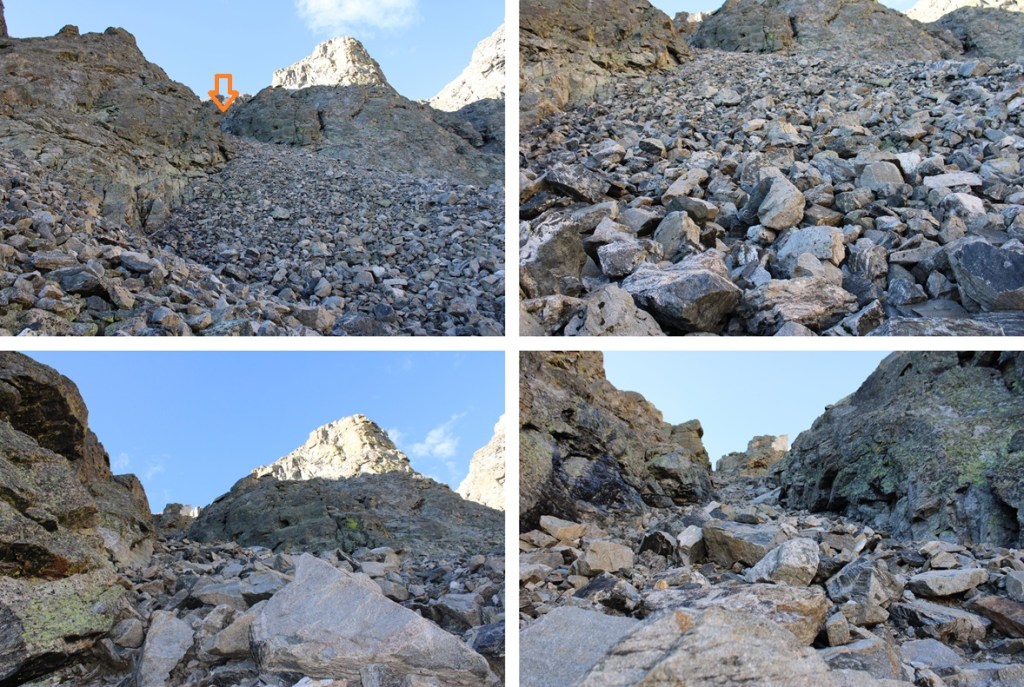
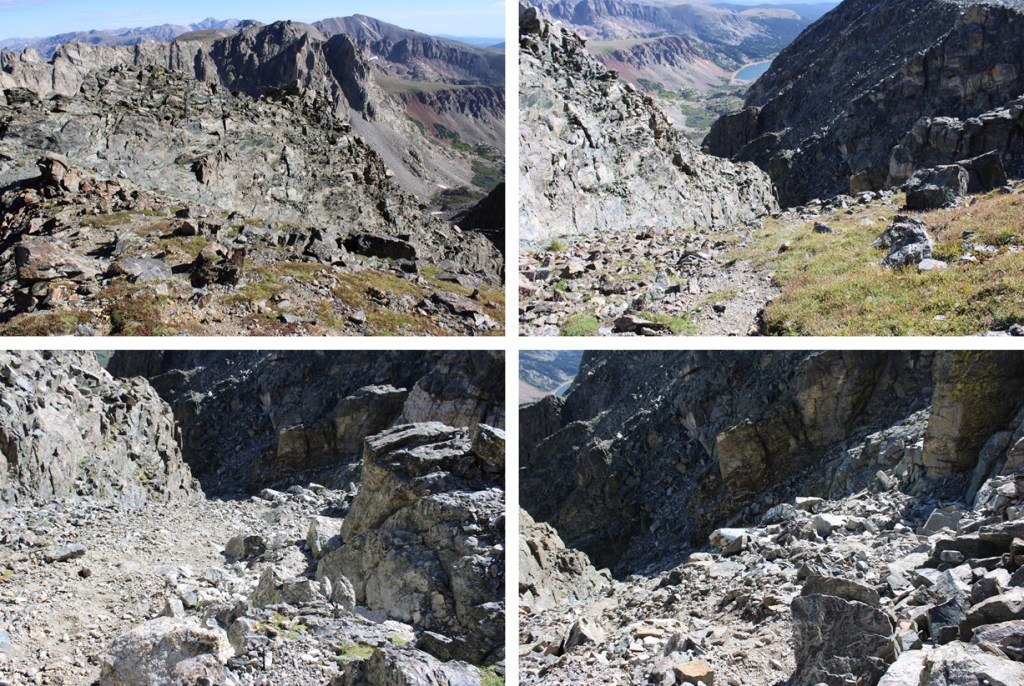
From here you can see two gullies.  One leads to P3, the other to P2.  I went up the gully to the left, and came down the gully to the right.  Both are loose and scree filled.  The P2 gully had larger rocks, which would have made it better (for me) to ascend, and the P3 gully had more scree, which would have made it better (for me) to descend.  Alas, I ascended the P3 gully, and descended the P2 gully.

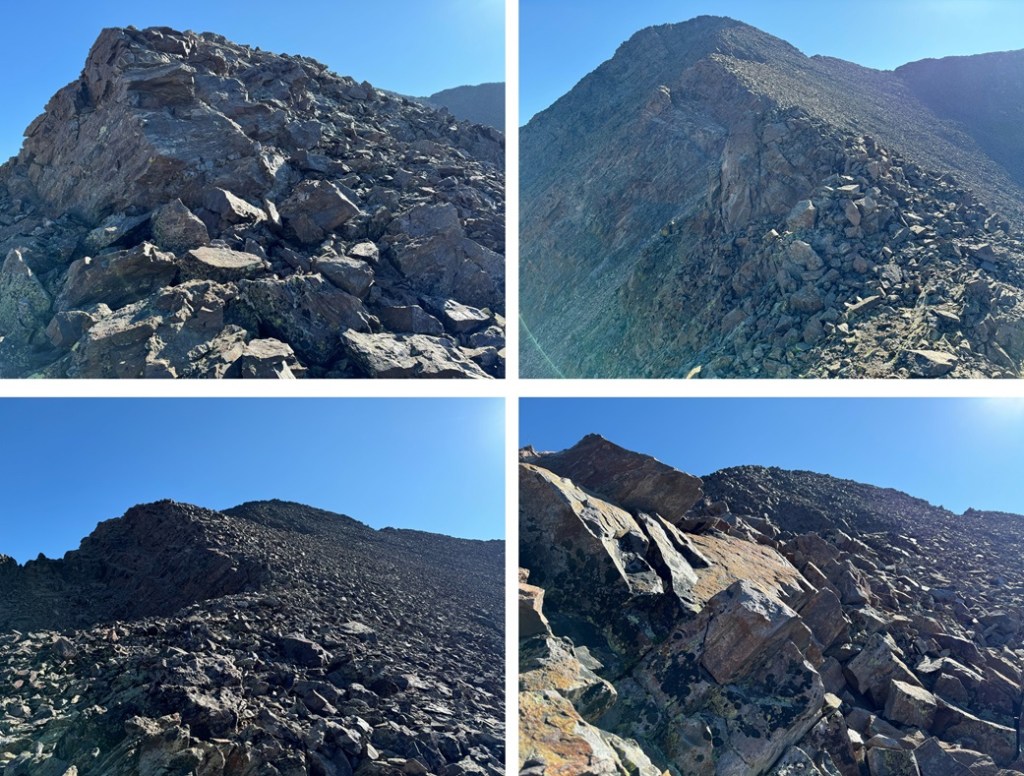
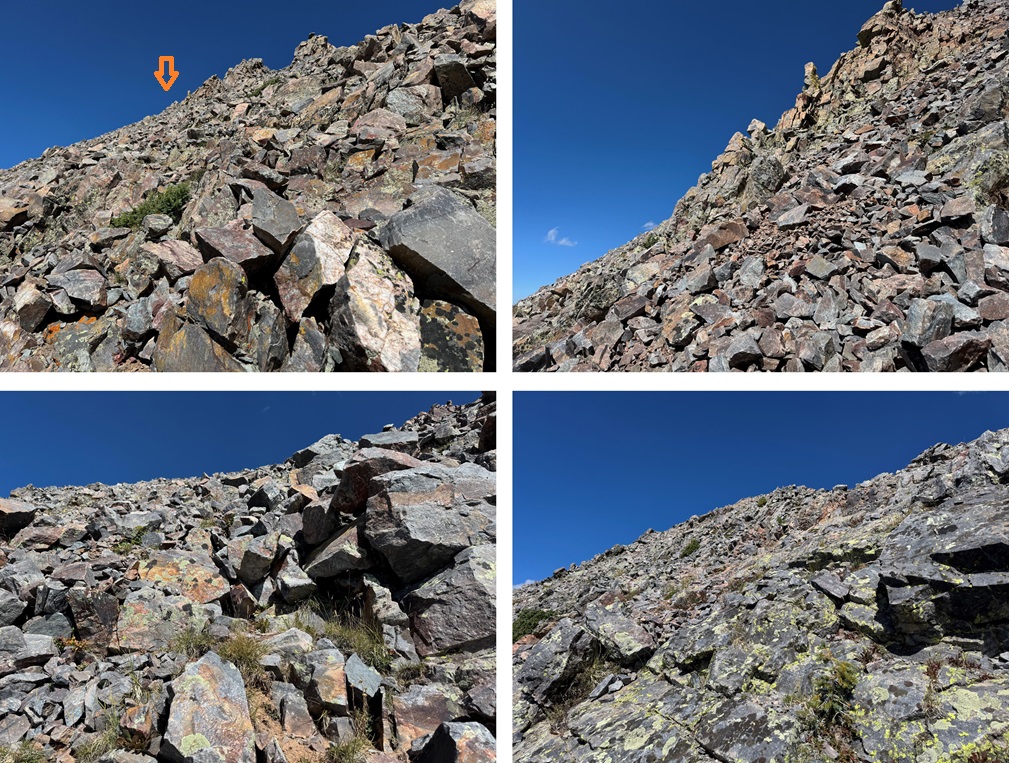
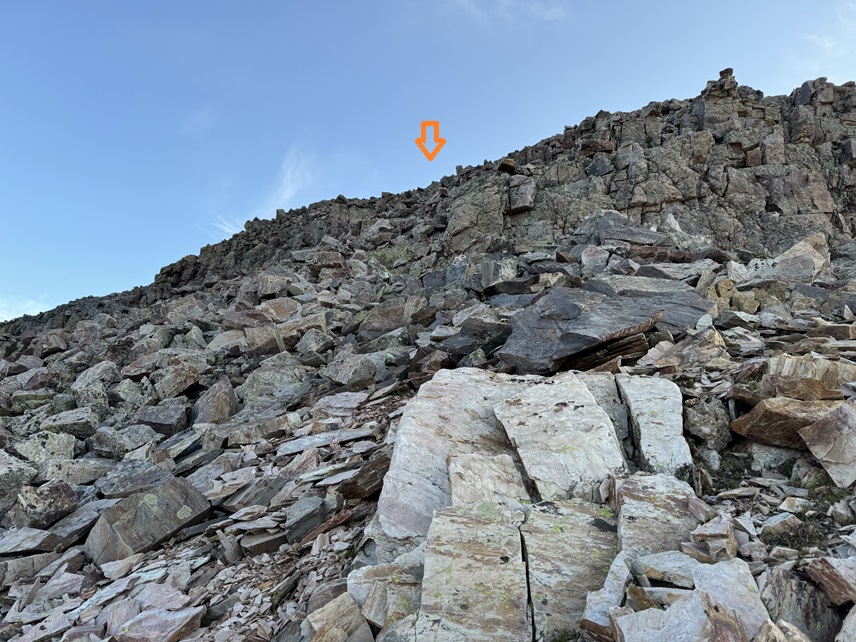
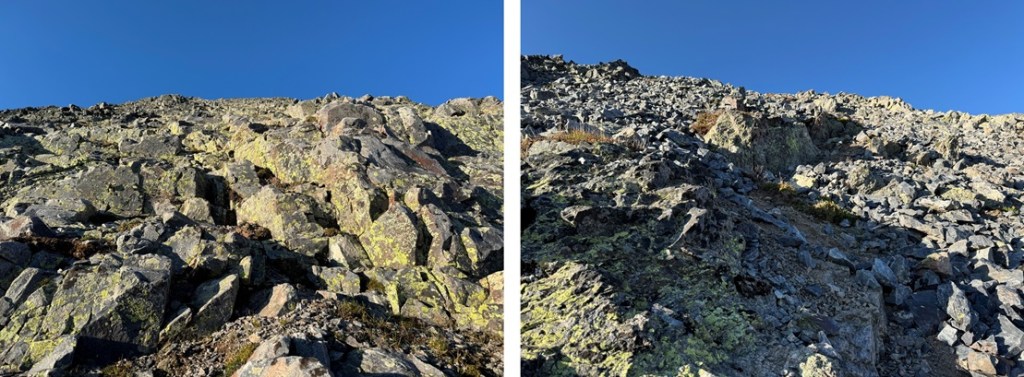
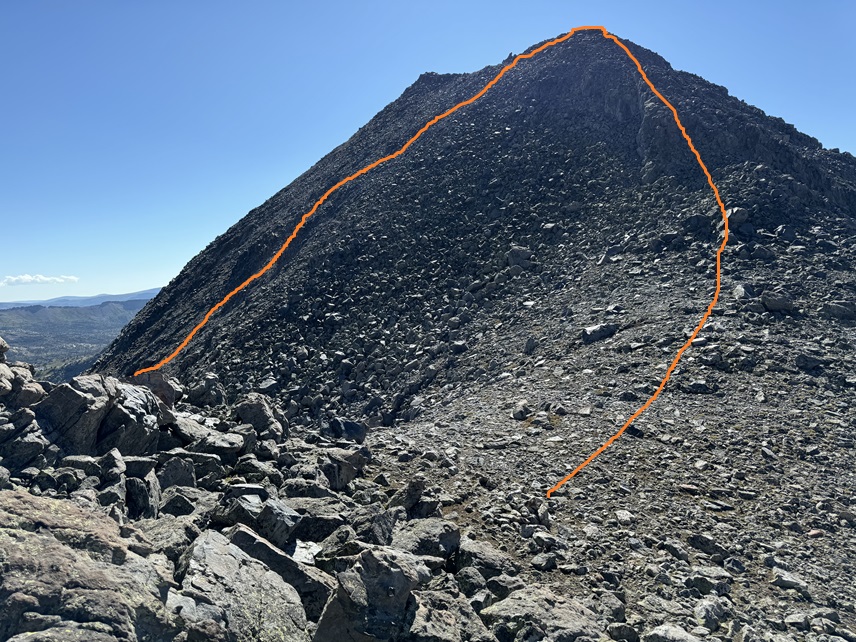
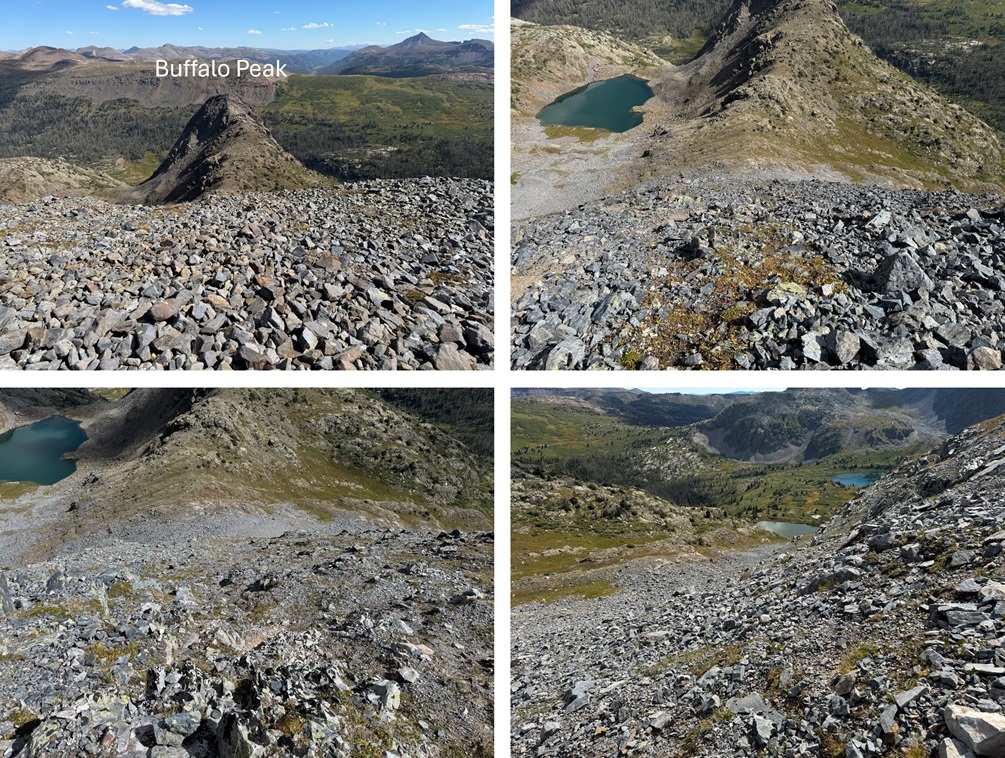
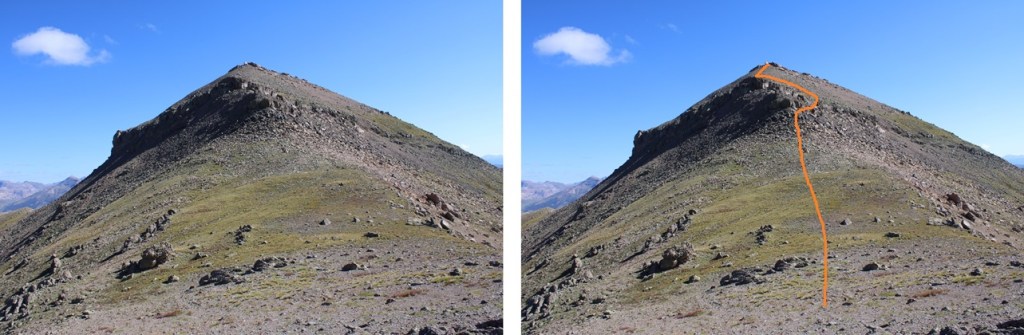
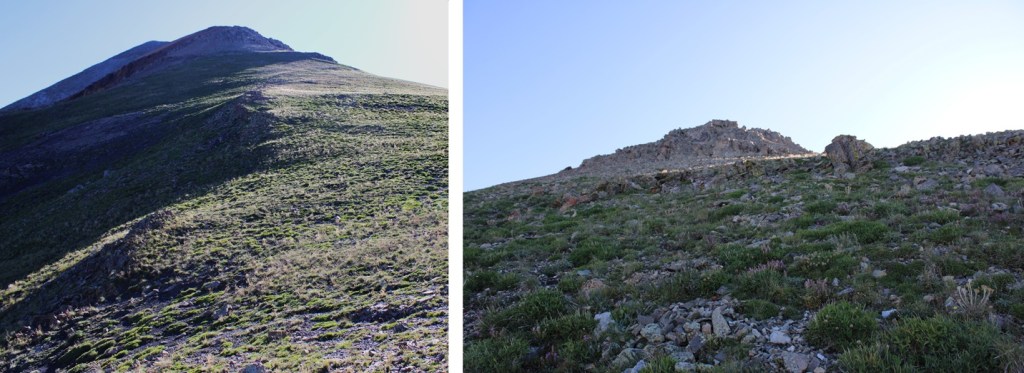
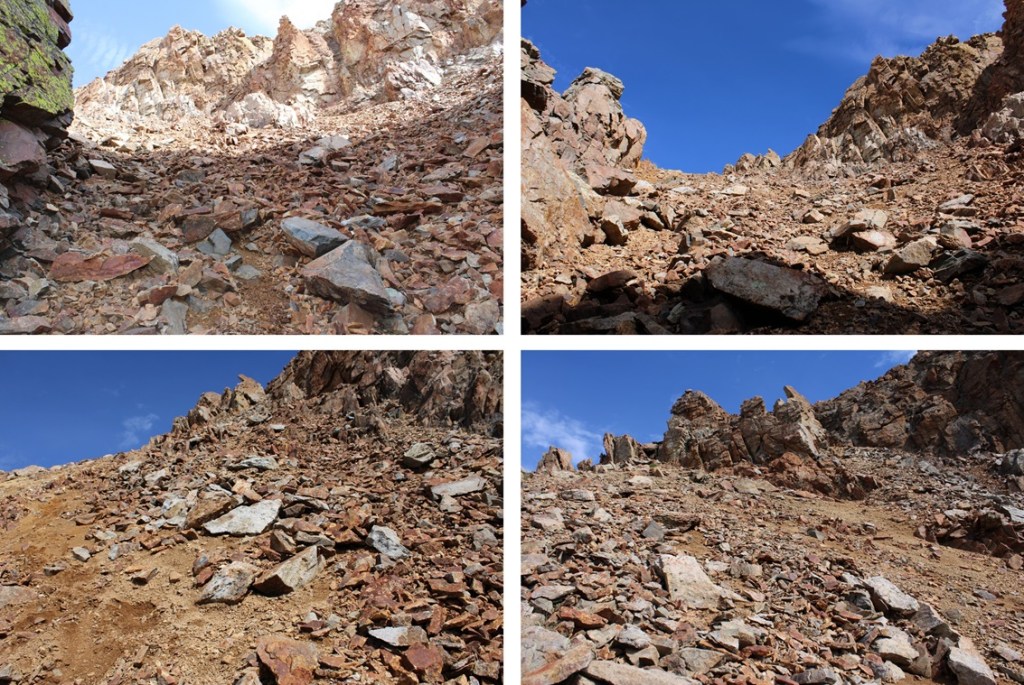
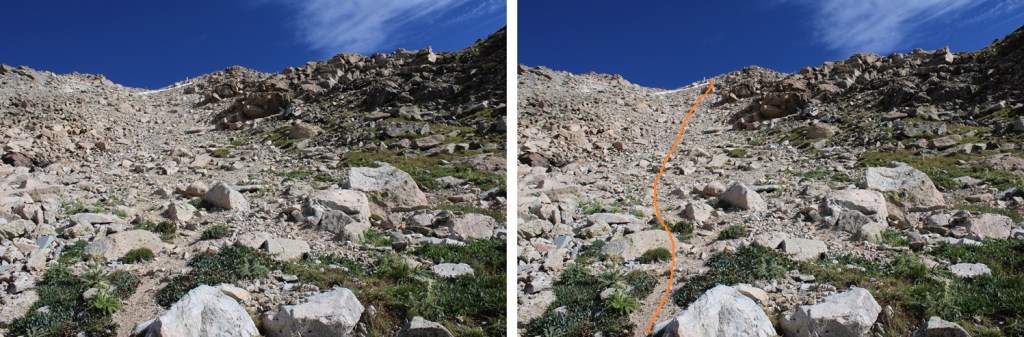
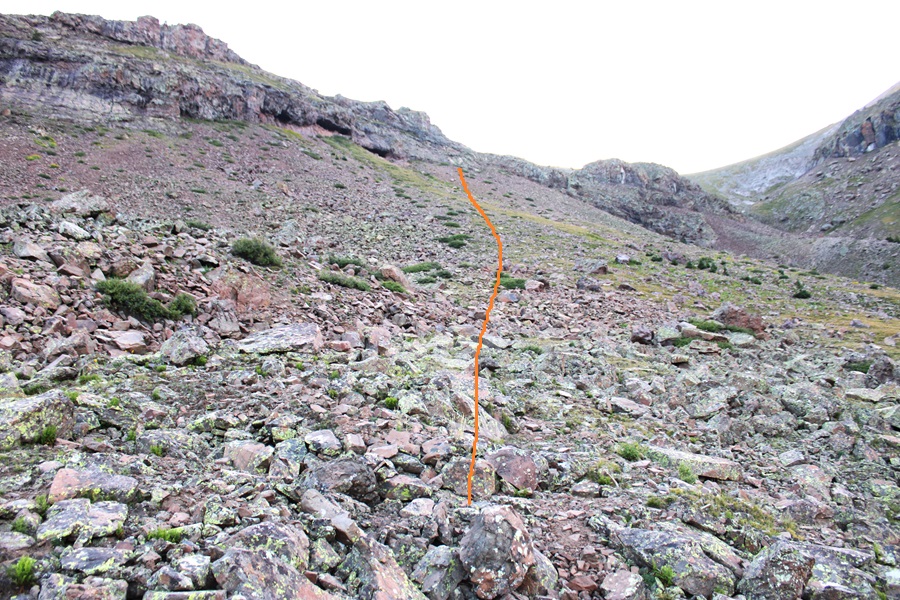
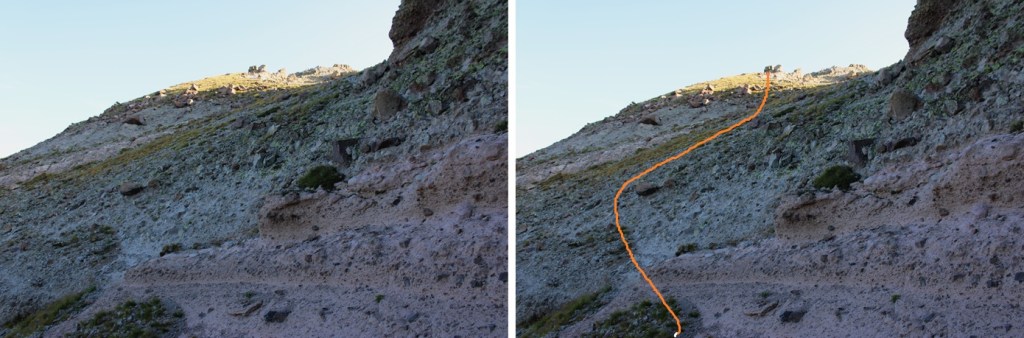
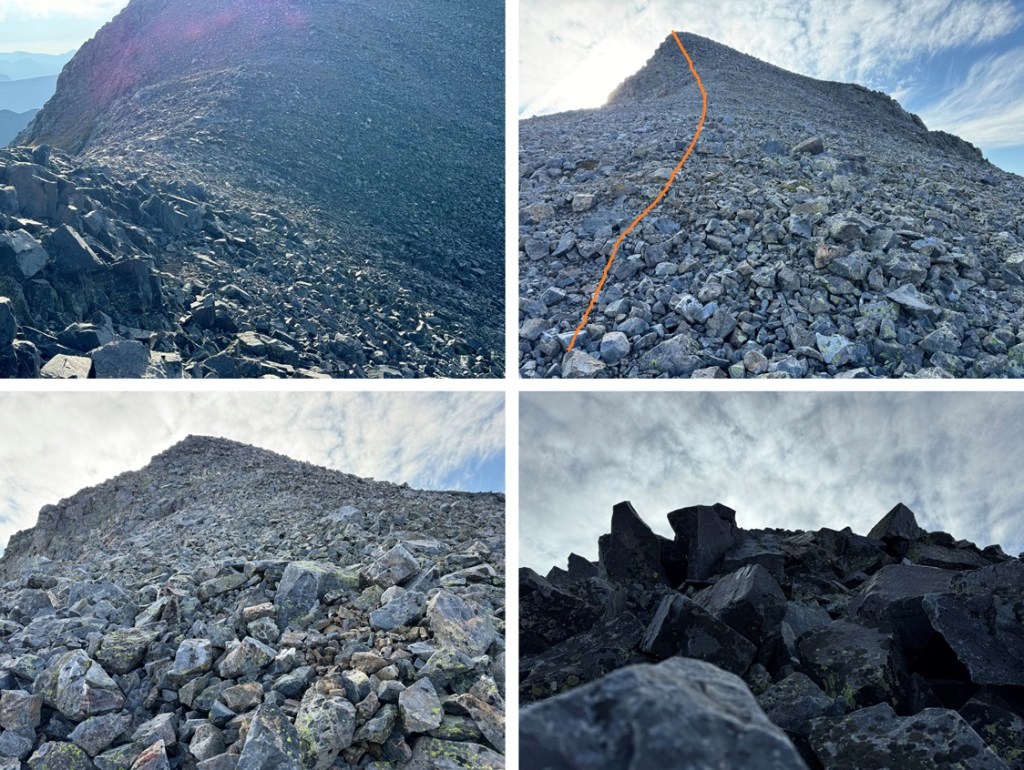
Here are some pictures of the P3 gully.  I ascended on scree, sticking close to the rock band, and headed towards the ridge.

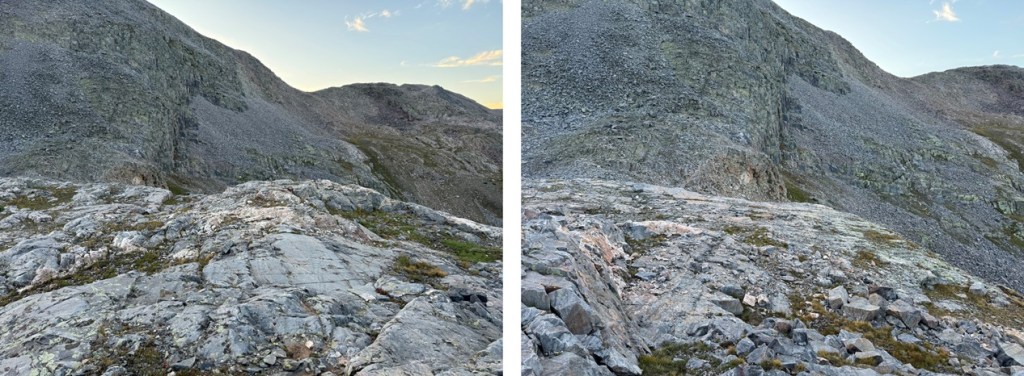
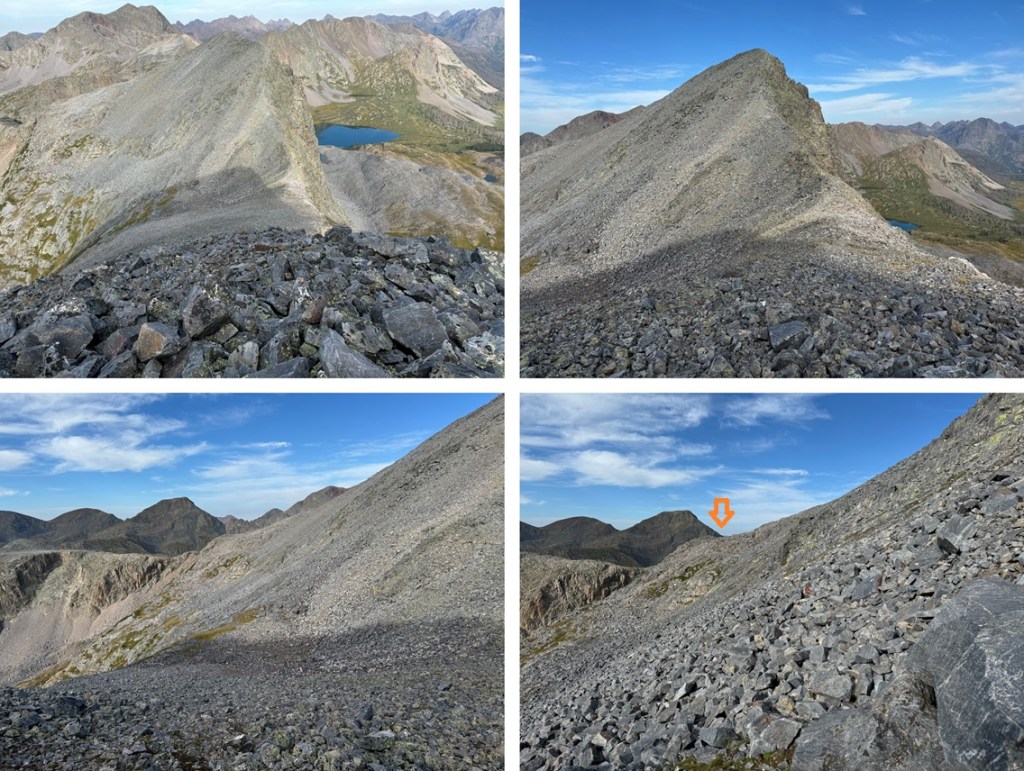
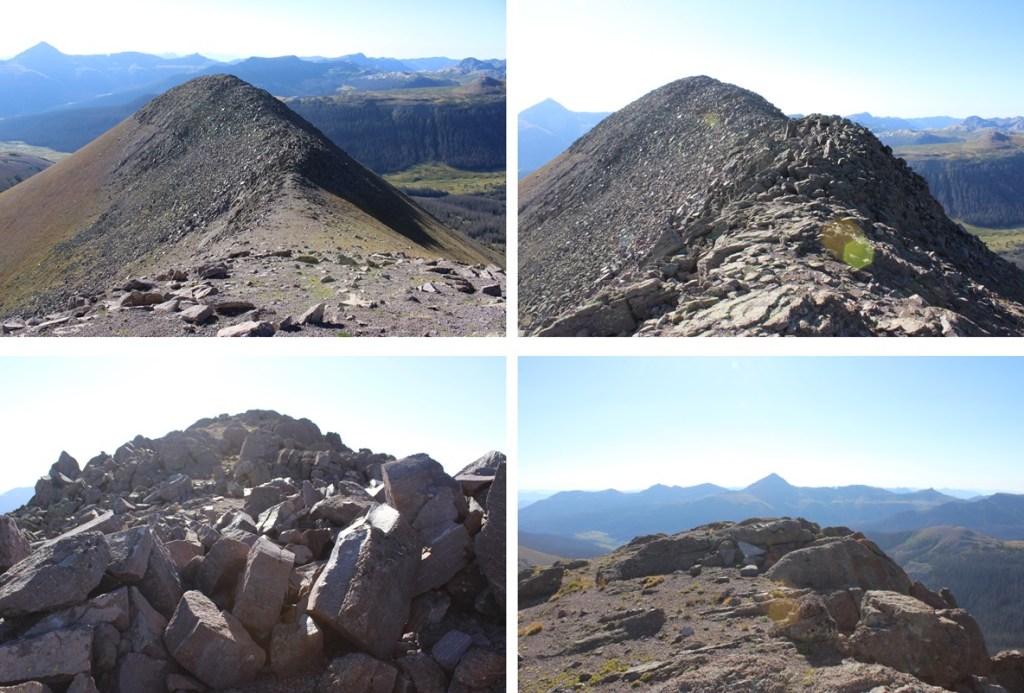
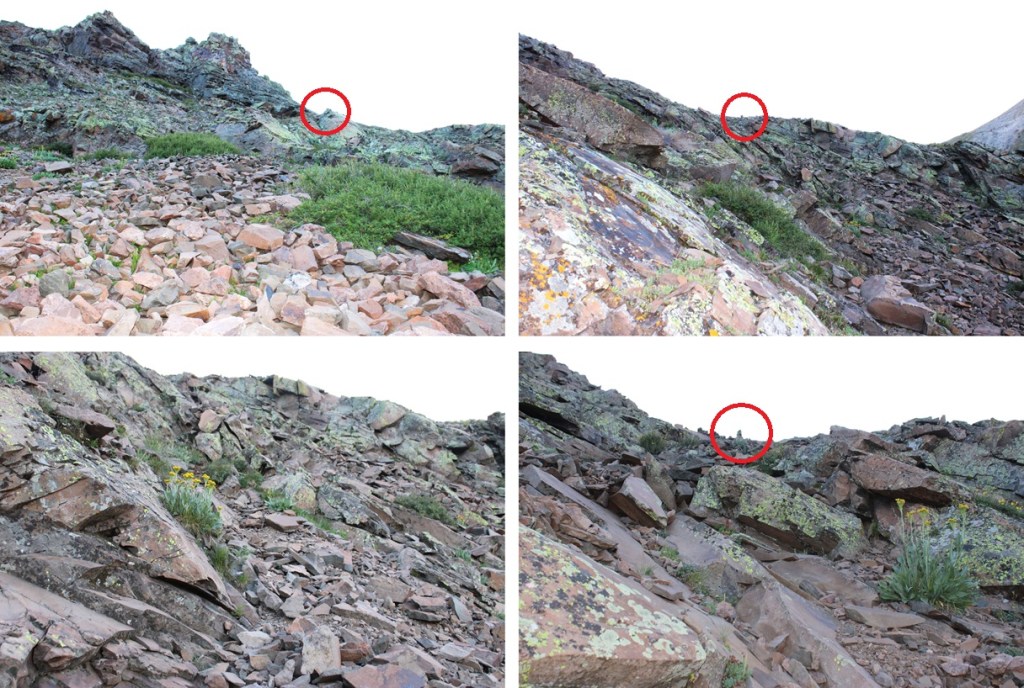
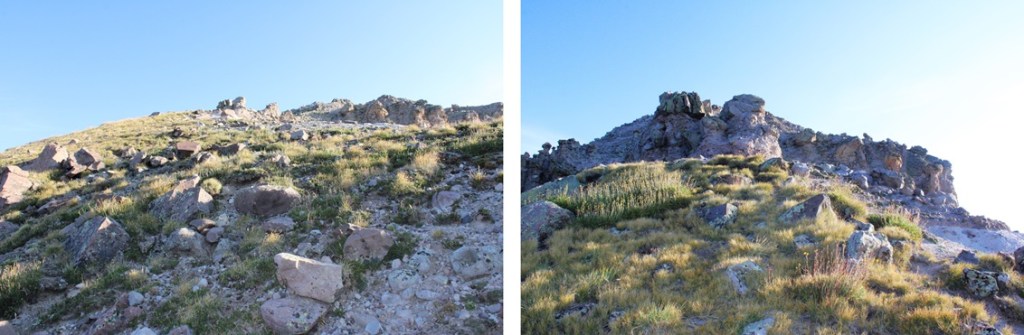
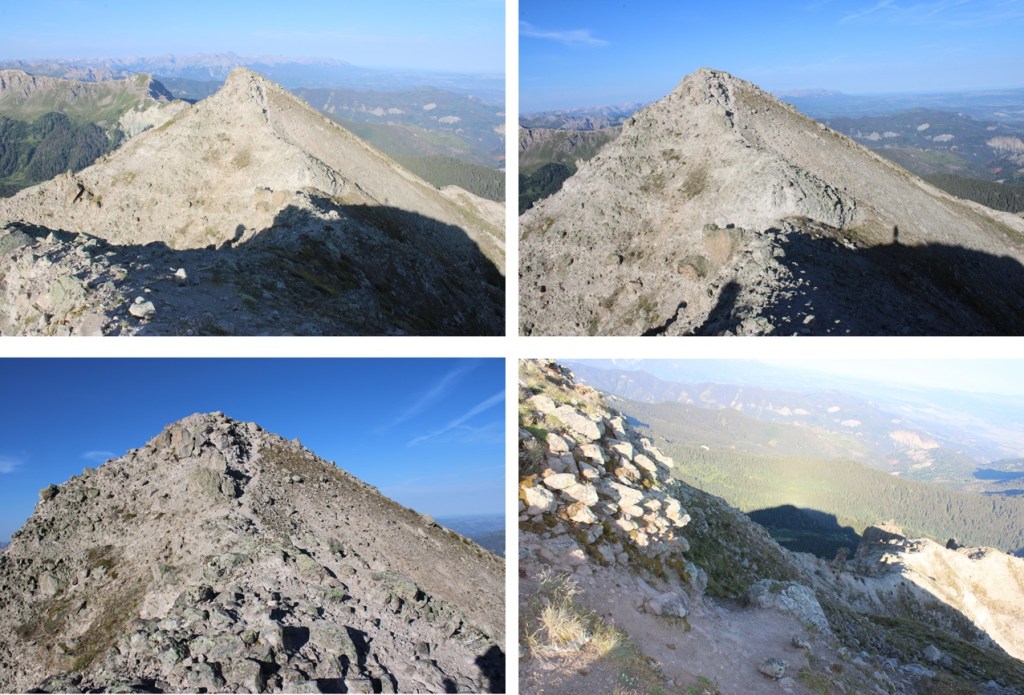
Once on the ridge I turned left, and followed it northeast.  While it looks daunting, this was all class 2 on stable rock, and not so stable rock. 
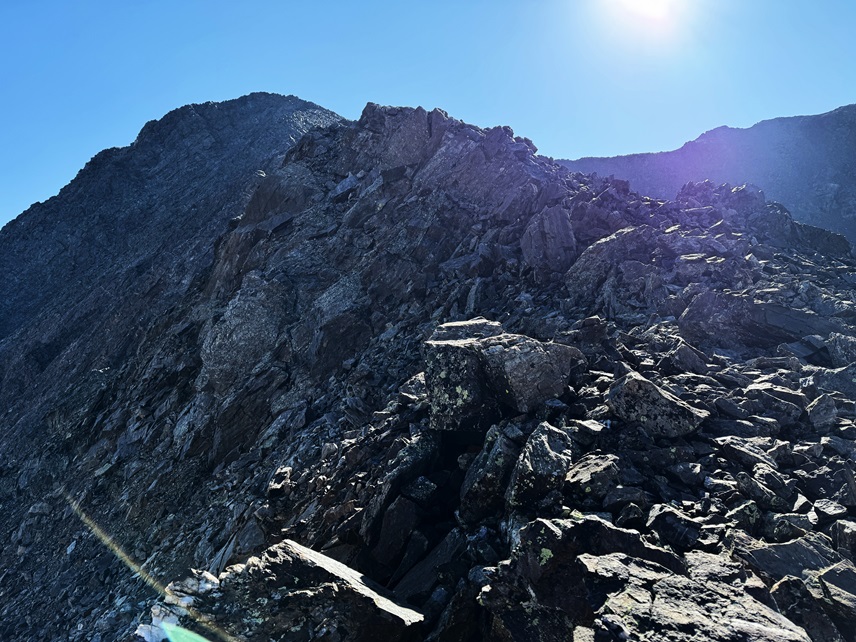
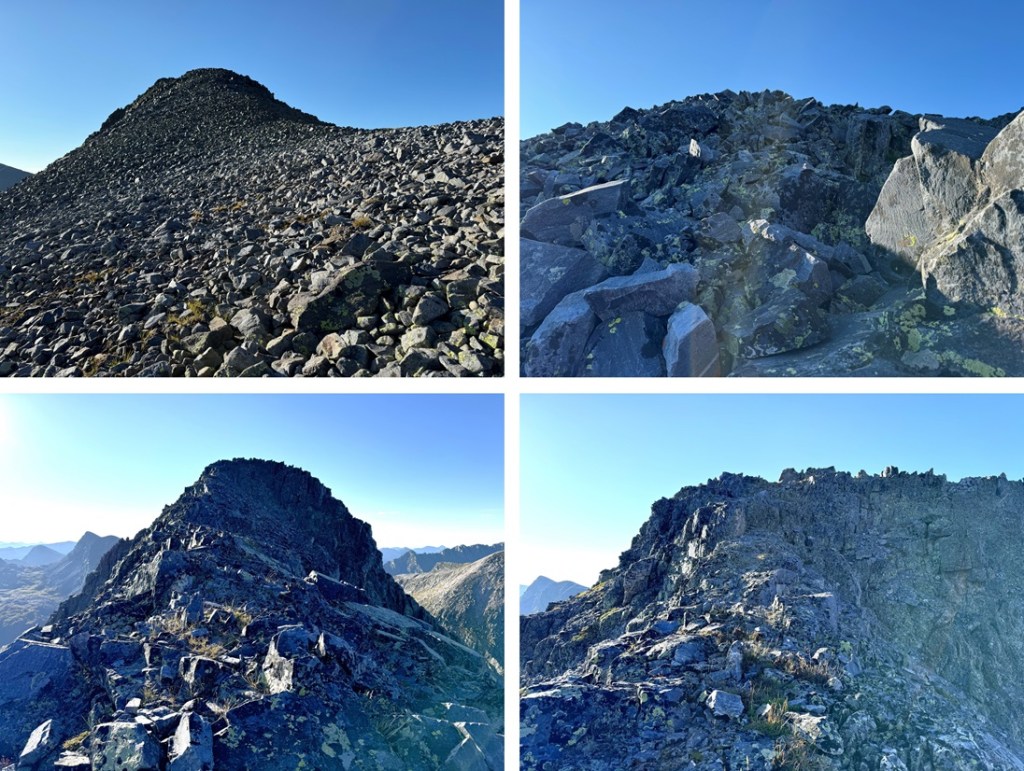
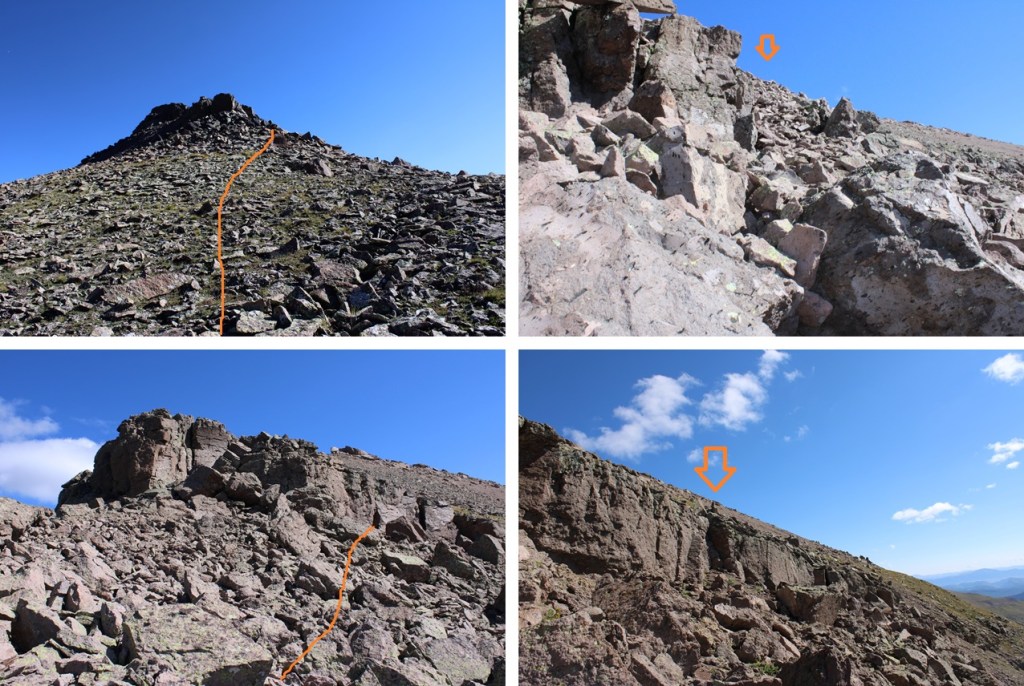
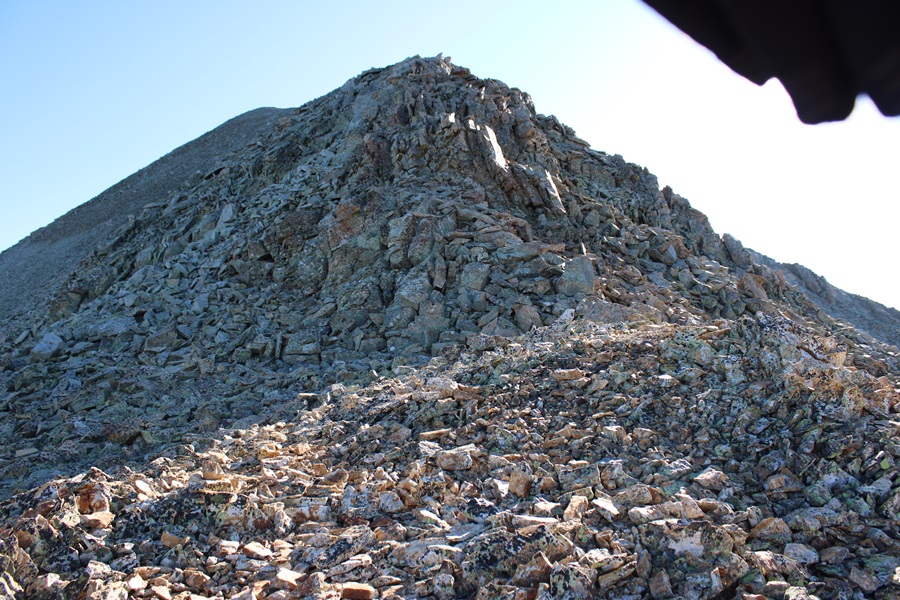
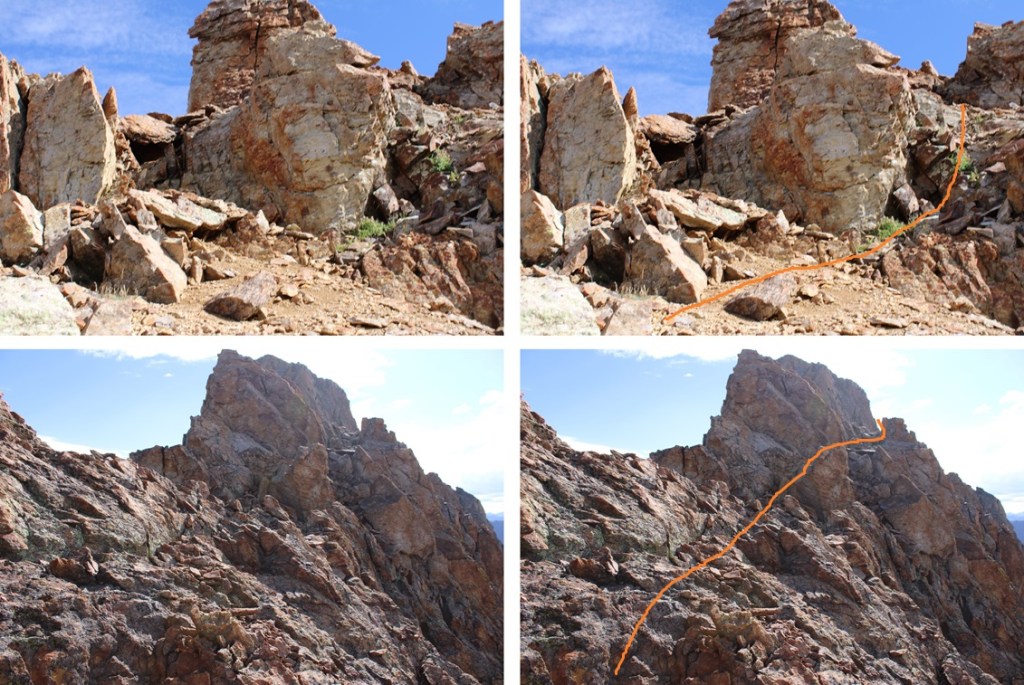
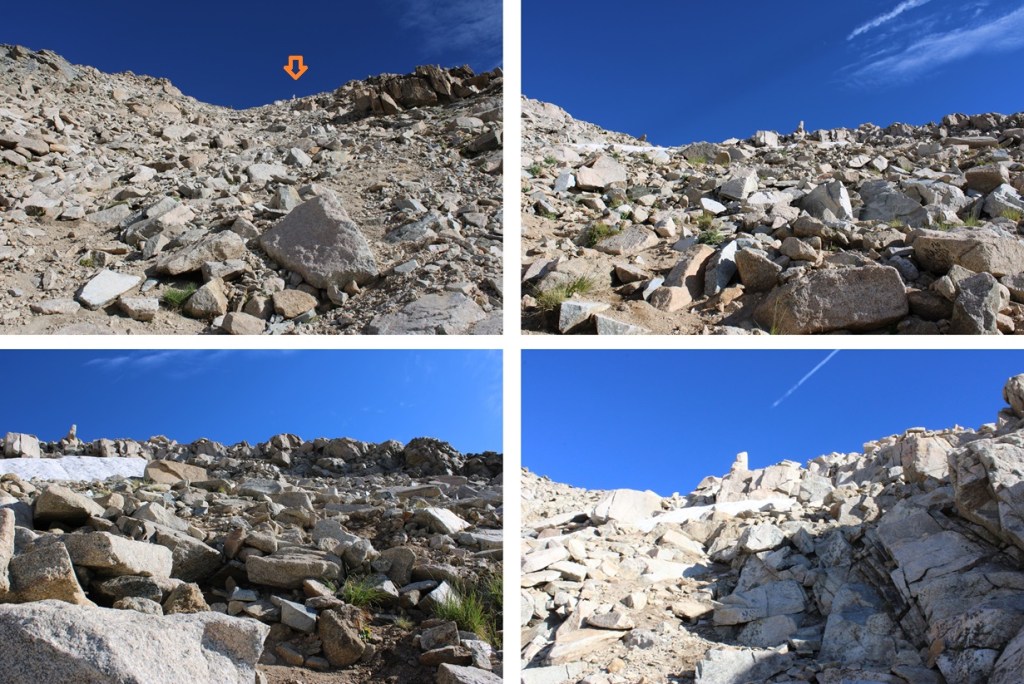
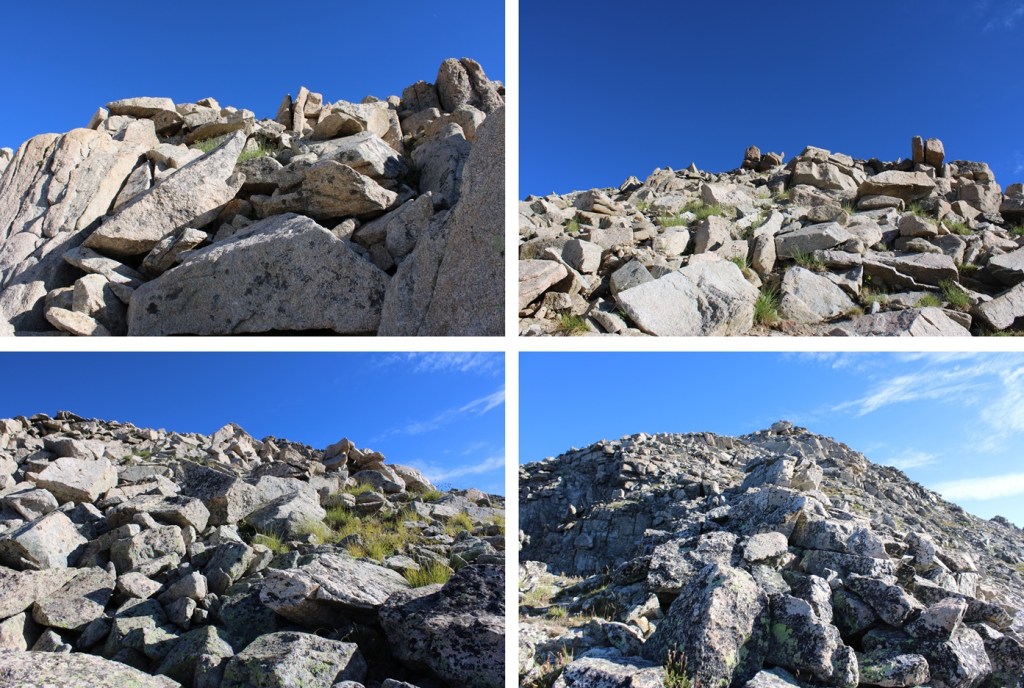
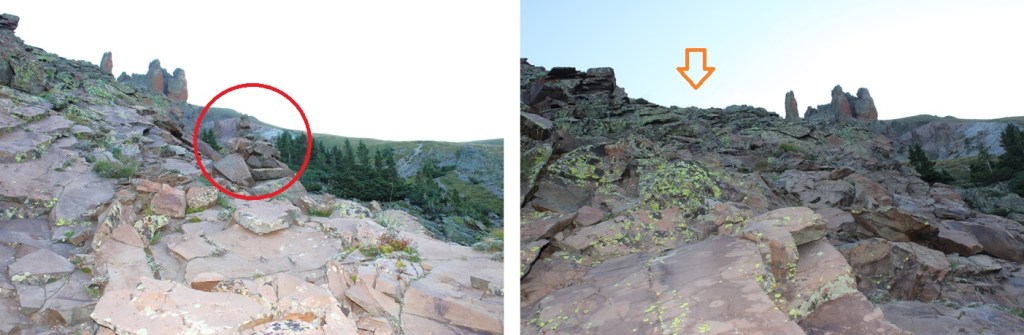
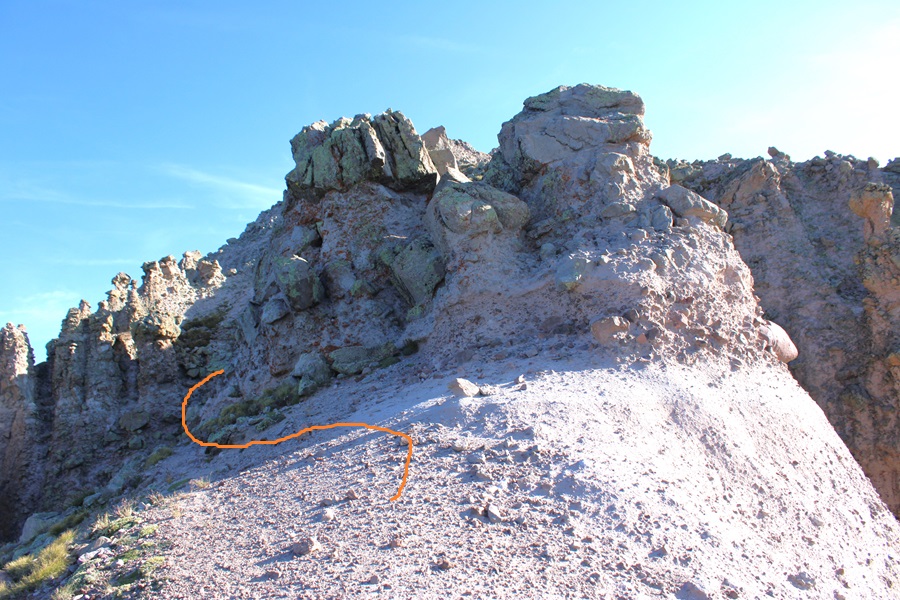
Until I got to here.  If you haven’t already, now is your time to put on your helmet.  From here the rest of the route is exposed class 3 and class 4 climbing.  I chose to stick to the ridge.  Luckily, the rock here is solid and there are plenty of hand and footholds.
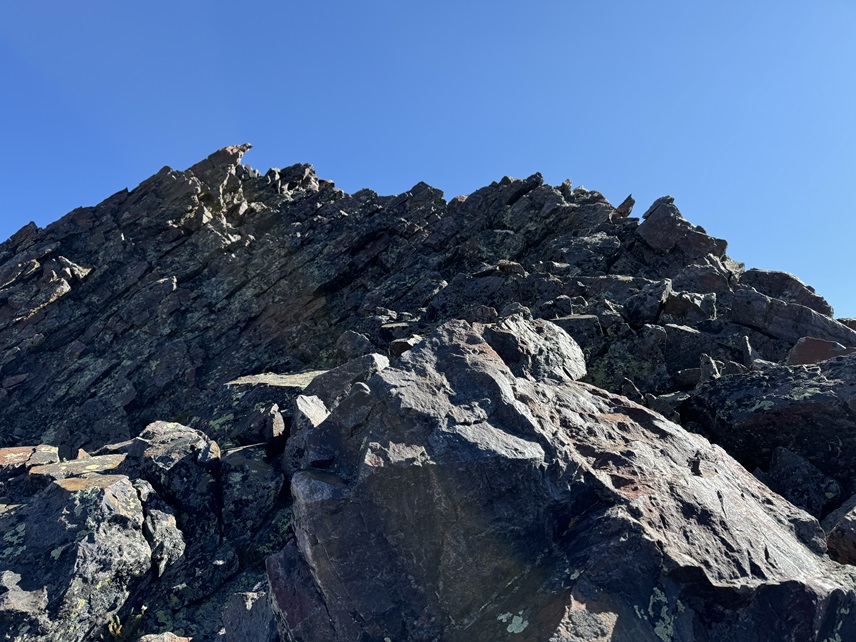
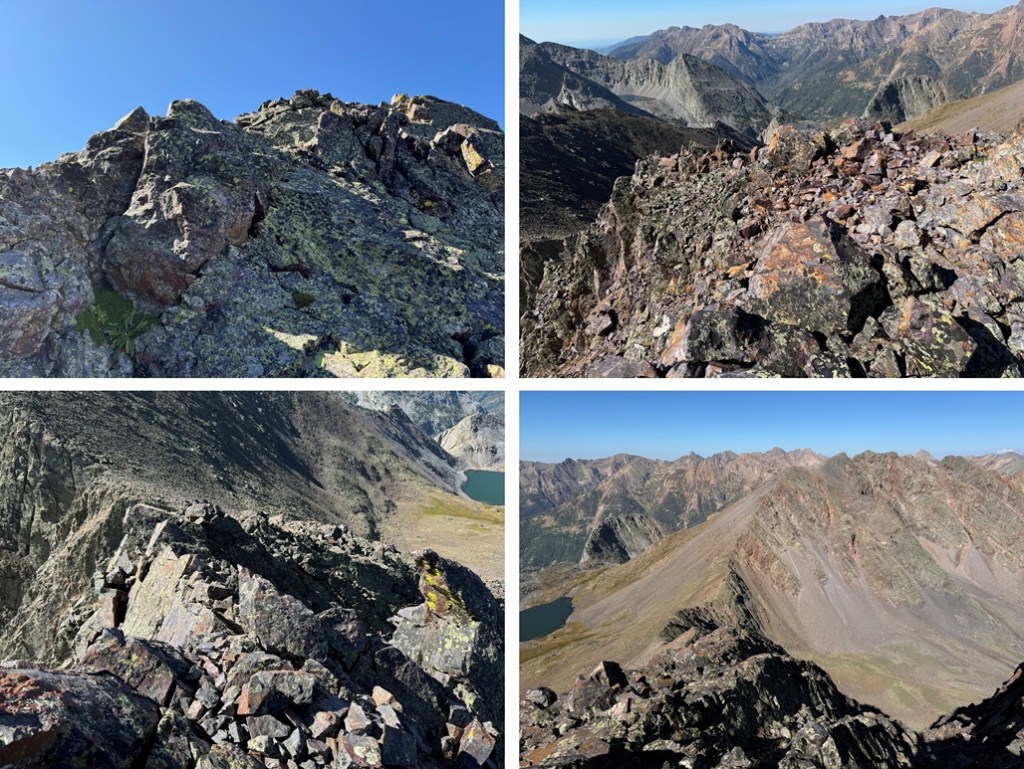
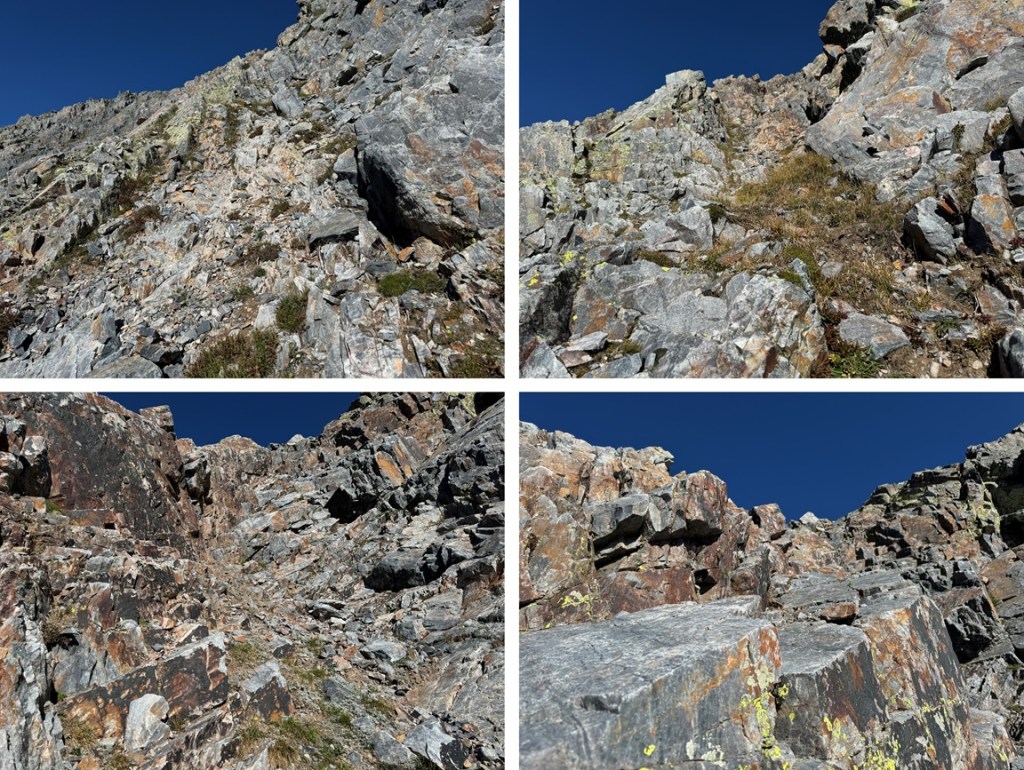
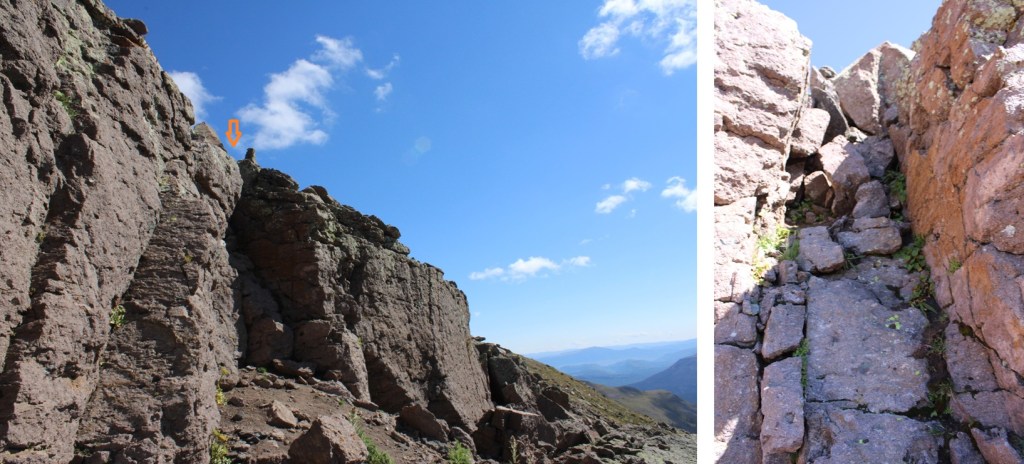
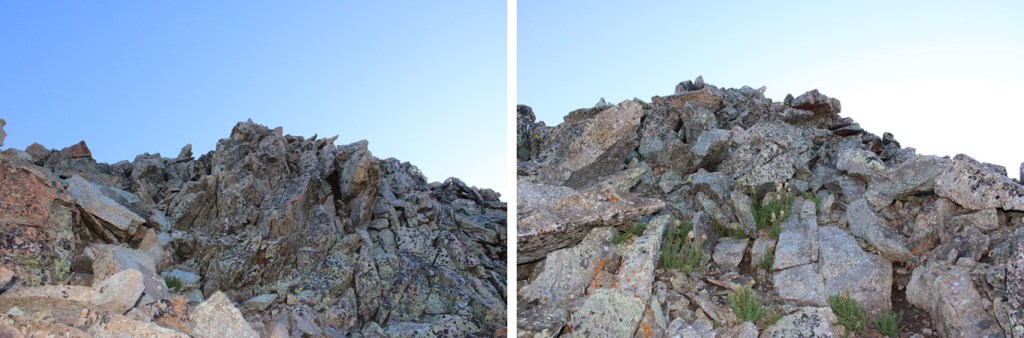
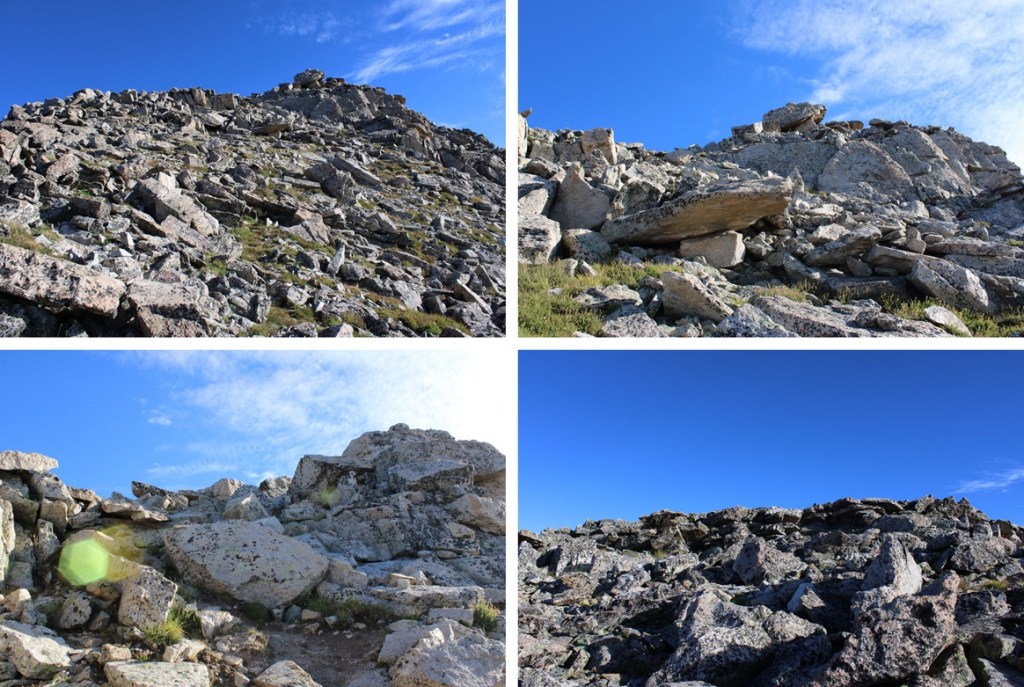
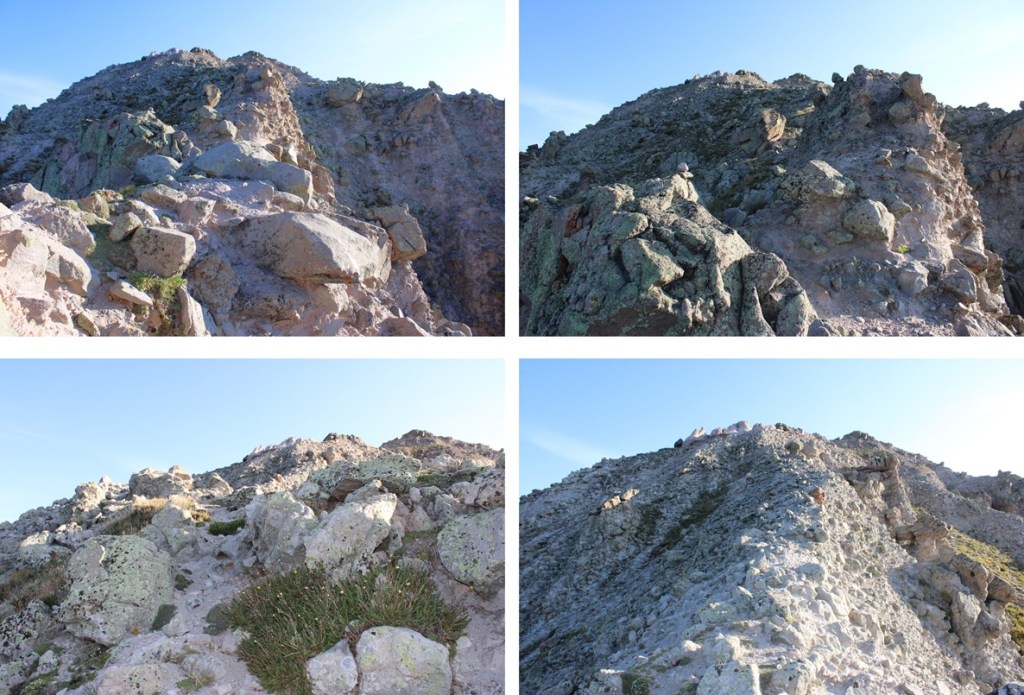
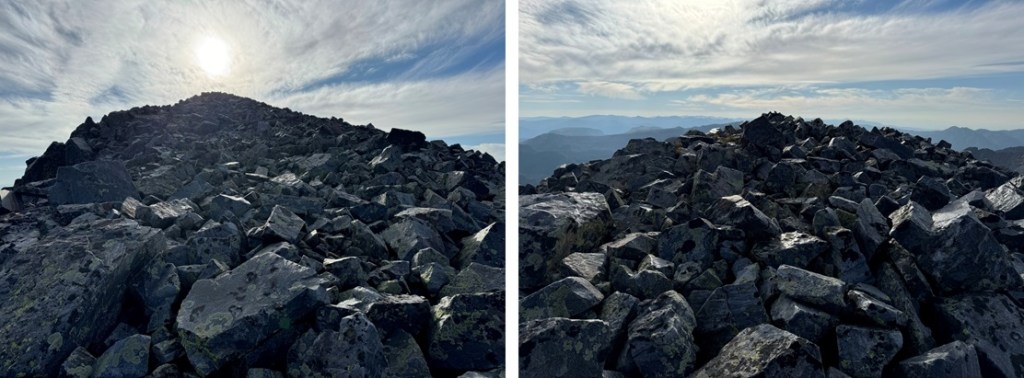
I stuck to the ridge here, so I won’t include direction lines, but I’ll show you a few pictures of this part of the ridge, which I considered class 3
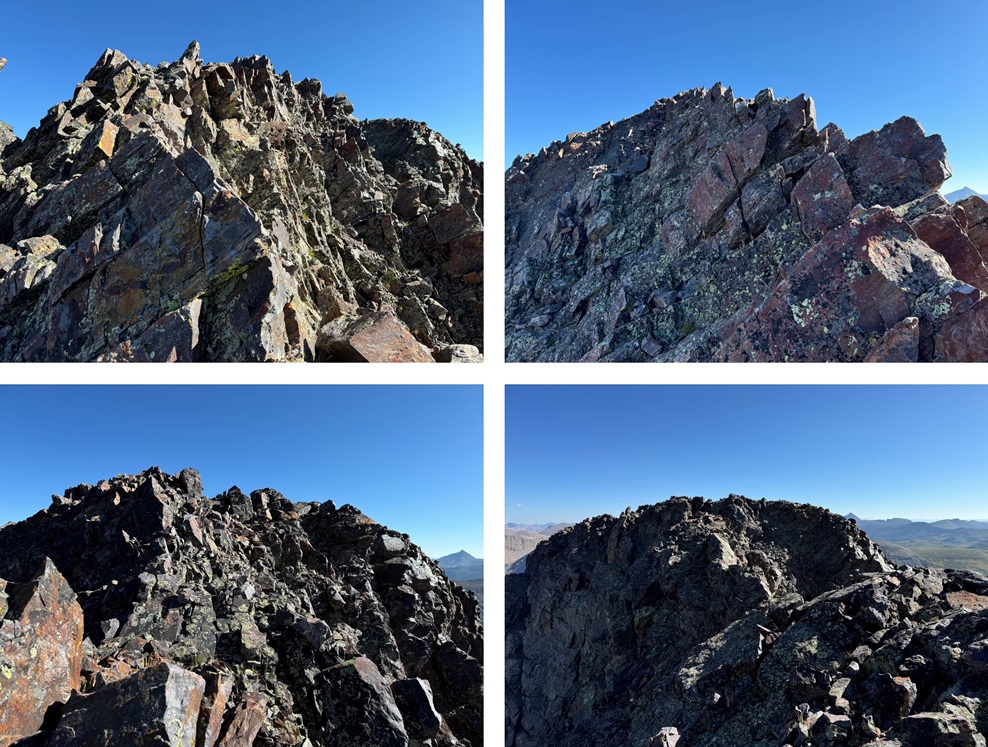
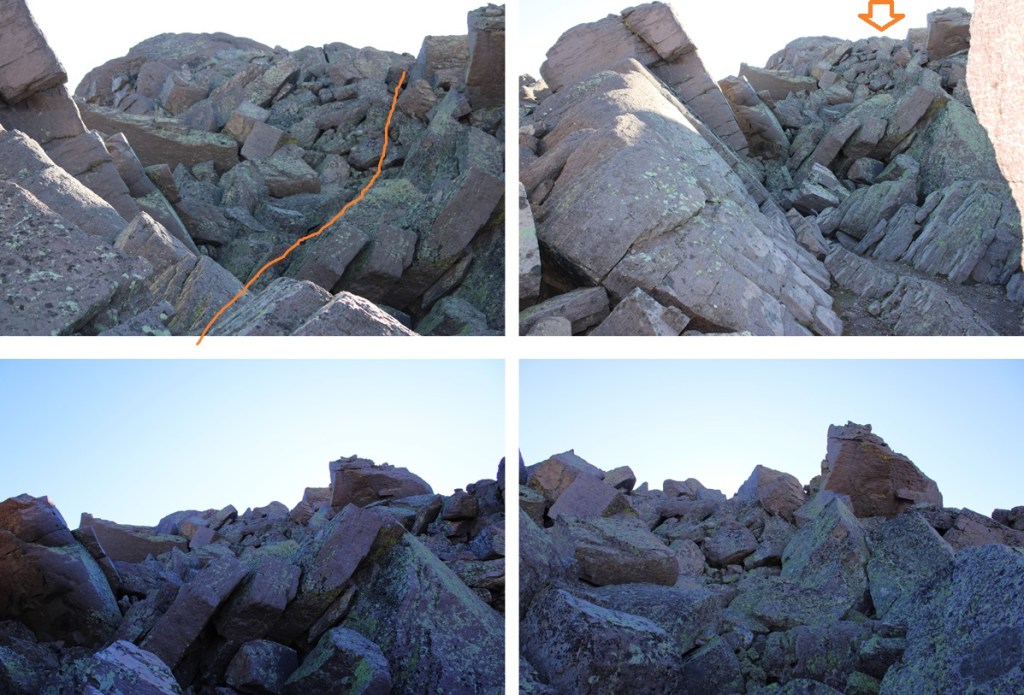
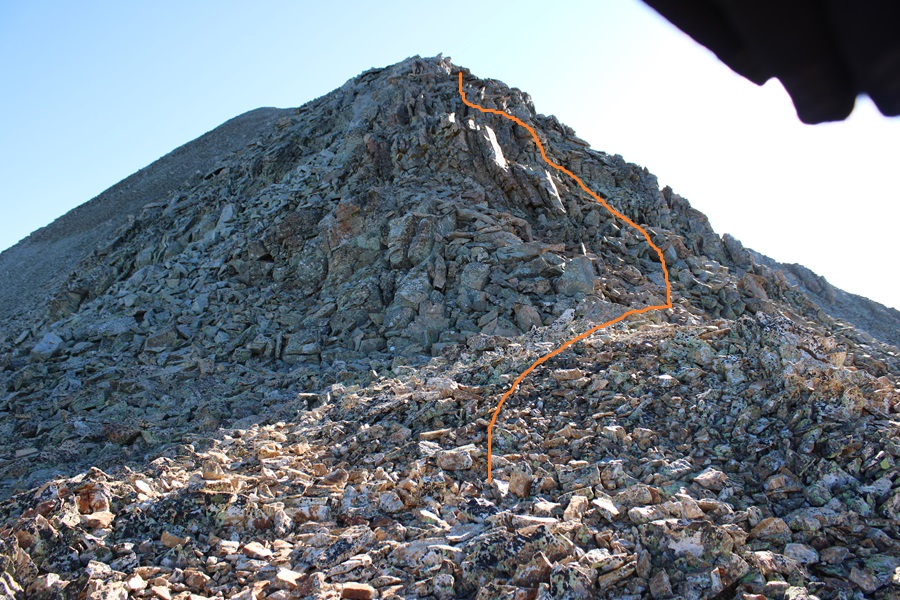
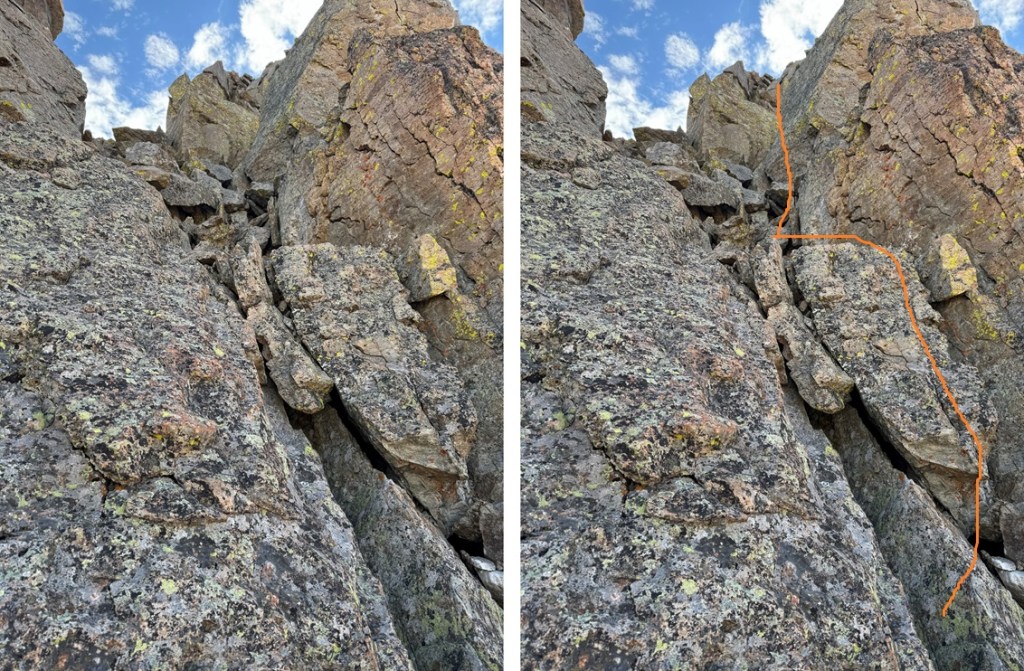
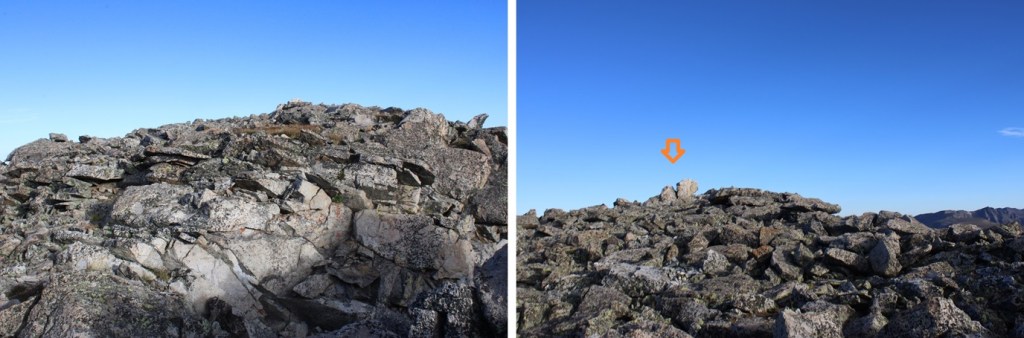
Until I got to here.  I felt this was class 4, and the crux of P3.  This is the route I took, sticking a bit to the left as I felt there were more holds, but I can see how someone with a higher risk tolerance would have gone straight up the middle.
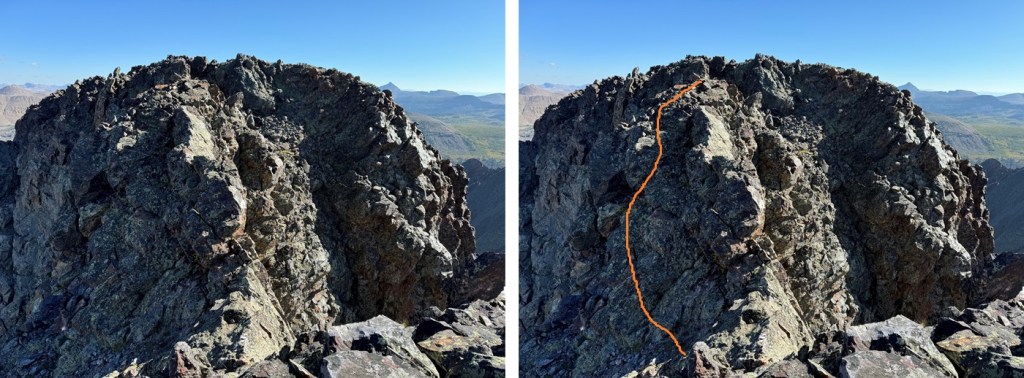
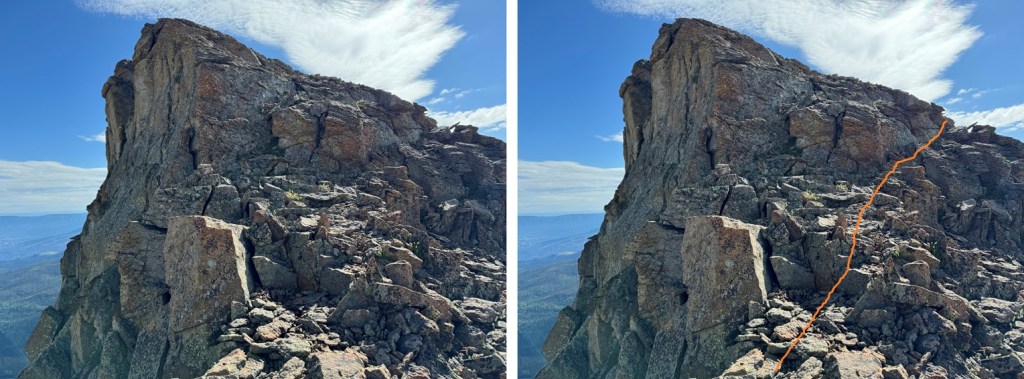
I could now see the summit of P3.  This is the route I took.
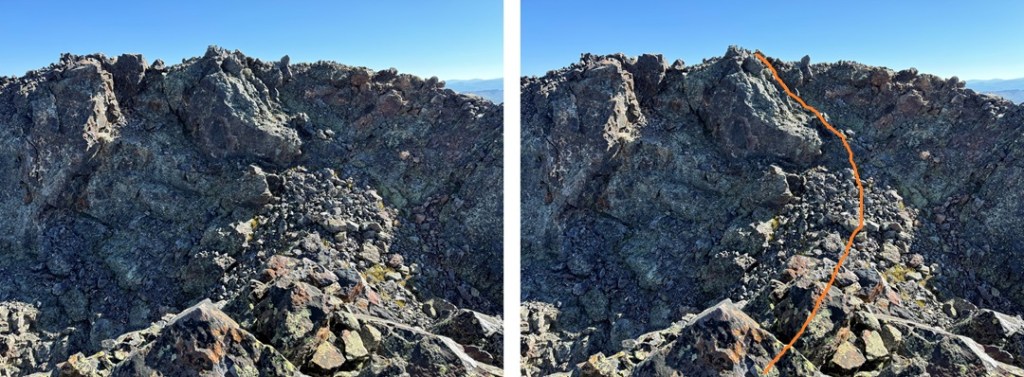
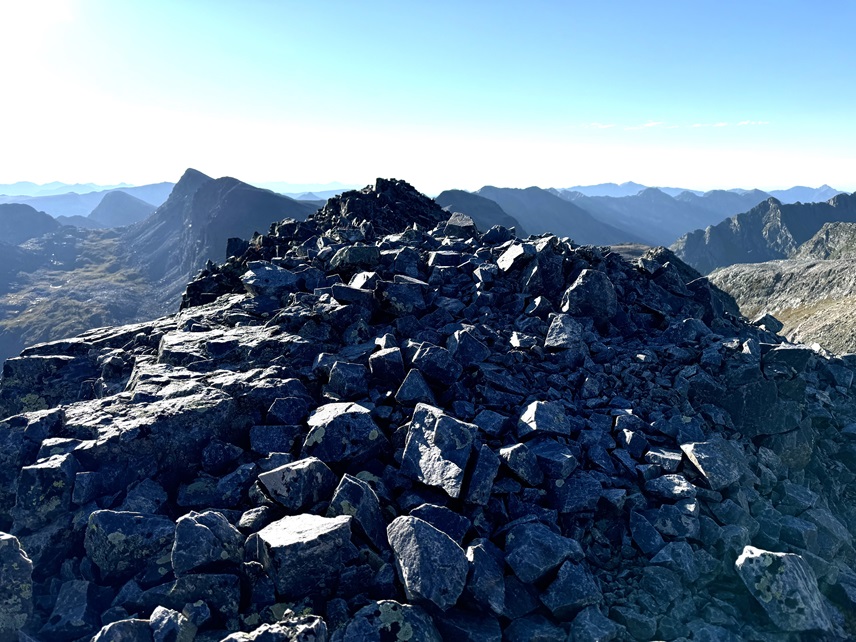
I summited P3 at 9:45am

P3:

From the summit of P3, I made my way back to the ridge.
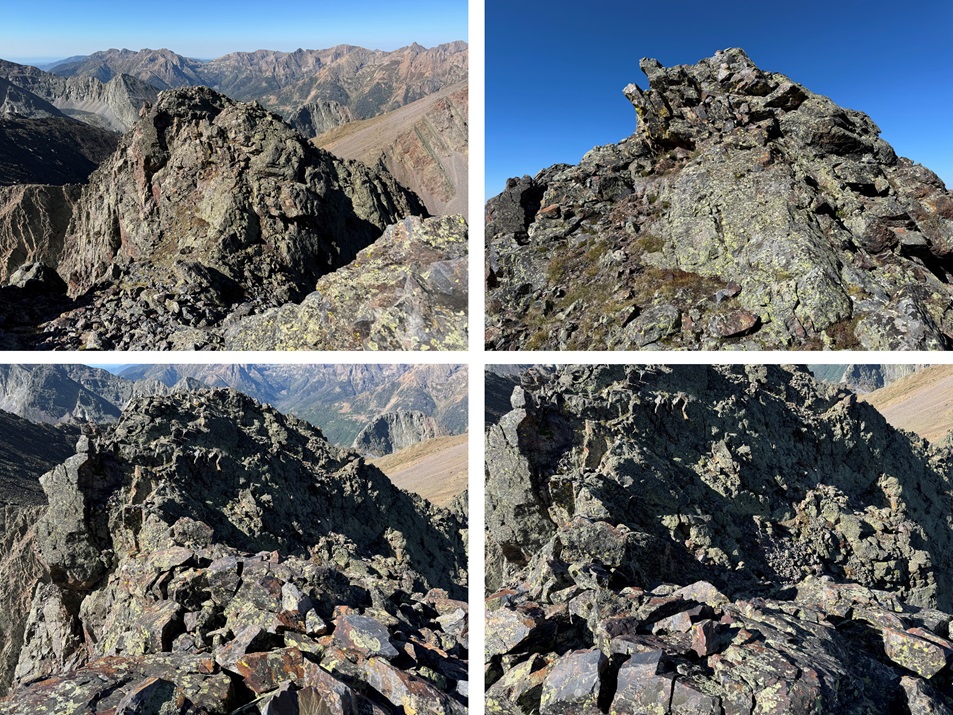
Back on the ridge, I followed it to the P3/P2 saddle
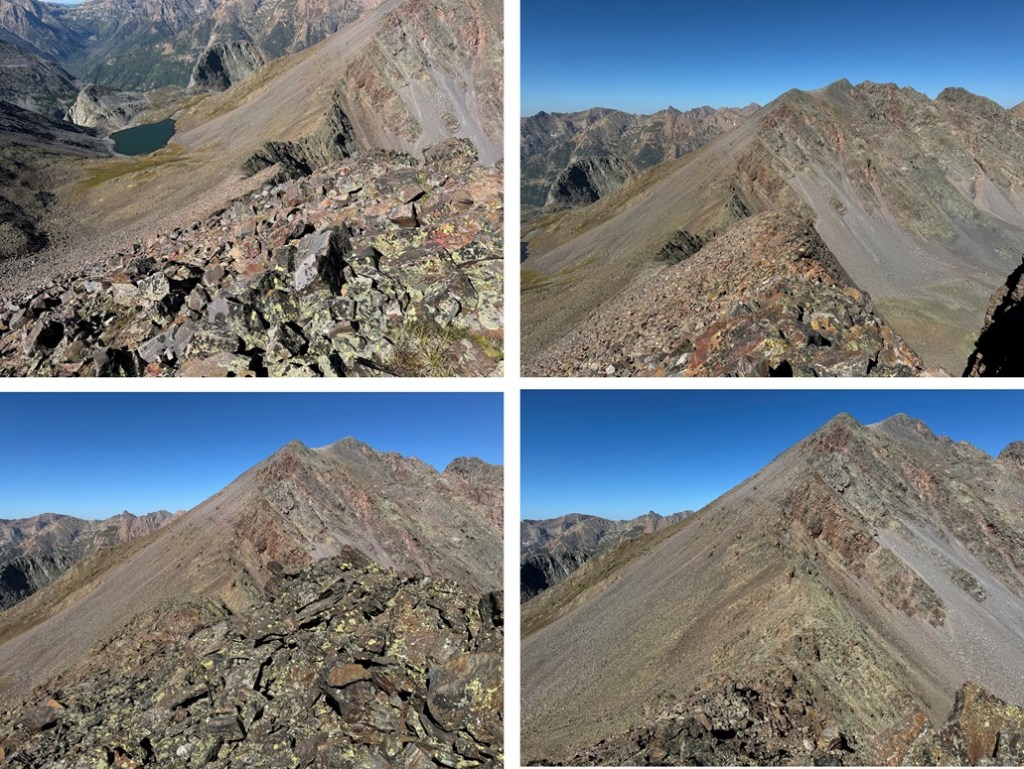
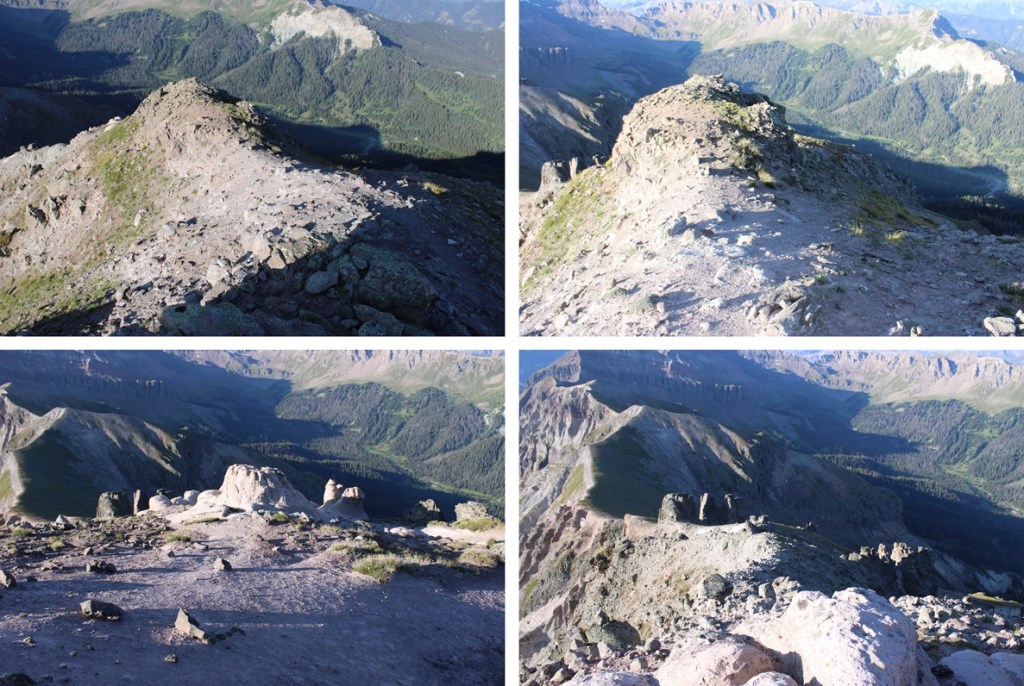
From the saddle, I headed up on talus and scree, following the ridge towards P2, but avoiding the large rock structures to the right.

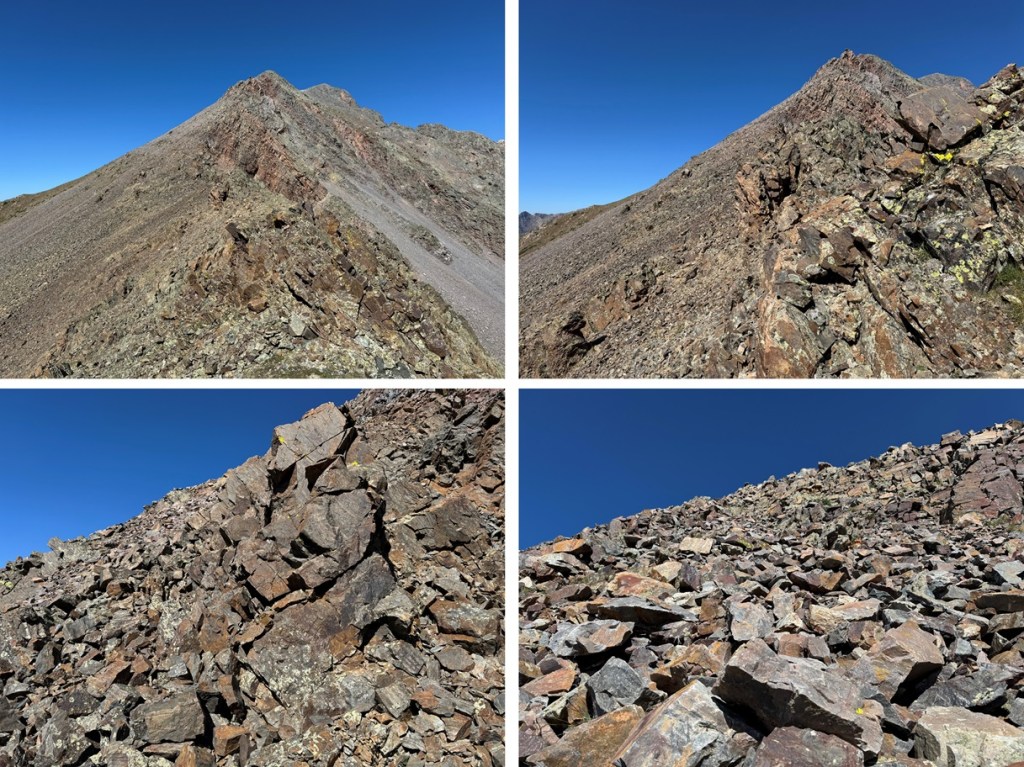
I then came to a sloping section, with a false summit.  I made my way towards the false summit
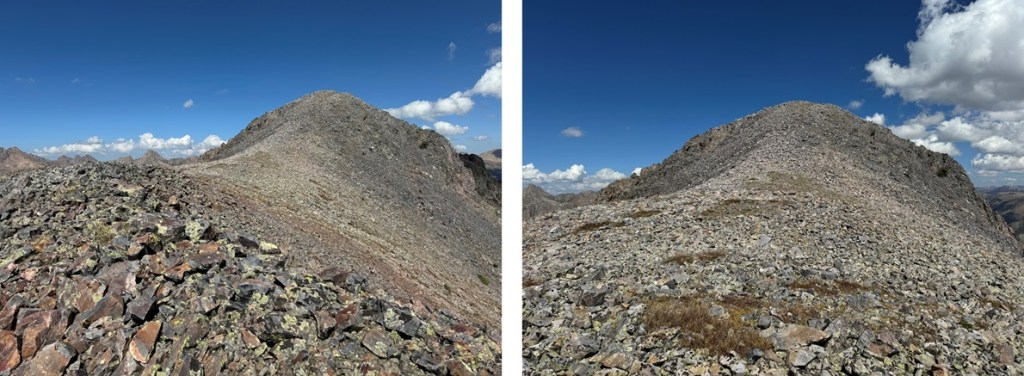
From the false summit, I could see the true summit of P2 in the distance.
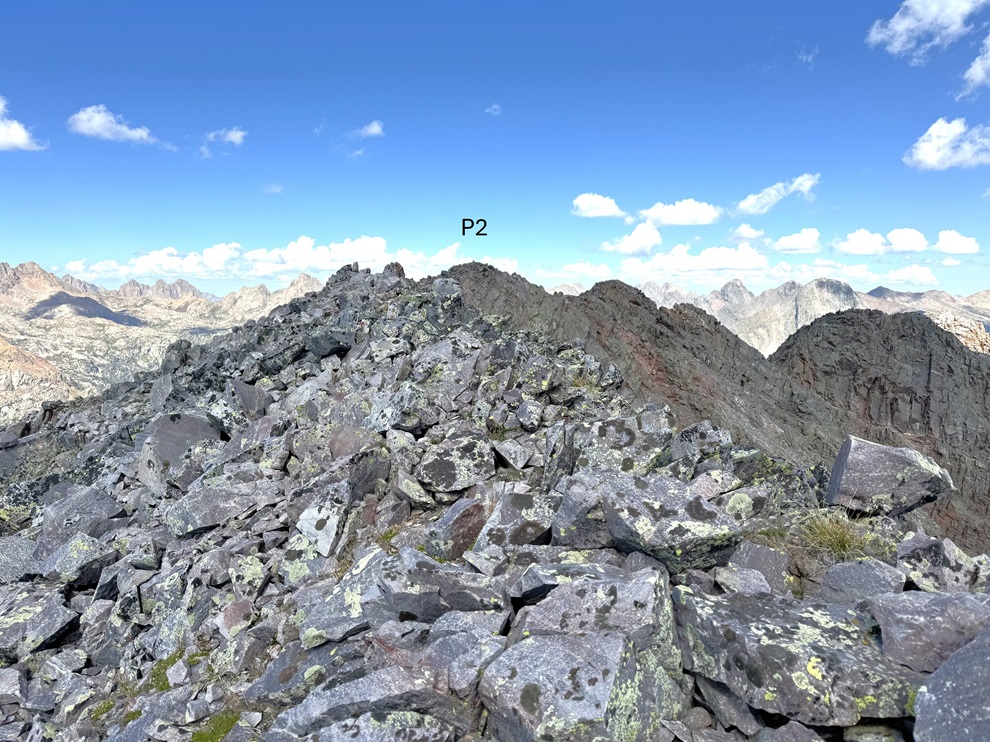
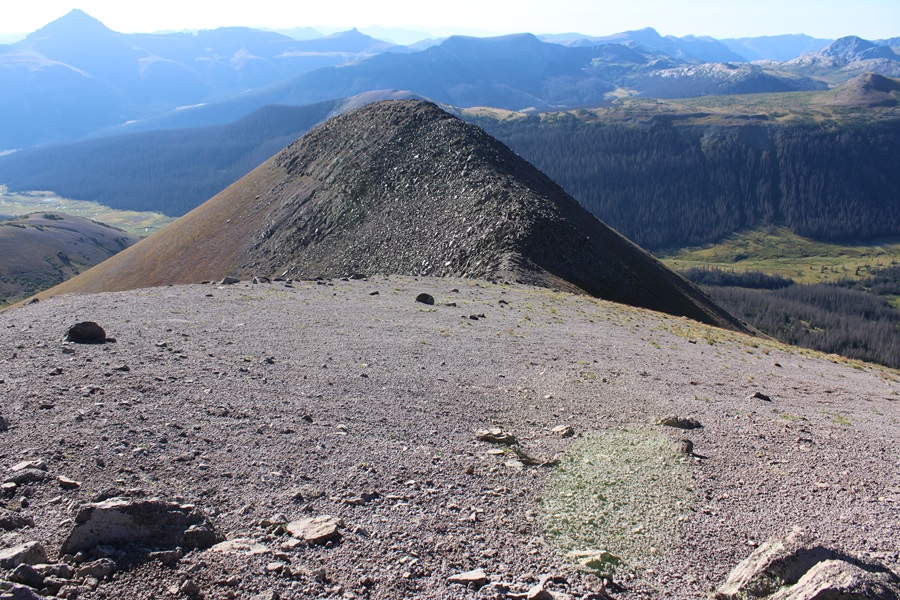
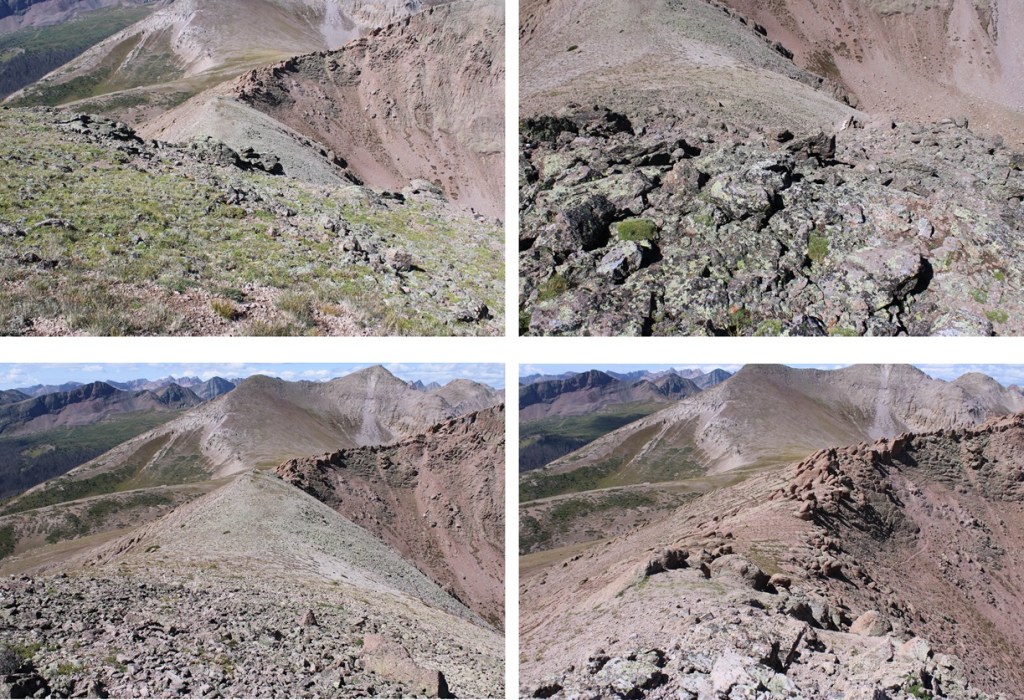
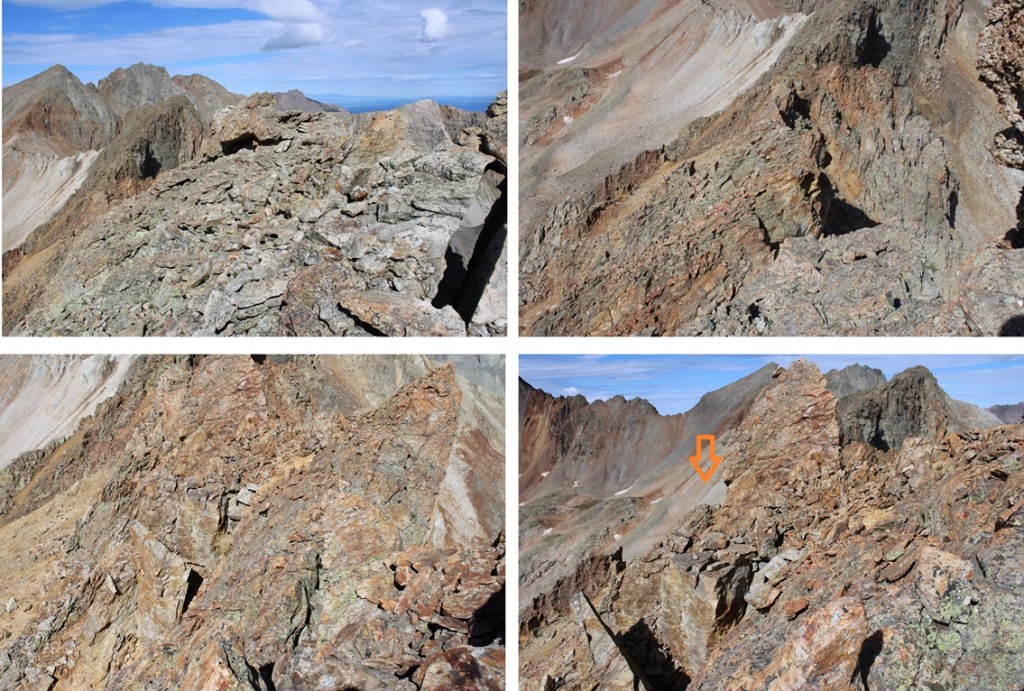
I followed the ridge, and this is what I saw in front of me

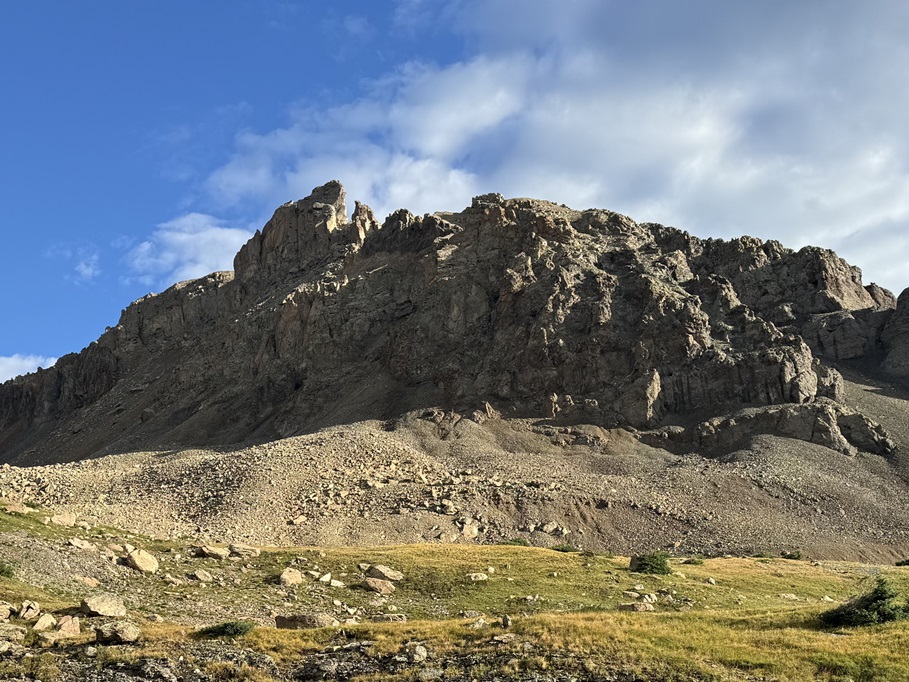
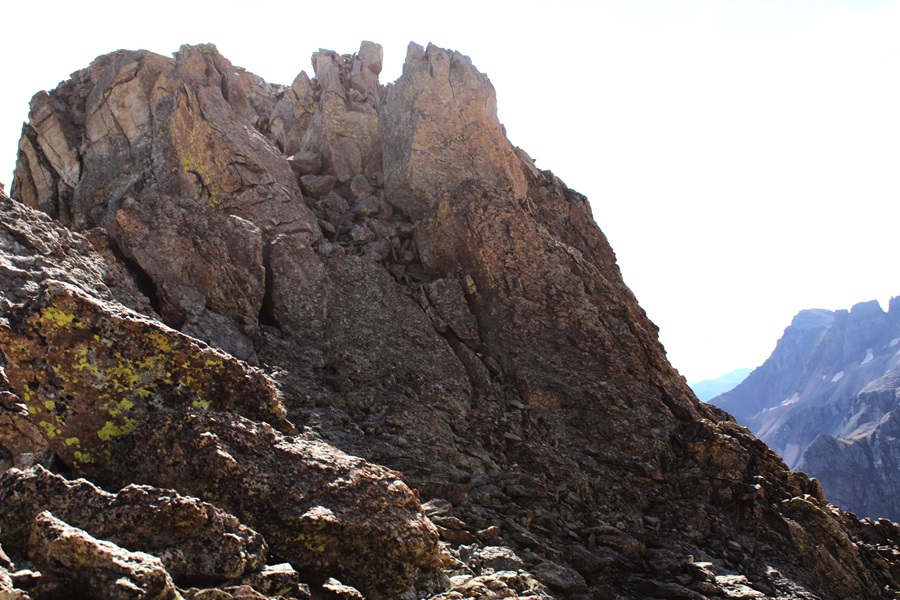
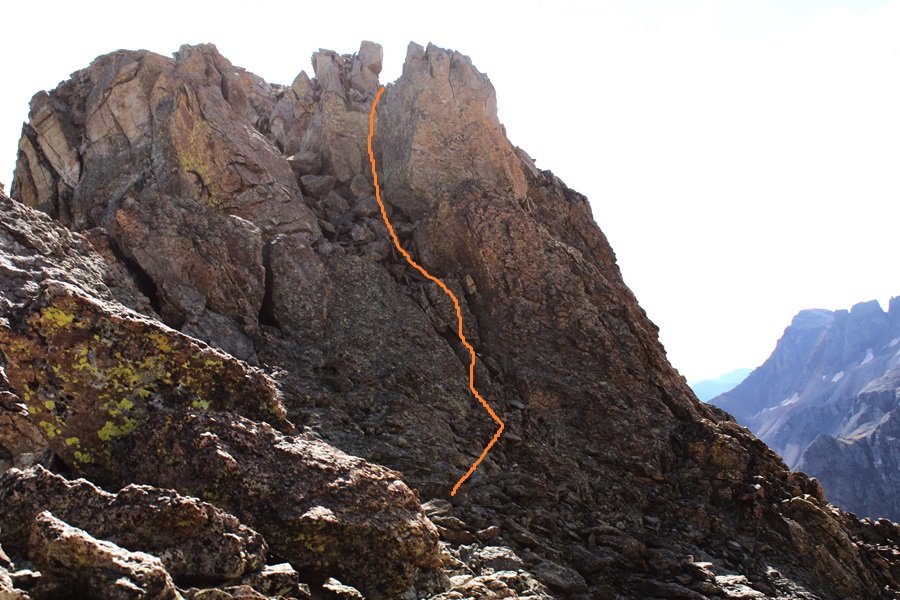
The climbing wasn’t what bothered me here.  It was that long, yellow rock slab.  I’d heard it was maybe 40 feet, but being there in person, it looked double that.  I downclimbed a bit to get a better view, and the view didn’t get any better. Pictures DO NOT do this slab and it’s exposure justice.

At this point I had to make a very difficult decision.  I do a lot of crazy stuff while hiking solo, but it’s always within my abilities, and I try not to take unnecessary risks.  This rock slab was an unnecessary risk, and that’s coming from someone who’s favorite 14er is Capitol because of the knife’s edge.  I did not feel safe downclimbing this slab solo, or even with another person present, although I would have tried it going from the opposite direction if I didn’t need to downclimb it again.  I had about a 75% certainty if I attempted to downclimb this slab, I would fall.  And the exposure wasn’t pretty.

One of the reasons my husband encourages me to hike solo is he knows I don’t take unnecessary risks in the backcountry, and I want to come home safe to him.  I also want to be a Grandma someday, and I can’t do that if I die. 

I knew there was another way to summit by dropping down to the left, so I got out my cell phone and checked the weather.  The 10% chance of rain after 12pm had now become 80% chance of thunderstorms.  I wouldn’t have the time needed to route find my way to the summit of this peak and make it back to my tent in time before the storm came in.

So, I turned around at the final crux to the summit and headed back down.  I did a lot of scouting around while I was up there and know how I want to attempt this peak next time (I’m thinking of dropping down to avoid the edge or coming in from a different angle).  I’ll be back to summit this peak another way.

So, I turned around and headed back towards the P3/P2 saddle.

Just before the saddle I turned left, and took the P2 gully down into the rocky basin.
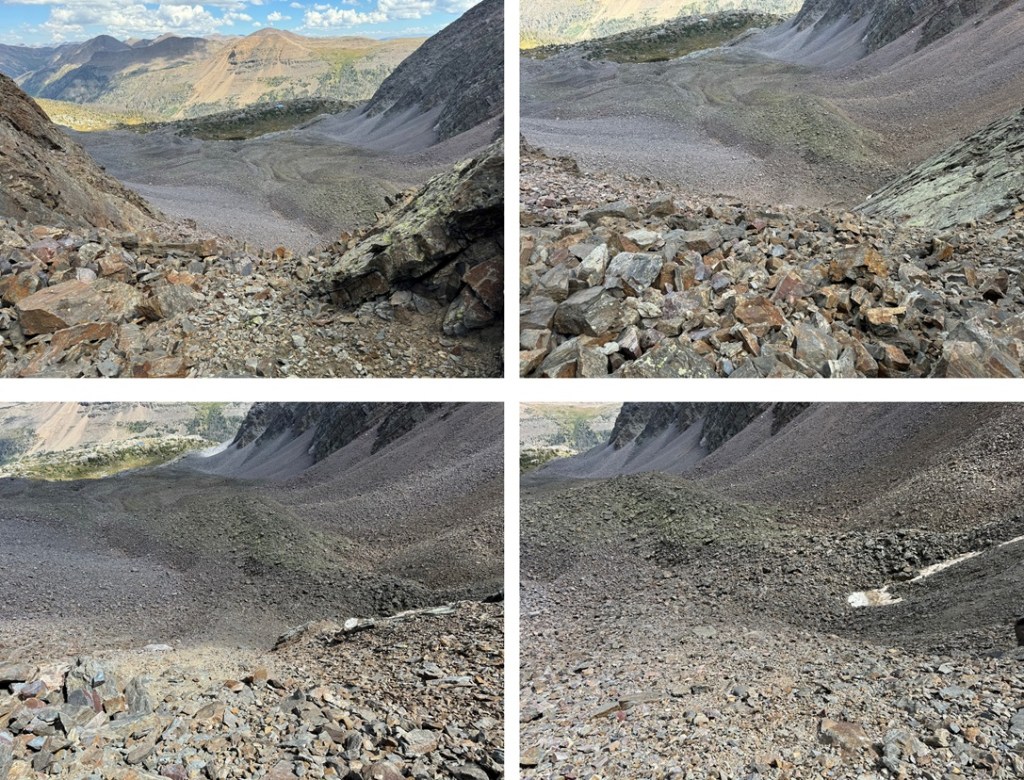
I then followed the basin back to the drainage, staying mostly to the right of the basin.

When I came to the drainage, I turned right followed it, staying to the left of the pond, back to the ledge, following game trails where I could find them.

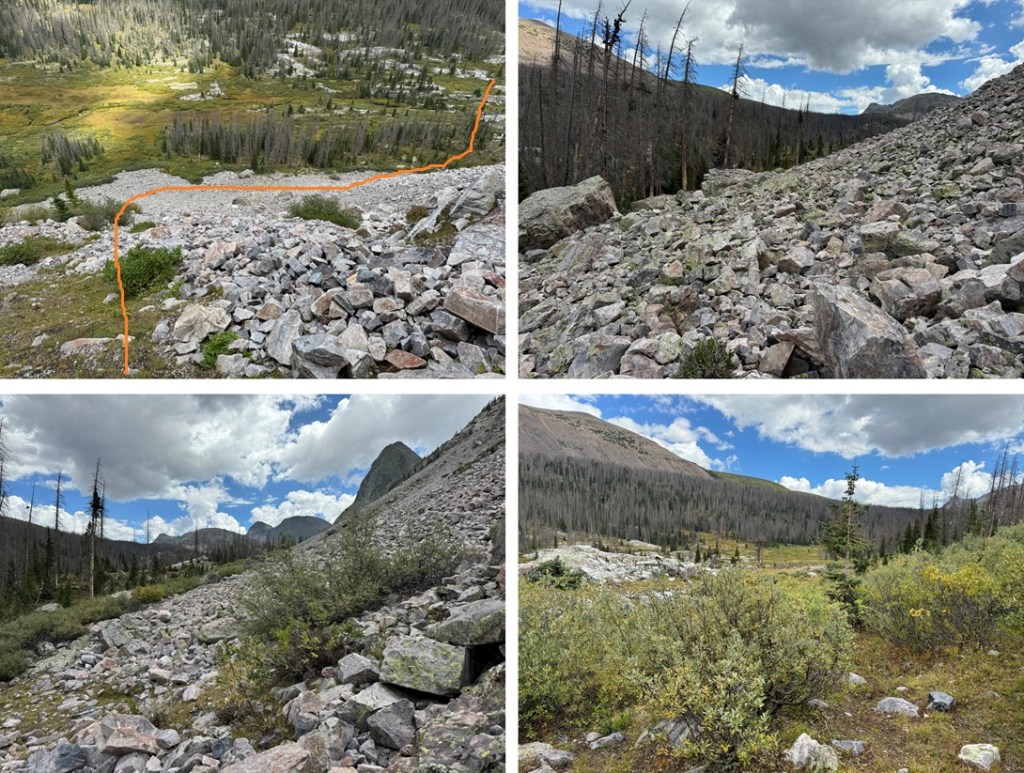
Just before making it to the waterfall I headed right, found my access gully, and headed down.
I descended the rocks, then headed back to my campsite.
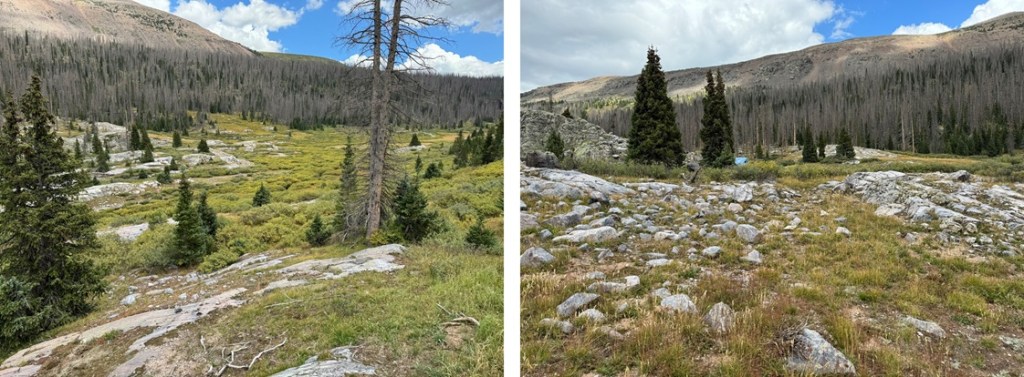
I made it back to my campsite at 1:30pm, making this a 6.61 mile hike with 2539’ of elevation gain and tons of route finding in 7 hours.
Oh, and that storm?  It dumped about 4 inches of slush, rain, snow, and hail on top of my tent in about 2 hours.  So now, I had another difficult decision to make:  Stay there overnight and wake up at 5am to a tent frozen solid, pack it up, and hike out, or just hike back to Beartown now.  For those of you who know me (and my Raynaud’s), you know what I did.  I packed it up and headed back to Beartown, hiking in the dark to make it back to my truck in time for my work meeting in the morning. It was NOT a fun hike out, as the trails were now covered in slush (I slipped a few times in the granite rock sections) but I stayed (relatively) warm.

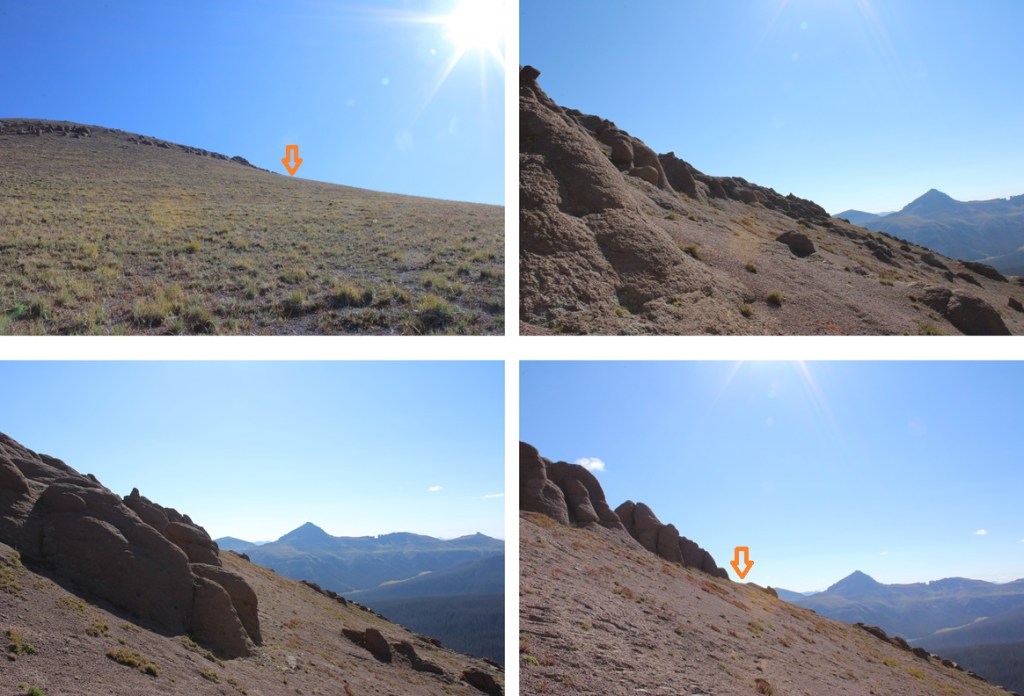
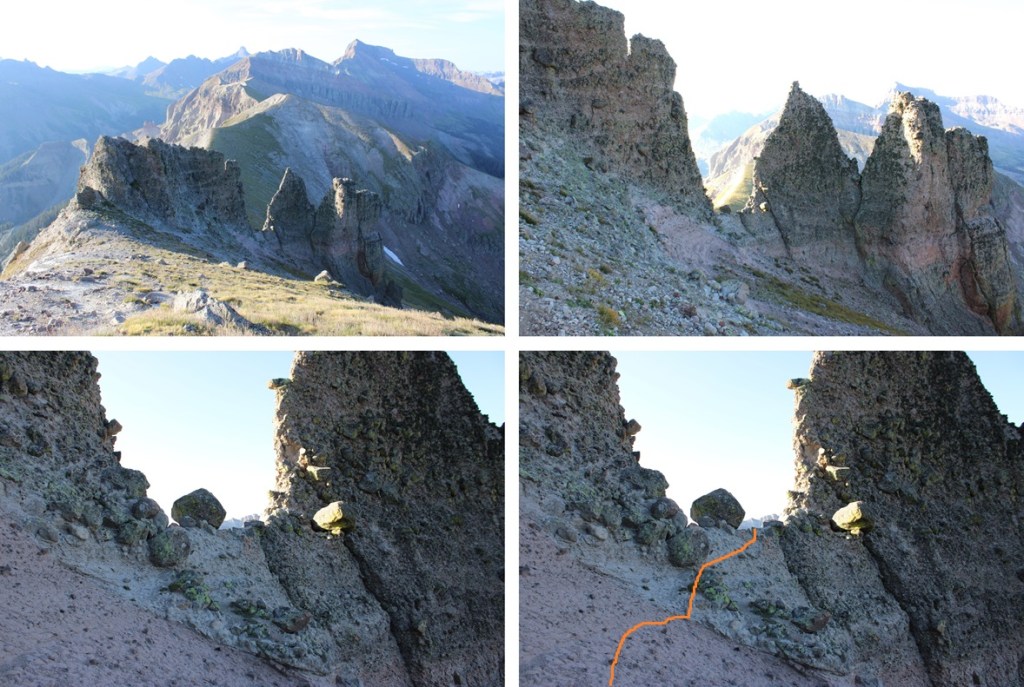
From the saddle of P3 and P2, I followed the ridgeline to 13190’, where you can see the false summit. From below the false summit, I went left (east) and found a gully.  I descended this gully, but not all the way.  Instead, I stayed high and traversed these rock outcroppings.  This route is basically class 3 and choose your own adventure.  I stayed high so as not to have to re-gain elevation, and this worked for me.  Here are pictures of the route I took:
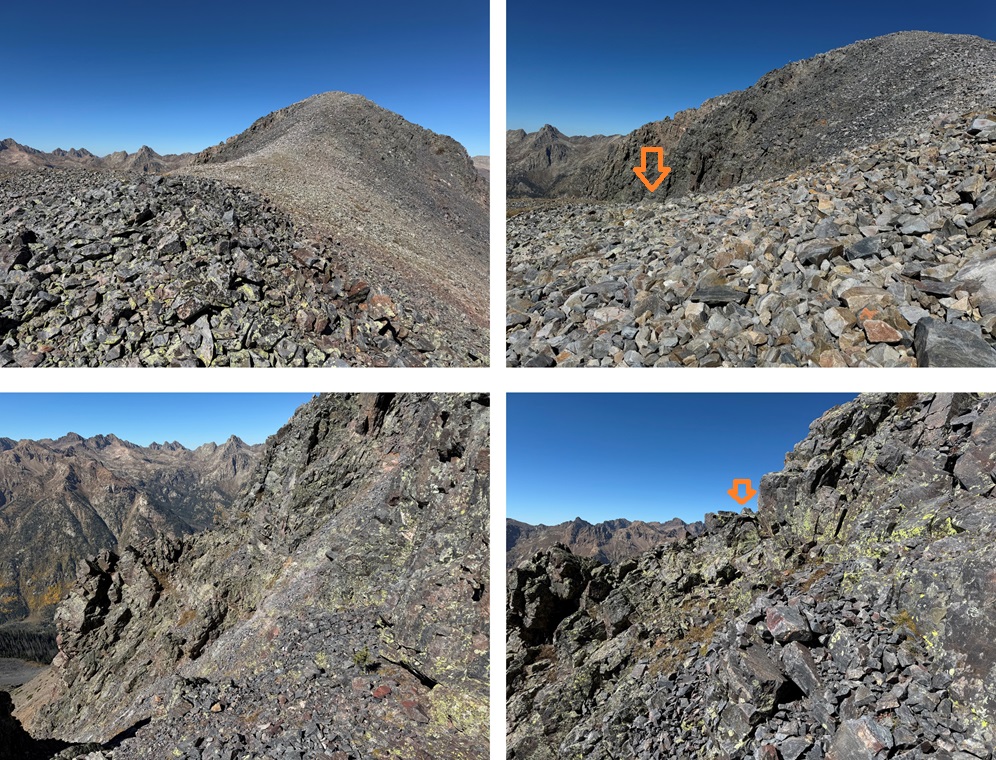
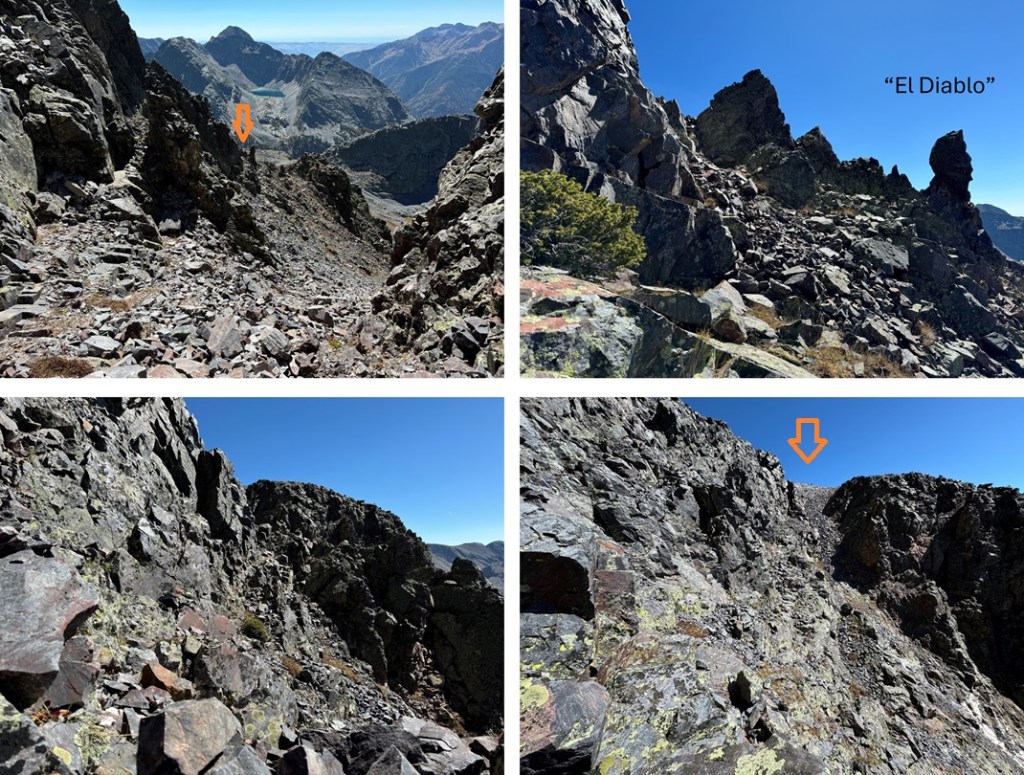
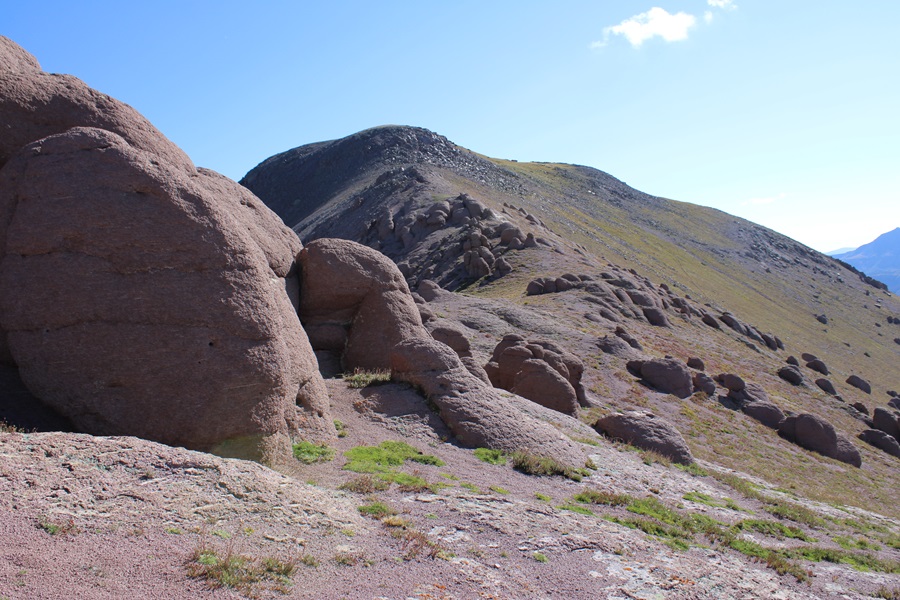
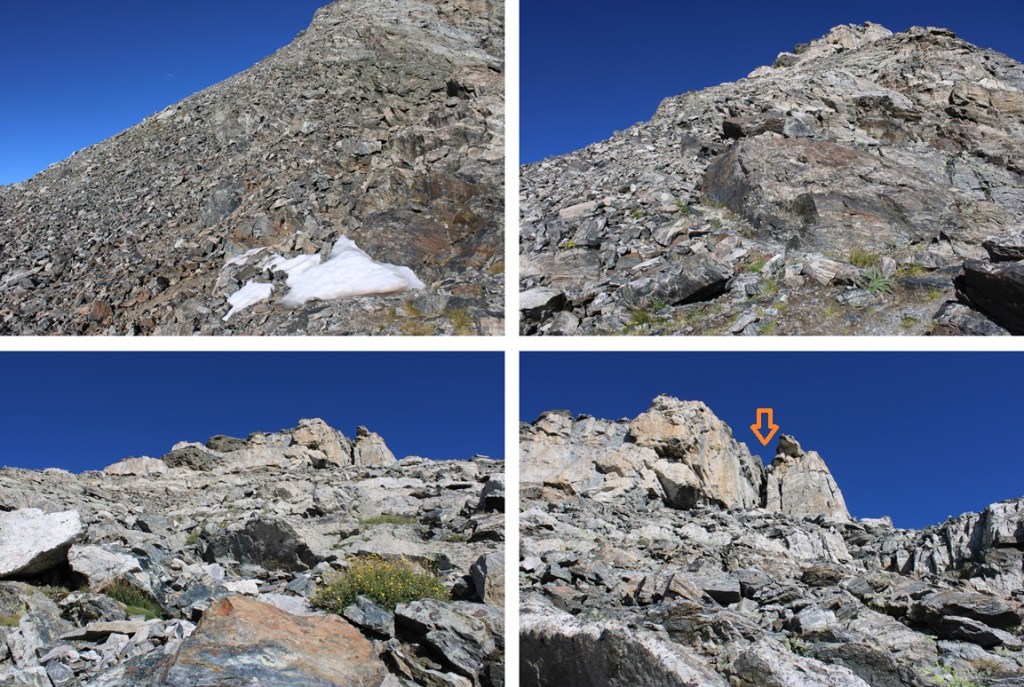
See this rock formation here?  While it’s difficult to see from this angle, I’m nicknaming him “El Diablo”, because to me he looks like a lot of things, but also closely resembled my High School Mascot, the Diablo.  Yes, my high school mascot is the devil.  For middle school we were the Banditos (imagine Yosemite Sam as a Mexican, complete with the mustache and beard, bullet harnesses and a gun in each hand).  Alas, after I went there the parents got upset and changed things and now they’re the “Leopards”.  The parents keep trying to change the Diablo mascot as well, but the students won’t let them.  In any event, I digress.  I went to the right of El Diablo on my way in and used him as a spotting point on my way out.  After passing El Diablo I could see a large gully to the right.  I stayed high on class 3 terrain and climbed the gully, which brought me to the base of the rock slab.
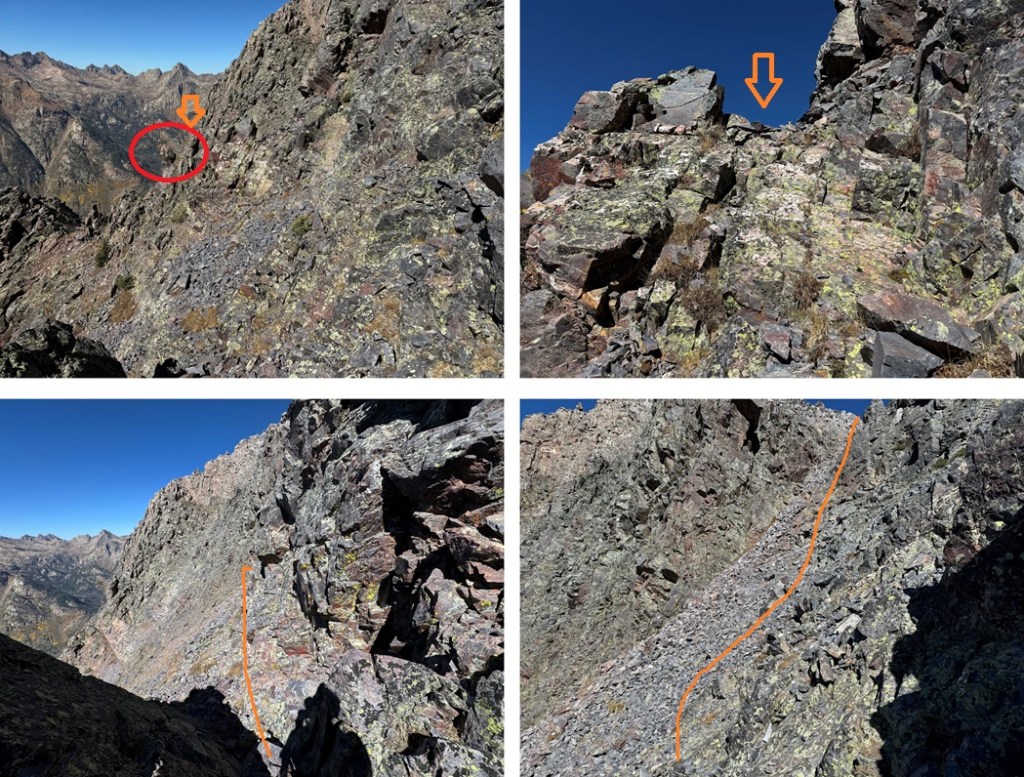
From there, I turned left, and it’s a class 3 climb to the summit.  I tried a lot of different routes that others said ‘went’, but I found climbing straight up the face was the easiest way to summit and stayed at easy class 3.  Climbing straight up the face is easier than it looks, with lots of ledges.  From there I was on a small ridge, and it was 10 feet or so of walking northeast to the summit. Here’s the overall route:
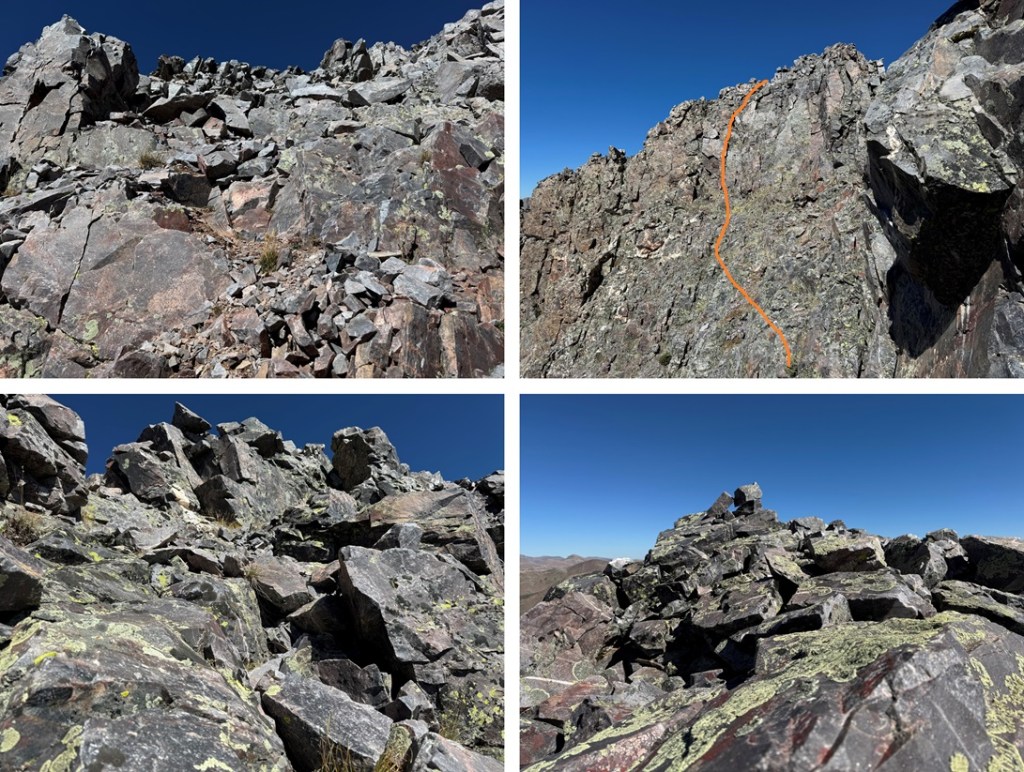
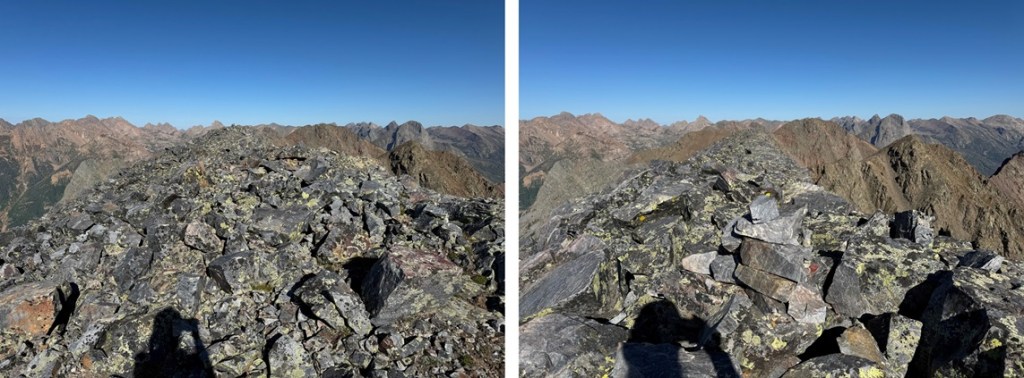
And my summit Photo:

P2:

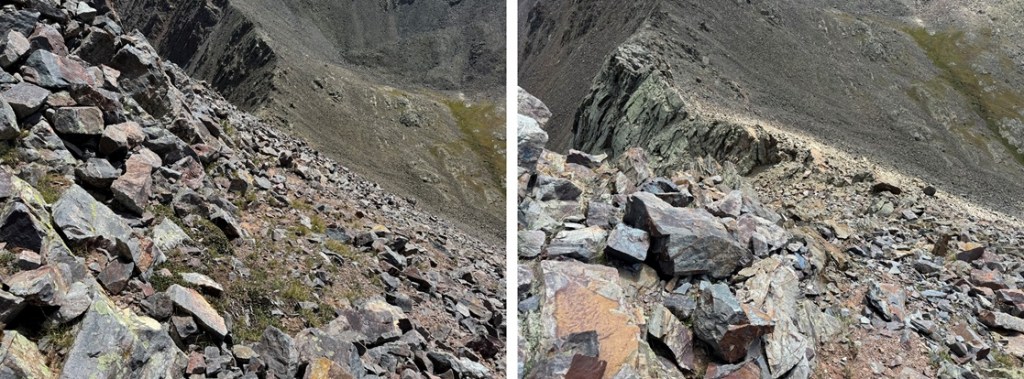
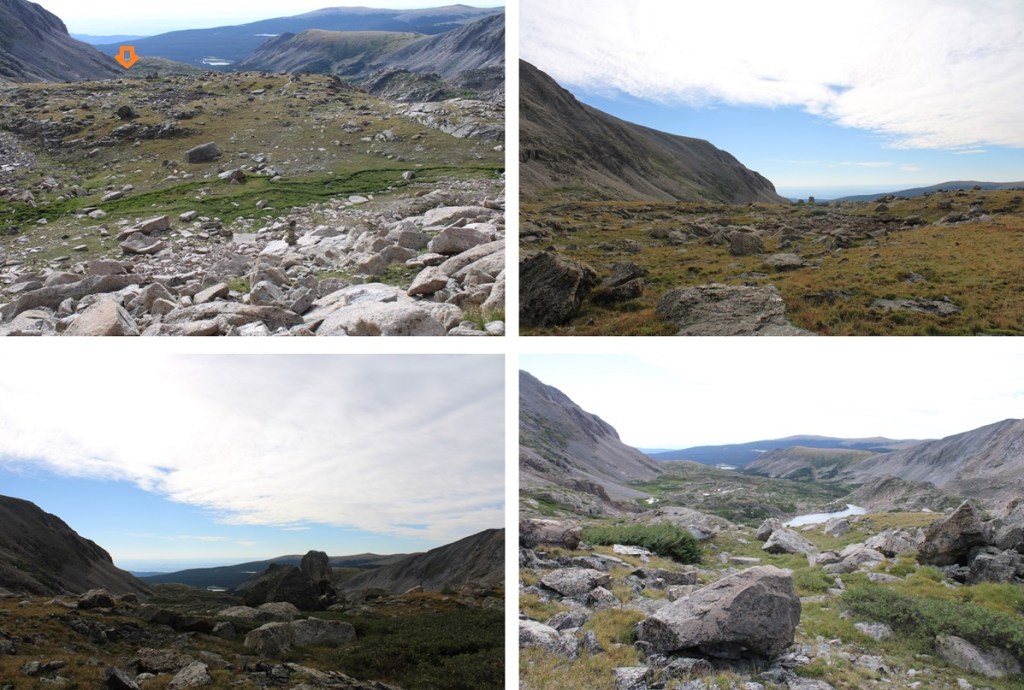
Here are some pictures of the route back:

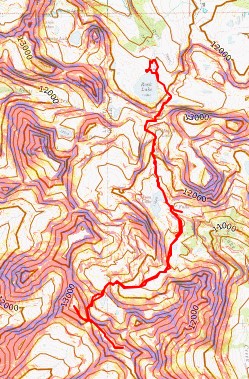
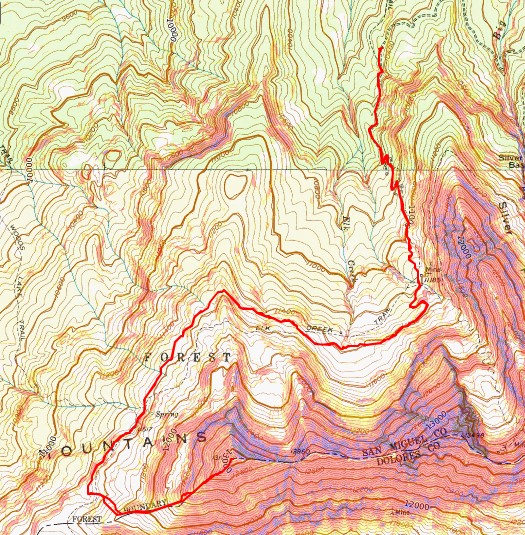
And the TOPO for P2

On to the next trailhead!
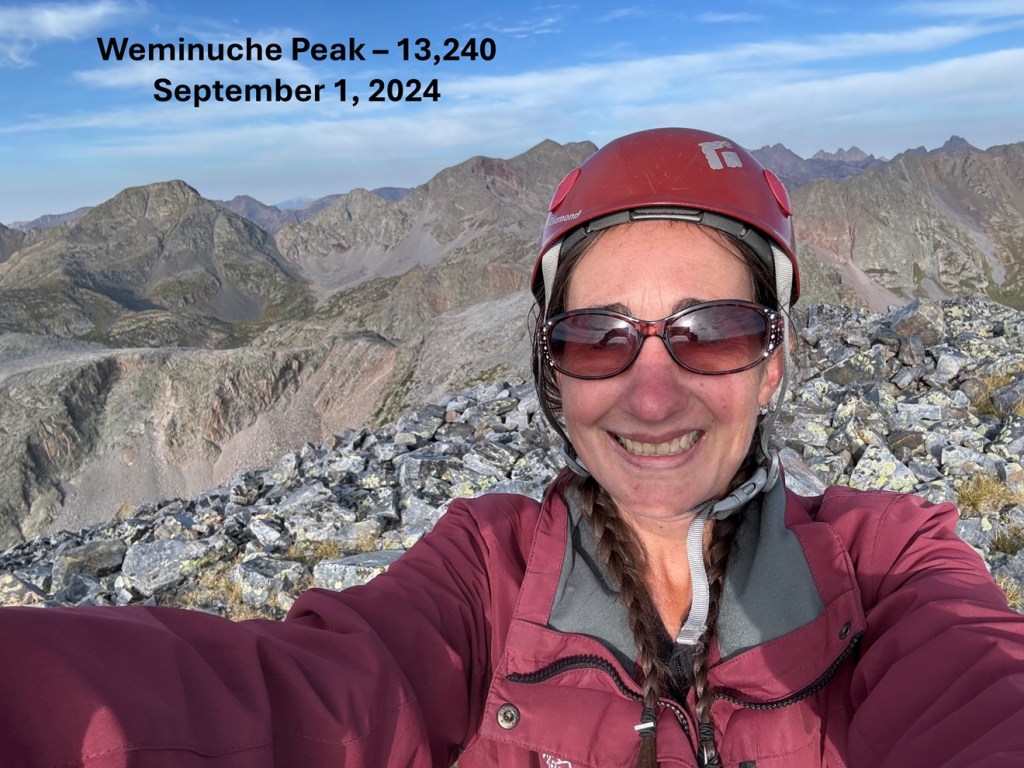
Weminuche Peak – 13,240

RT Length: 4.16 miles

Elevation Gain: 1550’

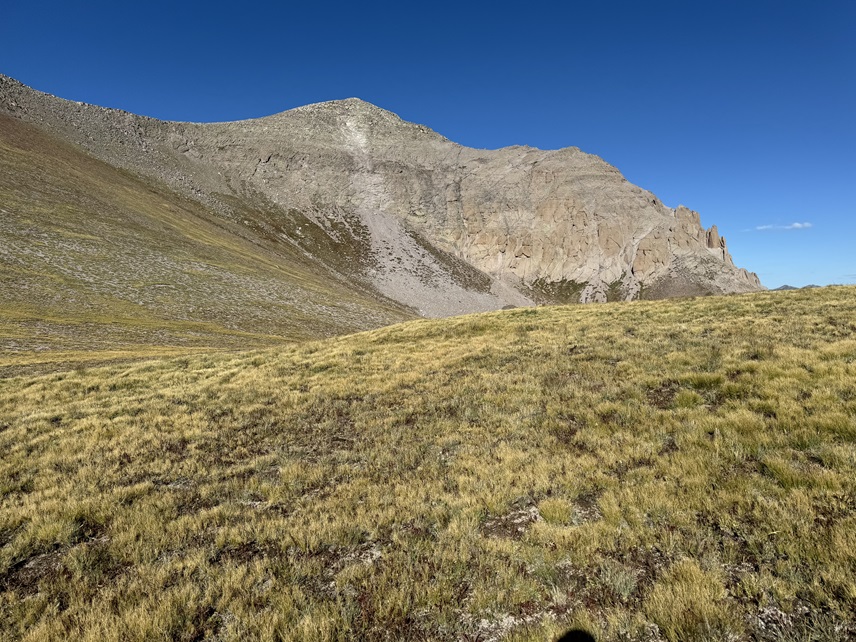
From my base camp at Rock Lake, I was up and on the trail at 6:30am, headed for the pass that leads towards Moon Lake.  There’s a nice trail that will lead you all the way from the left side of the lake to the pass.

Once at the top of the pass, I looked left, and found the route I wanted to take to get to the gully.  I aimed for the white strip of rock in the middle, staying on tundra and solid rock most of the way.  This was all class 2.

Once in the gully, I followed it east towards a saddle. There was a lot of loose rock in this area, but it was all class 2.

Once at the top of the gully, I turned left and headed north up to the ridge.  The rocks here were large, loose, and easy class 3 terrain.  The rest of the route to the summit would be rocky.

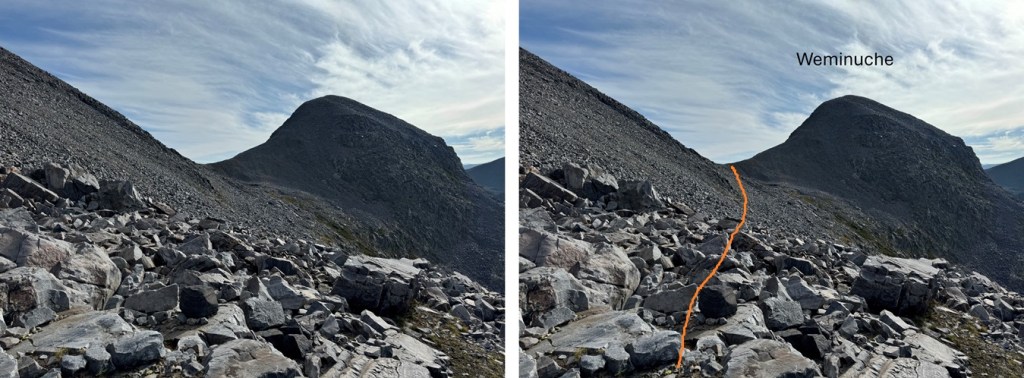
I could now see Weminuche Peak to the east.  To get there, I’d need to gain another saddle.  This is choose your own adventure, but this is the route I took to the next saddle.  Very rocky terrain here.

Once at the next saddle, I followed the rocky ridge east to the summit.  This is class 2+. The rocks are the size of microwaves, and many of them are loose, or surrounded by talus.  There are no game trails here.

I summited Weminuche Peak at 8:20am

Weminuche Peak:

This was an out an back hike for me, so I turned around and retraced my steps back to Rock Lake.  Here’s my overall view of the route back down.

First, heading west down the ridge to the saddle

And then heading southwest towards the next saddle

Back down the short but mighty rocky section

And then northwest down the gully until I could see the pass to my right that would lead me to Rock Lake.

I headed towards the pass, staying mostly on rocky tundra.

Once at the pass, I picked up the cairned trail that would lead me back to Rock Lake

I made to Rock Lake at 10am, making this a 4.16 mile hike with 1550’ of elevation gain in 3.5 hours

On to the next trailhead!
Peters Peak – 13,138 and PT 13229

RT Length: 4.1 miles

Elevation Gain: 1897’

From my campsite at Rock Lake, I was up and on the trail at 7am, heading west towards the pond at 12000’

I skirted the pond to the left, and ascended on the tundra parallelling the small rock pile

At the top of this small pile of rocks was a much larger pile of rocks.  I continued following them west to the Peters/Buffalo saddle.

At the saddle I turned left, and headed southwest up the slope to the ridge.  This was 600’ of elevation through kitty-litter scree and talus in .2 miles.  This was class 2+ choose your own adventure, but this is the basic route I took:

At the top of the ridge I turned left, and rock-hopped to the summit.  This was all class 2 or easy class 3.

I summited Peters Peak at 8am

Peters Peak:

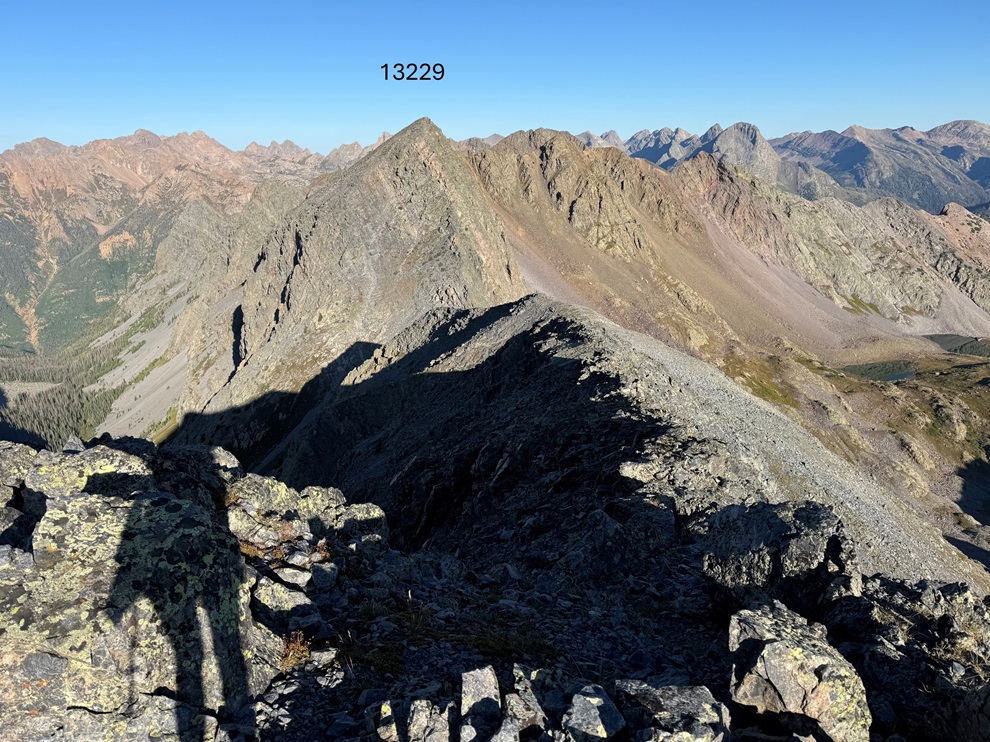
From Peters Peak, I could see PT 13229 to the northwest.  I turned and headed back down the ridge, but not to the Buffalo Peak saddle.  Instead, I followed the ridge west, all the way to the saddle of Peters Peak and PT 13229.  This was rocky, but could all be kept class 2

From the Peters/13229 saddle, I looked for a yellow gully in the rock, and aimed for it.  This is the basic route I took, all class 2 until the gully.

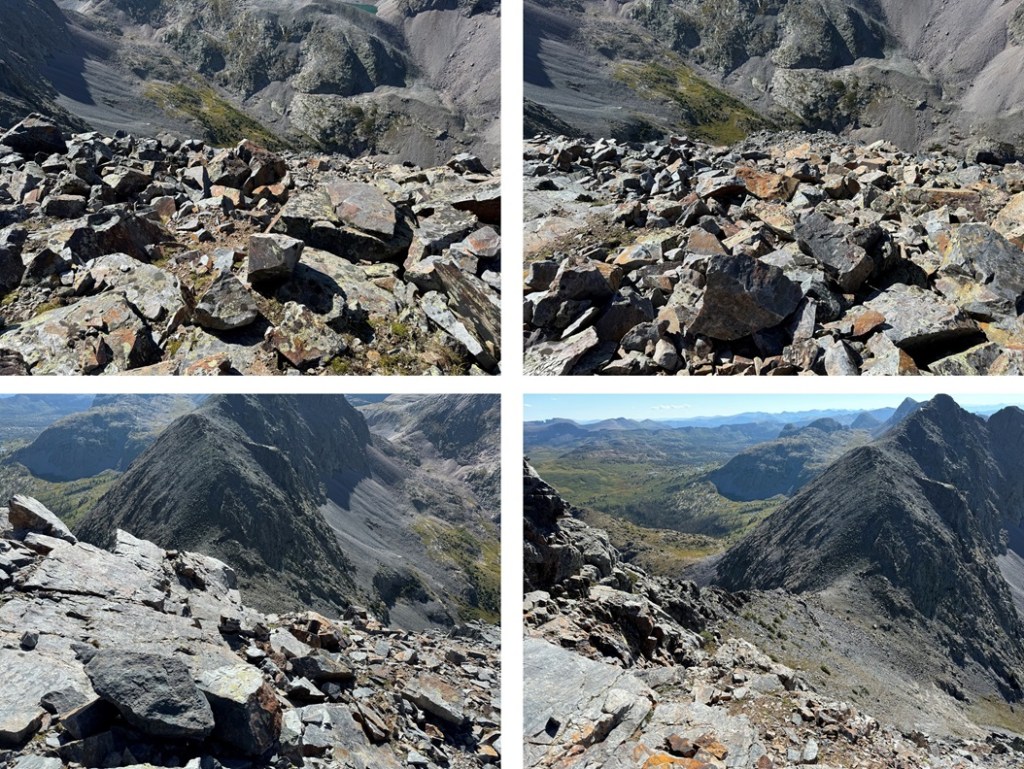
The gully itself goes at class 3, but you can find more stable (also class 3) rock about halfway up to the left.  The gully itself was pretty stable, but there was scree littering the rocks.  The goal is to gain the ridge.  

Once on the ridge, I turned right, and followed it a short distance north.  There were cairns here.  It was rocky, and the rocks were loose.

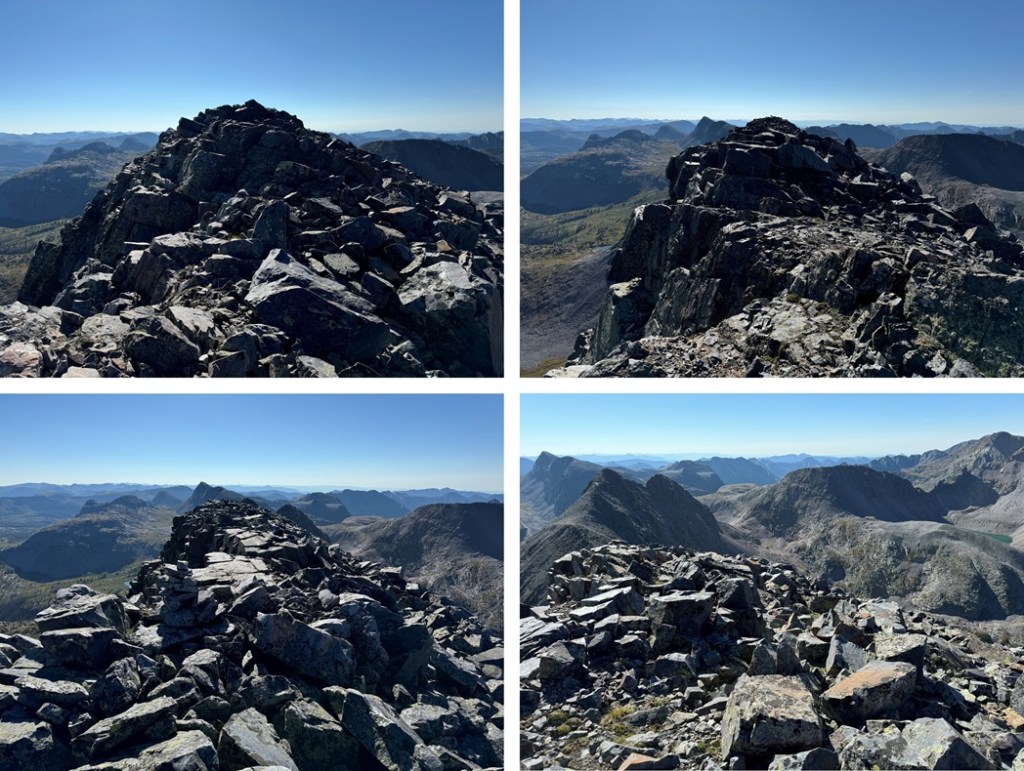
At the top of the ridge there were more cairns, all going left, following the ridge west.  The ridge was pretty flat, and there were several large cairns (most likely for the traverse).  I wasn’t able to tell where the actual summit was, so I just hiked the entire rocky, class 2 ridge.

I summited PT 13229 around 9:15am

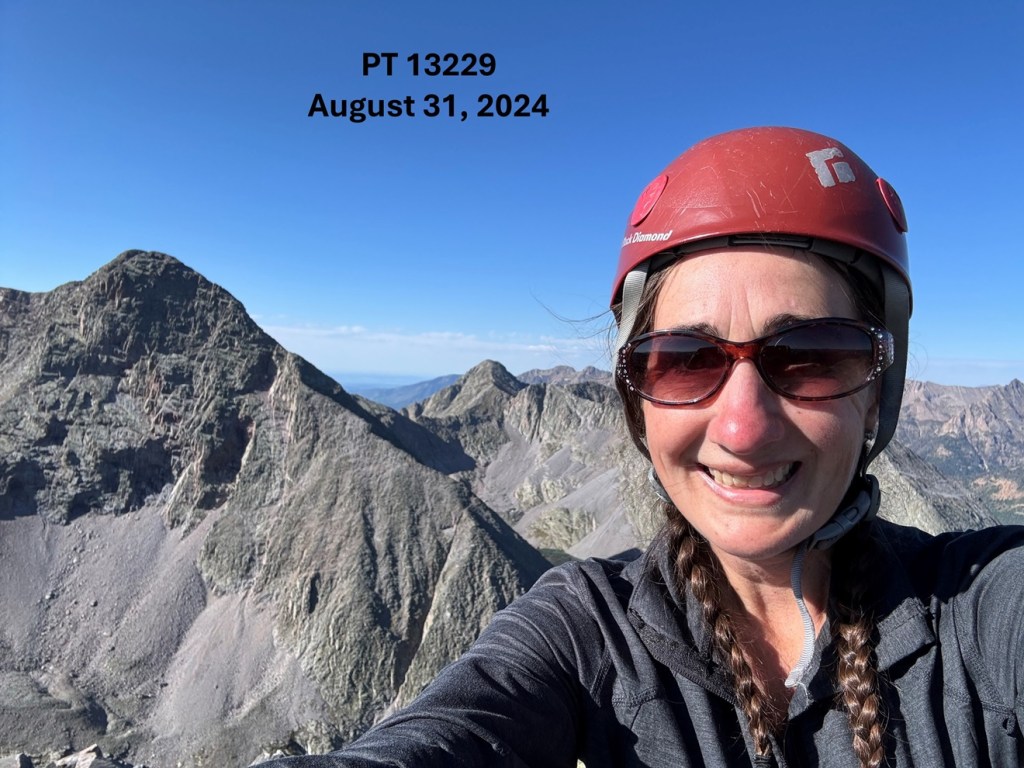
PT 13229:

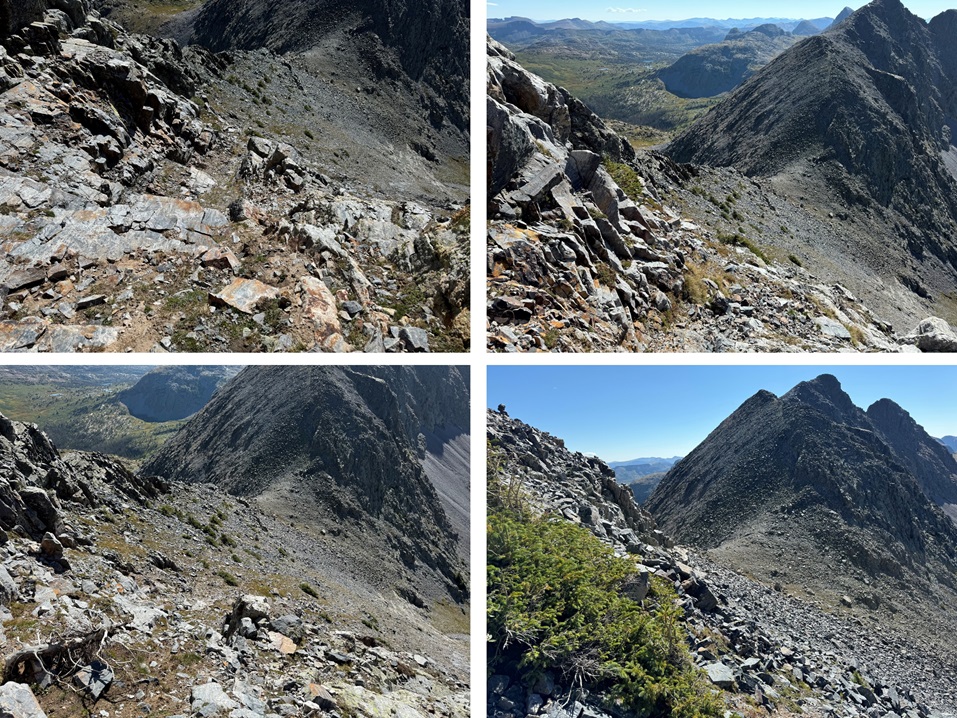
I was not doing the traverse today.  While the skies were currently clear, it would be pouring down rain in another 2 hours, and I knew I had to get back to camp.  So, I turned and headed back towards the Peters/13229 saddle.

I headed south towards the yellow gully

Then took the yellow gully down to the 13229/Peters saddle

Once at the saddle, I re-ascended much of the ridge to Peters Peak, then descended to the northeast, avoiding cliffing out below the Peters/13229 saddle. 

First, up the ridge

Then, down to the Buffalo/Peters saddle

Once at the saddle I turned right, and followed the drainage east back towards Rock Lake

I made it back to Rock Lake at 11am, making this a 4.1 mile hike with 1897’ of elevation gain in 4 hours.

PT 13323 and PT 13350

RT Length: 11.6 miles

Elevation Gain: 4397’

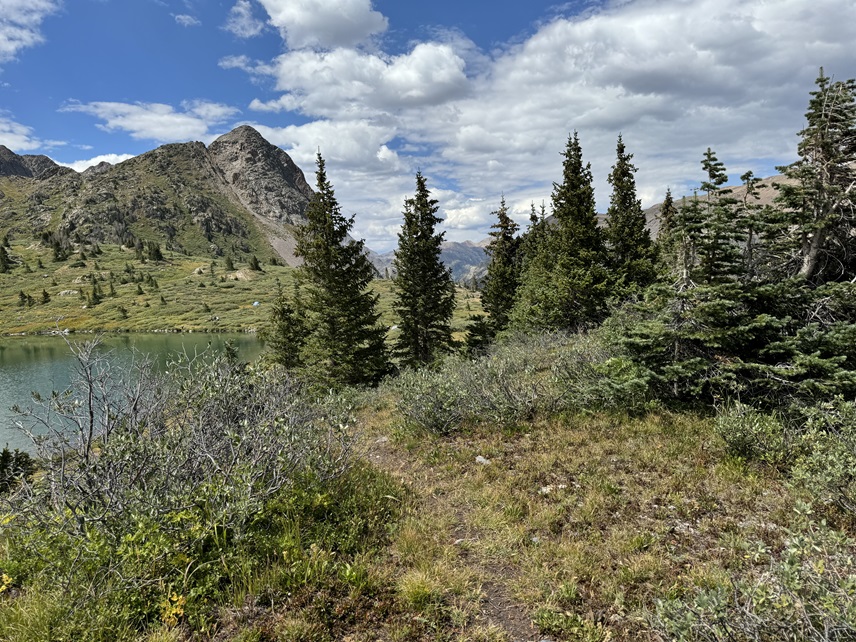
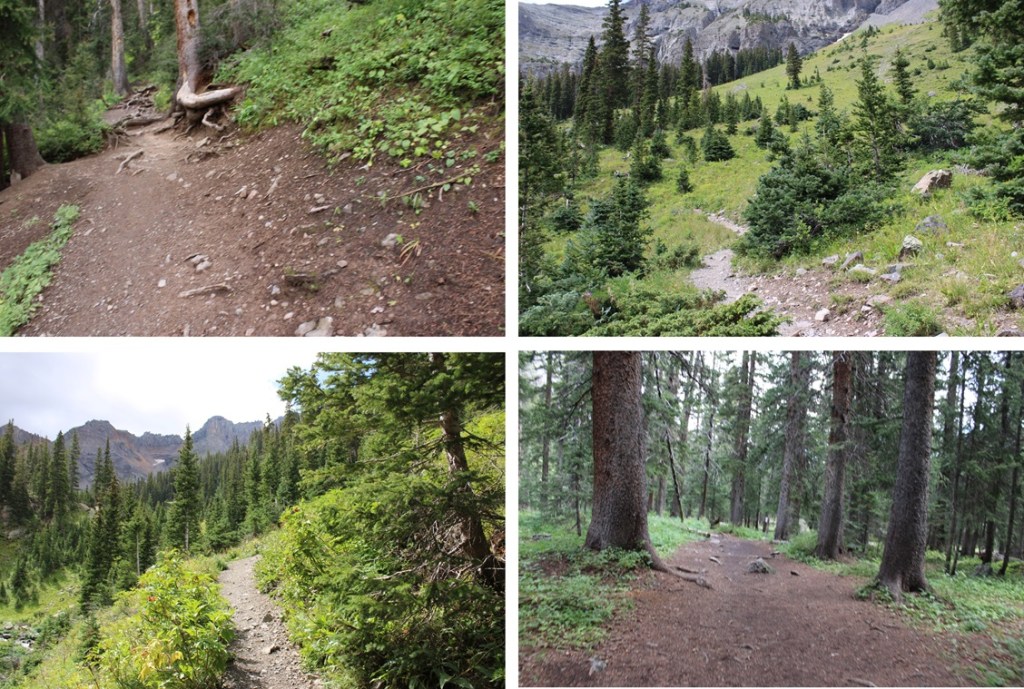
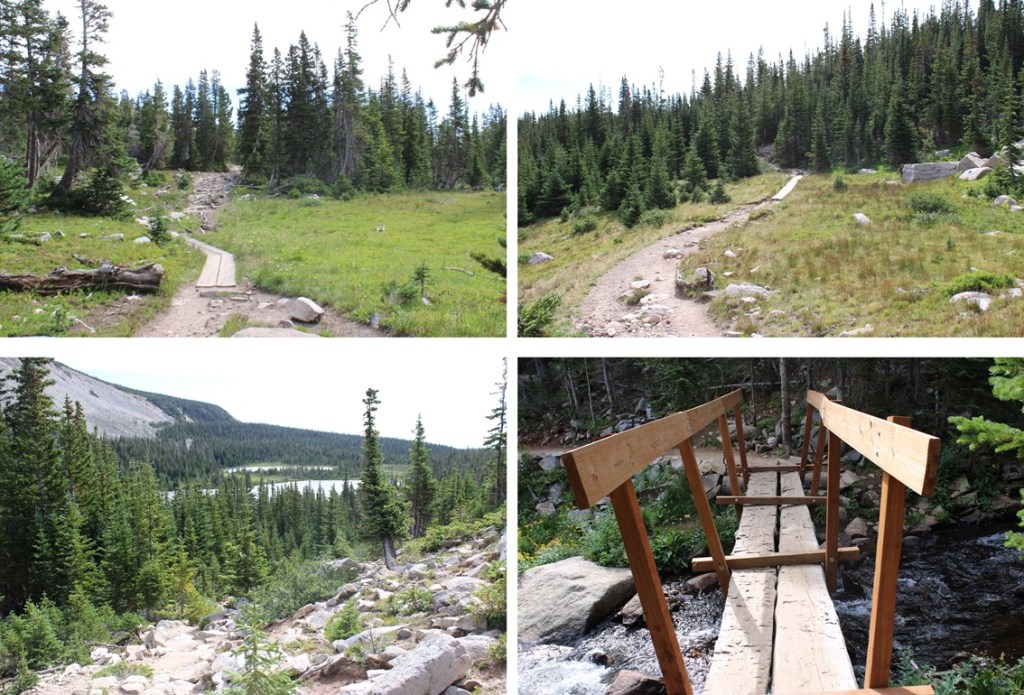
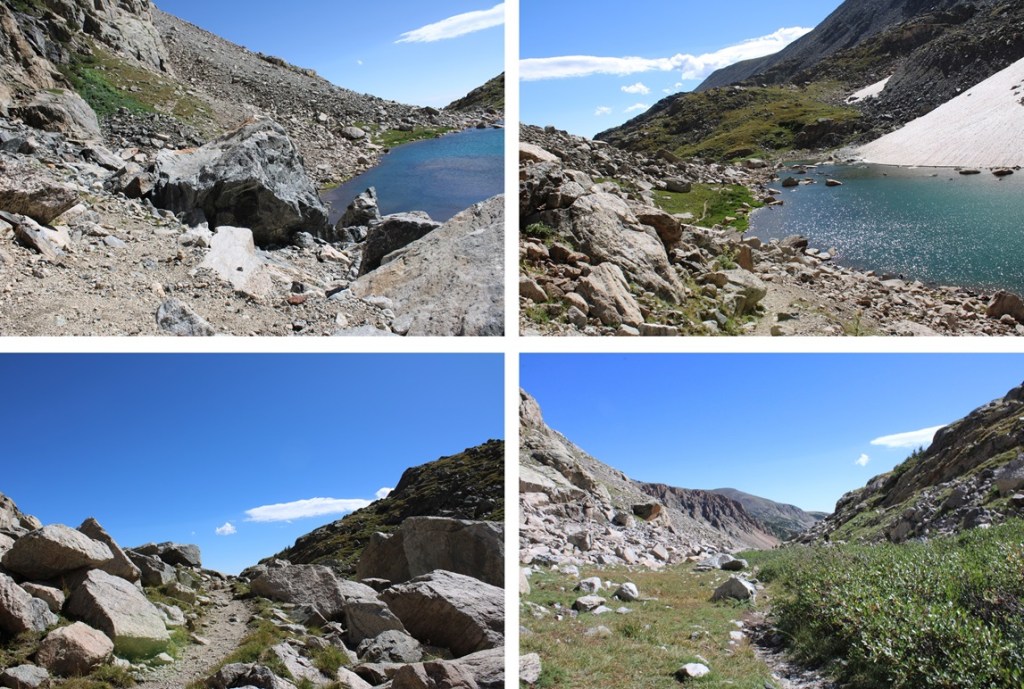
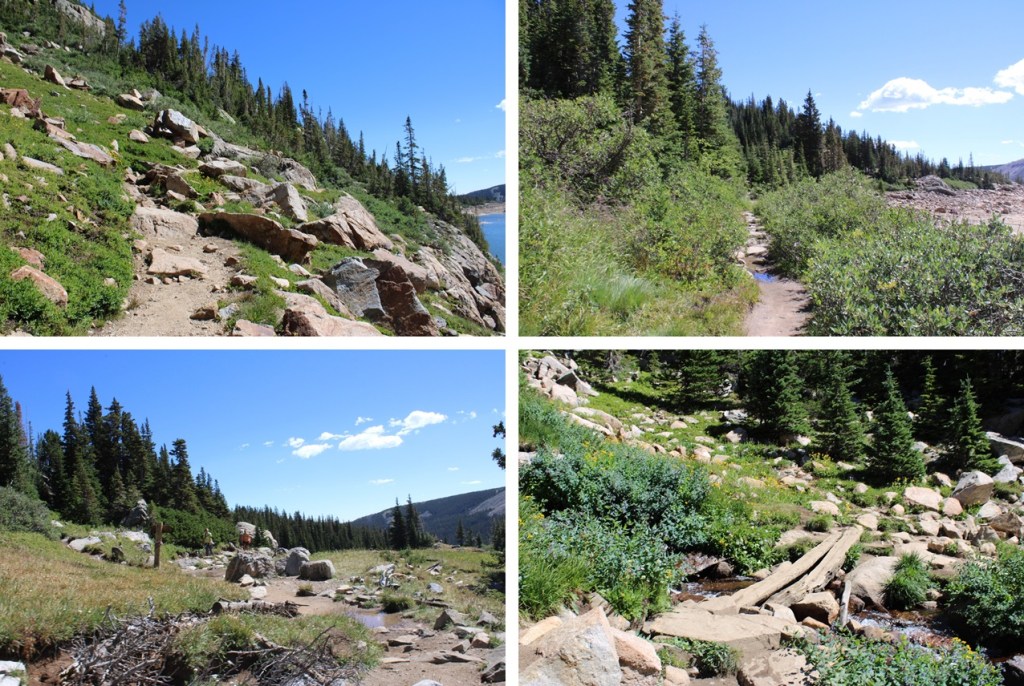
I hiked into Rock Lake the day before, and met a few forest service workers doing trail maintenance along the trails.  They were sawing up logs from trees that had fallen directly on the trail to make a clearer path.  While I was very excited they were doing this, the trail in was the wettest and muddiest I’ve ever seen it.  The entire trail was a river, several inches deep with water, making walking on the rock slabs slippery.  Even the side social trails were full of water.  In any event, when I got to Rock Lake I set up my campsite (150 feet from the water), filtered some water for the next day, and I dried out my shoes and socks. 

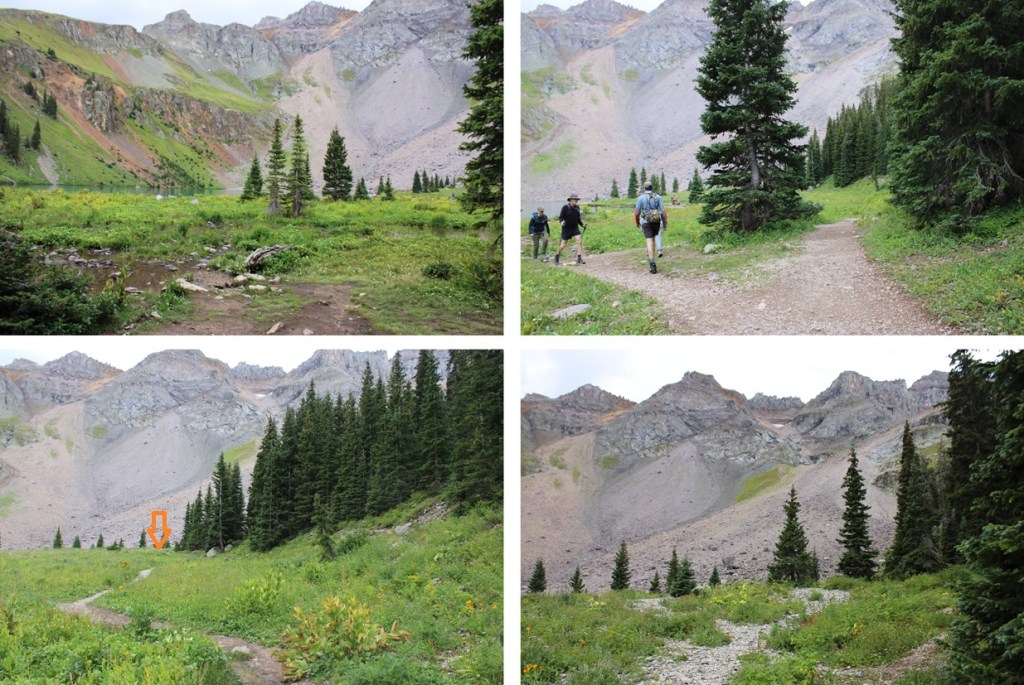
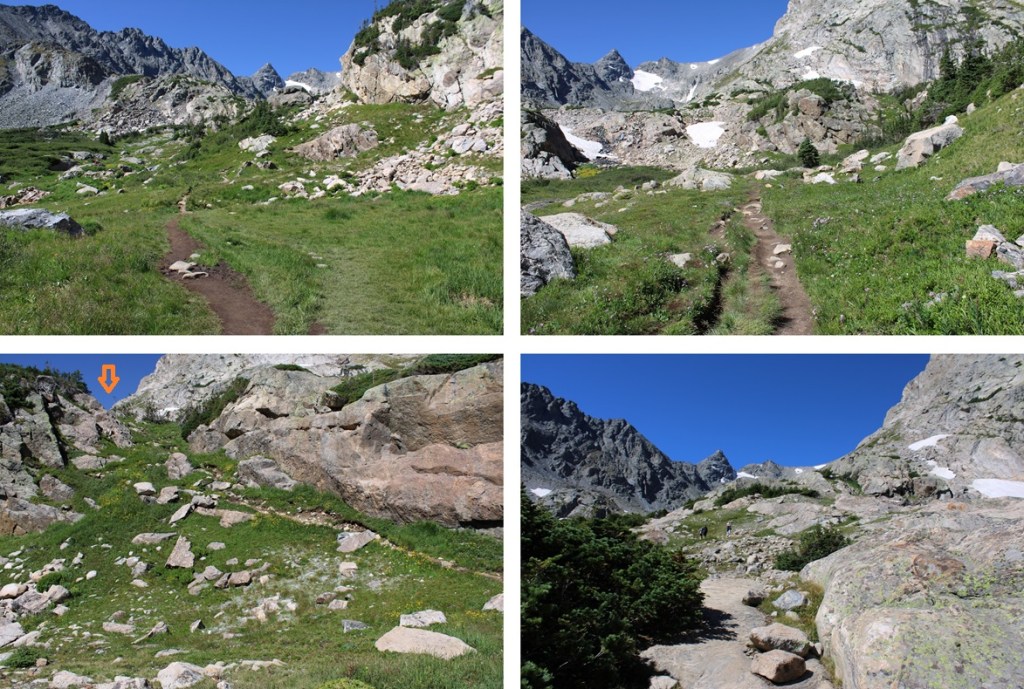
I was up and on the trail at 6:30am.  I skirted the lake to the left, and found a great trail on the small slope to the left of the lake that brought me to a trail that headed up to the pass.  Once in the rocky section, this trail is very well cairned.

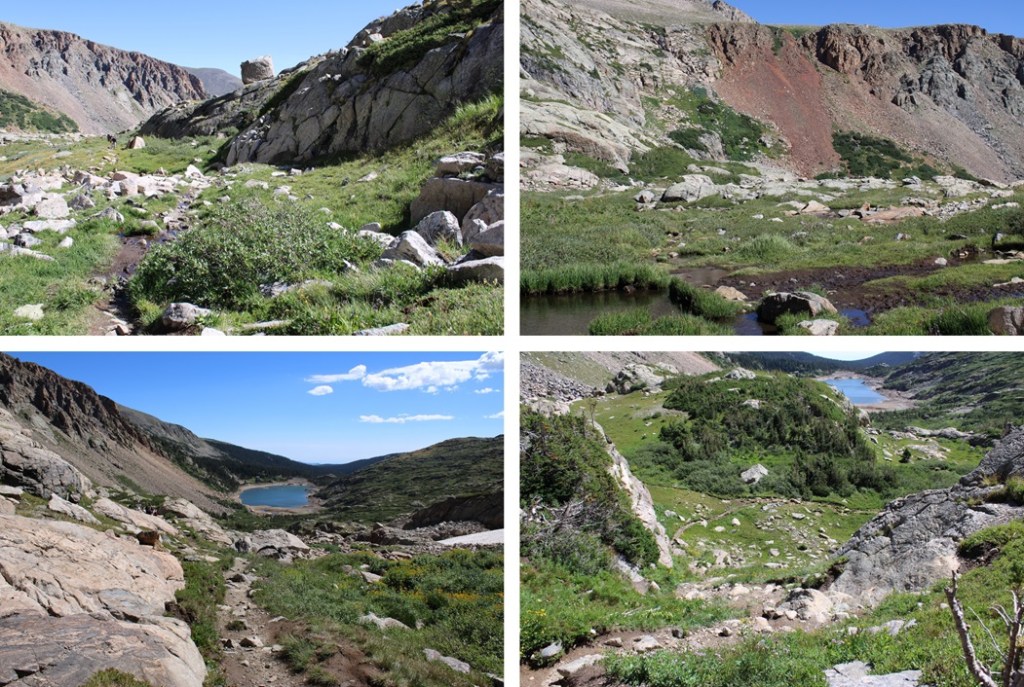
From the top of the pass, I would then lose 1000’ of elevation as I headed down towards Moon Lake.  This is a very well marked trail that led me towards. 

Just after passing by Moon Lake I crossed a creek and followed the trail left.

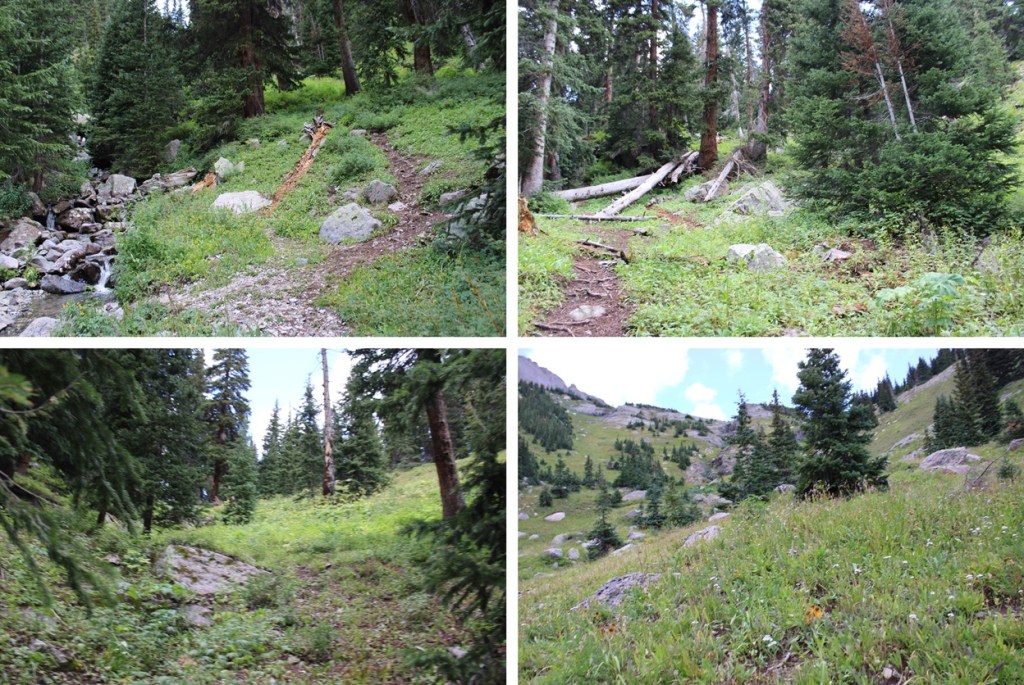
As soon as I came to a clearing, I left the trail to skirt the side of the mountain, doing my best to stay at around 11600’.  If you pass the waterfall (you’ll notice it), you’ve gone too far.  There are a few cairns here, but they are few and far between.  I did my best to stay on game trails as I skirted the mountain, heading south.

I came to an unnamed pond, and skirted it to the right.  There’s actually a really good game trail that will get you through the willows and into the upper basin.  Just stay to the right of the creek.

Once in the upper basin, I followed it southwest.  It’s marshy here, so watch your step.

I continued following the basin until I could see a ridge in front of me.  I gained the ridge, and followed it left.

This brought me to another pond.  From here I could see the rest of my route to the 13323/13350 saddle. 

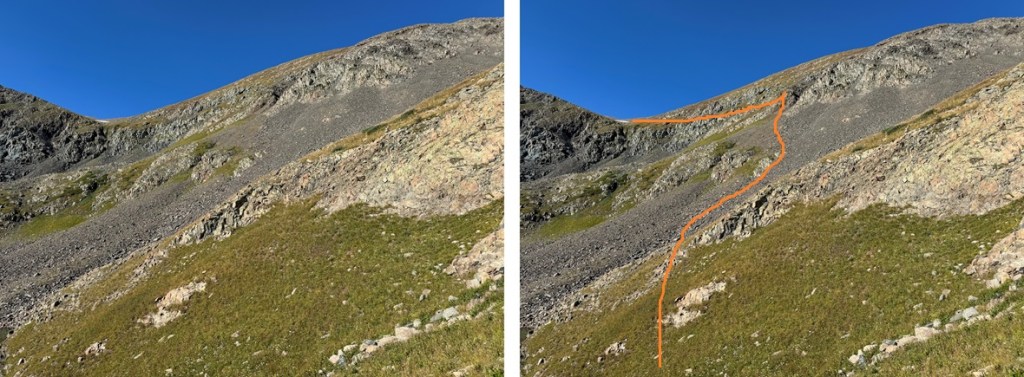
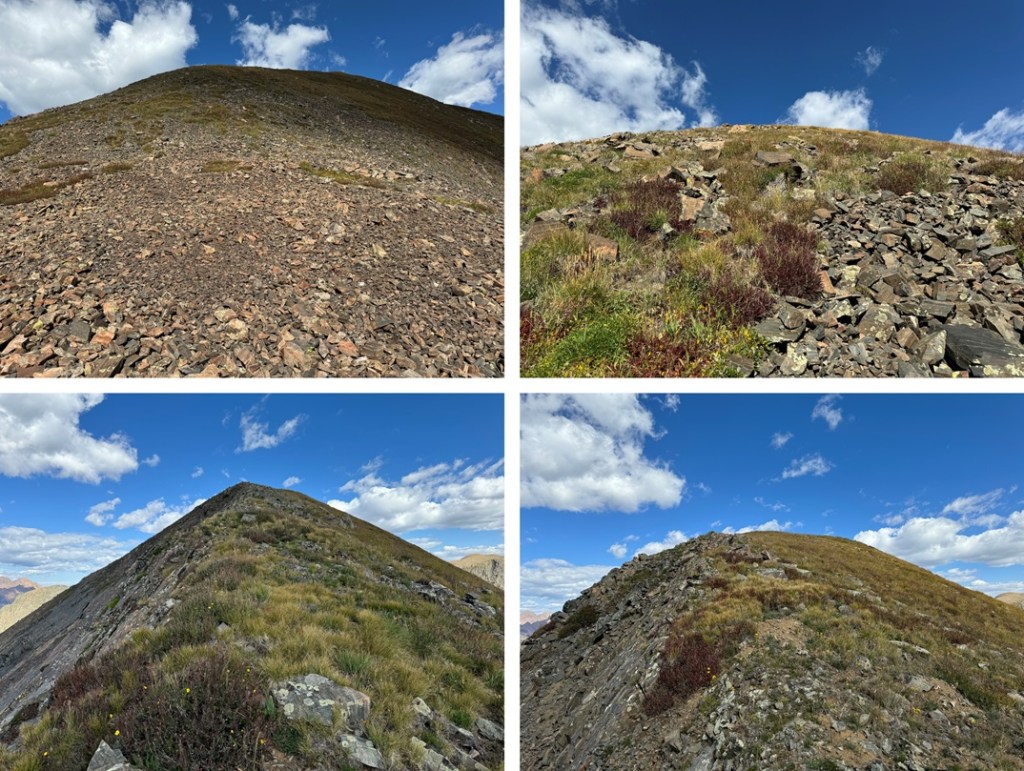
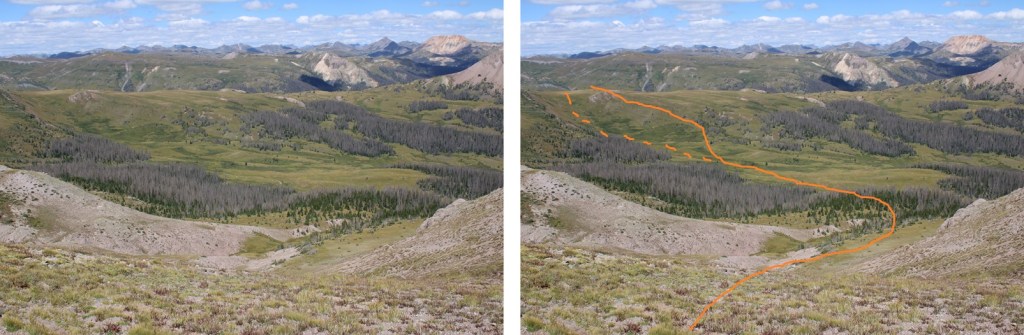
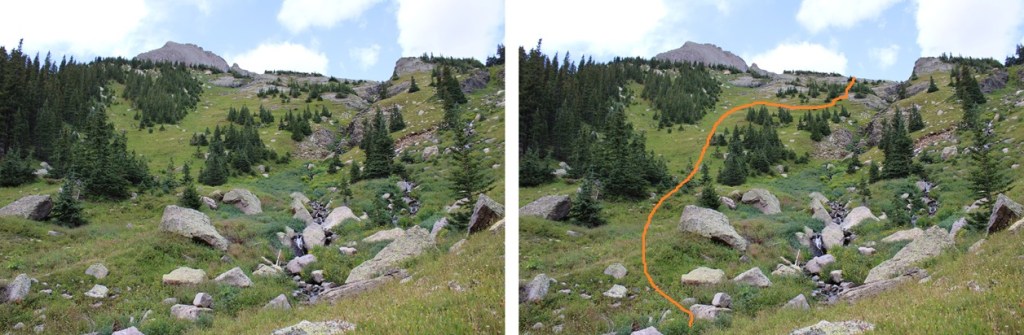
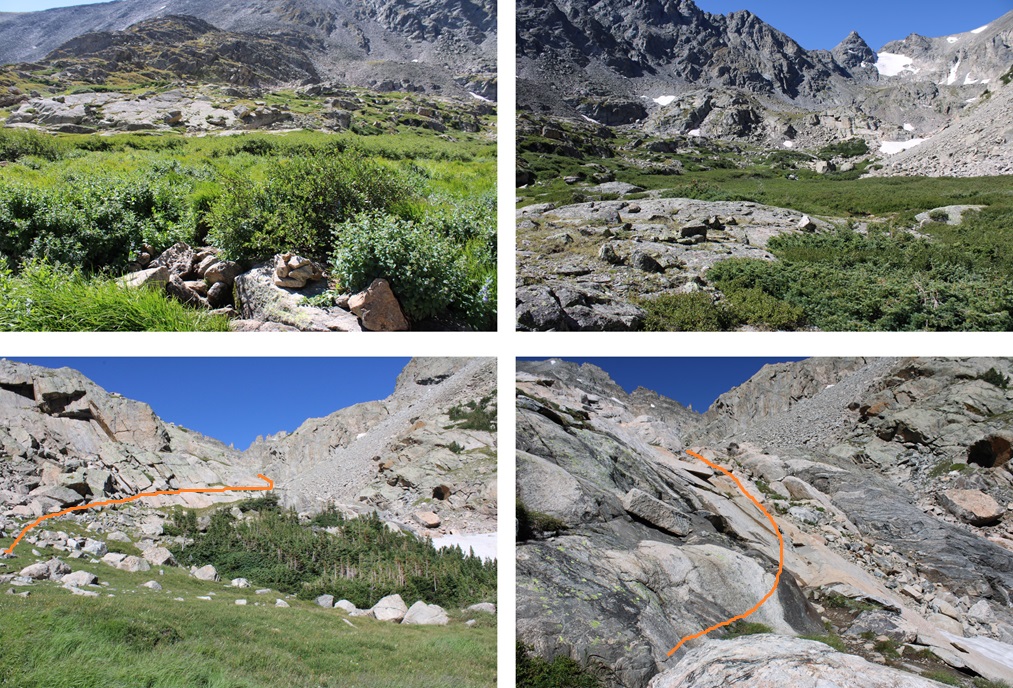
I aimed for the scree gully and then the grassy ledge.  There are some game trails here, and a good one picks up once you’re on the slope that stays in-between rock formations and heads straight for the saddle.  Here’s my overall route:

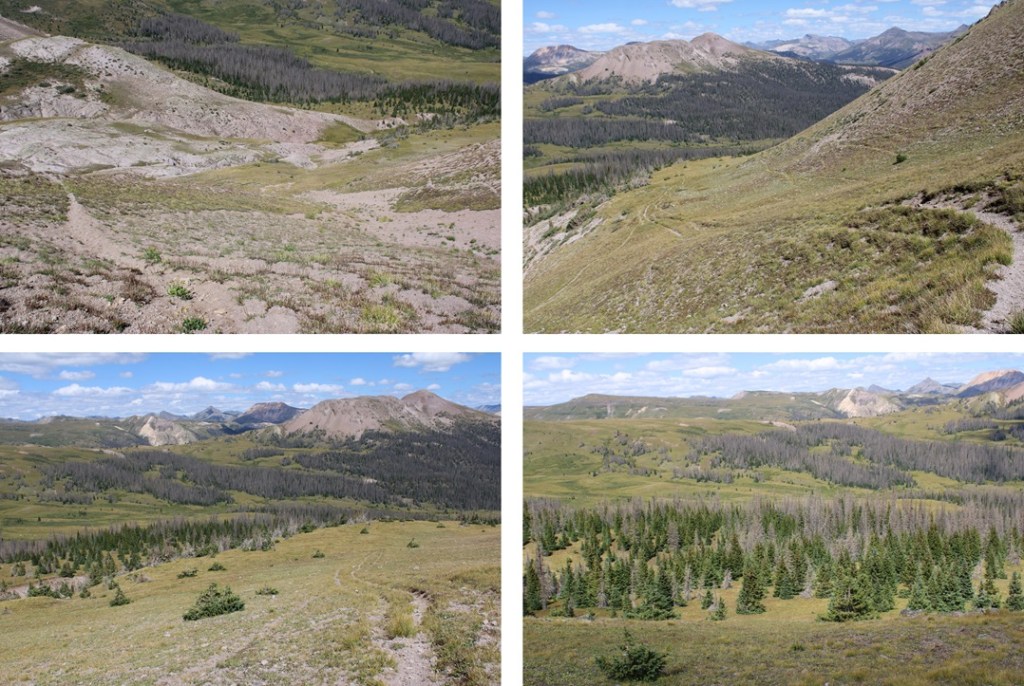
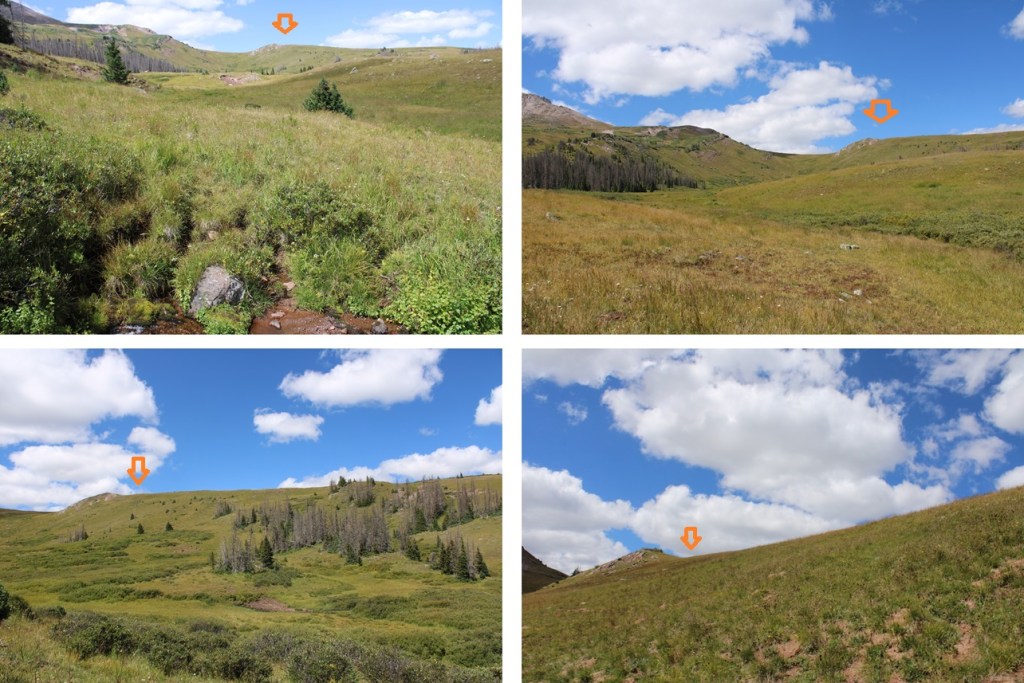
And some pictures of the route to the saddle:


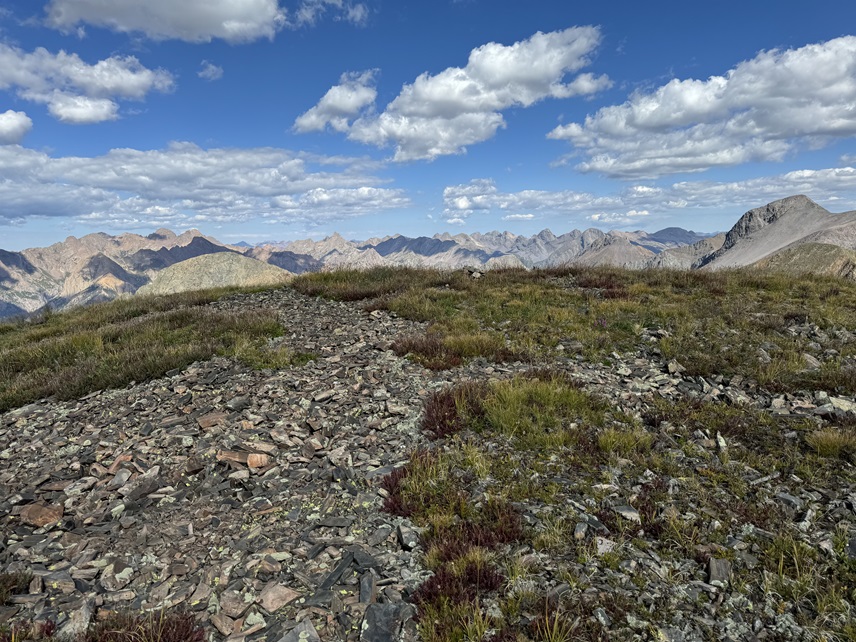
Once at the saddle I turned right, and headed towards PT 13323.  This was an easy hike on rocky tundra.

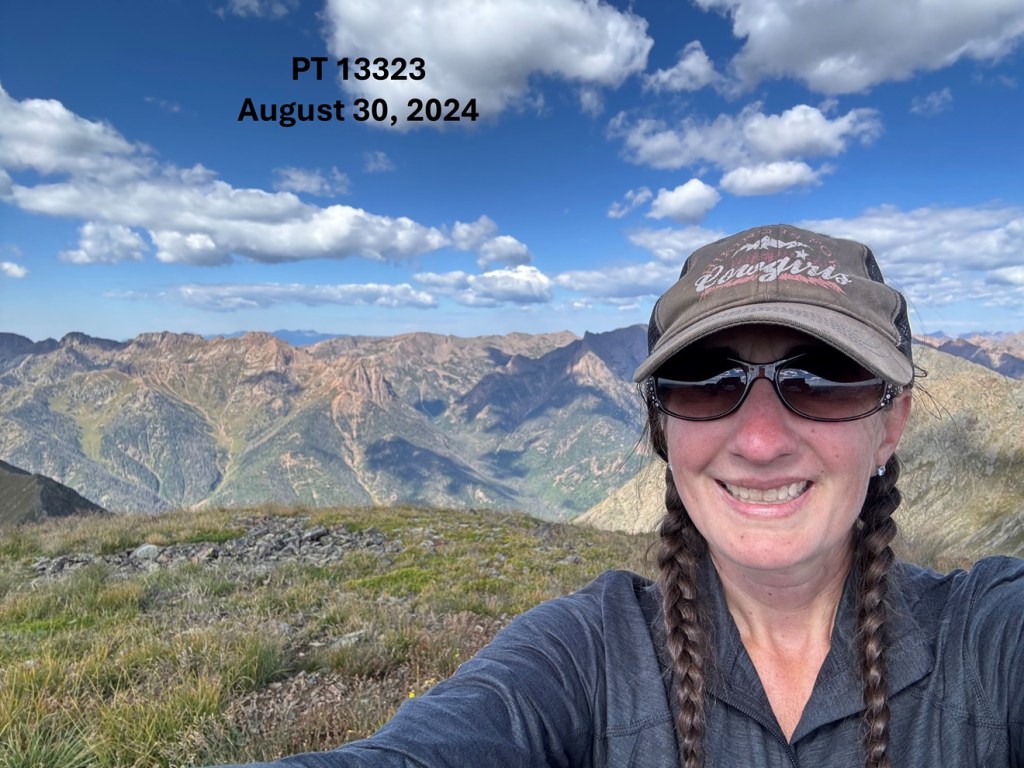
I summited PT 13323 at 10:15am

PT 13323:

To the southeast I could see PT 13350

So I headed back down to the saddle

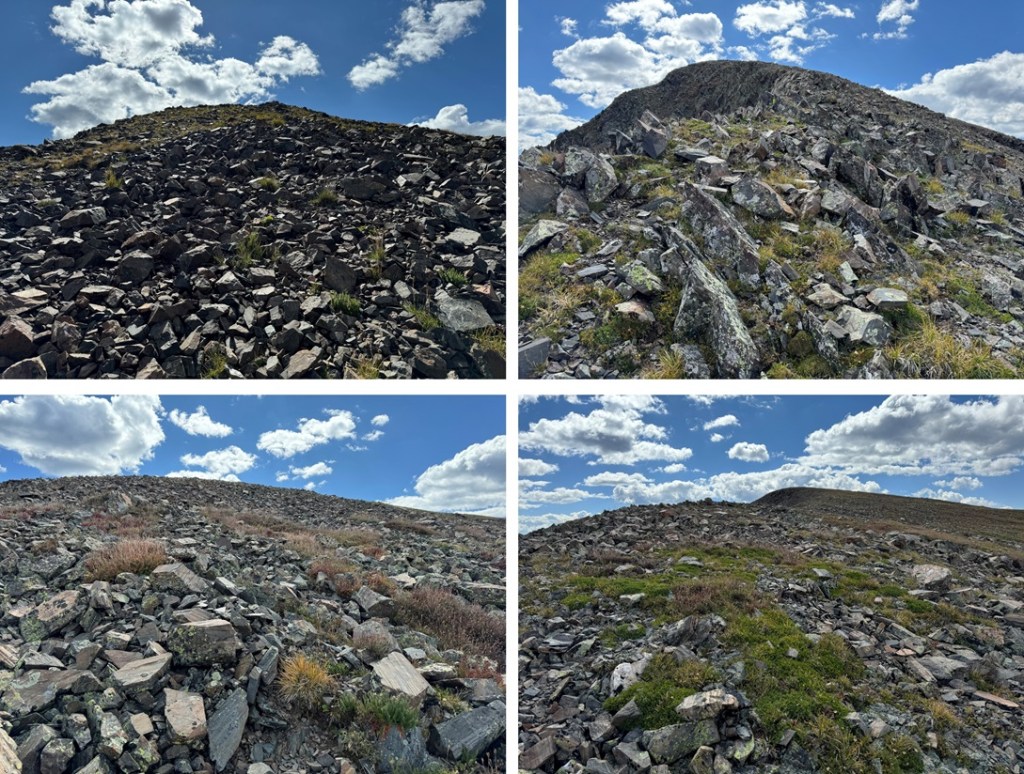
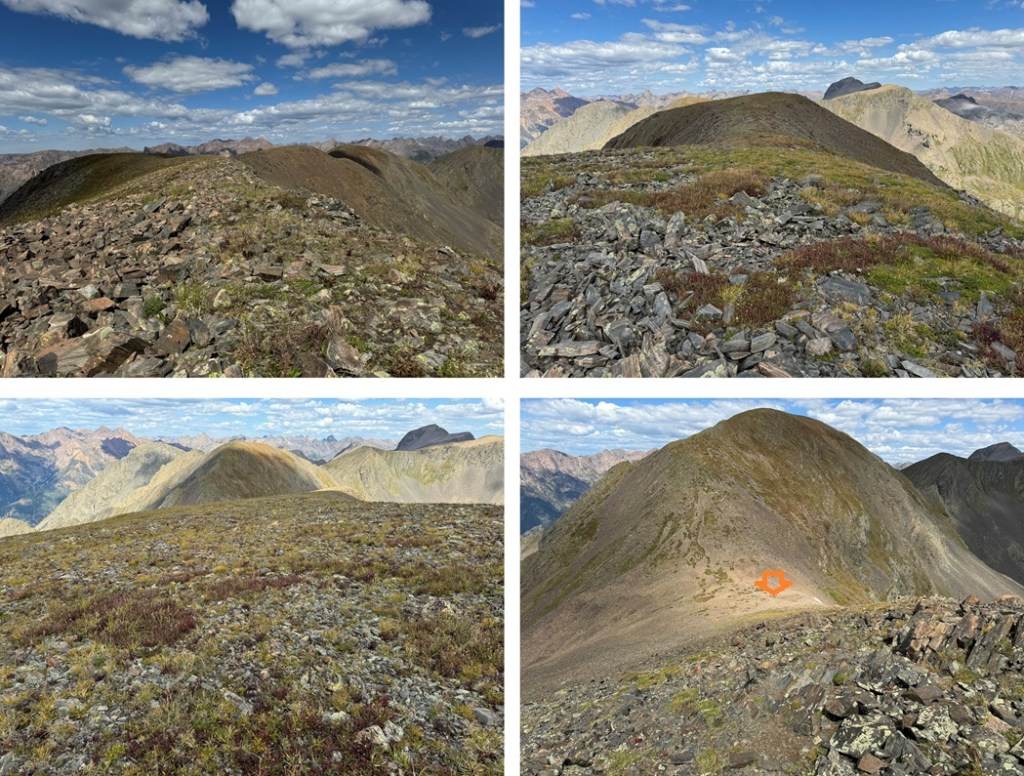
Then followed the rocky, class 2 ridge to the summit of PT 13350

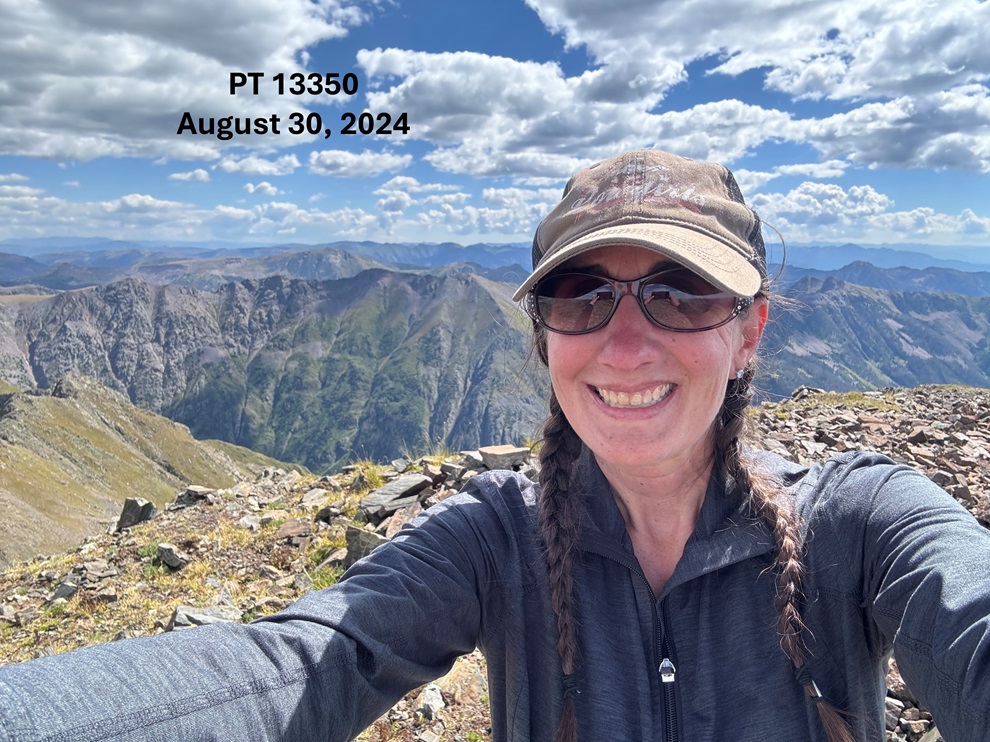
I summited PT 13350 at 10:50am

PT 13350:

This was an out and back hike for me, so I turned and headed northwest back to the saddle

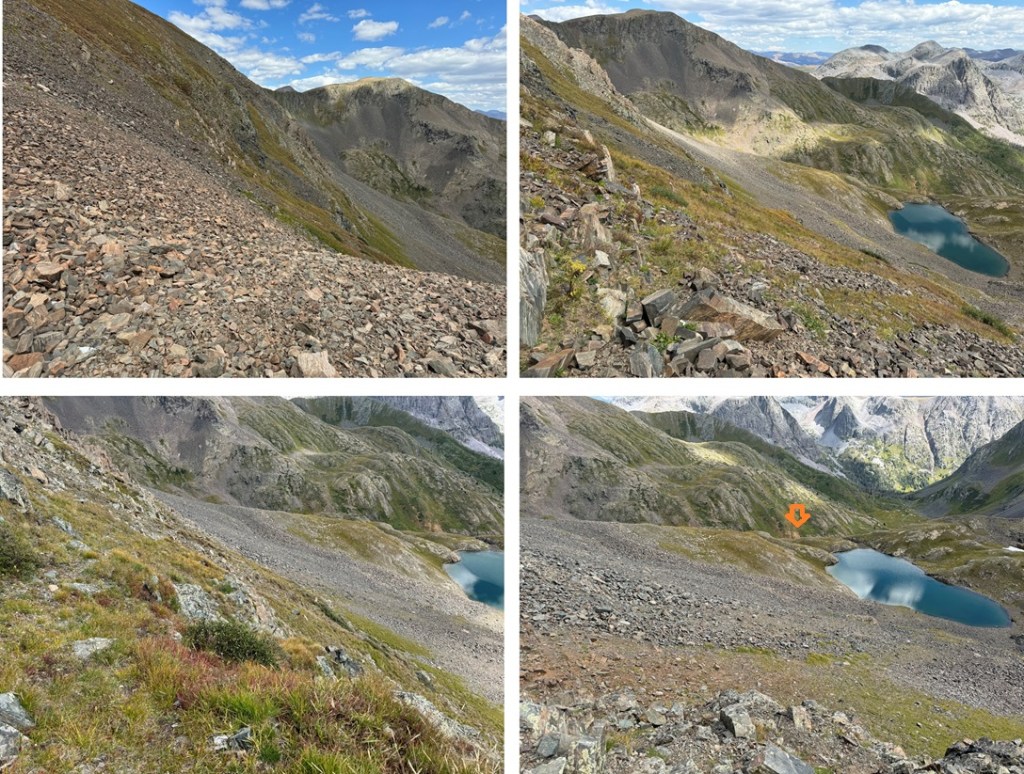
Once at the saddle, I followed the game trail back to the scree, then the scree and talus back to the small pond.

Once at the pond, I followed the ridge down into the basin, following the creek

Just before the creek turns to do down to the pond, I picked up the game trail that would skirt me through the willows, down to the pond, and then back to curve around the hillside northeast.

I kept heading north, skirting the mountainside a bit to the west, towards the trail that would lead me back to Rock Lake.

Once on that trail, I followed it all the way back to Rock Lake

I made it back to Rock Lake at 2pm, making this a 11.6 mile hike with 4397’ of elevation gain in 7.5 hours from Rock Lake.

13,318, 13,351, and Ute Ridge – 13,466

RT Length: 12.29 miles

Elevation Gain: 4438’

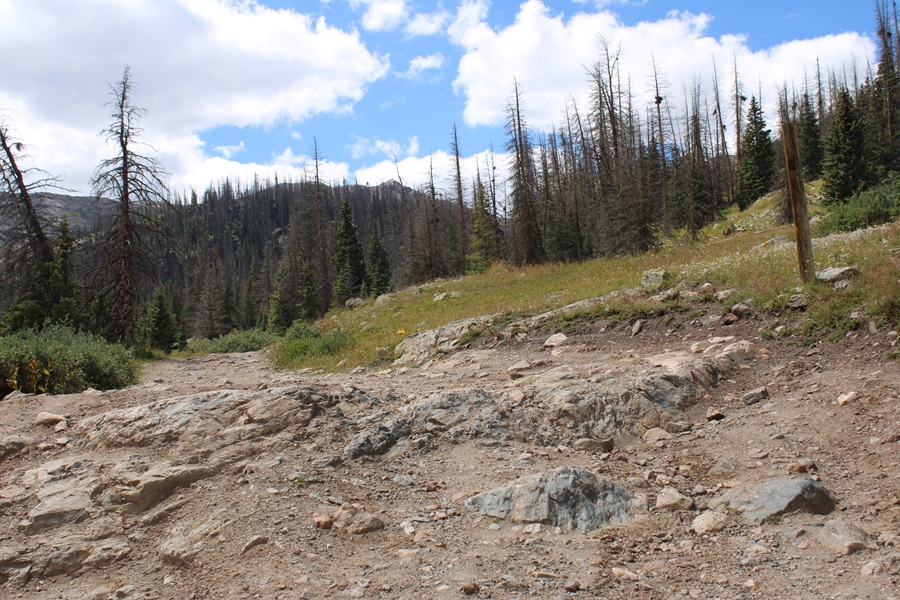
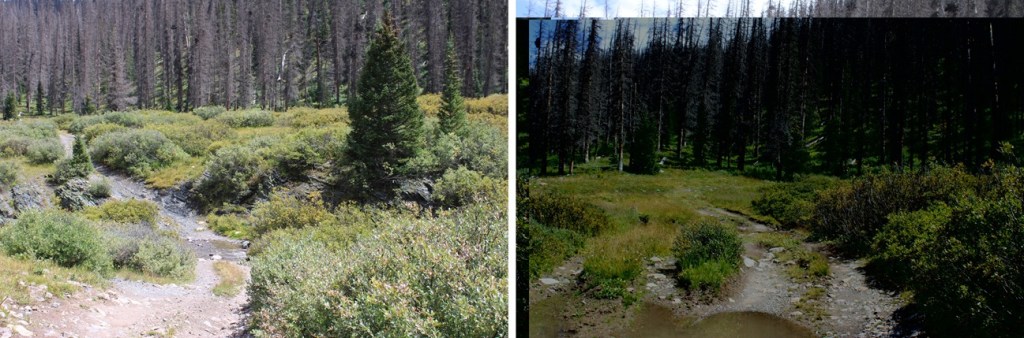
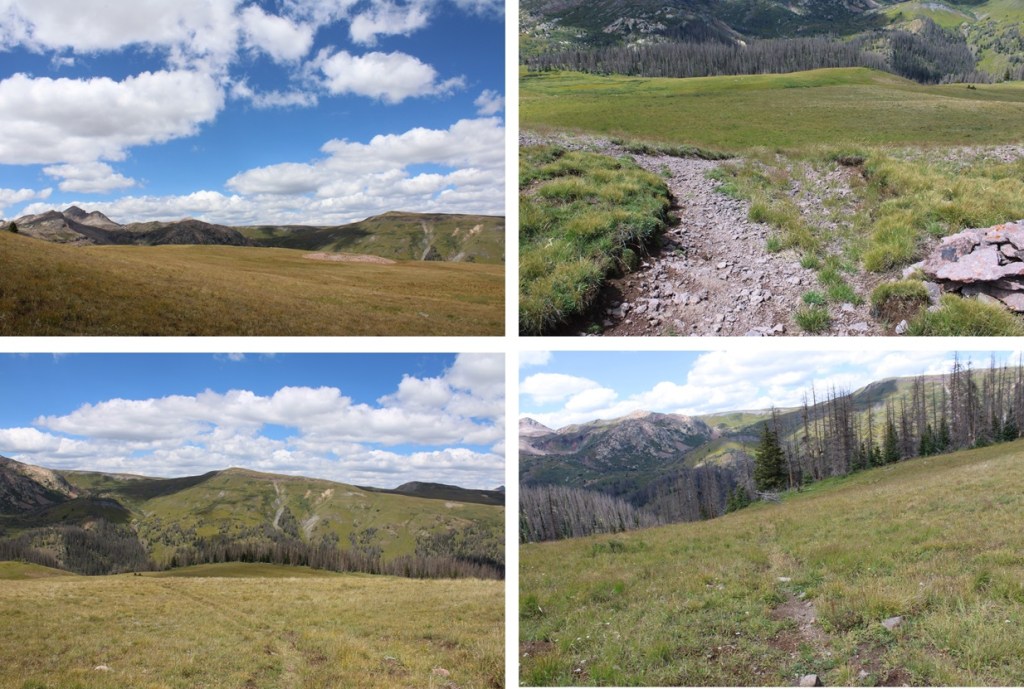
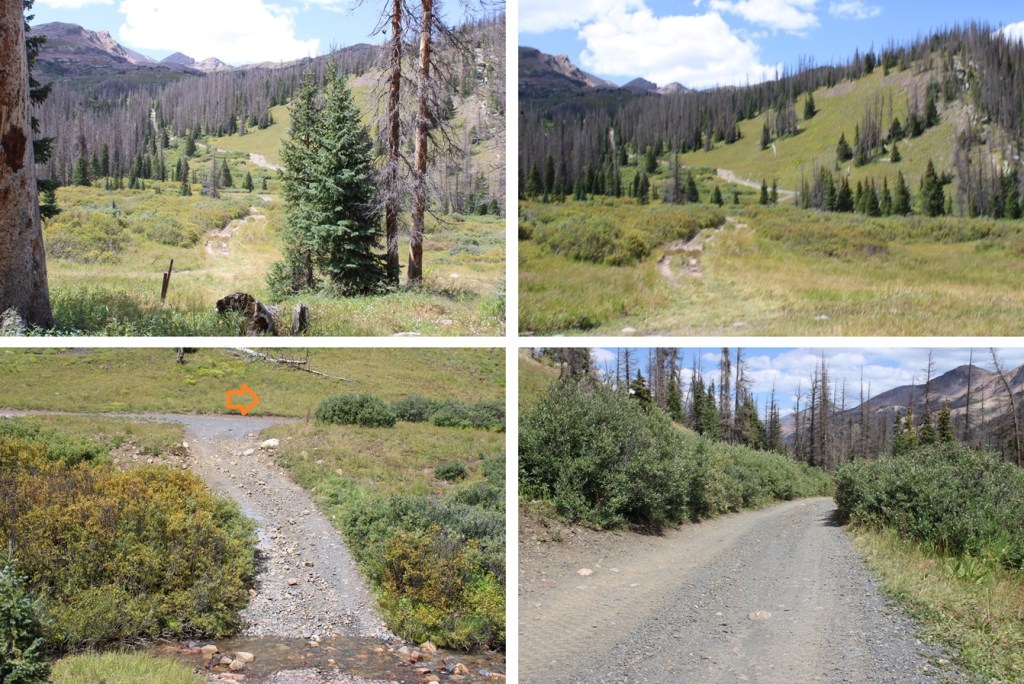
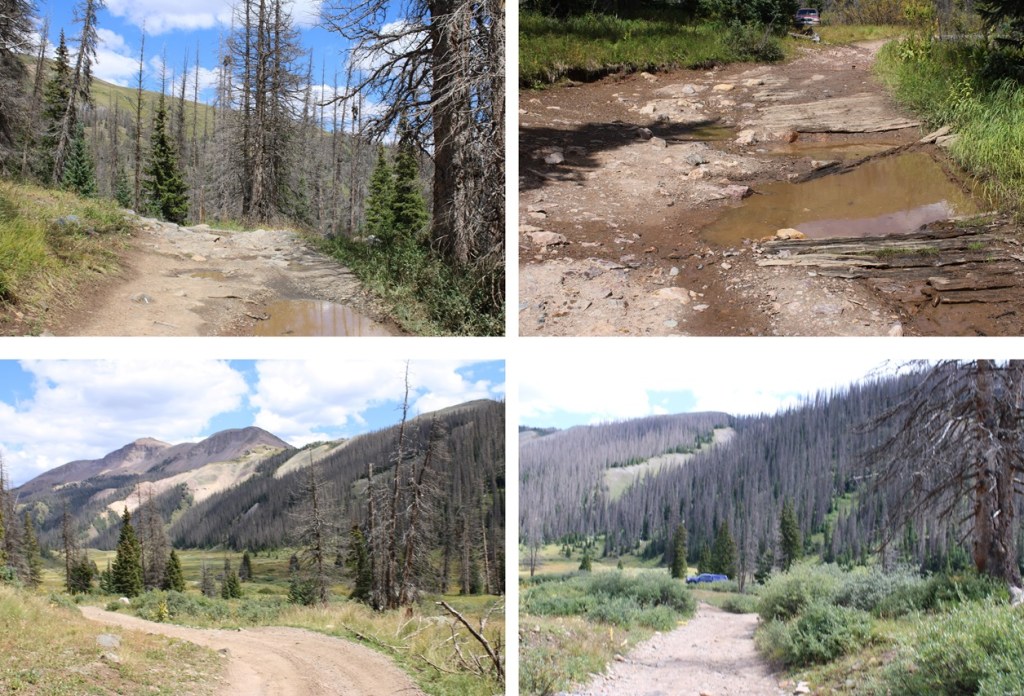
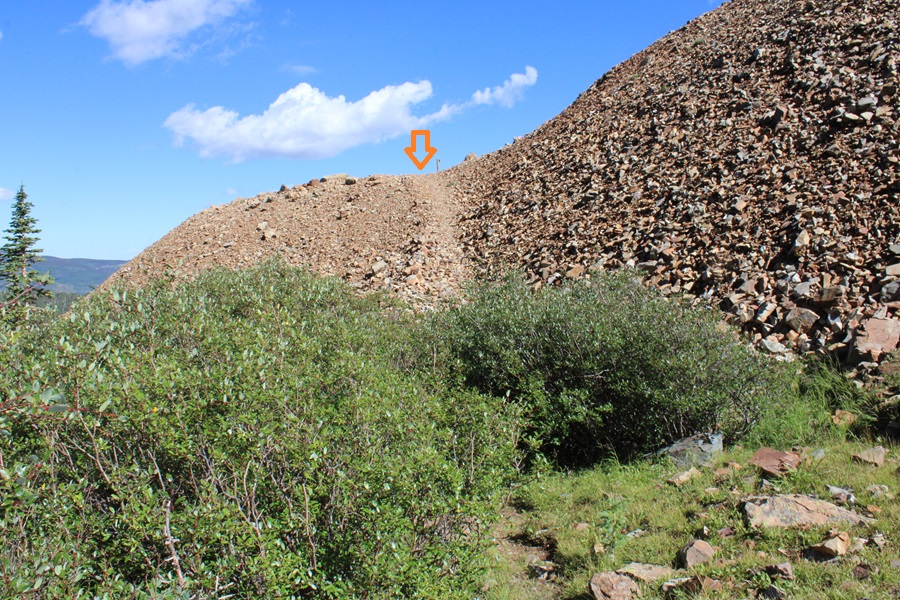
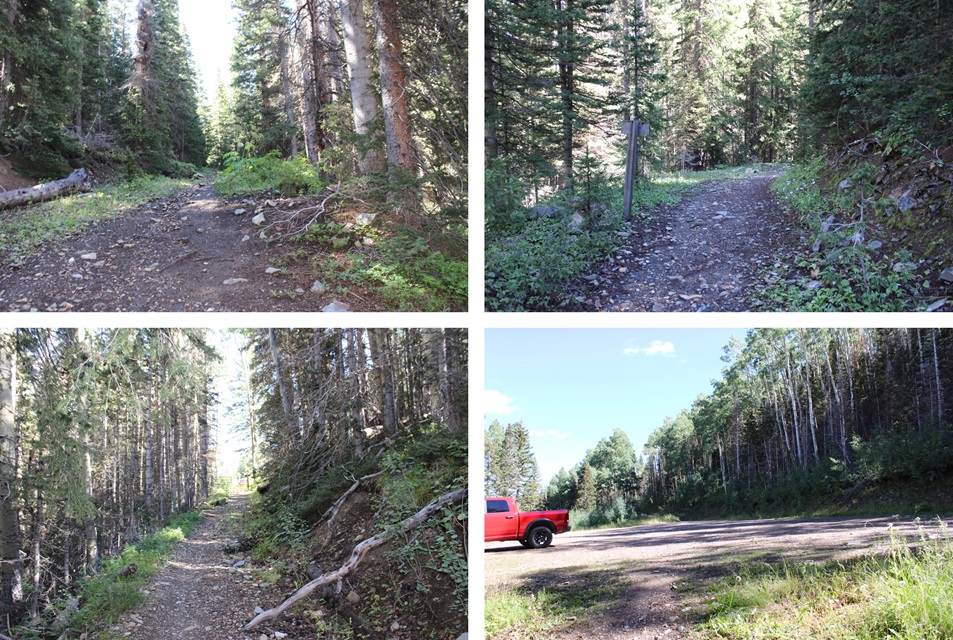
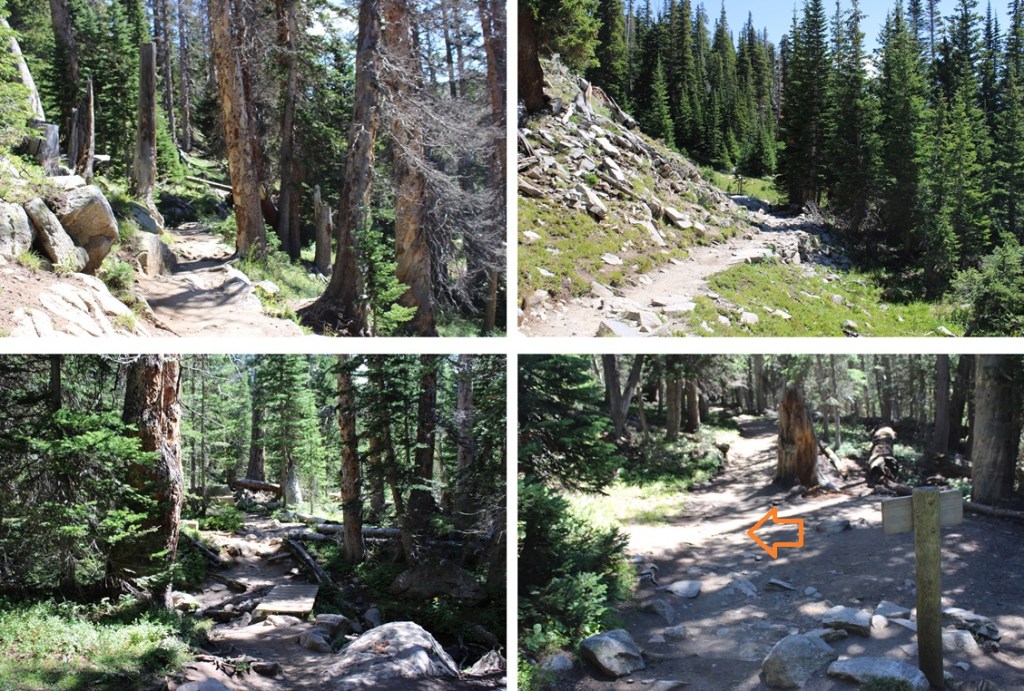
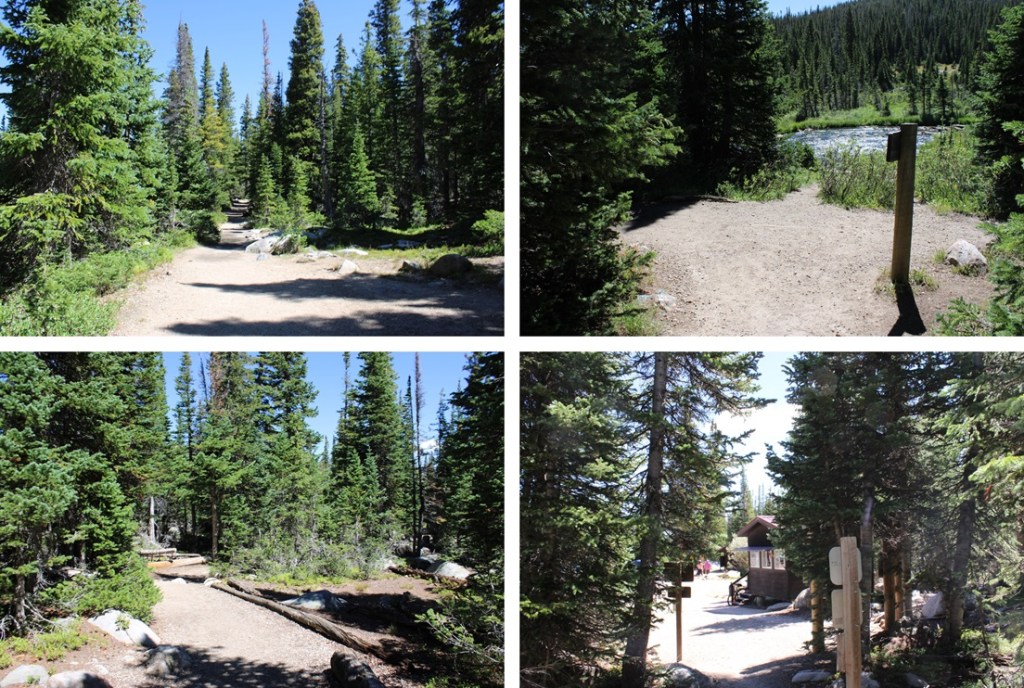
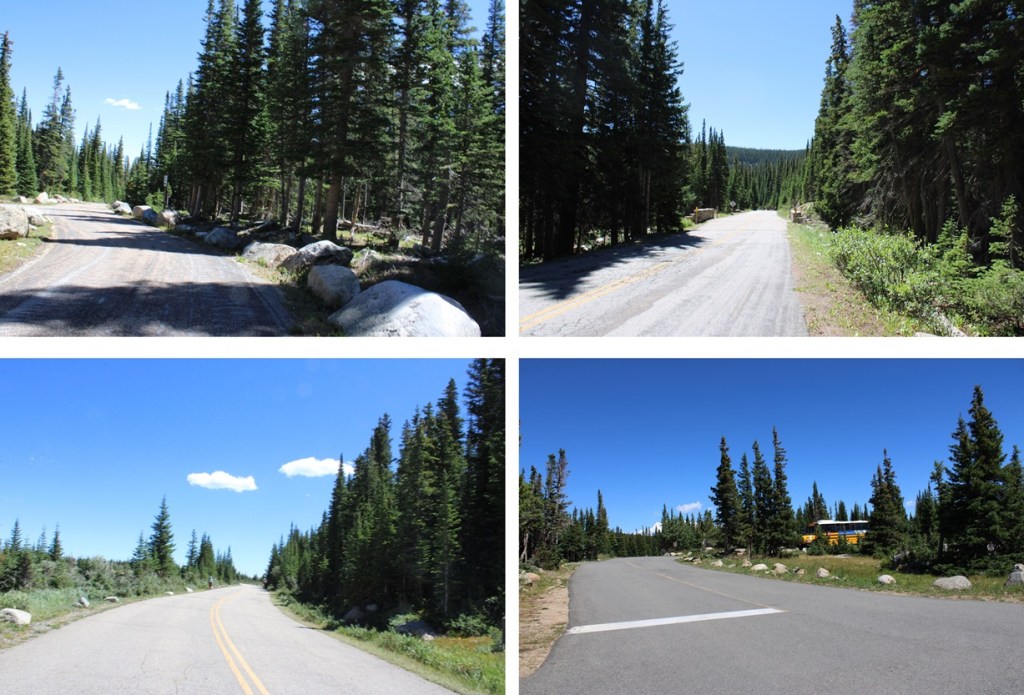
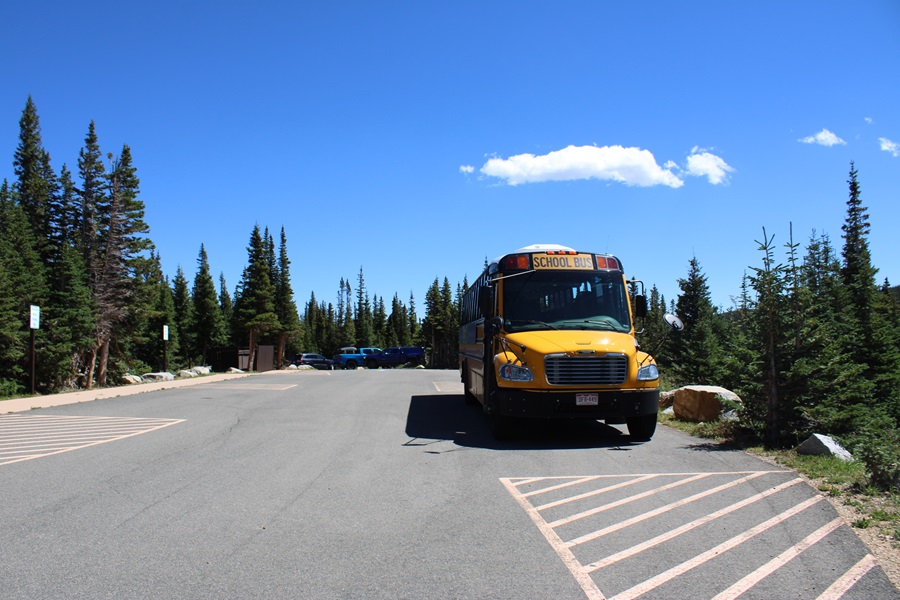
I started this hike from Beartown.  I’ve made the drive into Beartown now 4 or 5 times, and from what I remember, the road and river crossings were better this time than my previous visits, but once I made it after the river crossings the road was much worse.  It has rained a bunch recently, and all of the potholes were now lakes.  From my parking spot at around 11250’, I headed southwest, following the 4WD road. 

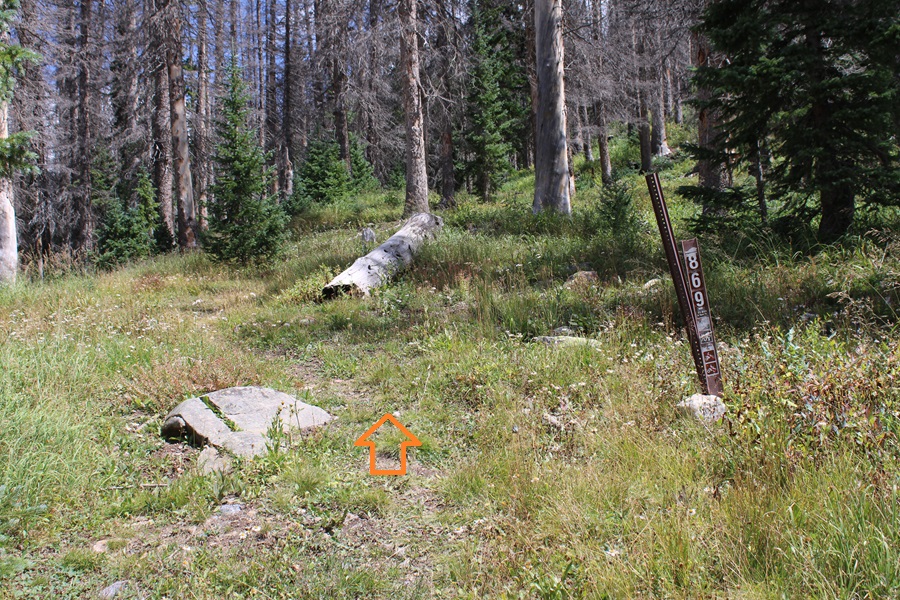
After hiking for about .4 miles, I came to a junction and turned left, heading towards the actual trailhead.

I was now at the trailhead for Trail 869.  I followed this trail to treeline.  The trail is class 1, except where there are downed trees and overgrowing vegetation covering the trail.  Then some route finding is required, but the trail always picks back up again.  Once above treeline, the trail is easy to follow.

At treeline, I continued following the trail south

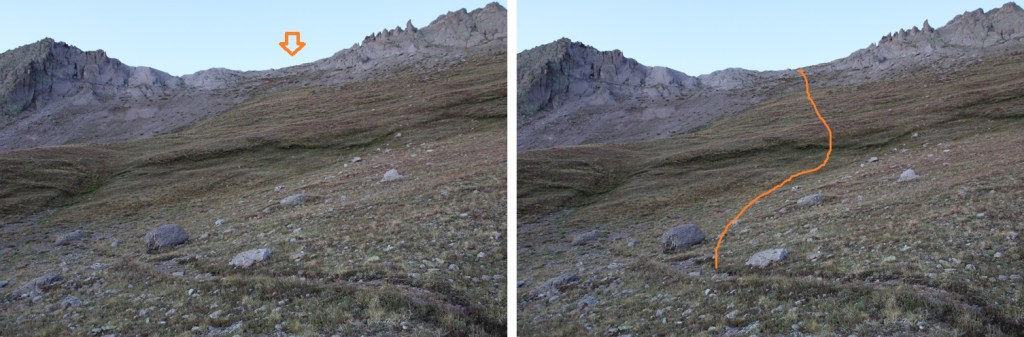
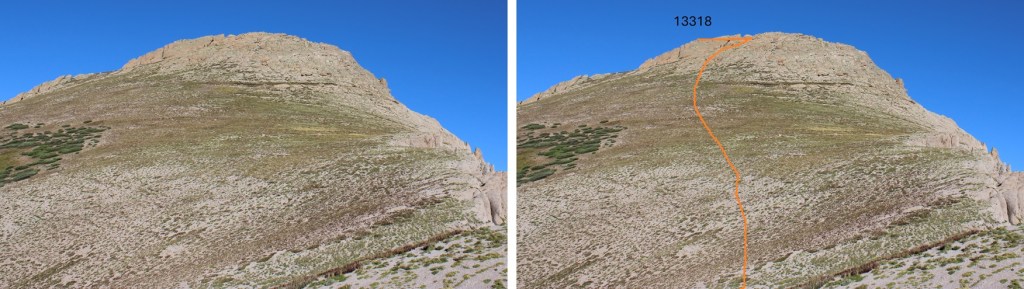
The trail was headed towards the saddle of 13318 and 13351, but before reaching the saddle I aimed for this point in the ridge.  There are game trails to get you there, but the route is pretty obvious.

Once on the ridge, I turned right and headed west.  Here’s my overall route to the summit.  This is all class 2, with some scree mixed in.  The boulders can be avoided on class 2 terrain, but be prepared for lots of kitty litter.  Look for an access route to the left and center of the boulders, and you’ll find a scree path.

When I made it to the ridge, I realized I was at a false summit, turned left, and boulder-hopped to the true summit.

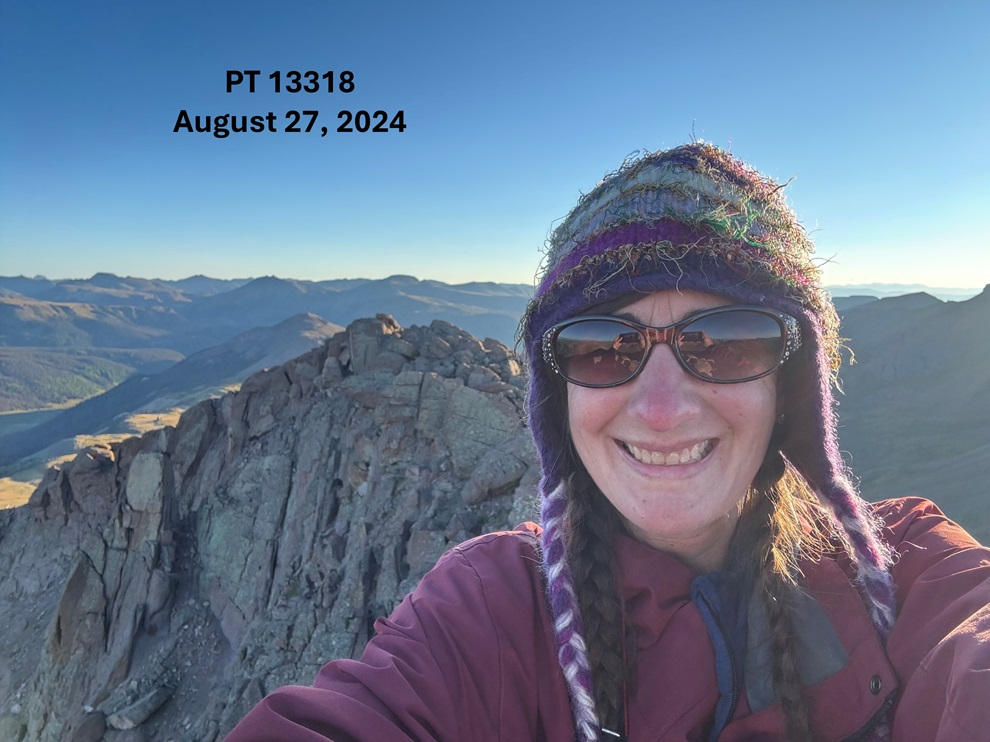
I summited PT 13,318 at 7:15am

PT 13,318:

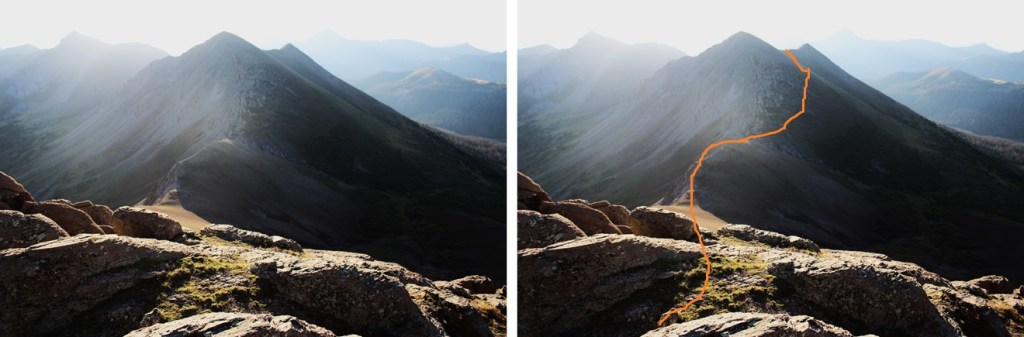
My next goal was PT 13351, to the east.  The summit is hidden in this picture by a false peak, but this was my route to the summit.  I curved to the right of the peak, avoiding the rocky areas by staying on tundra, then headed for a small saddle.

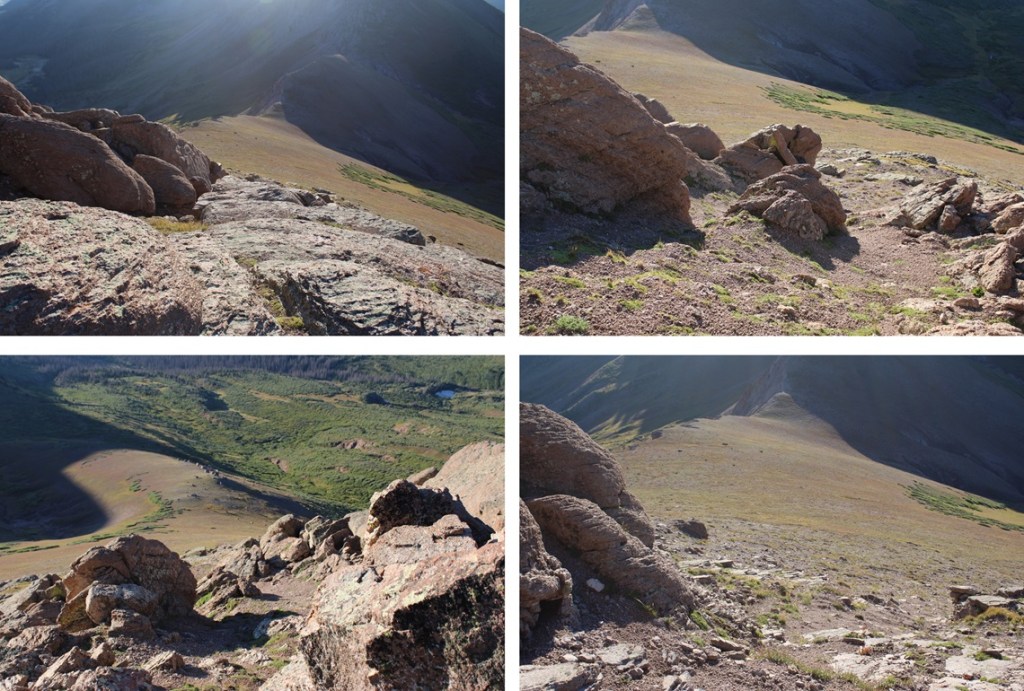
First, to make my way down to the 13318/13351 saddle.

Then I headed up the slope, staying on tundra, circling around until I could see a small saddle at the ridge.

Once on the ridge, I turned right, and headed east towards the rocky area.

This rocky area was class 3, and once again choose your own adventure.  The rocks were loose, and there seemed to be many options to make it to the summit.  This is the route I chose:

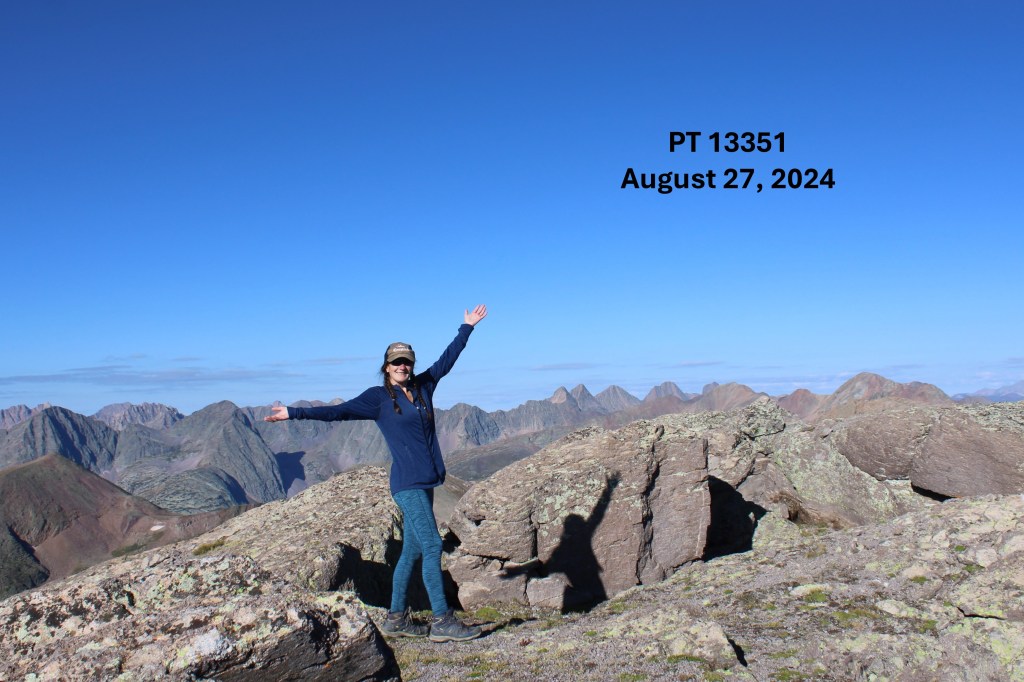
I summited PT 13,351 at 8:30am

PT 13,351:

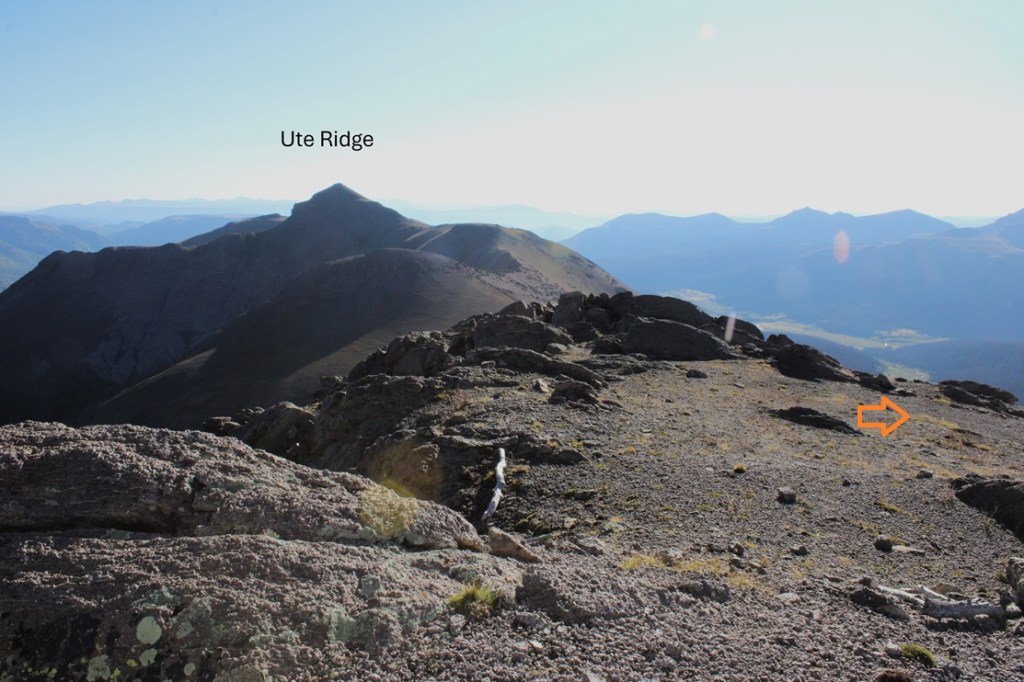
My next goal was Ute Ridge, to the northeast

Fist, I’d have to follow the ridge southeast and gain this point before heading down to the 13351/Ute Ridge saddle. 

I headed towards the unnamed point.  A few thoughts on this ridge:  It’s rocky, and loose.  It can be kept class 2 if you stick to the right of the ridge, class 3 ridge proper.  Once again, ALL of the rocks are loose.

I was able to follow scree and tundra down to the 13351/Ute Ridge saddle. Now is a good time to look at the route you want to take to gain the ridge.  I stayed below the rocks, but was able to find game trails through the scree to the ridge.  The ridge proper has a lot of unavoidable rock formations, so I wanted to stay below them until they were gone before gaining the ridge.

And now to gain the ridge while avoiding the rock formations

And then following the ridge proper. 

I came to a rocky area, and found a game trail up to the left

Then I continued following the tundra towards Ute Ridge

This next section is a little tricky when you’re down in it, so now’s a good chance to take a look at your route.  The rocks here are loose.  I chose to go right of the ridge when I had the chance.  Just before the summit is a large rock band.  There were several chimneys there to use as access.  I ended up choosing the third chimney I came to, although they all had cairns indicating they “went”.  If you want to avoid the chimneys altogether, you can continue further right and use class 2 terrain (although it looks like steep scree is involved). 

Here’s the route I took:

This is the chimney I took:

At the top of the chimney I headed back towards the ridge, and followed the rocks to the summit.  The boulders at the top are so large you can walk around them to the summit.

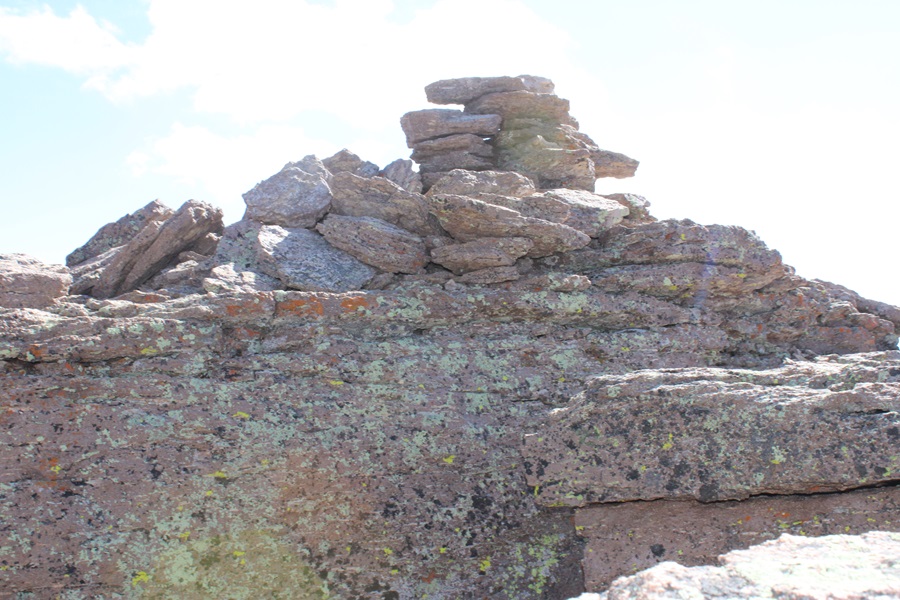
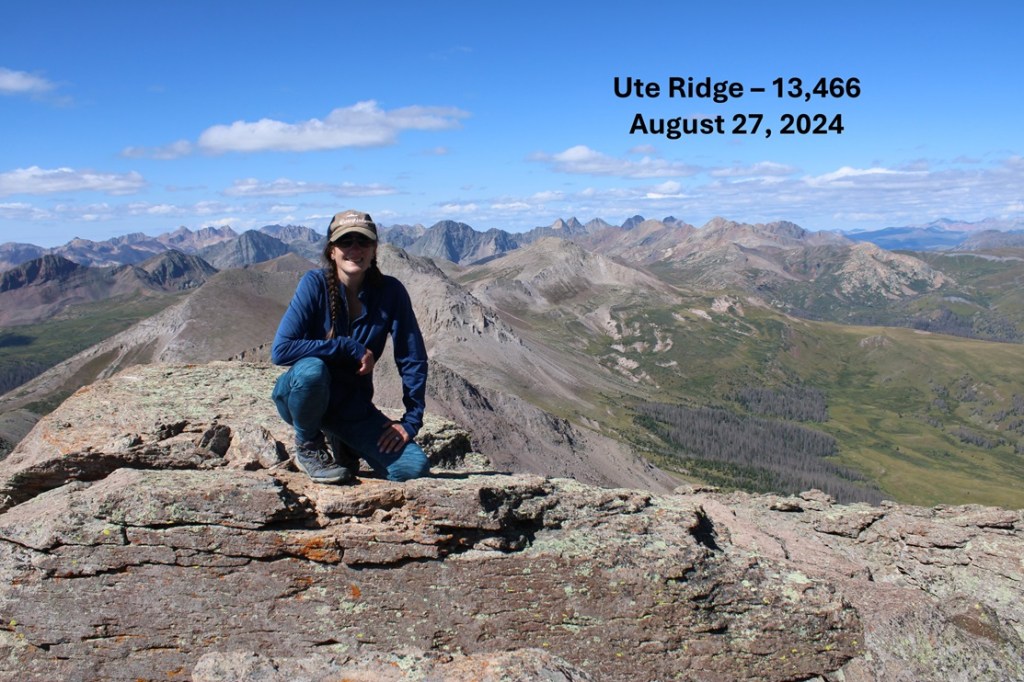
I summited Ute Ridge at 10:30am

Ute Ridge:

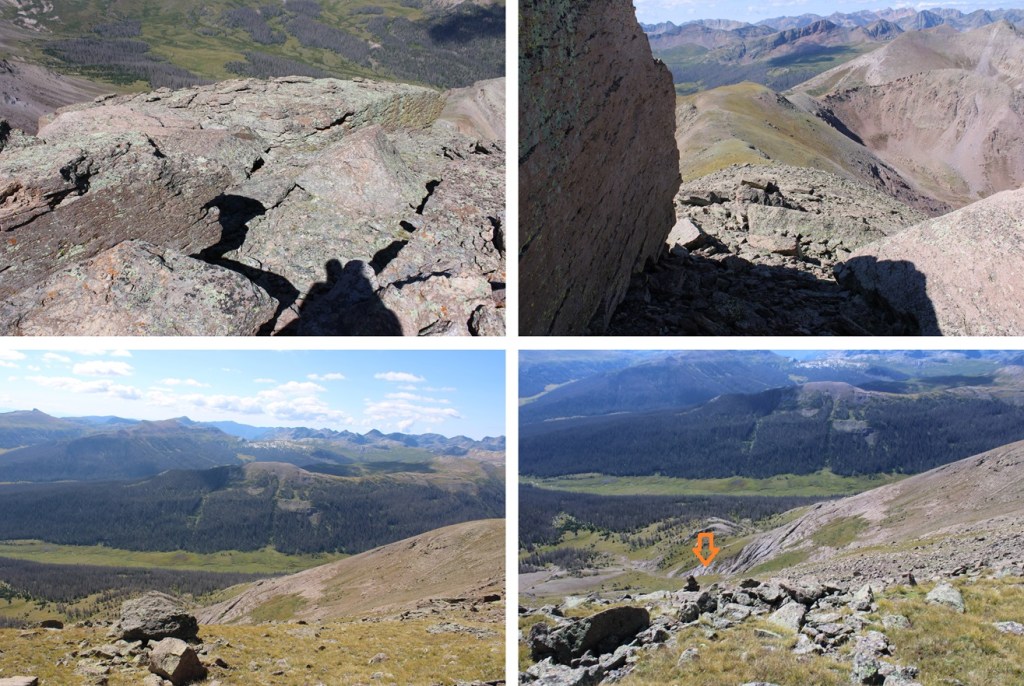
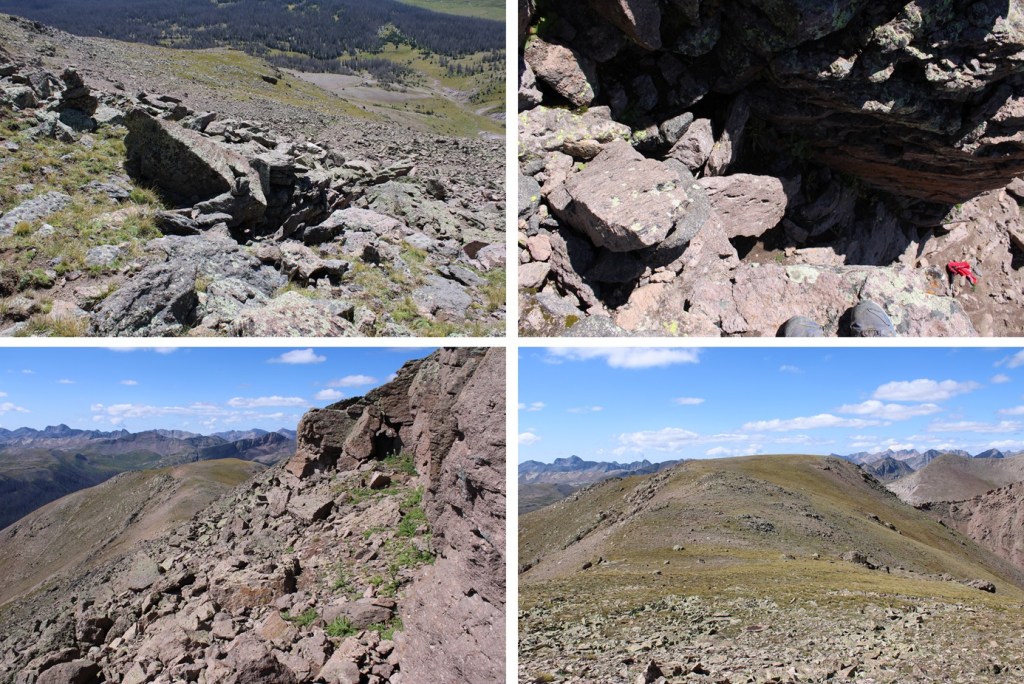
And now to head back down towards the chimney

Down the chimney, and back towards the 13551/Ute Ridge Saddle

From the saddle of 13551/Ute Ridge, my intention was to make it back to the ridge and the trail I’d hiked in on from Beartown.  The trail goes along much of the ridge, so I just needed to aim for the ridge.  You can do this by aiming for the gully, or taking the slope.  I took the slope to avoid the willows. Once I was down in the gulch, I gained about 950’ to the ridge. 

Here are some pictures of the route:

Heading west on the tundra eventually brought me back to the easily identifiable trail that would lead me back to Beartown

Once back on the 4WD road, I followed it back to my parking spot

I made it back to my truck at 1:15pm, making this a 12.29 mile hike with 4438’ of elevation gain in 8 hours, 15 minutes

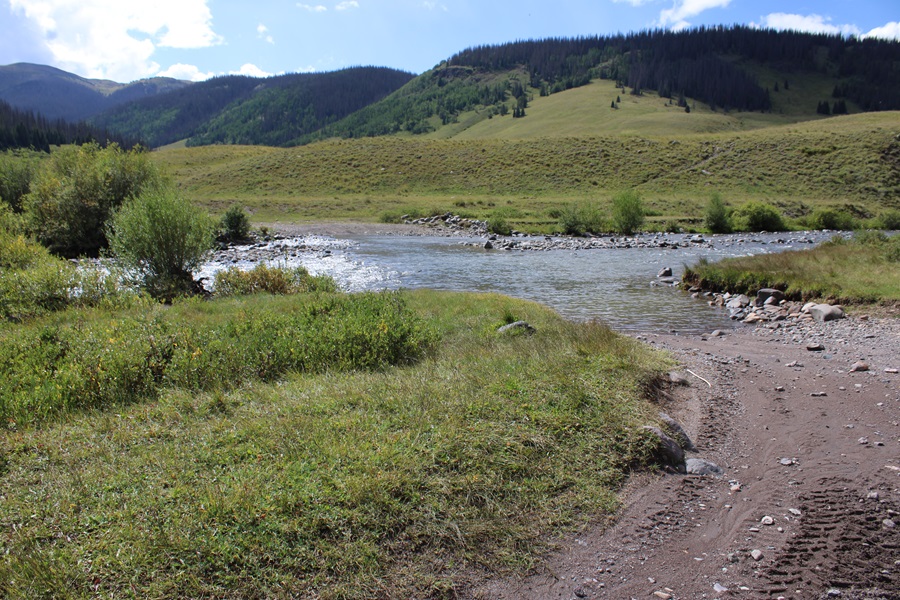
For those of you interested, this is what the second river crossing looked like in late August of 2024:

Boskoff Peak – 13,134

RT Length: 10.63 miles

Elevation Gain: 3398’

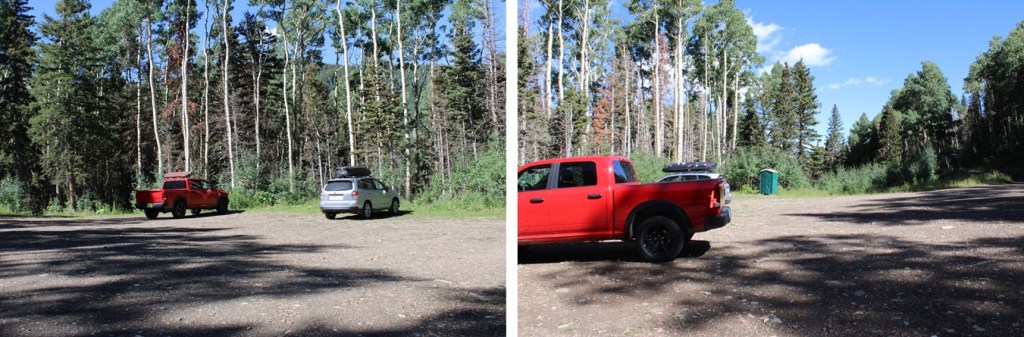
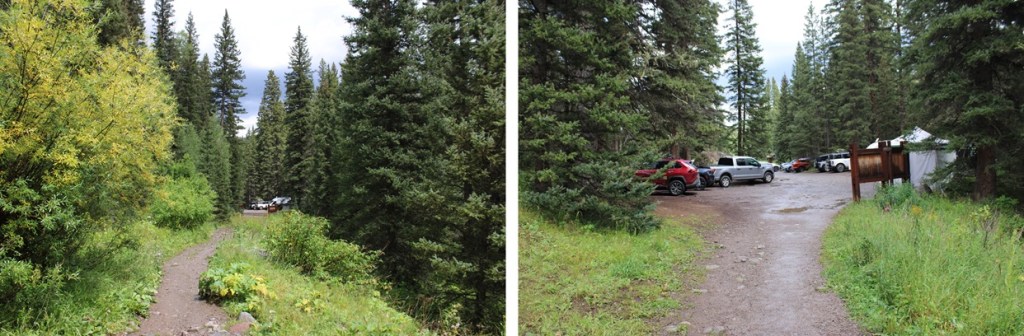
I started this hike at 5am from the Rock of Ages Trailhead.  The trailhead has a porta-potty, and room for a couple dozen vehicles, but the road in is at minimum high clearance (with a creek crossing).

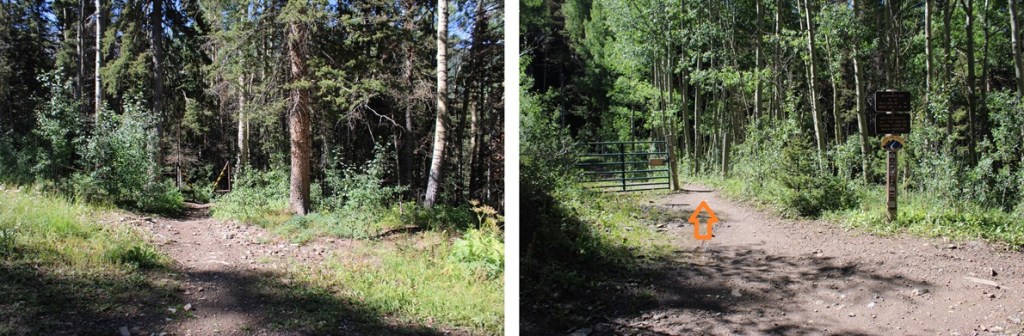
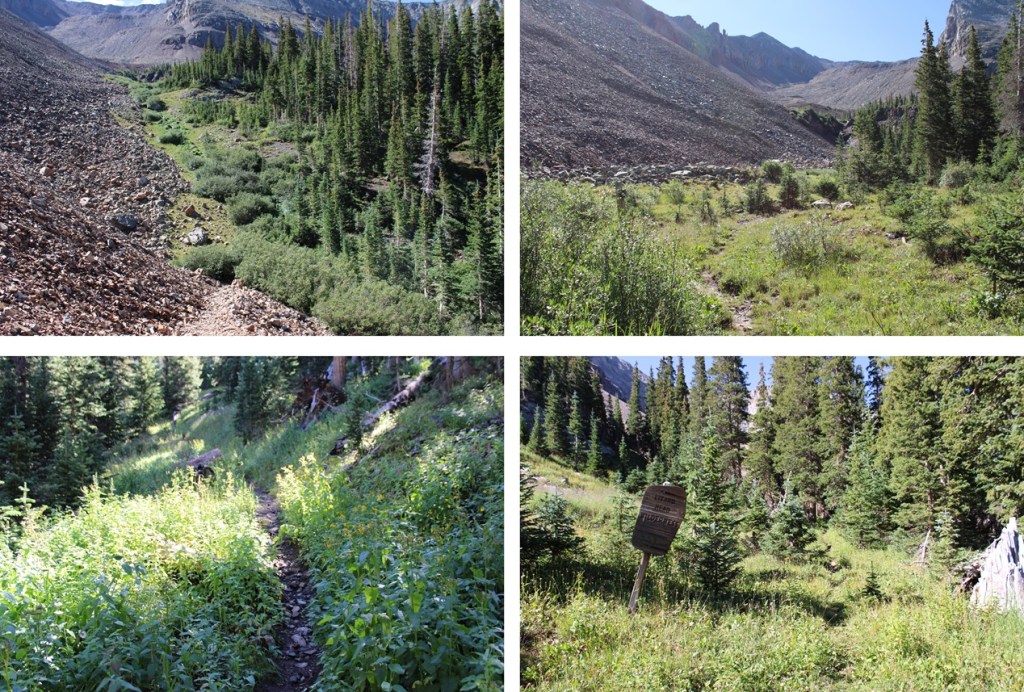
The trailhead starts at the south end of the parking area.  I took the trail to the left, the Rock of Ages Trail, at the junction immediately following the entrance to the trailhead.

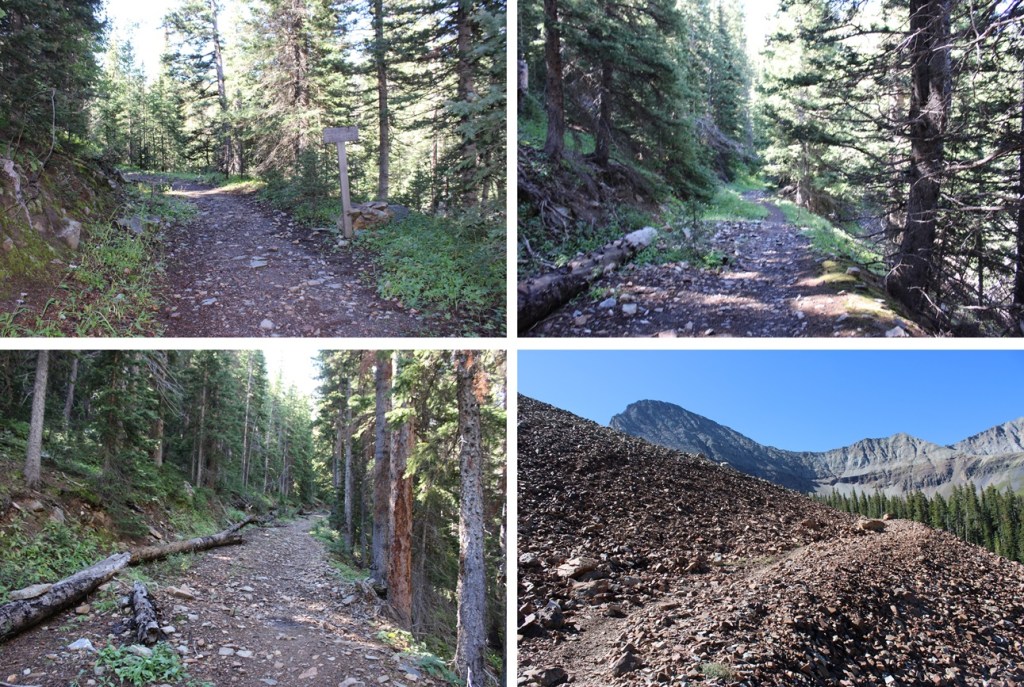
I followed the Rock of Ages trail for 1.5 miles

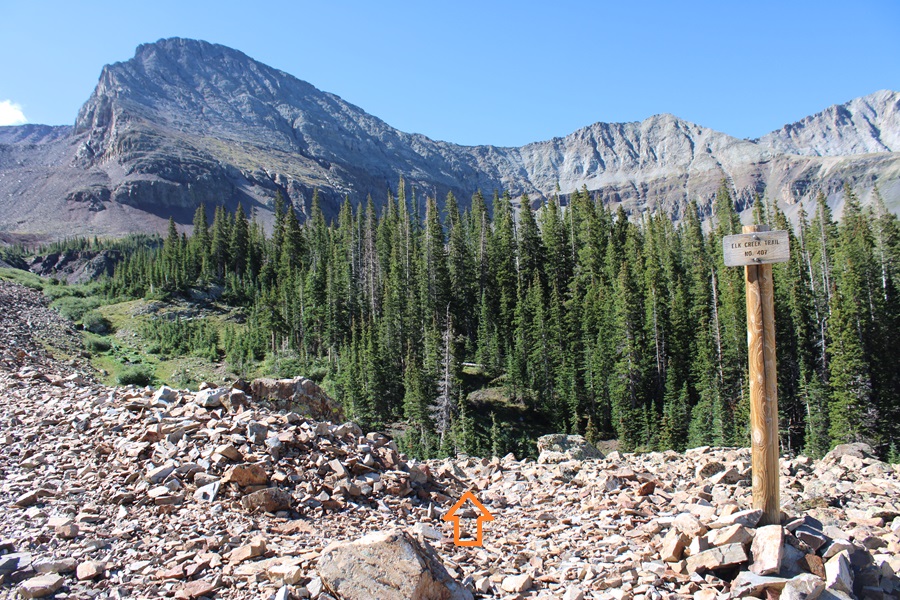
After following the Rock of Ages trail for 1.5 miles, I came to a junction, and started following the Elk Creek Trail east. 

Here is where the trail got interesting.  I kept gaining, then losing elevation, then gaining it back again.  I knew this would be frustrating on the way out (it was).  I continued following the class 1 trail

I then came to another junction, but the sign was broken.  I followed the trail to the left.

I followed these class 1, well defined trails for 4.3 miles, until I came to the base of a gully running down from Boskoff Peak

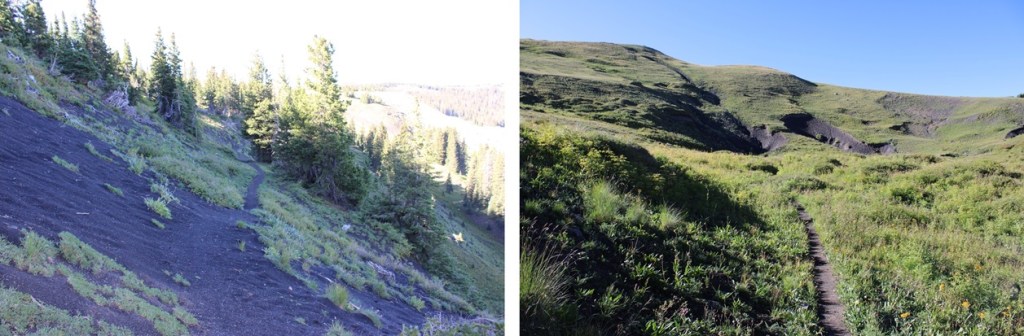
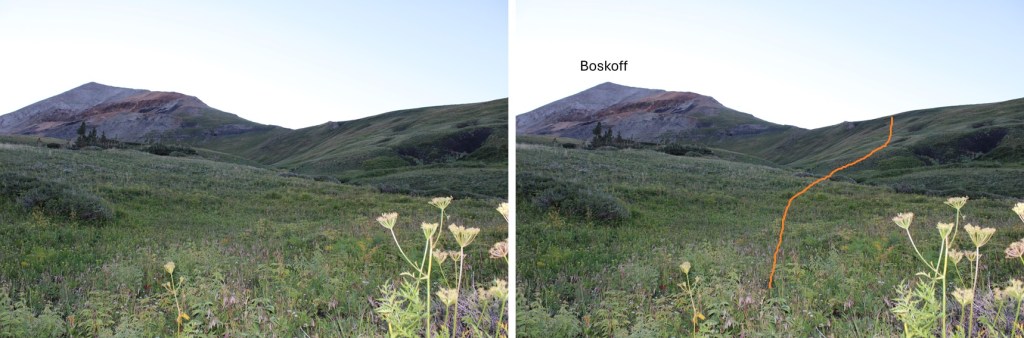
Here I could clearly see Boskoff, and it’s ridge in front of me.  I left the trail, and headed southeast up the tundra slope towards the ridge.

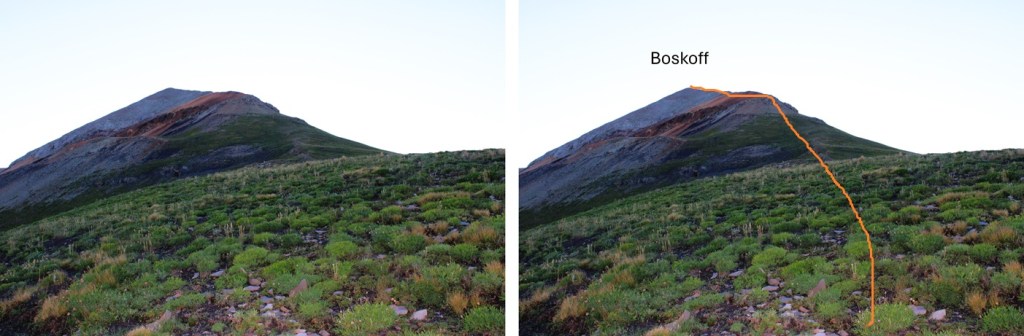
Once on the ridge, I turned left, and followed the tundra northeast.  I pretty much stuck to the ridge to summit.  Here’s the overall route:

I followed the ridge until the tundra ended.

The tundra ended at the base of a rock formation and several gullies.  I took the right gully up, the left one down.  Both were class 2.  The right gully was more stable, but the left gully made for some fun scree-surfing on the way down.

Here are some pictures of the right gully

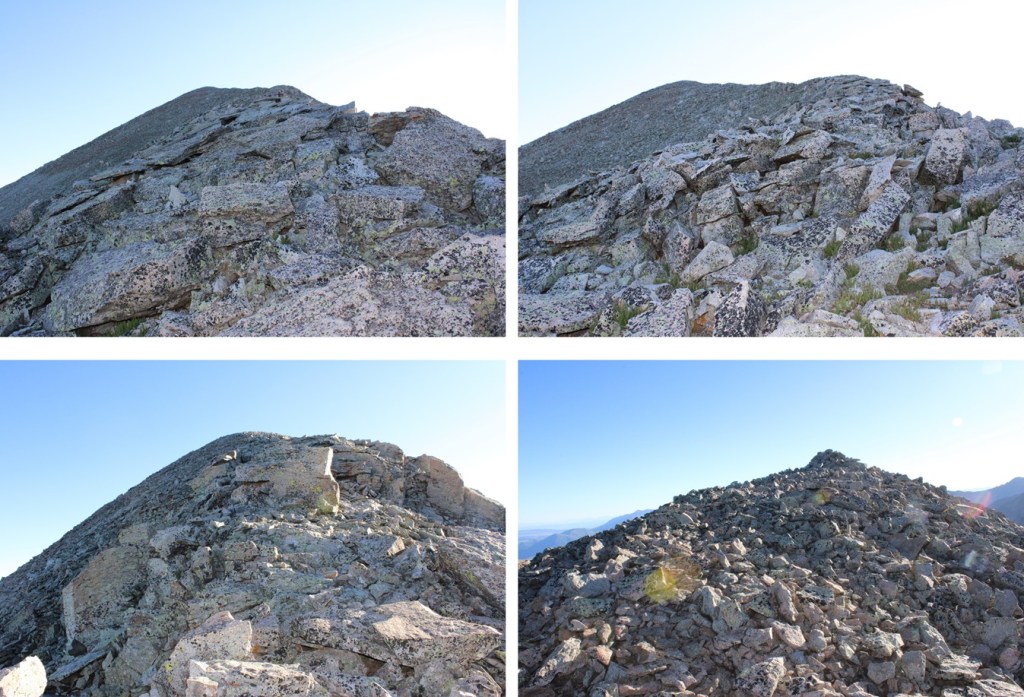
Both gullies end at the same place. From here, there’s a well defined game trail on the talus leading northeast along the ridge.  I followed the talus trail until it ended at another pile of rocks.

I went a little to the right, hopping over loose talus doing a couple of easy class 3 moves, then aimed for the ridge. 

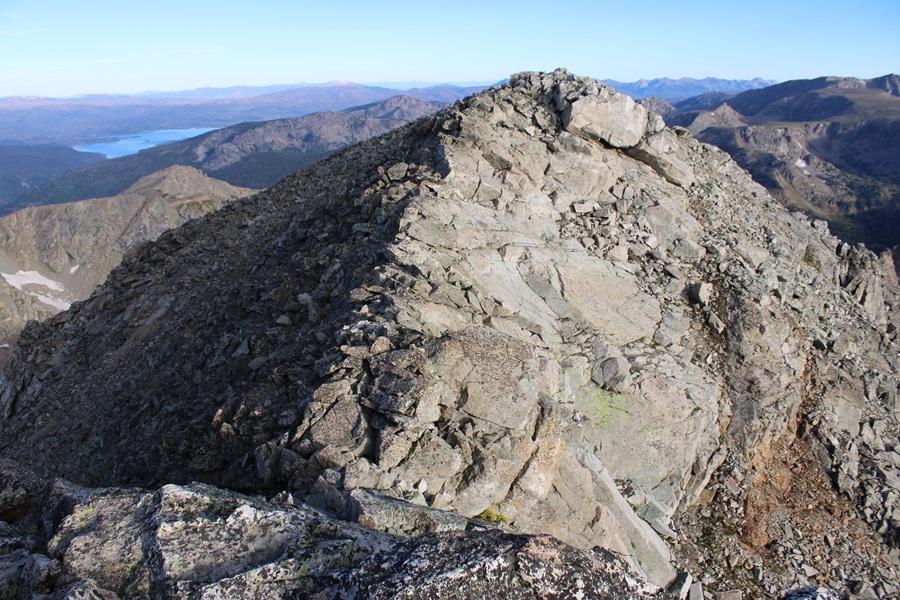
The rest of the hike is class 2, all the way to the summit.  Just be careful, the boulders and talus here are loose.  I wouldn’t want to do this ridge if the rocks were wet, as I relied a lot on the traction of my shoes to keep balance.  I followed the ridge to the summit.

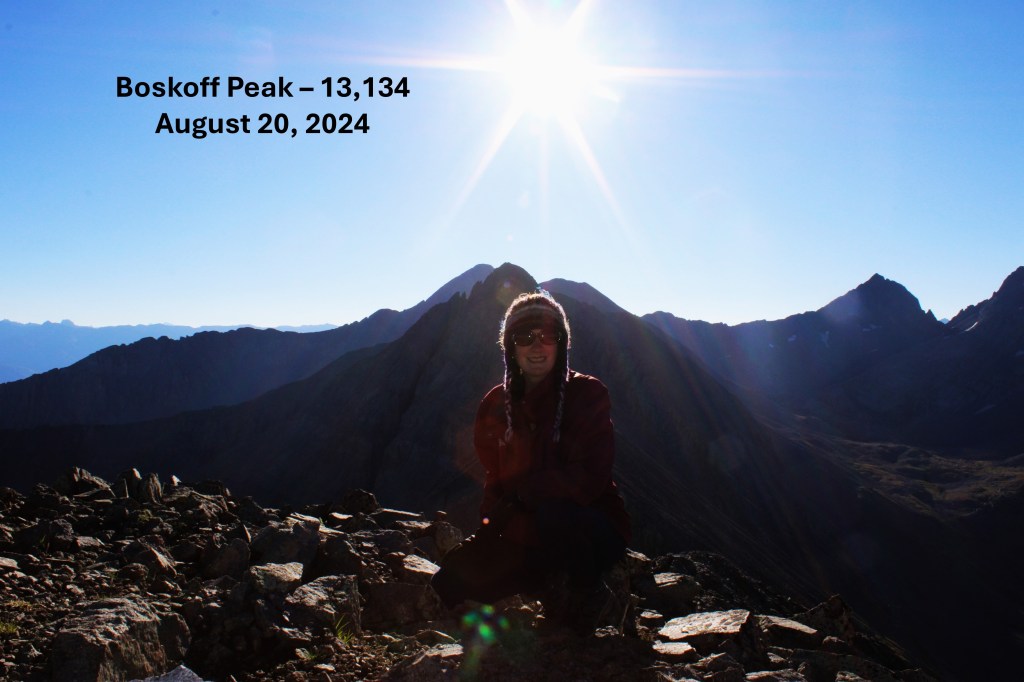
I summited Boskoff Peak at 7:50am

Boskoff Peak:

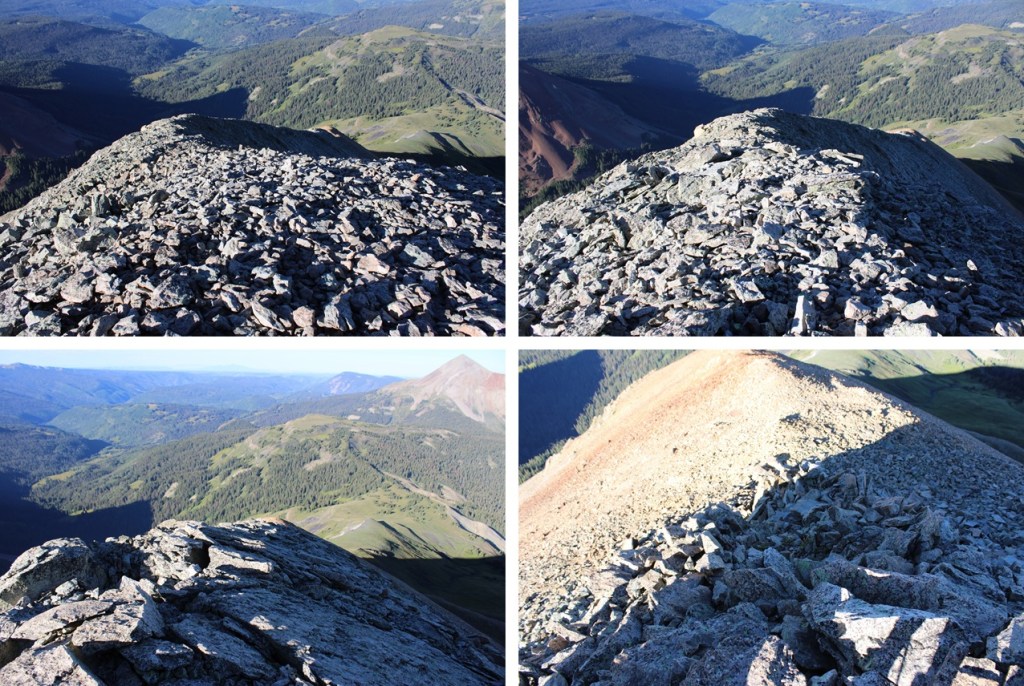
Now to head back. This was an out and back hike for me, so I turned and headed southwest down the rocky ridge

Then back down to the talus

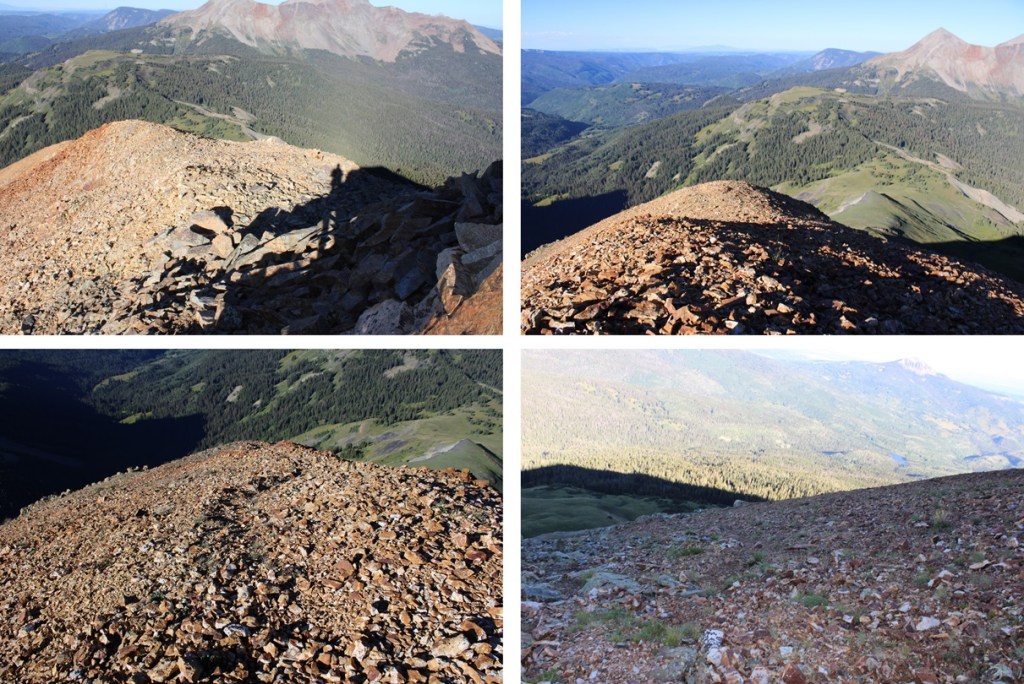
And back on the talus to the gully.  This time I took the gully to my right down, scree surfing to the tundra. 

Back on the tundra, this is the route I took back to the trail below.

When I made it back to the trail, I turned right, and followed Elk Creek Trail back to Rock of Ages Trail

I then went left, and followed the Rock of Ages trail north back to the trailhead

I made it back to the trailhead at 10:45am, making this a 10.63 mile hike with 3398’ of elevation gain in 5 hours, 45 minutes.

On to the next trailhead!
S4 – 13,256

RT Length: 11.57 miles

Elevation Gain: 4082’

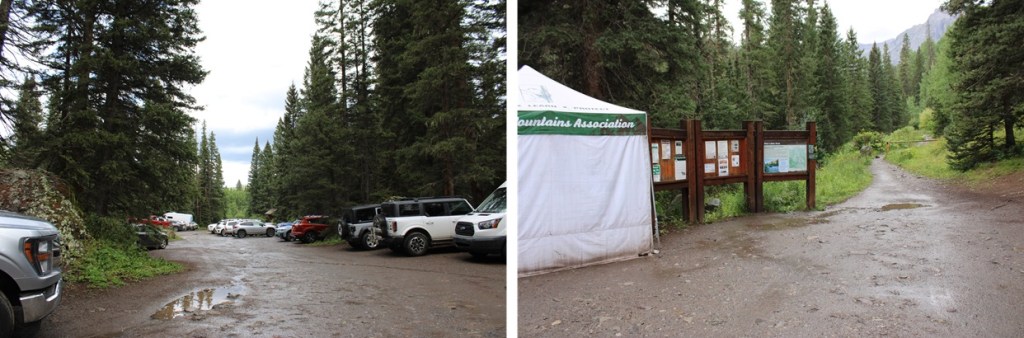
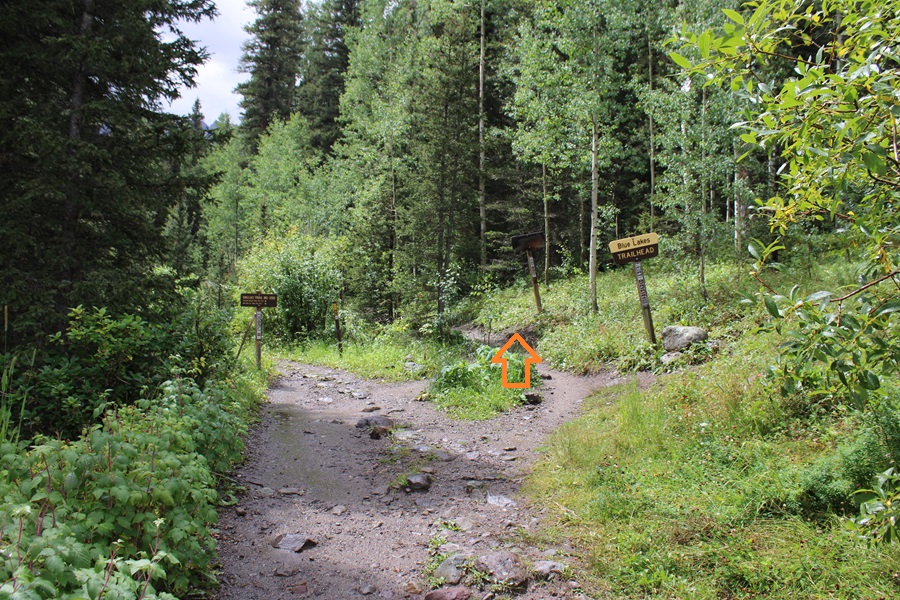
There were only two other vehicles in the lot when I parked at the Blue Lakes Trailhead.  It was raining, so I waited for the rain to stop, and was on the trail at 5am.  The trailhead starts at the south end of the parking area, and is clearly marked.

Immediately after the trailhead there’s a junction.  I went right, taking the Blue Lakes Trail.

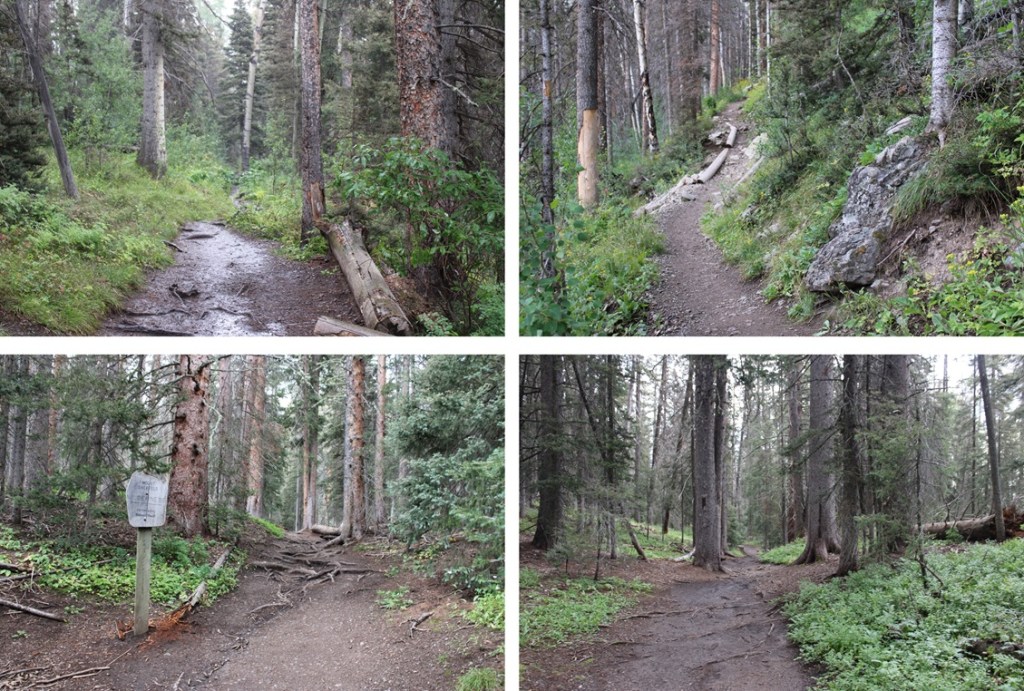
This was the only junction until I made it to Blue Lakes.  I followed the trail 3.5 miles to Blue Lakes.  About 2.5 miles into the hike it started raining again, and I had to take shelter for a bit under a tree.  However, the trail was class 1, and easy to follow the entire way.

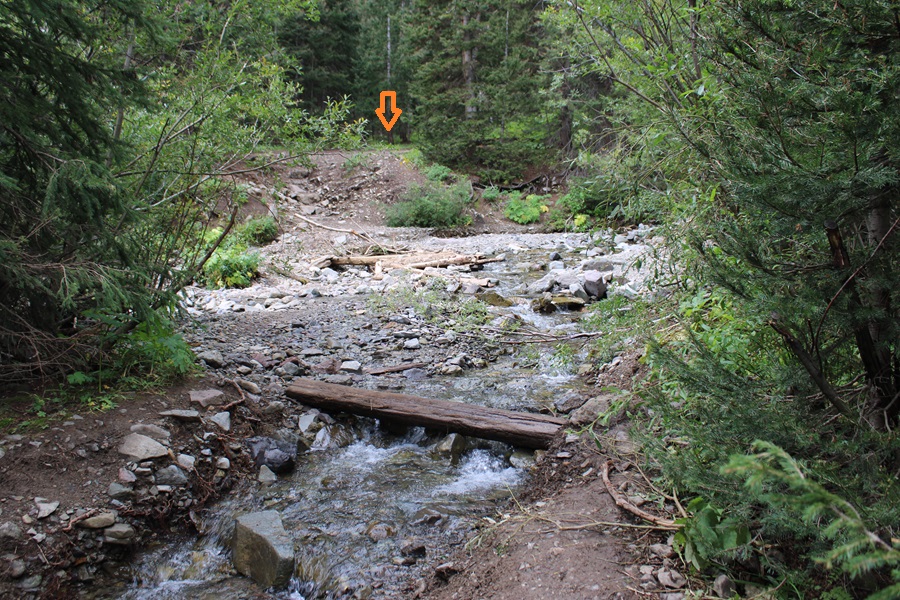
There was an easy creek crossing

And then I continued my way up to Blue Lakes

Once I arrived at Blue Lakes, there were several social trails to campsites.  I stayed on the trail closest to the lake, skirting the west side, towards a creek flowing into Blue Lakes.

At the last campsite before the creek, I followed the drainage on the right side of the creek up to treeline.

Once at treeline, or at least very close in a wide open space, I crossed the creek and headed west up the slope, keeping the creek to my right.

At the top of the slope I continued heading west, staying on the tundra.  You can go right and use the talus, but it’s going to be a LONG day of talus, and I’d rather use the tundra when available. 

At about 12330’, I went right and dropped about 50 feet down to the talus.  There is a game trail here on the talus that will bring you to the upper basin.

Once in the upper basin, there will be an obvious drainage to the right.  I went through the drainage, rock hopped for a bit, and then ascended 600’ of the worst talus ever to a gully.  I put on my helmet and started up.  Here’s the overall route:

As I ascended further up the gully, the talus became looser, but there were also areas of sand mixed with scree.  The rain that morning had turned the sand into a thicker substance, which gave me some much needed traction.  When you enter the gully, stay to the LEFT.  I tried to stay to the right because it looked more stable, but found I was unable to cross over to the left when the time came, because I was now in an hourglass, and traversing it meant rocks above and below me would give way in a rockslide towards the base of the gully, like a funnel (or an hourglass).  After the first few attempts at traversing from up high and sliding several feet before stopping, I downclimbed and re-traced my steps up this part of the gully, sticking to climbers left.  Also, if you’re doing this with other people (in your group or not) stay clear when someone is in the gully, and even if you don’t think anyone is below you on your descent, yell to see if anyone is there. Large rocks will fall as you ascend and descend (there’s nothing you can really do to prevent it). 

Keep heading left, until the scree ends

Once the scree ends, if you haven’t already, now is the time to put on your helmet.  The rest of the summit is class 3 and class 4 on the loosest terrain I’ve ever experienced.  NOTHING is stable.  Trust nothing above, in front of, or below you without attempting holds several times to make sure they are solid.  There is large kitty litter on solid rocks, loose talus, and rock slabs that look stable but are hanging precariously, especially from above. 

From the top of the gully I headed east, to follow the ridge.  Here’s the route I took:

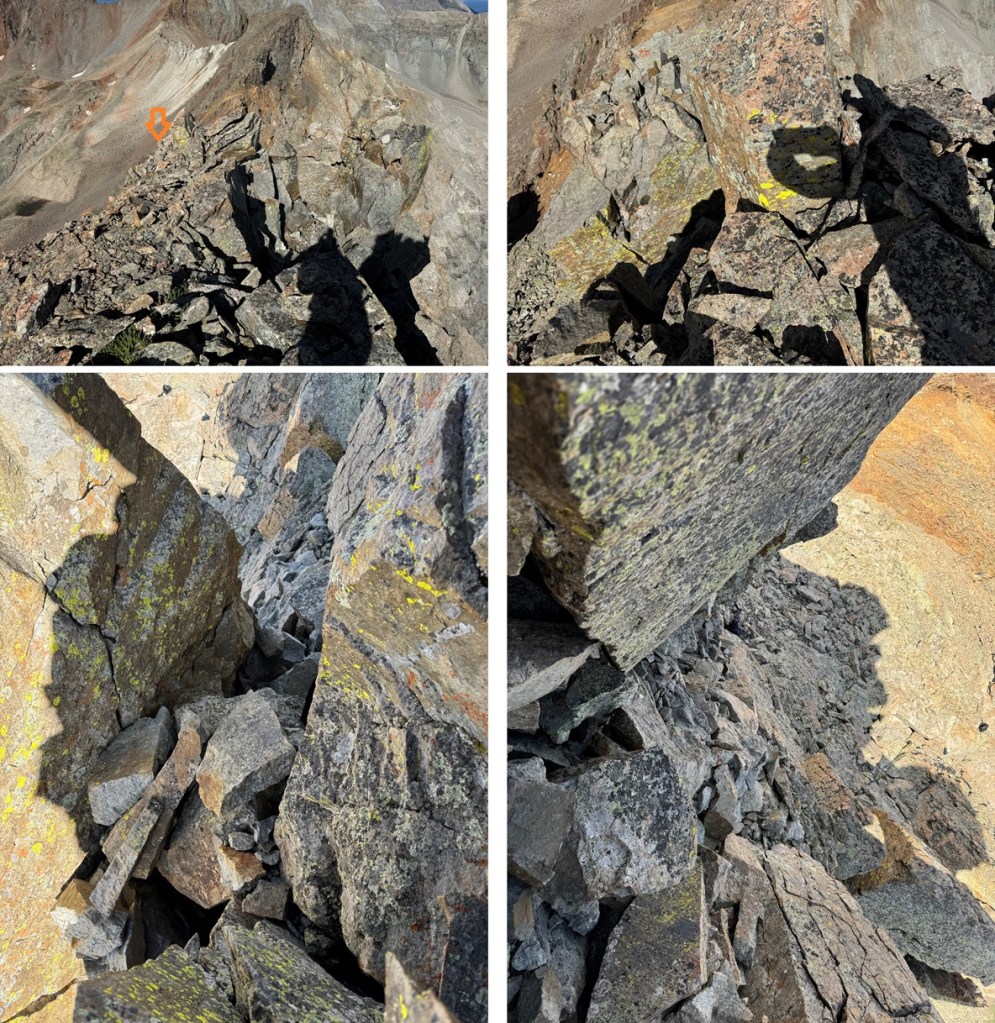
You should now have a good view of the class 4 chimney to the summit.  This is a very loose chimney, and it stops halfway and starts again.  Even the large boulders are loose, so be careful with hand and footholds until you’re sure it won’t move.  I started out by climbing straight up the center, until I came to a “y” where both sides looked perilous.  I decided the right side looked more protected.  The were both loose, sometimes with just large wobbly boulders stacked on top of each other to climb, and sometimes what looked like 10 foot boulders sitting atop rocks the size of a microwave.  Between the two chimneys, there’s probably 40 feet of climbing.  I wouldn’t trust an anchor here:  to many of the boulders are loose.  (There weren’t any anchors set up).

Here’s the overall route I took:

And some closer pictures of the chimney(s)

Chimney 1:

Chimney 2

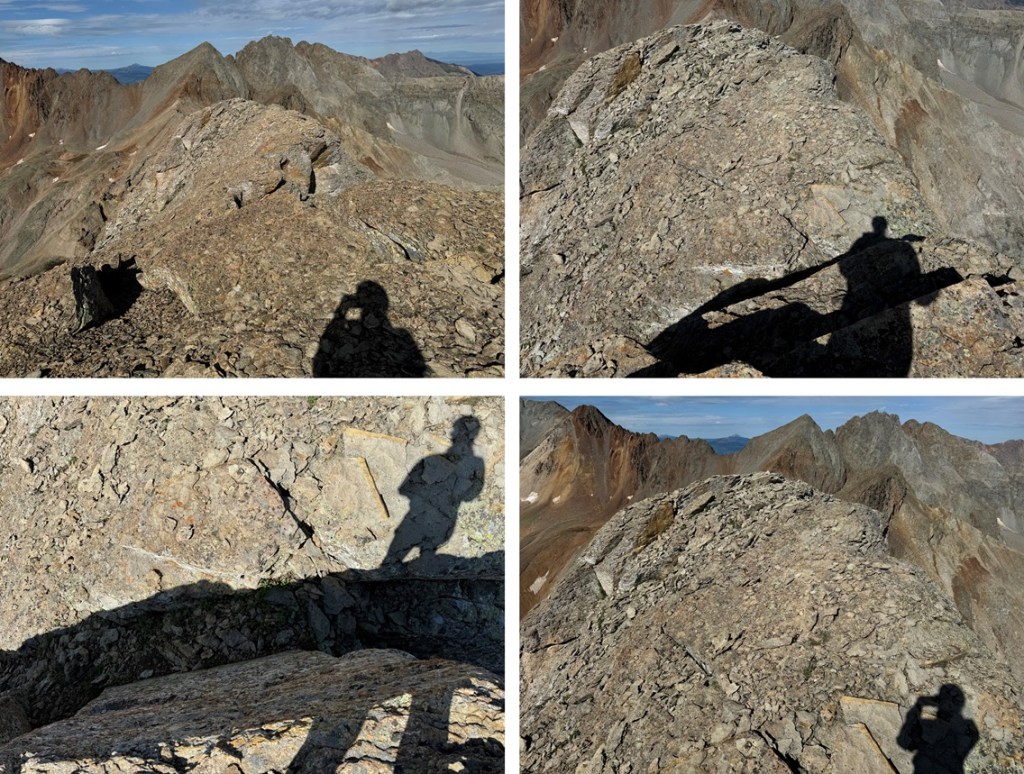
From the top of the second chimney to the east you can see the route you scramble up to the summit

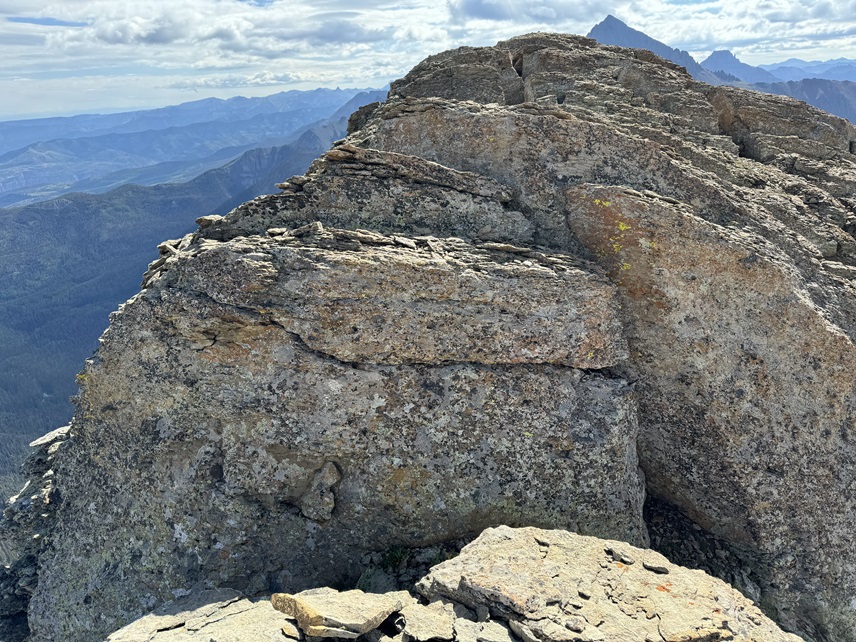
But wait!  There’s more!  Keep heading east, and climb down and then up this rock slab covered in kitty litter.  It’s not tall, maybe 7 feet, but another fun surprise!

And then it’s a quick walk to the actual summit, on… you guessed it, more talus!

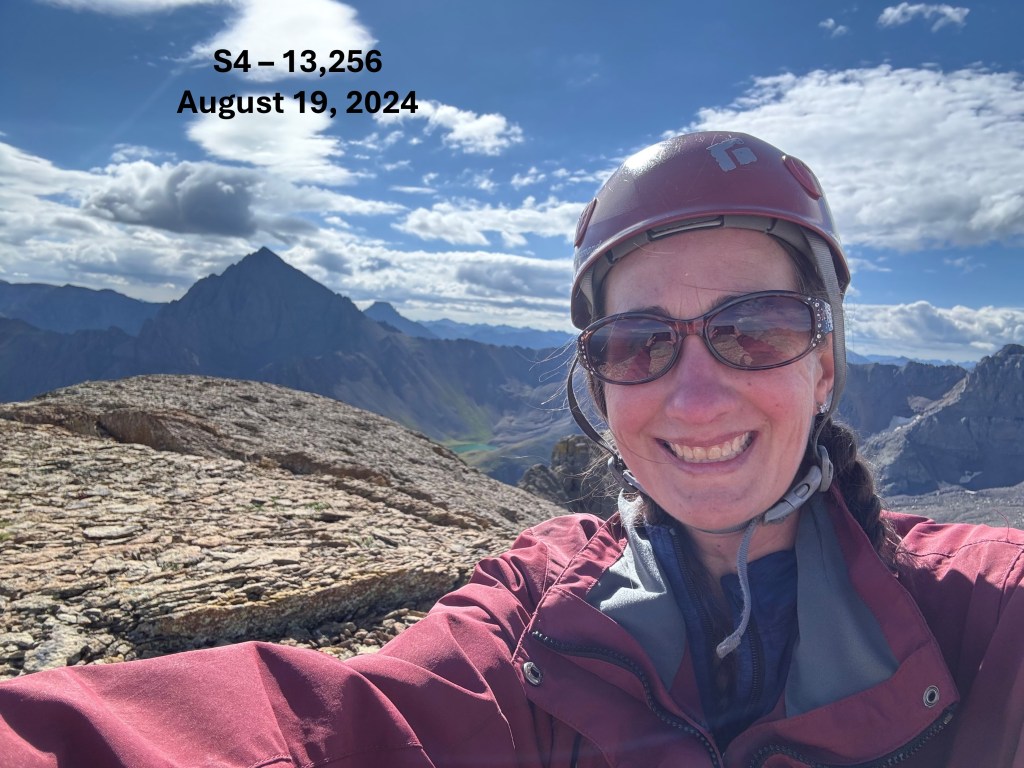
I summited S4 at 9:40am

S4:

And now to head back.  I re-traced my steps to the chimney(s)

Safely down the chimney(s), I made my way back to the top of the gully.

Here are some pictures of the descent down the gully

And the route down into the basin

Once in the rocky basin, I stayed to the right of the creek and descended on the talus to the tundra towards Blue Lakes.

I headed east back to treeline and crossed the creek

Then headed north back towards the Blue Lakes Trail

And followed the trail in the rain all the way back to the trailhead

I made it back to the trailhead at 12:30pm, making this an 11.57 mile hike with 4082’ of elevation gain in 7.5 hours

On to the next trailhead!
Paiute Peak – 13,094

RT Length: 11.32 miles

Elevation Gain: 2781’

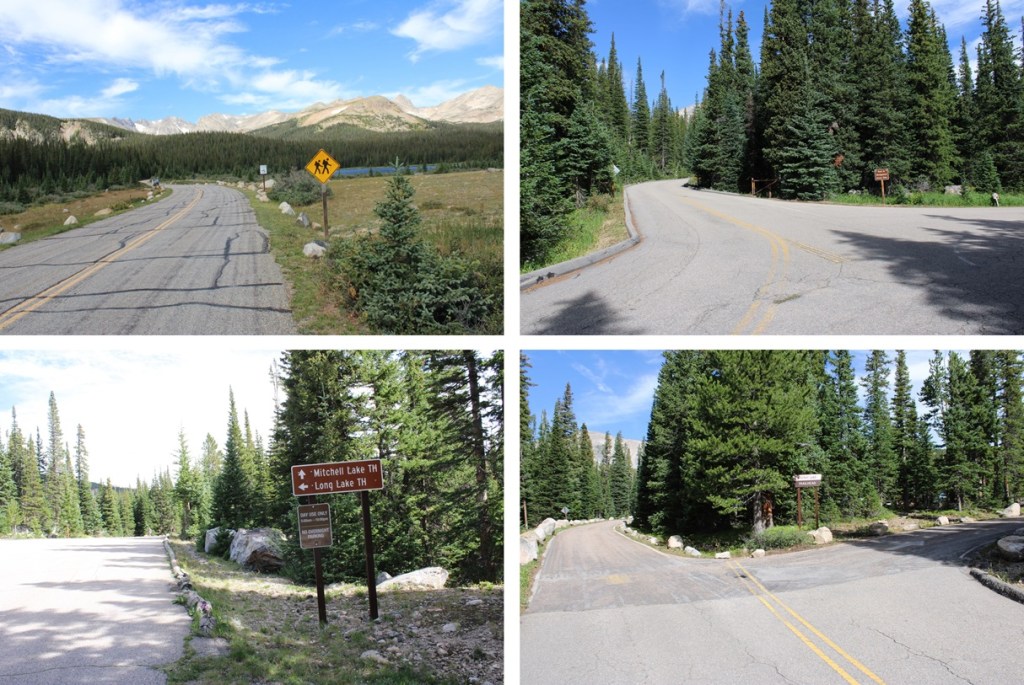
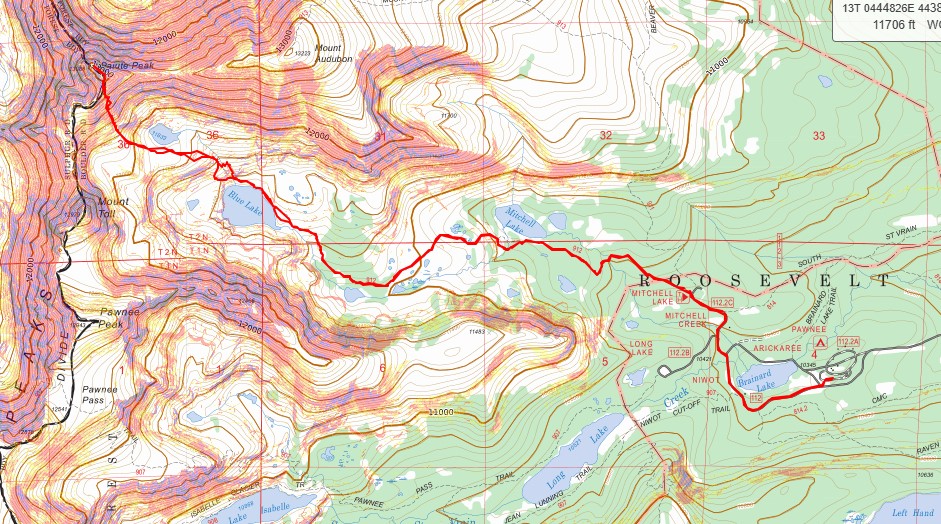
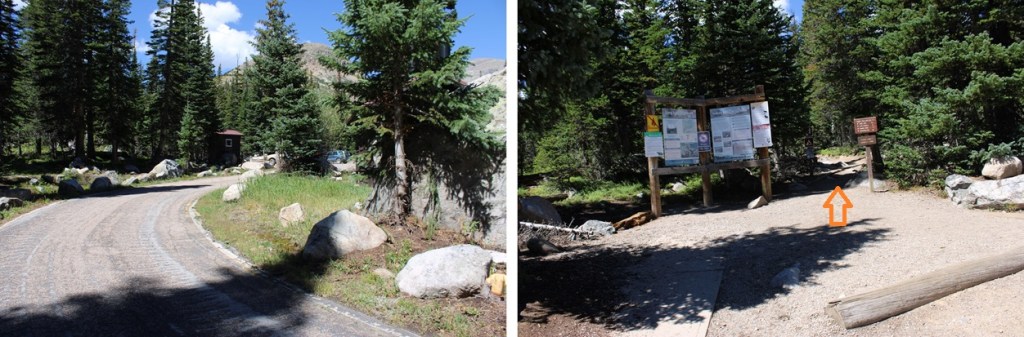
I was parked at the Brainard Lakes parking lot.  I already posted about why I was parked there, and not the Mitchell Lakes trailhead, so I’m going to skip that part this time. 

I was on the trail at 4:30 am.  My first order of business was to hike the 1.3 miles to the Mitchell Lake Trailhead. 

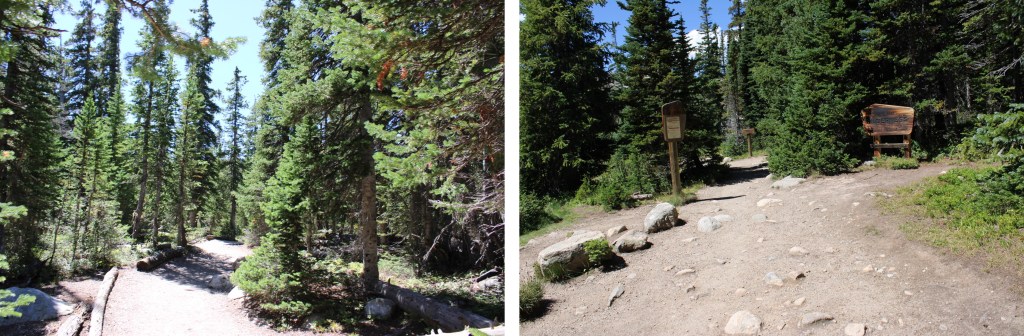
From the Mitchell Lake Trailhead, I followed the Blue Lakes Trail west towards Blue Lake. This is a well defined, class 1 trail with no junctions, so I was able to follow the trail the entire way.  From the Mitchell Lake Trailhead, it was around 3 miles to Blue Lake. 

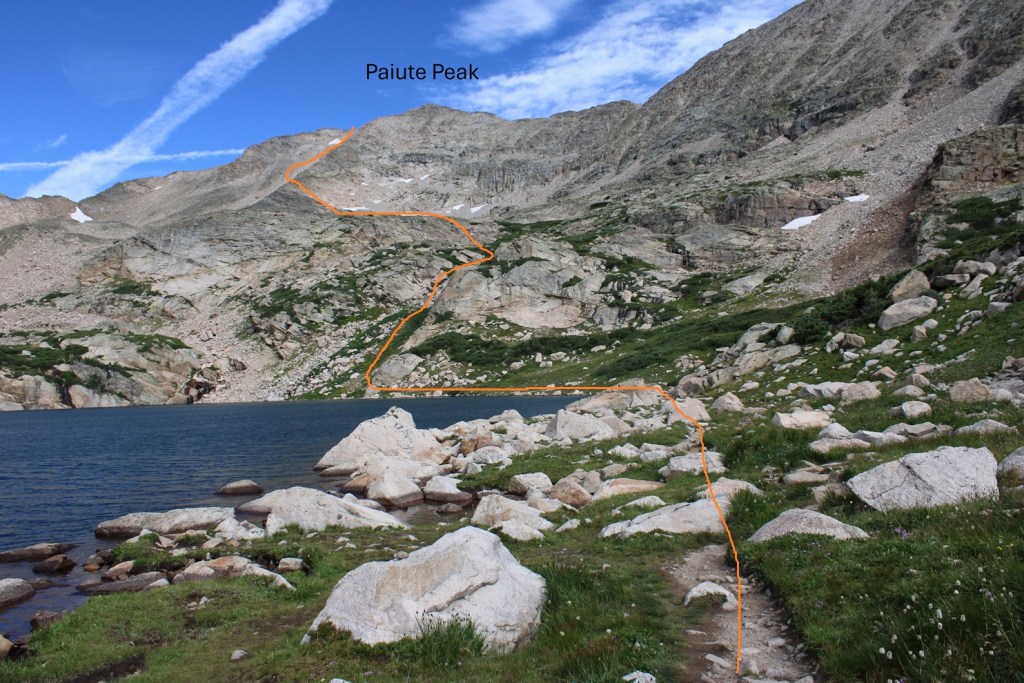
From Blue Lake I had a clear view of Paiute Peak.  Here’s an overview of the rest of my hike

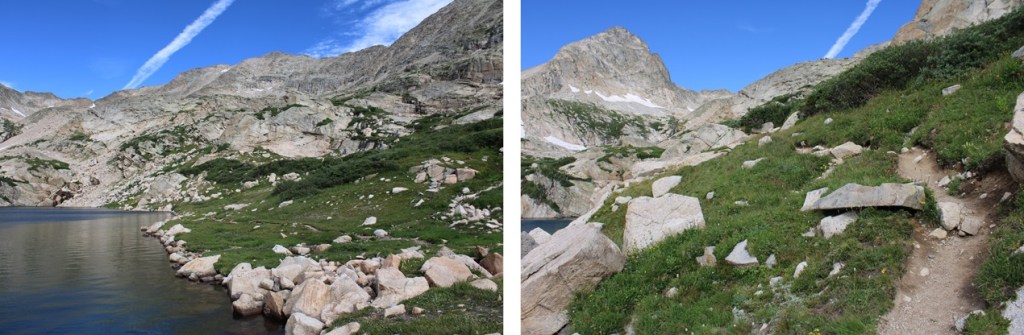
First, I followed the trail around the north side of the lake

When I came to a grassy drainage, I left the trail and followed the drainage north

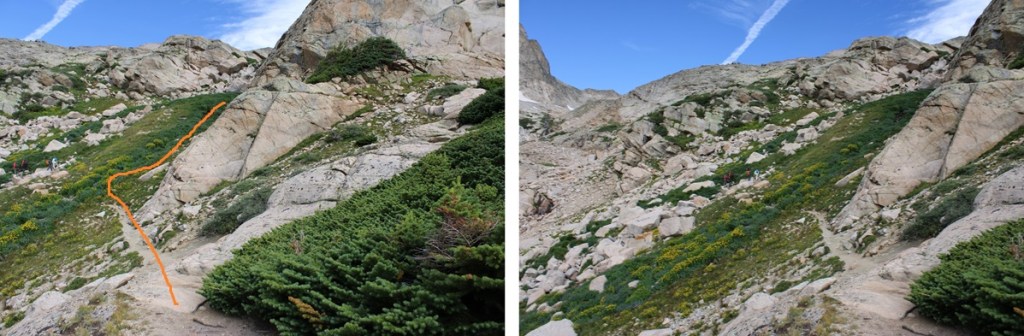
At around 11580’ I crossed the creek at a small waterfall, and headed northwest.

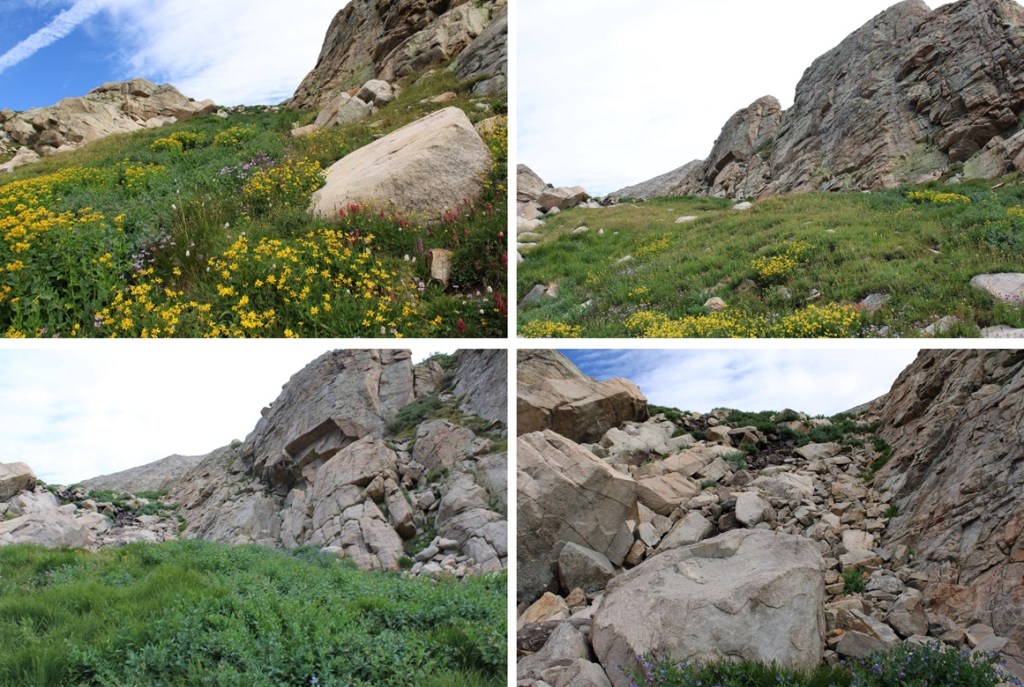
After crossing the waterfall I kept heading west, aiming for the ridge in the distance.  This was choose your own adventure.  I chose to go up and over the rocky gullies, doing my best to avoid the snow.  This can all easily be kept class 2.

At this point , the lake at 11833’ was to the north of me, on my right.  I kept heading west, to gain this ridge.  There are a couple of cairns here, and parts of a game trail, but the main goal is to head towards the gully.    

And now to head up the gully. I did this by heading north, staying to the right of the snow.   If there isn’t snow when you’re doing this route, you can aim for a rather large vertical rock sticking up straight (you’ll know it when you see it, as it stands out).  This gully had game trails leading to the top, and I’m sure you could take them all the way to the top of the gully.  However, I stayed to the right of the snow and then climbed up the rocky rib.  This was mostly class 2, with a few easy class 3 moves thrown in.

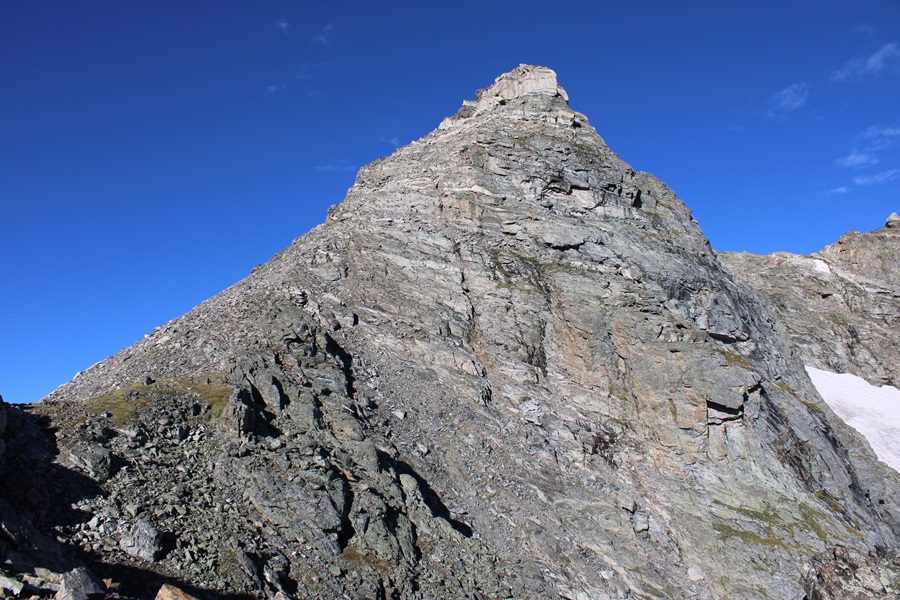
At the top of the rock rib, you’ll see what appears to be the summit of Paiute Peak to the north. It’s actually a false summit, but aim for it.

From here, the true summit is to the northeast.  Head towards two boulders that look like the summit (they’re another false summit)

From those two boulders, the summit of Paiute Peak is visible to the north.

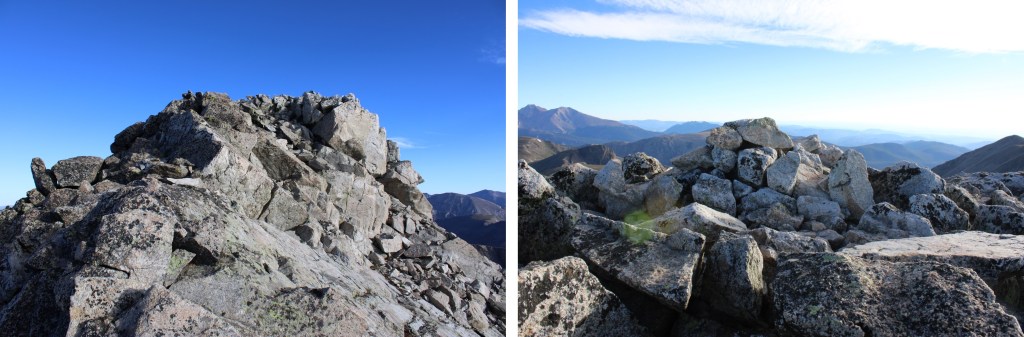
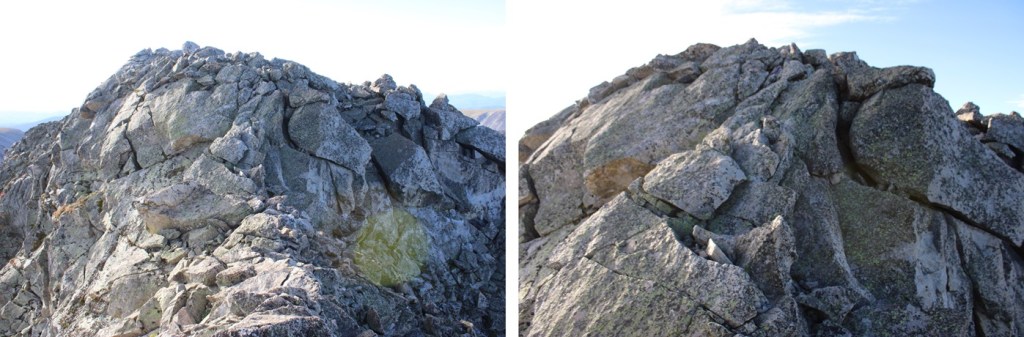
To get there I downclimbed a difficult class 3 section (or easy class 4) with exposure.  This was much more difficult to downclimb than to upclimb.  And it was very windy this day, making this ridge extra spicy.  The route down and then up to the summit are obvious.  There was a cairn at the top, and a summit register.

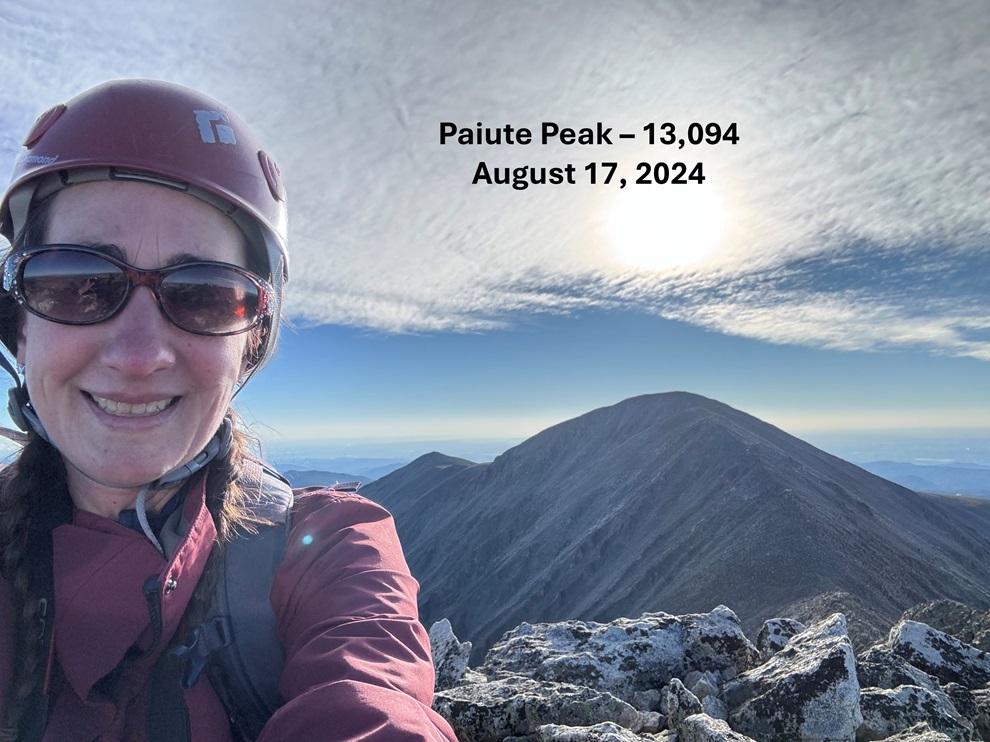
I summited Paiute Peak at 7:30am

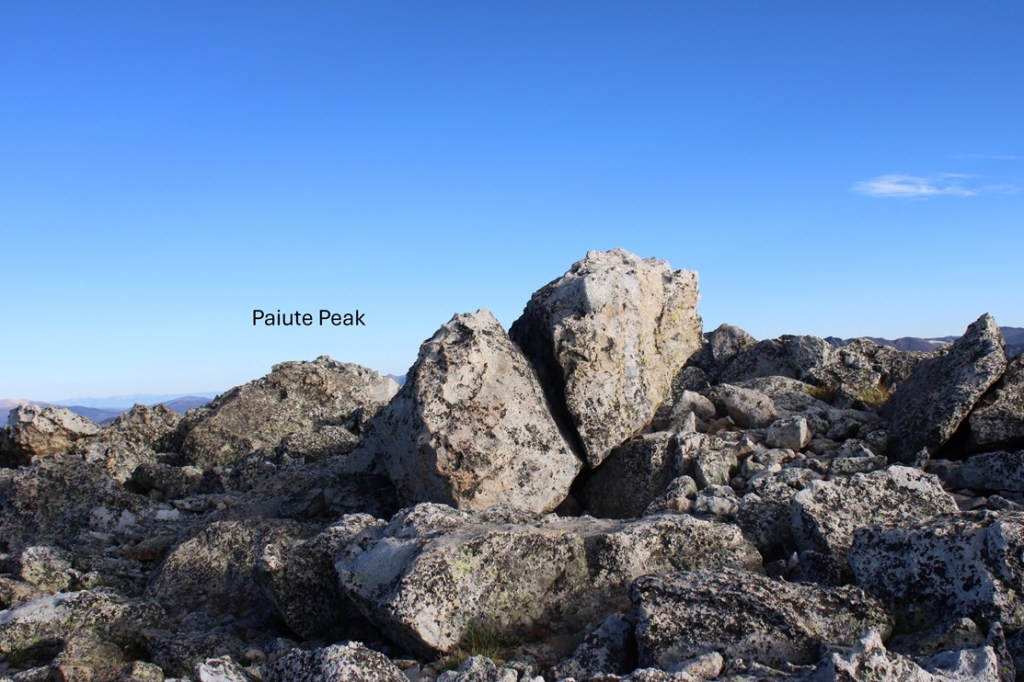
Paiute Peak:

From the summit looking back, it really, really looks like where those two boulders are is higher, but there was a register here, so I’m assuming it’s the true summit.  Now to head back.  This “v” was much easier to upclimb. I used the same route down as I did on my way back up.

I then made my way towards the gully.

I went southeast down the rocky rib

Then descended the gully

At the bottom of the gully I turned left, and made my way back towards Blue Lake

I aimed for the drainage, then followed it south towards Blue Lake and the trail below

Back on the trail, I followed it east back to the Mitchell Lake Trailhead, passing several lakes along the way.

Back at the Mitchell Lake Trailhead, I followed the road back to the Brainard Lake parking area.

I made it back to the Brainard Lakes trailhead at 10:30am, making this an 11.32 mile hike with 2781’ of elevation gain in 6 hours.

On to the next trailhead!
Navajo Peak – 13,419′

RT Length: 14.52 miles

Elevation Gain: 3346’

This hike starts from the Long Lake Trailhead inside Brainard Lakes Recreation Area.   This area is permitted.  There are basically two options for permits (I’m summarizing) either timed entry between 8am-5pm, or an overnight permit.  Overnight parking permits aren’t granted unless you have an Indian Peaks Wilderness overnight permit first.  Both permits go on sale at the same time.  Since I wanted to start before 8:30am, I needed to first get an IPW permit, then try to get an overnight parking permit. 

I was able to secure an IPW overnight permit for the weekend but had difficulty securing overnight permits to park inside of Brainard Lake.  Eventually I was able to get two 1-night (overnight) permits, one for Long Lake Trailhead and the other for Niwot Campground.  I tried to get two consecutive in the same area, but they weren’t available for the dates I was allotted my IPW permit. 

When I checked in at the Brainard Lakes Recreation area, they didn’t like what I had done (secured two one night permits at different sites), and decided a better option was to grant me a two night permit for Brainard Lake.  I’d have rather parked for two nights at Long Lake or Mitchell Lake, or even what I had done originally, which was one for Long Lake and the other for Niwot.  But they weren’t having that, so my mileage was increased by a couple of miles for this hike, since Brainard Lake is over a mile from the trailheads.  Also, after you’re inside the park, they have other ‘security checkpoints’ where you need to show you’re your permits again, and they also patrol the parking lots hourly to make sure your permit is valid.  Have I mentioned I’m not a fan of the permit system?  I’ve yet to see one that works smoothly, especially for mountaineers who are concerned with weather and start times.

As I was hiking early in the morning the next day, being flashed with bicycle lights from behind me at 4:30am, I realized there’s another option around the permit system: ride your bike from the winter closure to the trailhead.  I don’t own a bike, but this is definitely an option for the future… if I ever get a bike.

In any event, after minimal drama and parking a little further away than I’d have liked (but hey, it was better than parking at the winter closure…) I was on the trail at 4:30am, starting at the Brainard Lakes parking lot.  My first step was to follow the road for 1.3 miles to the Long Lake Trailhead.

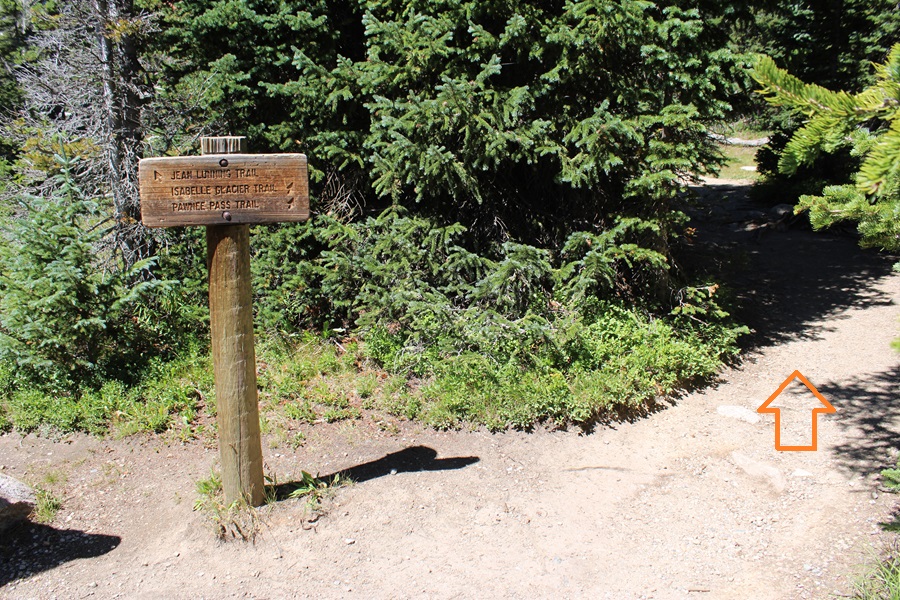
Once at the Long Lake Trailhead, I followed Pawnee Pass Trail west

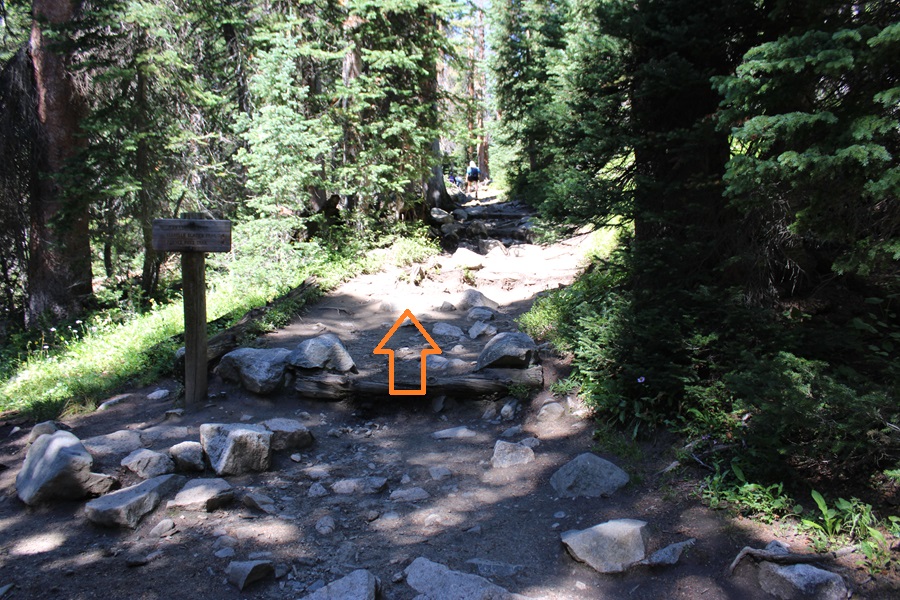
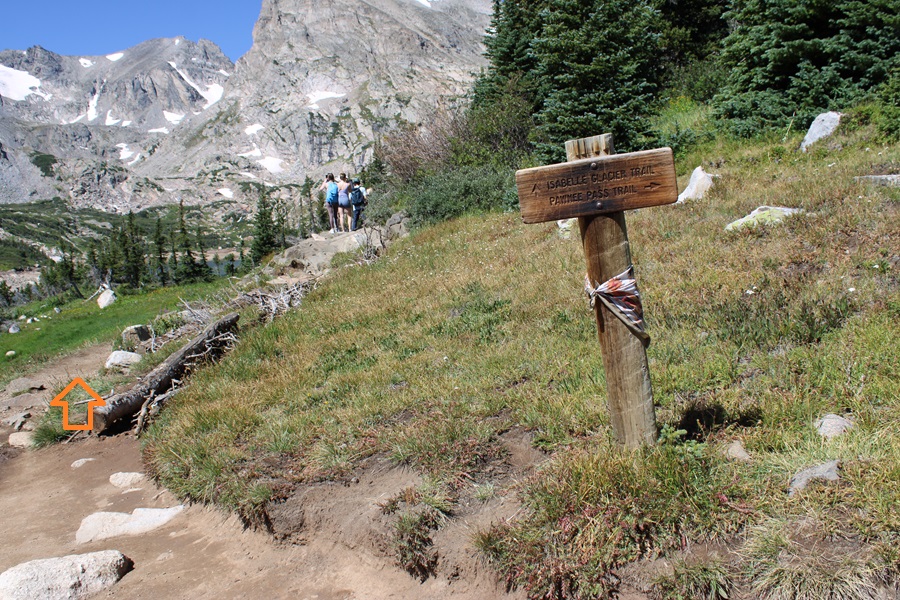
After hiking about 1.5 miles from the Long Lake Trailhead, I came to a junction and went right, following the Isabelle Glacier Trail

At the next junction I went right again, to continue along the Isabelle Glacier Trail. 

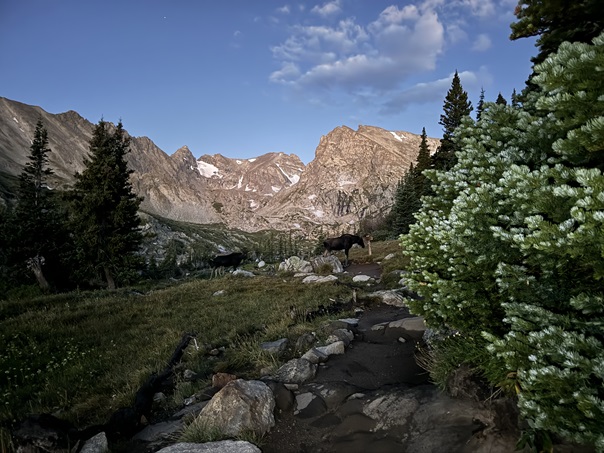
At the next junction, I came upon two bull moose.  When they saw me they snorted and grunted, so I hid behind a tree for 20 minutes until they’d made their way up the hillside, casually munching on willows as they went. I’ve been charged by moose in the past, and while other than the grunting and snorting (which could have meant “It’s too early to be awake”), I kept my distance.  Once they moved, I continued following Isabelle Glacier Trail

I followed this trail all the way past Isabelle Lake, west/southwest, through rocky areas and willows, towards Navajo and Apache Peaks.  This is a class 1 trail, but the willows, rocks, and creeks overtake it at times. 

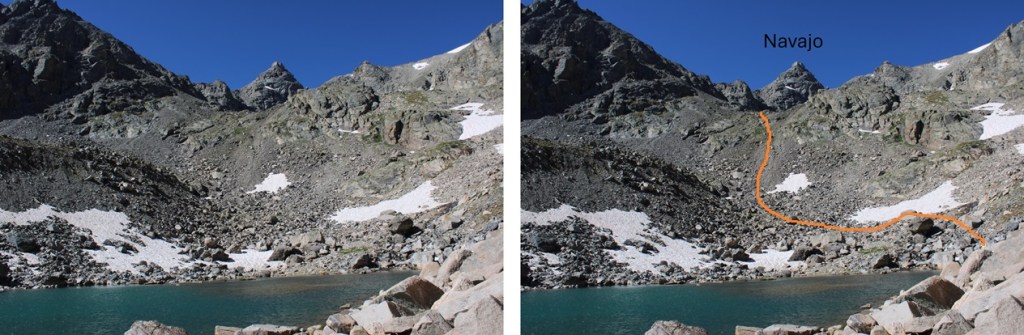
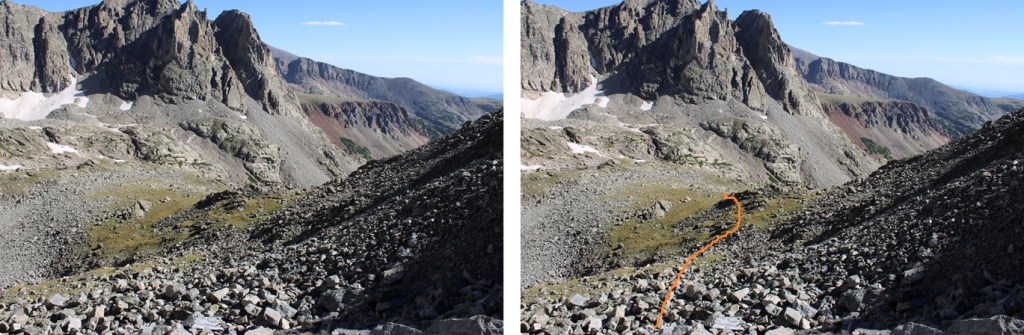
I came to the last pond before the glacier, and left the trail to head southwest into the upper basin.  Here’s the route I took

And some step by step pictures.  First, I had to leave the trail.  I crossed over the snow still skirting the lake, and headed towards the large boulder in the distance

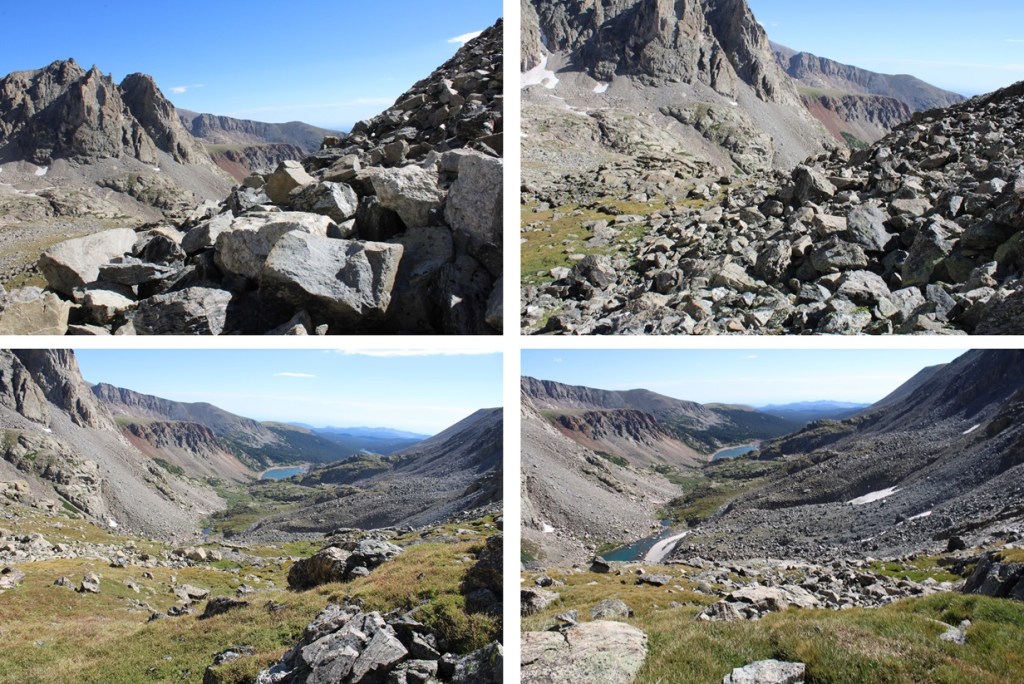
I then crossed the creek, crossed the boulders (some were loose, most were not) and headed for the scree.  Luckily, it had rained last night, so the scree was easy to grip.

At the top of the scree I was greeted with tundra.  I kept following it, heading southwest

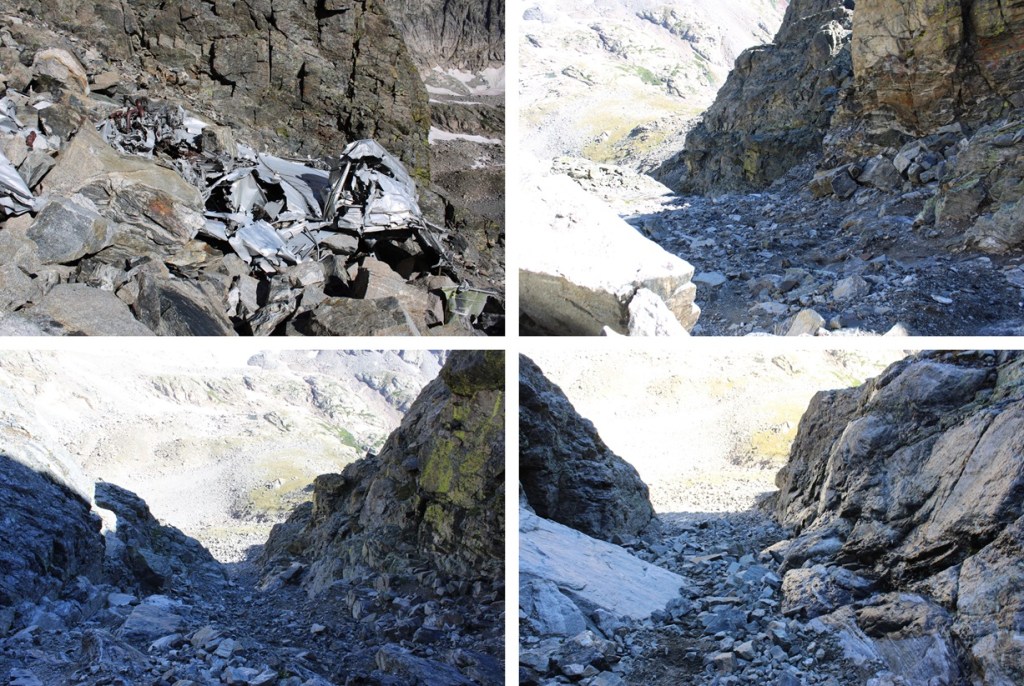
Now in the upper basin, I had a great view of the gully I wanted to take to ascend the ridge.  If you look around, you’ll see remnants of a plane crash that happened in the 1950s.  The higher you go up this gully, airplane gully as many like to call it, the more debris you’ll see.  This is the route I took up the gully.

I made my way southwest over some boulders towards the gully, until I found a scree path.  A few thoughts on this gully:  Besides the fact this was the only part of the hike I experienced insanely intense winds all day, it was easy to navigate, there were social/game trails to follow, it wasn’t very loose, and the scree was solid.  In short, it’s probably one of the easiest gullies I’ve ever ascended, and if they were all like this, I probably wouldn’t mind them so much.  I headed south until I saw an obvious “y” in the gully, and went right.  It’s easy to know where you turn right because you’ll see parts of the airplane to the right.

I went to the left of the airplane debris, then followed climbers right of the gully to the ridge (although both sides will get you there, just use the terrain you like best).

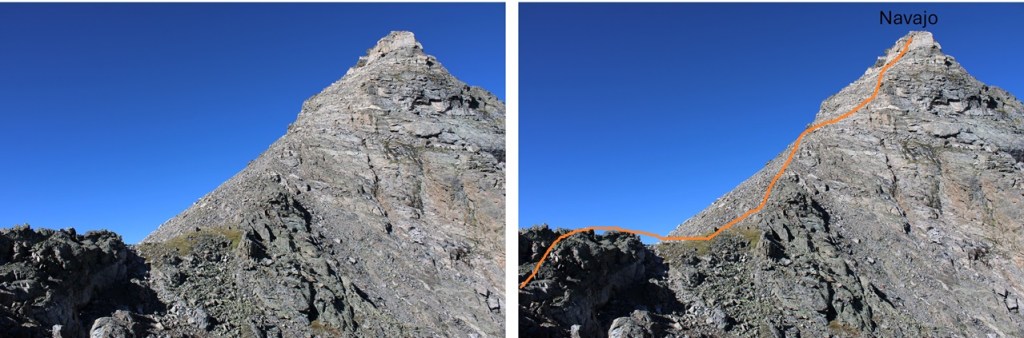
At the top of the gully, I could see the rest of my route to the summit of Navajo Peak.  Until the chimney at the end, the rest of the route is class 2.  If you find yourself in class 3 territory, you’re making it too difficult. 

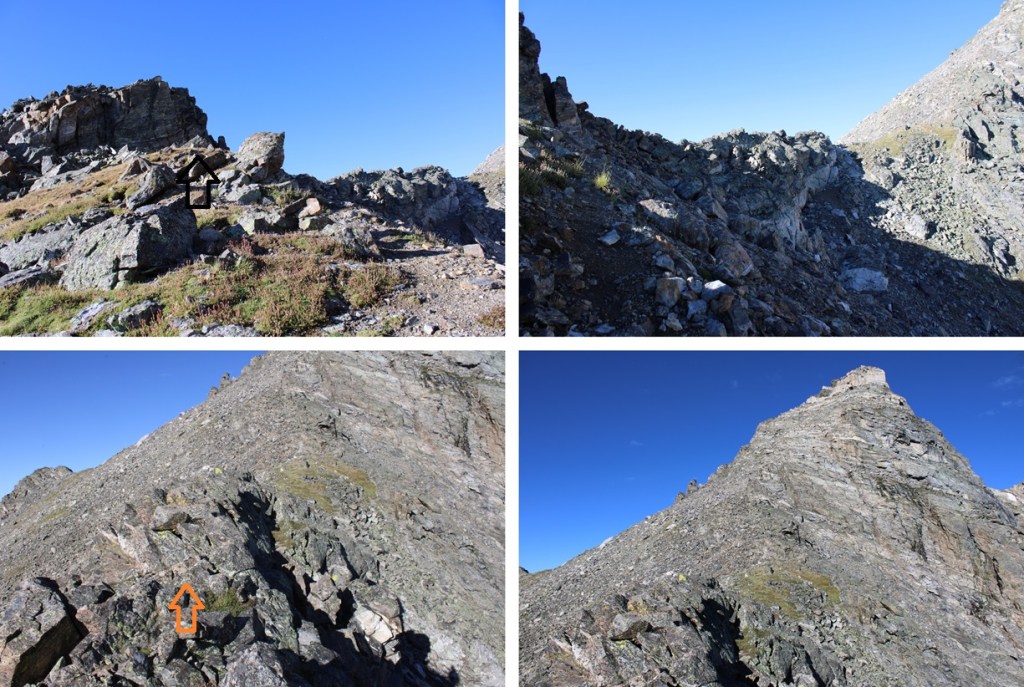
From the top of the gully I turned left and followed the saddle across a small ridge

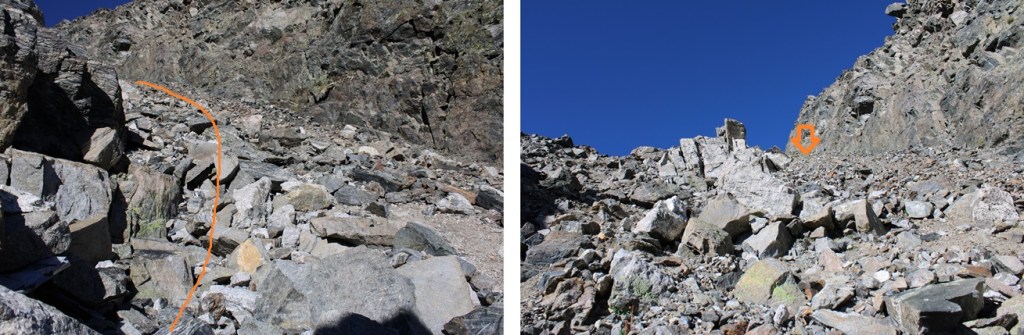
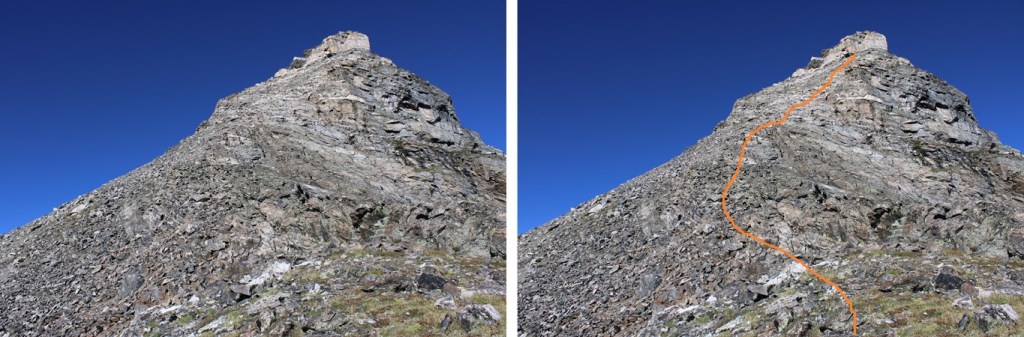
From here the rest of the route looks daunting, but there are tons of game trails that will get you to the right spot.  Aim for the very right edge of the rock formation, where you’ll see a chimney.  Once again, this should all be class 2.

Here’s a look at that chimney.  I found this chimney to be difficult class 3, easy class 4, so if you’re looking for a good practice chimney, this would be it. There isn’t a lot of exposure, and I was able to find adequate hand/footholds if I stretched a bit.  At the top of the chimney, exit left.

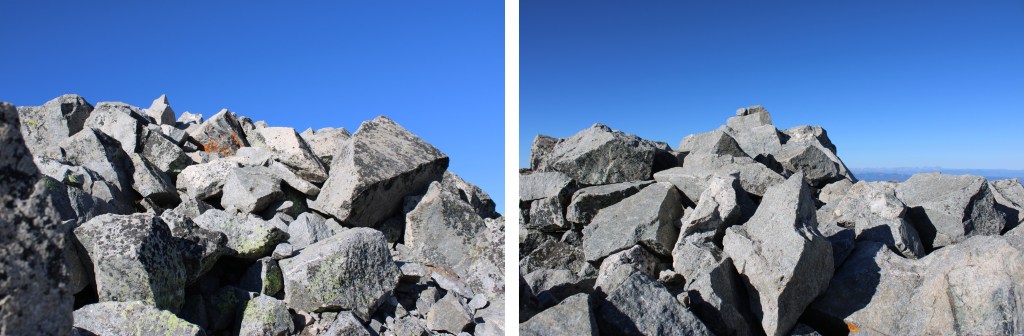
At the top of the chimney I turned left, and climbed over boulders a short distance to the summit

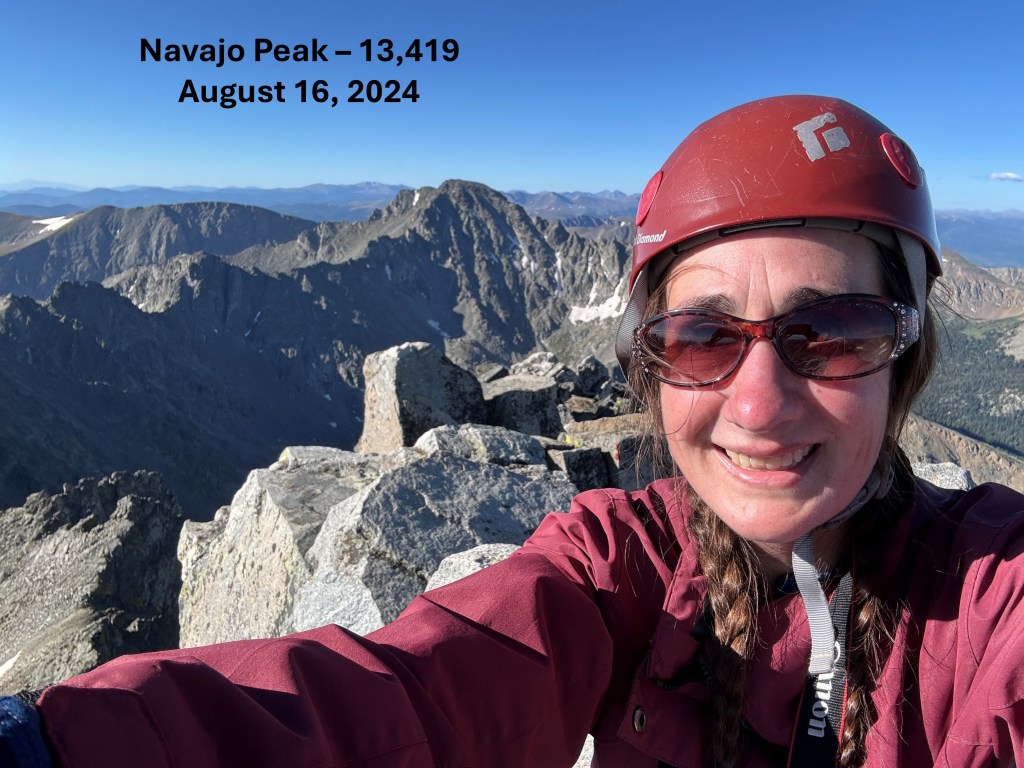
I summited Navajo Peak at 8:30am

Navajo Peak:

This was an out and back hike for me, so I turned around and headed back towards the chimney.

I descended the chimney, and made my way back down to the saddle.

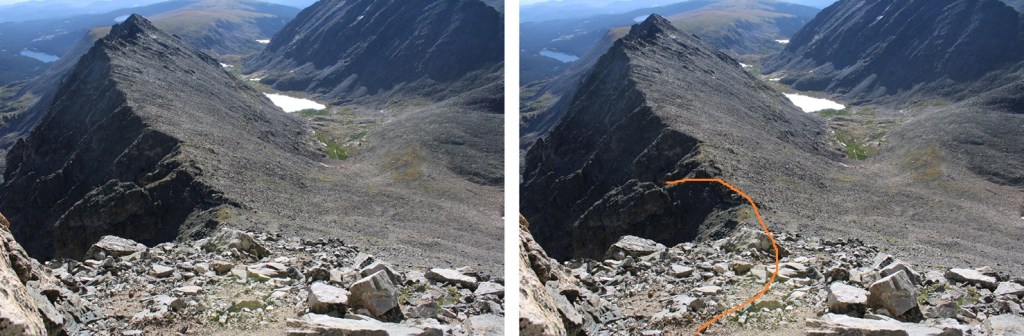
Then headed back down airplane gully

Passing the crash site, and continuing to follow the gully north

At the base of the gully, I rock hopped towards the tundra I could see in the distance

I could now see Isabelle Glacier trail in the distance, and descended down into the lower basin towards the trail. 

Back on the Isabelle Glacier trail, I followed it east back to the Long Lake Trailhead.

Back at the Long Lake Trailhead, I followed the road 1.3 miles back to Brainard Lake

I made it back to the trailhead at 12:30pm, making this a 14.52 mile hike with 3346’ of elevation gain in 7.5 hours

Precipice Peak – 13,144

RT Length:  4 miles

Elevation Gain:  2364’

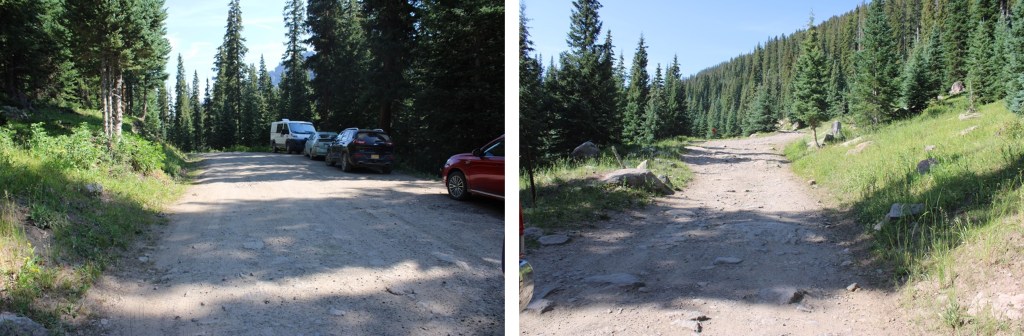
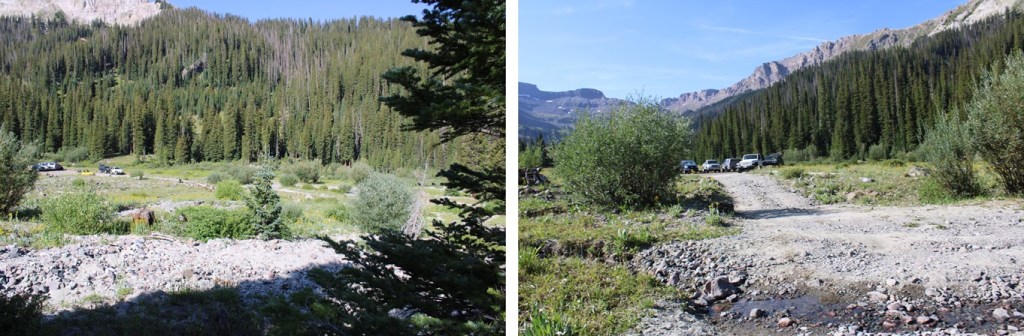
I know most people do Fortress and Precipice together in one day, but for personal reasons, I wanted to spend more than one day in the basin, and these were the only two peaks I had left, so I made it a two-day trip.  I parked at the Wetterhorn Basin Trailhead, at about 10750’.  The road to get in is mostly 2WD, until the last 2 miles, which are 4WD and requires clearance.  Here’s where you park for the 2WD trailhead

And here’s a picture of the Wetterhorn Basin Trailhead parking area.  The road in was worse than I remembered from two years or so ago.

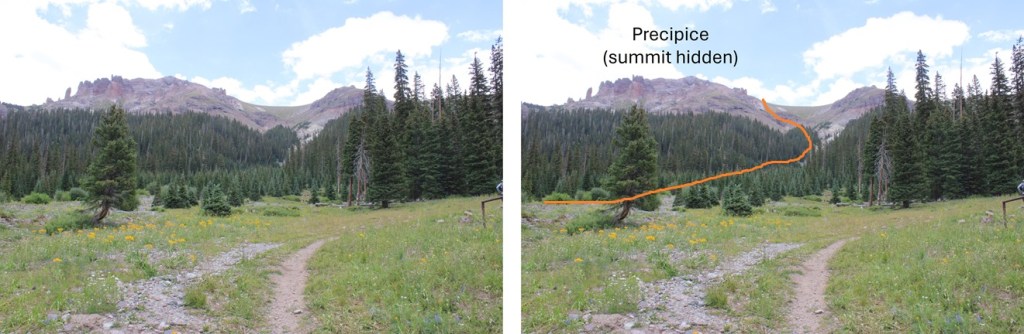
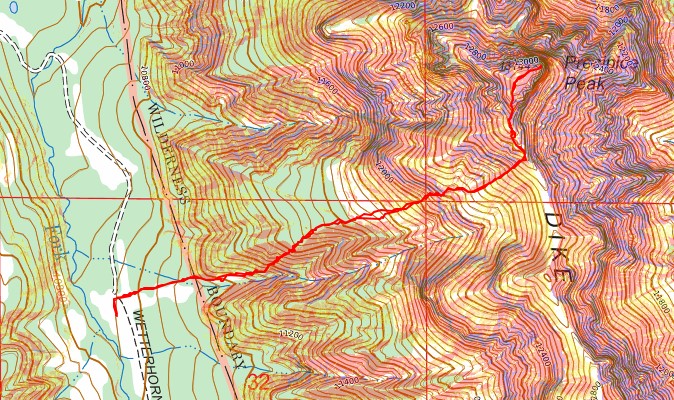
From the parking area, here’s a visual of the route to the ridge

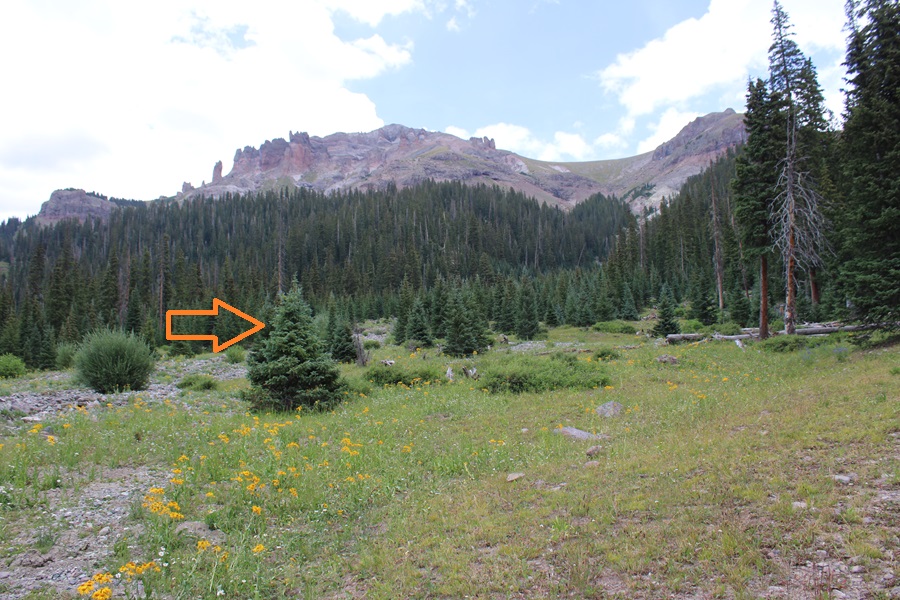
The route starts to the north of the parking area, parallel to the “Wetterhorn Basin” sign, at the drainage.  I headed east up the drainage.

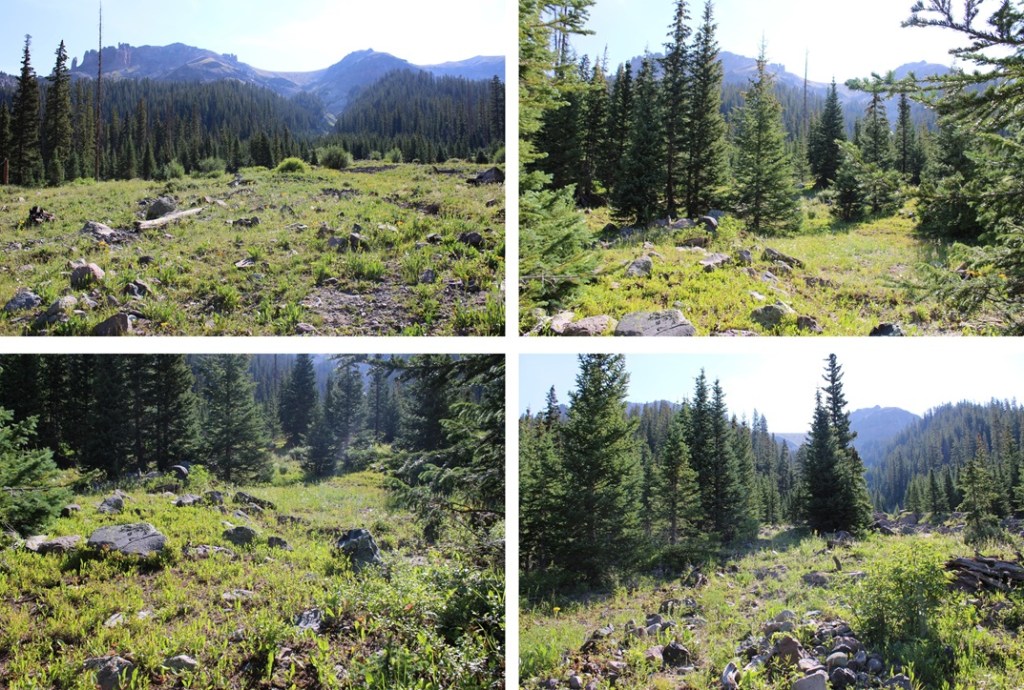
There’s a faint trail here, that I kept finding and losing, but as long as you stay to the left of the drainage and right of the hillside, heading east, you’re going in the right direction.

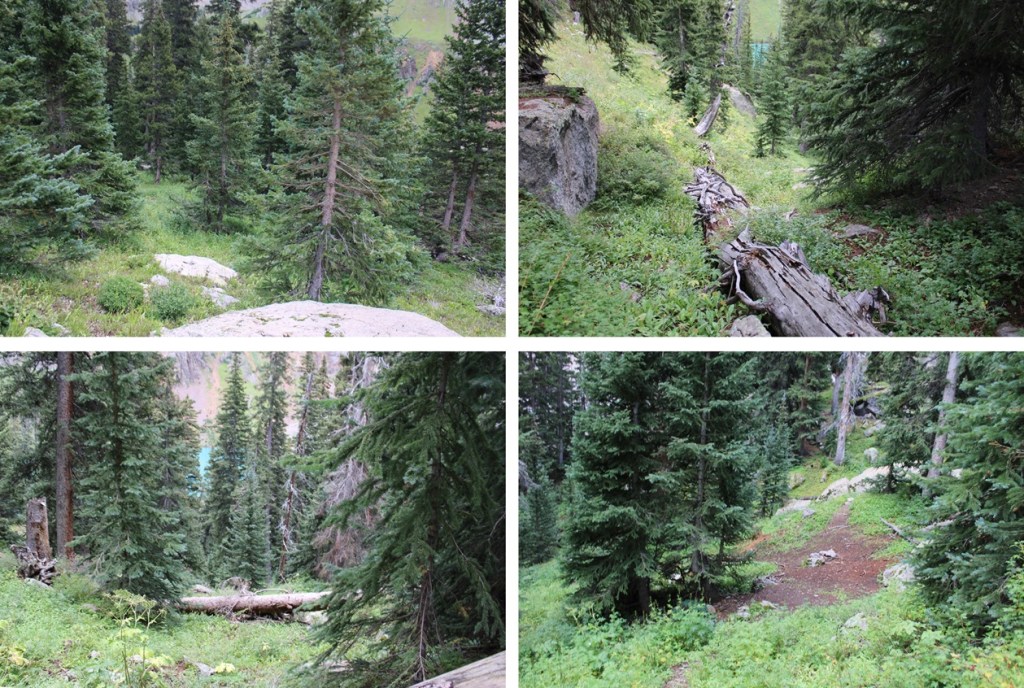
After hiking for about half a mile, there will be a large tree blocking the trail (the trail is obvious here).  Climb over the tree, and head north/northeast, looking for a dirt gully.  There are a few cairns in this area to help, but I wouldn’t rely on them.

I found the dirt gully and headed up, towards the ridge.  This dirt is very steep and very slippery.  I’d recommend wearing microspikes for traction.  I gained about 300’ of elevation to 11400’.

At the top of the gully, around 11400’, a trail will pick up that heads right (east) along the ridge.  There are cairns here to help get you to treeline, and a faint game trail to follow.  There are also cairns in the clearings (but I didn’t find any in the treed areas).

Once at treeline, here’s a visual of the route to the saddle

First, I went around this large rock, which has a cairn on it.  It’s important to remember because it’ll be your exit point on your descent.

Then I headed northeast, across the rock/scree field, aiming just to the right of the caves in the distance.

At the base of the caves, a faint trail picks up, and you should be able to spot cairns in the distance to your right.  Put on your helmet, and follow cairns through the class 3 rocky terrain. 

When the rocks end, so do the cairns, but from here the route is easier to figure out.  You’ll want to dip down a bit into this drainage, and ascend on the tundra towards the large rock towers

Stay to the right of the towers, aiming for this small saddle

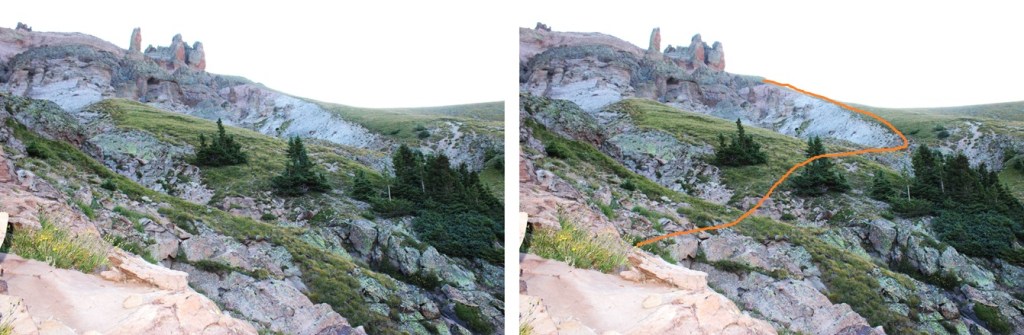
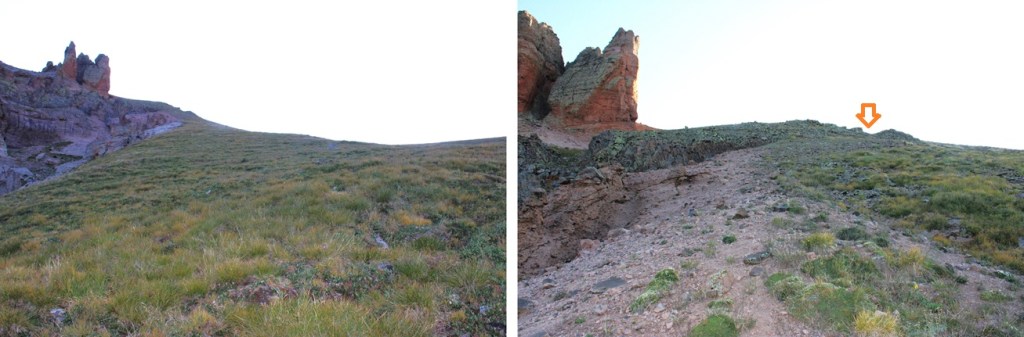
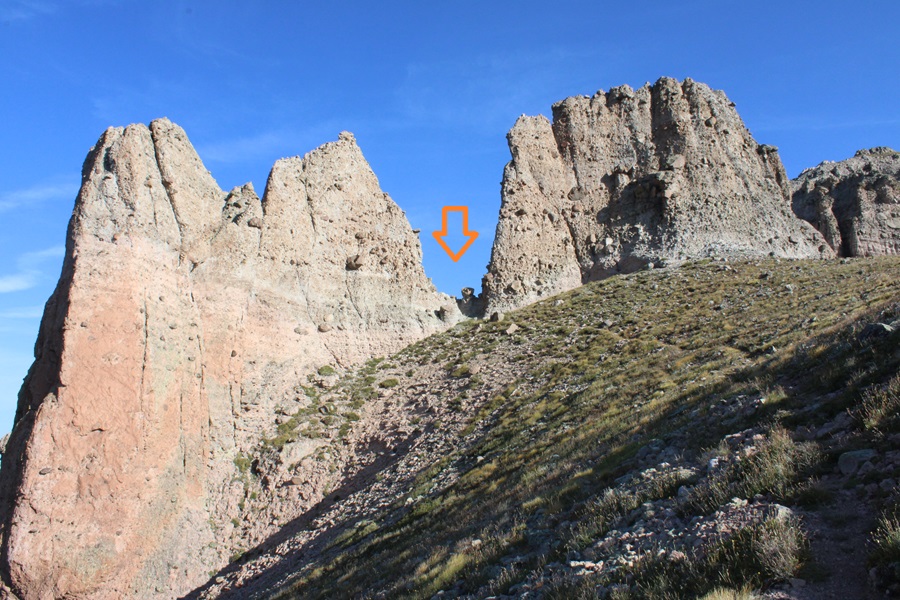
When you hit this small saddle, turn left, and head towards the window in the rock ahead of you.  There will be a very good trail leading the way.

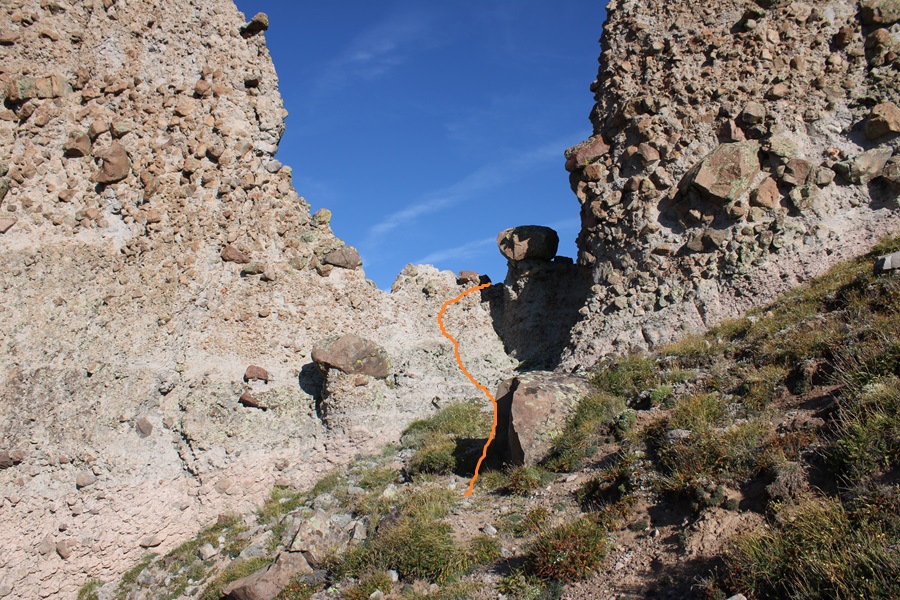
Climb up and over the center of the window.  This is class 3, and there are plenty of hand and footholds.  It’s probably no more than 7 feet high.  Just be careful, as the holds are rocks in held together by loose dirt, and could come loose.

Once you climb through the notch, turn right, and ascend this hill.  I did my best here to stay on the scree and tundra, away from the rocks.

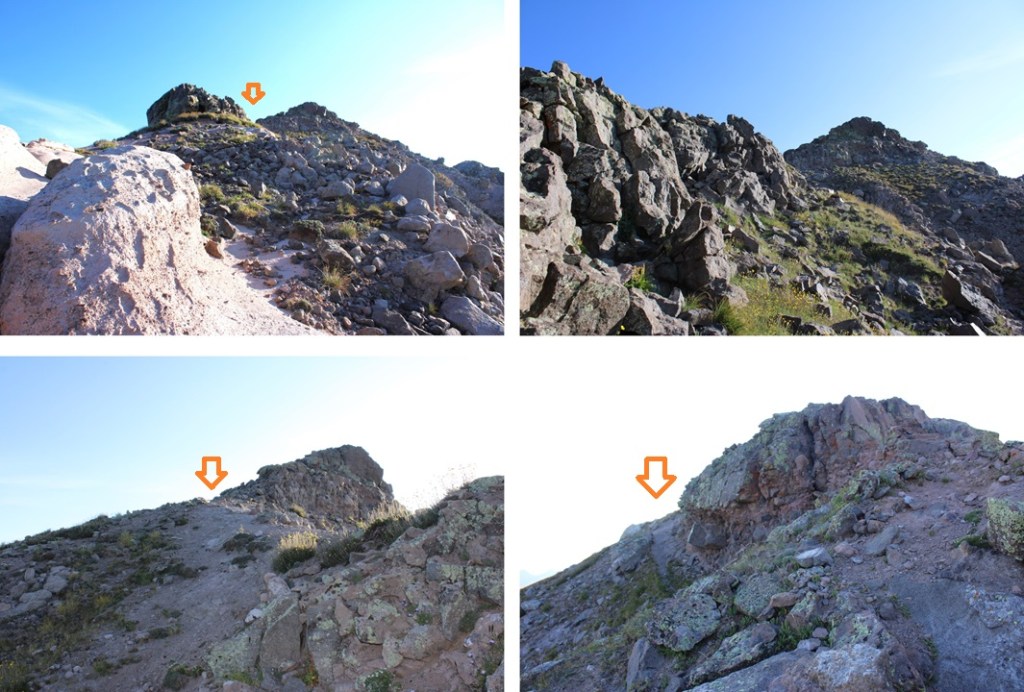
From here I mainly stuck to the ridge, except for two times when I went left to keep this class 2.   There is a visible (yet faint at times) trail from here to the summit.  Here are some pictures of my route up the ridge. 

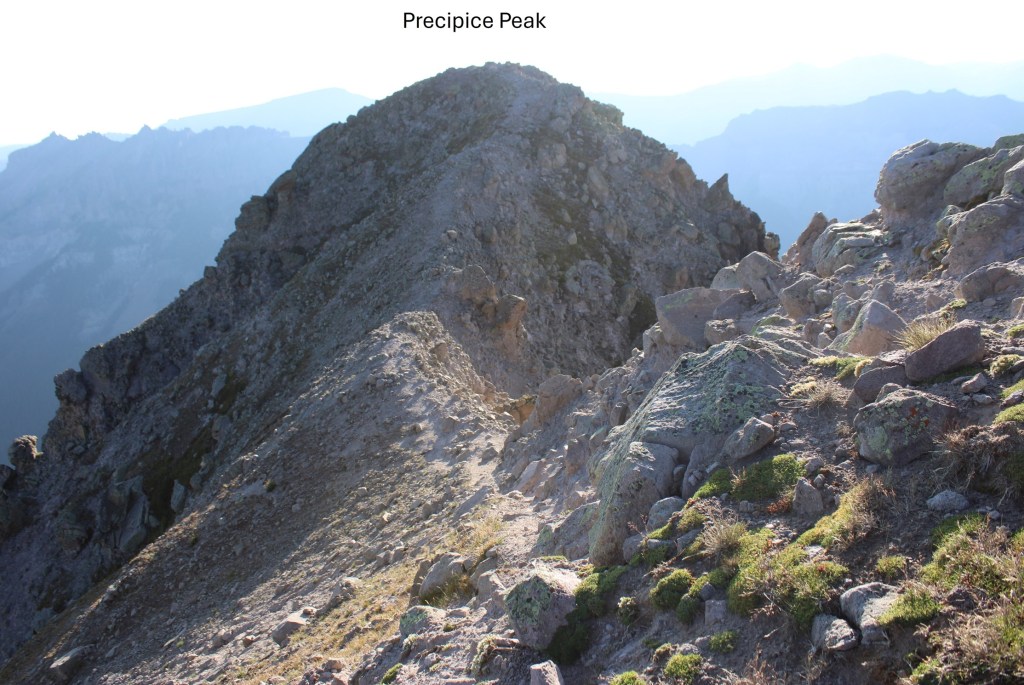
Here is what I thought was the summit.  It’s not. This was the second time I went left, around the block on a nice trail

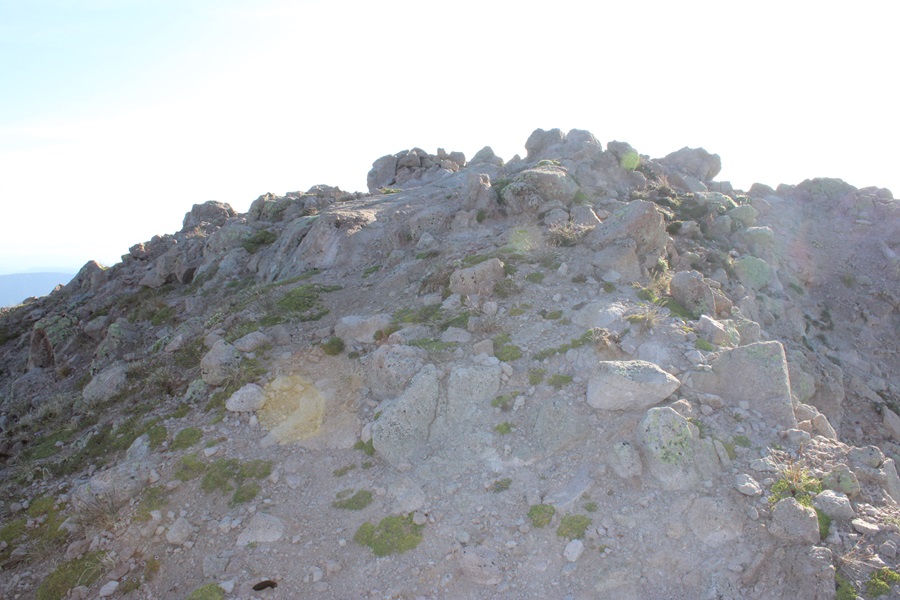
And from here I could see the true summit, which was an easy hike on a well-worn trail

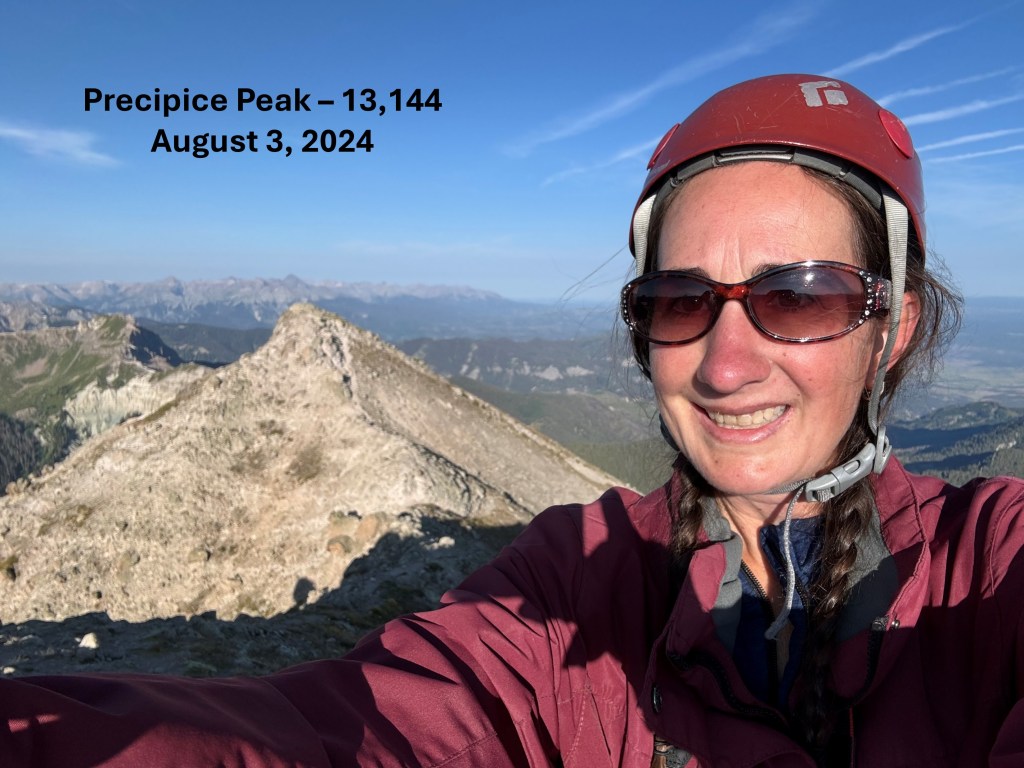
I summited Precipice Peak at 7:45am

Precipice Peak:

This was an out and back hike for me, so I turned around and made my way back to the false summit

And then back down the ridge to the notch

I climbed through the notch

And made my way back down to the tundra

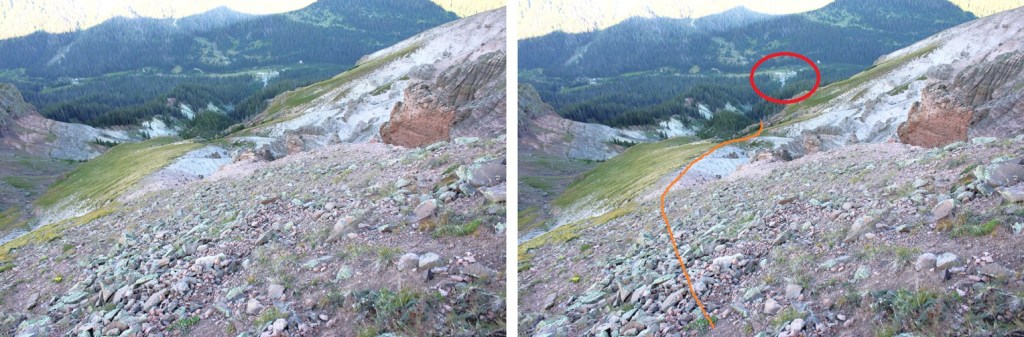
Where the tundra stopped at the rocks I turned right, and headed back down towards the basin.  Also, from here I could see the parking area (circled in red)

I made my way towards the rocky area, and followed the cairns back down into the basin

I was aiming for that large boulder in the distance

Once at the boulder, I picked up the trail through the trees, and followed it until about 11400’

At 11400’ I found that dirt gully, and headed southwest towards the drainage, losing 300’ of elevation.

Once I was close to the drainage, I turned right, and followed a slight trail west towards the parking area

I made it back to my truck at 9:30am, making this a 4 mile hike with 2364’ of elevation gain in 3 hours, 45 minutes. 

On to the next trailhead!