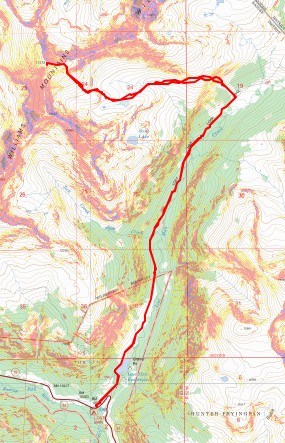
This was my final peak in the Williams Group. I didn’t want to do the traverse but instead wanted to camp in remote basins and find alternate routes. I thoroughly enjoyed the solitude of this peak. I started from Lost Man Trailhead at 2pm and made it to my campsite by 4:45pm. From the trailhead I headed northeast for 3.75 miles on the class 1 Lost Man Loop trail.
After following the trail for 3.75 miles and at 11370’ of elevation I came to an obvious avalanche area to my left.
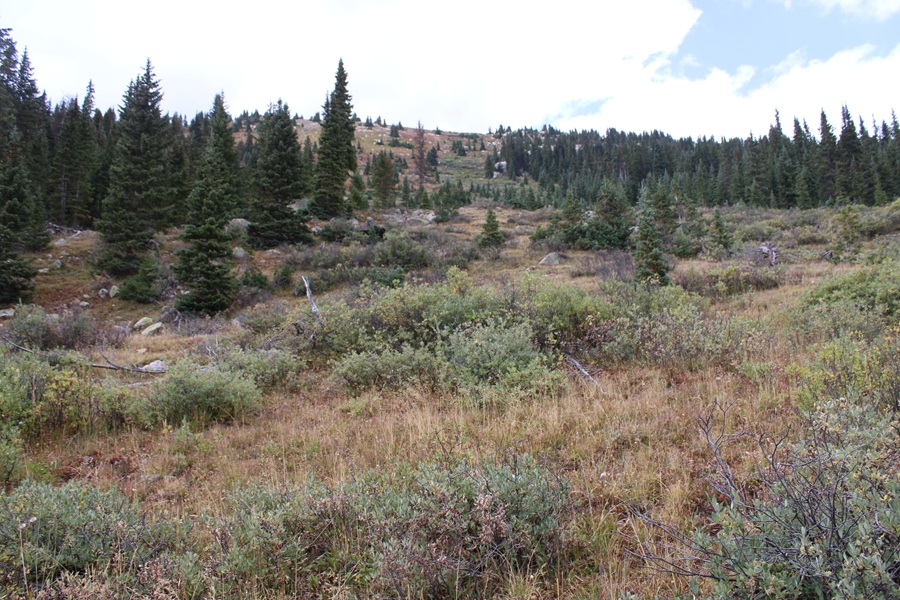
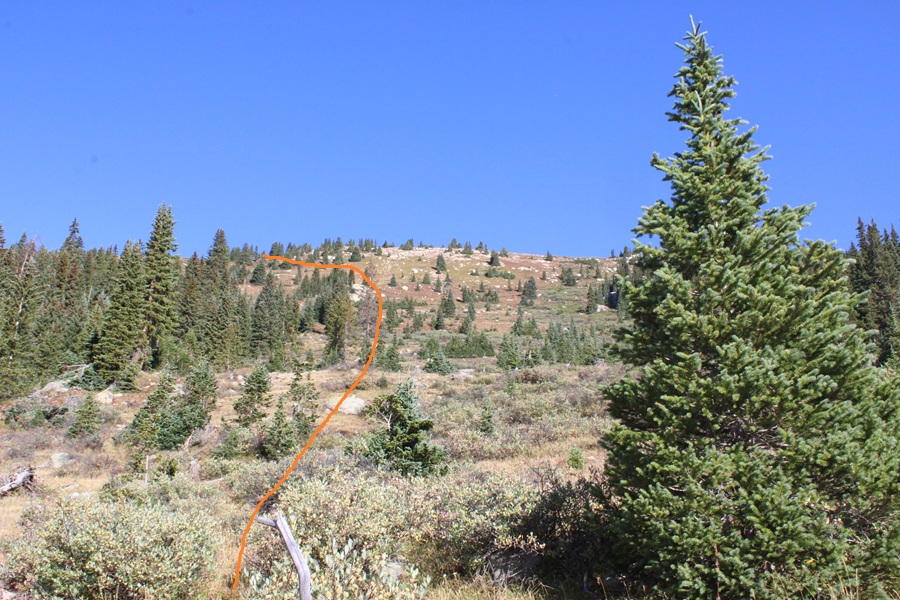
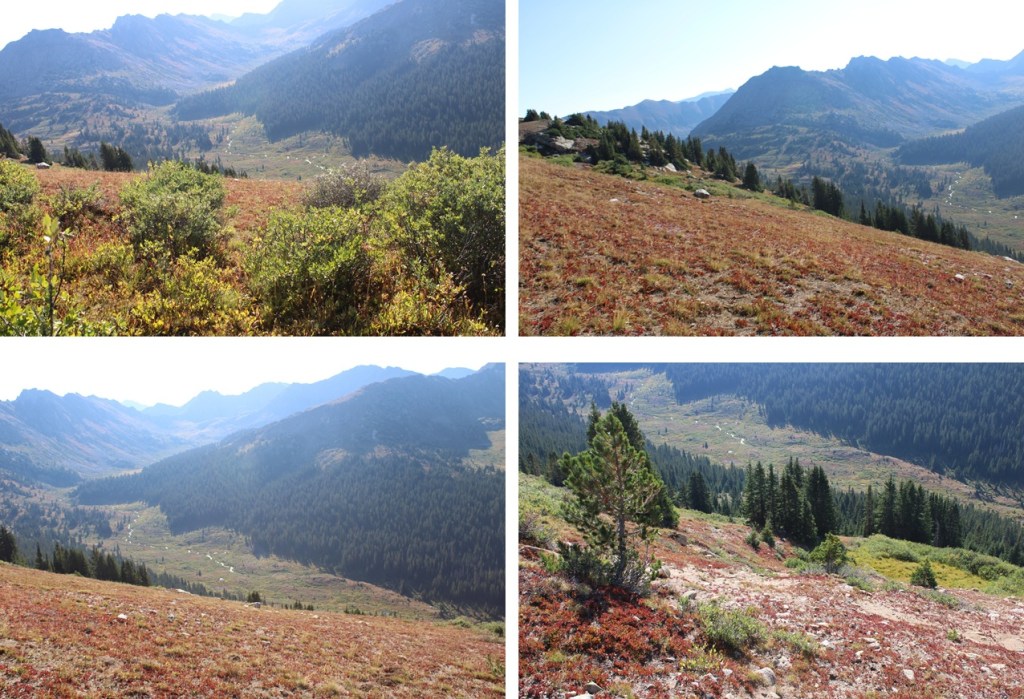
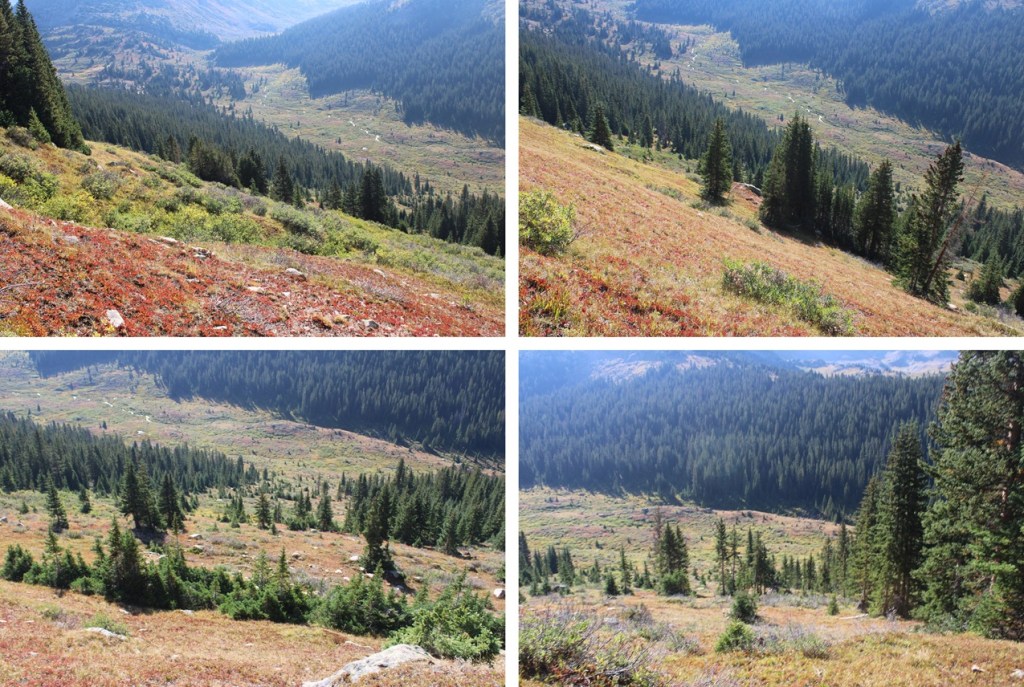
I followed the avalanche run northwest to treeline. I didn’t head straight to the trees but diverted a bit to the left to make it to the ridge. This was by far the most difficult part of the hike, as the elevation gain is steep.
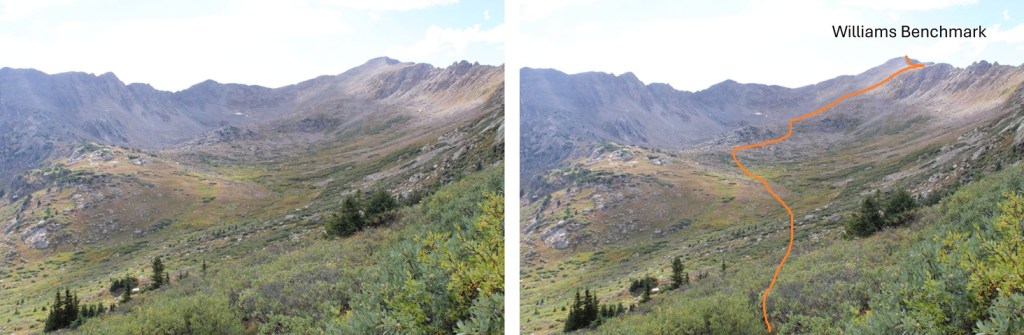
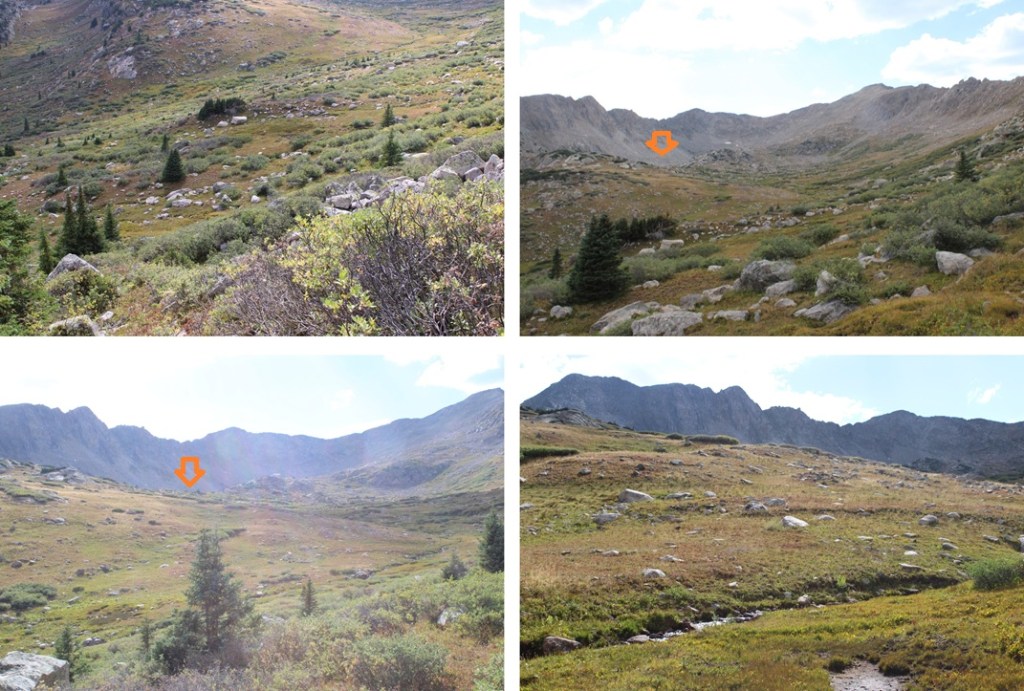
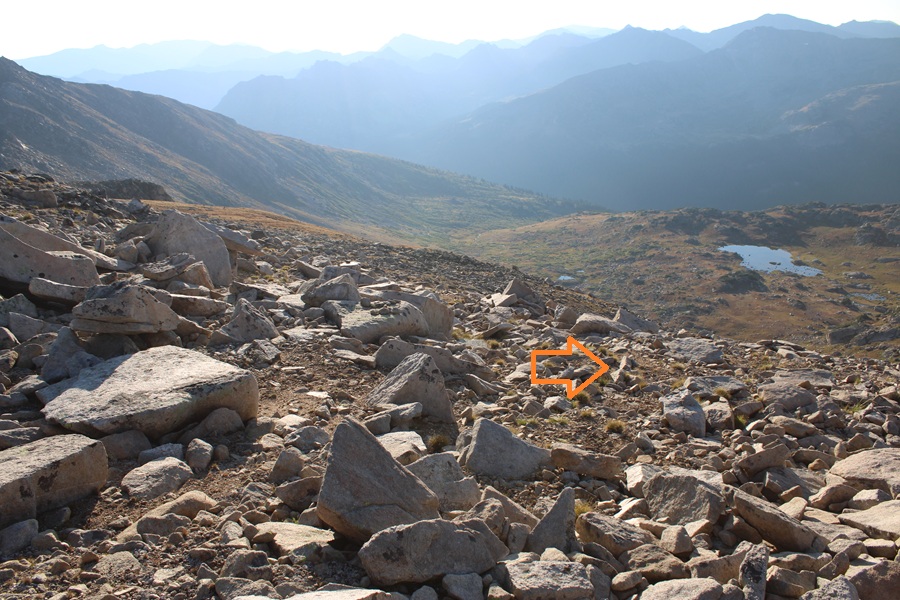
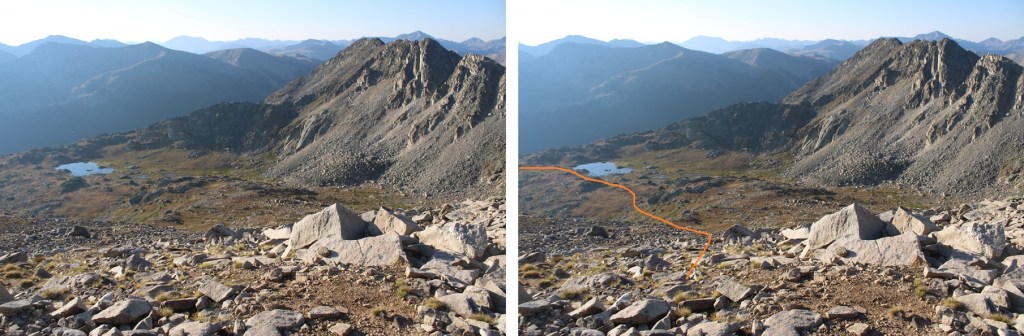
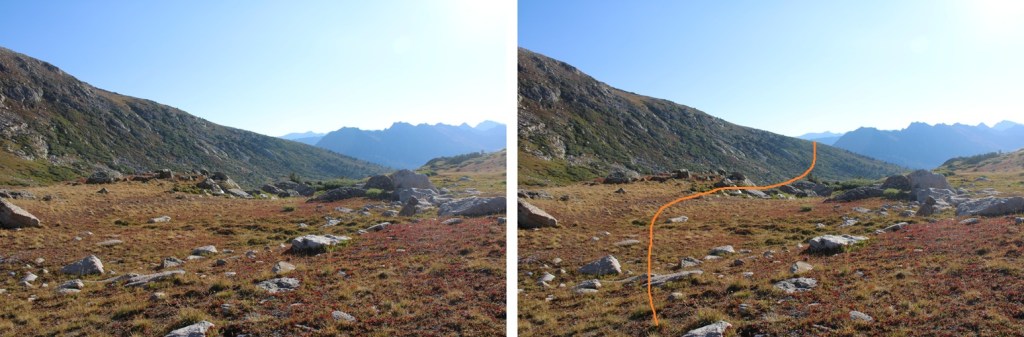
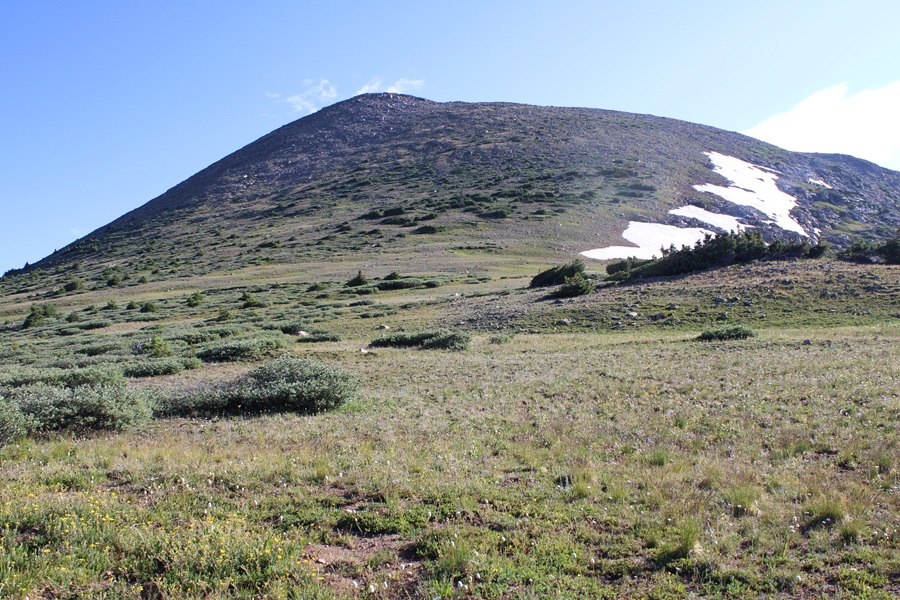
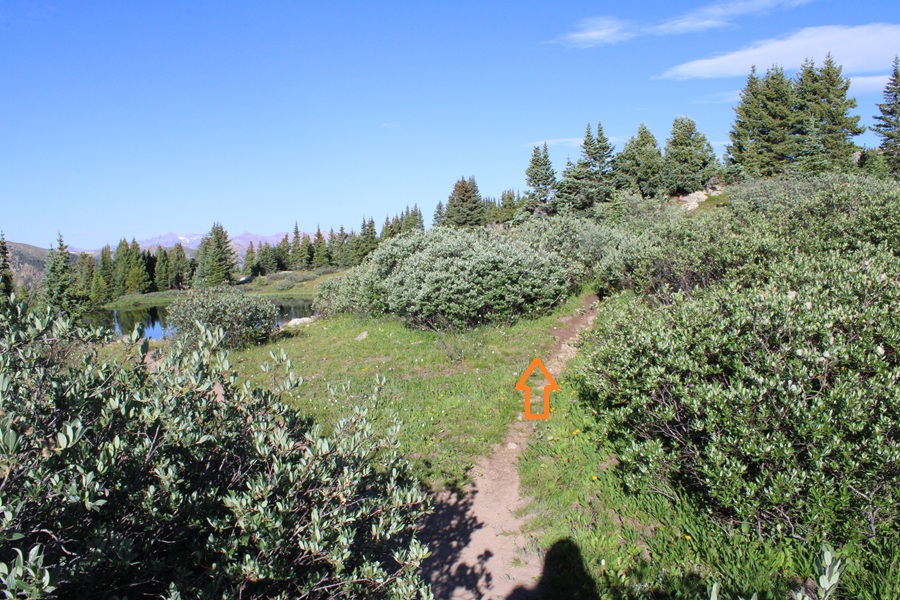
At the top of the avalanche run I could see a large unnamed basin (on a topo map it’s north of Scott Lake). This was where I planned on setting up camp. I could also see the rest of my route to the summit. As you can see from the picture, I needed to lose about 200’ of elevation as I headed into the basin. There are tons of willows here, but also several game trails to navigate through them.
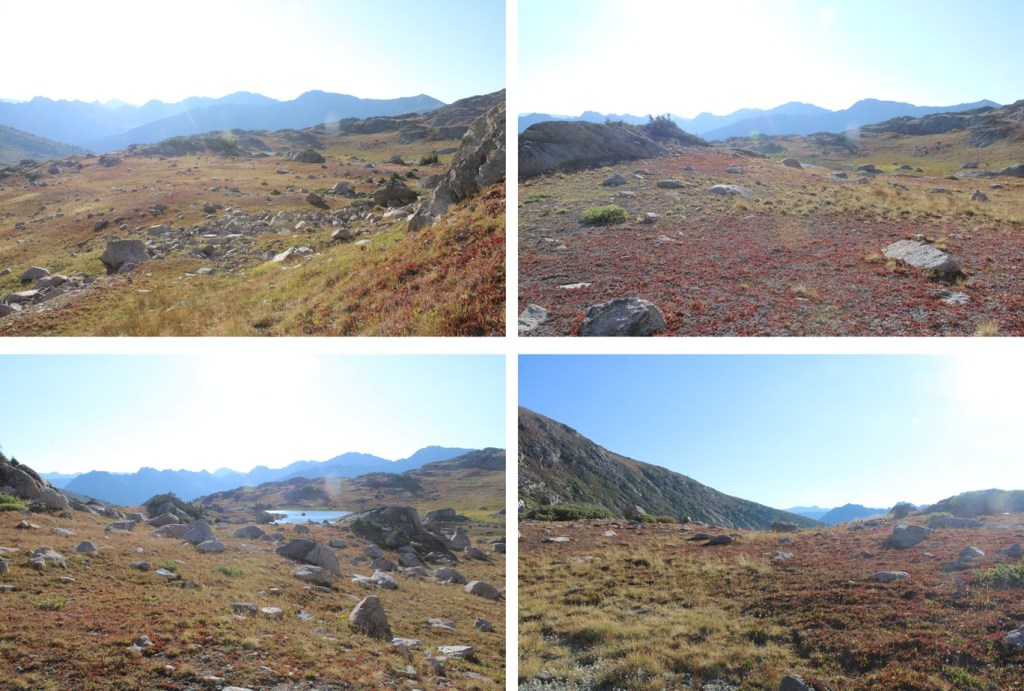
I headed west and found an unnamed lake/pond at around 12150’, went past it and found a campsite.
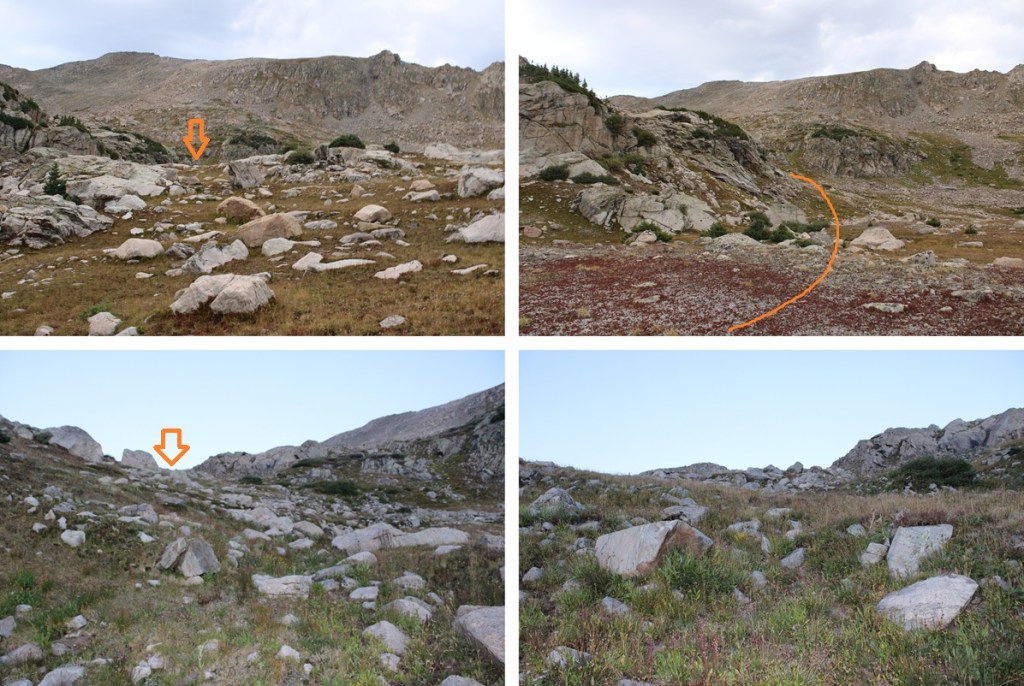
After spending a wonderful night in the basin I was up and hiking again at 6:30am. I started by finding an easy gully and ascending it west.
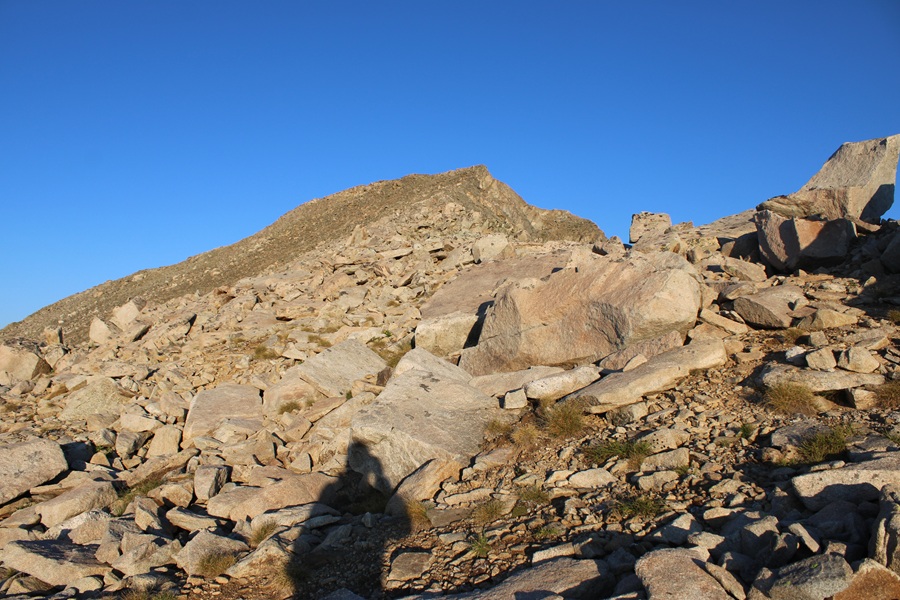
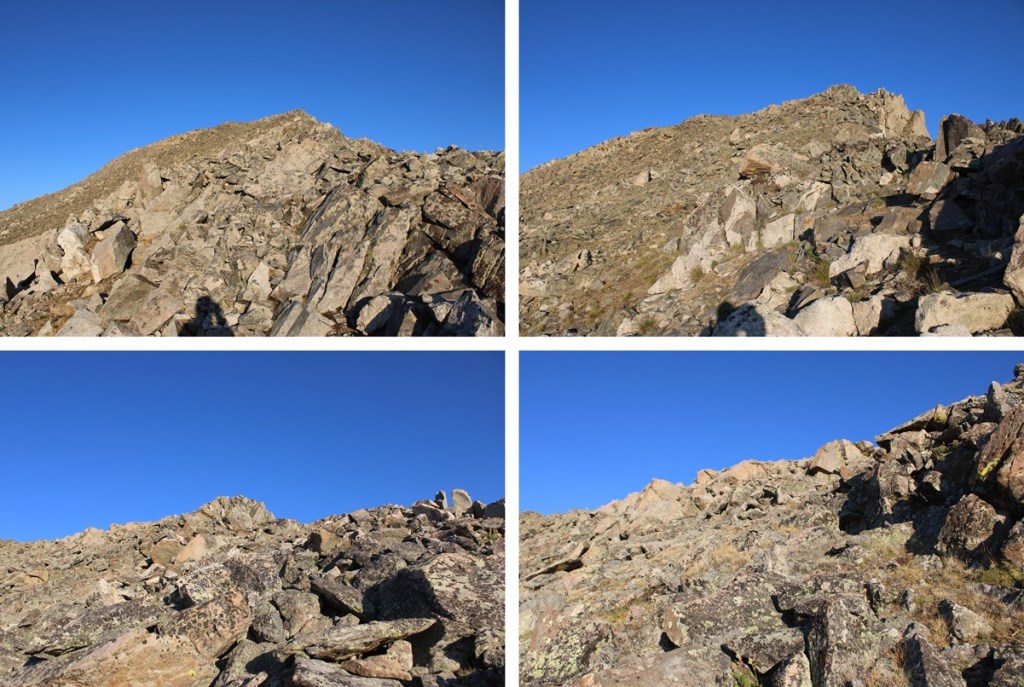
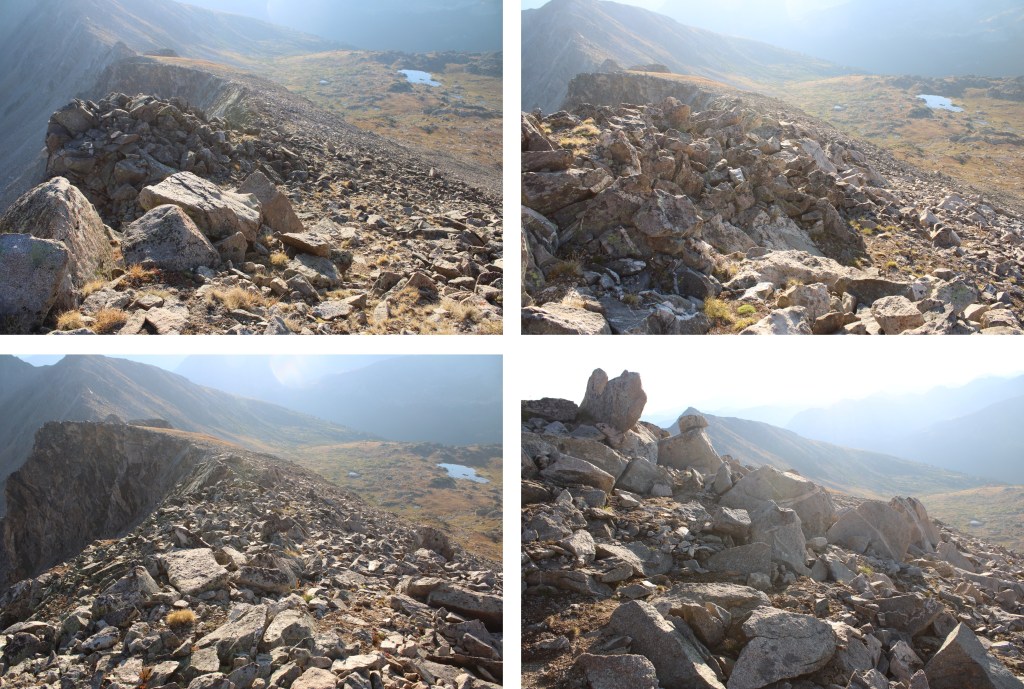
At the top of this small gully I turned right and headed up the ridge. To make it easier for me I looked for large boulders to the northwest and followed them to the ridge. This entire hike is class 2, and ascending the ridge was easier than ascending the avalanche run.
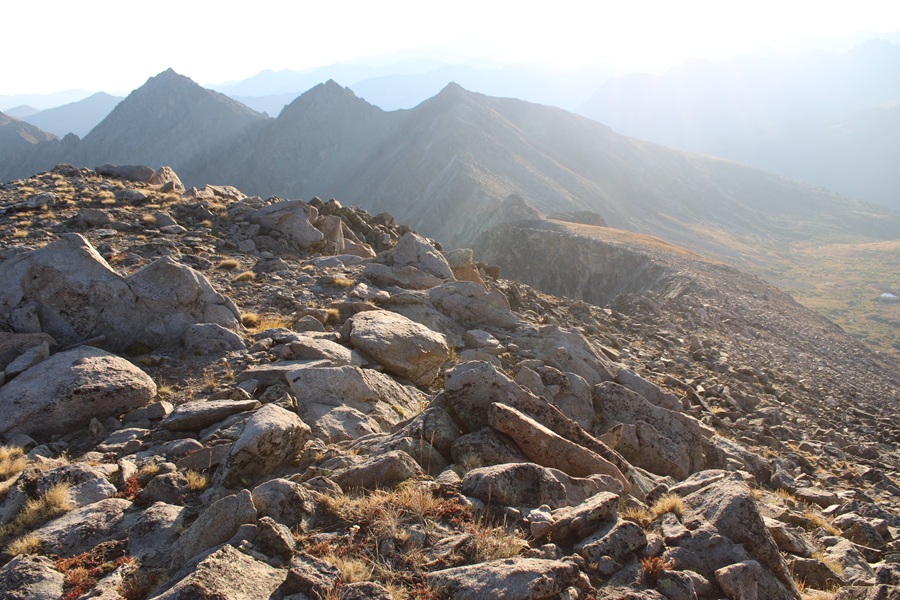
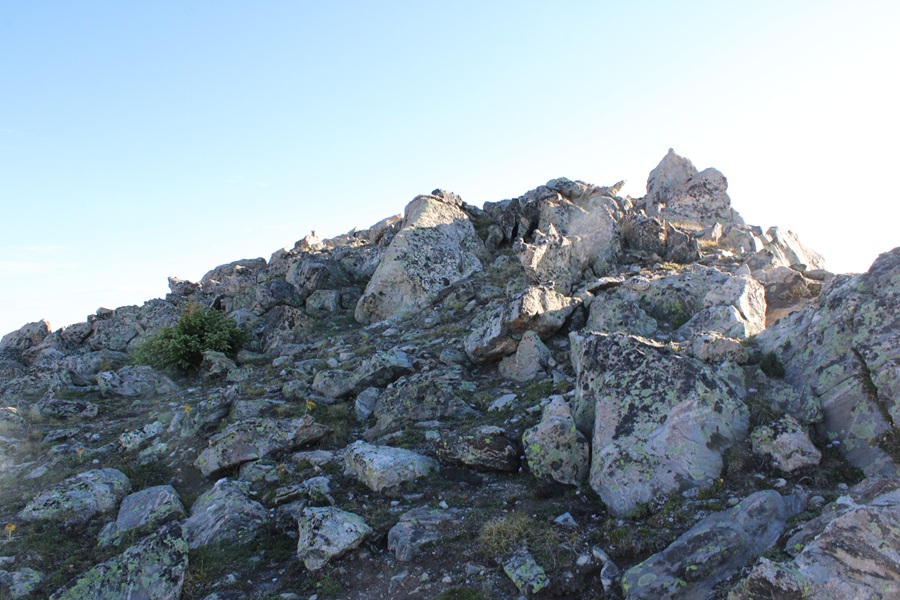
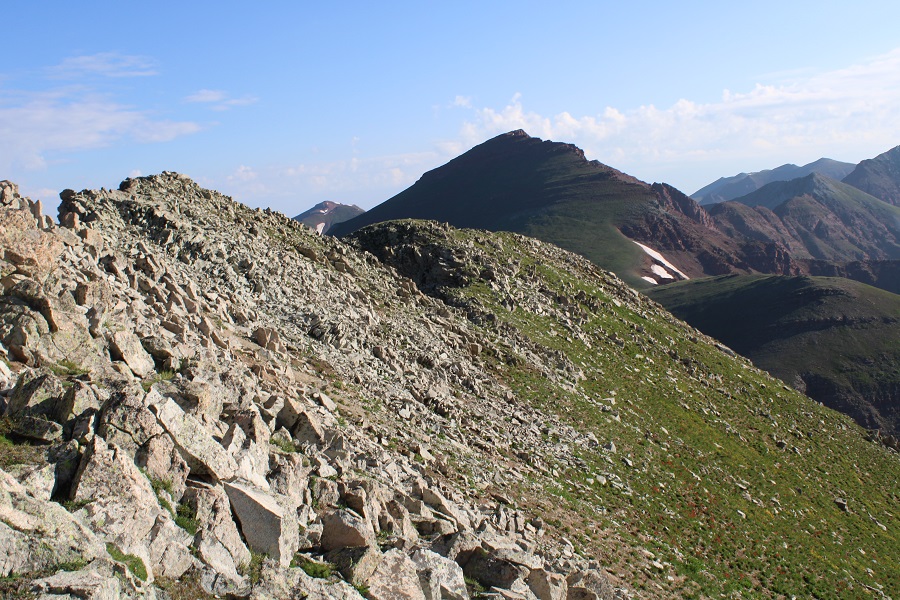
Once on the ridge I turned left and followed it west to the summit. The ridge proper goes at class 2. This was an easy yet rocky trek.
The true summit was difficult to determine, as there were two humps very close together on the relatively flat summit and both looked higher than the other, so I walked all around the summit to make sure I stood on the actual summit itself.
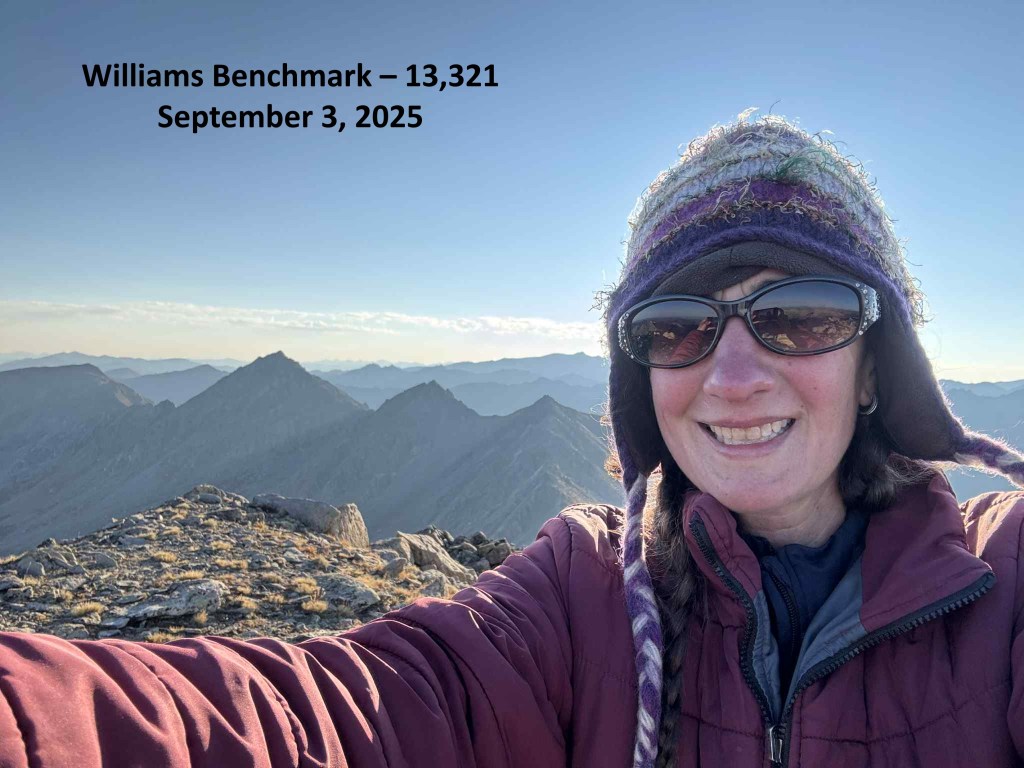
I summited Williams Benchmark at 7:25am
Williams Benchmark:
This was an out and back hike for me, so I turned around and descended the ridge the way I’d summited, heading east.
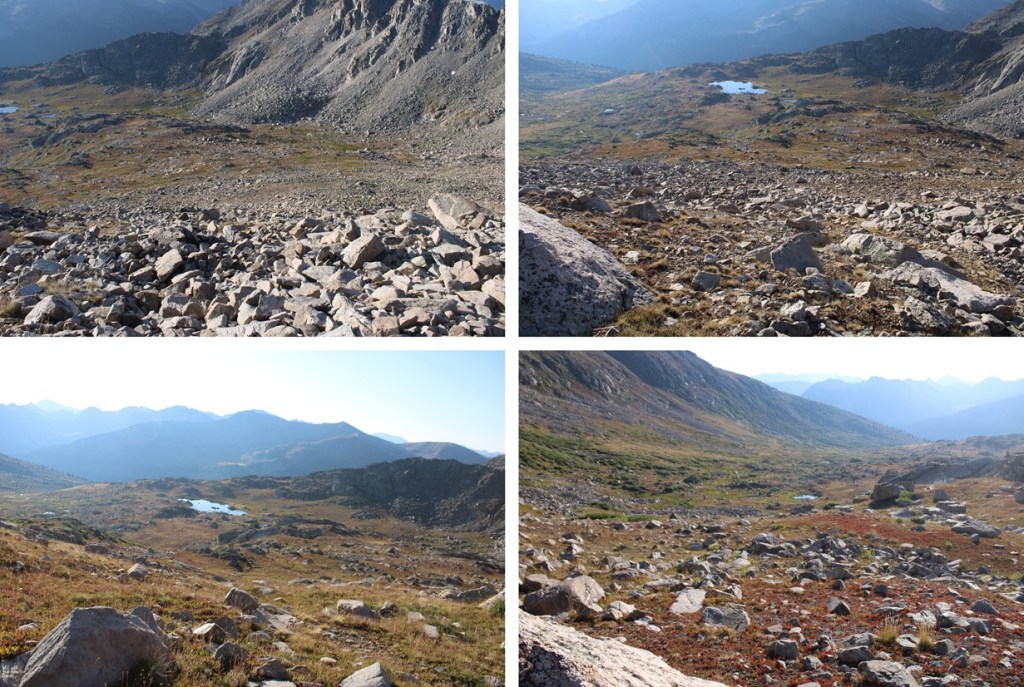
Just before the grassy area on the ridge I turned right and descended southeast back into the basin.
Back in the basin I would need to regain that 200’ to the ridge above the avalanche slide.
Then it was back towards Lost Man Trail, heading southeast down the ridge.
Back on Lost Man Trail I followed it southwest to the trailhead.
I made it back to my truck at 10:40am.
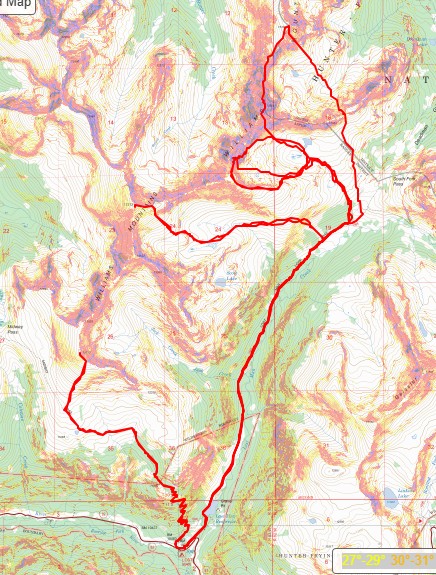
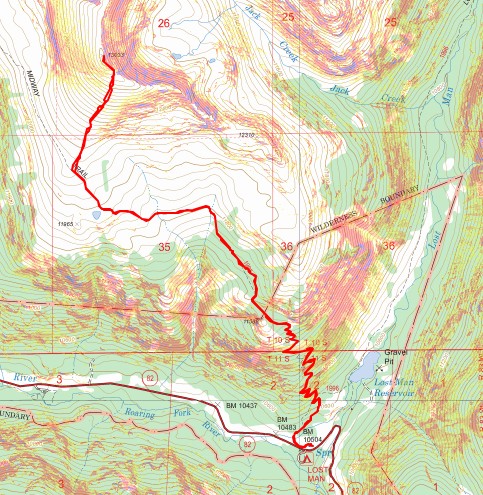
This finished my peaks in the Williams Group. Here’s a topo from all the peaks I did in the area, avoiding the traverse. If anything, they can serve as bailout points if needed.
While the Williams Group is a serious class 3 scramble, PT 13039 is an easy climb. I just had a few hours this morning, so I decided to take a hike to the top to get a look at the terrain. If you’re looking for a great class 2 13er in the Sawatch Range that’s straightforward and not crowded, try this one out!
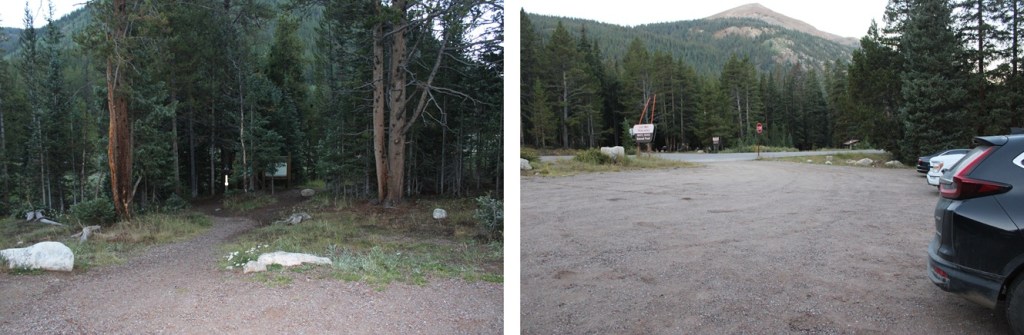
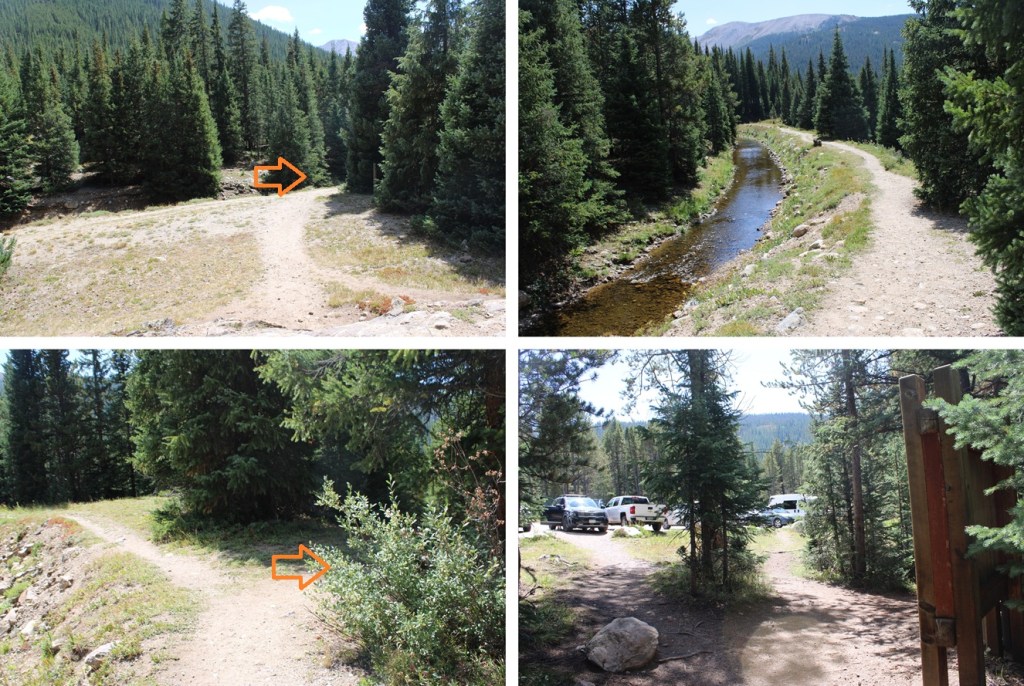
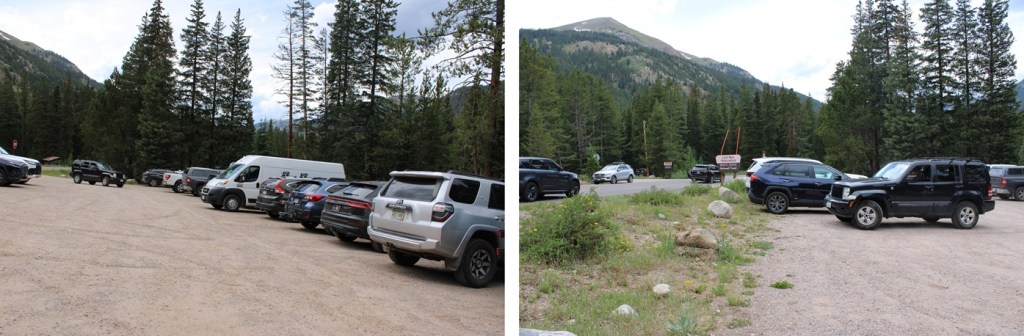
I started from the Lost Man Trailhead at 5am. This trailhead has plenty of parking (but it fills up on weekends), and is the one located directly across from Lost Man Campground. I just found out there’s a lower and upper Lost Man Trailhead. This is the Lower Lost Man Trailhead.
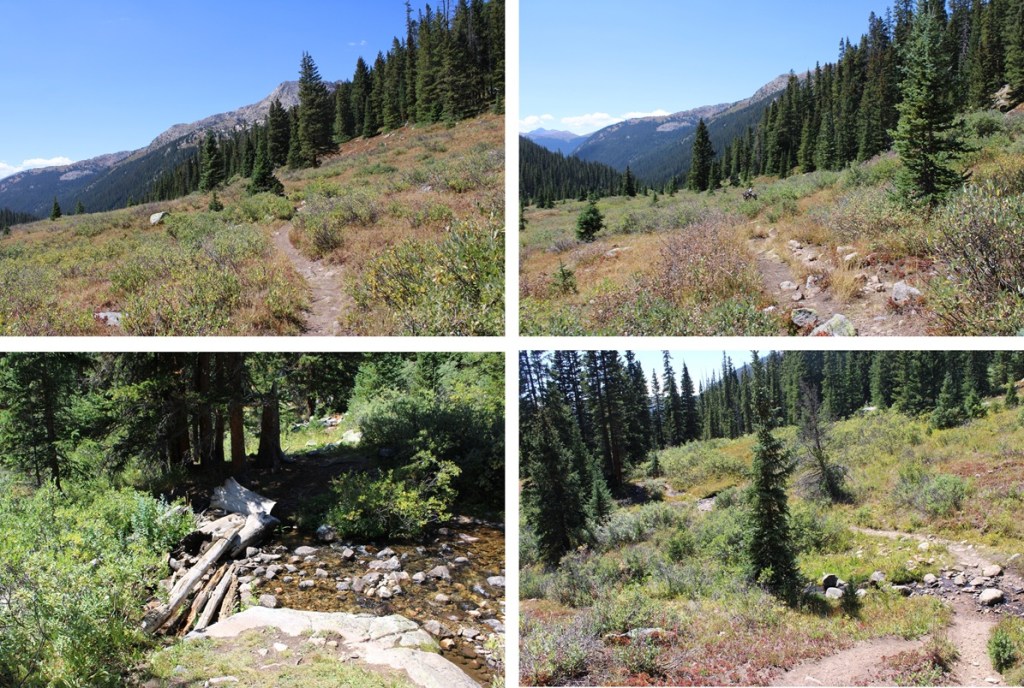
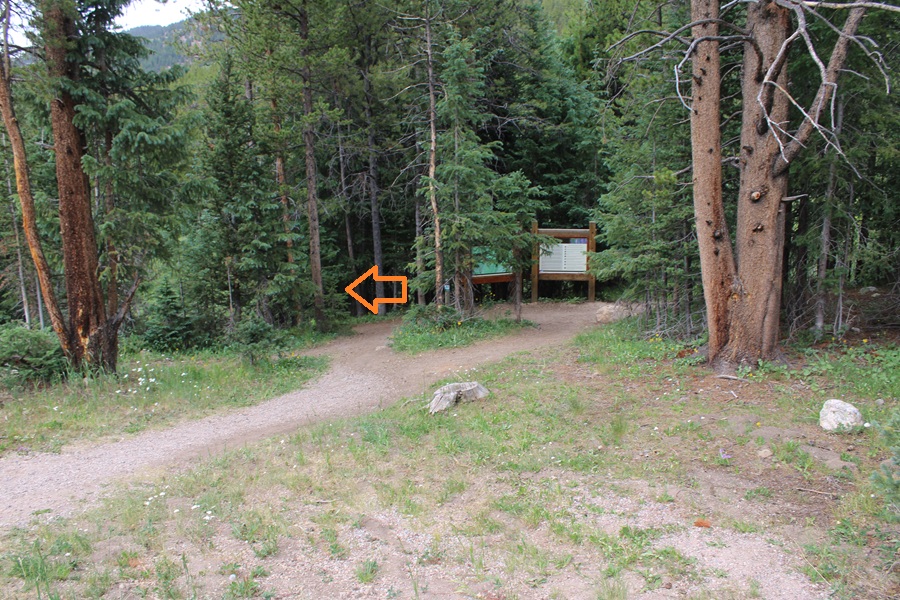
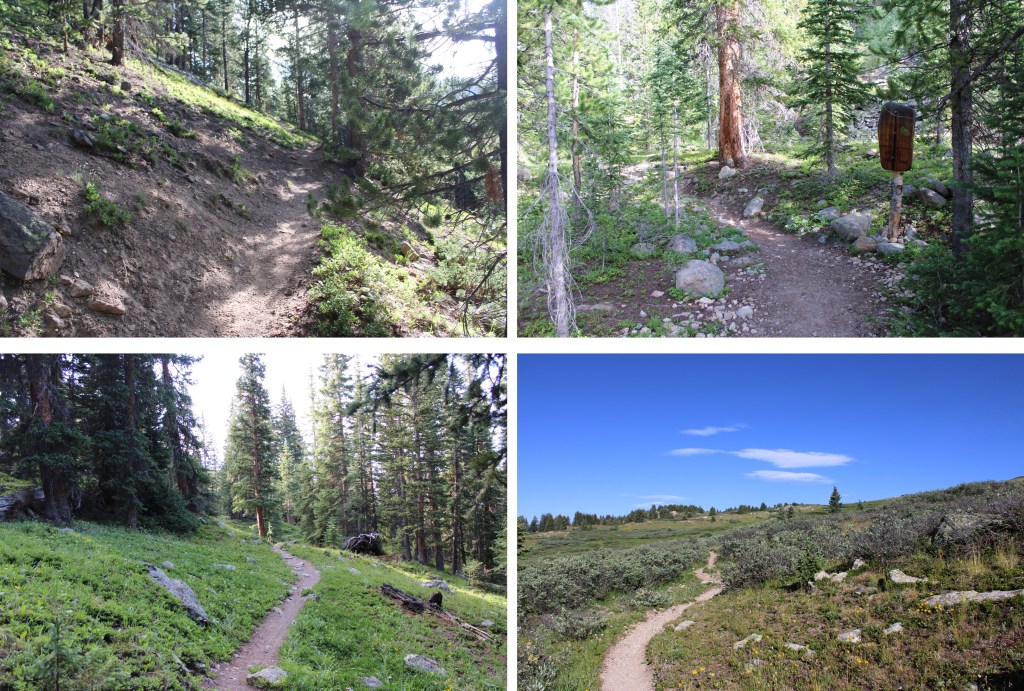
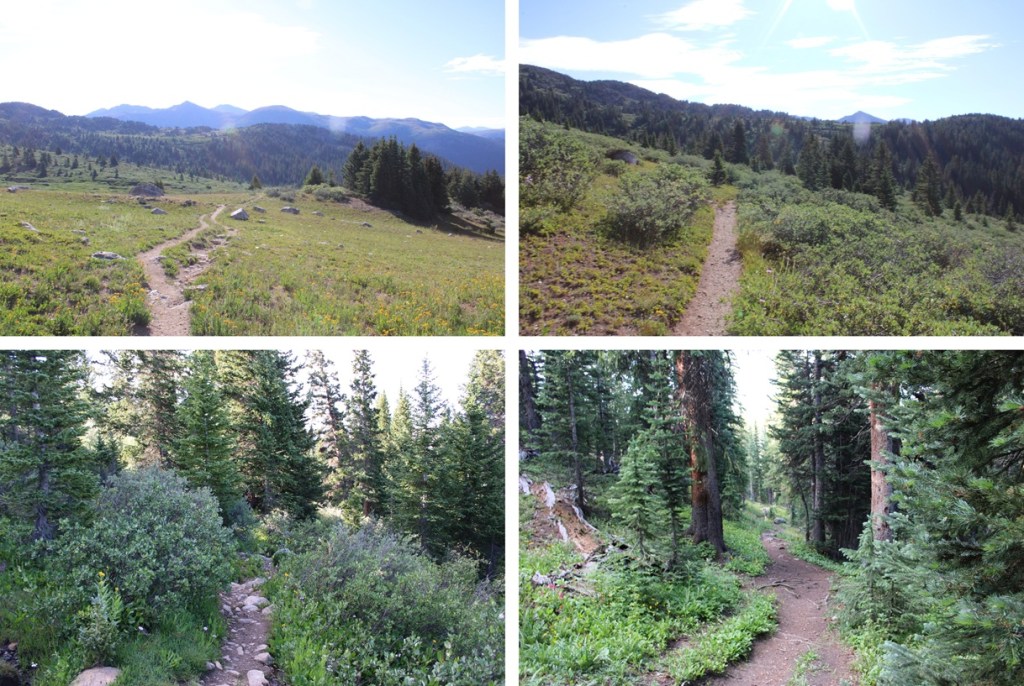
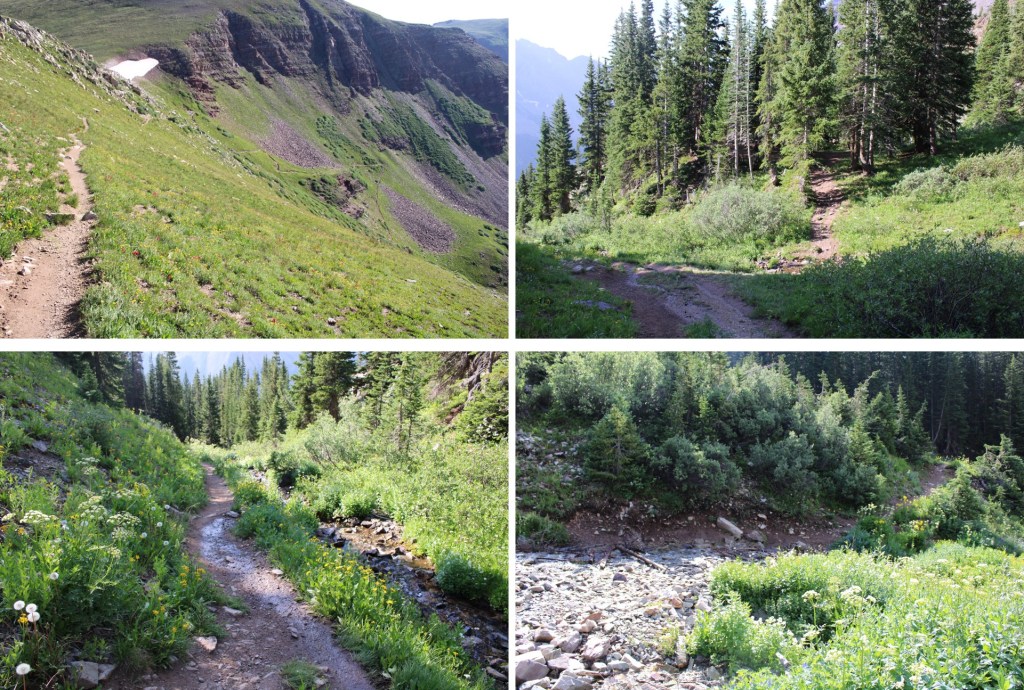
At the trailhead sign I went left and followed Midway Trail. It started out with willows that quickly changed to pine trees, then back to willows around treeline. If it’s been raining in the past day or so, you’re going to get wet walking through those willows, but the trail is easy to follow. There was also an abundance of wildflowers and I could hear the traffic from 82 below as I ascended.
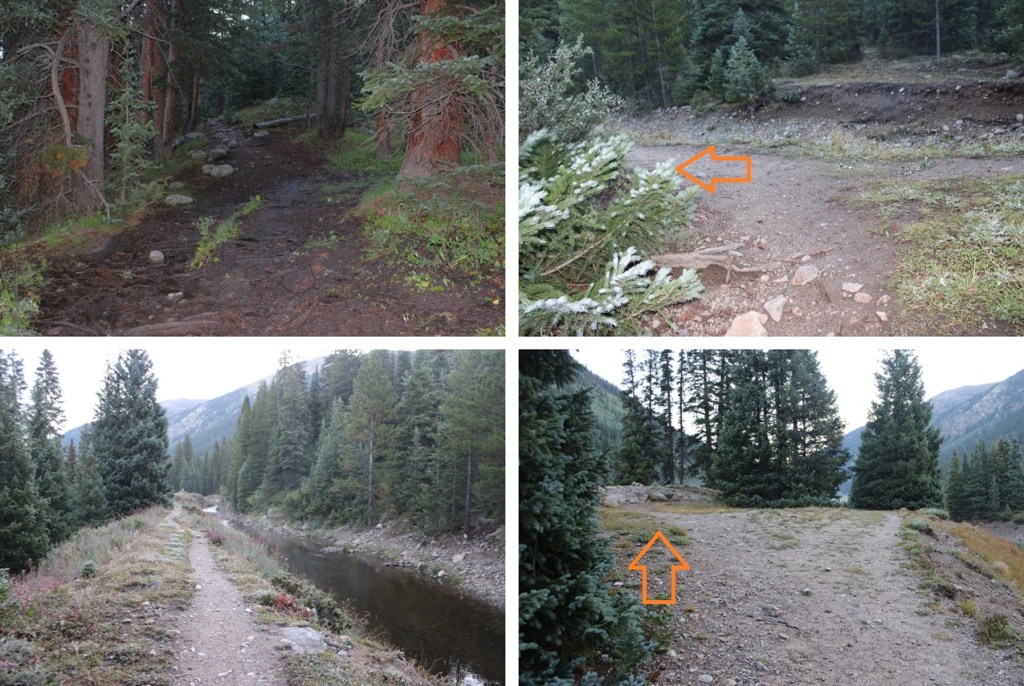
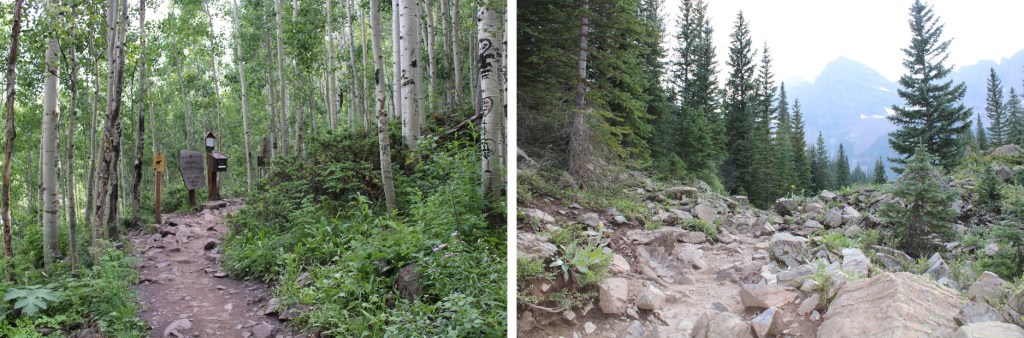
Midway Trail is an easy-to-follow class 1 trail. I followed it over a bridge.
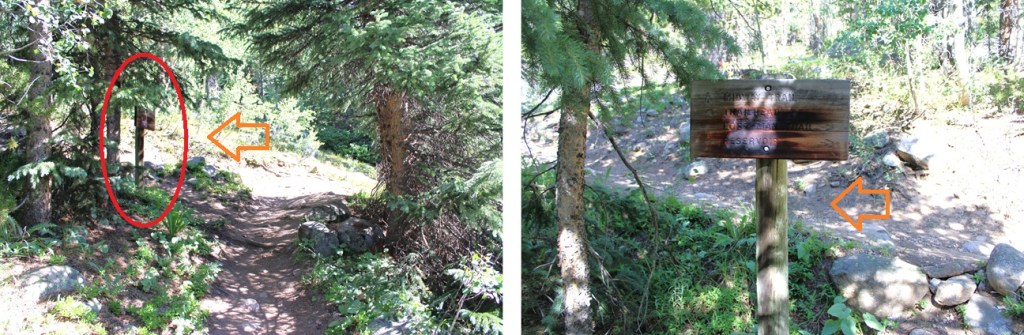
And then turned left at this junction to stay on the Midway Trail for as long as I was on a trail.
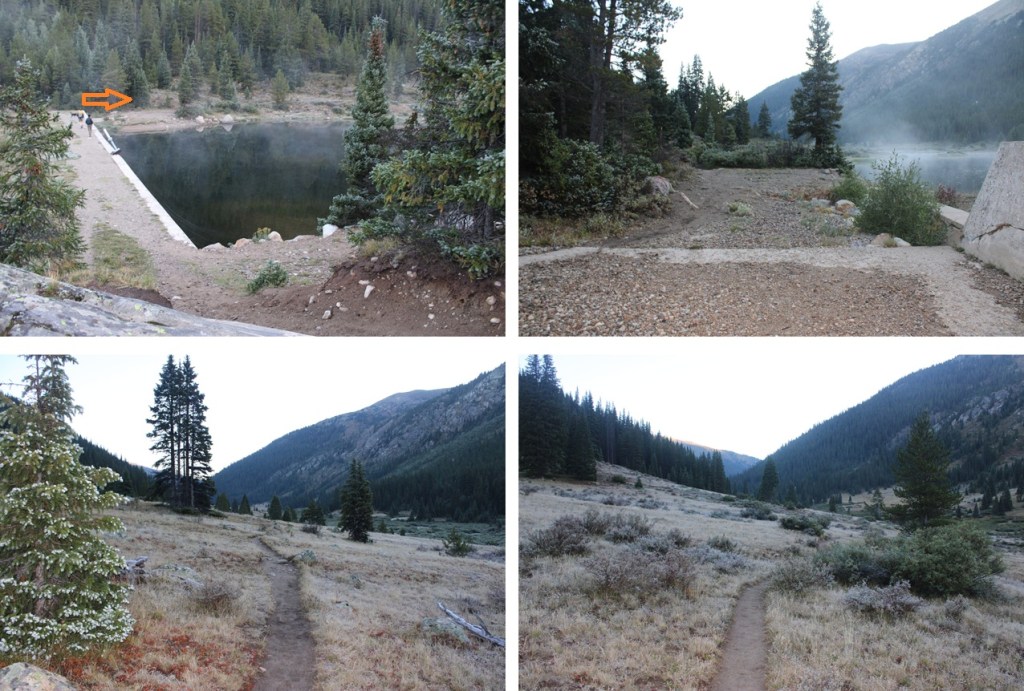
The trail switchbacked up to 11500’ and then continued along the south side of the slope.
Just at about treeline I came to a small pond (11990’), and skirted it on the trail that goes to the right, following the trail up to 12100’
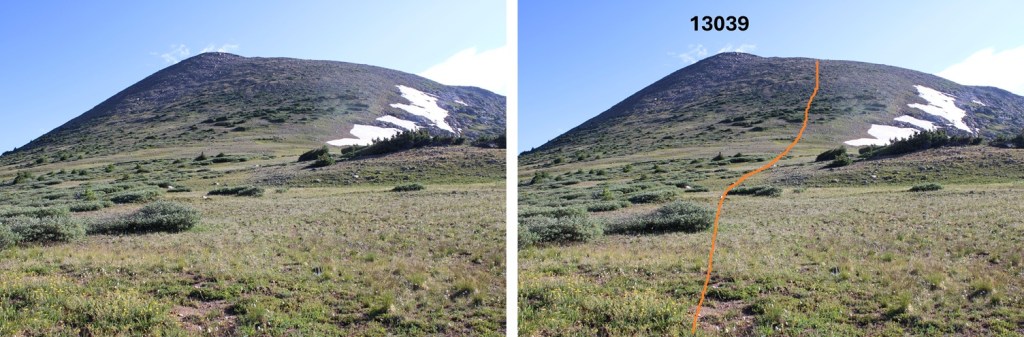
At 12100’ of elevation, just as the trail was starting to level out and after about 3 miles of hiking from the trailhead, I turned right and headed northeast up to the ridge of 13039. This is choose your own adventure, and all class 2. I did my best to avoid the willows and pine trees and aimed straight up the ridge, gaining about 850’ of elevation. Most of the rocky terrain can be avoided until you get to the top.
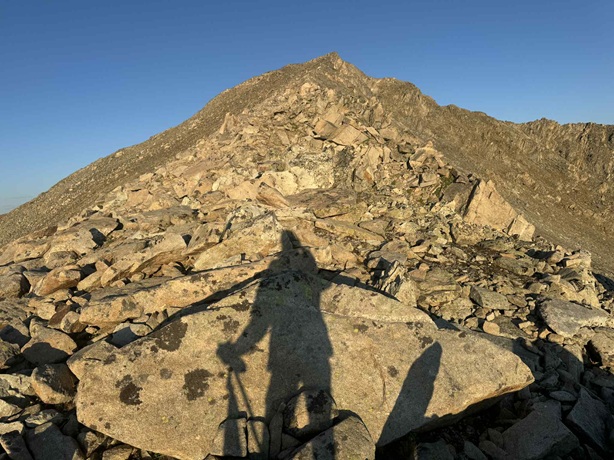
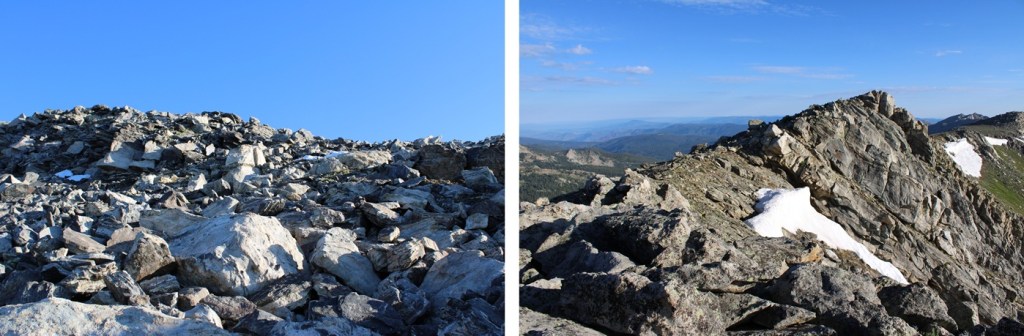
Once on the ridge it was a short, rocky, class 2 climb following the ridge west and then north to the summit.
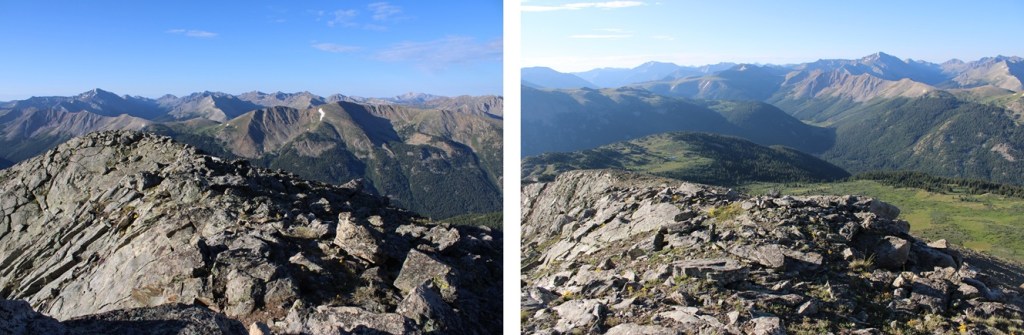
I summited 13039 at 7:30am
13039:
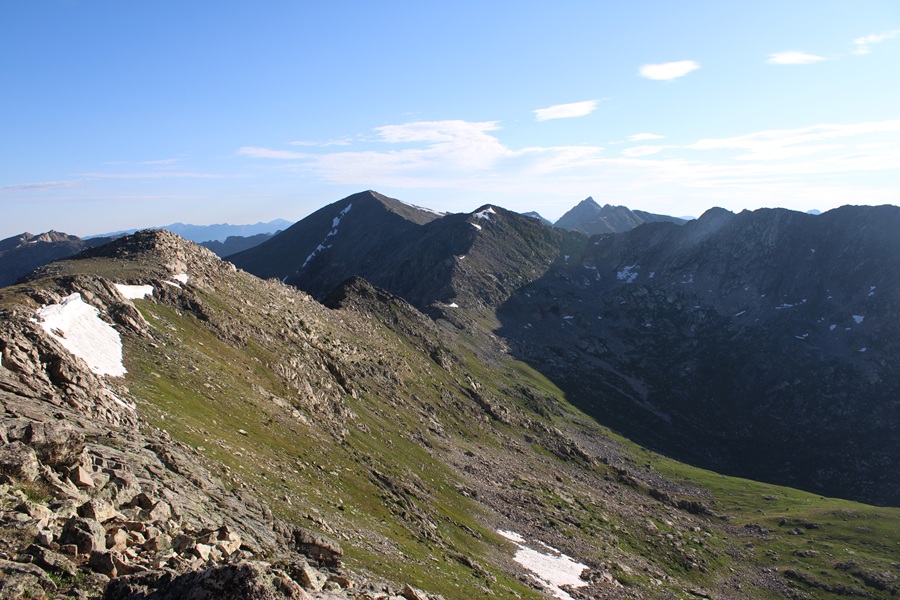
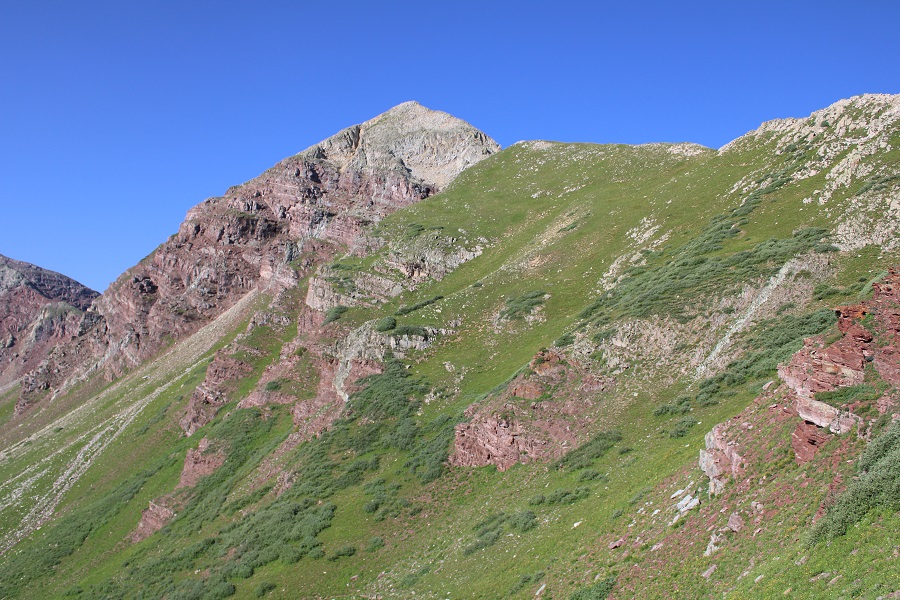
Due to time constraints this was my only peak of the day, but here’s a view of some of the other peaks you can link with this climb to make it a long and challenging class 3+ day:
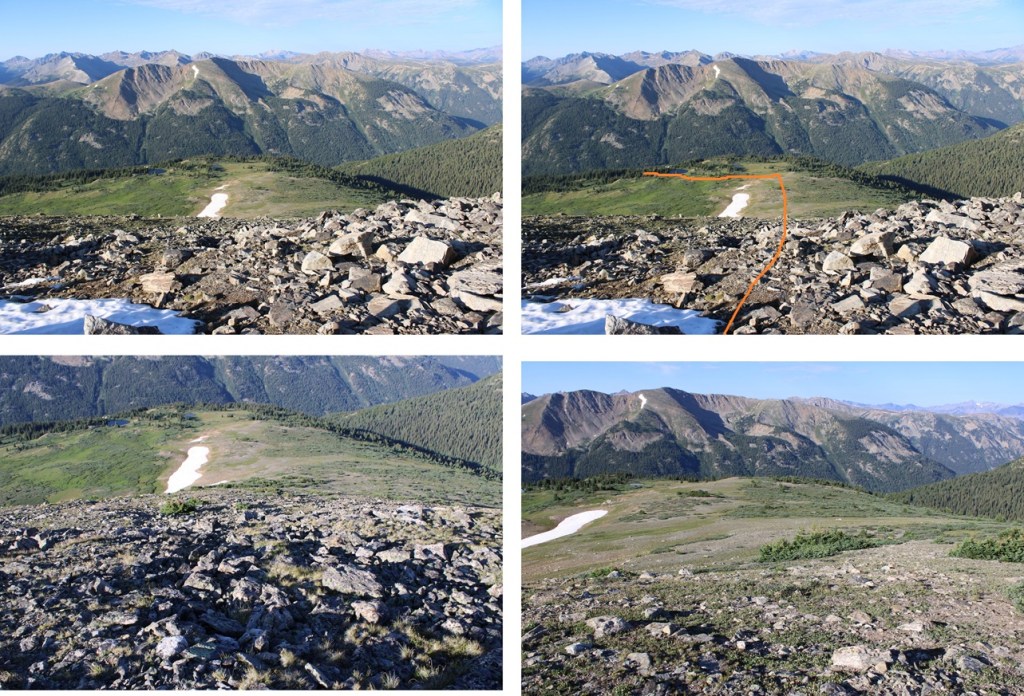
I turned and made this an out and back hike. I followed the ridge back down the way I’d ascended.
Then I headed south/southwest down the slope back to the Midway Trail.
Back on Midway Trail I followed it around 3 miles back to the trailhead.
I made it back to my truck at 9am, making this a 7.81 mile hike with 2560’ of elevation gain in 4 hours.
On to the Western Slope to volunteer at a Girl Scout camp for a week!
I’ve said it before, and I’ll say it again: I’m NOT a fan of the permit system. Even though I was on their website exactly when permits were released, I wasn’t able to get an overnight permit for Maroon Bells on a date I could go, so I had to get three back-to-back permits instead. When I pulled up at the gate my paperwork confused the attendant. He didn’t know what type of a parking pass to give me, but settled on an overnight pass that expired in two days time. He then asked me to park in the further lot, as the closer lot was intended for day use.
I balked at this: I’d wanted a 2 night pass, but because of the reservation system I couldn’t get one. Instead, I paid 3 times what those who were able to score a longer permit were paying for the same amount of time in the park. I felt if I was paying that much more, the least they could do was give me a better parking spot. Also, while annoying, the main reason I don’t like the permit system isn’t because of stuff like this: it’s because it encourages bad decision making among people who feel they need to hike/continue when dangerous because it’s difficult to get a permit, etc. One of the reasons I left California in 2006 was because of the permit system, and all the fees associated with said system. I hate seeing it brought to Colorado.
Ok, rant over. I was on the trail around 5:30pm. It was my intention to camp around 11,000’ and start early the next morning. For those of you who haven’t hiked the Maroon Bells area before, the trail is obvious:
I followed the trail west, staying right at the junction for Crater Lake
And continued up the hillside to my camping spot at 11,100’. I was surprised no one else was camping here, as it’s the perfect spot.
I’ll spare you the details of the next day’s hike, as I came back to this spot, spent the night, and started from here the next morning. I’d gotten to bed early after a long day of hiking, and woke up to sunlight. I looked at my phone and it showed 5:30! Ack! I initially thought I’d slept through my alarm, and started rolling up my sleeping bag. About 30 seconds later I realized I’d only been sleeping about an hour, so I happily went back to bed and slept soundly until 3:30am the next morning. I left my new water filter bag inside my tent and was on my way.
I was on the trail by 3:45am, heading northeast along the well-defined trail through Minnehaha Gulch. I crossed a stream and continued along the trail, not really ‘feeling it’ today. I was more tired than I should have been, and wasn’t feeling very motivated.
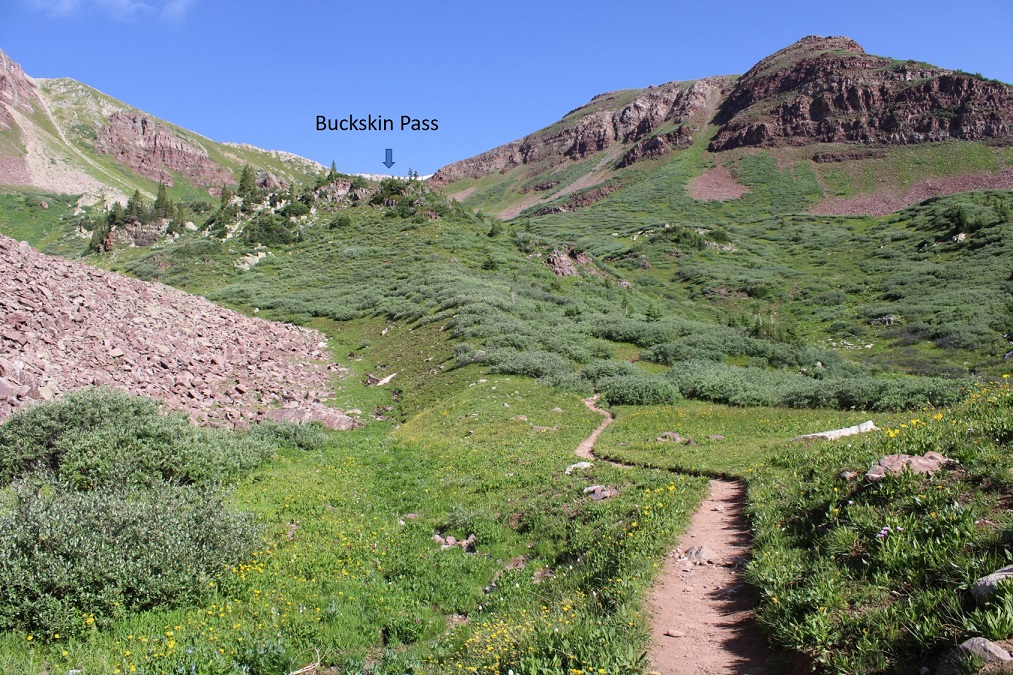
I followed the trail all the way to Buckskin Pass
Once at Buckskin Pass, I turned right and headed north towards Buckskin Benchmark
This was an easy, class 2 hike, mostly on tundra
Towards the top it got a little rocky, but stayed class 2. I saw several ptarmigans here, and a few crows
Right about now the sun was starting to rise, along with my motivation.
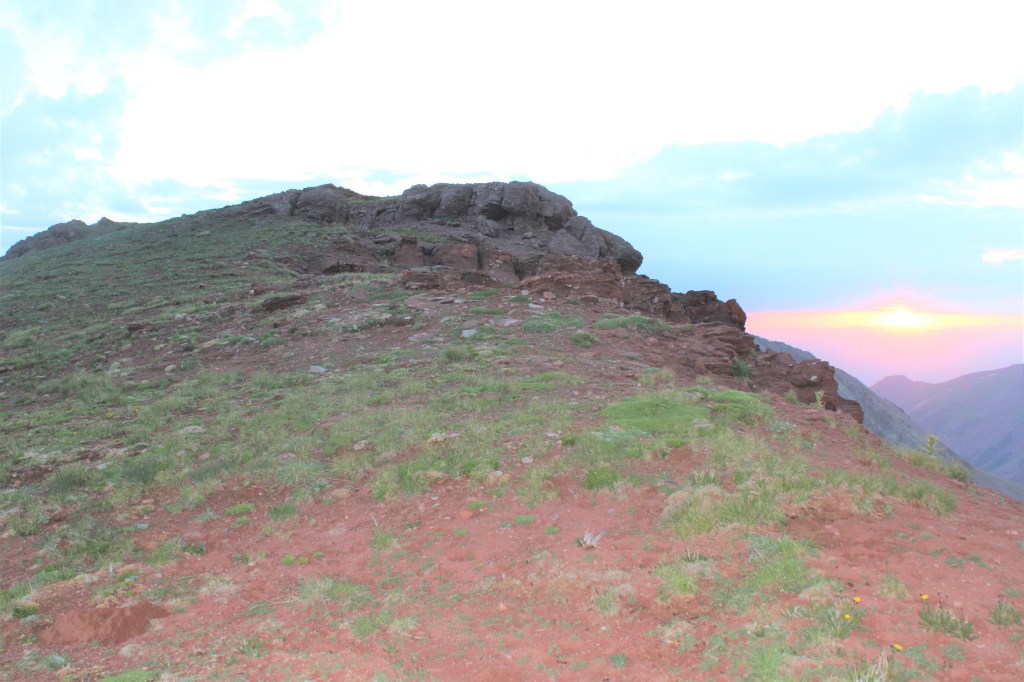
Here’s the last bit to the summit. It stays class 2 if you keep left
I summited Buckskin Benchmark at 6am
Buckskin Benchmark:
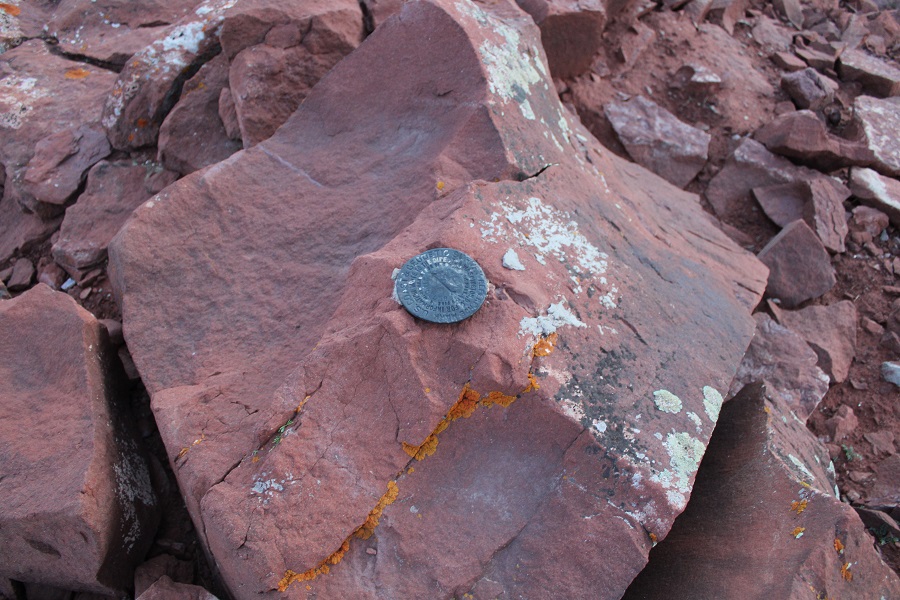
The benchmark
The views from up here were amazing! My spirits lifted, I actually ate a snack, and headed back down to Buckskin Pass.
On my way down I made some mountain goat friends (those are Snowmass and Capitol peaks in the background)
My next peak was PT 13039
It was a tundra walk back to Buckskin Pass
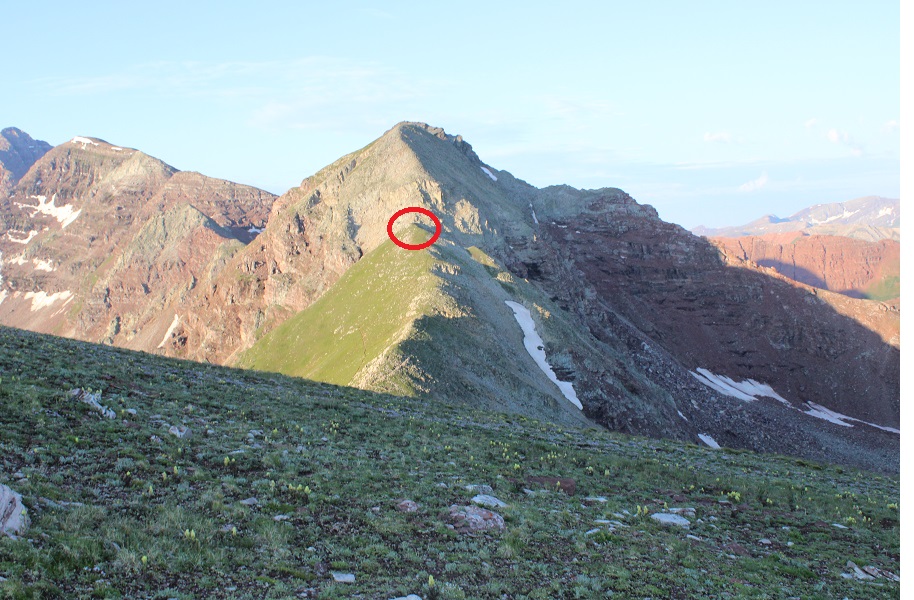
And a trail hike up to the point circled in red
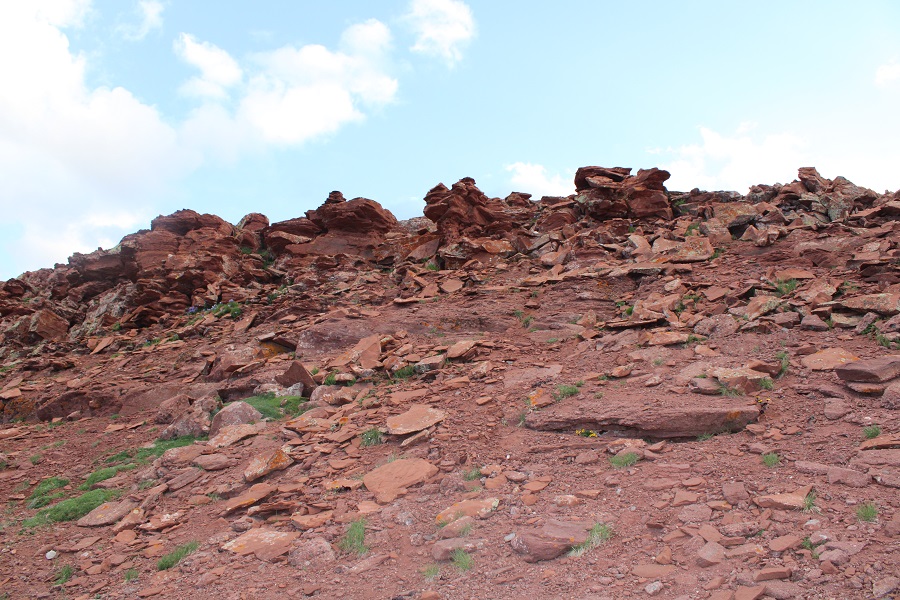
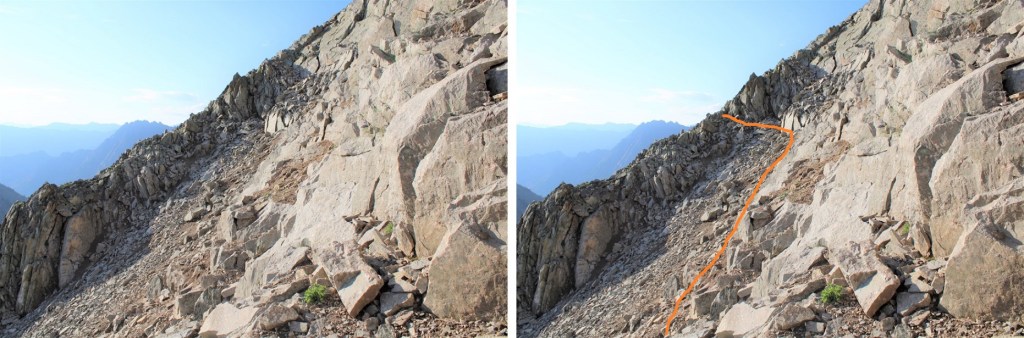
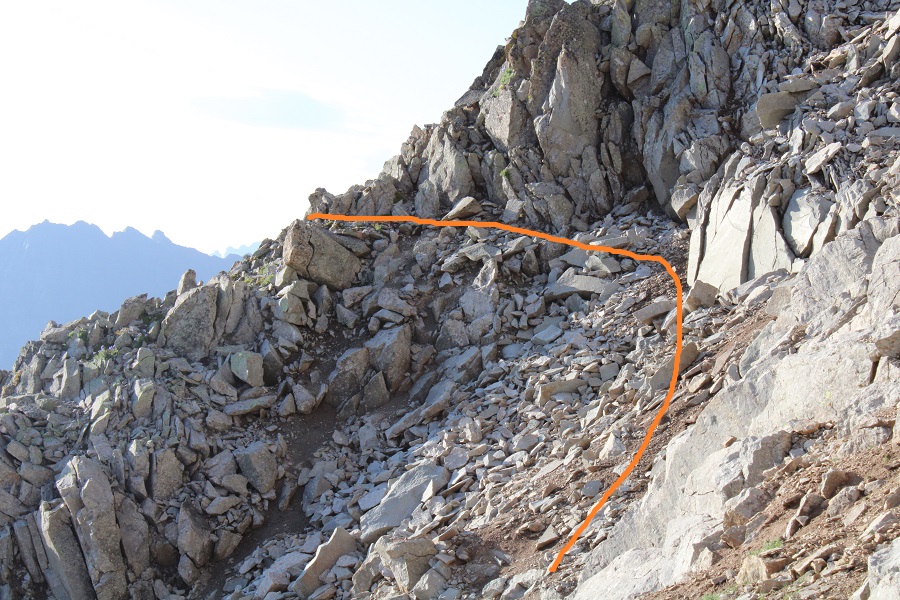
This is where it got interesting. I wanted to go straight up and over the face, but it seems as if there have been several slides in the area, and nothing went at class 2. This was supposed to be a class 2 hike, so I looked for a better way. My advice here is NOT to go directly up one of these gullies (you probably can, but they all looked sketchy/prone to slides).
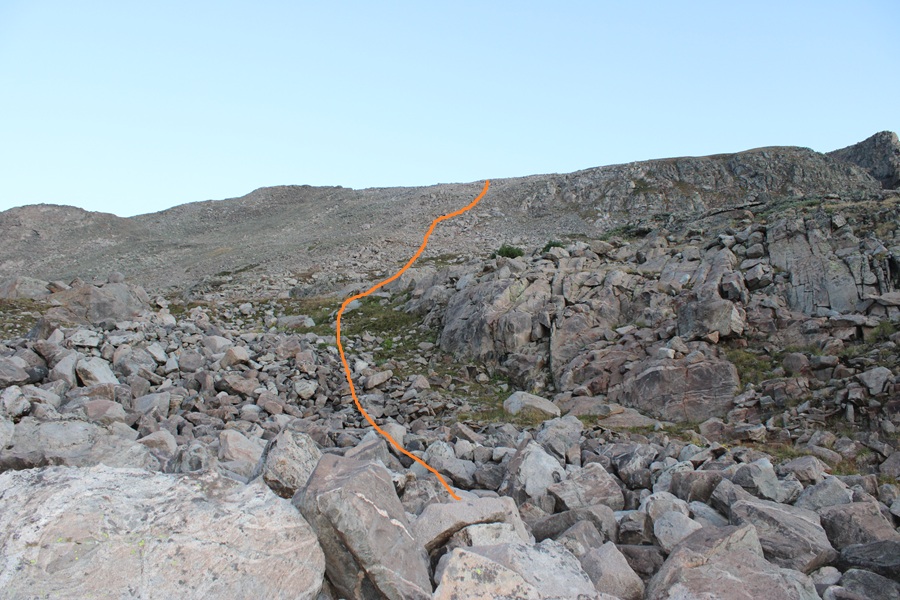
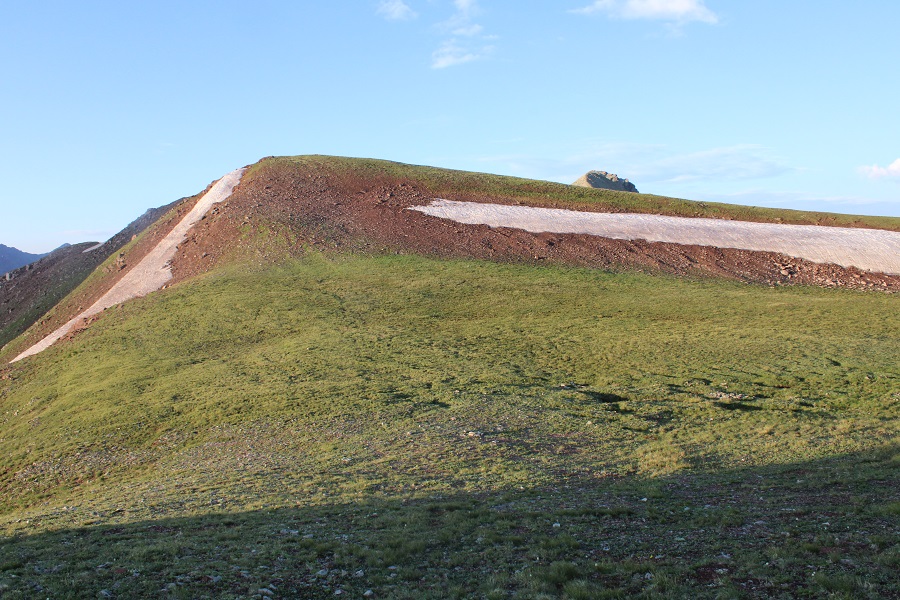
Instead, dip down to the left. This area stays class 2.
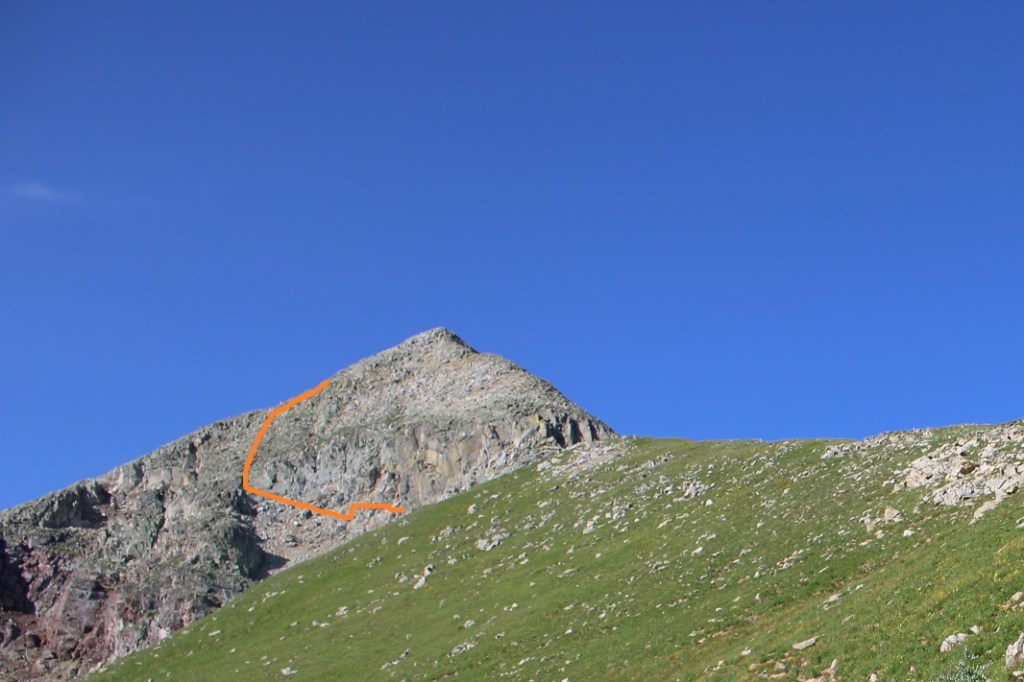
Here’s what my route looks like from below
Once I was past this area, I turned right and headed southwest to the ridge (still class 2).
Then I followed the ridge south. I could clearly see the cairn indicating the top of 13039
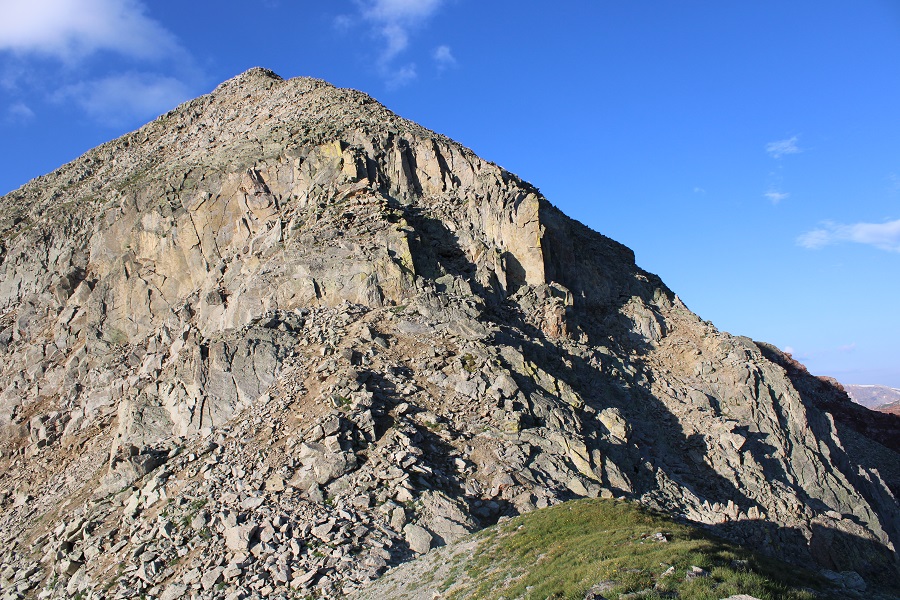
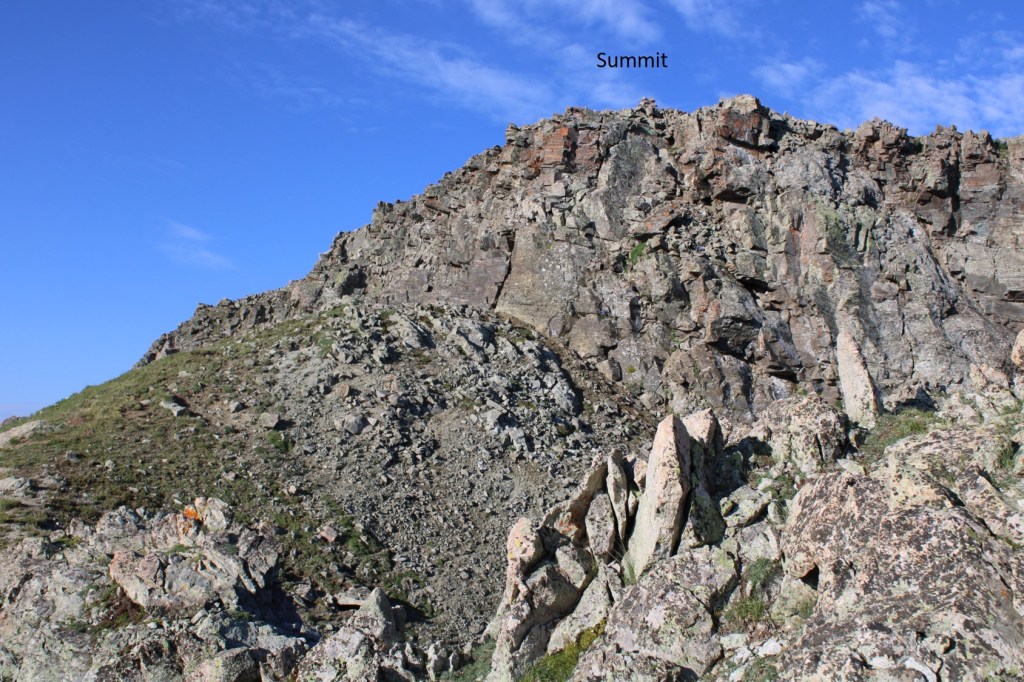
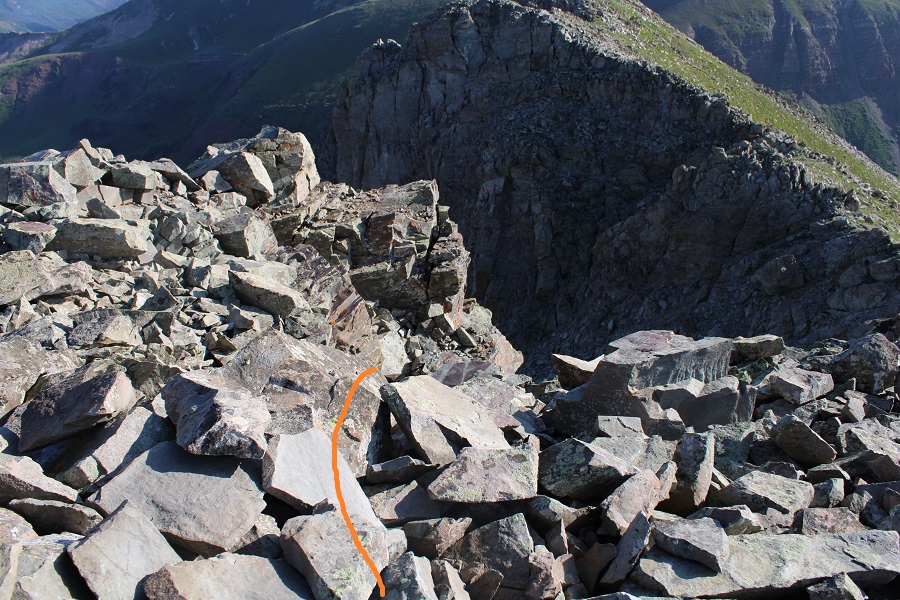
At the edge of the ridge is where it got spicy. It turned form a class 2 hike into a class 4 climb. I looked around for an alternate route, and realized the only way up to the summit was to climb the 30-40 feet or so up the chimney/gully to the summit block
I was a little disappointed because I’d left my helmet back in my tent. I debated if I should continue or not, and in the end I figured I did enough class 4 climbing yesterday without incident and was warmed up: I should be fine today. Also, I’d recommend wearing a helmet. I dropped my gear and headed up with just my camera. Here’s the route I took
I made it about halfway up the chimney, and once again had second thoughts. I continued on however, because I knew the worst was behind me and either way I’d have to downclimb that area again. Here’s another angle
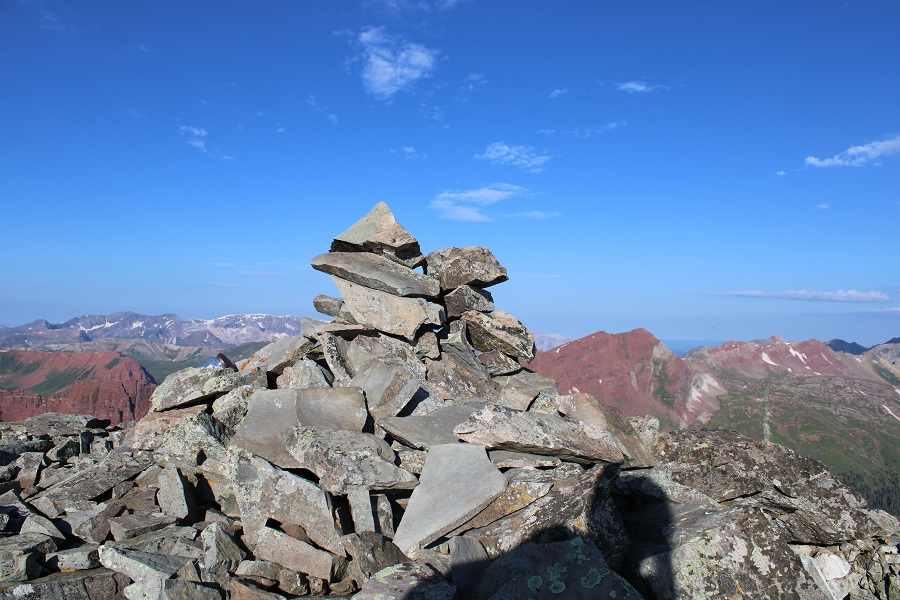
I summited PT 13039 at 7:45am
PT 13039:
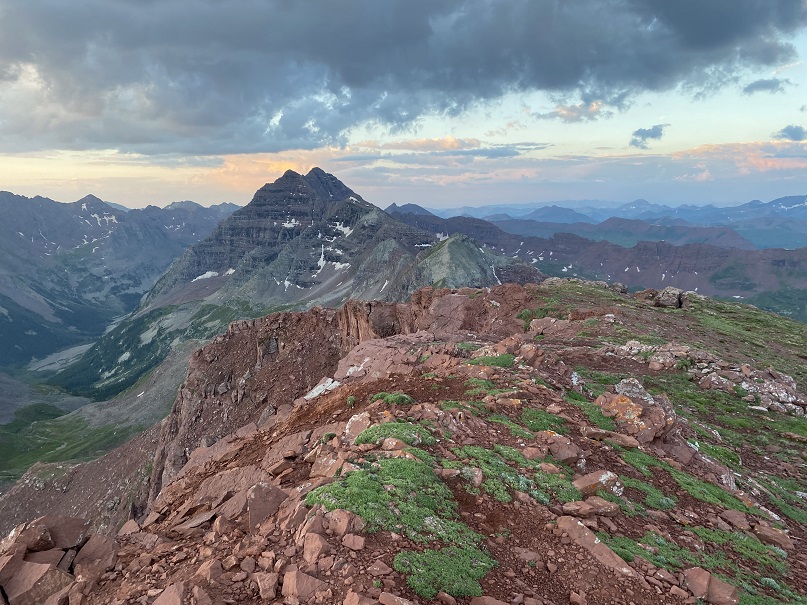
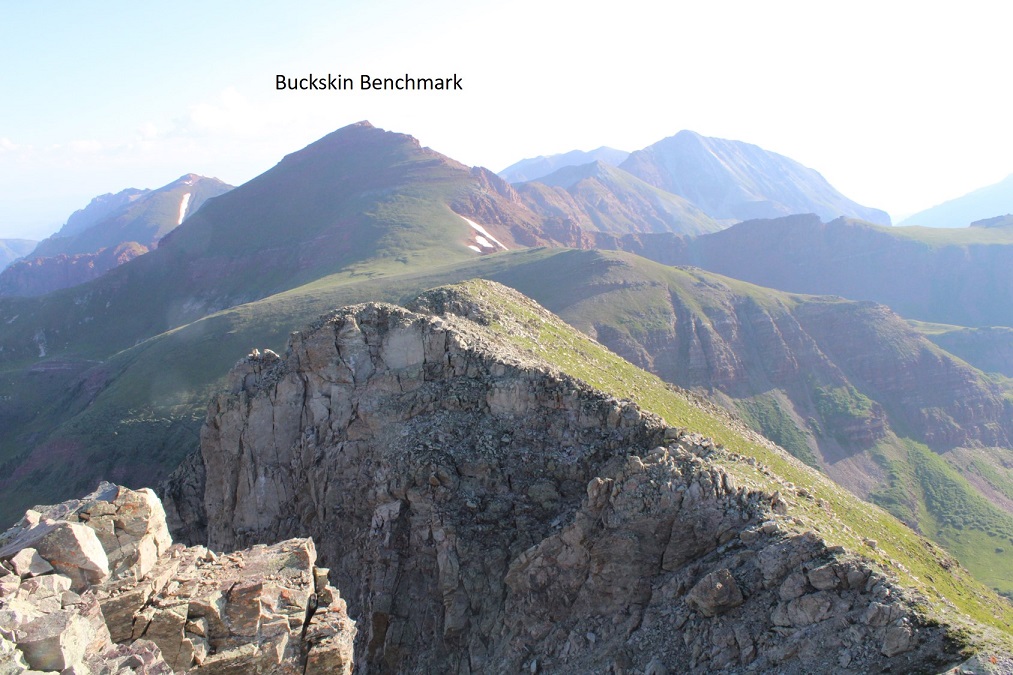
Here’s looking back at Buckskin Benchmark
From the summit you can see where I left my gear.
I turned and exited the way I came
The initial downclimb was steep and committing. I turned and faced the rock for this part.
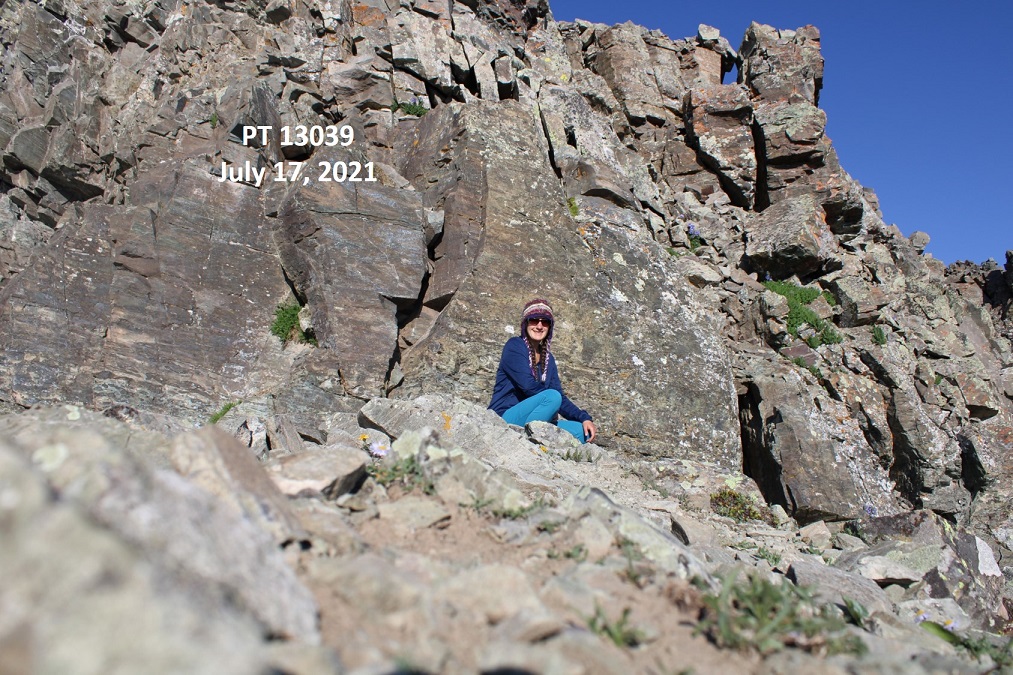
I made it about halfway down and realized I hadn’t taken a picture of myself on the summit, but I wasn’t willing to re-summit again. I figured I’d just get a photo at the bottom.
I made my way back down the ridge
And back to Buckskin Pass
From the pass it was an easy, class 1 hike back to my campsite.
Side note: there are also good camping sites at 11,500’. Once at my campsite I was disappointed to find my water filter had leaked water all over the bottom of my tent. I dried it out the best I could, packed up my gear, and headed down.
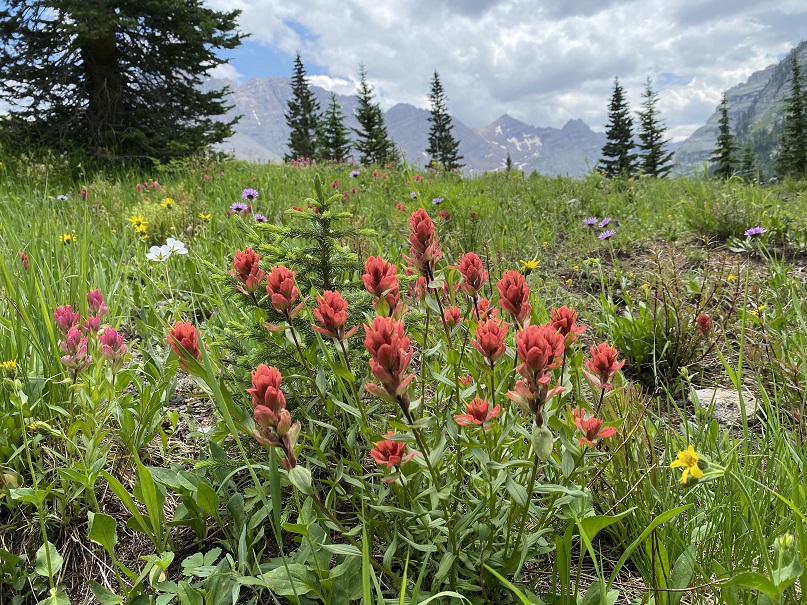
Also, the wildflowers were on point today
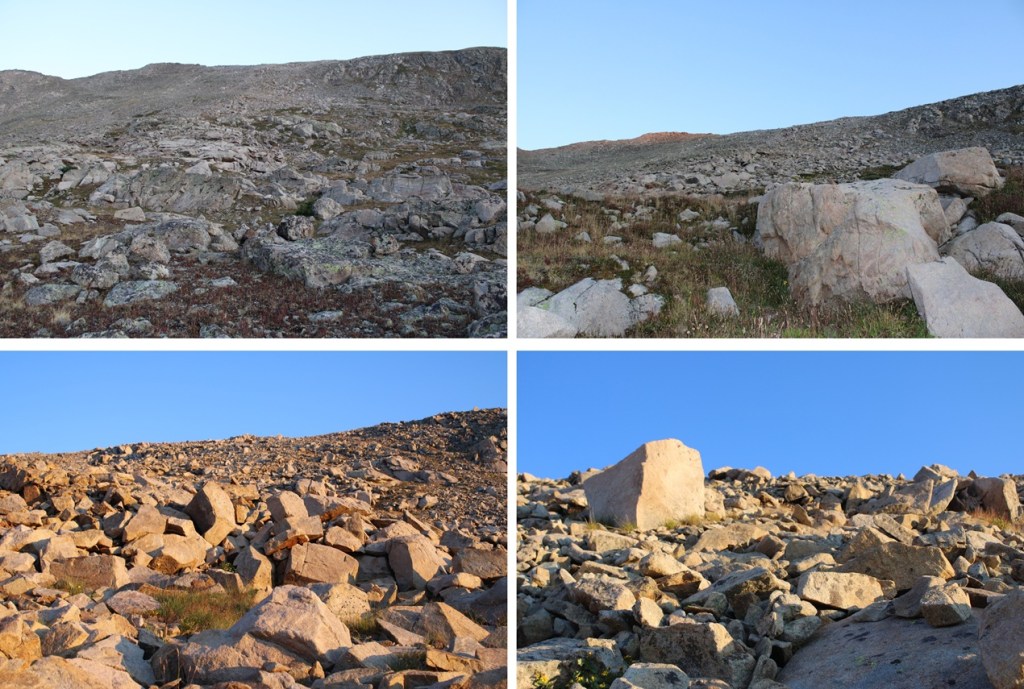
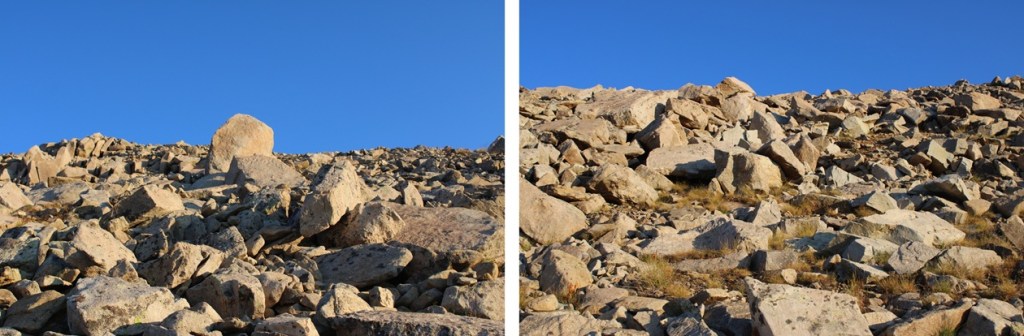
Here are some pictures from the trek out
Once I made it back to the Crater Lake area I started seeing tons of people on the trail. They travelled in groups, and were spaced about 15 minutes apart (I’m guessing this is due to the bussing times). I met one lady who asked me how fat it was to Crater Lake, and when I told her it was another mile or so she looked like I’d just told her it was another 20 miles. She was exhausted, and I’m pretty sure she turned around (the round trip hike to Crater Lake is about 4 miles). There were several groups being led by guides, which leads me to believe guiding companies may be buying up the permits.
I made it back to the parking lot, cleaned up, and headed out.
I had another entire day of hiking yesterday, so my stats are estimates based on CalTopo math: Today’s hike was 18 miles with 5800’ of elevation gain.







































 Wild Wanderer