This trail isn’t an established trail on any map, so I
needed to do a lot of research before heading out. My advice to anyone taking this route: Bring and know how to use a topo map and
compass. Almost all directions I found
were wrong, but the topo map never failed me!
I woke up this morning and it was a bit overcast when I
looked towards the mountains. However,
the weather looked like it’d clear up in an our or so, so I decided to hit the
treadmill for an hour and get in some exercise, shower, and then head to North
Cheyenne Canyon.
I arrived at the trailhead at 9:40am, and was on the trail
by 9:45am. What a difference a few days
makes in trail hiking! There was very
little snow here, where last week there was a good 3+ inches.
I’ve done this part of the hike several times, so I’m not
going to go into detail. Here’s the
route I took:
Park in the lot above Helen Hunt Falls
Take Gold Camp Road West to 622
622 is the 7 Bridges Trail
After crossing the 7th bridge turn right onto 622
and climb up the mountainside, along a scree filled slope, and stay right
through an Aspen Grove.
At the top of the Aspen Grove you’ll come to a
junction.
Turn left (West) onto 667
Shortly after this junction you’ll come to another
junction.
Turn right here onto 622A, and follow the route to Loud’s
Cabin.
Side note: Professor Frank
Herbert Loud (1852-1927) worked at Colorado College as a mathmatician. He wrote mathematical textbooks, and took
many visitors to his cabins in the woods (there are 3), including the writer of
“America the Beautiful”, Katherine Lee Bates.
Most of my information about trails was wrong for this part
of the trek, and I’m assuming this is the reason:
There are many social trials in this area, but when you
reach Loud’s Cabin head north and cross the stream once again. From here you should follow the trail to the
right (east) for a bit before turning back west and closely following the creek
up the mountainside.
This isn’t a real trail, but more of a social trail filled
with scree and lots of cairns. It can be
difficult to follow at times, but as long as you parallel the stream to the
right and make it to the waterfall you’re on the right path.
Eventually you’ll reach the saddle between Mt. Garfield and
Mt. Arthur. This isn’t a saddle like I’m
used to: It’s covered in trees and
vegetation, with no trails. I was
frustrated because the trees blocked the view of both mountains.
This is where I got frustrated. I knew there wasn’t a solid trail to the top
of either peak, but now that I was on the saddle, I still wanted a trail to
follow. I kept thinking of how easy it
would be to get lost in all that vegetation!
I seriously contemplated turning back around and trying this another
time, but I’m stubborn! I’d hiked all
this way, I was very, very close to my intended destination, and wasn’t this
the reason I was hiking here? For a
challenge? How was I going to practice
route finding if I didn’t take a chance?
I looked around again for a trail. Well, there wasn’t one, so I steeled myself
and turned west, aimed for the top, and bushwhacked to the top of Mt.
Garfield. There was a lot of snow and
fallen trees. Here’s what the “path”
looked like:
The views at the top were worth it! Not to the east, because trees were in the
way, but to the west I had a great view of Pikes Peak!
Here’s a view of Almaghre
And one of Runs Down Fast Mountain (one I want to tackle
soon)
I spent about 15 minutes on the summit, and then started my
descent. Since there wasn’t an
established trail I just kind of aimed towards the saddle and kept a view of
Mt. Arthur in sight.
It was fun to see some of my old steps in the snow! That meant I was going the right way. Unfortunately the snow wasn’t consistent
enough to follow tracks the entire way, but it was nice to come across them every
once in a while.
I made it back down to the saddle and seriously contemplated
just heading back. This hike had taken
longer than anticipated and I was running out of daylight. But I was so close! Did I really want to hike another 12 miles
just to summit a peak I was less than half a mile away from? Nope. I headed east up the slop of Mt.
Arthur. This area was much easier to
hike up then the terrain on Mt. Garfield.
There was almost no snow, and a lot of rocks, so I basically just
climbed west, taking care to stay away from the rock outcroppings to the south.
It felt really good to summit! The views here weren’t that great, but I took
a few pictures just because I was there.
Now it was time to head back down. The route was much easier to follow on the
way down than it had been on the way up, mainly because I knew where I was
going.
I made it back down to my truck at 3:15pm.
Stats: 12 miles, 3600’
elevation gain, 5.5 hours total hiking time.
The weather wasn’t all that great for hiking today, so I
took Emily and Thomas somewhere close:
Pulpit Rock. We’ve lived here for
over 10 years and never been to what I’d consider a local landmark. It’s the rock formation you can see from I25
near UCCS that lots of visitors mistake for Castle Rock. There are a bunch of trails to hike this
area, but it was cold and the kids aren’t intense hikers, so we took the easy
way.
The trailhead is right off the freeway. Take Exit 148 and head west, then turn left
on Pulpit Peak. You will immediately see
the dirt parking lot to the right.
The hike is only about half a mile, and there isn’t one
established trail, but dozens of social trails.
Basically you just aim for the top and keep climbing, although I will tell
you it’s easier to climb from the back.
The scenery along the way is beautiful!
There isn’t any exposure until you get to the very top, and
then only if you choose for there to be.
Of course, we played around for a bit.
We probably spent a good half hour on the ‘summit’ before
heading back down.
I’d really wanted to hike above treeline today, but with
anticipated wind speeds of 40mph and windchill of -18 degrees above treeline, I
thought it would be a better idea to stay closer to home. I didn’t set my alarm for this morning, but
woke up at about 7:30am when the cats informed me the sun was up and I wasn’t. Imagine my surprise when I woke up to about 2
inches of snow on my front lawn! Luckily
it was a very clear day and the winds here seemed to be minimal, so I ran for
an hour on the treadmill, took a shower, and answered some emails before
heading out to hike. I was waiting for
the temperature to warm up a bit before hitting the trails.
I made it to the trailhead at around 10:15am. The drive up the canyon was very icy, and
closed to vehicles that didn’t have 4WD.
This was a bit unexpected, as the area looked snow free from both my
house and the road (it wasn’t).
I attempted to hike Mt Kineo earlier this year, but had to
turn back due to lack of sunlight and a visible trail. Today I was just looking for a hike close to
home that could serve as a training hike since I couldn’t get above
treeline. I was also looking for a
successful summit, because it really hurt to have to turn back last time.
I started at 10:30am.
There were about 10 cars in the parking lot, despite the gate being
closed to upward traffic back down at the visitors center (the exit gate was
open, which is what we all took to get in).
The trail started on Gold Camp Road, then after crossing the
North Cheyenne Canyon creek intersected with the Seven Bridges Trail (622). This part of the hike was relatively easy,
although covered in a 2-3 inch layer of snow.
It wasn’t slippery because it was truly fresh snow, but it did slow me
down a bit.
Once I started crossing bridges the trail got much more
icy. It wasn’t icy enough to warrant microspikes
(I had them) but I did need to pay attention to my footing. Much of this part of the trail was in the
shadows of the canyon, and cold.
After passing the 7th bridge it began to warm up
a bit. I took the trail to my right,
turning sharply uphill, staying on 622.
Here is where the elevation gain started to get a bit more
intense, although not difficult. I
crossed a rocky section, and then a section of loose scree. This was my favorite part of the hike!
The trail paralleled a creek, and then turned right onto
trail 622A and continued up a hill that skirted an aspen grove.
At the top of the hill is where I had to turn back last time
due to inadequate information and not enough sunlight. However, this time I was greeted with trail
signs!!! Apparently last time I’d hiked
when the trail was “under maintenance’, so all the signs had been removed. Today they were back!
No, these trail signs did not indicate the trail I needed,
but they did indicate where I was exactly on the map. From the signs I turned right and saw a large
downed tree to the east. This is where
the ‘trail’ to Mt Kineo started. I could
immediately see my mistake from last time:
there are numerous social trails in the area, and when there wasn’t any
snow I traversed more to the left.
Indeed, now there were footprints taking the route I did before. However, I decided to take the trail without
footprints, the one that was now obviously a trail with a few inches of snow
but that I hadn’t been able to see without snow.
It was so cool to be the first one making tracks on this
trail! I knew I was on route, and that I
wasn’t too far away from my destination.
The trail was difficult to follow in areas due to the snow as well, but
every so often I’d come across a cairn and know I was going in the right
direction.
I stayed to the west of the Aspen grove, and soon took the hill
and was on a saddle. Here I had a great view
of Pikes Peak!
I continued up and to the east, and shortly came to a small
rock hill. At the top of these rocks was
Mt. Kineo.
The way up was cold and slippery due to the snow, but not
really difficult (and without snow would have been no problem at all).
I summited at noon, and had great views of Southern Colorado!
I was super proud of myself for making my own tracks and
gaining a summit that didn’t have an established route on a map.
The hike back down was colder than the hike up, and covered
in more shadows. Once I hit the Seven
Bridges Trail the snow had turned to ice along this popular trail due to hikers
packing it down on their way.
I was surprised to see Barron, a scout in Thomas’ Boy Scout
Troop, biking along Gold Camp Road as I was hiking down.
I made it back to my truck at 12:30pm, making this a 6 mile
hike with 2020’ in elevation gain in 3 hours.
Not bad considering the route finding and snow!
Today’s weather was perfect (63 degrees with no wind), which
made it a total shame I didn’t have time to hike. Emily had a football game at noon, which didn’t
give me adequate time to drive anywhere and be back in time to take her. As I was getting ready for bed last night I got
to thinking, and remembered I’d put together a bunch of training hikes last
year that were close and relatively easy to accomplish in a short amount of
time. I pulled out the folder and browsed
through it. Most were about 7-15 miles
in length, which is great, but I only had about 2-3 hours of “free” time and I
was looking for some elevation gain in the process. The last one I looked at was relatively close
(half an hour away) and said it was 4 miles round trip. The only problem was there was no established
route, so I’d need to make my own trail.
I was in!
I dropped off Emily at noon at the stadium (she’d forgotten
her trumpet at school, so today she’d be cheering with the guard from the
stands). Then I drove to the trailhead (which
wasn’t a trailhead). In case anyone
wants to do this hike, here are the directions:
Take HWY 105 west past Palmer Park to Pine Crest. Turn left onto Lower Glenway, then Left at
the dead end. You need to park here and
walk in because there are at least 2 dozen signs that say “no parking” past
this point.
Walk down the dirt road to a gate and cross the gate.
You’ll cross another gate, and this is where the hike
begins.
You basically follow service road 322 until you reach the
lower reservoir. I was surprised to find
a bit of ice/snow on the road.
At the lower reservoir there’s a trail that immediately goes
off to the right. This trail does not go
to Sundance Mountain, but it’s the trail you take.
The trail goes steadily up to the right and into the mountains,
following a stream and a steep scree laden path.
From here on out you need to use your GPS, compass, and intuition,
because there’s no established trail. I
hiked for what felt like a mile along a small creek until I came to a ravine to
my right between two mountains. I knew
Sundance Mountain summit was to my right, so I turned right and headed straight
up the mountainside, being careful to keep the ravine to my left. The entire hike is below treeline, so you
really need to remember which direction you came from and which direction you’re
going. Here’s what the area looked like:
I just kept aiming for the top and eventually I found
it! I came across a summit log and noted
the last person to note in it was from last week (11-6-2017).
I signed my name and realized I was on a trail that looked
like a loop back down the mountain, so I decided to follow it and see if it
would lead me back down. I took a few
selfies to prove I’d ‘summmited’.
From the summit of Sundance Mountain you can see a unique
view of Mt Herman here to the left, and Pikes Peak to the right.
So I followed the trail for quite a while, and it was indeed
a trail that had been used previously.
However, about a quarter mile down it became difficult to navigate. Basically it became a gully that was getting increasingly
difficult to pass due to many downed trees blocking the path. I thought to myself how a helmet and
microspikes would have been helpful, and then got smart. The terrain wasn’t getting any easier, and I
was pretty sure I was going to end up in a serious gully at some point. Where I was was basically the end of the ‘trail’. I didn’t have the proper gear, so I turned
back and re-summited Sundance Mountain.
This was great because I got in extra elevation gain!
The route down was much the same as the route up this
way. I had to navigate, but I just kept
the ravine to my right and eventually found the trail I’d used to navigate in. I quickly made it to the reservoir, and saw
about a dozen people there, fishing. I
could see a lot of tiny trout in the water (no more than 6 inches). I never saw anyone on the trail I took to Sundance.
The route down followed the service road again. I thought what a great route this would be to
snowshoe on in the winter, and mentally filed that information away for a few
months from now.
Here’s the route I took:
All in all this was a great hike, and relatively short in
length. I was proud of myself for
completing this hike because last year I’d taken a similar hike (one with no
established trail) and I’d had to turn back because I didn’t feel confident
enough to route find. My information
told me I’d hiked 4 miles, although I’d guess it was probably closer to 3, with
an elevation gain of 800 feet (although I’d easily say it was over 1000 after I’d
turned around and headed back). The hike
only took me an hour and a half. I want
to come back and explore the area further this Spring, as it looks like there
are a lot of trails to take in this area, and it’s close to home.
Well, I guess the seasons over. I hiked 35 unique 14ers and 2 13ers since June of this year, bringing my total 14er count to 47 (including repeats). I also made several failed attempts of 14ers and successful summits of peaks at 8K, 9K, 10K, and 11K not included in these numbers.
When I started this last June I had a goal of hiking eleven 14ers this year. I more than tripled that goal.Not because I intended to, but because it became really fun:mountaineering became a passion, a lifestyle, and very, very addicting.
Most trails took 3-5
hours to drive to, approximately 10 hours to hike, and 3-5 hours to drive
back. That’s a lot of solo time to think:I loved every minute of it!
I’ve learned a lot too. So much I could easily write a book. Obviously I’m not done learning:Mountaineering is full of continuous learning,
improvement, and reevaluating.
I wouldn’t be exaggerating to tell you my whole world view has changed this summer. We all hear or read certain words and immediately a picture comes to mind of what that word means.We have an association with that word.For example, what do you see in your mind when you hear the word gully, traverse, junction, self arrest, spur, couloir, glissade,basin, post hole, head wall, saddle, pitch, scramble, ridge, cornice, crevasse, chute, narrow, soft, hard, rock wall, scree, river crossing, switchbacks, talus, summer storm, exposure, approach, cairn, chimney, timberline, gain the summit or take the ridge?
Previous to this 14er endeavor I had visions in my head to fill all these words and phrases, but in this past
climbing season these visions have changed. Drastically.They’ve come to life and taken on a world of their own.Now when I see the word ‘basin’ in my head it’s not a drawing on a map, but a full scale area of drainage and rolling hills spanning multiple football fields in length, covered in tundra and alpine flowers. A ‘gully’ is a 4 letter word (more on that later) and ‘exposure’ is something dangerous that could include drastic changes in weather or falling to my death.When I hear the phrase ‘take the ridge’ I see a long narrow mountaintop with steep drops on either side I’m supposed to navigate around towers or rock to get to the summit I wish to climb.I can envision in my mind vividly what each of these words means as an experience, and these experiences have changed me.
I’ll continue to learn, and I’ve learned more than I could ever put into words here, but I’ll give you some of the highlights in no particular order:
Climbing is not the same as Hiking. There is a huge difference between hiking and climbing (and between different types of climbing).All 14ers include a hike, but not all include a climb. I’d say most climbs begin with Difficult Class 2 and include Class 3 and above.A climb requires putting away the camera and using all four appendages to scale a mountain.There were times this caught me off guard, even with proper planning.In essence, climbing is mountaineering, and hiking is just that (hiking).
Hiking /Climbing /Mountaineering takes planning: Successful summits don’t just happen. Driving directions, routes, GPS coordinates, weather, dates, time, ability, etc. all need to be taken care of before the hike actually takes place.Of course, you can just try to do all this on the fly, but I can guarantee you something will go wrong.Things go wrong with even the best of plans, but when you plan you give yourself a bigger degree of success.
When you plug in the coordinates into your GPS and it brings you 200 feet but 10 driving miles away from the trailhead where you no longer have access to cellular data and the GPS keeps unsuccessfully trying to reroute but you HAVE NO DATA and you arrive in the dark it can be daunting, but if you have a printed map available that can get you where you’re supposed to go you’ll appreciate your planning. This happened to me so many times this summer I’ve lost count.
There were several times I found out hours before a hike my booked schedule was now free and I was able to go. If I hadn’t already pre-planned routes, driving directions, etc. I would have missed out on a hike because they take a while to plan.Several times weather derailed my plans at the last minute. Because I’d put together dozens of potential trips I just switched to an area with more favorable weather.Mountaineering takes planning.Plan.
Hike when you can (see above).
It’s not always easy to get up at 2am and drive 4 hours to a trailhead, but I’ve never regretted a hike.If I slept in on all the days I wanted to instead of hiking I would have missed dozens of amazing experiences, all for sleep.You can tell people about your dreams or your accomplishments.As far as I’m concerned, sleep when the weather is bad, hike when you can.
Difficult Class 2 means gully.
I hate gullies.I used to think a gully was a beautiful canyon full of lush landscape, trees, waterfalls, and streams (hello, Fern Gully?) but they’re not.Gullies are alleys eroded by water and snow.They’re usually narrow and steep, formed by loose rock and sand, extremely difficult to find traction on to climb, and the only route up the mountain due to steep rocks on all sides.
The more challenging ones encompass an entire mountainside. They are difficult to climb up, but even more difficult to climb down, as your center of gravity is off and slipping and sliding hundreds of yards to your death or grave bodily injury is a serious possibility.In my opinion, gullies are more dangerous and difficult to climb than a Class 3, and a route that includes a gully is one I try to avoid if at all possible. Wear a helmet and microspikes whether or not there’s snow/ice.
Listen to others.
Ask for advice from others who’ve summited a mountain you’ve yet to summit.I’ve never understood why some people just don’t want to take advice?Everyone has something you can learn from.As far as
I’m concerned, I want to be as prepared as possible when out there dozens or hundreds of miles from civilization (read: help is far away).It’s great to know if there’s a false summit or difficult area that has a trick to get around.Ask hikers hiking down the mountain while you’re hiking up about conditions (etc.) and truly listen to their responses.I can’t tell you how many times I’ve been hiking down a mountain due to weather and tried to warn people hiking up. No one has ever taken my advice, and I know for a fact several of them ended up getting caught in hailstorms above treeline.
Everyone has different comfort levels / risk tolerances. Know yours.
When getting advice from others keep this in mind. Challenge yourself, but don’t be stupid. I’ve taken several routes I know I wouldn’t have completed if I’d been with others because I have a higher risk tolerance than most people.We would have turned back and I wouldn’t have summited.I’ve also taken alternate routes when the one in front of me was too difficult.The bottom line is if you don’t feel comfortable don’t do it just because someone else has.
Climbing time and pace don’t correlate to distance.
Just because you can hike 20 miles in a day near your home doesn’t mean you can hike a 20 mile 14er in the same amount of time. A general rule of thumb for hiking is 2mph, but this varies widely depending on ability, experience, weather, carrying weight, and terrain.Just because you hiked a 7 mile class 1 14er in 3 hours does not mean you can hike a 7 mile class 2 14er in 3 hours.Look at elevation gain and difficulty of terrain before setting out, and remember climbing takes longer than hiking.Think about it:Can you climb up a mile worth of rocks in the same amount of time it would take you to walk the same distance?Probably not.This corresponds with 14ers too, and learning your speed comes with experience.
Keep your pack packed.
This also goes hand in hand with planning. If you never unpack your gear you’ll never need to re-pack it.I always keep my microspikes, sunscreen, gloves, hat, compass, emergency first aid kit, matches, whistle, etc. in my hiking pack.When I get back from a hike I refill my water bladder and replace my bandana (and wash the old one).I never need to wonder where my gear is or if I have it because I always keep it in my pack. This saves me the time and hassle of prepping the night before, and wondering where stuff is.
Have the proper gear.
This is very important.You shouldn’t just head out on a hike up a 14er with just tennis shoes and a water bottle (although trust me, I’ve seen many people do just this).Know what the 10 essentials are and bring them.Use a water bladder instead of a water bottle.Get a good pair of hiking boots, trekking poles, a helmet, microspikes, and all weather jacket.It’s amazing what a difference good shoes and microspikes can make on a trail with just a little bit of snow/ice.If the weather/terrain calls for it, invest in crampons, climbing gloves, and an ice axe (and learn how to use them properly before needing them).It’s extremely frustrating to hike in 10 miles and have less than 1 mile left to the summit, only to have to turn back because you don’t have crampons and you can’t hike any further without them.
Learn to layer.
The weather on the mountains is unpredictable and changes quickly. I’ve never regretted bringing my snow jacket on every hike I’ve been on, even in the summer. And in case this is new to you, NO COTTON!(this means no jeans, cotton socks, cotton t-shirts, cotton gloves, etc.).In case you’re unsure of how to layer, here’s a photo:
Learn how to eat.
I don’t get hungry on the trail as a rule, but every so often the hike takes longer than anticipated and I’m glad I pack food no matter what. While on the trail don’t go for foods that are overly ‘healthy’.During the hike is when you need protein/calories to keep going! Lightweight foods that are high in calories work best.I like to make homemade beef jerky and bring
that with me as a snack, along with some dehydrated bananas and peanuts.When hiking long distances remember the weight to calorie ratio:I’d rather bring along and eat two Reese’s Peanut Butter cups than an apple (even though it’s “healthier” the apple weighs a lot and doesn’t give you the calories you
need to keep you going).
Hike Early.
We’ve all heard to hike early to avoid summer storms, but there are realistically many more reasons to do so than just the stormy and unpredictable summer weather.
You’re generally more rested earlier in the day
In the summer while it’s cold in the morning you’ll warm up fast once you start hiking and it won’t be quite so hot above treeline if you get there earlier in the day.
If something goes wrong you’ll have more time in the daylight to problem solve
You avoid the crowds and actually get a spot at the trailhead to park your vehicle
Colorado sunrises are amazing. Be where you can appreciate them (above or as close to treeline as possible)
If you finish early you’ll have time to celebrate by resting your feet in a stream or head to town for a beer
Making it up is optional, making it down is mandatory.
We’ve all heard this phrase dozens of times, but it’s much more difficult to implement than to say.Nothing hurts more than turning back on a summit, but know your abilities, and make a plan before you ever get into that place where you need to make the decision to turn back.This includes time limits (I need to be at my halfway point by x time to summit today) and weather restrictions (if I hear thunder I’m turning back versus if I hear thunder 3 miles away I’m turning back versus if I’m above/below treeline and hear thunder I’m turning back, etc.).If the terrain is above your abilities or you don’t feel comfortable, know to turn back.The mountain will be there tomorrow, next week, and next year.Make sure you’re there to see it.
Easy and close to Denver means crowded.
Think Mt Evans, Mt Bierdstadt, Quandry Peak, etc. If it’s a class 1 or 2 and less than 8 miles of hiking distance expect to hike with dozens (if not hundreds) of your favorite hiking buddies no matter what day of the year it is.This means limited parking at the trailhead, crowds, fewer animal sightings, blaring music from someone hiking with speakers, hikers that smell like marijuana, seeing people peeing above treeline and summit photos with people you don’t know in the background.Sometimes the drive away from town is worth it.
The mountain is bigger than it looks, and smaller too.
Study your maps and do your research and things will still surprise you. The mountain looks different from far away than it does up close.Sometimes the challenges are bigger than they appear, but often smaller as well.There have been several places that from afar looked impassable, but once I was closer I could see a navigable path. Take the trek one step at a time, and don’t give up or make up your mind until you get there.
If you don’t try you’ll never know.
I got this advice from my 14 year old while going back and forth over whether or not to hike on a particular day when all my information was giving me a 50/50 chance of summiting.When in doubt, go.You can always turn back if you need to, but you’ll wonder forever if you never try.
Weather forecasts are wrong, but check them anyway.
I can’t tell you the number of times I’ve checked and checked and checked the forecast for a particular area only to have it completely different once there. Sometimes this worked out in my favor (anticipated 30+mph winds that never materialized) but often it didn’t (the only cloud in the sky was directly
above the peak I intended to hike, and it was filled with ice and wind).On the other hand, it’s nice to know when it’s expected to thunder and lightning all day or if the wind speeds are
anticipated to be above 50mph.Knowing there’s a 50% chance of hail at noon helps you to make an informed decision about whether or not to continue your hike when you see clouds forming overhead, or even in determining which hike you should take that day.
If there’s water, there’s ice. Especially when it’s dark, just assume everything wet is really ice and can cause you to slip and fall.Proceed with caution.
Ladies: Never let anyone tell you a tampon is unnecessary weight. Never, ever ever.Altitude does weird things to your body, and those around you as well.You might not need it, but you’d be surprised how often you might just meet someone along the trail who does and make a friend. They don’t weigh enough to outweigh the benefits of having one with you, and they can double as emergency first aid supplies (a quick google search can answer any questions).
Carry a bandana (or two). Seriously, these are lifesavers!There are hundreds of ways to use a bandana, not to mention for blowing your nose, for use instead of toilet paper (this is why I said two), or to immobilize an injured appendage.Ladies, also see note above and infer.
Ladies, learn how to pee above treeline.
For guys this is a no-brainer, but for women it can become an issue, as many hikes continue for miles above treeline and if you’re drinking water you’ll need to pee (and there’s no place to hide). Here’s a hint:Find a place to sit and use your jacket to cover your lap. Problem solved!
Learn how to blow your nose without a tissue/bandana/etc.
It’s gross, but along with a trusty chapstik will save your nose/upper lip from getting raw (basically you just plug one nostril with your thumb and blow really hard).Also, don’t do this in the company of others (once again, it’s gross).
Bring along a GPS and a topo map:
And know how to use them!Social trails abound in popular areas and the real trail can get muddied.A GPS is no good if you don’t know how to use one, and a topo map and compass are as well. Practice before you need them on easier hikes closer to home.They can both really save you if you get
lost/stuck on the trail.
Don’t expect an engraved invitation.
What this basically means is don’t expect a trailhead sign to indicate where the trail starts, or even signs along the way indicating which direction to take at a junction.While there are many trailheads with amazing signs indicating you’re at the right trailhead and where the trail begins, this is often not the case for 14ers.Several times I’ve parked (in the dark) at the end of the route and supposed beginning of the trailhead,not able to see where the trail actually begins, or even a sign indicating I’m at a trailhead.Often times you’ll come to an area where several trails intersect and there’s no signage.This is where having a GPS comes in handy.
Don’t expect a trail.
Unless you’re hiking a class 1, there won’t be a trail to the summit. There will be some route finding involved as well as hiking over rocks (etc.) with no established trail. I’m not sure why this as a surprise to me, but it was in the beginning.For some reason I thought I was owed a trail while hiking, but 14ers are a different game and considered difficult and a hallenge for a reason.Learn to use a map and compass and develop some route finding skills.
Sometimes the obvious route is the actual route.
One time I was hiking and met several people along the way.We all knew the cutoff for the peak was
difficult to find, and somewhere in-between two points.I happened to see a cairn wrapped in pink
electric tape, and suggested that was the route to take.Everyone else agreed that was too obvious,
and probably there to indicate the mine behind it.Nope, the pink tape indicated the correct trail.GPS was helpful here as well.
Just because they’re close to each other doesn’t mean they’re the same.
Each 14er is unique, and just because two 14ers are a couple of miles apart or in the same range or ‘connected’ doesn’t mean their routes are similar.Sure, the views, animals, flowers, and stability of ground will be similar, but look at their class rankings:A 2 class can be very different from a class 3, even in the same range.
Buy a 4WD vehicle with clearance.
Extra points if you can sleep in the back.If you’re serious about hiking all 14ers you’re going to need a 4WD with clearance; either that or you’ll need to love hiking an extra 15 miles to get to the trailhead.Many trailheads to 14ers are at the end of serious 4WD roads. If you can’t afford to buy one make friends with someone who has one, or rent one for the weekend.
13er doesn’t mean easier.
Think about it, a 13er could be one foot shy from being a 14er and is still referred to as a 13er (13,999). They’re just as difficult, and often more so because they don’t have established trails and aren’t as frequented by other hikers. Don’t judge.
The way the mountain is facing is important for snow/ice reasons.
Routes facing the west and south clear of snow and ice much faster than routes facing the east and north due to length of exposure to sun and ability to melt snow and ice. Do your research, know which way your route is facing, and plan appropriately. I’ve hiked mountains where one side of the mountain was completely clear of snow (the side you could see from the road), and as soon as I got to the inside hiking area it was like a snow globe.
Weather changes class.
A class 1 hike can easily become a class 2 climb or above in snow. Wind, snow, ice, etc.can drastically change the difficulty of the climb.Know your abilities and be prepared.
Don’t hike to get in shape. Get in shape to hike.
The hike will be a lot more enjoyable if you’re physically up to the challenge.Breathing above treeline is a lot different than breathing below it. When you go above treeline, it’s like you can suddenly feel that the air is thinner. You get tired quicker and it’s harder to breathe as well as you do in lower altitude. Being physically fit makes this transition easier.Use the winter months to work out and build up your endurance.You’ll thank yourself for this later.
It hurts just as much not to hike as to hike. Sometimes you need to make the call not to hike, and that has to be ok. Personally, right now, I’m itching to go hiking this weekend, but the weather isn’t cooperating and I’ve already made other plans. I’m a nervous ball of energy that’s struggling to find an outlet, so I’m going to use this weekend to catch up on sleep, and to plan future hikes.Be prepared for times when hiking isn’t possible, and ways to be ‘ok’ with it.
Every hike/peak/summit has a story: Yours.After a while they’ll all run together and you’ll forget things.Write them down as soon as possible after your hike. Take pictures.Talk about your experiences and share your stories.If you don’t, you’ll wish you did…
Today I wanted elevation gain. This is most likely the last change I’ll get to hike a 14er this year (I promised my mom no more hiking alone between Nov-May) so I wanted to go out with a bang. Weather was pretty stable across Colorado today, but there was a prescribed burn scheduled in the Shav/Tab area that was affecting air quality in the Colligate Peak area, so that excluded a bunch of 14ers. I couldn’t find any recent trip reports (etc. ) on Challenger Point and Kit Carson, but I’d attempted them a few weeks ago and hadn’t heard of any snow in the area since, so I decided to attempt them again, knowing if I failed (again) at least I’d get in some elevation gain.
I remembered thinking last time I hiked Willow Creek trail I’d wished I’d started at 3 or 4am, instead of 6am. It really is an early trail. So I woke up at midnight and made it to the trailhead at 4am. I’m not going to post info about the Willow Creek trail because I’ve done it before (TH and Trail info here: http://wildwandererblog.tumblr.com/post/166343409816/willow-lake).
No one had signed the trail register for days, but the last entry (10-24-2017) stated Kit Carson was socked in. I mentally prepared myself not to summit Kit Carson, but I’d take a look at it just in case (a lot could happen in 5 days!)
I was on the trail at 4:15am, and made it to the lake at 6:00am: It was still dark! Oh no! I’d hiked 4.25 miles in less than 2 hours! Lat time it took me longer, and I couldn’t help but think maybe it was due to route finding? Either that or I wanted to get a jump start on that elevation gain. In any event, I circled the lake in the dark. About halfway up the ridge I heard a loud TWANG! It startled me, as it echoed throughout the canyon. The sound was unique, but I’d heard it before when my cousins and I used to throw rocks on a frozen pond. The lake must be frozen! I bet a pretty big rock/icicle fell and hit the ice!
I continued on in the darkness, hiking slow to allow the sun to rise. Just after I passed the willows I was able to turn off my flashlight. I’d timed this perfectly! Oh, and the weather was great! MUCH BETTER than the last time I was in the area. No wind to speak of this time, but unfortunately, it looked like it had snowed recently.
Take a look at the mountain before me:
In any event, there was no wind, and I could see a lot of snow-free area, so I decided to make a go for it. I couldn’t help but think to myself, as I was halfway up Challenger Point, what a great decision it had been to hike this mountain today! The trail was pretty much free of snow, it was warm, and there wasn’t any wind. Very cool!
Unfortunately, I spoke too soon. When I’d made it about three quarters of the way up the mountain I ran into trouble. The snow up here was covering every single avenue I had to make it to the summit! I could totally see where I had to go, but the path was covered in 5-6 feet of snow and there were no footprints/tracks from pervious hikers to follow. I kept trying to find a snow-free route to make it to the ridge, but it just wasn’t happening. I had microspikes, but they were no good: I’d hike out about 8 steps or so on snow that gave me traction, then all of the sudden, ice skates. Of course I backtracked when this happened.
There were a few boulders I felt I could safely climb up and over, but I did not feel comfortable climbing back down those boulders. I need an exit strategy when I climb, and I wasn’t getting one with these rocks (so I didn’t even attempt it).
I was seriously getting frustrated, traversing in circles trying to find a safe way around these boulders/snow. Have I mentioned I hate gullies? However, I didn’t have evening plans tonight and it was a really nice day. I had plenty of time to figure this problem out. I obviously didn’t have the gear I needed for this climb (Crampons and an Ice Pick/Axe), but I really wanted to summit (safely). The snow wasn’t really that bad, I just couldn’t get traction anywhere. I looked around and thought for a bit. Most of the soft snow was by the boulders. How could I use this to my advantage?
I decided to hug the boulders, and make stairs with the soft snow at their base and around their sides. I’d be able to hold onto the grips in the rock on my way up and down, giving me stability. This took quite a bit of effort, but I needed to make sure I’d be able to climb back down after climbing up. Several times I stopped to make sure these stairs “worked” in steep areas. Success! It was slow going, but eventually I made it to the ridge! Woohoo!
I was so glad there wasn’t much wind today! The ridge wasn’t very wide, but only half covered with snow, so it was easily navigable.
I made it to Challenger Point at 9:15am. Here’s proof of summit:
And a 360 degree video.
Challenger Point was named in memory of the Challenger Space shuttle, and there’s a plaque there to commemorate it.
OK, now I looked over at Kit Carson Peak. It did indeed look like The Avenue was full of snow, but if I’ve learned anything from Mountaineering, everything looks different up close. I decided to hike over and take a look. The worse that could happen would be I’d have to come back for Kit Carson another day, but re-summit Challenger Point today (which would give me more elevation gain! Woot!).
I couldn’t take the traditional route down Challenger to Kit Carson because of that darn snow. It was really hard packed and slippery there. Luckily however, the ridge was pretty dry, so I just followed that down.
When I reached the small saddle between Challenger and Kit Carson I could see the Avenue was indeed full of snow, but navigable. And, an added plus: The snow as soft! I’d be able to get traction! I was on my way.
All I have to say about Kit Carson Peak, even with the snow, was that it was SO MUCH EASIER than Challenger Point! It was very straightforward, had lots of cairns, and was easy to follow.
I made it up Kit Carson at 10:15am. Here’s picture proof I summited
And a 360 degree view
I was fully aware at this point I was only halfway done with my hike. I now had to hike back over Challenger point and back down the mountain.
Oh, this sign says: Danger: Lose Rocks. Many people have died
Hiking back down proved a challenge, but I’m proud to say my stairs worked! A few times I needed to glissade a very short distance (less than 10 feet) to make it to a safe area, but otherwise it was a success! Very slow going, as I didn’t want to slip and fall, but a success nonetheless. The entire hike down to the basin seemed to take forever! Have I mentioned I hate gullies?
I made it back down and crossed the lake, this time in the daylight. I could see where a piece of ice had broken off in the lake, and heard another large rock drop! The lake was indeed iced over, but not completely frozen.
On the way back down to the TH I thought about how Challenger Point is a Difficult Class 2, but Kit Carson Peak is an Easy Class 3. But that was totally reversed when snow was added into the mix! Challenger Point was much, much harder for me today than Kit Carson Peak. In fact, it was the hardest 14er I’ve done so far, even though it technically shouldn’t be. It’s amazing what ice and snow will do to a climb! But I got in that elevation gain, so I’m happy!
Side note: I didn’t see anyone else on the mountain at all today? I was the only vehicle at the trailhead when I got there and when I left…
The weather today for just about every 14er in Colorado was
the same: Windy. I’m not a fan of wind gusts of 45+ mph (which
usually end up being around 85mph up on the peaks if we’re honest) but they’re
manageable if it’s a warm day. I ruled
out any peak with snow on it because wind and snow don’t mix (as I learned last
week). That left me with Wetterhorn Peak
for today’s 14er. I checked the weather: 20% chance of snow and 100% chance of 25mph+
winds with gusts of 43mph. Hmmmm. That didn’t sound too promising. Not bad, but not great. I knew there wasn’t any snow on Wetterhorn,
so that was a plus. I was just worried
it would get snow during the night/day and ruin the trip. I didn’t want to drive 6 hours out there to
turn around.
I was musing all this to my kids when my youngest said “Mom,
you should just go. You’ll never really
know the weather or if you can make it or not unless you try.” She’s a smart 14 year old. (She must have an
amazing mom…). I told her she was right,
and set my alarm for midnight. Besides,
this would be my 33rd 14er and my 3rd class 3. Lots of 3’s mean it’s meant to be, right?
The trailhead is easy to find/follow. From this sign it’s really a 4WD road.
I know others have posted it’s manageable in a 2WD, and I’m
sure it is for those amazing 2WD gods out there, but if you value your 2WD
vehicle, do NOT take it on this road. However,
if you’re looking for a reason to get a new vehicle, by all means proceed. Here are a few pics:
I made it to the trailhead at 5:30am and was on the trail by
5:45 (I drive fast). There were 2 other
vehicles in the lot (I parked lower down).
There’s probably room for 15 vehicles total at the upper trailhead,
including parking about 10 yards below the lot.
Here’s what the trailhead looks like in the daytime. The trail starts to the left of the trail
signs.
Note: Most of these
pictures were taken on the way down because my fingers were too frozen to take
pictures on the way up.
The beginning of the hike was pretty uneventful. (Another Note: The summit ledger is full and the pen
provided doesn’t have any ink left. Maybe
a hiker could bring new supplies with them?) It was just me hiking in the
dark. The trail was wide, clear of snow,
with just a few muddy spots in areas. It
was about 37 degrees, and there wasn’t any wind. Yet.
As soon as I hit treeline the wind began to blow, but it
wasn’t too powerful and it wasn’t cold outside, so it was bearable. As the sun began to rise I noticed what
looked suspiciously like snow clouds on the mountains next to where I was
hiking. Luckily the wind was blowing
them away from me. It seemed like the
sun took an awful long time to rise this morning. I passed a boulder field that was easy to
navigate but didn’t have any cairns?
This could be a problem in the winter.
The entire trail was very well maintained, all the way to
the ridge
I looked for the turnoff to Matterhorn Peak but never saw
it? I did see this sign, which, despite
it’s name, does not go to Matterhorn Peak.
I could see a few hikers in front of me by their
flashlights. They seemed far away, but I
quickly caught up with them. They looked
really cold in their hoodies. I was cold
in my snow clothes.
At this time the sun began to rise and the temperature began
to drop as I hit the ridge and the wind picked up. I still think Colorado Flag sunrises are
cool!
At the top of the ridge I could see most of the route
left. This scree hill was insanely
slippery! I could tell a lot of people
had chosen to just walk on the tundra. I
put on my microspikes and braved the scree.
At the top of the scree hill I could see the path to the
summit (or part of it).
It included a LOT of scrambling over a lot of rock walls/large
gullies/insanely tall boulders. These
pictures just do not do them justice!
This part should have been fun for me (I love scrambling)
but the weather made it really difficult to find my way. The wind was cold and intense. I had to find a cave to shelter in to get out
my map, and taking my gloves off made my fingers freeze instantly. I’d look at my map, put it away, put on my
gloves, head out to hike, and the terrain kept changing on me. I even brought up the pictures on my
phone. Nothing up close looked like the
pictures I had? Well, every once in a
while they did, but not on a consistent basis.
I gave up and just followed the cairns.
Luckily there were a lot of them.
Did I mention the boulders were COLD? My hands were frozen! And it was pretty windy, so I didn’t want to
rest too long to appreciate the view. I
just wanted to summit, and was thrilled when I did!
I could see Matterhorn Peak and Uncompaghre Peak in the
distance.
I took a selfie to prove I’d summited
And a quick 360 degree video
And headed back down.
I needed to get warm again.
Soon. I was seriously worried
about two fingers on my left hand at this point that were solid and starting to
burn. I kept trying to flex them to keep
the blood pumping but they wouldn’t move.
(No, not frostbite, I have Raynaud’s, so I’m overly susceptible to cold
temperatures).
Climbing down is different than climbing up, as your center
of gravity is off and you can see more of the exposure so it’s more mental. I took my time, even though my fingers were
frozen. I didn’t want to slip.
Just as I was finishing the climbing part of this hike I ran
into the three hikers again, getting ready to cross over the first obstacle.
OK, time to book it back down in elevation to warm up these
fingers! Luckily the sun was coming out
and the clouds all seemed to gravitate towards other peaks. It was still windy
though. As I hiked back down I
contemplated Wetterhorn. She was beautiful!
Summiting had been really anti-climactic and I was trying to
figure out why? I should have LOVED that
climb! It must have been the
cold/wind. I mentally tried to decide if
I was even up for hiking Matterhorn Peak today?
I went back and forth in my mind a few times, and told myself the
decision hinged on actually finding the trailhead and my fingers defrosting. Oh, and warmer weather and less wind wouldn’t
hurt…
As I descended into the basin and passed through the boulder
field there was a brief period where all wind stopped. The silence was deafening. I didn’t hear a bird, marmot, pika, airplane,
wind, etc. Nothing. I grew up in Southern California, and
directly before and after earthquakes everything becomes still (for different
reasons). That’s what this felt
like: The still before the chaos. I hoped that wasn’t foreshadowing for the
hike ahead.
I kept debating the whole Matterhorn Peak thing. My fingers had finally defrosted, the wind
had died down a bit (but don’t let those photos fool you: the wind was intense!) and I didn’t really
want to drive all the way back here to hike Matterhorn at a different time. But I was tired, and I still wasn’t sure
where that trailhead was? As I was
hiking I had a thought: Could it be
here? At the Ridgestock Driveway and
Wetterhorn Peak junction?
That wasn’t in any of my notes, and didn’t really make sense
(shouldn’t it be at the Matterhorn trail junction where it wasn’t?). But in the daylight it looked right. I got out my altimeter. Ugh! I
was at 12,500’. If I was going to do
this hike I was going to have to gain another 2000’ in elevation, after already
doing 3300’ this morning. I was
tired. Did I REALLY want to do
this? I heard my daughter’s voice in my
head again: “Mom, you should just go.
You’ll never really know if you can make it or not unless you try.”
Before making the decision to hike Matterhorn Peak I decided
to see if this was actually the correct junction to take. Then if it was I could either continue
hiking, or know for next time when I’d most likely be hiking in the dark. I started up this hill. It really did seem to go on a lot longer than
it looked like it should, and more than once I thought about stopping this
nonsense and heading back down the trail.
But I’m stubborn, so I continued on.
At the top of the hill the trail kind of split in two. Left is the correct way to go
This is what I saw:
I was intrigued. What
I saw before me truly looked like fun.
Sure, I was tired, but this looked like FUN! There was no trail, I’d get to make a trail
for the first time, and this looked totally doable! I just needed to cross the stream and head
up! I was in a basin, so it would be
difficult to get lost.
I was in. Since there
was no established trail I designed a plan:
I’d leave the trail, cross that little creek and hike straight up the
mountain (no sissy switchbacks for me, I wanted that elevation gain). I looked at the entire mountain and visually
picked cues (rocks) to aim towards. Here’s
the route I took:
Before heading out I turned around to get a good visual of
where I’d started from so I could return to the same spot. I snapped a picture with my camera just in
case I forgot, and was off!
I told myself no looking back/down. The elevation gain was indeed intense because
I just went straight up, but I kept making small goals and taking breaks when I
met them. I took a lot more breaks than
I normally do. As I got further up the
mountain I could see the rocky ridge above me, and made out two figures in the
center that looked to me like rabbits (think Easter Bunny Chocolate
Candy). They were right in the middle of
the ridge, so that’s where I aimed.
As I got closer they looked more and more like rabbits.
I reached the rabbits and gave them my trekking pole for
safe keeping. I trudged on. I could see the summit in front of me.
There was no clear path to the top, but I could clearly see
the peak and several routes I could take to summit. There was a lot of easy scrambling (compared
to Wetterhorn this was a piece of cake!) and a very small summit. So small I couldn’t get a summit selfie. I straddled the summit and just sat there,
thinking about what I’d just done. I’d
rocked that climb! And check out my
view!
I was surrounded by Uncompaghre, Wetterhorn, and the entire
mountain range. I was in the middle of
it all, sitting on a peak, completely enjoying the experience. I the sun and a huge smile on my face. This was awesome! This is why I’d come to hike today! And guess what? For the 15 minutes I was on Matterhorn Peak
the wind completely stopped. I was warm,
could take off my gloves, and took a few pictures.
I was happy. I was
thrilled. I felt accomplished and my
self esteem soared. I love solo
hiking!!! I spent about 15 minutes on
the summit, which is unheard of from me.
I usually summit, take pictures, and head back down to a lower elevation
to warm up. However, it was now time to
head back. I still had a 6 hour drive
home ahead of me. I revisited the
rabbits, thanked them for watching my pole, looked for my point of reference
and headed back down the mountain.
I kept looking for and finding my past reference points and
headed towards where I’d initially gone off the trail. I must have done a really good job, because
about three quarters of the way back I started walking over the tracks I’d
initially made! How crazy is that? All those years of practicing orienteering
paid off!
I made it back across the creek, found the trail, and headed
back down the mountain. I was in a much better mood than when I’d started
today! I was so glad I’d decided to come
hiking. Matterhorn Peak is my new favorite
13er!
This week has been challenging 14er wise. I’m working from home all week, so basically
I could’ve hiked any day I wished. I’d
planned on hiking Monday, but we had a big storm roll in and blanket all of
Colorado with snow. That meant I couldn’t
hike Tuesday either. I made an awesome
choice and hiked Uncompaghre Wednesday.
I was quite pleased with myself, and wanted a similar success today. Most of the peaks I still have left to hike
were too snow covered to hike this week, so I went online last night and tried
once again to get information on the Crestones.
The webcams made it look like they were pretty devoid of snow, but I
wanted to make sure before heading out there.
The forecast said it would be clear, with temperatures in the 50s with
25mph winds. The winds were higher than
I’d have liked, but in the past the wind speeds have been overrated, so I didn’t
pay much attention to them.
I checked my schedule for today and cleared it a bit (my son
would pick up my daughter from school) and tried to get to be early. That didn’t work, but I did manage to get in
3 hours of sleep before waking up at 1am to head to the trail.
This is where my bad luck began. I’d copied and pasted the GPS coordinates
into my phone, and when they pulled up they looked like what I’d printed out
from my research: same mileage, cities,
highways, etc. So I just followed the
directions on my phone and arrived at what I’d thought was the trailhead. It was kind of weird I’d gone through a
residential area, but it was on an unpaved road and we were backing up to the
forest, so I figured this was the trailhead.
But when I started on the “trail” (no sign, which is a pet peeve of
mine) I realized I was at a water treatment plant? I pulled out my GPS and I was right where I
was supposed to be, but when I zoomed in I realized I was about 15 yards off
from the exact trailhead, and since I was in the middle of nowhere it would
take me 20 miles to go around on the roads and park in the proper spot. I
briefly considered just hiking towards the trailhead but thought better of it
and drove around. The lady who’s house I’d
parked in front of would appreciate I’d moved my truck from her front lawn.
This meant I’d arrived at the trailhead 30 minutes later
than my intended time. I was already
cutting it close (I know, I know, it’s a bad idea to put time limits on hikes,
but I’m a single mom and have a lot of other responsibilities too: If I’m going
to hike I have to accept these time restrictions, summit or no). 30 minutes can equal 2 miles if I book
it. I seriously hoped I didn’t just
endanger my ability to summit because of this stupid mistake.
The drive in was 2WD all the way.
And there was ample parking at the trailhead
Woohoo! A trail
sign! I LOVE these things! This meant I was on the right trail.
I grabbed my stuff and was off at 5:30am. Right away I had difficulty. The trail obviously went to the right, but
there were several social trails.
And it was dark. GPS
is great, but it’s off a few feet in every direction, and I couldn’t really
tell which way to go. There was a stream
to the right, and I figured that was where I was supposed to go, but there didn’t
seem to be a way to cross it?
In the dark (even with a great flashlight) I couldn’t see
across the stream, and it didn’t look like the trees made a bridge across. I spent another 5 minutes looking at my GPS
and going in circles before taking the plunge and just walking across the
stream, not knowing how deep it was. My
feet and legs were wet because the water was about a foot and a half deep, but
there was an obvious trail when I made it to the other side.
Woot! I was on my
way! The first 4.5 miles was
switchbacks. Lots and lots of
switchbacks. I didn’t mind much, because
I was working out the elevation gain in my head and this was an easy way to get
in those 4.75 miles to Willow Lake.
I crossed several smaller streams in the dark and saw
numerous waterfalls. I’d be getting
pictures of them later! (here they are)
Side note: water at
this altitude/temperature means ice. If
it looks wet, assume it’s slippery and unstable. I know this from experience.
Especially on those log “bridges”.
The last quarter mile before the lake was where the trail
got rough. Well, not rough, but
messy. Lots of ice and snow and mud on
the trail. Yuck!
The view was great though!
The only downside from this route was I wouldn’t be seeing a sunrise (it
was on the other side of the mountain). It
looked like I’d picked a great peak to climb today. There was minimal snow when compared with
other 14ers and no clouds!
Just before reaching the lake I was watching my feet as I
was hiking (ice, remember?) and I saw what looked like toes in the mud. I briefly thought it was a print from someone
wearing those shoes with the individual toes, but quickly realized it was a
(small) bear print! Woot! Awesome!
That meant there was a bear in the area!
It looked bigger than a cub print, but not big enough to be a full grown
bear, and the prints were heading away from me (back where I’d came from) so we’d
missed each other. Oh well, maybe I’d
see it on the way down?
I pressed onward, over what looked like it was a waterfall
at various points during the winter
And arrived at the lake!
It was now 7:40am. I’d
hiked 4.75 miles in 2 hours 20 minutes. Uphill.
Immediately the weather
changed. The wind picked up
dramatically, and there was no sun? The
temperature dropped as I looked for the correct trail. I knew it went left behind the waterfall on
the other side of the lake.
My GPS told me to go one way, but that way was now “closed
for restoration” so I did my best to look for the proper trail. No dice.
I ended up kind of bushwhacking my way through some willows (there had
been a trail there previously that was not too overgrown) and up some rocks to
where I saw a sign indicating the trail.
I checked my GPS: success!
I kept trudging, admiring the view
As soon as I made my way over the waterfall area I got a good
look at the Crestones: This view offered
a stark contrast to their backsides! I
was amazed at how much snow there was here in the middle compared to the east! No worries though, snow was easy enough to
navigate.
I crossed a few very slippery half-frozen streams and made
it to a large basin.
The wind was howling at this point. I looked up at the intended route and sighed
inwardly: a gully. A BIG gully.
I hate gullies! The first part
didn’t look too bad though, and it looked like the sun was coming out?
Nope, it went right back behind the only cloud in the
sky: the one very similar to the one I’d
encountered on Blanca Peak last month. UGH! The weather was supposed to be sunny, clear,
warm, and windy? When will I learn 14ers
create their own weather? It WAS sunny,
clear, warm, and windy everywhere except in the basin I was in.
Here is was cloudy, cold, and very, very windy. I rounded some large boulders and looked at
the hike in front of me. Lots of snow
covered the trail, with no footprints. I
was probably the first to take this route since before Monday’s storm. No worries though, I liked hiking in the
snow. I put on my microspikes and headed
in.
I made my way to the gully.
It’s actually much bigger than this picture indicates. I looked at my watch. I had exactly 2 hours to summit both
peaks. In normal conditions, even with a
little snow, this was doable. Today
however was another story. I decided to
start climbing and see how far I could make it, then adjust my goals.
The gully sucked.
There wasn’t enough snow to make it easy to climb, but there was a lot
of ice. And wind. Lots and lots of wind. Bitter, cold, snow-filled wind. I picked a ledge and followed it, which was
much easier than hiking up the scree/snow.
I gained the first ridge and looked at the rest of the route. It went to the right of the gully. Right where the wind was swirling snow into
the air.
The weather kept getting worse.
The wind picked up and knocked me into the side of the
mountain, hard. It pressed and held me
there as ice crystals swirled up and around me and gave me an unwanted
dermabrasion on the only exposed surface of my body: my face.
I stood back up and got my bearings, but another gust of wind did the
same thing all over again. This was not
going well. I got out my map, and looked
at the ‘easy’ ridge I’d get to summit after making it up the side of the
gully. Ugh! It was covered in snow! (and most likely ice) And that wind! Down here it had to be at least 65+MPH. Up there?
Probably worse. I did some mental
calculations, and figured it wasn’t safe for me to try to cross that snow/ice
covered ridge in this wind. It was
knocking me around like a doll down here: I didn’t stand a chance on the exposed
ridge. Maybe I could wait the weather
out and see if the sun re-emerged and the wind died down? It was early yet, but how long would that
take? Even now I wasn’t sure I’d be able
to summit one, let alone both of the peaks I’d wanted before I had to turn back
around to make it home on time, help from the sun or not. How far could I make it if the sun was
out? Was it worth the wait?
Take a look at this video.
See where that snow is circling to the right of the snow filled gully? That’s the route I needed to take, and then
across the ridge to the left.
Then I really got to thinking. If I wasn’t going to summit today, what was I
doing mentally calculating how much further I could go? Here I was, cold, on top of a gully, halfway
up the side of a huge mountain, trying to gauge how much farther up I could
safely climb, when I had no intention anymore of summiting. The wind was knocking me around, the ice was
terrible, and my fingers were numb. The
climb up the gully had been difficult and slow, and I knew from experience the
hike down would be worse (center of gravity problems mixed with ice means slow
going and causes slips and falls). And
here I was, mentally calculating how much further I could go before I absolutely
must turn back because of TIME. To make
it to a class I was teaching on outdoor survival skills. Wouldn’t it be ironic if the reason I didn’t
make it to the meeting was because I needed to be rescued?
Good point. I turned
around and headed back. Summiting was optional, but making it down was
mandatory. The gully down was indeed
worse than the way up, and took me twice as long. By the time I’d made it to the bottom my
fingers were turning white and I couldn’t feel them anymore (they kept gripping
snow for traction, and I don’t do well in the cold). The look back was beautiful though!
I re-crossed over the waterfall and looked at Willow Lake
from above
I probably should have noted the ice hanging from the
waterfalls earlier. It was cold here,
and had been for a few days.
There were tons of waterfalls on the way down, and lots of
mud/ice to trudge through. No sign of
that bear though.
Oh, but the birds were ‘singing’
What really hurt was turning back and looking on the mountain I hadn’t climbed. It looked warm and inviting on this side, yet I knew once I rounded the back it was a bitterly cold snow-globe of ice, wind, and snow. What’s worse is turning back today meant I might not get to hike another 14er this year: I don’t have many more available days so this might be it. I took a good look at all the mountain ranges on my way in. They’re socked with snow, and all are getting wind this weekend. Snow I can handle, but this kind of wind? Not fun.
It ended up being an 11 mile hike, I’m not sure about the elevation gain, but 3500’+
I’ve hiked 43 14ers and this is the first time I’ve had to turn back due to weather. And what’s worse, it was due to the wind and ice, not snow, rain, lightning, etc. Oh well, the mountain will still be there next year. I’ll try again!
·The trail was pretty much free from snow, even after Monday’s storm. Microspikes were not needed.
· This would be a great first class 2 hike: it’s easy to follow, relatively short, and not too taxing
· If you’re looking to spend the night on a 14er summit, this would be a good choice
Uncompaghre, or “Uncle Padre” as it’s affectionately referred to, wasn’t supposed to be my hike today. We had a storm come in on Monday, blanketing the entire state with snow. So I’d gone on the Colorado Webcams page to see what the conditions looked like in different areas of the state.
I was specifically looking at peaks in the Crestone area, and the webcam made it look like there was surprisingly little snow. I was thrilled! That is, until night fell and I looked at the web cam again, and it still showed daylight. It was then I went on the forum and someone said there was a lot of snow on the Crestones, and I concluded the webcam must have been broken. It was showing the correct time/date, but the image was obviously wrong. UGH!
No worries though, I had about 5 different 14ers I was interested in, so I just went down my list. I wasn’t 100% sure the conditions weren’t great at the Crestones (I asked for clarification from the poster and never got any), but the webcams for Lake City looked promising. I gave it some thought and did a pro-con list. The Crestones were closer, the hike was longer, and I’d get 2 14ers in tomorrow, but I didn’t know for certain the conditions. Uncompaghre was a lot further (6 hours), the hike was shorter, and I’d only get in one peak (I really wanted to hike it with Wetterhorn). But my knees still weren’t 100% from my falls last week (I’d say 80% on one knee, 85% on the other) so a shorter hike was probably a good idea. Also, Uncompaghre is affectionately referred to as “Uncle Padre”, and it’s my Uncle’s birthday today, who pretty much was like a father to me growing up, so I saw it a sign of good luck and just went for it. Uncompaghre it was!
I woke up at midnight and made it to the trailhead at 6am (remember, I don’t sleep well at trailheads, so it’s just easier for me to drive and hike). There’s an obvious sign telling you where the trailhead is. If you don’t have 4WD, park here.
The drive up is definitely 4WD. My directions indicated I’d cross 2 streams, but I crossed 3, and was delighted to do so! My whole face lit up when I saw the first one: I love it when I get to drive my Tundra through streams!
The only downside to this road is it’s pretty narrow, and a bit bumpy in places. There were 3 turns that were tight for my Tundra, and I had to back up and reposition my truck to make the turns happen.
There was also a lot of ice on the trail (which I’m assuming is gone now). In fact, there was a lot of snow on the entire drive up, starting at about 8000’. This seriously worried me for the hike ahead! I had microspikes and snowshoes, but would rather not carry them if not needed.
The trailhead had parking for about 10 vehicles and was pretty open.
The weather forecast for the area today was a low of 22 and a high of 44, but as I drove I saw the temperature drop to 19 degrees, and stay there. Lovely. There was a half moon, and I could see there wasn’t enough snow on the mountains for snowshoes (woot!), but I brought along my microspikes anyway. I bundled up and began my hike at 6:15am. There were two Park Service trucks at the trailhead, but I never saw people on the trail. The trucks were still there when I left.
The beginning of the trail had a bit of ice in the creek areas
I hiked through a basin, and about a mile in there was a little bit of snow on the trail, but it was easily avoidable, and this was seriously the most snow I saw on the entire hike.
As I came to the trail junction for Matterhorn Creek and Uncompaghre Peak the sun and the temperature began to rise. This is why I’d woken up at midnight! The sunrise was amazing!
I turned around to take a look at Uncompaghre. Wow.
The entire trail was well maintained and very easy to follow. It was almost too easy, it didn’t seem as if I were hiking a 14er.
The Alpine glow this morning was fabulous against the blue sky! I hiked up some switchbacks to Uncompaghre’s south ridge.
This ridge gave me amazing views! I had fun taking pictures
At the top of the ridge I turned left and went behind the mountain
I followed the trail and looked for this rock tower.
You can either go to the left of it or the right of it. I chose the right
The hike up until this point was very much a class 1 hike. However, at this point there’s about 30 vertical feet of hand and feet climbing. Woot! My favorite! I took a picture and put away my camera. Here’s why this is considered a class 2:
This is what it looked like from the top
The rest of the hike was pretty straightforward. I just followed a trail to the summit.
The summit was a wide, flat, barren summit. If you were looking for a 14er to camp out on for the night, this would be it (if you don’t mind wind). I summited at 8am.
I turned to look around, and all around me there was snow! I’d picked the only peak in the area without snow! Amazing!
I took a summit photo to prove I’d summited
And as I looked over the edge, I saw there was snow on the north face of the mountain. What a drop!
I didn’t spend long on the summit, but turned around and started back down. As I was descending the class 2 part of this hike I stopped to take in the view.
I thought to myself how this was the perfect hike for today! I didn’t get in Wetterhorn, but there are several 13ers in the area I can partner with Wetterhorn and take my time on instead of rushing to get them all in. I was glad I’d chosen to hike Uncompaghre solo for today.
I didn’t see anyone else on the hike until I was just about to exit the basin. It was a couple hiking together. I didn’t see anyone else the entire day, and luckily didn’t pass anyone on the drive down.
I made it back to the trailhead at 9:55am, so I hiked 7.5 miles in less than 4 hours, with 3000’ feet of elevation gain.
·
Snow starts at 12000’ and keeps going from
there. Bring microspikes. Snowshoes weren’t needed.
·
I can see tons of potential avalanche danger on
this hike with more snow.
·
The lower Mt Princeton Road Trailhead is
actually pretty nice.
·
The road from here to the radio towers wasn’t as
bad as I’d been led to believe. It was definitely
4WD, but it wasn’t that difficult. The
only down side was it was narrow, so if you came across another vehicle it
would take a bit of maneuvering to get around each other. I have a Tundra, so this was an issue for
me. Two Jeeps wouldn’t have an
issue. Side note: the trail was dry when I took it. If it was wet or had snow or ice it would
probably be much more technical to navigate.
I could see several dry gullies I’m assuming flow over the road when it
rains/snow melts.
·
There are spots to park your vehicle at the
radio towers, but they aren’t obvious, and they’re tight. I had ‘fun’ turning around my truck when I
discovered the road was one way in and out.
I began at 6am. For
anyone wanting to know what it looks like hiking in the dark, here you go:
This was my first view of Mt Princeton
The trail after the towers begins on road 322A. It can be difficult to find the towers in the
dark, but if you’ve driven 3 miles since the lower trailhead and come upon a
sharp curve, you’ve missed the towers.
It was pretty cool to look back on Buena Vista and see it
covered in fog and haze
The first couple of miles follow the 4WD road up 322A. Then the real trail starts up to the right of
the hillside. There’s no sign, except
this wonderful, um, arrow of rocks? pointing the way.
As soon as you get up this small hill you get a great view
of Mt. Princeton.
From here snow at minimum lined the trail for the rest of
the hike, and at most completely covered it.
I put on my microspikes and continued on.
Shadowselfie, because I do that type of thing
At this point I was thinking it was probably a good thing I
had snow on the trail, since I was probably walking over a lot of scree. I prefer snow to scree any day.
Oh, and when I turned back around I saw the SUNRISE! Colorado 14er sunrises are AMAZING!!
When I got to the top of the ridge I noticed a wind wall in
front of me and a mountain to my left. I
got out my Peakbagger app, and discovered it was Tigger Peak (13,280). It was only .3 miles away, so I made note of
the location to hike on the way back.
I turned right and got a good look at the rest of the hike
up Mt. Princeton. From here it’s .7miles
to the top. There was a pretty good
trail for most of the way, but when it was covered in snow I just followed the
ridge to the right.
Some places had a lot of snow and I did a bit of post holing
Others were bare
I summited to an absolutely beautiful view! Here’s photo proof I summited:
The weather reports said 40 degrees with 25-30 MPH winds and
45MPH gusts, so I dressed warmly (multiple layers, hats, scarves, etc.) Either I did an excellent job over dressing,
or it wasn’t that cold out. I barely had
any wind for the entire hike, except on the exposed ridges.
At this point I turned to head back down Mt Princeton’s
ridge. Take a look at Tigger Peak!
It took a lot longer to hike down than I remembered hiking
up, but I had to be very careful of foot placement. Despite microspikes it was still slippery. I ended up tripping once and hitting my left
knee pretty hard. I felt silly and
continued on.
The trail to Tigger Peak had a ridge and what I considered a
false summit. And due to the recent
snow, no trail. Well, I’m assuming it’s
due to the recent snow. It might not
have a trail at all anyway? In any
event, there wasn’t a visible trial, so I got to make my own! I considered this a very awesome opportunity,
and I was careful to make sure my steps were secure.
On the ridge between the two small what I considered summits
of Tigger Peak it happened:
I was on a part of the route with exposed rock (no
snow). I lifted my right foot to take a
step, and abruptly pirouetted and started falling towards the rocks. You see, when I’d tripped earlier apparently
I’d tripped on broken microspikes: One
of the hooks holding them together had come loose, and now, when I’d lifted my
foot, the hook on my left microspike attached to my right microspike, and I
fell down like that giant in Jack and the Beanstock with the tied
shoelaces. It all happened in slow
motion. In fact, I had time to curse
twice. (Side note, I don’t actually
cuss, so I said “Gosh Darn It! Flibbity-gibbit” (seriously)).
I’m not going to lie, it hurt. But I didn’t sit there. As soon as my knee hit the rock and I could, I
untangled myself, got up, and started hiking.
I could tell nothing was broken, but it stung badly. The best way to fix this (I know from
experience) is to walk/hike it off. So I
kept going, looking down at my knee every few seconds, expecting to see
blood. Luckily that never happened.
I’m proud to say I continued on up and over the second ridge
and summited my first 13er! (yes, I know it isn’t “official”)
This is the first time I’ve forged a trail on snow, and I
was pretty proud of myself! Oh, but I
had to prove I was in the right spot, so I took a picture of my Peakbagger app
indicating I was on the peak
And a picture of my GPS, showing where I was
And as I looked across the mountain range, I snapped a
picture of this cloud that looks like a pufferfish? Yoda? Floating
majestically over Mt Antero.
Then I headed back.
It was cool following my tracks!
So now I had a serious dilemma: My microspikes were broken. I’d slipped and fallen hard twice, but I knew
the hike would be much worse without them.
This is what I still had to hike (well, about 3 times this, as the trail
looped all the way around the mountain, remember those earlier snow pictures?):
So I made the decision to hike with the broken microspikes,
but to be very, very careful (slow). I
kept my feet wide apart from each other:
I waddled, felt like a pregnant woman, and my pace was slow, but I didn’t
slip again! I was excited to make it
back to 12000’ where the snow stopped and I could take off my microspikes. This was also where I met my first hiker of
the day: A newby without spikes but with
a good and realistic attitude (he was prepared to turn back but wanted to see
how far he could go). I also met a group
of 5 or 6 friends hiking with a dog: ON
A LEASH! Major points to these
people. They were friendly too!
I made it back to my truck at 11:30pm, which wasn’t a great
time for a 7.5 mile hike, but I’ll allow it because I was hiking on extended
fields of snow for the first time, I forged my own trail and I was being extra
careful on the way down. Here’s a
picture of the towers
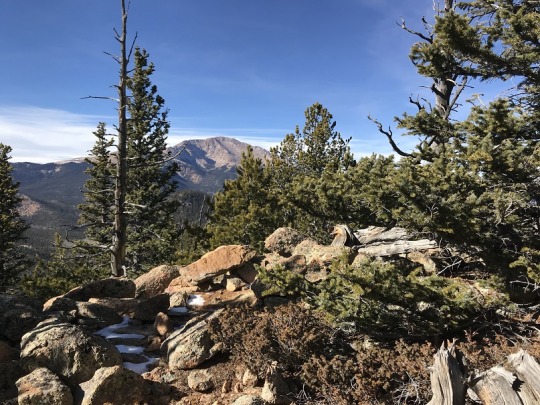

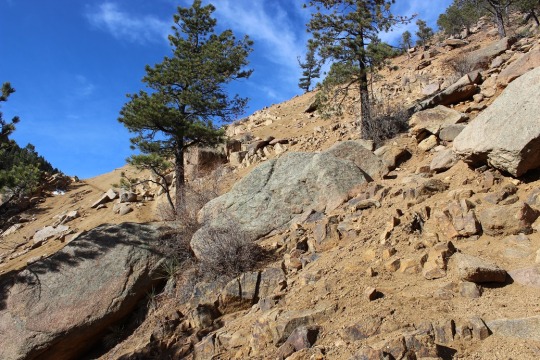
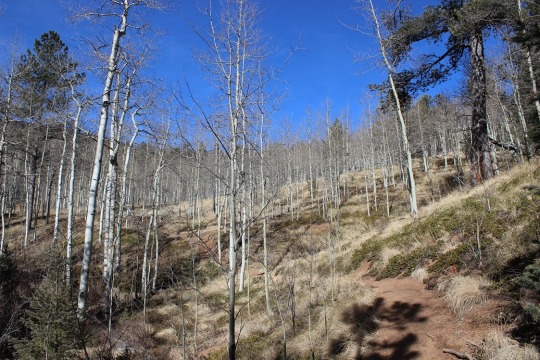

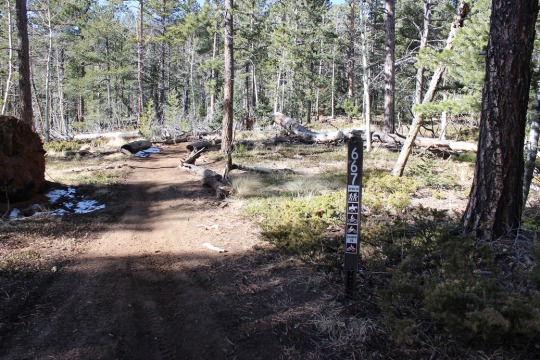

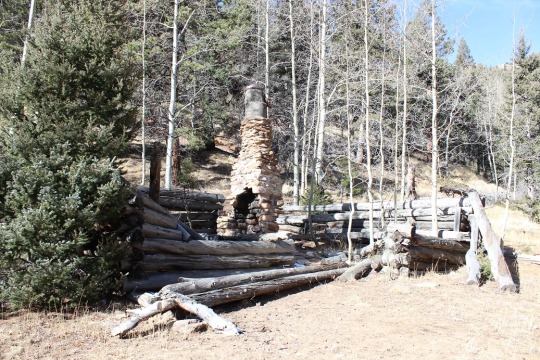

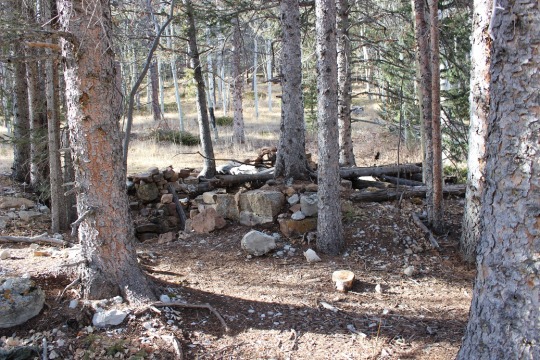

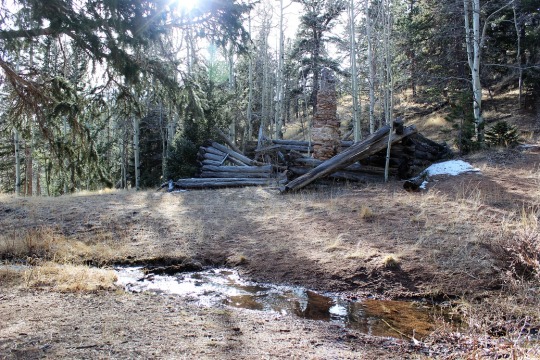
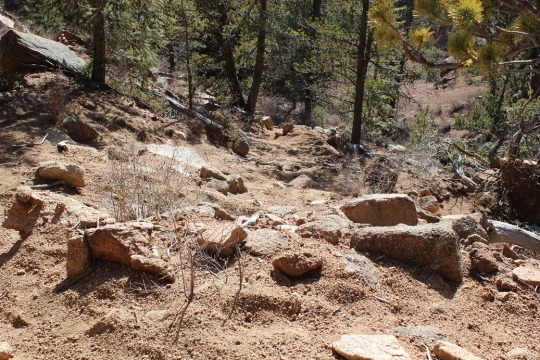
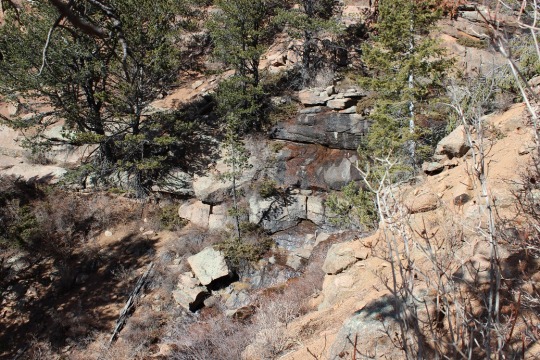
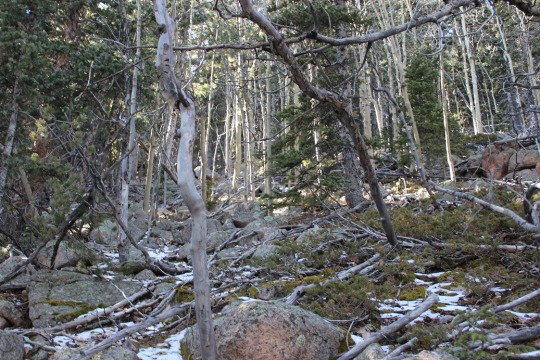
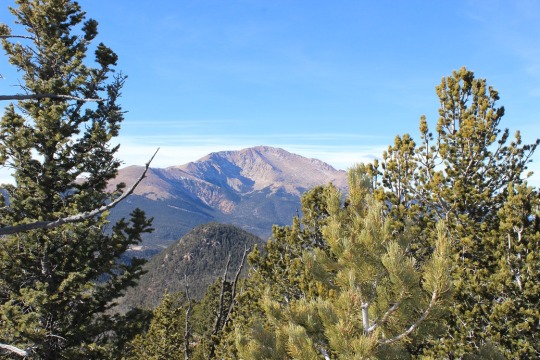
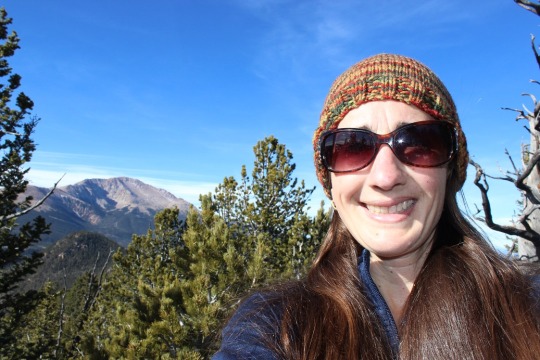
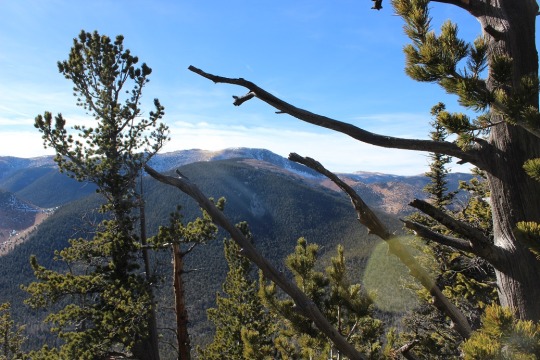
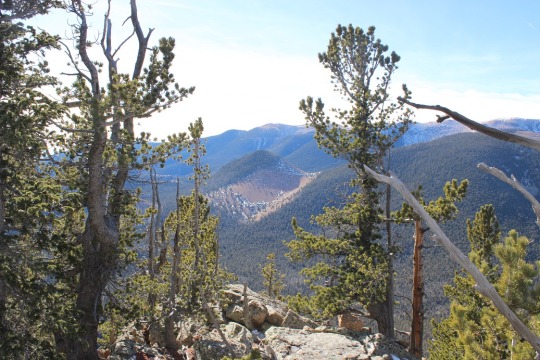
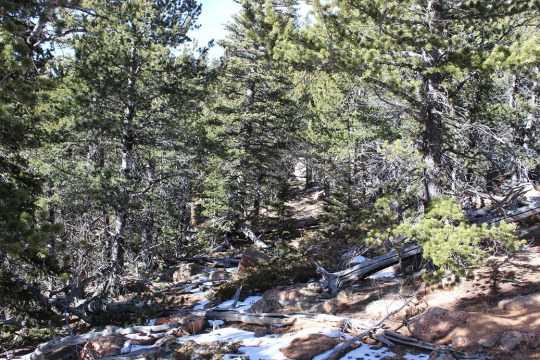
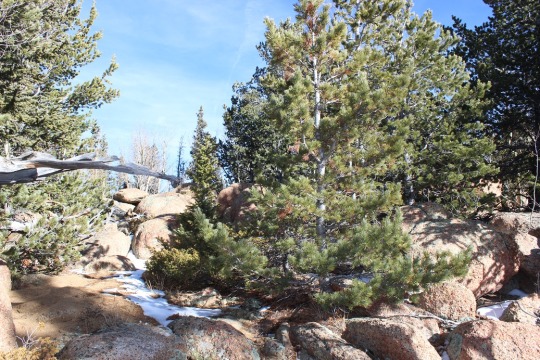
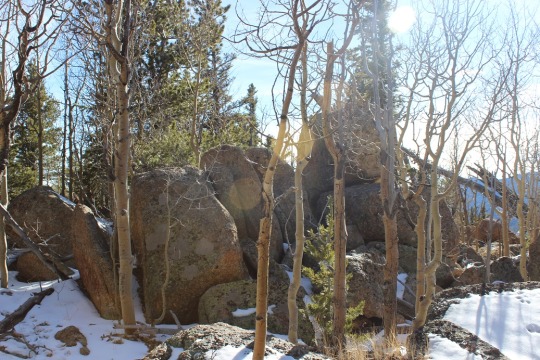
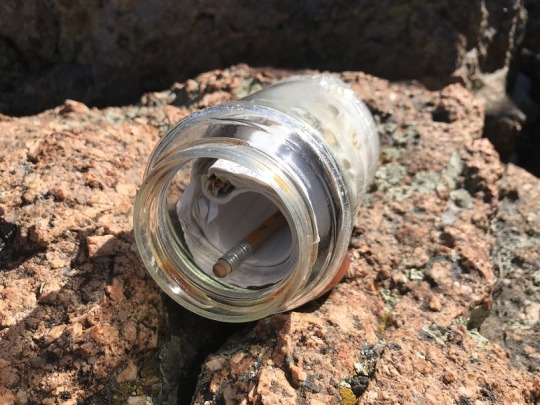
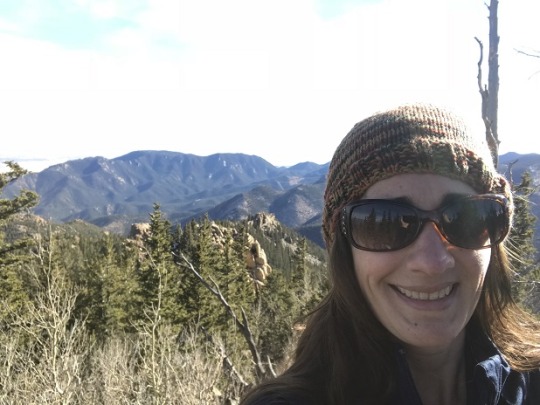
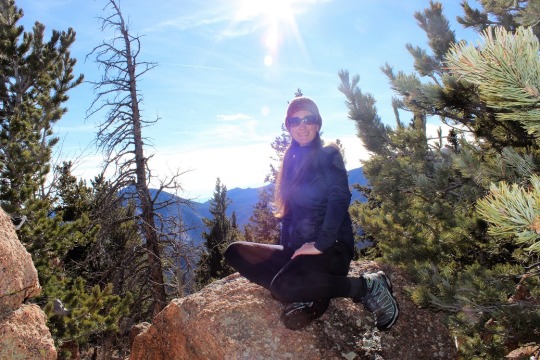
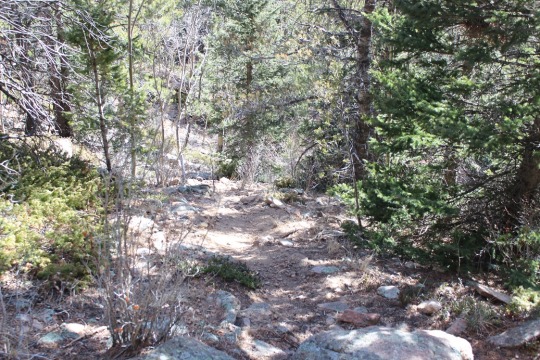


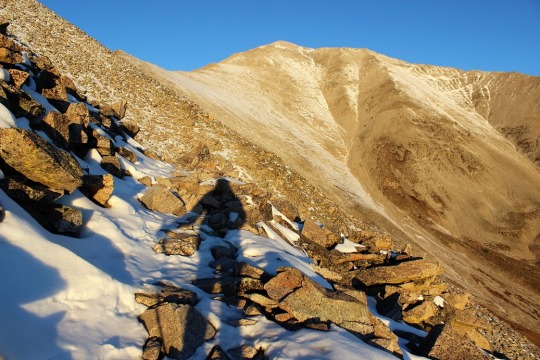
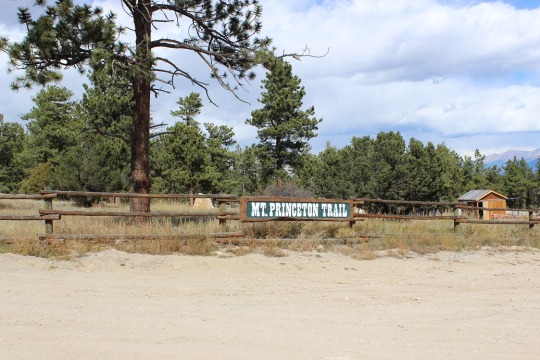
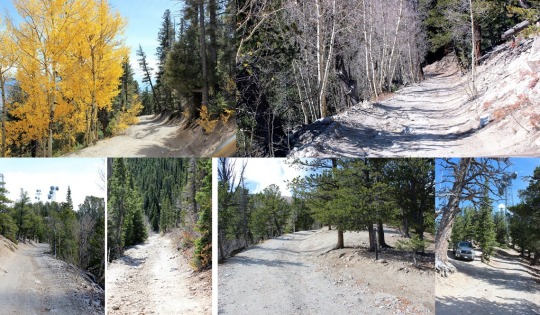

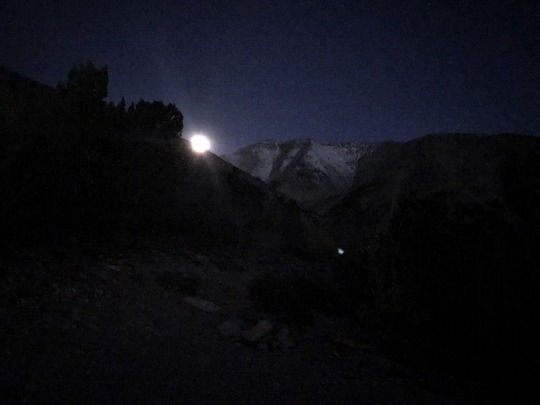

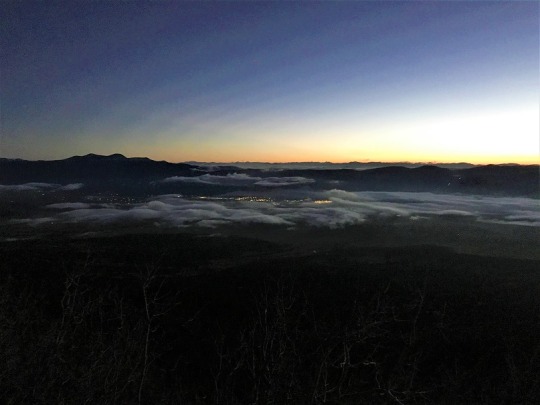
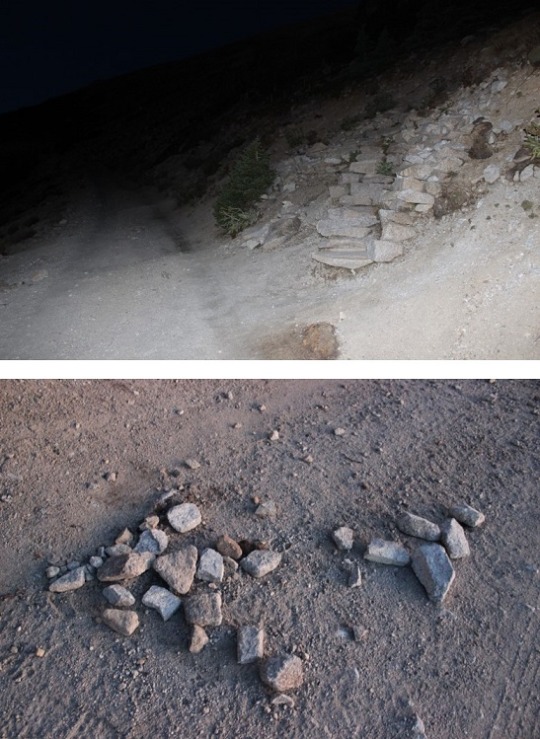
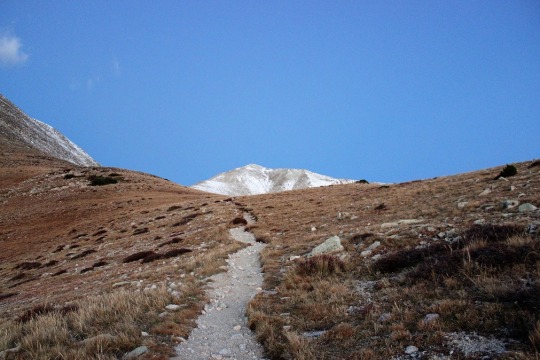
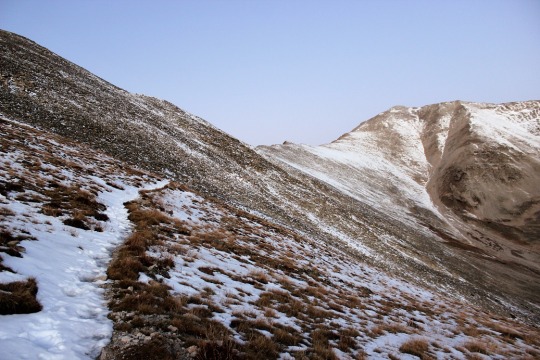
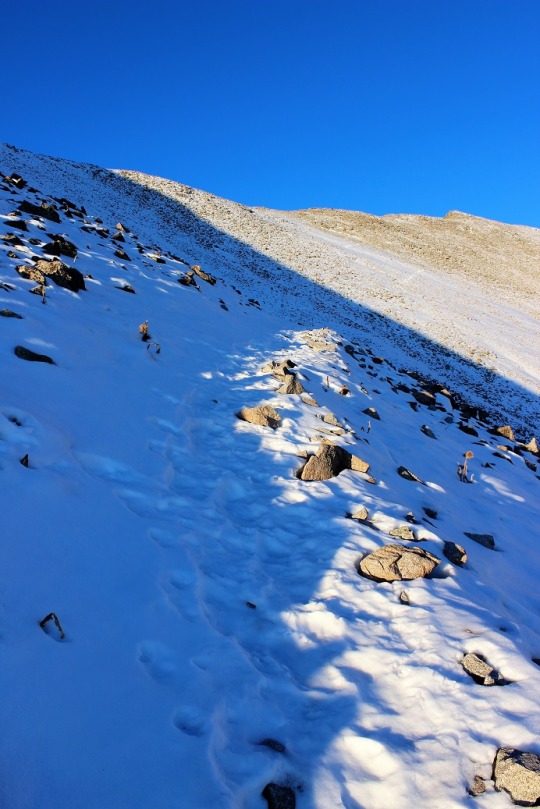
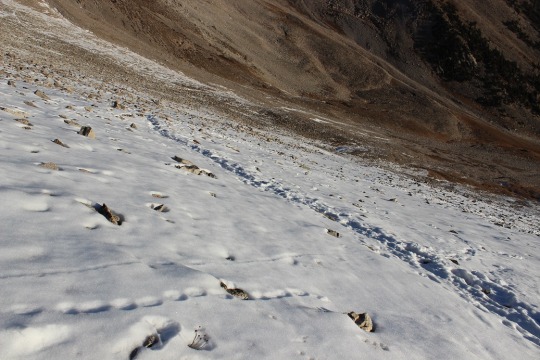

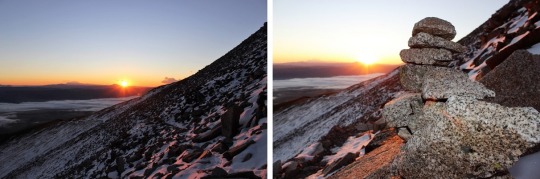
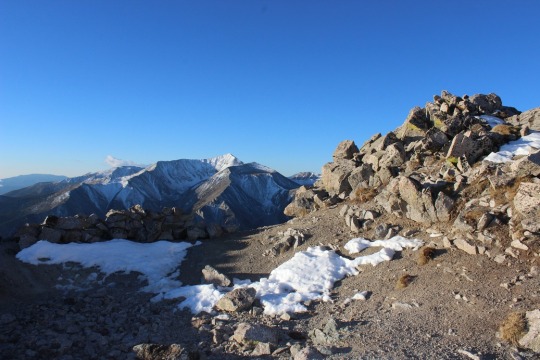

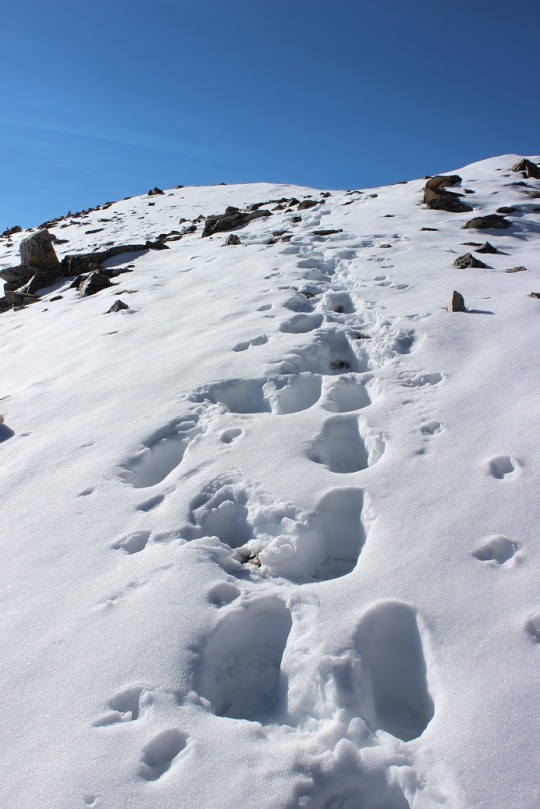
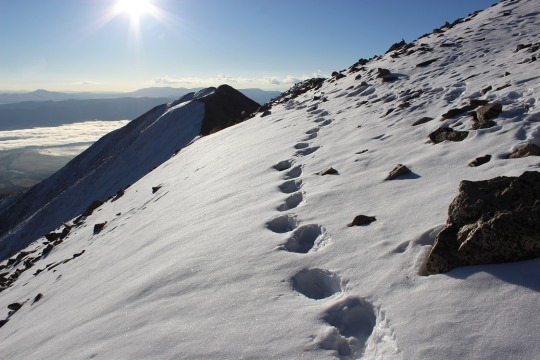
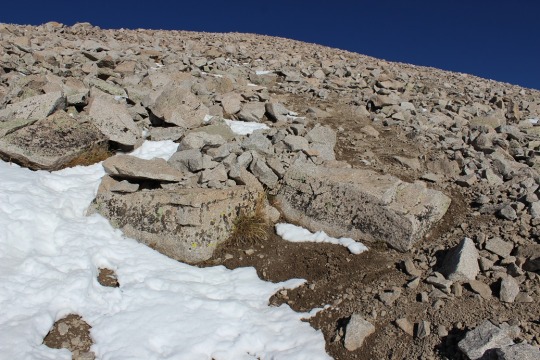
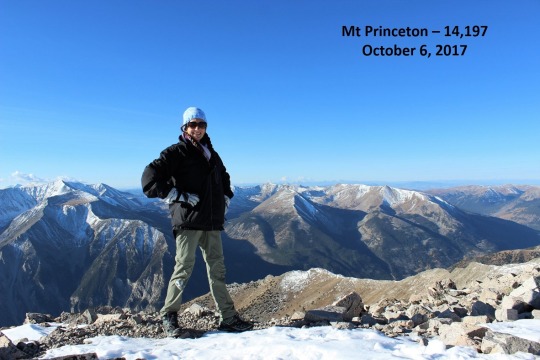
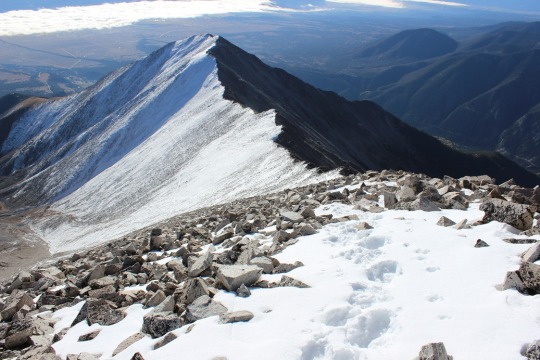
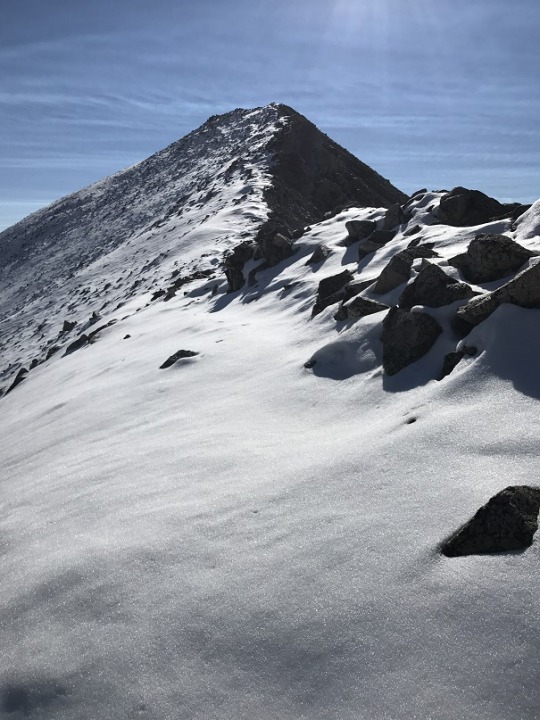
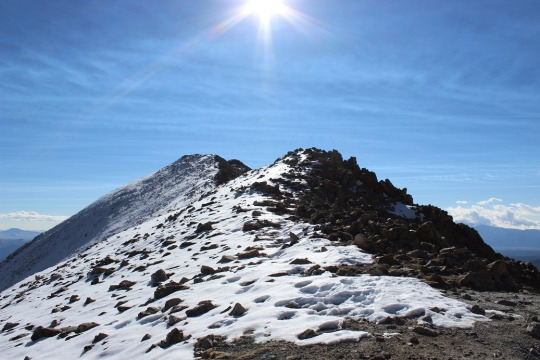
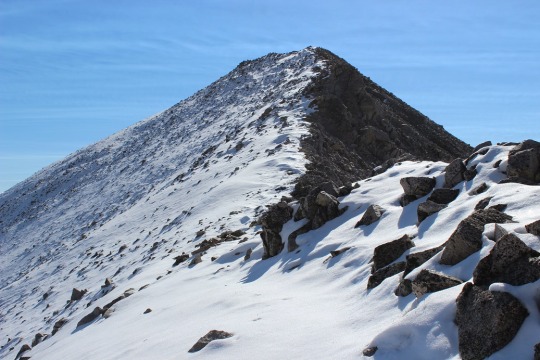
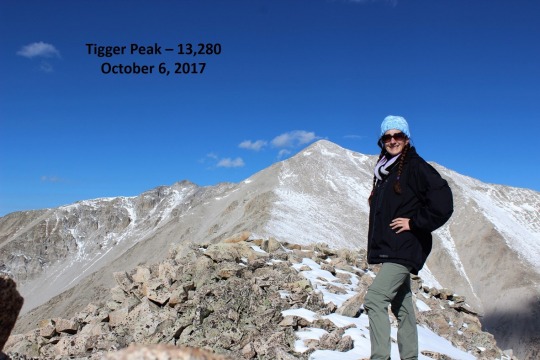
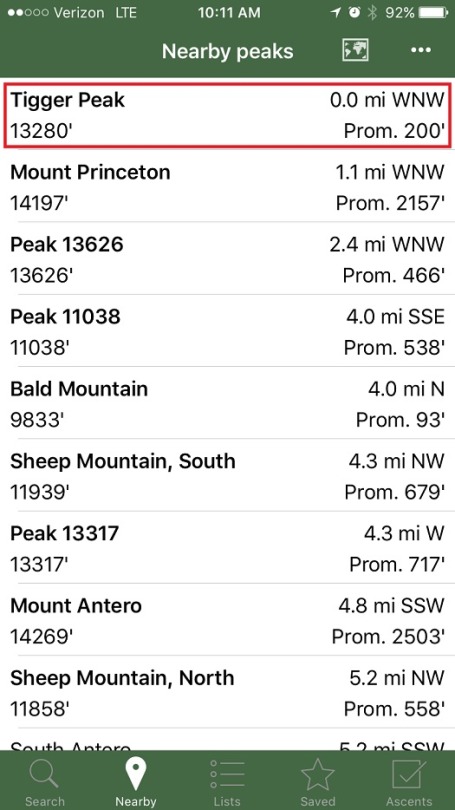
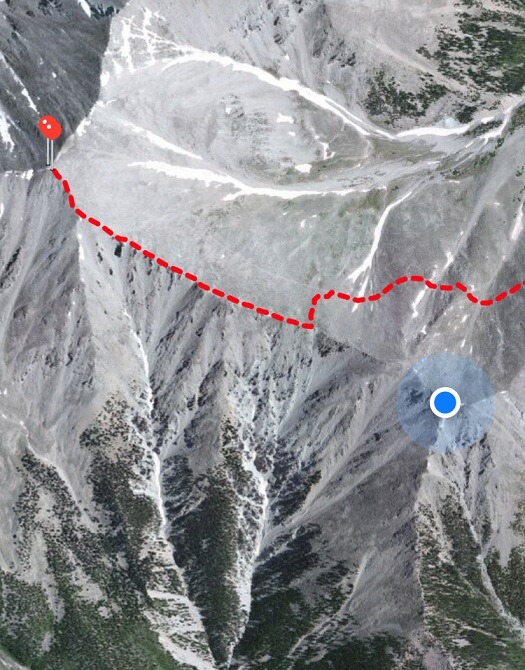
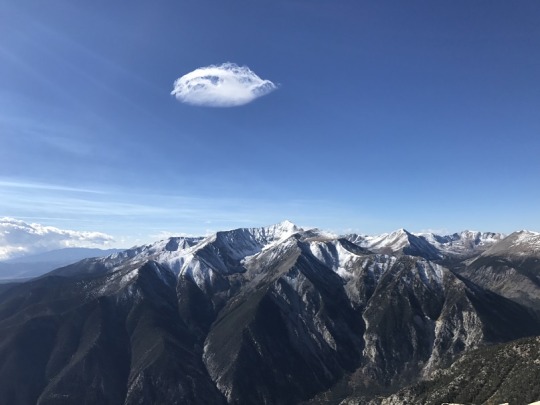
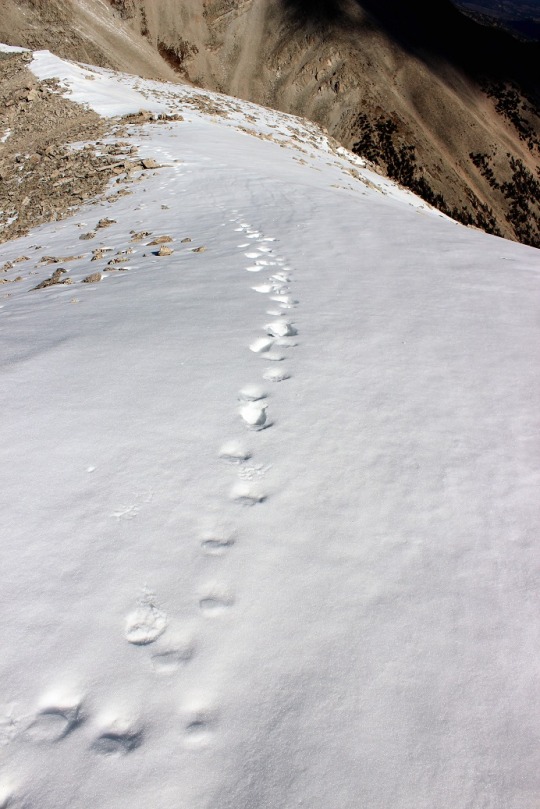

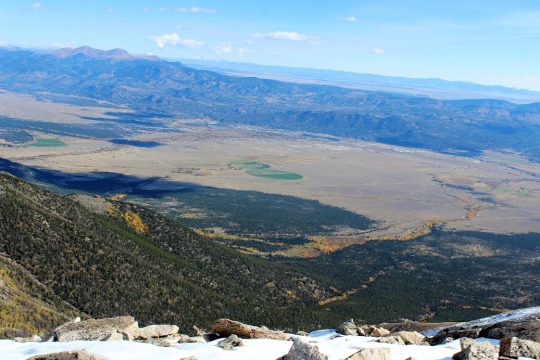
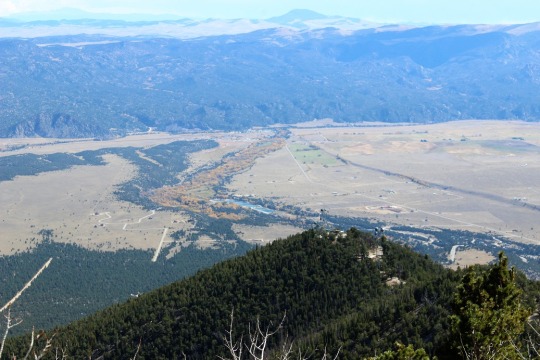
 Wild Wanderer