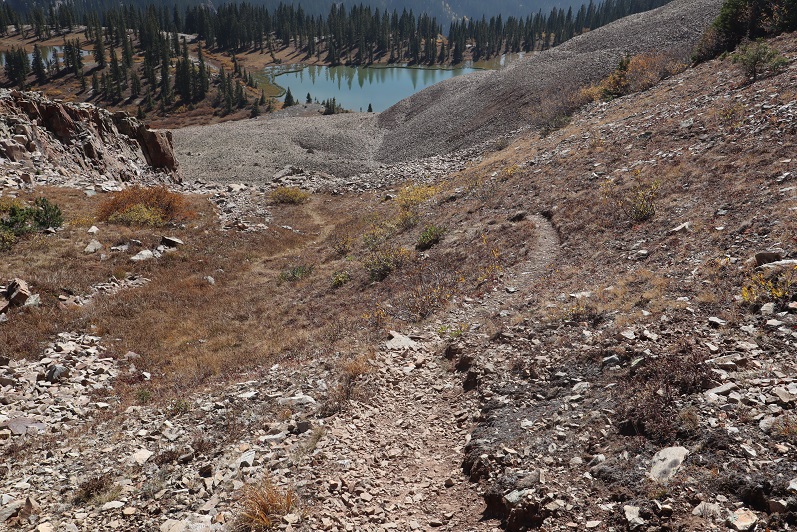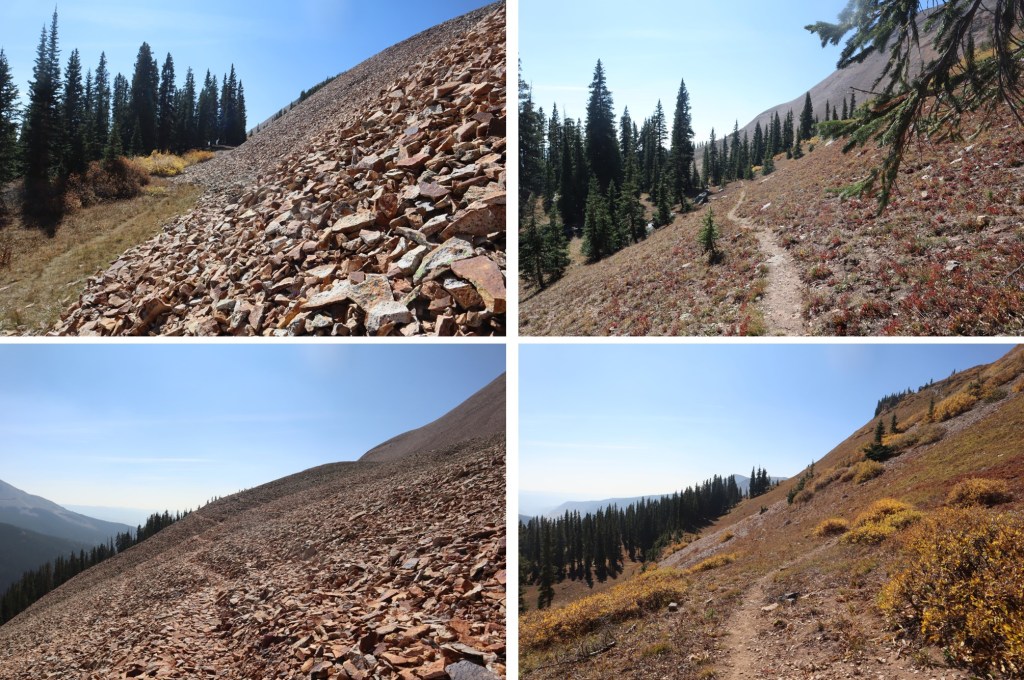
Twin Sisters West – 13,374 and Twin Sisters East – 13,432

RT Length:  10.32 miles

Elevation Gain:  4101’

The Rico-Silverton Trailhead past South Mineral Creek has to be one of my favorite trailheads to spend the night.  The 4WD road in isn’t very 4WD (except for the creek crossings), and there are rarely any people there.  Also, no marmots. I was woken up in the middle of the night by a rustling sound I thought was a rodent in my truck, but ended up realizing it was just my elbow brushing a bag of chips. 

It was another cold night, but I was ready to go at 5:45am.  It was still dark, but I’ve taken this trail numerous times, so I knew which way to go. 

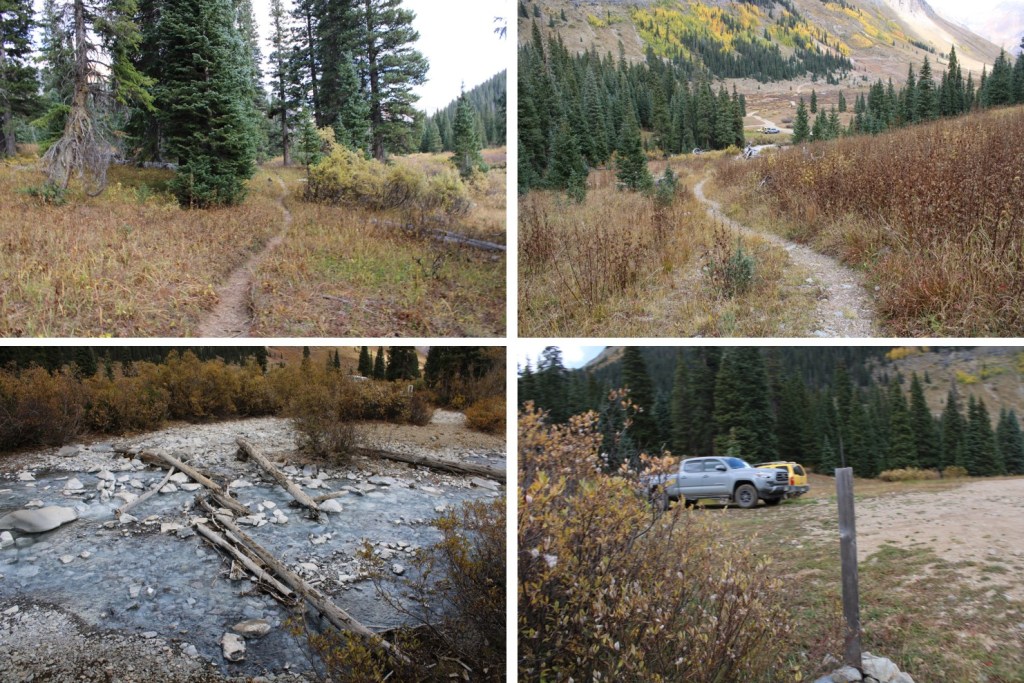
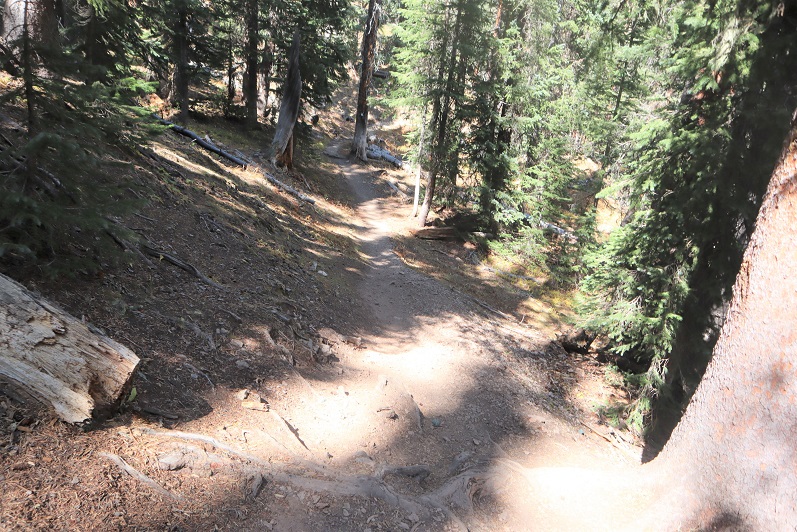
The trail starts at the south end of the parking area, and immediately crosses the creek

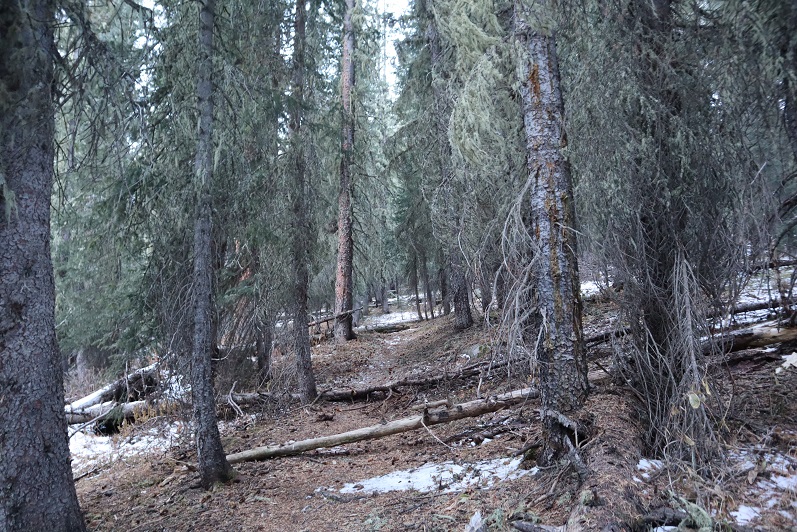
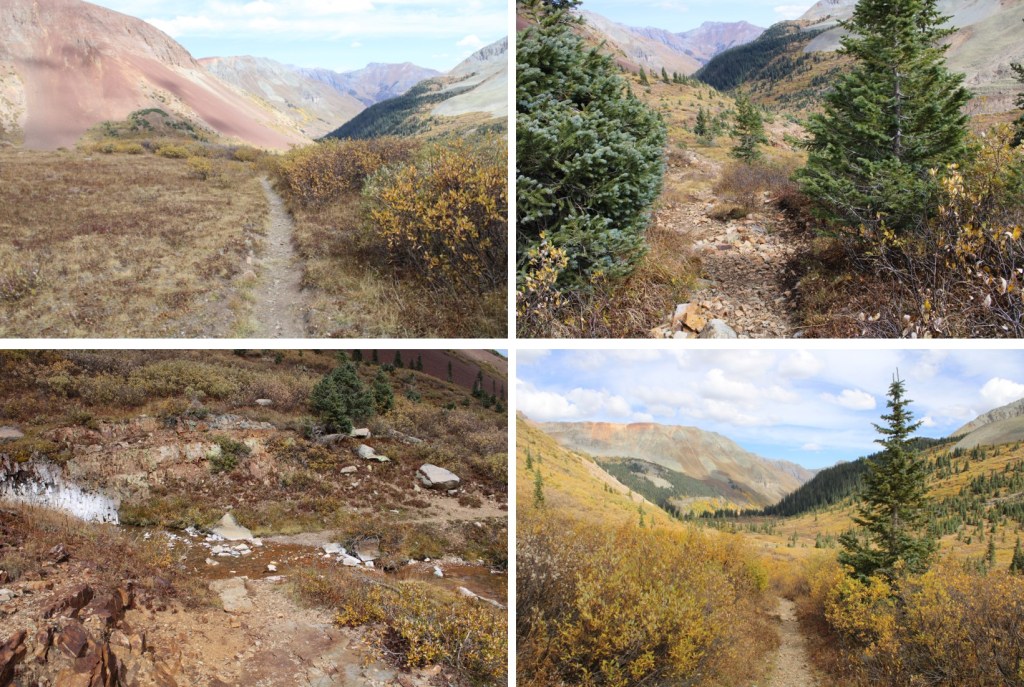
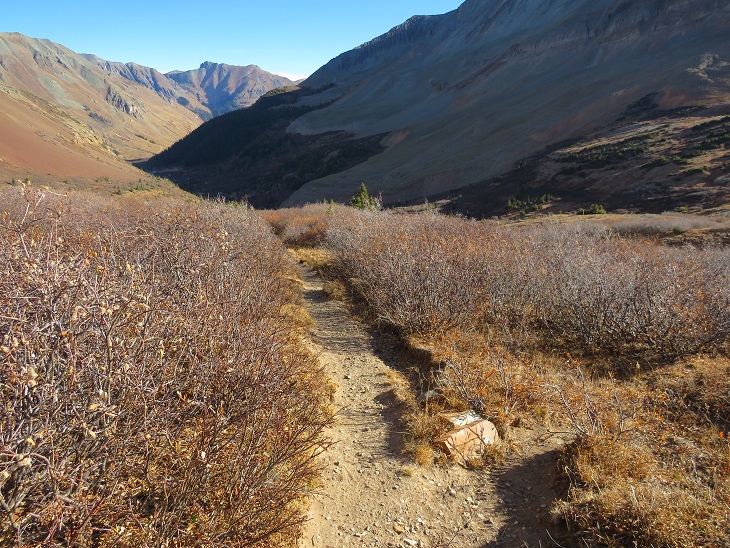
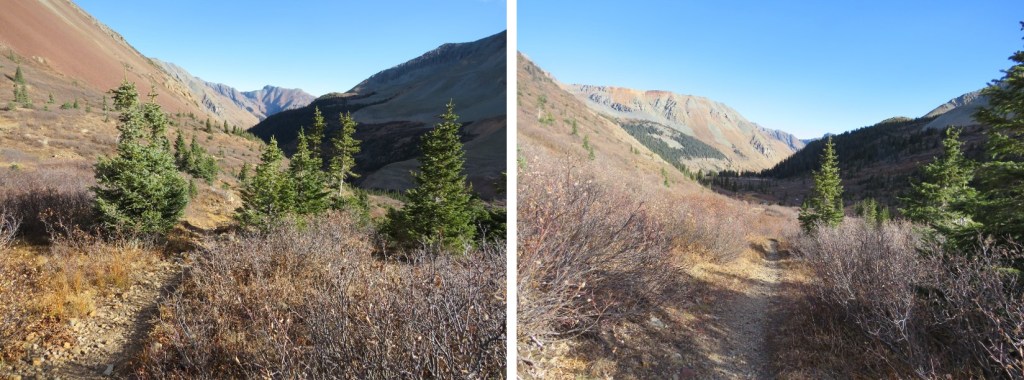
I followed this class 1 trail all the way to treeline, crossing the creek several times along the way.

Another perk of hiking here is a mama moose owns this basin.  Every year for the past few years I’ve seem mama, mama and baby, or mama and yearling in this basin.  It’s been neat to see mama get bigger, and baby(ies) as well.  This yearling seems to be female, as she didn’t have antlers.  I saw these two just as it was beginning to get light out, so the pictures didn’t turn out well.  As soon as they noticed me they headed south, slowly making their way over the pass.

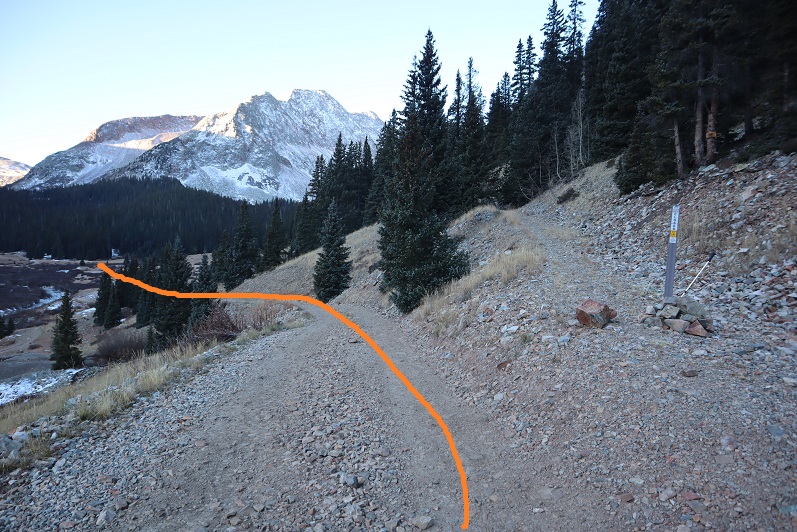
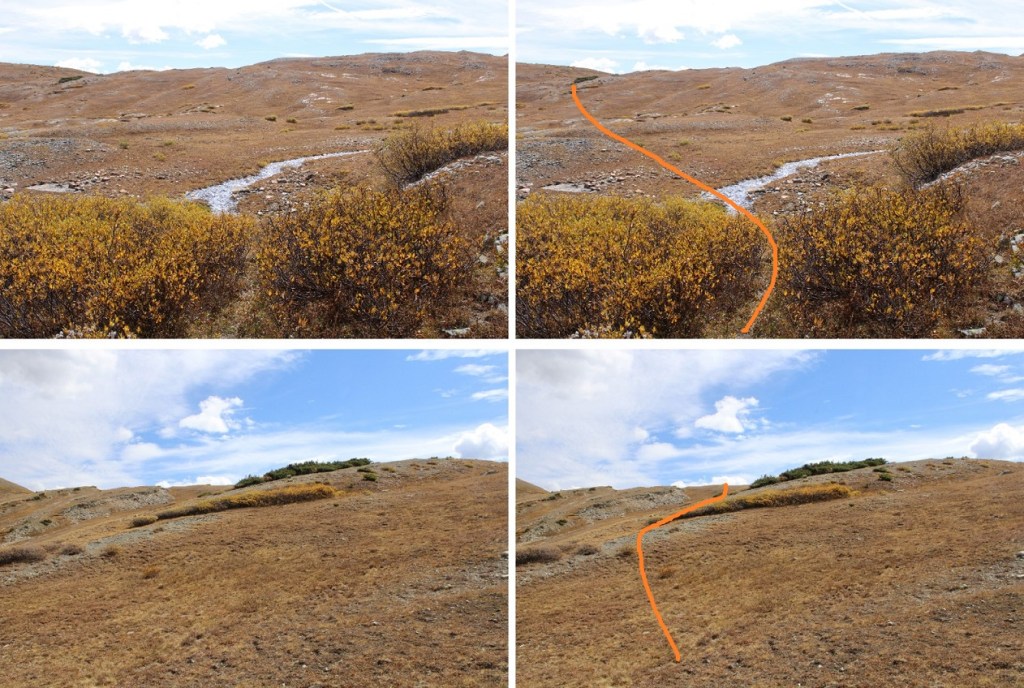
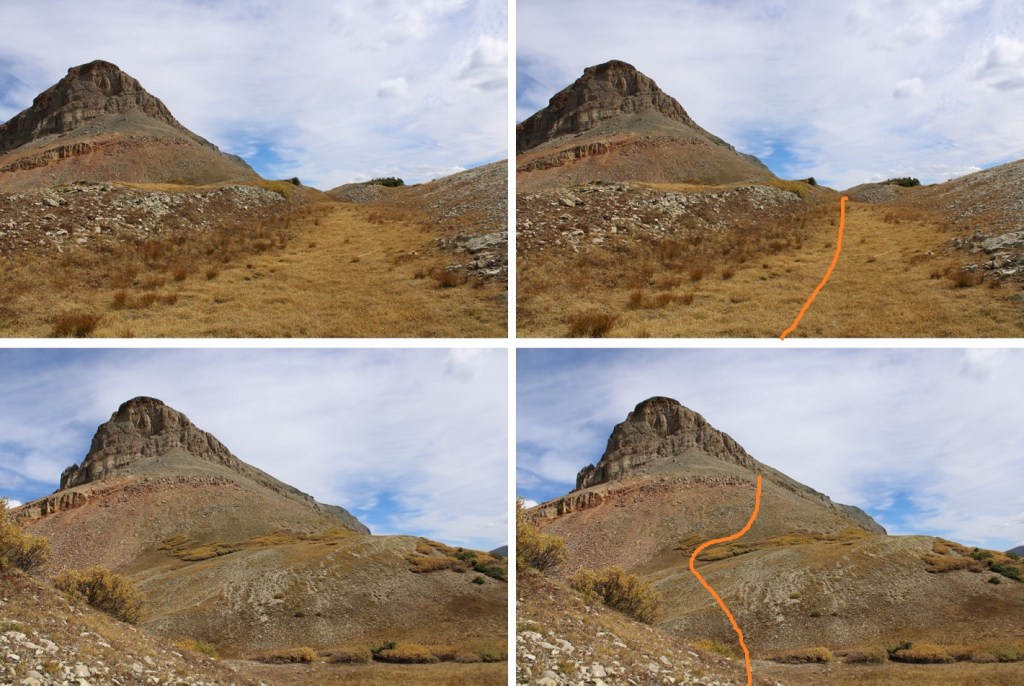
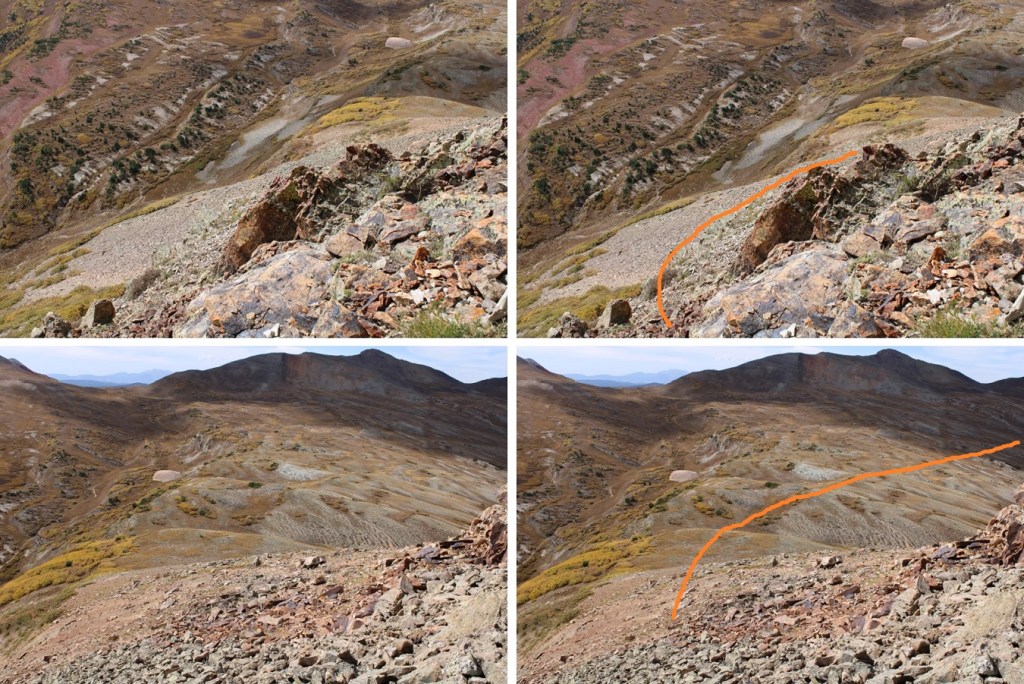
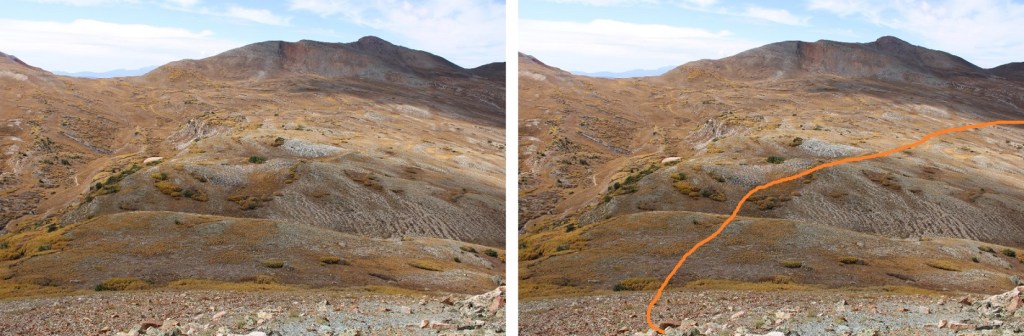
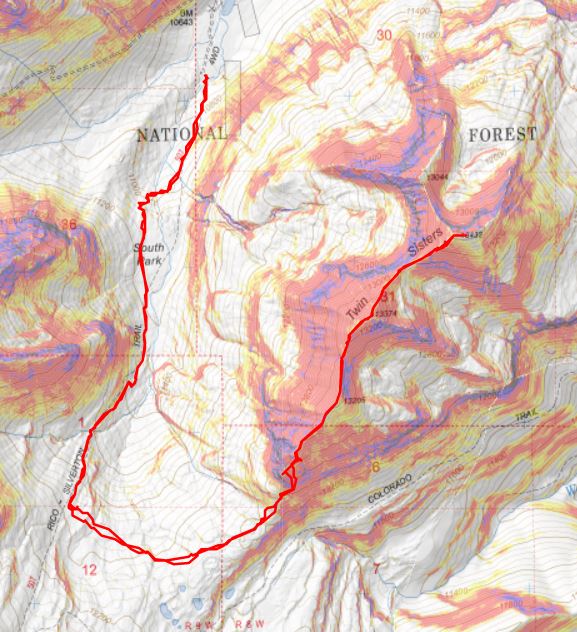
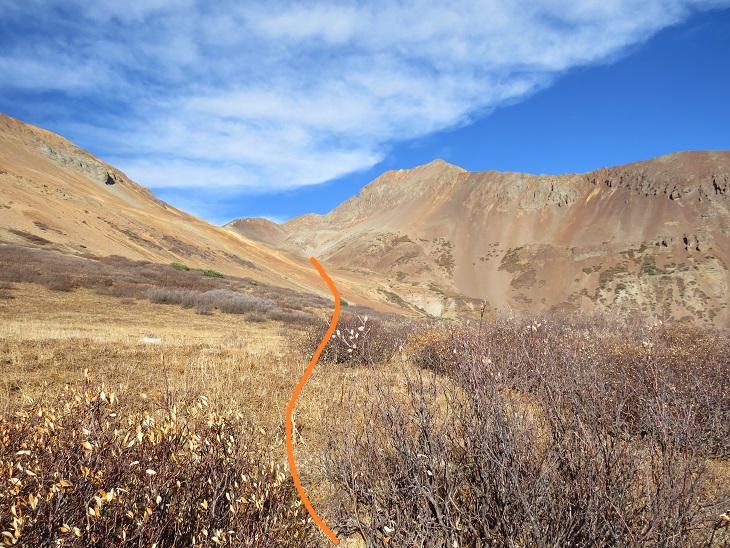
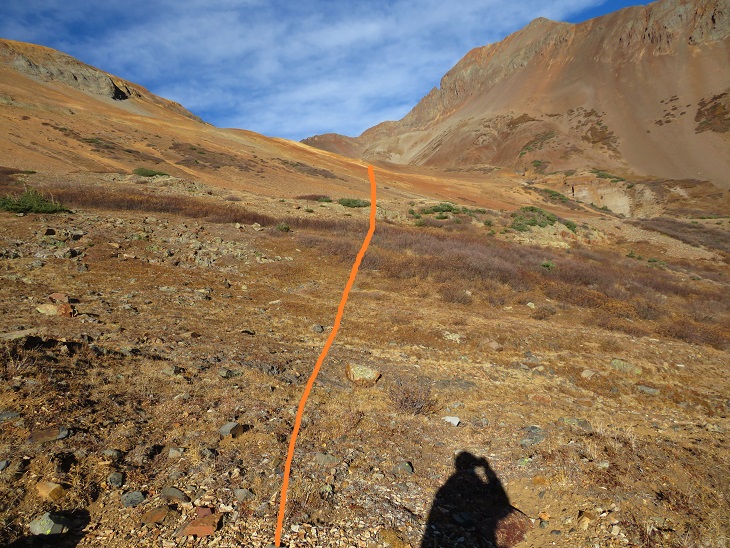
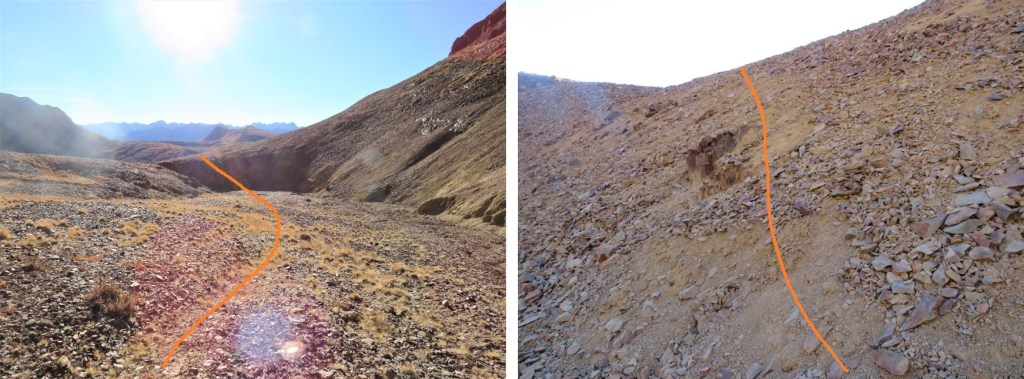
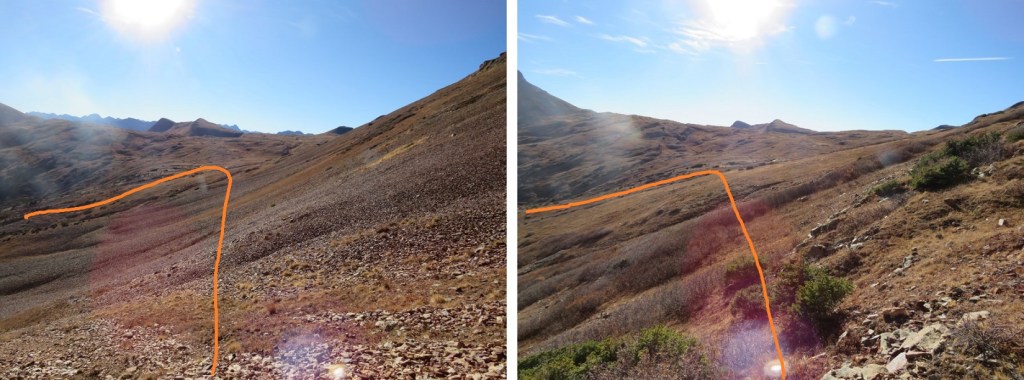
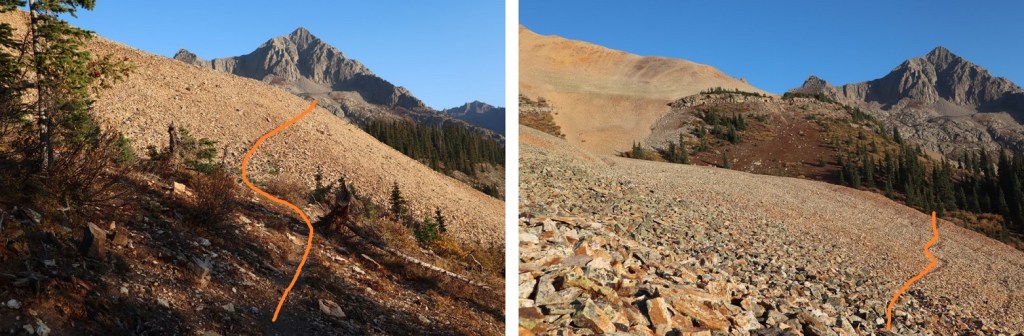
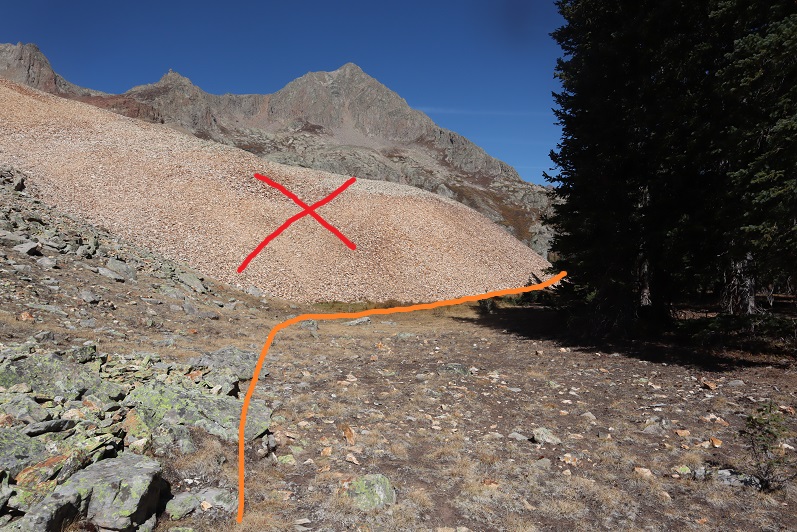
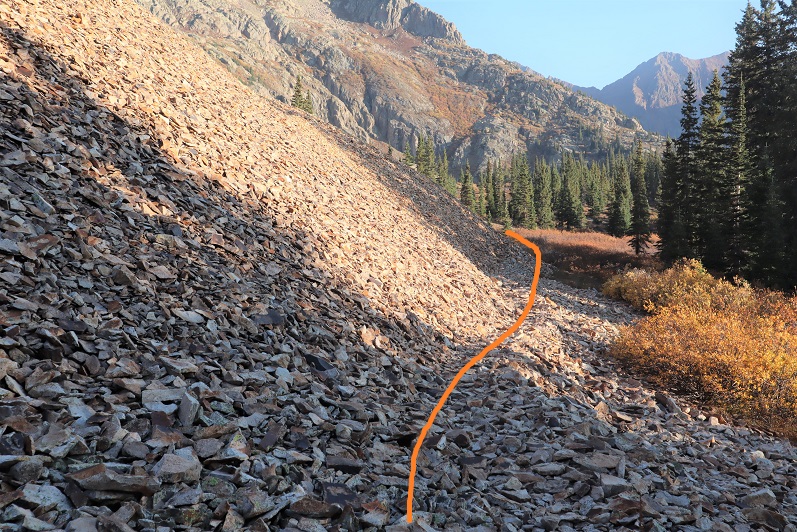
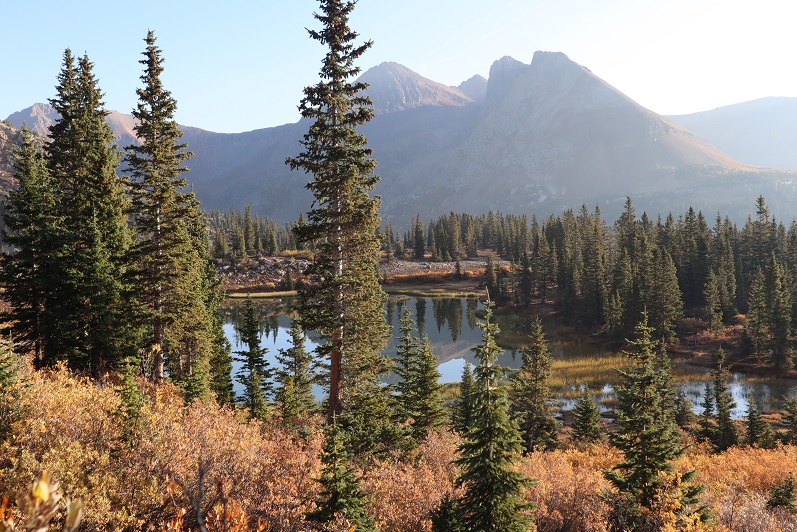
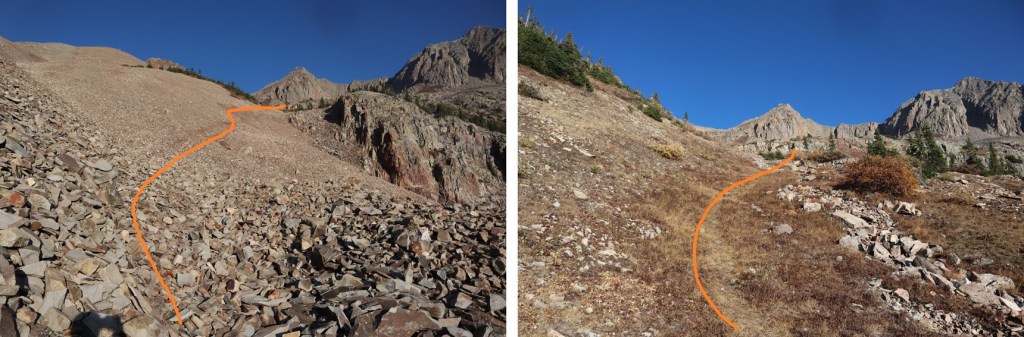
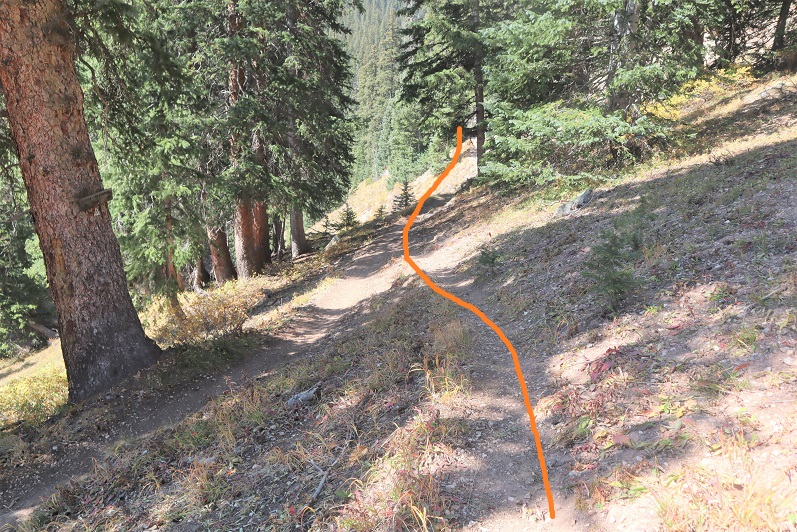
I hiked the Rico-Silverton Trail for 2.2 miles, to about 11925’, and then left the trail to follow the contour of the upper basin east, towards the south side of Twin Sisters.  This is the route I took

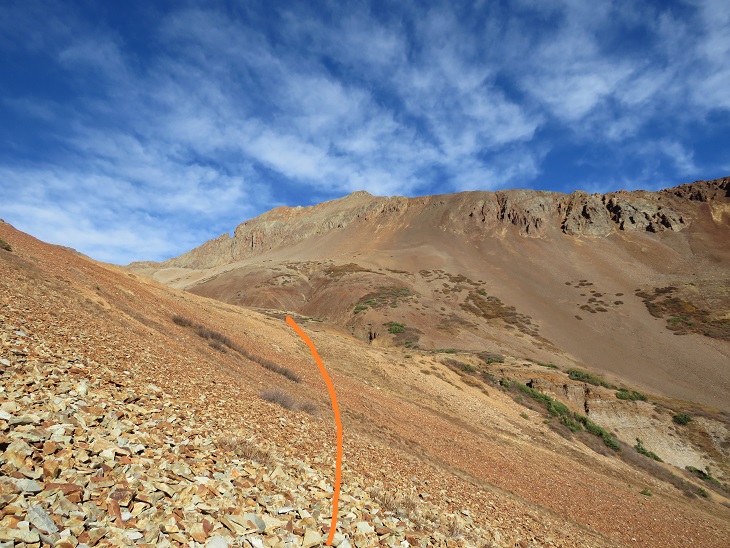
And some step-by-step pictures:

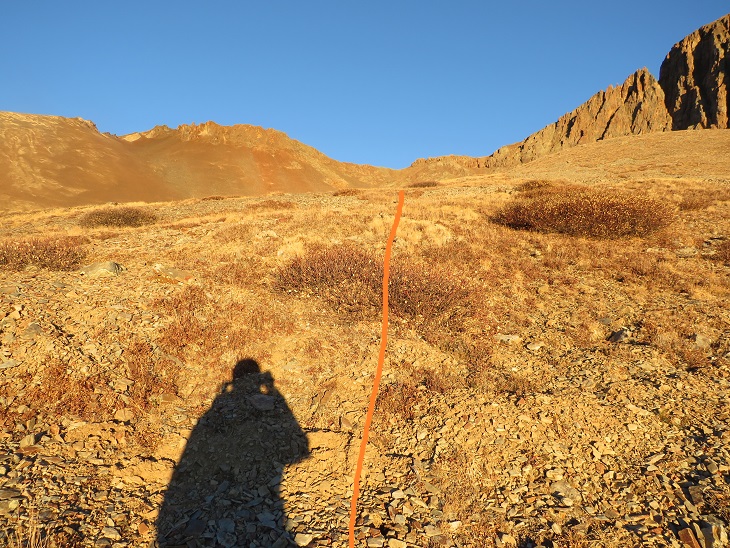
There are some faint game trails here, but they aren’t really needed, as long as you’re heading for the base of the mountain

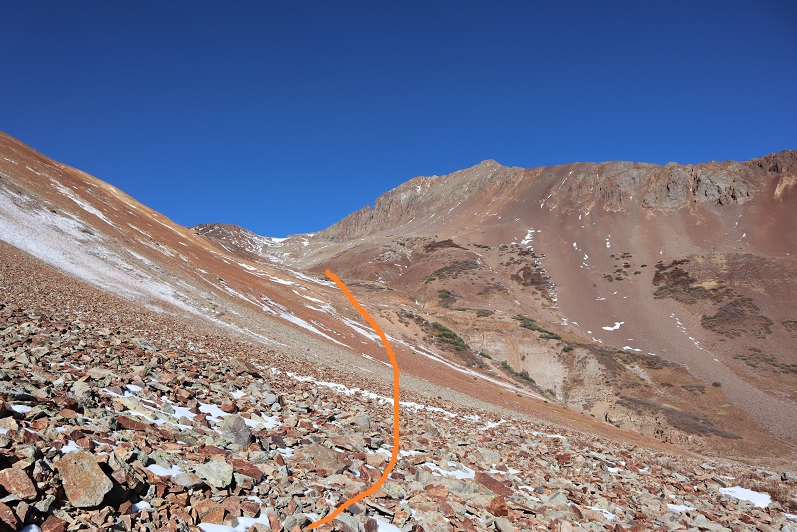
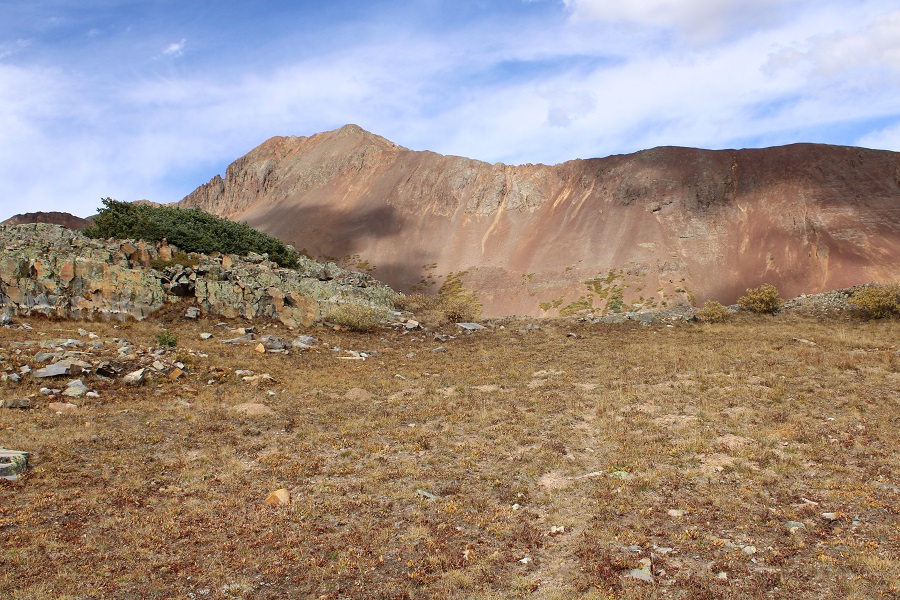
Once there, I found a clear path through the willows and ascended the talus

I was surprised when I heard coyotes yipping during the day:  I usually only hear them at night

Coyotes:

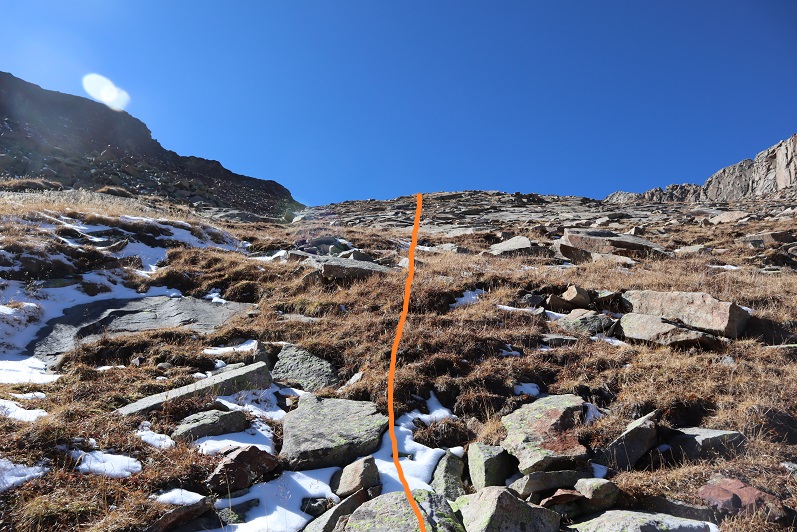
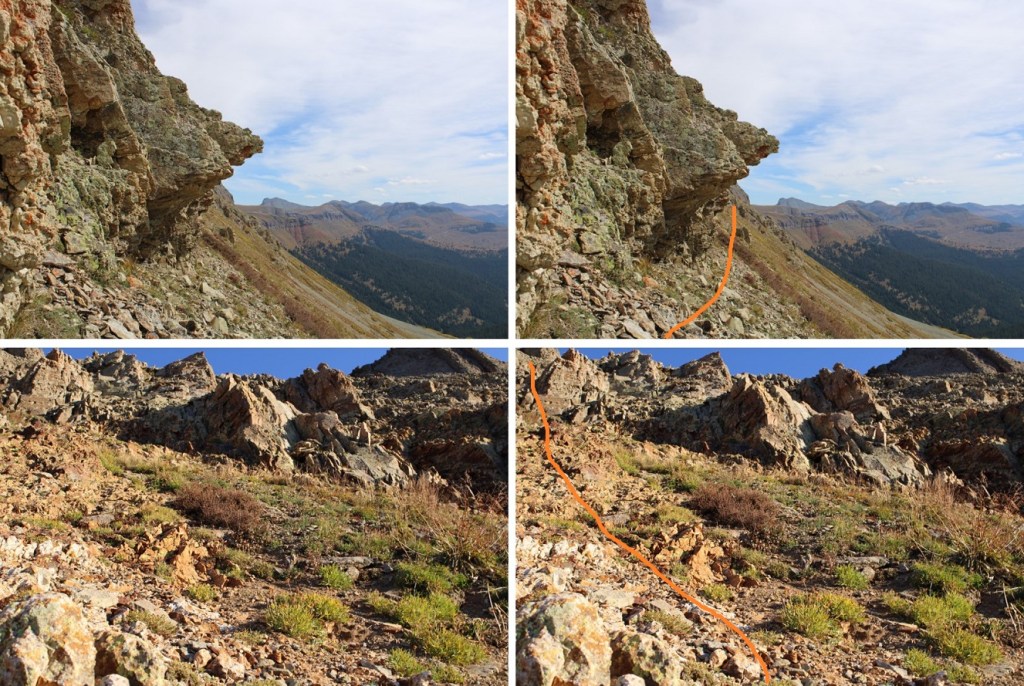
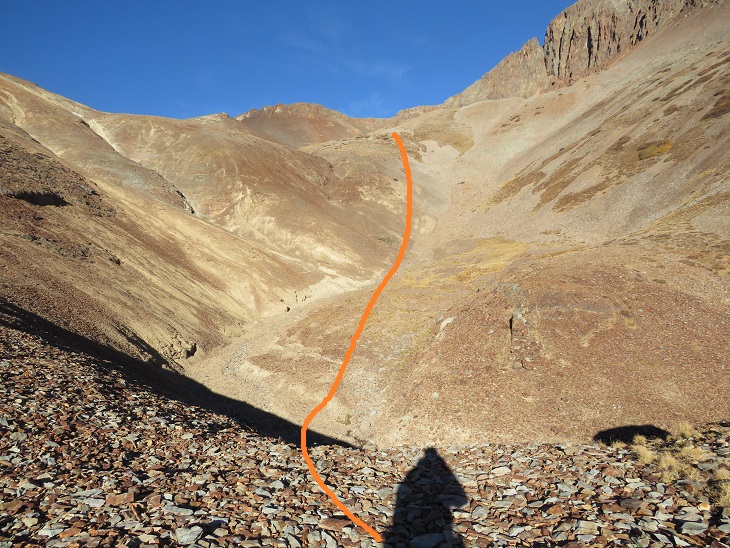
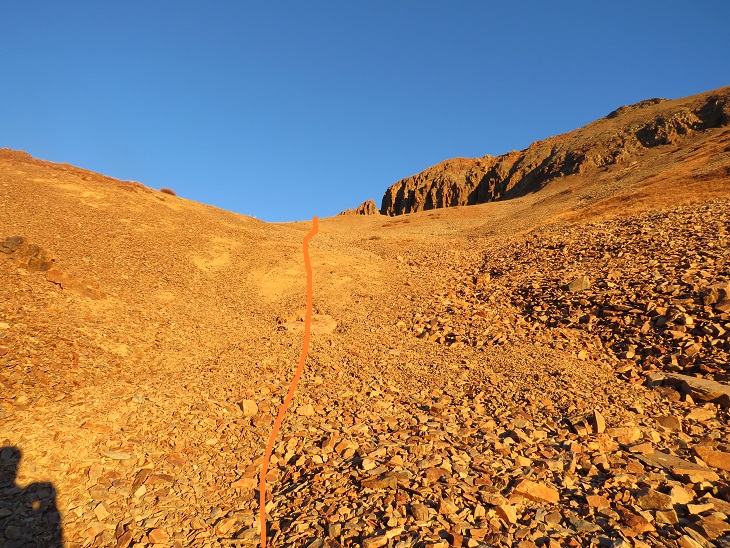
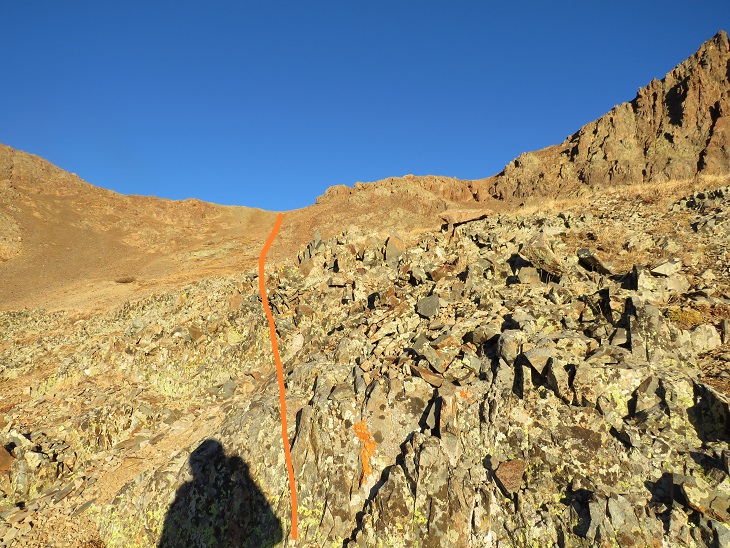
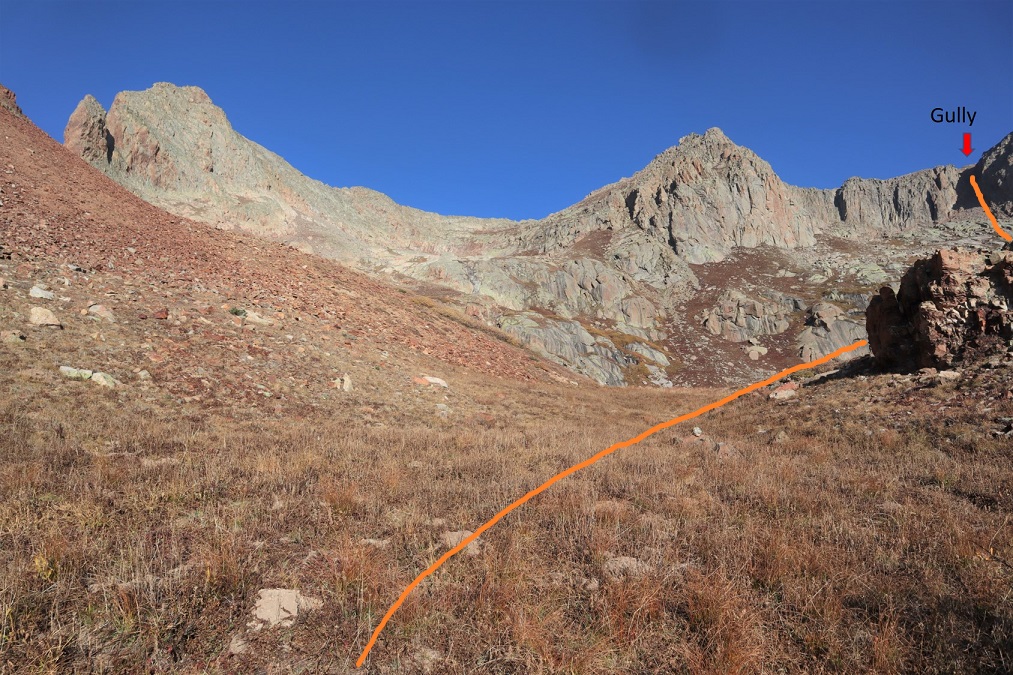
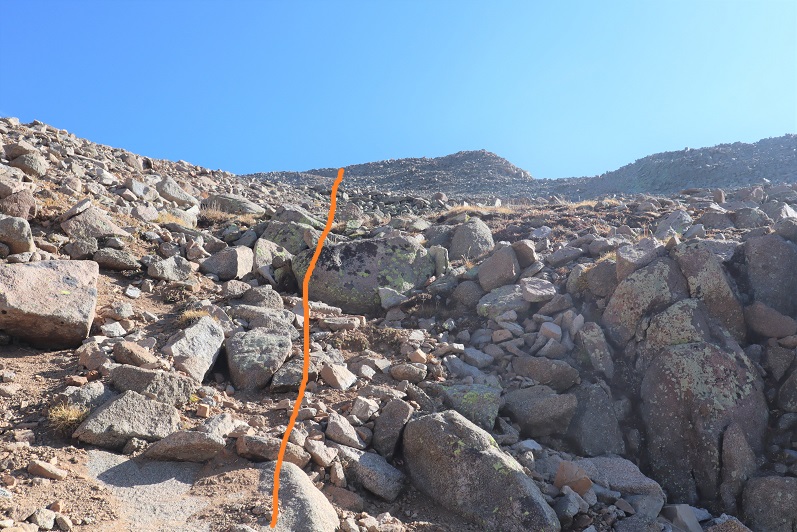
Following this line brought me to the base of the rock outcroppings.  I put on my microspikes, and followed where the slabs met talus until I found the gullies.

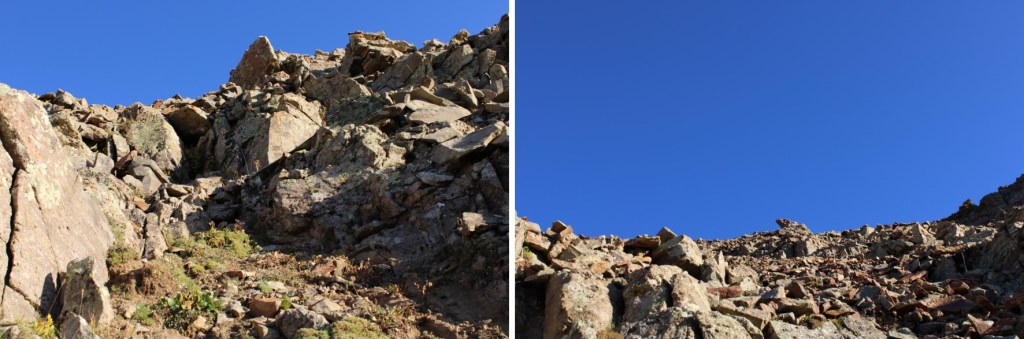
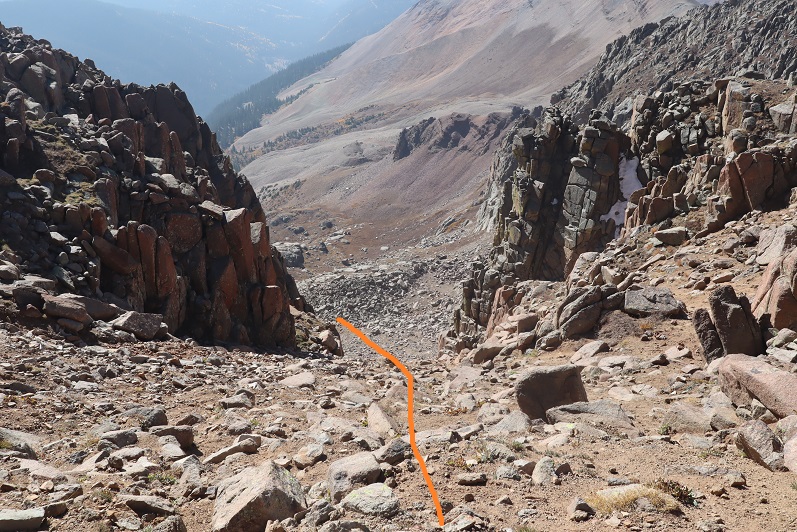
All of the gullies go, but, as I found out on my way back down, find the first one and stick with it (turn left and follow it to the ridge).  You’re aiming for the ridge, which means hiking northwest.  Microspikes were extremely helpful here.  This shouldn’t be more difficult than class 2+

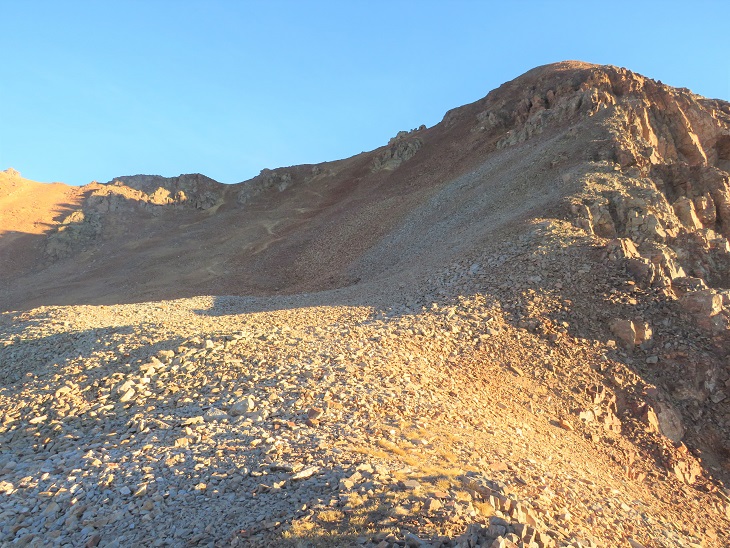
It’s going to be a chossy-talus-scree-filled mess, but it’ll go

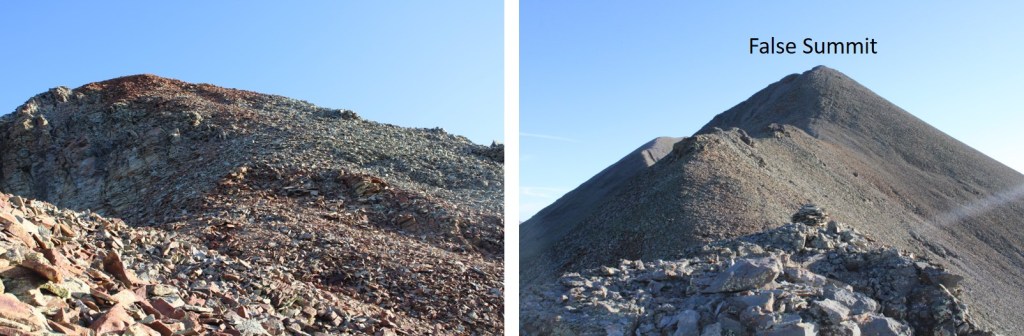
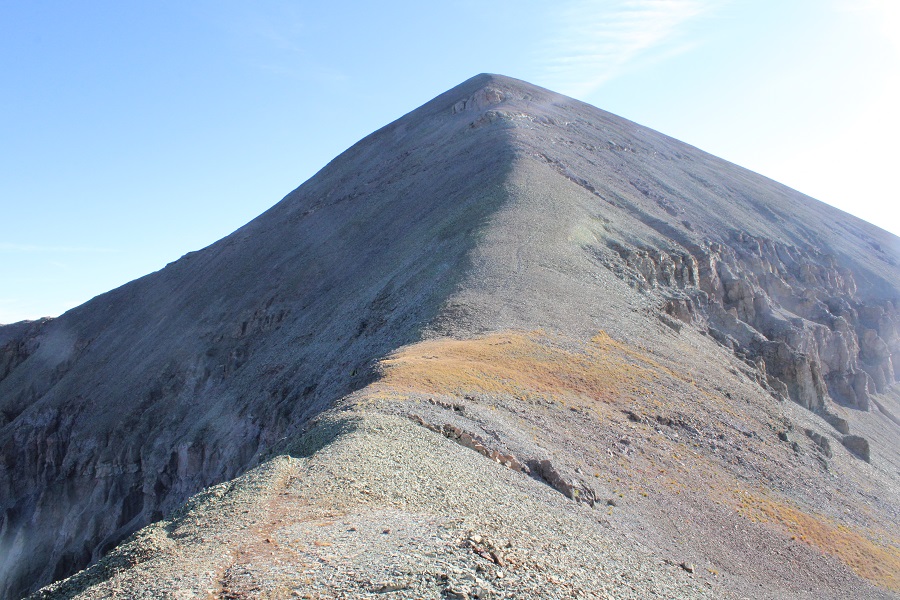
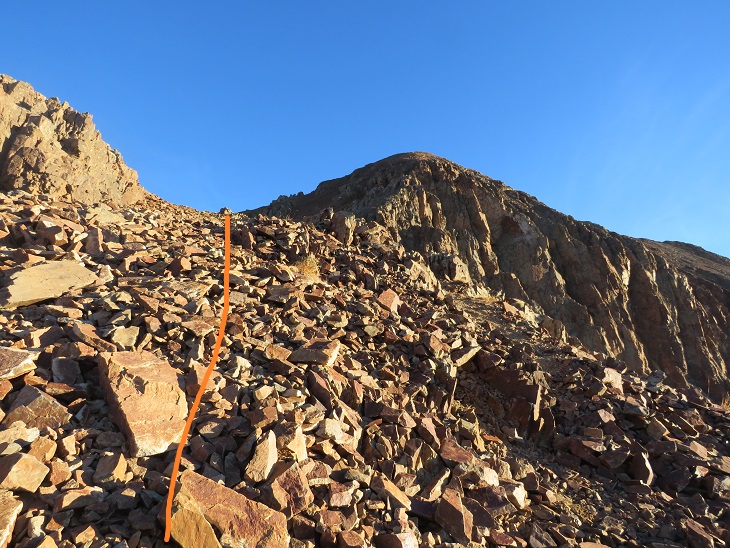
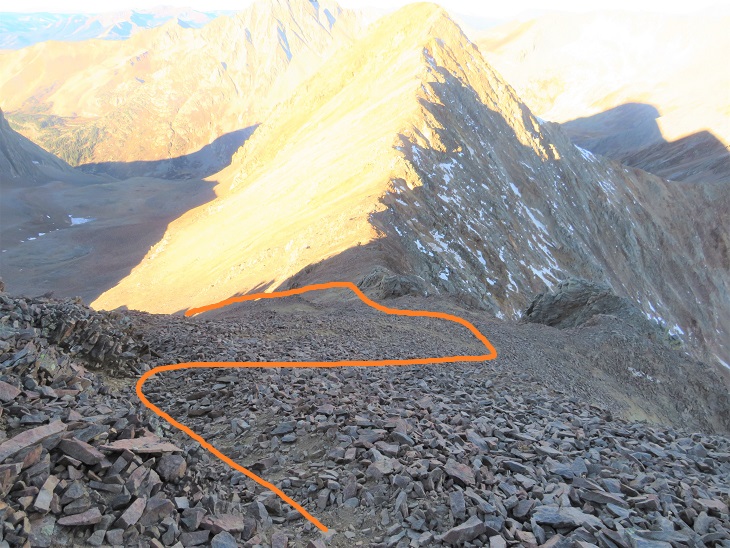
Once on the ridge, I followed it northeast, staying on the ridge.  There’s a false summit here.  I kept my spikes on, but they were overkill.  The rock here was talus, and annoying, but firm.

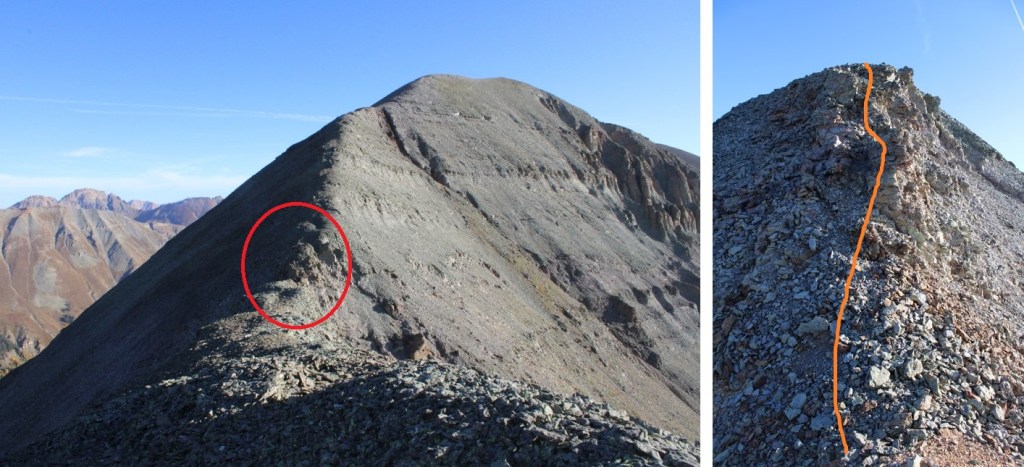
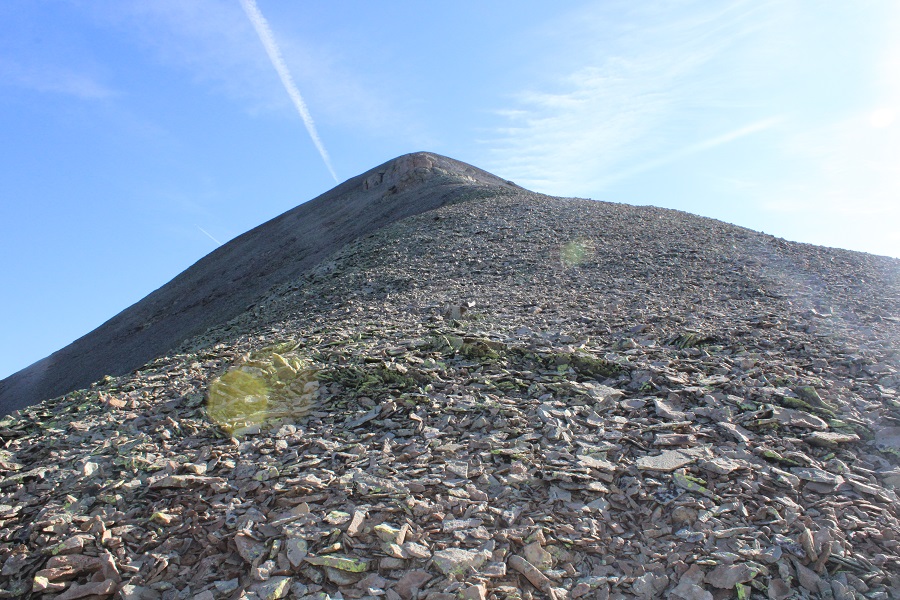
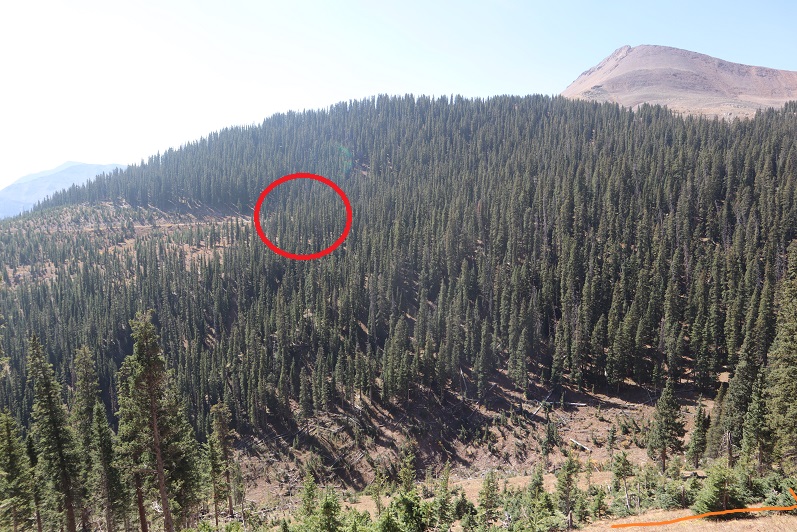
Hitting the false summit was a bit of a downer, but the hike had been easy thus far, so it was kind of expected.  I continued following the ridge.  There’s a quick chasm to cross in the circled area.  It can be kept at 2+. I dipped down to the left about 30 feet, then re-ascended and started climbing towards the summit

Form here it was a simple ridge hike to the summit

I summited Twin Sisters West at 8:40am

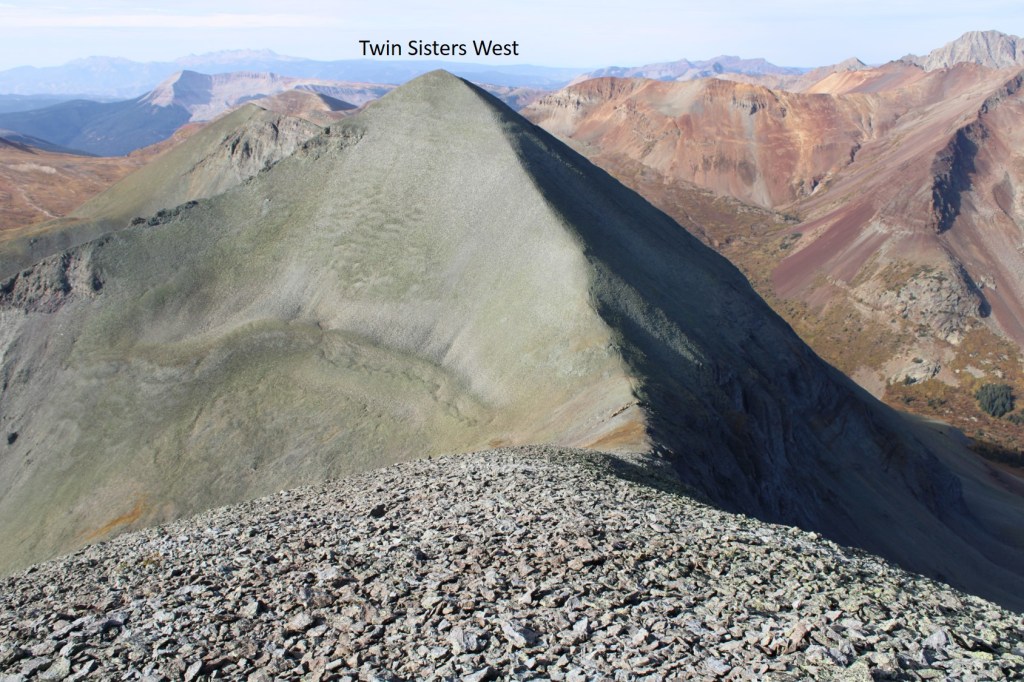
Twin Sisters West:

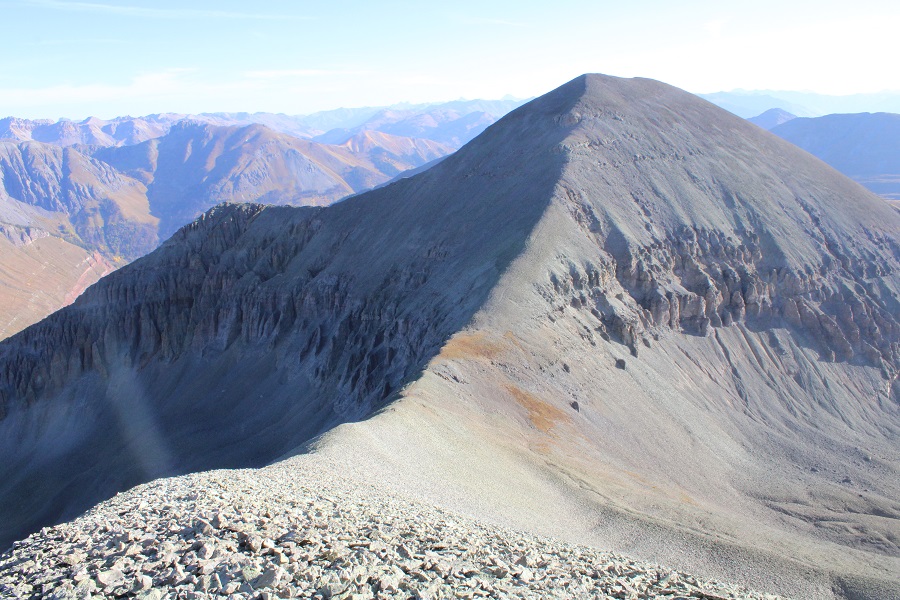
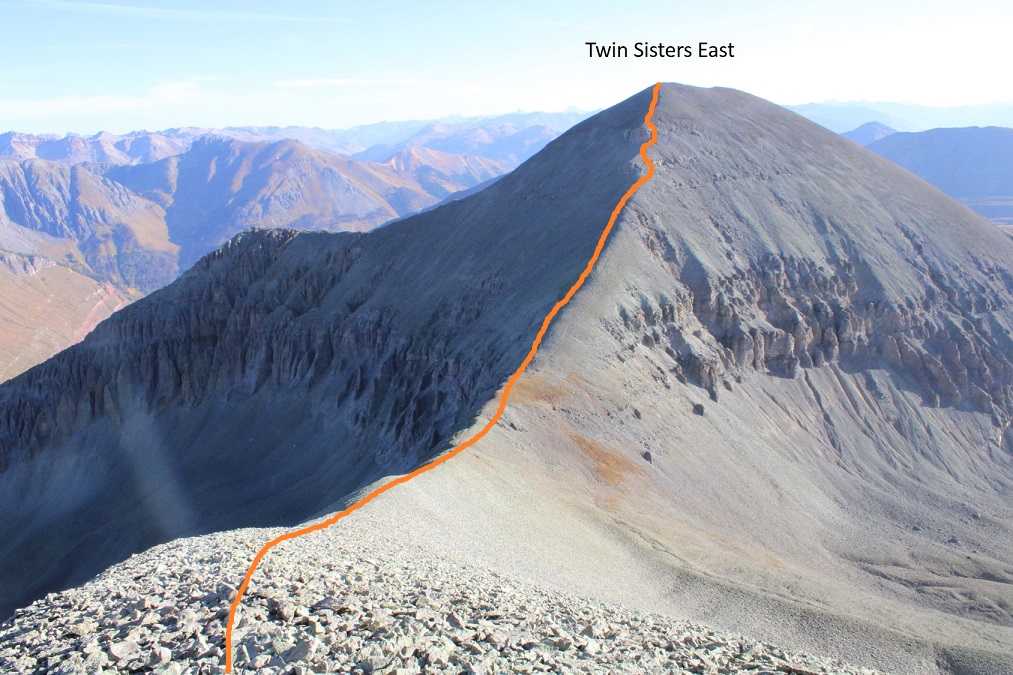
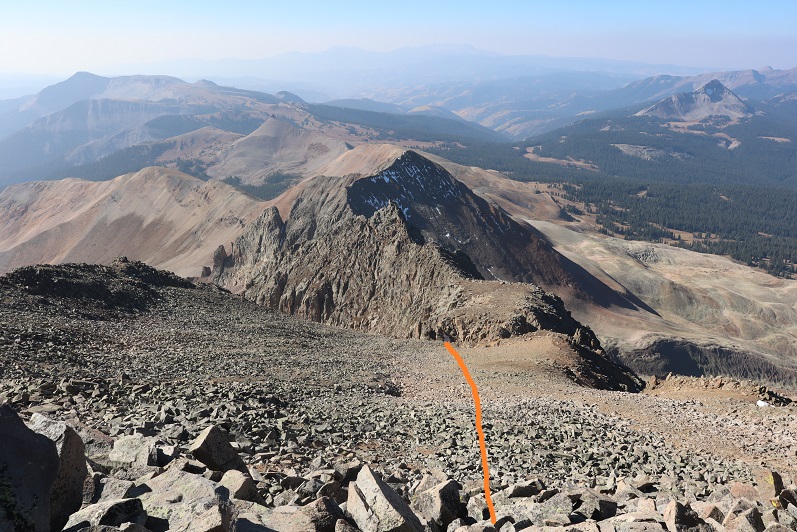
From the summit of ‘west’ it was easy to see the route to Twin Sisters East: I just needed to follow the ridge

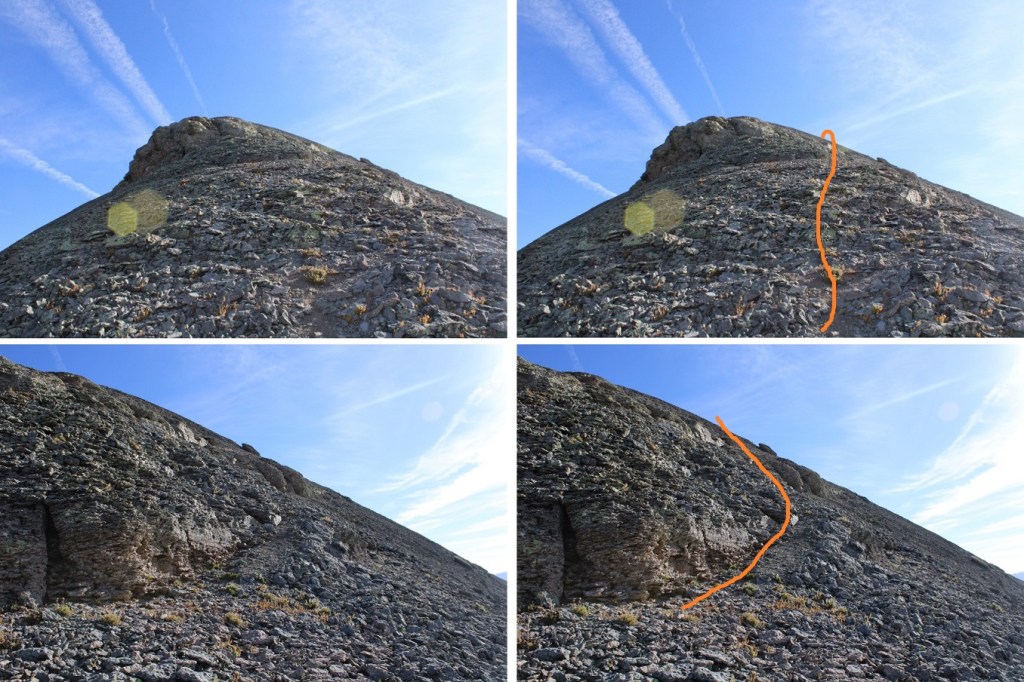
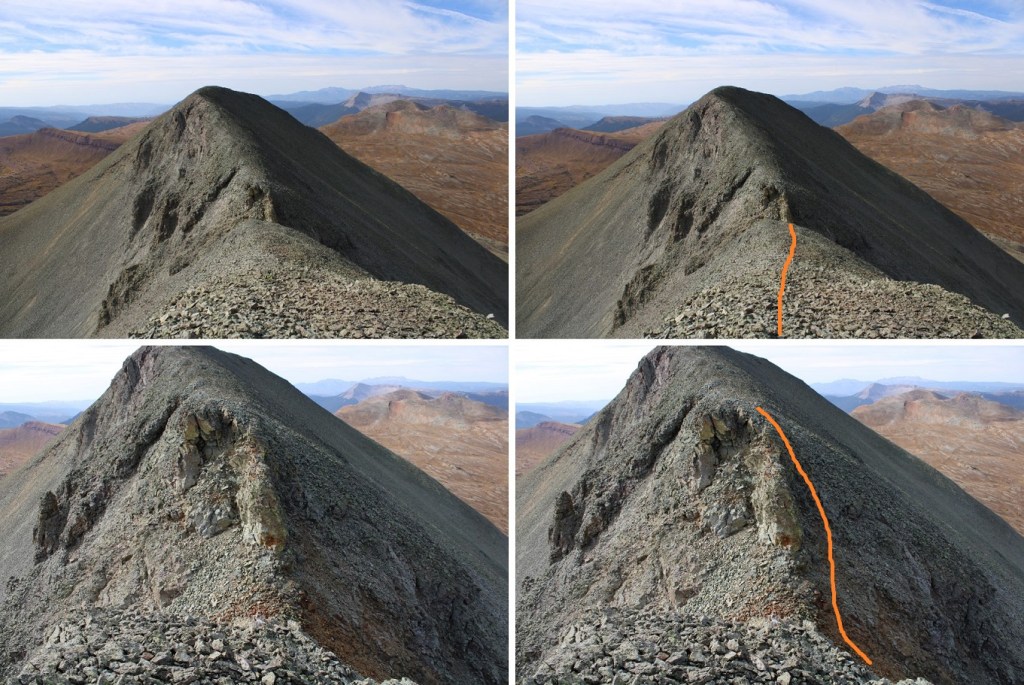
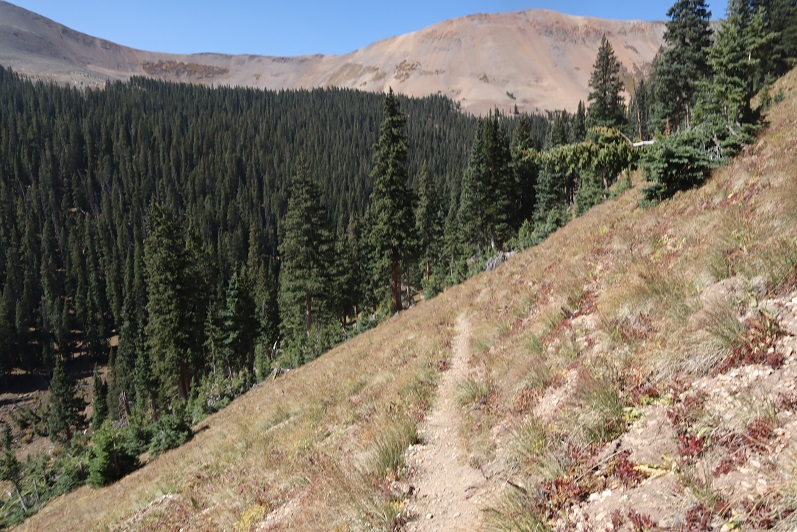
There were no big surprises on this one.  There were some game trails to the right, but they didn’t seem prudent.  I just followed the ridge, and then closely navigated the rock problems, which were all class 2.  This is the route I took

And some closer pictures

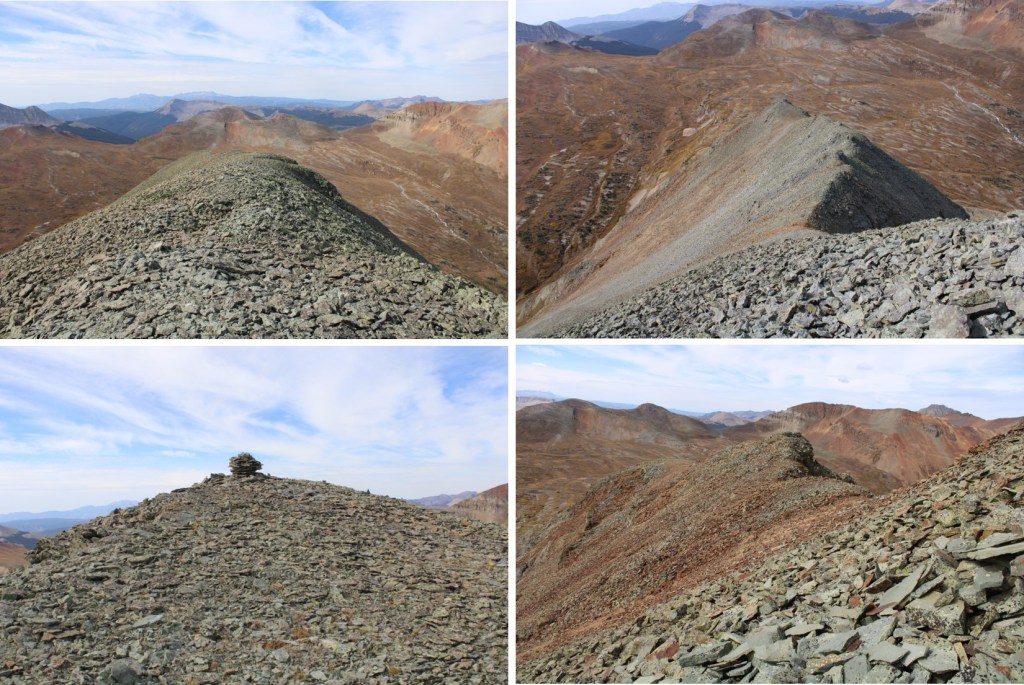
The summit was relatively flat.  I wasn’t sure where the exact summit was, so I waked the entire length, just to realize the summit was at the top of the ridge

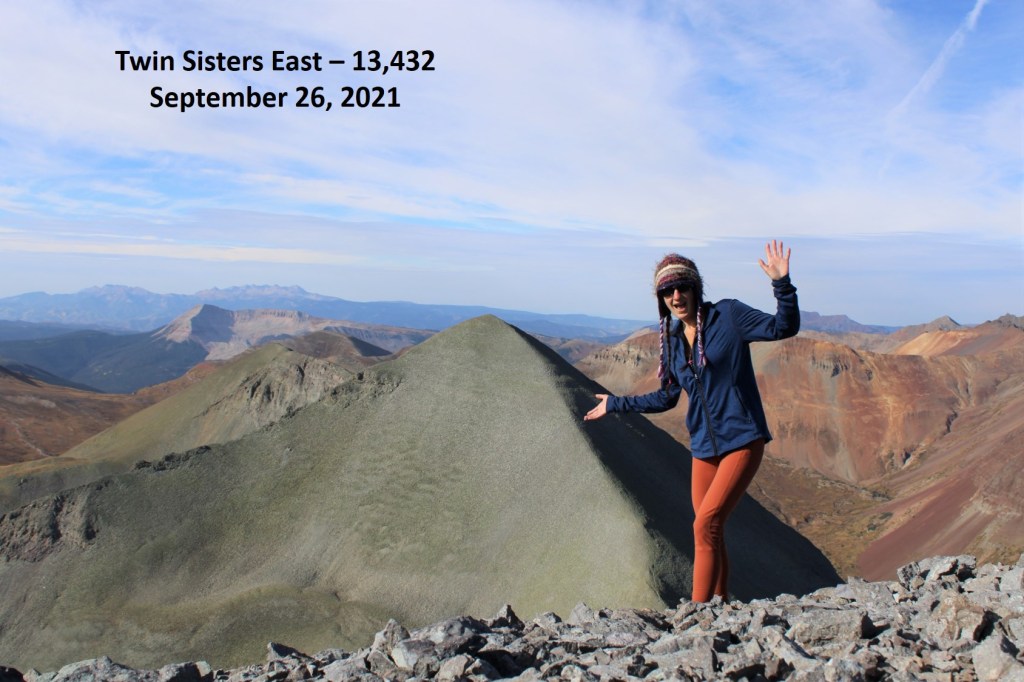
I summited Twin Sisters East at 9:20am

Twin Sisters East: 

Because I’d done most of my hiking in while it was dark, I decided to make this an out and back trip so I could get better pictures of the trek i.  So, I retraced my steps back to Twin Sisters West. This was a simple ridge hike

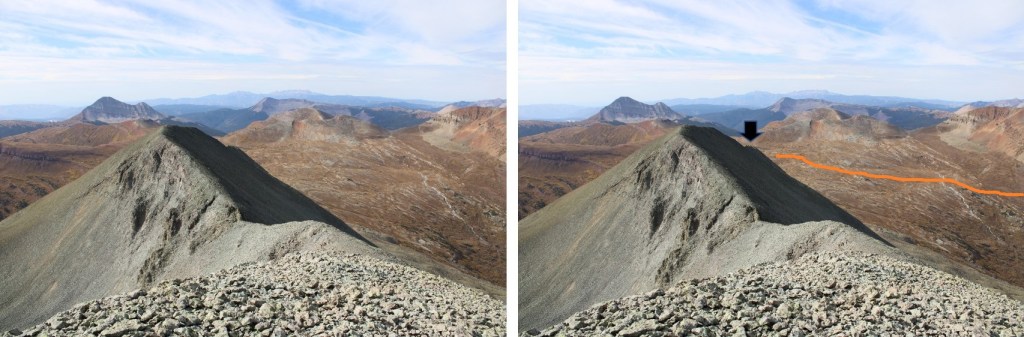
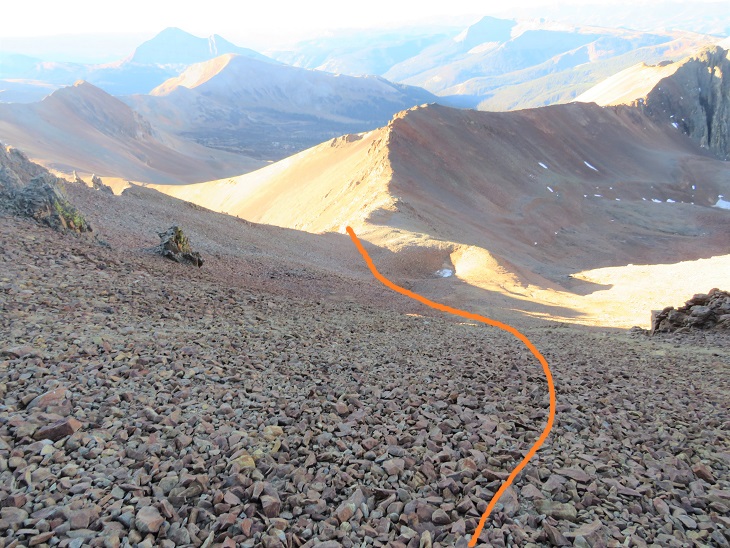
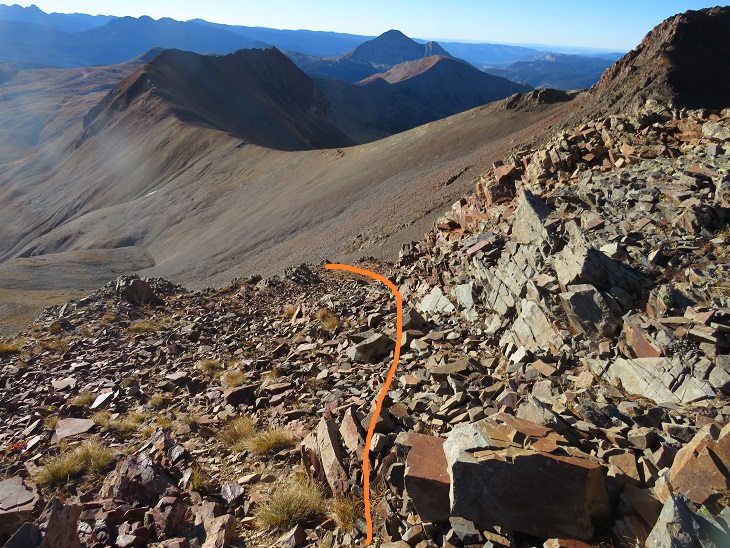
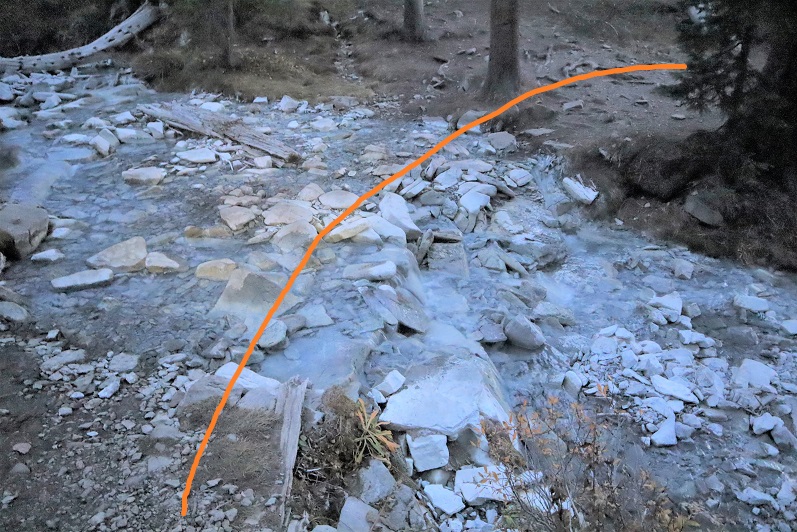
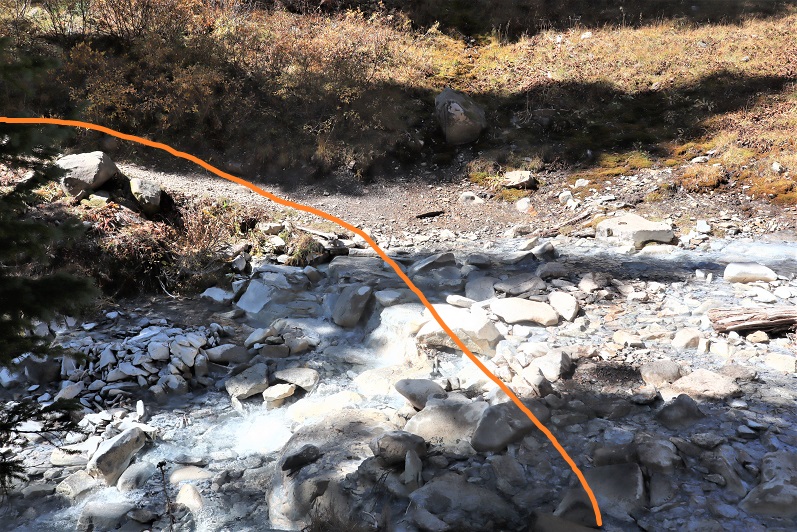
From Twin Sisters West I continued following the ridge southwest.  It’s important to follow this ridge all the way to the end (black arrow).  Also, here’s an overview of the route around the basin.  Fun fact:  the white area isn’t water, but rock from a dry stream bed.  I’m sure at some point in the year it holds water, but I’ve only seen it dry.

Here’s a close up of the ridge problem

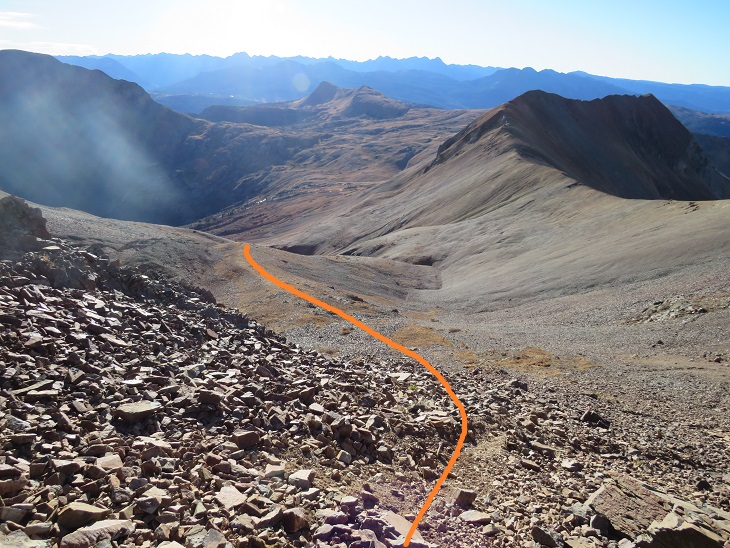
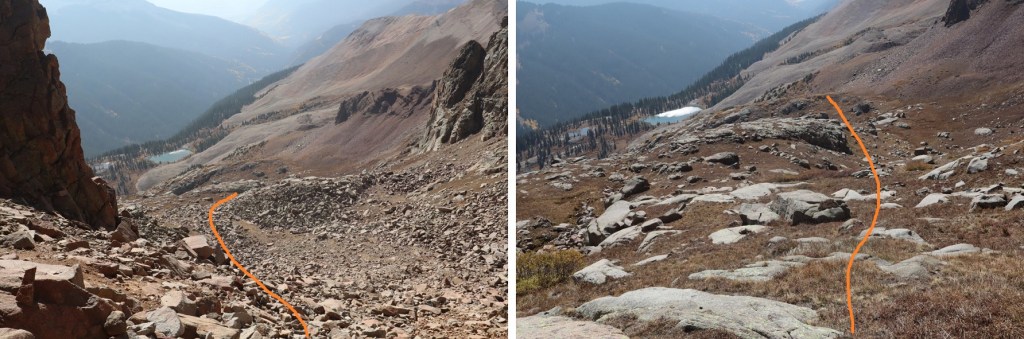
And following the ridge to the end

Once at the end of the ridge, I turned left and scree surfed/carefully navigated my way down the gullies

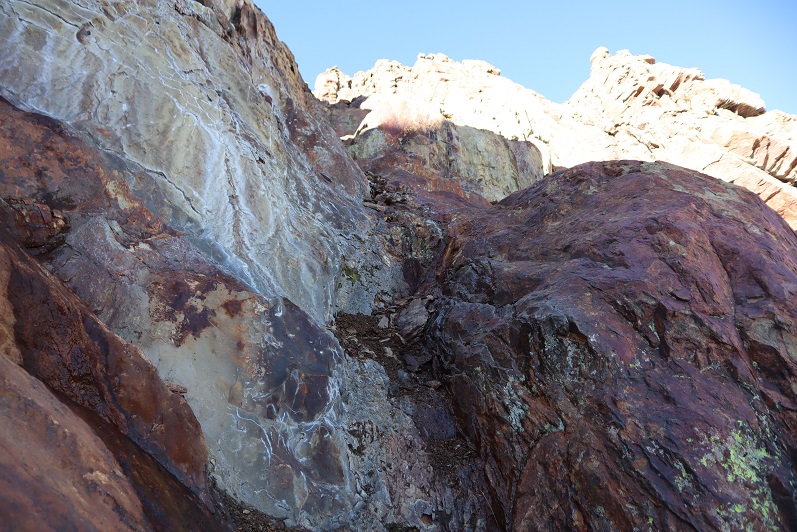
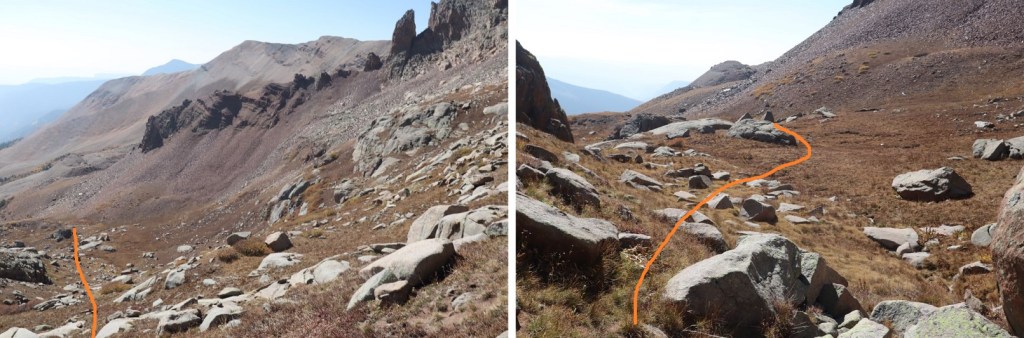
At the base of the gullies I turned right, and headed out of the basin

There were faint game trails here

That led me back to the Rico-Silverton Trail, which I took north back to my truck

I made it back to my truck at 12:30pm, making this a 10.32 mile hike with 4101’ of elevation gain in 6 hours, 45 minutes.

On to the next trailhead!

Rolling Mountain – 13,693

RT Length:  7.43 miles

Elevation Gain:  3078’

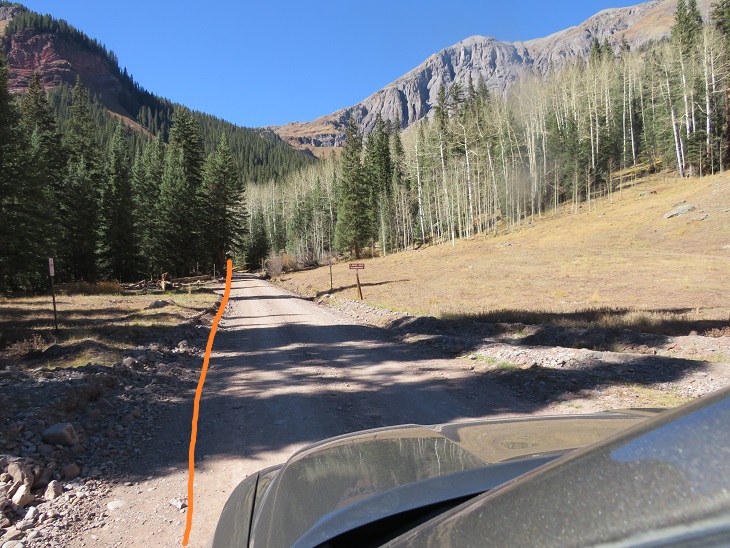
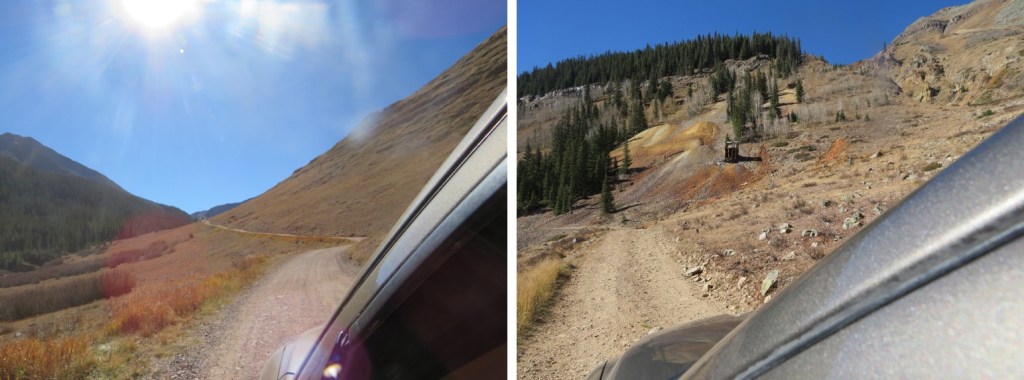
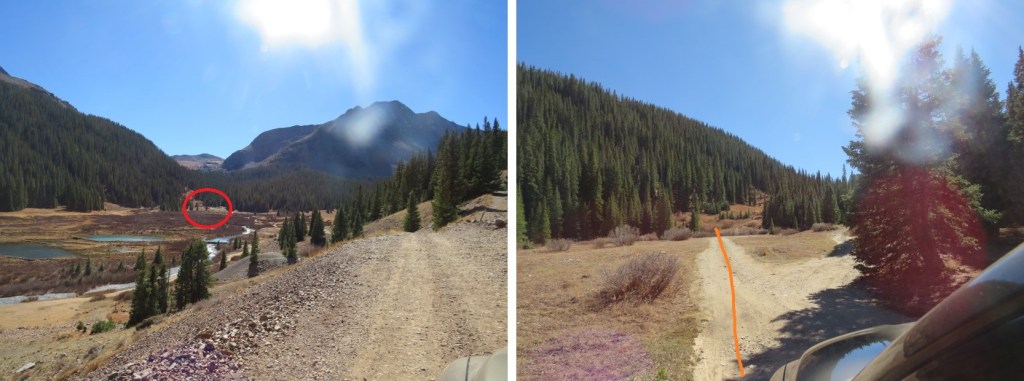
After summiting Pilot Knob I made it back to the Ice Lakes Basin trailhead and took 585 for 2.5 miles down an easy 4WD dirt road, past the Bandora Mine, until it ended at the south end of the basin.  Parking at the Ice Lakes Basin Trailhead adds 5 miles total to this hike.

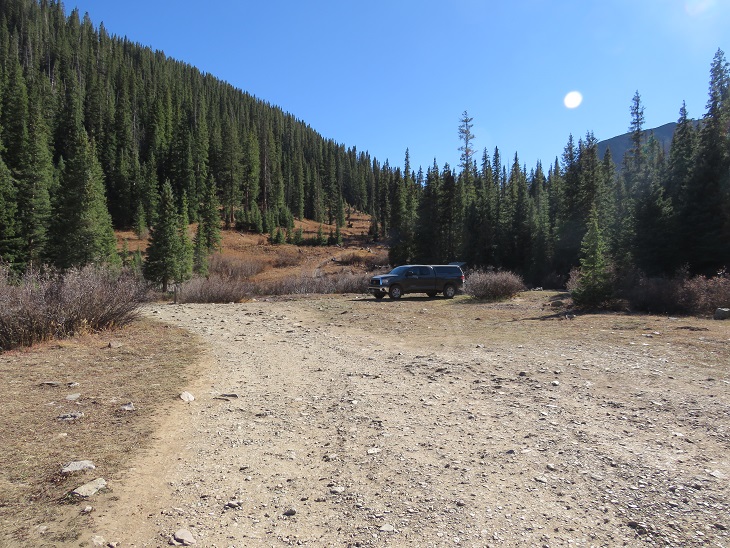
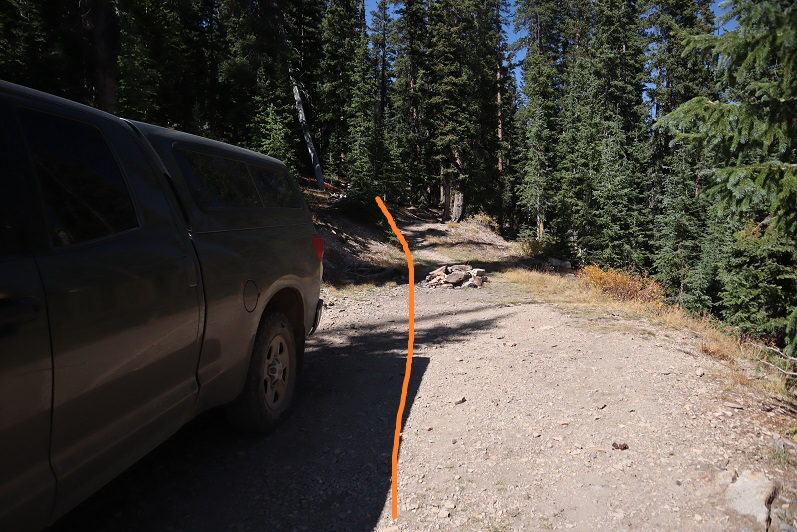
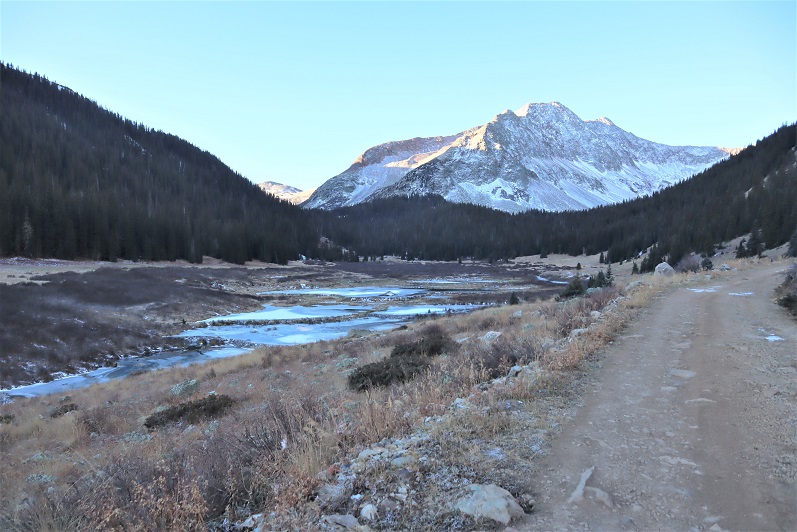
I’ve circled where I parked/dispersed camped for the night.  There are quite a few campsites in the area, although I didn’t see another person the entire time I was there.

It was still early, so I made dinner, jotted down some notes, had a few glasses of whiskey, read for a bit, and reviewed my notes from my failed attempt of Rolling Mountain last year. 

It was a beautiful evening, so I looked around for a bit to see where the trail started, and then made it an early night.

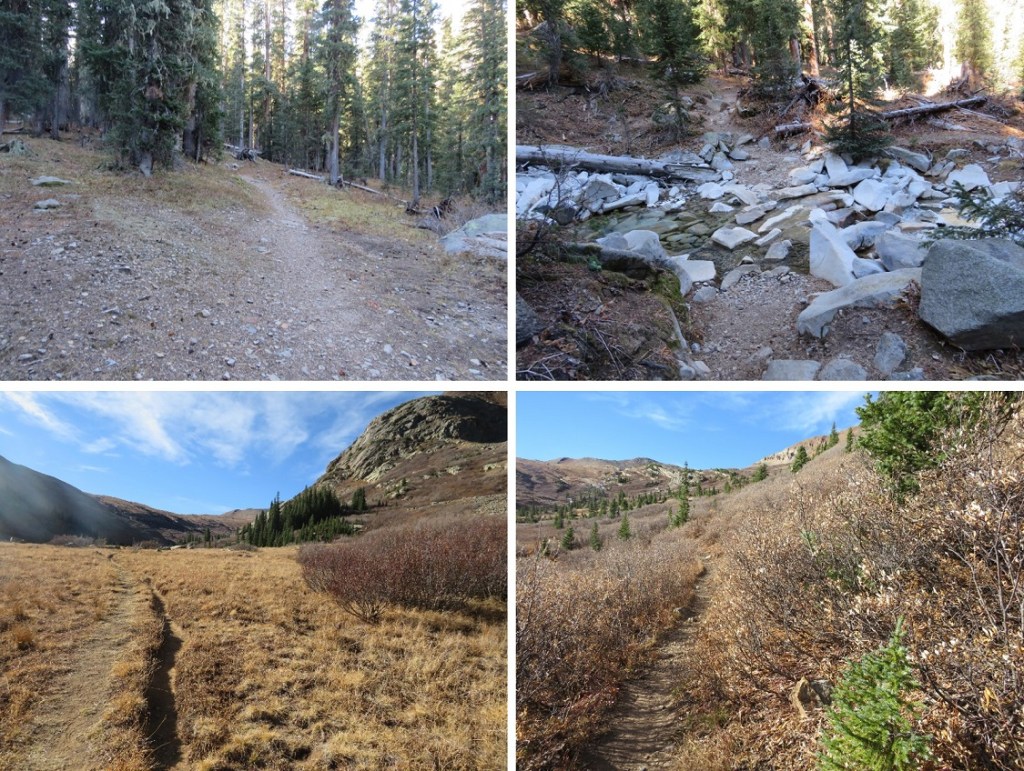
I was up and on the trail at 6am.  The trail starts at the south end of the basin, initially crossing a small stream, then following Rico-Silverton Trail 507. 

I followed this class 1 trail for 2 miles

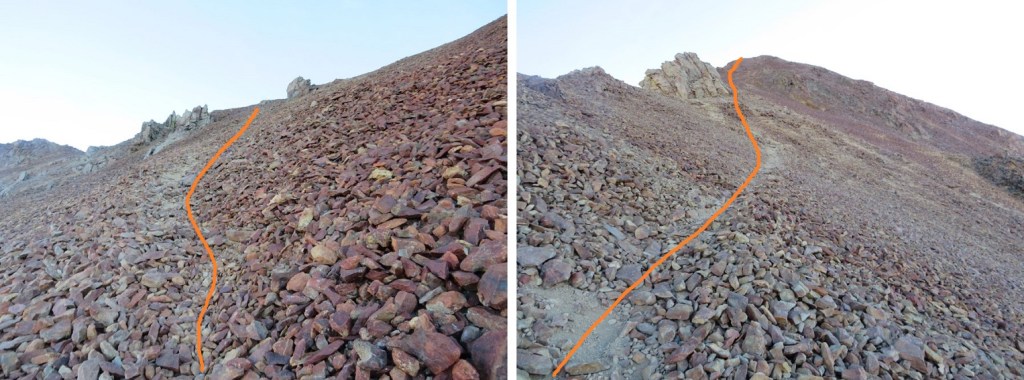
After 2 miles I turned right and headed west up the basin, staying to the left of the small gorge/drainage area.  There are a lot of willows to contend with here, but if you stay high you can avoid most of them.  If you stay low you can still cross, they’re just annoying.

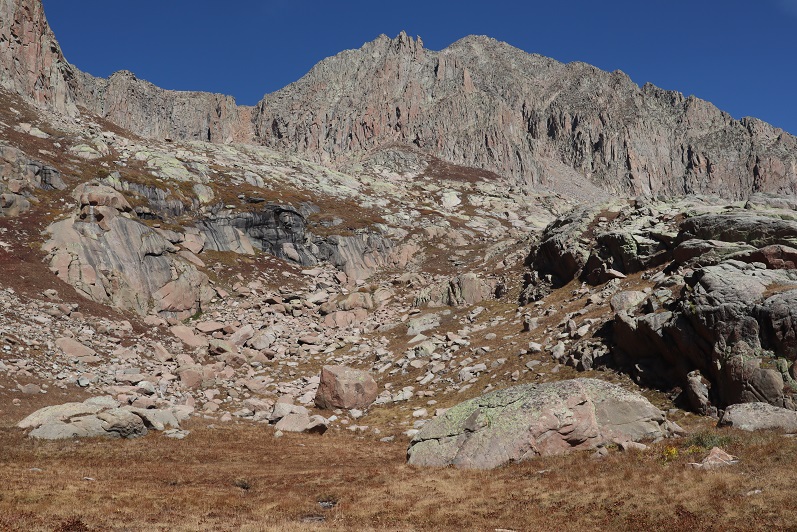
I came to the area that had stumped me last time and was pleasantly surprised to find the depression/bowl wasn’t as deep as it had appeared to be with snow.   It was a little steep, but an easy trek across this section and up the gully to the upper basin

I stayed high here, aiming for the ridge.  This was an easy trek on relaxed scree and nicely sloping tundra

Once on the ridge I turned right and saw an obvious trail that led up to the summit of Rolling Mountain

The trail is light but easy to follow. The terrain was a nice class 2 as it followed the ridge to the summit.  It would have been much more enjoyable without the wind. 

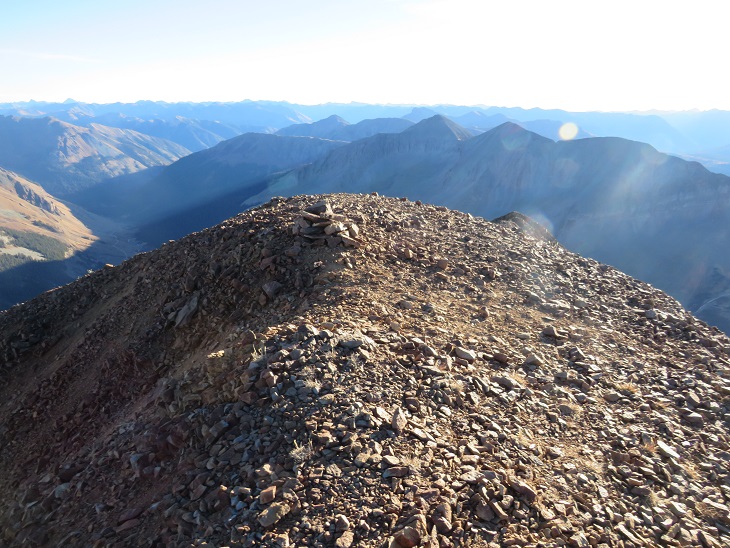
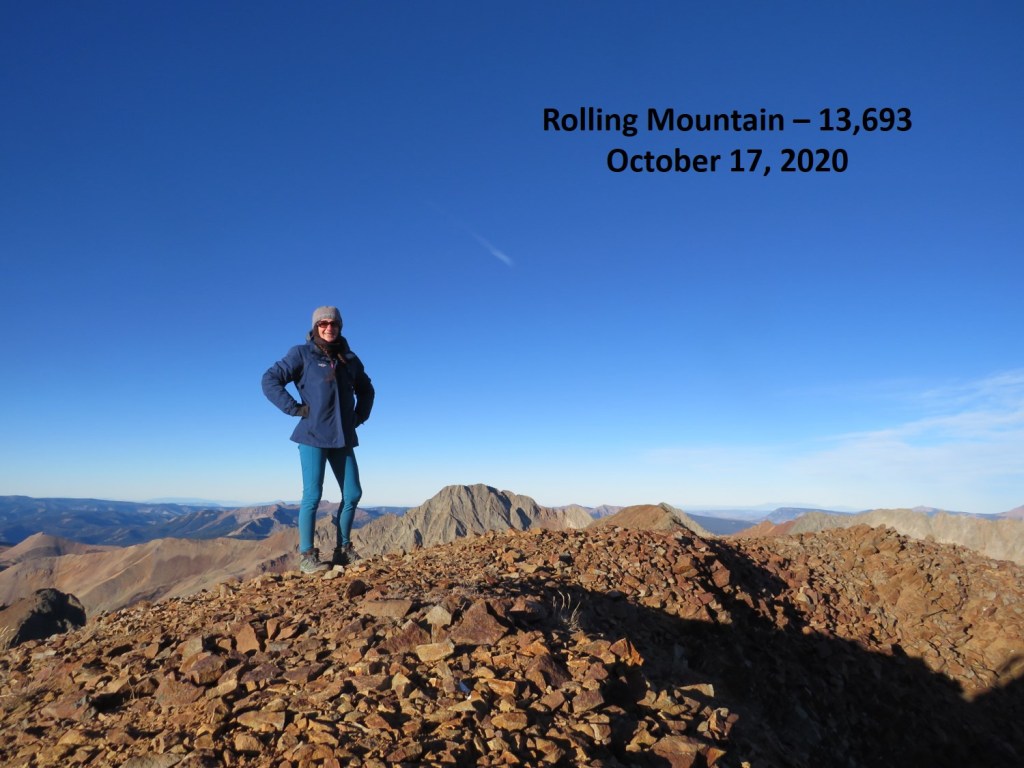
I summited Rolling Mountain at 8:15am

Rolling Mountain: 

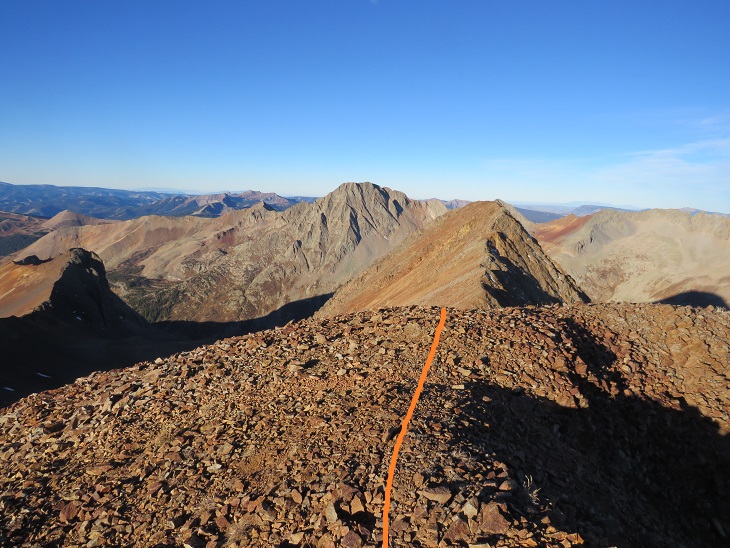
I had plans to go camping with friends tonight (a 6 hour drive away) so I didn’t waste anytime descending the mountain.  Also, it was quite cold and windy.  I couldn’t wait to make it back to the ridge and for the wind to settle down.  This is an out and back hike, so I retraced my steps

And back down the basin

Up and over the bowl

And east towards the Rico-Silverton trail, staying high to avoid the willows

Once back on the trail I followed it back down the lower basin to the trailhead

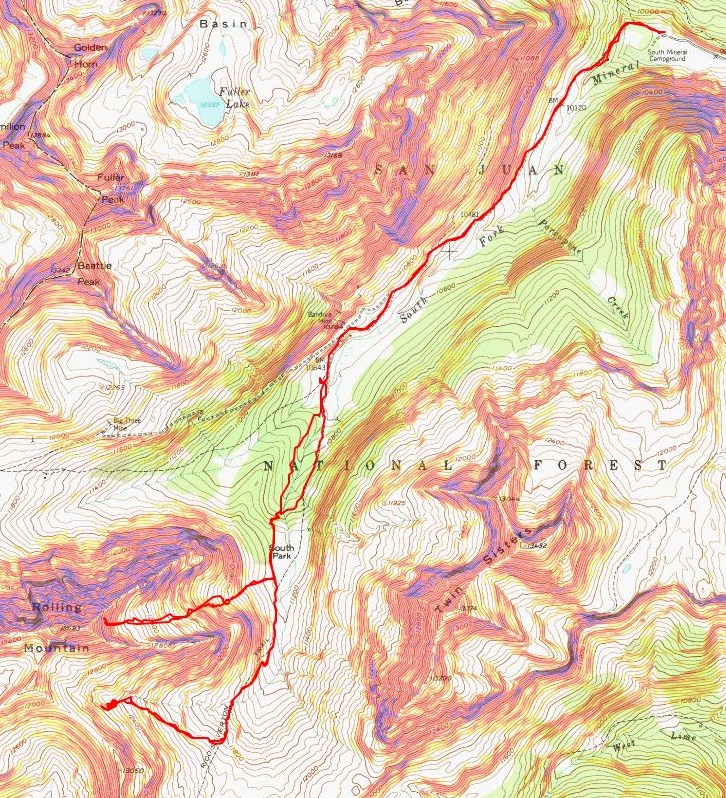
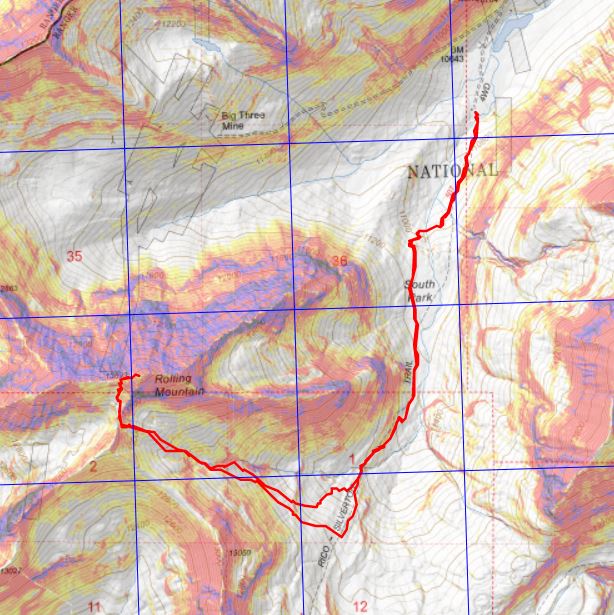
I made it back to my truck at 10am, making this a 7.43 mile hike with 3078’ of elevation gain in 4 hours.  The was by far the easiest hike I’ve done in a while, which made my turning around last time sting just a little bit more.  Here’s a topo map of the route

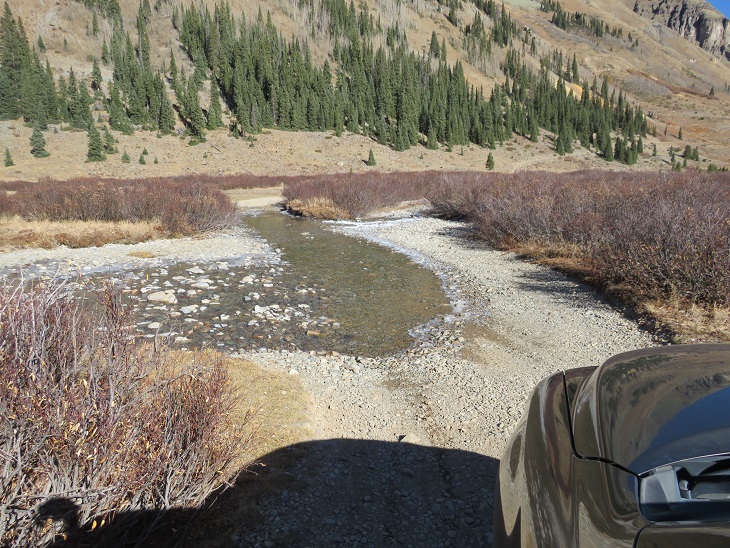
Also, the drive in is easy 4WD (most likely doable in a higher clearance 2WD), but there is a small stream crossing, which is probably deeper in summer.  Just something to consider

Time to go camping!

Grizzly Peak B – 13,753

RT Length: 9.96 miles

Elevation Gain: 3543’

I drove in from Kite Lake after hiking some 13ers in the area.  It took me about 2 hours to drive to Silverton, 40 minutes to drive to Purgatory, and another hour and a half to drive to the end of Forest Service Road 579.  This is an easy 4WD road, but there are few spots to turn around.  I was getting seriously worried about my trip out tomorrow until I (finally) made it to the end of the road.  The road abruptly ends at a campsite, which was good news to me, as that meant there should be fewer chances to pass other drivers on the way out because the road doesn’t really ‘go’ anywhere.  Mine was the only vehicle at the trailhead.

It was 10:30pm when I made it to the campsite, and I should have been exhausted after hiking/driving all day without sleep the night before, but I wasn’t.  I was cold however.  I turned on my heater and jotted down some notes in my journal while sipping on some whiskey.  I played a few games on my phone and looked over my topo map for the next day.  I hadn’t found a lot of good information on this peak, so I’d planned a route myself and I was trying to memorize it so I wouldn’t need to break out my map too often tomorrow.  As I sat there, I was reminded of something someone had said to me a few days before: “Don’t you ever relax?”  Yes, yes I do.  This was relaxing. 

My heater was starting to make my sleeping area too warm so I shut it off and decided it was a good time to go to bed.  I woke up and was on the trail at 6:30am.  The trail begins just behind the campsite

I could smell the fires and hooped the views would be better today than yesterday.  Immediately I noticed flashlights shining in the distance.  No way?!?  I hadn’t seen another vehicle on my way in, and I was very far from any other trailhead.  That’s when I remembered I was hiking on the Colorado Trail and this must be a good area to camp for the night.  I followed the trail northeast as it descended down to a creek, crossed the creek, and headed east, still following the trail

I stopped here because something was rubbing against my ankle.  I’ve never had to put on a band-aid while hiking before, but I thought I’d better now because my ankle would be rubbed raw if I didn’t.  Yep, I still need new hiking boots. 

I put together a topo map for this route, and in doing so later found there were trails on the route that weren’t listed on the map.  The trail I found went lower than I wanted to go, so I didn’t take it initially, but ended up being brought back to it several times, so I’m going to give you beta on the way you should take, not the way I took (which was loopy). 

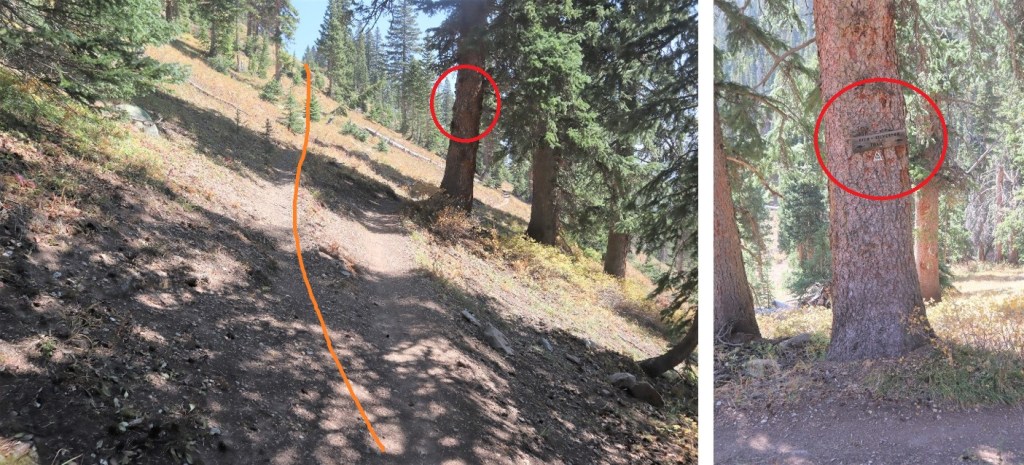
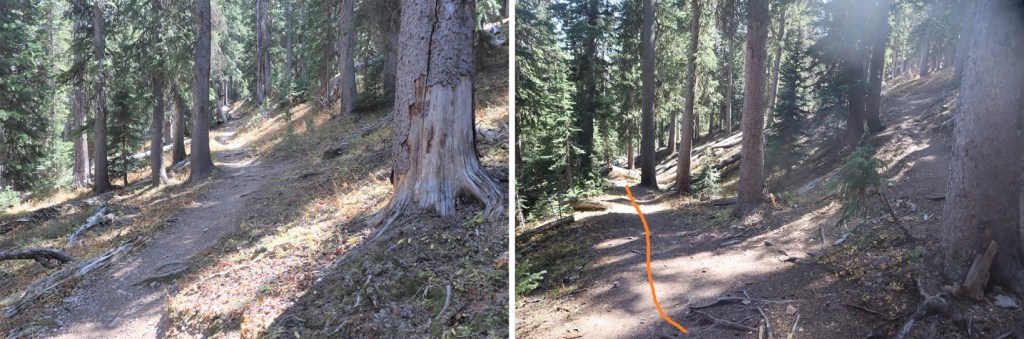
After crossing the stream, head east for .35 miles. Here there will be a faint junction, and if you look carefully, a sign to your right that says “Rico-Silverton Trail” (circled in red).  Take the upper trail here and follow it until you pass an obvious pond (about 1.2 miles). 

When you get here, there will be 2 trails.  Do not ascend the scree!  Instead, skirt the scree to your right

And continue following the trail as it skirts the lake to the left

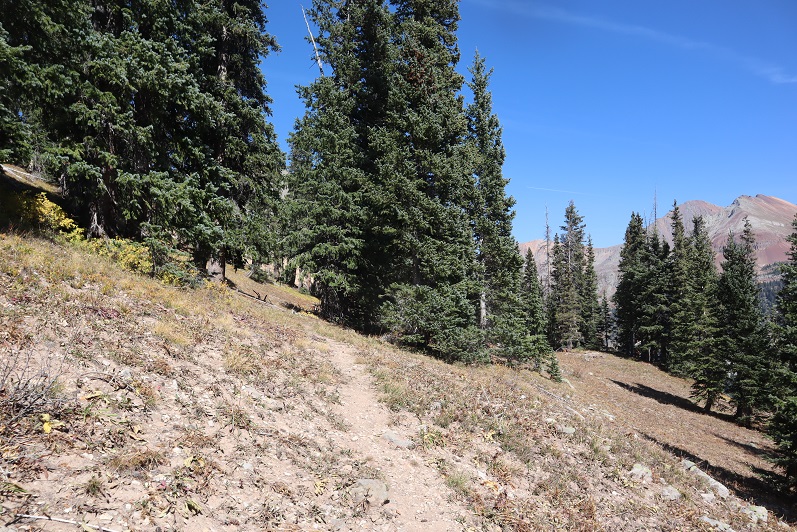
Just after the lake the trail will curve to the left.  Follow the trail northeast up the basin

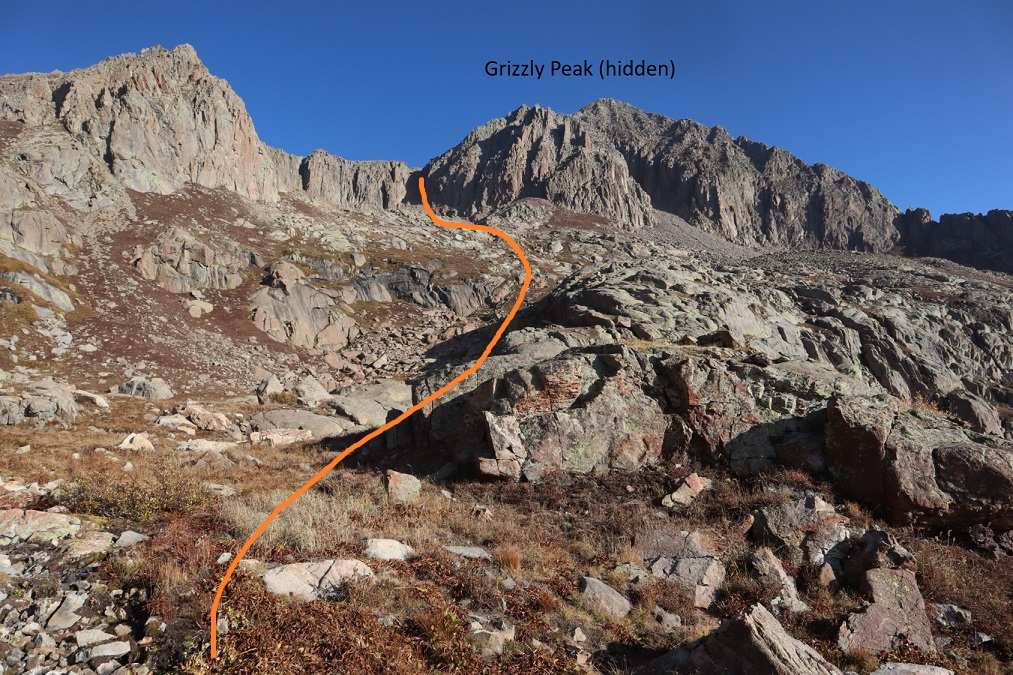
This is where the trail stopped.  I wanted to ascend via the upper gully, so I followed the basin as it curved right and then left.  Here’s a visual

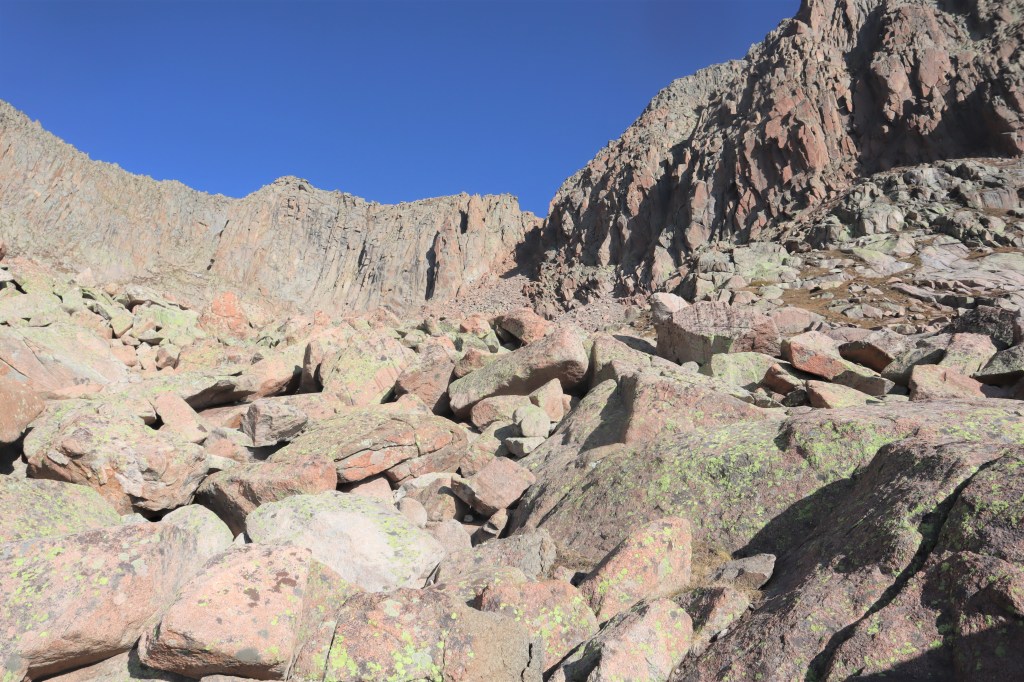
Some boulder hopping brought me to the base of the gully

I stuck to the right to ascend the gully on rocks, and descended more to the left on the scree

As far as gullies go, this one wasn’t too bad.

At the top of the gully I continued north

I came to an abrupt drop-off, turned right, and followed the ridge a short distance to the summit

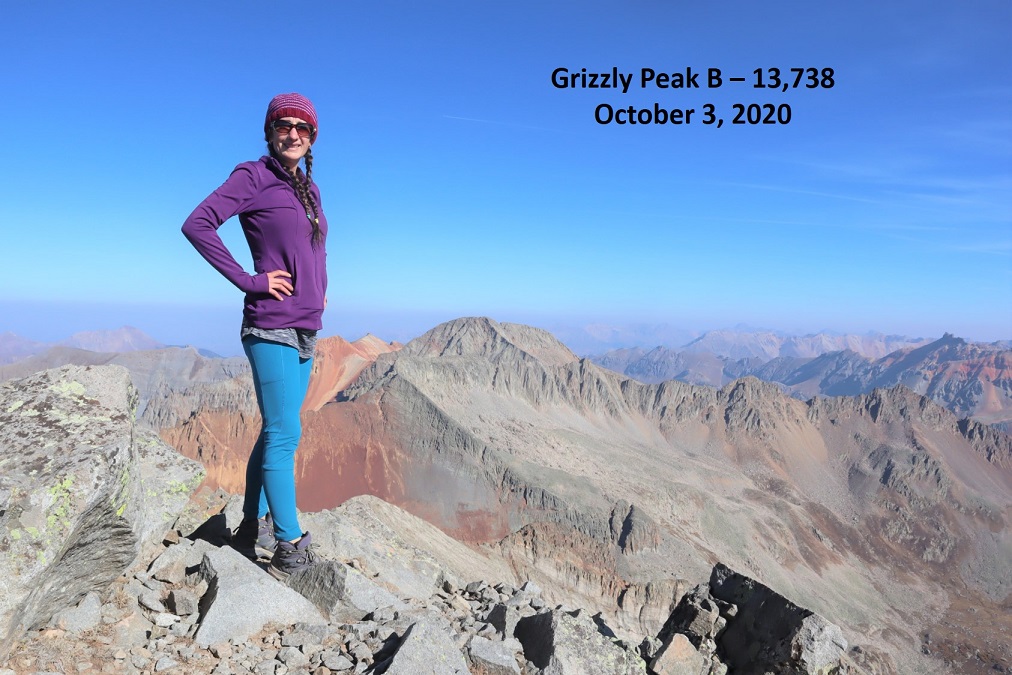
I summited Grizzly Peak at 10:10am

Grizzly Peak: 

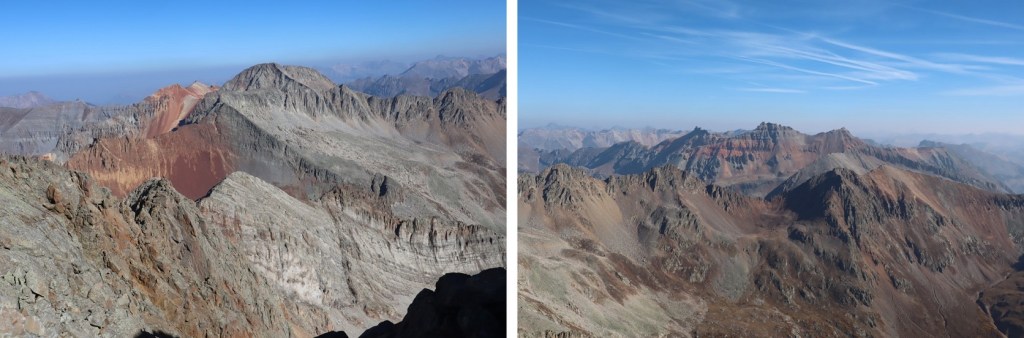
The views were amazing!  Much better than my views the day before that were shrouded by haze from the fires

I headed back down the way I summited

Descended the gully

Back down the basin

And picked up the trail

My way back to the trailhead was so much easier than the way in, as I just followed this (unnamed, unlisted) trail back to the Colorado Trail/Rico-Silverton Trail. 

Just before descending back to the Colorado Trail I could see where I’d parked my truck

I rounded the mountain and started my descent to the creek

Hooked back up with the Colorado Trail

Crossed the creek

And gained some elevation as I headed back to my truck, staying left to head to the campsite when the Colorado Trail went right

And within a dozen yards or so was back at my truck.  There was one other truck parked in the area (a Tacoma).

I made it back to my truck at 12:45pm, making this a 9.96 mile hike with 3543’ of elevation gain in just over 6 hours.

Even though it was a Saturday afternoon I didn’t pass another vehicle on the way down to the 2WD road, which was good because there were long stretches with no turnarounds/passing points.  The leaves were beautiful!  (I took this picture near the bottom once the road evened out).

Also, this is the last 4WD trailhead I need to use to get to any of the bicentennials I still need to summit!  Woot!  Just 10 left to go, and they’re all accessed via 2WD roads.  Now about that skid plate…

Rolling Mountain 13,693′ (attempts)

1

RT Length: 13.5 miles

EG: 5079’

I have a feeling I’m going to have a lot of second attempts while working through the bicentennials and the rest of the 13ers. There just isn’t that much quality beta out there on these peaks when compared to the centennials.  My goal with this trip report is to provide beta on a lesser climbed peak.  Please feel free to add to this beta to continue improving its collective knowledge.  Yes, I know there’s another approach I didn’t use (which I will next time).

My plans shifted and changed right up until I was driving to the trailhead. There are a lot of peaks I want to climb in the San Juan’s, and they had the best weather forecast for the weekend.  They also didn’t get as much snow as the rest of the state this week, so I was hoping to hike a few of the more difficult peaks during the nice weather window.  My plan was to hike Rolling Mountain Friday and give the Grenadiers some more time so melt out (if they needed it at all).  I’d be able to see them from Rolling Mountain and gauge if they were climbable at that point.  Plan A was to do the Trinities, Plan B was to hike Arrow Peak, both 25+ mile hikes with 8000’ of elevation gain.  I didn’t have a plan C…

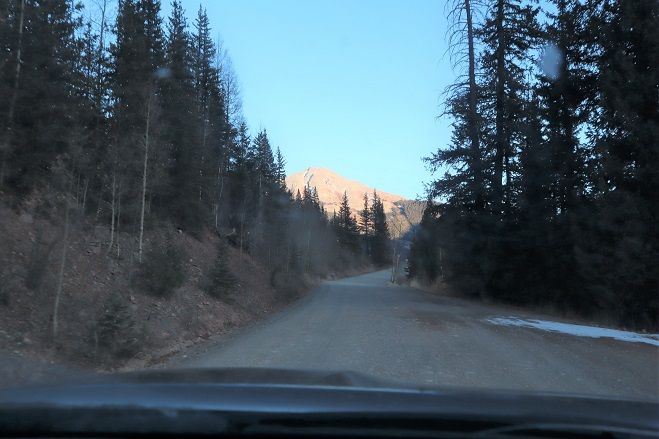
I made it to the South Mineral Trailhead at 7am and took my time getting ready. It was really, really cold outside.  Luckily the drive in was nice, on a well maintained 2WD dirt road.  There wasn’t any ice on the dirt drive in (but there had been on 550, making it a slow approach).
2

I followed the Rico/Silverton trail for about 2.5 miles, first starting out actually following the trail, which wasn’t more than a game trail through dense trees.

3

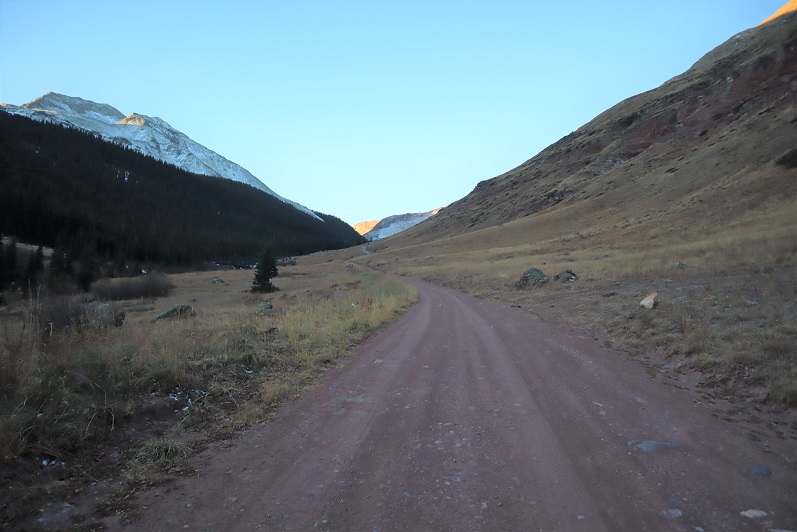
I quickly realized the trail follows the dirt road and instead of spending time route finding I just hiked along the road. I could easily have driven my Tundra the 2.5 miles I hiked.
4

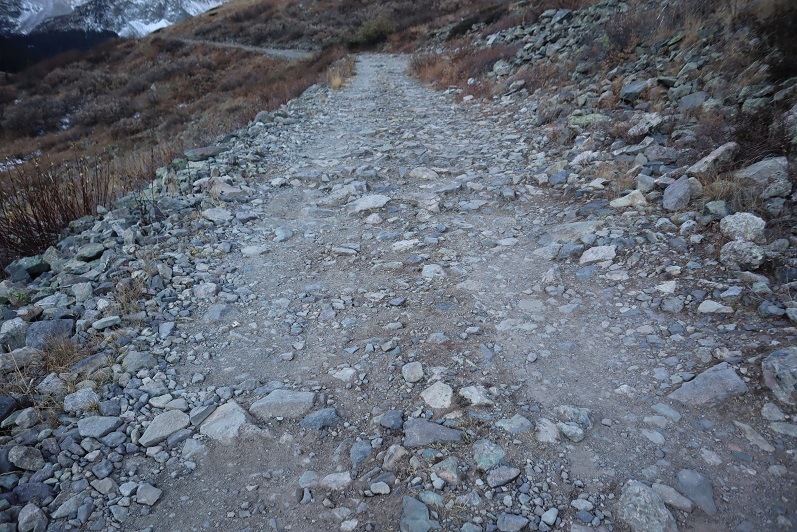
The worst part of the road looked like this
5

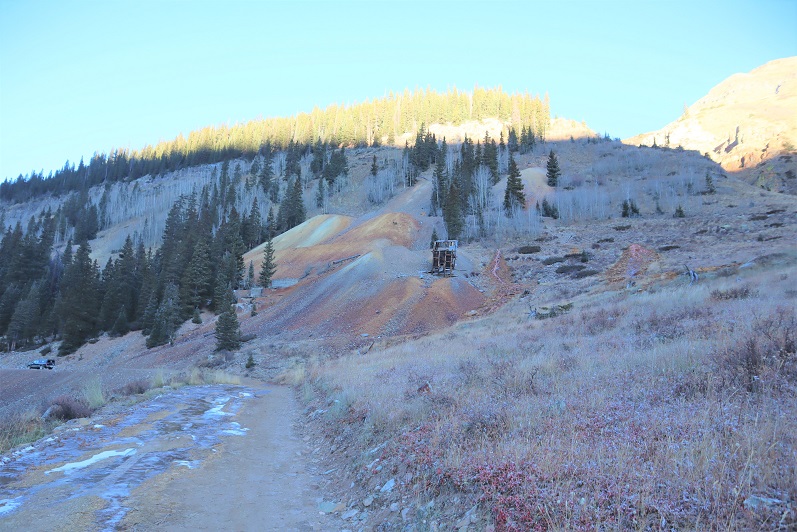
Just after the Bandora Mine I entered a small basin
6

7

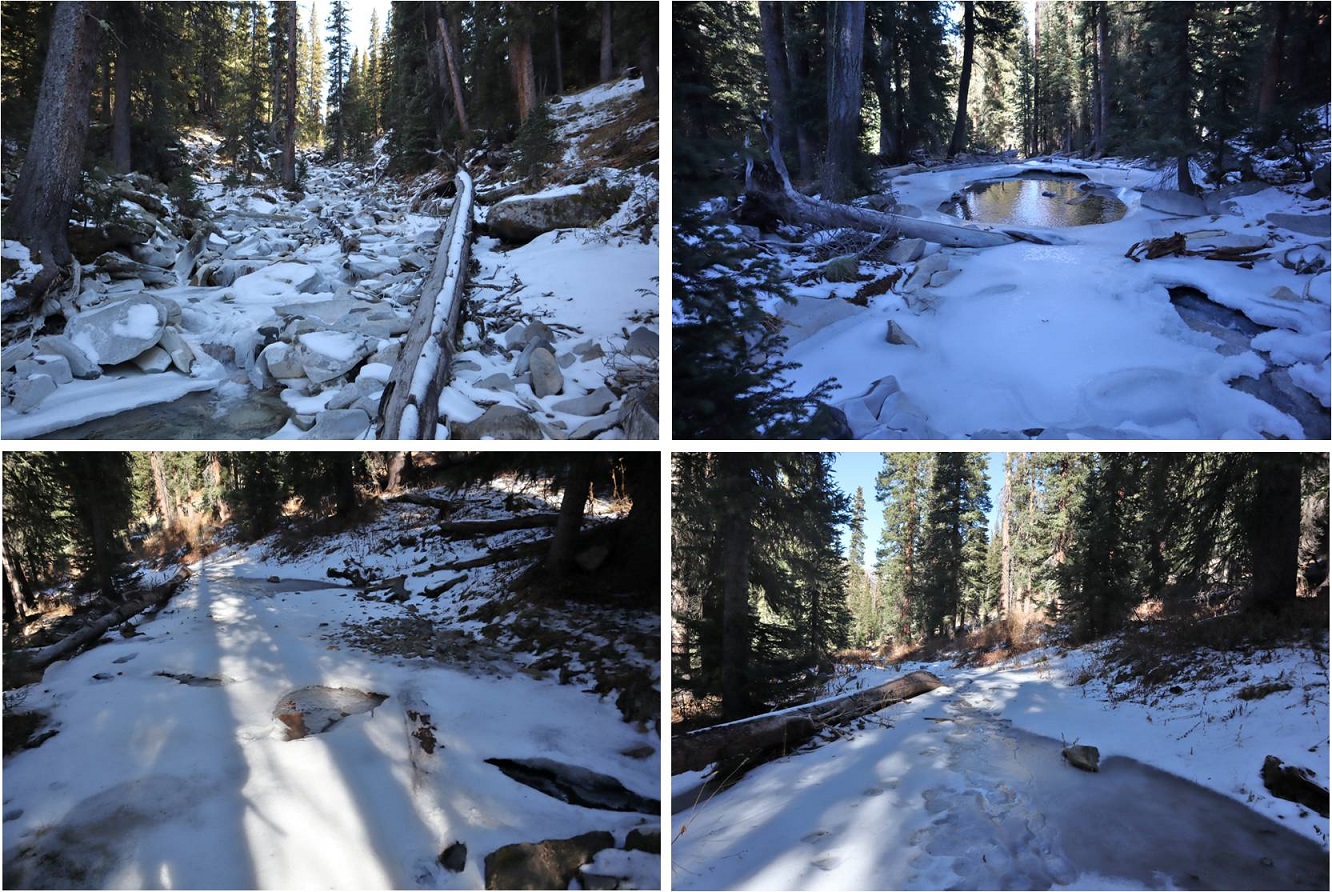
Here the trail might as well have ended, as the road became covered in ice.
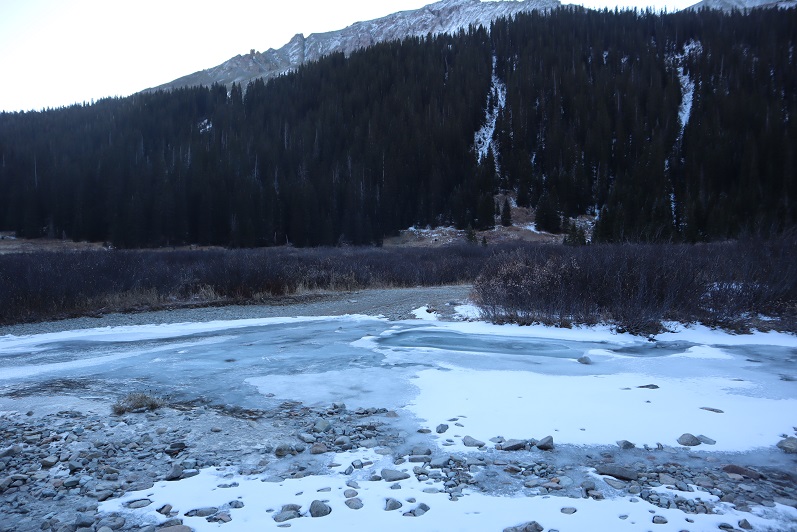
8

I found my away across the ice and through the willows back to the road. Here I had two options, one going to the left, the other the right.  I chose to take the trail to the right in, and the trail to the left out.  Long story short:  The trail to the right is more of a game trail so some route finding is involved.  The trail to the left is a solid trail but crosses streams at least 3 times.
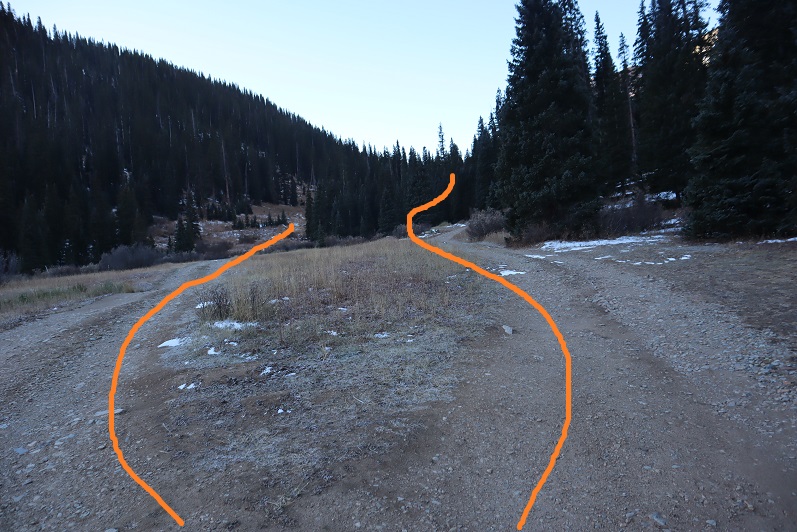
9

The road to the right ended at a few campsites
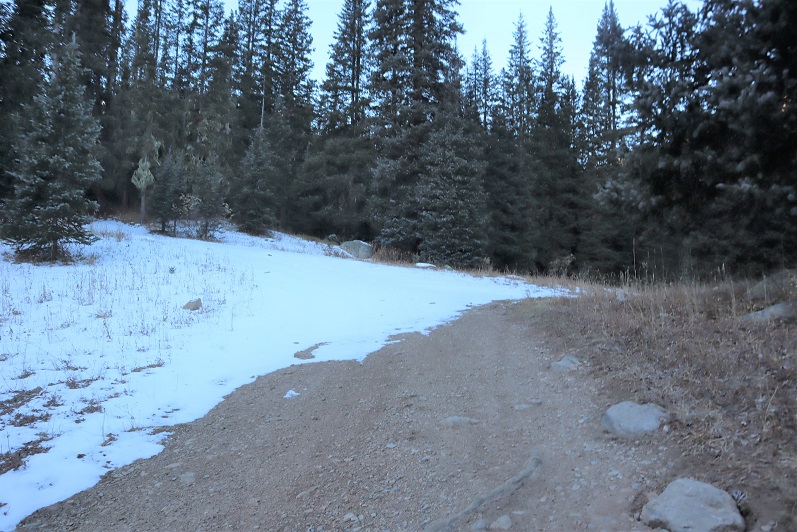
10

And then a game trail took over.

11

This trail was faint and the only way I was able to follow it in the snow was due to moose tracks using the trail. They looked fresh, and appeared to be a mama and calf.
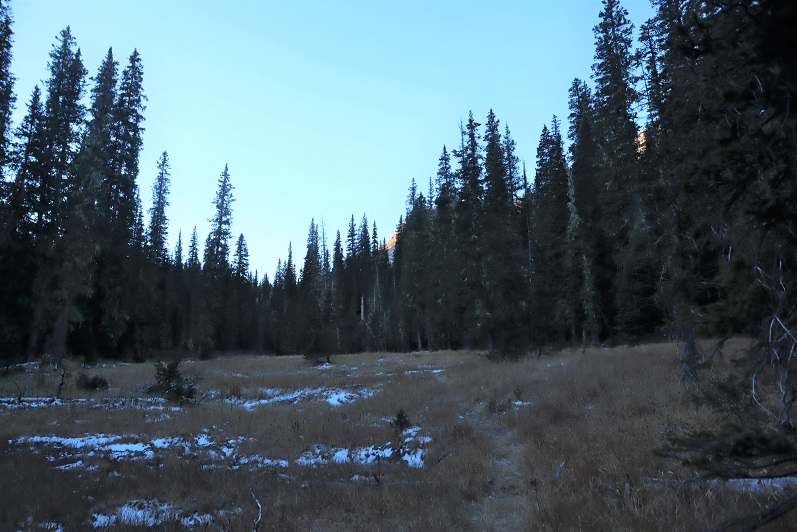
12

Since this is a faint trail the best advice I can give you is to keep the stream to your left and closely follow it.
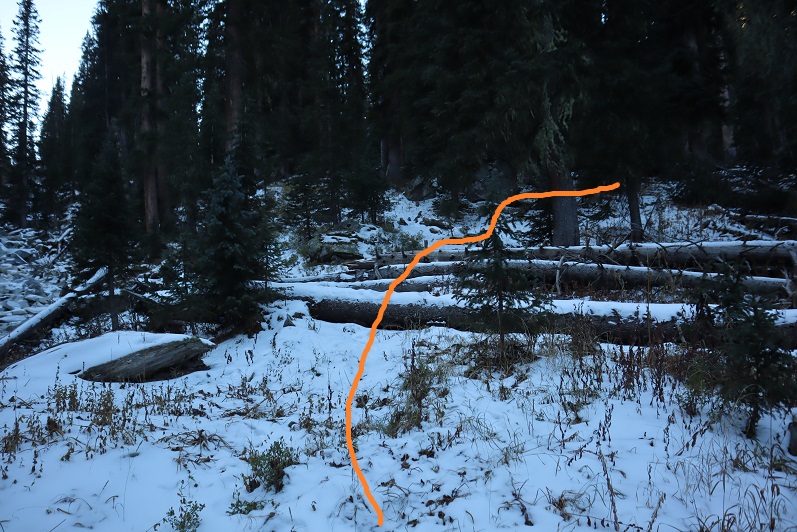
13

Eventually I came across where the true trail picked up and route finding (for the time being) was over.
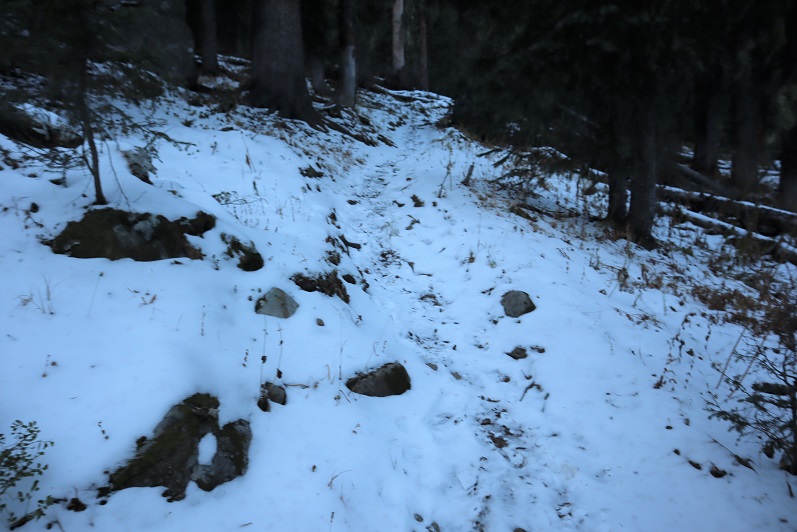
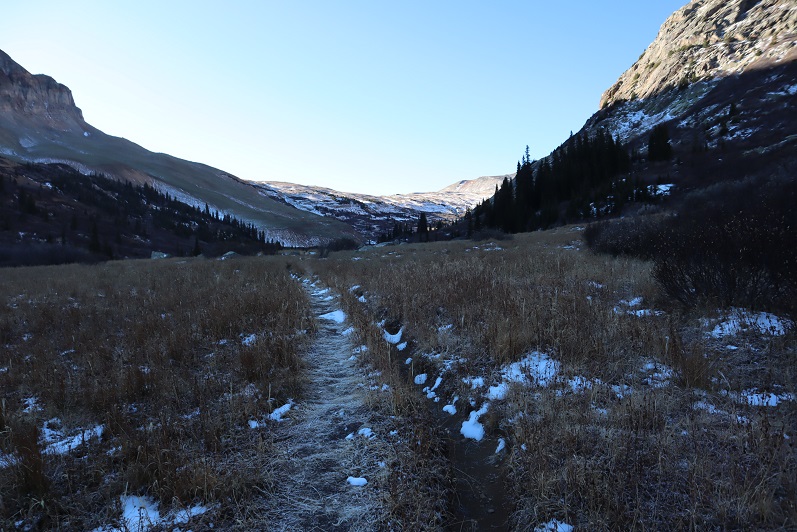
14

15

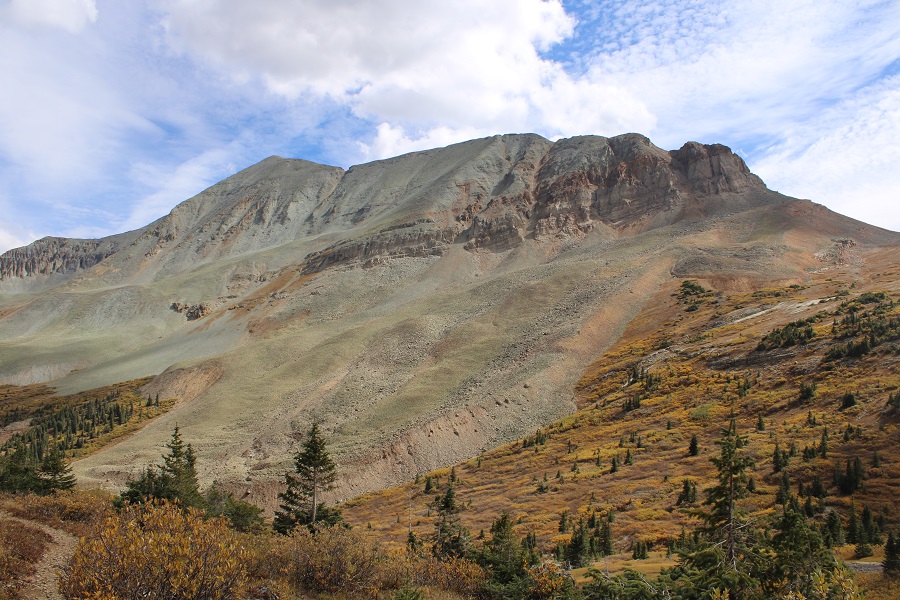
I continued to follow the trail south, past one of the possible routes up Rolling Mountain. I chose not to take this route first because on a topo map it looked like it had a tougher slope angle
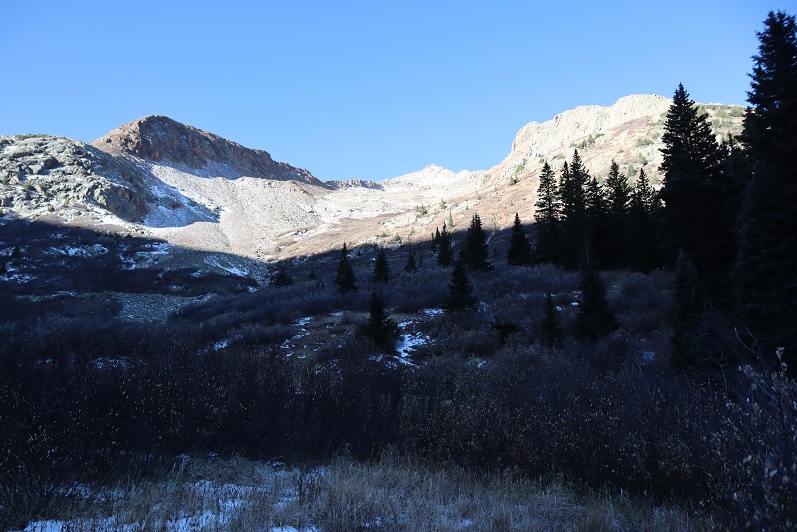
16

I kept hiking until I came to the next basin. At the top of a rock slab hill I turned right (west) and left the trail.
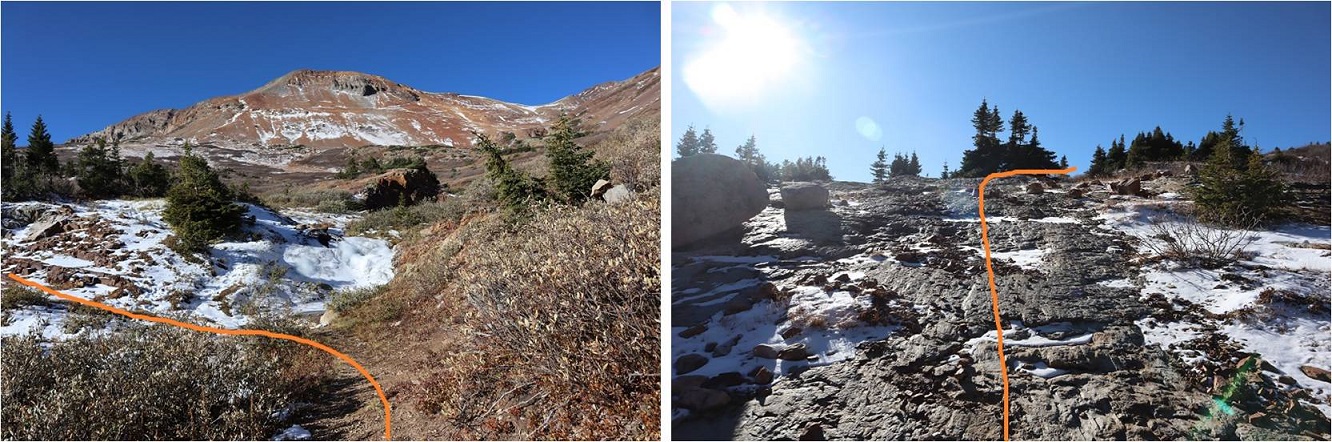
17

I cut across the willows and headed up the slope, first on tundra, and then on terrible talus

18

19

All was going well until I made it to the top of this hill. My intended route to access the summit is outlined
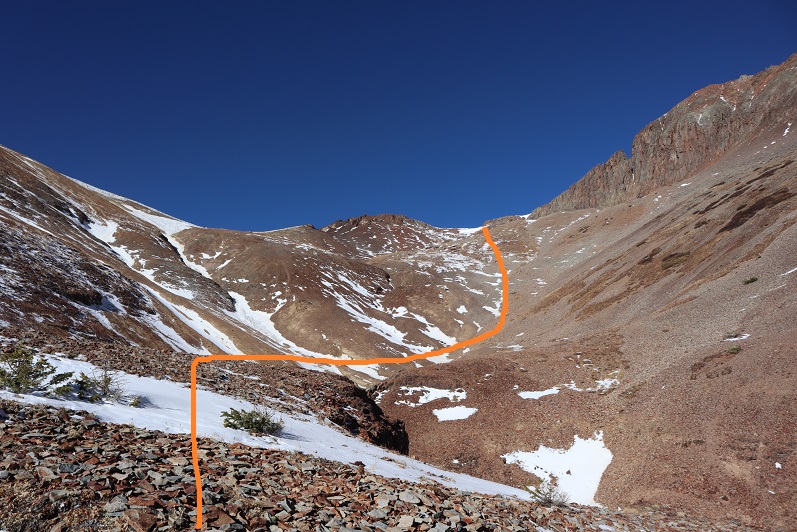
20

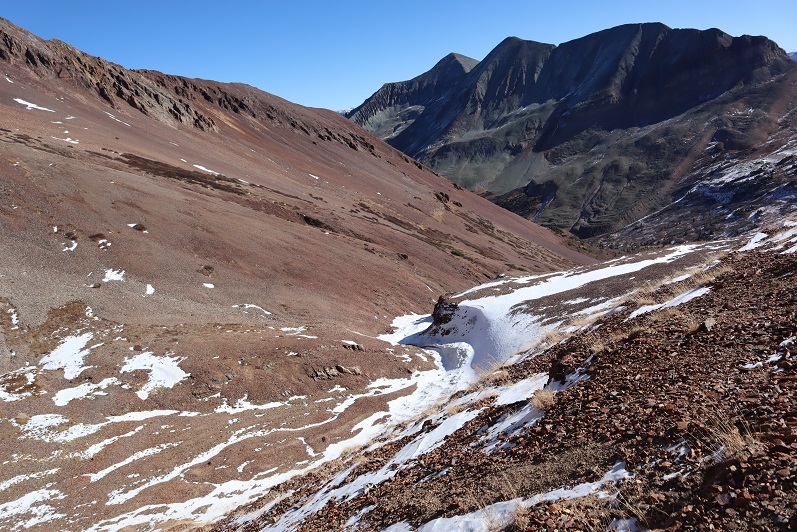
But when I made it to the top of the hill I was surprised to find a steep downward slope, covered in snow.
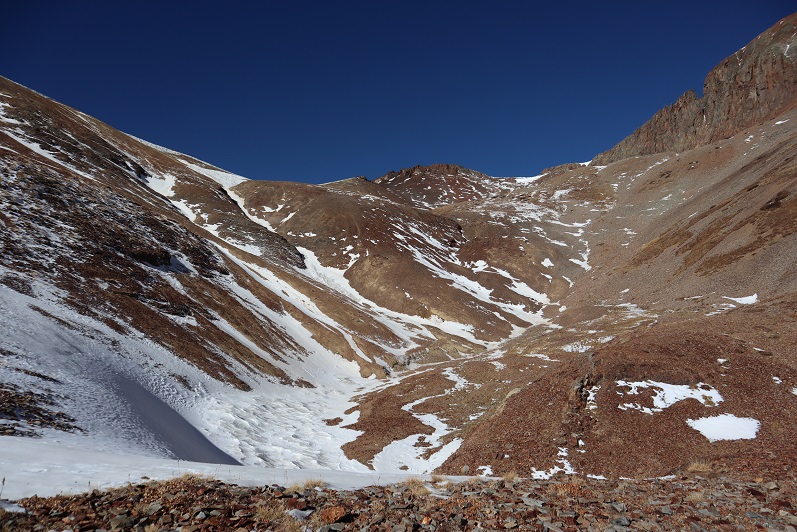
21

My first thought was to just walk down it. I put on my microspikes and took a step and plunged up to my waist in snow. Wow!  That was deeper than I’d thought!  So deep and sugary I don’t think snowshoes or an ice axe would have helped.  Next I tried to traverse around the snow on the scree, my intent to find the smallest piece of ice and cross there.  However, the scree here is light and covering smooth rock slabs, making traversing the area like walking on marbles, even with spikes on.  I tried heading higher but encountered similar wide, snow filled gullies.  I retraced my steps and tried again.  I couldn’t cross this area to my right because there was as 40 foot dropoff. Glissading wasn’t an option because I sank to my waist, and I didn’t have the tools necessary to climb back up (or self arrest).
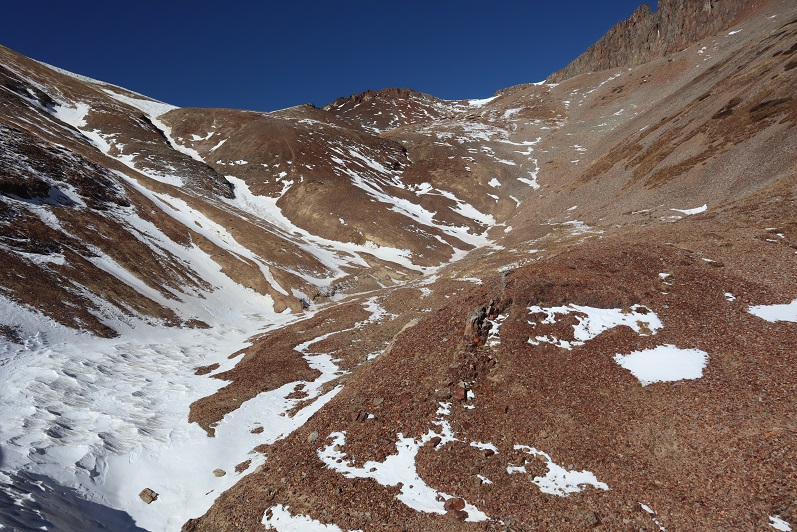
22

23

This was so incredibly frustrating! I spent almost an hour trying to find a good way through this seemingly easy section, and hit a dead end every time.  I glanced up and looked at the rest of the route.  It looked like even if I made it past this part the area I needed to gain the ridge was covered in a large snow drift.

24

At this point I made the decision to turn around and instead try the route I’d passed on my way in. Yes, it would mean a lot of added elevation gain, but I felt I’d be safer.  I had all day, so I wasn’t worried about time.  Here’s the route back to the trail.  I followed the deep drainage a little more closely this time.

25

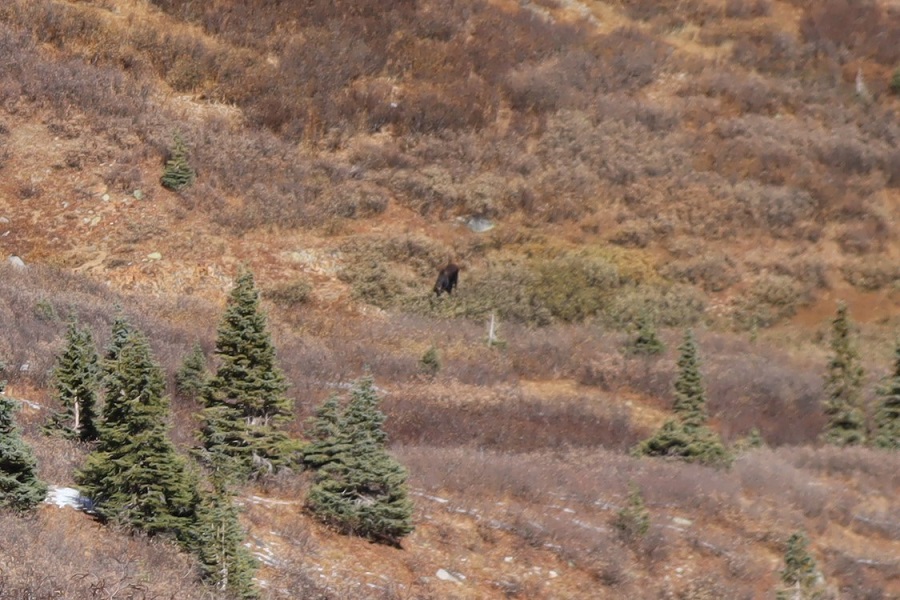
A bonus of turning back: I saw a mama moose and her calf feeding on the willows!  Although I tried I didn’t get a great picture of them, but I was able to watch them on my entire descent.  I’m sure they’d been there all morning (I’d followed their tracks, remember?) I just hadn’t been able to see them.  They never even glanced up at me:  they were too busy eating.
26

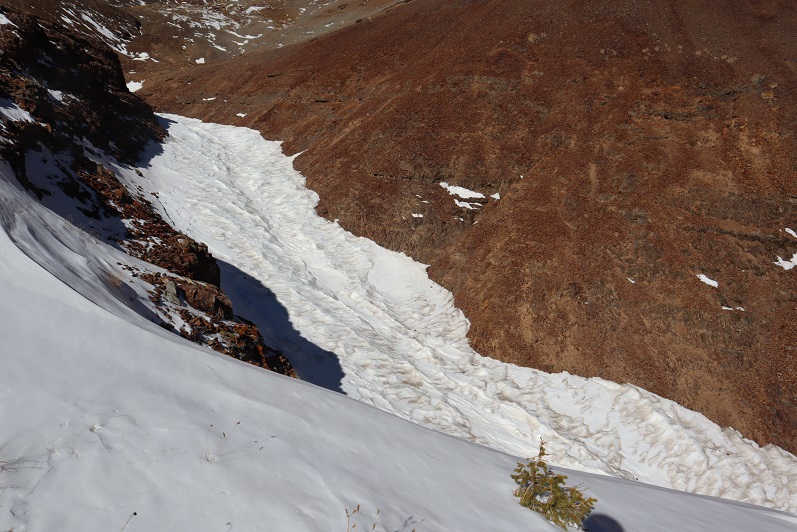
Oh, and that drainage with the dropoff was full of ice…
27

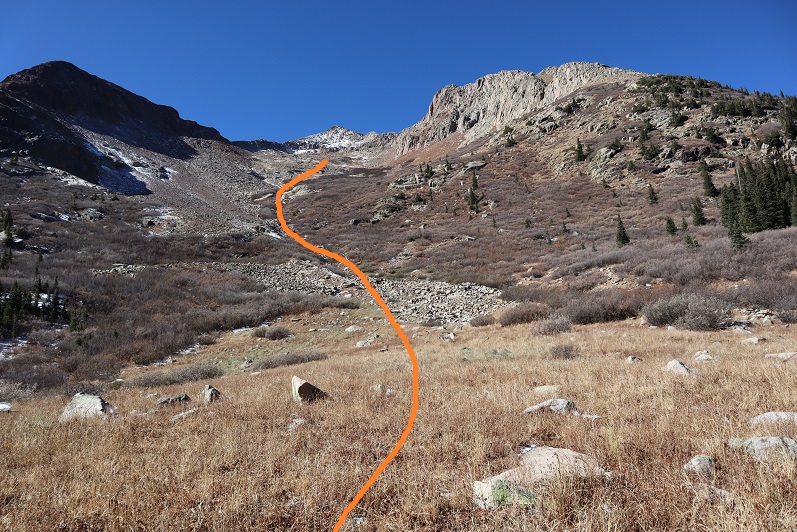
I backtracked on the trail for about a mile and just before making it back to the South Park area I turned left (west) and left the trail. Here’s the route I took
28

This drainage was full of a lot of large, loose boulders. Not the kind that would cause a rockslide, but the kind that would roll out from under you can cause you to twist your ankle.
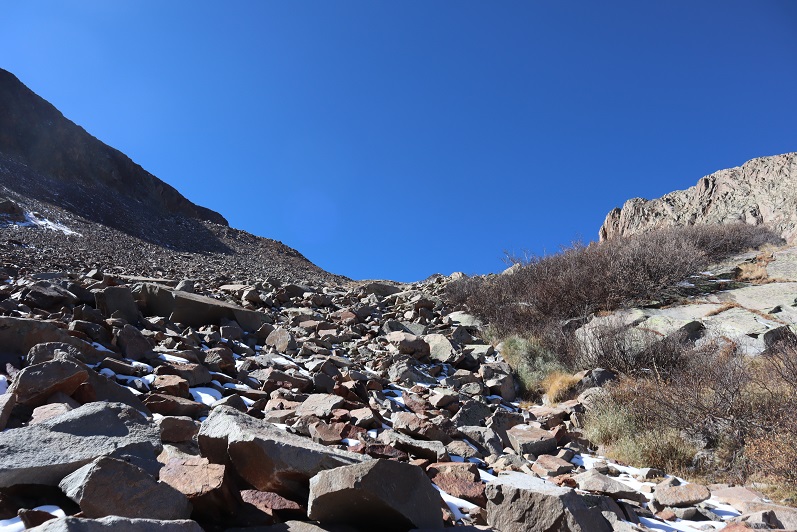
29

After the rocks came tundra

30

And as I made my way up this area I crossed my fingers I wasn’t going to encounter a similar snow-filled bowl like I had on the other side. Luckily, this is what I saw as I ascended.  Woohoo!  More rocks!
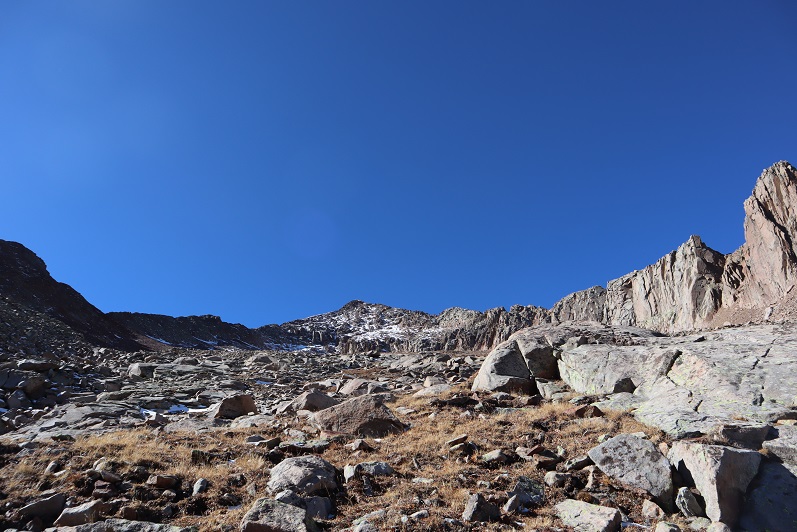
31

And just a little bit of avoidable ice. My goal here was to gain the ridge.  I knew I needed to head straight to the rock wall and then turn right (northeast) and ascend the ridge
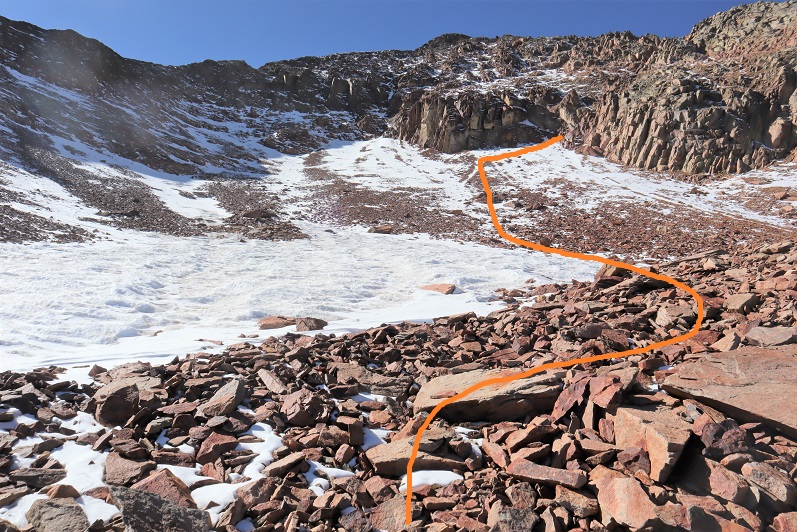
32

All was going well until I made it to the rock wall.
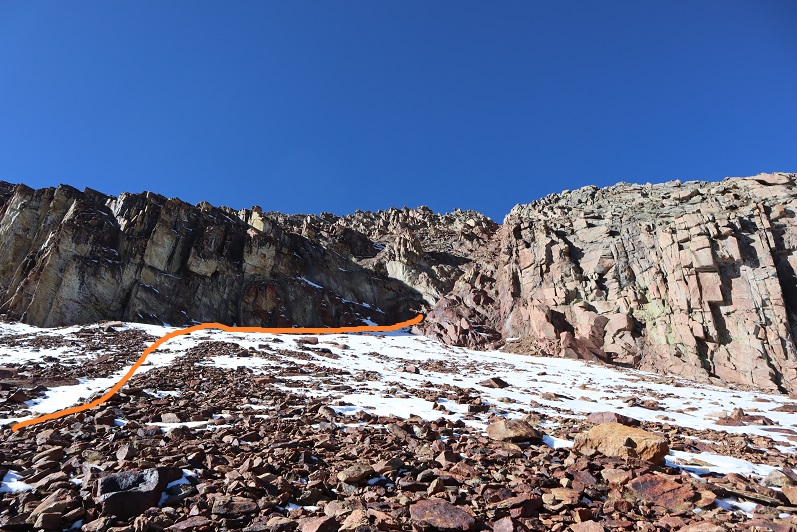
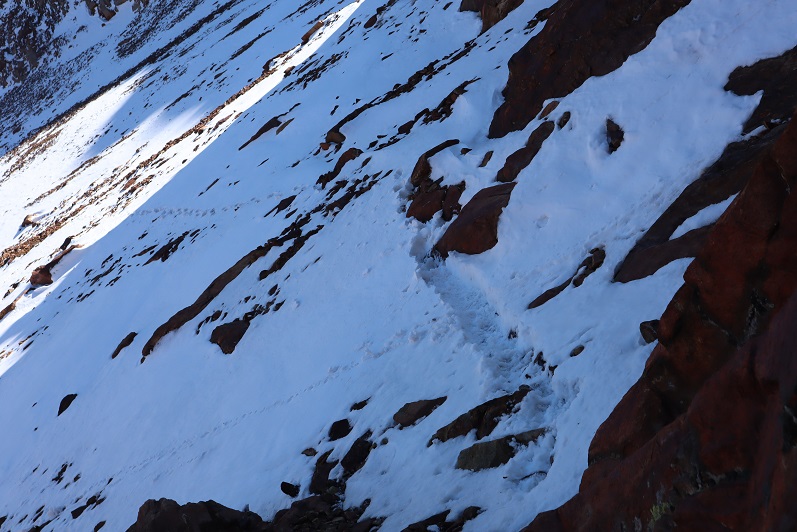
33

Here the snow became steep, and I had to get creative to stay safe. I made a small snow trench and shuffled my way to the gully.  Here are my tracks looking back.
34

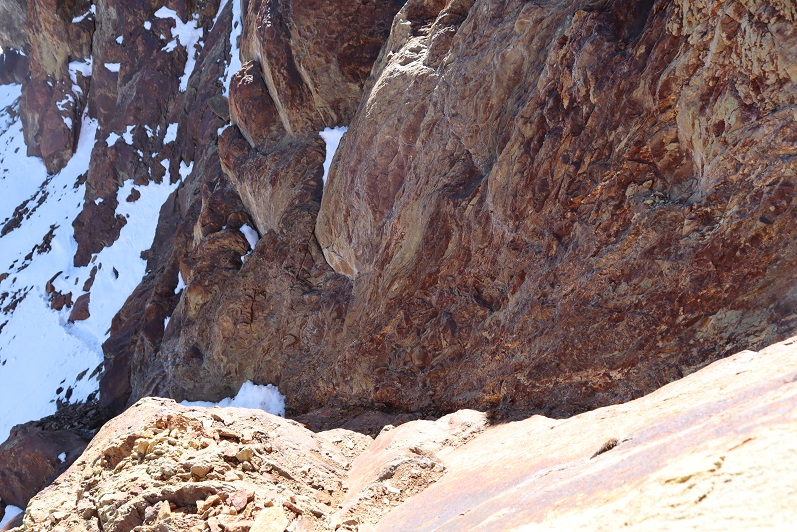
What I saw ahead of me made my heart sink: My (loose) beta told me to just ascend the gully to the ridge, and that this was a class 2 hike.  Let me tell you, this is NOT a class 2 gully, or even a class 3 gully (maybe class 3 in snow:  this would probably be an ok couloir climb).  I decided to take it one step at a time, dropped my trekking pole and headed up.

35

36

It started out class 3, but quickly the little bits of dirt and gravel that were there gave way to smooth rock. I was unable to find secure hand/footholds, and after about 70 feet of climbing I felt I was entering class 5 territory.  The rock here was smooth, and would have made a continuous slide in the rain.  If I slipped, there’d be nothing to stop me for over 100 feet.  Yes, I knew I could continue climbing up, but in no way did I feel confident climbing back down.  I should have had a helmet for what I was doing, and rope for rappelling back down.  Solo adventuring is dangerous, and I’ve promised a lot of people in my life if I felt in over my head I’d turn back.  This was one of those times.  I took a picture of the down climb
37

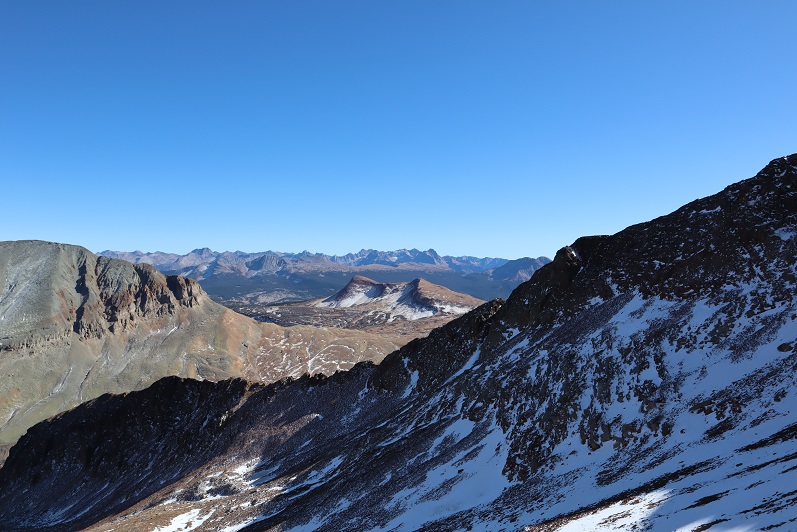
And one of the Grenadiers (fresh beta for tomorrow)
38

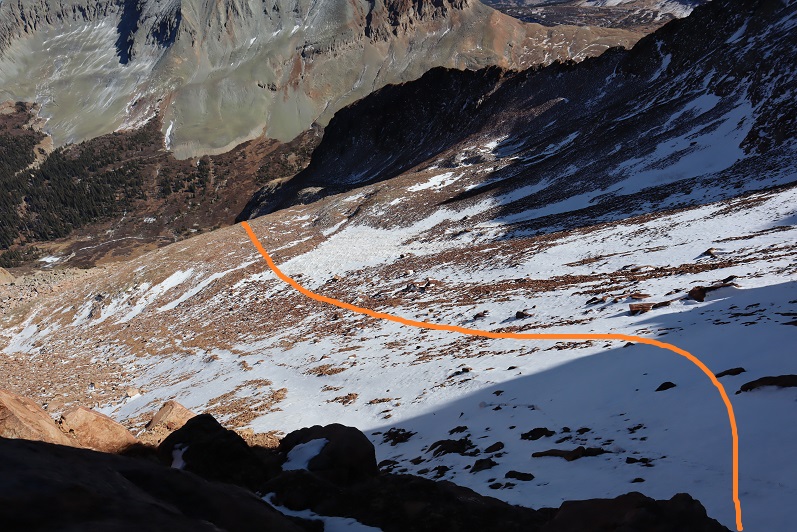
I slowly headed back down. I’d climbed much further up than I’d realized, and the down climb was much more difficult than I’d anticipated.  The entire time I was descending I kept telling myself what a good decision it had been to turn around:  this was scary insane!  Yes, it was a bit disappointing to turn back twice in one day, but I’d learned quite a lot about this mountain, and there’s still one more approach I know of I’m going to try next time.  Surprisingly, I wasn’t in a bad mood: failed attempts are all a part of the game.  In fact, I was elated when I made it back down the gully safely!  As a bonus, I now have a better idea of how I want to summit next time.  Here’s a look at the route I took back to the trail:
39

40

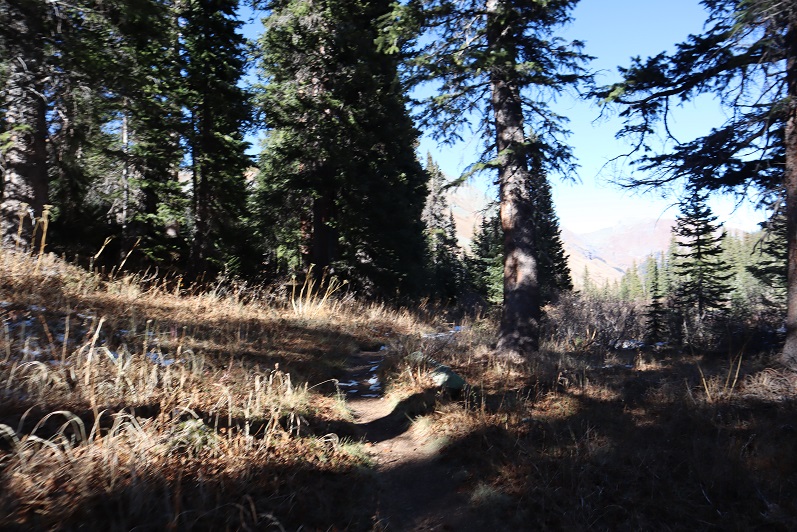
Once on the trail I decided to take the proper trail back down.
41

42

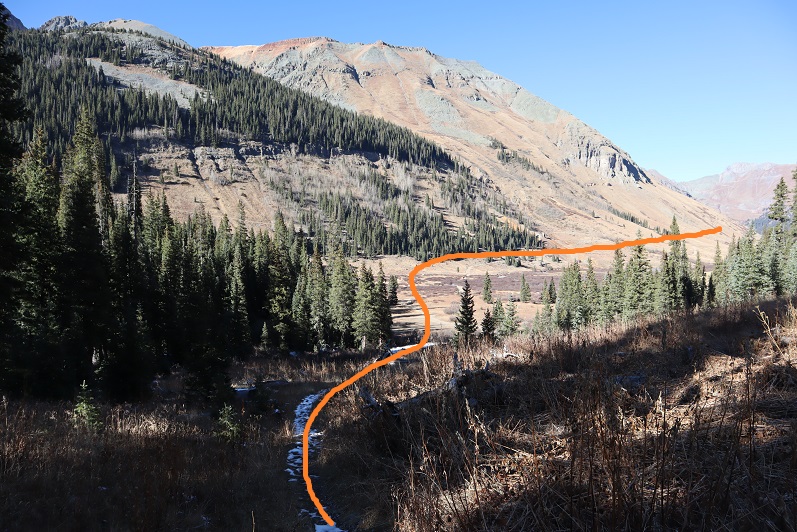
As stated earlier, there were no less than 3 icy creek crossings
43

Back on the Rico/Silverton trail I had one more creek crossing and then a nice walk on a 4WD road back to my truck.

44

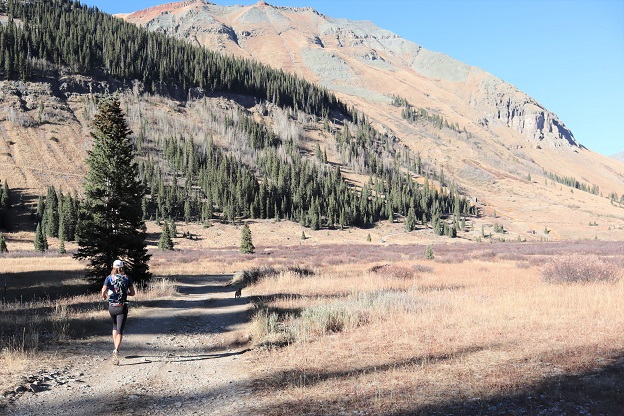
As I was walking along the road I was passed by trail runner, running with his dog. Trail runners always impress me, but this time I was doubly impressed: this guy runs with his CHIHUAHUA, and the dog LOVES it! They run every week, this time from Molas Pass to South Mineral Creek Campground. Has anyone heard of this guy? He had me take a picture of him and his dog with his cell phone (the dog posed happily) because he never sees anyone on the trails to take photos of them
45

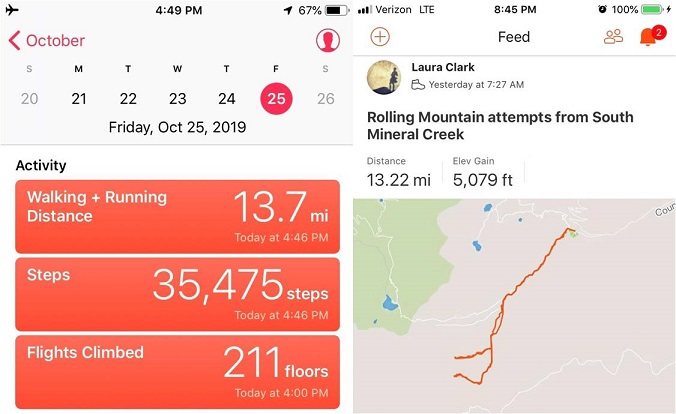
The entire way back I was surprised at how dry the Ice Lakes Basin seemed. It was too bad I hadn’t done much research on the other peaks I’d needed to hike in this area:  the conditions looked perfect!  I made it back to my truck at 4:30pm, making this a 13.5 mile hike with 5079’ of elevation gain in 9 hours (more than anticipated:  it felt like 8 miles).  Strava said my highest elevation reached was 13,172’.  Rolling Mountain is 13,693’
46

47

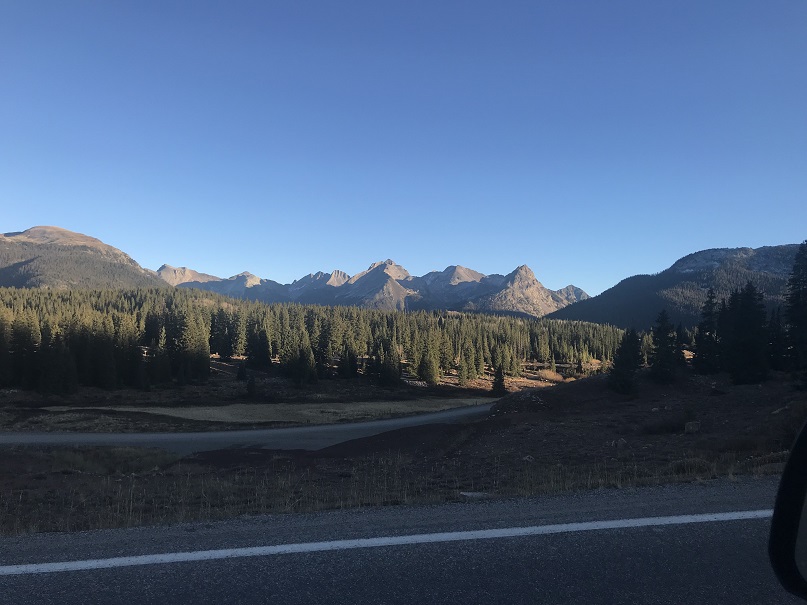
Back at the trailhead I re-braided my hair, changed my clothes and took a quick wet-wipe bath. Before long I was on my way to the next trailhead:  Molas Pass.  I drove up and got a good look at my options for tomorrow’s hike:
48

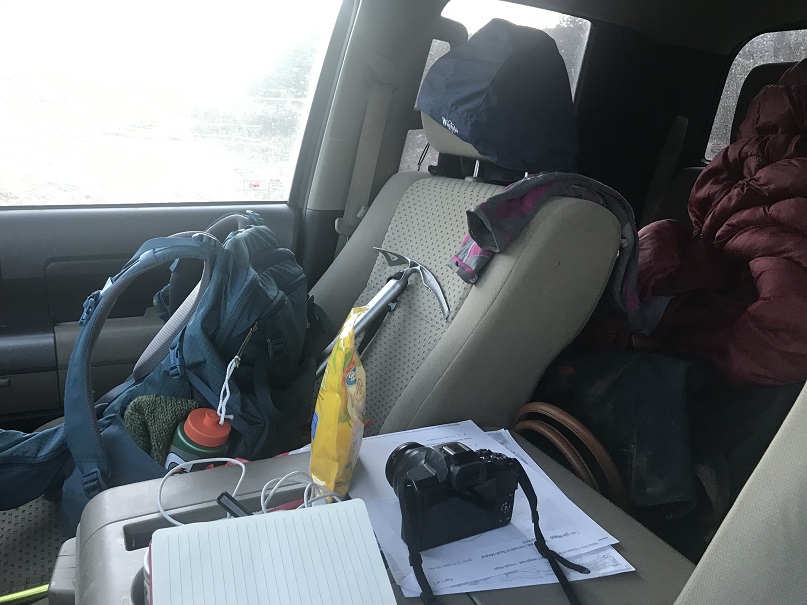
It looked to me like I didn’t need snowshoes or even traction (I’d bring traction anyway). As I sat there eating my dinner of tuna and crackers a vehicle pulled up next to me and a man and his dog got out.  They looked like they were going to be there for a while so I got out to say hi.  We got to talking, and I learned the man had recently completed the Colorado Trail after recovering from health related issues.  It had taken him 5 months (5 months!!!) and he had a new tattoo to commemorate the journey he proudly showed me, which incorporated Arrow, Vestal, and the Trinities.  We exchanged trail names (his was “Mosey” for obvious reasons).  The Colorado Trail has been calling my name lately, but I’ll most likely have to do it in weekend segments because I’ll never get the time off work to do it all at once.  He seemed appalled by this.  I told him I was sleeping in my truck and heading out early in the morning, to which he took as meaning I was homeless.  I assured him I wasn’t, just a dedicated outdoor enthusiast.  He called that hardcore.  After completing the CT he moved here from Bailey and just wanted to see the mountains again.  It was my goal to get to bed before 7pm so I politely excused myself, brushed my teeth, put Vaseline on my feet, and waited for him to leave so I could find an appropriate place to use the restroom.  I made a few notes in my hiking journal about the day’s events, had 2 (ok, 3) shots of whiskey, and took a look around me.  Yes, it did seem as if I lived in my truck (I swear I clean it up when I get home on Sundays)
49

I set my alarm for midnight and set up my bed (3 sleeping bags and a body pillow: it was supposed to be 23* here tonight).  I was still going back and forth on which peak(s) I’d hike in the morning, but figured I’d make the decision when I could see them up close.  As I’d learned today, even a little bit of snow on the trail can completely change your hiking plans.