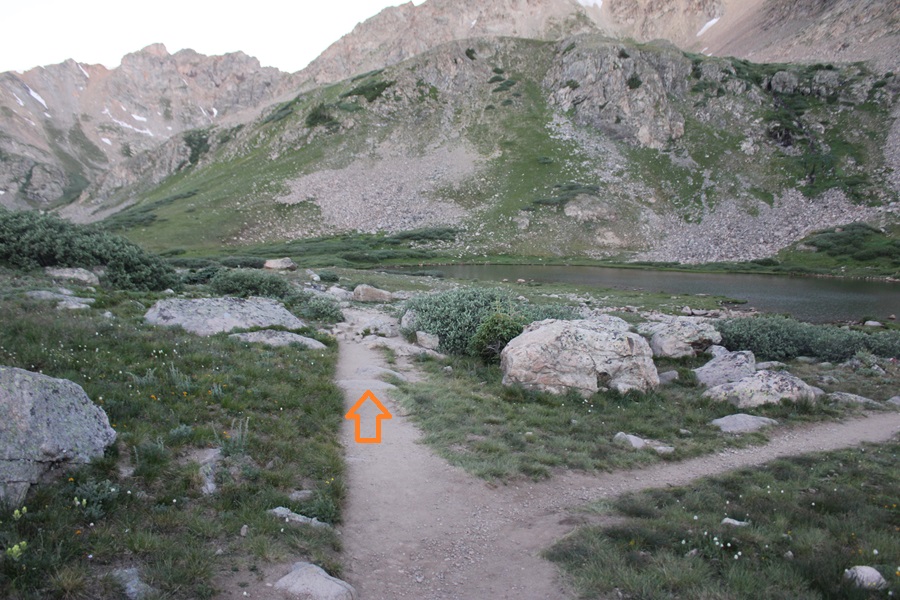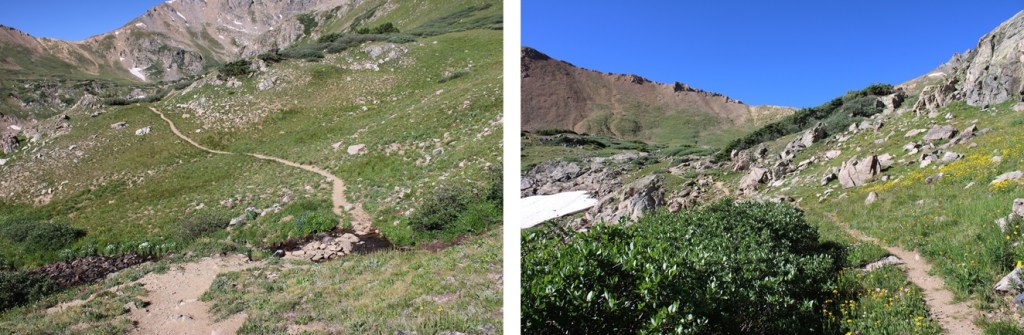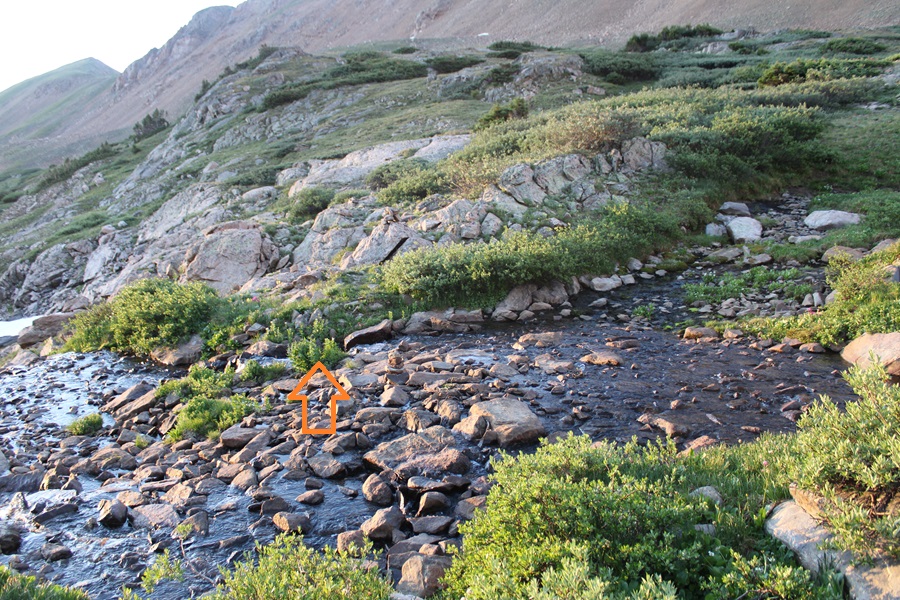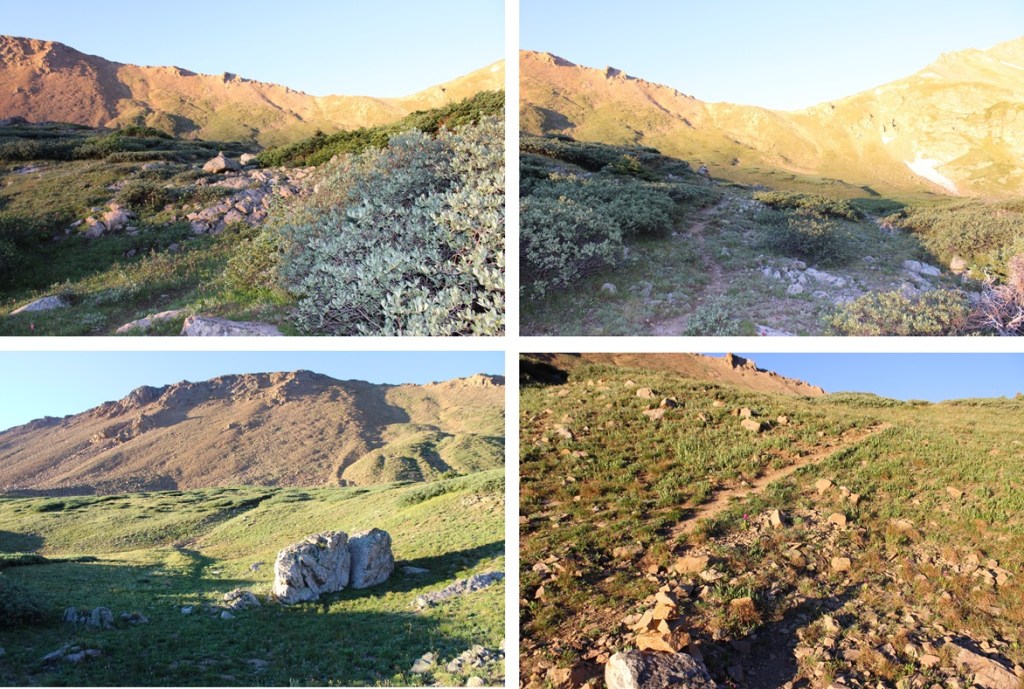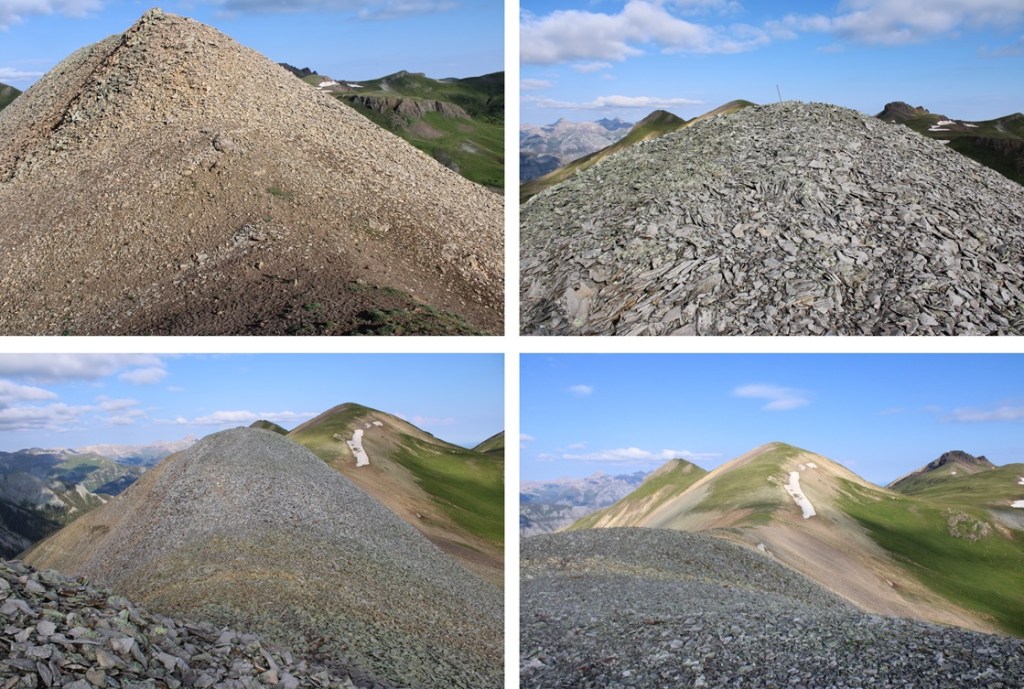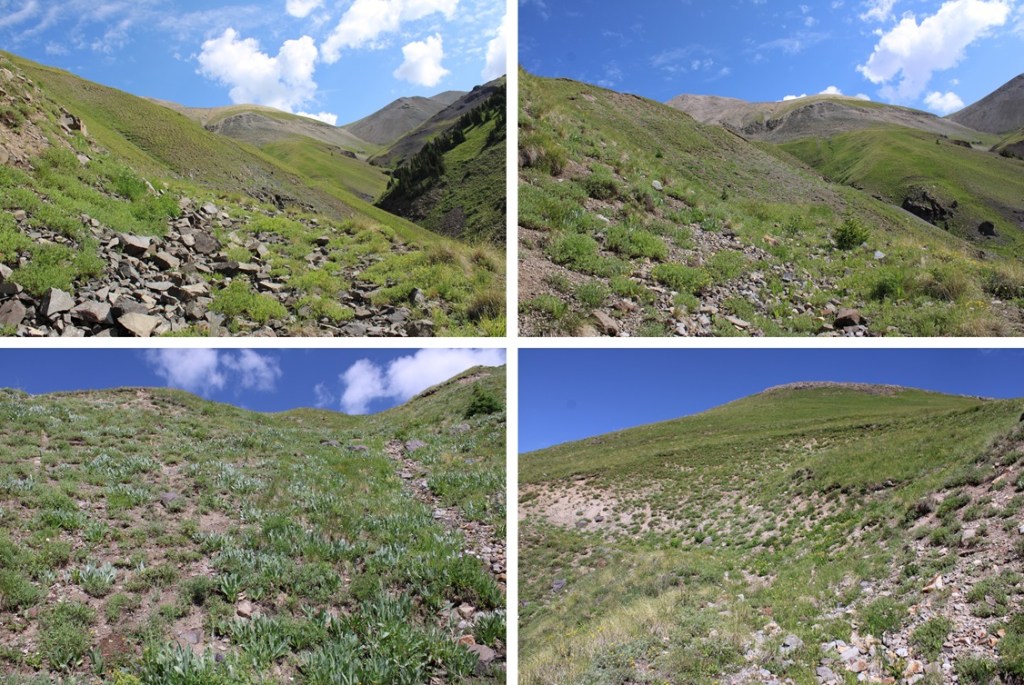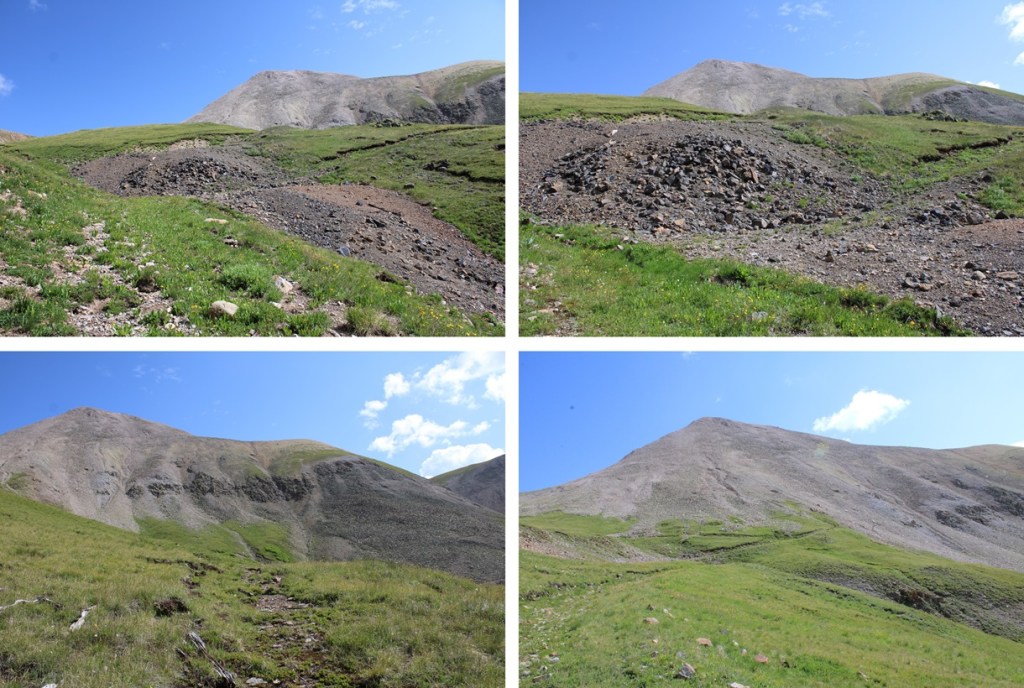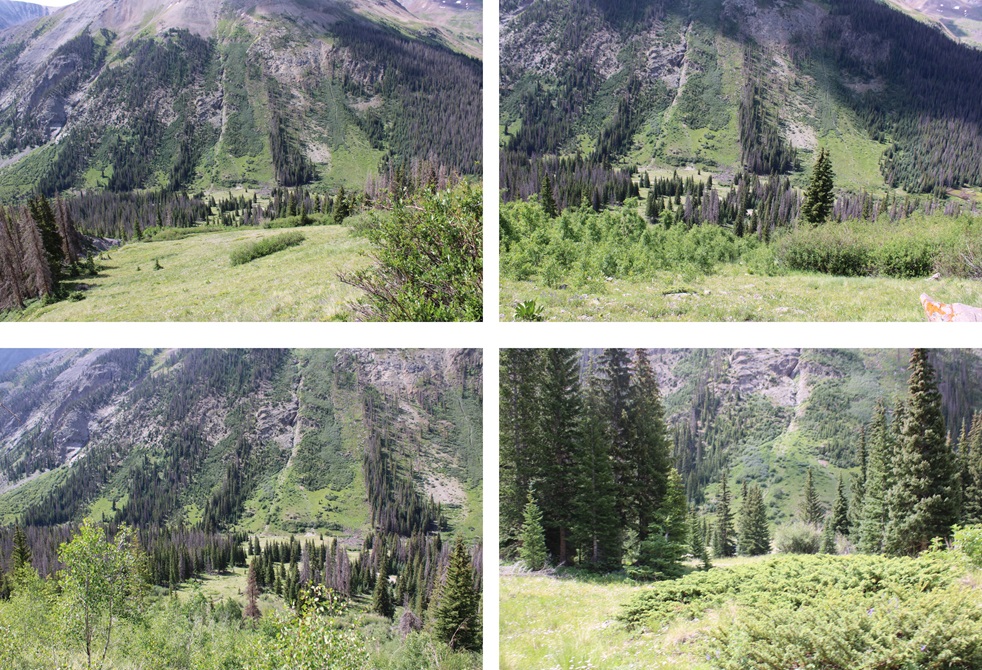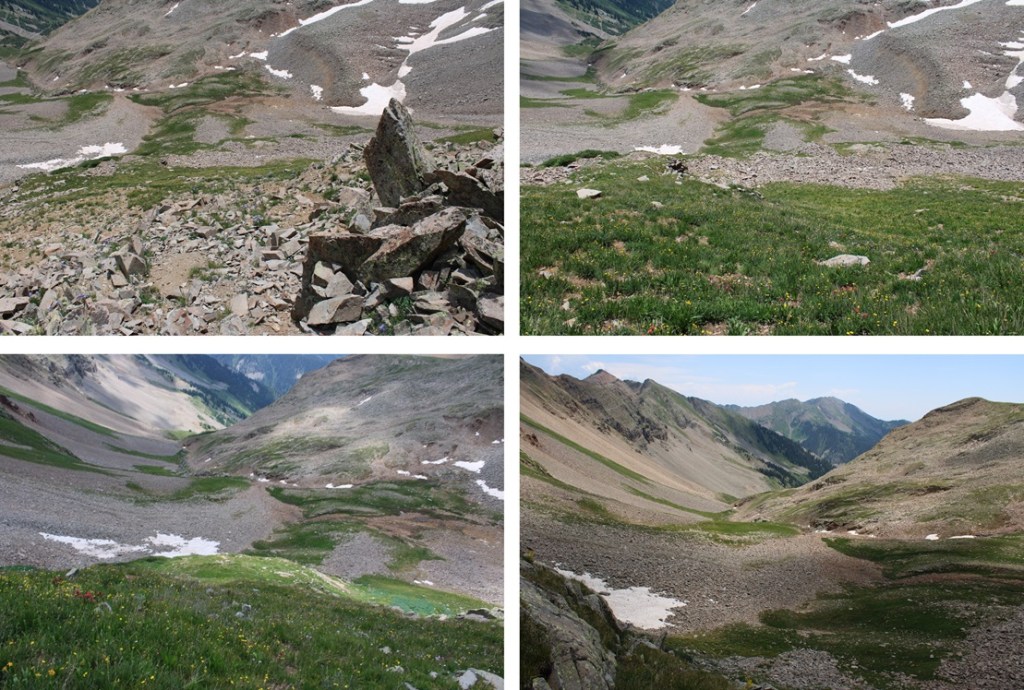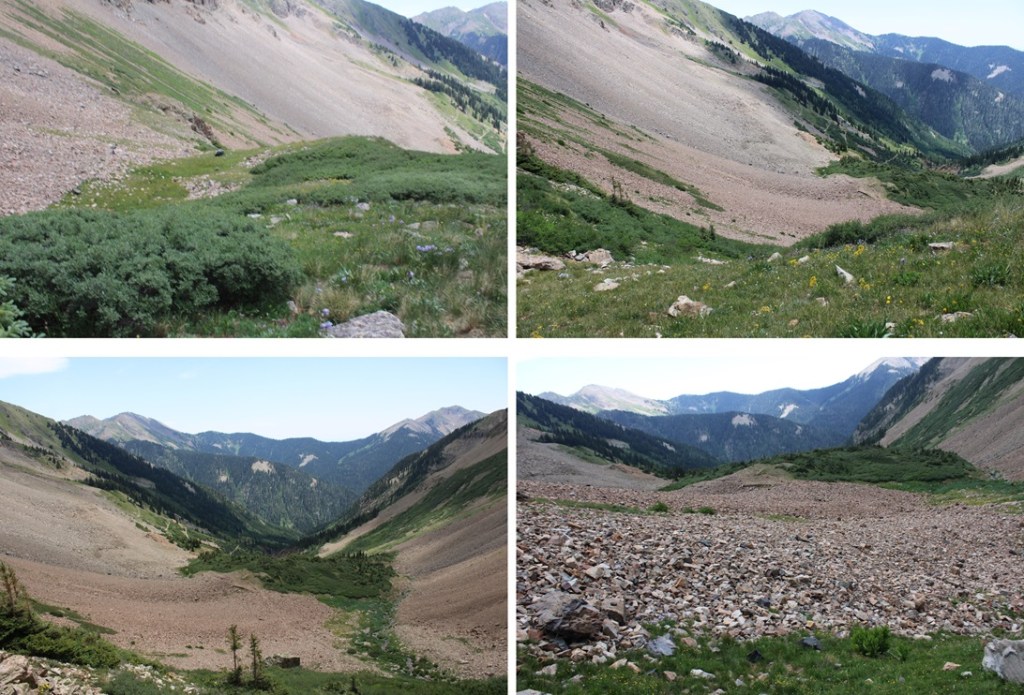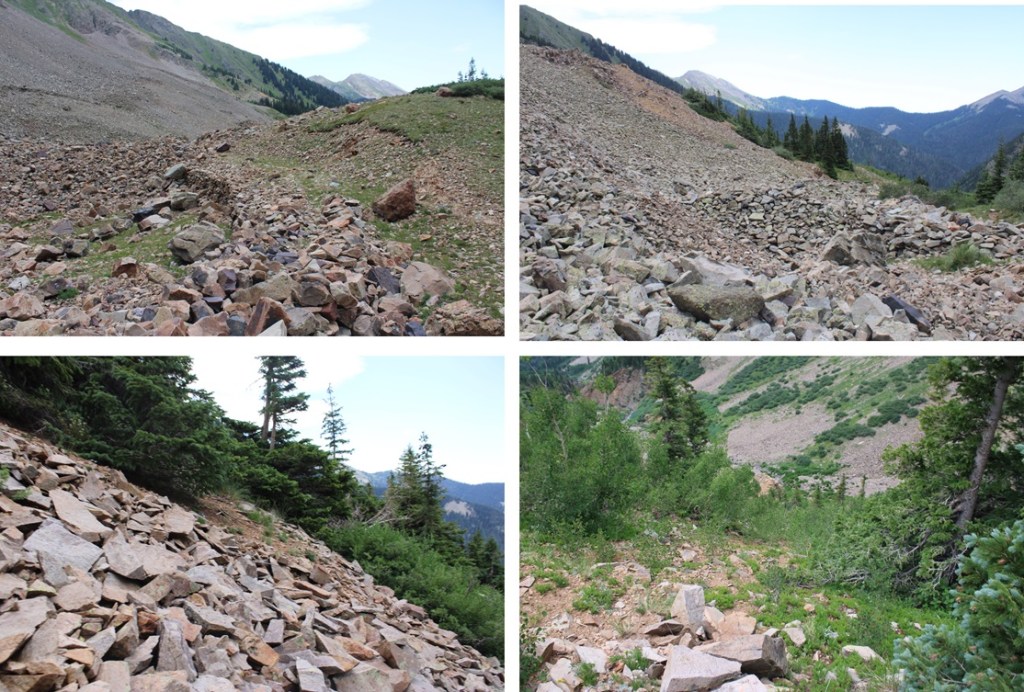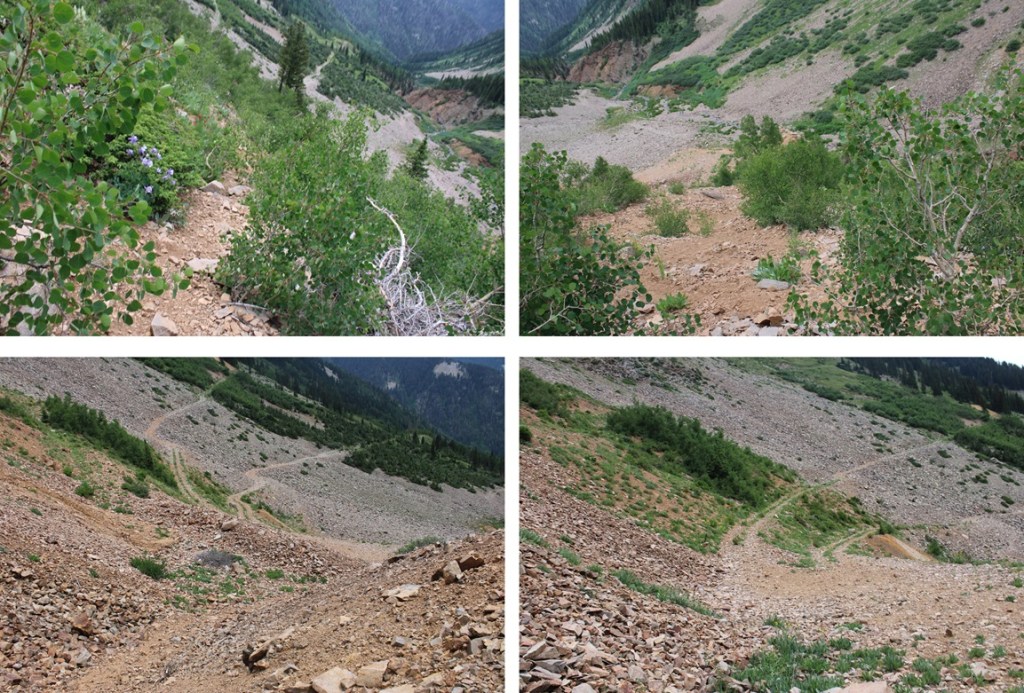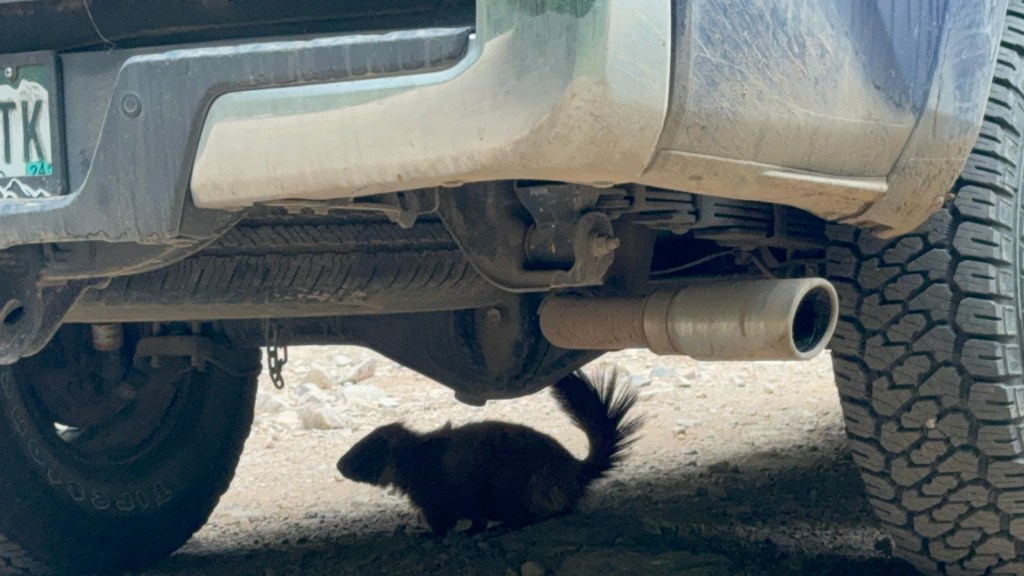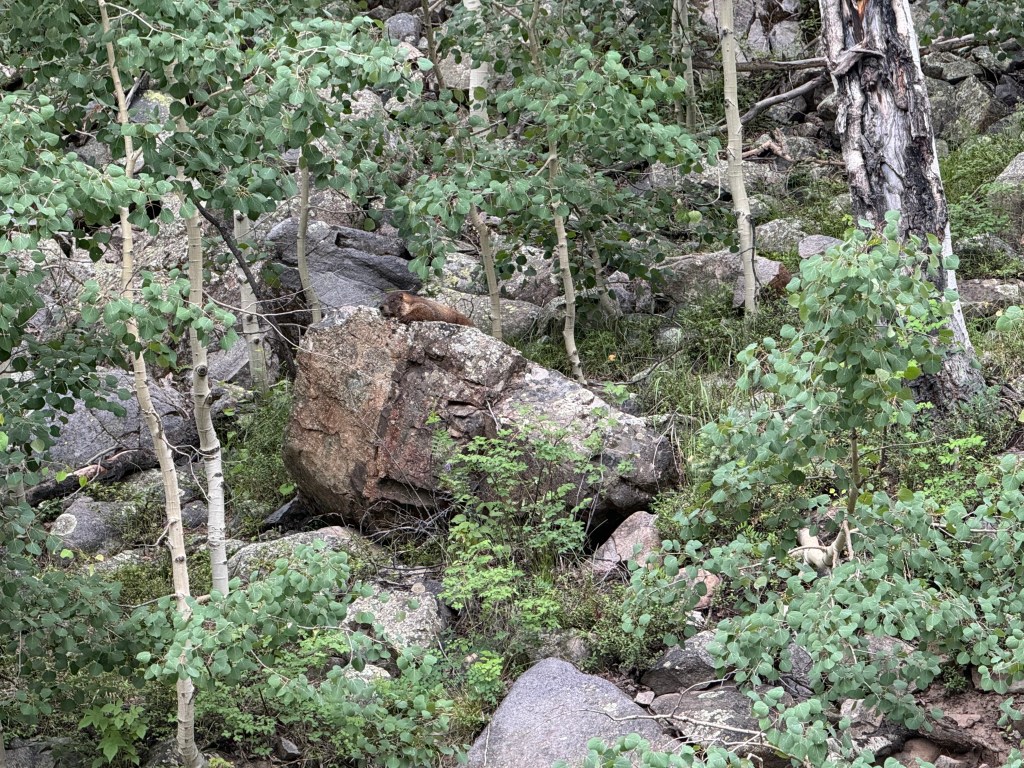
PT 13121, Mt Nebo – 13,209, and PT 13232

Route Length: 8.55 miles

Elevation Gain: 3732’

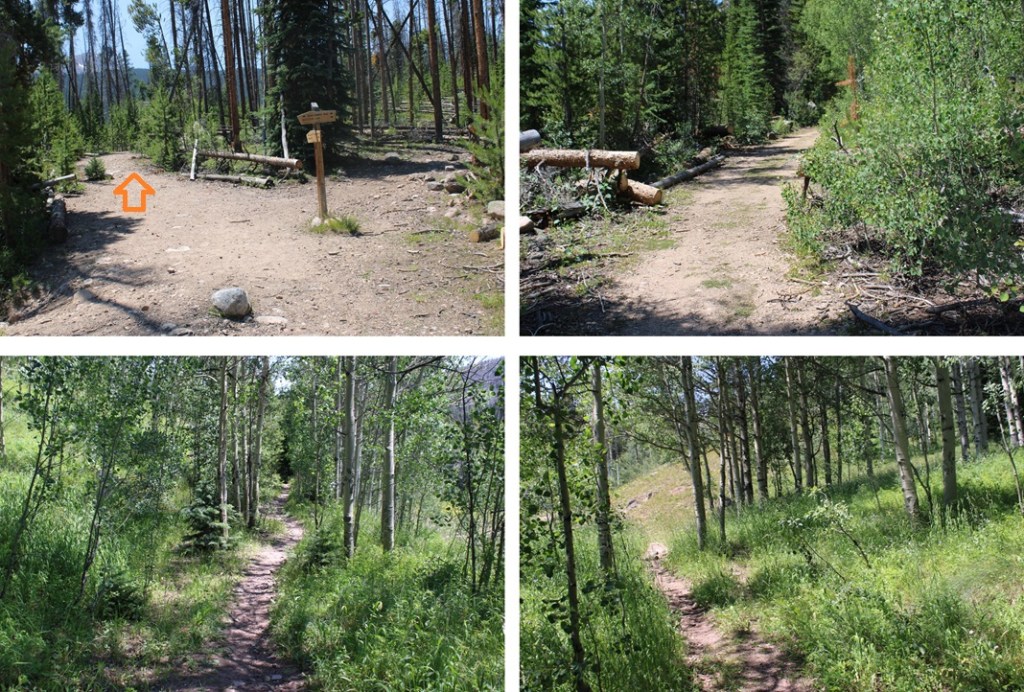
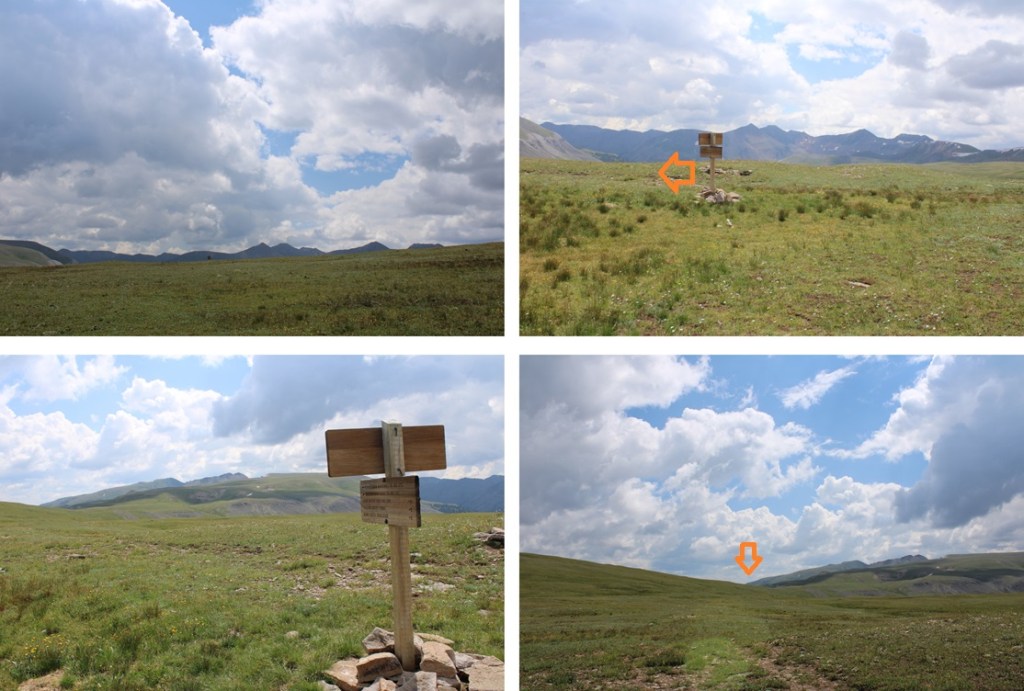
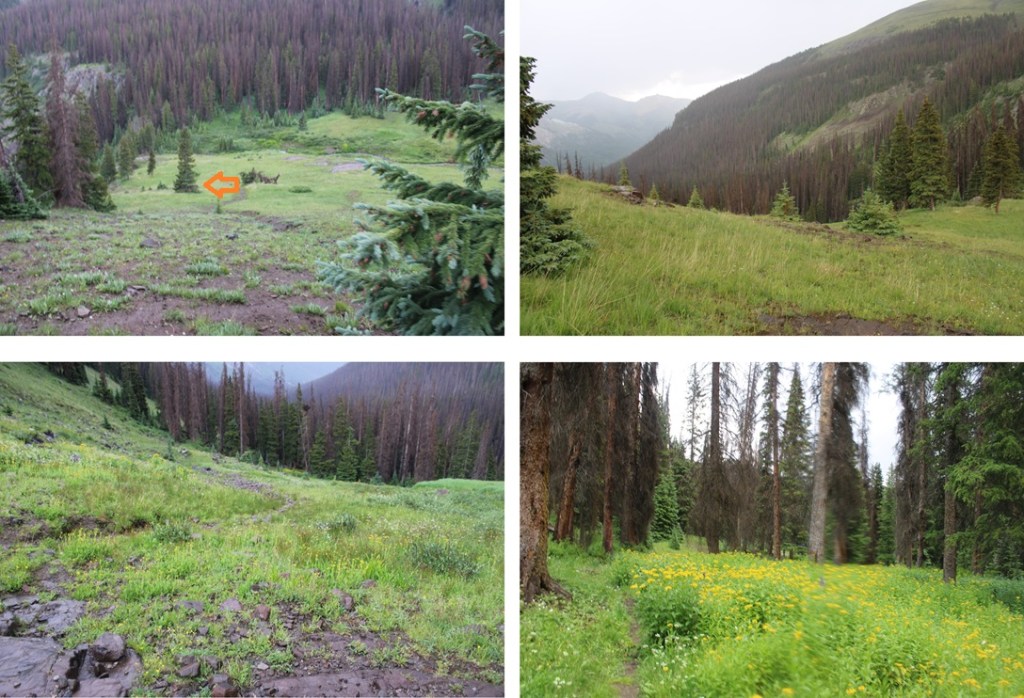
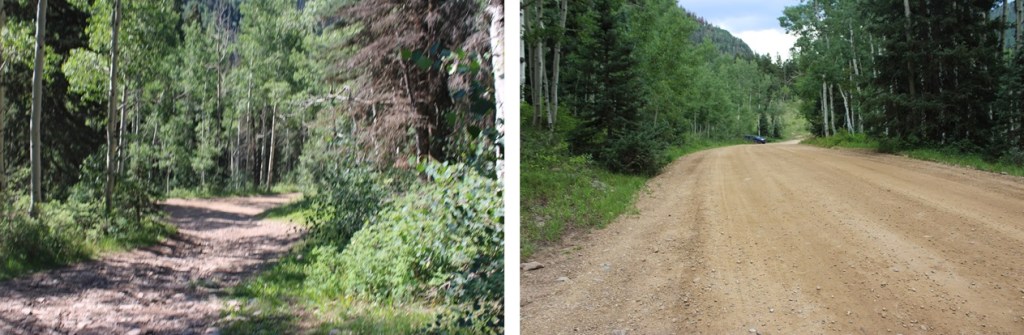
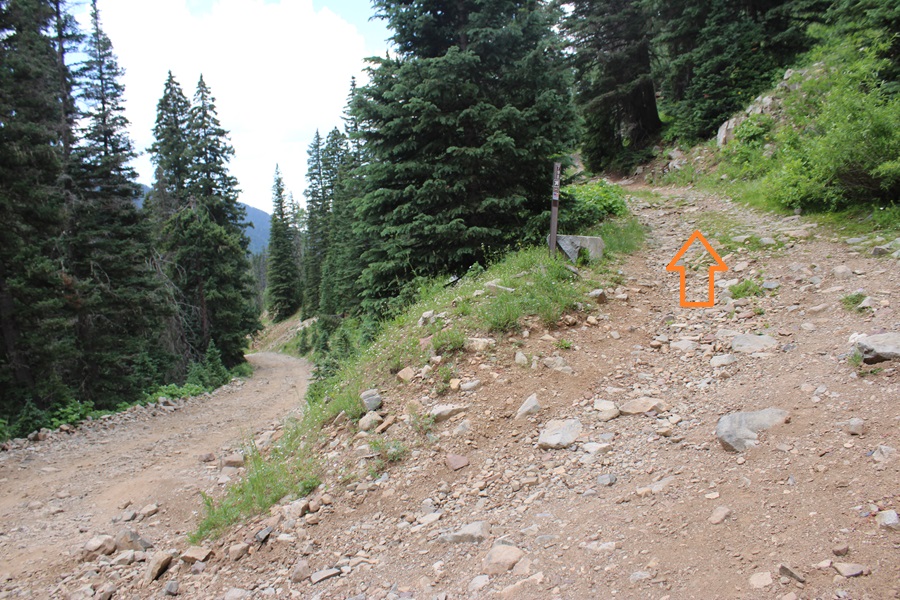
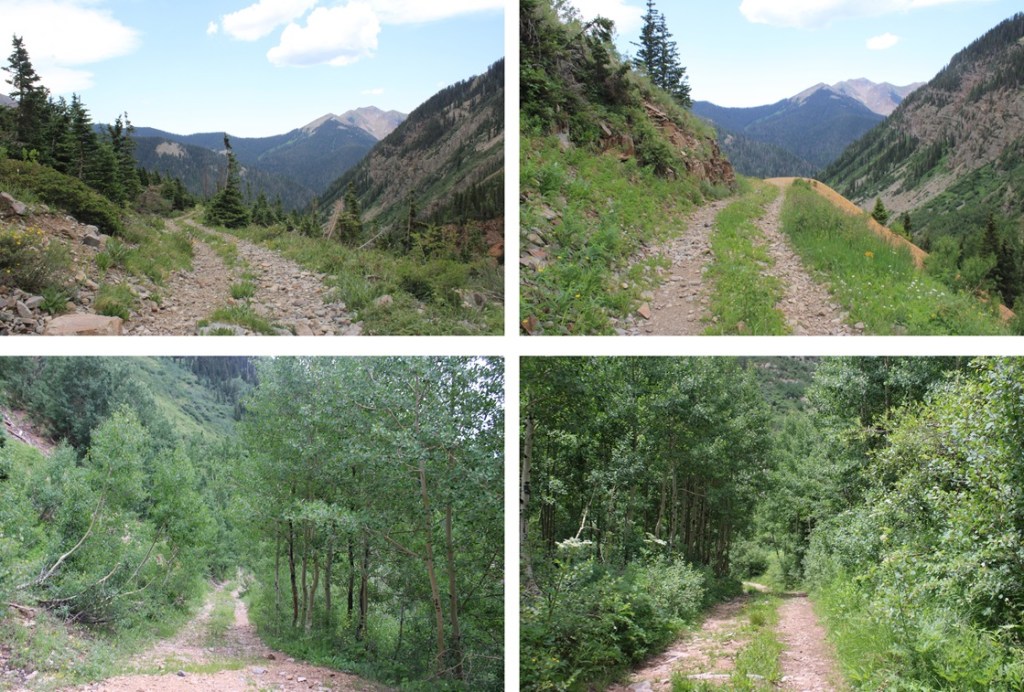
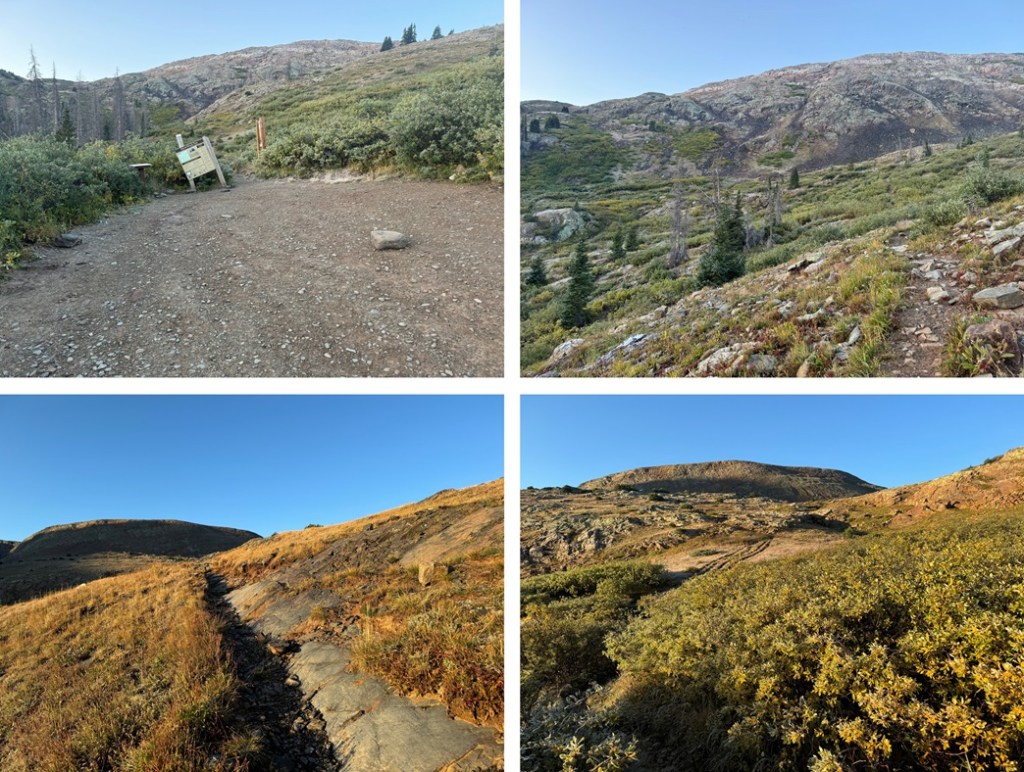
I was up and following the 4WD road towards the Hunchback Trailhead at 6:30am.  It was cold because it had rained the night before, and everything was covered in a film of ice.  I followed the road for 1.5 miles to Hunchback Pass Trailhead.

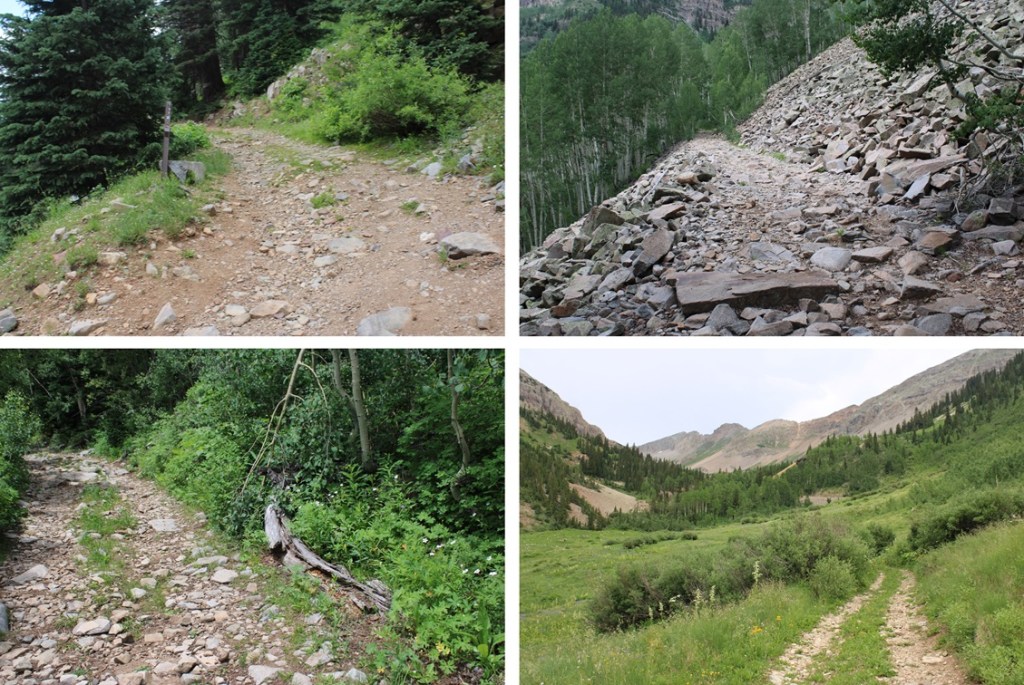
I then followed the trail another 1.5 miles to Hunchback Pass
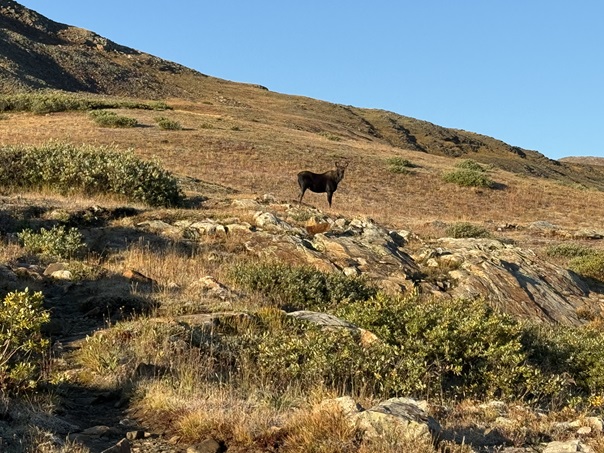
Oh, and I saw a moose along the way.  Well, actually two moose, but the male got scared and ran away before I could get a picture.  The female wasn’t too bothered.
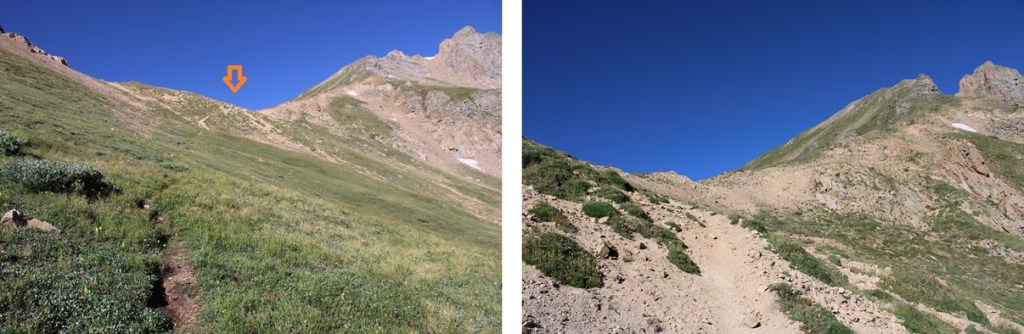
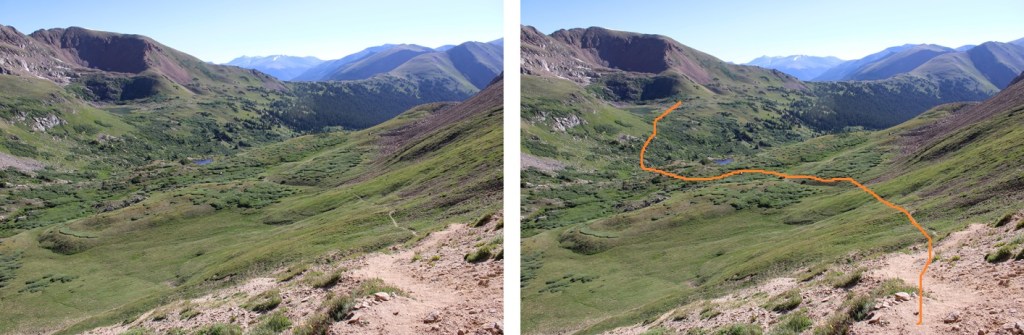
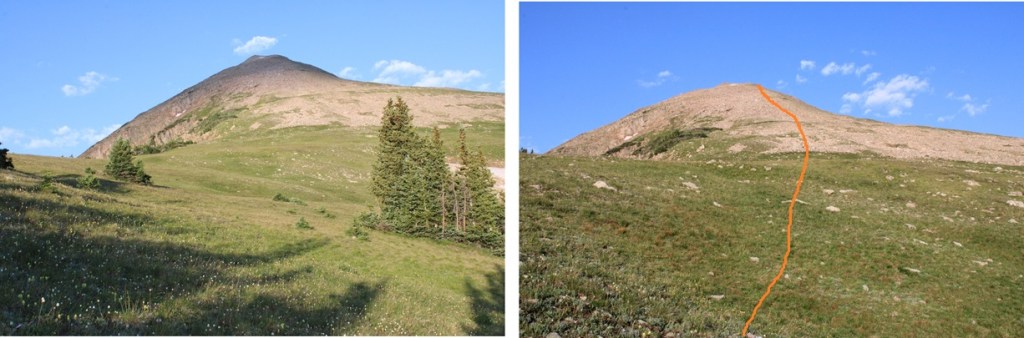
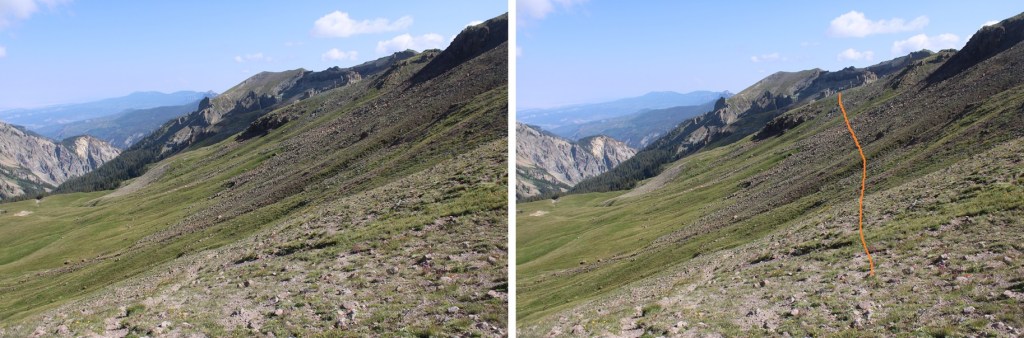
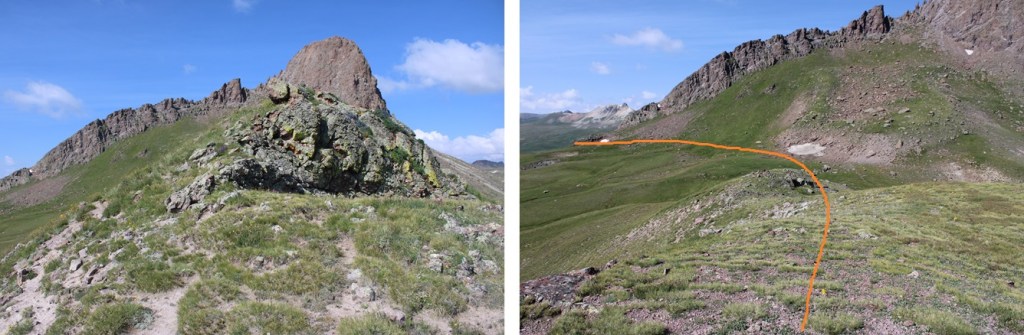
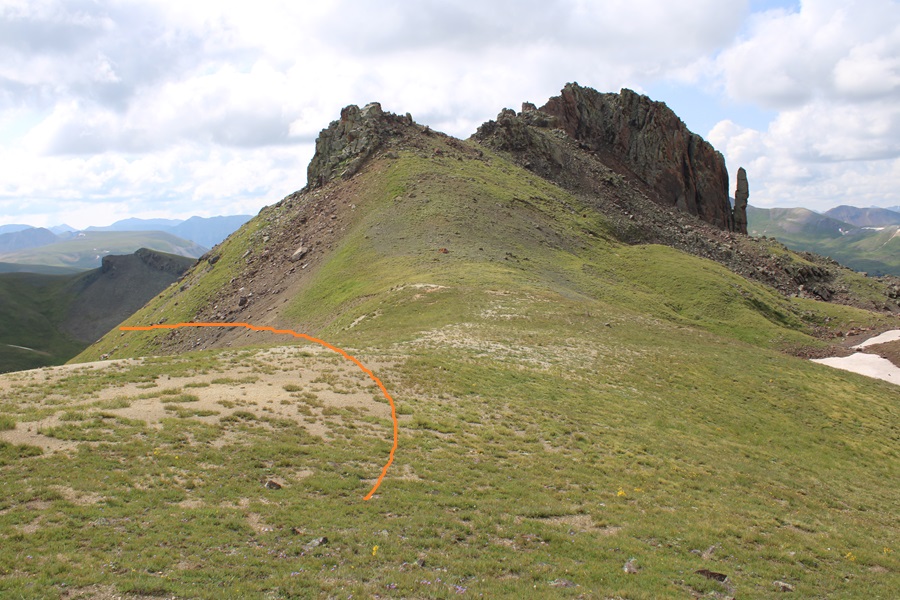
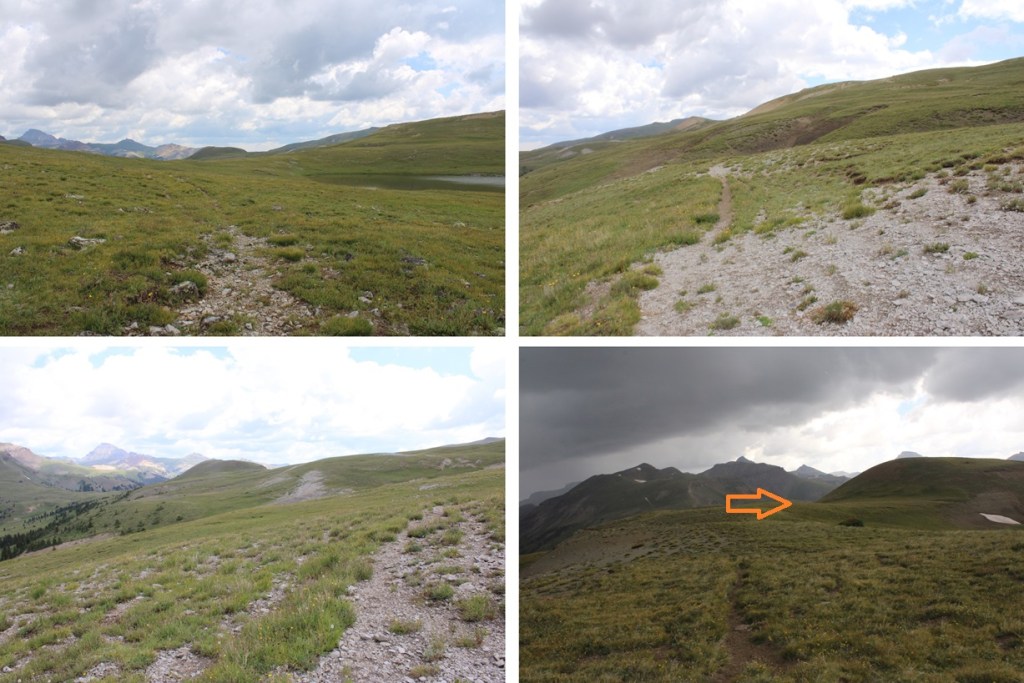
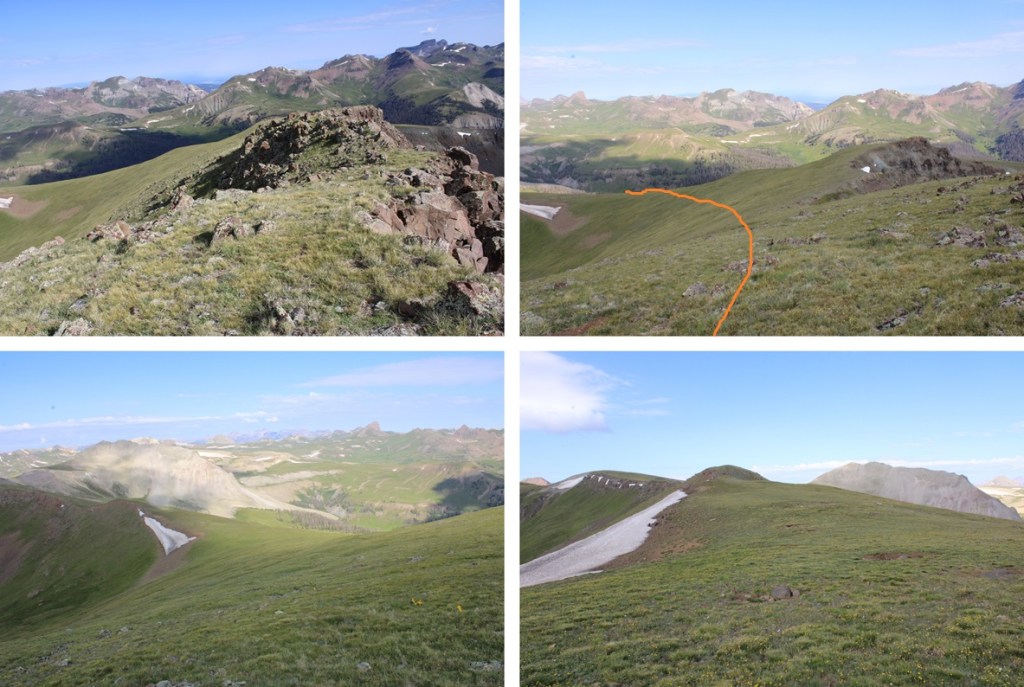
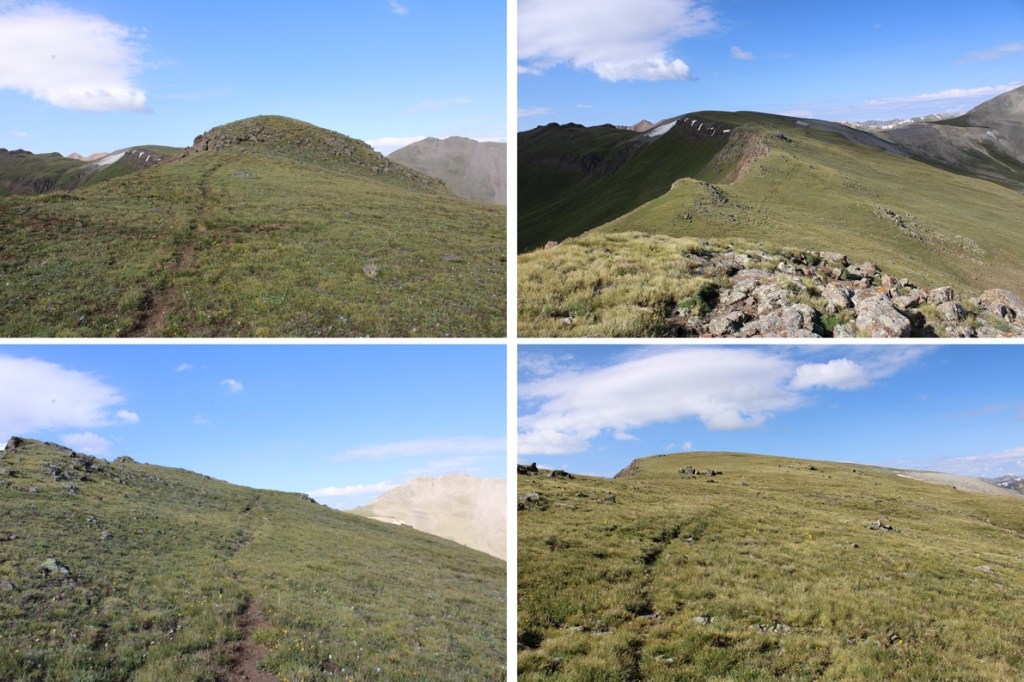
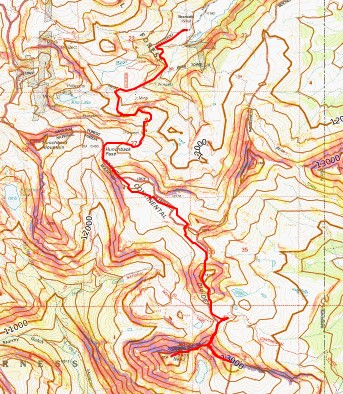
Once at Hunchback Pass, I turned left, and followed the ridge south, then southeast. Here’s the general route I took.  This is choose your own adventure, and this morning I went slow because the rocks were icy.

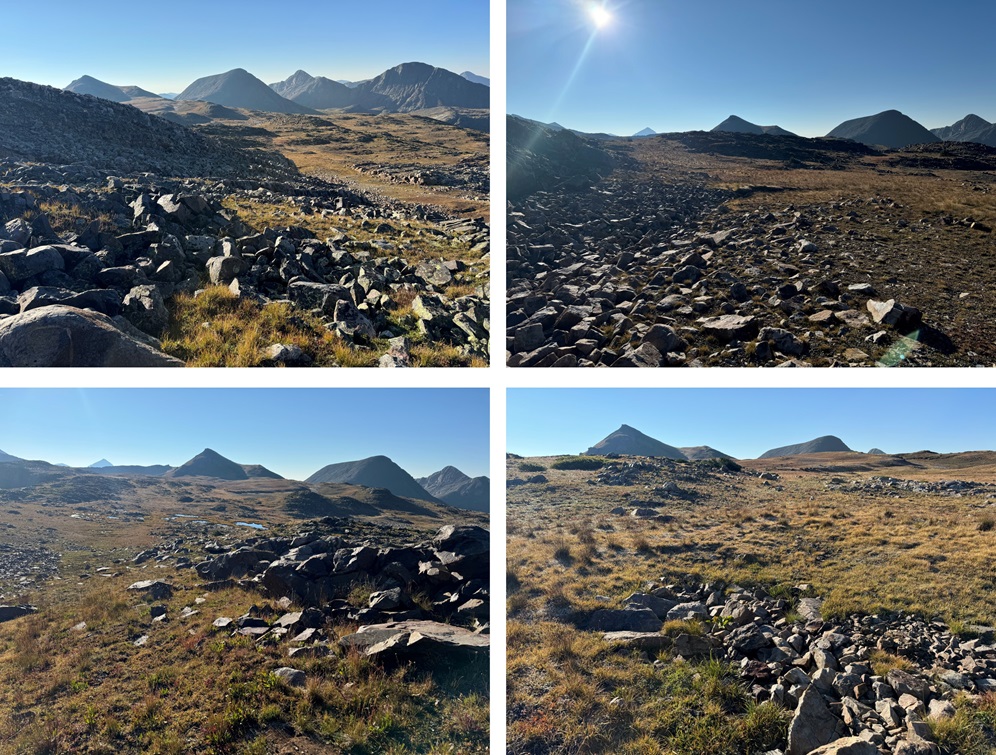
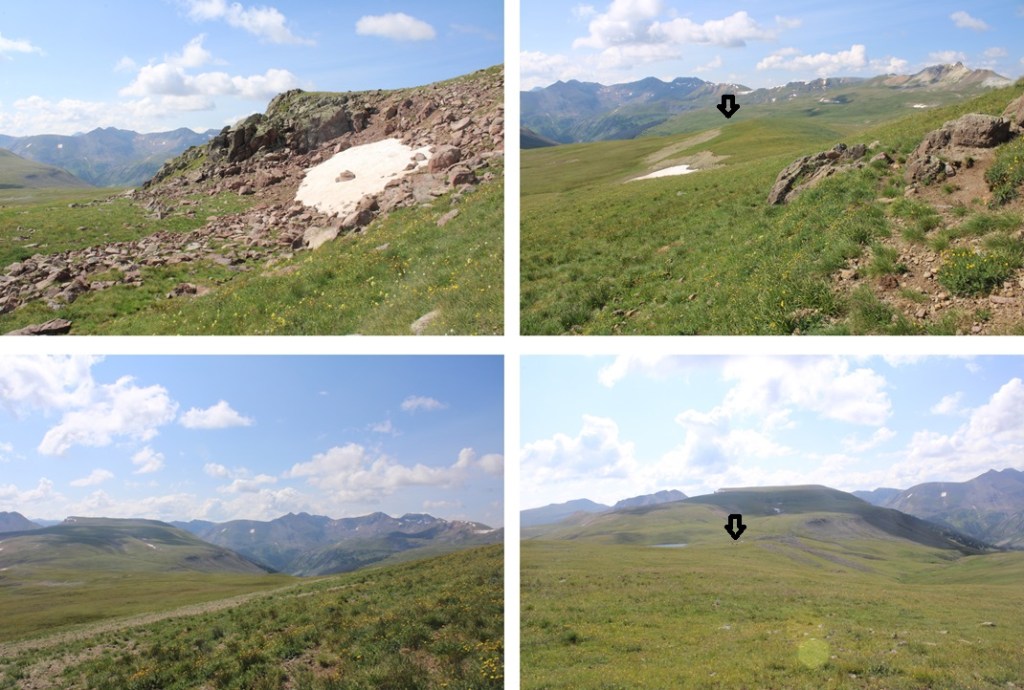
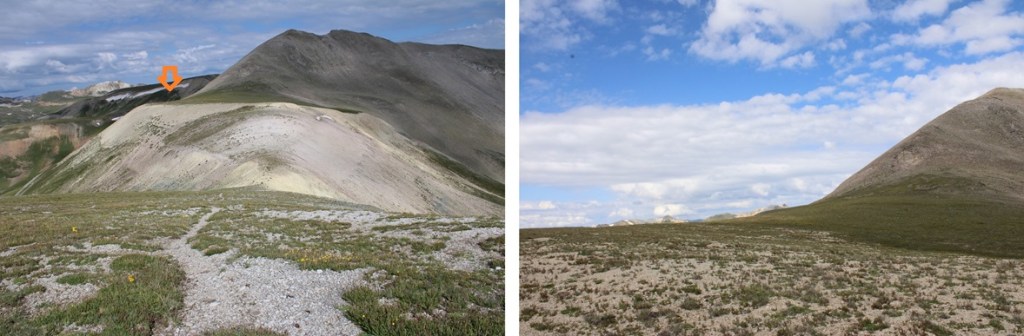
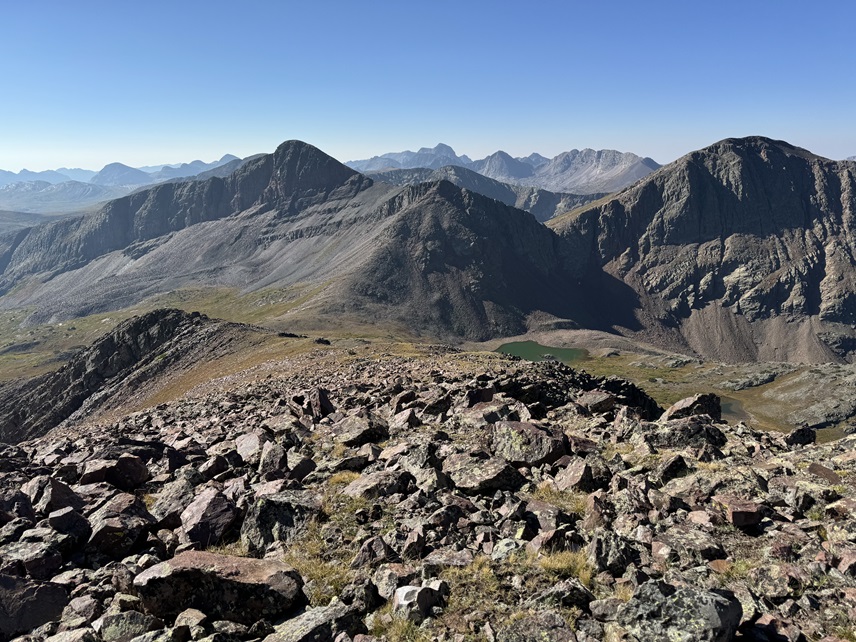
At the top of the ridge I could see PT 13121, Mt Nebo, and PT 13232 in the distance.  I followed the tundra towards PT 13121.  If you are following my GPX file, you’ll notice it’s a little erratic here.  That’s because my compass kept doing crazy things.  Just keep heading towards the base of 13121.

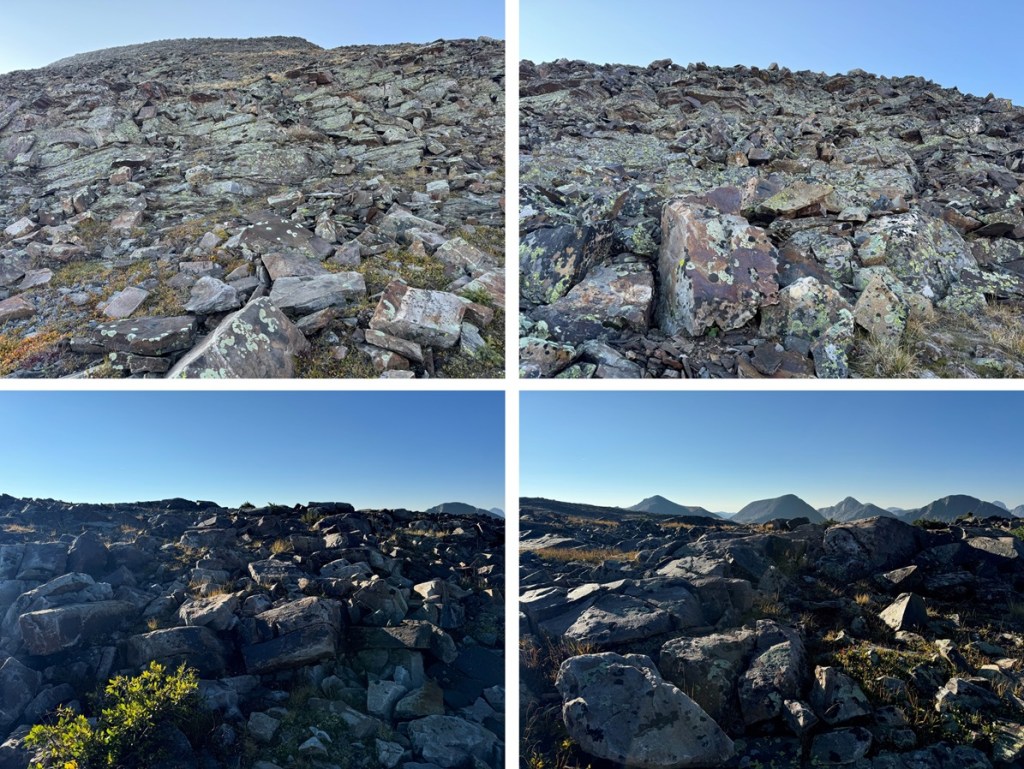
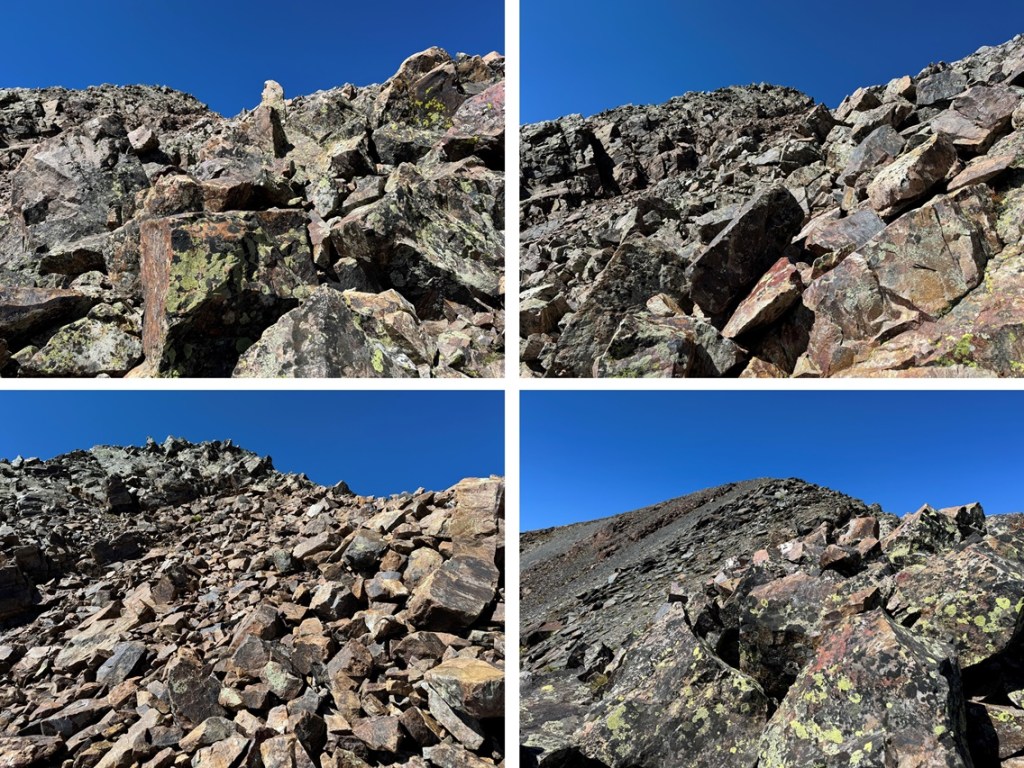
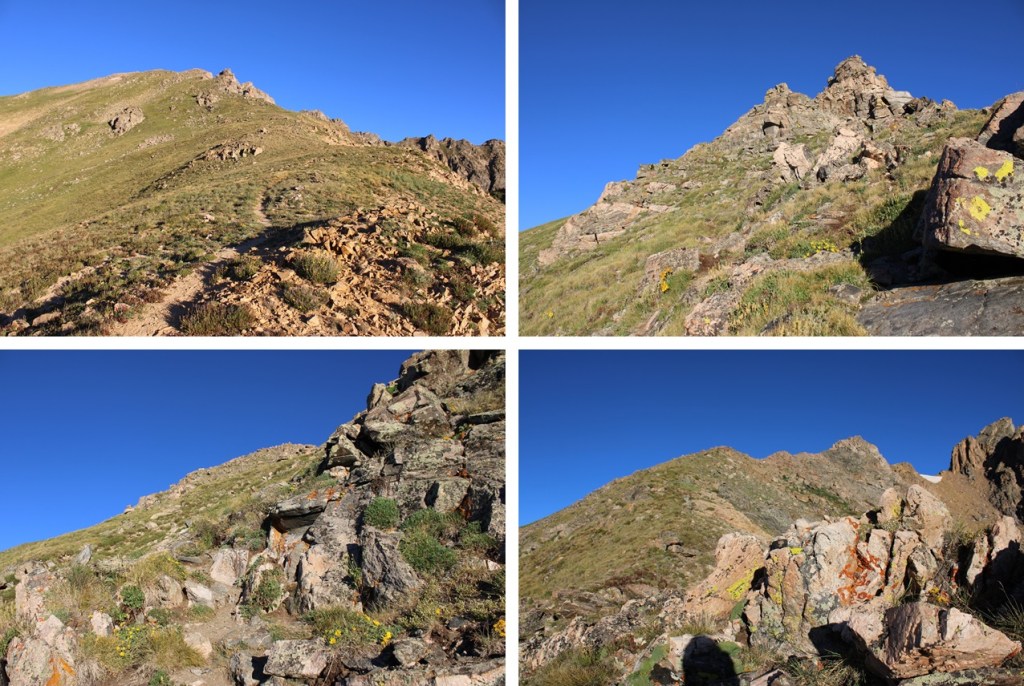
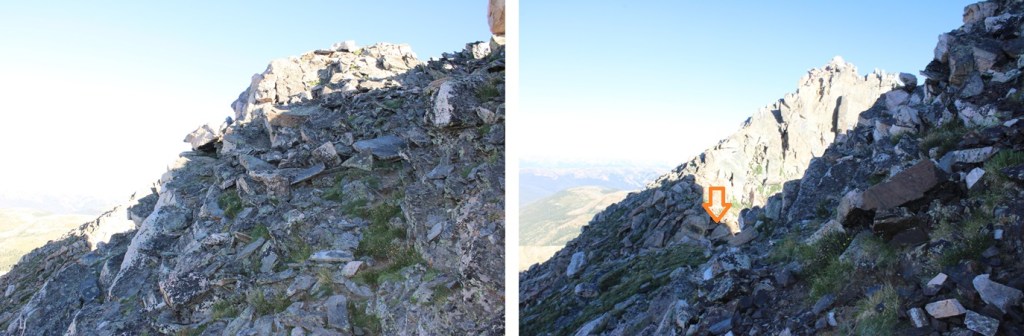
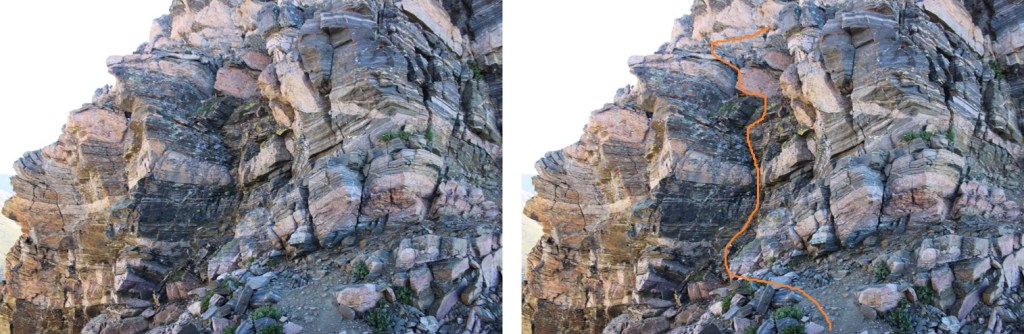
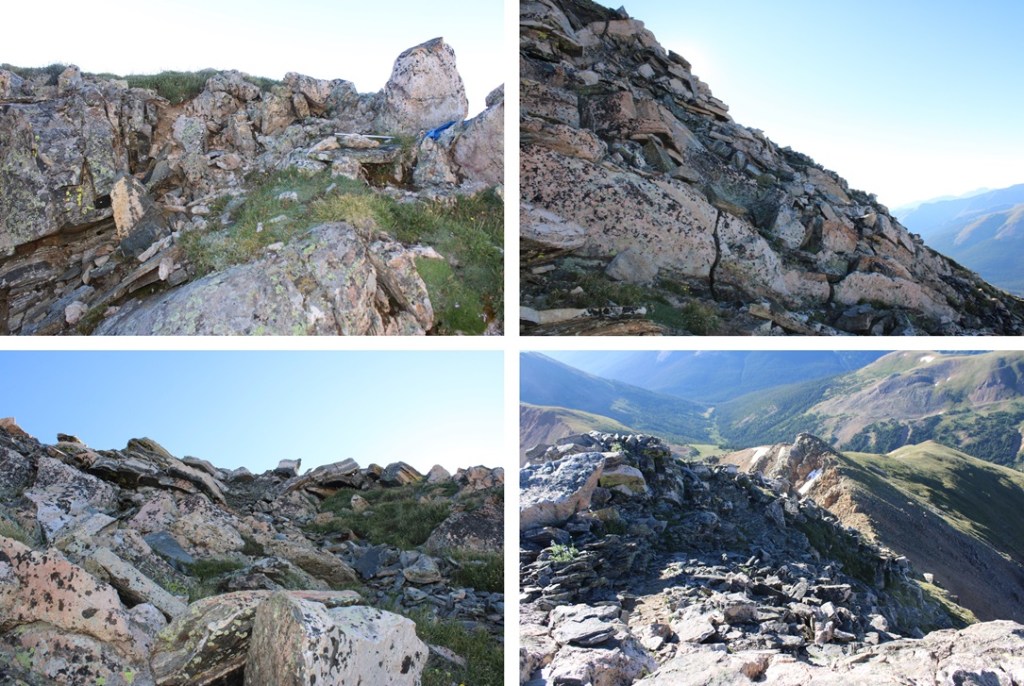
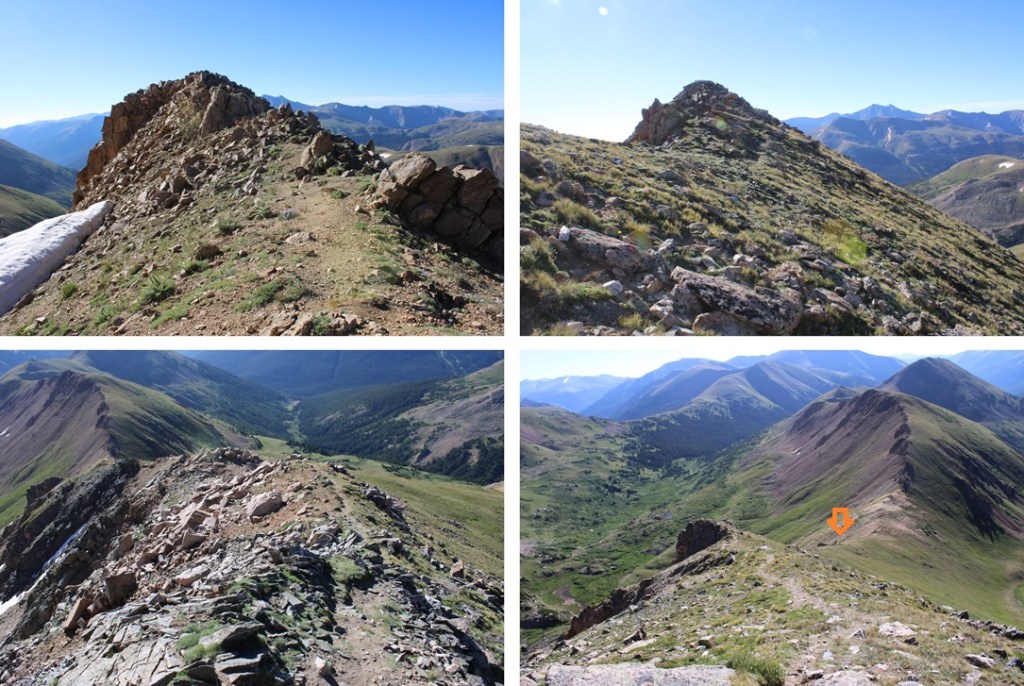
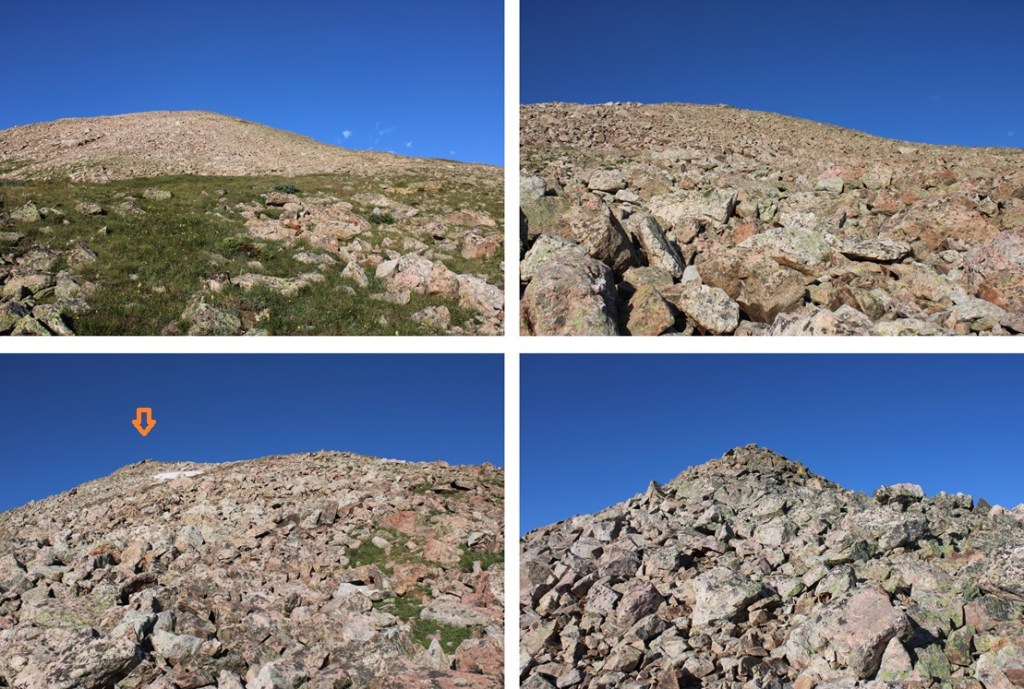
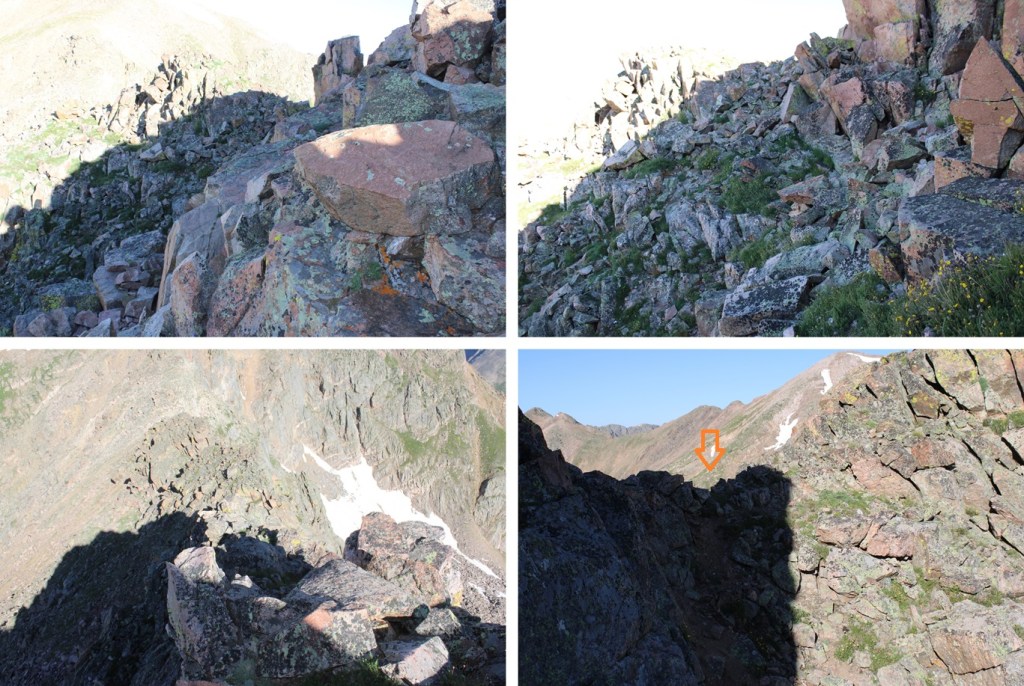
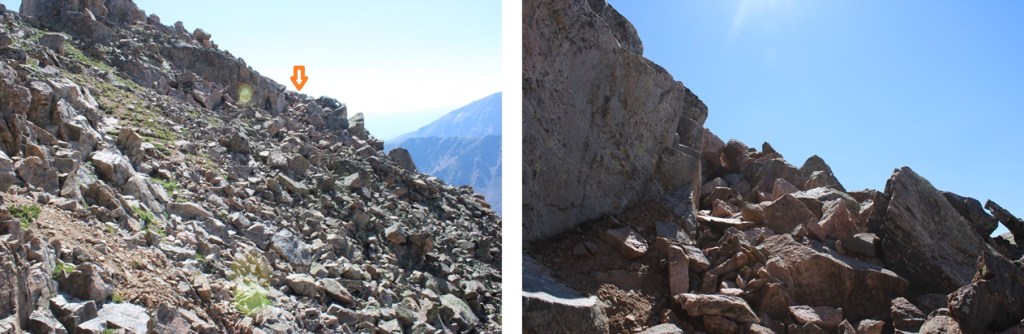
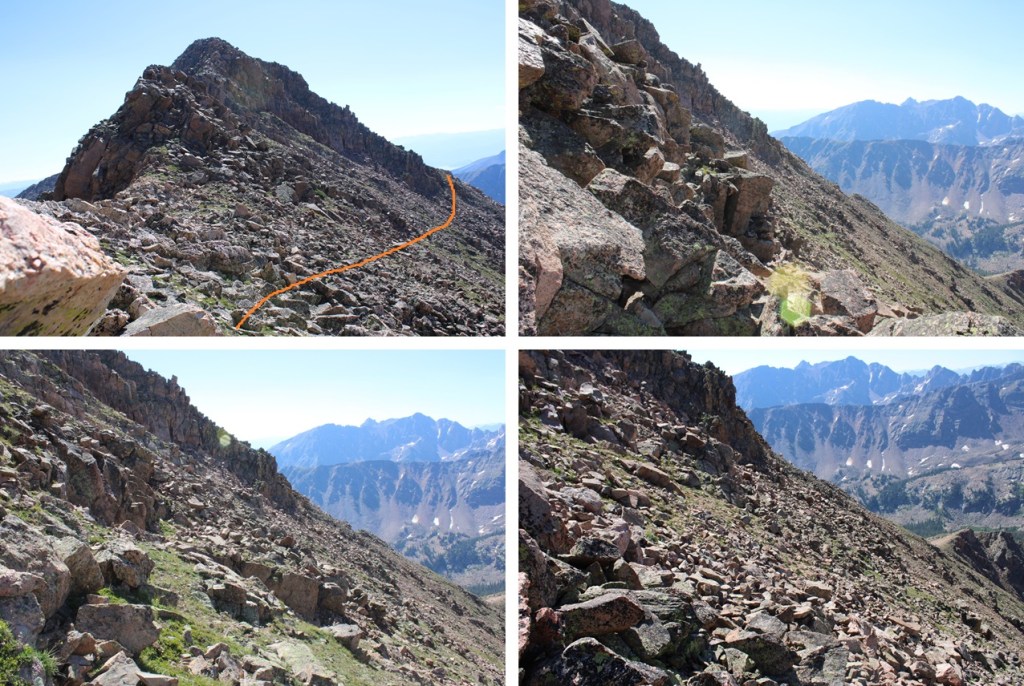
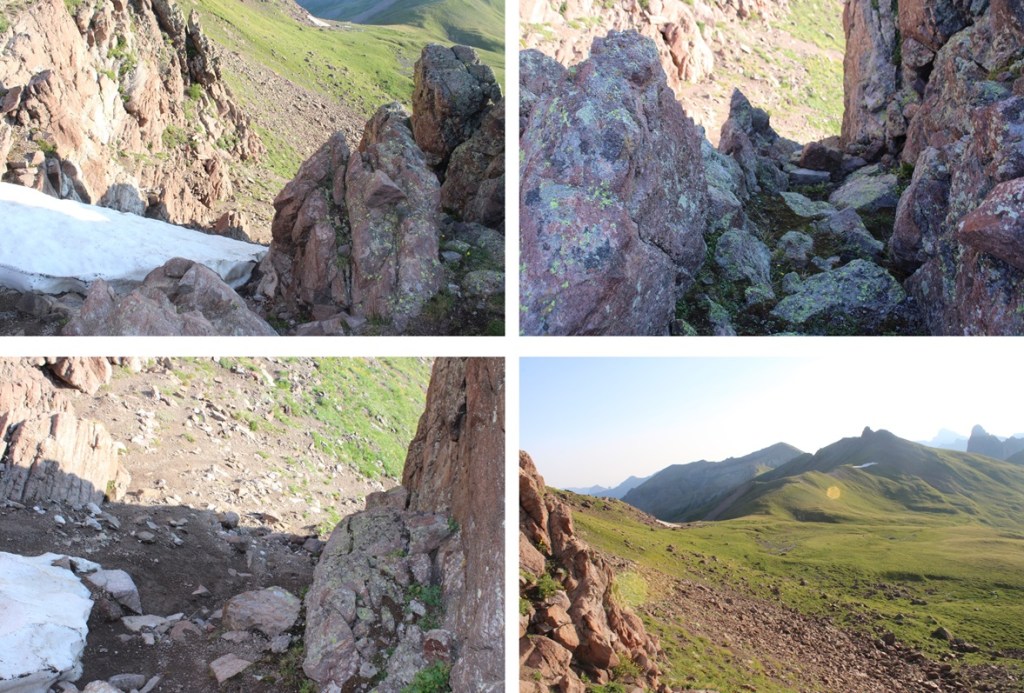
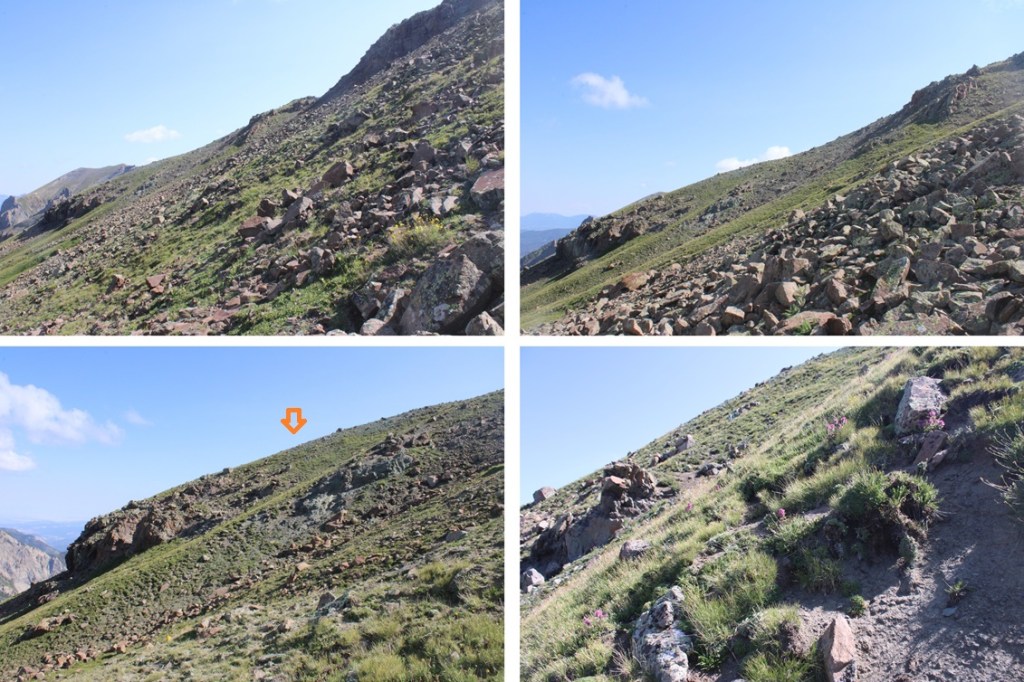
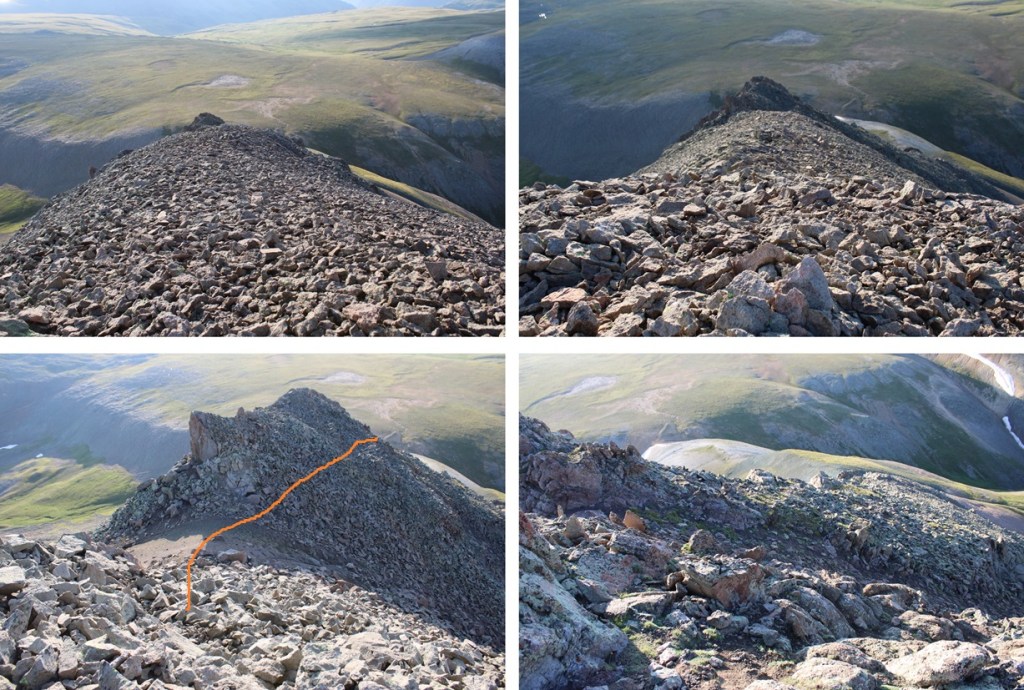
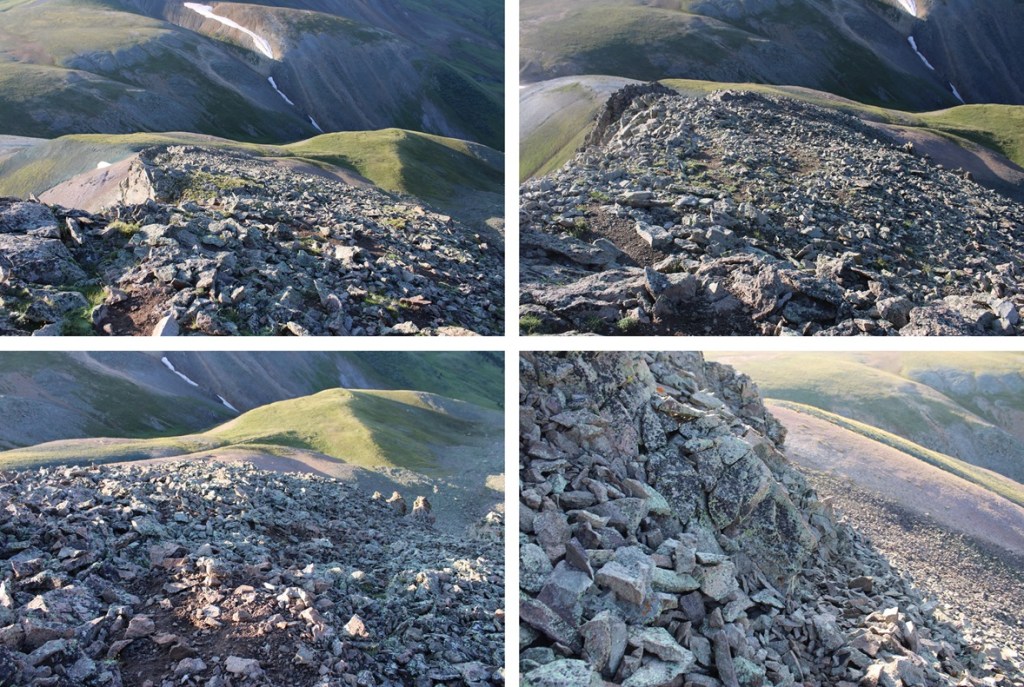
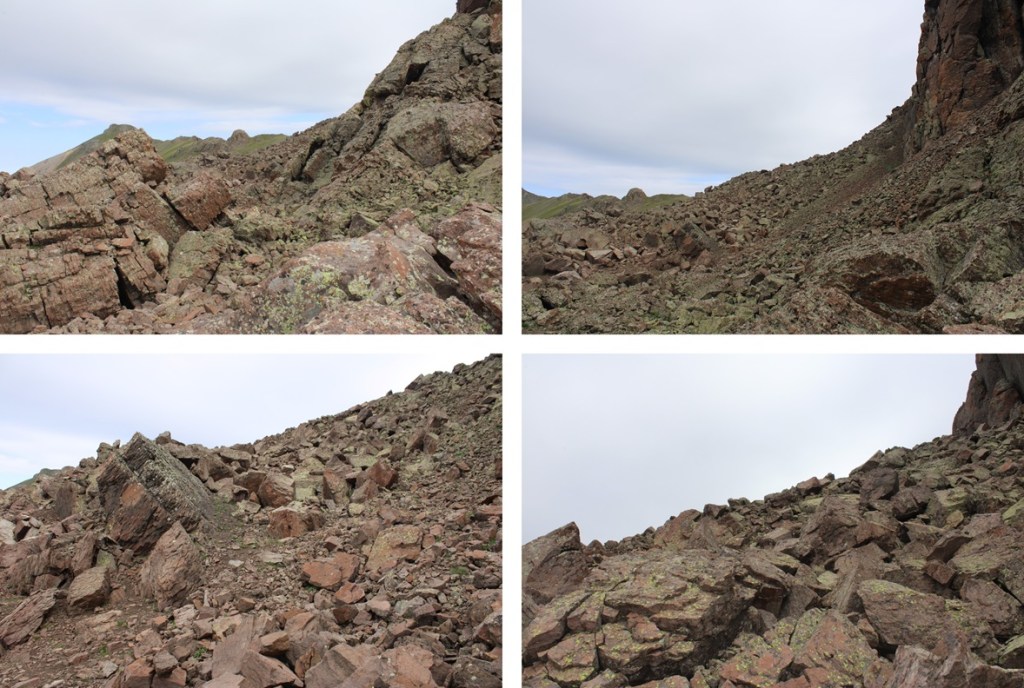
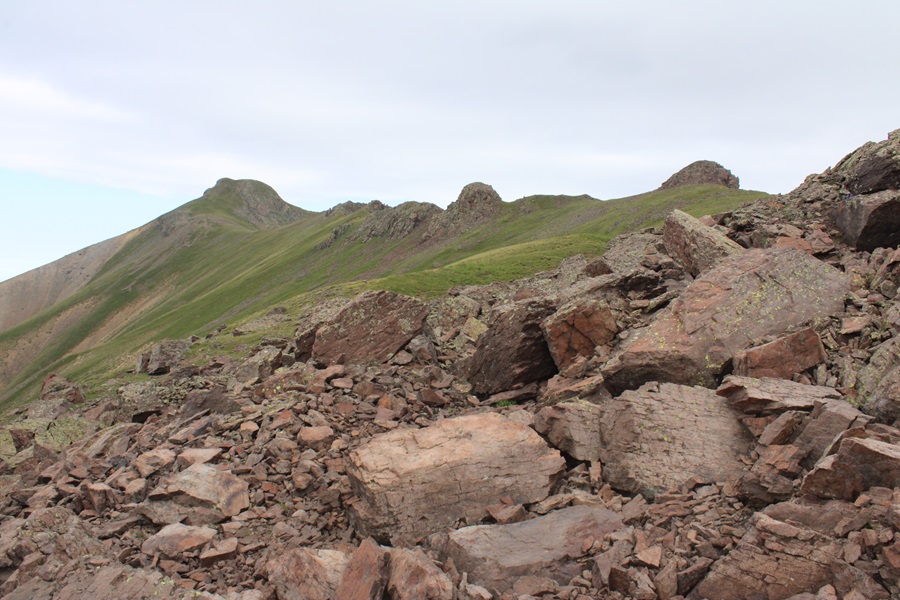
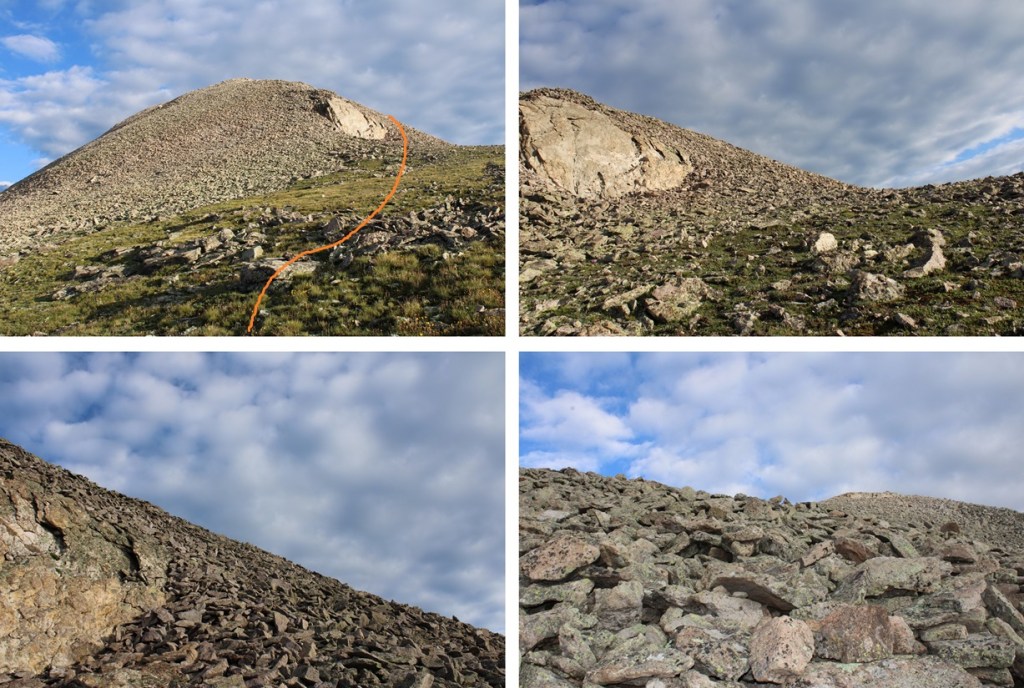
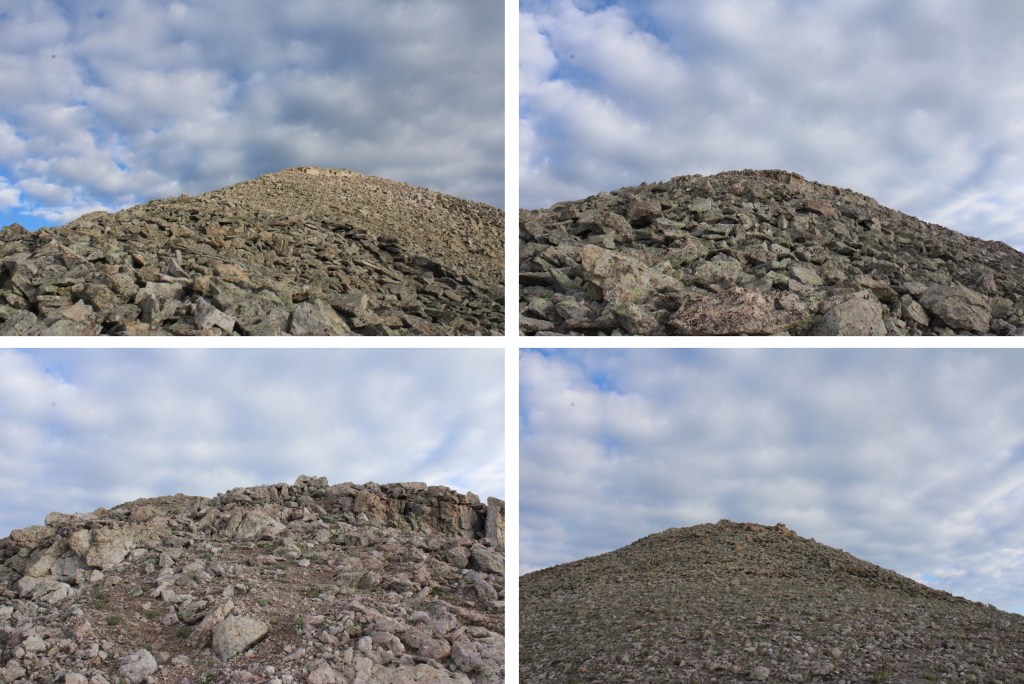
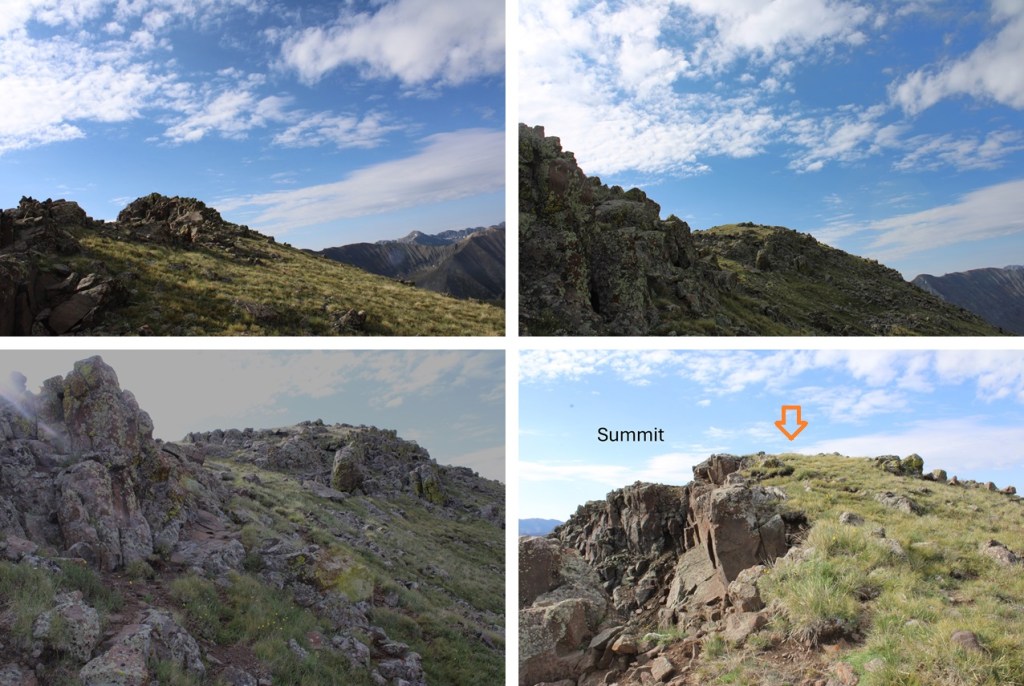
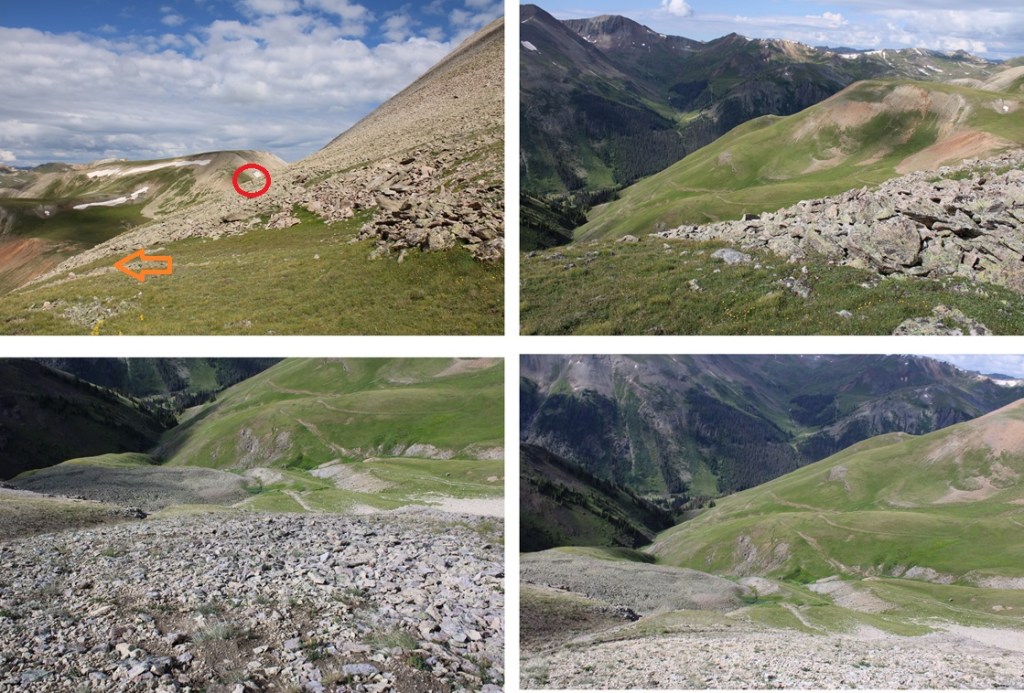
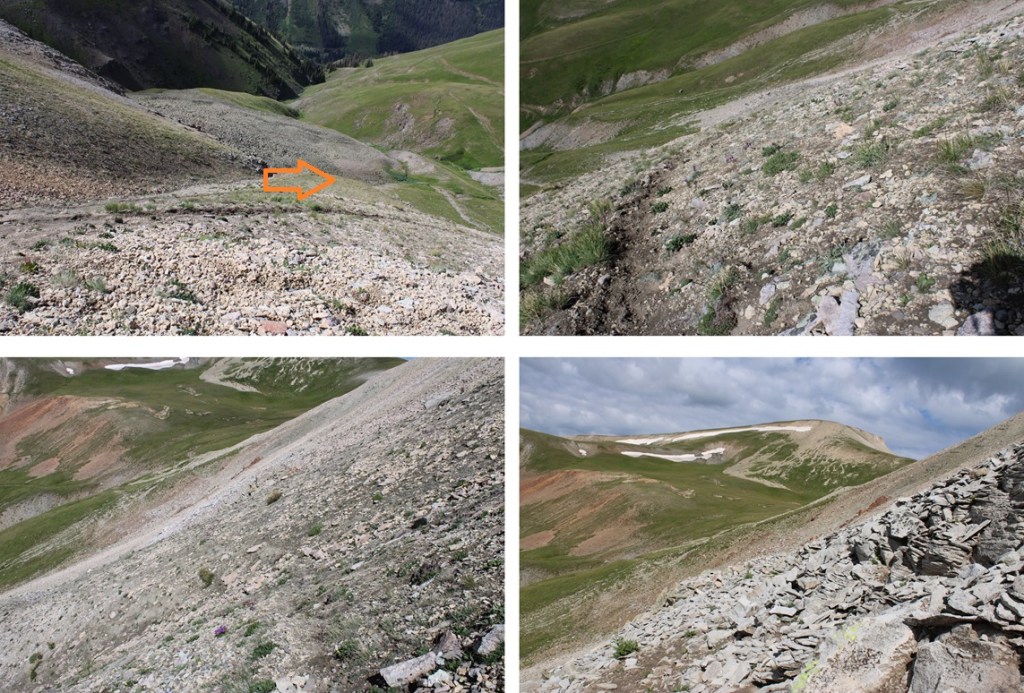
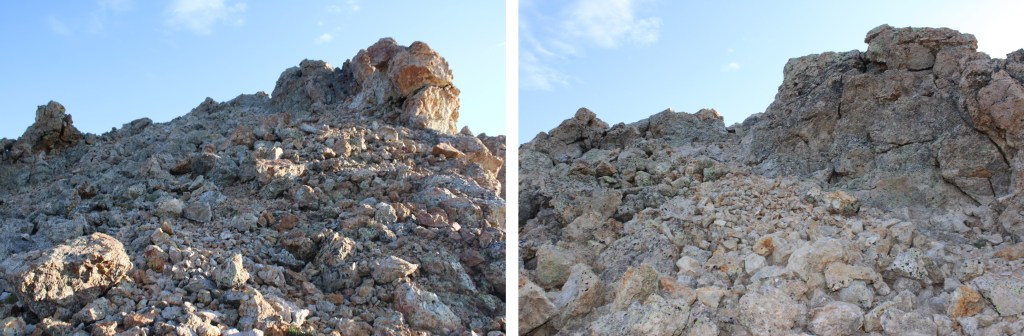
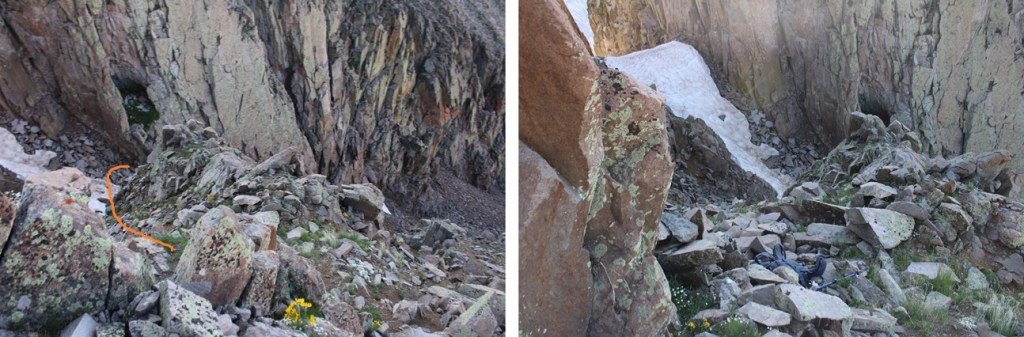
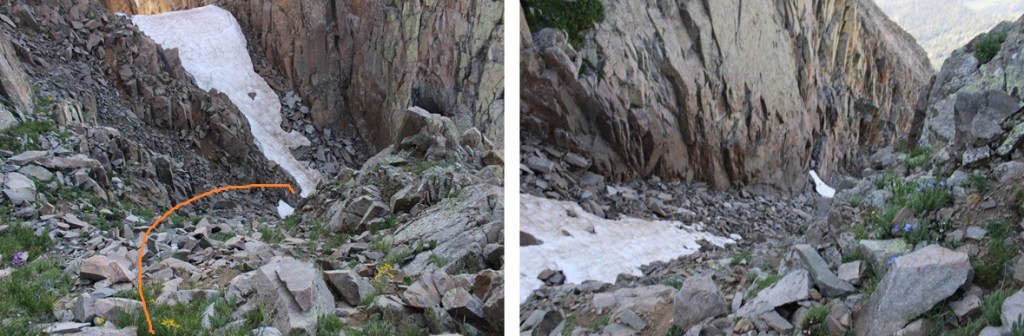
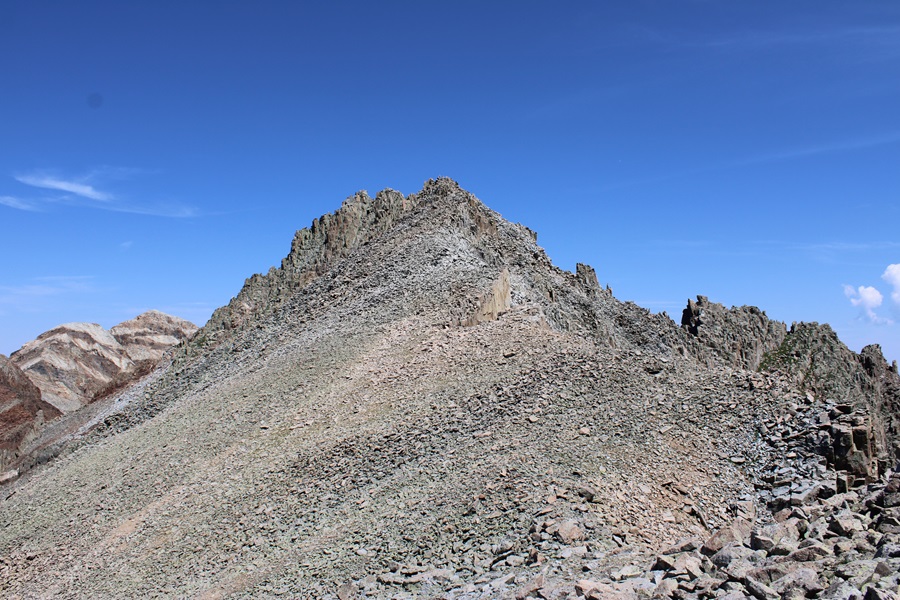
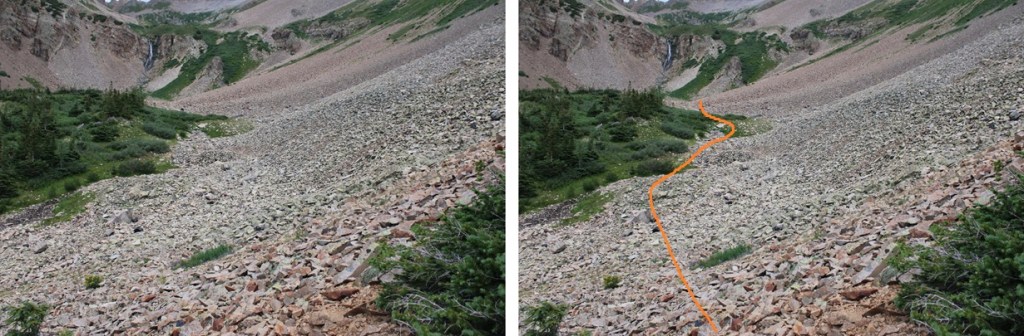
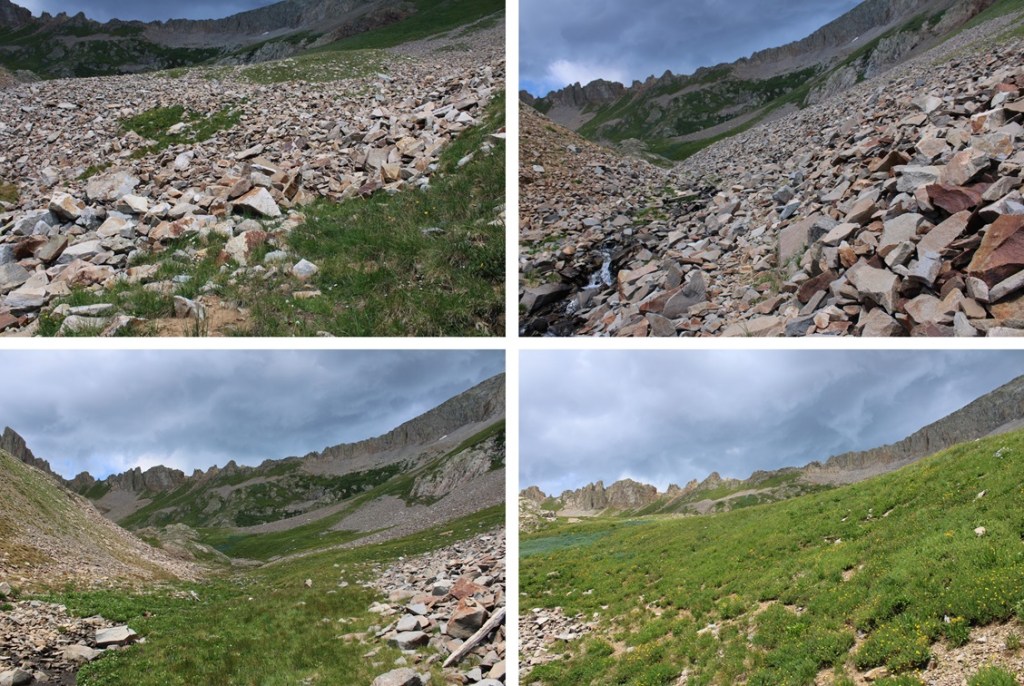
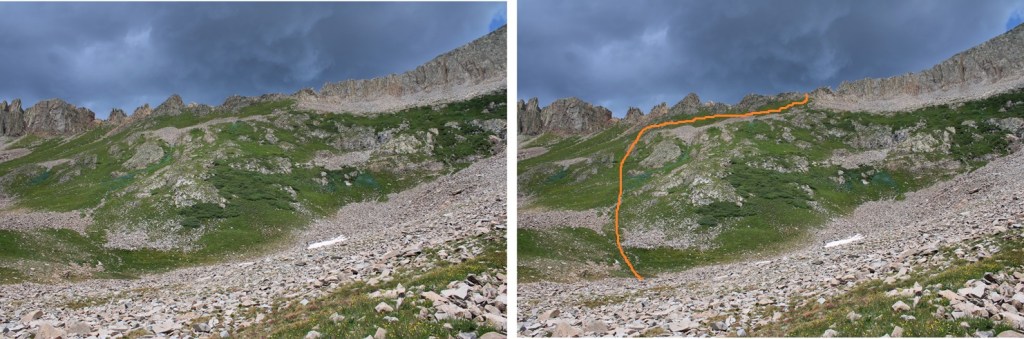
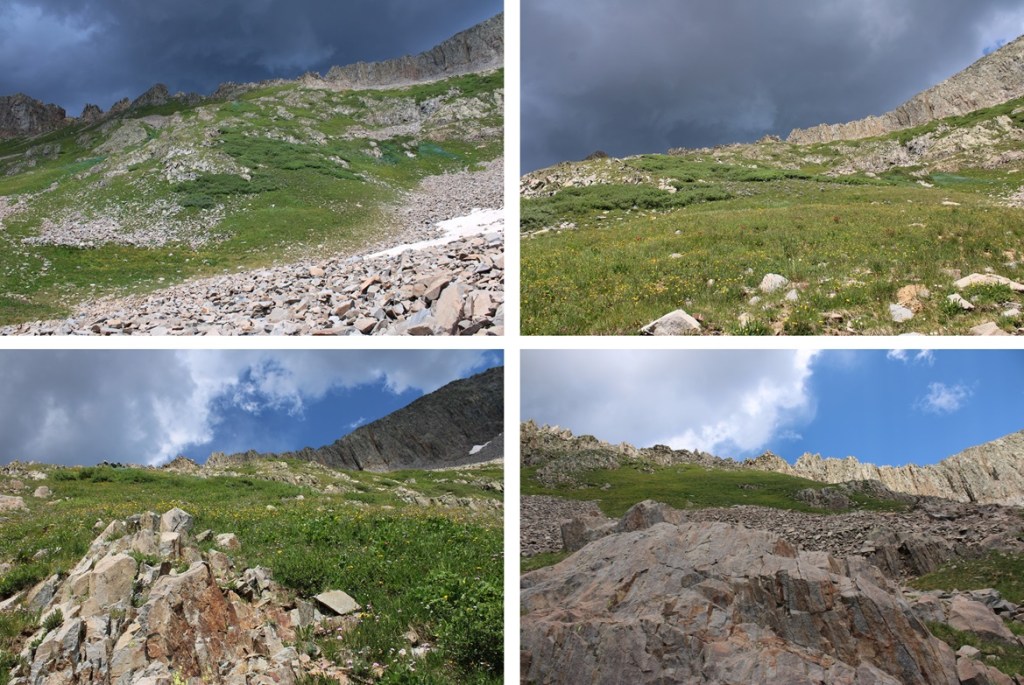
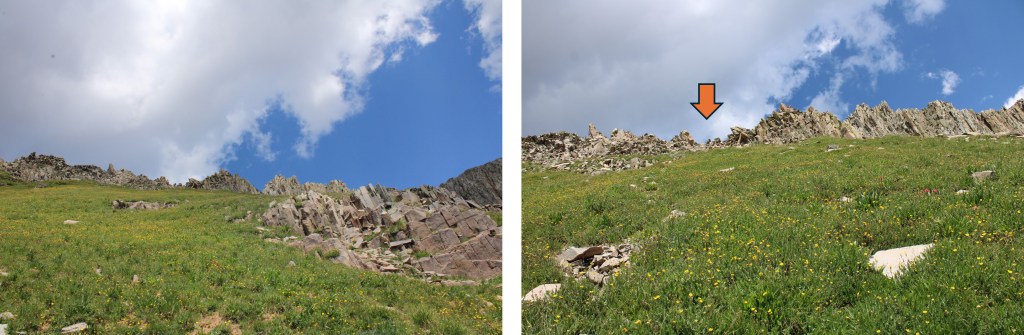
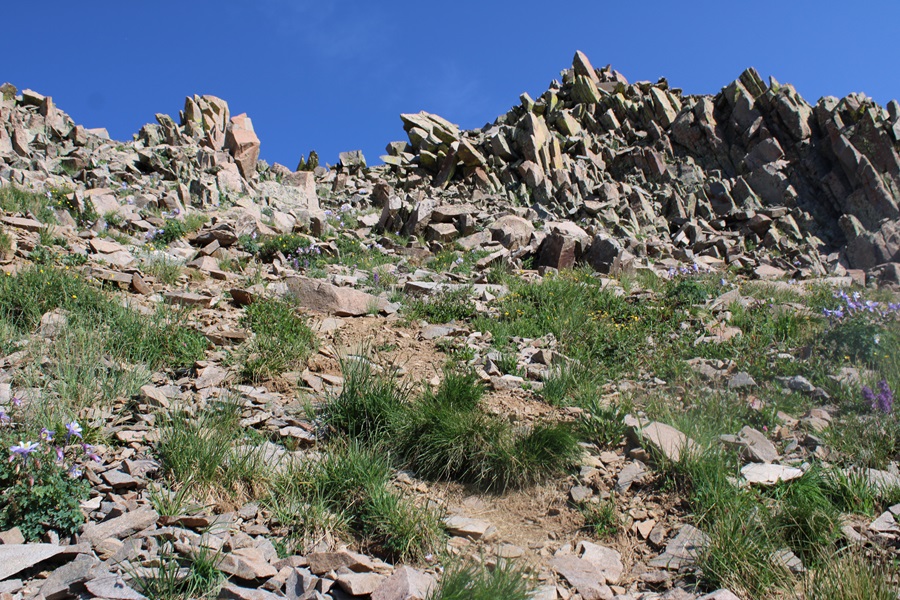
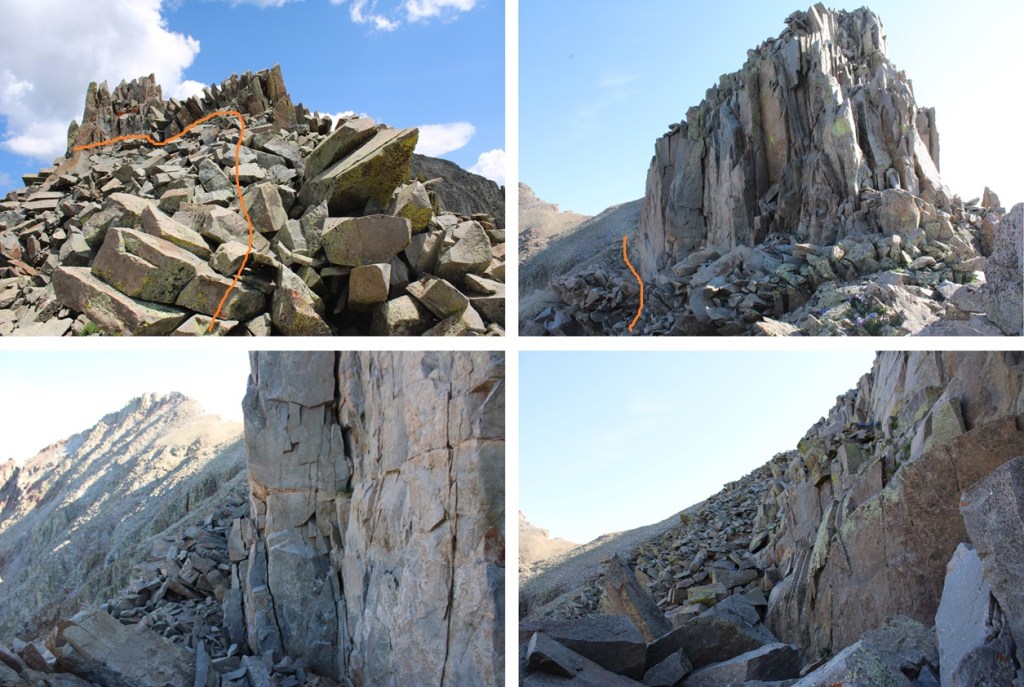
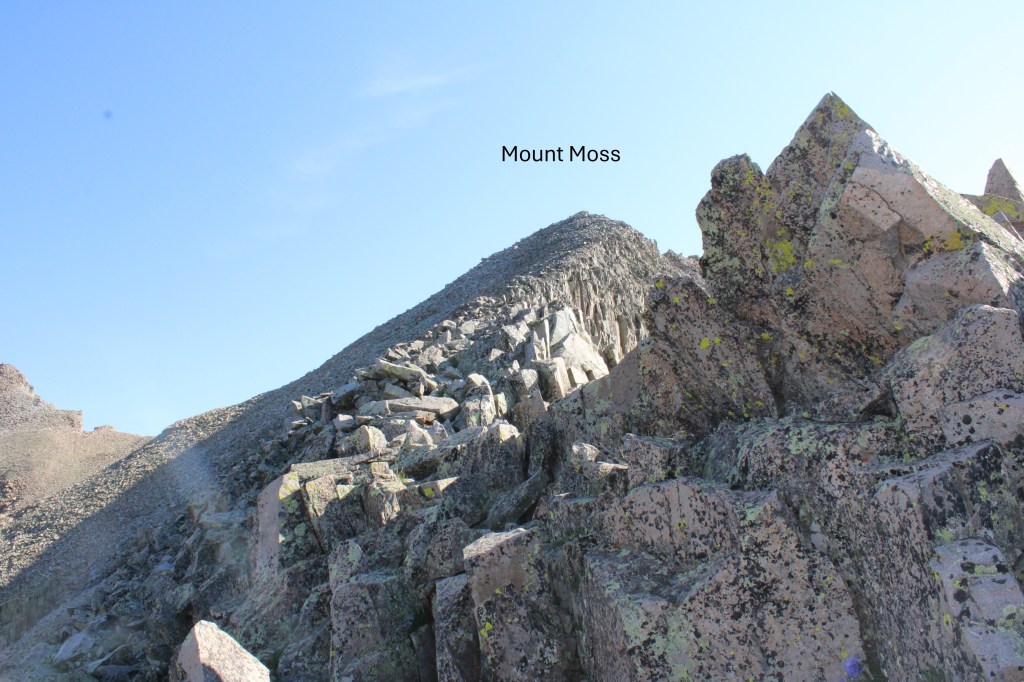
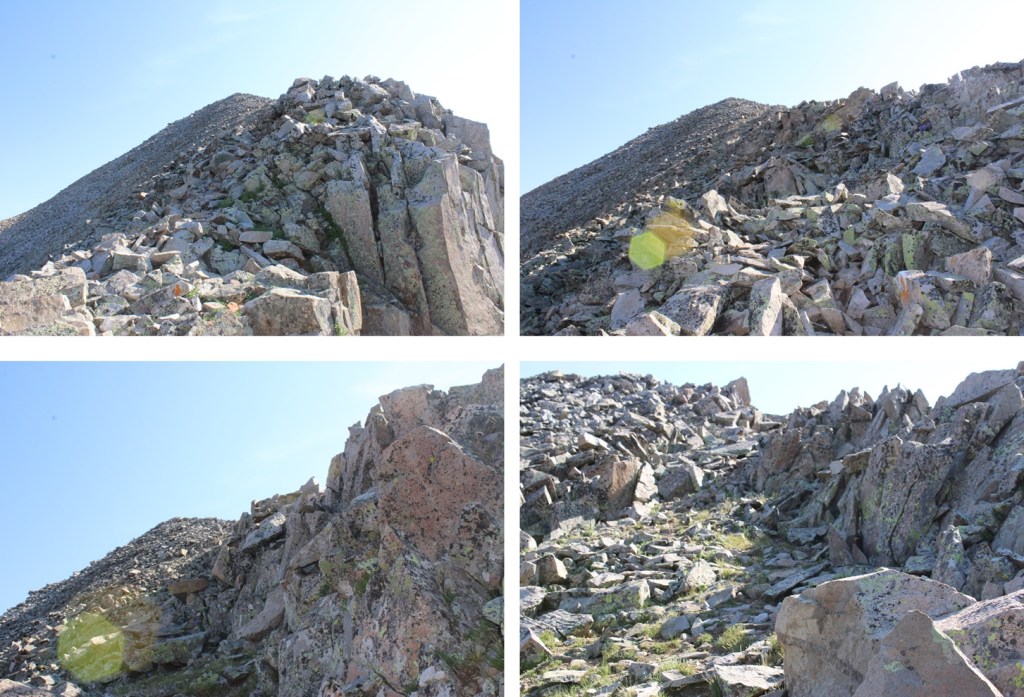
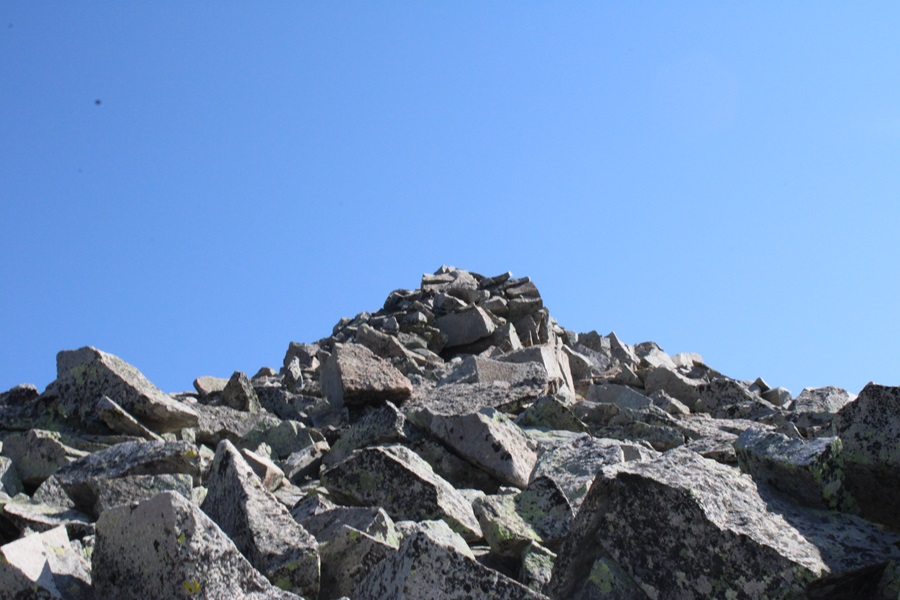
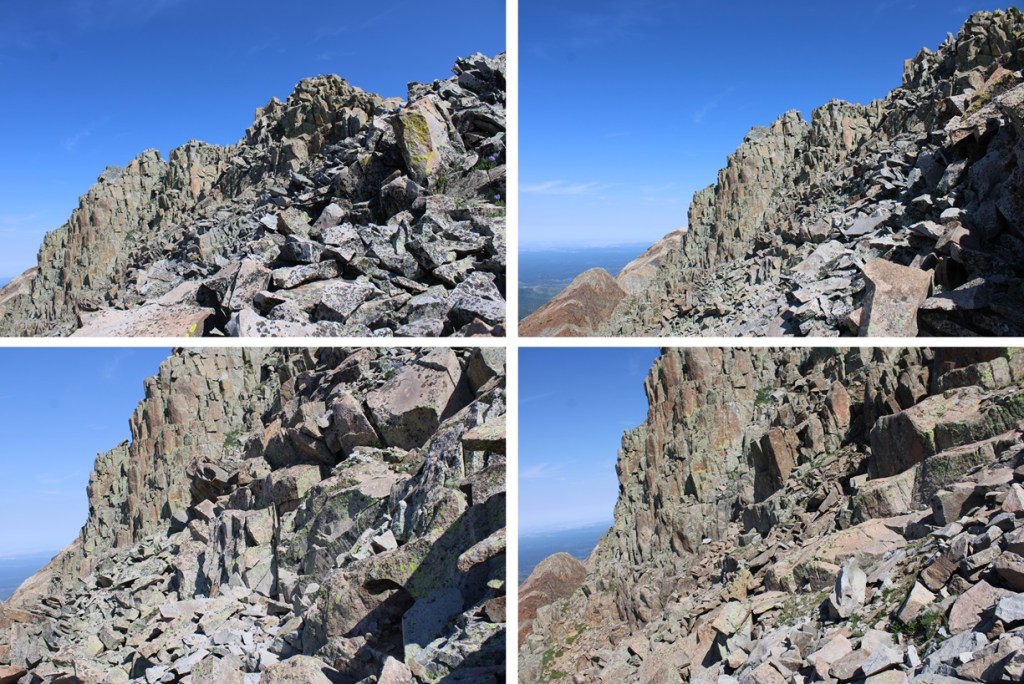
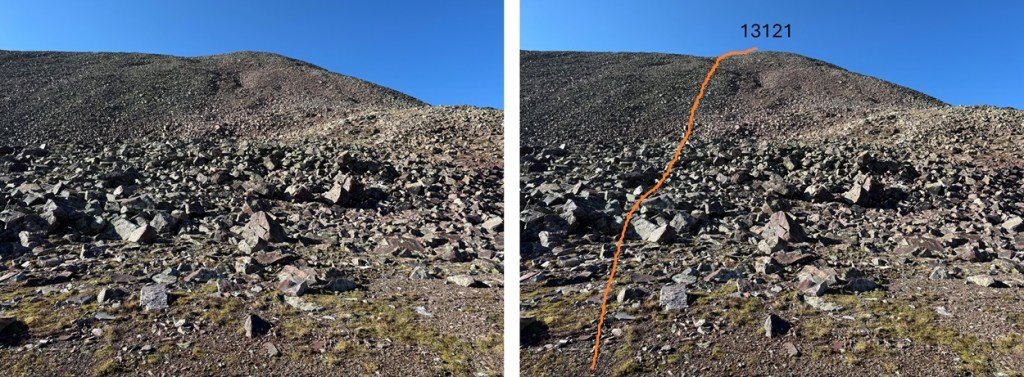
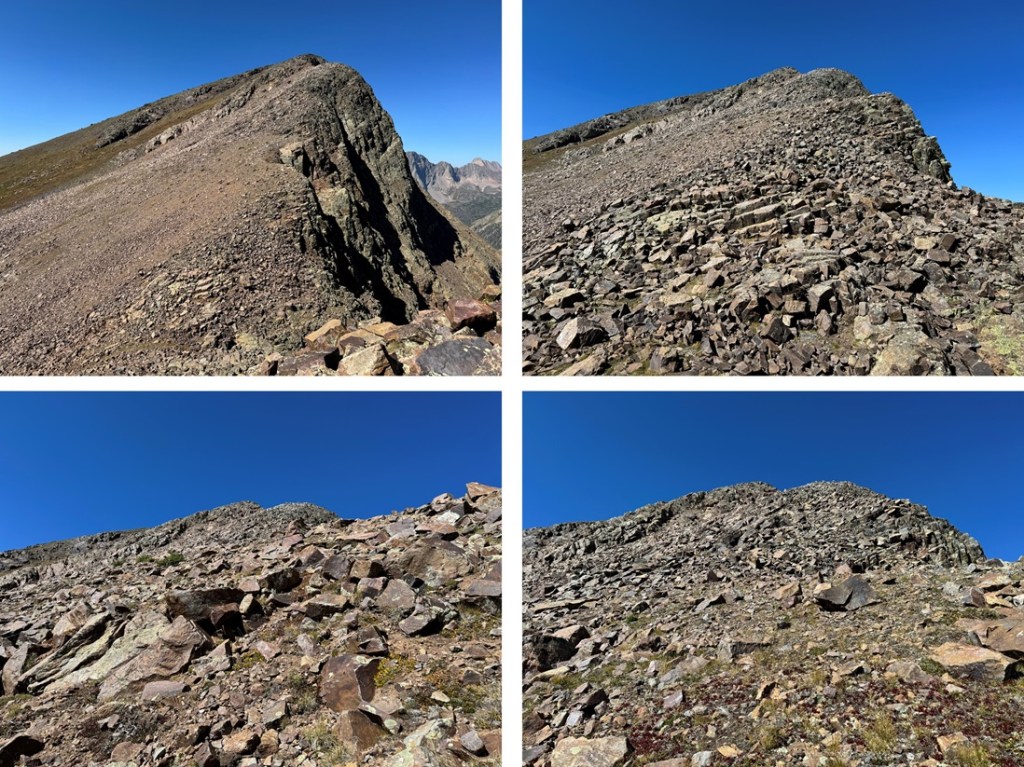
From the base of PT 13121, I headed south on the rocks towards the summit. I would gain 400’ in .2 miles to get to the ridge.  The rock here was loose and steep and not fun to climb at all.  If you have the option, I’d summit this peak from the way I descended.  However, I did not do that, so here is my route, and a few pictures of the rock mess towards the ridge.
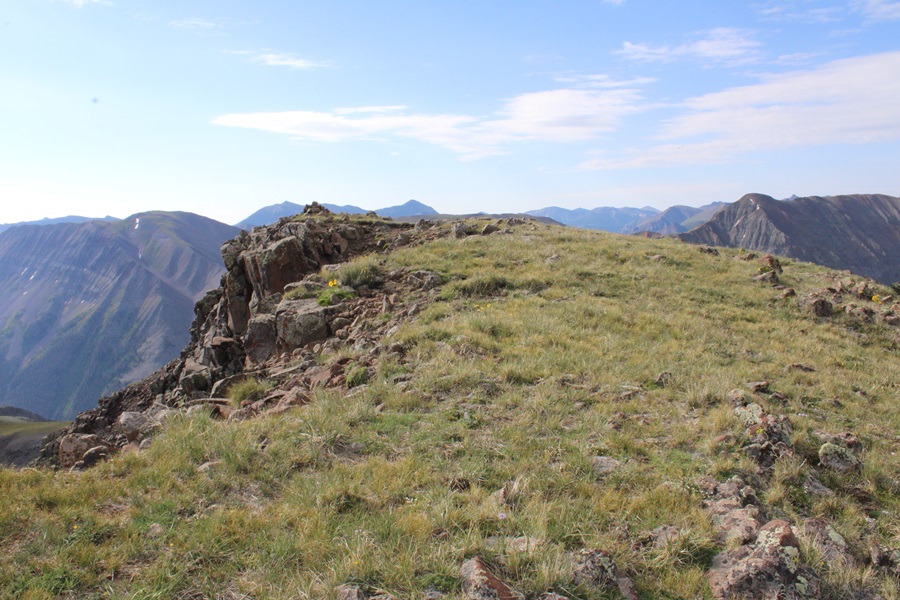
When I made it to the ridge I turned right, and walked the short distance to the summit
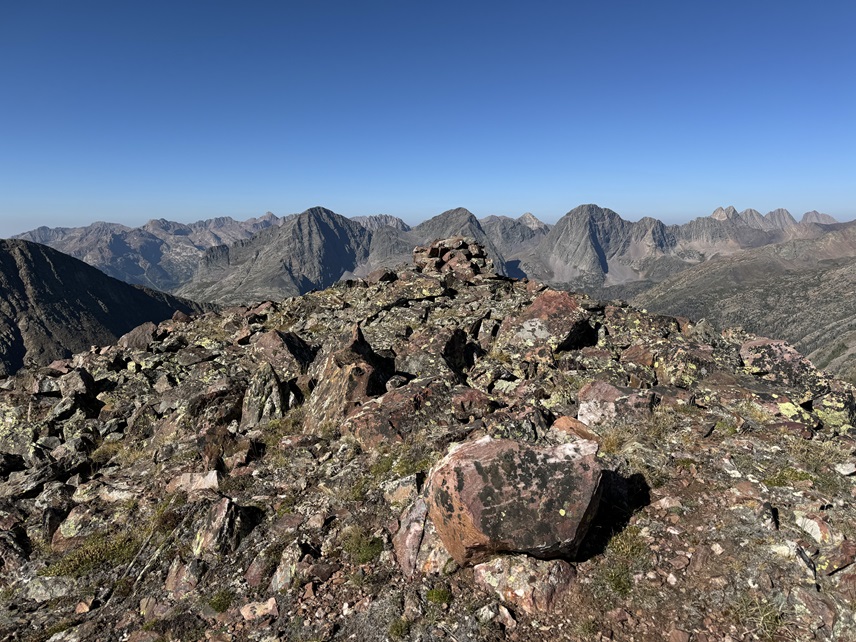
I summited PT 13121 at 9:40am

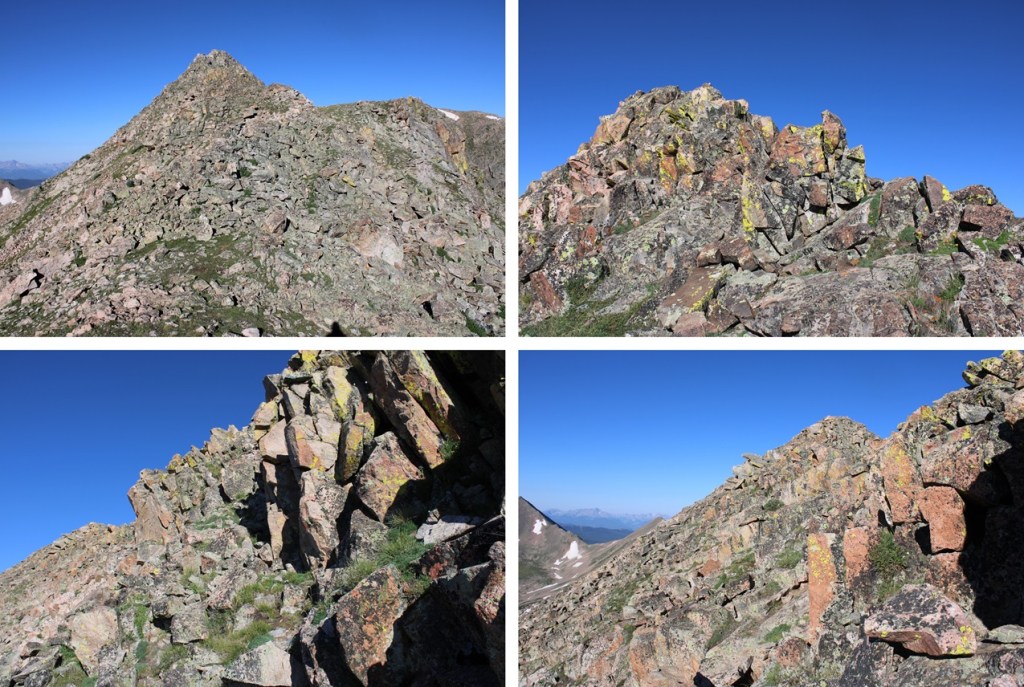
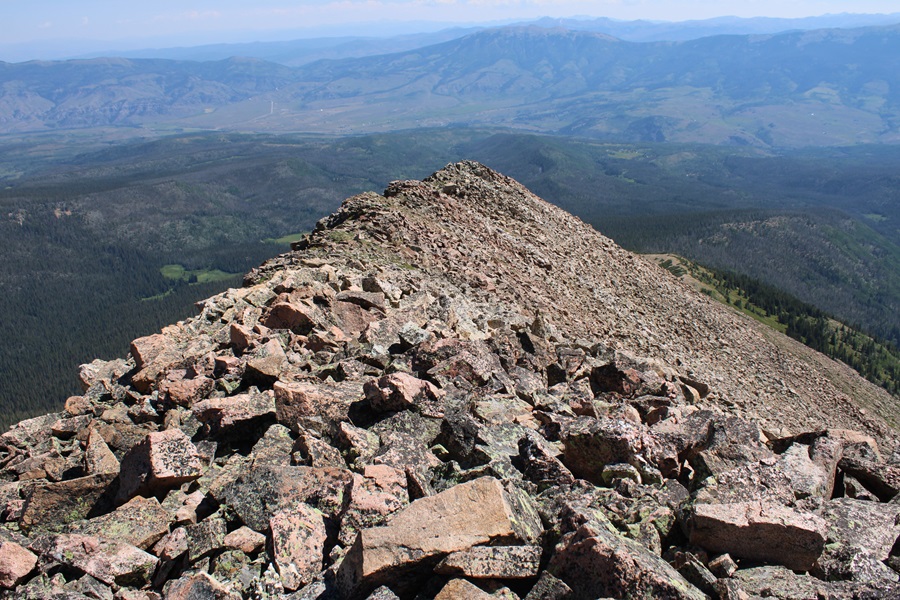
PT 13121:

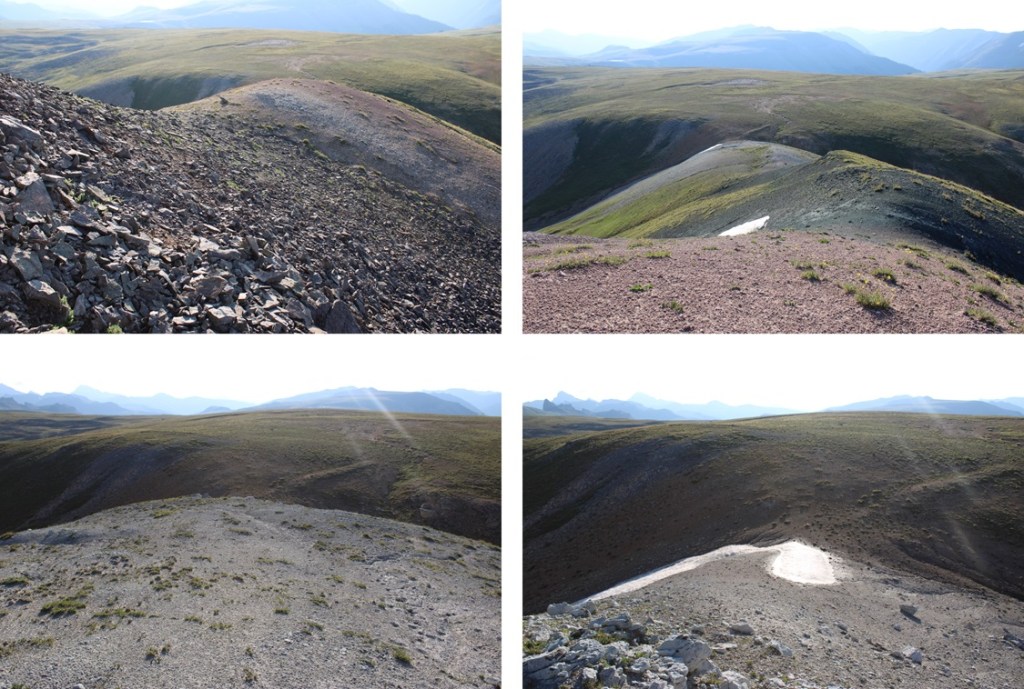
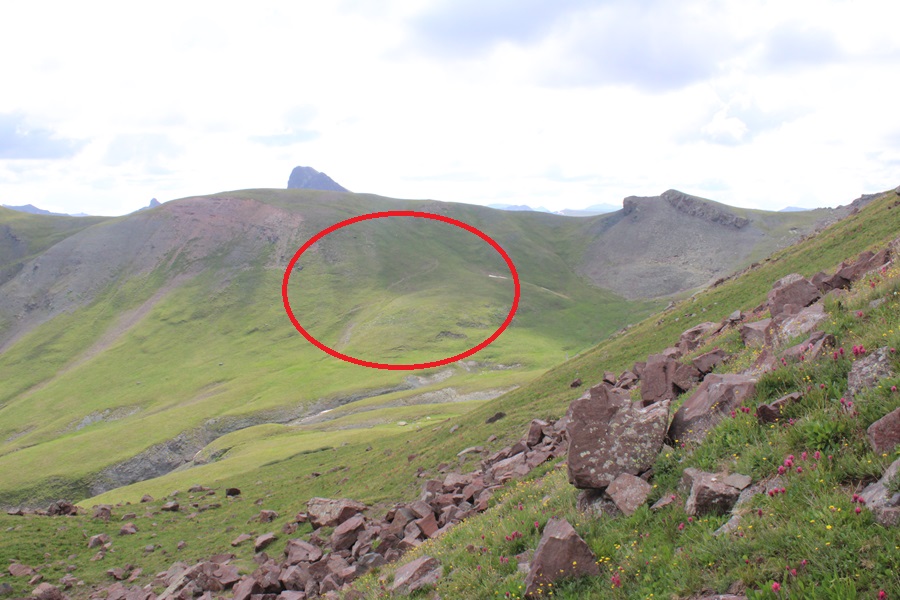
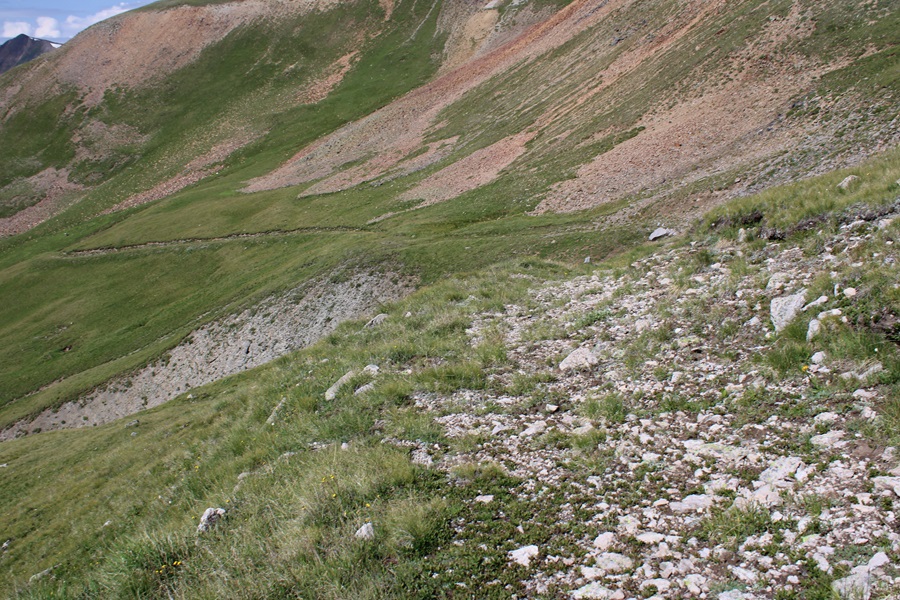
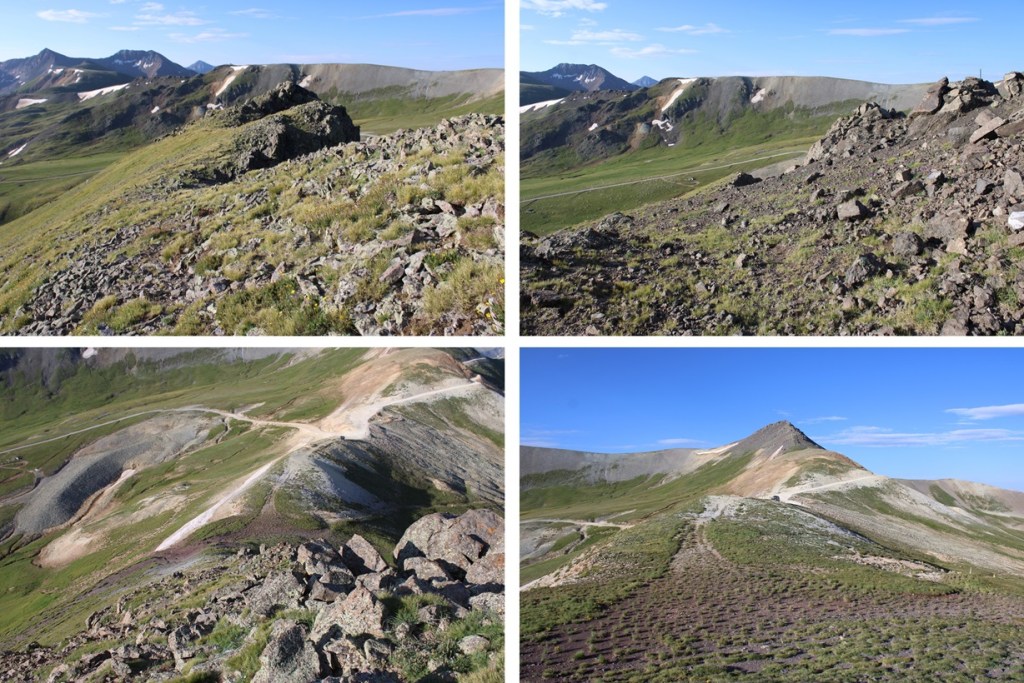
I could see PT 13232 and Mt Nebo to the south.  I descended the rocky and tundra ledge towards the PT 13121/Mt Nebo saddle.   Circled is where I set up camp for the night.  That’s where I was headed.  It’s adjacent to the CDT.
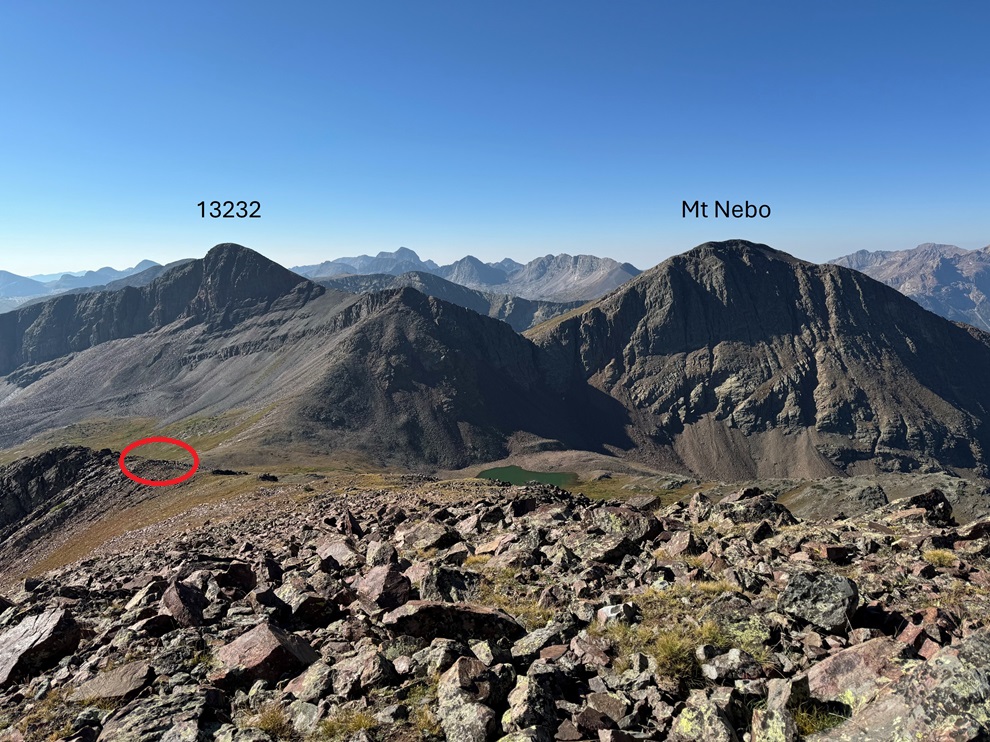
I took some time to set up my tent, then I was on my way again, headed up this ridge
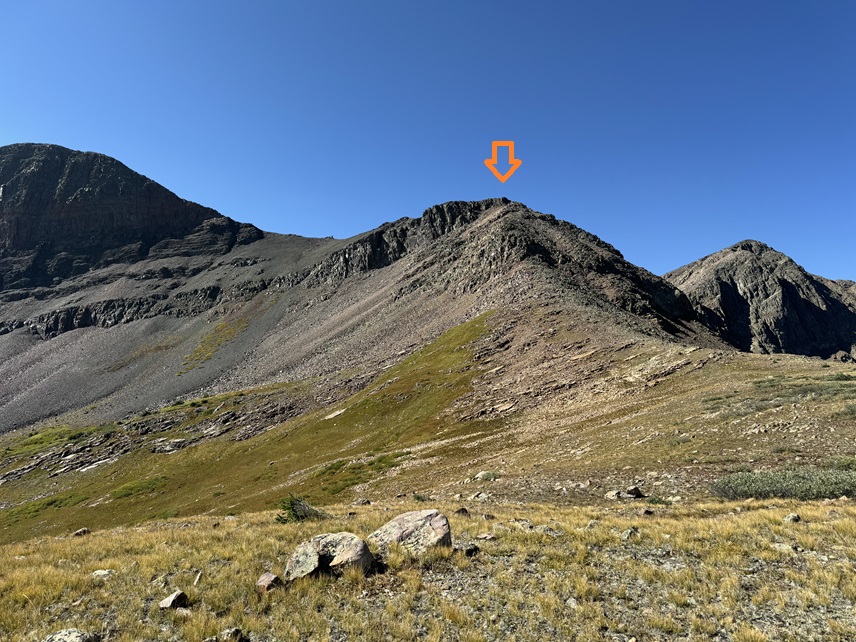
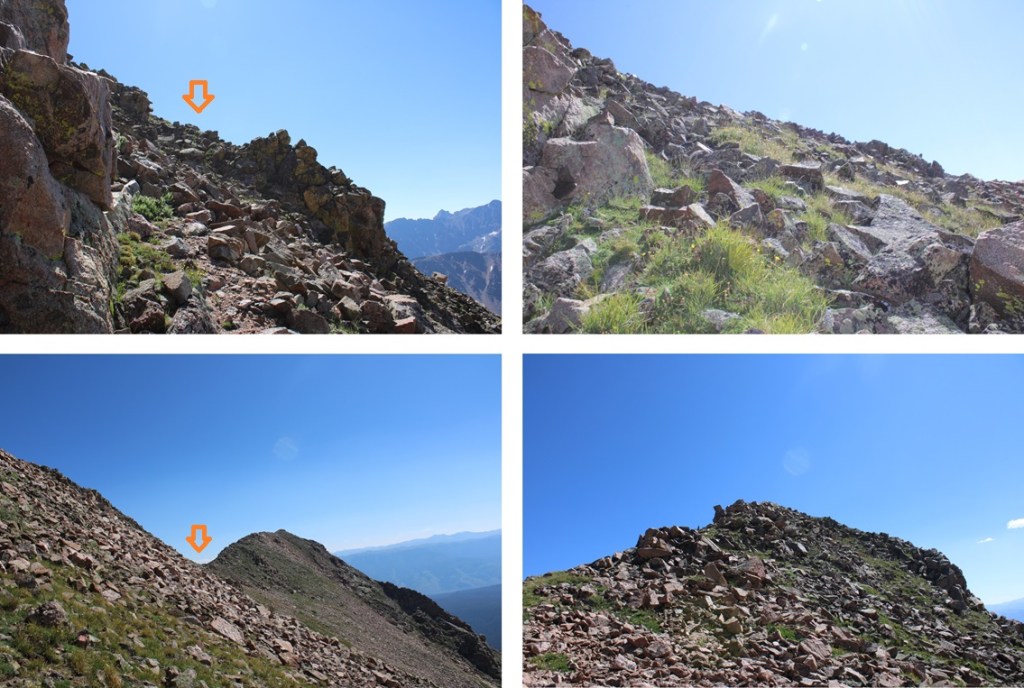
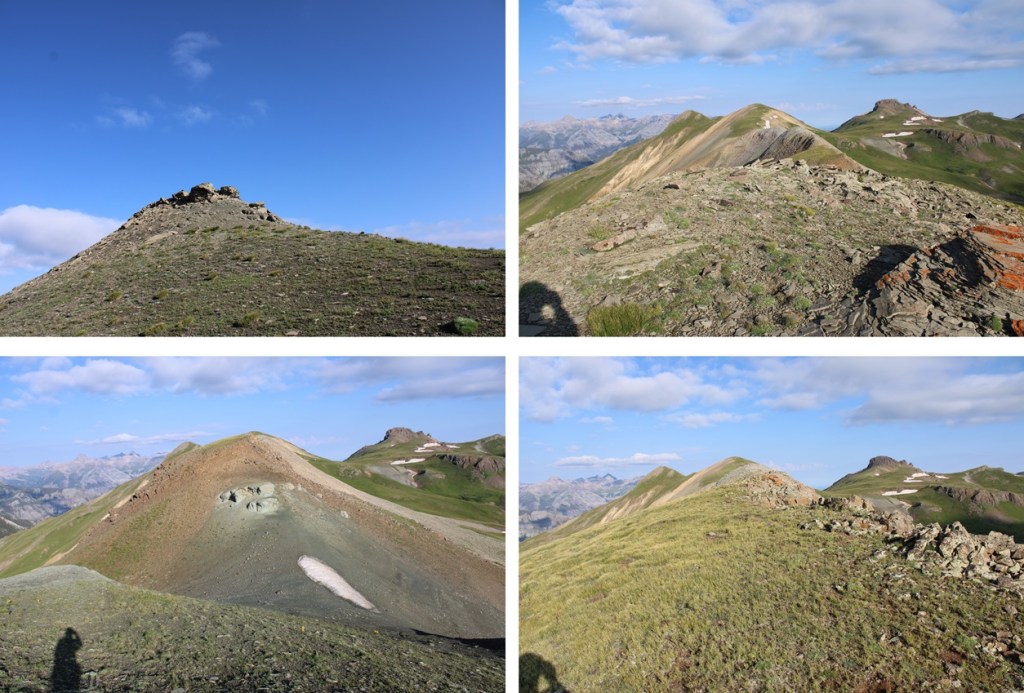
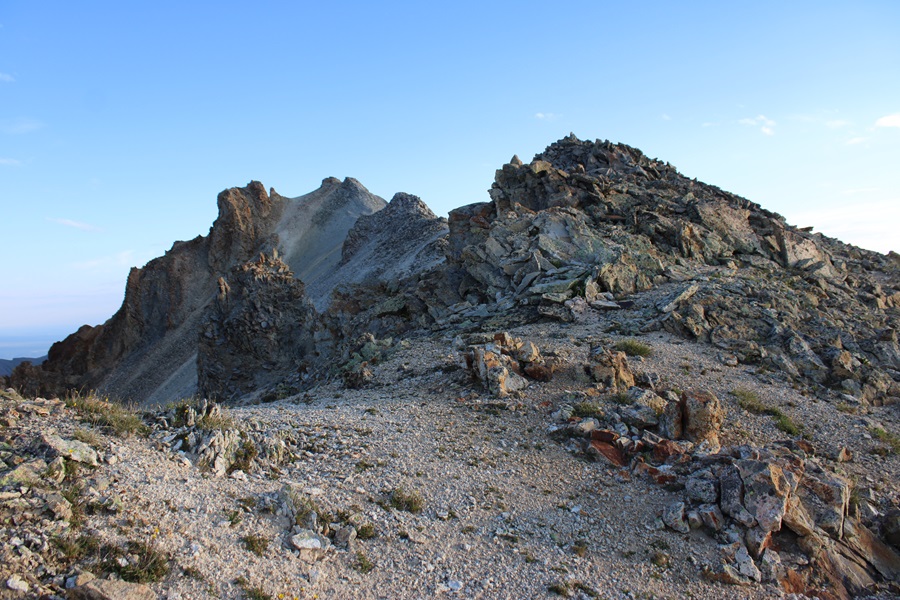
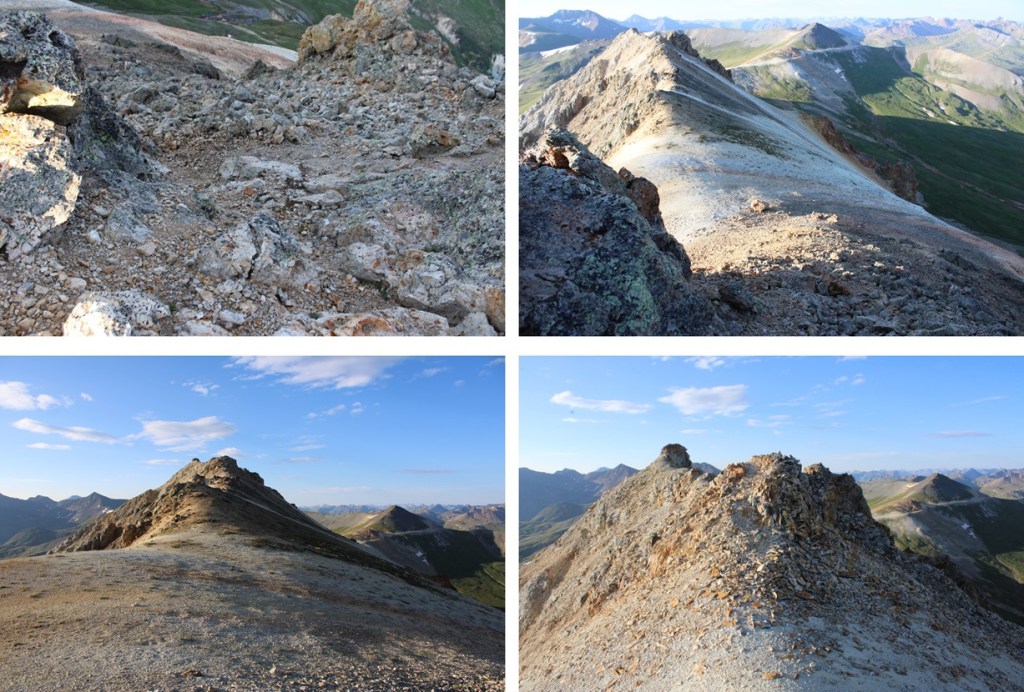
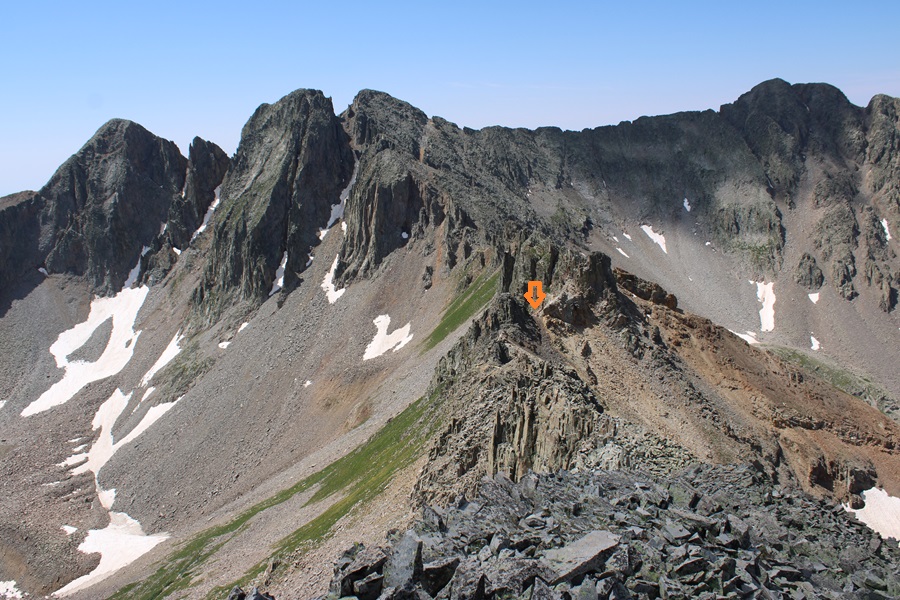
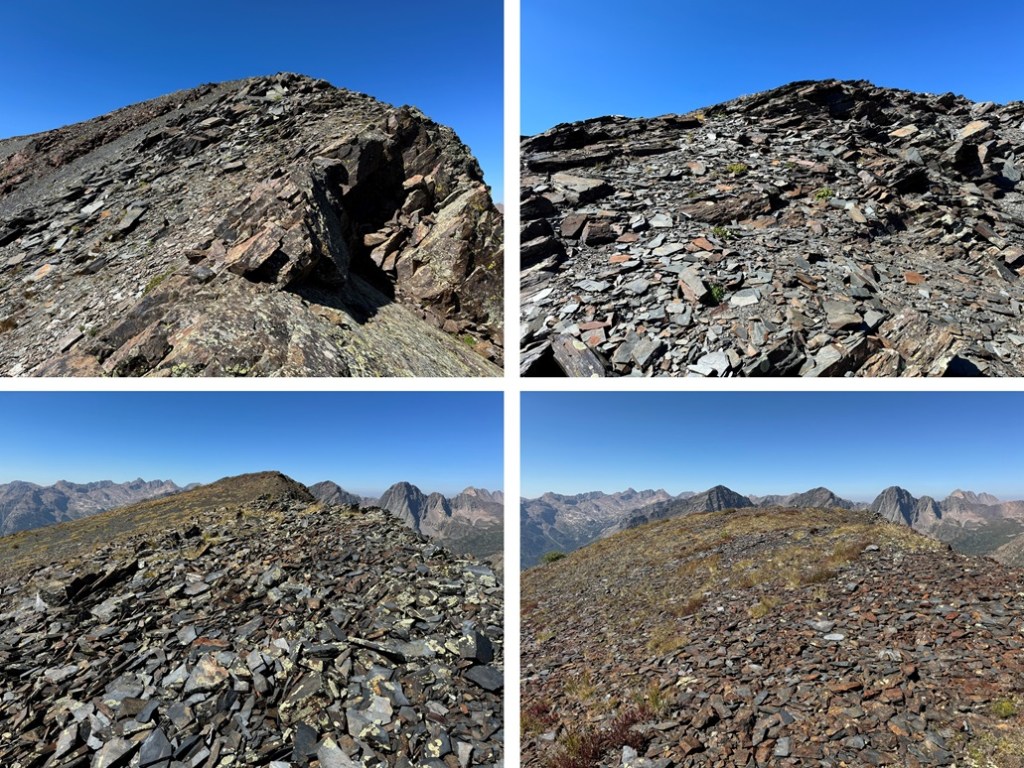
There was a lot of scree and talus here, but it’s all class 2+.  There’s a bulge in the middle I skirted to the right, then headed back to the ridge proper, and towards the top you can go either to the left or the right, and I chose right for the way up (towards Nebo), and left on the way down. 
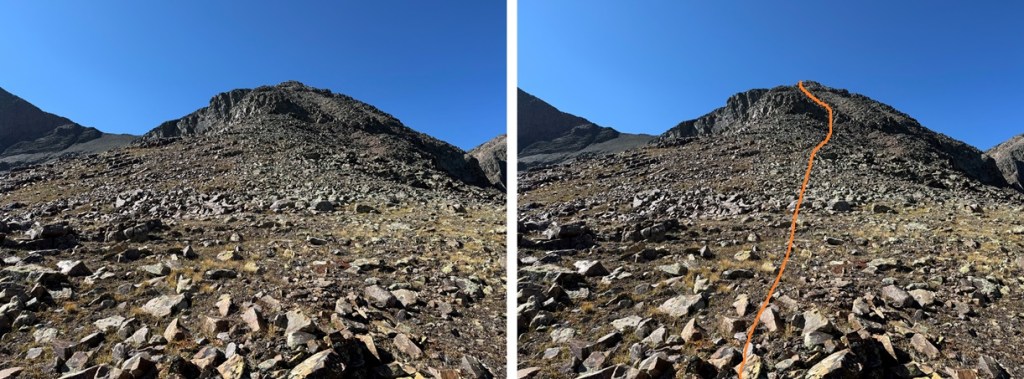
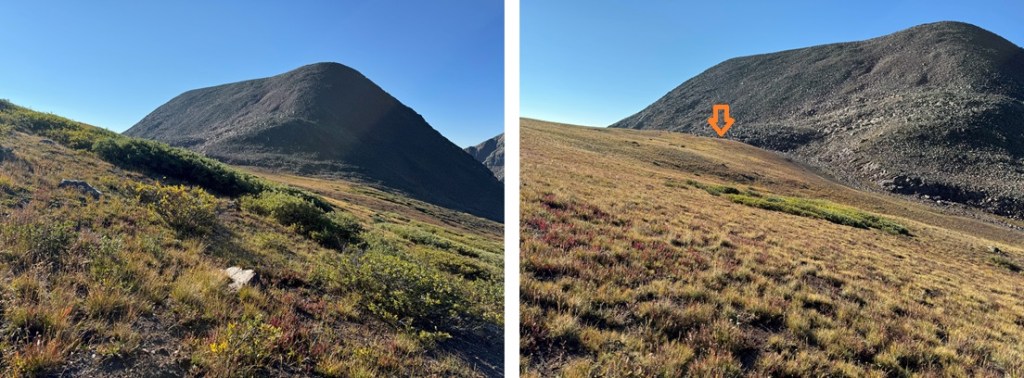
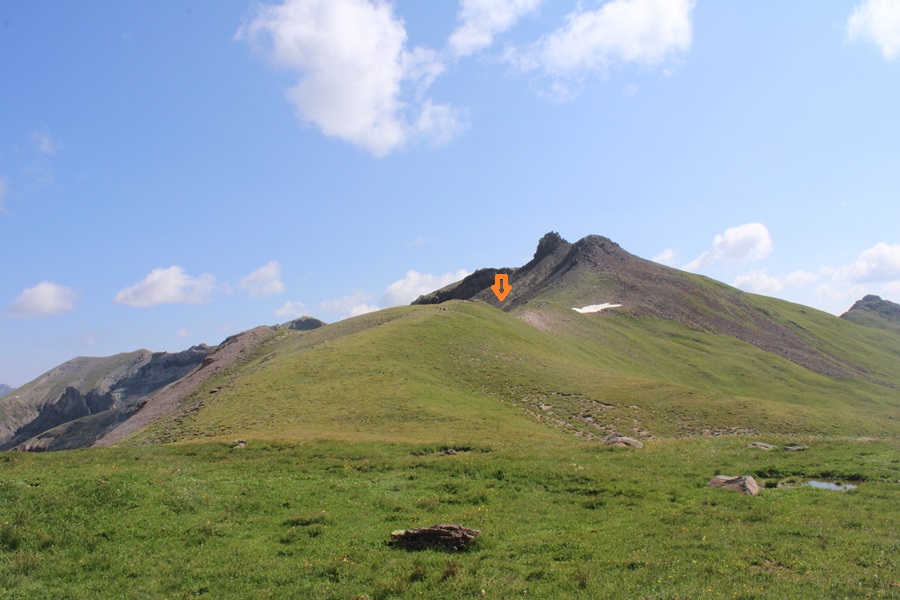
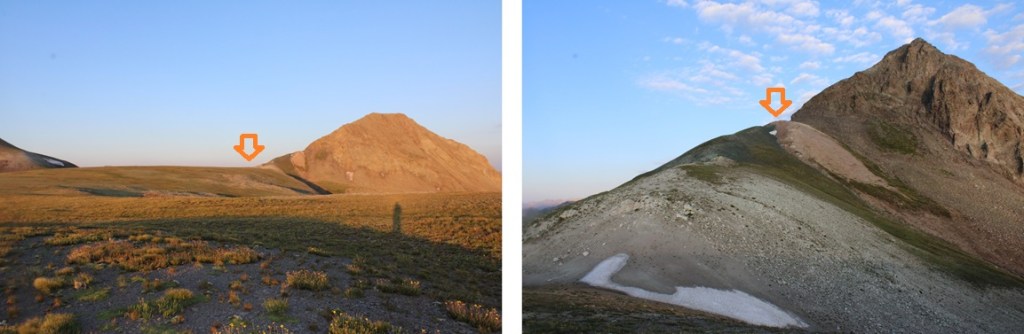
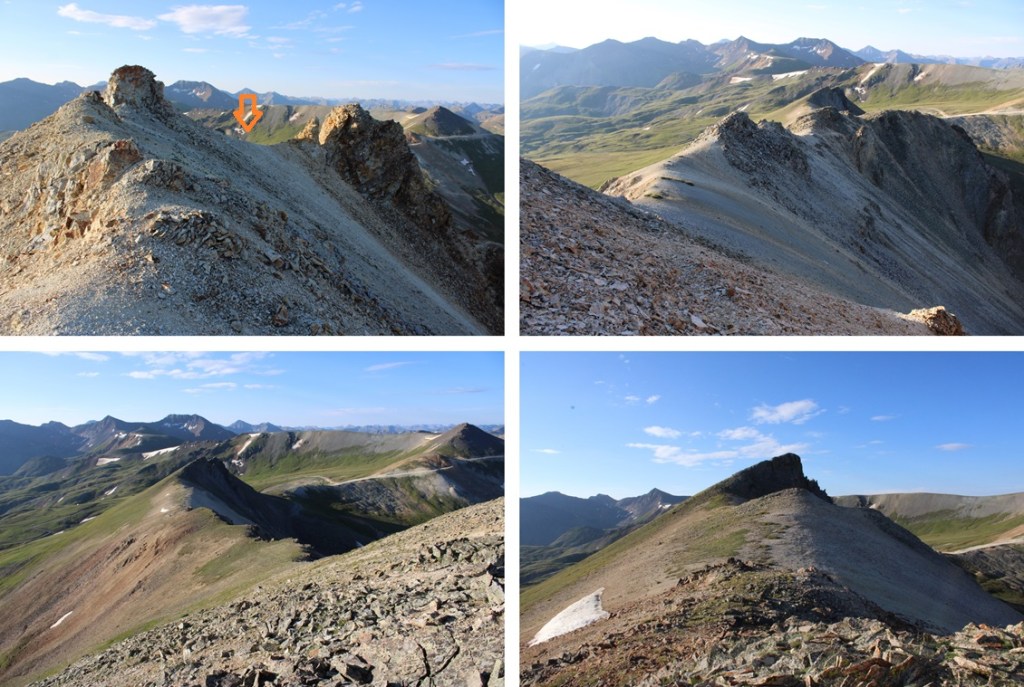
Here’s the option to go either right or left.  Both class 2, but the left is on more solid rock.
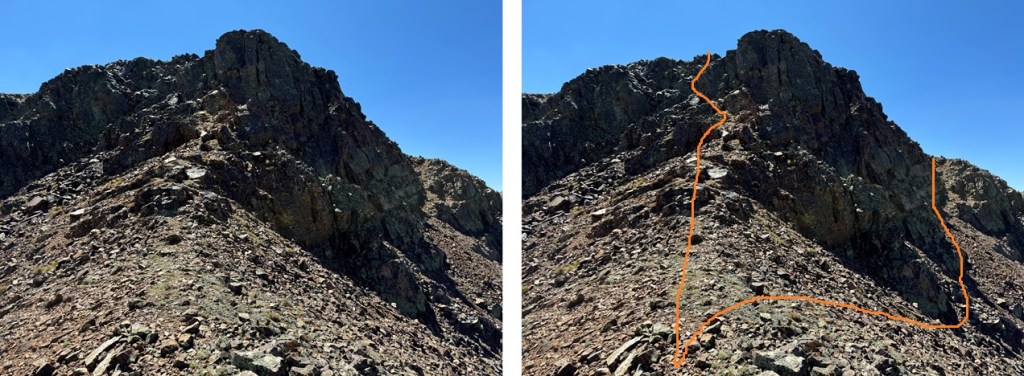
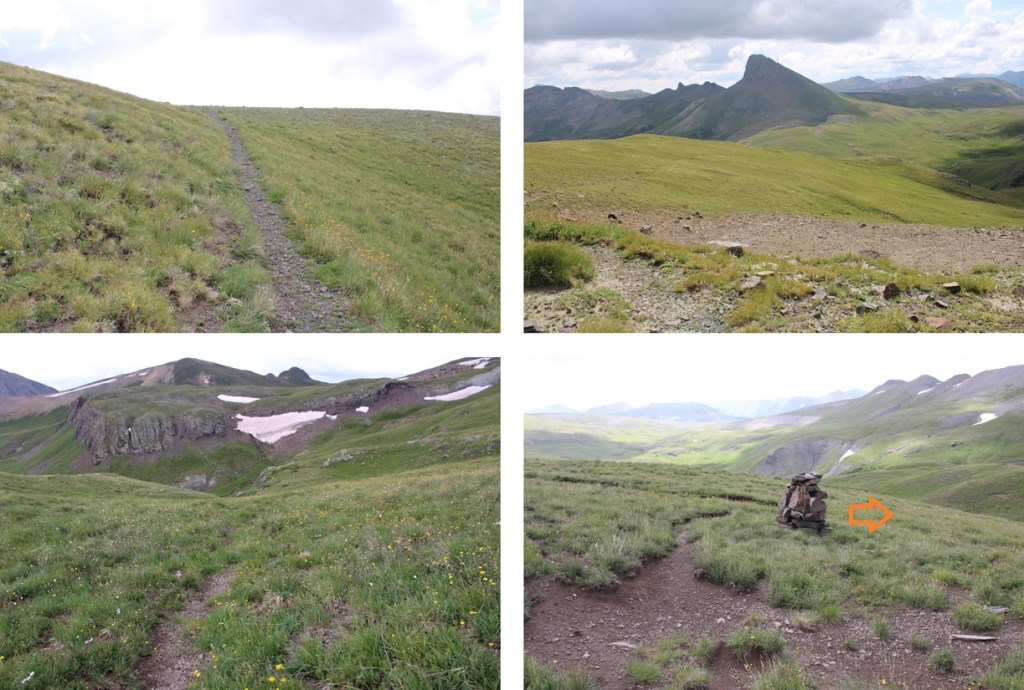
I chose to go right (there’s a cairn where the arrow is)
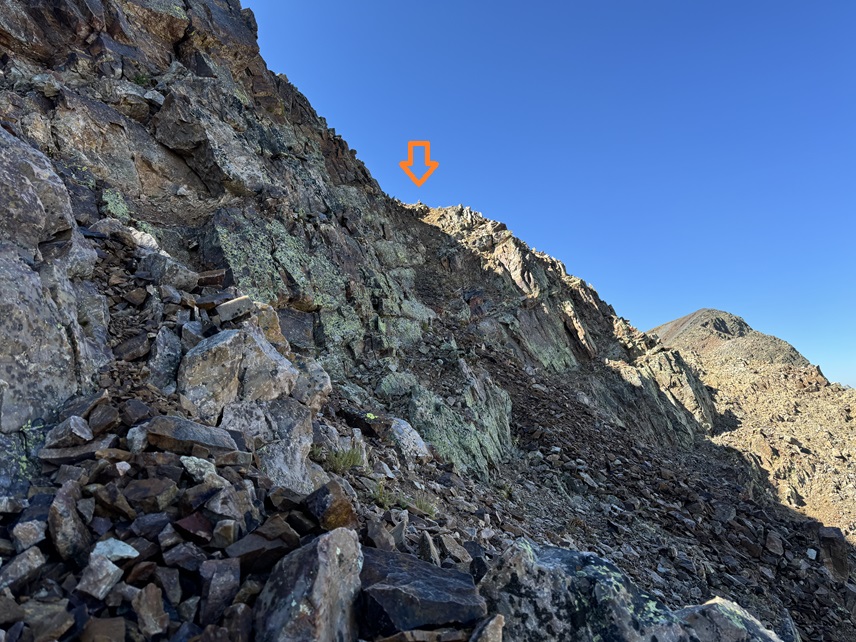
From here I could see Mt Nebo to the west
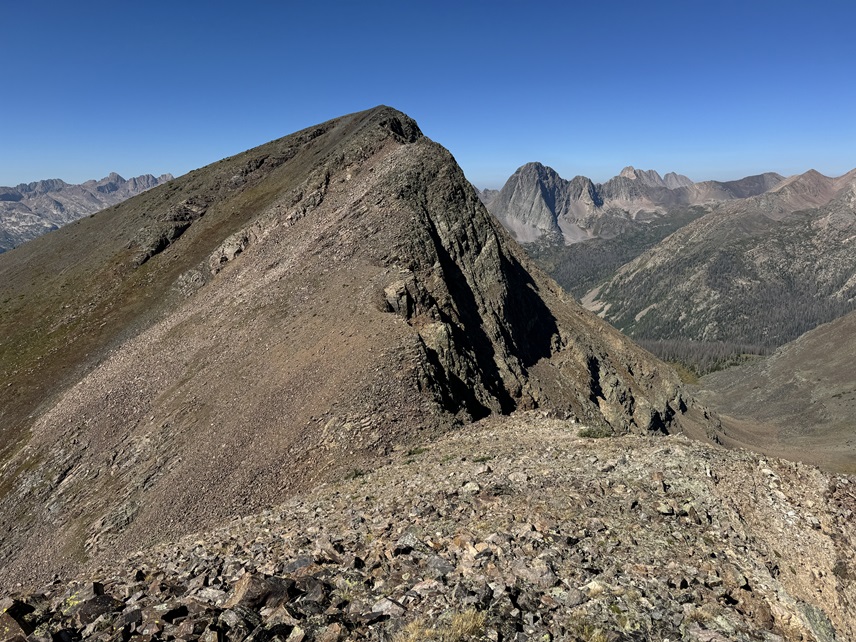
I needed to make my way towards the saddle, but now is a good time to choose your route,  You can go up the tundra that turns to talus on the left, and keep this route 2+, or you can take the ridge to the right, which goes at difficult class 2, maybe some easy class 3, and includes a lot of rock/boulder hopping.  I chose to stick to the ridge.
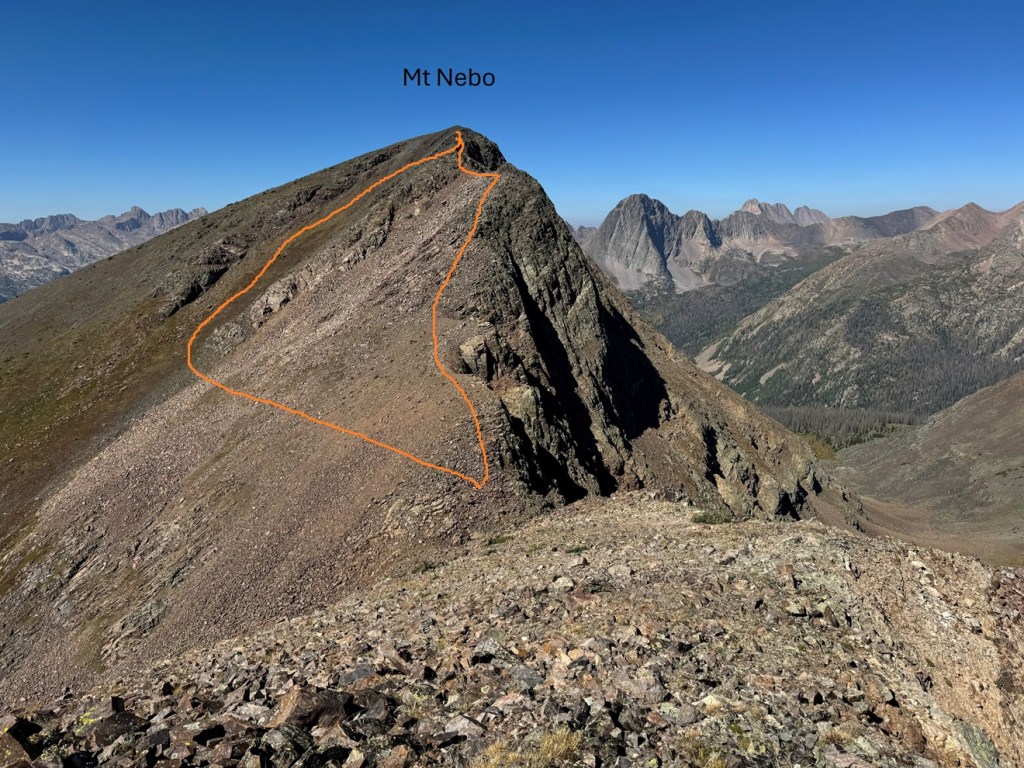
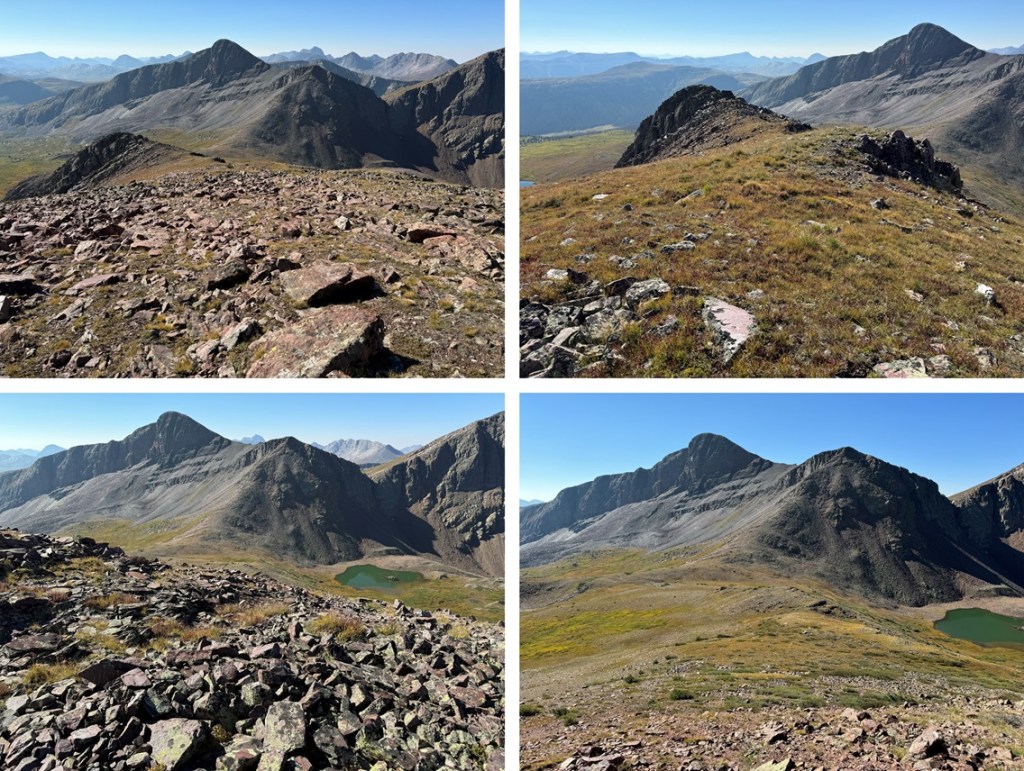
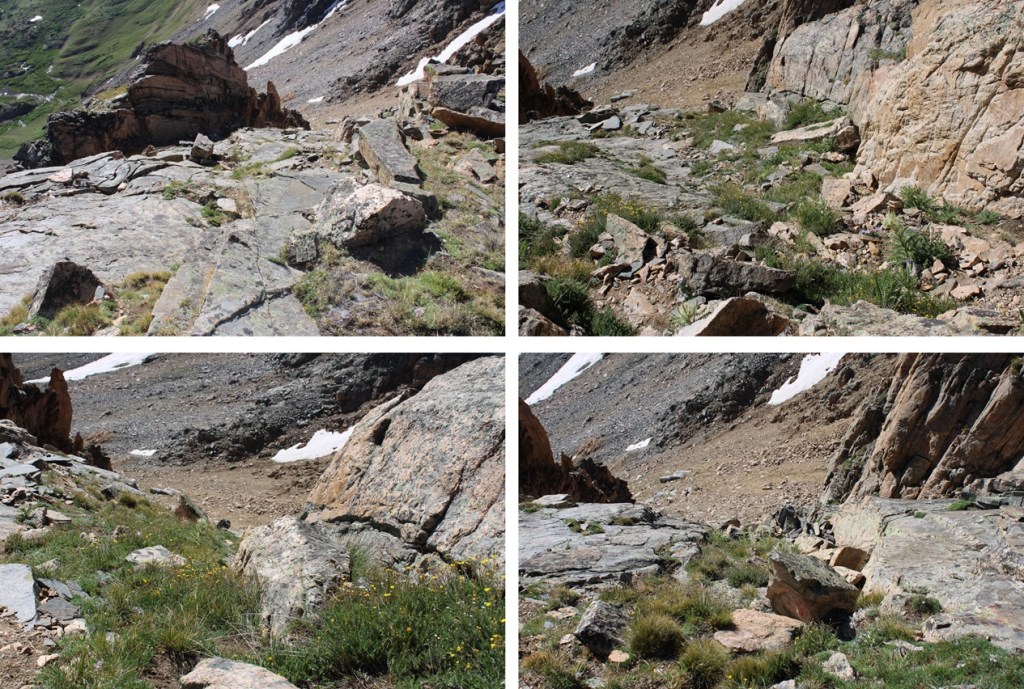
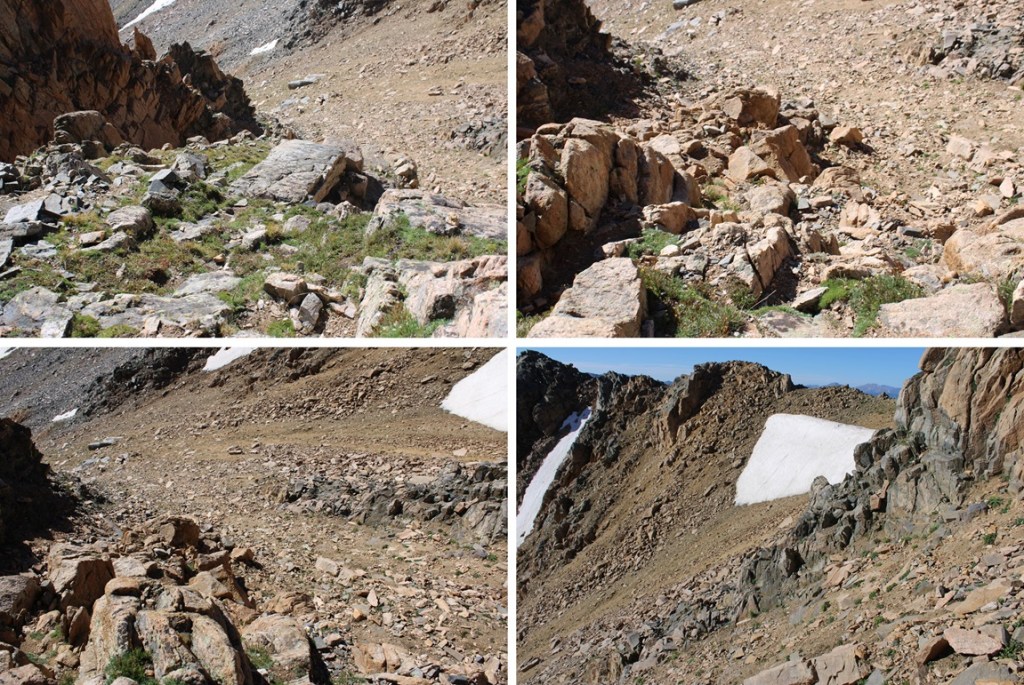
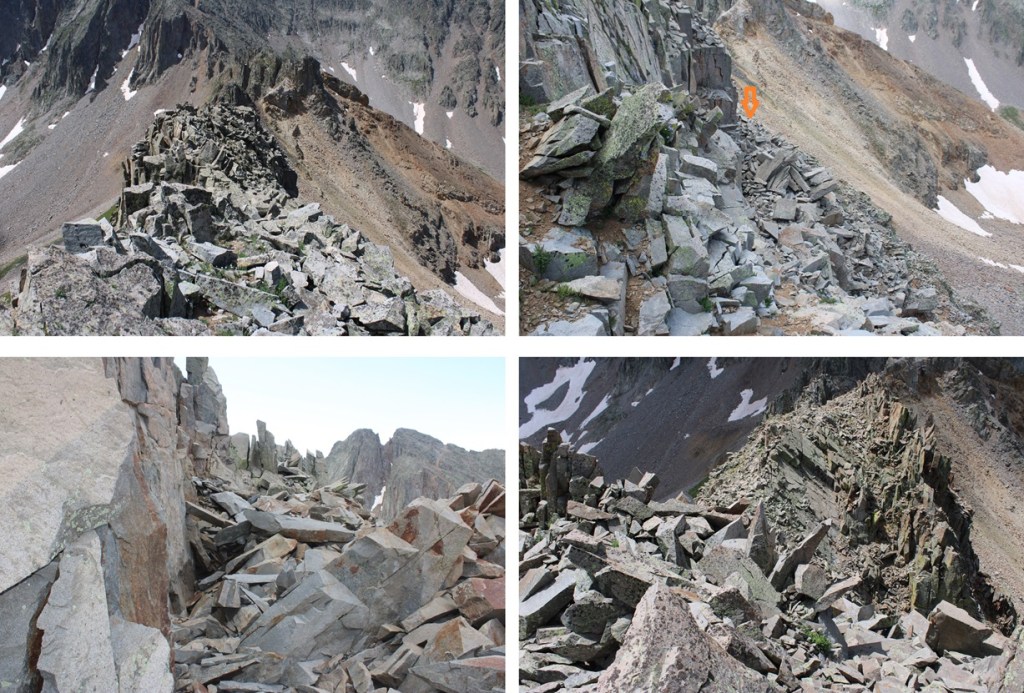
But first, descending down to the saddle. This was rocky, but class 2.  From the saddle, here are some pictures of the route up the ridge towards the summit
There was one ledge section that went at class 2 but had some exposure.  I crossed the ledge, and it was an easy hike up talus to the summit.
I summited Mt Nebo at 11:30am
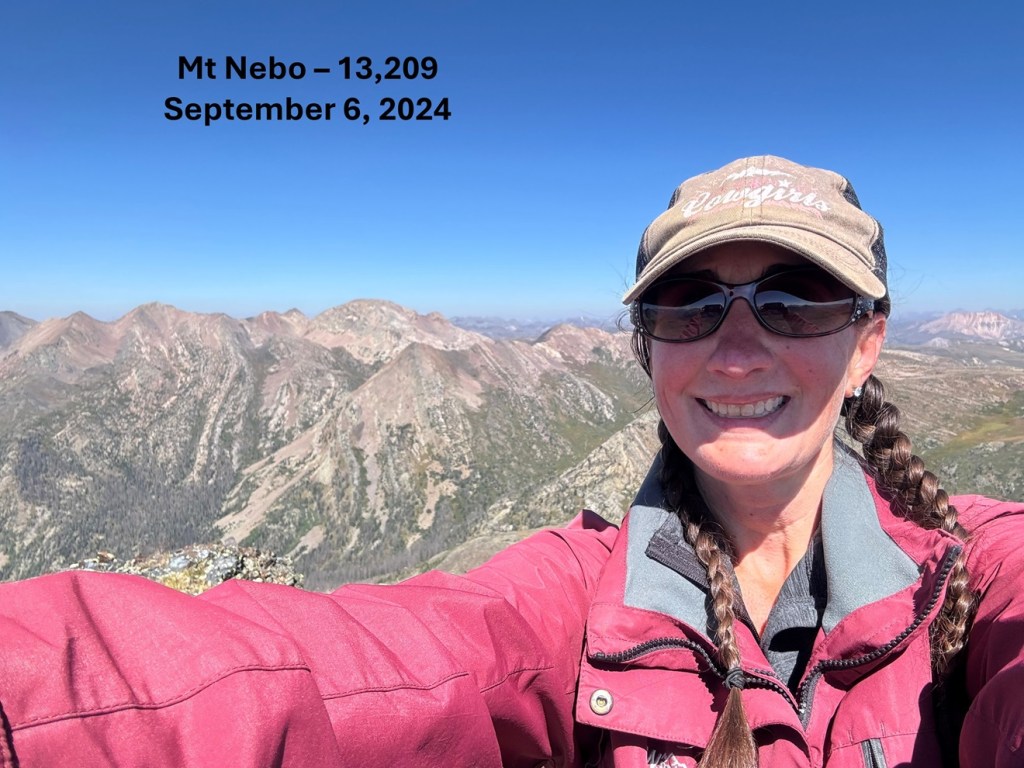
Mt Nebo:

To the east was PT 13232.  I descended back to the saddle.
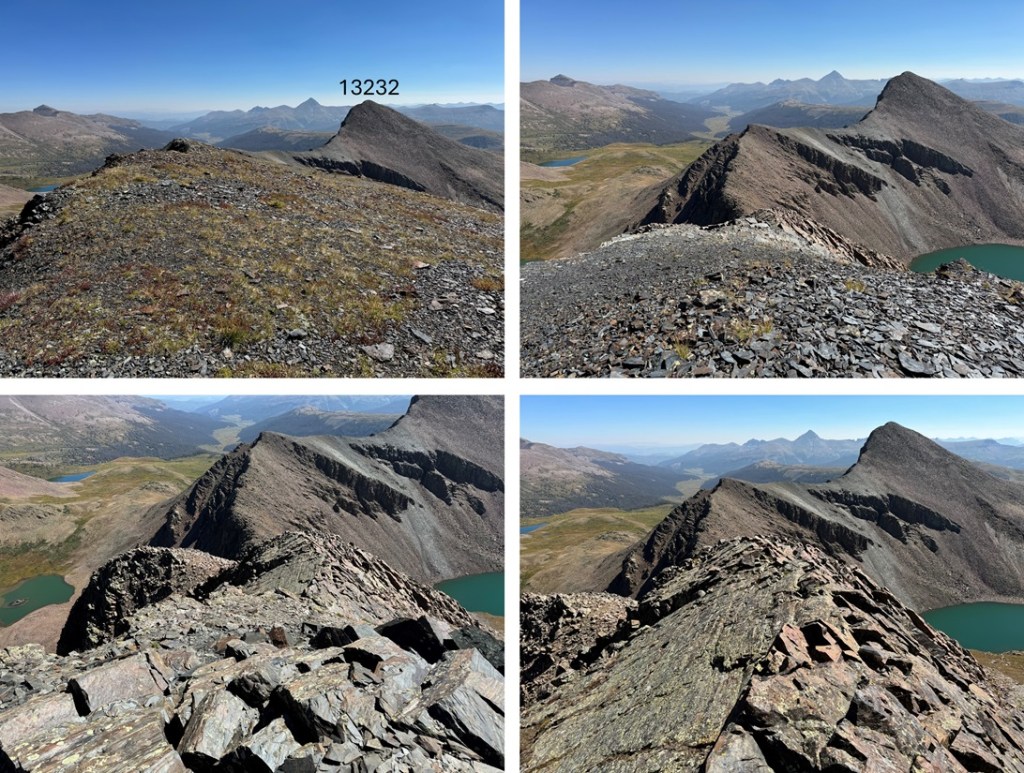
Then it was back up the rocks, following the ridge.  The rest of the hike was all class 2 to the summit, mostly boulder/rock hopping.
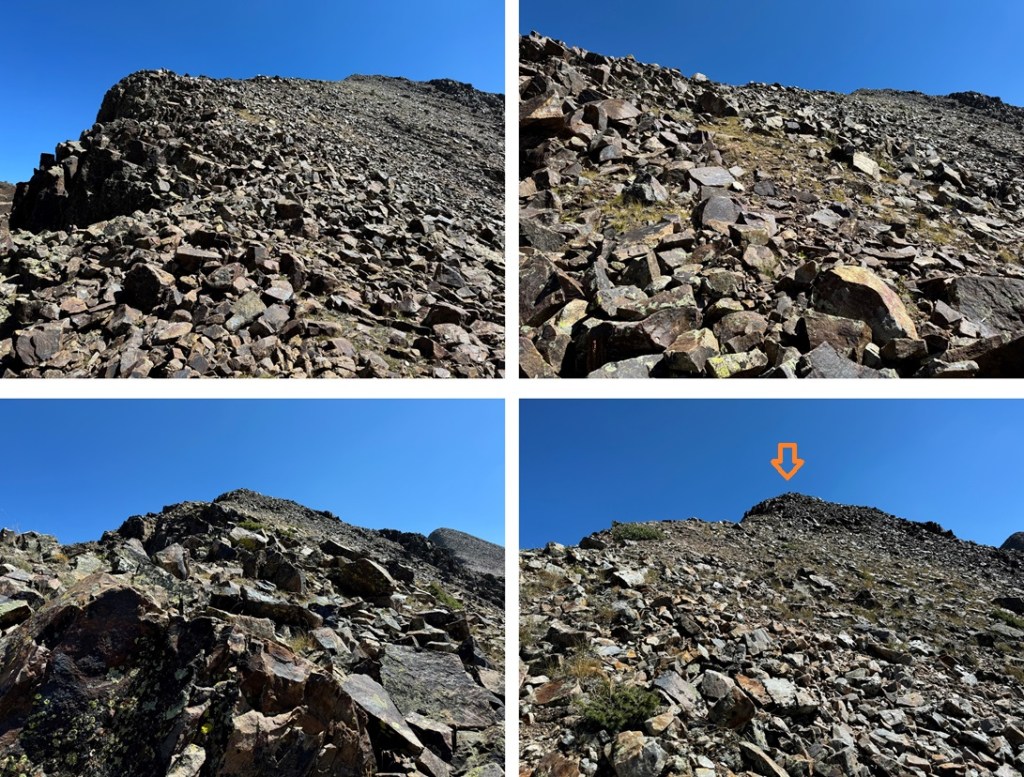
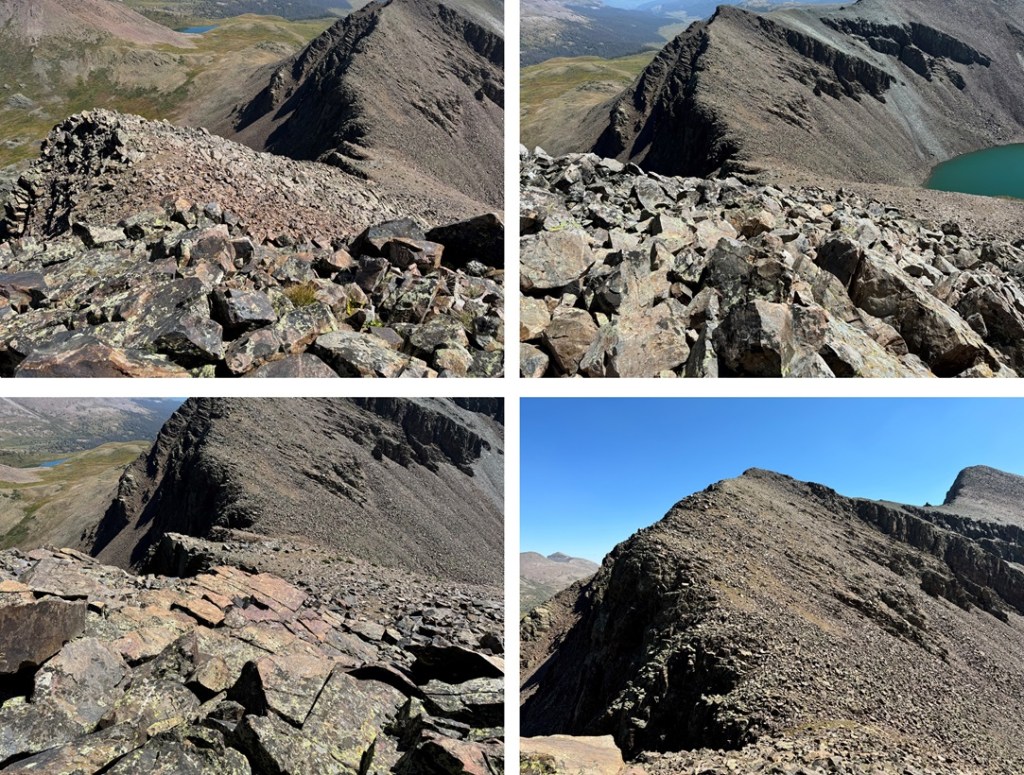
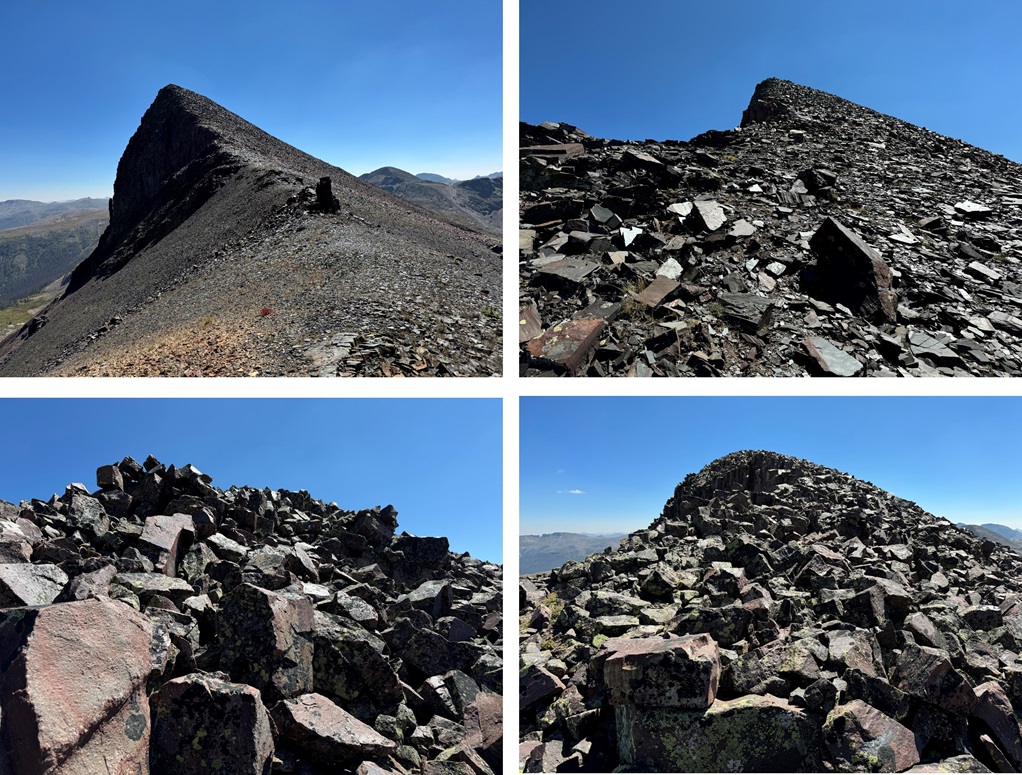
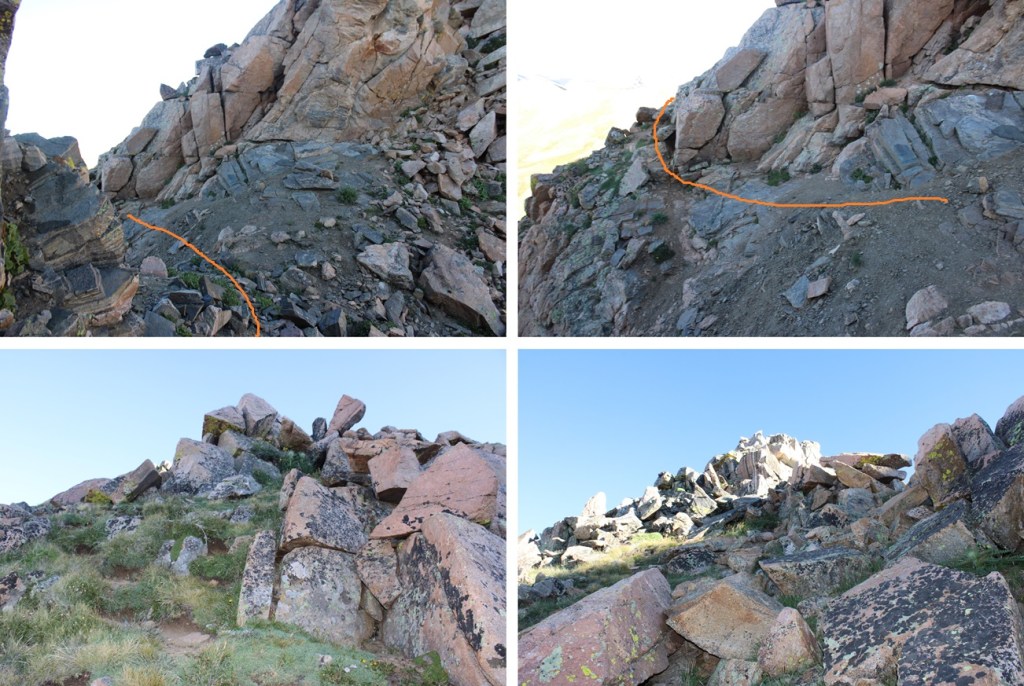
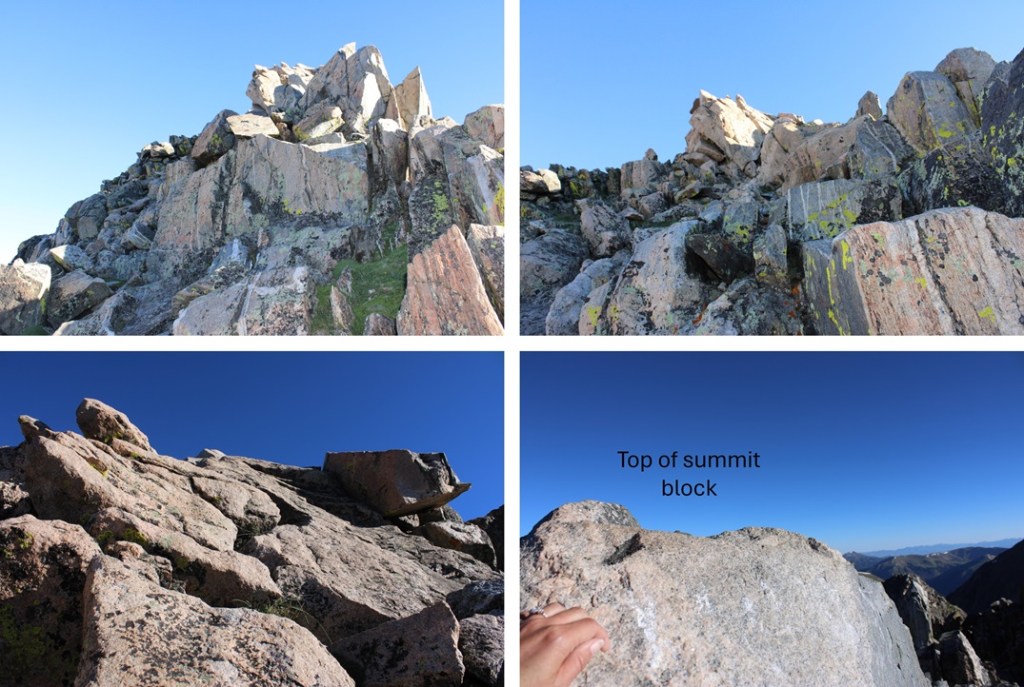
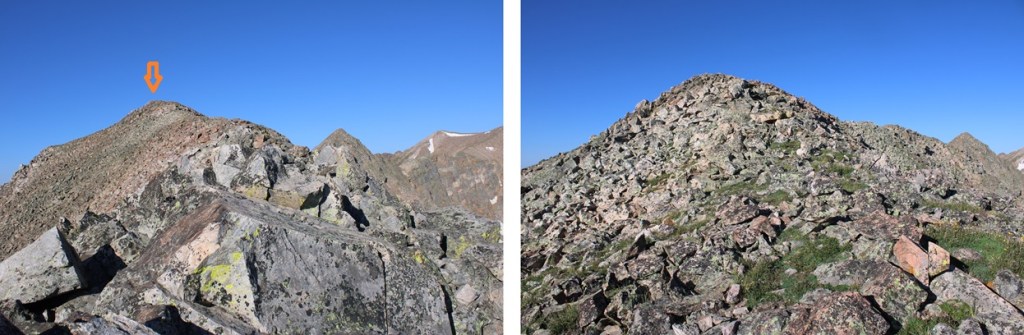
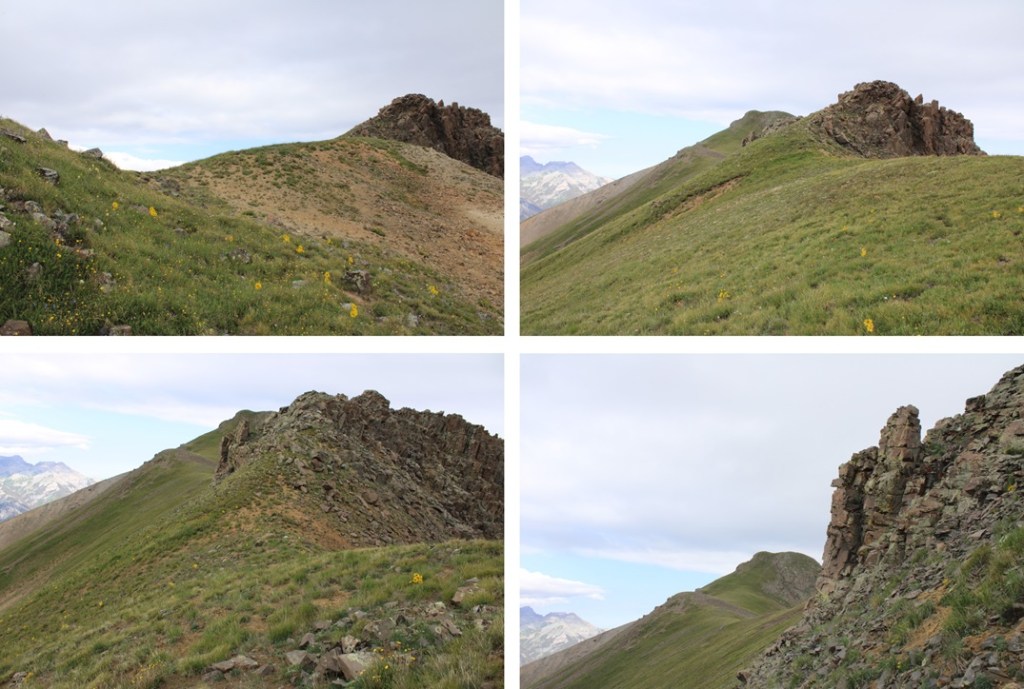
Once back on the rocky point that splits the two peaks, it was now easy to hike southeast to the summit.  I followed the talus to the rocks, and kept ascending.  The ridge proper goes at class 2.  Here are some pictures of the route.
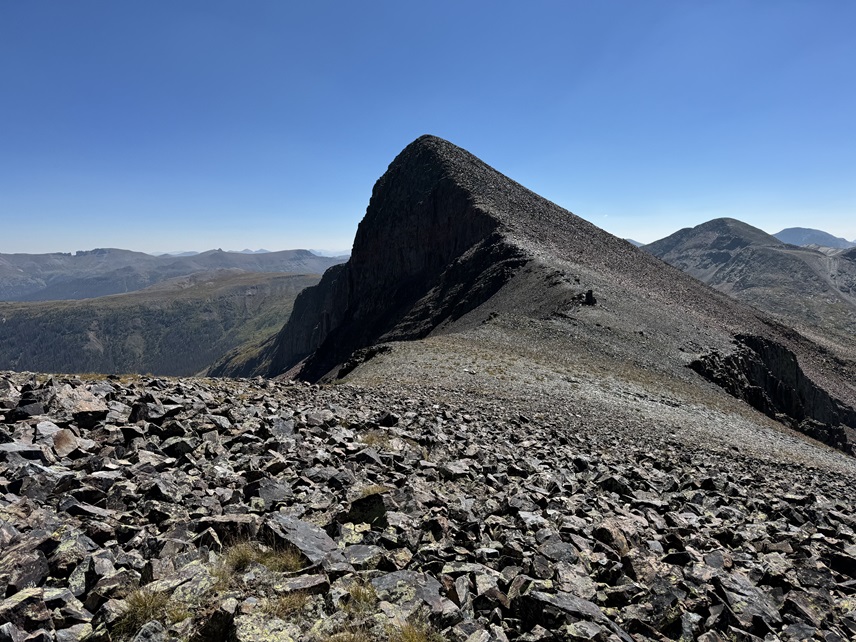
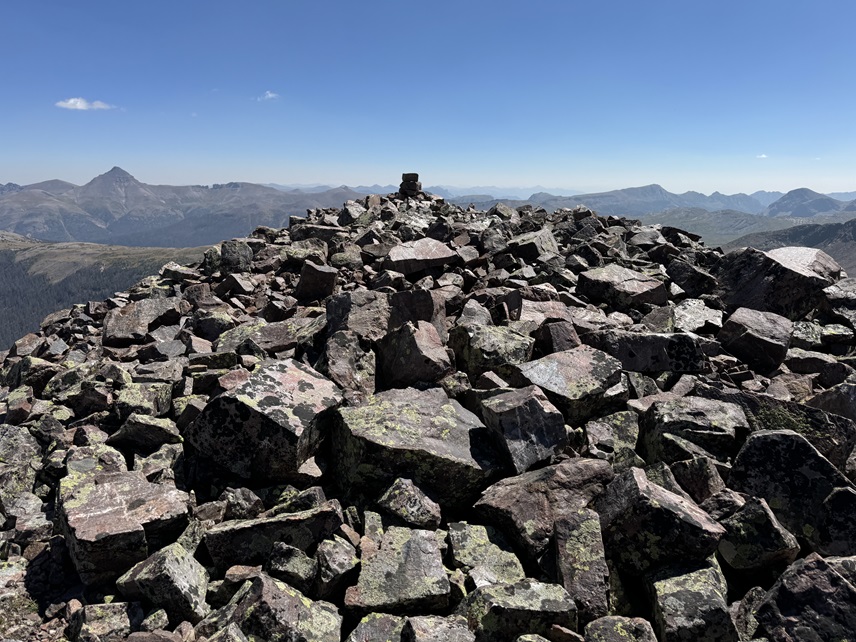
I summited PT 13232 at 12:30pm

PT 13232:

Now I was headed back to my campsite.  I turned around, and followed the ridge as it descended northwest.

I then went right when I made it to the bump in the ridge, descending on talus and rocks before making my way back to the ridge.
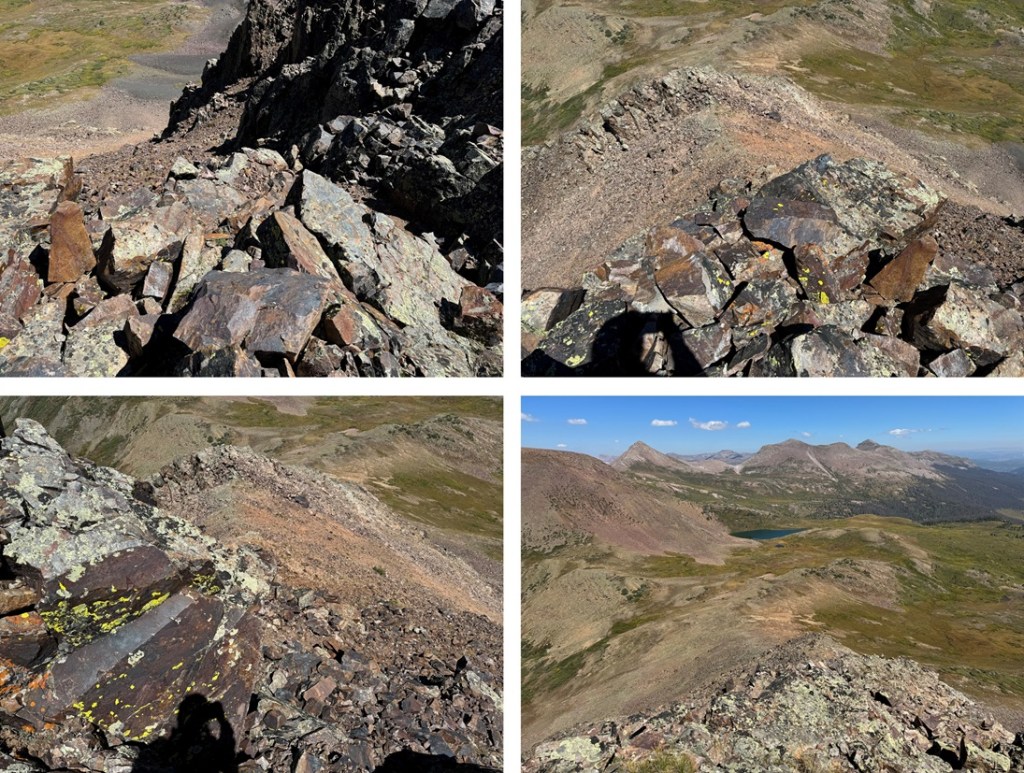
I then followed the ridge back to my campsite and the CDT, being careful to go left to avoid the steep sections.

I made it back to my campsite at 1:15pm, making this a 8.55 mile hike with 3732’ of elevation gain in 6 hours, 45 minutes, including time to set up my camp and eat lunch.  This report continues with PT 13171 the next day, along with a hike out back to Beartown.
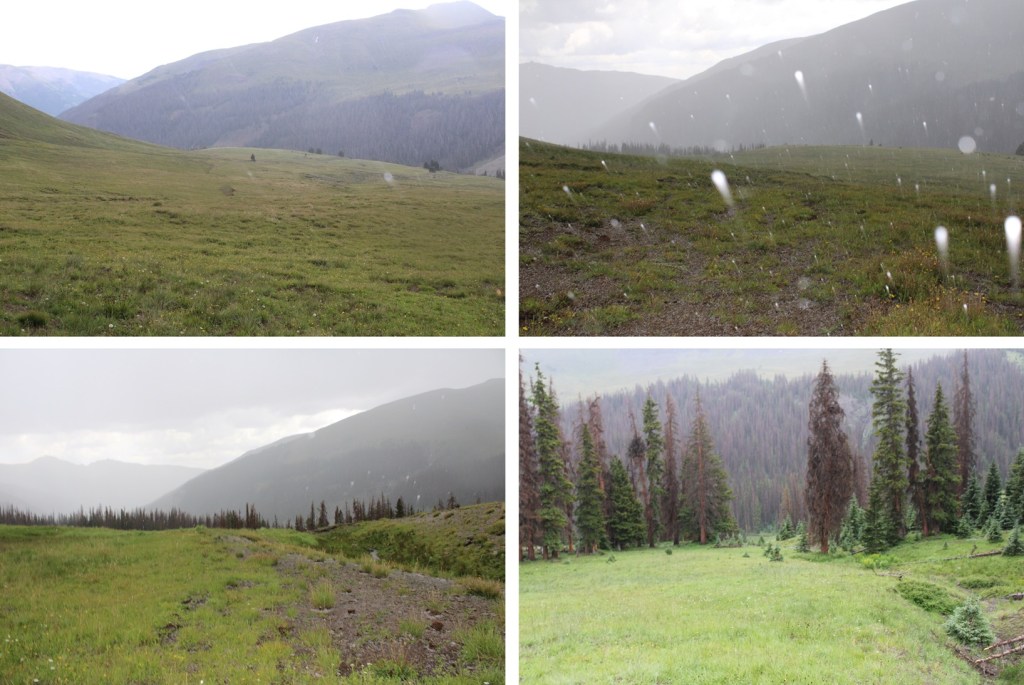
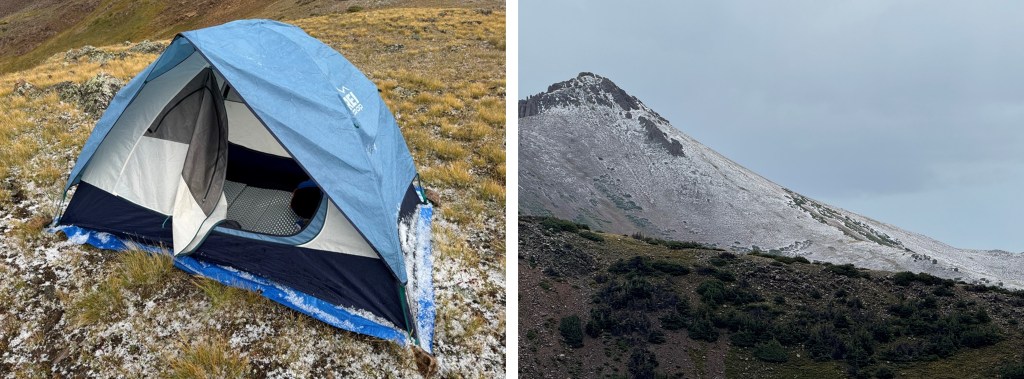
Oh, and it rained and hailed and graupled that night.  For hours. I kept punching the top of my tent to get the slush off so it wouldn’t freeze overnight.  Here’s a picture from about half an hour into the 4 hour storm, when I got a little break.  Gotta love late summer storms above treeline!  Good times!
The Citadel – 13,295

RT Length:  11.45 miles

Elevation Gain:  3255’

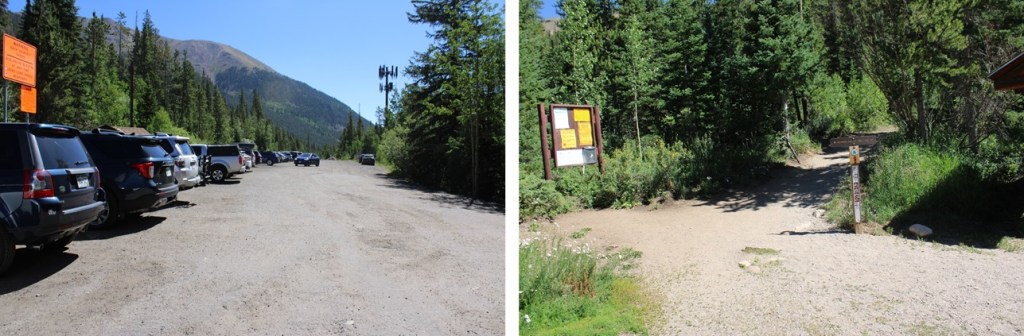
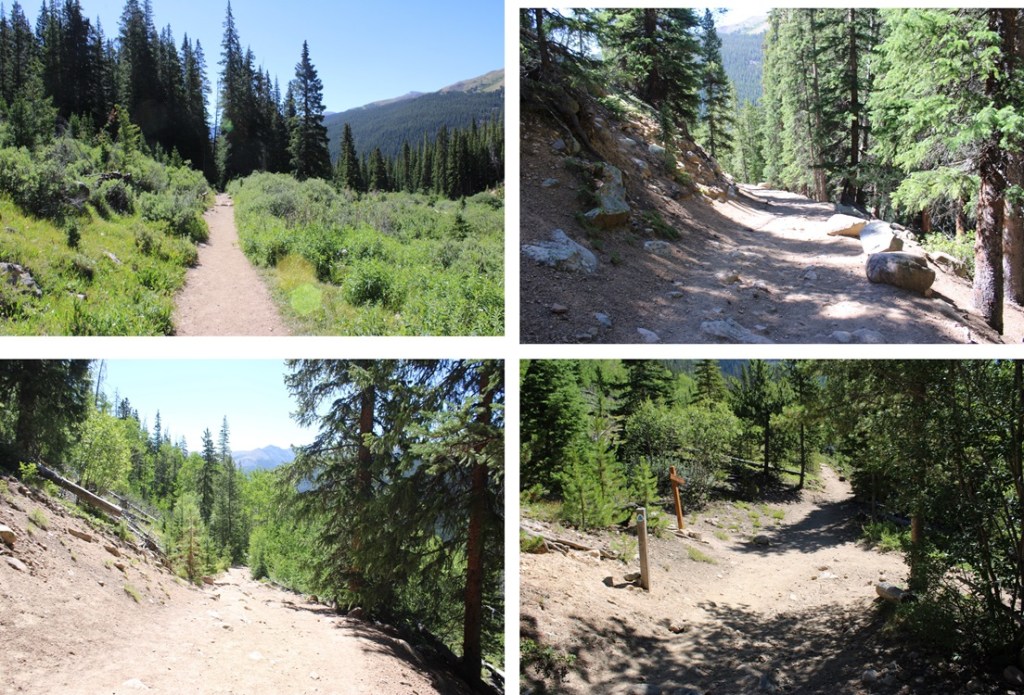
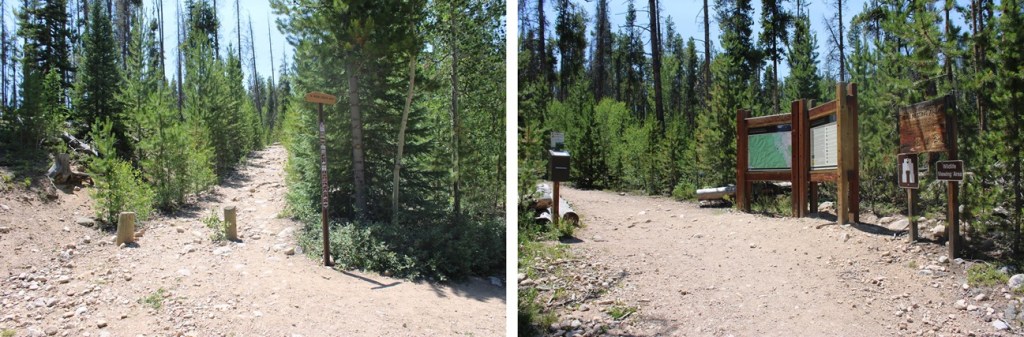
I arrived at the Herman Gulch Trailhead and was on the trail at 4:30am.  The trailhead has spots for dozens of vehicles (if not more), and the trail is clearly marked. 

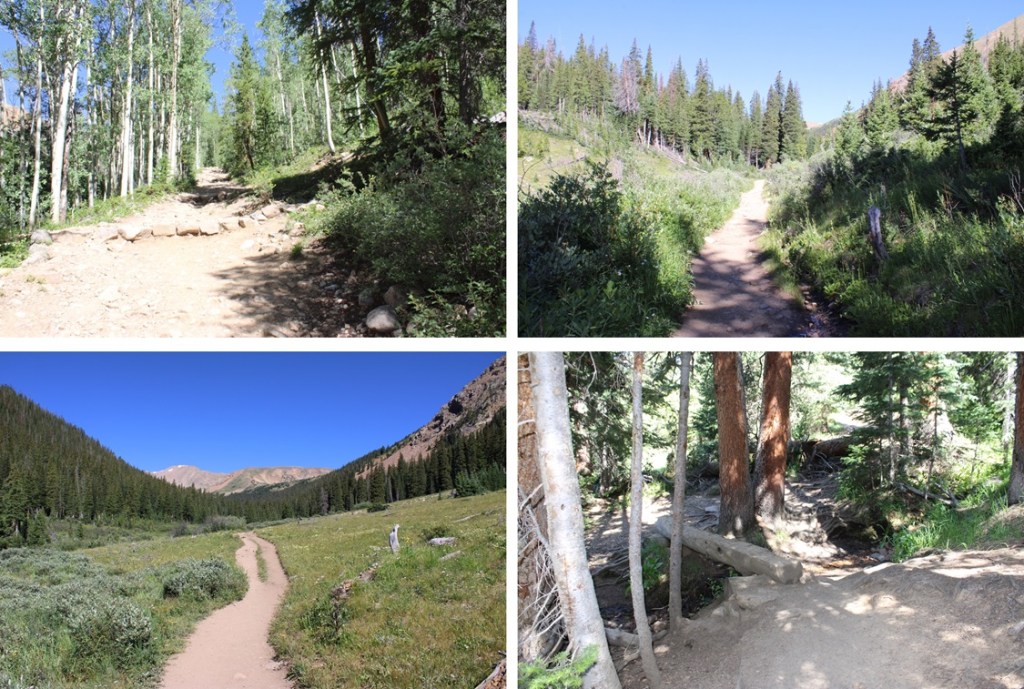
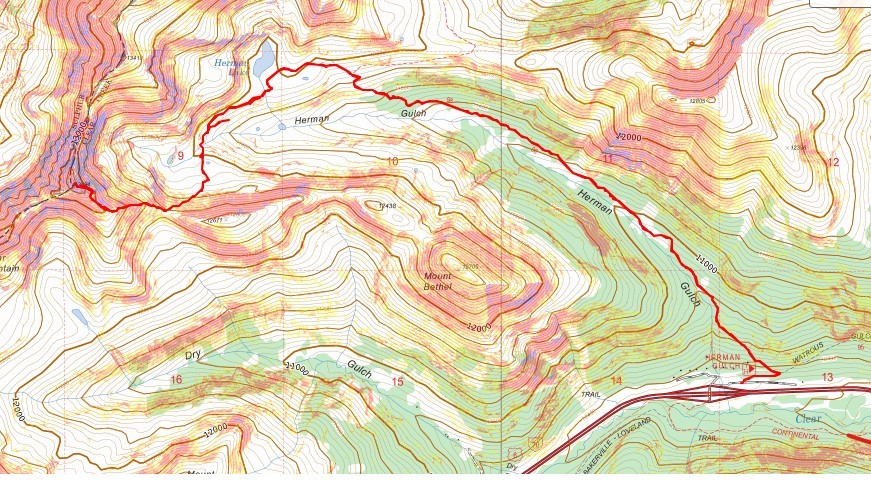
I followed the Herman Gulch trail for less than a quarter of a mile, until I came to the junction with Waterous Gulch Trail, turned left, and continuing following the class 1, well-defined Herman Gulch Trail all the way to Herman Lake.

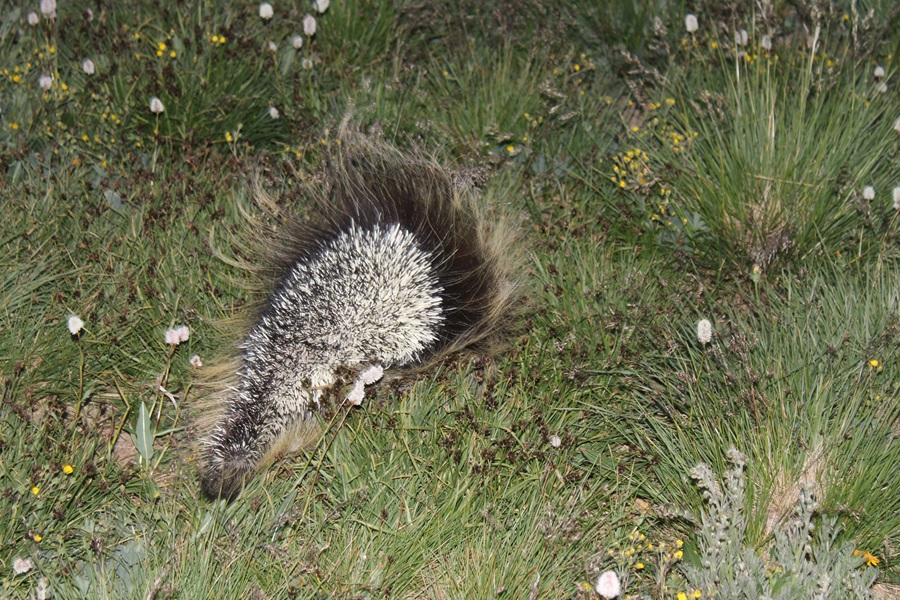
It was at about here I encountered a porcupine, which immediately turned and ran away from me. 

I continued following the trail, skirting the south side of Herman Lake

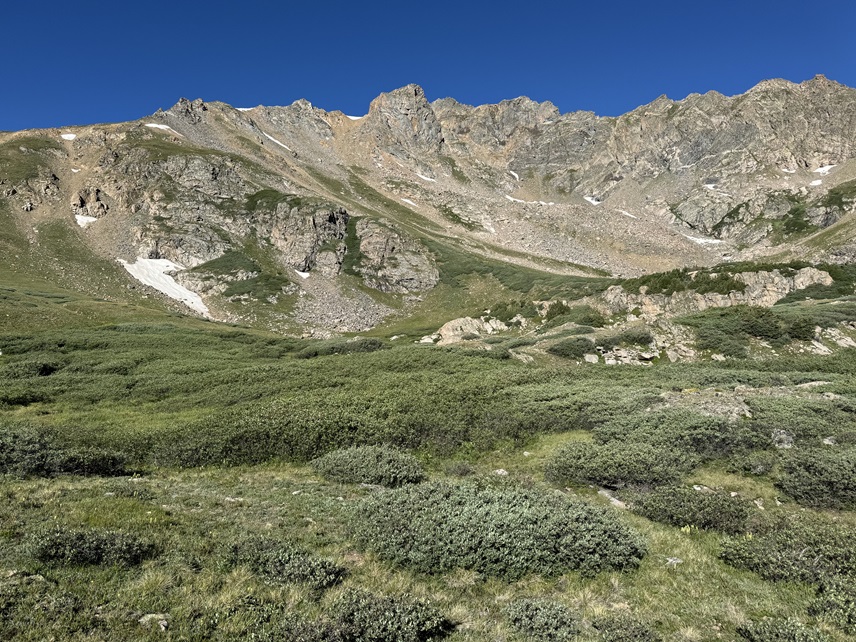
I followed this trail as it headed southwest towards the saddle of The Citadel and PT 12671.  Here’s where I was heading:

There’s a pretty good trail that goes MOST of the way, crossing the creek that flows out of Herman Lake and through the willows.  I lost a little bit of elevation during this part, but it was negligible.

At about 11970’ I came to another large creek, and here I left the trail to cross the creek

From here the trail is difficult to follow, but there are plenty of cairns to follow to get you to the saddle.

Now on the saddle, I turned right and headed west up the ridge, on a good game trail that was easy to follow.

Now to make my way towards the saddle.  The route will be obvious.

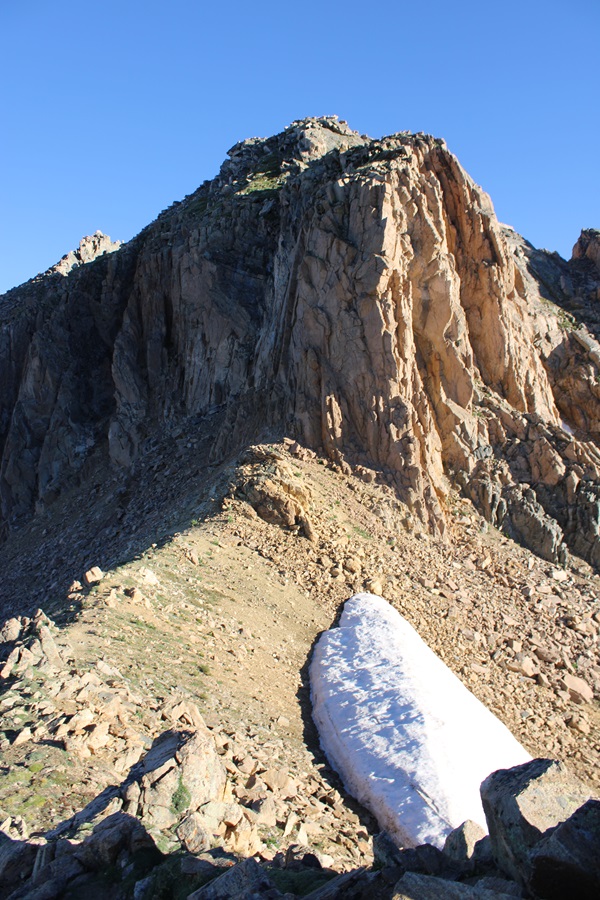
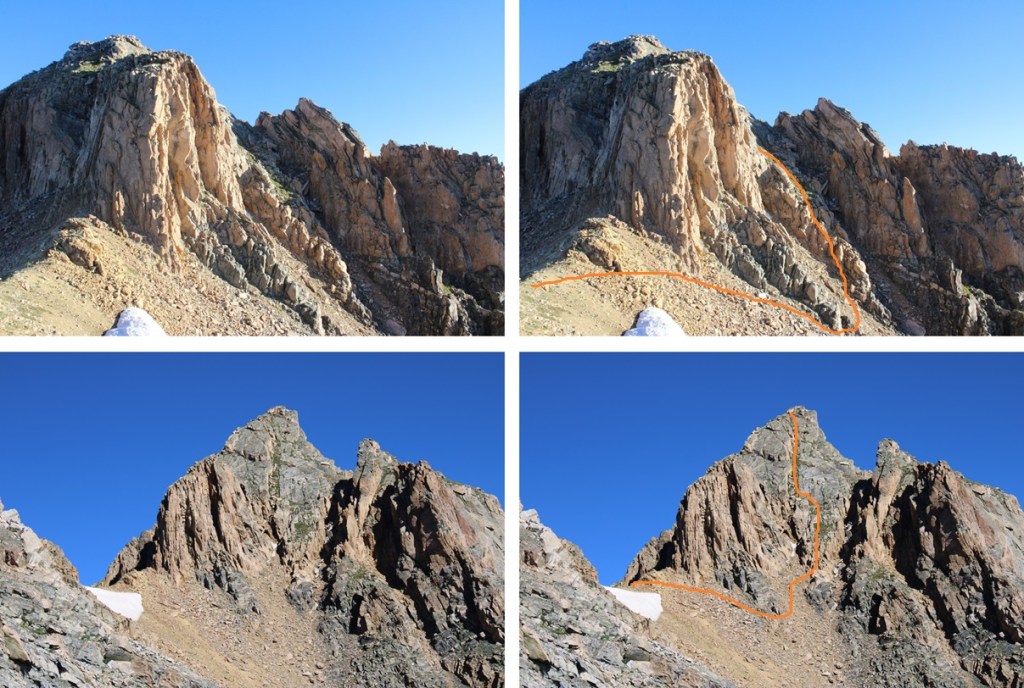
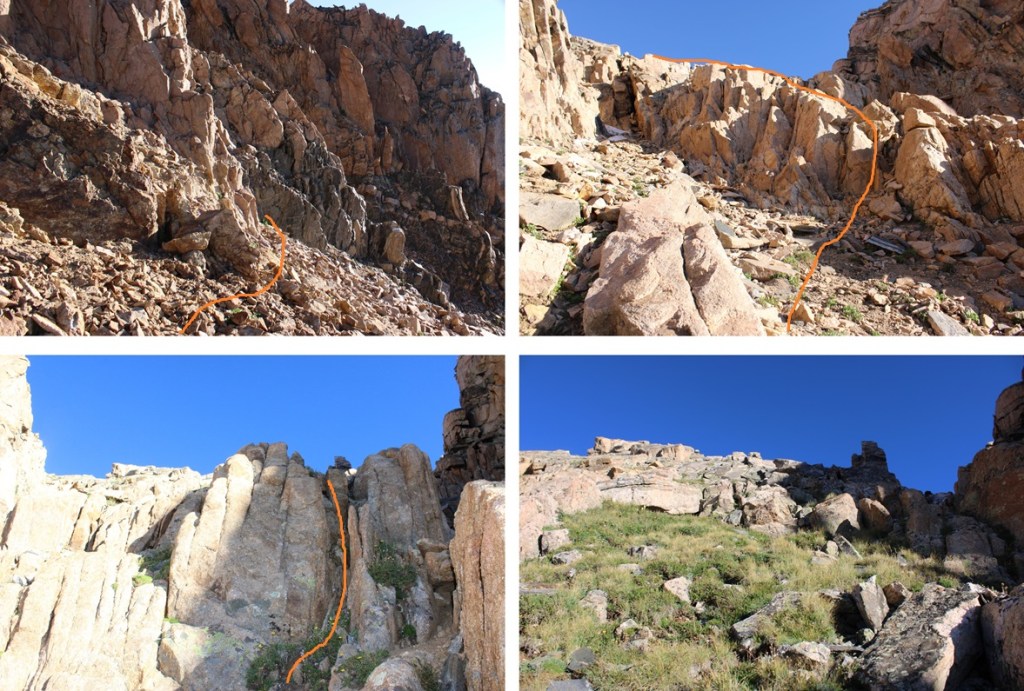
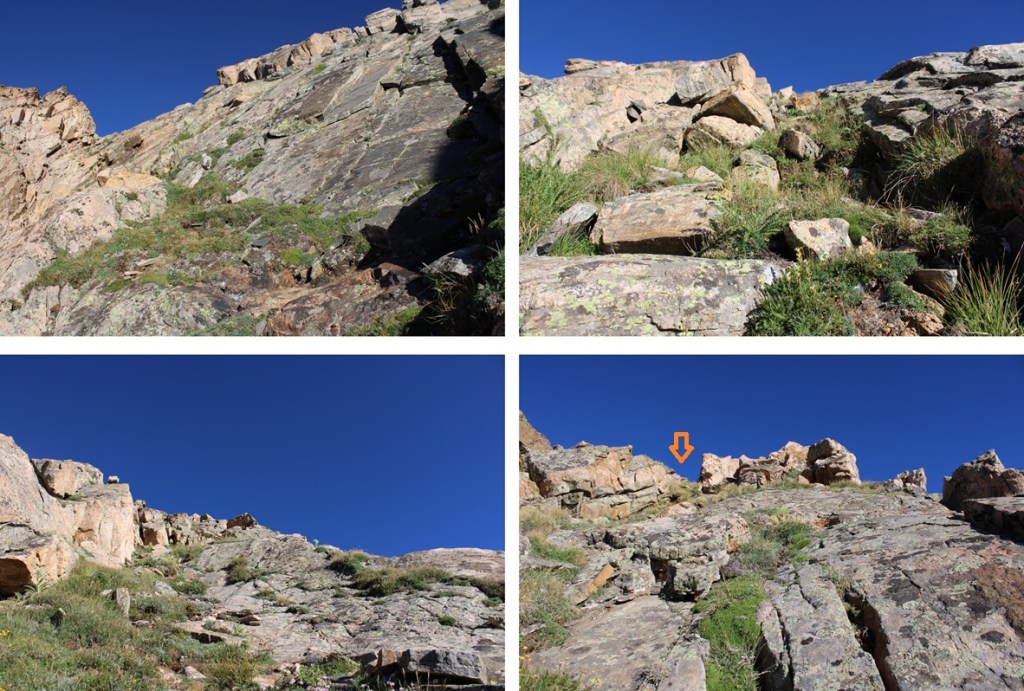
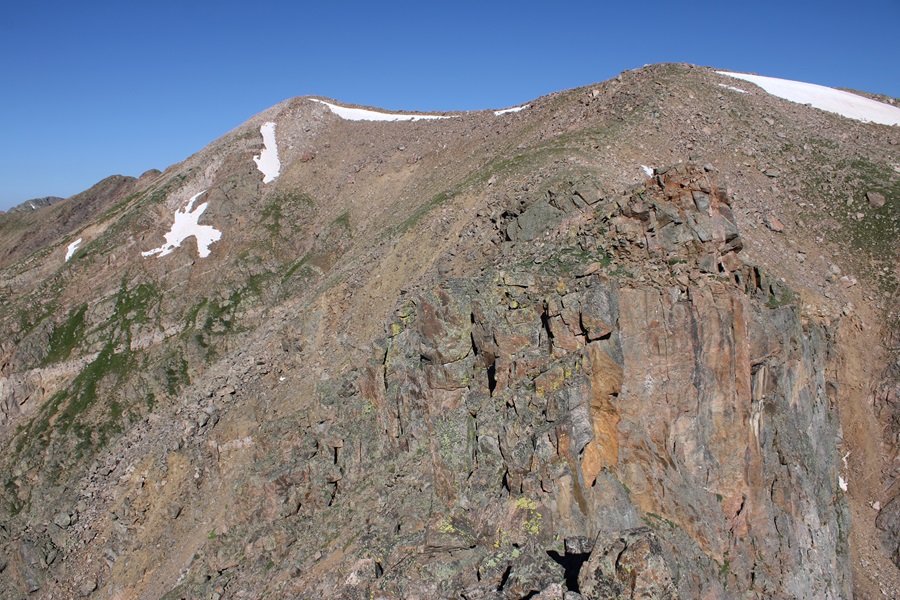
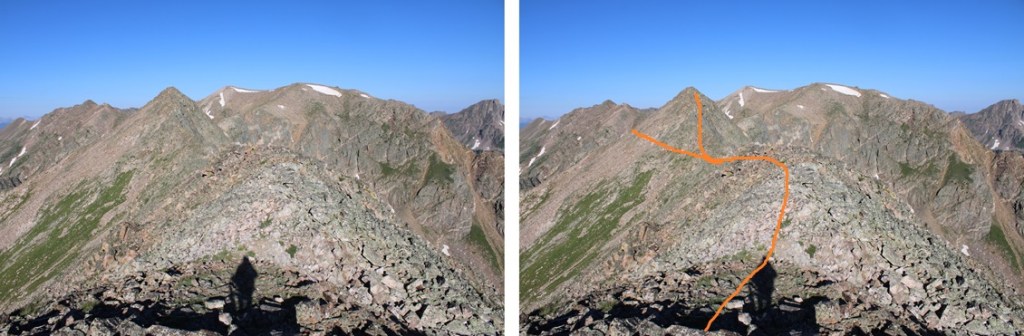
If you haven’t already, now is a good time to put on your helmet.  From the saddle, head northeast and look for a solid band of rock.  This rock band is important, because the gullies are miserable.  Once on the rock band, ascend towards the tundra, then follow the line of tundra northeast.  Once you’re on the tundra, you can stay on tundra until the top.  This is class 3, and a slip would have you falling quite a ways, like hundreds of feet before you stop, so take care in this area.  Here’s a visual representation of how I climbed from two different angles.  It’s probably a good idea to start memorizing the route as you’re hiking up the ridge from the saddle of The Citadel and PT 12671. 

And some pictures of my route:

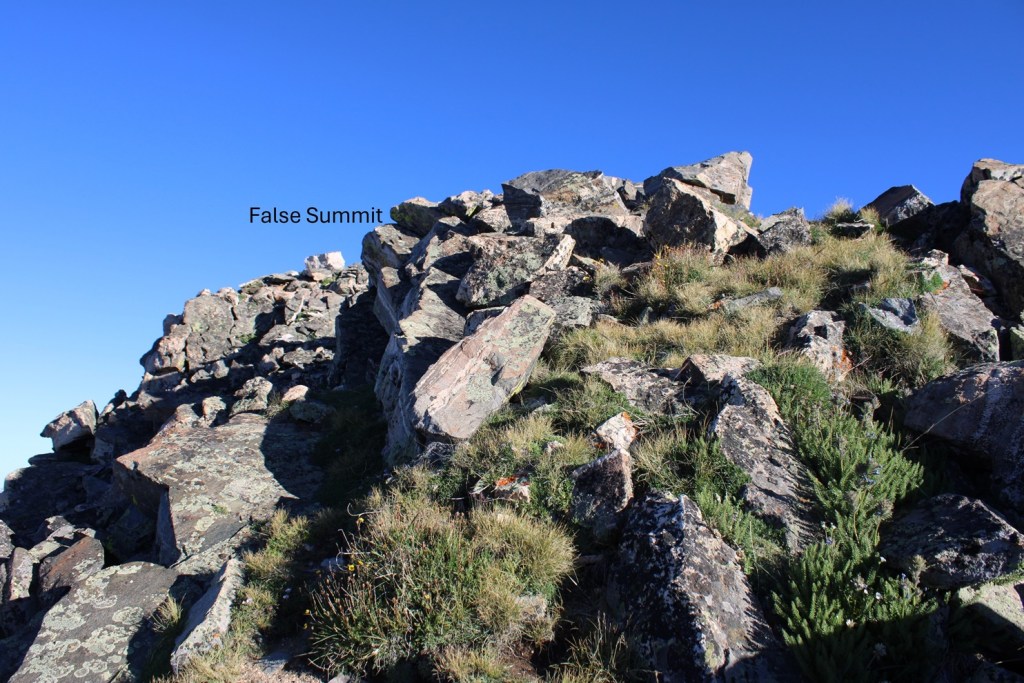
From here, to the north, I saw what I thought was the summit.  It wasn’t, but I headed towards it anyways.

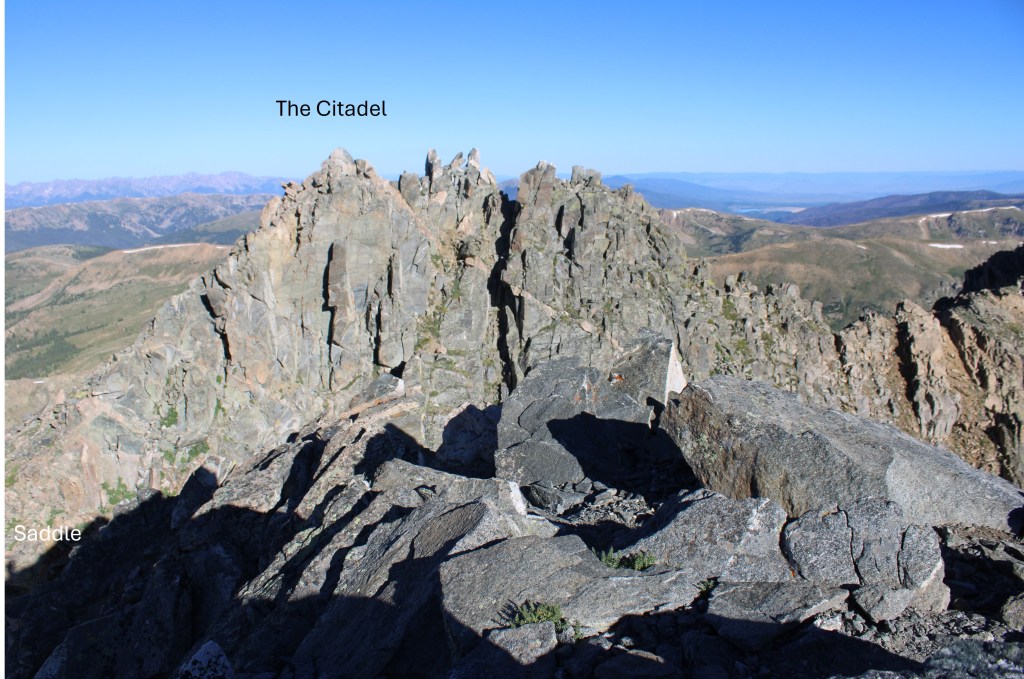
I made my way to the false summit, and could see the true summit to the west.

So, I downclimbed a bit, and headed towards the saddle ahead of me. 

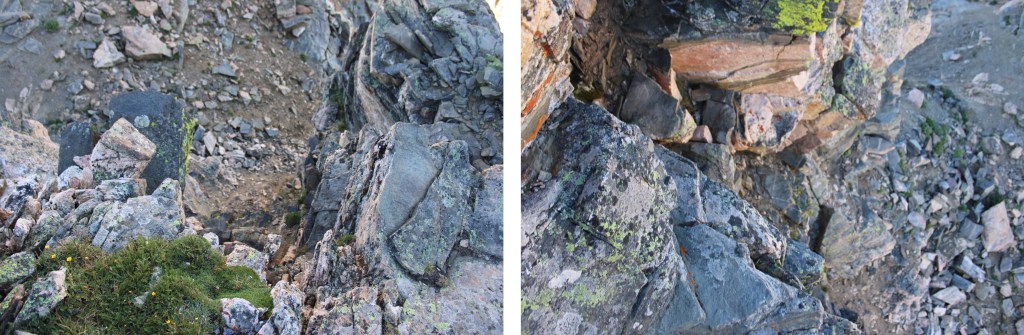
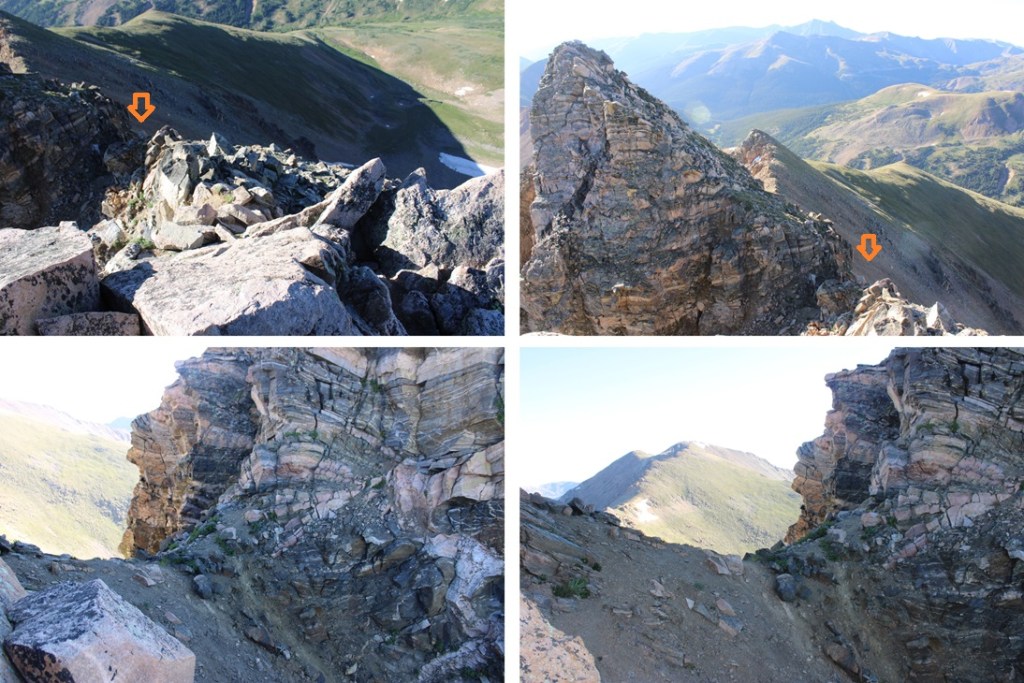
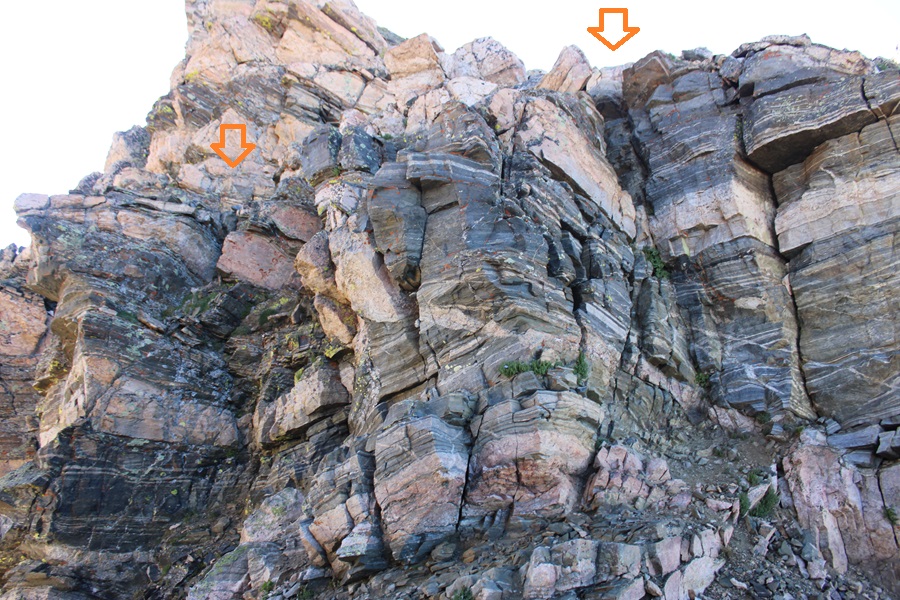
At this saddle, there was what I would consider a class 4 chimney to downclimb.  I sat there for about 10 minutes, waiting for the wind to die down before downclimbing.  The wind was insane, and I had to hide behind rocks to get away from it.  The downclimb was much more difficult than the upclimb, as it was committing, and I wasn’t sure there would be adequate footholds down below where I couldn’t see (there were).  Here’s what the wide chimney looked like to downclimb.  It was probably 10-15 feet of downclimbing.

Now to head to the saddle, and summit the peak.

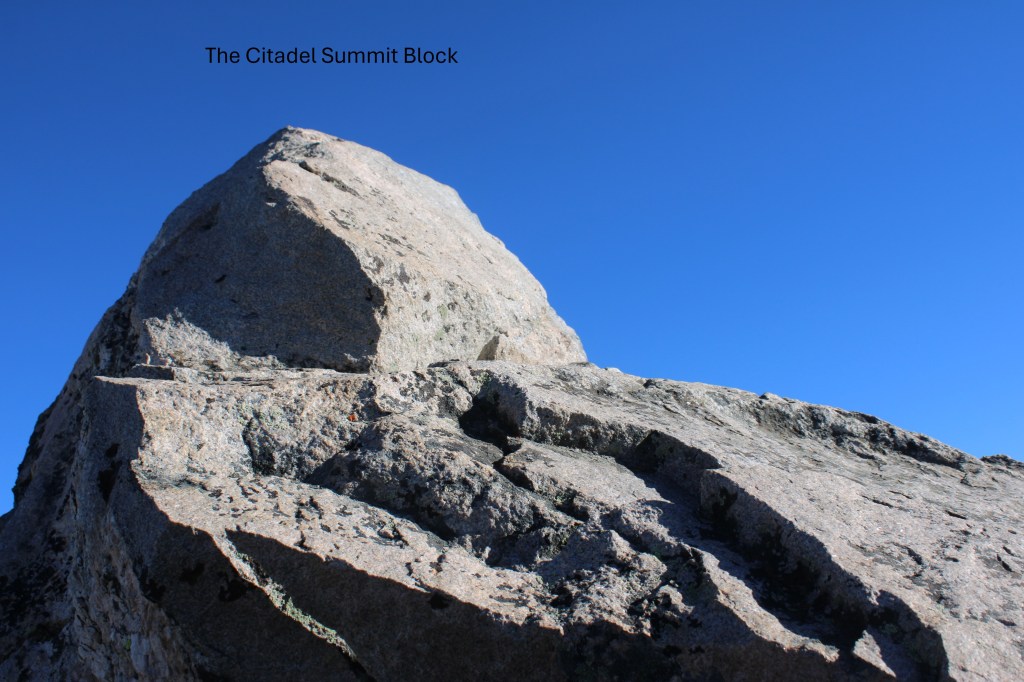
The summit was a short class 3 scramble to the summit block, which is a bit exposed. It was EXTREMELY windy today, and I had to hold on tight to keep from being blown over, but I was able to summit.

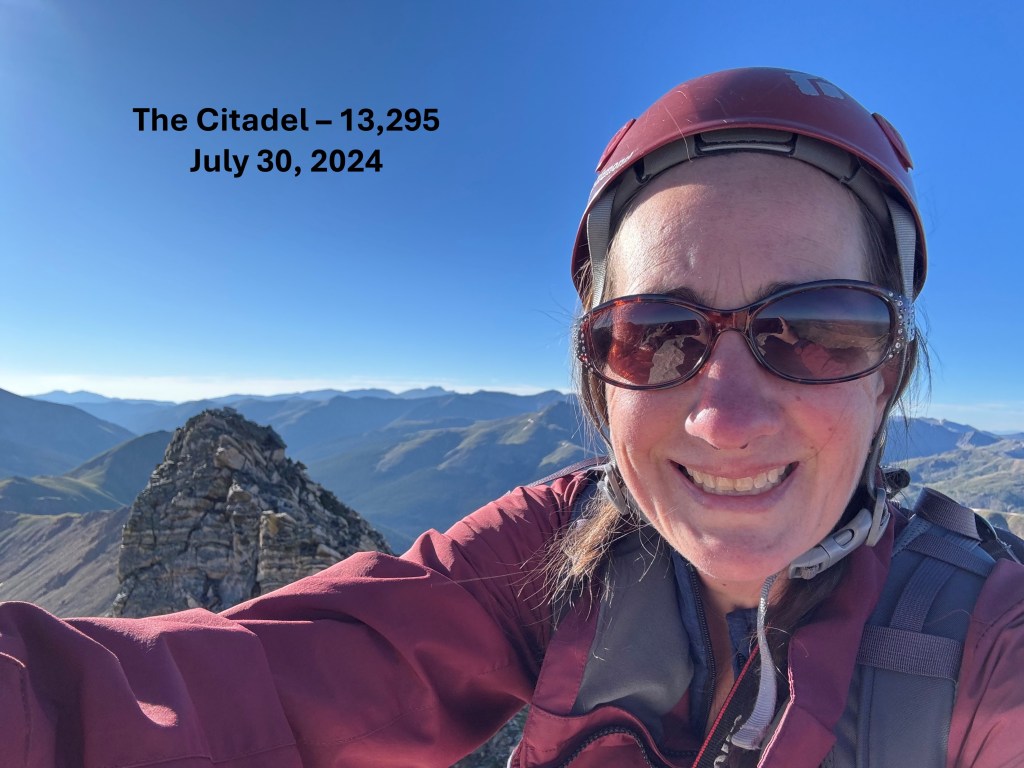
I summited The Citadel at 7:45am.  Sorry for the terrible picture and less than stellar video… I only took 1 photo, because I was afraid of losing my phone to the wind, and there wasn’t much room to move around on that summit block without falling (once again, wind).

The Citadel:

Here you can see the false summit to the east

I made my way back to the saddle between The Citadel and the false summit

Here’s a look at your options to upclimb.  There are two, I took the one to the left do downclimb and upclimb.

And now to make my way back to the grassy ledge.  There’s a cairn indicating where to descend.

And now to downclimb the grassy ledge.   Once again, I stayed on the tundra until I reached the rock rib, then headed for the saddle to the right.

I was now back on a trail, and followed it to the saddle of The Citadel and PT 12671.

Here’s an overview of my hike to Herman Lake from the saddle.  This was on a mostly class 1 trail, with cairns to help when needed.

Back at Herman Lake, I followed the Herman Gulch trail east back to the trailhead.  You’ll know you’re getting close when you can hear the illustrious sounds of I70 in the distance.

I made it back to my truck at 10:30am, making this an 11.45 mile hike with 3255’ of elevation gain in 6 hours.

On to the next trailhead!

Keller Mountain – 13,080

RT Length:  11.89 miles

Elevation Gain:  4086’

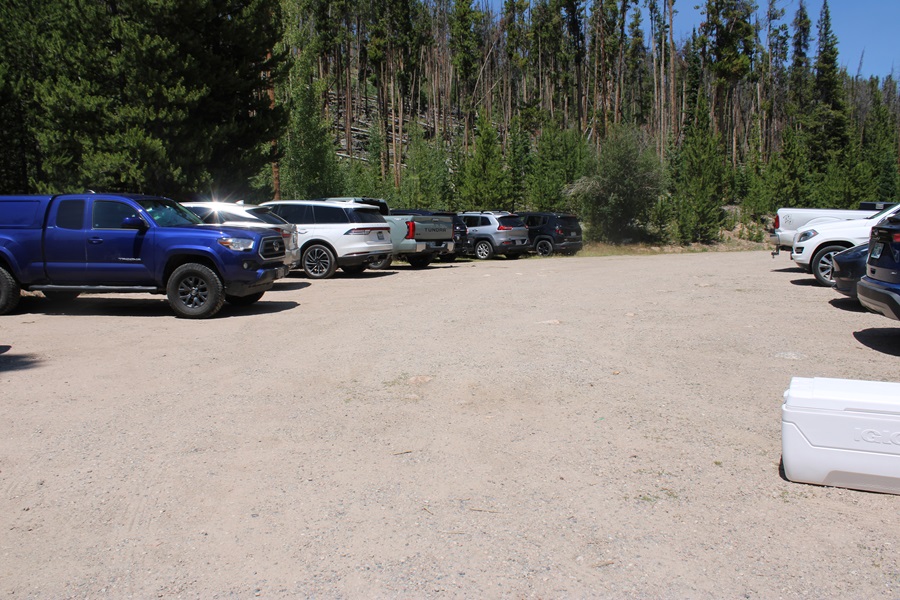
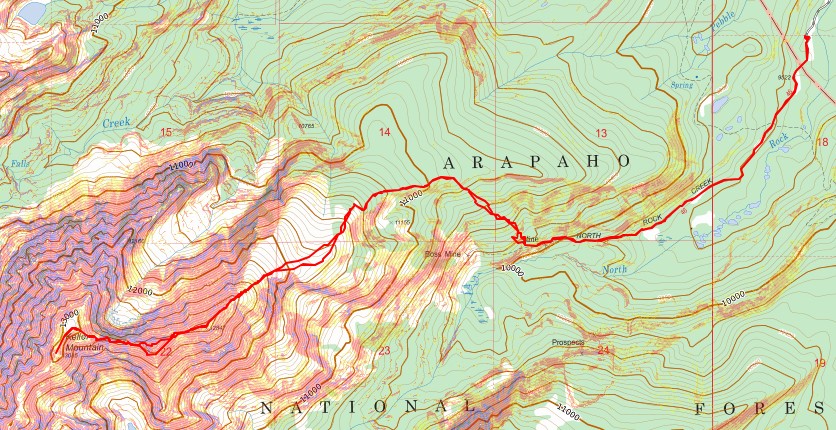
I parked at the Rock Creek Trailhead at 5am, and the parking lot, which holds about 20 vehicles total if everyone parks nice, was already full.  I’m guessing all the vehicles were from weekend backpackers (I arrived on a Sunday morning).  The drive in is mostly 2WD on a dirt road, but you’ll want high clearance for the last quarter mile or so.  I saw someone trying to head down in a Honda Odyssey who was having major issues (although it was probably just the driver, not the vehicle).

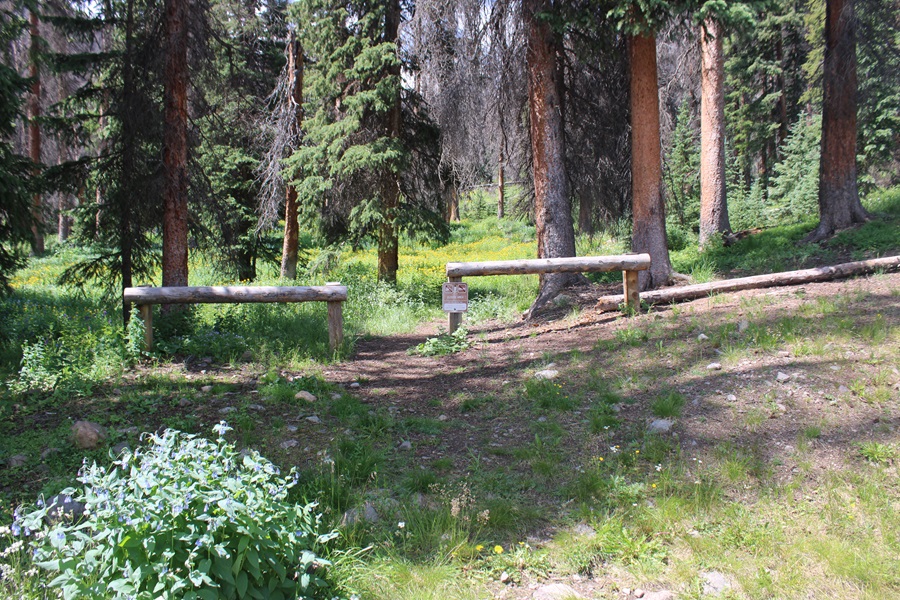
I was on the trail at 5:30am.  The trail starts at the east end of the parking area.

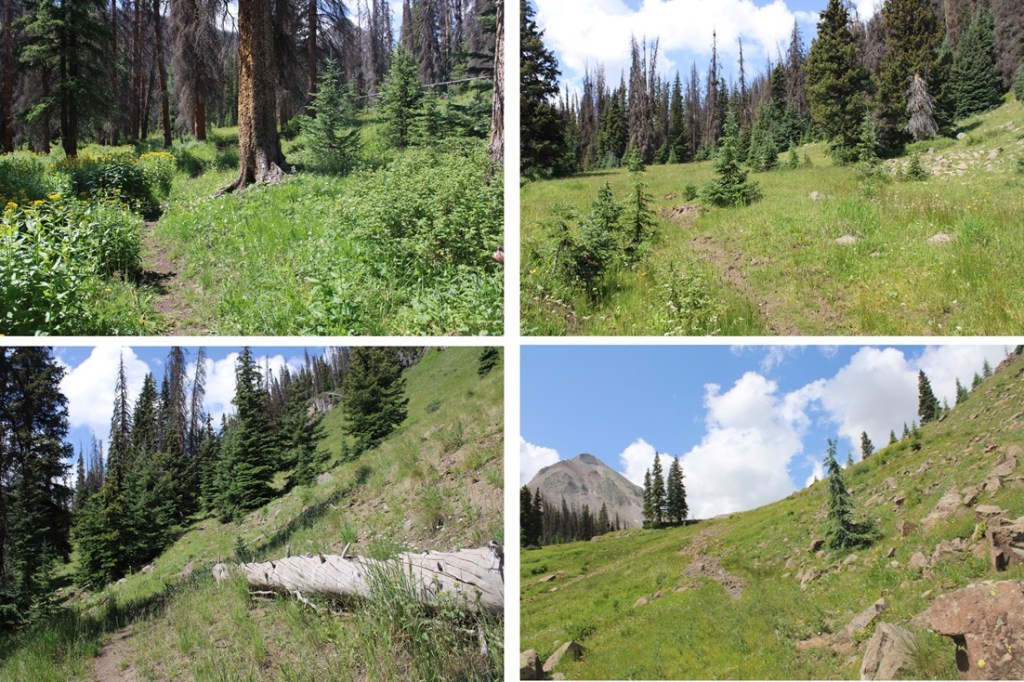
I followed this trail for 2.3 miles, headed west, and staying straight at the first junction to stay on North Rock Creek Trail No. 46.

After hiking for over 2 miles on this class 1 trail, I turned right, and started bushwhacking northeast to the ridge.  There were a lot of downed trees in this area, so navigation was an adventure.  I just kept heading northeast, gaining 760’ of elevation in .7 miles as I made my way to 10900’

At 10900’ I came across a well-established game trail, and followed it west towards treeline.

At 11400’ the trail fizzled out, but the route was obvious.  I was headed southwest, following the ridge to treeline.

At treeline my next goal was to ascend the tundra and then rocky slope, still headed southwest.  The rocks here were solid, and easy to navigate.  I just kept following the rocky, class 2 ridge.


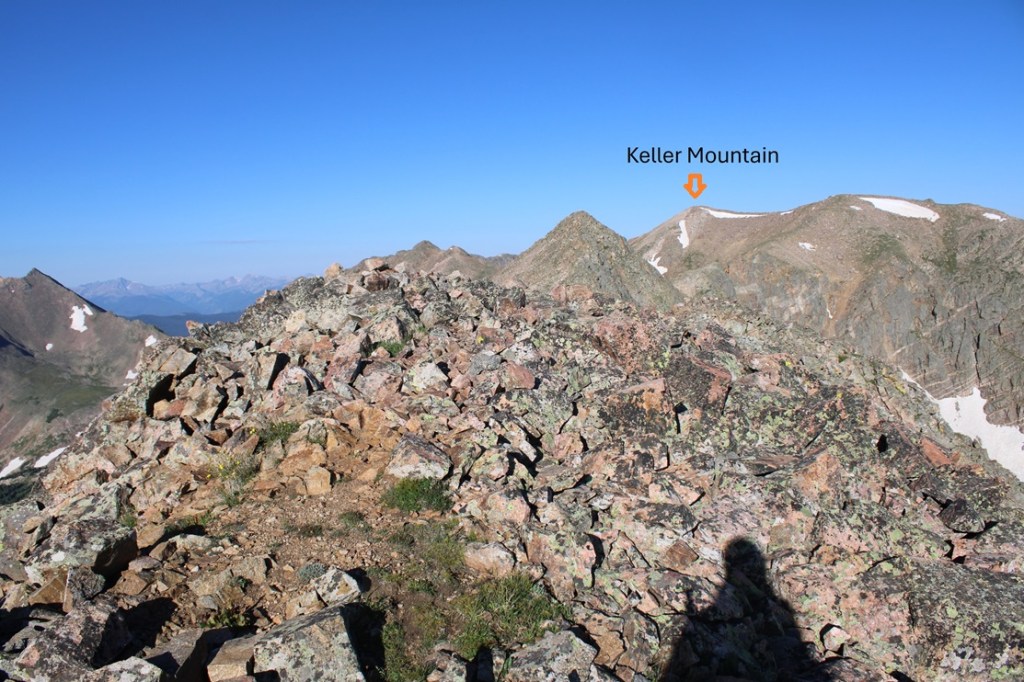
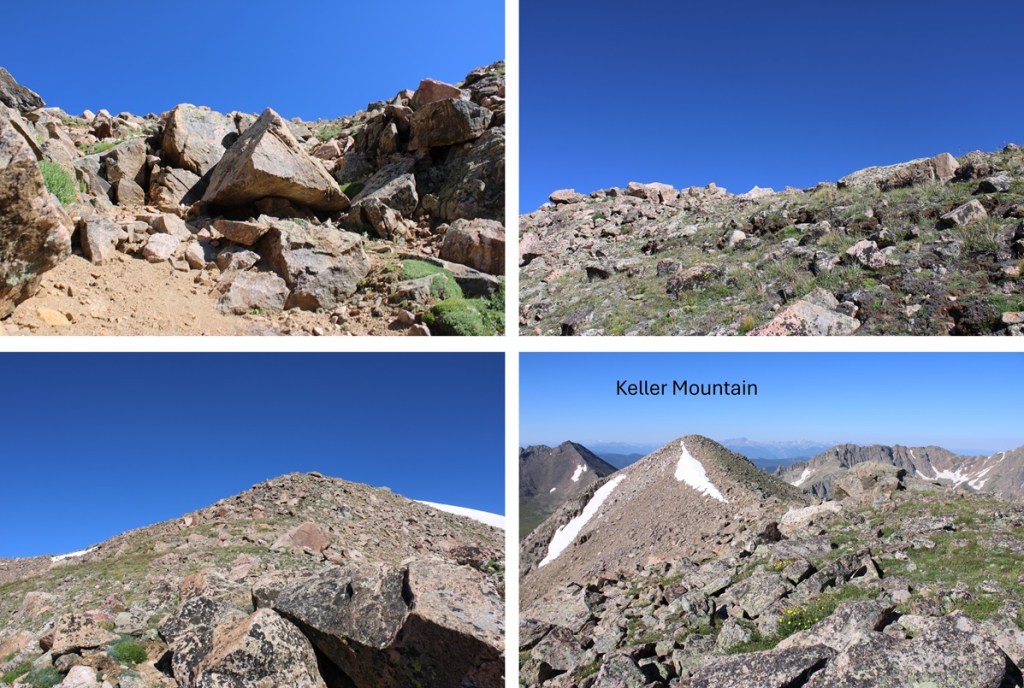
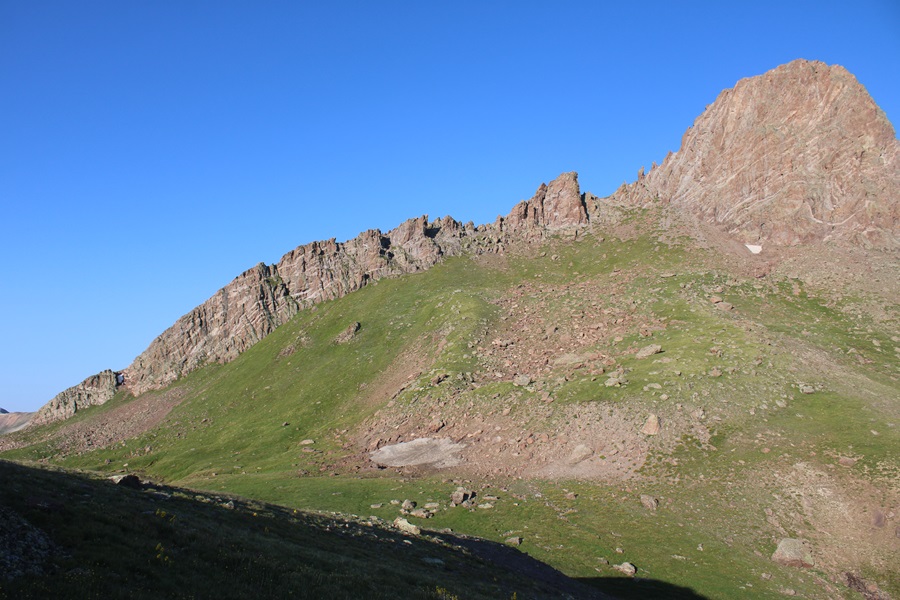
If you get here and think “Wow!  That was almost too easy!” it’s time to strap on your helmet, because you’re only at PT 12847, and the rest of the route is about to get class 3.  Here is the real summit of Keller Mountain, a mile off in the distance and a fun ridge to get there.
First, I had to get around this point.  Going up is straightforward, and I stuck to the ridge.  Going down, however, was a bit more challenging in the route-finding department. You can go directly up and over this class 3 ridge, or descend to 12750’ and keep this section class 2 by skirting the ridge.

I took the ridge on my ascent, and skirted it on my decent.  Here are some pictures of this ridge. At times I dipped down to the left (never to the right) to ascend on rocky tundra.

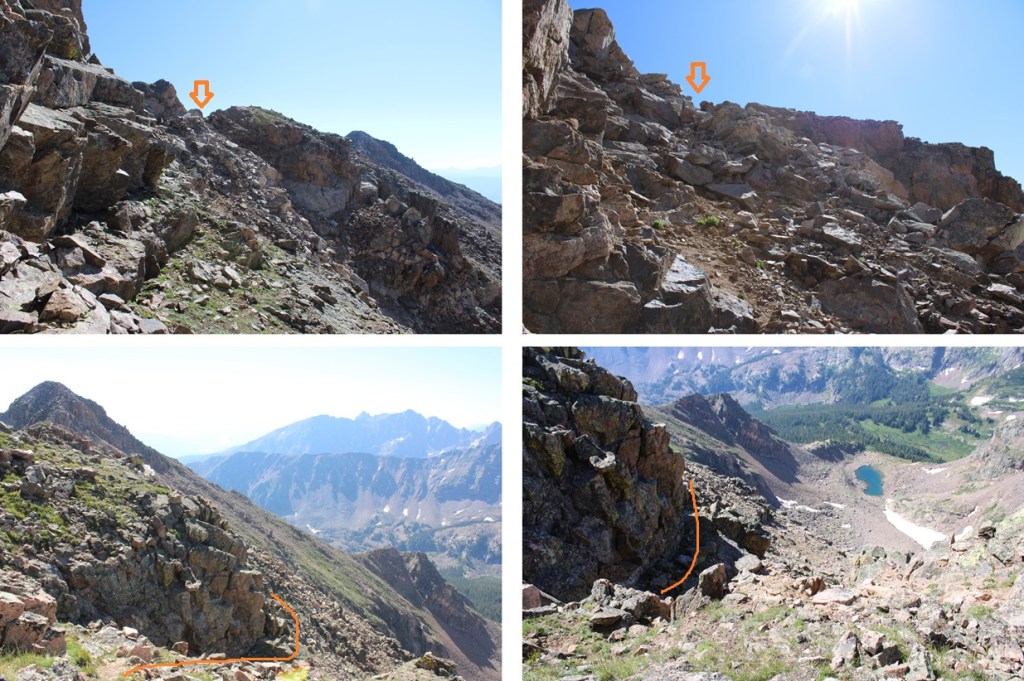
The descent off this ridge was a little more challenging, as there were gullies to navigate that had recent rockfall, and were unstable.  I stuck to the left side of the ridge all but in one obvious spot, where I dipped to the right and re-ascended to this small saddle.

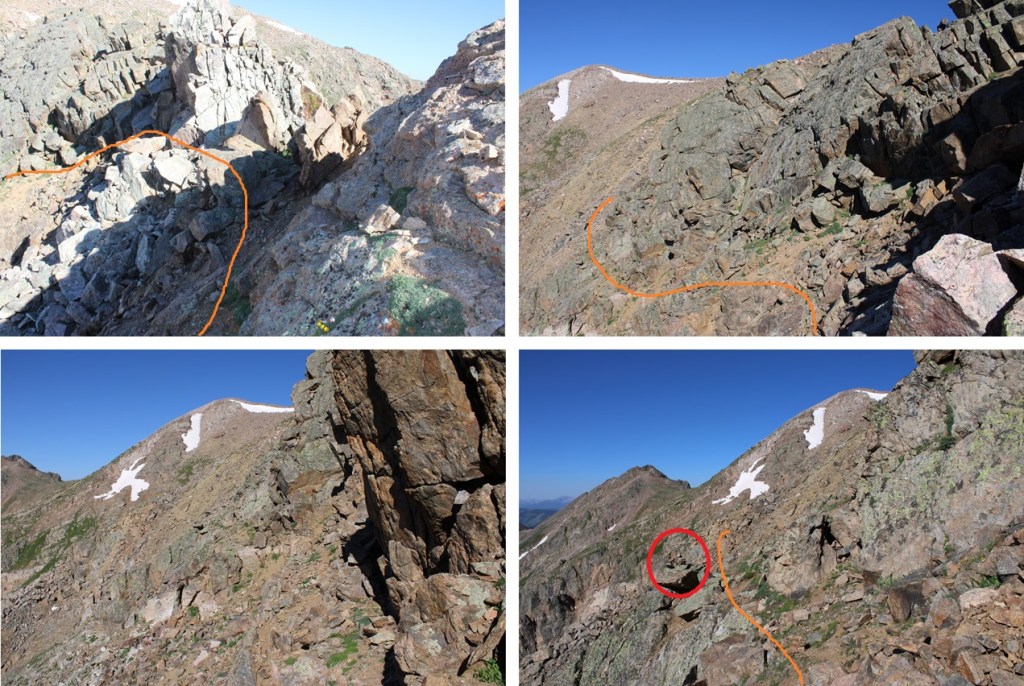
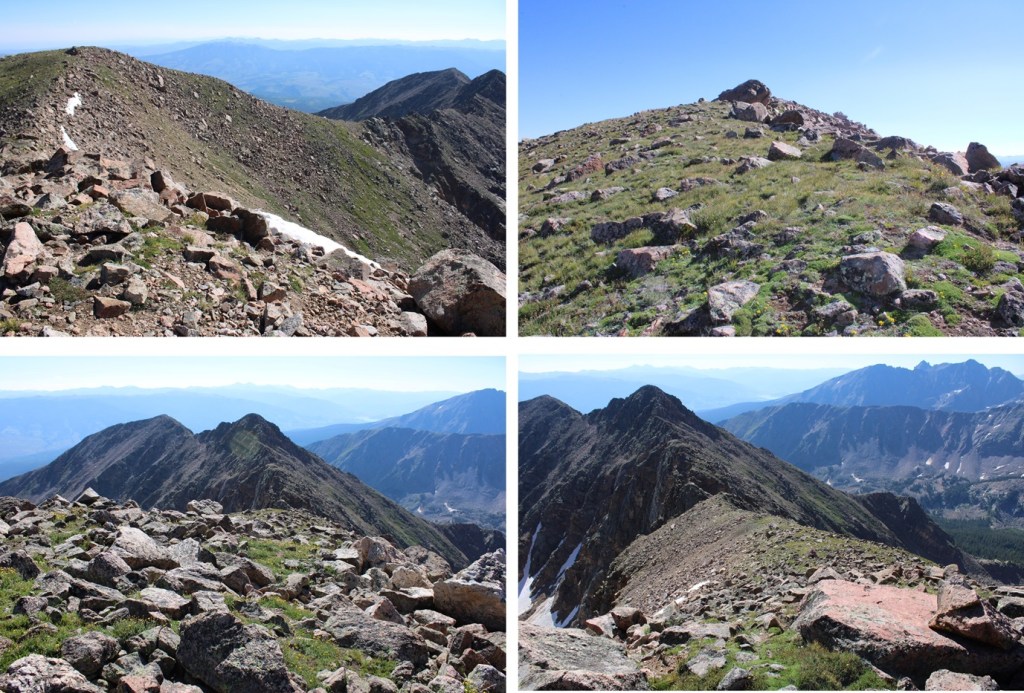
Now the real fun begins.  There are several more gullies to navigate, but luckily here, I found a few cairns.  Once again, I stayed to the left of the ridge.  I kept wanting to head back to the ridge, but found the gullies and large rock outcroppings kept keeping me about 50 feet below the ridge proper, so every time I’d make it to the ridge, another gully or rock outcropping would pop up and I’d have to descend again.  Here are some pictures of my route along the ridge (red circles are cairns).

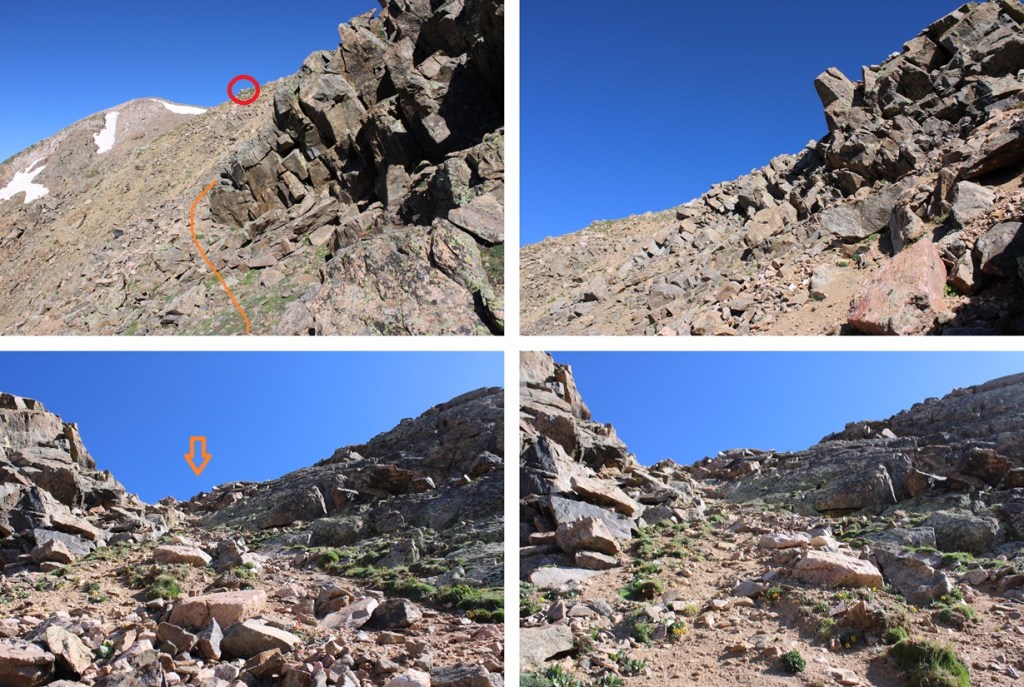
Here’s a picture of the final gully, the only one filled with scree.  You’ll see a cairn off in the distance here on the tundra ahead of you on the hillside, but don’t aim for it (circled in red).  Go around the rock outcropping and ascend the gully instead.  It keeps you from some sketchy stuff below. 

At the top of this last gully I turned left, and followed the ridge west, and then southwest to the summit of Keller Mountain.  This part was all class 2.  There was no summit cairn, but there was a summit register here

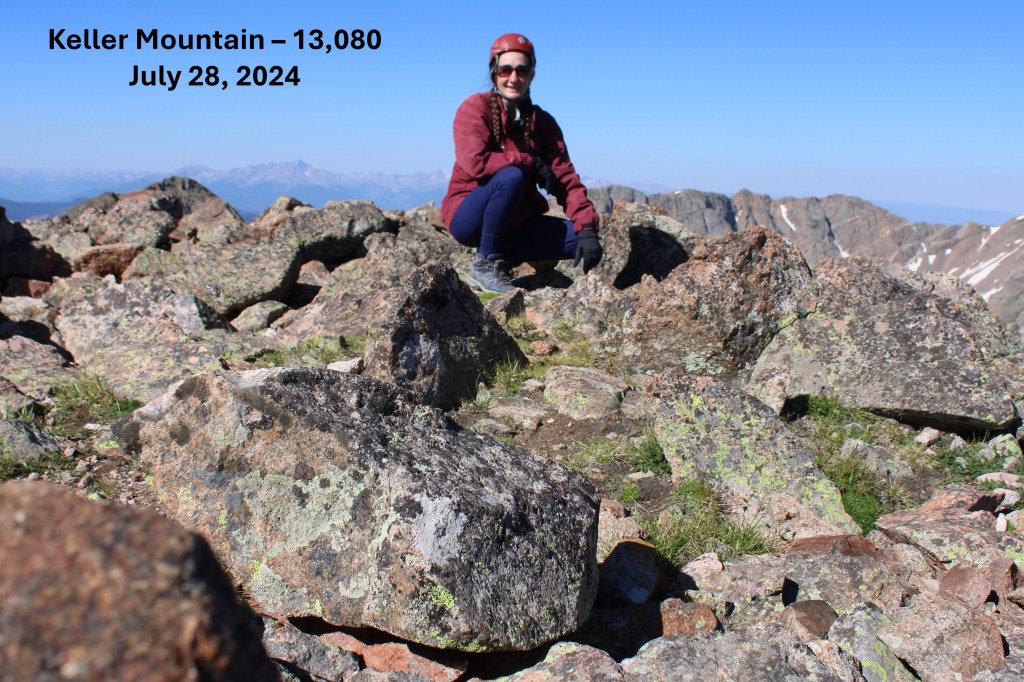
I summited Keller Mountain at 9:15am

Keller Mountain:

Here’s a look back at that ridge, and the route I took to get to the summit.  Notice how you don’t want to dip too low on the ridge, due to the chasm below.

This was an out and back hike for me, so I headed back to the false summit, and descended the ridge back to the gullies

By now I’d had enough of this fun ridge route finding and decided to stay at 12750’ and skirt this part of the ridge, keeping the rest of the hike class 2.

Back on the ridge, I followed it to the top of PT 12847

And then back down to treeline

Once at treeline, I followed the ridge northeast until I came back to the game trail, then followed the game trail to 10900’

At 10900’ I turned and headed southeast down the hillside, aiming for the North Rock Trail No 46 I knew would be below, bushwhacking through grass taller than I was and tons of downed trees. 

Back on the trail, I turned left and followed it just over 2 miles east/northeast back to the trailhead.

I made it back to the trailhead at 12:30pm, making this an 11.89 mile hike with 4086’ of elevation gain in 7 hours.

On to the next trailhead!

Wildhorse Peak – 13,271 and Blackwall Mountain – 13,077

RT Length:  12.45 miles

Elevation Gain:  3722’

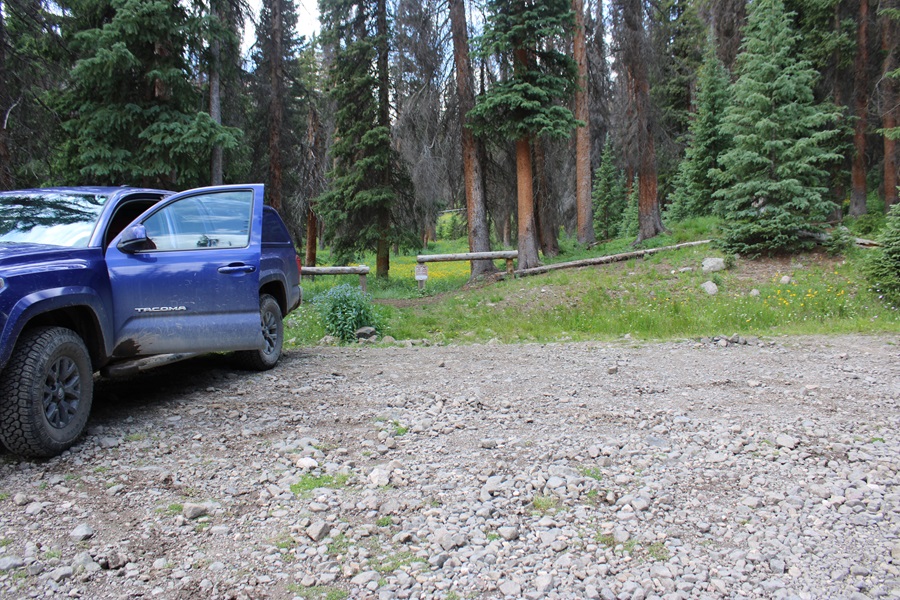
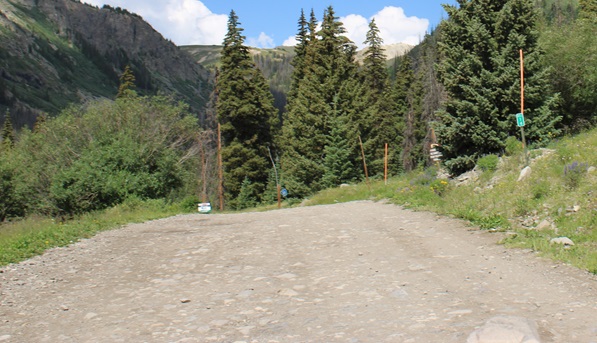
I took CR 20 out of Lake City, turned right at the North Henson road near Capitol City, and parked off 870 at 11200’ at an unnamed trailhead with parking spots for 4 or 5 vehicles.  This is also where the porcupine and marmot and pine marten chewed my wires last week, so make sure your vehicle is rat taped.  Click here if you want to see pictures of the damage done to my vehicle last week.

I was up and on the trail at 4:30am. 

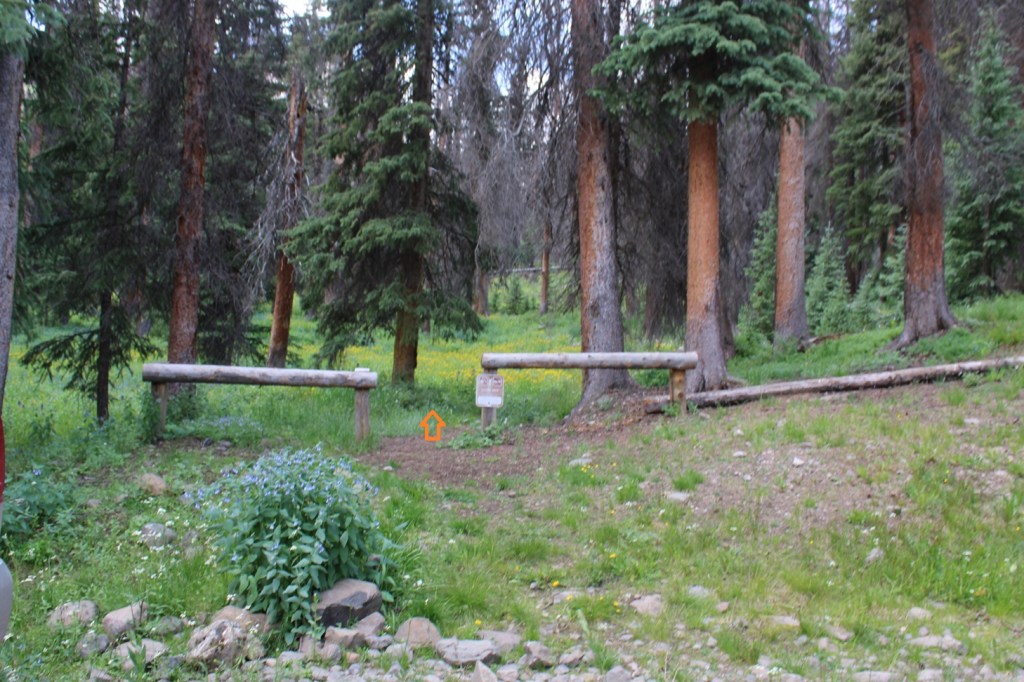
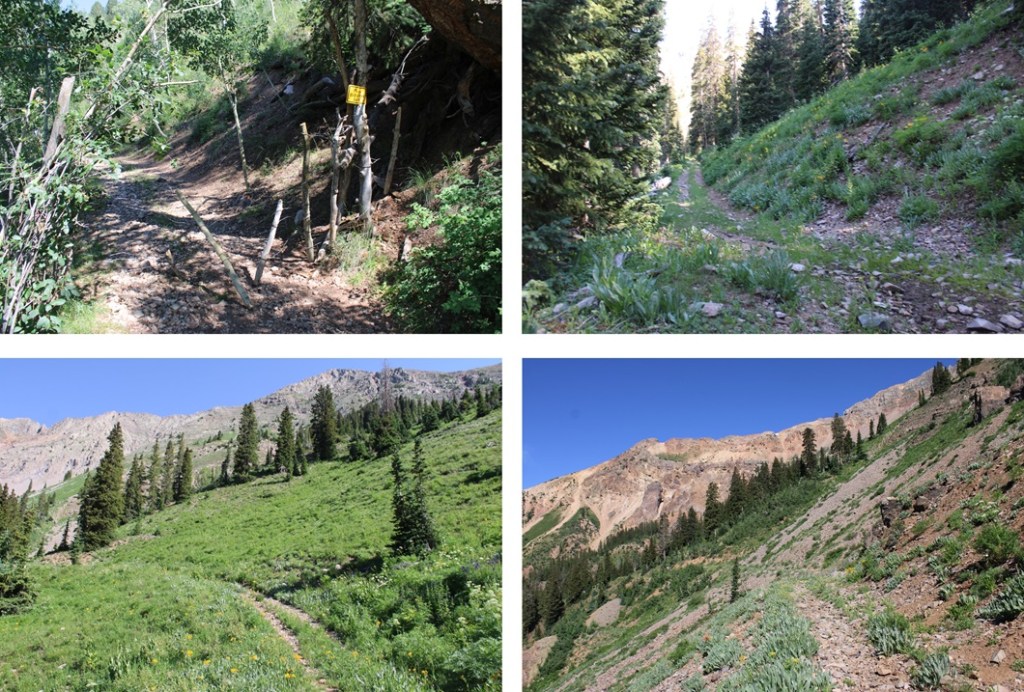
This trail starts out easy to find and easy to follow.  I followed this trail for half a mile, until I made it to a gulch just below treeline

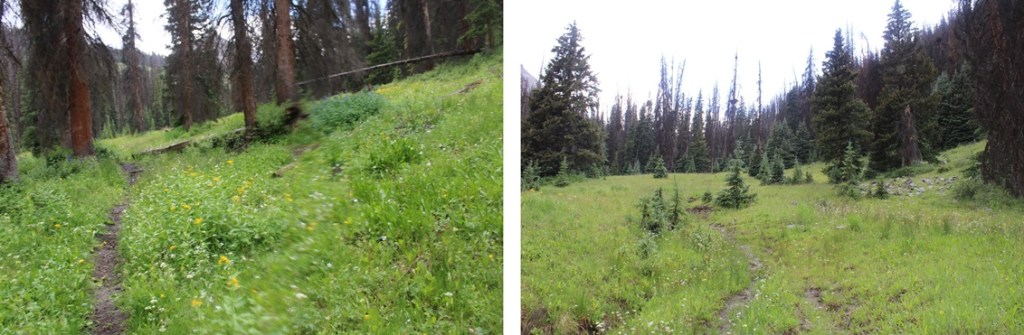
Once here, I turned right and ascended this small ridge.  It doesn’t matter where you ascend, this whole area will get you to the right area.   There are several drainages you can use to ascend.

Once on top of this little ridge I was headed west, through treeline. 

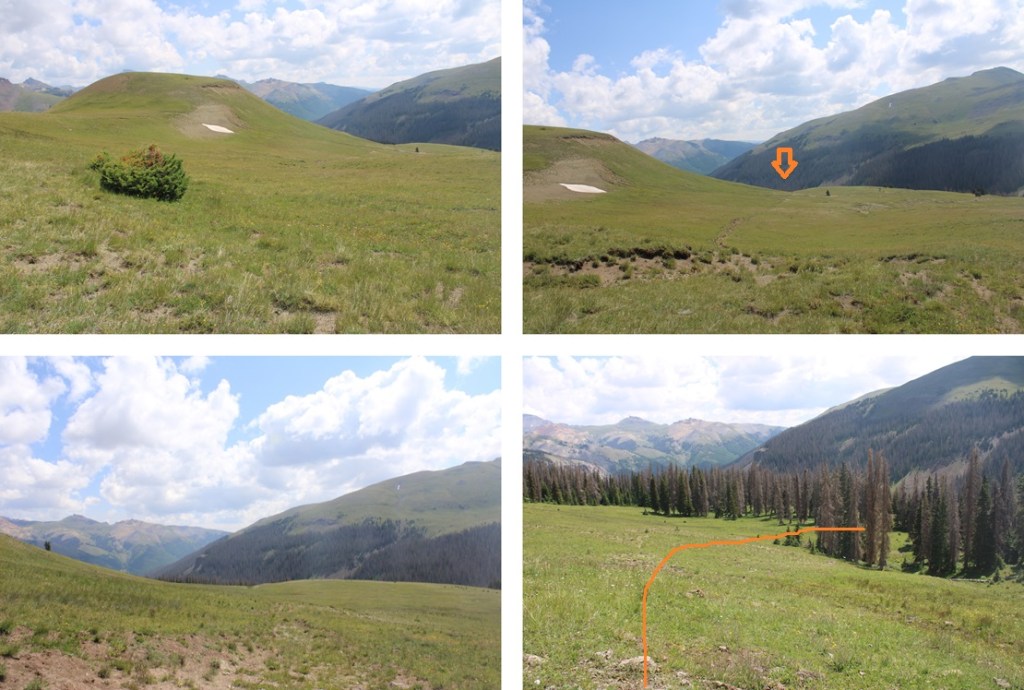
This is a big meadow.  Just keep heading west, towards these two small trees.  The trail here looks like a drainage ditch.  If you see a ditch heading west, follow it.

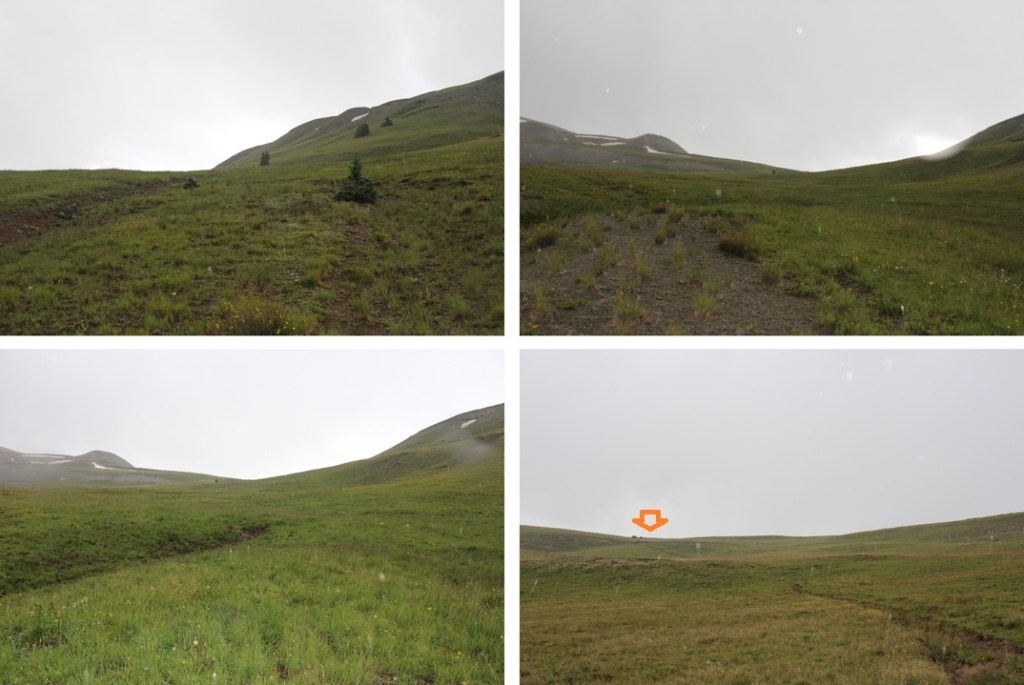
At the top of this ridge I turned left, and found a game trail that would take me west, towards American Flats.

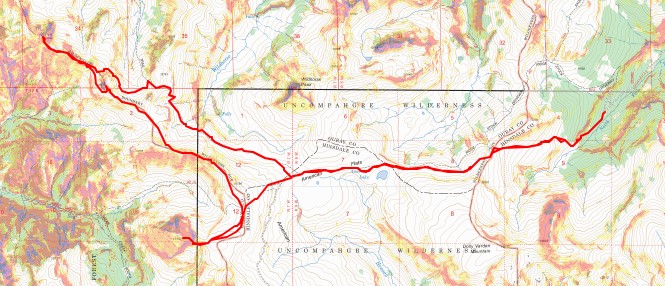
Here the trail got ‘iffy’, as it turned into a kind of mining road that hasn’t been used in several decades.  I followed it as I passed American Lake to my left.  After hiking for a total of just over 3 miles, and at around 12290’ of elevation, I left the trail to head northwest towards the saddle of Wildhorse Peak. 

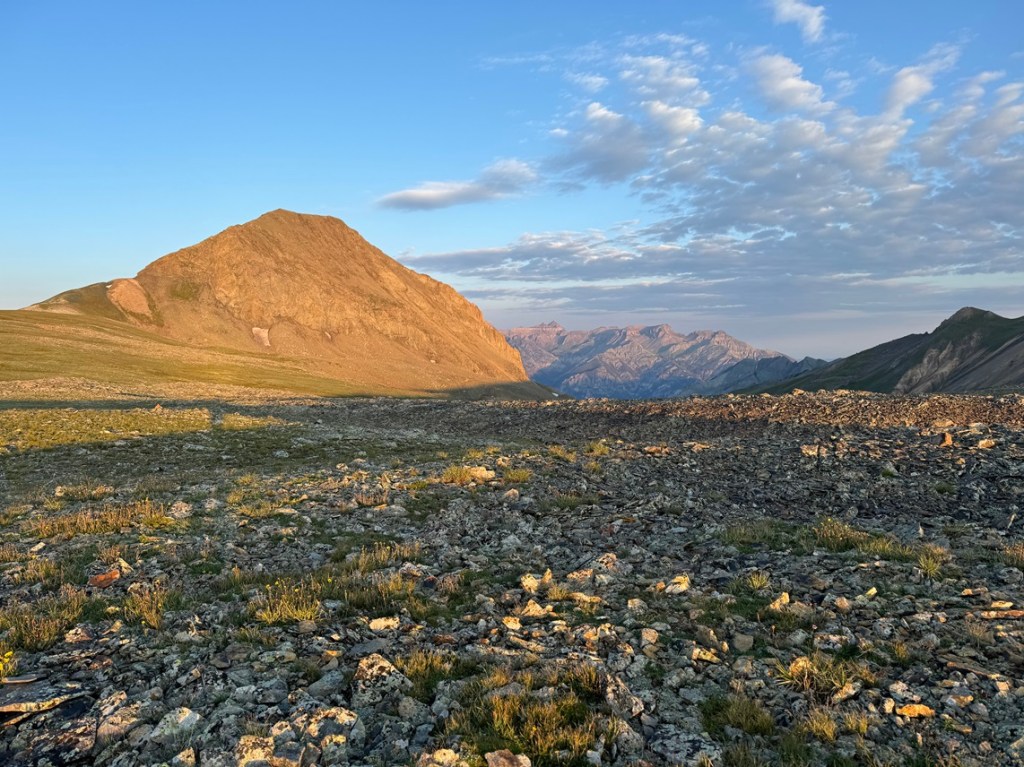
There was no trail, but the route was obvious on rolling tundra.  I kept heading for the base of Wildhorse Peak.

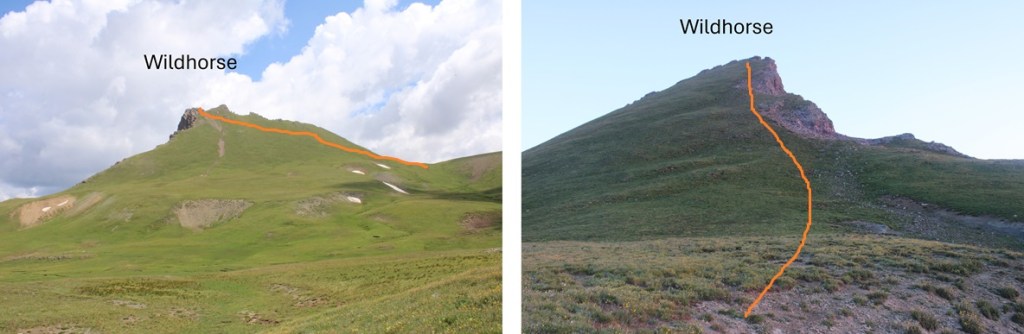
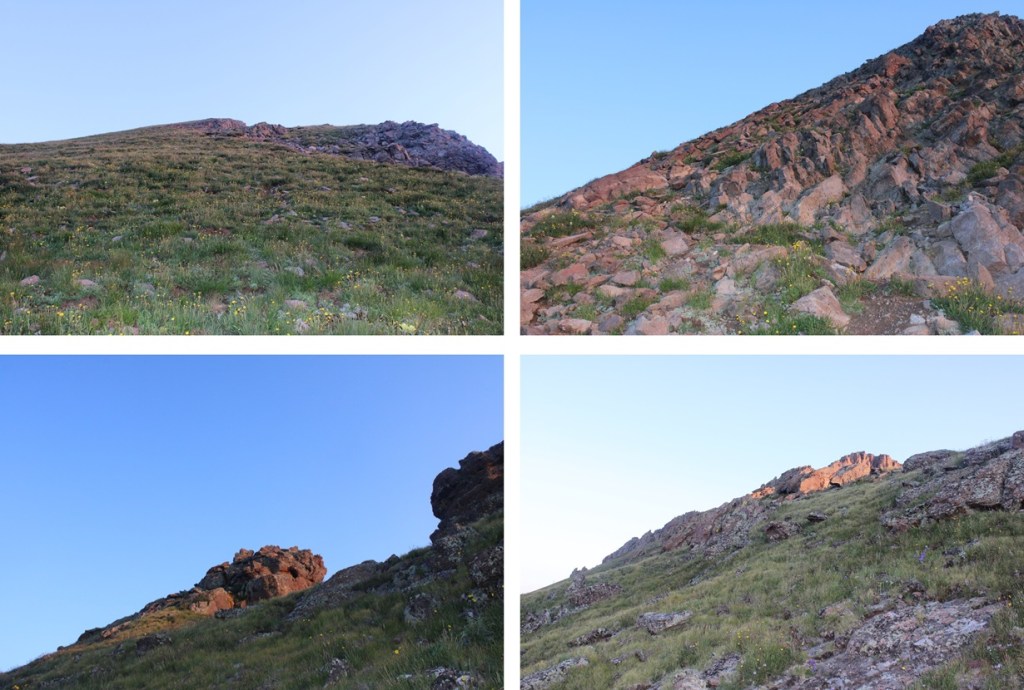
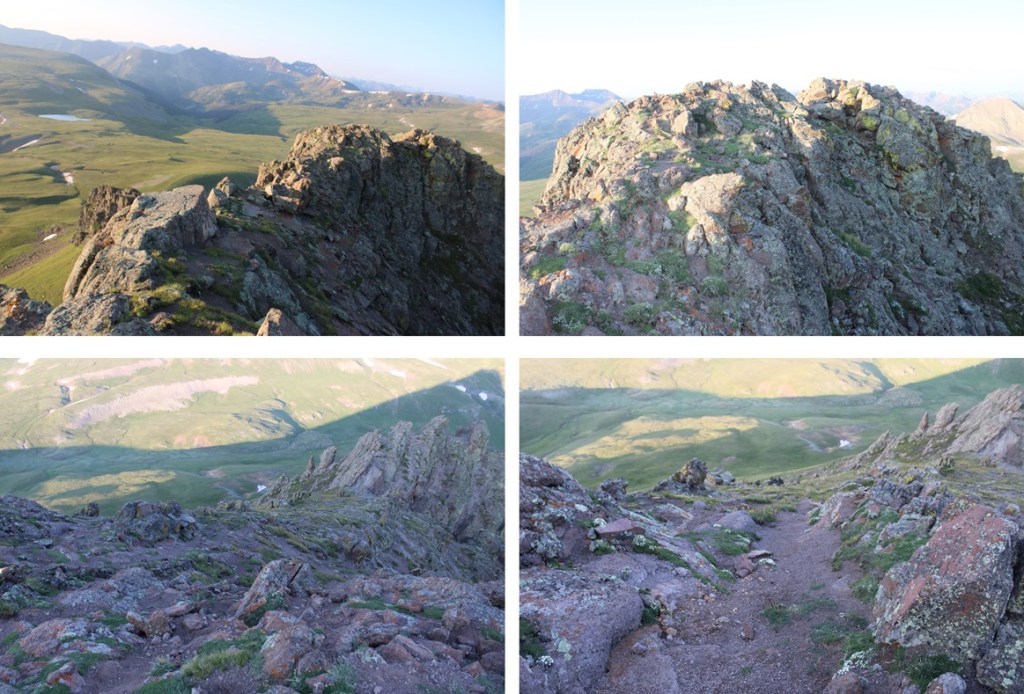
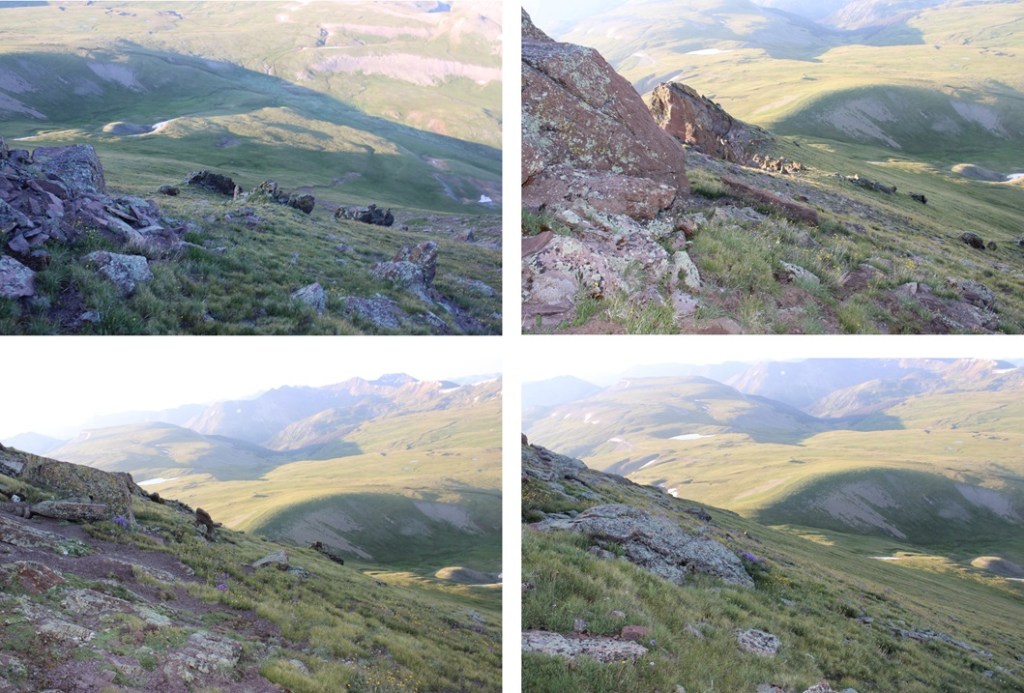
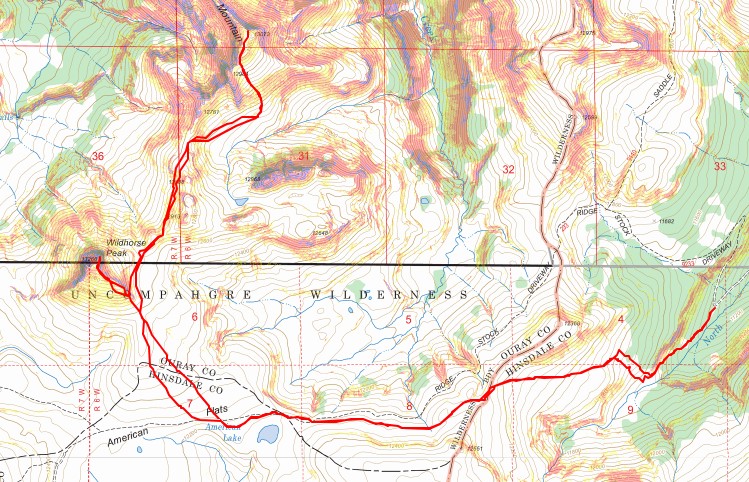
Here are a couple of views of my route up to the summit of Wildhorse Peak.  This is a choose your own adventure kind of hike.  I chose to stick to the ridge as much as possible. 

I started out by heading northwest up the tundra.  Most of this hike is on tundra, and it’s all class 2.  If you find yourself in class 3 territory, you’re making it too difficult. 

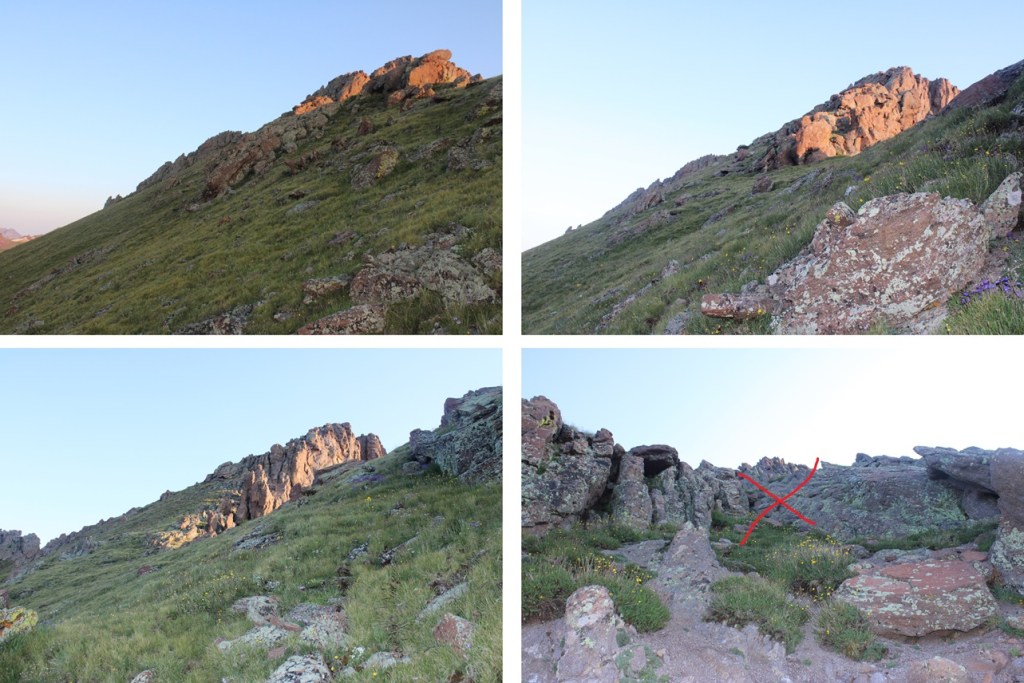
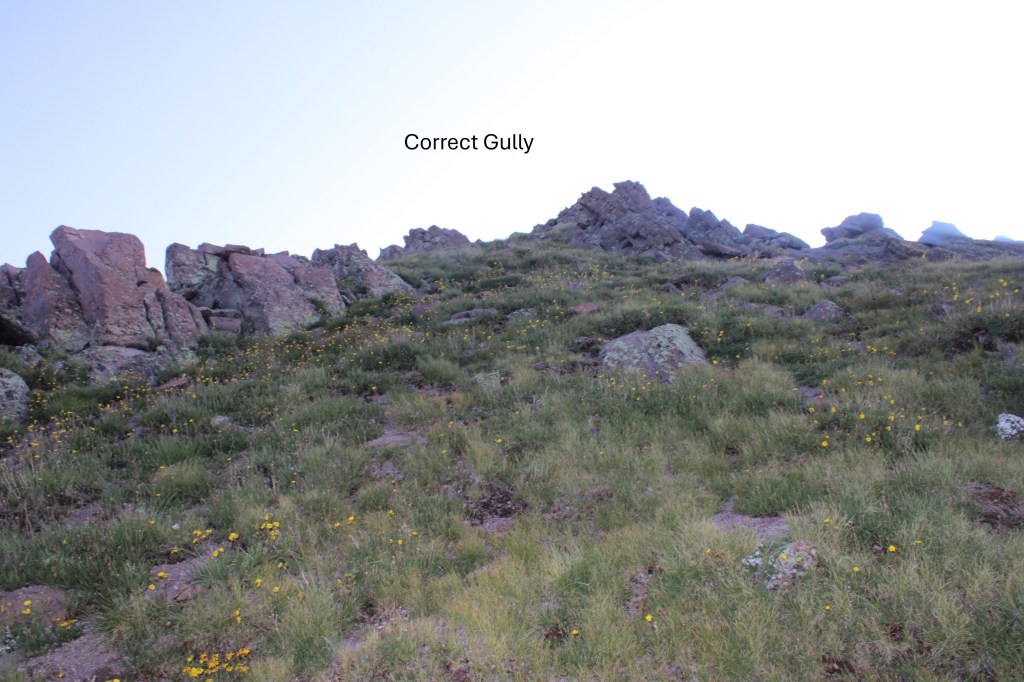
As you near the top, you’ll come to a couple of gullies.  DO NOT take the rocky one (the first one your come to).  Well, you can, but you’re making the hike more difficult than you need to.

Instead, head a little further northwest along the ridge and ascend on the tundra. 

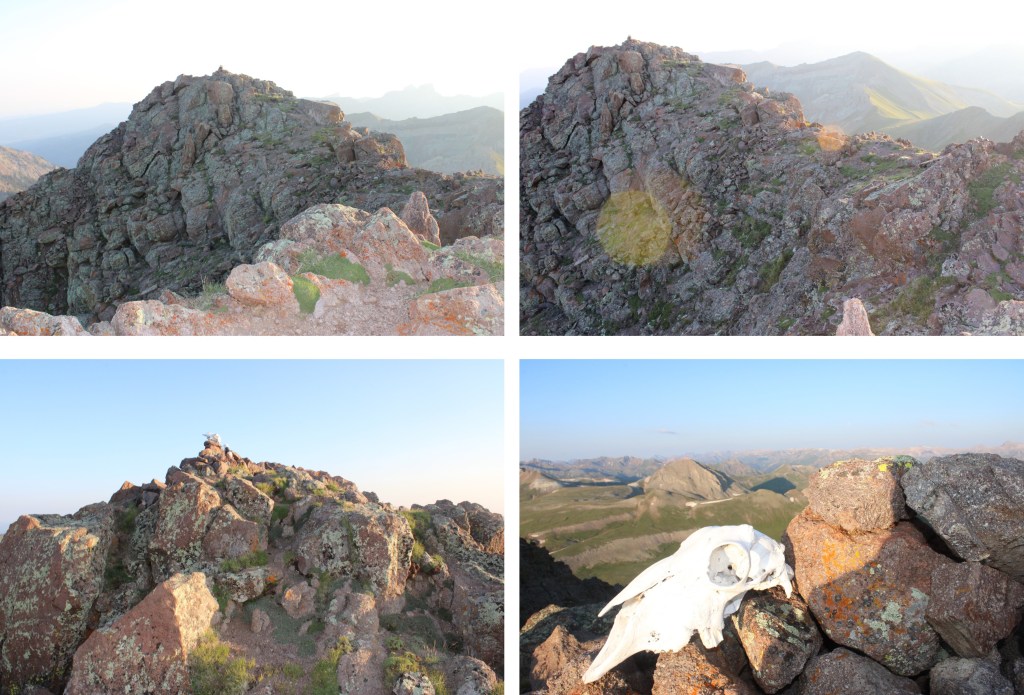
This will lead you to almost the summit, which is rocky.  The true summit is to the left, on an airy but class 2 catwalk to the summit.  Also, there was a skull on the summit

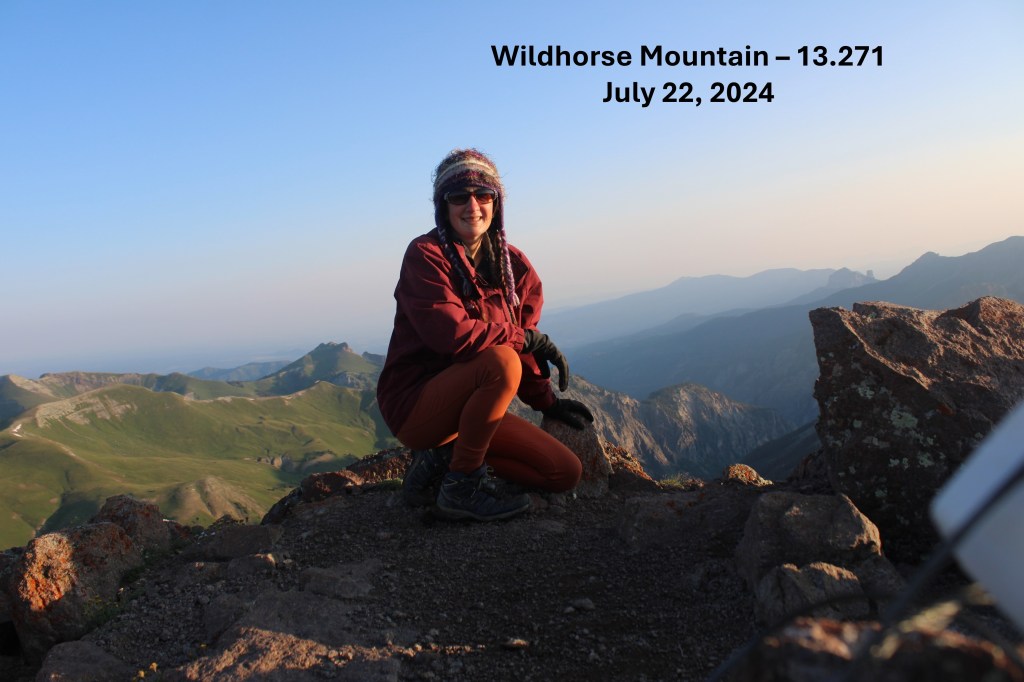
I summited Wildhorse Peak at 6:45am

Wildhorse Peak:

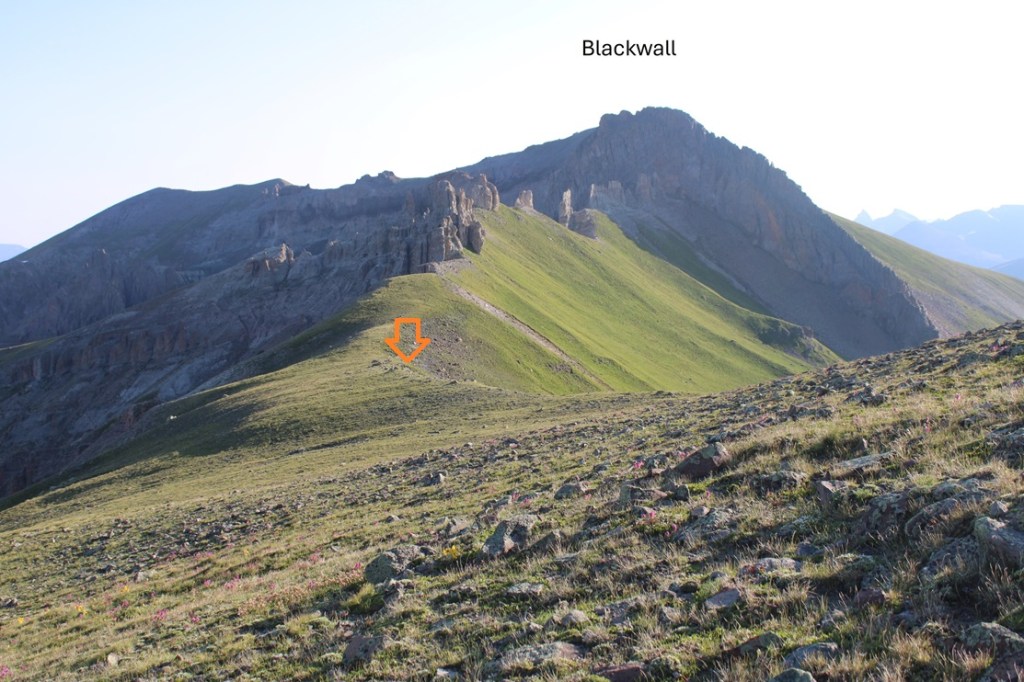
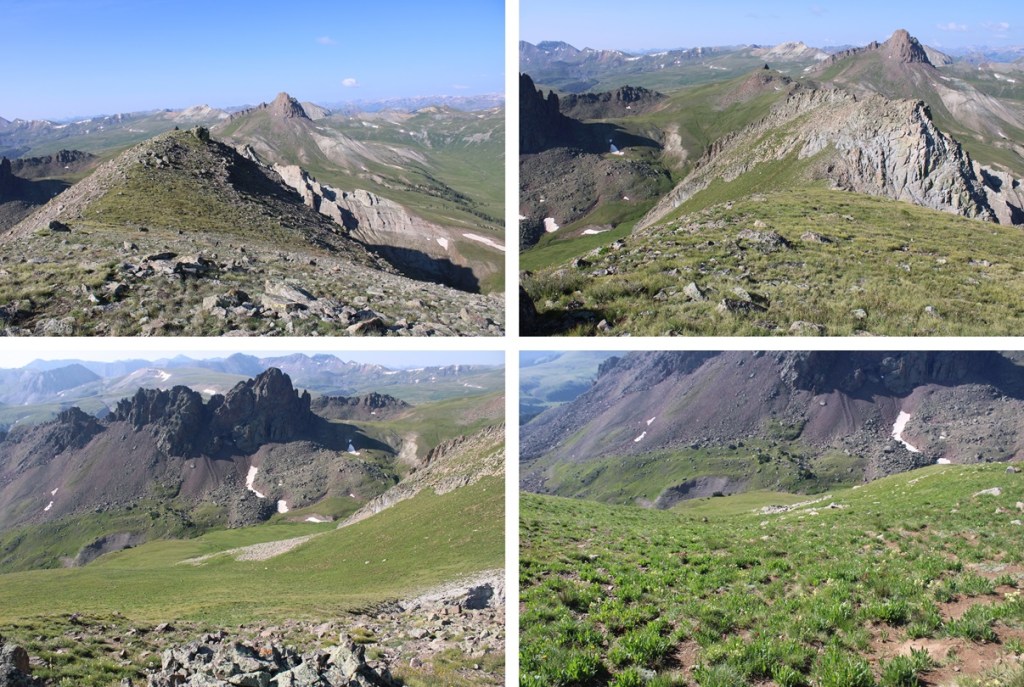
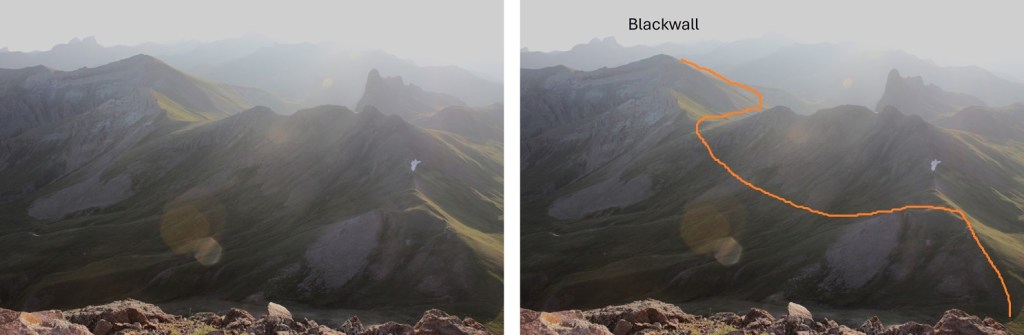
The early morning light and a dirty camera don’t do this picture justice, but I could see Blackwall Mountain to the northeast.  From above, this was my overall route to get there.

First, to descend back the way I’d come, making my way back towards the saddle. 

When I was almost to the saddle I noticed a gully to my left that still had snow in it, but was easy to downclimb.  I downclimbed this gully (no, not the upper gully, but the lower one), and headed north towards a saddle.

Looking back, you can see the gully I downclimbed.  There is an upper one you can downclimb as well, but when I looked down it, it looked like slick rocks covered in kitty litter, and I didn’t think it was worth the effort.

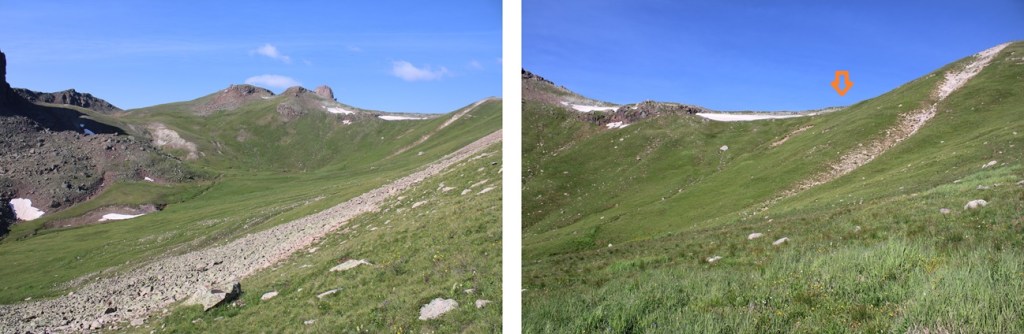
Next, I was headed here, to this small dip in the ridge

I turned left, and headed north, to the saddle

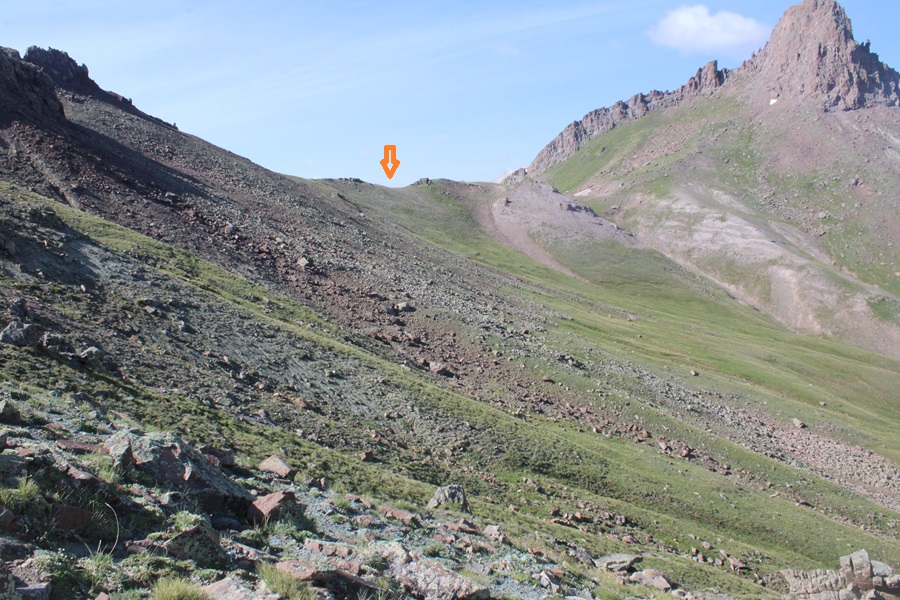
This is choose your own adventure, but I tried to stay level at 12630’ to re-gain the ridge.  I went to the right of the large rock outcropping

I could see Blackwall ahead of me and walked to the saddle.

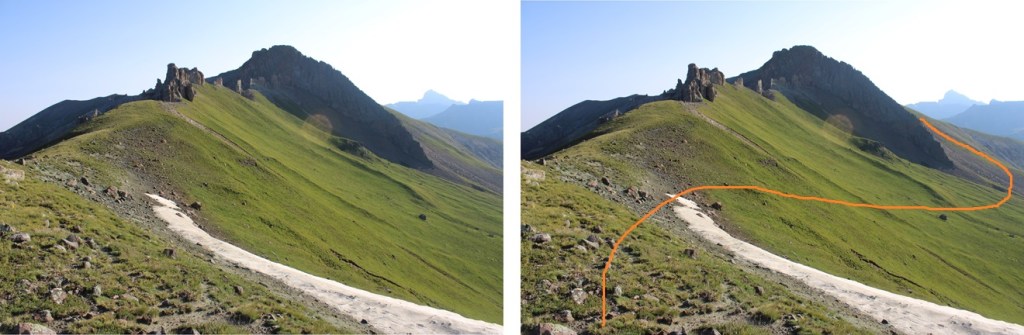
Now I turned right, and descended 400’ into the basin

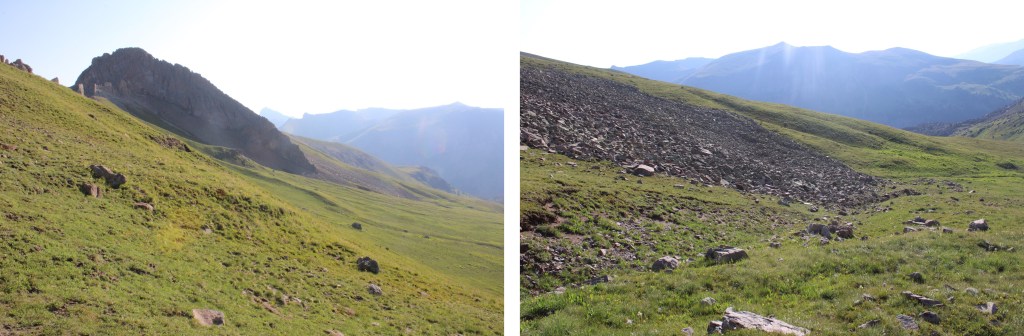
Instead of ascending via the rock rubble, I decided to take a grassy gully instead.  I had to descend a little more than I would have liked, but the easier terrain made up for the loss in elevation. From the bottom of the gully to the summit of Blackwall I gained 791’ of elevation in half a mile.

Just as I was nearing the top of the gully, I saw a bear running around.  Of course, it was running away from me… It was a blonde black bear with dark socks.  Curious coloring for a black bear. 

Bear Video:

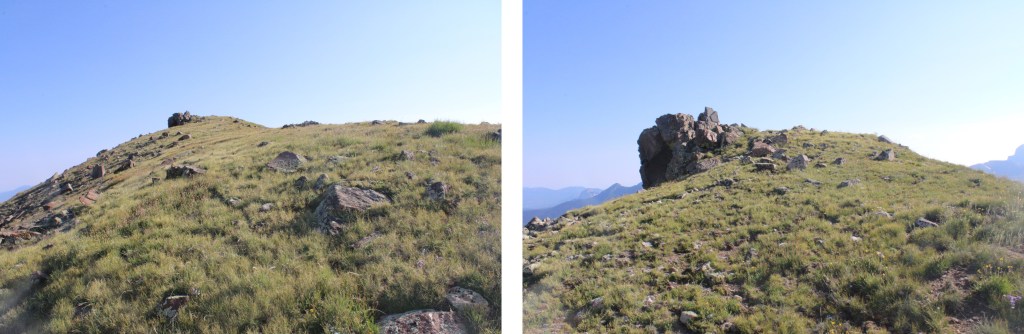
The true summit isn’t the large rock formations you’re seeing to your left, but rather just northeast of the grassy gully.  I ascended out of the gully to the right, and saw where I’m sure that bear had been sleeping overnight.  No scat or footprints in the area, but fur on the rocks. 

It was a short tundra walk to the true summit

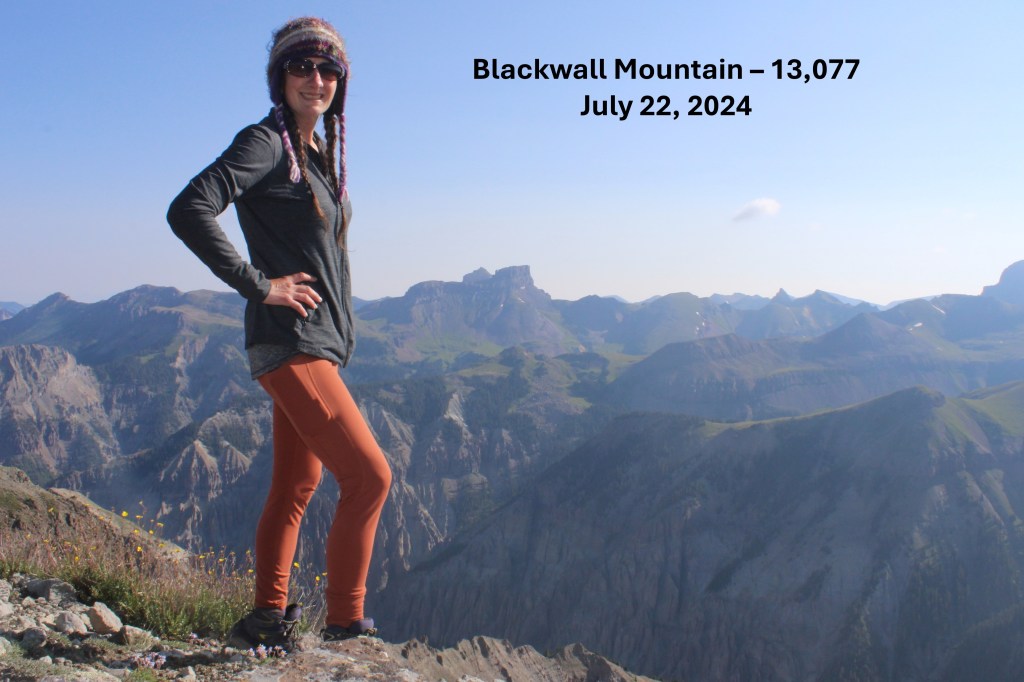
I summited Blackwall Mountain at 8:45am

Blackwall Mountain:

Those were the only two peaks I planned on summiting today, so I made my way back much the same way I hiked in.  First down the gully

Then over to re-gain 400’ of elevation I’d lost to this saddle.

From the saddle, I headed southwest towards Wildhorse

Then crossed the upper basin, aiming for a game trail I could clearly see in the distance.

I turned right at the ridge, and aimed for the base of Wildhorse

Once there, I aimed southeast and headed towards American Lake, where I knew there was a trail I could pick up that would lead me back to the trailhead.

Back on the trail, I followed it east towards the basin I wanted to descend

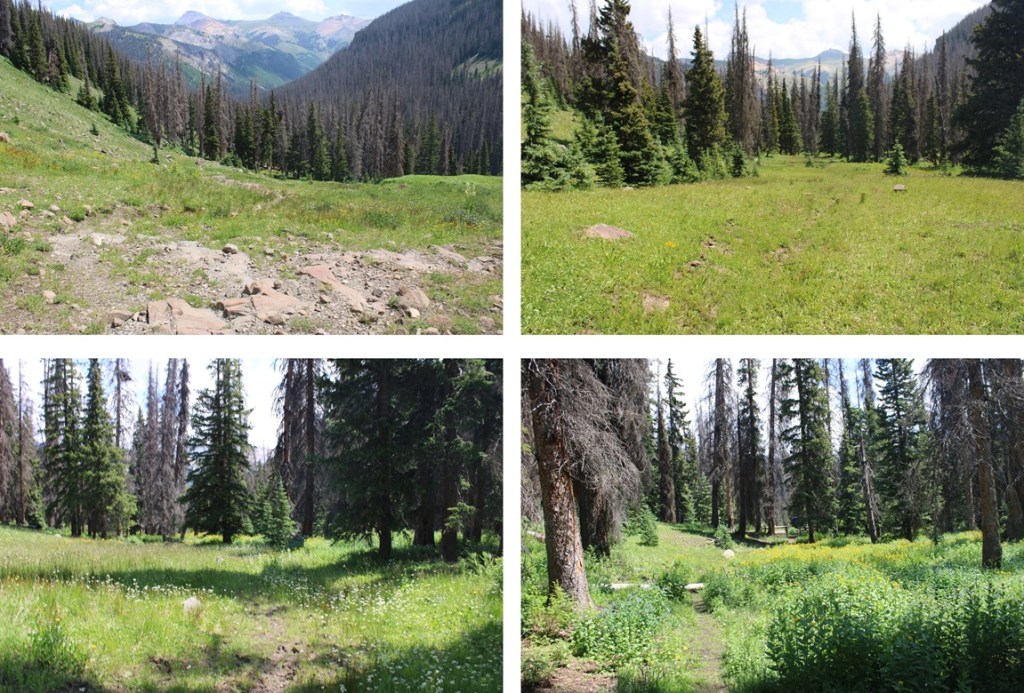
When I found my two trees at the top of the ridge I turned right, and descended east into the basin, following the trail/ditch

Then descended southeast down the small ridge, and back to the trail

Then took this trail the short distance (half a mile) back to the trailhead

I made it back to my truck at 11:30am, making this a 12.45 mile hike with 3722’ of elevation gain in 7 hours

On to the next trailhead!

ST Bear Creek Benchmark – 13,140 and Cow Benchmark – 13,116

RT Length: 16.06 miles

Elevation Gain: 3570’

I parked at the end of North Fork Henson Road off CR 20 in Lake City at about 12000’.  This is a couple of miles past the Matterhorn/Wetterhorn trailhead, and 4WD.  There are parking spaces here for 3-4 vehicles, if everyone parks nicely.  This is also where the porcupine and marmot and pine marten chewed my wires last week, so make sure your vehicle is rat taped.  Click here if you want to see pictures of the damage done to my vehicle last week.

Knowing the high potential for thunderstorms today after noon, I was up and on the trail at 4:30am.   The trail starts out easy to follow, heading southwest.

After hiking for half a mile, I came to treeline, and an upper basin. I turned right, and followed a drainage northwest past treeline.

Sorry for the lack of pictures at this point, but I was in a thunderstorm, experiencing hail and rain when I took these pictures, so they’re few and far between.  I was headed for the ridge.  For a better initial route description, see my Wildhorse and Blackwall trip report, where I wasn’t caught in a thunderstorm.

There are faint trails here, but they mostly look like drainage ditches.  Follow those.

At the top of this hill a fairly good game trail appears.  I followed this west all the way to American Flats and the first junction I came to, which was about 3.5 miles from the trailhead.

This junction is significant, as I’ll be returning here later, and not on a well-defined trail.   Like so many trails in this area, they aren’t really trails but more of ‘suggestions’, where you follow your best judgement to get to the next post or cairn, and celebrate if you find a game trail.

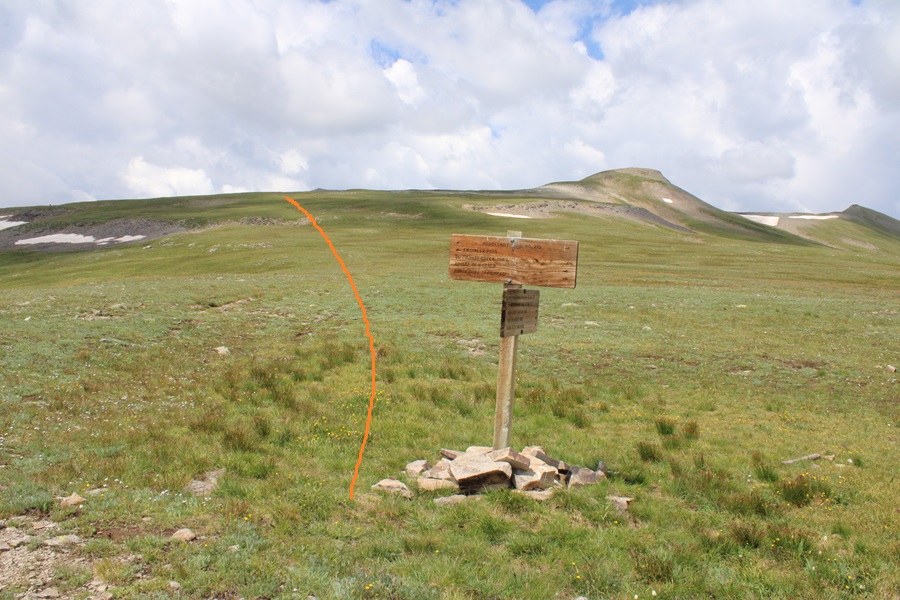
From this junction I headed southwest, following posts and cairns towards ST Bear Creek Benchmark. 

I aimed for the saddle, then started climbing the ridge.  This was all class 2 on easy terrain.

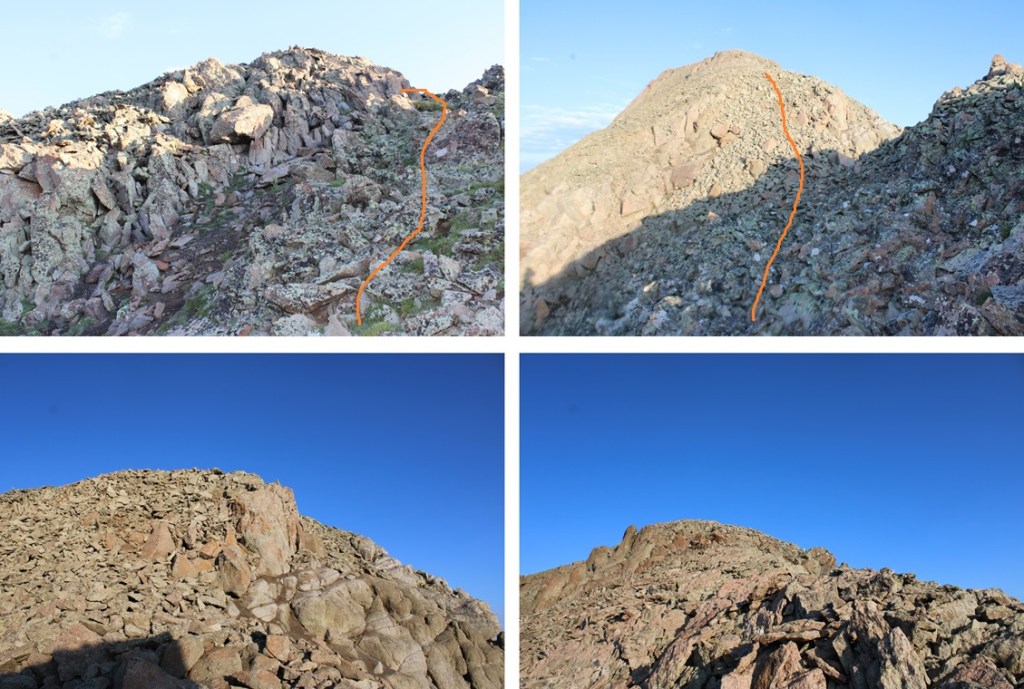
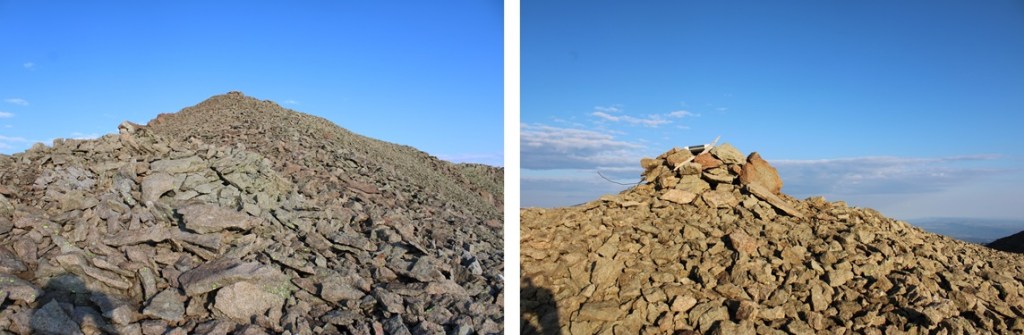
Then the fun started.  At the end of the white sand/scree the choss began, and it didn’t let up until the summit.  This can all be kept class 2, but be prepared for a lot of loose choss and rolling rocks.  I found once I started ascending the ridge, staying to the right gave me game trails to follow.  First, I entered the ridge here

Then ascended, staying to the right as much as possible to avoid the gullies to the left, following game trails.

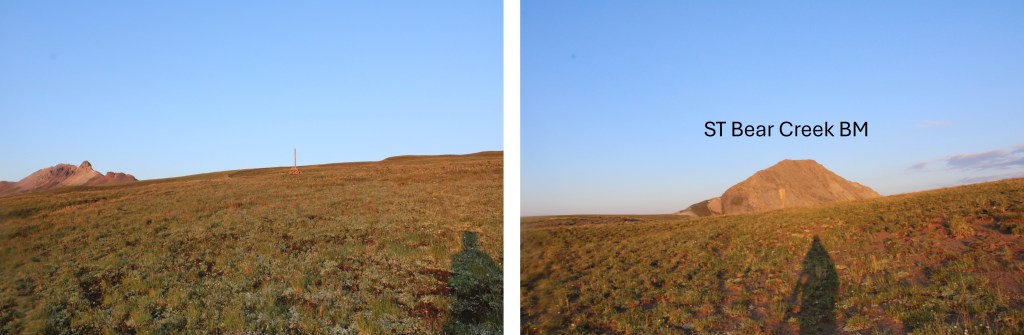
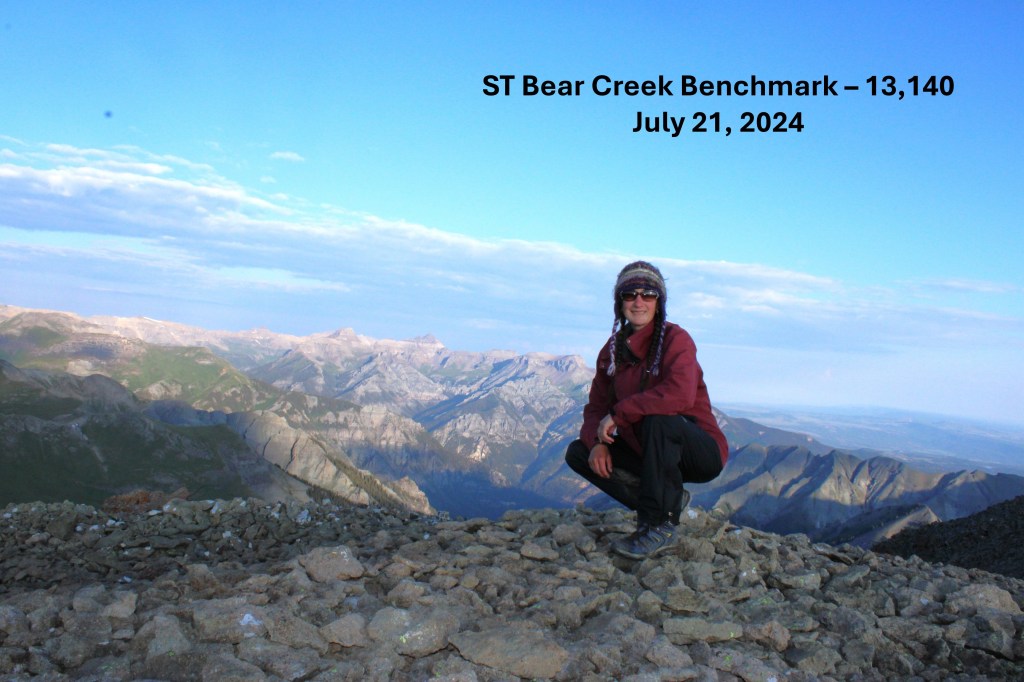
I summited ST Bear Creek Benchmark at 7am

ST Bear Creek Benchmark:

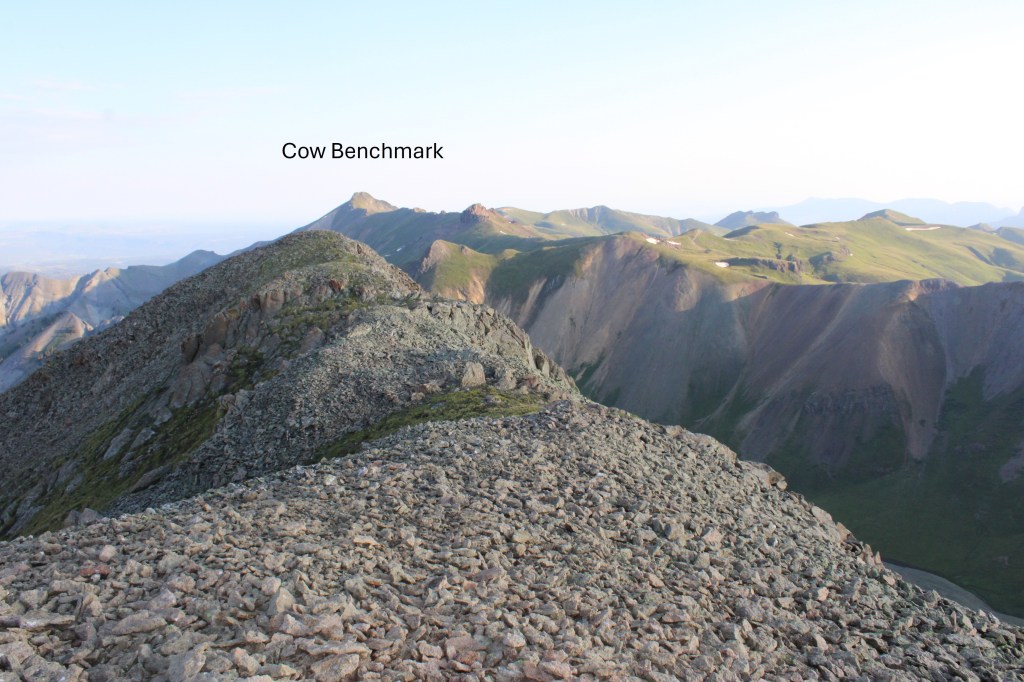
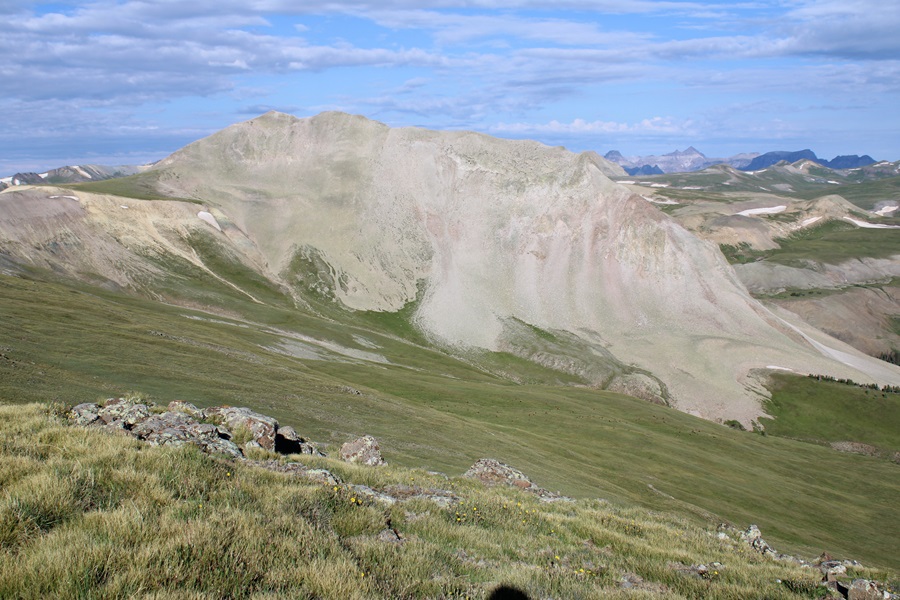
Way off to the northwest I could see Cow Benchmark, my next peak of the day

To get there, I was going to need to descend the way I’d ascended, and head back to the saddle.

There is no good, fast, or easy way to get to Cow Benchmark from here.  I decided to take the ridge, which included a lot of elevation gain and loss.  I aimed for the ridge, and followed it northwest

Here are some pictures of the ridge.  It’s all class 2, and goes for about 1.5 miles.  I cut across the last section (I’d had enough elevation gain and loss by this point)

Here is where I skirted PT 12976 and just headed for the saddle, which just gave me another ridge to climb

This rocky outcropping looks scary, but this can be kept class 2 by skirting it to the left, entering a rocky area, staying at about 12730’, and skirting around to the ridge.  This is choose your own adventure, but the route is obvious.

This brought me to the final ridge. 

Here’s my suggested route to summit the ridge

However, the ridge does go at class 2/easy 3.  Here are some pictures of the ridge, should you wish to climb it. 

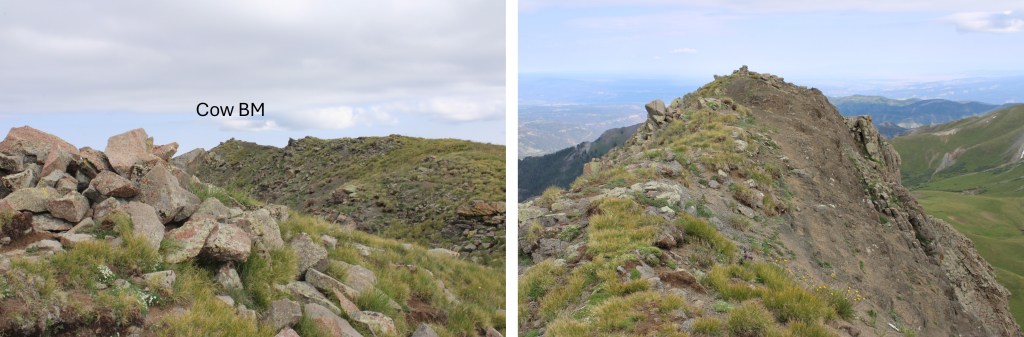
The final push to the summit was steep, but full of tundra.  Also, there’s a false summit, but that’s ok because the real summit isn’t too far away, and it’s a relatively flat walk to get there.

Also, there’s a benchmark, and a marker to let you know where the marker is…

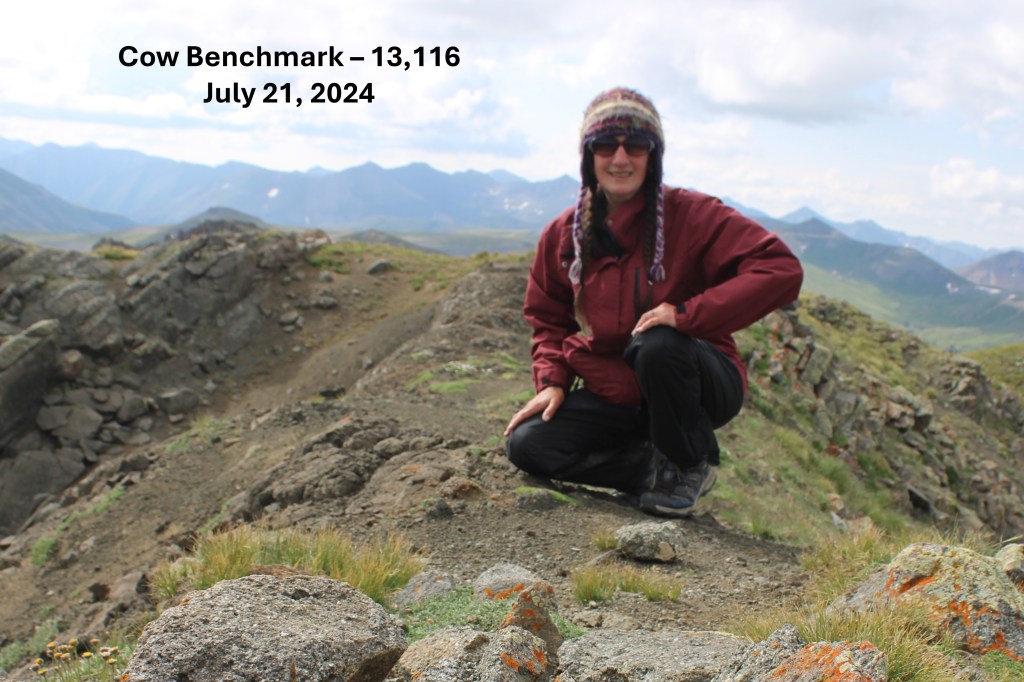
I summited Cow Benchmark at 9:30am

Cow Benchmark:

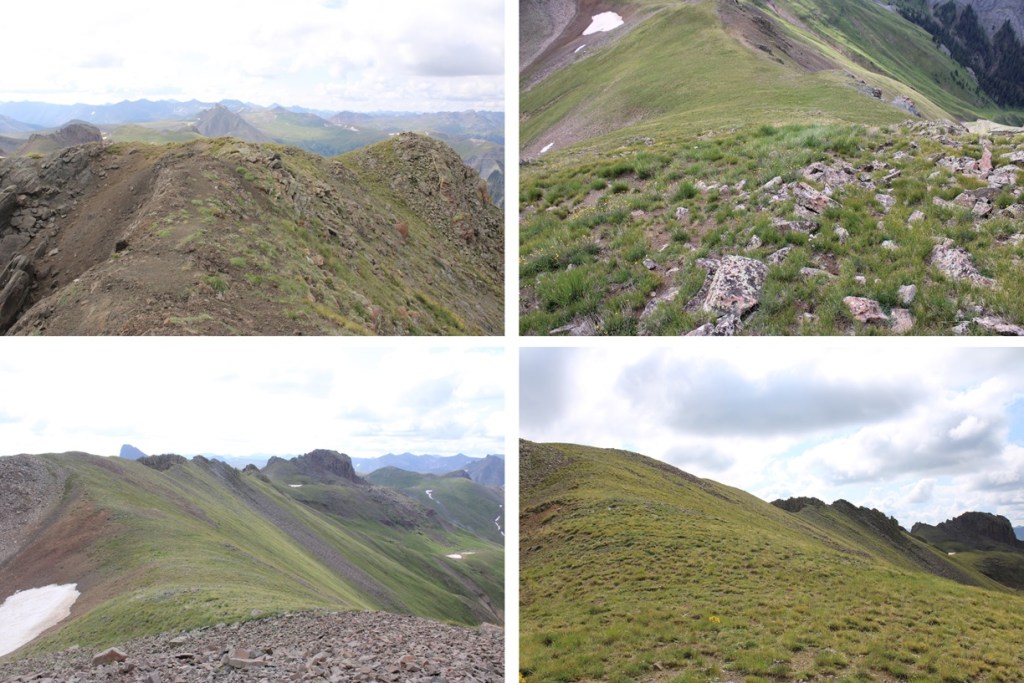
And now to head back.  I turned and re-traced my steps back down to the ridge

This time, I followed the ridge proper

Instead of descending the way I’d ascended, I went left here, descending into the basin.  I knew Horsethief Trail was on the other side, that would eventually lead me back to that junction I pointed out earlier. To I left the ridge, descending to the left

I then looked for the trail on the other side.  When I found it, I tried to lose as little elevation as possible to pick up the trail on the other side.  I’ve circled where the trail is

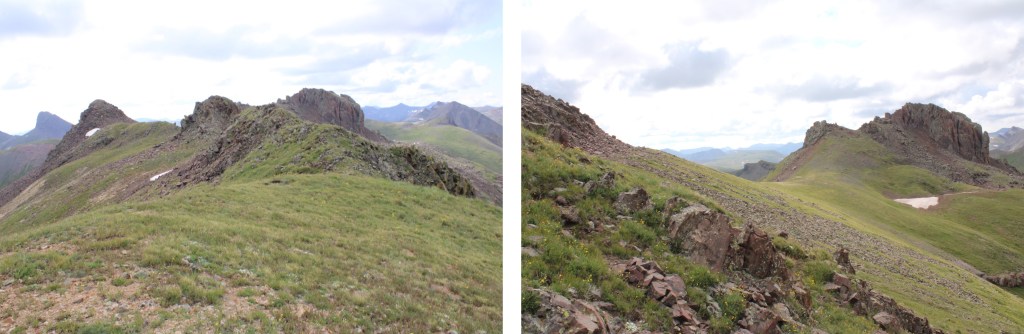
I skirted the mountain, and made my way towards Horsethief Trail

Here’s a view of how I descended Cow Benchmark back to the trail

Back on a trail, I followed it 2 miles to the junction with American Flats.  However, please remember what I said earlier… about trails being more of ideas than paths in the dirt.  There were times I had to look for posts, or presume which way to go.  Note, if you have the option, stay high instead of taking a trail that leads low. 

It was 2 miles on the Horsethief Trail heading southeast to get me back to the junction, losing the trail several times and looking for a cairn or post to follow.

At the junction I turned left, and followed the trail east back down to the trailhead.  Sorry for the lousy pictures… I know to be down below treeline before noon, but it was 11:45 and I was 15 minutes from treeline when the sky let loose, and it started raining and hailing.  (Forecast said to expect storms between 12pm-1pm, so they weren’t far off, just a little bit early…) 

Once back in the lower basin, I turned left and followed the trail half a mile northeast back to the trailhead.

I made it back to my truck at 12pm, making this a 16.06 mile hike with 3570’ of elevation gain in 7.5 hours

PT 13,094 and Sunshine Mountain – 13,329

RT Length: 8 miles

Elevation Gain: 3171’

I parked at MM 14 off CR 20 in Lake City, just before the turnoff for 22, at 10900’. 

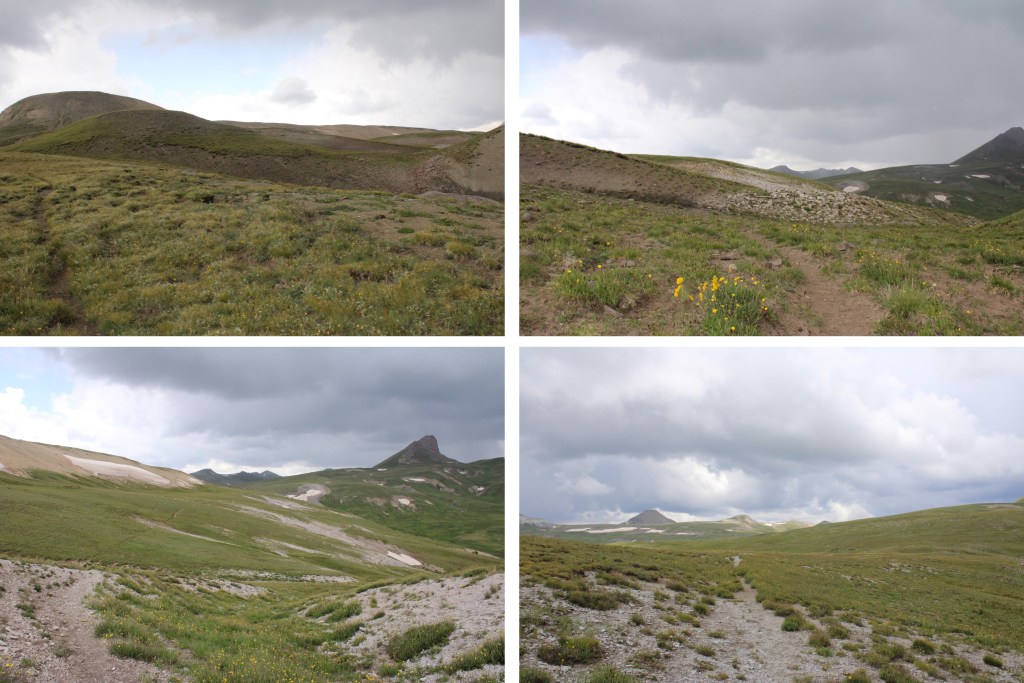
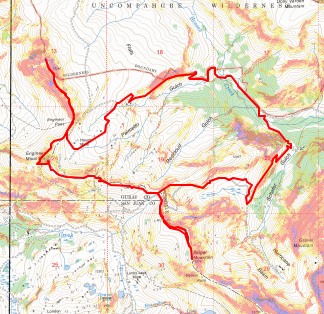
I was up early, but it rained until about 6:15am, so I was on the trail at 6:30am.   As you can see by looking at the topo map,  I didn’t ascend the same way I ascended, mainly because it was terrible.  Down wasn’t great either, but a bit more manageable.  I’m going to describe the route to ascend how I came down.  Note:  There are tons of mining roads in this area, and they don’t all meet up. 

From my parking spot, I needed to be here. 

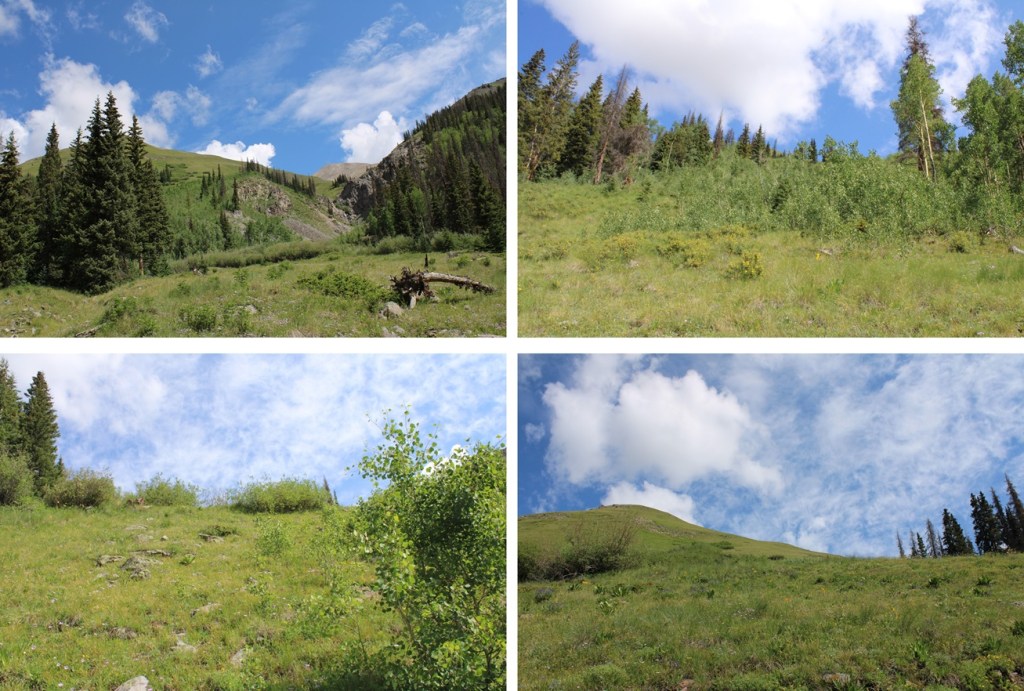
The best way to do this is climb to the left of the gully, navigating through the aspen trees to treeline.    This is choose your own adventure quest, but it doesn’t last long, and is manageable if you have good route finding skills and can follow game trails. 

It’s important to note I passed 2 different mining roads before I hit the one I was looking for, at about 11600’

I followed this road as it curved around the mountainside north.  The road was overgrown, and lost in places, and intersected with a lot of other roads.  I just kept turning left if there was an option, heading north.

Once in the upper basin, I could clearly see PT 13093.  This is the route I took to get to the ridge. 

I walked the mining road for a while, and then it turned into a game trail.  This is a good game trail I followed east until I came to a sketchy part.  You’ll know it because the dirt turns black.  Here I turned northeast and aimed for the ridge, using fainter game trails.  (On my way down I realized this game trail probably goes all the way to the saddle, but I felt confident in my decision to turn and head for the ridge here. 

I made my way to the ridge

At the ridge, I could see PT 13093 to the northwest

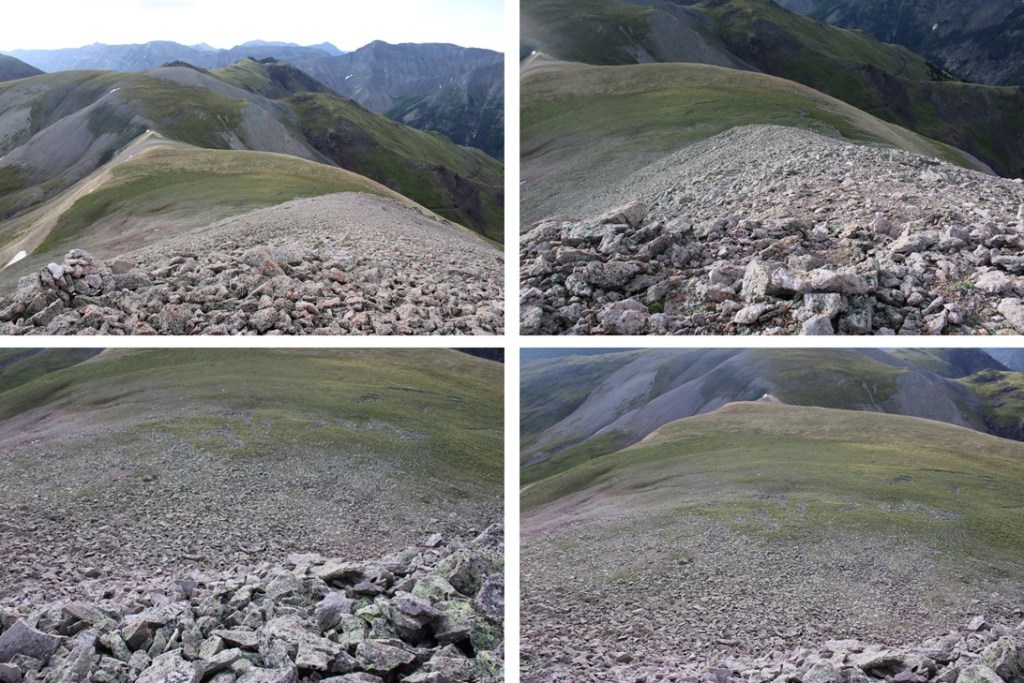
The terrain here was very rocky, and those rocks were loose.  This is how I started my climb, avoiding the rock slab and climbing it to the right

From here, it was a rocky climb northwest along the ridge to the summit.  This was all class 2

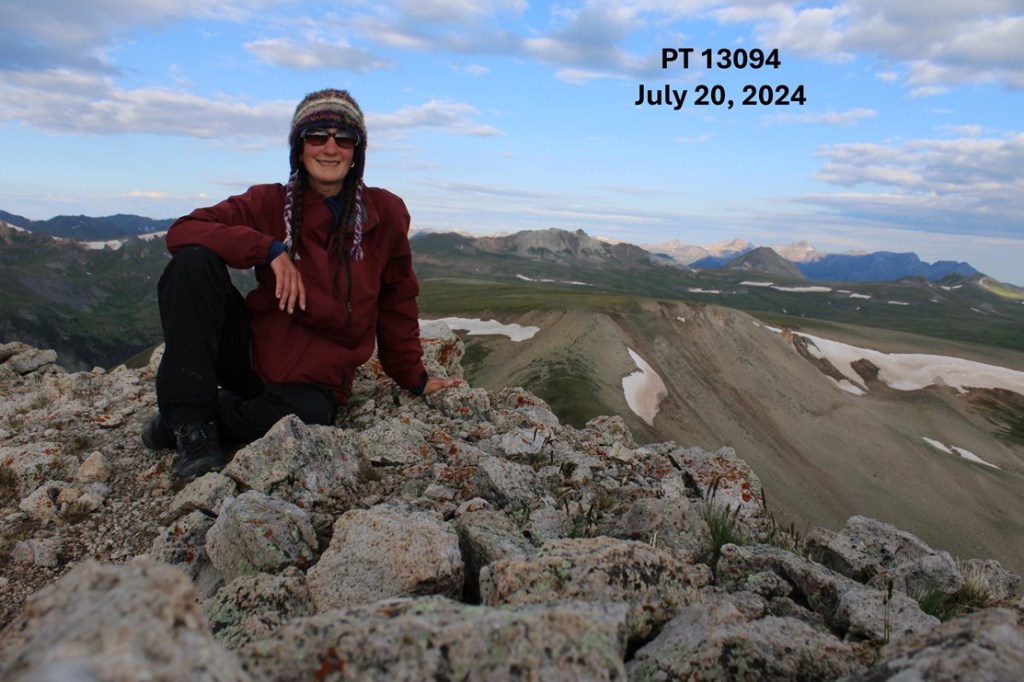
I summited PT 13094 at 7:30am

PT 13094:

My next objective was Sunshine Mountain, to the northeast

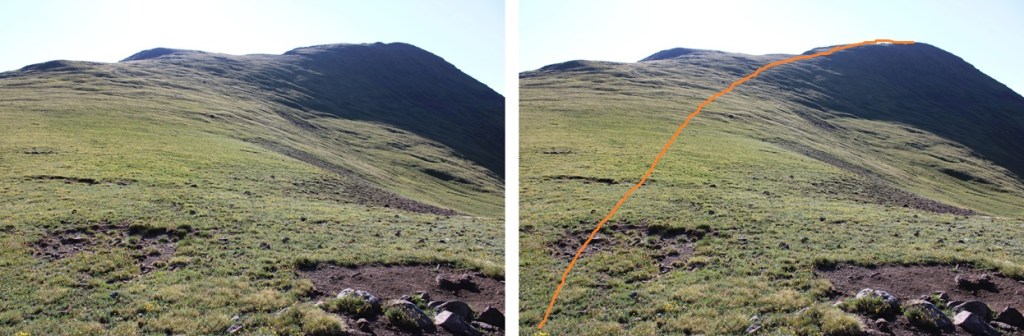
After the initial downclimb off 13093, this was a simple ridge hike on tundra.  This is the overall route I took:

First, I downclimbed the rocky section

Then headed towards the sunshine/13094 saddle

From there I picked up a solid game trail that led me to the ridge, then down to the saddle.

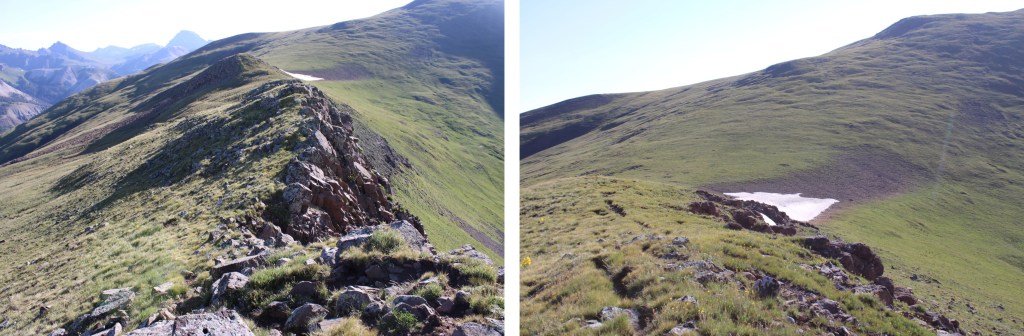
From the saddle I followed the tundra east 570’ towards the summit. 

There was a short rocky section towards the summit, with tons of game trails to the right to keep it class 2, but honestly, going over the rocks is probably class 2 as well. 

I summited Sunshine Mountain at 8:45am

Sunshine Mountain:

I turned and made my way back down the tundra ridge, and to the saddle

I made my way towards the left side of PT 13094.  Here’s a little hint to help you descend:  There’s a wooden post sticking out of the ground about 20 feet after you should descend.  Use this as a visual for where to start heading down the side of the mountain.

Back on the game trail, I turned right and followed it back to the mining road.

Then I took the mining road back to about 11600’

From here, I could see my truck parked below, and just made my way back to it, bushwhacking the entire way.

I made it back to my truck at 10:30am, making this an 8 mile hike with 3171’ of elevation gain in 4 hours.

On to the next trailhead!

Darley Mountain – 13,275, Engineer Mountain – 13,225, Seigal Mountain – 13,281

RT Length: 11.44 miles

Elevation Gain: 3236’

I decided to park off CR 20 just part MM 15 on the side of the road.  I could have camped at Golconda Mining Complex, but since I only needed a parking spot, not a campsite, I decided to park here.

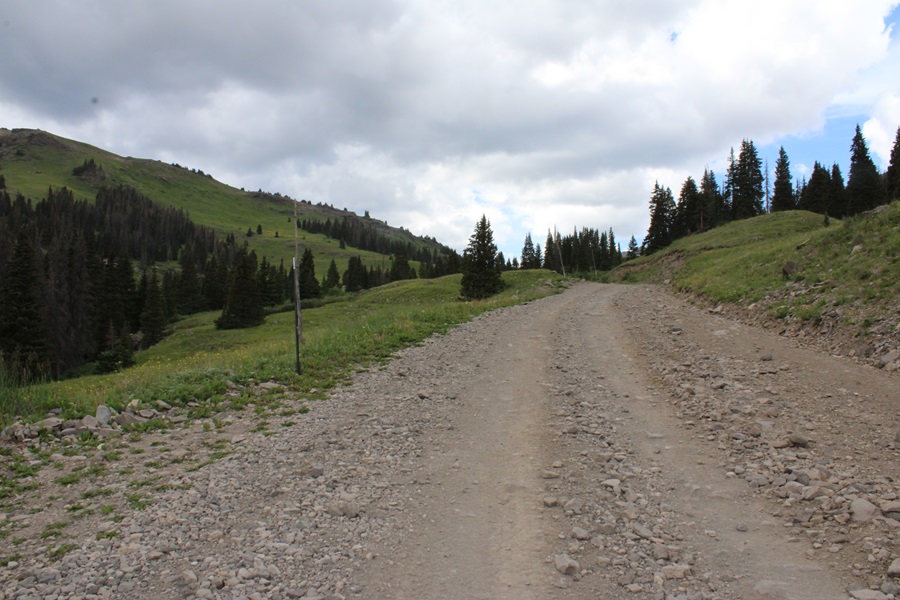
I was up and on the trail at 5:30am.  I began by following the road towards Engineer Pass.  This is a 4WD road, but easy to follow.  From my parking spot, it was about 2.75 miles to Engineer Pass. 

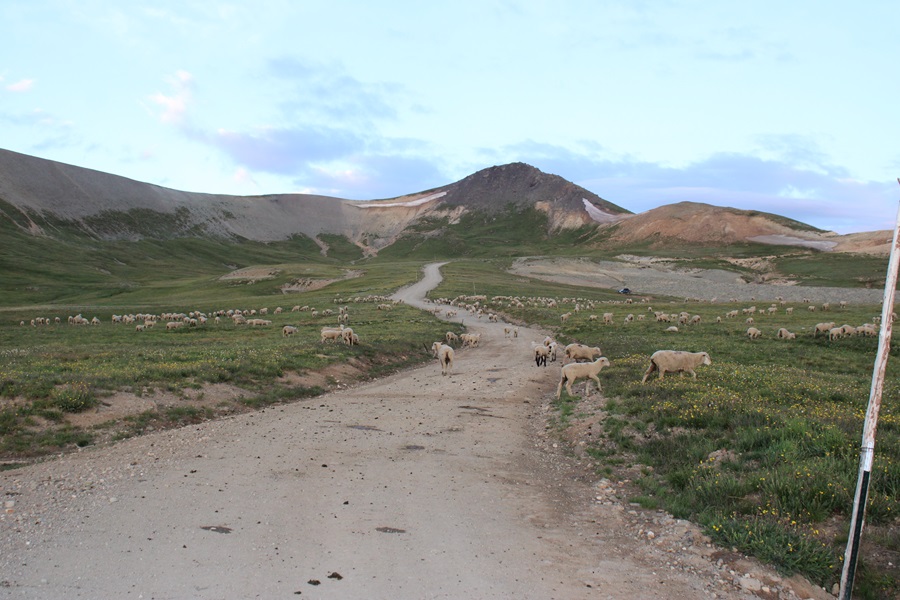
Just before reaching the pass, and just as the sun was rising, I came upon a herd of about 500 sheep.

They all moved and baa’d as I hiked past them, towards Engineer Pass.

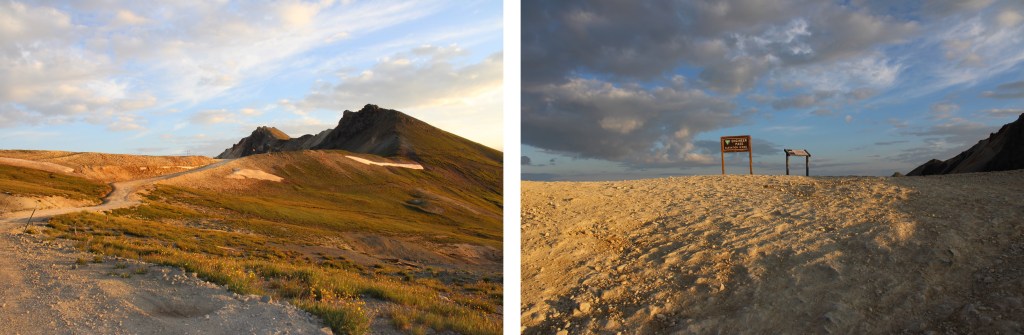
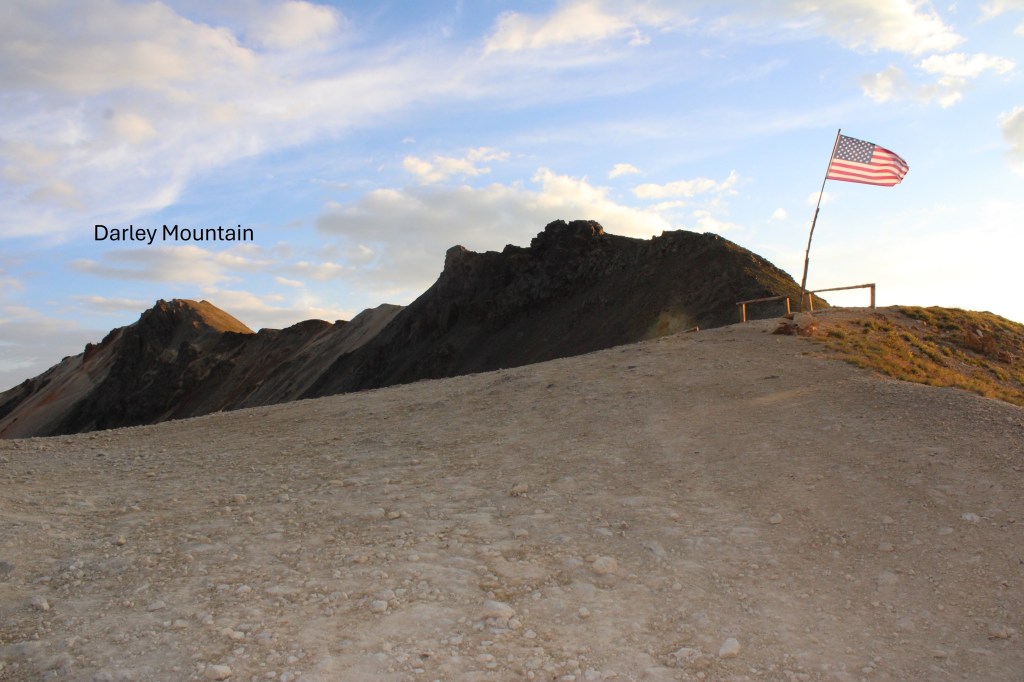
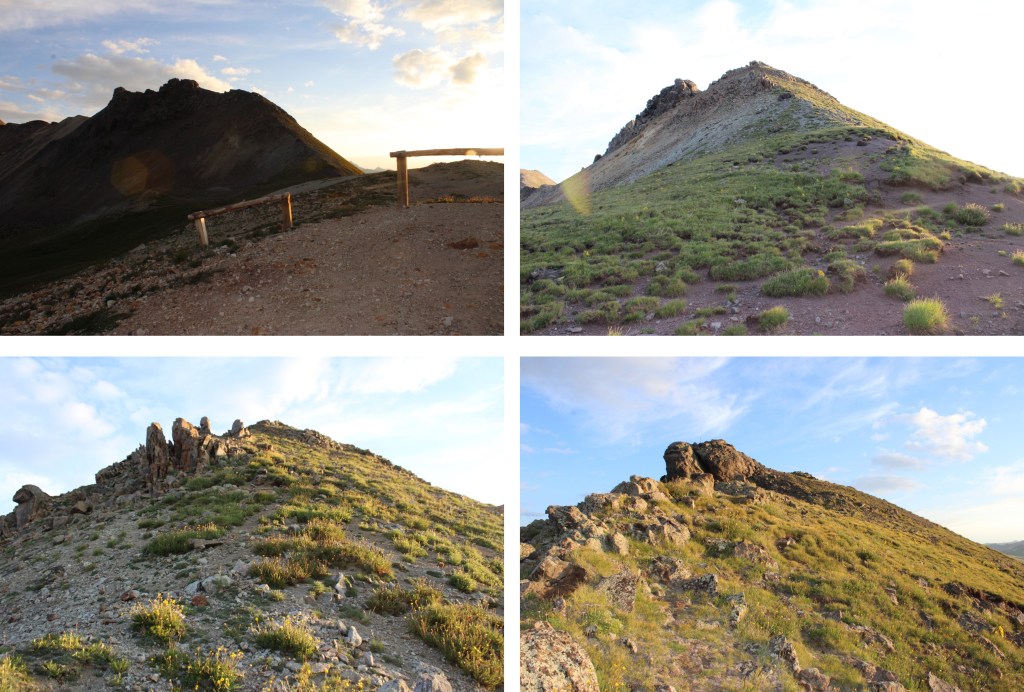
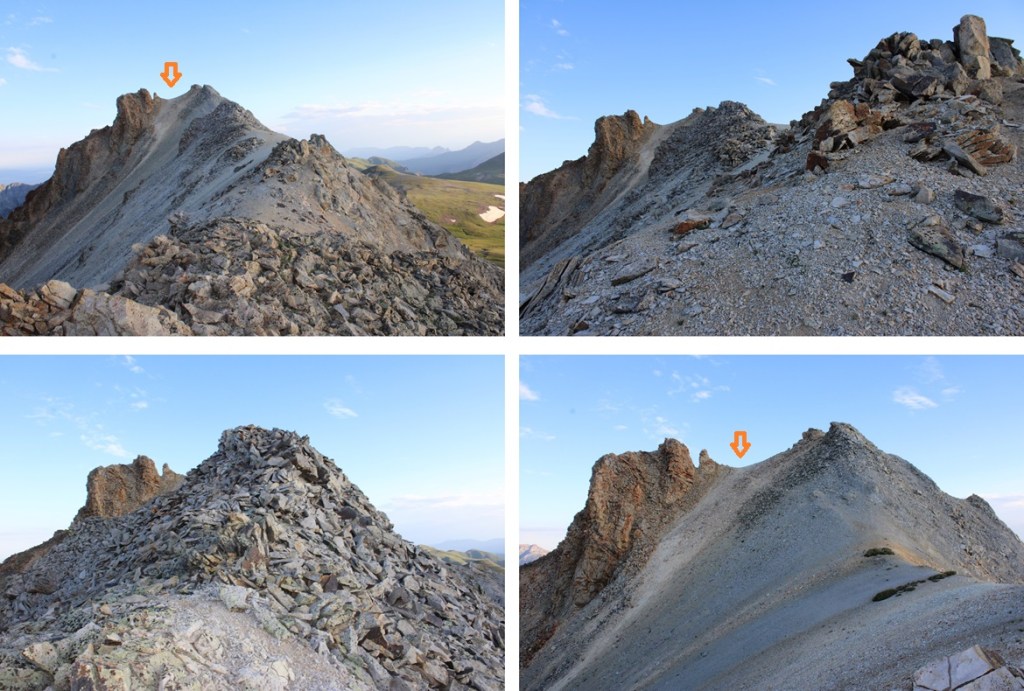
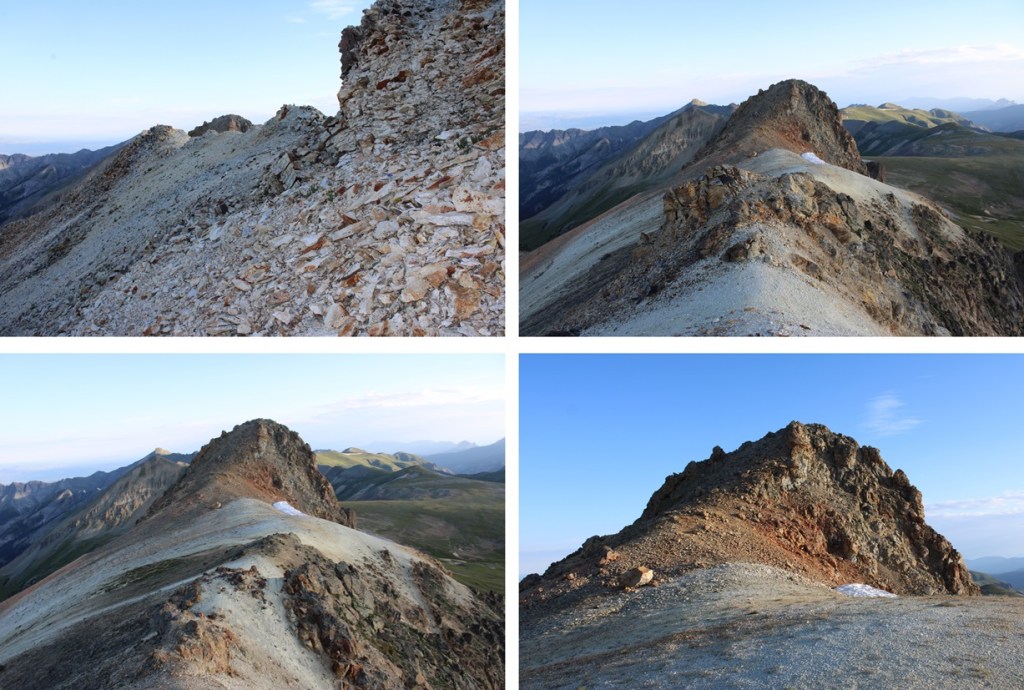
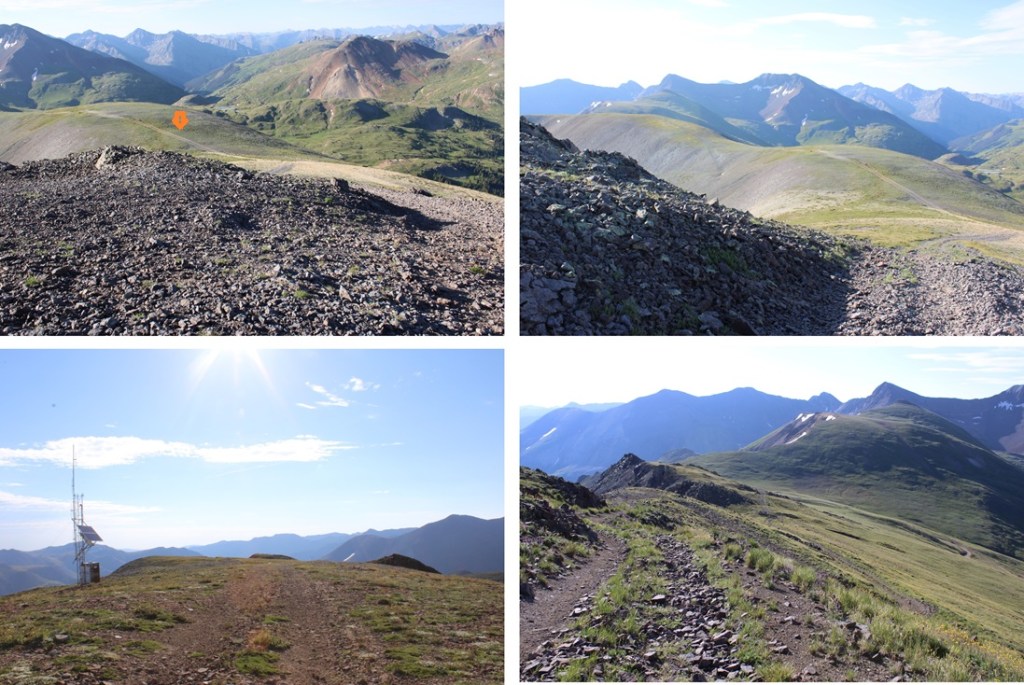
My first peak of the day was Darley Mountain.  From Engineer Pass, I turned right, and headed north along the ridge towards Darley.  This was all class 2, but full of loose scree and choss.  Oh, and several false summits.  I stuck to the ridge.  Here are some pictures of the ascent.

At the first false summit, I stuck to the right, following the ridge on game trails.  There were game trails all the way to the summit.

From here, you can see the next false summit. I continued following the ridge.

And now, the next false summit.  This was much the same as I’d encountered before, and I kept following the class 2 ridge.  This is probably the biggest false summit of the peak.

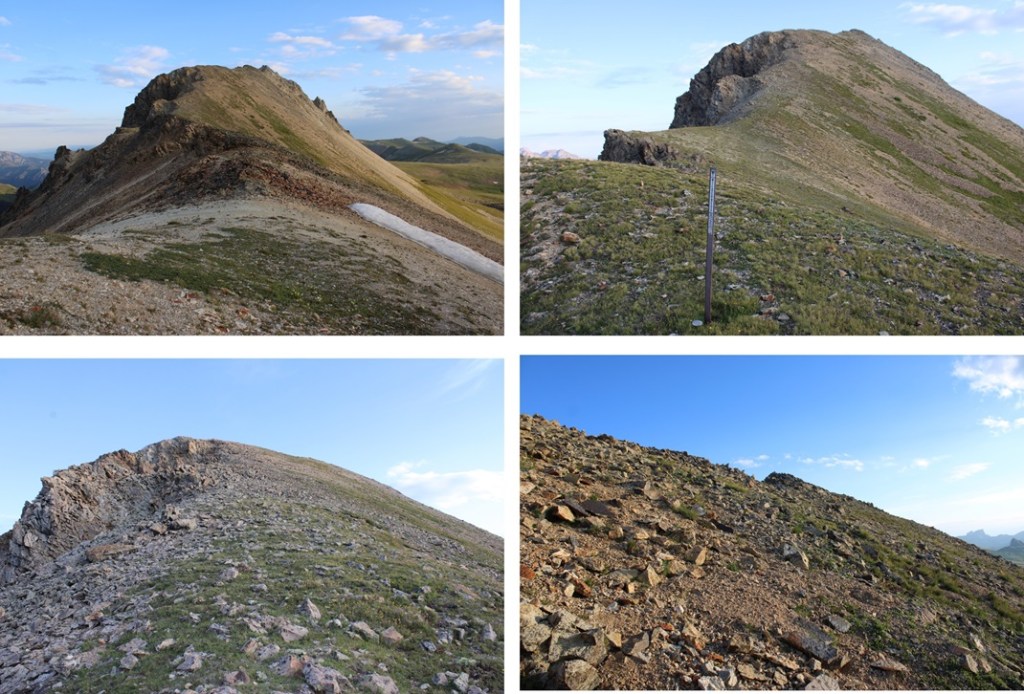
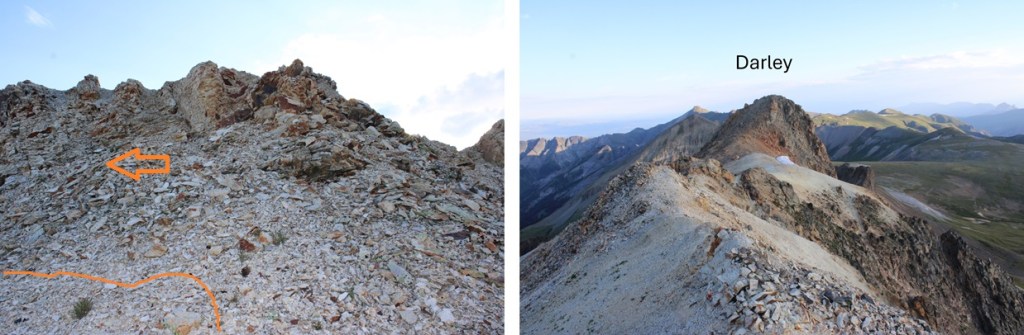
This is where it gets interesting.  This is all still class 2, but very loose scree and chossy.  Microspikes helped here, especially on the way down.  There are plenty of game trails to follow here.   Also, this isn’t quite the summit yet.  Here’s the route I took, following the ridge to get there.

You’re going to want to summit this blob, but it’s not the true summit. The true summit is to the left/northeast.  There are game trails here to follow as well, mostly sticking to the ridge direct, but a few go to the right, and are obvious. 

The last bit was rocky, but still class 2

I summited Darley Mountain at 7am

Darley Mountain:

I turned around, and headed back to the Darley/Engineer saddle, using the same route to descend as I had to ascend.

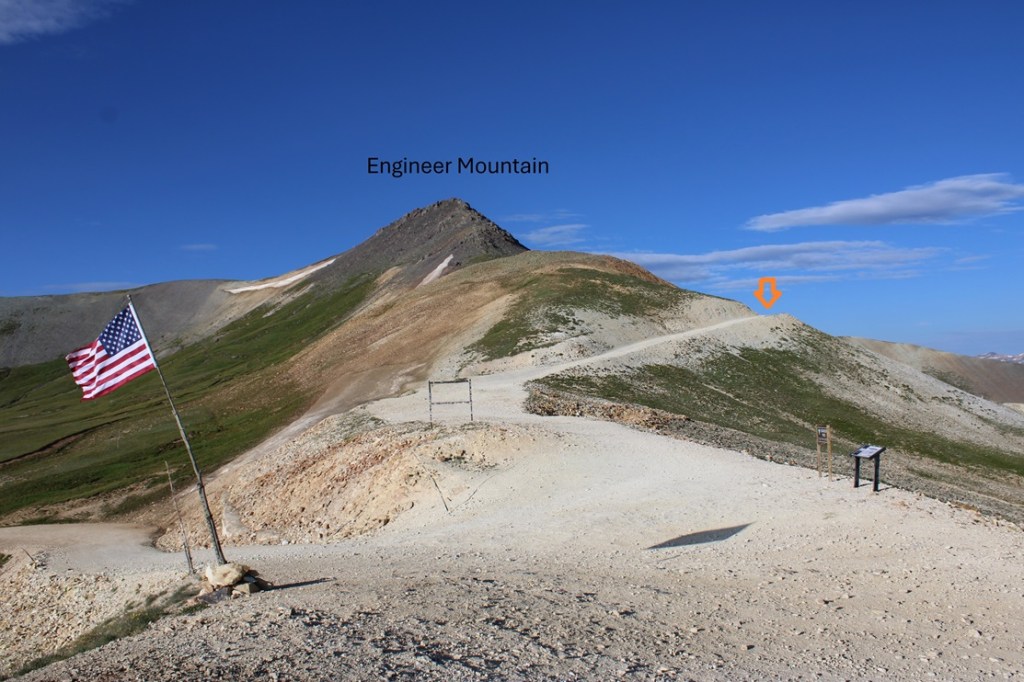
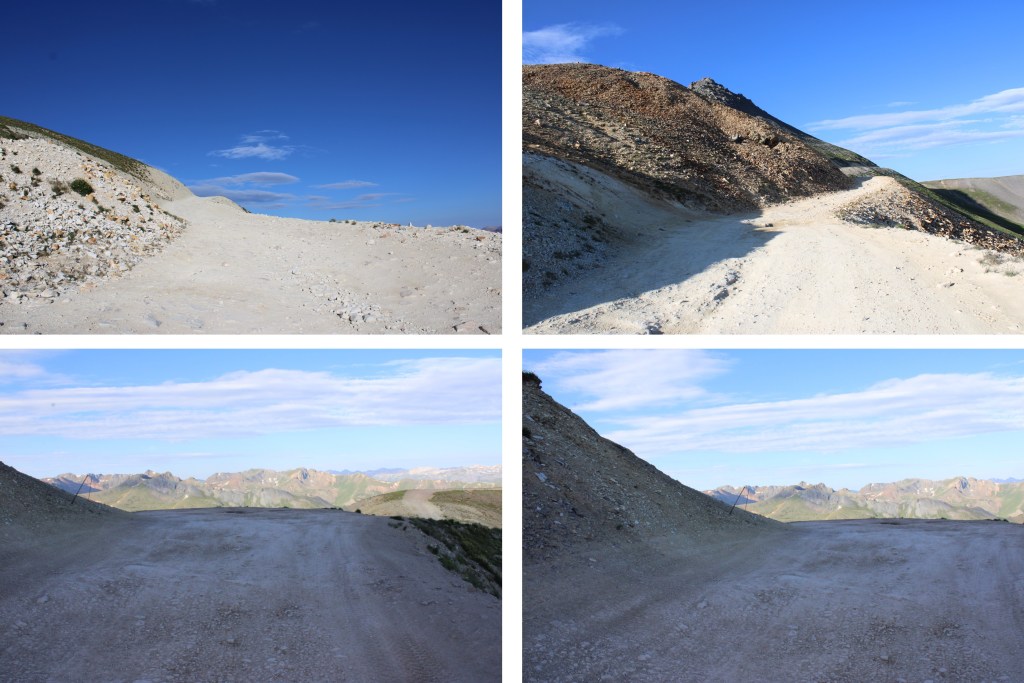
Safely back at Engineer Pass, now I wanted to summit Engineer Mountain.  I continued following the 4WD road southwest, as it continued to ascend in elevation to a junction.

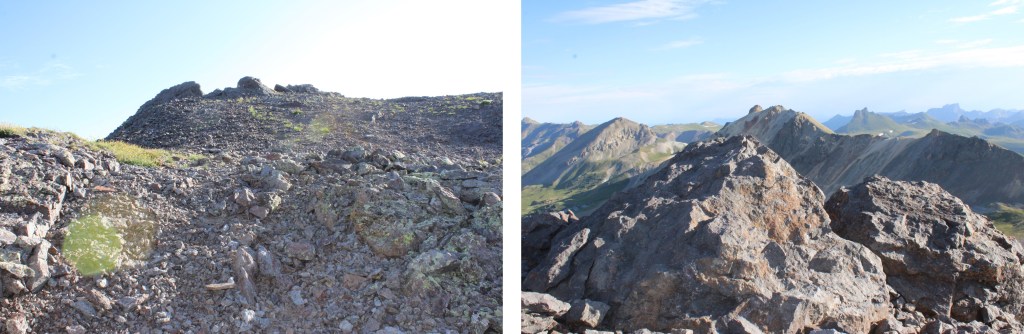
At 12970’ I turned left, and followed a very steep 4WD road (closed to 4WD vehicles) east towards the summit.  The summit has a class 2 boulder, no more than 5 feet wide.

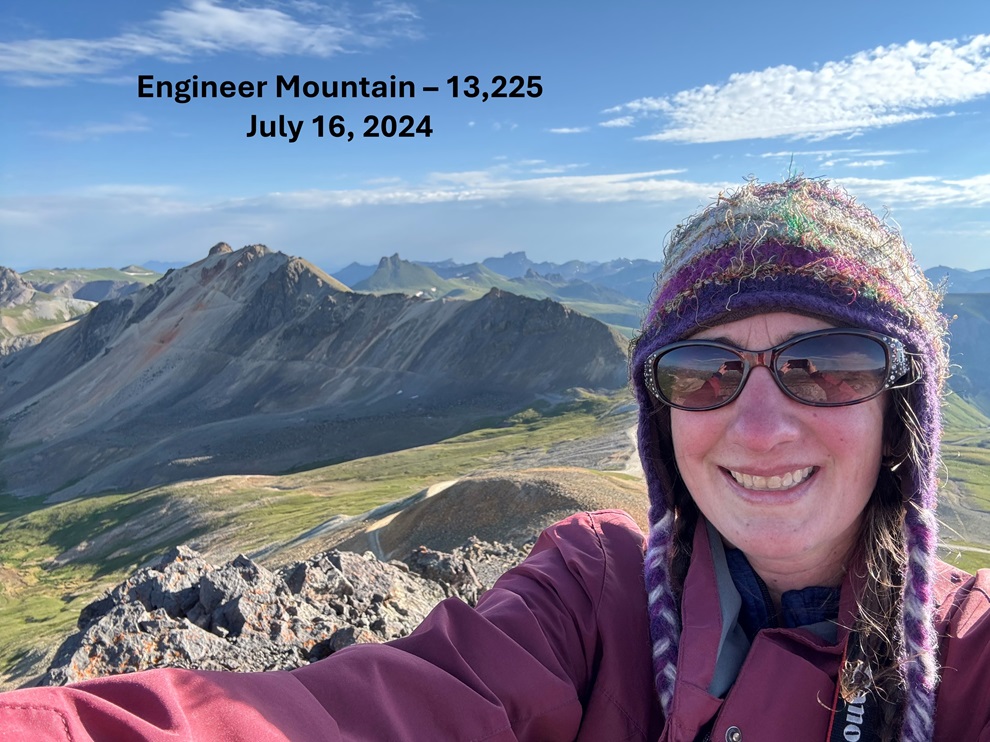
I summited Engineer Mountain at 8am

Engineer Mountain:

To the southeast is Seigal Mountain

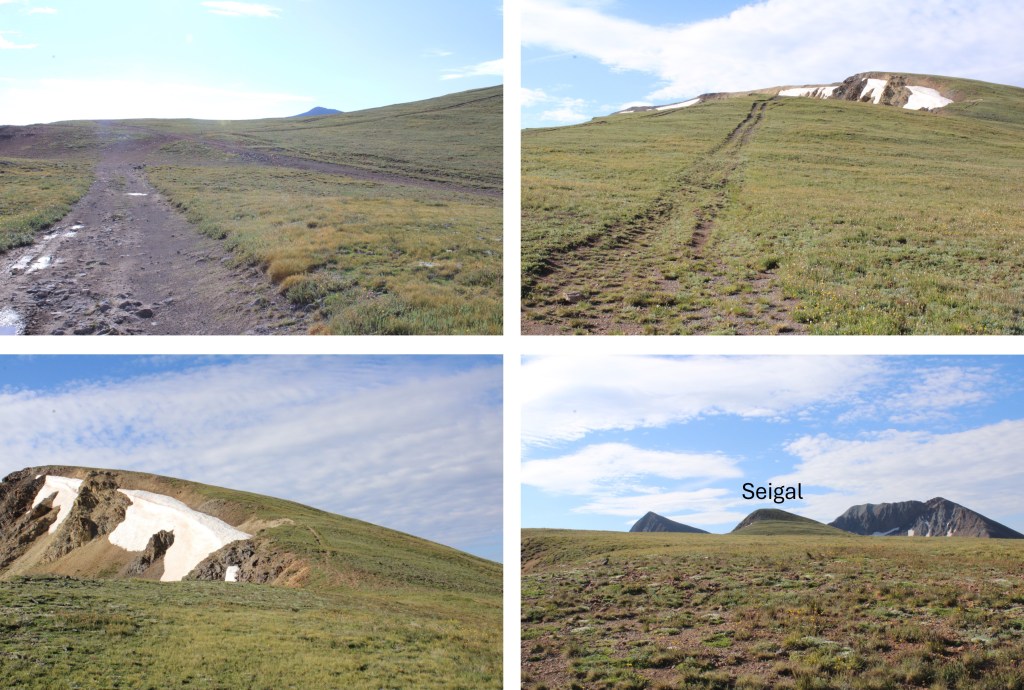
I could see a dirt road in the distance, and headed south to this road.  When on the road, I followed it east to the Engineer/Seigal saddle, descending about 460’ .

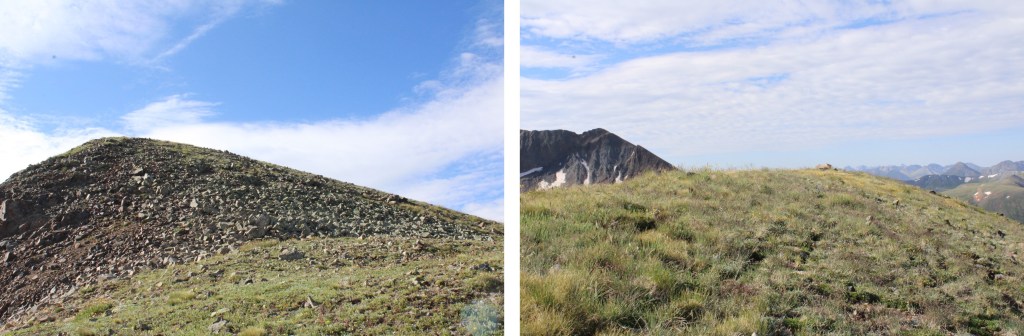
Once at the saddle, I followed the road southwest up the ridge, but eventually the road ended and a slight trail began that ended as well.  It was a class 2 tundra walk to the summit, fairly straightforward.  It got a bit rocky at the very end, still class two, with a tundra workaround to the right. Here are some pictures of the route to the summit of Seigal.

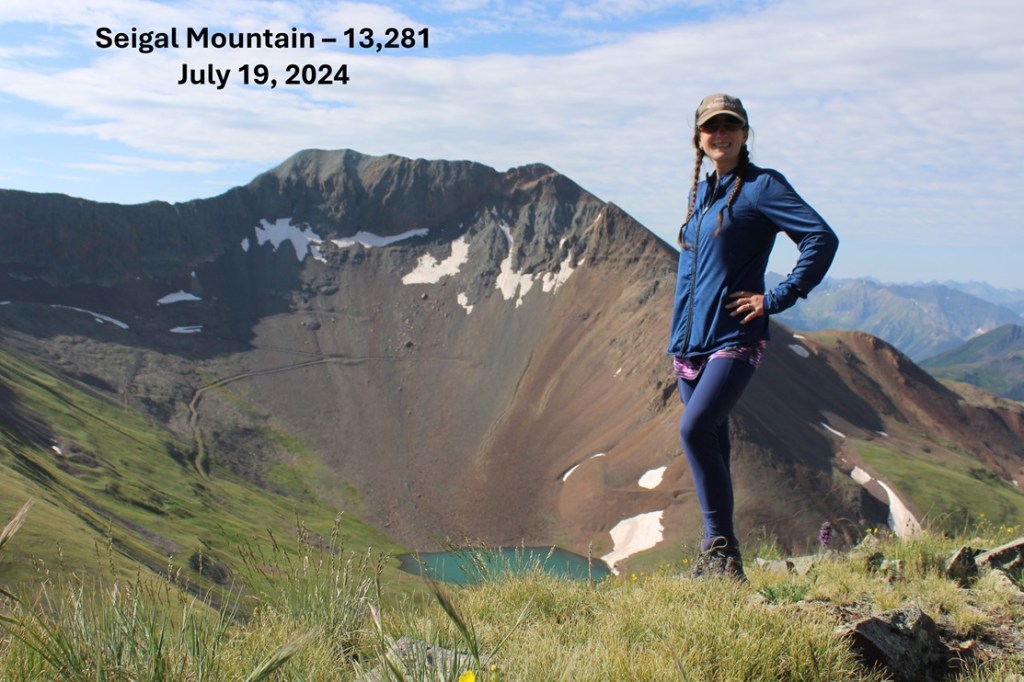
I summited Seigal Mountain at 9am

Seigal Mountain:

I was making this a kind of loop, so I headed back down to the Engineer/Seigal saddle.

At the saddle, I headed a little further north, and found this road that topo maps said would lead me east towards Schafer Gulch.

I followed this road, and yes, it led me in the correct direction, but what maps couldn’t tell me was this was an old mining road that hadn’t been used in years.  So many years much of the road was destroyed due to avalanches or rockslides and due to the road being “closed” to vehicles, much of the road is now grass and flowers.  However, enough of the road was intact for me to figure my way down.  I headed east, following the road when I could, heading towards the obvious 4WD road in the distance paralleling Schafer Gulch when I couldn’t.

If you lose the road, you can just head east on the tundra until you reach the 4WD road.  It’s steep, but it doesn’t cliff out here.

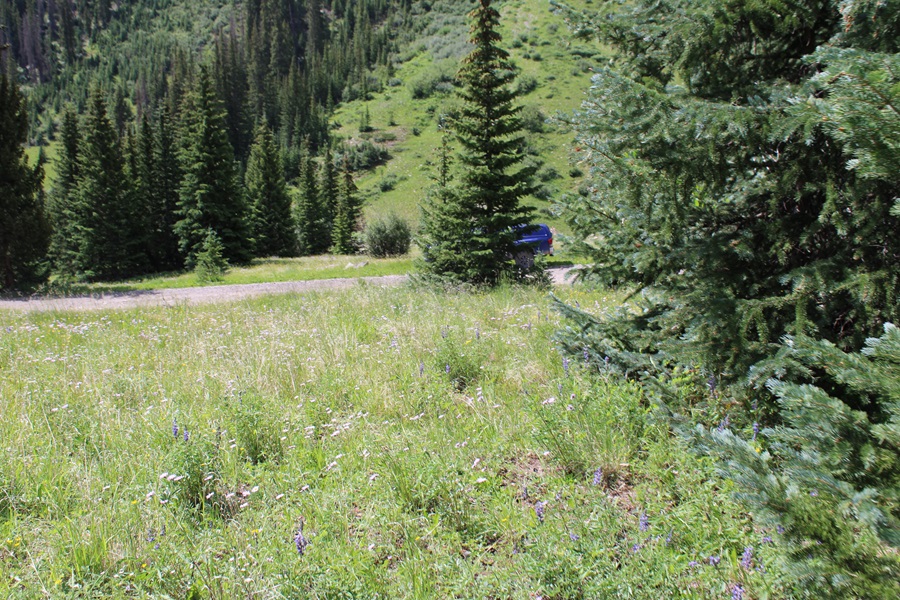
I was now on a solid 4WD road, and followed it north back towards CR 20, turning left at a junction where right went to someone’s dwelling.

I crossed Henson Creek, and followed the road through Golconda Mining Complex back to CR 20

Then followed CR 20 northwest towards my truck.

I made it back to my parking spot at 10:30am, making this a 11.44 mile hike with 3236’ of elevation gain in 5 hours

On to the next trailhead!

Babcock Peak – 13,161

RT Length: 9.23 miles

Elevation Gain: 3868’

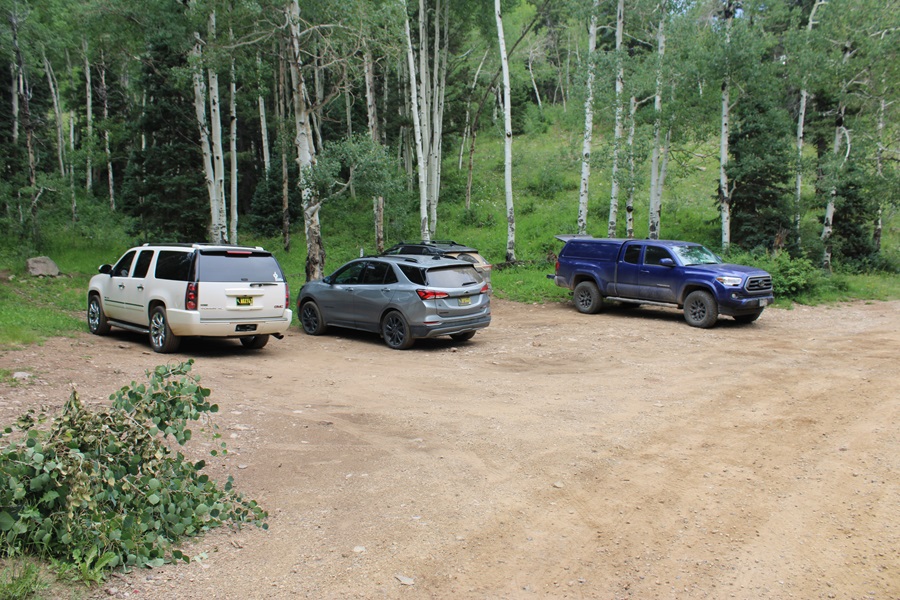
I parked at a turnoff near Boren Creek and124/794 with room for about 5 vehicles if everyone parked nicely.  The drive in is dirt 2WD.   I was on the trail at 4:30am.

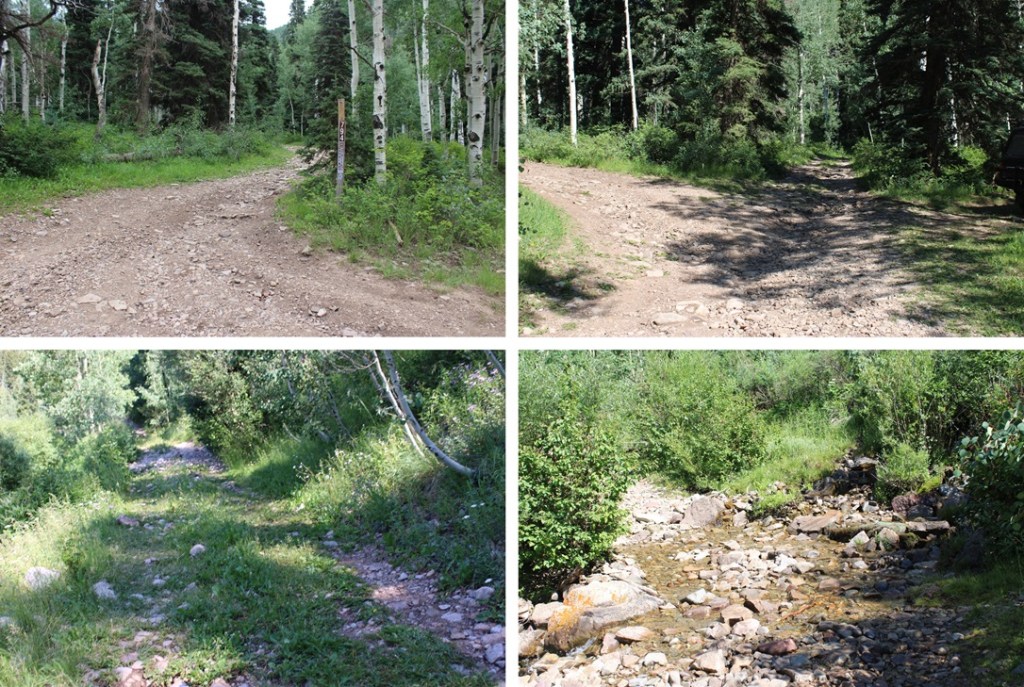
I followed 4WD road 794 for over 3 miles as it switchbacked it’s way northeast, following Boren Creek.

After hiking for around 3 miles I made it to treeline.

Here I turned right, and could see Babcock Peak to the north.

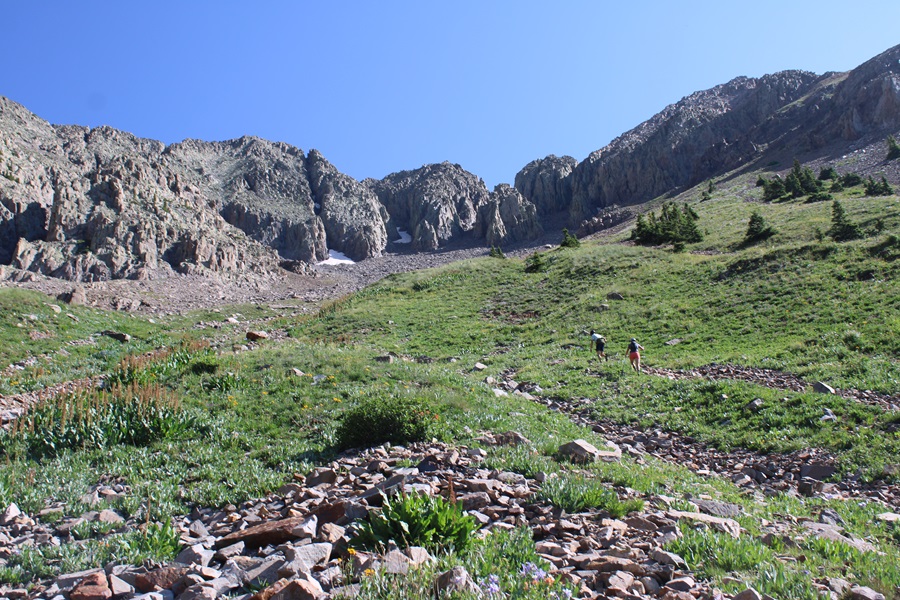
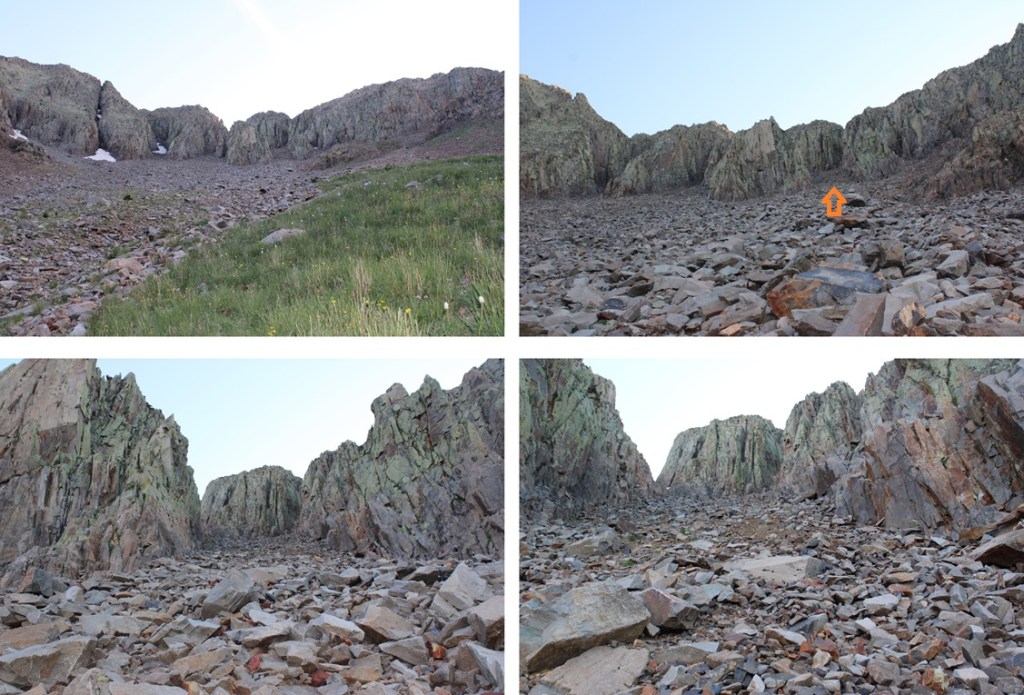
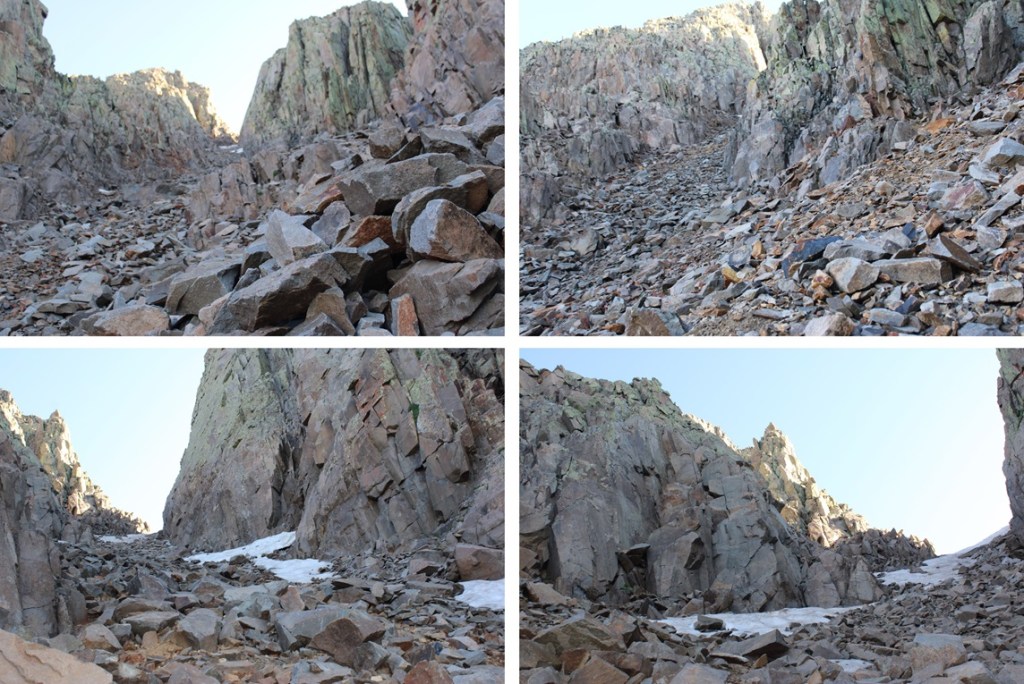
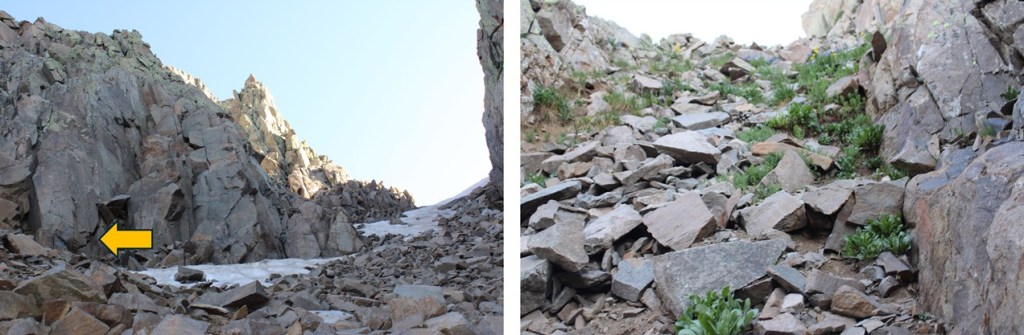
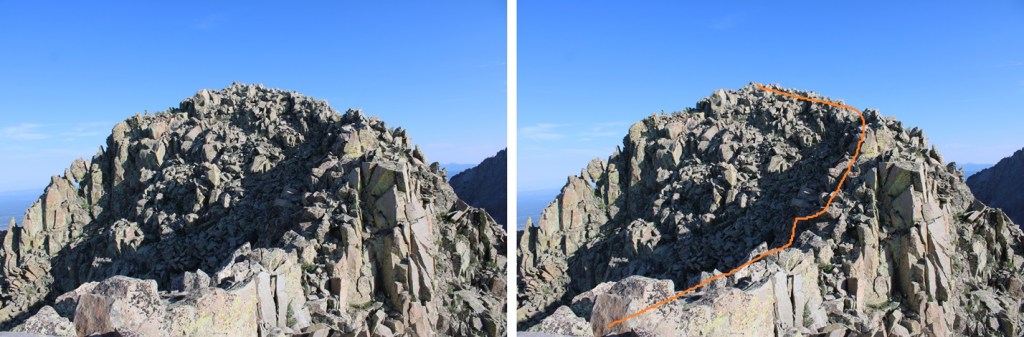
Route finding here was pretty easy.  I headed north towards the gully, aiming for the gully to the right.  I gained about 1500’ here to the summit in about a mile.  This gully is very loose, and full of all different sized rocks.  I didn’t stick to one side, but chose whatever route looked best.  Here are some pictures of the gully.  It’s pretty straightforward.

Just before reaching the saddle, I turned left, and ascended this much smaller gully

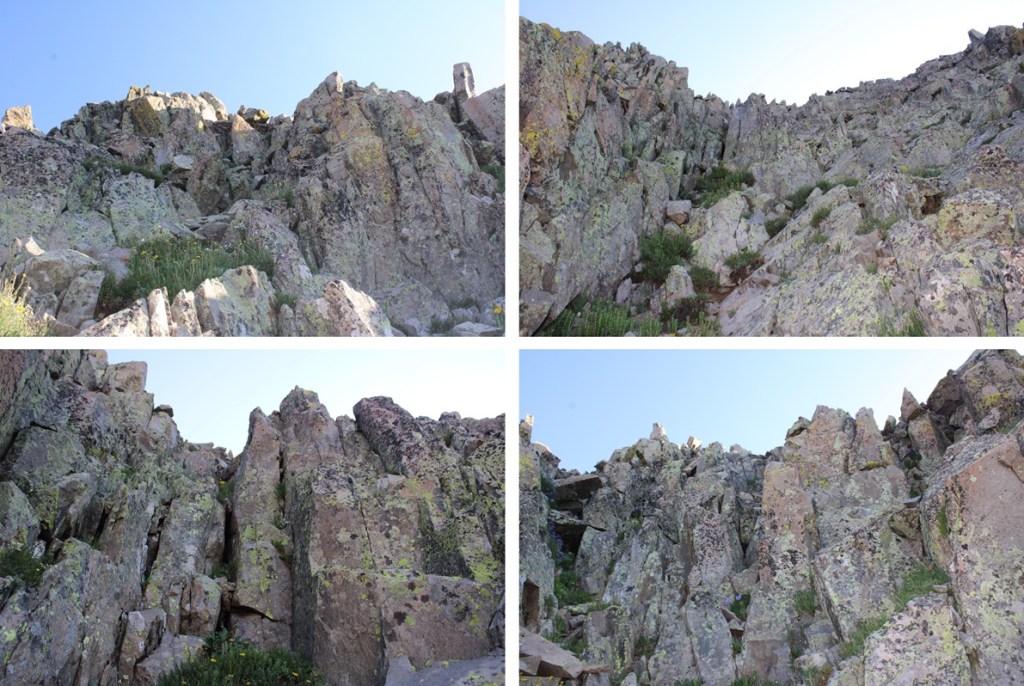
From here, it’s choose your own adventure to the ridge.  Everything is class 3 climbing, and I’m pretty sure there is no wrong way to get to the ridge, as long as you’re heading north/northwest.  I can’t say the same for heading down, so it’s a good idea to keep looking behind you for reference points for the way back.  Also, pictures were very difficult to put everything into perspective.  Right now you should be at the junction of the left and right gullies.  Take note of where you are, because this is where you’ll want to descend to on your way down, and as you can see by looking ahead of you, the initial climb to the ridge is steep and it can be difficult to know exactly where you are.  Here are some pictures as I made my way up to the ridge.

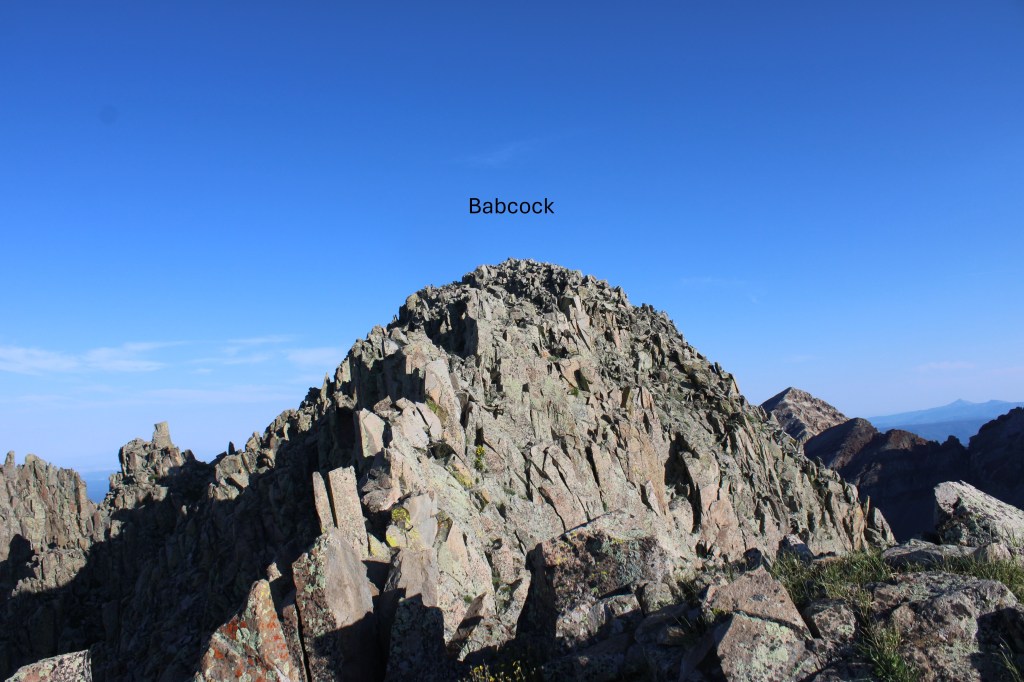
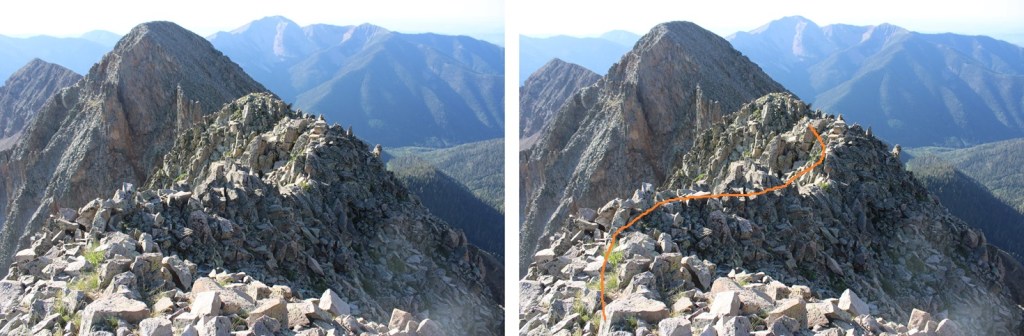
Once on the ridge, I turned left, and headed northwest towards the summit.  There was only one ‘tricky’ move, and the rest was class 2.

Here’s the tricky move.  Go right here to ascend the ridge.  It feels like difficult class 3 or easy class 4, with some exposure.

Then it was a quick ridge hike to the summit, staying on the ridge proper.

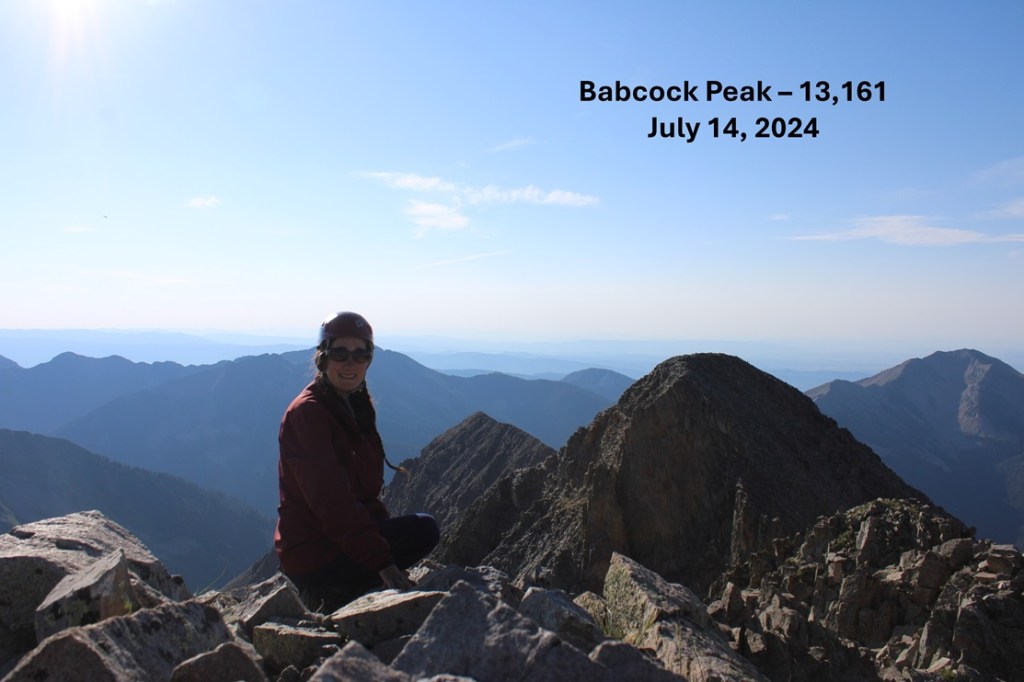
I summited Babcock Peak at 8am

Babcock Peak:

Now to head back down. Here’s a picture of the ridge

And the one tricky section

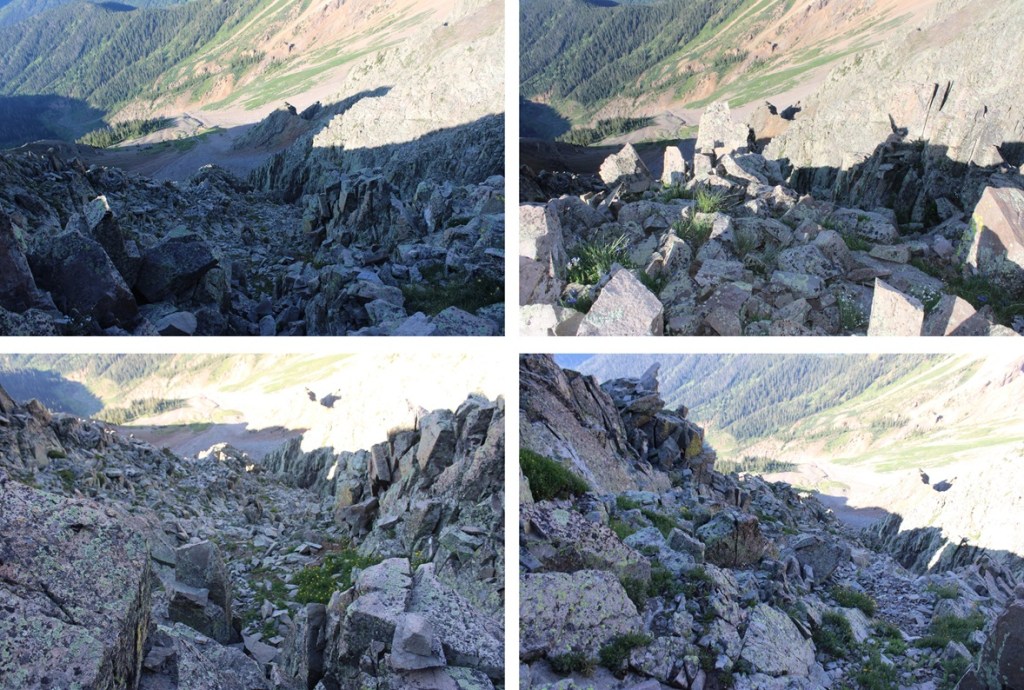
Now it was time to head back towards the gully.  Visuals are good here.  When heading down, keep moving to your left as you do so, making your way down to where the left and right gully meet up. 

Where the two gullies meet, I turned left and headed down the same gully I’d ascended.

And now, to descend the gully back to the 4WD road

Back on the road, I turned left and followed it southeast back to the trailhead.

I made it back to the trailhead at 10:30am, making this a 9.23 mile hike with 3868’ of elevation gain in 6 hours.

On to the next trailhead!

Mount Moss – 13,194 and Lavender Peak – 13,327

RT Length: 10.58 miles

Elevation Gain: 3604’

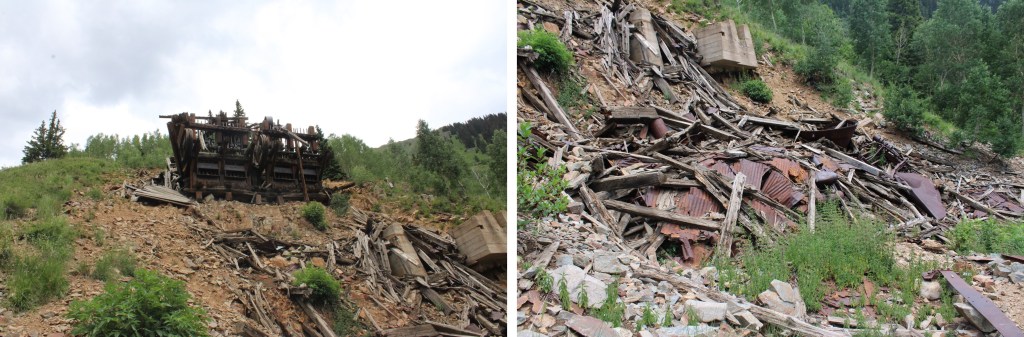
Once again, this wasn’t the peak I’d planned for today.  In fact, due to my carelessness with my new truck and forgetting to wrap the wires with rat tape, I had a 2am encounter with varmints and had to abandon a days worth of hiking (where I’d hoped to get in 5 ranked 13ers).  Not to bore you, but if you want to hear the story and see video footage, click here to find out what creature got stuck inside my truck, and the damage they did.  Also, rat tape your wires people.

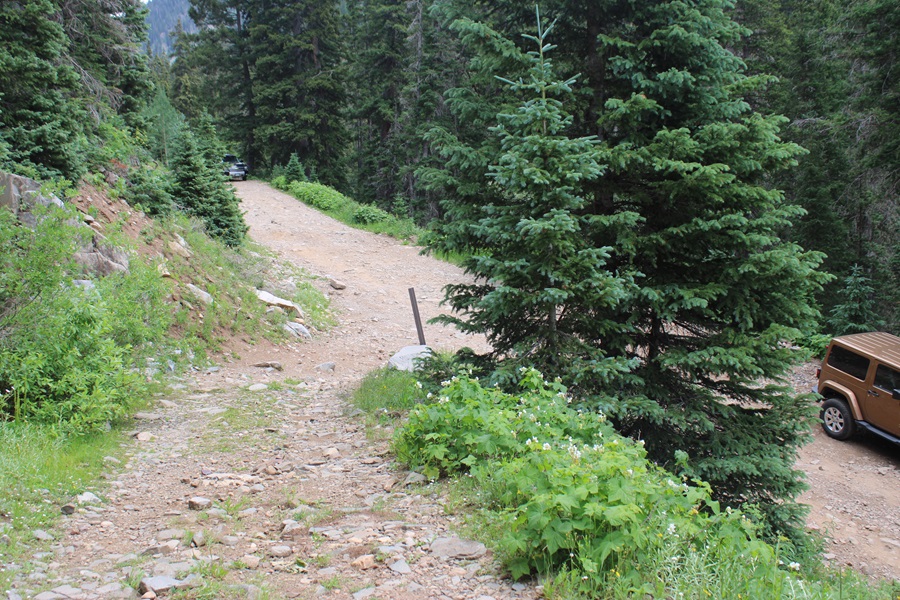
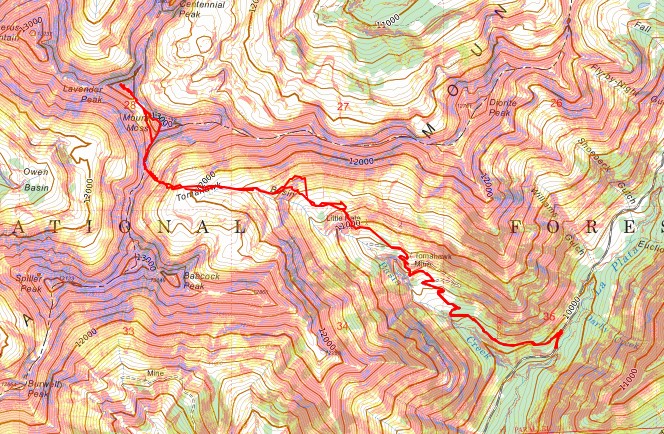
So, after an 8 hour detour, I found myself at around 9800’, at the base of the Tomahawk Mine, parked off road 124 and 798 near Mancos.  I was up and on the trail at 6am

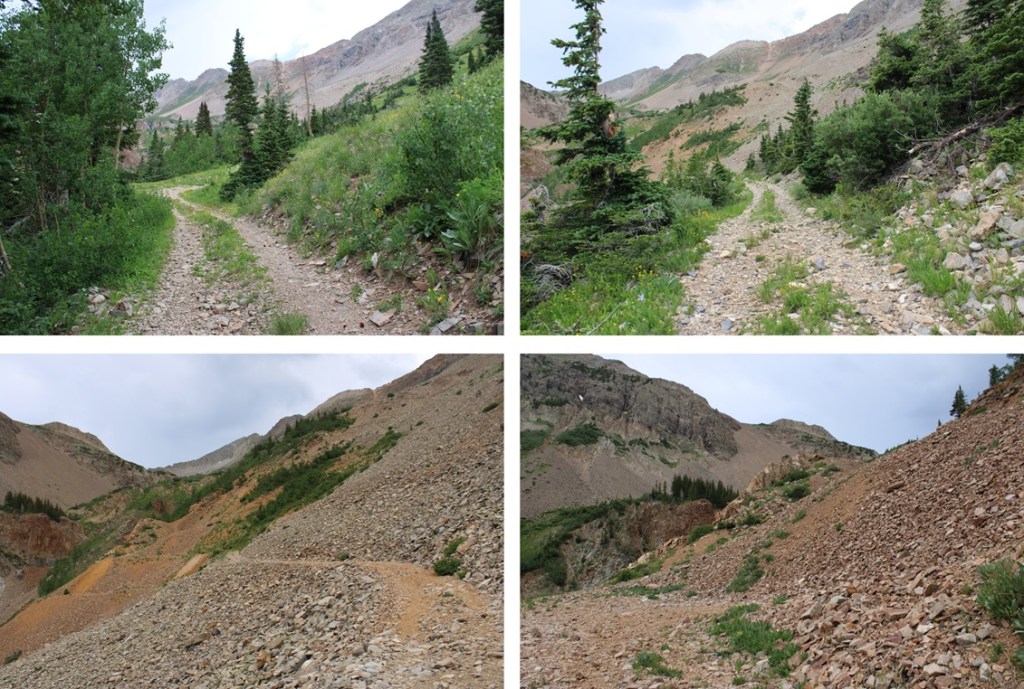
I followed road 798 for about 1.5 miles northwest.

After about 1.5 miles I came to a junction, and turned left.  You can continue on the road here, as it will eventually get you to the same place, but I wanted to see the Tomahawk Mine.  If you’d like to see the mine, turn left here, and follow the road.

The road will quickly end, but a trail will pick up to the right.  It will take you to Tomahawk Mine.

If you look closely, to the left of the mine is a trail that will lead you north, back to the 4WD road.

I turned left, and followed this road northeast until Little Kate Mine.

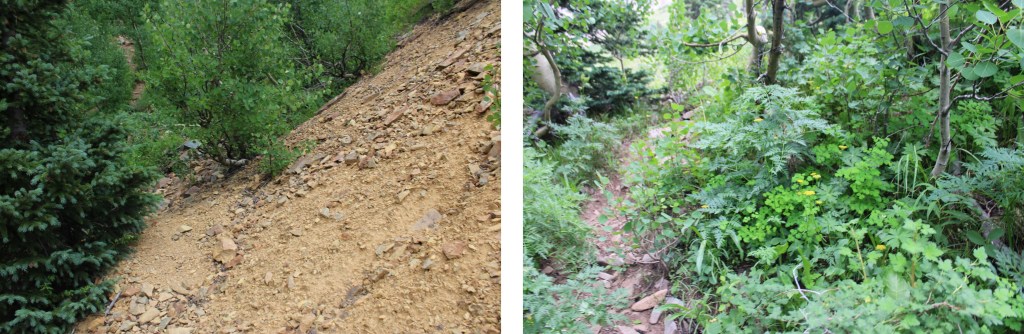
At the base of the mine, just as the road switchbacks to the right, I ascended a scree game trail northeast to treeline.  The trail is obvious, and splits and comes together a few times, but I generally headed towards treeline.

At treeline I headed west, towards Tomahawk Basin.  There’s kind of a trail here, but it’s really faint.

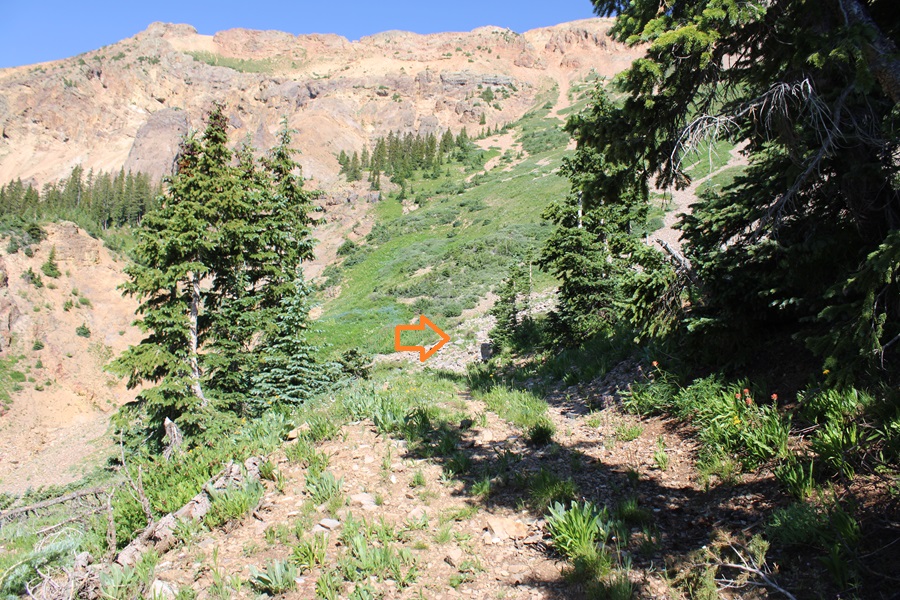
Now I needed to ascend into the upper basin.  There are several ways to do this (I went up a different way than I descended), but you basically want to get above the waterfall.  If you take the route I’ve outlined, there will be a faint game trail to the top, but you may need to search a bit to find it. 

I followed the creek as it headed west.  There is a faint game trail, but eventually it goes away.  Just keep heading west. 

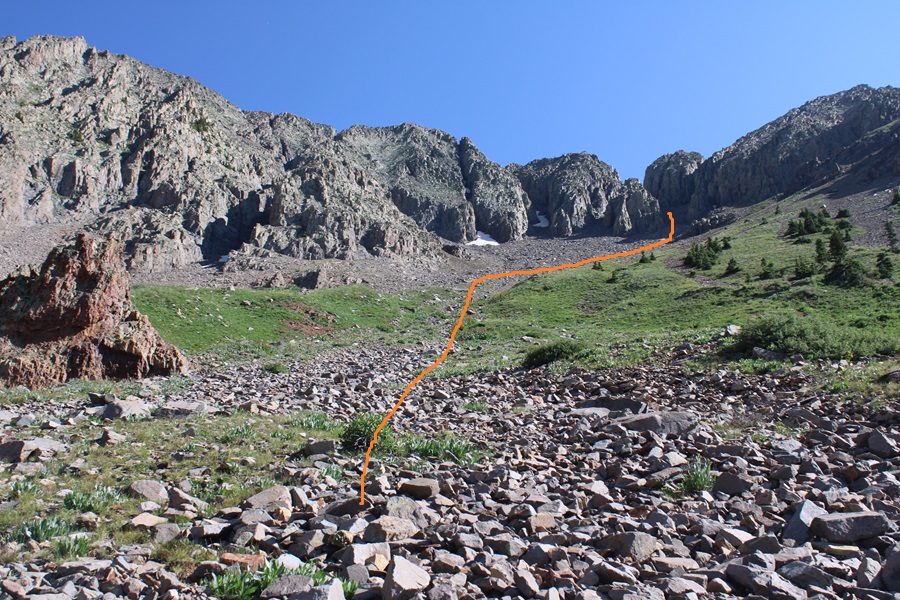
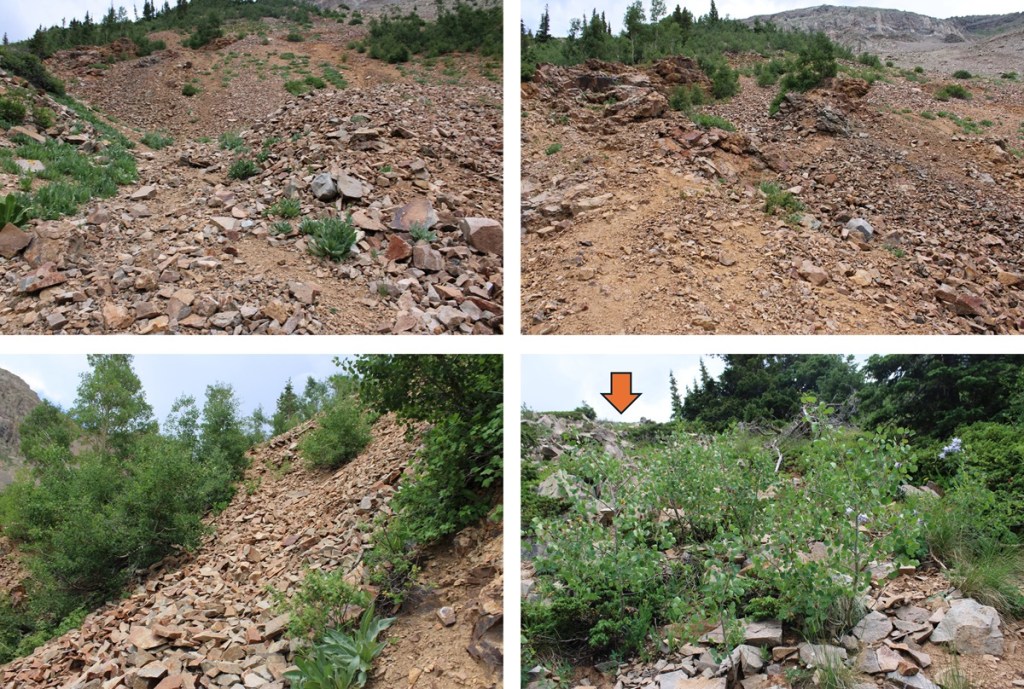
Now in Tomahawk Basin, my next goal was to gain the ridge.  This was extremely steep.  I gained 665’ of elevation in .3 miles.  Luckily, the terrain was easy to navigate.  Here’s the route I took.

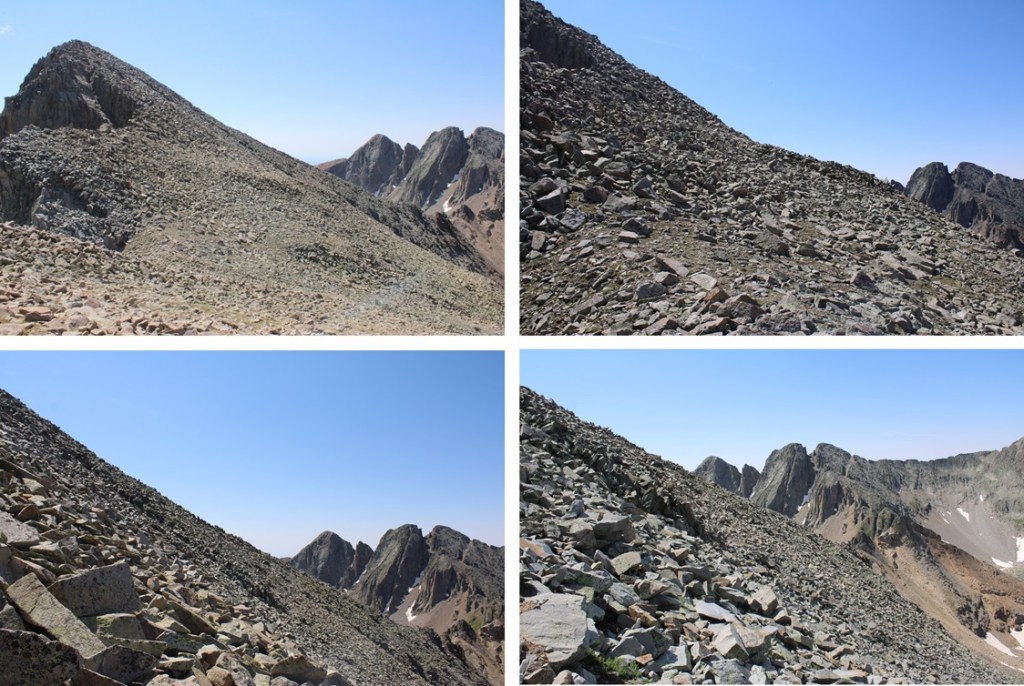
And some pictures of the hike to gain the ridge, staying mostly on tundra.

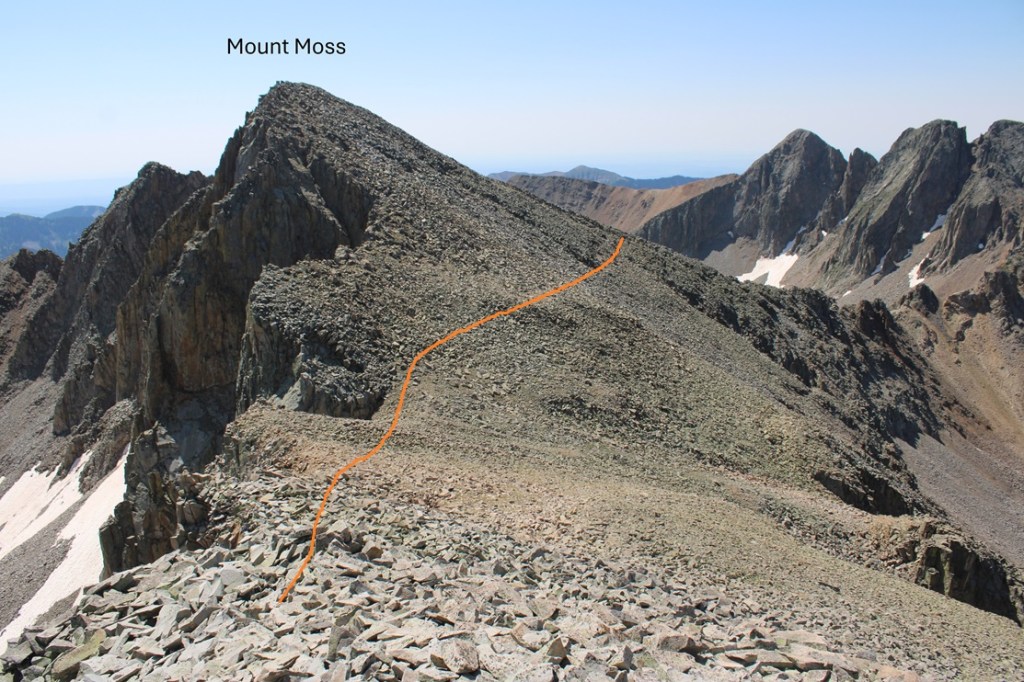
Once on the ridge I took a little break and put on my helmet.  There was a short class 3 section and some scrambling to do from here on out.  I headed north, following the ridge and then dipping down to the left.  It should be noted the ridge goes at class 3 most of the way, after the initial drop off to the left and re-gaining the ridge, but to make it easier there are game trails to the left of the ridge that I followed most of the time.   It should also be noted the rocks here are loose, so watch your footing.

I summited Mount Moss at 9:30am

Mount Moss:

From Mount Moss I could see Lavender Peak to the northeast

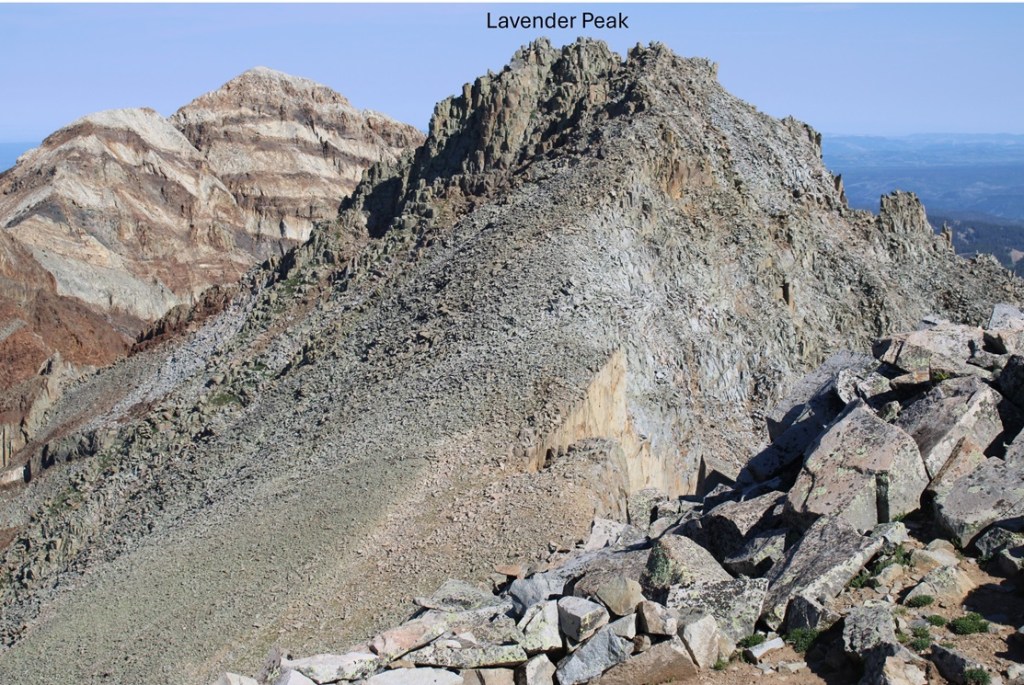
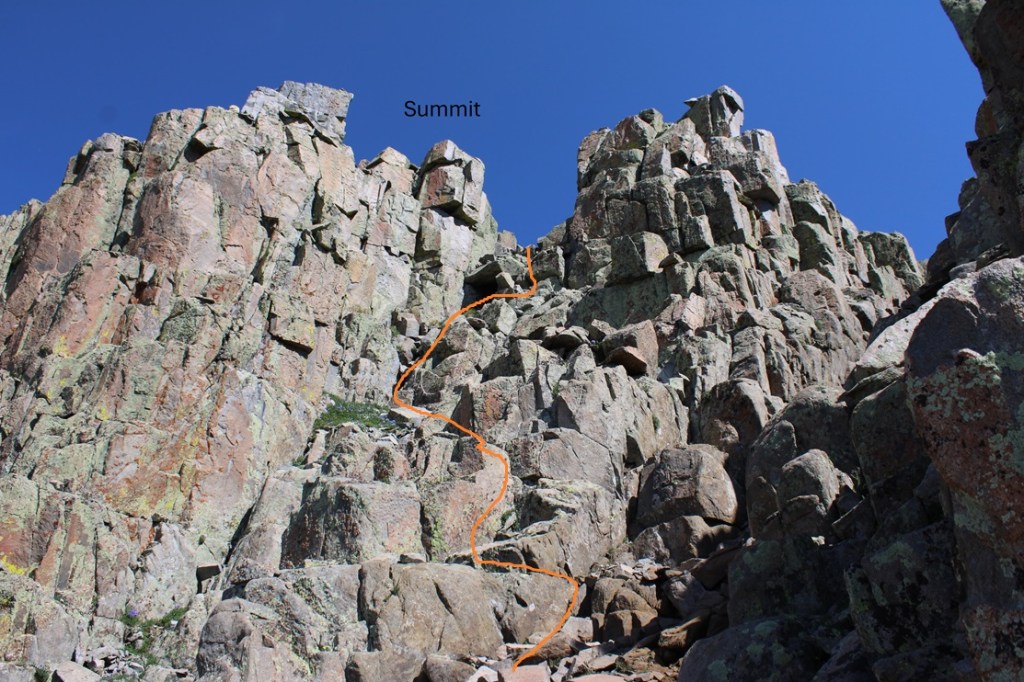
It’s a really good idea to take a good look at the route you’d like to take now, as when you’re below the summit it can be difficult to figure out where you’re at.  The summit of Lavender is the point furthest west.  This is the route I took to the summit, which was mostly class 3, but included a class 4 chimney.

First, I descended to the Moss/Lavender saddle.  Once again, lots of large, loose rocks.

From the saddle, I ascend the ridge to Lavender to just below the gullies, at around 13125’

Next, I traversed west, looking for the gully I wanted to ascend. 

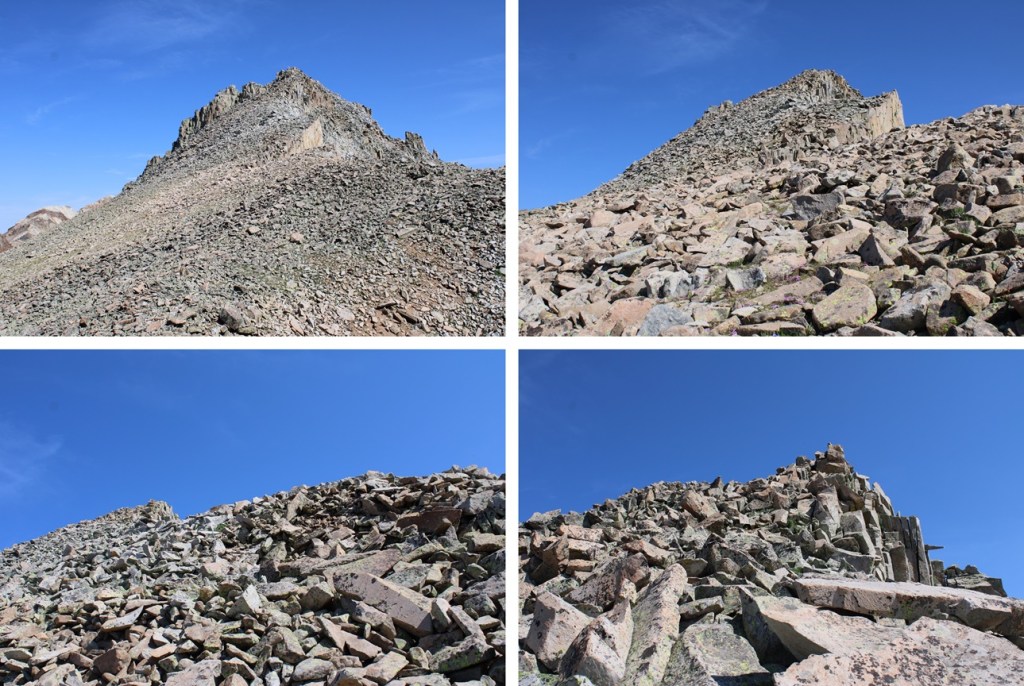
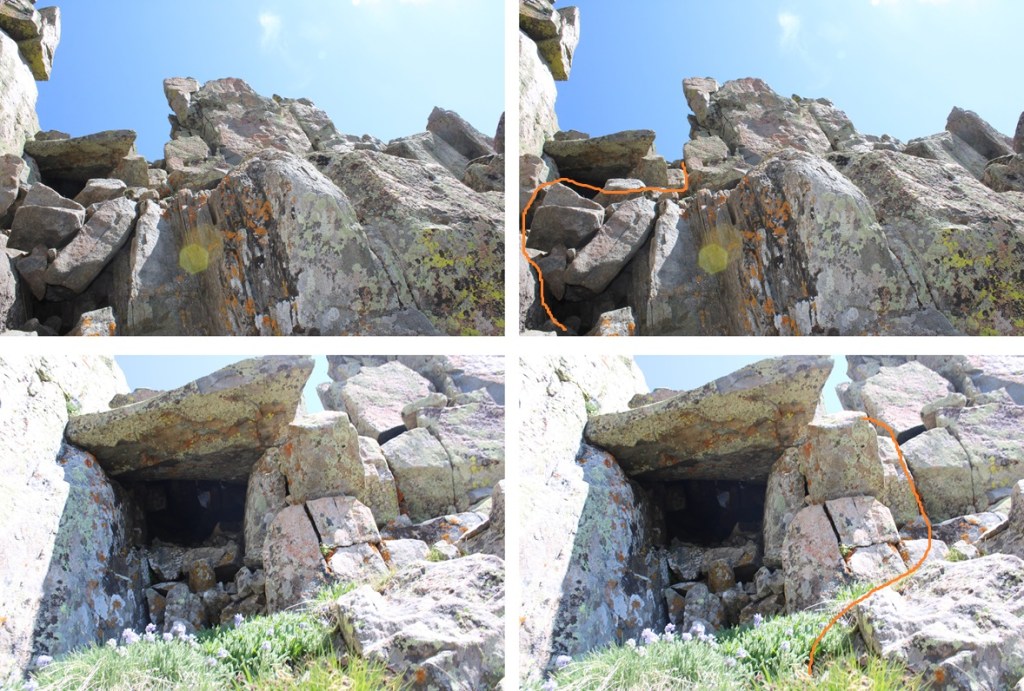
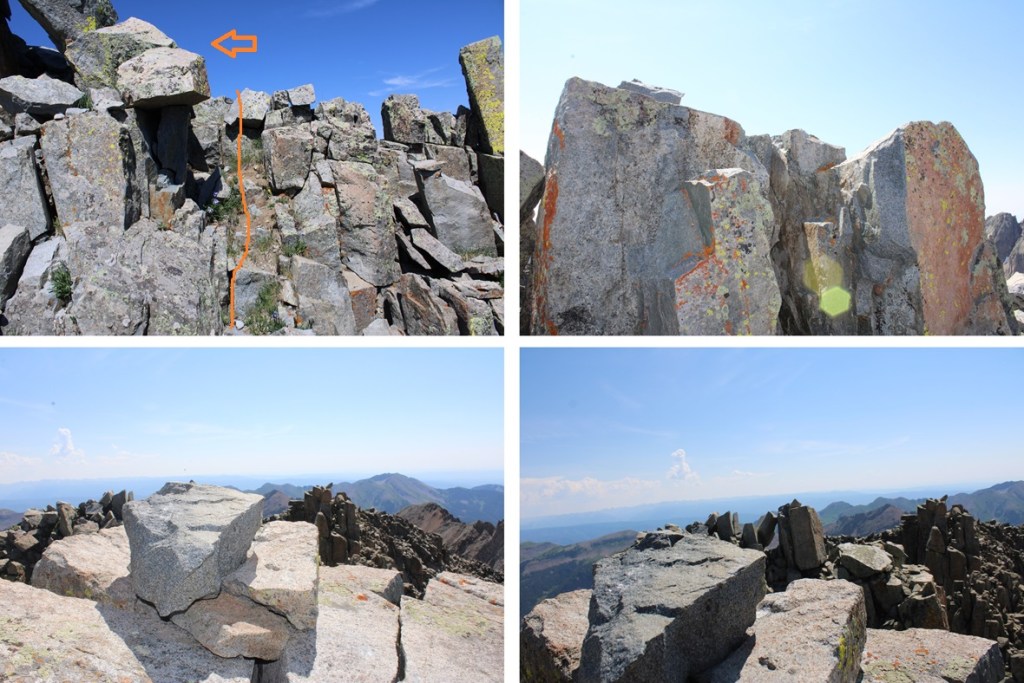
This is the route I took to ascend the gully.  There’s a difficult 3/easy 4 chimney to ascend, just below a cool looking cave.  Ascend straight up to the cave, to right around the cave, and the summit will be to the left. 

And some pictures up the gully.

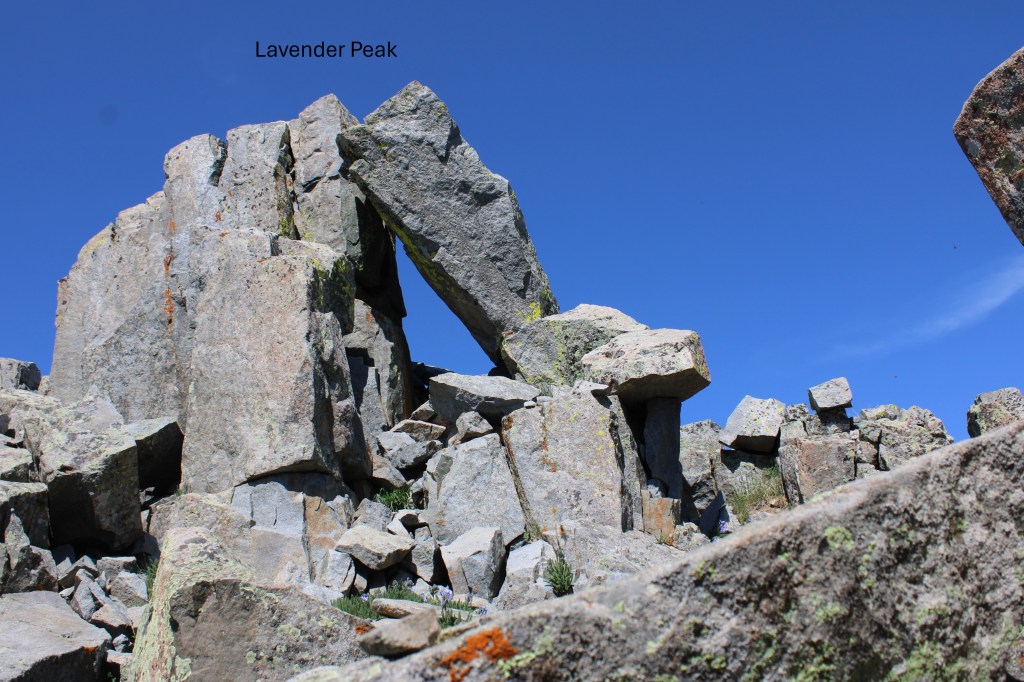
Once you get past the cave, the summit is to your left

It’s an easy trek to get there, up a small ramp

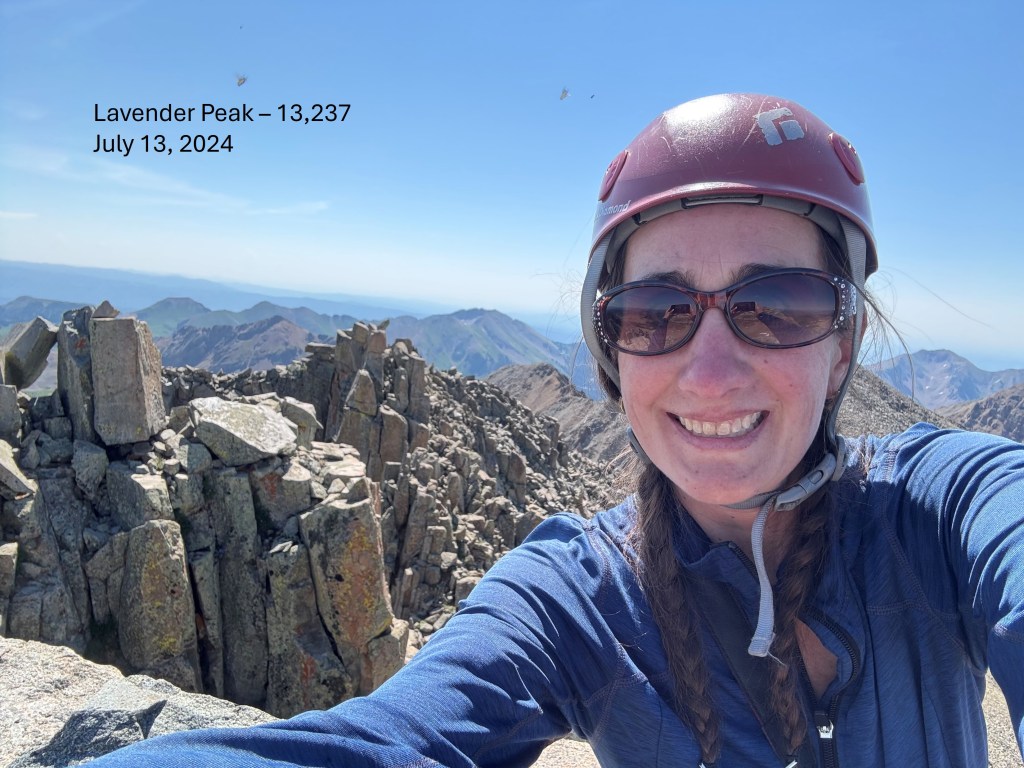
I summited Lavender Peak at 10:45am

Lavender Peak:

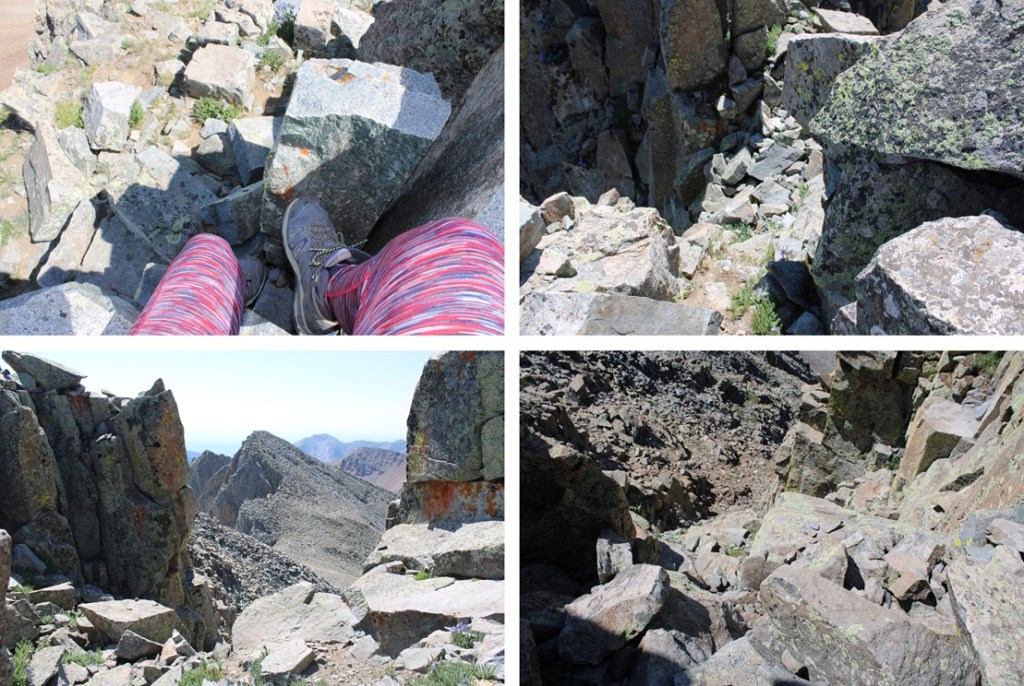
And now to head back down.  Here are some pictures of my way back down the gully.  I turned and faced the mountain for much of the trek down.

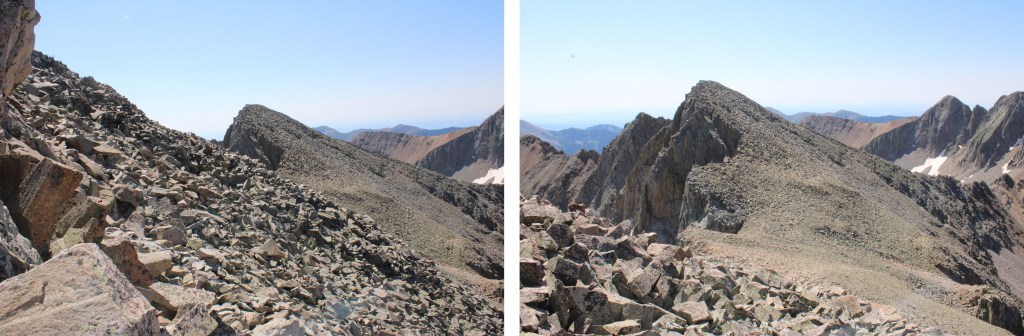
Safely down the gully, I made my way back to the Moss/Lavender saddle

Having no desire to summit Mount Moss again, I decided to traverse below the summit, staying at around 12900’ to get to the ridge

Once on the ridge, I followed it south to my entry point

And then back down into Tomahawk Basin

I made my way back to the scree trail

Then followed it back down to the 4WD road.

I followed the road a little more than 2 miles back down to the trailhead

I made it back to the trailhead at 1:30pm, making this a 10.58 mile hike with 3604’ of elevation gain in 7.5 hours

On to the next trailhead!

What Creature is Inside my Truck?

It all started at 2am that morning.  I got out of the back of my truck to get ready to hike, and shined my flashlight all around.  This is something I do if it’s dark out, because you never know what’s lurking at 12,000’.  I’ve been startled by deer, racoons, and even a mountain lion before.  I flashed the light under my truck, and saw a porcupine, pine marten, and marmot underneath.

It was like something out of a Disney movie, or the beginning of a really bad joke: “So, a porcupine, a pine marten, and a marmot were sitting under a truck…”

Great, this spelled trouble, and I knew what was going to happen.  Usually, I hear them rustling around under my truck, but for some reason, I hadn’t this time.  I shooed them away, got in my truck, and turned it on. 

All the lights were flashing.

I knew what had happened:  one or all of those varmints had chewed through the wires underneath my truck.  Well, I was 15 miles off a 4WD dirt road, and if my 4WD wasn’t working, 2am was the best time to drive down this road, as I shouldn’t encounter any other vehicles. 

I resigned my hiking plans for the day, and drove to the nearest dealership that could fix my truck.  Durango was 4 hours away, and I made it there just as they were opening.  I told them what had happened, they took a look under the hood and under the vehicle, and said “soonest we can fix it is 3 weeks.  Maybe 4.” 

I was shocked:  I’d never had a dealership not be able to get me in that day, but they were adamant.  I knew what needed to be done, as this has happened before.  The wires needed to be spliced and put back together, then bound with rat tape.  My bad for not doing the rat tape thing already, but I’ve done it on so many of my vehicles I’d honestly forgotten I hadn’t done it on this truck.

They also told me not to drive my truck, as it wasn’t safe.  Great.  So, I was stuck here for 4 weeks?  I don’t think so. 

I called around to every shop within a 5 hour drive, and they all told me the same thing:  3-4 weeks until they could fix my truck.  Since this has happened to me before, I already knew what was going on, and wasn’t too worried.  Yes, the lights were annoying, but my truck still worked.  I just needed to drive carefully and not try to break too fast. 

I decided to head instead to a 2WD trailhead for the weekend, seeing as how I was already in Durango and it was a 7 hour drive home (where I was sure my local dealership would do whatever it took to get me in that day: Putting over 50K miles on my truck a year means I’m one of their most valuable customers).  Adding 45 minutes on to my drive wasn’t going to change much. 

I drove to the next trailhead, a little upset my hiking day was shot.  As I was sitting in the front seat of my truck, researching routes, I heard a scratching coming from inside my truck.  Well, not inside exactly, but underneath… and inside. 

Then I heard the noise again.  Something was scratching the walls.  It sounded bigger than a mouse or rat, and a bit frantic. I went outside to see what was going on, and the noises stopped.  It was starting to rain, but I decided to sit there and wait to see what was going on. 

Then the noises began again

I saw a Forest Service truck drive by.  I flagged him down, and asked him if he knew any tricks for getting a marmot out from underneath your vehicle.  I could tell by the look he gave me he didn’t believe me.  He sat there for 5 minutes and whatever it was inside was silent.  He smiled at me, said to give it time, and drove away.

As soon as he drove away, the noises started again.

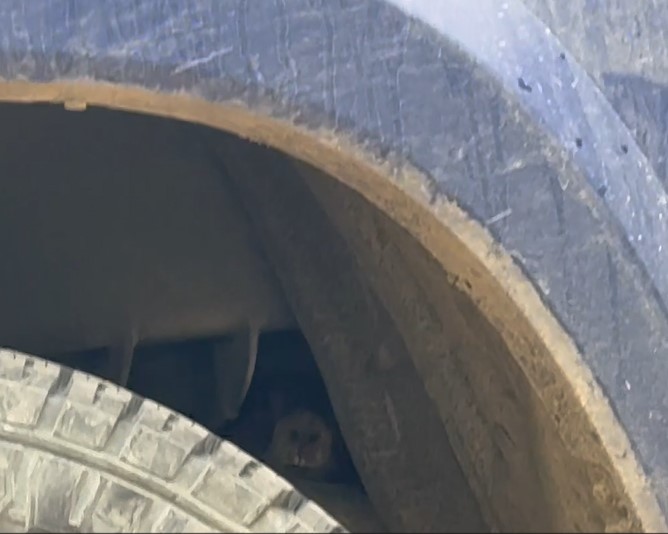
Something was obviously stuck and trying to get out, so I tried to pull back the flaps and bang on the tires.  The animal went silent again, but it was watching me from just above my back tire.  I saw a nose peeking out, staring at me, and it kind of looked like a porcupine.  It would have made sense, since I’d seen a porcupine under my truck that morning as well.

Well, if it was a porcupine, I wasn’t going to put my hands anywhere near that wheel well.  Eventually, it started trying other options.  I saw it near my spare tire, and figured it was only a matter of time before it found it’s way out.

Well, eventually it did.  And when it did, it just sat under my truck, confused.  It obviously had no idea where it was, and was taking time to think.

It took a little too much time, and when it looked like it was going to climb back inside my truck I shooed him away.  He ran off into the trees, and I went back to doing what I was doing.  Then I noticed him, sitting and staring at my truck.  I went over to him and he didn’t seem scared, he just stared back at me.

Then he started walking towards my truck again, and I got worried he’d try to slip back in later in the night, so I drove down the road for about a mile, giving him space from my vehicle, which he seemed to desperately desire. 

15 minutes later, I looked in my side mirror, and that little bugger was running up the road towards my truck!  It was as if he thought my truck was a portal and he’d escaped the wrong side.  Maybe if he went back in and out another way, it would take him back to the original trailhead.  I kind of laughed to myself, realizing he’d been inside my truck at the repair shop and hadn’t been noticed.  I drove another 5 miles away, he didn’t follow, and my truck was safe for the rest of the weekend. 

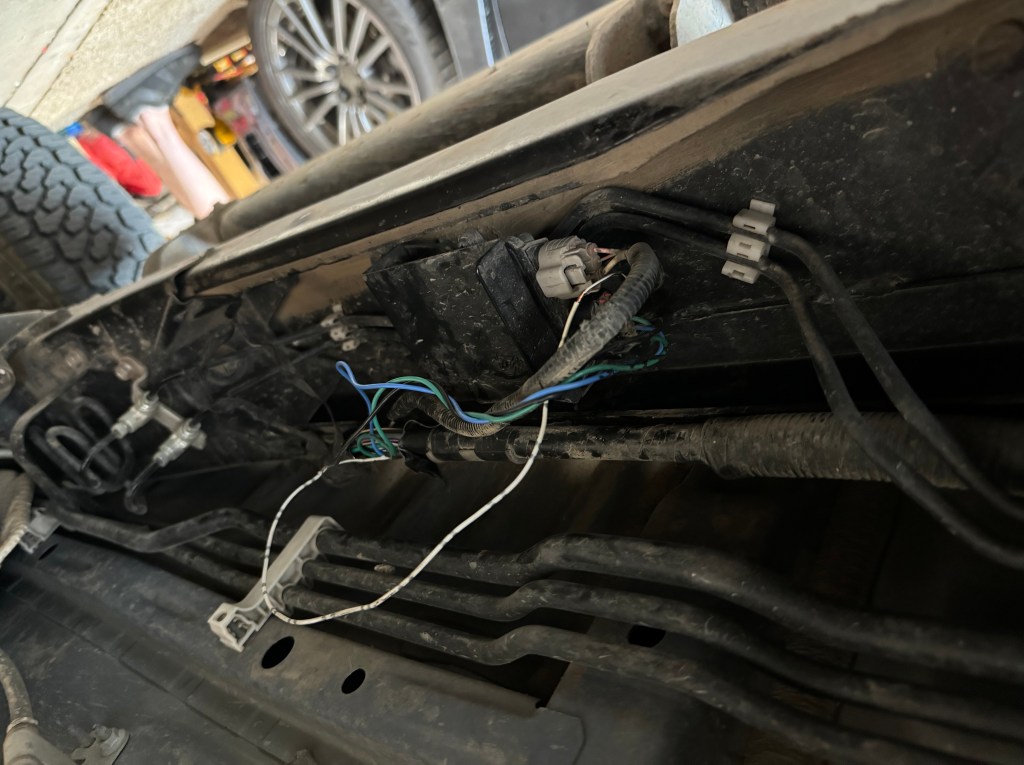
Here is a picture of the damage

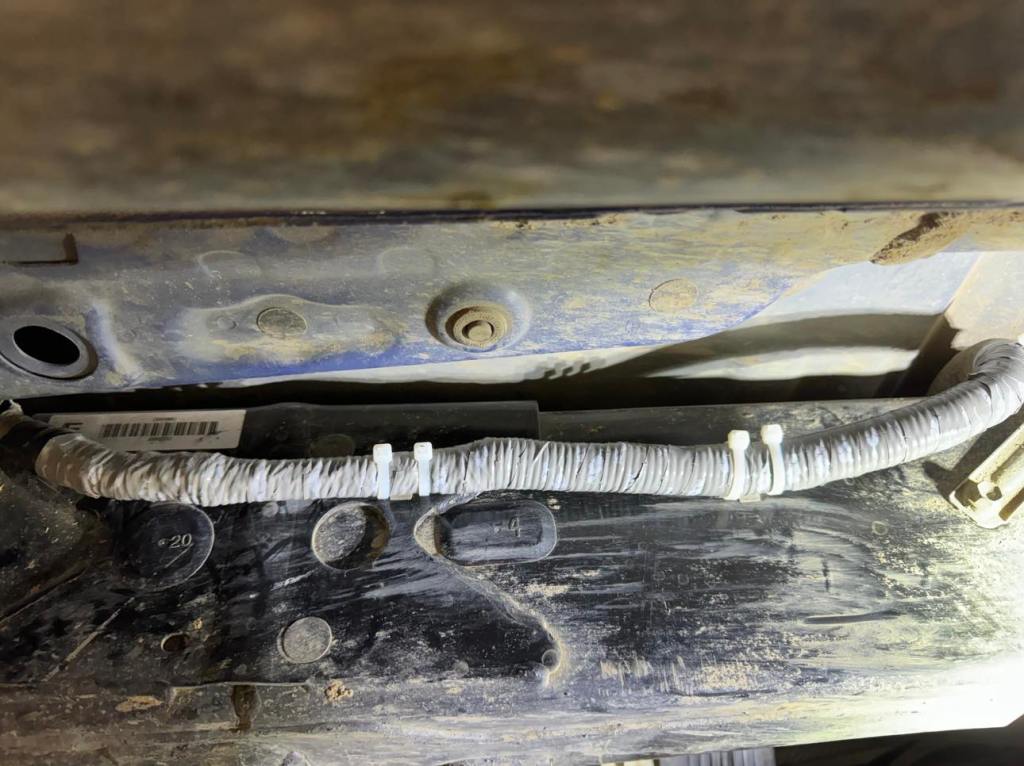
And what it looks like now that it’s fixed. Rodent Tape is manufactured by Honda, and costs about $60 a roll. Much better than a $4400 fix later.