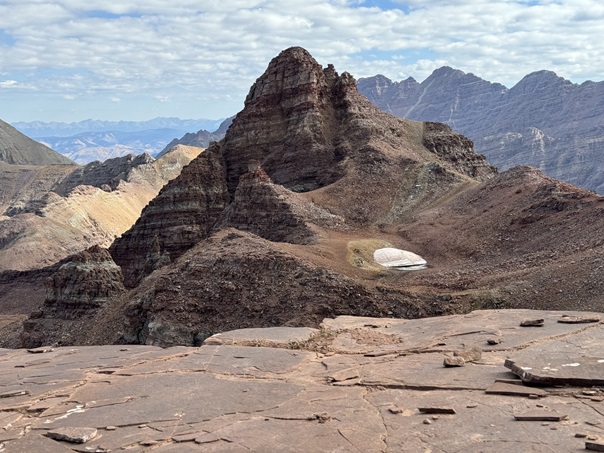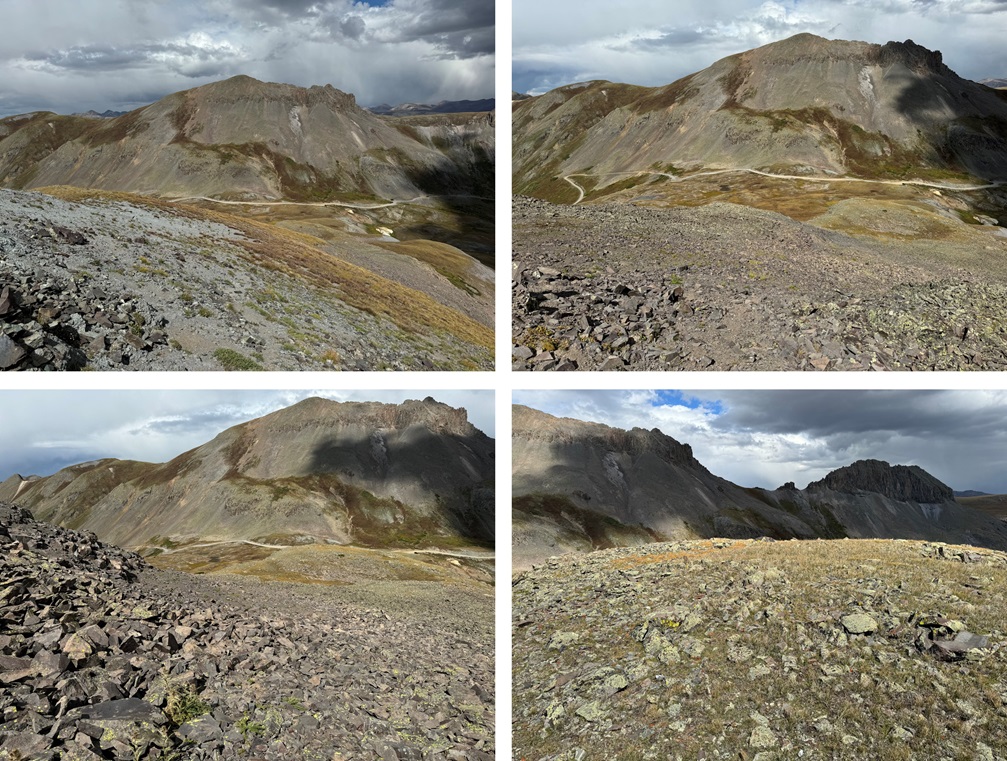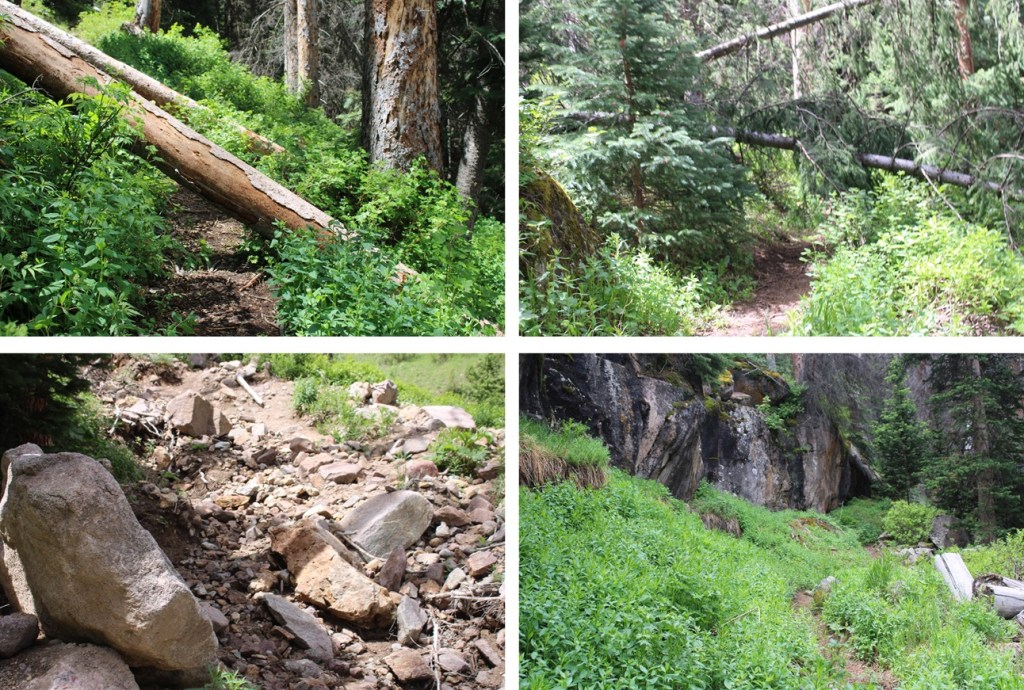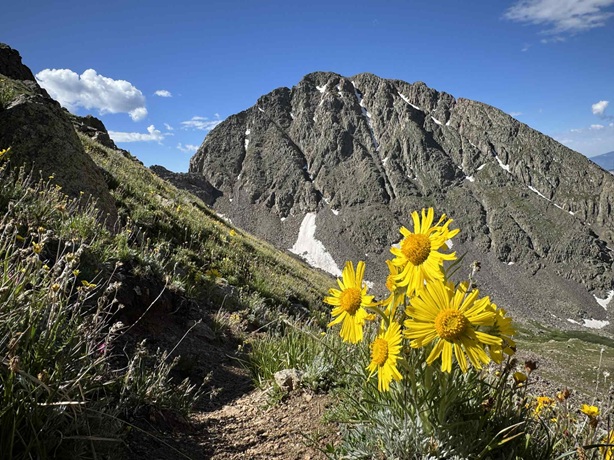
West Needle Mountain – 13,060

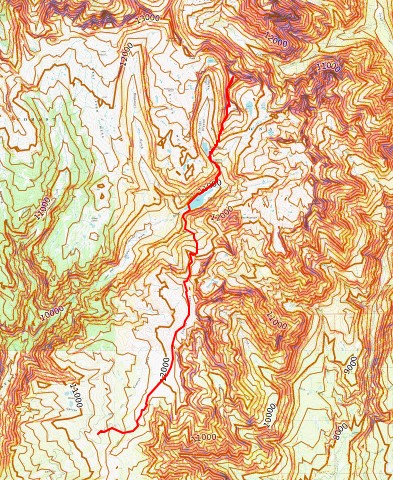
RT Length: 19.1 miles

Elevation Gain: 4853’

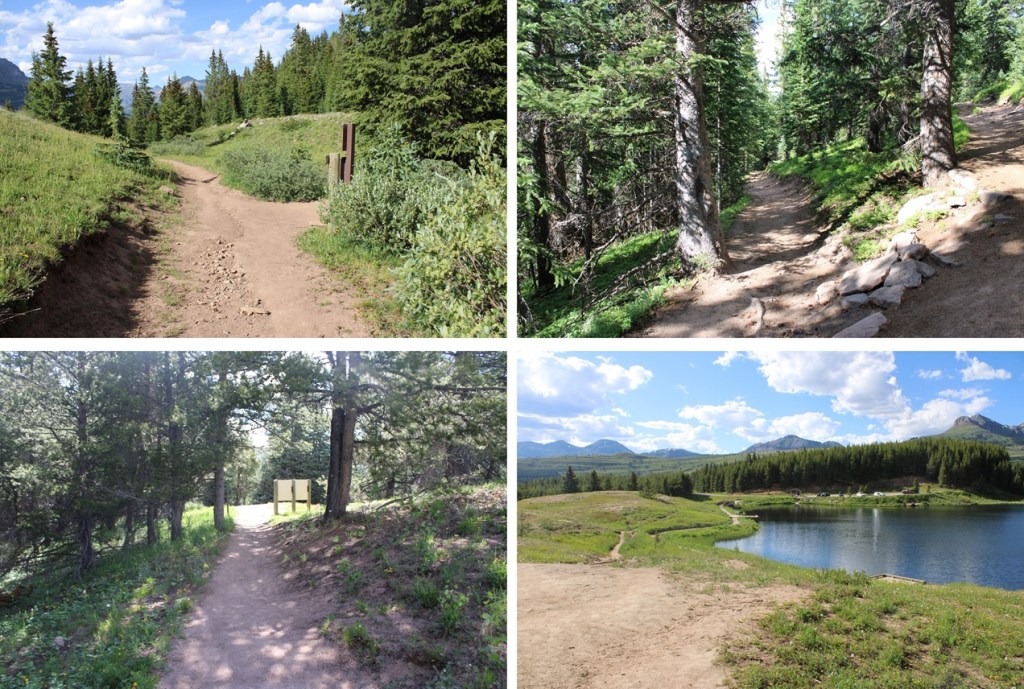
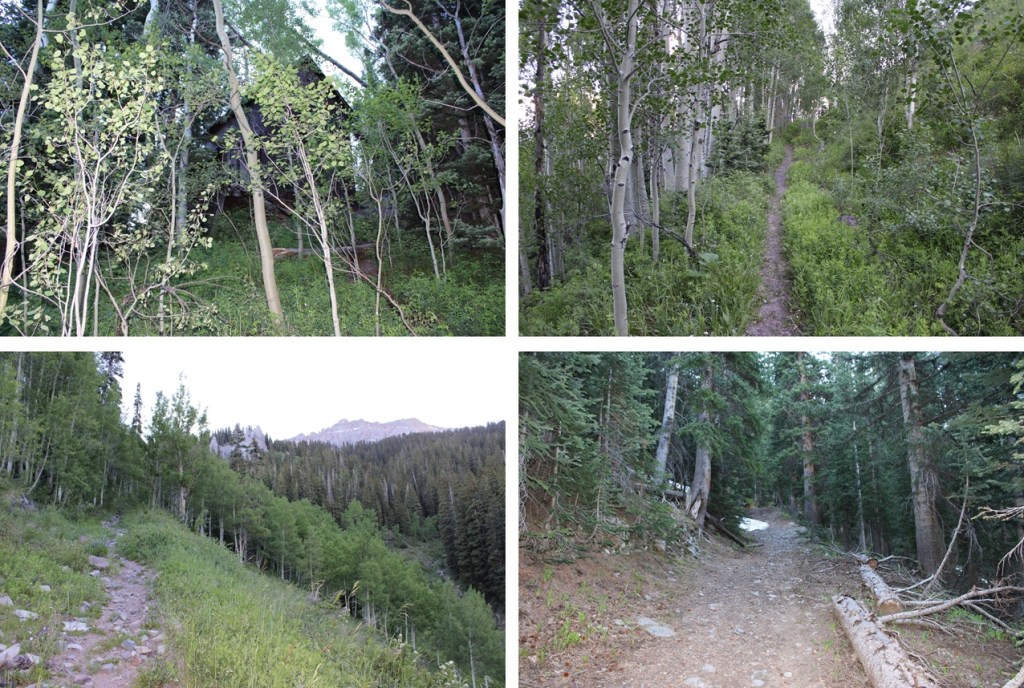
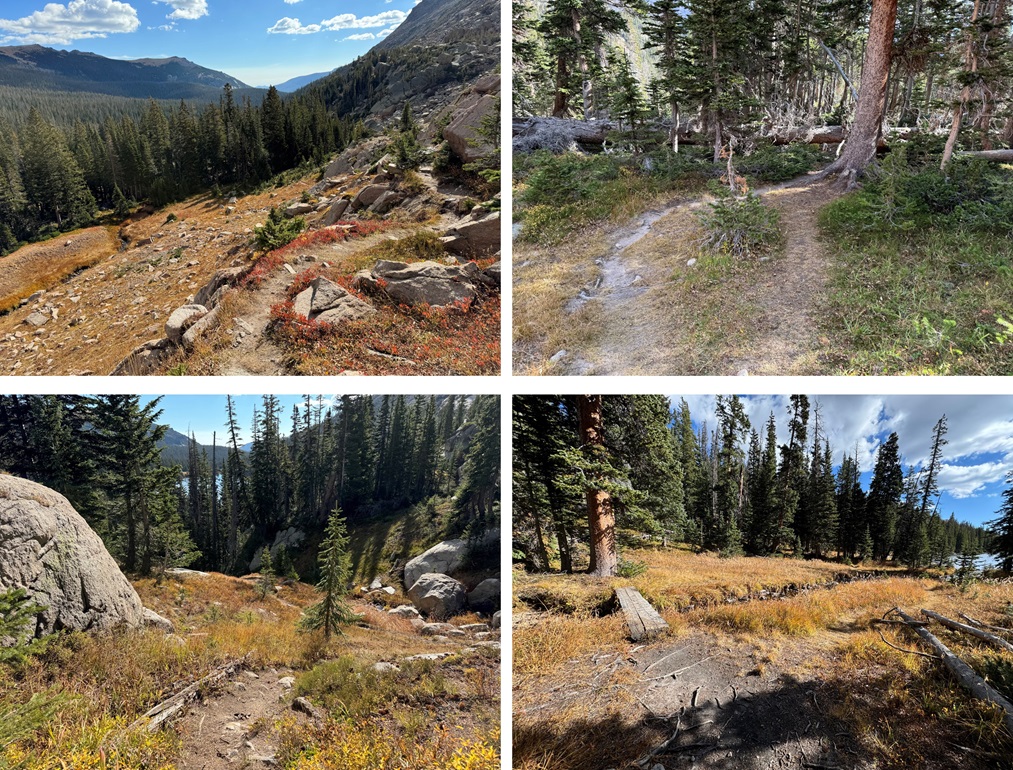
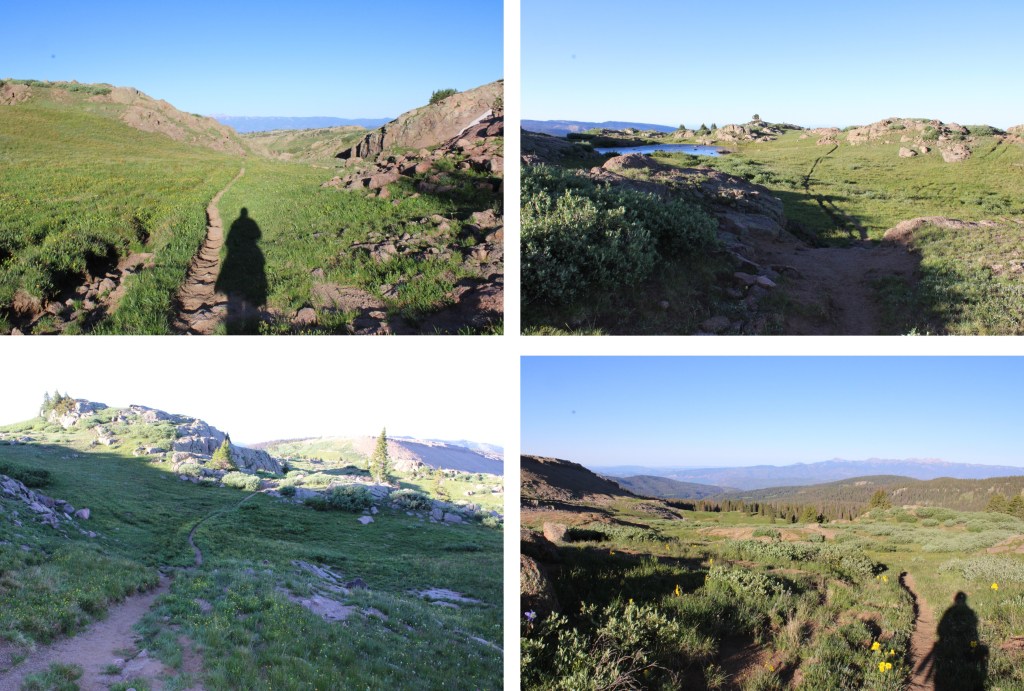
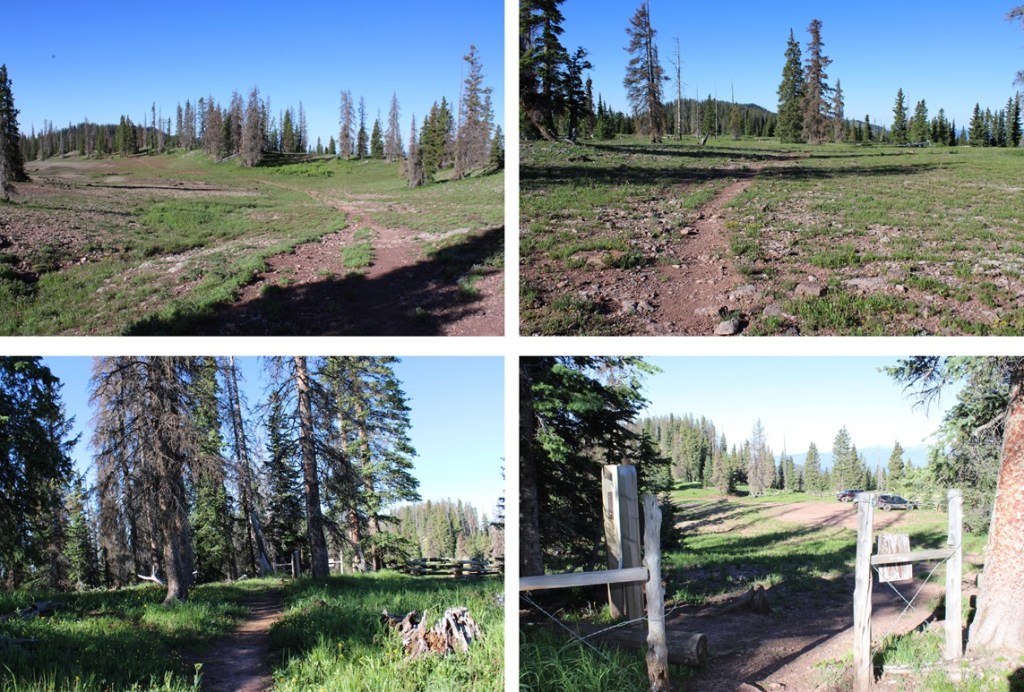
I started from the Andrews Lake trailhead at 6am.  On a positive note, the bathrooms were clean this time!  No toilet paper, but the seats were clean (always bring your own TP).  The trail starts by skirting the south side of the lake.

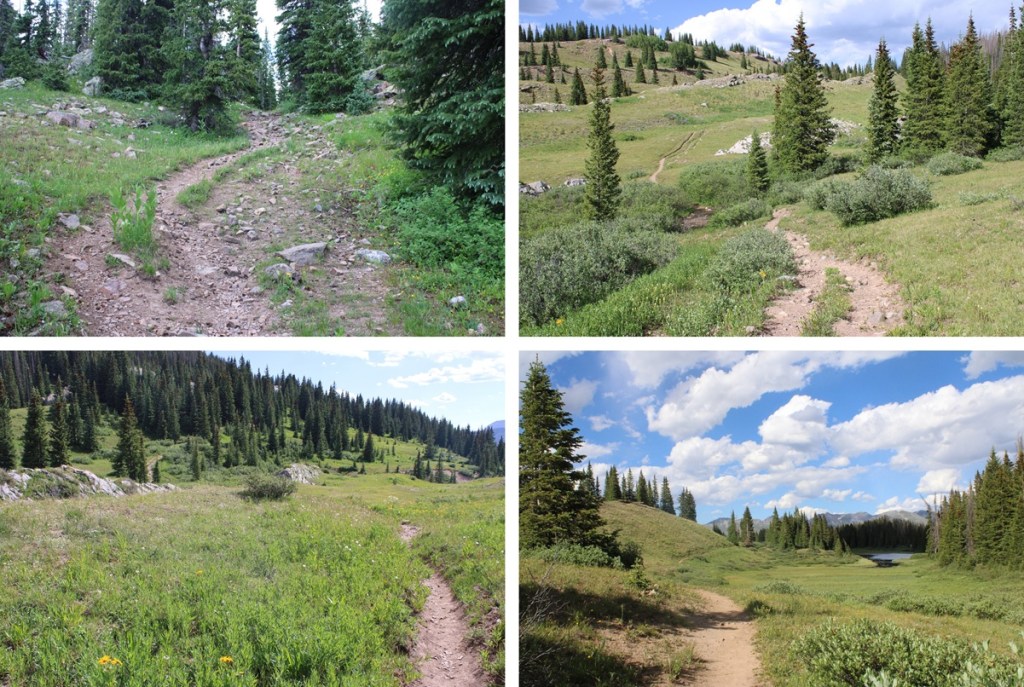
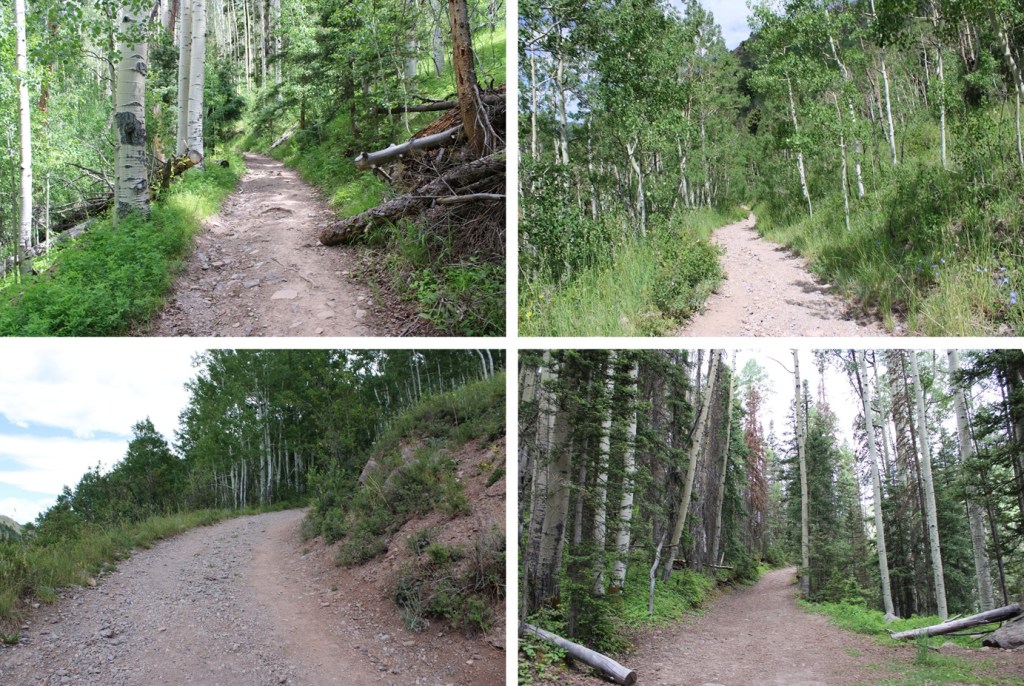
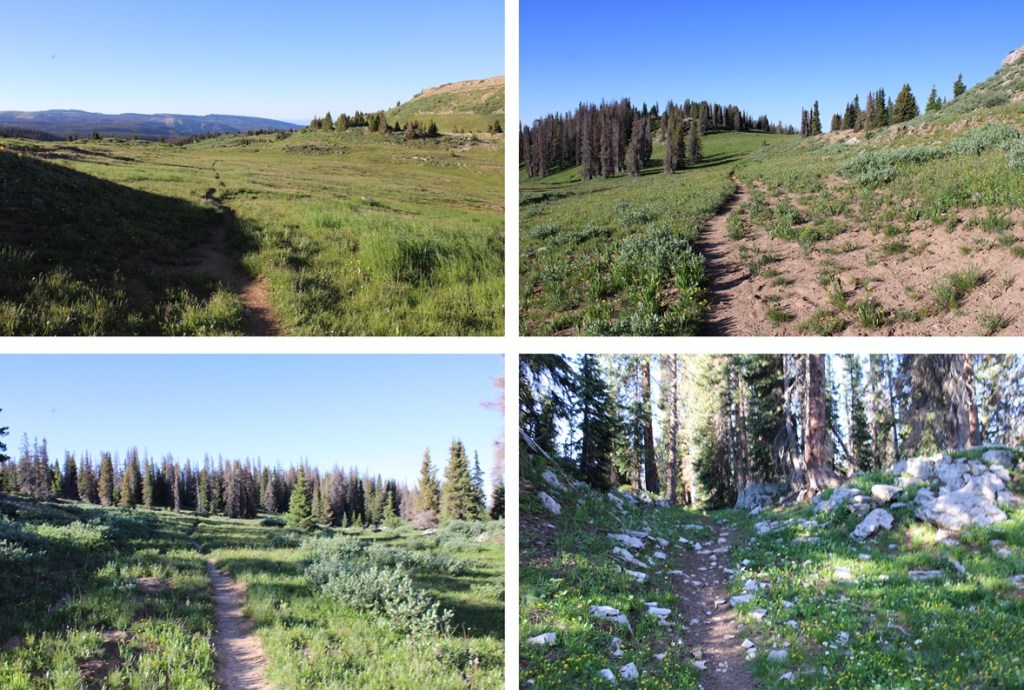
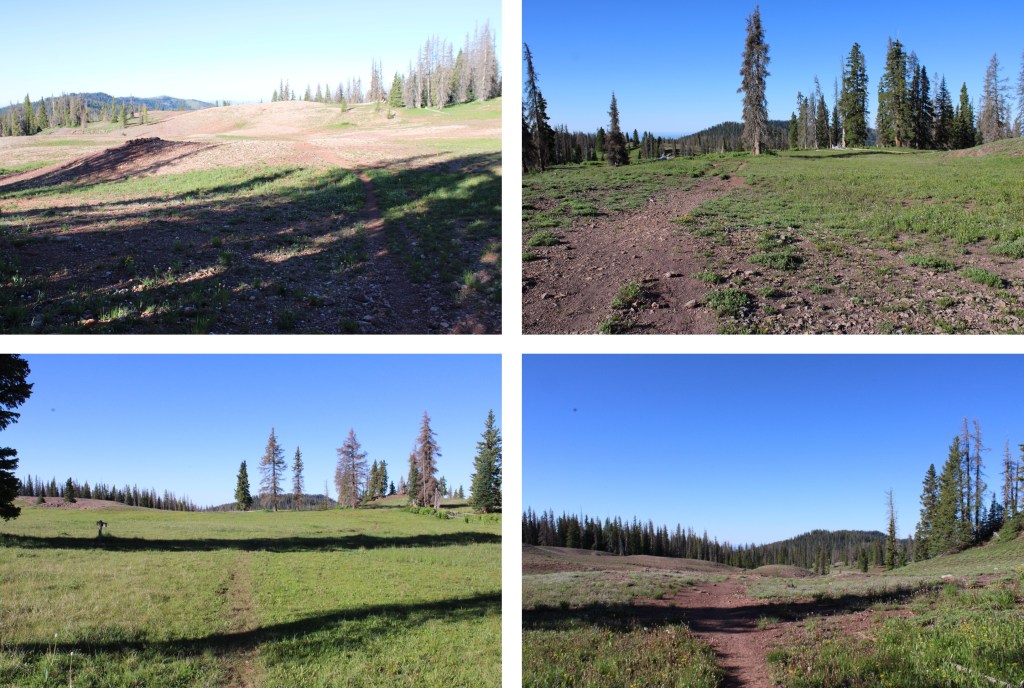
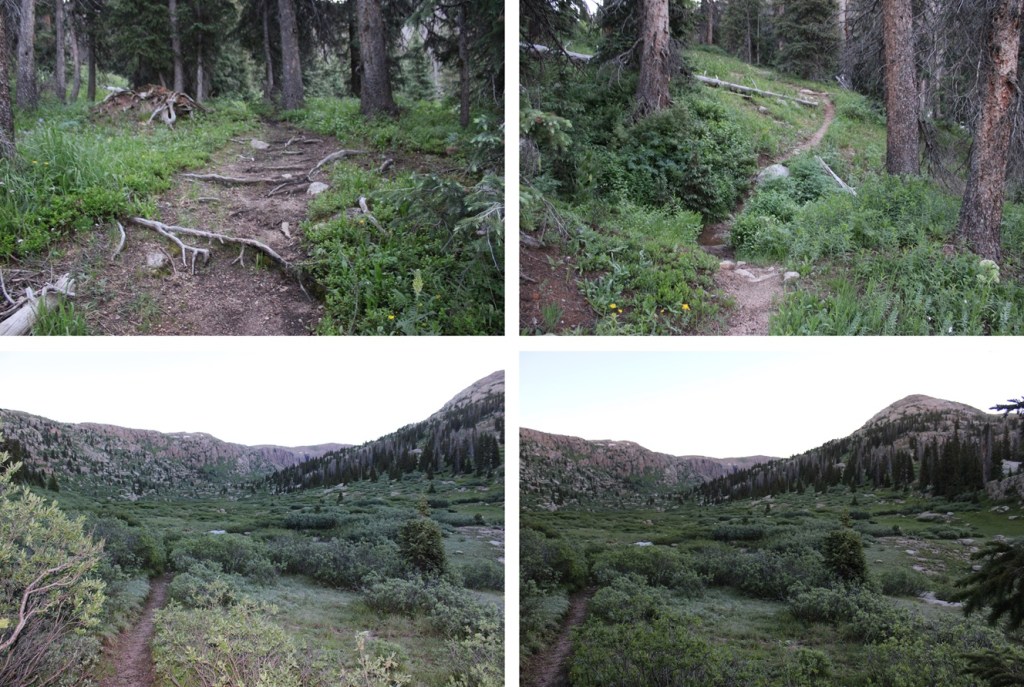
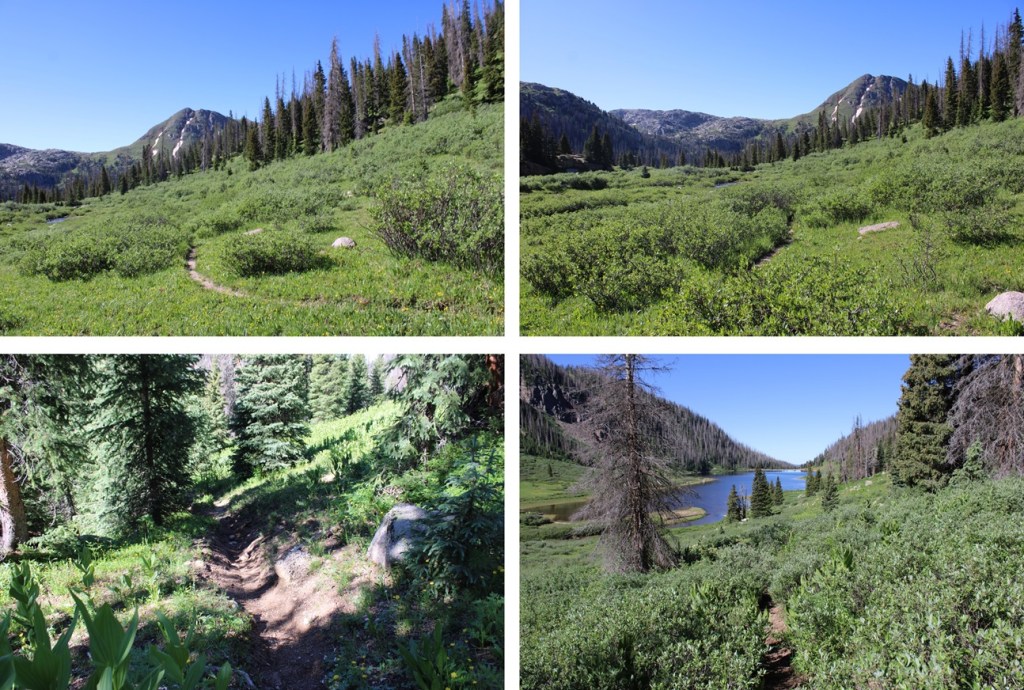
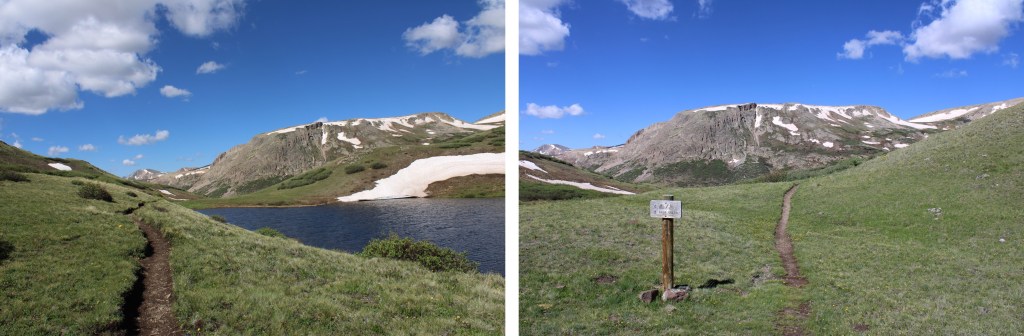
I then took Trail 623/Crater Lake Trail all the way to Crater Lake. This is an easy, class 1 trail that is easy to follow with no major junctions.  I hiked the 5.5 miles to Crater Lake on this trail.
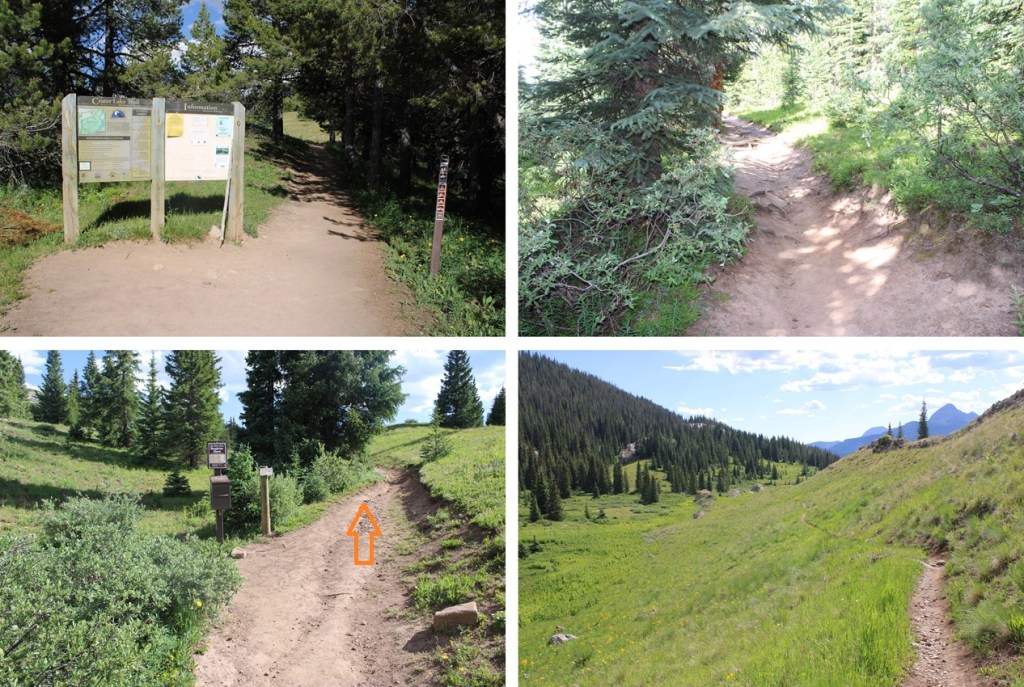
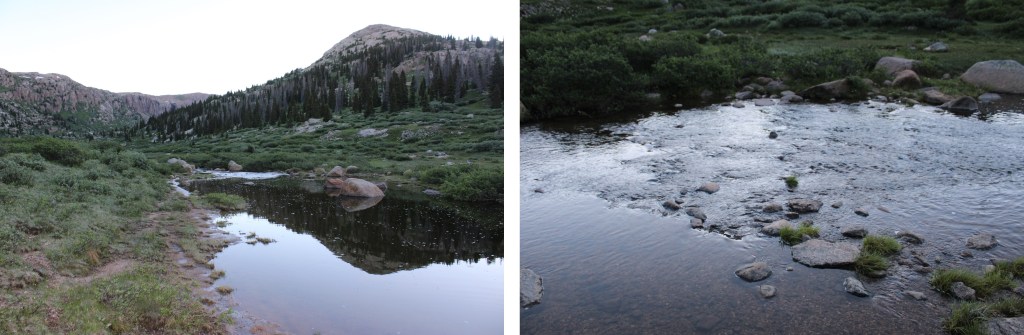
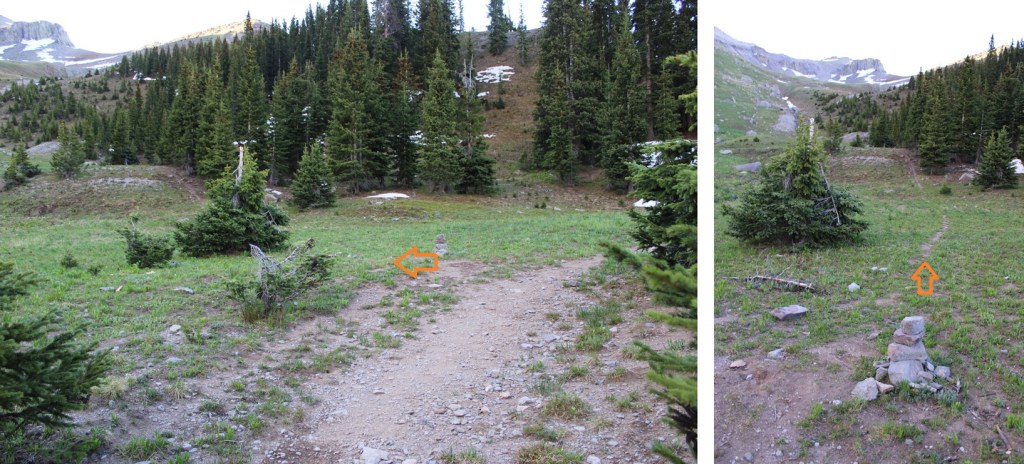
Once at Crater Lake there’s a side trail that goes off to the left.  This trail stops at 11750’ at a small pond.  I took the trail to the pond.

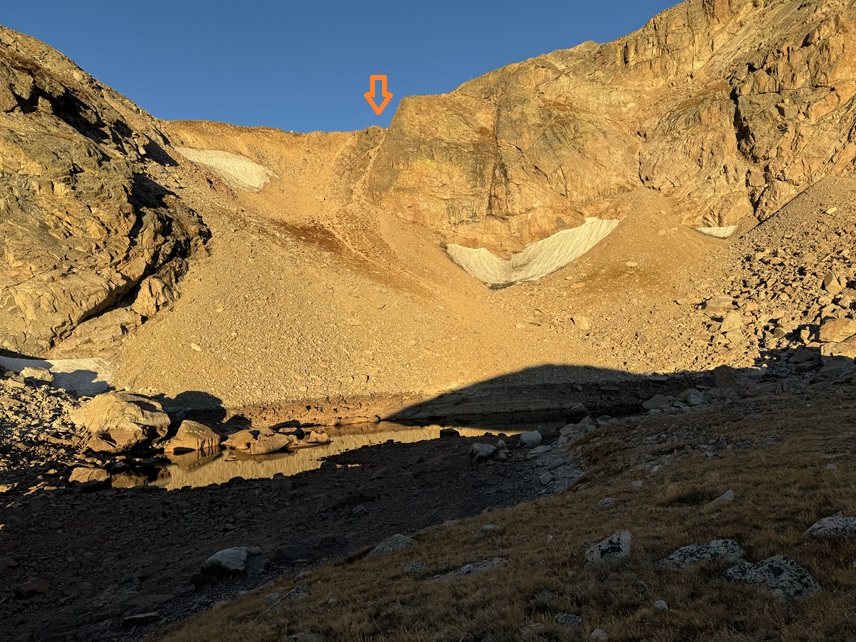
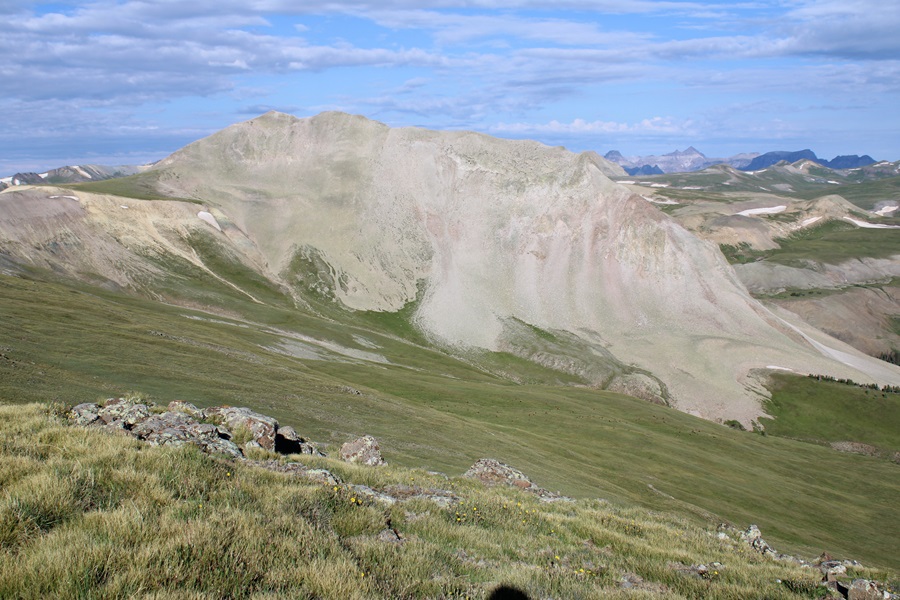
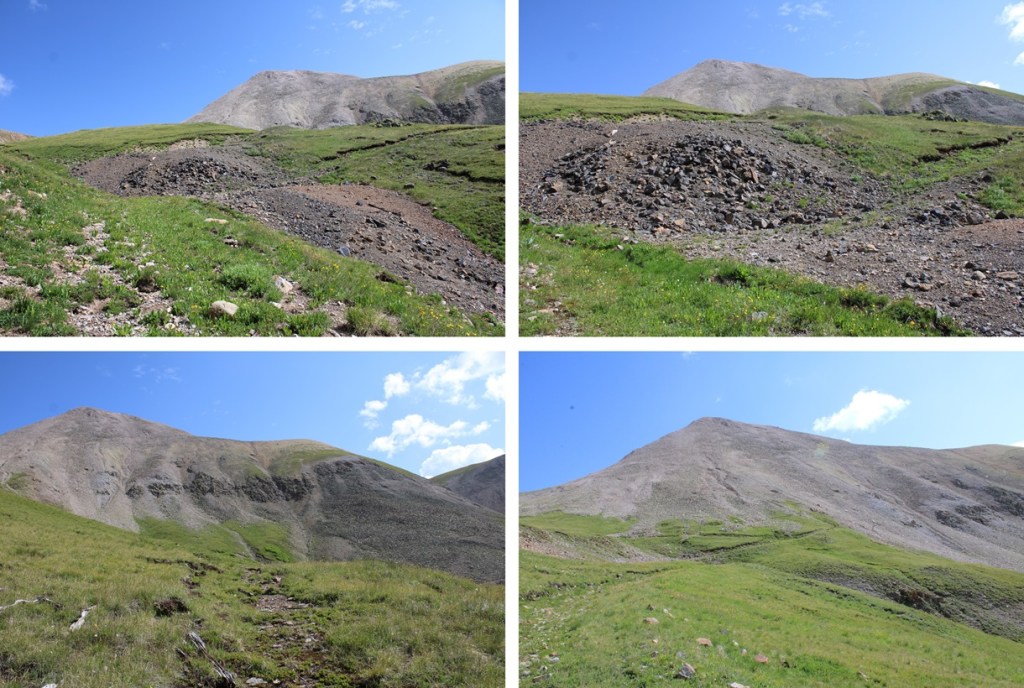
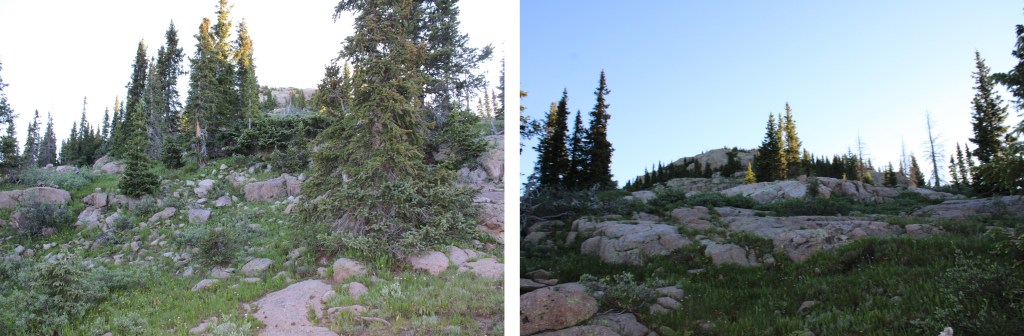
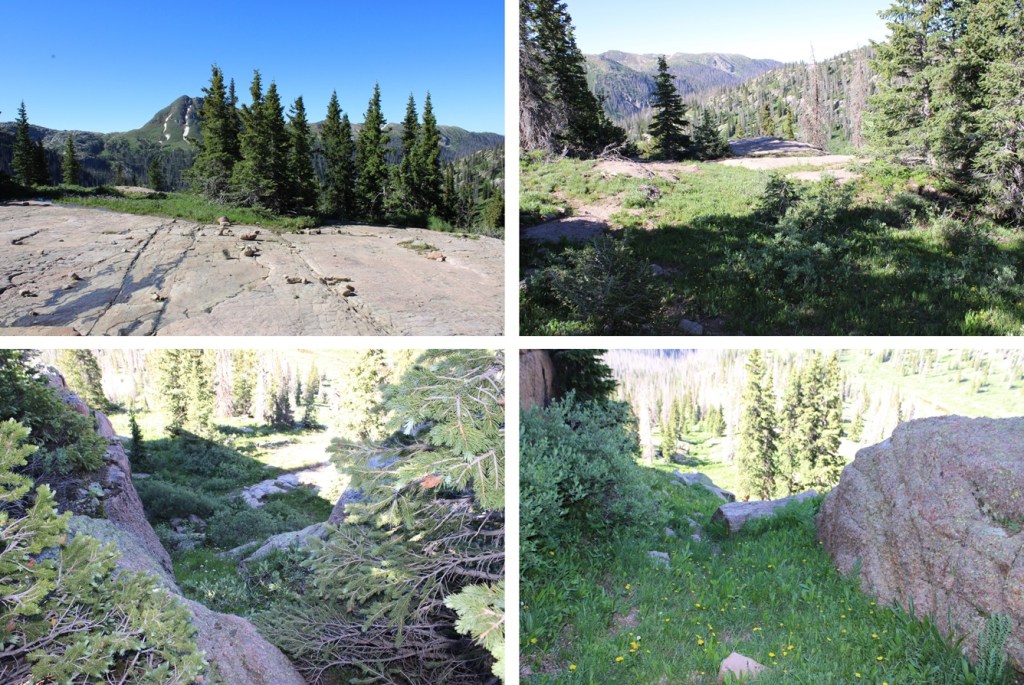
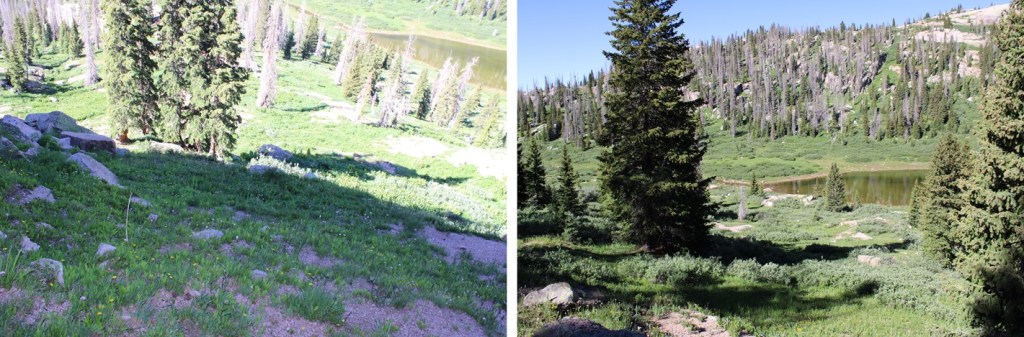
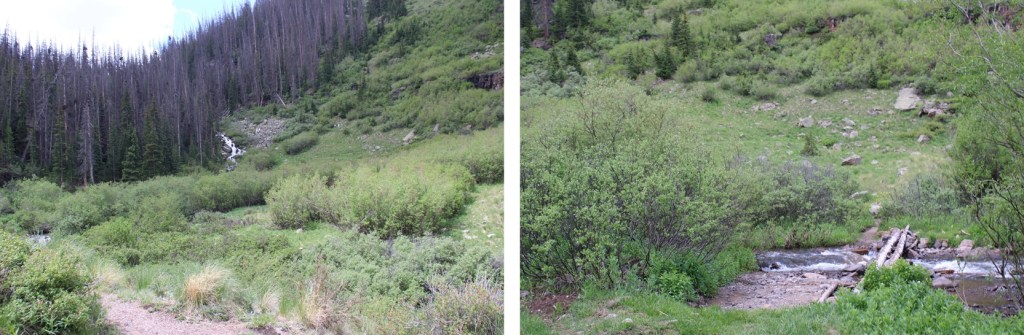
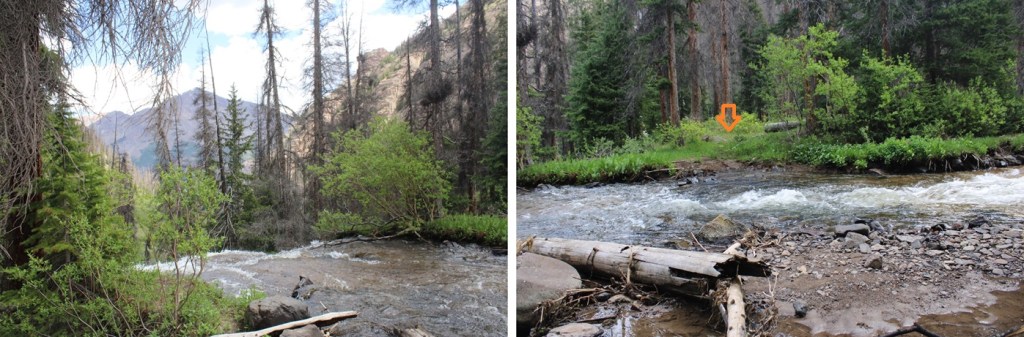
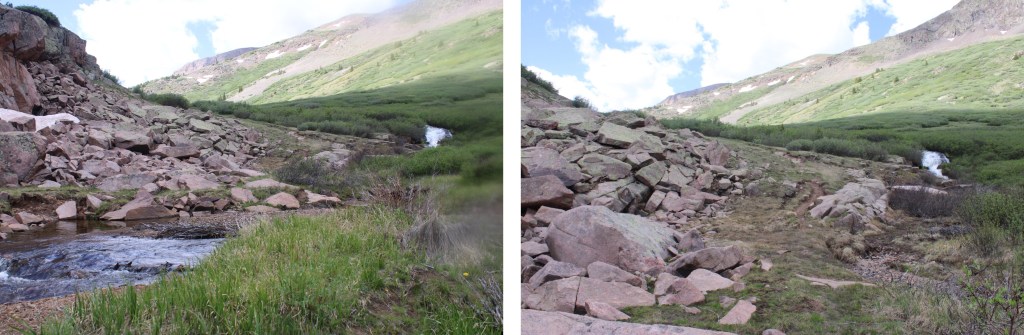
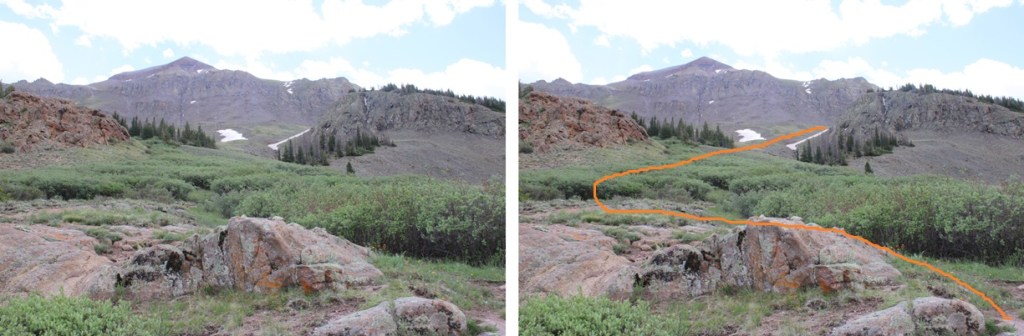
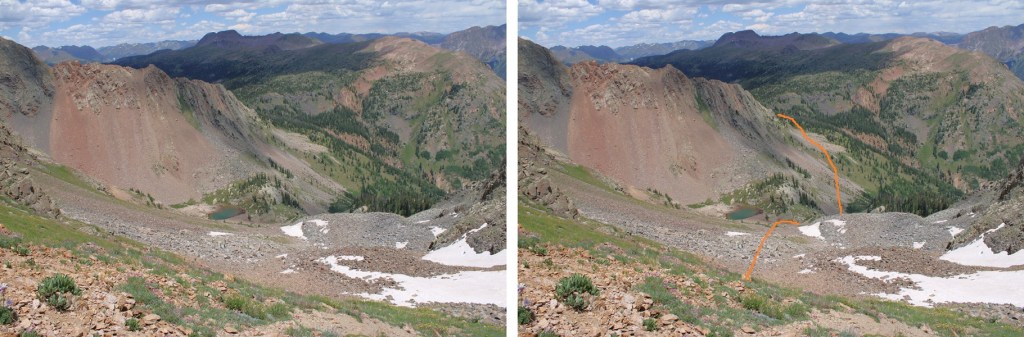
The trail stops at 11750’ and now it’s time to bushwhack.  I lost 400’ of elevation as I headed southwest towards a gully I couldn’t yet see.  Here’s an overview of where I was headed.
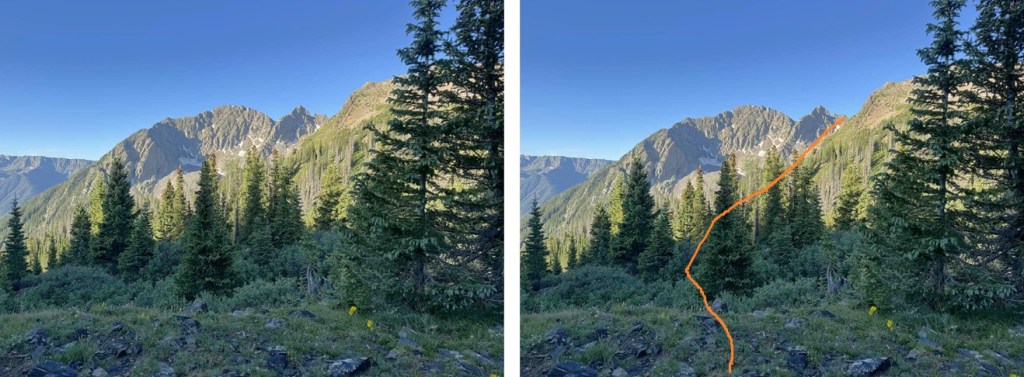
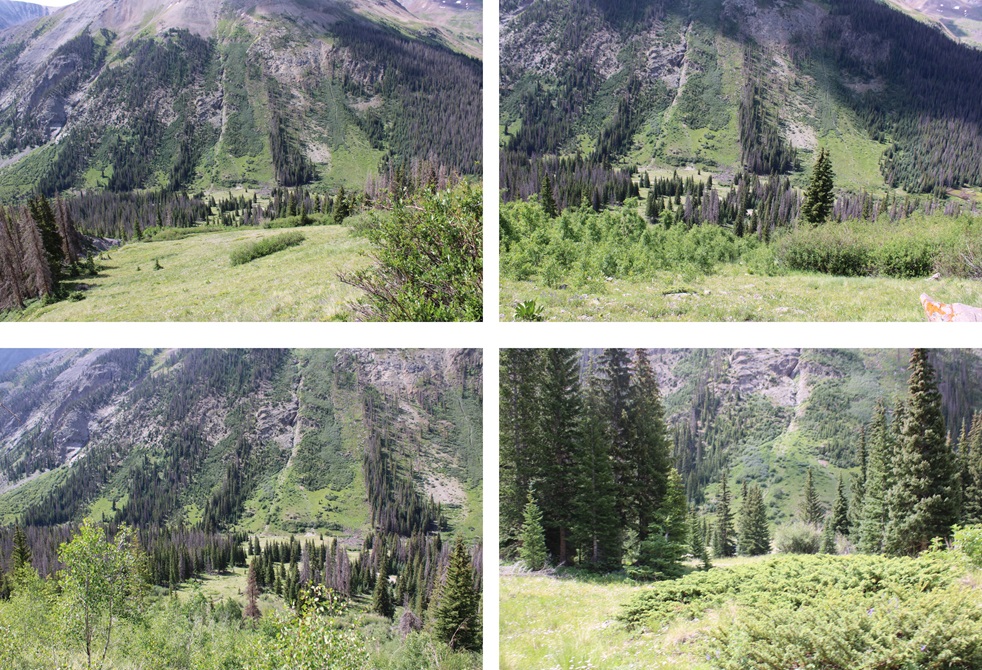
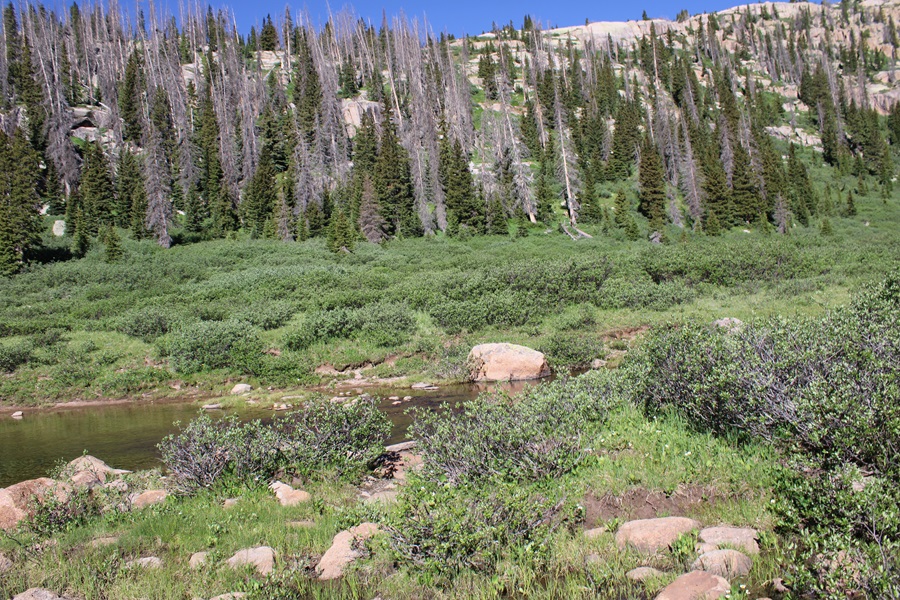
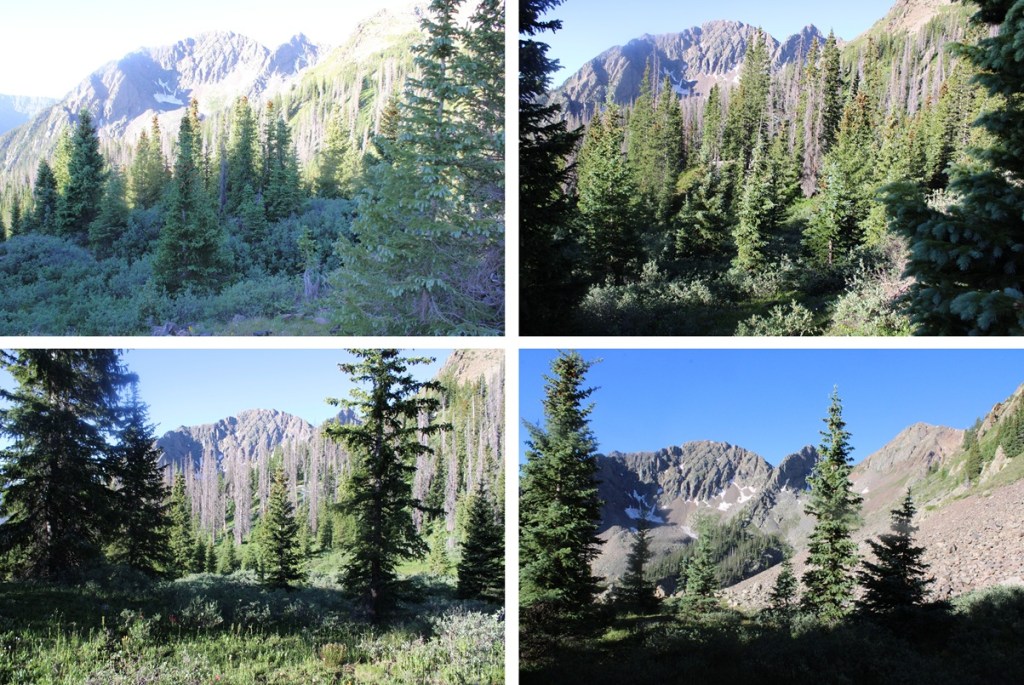
Aiming southwest I skirted the hillside until I came to the end of the trees. 
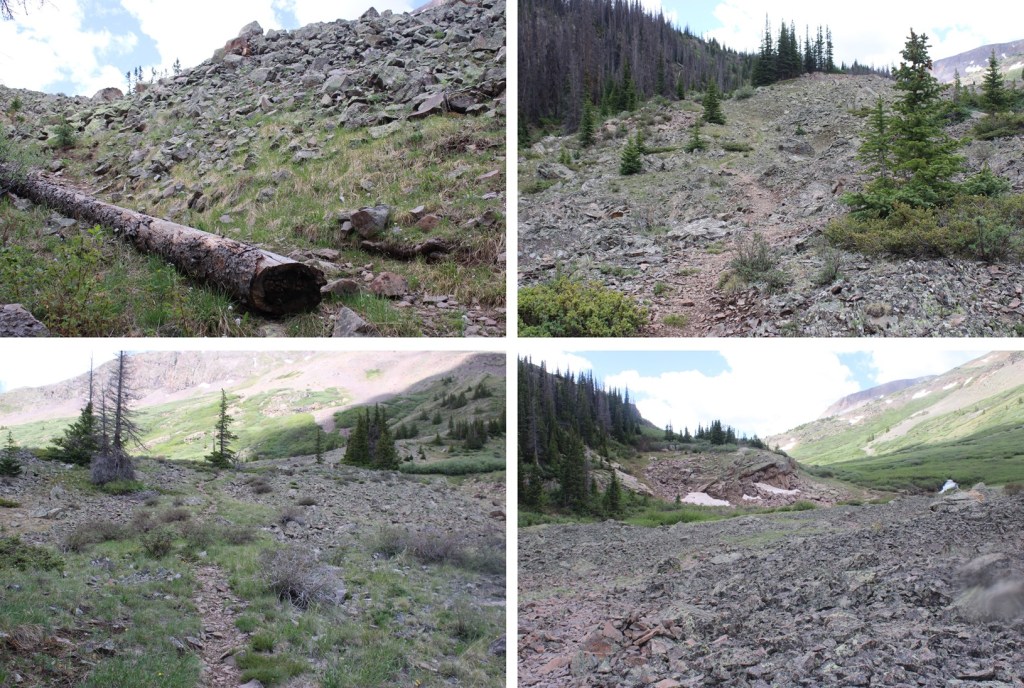
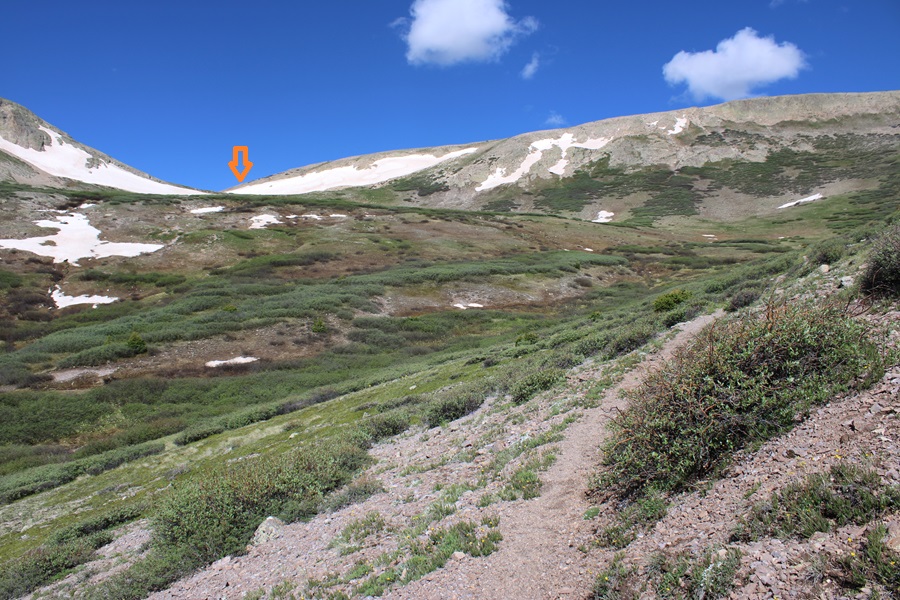
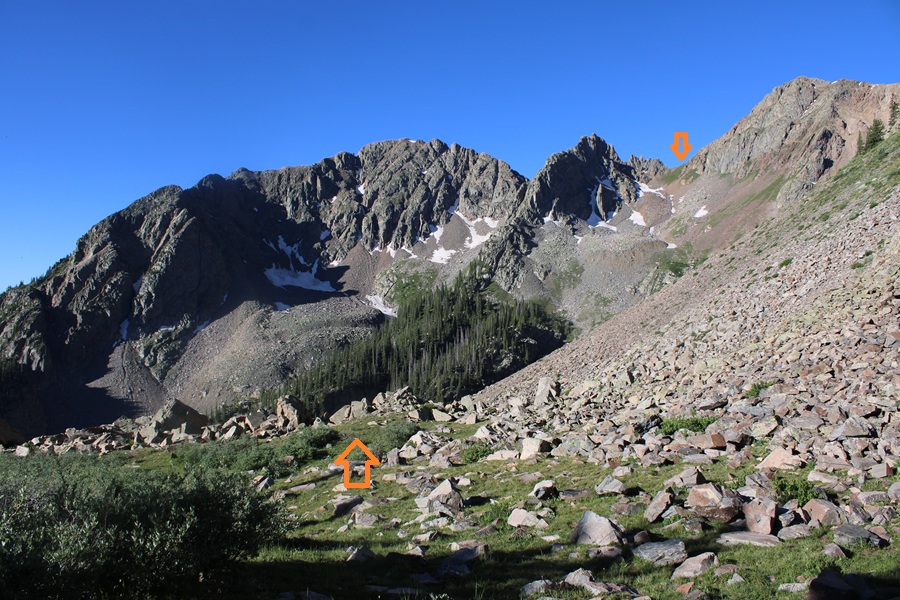
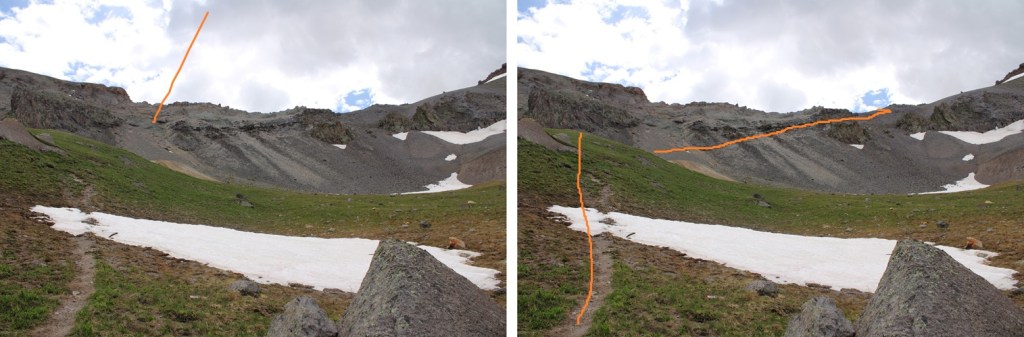
I now had a clear view of my path to the saddle between South Twilight Peak and PT 12932.  I kept descending towards the creekbed and then ascended up 1260’ towards the saddle. 
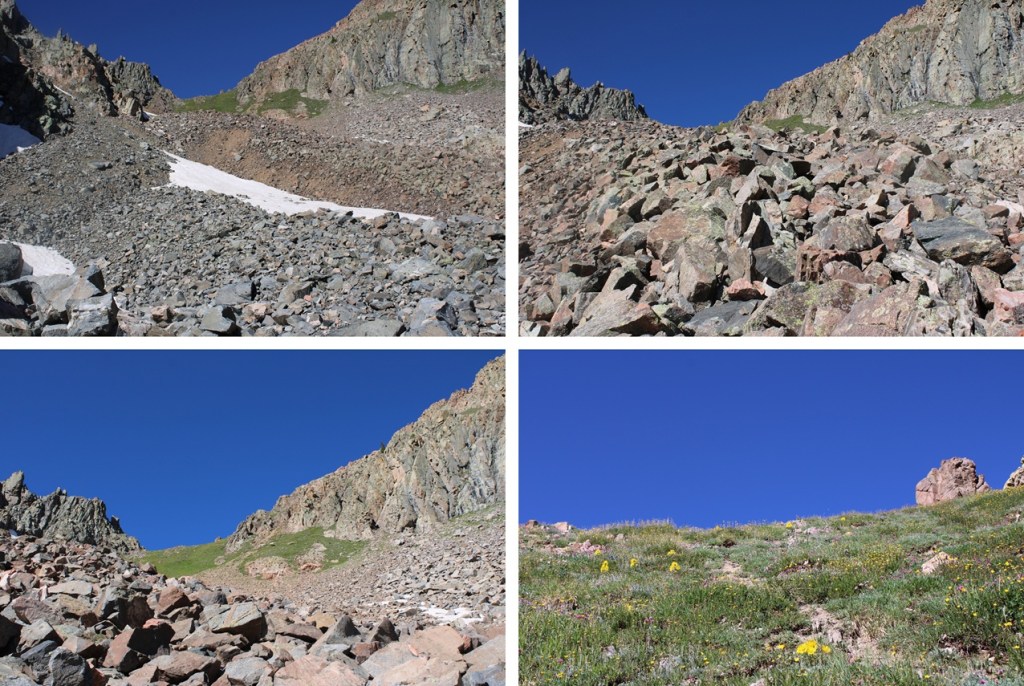
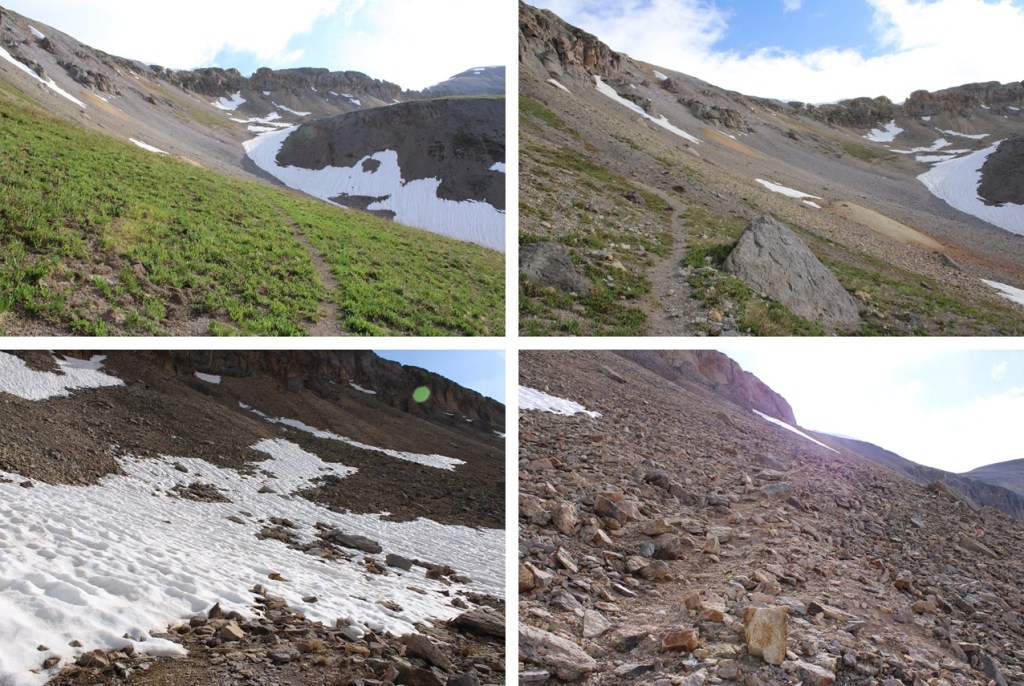
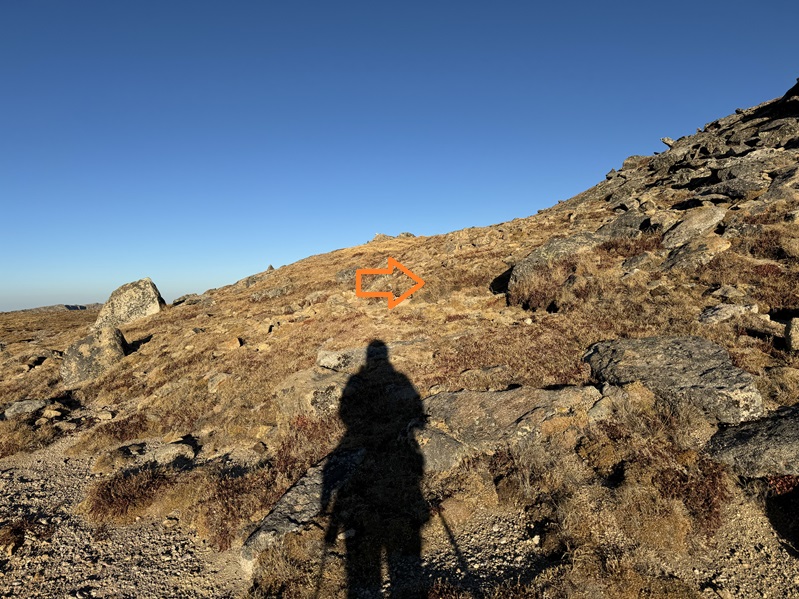
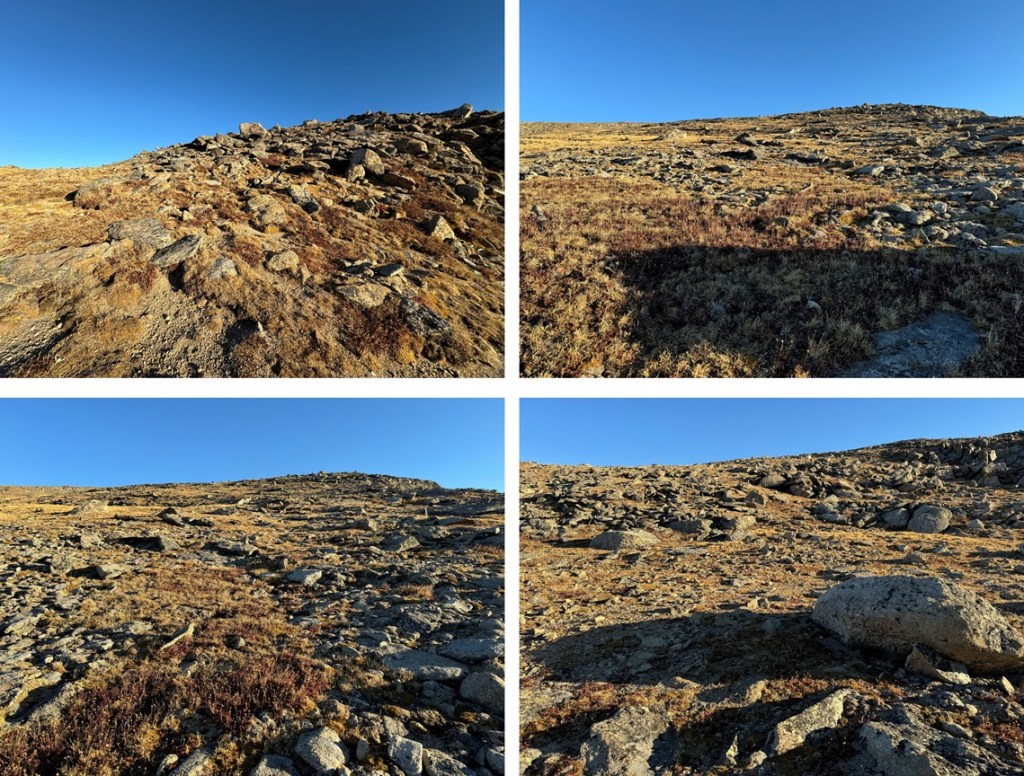
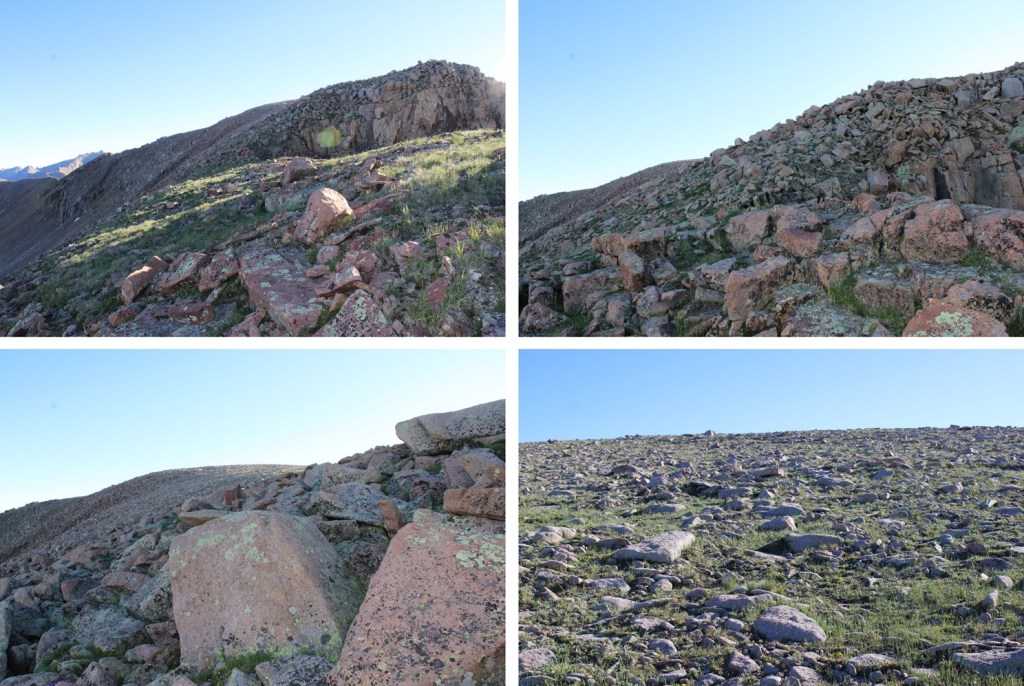
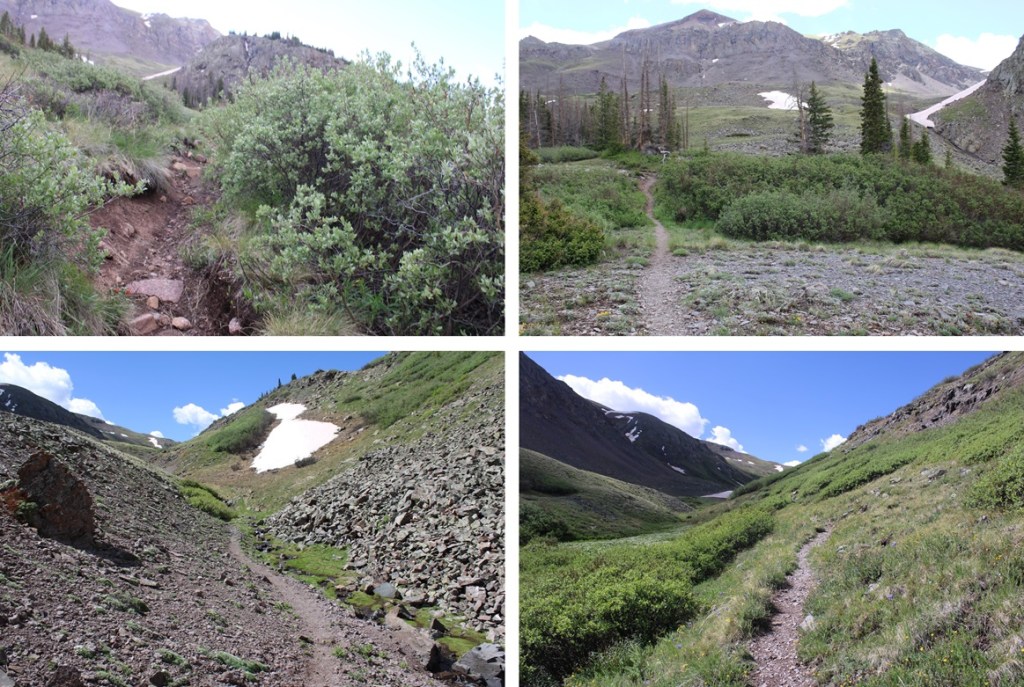
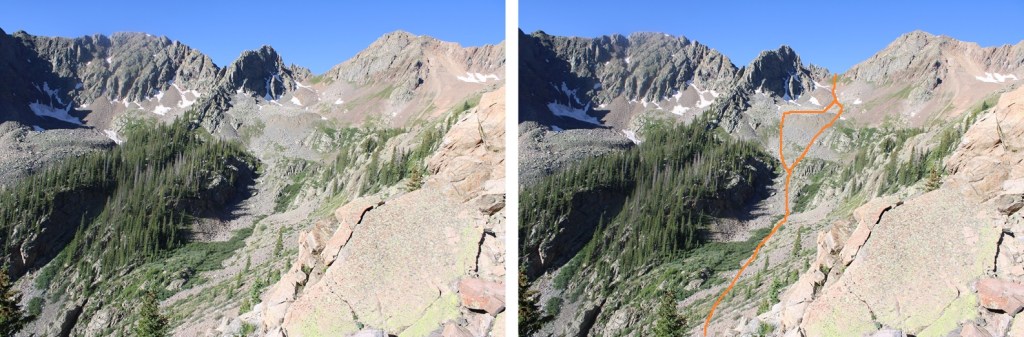
The route was obvious but not marked. I went to the left on the way up, to the right on the way down, and both were similar. The left side had larger boulders and the right side had more tundra, but both were essentially snow free and clear.
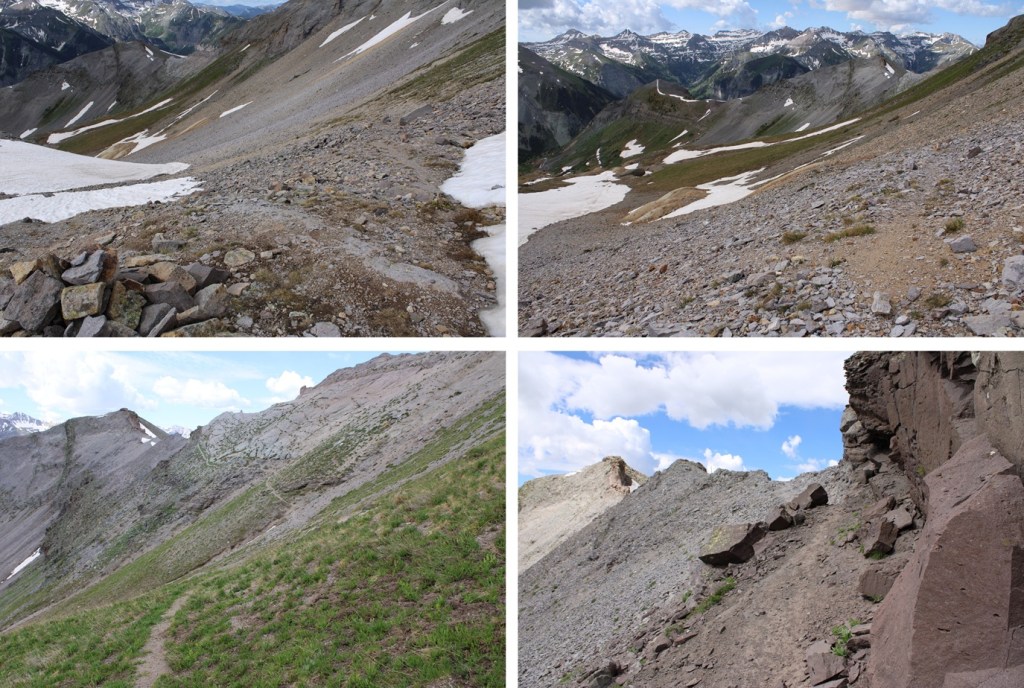
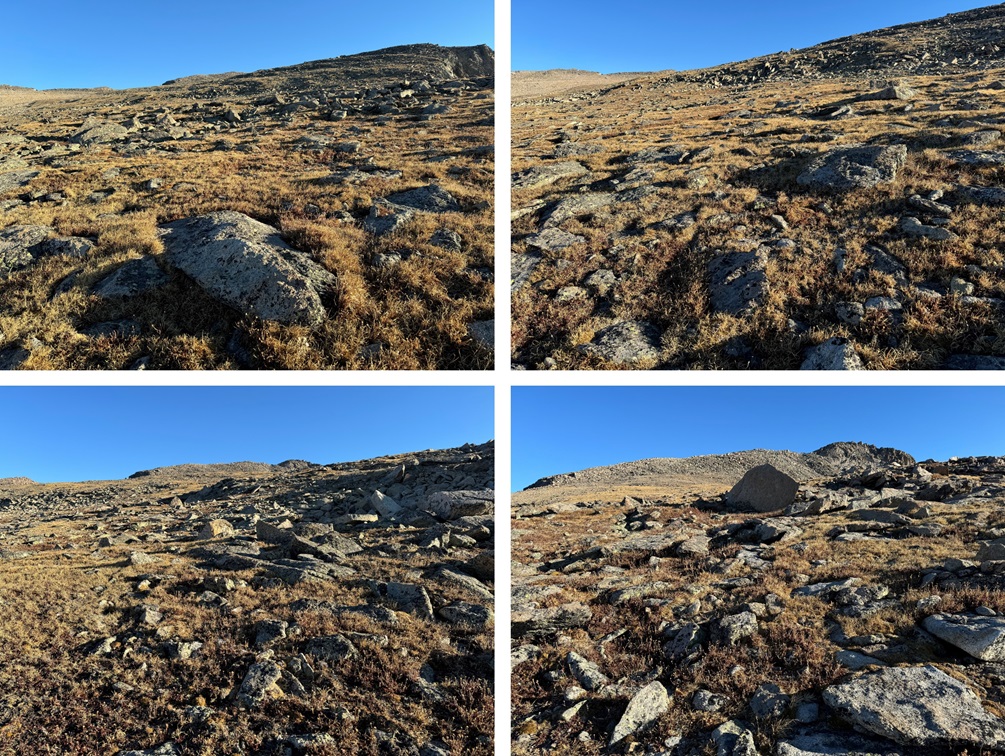
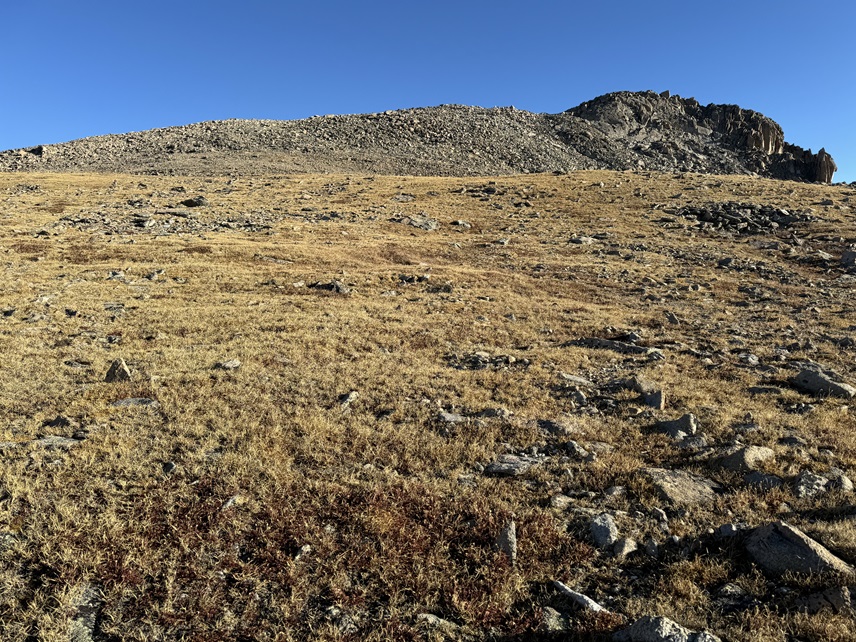
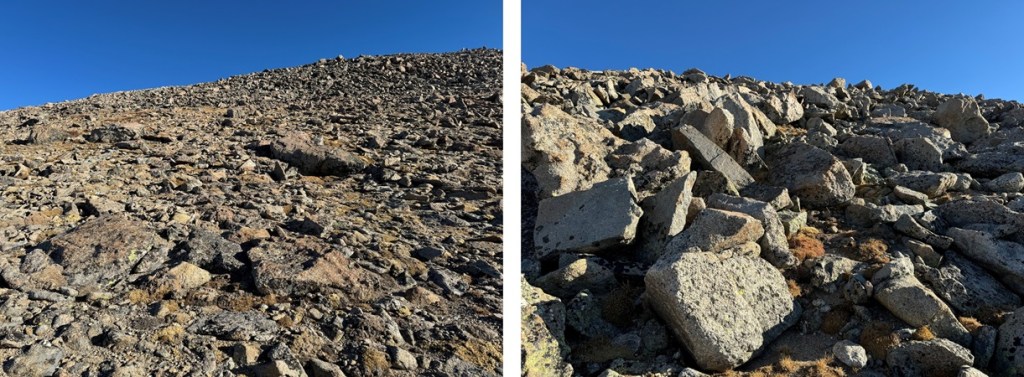
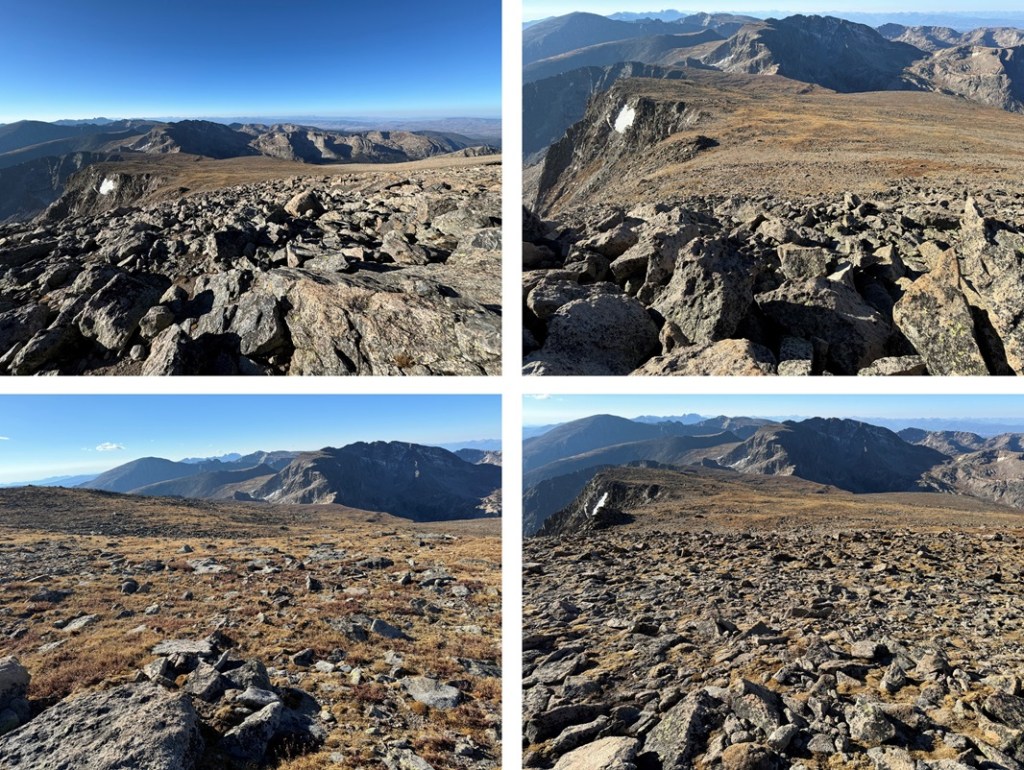
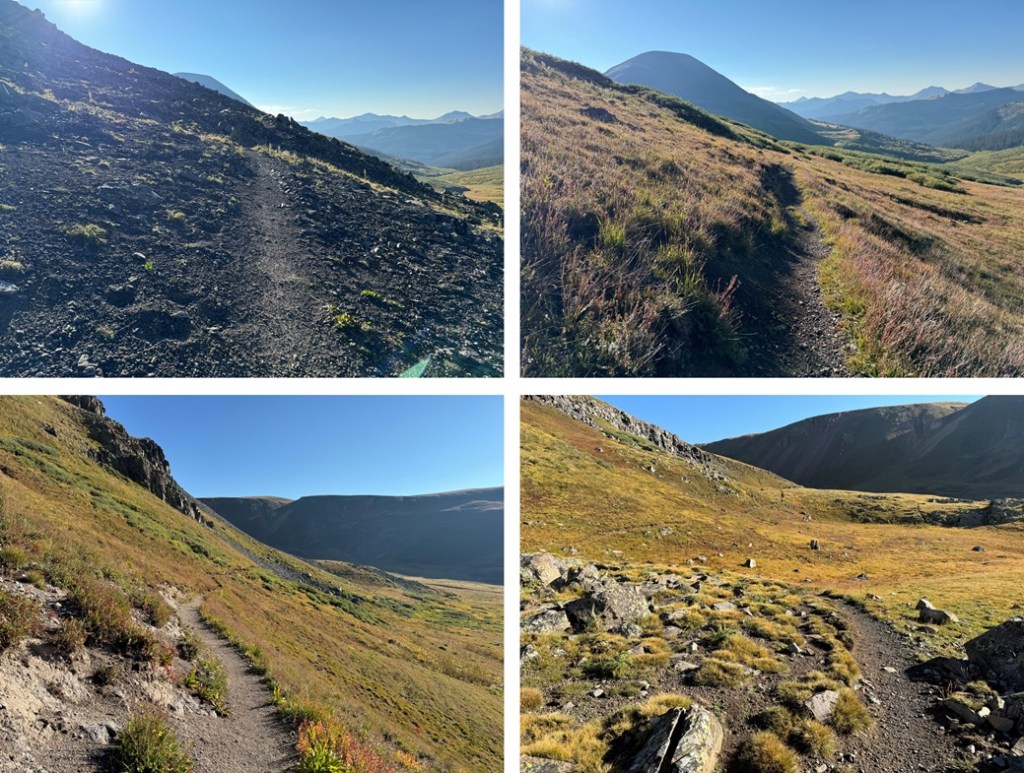
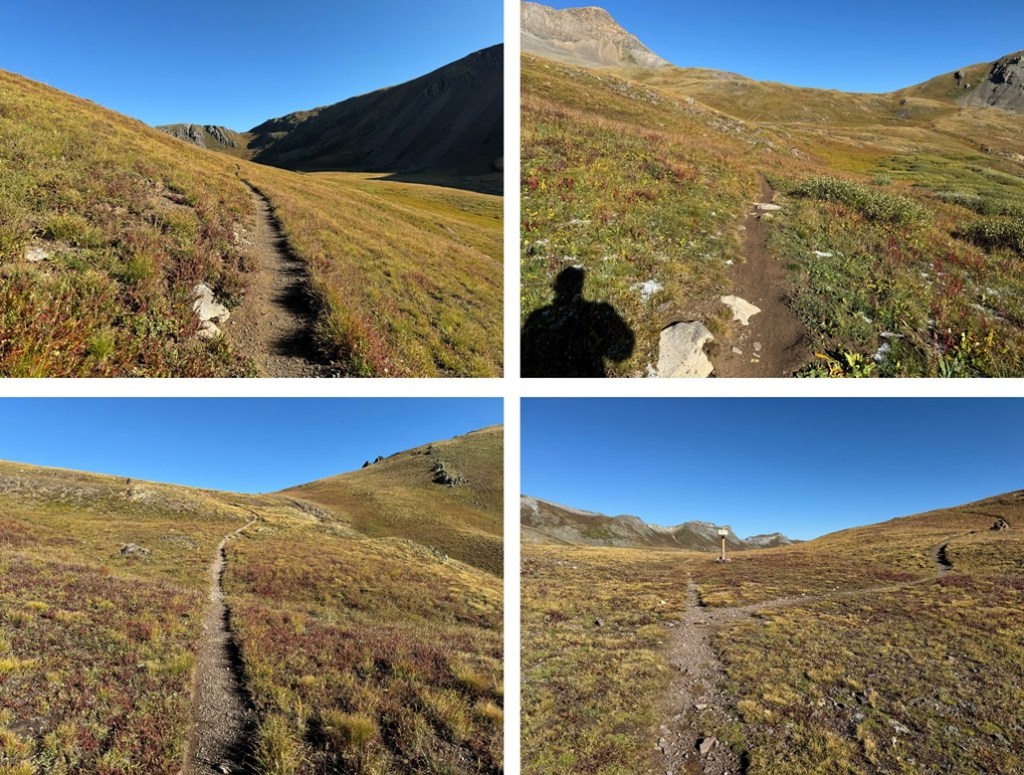
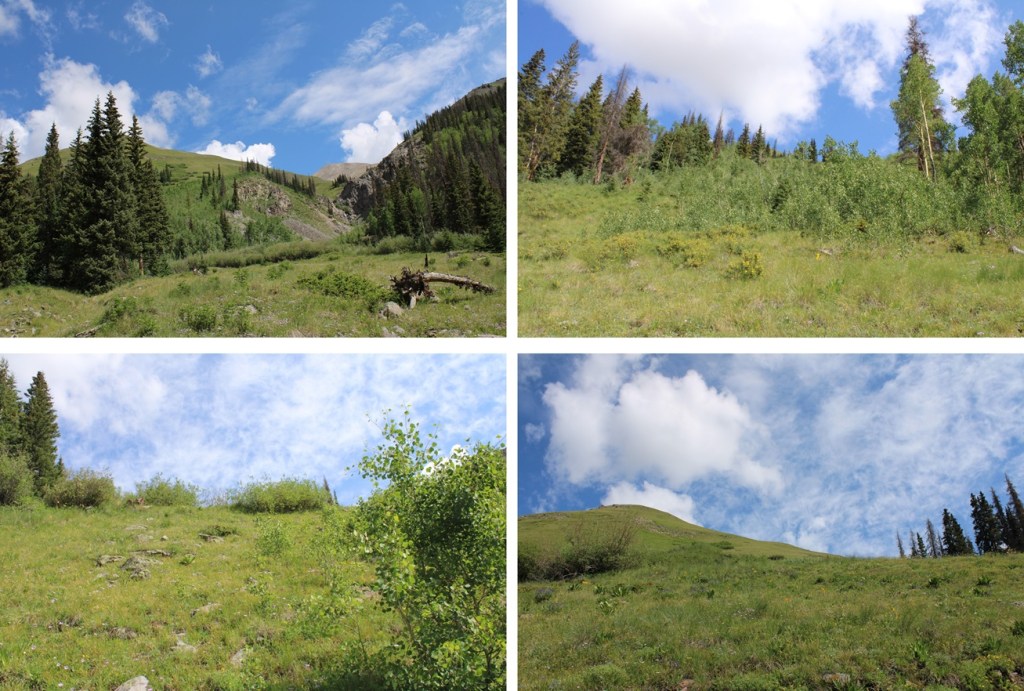
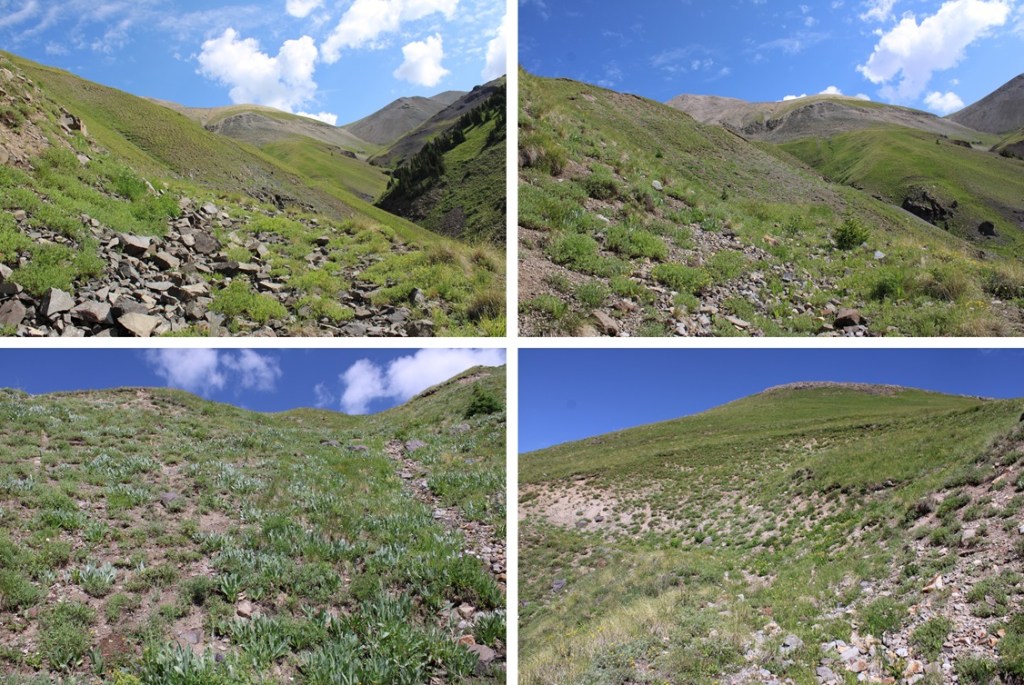
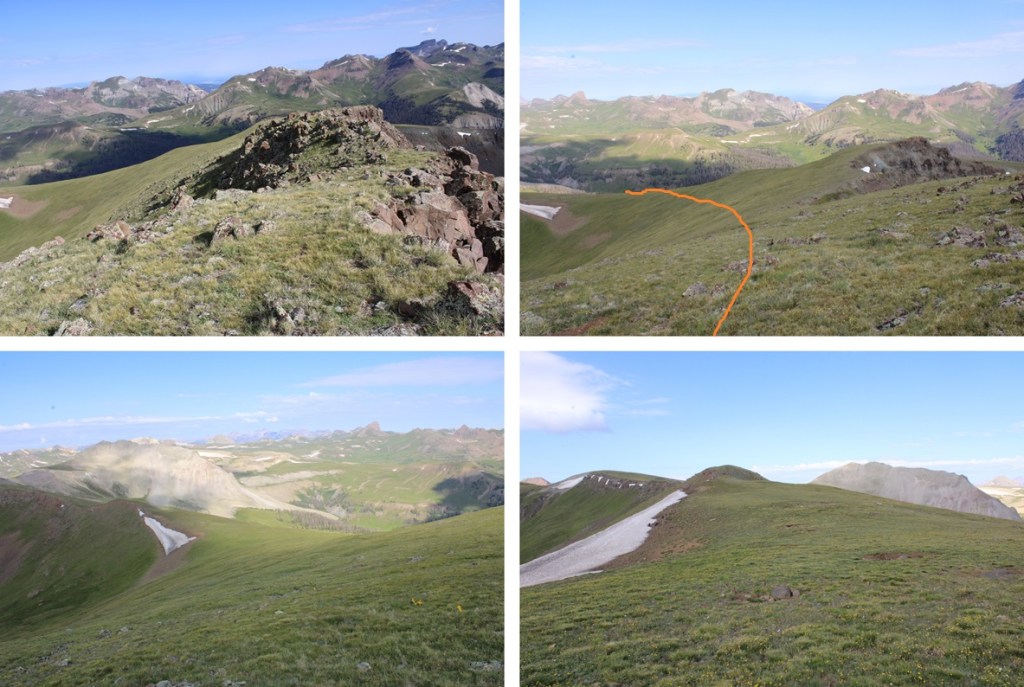
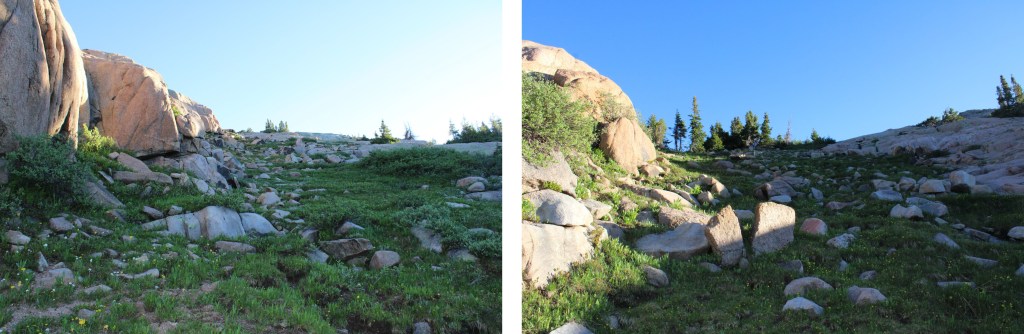
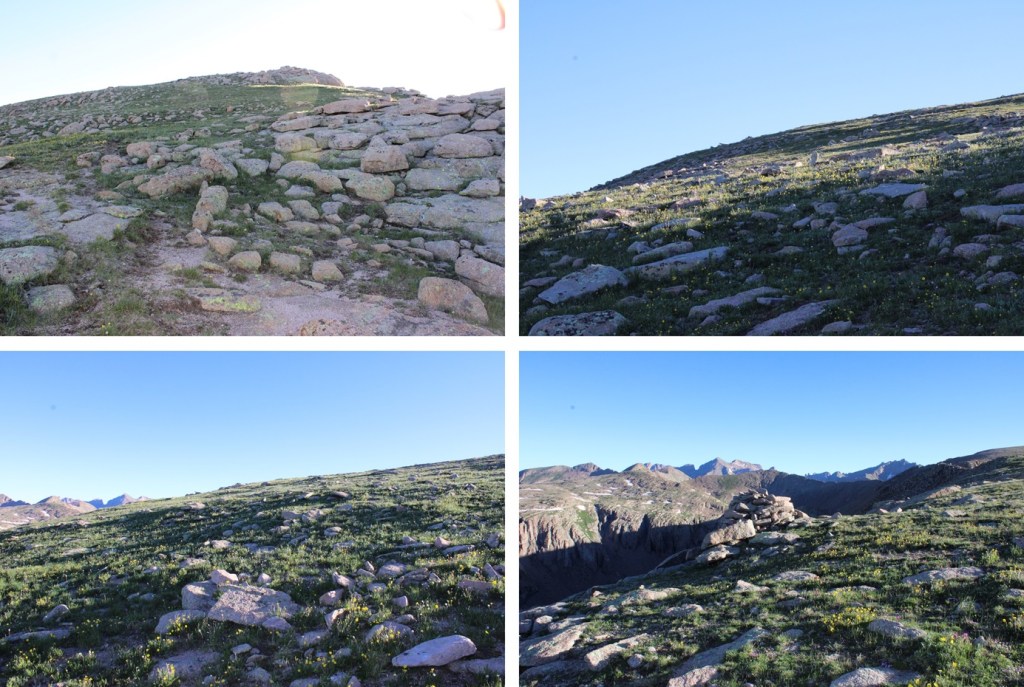
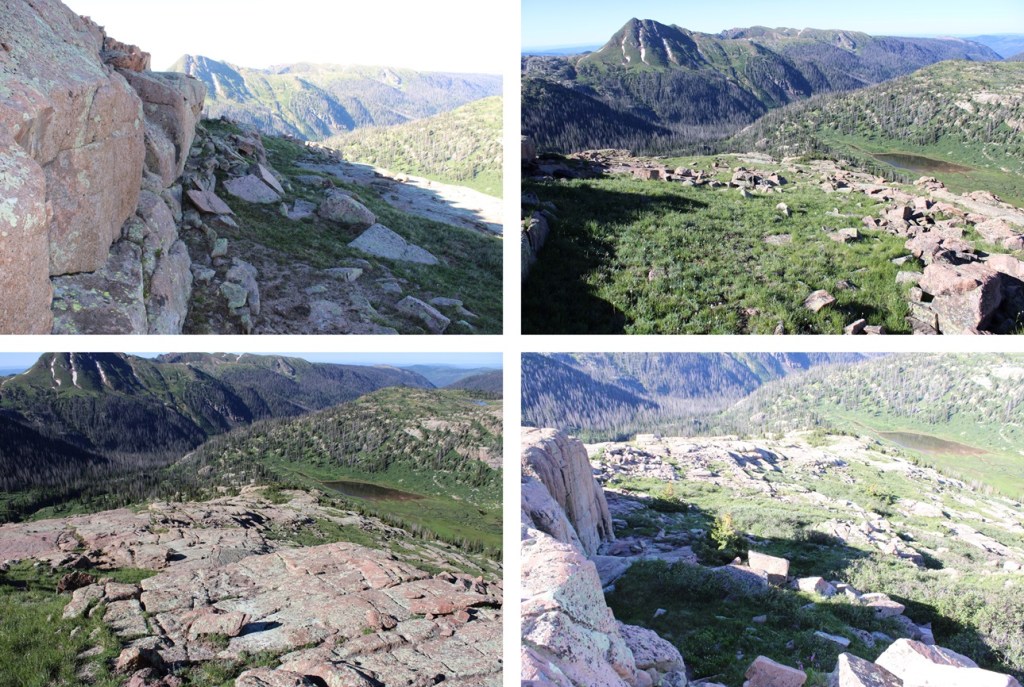
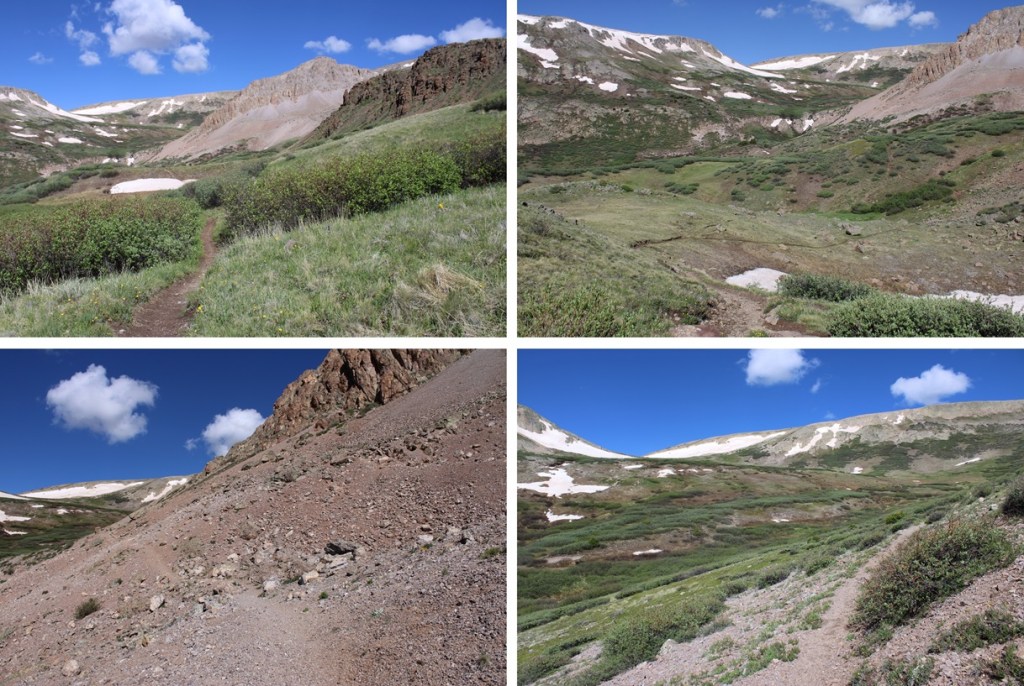
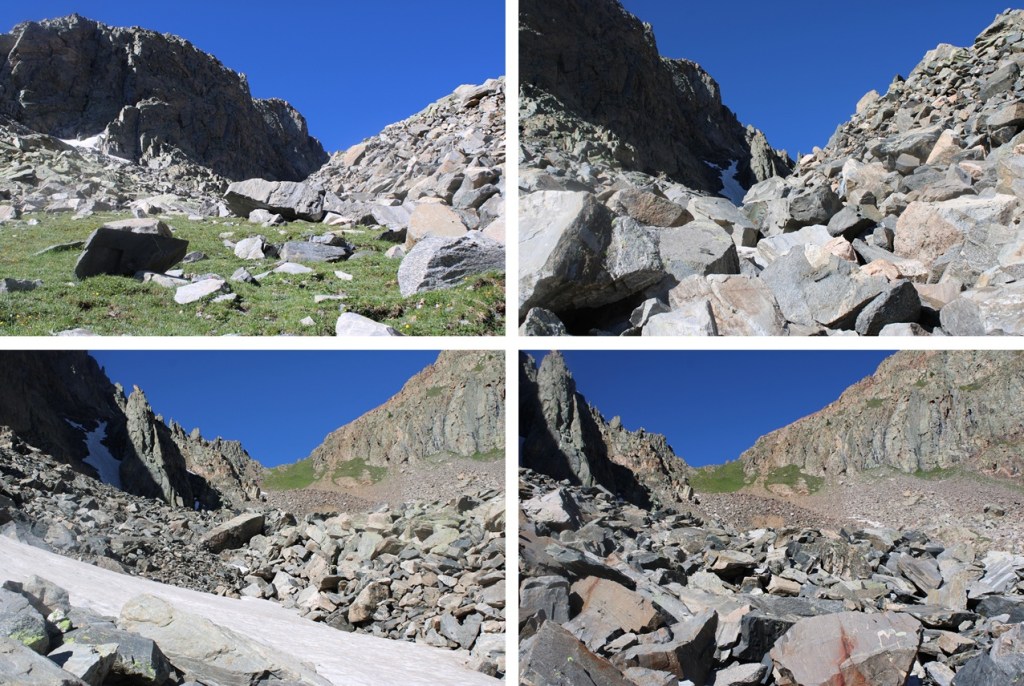
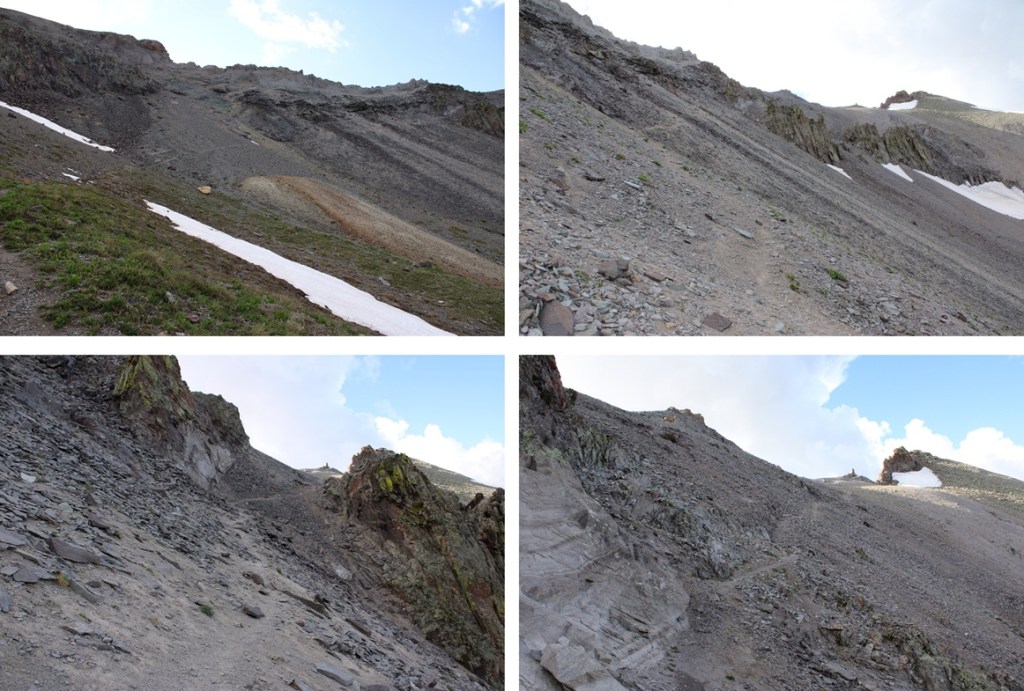
Here are some pictures of the route to the saddle

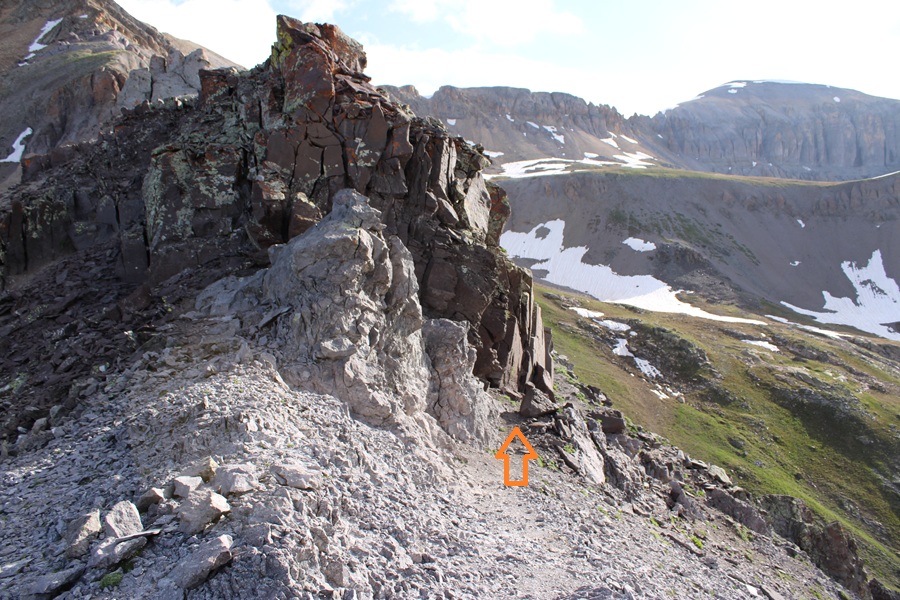
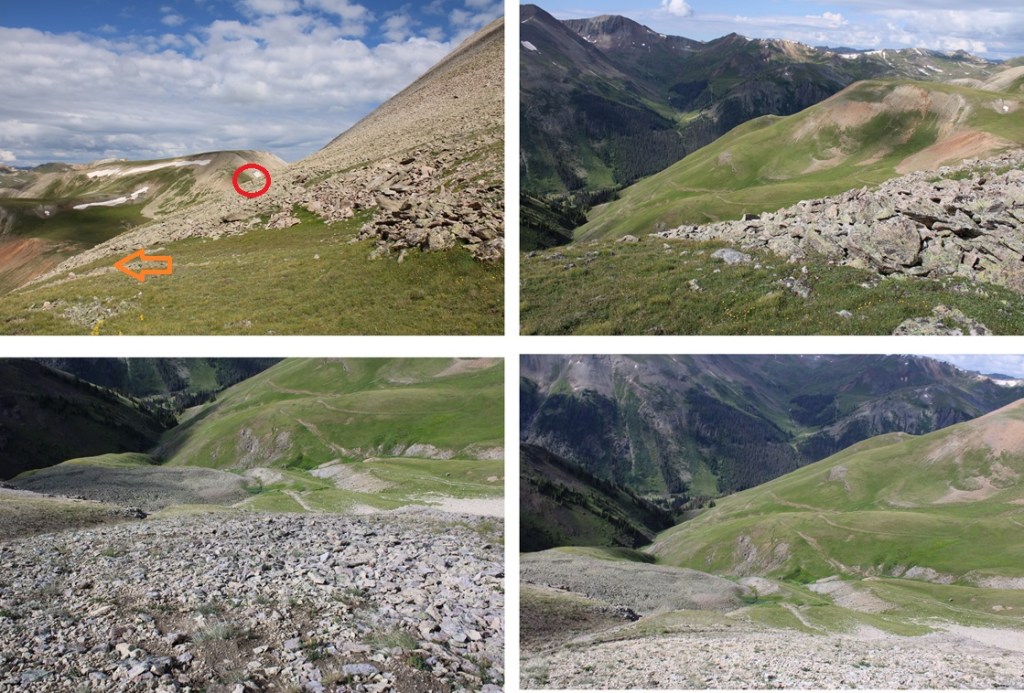
Now at the saddle I had to descend a bit to traverse towards West Needle Mountain.  I descended about 25 feet to the south and found an access gully on the left that would get me around the rock outcroppings.
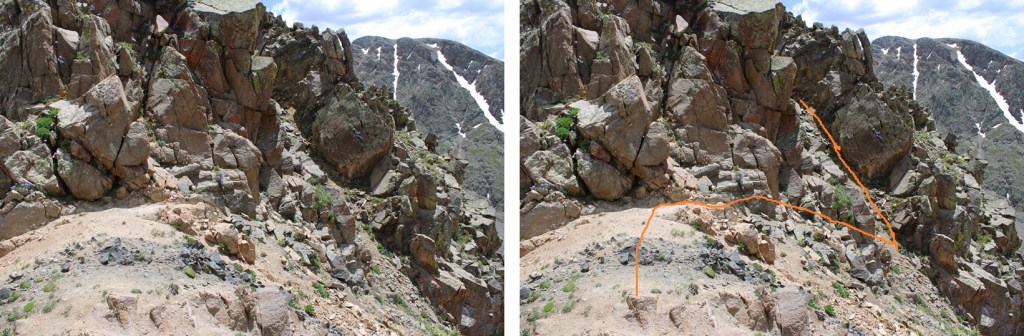
I ascended the class 2 gully
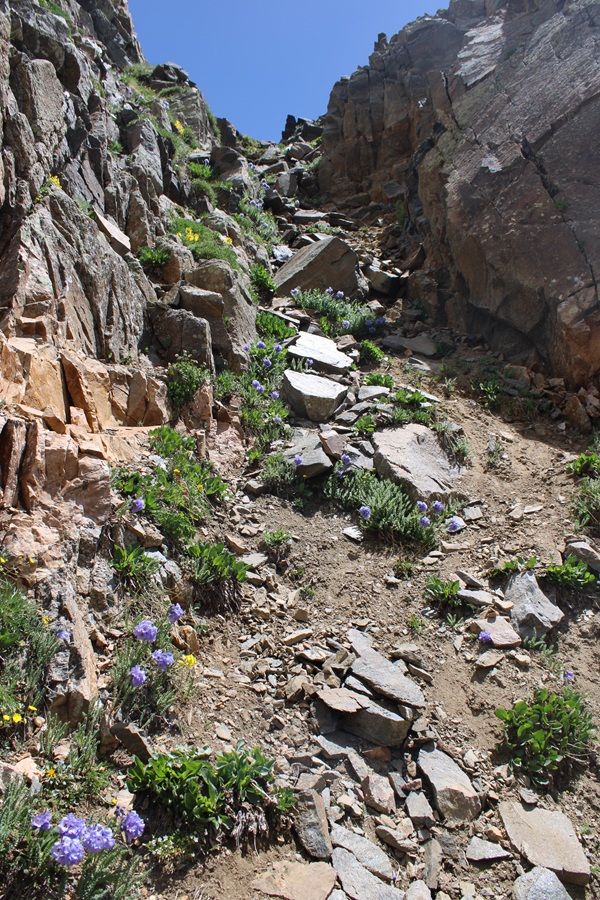
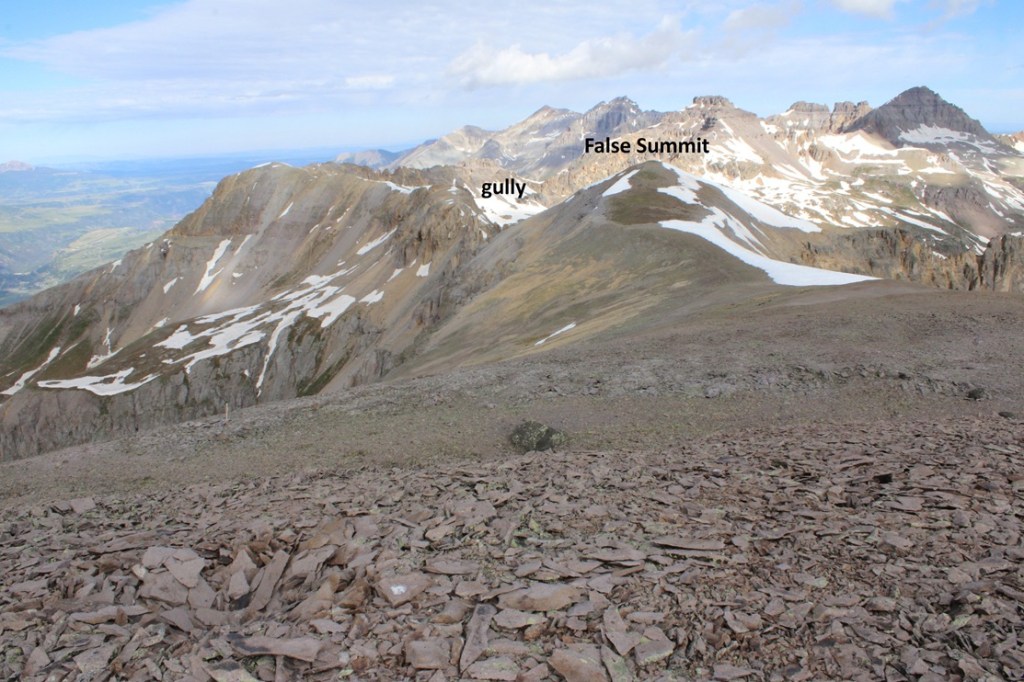
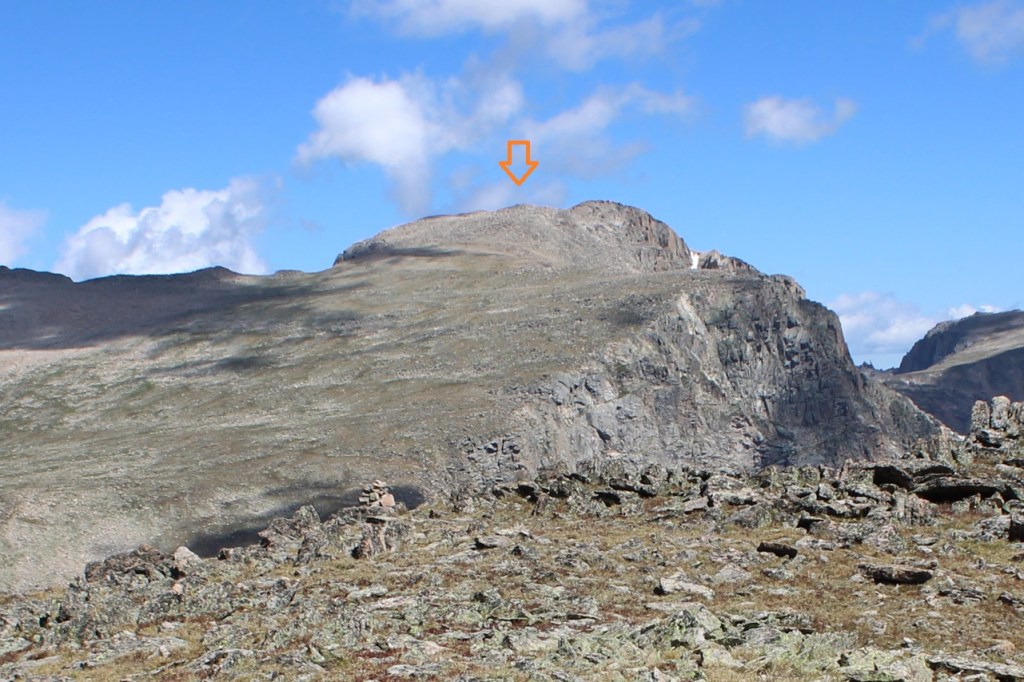
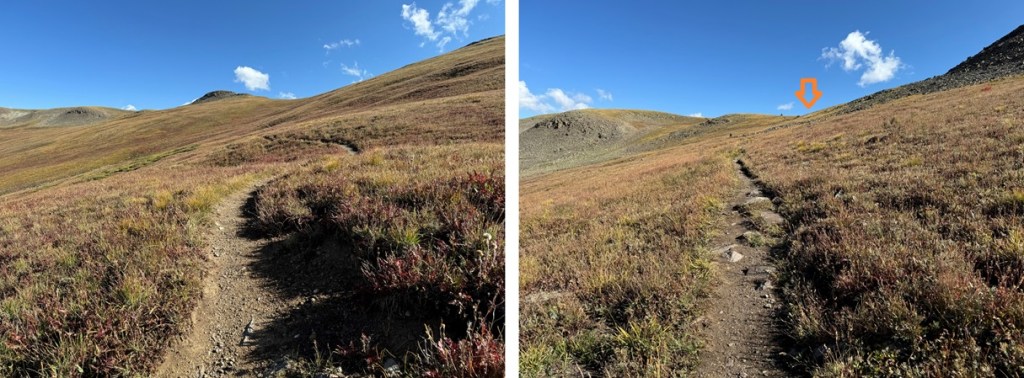
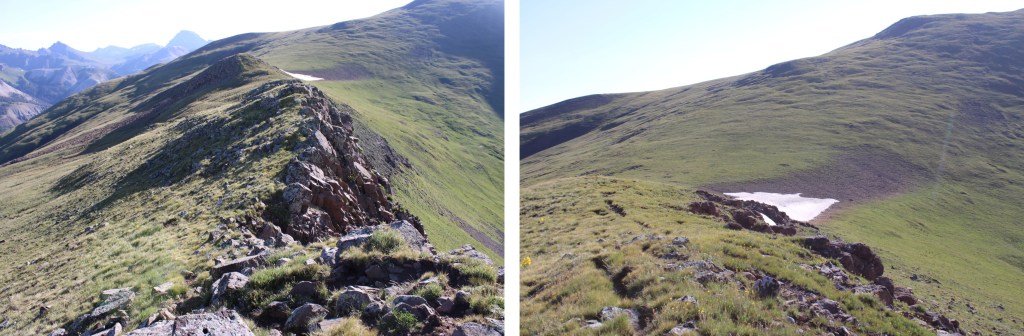
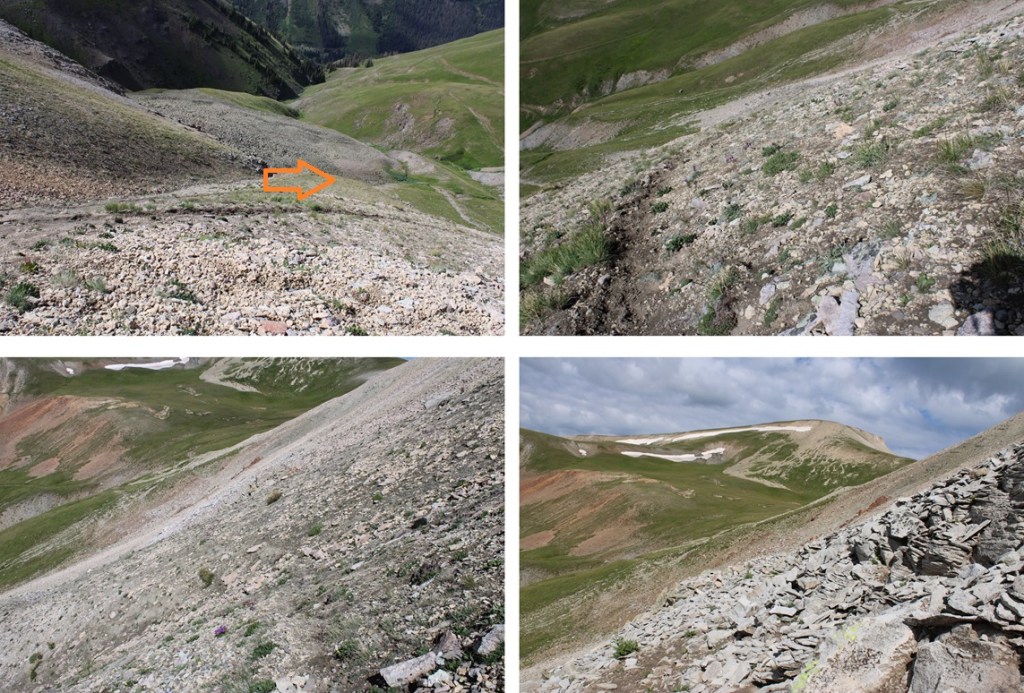
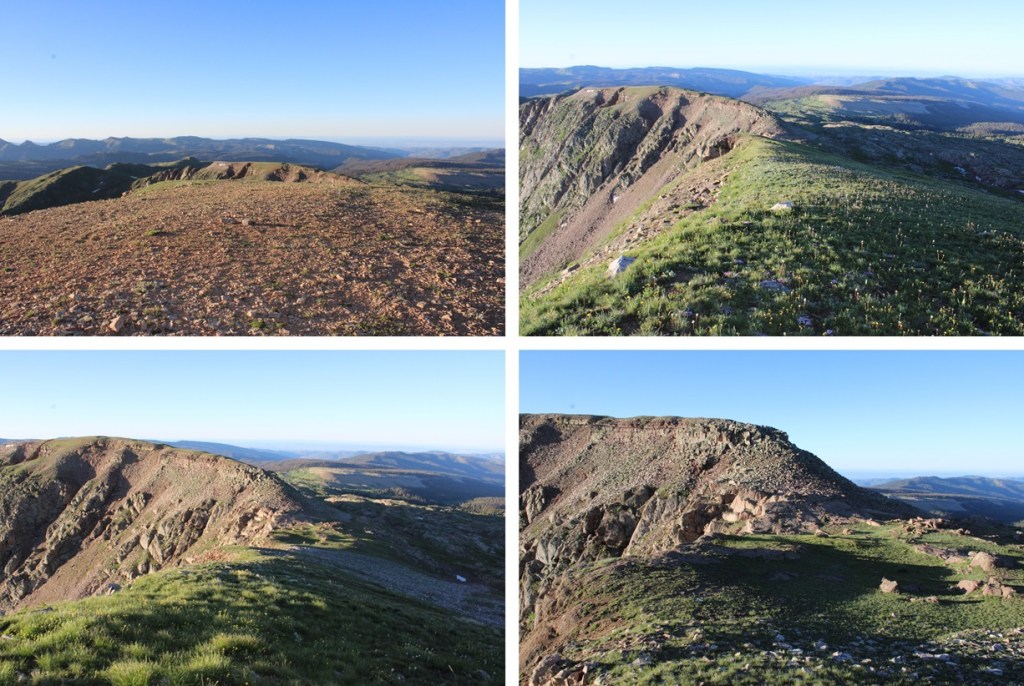
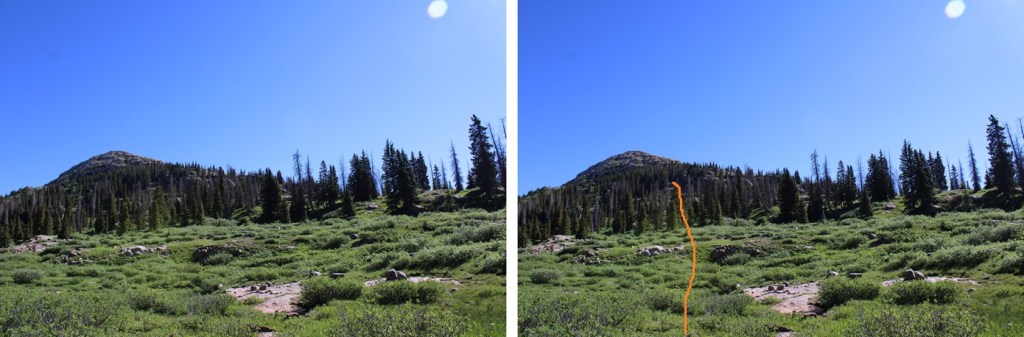
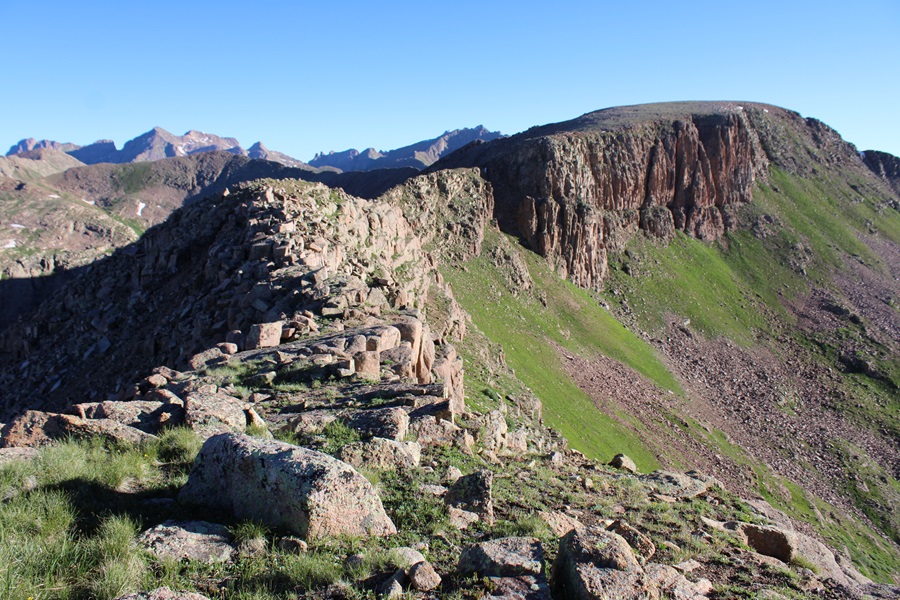
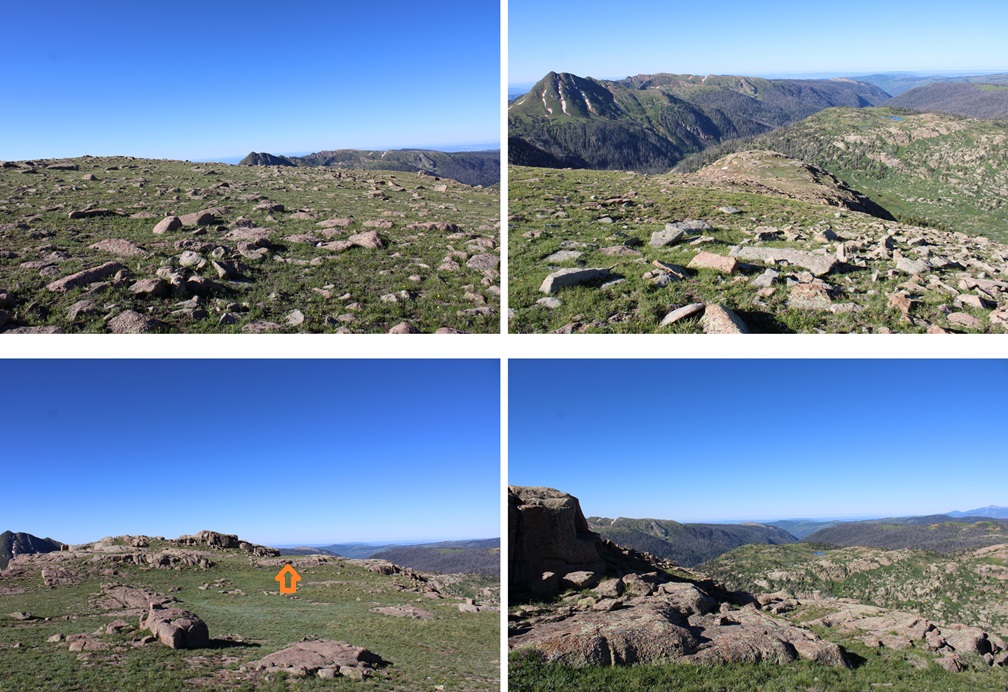
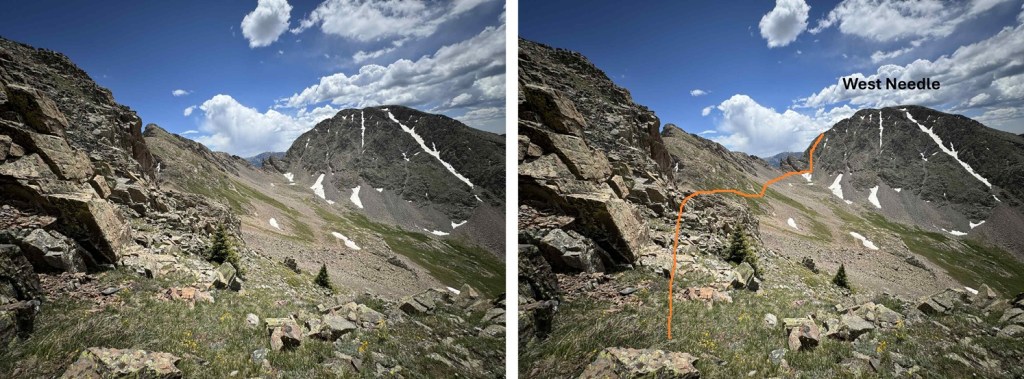
From the top of the gully I could see my intended route for West Needle Mountain.  I would initially stay high, just under the rock outcroppings, then pick up a game trail for a while and follow it towards the base of the ridge in the distance, aiming towards just below the two large outcroppings and up a gully.
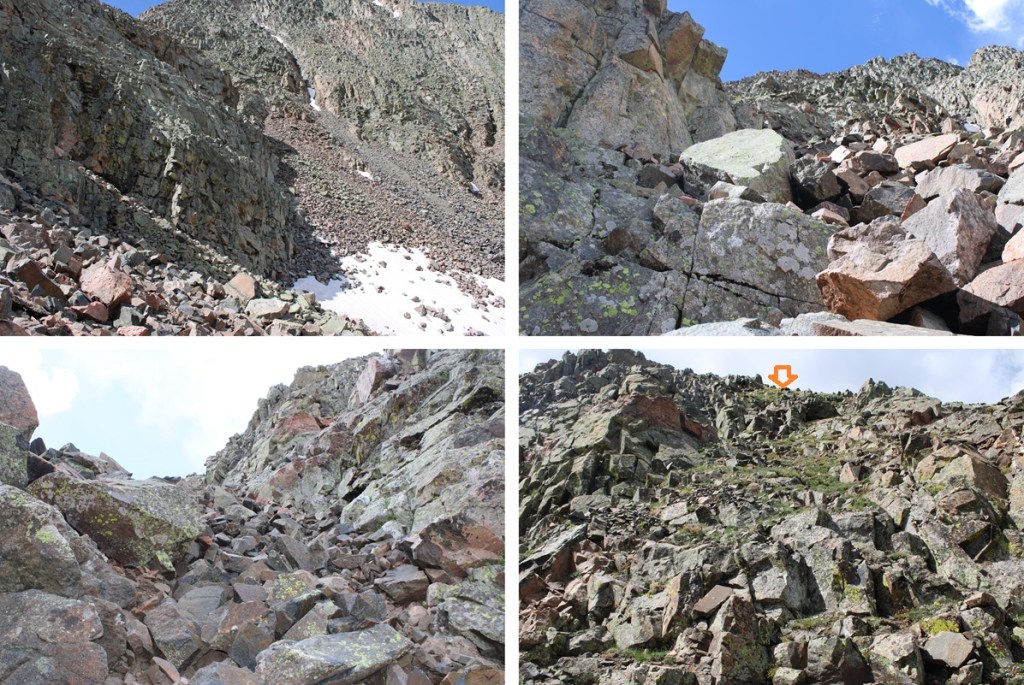
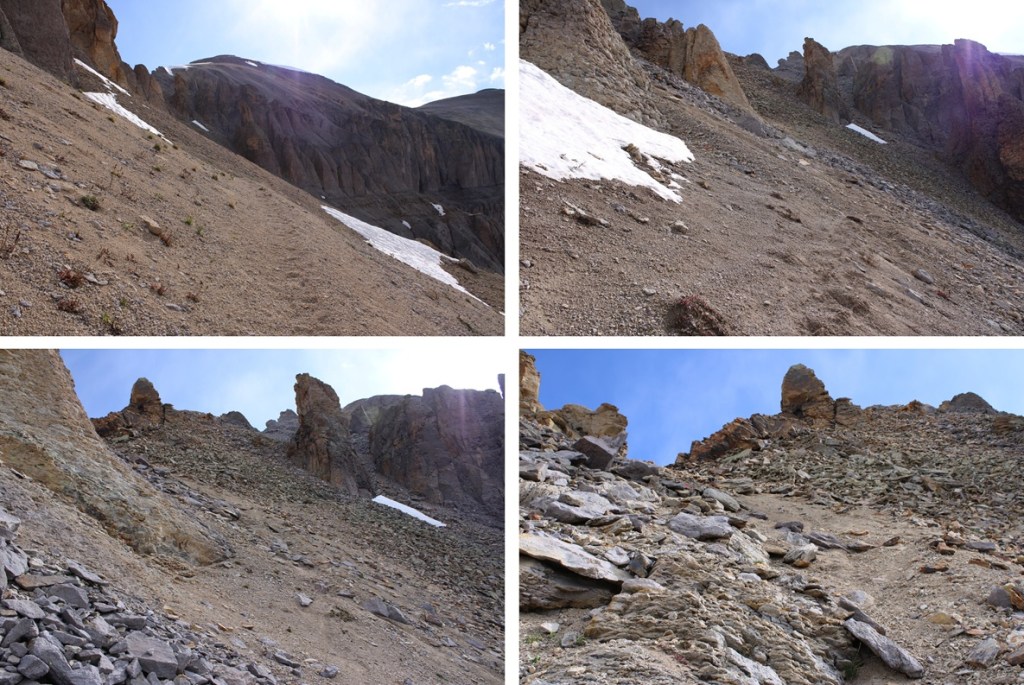
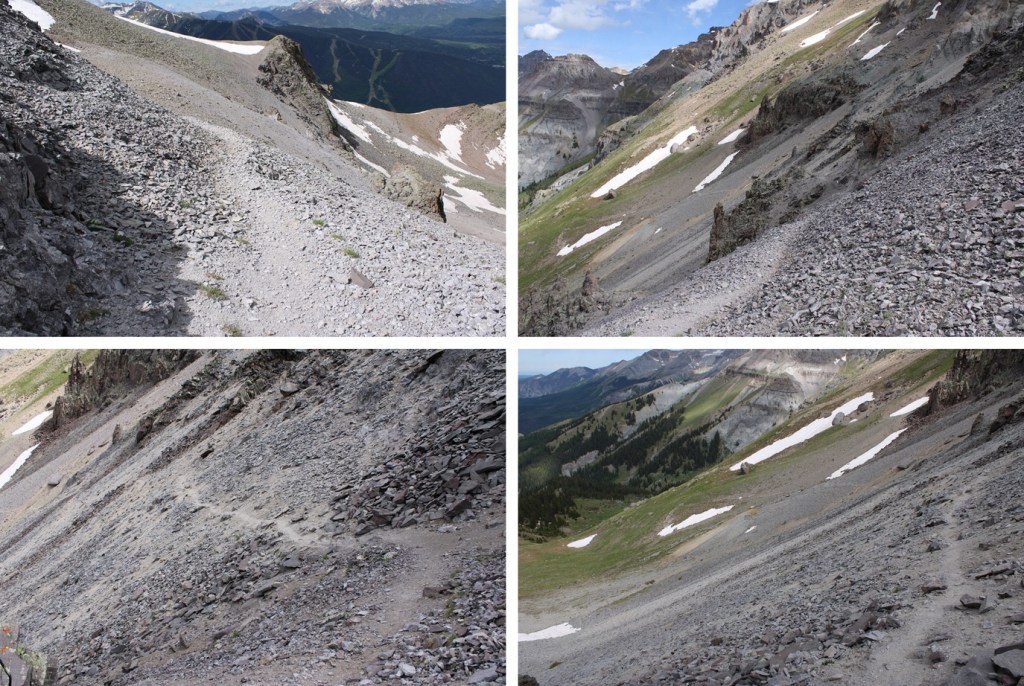
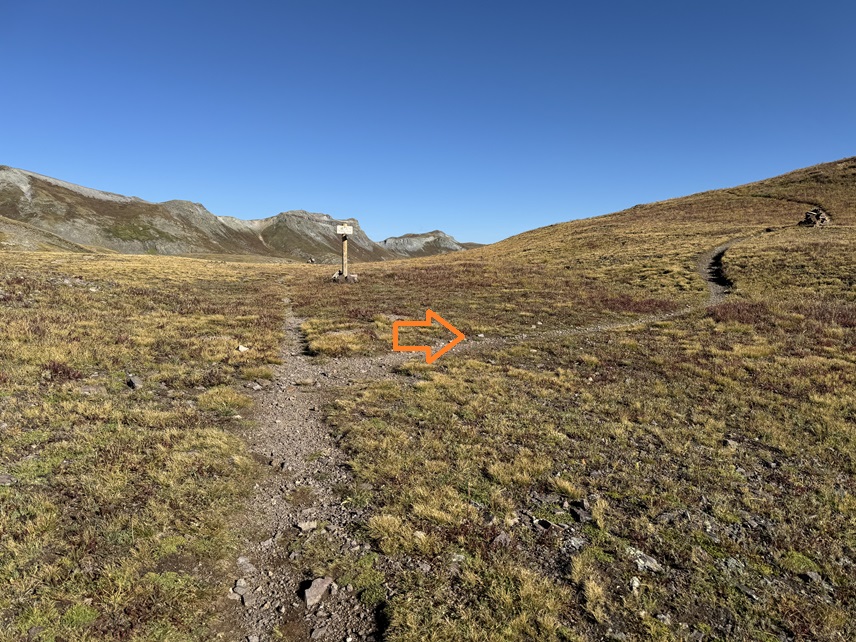
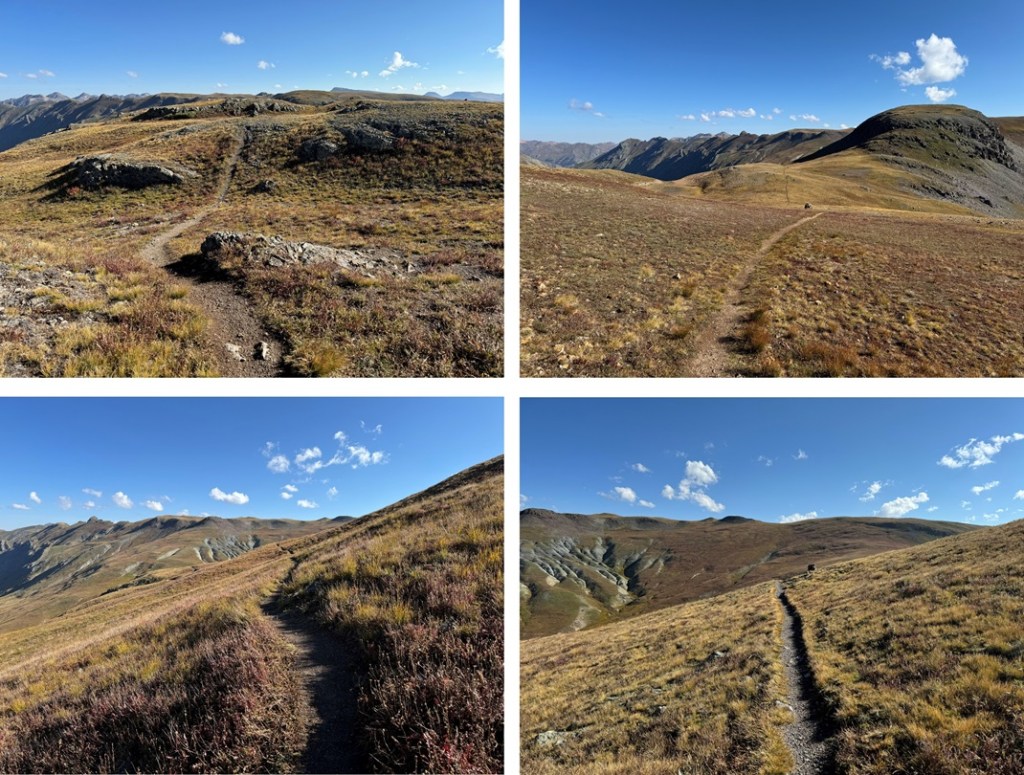
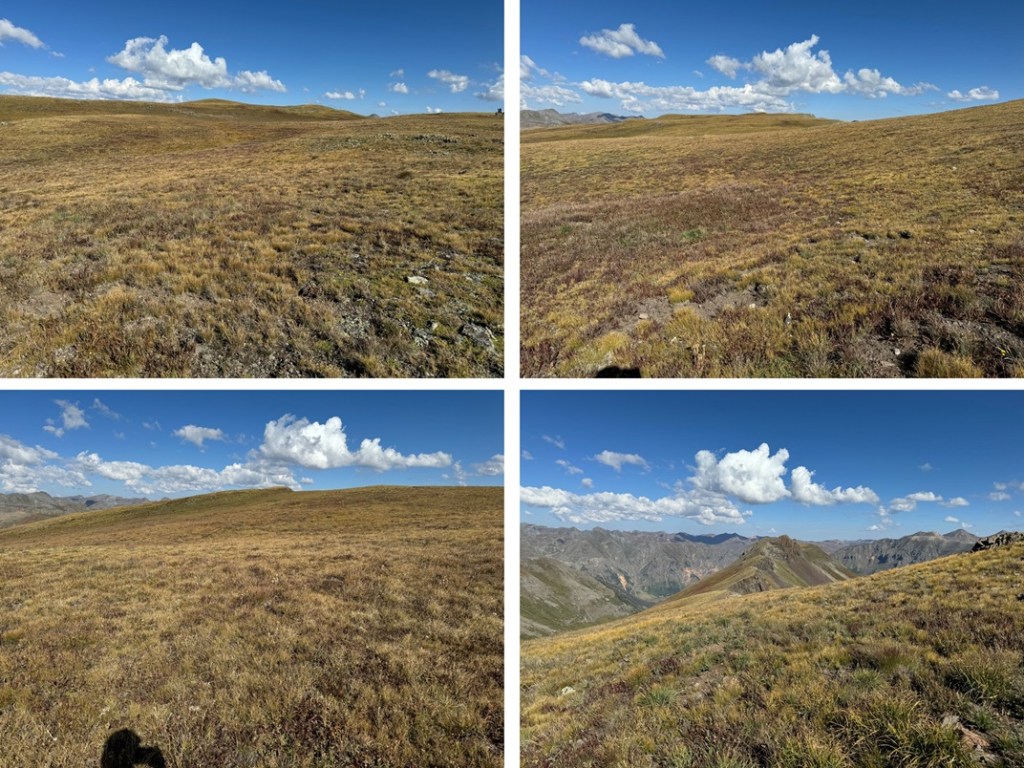
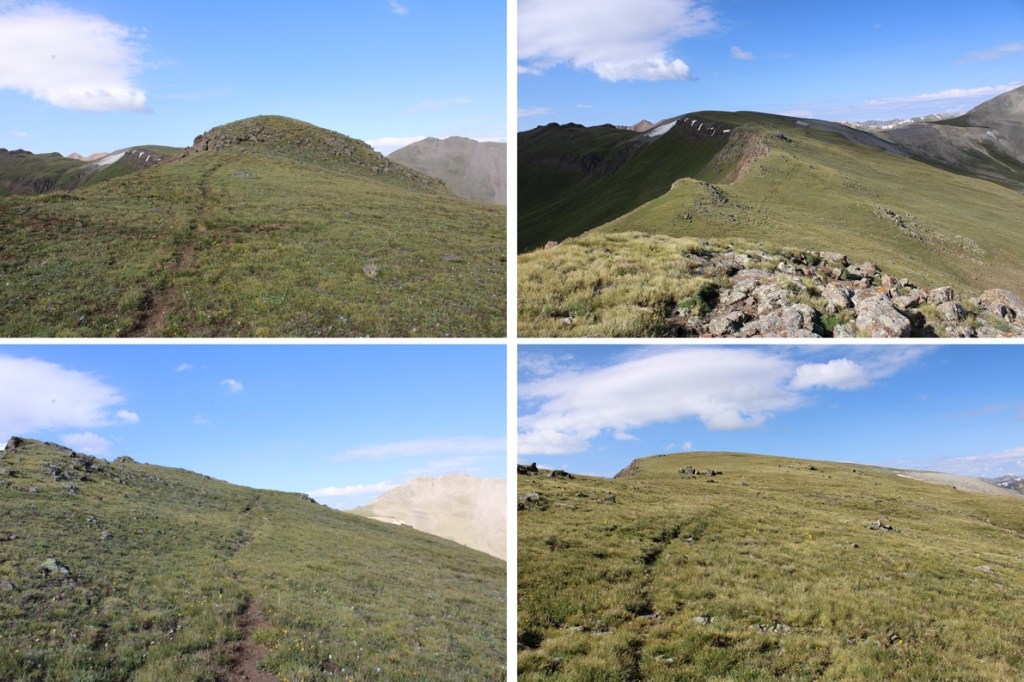
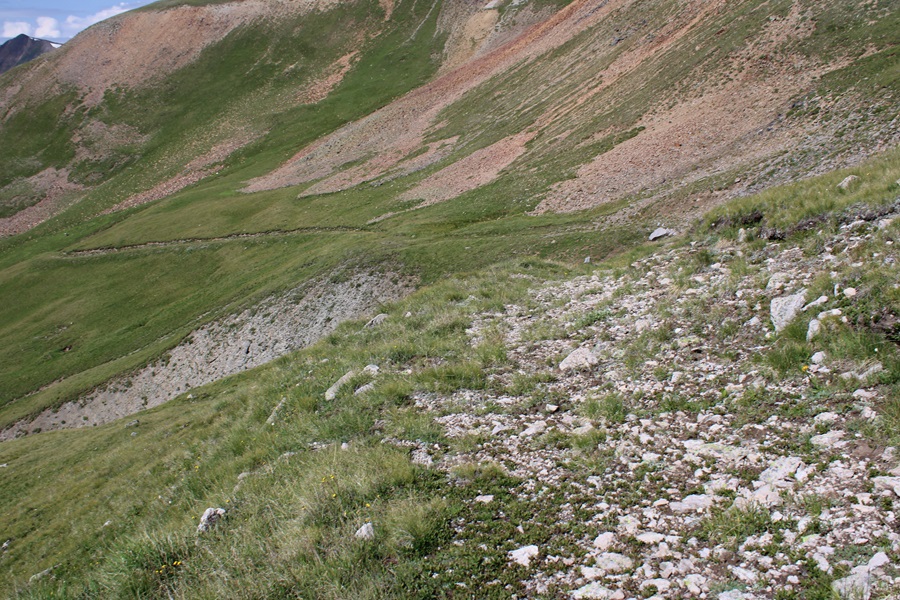
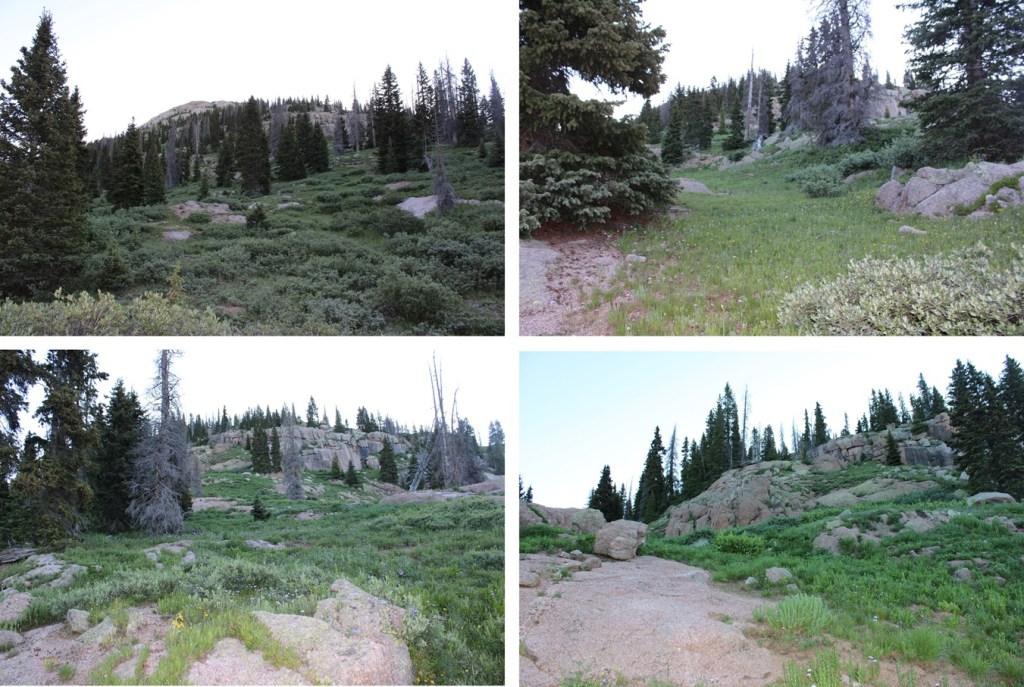
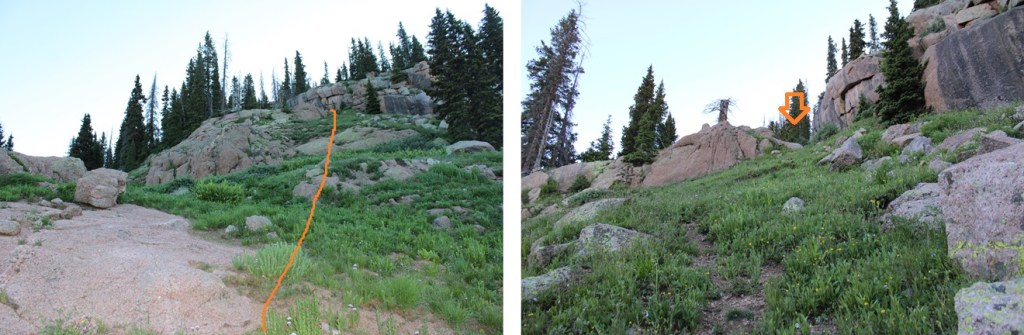
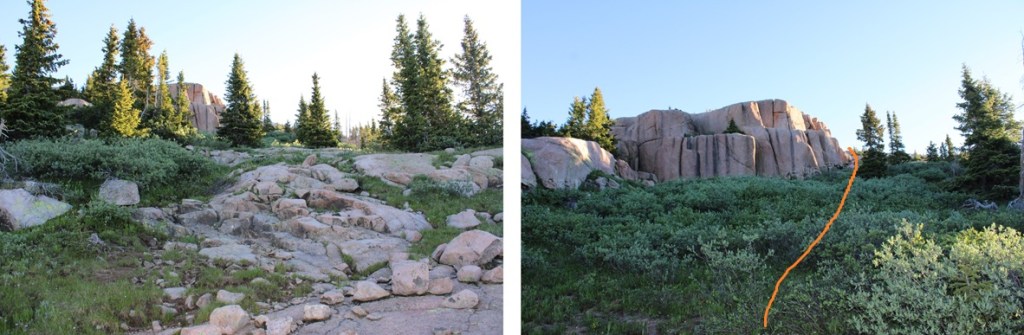
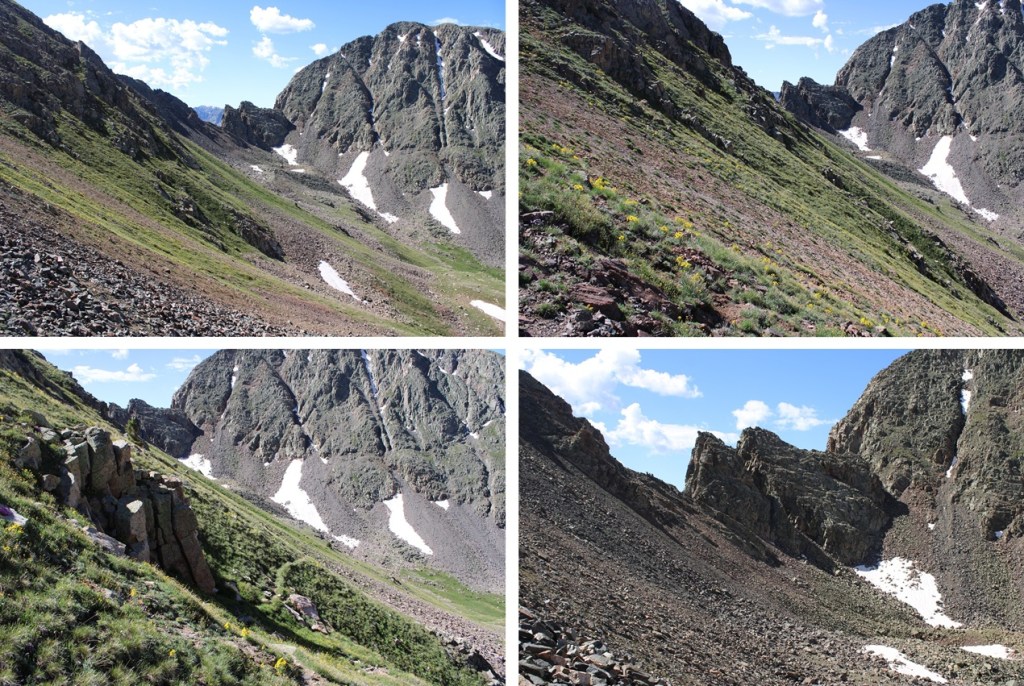
Here are some pictures of the route to the base of the gully I used.

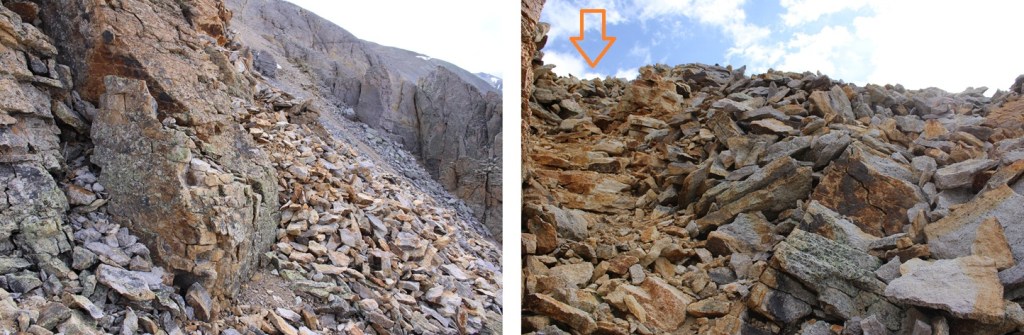
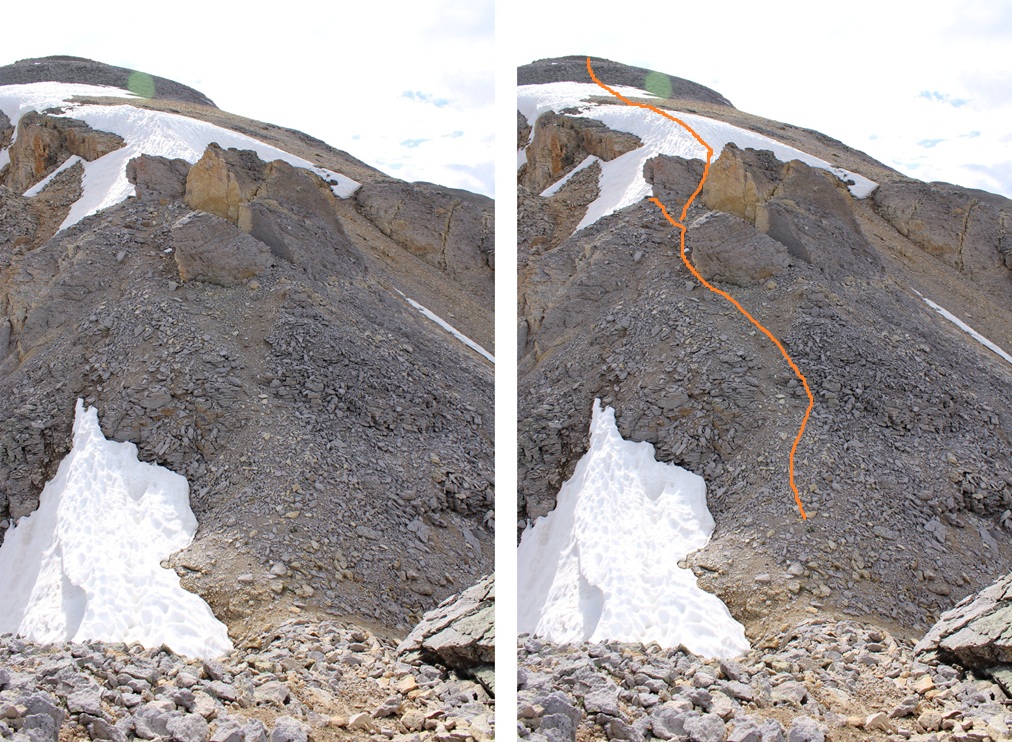
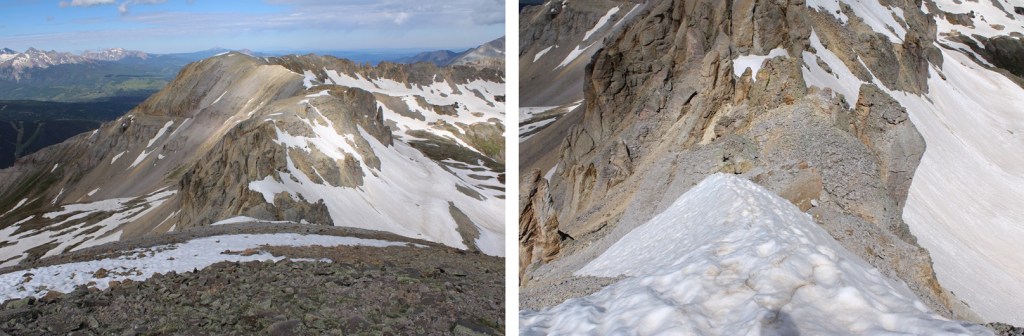
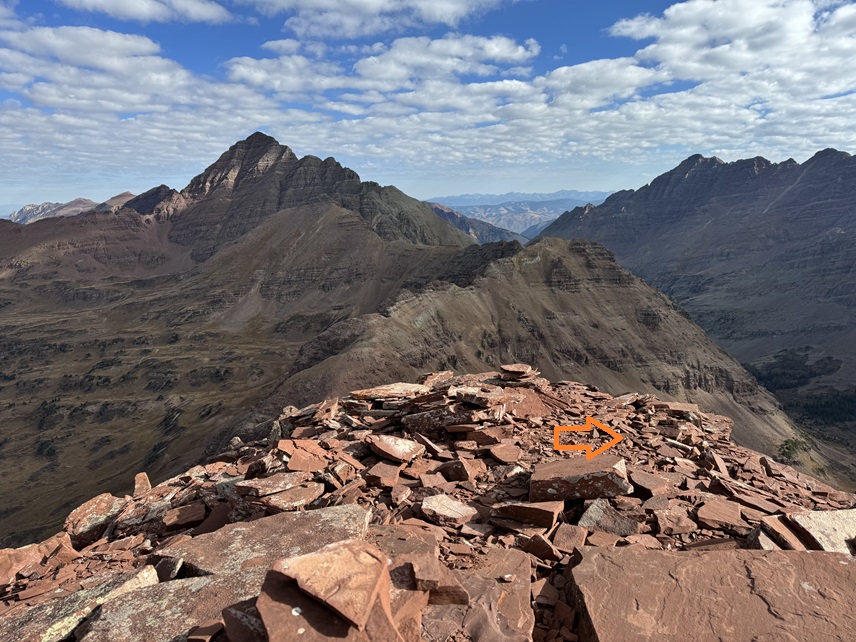
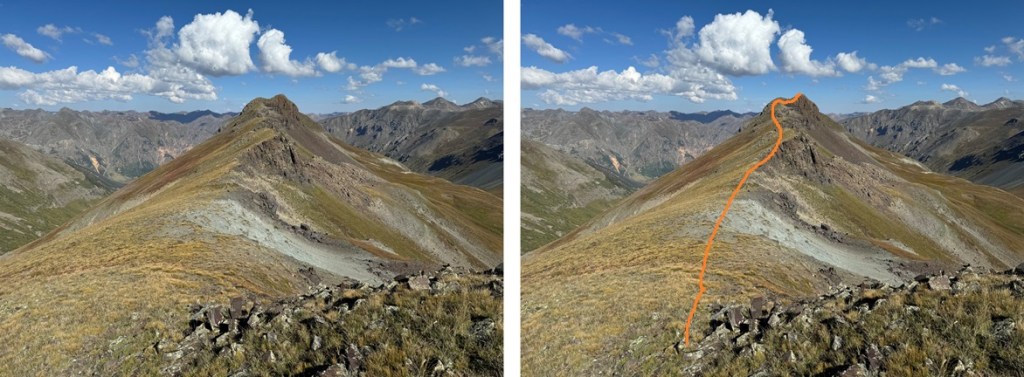
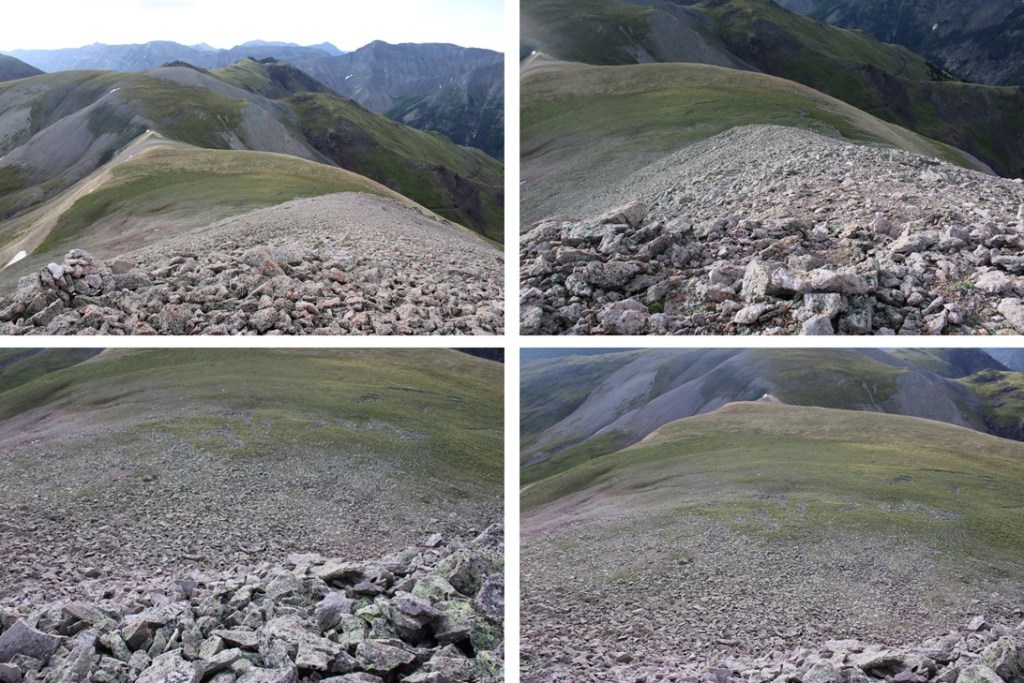
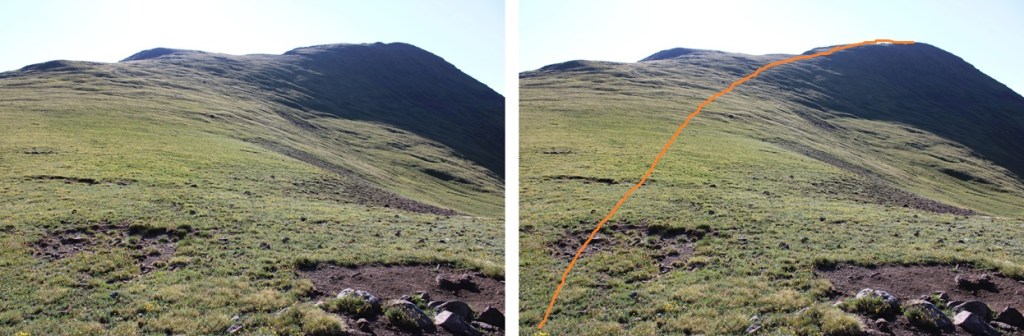
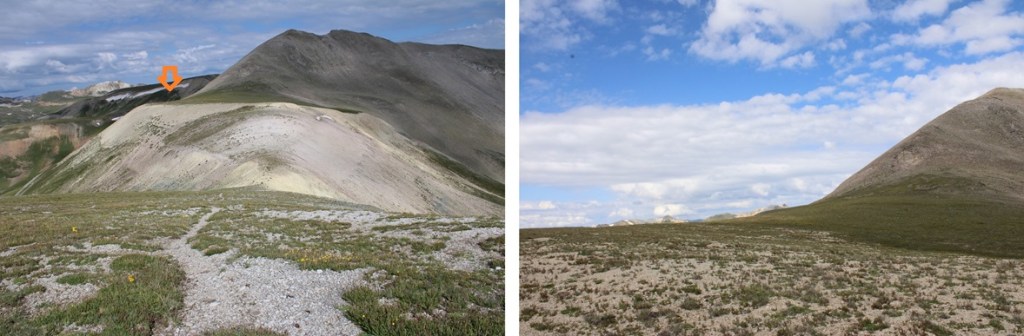
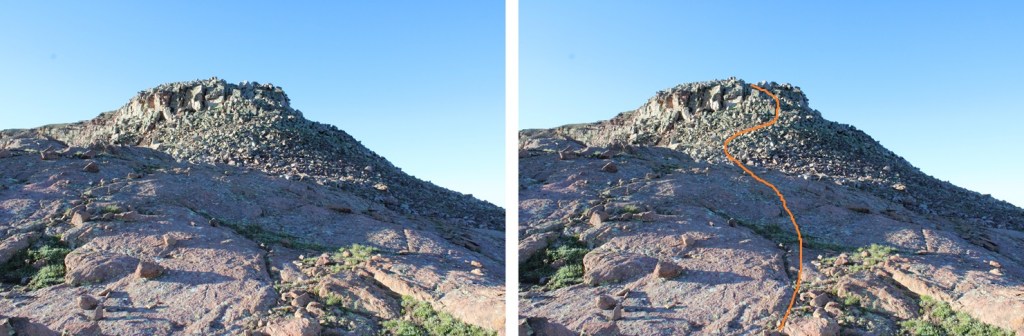
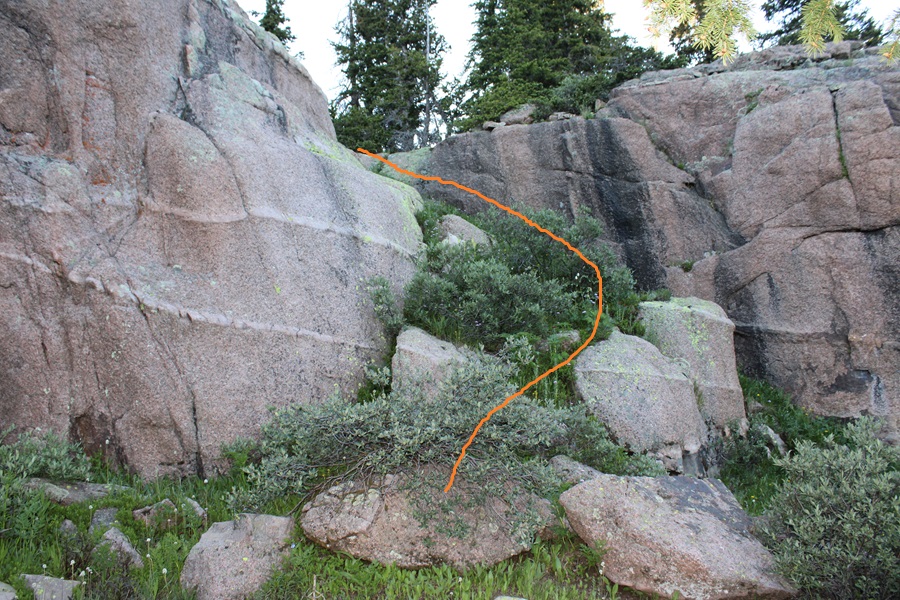
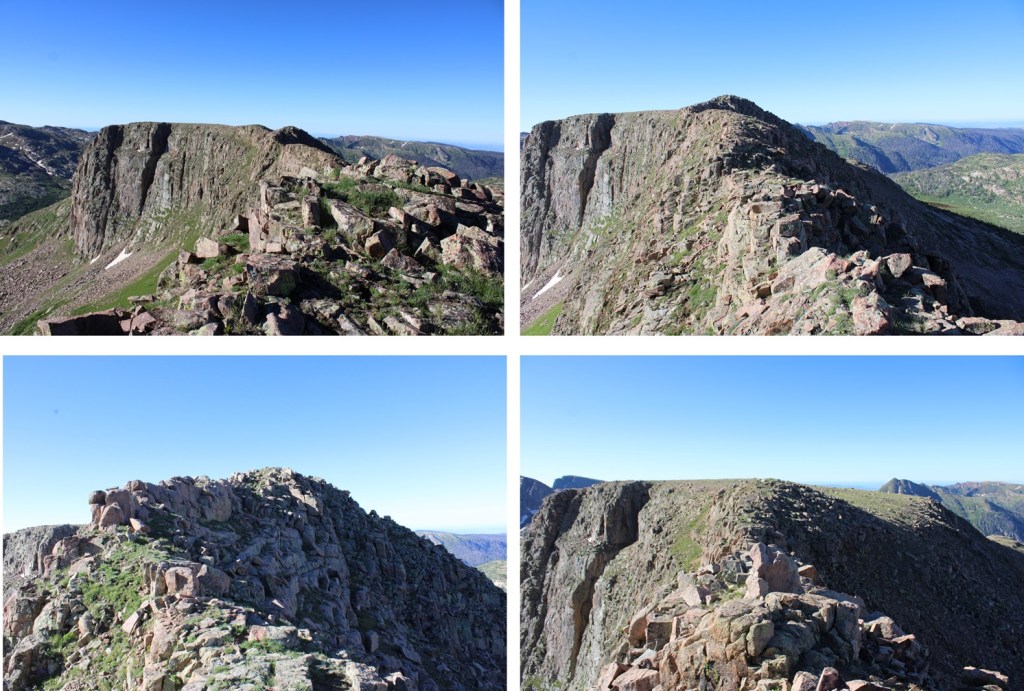
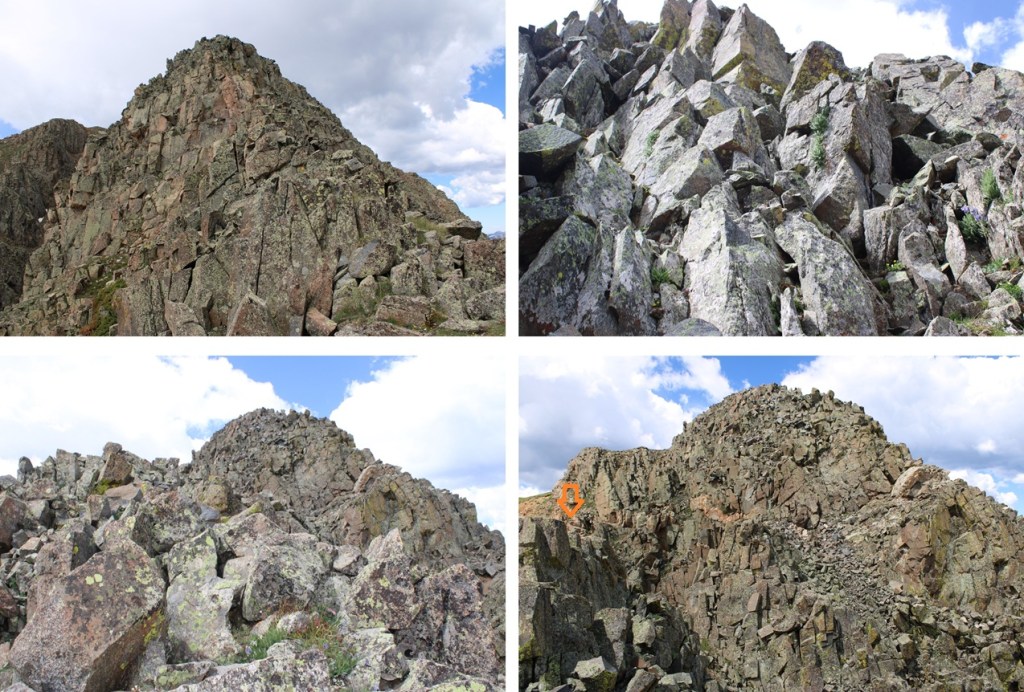
From here it’s a great time to look at the route before you. This is choose your own adventure, and there seem to be a lot of different possibilities for gaining the ridge.  All class 3.  This is the route I chose, first going up the loose and rocky gully then straight up the class 3 face. 

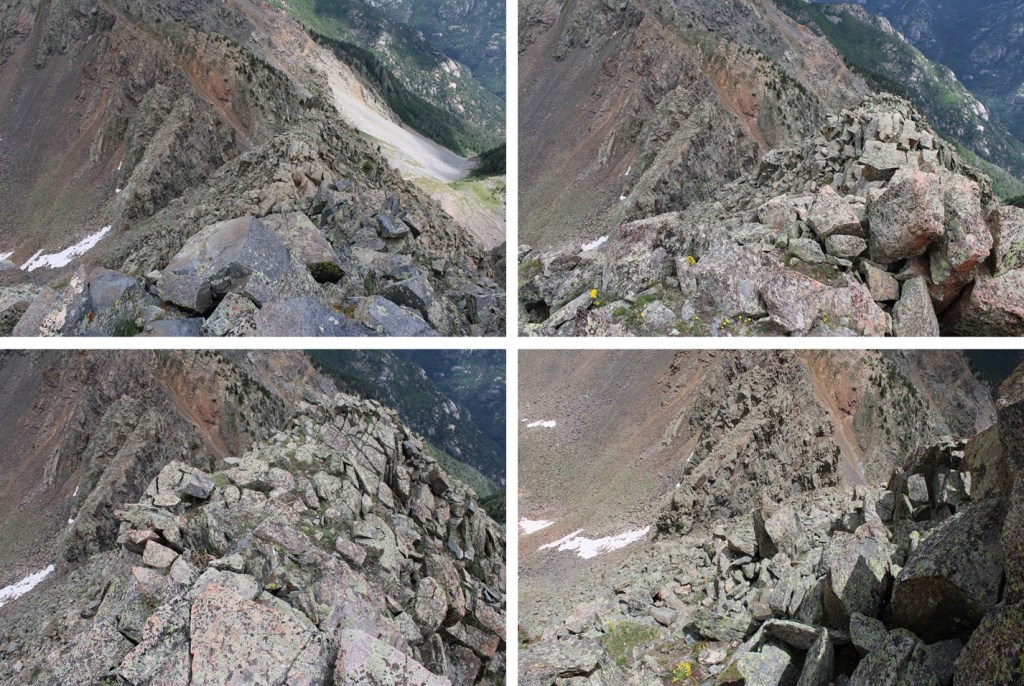
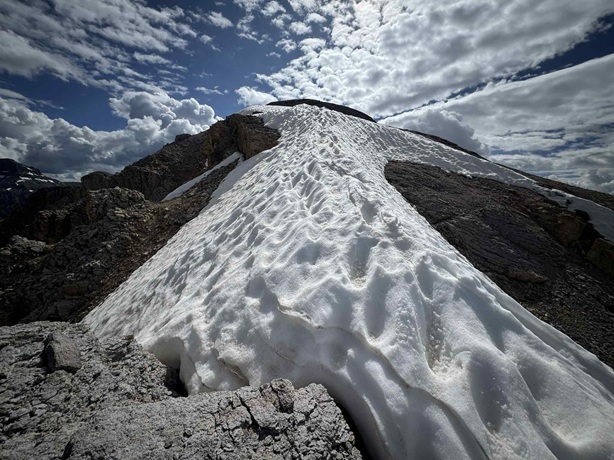
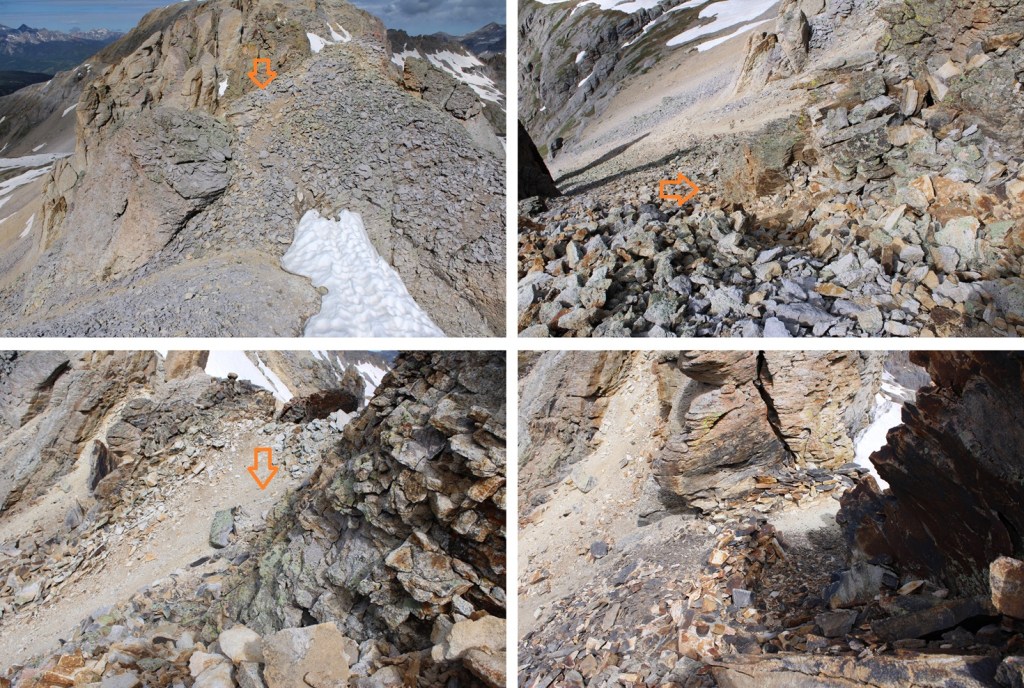
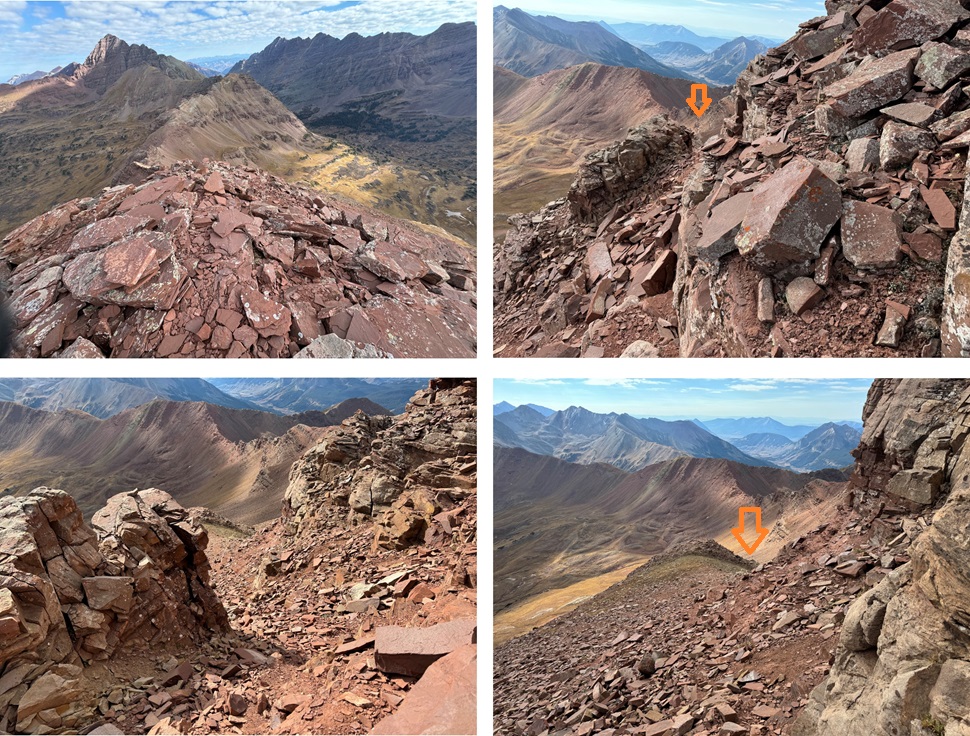
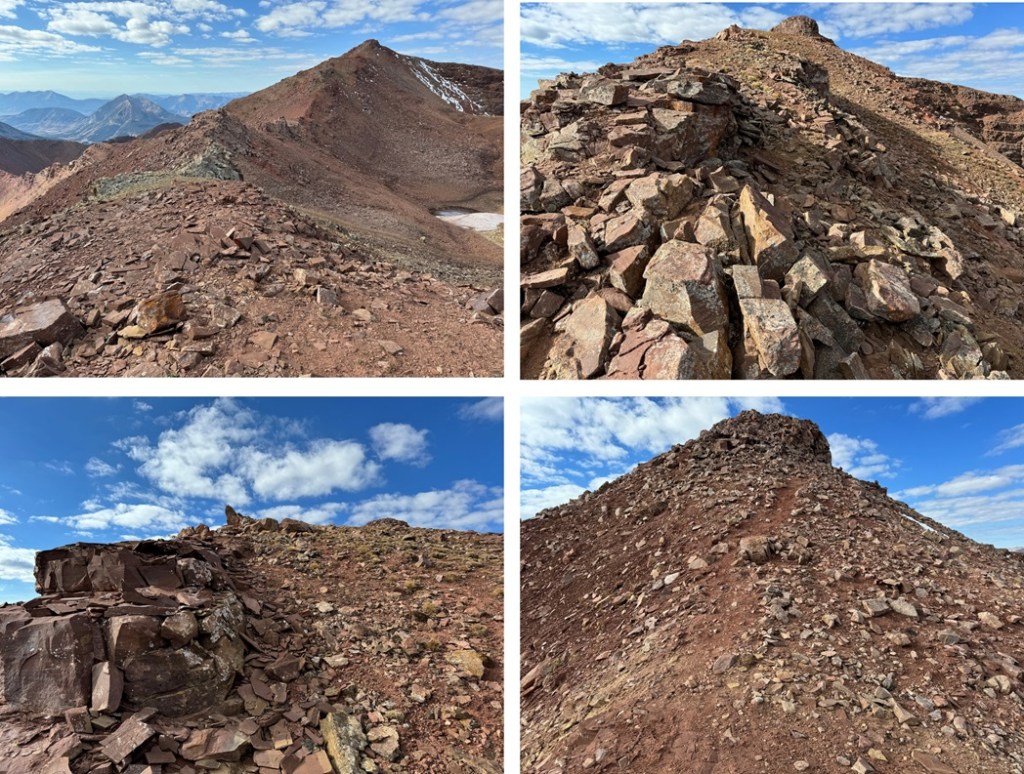
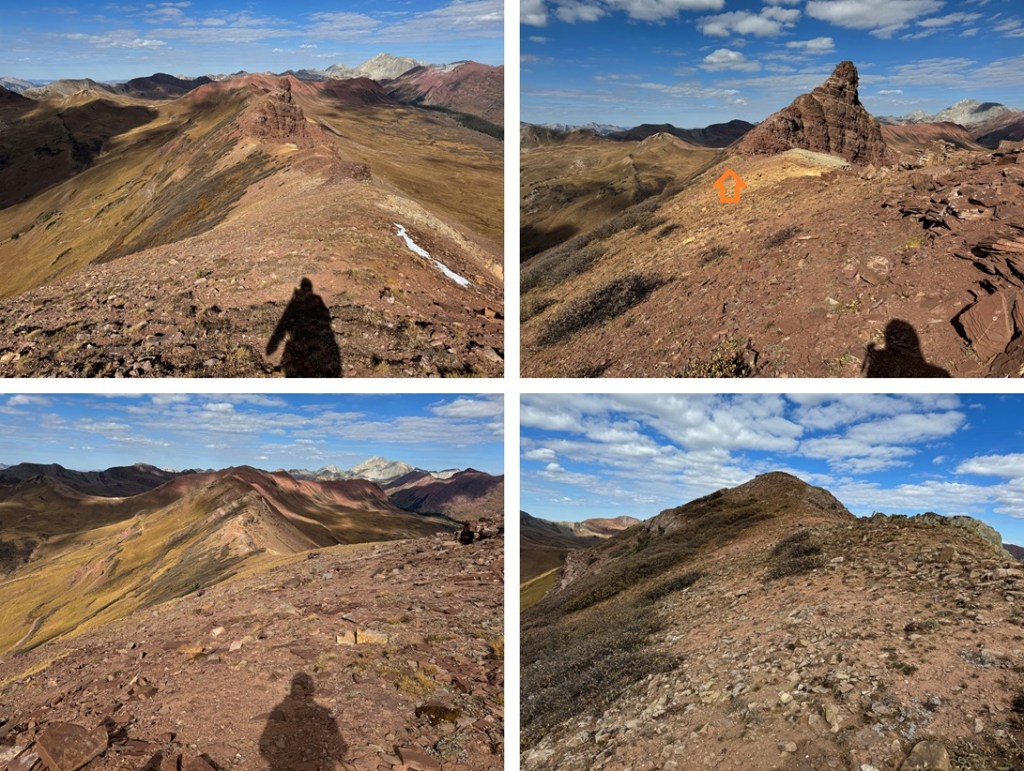
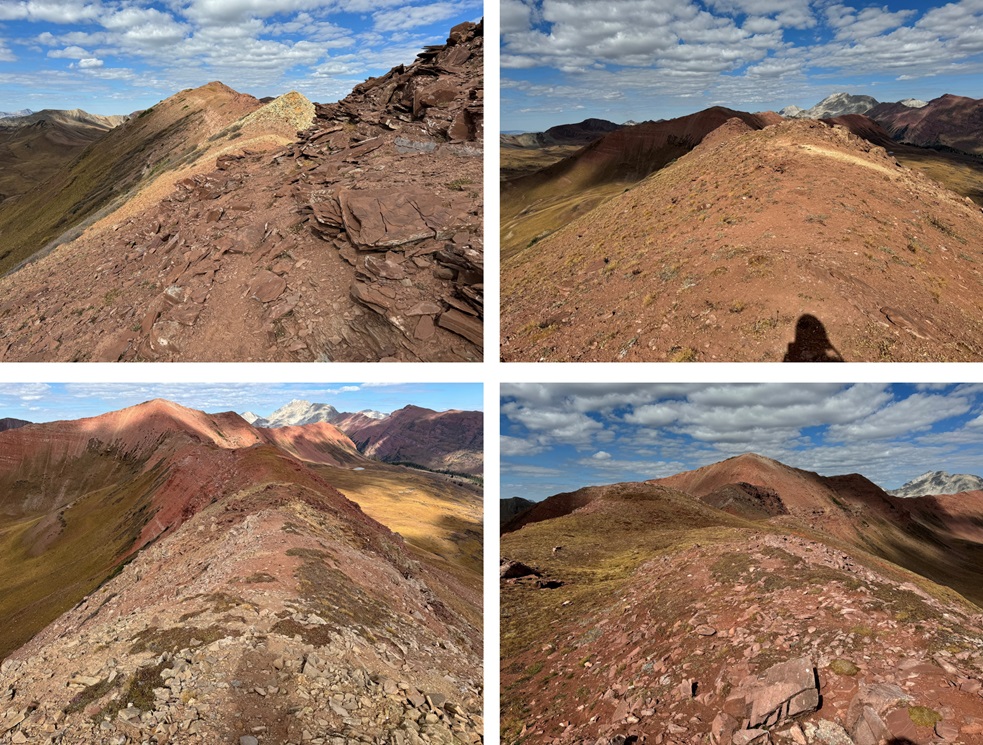
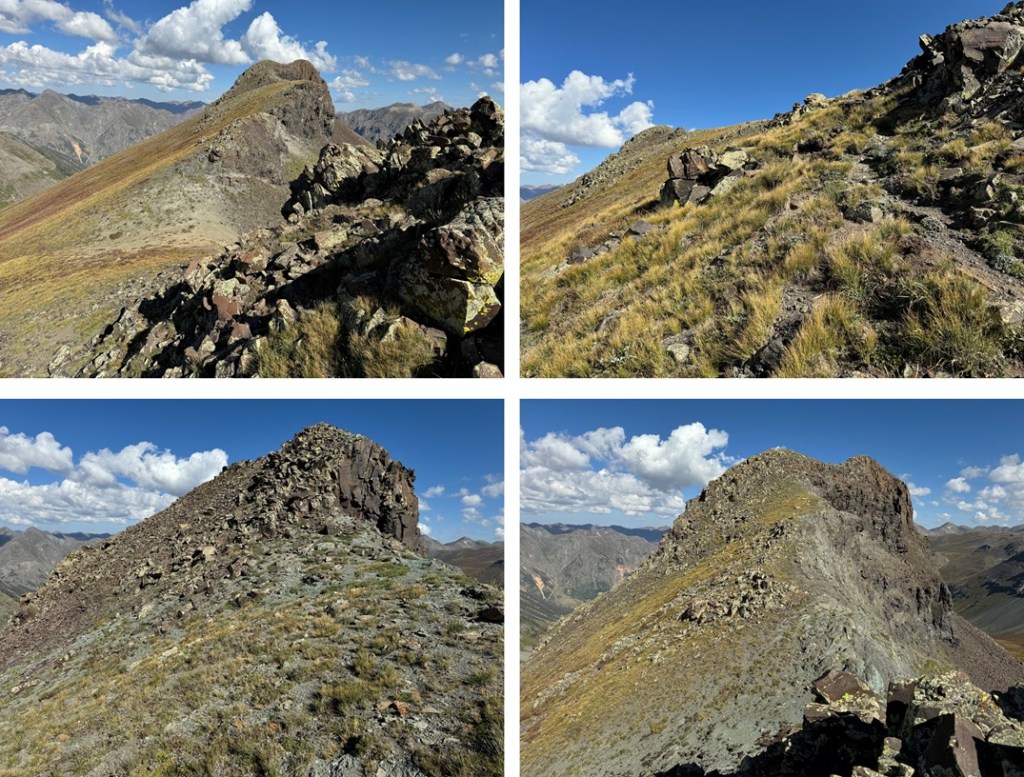
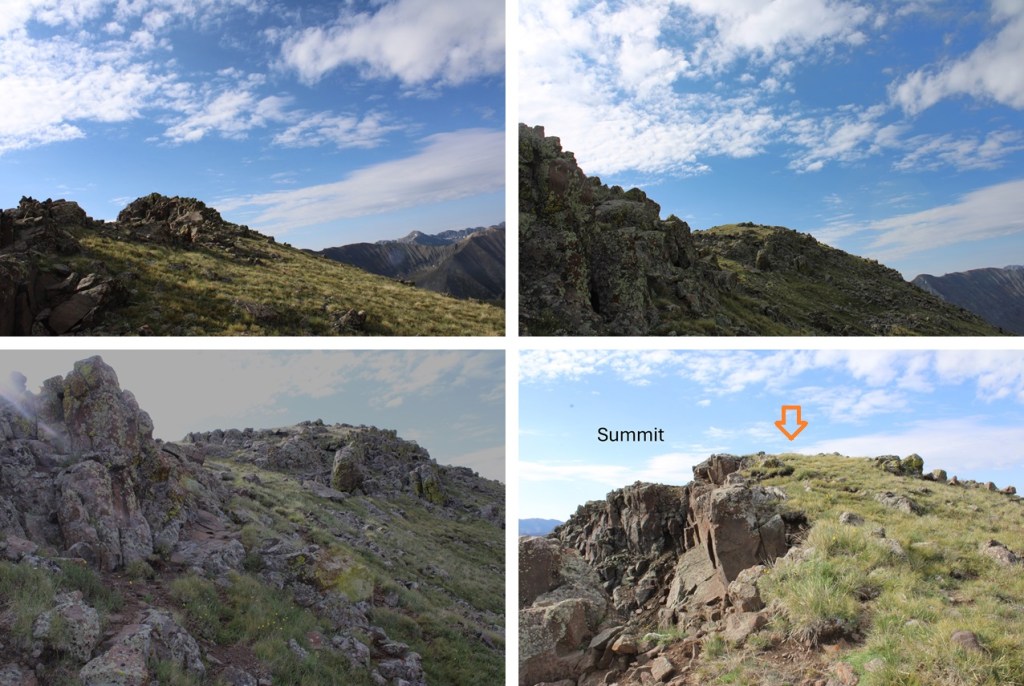
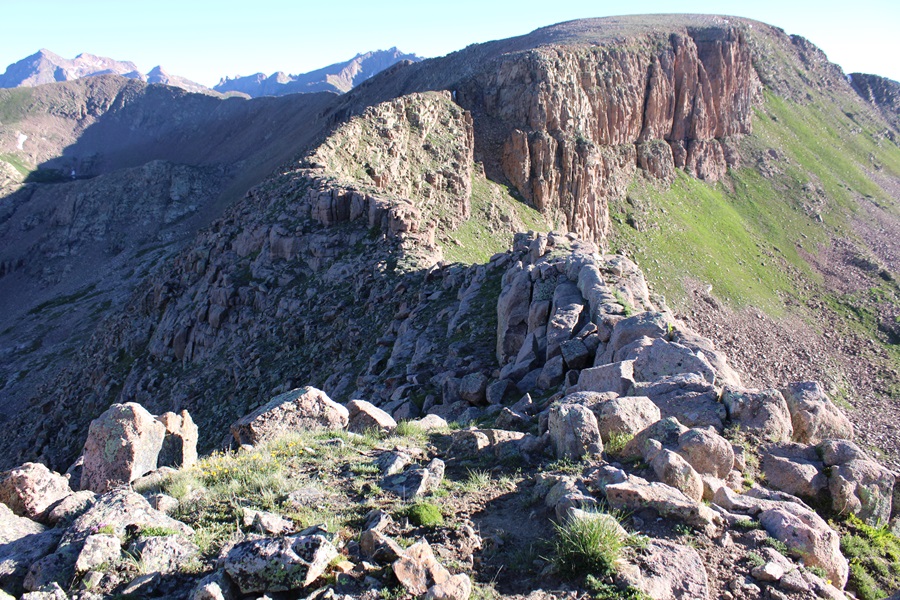
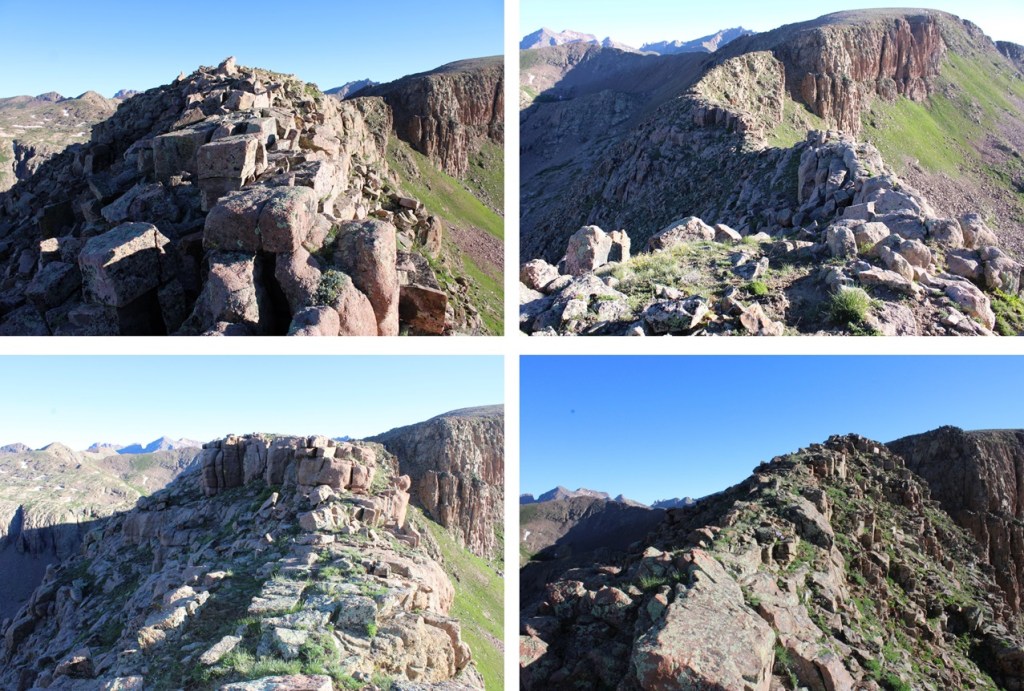
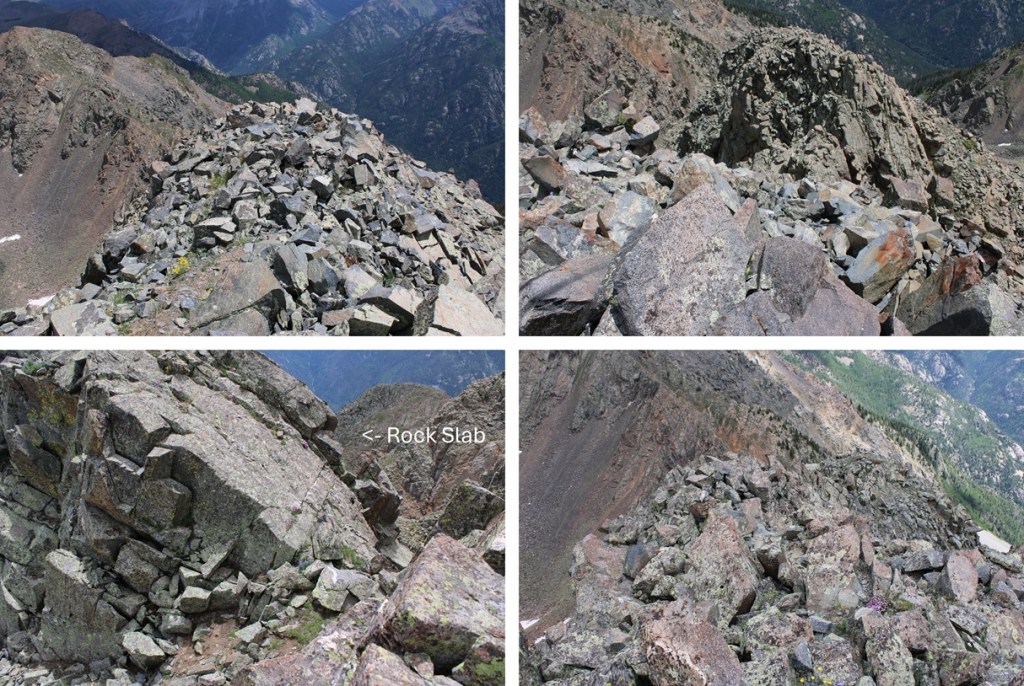
Once on the ridge it was still choose your own adventure.  I stuck mainly to the ridge itself in class 3 terrain.  There was one ‘sketchy’ move where I had to slide down a 10-15 foot boulder/rock slab and shimmy down.  It wasn’t difficult, but there was exposure.  The entire ridge for me was ‘figure it out as you go’.  I just kept following it up, never cliffed out, and kept heading southwest.
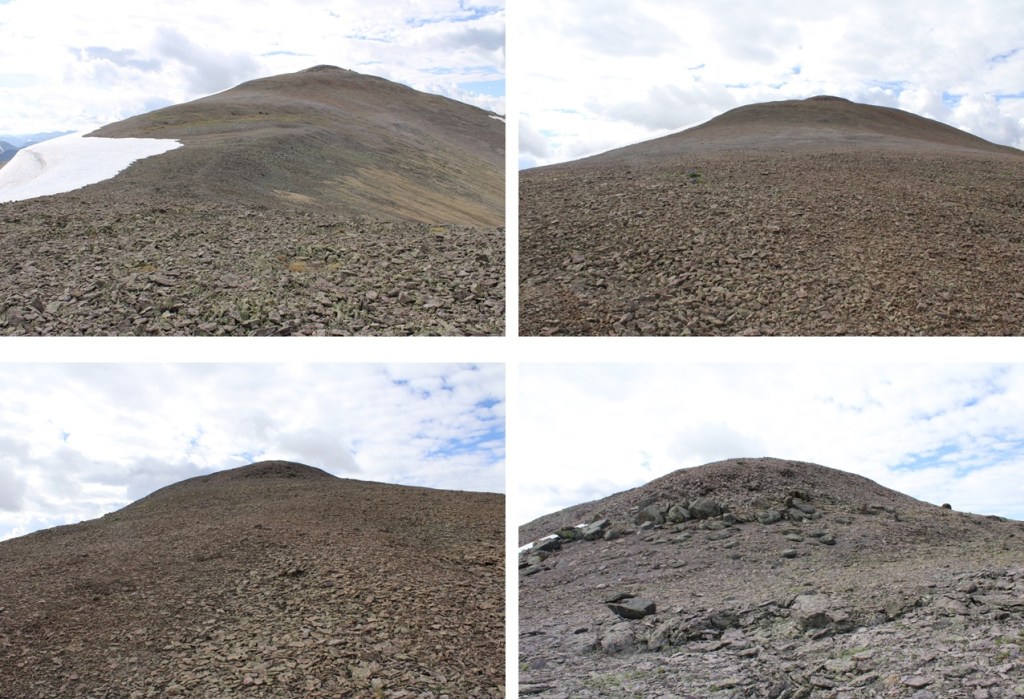
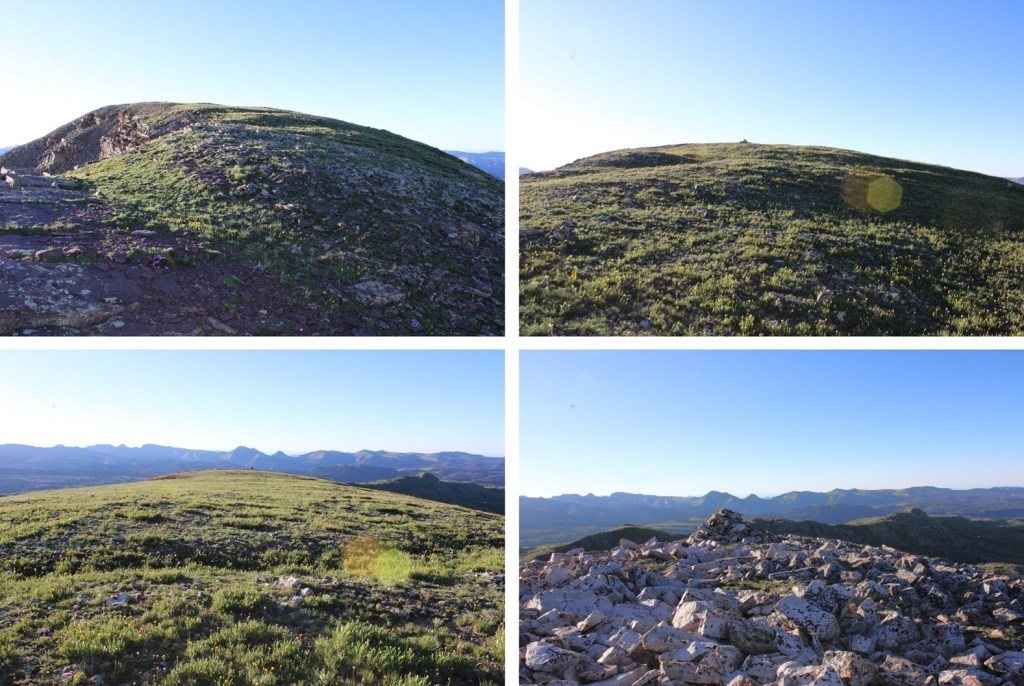
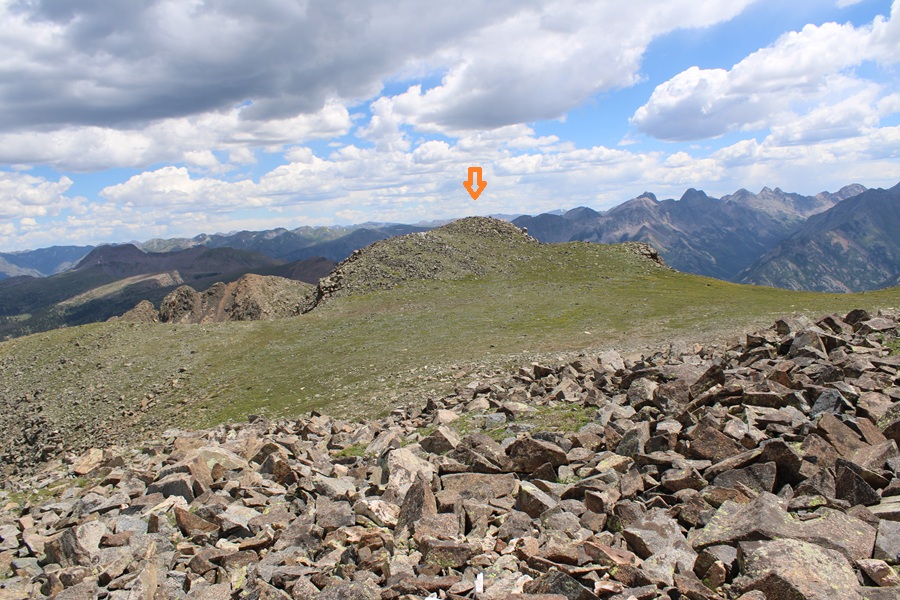
Of course there was a false summit, but luckily the terrain got easier from there.

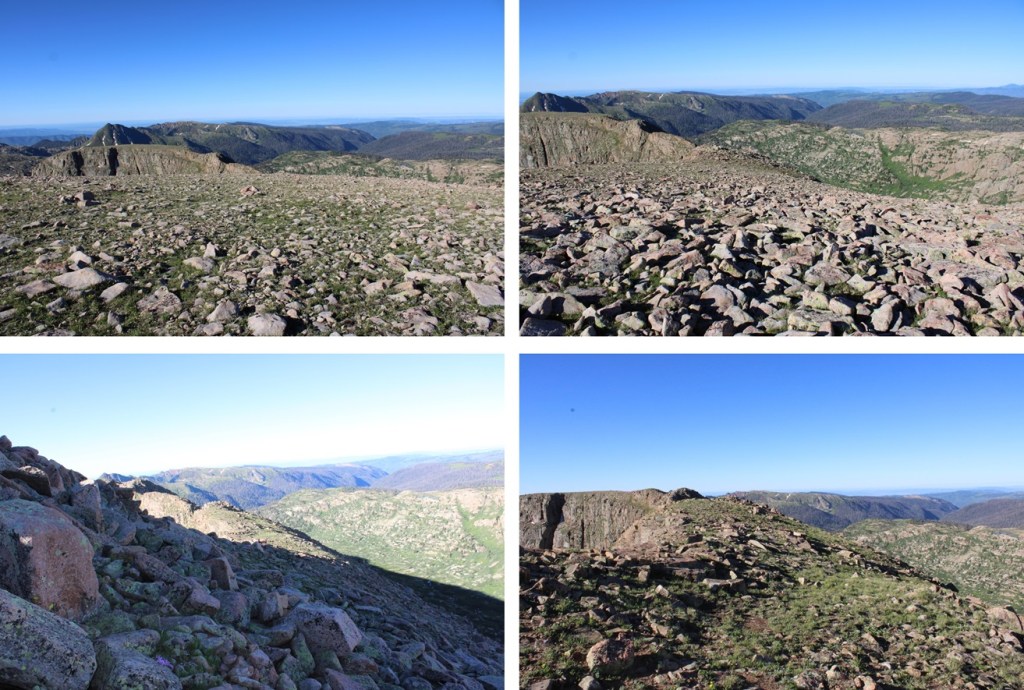
I summited West Needle Mountain at 11:40am
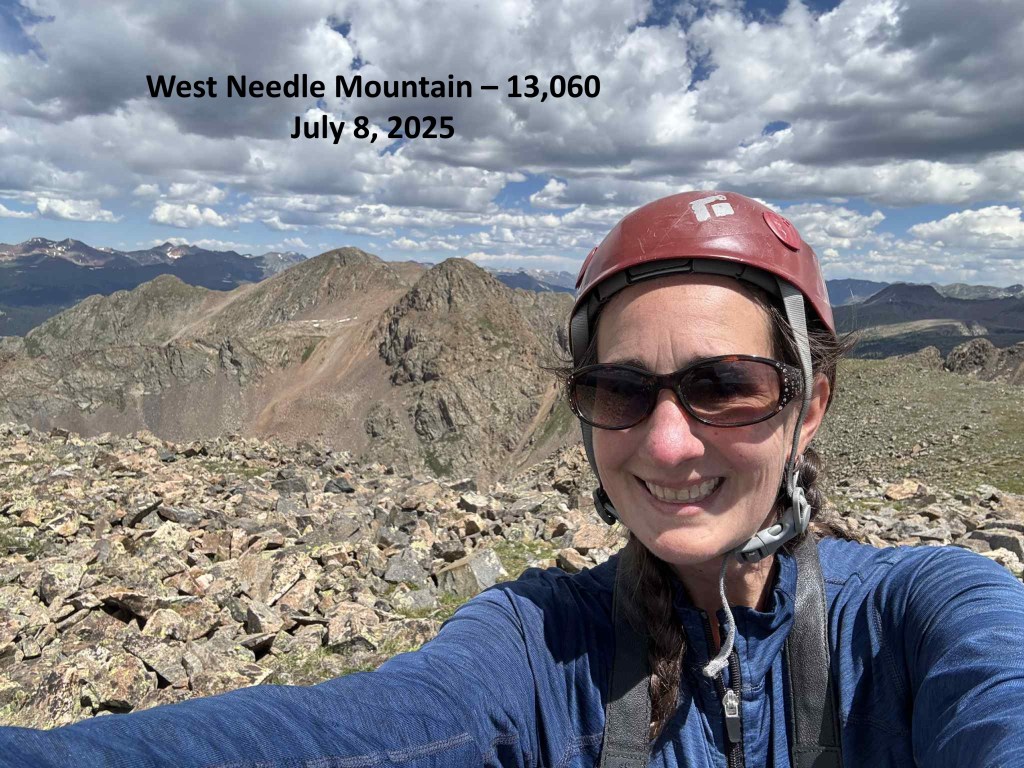
West Needle Mountain:

This was an out and back hike for me, so I turned around and headed towards the false summit
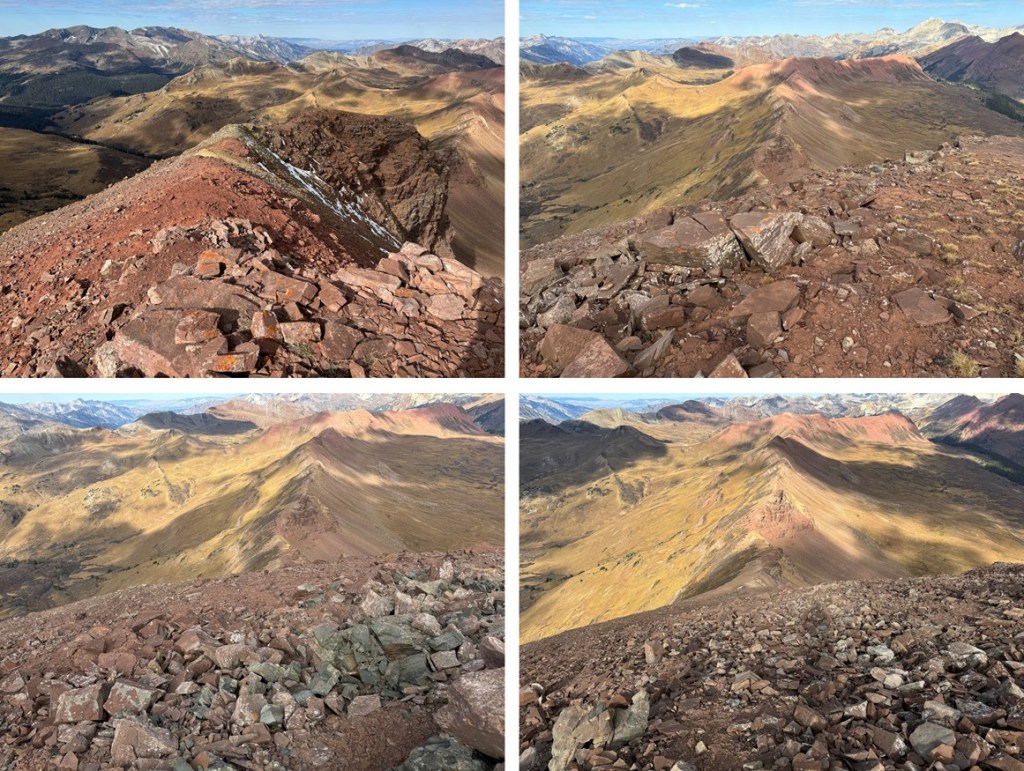
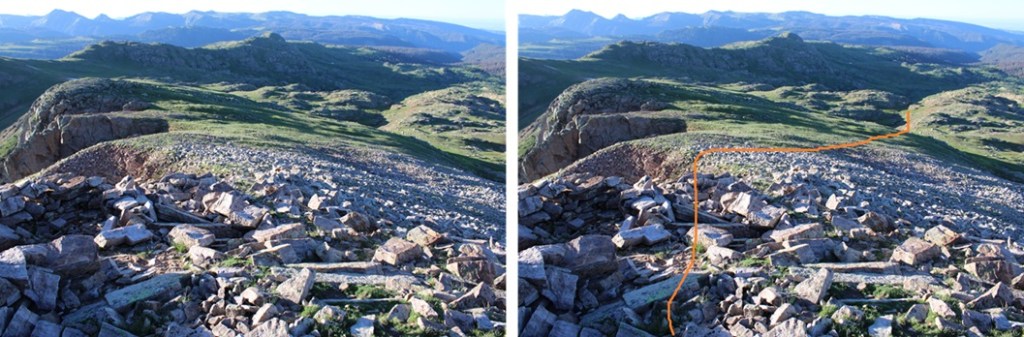
Then back down the ridge.  Downclimbing seemed much easier than upclimbing on this route.  The route was easier to ‘find’ on the way down.
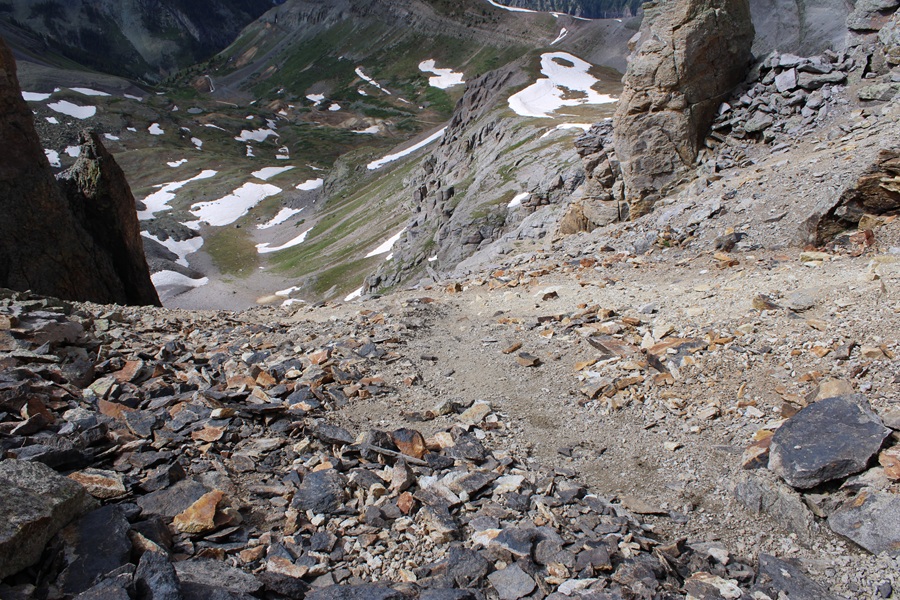
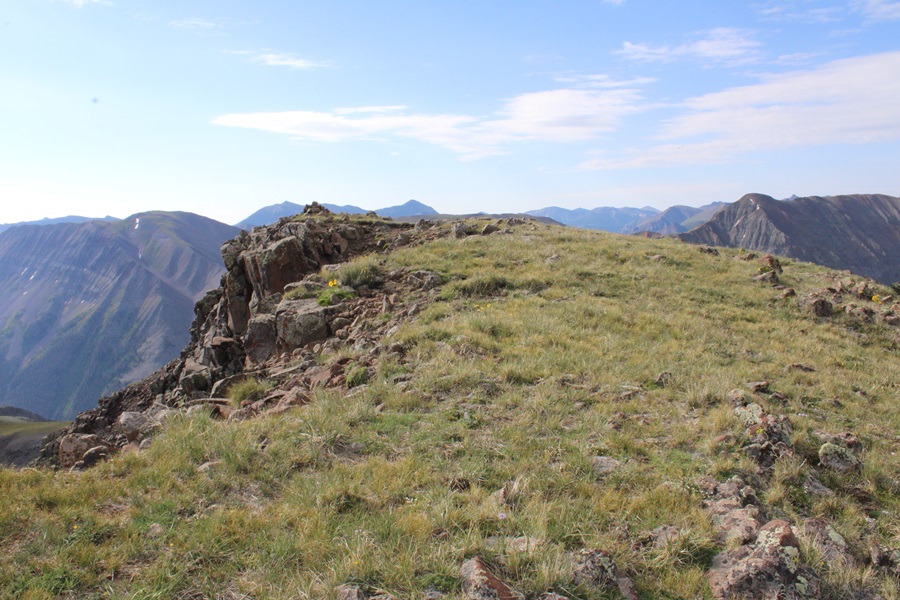
And then back towards the gully.  It’s easy to know when to start the descent towards the gully as the terrain gets noticeably easier and you have a line of sight as to where you need to descend.
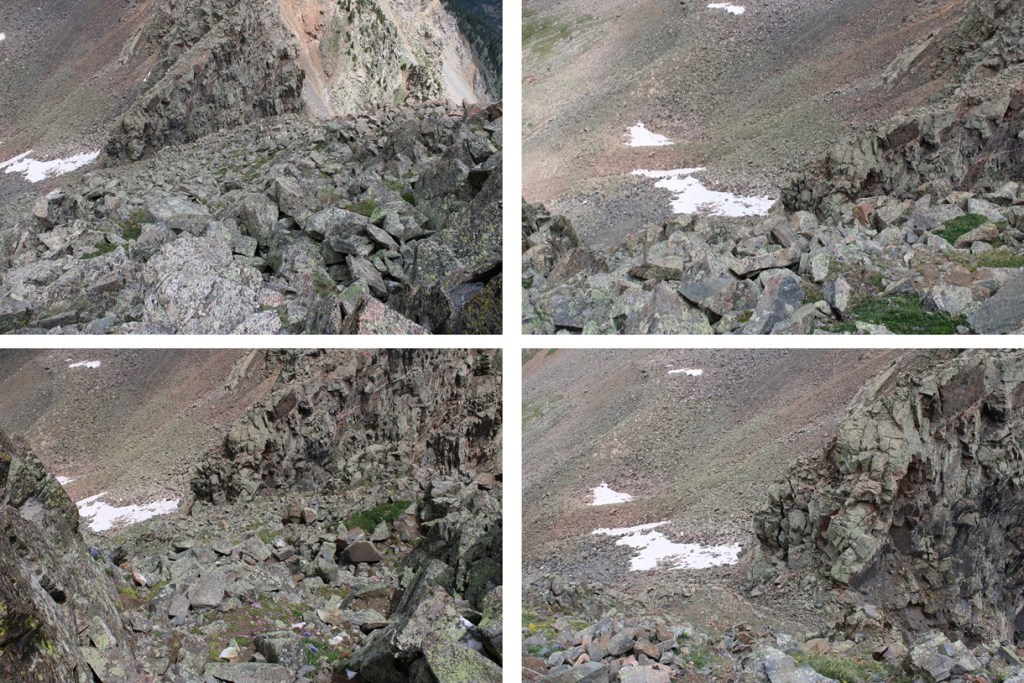
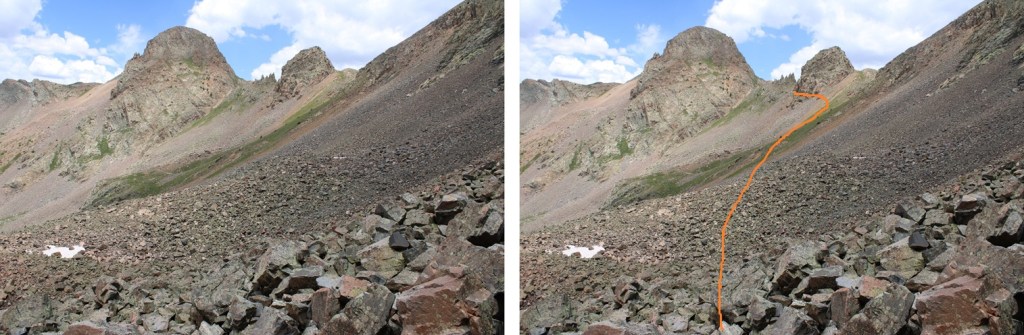
From the base of the gully this is my route back up to the saddle. I’d be ascending about 250’ to get there.
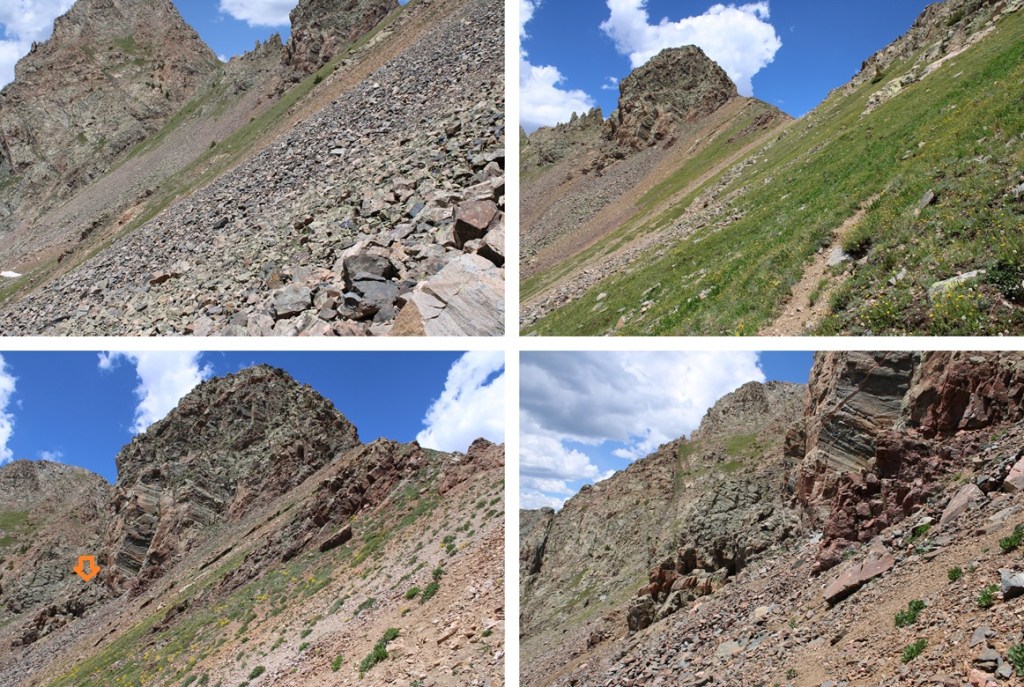
Then it was back down the gully and up towards the saddle
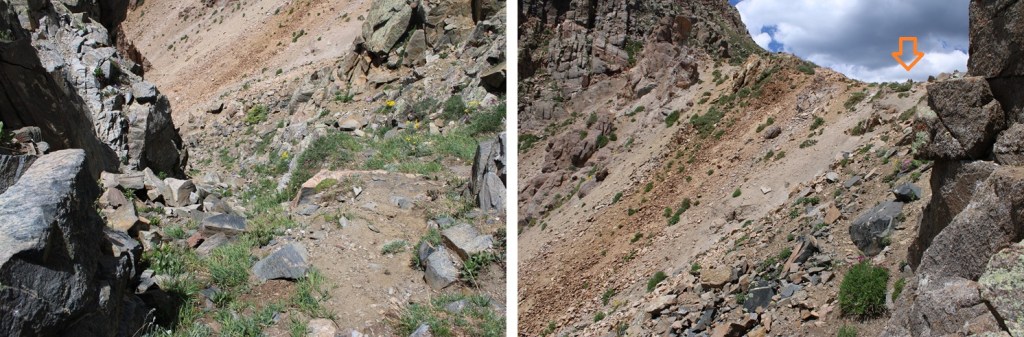
From the saddle I could see my route back towards Crater Lake.  I’d descend back down 1260’, then up 400’.
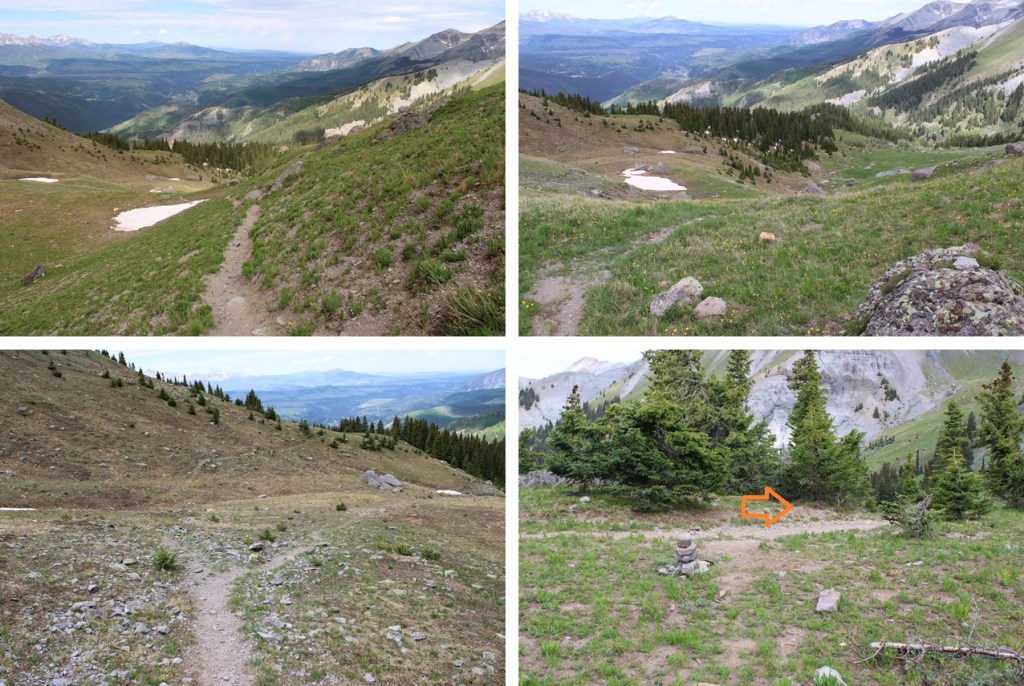
First to head back down the drainage

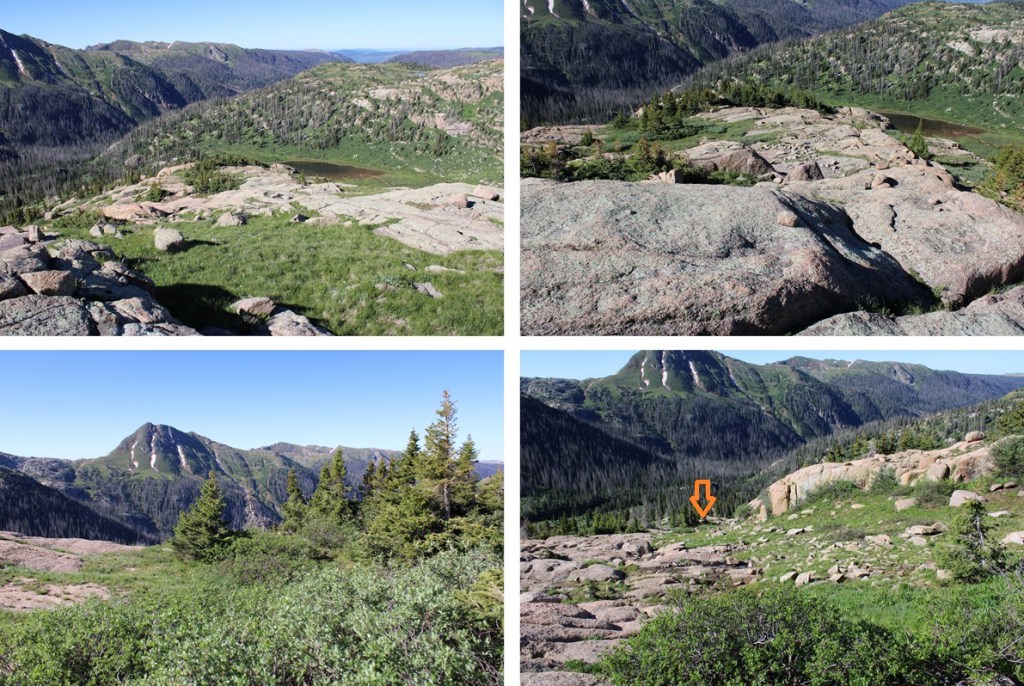
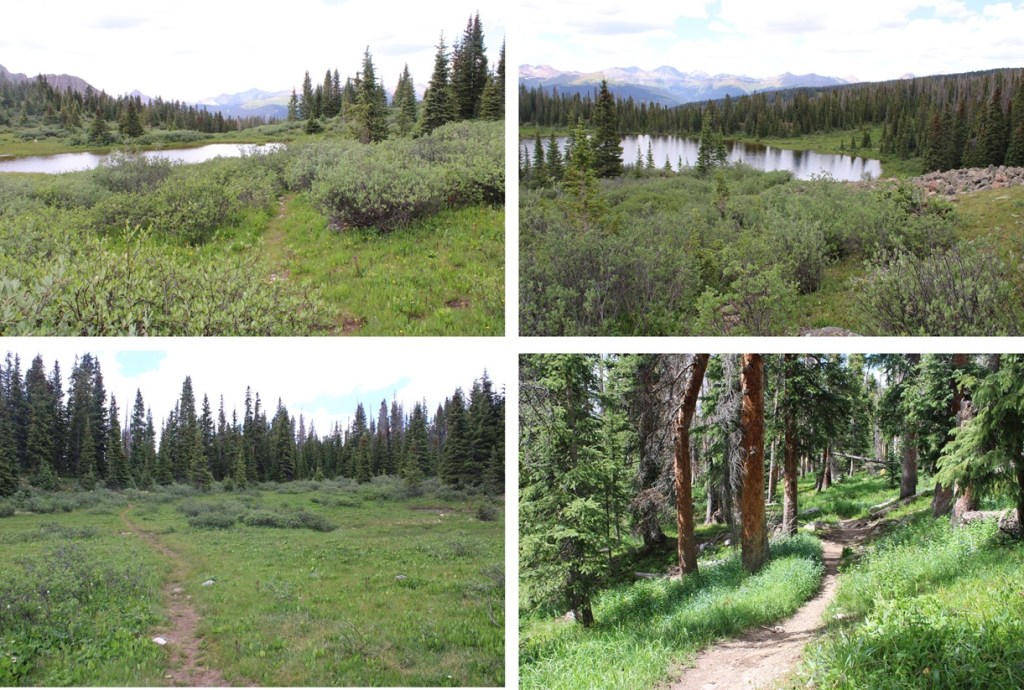
Then to head back up towards the pond at 11750’.  To help me navigate I first aimed for this large boulder in the distance, then headed north through the trees.

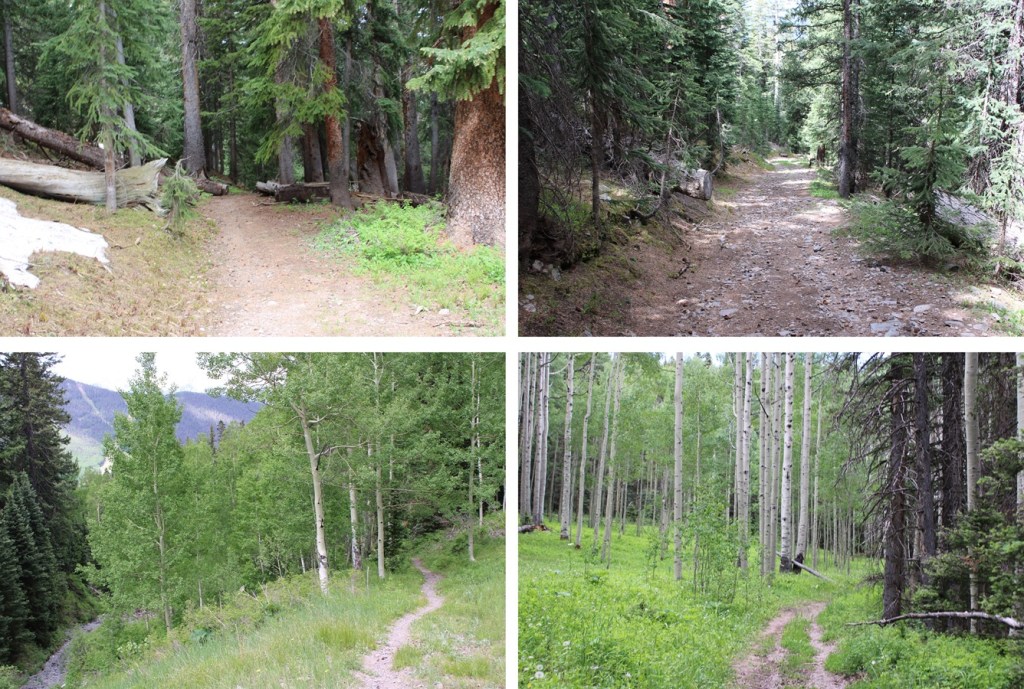
Once at the pond at 11750’ I found the Crater Lake Trail and took it the 5.5 miles back to Andrews Lake.
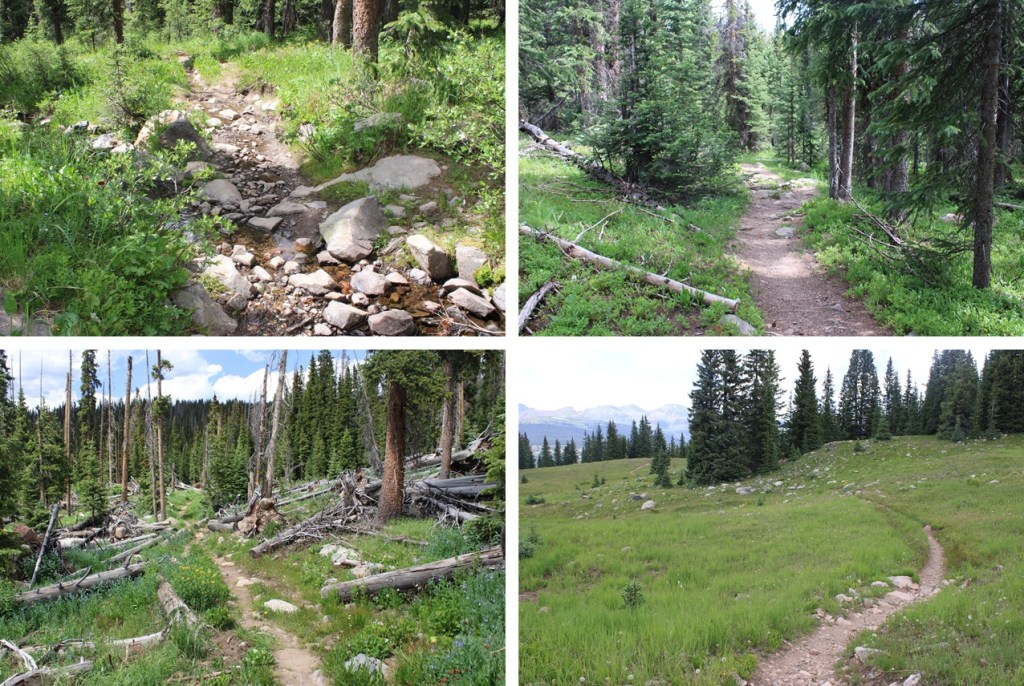
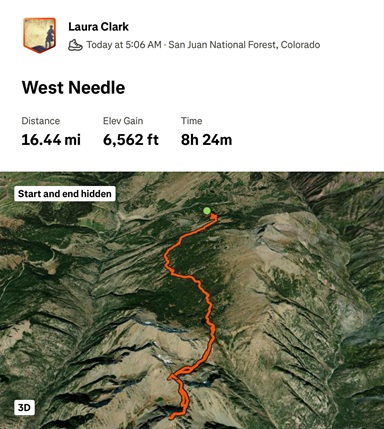
I made it back to my truck at 5:30pm, making this a 19.1 mile hike with 4853’ of elevation gain in 11 hours, 30 minutes.  At least according to CalTopo. Strava gave me different numbers.
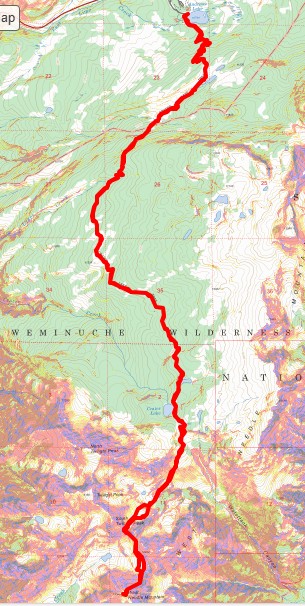
On to the next trailhead!
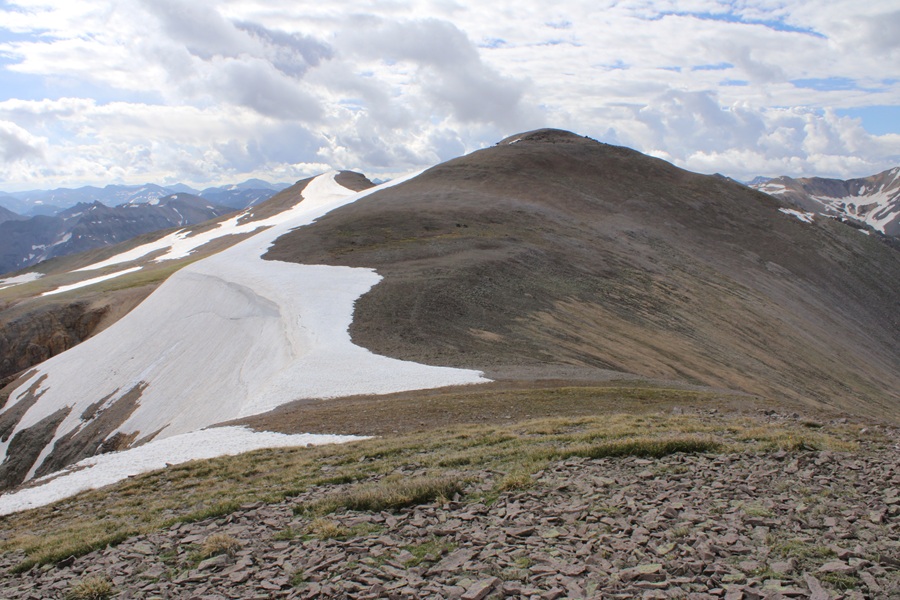
T5 – 13,437

RT Length: 10.6 miles

Elevation Gain: 4688’

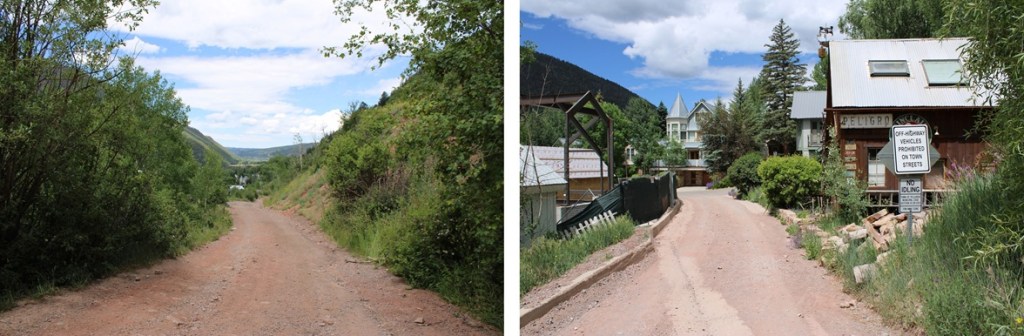
First of all, parking in Telluride is challenging.  I arrived the day before and when I got to the trailhead there weren’t any parking spaces available for any vehicles to park there at all, so I turned around and looked for a place to park in town.  Nope.  Nothing.  There were signs everywhere stating it is illegal in Telluride to sleep in your vehicle (how can THAT be legal?), and all lots had 2am-6am “No Parking or you’ll get towed” restrictions.  Street parking was limited to 2 hours unless you were a resident and had a pass.  This was frustrating!  I was glad I’d arrived a day early.  Not sure of what to do, I called the Chamber of Commerce/Tourism and they told me I could park in the parking garage ($2 per hour, but $50 if I stayed overnight), or try the residential area off Galena and park in front of someone’s house.  I couldn’t park there overnight, but it should be ok for day use.  I found a dispersed campsite away from town and came back early in the morning to try Galena Street.  I was able to find a spot in front of someone’s house, which I felt weird parking in, and I was on my way.  With all of the crazy restrictions I hoped no one would tow my vehicle.  I took Galena to Tomboy and hiked the road to the trailhead.

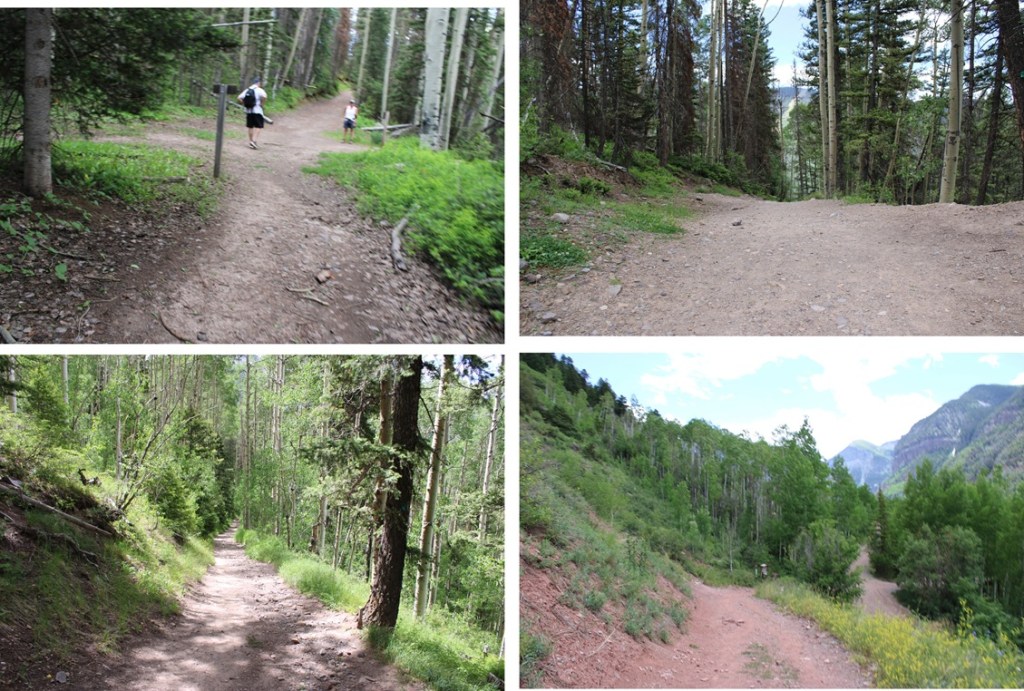
This was labeled on CalTopo as Liberty Bells Trail, but the trailhead called it the Jud Wiebe Trail.  I’ve found a lot of inconsistencies with Telluride trail names.  The gate was locked to vehicles so I walked under it and was on my way.  The trail starts out heading northwest towards some water tanks and then continues heading northeast to treeline.  The trail was very well maintained and easy to follow.  The wildflowers were on point.

On CalTopo this trail is labeled as the Liberty Bell Trail, and it goes through Liberty Flats.  Let me tell you, there was nothing flat about this trail.  It kept climbing up, up, up, alternating from being a trail to being an old 4WD road.

After hiking for around 1.3 miles (from where I’d started) I came to a junction for the Jud Wiebe Trail.  I continued straight on the Liberty Bells Trail.

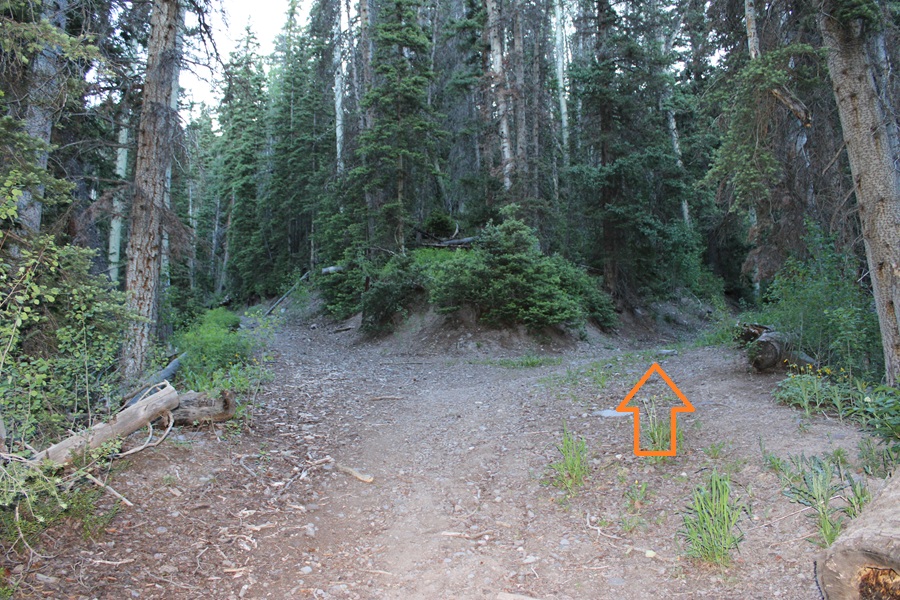
I came to another unnamed junction, and not really knowing which way to go since it wasn’t on any of my maps I went right.  This happened to be the correct choice.

I continued following the trail past an old mine and up to treeline.

At treeline I came to a junction with the Sheridan Crosscut Trail and turned left.

This trail was a bit fainter but still easy to follow.  I headed northeast up the basin to a ridge.  Here’s an overview of the route:

And some pictures to that ridge.  Here is where I put on my microspikes and kept them on to the summit.  The trail in many areas looks like it has been washed out due to rockslides/snow and some of the areas are sketchy.  Unstable scree abounds.

At the top of this ridge the trail turned and started heading northeast, rounding down into the basin and then gaining the ridge.

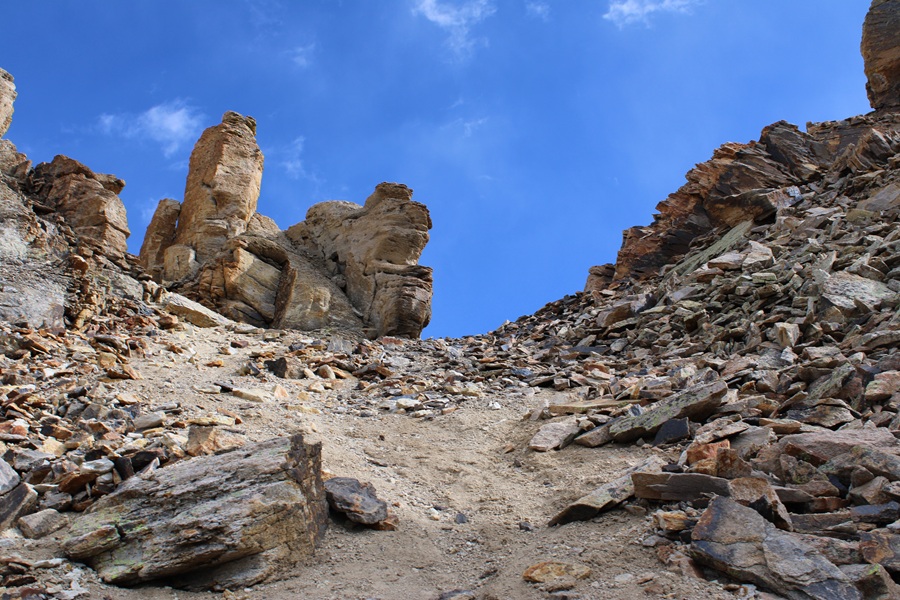
Here’s an overall picture of where you’re headed.  There’s a good trail to get you to the base of a gully in the distance (but still keep an eye out for loose rocks/scree).

And some pictures along the way to the small gully

It’s obvious where to ascend the gully, as the trail stops.  I turned and headed north to the ridge.  The gully isn’t very long, maybe 100 feet or so of elevation gain.

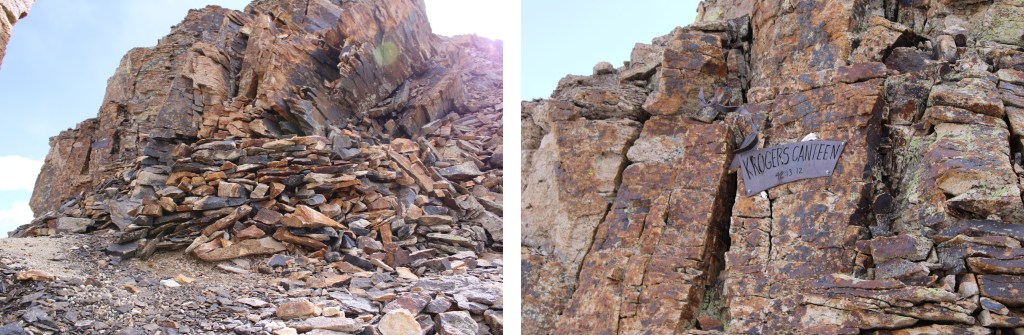
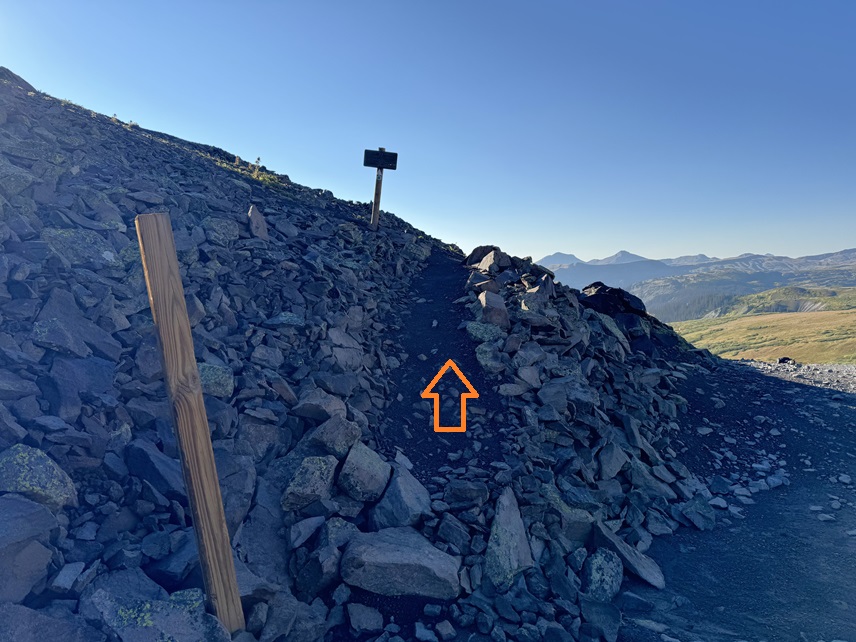
At the top of the gully is a wind break made out of rocks, and a sign that says “Krogers Canteen”.  There were also beer bottles on the ground that hadn’t been opened (but were only halfway full).

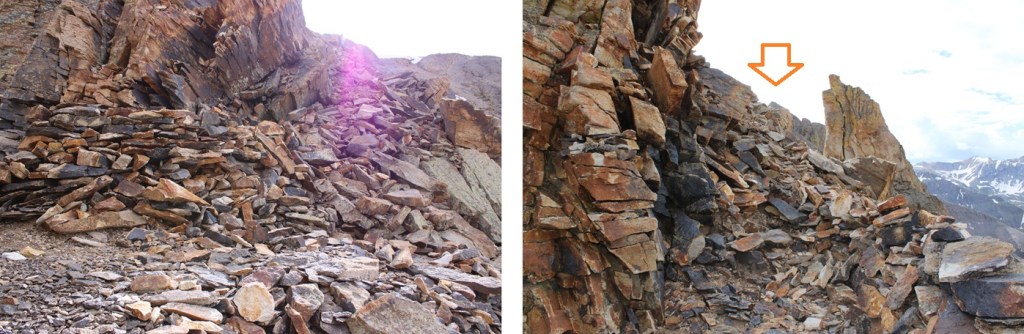
I walked through the wind break and followed the ridge east

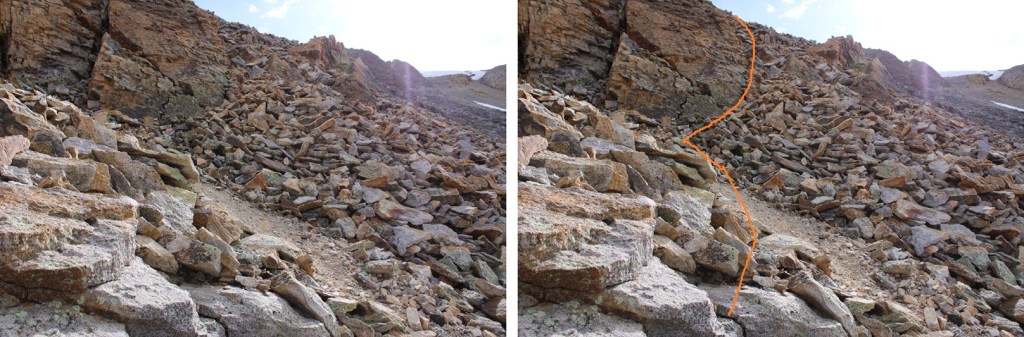
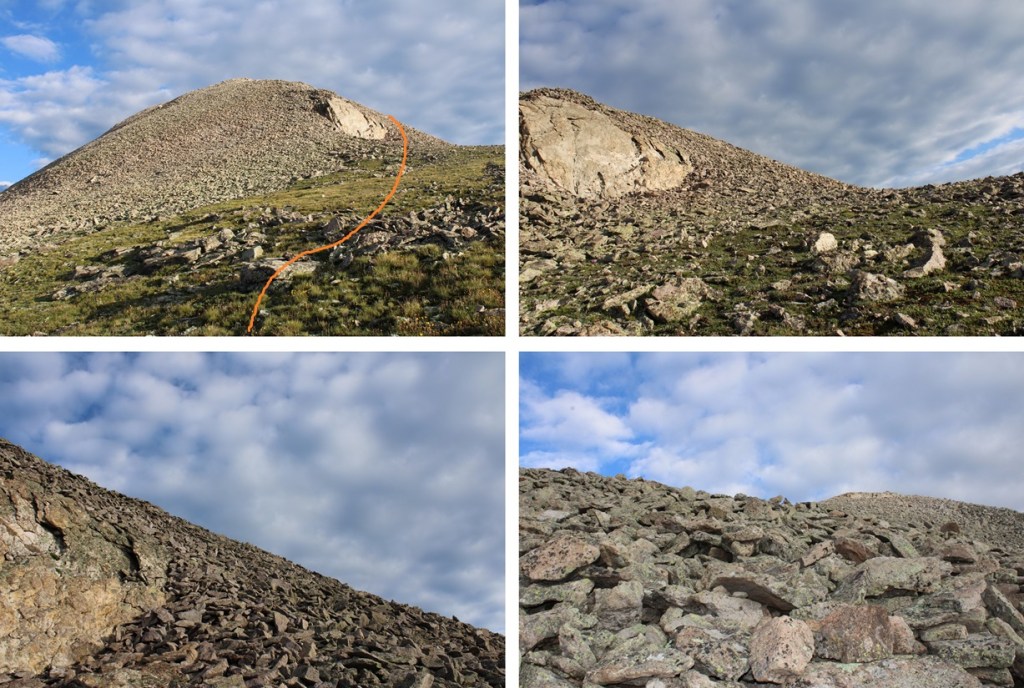
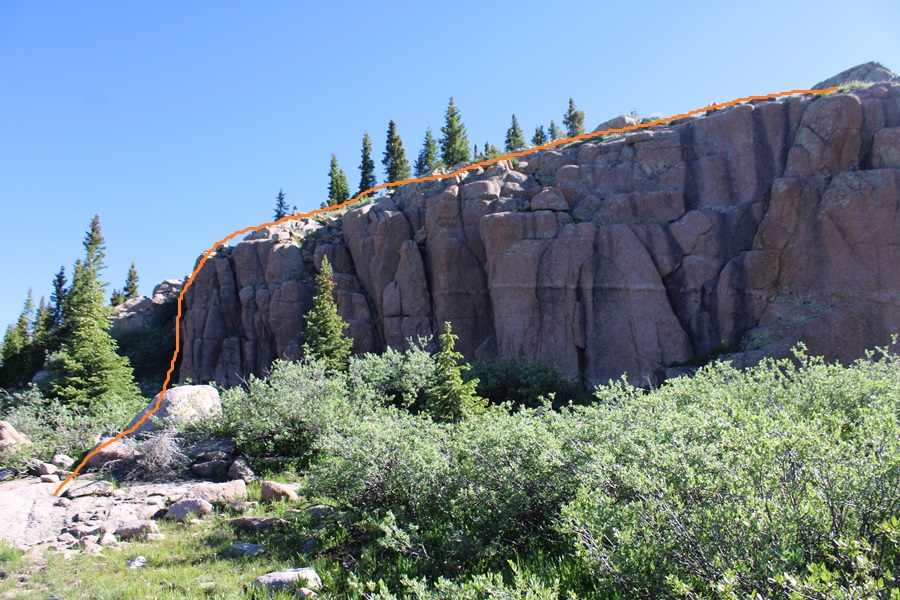
This is what I considered the “spiciest” part of the route.  I’ve outlined the route up, but recent rockfall has made this area especially unstable.  Scree-valanches will start from underneath you and rocks will fall like an hourglass from above and below.  It looks like there used to be an easier way to ascend, but recent rockfall has changed the route.  There are parts of what used to be a trail here.

Now on the ridge I followed it east towards 13337 (false summit).  There was some unavoidable snow to traverse. I went both ways around the boulder in the middle, one on the ascent, the other on the descent. Both were class 2.

The toughest part was over, now it was a class 2 ridge hike following the ridge to the summit (after going over the false summit first).

From the top of the false summit it was an easy ridge hike to the summit of T5

I summited T5 at 9am

T5:

Now to head back down.  This was an out and back hike for me, so I turned around and headed back the way I came.

I headed back towards the false summit

And then back down the snow to the gully

I then carefully navigated my way back down the to the gully and back to the trail below.

Once on the trail I followed it around 4 miles back to the trailhead.

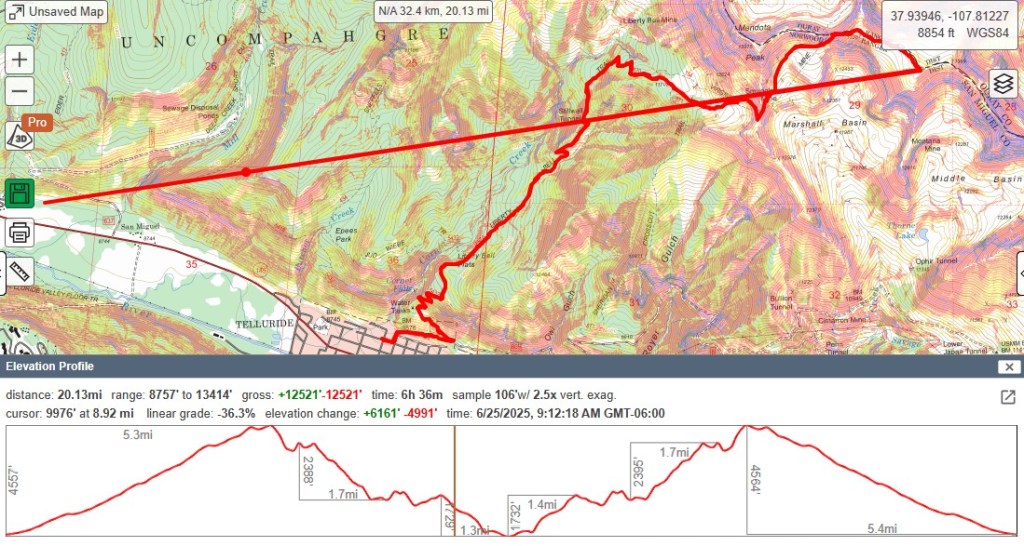
I made it back to my truck at 11:45am, making this a 10.6 mile hike with 4688’ of elevation gain in 6 hours 30 minutes.  Sorry about the poor topo.  Something happened with Strava halfway through my hike and it pinged back near 145, then back up to me for the descent. Gotta love technology.

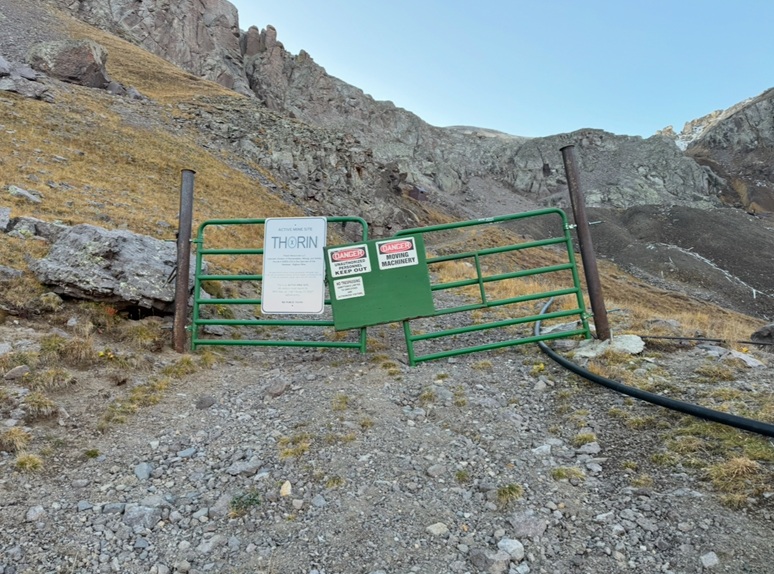
Also, I’d already attempted this peak the easier way, through Governor Basin, but there’s now a sign saying it’s a working mine and you need permission to hike through there, so I turned around and tried a different route.

On to the next trailhead!

Mt Alice – 13,319

RT Length:  19.98 miles

Elevation Gain: 5159’

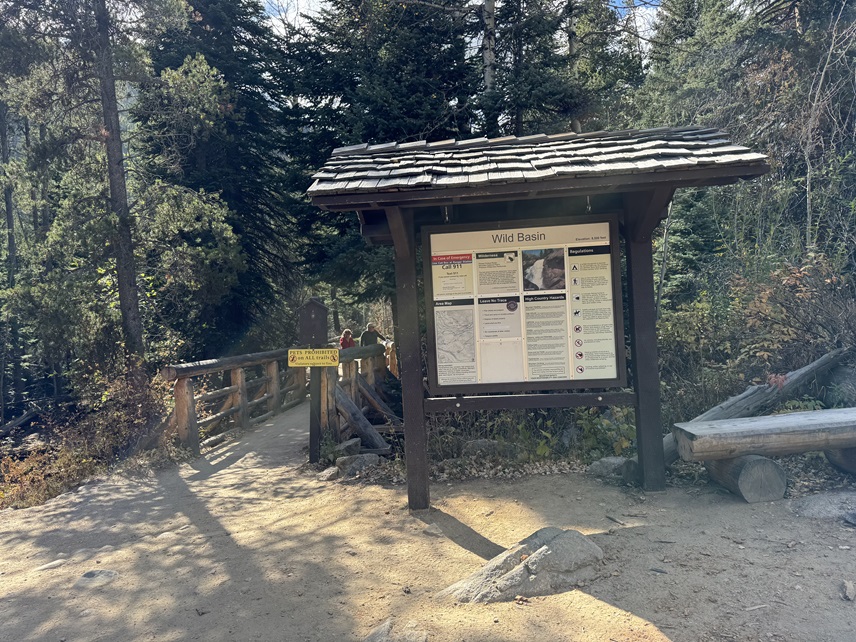
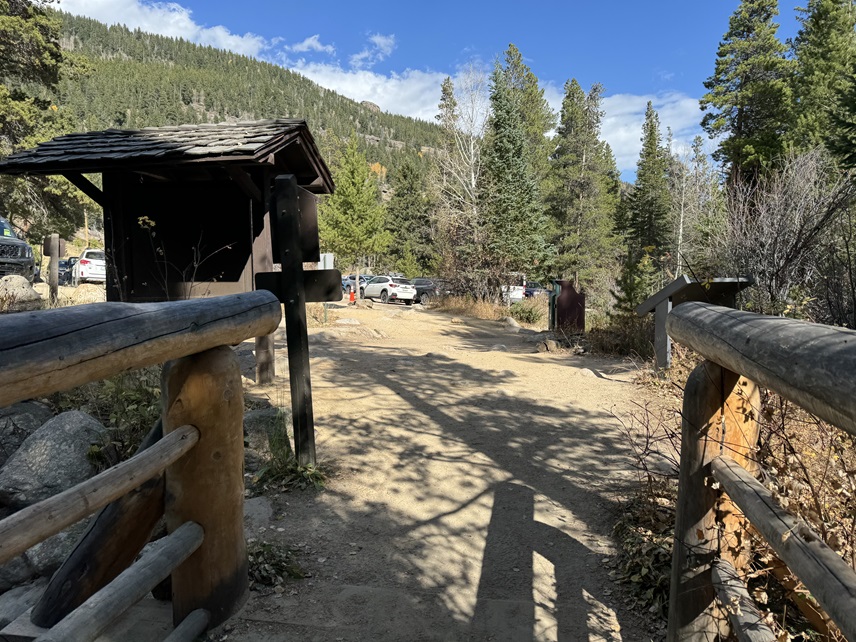
This hike, while long, was much easier than anticipated.  I arrived at the Wild Basin Trailhead inside Rocky Mountain National Park and was on the trail at 4am.   I’m sure most of you know this, but the park has an entrance fee, and timed entry for this trailhead between the hours of 9am-2pm.  The trailhead holds dozens of vehicles, and there’s a bathroom there.

The trailhead starts at the west end of the parking area and is clearly marked.

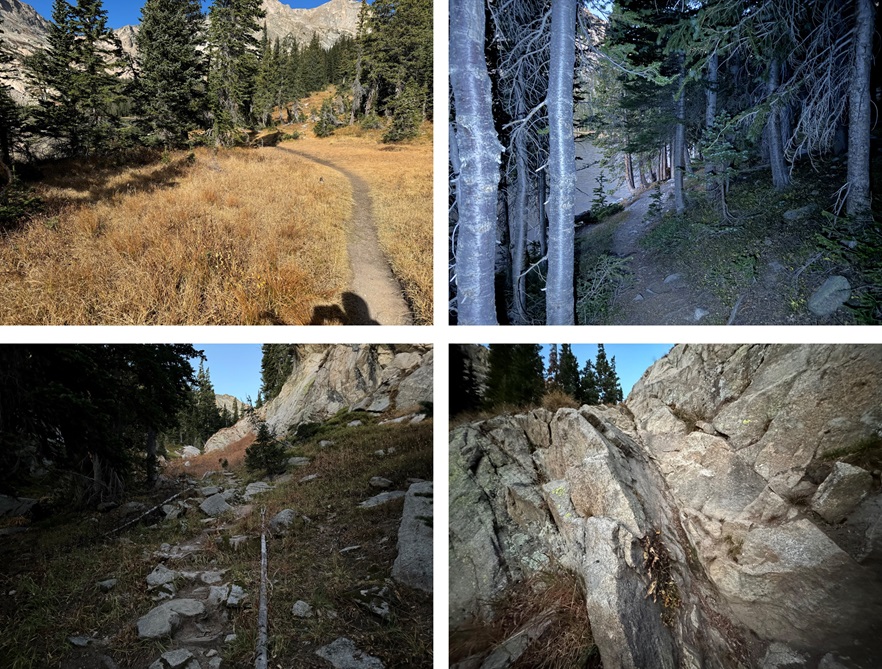
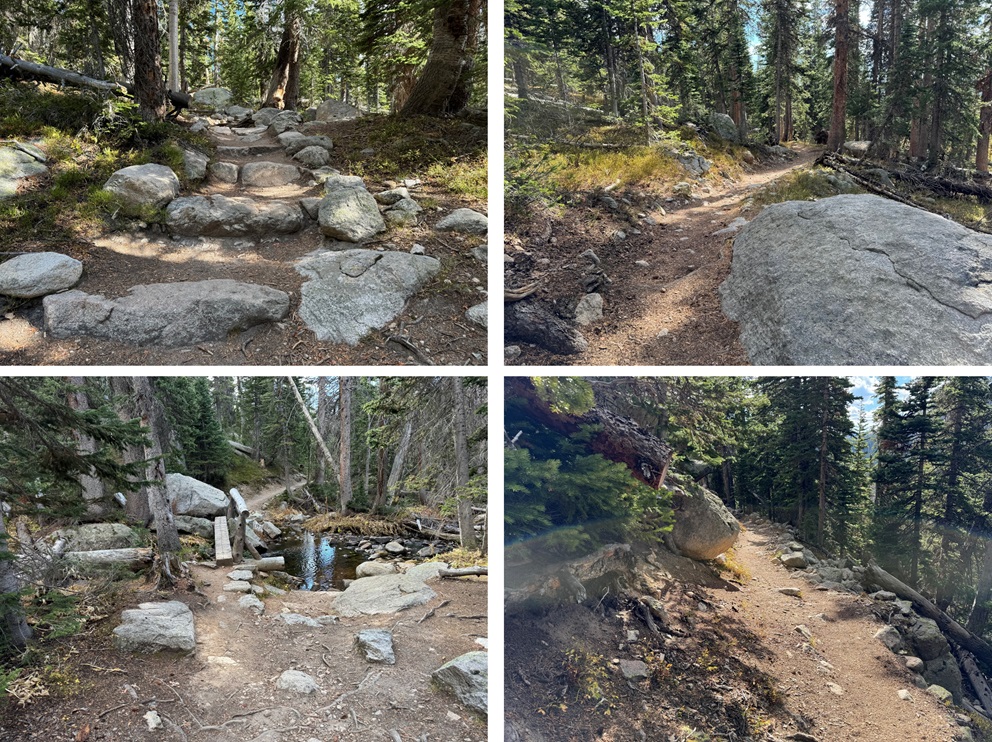
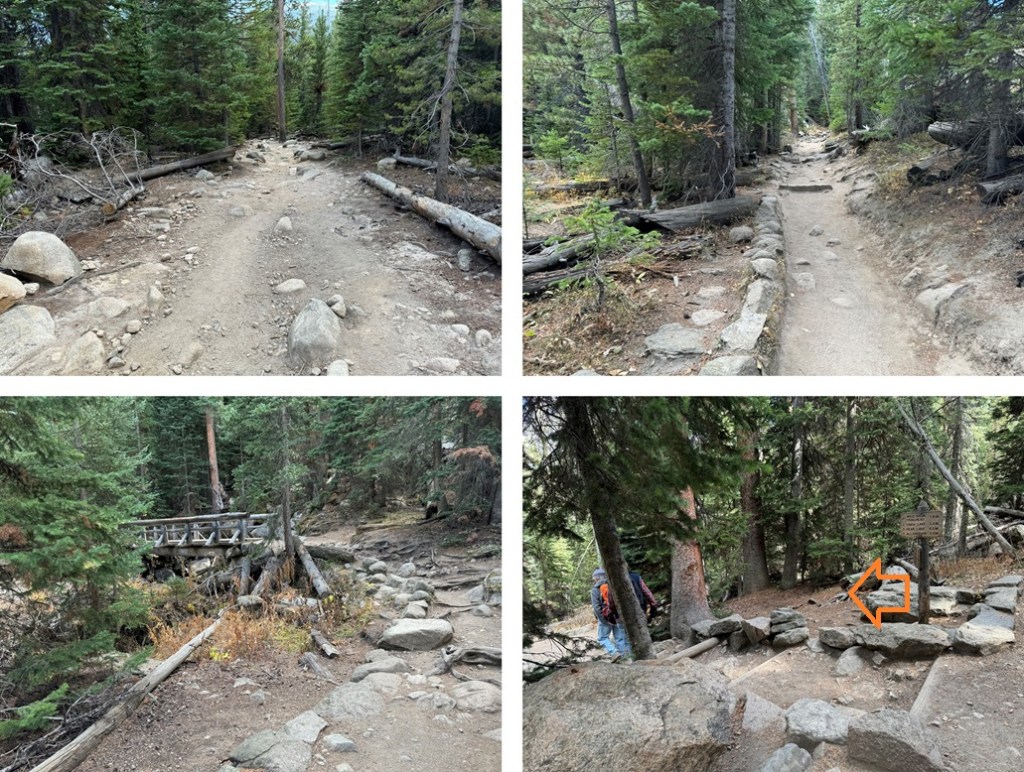
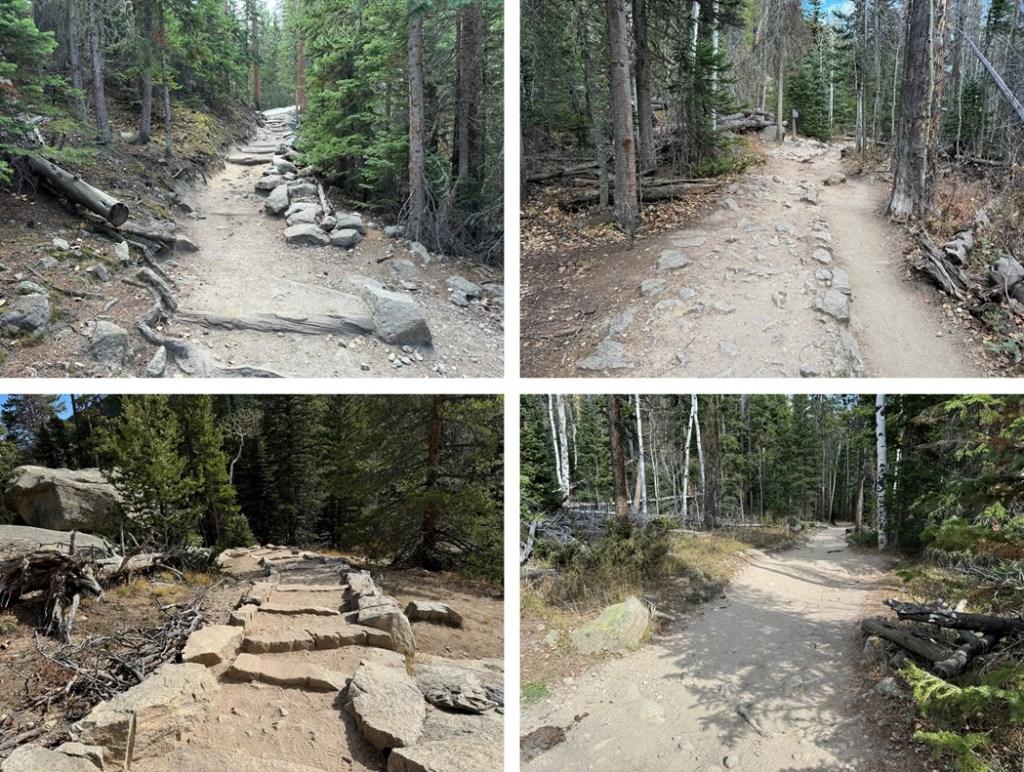
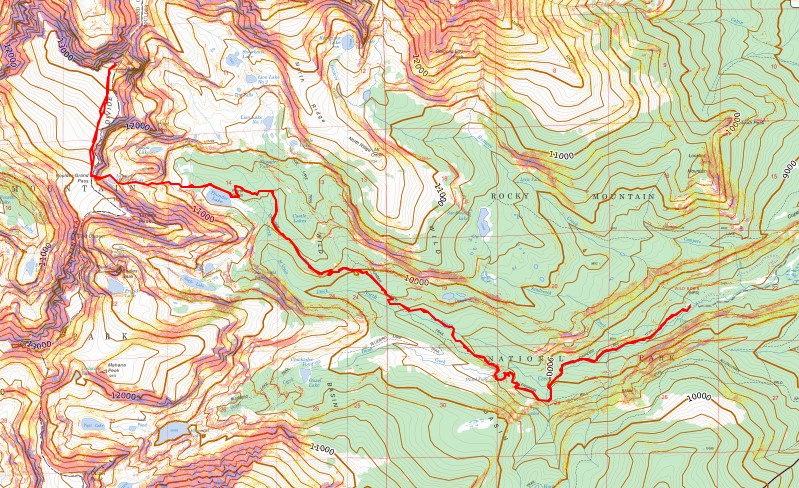
I followed the trail all the way to Thunder Lake. This is a class 1 trail with many junctions, but they are all clearly labeled.  I just kept heading towards Thunder Lake, and if Thunder Lake wasn’t on the trail sign (which it wasn’t always), I followed the signs to Ouzel Falls, and then Thunder Lake was on all the rest of the signs.  Along the way I passed Calypso Falls and Ouzel Falls.  Here are some pictures of the trail and junctions to Thunder Lake:

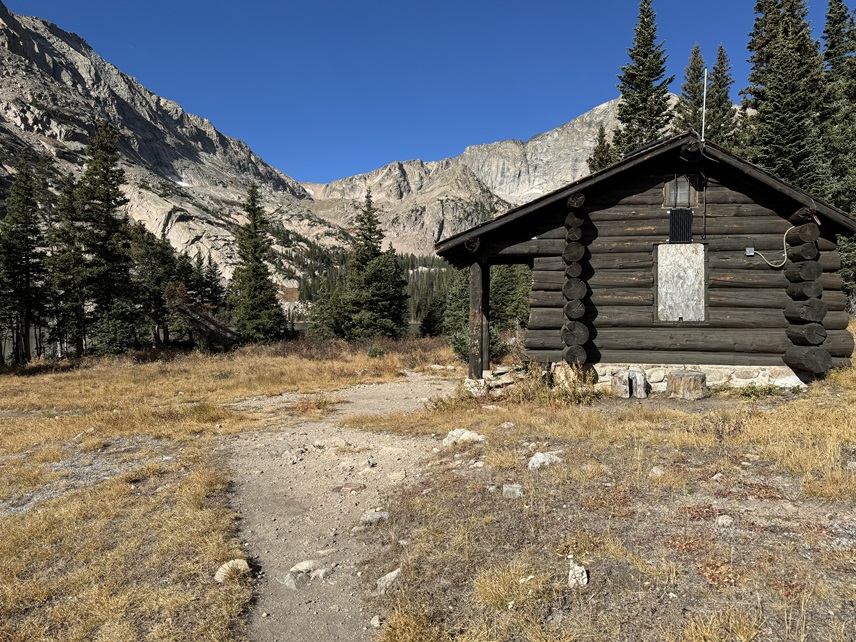
After hiking for a total of 7.2 miles I made it to Thunder Lake, and the Patrol Cabin (which was now boarded up for the winter).

Here the trail continues, skirting the north side of Thunder Lake, then continuing into the trees, heading west all the way up to Lake of Many Winds. 

At Lake of Many Winds the trail stops, but the route finding is class 2 and easy to figure out. I kept heading west, aiming for the saddle between 12er Tanima and Mt Alice, otherwise known as Boulder-Grand Pass.

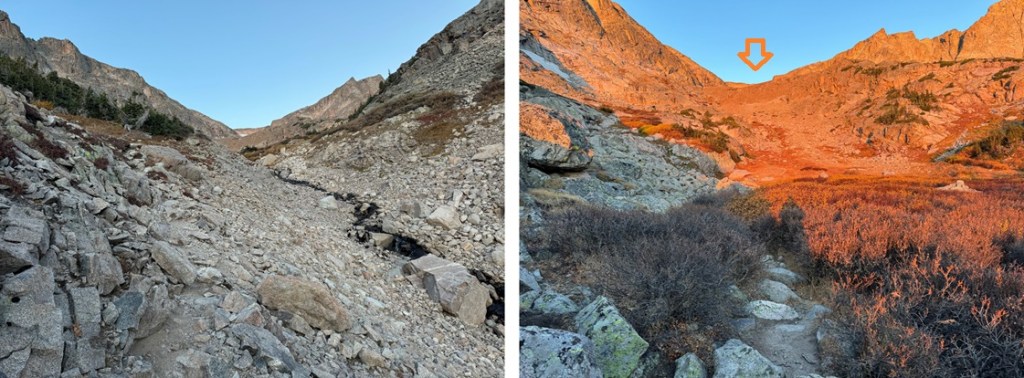
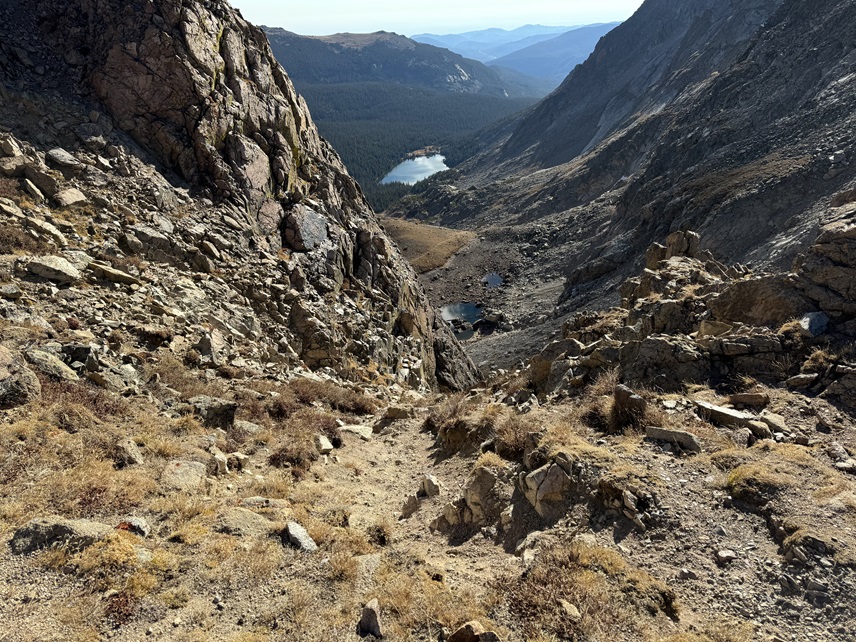
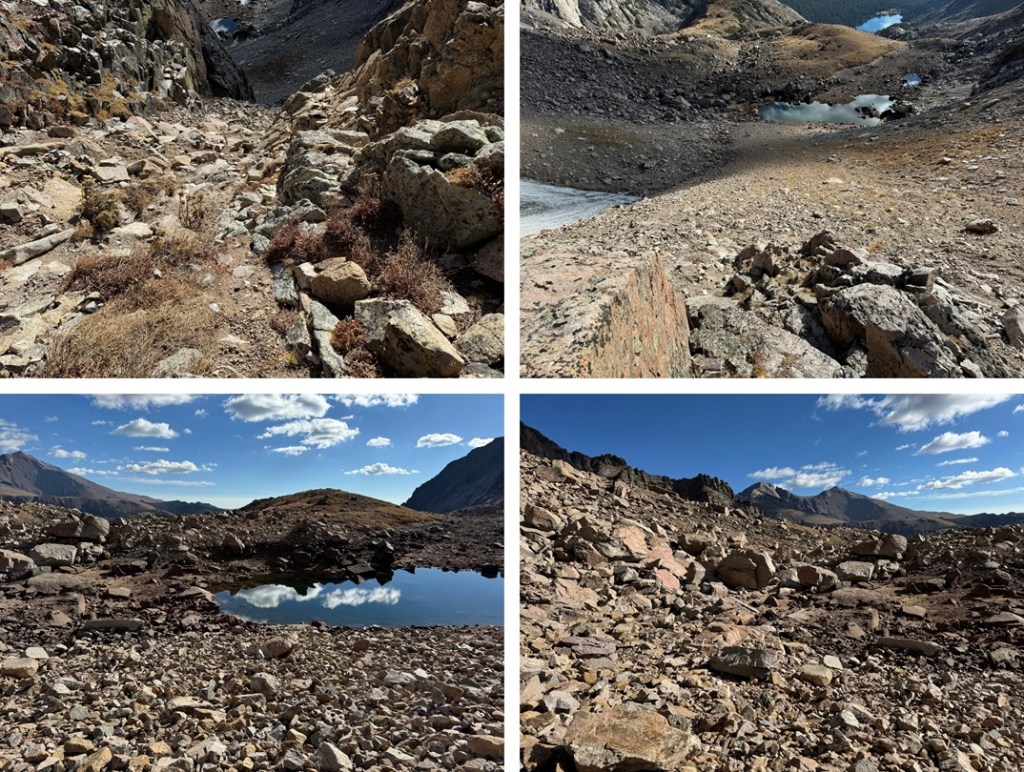
This part is choose your own adventure, but the remainder of the hike is class 2.  You’re just trying to gain the saddle.  I’d been here before (when I was climbing Isolation), and just went down the scree, which worked well.  However, this morning I wanted to try the gully to the right.  It was more solid than the scree and offered hand and foot holds.  You can take the scree up as well, as all routes here lead to the same place.

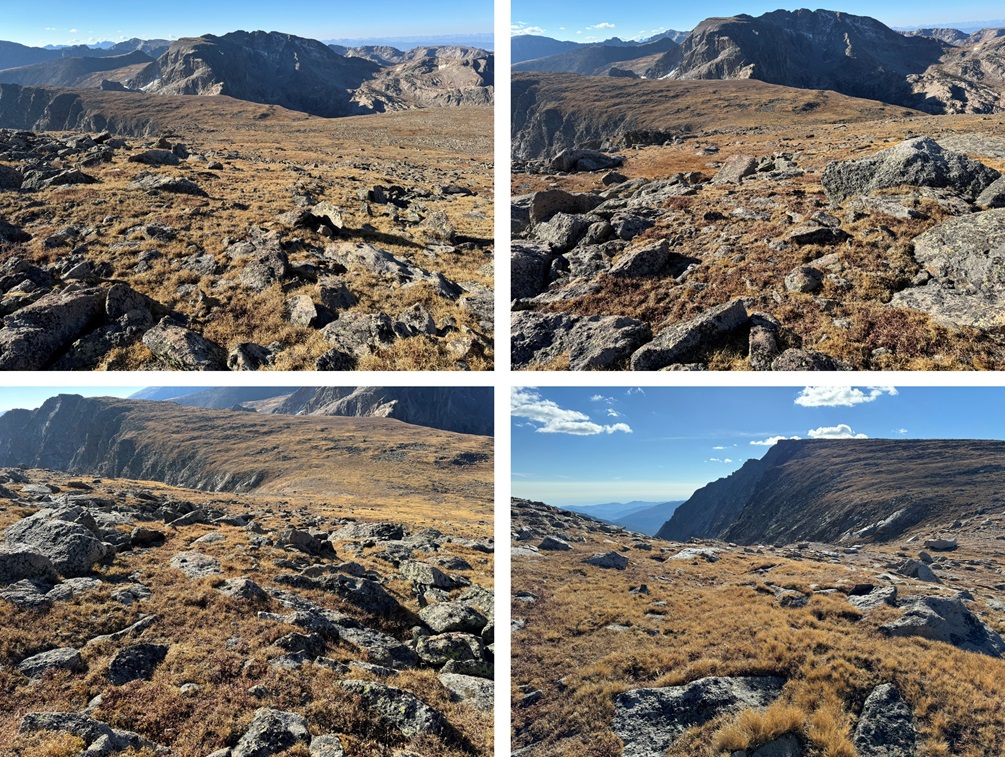
Once at the saddle, I turned right and ascended the ridge north.  The true summit is to the west (as per LoJ and my Peakbagger app, and summit register placement). 

This ridge has a gentle slope and is filled with tundra and large boulders.  I was easily able to navigate around the boulders, staying on tundra most of the way.  I just kept heading north.  I gained 1250’ of elevation in about 1.1 miles to the summit from the pass.

Eventually I could see the summit of Mt Alice come into view

This is the overall route I took to get there

The boulders here were stable, and rock-hopping was quick.  Before I knew it, I was at the summit of Mt Alice (which had a cairn and a summit register, but the register was open and empty).

I summited Mt Alice at 9am

Mt Alice:

Now to head back to Boulder-Grand Pass, I turned around and headed south, back the way I’d ascended.

I took the same gully back down to Lake of Many Winds

And then picked up the trail that would lead me back to Thunder Lake.

I skirted Thunder Lake to the north, then followed the clearly marked trail signs for the Wild Basin Ranger Station back to the Wild Basin Trailhead

I made it back to my truck at 12:45pm, making this a 19.98 mile hike with 5159’ of elevation gain in 8 hours, 45 minutes.

On to the next trailhead!

Belleview Mountain – 13,248

RT Length:  12.15 miles

Elevation Gain: 3516’

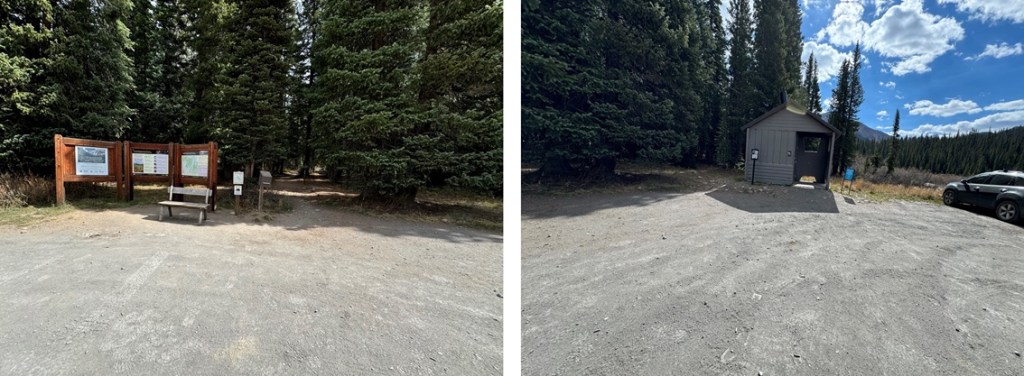
I parked my truck at the East Fork Trailhead outside of Gothic, just passed Schoefield Pass.  The road in is 4WD, but a high clearance 2WD vehicle with a competent driver can make it to the trailhead.  There are bathrooms at the trailhead, and spaces for about 20 vehicles.

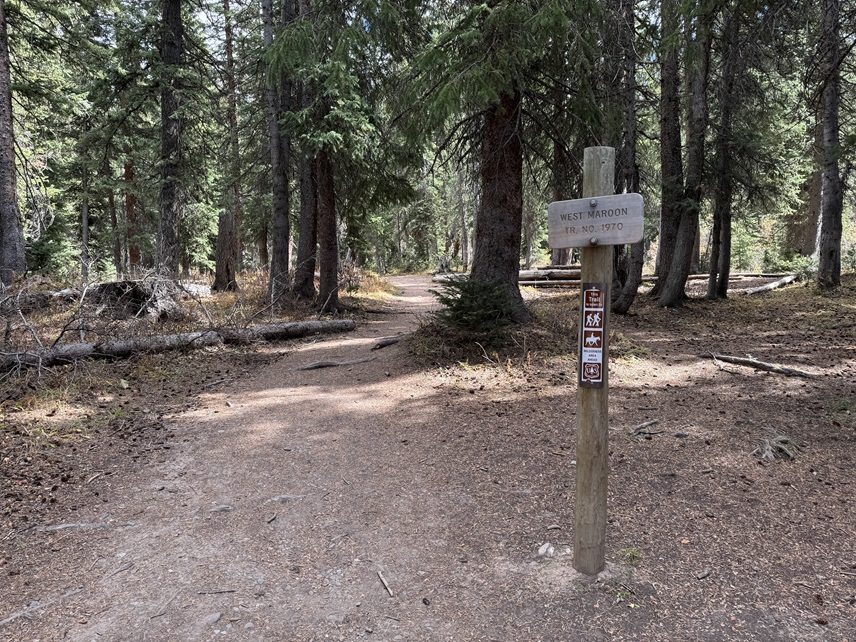
I was on the trail at 7am, following West Maroon Trail 1970

I stayed on this trail for about 2.2 miles.  The trail began at treeline but quickly turned to tundra.

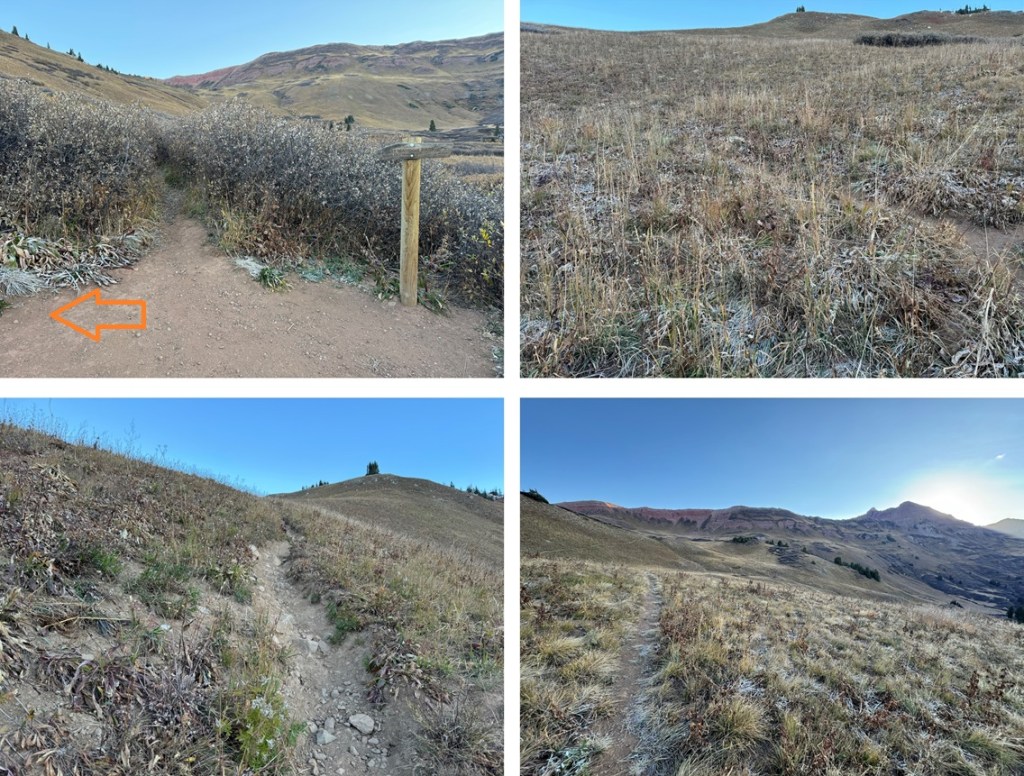
After hiking for about 2.2 miles, I came to a sign that said “West Maroon Pass”.  Here there was a trail to the left that was unmarked.  It’s trail 1974.  I took that trail as it switchbacked northeast up the hillside.

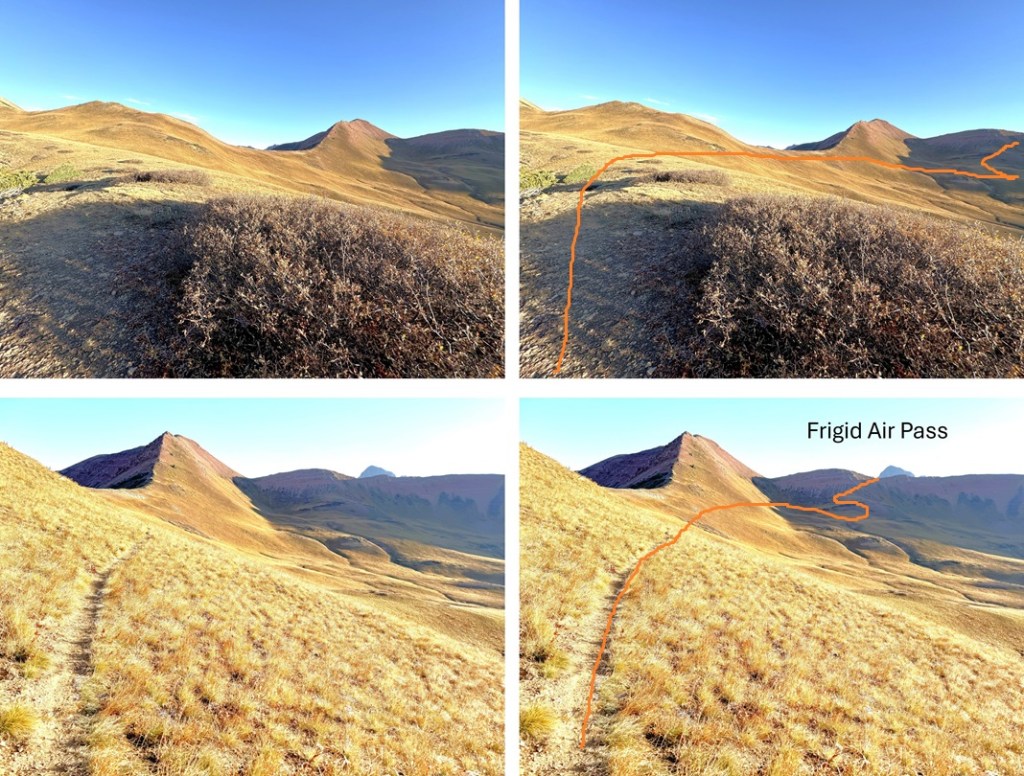
I was headed for Frigid Air Pass on this class 1 trail.

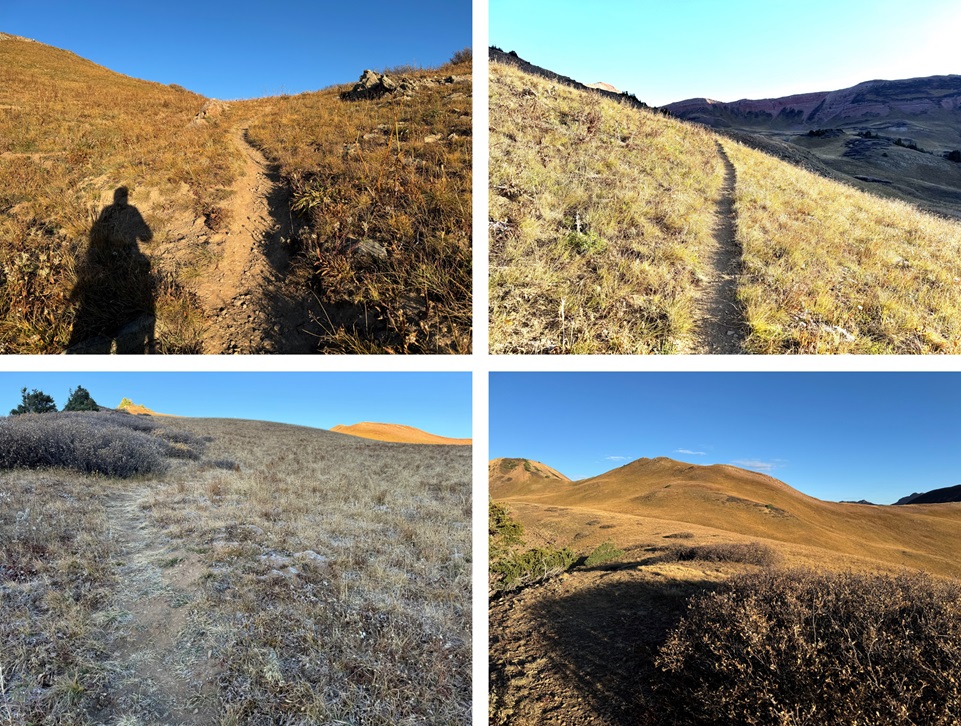
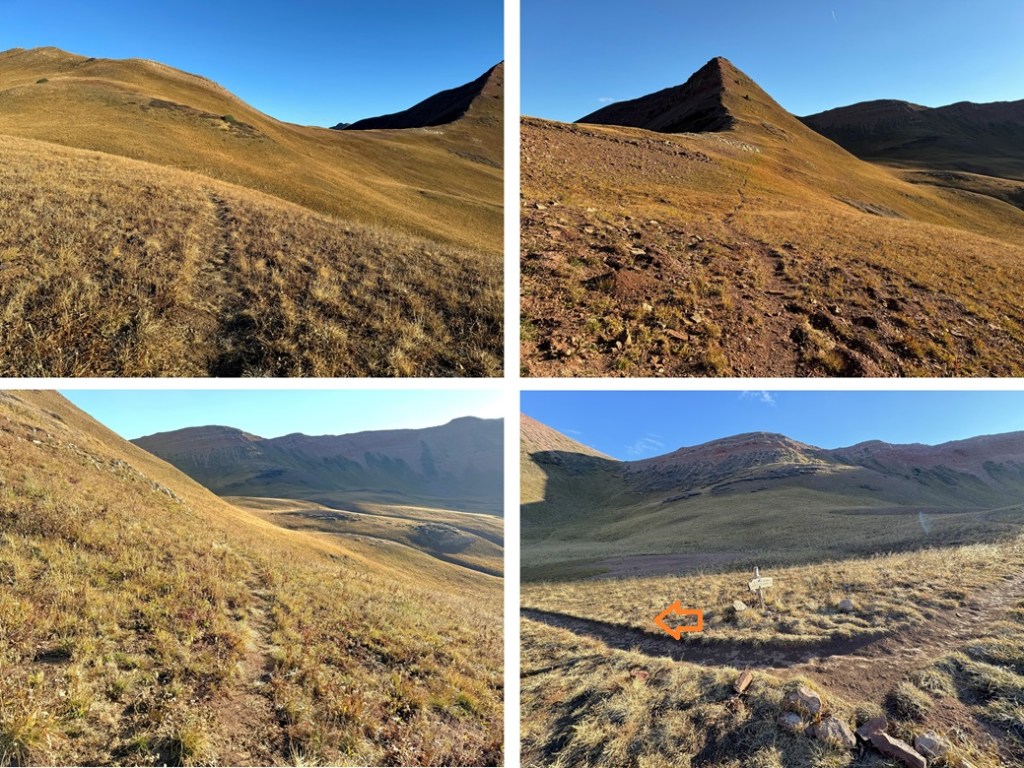
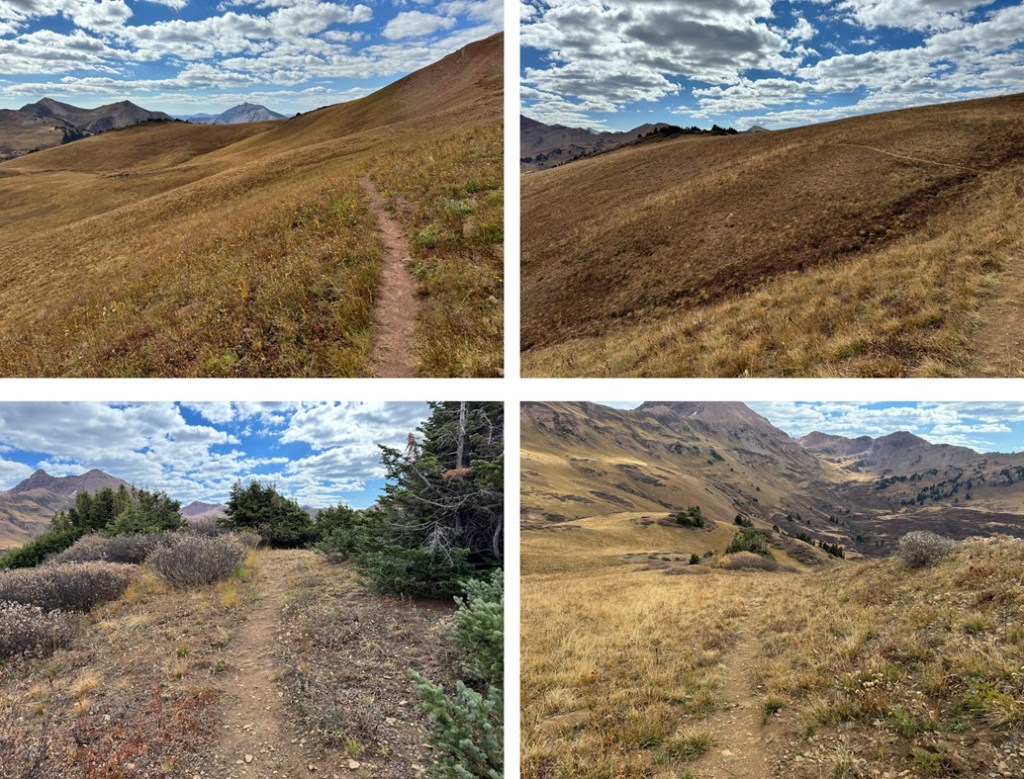
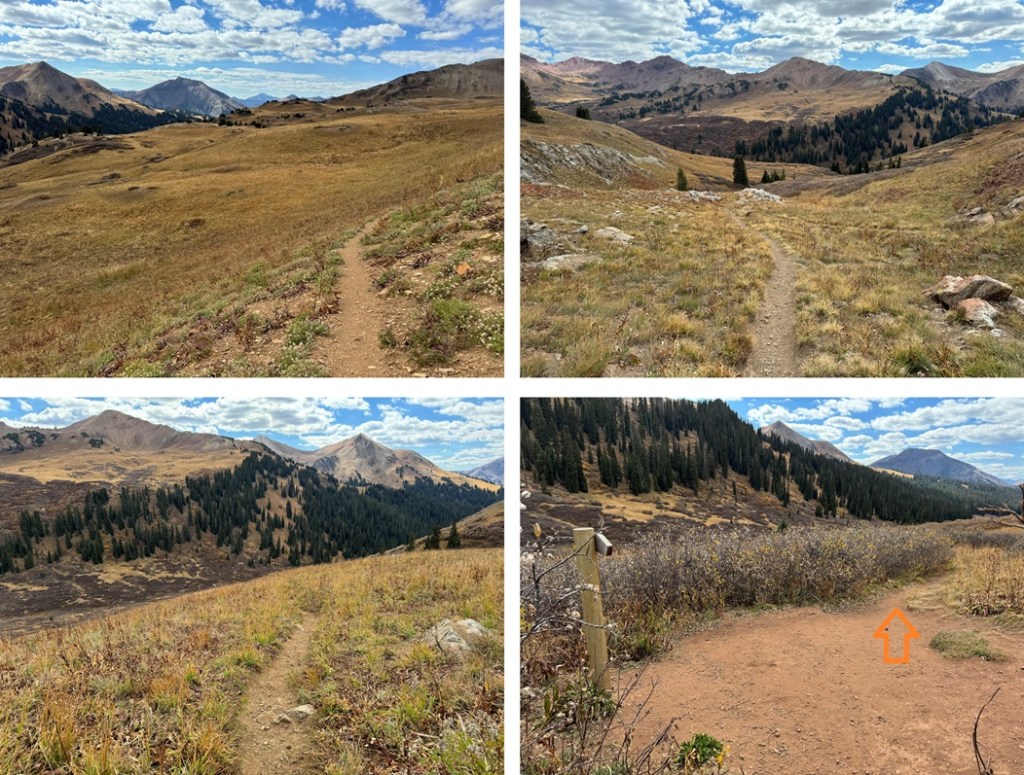
Here are some pictures of the route from the upper basin to Frigid Air Pass.   The trail intersected with the West Maroon Trail again, and I followed the trail north at the intersection to Frigid Air Pass.

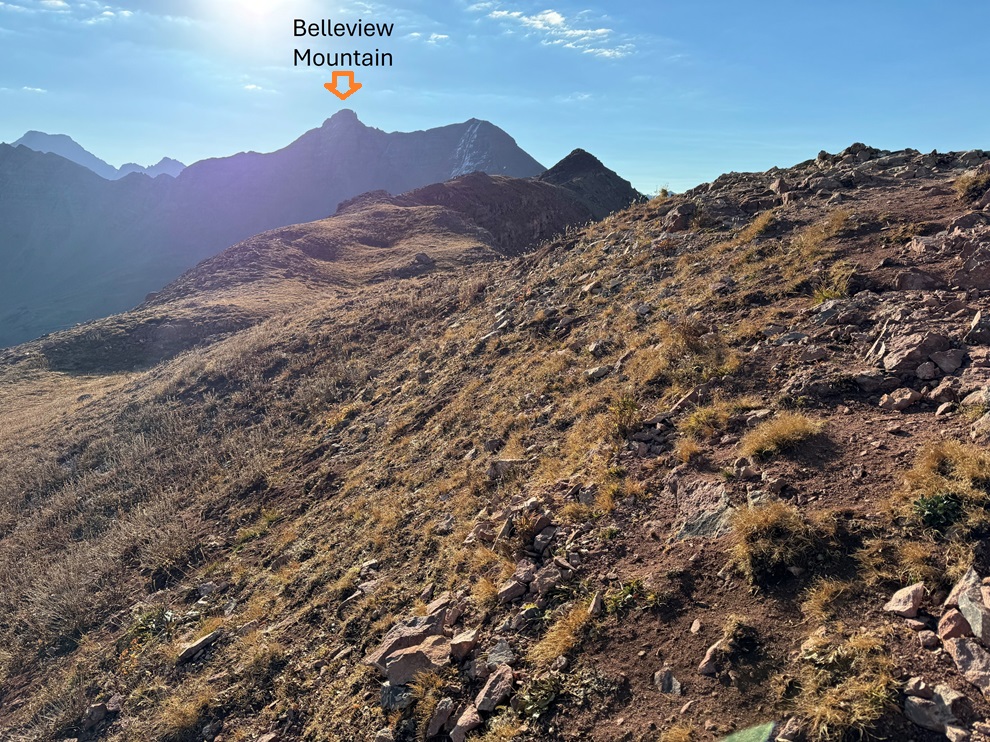
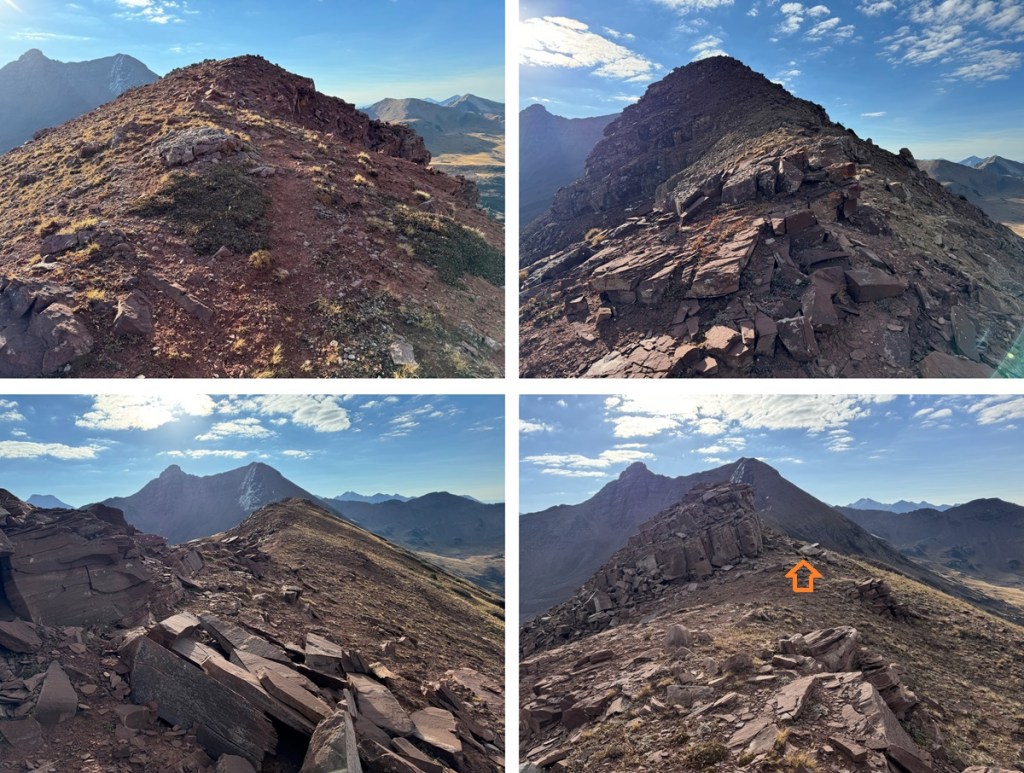
At the top of the pass, I could see Belleview Mountain.  I turned right and followed the ridge southeast.  This is a long ridge, but it’s all class 2, with game trails to follow to the right to keep it class 2

Here are some pictures of the ridge:

12

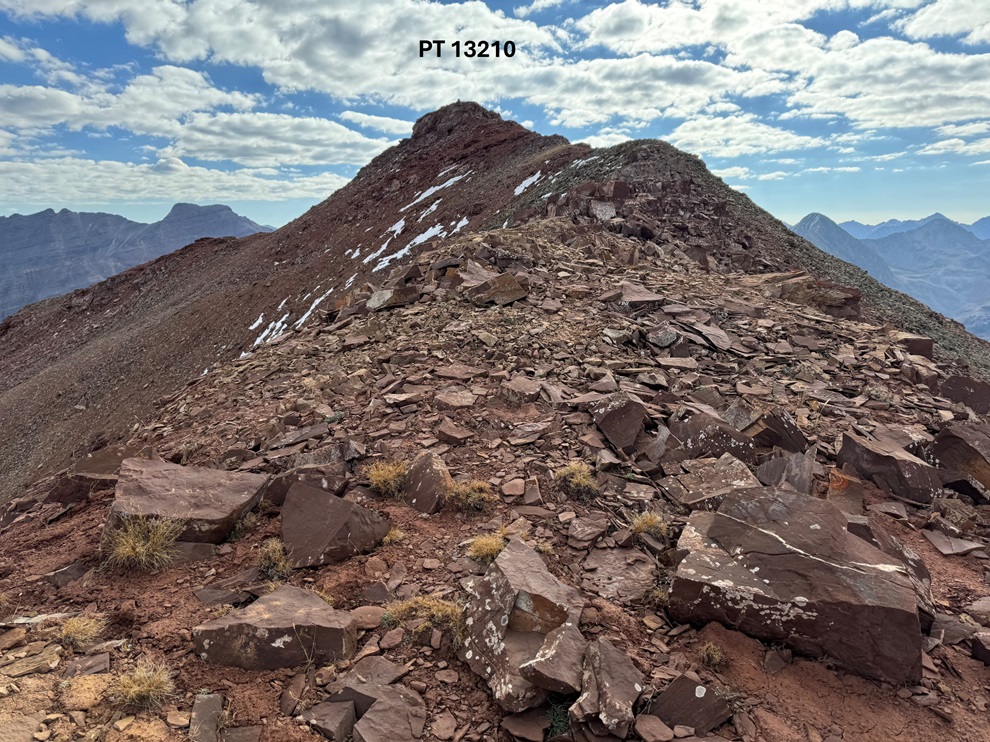
The ridge ran out and it was time to start gaining elevation again.  I continued southeast to PT 13210.  There were no obvious trails here, but there were a lot of loose rocks and scree.  This is still all class 2.

From the top of PT 13210, looking northeast I could see Belleview Mountain.

This is the overall route I took to get there:

I followed the ridge northeast on class 2 terrain, and then stayed to the right of the rock outcropping.

From the top of the small gully I turned left, and had a couple of options.  I could ascend to the summit by going either left or right.  Both options were difficult class 2.  I went to the left first, to the right on the way down.  The left side is difficult class 2, but there is more exposure on that side.

Then it was a class 2 rocky hike to the summit

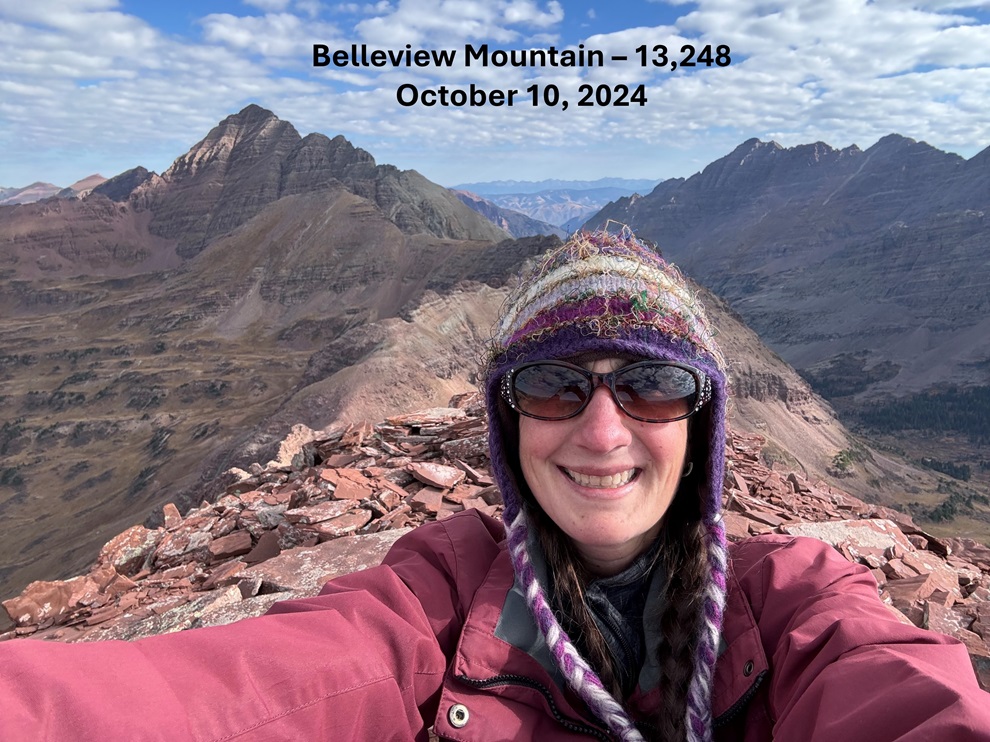
I summited Belleview Mountain at 9:50am

Belleview Mountain:

On my way down I headed to the north of the summit, and then descended back to the small gully by heading south on scree.

Then it was back over to PT 13210

Back at PT 13210, I headed northwest back to the ridge

And then followed the ridge northwest towards Frigid Air Pass.

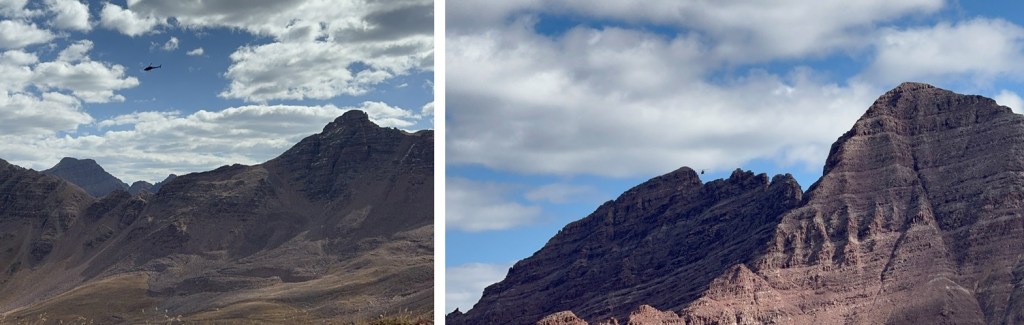
Along the ridge I got buzzed by a fast-flying helicopter, headed over to the Bells.  It circled a few times, and then I never saw it again.  I’m hoping it wasn’t a rescue mission.   It was flying pretty close to the summits and ridges.

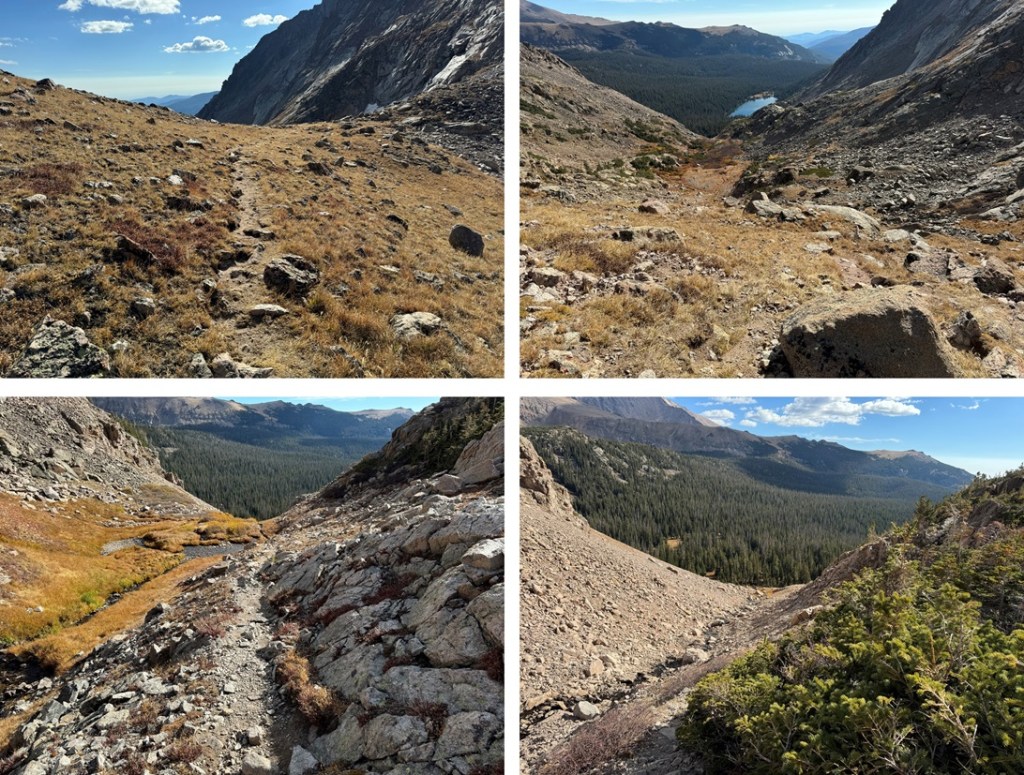
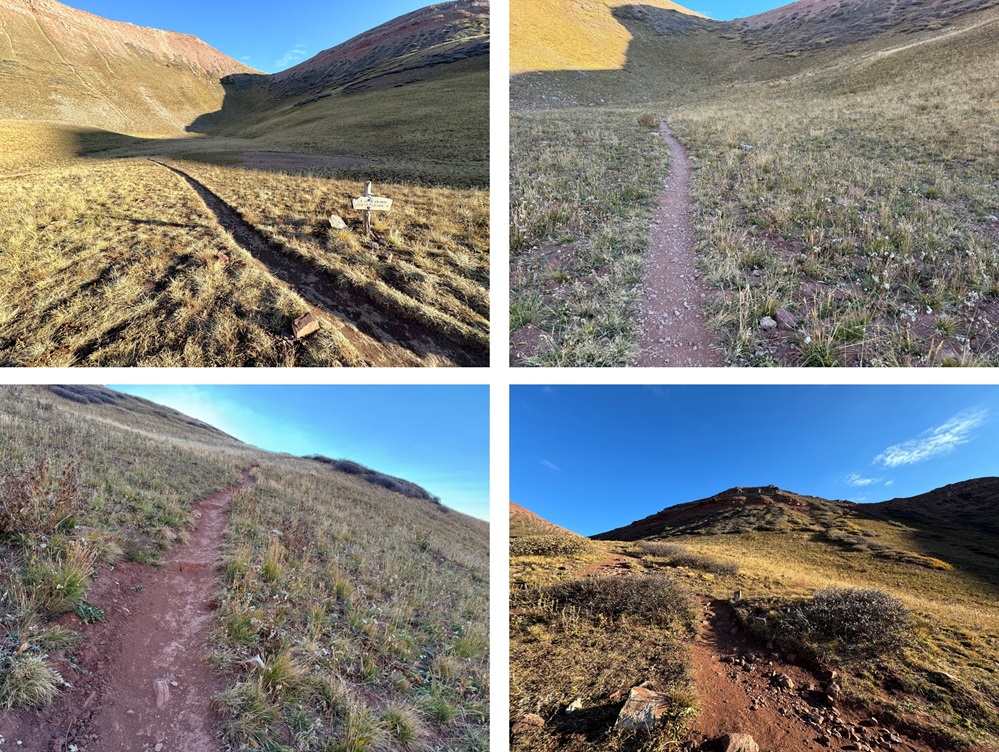
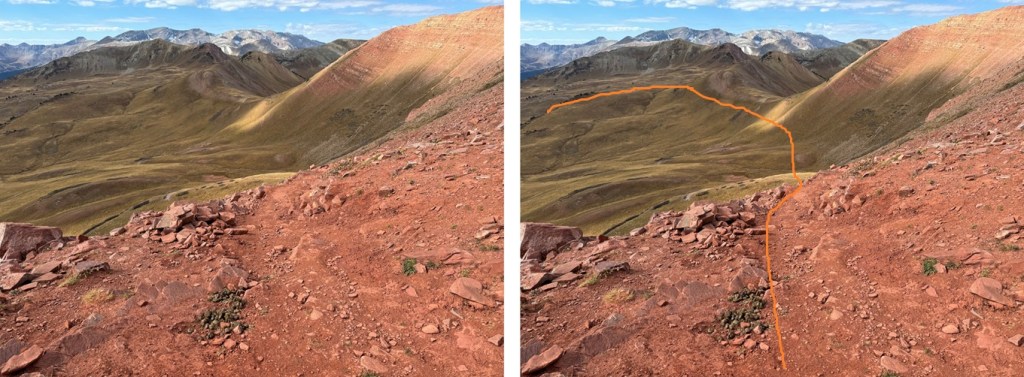
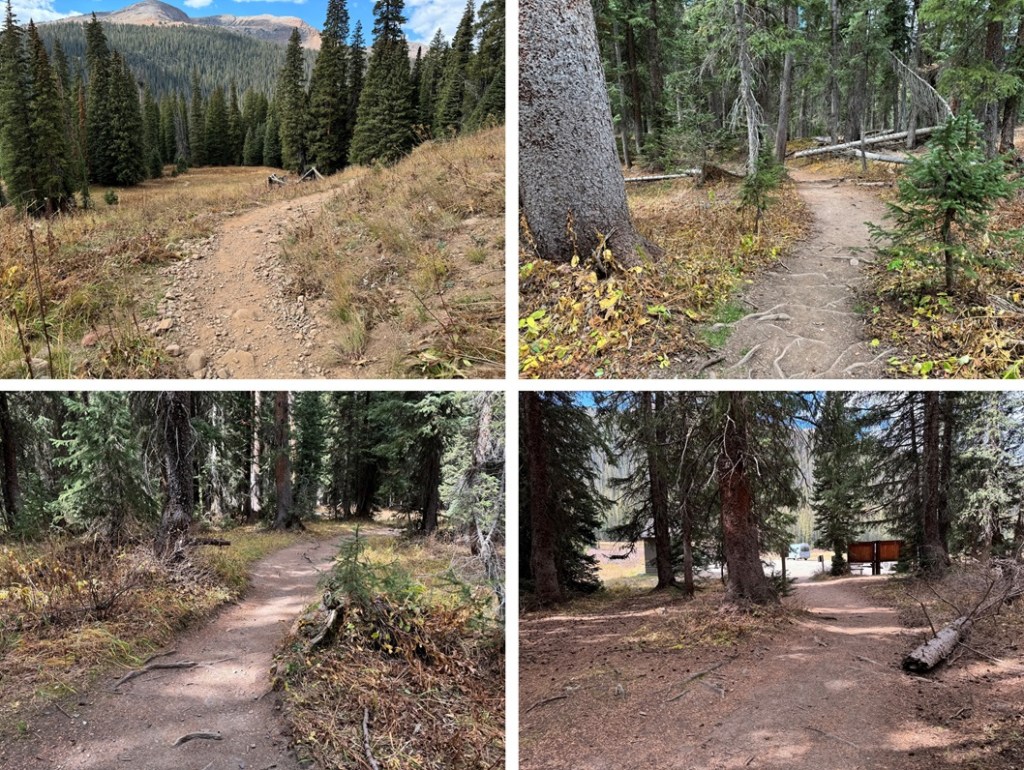
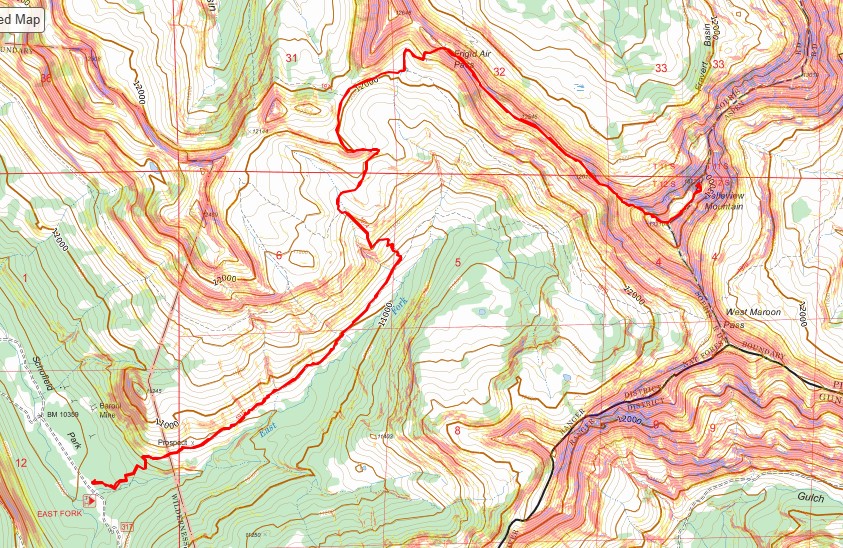
From Frigid Air Pass I regained the trail and headed southwest back into the basin. Here’s a visual of the class 1 route:

And some pictures.  I took the trail back to the shortcut (1974, not labeled on signs), and then back to the West Maroon Trail

Back on the West Maroon Trail, I followed it southwest back to the trailhead

I made it back to my truck at 12:30pm, making this a 12.15 mile hike with 3516’ of elevation gain in 5.5 hours.

On to the next trailhead!
Stony Pass Peak – 13,172

RT Length: 1.5 miles

Elevation Gain: 618’

I had just gotten back from summiting PT 13076, and I wasn’t feeling it today.  I was tired and achy and sore, and just wanted to rest.  I had some lunch, and about 2 hours later decided to do some scouting on Stony Pass Peak, to figure out how I wanted to summit it the next day.  Well, suddenly I had a burst of energy, because instead of scouting it, I just summited the peak.

I could see Stony Pass Peak from my parking spot at Stony Pass. 

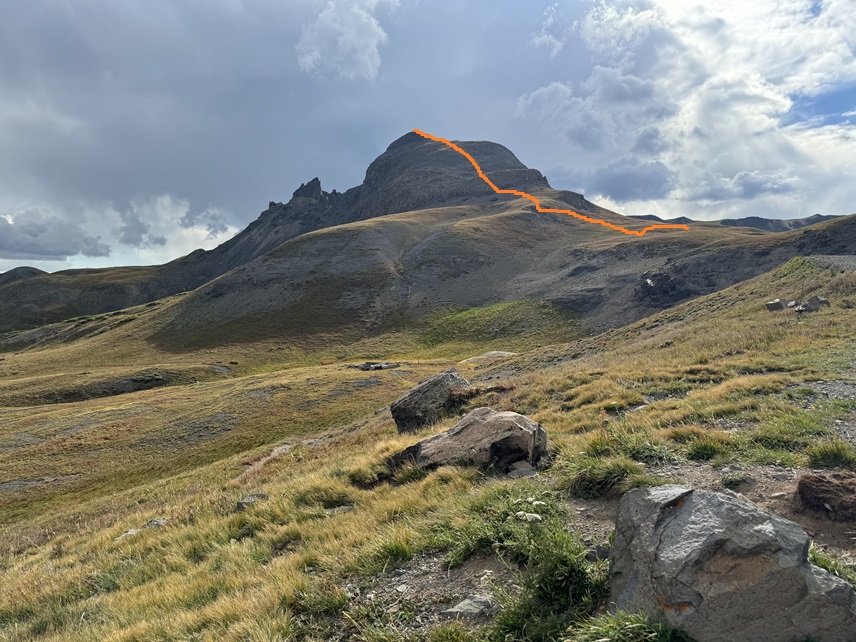
I headed towards Stoney Pass Peak around 2pm.  This is the overall route I took to get to the summit.

First, I headed southwest on the tundra towards the ridge

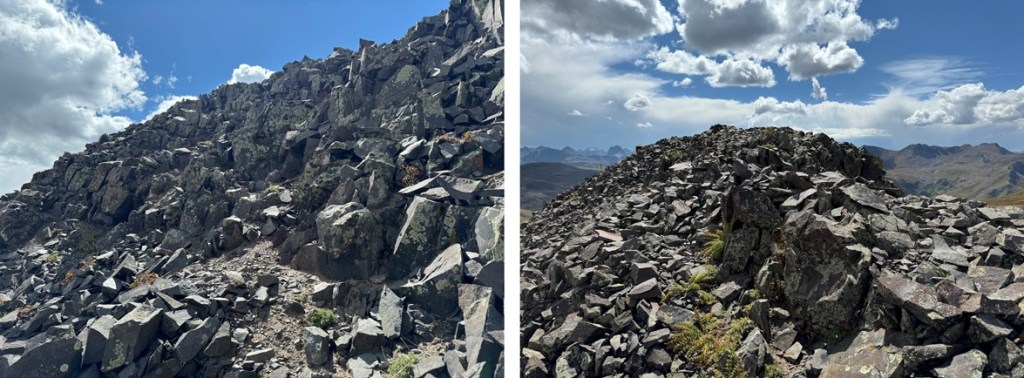
The terrain became rocky, but there were various social trails in the area, making navigation easy. I just kept heading southwest and up, following the social trails to the summit.  There was talus, and it became rocky, but this was all class 2.

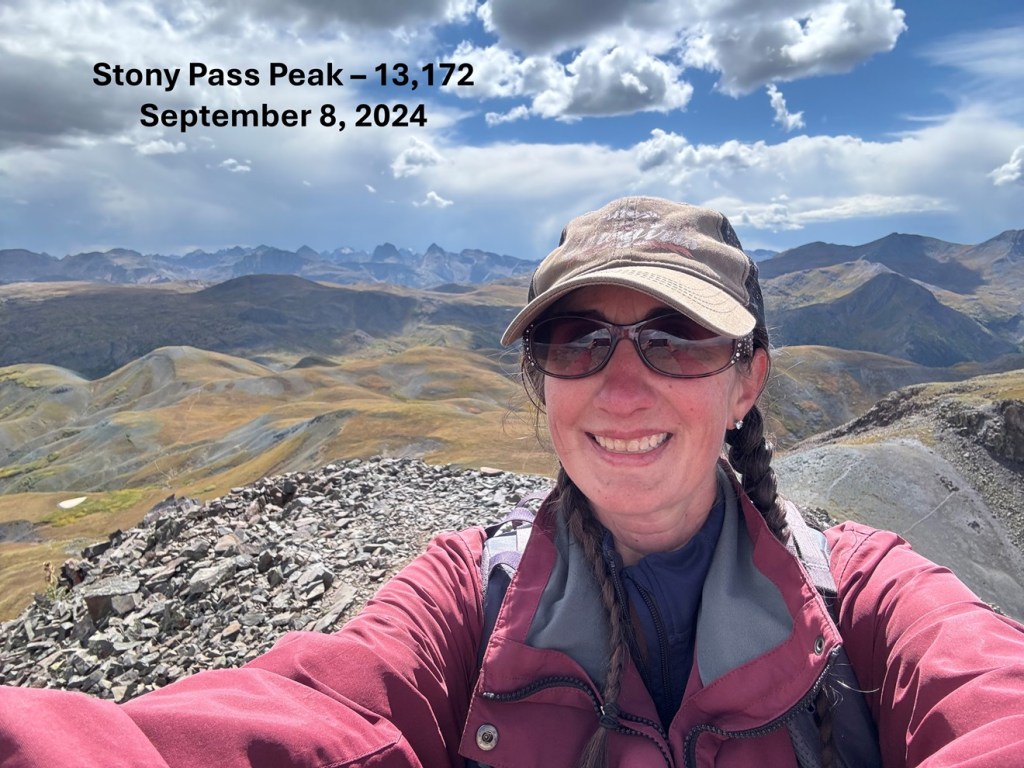
I summited Stony Pass Peak at 2:35am

Stony Pass Peak:

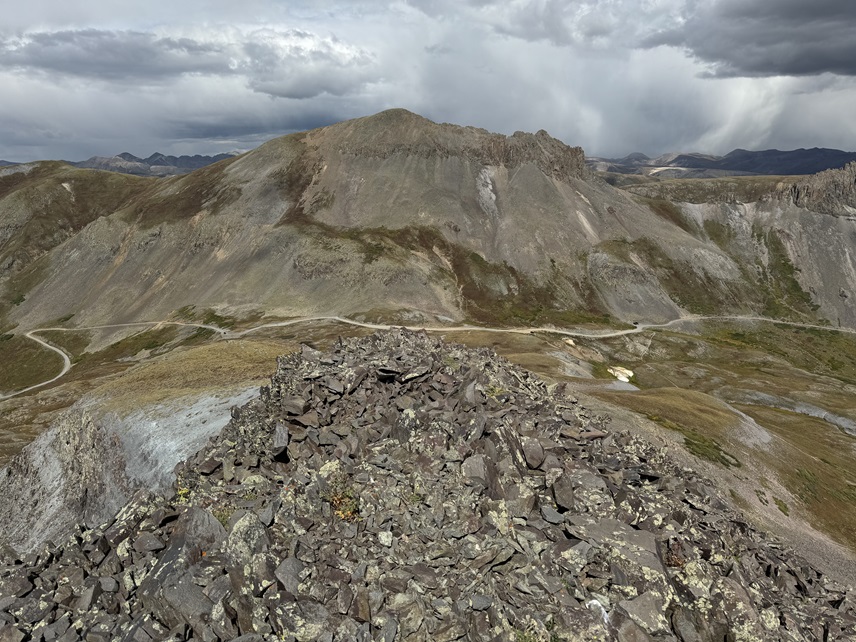
From the summit I could see the road and my truck parked below.

I made my way back down towards the road.

Then followed the road to my truck

I made it back to my truck at 3pm, making this a 1.5 mile hike with 618’ of elevation gain in 45 minutes.

PT 13076

RT Length: 9.64 miles

Elevation Gain: 2129’

I woke up nice and cozy in the bed of my truck and sat there in the dark waiting for my alarm to go off.  After waiting quite a while, I looked at my phone and noticed it was 8:15am!  My alarm hadn’t gone off, and I was late getting on the trail.  I was ready 15 minutes later, following the 4WD southeast towards the CDT trailhead.  Doing this meant I lost 160’ of elevation in .3 miles, which I would need to regain at the end of my hike.  There is one parking space near this trailhead, but when I got there the day before there was an ATV parked there, taking up the entire spot.

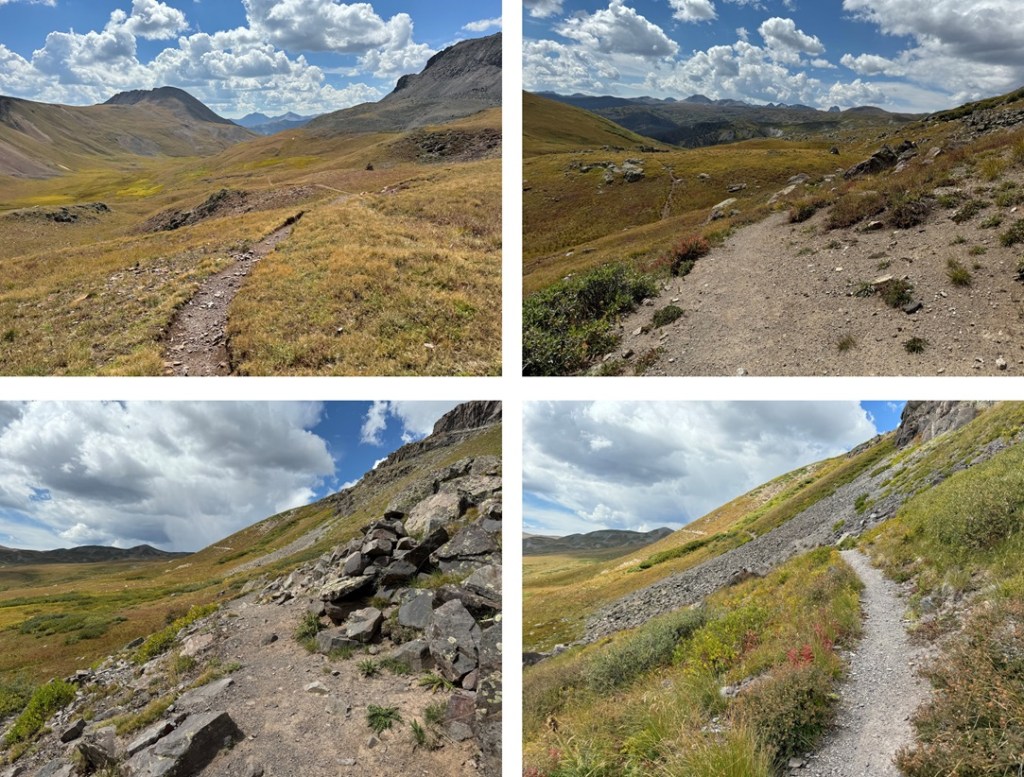
Once at the CDT trailhead, I followed the CDT north for a total of about 3.5 miles, gaining and losing elevation as I went.

At the top of a small pass I came to a junction for the CDT and Moose Gulch, and turned right, continuing on the CDT.

I continued on the CDT until I made it to 13000’

I then turned left, and walked across the tundra northwest, following the gently sloping tundra on the ridge.

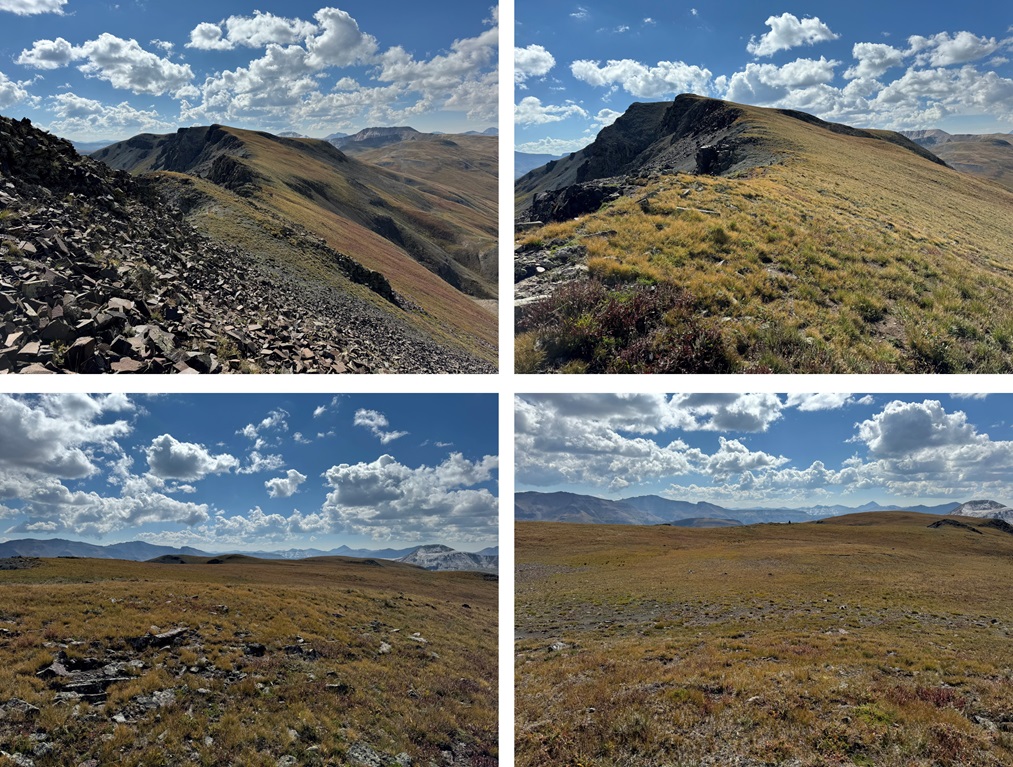
Eventually, the peak came into view.  This looks harder than it is.  By sticking to the ridge, this is all class 2.

Here are some pictures of the class 2 ridge to the summit.

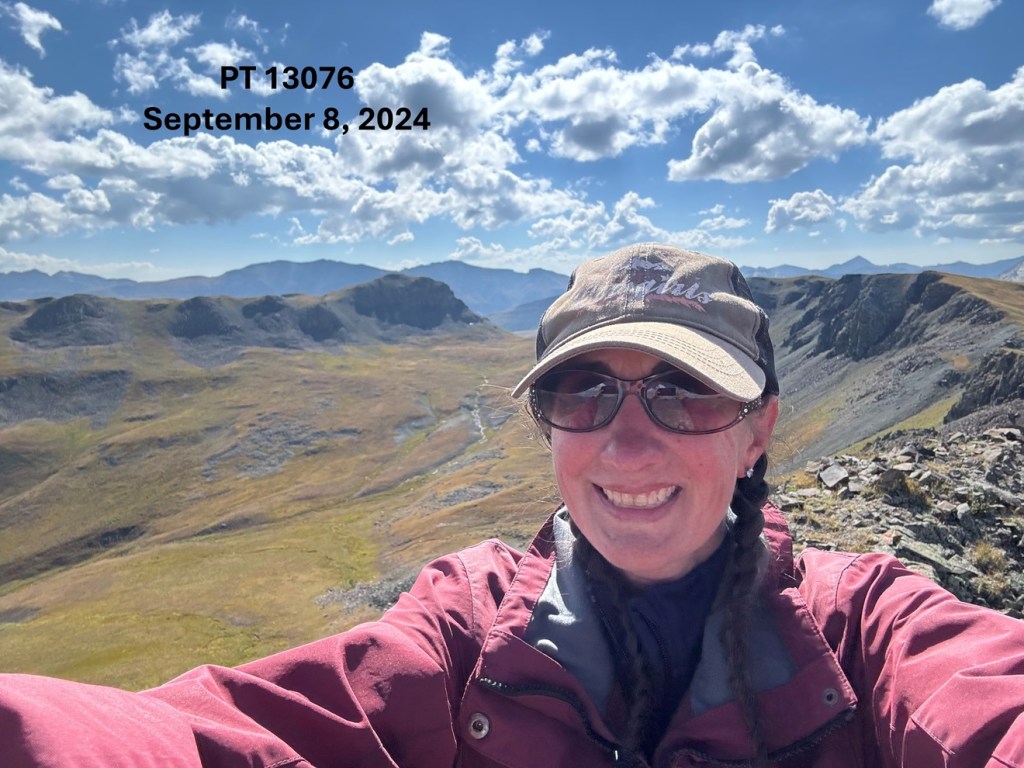
I summited PT 13076 at 10:15am

PT 13076:

This was an out and back hike for me, so I turned around and followed the ridge southeast back to the CDT.

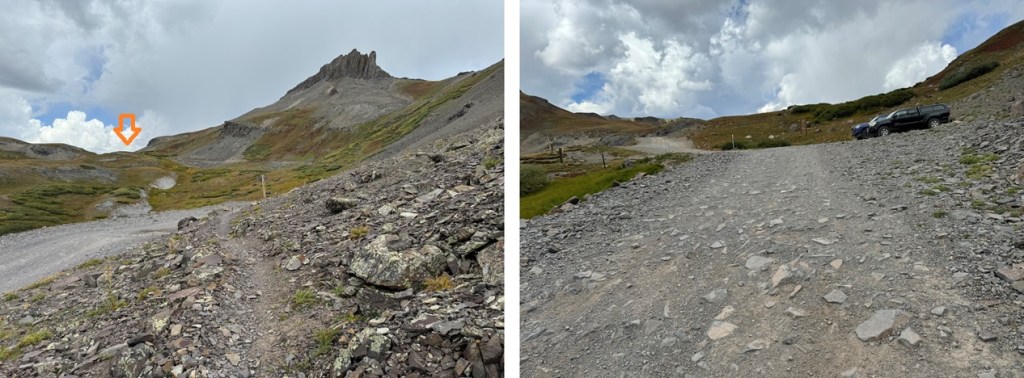
Once back to the CDT I turned right, and followed it south as it wound back to the 4WD dirt road.


I then followed the dirt road back to my truck, parked at Stony Pass.

I made it back to Stony Pass at 12:30pm, making this a 9.64 mile hike with 2129’ of elevation gain in 4 hours.

I was exhausted, and decided to take a lunch break at my truck.

PT 13,094 and Sunshine Mountain – 13,329

RT Length: 8 miles

Elevation Gain: 3171’

I parked at MM 14 off CR 20 in Lake City, just before the turnoff for 22, at 10900’. 

I was up early, but it rained until about 6:15am, so I was on the trail at 6:30am.   As you can see by looking at the topo map,  I didn’t ascend the same way I ascended, mainly because it was terrible.  Down wasn’t great either, but a bit more manageable.  I’m going to describe the route to ascend how I came down.  Note:  There are tons of mining roads in this area, and they don’t all meet up. 

From my parking spot, I needed to be here. 

The best way to do this is climb to the left of the gully, navigating through the aspen trees to treeline.    This is choose your own adventure quest, but it doesn’t last long, and is manageable if you have good route finding skills and can follow game trails. 

It’s important to note I passed 2 different mining roads before I hit the one I was looking for, at about 11600’

I followed this road as it curved around the mountainside north.  The road was overgrown, and lost in places, and intersected with a lot of other roads.  I just kept turning left if there was an option, heading north.

Once in the upper basin, I could clearly see PT 13093.  This is the route I took to get to the ridge. 

I walked the mining road for a while, and then it turned into a game trail.  This is a good game trail I followed east until I came to a sketchy part.  You’ll know it because the dirt turns black.  Here I turned northeast and aimed for the ridge, using fainter game trails.  (On my way down I realized this game trail probably goes all the way to the saddle, but I felt confident in my decision to turn and head for the ridge here. 

I made my way to the ridge

At the ridge, I could see PT 13093 to the northwest

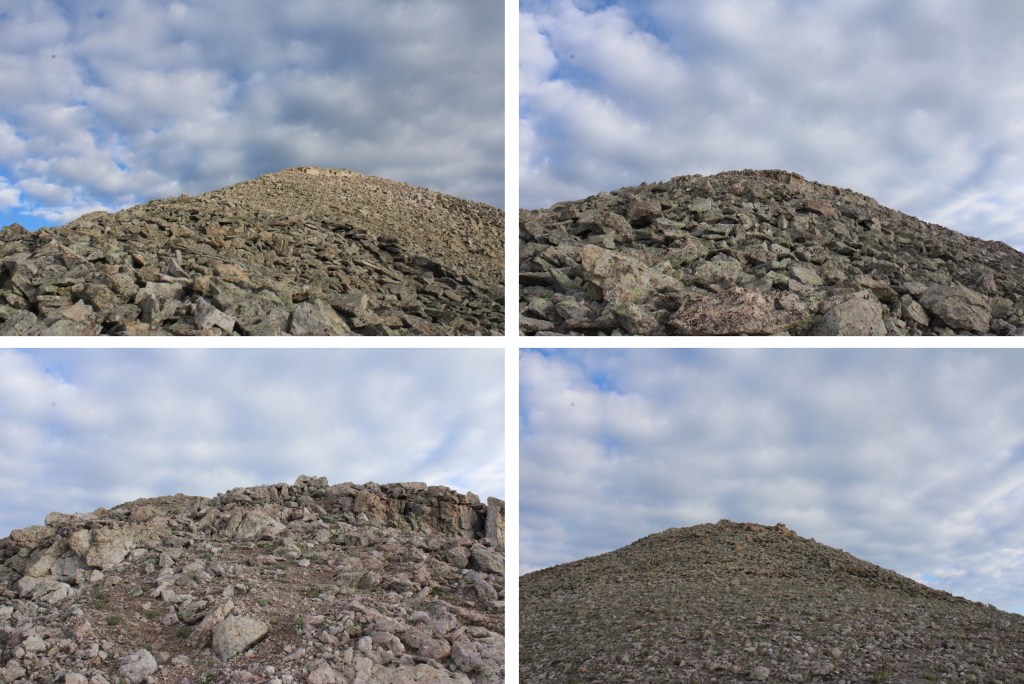
The terrain here was very rocky, and those rocks were loose.  This is how I started my climb, avoiding the rock slab and climbing it to the right

From here, it was a rocky climb northwest along the ridge to the summit.  This was all class 2

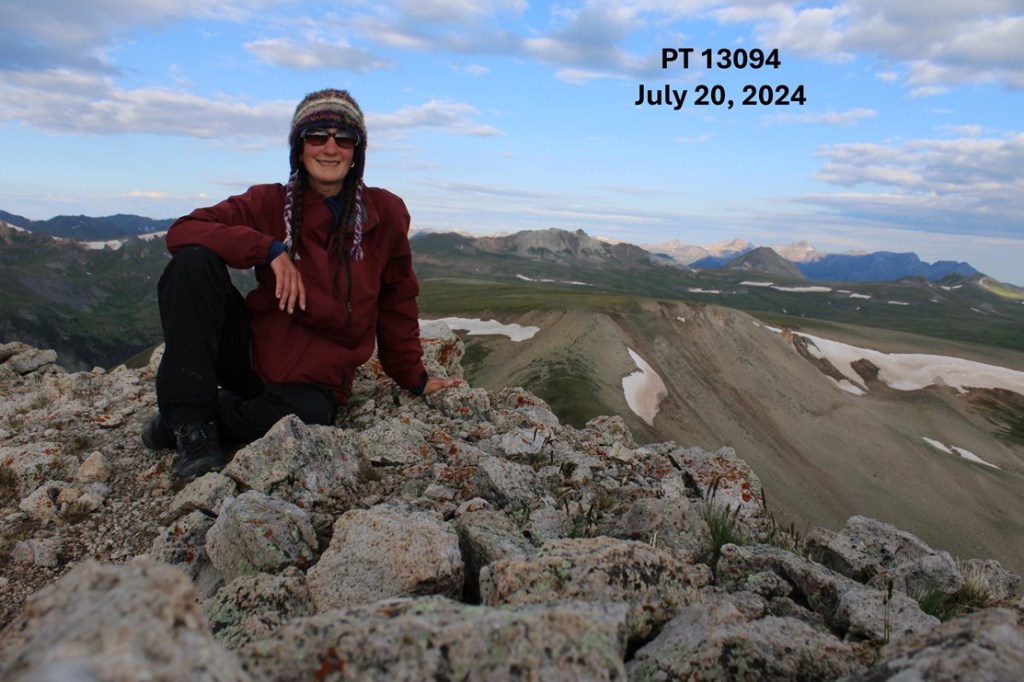
I summited PT 13094 at 7:30am

PT 13094:

My next objective was Sunshine Mountain, to the northeast

After the initial downclimb off 13093, this was a simple ridge hike on tundra.  This is the overall route I took:

First, I downclimbed the rocky section

Then headed towards the sunshine/13094 saddle

From there I picked up a solid game trail that led me to the ridge, then down to the saddle.

From the saddle I followed the tundra east 570’ towards the summit. 

There was a short rocky section towards the summit, with tons of game trails to the right to keep it class 2, but honestly, going over the rocks is probably class 2 as well. 

I summited Sunshine Mountain at 8:45am

Sunshine Mountain:

I turned and made my way back down the tundra ridge, and to the saddle

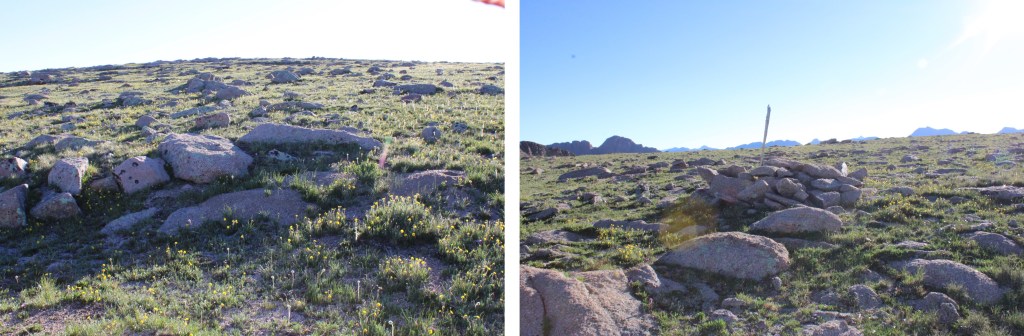
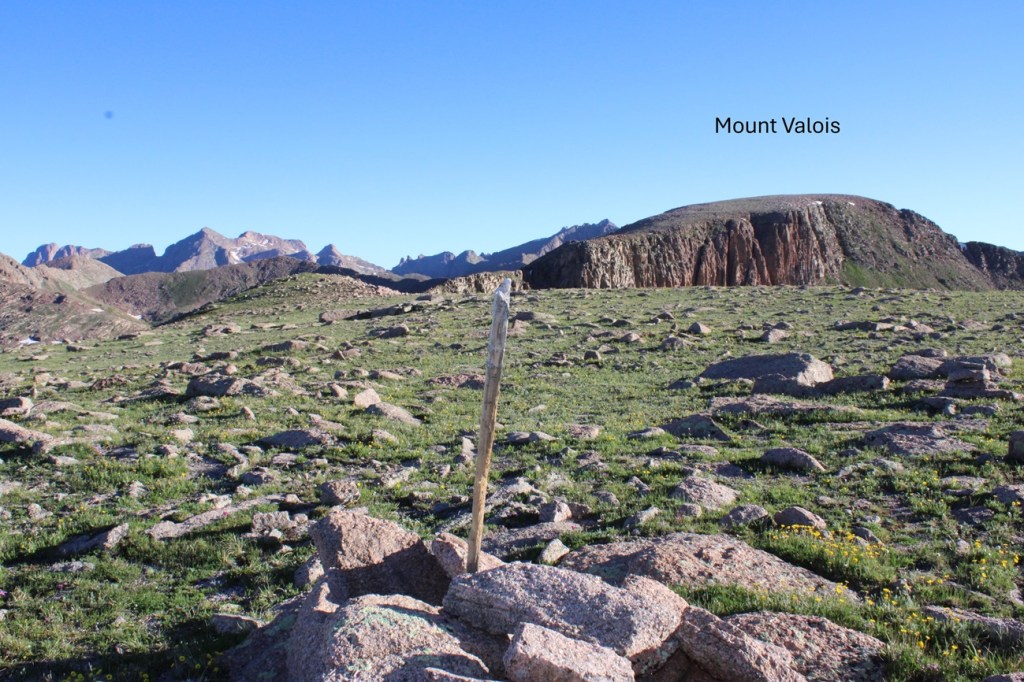
I made my way towards the left side of PT 13094.  Here’s a little hint to help you descend:  There’s a wooden post sticking out of the ground about 20 feet after you should descend.  Use this as a visual for where to start heading down the side of the mountain.

Back on the game trail, I turned right and followed it back to the mining road.

Then I took the mining road back to about 11600’

From here, I could see my truck parked below, and just made my way back to it, bushwhacking the entire way.

I made it back to my truck at 10:30am, making this an 8 mile hike with 3171’ of elevation gain in 4 hours.

On to the next trailhead!
Overlook Point – 13,005

RT Length: 8.89 miles

Elevation Gain: 1872’

This one felt way too easy.  The most difficult part was the drive in.

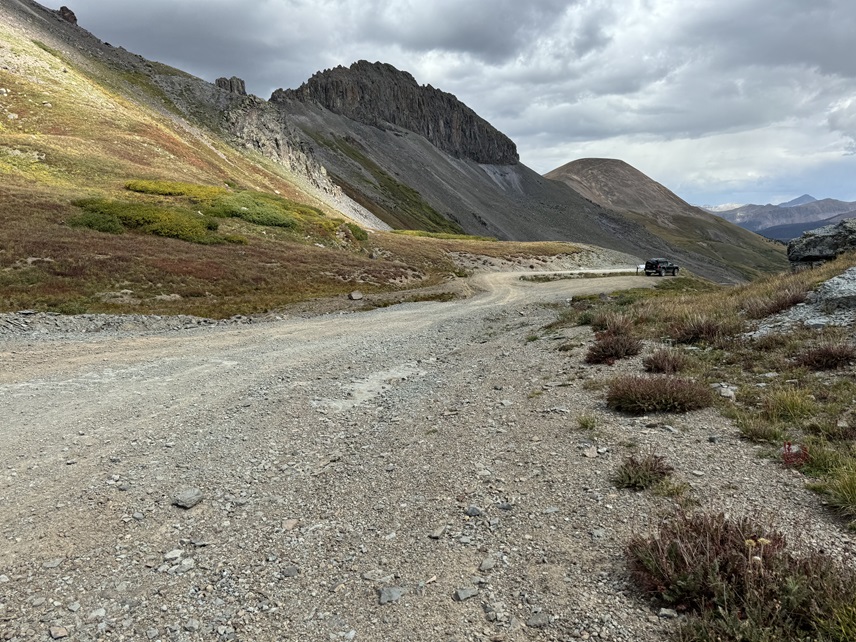
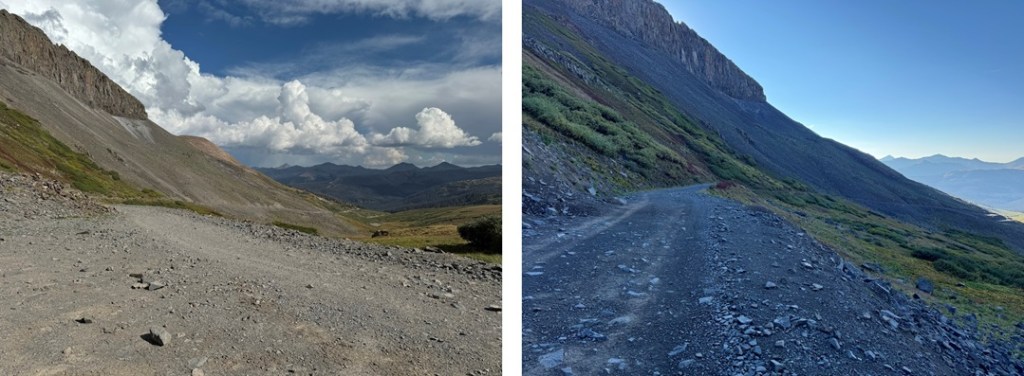
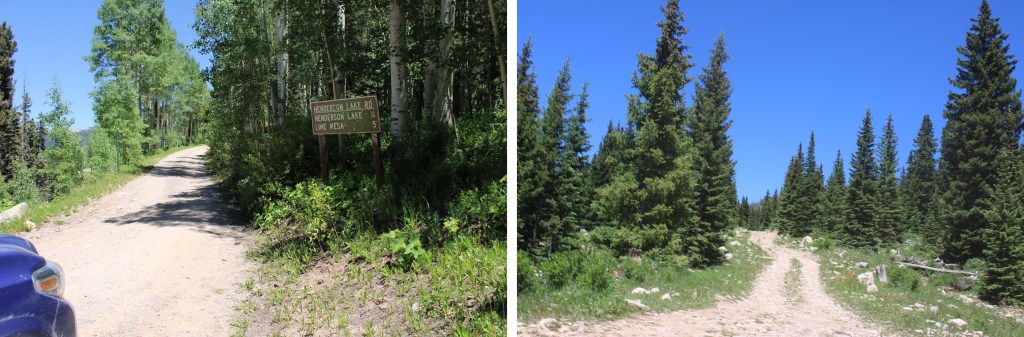
The road to Lime Mesa Trailhead is mostly 2WD.  Mostly.  At the turnoff point just before Henderson Lake it’s another 5 miles to the trailhead.  The road stays 2WD for about 2.5 miles, then becomes 4WD.  The road just gets worse as you drive, so as soon as you feel uncomfortable with the conditions pull over and park.  There are several dispersed camping areas along the road. 

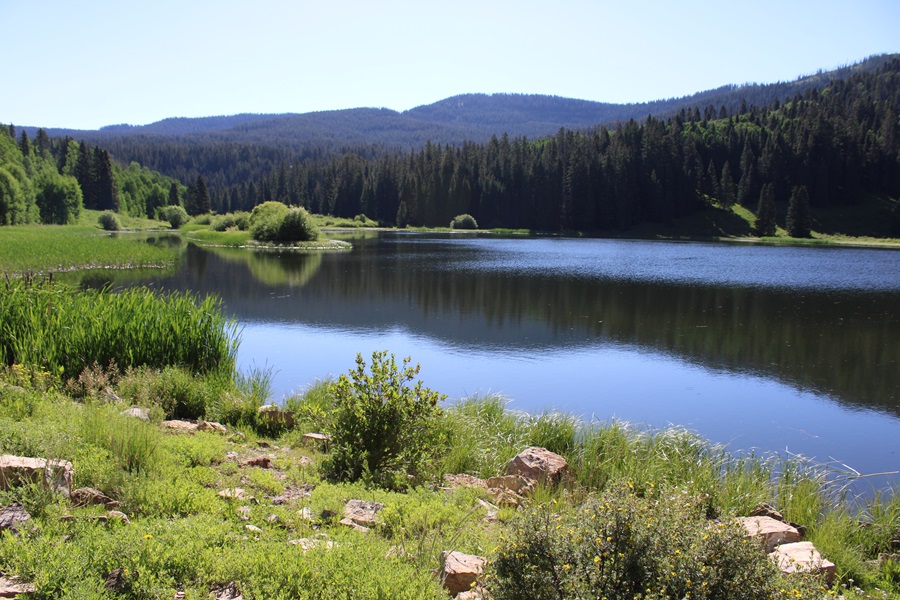
Henderson Lake:

Road after Henderson Lake:

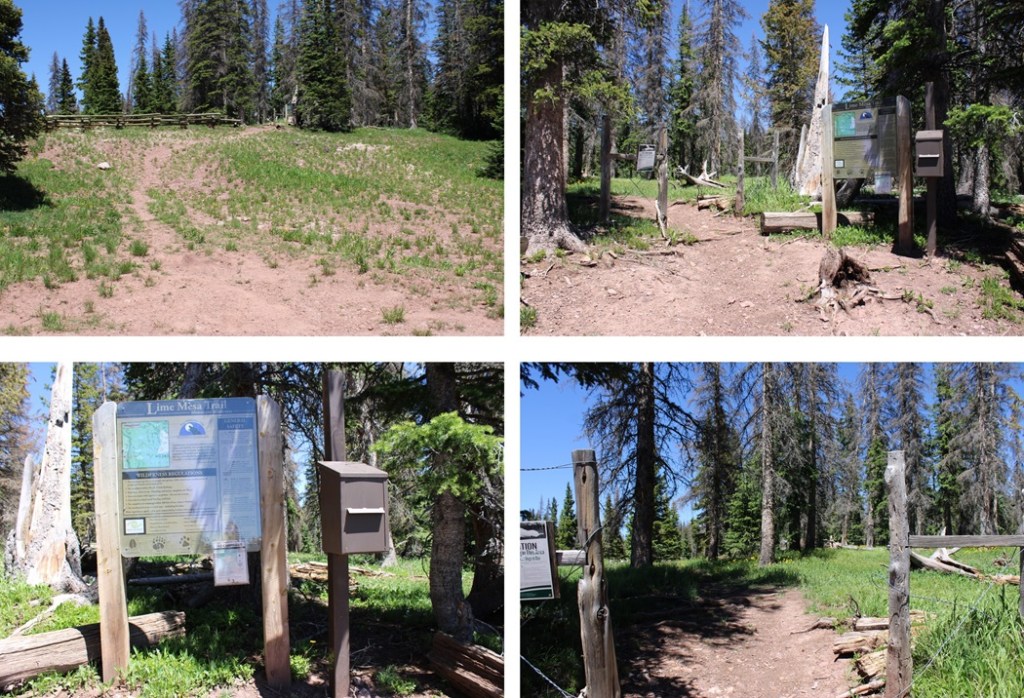
The trailhead is obvious, and starts at the north end of the parking area,  I was on the trail at 5am.

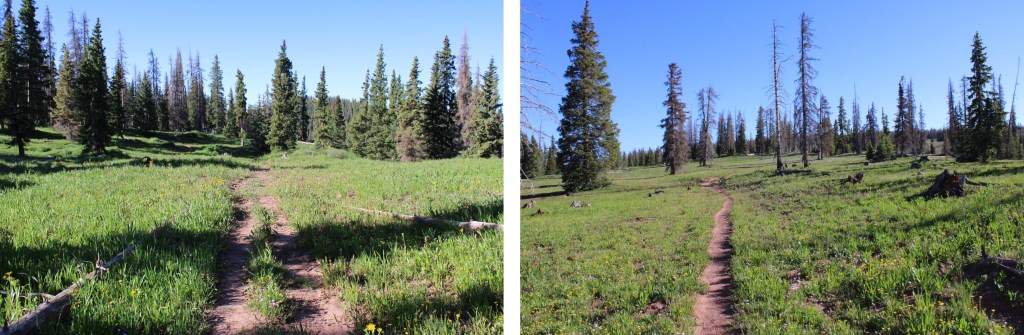
I followed the class 1 Lime Mesa Trail North for 3.4 miles.  After hiking for about half a mile I came to a junction, and went left.

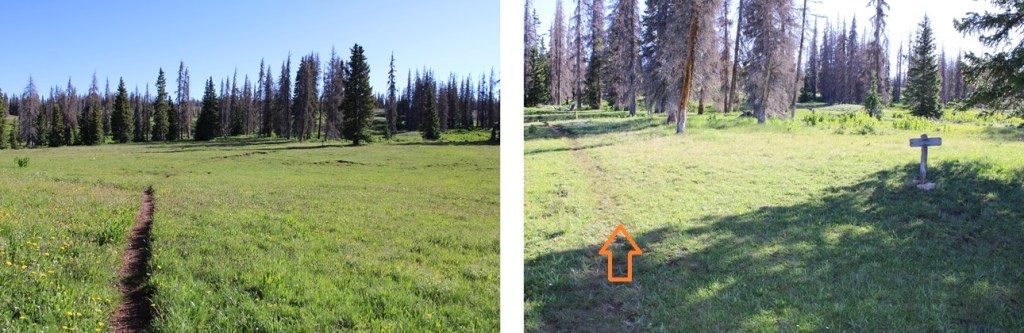
I kept hiking along the class 1 trail as it wound north through Lime Mesa

After hiking for a total of 3.4 miles, and at around 12420’ of elevation, I left the trail that had started going east and headed north.

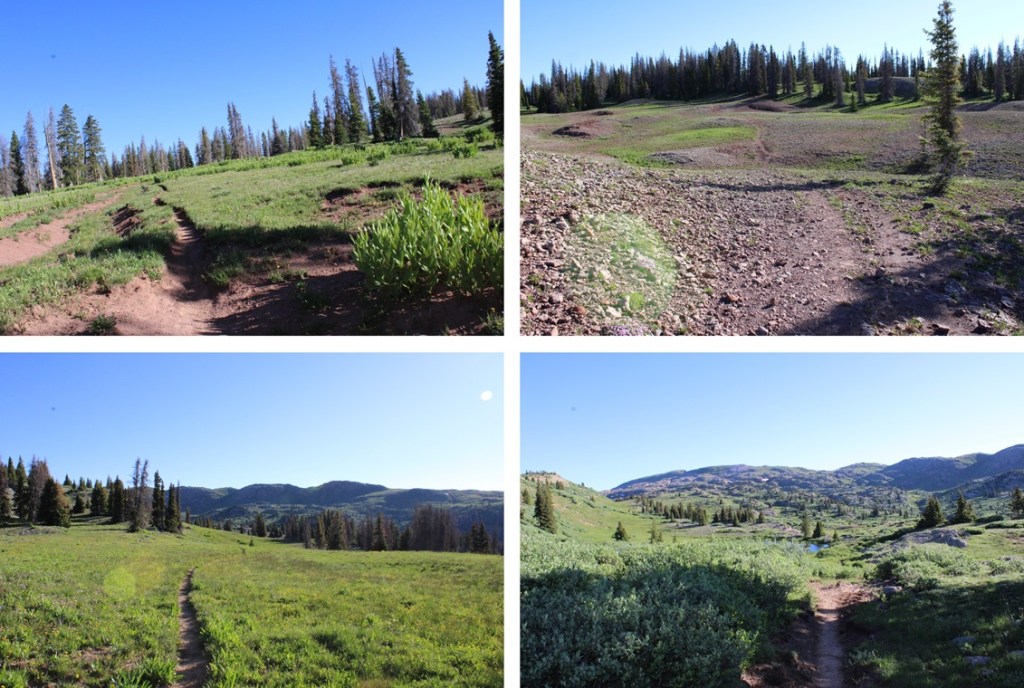
This is where I was headed

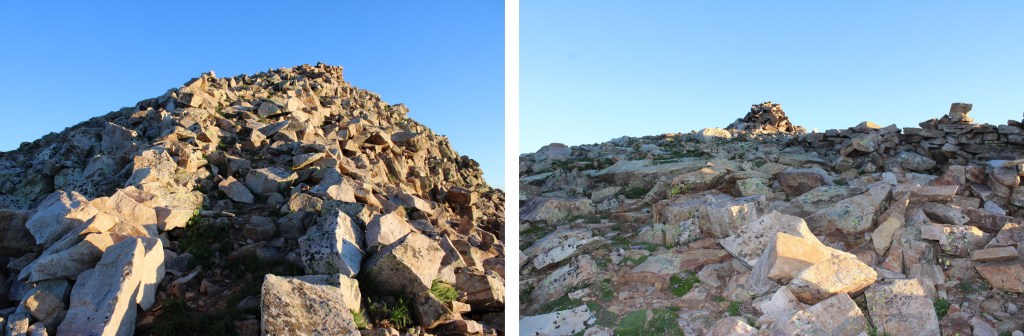
I ascended a gully, then headed towards the ridge.  This was mostly tundra, until the end, when it became rocky.  All class 2.

There was a big cairn at the top of the ridge

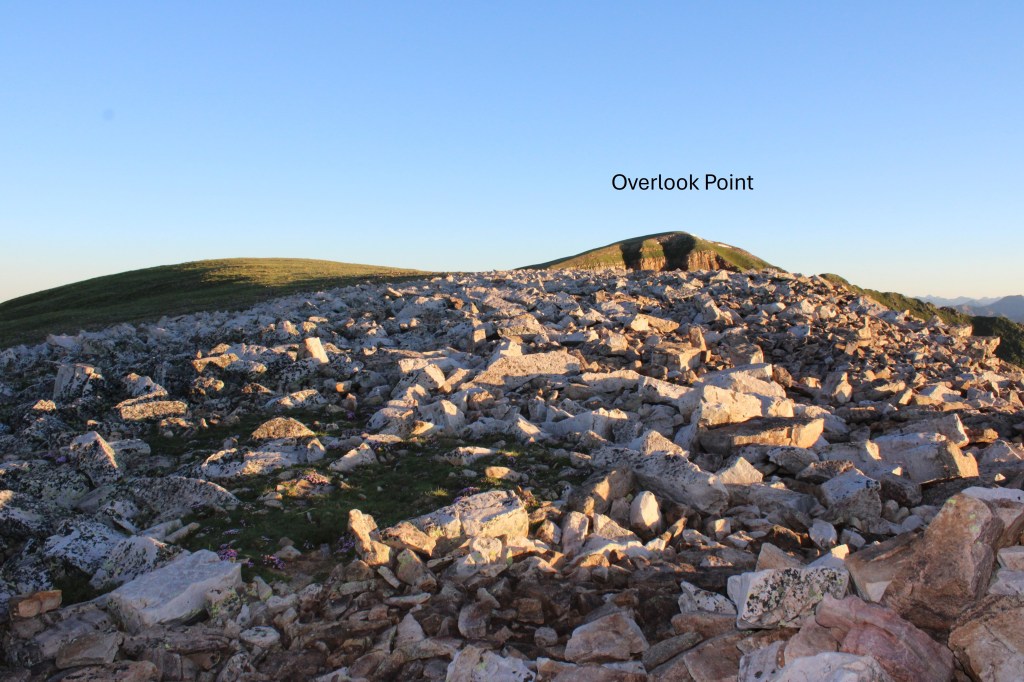
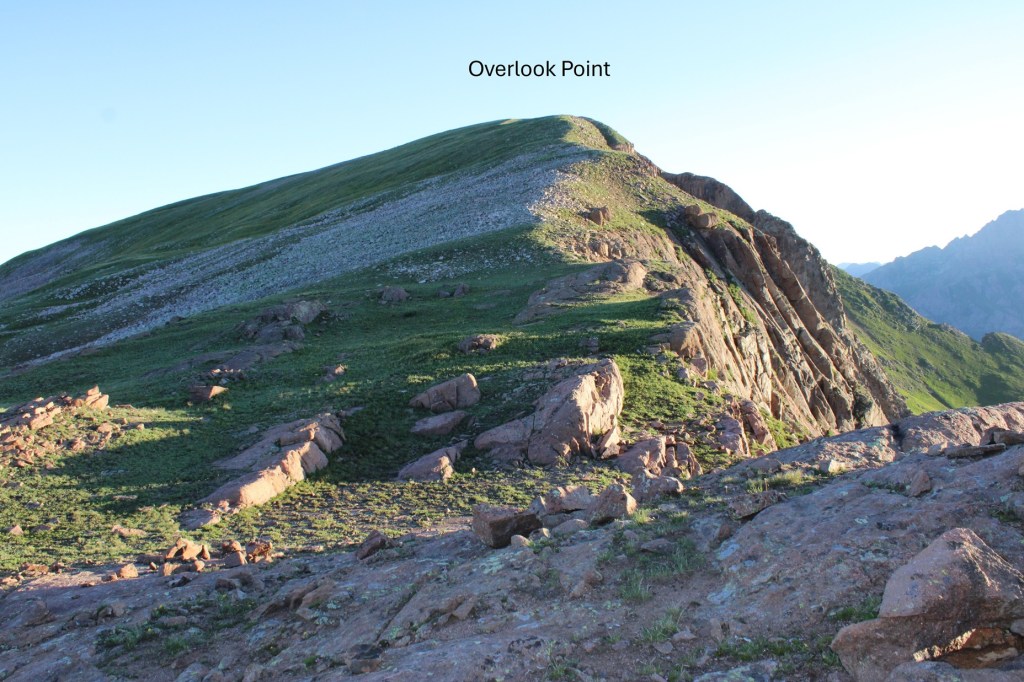
When I got to the top of the ridge, I was at PT 12802.  I could see Overlook Point to the north. 

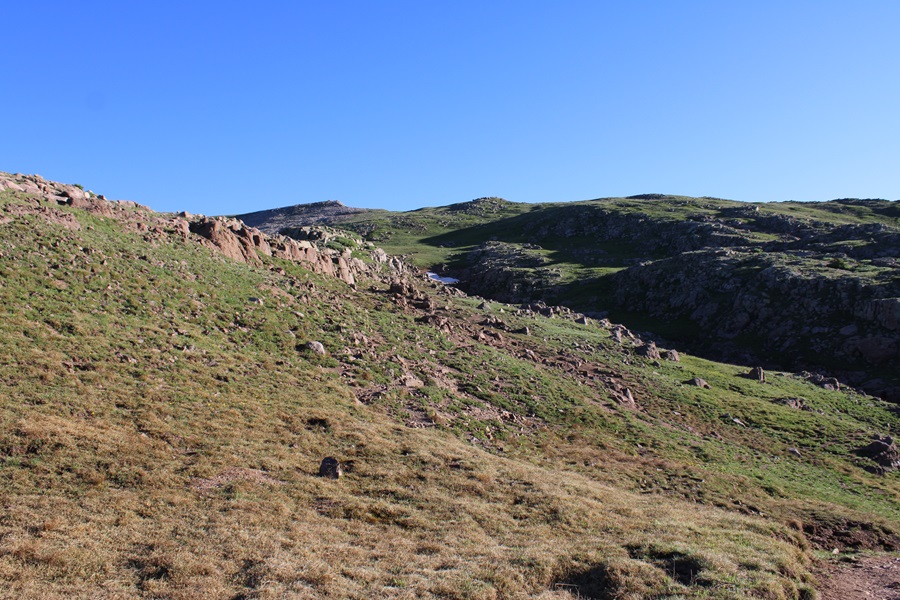
I continued following the ridge towards Overlook Point. Rocks became tundra, and then the tundra became rocky again.

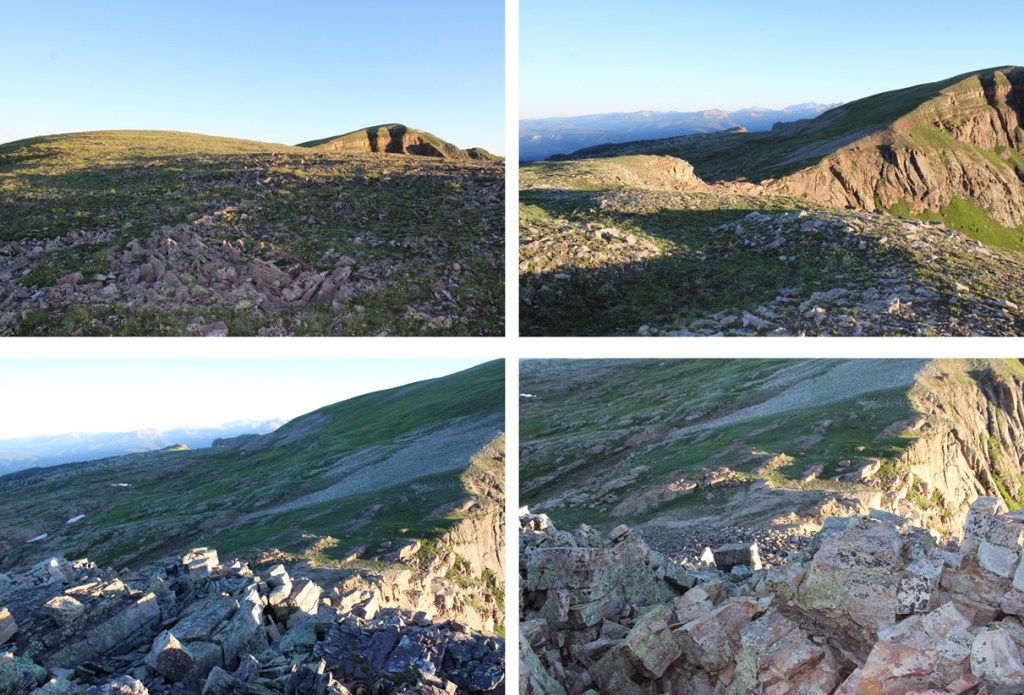
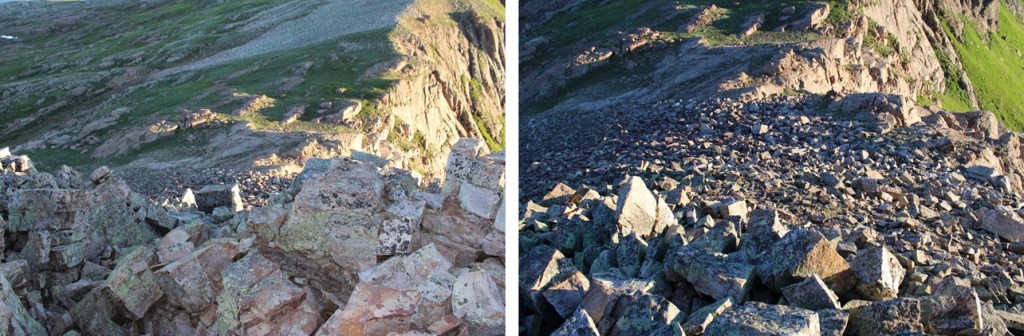
Following the ridge, I eventually came to a rocky area.  This is easier to descend than it looks.  It can be kept class 2 if you just follow the gully down.  Here I lost about 100’ of elevation as I made my way towards the saddle.

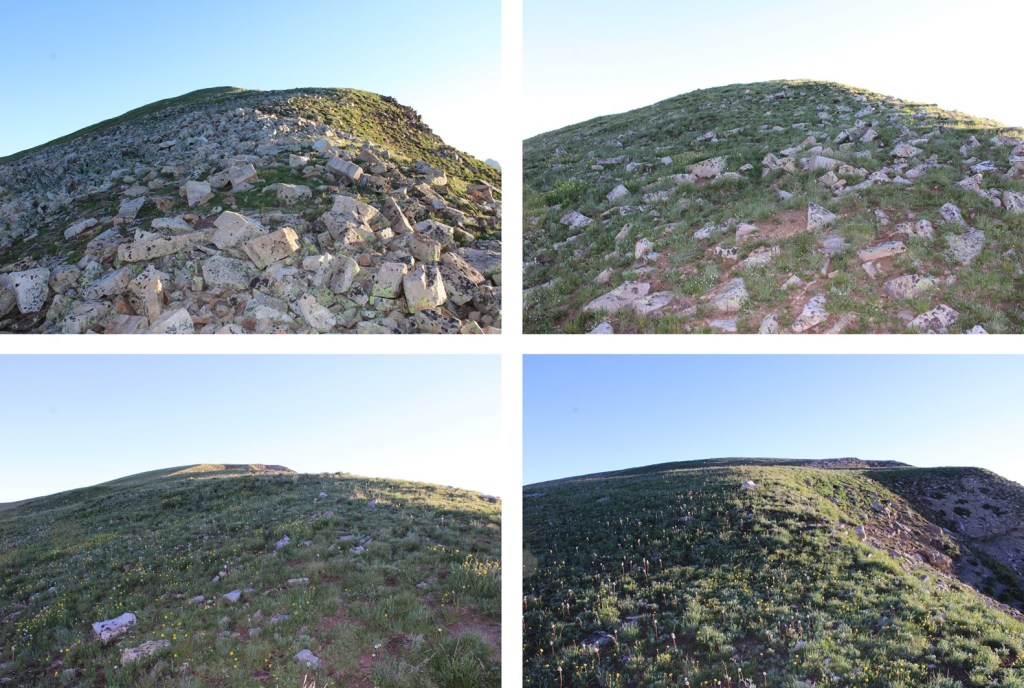
And now to gain the ridge.  This was a fairly easy ridge hike, where I gained about 300’ of elevation to the summit.  I just kept to the ridge. 

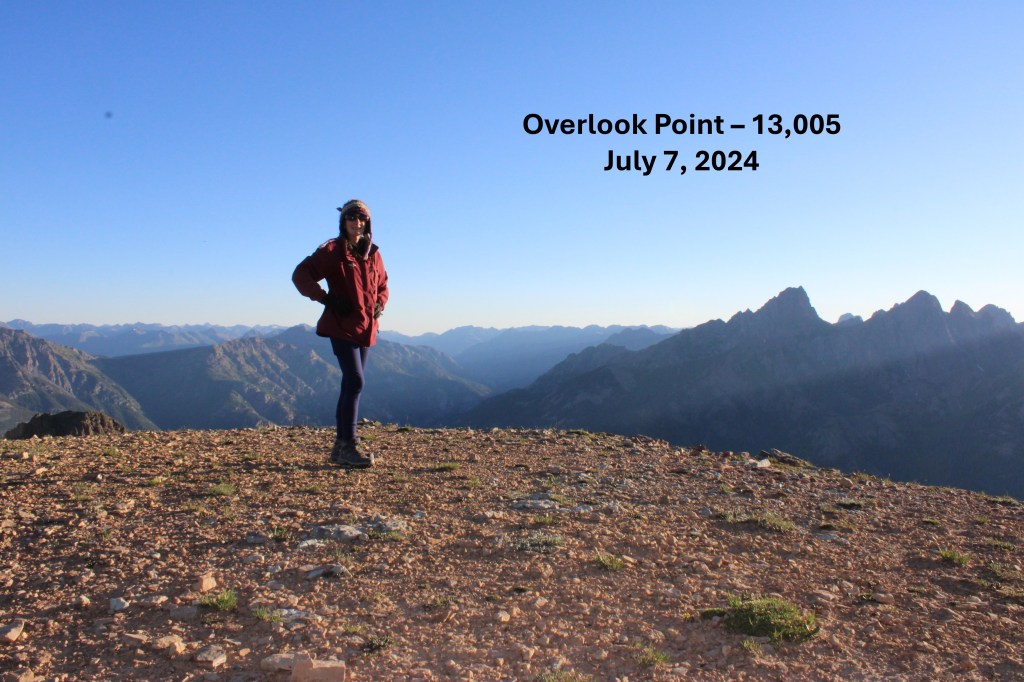
I summited Overlook Point at 6:40am

Overlook Point:

And now to make my way back towards PT 12802. I turned around and descended the ridge to the saddle.

Then it was up the rocky sections.  This is the route I took

Then southeast following the ridge to 12802

And then back down to the Lime Mesa Trail

I turned right onto the Lime Mesa Trail, and followed it 3.4 miles south back to the trailhead.

I made it back to the trailhead at 8:15am, making this a 8.89X mile hike with 1872’ of elevation gain in 3.5 hours.

On to the next trailhead!

Mount Valois – 13,173

RT Length from City Reservoir: 6.75 miles

Elevation Gain from City Reservoir: 2310’

RT Length from Endlich Mesa Trailhead: 21.45 miles

Elevation Gain from Endlich Mesa Trailhead: 5078’

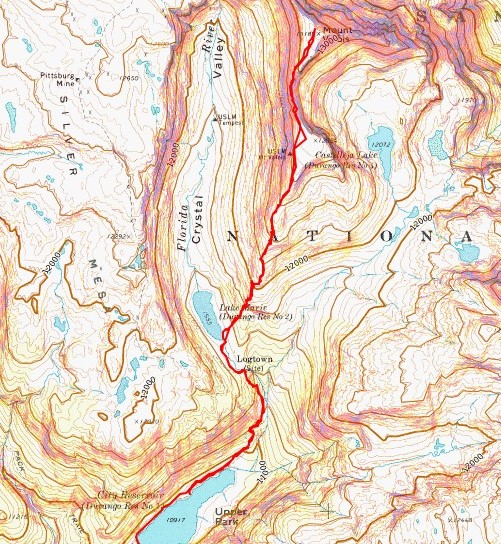
The approach to City Reservoir is a total of 7.35 miles and 1220’ of elevation gain (but also over 1500’ of elevation loss) from Endlich Mesa Trailhead and City Reservoir.  You can view the approach to the saddle here

I awoke from my campsite at City Reservoir and was on the trail at 7am.  I followed the Endlich Mesa Trail towards Lake Marie.

When I reached the south end of the lake, where a stream flows out, I crossed the stream

After crossing the stream I headed northeast towards the ridge and the rocky outcropping.  The ridge actually has a lot of route finding, so I’ll do my best to explain how to navigate it.  This is all class 2, with route finding below treeline.

At the first rock outcropping, head for the tree that’s cut in half at the top of the rocks

Next, ascend this small gully

And continue heading northeast

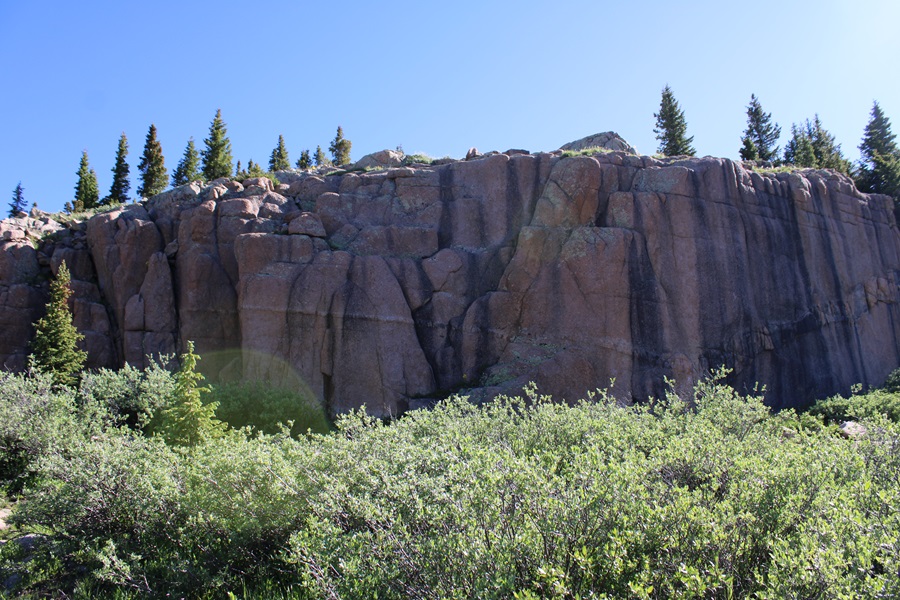
You will eventually come to this wall.  If you navigate around to the left, you’ll find a grassy ramp to ascend.  Ascend, then walk back towards the wall to navigate around the rocks. 

After going east around the large rock face, again head northeast along the ridge.  You’ll encounter another large rock face.  This time, go right, and ascend a grassy gully.

Now you should be looking at the rocky ridge, but at least you’re above treeline. I pretty much stayed to the center of the ridge, and kept heading northeast, following the ridge.  If you have an option to go left on grassy slopes, do that. 

From here on out, this is a straightforward hike.  I climbed northeast up this class 2 ridge to a rather large cairn.

From there I headed east towards this large cairn, but I could have just kept heading northeast along the ridge.

From this second large cairn I followed the ridge towards Mount Valois.  It may look daunting, but it’s all class 2.  The ridge goes, but if it feels sketchy there’s a way to drop down to the left and use game trails. 

Here are some pictures of the ridge. 

Then it’s an easy rocky tundra walk to the summit

I summited Mount Valois at 7:45am

Mount Valois:

Now to head back to City Reservoir.  I retraced my steps back down to the ridge

Then across the ridge

Here are some pictures of the route back down to Lake Marie

Back down the gully

And across the rocky ledge

Then southwest towards Lake Marie

I crossed the stream, and headed south on the Endlich Mesa Trail back to City Reservoir.

I made it back to City Reservoir at 9:30am, making this a 6.5 mile hike with 2310’ of elevation gain from City Reservoir in 3.5 hours. 

On to the next trailhead!
PT 13003

RT Length:  17.1 miles

Elevation Gain: 4750’

I really wish I would have linked up this peak with PT 13164 when I did it in 2019, but then it wasn’t a known ranked 13er.  In any event, today was a long day, so I was getting an early start so I could drive back home for work the next morning.

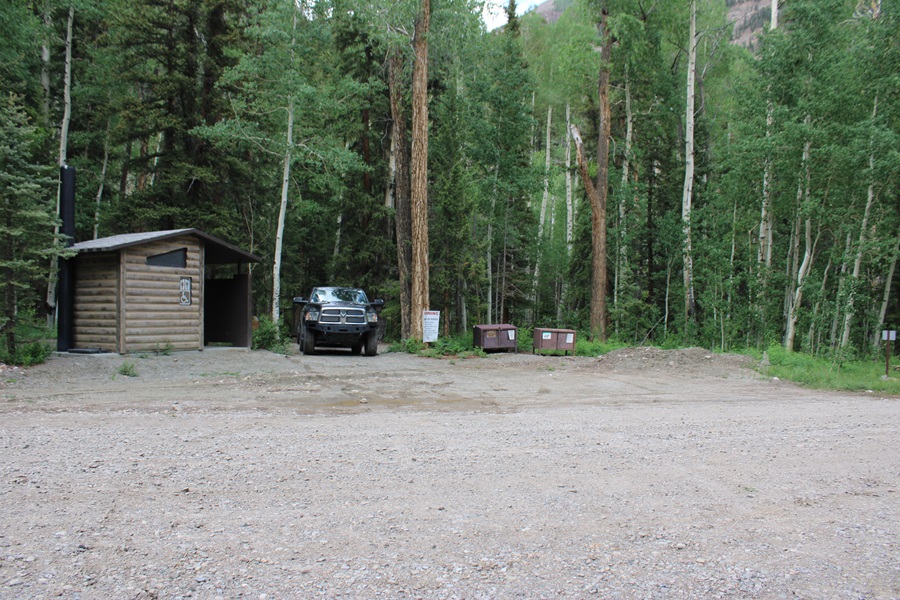
I parked at the Cataract Gulch Trailhead and was on the trail at 3:30am.  The trailhead has several parking spaces, dispersed campsites, and bathrooms.

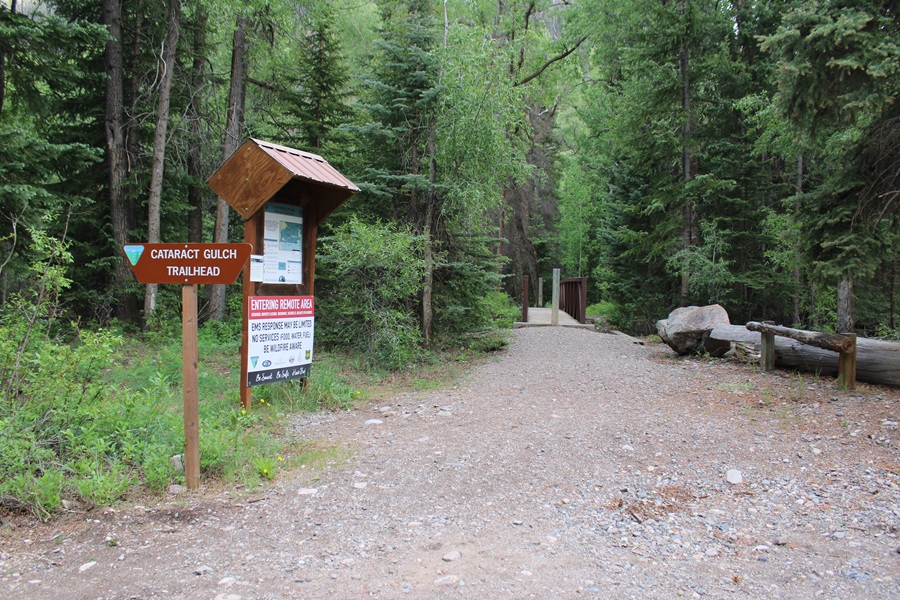
The trailhead is clearly marked, and easy to find. 

I followed the class 1 Cataract Gulch Trail south, towards Cataract Gulch. 

There were several downed trees on the trail, but it was easy to navigate.

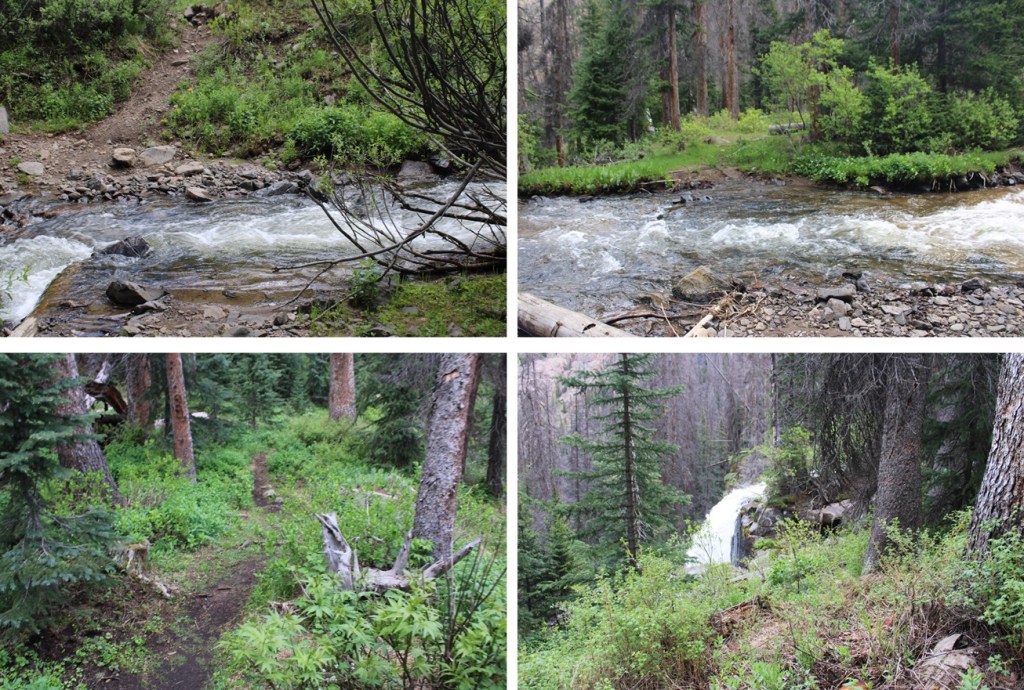
Just before reaching the waterfall about 2.5 miles up the trail, I crossed the creek on a couple of logs.

This is where many people get lost.  I headed up the slope, and there was a large tree blocking the path.  I went left, navigated willows and some boulders, then regained the trail.

I could now see the waterfall clearly.  A lot of people continue straight here, towards the waterfall, following the social trails.  Instead, look for a trail to the right that goes up and behind the waterfall.

Next, to cross the creek.  I crossed directly above the waterfall.  Probably about 10 feet from where it drops off.   At night I knew where to cross because there are little reflecting circles on the trees across from the water that glow when you shine your flashlight across them.  The water was running high today, and I didn’t want to go over the edge, so I crossed carefully.  The water was up just past my knees. 

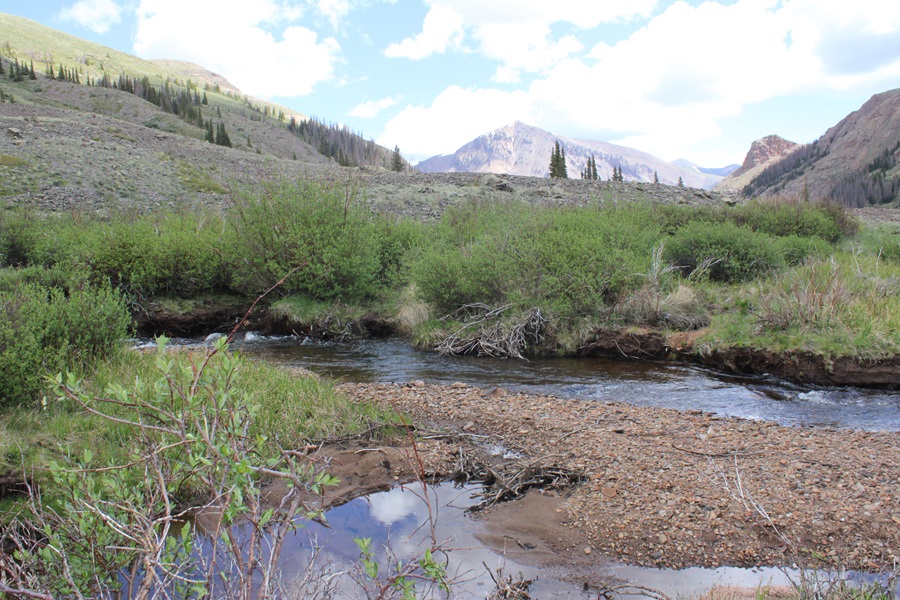
I picked up the trail on the other side, and quickly came to a second creek crossing. 

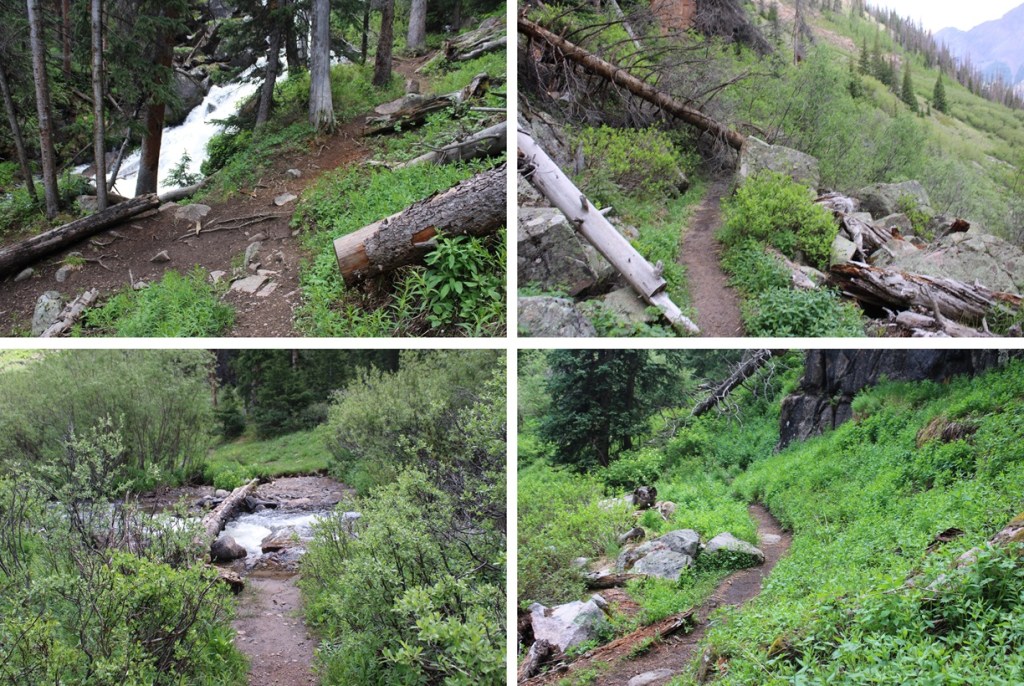
I picked up the trail again on the other side, and ascended through a cairned, rocky area. 

This led me to my final creek crossing of the morning. 

I crossed the creek one more time, and picked up the trail on the other side.  It led me up and around to the left, behind boulders and through a small canyon.

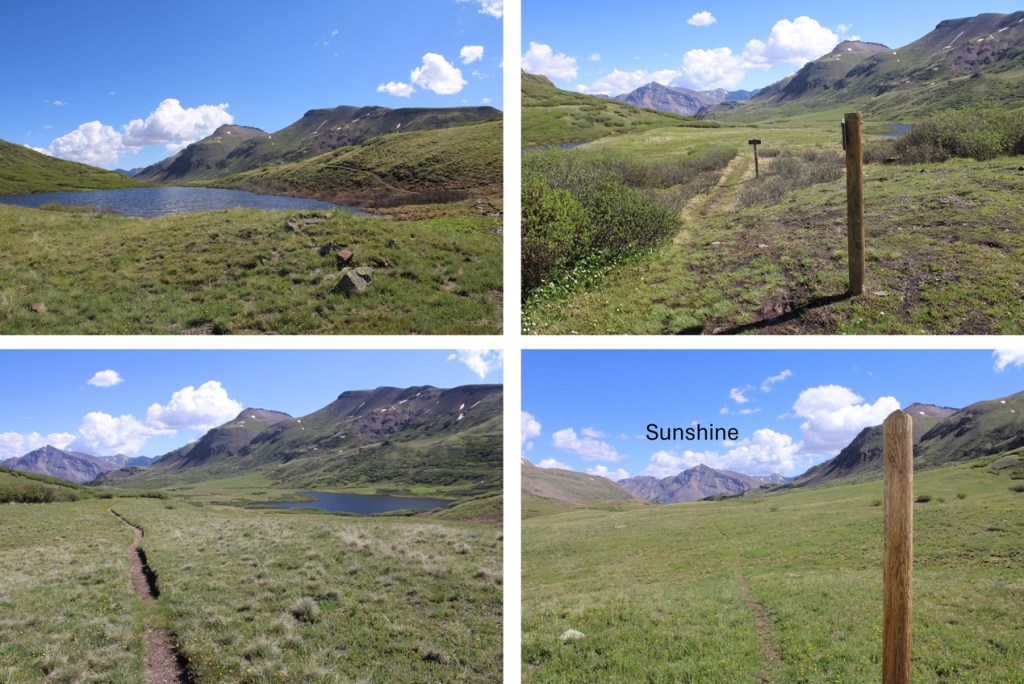
I was now headed south towards Cataract Lake.  There’s a pretty good trail here, but every once in a while it gets overgrown.  The trail slopes slightly downward as it goes across the tundra and through the willows. There are posts to help guide you if you lose the trail. I was headed here:

I passed Cataract Lake to my left, and a small lake to my right.  Here the trail picked up with the Colorado Trail, and I followed it right, west, towards Cuba Gulch.

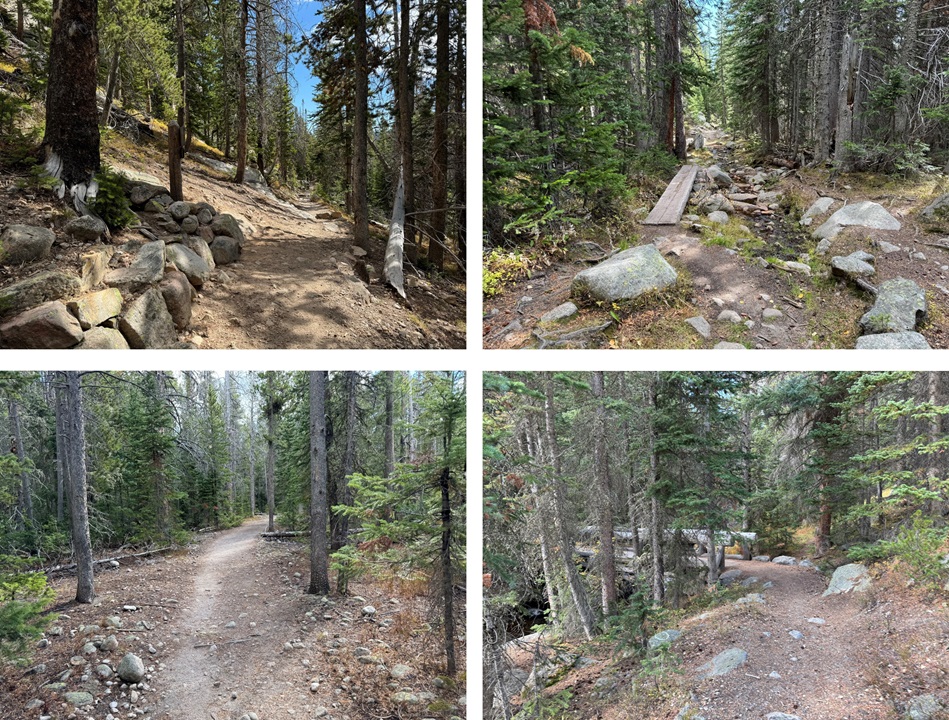
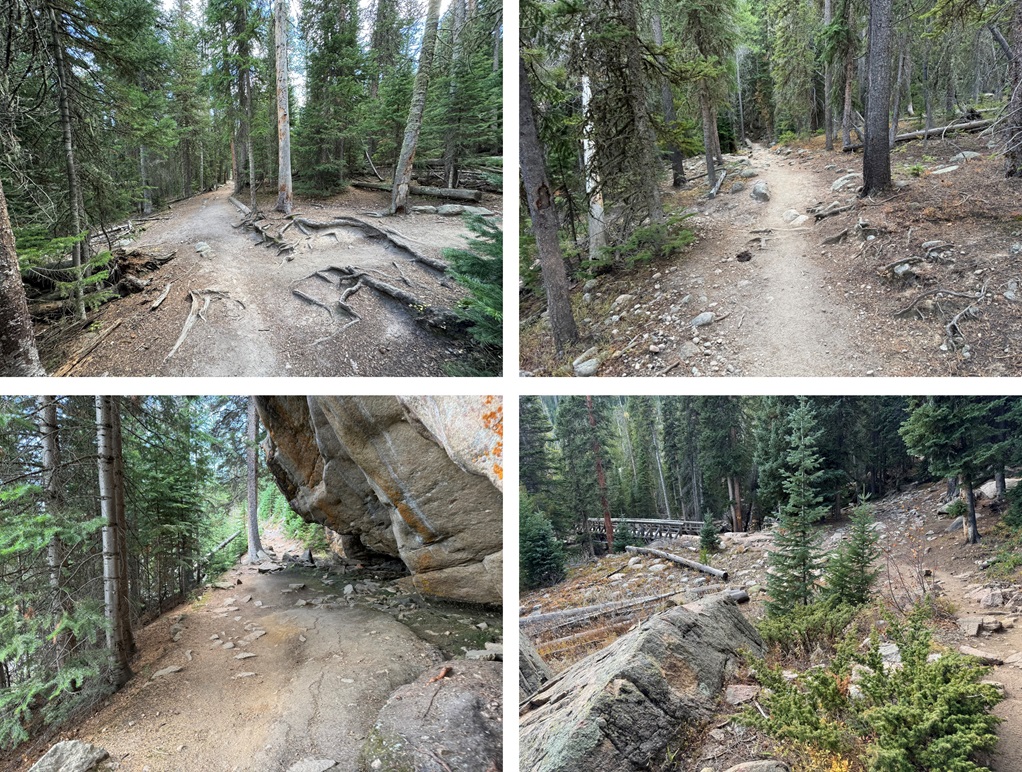
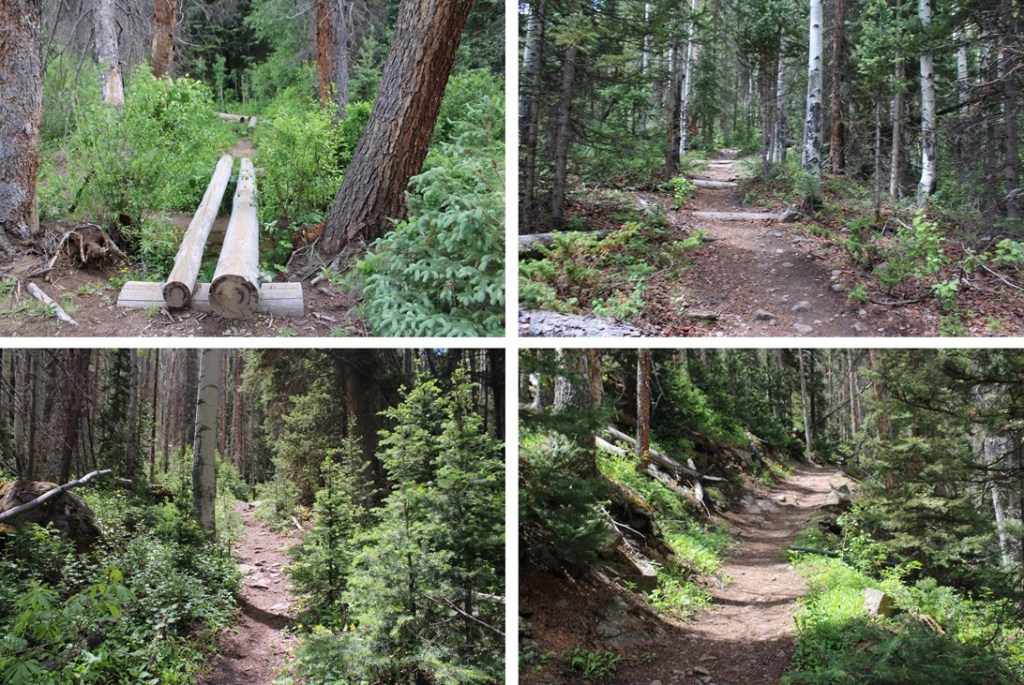
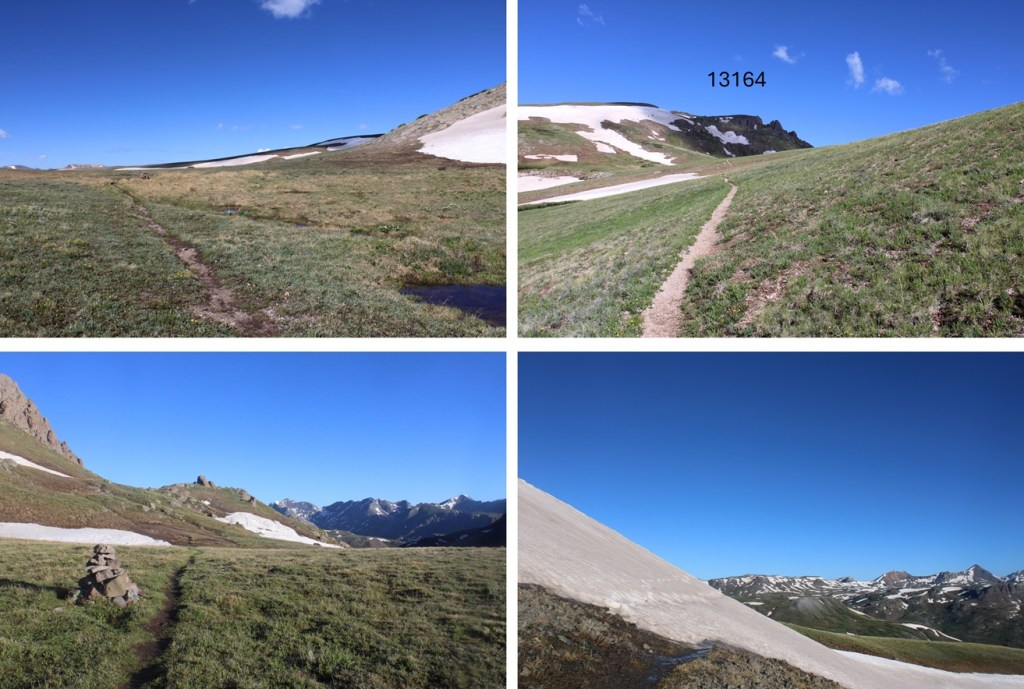
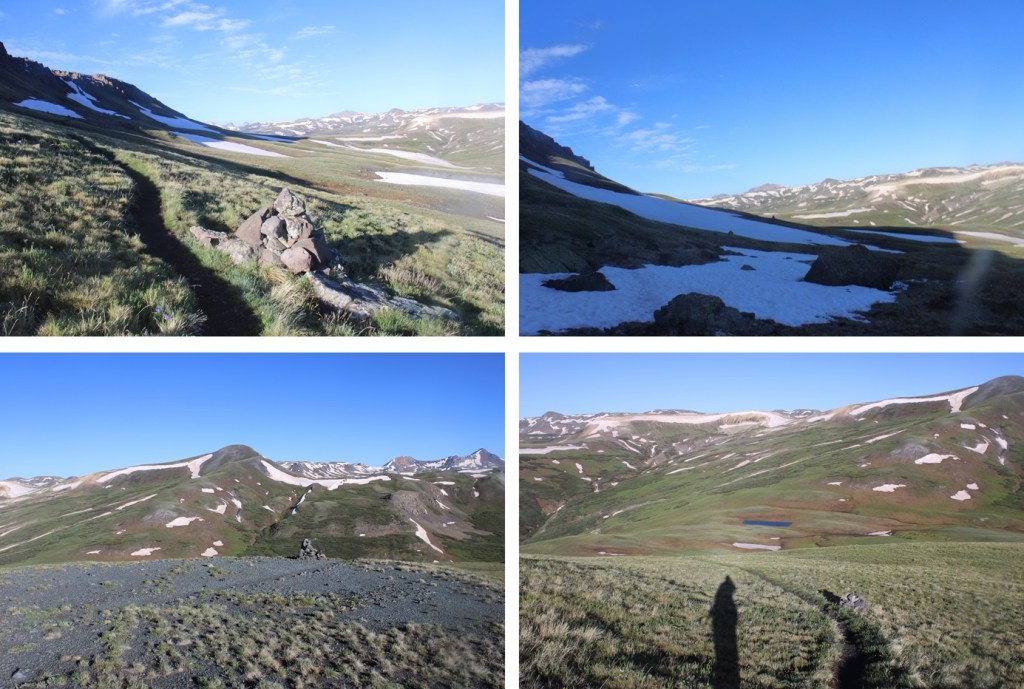
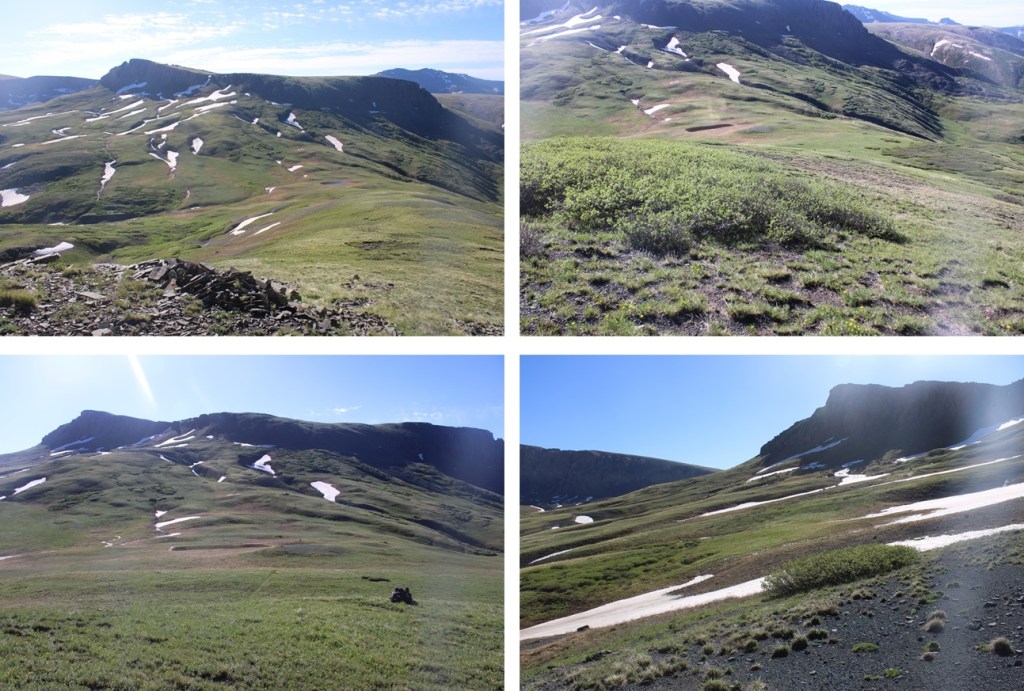
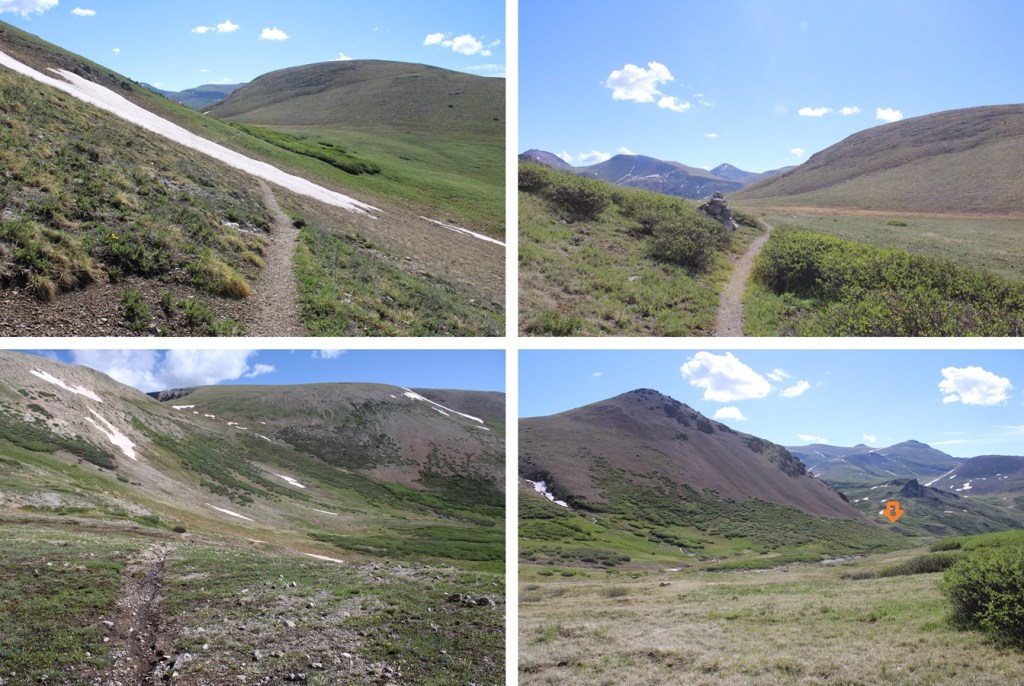
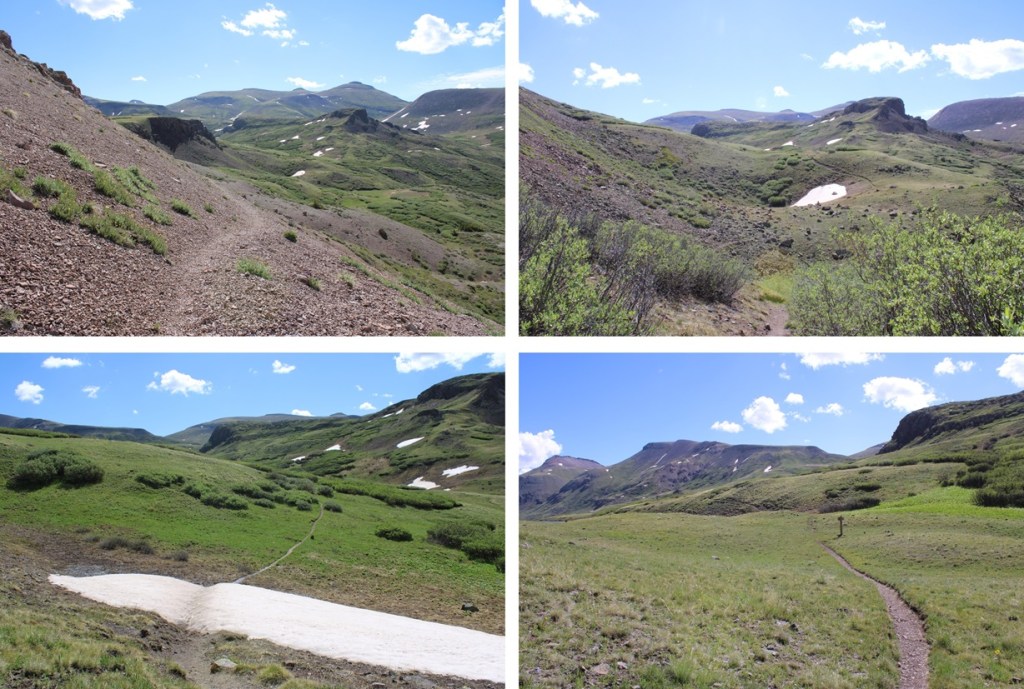
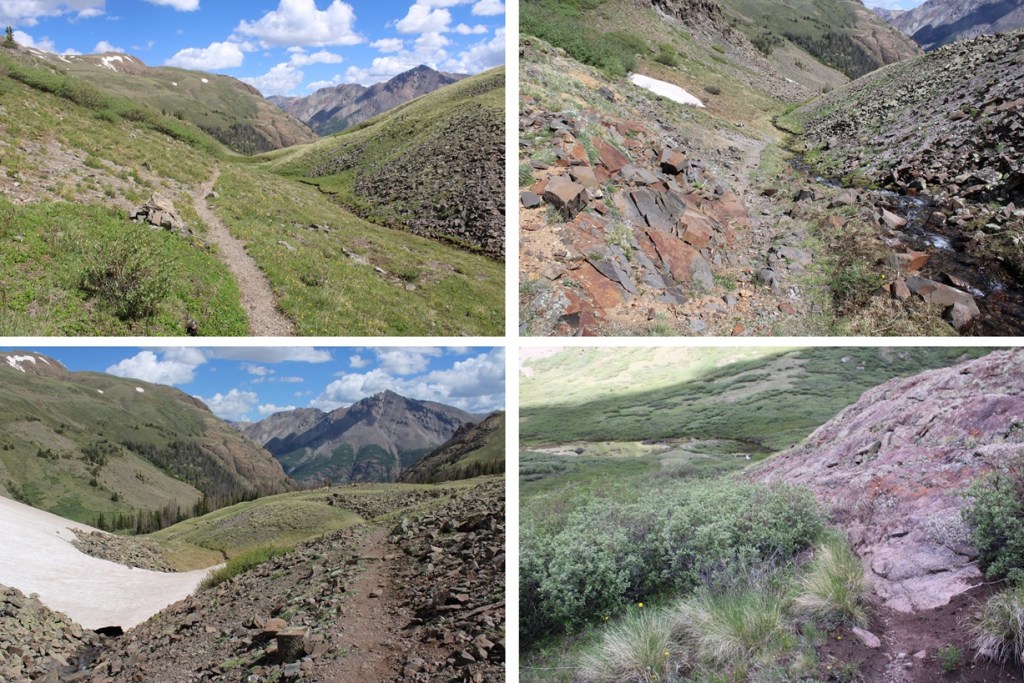
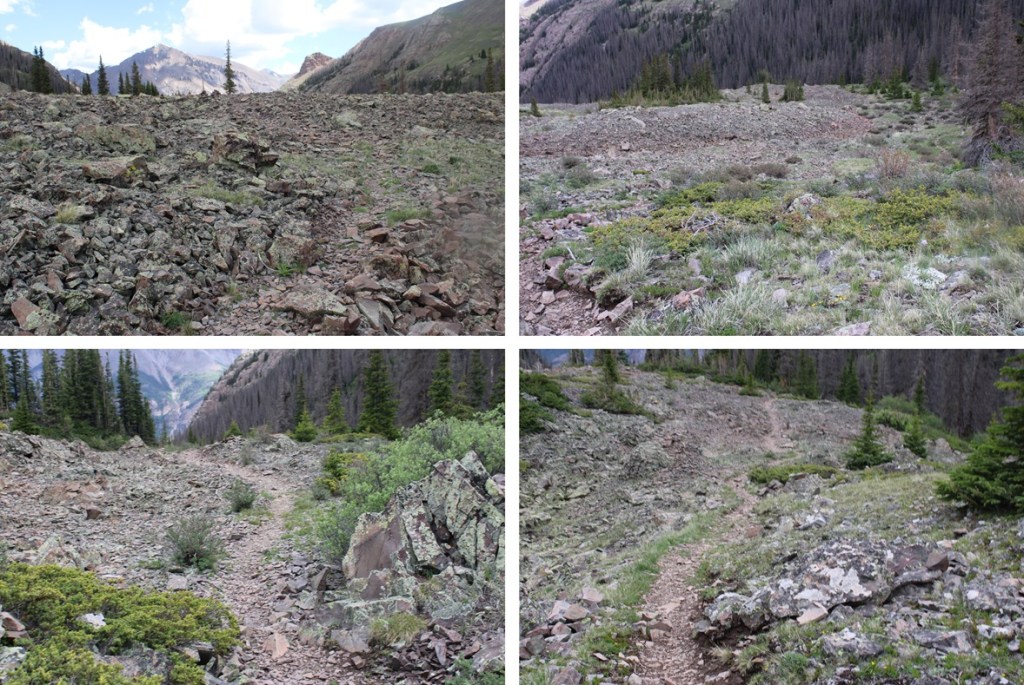
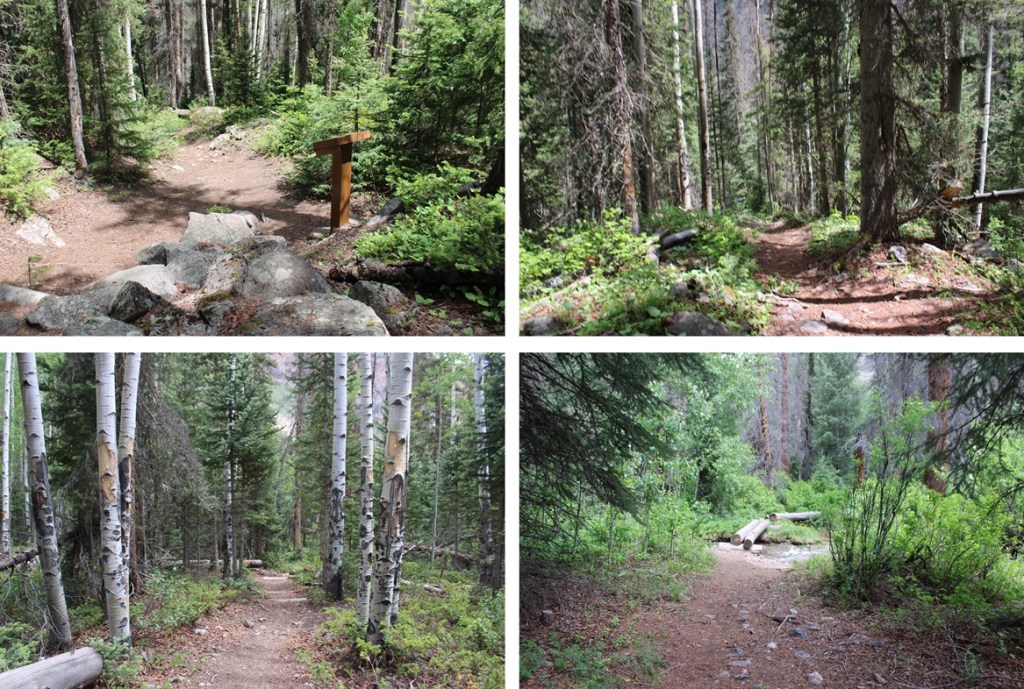
I stayed on the Colorado Trail (East Fork Middle Pole Trail) for most of the rest of the hike.  Here are some pictures of the trail.

The trail meanders it’s way to a saddle:

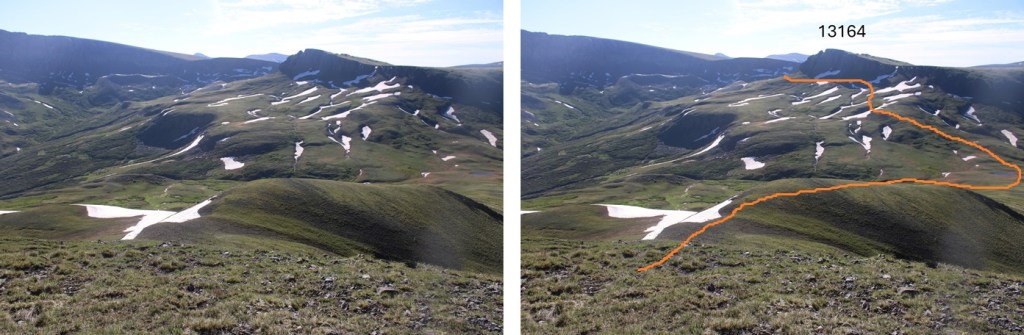
I skirted around the north side of 13164, navigating through a could of ice patches. 

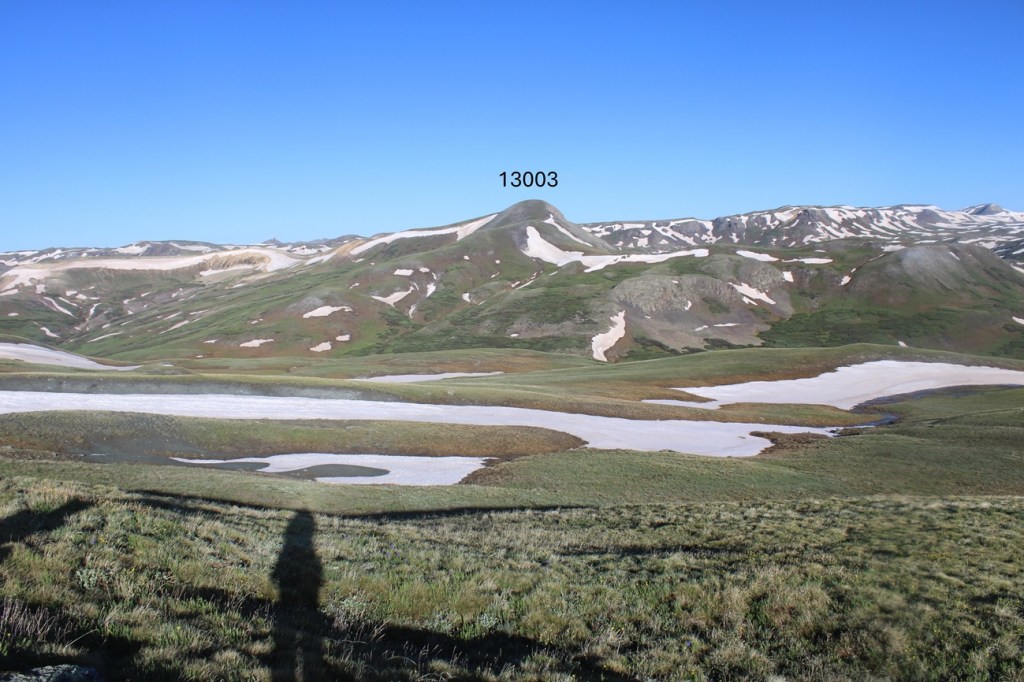
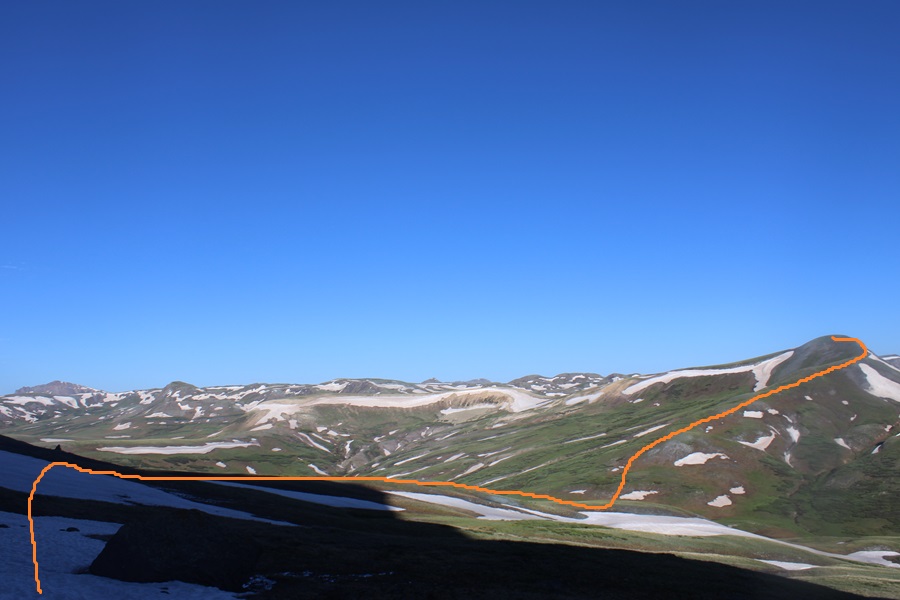
Now on the north side of 13164, I could see 13003 to the west. 

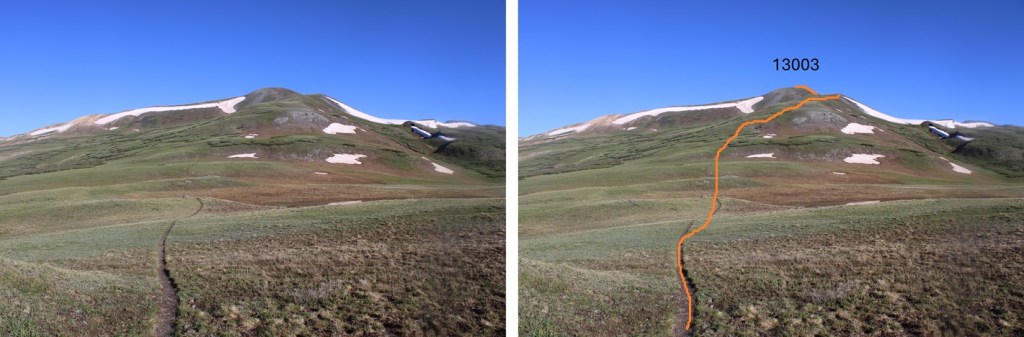
I stayed on the Colorado Trail until I hit the saddle of 13164 and 13003, losing about 500’ of elevation, then left the trail and took the tundra covered ridge to the summit.  This is the route I took.

I made my way to the saddle

Then hiked the ridge to the summit

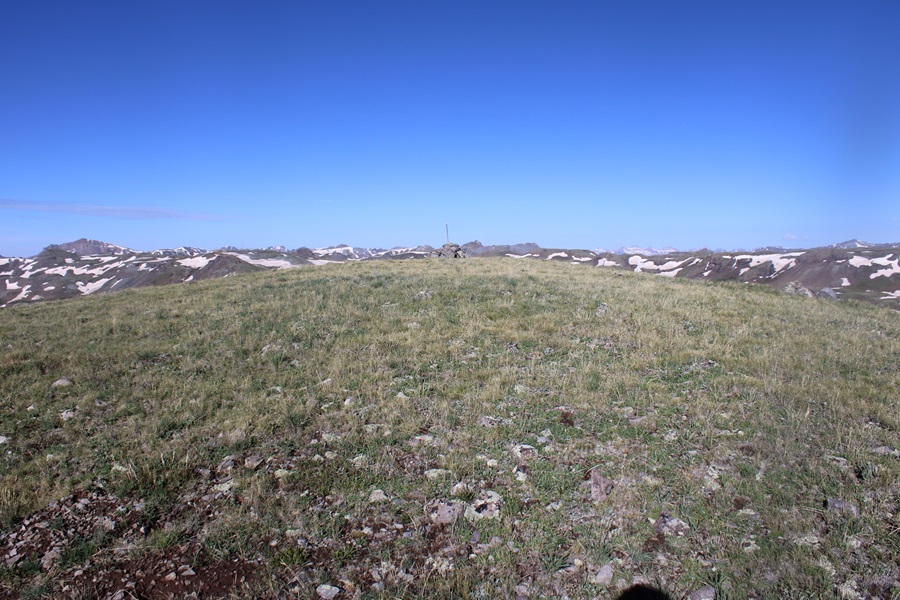
I summited PT 13003 at 8:15am

PT 13003:

This was an out and back hike for me, so I turned around and retraced my steps.  Here’s my route back down the saddle, skirting around the left side of PT 13164, following the Colorado Trail.

I then continued following the trail as it wound back to the Cataract Gulch Trail

Past the lakes and through the upper basin, I kept following the trail, aiming for Sunshine Peak to the north.

I crossed the creek

Then descended through the rocky basin

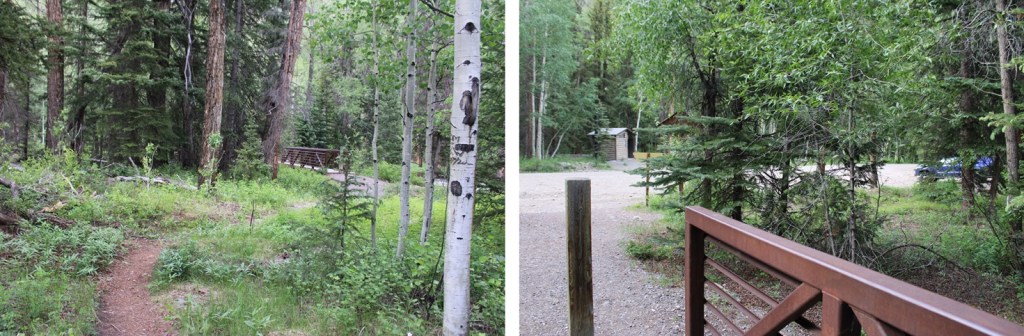
I crossed the creek twice more, and then followed the trail back down around the waterfall and back to the trailhead.

I made it back to the trailhead at 12pm, making this a 17.1 mile hike with 4750’ of elevation gain in 8.5 hours.  Note:  My Strava glitched about 2 miles into this hike, so I drew in my route for this peak on the topo map.  This was easy because most of the route was on a trail, so it auto populated.  My phone and watch gave me 19.1 miles for the hike, but I got 17.1 miles when I drew the map in CalTopo. 

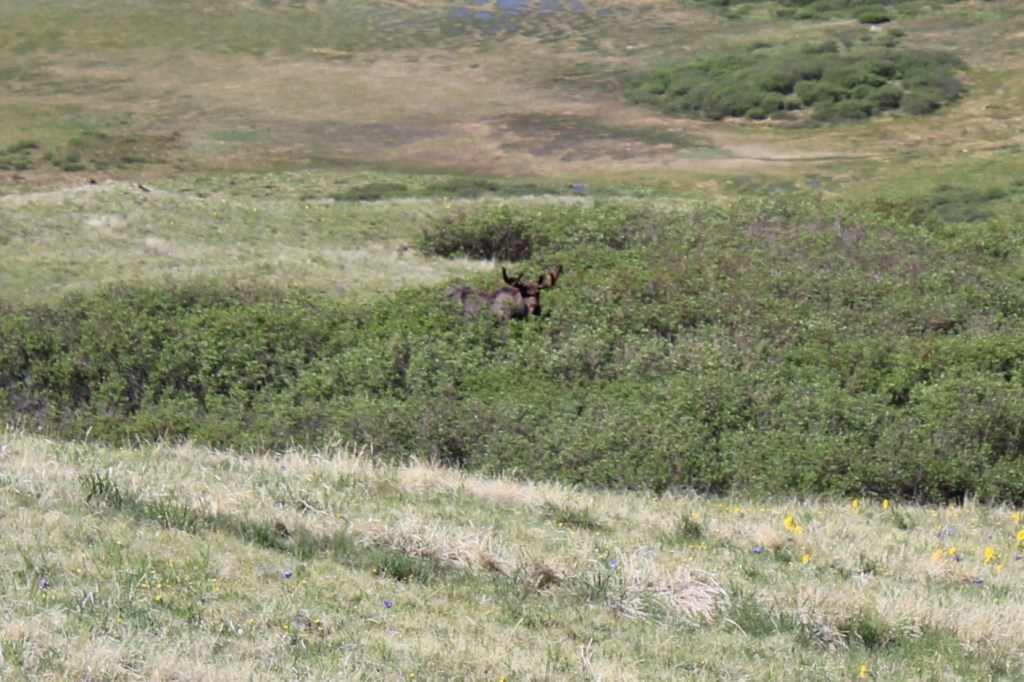
Also, every time I’ve been to Cataract Gulch I’ve seen moose. Today was no exception.

On to the next trailhead!