Click on a menu, or use the search feature to access hundreds of trip reports. Contact me if you'd like more information about a hike, or a GPX file
Author: Laura M Clark
Laura has summited over 500 peaks above 13,000' solo, including being the first woman to solo summit all of the Colorado 14ers, as well as the centennials. After each hike, she writes trip reports for each one and publishes them on her blog, which is read by fans all over the world. Author of Wild Wanderer: Summiting Colorado’s 200 Highest Peaks, which is available to purchase on Amazon.
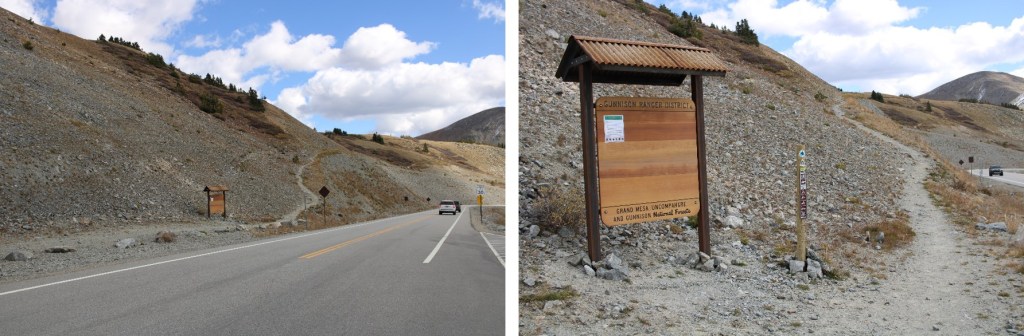
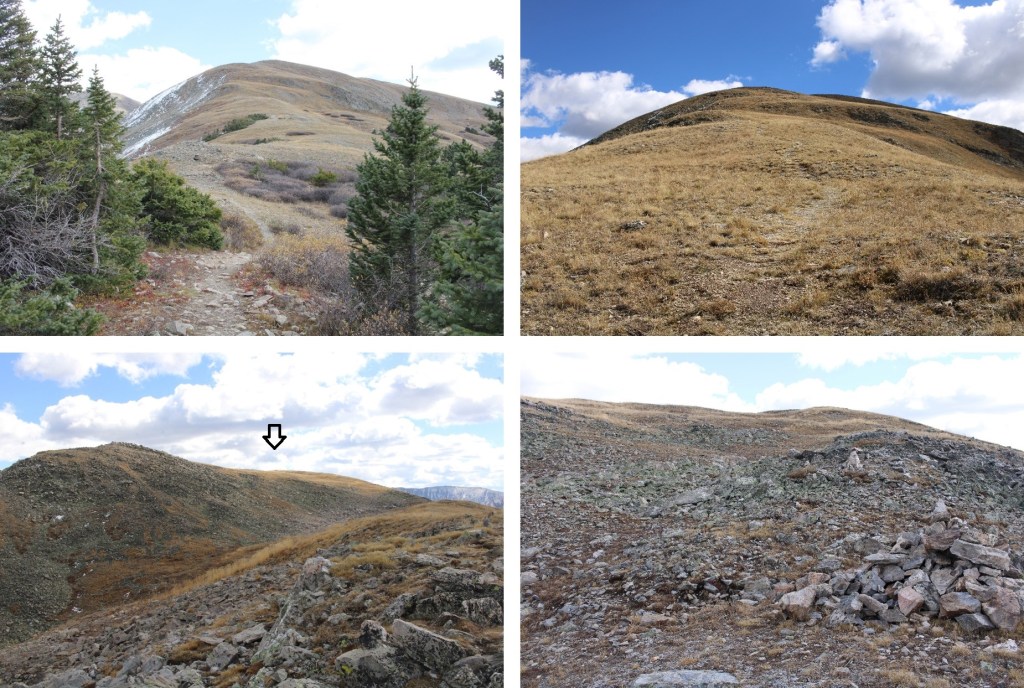
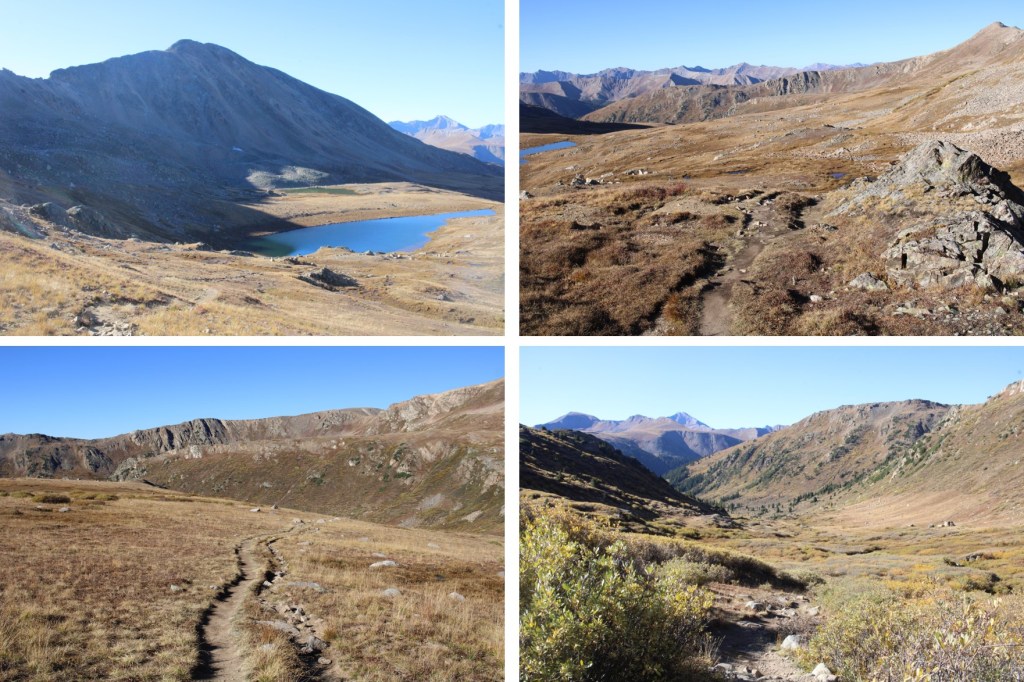
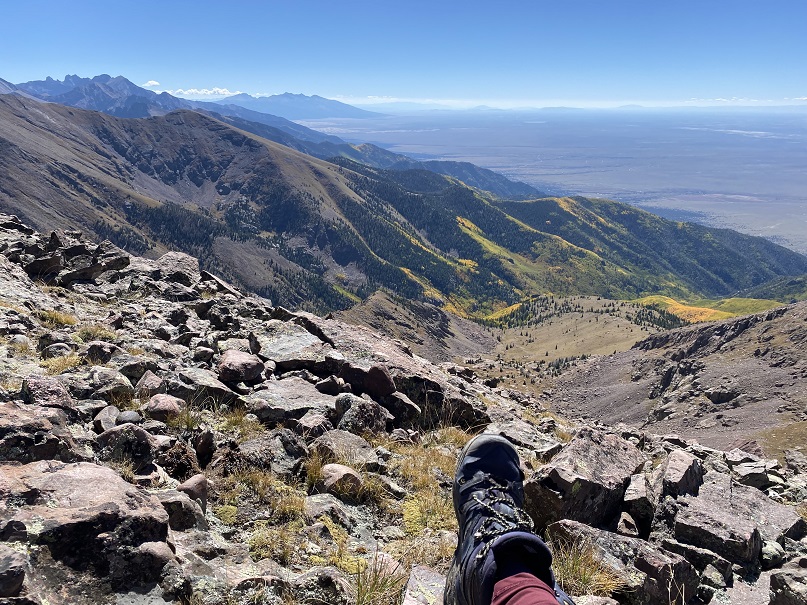
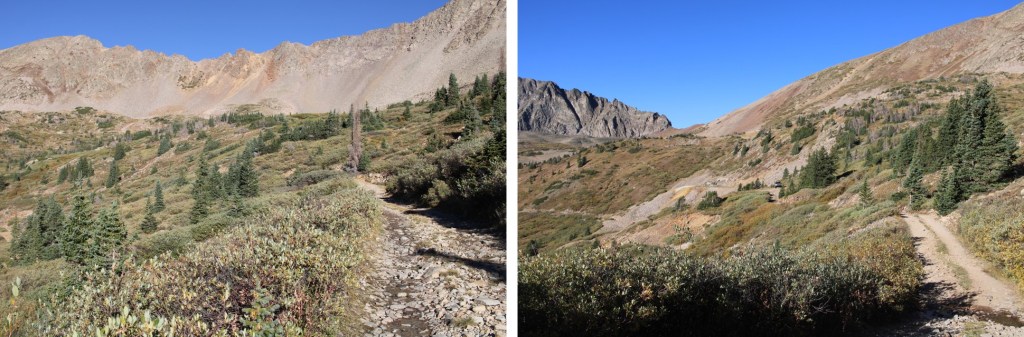
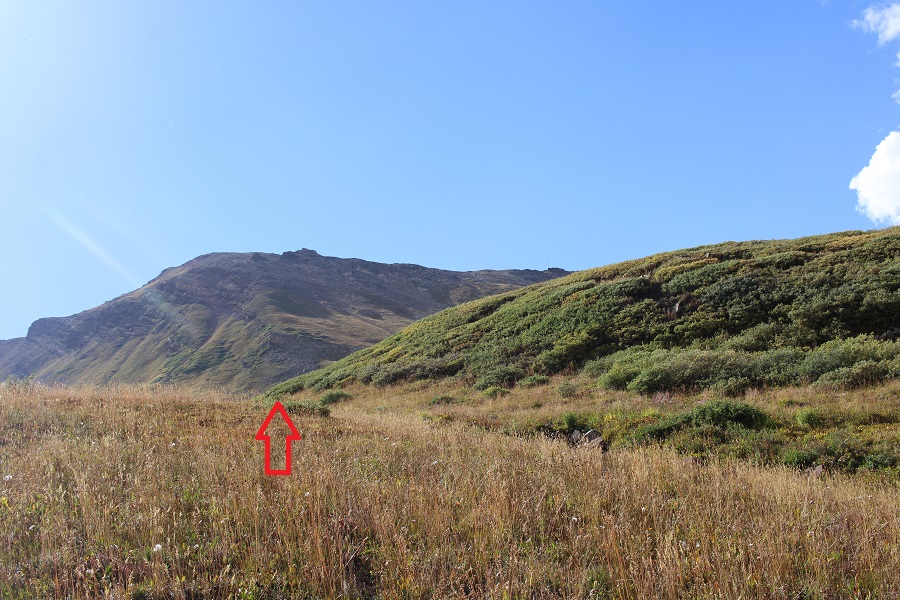
Not gonna lie… I woke up late and wasn’t able to do the peak I’d planned, so I switched gears and headed to Cottonwood Pass instead. I was on the trail at noon, starting out by crossing the road and heading east along the obvious trail.
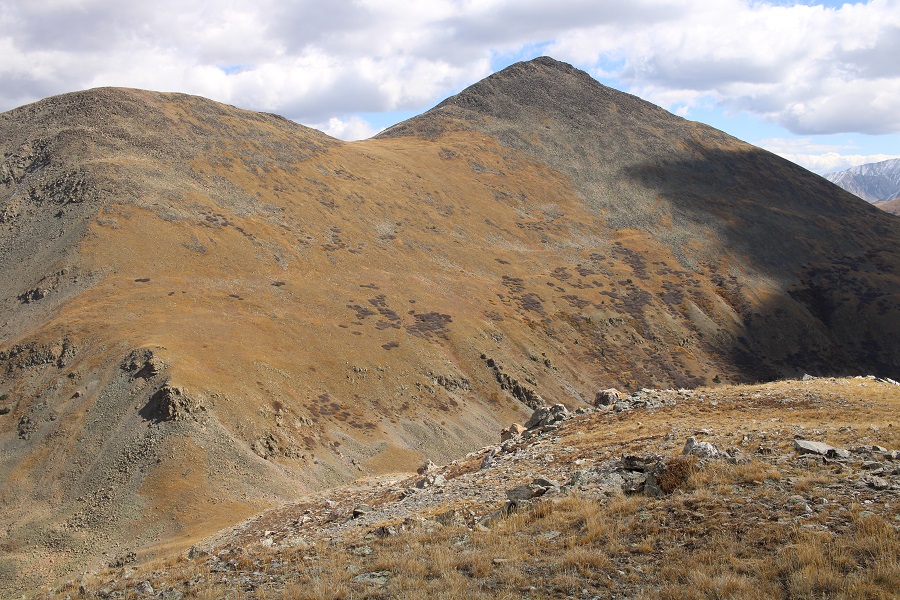
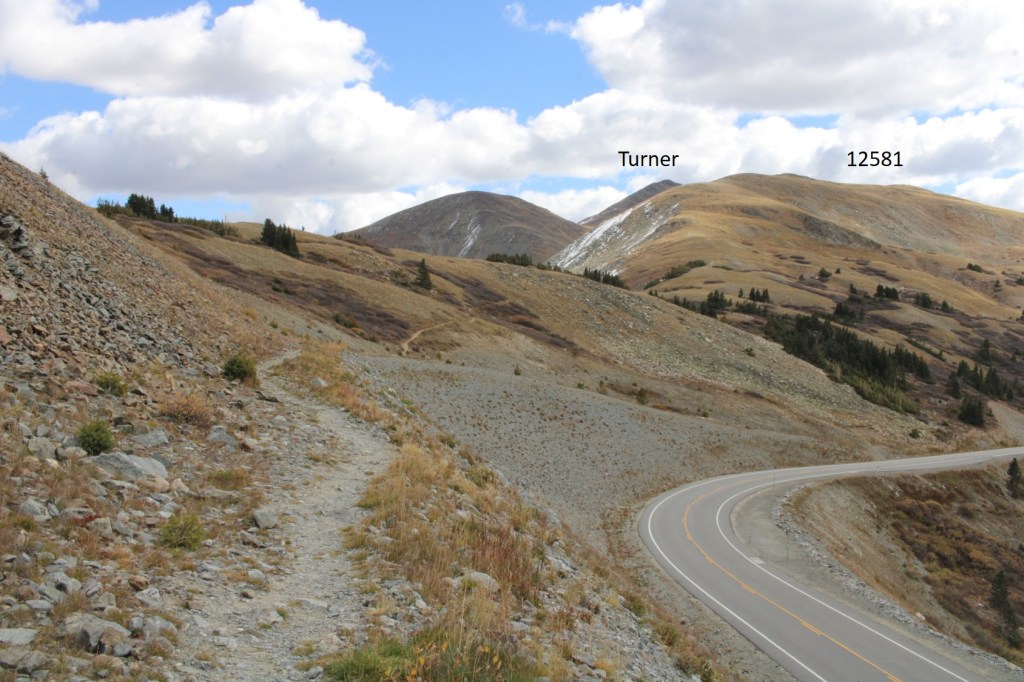
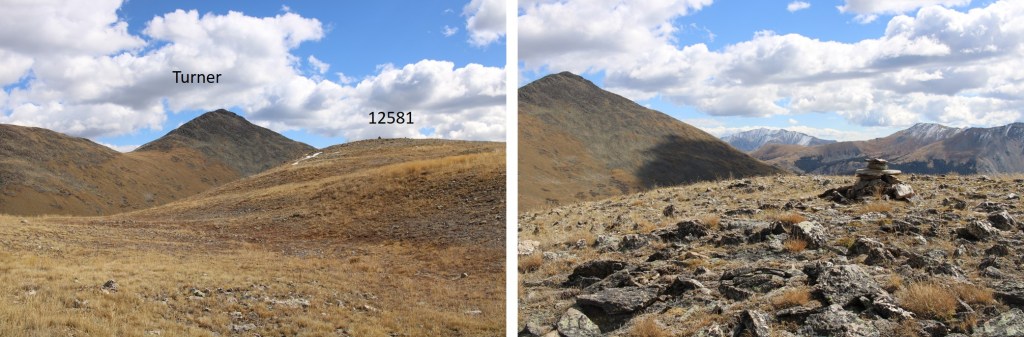
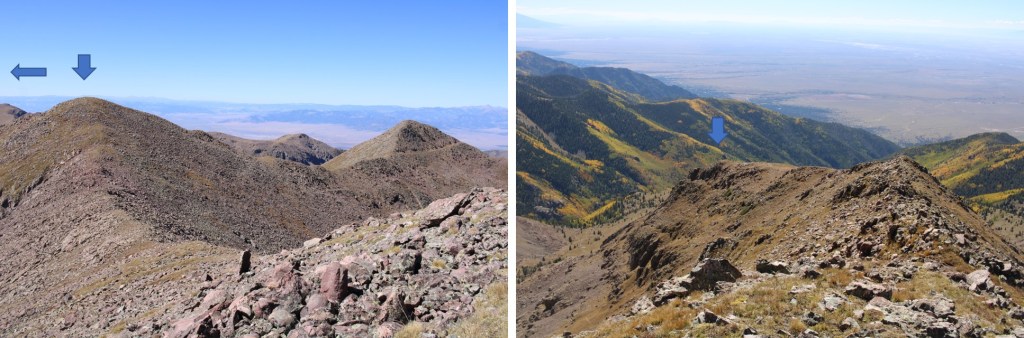
You can see both PT 12581 and Turner from the beginning
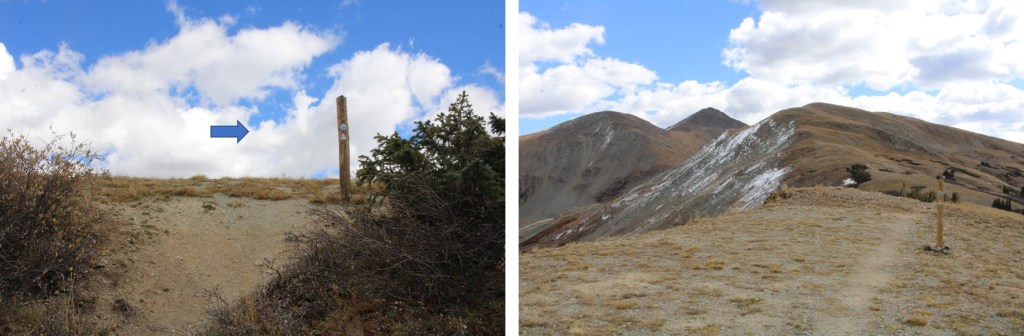
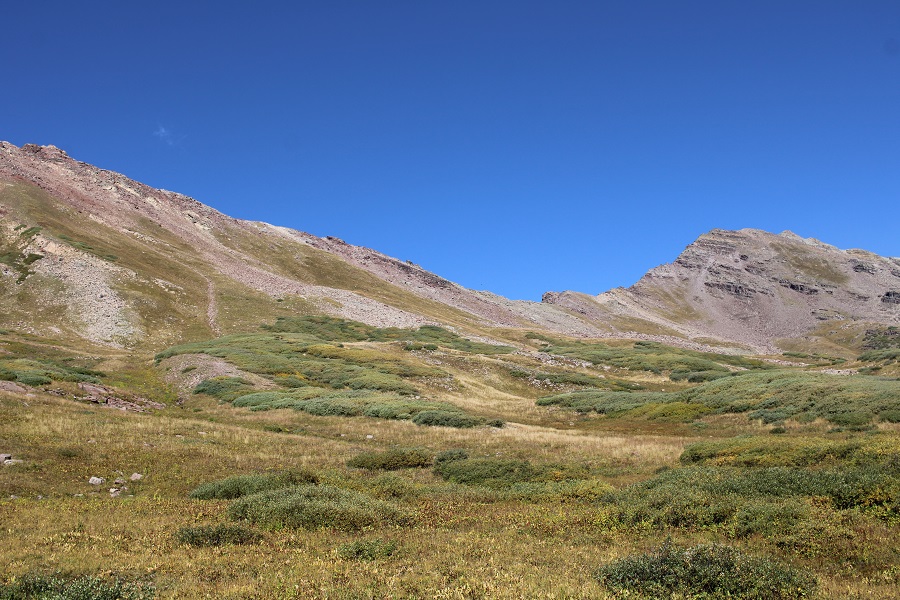
At the saddle, I turned right and continued following the ridge
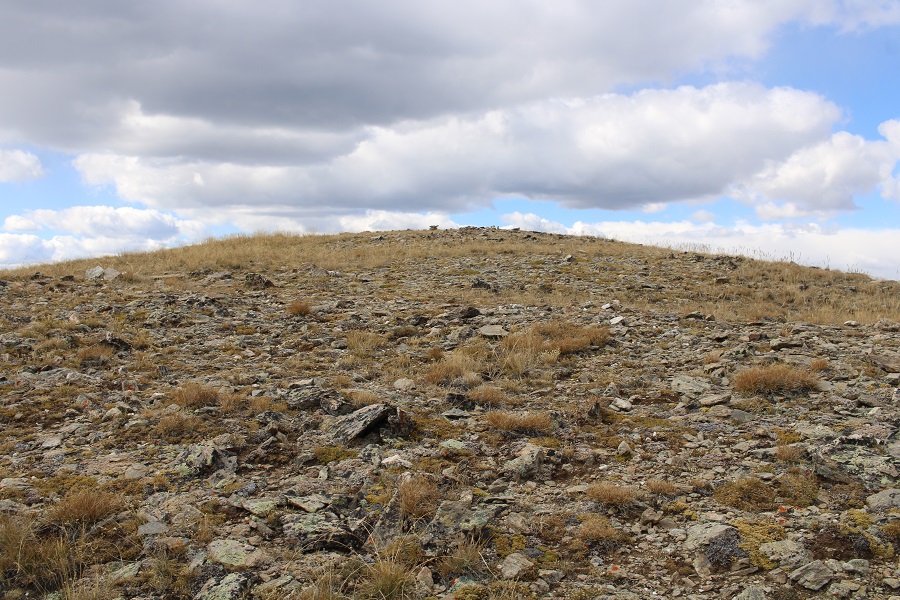
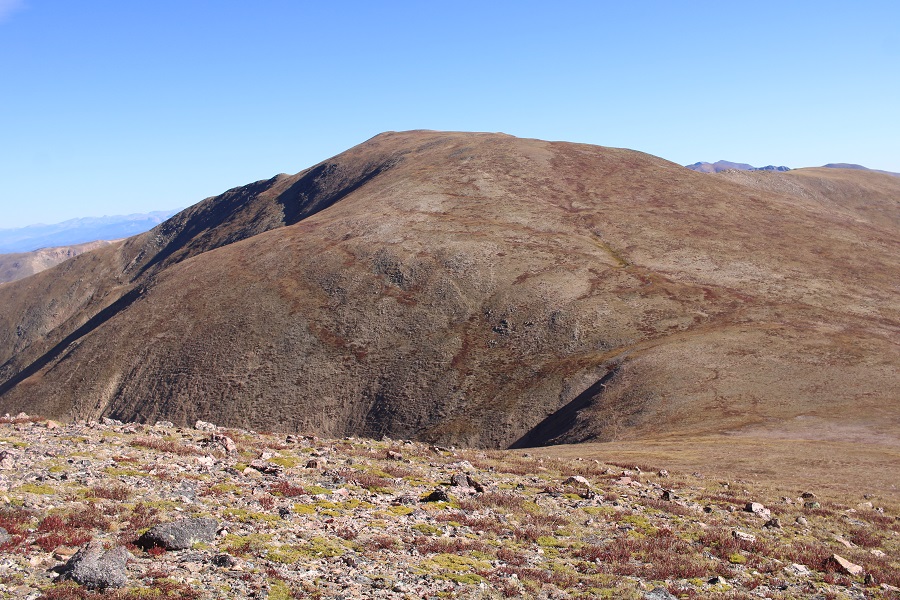
This was an easy tundra walk, all the way to the summit of 12581
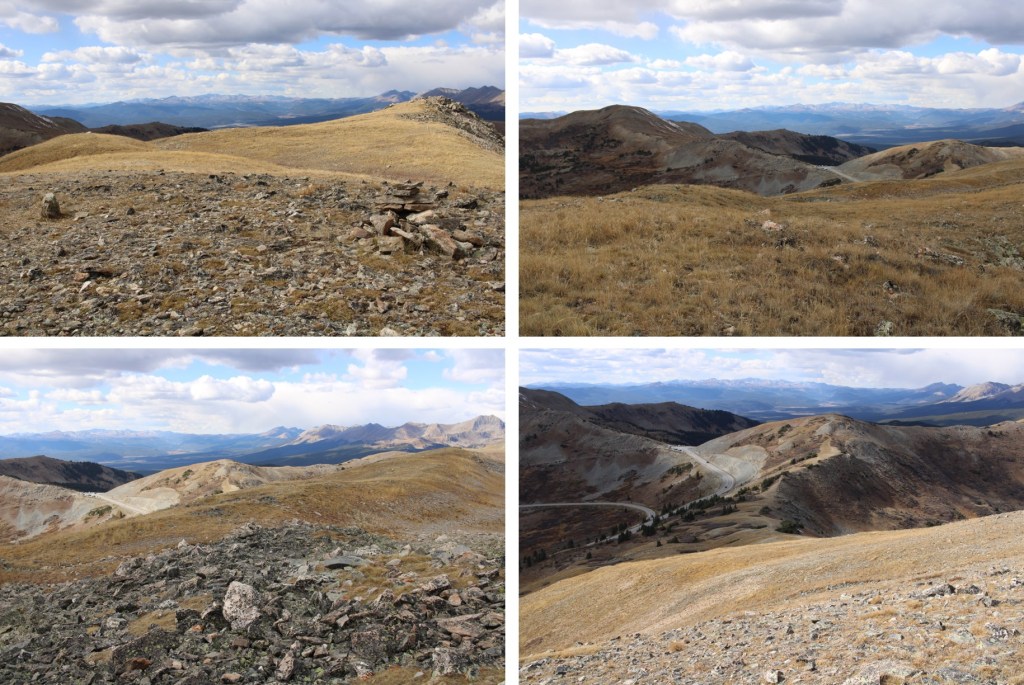
I summited PT 12581 at 12:35pm
PT 12581:
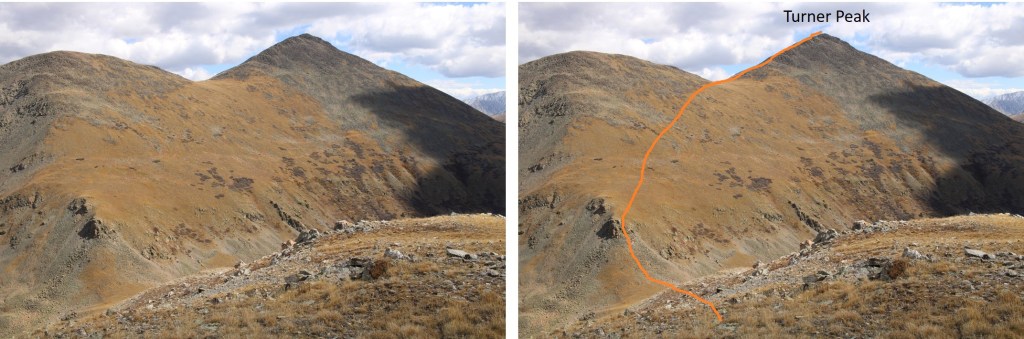
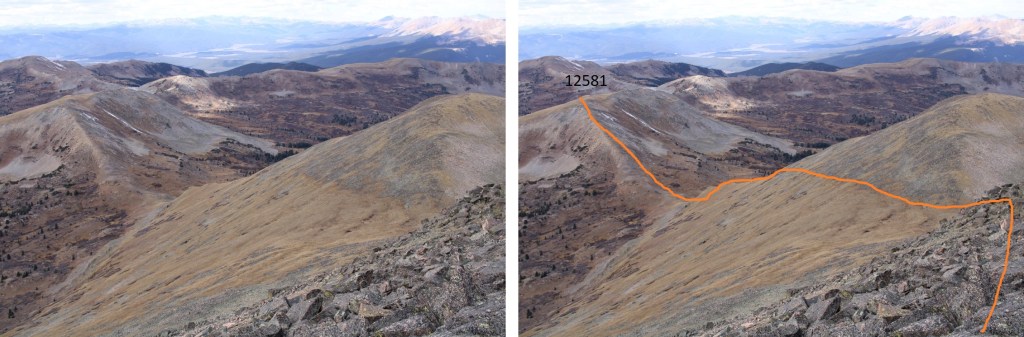
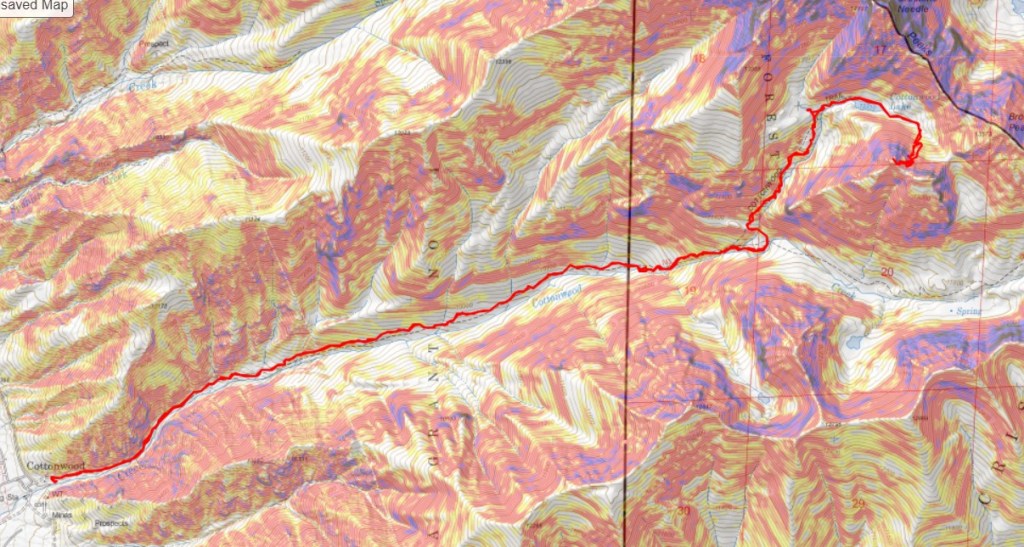
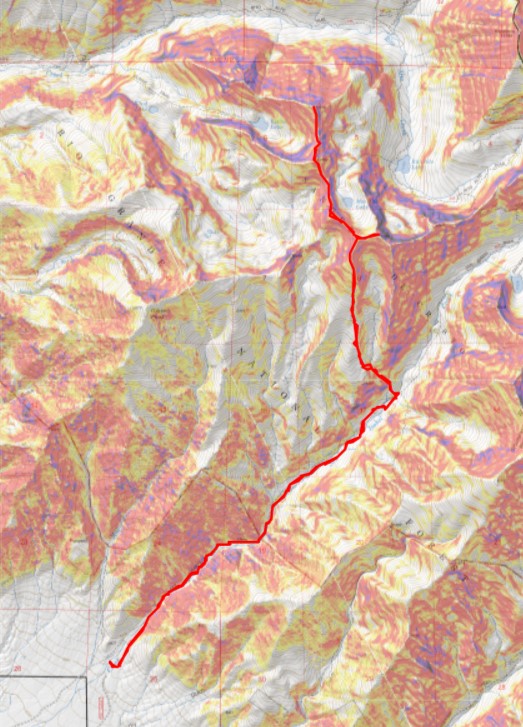
From there the route to Turner was obvious. Here’s my route:
I continued following the ridge east, losing 490’ of elevation
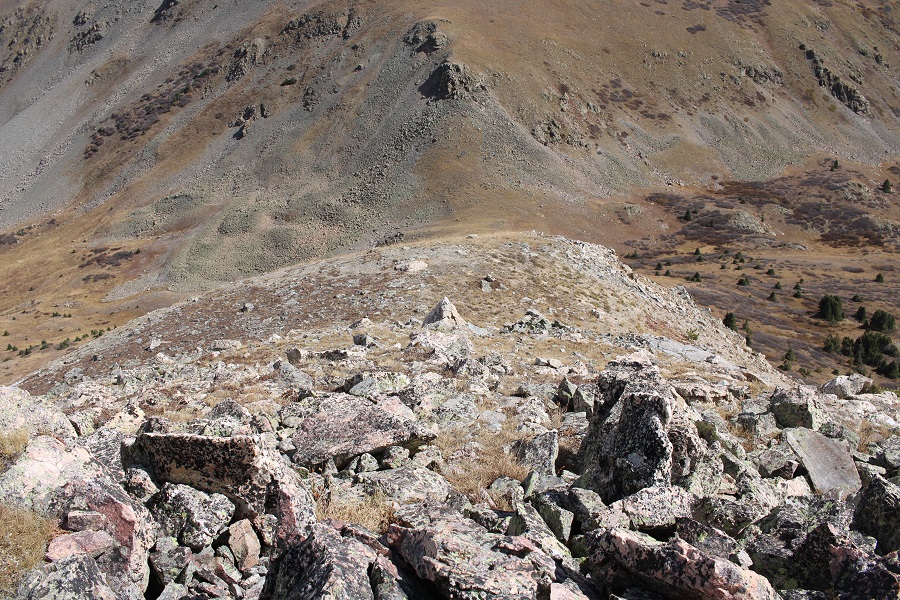
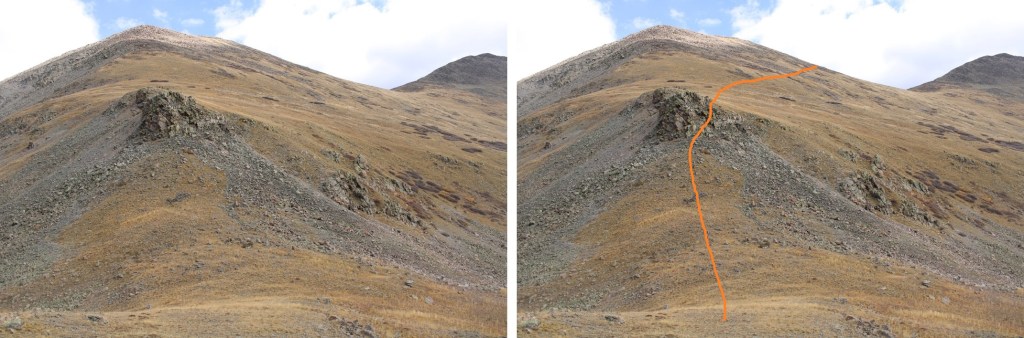
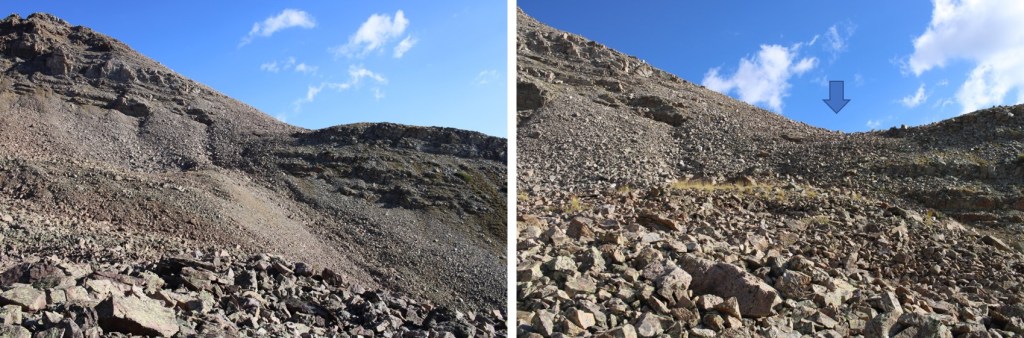
Once at the Turner/12581 saddle, I started ascending. At first, the rocky outcropping looked interesting, but it was class 2 all the way. It was 1130’ to the summit of Turner Peak.
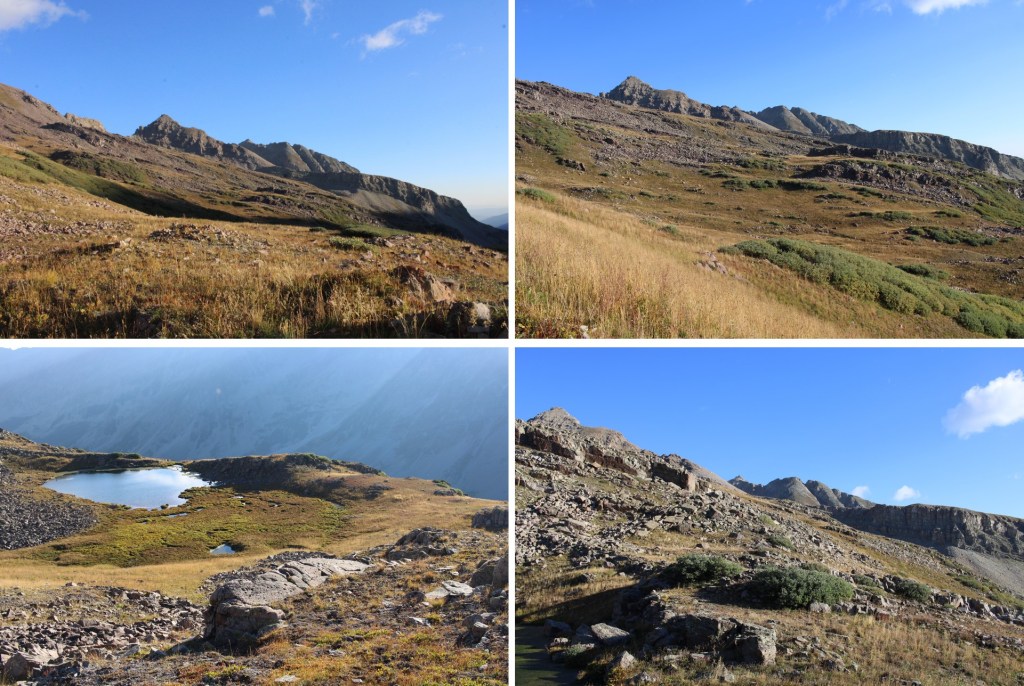
Once past the rocky area, it was tundra all the way to the saddle
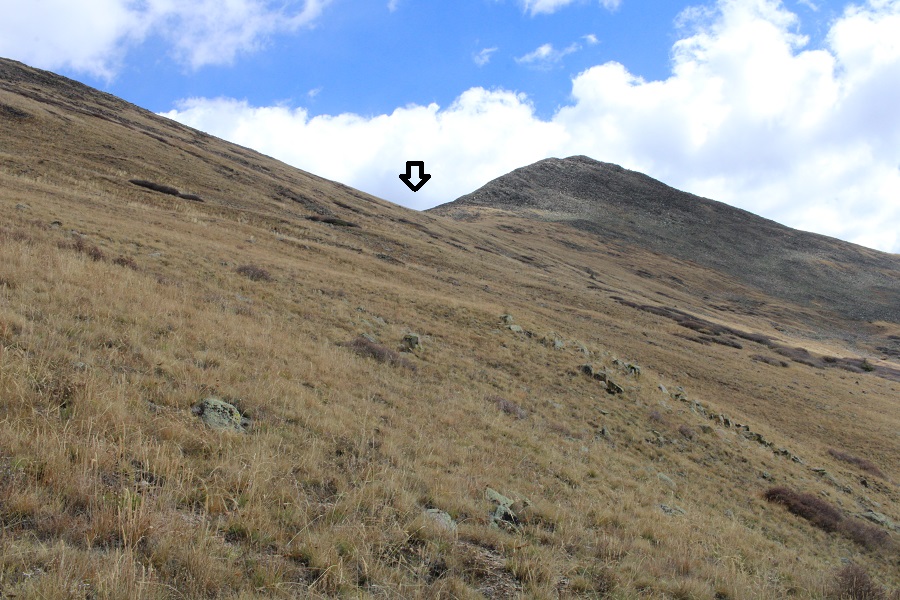
The route obvious to the summit, the rocks here were solid and easy to navigate. I simply followed the ridge southeast
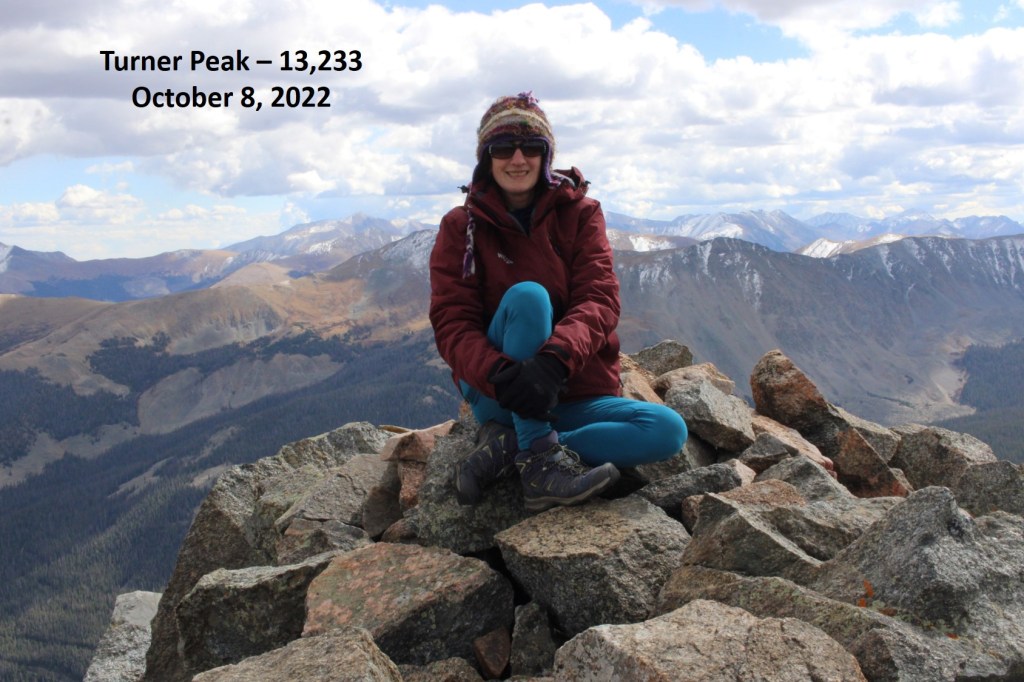
I summited Turner Peak at 1:40pm
Turner Peak:
This was all I had on my agenda for the day, so I turned around and retraced my steps back to PT 12581
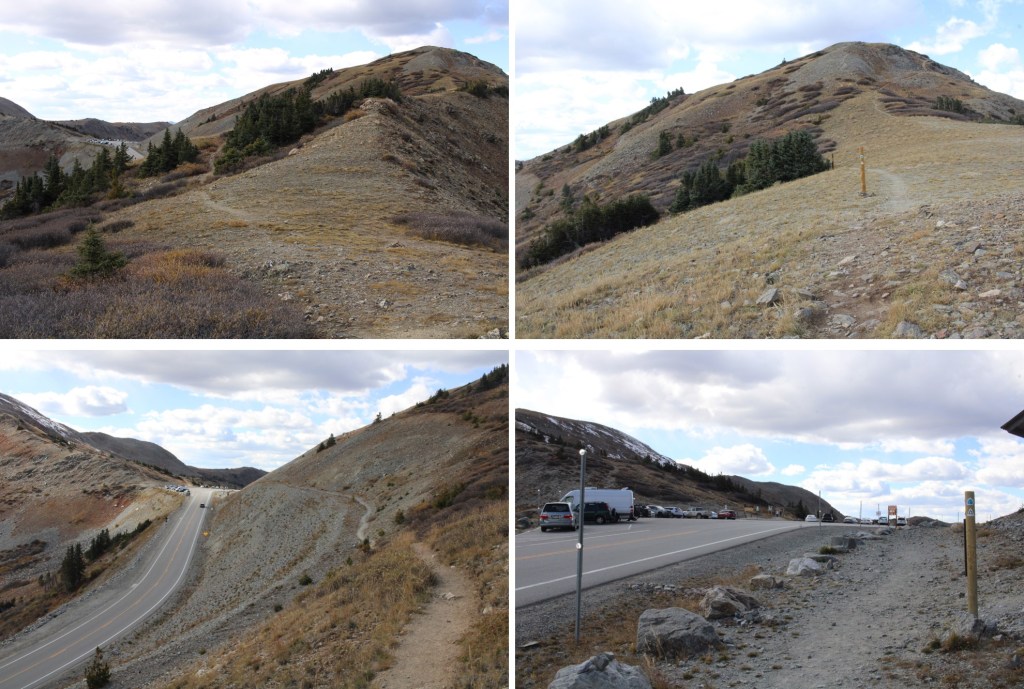
Then followed the ridge west towards the trailhead
I made it back to the trailhead at 3pm, making this a 4.72 mile hike with 2178’ of elevation gain in 3 hours. All in all, quite a pleasant afternoon.
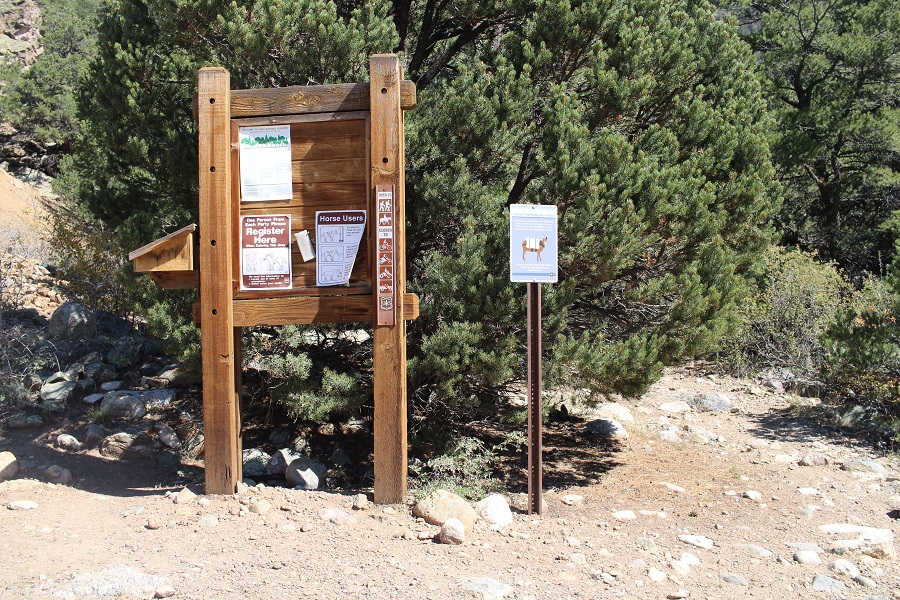
I started from the Cottonwood Creek Trailhead at 4:30am. This trailhead tends to fill up in the summer, but on this fall day my truck was the only one there. It was the only one there the night before as well.
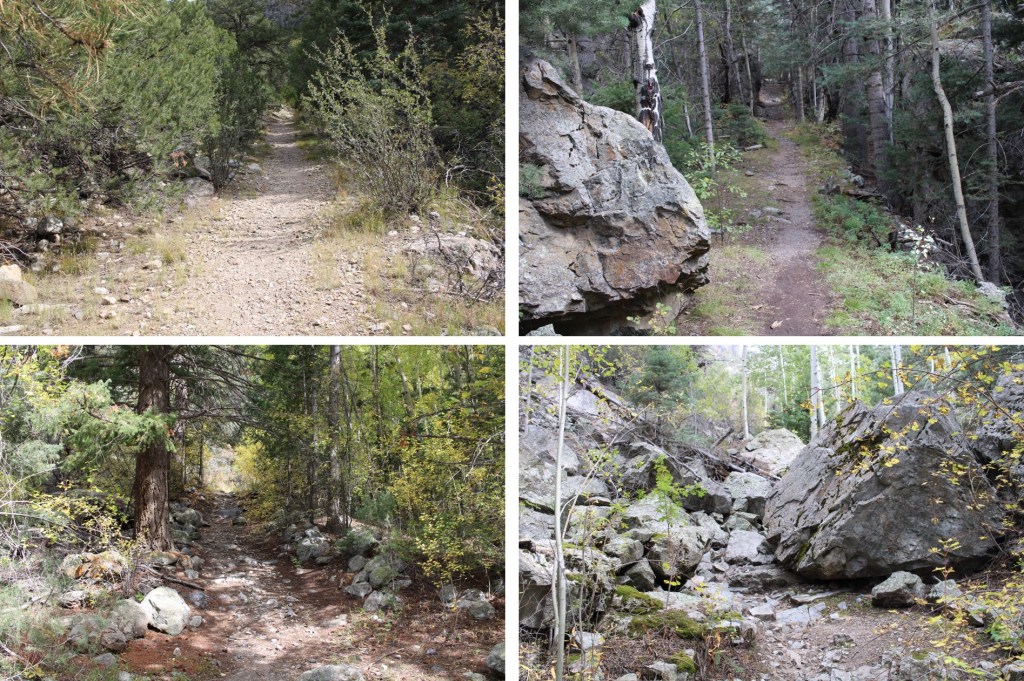
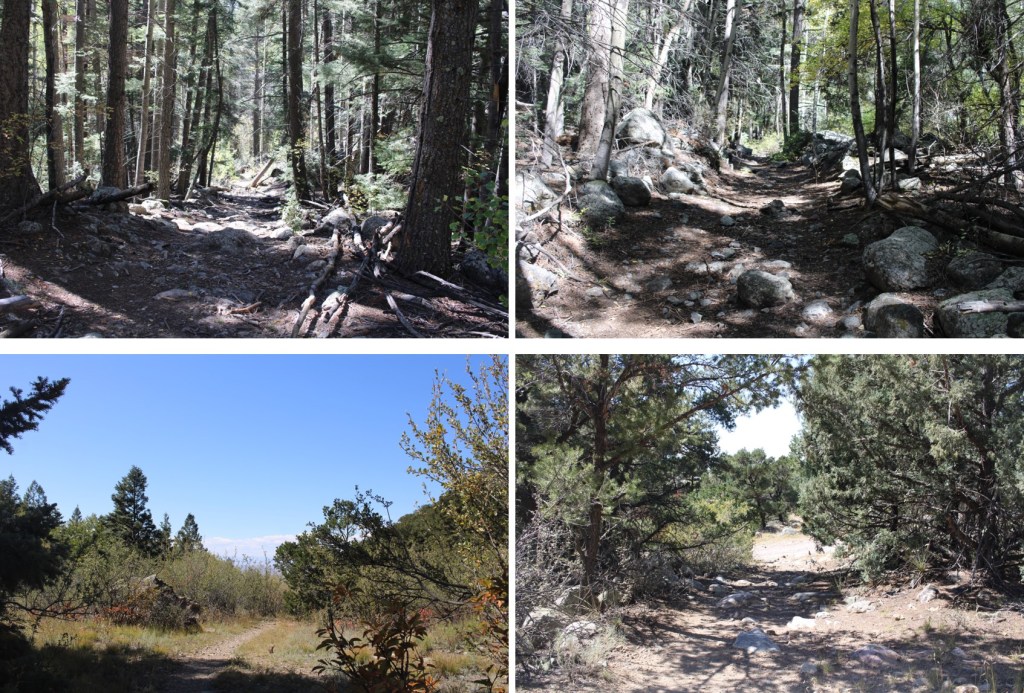
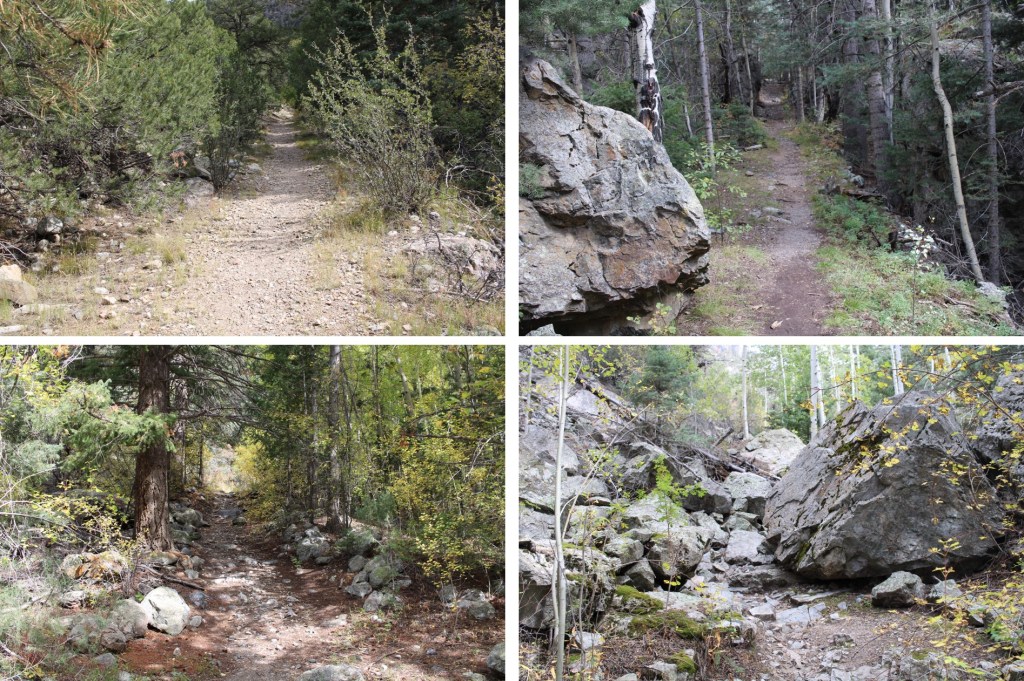
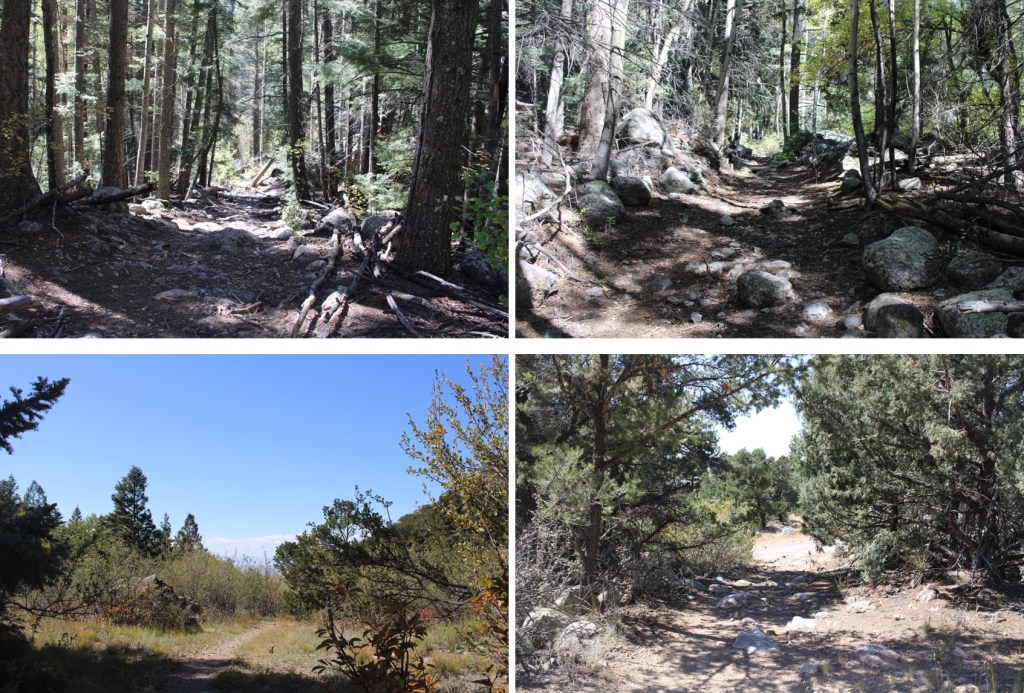
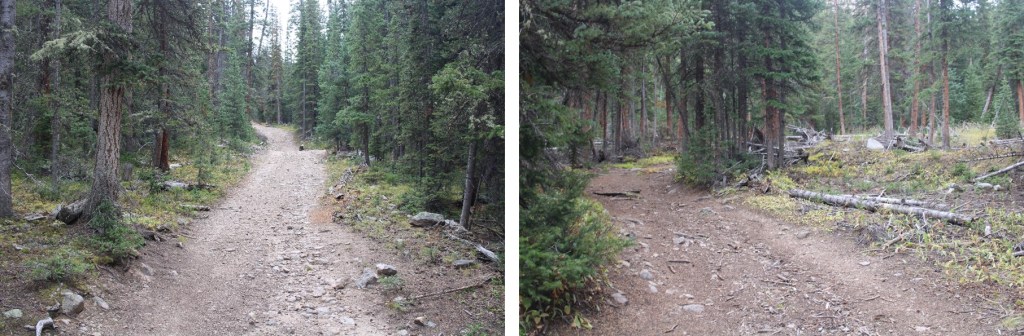
I started out following the class 1 trail east
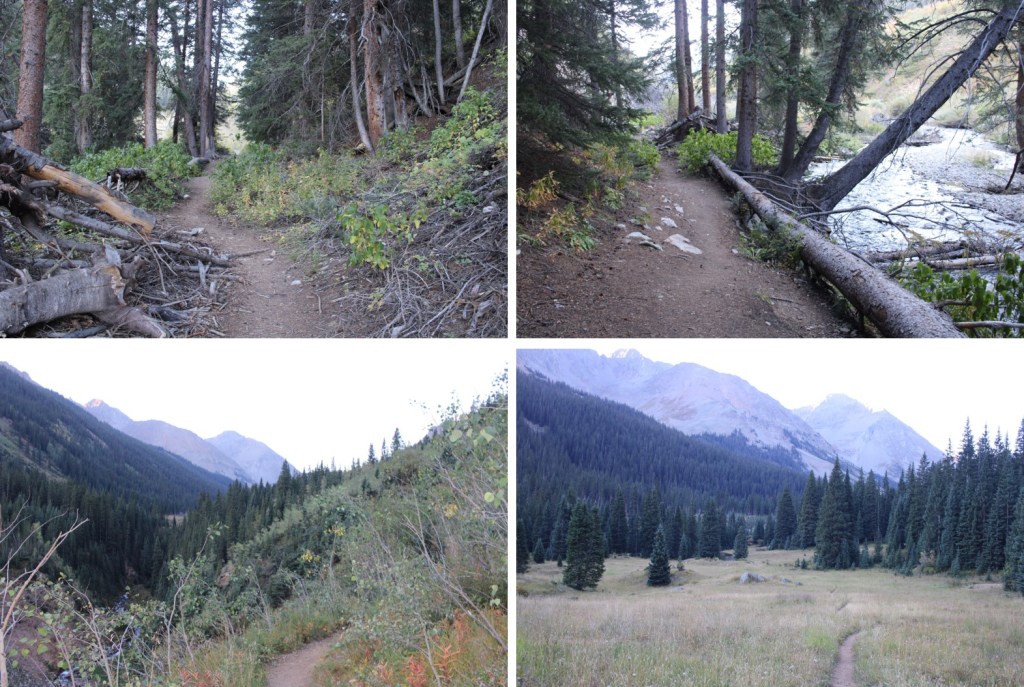
The trail is easy to follow for the first 4 miles
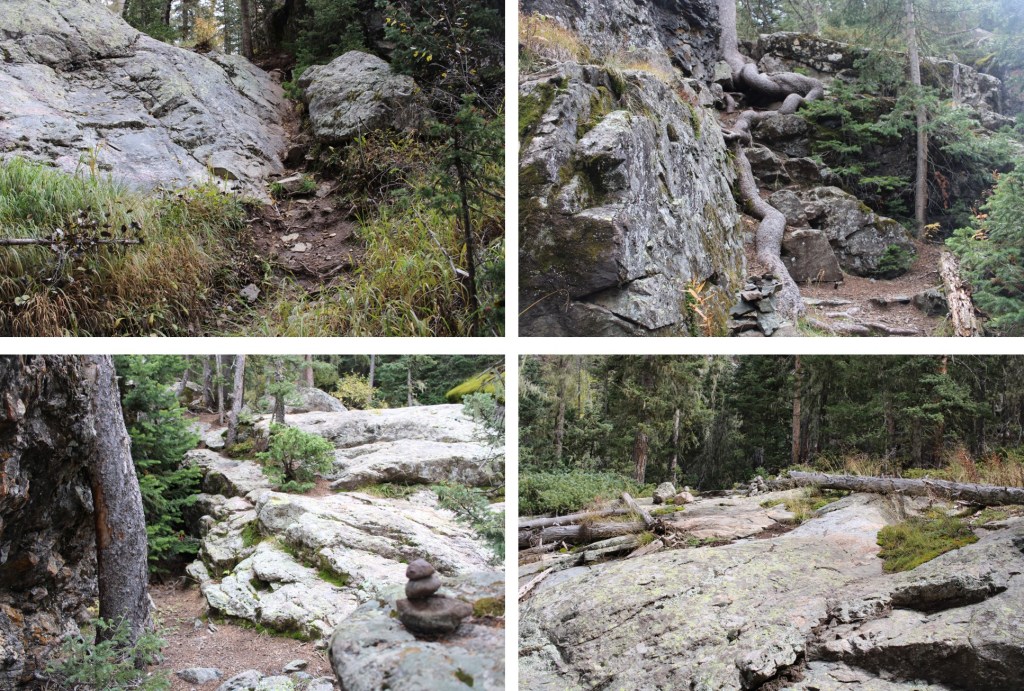
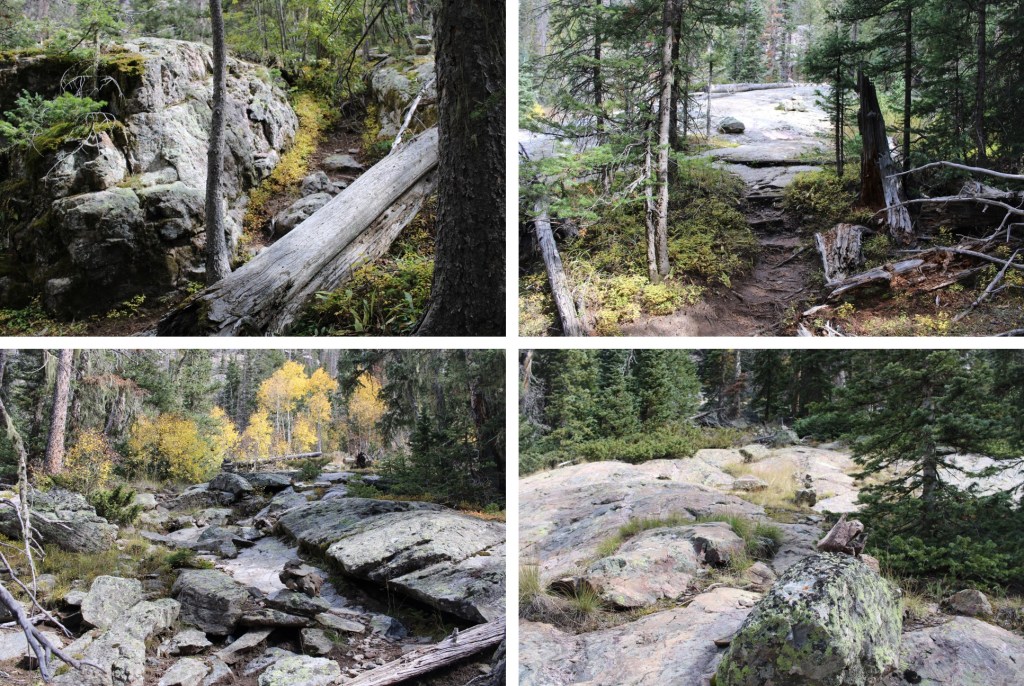
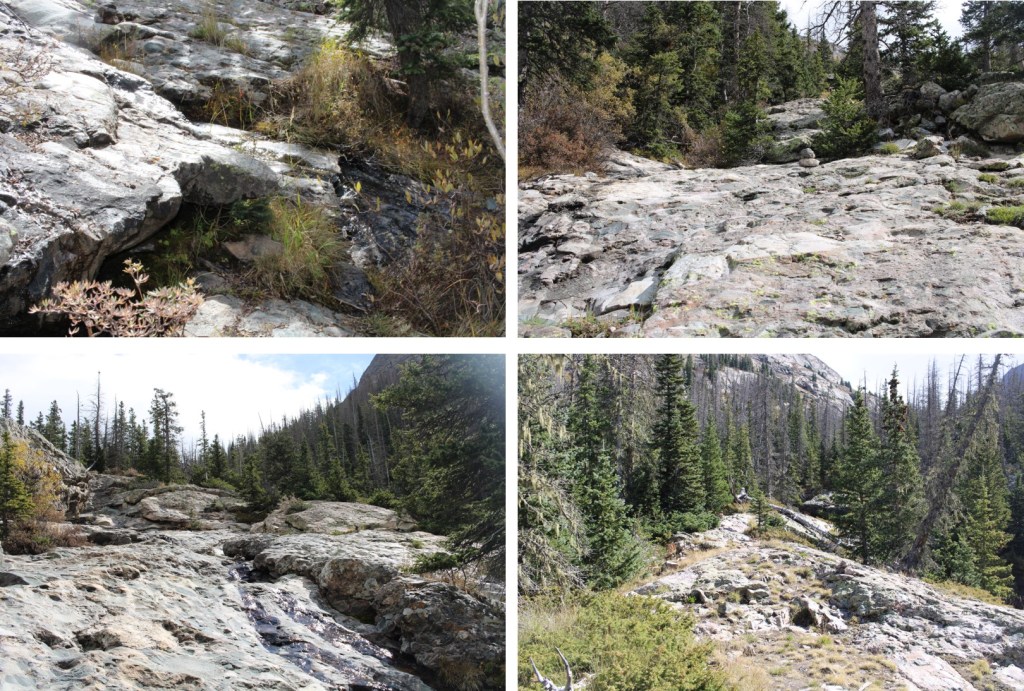
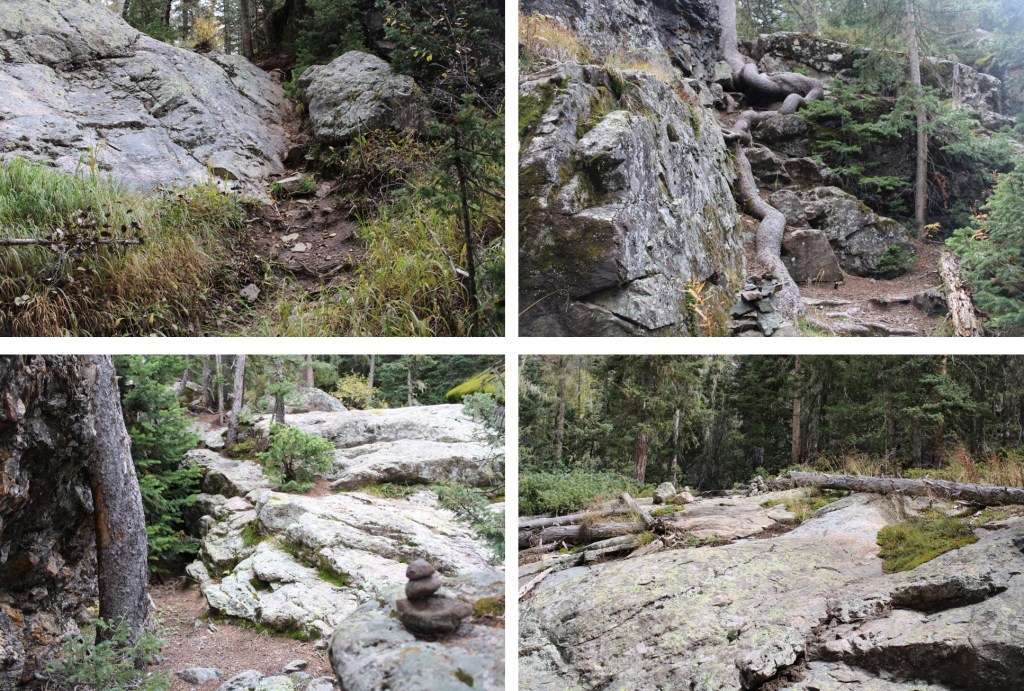
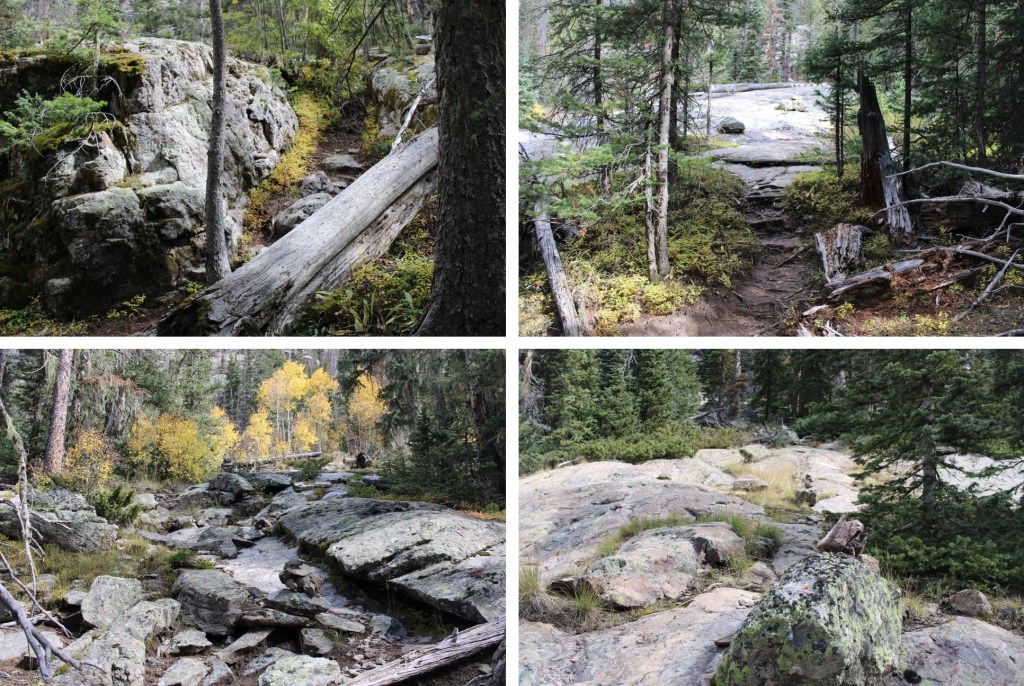
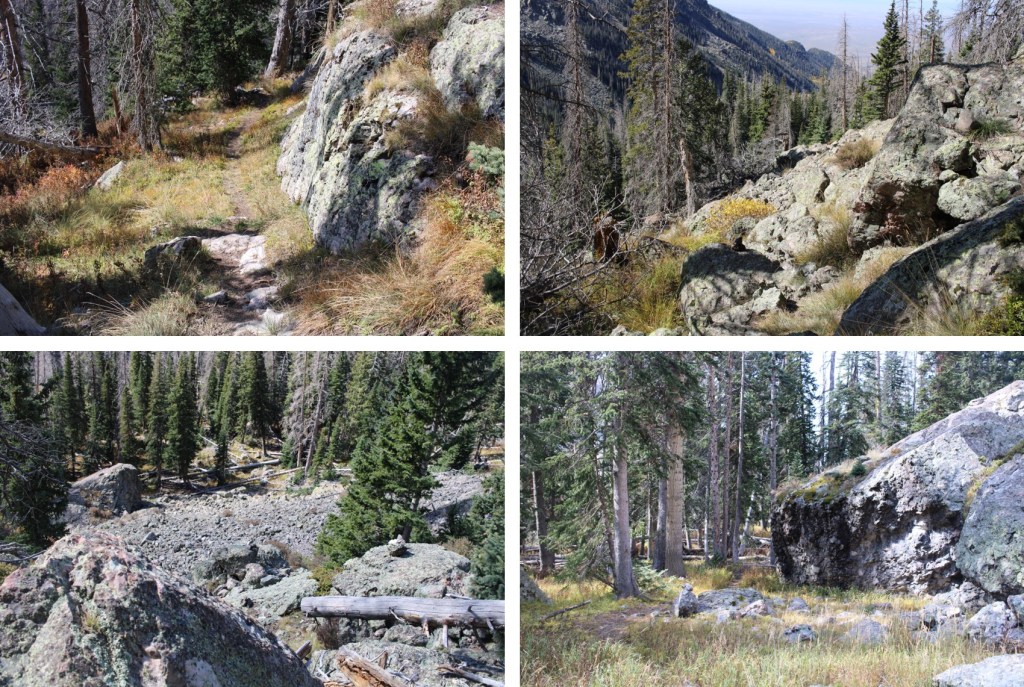
Then I came to what looked like a wall of rock. This wall goes for about three quarters of a mile, and should not be attempted in wet conditions. There are plenty of cairns here to mark the way. If you don’t see a cairn, you’re off route. You head straight up.
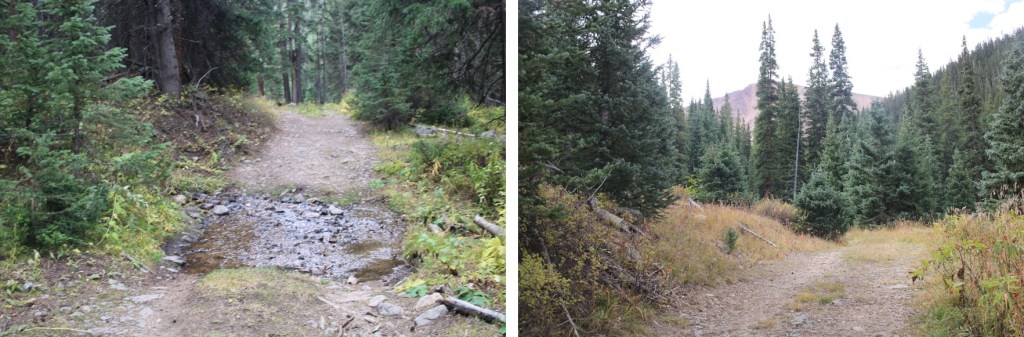
After 4.6 miles I came to a junction between Trail 743 and Trail 861. It’s not obvious, and there are no signs, so you need to be looking for it. I was at 11255’. One trail goes left, the other right, and crosses the creek. Don’t go left, go right and continue following the trail.
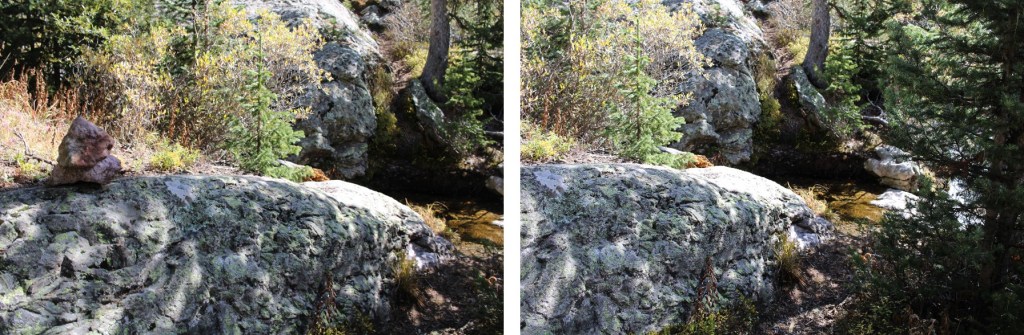
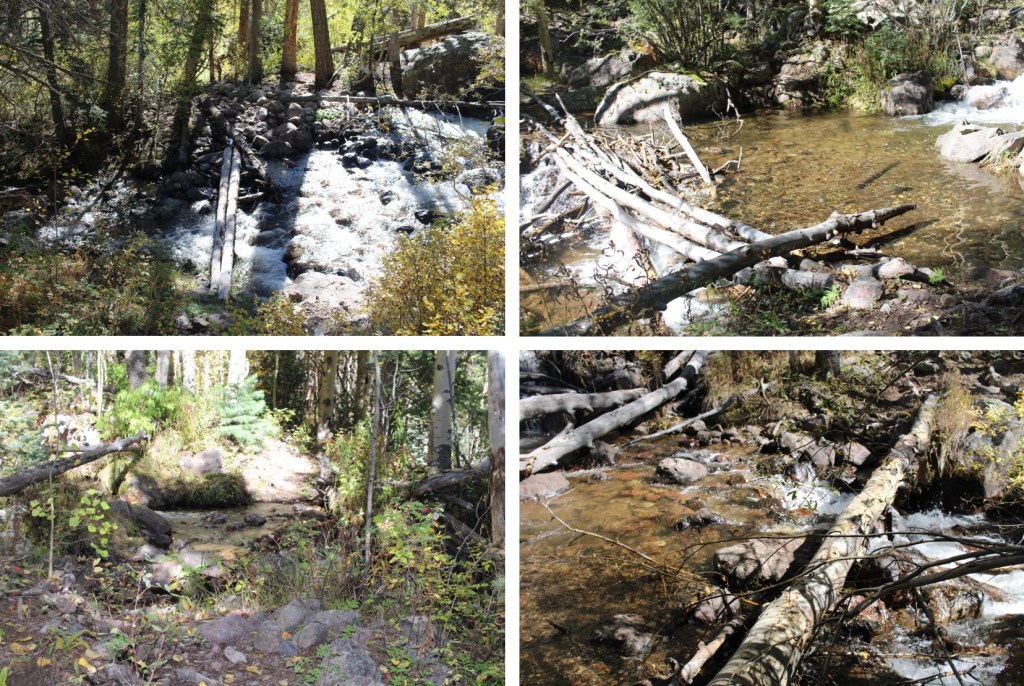
I crossed the creek twice.
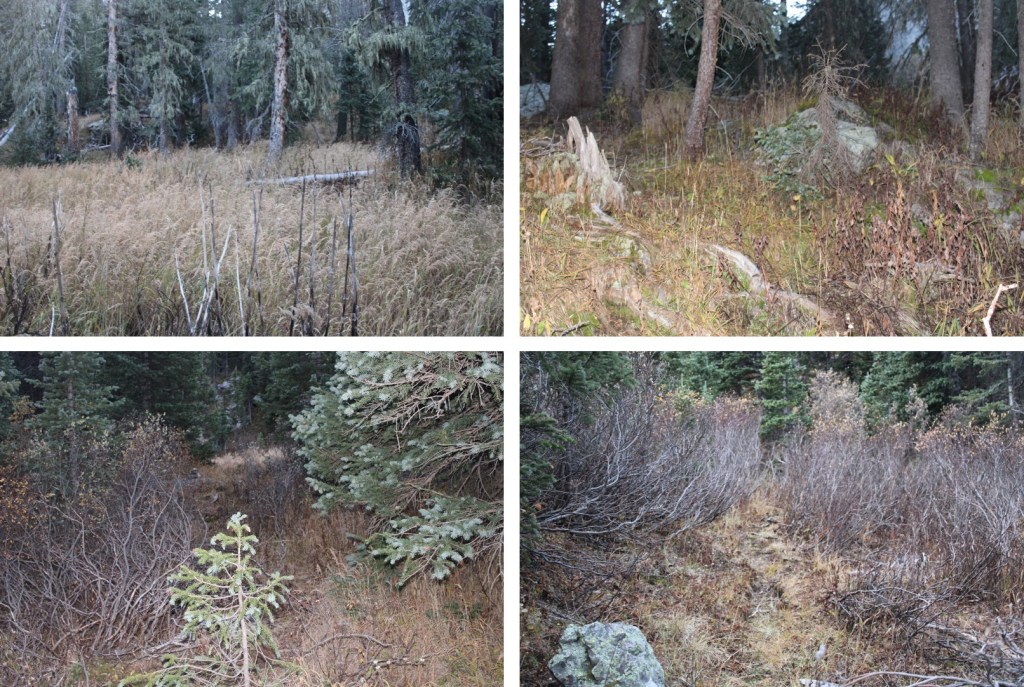
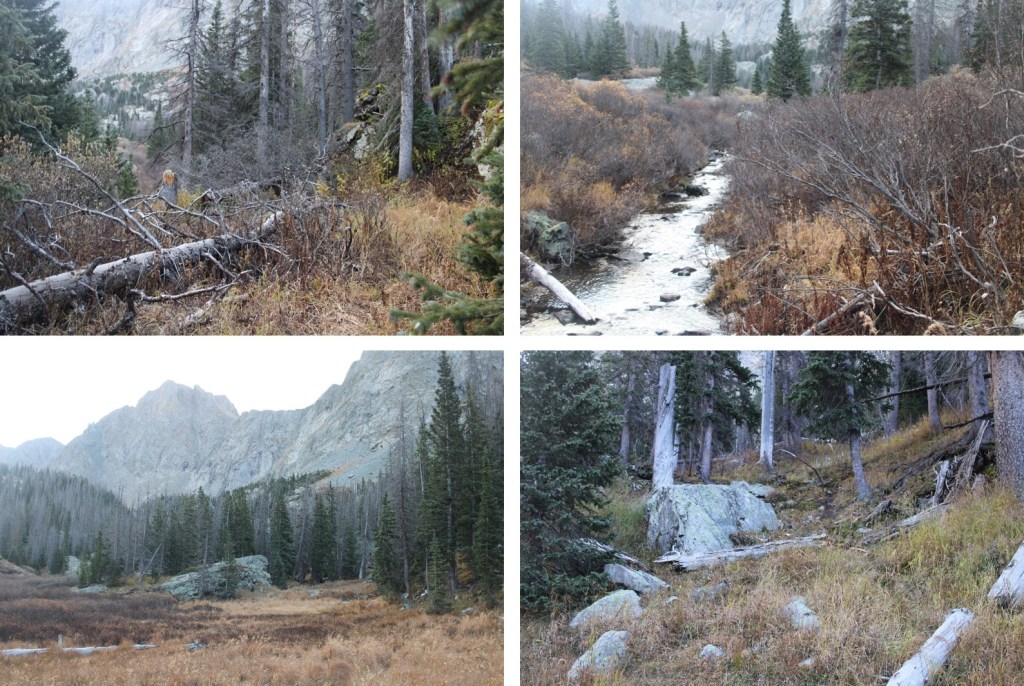
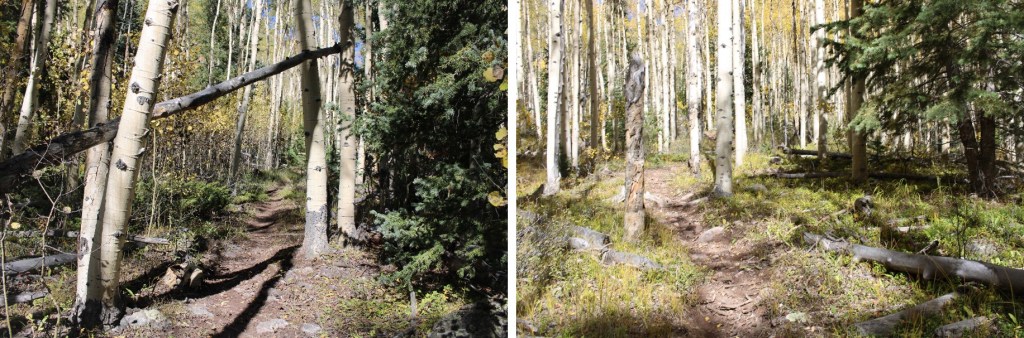
Then continued east along a trail that kept fading. It’s more of a game trail really, and easy to lose. Just remember you now stay on the right side of the creek the entire time.
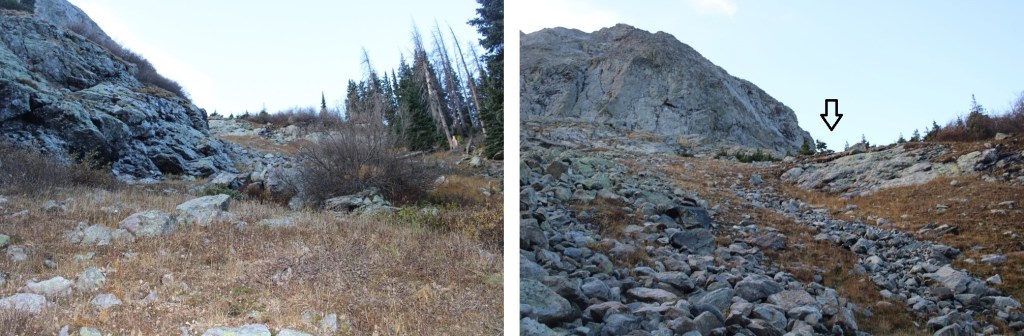
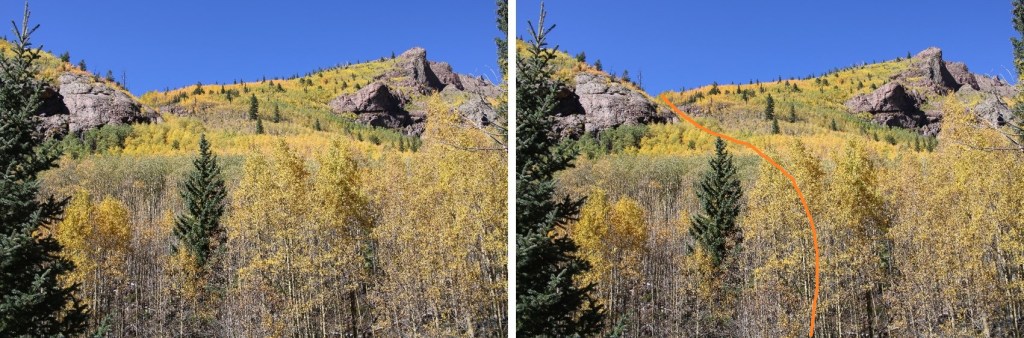
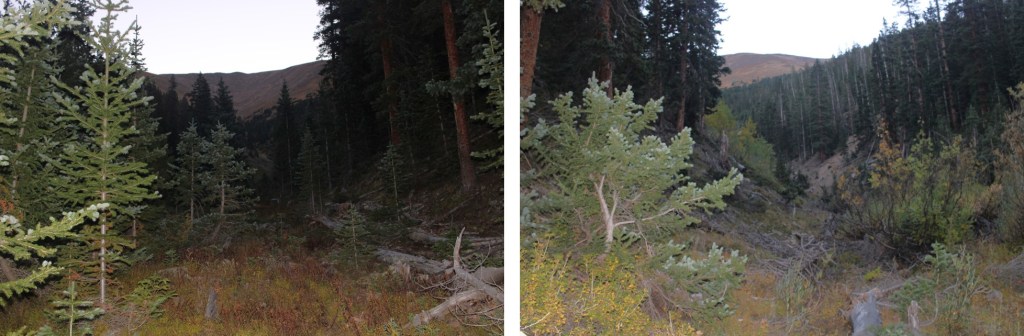
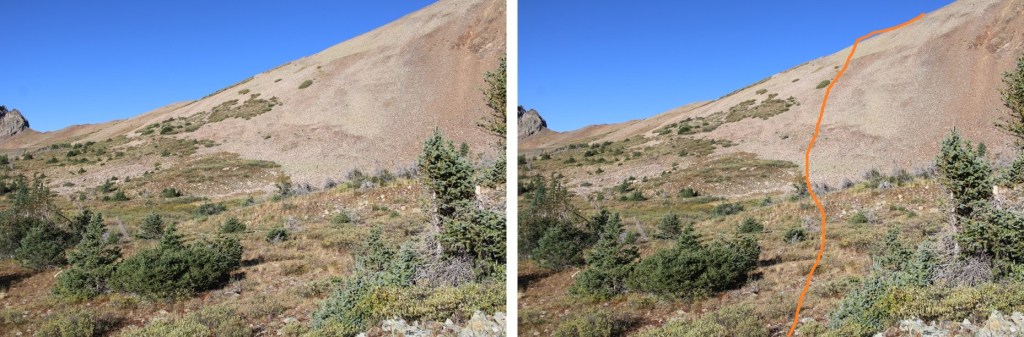
At 11500’, I came to an obvious gully, and took it south
At the top of the gully, I continued hugging the mountainside as I made my way southeast
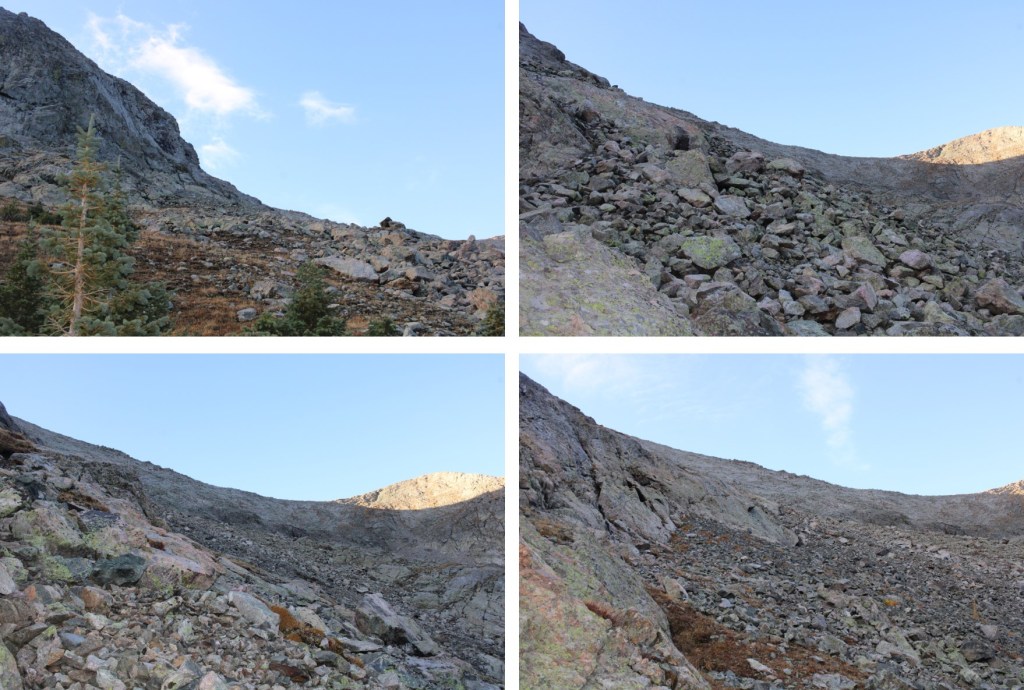
In the middle of the rocky basin, I turned left, and headed east up another gully
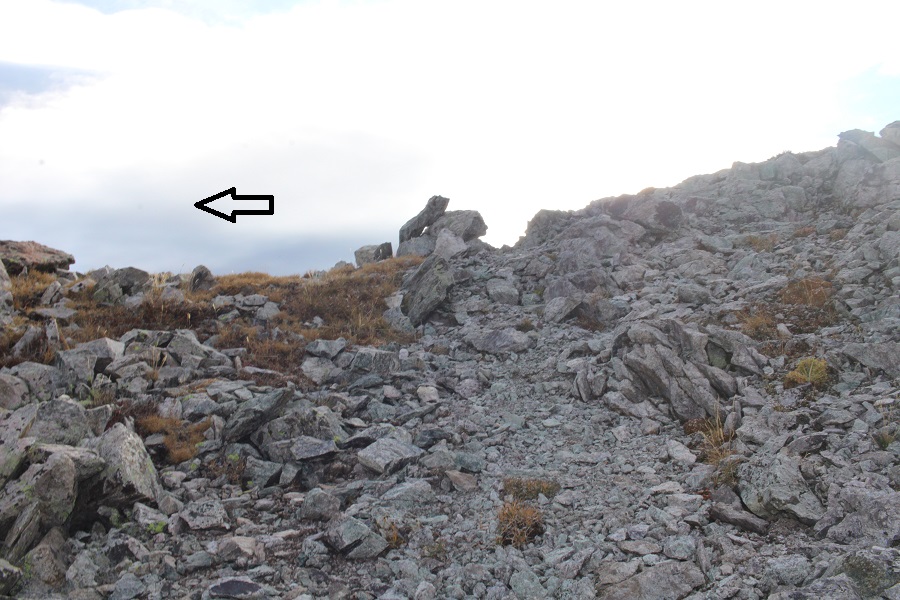
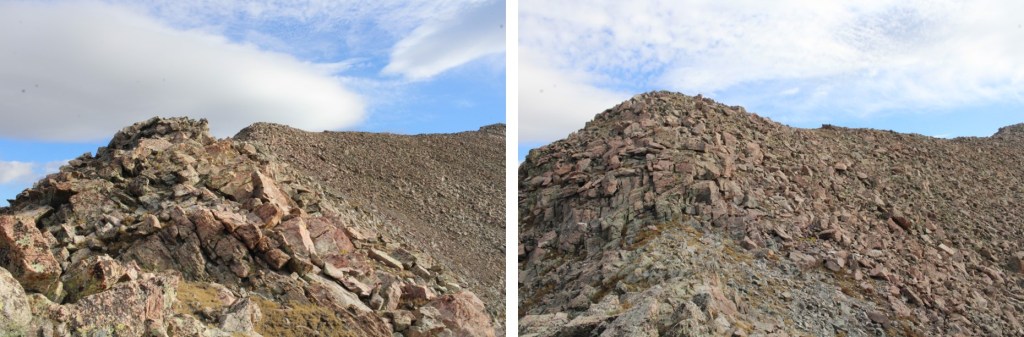
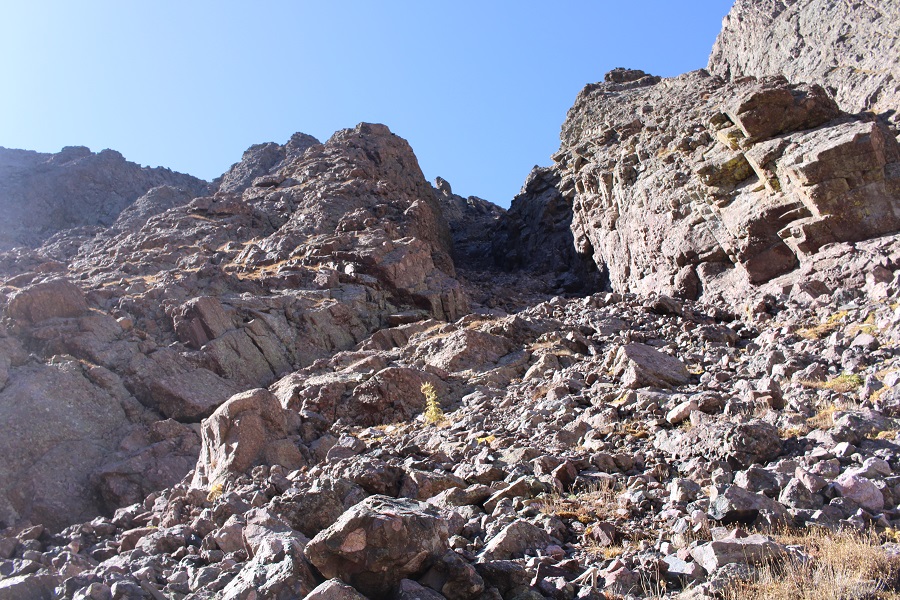
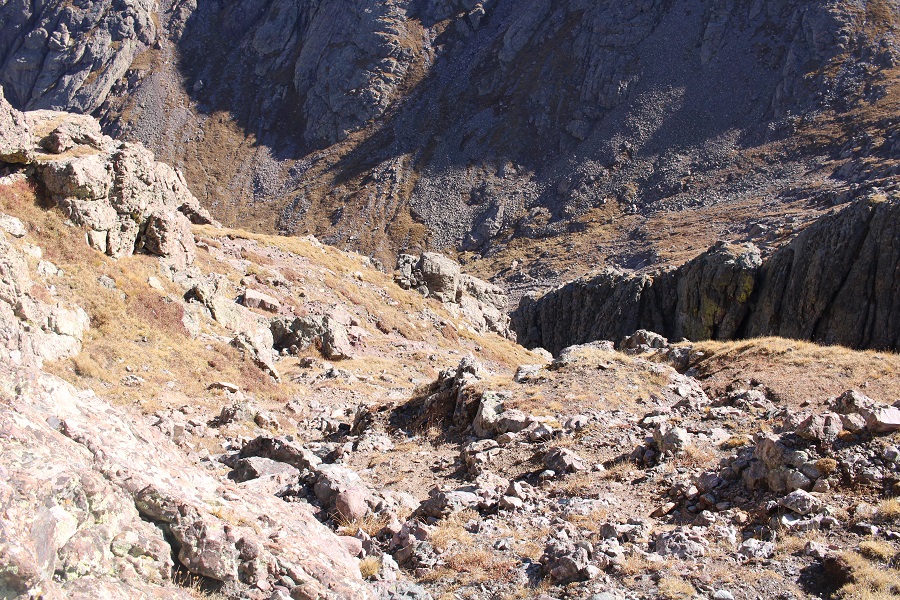
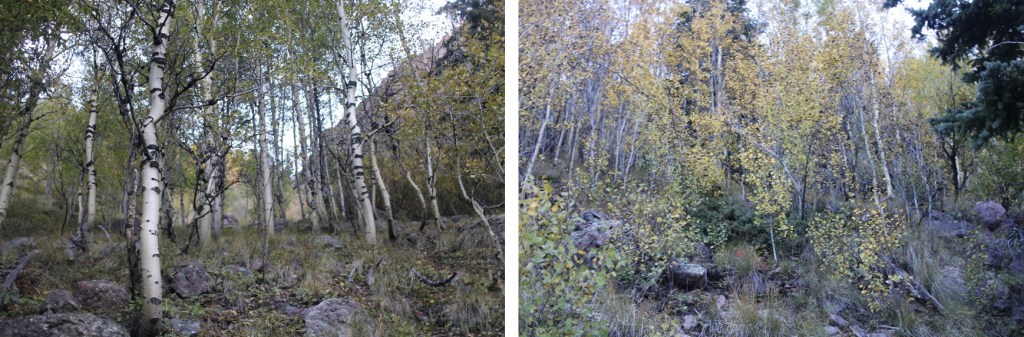
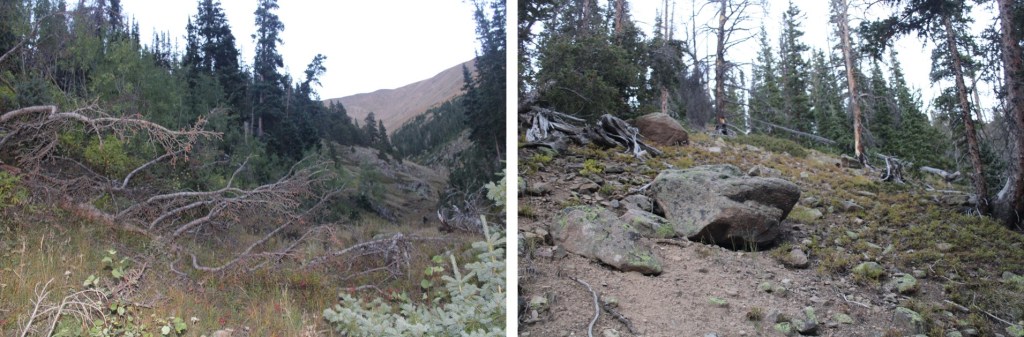
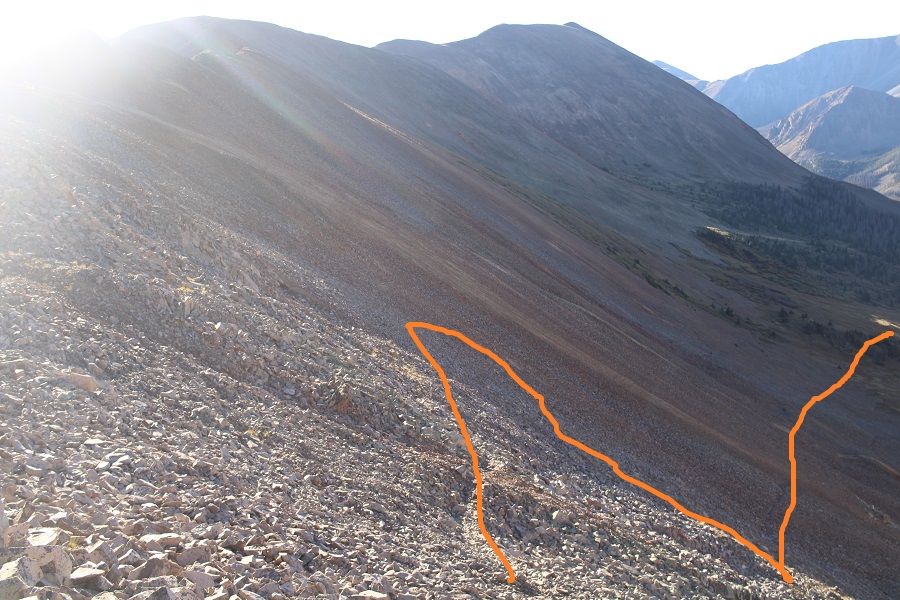
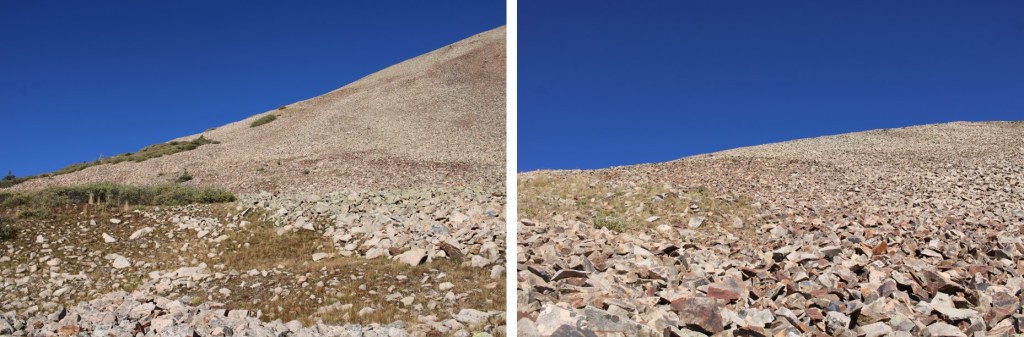
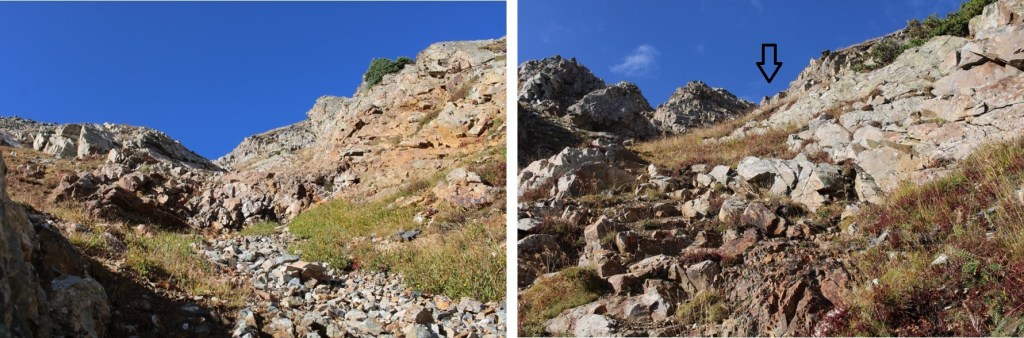
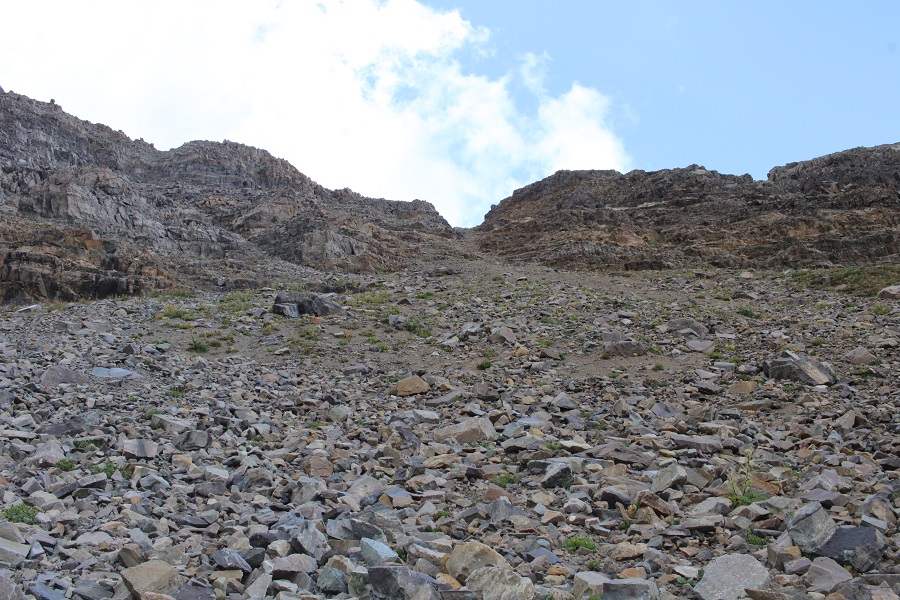
This gully was not friendly, even while wearing microspikes. The large rocks tumbled, and the scree was solid, which meant it was very difficult to get any traction. I made my way 700’ up the gully to the saddle.
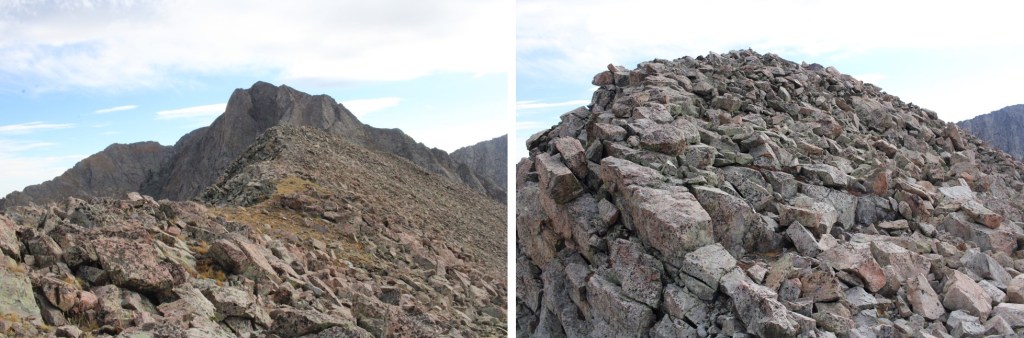
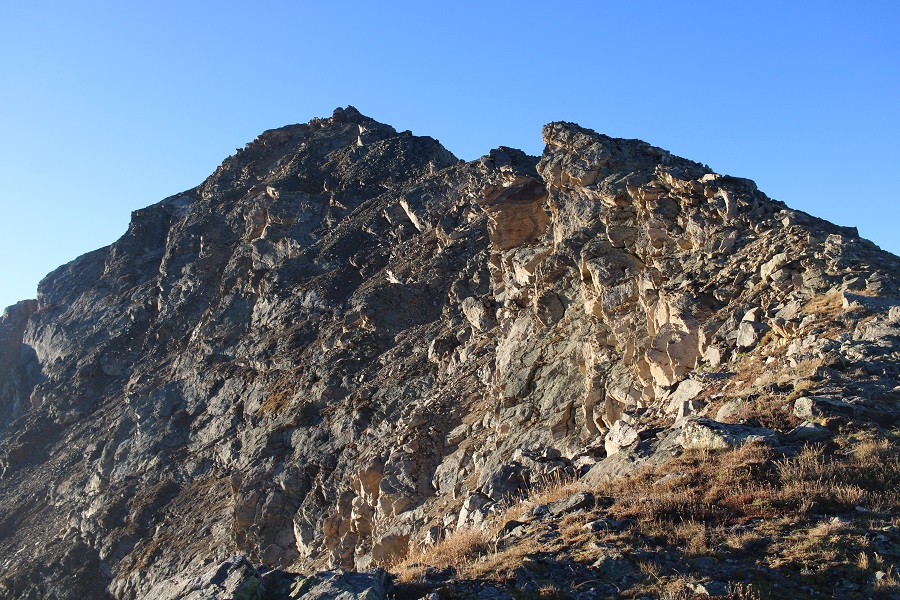
Once at the saddle I turned left, and followed the ridge northeast toward the summit.
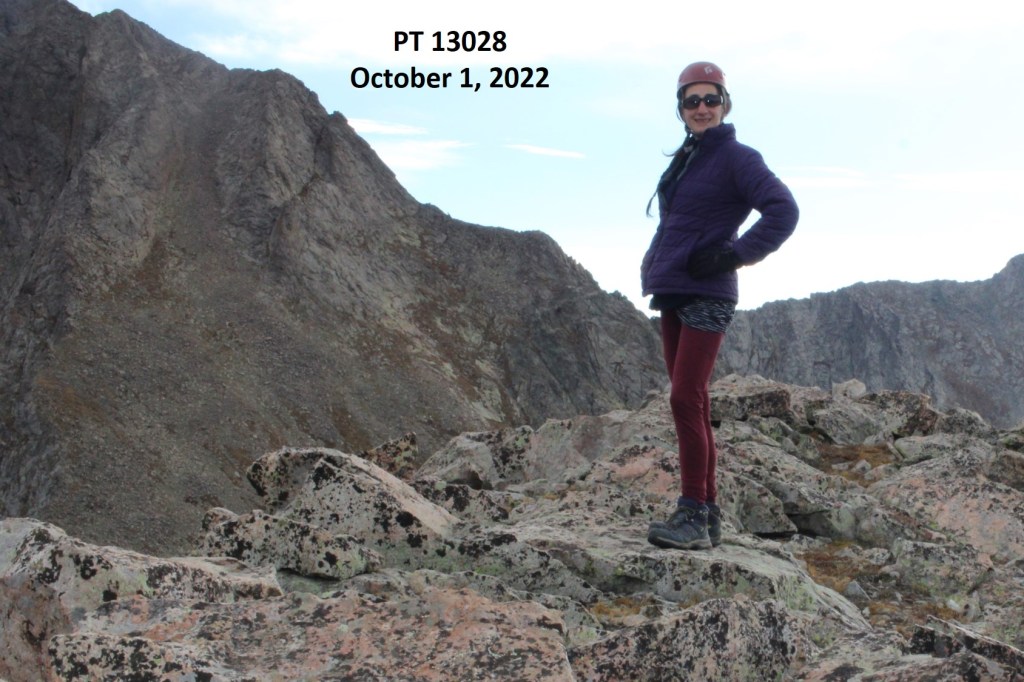
I summited PT 13028 at 9:10am. The first snow of the season was expected that afternoon. It was very windy, and cold.
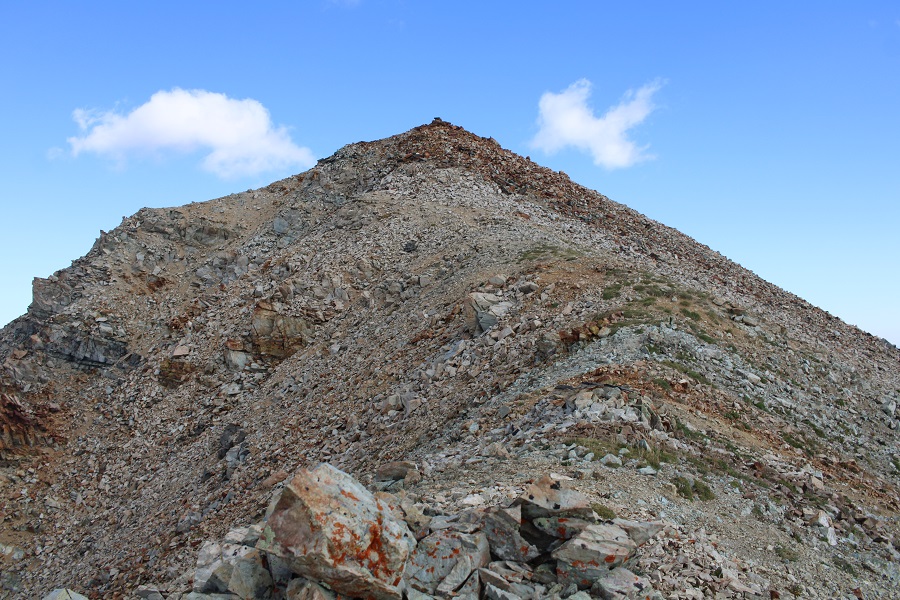
PT 13028:
I didn’t stay long, and instead made my way back to the saddle
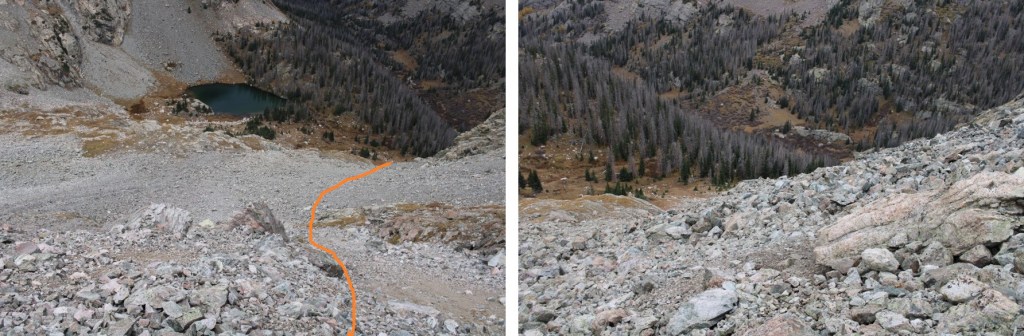
Back at the saddle, I braced myself to head back down the gully
Then I made my way back to the first access gully
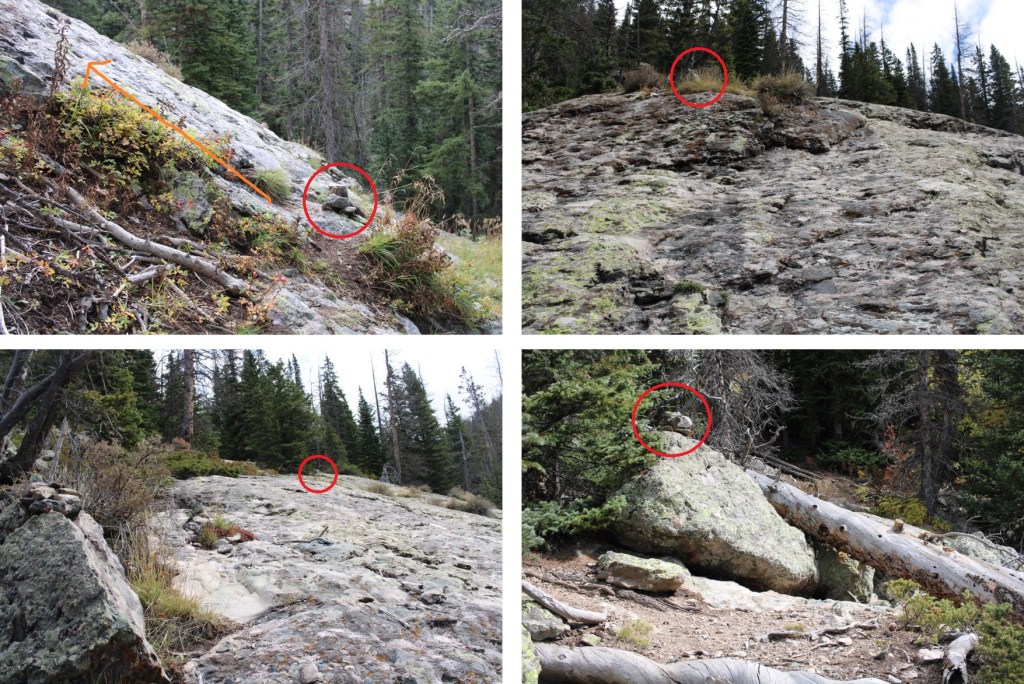
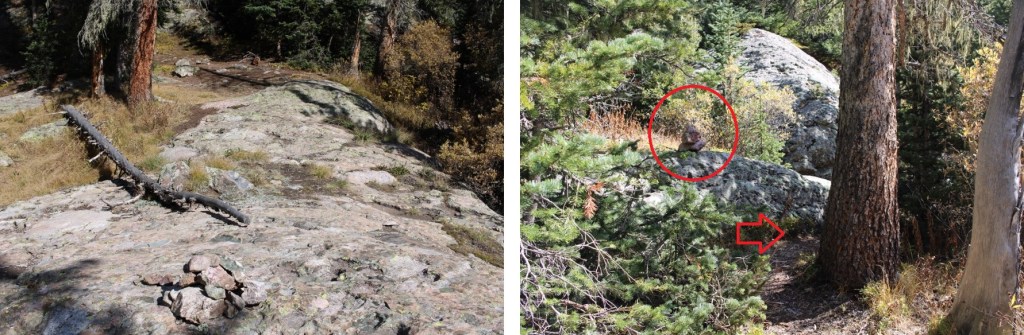
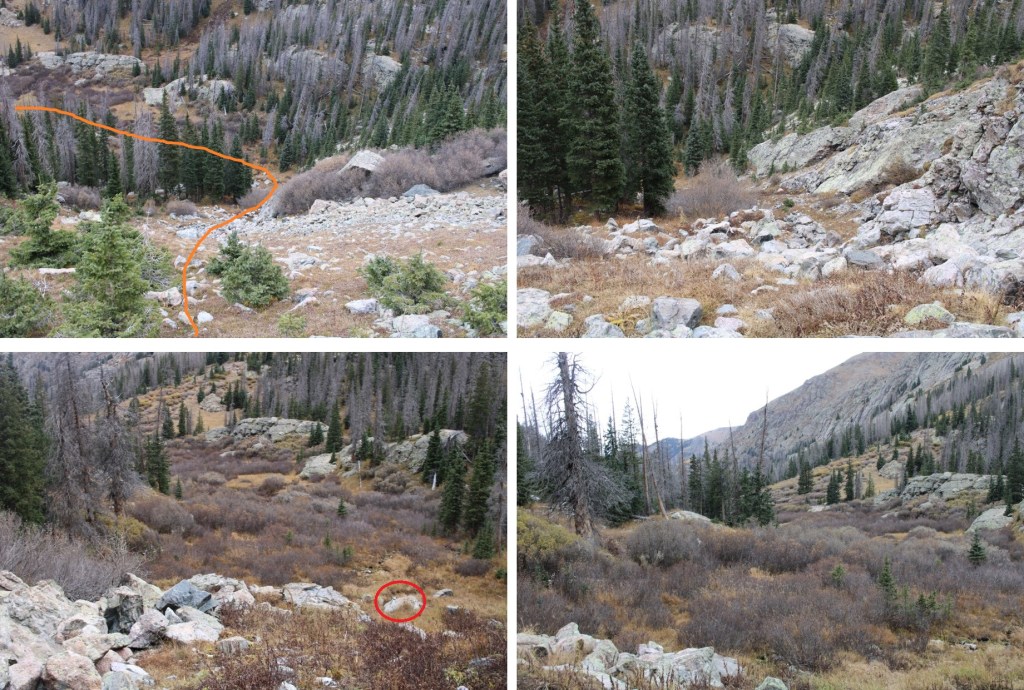
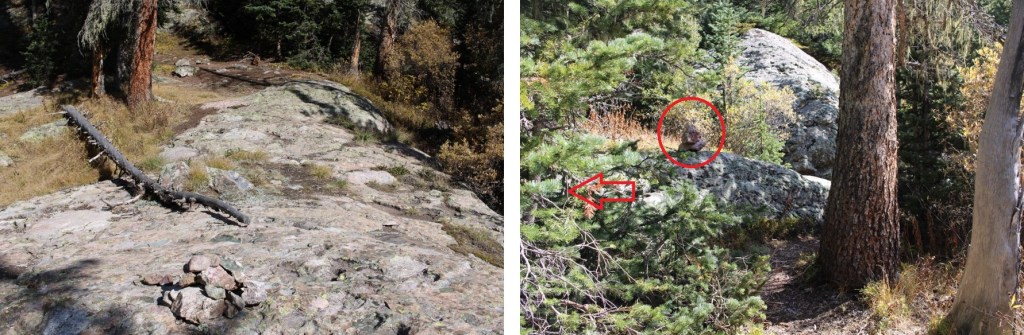
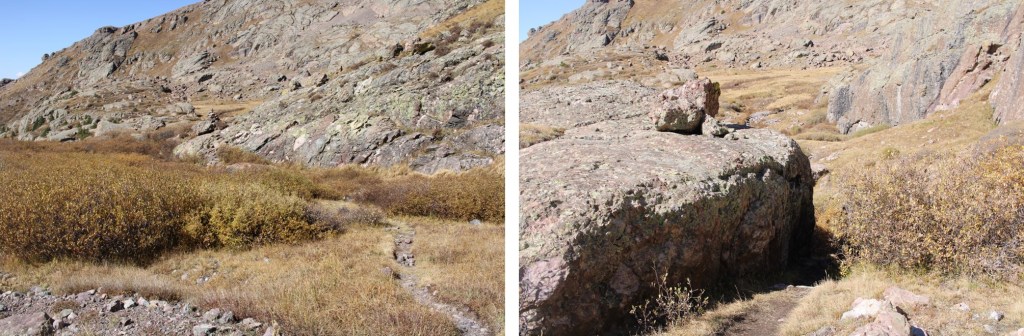
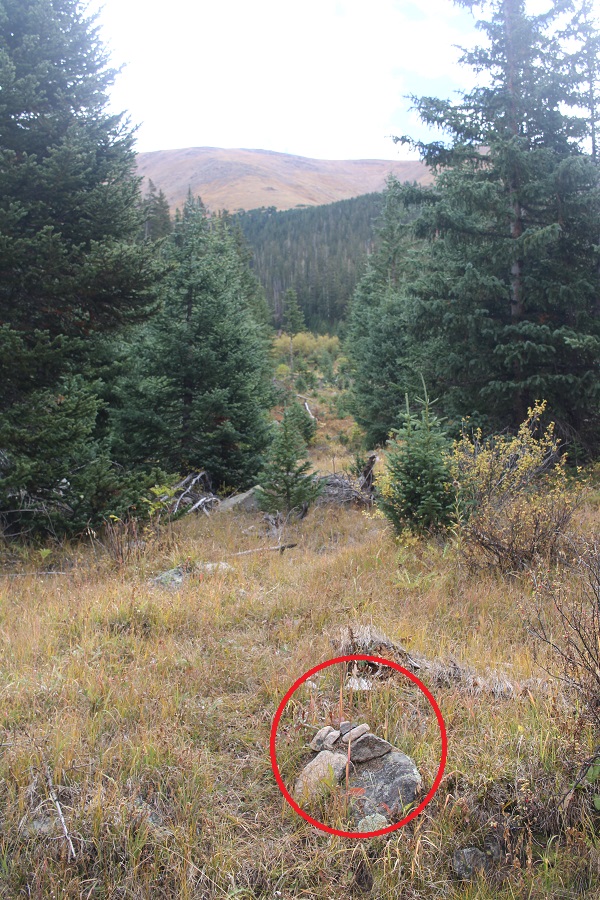
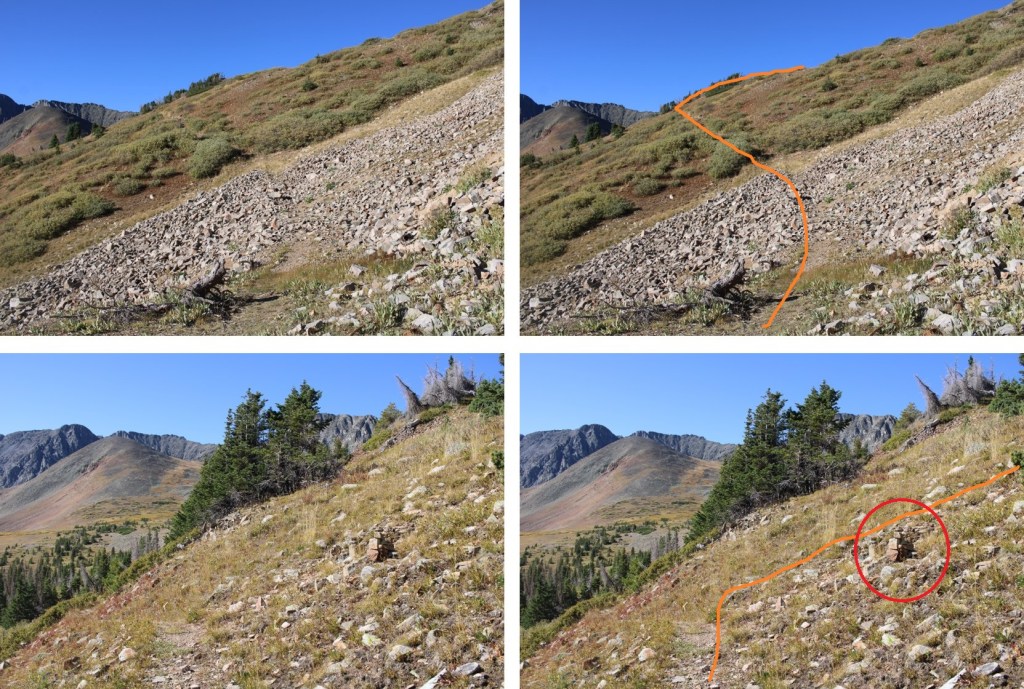
Then down the gully, and back to the ‘trail’. There was a single rock on a boulder, circled in red, to indicate where to turn left and head back to the trail
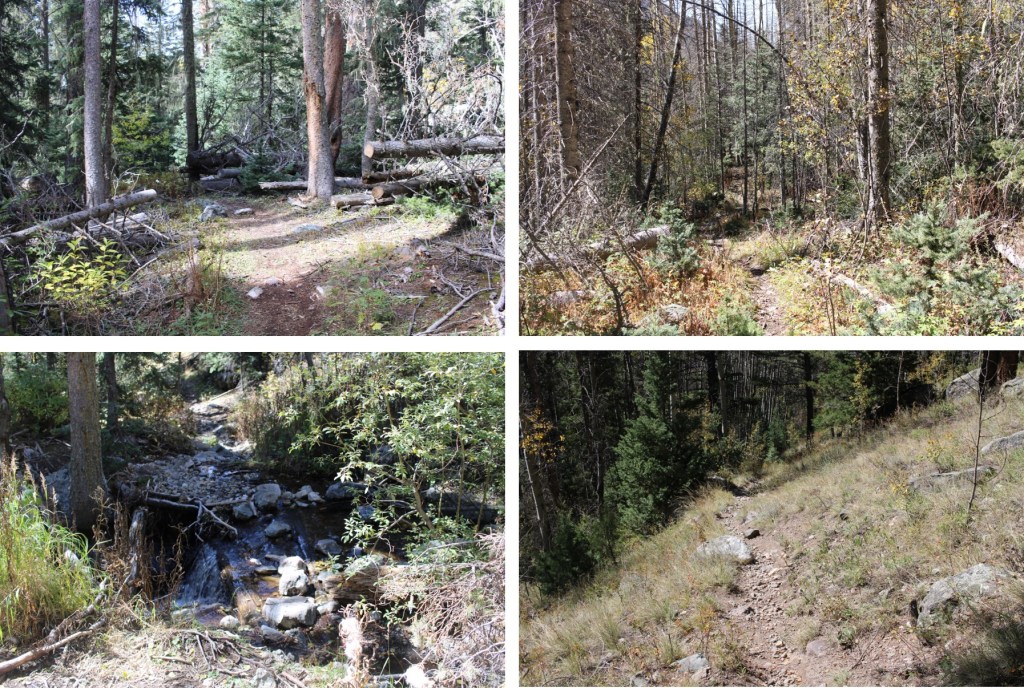
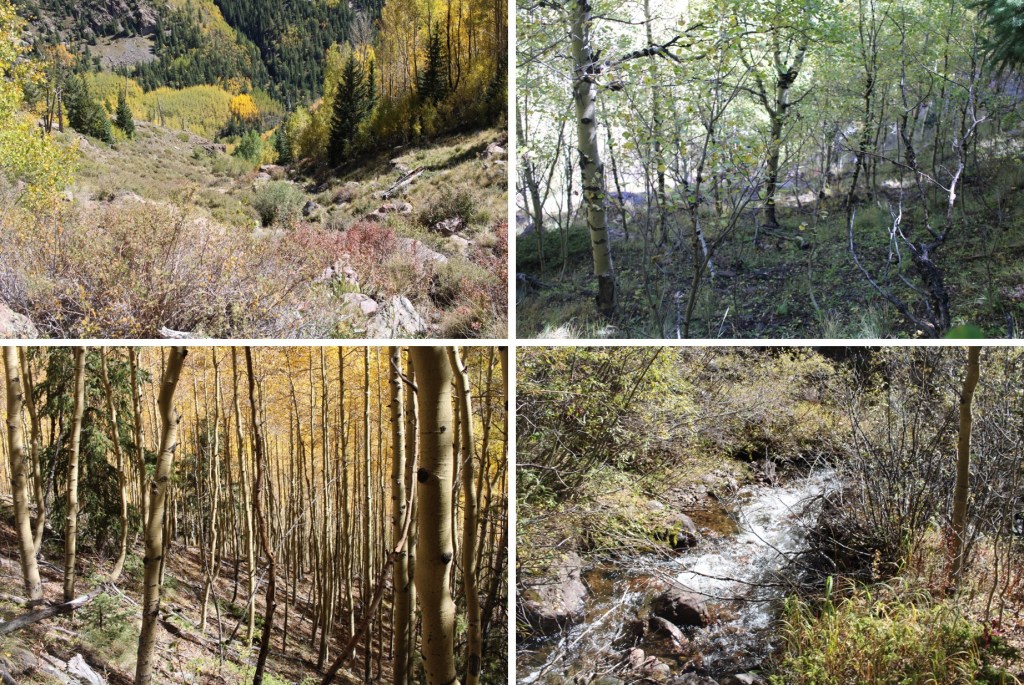
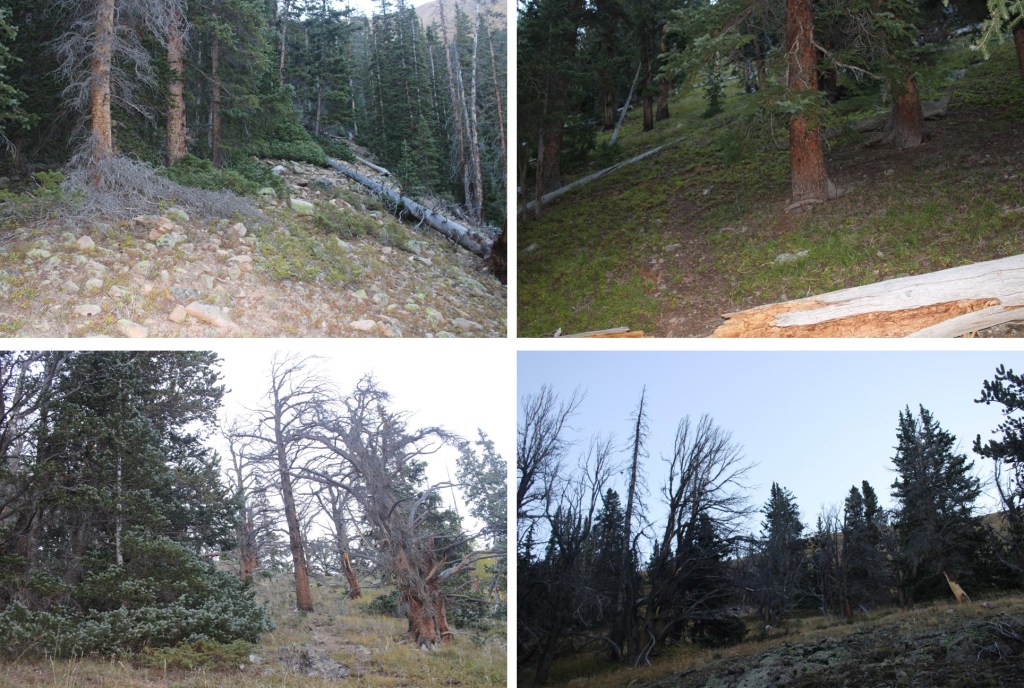
This trail was much easier to follow on the way out than it had been going in. This time I stayed to the left of the creek
I crossed the creek again twice
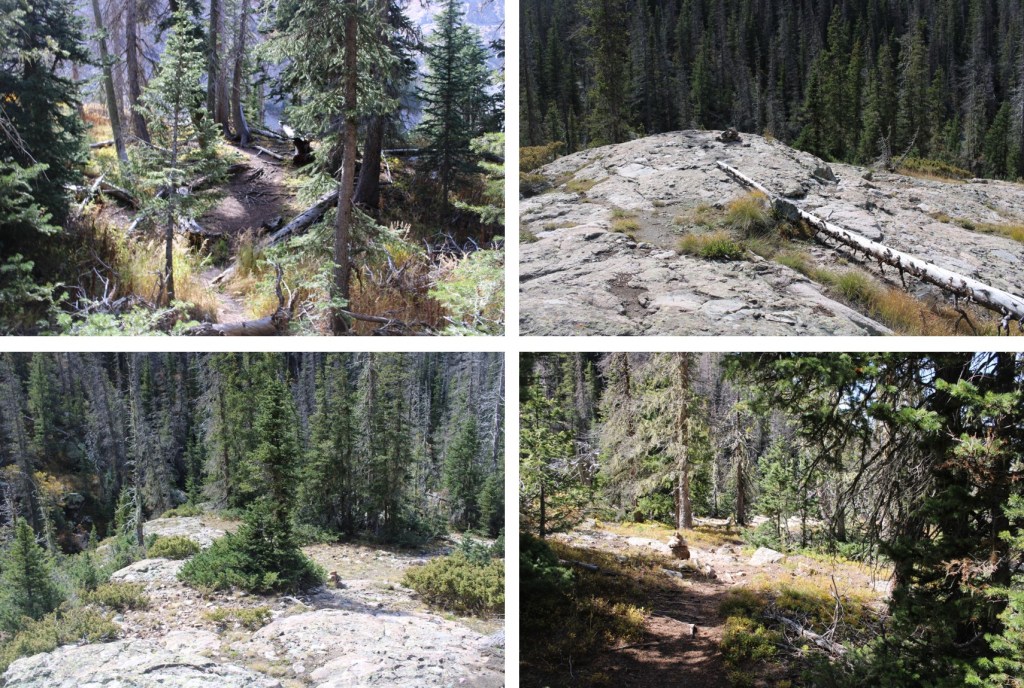
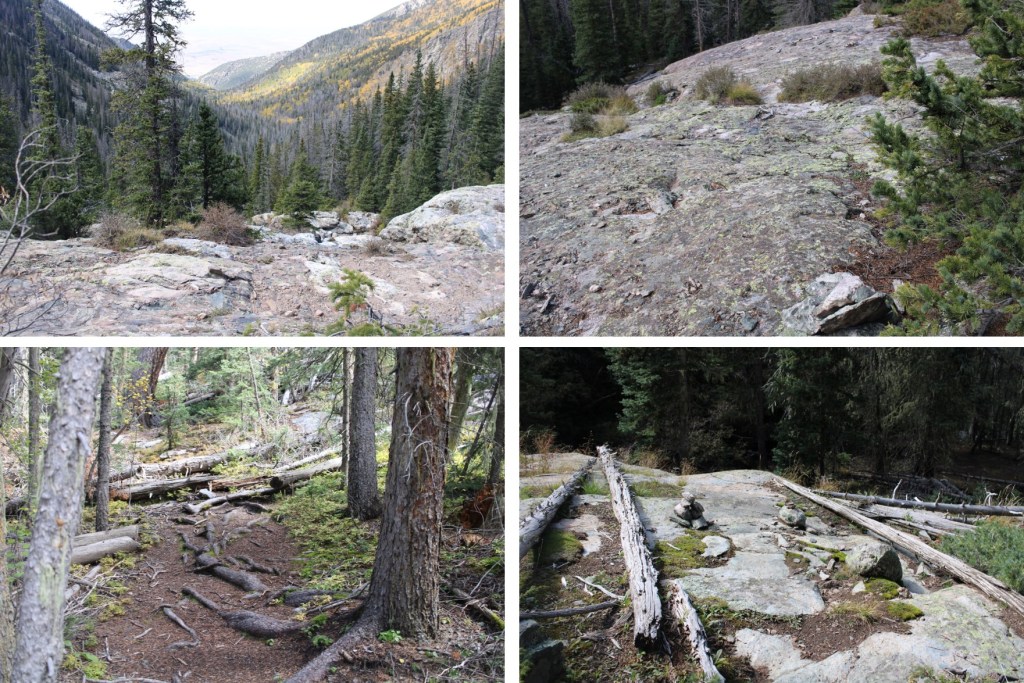
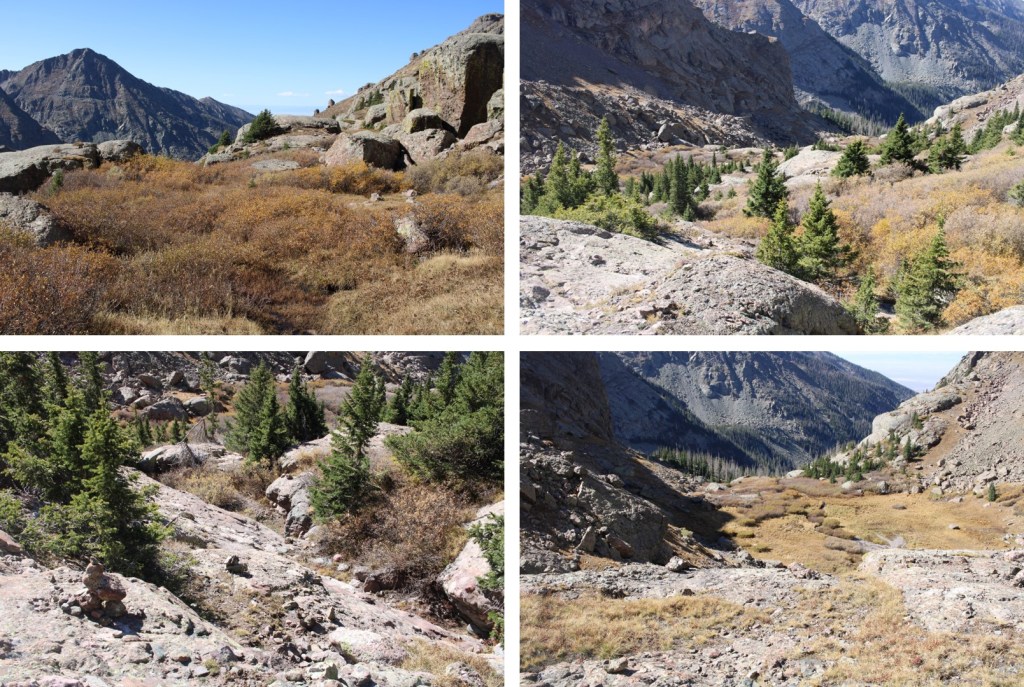
And then caught back up with the trail that would leave me back to the trailhead. Back at the 861/743 ‘junction’, I followed the trail back down the granite slabs, and through several transition zones back to the trailhead.
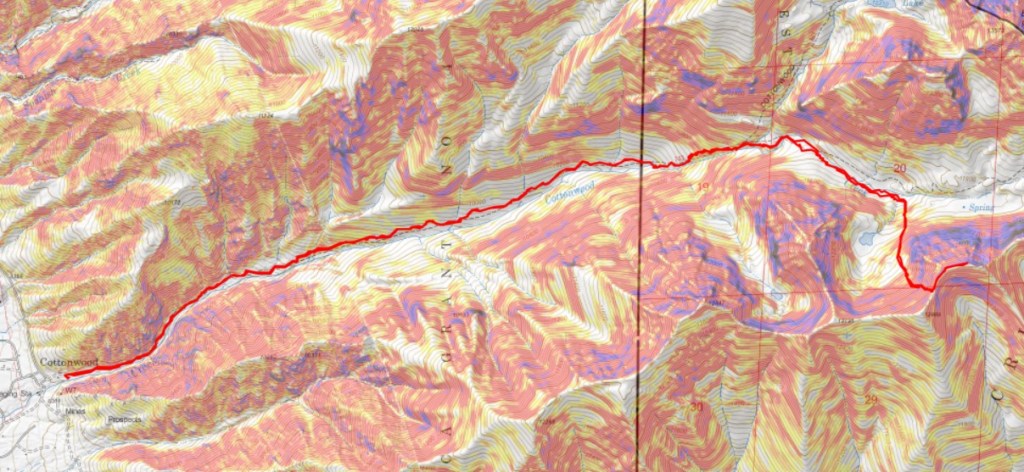
I made it back to my truck at 12:30pm, making this a 13.3 mile hike with 4605’ of elevation gain in 8 hours. And with this summit, I’ve now finished all the Sangre de Cristo ranked 13ers and 14ers.
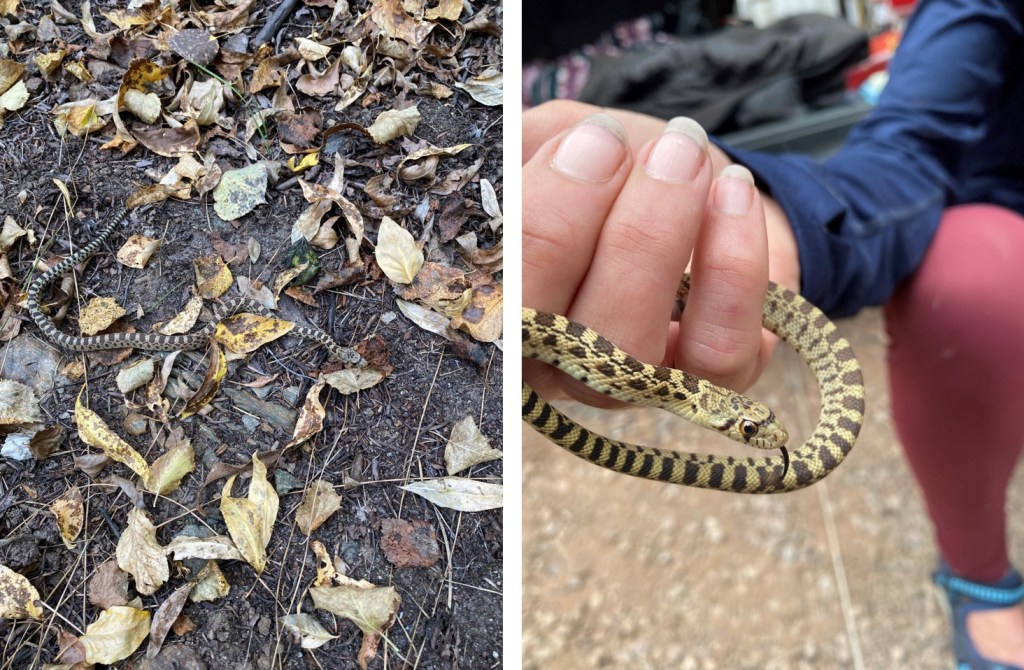
I was staying the night again, and this time, found a small campsite visitor!
I started from the Cottonwood Creek Trailhead at 4:30am. This trailhead tends to fill up in the summer, but on this fall day my truck was the only one there.
I started out following the class 1 trail east
The trail is easy to follow for the first 4 miles
Then I came to what looked like a wall of rock. This wall goes for about three quarters of a mile, and should not be attempted in wet conditions. There are plenty of cairns here to mark the way. If you don’t see a cairn, you’re off route. You head straight up.
After 4.6 miles I came to a junction between Trail 743 and Trail 861. It’s not obvious, and there are no signs, so you need to be looking for it. I was at 11255’. One trail goes left, the other right, and crosses the creek. Don’t go right, go left and continue following the trail.
This trail led me to a camping area, with a boulder the size of a house. The goal is to make it to the upper basin. There are trails that go on each side of the boulder that will get you there. There are a lot of cairns in this area.
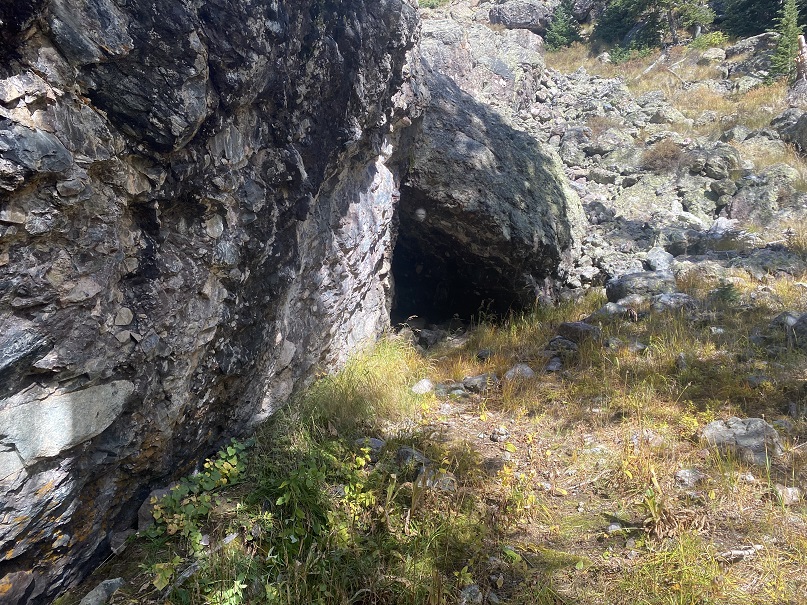
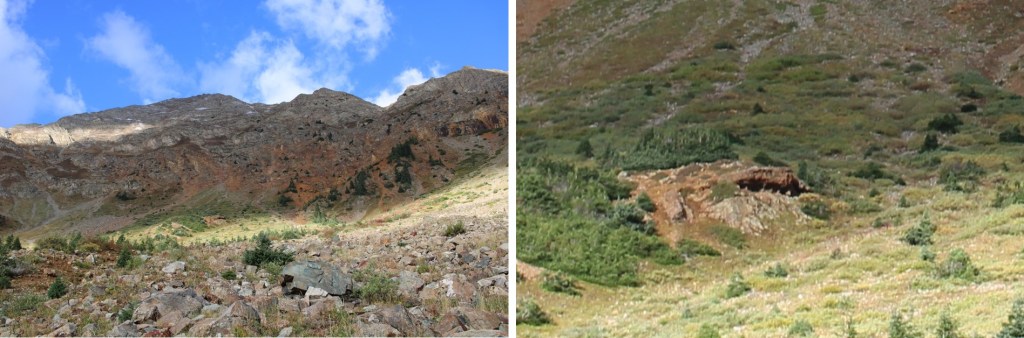
If you take the trail to the right, there’s a pretty cool cave to check out, but be careful: there was a rather large hornets nest at the entrance this time.
I followed the cairns northeast, through rock fields and willows.
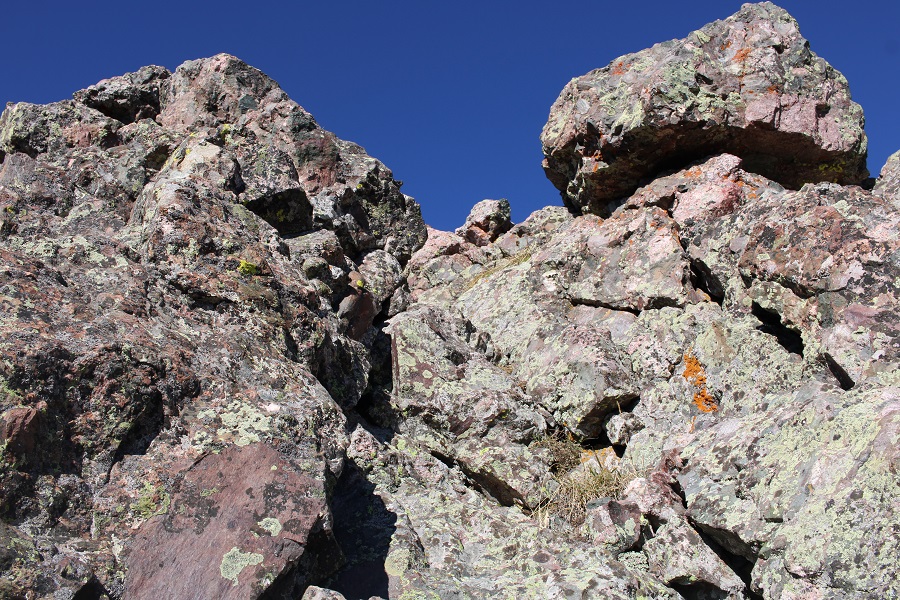
There were a few class 3 moves to do to make it to the upper basin, but plenty of cairns to guide the way
I went behind this rock, and caught up with the trail to Cottonwood Lake, now heading east.
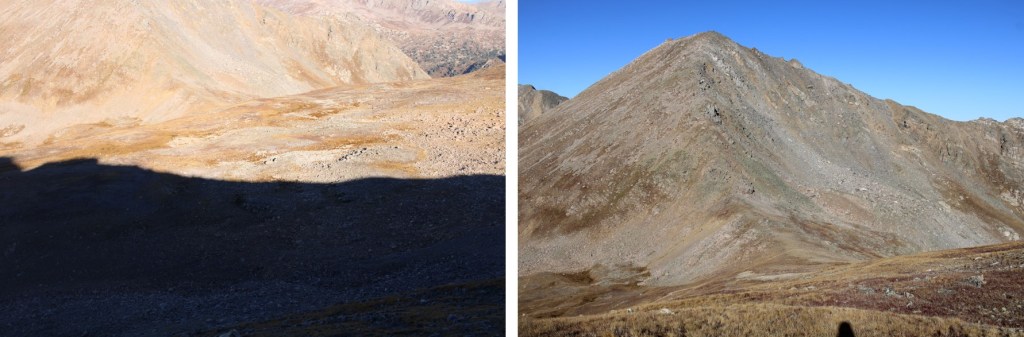
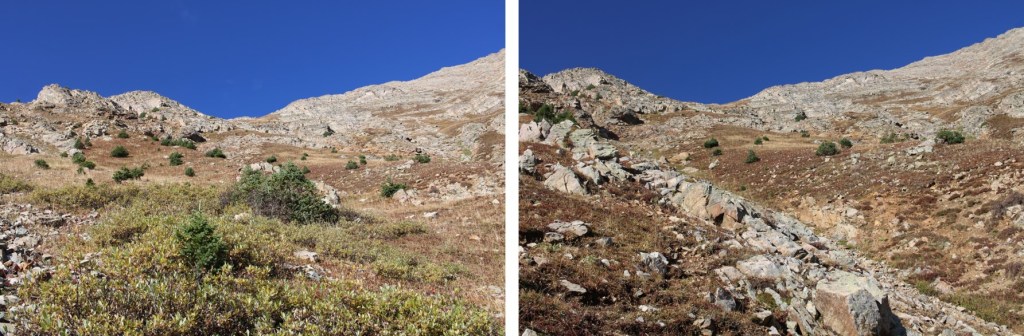
I followed the trail until I was at 12430’, and then turned right, starting up tundra
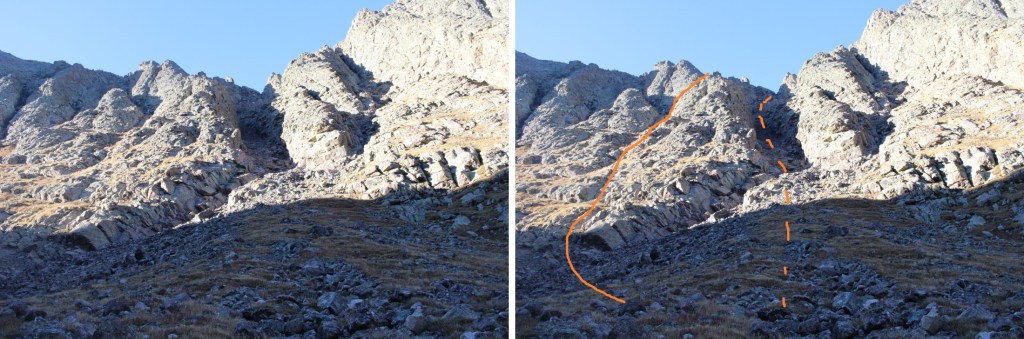
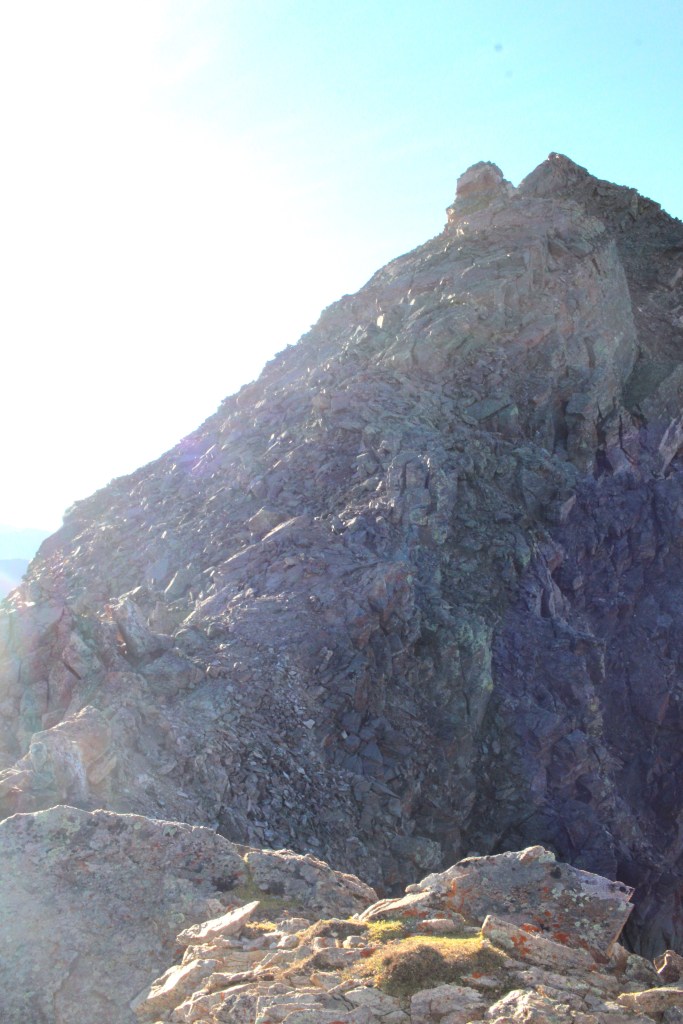
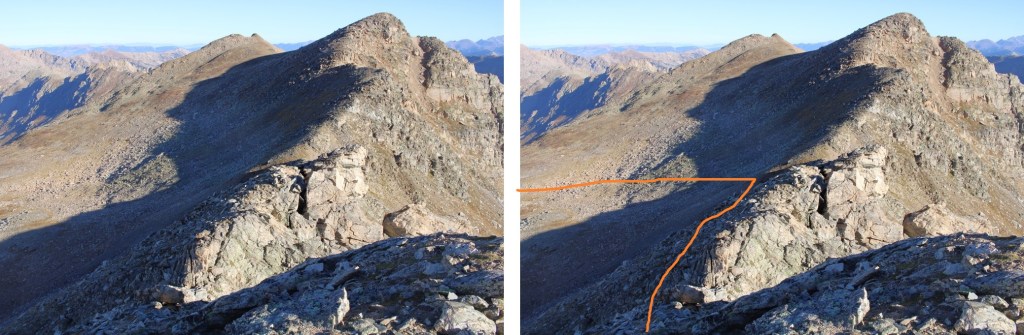
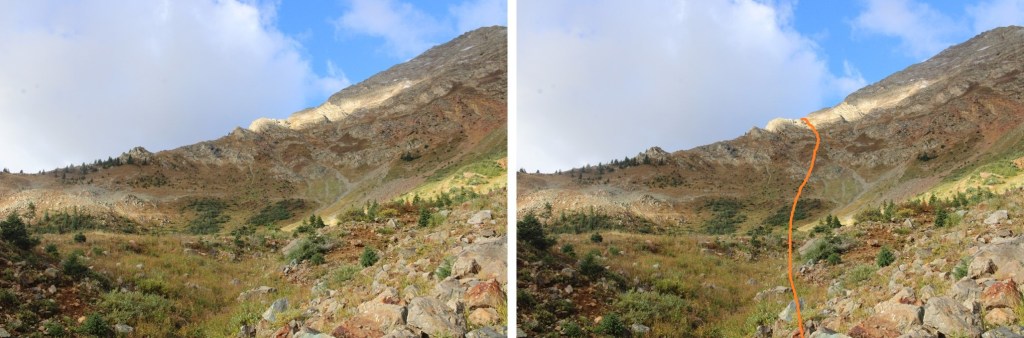
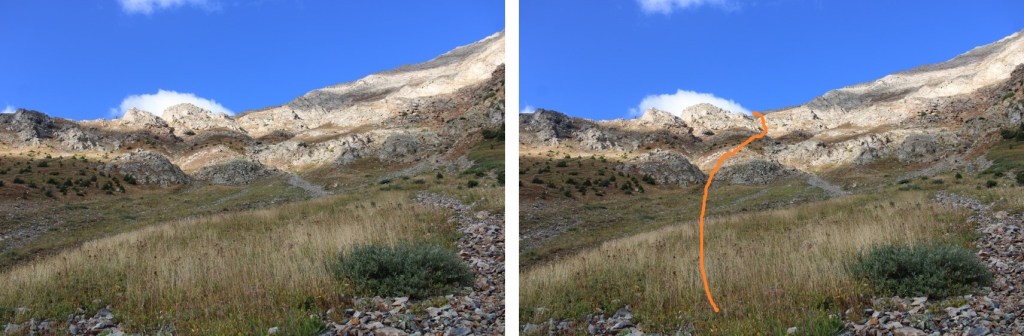
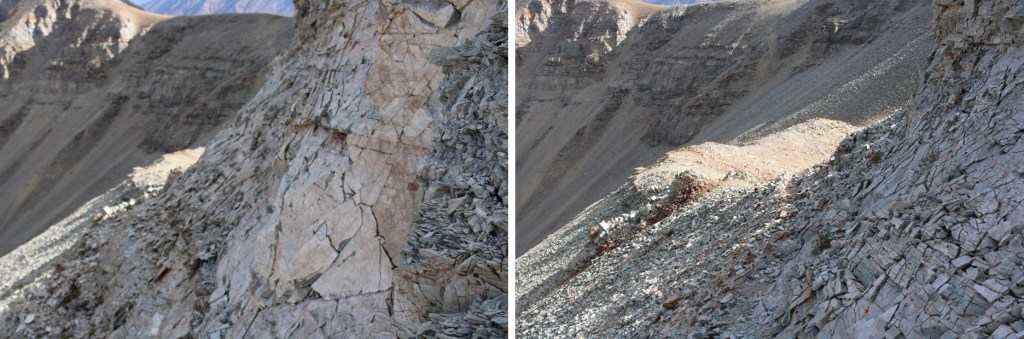
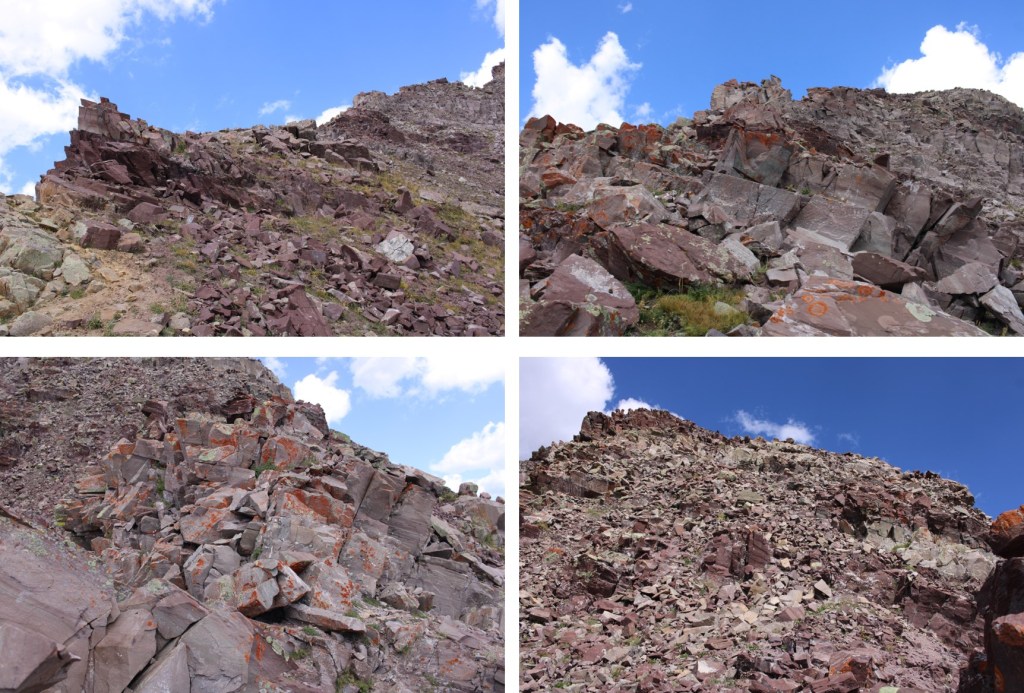
My advice to you is to go straight up the gully, as it stays at class 2+. I however, did not do this. I went up the right side. This goes at class 4, and was unnecessary. In addition, it included a drop of about 40 feet on class 4 terrain. I’ll show pictures of the route I took, but I really recommend taking the easier gully.
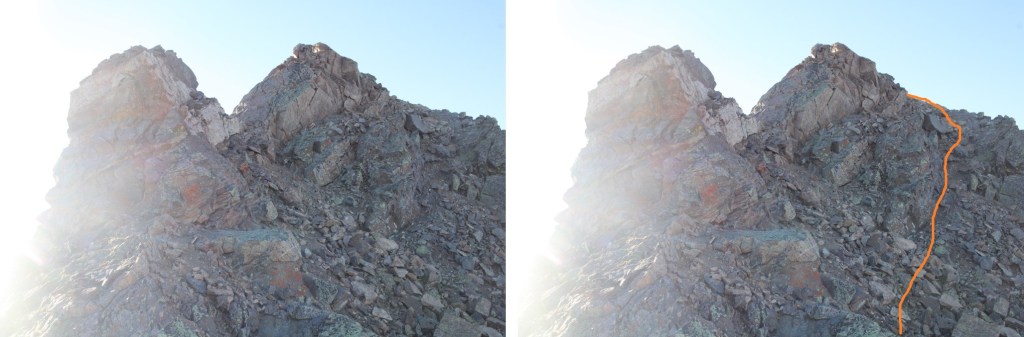
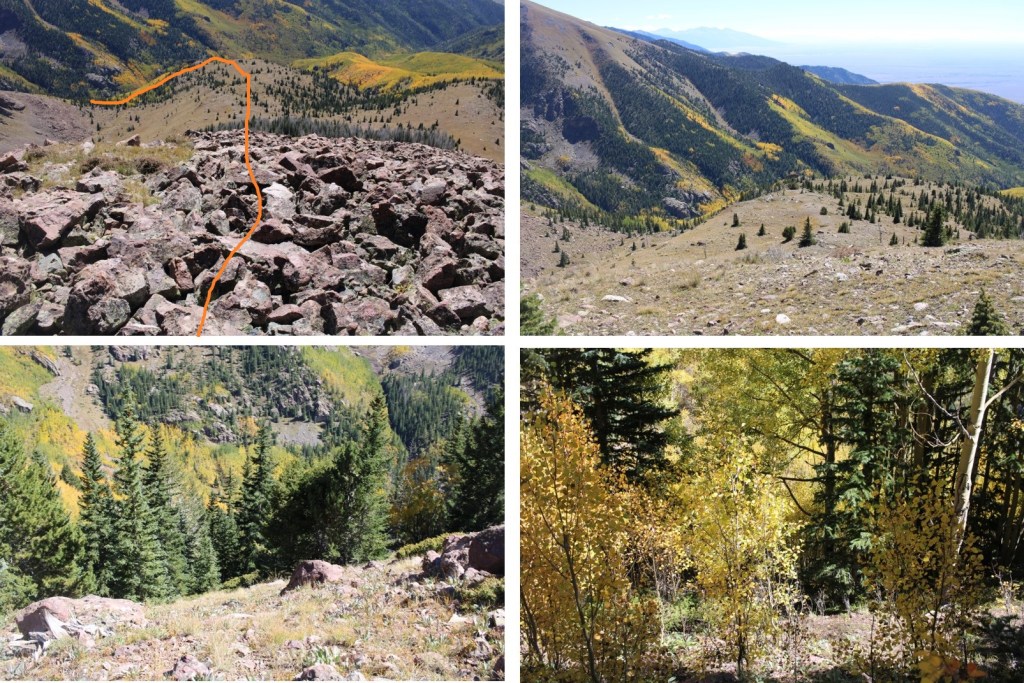
My route: Solid line up, dotted line down
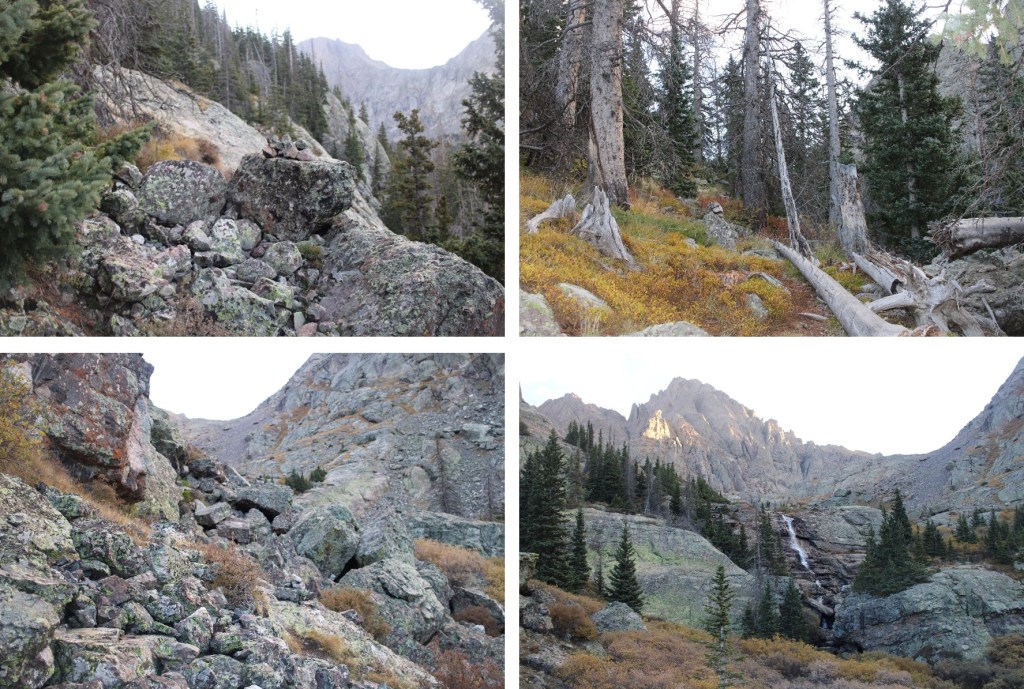
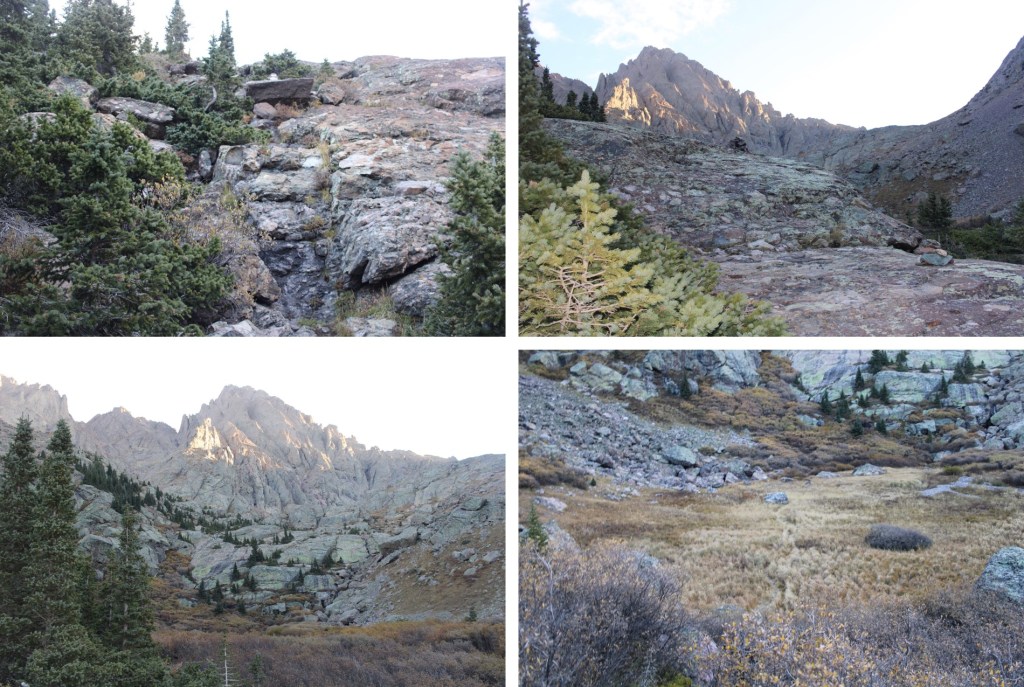
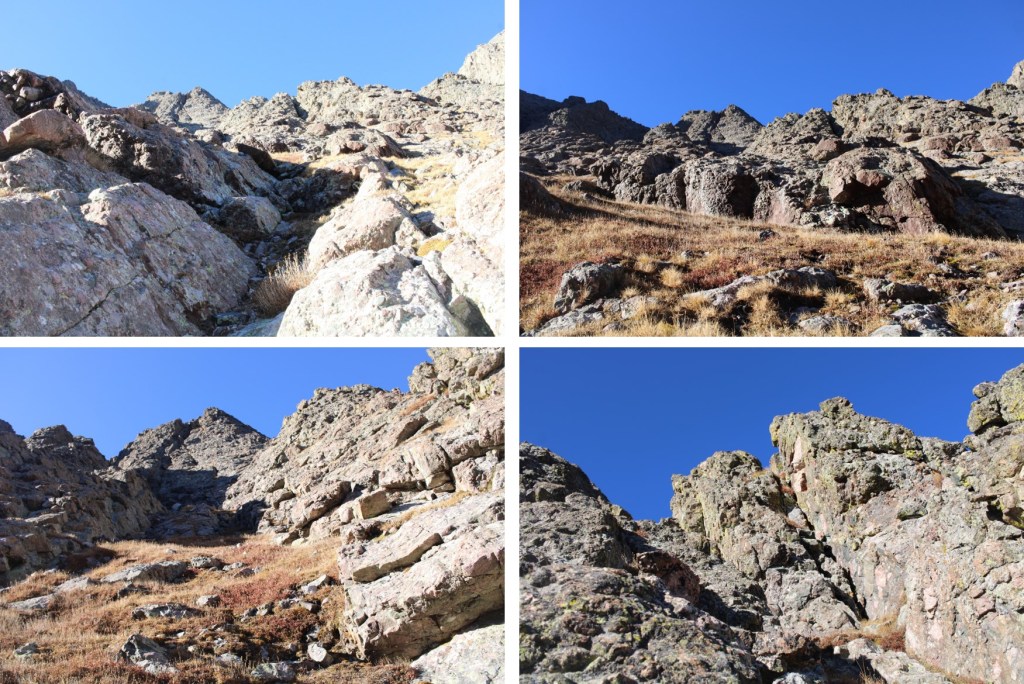
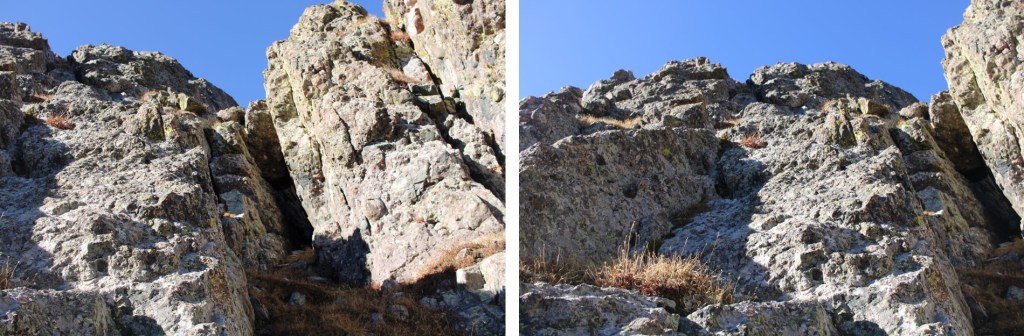
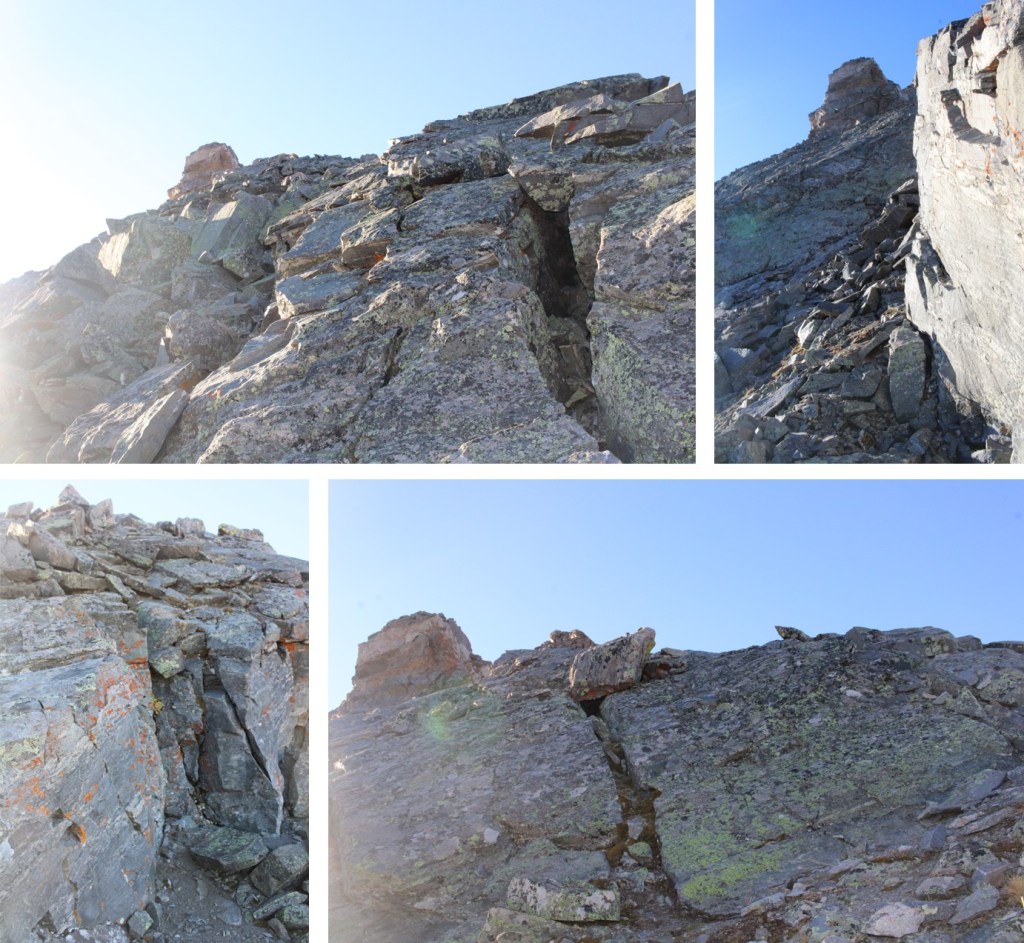
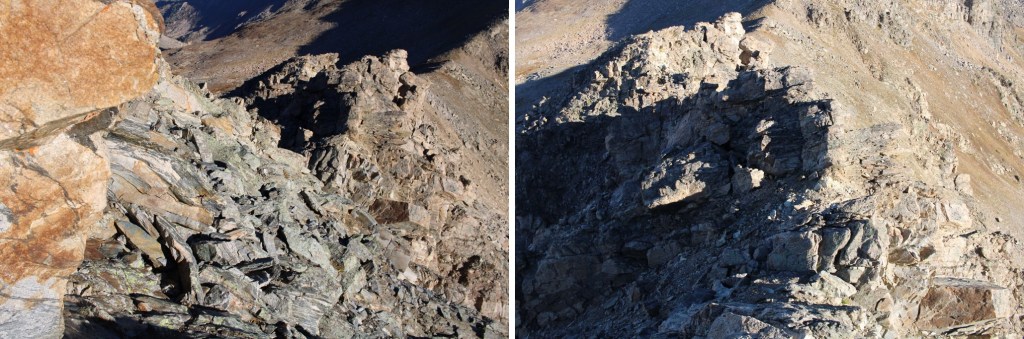
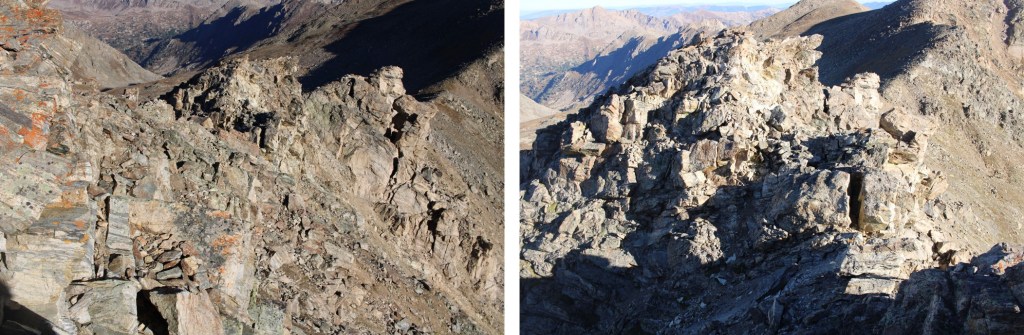
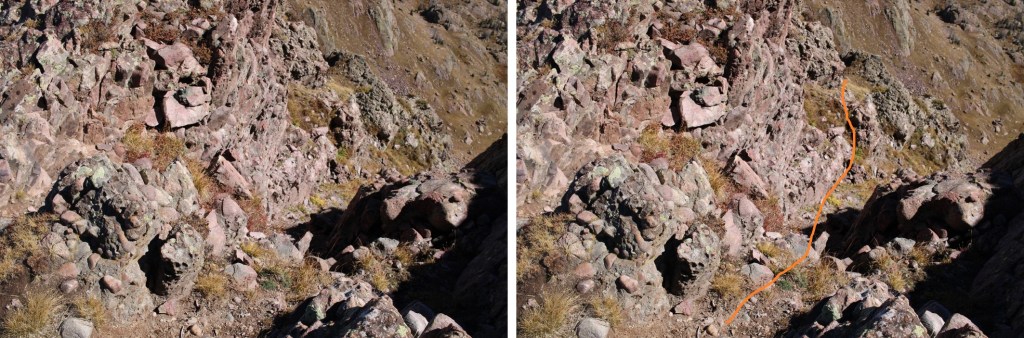
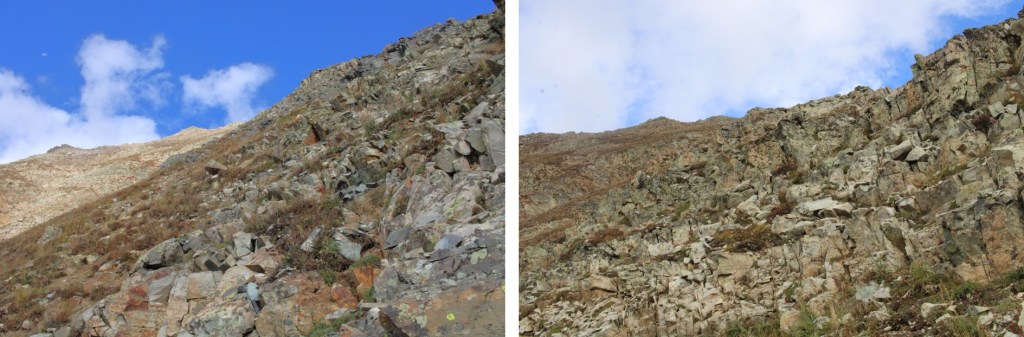
Here are some pictures of the route I took up. Once again, I do not recommend this
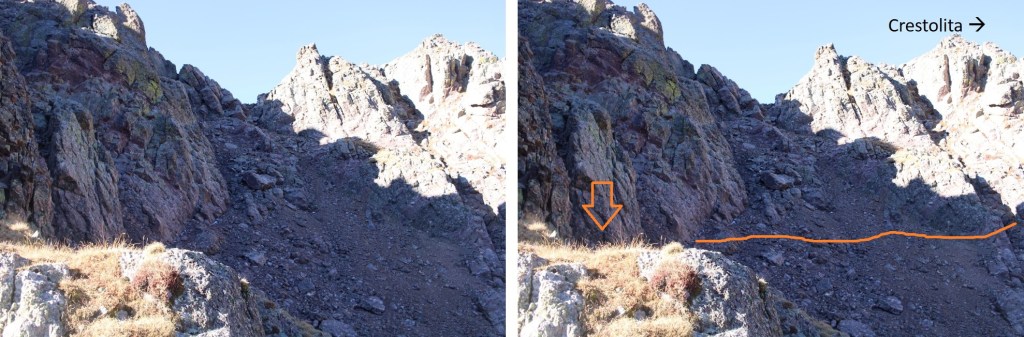
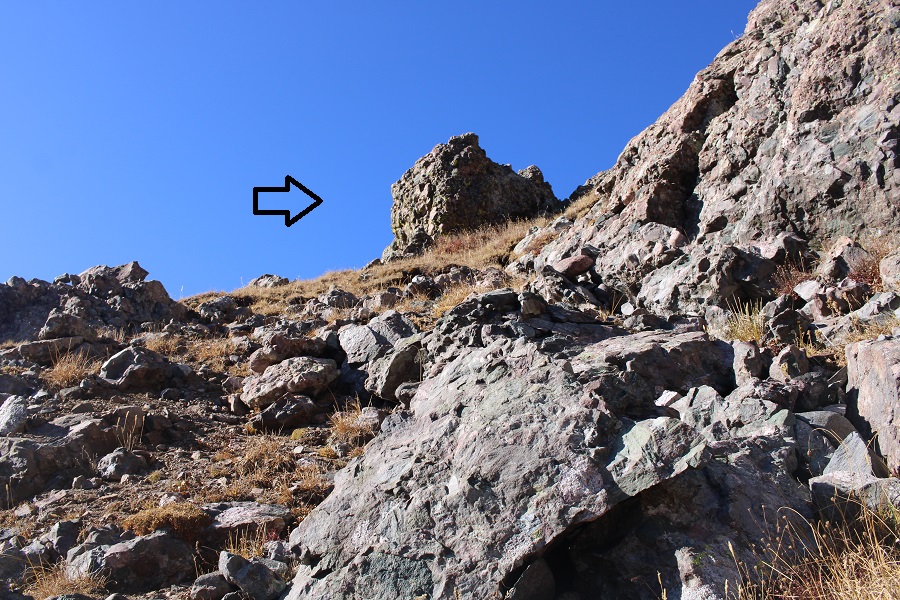
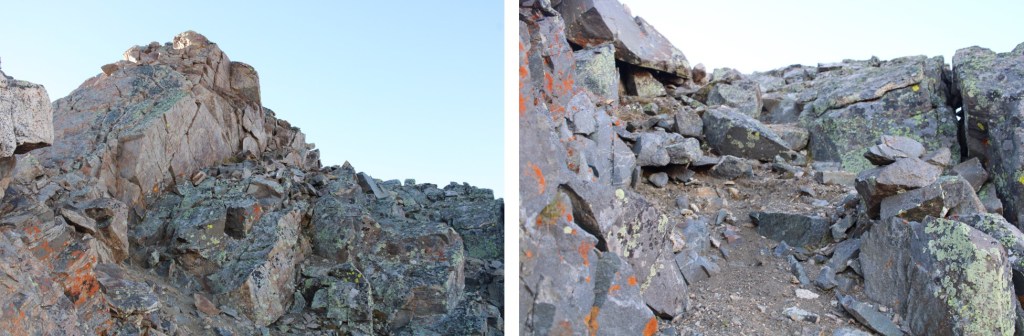
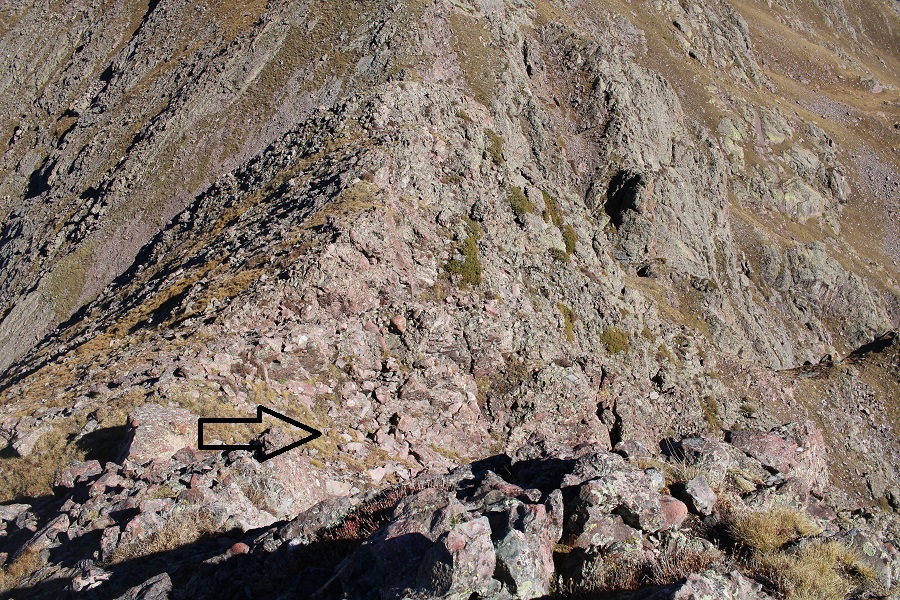
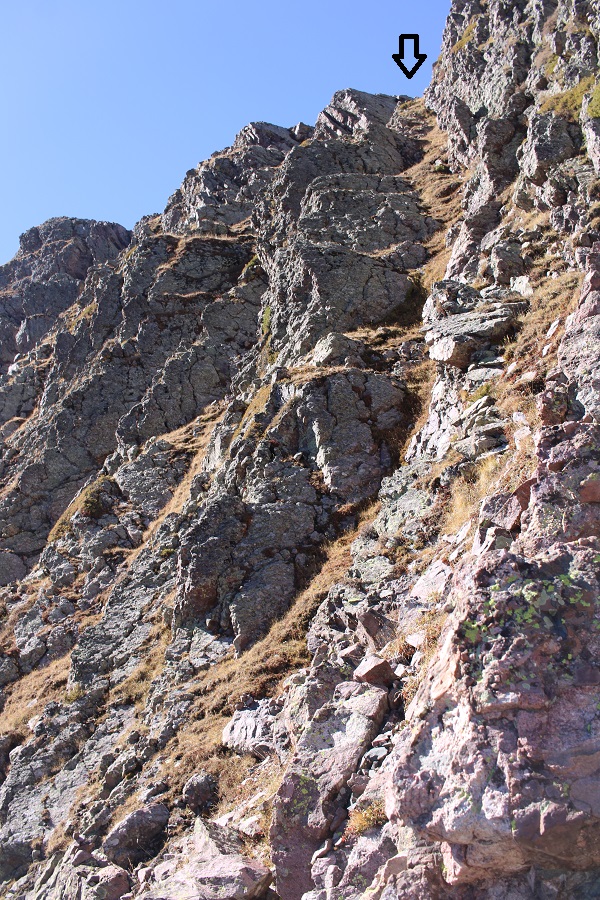
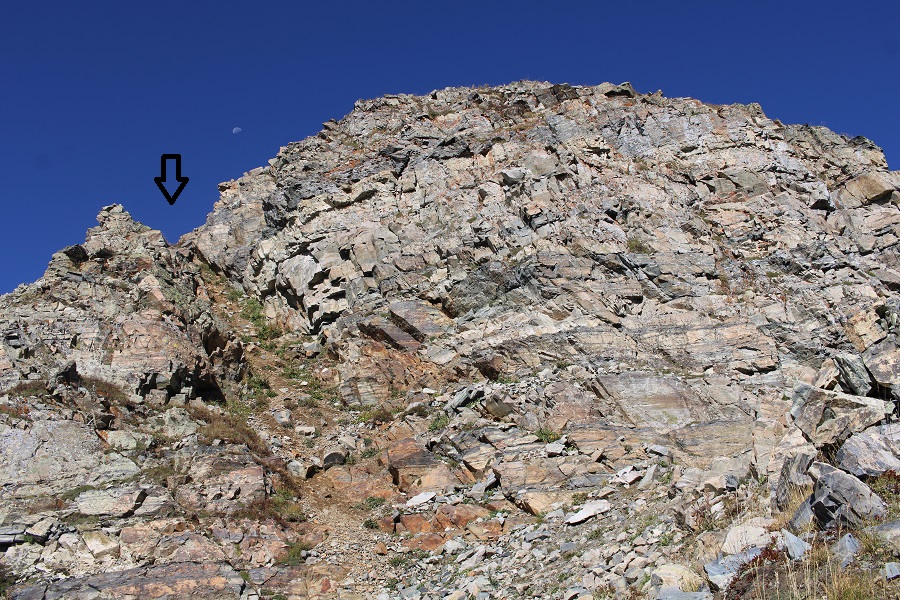
I don’t recommend this route, because this is where it led me: That arrow points to a 40-foot class 4 chimney I’d have to descend.
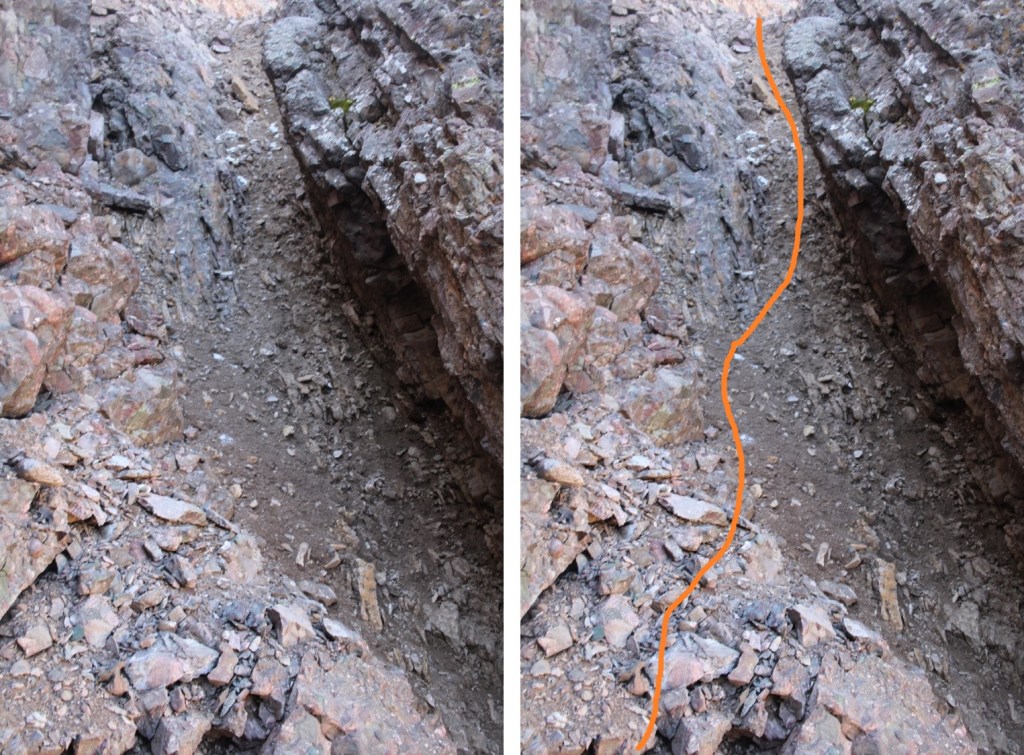
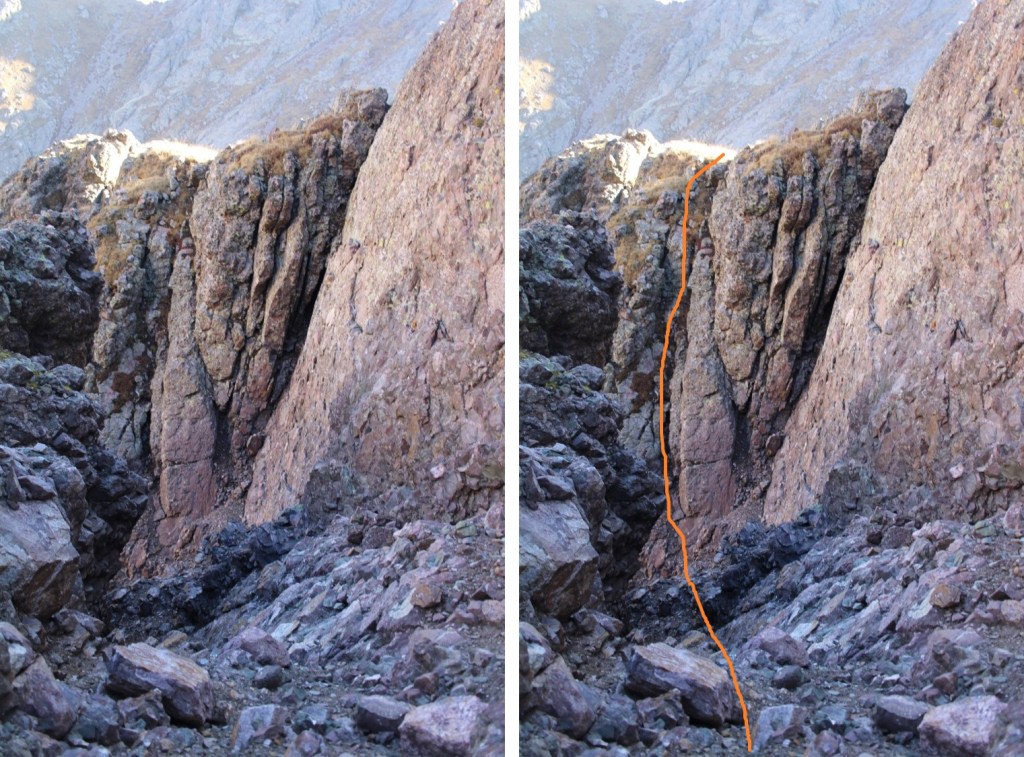
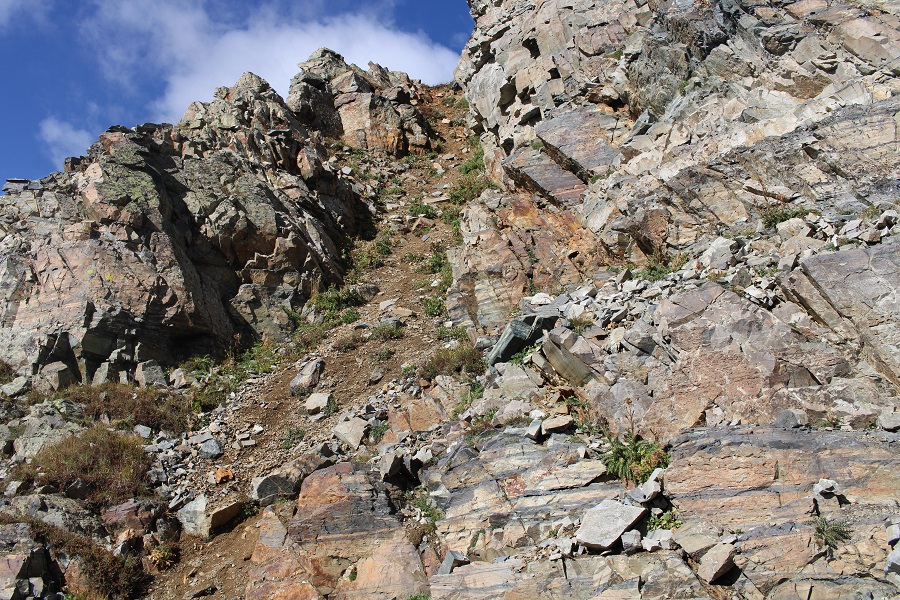
I seriously considered turning back at this point, and trying again with the gully. After some careful consideration, I realized I could navigate the current terrain. I gingerly climbed down 40 feet, then up another 40 feet
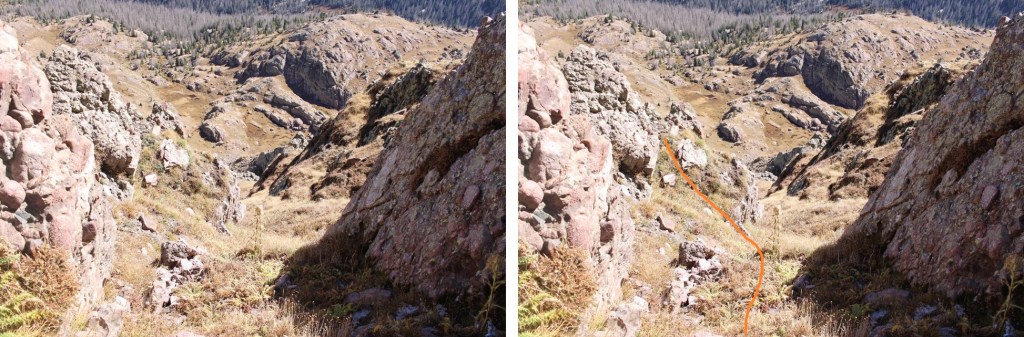
Here’s looking back at that chimney, and the route I took both down and then back up. Both sides were steep, and I was glad to be wearing my microspikes.
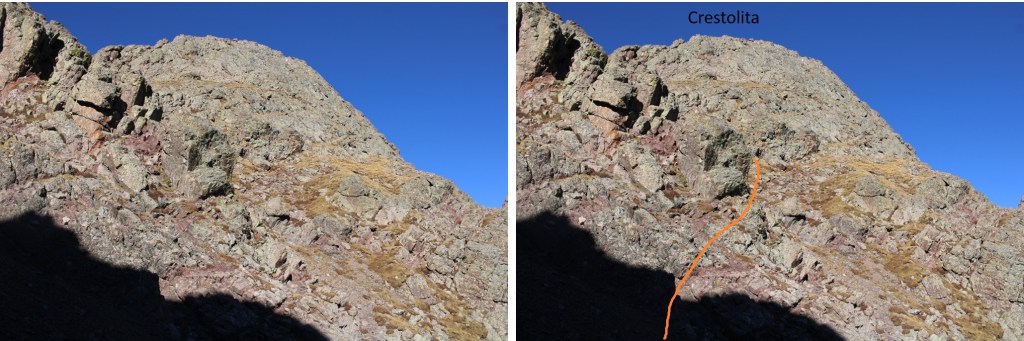
From here, I could now see the route to Crestolita to my right
This took some navigating, but the terrain remained at 2+, with some added exposure. First, I headed to the saddle
At the top of the saddle I turned right
Then it was a fun scramble to the summit of Crestolita
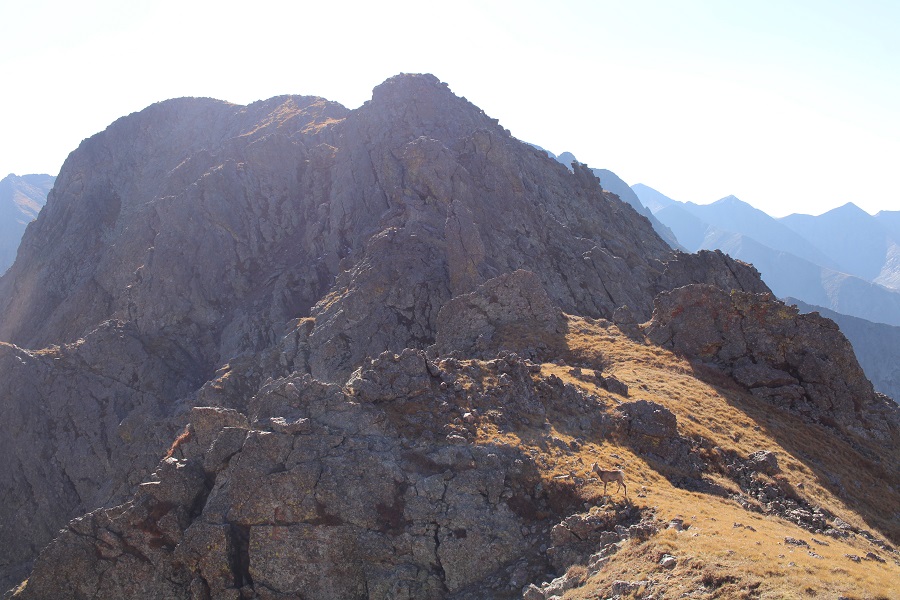
I turned back and saw a bighorn sheep watching me. She watched me for so long I eventually left her there and kept going.
Here’s the last bit before the summit
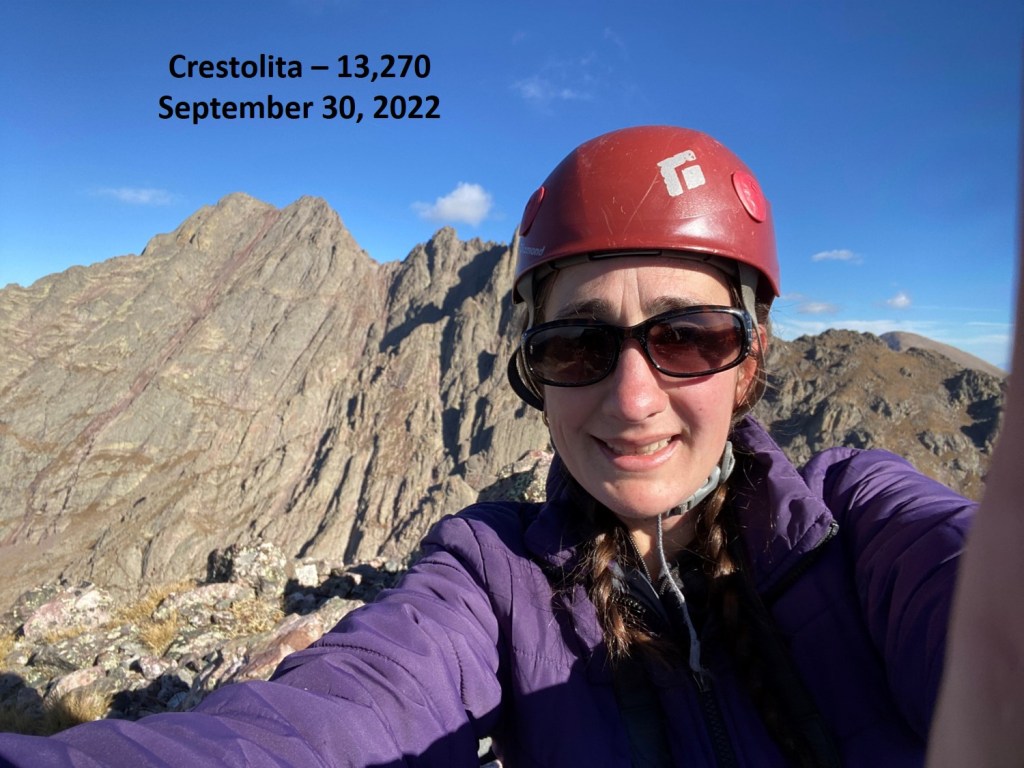
I summited Crestolita at 9:25am
Crestolita:
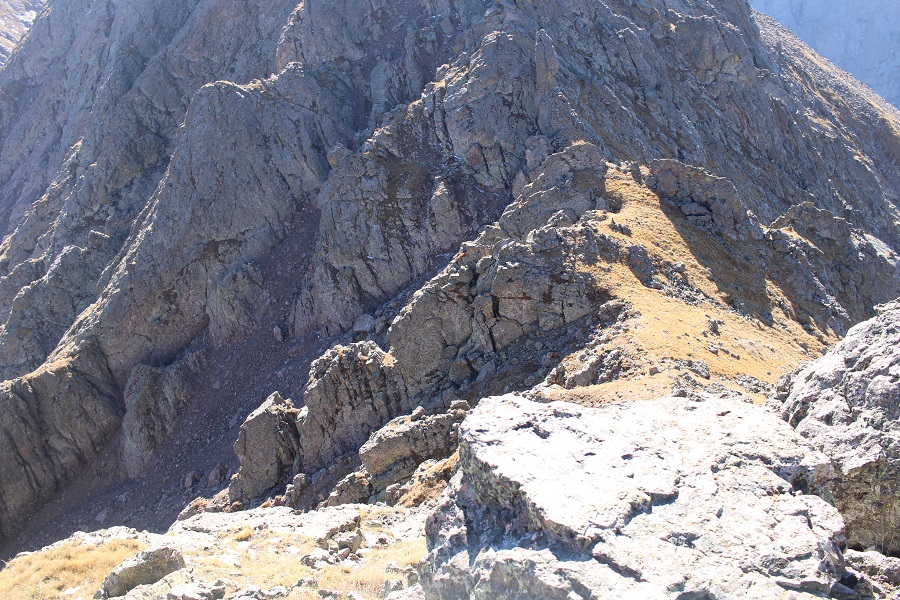
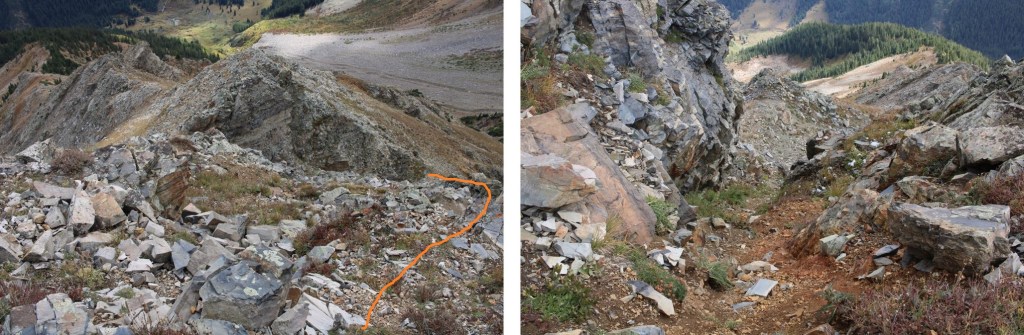
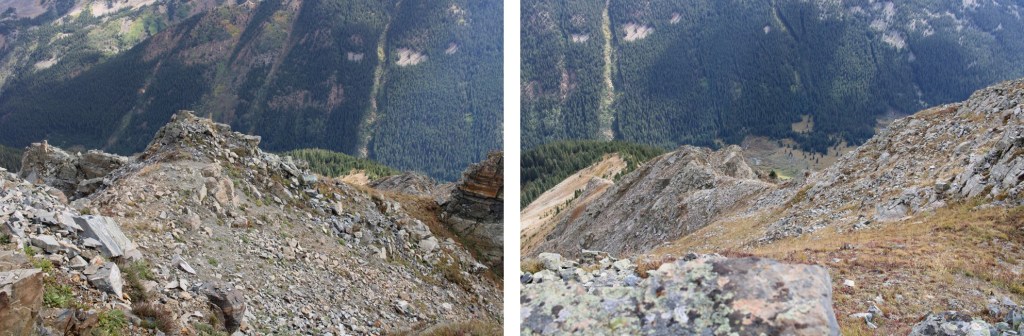
I took the gully down. There were several options to make this happen. When I had options, I went right, and wasn’t disappointed. Here are some pictures of the way I took down.
First, I made my way back to the saddle
Then turned left, and followed the tundra until it turned into scree
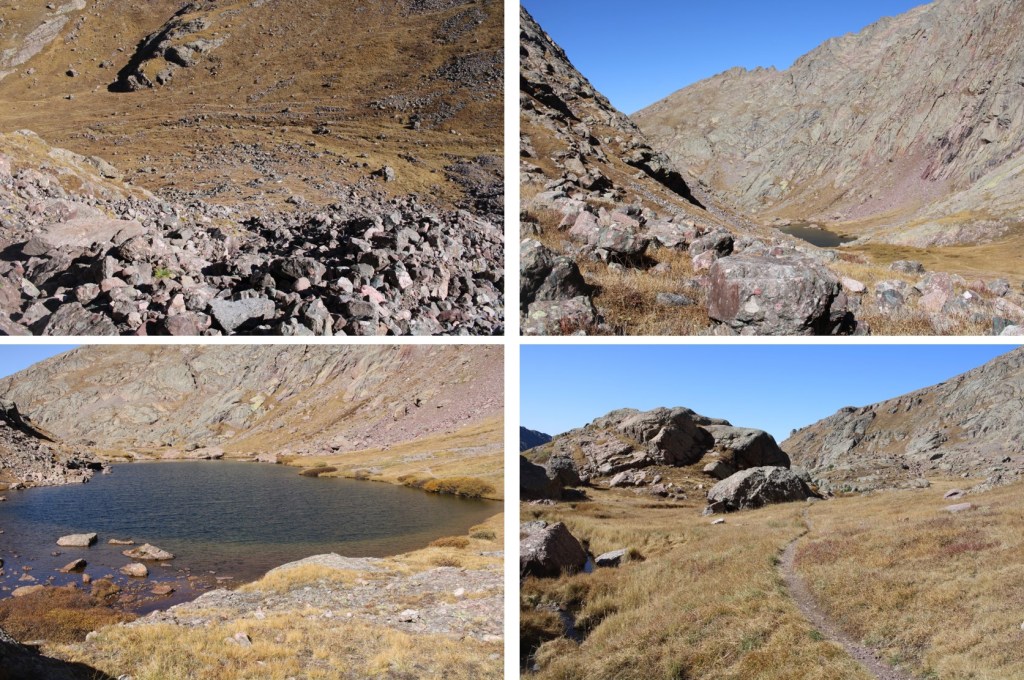
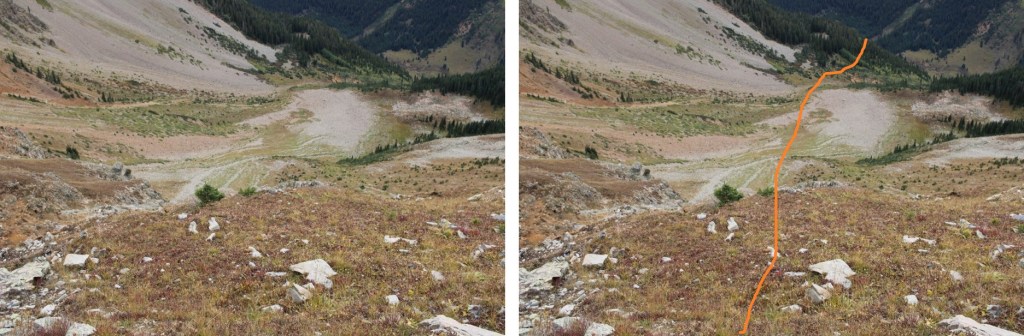
At the base of the gully, I picked up the trail again and took it towards Cottonwood Lake
I once again rounded the large boulder, then followed the cairns back to the trail
Back at the 861/743 ‘junction’, I followed the trail back down the granite slabs, and through several transition zones back to the trailhead.
I made it back to the trailhead at 1:30pm, making this a 14.33 mile hike with 4842’ of elevation gain in 8 hours.
This was my second attempt at this peak. On the first attempt, there was unexpected snow the night before, and I deemed the class 3 section too difficult with a dusting of snow and rocks covered in a thin layer of ice.
So, I came back a week later, after the snow had melted out, and tried again. I started at 6am from the Linkins Lake and Upper Lost Man Trailhead.
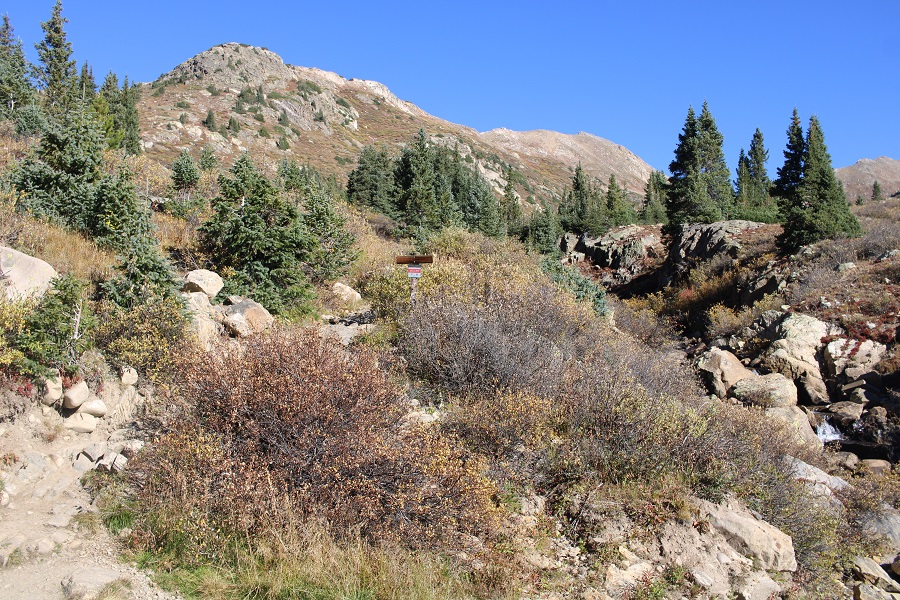
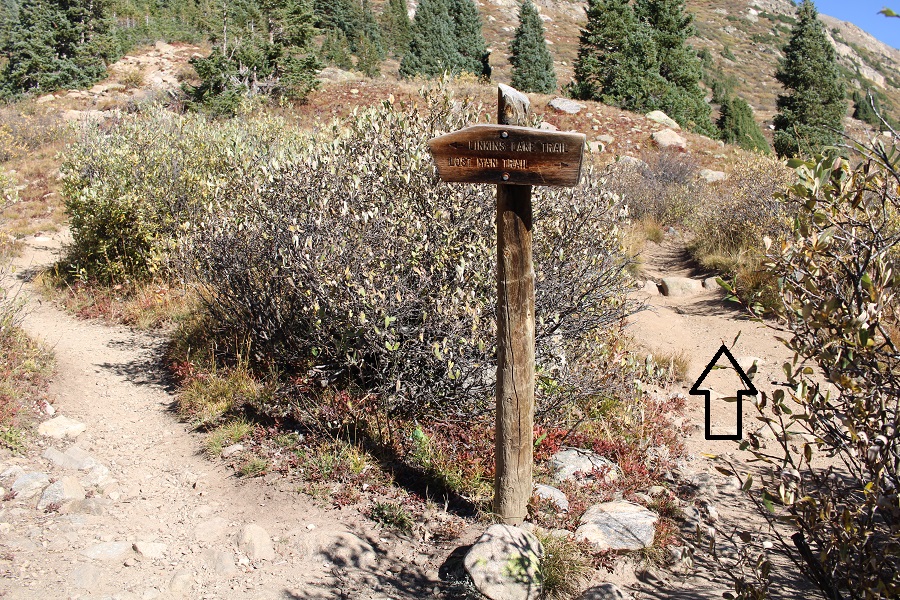
I followed the class 1 trail north, following Trail #1996, Lost Man Trail
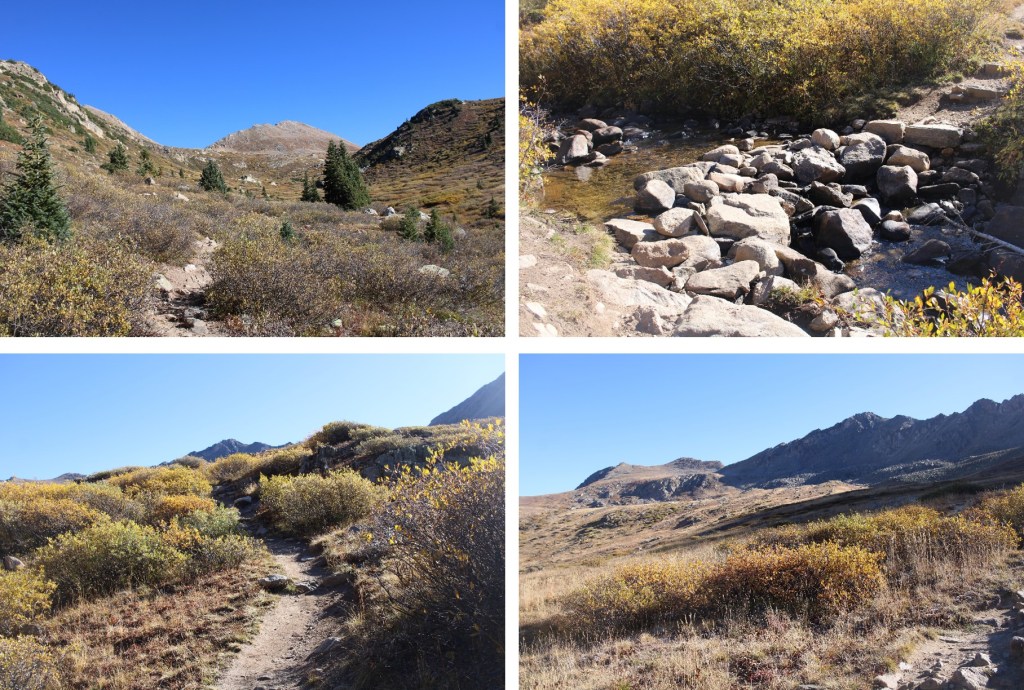
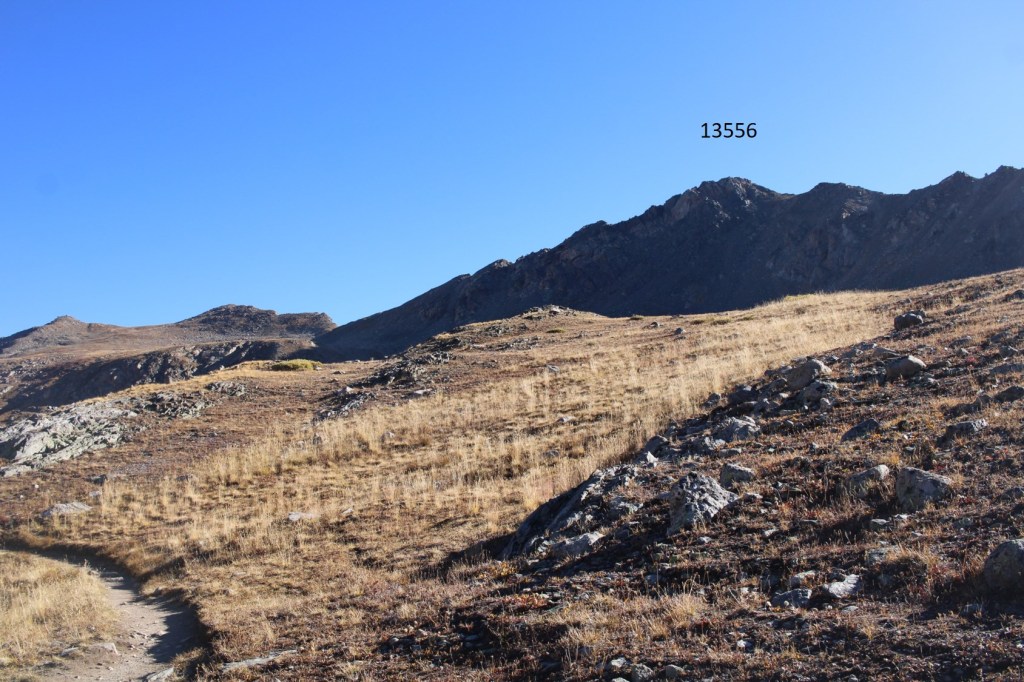
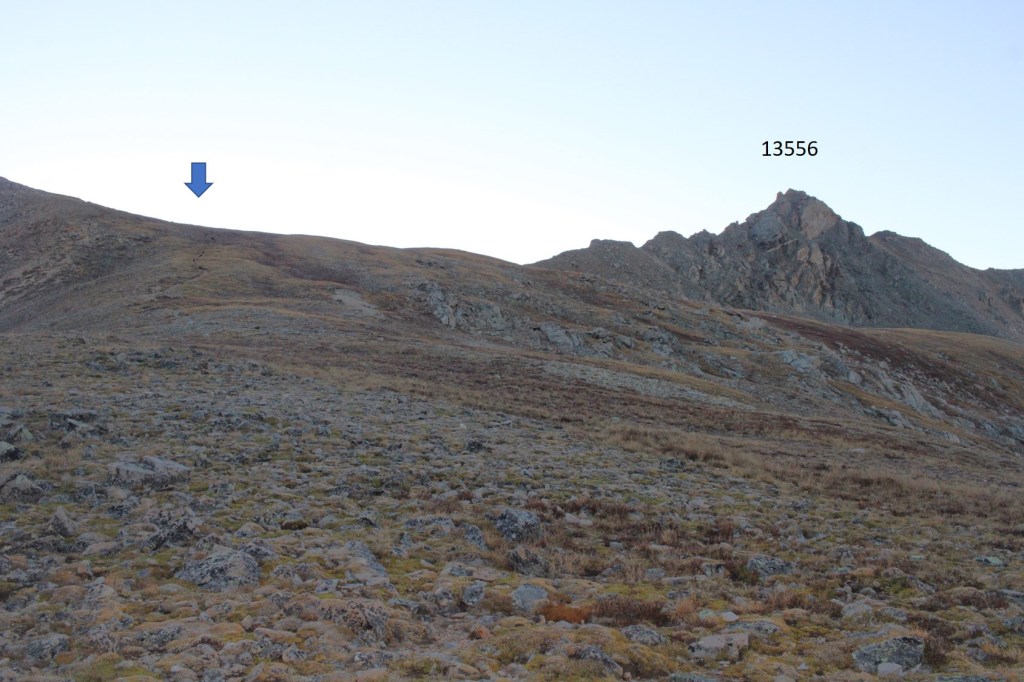
Here’s a glimpse of PT 13556
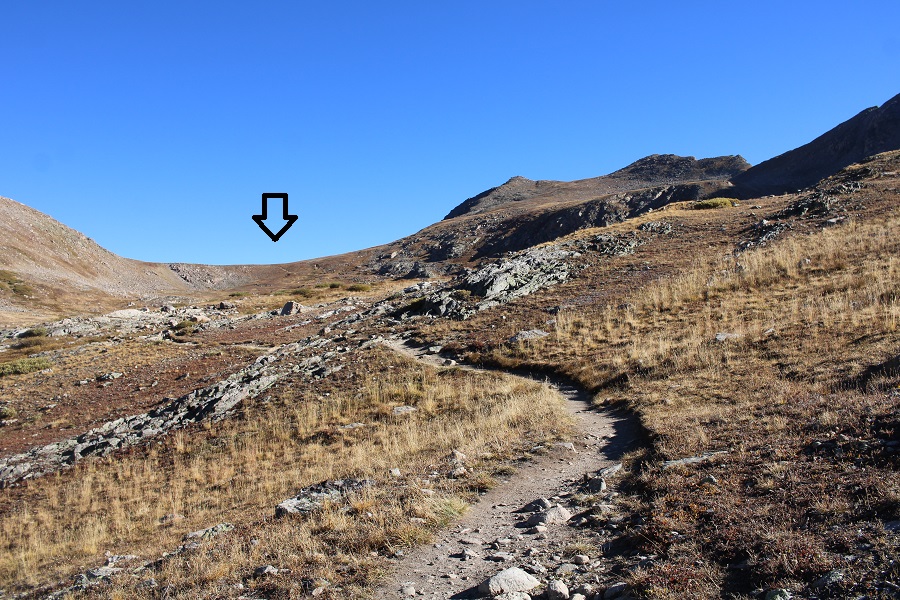
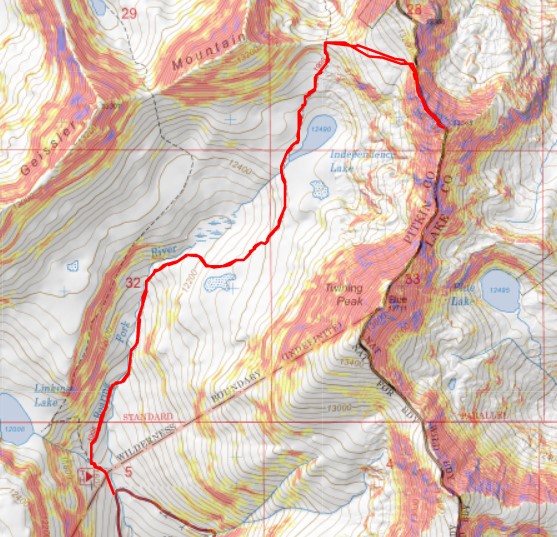
To get there, I’d first have to pass Independence Lake, and make it to the pass, which was about 2.5 miles from the trailhead
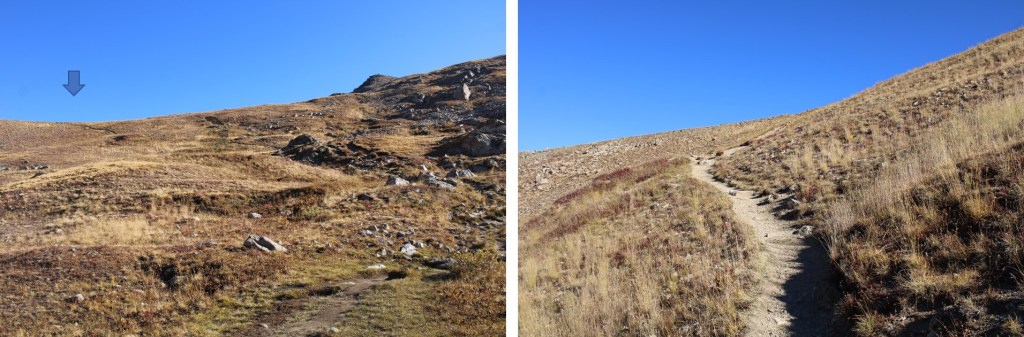
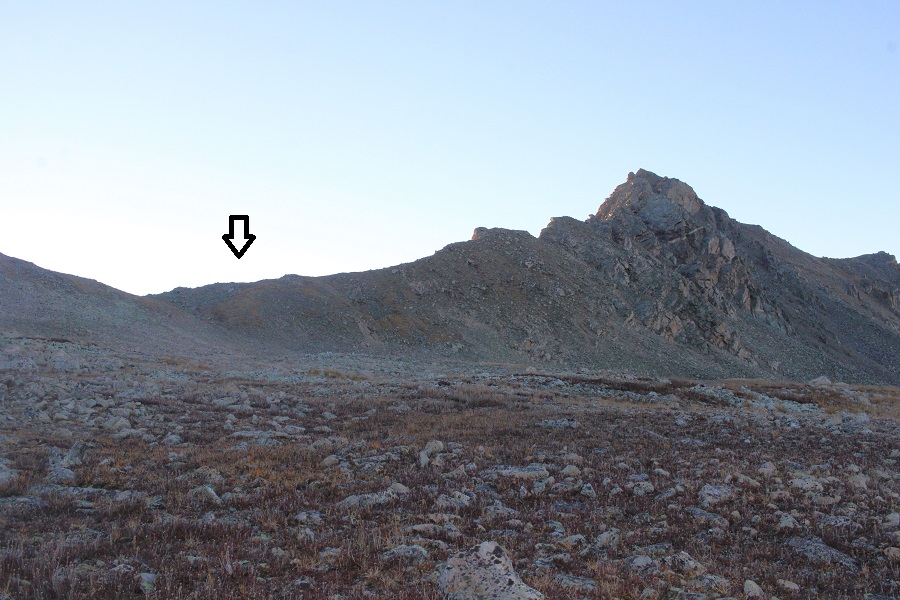
Once at the pass, I turned right and followed a faint trail east that eventually petered out. I was headed for the ridge.
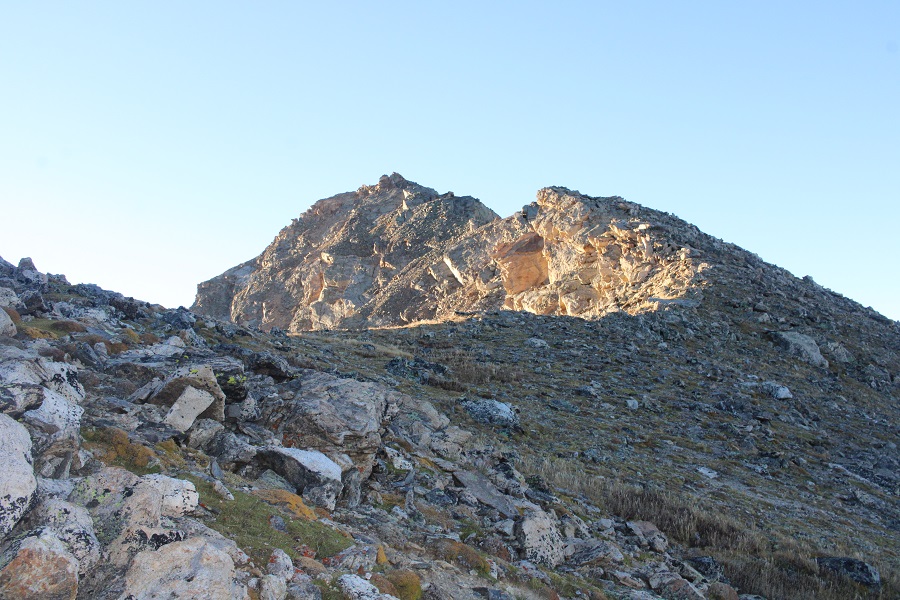
I ascended the ridge, then turned right and followed it southeast towards the summit. Initially, the terrain started out as class 2 and I just followed the ridge
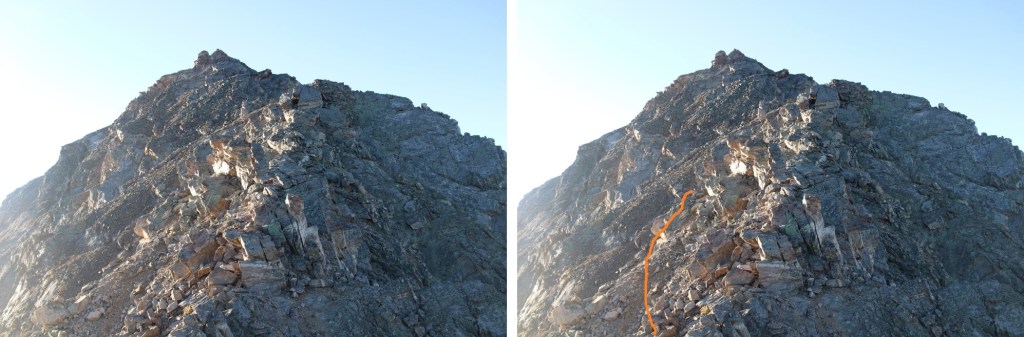
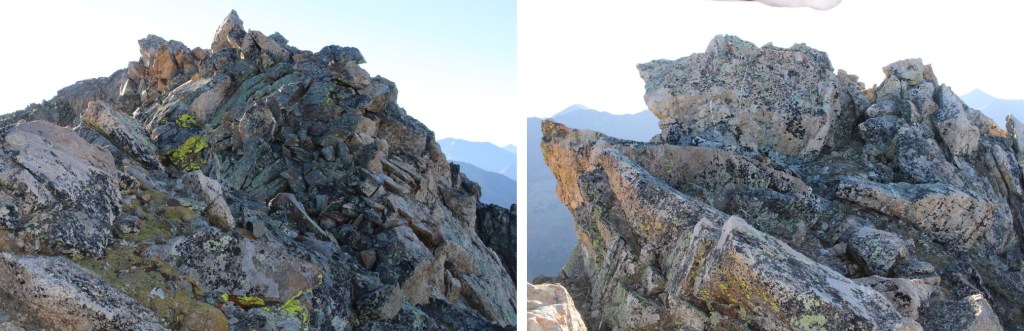
But pretty quickly I was in class 3 territory. Most of the ridge goes at sustained class 3, with a lot of fun scrambling. Here’s the route I took. I initially dipped down a bit, finding a navigable hole in the ridge to pass
Next, I dropped down a few feet, and continued following the ridge
Now for the fun scrambling. This is choose your own adventure, but this is the route I took
Eventually the ridge ran out, and I had to go to the right
Then it was an easy scramble to the summit
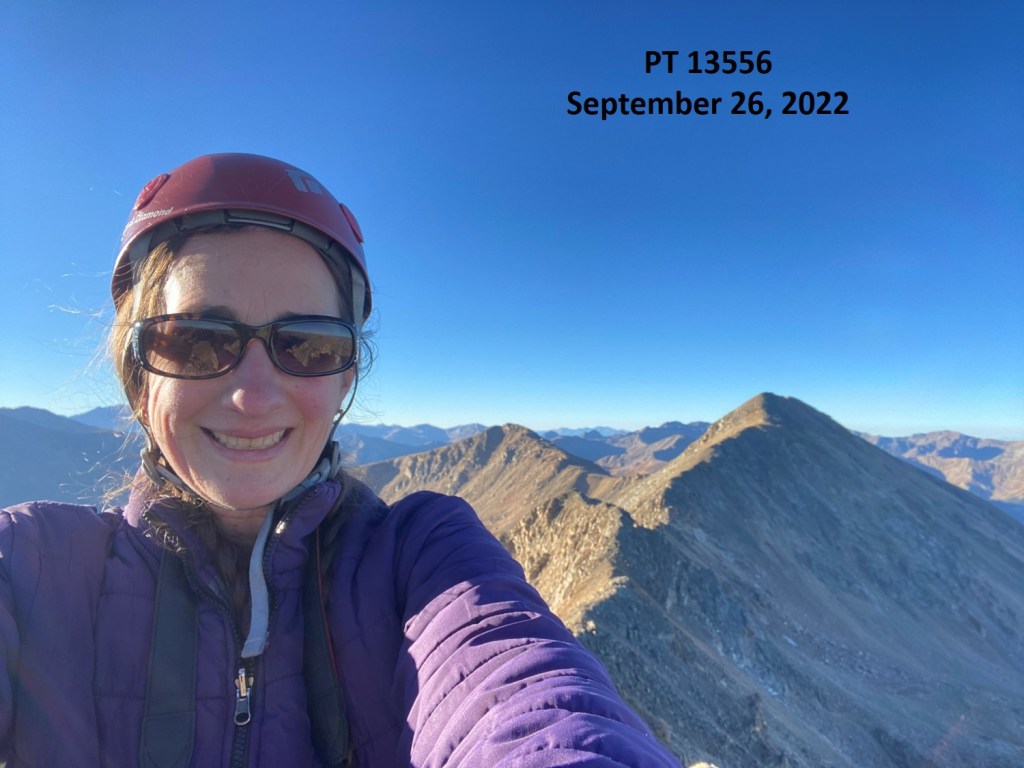
PT 13556:
PT 13556:
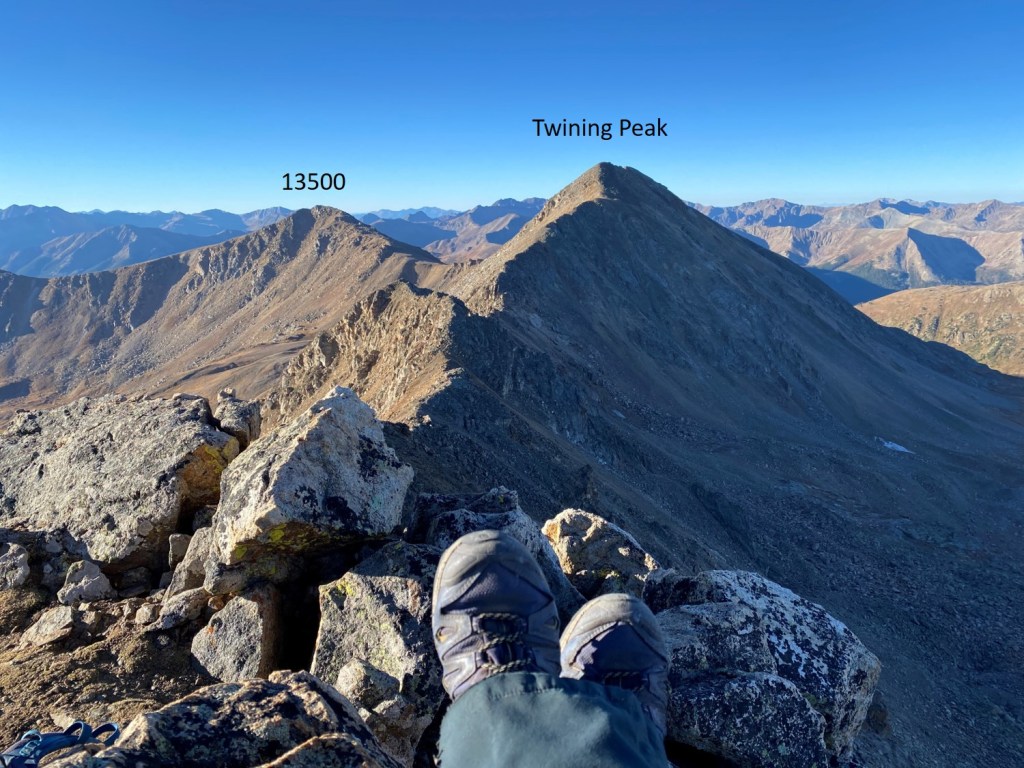
From the summit, I had great views of Twining Peak and 13500 to the south
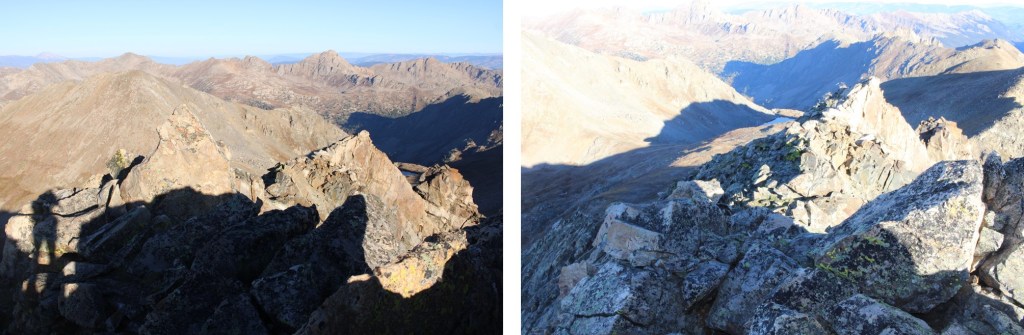
Now for the route back down. I just retraced my steps, but it looks a lot different heading back than it did going in.
Now back on the class 2 section of the ridge, I took it back to the saddle
Then I turned left onto trail 1996, and followed it south back to the trailhead
I made it back to my truck at 8:45am, making this a 6.51 mile hike with 2015’ of elevation gain in 3 hours, 45 minutes.
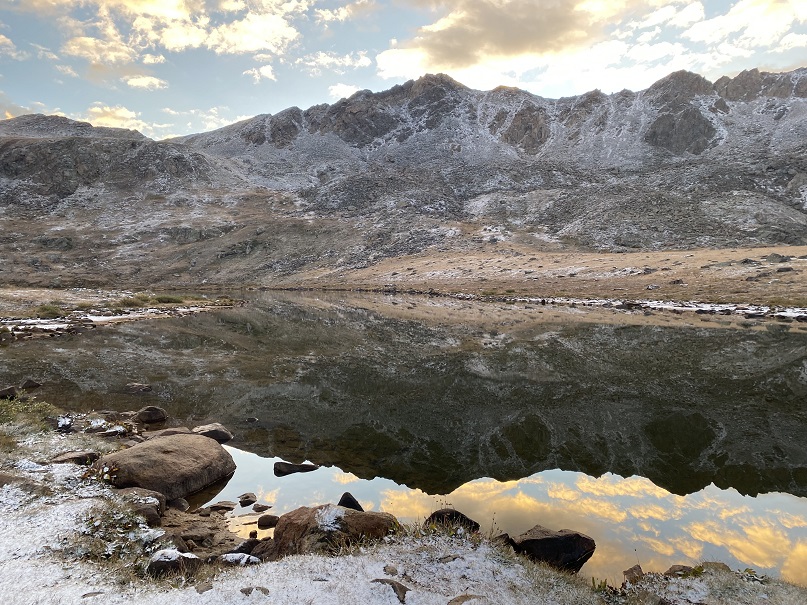
While it had been beautiful being there with a dusting of snow last time, I was glad I’d turned around, as I now realized the scrambling on ice would have been dangerous: There just hadn’t been enough snow to provide traction, and the ice had been slippery.
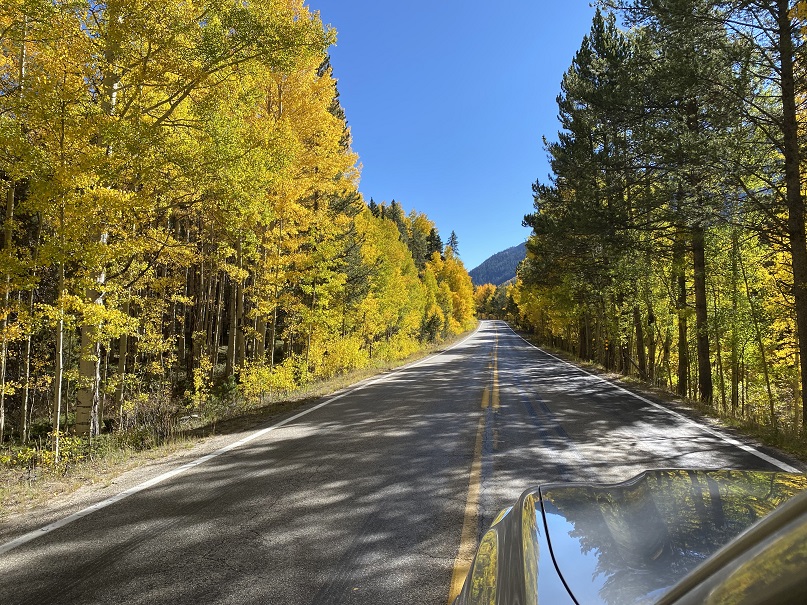
As an added bonus, this time I got to drive home while enjoying the fall colors
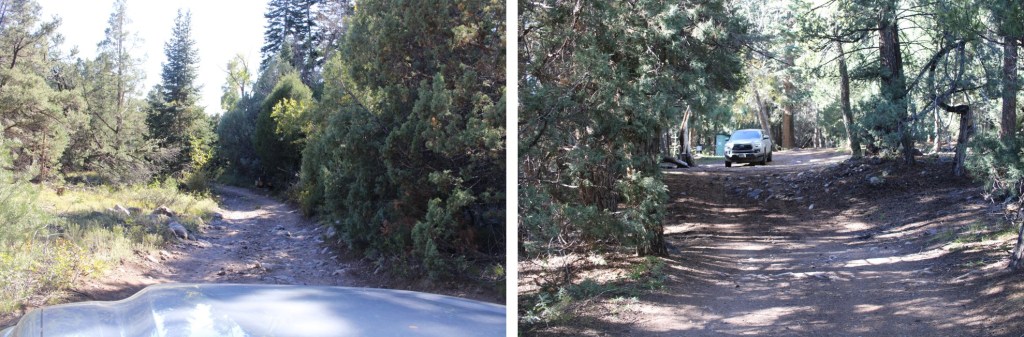
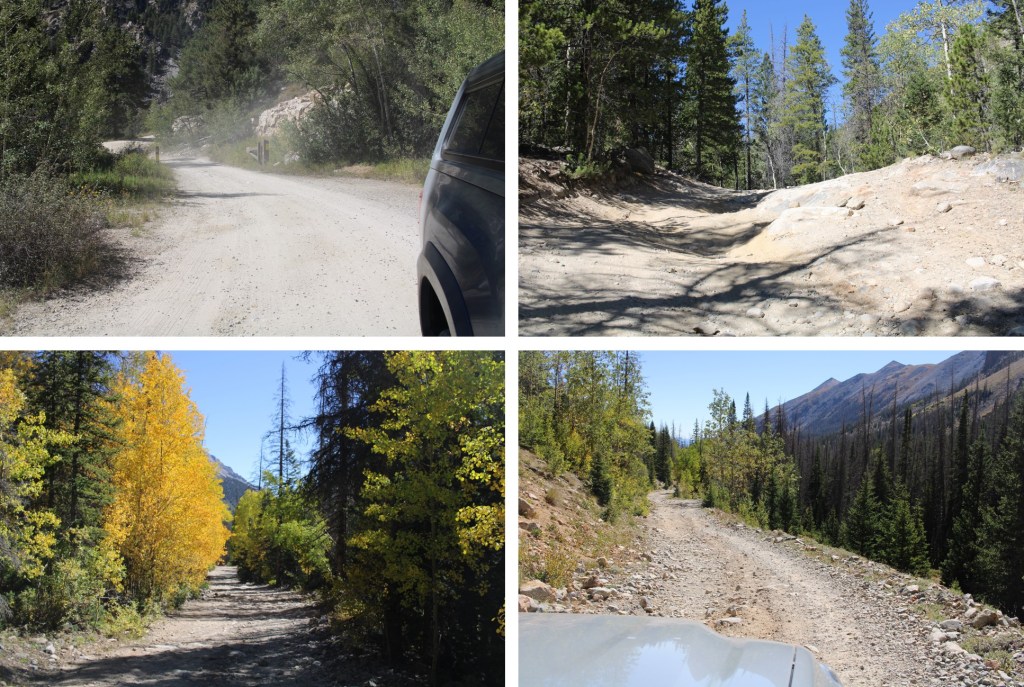
The last mile to the San Isabel Creek Trailhead was 4WD, but there were tons of campsites along the way. Since it’s hunting season, a few of them were taken and I parked at the end of the road.
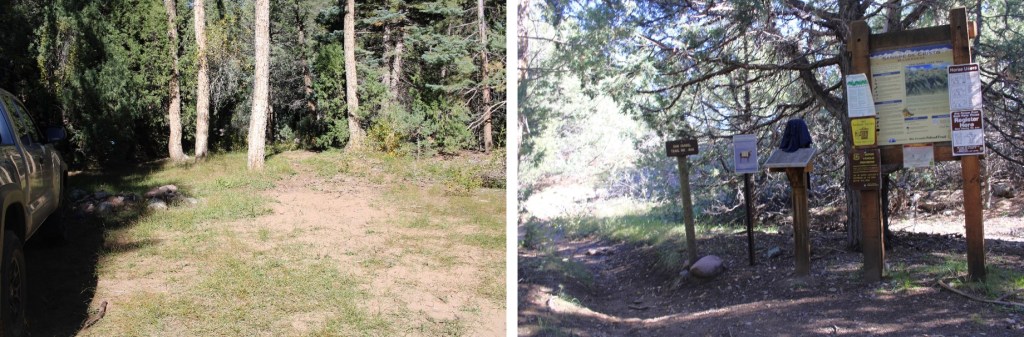
There was a faint trail at the end of the campsite that led me to the trailhead
I followed the San Isabel Trail No. 858 East, on a well-defined, class 1 trail.
There were several creek crossings. Since it was late September, they were all easily manageable, without creek crossing shoes. The last time I was in the area I think I counted a minimum of 9 crossings.
After hiking for about 4.4 miles, and at 10450’ of elevation, I left the trail and headed northwest up this drainage. There was some bushwhacking, as the trees in the slide area seem to be growing back
I crossed San Isabel Creek, and made my way up the drainage
I ended up going back and forth on either side of the drainage, looking for the best route. There are some minor game trails in the area, but once you make it to the clearing you want to ascend the ridge to your left.
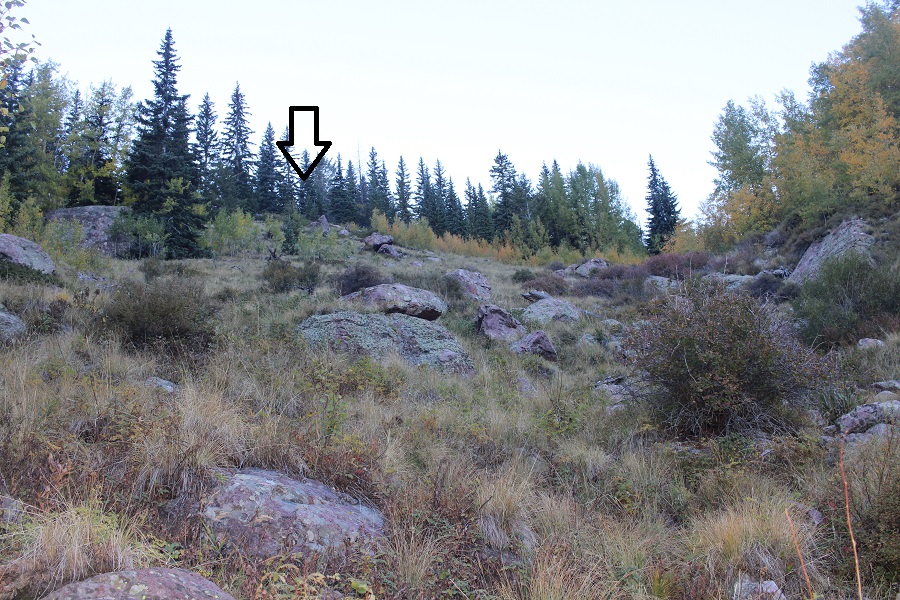
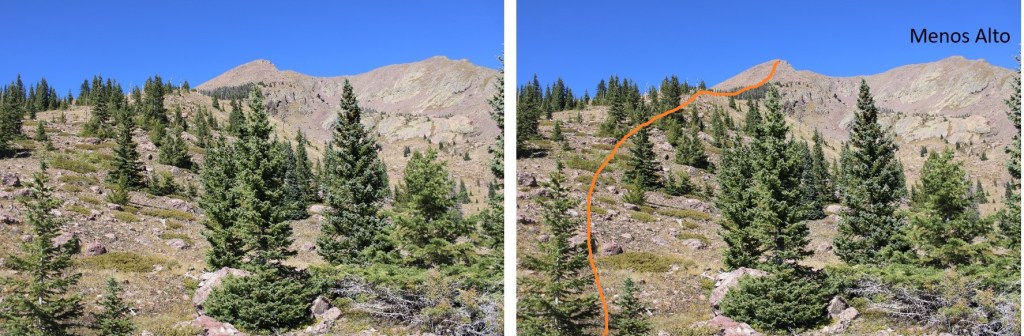
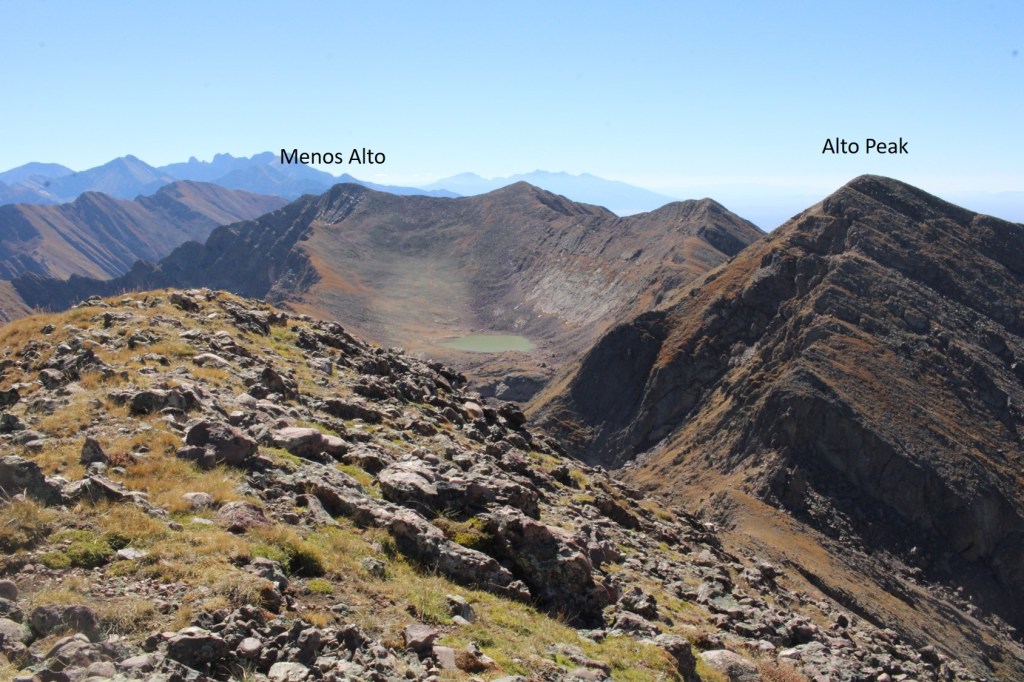
Once on the ridge, I followed it north. As you can see, Menos Alto is to the right. However, I’d already summited that peek, so I left it today for last.
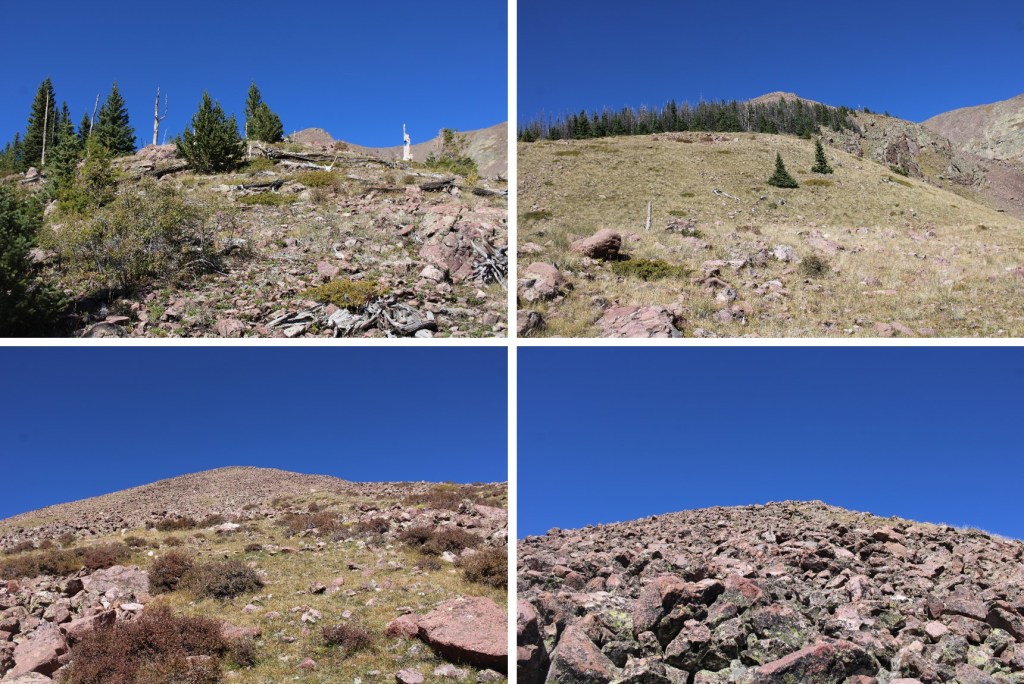
Here are some pictures of the route up the ridge. It started out as tundra, then I entered the trees for a short bit, and exited to class 2 rock hopping.
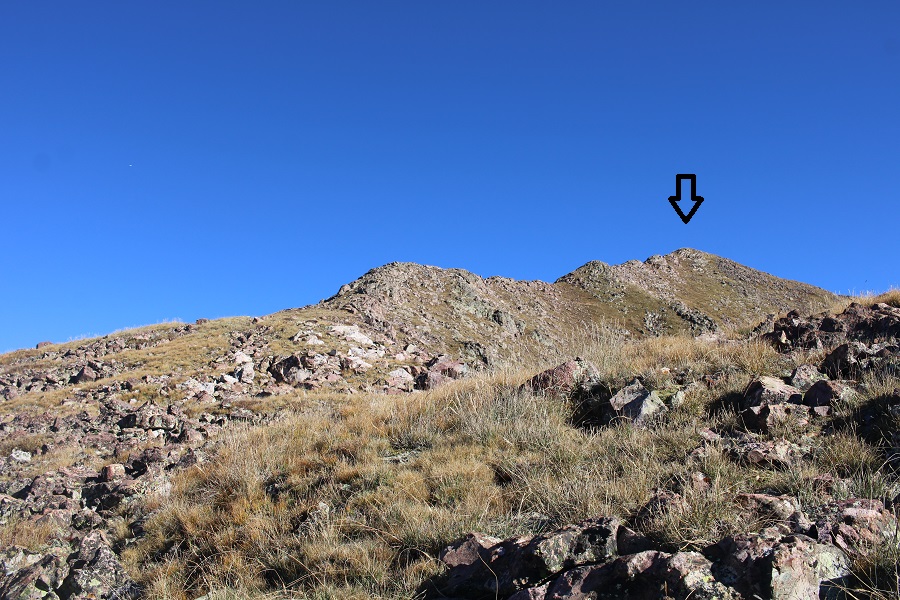
I continued following the rocky ridge (class 2) northeast to this point, which is not a summit.
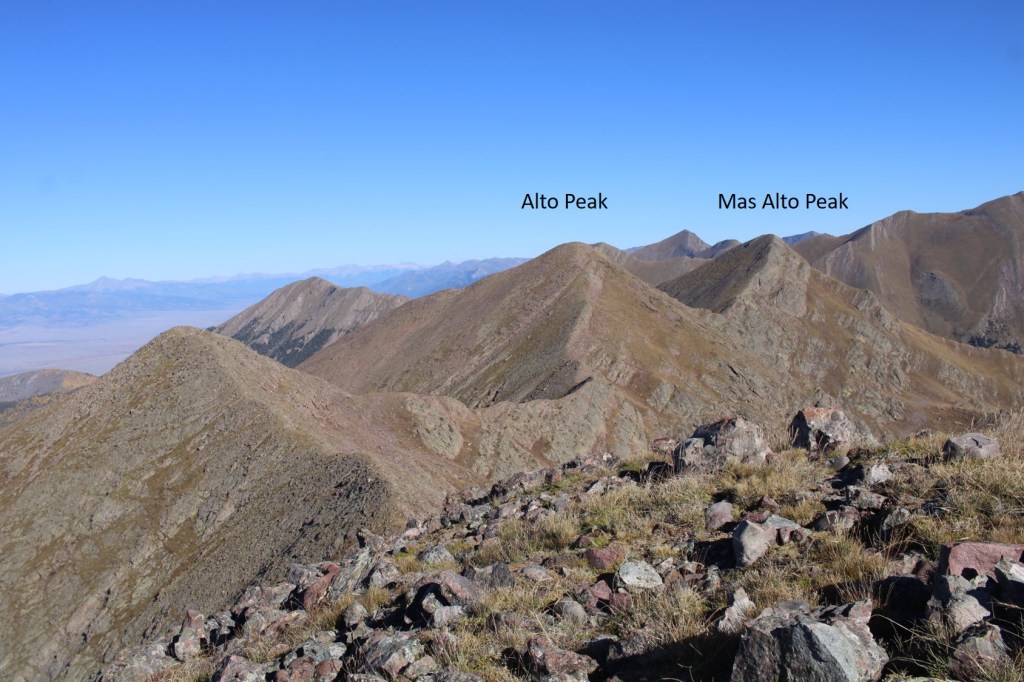
From there, I could see my next two objectives to the northwest, Alto Peak and Mas Alto Peak
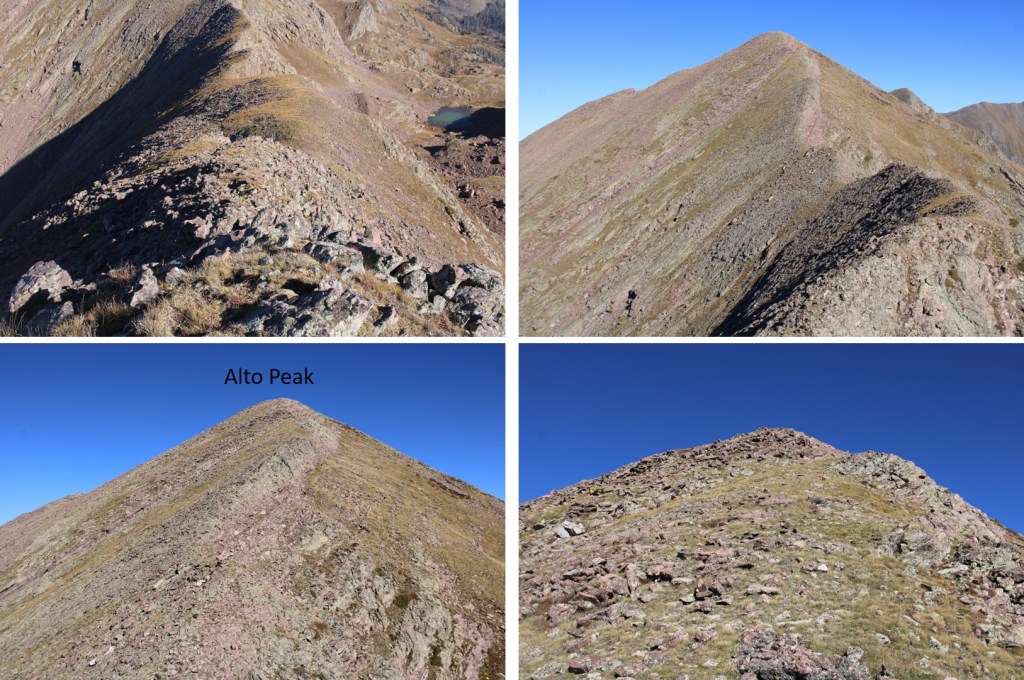
I followed the class 2 ridge northwest to the first point, which was unranked
It was then a class 2 hike to the summit of Alto Peak
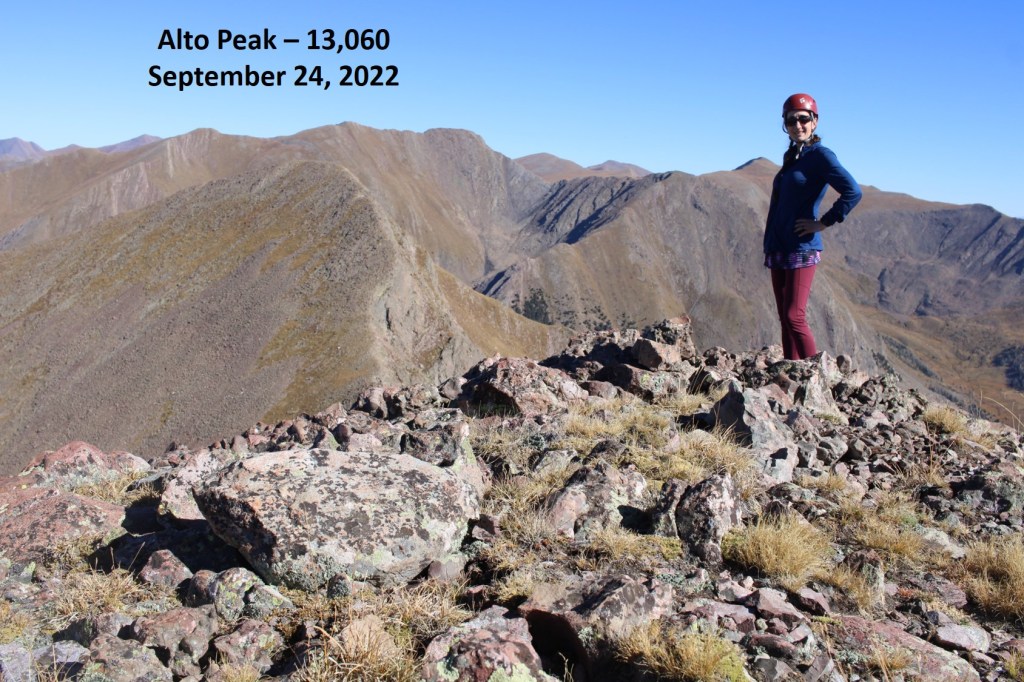
Alto Peak – PT 13060:
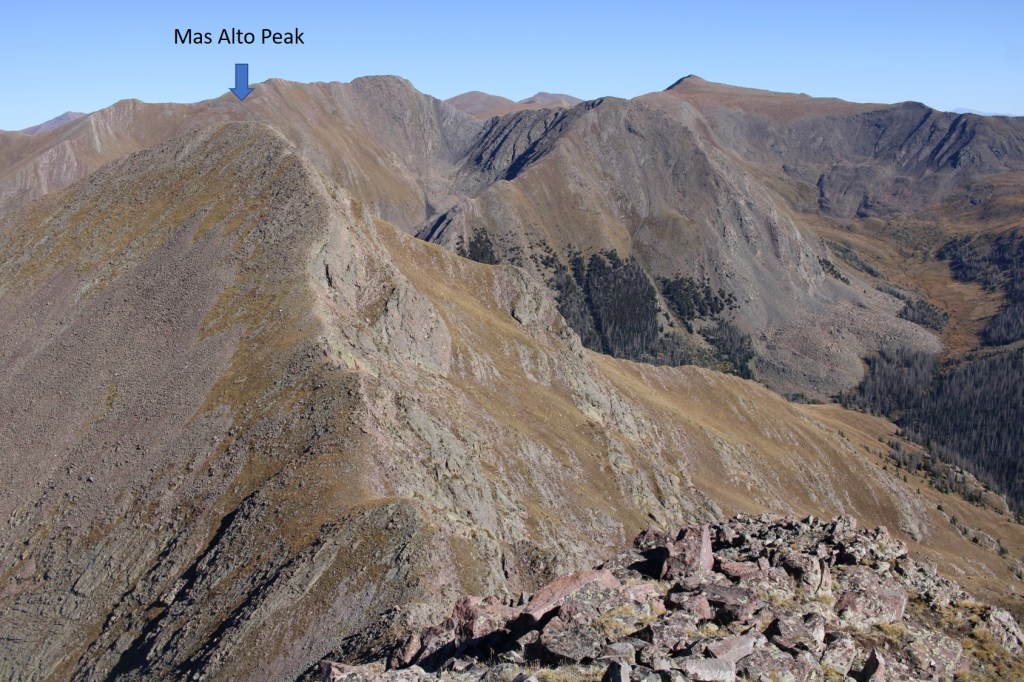
From Alto Peak I was headed north, towards Mas Alto Peak. The route looked straightforward, but I soon found the ridge cliffed out.
The ridge started out as class 2
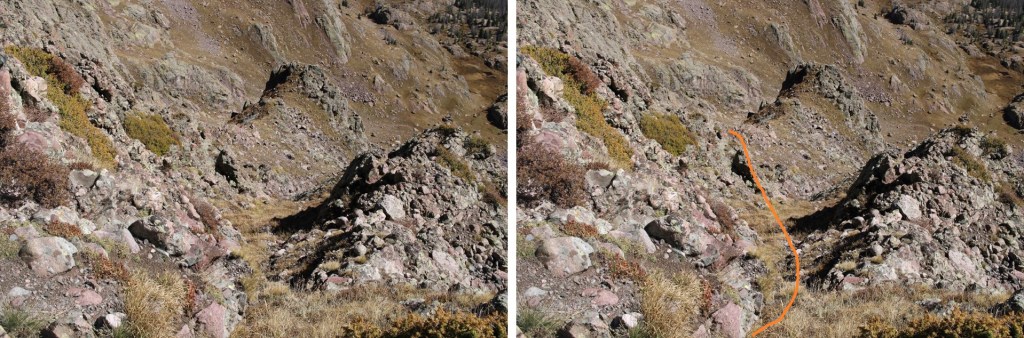
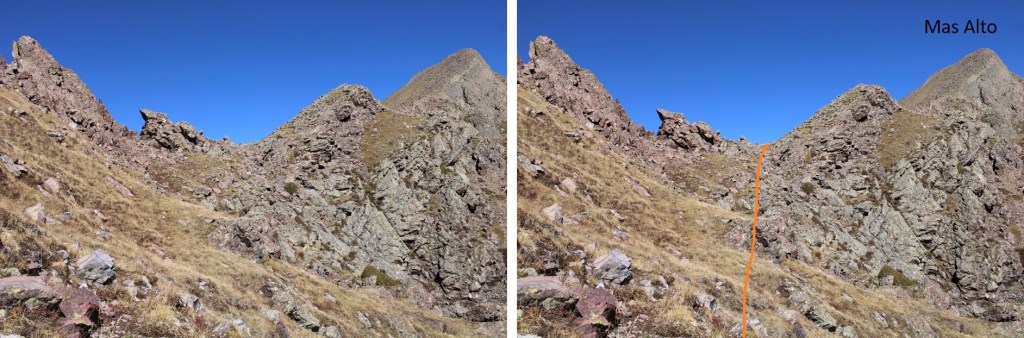
But when I got to around 12830’ I had to get creative, as the ridge ran out. I found a gully that looked like it ‘went’, which it did. I descended northeast down the gully, and set up about several cairns indicating my route. I was able to keep it all class 2+
Here are some pictures
I descended to 12700’, and then followed the contour of the mountain back up to the ridge
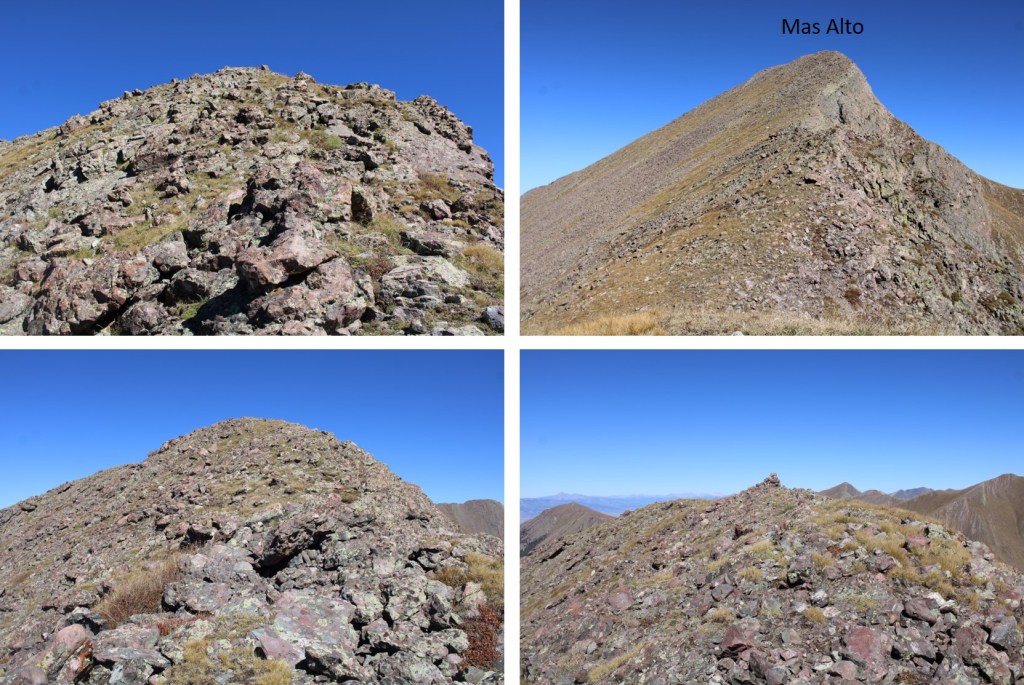
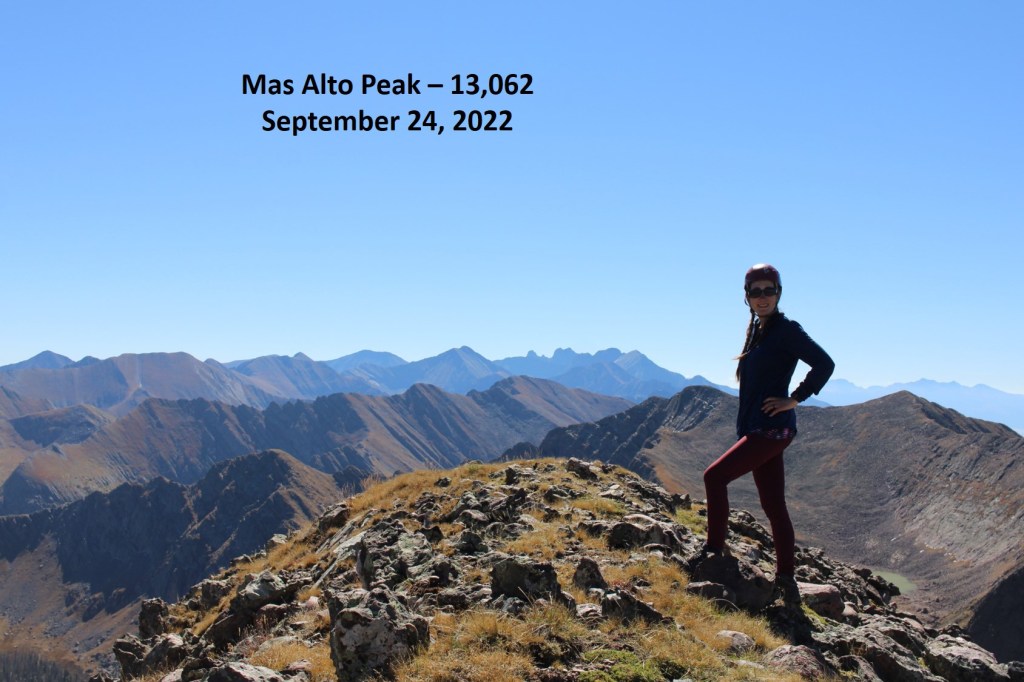
Now back on the ridge, I followed the class 2 terrain north to the summit of Mas Alto
Mas Alto Peak
PT 13062:
Now to retrace my steps back towards Alto Peak, and eventually Menos Alto Peak, by following the ridge south.
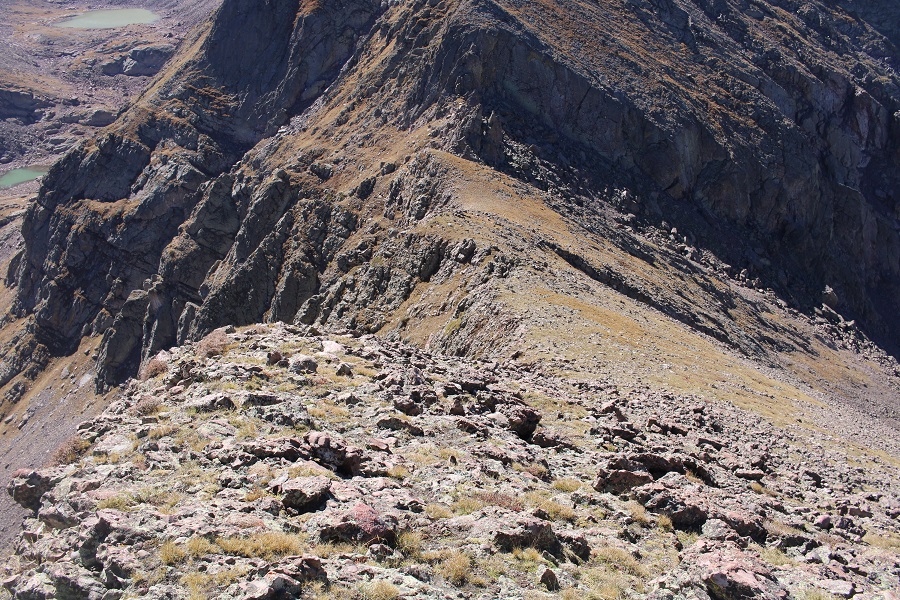
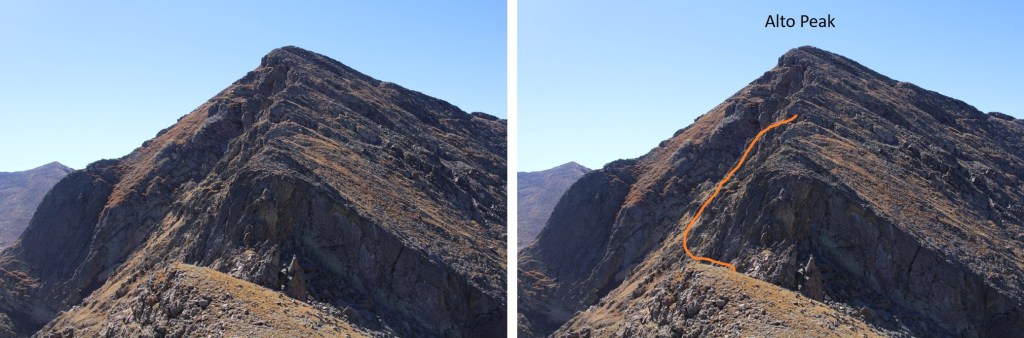
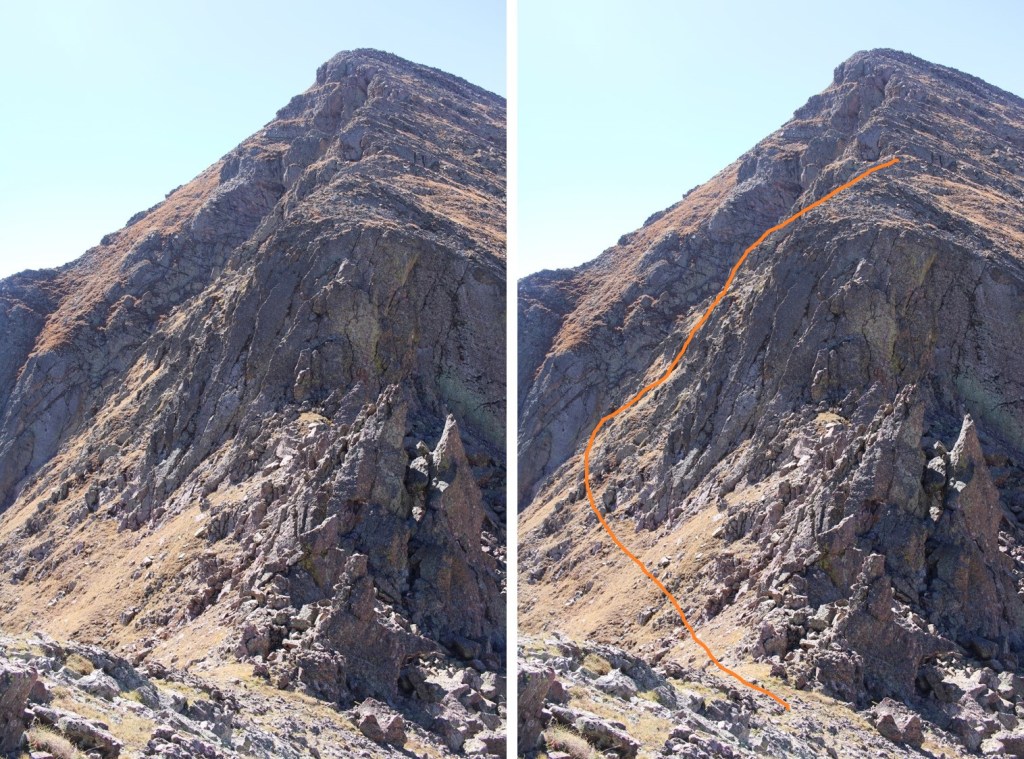
Here’s that section I avoided by going down the grassy gully, and the route I took to reascend.
Here are some step-by-step pictures of the route, now well cairned
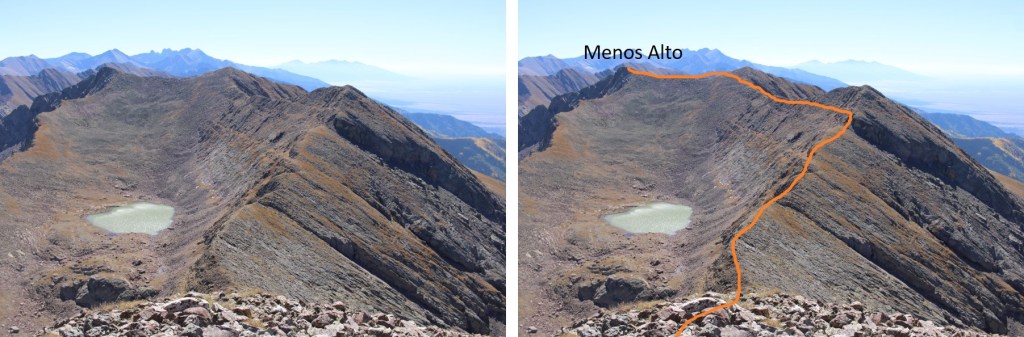
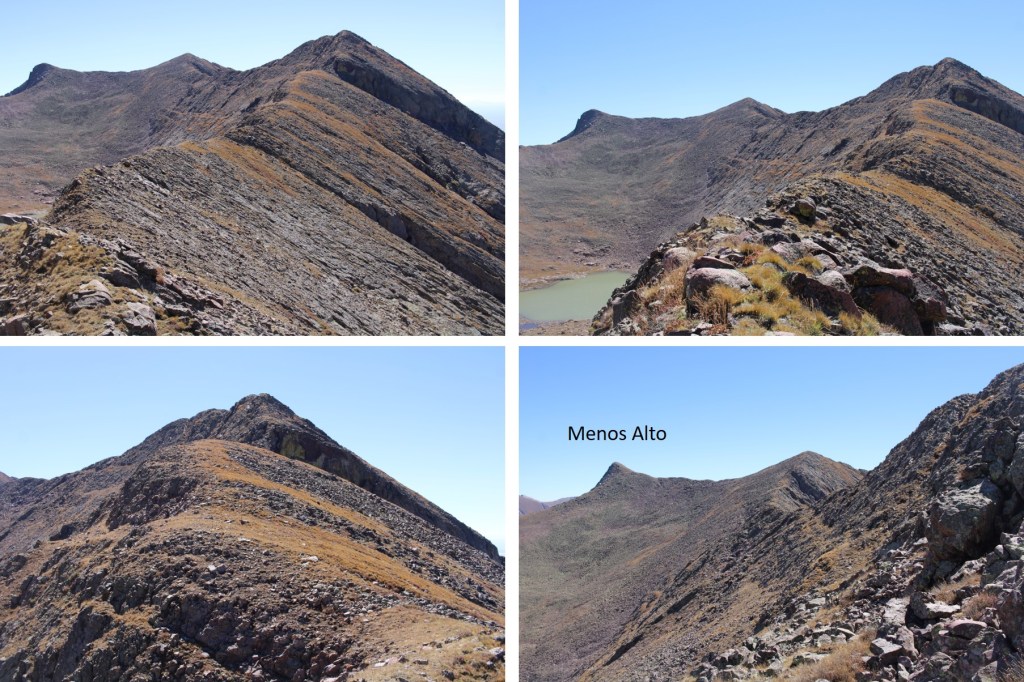
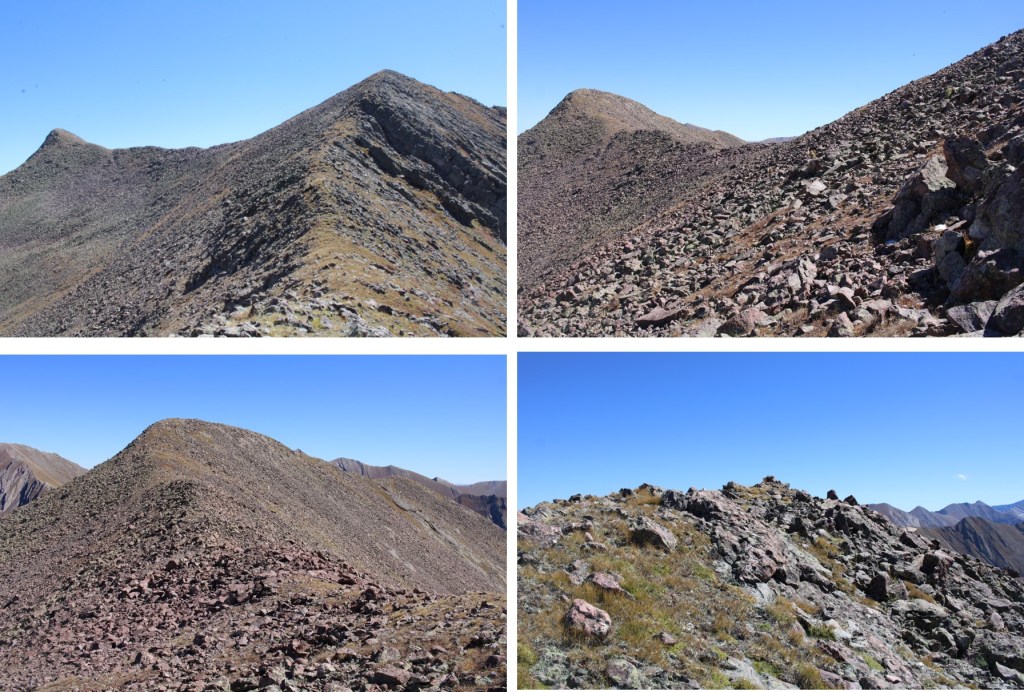
I re-summited Alto Peak, and then this is the route I took over to Menos Alto… choosing not to re-summit the unranked points and instead taking grassy ledges.
The entire route was class 2. Here are some closer pictures
The view from the summit wasn’t all that bad
Menos Alto – PT 13031:
And now to make my way back down the ridge
Then back down the ridge to the gully
And bushwhacking back to the trail
Once I made it to the trail, I turned right, and followed it back to the trailhead, still loving those stream crossings
I made it back to my truck at 4pm, making this a 15.63 mile hike with 6250’ of elevation gain in 11 hours.
I headed south along the road, and turned left at the danger sign (visible from the parking area)
I followed this closed 4WD road for just under a mile.
At 10835’ I left the trail, to follow this drainage east. There was a small cairn on the left, indicating the entry point from the road
You could probably follow the drainage all the way to treeline, but I only followed it for a quarter mile or so, and then I gained the ridge to the left.
Once on the ridge, I followed it northeast to treeline
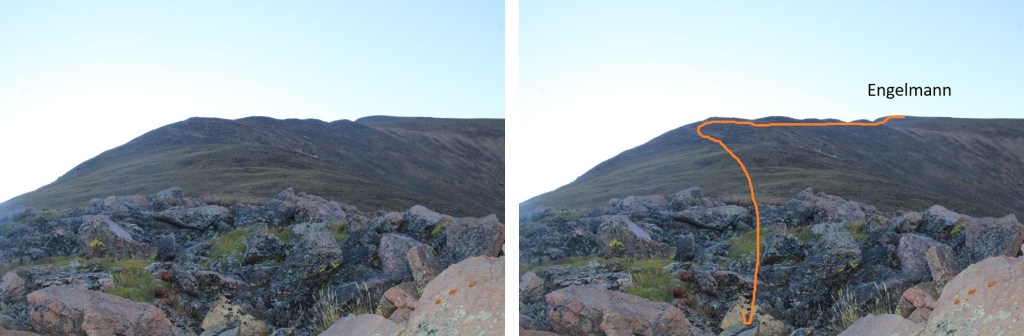
Once at treeline, the route was obvious. I just followed the tundra towards the summit.
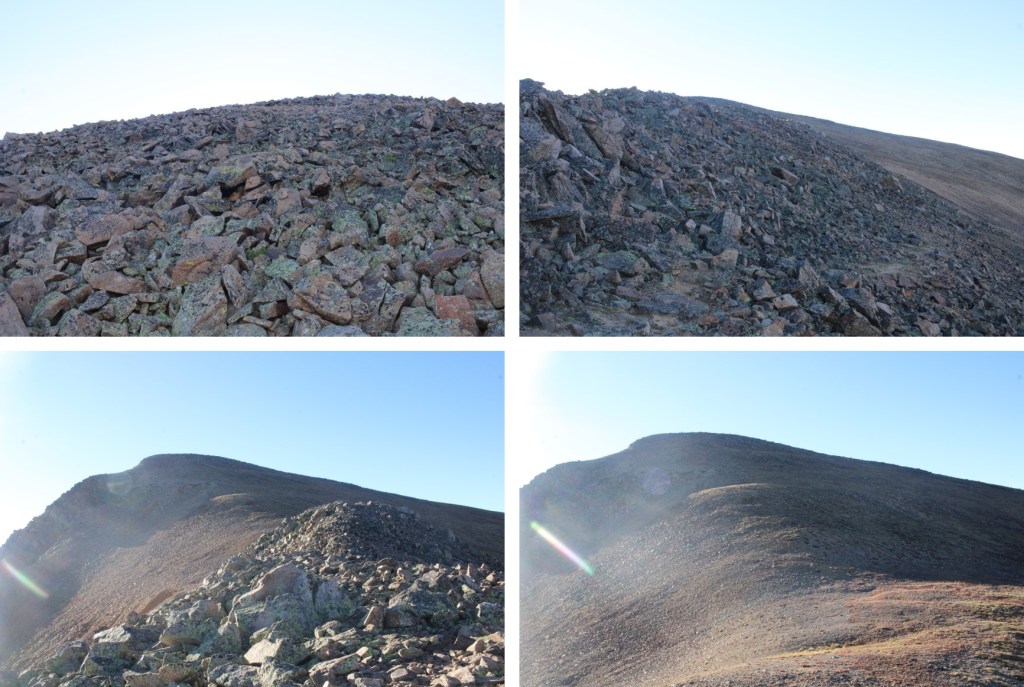
The tundra eventually gave way to rocks. I hiked up and over them (class 2)
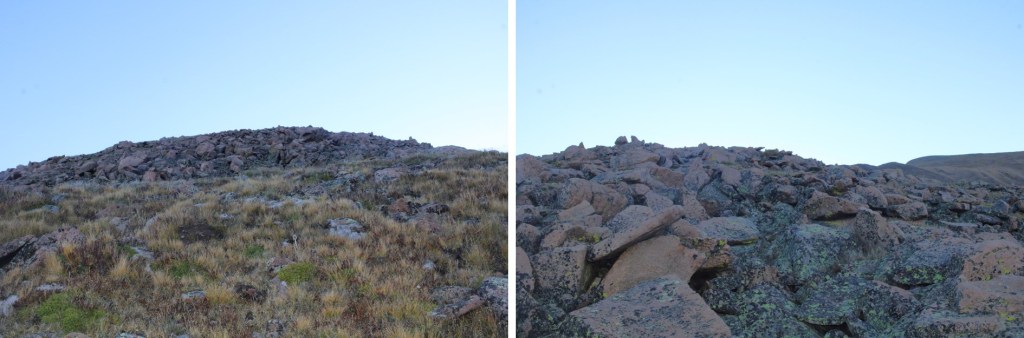
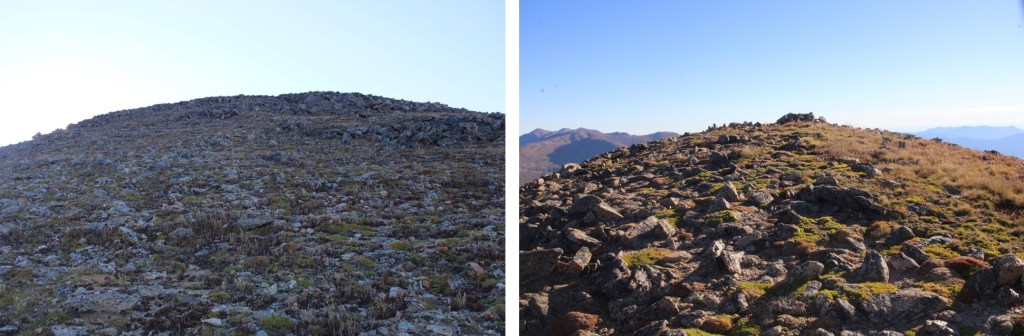
And could then see the summit. There was even a trail for some of this part of the hike. This was all very straightforward, class 2, and easy to navigate.
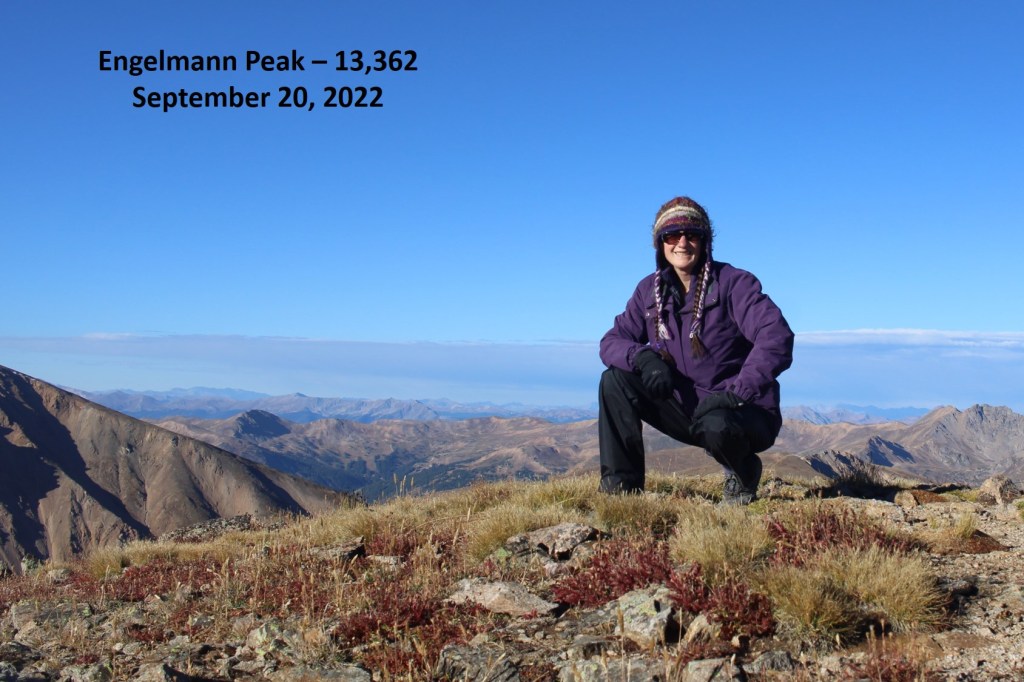
I summited Engelmann Peak at 8:20am
Engelmann Peak:
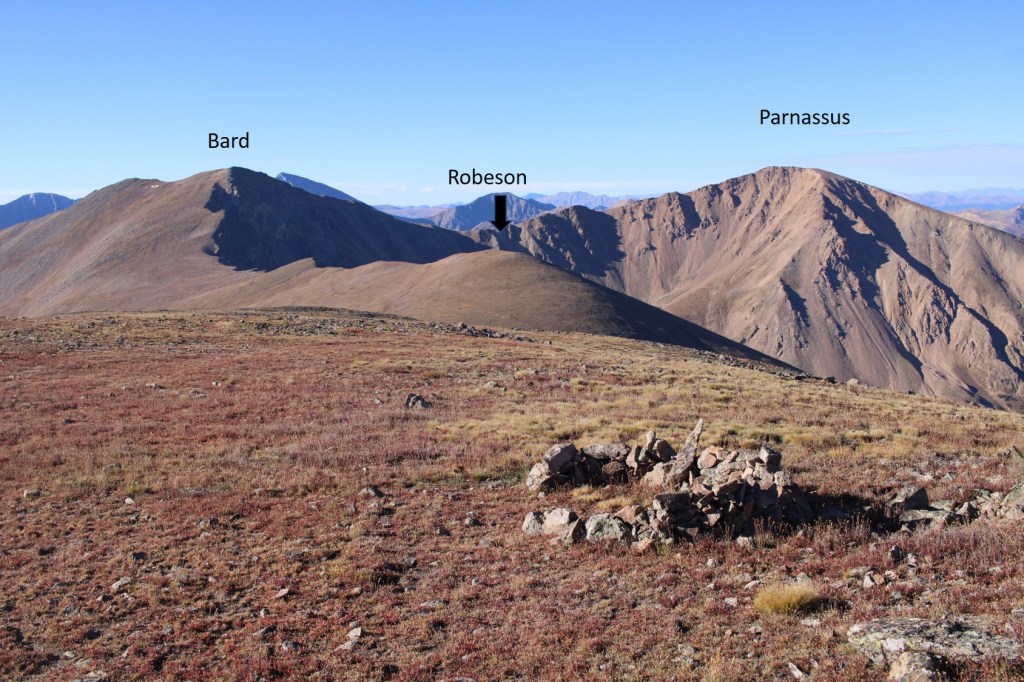
From Engelmann I could see Robeson, Bard, and Parnassus to the south
I’d already summited Bard and Parnassus, but wanted to get in unranked Robeson just to finish out the group, so I headed south.
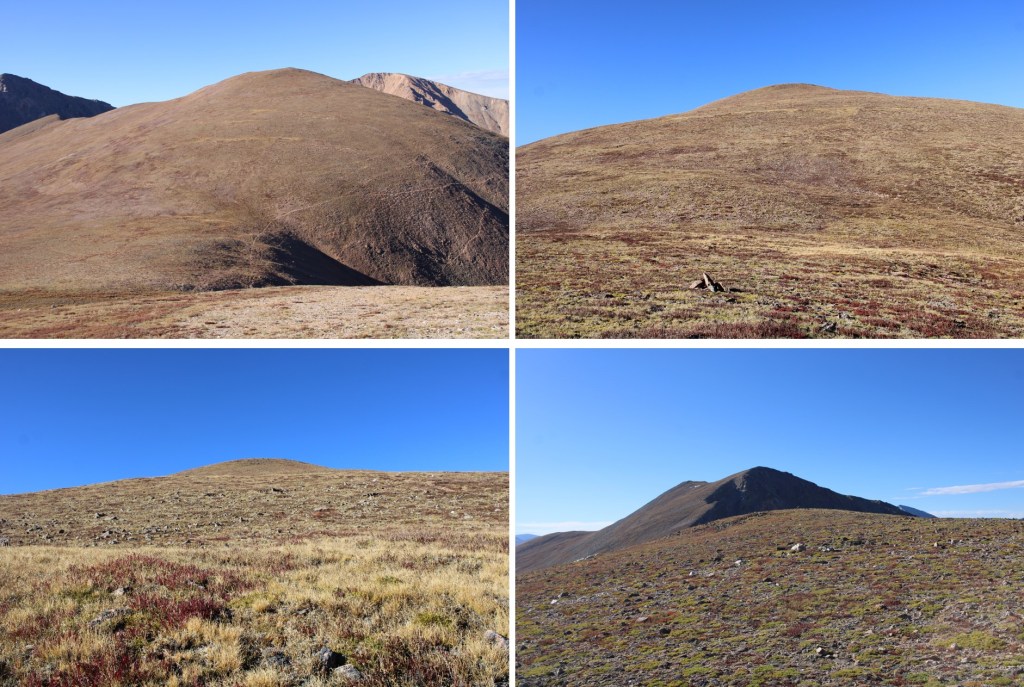
The entire route to Robeson was on tundra. I lost 560’ of elevation, then gained 345’ to the summit.
There was nothing remarkable about the summit. I summited Robeson Peak at 11am
Robeson Peak:
Now to head back. I retraced my steps northeast to the Engelmann/Robeson saddle
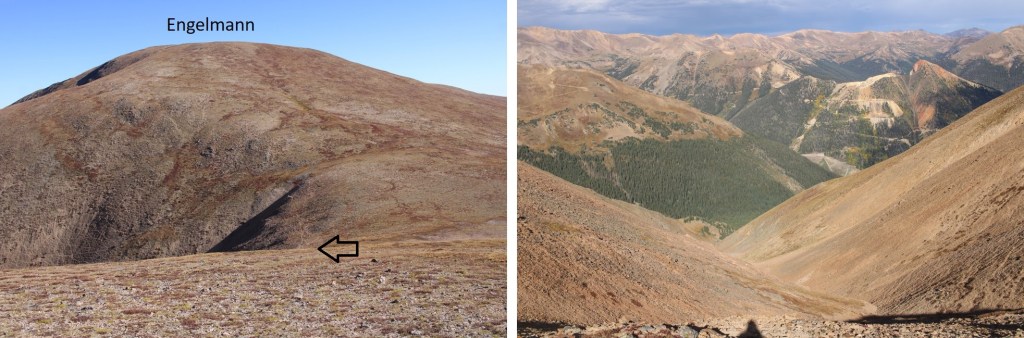
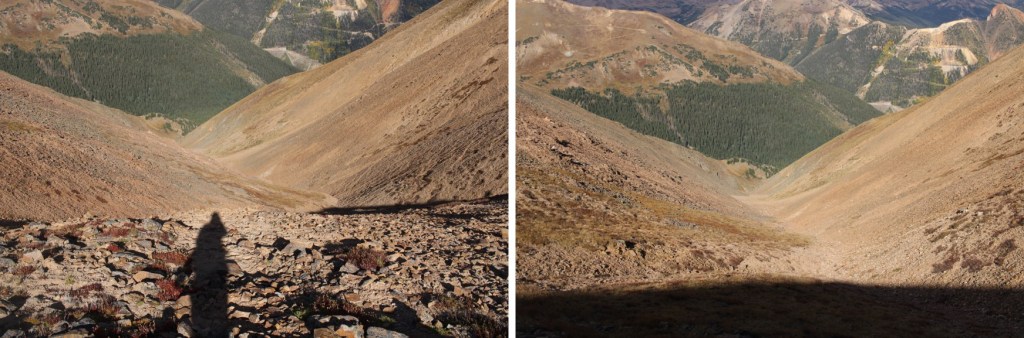
When I got to the saddle I turned left, put on my microspikes, and headed west down the drainage. The drainage goes class 2 all the way down, but I’m sure during a lot of the year there’s snow to contend with.
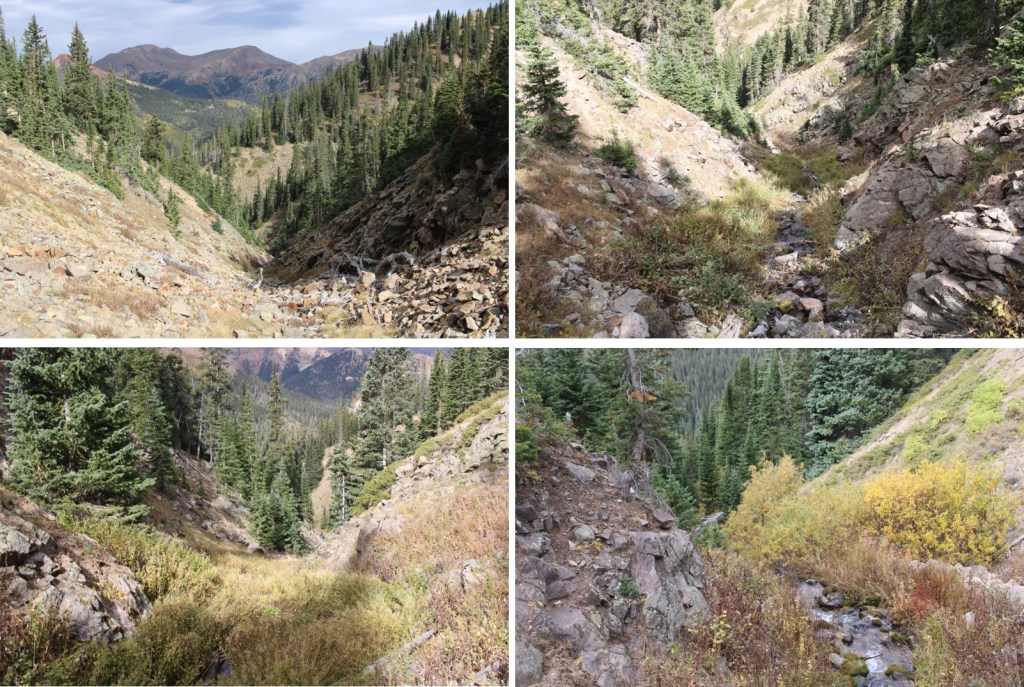
At treeline the gully became narrow, and a small stream formed, but it was still easy to follow the drainage
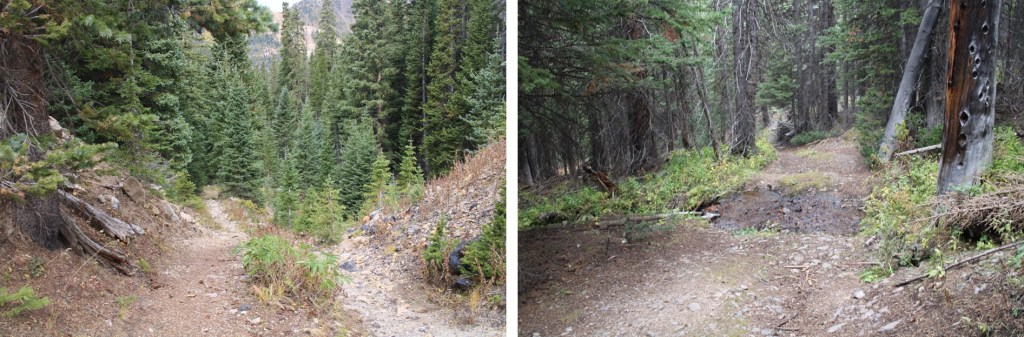
Eventually I came to a dirt road, and took that road west towards the road I took in
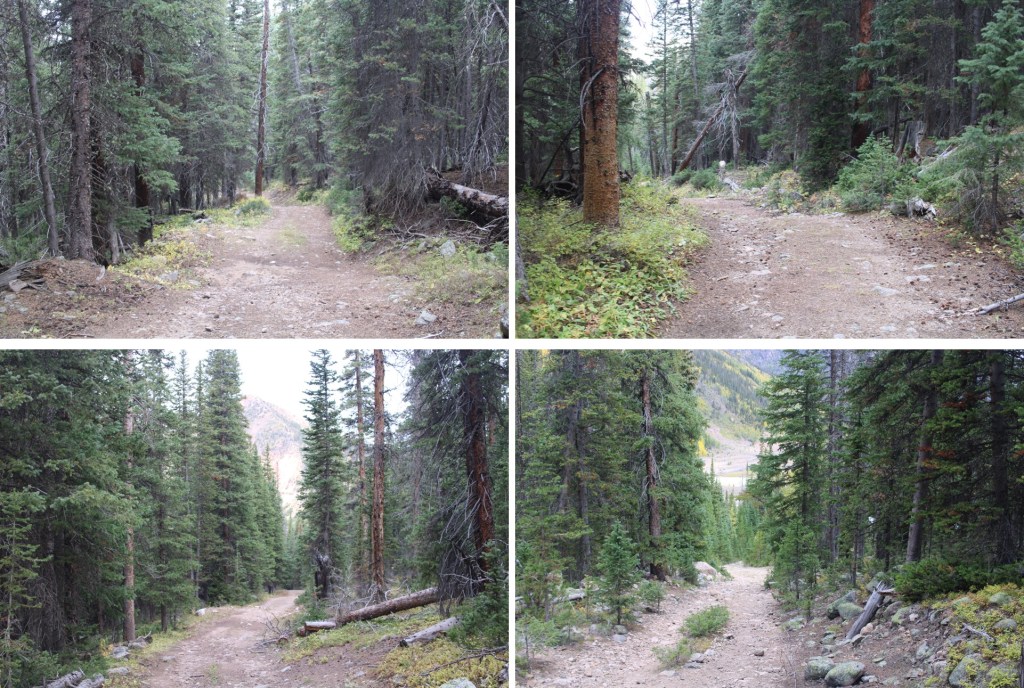
I took that road north back to my truck
I made it back to my truck at 11am, making this a 6.65 mile hike with 3448’ of elevation gain in 5 hours.
I started at the North Fork Reservoir because I wanted to fish and spend the night camping before heading out. That 4WD road in though! It was intense!
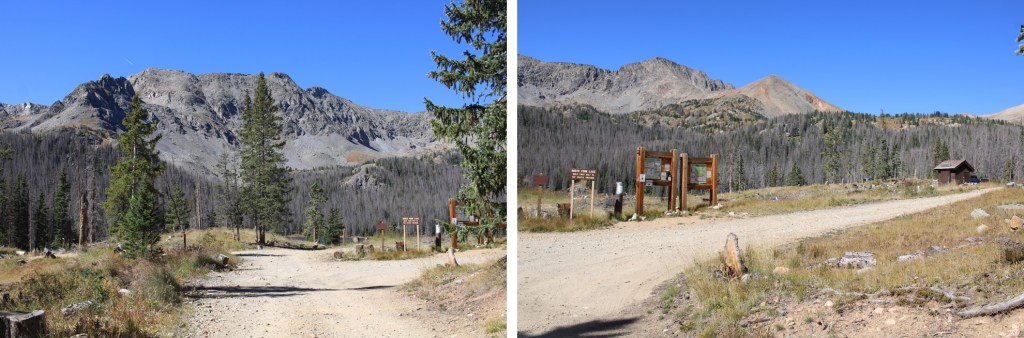
If you’re not spending the night, and your vehicle made it this far, take the right road to Billings Lake and you can cut off some hiking and park in the basin
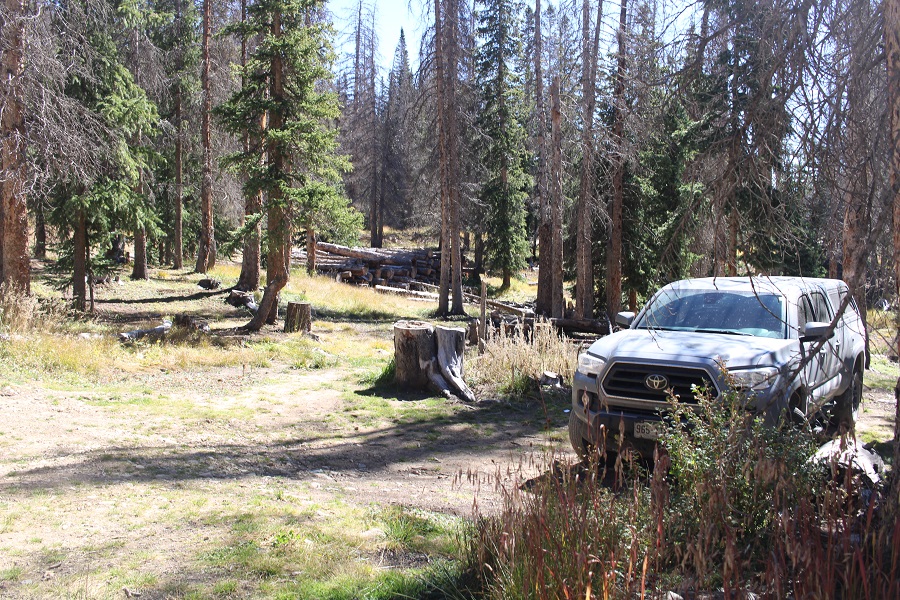
If not, you can pay for a site at the reservoir, or do what I did, which was park just outside of the entrance in a dispersed site.
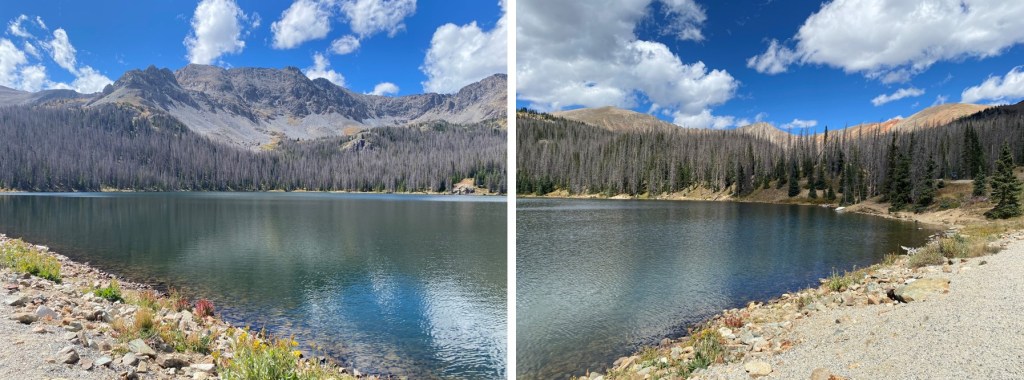
Here are some pictures of the North Fork Reservoir and the campsites there. Note: The bathrooms were disgusting and the doors didn’t close. The fishing was good however, and the reservoir beautiful.
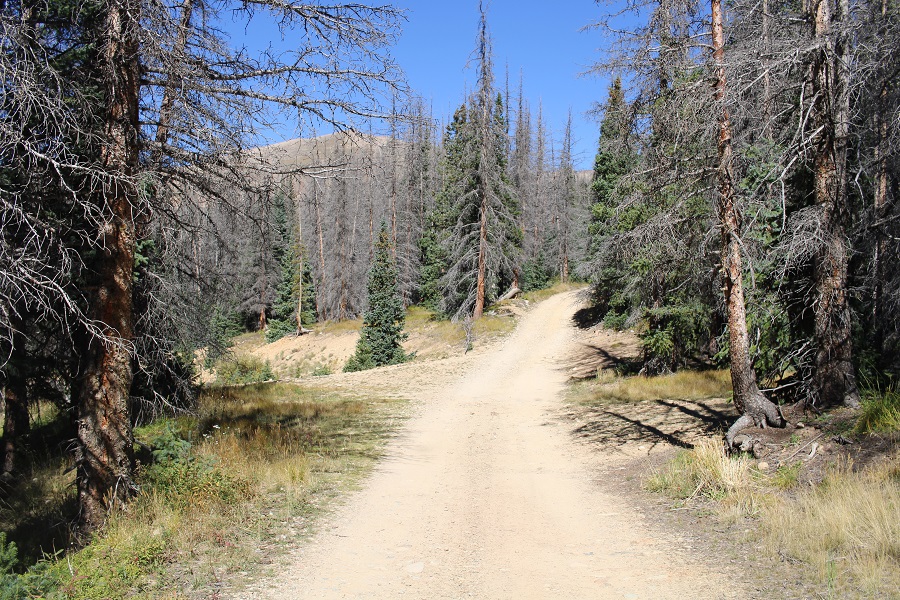
If you’re starting from the dispersed campsite, just walk north through the trees and you’ll hit the 4WD road.
I was on the trail at 6am, following the dirt road. I hiked it for just over a mile before turning off and leaving the road. Side note: I counted no less than 3, and up to 5 moose in the upper basin that morning.
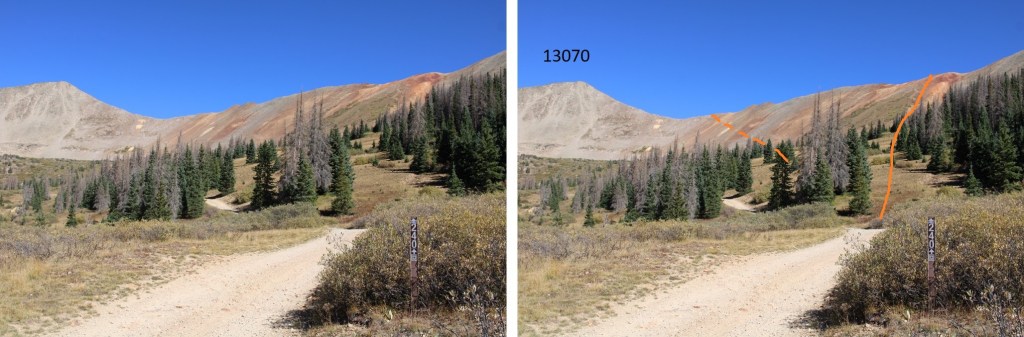
I took the solid route up, the dotted route down. I’d recommend taking the dotted route both up and down, as there are several old miners trails there that go all the way to the ridge.
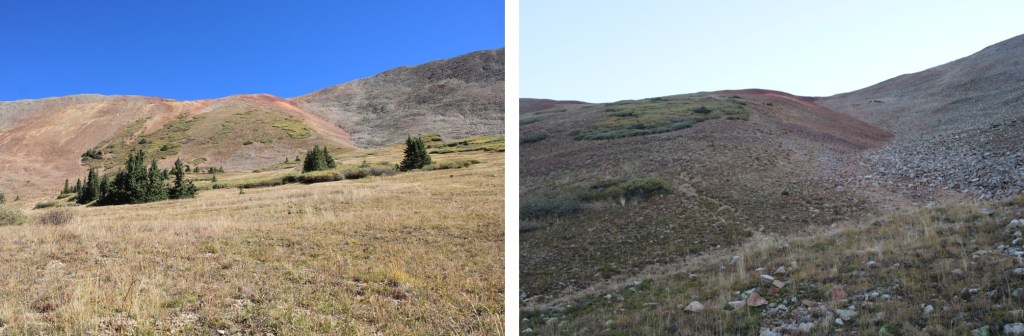
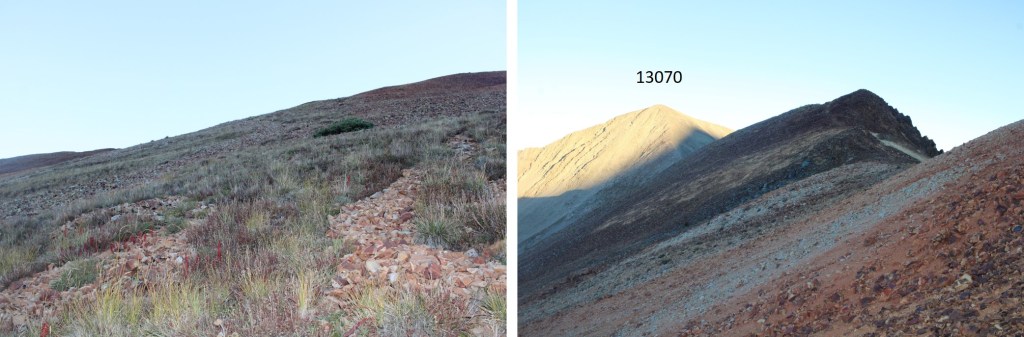
Here are pictures of my route up to the ridge. This entire hike after leaving the road was class 2.
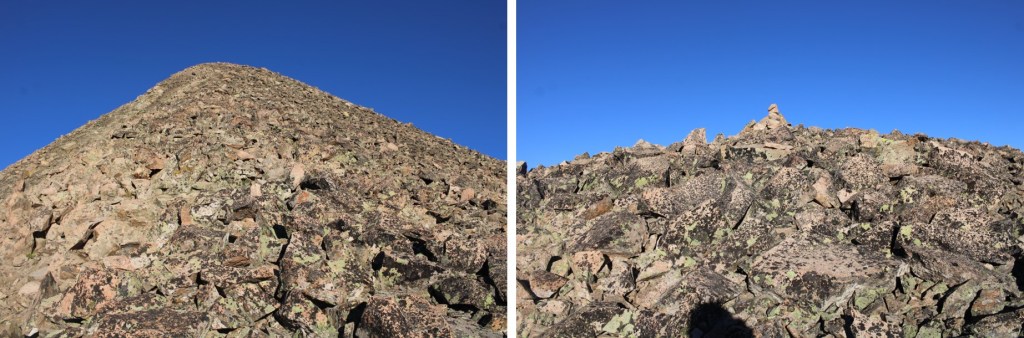
It was then a simple class 2 ridge walk over to PT 13070
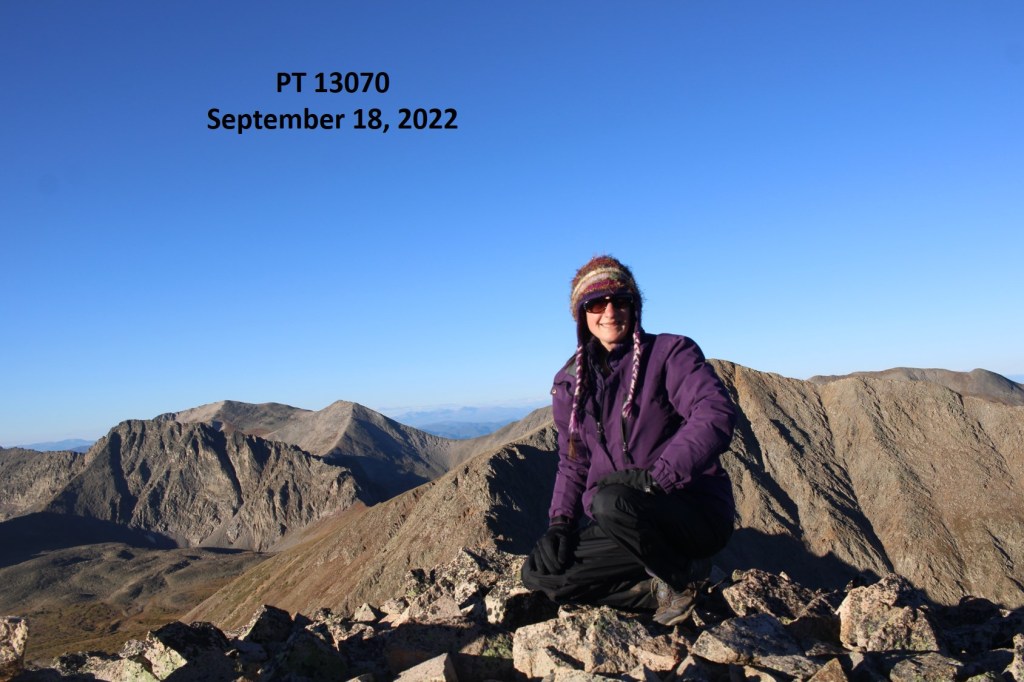
I summited PT 13070 at 7:40am
PT 13070:
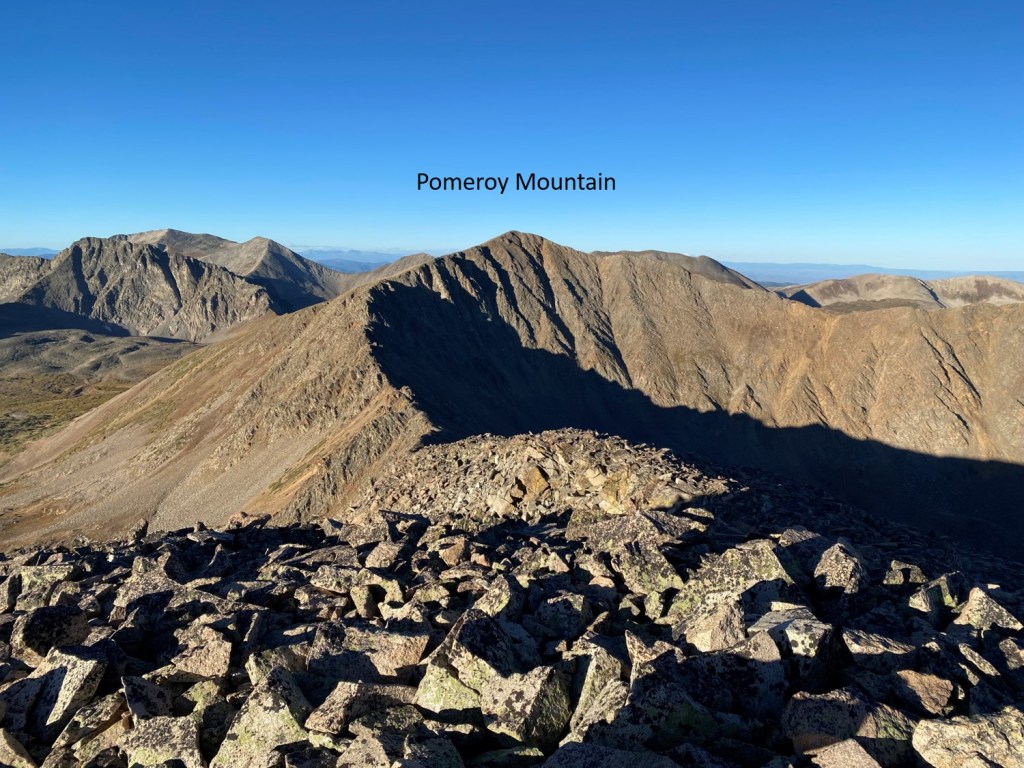
From PT 13070 I could see Pomeroy Mountain to the southwest
I didn’t head southwest, but instead made my way back down to the saddle
Once there, I could clearly see several old mining/social/game trails that led down into the basin. They were relatively well established, and easy to follow, as they each stopped by the empty mines.
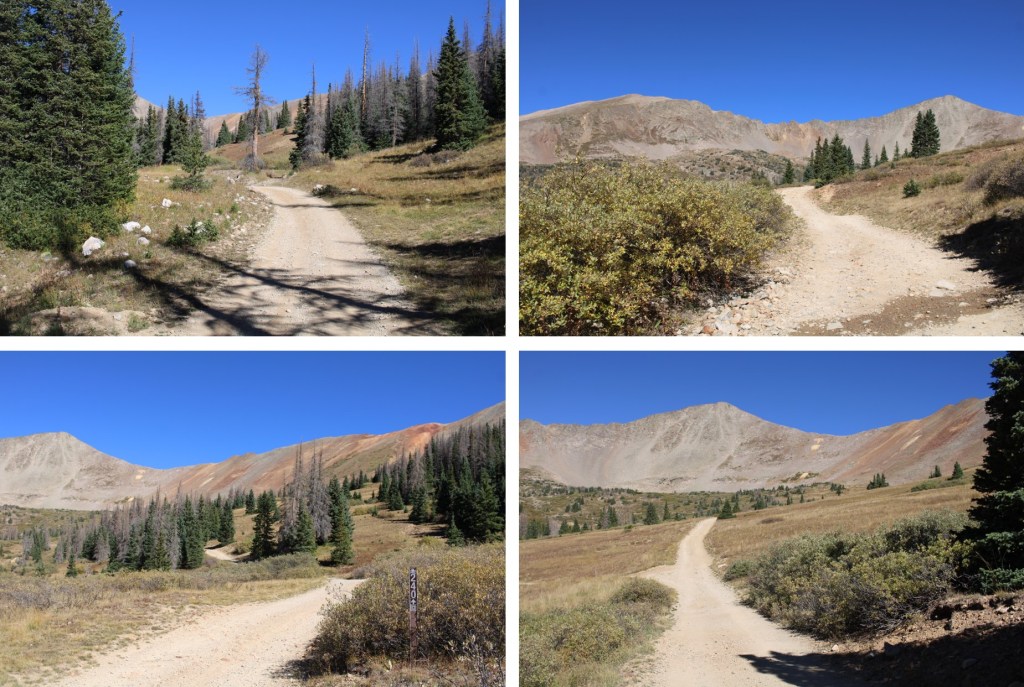
Here’s the route I took back down into the basin and 4WD road 240
There were several options here, and all led back down to the road
Looking back up at the mines, you can see there are trails that go to each one. If I were to do this again, I’d pick one of those trails and take it to the saddle, instead of taking the entire ridge.
It was easy to find my way back to the road because I was above treeline
Now to head over to Pomeroy
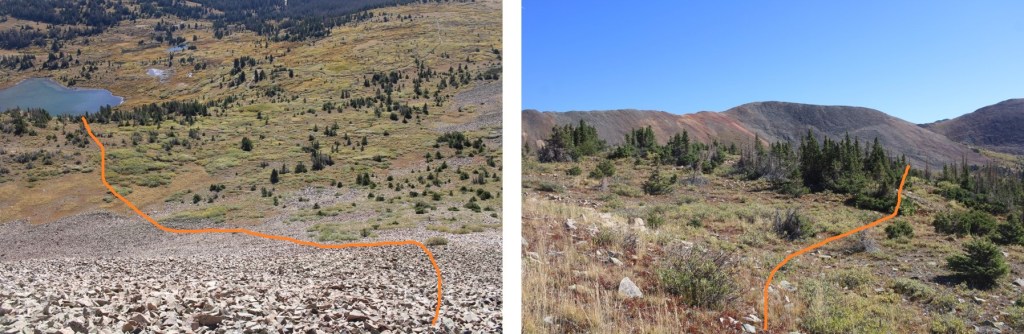
This is the overall route I took to get there
I followed the 4WD dirt road as it curved around the basin, and then ended at the Pride of the West Mine (I’d explore the mine on my way back down).
I continued on the trail that went past the mine for a short ways, and then went west, up this hill. I placed a large cairn at my exit from the trail
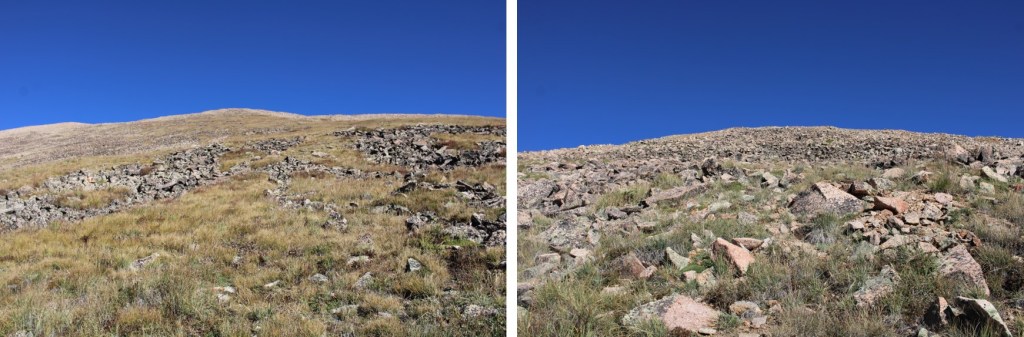
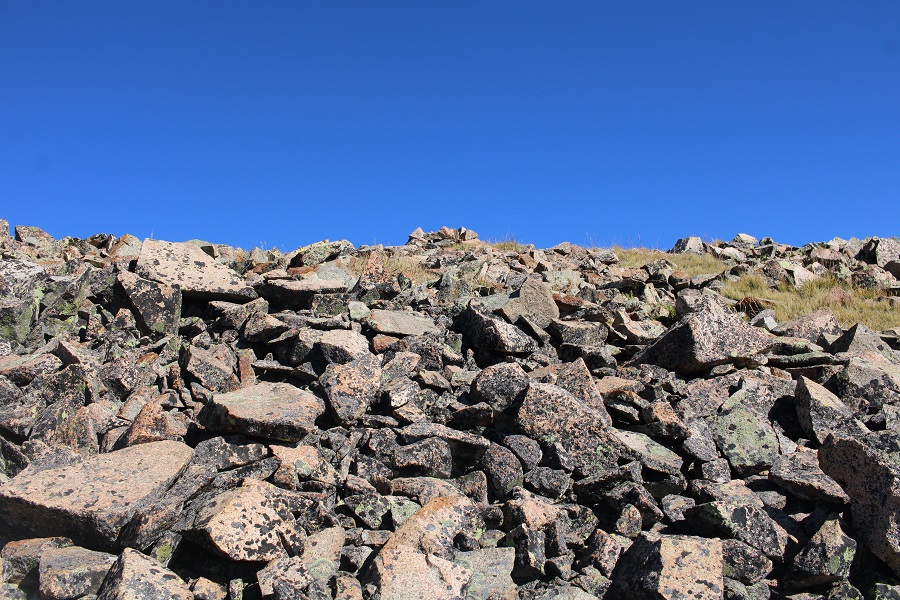
I continued heading west, and then made my way to the ridge, staying to the north of the willows. The talus here was loose.
When the talus ran out, I followed the rocky tundra northwest to the summit of Pomeroy Mountain
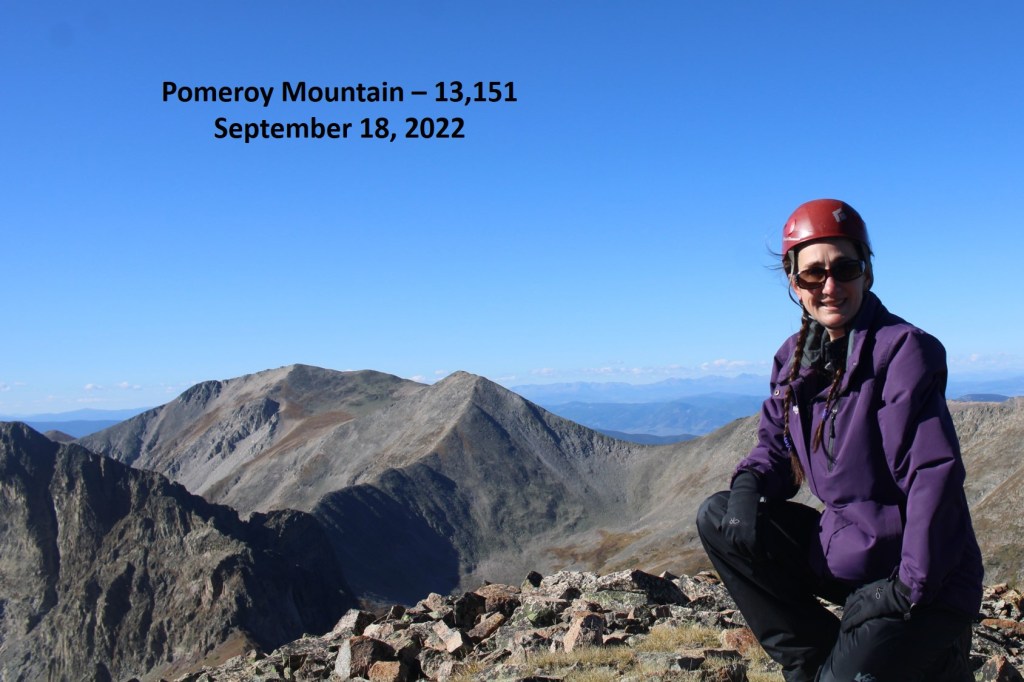
I summited Pomeroy Mountain at 9:30am
Pomeroy Mountain:
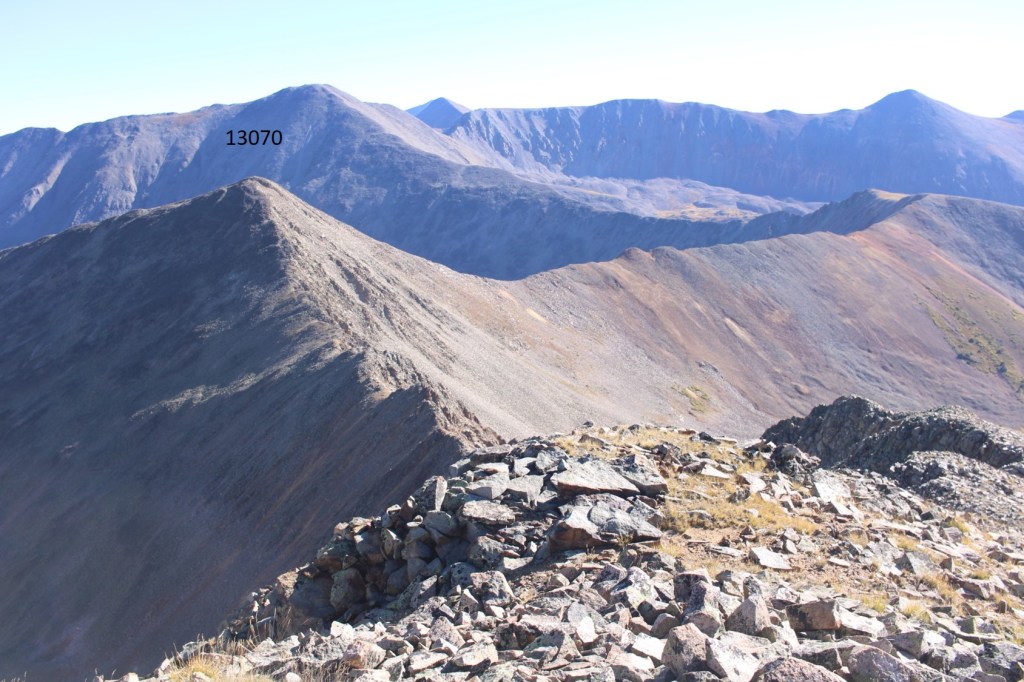
Here’s looking northeast at PT 13070
I re-traced my steps back down to the mine
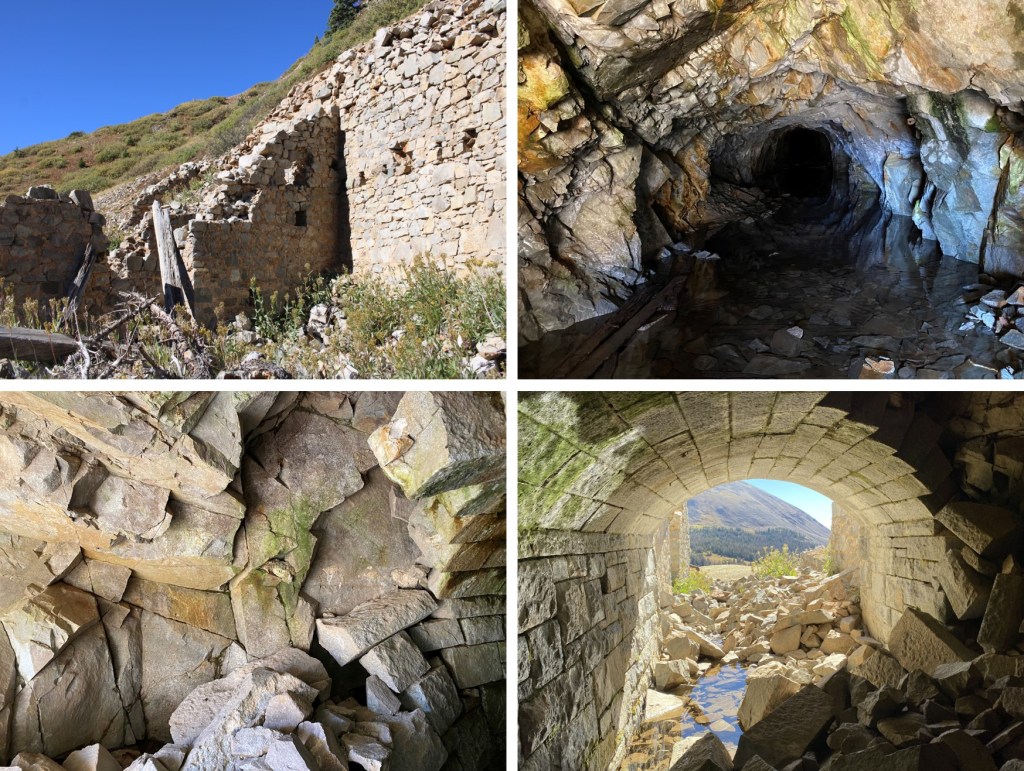
Then, since it was still early and I still had my helmet on, I decided to explore a bit. The mine is flooded, and falling apart at the entrance, but was still a really neat structure.
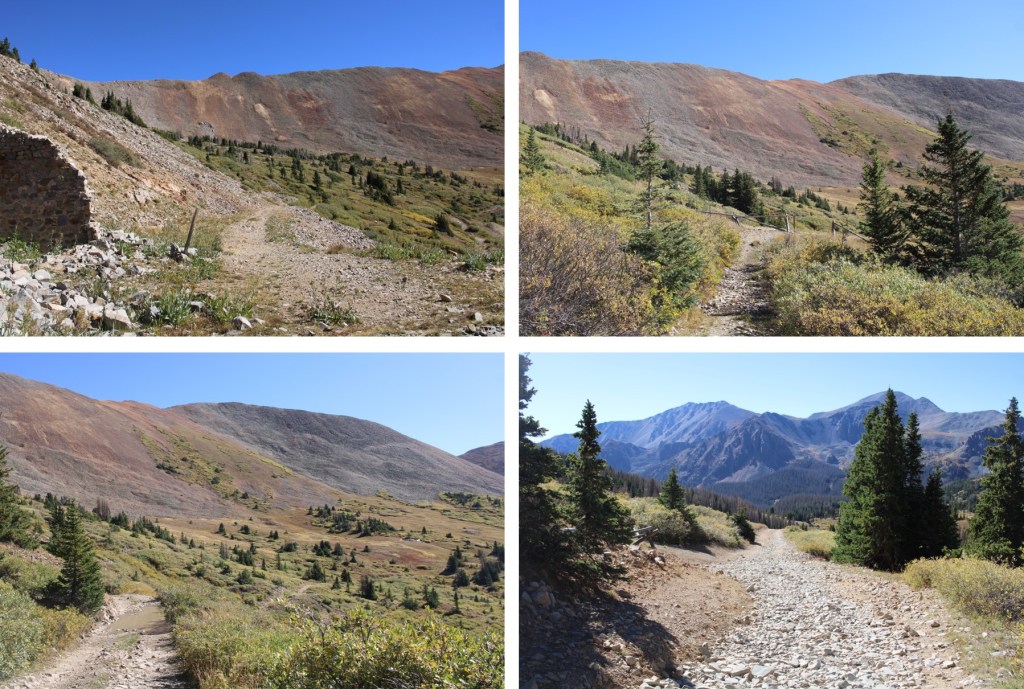
After a few minutes of exploring, I followed the 4WD dirt road back to my campsite. Also, there were a lot of large campsites along the way that were for dispersed campers as well. The only paid sites were near the reservoir.
I made it back to my campsite at 10:45am, making this a 6.6 mile hike with 3008’ of elevation gain and lots of time exploring the mine in 4 hours, 45 minutes. The map below is hand drawn in, as STRAVA stopped working when I hit the summit of 13070 and gave me incorrect stats.
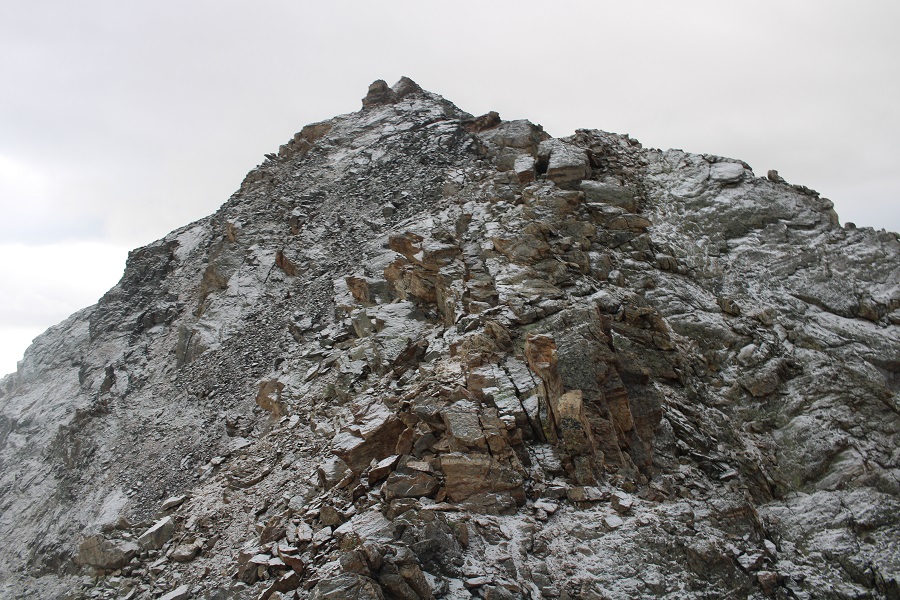
Due to weather, I wasn’t able to summit Hunter Peak along with the rest of the ridge last week, so I was back again to try to summit with the little bit of snow it had received in the past few days. I parked at the Conundrum Hot Springs Trailhead, and was on the trail at 4:30am.
I followed the class 1 trail south for 5.75 miles
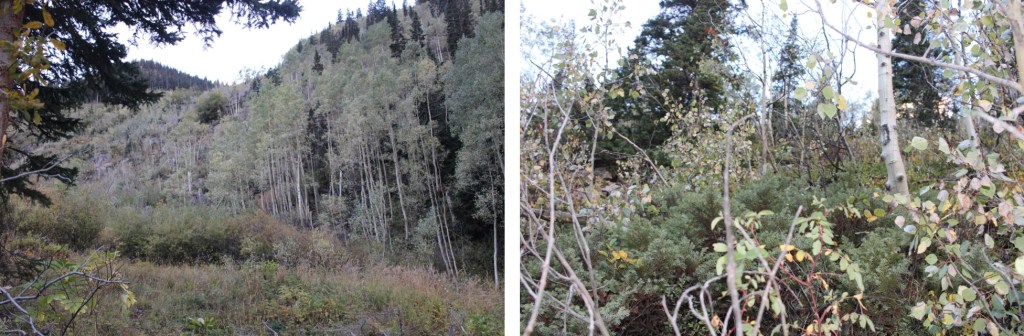
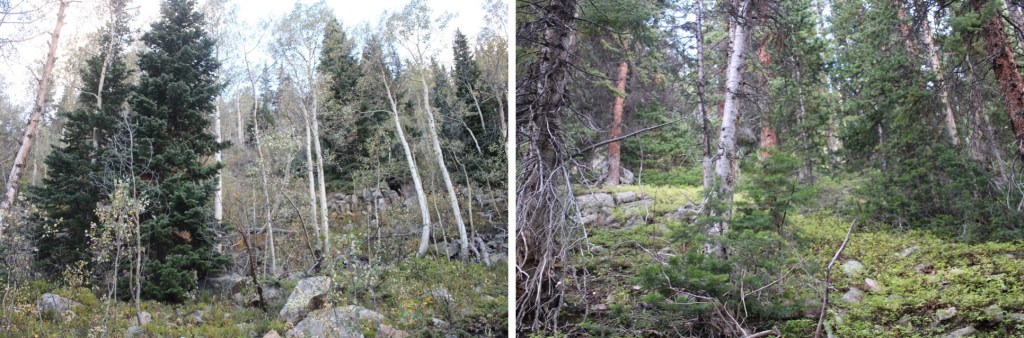
After hiking for 5.75 miles, and at 10040’ of elevation I left the trail and headed west up the hillside, staying in between two drainages. This included a lot of bushwhacking, but I was headed towards the arrow, staying more left, but really just trying to find a route through the trees to get thee. I didn’t see any game trails.
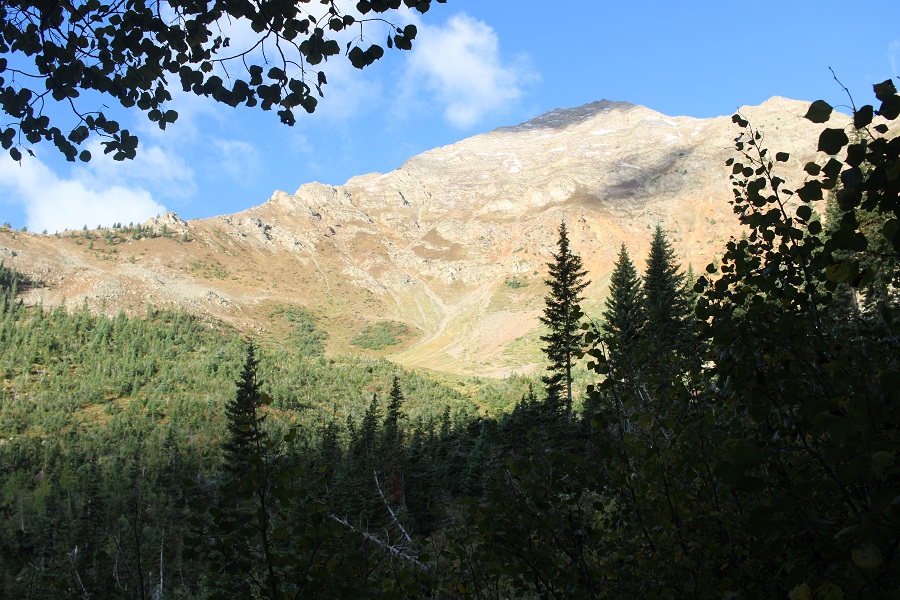
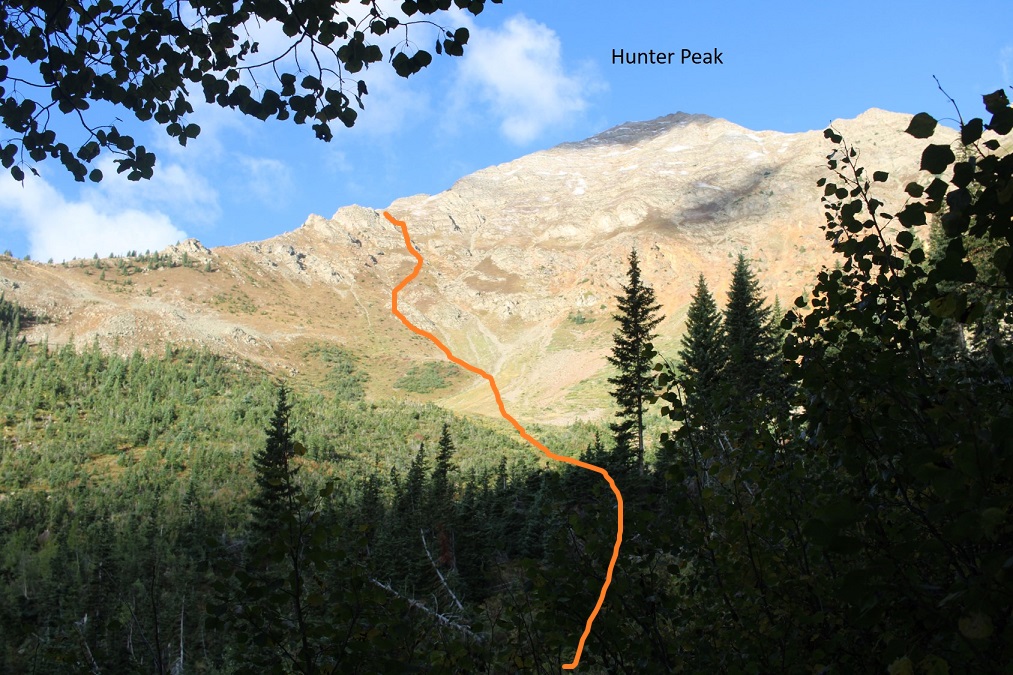
As I made my way out of the trees, I had a good view of Hunter Peak, and my intended route to the ridge
I made my way southwest towards the ridge, entering the basin
I was about halfway through the basin when I saw a cool cave in the middle. I wasn’t headed that way, but took a picture of it anyway. I thought I saw what looked like a bear standing at the mouth of the cave, but I was too far away to tell
A minute later, I heard talus scattering, and looked over to see a black bear running as fast as it could away from me. It was at around 12000’, booking it towards treeline.
Here’s a video of the bear running away from me. He was quite a fast bear.
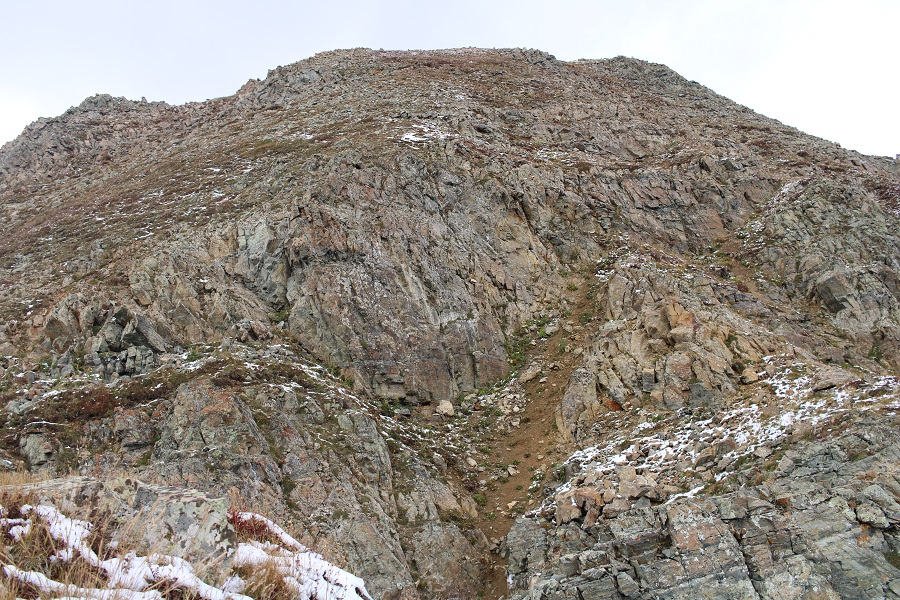
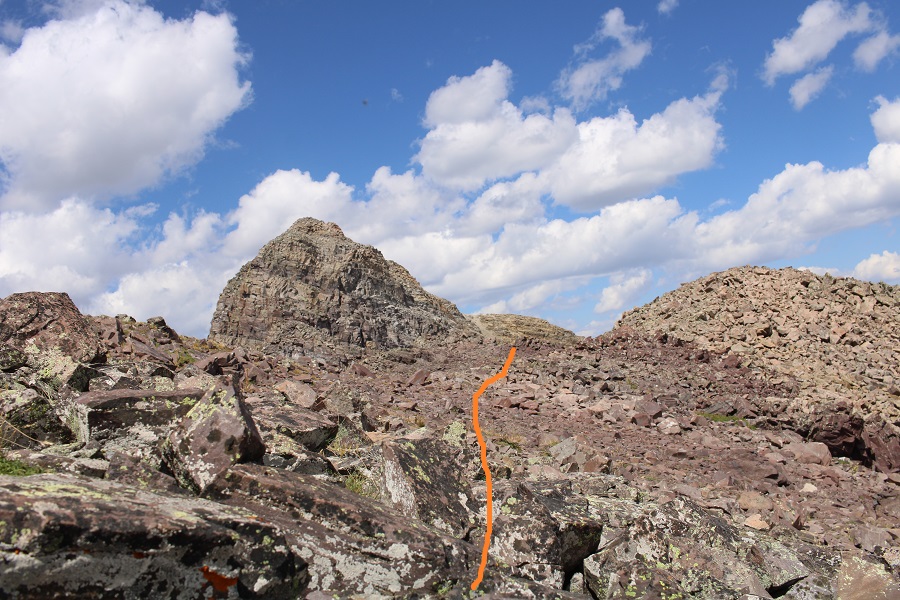
I continued heading towards the ridge. There were several choices for gullies. Here’s the route I took. This was all difficult class 2.
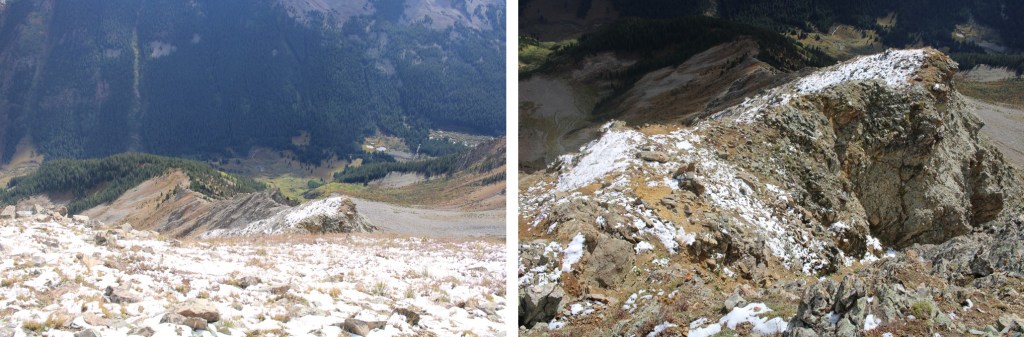
And some step-by-step pictures up the gullies to the ridge.
Once on the ridge I turned right, and followed the ridge northwest, immediately going up this gully
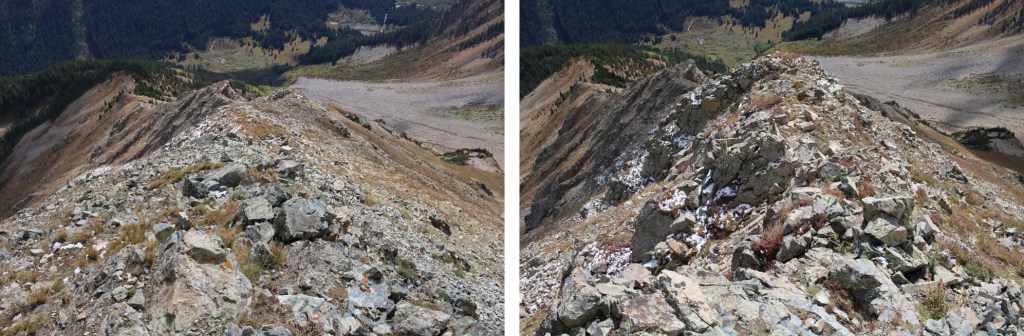
After ascending the gully, I made my way to the ridge, and stuck to it. This was class 2
There was another, final gully to ascend, also difficult class 2
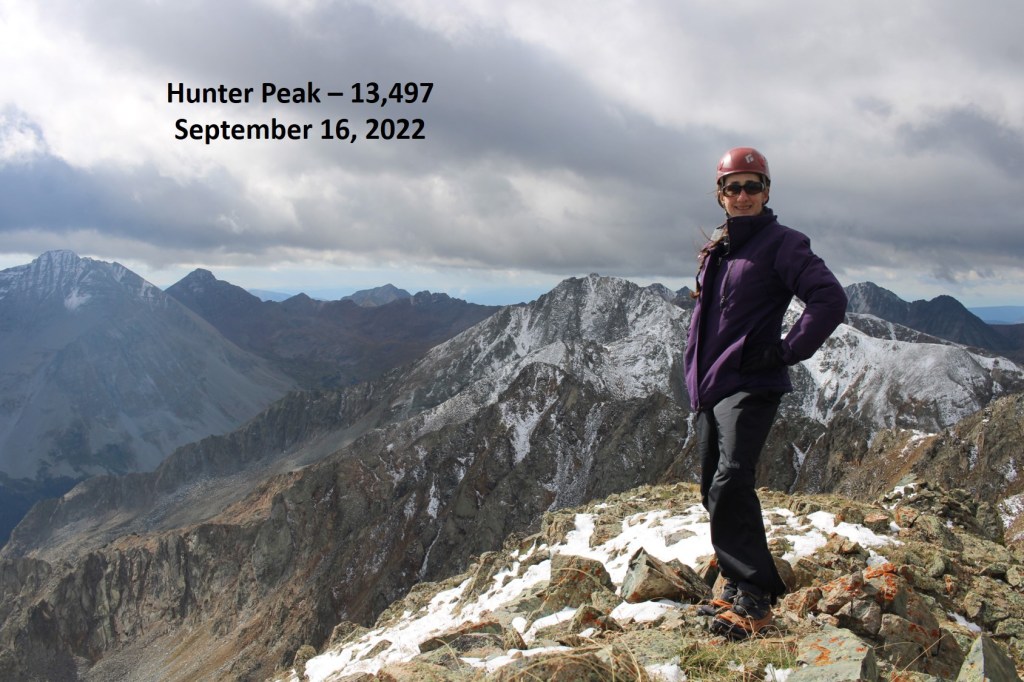
I summited Hunter Peak at 10:30am
Hunter Peak:
The views from the summit were beautiful!
But it was starting to snow, so I retraced my steps back down the ridge and gully
Both ways go, but the red dirt on the right is easier
Then it was down and out of the basin
It was starting to snow, so I headed towards that clump of aspens
Then bushwhacked east, back down to the Conundrum Hot Springs Trail
Once on the trail, I followed it north back to the trailhead
I made it back to my truck at 2:15pm, making this a 15.22 mile hike with 4854’ of elevation gain in 9 hours, 45 minutes.
Due to weather issues, I did this as a multi-day trip. Due to permit issues, I camped just before the camping permit boundary for Conundrum Hot Springs (worked fabulously!!!). My stats are taken from several GPX files meshed together.
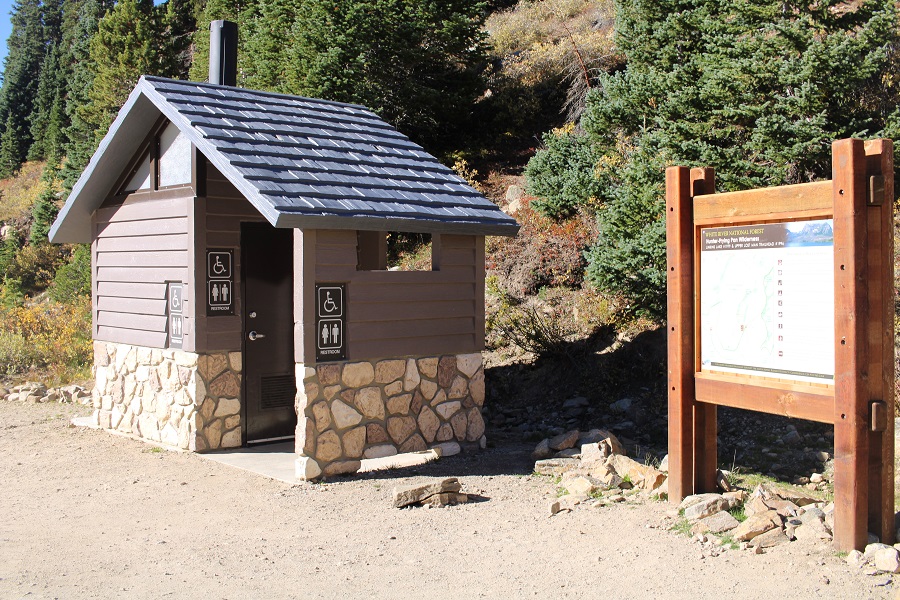
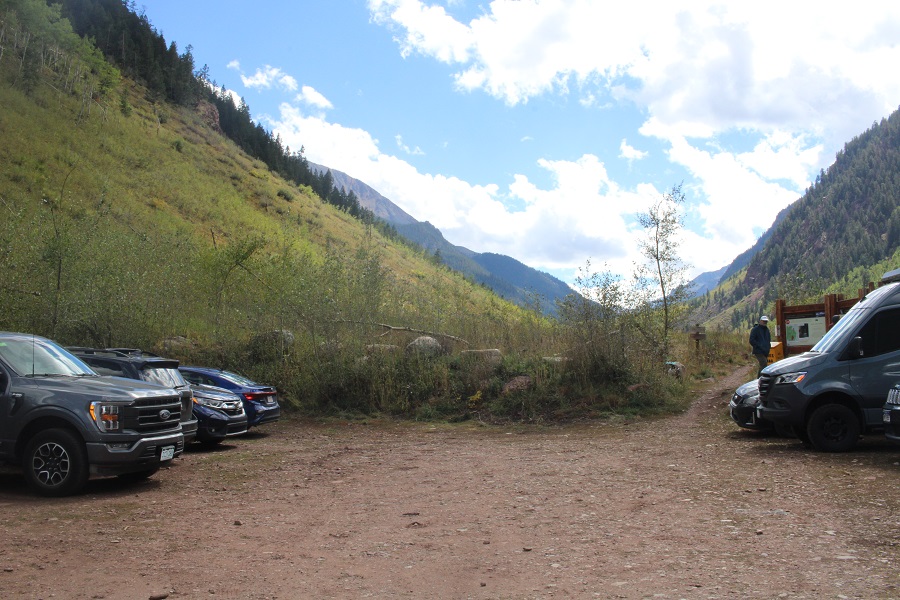
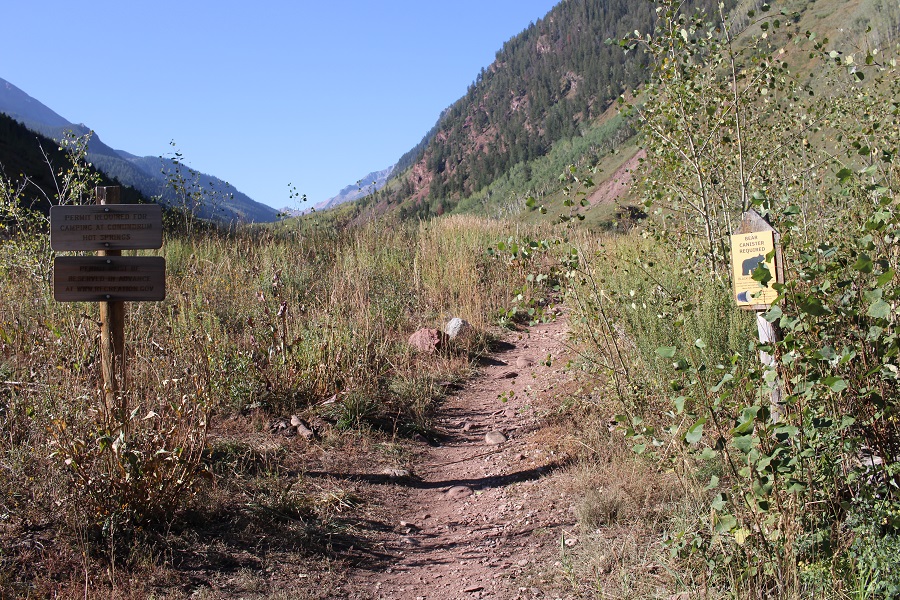
I started from the Conundrum Hot Springs Trailhead at 4:45am, after a quick nap on Independence Pass after a long drive and a long day. Here’s the trailhead:
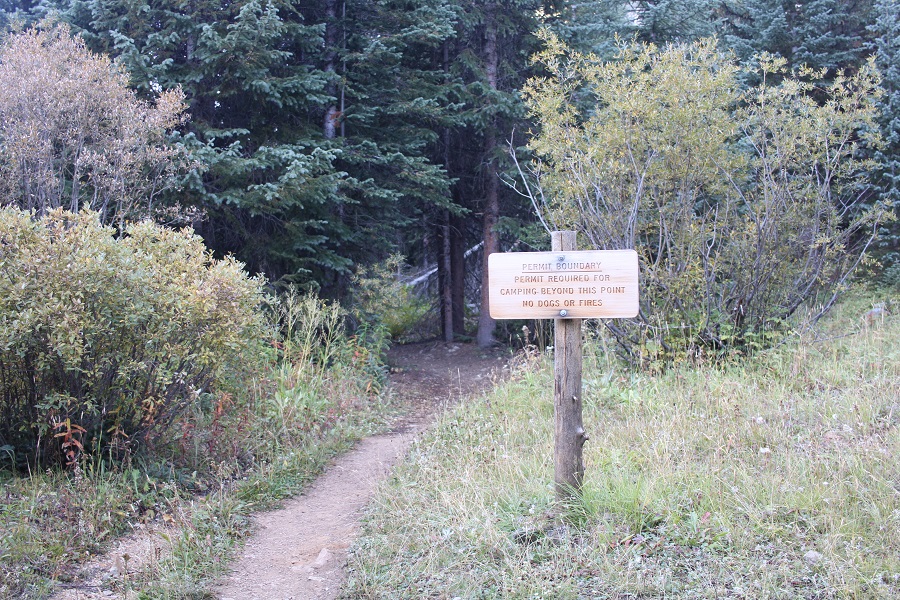
I followed the class 1 trail for 6 miles to the permit boundary, which is noted by a very visible sign.
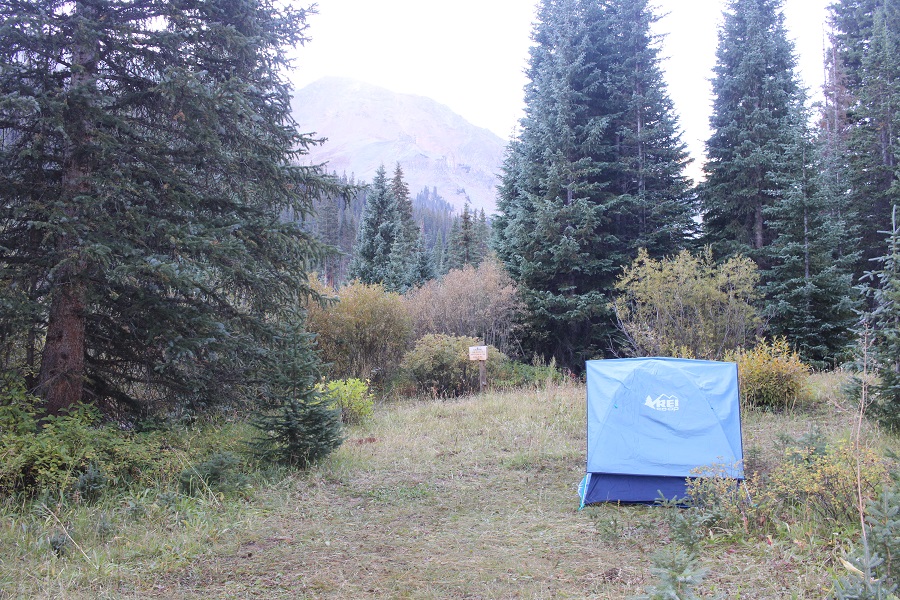
It was obvious this is a popular camping spot (just before the permit boundary). There are a lot of social trails that lead off into the trees as well for campsites, if you don’t want to camp right next to the sign. Here’s where I camped. It’s relatively close to the stream, which is great for filtering water
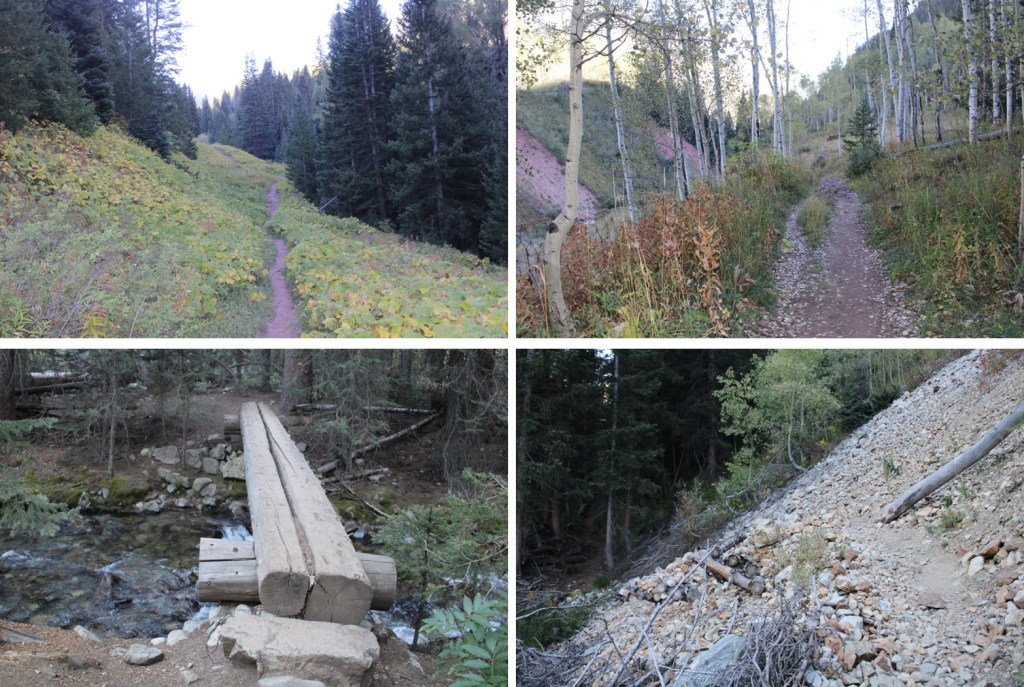
I set up my tent, as I planned on being here for a few days. The next morning, I started out at 4:45am. The trail is still class 1, and crosses Conundrum Creek several times. All creek crossings were easy.
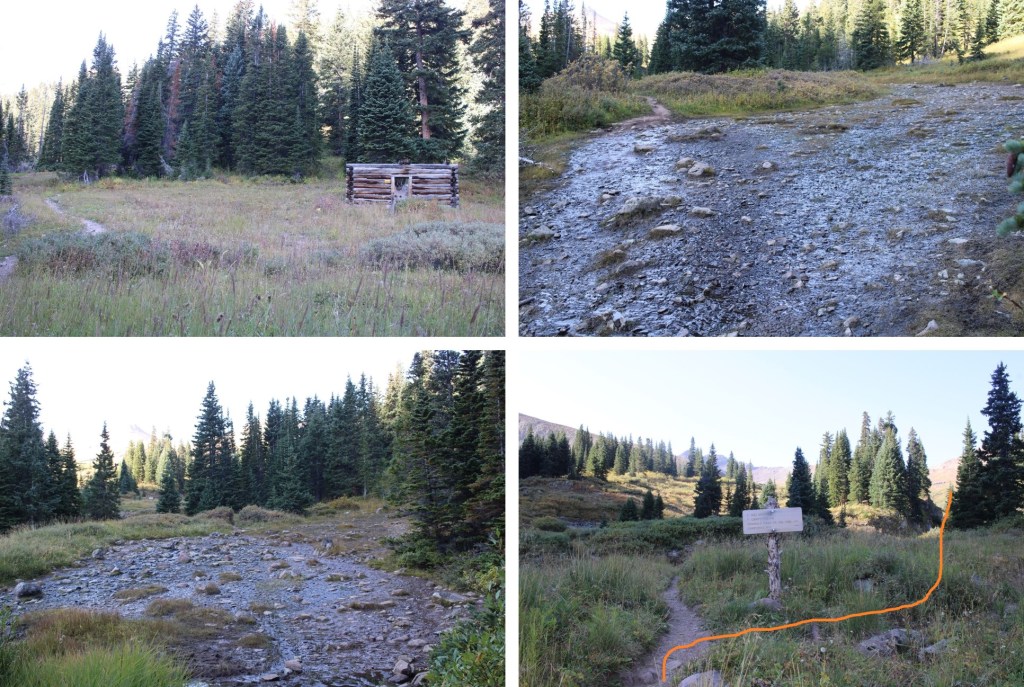
After about 2 miles I came to the Conundrum Hot Springs campsites, an old abandoned cabin, and more small creek crossings. I took the trail to the right towards Triangle Pass
I was now still on Trail 1981, headed southwest, into the willows
At 12000’ I left the trail, and followed a drainage west
At about 12200’ I turned right and headed north, across the basin. Yes, there were a lot of crows.
I kept heading north, skirting a small pond. This was all class 2
My goal was to gain this ridge. This was my route (still class 2)
Once on the ridge I placed a large cairn, turned left, and headed west up the ridge
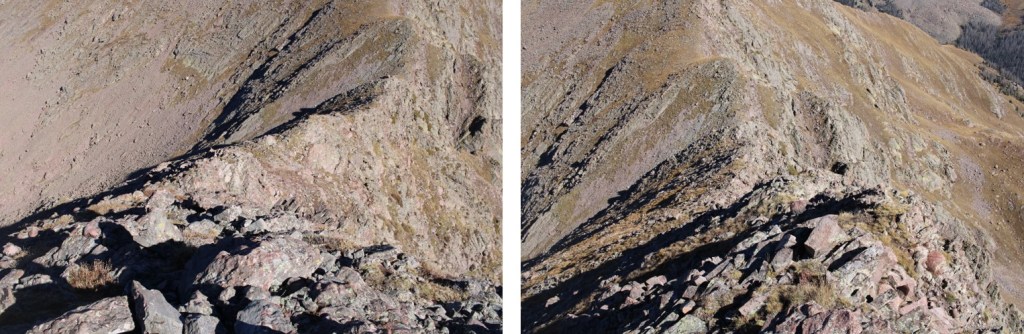
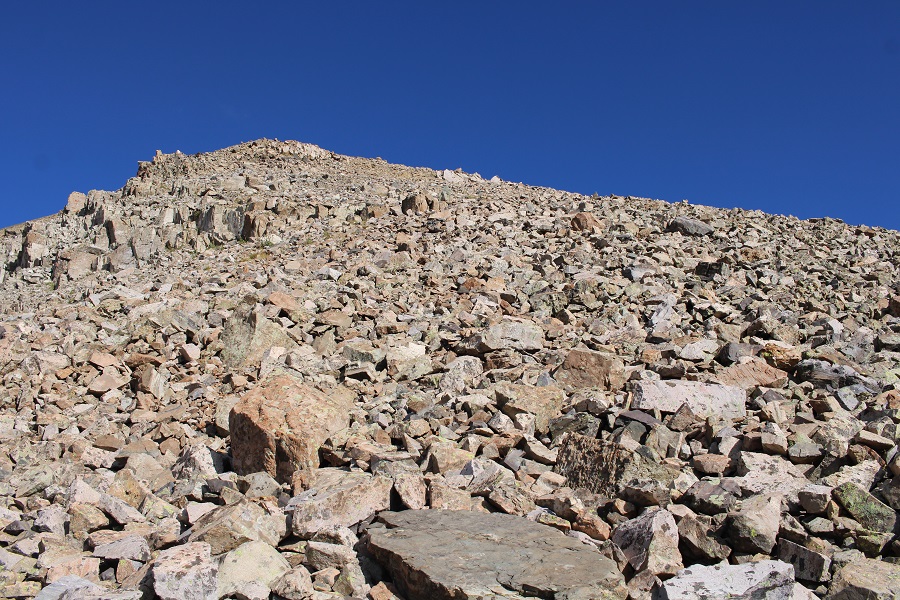
The terrain quickly narrowed and became class 3, full of chossy, loose rock. It never got more difficult than class 3, but the terrain was sketchy. I was able to stay directly on the ridge.
As the ridge rose, it curved, and I stayed more to the left
I topped out, turned the corner, and saw more class 3 ridge work as I now headed northwest
I lost a little bit of elevation, then followed the ridge to the summit
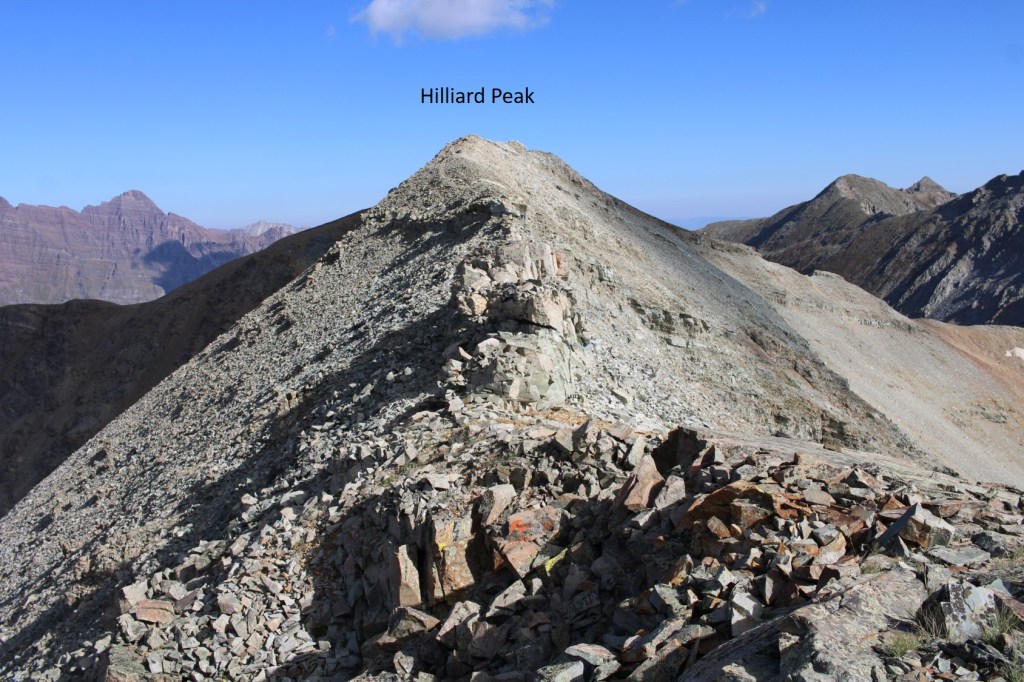
I summited Hilliard Peak at 9:45am
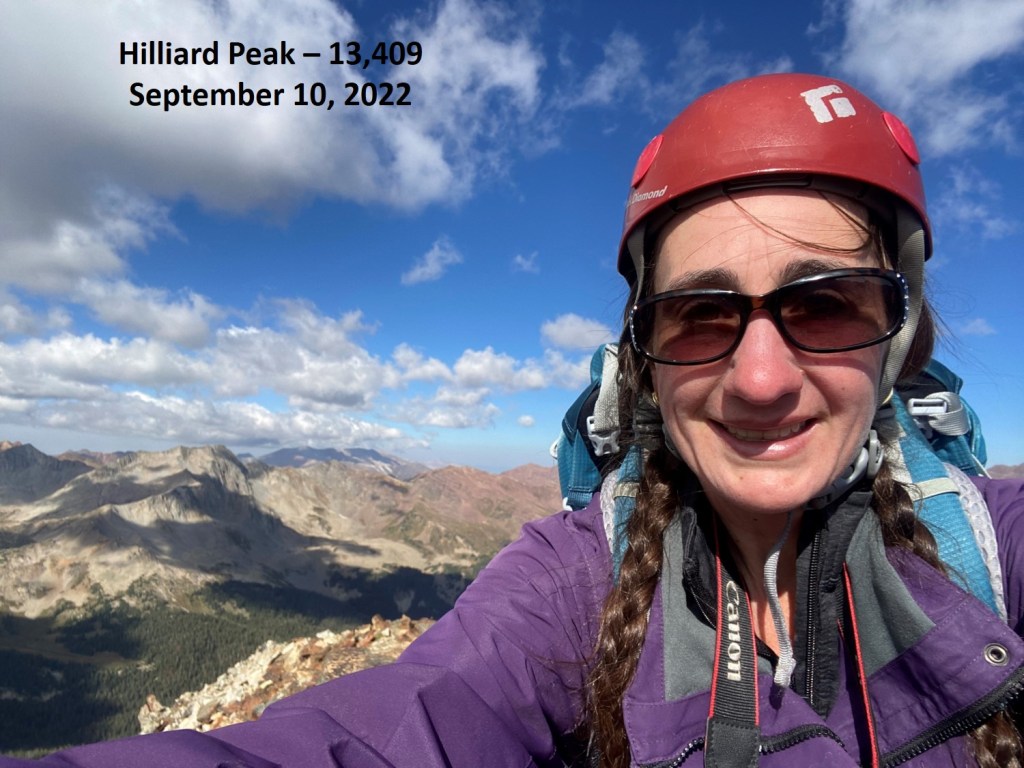
Hilliard Peak:
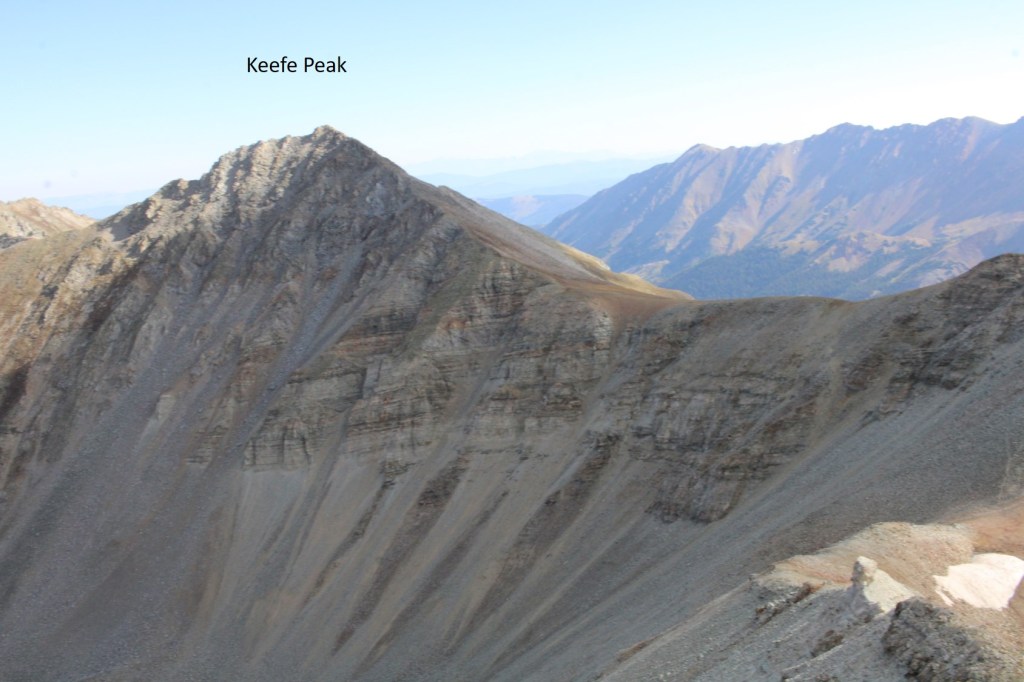
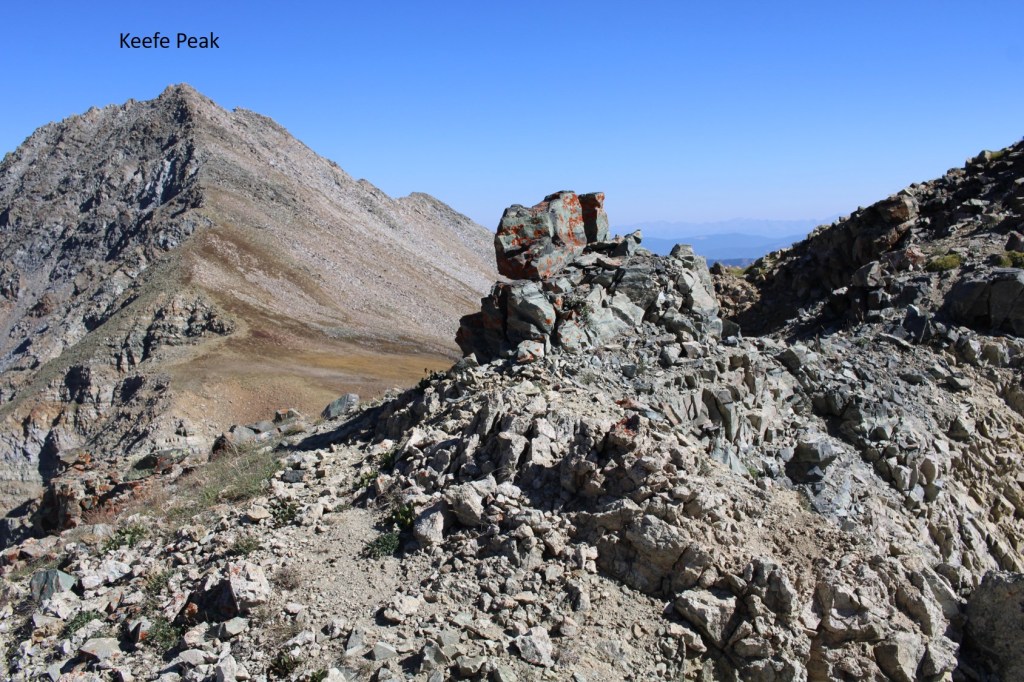
From Hilliard, I could see Keefe Peak to the northeast
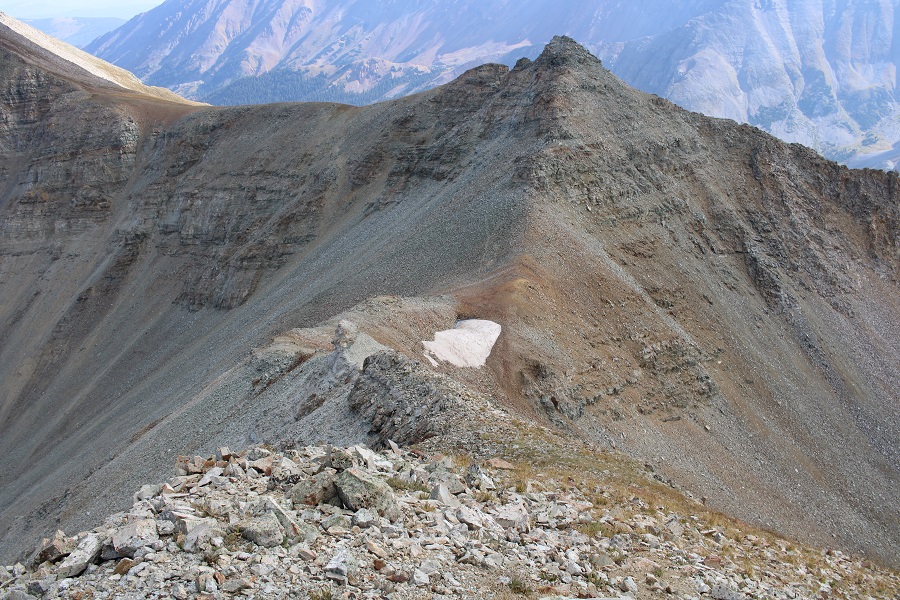
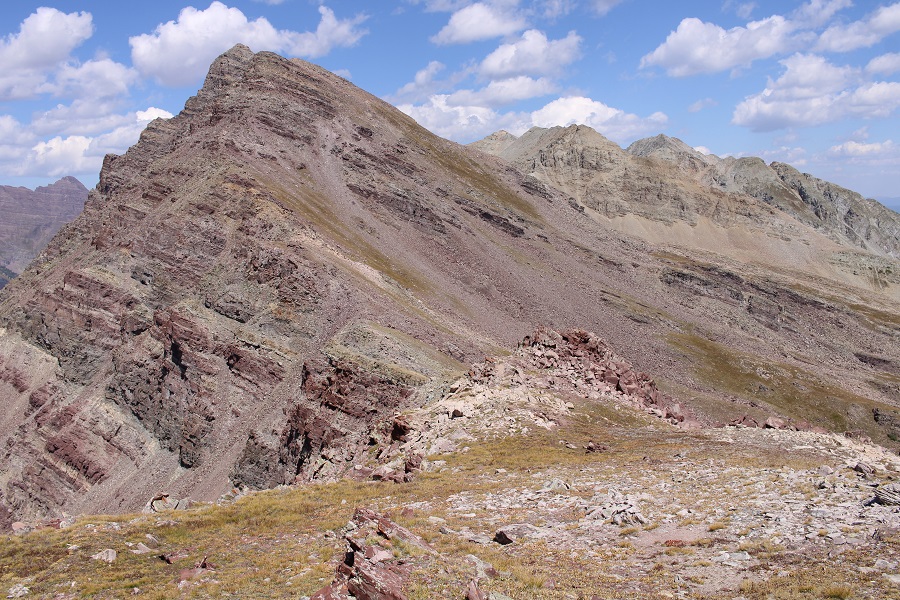
But first, I was going to have to get over the crux of the route: This pointy mountain right here.
I followed the ridge northeast, and came across this fun formation. I easily passed it to the left
This brought me to a small saddle. I ended up climbing this part by taking a game trail to the ridge, then crossing over to the right side and heading up
And now for the crux
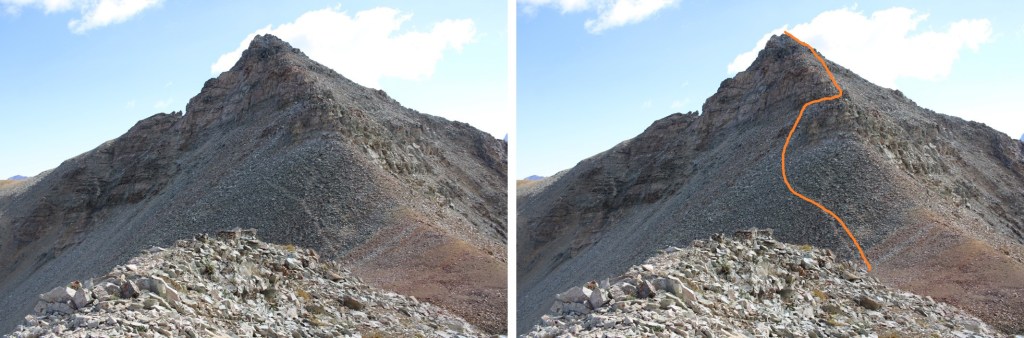
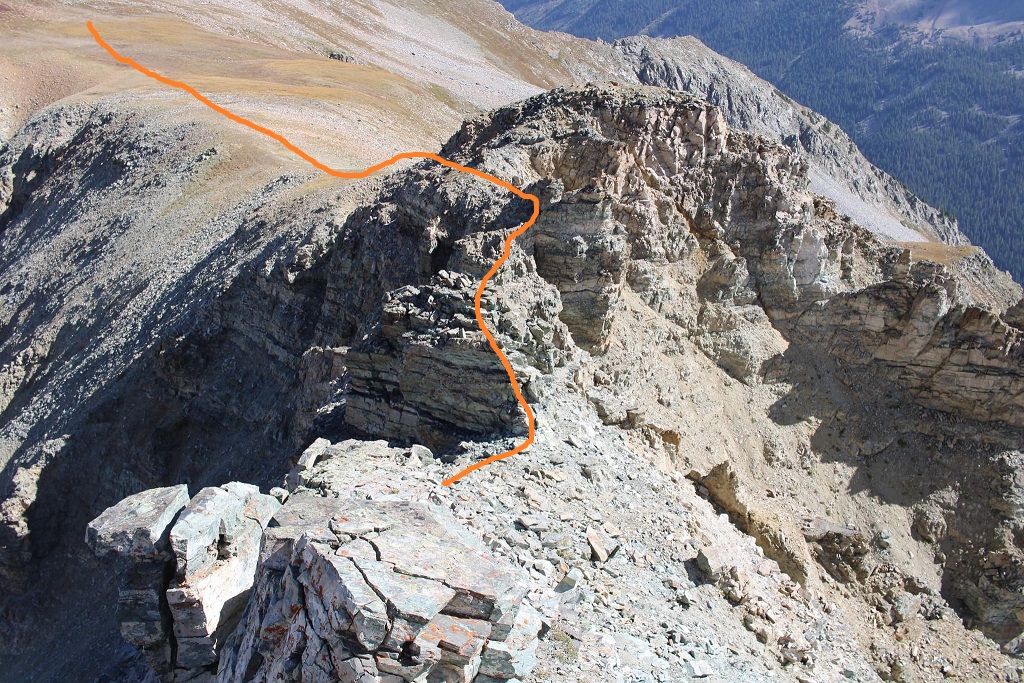
This is the route I took
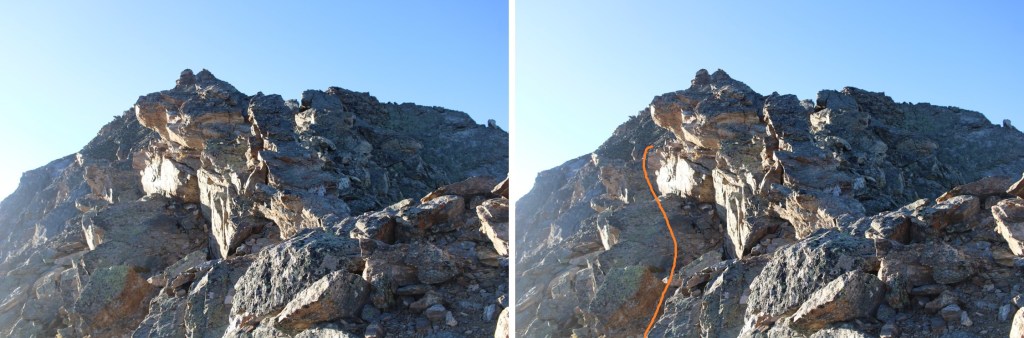
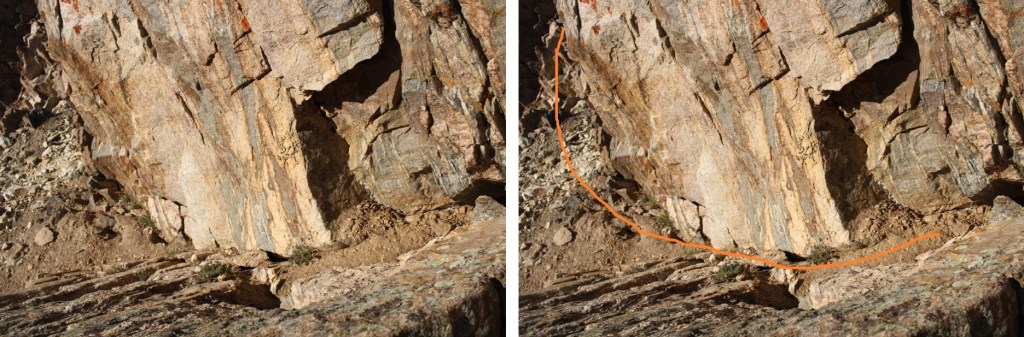
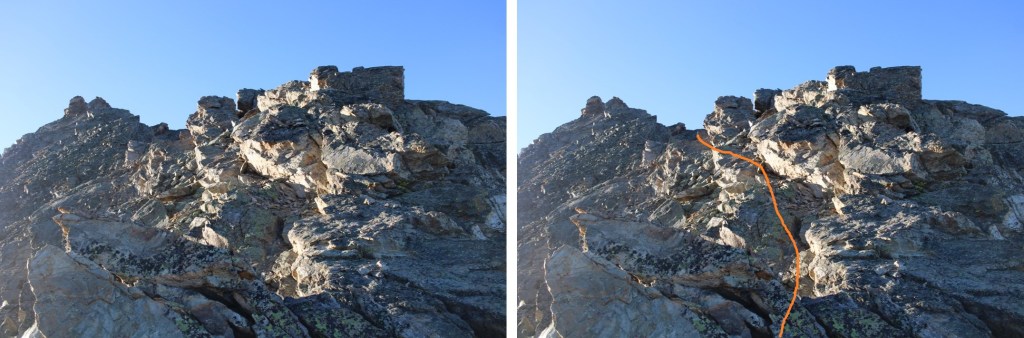
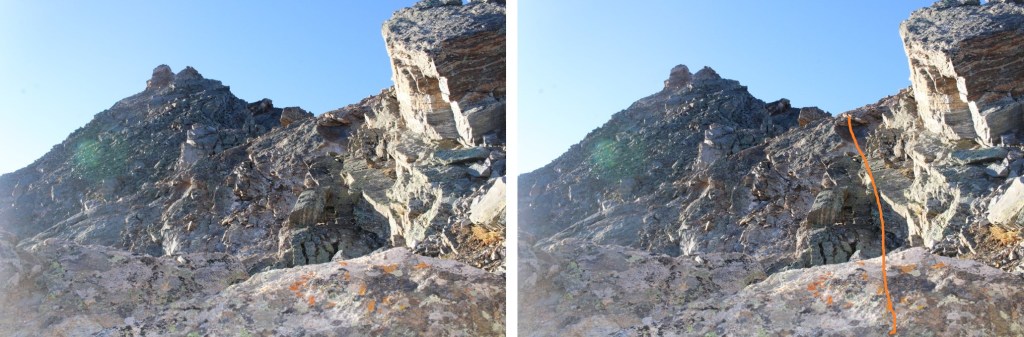
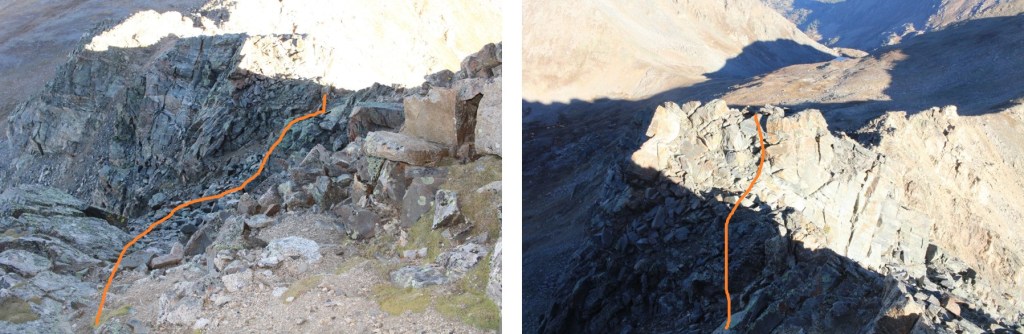
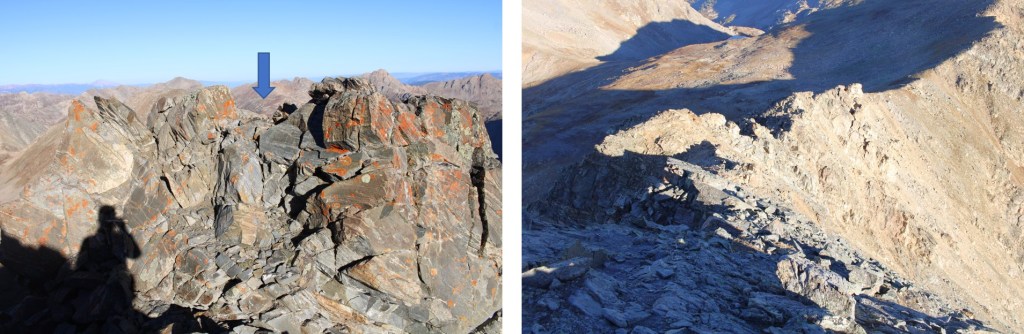
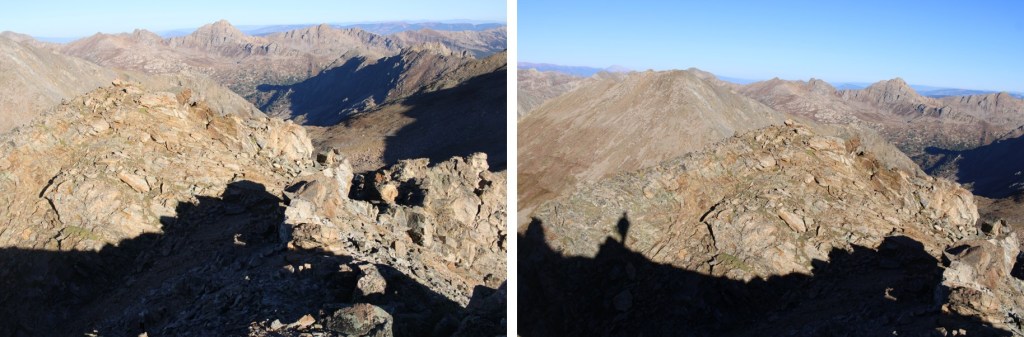
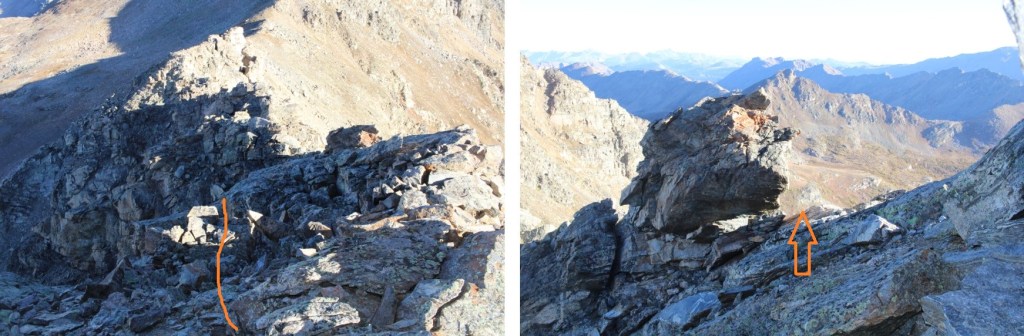
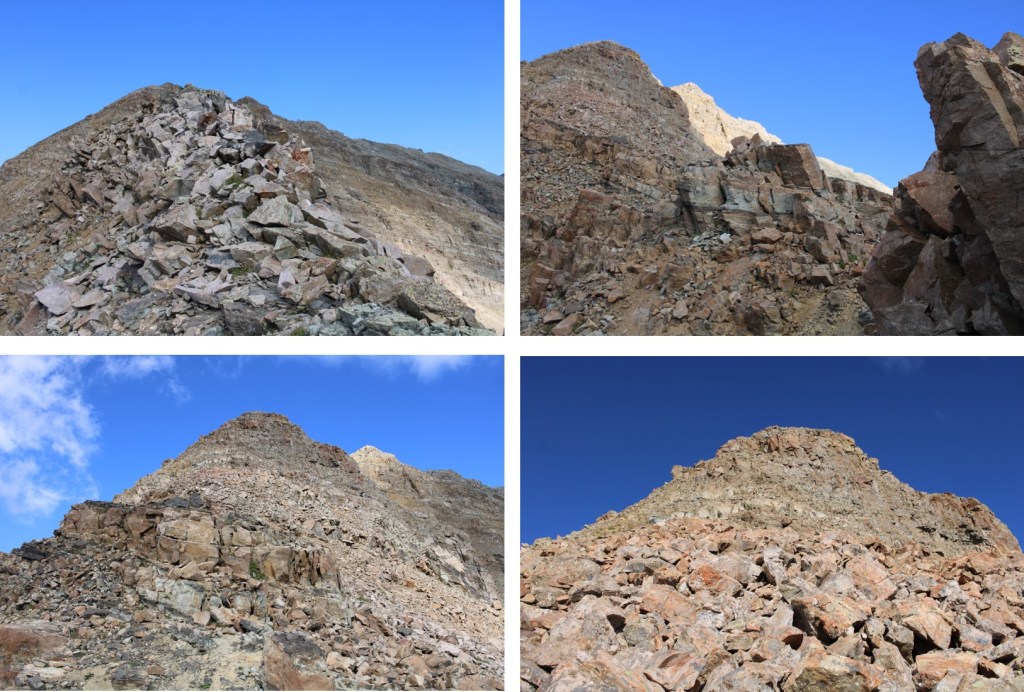
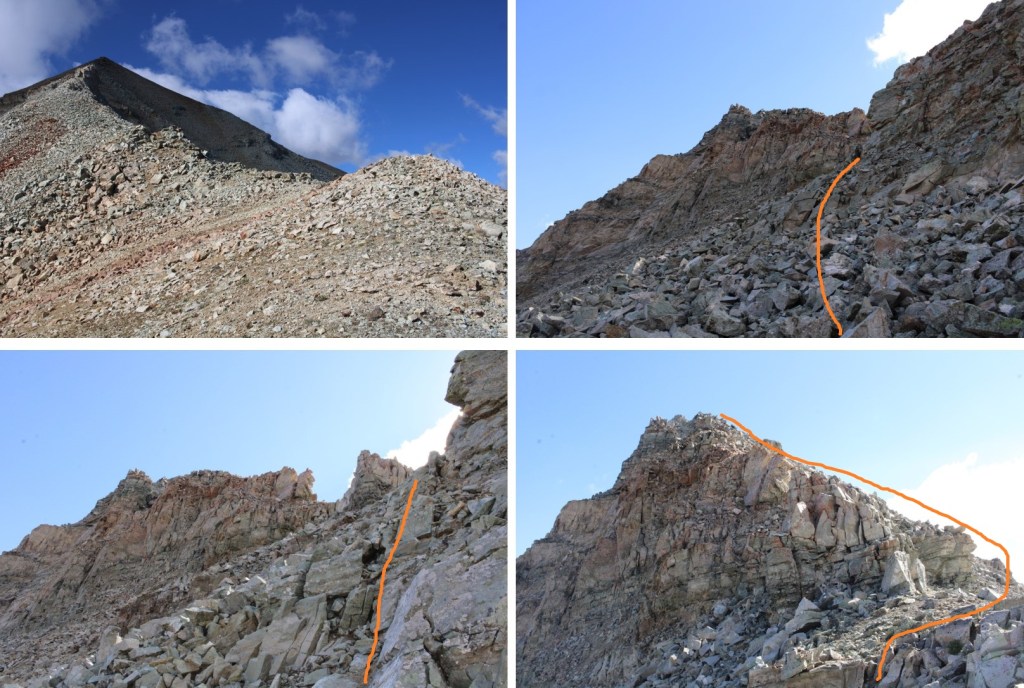
But there’s a lot you can’t see… So here it is step by step. This is class 4
This was a small, airy traverse, about 6 feet long, ad no more than a foot wide
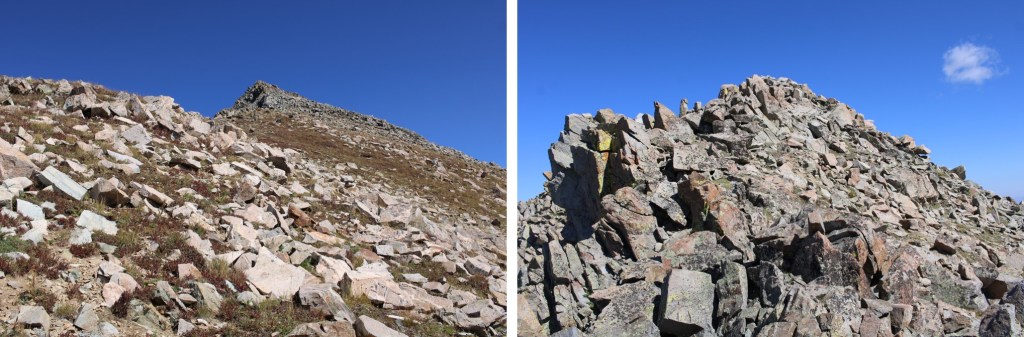
The good news is after that it’s all class 2 to the top of Keefe Peak.
I summited Keefe Peak at 11am
Keefe Peak:
I decided to make this a loop, and head east down an old avalanche runout. Let me preface this by saying it worked, but the runout is quickly growing back, and there was a ton of bushwhacking. Plan your route carefully. Here are some pictures of the route that led me directly back to the trail (1981) and Conundrum Creek below.
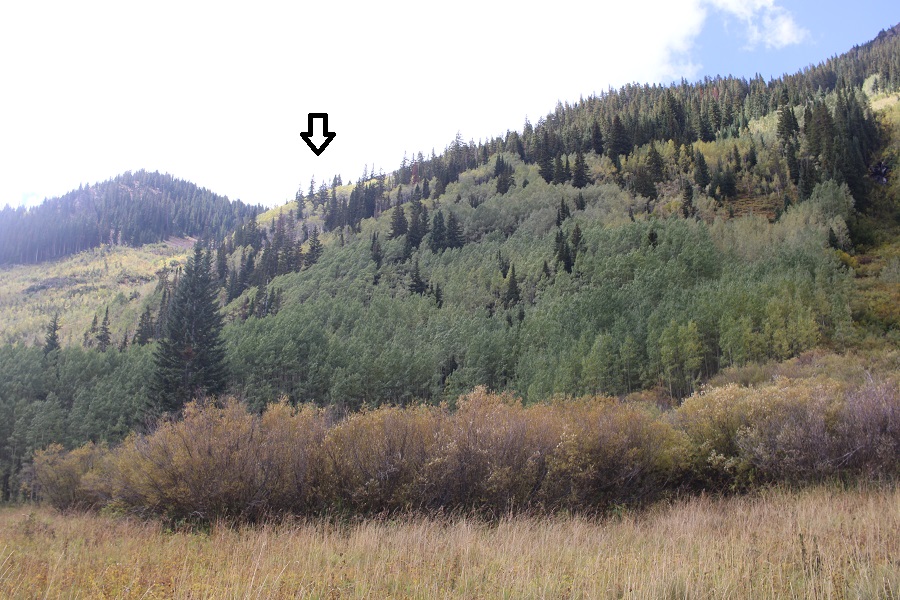
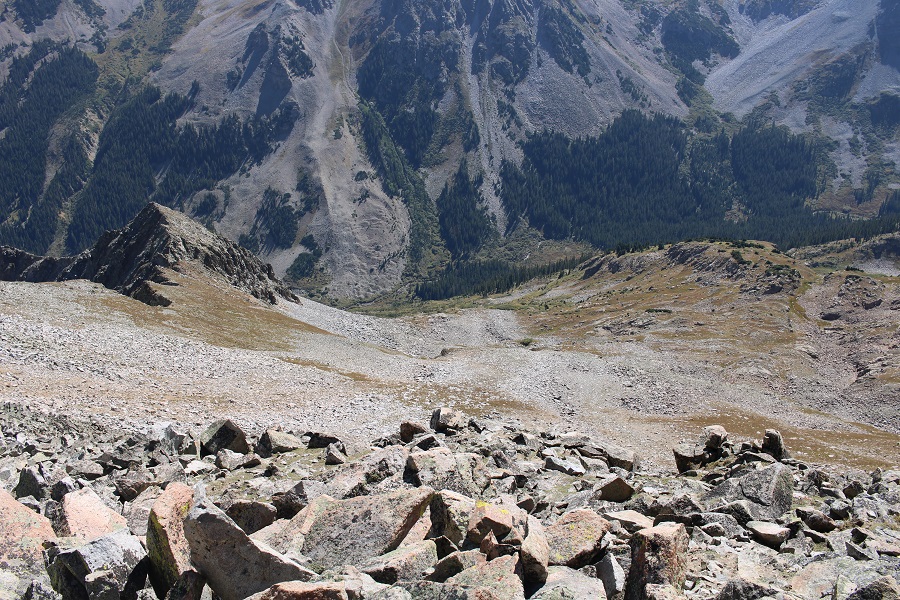
Here’s looking up at the route I took down. You could also take this route up, and just do Keefe from this angle, and skip the class 4 section of the traverse. It’s a lot of elevation gain in a short while though (3200’ in 7.5 miles) with a lot of initial bushwhacking, but it goes. I came down the left side (when looking up), but would recommend sticking more to the right and avoiding the middle.
Back on the trail, I followed it back to my campsite, and stayed there for another night.
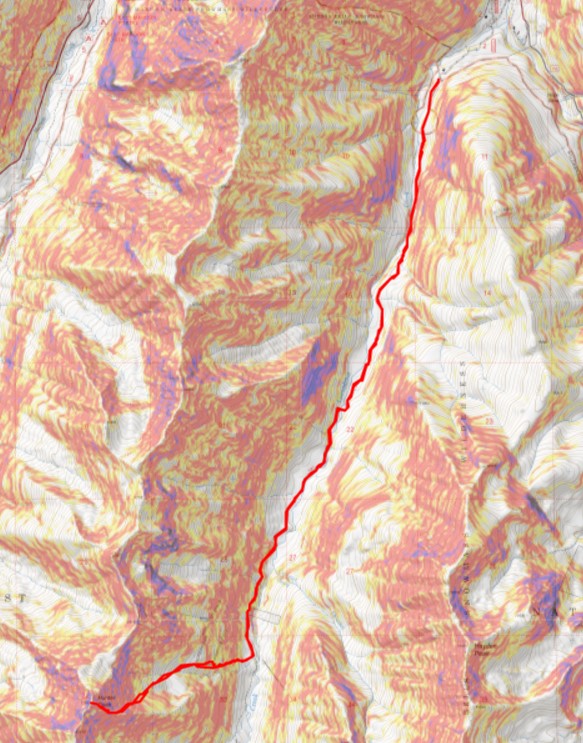
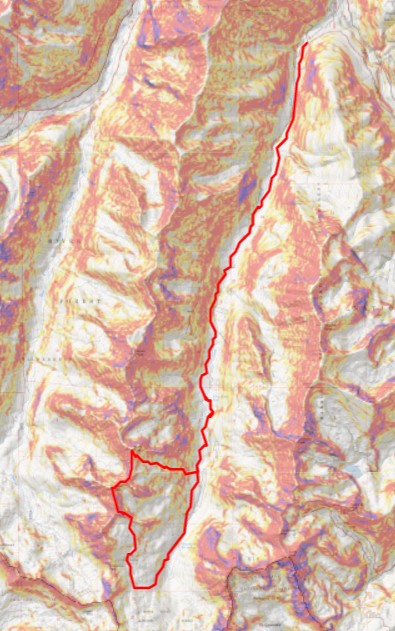
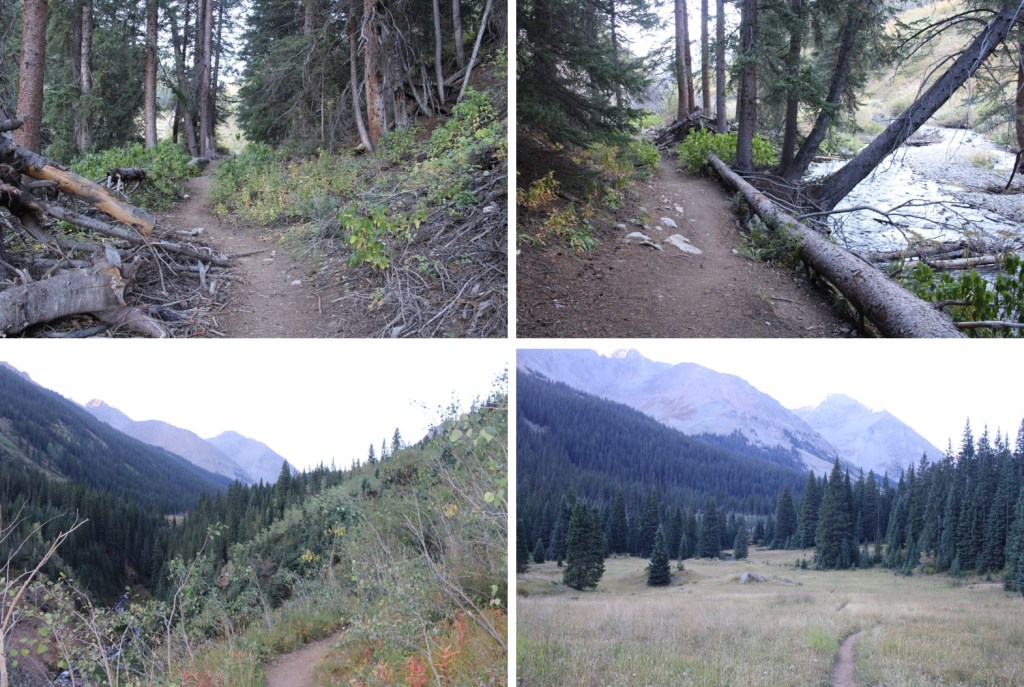
Here’s a look at the route out from the campsite back to the trailhead.
Due to weather issues, I did this as a multi-day trip. Due to permit issues, I camped just before the camping permit boundary for Conundrum Hot Springs (worked fabulously!!!). My stats are taken from several GPX files meshed together.
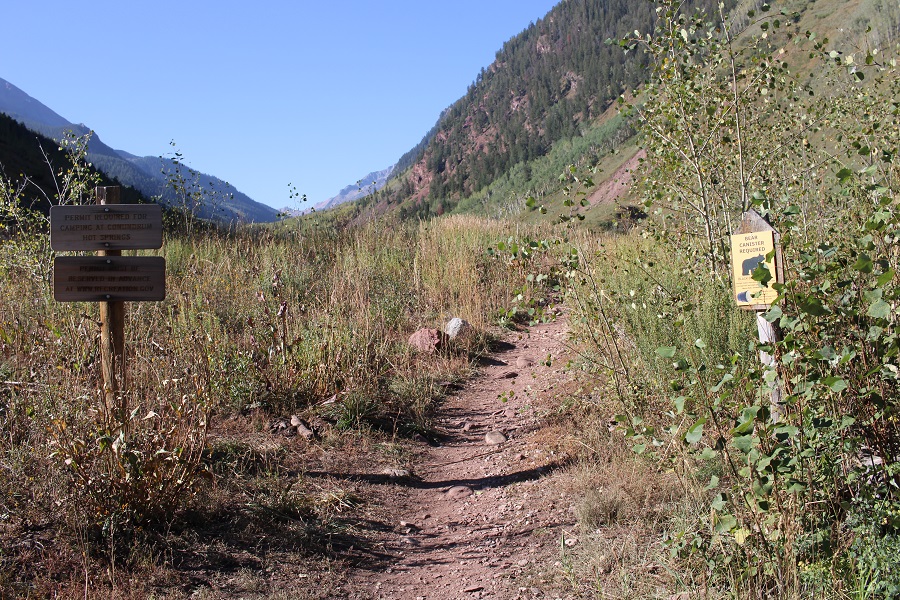
I started from the Conundrum Hot Springs Trailhead at 4:45am, after a quick nap on Independence Pass after a long drive and a long day. Here’s the trailhead:
I followed the class 1 trail for 6 miles to the permit boundary, which is noted by a very visible sign.
It was obvious this is a popular camping spot (just before the permit boundary). There are a lot of social trails that lead off into the trees as well for campsites, if you don’t want to camp right next to the sign. While I saw a US Forest Service truck in the parking lot, I didn’t see a service member all weekend. Also, I’m not advocating anything negative here: I understand why they have the permit system, I just think permit systems aren’t well implemented. For example: I couldn’t get a permit for this weekend, yet more than half the reserved sites were empty THE ENTIRE WEEKEND. Here’s where I camped. It’s relatively close to the stream, which is great for filtering water
I set up my tent, as I planned on being here for a few days, and was on the trail again by 8am. The trail is still class 1, and crosses Conundrum Creek several times. All creek crossings were easy.
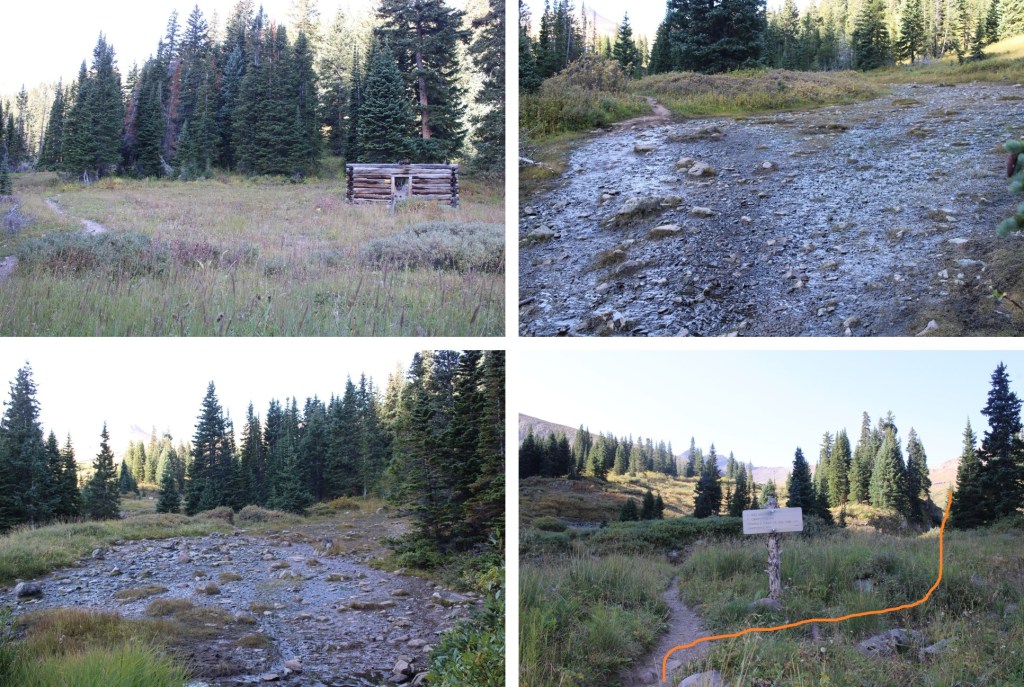
After about 2 miles I came to the Conundrum Hot Springs campsites, an old abandoned cabin, and more small creek crossings. I took the trail to the right towards Triangle Pass
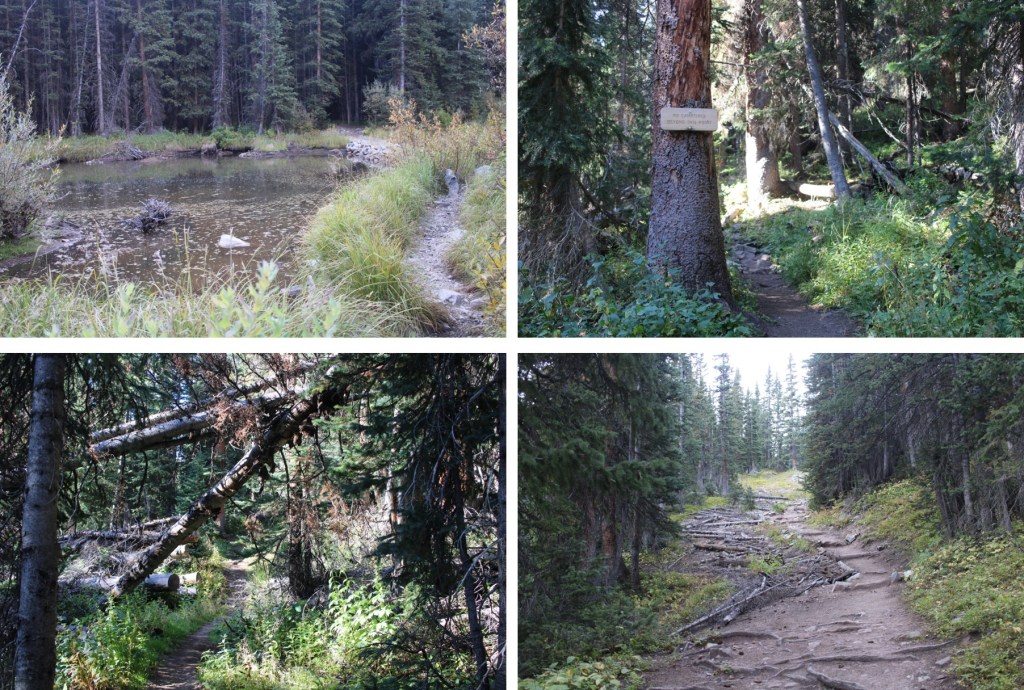
I was now still on Trail 1981, headed southwest, into the willows
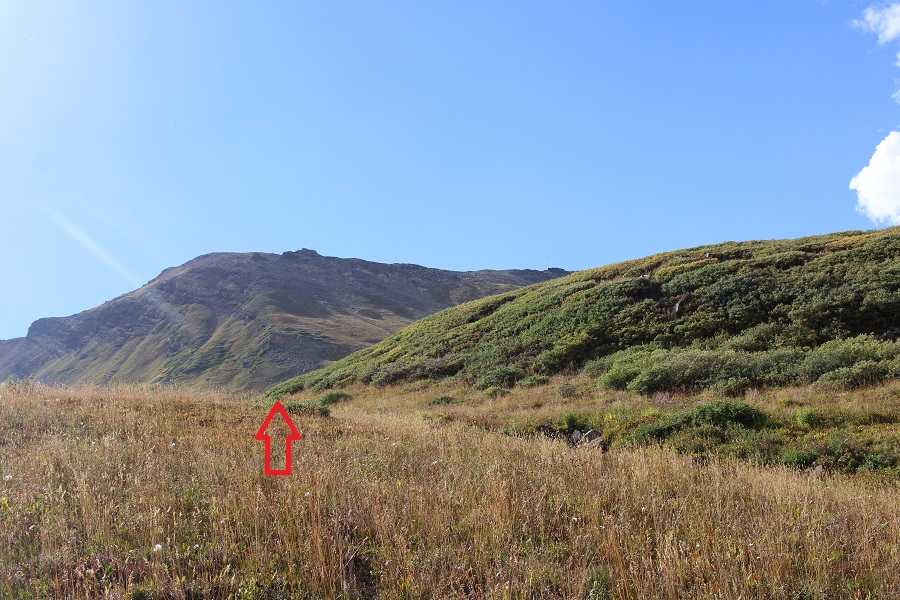
At 12000’ I left the trail, and followed a drainage west
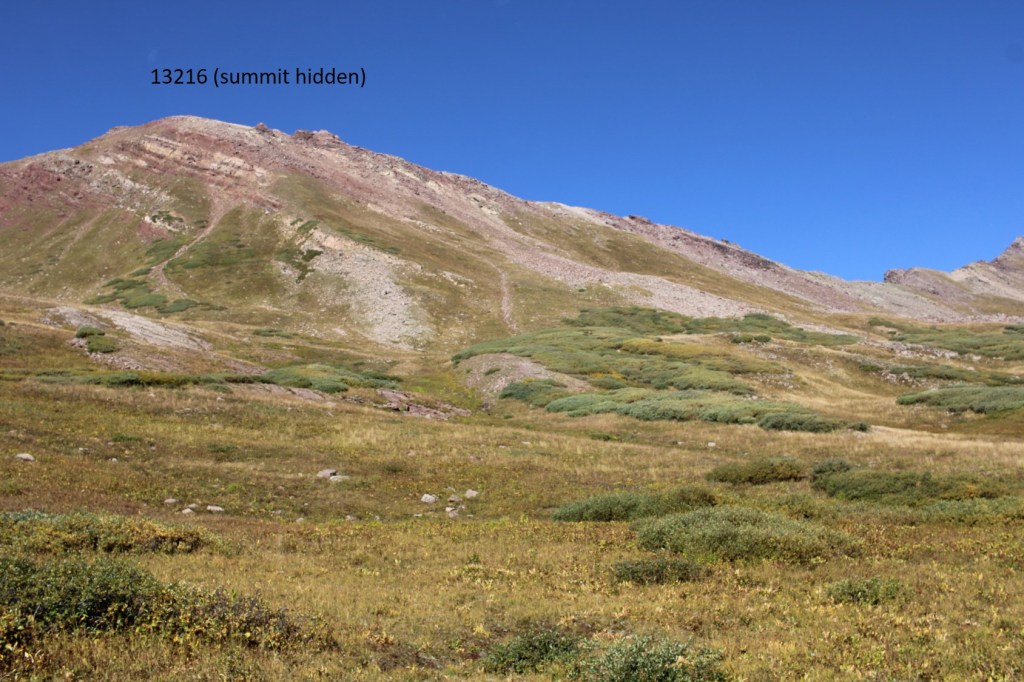
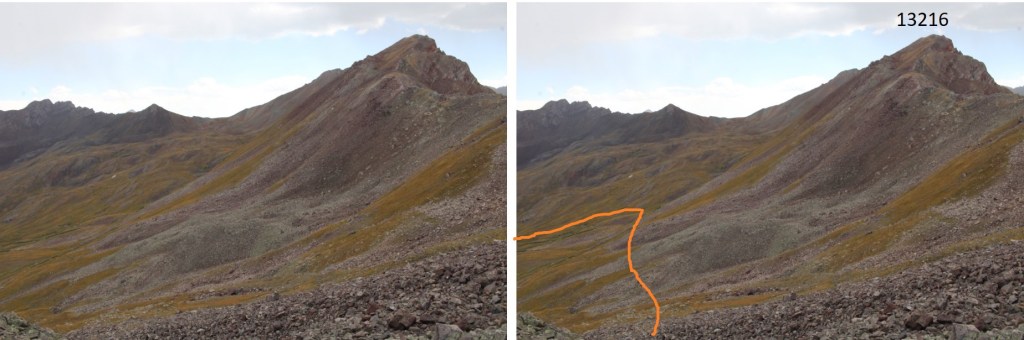
Now it was time to gain the ridge of 13216.
This is the route I took
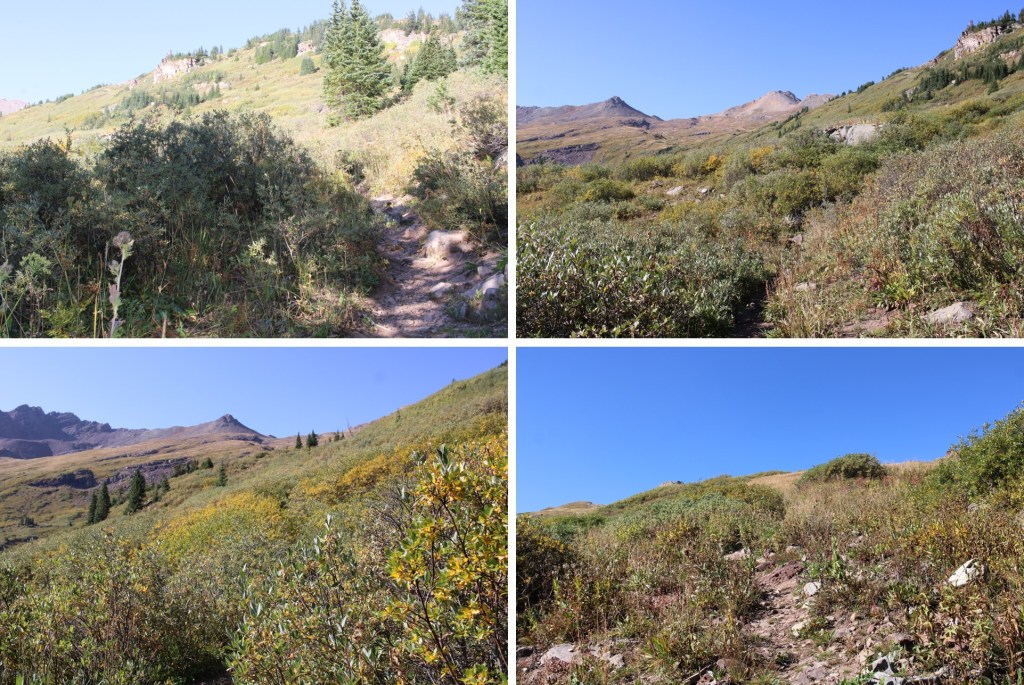
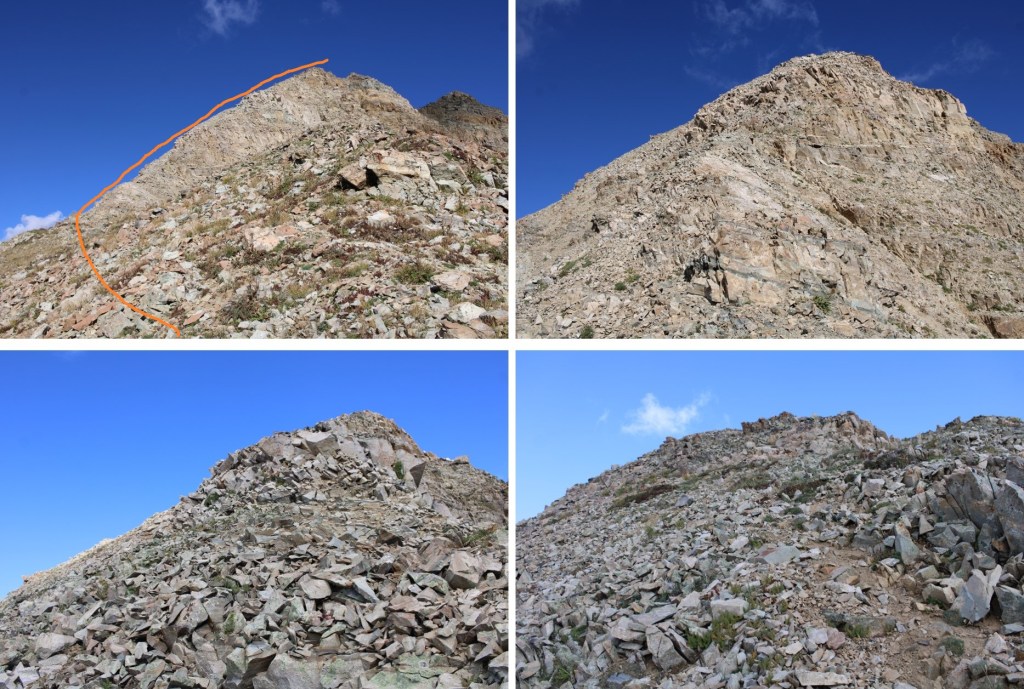
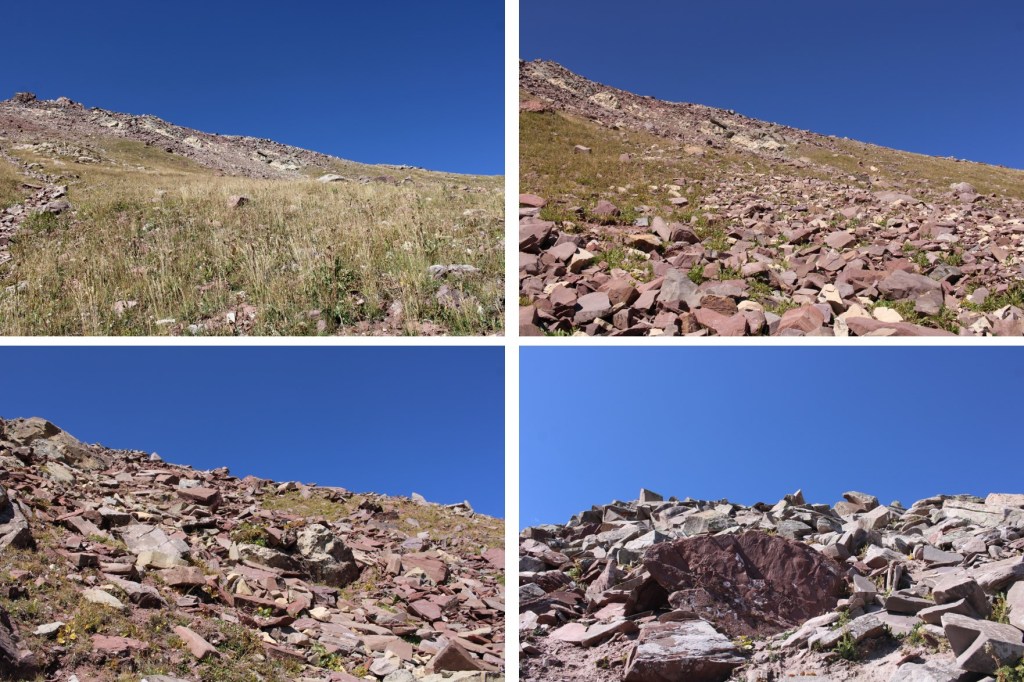
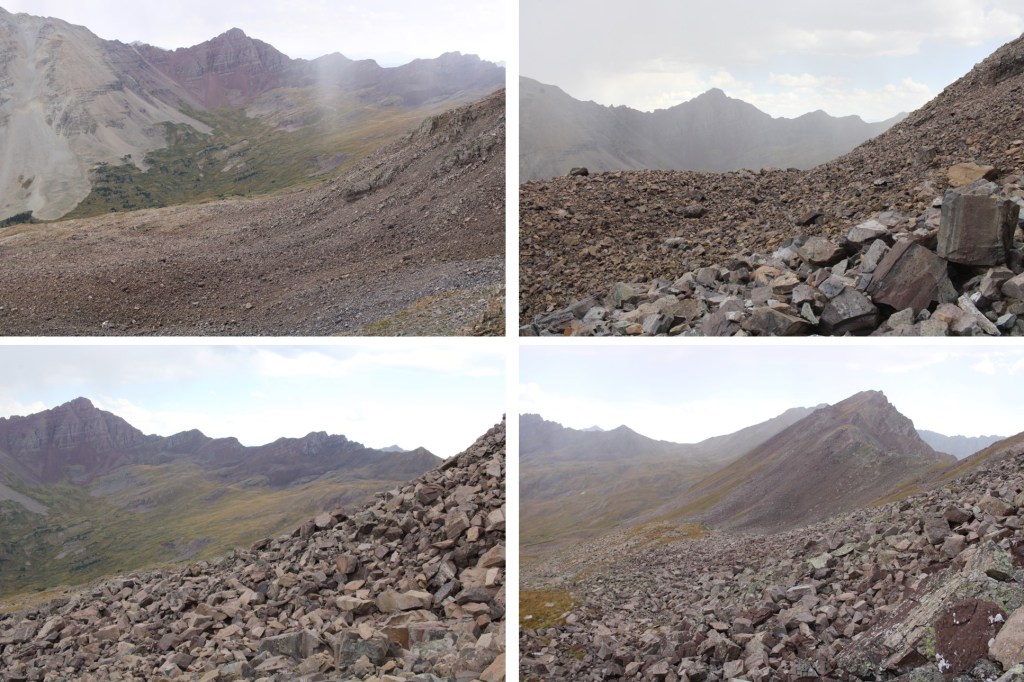
And some step-by-step pictures. This was all class 2
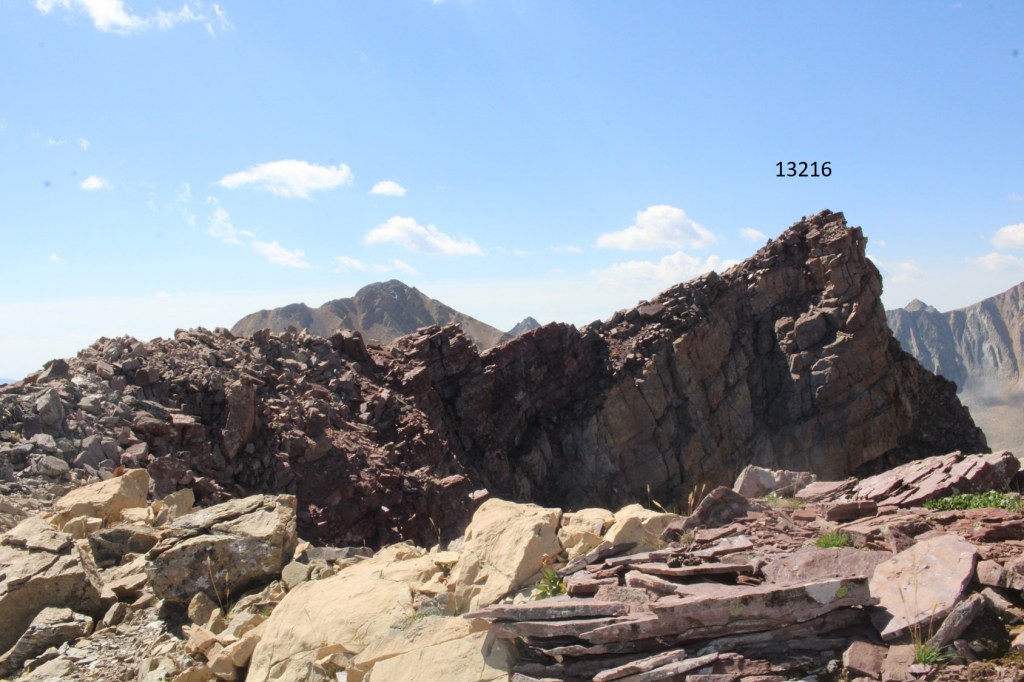
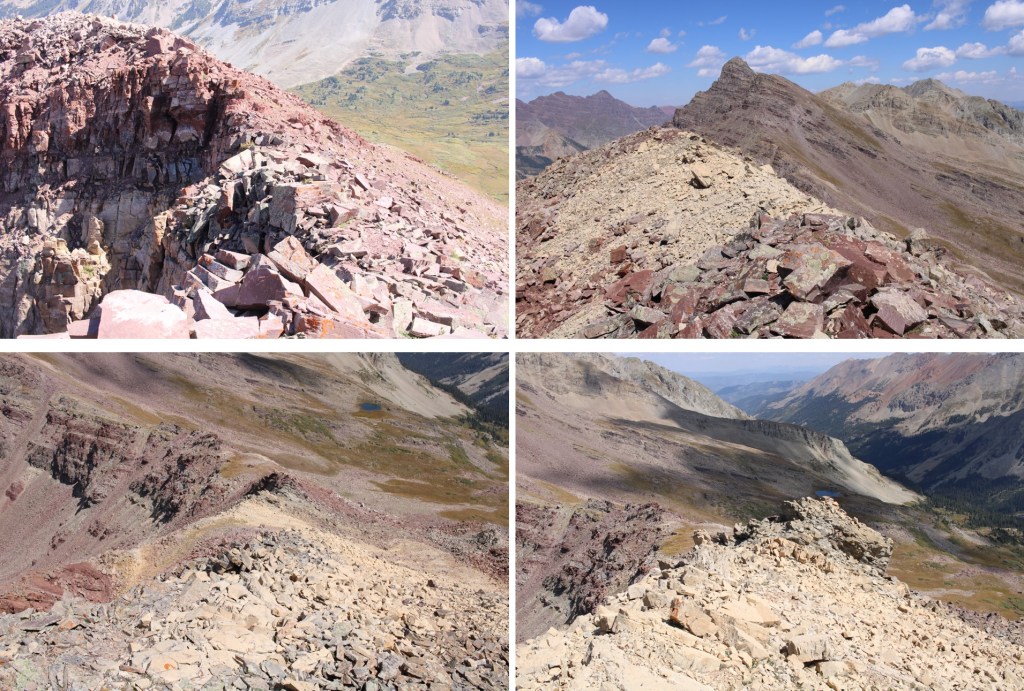
When I made it to the ridge I turned left, and was surprised to find it wasn’t a straight shot to the summit. I followed the ridge south
And was surprised once again to find this wasn’t the summit either. It was a little further to the southwest.
It was all class 2 to the summit
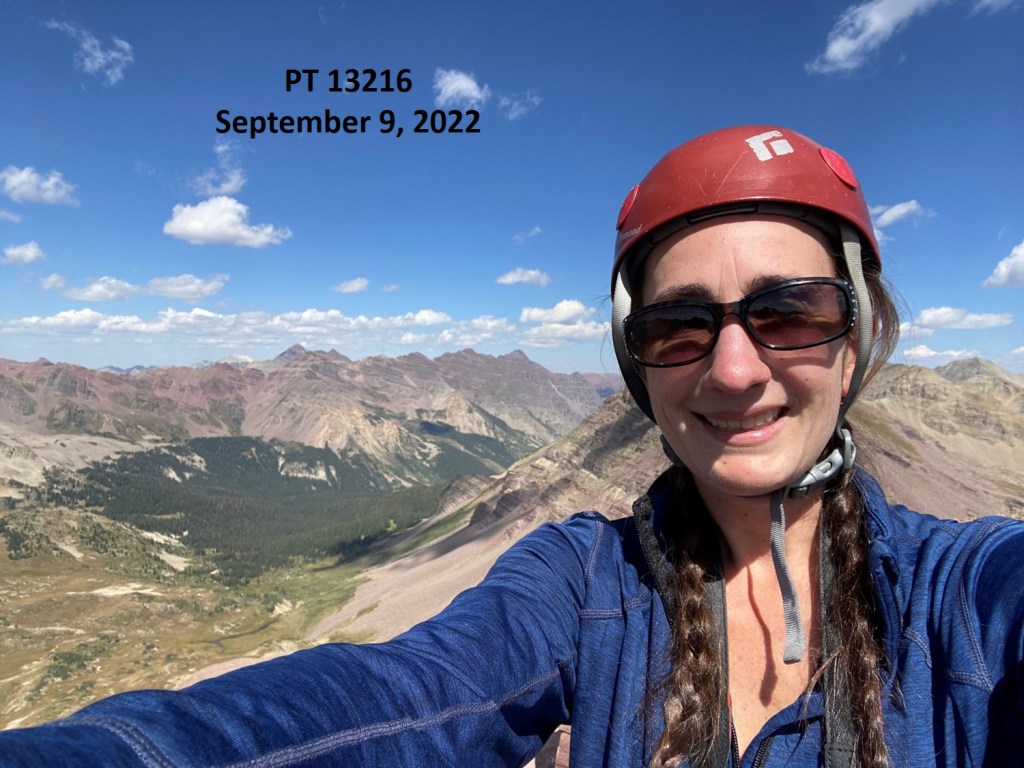
I summited 13216 at 11:40am
PT 13216:
My next goal was 13537, to the north
I followed the ridge over Conundrum Pass, all class 2 to the pass
Once at Conundrum Pass/13216-13537 saddle, the route became a class 3 scramble. From my visual it looked like a straightforward scramble up the ridge, all the way to the summit, but what I couldn’t see was a dip in the ridge. I started my scramble up.
I came to a false summit, and noticed I could no longer climb up: I’d need to parallel the ridge and summit from the other side.
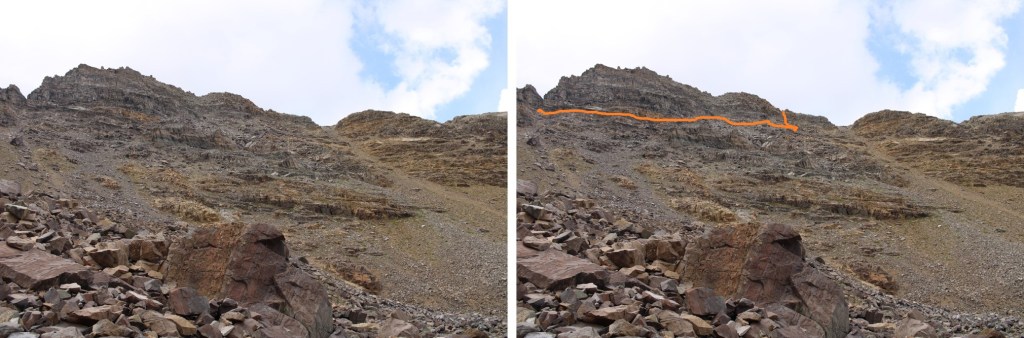
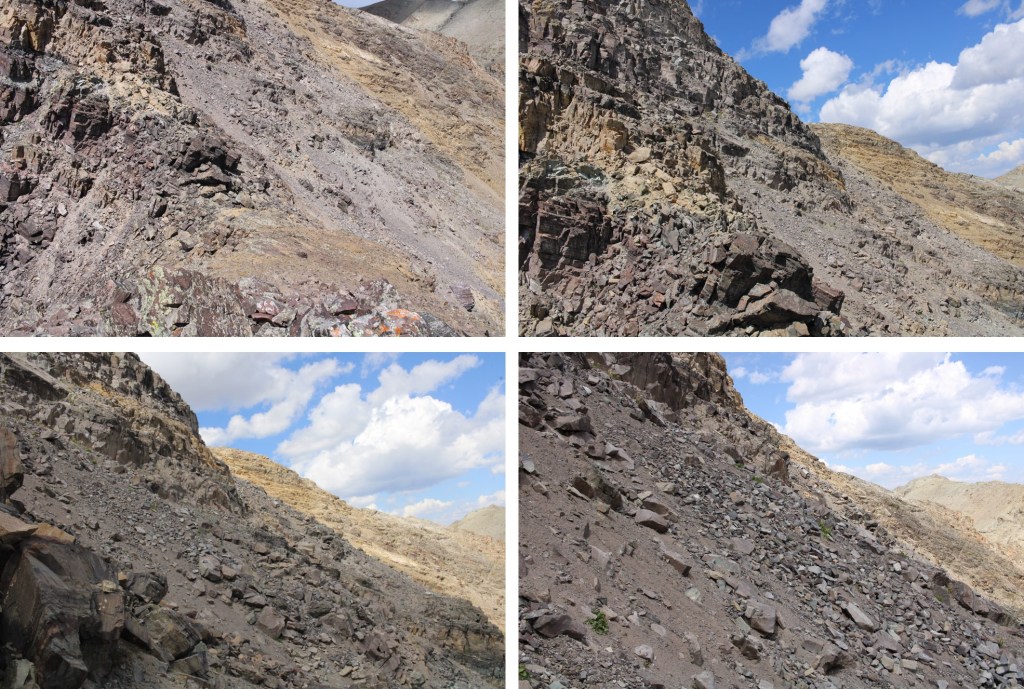
Here’s where I made a mistake. I tried to traverse over to the other ridge too high: I should have dropped down a few hundred feet, then re-ascended via the obvious gully. The route I took was sketchy class 4. Everything was unstable, rocks moved, and the scree was solid dirt with kitty litter sitting on top. I would not recommend the route I took. From below, this is the route I took.
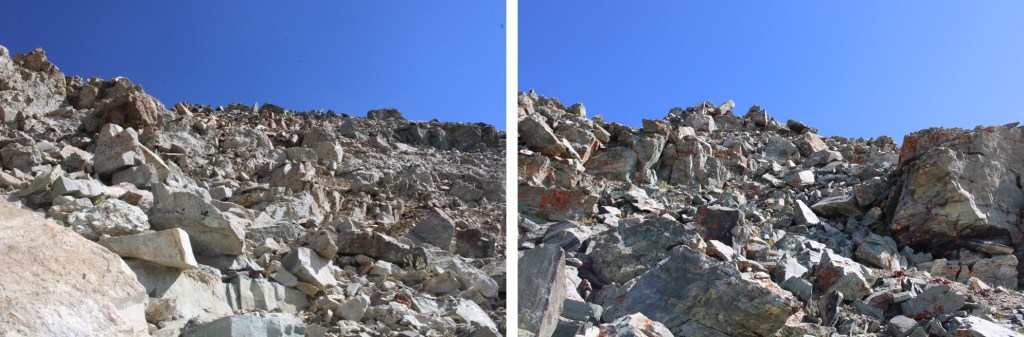
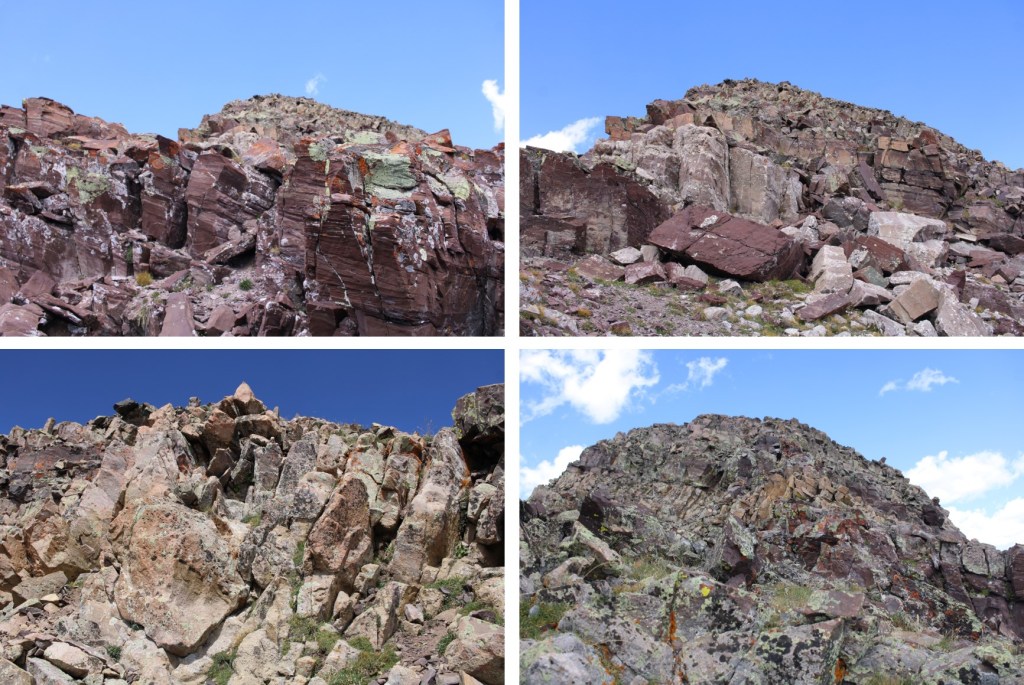
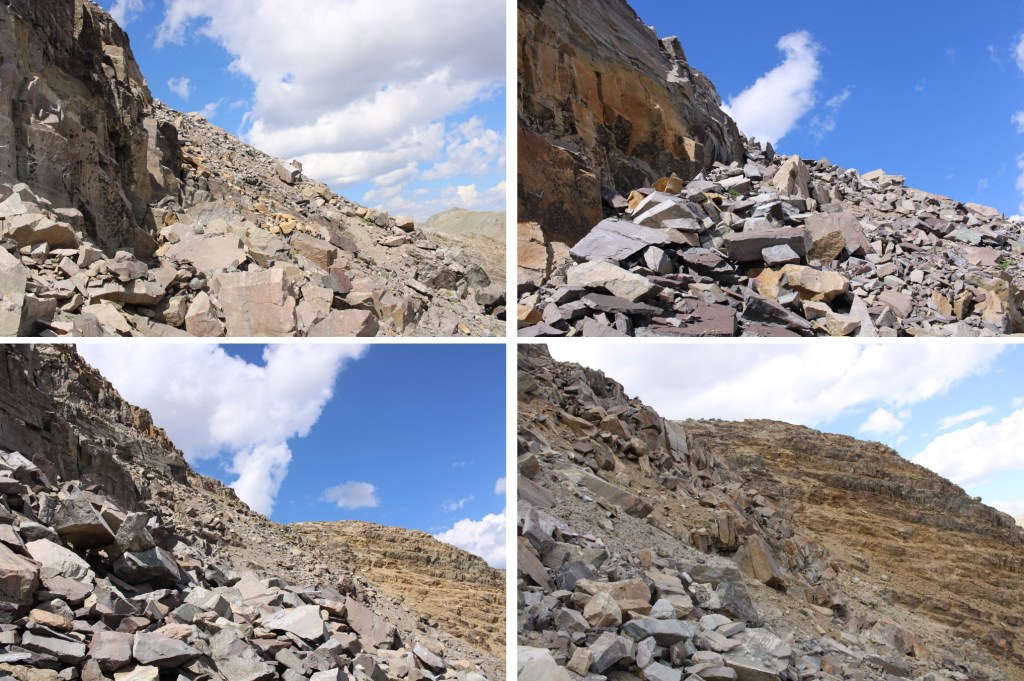
And here are some pictures of that route. Once again, I’d recommend dropping down further and ascending via the gully. My microspikes saved me here.
Eventually I came to a gully that looked like it went. I was tired of the terrain I’d been traversing, and welcomed the gully, only to find it was just as bad. Large loose rocks, hard dirt, kitty litter, etc. I headed towards the ridge.
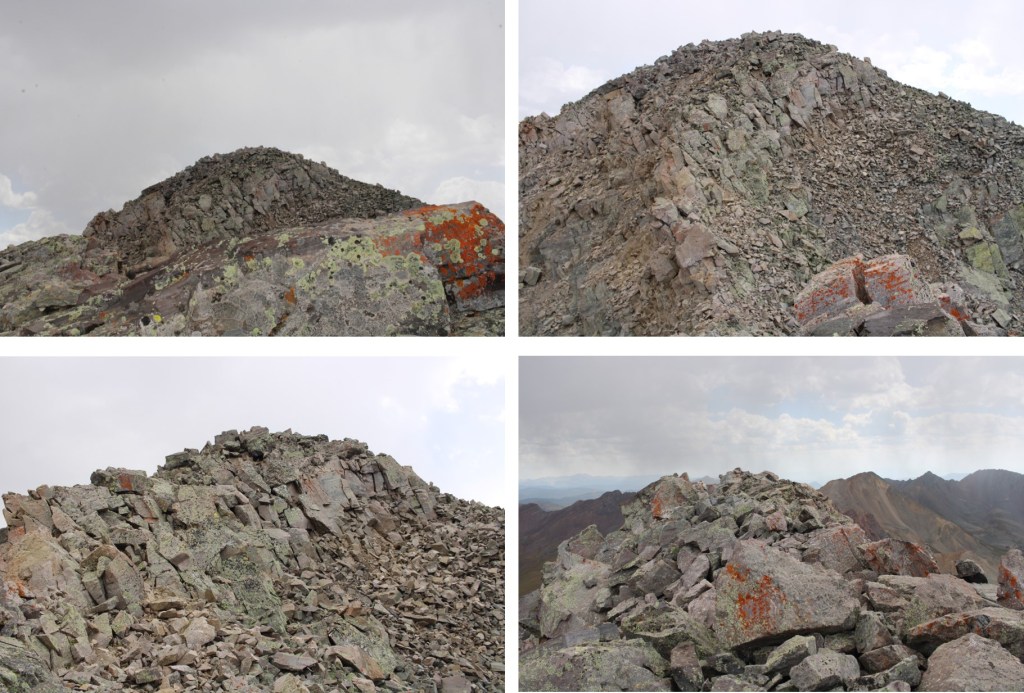
Once on the ridge I turned left, and followed it south to the summit
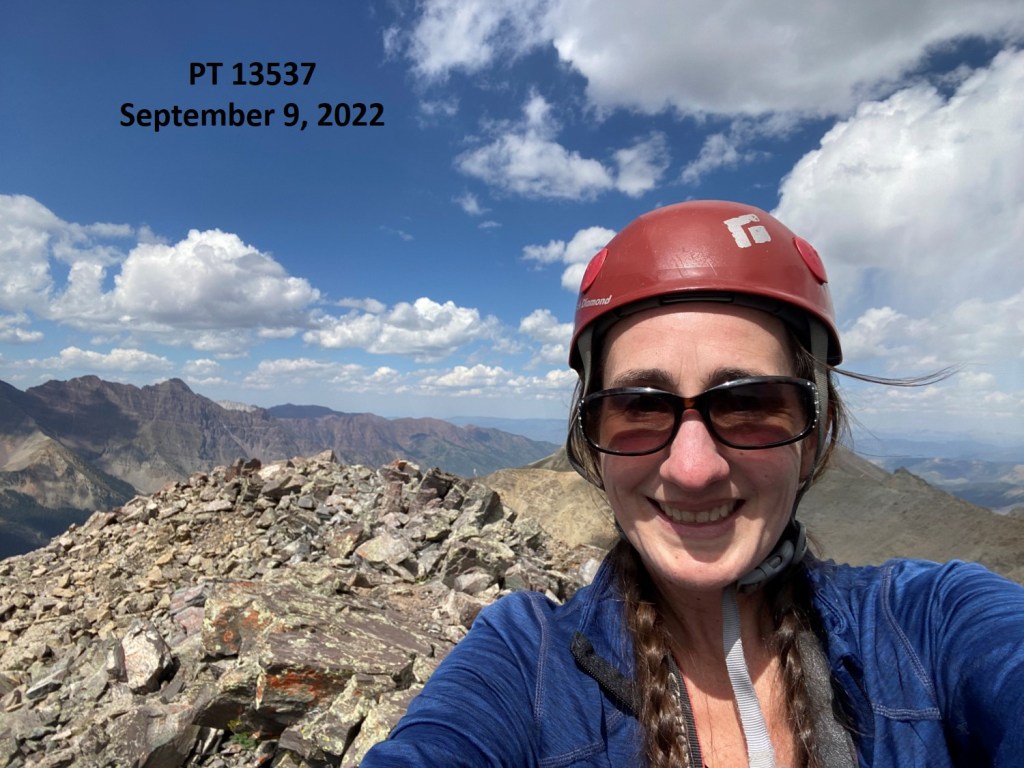
I summited 13537 ay 2pm
PT 13537:
Originally, I’d planned on doing the entire traverse, but I could see clouds moving in. Indeed, it started snowing and hailing on my decent, so it had been a good idea to call the ridge for the day and head back to camp. But I didn’t want to take the same route I’d taken in, because I felt it was too sketchy to repeat. Instead, I decided to walk north down the ridge to where I’d seen the gully earlier, and descend that way.
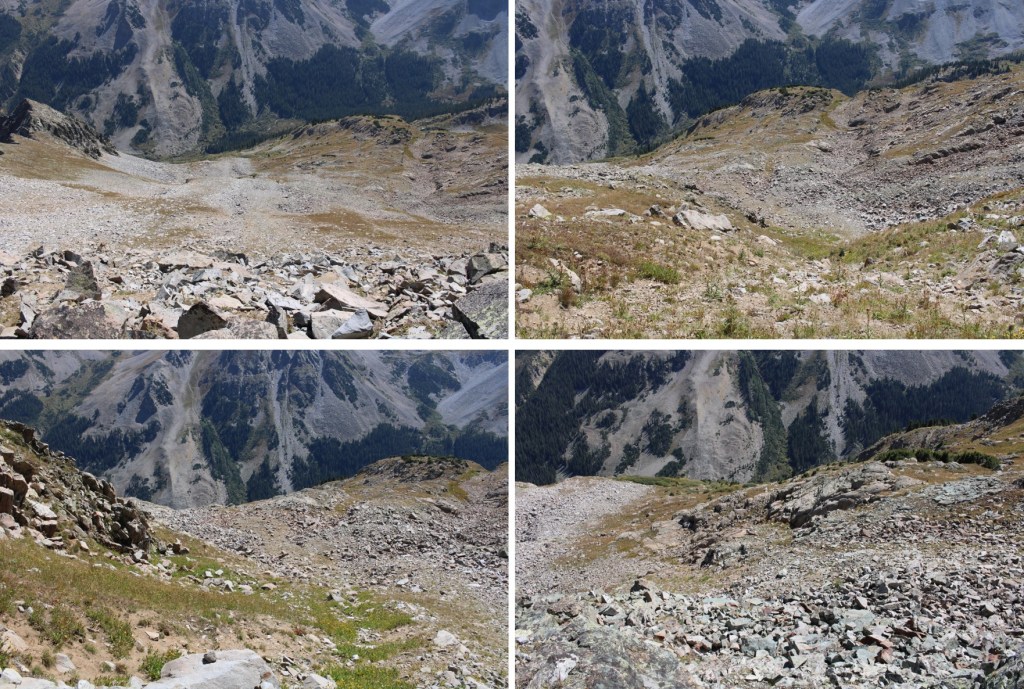
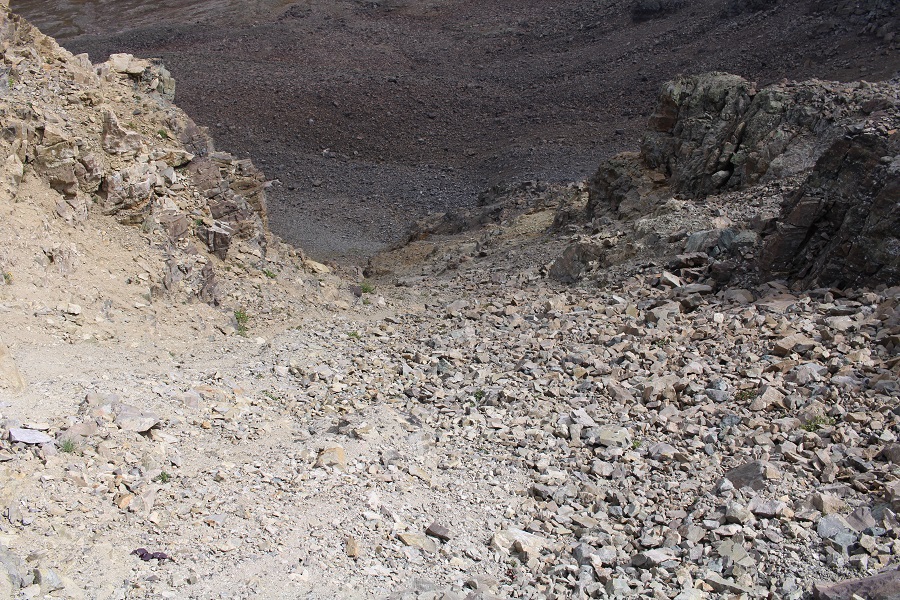
Here’s a look down that gully
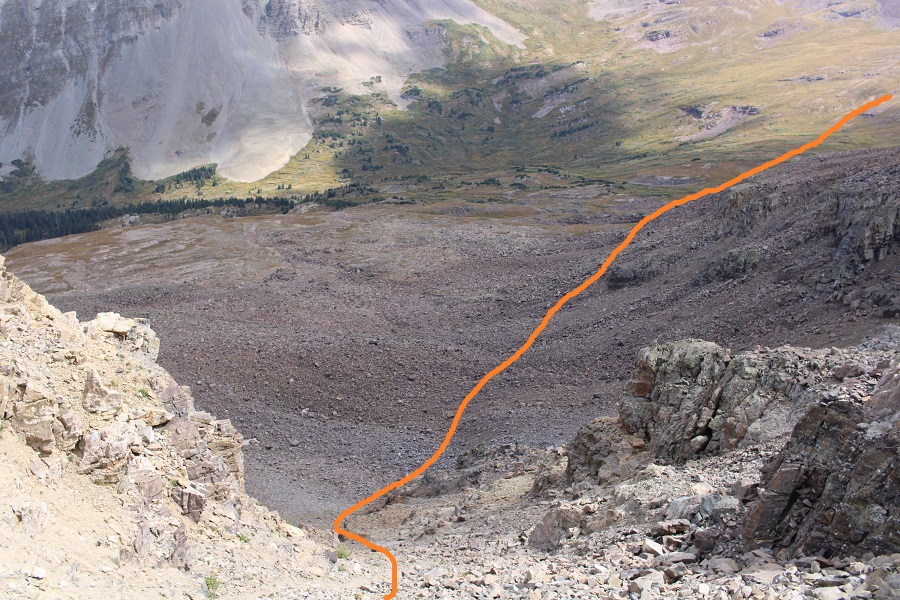
And my route back into the basin
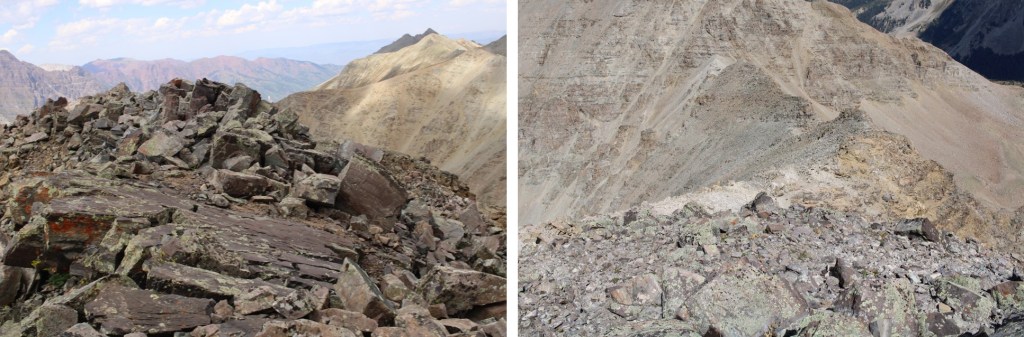
The gully was much steeper than it looked. I was glad I had on my microspikes.
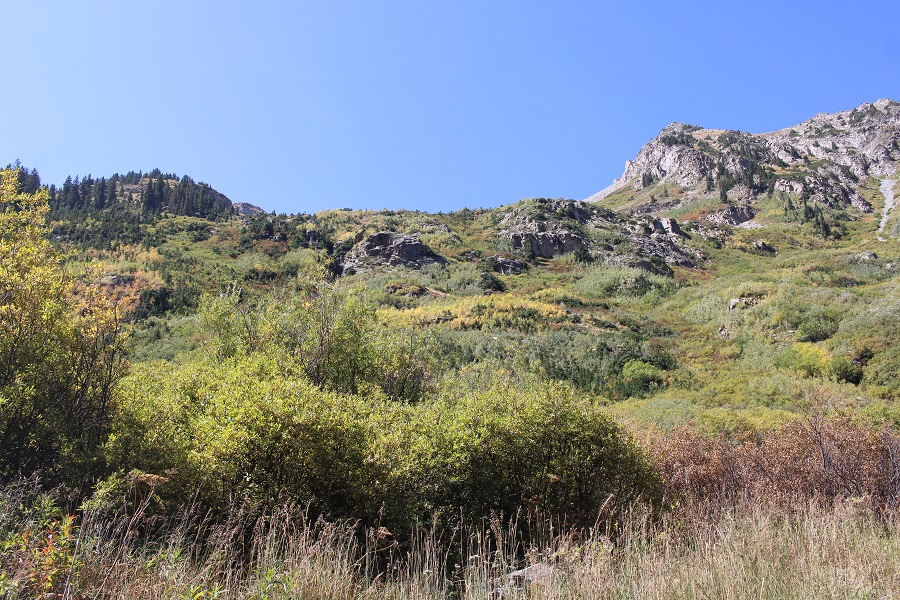
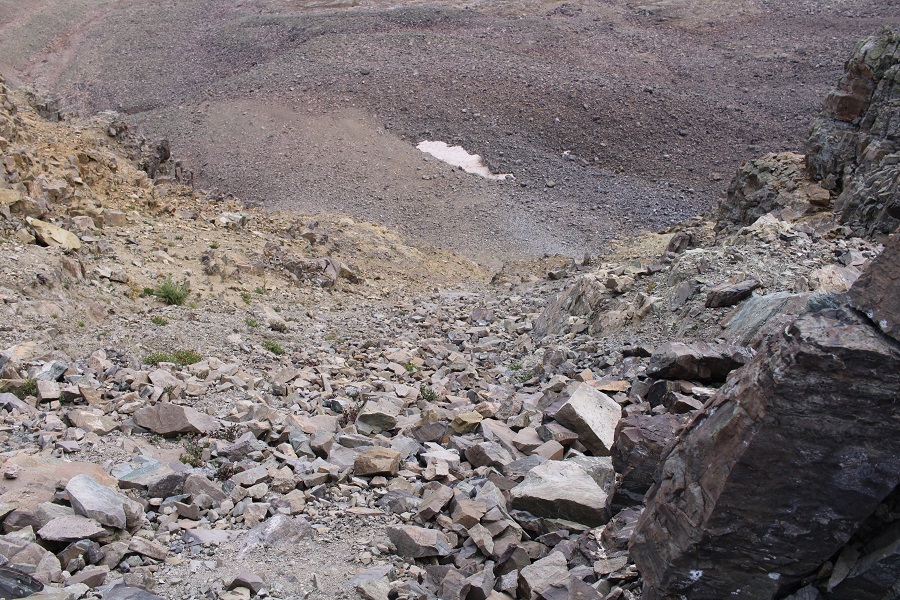
From below, here’s a look up that gully. It goes all the way to the ridge.
And now, to make my way back to the trail. I aimed southeast, doing my best to avoid the large rock bands
When I could see PT 13216, I stayed high, and then descended via the same drainage I’d come in on.
Back on Trail 1981, I followed it northeast, back to my campsite.
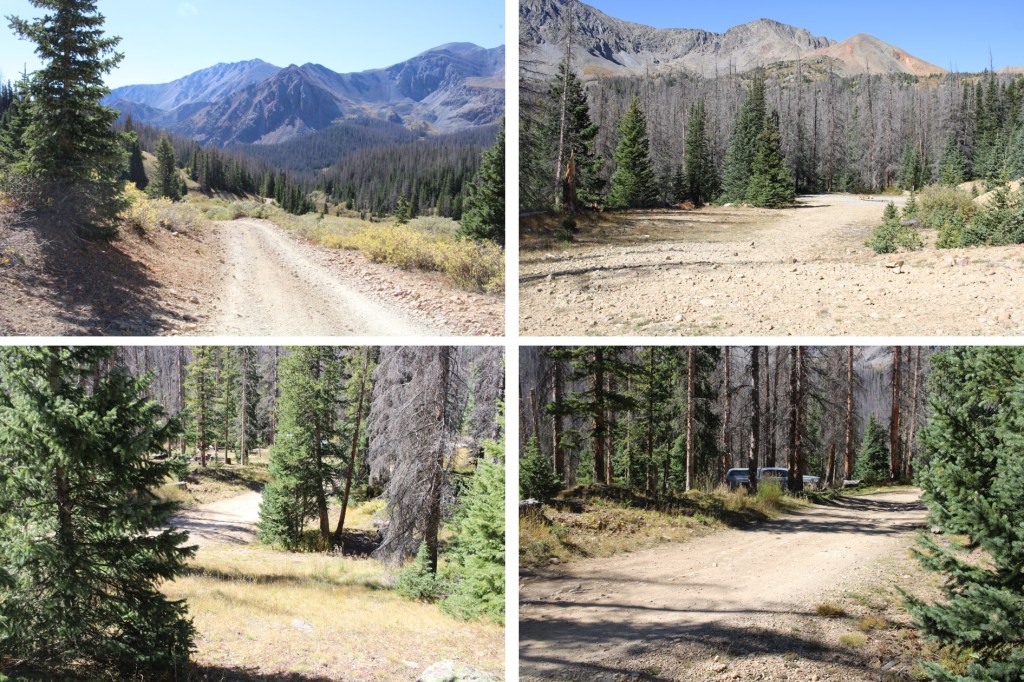
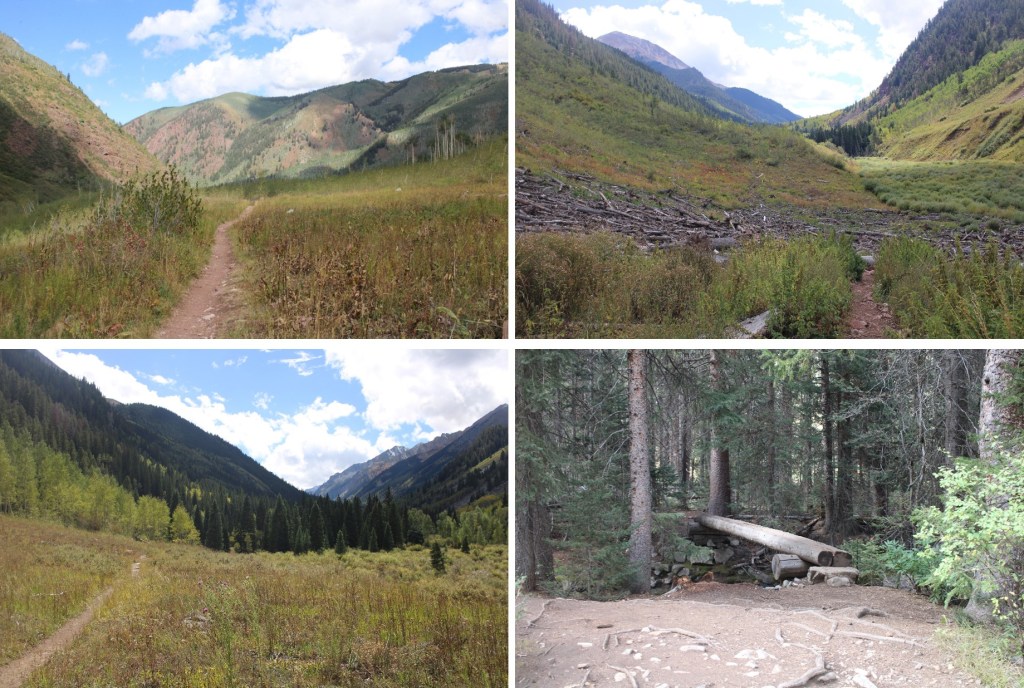
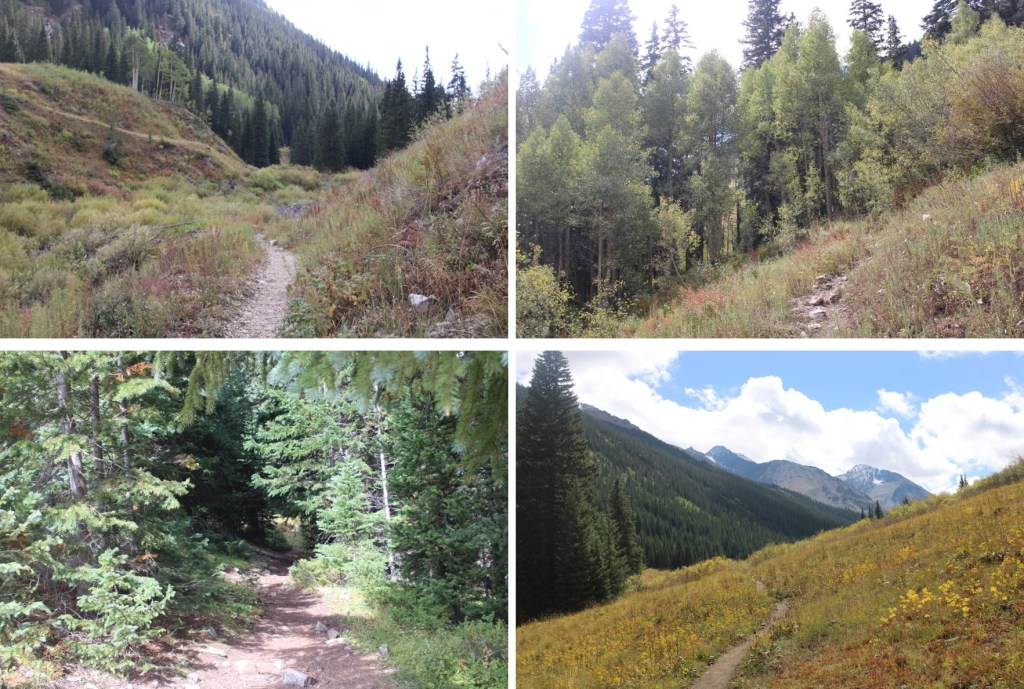
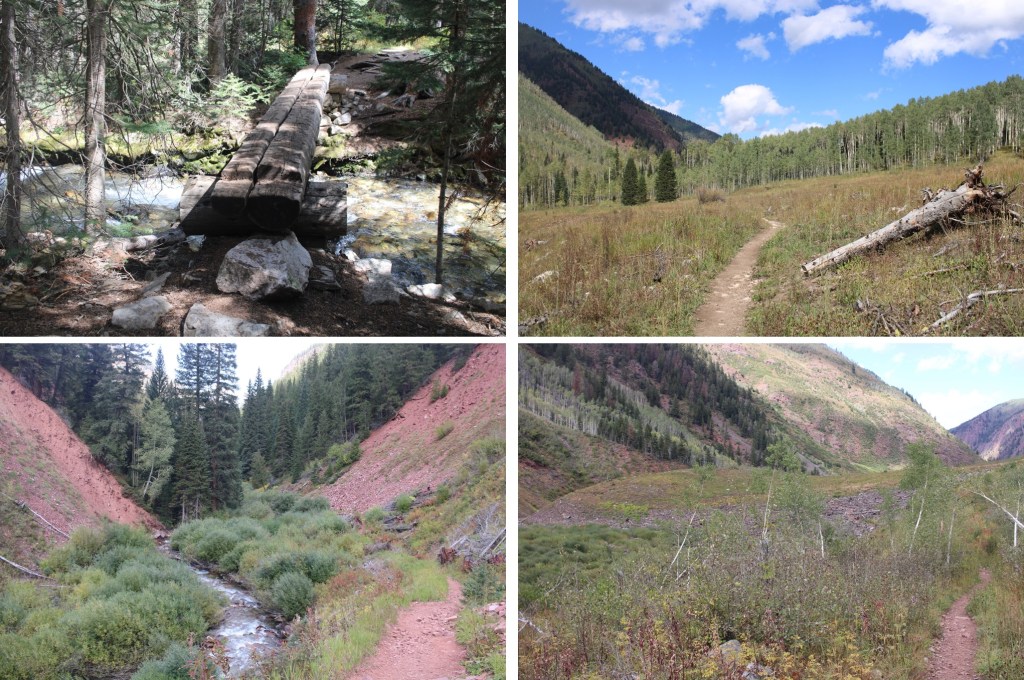
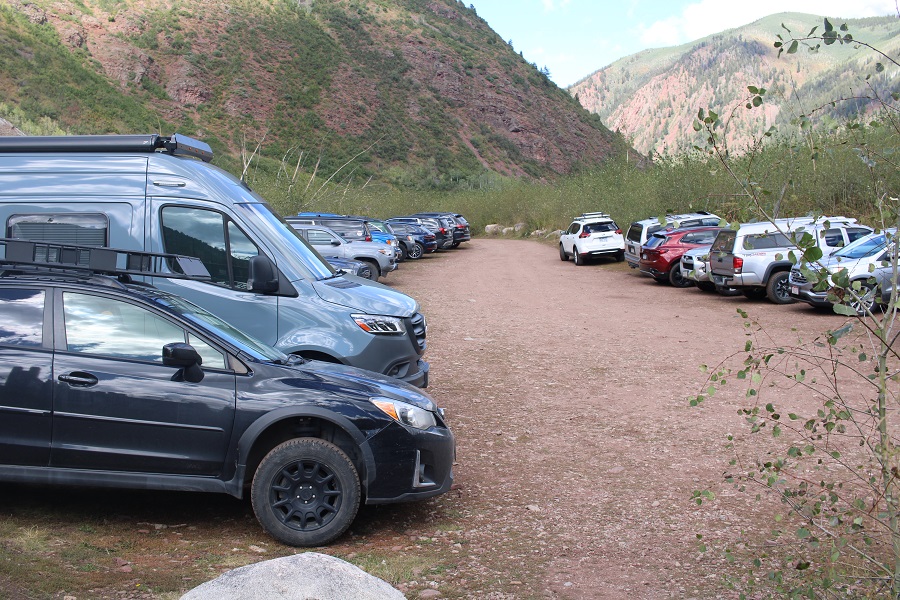
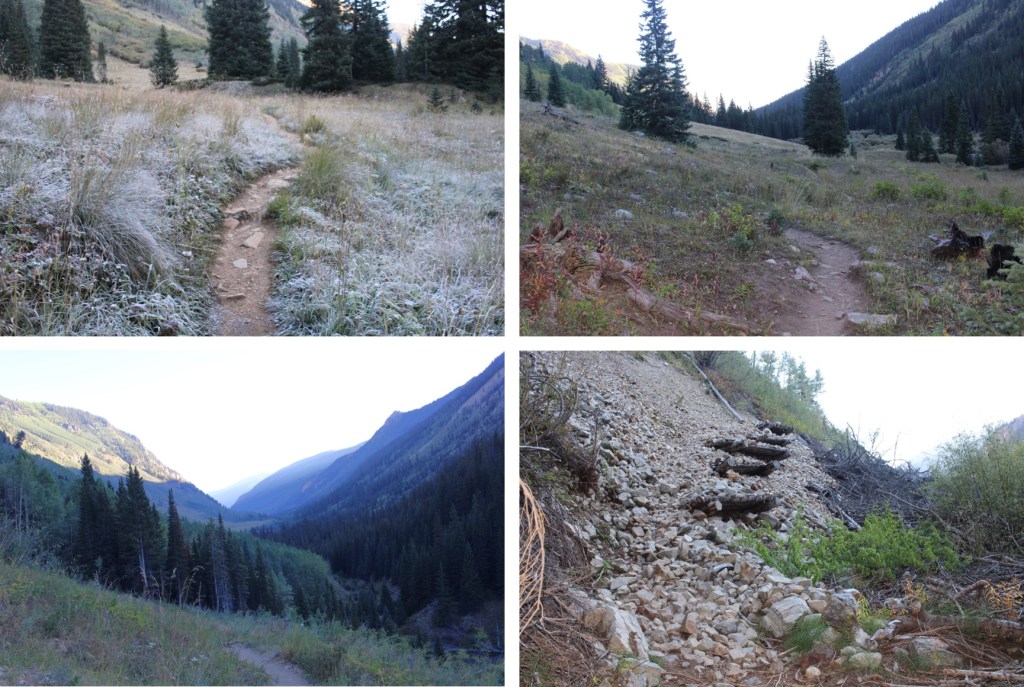
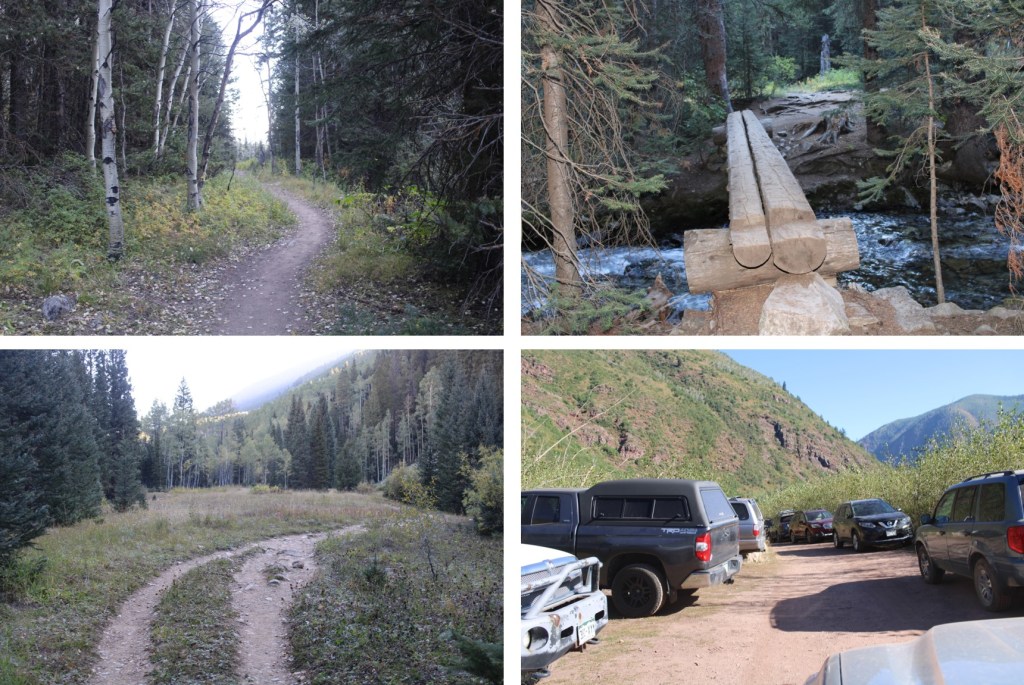
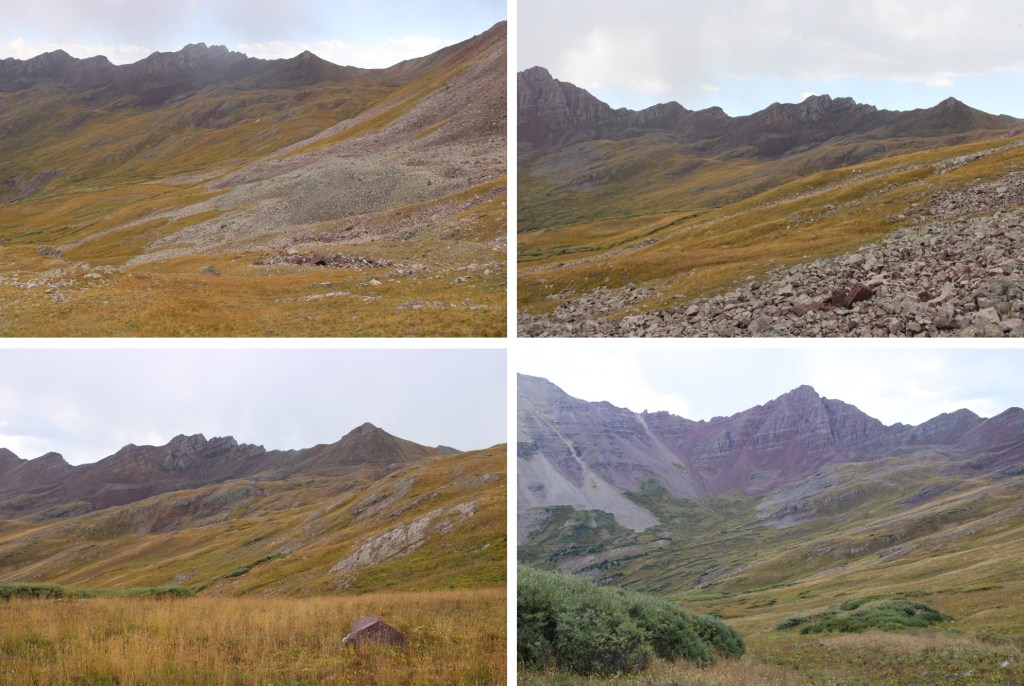
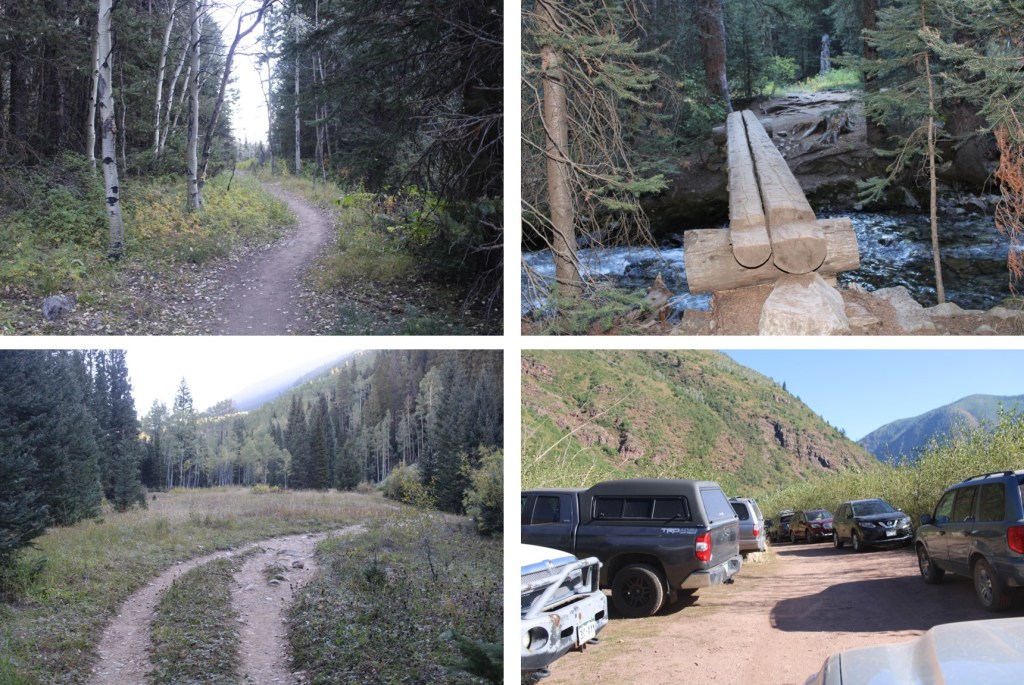
I stayed there for the night, but here are some pictures of the 6 mile hike out to an overflowing trailhead full of vehicles.




















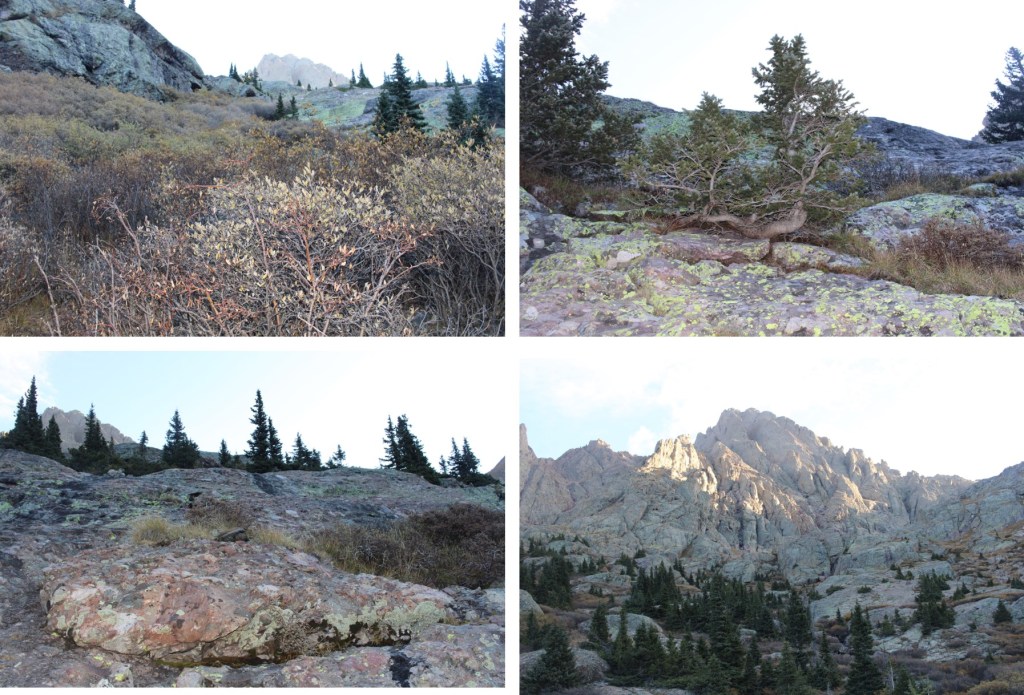
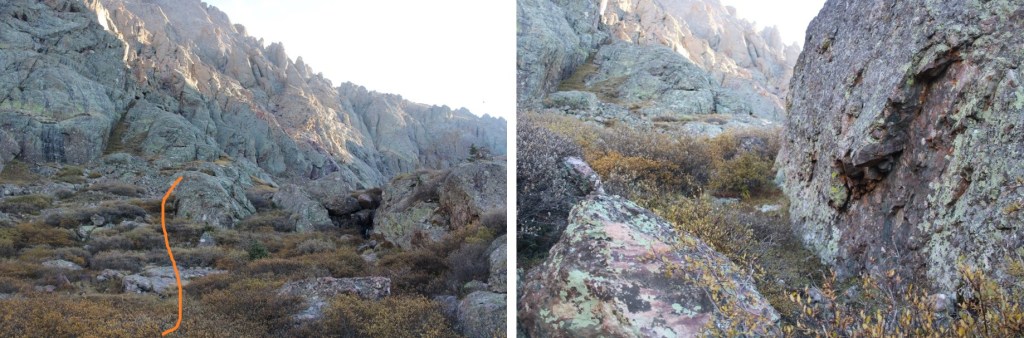

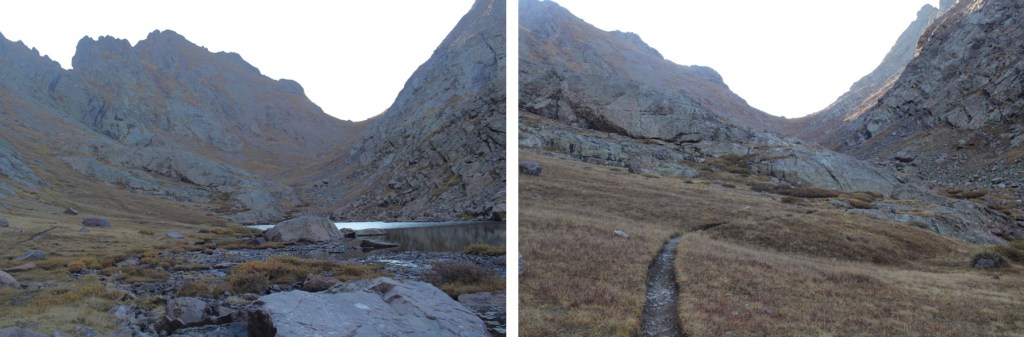
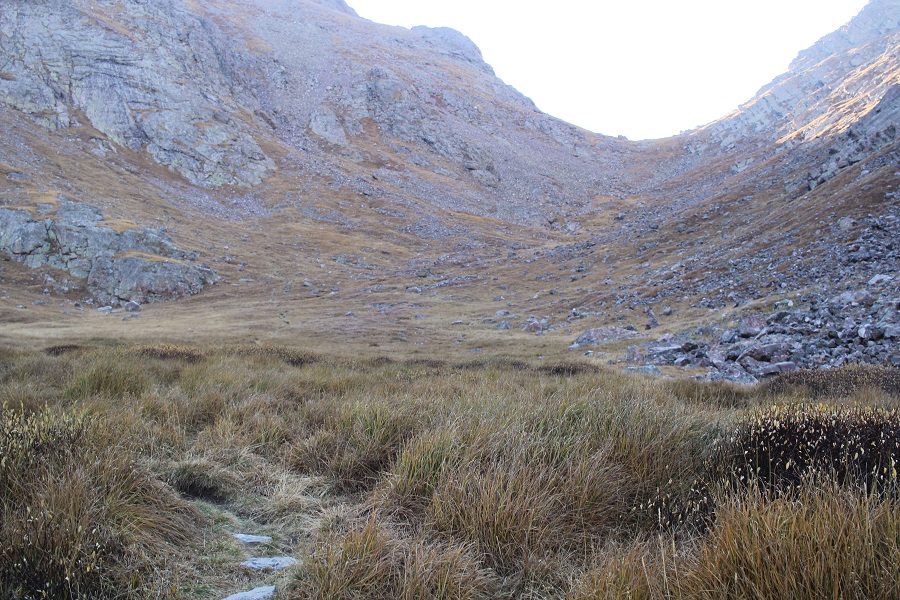




































































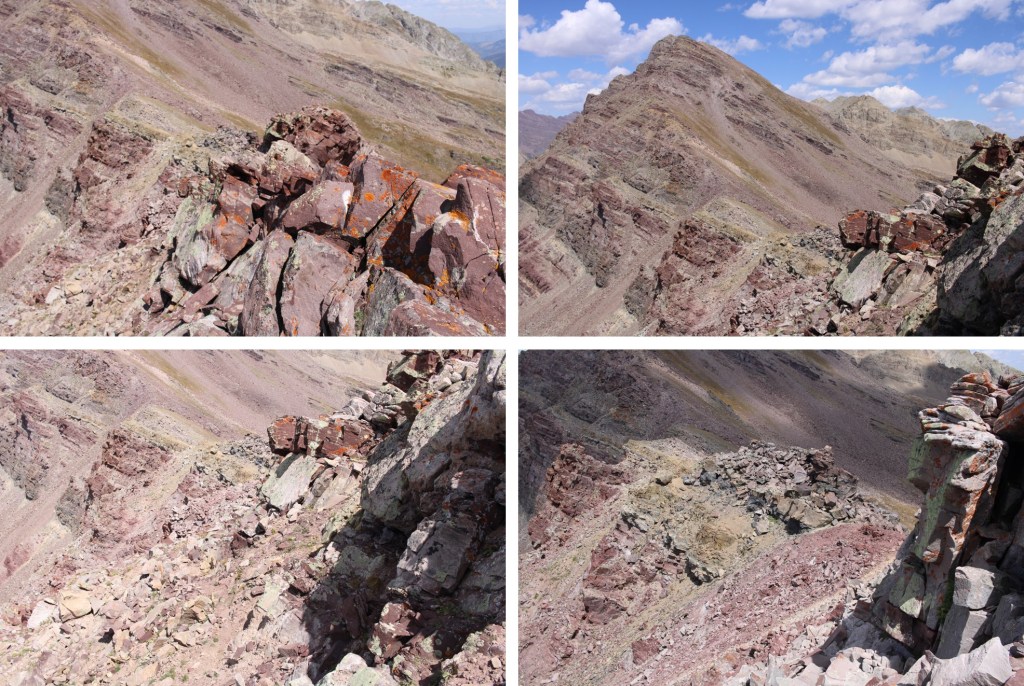
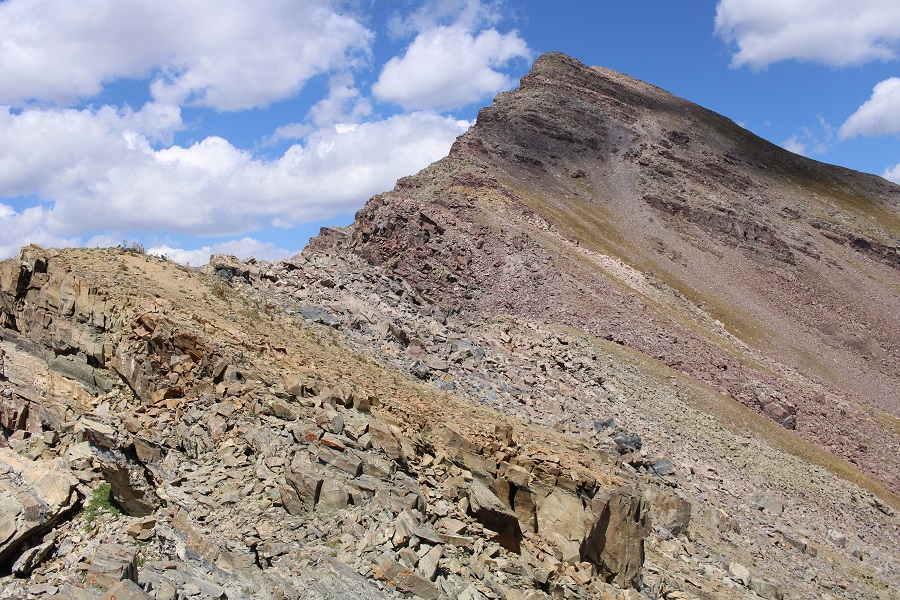
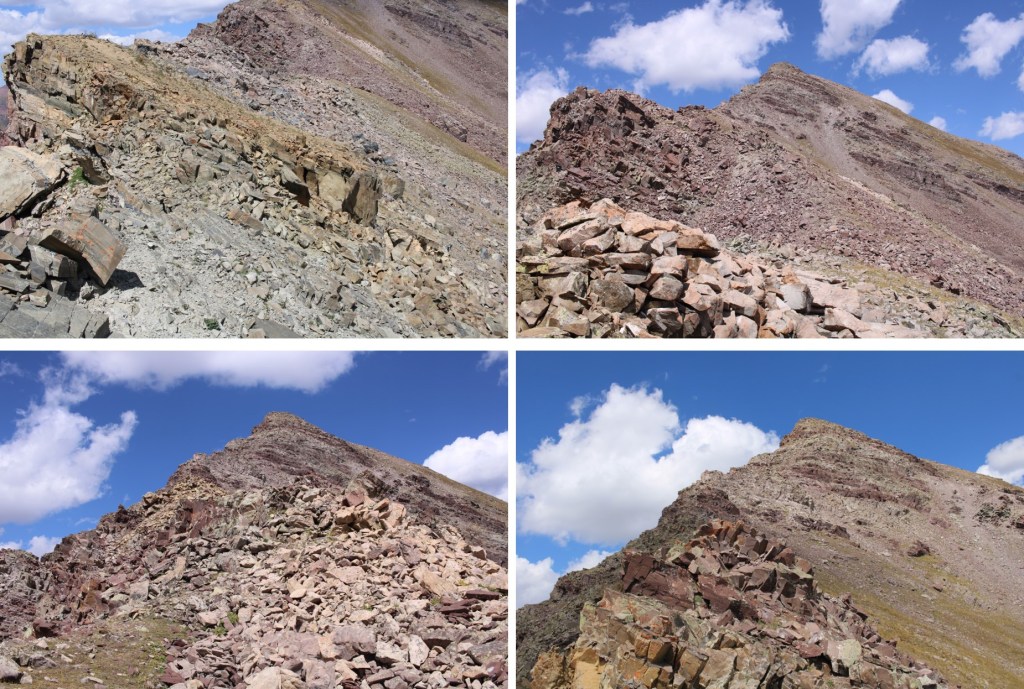
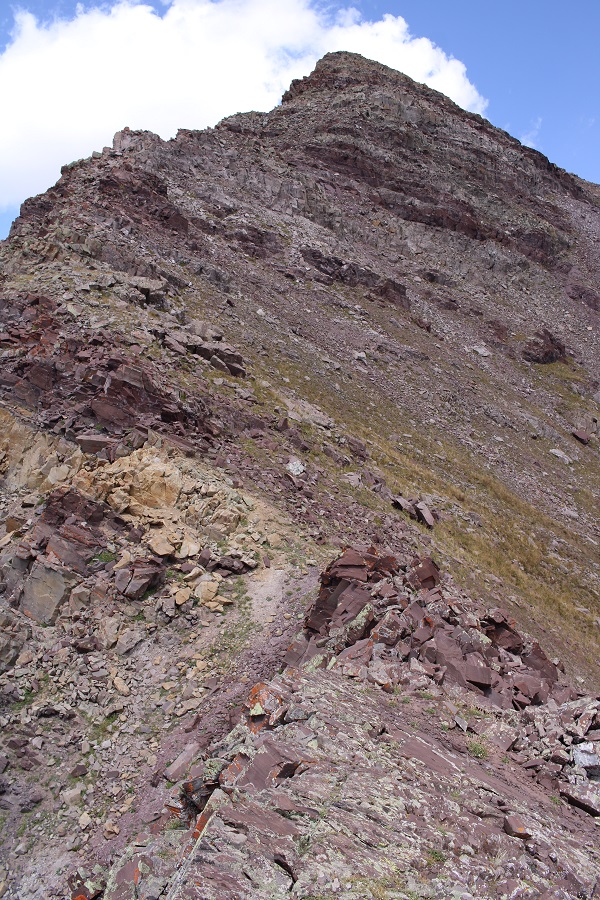


 Wild Wanderer