Click on a menu, or use the search feature to access hundreds of trip reports. Contact me if you'd like more information about a hike, or a GPX file
Author: Laura M Clark
Laura has summited over 500 peaks above 13,000' solo, including being the first woman to solo summit all of the Colorado 14ers, as well as the centennials. After each hike, she writes trip reports for each one and publishes them on her blog, which is read by fans all over the world. Author of Wild Wanderer: Summiting Colorado’s 200 Highest Peaks, which is available to purchase on Amazon.
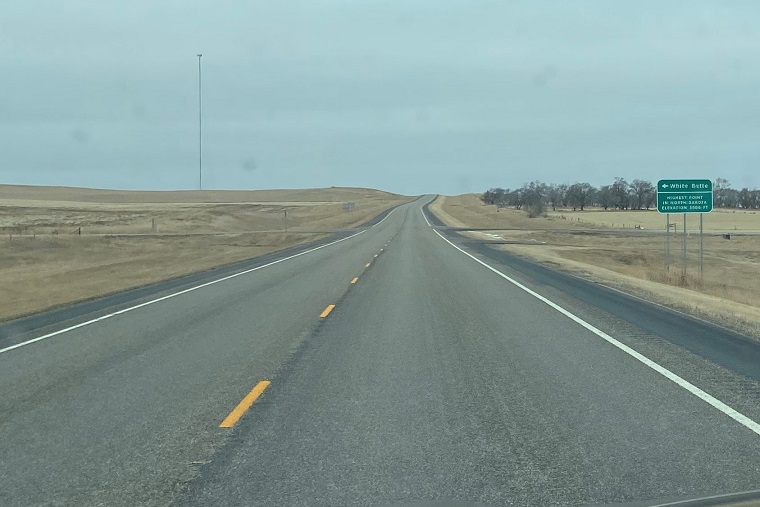
This highpoint is a drive up, and something I did on the tail end of hiking the highest points in North Dakota and South Dakota. I hiked Black Elk Peak in South Dakota that morning, then drove to Panorama Point in Nebraska.
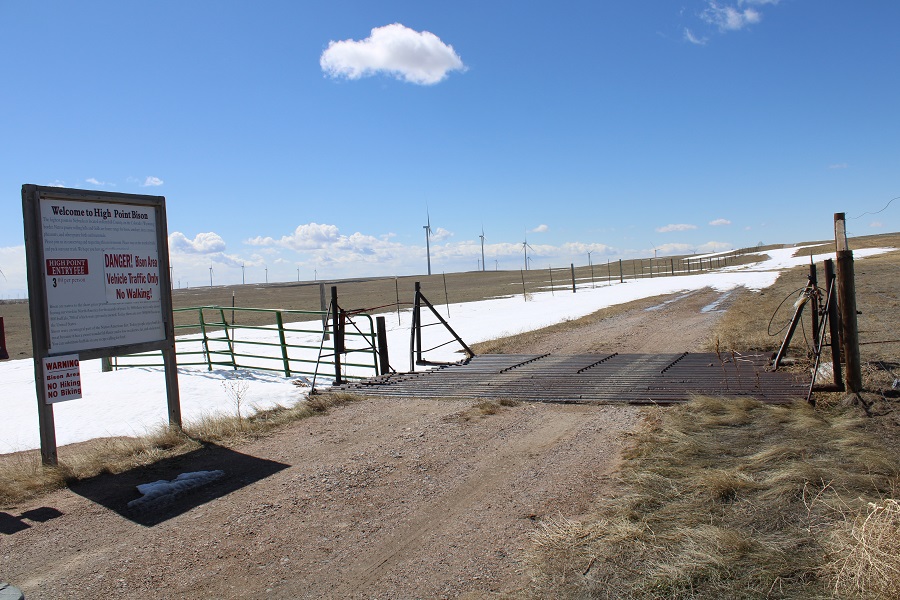
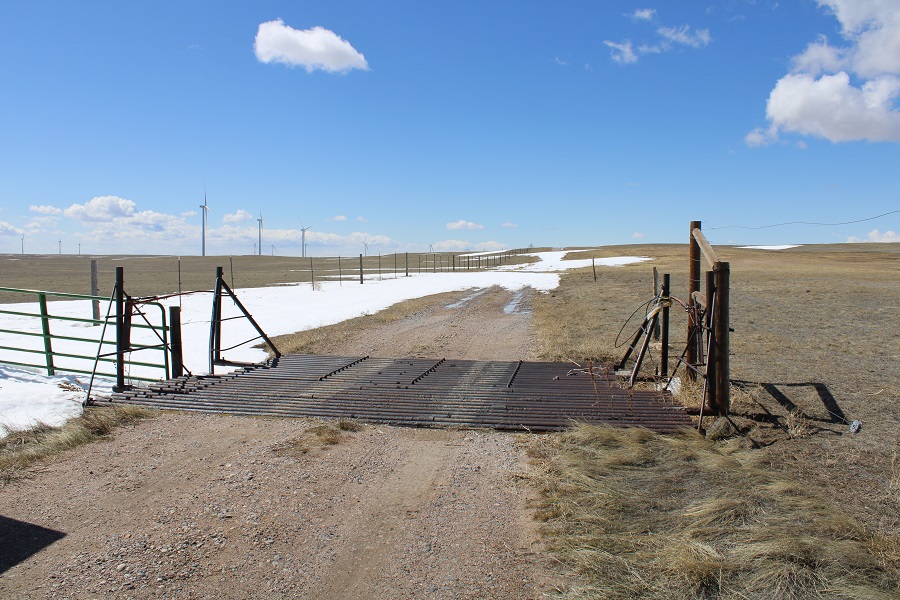
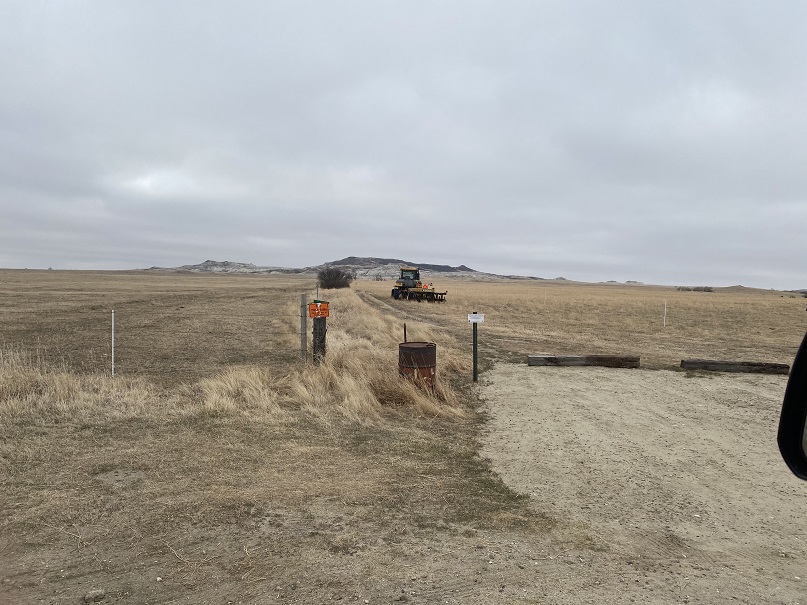
The drive was simple, until I made it to the cattle guard / gate that gains you access to the actual high point. Here’s what the gate looks like:
They have a very informative sign at the entrance. Read it before you go in, and pay the $3 per person fee (there were no envelopes, so I just put 3 dollars into the slot). Also, in case you missed it, NO FOOT TRAFFIC.
There were warnings of bison, but at this time of year they must have been in another area. There was a lot of evidence they’re here regularly however, in the form of established game trails and lots of bison chips.
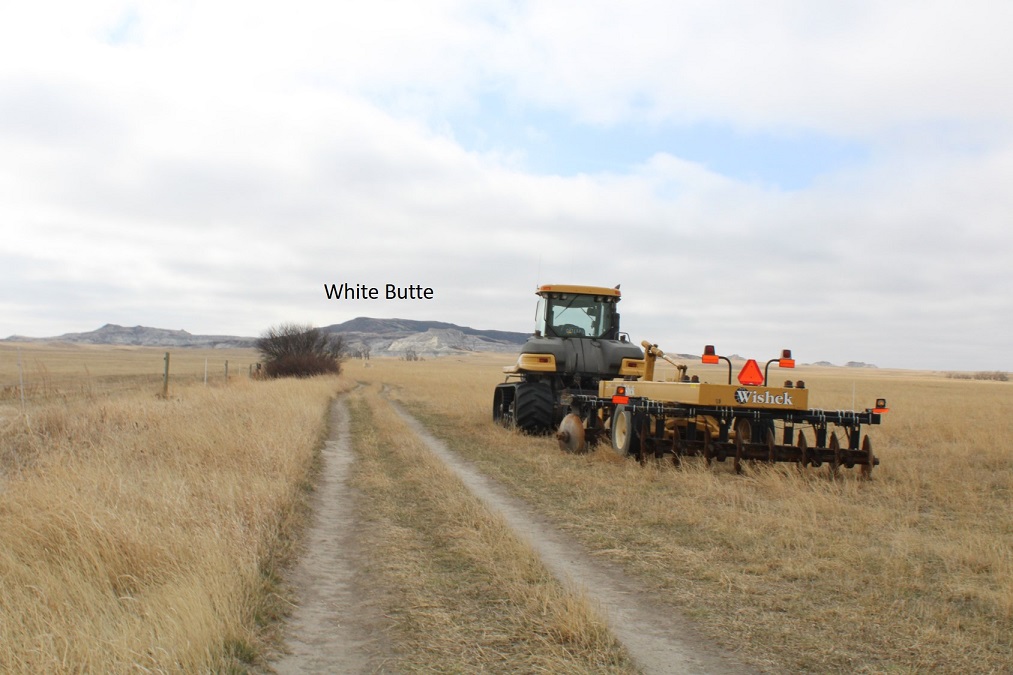
I passed the gate and put my truck into 4WD: there wasn’t a lot of snow in the area, but all of it seemed to be drifting directly on the dirt road. At this point I wasn’t sure if there were bison present or not, and I didn’t want to get stuck with no way to get back.
I drove along the road for a mile to the highpoint (circled in red).
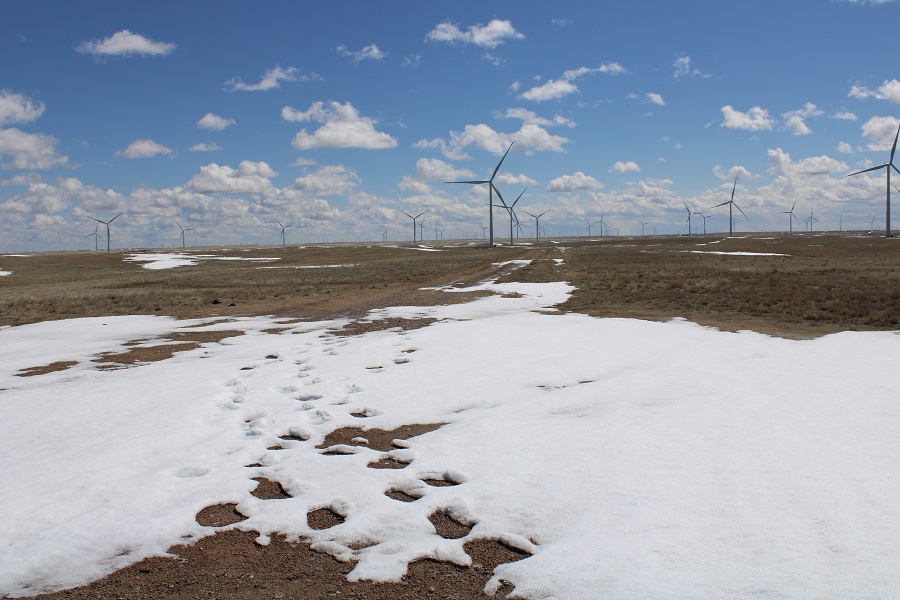
There isn’t much around here but open grassland and windmill farms
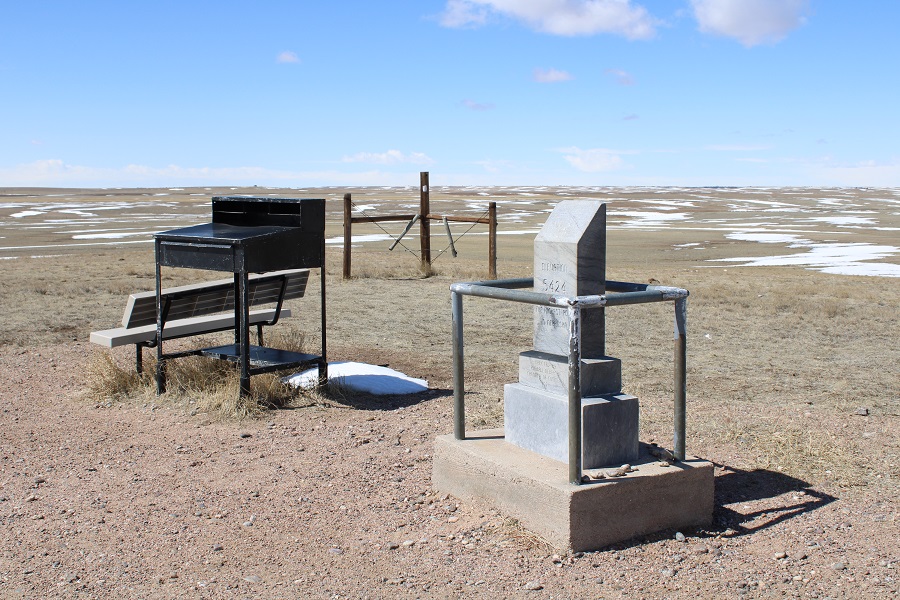
Here’s the ‘summit’
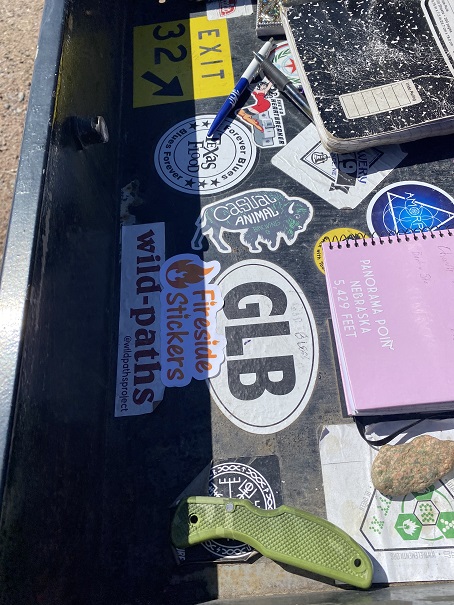
I got out of my truck, left a sticker in the register, and took a few pictures
Panorama Point:
It was windy and I really wanted to get back home after a lot of driving in the past 2 days, so I turned around and drove back to the gate.
When I got there, my GPS told me to head out a different direction than I’d driven in, which wasn’t odd because I’d driven from South Dakota and was heading back to Colorado. I was a bit nervous some of the dirt roads wouldn’t be passable, but I had plenty of gas, so I crossed my fingers and said a prayer to the GPS/cell service gods and was on my way.
As I was driving somewhere between Nebraska and Colorado, many, many miles from a paved road, I actually saw a cow give birth! I stopped my truck in the middle of the dirt road and went over to check on mama and baby. I was a little worried because the calf initially didn’t move, but mama licked him a few times and he started stirring. I congratulated mama and left them alone. So cool!!!
Mama and Calf:
What a fantastic way to end a great road trip/highpointing weekend!
The drive from North Dakota got easier as the miles went on. It started out with lots of snow, but by the time I made it to Custer State Park the snow had ceased. Once in the Black Hills I stopped at a Subway to get a sandwich, and a Starbucks to get my mug. I was surprised at how many establishments in South Dakota were closed. I’m hoping they were closed because it’s off season, and not due to Covid. I stopped at the Ranger Station to pay the entrance fee, and was surprised to find it was $20 (that seems kind of steep for a day visit).
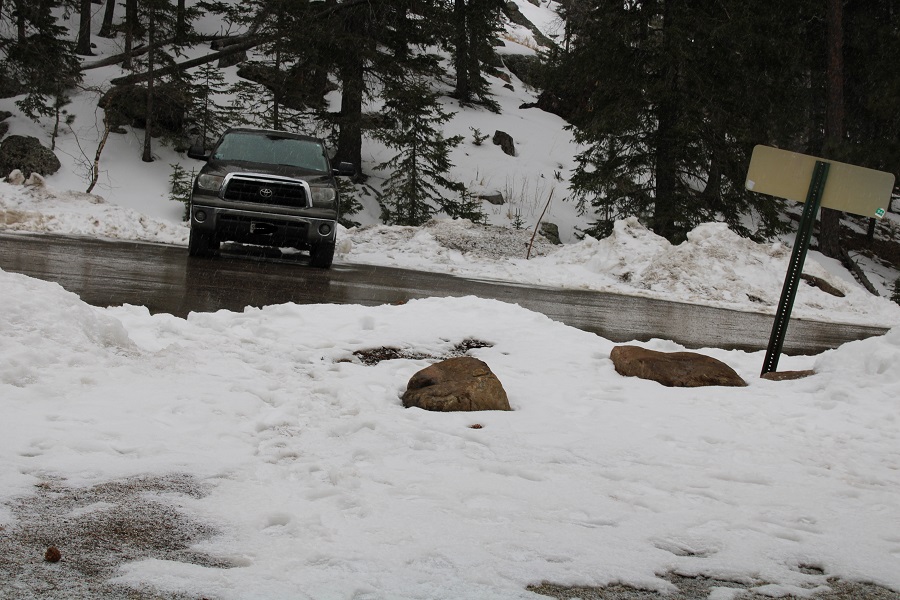
I had wanted to ask if it was ok to sleep in my vehicle overnight, but there was no one at the Ranger Station. There was an information pamphlet, and I scoured it, looking for information on camping, or if I could stay overnight and boondock. It said curfew was 10pm-6am (strictly enforced) but other than that, no rules on sleeping in my truck. I paid the $20, which gave me entrance to the park for 1-7 days, and drove to the Sylvan Lake picnic area. I drove around looking for a spot, only to find the parking lot almost full. The dirt lot was inaccessible due to mud, and there seemed to be an awful lot of people walking around.
I finally found a spot I could back into, and realized why the lot was full: the local police were handing out food and supplies (laundry detergent) to local Lakota. I saw them with boxed up meals, lining up to receive them and eating them in their vehicles before driving off.
Sylvan Lake appeared frozen, and I was astonished to see a family, 2 parents with young kids, walking single-file over the ice. It’s currently spring and because it was so late in the season I was worried for their safety, but they weren’t the only ones doing this: I saw several more parties venture out onto the ice, and all left unscathed. They made me nervous.
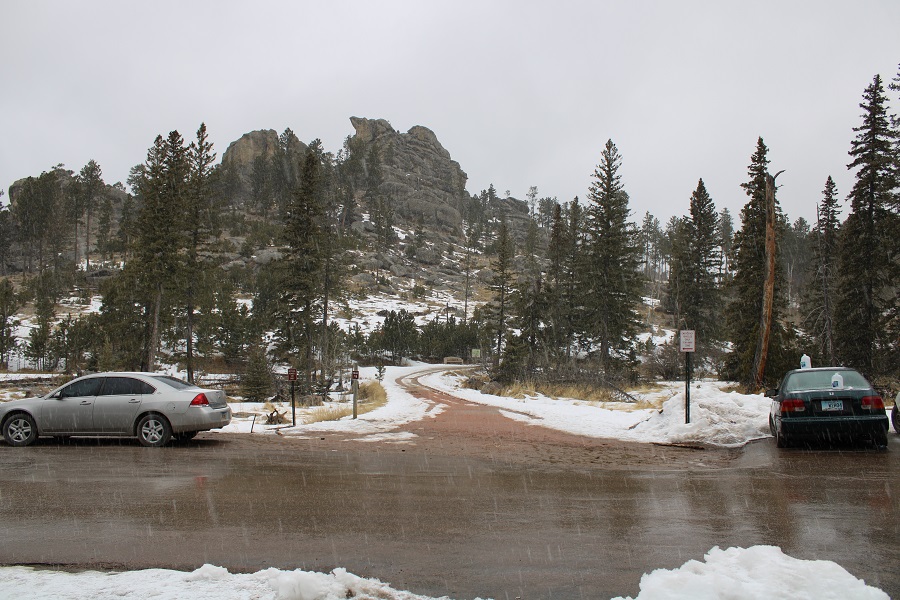
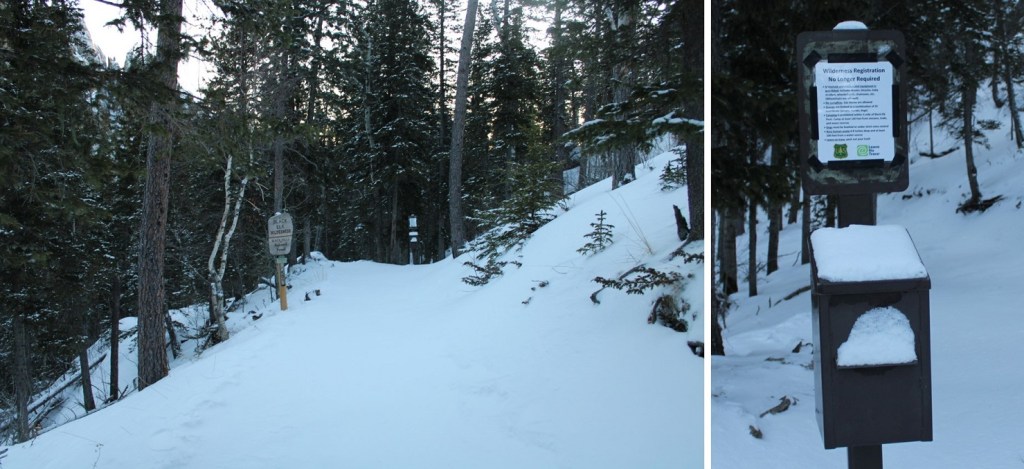
I sat in my truck and ate my sandwich and people watched as I jotted down the day’s notes in my journal. I got out and walked around to find the start of the trailhead, and it started to snow. Here’s a look at the trailhead entrance in the daylight
I went back to my truck and decided to read until it was time for bed.
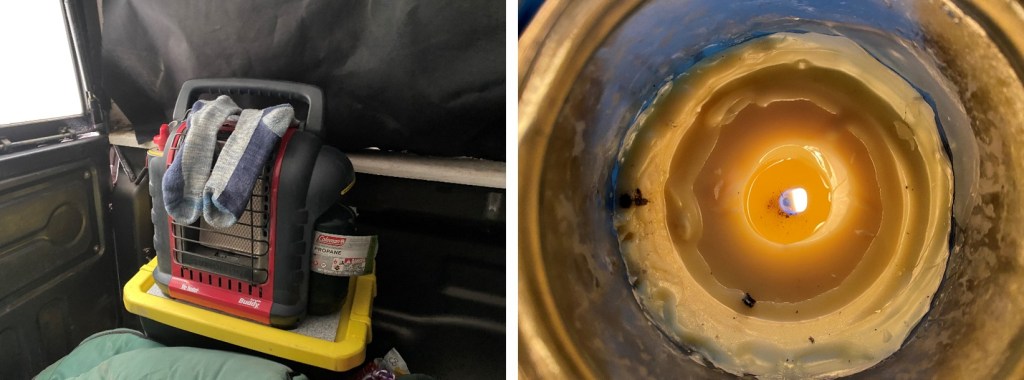
I watched the snow, and turned on my heater for a bit as I read
I have a heavy-duty indoor heater, and it usually works so well I only keep it on for a few minutes before turning it off. I also lit a candle because I like candles, and even learned a little something: When the heater burns up all the oxygen the candle will go out. Also, matches won’t light. This reminded me a bit of a canary in a coal mine, and I found it useful information. I turned off the heater and was able to re-light the candle about 5 minutes later, using a flashlight in the meantime. I used the turned off heater to dry my socks (I LOVE this heater!!!)
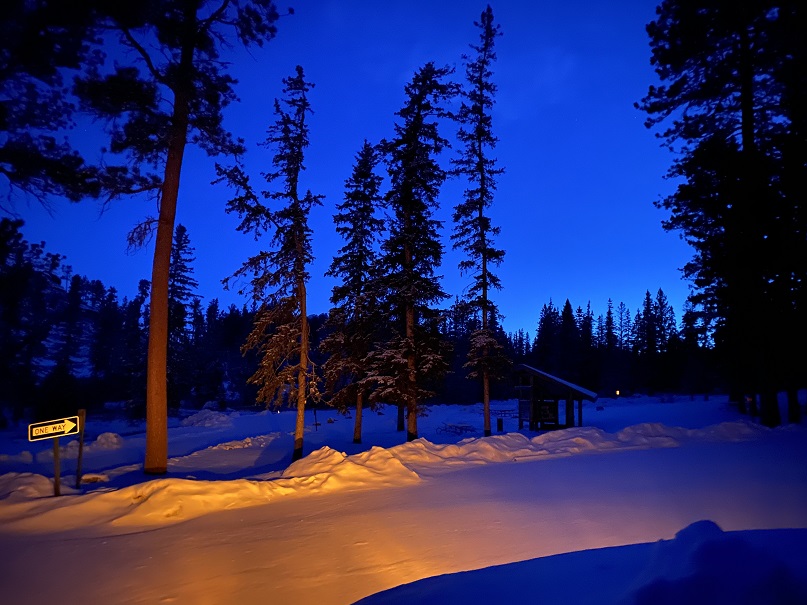
As the sun began to set the snow picked up and the parking lot emptied. I heard a couple of Canada geese fly in, and then honk to each other for a good half hour. I enjoyed some whiskey and thought to myself how cool it was to be inside of this metal box, deep in the Black Hills, as it was snowing. With the heater off I could now see my breath.
I went to bed prepared to face the frigid night, and also the hike in the morning: I was wearing my fleece lined pants, puffy and outer jacket, mountaineering gloves, balaclava, and wool hat. I snuggled under my 3 sleeping bags and crocheted blanket, and fell asleep.
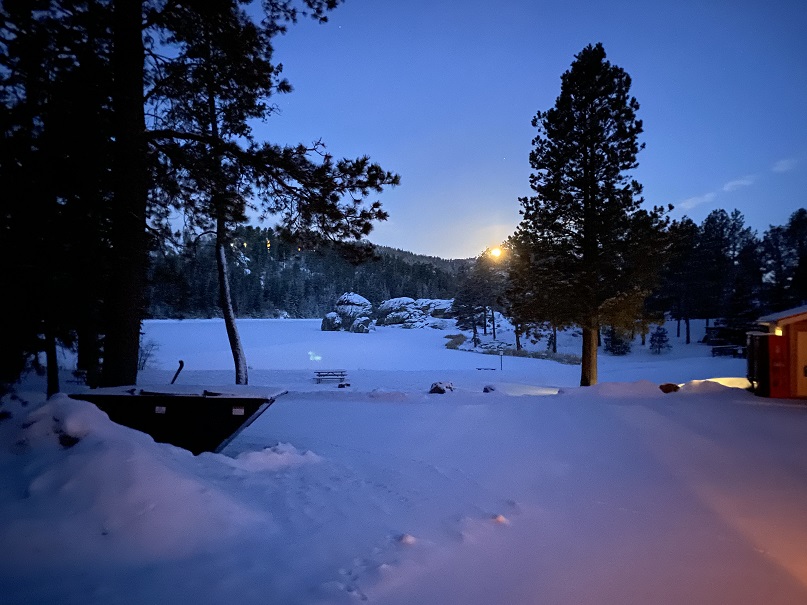
I didn’t wake up until my alarm went off at 5:30am. I peeked outside, and the moon was just setting over the ridge behind Sylvan Lake. Also, there was much more snow than I’d anticipated! I was glad I’d decided to park here overnight, because I’m not sure what the drive in would have been like this morning (but I could guess: not fun). Funny how a 20% chance of snow can turn into 4-6 inches.
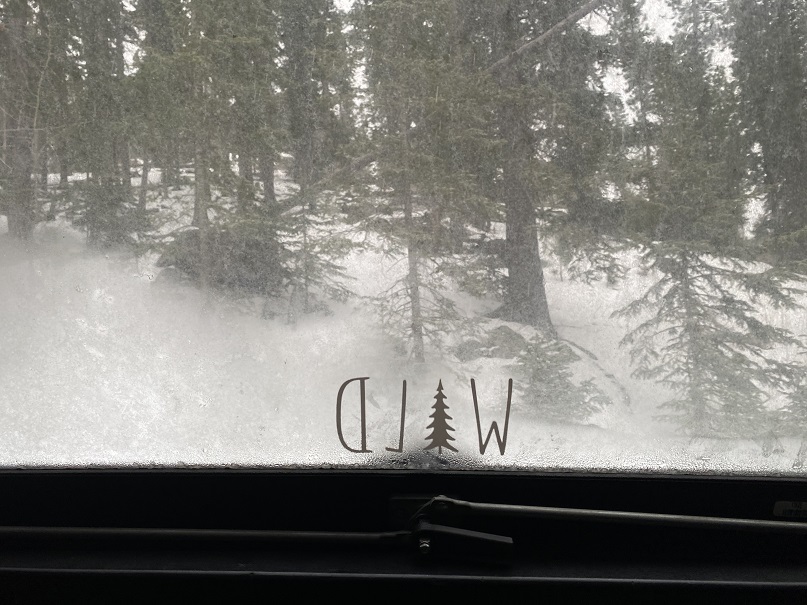
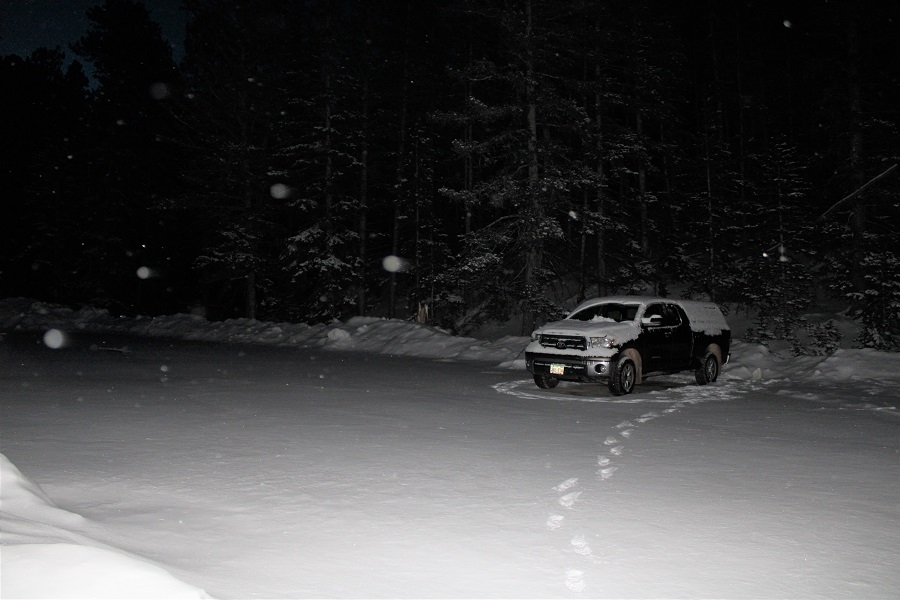
I went to open my back window, and it wouldn’t budge. Hmm. I must have locked it last night? I turned the handle to unlock the window, and it still wouldn’t move. That’s when I realized the ice and snow had frozen the window shut! Oops! I just needed to make sure it was indeed unlocked, and was then a little more forceful. I pried open the window, and stepped out into several inches of fresh snow. I actually got in from the passengers’ side door, so as not to get snow on the front seat while I got ready. I turned on the truck, blasted the heater, and had my windshield wipers clear away the snow while I put on my hiking boots and ate a few dried mangoes for breakfast. The truck’s thermometer said it was 23 degrees outside. Not bad: I’d been warm all night.
When I went to bed there were still dozens of vehicles in the lot, but now, my truck was the only one.
I was waiting for the sun to rise, but as soon as it was light enough for me to see without a flashlight I hit the trail, around 6am. But first, I used my scraper to clear off my truck, to make my exit easier later in the day.
I took my snowshoes and ice axe just in case (they weren’t needed) and headed out to find the trailhead
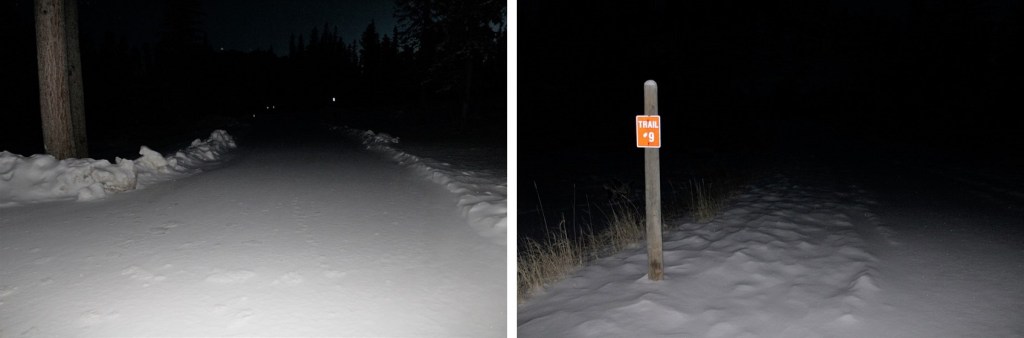
The trail to Elk Peak has several different names: Elk Peak Trail, Harney Trail, and Trail #9. They all go to the summit.
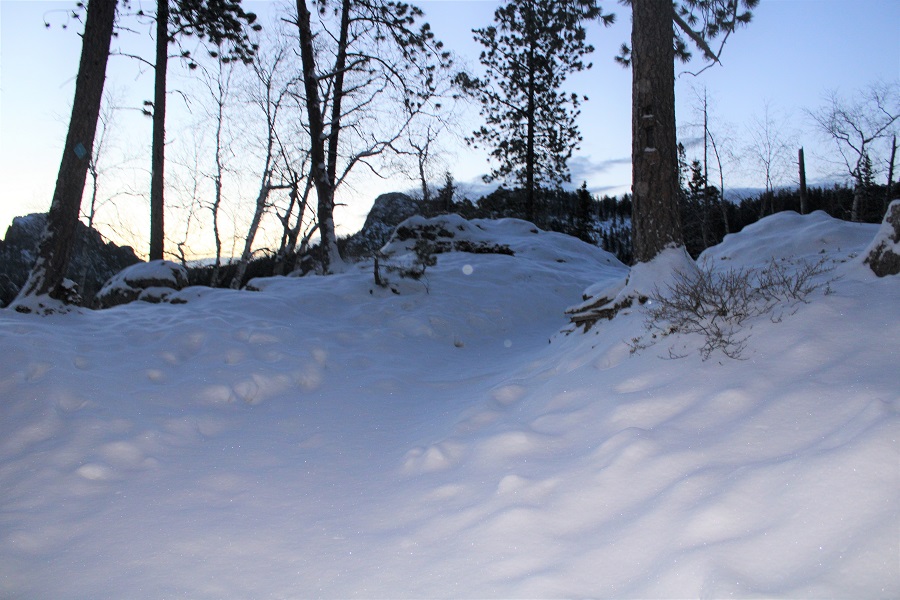
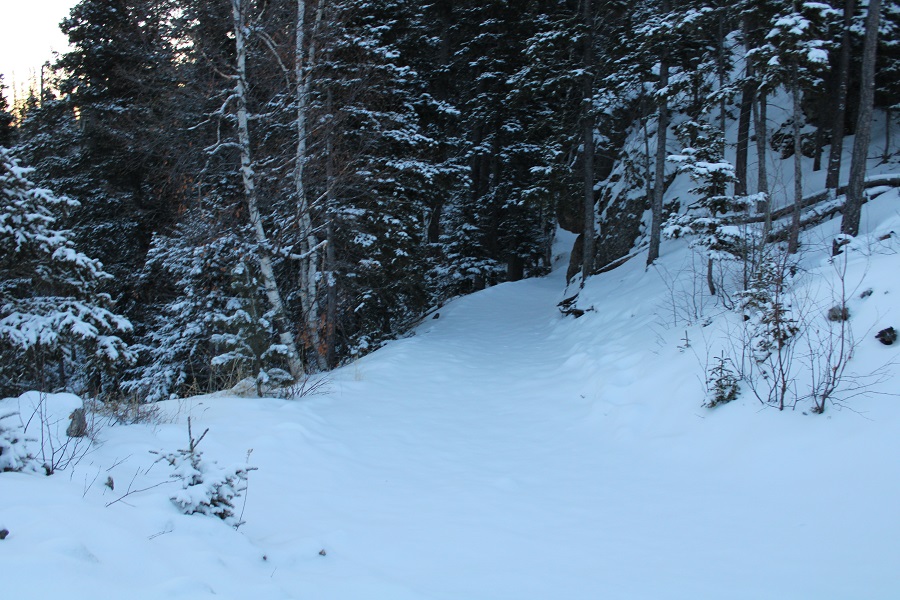
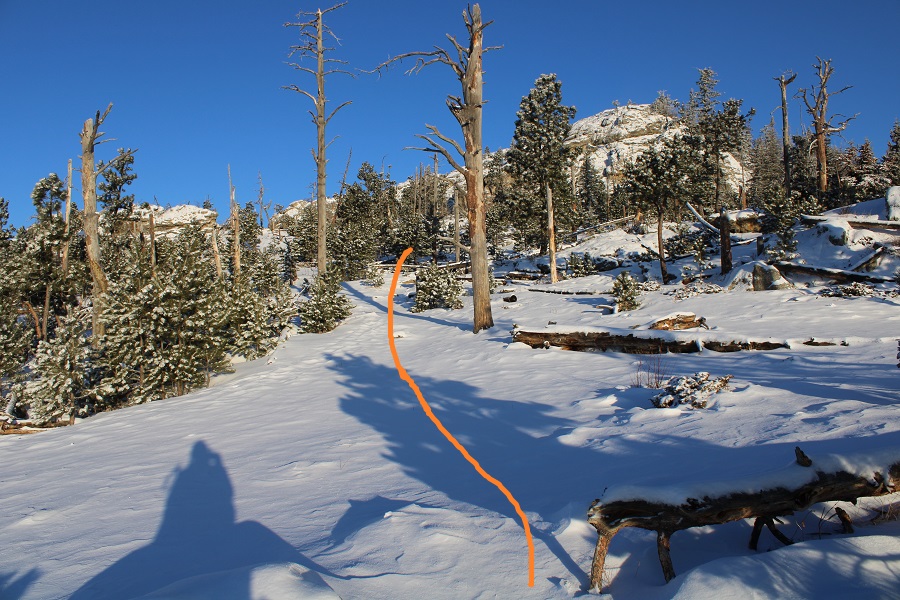
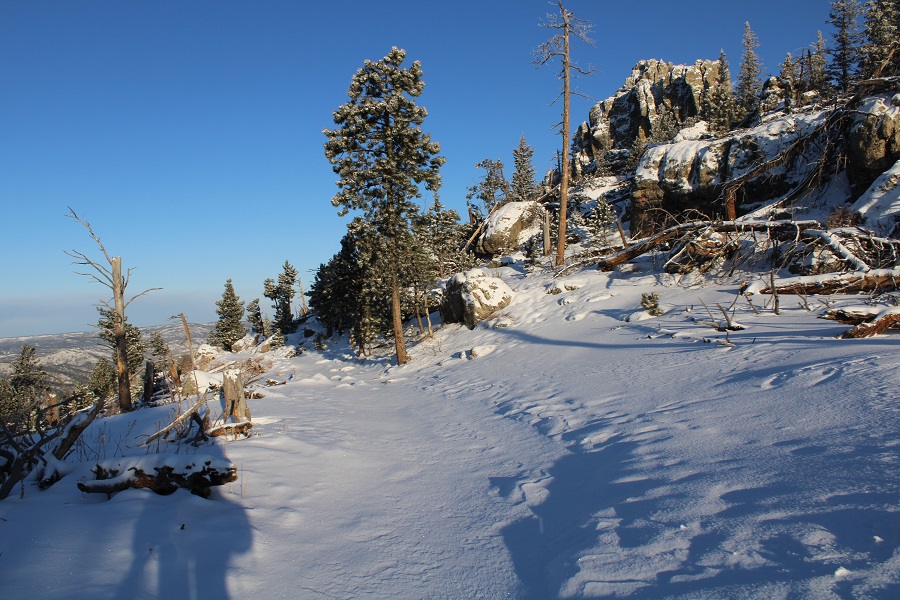
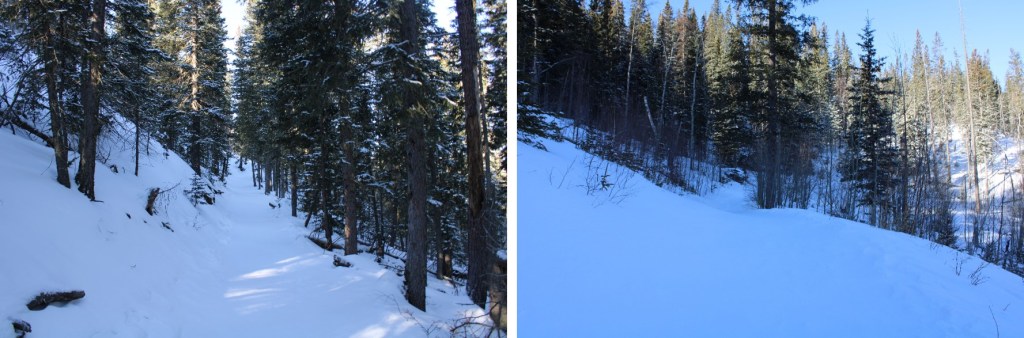
The trail was covered in snow, so I wasn’t sure if it was a trail or a 4WD road, but one thing was for sure: it was easy to follow, even with snow.
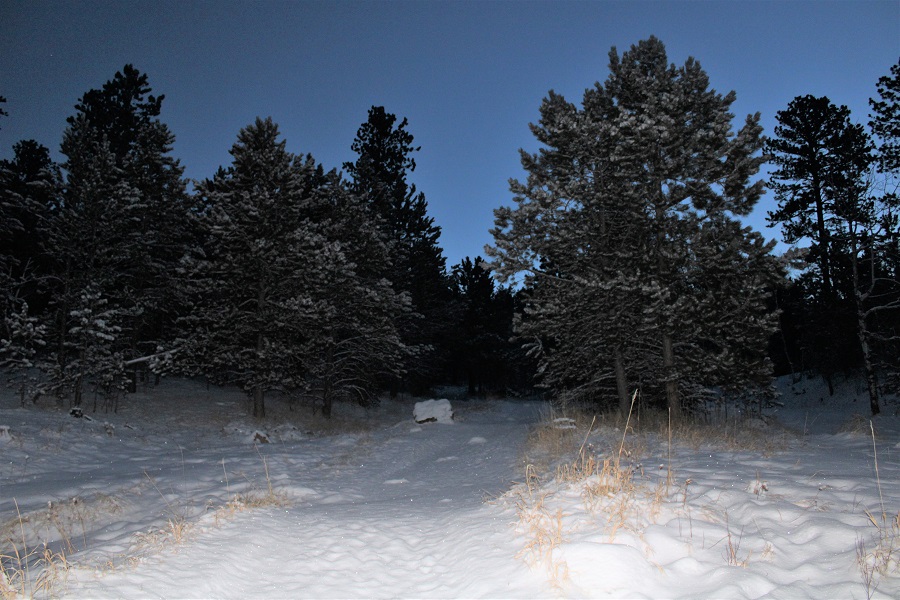
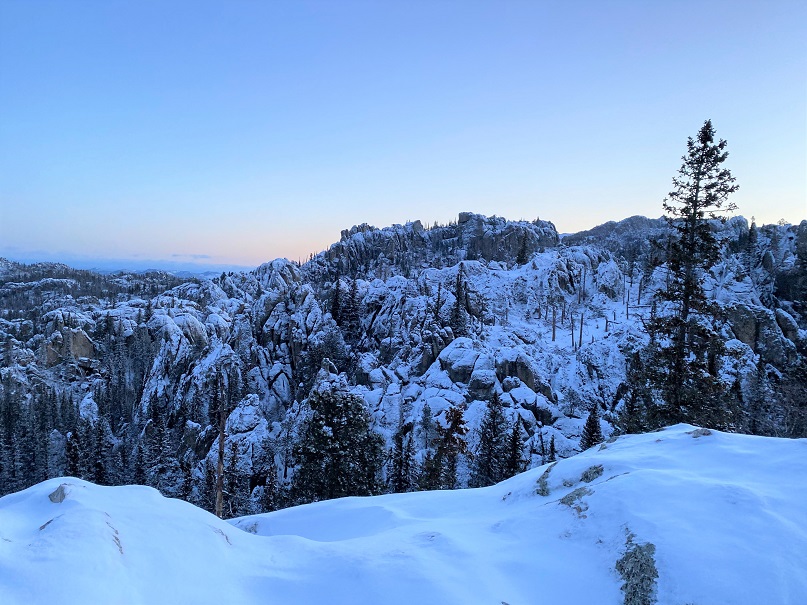
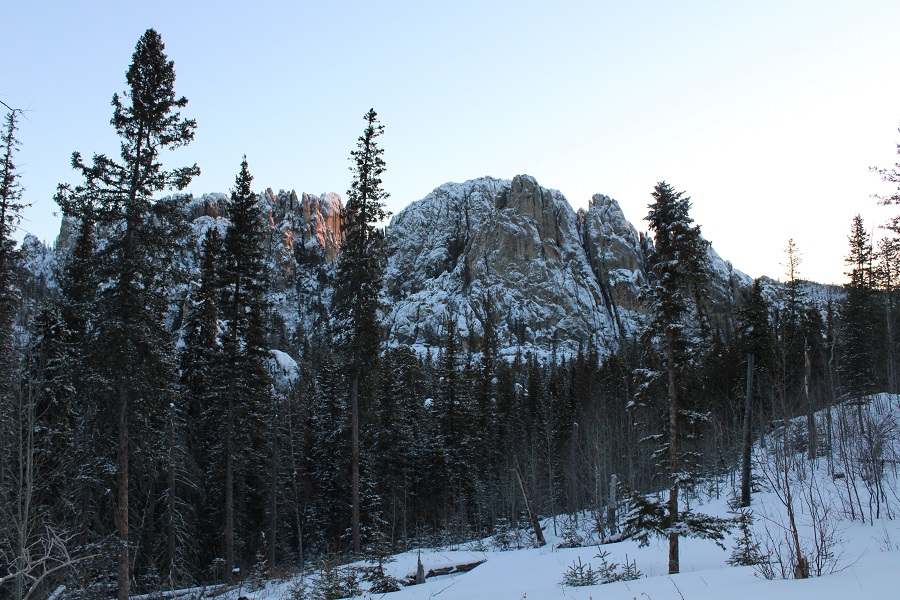
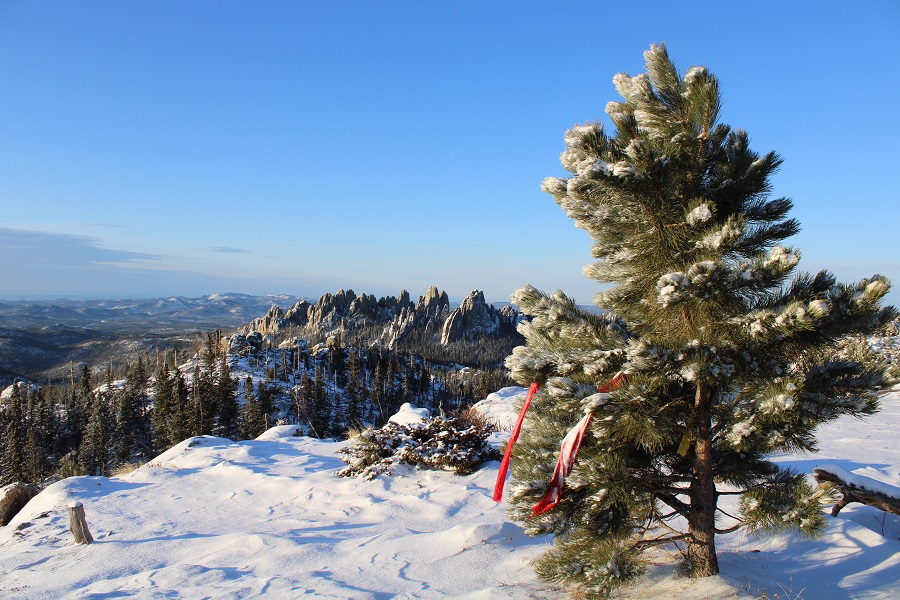
The views were beautiful as the sun began to rise
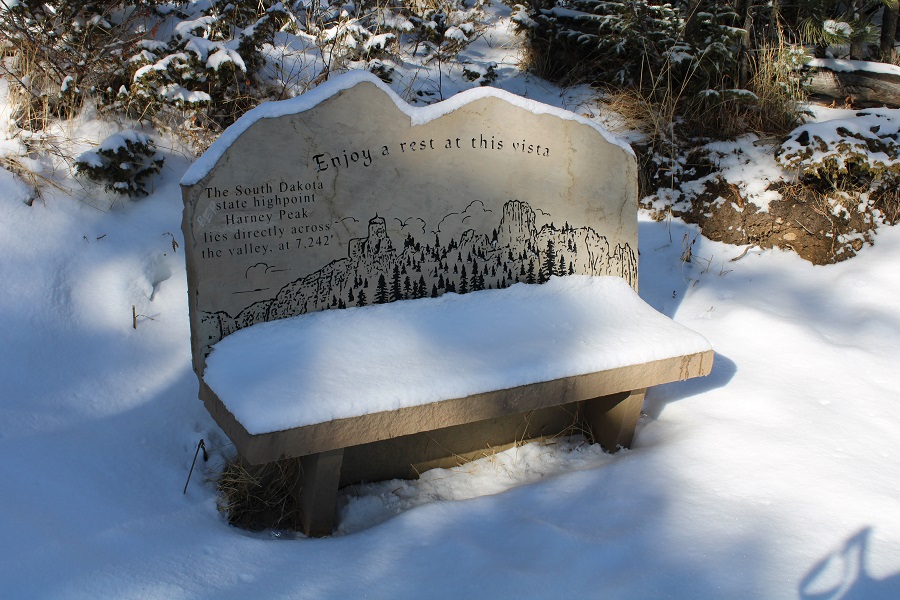
I continued following the class 1 trail, and came across a bench
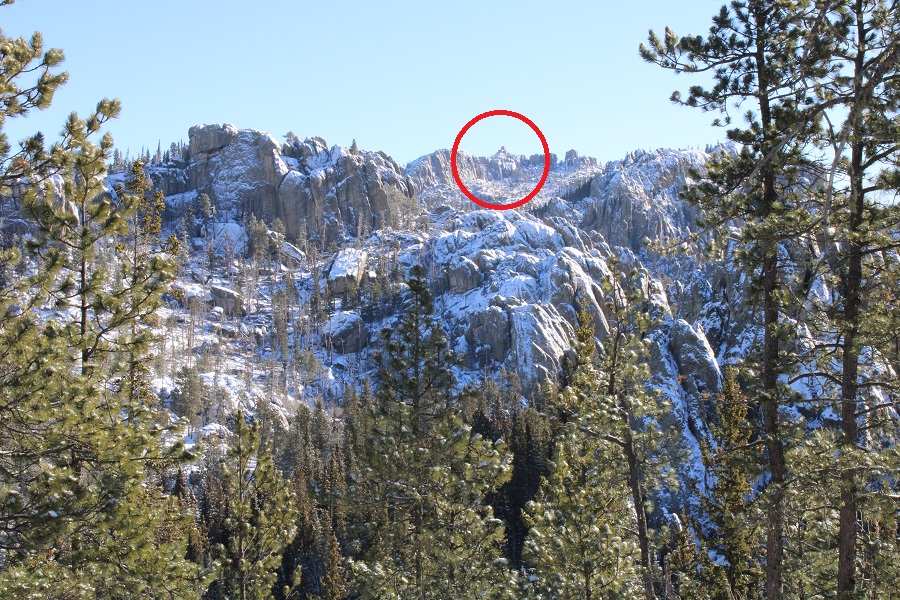
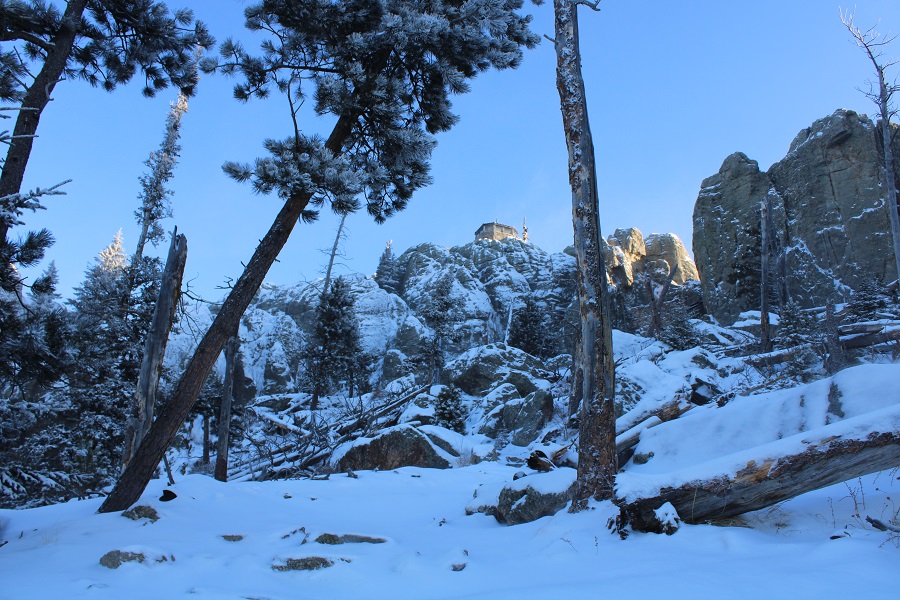
Directly across from the bench you can see the summit tower (Harney tower). This is the 1 mile mark of the hike.
I continued on, and started seeing Lakota tobacco ties/offerings on the trees. Tobacco ties are basically prayer ties. They are to be thought of as a physical manifestation of a prayer. Each color of cloth represents something. Within the Lakota culture, a white cloth is used for a prayer for healing, a red cloth is used for our ancestors and a yellow cloth is used for giving thanks. Blue and green cloth can also be used.
I continued on, breaking trail
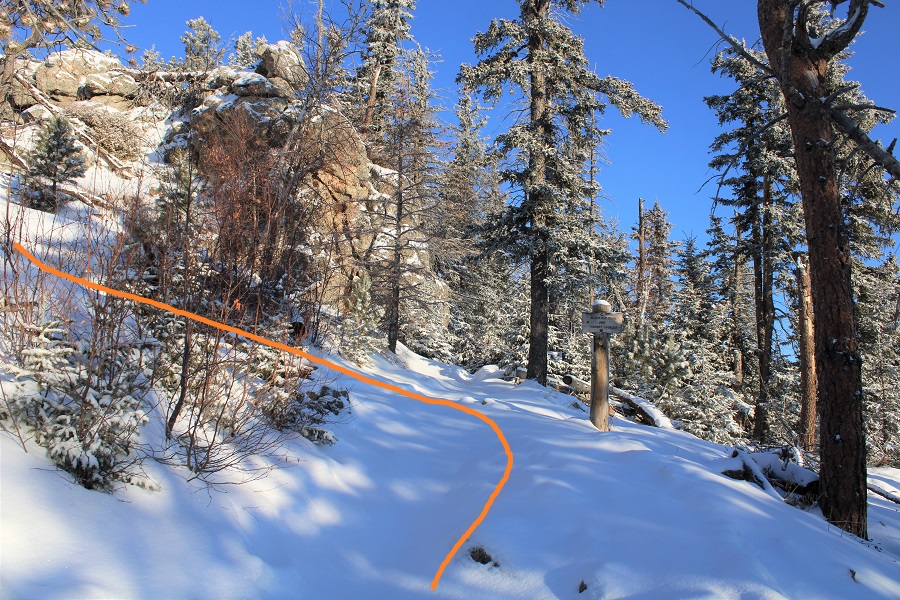
Until I came upon this sign. From here the trail lost 250 feet of elevation, before gaining elevation again
One thing about this hike: I loved being in the trees, but all the views were obscured.
The trail was very clearly marked, just be sure to stay on the Elk Peak Trail, Harney Trail, and Trail #9.
I came to a small plateau with a view and more prayer offerings. This is where the wind started picking up
Now I was headed north
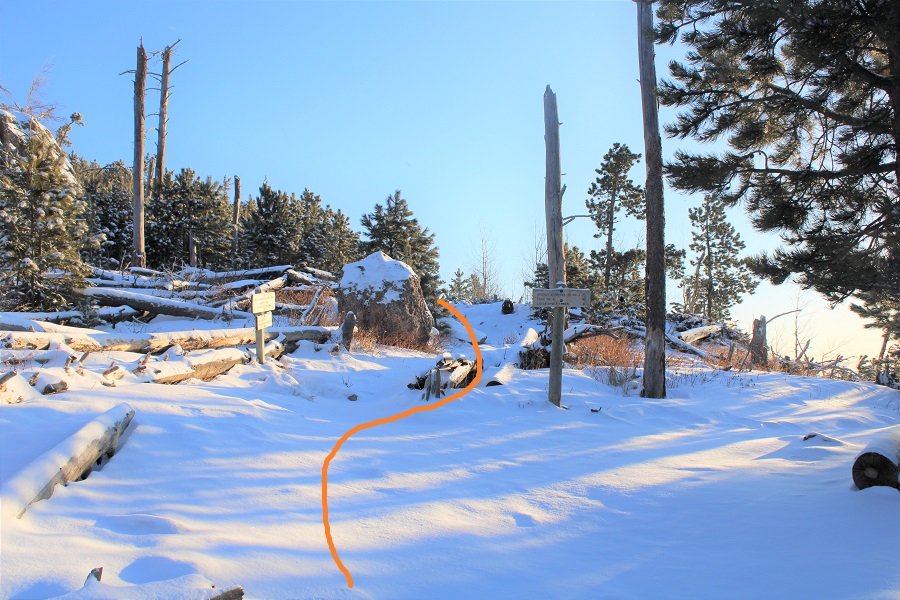
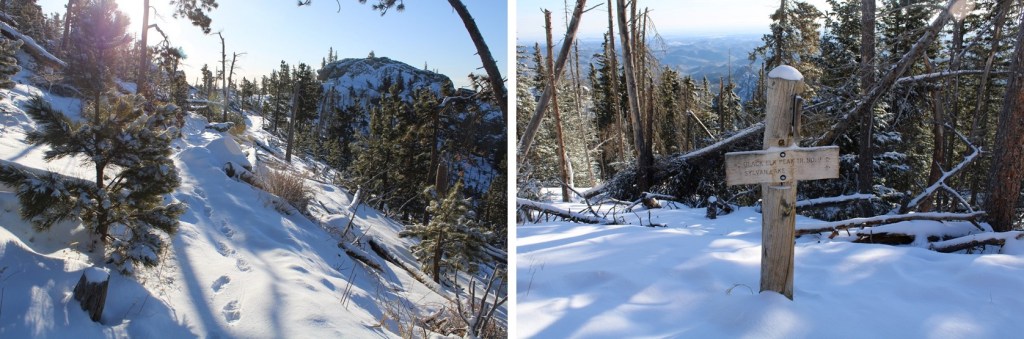
Note, go LEFT at this sign, as going straight won’t take you to the summit
I rounded the west side of the peak
And then had a clear view of the tower
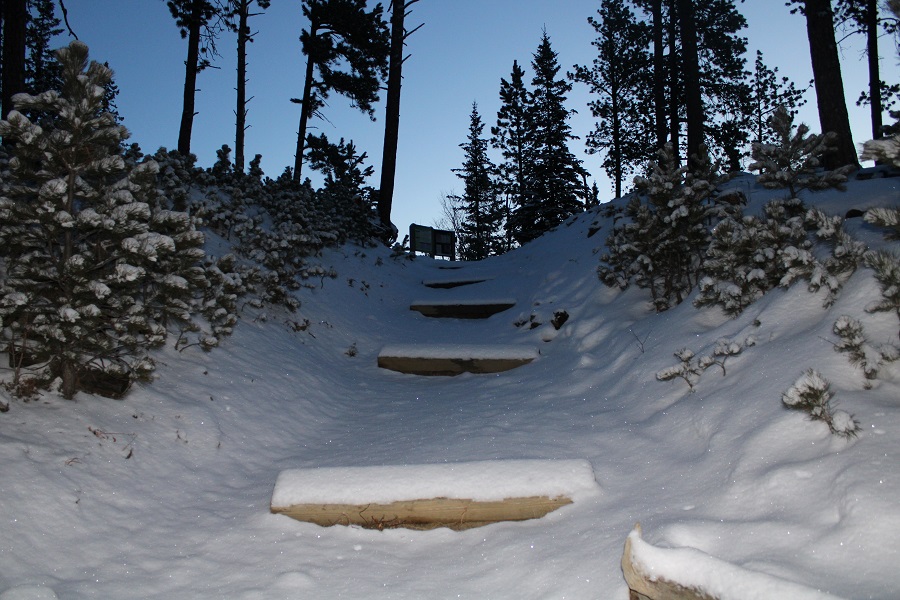
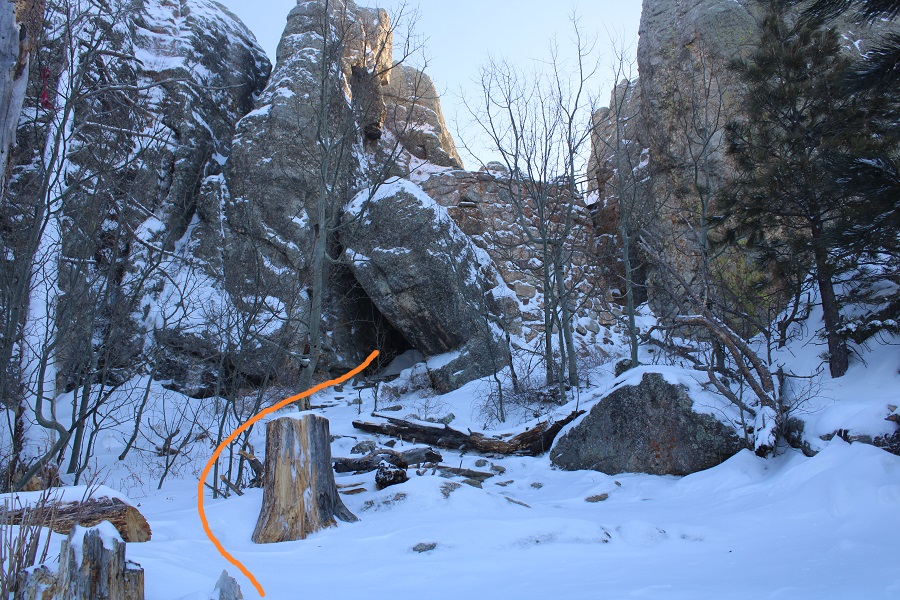
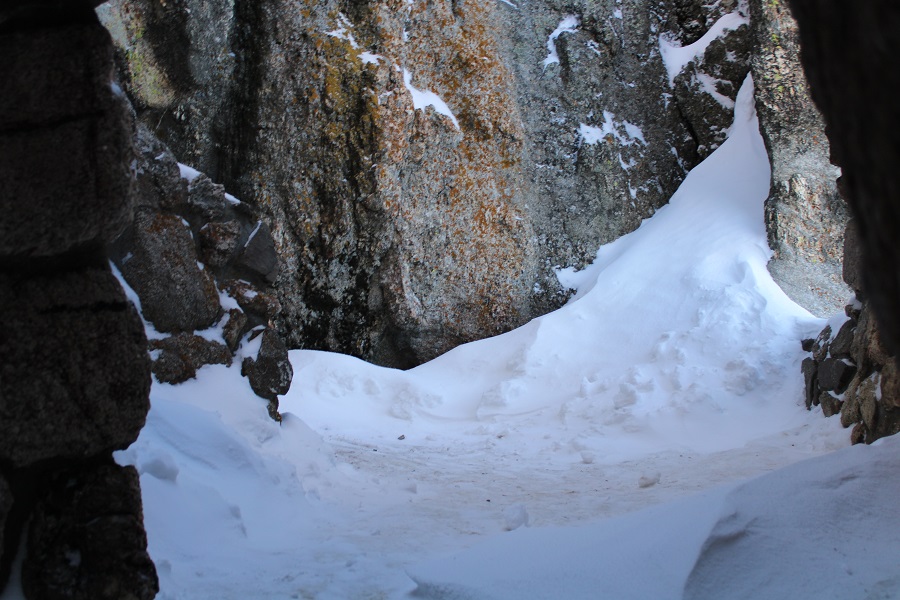
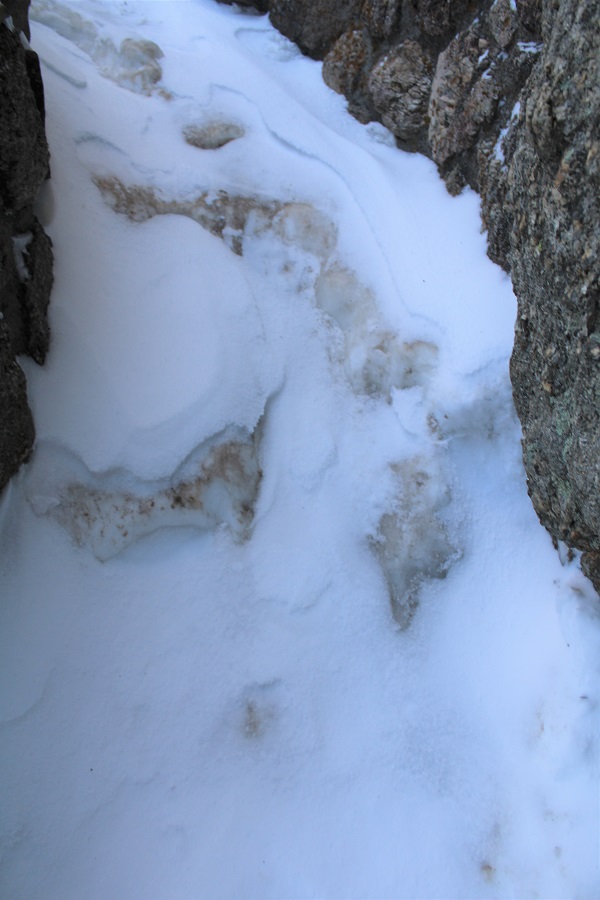
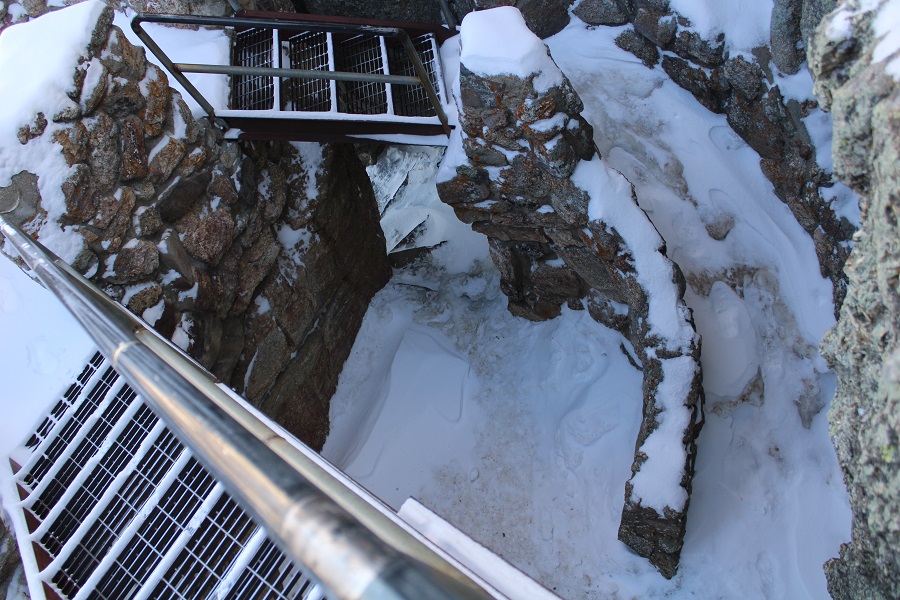
To get to the tower I headed northeast, going through this rock, and up the stairs. This is where it got really icy: the ice was over a foot thick, and slippery, similar to a metal slide covered in ice. Microspikes and good balance are required here
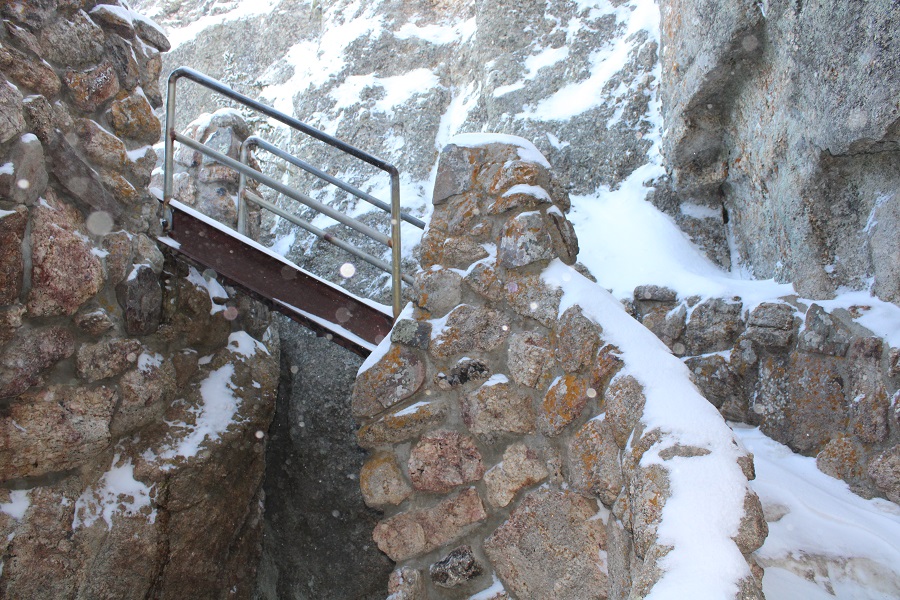
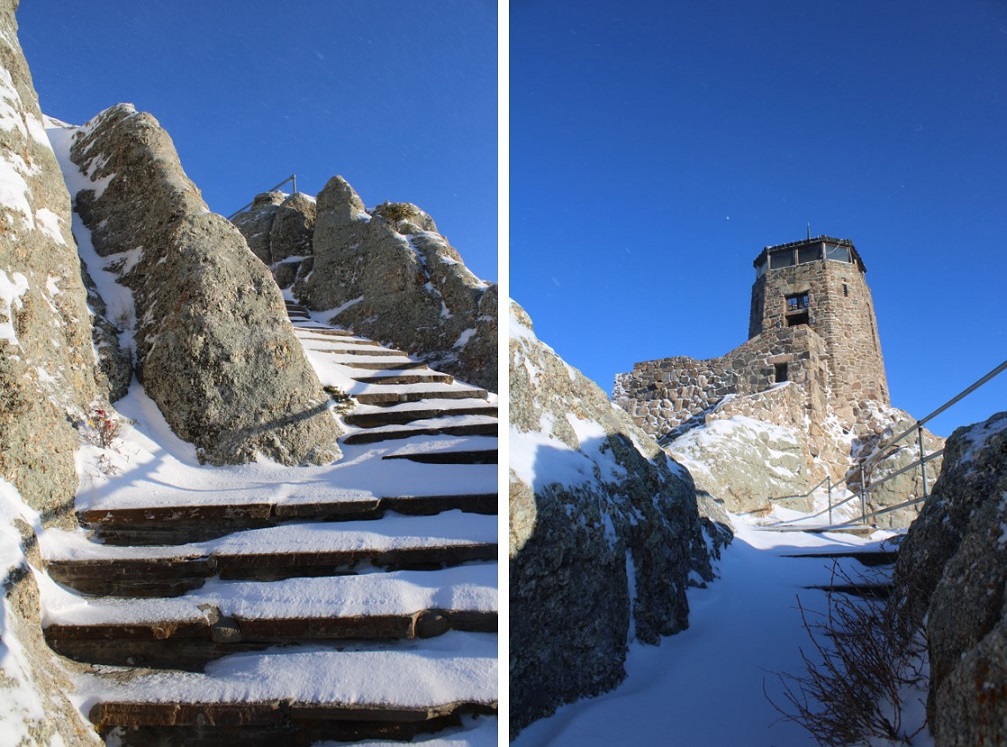
This led me to some slippery steps, and the summit tower.
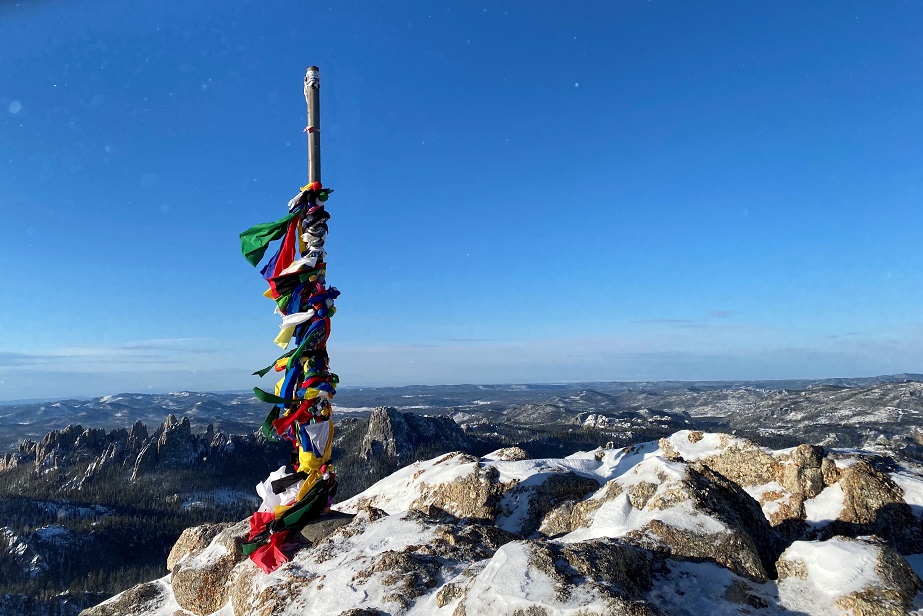
Just below the summit area was a pole with a lot of offerings. It made for a great summit photo
It was really, really windy on the summit area. I’m guessing 40-50mph winds.
I continued on, climbing up the tower stairs. Just for reference, the true summit is here. I scrambled there and sat on top just to say I’d summited. (For anyone thinking the true summit is across the way, click here).
Here’s a video from the Harney Tower
More views of the summit area. I was all over that summit, and let me tell you, the wind just kept getting worse.
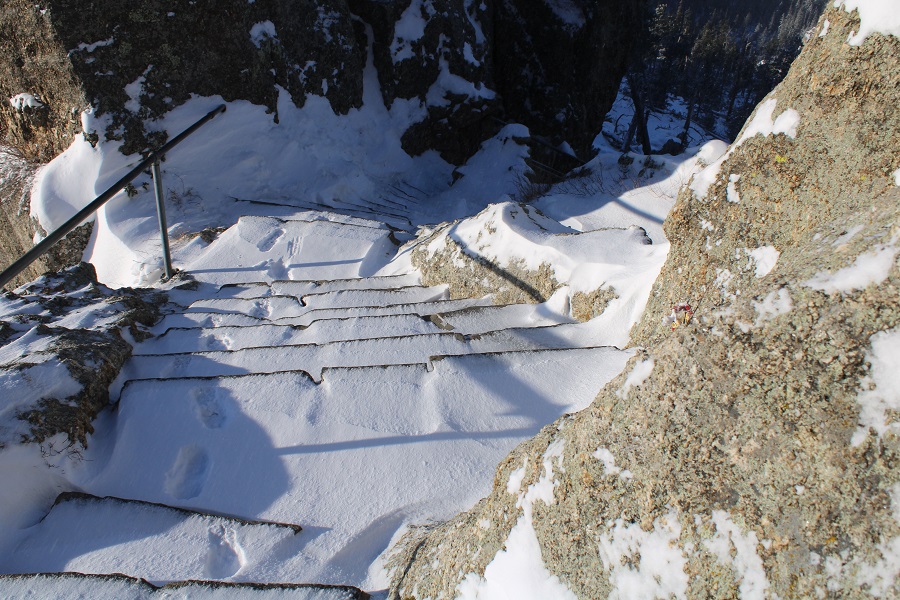
Time to head down. I was careful on the snow/ice filled steps not to slip
Then I followed my footsteps back down
After hiking for about half a mile I was surprised to encounter another hiker! He’d started at about 6:30 this morning, and had been following my tracks the whole way. He said the roads were terrible, and I hoped they were plowed before I made it back. I wished him luck and continued on my way.
From here in areas the wind had covered both my tracks and those of the other hiker, but the trail was still easy to follow
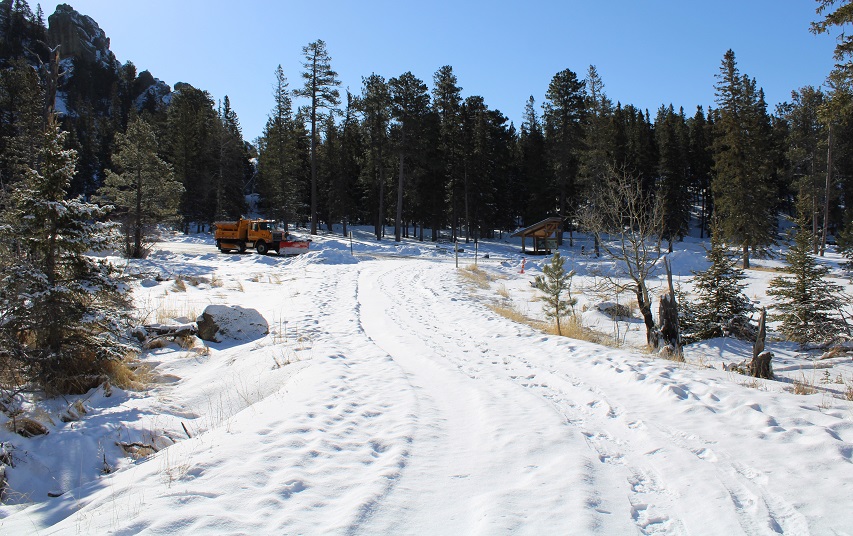
When I made it back to the trailhead there was a snowplow there, clearing the parking area.
The area around my truck was nice and clean!
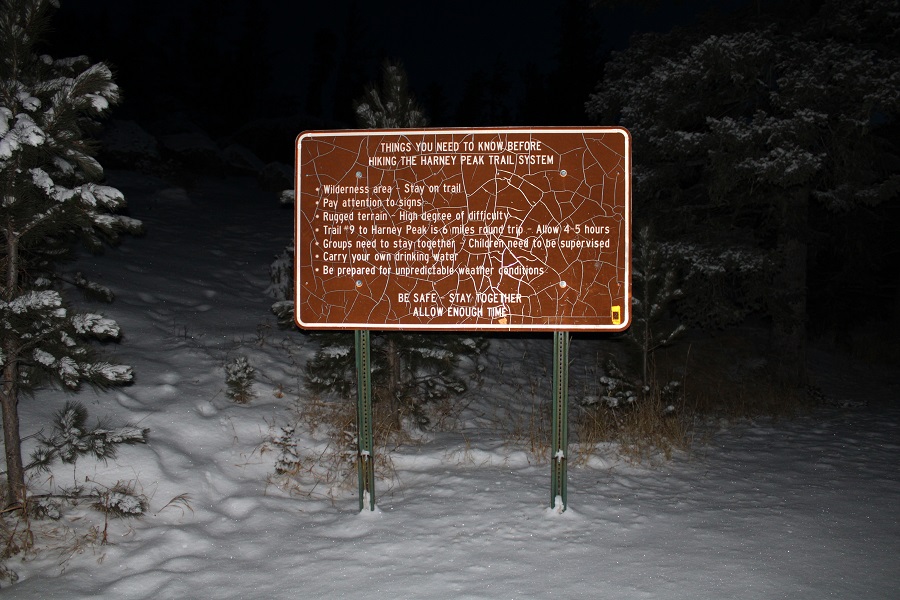
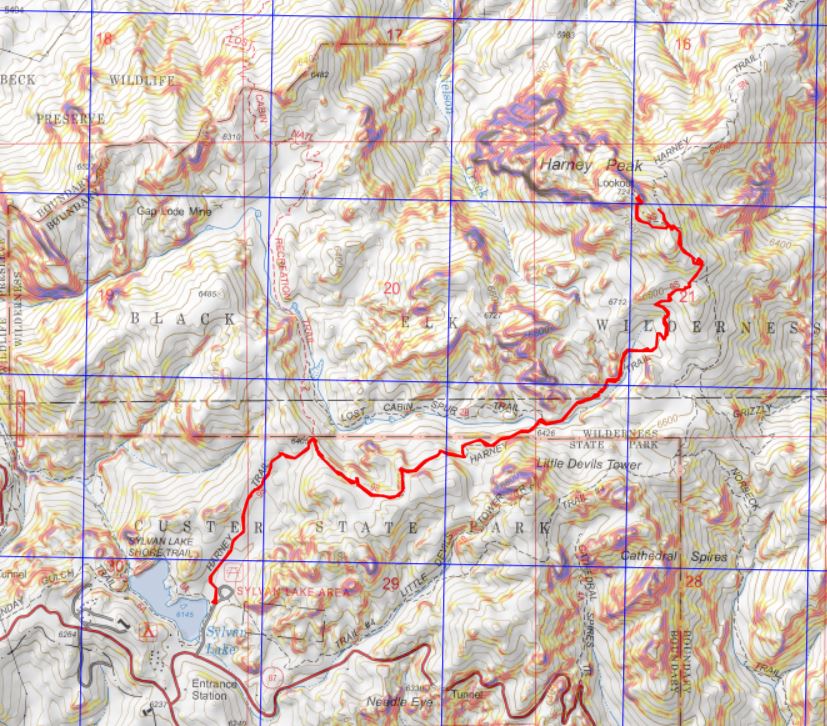
I made it to my truck at 9am, making this a 7.65 mile hike with 1732’ of elevation gain in 3 hours. Not sure why the sign says it should take 4-6 hours to complete? I did it in 3, while breaking trail through the snow, and spending quite a bit of time on the summit taking pictures. Also, it’s longer than their stated 6 miles (closer to 7.5 miles round trip). Here’s a topo map of my route
All in all, I was really pleased I’d chosen to take this road trip! It was still really early, so I started my drive south to Nebraska, for my third highpoint of this trip. I only hoped there wasn’t too much snow…
I can’t remember if I’ve ever been to North Dakota. I’m sure we went on a family road trip back when I was younger, but I don’t have any pictures or recollection of the state.
Originally, I’d planned to have a friend go with me, but at the very last minute he bailed. Or, rather, he never showed up. I said goodbye to my daughters, who were still awake, playing Minecraft with friends. They weren’t interested in going with me.
Solo now, I left the house at 1am Friday morning, and drove to North Dakota. One thing I noticed was how different each state was in dealing with masks and covid. Southern Wyoming had a mask mandate, but in northern Wyoming no one seemed to care. South Dakota had a mask mandate, but North Dakota did not. I was a little worried at the amount of snow I encountered in Wyoming, but as I headed further north the snow on the ground lessened. I passed through South Dakota, and when I made it to North Dakota I stopped at the state line and took a picture with the sign.
As I was driving through North Dakota I saw several pheasants, some dead along the side of the road, others flying across the road, and some in fields.
My initial plan was to head to Starbucks first for my mug (I collect them), but as I was driving I passed the turnoff for White Butte, and turned around. It looked like it was going to snow, and I felt it would be better to get the short hike in first. The Starbucks was another hour away, and I didn’t want to chance missing my hiking window.
There were signs indicating where to turn to make it to the trailhead. The trailhead was about 5 miles down dirt roads that went through ranches. I saw young calves with their mothers is big herds.
The trailhead had parking for 2 vehicles. Also, the fences are electric.
I backed my truck in, parked, and got out my gear. It was colder than I’d anticipated, and there were snow clouds forming. I put on my wool hat and gloves and was on my way.
The trail follows an old dirt road for about a mile to an unlocked gate. Along the way I saw more pheasants, and a few emerging pasqueflowers.
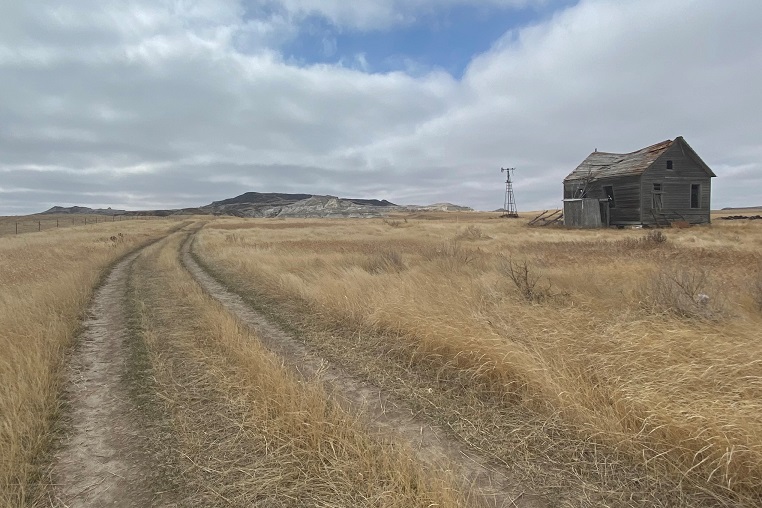
I passed an abandoned house as well
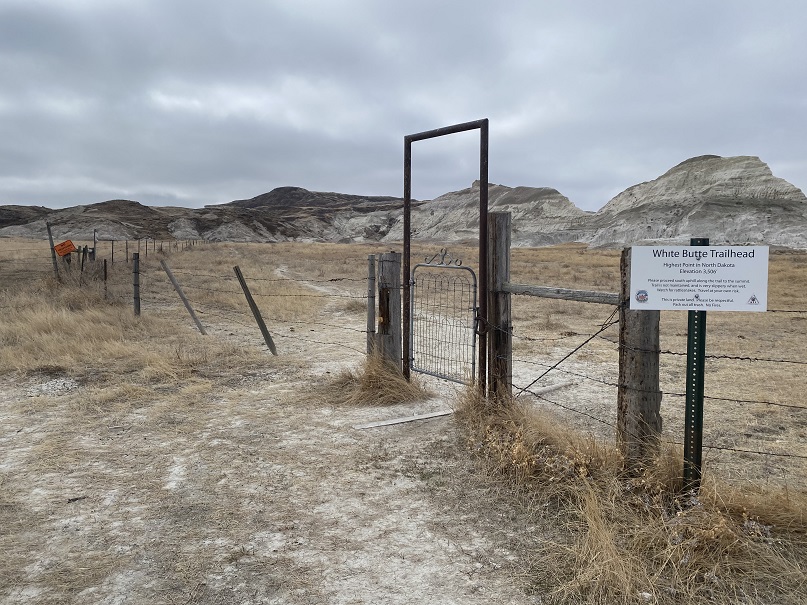
The gate was a little tricky to get open (hint, just push it hard)
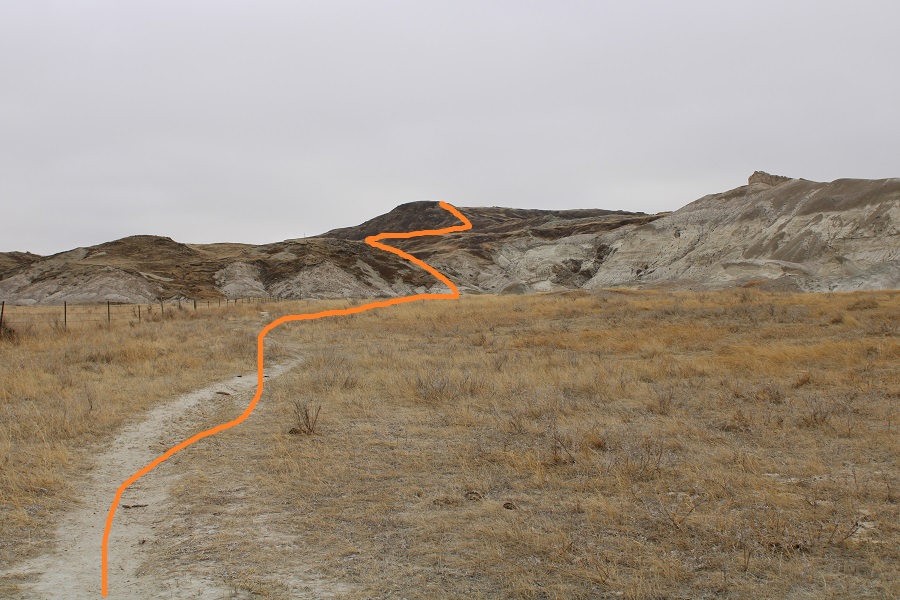
Here’s an overall view of the rest of the route
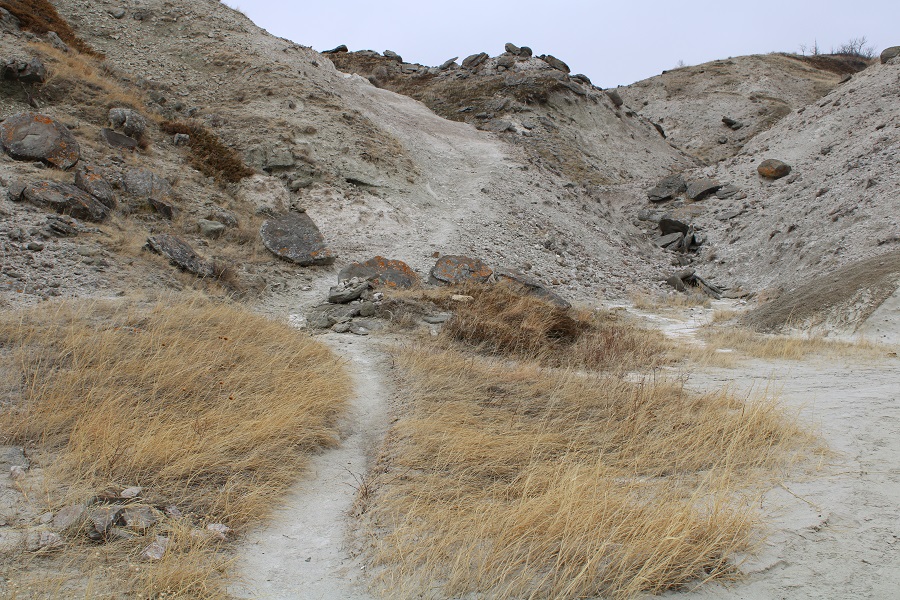
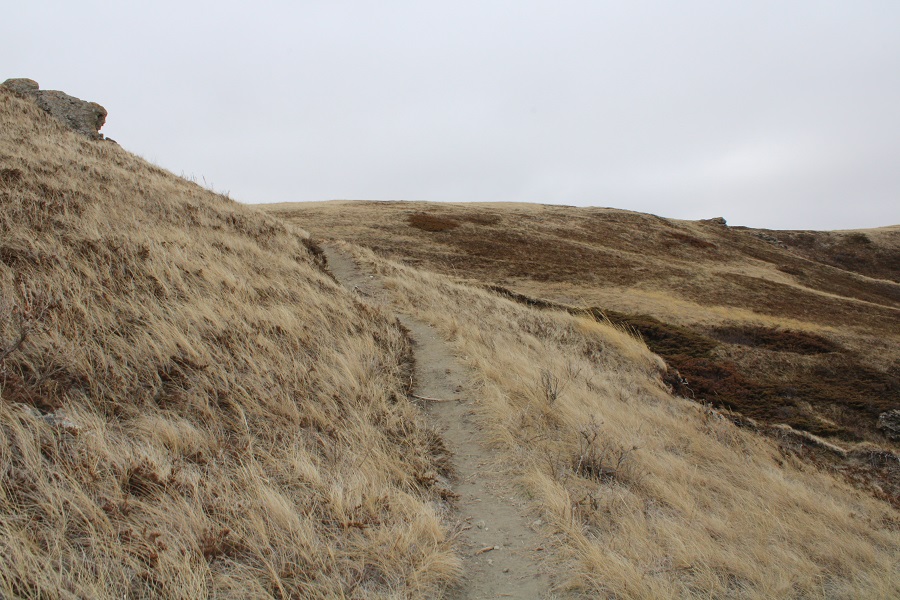
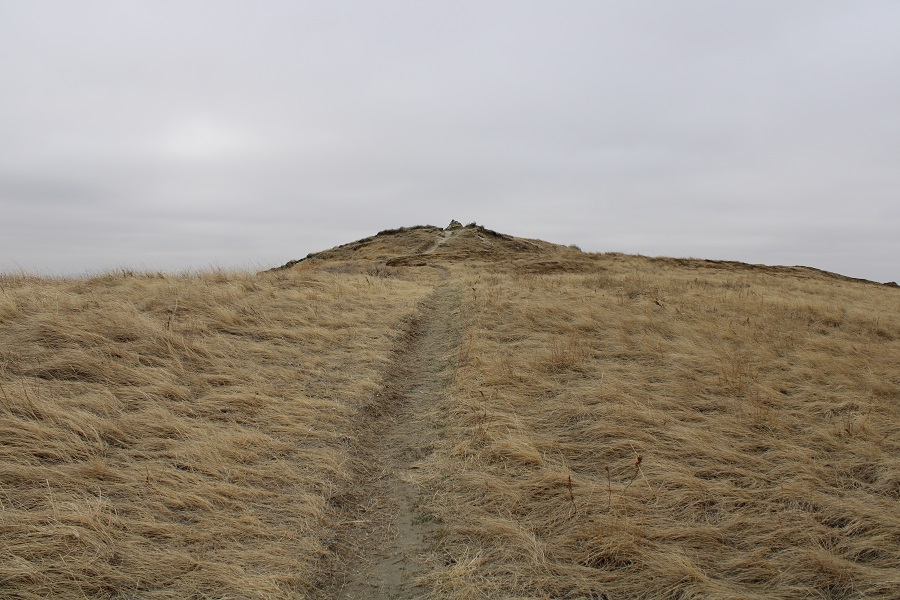
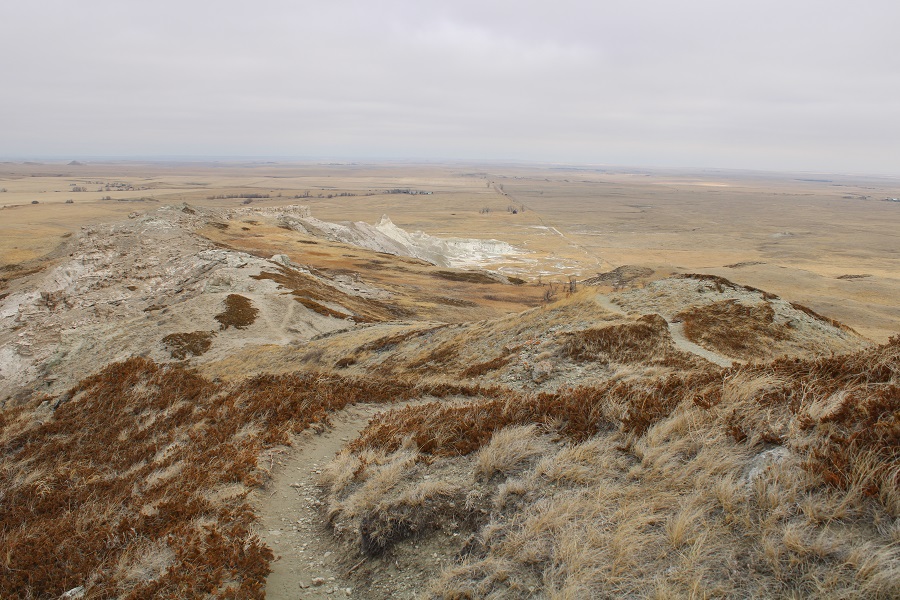
The trail is easy to follow the entire way. There wasn’t any scrambling, but I did notice how it could be slippery if wet. Luckily today the trail was dry. Here’s a play by play of the route:
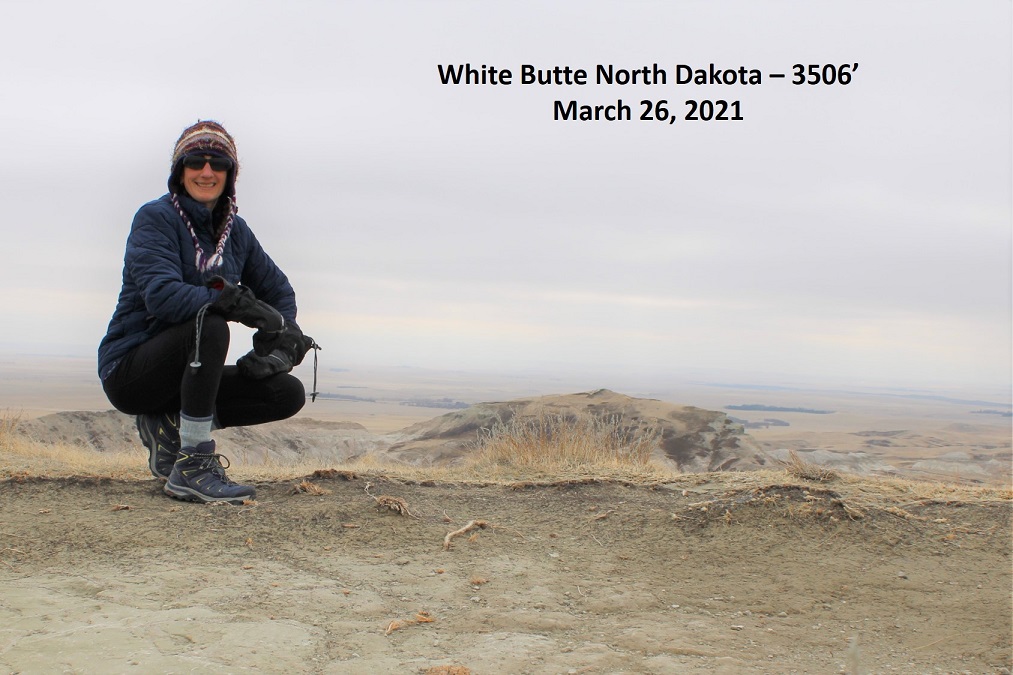
It was very windy at the summit, as a storm was blowing in.
Summit of White Butte – North Dakota
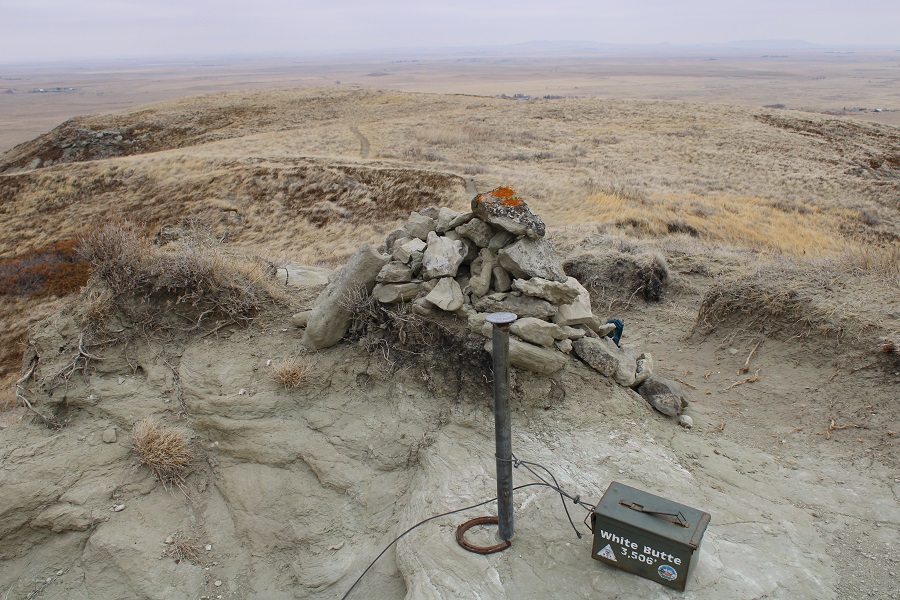
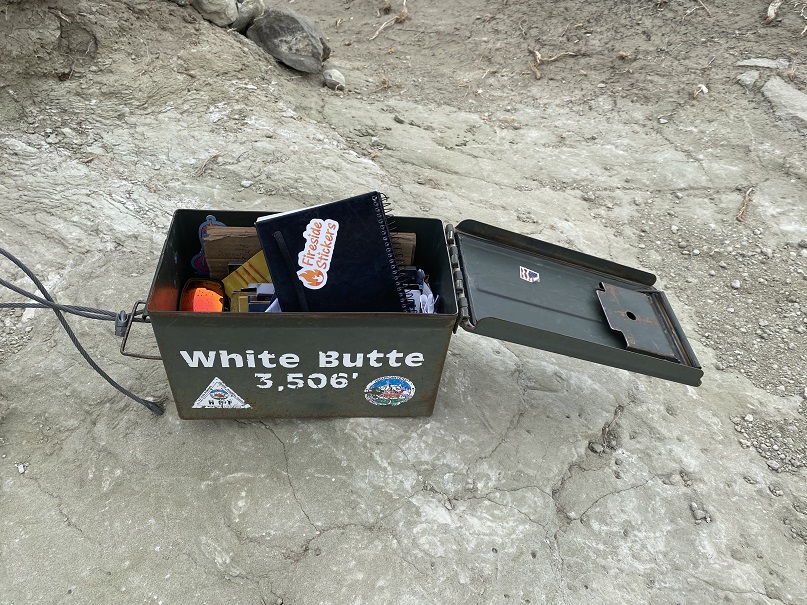
Here are some summit highlights: I don’t often sign registers. I didn’t sign this one, but I did leave a sticker.
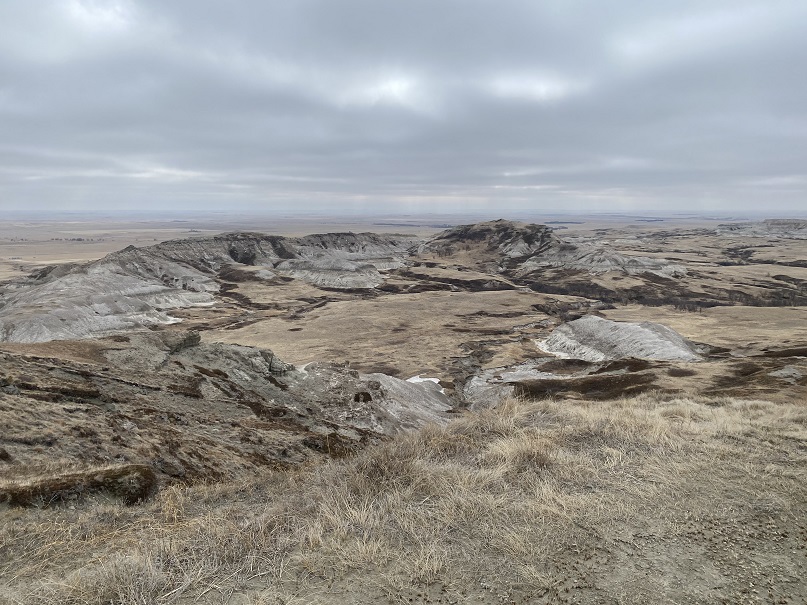
And summit views
It was windy and cold and I had more plans for today so I didn’t stay long. I turned and headed back the way I came.
Here’s the route I took back to the trailhead
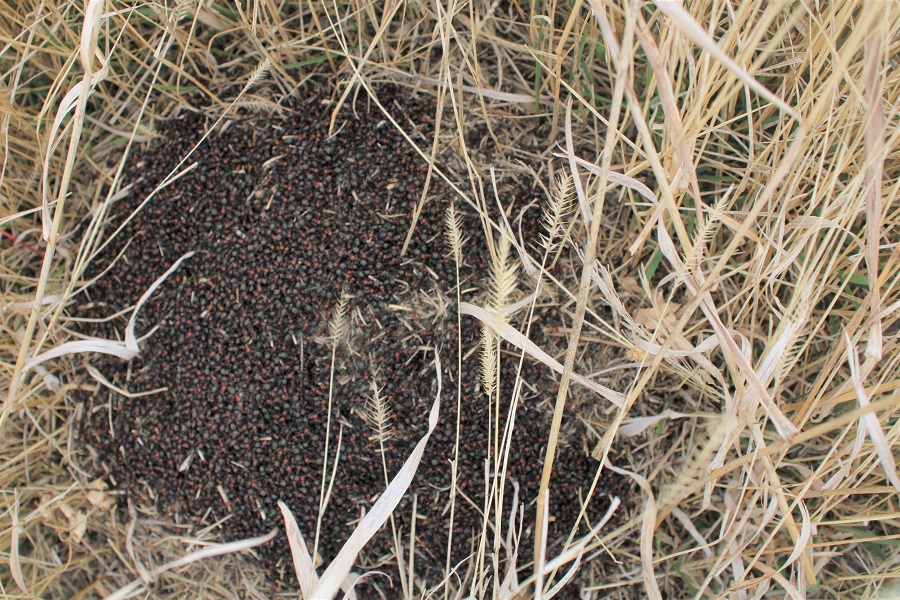
Along the dirt road I saw a HUGE pile of ants, all clustered together
And some structure that looked like if was left there by a tornado
I made it back to my truck and headed back down the dirt road.
The entire hike took me about an hour and a half. Here’s a topo map of my route:
In the 5 miles it took me to get to the paved road it started snowing, and mist was circling the road.
I made the decision to just drive to the next trailhead and skip driving further north to the Starbucks for my mug, as it would add 2 hours to my trip. This ended up being a great decision, as the snow really started coming down. When I got home I could always order the mug online, which was probably cheaper than the gas it would take to get there.
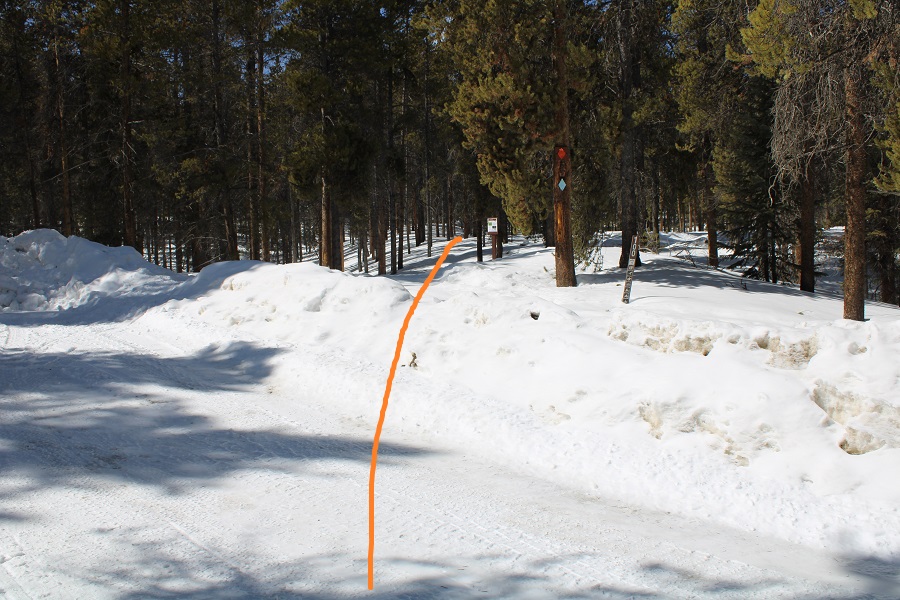
The road was nicely plowed from the Crane Park area to the trailhead, so I continued driving up the road and parked at the beginning of Trail 100.
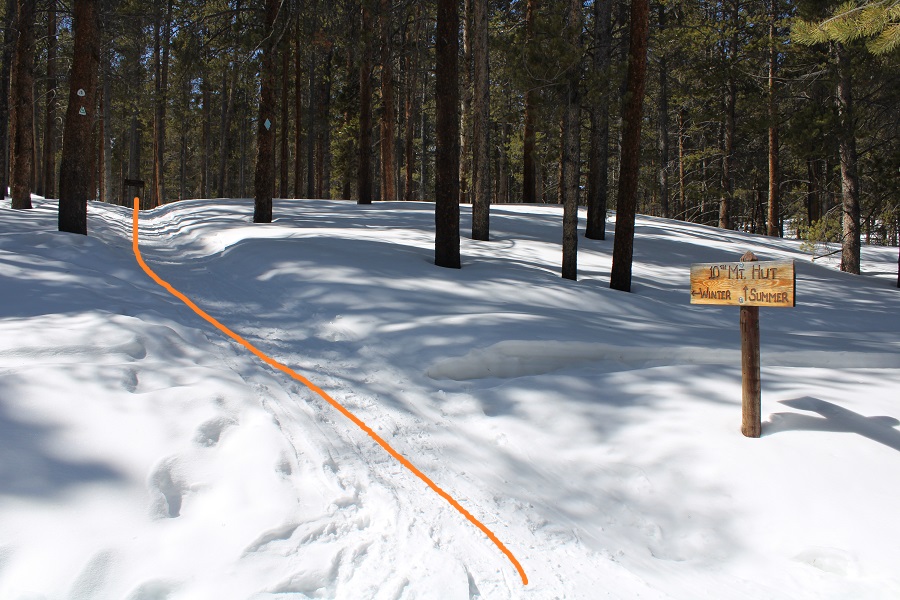
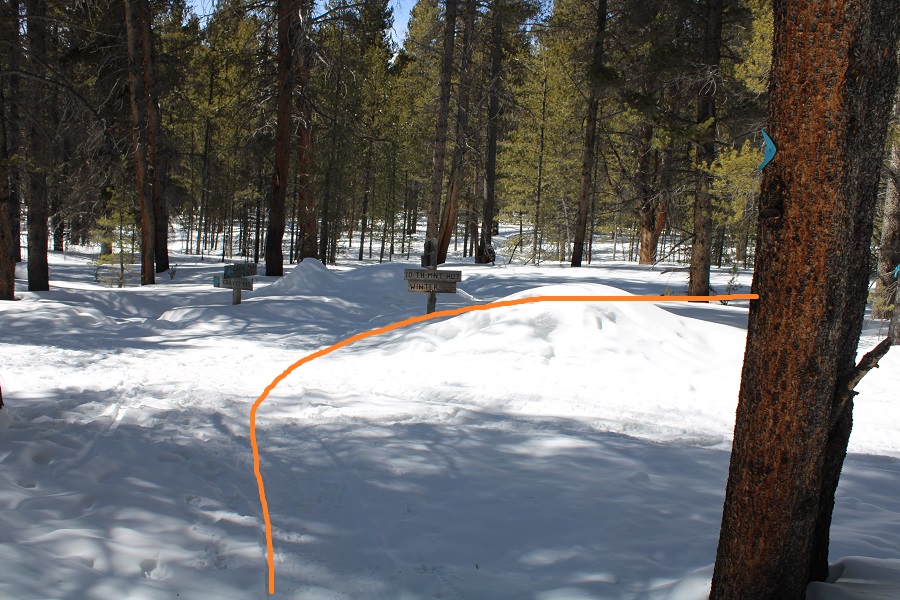
I was the only vehicle in the lot, and it was supposed to snow this afternoon, so I didn’t anticipate a lot of people on the trail today. I put on my snowshoes and started out. The trail starts by heading northeast for a third of a mile before turning onto the trail that leads you to the 10th Mountain Division Hut. I took the winter route.
I followed the trail for about a mile to a junction, losing elevation as I went.
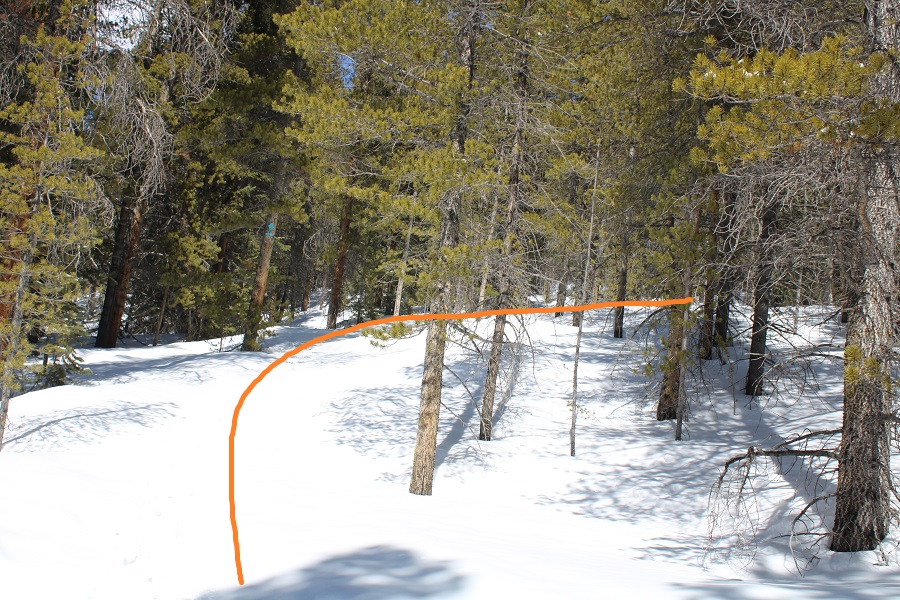
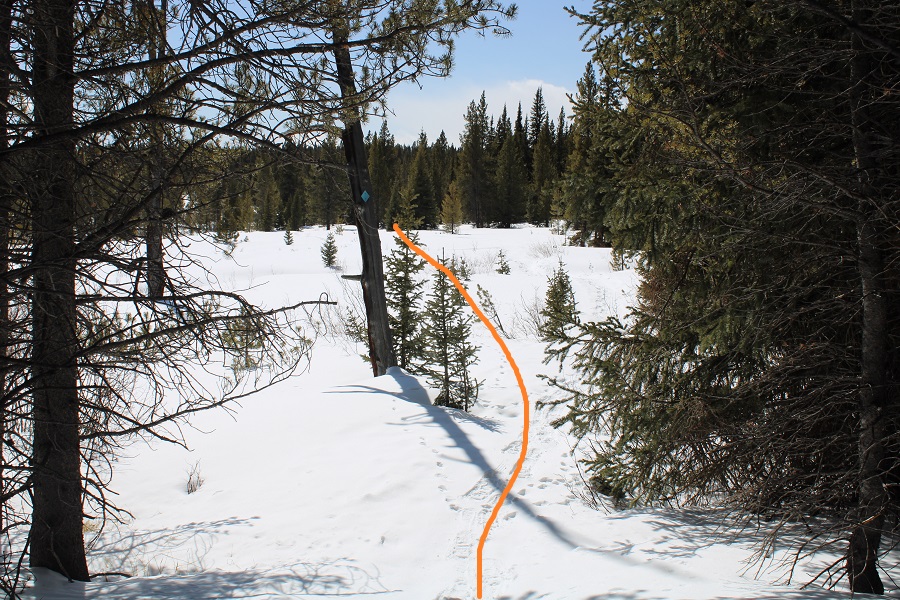
When I made it to this junction it was dark and I misread the sign. I ended up continuing straight and it wasn’t until I crossed the second bridge I thought to myself “I don’t remember crossing any bridges when I did this trail last time” and realized I should have turned right at the junction, instead of continuing to follow the Colorado Trail. This mistake cost me a mile of hiking. So, long story short, turn right here and follow the 10th Mountain Division hut signs, and if you come to any bridge, you’ve gone too far.
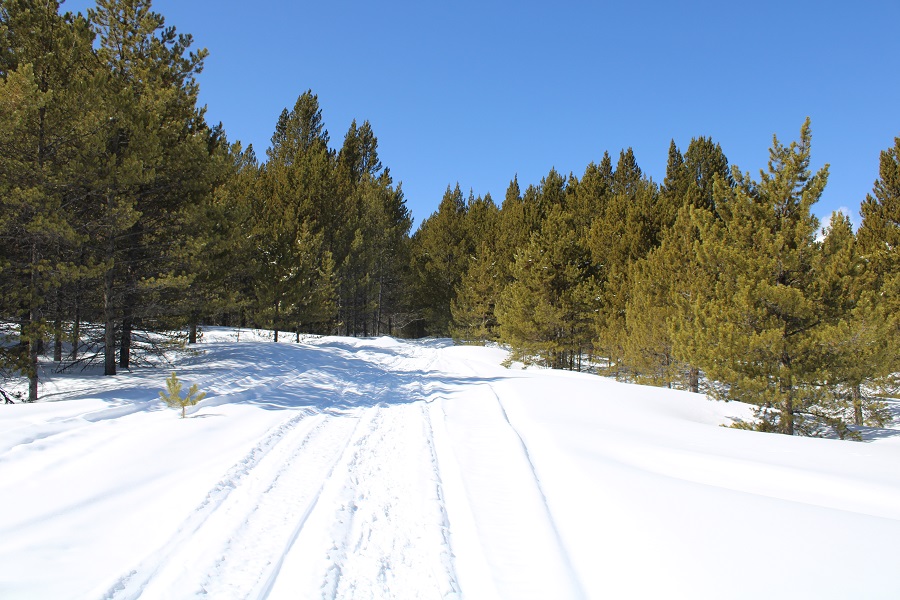
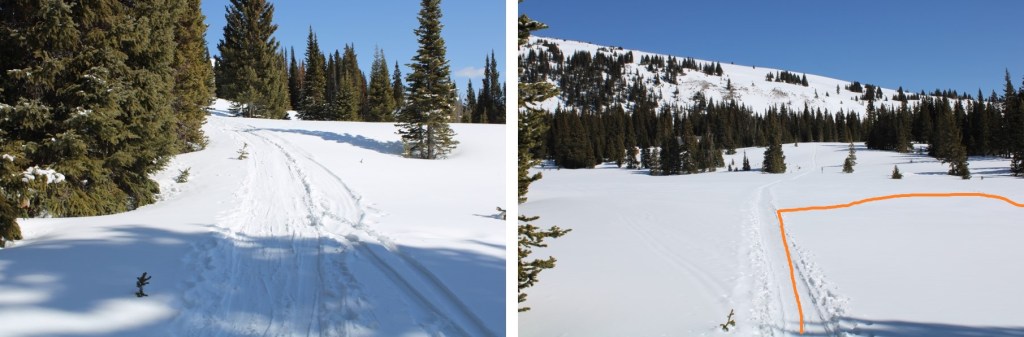
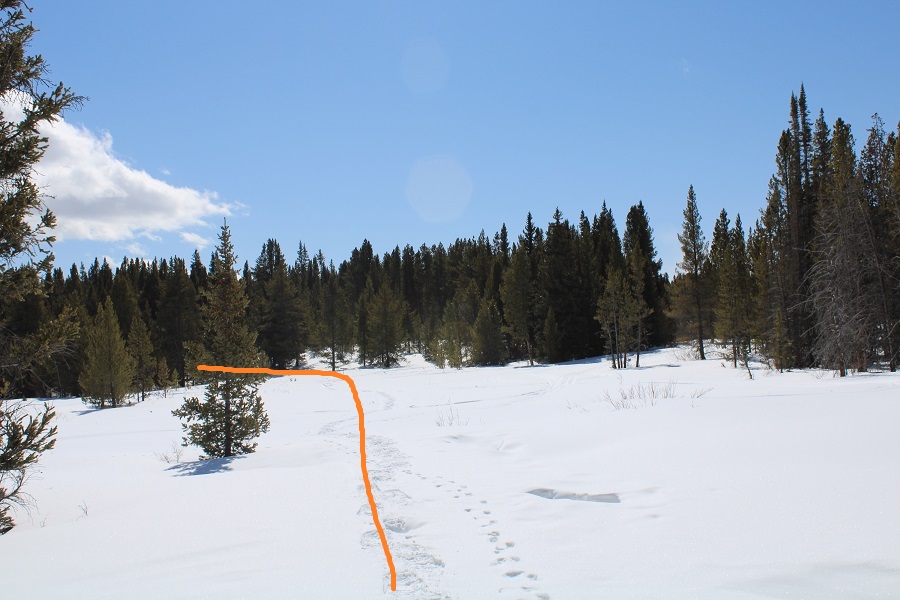
This put me on a 4WD road that took me to a marshy area, covered in fox prints. Here the snowmobile tracks ended and I’d be trenching the rest of the hike.
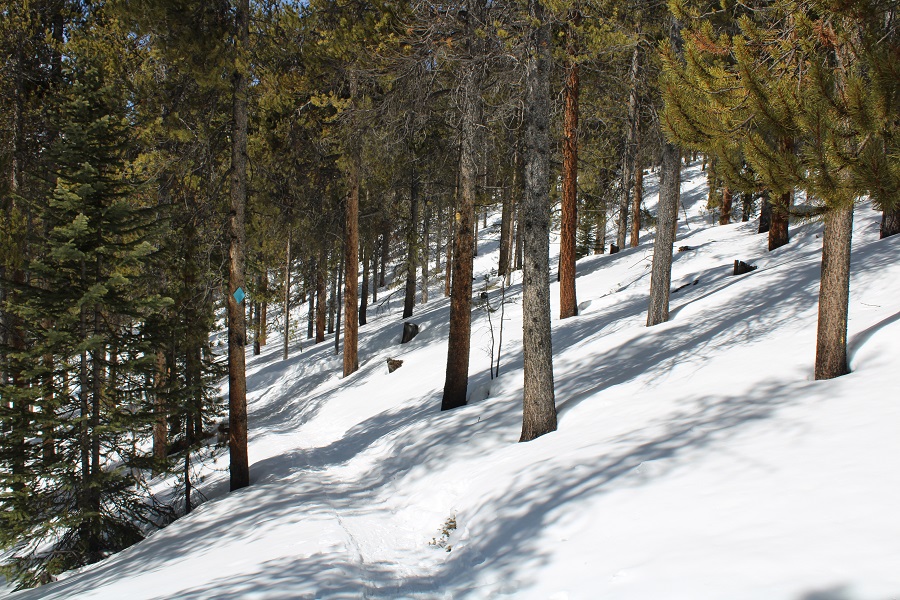
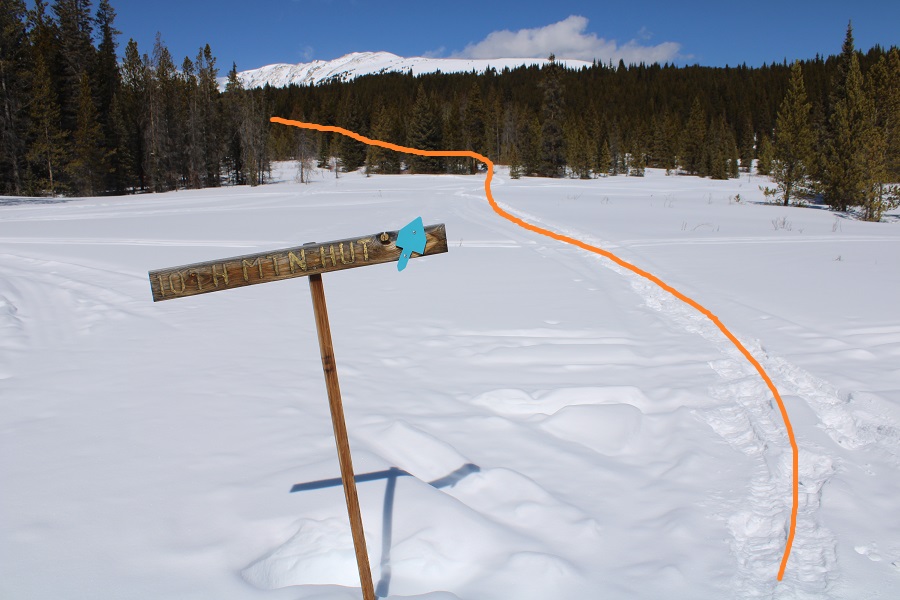
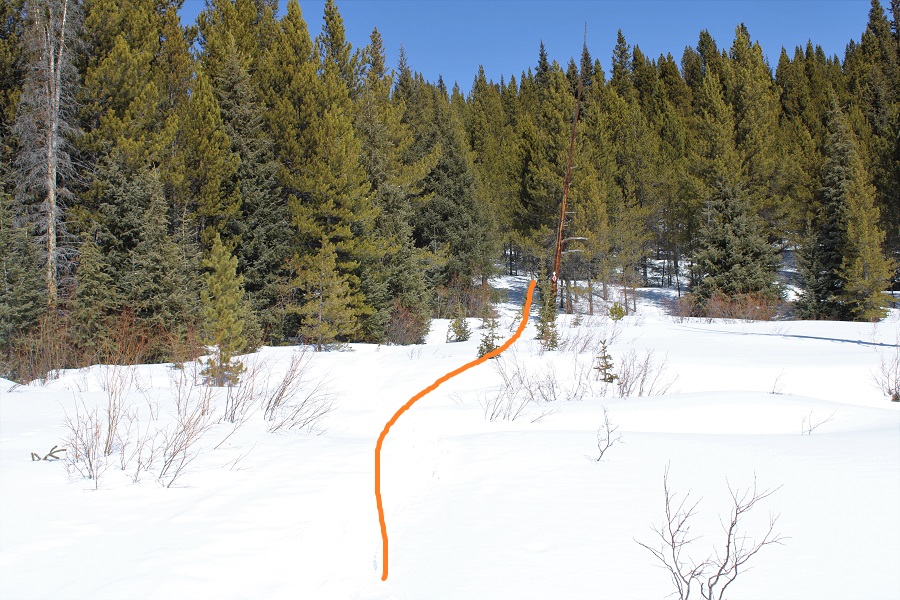
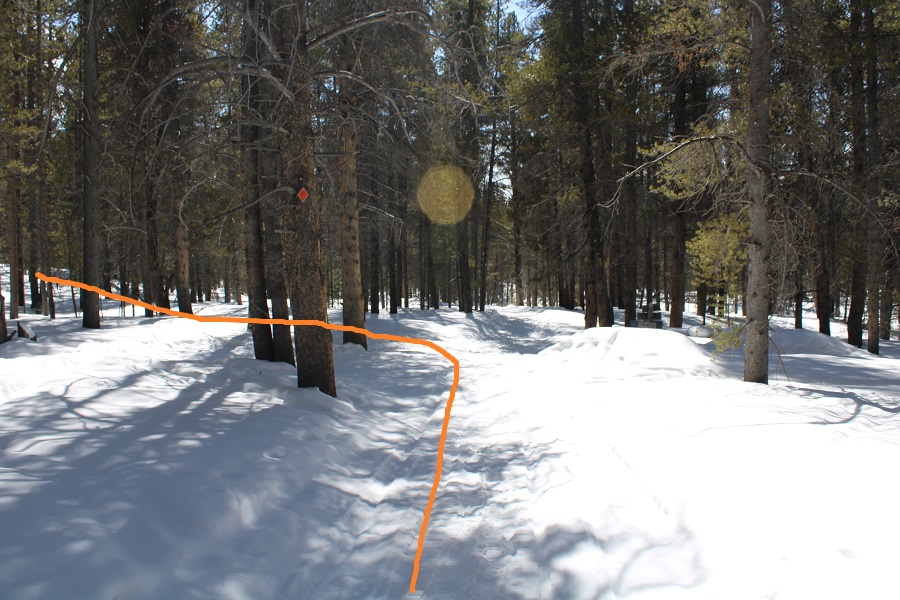
From the marshy area I followed the blue arrows to the 10th Mountain Division hut. The arrows are conveniently placed along the trail every 20 yards or so. When the trail is covered in snow and just when you aren’t sure which way to go, you find another blue marker. These were extremely helpful, as I was trenching at this point (and for the rest of the hike). There were tons of rabbit tracks in the area on the recent snow.
Just as I made it to the 10th Mountain Division Hut I came across what looked to be a recent ski trench. Even though it was earlier than I’d planned on heading west I turned left and followed the trench (I was getting tired of trenching). This trench led me to a bunch of skis standing in the snow.
I didn’t see anyone with the skis, and I knew I’d hiked too far following the trench (hopeful it turned and headed to Homestake’s ridge, which it didn’t), so I backtracked and found a low rib to hike up and follow northwest to the upper basin.
At this point I was frustrated: I was in a bad mental attitude I had to kick myself out of. Due to a recent conditions report I expected there to be a trench to treeline, and there wasn’t. I was having trouble finding any semblance of a trail, and the trenching was getting tiresome. I kept trudging along and backtracking, telling myself I’d only stop if the snow became more than I could handle (usually for me this means postholing past my waist). Also, this was my second attempt at this peak, as the last time I was here the snow was too soft to trench. I didn’t want to come back a third time if I could help it. I knew I was off the typical trail, but I also knew I was headed in the right direction, and I had the added benefit of being able to follow my tracks on my way out.
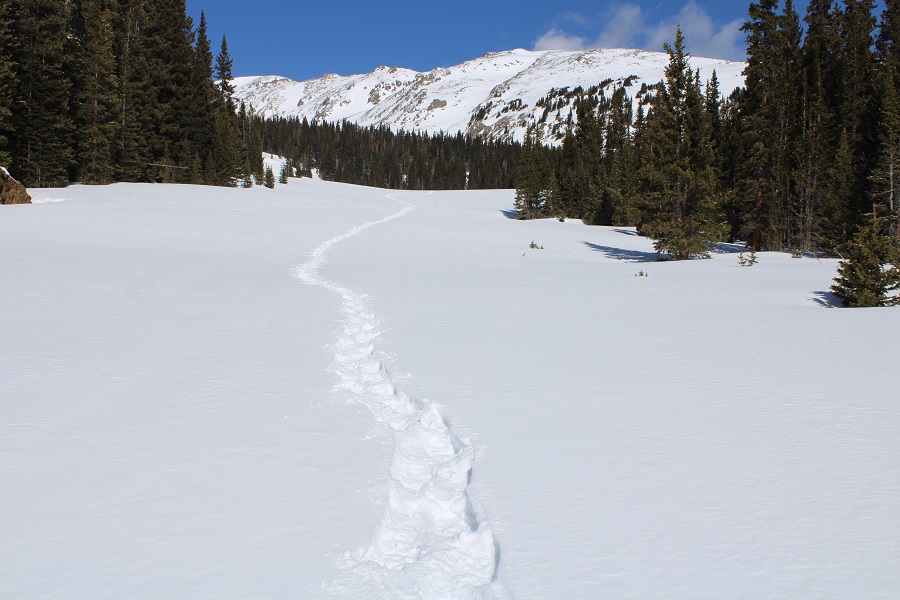
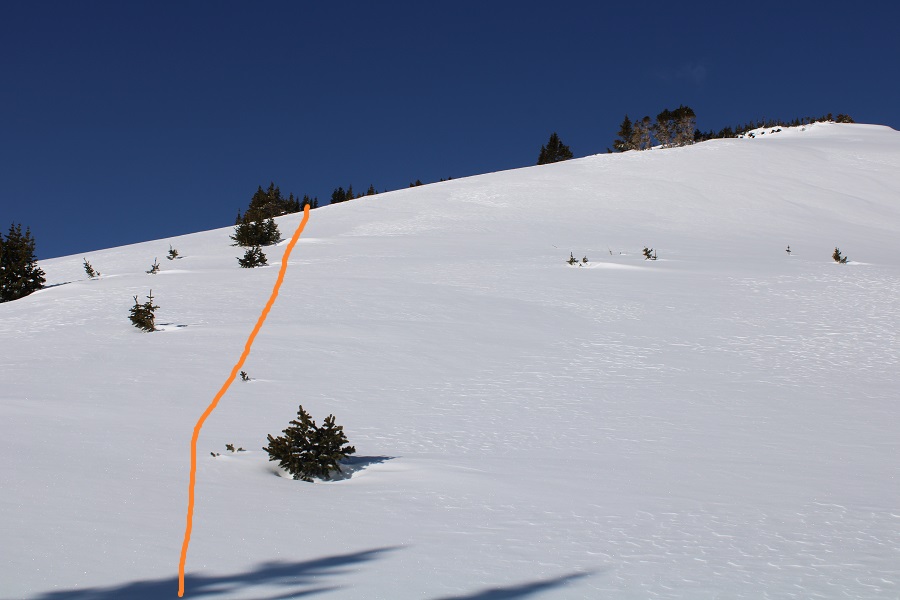
Once in the upper basin I turned left and followed a rib to the ridge.
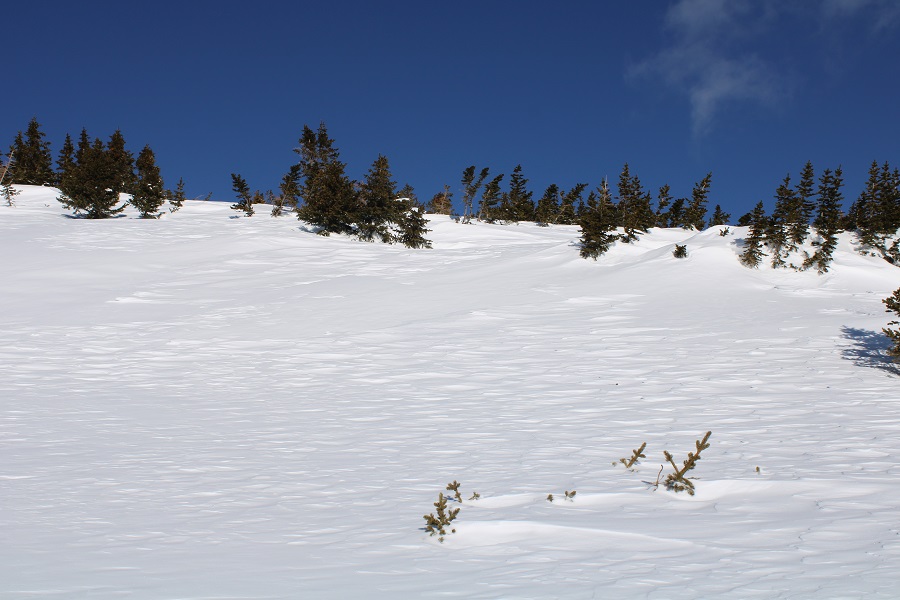
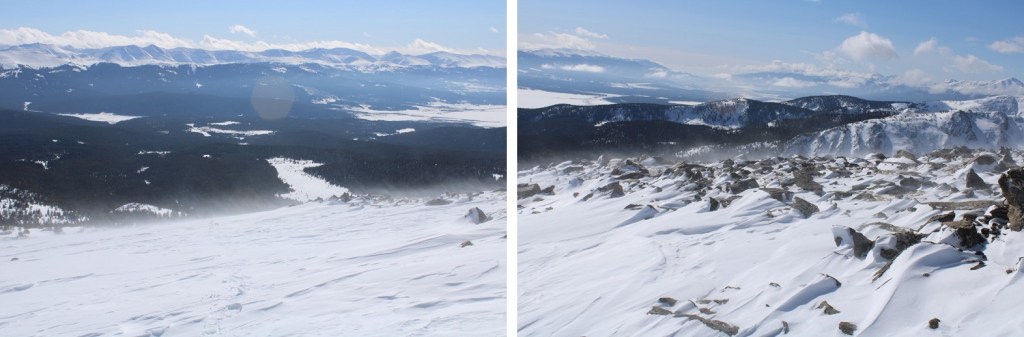
Here’s the access point to the ridge at treeline
And a picture of the beginning of the ridge
Once on the ridge I turned right and followed it northwest to the summit. This looks like a great place to do some skiing! Here’s the overall route
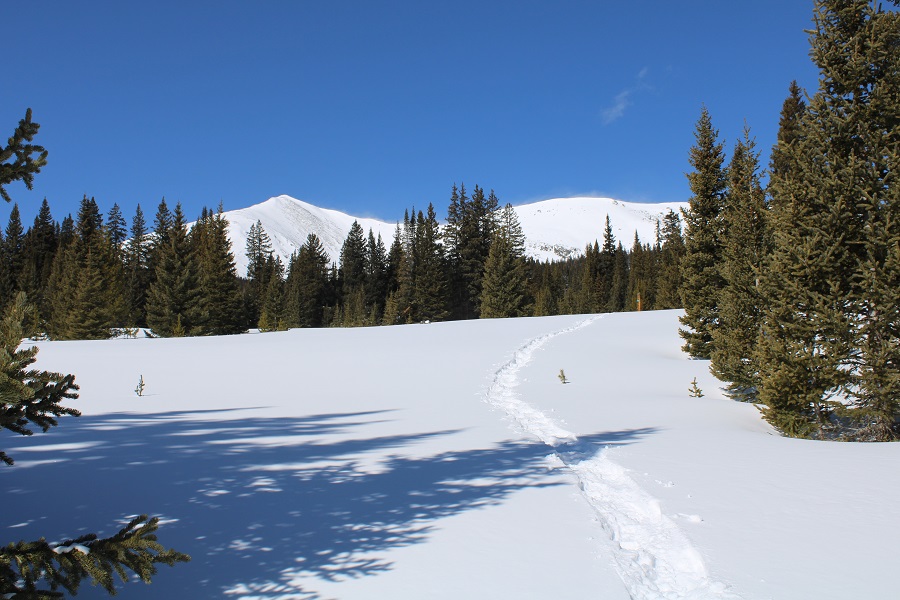
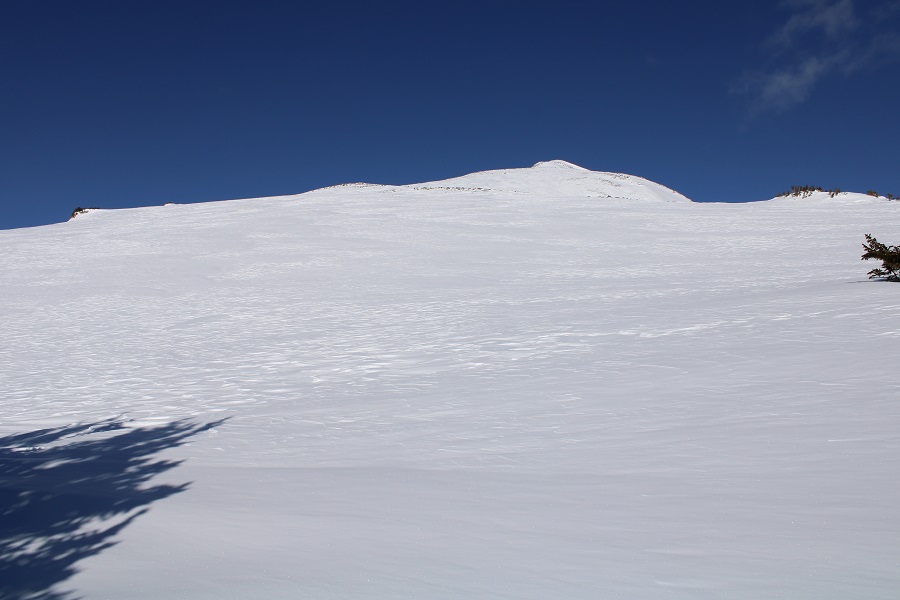
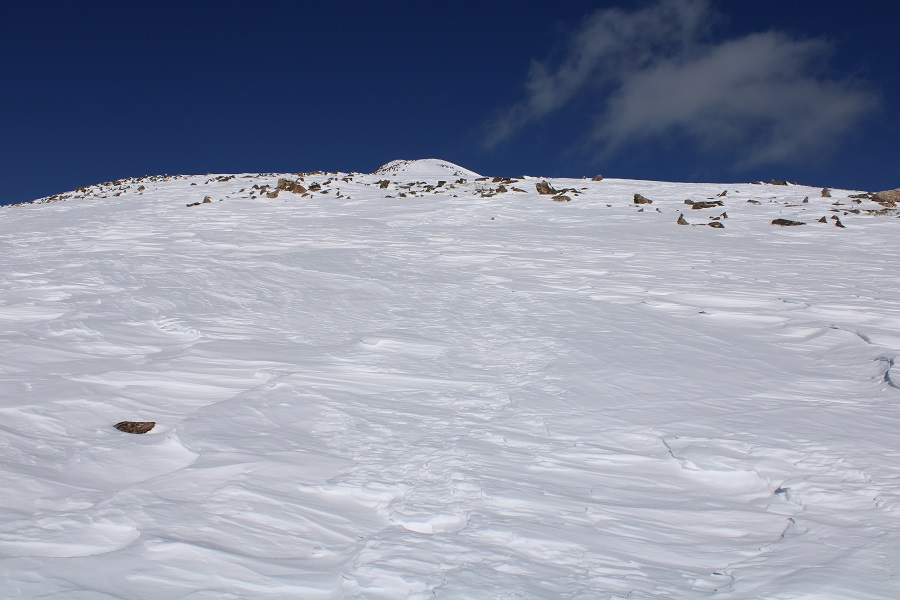
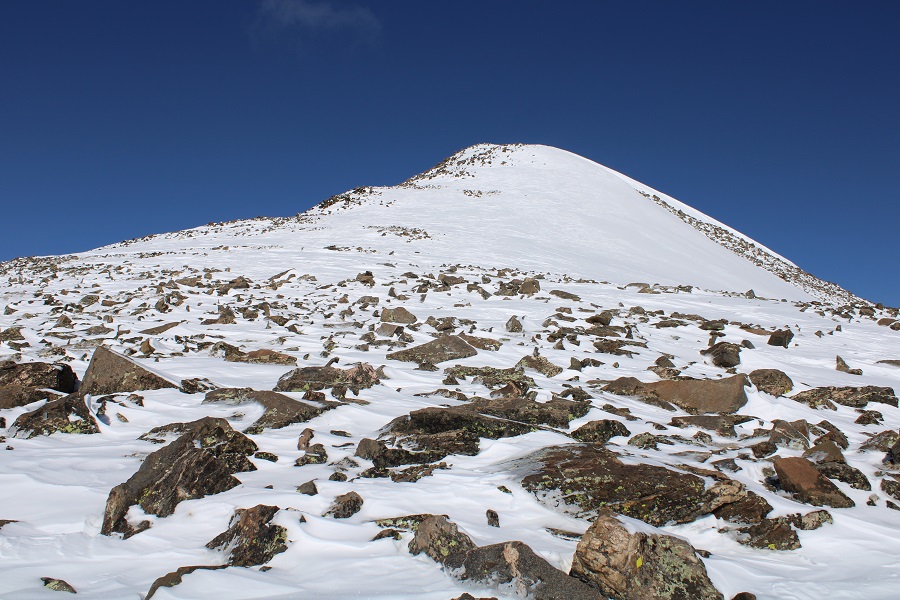
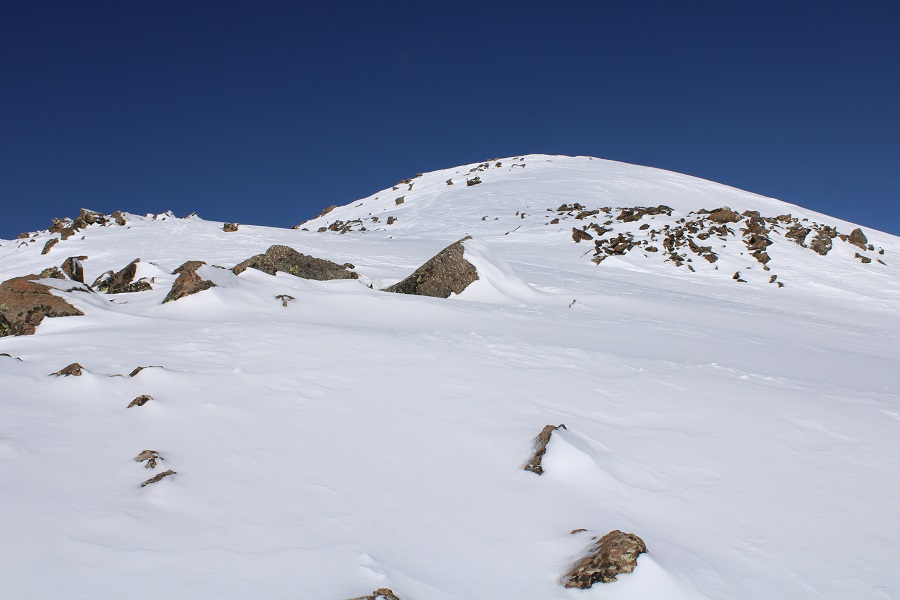
This ridge was about a mile of steady elevation gain. The snow was firm but the wind was picking up. Here are some pictures of the hike to the summit
Towards the top everything was windblown and the snow became sugary. I was slipping and sliding a bit, but other than my snowshoes, no other equipment was needed.
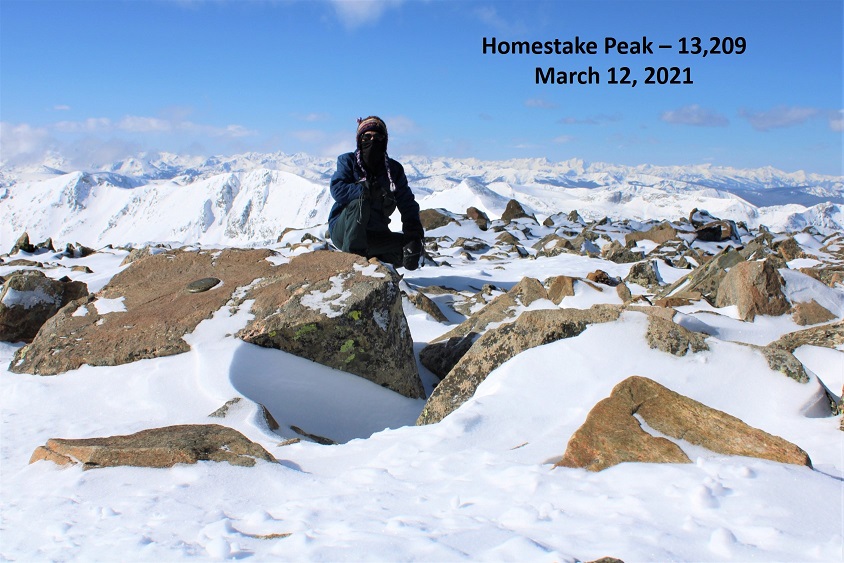
I summited Homestake Peak at 9am (there’s a benchmark at the summit)
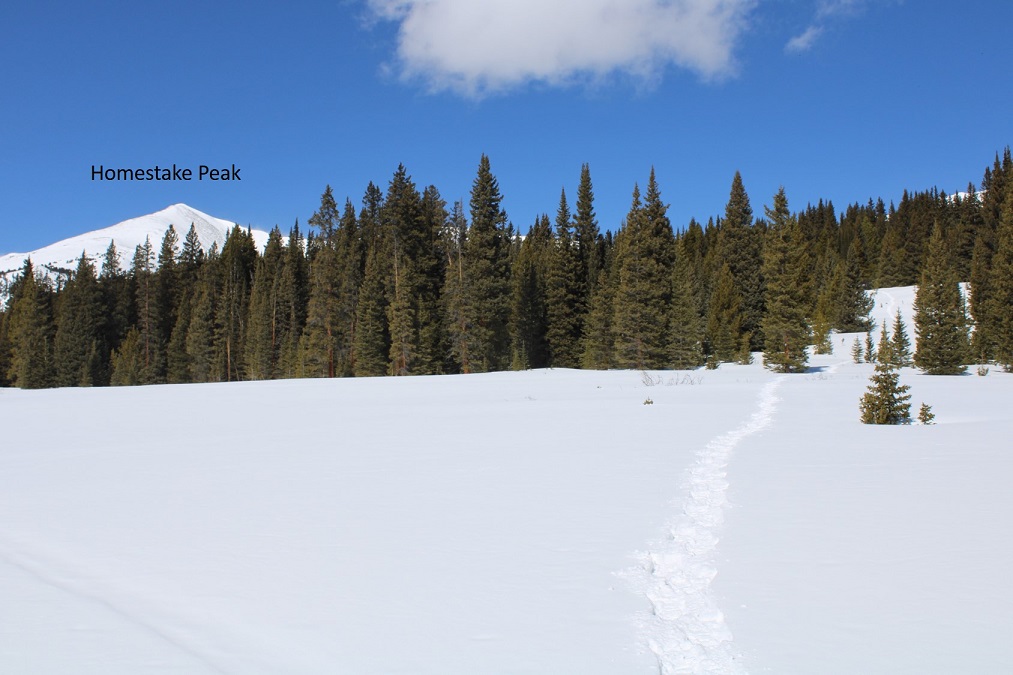
Homestake Peak:
The wind kept picking up, bringing in the Albuquerque Low we’re expecting tonight and through the weekend. I was cold, so after leaving a summit register I hurried back down the ridge.
Check out the wind
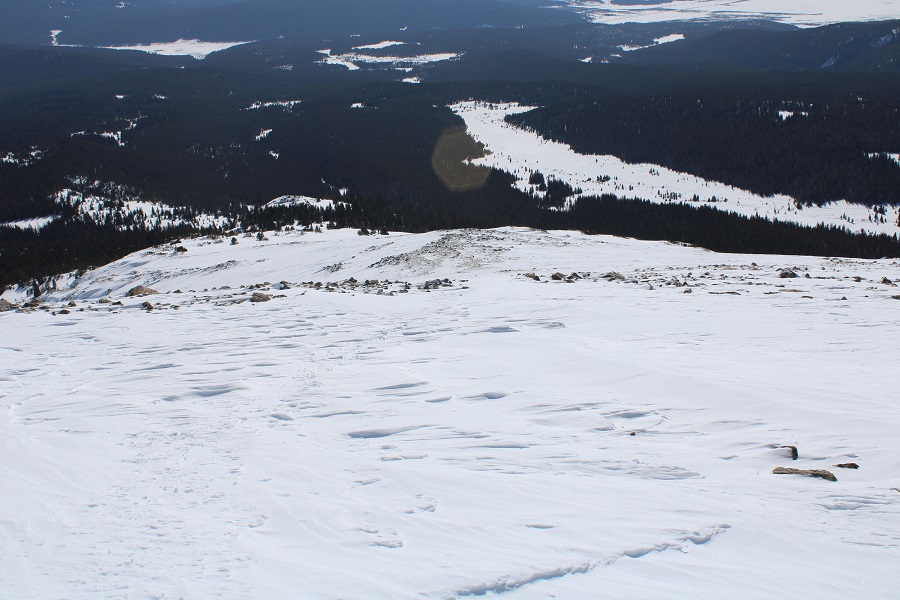
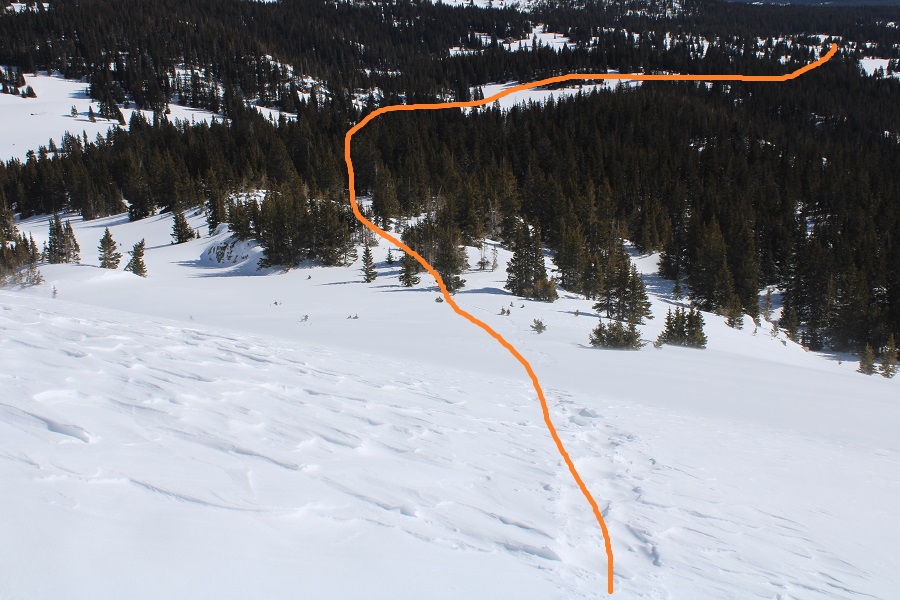
Here’s a look down the access point to the ridge and my trek down.
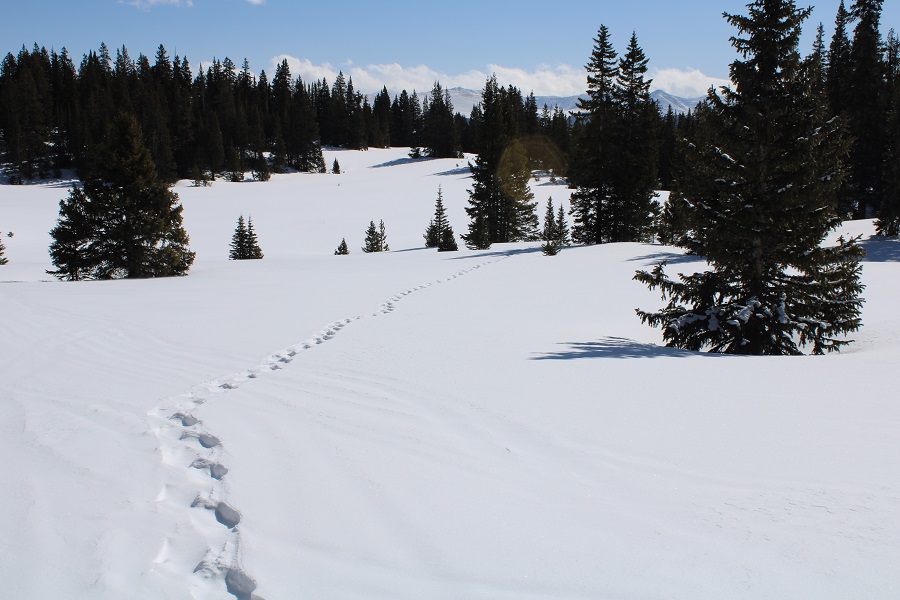
The wind had blown some of my tracks in, but I was able to still follow them back to the ski trench
I took the ski trench back to the hut, and then followed my tracks back to the marshy area
Once back in the marsh, just before the 4WD road I could smell a fox (they have a strong scent too, similar to a skunks, just more mild). I looked around and saw one prancing about 100 feet away. She was a magnificent red fox, quite large and all fluffed up due to the cold, making her look even bigger. She stopped only briefly to glance my way, and then carried on. I watched as she pranced through the willows and disappeared into the trees. No pictures: I just decided to enjoy the experience, as I knew pictures wouldn’t turn out anyway from this distance. All those tracks must have been hers.
At the end of the marshy area I came to the snowmobile tracks that led me back to the junction to the trailhead
I turned left at the trail indicating Crane Park and followed the trail to the trailhead. This was actually the most difficult part of the hike, as my thighs were tired from trenching earlier, and at this point every step I took included 5 pounds of snow sticking to the bottom of each snowshoe. I trudged here slowly, using my trekking pole to knock off excess ice and snow every few feet.
I could hear the wind screaming through the trees. Yep, the storm was coming in. I made it back to the road, and followed it to my truck
I made it back to my truck at 11:45am, making this a 13.33 mile hike with 3363’ of elevation gain in 6 hours, 45 minutes. Note, as you’ll see from my topo map, I made a few wrong turns and did some backtracking. I’d still recommend this overall route however (minus the wrong turns and backtracking).
There was a fairly recent conditions report on this peak, I so I chose it figuring there’s be a trench to treeline. I had some appointments I needed to be back home by 4pm for, and this seemed like a logical choice for today.
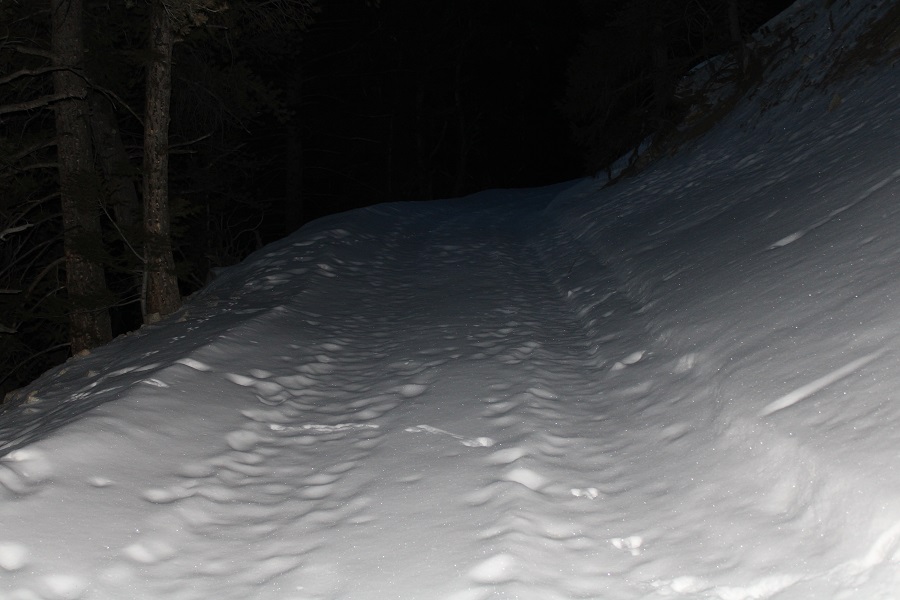
I arrived late, as I woke up to 6 inches of snow at home and had to shovel my driveway before leaving the house. The roads were icy so I took the drive slow. I pulled into the parking lot just before 5am and was surprised to find a fresh layer of snow on the ground. The entire lot was covered, and there were no tracks from any other vehicles. I parked near the entrance and put on my gear. I was on the trail by 5am.
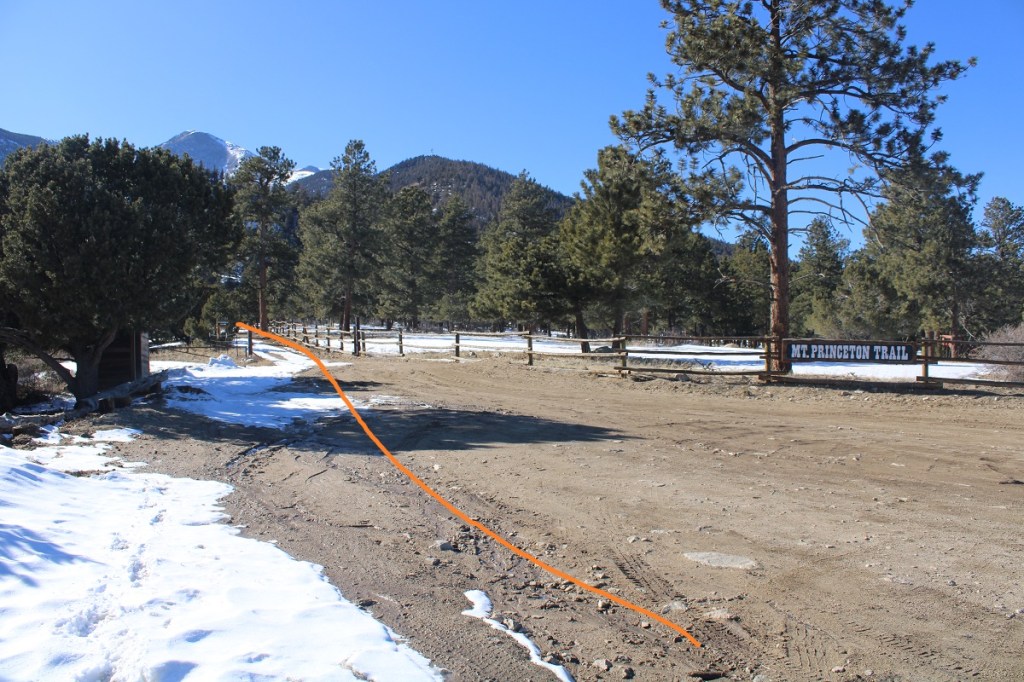
The trail starts at the west end of the parking area. There’s a bathroom and plenty of parking and excellent signage.
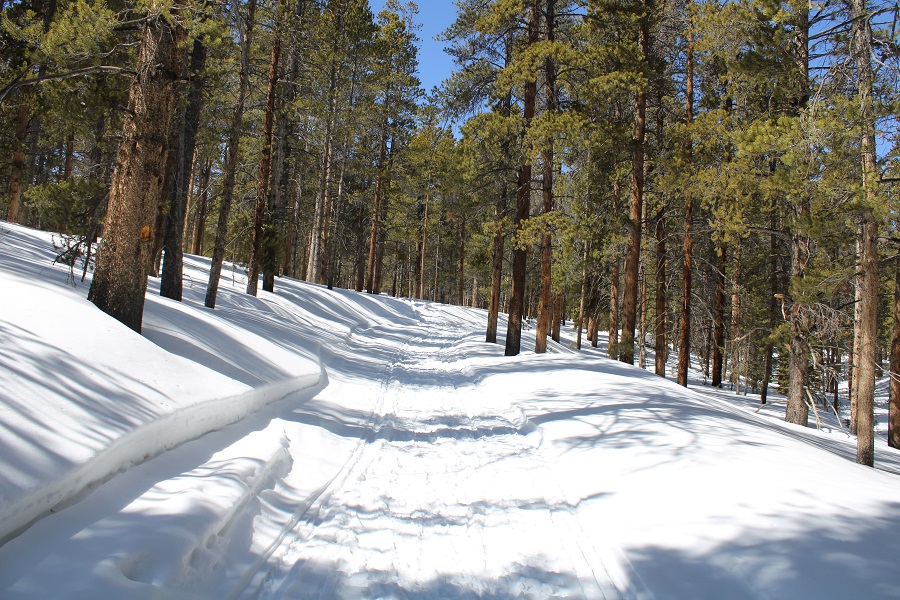
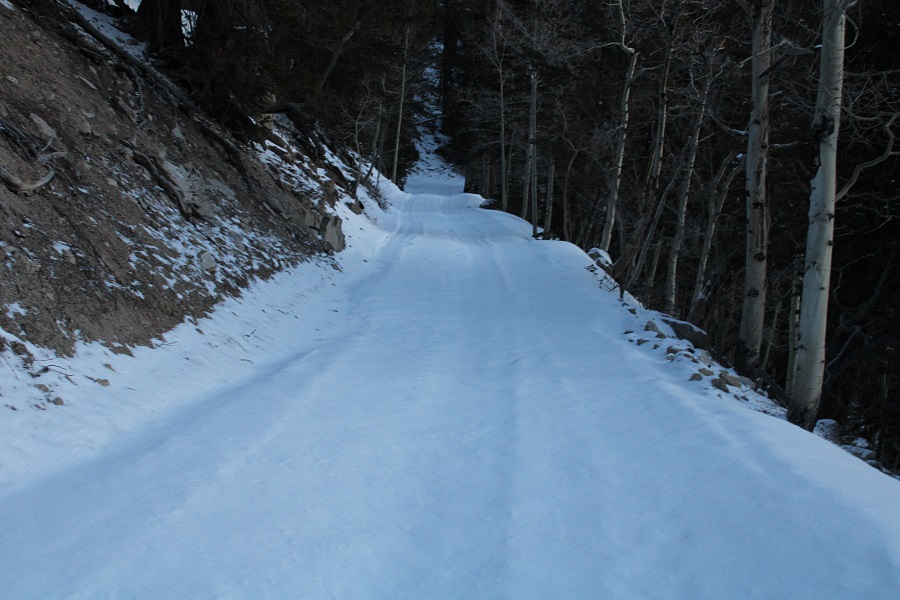
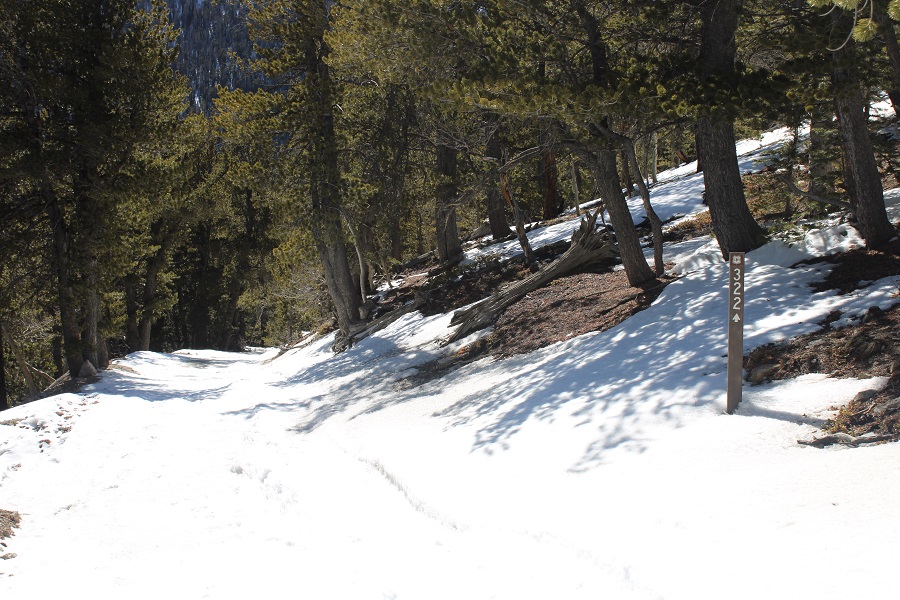
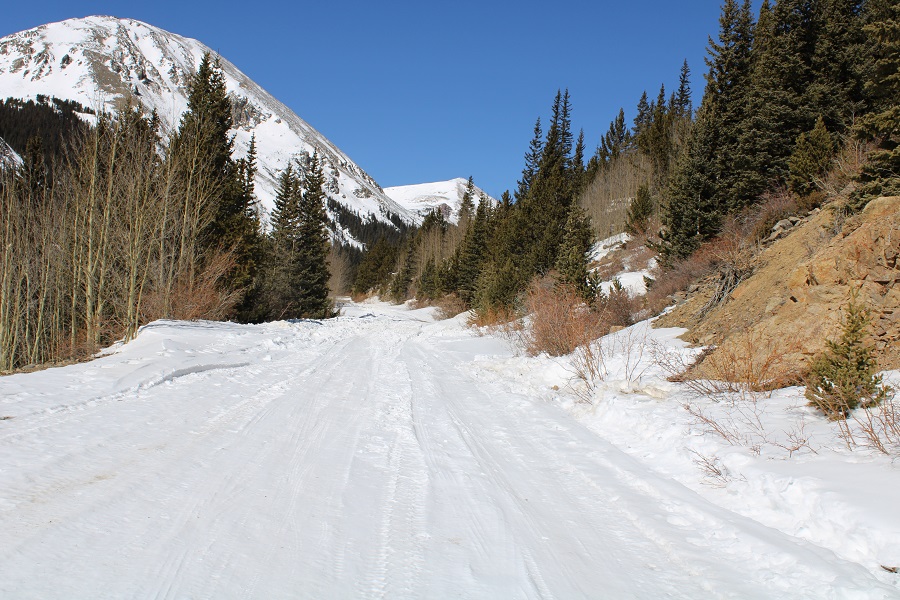
I followed this road (Mt Princeton Road/322) as it switchbacked up the east side of the mountain. I was the first one making tracks, and wore my microspikes the entire day (but lugged along snowshoes).
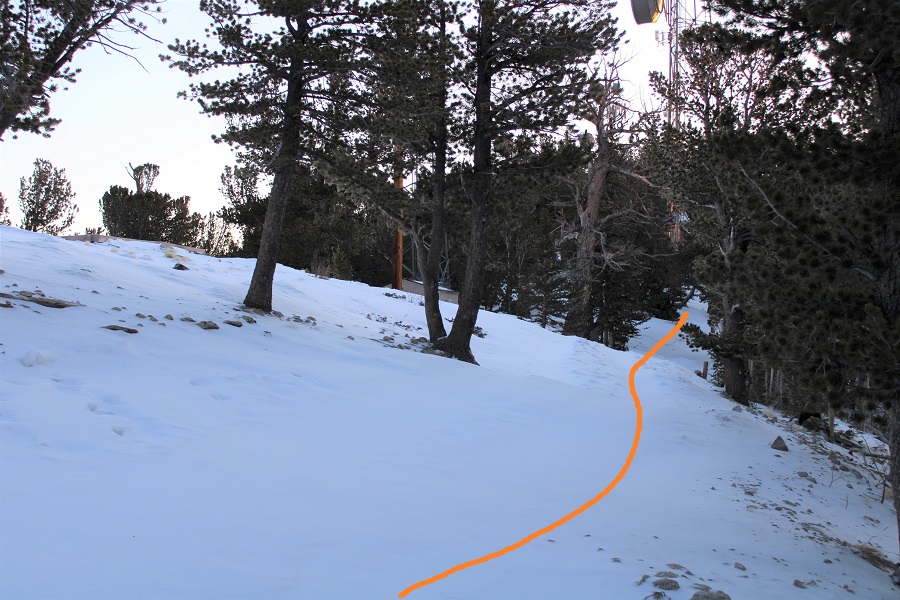
I continued following the road 3.3 miles to the communication towers
At the towers I turned left and followed trail/road 322A
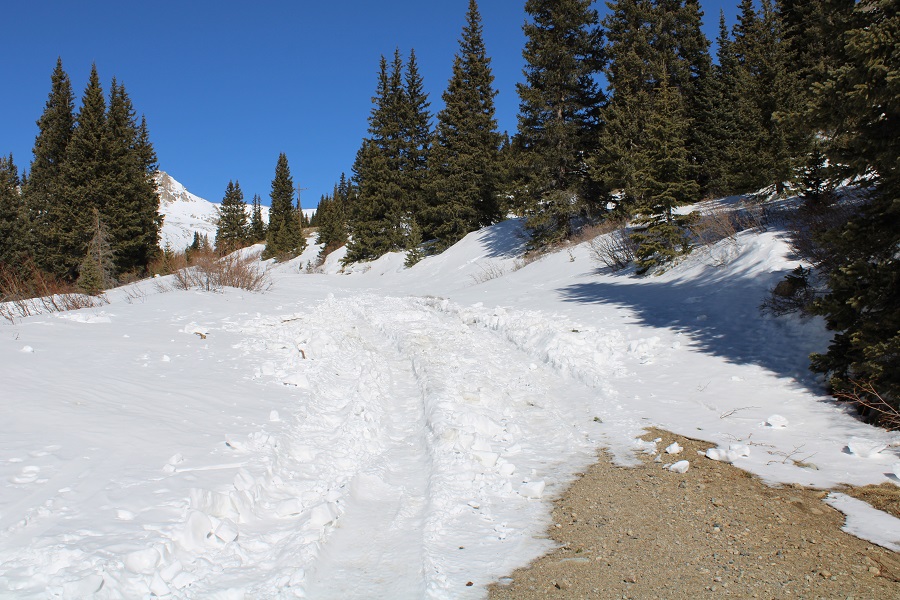
This is where the snow started getting deep. There wasn’t a visible trench, so I postholed a bit, but was stubborn and didn’t put on my snowshoes.
I was still following the road, but there was a lot of snow in this area. The drop-offs were steep (better pictures later, just be aware of avy danger here).
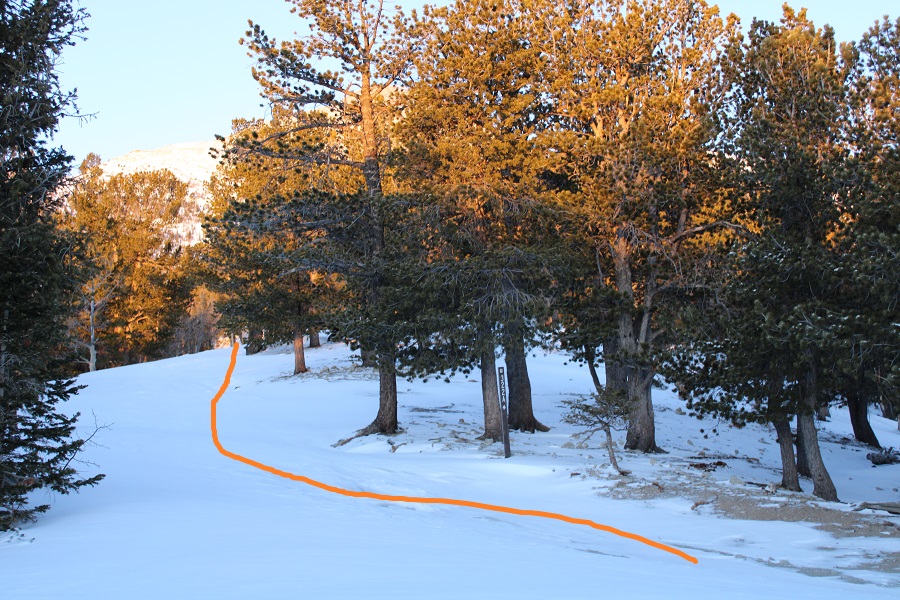
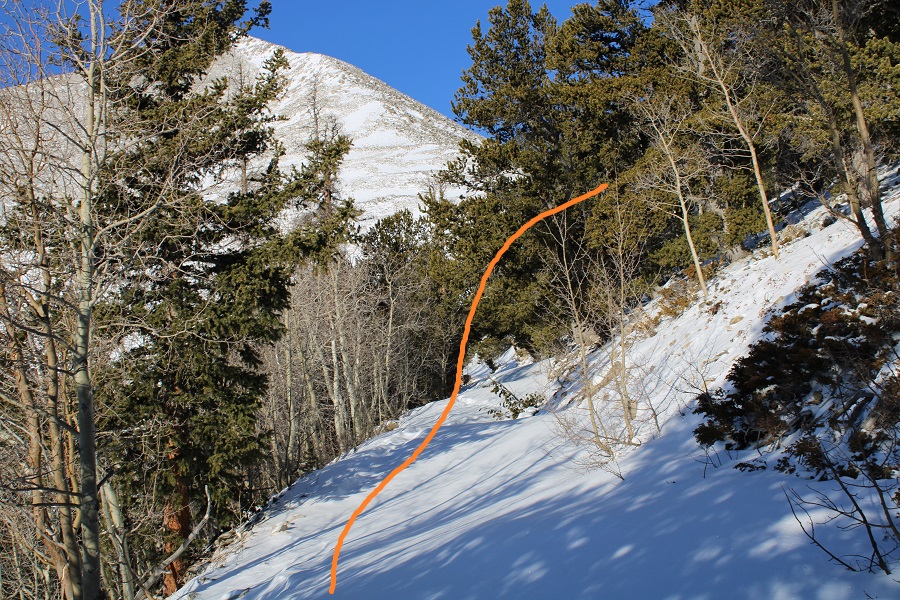
I followed the road to treeline, and then gained the ridge to the right (continuing on this road will take you to the Lucky Mine, and another access point to summit Tigger, but I found the snow was too steep covering the road and decided against that route)
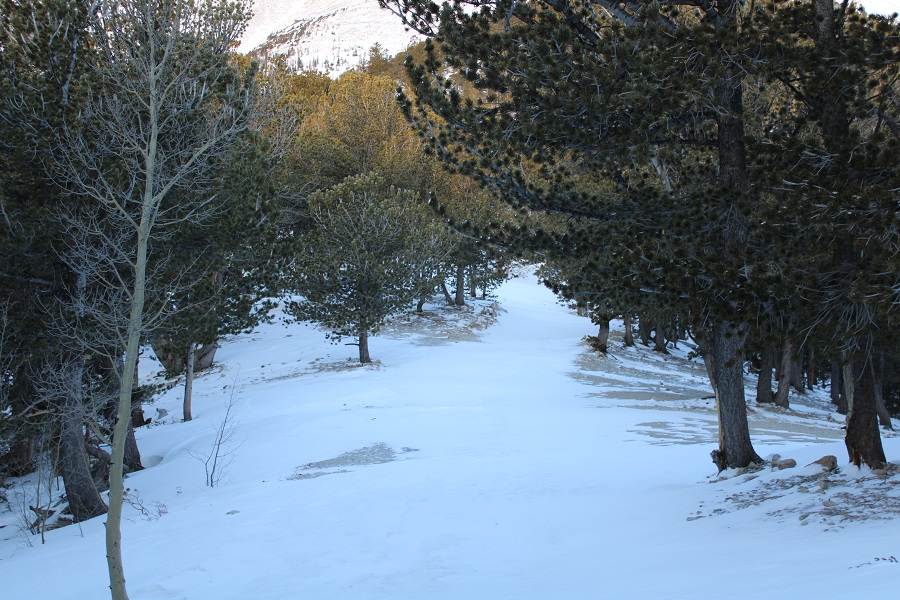
Once on the ridge it was windblown, and I could easily see the summer trail.
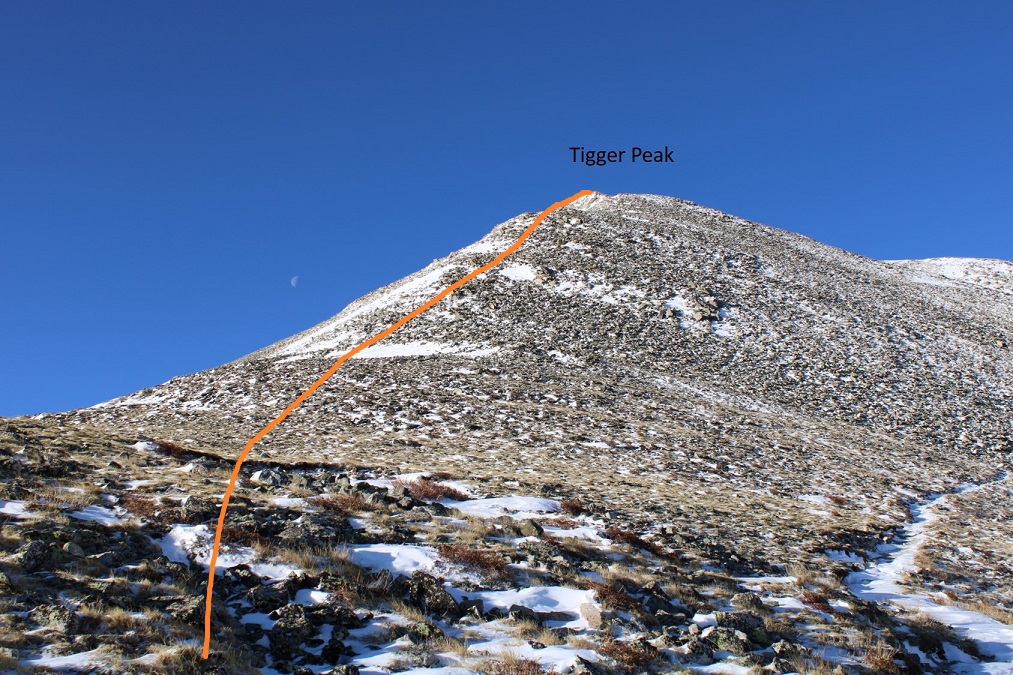
At this point, what I should have done was gone straight up and over Tigger Peak.
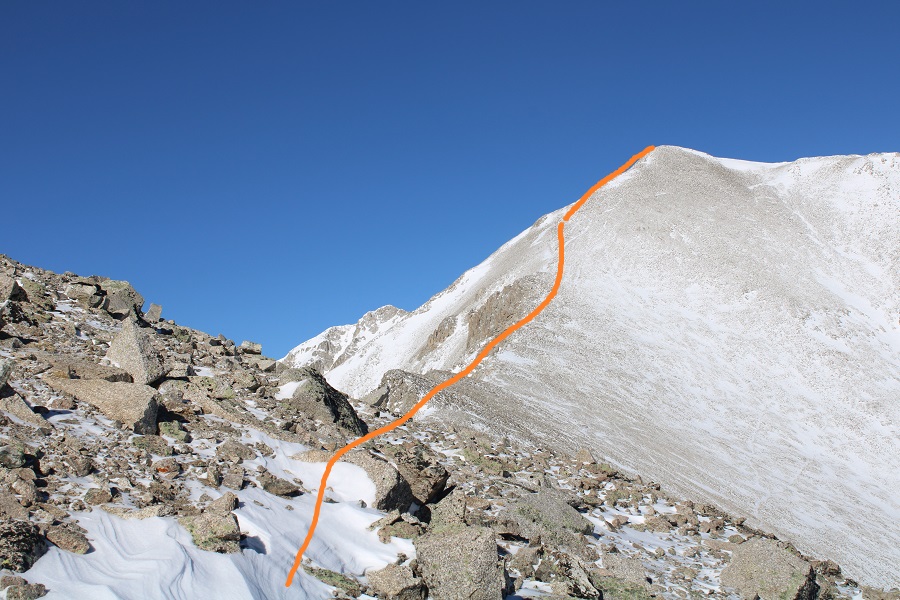
But the trail looked easily to follow, and the mountain looked windblown, so I continued to follow the summer route. Here’s the overall summer route
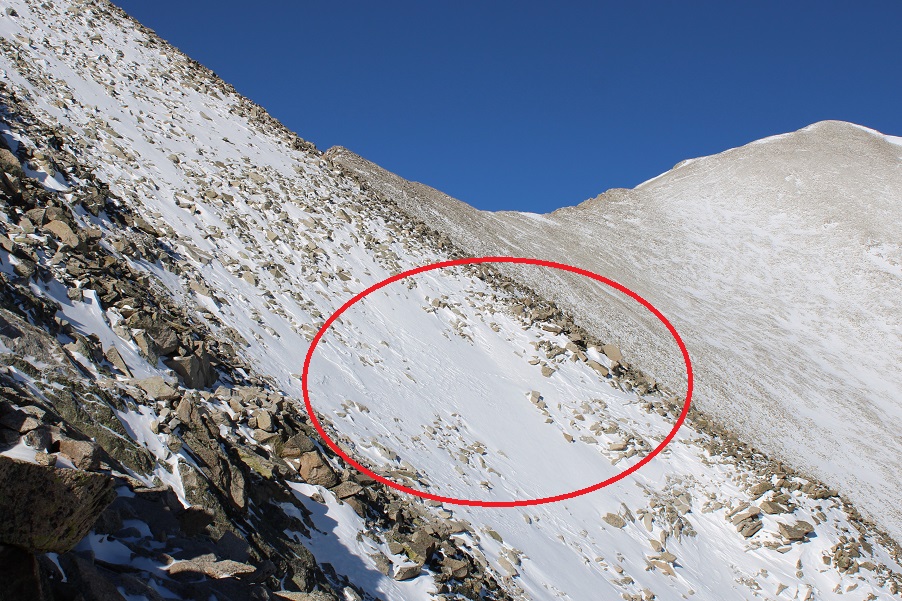
As I said earlier, I was following the mostly bare trail. I crossed a couple of slide areas without difficulty, and then came to one that gave me pause. I could see remnants of old footprints/tracks in the snow further ahead, but I did not feel comfortable crossing this section this morning, even though I had my ice axe and gear. A slip would have been too costly, especially since I hike solo.
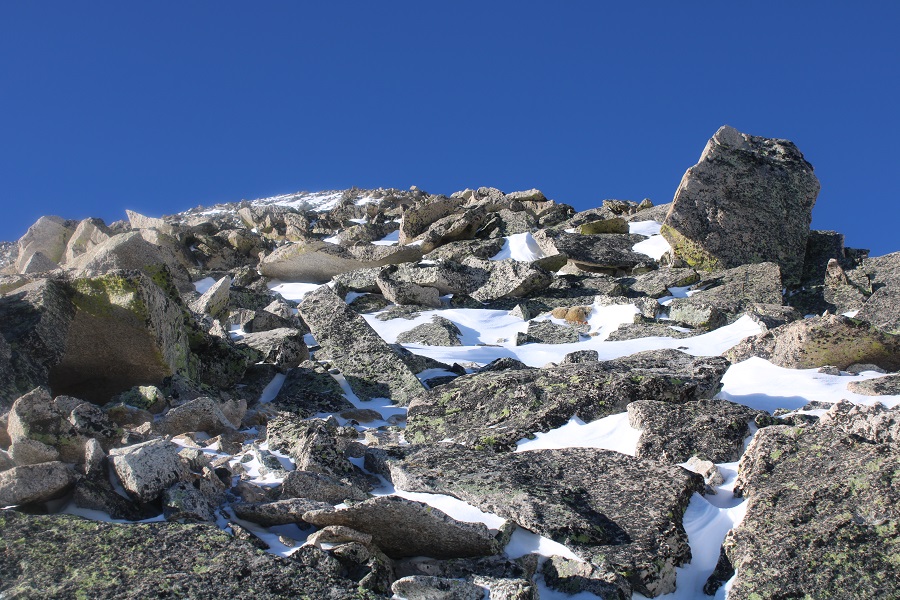
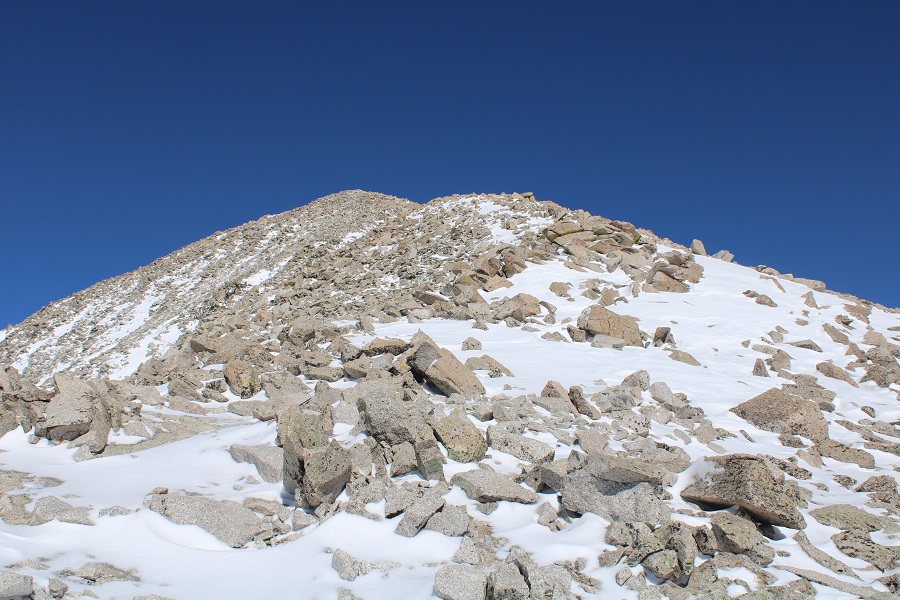
I decided instead to change direction immediately and head south to the ridge, rock hopping to the top. Most of these rocks were large, and luckily, few of them moved. The snow in-between the rocks was troublesome at times, and I postholed to my waist, but I felt more comfortable with this route.
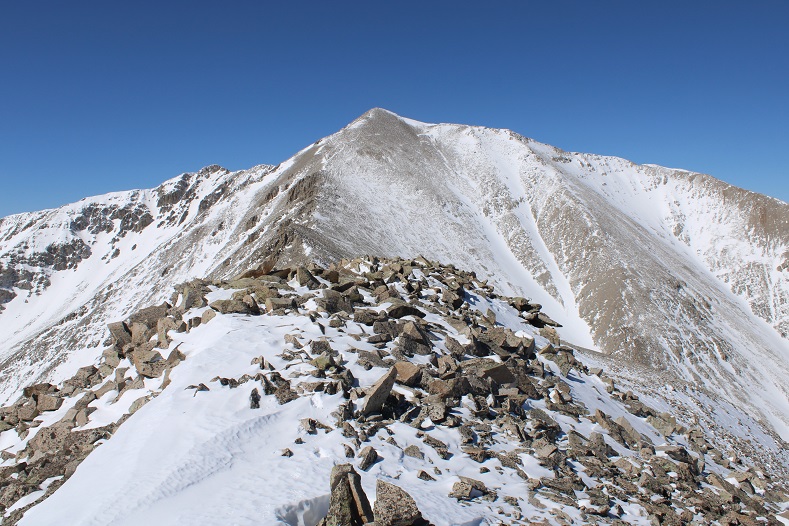
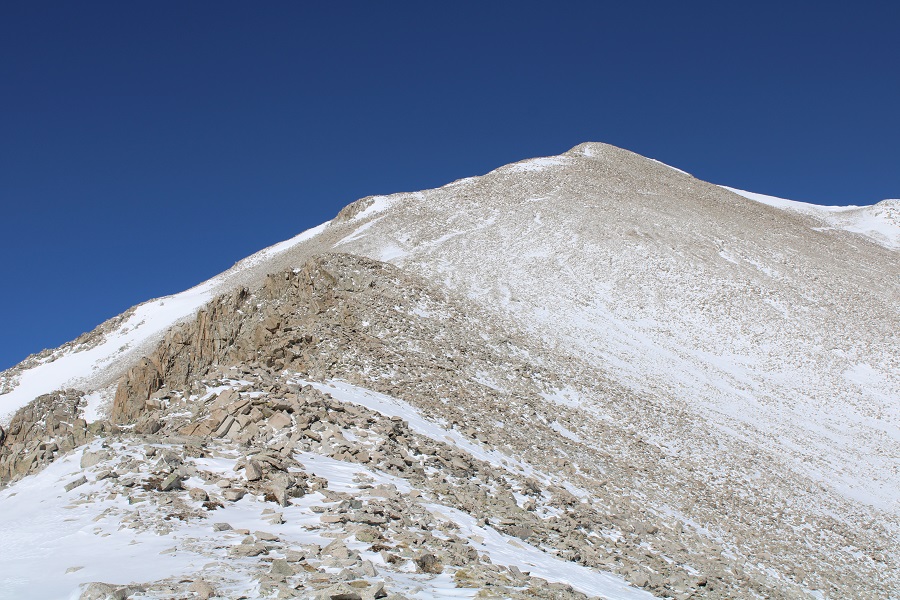
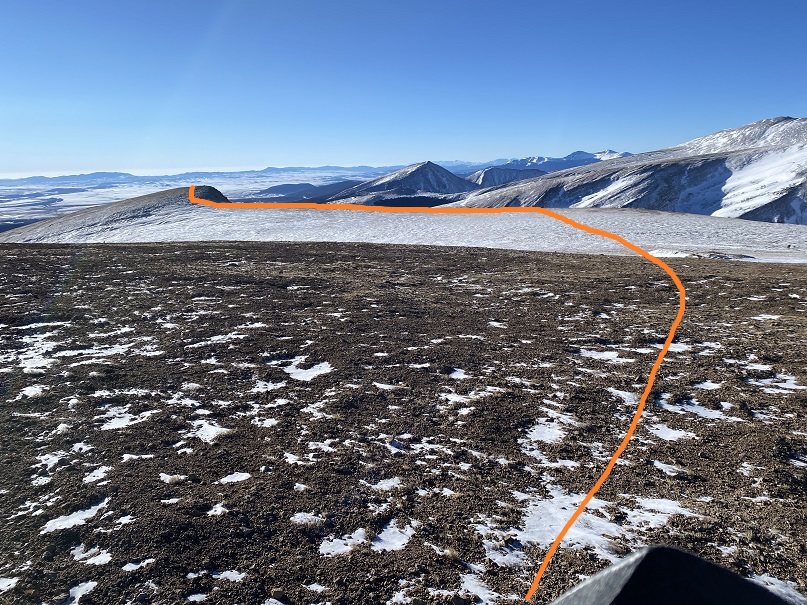
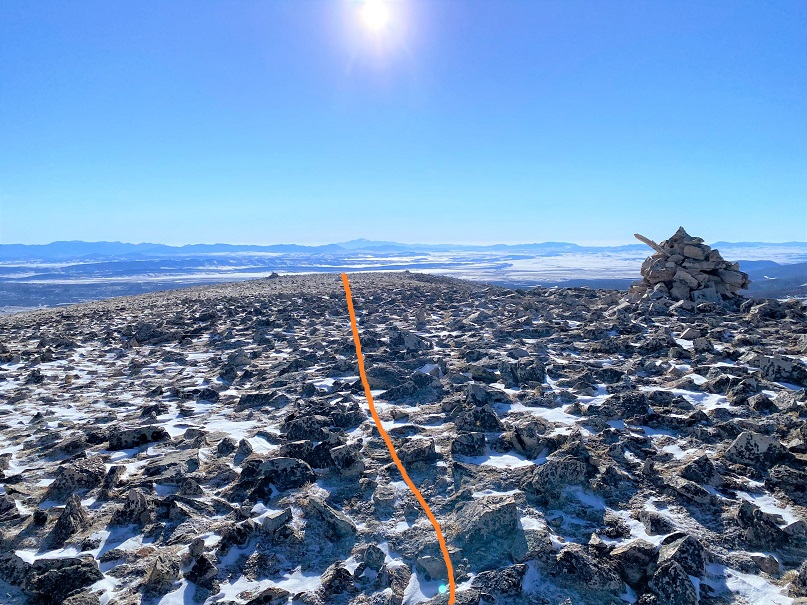
Once on the ridge I followed it northwest to the summit. There were several social trails here, but staying on the ridge proper, or going slightly east worked well.
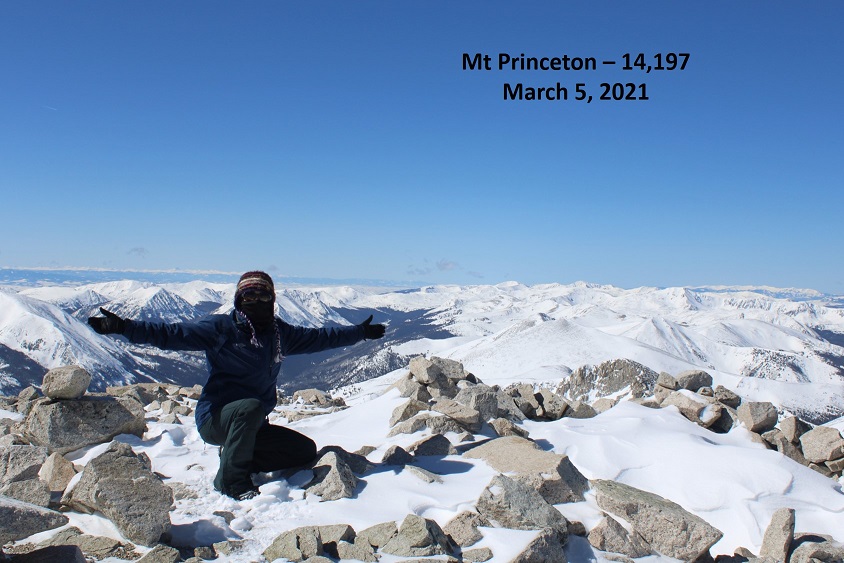
I made it to the summit at 10:45am
Mt Princeton:
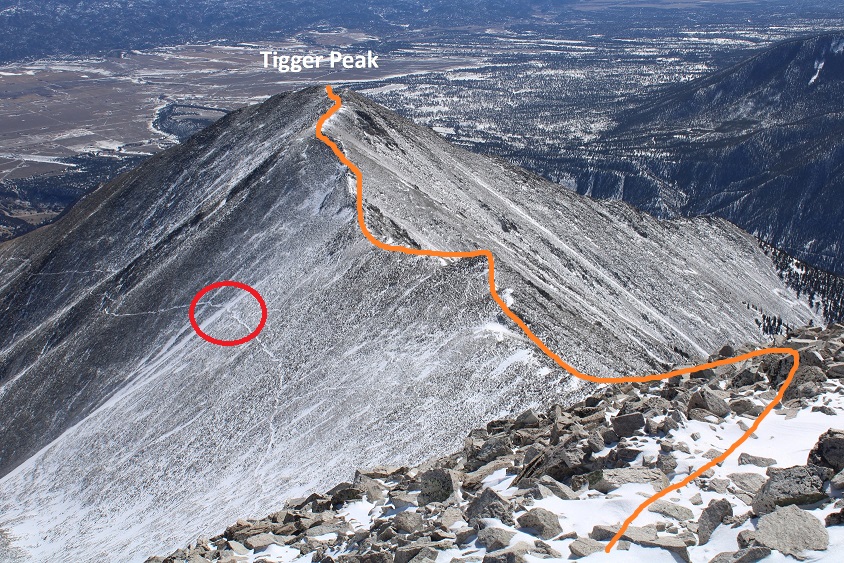
It was a gorgeous day above treeline! However, I had plans and needed to bet back down. I decided to head back over Tigger Peak. Circled is the small slide area I wished to avoid
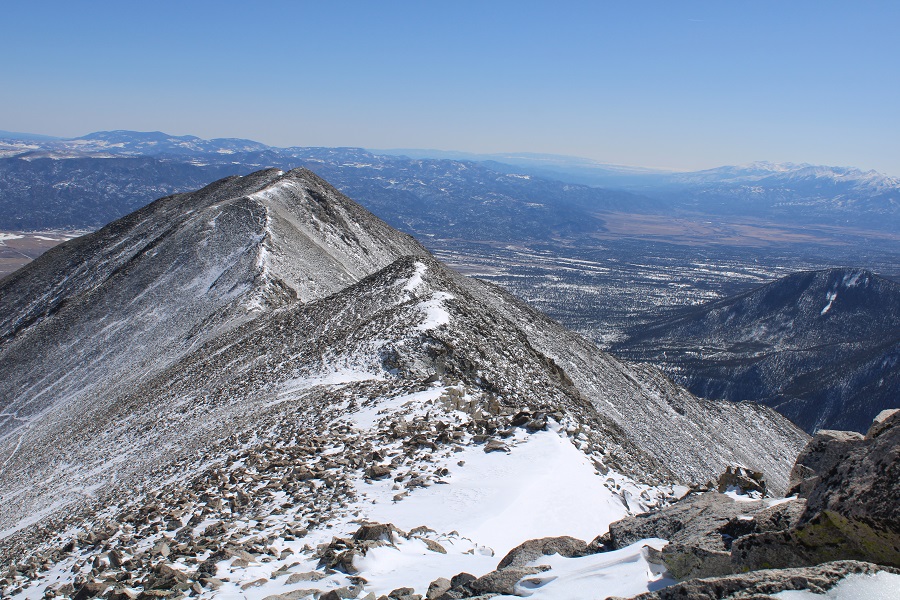
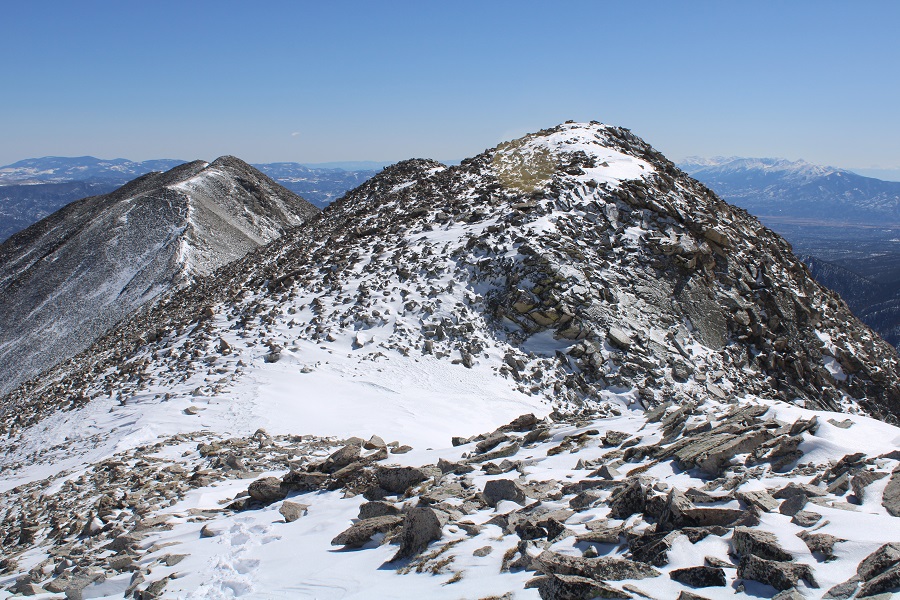
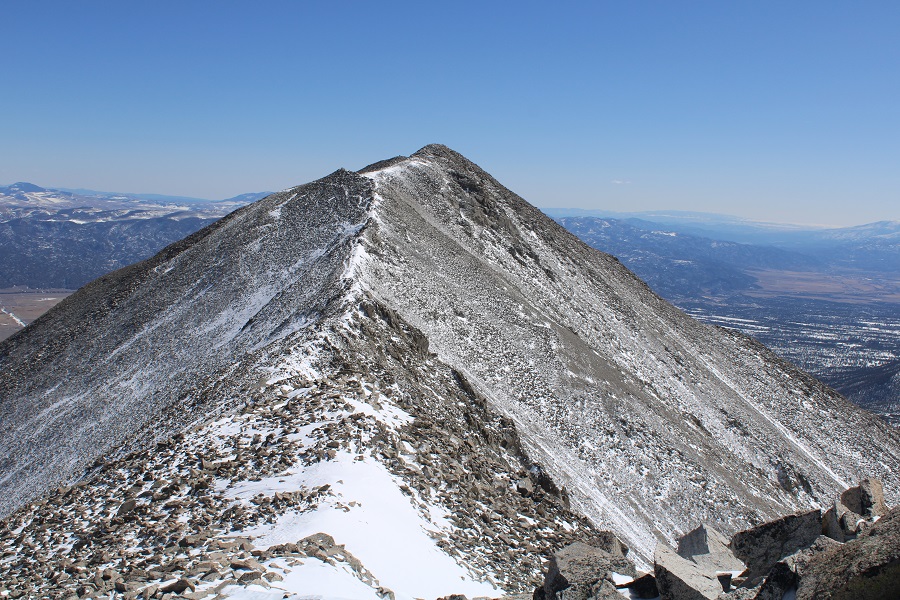
Here are some pictures of the ridge to Tigger Peak, complete with a few small false summits
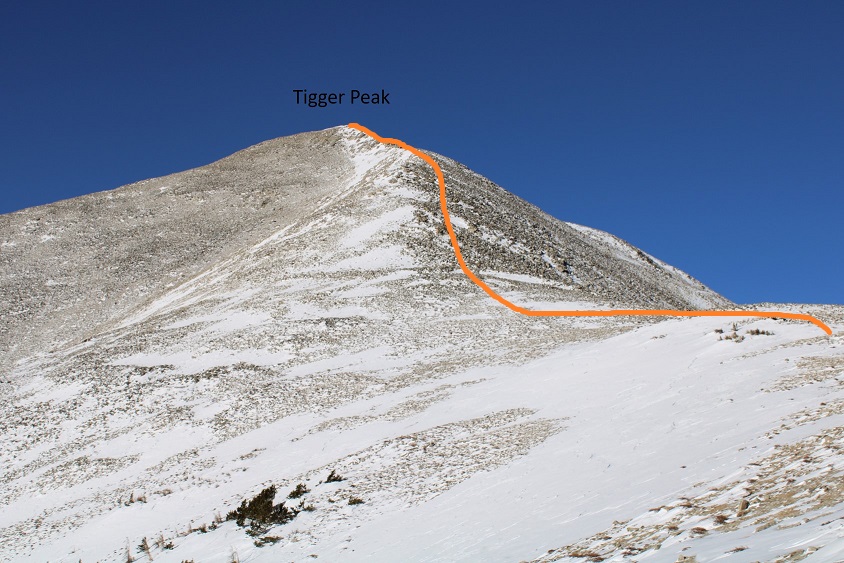
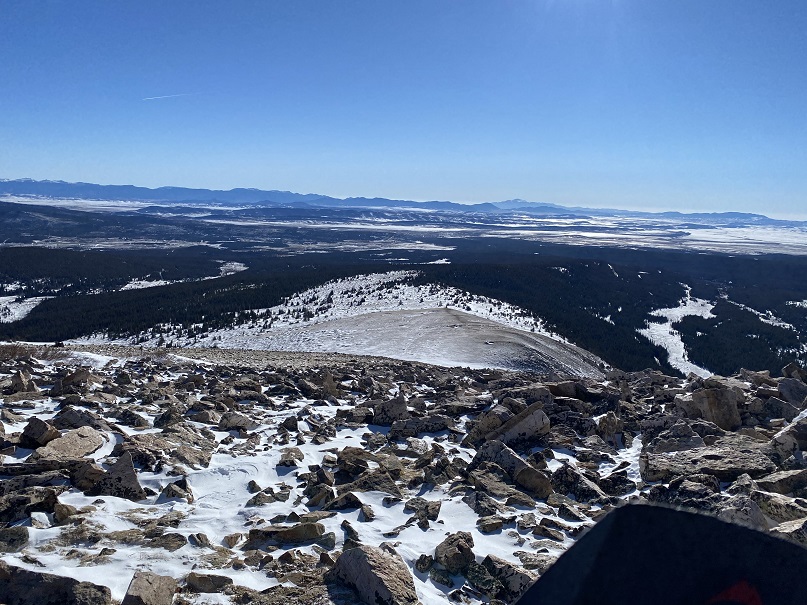
From Tigger Peak, here’s looking at the descent point
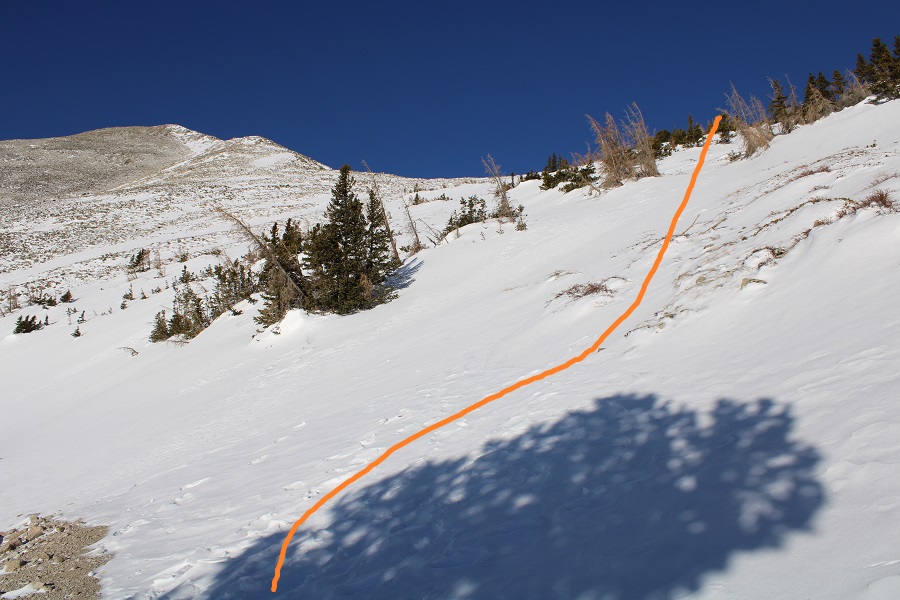
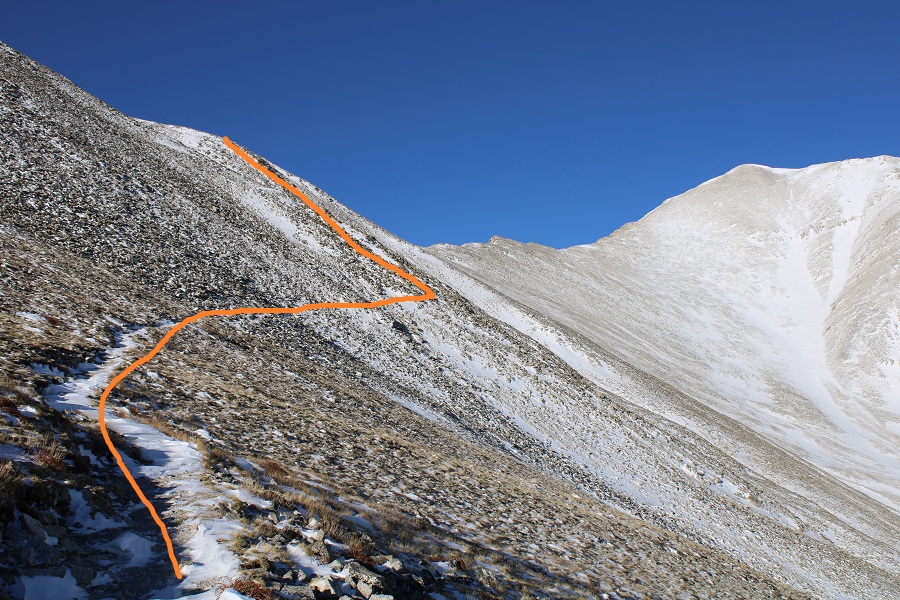
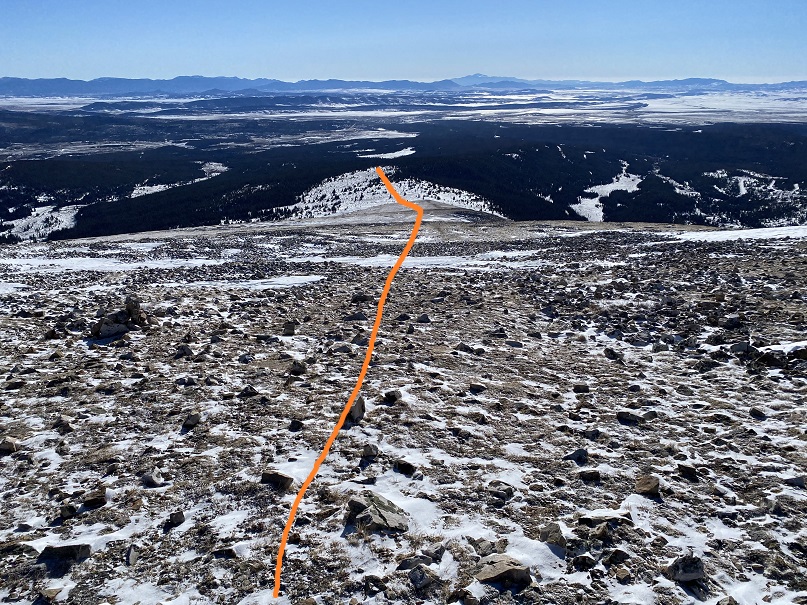
I continued hiking the ridge, and then started the longest part of my day: rock hopping back down to the trail. I just had to head northeast, and I could see the trail in front of me, but a lot of these rocks moved and progress was painstakingly slow. Here’s the route
From there I picked up the trail and followed it back to the road
And followed the road back down to the trailhead.
Here are some better pictures of how steep some sections on the road were
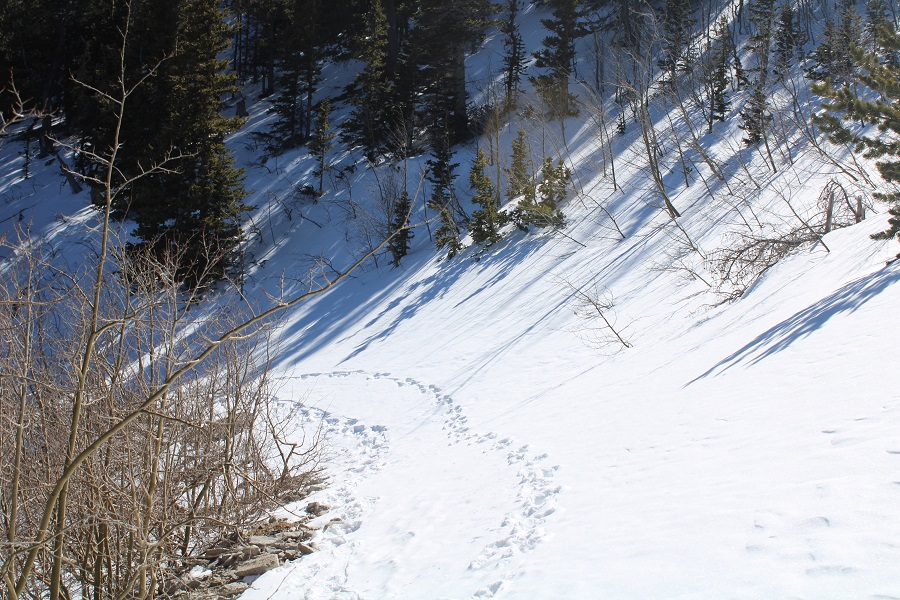
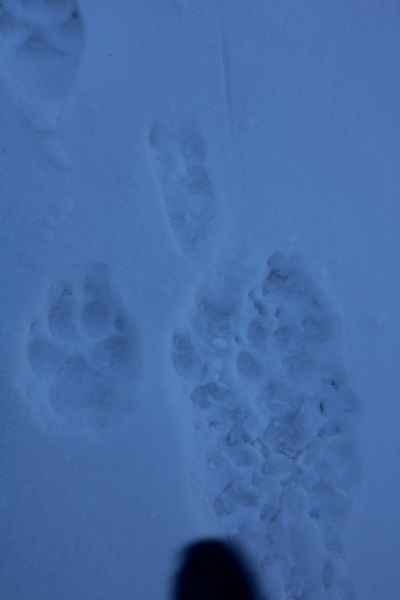
Something cool: I was the first to make prints on my way in, but on my way out I saw coyote prints following my tracks. Some of the prints were directly in my footsteps. Looks like I had a stalker.
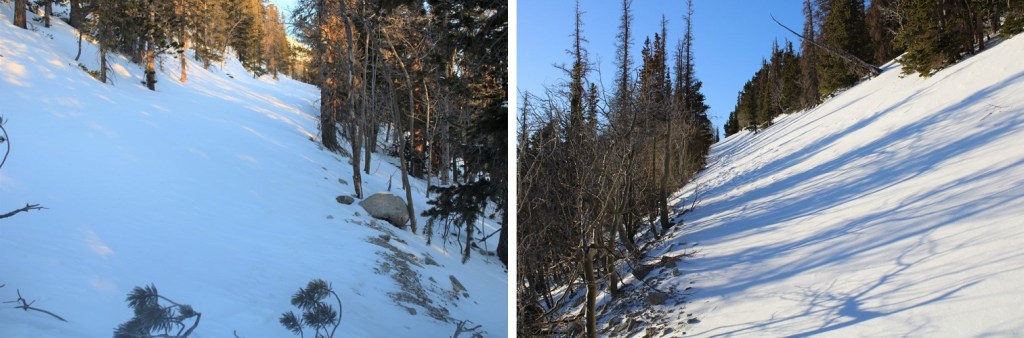
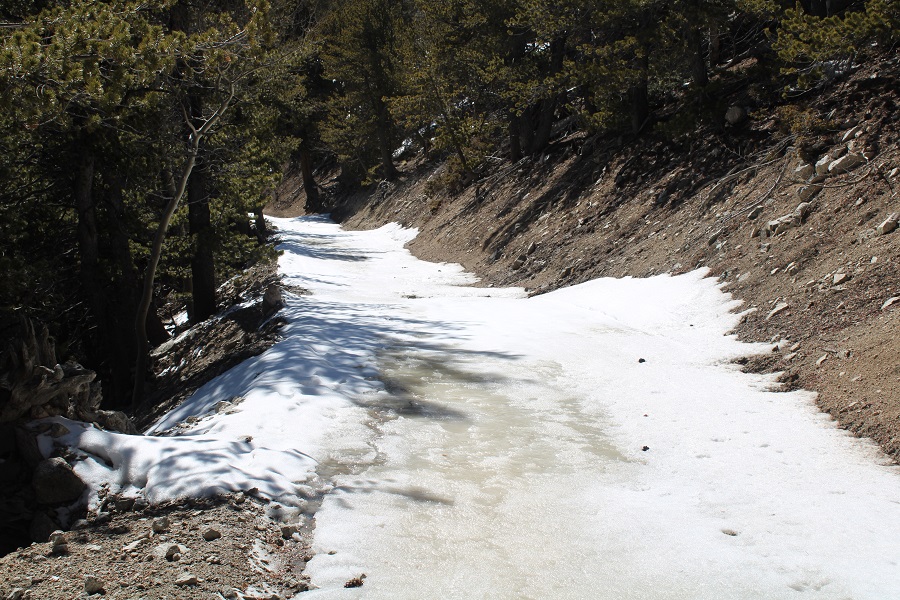
The snow on the road became slushy as I descended.
It was downright muddy by the time I made it back to my truck
I didn’t see another person the entire day, which was a shame because it was a perfect day to be above treeline!
I made it back to my truck at 2:45pm, much later than I’d originally anticipated. Luckily, I had cell reception and could call my appointments and move them to 6pm. This ended up being a 15.4 mile hike with 5615’ of elevation gain in 9 hours, 45 minutes.
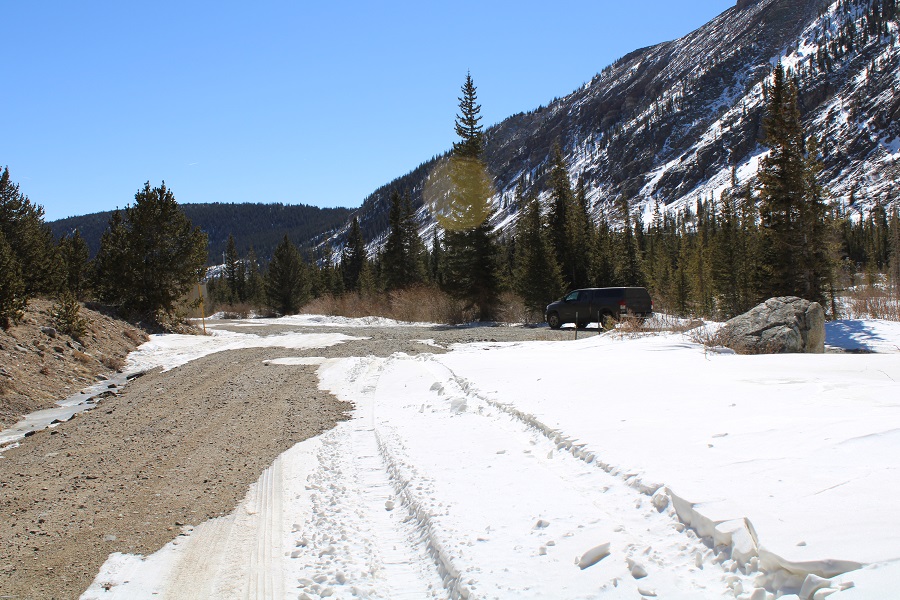
I was looking for another quick summit this week, and was halfway to the trailhead before I remembered the road to Mosquito pass would most likely be snowed in, adding about 5 miles to the hike. Oh well, I should still be able to make it an early day. I made it to where the road for Mosquito Pass and 12 meet and due to previous experience with this road in winter decided to park at this junction. I could have driven about a mile up Mosquito Pass road, but eventually the drifts would have made it necessary to find a place to park. By parking below I’d be getting in some extra mileage (if not much elevation gain).
I parked, gathered my gear, and headed up Mosquito Pass road at 6am.
I was excited to try out my new camera. I tend to go through cameras quickly, as I put them through a ton of use in extreme conditions. The last time I purchased a camera I bought one that was less expensive, reasoning since I buy them so often I’d like to spend less money. I found out the hard way cameras that are point and shoot don’t operate well when it’s less than 30 degrees outside.
The past few weeks I’ve been using a stylus with my iPhone, but I’ve found when it’s extremely cold out even the stylus doesn’t work (although warming the stylus up in my mouth sometimes helps). After my climbing accident at Garden of the Gods last week where I not only came out road-rashed and bruised but also I crushed my stylus, I decided to just purchase another DSLR. Yes, they’re heavy, but they withstand the cold.
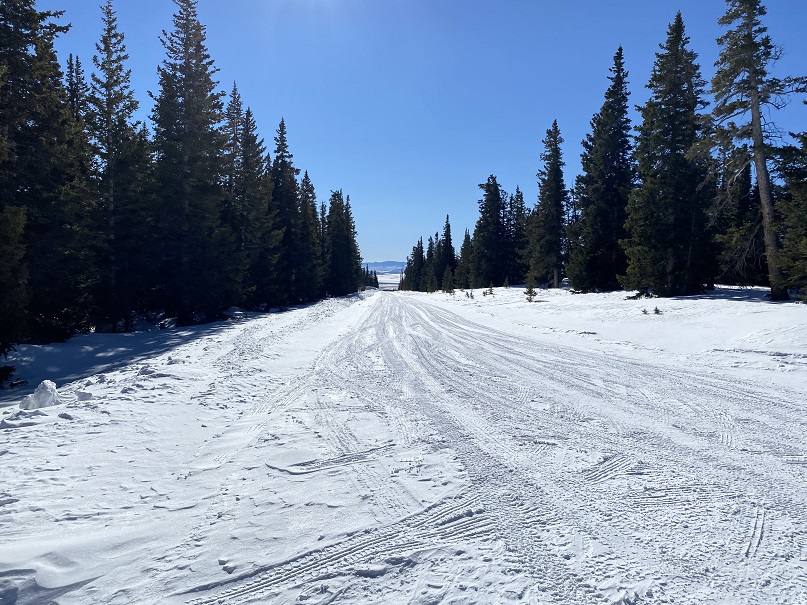
I hiked along the dirt road for 2.5 miles. The conditions were varying, and I was glad to have worn my microspikes.
About a mile in was the furthest anyone has been able to drive recently
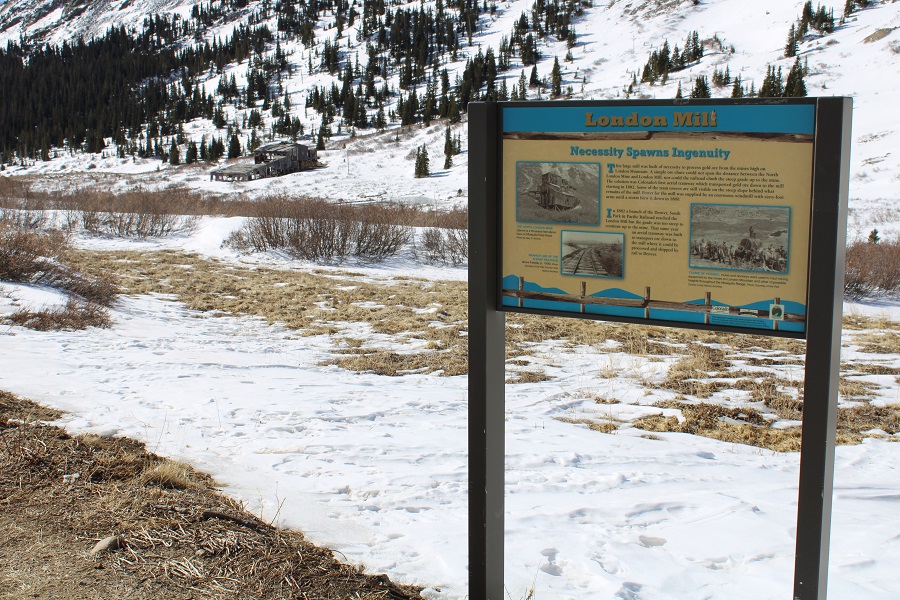
I passed North London Mill
After passing North London Mill I turned left at the junction
It was here the sun began to rise and I started trying out my new camera
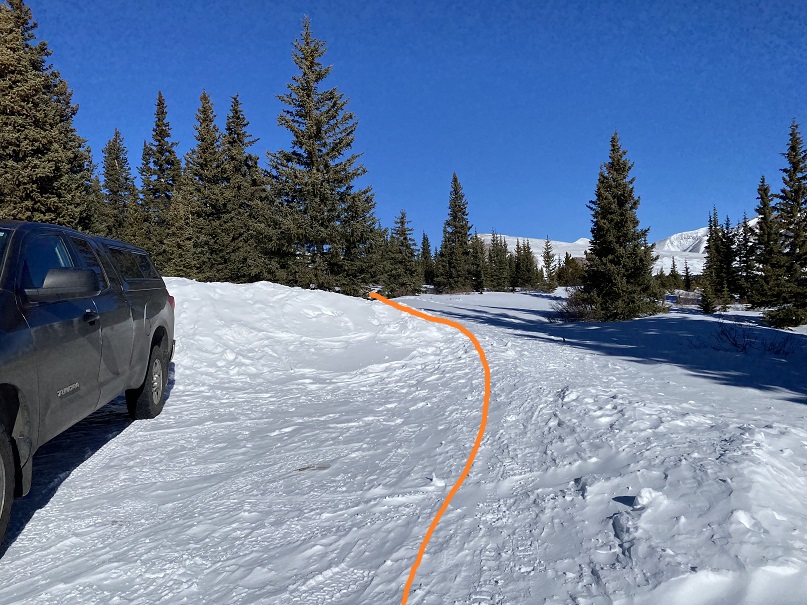
It was also here I started postholing more than I could stand. I decided to put on my snowshoes, and wore them until I made it to the Mosquito/London saddle
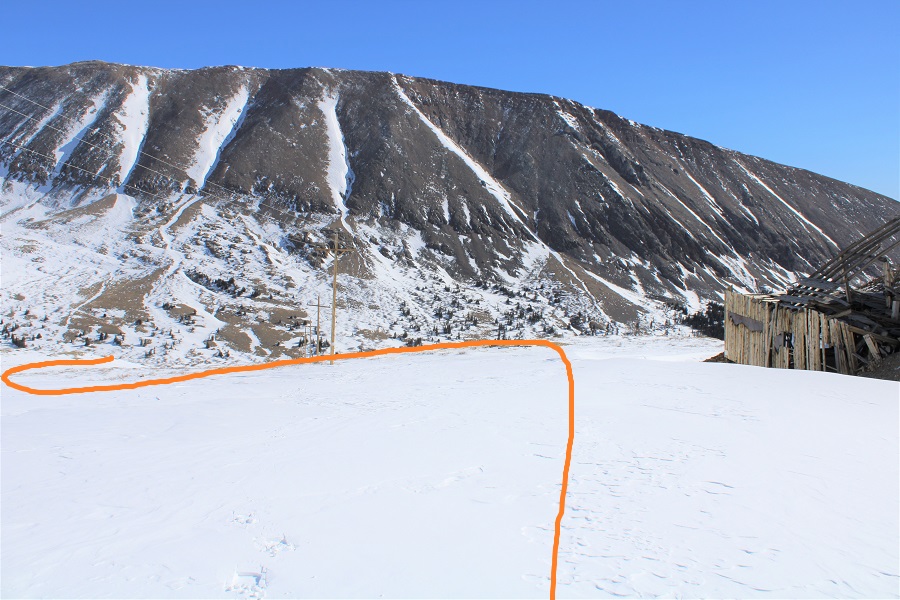
I followed the road up to London Mine
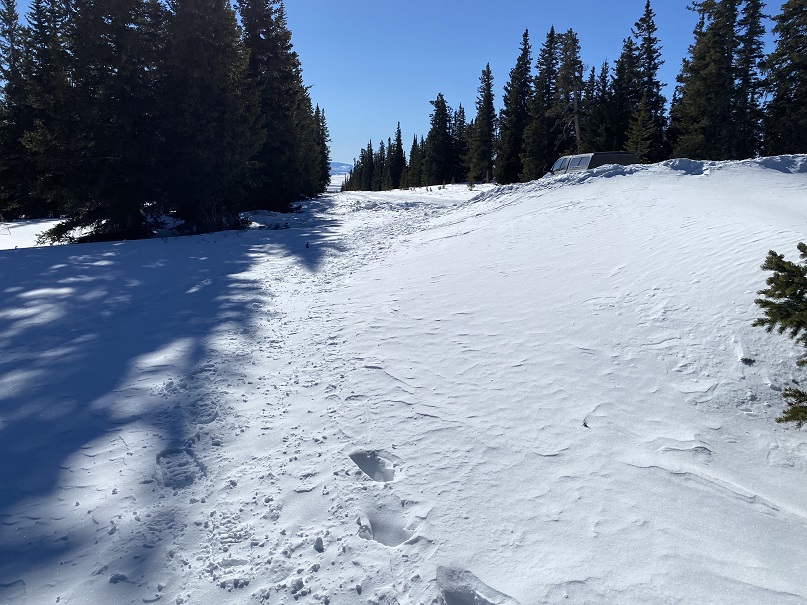
At times the road was completely covered in drifts
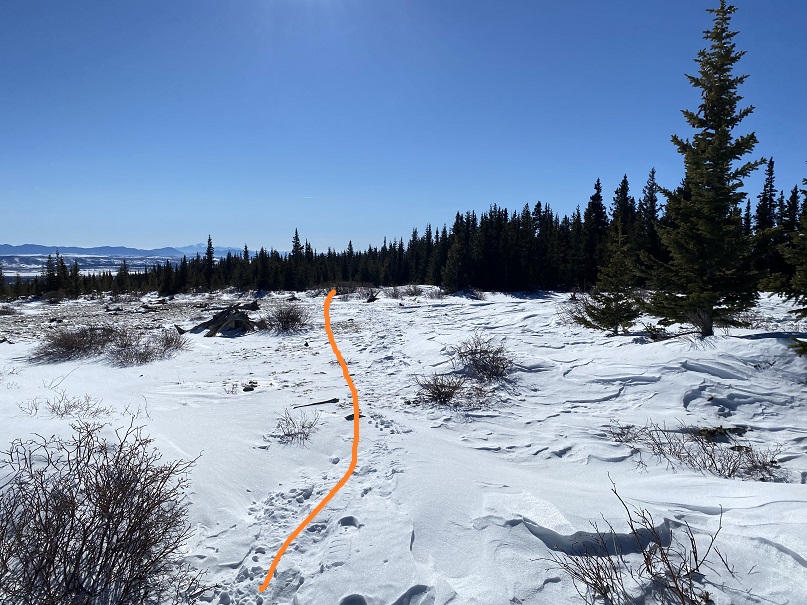
The road was covered in snow as I got closer to the mine, so I just had to kind of wing it.
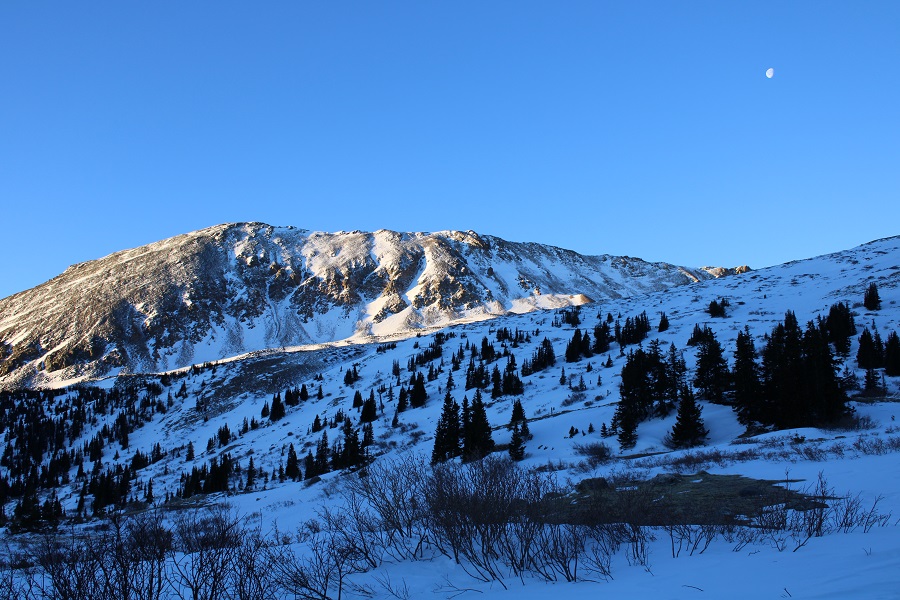
The moon was just going behind the ridge as I reached the mine
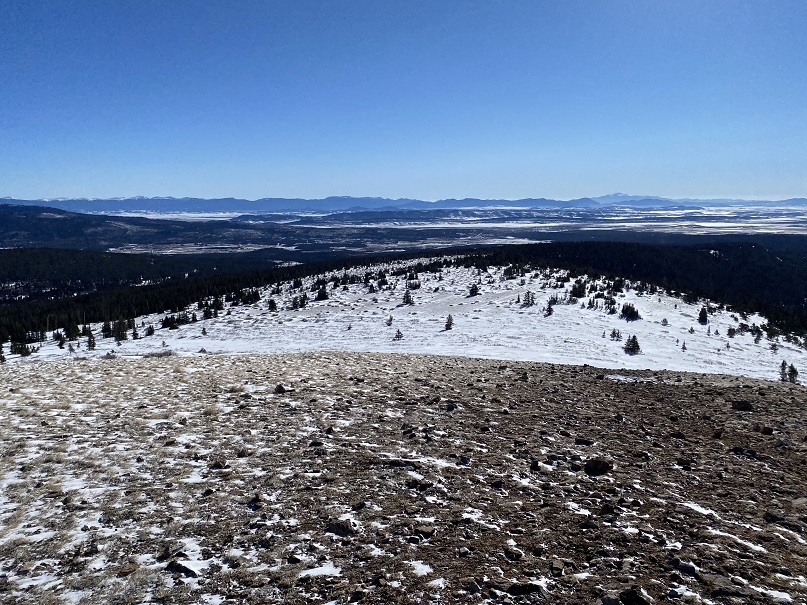
I continued past the mine, heading west
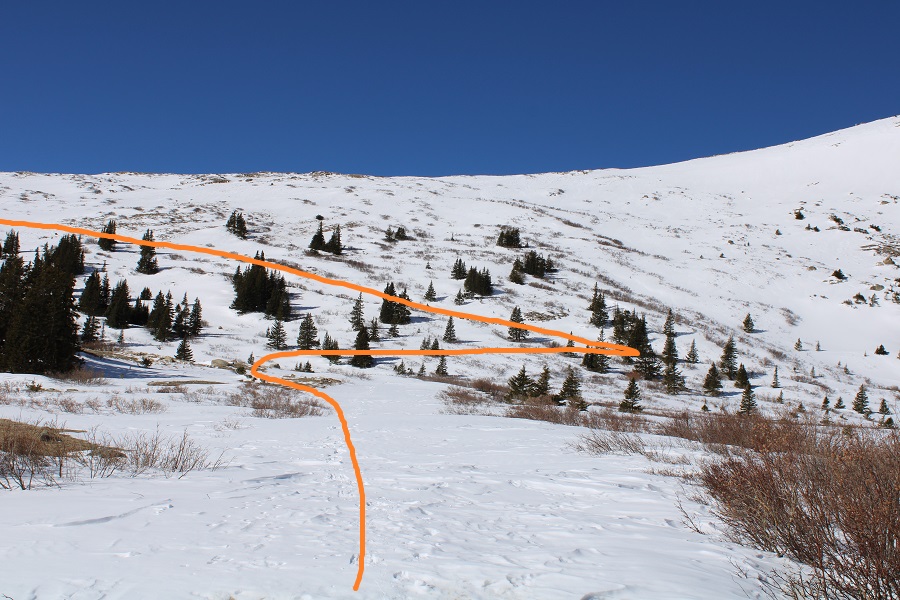
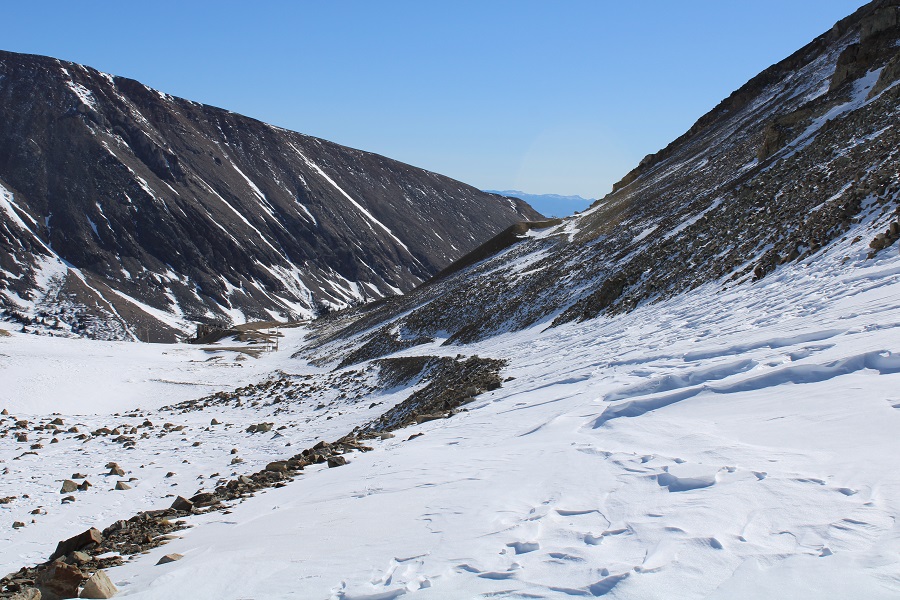
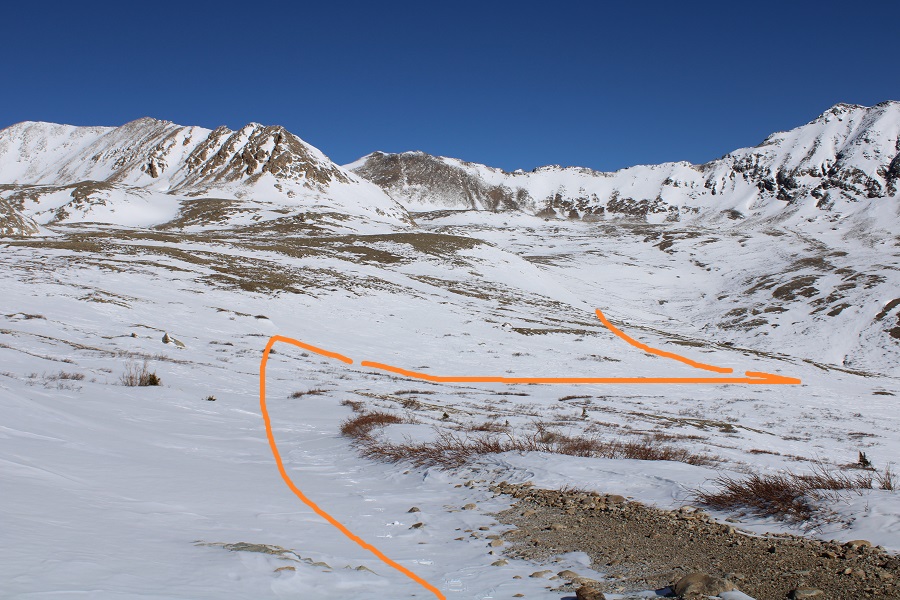
And followed the road to the saddle. From a distance this road looks mild, but I’ve taken this route in winter before, and the drifts can get pretty steep and go down quite a ways into the drainage (the pictures don’t do the drop offs justice). It’s a good idea to have traction and an ice axe for this part in winter
I made it to the London/Mosquito saddle and took off my snowshoes, turned left, and followed London’s ridge southeast.
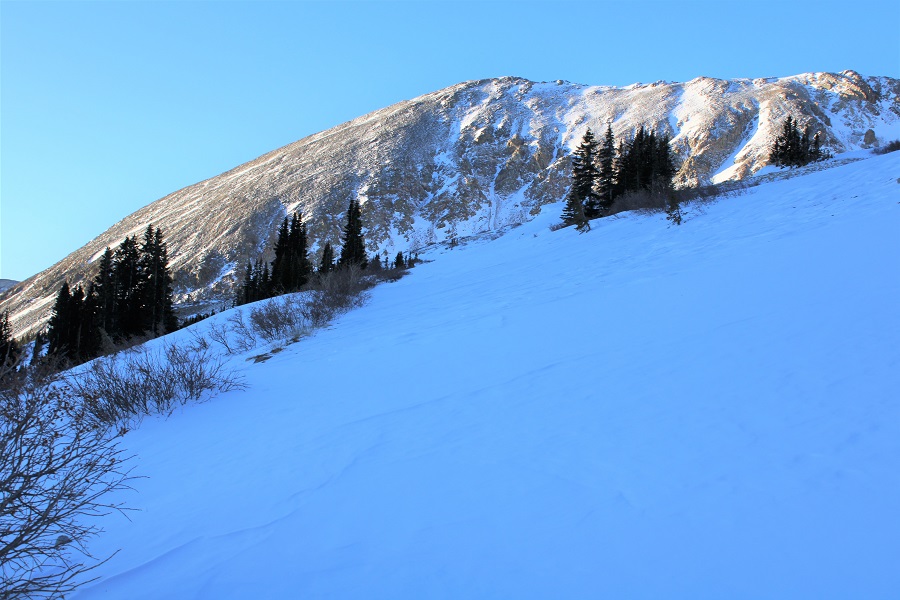
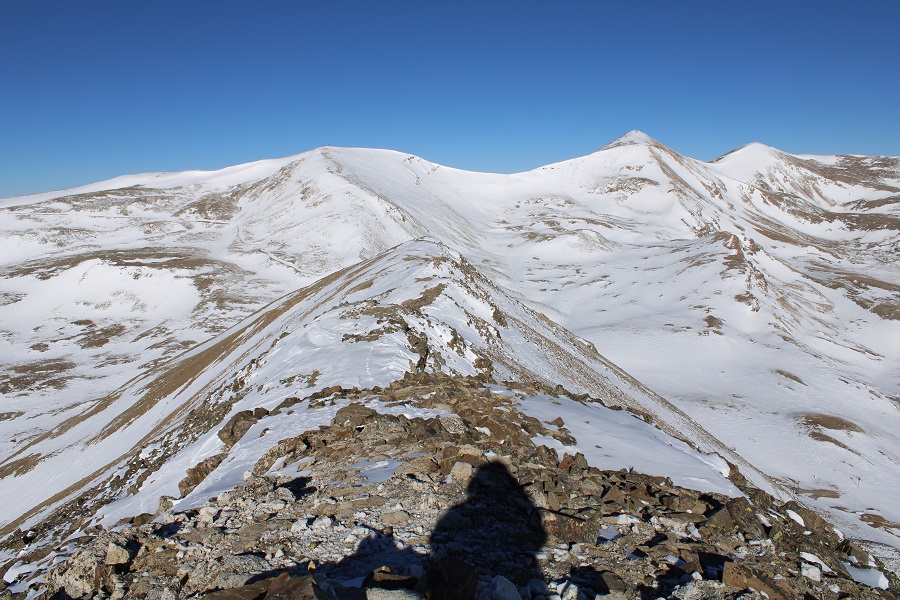
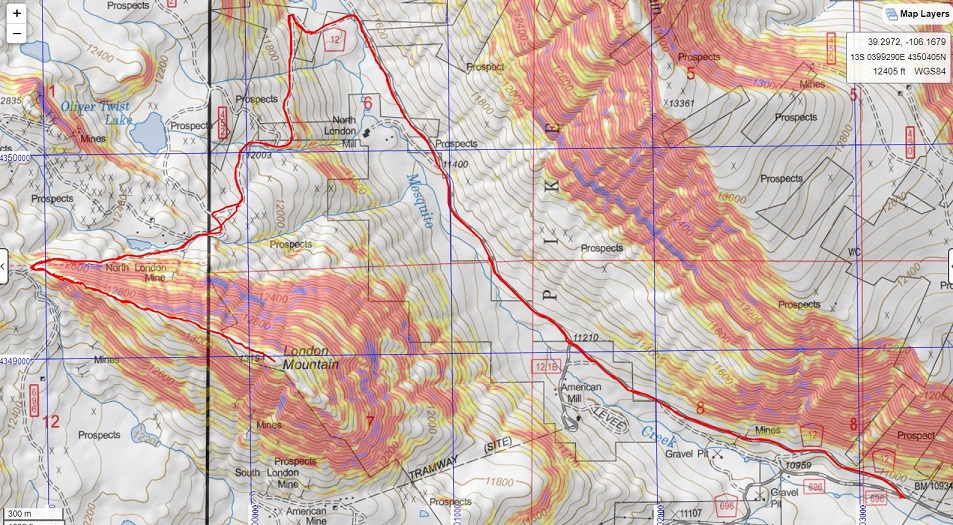
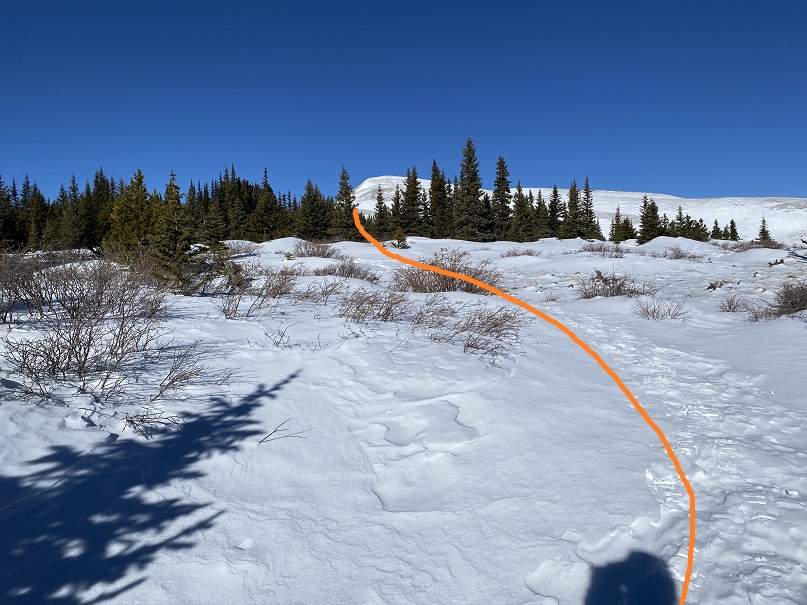
This ridge goes for almost exactly a mile. After initially skirting to the right, I was able to stick to the ridge proper the entire time, and only postholed a few times in the snow. This is all class 2, with the snow making it an easy class 3 in just a few areas. Also, I didn’t remember it until I got back home and looked at my pictures, but the one drawback of this camera are the sun spots when directly facing the sun. I know what causes them, I just need to be more diligent in the future against preventing them. Here’s the ridge route, with a bunch of false summits:
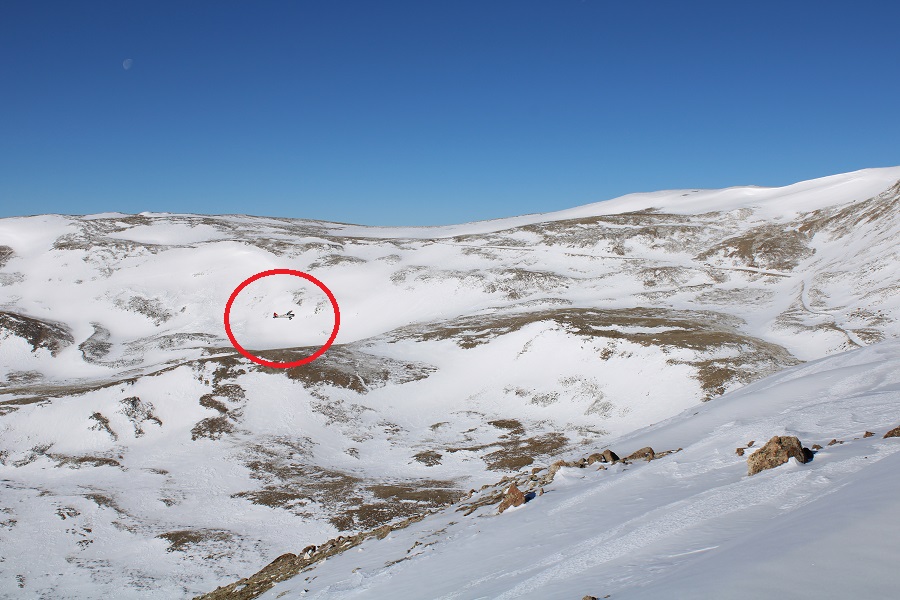
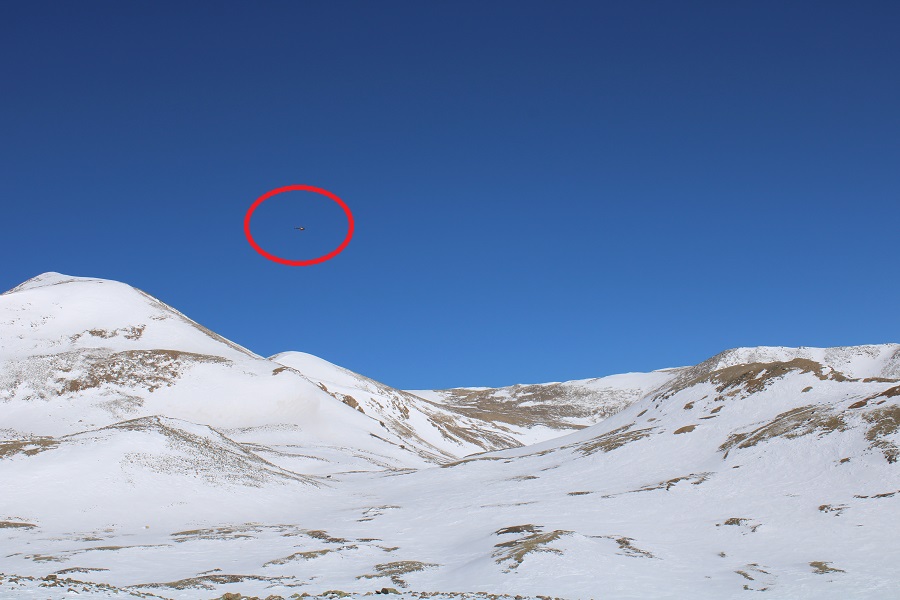
About halfway along the ridge I heard a loud buzzing, looked around, and saw a biplane flying very low. I watched it go around the mountains and through the passes. So cool! I wanted to wave, but didn’t think they could see me, and also worried they might think I needed help if I did.
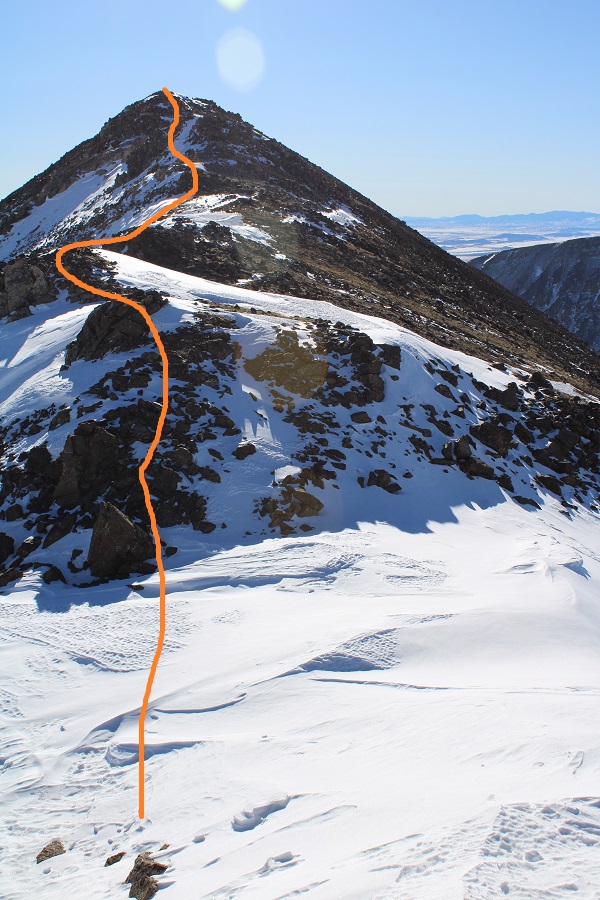
Here’s the final trek to the summit
I summited London Mountain at 8:30am
London Mountain Summit
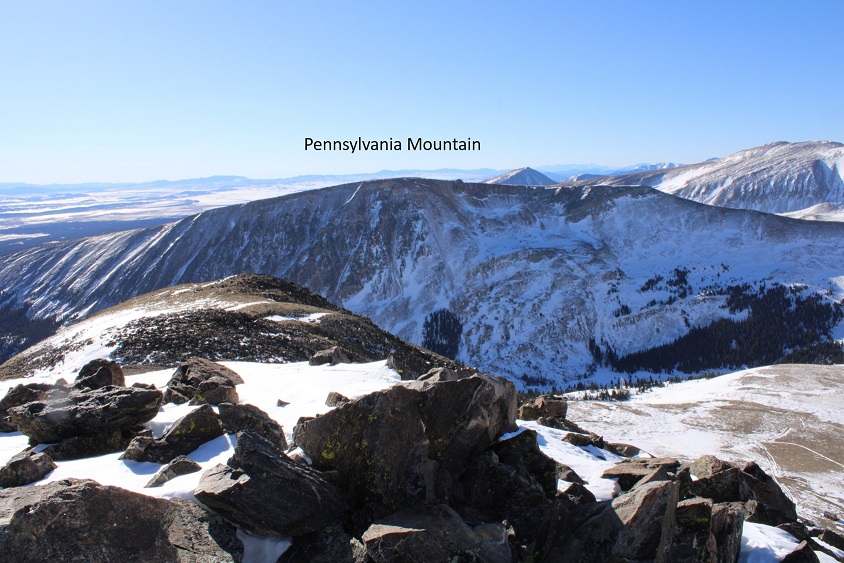
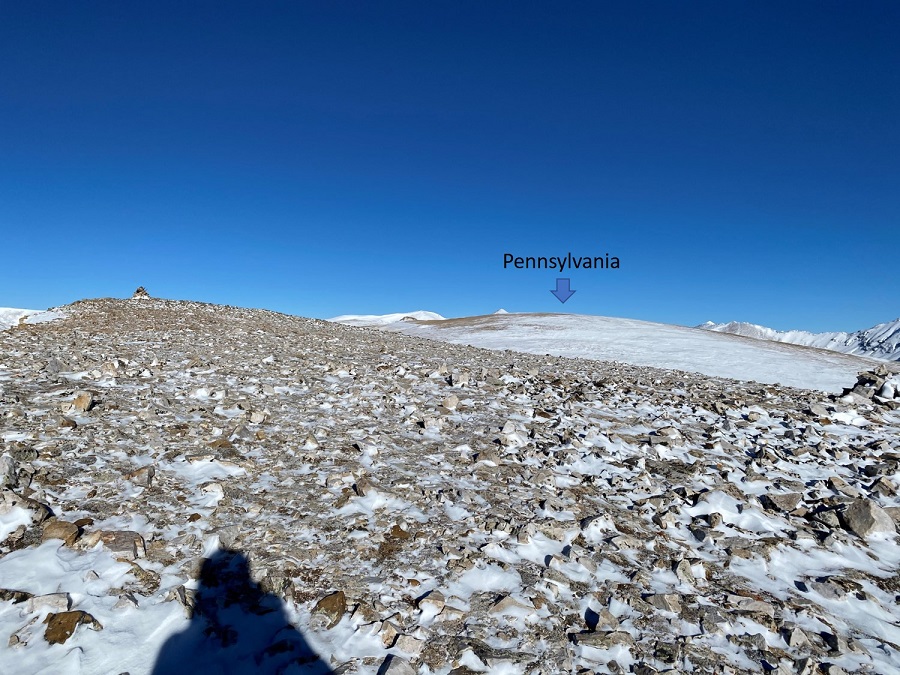
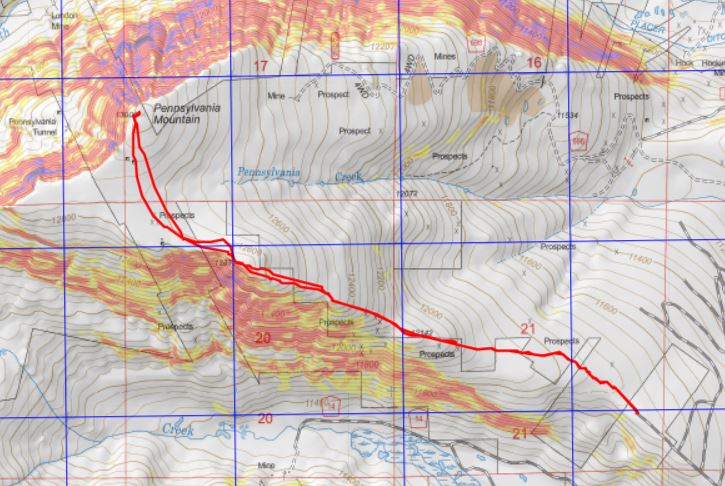
I had a good view of Monday’s summit: Pennsylvania Mountain
Here’s the trek back down the ridge
Yes, this is all class 2/easy class 3 to avoid snow
And back towards the mine
Here I heard another loud buzzing and saw a helicopter fly overhead. It didn’t look like a rescue helicopter.
Here’s the path the road takes back down
I made it back to where I’d put on my snowshoes, took them off, and turned right onto 12 and followed it back to my truck. About halfway back my microspikes broke, both of them, so I guess it’s time to get out the needle nose pliers again. I made echoing clanking sounds as the chains scraped the dirt as I walked the rest of the way back.
I made it back to my truck at 10:45am, making this a 10.63 mile hike with 2305’ of elevation gain in 4 hours, 45 minutes
I had a lot of work to get done today, but the weather was really nice and I was itching to get out and hike something above 10K, so I picked a peak I could do relatively quickly. In fact, I think the drive to the trailhead was longer than the hike. I arrived at the Pennsylvania Mountain Trailhead at 6am and got out my gear. There are a few turns to navigate to get too the trailhead. Pro tip: When I’m unsure if I’ll have cell service on my drive out (thus being able to pull up Google Maps, etc.) I create a road map using CalTopo and add it to my GPX coordinates for the day. This way I can follow a GPX track back to the main road when I’m done with my hike and don’t need to worry about memorizing or printing out directions.
I parked at the end of a plowed dirt road in a residential area. The trail starts to the right
I began with my snowshoes on, and kept them on until making it out of the trees. I’m sure there’s a trail here in summer, but in winter there wasn’t a solid trail (but there were a lot of ski tracks). I headed northwest through the trees and willows to treeline.
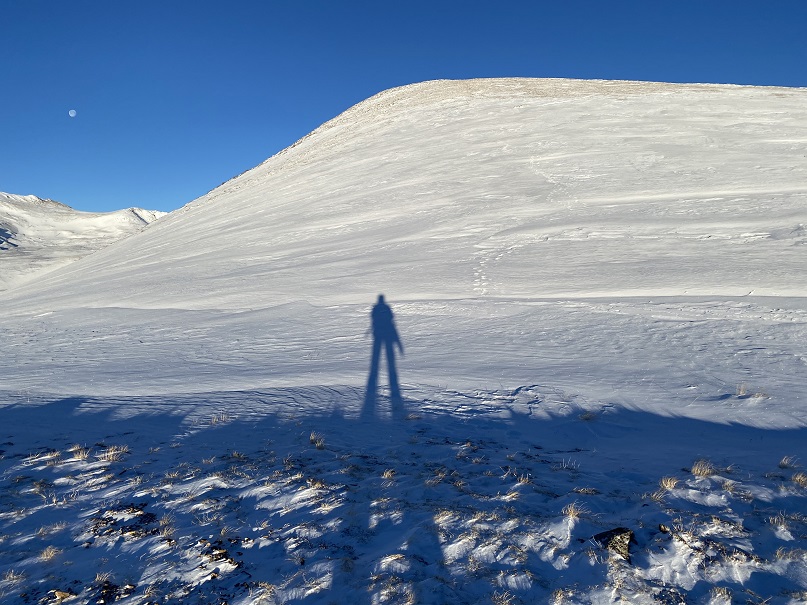
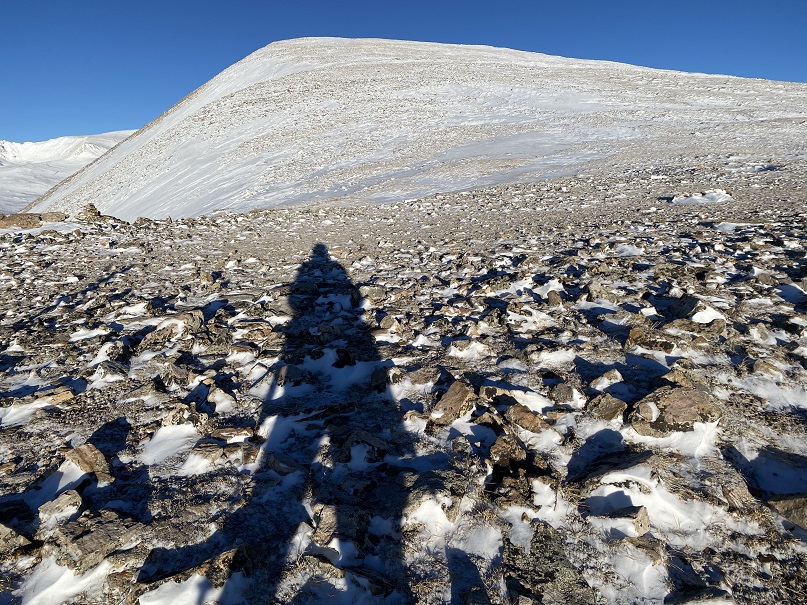
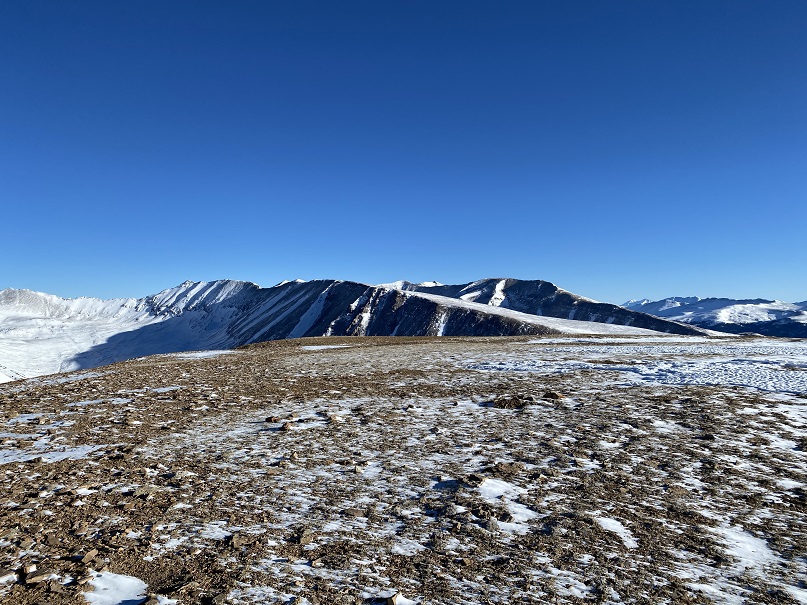
Once at treeline the route was obvious. I started climbing the east ridge
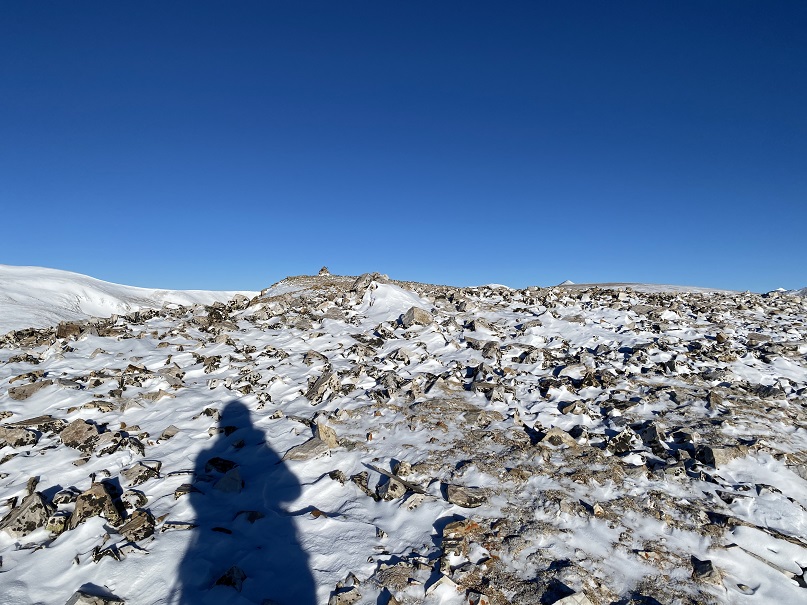
The only downside? There were a few false summits
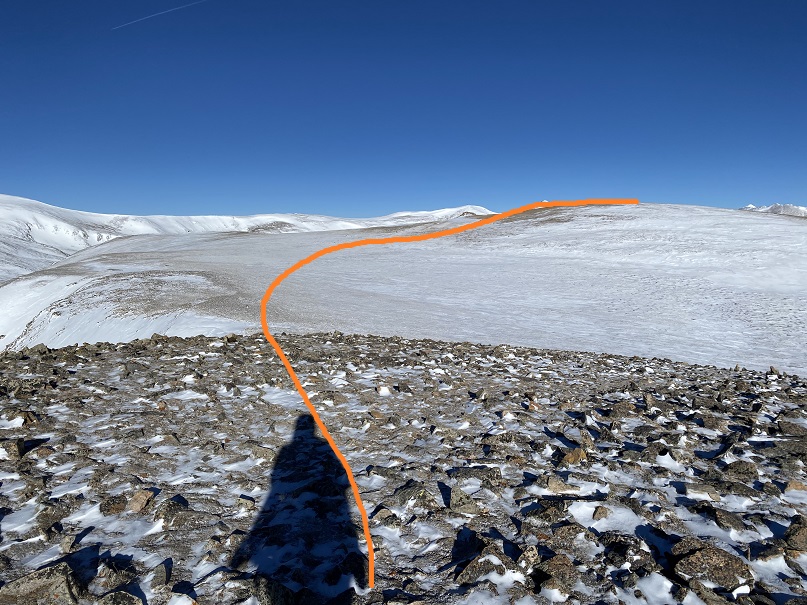
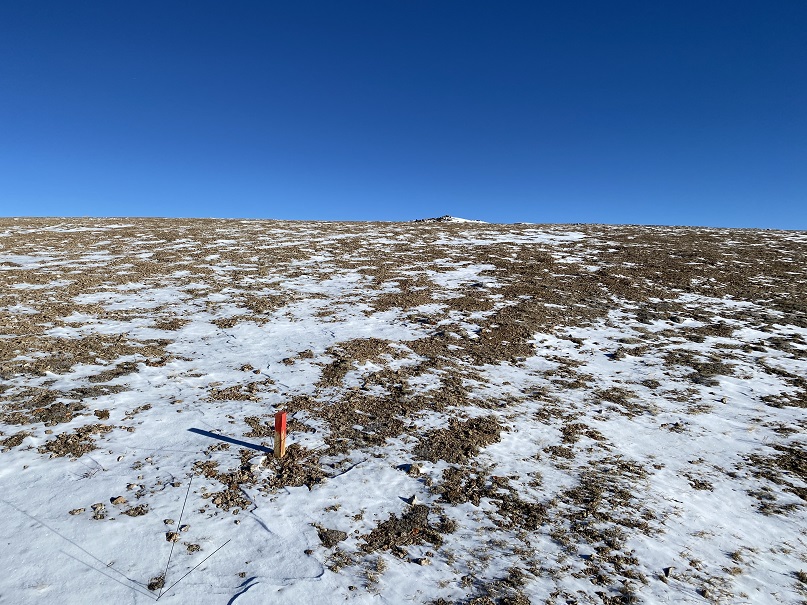
This was the last one however, and included a small decrease in elevation and a plateau before increasing in elevation again. Here’s the overall route. It’s really more of a hill at this point than a peak
It’s best to stick to the ridge so you don’t lose too much elevation. Here I saw a small herd of elk. They’re in the photos, but too far away to really make out. I headed northwest towards a mining claim and rock outcropping
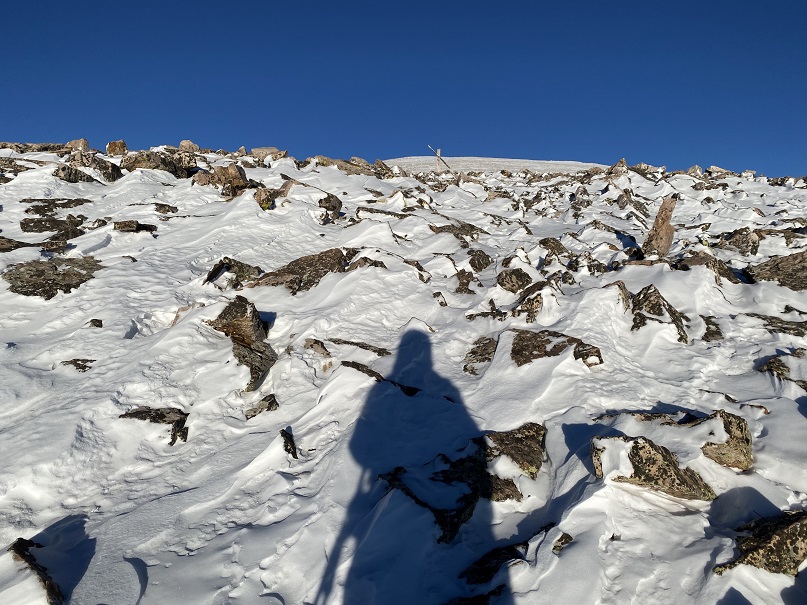
Here’s the final push to the summit
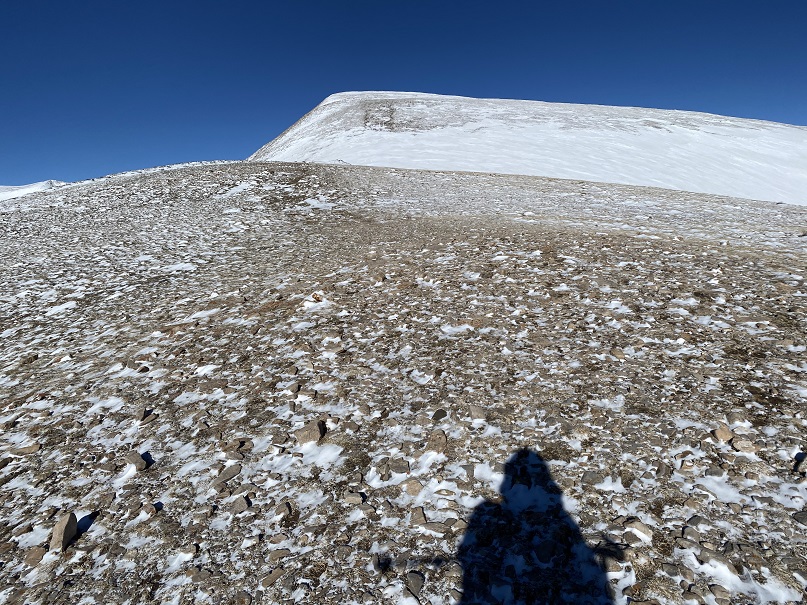
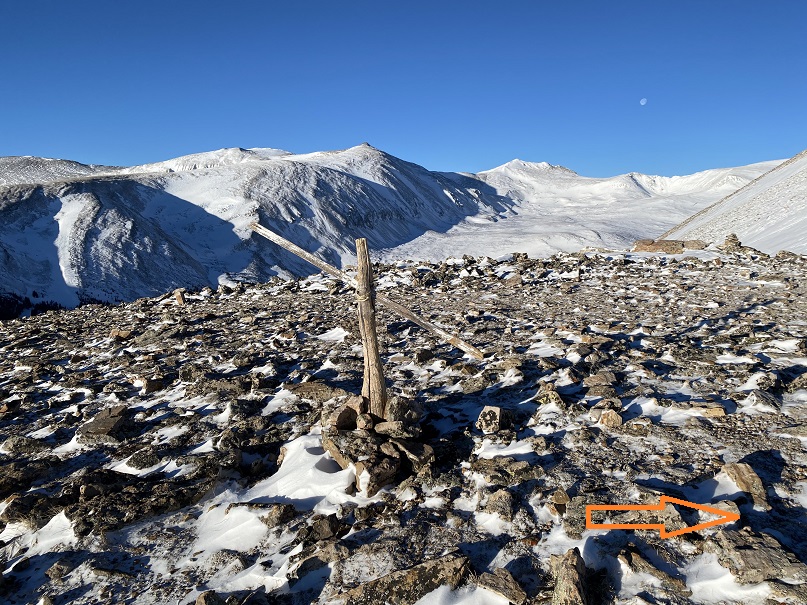
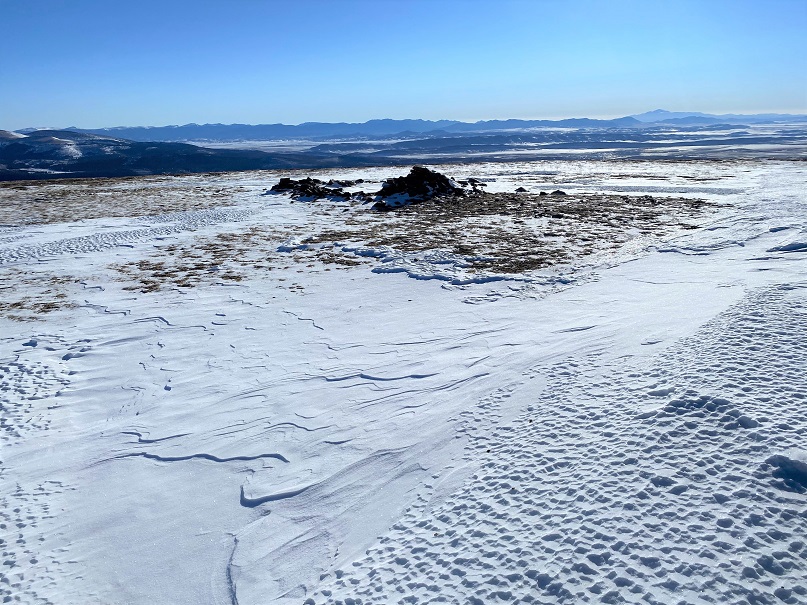
The summit was relatively flat. It was difficult to determine exactly where the true summit was. There was a wind break and a cairns, but they didn’t seem to be at the true high point. I decided to just walk around all over the summit.
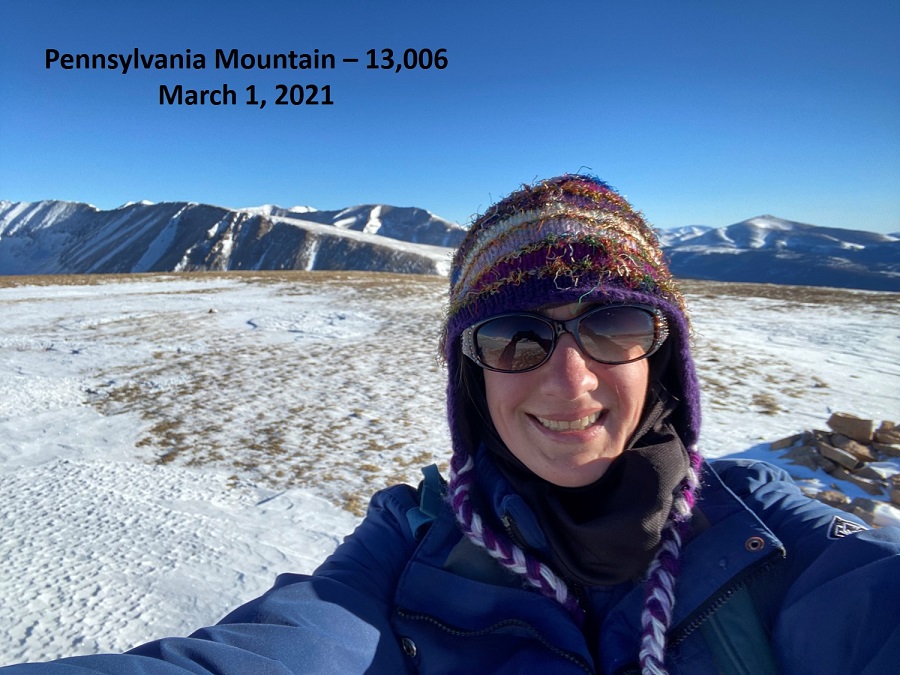
Summit Selfie
Summit of Pennsylvania Mountain
This had been a quick hike so far, and the day was beautiful. I wanted to stay longer on the summit, but I had to get to work. I turned around and headed back the way I’d hiked in
I stopped by the mine on the way back. There wasn’t much left of the structure
Then I aimed for the knob in the ridge
And then headed back down all those small, false summits
There were numbered markers scattered all over the hillside. I think they have something to do with the mining claims
Back near treeline I put my snowshoes back on and headed through the trees and willows to the parking area.
Here’s a look at the road out
I made it back to my truck at 8am, making this a 5.35 mile hike with 1509’ of elevation gain in 2 hours.
It had been less than a week since the accident at Garden of the Gods, and I was still quite sore, but when Tim asked me if I wanted to go climbing I said yes. I had bruises all over my body, my knees and elbows were scraped up, and my neck was still sore, but I needed to get back in the saddle ASAP, with someone I could trust.
We met in the morning and all drove together (Emily, Tim, and I) to shelf road. This was my first time there: shocking! I know, but I’m more of a solo climber, and if it’s a nice day I’m in the mountains.
There’s a bathroom at the trailhead and lots of loose dogs running around. This seems to be a popular place to bring your pooch. When we arrived it was cold and windy, so we brought extra gloves and jackets and hiked down the dirt road to The Piggy Bank
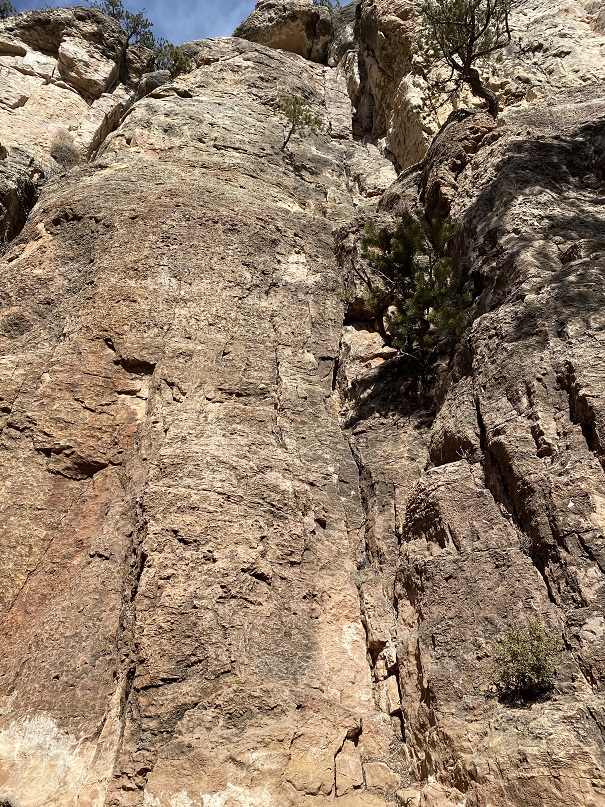
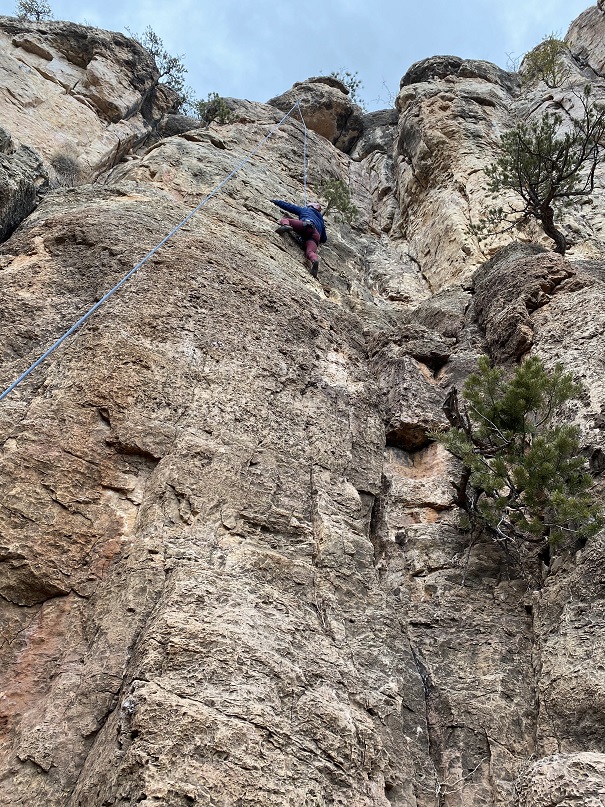
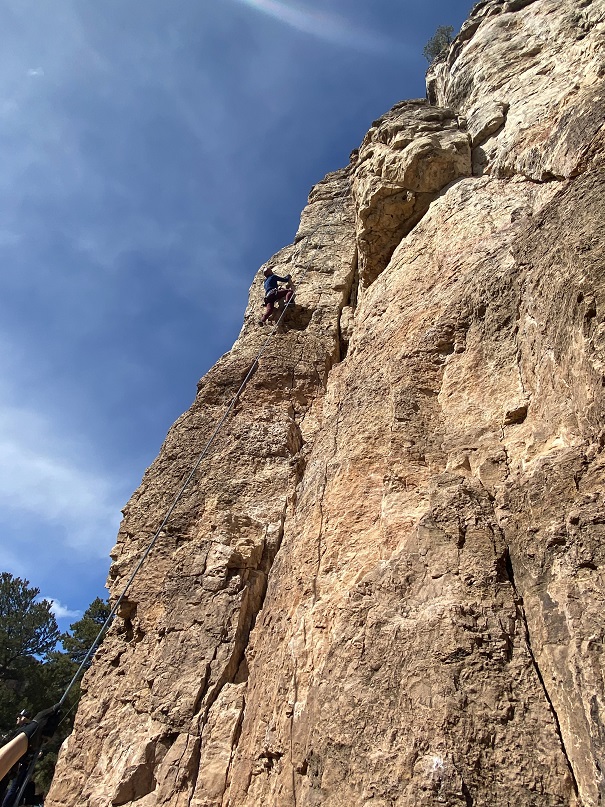
There were a lot of people climbing, but still plenty of spots. We found an empty area, set down our gear, and got ready. Tim asked me to belay him, but Emily wanted the practice, so she belayed while Tim set up the first route.
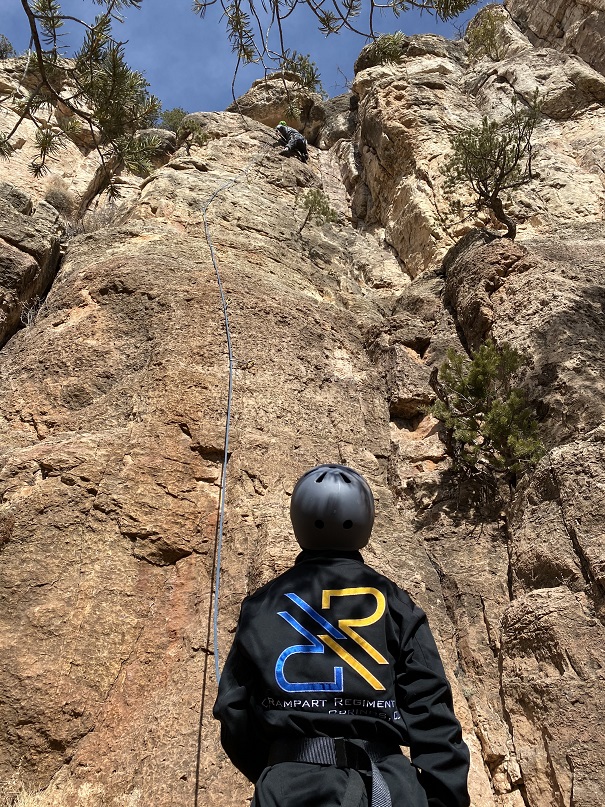
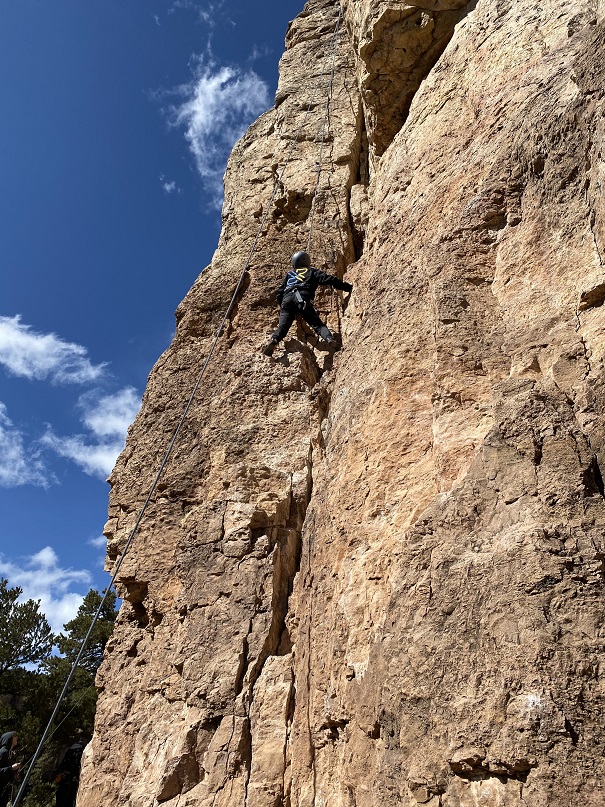
Then it was Emily’s turn to climb. I let her wear my climbing shoes.
Here’s a video of her on her way down (the people next us were noisy)
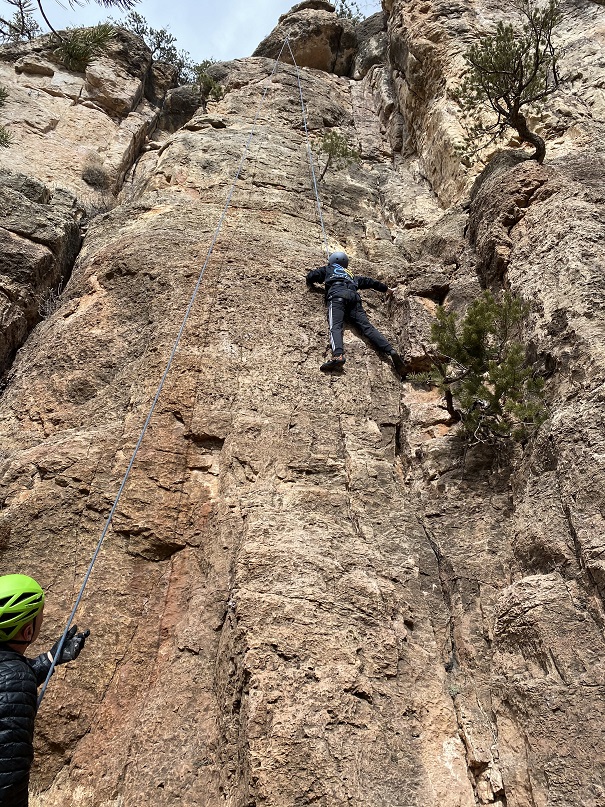
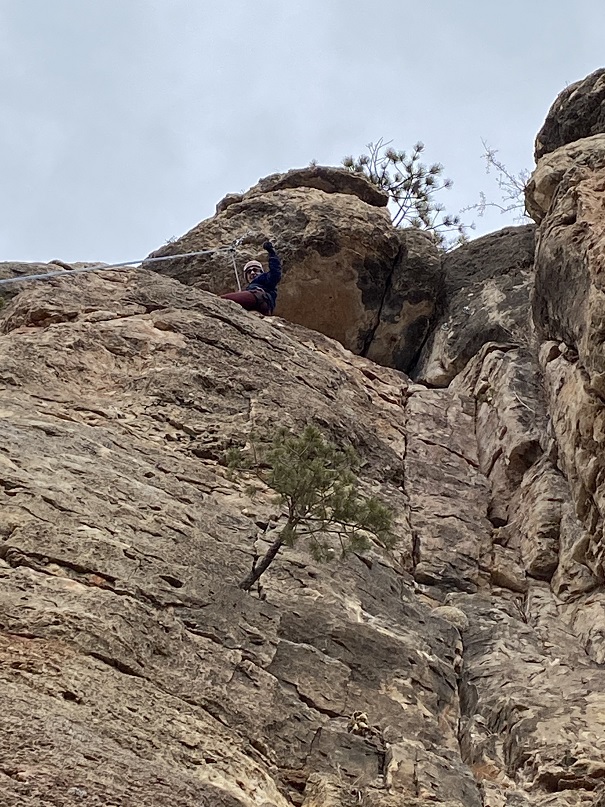
I was up next. I put on my helmet and winced: I had a bruise from wearing it when I fell and every place my helmet touched my forehead was tender. However, I’m proud to say I made it to the top, and back down, without incident!
After my fall earlier in the week I was a bit scared to do this again so soon, but also knew it was necessary. In all, we each got in 3 runs for the day. Tim belayed Emily and I, and Emily belayed Tim (and I helped anchor her while he came back down). It was a great day, warming up as the afternoon went on. I was really glad we made it out! Here are some more picture highlights (the last run was the hardest, but they were all about 5.8).
I was even able to take my jacket off for the last run, which always makes for a great day. Thanks Tim for bringing us out today!
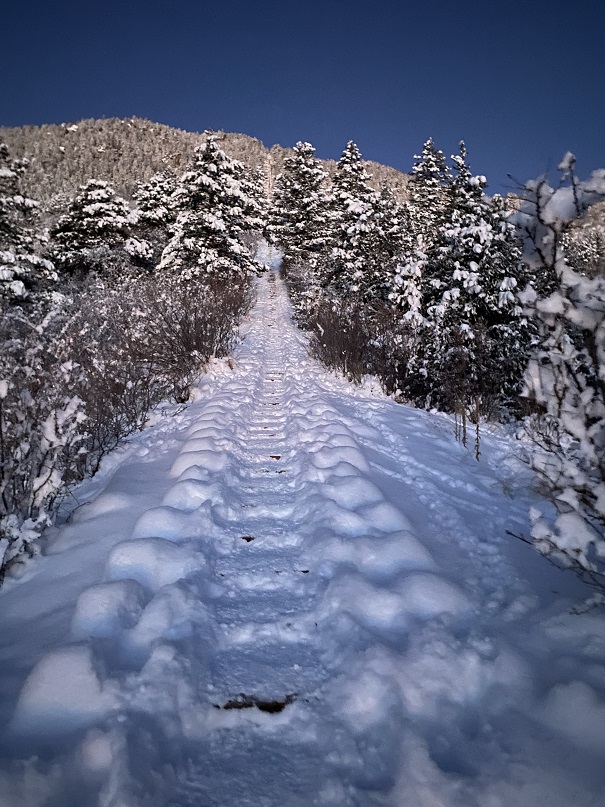
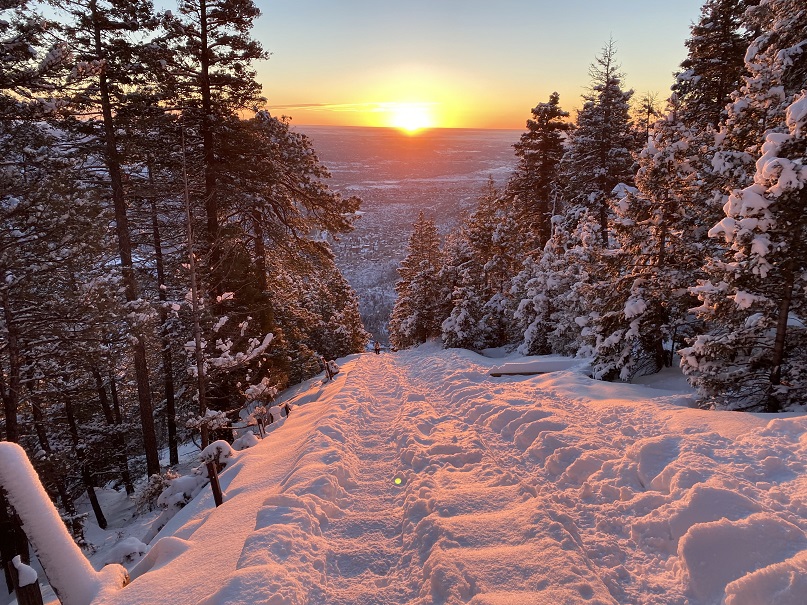
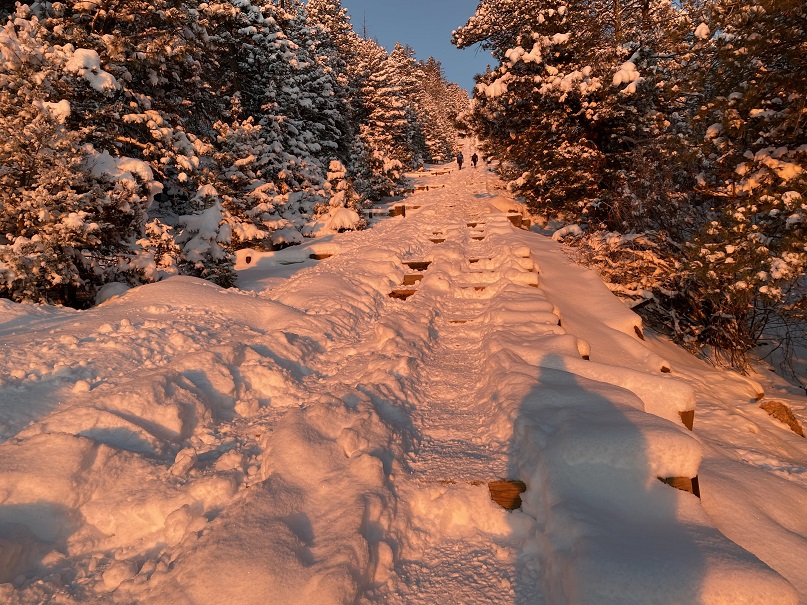
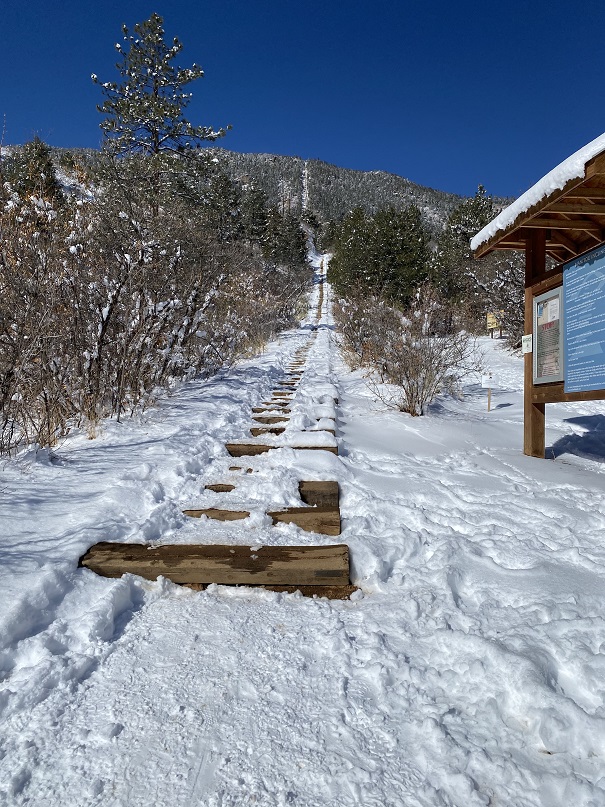
I was still sore from the fall a few days ago, but needed to get out, so I made a reservation to hike the Manitou Springs Incline first thing in the morning. I’ve done this route several times, so I’m just going to show you how beautiful it was that day.
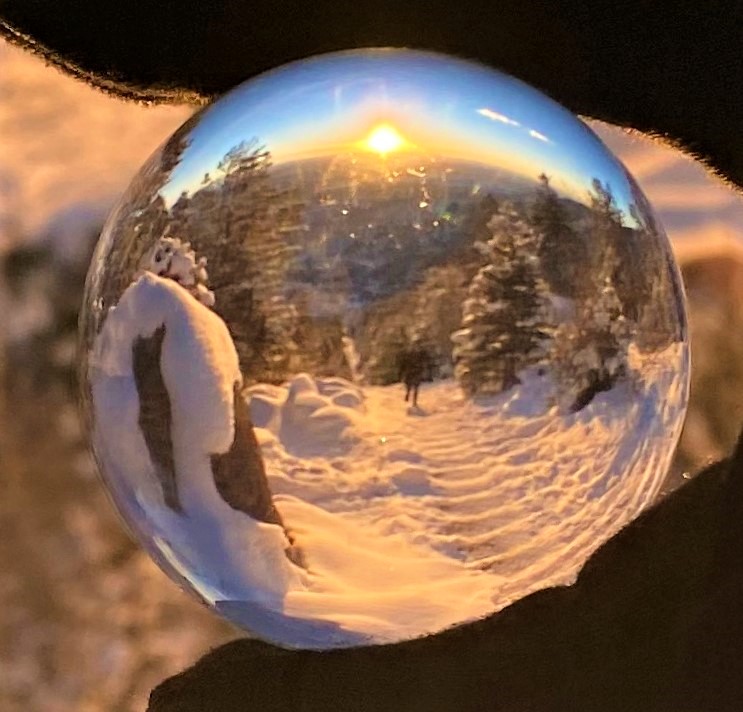
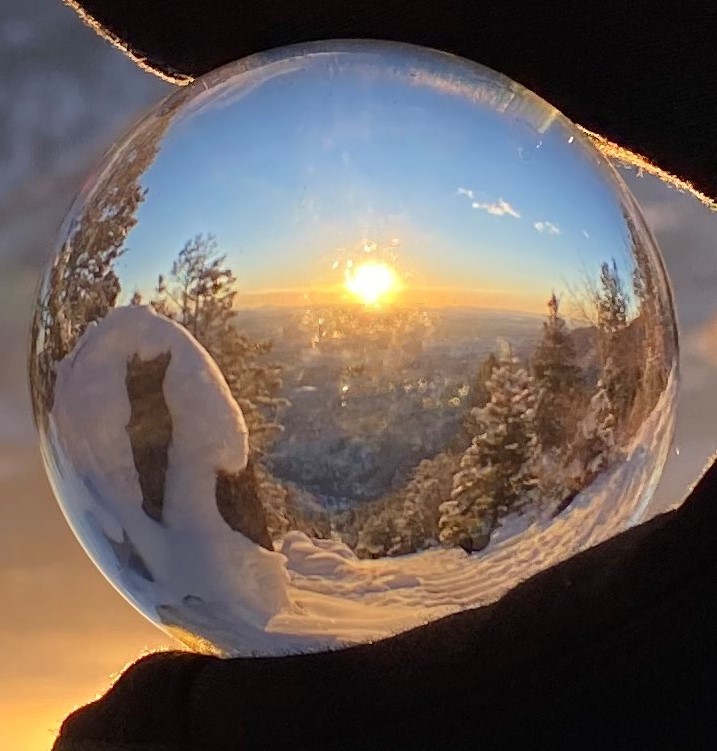
At the top I got some lensball photos of the incline and hikers. There seemed to be a lot of regulars here today.
Then I continued on to Rocky Mountain. I broke trail here, and got another lensball photo of Pikes Peak from the summit
I once again broke trail to Mt Manitou, and then took the Barr Trail down. It was icy everywhere!
Here’s a look at the Incline from later in the day
I’m writing up this accident report to analyze what went wrong and what steps I need to take in the future to make sure it doesn’t happen again.
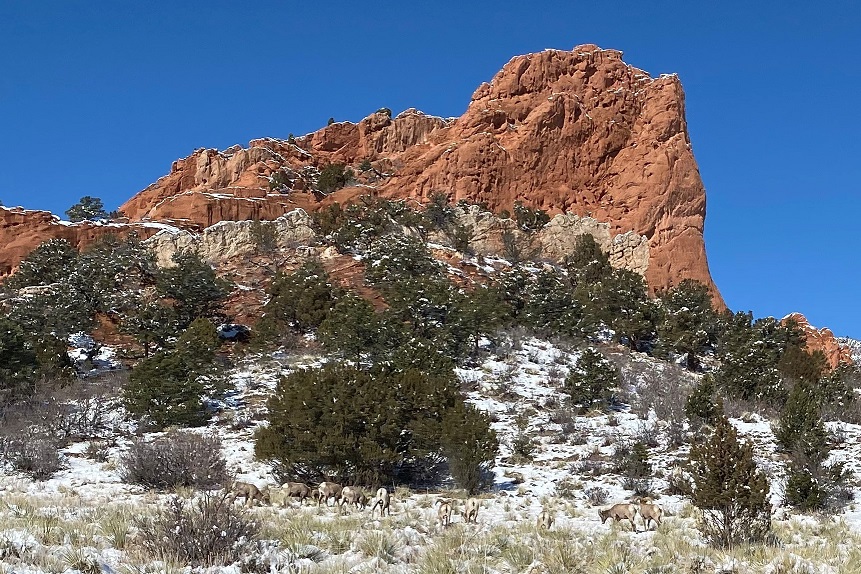
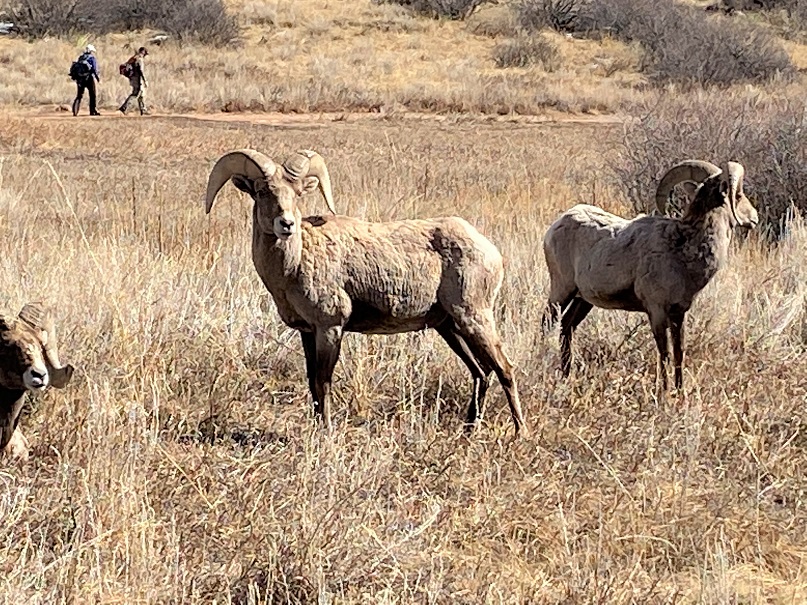
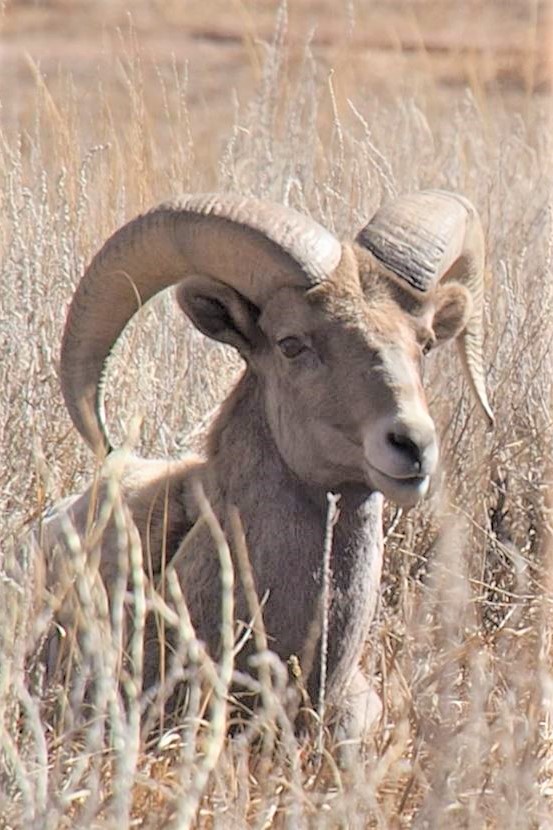
The day before Eric asked me if I’d like to go climbing so he could get some adveture photos. The weather was great, so of course I said yes. I got to the parking area about 10 minutes early so I could put on my gear, but those plans changed when I saw the bighorn sheep. They were quite sociable today, sitting/standing/grazing just off the trail. I quickly called Eric and told him to meet me at the sheep.
I noticed while the Bighorn Sheep were fine with humans, they tensed every time someone walked by with a dog. There were park rangers there to make sure no one got too close. I think it’s funny how when you’re at Waterton Canyon or Garden of the Gods the sheep will stand 10 feet away from you as if you aren’t even there, but if you see one while on a mountaintop they bound away as soon as they see you.
We didn’t stay long because we had some climbing to do. We went back to our cars (we’d unknowingly parked right next to each other) and got out our gear. Eric told me all I needed was a harness and my rope. I asked him if my 60-meter rope was enough? Oh, more than enough he assured me.
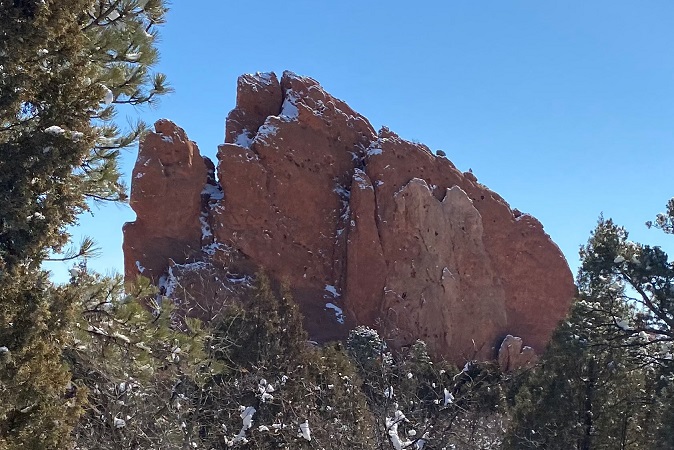
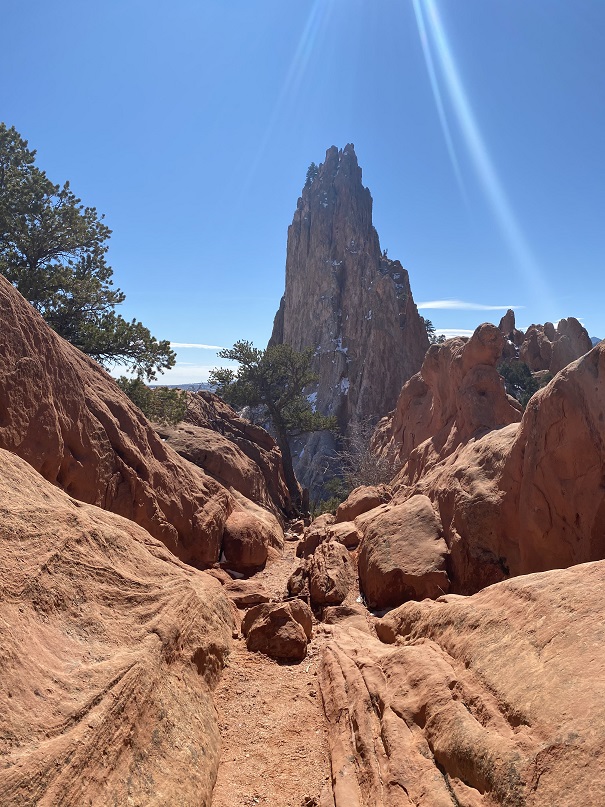
Together we walked through the pathways towards West Point Crack. Here’s the entrance
OLYMPUS DIGITAL CAMERA
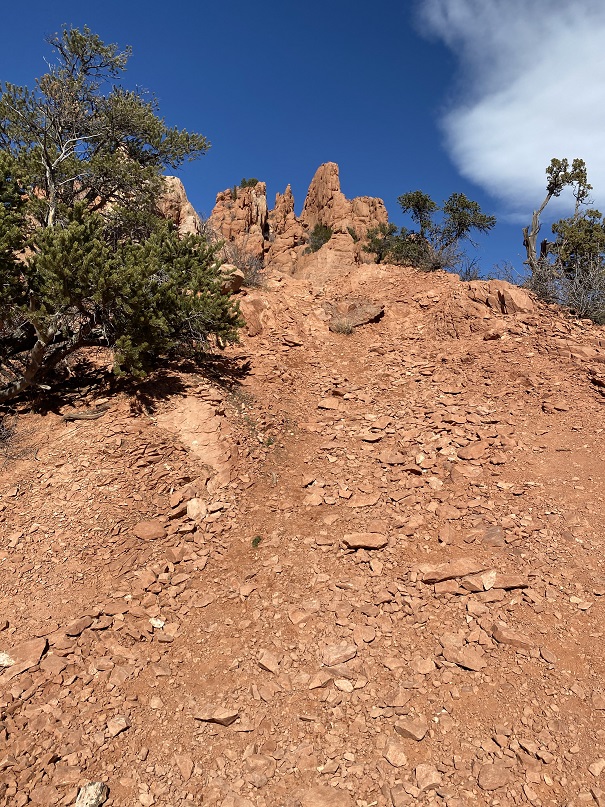
On the south side there’s a gully to climb up
Here’s looking back from the top of the gully
At the top of the gully is a class 4 climb of about 8 feet
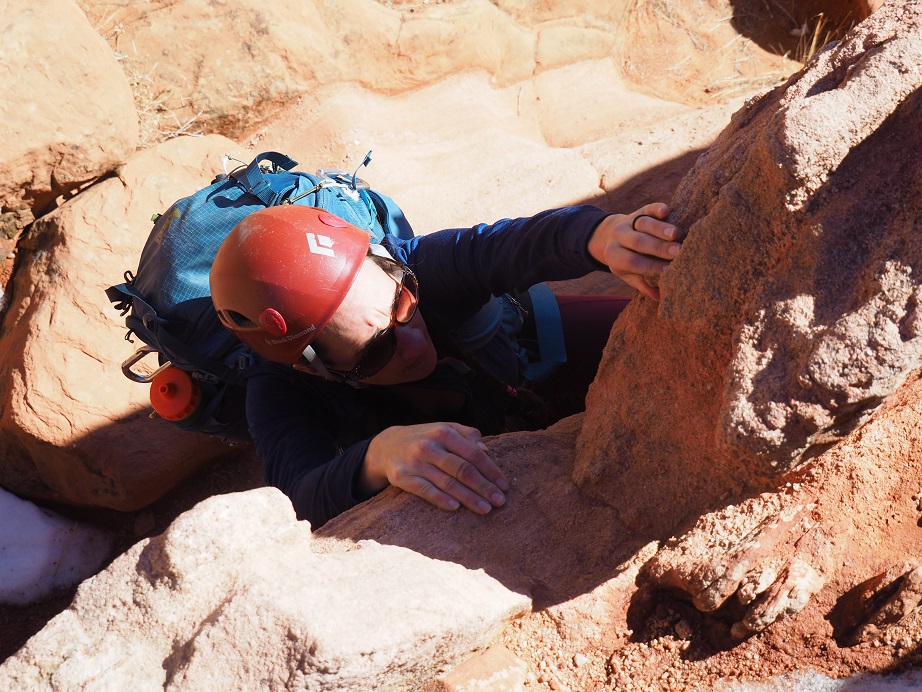
Eric went up first and took a picture of me upclimbing
OLYMPUS DIGITAL CAMERA
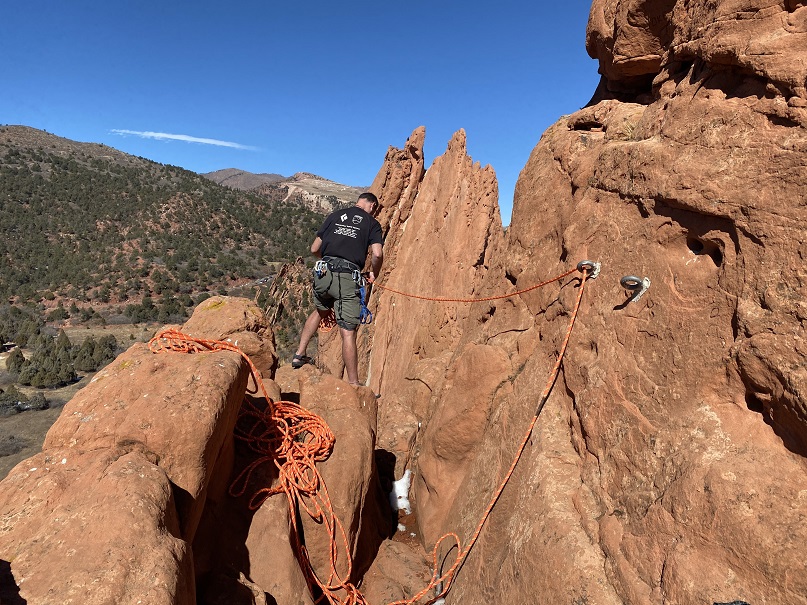
From here we staged our gear. There were two bolts in the wall we were going to use to do the first rappel. Eric told me we’d rap onto a rock, then again to the bottom. He wanted to counterbalance each others weight and have each of us go down on one side of the rope. I’d never done this before, but he assured me it was quick and easy and we were only rappelling about 10 feet or so onto a ledge the size of a kitchen table (it ended up being more like 20 feet). From there we’d clip in, retrieve the ropes, and rappel the rest of the way down.
Here’s Eric setting up the gear
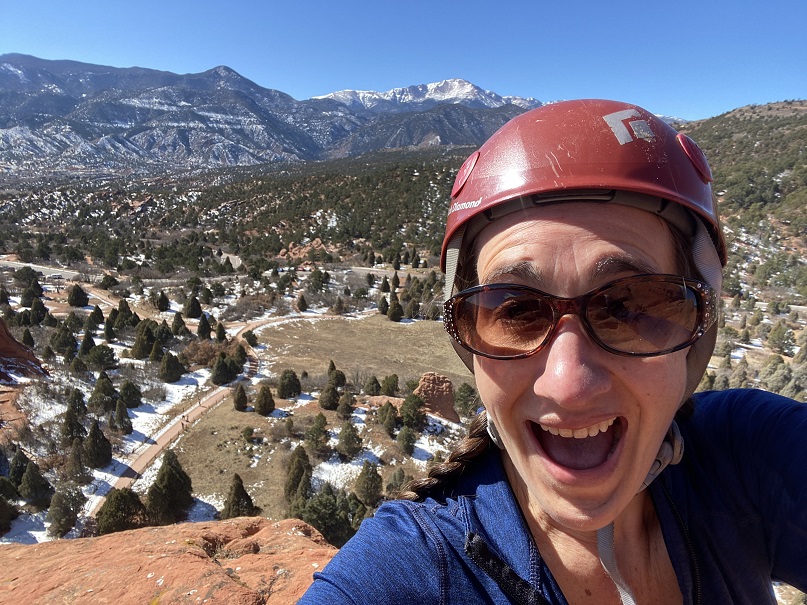
It was a beautiful day, so I took a selfie
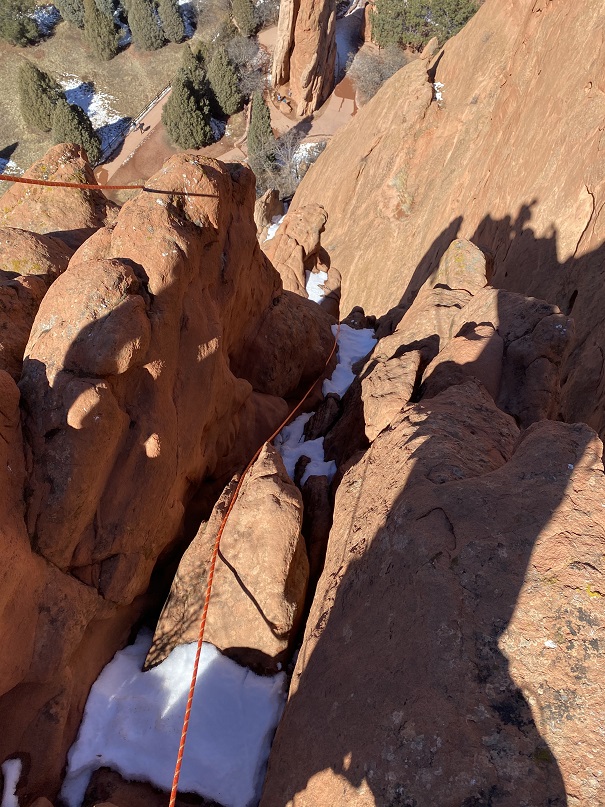
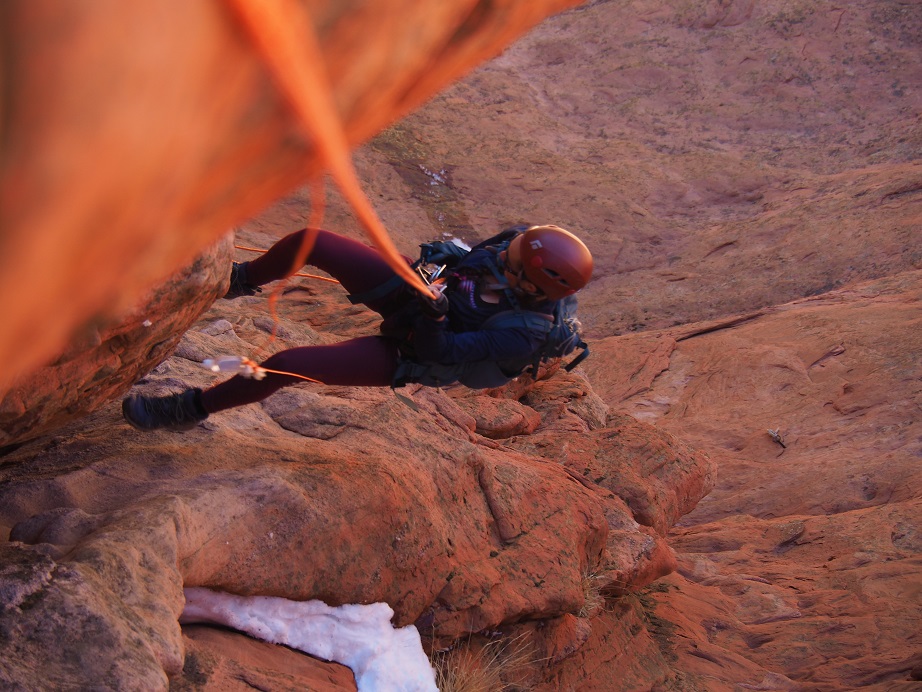
I went over first and Eric stayed at the top (even though we were going to go together?). We rapped off the back side so our ropes wouldn’t get stuck. Here’s looking down
All was going well, until I realized there was a gap in between the rock I was rappelling off and the one I was supposed to land on (which was really more of a spire). Also, the wind picked up and started swinging me around. I ended up rapping further into the gap than I’d intended and more to the west, and since I was only on one side of rope I couldn’t tie off to climb back up. I needed my breaking hand to make sure I didn’t fall, yet I needed two hands to climb.
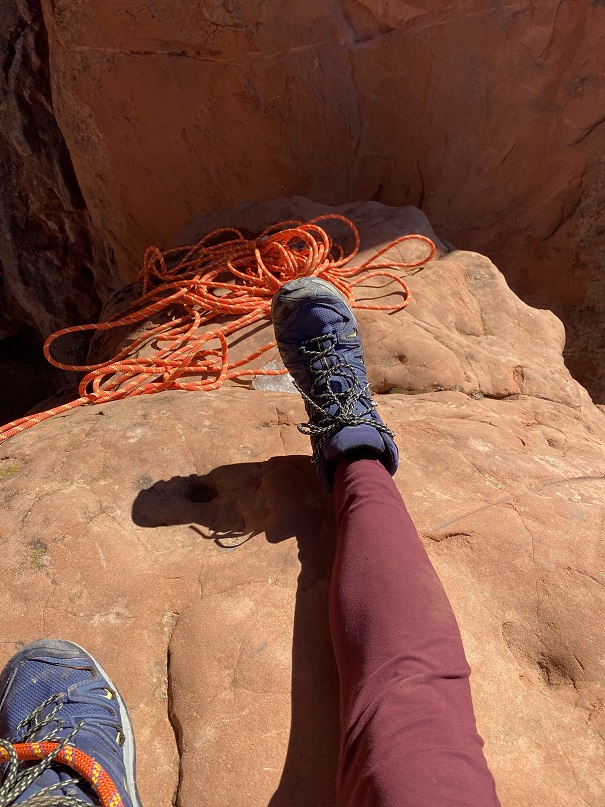
At this point I knew I had to manage my adrenaline, because if I didn’t I was going to fall and die, and I wasn’t going to allow that to be an option: The rope didn’t go all the way to the ground. It took me a solid 5 minutes (which felt like an hour), but I was able to get a slight grip on the rock (with my street shoes: my climbing shoes I’d been assured hadn’t been necessary were in my pack on my back). I managed to turn myself around and upclimb about 6 feet to the top of the rock and clip myself in. This rock was the size of a small dining room table. I’m guessing 4 feet across. There was snow where I needed to clip in.
I clipped in and calmed my nerves as Eric rapped down, easily pushing himself off the rock and landing on the spire. I was a little jealous: He had the advantage of height and he knew the route. Eric didn’t overshoot the ledge.
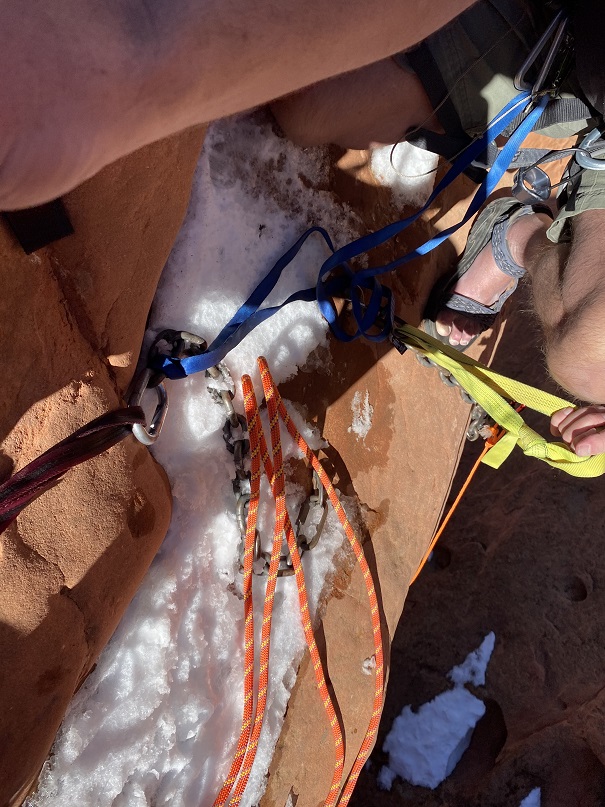
Here I am sitting on the ledge; in front of me, past the rope, is where I’d originally rapped too far and had to upclimb.
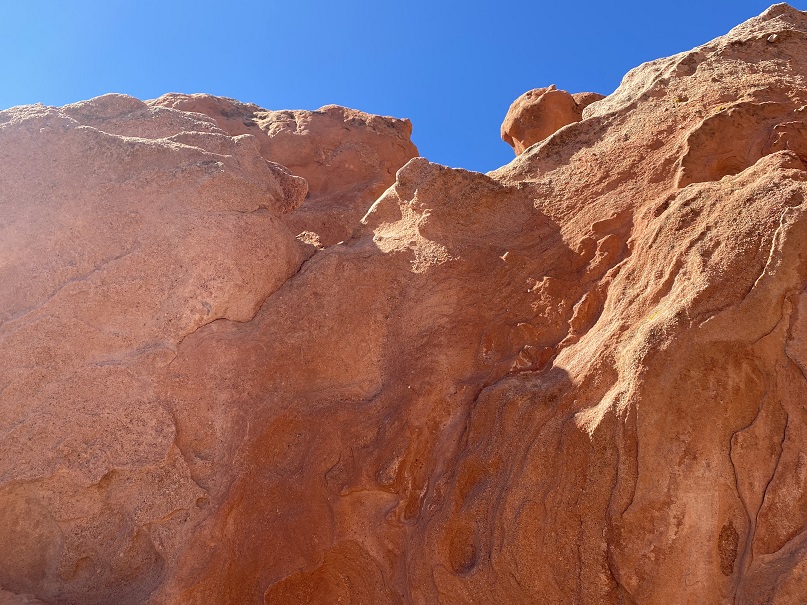
Here’s looking up from the ledge
Eric was practicing ghost anchors, and using paracord to retrieve the rope. This ended up getting messy, and I wouldn’t recommend this technique. We retrieved the rope and set it again, to rap off the back side of the rock again. Eric threw the ropes, and they looked a bit jumbled. He asked me to untie them when I got down to them and throw them down again. I couldn’t see around the spire below, so I asked if he was sure the rope was long enough? (not like there was much we could do about it now) and he assured me they were. I tied knots in the ends. Eric looked at me like I was crazy.
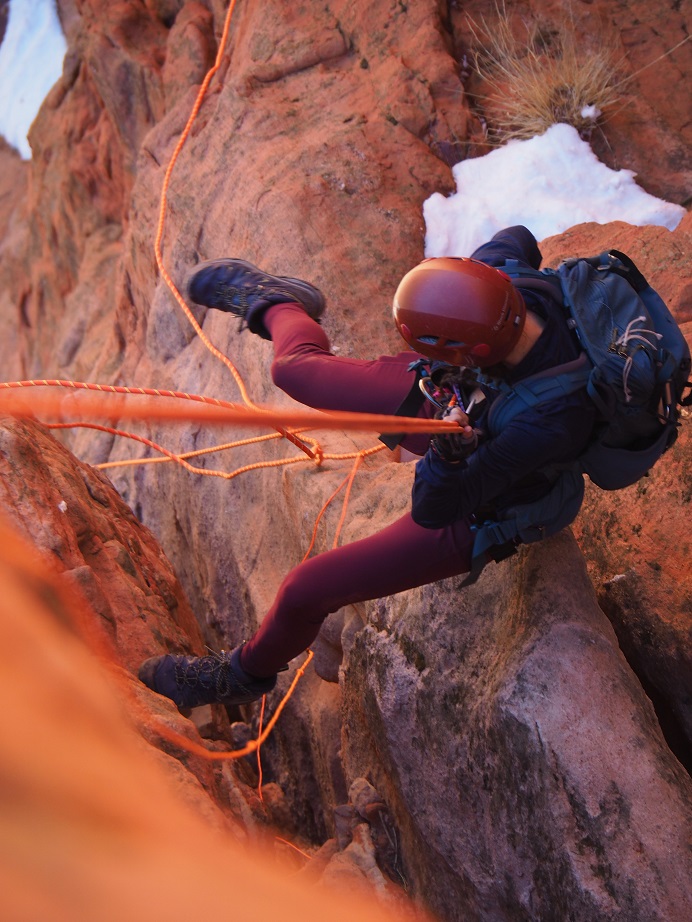
Once again, I went first, but this time with both strands of rope. I immediately felt safer. Eric got some pictures of me on my way down. Unfortunately, his go-pro stopped working (which was kind of the reason we were doing this in the first place) so we don’t have a lot of pictures.
OLYMPUS DIGITAL CAMERA
As I went down, I noticed the ropes were tangled more than I’d anticipated. I came to a place I could sit and untangle the ropes. I didn’t need to re-throw them, as their weight drew them downward.
OLYMPUS DIGITAL CAMERA
I continued my decent. That paracord was kind of a nuisance, but at least the ropes were straight
OLYMPUS DIGITAL CAMERA
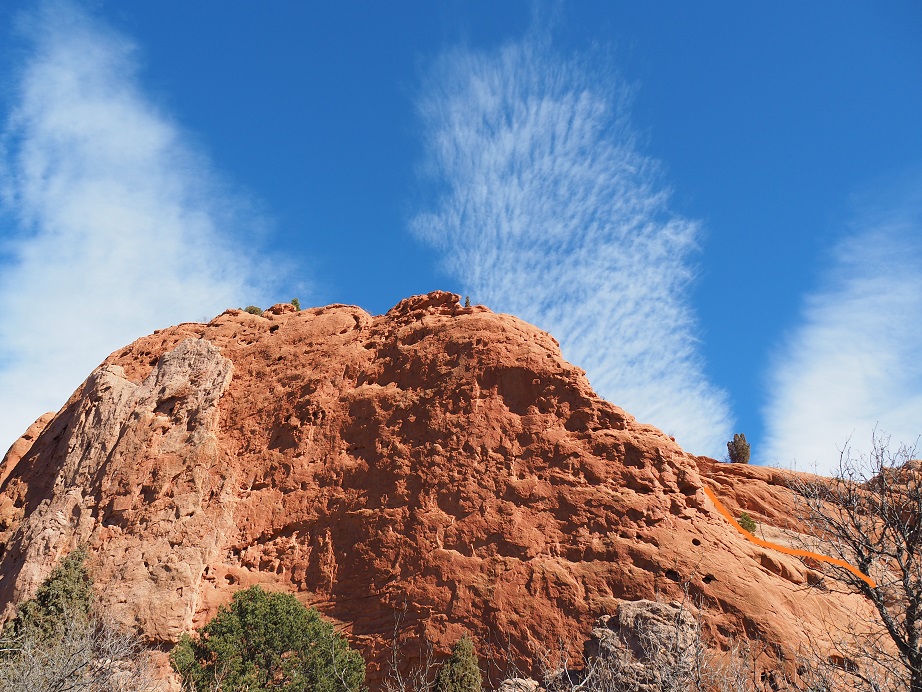
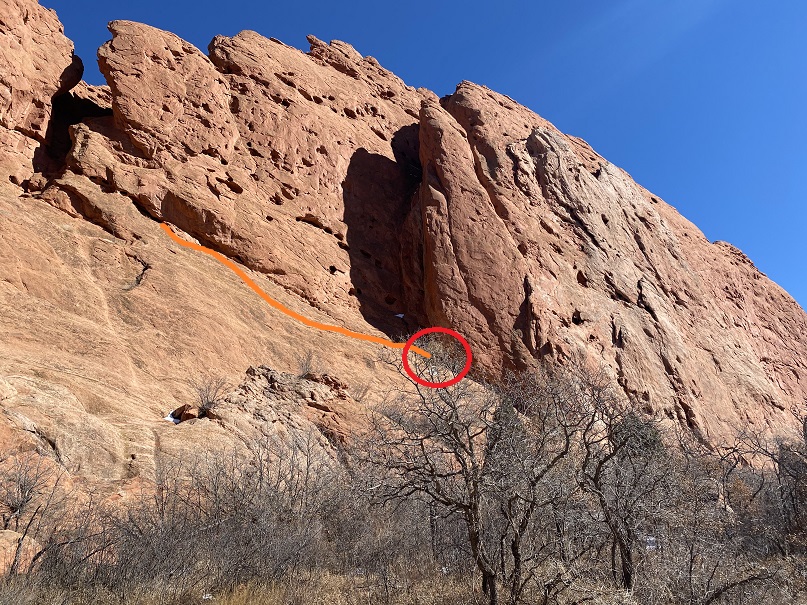
As I rounded the spire I now had a good look at the rest of the route, and to my shock, the roped did not go!!! I wanted to scream! I did notice however, that they landed just even with a very thin ledge (we’re talking maybe 6 inches wide). I was so glad I’d tied knots in the end of the rope!!! I rapped down as far as the ropes would allow, then unclipped and hugged the wall. There wasn’t room for both Eric and I on this ledge, or to be attached to the rope at the same time. I looked around and noticed a goat trail to the left that went up; That route looked a bit sketchy, but safer than where I was. I told Eric I was going to climb to the ledge while he rapped down, then we’d re-secure the ropes for a third time behind the rock I was aiming for and rap down a final time to the bottom. The circle is where the ropes ended, and the line is where I climbed for safety
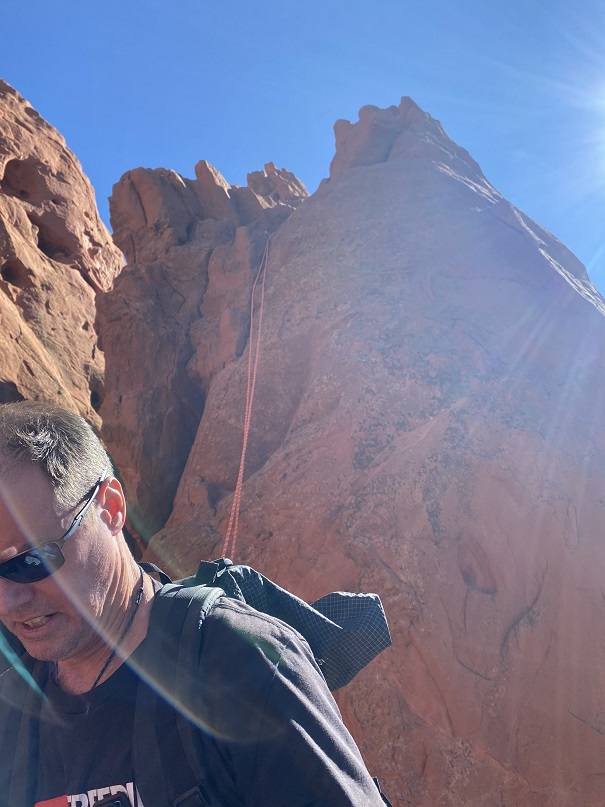
Here’s looking back from my perch. I felt safe with this plan, because we’d rapped in this area before (after upclimbing to this spot).
Eric made his way down, and started to bring down the rope, but it got caught on something. He spent some time going back and forth on the ledge, trying to dislodge the rope.
It wasn’t working. The rope was stuck, but one side of the rope went all the way to the ground, so we decided to brainstorm.
In the end we decided to have me rap down first, with Eric belaying me from above on the one piece of rope we had. Then I’d fireman belay him down. We had about 25 feet or so below us to get to the ground. Afterwards we’d go back to the car, get another rope, and retrieve the one that was stuck. Eric wrapped the stuck rope around his waist and shoulder for good measure, and after saying “You’re sure you’ve got me?” and Eric replying “Yes” I went over backwards.
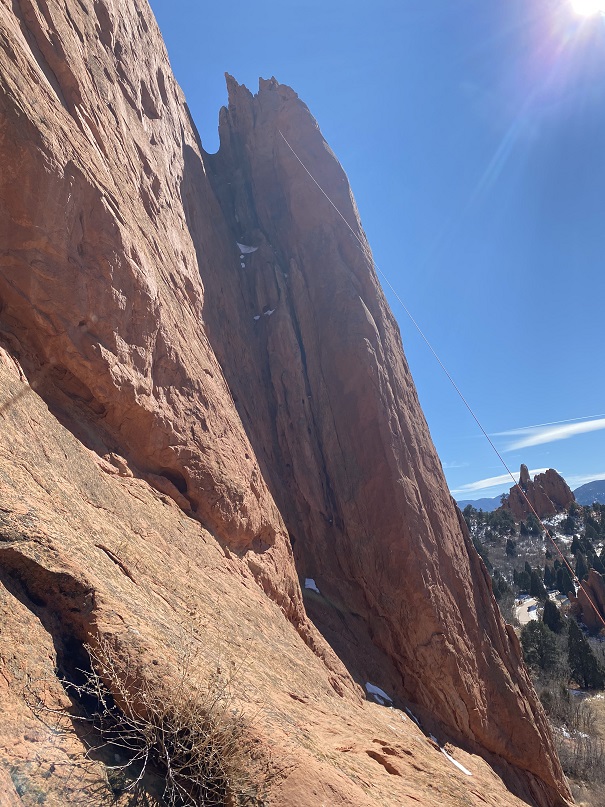
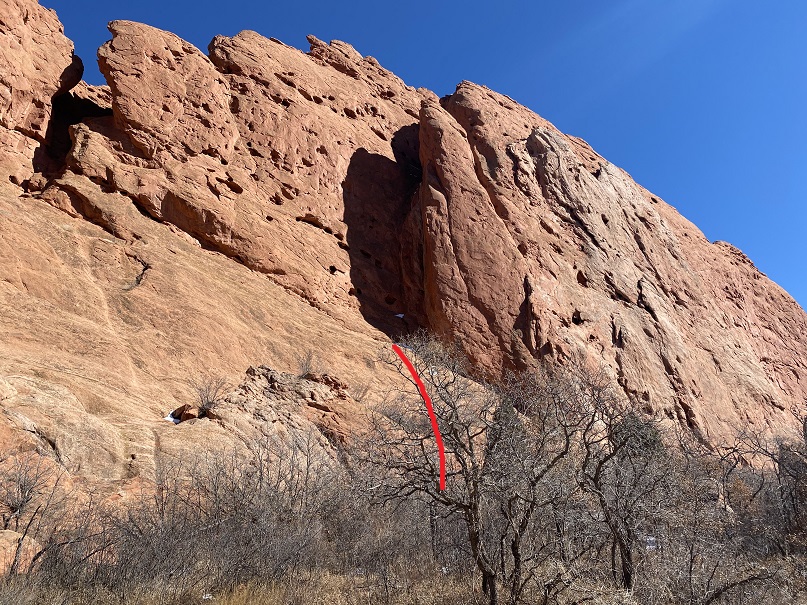
Almost immediately we started tumbling. As soon as I said “I thought you said you had me?!?!?” I noticed he was falling too. We fell together, tumbling and sliding the 25 feet to the ground. Here’s a picture of the line we fell
It all happened very quickly, and as soon as we stopped we both got up and did a head to toe check. Nothing broken, but a lot of scrapes and what were going to be bruises. I looked around, hopeful someone had seen our fall and tell us what had happened, but none of the dozens of park visitors so much as looked our way.
We both thanked God it hadn’t been worse, then talked about what had happened: the rope that Eric couldn’t get unstuck by himself had dislodged under our combined weight.
I’m writing this to process what happened, and to try to prevent it from happening again. Here are some of the things I did wrong:
I didn’t ask enough questions, instead relying on Eric’s experience. I should have asked for more clarification on what we were doing before we started. Had I done so, I would have seen the spire from below I’d be rapping onto, and noted the gap. I most likely would have worn my climbing shoes (they were in my pack, after all).
I wouldn’t have rapped on both sides of the rope for the first rappel. I still have no idea when he wanted each of us on different sides of the rope, since we never rapped together.
I should have put on my climbing shoes from the beginning, but definitely after the first rappel.
I also would have brought two 60-meter ropes and tied them together, instead of relying on one rope and rapping several times. Two ropes tied together would have made it from the top to the bottom, and we only would have needed to rappel once. We had the ropes in the car, but I had only asked if one rope was enough, not if two would have been better (you need to be specific with Eric: I didn’t realize we were rapping 3 times until we were done with the second).
When the rope had gotten stuck, I should have tried to dislodge it. Instead, I never touched the rope and relied on Eric telling me it was stuck. Maybe I could have found a different angle?
I should have insisted the ropes been thrown again, instead of untangling them myself. If I had been solo, I’d have thrown them as many times as it took to get a straight line. Also, the paracord thing stunk. It just made things tangle. Seems too risky to me.
Instead of rappelling down the last time with Eric standing I should have had him sit to belay me, or I should have put on my climbing shoes and downclimbed carefully (although, to be fair, I thought the rope was the safer option because I believed it to be stuck).
I’m sure I’ll be adding to this list.
In the end, I figure I’m better solo because I do my research and go over safety over and over again. When I go with someone, I rely too much on them being the expert, forgetting not everyone is as detail oriented as I am.









































































 Wild Wanderer