It has been a long weekend! Friday I did Snowmass and Saturday I took my High School aged Girl Scout Troop to Mt Princeton Hot Springs for the day. That was a lot of driving, hiking, and adventure and not much sleep. In fact, I’d only had 6 hours of sleep in the past 2 days. That wasn’t keeping me from summiting again today though! I had the day free, so I was going to hike! I just picked an ‘easier’ mountain today that didn’t have much distance (I still have blisters and sores from where my boots rubbed my feet raw from that dip in the lake and long hike out).
I packed my gear the night before, including extra band aids for my tender feet and lots of moth balls. I’d heard of the trouble the marmots and other varmints do to parked vehicles while the owners are away, and I wanted to stop them before they started. Hence the moth balls.
The 2WD road in was a breeze. Nice and clear and wide enough to pass other vehicles when needed.
I arrived at the trailhead and was on the trail by 5:30am. I decided to park below the lower trailhead to make up that extra 50’ in elevation gain, bringing the total to 3000’. I didn’t want to risk having someone say it ‘didn’t count’ because I didn’t gain at least 3000’ in elevation, and this seemed like a simple solution.
There’s a fire in the area, and I could immediately smell the smoke. After about 5 minutes of hiking however I could no longer smell the fire and I couldn’t see smoke, so it couldn’t have been too close. It was obvious a storm was moving in however, so I’d need to get a move on to successfully summit today.
There was a San Juan guide vehicle parked at the lower trailhead (there’s a clean restroom here), and people camping in the basin. Since there was only one vehicle I assumed they belonged to each other.
The 4WD part of this trail is indeed 4WD. My truck could have made it, but why risk it? There were so many opportunities for popped tires!
And a few spots had snow crossings. On my way out I did see a modified 4Runner up there, a Suburban, and a few off highway vehicles, but they’d all come just to off road for the day.
In the end the hike isn’t that long: I’d suggest playing it safe and parking at the lower lot and hiking the extra mile in. I didn’t have cell service, so getting a tow truck would have been a bit of an issue. I made it to the trail register, signed in, and looked at my route.
I was trying to decide whether to take the Southwest Ridge or the Lavender Couloir. I had mixed feelings about both. There was a storm coming in, and I wanted to summit in the most efficient way possible. The ridge might take longer, but everyone I talked to said to take the ridge. I signed the log stating I was taking the ridge but reserved the right to change my mind when I could see both routes properly.
There didn’t seem to be much to the hike. I was already above treeline. All I had to do was cross the basin and traverse the ridge or the Lav Col.
About halfway across the basin I got a good look at the Lavender Couloir and that settled it. Nope, nope, and more nope. After Snowmass on Friday I was done with scree filled gullies for the near future. I was taking the ridge! I’m only sharing this post because it has Mt Sneffles in it.
This trail had tons of signs indicating the route up to the saddle.
I crossed the basin following a well established trail with large patches of consolidated snow throughout.
I had a great view of Gilpin Peak.
And the ridge I’d need to cross. At this point my camera died. It kept telling me to switch the battery pack. Not my phone camera, but the DSLR I lug around. I was shocked! I’d just charged that battery 2 days ago and it usually lasted forever! Drat! I was going to have to rely on my iPhone from now on for pictures (which don’t turn out nearly as well) to conserve battery power. Hopefully I’d still be able to take a summit photo.
I gained the ridge and looked back on the trail
That seemed too easy! Next I looked at the ridge before me. This looked like fun! I’d need to pass in and out of the towers a few times Here’s the beginning of the route:
The first part of the ridge was easy and straight forward. Even the snow along the ridgeline was easily manageable
After the snow ended, the real work began. Luckily what this route lacks in distance it makes up for in climbing. The ridge route has gullies too. These aren’t filled with scree, but with large rocks. I much prefer rock scrambling gullies to scree filled gullies. This route had a lot of scrambling! Look at all those rocks! And not one of them was stable. I had to watch every hand and foothold to beware of a rock coming loose (and many did).
What was difficult was the route finding! I’d follow the directions I had, but they never seemed right. I kept thinking to myself “there’s no way this is the right route” and apparently everyone else thought the same thing because trails went off in every direction, looking for a different alternative. Nope, I really was supposed to go through that notch and descend into that gully, only to climb the next gully full of snow…
Here’s where it became seriously tricky. It was possible to climb this gully without touching the snow, but in order to do so some seriously clever moves were required on some seriously unstable rock with lots of exposure. I know I got in some class 4 scrambling at this point. I was going to have to figure out a safer way down when my pack put me off balance.
My directions said to exit the final) gully (there must have been 5 or 6) at the kissing camels. I missed them but I did end up exiting the correct way. I’d been traversing between those pillars I’d seen earlier from the basin. Once out of the gullies I just had to follow the ridge to the summit. This was easier said than done, as there were dozens of routes visible. Here’s a view of the final pitch to the summit. This was the most stable rock I’d encountered all day, and FUN to climb!!!
I summited at 8:30am and turned on my camera for a summit photo. I was hoping I had enough battery to get a good summit shot. I got one in and it refused to turn on again, so this is what I got. I swear I’m not as large and awkward as this photo makes me look!
I took a selfie with my phone I was much happier with and a video from the summit.
I looked back on the route down and saw what looked like people climbing. Cool, I’d get to meet people on my way down.
Following the path down was much more straightforward than following it up, but the exposure was real!
I made it to the kissing camels I’d missed on my way in. They really were a cool sight to see!
I was just getting to the point where I was wondering about the other climbers I’d seen? Maybe I hadn’t really seen them at all? I turned the corner and there they were, halfway down (up) a gully. There were three climbers: a couple with a guide, all roped in together, but not secured anywhere. I don’t know much (anything) about roped in climbing, but this seemed really counterproductive. If one person fell, wouldn’t they all fall because none of them were secured to anything? Am I missing something to this? (I know I am…). How is this safe for anyone involved?
The couple didn’t talk with me, but the guide and I discussed gullies. His climbers looked exhausted and frightened. I’m assuming they bit off more than they could chew.
I rounded the corner and saw the cairn I was looking for, and what looked like a rock bull standing sentinel.
This was the start of the gully I knew I wanted to climb down with my ice axe and crampons. I’m pretty sure I could have done it without them, staying to the rocks, but one false move/slip of my feet or the rock and I wasn’t surviving that fall. So I did the wise thing and geared up.
This ended up being a fantastic choice! I felt much more stable on my way down than I had climbing up. Proper gear is the way to go! Ice axe, crampons, and helmet all the way! I made it down this gully and back over the notch and felt I was home free. That to me had been the crux of this climb. From here on out I still had to watch every step, but it was all downhill from here!
A storm was indeed moving in, and I was glad I’d gotten such an early start. I met two more hikers on my way down who’d intended to climb the gully but were turning back due to weather. I also saw two hikers halfway up the gully. I seriously hope they made it back down safe.
I signed out of the trail register at 10:30am
And hiked happily back to my truck. That had been a fantastic climb! I was so glad I took this route instead of the Lavender Couloir. I would have been a miserable snot hiking that thing. The ridge was much more technical, but a lot of fun!
Doesn’t my truck look like she enjoyed herself while I was away?
Well, remember those moth balls I’d brought to toss under my truck to ward off the marmots while I was hiking? In my excitement and eagerness to get started I’d left them inside my truck during the heat of the day, so when I went to open it I was blasted by an overwhelming scent that reminded me of my granny. That smell’s not going away anytime soon. Note to self: Next time put the moth balls OUTSIDE!!!
It‘d been a long week at work, so I needed a quick nap before heading to the trailhead. I got all my gear together and packed it into my backpacking pack and loaded it into my truck so I’d just need to get up and go.
My backpacking pack looked excessive for a day hike, but I was darned tired of carrying those snowshoes in my hands all the way up the trail again. They don’t strap to my day pack, and they’re a bugger to carry, but they fit nicely into my backpacking pack. So today that’s where they went. At least the pack was light.
My plan was to get to the trailhead at 1am and make it to the lake around 3:30am. That meant I needed to leave at 9:30pm. That gave me 2.5 hours to rest if I fell asleep right now. I jumped into bed, checked my alarm one more time to make sure it was set for 9pm, pulled the covers over my head and fell asleep. Two seconds later I turned over and looked at my phone because I felt way too rested. AGH!!! 10:33pm! My alarm hadn’t gone off! Drat! I did the mental calculations: Was it to late to start? This is really a hike that needs to be started very early in the morning. Very early. Did I just miss my shot? I knew I could make up some of the time driving, and I was all packed, so…
I jumped out of bed, re-heated the morning’s coffee, and was out the door in 5 minutes.
Surprisingly there was no one on the road at 11pm on a Thursday night. I drove most of the way not seeing another vehicle. I couldn’t speed however, because there were a lot of animals out. Just after Buena Vista I saw about 20 deer trying to cross the road in front of me. I had to slow down very quickly to avoid hitting them. I’ll admit I was pretty close, but was able to stop in time. I’m guessing we had 3 inches to spare.
Just as my truck came to a full stop, Wham! I heard a big thump on the back passenger side of the vehicle. I’d just been hit by a deer! I thought that kind of thing only happened in Gilmore Girls? I didn’t want to get out of my truck because there were a bunch of deer around, so I slowly crept the vehicle forward and looked in my rear-view mirror to see if the deer was ok. It was. It had just gotten scared and done the prey thing where they try to zig and zag to confuse their predator into going the other way. She’d zigged when she should have zagged, but all the deer were up and walking around behind me, so I continued on. I’d look at the damage to my truck when I got to the trailhead.
My GPS stated I was making good time. I’d already cut off 30 minutes of drive time, making me only a little over an hour behind schedule. That was promising. Until I made it to the trailhead. Or, what I thought was the trailhead. Those of you familiar with the Maroon-Bells and Snowmass area might think this was a stupid mistake, but my GPS directions and the directions from the .com were pretty parallel, and after following them I ended up at the Maroon Bells Trailhead instead of the Snowmass Trailhead. Both are referred to as the Maroon-Snowmass trailhead (side note: there’s a sign at the park entrance saying the $10 fee to enter Maroon Bells starts June 10).
I was starting at the Maroon-Snowmass Trailhead, but apparently there are two of those?!?! Luckily I’d started the GPX file for the hike before leaving the house (something I learned to do dozens of 14ers ago for situations just like this) and saw where I needed to go to fix this problem.
It took me an hour, and just an FYI, when using the .com directions there is no Snowmass Creek Road: It’s now called Brush Creek, with no mention of Snowmass anywhere, even when it becomes a dirt road.
I made it to the correct trailhead (also named Maroon-Snowmass BTW) at 3am. I’d wanted to almost be at the lake by this point. Now I was mad at myself. The alarm thing was my fault (I’d accidentally set it for Friday at 9pm instead of Thursday at 9pm), and even though I’d found several different directions to the trailhead I messed that up too. So all the time I’d “made up” driving was lost, and then some.
I jumped out of my truck, threw on my pack, and was on my way. I had serious time to make up. Side note: there was a huge tent set up in the parking area with a generator running? That seemed a bit excessive. There were 2 other cars in the lot, one I assumed belonged to the tent people and the other to another hiker(s). The road in was a 2WD dirt road for some of the way. Here’s a picture from later in the day.
About a quarter mile in I realized I forgot to eat my bagel, and I wasn’t 100% sure I remembered to pack my gloves. I knew they’d made it to the truck, but I wasn’t sure they made it into my pack. I was only a little ways in, but I wasn’t turning back. I had food with me, and if my hands got cold I had an extra jacket. I’d improvise.
I passed several closed gates and great signs indicating the correct trail.
It was dark but I was hiking by the light of the moon. I could hear but not see the river, and was glad the path was so easy to follow.
The trail was very well maintained
There were several downed trees directly on the trail, but they were (mostly) easily avoided).
There was also evidence of avalanche activity in the area.
It stayed dark until 5:30am, just as I reached the log jam. (Note, there’s a video of my crossing the log jam later towards the end of this post for those interested in experiencing it with me). The log jam was much easier to cross than I’d anticipated! The only tricky part was all of the logs were floating on the top of the water, making them springy and not secure. The lake was about 8 feet deep in the middle, so I didn’t want to accidentally fall and be a swimmer. I just made sure I checked for stability with each step, and where possible used my trekking pole for balance.
Snowshoes were needed about ¼ mile from the lake. I pulled them out to put them on and woot! I had my gloves! Things were looking up!
I kept the snowshoes on to cross this short log bridge, which actually ended up being a great idea: they gave me extra stability.
I’d made it to Snowmass Lake. It was beautiful in the morning light!
I made it the 8 miles to the lake at 6:45am, when my original intention was to be there at 3:30am. I was over 3 hours later than I’d wanted to be at this point. I did a mental sigh, knowing it was unlikely I’d summit today because the sun would melt the snow to a point that made climbing impossible. Even knowing this I continued on, telling myself there were probably more unknowns ahead and I’d want to be more prepared next time I attempted Snowmass. I’d just keep trekking on and see how far I could get and how much I could learn about the route for next time.
There was no evidence anyone had camped at the lake, so I assumed the extra vehicle belonged to day hikers.
There was evidence of recent avalanche activity at the lake. It looked quite recent, and was coming from the east side. The left banks of the lake were covered in snow I was sure should have melted out by now, and attributed it to an avalanche. There were broken pieces of trees everywhere. I kept my snowshoes on to cross the banks, which was extremely helpful. It looked like others had postholed. There was still ice on some of the lake.
Even after I made it past the lake I kept my snowshoes on as I headed towards the scree slope gully. This was 600’ in elevation gain of pure torture. I don’t like gullies. As far as I’m concerned a gully should either be full of climbable snow or not on the route. It took me forever to climb this thing! It was full of scree and large, loose rocks and boulders. Nothing was stable. It was like a bad Paula Abdul song: two steps forward and two steps back. I actually kept on the snowshoes until I was about halfway up the gully because they gave me added stability (don’t try this at home!!!). I only took them off when the scree and rocks transitioned to boulders. It was apparent they were now doing more harm than good and I didn’t want to risk a broken ankle.
I made it to the top of that very instable gully at 8:30am. I put back on my snowshoes and helmet, thinking to myself it probably would have been a good idea to put my helmet on before the gully.
I looked at the rest of the route before me. Snowmass is best done with snow in the mass, and boy did it have snow!
I started forward and noticed a guy glissading down towards me. This really ticked me off. I was so mad at myself! I should have been where he was right now, on my descent, but instead I still had 3 miles of difficult terrain ahead of me. He made his way towards me and started some small talk about the climb, how many 14ers we’d done, and the generator at the trailhead. He hadn’t seen anyone else all day, and was pretty cheerful. I tried to make small talk, but it was hard for me to remain upbeat. The sun was shining, the snow was melting, and I was behind schedule. I’m sure I came across as rude, and while I regret that I couldn’t help it. If you’re reading this, I apologize for my bad manners!
He told me he’d started at 1am, and was just going lightweight today (he noted, looking at my excessive pack). He didn’t have snowshoes, so he’d postholed around the lake, having a miserable time of it. The snow up towards the top of the mountain was still pretty stable, so I shouldn’t have trouble summiting. I sat down and switched my snowshoes for crampons. This putting on and taking off my snowshoes/crampons was getting exhausting!
We said goodbye, and I looked at the route before me and the way I’d traveled thus far (with the hiker to the right).
I steeled myself: If the snow was indeed still stable as the glissader said there was a small chance I could summit today, and I was going to do my best to make it happen if it was safe to do so. It looked like a long trudge, but doable if I could get there before the snow melted out too much.
Because the trail is covered in snow (if there even is a trail underneath?) you just need to aim for the ridge and make your own route. This mountain is much bigger than it looks, and those rocks and cliffs you see are at least 20 feet in width, some much larger. I aimed for boulders in front of me and just kept going, making my way towards the ridge.
All was going pretty well and I was quite pleased with my progress. It looked like I was actually going to do this! The snow was getting noticeably softer, but I was so close! When I hit about 20 feet from the ridge I hit a big problem: the snow became extremely soft. Stepping on it was like what happens when grab a piece of cotton candy between your fingers and squash it, but slushy. This was not good. I tried to follow tracks made by others, but that ended up making things worse. I was now going parallel to the ridge, trying to find a safe way to summit. It just wasn’t happening, and I was making a mess of the mountain. I hadn’t realized it while I was doing it, but I’d chosen a path that got the most sun earliest in the day. Ugh! I wish I’d have angled toward the right more! Then I wouldn’t have been in this situation. Oh well, I’m a problem solver, so I kept at it until I found a stable route. OK, I actually just tramped down the 5 feet or so of snow until I hit rock and made my way up that way. I apologize to those following in my steps! If you want to avoid this just gain the ridge more to the right…
At 10:30am, despite everything I had going against me, I gained the ridge! I was elated, but I knew one thing: I did NOT want to go back down the way I’d come up. Not only had I pretty much ruined that line it just wasn’t safe. This meant I needed to look for a safer route down and I needed to summit asap because that wonderful sun wasn’t on my side. I sat down to take off my crampons and took a look at the way I’d come and the ridge before me:
It took me about half an hour to travel those .2 miles. Not because the terrain was difficult but because the wind was insane! It was much faster than the predicted 30mph, and COLD!!! I was a popsicle, and could barely move. I summited at 11am. Snowmass is a small summit, and I was frozen and in a hurry to beat the sun, so no great summit photo. Surprisingly, I wasn’t thrilled with this summit like I usually am when I make it to the top. I did get (one) selfie that would have to do and booked it back to the ridge.
The snow came all the way up to the ridge in most areas, so finding a different route down wasn’t too challenging. What was challenging was the angle of the down climb!
This was much steeper than the way I’d taken on the way up. I was surprised at how much firmer the snow was in this area. The descent was easier than I’d anticipated (snow conditions wise) but it still took what seemed like forever! Here’s a photo of the route I took: I went to the left on the way up, and the right on the way down.
I finally made it back to a semi level area and sat down to glissade. Drat! I couldn’t! Because I was wearing my big pack! Oh well, I’d just hike out and enjoy the view while I did so.
The top of the gully had a great view.
The trek down the gully wasn’t any better than the way up. What little snow there was was too soft to traverse. The rocks were all unsable and it was impossible to get traction on the scree, so I had to carefully watch every step I took to avoid falling and creating a rockslide. It was very slow-going and I couldn’t get down fast enough. Have I mentioned I’m not a fan of gullies?
When I made it back down I got a quick video of the avalanche evidence. It looks pretty recent to me, with a lot of debris rolling on top of the snow in the wind.
OK, here I was back at the lake.
To make up for my bad attitude I decided to follow the post-holes the glissader made on his way back and trench them with my snowshoes to create a nice path for the next hikers to follow. This was slow going, and took me over an hour. I was making a nice, solid trail though!
I was half way across the lake when it happened. The section I was trenching calved while I was crossing it, right into the lake.
You’re probably thinking: Wasn’t the lake icy cold? Honestly, I couldn’t tell you. It all occurred in slow motion, and luckily I realized what was happening while it was happening so I had some time to plan and prepare before hitting the water.
As the snow and ice disintegrated below me I took a deep breath, filled my lungs with air and steeled myself for the shock of landing in the ice water. I hit the water ready to spring up and stable myself. I was still wearing my snowshoes, and had on my helmet and pack. I stood up, made it as quickly as I could to the shore, climbed up the snow bank, threw off my pack, and rolled in the snow to dry off. I was making snow angels and checking to make sure I hadn’t hurt any part of my body.
After a few good rolls I took off my outer layers of clothing and stripped down to my moisture wicking under-layers. I rolled in the snow again. When I felt I’d absorbed as much water as possible I got up and did jumping jacks for 2 minutes, warming up my body. While doing the calisthenics I considered my options. The next course of action should have been to start a fire and dry out my socks/shoes, but I was pretty sure there was a fire ban, and besides, it would take longer to dry out my stuff than it would take to hike the 8 miles out. I needed to stay as warm as possible, and sitting in front of a fire would just take time and provide the opportunity for me to go into shock. The best way to prevent shock (for me) is to keep moving. My altruism was done for the day. No more trenching: I threw my wet clothes into my pack and began the long slog back to my truck in soaking wet socks and boots. My new priority was making it back to my truck and the dry socks I had sitting on my passenger seat.
I made it to the log jam and decided to take a video of the crossing
In case you’re wondering, these ponds have fish in them. I saw dozens of trout near the shore.
It was a very long 8 miles back to my truck. Those 8 miles out were not as pleasant as I’m sure they were intended to be.
Around mile 18 is when I really got tired. My feet were rubbing against my wet socks and drenched shoes, creating terrible blisters. They squished with every step, and at one point I felt my pinky toenail come off. That stung. My pack, now full of wet clothes, was heavy and eating into my shoulders. Every quarter of a mile or so I had to stop and bend over to release some of the tension and weight from my shoulders.
I was following the creek back, and as I was relieving the pressure from my shoulders I heard it: singing. I righted myself and looked around to see if anyone was there, but the forest was empty. Yet I could distinctly hear singing. I couldn’t make out the words, but it was a woman, singing softly and humming. It almost sounded like it was coming from a radio, faint in the distance. I’ve often heard what sounds like music from a creek/flowing body of water, but that’s not what this was.
I shook it off and kept going, but every time I came close to the creek I heard it again. At one point it sounded like it was coming from a jukebox or an old staticky radio. I looked over at the raging creek. Water was a good conductor, maybe that’s where it was coming from? I shook my head. Ugh, not a conductor of sound Laura.
I knew what was happening: I’d only gotten 3 hours of sleep last night, and while I had food I hadn’t eaten all day because I didn’t feel like stopping to take it out of my pack (I don’t get hungry when I hike, so I have to force myself to eat). I was in shock and suffering from low blood sugar, causing auditory hallucinations. Not eating combined with lots of physical exercise and the distress of falling into the lake was causing me to go into shock. That didn’t stop me from taking a video while I heard the singing to assess later (in case you’re wondering, no, you can’t hear the ‘singing’ in the video).
On the positive side, there were a lot of beautiful flowers.
I made it back to my truck at 6:30pm and assessed the deer damage: none!
It had been quite a day: 22 miles, 5800’ feet of elevation gain, and an unexpected dunk in Snowmass Lake in 15 hours. It was 26 hours door to door, and I was exhausted!
I still have a handful of class 1 14ers I’ve ‘saved’to hike in May/early June, and after the past couple of 14ers I’ve experienced I figured it was time for a break. Also, I had a board meeting to attend at 4pm today, so I needed something that wouldn’t take me all day to accomplish/leave me stranded on a mountain.
I woke up at 1am and made it to the trailhead around 4:30am. There was only one other vehicle in the parking lot, and despite the signs stating “no overnight camping” it appeared someone was sleeping in their vehicle. High-Five sir.
The road in was a 2WD dirt road. This was the most ‘challenging’ part, so if your vehicle can make it past this obstacle, you’re good to go.
The parking lot is completely clear of snow and (today at least) mostly empty.
I started at about 4:45am. The snow cover started after the first junction (about a mile in) and was annoying but manageable without using traction. OK, in reality, I’m just stubborn. I should have put on my snowshoes, but I wanted to see how far I could make it without them. The path was well defined in most areas, but in the dark and with the snow there were a few times I had to backtrack. Nothing major though.
I was able to make it all the way to treeline without traction, although honestly snowshoes would have been helpful. Don’t get me wrong, I HAD snowshoes, I just didn’t want to take the time to put them on because they “didn’t seem worth it”. Every 100 feet or so I’d posthole up to my waist, which was always unexpected and a great workout, but very time consuming to extract myself. You see, you can’t just get out of a posthole that deep like you get out of a pool by doing a push-up because your hands immediately sink in the snow (duh!). I had to get creative. Side note: this would be a great idea for an exercise machine at the gym: you’re walking and then all the sudden the machine holds you by your waist and won’t let you go until you figure your way out. OK, probably not such a great idea. But it was a good workout. I digress…
Did I mention it was 5am? (Yes, I looked at the weather, and it wasn’t supposed to get below freezing all night, but I could hope, right?). And I should also mention it was obvious those hiking yesterday or earlier this week had it worse than I did. Either that or they were really tall because their postholes went much deeper than mine. This picture really doesn’t do them justice, but it’s all I have….
I made it to treeline just before sunrise and got my first view of Mt Elbert
I was excited with this view, because it meant I could most likely summit without traction (and I did). As I started hiking above treeline the sun started to rise. I love sunrises, and spent about 20 minutes just watching….
Above treeline the trail was pretty obvious
Well, at least for most of the way. Once I got here I had the option of hiking on snow or trail. I alternated between both.
My alarm rang. It was now 6:50 am and time for me to call my High Schooler to wake her up for school (I’m her 3rd alarm). I was a little out of breath, but it looked like I was about half a mile from the summit, so I told her I was “almost there” and wished her well at school today. I wasn’t. In reality I was probably over a mile away from the true summit. But it looked so close!!!
The frustrating part were the false summits. I made it around one turn, thinking I was close to the summit, but I actually had 2 more ‘summits’ and a few cairns to go….
I love signs. Love, Love, Love them. Here’s a great one…
You see, it told me which way to take to go when I was headed back down. That’s not always an issue, but this peak has several routes, so knowing the correct one to take back down can save you a lot of time if you accidentally get so excited about your summit views you forget which route you took because you weren’t paying attention on your hike up. It also indicated I was close to the summit. Here’s the summit view
And picture proof I summited (8am)
I’ve had a lot of people ask me how I get summit photos when I summit solo. I usually get creative with my DSLR on automatic, my gorillapod and trekking pole, but today there was a post in the perfect spot, so I improvised…
Did I mention the views were AMAZING?!?!?!? I stopped for a minute just to enjoy (beef jerky was also involved).
It was COLD at the summit! It was supposed to be 46 degrees today, and it might’ve been, but that 45+ mph wind was a killer! I couldn’t feel my fingers (OK, I actually kind of could, but it was more of a pain/throbbing/burning thing than an actual movement thing and I knew it wasn’t a positive thing…). I took a selfie, checked in at Mt Elbert and wrote the obligatory “I’m the highest person in Colorado right now” post on facebook, and headed down so I could start thawing out my fingers.
The snow was definitely softer on the way down, but manageable without traction.
I made it back to treeline at 9am. This is where the hike got fun. I knew I was going to put on my snowshoes (I’d anticipated warmer temps + softer snow = put on those snowshoes), but they weren’t ALWAYS necessary, so I alternated for a bit between quickly trekking on lots of snow and slowly slogging through mud.
I was now postholing with every step. The good news? Because of my snowshoes I was only postholing up to my knees, instead of up to my waist. This was an improvement! Once again, I could see others had it MUCH worse than me (or were VERY tall).
This intense workout lasted for about half a mile, and then conditions alternated between snow on the trail (and pretty much only on the trail)
to no snow at all…
Did I mention I love signs? This trail has great/amazing/wonderful/actually informative signs. Check them out
I made it back to my truck at 10:45am, making the 9.5 mile hike in about 6 hours, with generous time allotted for sunrises and summit exploring.
On the way out I couldn’t help but stare at Mt Massive…. Maybe next week?
I’ve been obsessed with Little Bear Peak since I decided to hike all the 14ers. I knew if I wanted to hike them all I’d eventually have to hike this one, so I immediately began researching routes and difficulty levels. I do my best to attend all the 14er Happy Hours, and pick the brains of anyone who’s done the “harder peaks”. I read dozens of online reports, and came to the conclusion this was a summit I’d need to attempt in winter like conditions. The only problem is this year we haven’t actually had much winter like conditions. I’d like to complete all the 14ers by the end of this summer, and here we are in April and the conditions never really hit winter proportions for Little Bear. This was frustrating!
I’ve been desperately looking for current trip reports, but none of them have corresponded with recent weather, so my goal this morning was to hike up Lake Como Road and see for myself what the mountain looked like. Then I could assess when I’d be able to hike it (hopefully next week?).
I woke up at midnight with a low grade fever. This was not acceptable so I took a few Tylenol, and in the end didn’t end up leaving the house until 2am (dishes, laundry, etc. needed to be started or completed before I could head out). That meant I didn’t make it to the trailhead until 5am, which was later than I’d wanted to start. I parked my truck a little further up the Lake Como road than I had last time because I knew my truck could make it. I could have driven (much) further, but I wanted to make this hike count, and I love elevation gain.
It was a beautiful morning to hike! Lake Como Road was pretty much clear of snow and mud. If you have a vehicle that can normally make it to Lake Como the current conditions wouldn’t have prevented you from making it there. There was too much snow however past the lake to continue in a vehicle.
I made it to Lake Como just as the sun was rising. I’d carried my microspikes, crampons, and snowshoes the entire way. I never ended up needing the microspikes or the snowshoes. Here are the current conditions of Lake Como. Snowshoes would have been overkill (I wasn’t postholing, even on my way out).
For those of you who’ve never been to Lake Como, here’s what the camping situation looks like:
If it’s free you can bunk in the small cabin, or snow camp around the lake.
Snow camping isn’t an option for me personally, and I don’t like to chance it on cabins, so I hiked in instead.
This is where I got my first view of Little Bear Peak. The sun was just starting to rise, and the mountain looked magnificent!
I hiked around the lake, mentally cursed myself for bringing those snowshoes all this way and not needing them, and made my way to the cairn indicating the route to Little Bear. I was surprised to see two men sitting at the cairn, putting on their crampons. We had a quick chat. Here’s what I learned:
They’d spent the night at the lake. It seems one of them had hiked Little Bear before. The conditions in the hourglass were perfect today (I’m not sure how they knew this) so if I was even thinking of attempting it, today was the day to do it.
I told them I was going to see how far I could get today, but I probably wouldn’t summit. I’d also try to stay as far out of their way as possible.
What I didn’t tell them was I’ve never used crampons before, and I’ve never snow climbed. In fact, the first time I’d used snowshoes was two weeks ago. Now, I’m not completely daft. I have a lot of outdoor skills and I’m in excellent shape. I do 4000’+ feet of elevation gain daily (and have for 10 years), as well as an hour of yoga and 100 pushups a day. I boulder/climb at a local climbing gym. I’ve been mountaineering my whole life, just not in snow/ice conditions. I have a lot of theoretical knowledge when it comes to winter climbing. I’ve done tons of research and watched videos/talked with people about what to do in these sorts of scenarios. I just don’t have the actual practice.
I looked up at the route before me… (no pictures at the time because my hands were frozen, so here’s one from later in the day).
I contemplated my options. That gully looked mean. I hate gullies. Hate them. I’d rather do a class 4 any day than a class 2 with a gully (I love to boulder). This gully looked steep, but this gully had snow. Would that make it easier? (This picture was also taken later in the day).
I knew I’d need to do this hike with snow, but I have Raynauds, complicating the matter. I can’t hike when the weather’s too cold because my body over reacts and shuts down, telling itself I have frostbite (basically, that’s a condensed version). The weather today was pretty ideal for this time of year: 36* with 20mph winds. I took my crampons out of my bag and decided to put them on. Next I put on my balaclava, helmet, and goggles. I told myself I could always turn back if I didn’t feel safe, but I’d kick myself if I didn’t at least try.
I did my best to keep distance between the climbers ahead of me and myself, but watched them carefully for the first few minutes. Then I got out my ice ax and began my climb. Oh my gosh! Crampons are phenomenal!!! Yes, this was work, but they were actually sticking into the ice and snow, making me feel secure. This was much better than climbing up scree!
It was actually easier than I’d anticipated, and I kind of got carried away. What I mean is I just kept going without looking back down the route, and when I finally did my heart leapt into my throat. Holy Cow! That looked much steeper going back down than it did when I was going up, and the route ahead of me looked steeper still. I had a brief moment of panic (sanity?) where I thought about turning back, and then wondered how to even attempt that at this point? I took a deep breath and figured I’d gone this far and done fine: I’d worry about how to get down later. (Side note: it would have been safer to go back down at this point before the sun/shade changed conditions).
I made it to the top of the gully and was surprised to see the two hikers ahead of me taking a break at the top. In fact, they kind of startled me. I took a picture of where I came out of the gully to remember it for my return (the exit was at a notch, parallel to a small pond) and sat down to take off my crampons
And looked at the ridge ahead of me.
This was the west ridge. I was to follow it to the hourglass. It was actually pretty easy to follow, but had several cairned routes, making a direct route confusing. I have to say, this part of the hike looked nothing like any of the photos I’d seen of the route before. Probably because today the route had snow off and on. I ended up putting my crampons back on about halfway across the ridge, and then I just followed the ridge until I came to the base of the hourglass. Here’s what the route looked like turning back.
Woohoo! I’d made it to the hourglass! Over the traverse I’d played leapfrog with the other hikers a few times. I hate playing leapfrog with other hikers! It’s why I like to hike early and alone. I decided to sit and wait for a bit and let one of the hikers start up the hourglass to try and put some distance between us. (They weren’t hiking together at this point).
I gave him about 10 minutes and then looked at the route before me.
This looked sketchy, and it was. There wasn’t really enough snow to make this easy. The ice and what snow there was made crampons necessary, but cumbersome/slippery on areas where there wasn’t ice or snow. It was steep, and those ropes did not look safe. I didn’t use them, but for anyone thinking about using the ropes keep in mind several parts of the rope were secured to the rock by ice formed from melting snow, and that connection wasn’t very thick. In other words, by pulling on the rope you could dislodge the rope from the ice connecting it to the rock and fall back a foot or two (it would knock you off balance). Also, weather isn’t your friend and these ropes are left outside 24/7/365.
The hiker ahead of me was using the rope, and unbeknownst to him making my climb all the more difficult. The rope would swing back and forth, getting caught in my crampons as I tried to climb. Added to that he was kicking snow and ice down onto me. I decided to book it and climb past him. This ended up being a fabulous idea! I felt very confident at this point of my climbing abilities, and I was able to climb the rest of the way at my own pace. Oh, and the snow increased, making it that much easier.
A huge downside to the hourglass are the rocks that fall through the gully and down on you when you’re climbing up, and I have to say this isn’t just because of hikers above you. I was the first climber at this point, and the wind was so strong above the hourglass it was pushing rocks down into the gully. Big rocks. Wear your helmet, even if you’re the only one on the mountain.
I looked down and saw four climbers below me instead of two. Next I looked up at the rest of the route and decided to exit left. I love scrambling! This was going to be fun! I took off my crampons and had at it.
There was no clear path to the summit, and in fact what was South Little Bear actually looked like the summit and was confusing until I checked my topo map. After rounding a couple of outcroppings I found the correct summit of Little Bear and climbed to the top. Woot! I’d made it! I looked back behind me and saw climbers scrambling towards the summit as well. You can also see a look back at the west ridge route (the snow free part).
I had one of the hikers take a summit photo of me
Here’s South Little Bear from Little Bear
We chatted for a bit. It seems they were two cadets stationed at the USAFA. They seemed like great young men: very nice and respectful, but obviously kids having fun. I thought how nice it would be to have one of them date my 19 year old daughter…
I’d debated taking the Little Bear / Blanca traverse, but decided not to because I knew the way down and the conditions were already sketchy enough. It did look enticing though!
I don’t stay at summits long as a rule because I freeze, and I knew the hardest part of my hike was yet to come, so I was quickly off and on my way back down. I made it to the hourglass just as the last hiker was making it up. I called down and listened to make sure no one was below me, and then began my descent.
I’m not gonna lie, I slipped a few times. Down climbing is much more difficult than climbing up. The ice and crampons complicated matters. I slipped, but I didn’t fall. Actually, the scariest part of this part of the climb were the people down climbing above me. Just as I was finishing they started, and I’m sure they didn’t realize it, but they were kicking down quite a few rocks that chipped against larger rocks and started small landslides. More than once I heard the whooshing of rocks tumbling towards me, ducked, hugged the mountainside and put my hands up to protect my neck from rocks raining down. Several hit my helmet.
The traverse back to the notch took a lot longer than I’d remembered hiking in. I was really glad I’d taken that picture of the pond to remind me just how far I had to hike. I made it to the notch and looked down the gully. This picture does not do it justice! It. Was. Steep.
Well, there was nothing for it. I had to make it back down, and to do so I had to start. I turned and faced the mountainside and slowly began down climbing. The first 20 feet or so was pretty easy and I was able to figure out what I was doing. I practiced securing footholds and locking in my ice ax inbetween taking deep breaths.
And then everything changed. The snow became very consolidated and the tracks from this morning disappeared. I had to kick my crampons into the ice no less than 20-25 times to get each foothold. I mentally praised myself for investing in 14 point crampons. It was slow going and very physically exhausting. I could have used two ice picks instead of one ax. Despite what you may be thinking of me at this point, I’m overly cautions by nature. These toeholds were exhausting to form. I felt as if I was vertical down climbing, and the angle was very steep so I made sure each step was extra secure before starting on the next one. My footholds were probably 6-8 inches apart, and I had about 600’ to get through.
At this point I made the mistake of looking down behind me. In reality it was unavoidable because I had to make sure I was on a safe route, but the magnitude of what I was doing hit me, and hit me hard.
I’ve done some pretty scary things in my life: I’ve been shark diving without a cage, cliff jumping off 50 foot waterfalls, I’ve been in a car accident that took me off a gorge and into a raging river (I wasn’t driving), and I’ve raised 3 teenagers. This was by far the scariest thing I’ve ever done.
Here are some things that went through my head:
“That’s a very long drop. A very, very long drop”
“I can’t slip, and I can’t fall because I’ll just keep sliding”
“OMG, ok, if I do slip remember to self arrest”
“You’re wearing crampons, if you fall your feet need to be up in the air”
“Why am I not secured to a rope? This seems like something I should be roped in for”
“The mountains are very unforgiving of mistakes: One wrong move and I’m dead. I can’t be wrong”
My adrenaline was pumping. I decided the best thing to do was to focus on the task at hand and take it one foothold at a time. About halfway down the cadets made it to the top of the gully and began their descent. I tried to yell up at them to wait. All I could think about was them falling and sliding into me and me with nowhere to go to avoid this from happening. It wasn’t like I could dodge out of the way or anything. But they couldn’t hear me and began their descent. I’m sure they weren’t meaning to, but they were raining snow and ice down on me as they descended. I tried to move sideways and out of their direct path when possible.
Eventually I climbed out of the shadows and into the sun and the snow became softer and more pliable. This was great, except now I was postholing and it was hard to get a direct grip with my crampons and ice ax. This is when the cadets caught up to me (they’d been using my footholds so they were much quicker than I’d been). It was another 200 feet before it became safe to glissade (the slope had been too steep prior). They slid down (I didn’t because I had on crampons).
Once I made it safely to the bottom I took a good look at what I’d just done. Pictures simply do not do this feat justice: Down climbing that gully was much more dangerous in my opinion than anything the hourglass had to offer.
I’d been exposed for quite a long time on that slope. But I’d made it. I made it up and down that gully, and I’d done it on my own. I felt extremely satisfied with myself, and could now breathe a sigh of relief that the worst it was over. It was now I felt like I’d truly completed a summit of Little Bear Peak.
I chatted a bit more with the cadets, and then was off to hike the rest of the way back down to my truck. Along the way I came across several hikers who’d attempted Blanca but hadn’t summited due to wind. I’d had perfect weather on Little Bear, and thought how funny it is two mountains right next to each other can have such different weather, and then of how ‘smart; I was not to have taken the traverse.
I made it back to my truck and started the long drive home. It was 8pm before I realized I hadn’t eaten anything today: Nothing besides half a cup of coffee this morning and 4 small pretzels from a leftover snack pack at 2am. I’d brought food with me, but I never get hungry when I hike, so I never eat. I stopped at a Subway in Pueblo and got a 6 inch sandwich before finishing the drive home.
When I finally made it to bed I couldn’t settle down. My body was singing, but in a good way.
I’ve been itching to do a 14er, but my schedule and the weather hasn’t been cooperating. My hiking days are typically Friday, and for some reason the weather in the high country’s great all week, but when Friday rolls around the temperatures drop, the winds picks up, and it starts to snow.
The weather didn’t look too great today, but I’d been following the weather surrounding Humboldt all week. Humboldt is the only 14er (out of 35) I haven’t hiked solo, and to make this whole thing official I figured I’d try it from the winter (East Ridge) route since I took the West Ridge last time. The weather wasn’t great, but I had noticed in the past few days the predicted snow levels had gone down consistently (from 4-7 inches to 2-6 and finally down to 1-3) so that was a plus. Unfortunately the wind levels were picking up (those rose to 55mph). The temperatures hovered around the low 30s, which was great except that meant post-holing.
I didn’t need to summit today. I’ve already summited this peak, so I figured I’d go into this as a learning experience. Kind of a way to test my skills and see how far I could go without needing to commit to summiting. I don’t have a ton of winter 14er experience and I wanted to see what a hike would be like in these conditions. I could always turn back when I felt I’d had enough or if I didn’t feel safe.
First of all, that drive to the trailhead: Insane! I have a Tundra, and that thing can handle a lot. I’ve done the South Colony Lakes 4WD trail in early June, and it was nothing compared to this! I put my truck in 4WD and tackled it head on. I wouldn’t recommend it an any time of year if you don’t have a high clearance 4WD, but particularly not now when the trail was covered in ice and mud and slush, and in the dark it was difficult to tell which was which. I’m pretty confident driving off road, but I’ve never done the whole off-roading in this much ice/mud/slush before, so I didn’t want to push it too far. I probably drove further than I should have, and parked about ¼ of a mile before the Rainbow Trail Trailhead. There were no tire marks after this point (note: I took most of these pictures on the way back because it was snowing too hard or too dark to take pictures in the morning).
I started at 6:45am. The trail at this point was pretty dry. I crossed South Colony Creek and turned right.
There were tons of downed trees on this trail!
After hiking about a quarter mile I saw a cairn to the left. It’s small, and you really have to be looking for it. With more snow it’s most likely covered.
This was my indication to start hiking northwest through the trees. This is what that looked like.
Obviously I wasn’t hiking this trail in “winter enough” like conditions. I hiked up towards the ridge, and then followed the ridge southwest.
I was fighting putting on my snowshoes, but I was postholing. Each step put my boot at least a foot under the snow, and finally I said enough is enough! I’d paid for those snowshoes and hiked them in this far, I might as well put them on! So I did. Woot! This was great! I was still postholing, but only about 6 inches or so instead of a foot or more.
The snow on the ground got thicker and so did the snow falling. I made sure to step extra hard into the snow so it’d be easy to find my tracks on the way back down. I wasn’t necessarily breaking trail, but there wasn’t a clear trail to follow either. The last tracks were old and most of them had been covered by snow or melted. The snow was falling as predicted, but it wasn’t intense. It was actually kind of nice because it wasn’t freezing out. The snow cooled my face.
As I hit about 11,500’ the wind started picking up. I headed west until I made it to treeline. At this point the snow had been thick, but abruptly stopped here, so I took off those snowshoes and put on my balaclava and goggles.
From treeline there was no direct route to the top: you’re supposed to make your own trail. My directions said from here the rest of the route would be visible: Just look for the peak and head towards it. Um… not possible. This was my view:
The wind was really insane here and there was no visibility. Wind was blowing at a constant 35-40mph with many wind gusts (I’m guessing 55mph+, as predicted). I could feel the wind gusts approaching. After the second one knocked me down I decided to anticipate them and lie flat whenever I felt one approaching.
The only good part about those wind gusts was it cleared the visibility to about 50 feet in front of me for 2 or 3 seconds after it passed, so I’d hunker down, and then look up towards where I wanted to hike to see what was ahead of me. I never was able to see the top of any mountain. I took this selfie because I noticed everything about me was frozen and I thought that was pretty cool because I wasn’t that cold!
I couldn’t see where I was supposed to go, or even more than about 10 feet in front of me, so at this point I had a choice to make. Turn around and head back, wait out the weather (it was supposed to clear around noon and it was about 9:30am) or pull out my map and compass and practice those orienteering skills I teach to others for situations like this. You can guess which one I chose. (Note: I should have turned back).
I headed northwest up the ridge, being careful not to get too close to the edge of the ridge and trying to stay away from large areas of snow (I used those as landmarks). I kept trudging on, following the ridge. I’m 95% sure I made it to the summit, because when I pulled out my phone and looked at the GPX file it said I was there. You’d never guess though by the picture…
I went to get some pictures with my cell phone, and before I could do so noticed I was at 41% battery. Time to head down. Wait, 37%… 35%… 31%… all lost within about 10 seconds. Argh! No!!! This was insane! I turned off my phone and booked it down that ridge! I have a lot of great survival skills, but knowing my phone was going this fast made me start to worry. It’s like a safety blanket I didn’t want to lose. Yes, I know, I know, (I know!!!) but when it hits you as reality in these types of conditions your priorities change: you really do want that phone to work! (I’d left my portable charger in the truck because this was only a 9 mile hike: never again!).
That ridge lasted forever. Did I really hike all this way up? It felt like it would never end, and without visually being able to see how much route I had left I kept checking my compass to make sure I was headed in the right direction and my altimeter to see how much further I should have to go.
I made it back down to where I’d exited treeline and looked for the snowshoe tracks I’d so carefully made. They weren’t there. Drat. The wind had completely filled in those 6 inch post-holes with fresh snow! This is what I saw…
I quickly put on my snowshoes and started jogging as fast as I could carefully jog down. I wanted to get off that mountain. At this point the visibility was great… there just weren’t any tracks to follow. I headed towards the ridge, and when I made it I breathed a sigh of relief! Now all I had to do was follow the ridge until it ended and head southeast.
At this point my anxiety dropped because I could see where I was and I knew where I was headed. But I was also exhausted! I was wearing winter hiking boots, trudging through the snow in snowshoes that were postholing, and that wind took a lot out of me. I haven’t been this tired at the end of a hike in a very long time. And it wasn’t even that long of a hike! I’d guess it was less than 9 miles total, but in those conditions, it was insane!
I noticed a small dam at the bridge…
I learned so much from todays hike. I really tested my abilities, and I’m proud I was able to use the skills I have to stay safe in a not so safe situation. Also, I don’t think I’ll be purposely doing that again. Anyway, I’m back at it!
Oh, and the weather cleared up as I headed back down.
I know this trip report won’t sound like a big deal to most serious 14er hikers, but I have Raynaud’s, which means my body completely shuts down in the cold. My fingers and toes turn white, they lose function, and I can’t walk, talk or use my hands or feet. No, foot/hand warmers don’t work. Neither does layering. The fact I was able to complete a winter 14er, even an easy one in an easy year, was a huge accomplishment for me. Here’s the trip report:
Devil’s Playground – 13,070
Little Pikes Peak 13,363
Pikes Peak 14,115
Elevation Gain 4300’
RT 14 miles, 7.5 hours
Starting from Crags Campground
Brought microspikes but didn’t use them (I probably should have though). They will be useful in the next few days.
I’ve been trying to do this hike for months, but the weather forecast is always terrible in the winter at the top of Pikes Peak (today said 55mph wind gusts and -10* wind chill). However, last weekend I used a new jacket my mom got me, and while I was hiking I was actually hot and had to take it off, so I figured even though the weather was terrible it was a great chance to see what this jacket could do!
Also, I’d just picked up a pair of men’s work gloves (fleece) at Walmart for $6 that indicated they worked even in the worst of weather. I was seriously skeptical but willing to try anything: my fingers are always the first to lose function, and I can never get them warmed up again until I go back down in altitude (kind of like altitude sickness for my extremities).
My goal was to hike to Devil’s Playground, and possibly hike up Little Pikes Peak. I was thinking I’d check a couple of 13ers off my list (I know they aren’t ranked, etc.) I had no intention of hiking Pikes Peak today. I’ve hiked it 12 times (from Barr Trail) and had no need to do it again. I just wanted to see what this jacket and pair of gloves could do.
I used the Crags Trailhead. The gates were open but the 3 mile dirt road was covered in a layer of packed down snow.
I arrived at 6:45am and was the only one in the parking lot. The bathrooms were locked (presumably for winter) so I got my gear together and started at 7am. It was 21*.
The trail was very well marked (I love that!). It was also easy to follow, even with the snow. It looked like someone had tried to cross country ski in the area. I’m pretty sure it didn’t end well.
I took trail #664A for what seemed like forever before making it to treeline. I mean forever! The entire trail was covered in about 3-6 inches of packed snow (more in the drifts) and while I could hear the wind the trees blocked it from reaching me. It was slow going because the snow was a bit slippery and I had to watch each foot placement in the rocky areas. I had microspikes but didn’t use them because I didn’t think they’d make me any faster/more secure.
Here’s a photo of the trail as soon as you get above treeline: It’s straight up a mild, well maintained, snow covered drainage/gulley. This is where the temperature dropped and the wind picked up. It didn’t stop until I reached this point again on my way back down.
I continued hiking around some large rock formations and then areas of heavy snow.
The snow was beautiful, and had a sound. I’d say it sounded like glitter, but since that’s not possible I’ll instead say it sounded like very small chards of glass bouncing off the floor. But to me it had the sound of glitter.
I wasn’t cold yet, but I wasn’t at a high elevation either. I was at 11,500 feet. Eventually I got to the Pikes Peak Highway. I crossed the road and this is where the wind really picked up. I could see it blowing from the west, up and over the ridge.
It was phenomenal to watch! I could see the wind as it ascended the basin, and follow it as it blew up and over the ridge. I knew when to brace myself for impact, which was important because it knocked me over a few times.
A scarf was necessary. The only place I was cold was where my skin was exposed (woot! High five for the jacket and gloves!). I had to tuck my scarf into my jacket because the wind kept causing it to unravel. Wind was probably 25mph here.
Devil’s Playground was dry of snow except for when the wind blew… It was about 15* here (without wind).
The trail following the Pikes Peak Highway was easy to follow because of the snow drifts. I either avoided them or sank into them and trudged on. I was miserable due to the wind, but I was doing this!!! Still not cold!
The highway was completely devoid of snow, and curiously there was someone with a plow going up and down the road. They stopped twice to watch me, presumably because I was CRAZY to be out hiking in this WIND. I figured they weren’t taking any chances with icy roads either in all this wind. This also told me they were opening up the summit house today. Woot!
The pictures just don’t do this wind justice. It was intense and insane (and mostly invisible).
Here’s where the wind became intense for the first time. Gusts were about 55mph and sustained. I’d stand there for 30 seconds waiting for the ice intensity to pass. The wind made it cold, but not so cold I needed to stop.
Here’s a view of Pikes Peak (center) and Little Pikes Peak (right). Little Pikes Peak was the reason I was taking this hike. There’s no path to the summit, so I’d have to just find a route and follow it. Here’s where I made my first mistake.
I was coming from the North, and could only see one side of the mountain. I picked a route that looked hikeable and followed it. I stopped to breathe for a bit and take in my surroundings and realized I’d almost hiked to a place I couldn’t hike down from! The snow was heavy, and I’d have to say if there’s any avalanche danger (yes, I know it’s small) it’d be here. This snow was loose and I was in a precarious position, jumping from rock to rock: If I missed one I’d be sliding for quite a ways! I quickly hiked back the way I’d come and decided to scout out a better route up.
I found a much drier route to the south and made it to the summit of Little Pikes Peak after falling through and hitting just a few small boulders hidden in the snow (no big deal, I kind of expected this to happen). Here’s a summit selfie of me trying to smile (my lips were frozen). Moral of this story… summit Little Pikes Peak from the South! That side had snow, but no where near as much as the north side (I know, common sense…)
I sat on the summit and looked at Pikes Peak. It was much closer than I’d assumed. It couldn’t be much more than a mile or a mile and a half away. I was intrigued. For some reason I really wanted to summit from this route. I’ve summited 35 peaks solo, but Pikes was my first summit and I did it with a group and on another route. I kind of wanted to be able to say I’d summited this peak solo as well. And I’d never done a winter 14er (several winter 13ers, but no 14er in winter). The only problem was I could tell the toughest weather was ahead of me. I knew the temperature would drop as I ascended, and that wind blowing snow looked insane! I was already cold (but not as cold as I’d anticipated). I hate regrets, so I decided to go for it: I could always turn back if it got too difficult, right?
I stashed my trekking pole and began the final push to the summit. I was right, this was the most difficult part of the hike: The temperature dropped and the wind picked up. Here’s what it looks like just as the wind and snow hits you at -10* and 55mph…
Unfortunately, the wind didn’t come in gusts: it just kept coming. I’d brace myself, look for a cairn, note its position, put my head down and trudge towards it with the wind blasting me from the front. It was miserable and slow going but I had a plan. And while I should have been a popsicle in this weather I wasn’t! This was doable!
The cairns were extremely helpful since the route was covered in snow. I knew others must have hiked this trail in the past few days, but as I looked back at my tracks they were quickly covered by snow blown by wind just seconds after I’d passed. This meant I had to watch every step forward because I was kind of ‘breaking trail’ and didn’t know the best route. The rocks were slippery and again there were times I’d misjudge and my shin would get bruised from falling through snow and hitting rock. I thought about but didn’t use my microspikes yet again.
The wind didn’t stop, but as I gained the final pitch the ice and snow was taken out of the mix. This was a nice surprise! I summited at 11am. I still couldn’t feel my lips but was able to force an awkward smile for a summit selfie!
The summit was disappointingly dry for winter, but I’m pretty sure that’s normal for a summit (due to wind). Almost no one was there (3 cars in the parking lot?) so I walked across the parking lot and into the summit house. I briefly thought to myself it was cheating to go inside and get warm, but my water had frozen on the hike and I wanted a drink from the water fountain. The pipes had frozen in the summit house as well so I bought a Gatorade and immediately started feeling overheated. This was not good. It was way too hot in there and I was getting a headache. I had to get back down that mountain. I remarked to the cashier how I was shocked they were open today. Her reply told me she’s obviously had other plans besides work today and was surprised as well.
I met a group of three guys from Texas who’d driven to the top. They were impressed to hear I’d hiked up in this weather, and confused when I told them I was heading back down: “That’s the only way to get back to my truck”…
I bundled back up and headed outside. My path back down looked amazing.
The wind was constant during the hike back down, but the jacket and gloves had done their job: I still had full function of my fingers! Success!
The hike back down seemed much longer than the hike up. I kept thinking to myself it was crazy I’d hiked all this way straight up! I like elevation gain and tend to forget how much uphill I do on the way up until I’m on the way back down…
I marveled at the south side of Pikes Peak, and totally understand why they want to make this area into a ski area: It would totally work (if we forget about destroying tundra and wildlife).
Just before making it back to the trailhead I noticed prints that looked like bear tracks. They were obviously not fresh, but I was pretty sure that’s what I was seeing and they’d been created within the past few weeks or so. Hmmm… it seems someone woke up early and hopefully went back to bed. This doesn’t surprise me, due to our unseasonably warm winter and the fact I was hiking near a campground.
The last 3 miles of the hike I was roasting. I wanted to take off my jacket but was too stubborn to stop, so instead I took off my hat, gloves, and scarf while I was hiking and just carried the items. I was curiously pleased I was so warm in 30* weather I was taking off accessories. I made it back down at 2:30pm, making this a 7.5 hour hike. Slow for me, but I blame the wind…
All in all today’s adventure was a total success! The weather was brutal but having the right gear made all the difference. I wasn’t nearly as miserable as I’d anticipated I’d be. I learned a lot about my abilities, did a reality check on things I already knew but ‘forgot’, and can now say I’ve hiked a winter 14er! Woot!
Well, I guess the seasons over. I hiked 35 unique 14ers and 2 13ers since June of this year, bringing my total 14er count to 47 (including repeats). I also made several failed attempts of 14ers and successful summits of peaks at 8K, 9K, 10K, and 11K not included in these numbers.
When I started this last June I had a goal of hiking eleven 14ers this year. I more than tripled that goal.Not because I intended to, but because it became really fun:mountaineering became a passion, a lifestyle, and very, very addicting.
Most trails took 3-5
hours to drive to, approximately 10 hours to hike, and 3-5 hours to drive
back. That’s a lot of solo time to think:I loved every minute of it!
I’ve learned a lot too. So much I could easily write a book. Obviously I’m not done learning:Mountaineering is full of continuous learning,
improvement, and reevaluating.
I wouldn’t be exaggerating to tell you my whole world view has changed this summer. We all hear or read certain words and immediately a picture comes to mind of what that word means.We have an association with that word.For example, what do you see in your mind when you hear the word gully, traverse, junction, self arrest, spur, couloir, glissade,basin, post hole, head wall, saddle, pitch, scramble, ridge, cornice, crevasse, chute, narrow, soft, hard, rock wall, scree, river crossing, switchbacks, talus, summer storm, exposure, approach, cairn, chimney, timberline, gain the summit or take the ridge?
Previous to this 14er endeavor I had visions in my head to fill all these words and phrases, but in this past
climbing season these visions have changed. Drastically.They’ve come to life and taken on a world of their own.Now when I see the word ‘basin’ in my head it’s not a drawing on a map, but a full scale area of drainage and rolling hills spanning multiple football fields in length, covered in tundra and alpine flowers. A ‘gully’ is a 4 letter word (more on that later) and ‘exposure’ is something dangerous that could include drastic changes in weather or falling to my death.When I hear the phrase ‘take the ridge’ I see a long narrow mountaintop with steep drops on either side I’m supposed to navigate around towers or rock to get to the summit I wish to climb.I can envision in my mind vividly what each of these words means as an experience, and these experiences have changed me.
I’ll continue to learn, and I’ve learned more than I could ever put into words here, but I’ll give you some of the highlights in no particular order:
Climbing is not the same as Hiking. There is a huge difference between hiking and climbing (and between different types of climbing).All 14ers include a hike, but not all include a climb. I’d say most climbs begin with Difficult Class 2 and include Class 3 and above.A climb requires putting away the camera and using all four appendages to scale a mountain.There were times this caught me off guard, even with proper planning.In essence, climbing is mountaineering, and hiking is just that (hiking).
Hiking /Climbing /Mountaineering takes planning: Successful summits don’t just happen. Driving directions, routes, GPS coordinates, weather, dates, time, ability, etc. all need to be taken care of before the hike actually takes place.Of course, you can just try to do all this on the fly, but I can guarantee you something will go wrong.Things go wrong with even the best of plans, but when you plan you give yourself a bigger degree of success.
When you plug in the coordinates into your GPS and it brings you 200 feet but 10 driving miles away from the trailhead where you no longer have access to cellular data and the GPS keeps unsuccessfully trying to reroute but you HAVE NO DATA and you arrive in the dark it can be daunting, but if you have a printed map available that can get you where you’re supposed to go you’ll appreciate your planning. This happened to me so many times this summer I’ve lost count.
There were several times I found out hours before a hike my booked schedule was now free and I was able to go. If I hadn’t already pre-planned routes, driving directions, etc. I would have missed out on a hike because they take a while to plan.Several times weather derailed my plans at the last minute. Because I’d put together dozens of potential trips I just switched to an area with more favorable weather.Mountaineering takes planning.Plan.
Hike when you can (see above).
It’s not always easy to get up at 2am and drive 4 hours to a trailhead, but I’ve never regretted a hike.If I slept in on all the days I wanted to instead of hiking I would have missed dozens of amazing experiences, all for sleep.You can tell people about your dreams or your accomplishments.As far as I’m concerned, sleep when the weather is bad, hike when you can.
Difficult Class 2 means gully.
I hate gullies.I used to think a gully was a beautiful canyon full of lush landscape, trees, waterfalls, and streams (hello, Fern Gully?) but they’re not.Gullies are alleys eroded by water and snow.They’re usually narrow and steep, formed by loose rock and sand, extremely difficult to find traction on to climb, and the only route up the mountain due to steep rocks on all sides.
The more challenging ones encompass an entire mountainside. They are difficult to climb up, but even more difficult to climb down, as your center of gravity is off and slipping and sliding hundreds of yards to your death or grave bodily injury is a serious possibility.In my opinion, gullies are more dangerous and difficult to climb than a Class 3, and a route that includes a gully is one I try to avoid if at all possible. Wear a helmet and microspikes whether or not there’s snow/ice.
Listen to others.
Ask for advice from others who’ve summited a mountain you’ve yet to summit.I’ve never understood why some people just don’t want to take advice?Everyone has something you can learn from.As far as
I’m concerned, I want to be as prepared as possible when out there dozens or hundreds of miles from civilization (read: help is far away).It’s great to know if there’s a false summit or difficult area that has a trick to get around.Ask hikers hiking down the mountain while you’re hiking up about conditions (etc.) and truly listen to their responses.I can’t tell you how many times I’ve been hiking down a mountain due to weather and tried to warn people hiking up. No one has ever taken my advice, and I know for a fact several of them ended up getting caught in hailstorms above treeline.
Everyone has different comfort levels / risk tolerances. Know yours.
When getting advice from others keep this in mind. Challenge yourself, but don’t be stupid. I’ve taken several routes I know I wouldn’t have completed if I’d been with others because I have a higher risk tolerance than most people.We would have turned back and I wouldn’t have summited.I’ve also taken alternate routes when the one in front of me was too difficult.The bottom line is if you don’t feel comfortable don’t do it just because someone else has.
Climbing time and pace don’t correlate to distance.
Just because you can hike 20 miles in a day near your home doesn’t mean you can hike a 20 mile 14er in the same amount of time. A general rule of thumb for hiking is 2mph, but this varies widely depending on ability, experience, weather, carrying weight, and terrain.Just because you hiked a 7 mile class 1 14er in 3 hours does not mean you can hike a 7 mile class 2 14er in 3 hours.Look at elevation gain and difficulty of terrain before setting out, and remember climbing takes longer than hiking.Think about it:Can you climb up a mile worth of rocks in the same amount of time it would take you to walk the same distance?Probably not.This corresponds with 14ers too, and learning your speed comes with experience.
Keep your pack packed.
This also goes hand in hand with planning. If you never unpack your gear you’ll never need to re-pack it.I always keep my microspikes, sunscreen, gloves, hat, compass, emergency first aid kit, matches, whistle, etc. in my hiking pack.When I get back from a hike I refill my water bladder and replace my bandana (and wash the old one).I never need to wonder where my gear is or if I have it because I always keep it in my pack. This saves me the time and hassle of prepping the night before, and wondering where stuff is.
Have the proper gear.
This is very important.You shouldn’t just head out on a hike up a 14er with just tennis shoes and a water bottle (although trust me, I’ve seen many people do just this).Know what the 10 essentials are and bring them.Use a water bladder instead of a water bottle.Get a good pair of hiking boots, trekking poles, a helmet, microspikes, and all weather jacket.It’s amazing what a difference good shoes and microspikes can make on a trail with just a little bit of snow/ice.If the weather/terrain calls for it, invest in crampons, climbing gloves, and an ice axe (and learn how to use them properly before needing them).It’s extremely frustrating to hike in 10 miles and have less than 1 mile left to the summit, only to have to turn back because you don’t have crampons and you can’t hike any further without them.
Learn to layer.
The weather on the mountains is unpredictable and changes quickly. I’ve never regretted bringing my snow jacket on every hike I’ve been on, even in the summer. And in case this is new to you, NO COTTON!(this means no jeans, cotton socks, cotton t-shirts, cotton gloves, etc.).In case you’re unsure of how to layer, here’s a photo:
Learn how to eat.
I don’t get hungry on the trail as a rule, but every so often the hike takes longer than anticipated and I’m glad I pack food no matter what. While on the trail don’t go for foods that are overly ‘healthy’.During the hike is when you need protein/calories to keep going! Lightweight foods that are high in calories work best.I like to make homemade beef jerky and bring
that with me as a snack, along with some dehydrated bananas and peanuts.When hiking long distances remember the weight to calorie ratio:I’d rather bring along and eat two Reese’s Peanut Butter cups than an apple (even though it’s “healthier” the apple weighs a lot and doesn’t give you the calories you
need to keep you going).
Hike Early.
We’ve all heard to hike early to avoid summer storms, but there are realistically many more reasons to do so than just the stormy and unpredictable summer weather.
You’re generally more rested earlier in the day
In the summer while it’s cold in the morning you’ll warm up fast once you start hiking and it won’t be quite so hot above treeline if you get there earlier in the day.
If something goes wrong you’ll have more time in the daylight to problem solve
You avoid the crowds and actually get a spot at the trailhead to park your vehicle
Colorado sunrises are amazing. Be where you can appreciate them (above or as close to treeline as possible)
If you finish early you’ll have time to celebrate by resting your feet in a stream or head to town for a beer
Making it up is optional, making it down is mandatory.
We’ve all heard this phrase dozens of times, but it’s much more difficult to implement than to say.Nothing hurts more than turning back on a summit, but know your abilities, and make a plan before you ever get into that place where you need to make the decision to turn back.This includes time limits (I need to be at my halfway point by x time to summit today) and weather restrictions (if I hear thunder I’m turning back versus if I hear thunder 3 miles away I’m turning back versus if I’m above/below treeline and hear thunder I’m turning back, etc.).If the terrain is above your abilities or you don’t feel comfortable, know to turn back.The mountain will be there tomorrow, next week, and next year.Make sure you’re there to see it.
Easy and close to Denver means crowded.
Think Mt Evans, Mt Bierdstadt, Quandry Peak, etc. If it’s a class 1 or 2 and less than 8 miles of hiking distance expect to hike with dozens (if not hundreds) of your favorite hiking buddies no matter what day of the year it is.This means limited parking at the trailhead, crowds, fewer animal sightings, blaring music from someone hiking with speakers, hikers that smell like marijuana, seeing people peeing above treeline and summit photos with people you don’t know in the background.Sometimes the drive away from town is worth it.
The mountain is bigger than it looks, and smaller too.
Study your maps and do your research and things will still surprise you. The mountain looks different from far away than it does up close.Sometimes the challenges are bigger than they appear, but often smaller as well.There have been several places that from afar looked impassable, but once I was closer I could see a navigable path. Take the trek one step at a time, and don’t give up or make up your mind until you get there.
If you don’t try you’ll never know.
I got this advice from my 14 year old while going back and forth over whether or not to hike on a particular day when all my information was giving me a 50/50 chance of summiting.When in doubt, go.You can always turn back if you need to, but you’ll wonder forever if you never try.
Weather forecasts are wrong, but check them anyway.
I can’t tell you the number of times I’ve checked and checked and checked the forecast for a particular area only to have it completely different once there. Sometimes this worked out in my favor (anticipated 30+mph winds that never materialized) but often it didn’t (the only cloud in the sky was directly
above the peak I intended to hike, and it was filled with ice and wind).On the other hand, it’s nice to know when it’s expected to thunder and lightning all day or if the wind speeds are
anticipated to be above 50mph.Knowing there’s a 50% chance of hail at noon helps you to make an informed decision about whether or not to continue your hike when you see clouds forming overhead, or even in determining which hike you should take that day.
If there’s water, there’s ice. Especially when it’s dark, just assume everything wet is really ice and can cause you to slip and fall.Proceed with caution.
Ladies: Never let anyone tell you a tampon is unnecessary weight. Never, ever ever.Altitude does weird things to your body, and those around you as well.You might not need it, but you’d be surprised how often you might just meet someone along the trail who does and make a friend. They don’t weigh enough to outweigh the benefits of having one with you, and they can double as emergency first aid supplies (a quick google search can answer any questions).
Carry a bandana (or two). Seriously, these are lifesavers!There are hundreds of ways to use a bandana, not to mention for blowing your nose, for use instead of toilet paper (this is why I said two), or to immobilize an injured appendage.Ladies, also see note above and infer.
Ladies, learn how to pee above treeline.
For guys this is a no-brainer, but for women it can become an issue, as many hikes continue for miles above treeline and if you’re drinking water you’ll need to pee (and there’s no place to hide). Here’s a hint:Find a place to sit and use your jacket to cover your lap. Problem solved!
Learn how to blow your nose without a tissue/bandana/etc.
It’s gross, but along with a trusty chapstik will save your nose/upper lip from getting raw (basically you just plug one nostril with your thumb and blow really hard).Also, don’t do this in the company of others (once again, it’s gross).
Bring along a GPS and a topo map:
And know how to use them!Social trails abound in popular areas and the real trail can get muddied.A GPS is no good if you don’t know how to use one, and a topo map and compass are as well. Practice before you need them on easier hikes closer to home.They can both really save you if you get
lost/stuck on the trail.
Don’t expect an engraved invitation.
What this basically means is don’t expect a trailhead sign to indicate where the trail starts, or even signs along the way indicating which direction to take at a junction.While there are many trailheads with amazing signs indicating you’re at the right trailhead and where the trail begins, this is often not the case for 14ers.Several times I’ve parked (in the dark) at the end of the route and supposed beginning of the trailhead,not able to see where the trail actually begins, or even a sign indicating I’m at a trailhead.Often times you’ll come to an area where several trails intersect and there’s no signage.This is where having a GPS comes in handy.
Don’t expect a trail.
Unless you’re hiking a class 1, there won’t be a trail to the summit. There will be some route finding involved as well as hiking over rocks (etc.) with no established trail. I’m not sure why this as a surprise to me, but it was in the beginning.For some reason I thought I was owed a trail while hiking, but 14ers are a different game and considered difficult and a hallenge for a reason.Learn to use a map and compass and develop some route finding skills.
Sometimes the obvious route is the actual route.
One time I was hiking and met several people along the way.We all knew the cutoff for the peak was
difficult to find, and somewhere in-between two points.I happened to see a cairn wrapped in pink
electric tape, and suggested that was the route to take.Everyone else agreed that was too obvious,
and probably there to indicate the mine behind it.Nope, the pink tape indicated the correct trail.GPS was helpful here as well.
Just because they’re close to each other doesn’t mean they’re the same.
Each 14er is unique, and just because two 14ers are a couple of miles apart or in the same range or ‘connected’ doesn’t mean their routes are similar.Sure, the views, animals, flowers, and stability of ground will be similar, but look at their class rankings:A 2 class can be very different from a class 3, even in the same range.
Buy a 4WD vehicle with clearance.
Extra points if you can sleep in the back.If you’re serious about hiking all 14ers you’re going to need a 4WD with clearance; either that or you’ll need to love hiking an extra 15 miles to get to the trailhead.Many trailheads to 14ers are at the end of serious 4WD roads. If you can’t afford to buy one make friends with someone who has one, or rent one for the weekend.
13er doesn’t mean easier.
Think about it, a 13er could be one foot shy from being a 14er and is still referred to as a 13er (13,999). They’re just as difficult, and often more so because they don’t have established trails and aren’t as frequented by other hikers. Don’t judge.
The way the mountain is facing is important for snow/ice reasons.
Routes facing the west and south clear of snow and ice much faster than routes facing the east and north due to length of exposure to sun and ability to melt snow and ice. Do your research, know which way your route is facing, and plan appropriately. I’ve hiked mountains where one side of the mountain was completely clear of snow (the side you could see from the road), and as soon as I got to the inside hiking area it was like a snow globe.
Weather changes class.
A class 1 hike can easily become a class 2 climb or above in snow. Wind, snow, ice, etc.can drastically change the difficulty of the climb.Know your abilities and be prepared.
Don’t hike to get in shape. Get in shape to hike.
The hike will be a lot more enjoyable if you’re physically up to the challenge.Breathing above treeline is a lot different than breathing below it. When you go above treeline, it’s like you can suddenly feel that the air is thinner. You get tired quicker and it’s harder to breathe as well as you do in lower altitude. Being physically fit makes this transition easier.Use the winter months to work out and build up your endurance.You’ll thank yourself for this later.
It hurts just as much not to hike as to hike. Sometimes you need to make the call not to hike, and that has to be ok. Personally, right now, I’m itching to go hiking this weekend, but the weather isn’t cooperating and I’ve already made other plans. I’m a nervous ball of energy that’s struggling to find an outlet, so I’m going to use this weekend to catch up on sleep, and to plan future hikes.Be prepared for times when hiking isn’t possible, and ways to be ‘ok’ with it.
Every hike/peak/summit has a story: Yours.After a while they’ll all run together and you’ll forget things.Write them down as soon as possible after your hike. Take pictures.Talk about your experiences and share your stories.If you don’t, you’ll wish you did…
Today I wanted elevation gain. This is most likely the last change I’ll get to hike a 14er this year (I promised my mom no more hiking alone between Nov-May) so I wanted to go out with a bang. Weather was pretty stable across Colorado today, but there was a prescribed burn scheduled in the Shav/Tab area that was affecting air quality in the Colligate Peak area, so that excluded a bunch of 14ers. I couldn’t find any recent trip reports (etc. ) on Challenger Point and Kit Carson, but I’d attempted them a few weeks ago and hadn’t heard of any snow in the area since, so I decided to attempt them again, knowing if I failed (again) at least I’d get in some elevation gain.
I remembered thinking last time I hiked Willow Creek trail I’d wished I’d started at 3 or 4am, instead of 6am. It really is an early trail. So I woke up at midnight and made it to the trailhead at 4am. I’m not going to post info about the Willow Creek trail because I’ve done it before (TH and Trail info here: http://wildwandererblog.tumblr.com/post/166343409816/willow-lake).
No one had signed the trail register for days, but the last entry (10-24-2017) stated Kit Carson was socked in. I mentally prepared myself not to summit Kit Carson, but I’d take a look at it just in case (a lot could happen in 5 days!)
I was on the trail at 4:15am, and made it to the lake at 6:00am: It was still dark! Oh no! I’d hiked 4.25 miles in less than 2 hours! Lat time it took me longer, and I couldn’t help but think maybe it was due to route finding? Either that or I wanted to get a jump start on that elevation gain. In any event, I circled the lake in the dark. About halfway up the ridge I heard a loud TWANG! It startled me, as it echoed throughout the canyon. The sound was unique, but I’d heard it before when my cousins and I used to throw rocks on a frozen pond. The lake must be frozen! I bet a pretty big rock/icicle fell and hit the ice!
I continued on in the darkness, hiking slow to allow the sun to rise. Just after I passed the willows I was able to turn off my flashlight. I’d timed this perfectly! Oh, and the weather was great! MUCH BETTER than the last time I was in the area. No wind to speak of this time, but unfortunately, it looked like it had snowed recently.
Take a look at the mountain before me:
In any event, there was no wind, and I could see a lot of snow-free area, so I decided to make a go for it. I couldn’t help but think to myself, as I was halfway up Challenger Point, what a great decision it had been to hike this mountain today! The trail was pretty much free of snow, it was warm, and there wasn’t any wind. Very cool!
Unfortunately, I spoke too soon. When I’d made it about three quarters of the way up the mountain I ran into trouble. The snow up here was covering every single avenue I had to make it to the summit! I could totally see where I had to go, but the path was covered in 5-6 feet of snow and there were no footprints/tracks from pervious hikers to follow. I kept trying to find a snow-free route to make it to the ridge, but it just wasn’t happening. I had microspikes, but they were no good: I’d hike out about 8 steps or so on snow that gave me traction, then all of the sudden, ice skates. Of course I backtracked when this happened.
There were a few boulders I felt I could safely climb up and over, but I did not feel comfortable climbing back down those boulders. I need an exit strategy when I climb, and I wasn’t getting one with these rocks (so I didn’t even attempt it).
I was seriously getting frustrated, traversing in circles trying to find a safe way around these boulders/snow. Have I mentioned I hate gullies? However, I didn’t have evening plans tonight and it was a really nice day. I had plenty of time to figure this problem out. I obviously didn’t have the gear I needed for this climb (Crampons and an Ice Pick/Axe), but I really wanted to summit (safely). The snow wasn’t really that bad, I just couldn’t get traction anywhere. I looked around and thought for a bit. Most of the soft snow was by the boulders. How could I use this to my advantage?
I decided to hug the boulders, and make stairs with the soft snow at their base and around their sides. I’d be able to hold onto the grips in the rock on my way up and down, giving me stability. This took quite a bit of effort, but I needed to make sure I’d be able to climb back down after climbing up. Several times I stopped to make sure these stairs “worked” in steep areas. Success! It was slow going, but eventually I made it to the ridge! Woohoo!
I was so glad there wasn’t much wind today! The ridge wasn’t very wide, but only half covered with snow, so it was easily navigable.
I made it to Challenger Point at 9:15am. Here’s proof of summit:
And a 360 degree video.
Challenger Point was named in memory of the Challenger Space shuttle, and there’s a plaque there to commemorate it.
OK, now I looked over at Kit Carson Peak. It did indeed look like The Avenue was full of snow, but if I’ve learned anything from Mountaineering, everything looks different up close. I decided to hike over and take a look. The worse that could happen would be I’d have to come back for Kit Carson another day, but re-summit Challenger Point today (which would give me more elevation gain! Woot!).
I couldn’t take the traditional route down Challenger to Kit Carson because of that darn snow. It was really hard packed and slippery there. Luckily however, the ridge was pretty dry, so I just followed that down.
When I reached the small saddle between Challenger and Kit Carson I could see the Avenue was indeed full of snow, but navigable. And, an added plus: The snow as soft! I’d be able to get traction! I was on my way.
All I have to say about Kit Carson Peak, even with the snow, was that it was SO MUCH EASIER than Challenger Point! It was very straightforward, had lots of cairns, and was easy to follow.
I made it up Kit Carson at 10:15am. Here’s picture proof I summited
And a 360 degree view
I was fully aware at this point I was only halfway done with my hike. I now had to hike back over Challenger point and back down the mountain.
Oh, this sign says: Danger: Lose Rocks. Many people have died
Hiking back down proved a challenge, but I’m proud to say my stairs worked! A few times I needed to glissade a very short distance (less than 10 feet) to make it to a safe area, but otherwise it was a success! Very slow going, as I didn’t want to slip and fall, but a success nonetheless. The entire hike down to the basin seemed to take forever! Have I mentioned I hate gullies?
I made it back down and crossed the lake, this time in the daylight. I could see where a piece of ice had broken off in the lake, and heard another large rock drop! The lake was indeed iced over, but not completely frozen.
On the way back down to the TH I thought about how Challenger Point is a Difficult Class 2, but Kit Carson Peak is an Easy Class 3. But that was totally reversed when snow was added into the mix! Challenger Point was much, much harder for me today than Kit Carson Peak. In fact, it was the hardest 14er I’ve done so far, even though it technically shouldn’t be. It’s amazing what ice and snow will do to a climb! But I got in that elevation gain, so I’m happy!
Side note: I didn’t see anyone else on the mountain at all today? I was the only vehicle at the trailhead when I got there and when I left…
The weather today for just about every 14er in Colorado was
the same: Windy. I’m not a fan of wind gusts of 45+ mph (which
usually end up being around 85mph up on the peaks if we’re honest) but they’re
manageable if it’s a warm day. I ruled
out any peak with snow on it because wind and snow don’t mix (as I learned last
week). That left me with Wetterhorn Peak
for today’s 14er. I checked the weather: 20% chance of snow and 100% chance of 25mph+
winds with gusts of 43mph. Hmmmm. That didn’t sound too promising. Not bad, but not great. I knew there wasn’t any snow on Wetterhorn,
so that was a plus. I was just worried
it would get snow during the night/day and ruin the trip. I didn’t want to drive 6 hours out there to
turn around.
I was musing all this to my kids when my youngest said “Mom,
you should just go. You’ll never really
know the weather or if you can make it or not unless you try.” She’s a smart 14 year old. (She must have an
amazing mom…). I told her she was right,
and set my alarm for midnight. Besides,
this would be my 33rd 14er and my 3rd class 3. Lots of 3’s mean it’s meant to be, right?
The trailhead is easy to find/follow. From this sign it’s really a 4WD road.
I know others have posted it’s manageable in a 2WD, and I’m
sure it is for those amazing 2WD gods out there, but if you value your 2WD
vehicle, do NOT take it on this road. However,
if you’re looking for a reason to get a new vehicle, by all means proceed. Here are a few pics:
I made it to the trailhead at 5:30am and was on the trail by
5:45 (I drive fast). There were 2 other
vehicles in the lot (I parked lower down).
There’s probably room for 15 vehicles total at the upper trailhead,
including parking about 10 yards below the lot.
Here’s what the trailhead looks like in the daytime. The trail starts to the left of the trail
signs.
Note: Most of these
pictures were taken on the way down because my fingers were too frozen to take
pictures on the way up.
The beginning of the hike was pretty uneventful. (Another Note: The summit ledger is full and the pen
provided doesn’t have any ink left. Maybe
a hiker could bring new supplies with them?) It was just me hiking in the
dark. The trail was wide, clear of snow,
with just a few muddy spots in areas. It
was about 37 degrees, and there wasn’t any wind. Yet.
As soon as I hit treeline the wind began to blow, but it
wasn’t too powerful and it wasn’t cold outside, so it was bearable. As the sun began to rise I noticed what
looked suspiciously like snow clouds on the mountains next to where I was
hiking. Luckily the wind was blowing
them away from me. It seemed like the
sun took an awful long time to rise this morning. I passed a boulder field that was easy to
navigate but didn’t have any cairns?
This could be a problem in the winter.
The entire trail was very well maintained, all the way to
the ridge
I looked for the turnoff to Matterhorn Peak but never saw
it? I did see this sign, which, despite
it’s name, does not go to Matterhorn Peak.
I could see a few hikers in front of me by their
flashlights. They seemed far away, but I
quickly caught up with them. They looked
really cold in their hoodies. I was cold
in my snow clothes.
At this time the sun began to rise and the temperature began
to drop as I hit the ridge and the wind picked up. I still think Colorado Flag sunrises are
cool!
At the top of the ridge I could see most of the route
left. This scree hill was insanely
slippery! I could tell a lot of people
had chosen to just walk on the tundra. I
put on my microspikes and braved the scree.
At the top of the scree hill I could see the path to the
summit (or part of it).
It included a LOT of scrambling over a lot of rock walls/large
gullies/insanely tall boulders. These
pictures just do not do them justice!
This part should have been fun for me (I love scrambling)
but the weather made it really difficult to find my way. The wind was cold and intense. I had to find a cave to shelter in to get out
my map, and taking my gloves off made my fingers freeze instantly. I’d look at my map, put it away, put on my
gloves, head out to hike, and the terrain kept changing on me. I even brought up the pictures on my
phone. Nothing up close looked like the
pictures I had? Well, every once in a
while they did, but not on a consistent basis.
I gave up and just followed the cairns.
Luckily there were a lot of them.
Did I mention the boulders were COLD? My hands were frozen! And it was pretty windy, so I didn’t want to
rest too long to appreciate the view. I
just wanted to summit, and was thrilled when I did!
I could see Matterhorn Peak and Uncompaghre Peak in the
distance.
I took a selfie to prove I’d summited
And a quick 360 degree video
And headed back down.
I needed to get warm again.
Soon. I was seriously worried
about two fingers on my left hand at this point that were solid and starting to
burn. I kept trying to flex them to keep
the blood pumping but they wouldn’t move.
(No, not frostbite, I have Raynaud’s, so I’m overly susceptible to cold
temperatures).
Climbing down is different than climbing up, as your center
of gravity is off and you can see more of the exposure so it’s more mental. I took my time, even though my fingers were
frozen. I didn’t want to slip.
Just as I was finishing the climbing part of this hike I ran
into the three hikers again, getting ready to cross over the first obstacle.
OK, time to book it back down in elevation to warm up these
fingers! Luckily the sun was coming out
and the clouds all seemed to gravitate towards other peaks. It was still windy
though. As I hiked back down I
contemplated Wetterhorn. She was beautiful!
Summiting had been really anti-climactic and I was trying to
figure out why? I should have LOVED that
climb! It must have been the
cold/wind. I mentally tried to decide if
I was even up for hiking Matterhorn Peak today?
I went back and forth in my mind a few times, and told myself the
decision hinged on actually finding the trailhead and my fingers defrosting. Oh, and warmer weather and less wind wouldn’t
hurt…
As I descended into the basin and passed through the boulder
field there was a brief period where all wind stopped. The silence was deafening. I didn’t hear a bird, marmot, pika, airplane,
wind, etc. Nothing. I grew up in Southern California, and
directly before and after earthquakes everything becomes still (for different
reasons). That’s what this felt
like: The still before the chaos. I hoped that wasn’t foreshadowing for the
hike ahead.
I kept debating the whole Matterhorn Peak thing. My fingers had finally defrosted, the wind
had died down a bit (but don’t let those photos fool you: the wind was intense!) and I didn’t really
want to drive all the way back here to hike Matterhorn at a different time. But I was tired, and I still wasn’t sure
where that trailhead was? As I was
hiking I had a thought: Could it be
here? At the Ridgestock Driveway and
Wetterhorn Peak junction?
That wasn’t in any of my notes, and didn’t really make sense
(shouldn’t it be at the Matterhorn trail junction where it wasn’t?). But in the daylight it looked right. I got out my altimeter. Ugh! I
was at 12,500’. If I was going to do
this hike I was going to have to gain another 2000’ in elevation, after already
doing 3300’ this morning. I was
tired. Did I REALLY want to do
this? I heard my daughter’s voice in my
head again: “Mom, you should just go.
You’ll never really know if you can make it or not unless you try.”
Before making the decision to hike Matterhorn Peak I decided
to see if this was actually the correct junction to take. Then if it was I could either continue
hiking, or know for next time when I’d most likely be hiking in the dark. I started up this hill. It really did seem to go on a lot longer than
it looked like it should, and more than once I thought about stopping this
nonsense and heading back down the trail.
But I’m stubborn, so I continued on.
At the top of the hill the trail kind of split in two. Left is the correct way to go
This is what I saw:
I was intrigued. What
I saw before me truly looked like fun.
Sure, I was tired, but this looked like FUN! There was no trail, I’d get to make a trail
for the first time, and this looked totally doable! I just needed to cross the stream and head
up! I was in a basin, so it would be
difficult to get lost.
I was in. Since there
was no established trail I designed a plan:
I’d leave the trail, cross that little creek and hike straight up the
mountain (no sissy switchbacks for me, I wanted that elevation gain). I looked at the entire mountain and visually
picked cues (rocks) to aim towards. Here’s
the route I took:
Before heading out I turned around to get a good visual of
where I’d started from so I could return to the same spot. I snapped a picture with my camera just in
case I forgot, and was off!
I told myself no looking back/down. The elevation gain was indeed intense because
I just went straight up, but I kept making small goals and taking breaks when I
met them. I took a lot more breaks than
I normally do. As I got further up the
mountain I could see the rocky ridge above me, and made out two figures in the
center that looked to me like rabbits (think Easter Bunny Chocolate
Candy). They were right in the middle of
the ridge, so that’s where I aimed.
As I got closer they looked more and more like rabbits.
I reached the rabbits and gave them my trekking pole for
safe keeping. I trudged on. I could see the summit in front of me.
There was no clear path to the top, but I could clearly see
the peak and several routes I could take to summit. There was a lot of easy scrambling (compared
to Wetterhorn this was a piece of cake!) and a very small summit. So small I couldn’t get a summit selfie. I straddled the summit and just sat there,
thinking about what I’d just done. I’d
rocked that climb! And check out my
view!
I was surrounded by Uncompaghre, Wetterhorn, and the entire
mountain range. I was in the middle of
it all, sitting on a peak, completely enjoying the experience. I the sun and a huge smile on my face. This was awesome! This is why I’d come to hike today! And guess what? For the 15 minutes I was on Matterhorn Peak
the wind completely stopped. I was warm,
could take off my gloves, and took a few pictures.
I was happy. I was
thrilled. I felt accomplished and my
self esteem soared. I love solo
hiking!!! I spent about 15 minutes on
the summit, which is unheard of from me.
I usually summit, take pictures, and head back down to a lower elevation
to warm up. However, it was now time to
head back. I still had a 6 hour drive
home ahead of me. I revisited the
rabbits, thanked them for watching my pole, looked for my point of reference
and headed back down the mountain.
I kept looking for and finding my past reference points and
headed towards where I’d initially gone off the trail. I must have done a really good job, because
about three quarters of the way back I started walking over the tracks I’d
initially made! How crazy is that? All those years of practicing orienteering
paid off!
I made it back across the creek, found the trail, and headed
back down the mountain. I was in a much better mood than when I’d started
today! I was so glad I’d decided to come
hiking. Matterhorn Peak is my new favorite
13er!
I had to be at work by noon today and I didn’t really feel
like getting up at 2am this morning, so I chose a quick, easy, and close
hike. Also it’s a Thursday and there’s
snow on the peaks, so I was hoping to avoid hiking traffic.
I got up at 3:30am and made it to the Quandry Trailhead at
6am. There were noticeably more vehicles
on the road this morning than when I usually drive to 14ers. Must have been because I wasn’t leaving quite
as early.
The road to the trailhead is a short 2WD dirt road. I can’t imagine it ever gives people
problems. There are two parking lots, a
lower one (with 2 clean porta potties) that can hold about 50 cars, and an
upper one that can hold 5-6.
I started at 6:15am. This
is obviously a great snowshoeing trail, as it’s wide and has a lot of wooden
trail signs pointing the way. I was able to see them, even in the dark.
The trail meandered through a forest and when I came to
treeline the snow began on the trail and sun began to rise. I absolutely LOVE sunrises from 14ers, so I
stopped to take a few pictures.
At this point I was at 12,800’ and microspikes were
needed. Well, not needed necessarily, as
technically you could just follow the ridge to the left and not need them, but
what’s the fun in that? I put on my
microspikes and climbed straight up that ridge, looking for cairns. This one was obvious, but after this I didn’t
see any more.
Funny thing, that ridge didn’t seem to end! As soon as I’d reach the top of one, I’d see
another. And they were all covered in
snow. Luckily the snow was packed
tightly, but it felt like I was hiking on my tip-toes.
I kept climbing and climbing and climbing, and eventually I just
had one more ridge to go
It felt like it had taken FOREVER to climb that entire
ridge, but I summited at 8am. The summit
was flat but looked a bit rocky under all that snow.
I took a look around.
The views were amazing! The
entire high country is blanketed in snow!
I took a picture to prove I’d summited
And turned around.
Now I got to hike back down that ridge!
Hiking down is usually more difficult for me than hiking up because I
train running uphill (so my muscles are used to it) and my center of gravity is
off when hiking down hill. Also, my
knees are at about 95% right now after those falls two weeks ago. I only notice it when I either touch my knees
where they were injured or go down stairs/climb down mountainsides. Not to mention by now the sun had come up and
the snow was now more icy/slippery.
That ridge seemed to go on forever on the way down as well! It was indeed quite slippery, and I was happy
to practice maintaining my balance on the ice/snow. I appreciated when I sank into the snow about
2-3 inches, as it gave me traction. I
never post-holed, but it was obvious others had and would later in the
day.
Here’s a happy story:
I rounded a corner, and saw a Mountain Goat!
I’ve hiked 14ers dozens of times and this is the first time
I’ve ever seen a mountain goat while hiking!
I know they’re popular on a lot of the trails, but I never seem to see
them on those trails. Anyway, I named
him Billy and he seemed to like me.
In fact, Billy followed me for about a quarter mile of the
trail!
He was a slow hiker however, and soon I had to say
goodbye.
This part of the trail gave me the views I’d missed hiking
in the morning: views of a few 13ers:
Wheeler Mountain, Drift Peak, and Fletcher Mountain.
All in all, this was a pretty easy hike. I made it back to the trailhead at 9:55am,
which meant I’d hiked about 7 miles with 3500’ in gain elevation in less than 3.5
hours, and that included time to take a lot of sunrise/goat pictures, and to
hike alongside a mountain goat for quite a while.
I’ll probably be back to do this one with more winter
conditions (and friends) later this season!
I need an excuse to try out my new snoeshoes…
Oh, and I made it to work at 11:58am. I hadn’t made it home to take a shower first,
but that’s ok because I was the only one there and just needed to be there for
a WebEx call. I put on a new shirt, did
my hair, and was good to go!

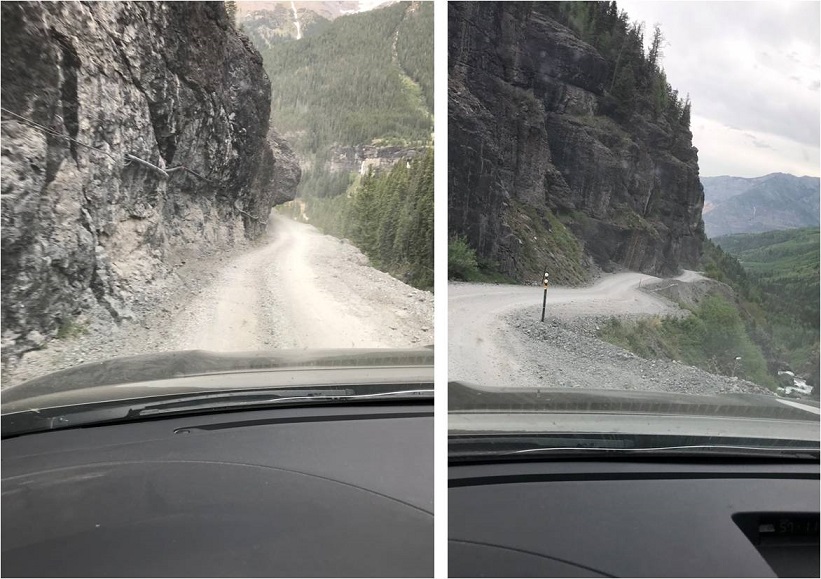
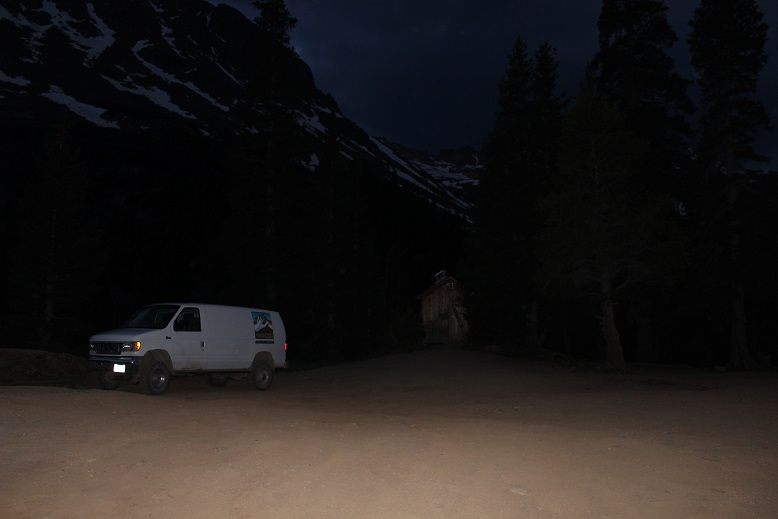
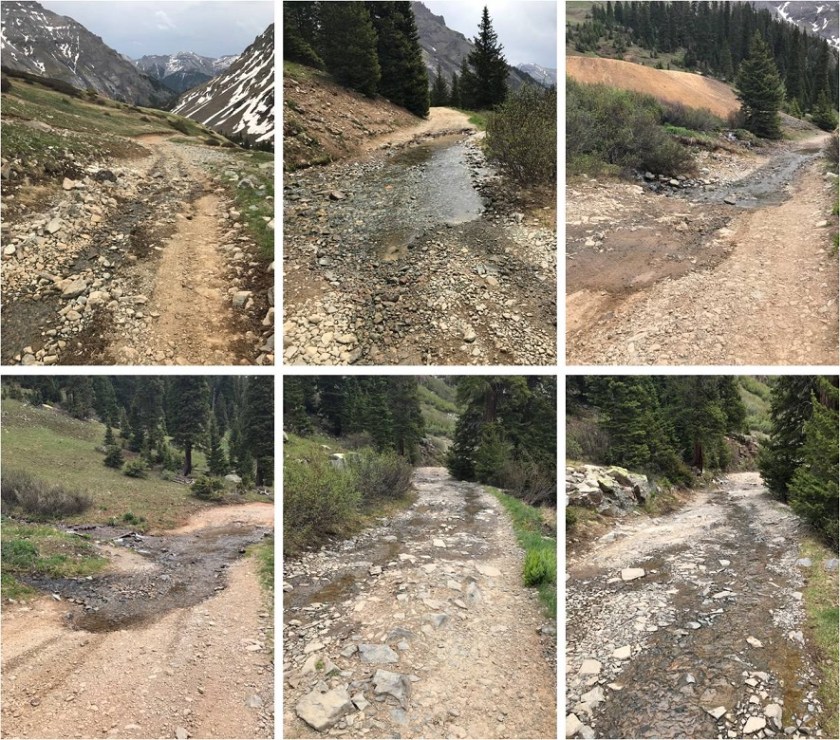
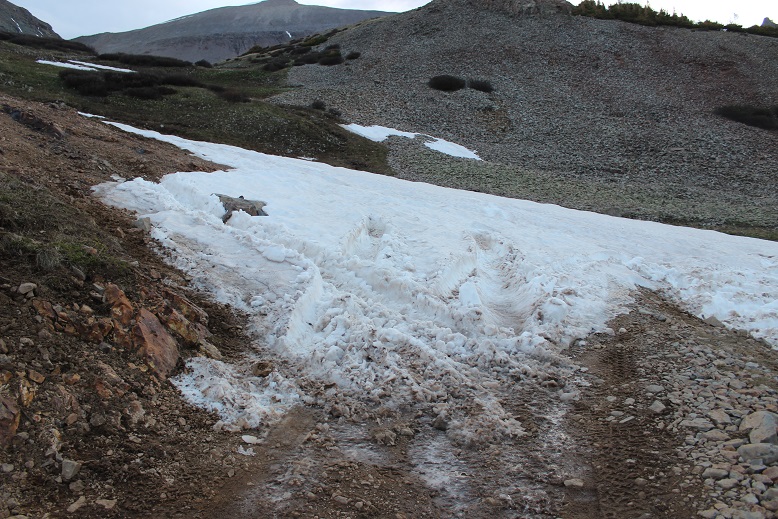

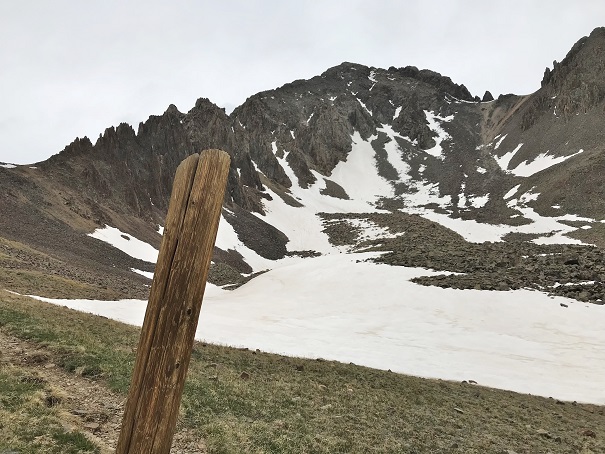

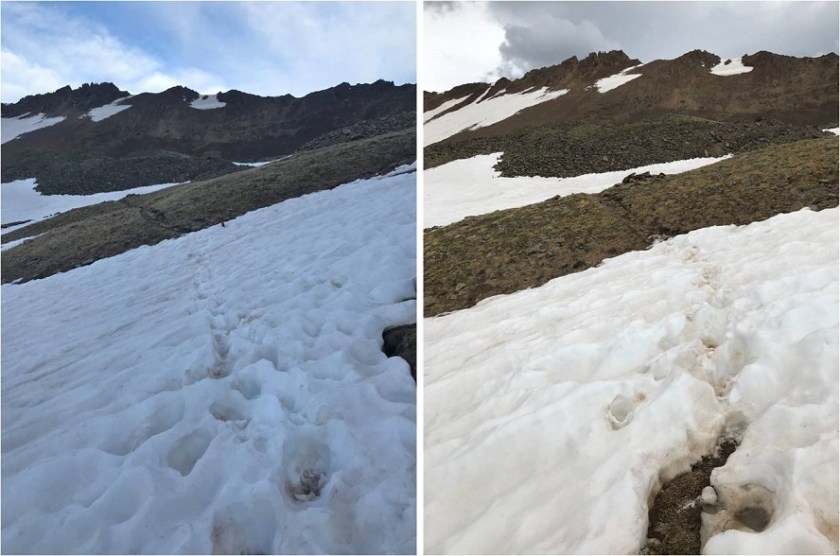
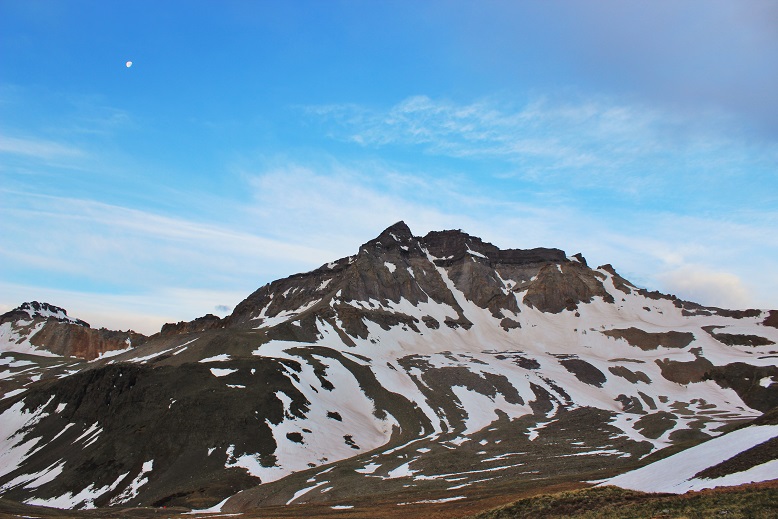


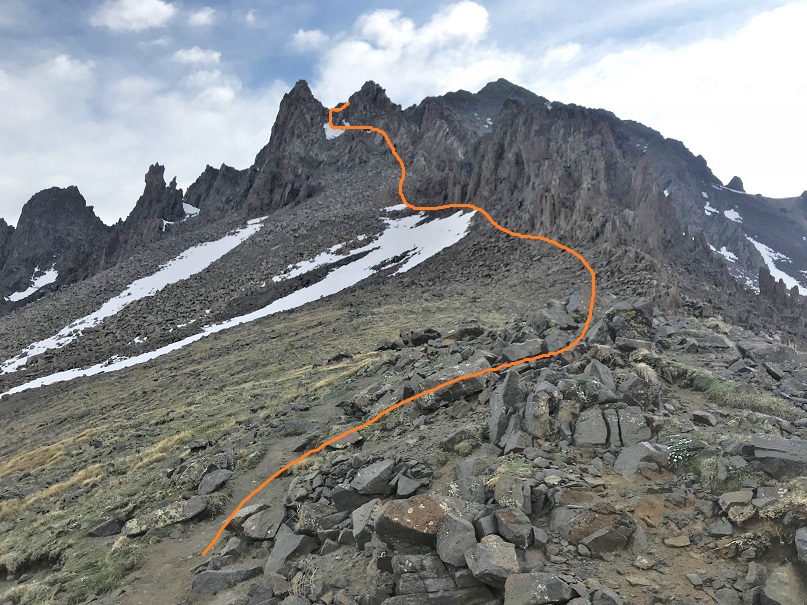
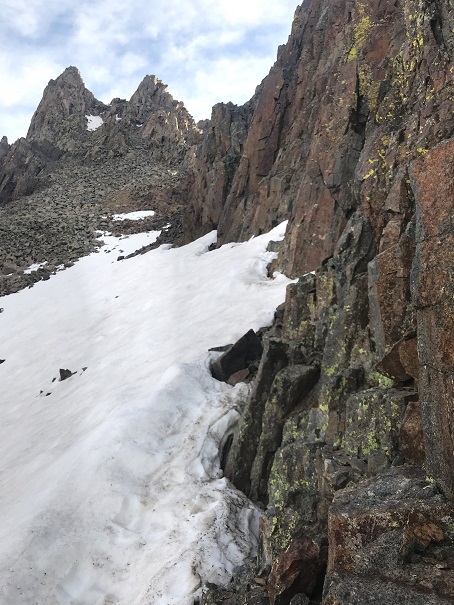
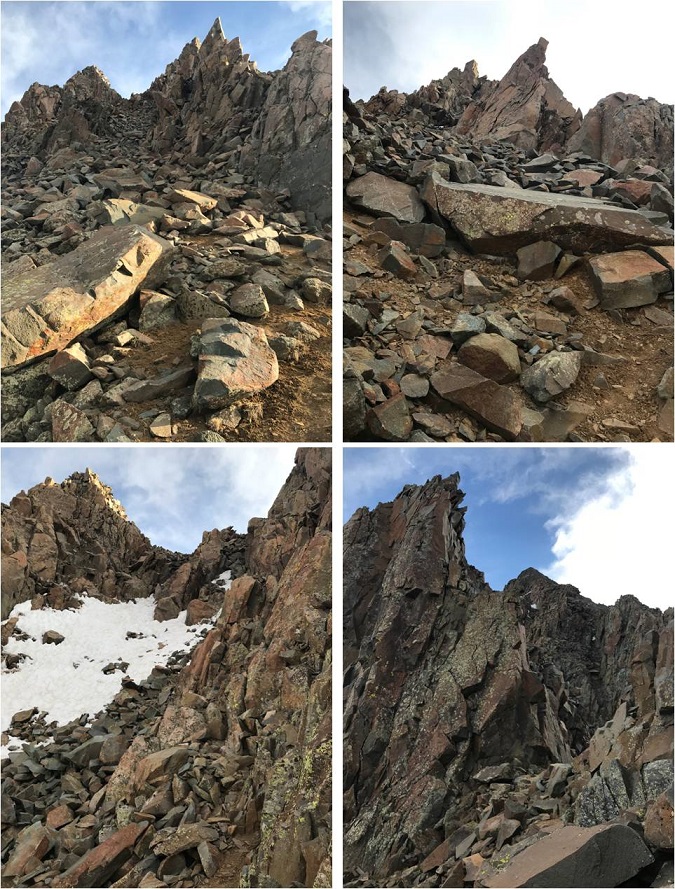
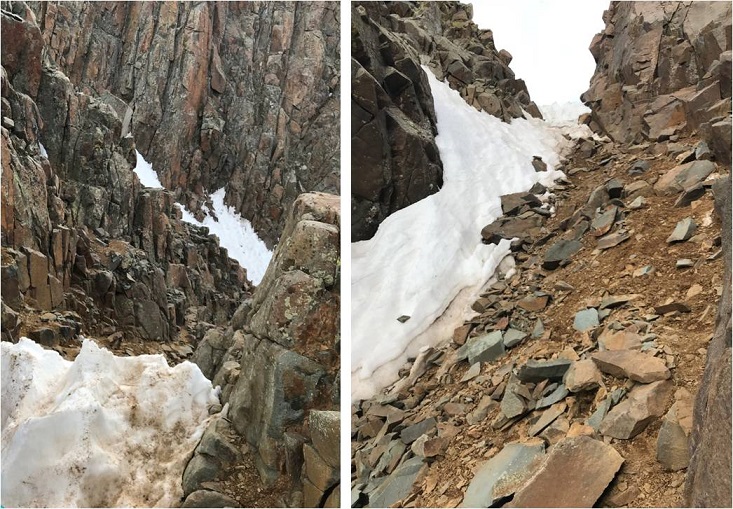
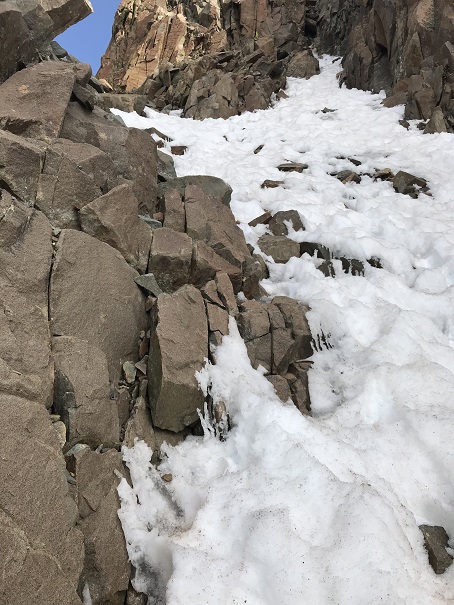
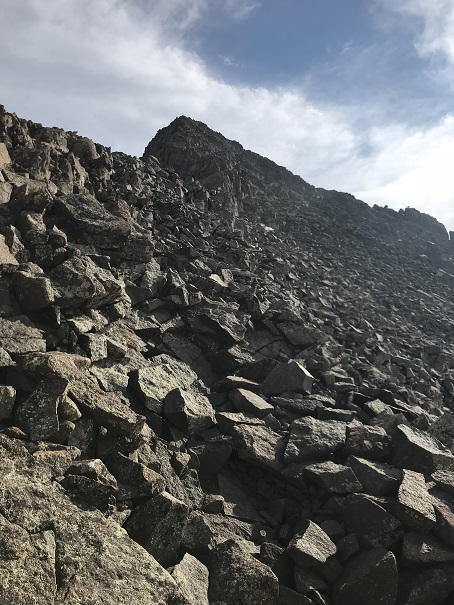

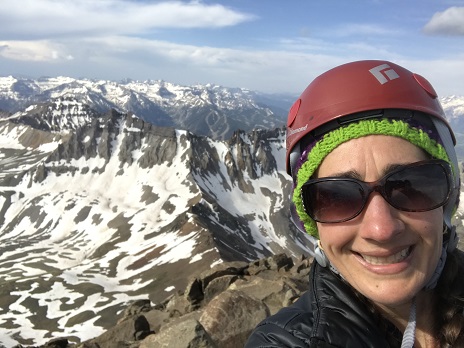
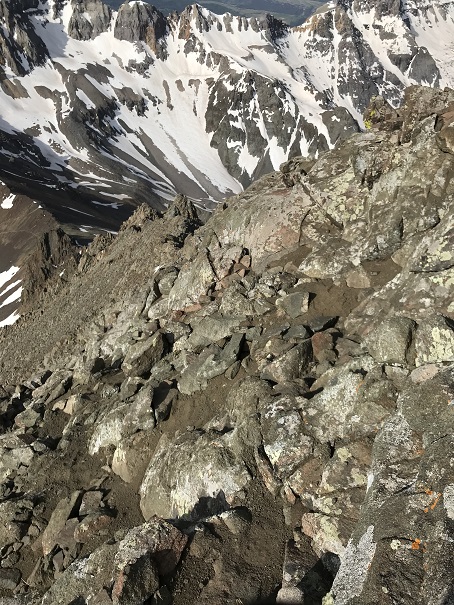
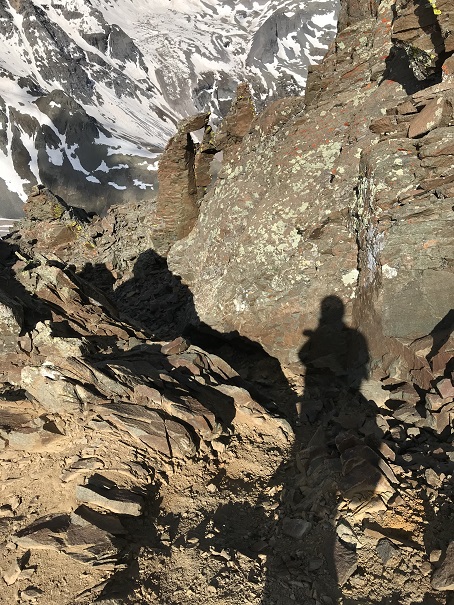
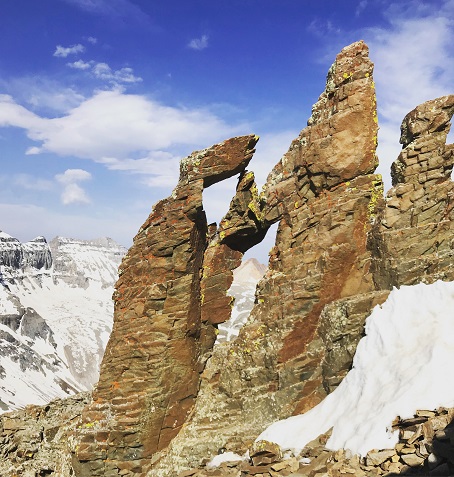

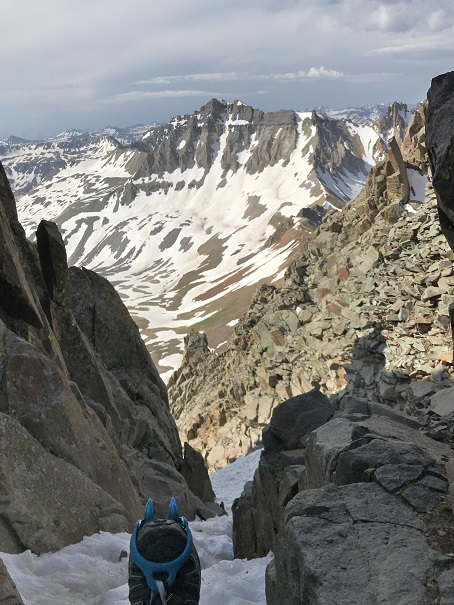

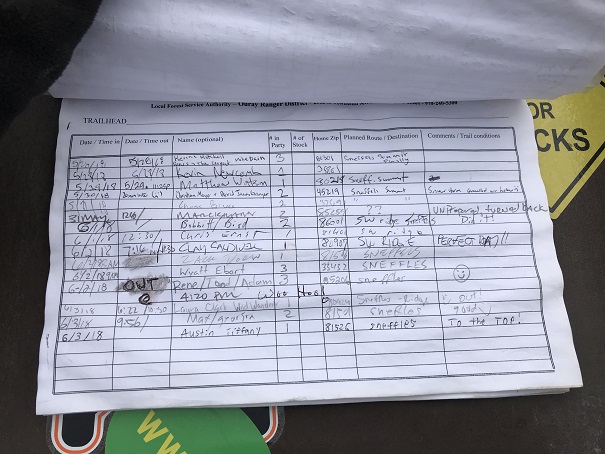
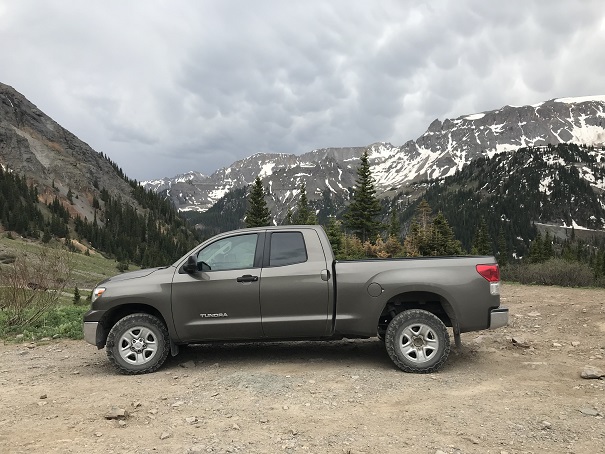
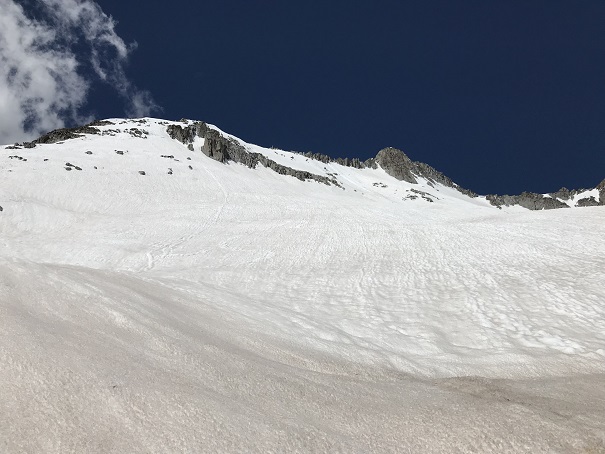 RT Mileage: 22 miles
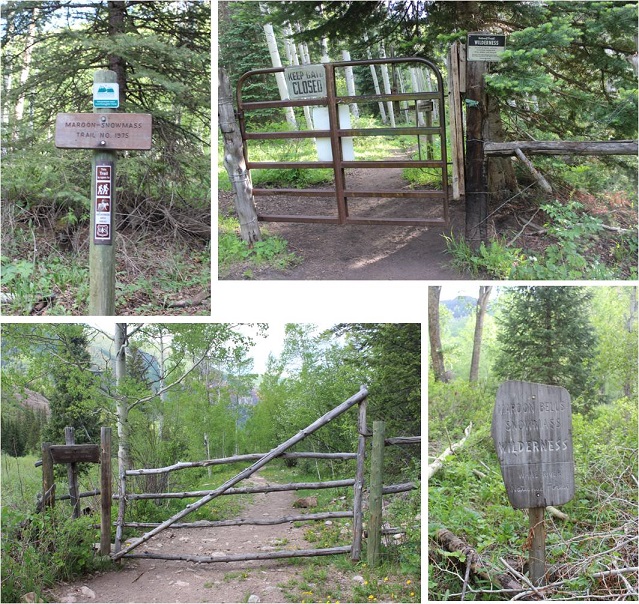

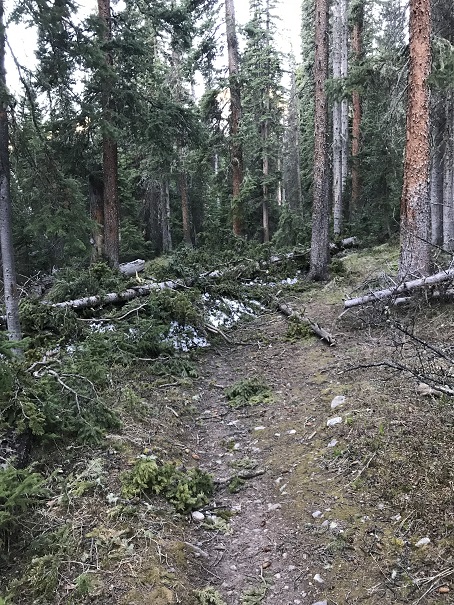
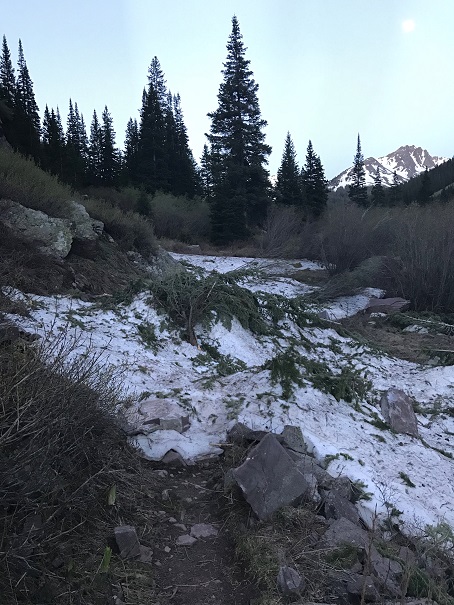

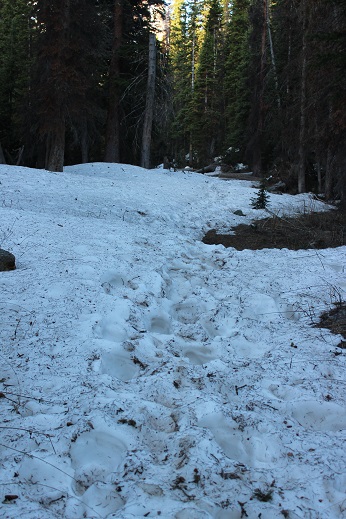
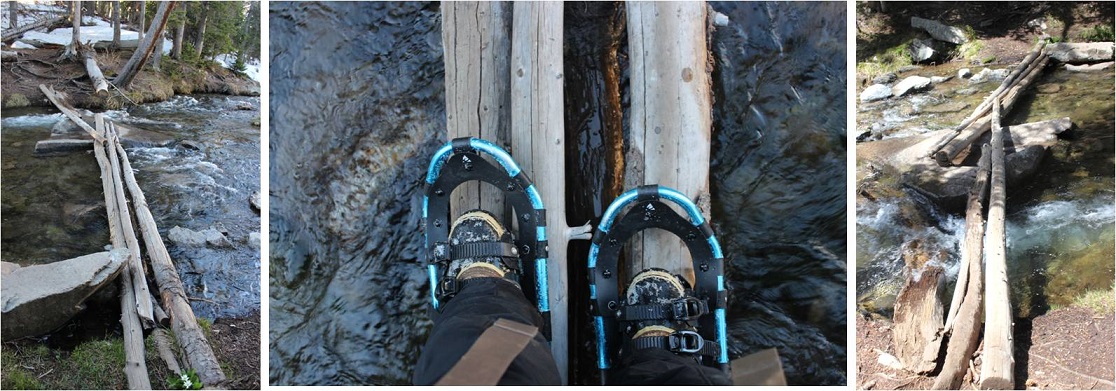
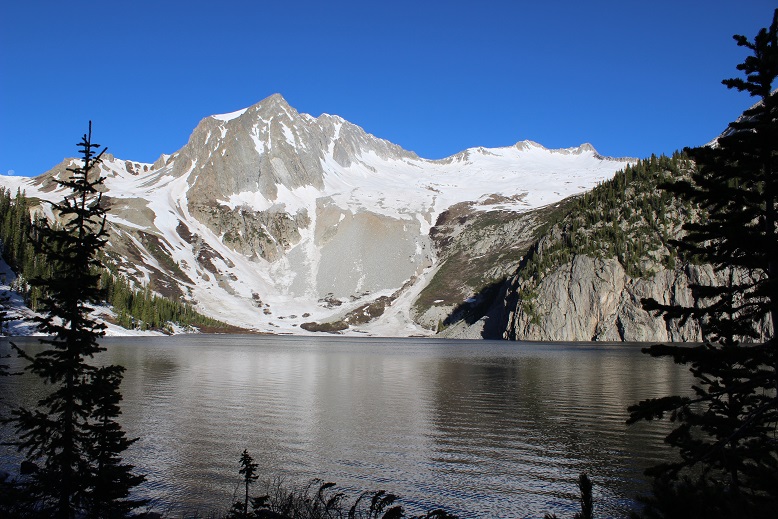
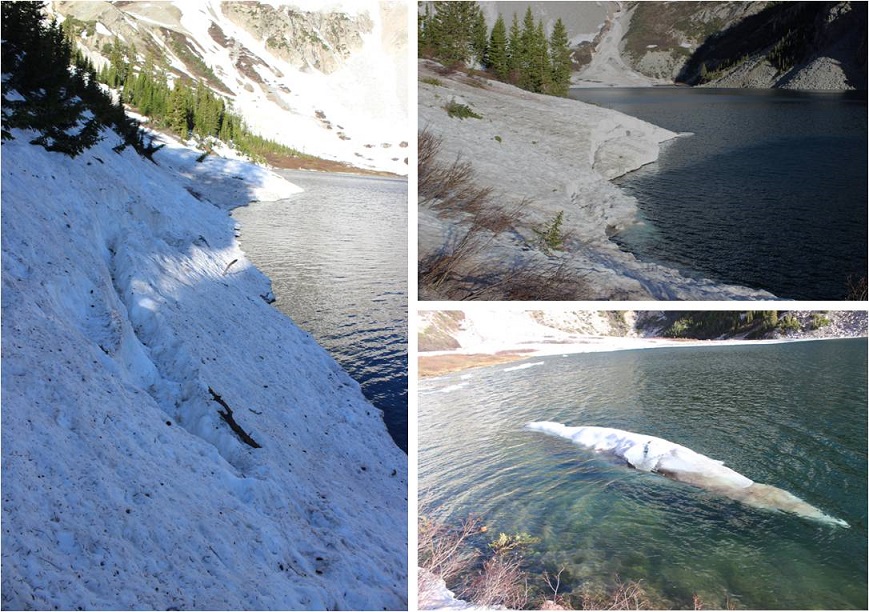
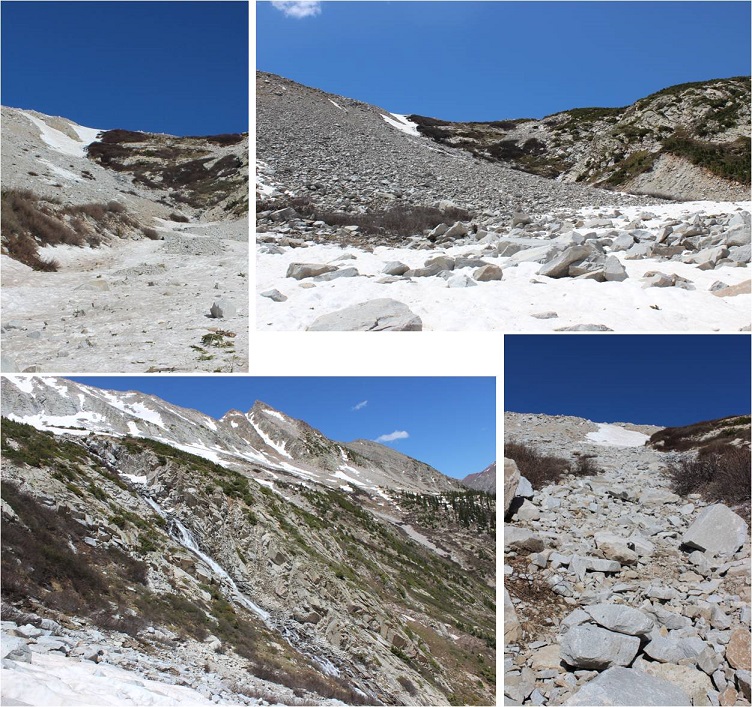
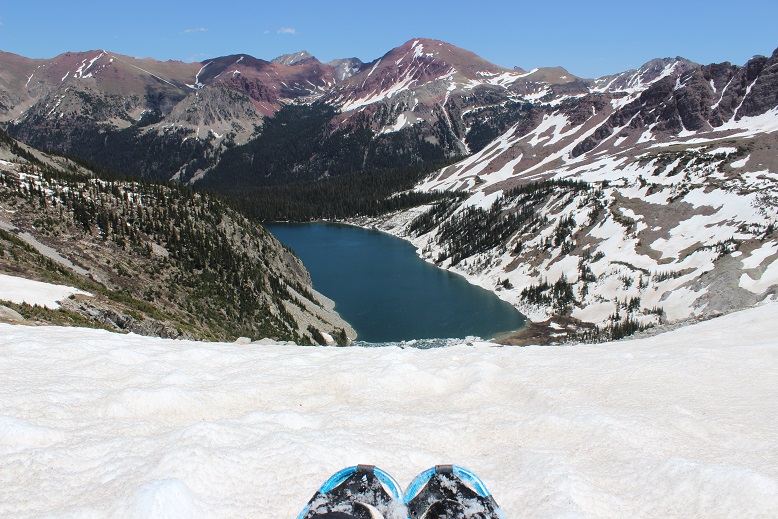
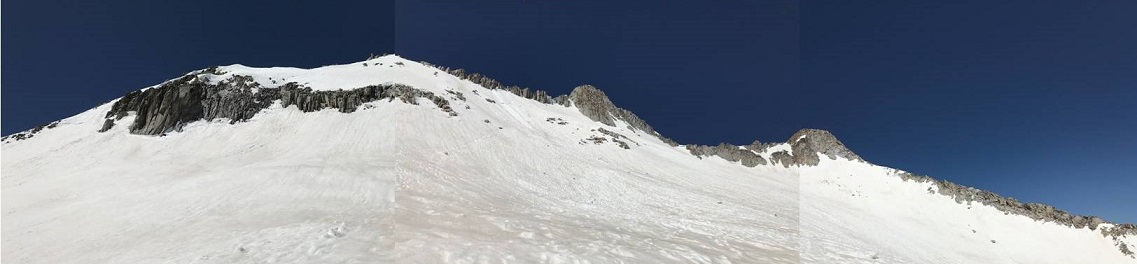
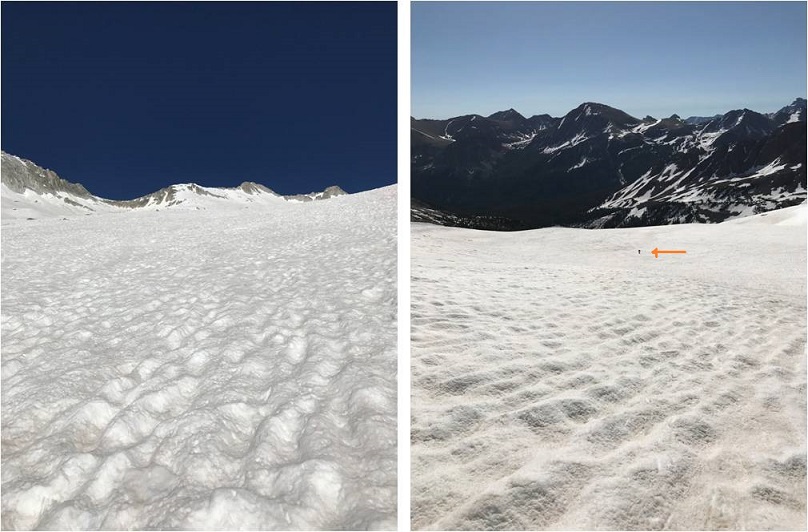
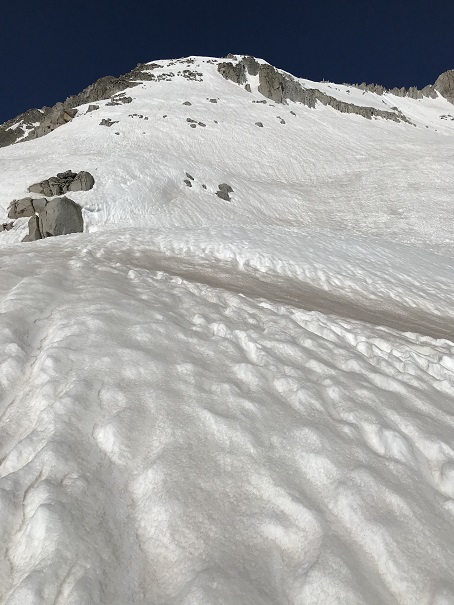


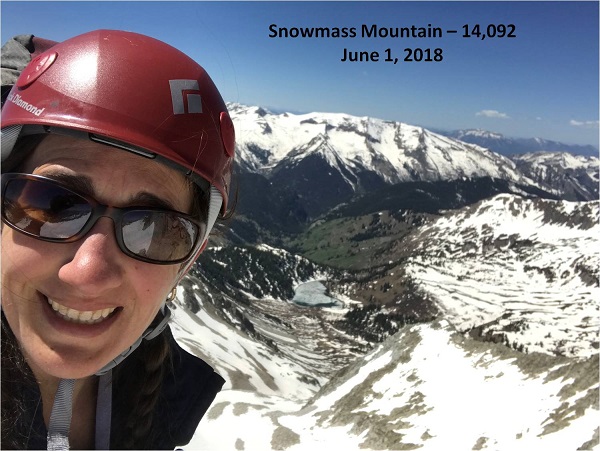
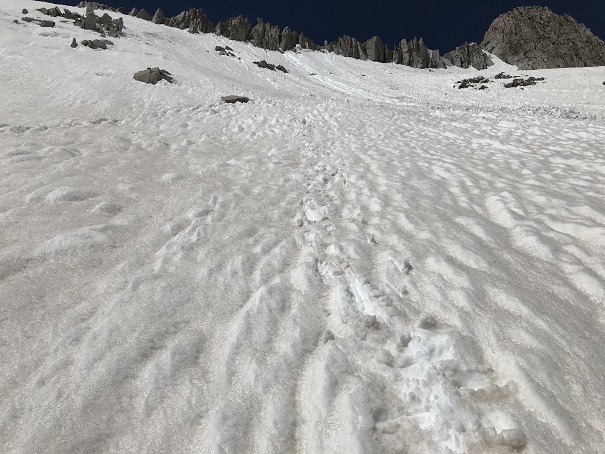
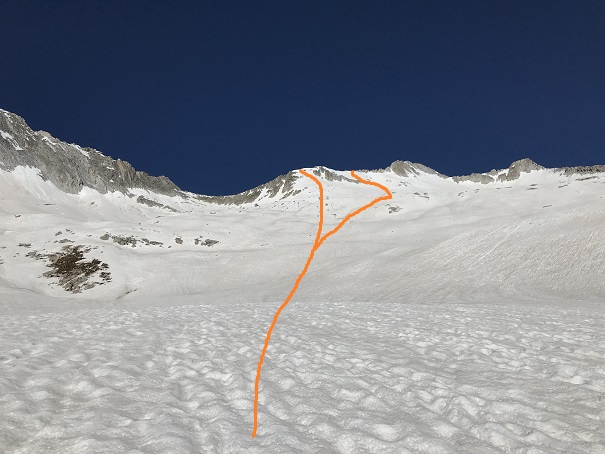
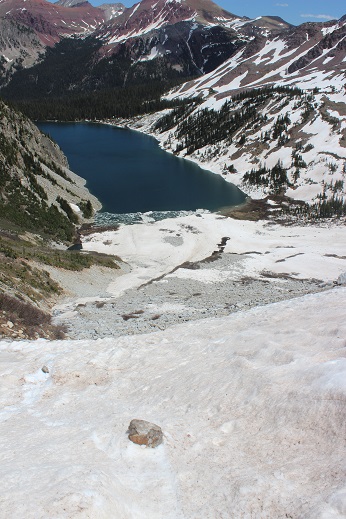
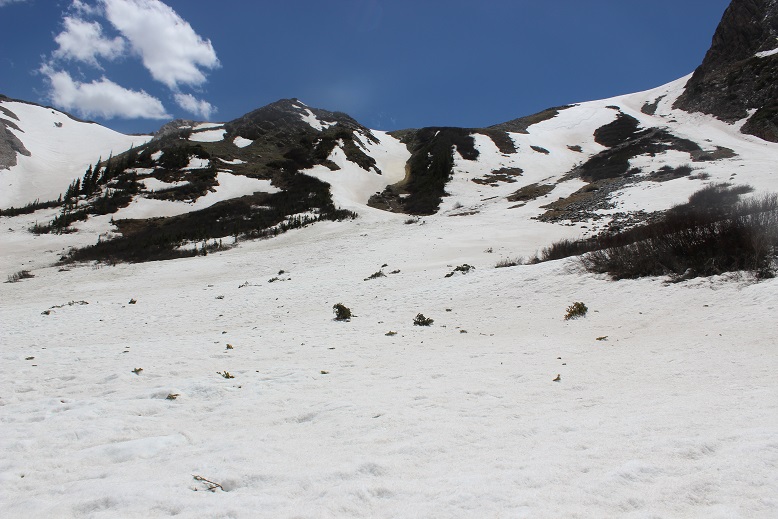

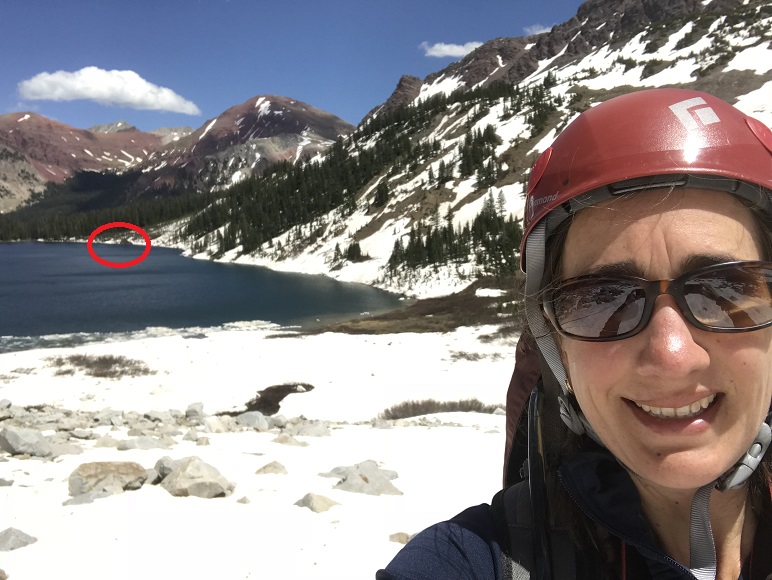
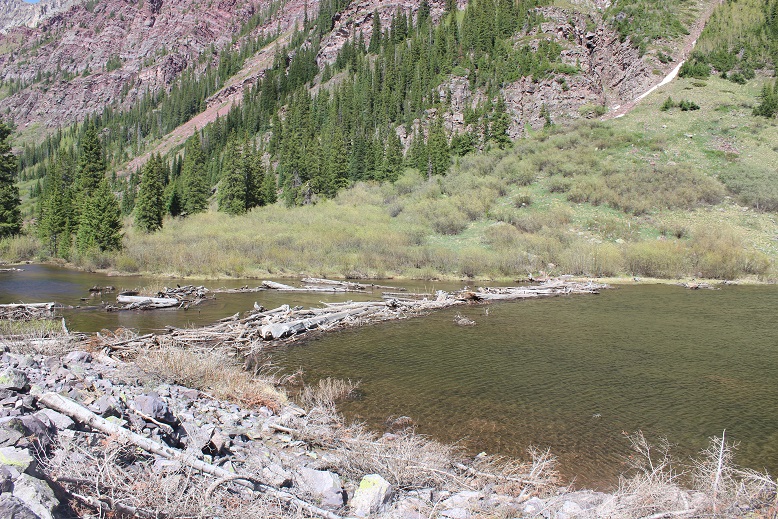
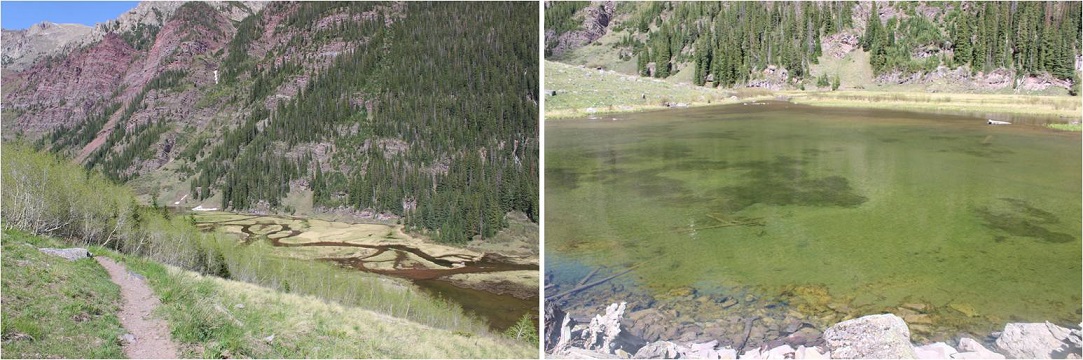
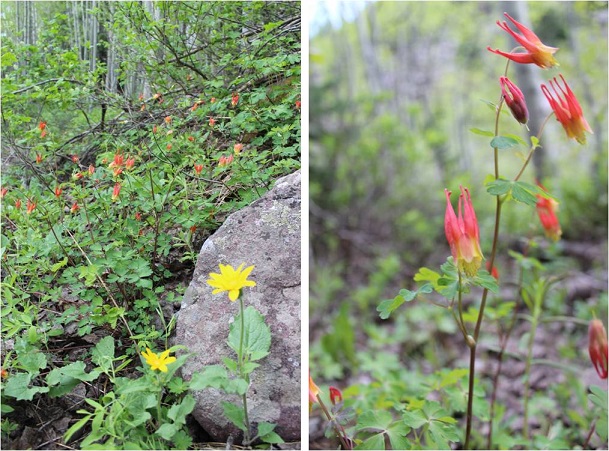
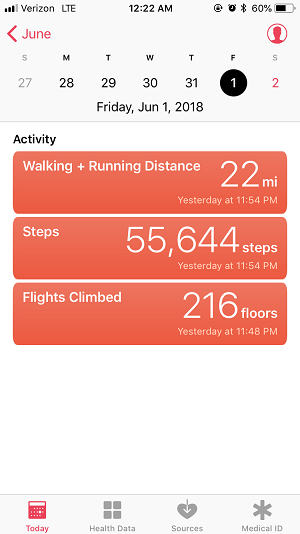

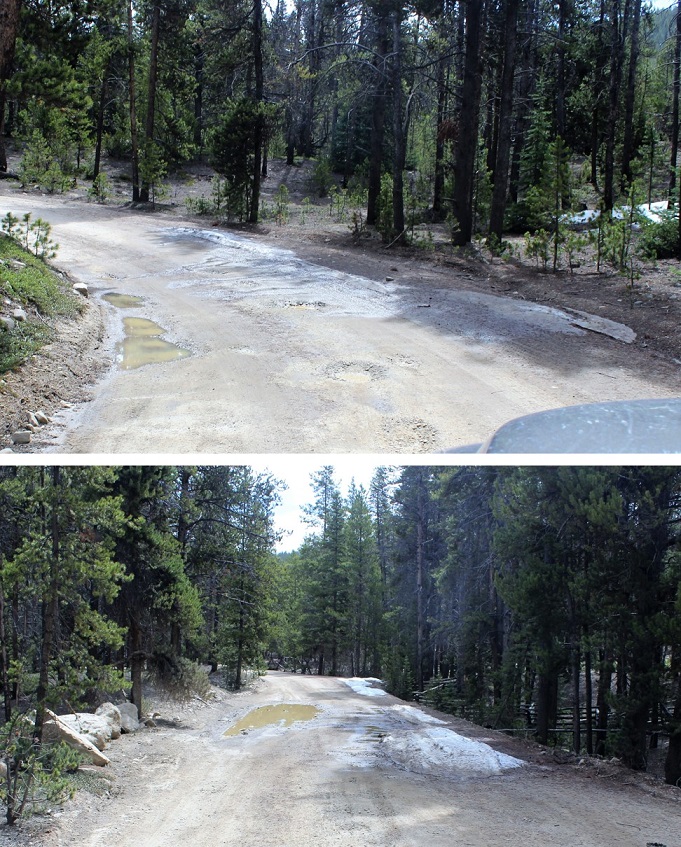
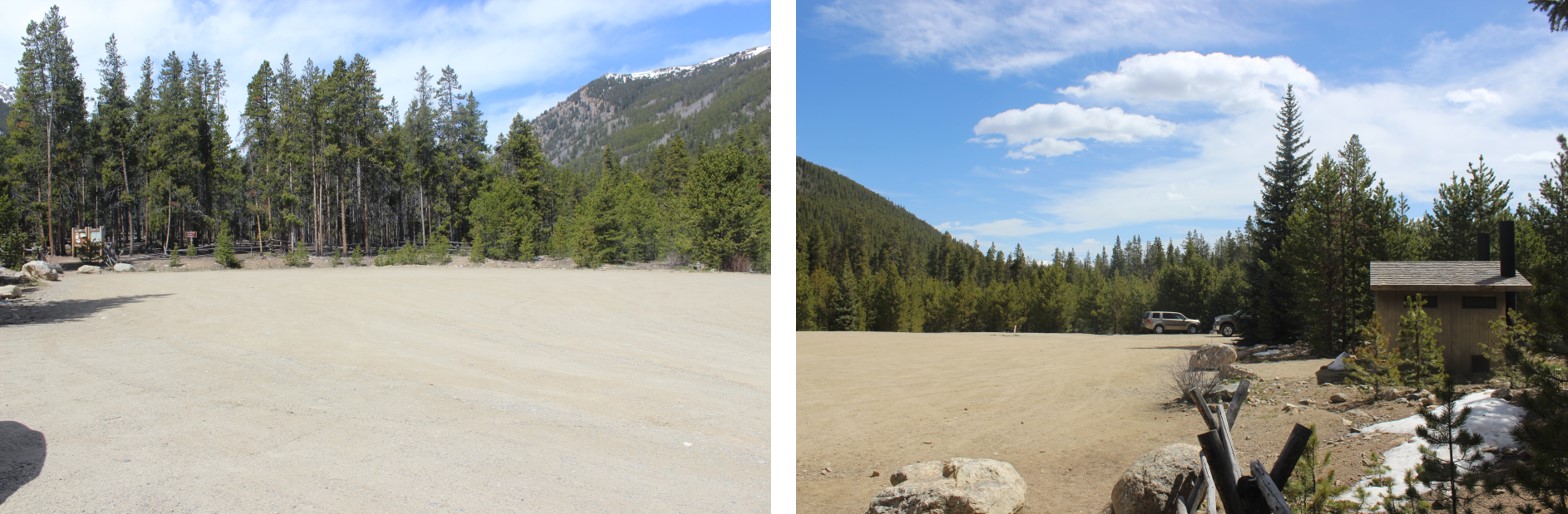
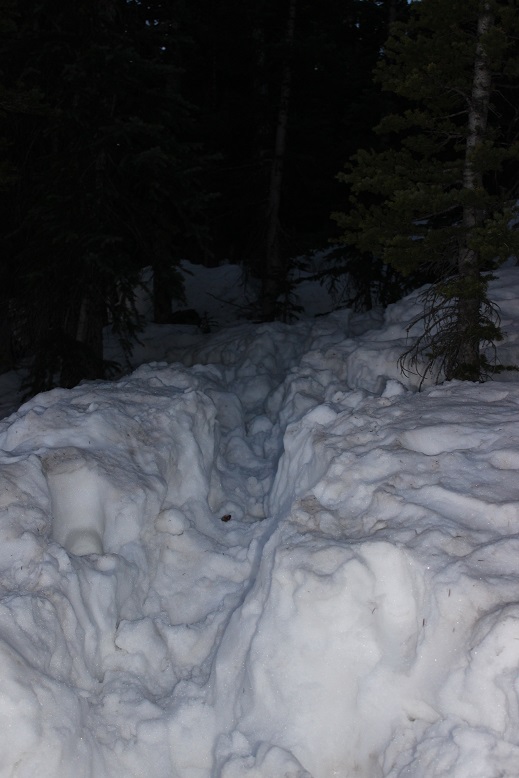
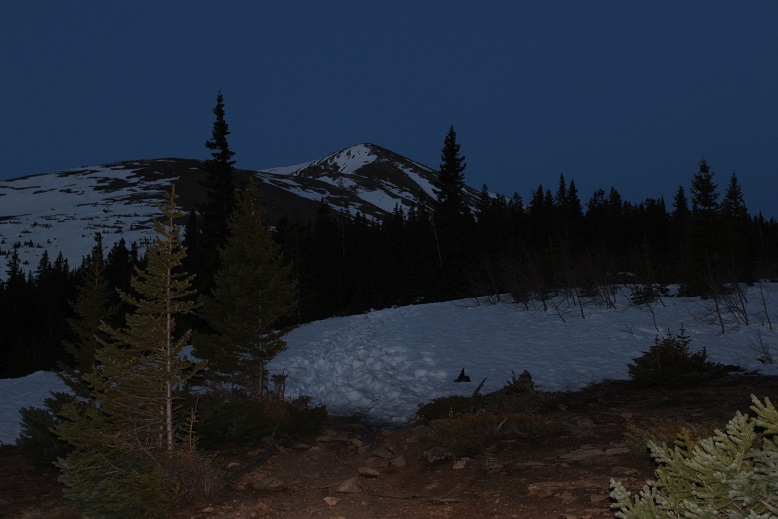
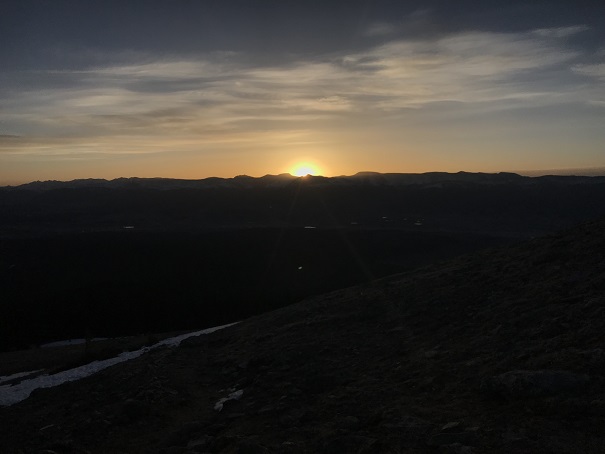
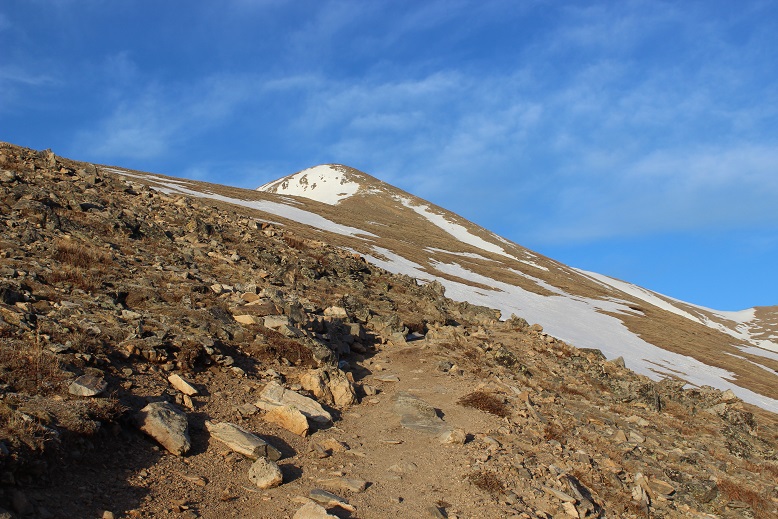


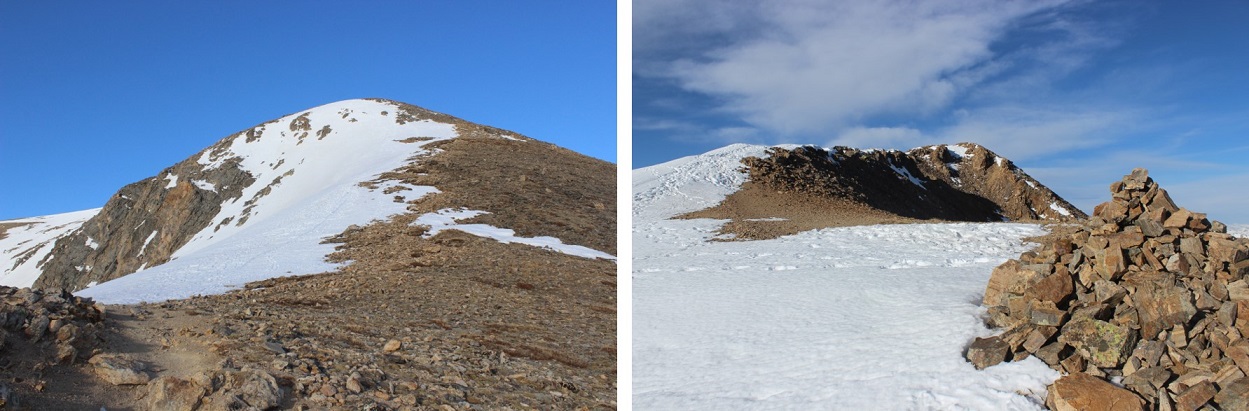
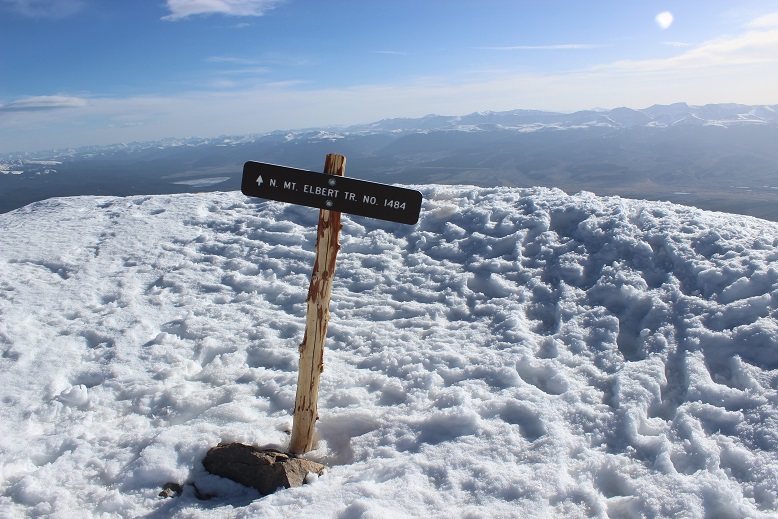
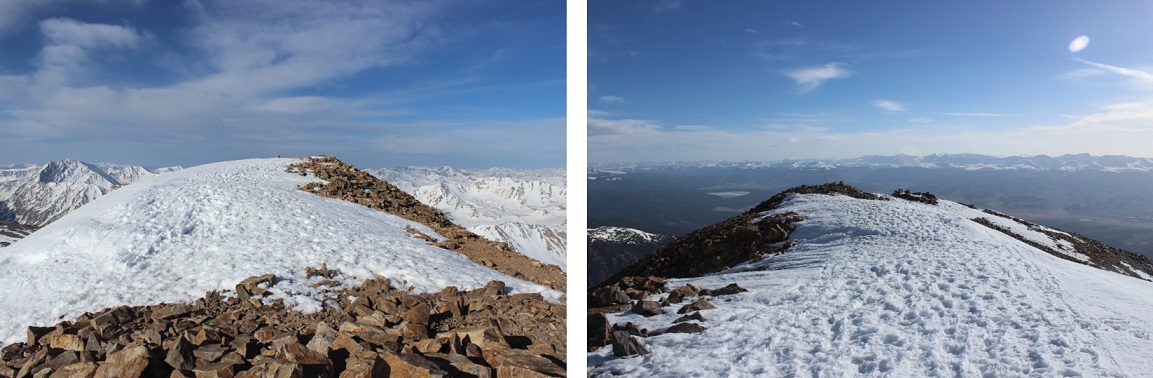
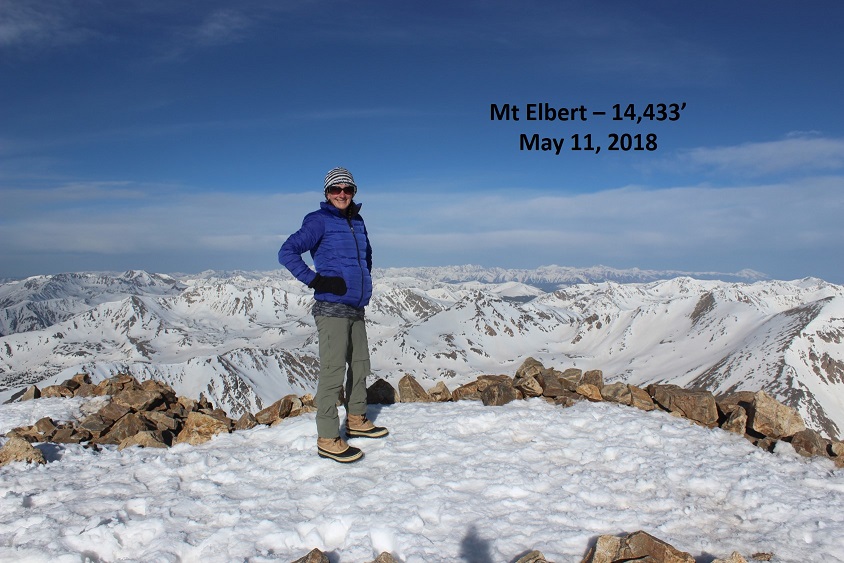
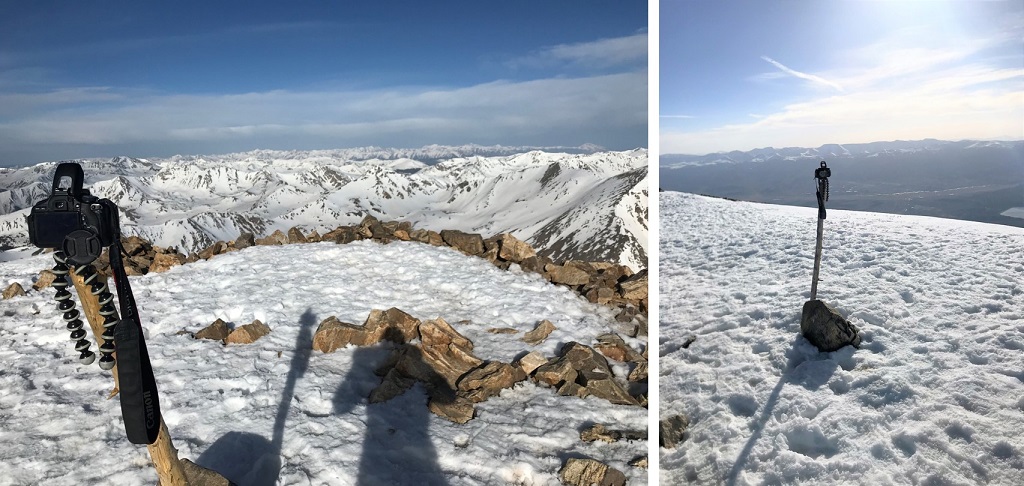
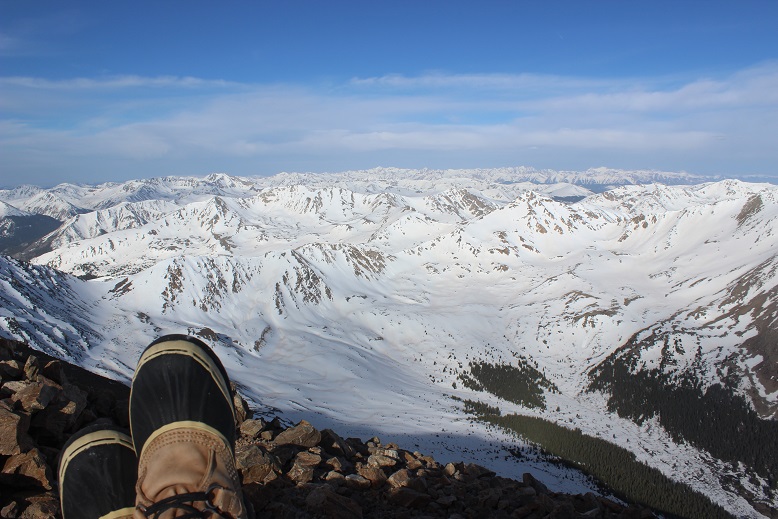


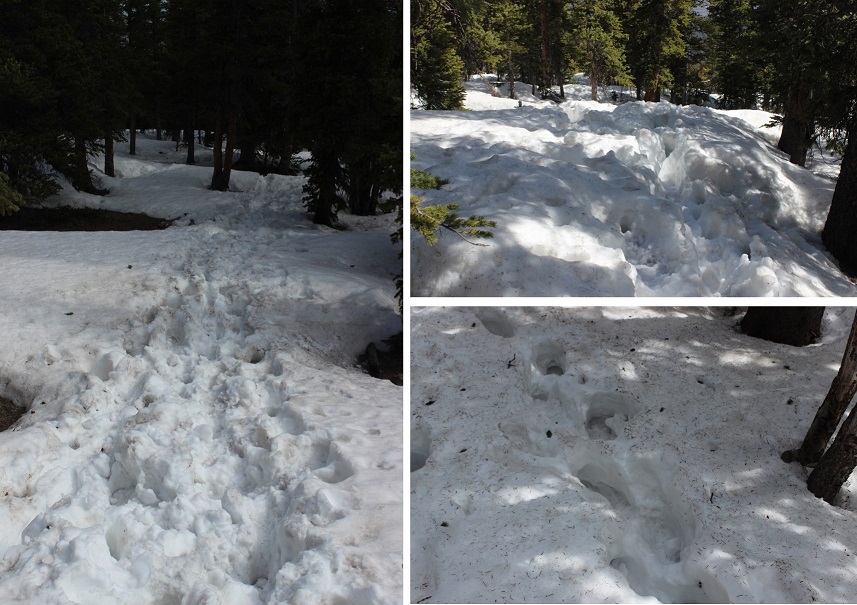
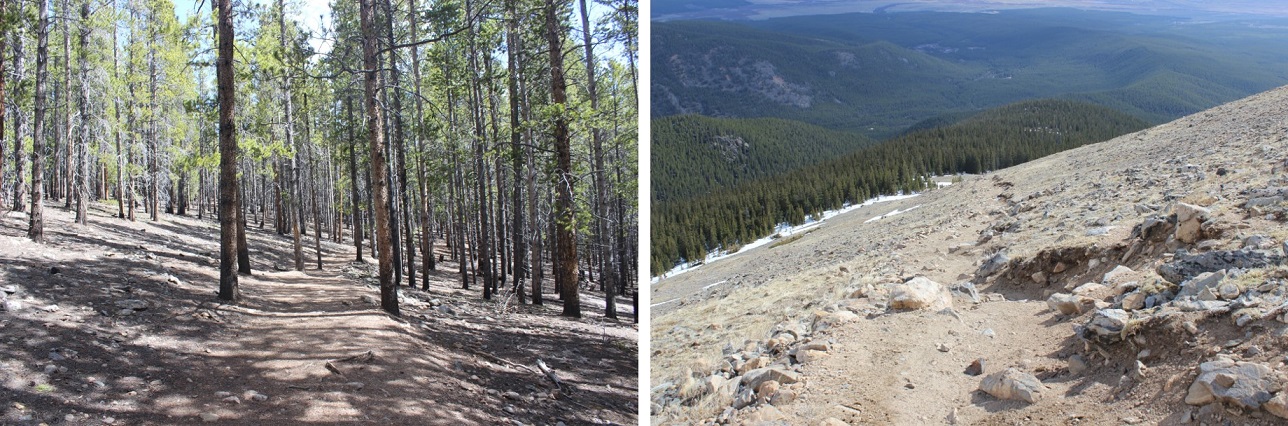
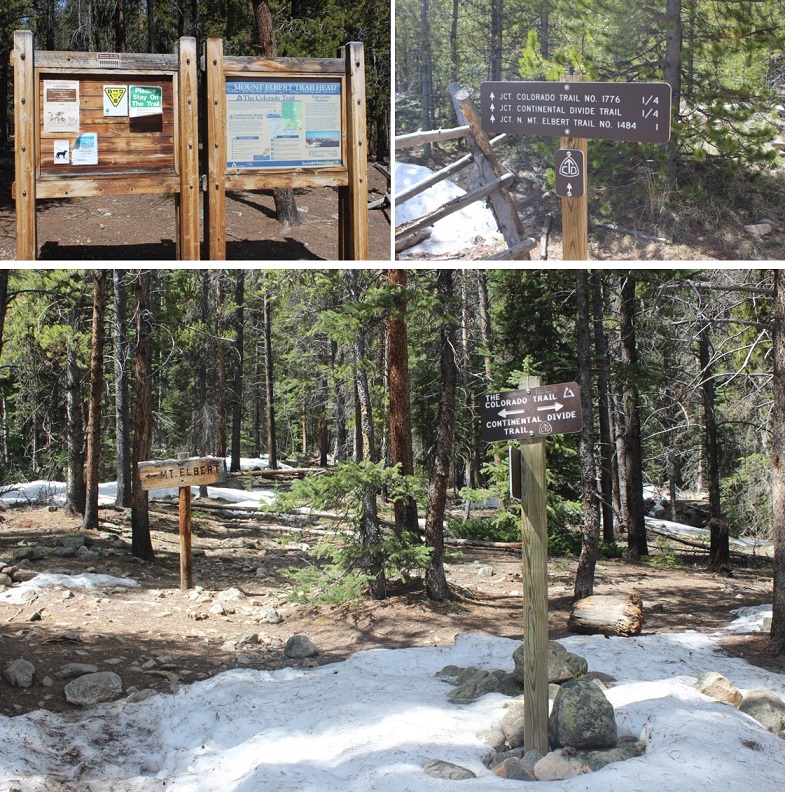
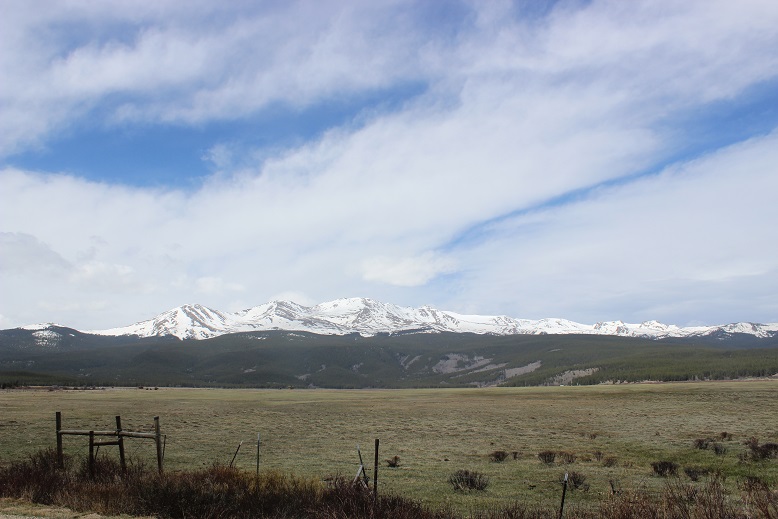

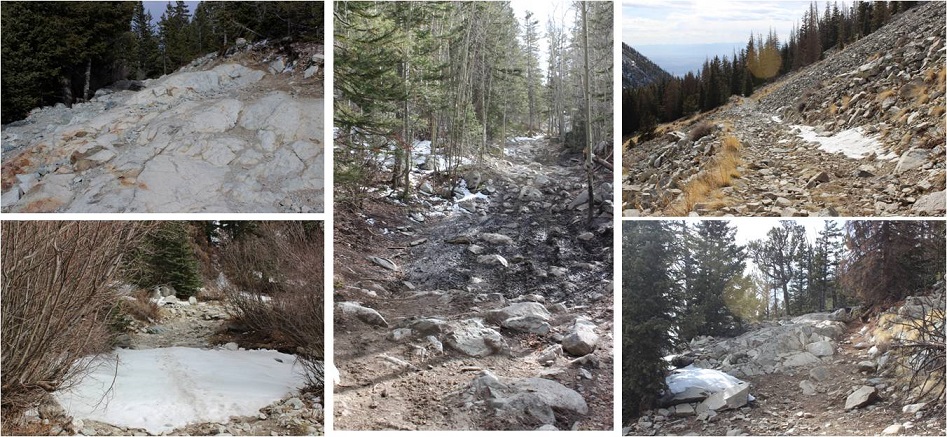
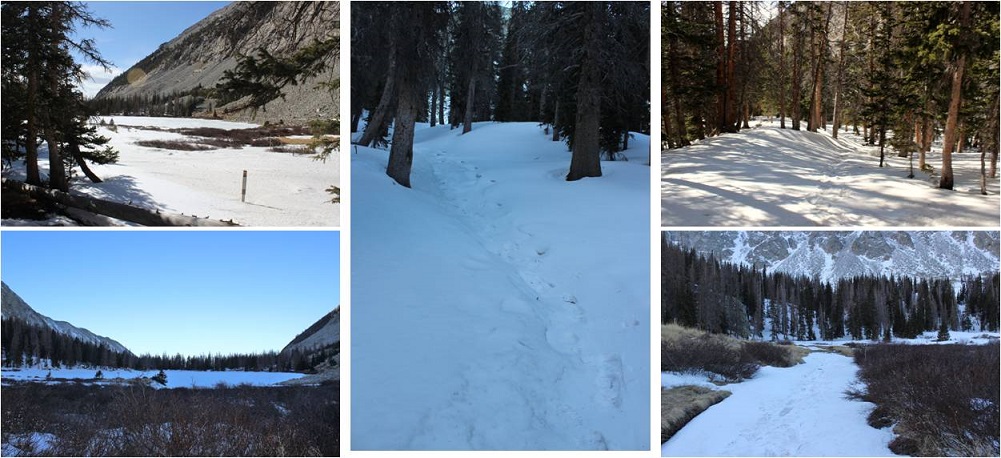

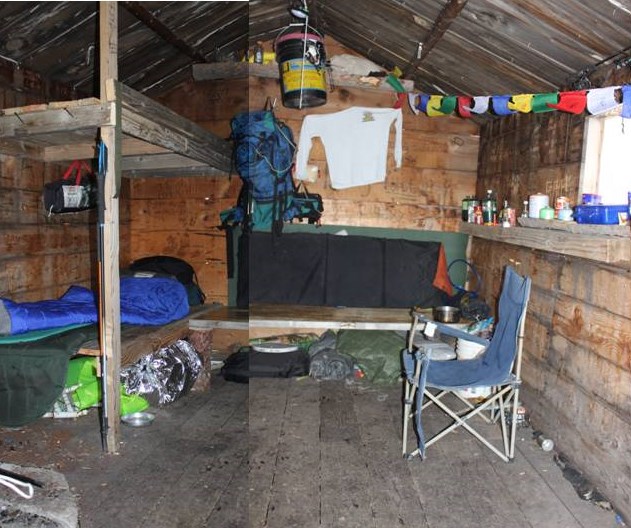
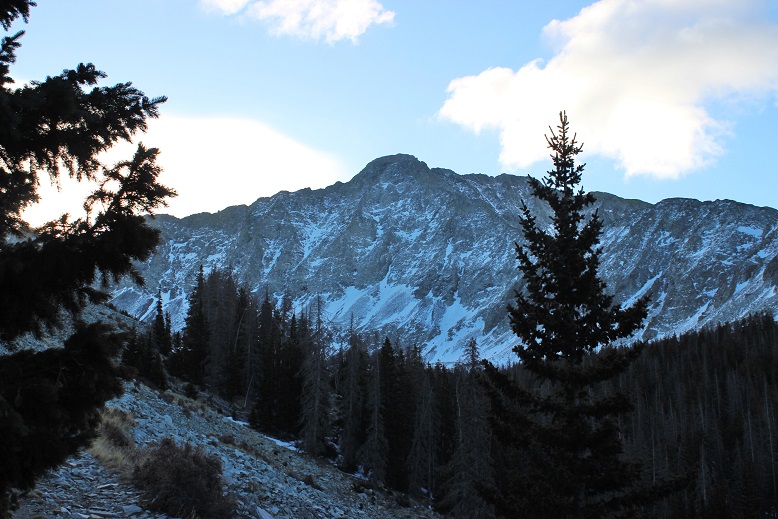
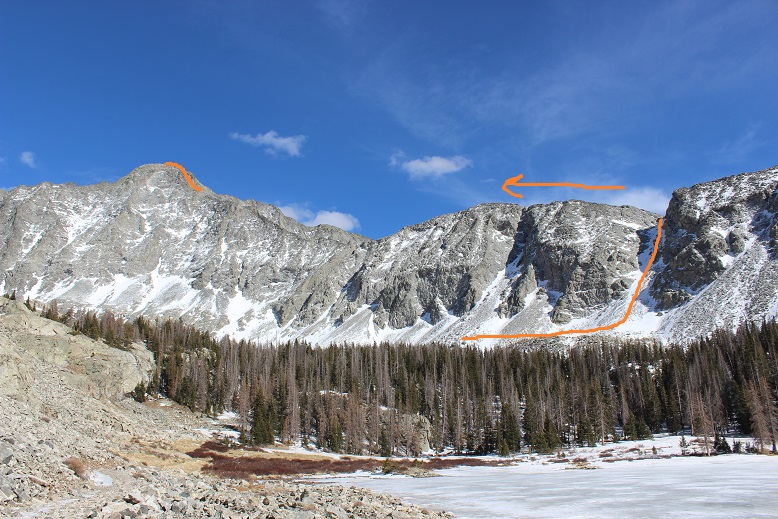
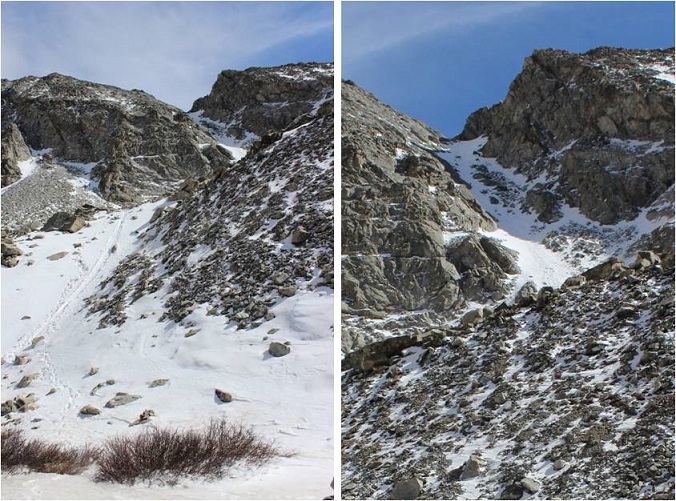
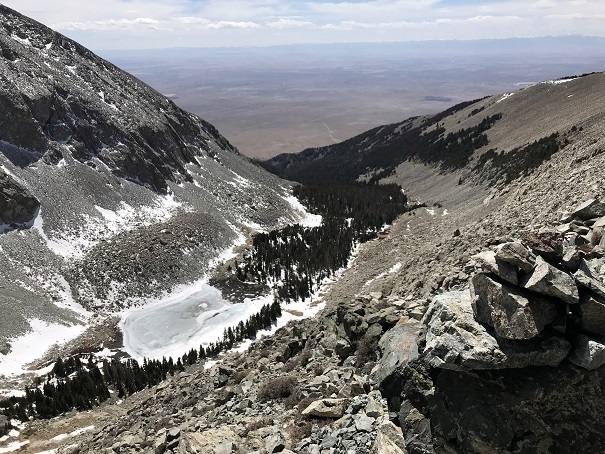
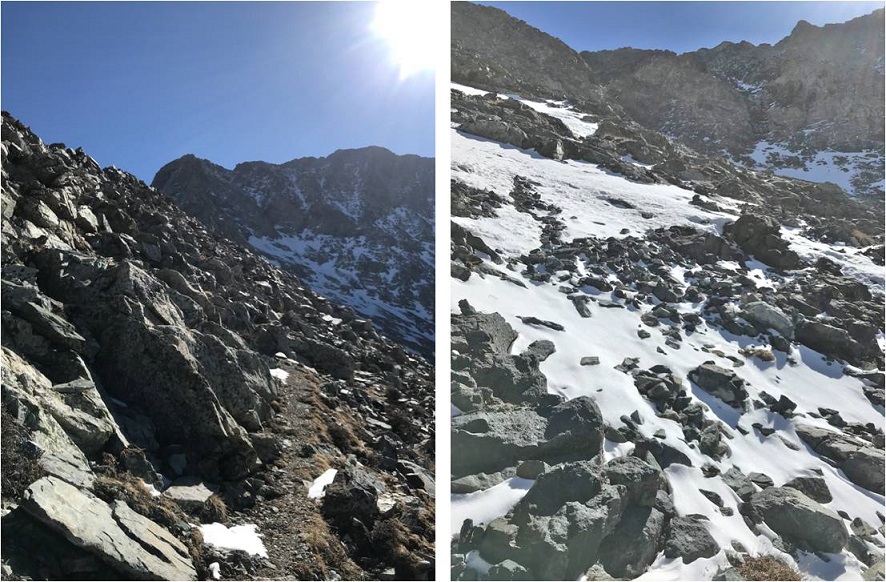

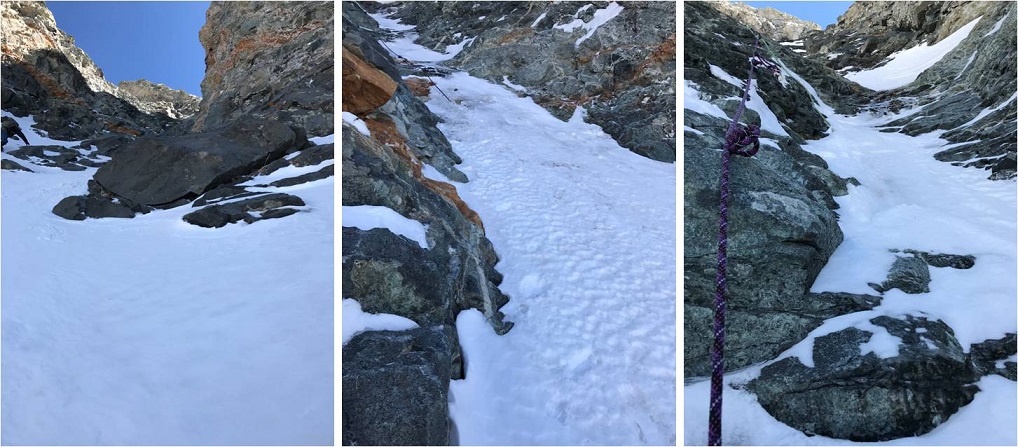
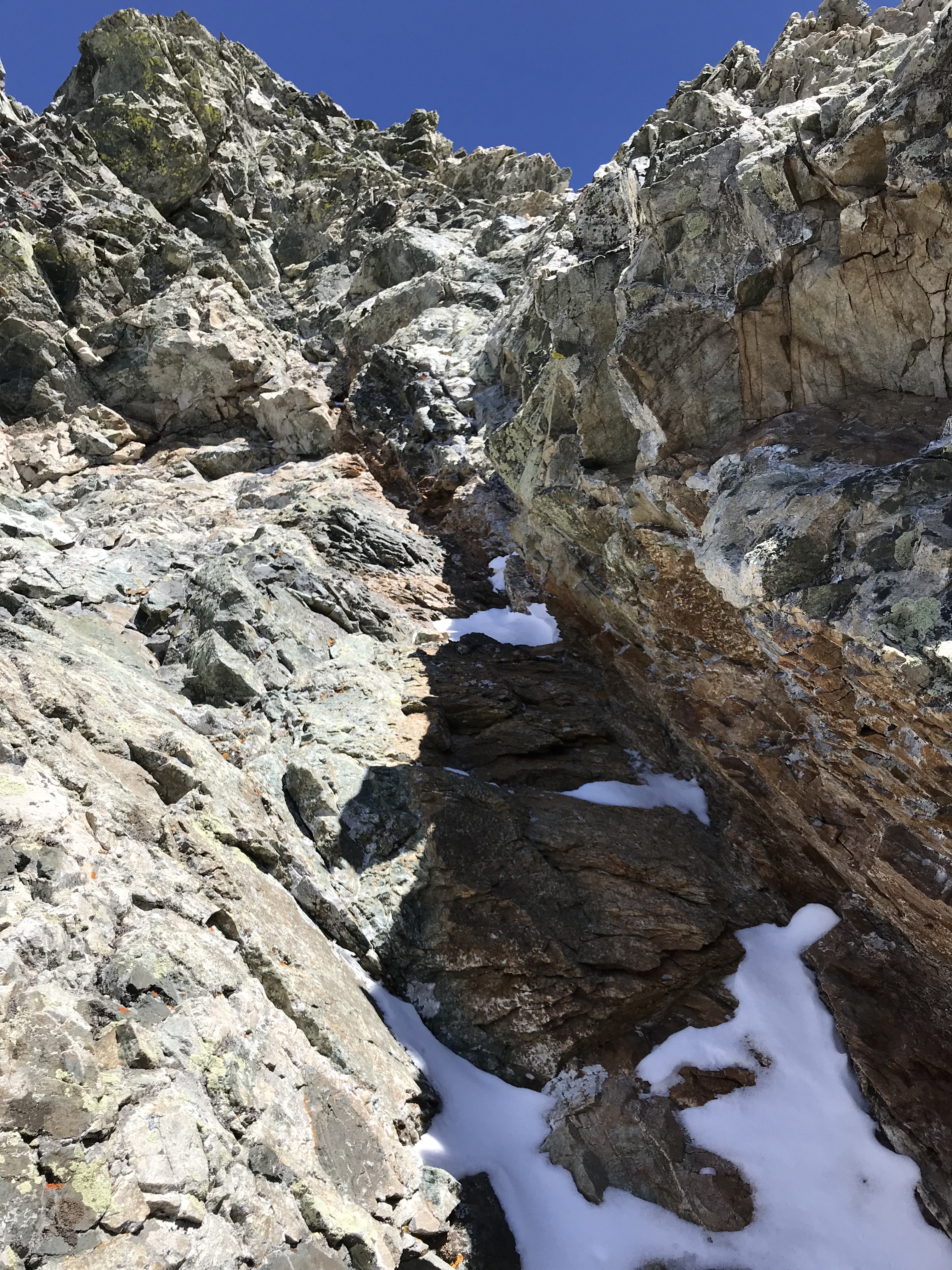
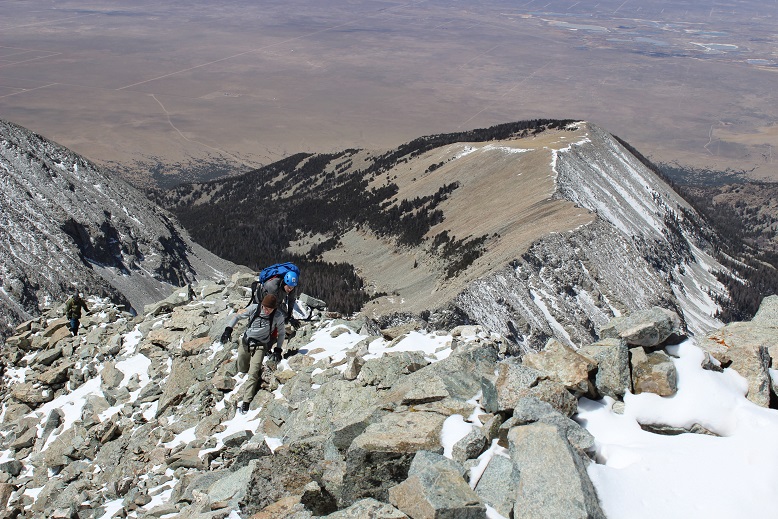


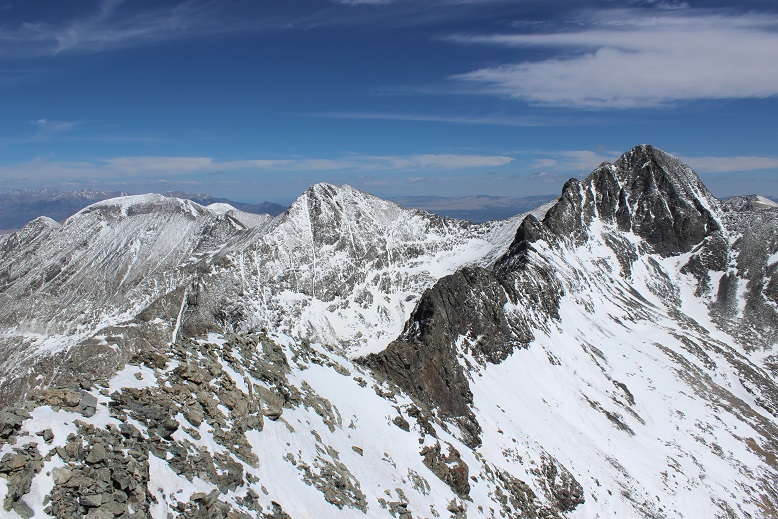
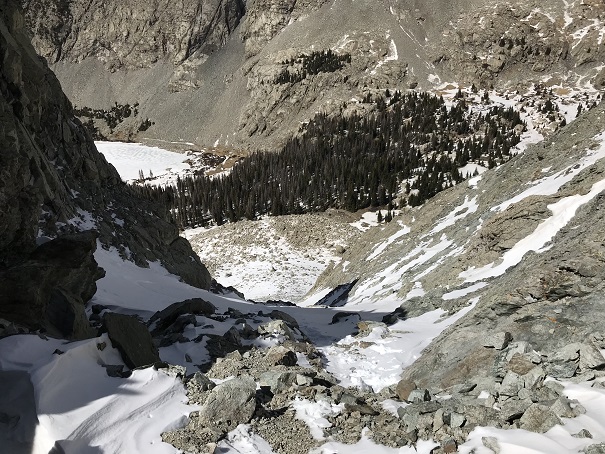
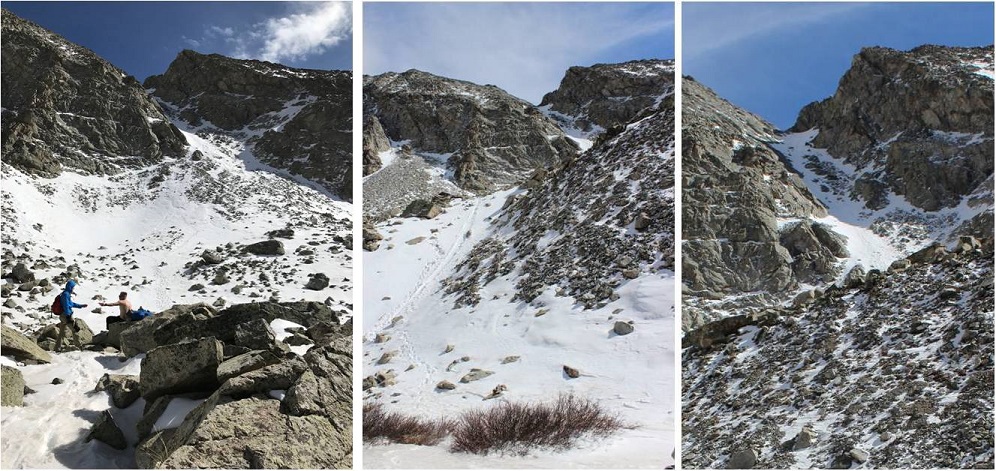
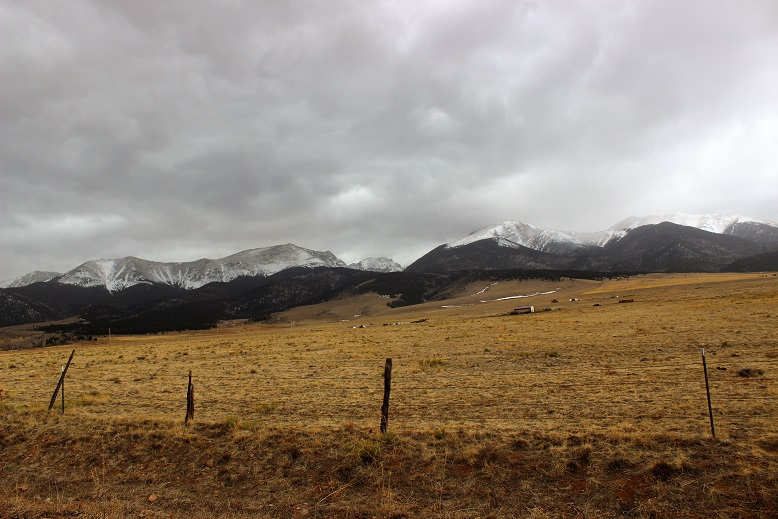
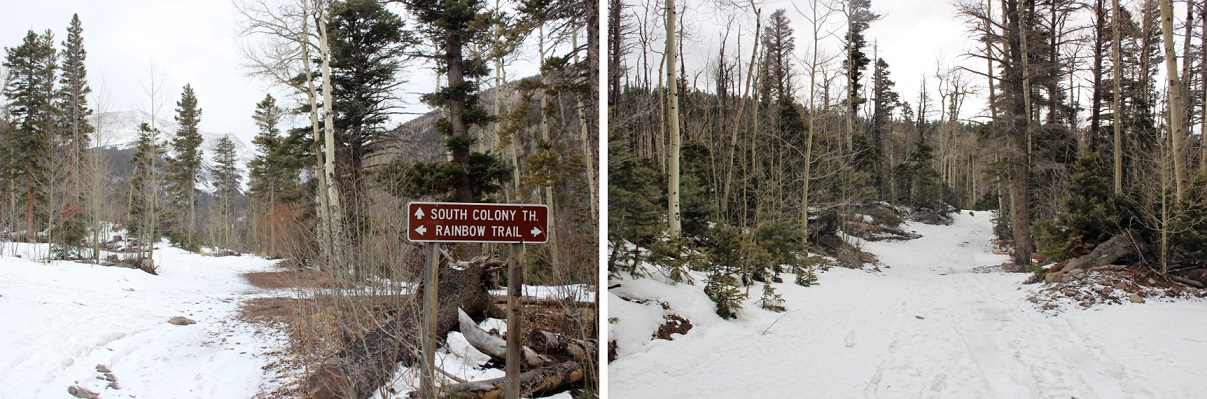
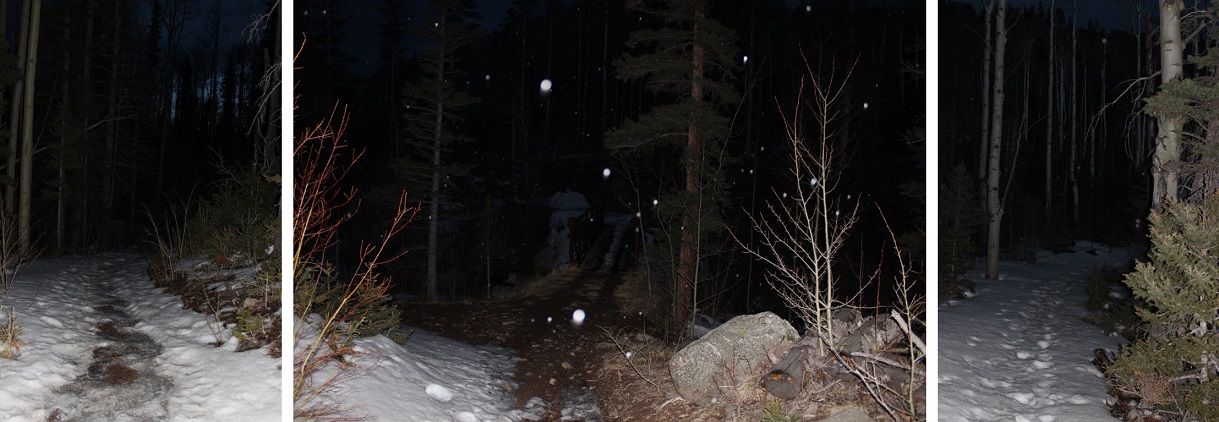
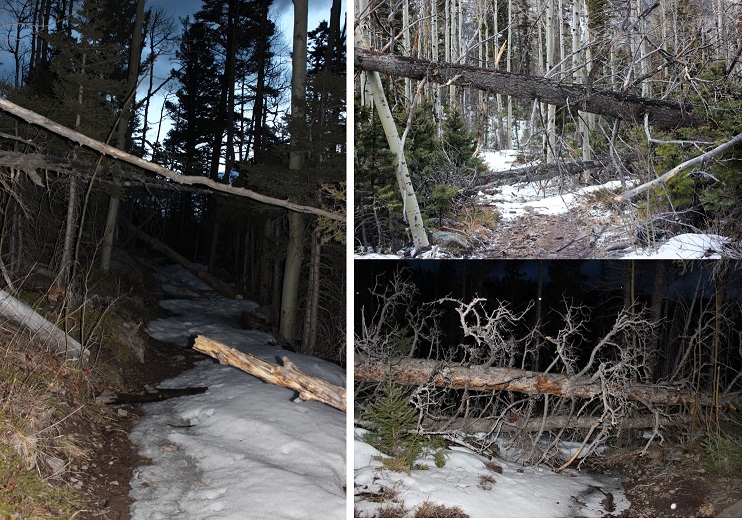
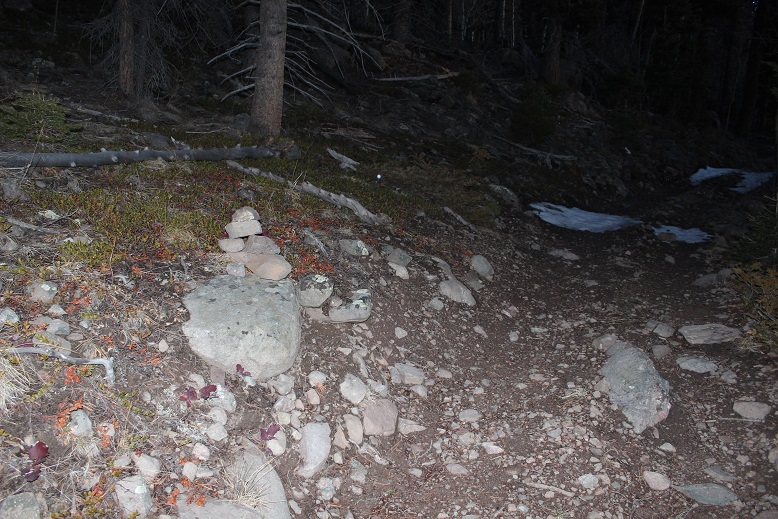
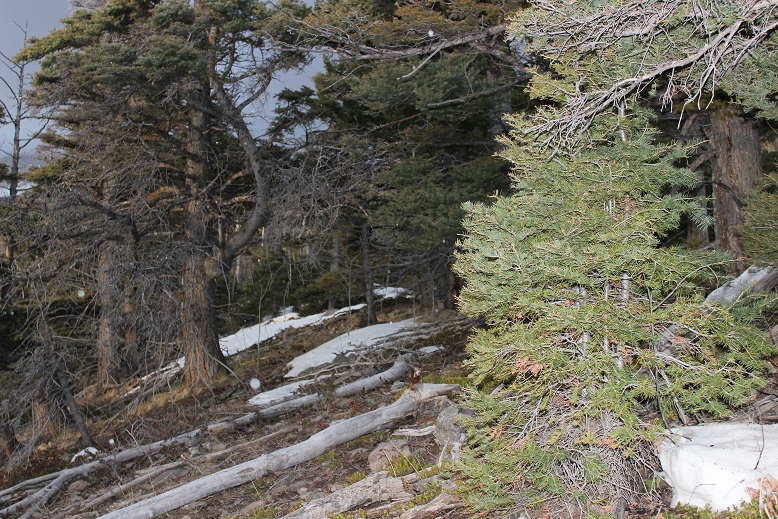
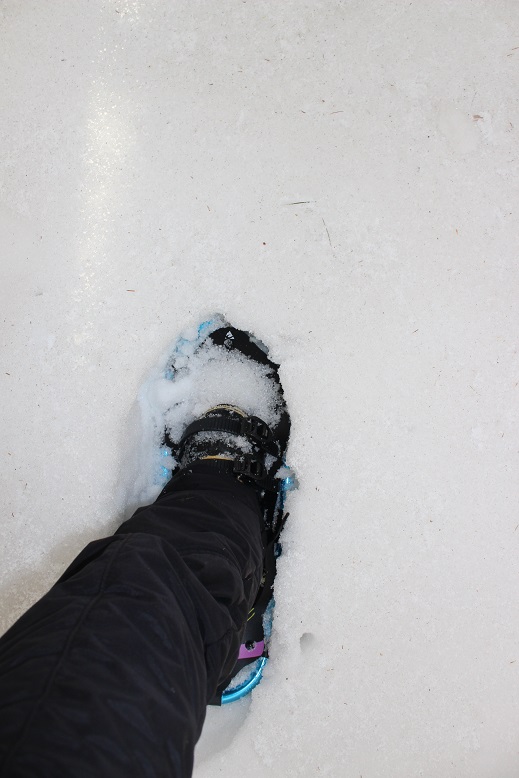
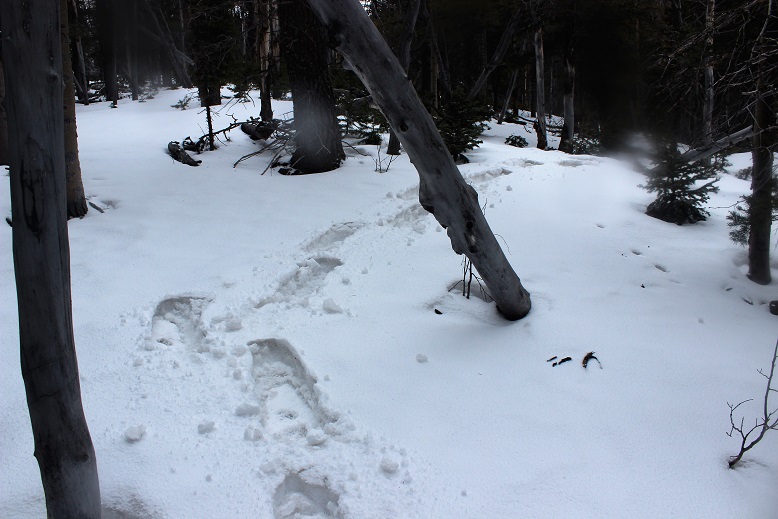
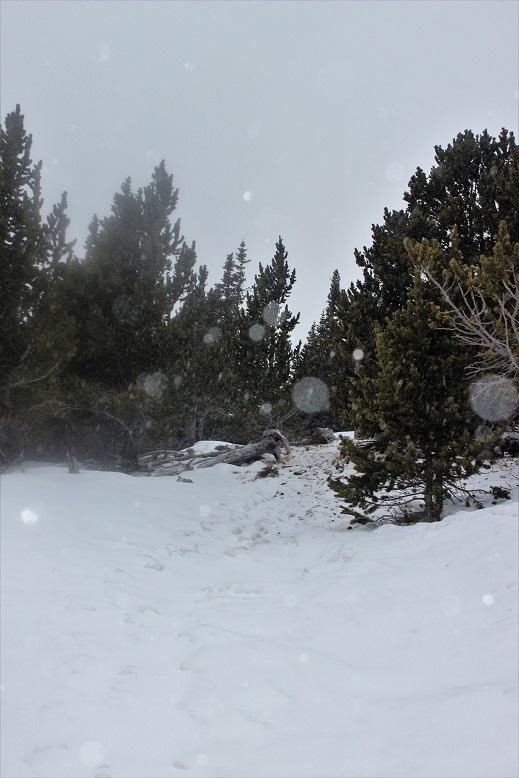
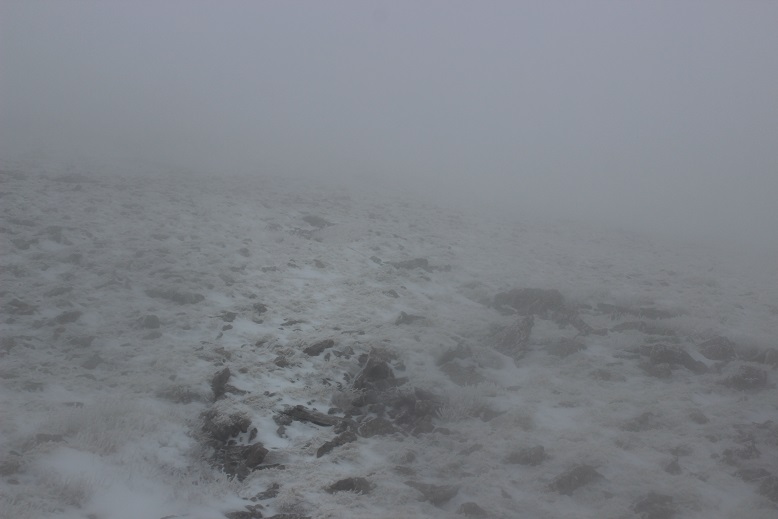
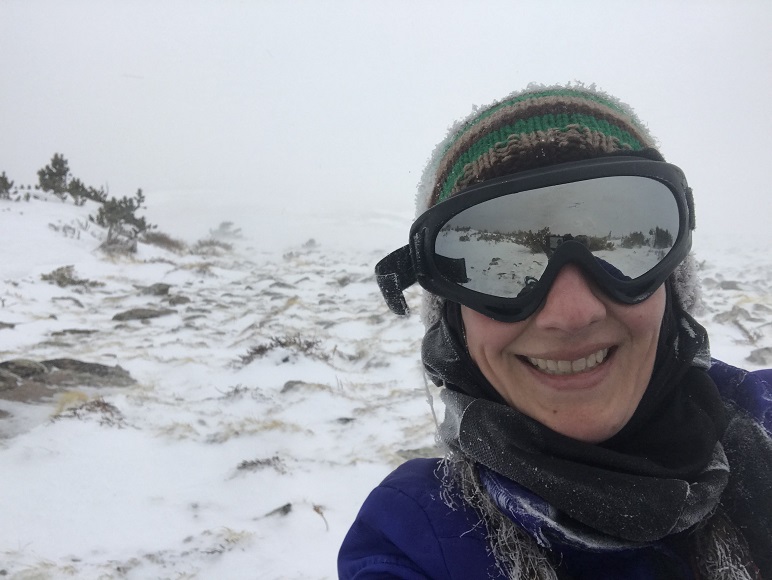

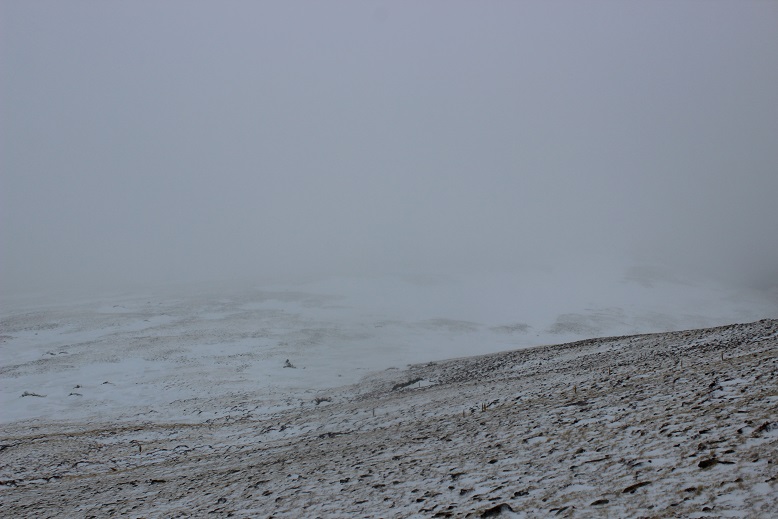


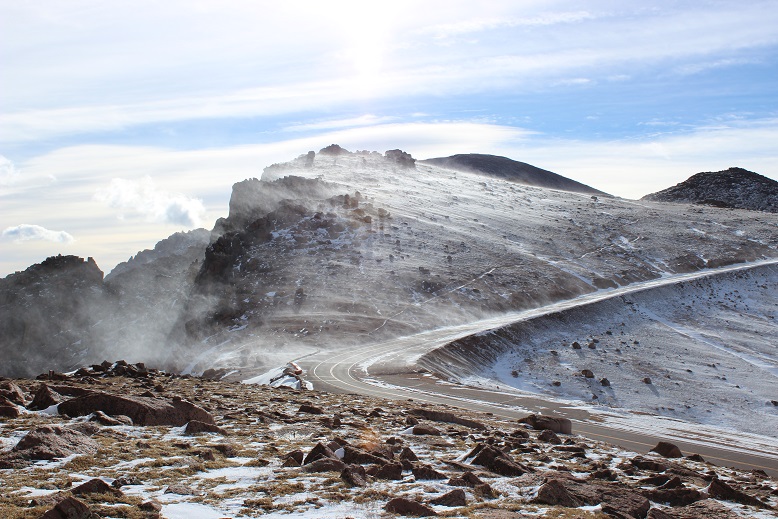
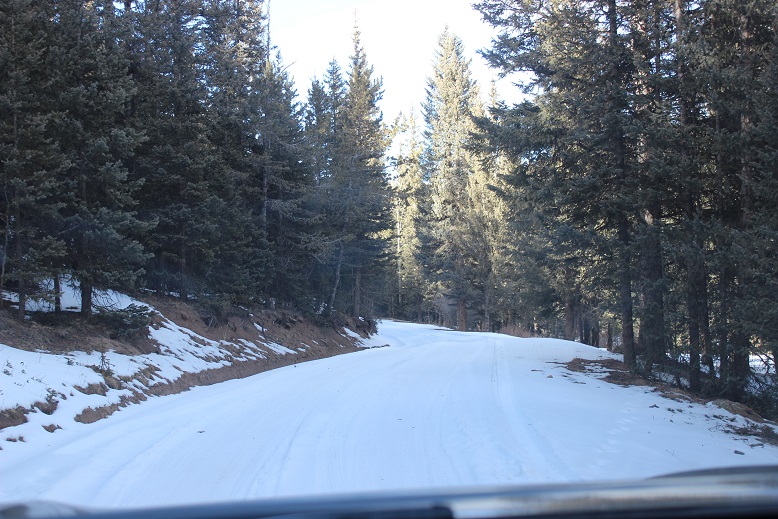
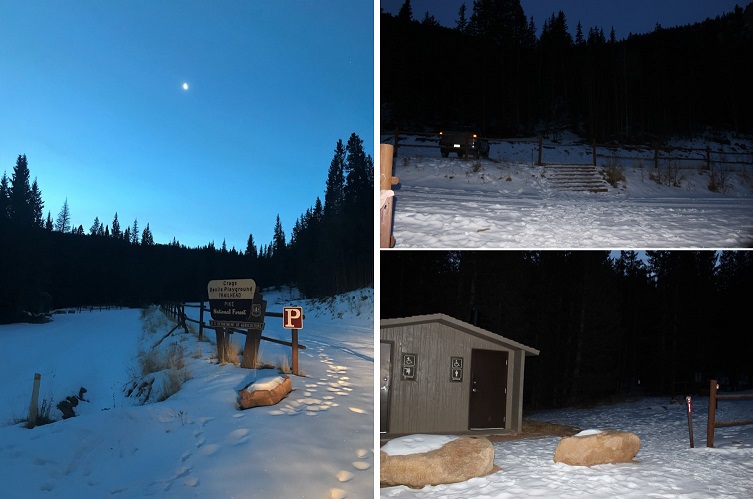
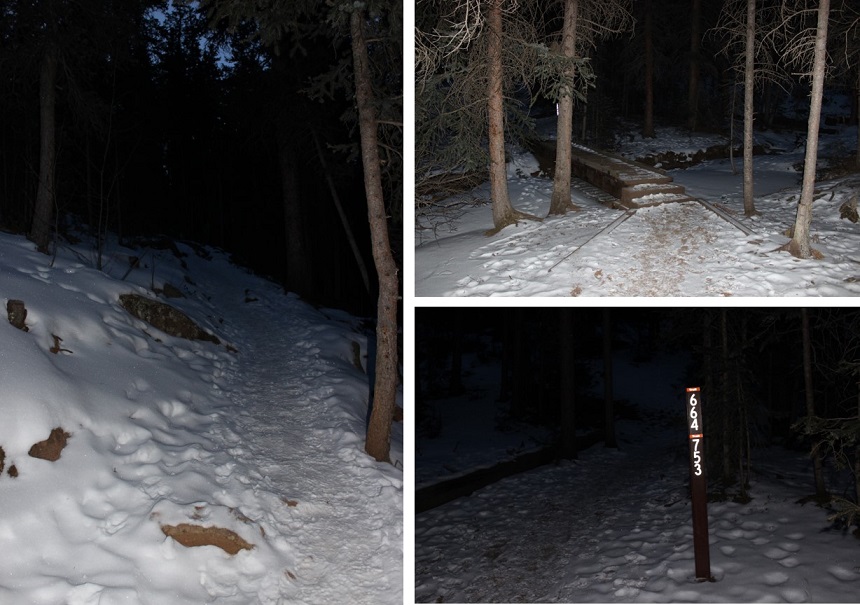
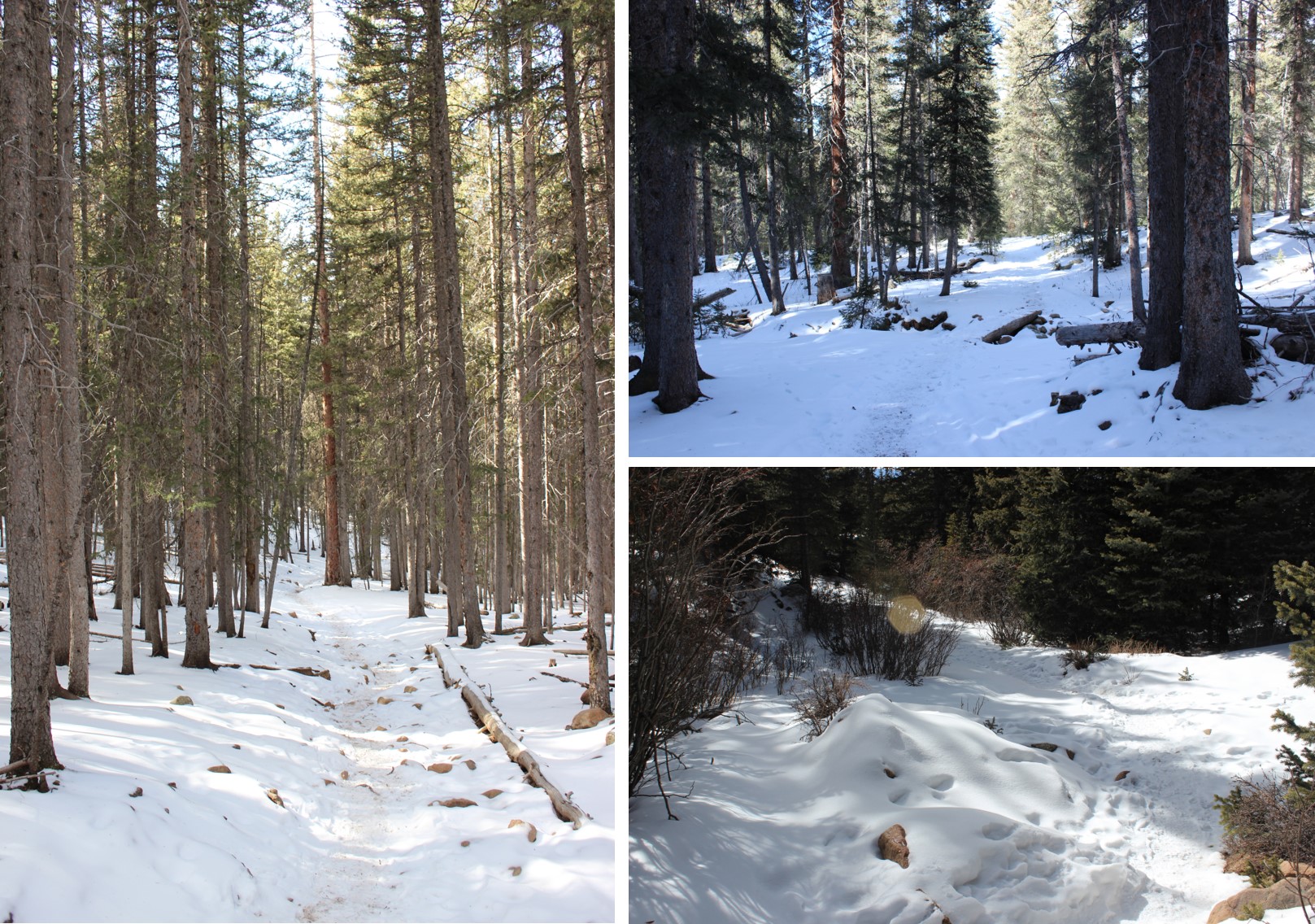
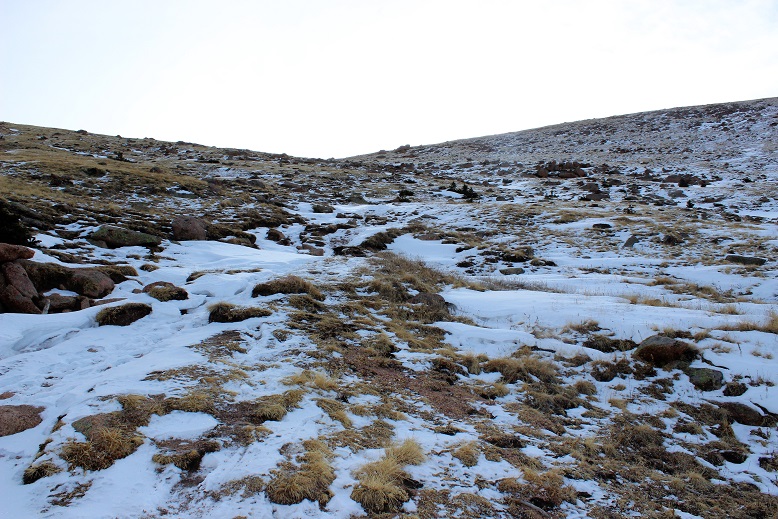
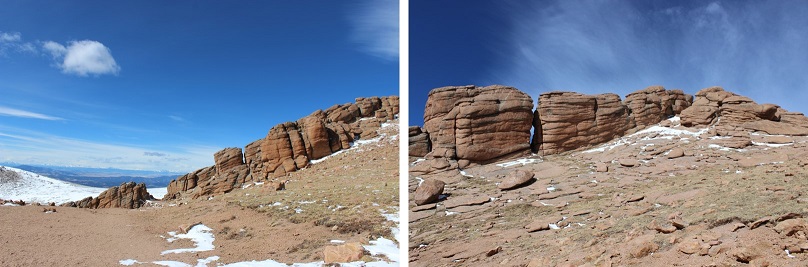
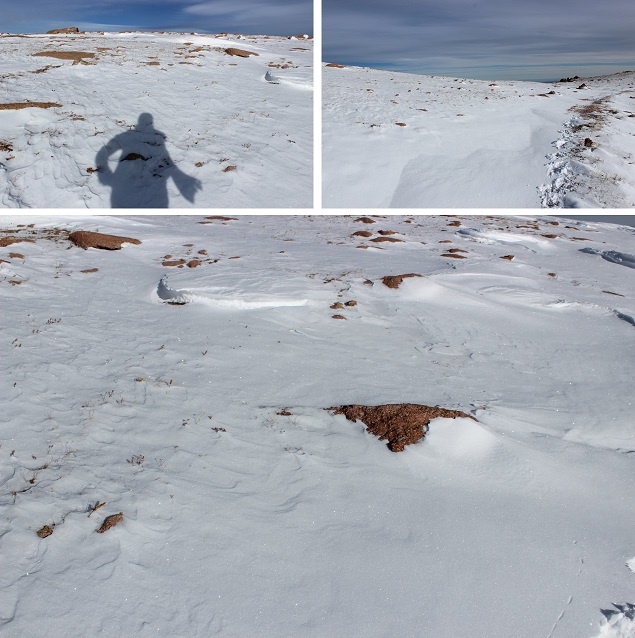


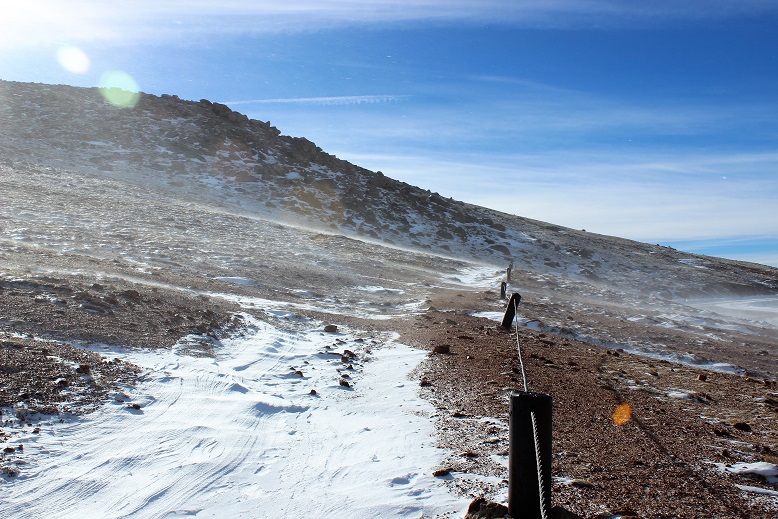

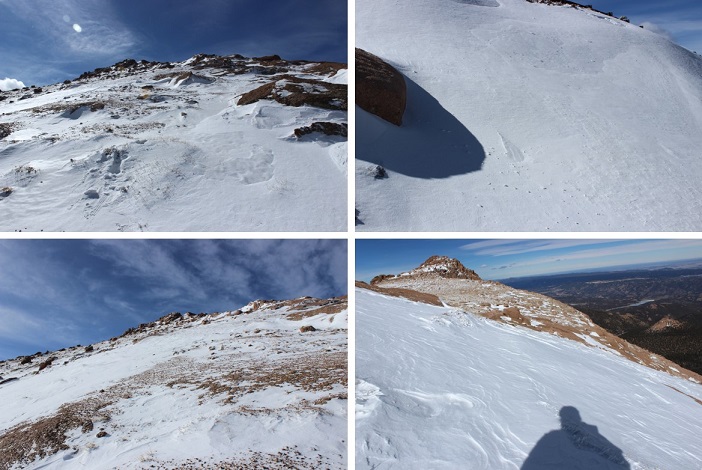
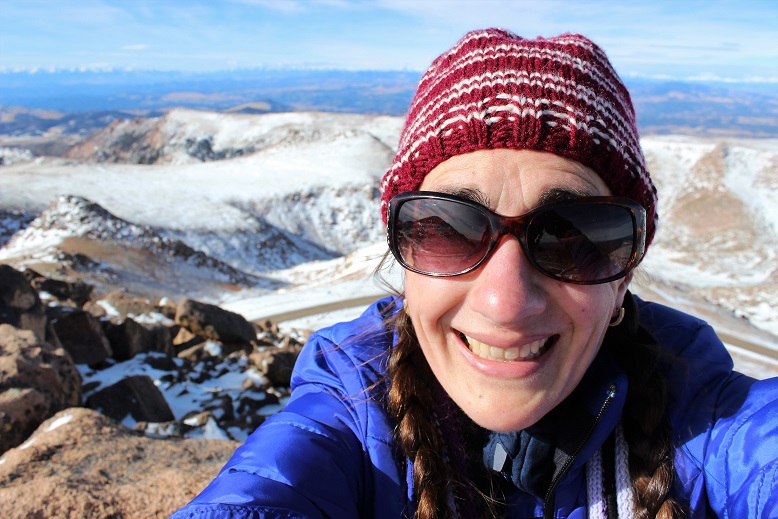
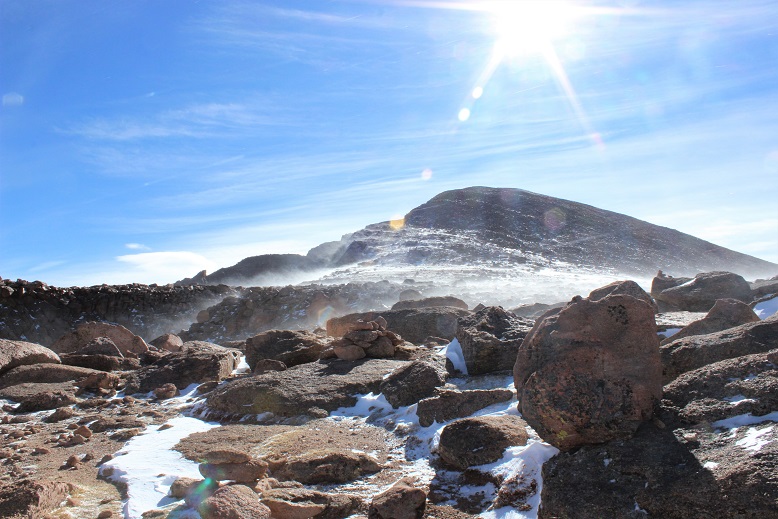
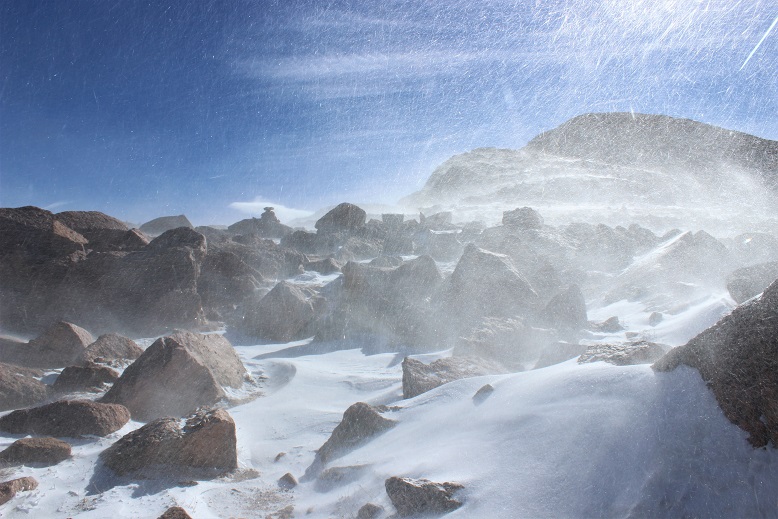
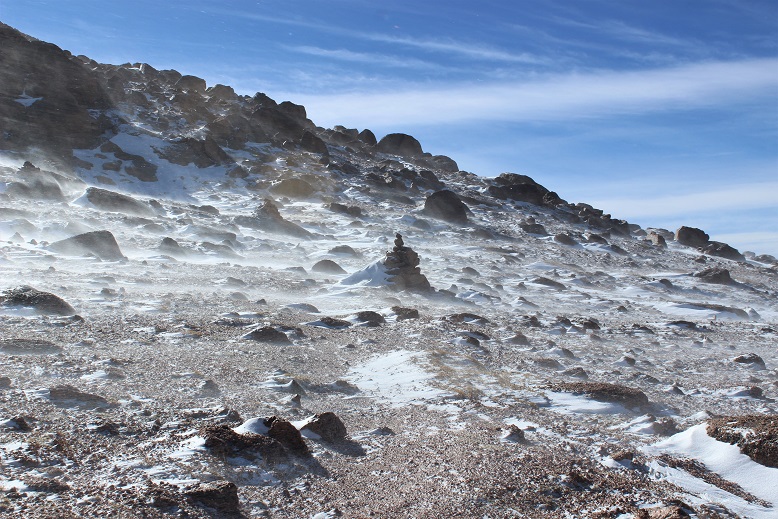
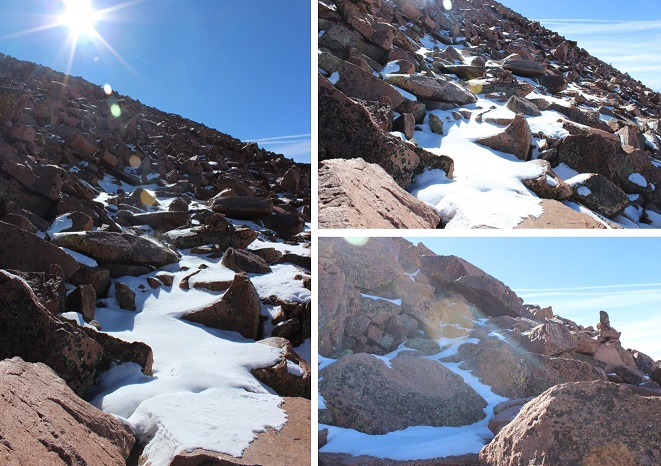
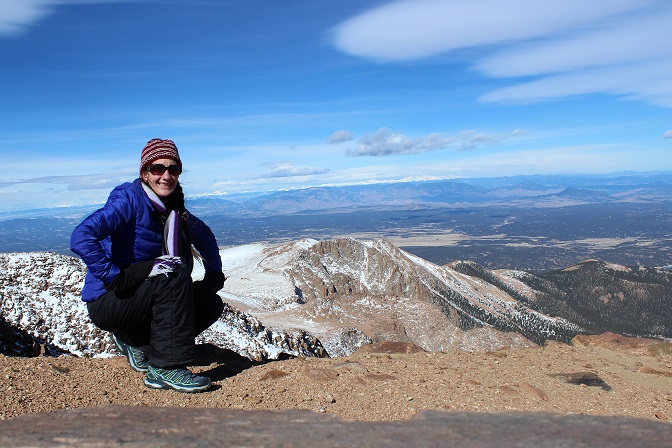
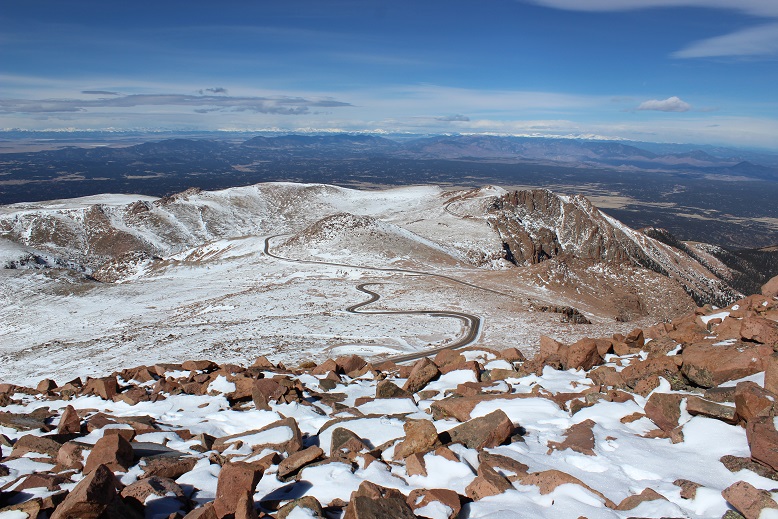
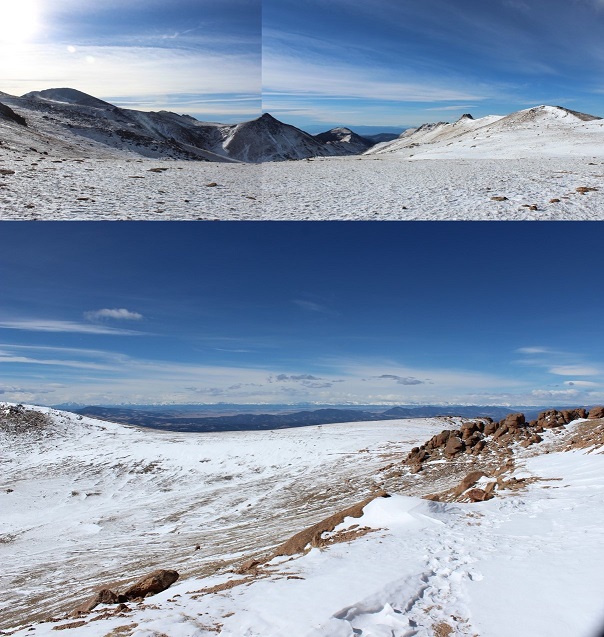
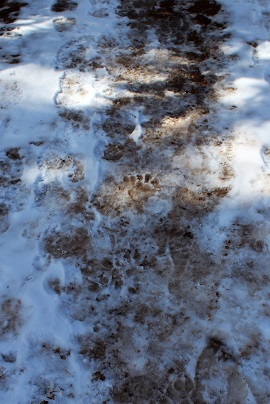


 Wild Wanderer