The Citadel – 13,295

RT Length:  11.45 miles

Elevation Gain:  3255’

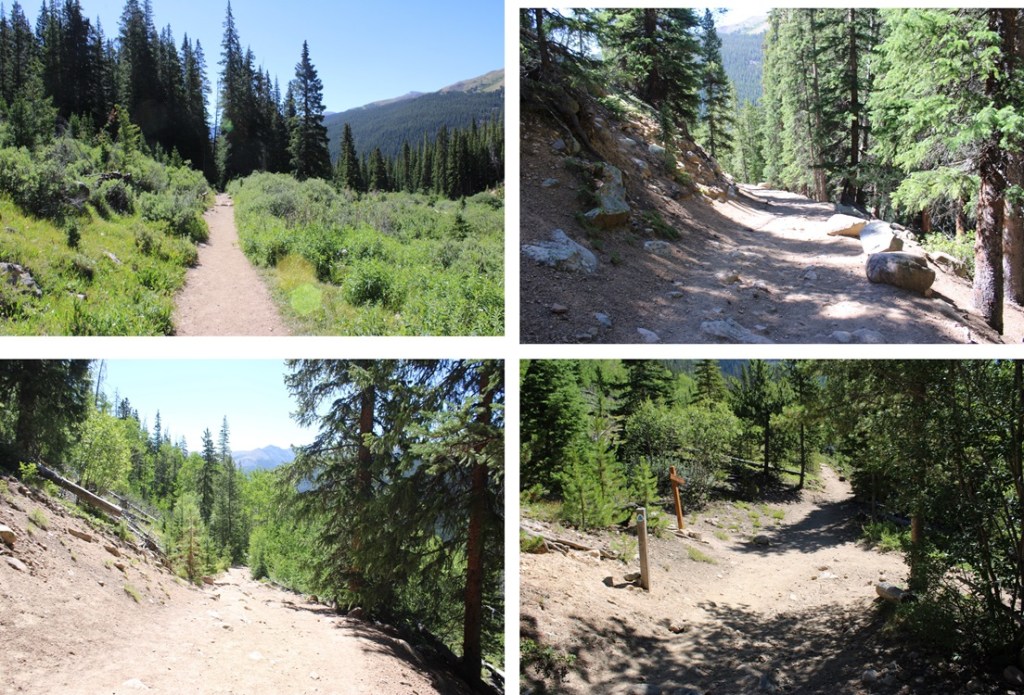
I arrived at the Herman Gulch Trailhead and was on the trail at 4:30am.  The trailhead has spots for dozens of vehicles (if not more), and the trail is clearly marked. 
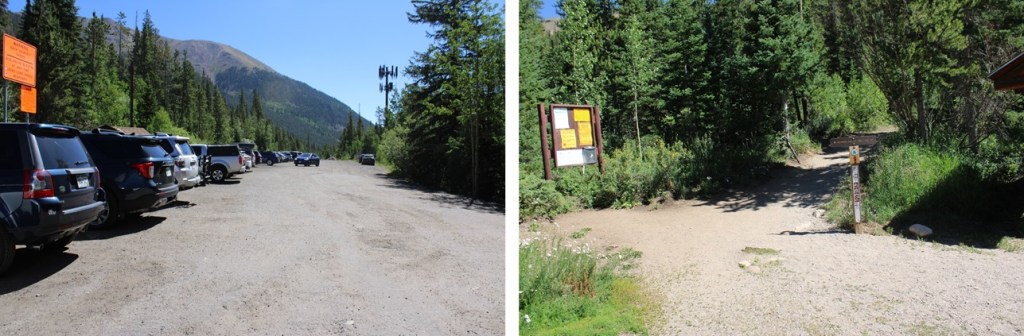
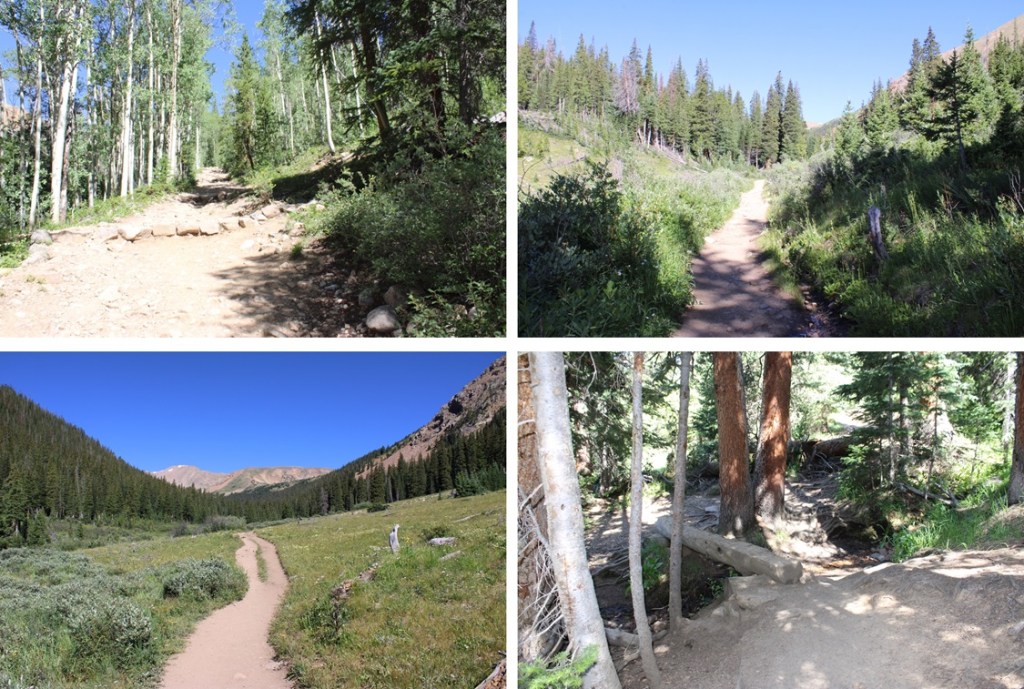
I followed the Herman Gulch trail for less than a quarter of a mile, until I came to the junction with Waterous Gulch Trail, turned left, and continuing following the class 1, well-defined Herman Gulch Trail all the way to Herman Lake.

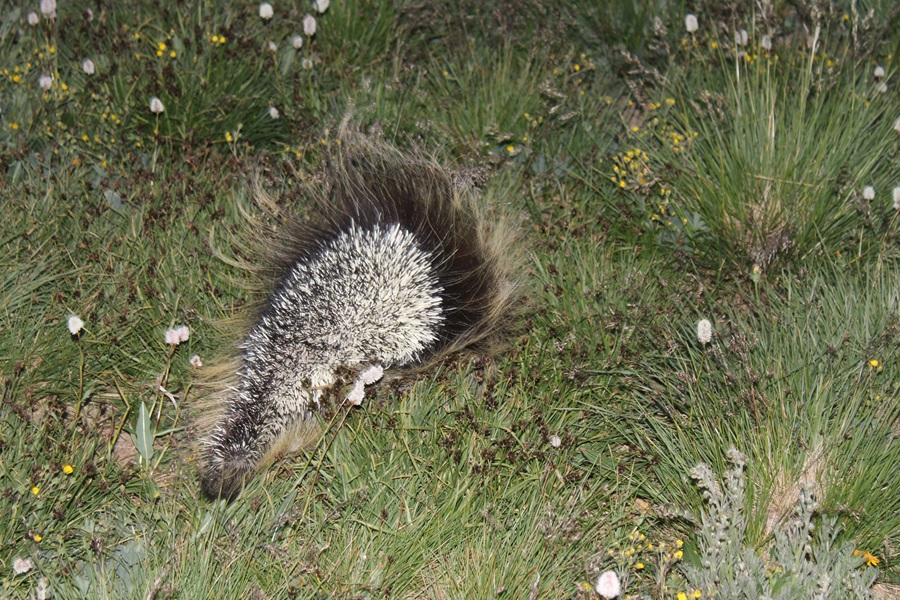
It was at about here I encountered a porcupine, which immediately turned and ran away from me. 
I continued following the trail, skirting the south side of Herman Lake
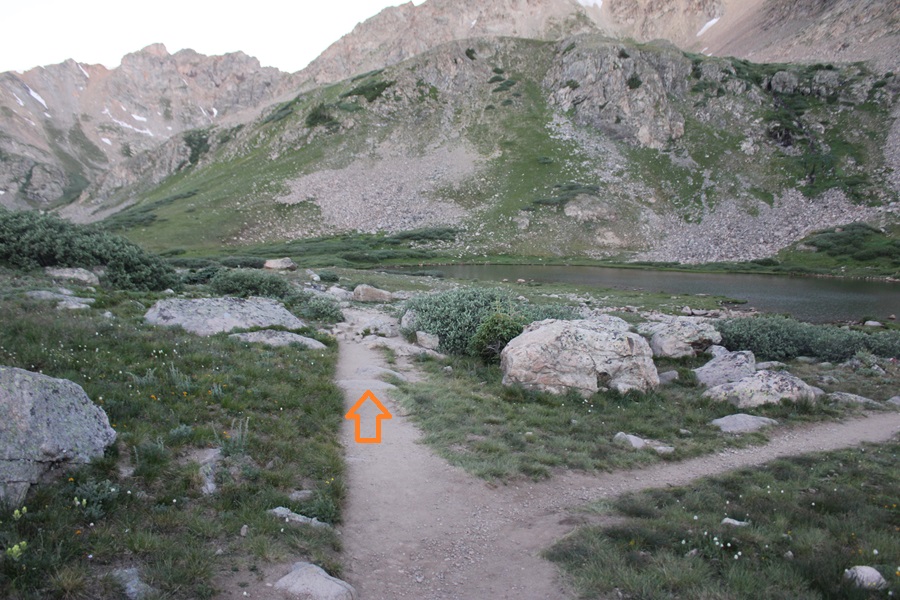
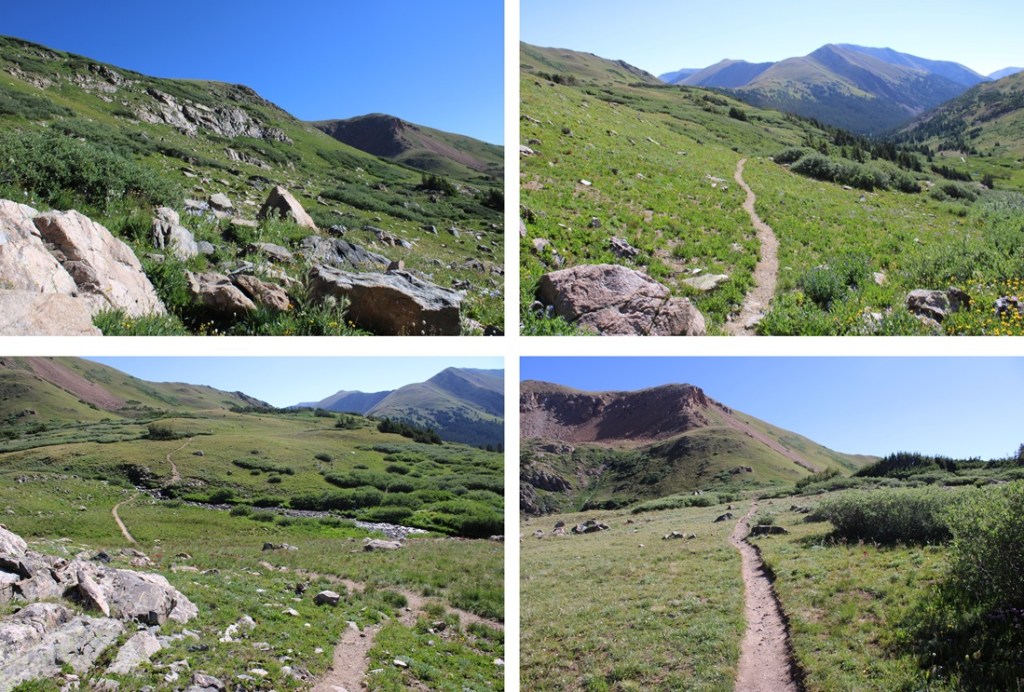
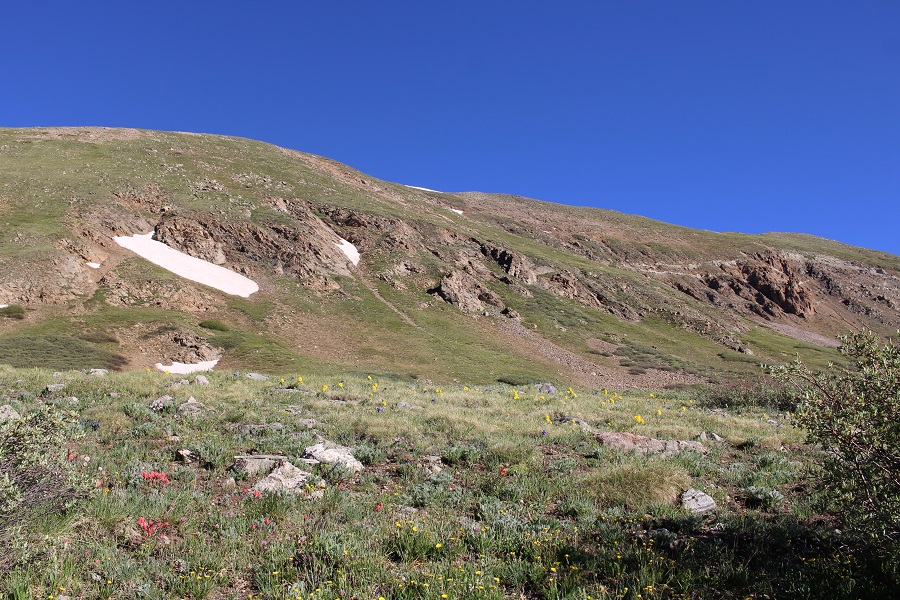
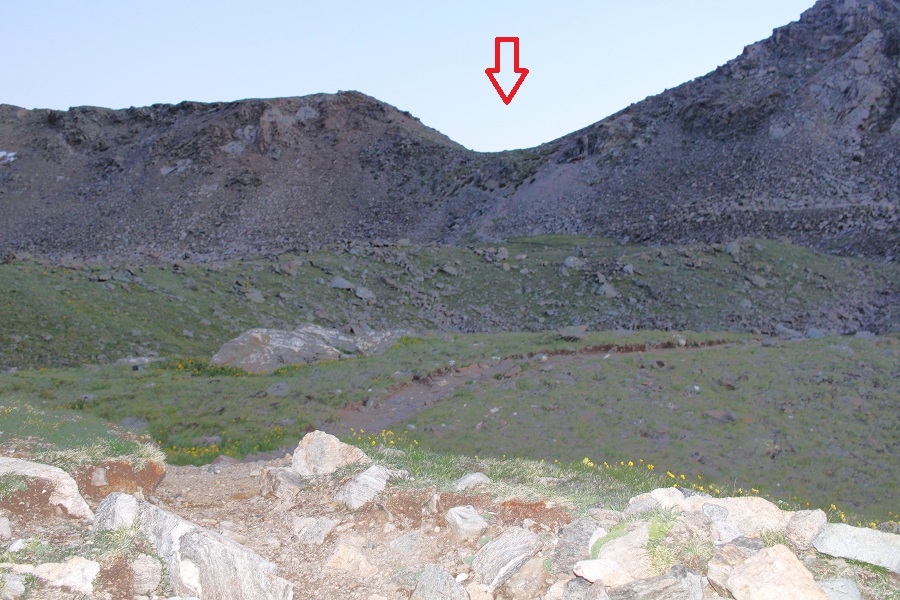
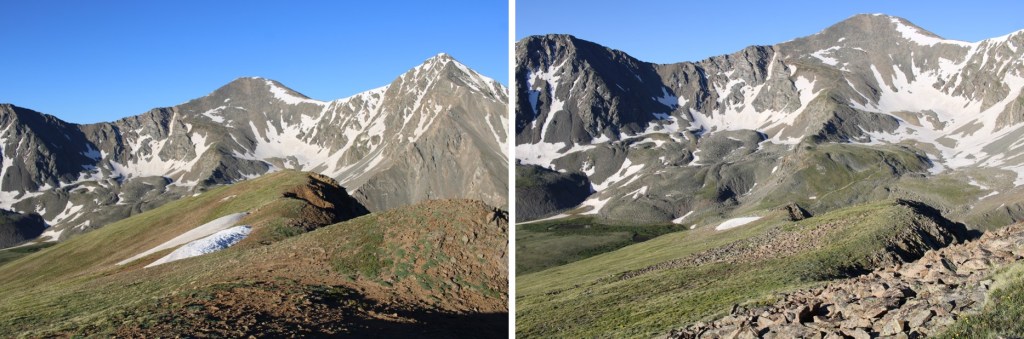
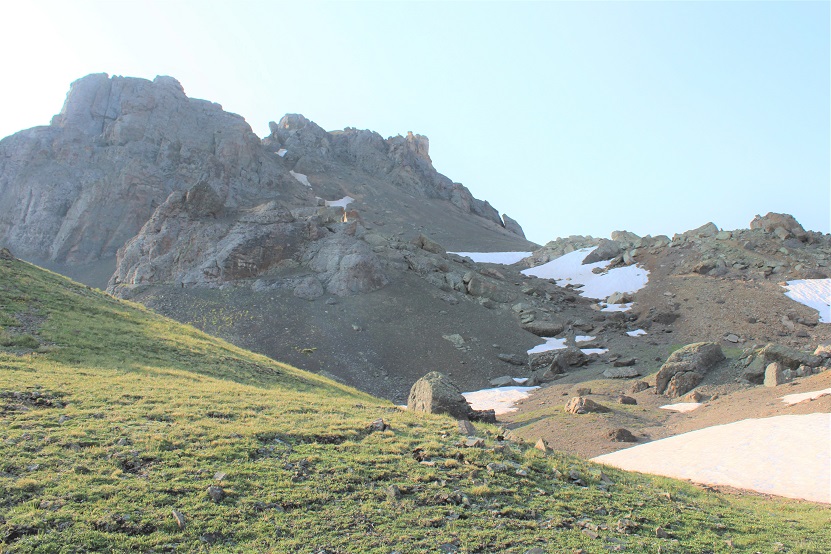
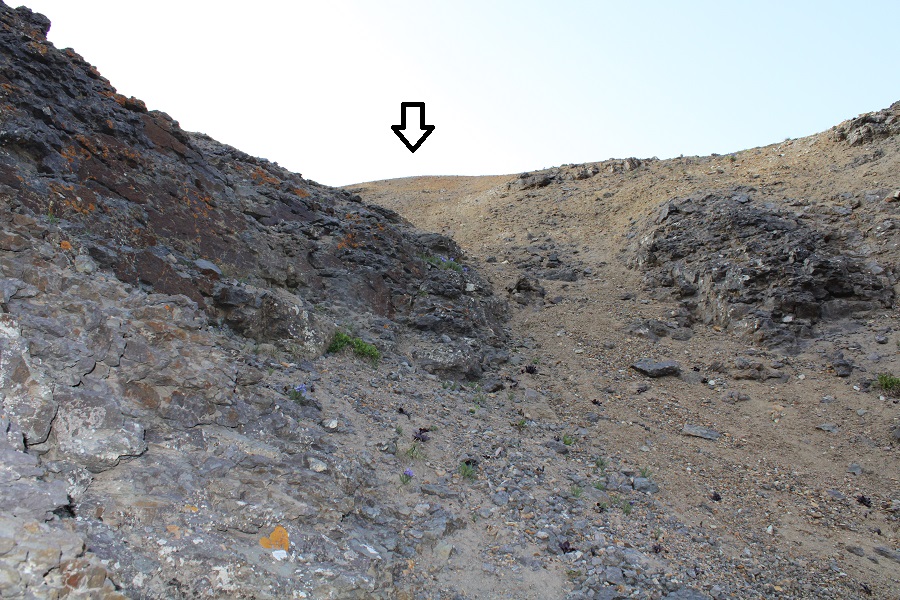
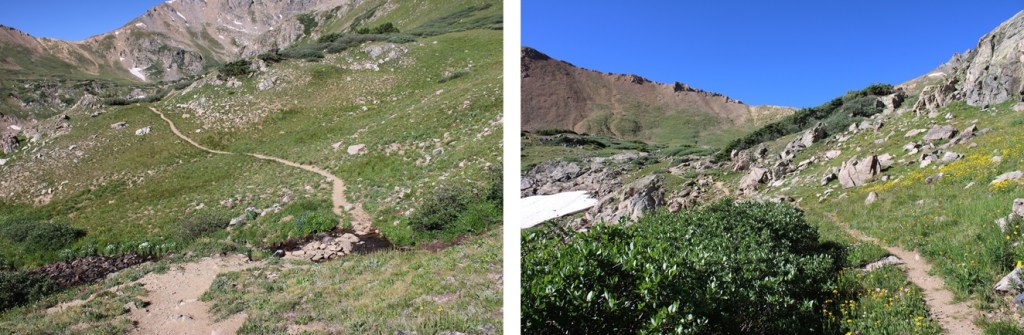
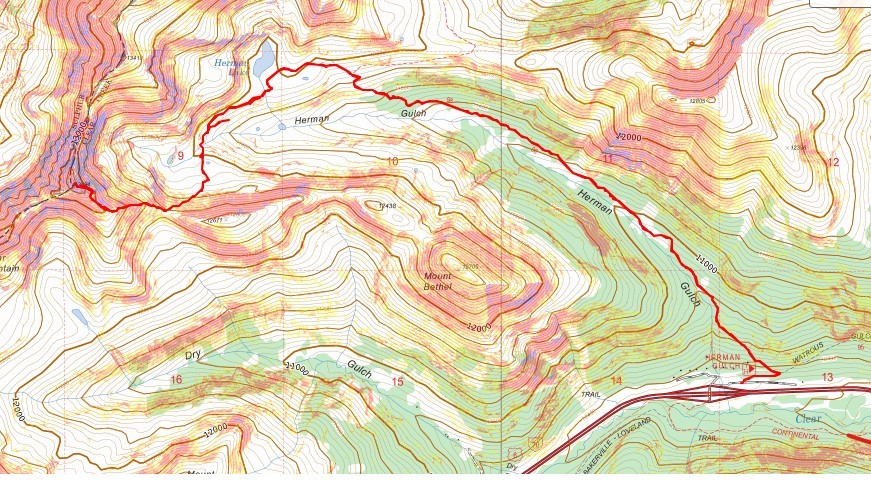
I followed this trail as it headed southwest towards the saddle of The Citadel and PT 12671.  Here’s where I was heading:

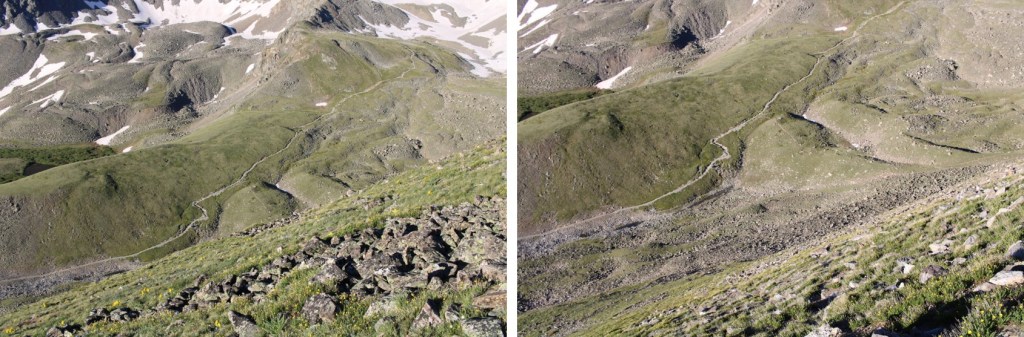
There’s a pretty good trail that goes MOST of the way, crossing the creek that flows out of Herman Lake and through the willows.  I lost a little bit of elevation during this part, but it was negligible.
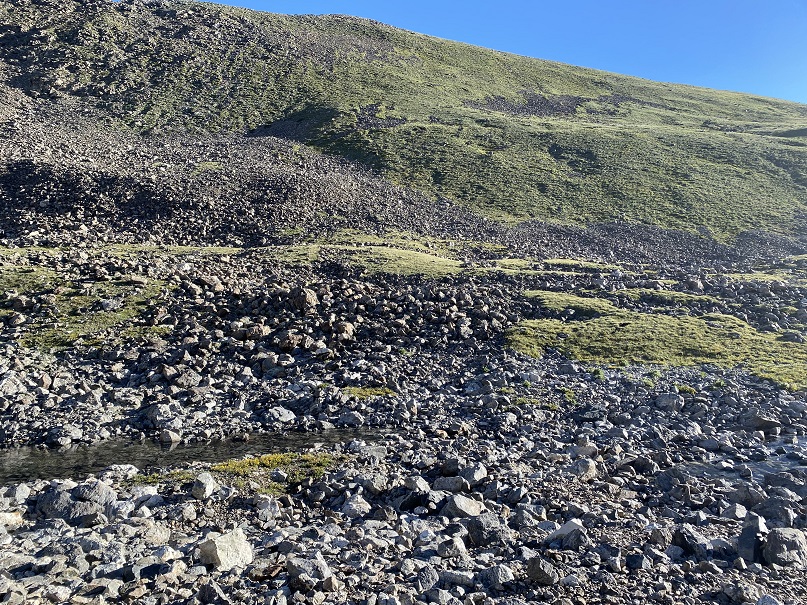
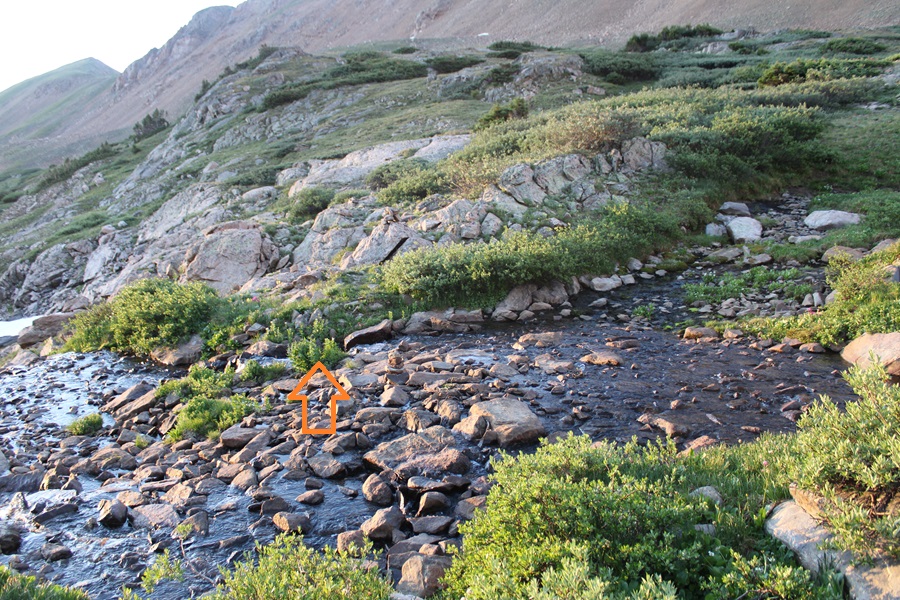
At about 11970’ I came to another large creek, and here I left the trail to cross the creek
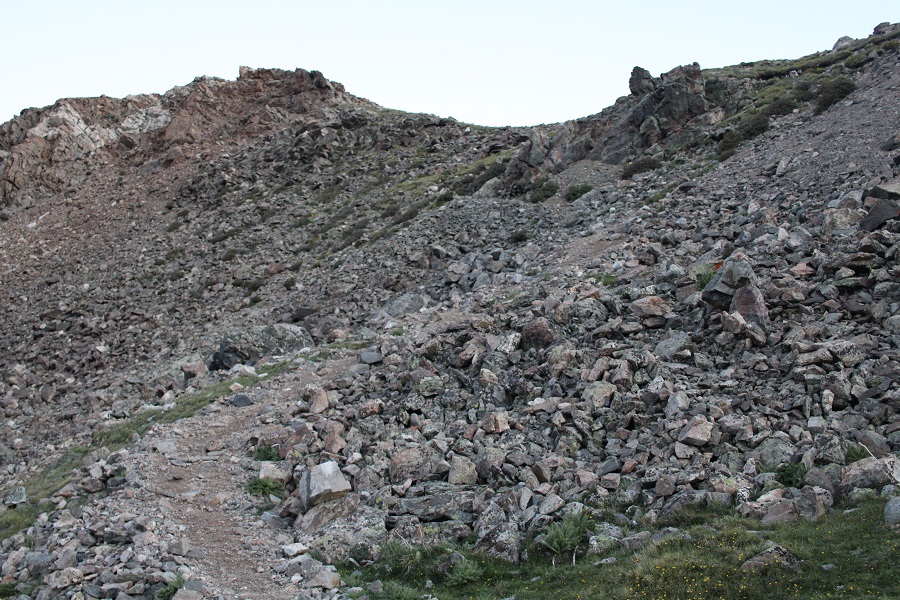
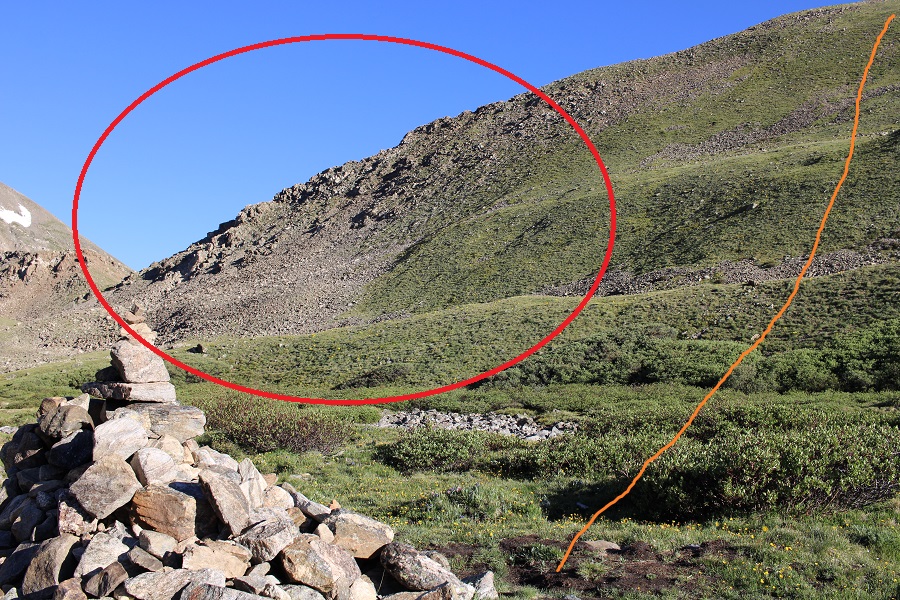
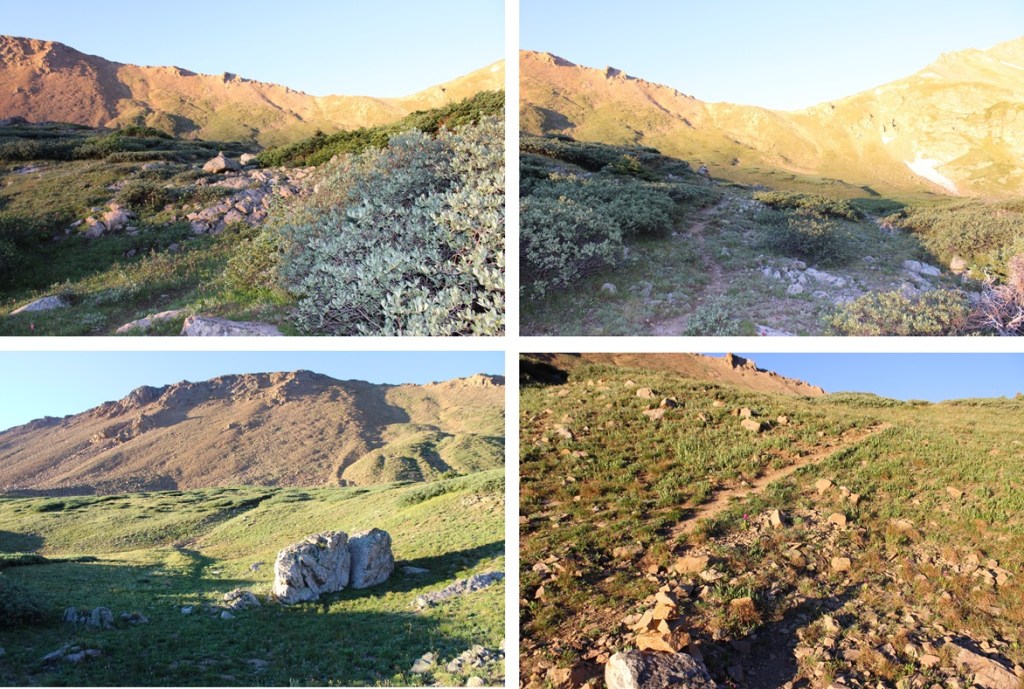
From here the trail is difficult to follow, but there are plenty of cairns to follow to get you to the saddle.
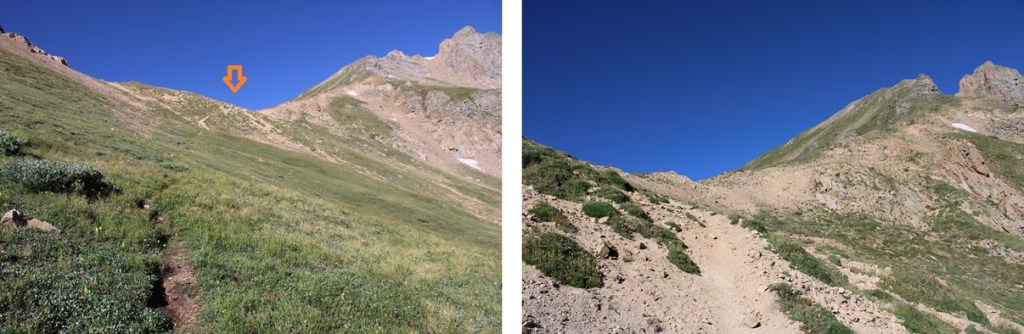
Now on the saddle, I turned right and headed west up the ridge, on a good game trail that was easy to follow.
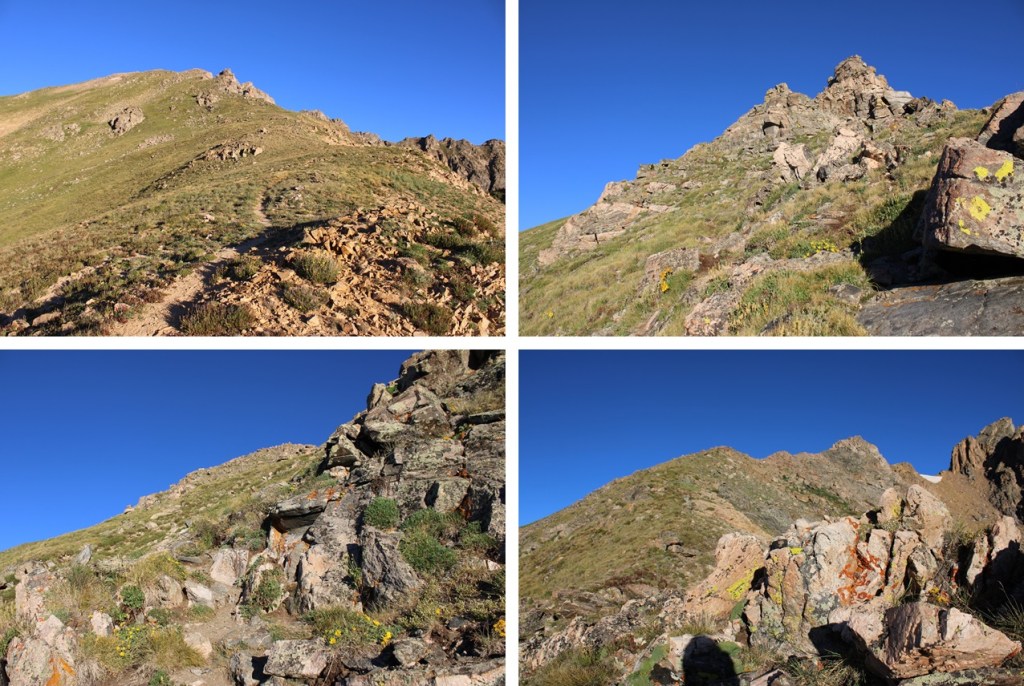
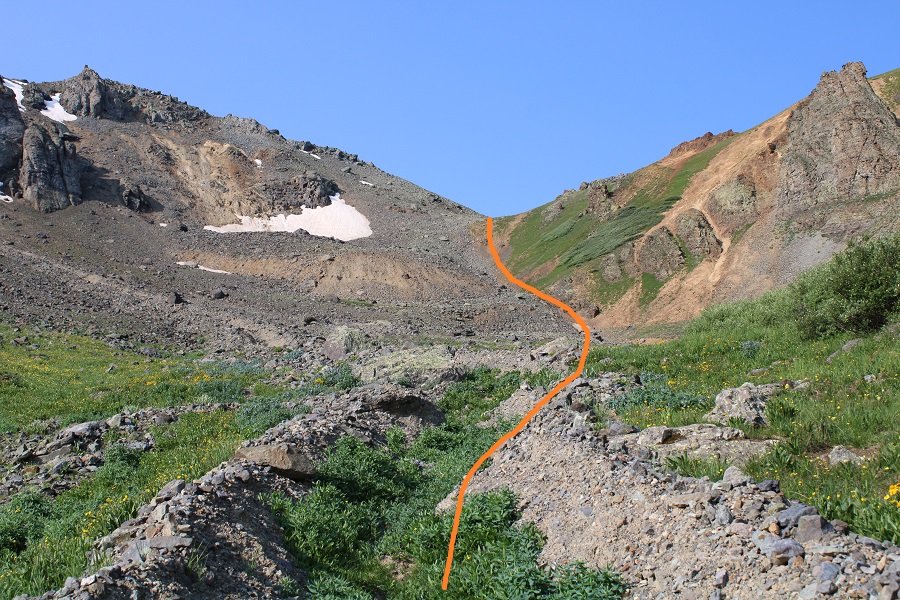
Now to make my way towards the saddle.  The route will be obvious.
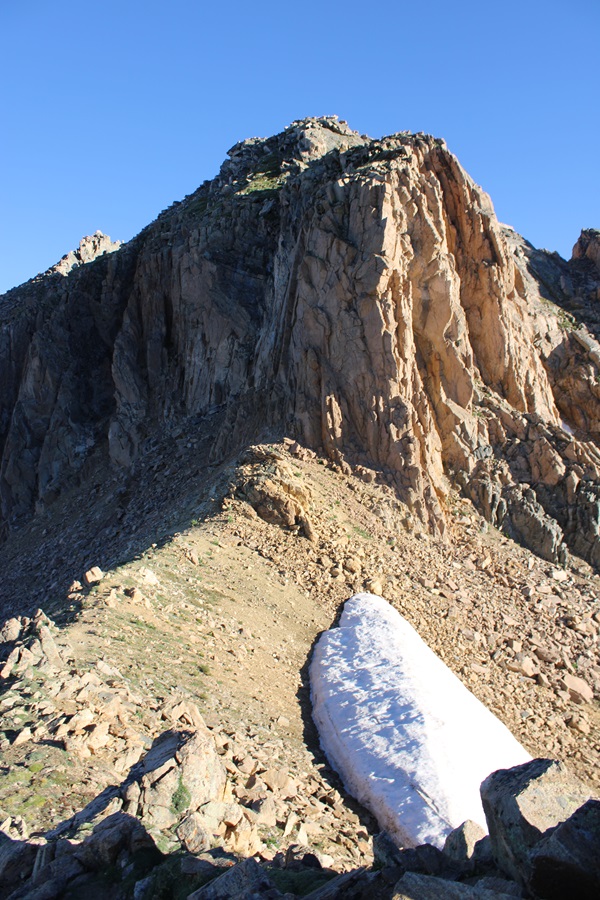
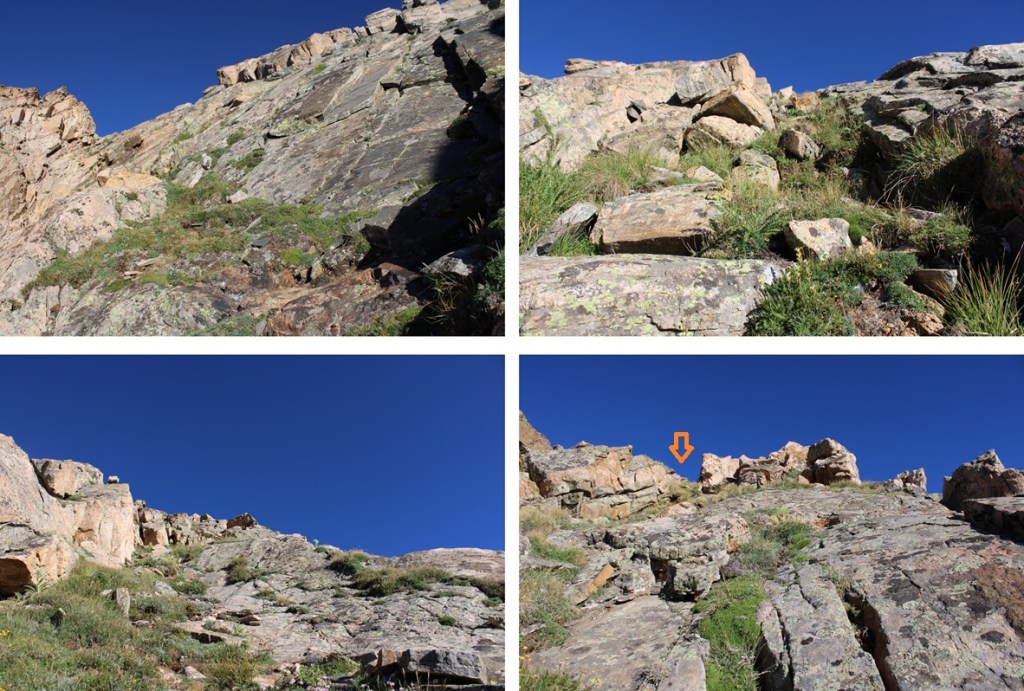
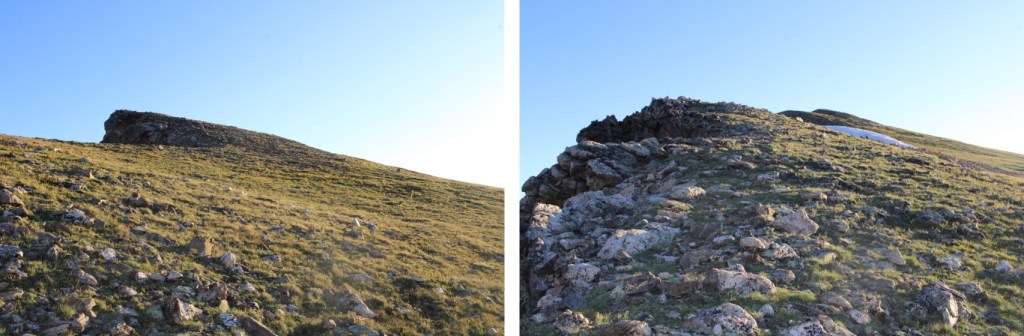
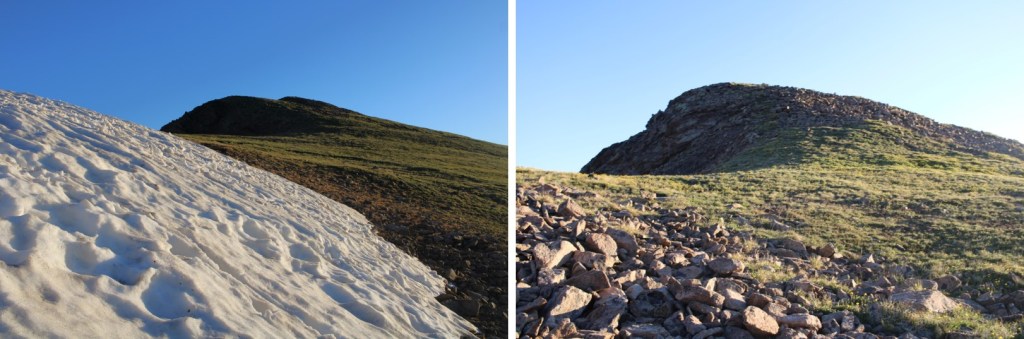
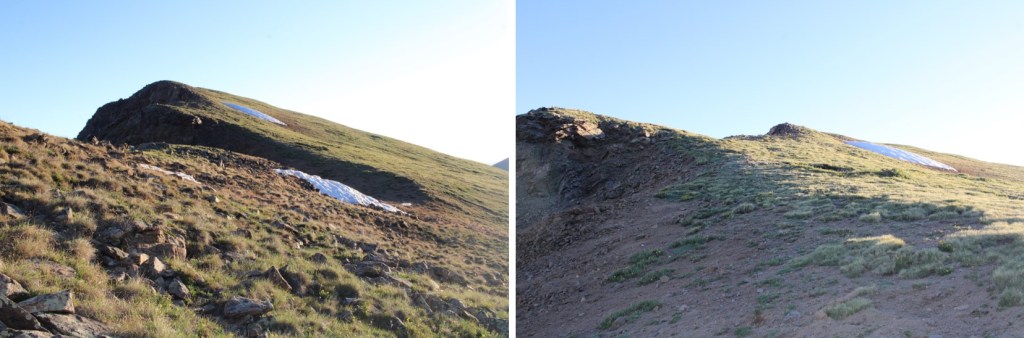
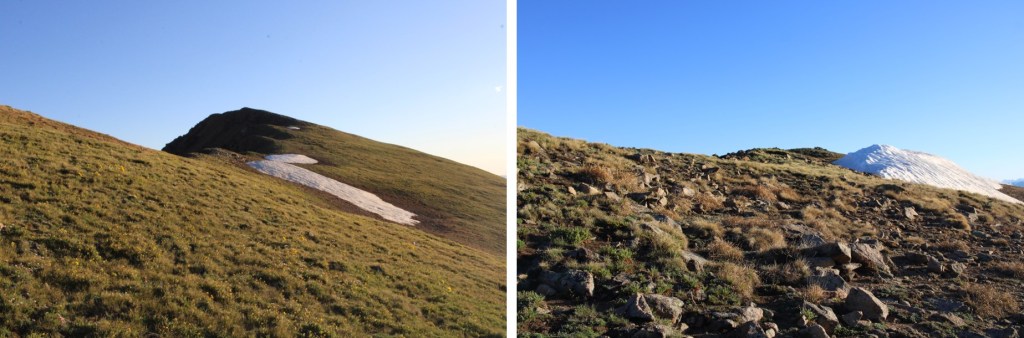
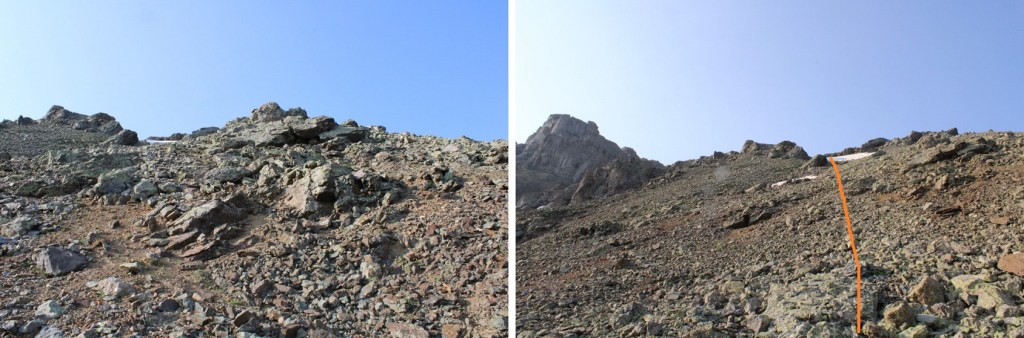
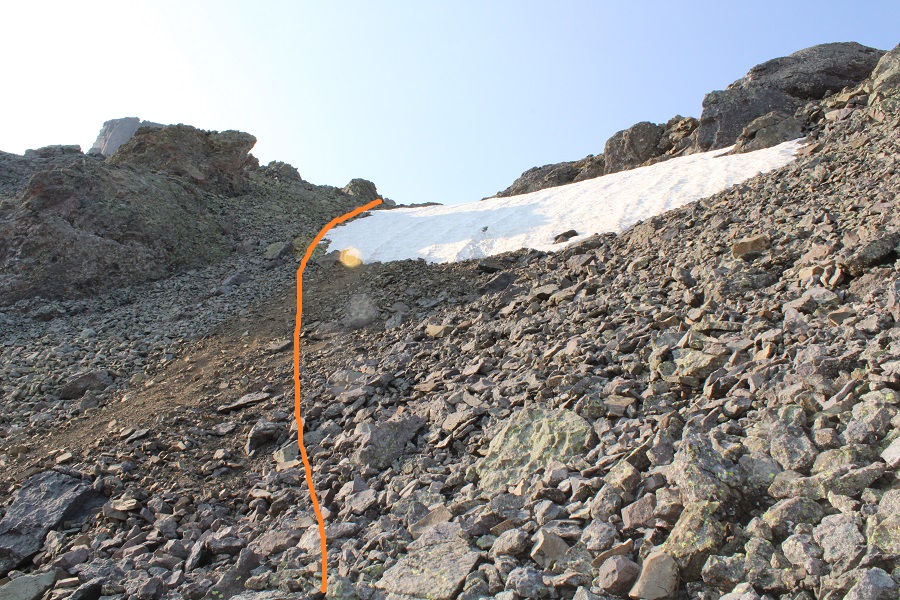
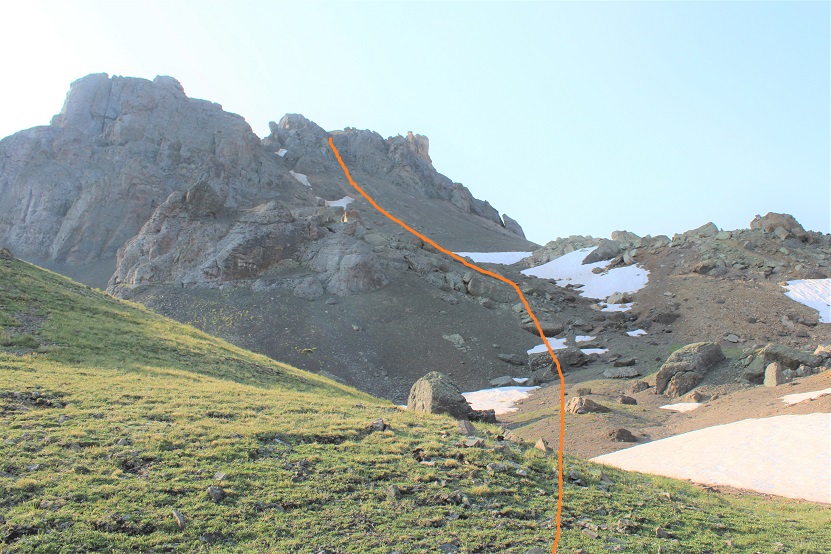
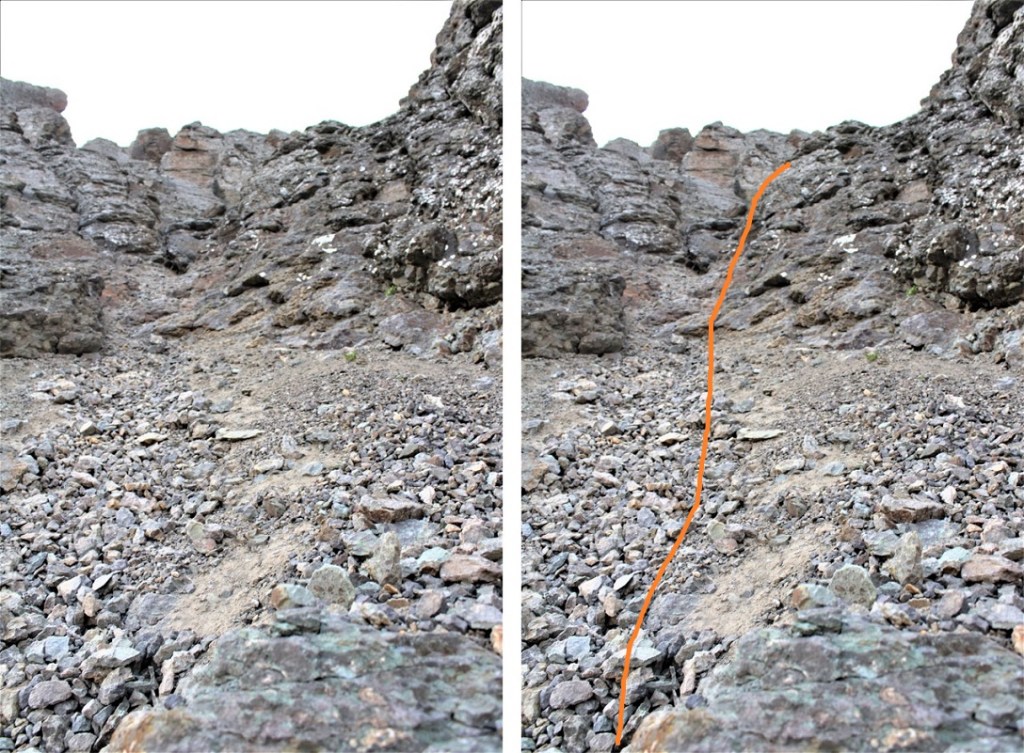
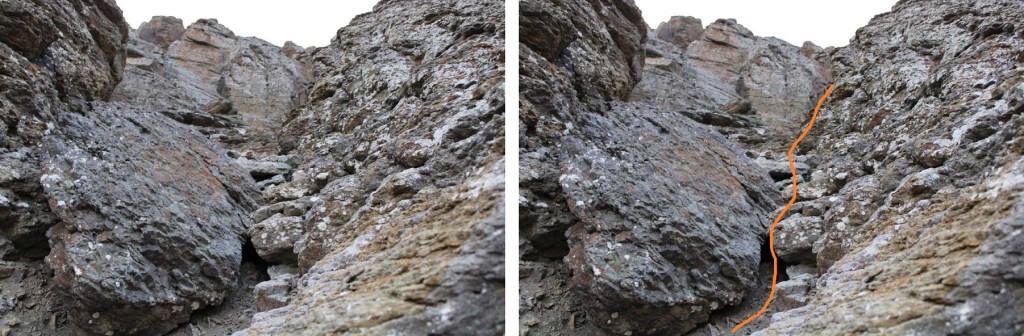
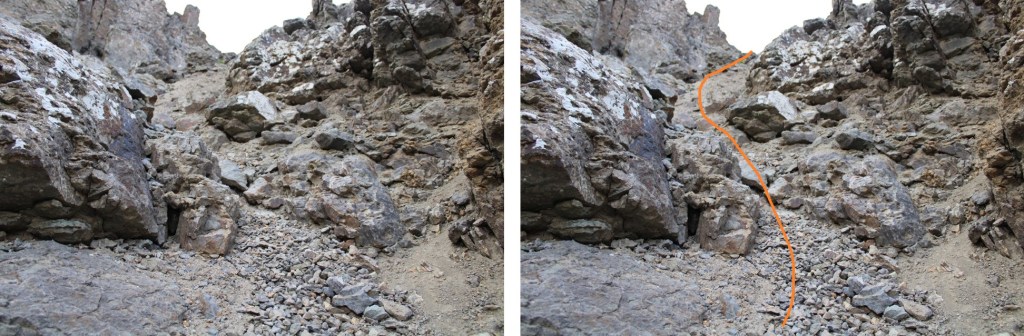
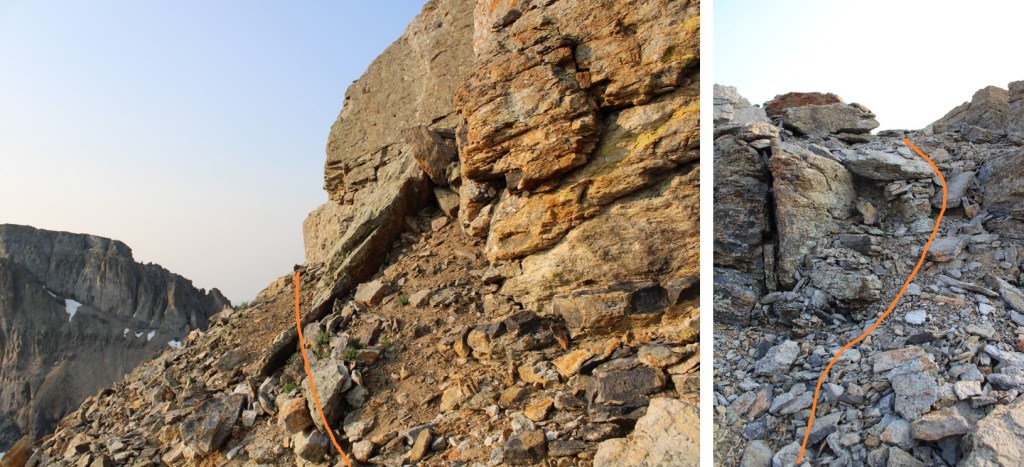
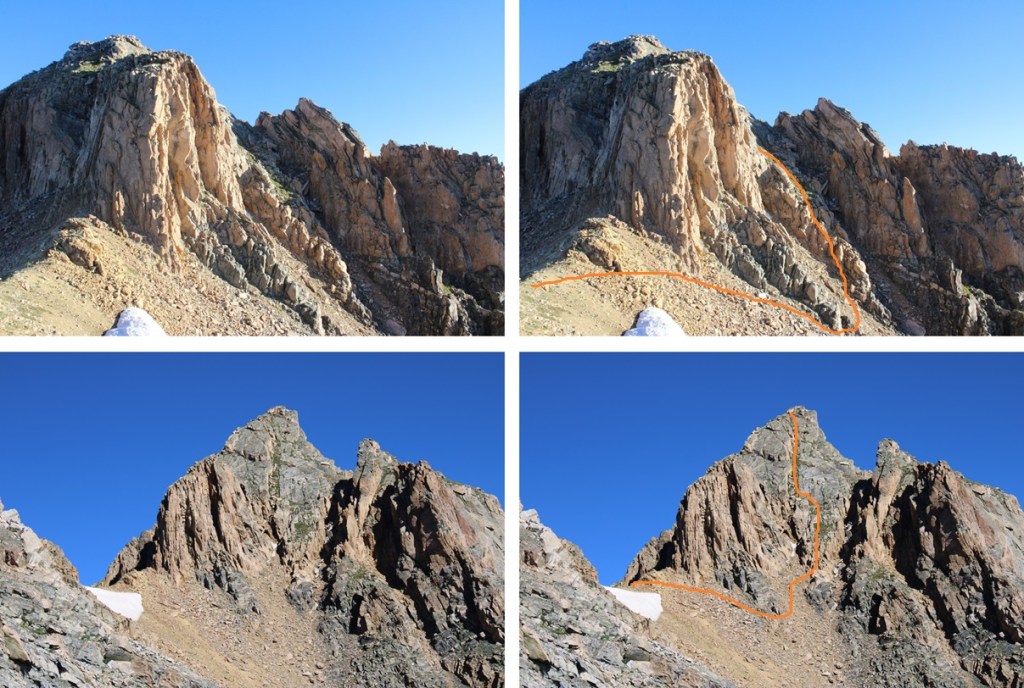
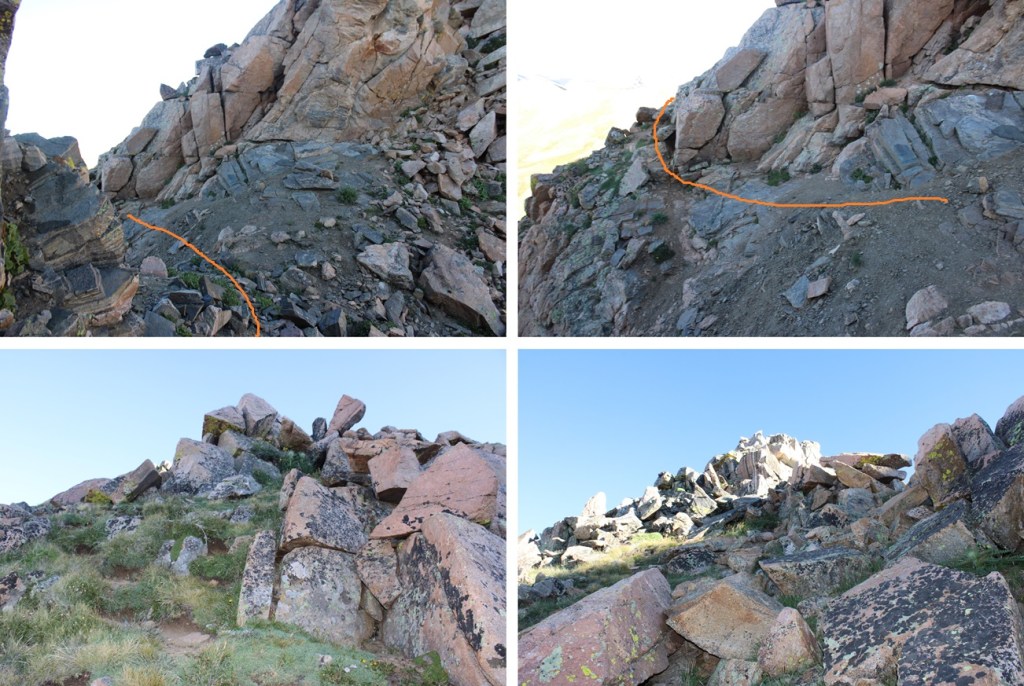
If you haven’t already, now is a good time to put on your helmet.  From the saddle, head northeast and look for a solid band of rock.  This rock band is important, because the gullies are miserable.  Once on the rock band, ascend towards the tundra, then follow the line of tundra northeast.  Once you’re on the tundra, you can stay on tundra until the top.  This is class 3, and a slip would have you falling quite a ways, like hundreds of feet before you stop, so take care in this area.  Here’s a visual representation of how I climbed from two different angles.  It’s probably a good idea to start memorizing the route as you’re hiking up the ridge from the saddle of The Citadel and PT 12671. 
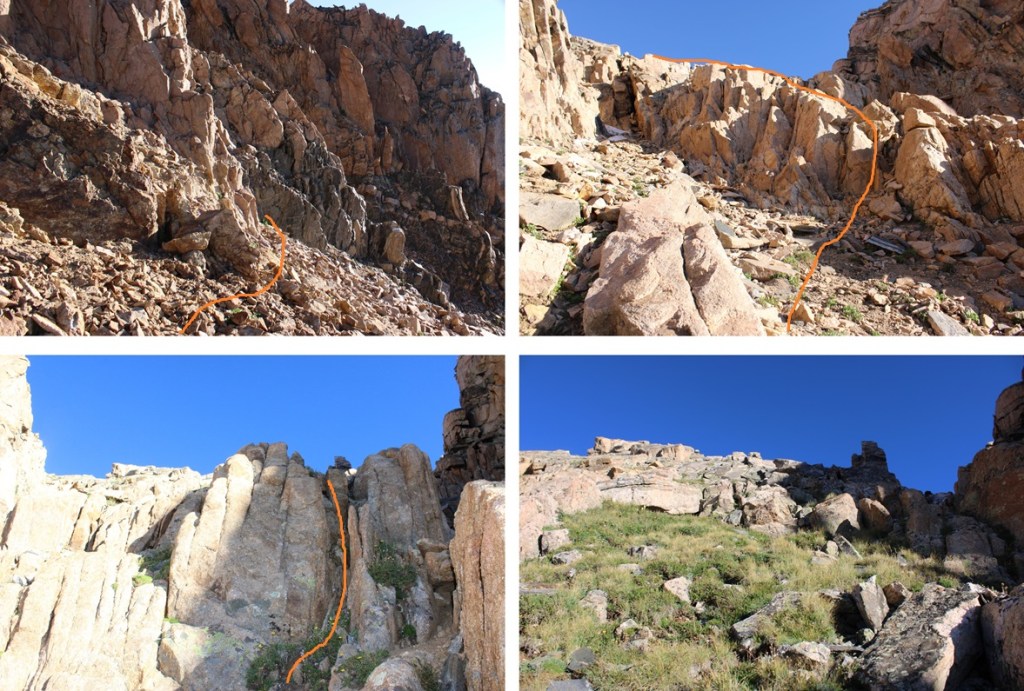
And some pictures of my route:
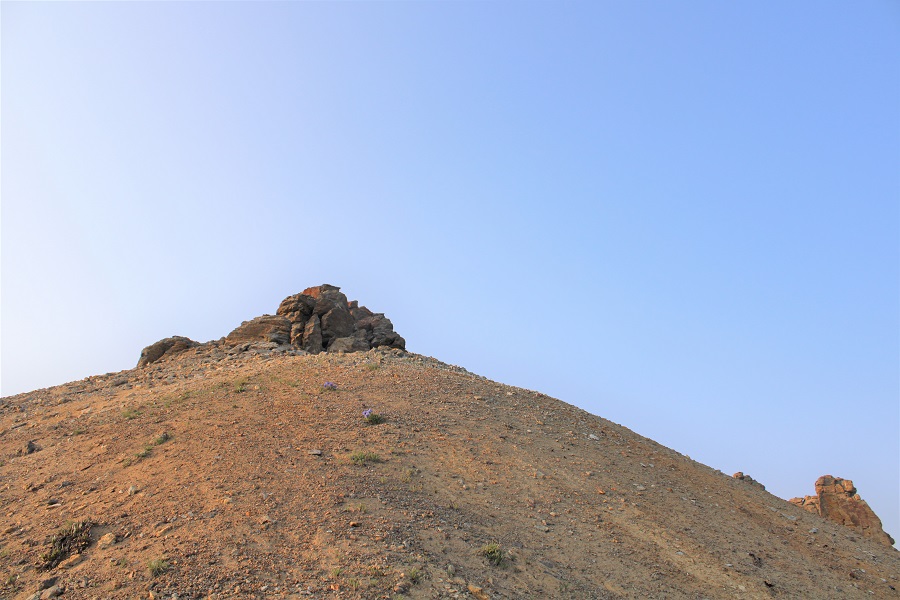
From here, to the north, I saw what I thought was the summit.  It wasn’t, but I headed towards it anyways.
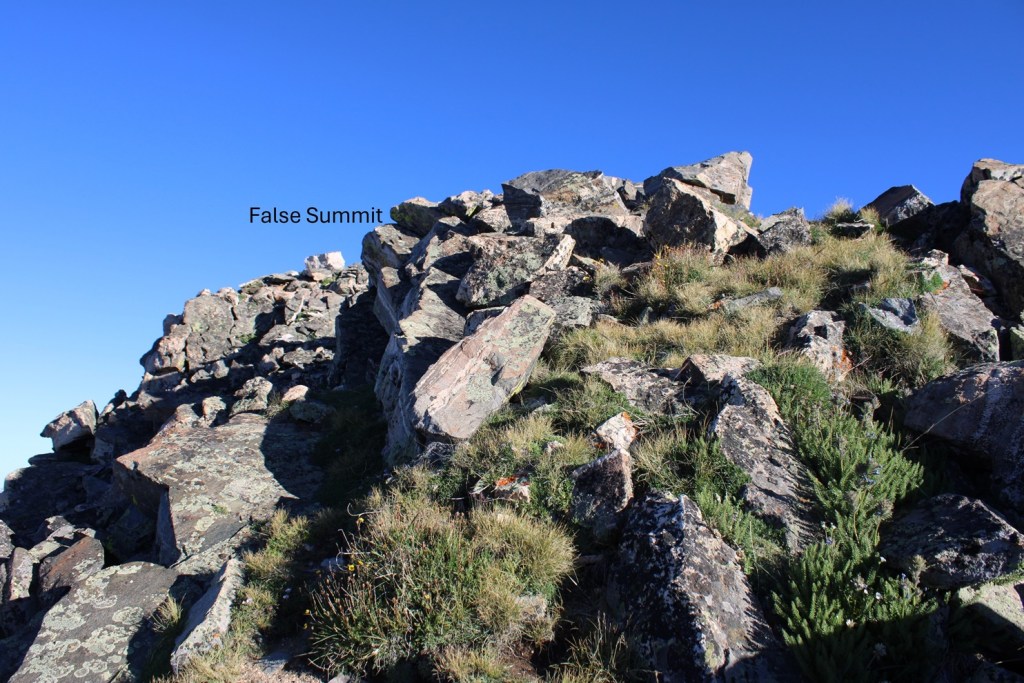
I made my way to the false summit, and could see the true summit to the west.
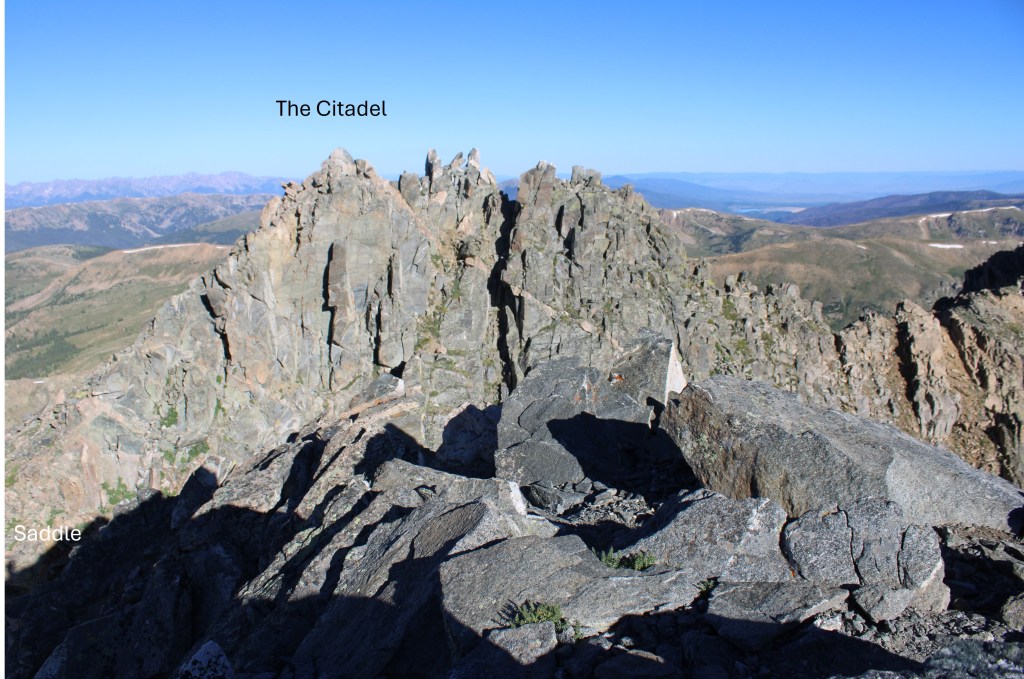
So, I downclimbed a bit, and headed towards the saddle ahead of me. 
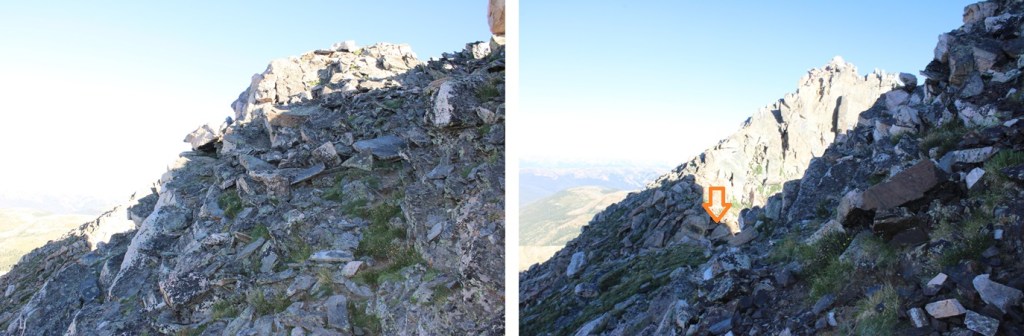
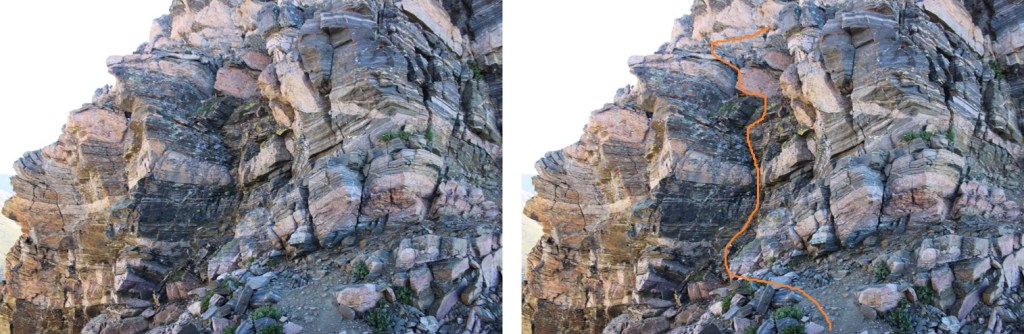
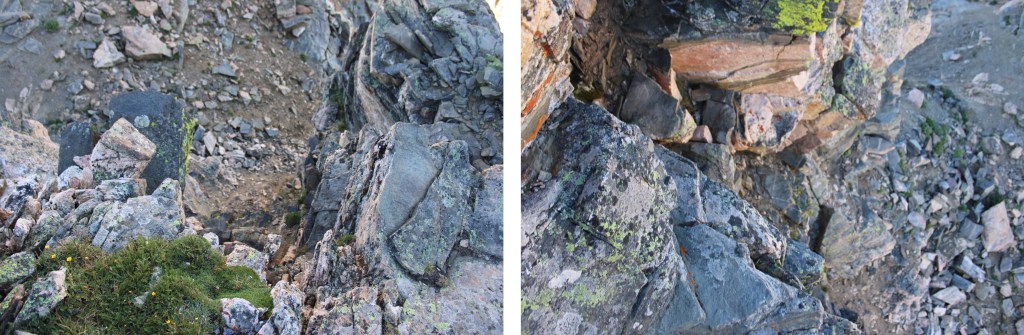
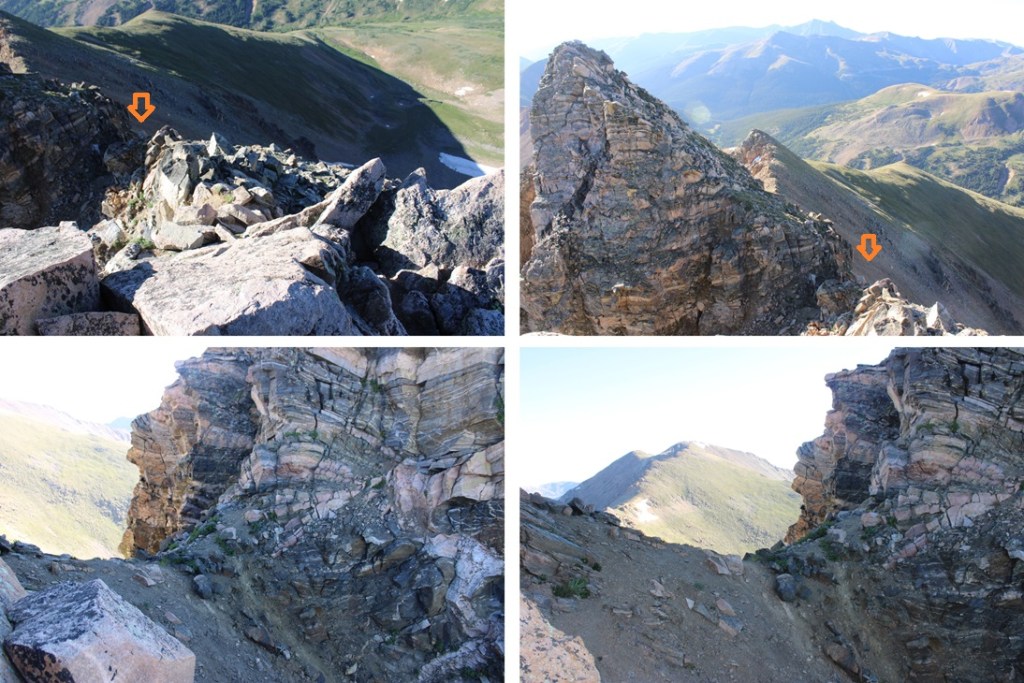
At this saddle, there was what I would consider a class 4 chimney to downclimb.  I sat there for about 10 minutes, waiting for the wind to die down before downclimbing.  The wind was insane, and I had to hide behind rocks to get away from it.  The downclimb was much more difficult than the upclimb, as it was committing, and I wasn’t sure there would be adequate footholds down below where I couldn’t see (there were).  Here’s what the wide chimney looked like to downclimb.  It was probably 10-15 feet of downclimbing.
Now to head to the saddle, and summit the peak.
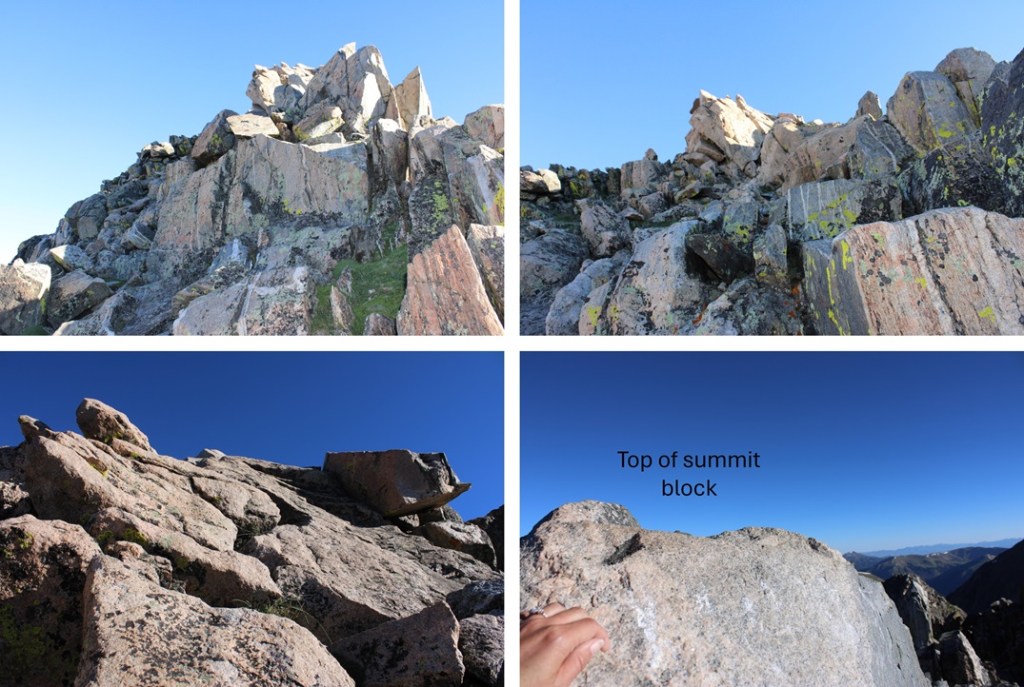
The summit was a short class 3 scramble to the summit block, which is a bit exposed. It was EXTREMELY windy today, and I had to hold on tight to keep from being blown over, but I was able to summit.
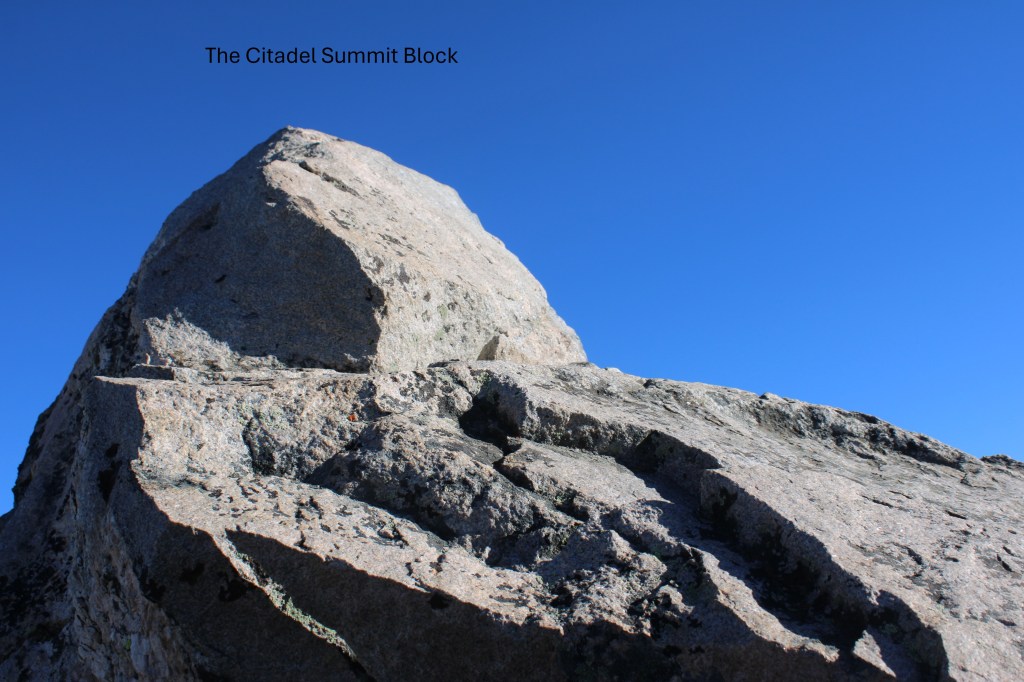
I summited The Citadel at 7:45am.  Sorry for the terrible picture and less than stellar video… I only took 1 photo, because I was afraid of losing my phone to the wind, and there wasn’t much room to move around on that summit block without falling (once again, wind).
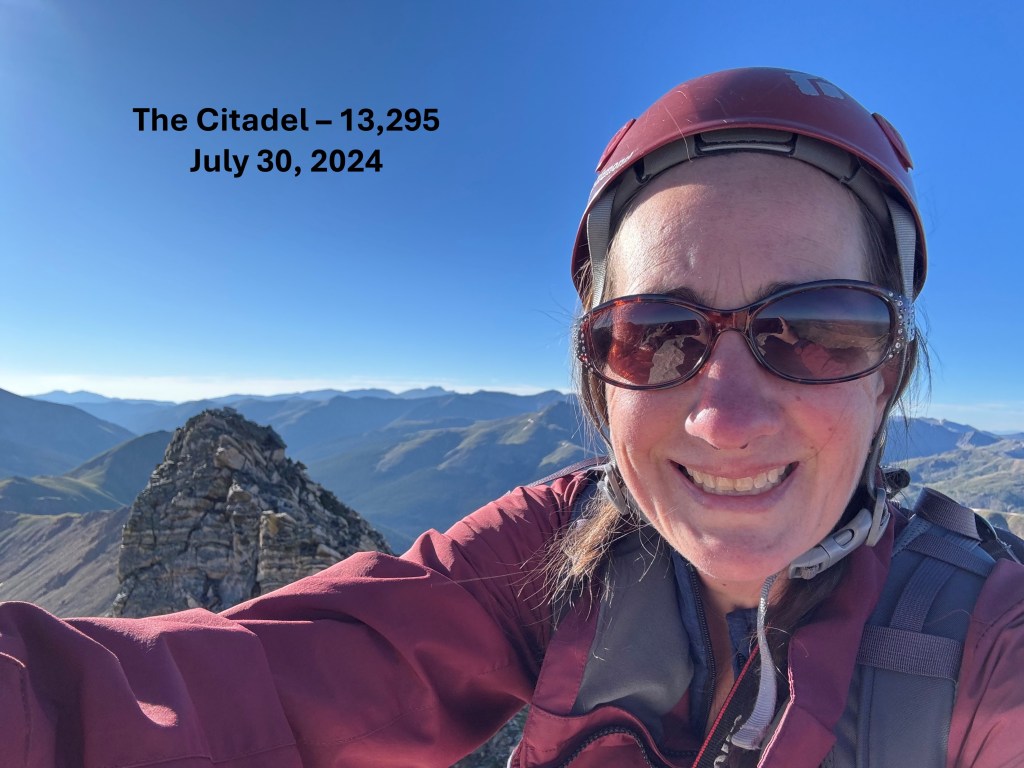
The Citadel:

Here you can see the false summit to the east

I made my way back to the saddle between The Citadel and the false summit
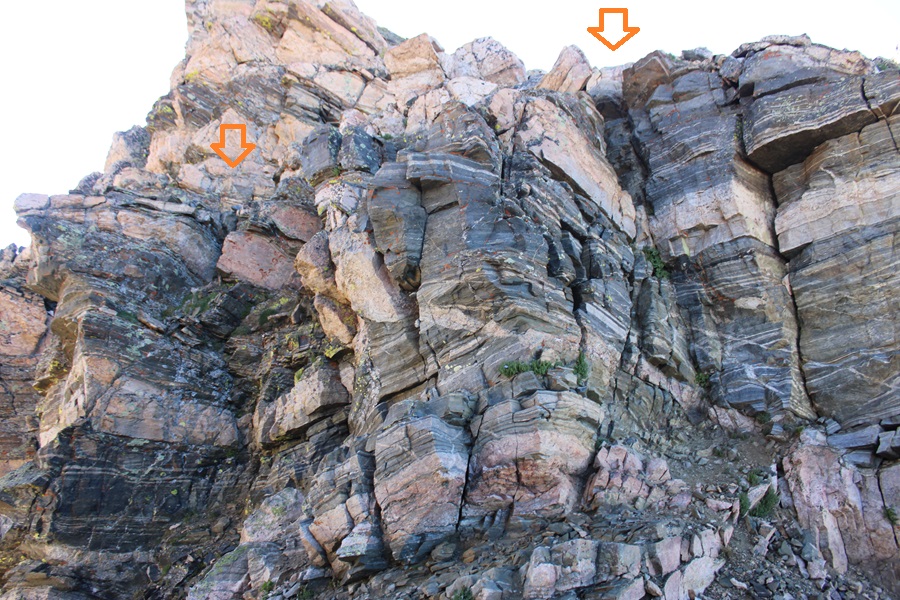
Here’s a look at your options to upclimb.  There are two, I took the one to the left do downclimb and upclimb.
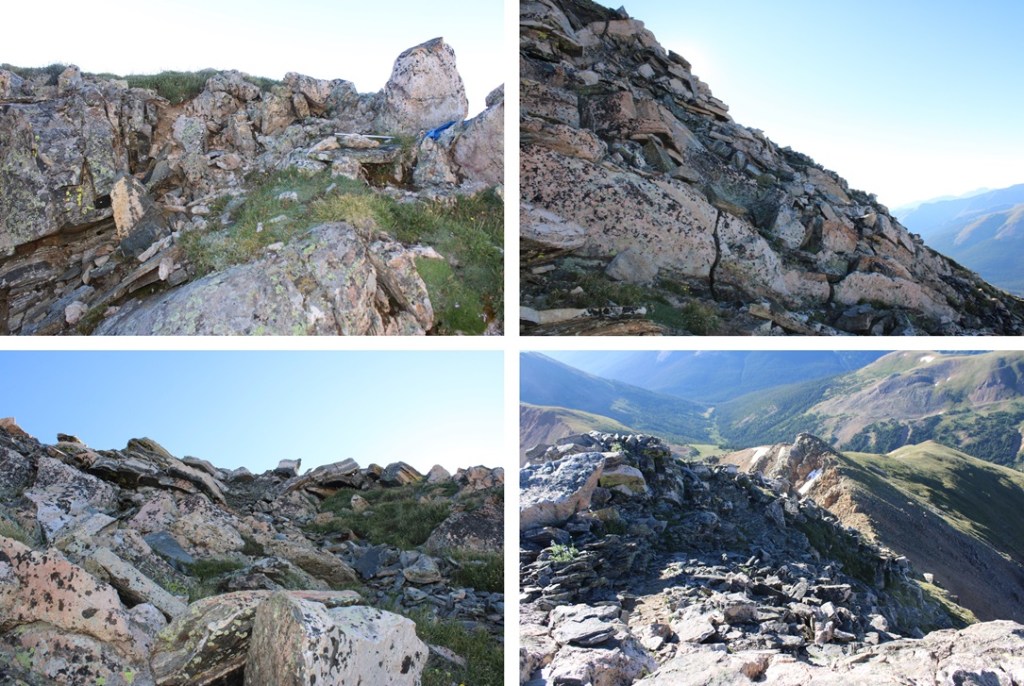
And now to make my way back to the grassy ledge.  There’s a cairn indicating where to descend.
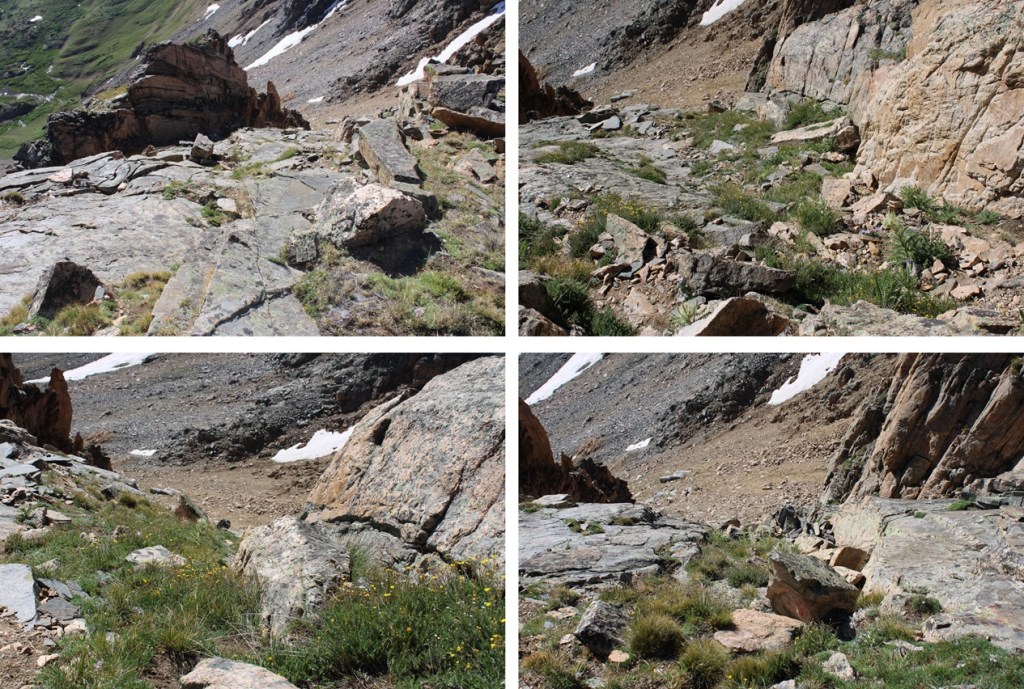
And now to downclimb the grassy ledge.   Once again, I stayed on the tundra until I reached the rock rib, then headed for the saddle to the right.
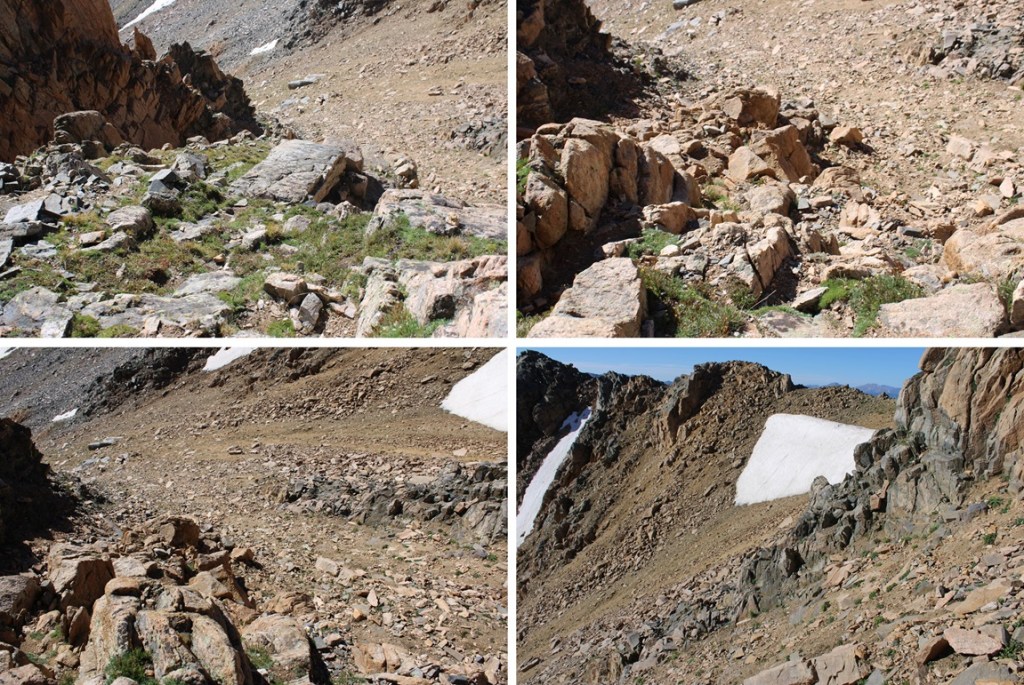
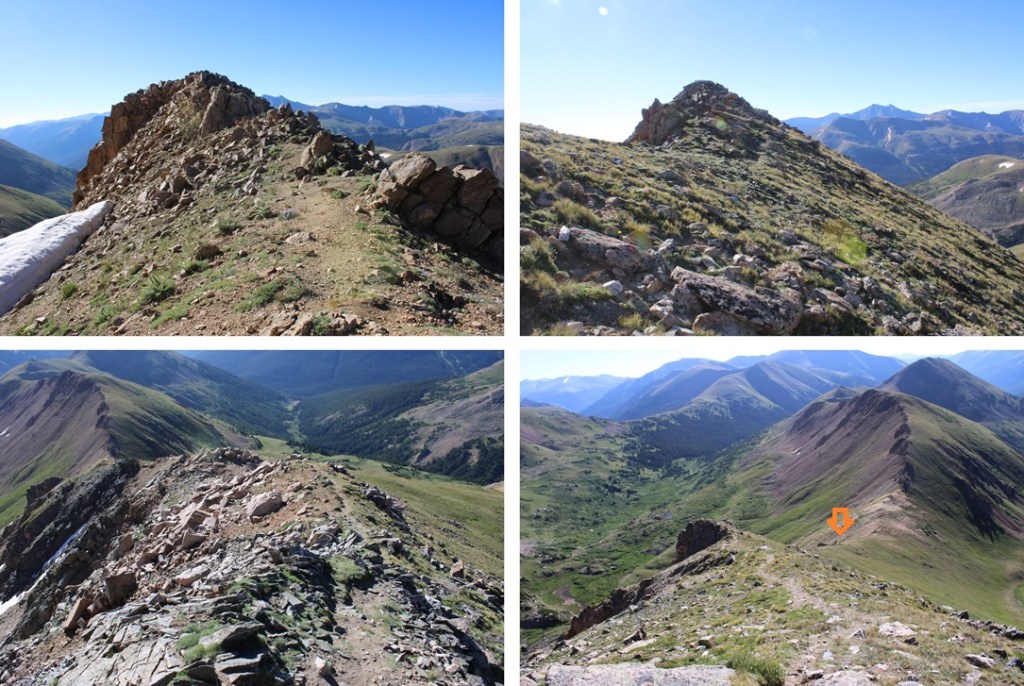
I was now back on a trail, and followed it to the saddle of The Citadel and PT 12671.
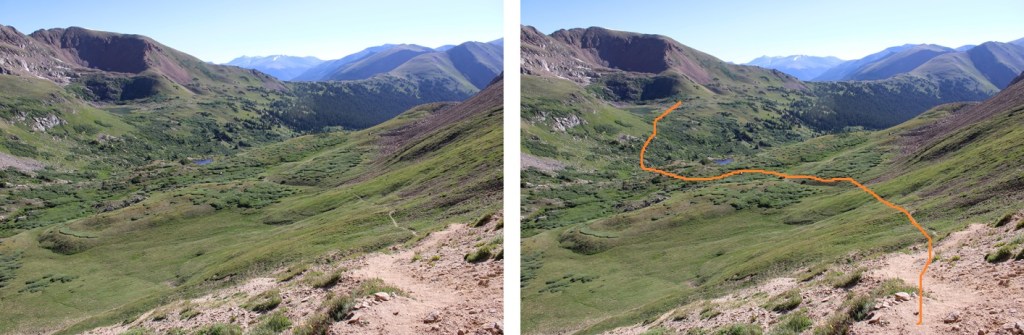
Here’s an overview of my hike to Herman Lake from the saddle.  This was on a mostly class 1 trail, with cairns to help when needed.
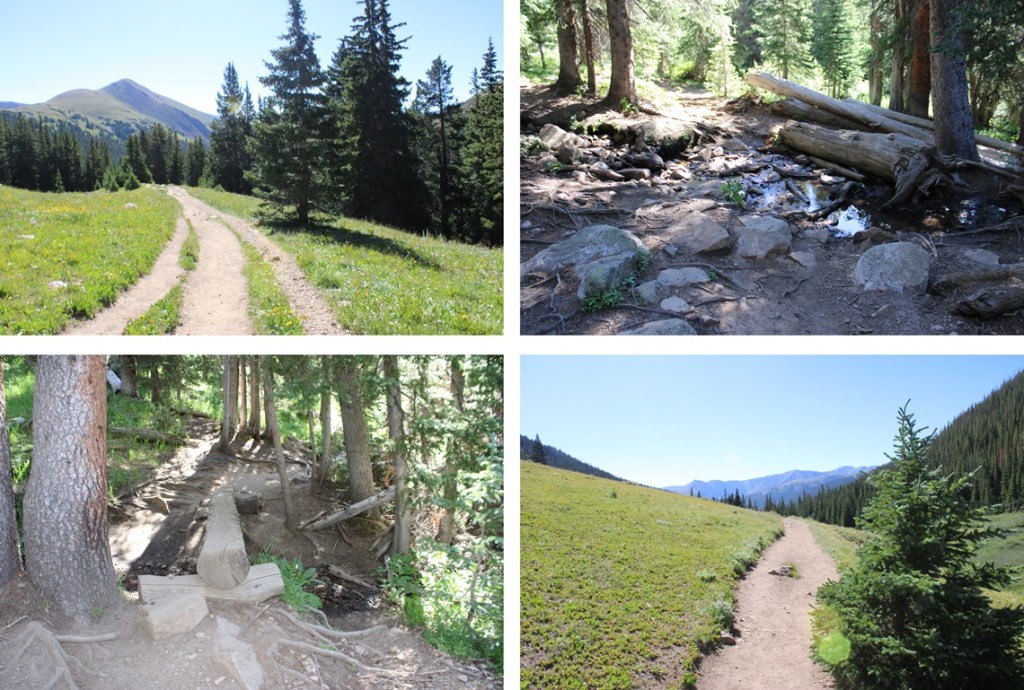
Back at Herman Lake, I followed the Herman Gulch trail east back to the trailhead.  You’ll know you’re getting close when you can hear the illustrious sounds of I70 in the distance.

I made it back to my truck at 10:30am, making this an 11.45 mile hike with 3255’ of elevation gain in 6 hours.
On to the next trailhead!
What Creature is Inside my Truck?

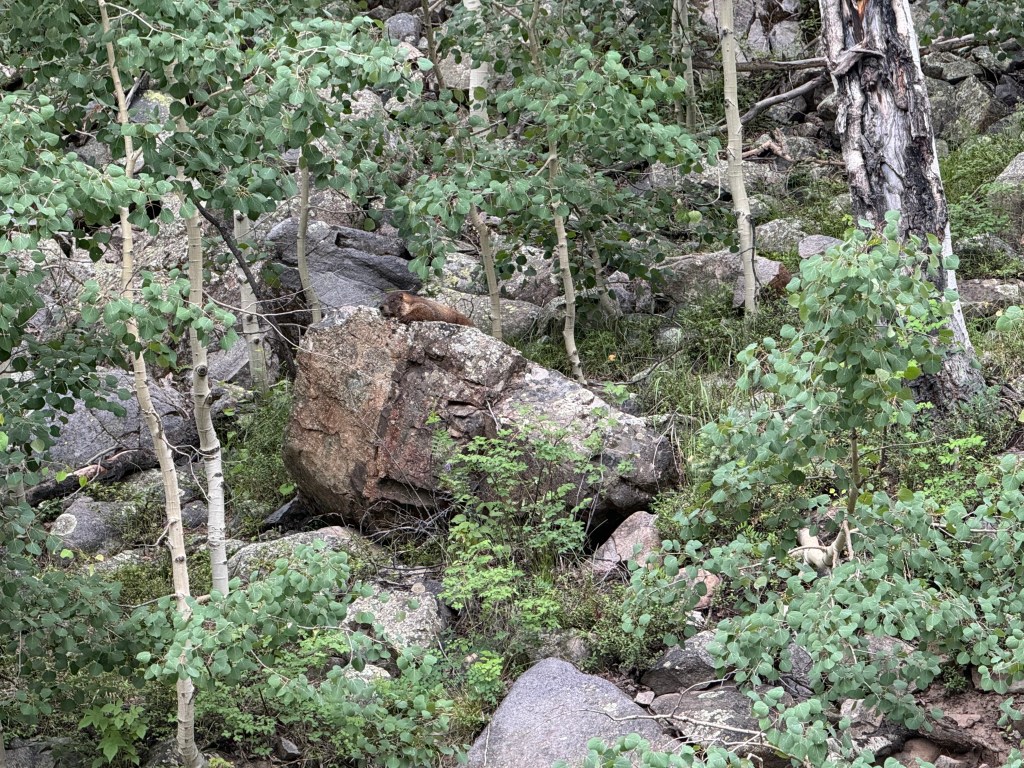
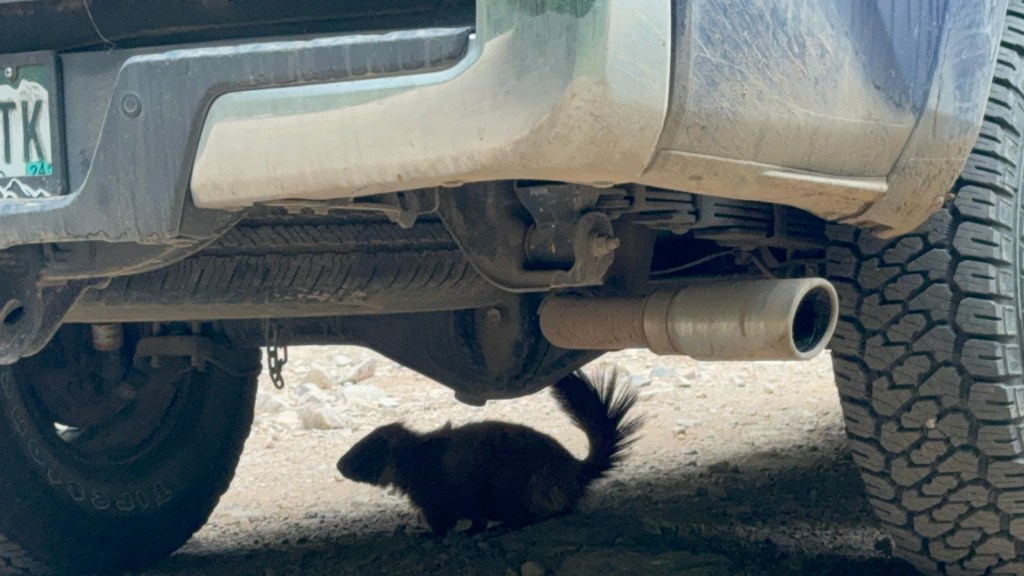
It all started at 2am that morning.  I got out of the back of my truck to get ready to hike, and shined my flashlight all around.  This is something I do if it’s dark out, because you never know what’s lurking at 12,000’.  I’ve been startled by deer, racoons, and even a mountain lion before.  I flashed the light under my truck, and saw a porcupine, pine marten, and marmot underneath.

It was like something out of a Disney movie, or the beginning of a really bad joke: “So, a porcupine, a pine marten, and a marmot were sitting under a truck…”

Great, this spelled trouble, and I knew what was going to happen.  Usually, I hear them rustling around under my truck, but for some reason, I hadn’t this time.  I shooed them away, got in my truck, and turned it on. 

All the lights were flashing.

I knew what had happened:  one or all of those varmints had chewed through the wires underneath my truck.  Well, I was 15 miles off a 4WD dirt road, and if my 4WD wasn’t working, 2am was the best time to drive down this road, as I shouldn’t encounter any other vehicles. 

I resigned my hiking plans for the day, and drove to the nearest dealership that could fix my truck.  Durango was 4 hours away, and I made it there just as they were opening.  I told them what had happened, they took a look under the hood and under the vehicle, and said “soonest we can fix it is 3 weeks.  Maybe 4.” 

I was shocked:  I’d never had a dealership not be able to get me in that day, but they were adamant.  I knew what needed to be done, as this has happened before.  The wires needed to be spliced and put back together, then bound with rat tape.  My bad for not doing the rat tape thing already, but I’ve done it on so many of my vehicles I’d honestly forgotten I hadn’t done it on this truck.

They also told me not to drive my truck, as it wasn’t safe.  Great.  So, I was stuck here for 4 weeks?  I don’t think so. 

I called around to every shop within a 5 hour drive, and they all told me the same thing:  3-4 weeks until they could fix my truck.  Since this has happened to me before, I already knew what was going on, and wasn’t too worried.  Yes, the lights were annoying, but my truck still worked.  I just needed to drive carefully and not try to break too fast. 

I decided to head instead to a 2WD trailhead for the weekend, seeing as how I was already in Durango and it was a 7 hour drive home (where I was sure my local dealership would do whatever it took to get me in that day: Putting over 50K miles on my truck a year means I’m one of their most valuable customers).  Adding 45 minutes on to my drive wasn’t going to change much. 

I drove to the next trailhead, a little upset my hiking day was shot.  As I was sitting in the front seat of my truck, researching routes, I heard a scratching coming from inside my truck.  Well, not inside exactly, but underneath… and inside. 

Then I heard the noise again.  Something was scratching the walls.  It sounded bigger than a mouse or rat, and a bit frantic. I went outside to see what was going on, and the noises stopped.  It was starting to rain, but I decided to sit there and wait to see what was going on. 

Then the noises began again

I saw a Forest Service truck drive by.  I flagged him down, and asked him if he knew any tricks for getting a marmot out from underneath your vehicle.  I could tell by the look he gave me he didn’t believe me.  He sat there for 5 minutes and whatever it was inside was silent.  He smiled at me, said to give it time, and drove away.

As soon as he drove away, the noises started again.

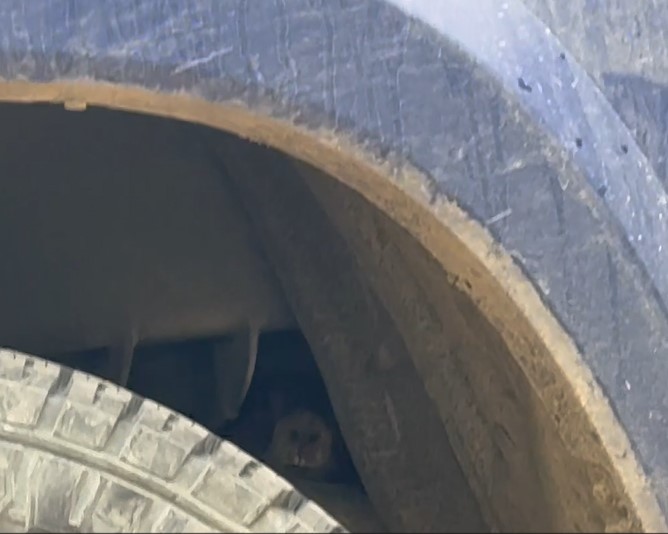
Something was obviously stuck and trying to get out, so I tried to pull back the flaps and bang on the tires.  The animal went silent again, but it was watching me from just above my back tire.  I saw a nose peeking out, staring at me, and it kind of looked like a porcupine.  It would have made sense, since I’d seen a porcupine under my truck that morning as well.

Well, if it was a porcupine, I wasn’t going to put my hands anywhere near that wheel well.  Eventually, it started trying other options.  I saw it near my spare tire, and figured it was only a matter of time before it found it’s way out.

Well, eventually it did.  And when it did, it just sat under my truck, confused.  It obviously had no idea where it was, and was taking time to think.

It took a little too much time, and when it looked like it was going to climb back inside my truck I shooed him away.  He ran off into the trees, and I went back to doing what I was doing.  Then I noticed him, sitting and staring at my truck.  I went over to him and he didn’t seem scared, he just stared back at me.

Then he started walking towards my truck again, and I got worried he’d try to slip back in later in the night, so I drove down the road for about a mile, giving him space from my vehicle, which he seemed to desperately desire. 

15 minutes later, I looked in my side mirror, and that little bugger was running up the road towards my truck!  It was as if he thought my truck was a portal and he’d escaped the wrong side.  Maybe if he went back in and out another way, it would take him back to the original trailhead.  I kind of laughed to myself, realizing he’d been inside my truck at the repair shop and hadn’t been noticed.  I drove another 5 miles away, he didn’t follow, and my truck was safe for the rest of the weekend. 

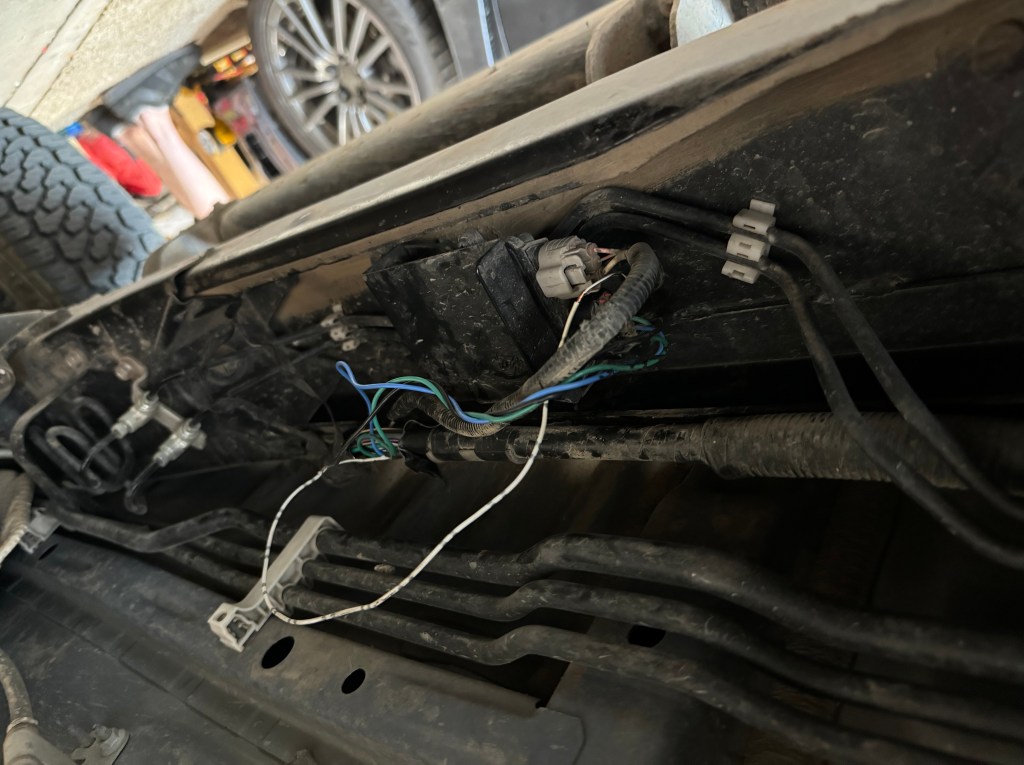
Here is a picture of the damage

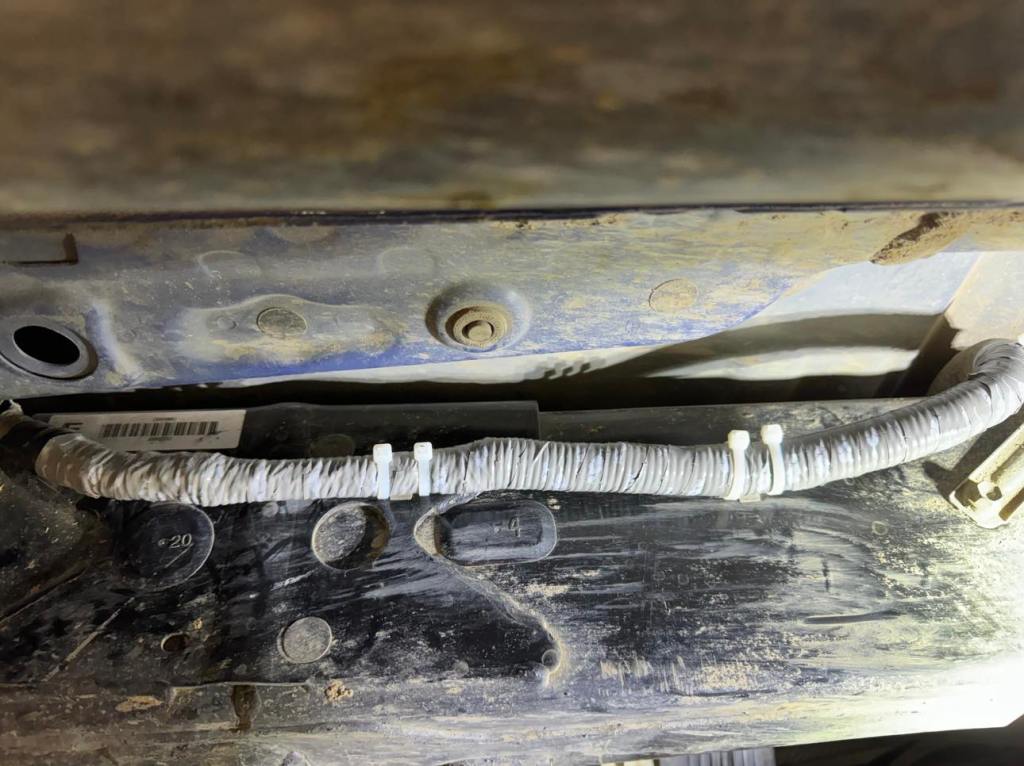
And what it looks like now that it’s fixed. Rodent Tape is manufactured by Honda, and costs about $60 a roll. Much better than a $4400 fix later.

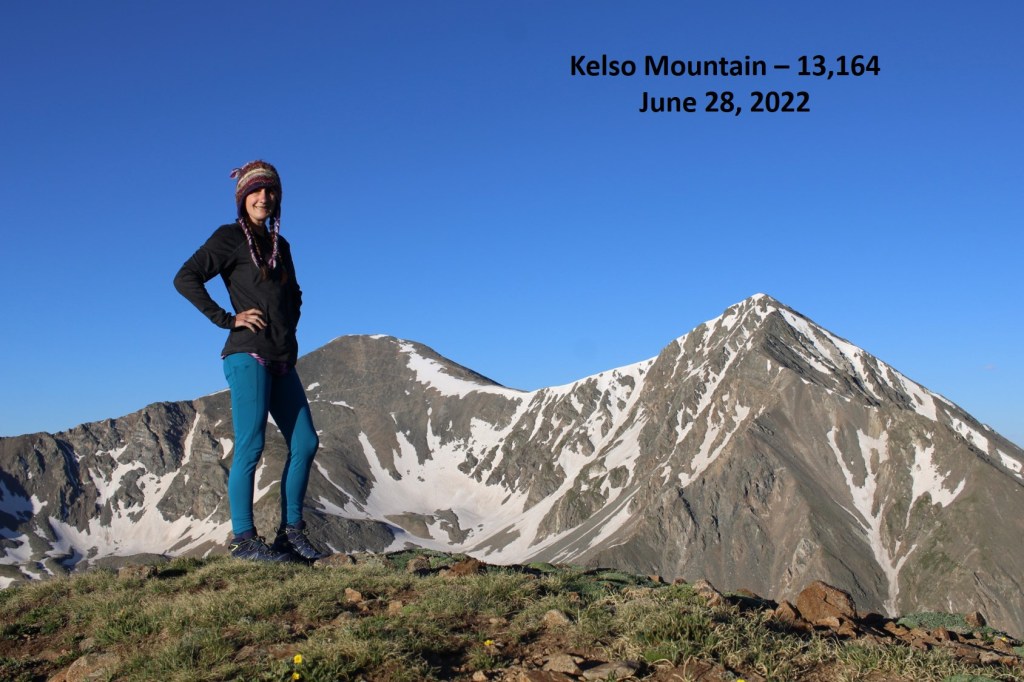
Kelso Mountain – 13,164

RT Length: 6.32 miles

Elevation Gain:  1937’

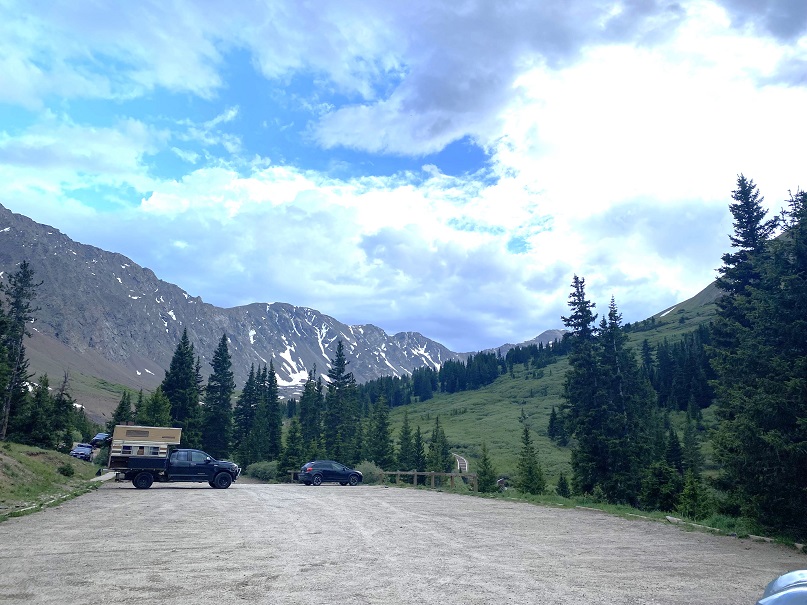
I arrived at the Grays and Torreys Trailhead the night before, curious to find there were only a handful of vehicles in the parking area.

I picked out a prime spot (that proved later to be a bad choice), and settled in to read a bit before heading to bed.  I talked to an awesome CDT thru hiker, and noticed two girls fiddling with a camper in the parking lot.  A very old camper, on top of a very old Tundra.  They were all over that camper; on top pulling at buckles, on the back, fiddling with the door, banging on the sides, etc.  When I saw them bring out a hatchet I stopped reading and walked over to them.

I said hello, told them I was a mom and a Girl Scout Leader, and also told them my kids ages, trying to let them know I wasn’t a freak. I asked them if they needed any help? Yes, yes they did.  It seemed they’d locked the keys to the camper inside the camper.  I asked them how old they were. 16 and 17.  Wow!  I was impressed!  Not only had they driven this clunker up to the Grays and Torreys Trailhead, they’d convinced their parents to let them do it alone, in their dad’s truck.  When I was their age my mom wouldn’t have let me do that.  I know because I’d asked, then had to resort to the “I’m sleeping at Kelly’s house” thing as I went to bonfires in the woods where my mom had no idea where I was at.  Kudos to their parents.    The girls has about 15 14ers under their belts, and wanted to tackle Grays and Torreys in the morning, but it was going to be a long night if they couldn’t get the back open.
OK, time to problem solve.  I didn’t think breaking a window was a good idea if we could help it.  I knew how to open a car window with duct tape.  I asked if they had any, and they brought out a small roll of electrical tape. That wasn’t going to work.  Next, I looked at the door handle, which didn’t look too secure.  I was thinking we could probably jolt it back and forth and it might break.  As I was jiggling the handle, I asked how close the next set of keys would be?  They said it didn’t matter, because the keys to the truck were inside the camper as well.  I was really thinking I’d just drive them back to Denver or something to pick up the keys from their parents, when one of the girls got the fabulous idea to look for another set of keys to the camper, and found them inside the glove box inside the truck.  Problem solved.  I wished them luck, happy they hadn’t broken a window with a hatchet, and told them to knock on my window if they needed anything during the night. 

It rained.  Around midnight I heard something crawling around underneath my truck. It sounded slow, and it was trying to get itself inside the gears.  I pounded the side of the truck and it seemed to creep away.  Half an hour later it came back, so I knew if I didn’t get rid of this thing it was going to be a long night.  Also, I wasn’t going to make friends at the trailhead if I kept banging on the side of my truck all night.

I got out of the topper and into the front seat of my truck. I turned it on and revved the engine a few times.  When I was done, and crawling back into the topper, I saw a porcupine waddle away from underneath. It seems my secluded spot at the back of the parking area had been a bad idea, as it was easy access for porcupines.  No one else had porcupine trouble that night (that I talked to).

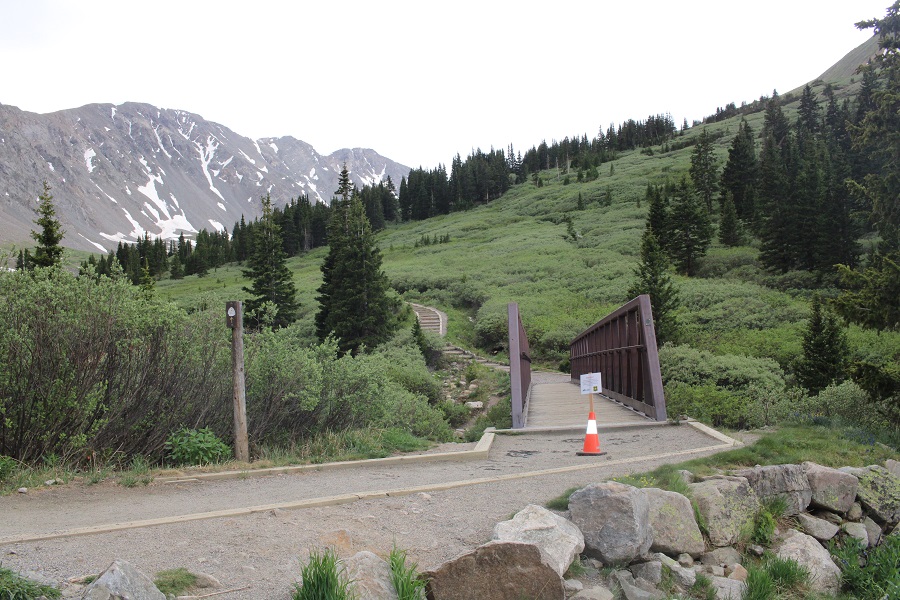
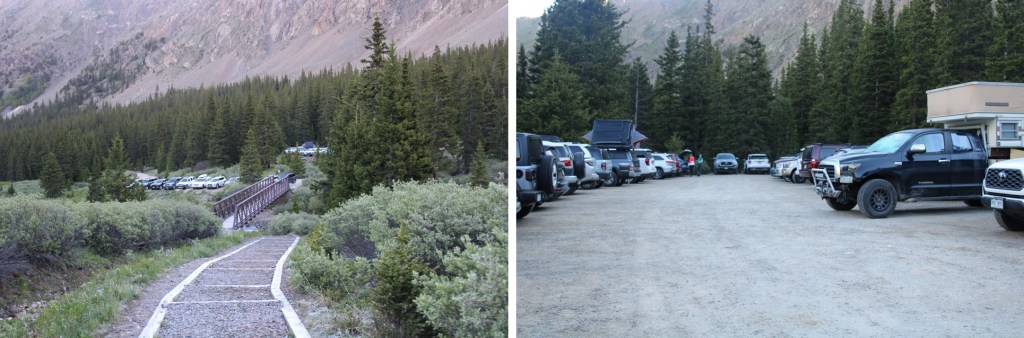
I was up and on the trail at 4:30am, and the trailhead was now about half full of vehicles.  I crossed the bridge, and began following the Grays and Torreys trail.

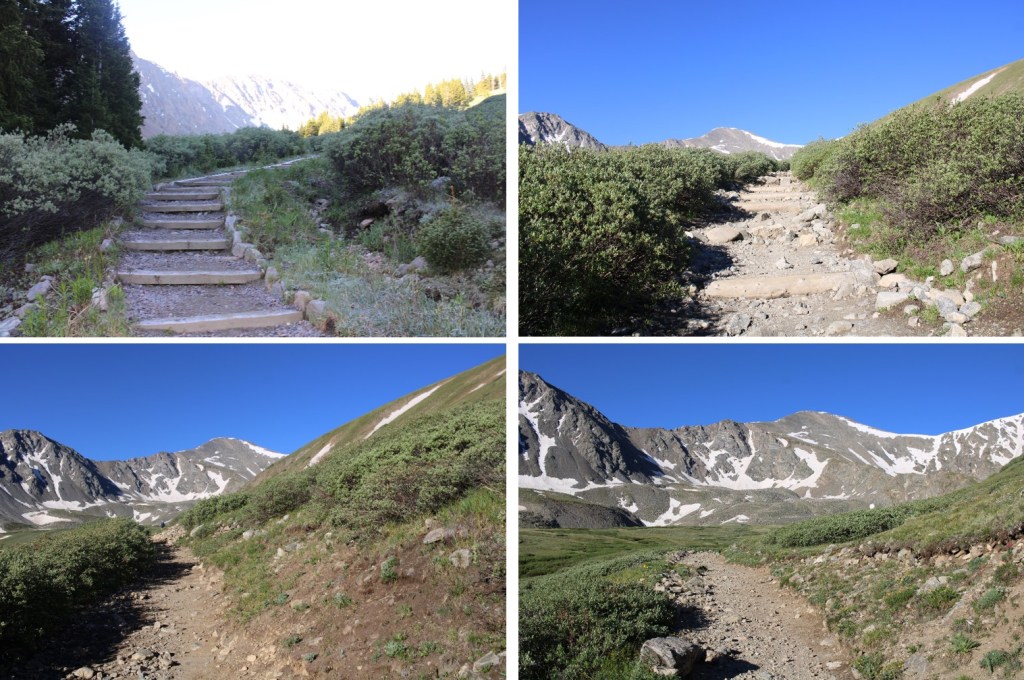
This is a class 1, wide, easy to follow trail. 

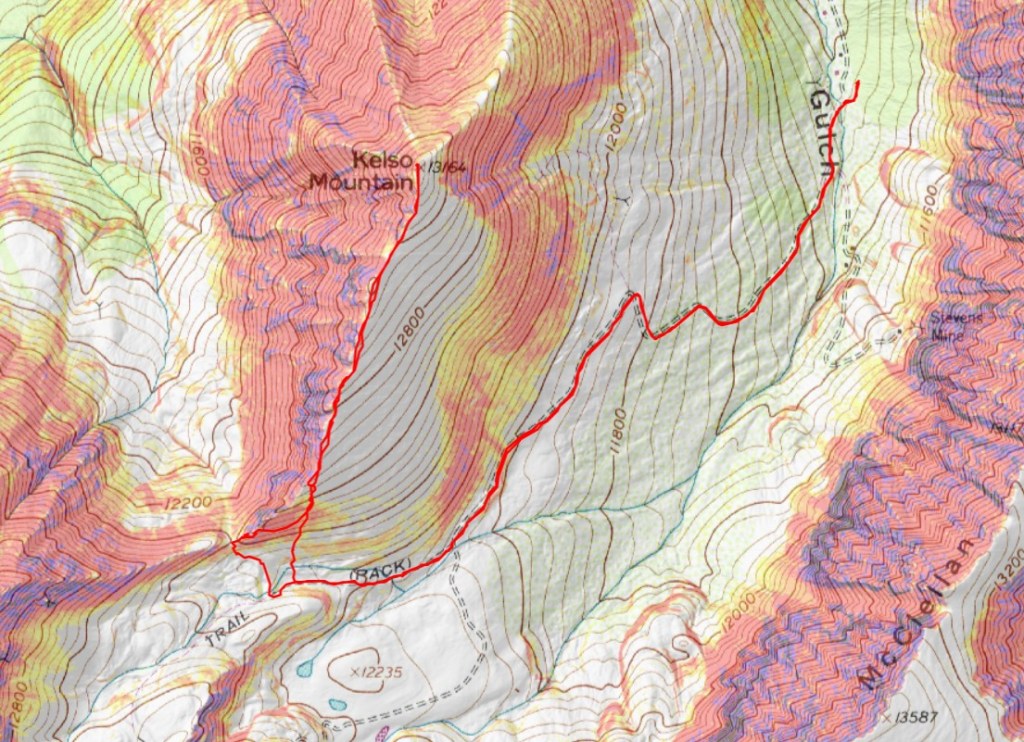
My beta said to follow the trail all the way to the Kelso/Torreys saddle, so that’s what I did, but you don’t need to do that.  You can gain the ridge at any point after about 11900’.  If I had to do this again, this is where I’d ascend the ridge

But, I had beta that said to go to the saddle, so that’s what I did.  I followed the trail for about 2 miles, and then made my way to the saddle. There’s a trail the entire way.

When I got there, I turned to go east up the ridge, but noticed it was all class 3 and above.  This seemed silly to me, because there was clearly tundra below.

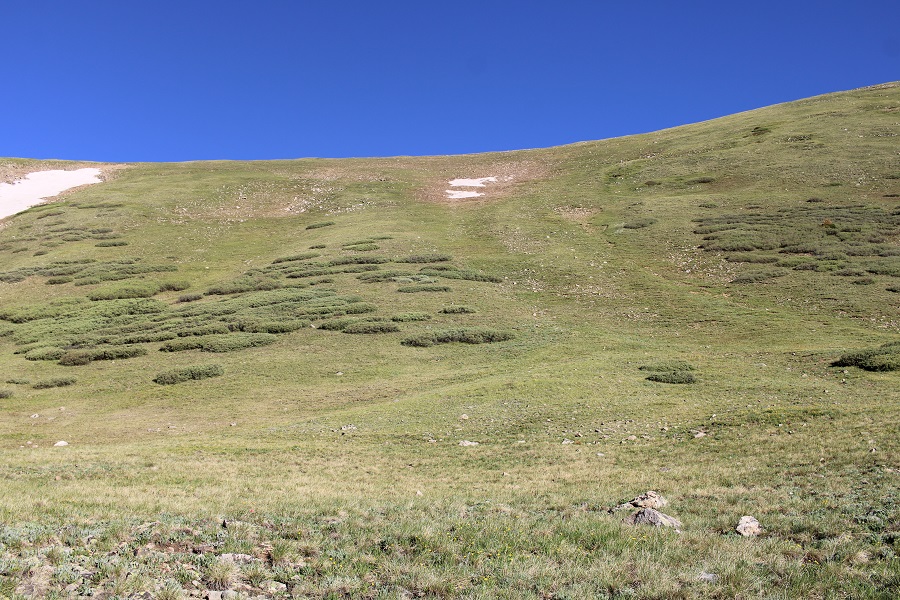
So I backtracked and took the tundra route to the ridge.  This was a fabulous idea, easy going, and I didn’t need a helmet.

This is what I was trying to avoid, which looks ok from this side, but more spicy from above.  Just take the tundra route.

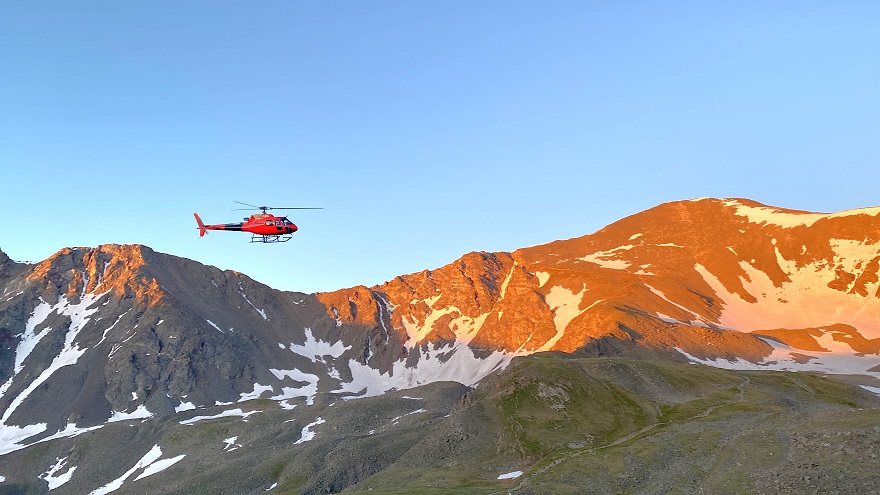
It was here, around 5:30am, when I saw my first helicopter flyover for the day.  It got dangerously close to the mountains, and I was worried someone needed SAR.  All kinds of scenarios went though my head. I knew CFI was doing work in the area, but the post I’d seen a few days ago said they weren’t starting until next weekend (I found out later they posted again with the proper dates last night, but I was already at the trailhead, so I didn’t know this).  I was worried someone needed help, and the helicopter couldn’t find them.  I spend a lot of time looking for someone myself as I hiked.  

Helicopter:

The helicopter came back around about 20 minutes later, and took a different path.  Once again, I was worried they were searching for someone.  Then about 20 minutes after that I saw the helicopter carrying wooden ties, and knew it must be CFI doing trail maintenance.  THANK YOU CFI!
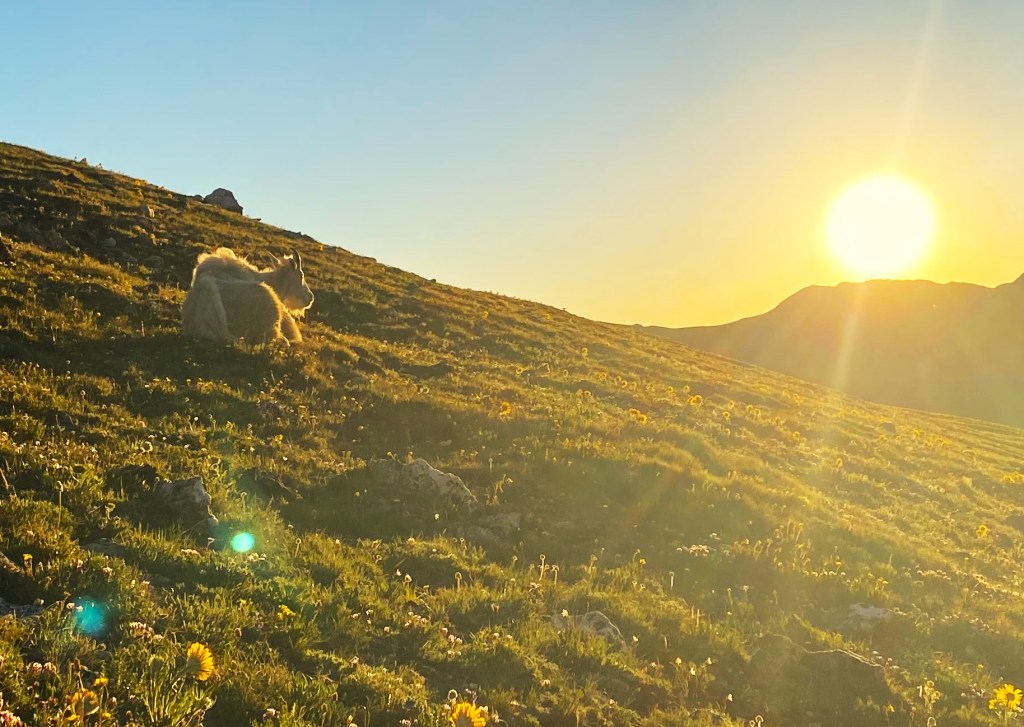
Once on the tundra, before gaining the ridge, I came across some mountain goats lounging, watching the sunrise.  I stood there and watched it with them.

Then I continued on towards the ridge

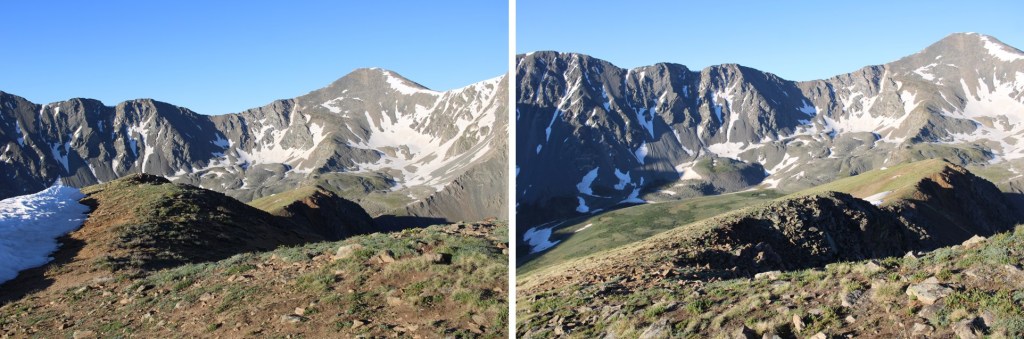
After making it to the ridge, I followed it northeast to the summit.  This was a simple ridge walk on tundra.

I summited Kelso Mountain at 6:30am

Kelso Mountain:

At the summit cairn there was a journal that was recently placed there.  I know some people get worked up about this type of thing, but it’s there for a good cause, and it will be taken back down.  Needless to say, I text the man battling cancer a good morning, and sent him pictures of the goats. 

Then I retraced my steps back down the ridge

I left the ridge at 11250’ to head back into the basin.  I aimed southwest, towards the obvious Grays and Torreys Trail

The goats were still lounging around, so I stopped for a bit to enjoy their presence.  They seemed unbothered by the flyovers.  I didn’t get too close, but it was neat they were so relaxed.  The views were incredible.

After a few minutes I got up again, and headed down the tundra to the trail below, noticing there were tons of people hiking like ants below.

Once back on the trail I realized it was still early, and considered Grays or Torreys or both, but I had a 10am meeting I needed cell service for, and I wasn’t 100% sure I’d have it on the mountain, so I headed back to the trailhead.

Check out the CFI helicopter picking up ties

I made it back to the trailhead at 7:30am, and the parking lot was already full.  It’s a Tuesday.

I got back to my truck at 7:30am, making this a 6.32 mile hike with 1937’ of elevation gain in 3 hours.  This would be an easy addition to Grays and Torreys.

On to my meeting!

V3 – 13,545

RT Length:  8.29 miles

Elevation Gain: 3542’

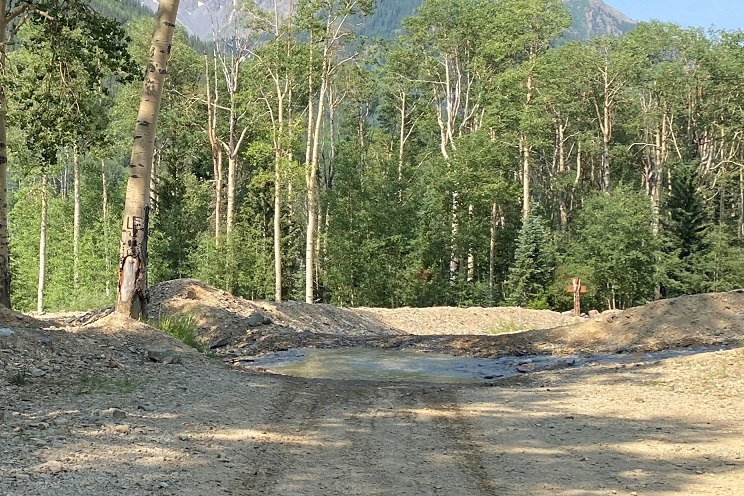
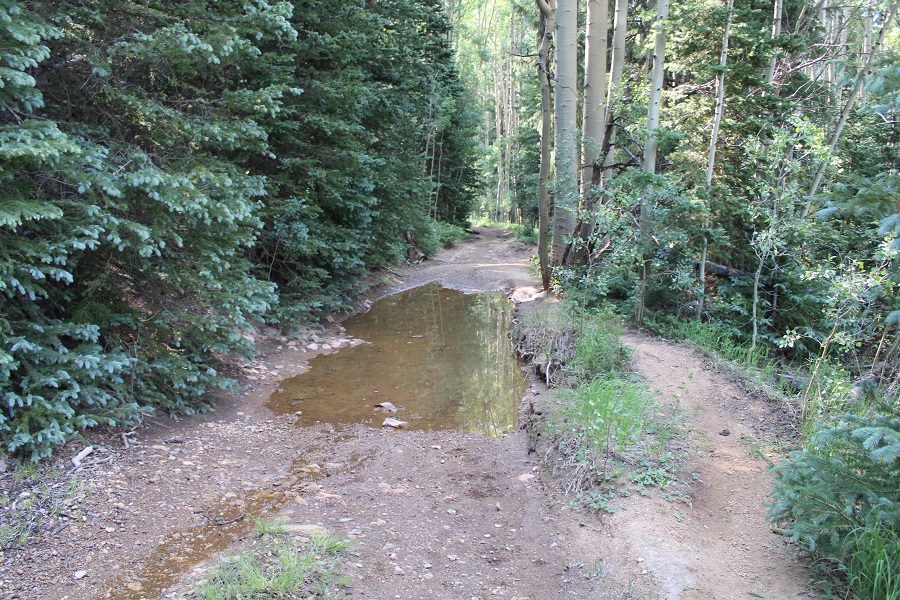
Ophir Pass Road is a serious 4WD road, but the trailhead for this peak can be accessed from the Ophir city side with just a high clearance vehicle.  There were a few small water crossings, but 4WD was never needed.

I parked in a parking area about 1.3 miles east of the town of Ophir, on Ophir Pass Road, in the Iron Spring area.  All the parking spots were taken but 1, and every vehicle was parked there overnight.  This is a popular spot to park to backpack/hike in the area. 

The mosquitoes were out here as well, so I made it an early night and got some sleep.  I was up and on the trail by 3:45am.  The trail starts on a blocked 4WD road to the south of the parking area.

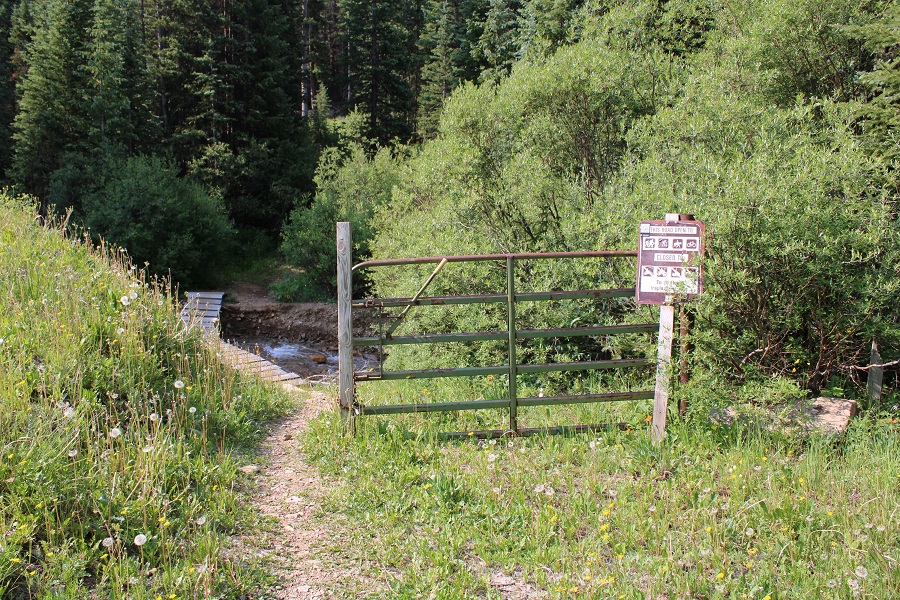
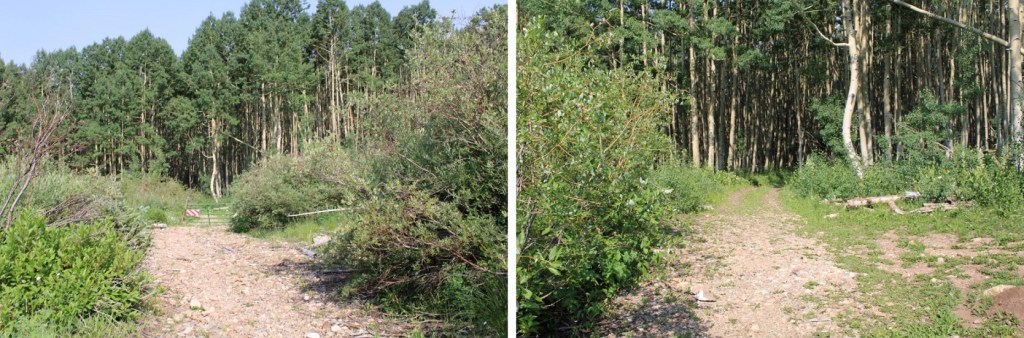
I followed this road southeast and then south, through gates, aspen trees and two stream crossings with easily crossable bridges

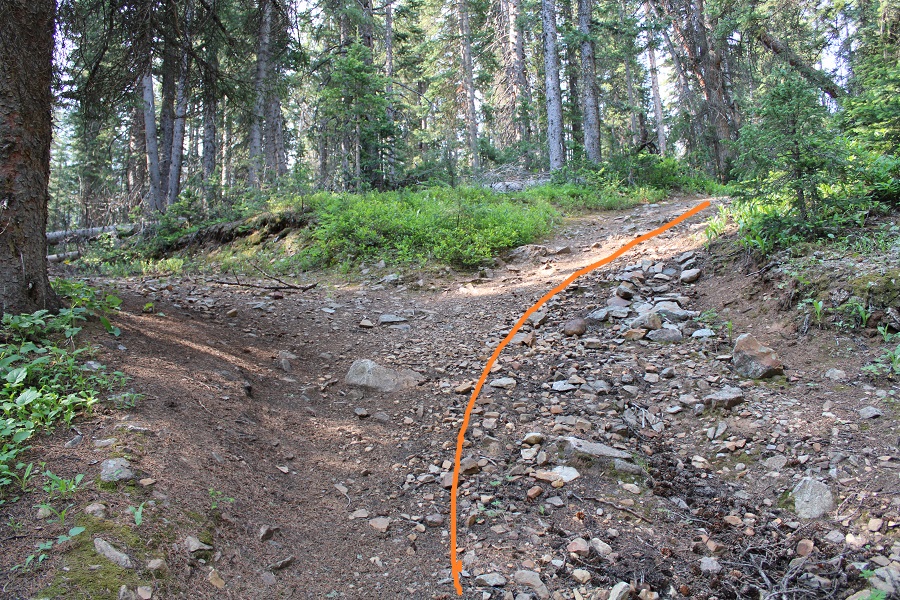
After the second stream crossing, I passed below some power lines, turned left to follow the trail, and started gaining elevation.

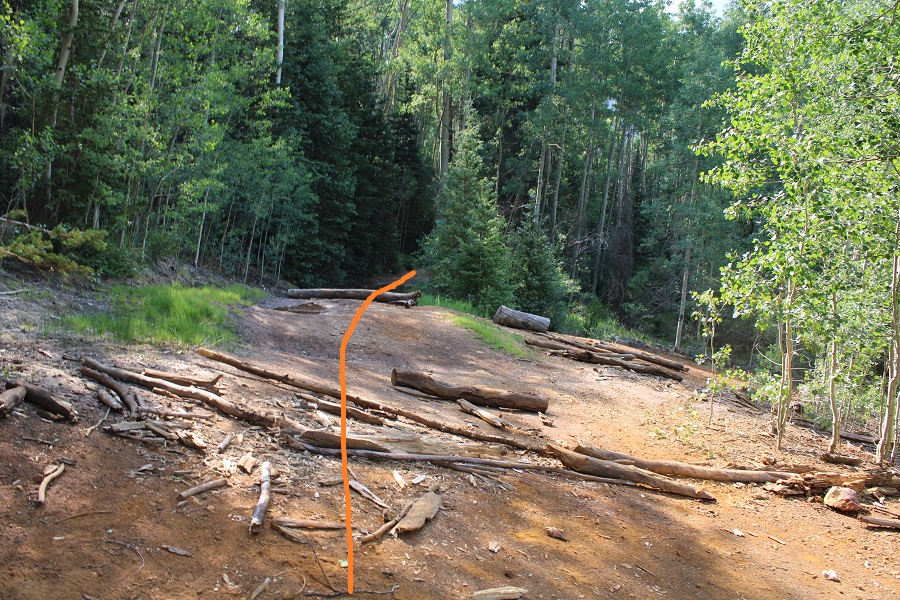
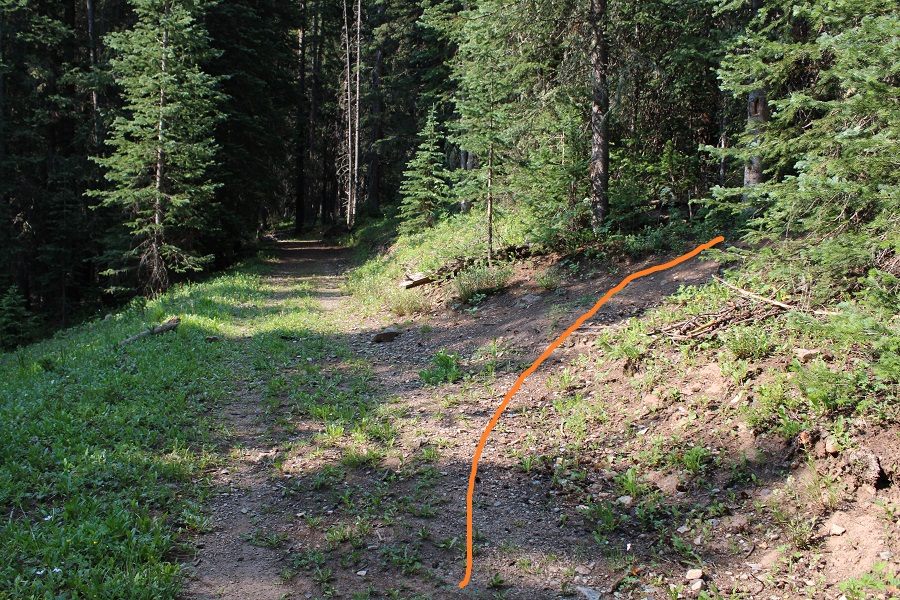
The hike below treeline was nice, and the trails were class 1, but there were no trail signs or numbers, and several trail crossings.  I’ll do my best to describe the correct route.

I followed a well-defined path south.

At the first fork in the road, I turned right

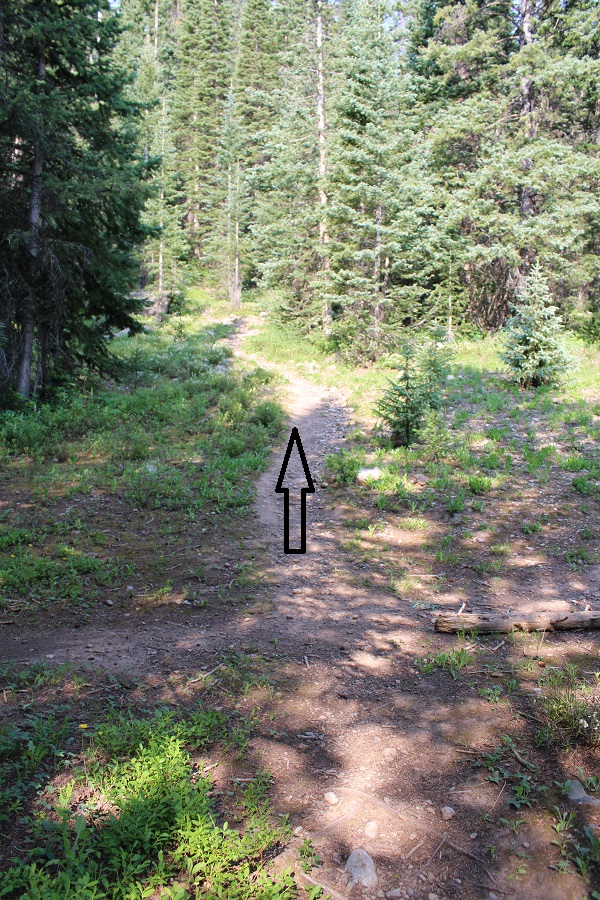
At the second fork I turned right again, off the road and onto a trail (I’d hiked a total of 1.15 miles at this point)

I hiked west for a few yards, and then came across a trail junction.  I continued heading straight

I was now on the trail that heads south/southwest up the hillside.  This is also where I ran into a porcupine.  Porcupines don’t run, but we noticed each other while we were about 3 feet away from each other:  He quickly turned and waddled away in the dark, showing me his full backside of quills as he did so. 

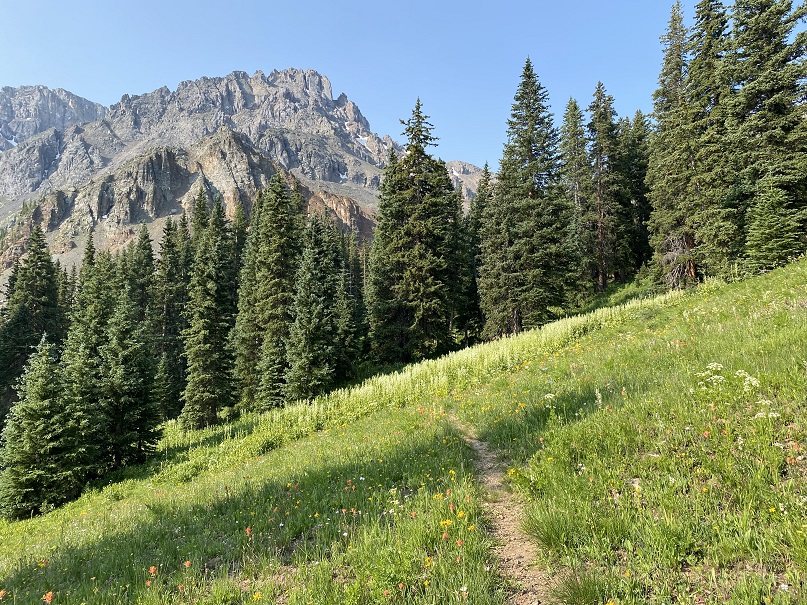
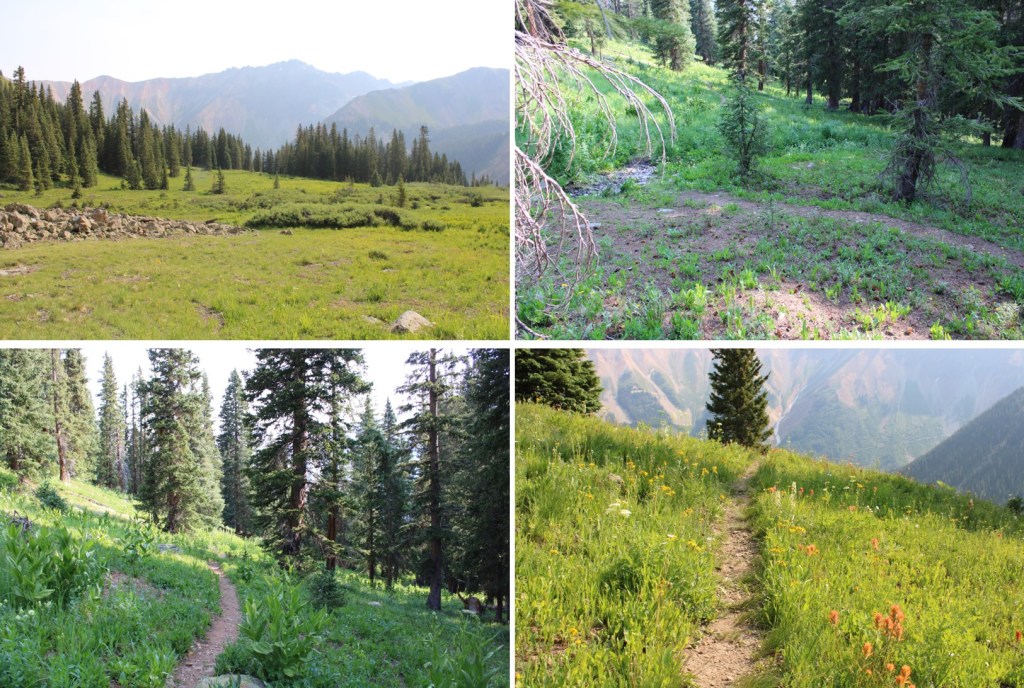
I continued on this well defined trail

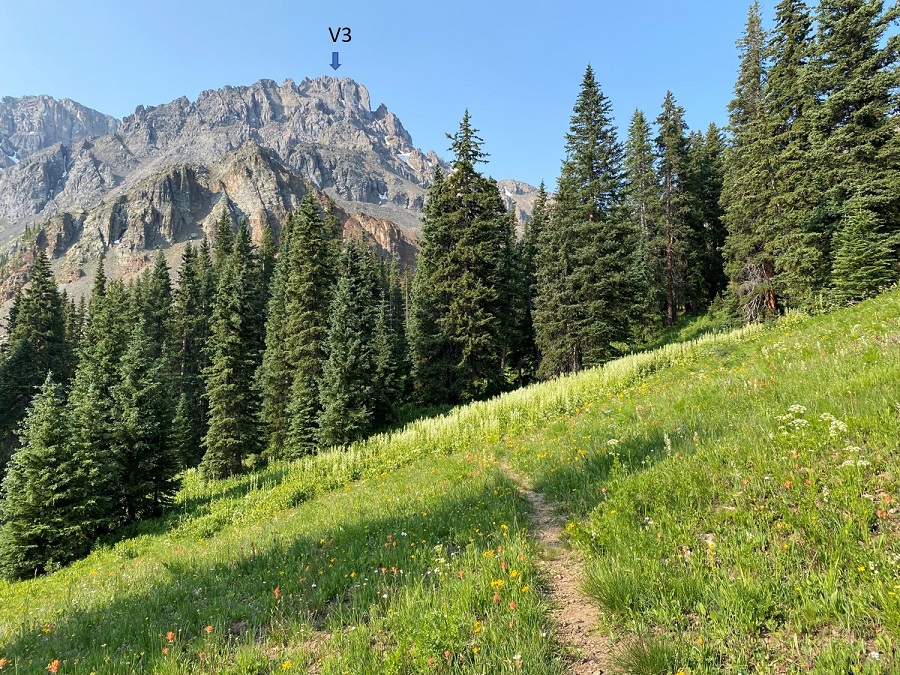
Here’s your first glimpse of V3.  Look carefully, the arrow points to the exact summit, which you won’t see again until you’re there.

After hiking for a total of 2.25 miles and 11350’ I came to a small water crossing over the trail, and a meadow to my right. I left the trail and headed through the meadow.  It was still dark, and there was a camper with a bright headlamp getting ready for the day.  He was confused why I was ‘off trail’ and tried to direct me back to the proper trail.  I assured him I was going in the right direction, apologized for walking so close to his campsite, and nicely told him I didn’t expect to find a trail to the summit.

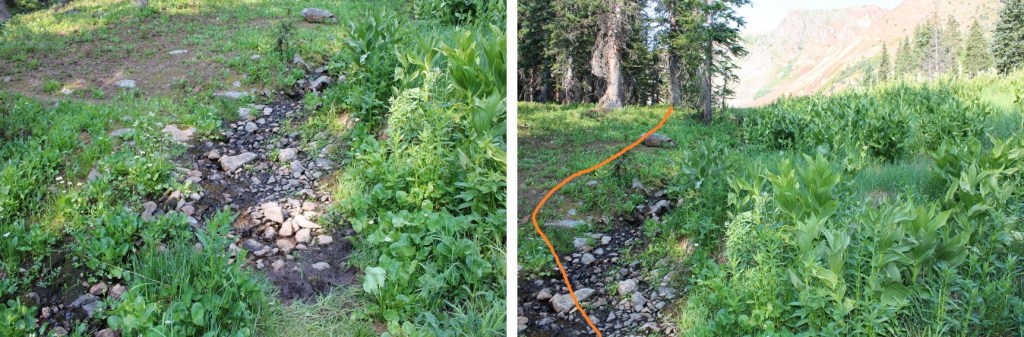
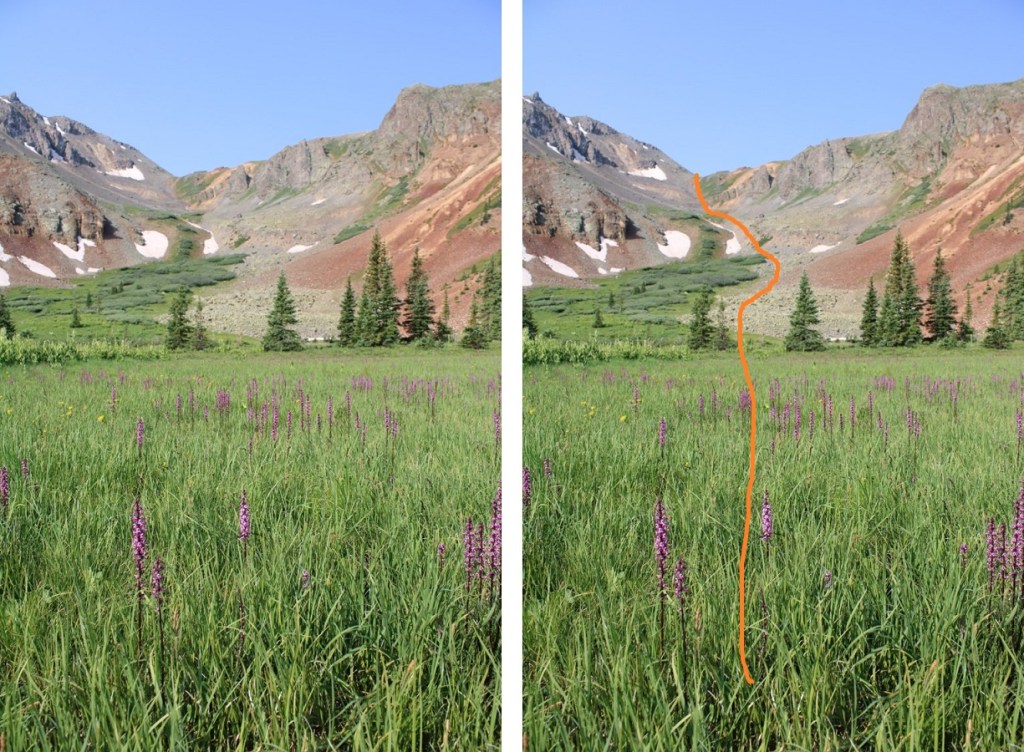
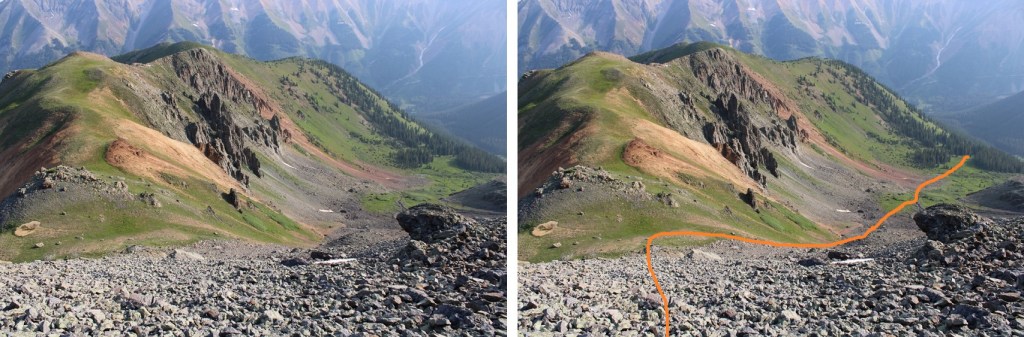
I was now in a meadow and basin.  There were wildflowers I couldn’t yet see in the dark, and willows I kept encountering.  I found out the hard way to stay right to avoid the willows.  The path is obvious in the daylight.  Here’s the route I took.

And some step-by-step pictures of my way to the saddle, first hopping across a small stream

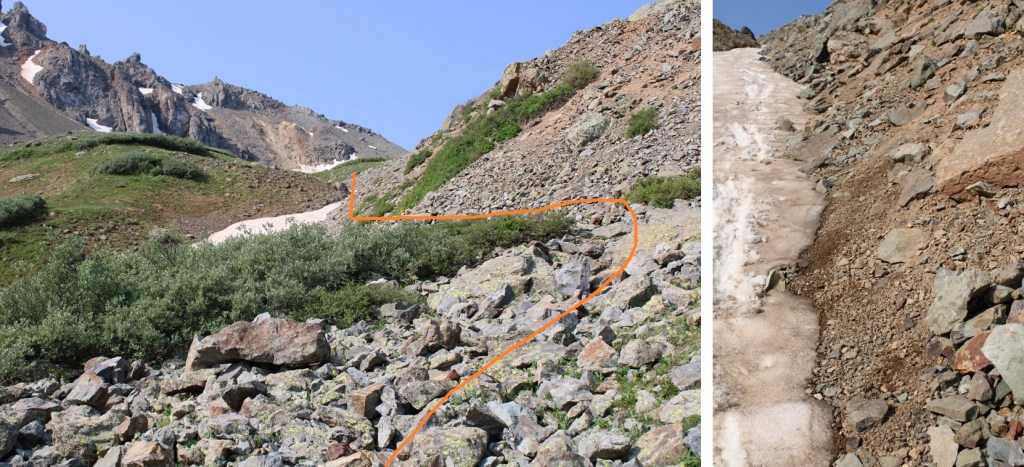
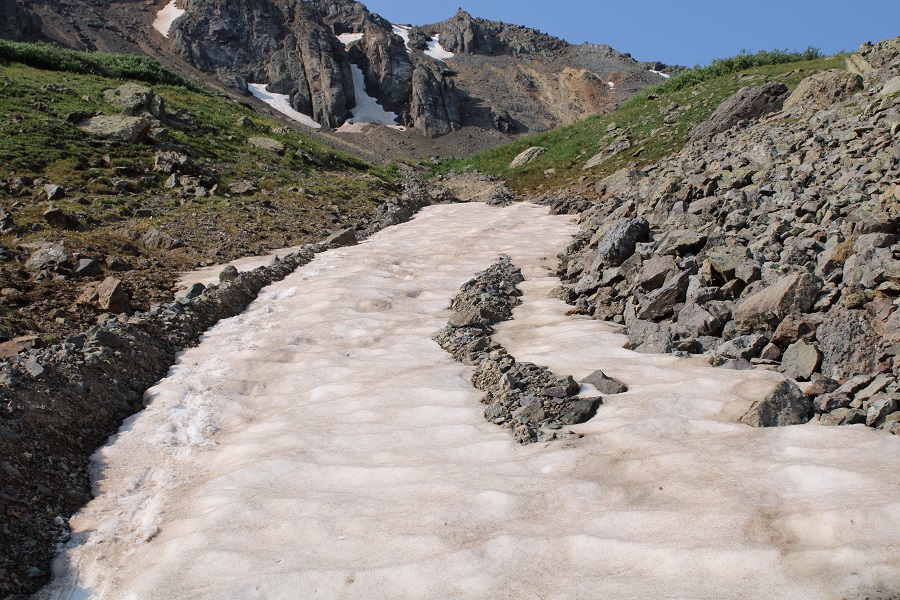
Staying right to avoid the willows and ascending a small gully that still had snow.  Microspikes were helpful here, both on the scree and snow.

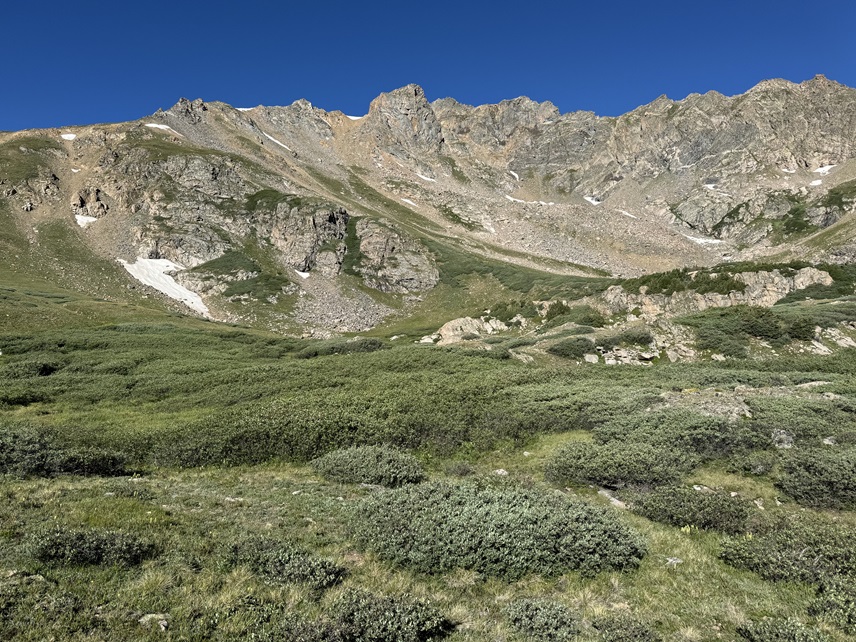
At the top of the gully, I was now in a rocky upper basin.  I crossed a boulderfield and headed towards the saddle.

Here’s a look at the last bit of hiking to the saddle

Once on the saddle I turned left and followed the ridge southeast, staying to the left of the snow.

At the top of this area you can see the crux of the route.  Now is a good time to put on your microspikes and helmet, if you haven’t already.  It’s much steeper than it looks, and the scree isn’t manageable without microspikes (trust me on this one).

Here’s your intended route:

You’re aiming for this gully.  The scree here is steep; a 45 degree angle for an extended amount of time. 

Once at the base of the gully the class 4 climbing begins.  The route is obvious, curving around to the right.  There is really only one way to go:  follow the trail set out for you from the fallen scree.  Also note:  the scree and rocks here are loose. Very loose.  I wouldn’t attempt to upclimb or downclimb this area with another person:  take turns the entire way up and down.  You will be causing screevalanches on climbers below you. 

Here are some pictures from the inside of the gully. Pictures do not do the steepness justice (although the pictures down give you a better perspective).  When heading up, continue climbing southeast.

Here’s a look at the exit of the gully

At this point it became even steeper.  I did not have on my microspikes, lost grip, and slid on my stomach backwards for a full 12 feet.  I seriously thought I was going to slide all the way back down that gully.  I braced myself, and without taking off my pack located my microspikes in my backpack pocket and gingerly put them on while trying to balance without much traction. It was much easier to upclimb once I put on my spikes.  Here is where I aimed

I then turned right, and hiked south towards the summit block. 

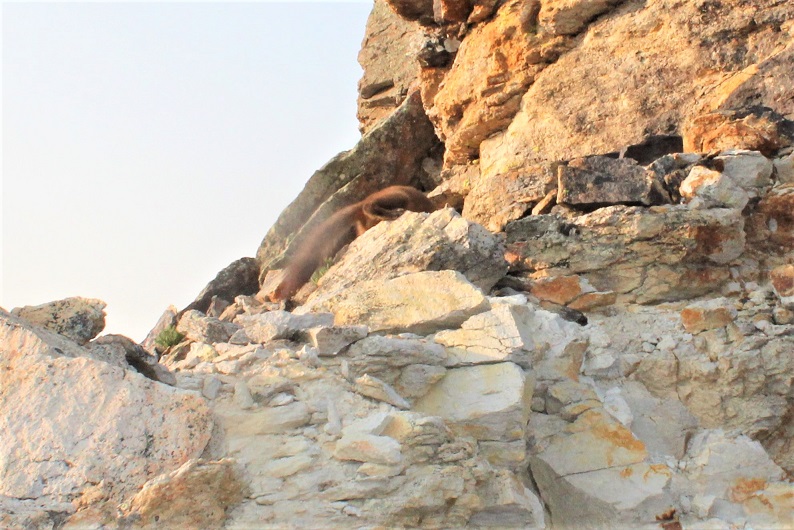
I made it to the base of the summit block and was surprised to see a pine marten.  He sat there and looked at me.  I tried to get a picture, but he quickly turned around and all I got was a picture of his tail and backside.  Why are all of my wildlife pictures of animal butts?

Ok, now, don’t let this summit block scare you:  yes, you can upclimb it, but you can also skirt it to the left and follow it around and have a class 2 trek to the summit, which is what I did.

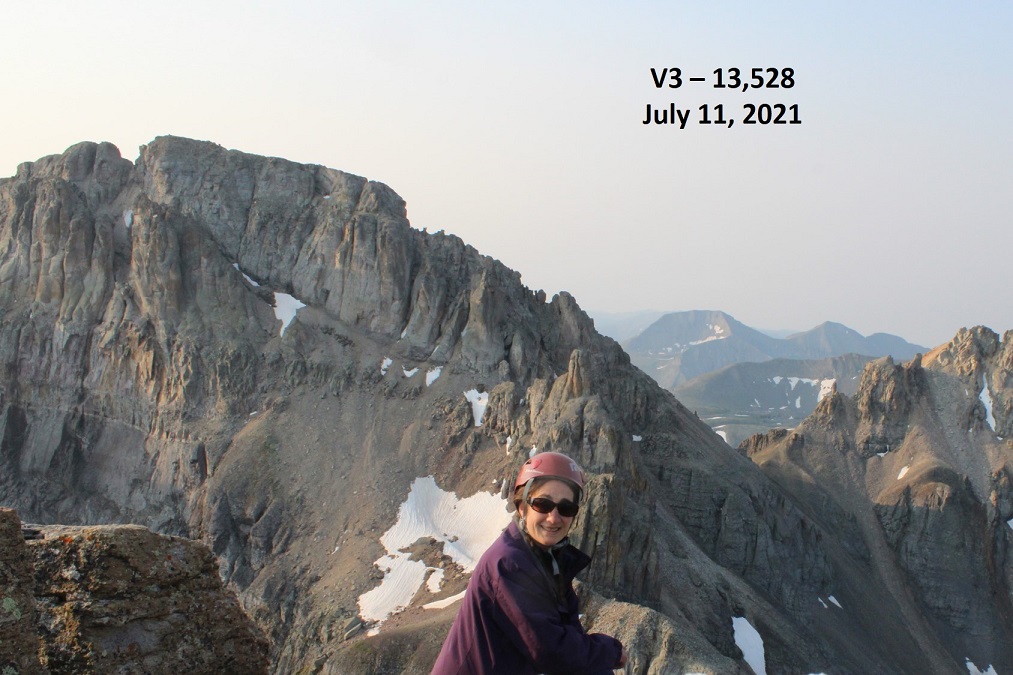
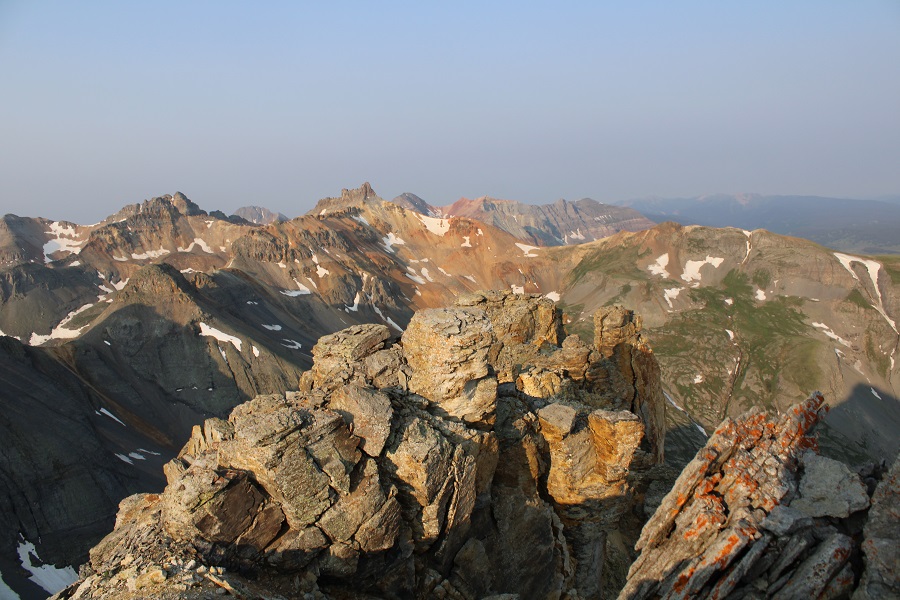
I summited V3 at 7:15am.  There was a lot of smoke in the air from far away fires this morning.

V3:

I was surprised there wasn’t a summit register, so I left one.  It was obvious this peak does not get a lot of visitors. 

I kept my microspikes on for the trek back down, which seemed easier than the trek up.  Here are some pictures of the way back down the gully.  Once again, do this one person at a time, and when you’re done, head far away from the gully, as the rocks will slide and they will pick up speed as they do so. 

Once out of the gully, the scree-surfing will begin.  It’s always fun when you can ride the same pile of rocks all the way down the hillside.

Scree Surfing:

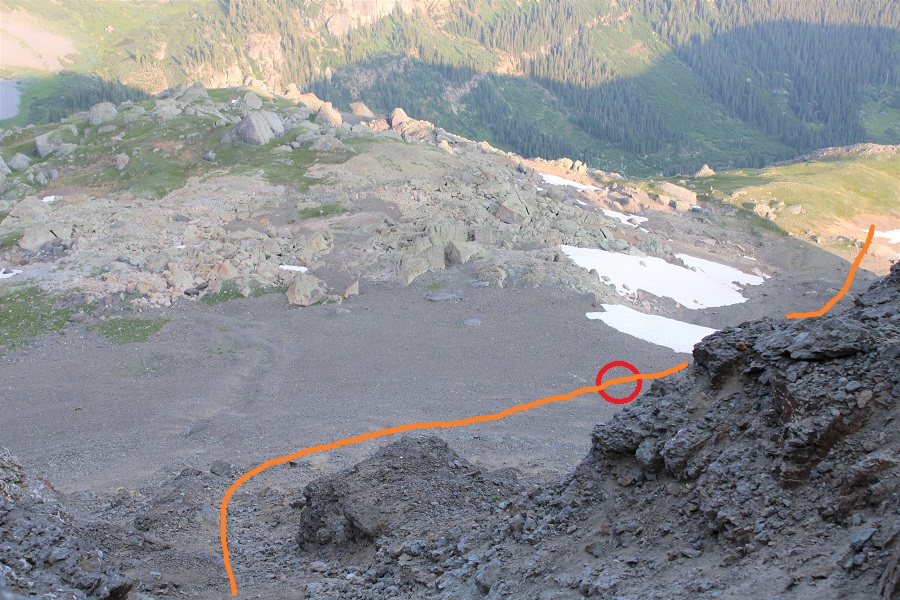
Here’s where you’re aiming.  If you’re doing this with another person, you should be standing far away from the rockslide area while they’re ascending/descending.  I’ve circled a good place to stand out of the way.

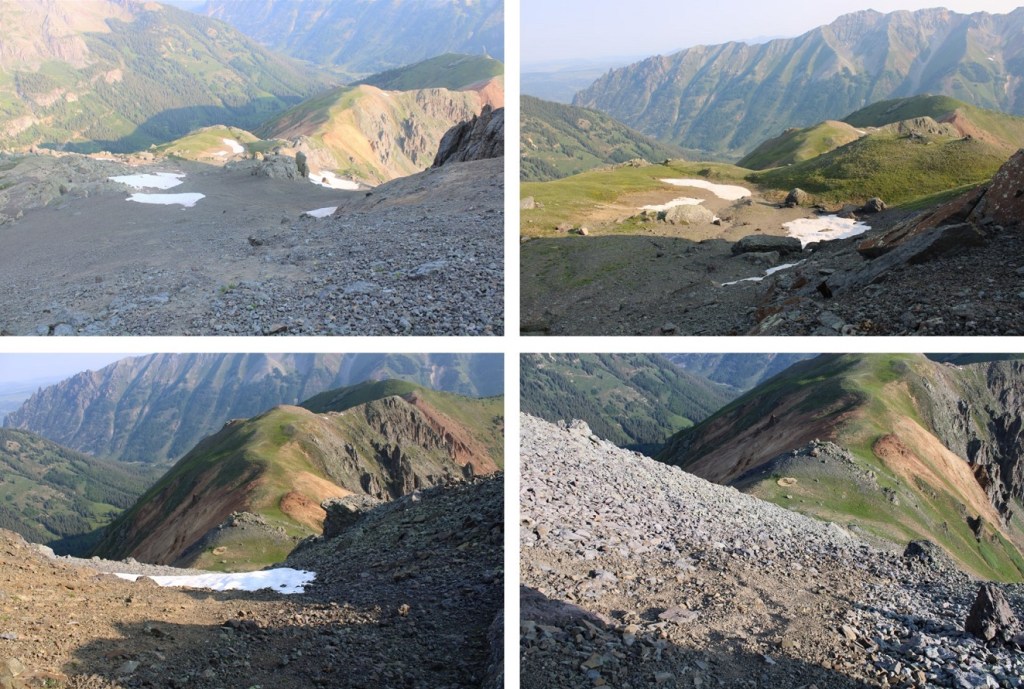
And now to hike down the ridge to the saddle, and exit the basin.

I made it back to the meadow, marveled again the wildflowers, and saw the group of campers were almost done taking down camp (I guess the man I talked to this morning was part of a larger group).  I made it to the trail, turned left, and followed it back to the trailhead.

I made it back to my truck at 9:45am, making this an 8.29 mile hike with 3542’ of elevation gain in 6 hours.