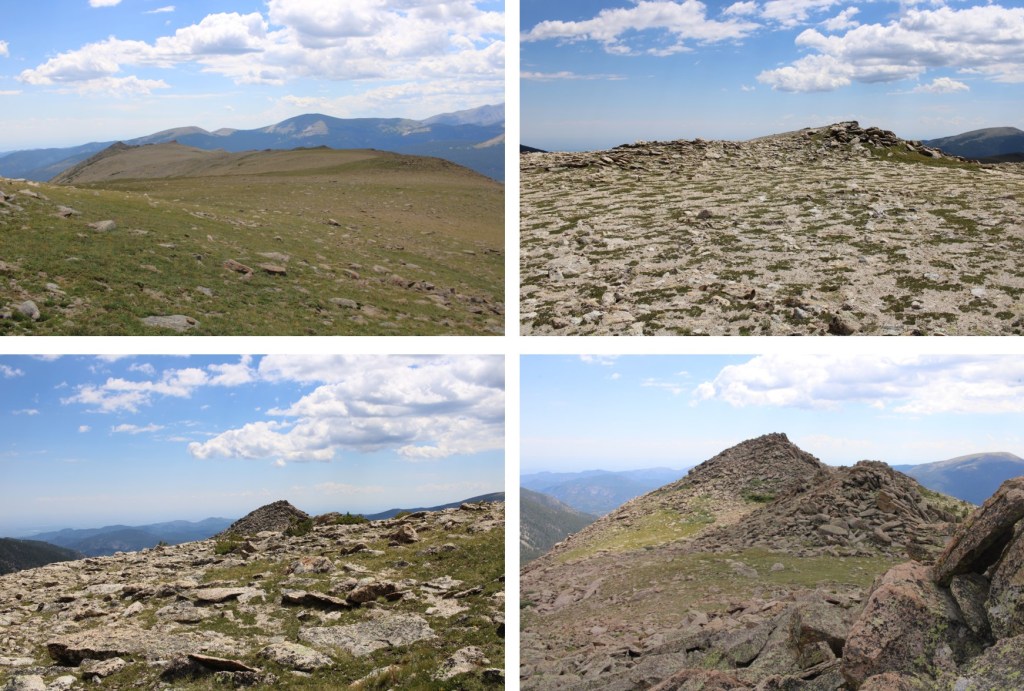
Mt Alice – 13,319

RT Length:  19.98 miles

Elevation Gain: 5159’

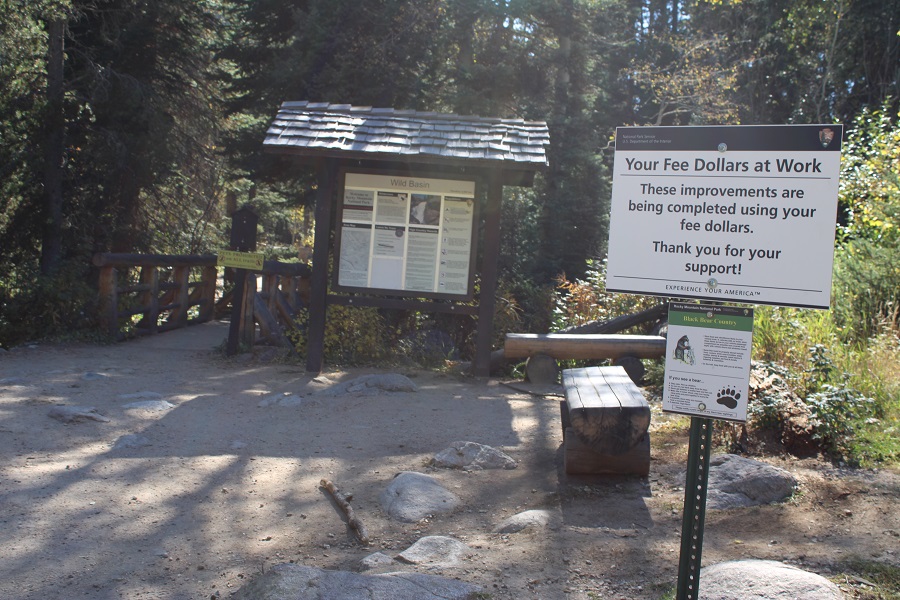
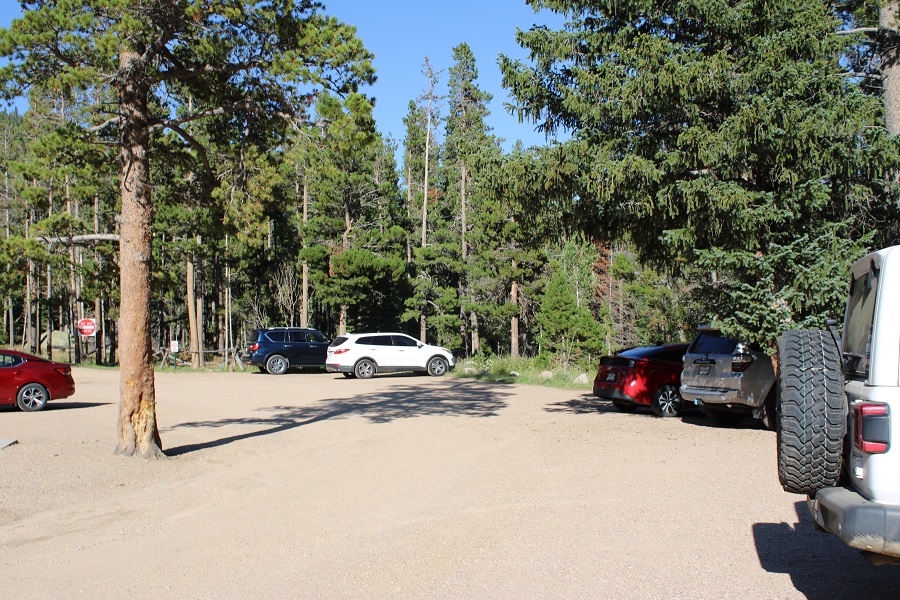
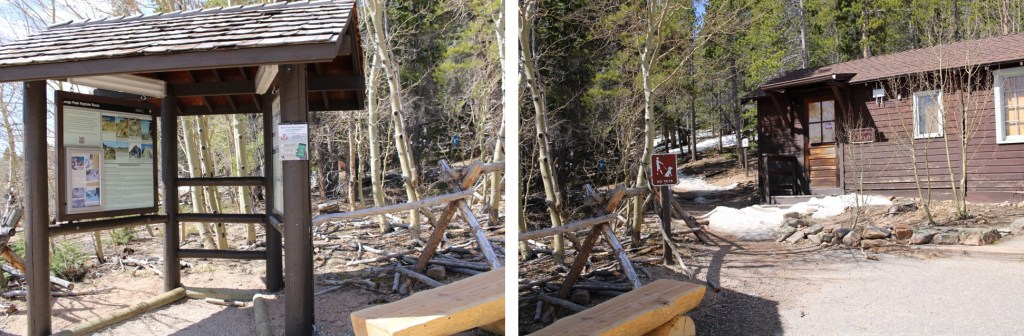
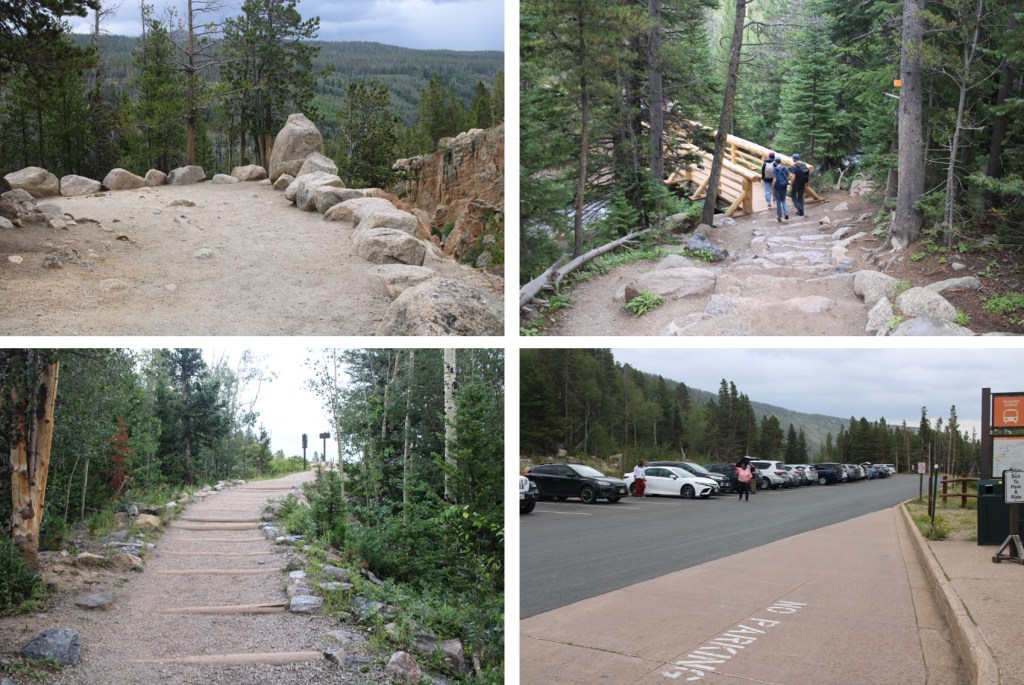
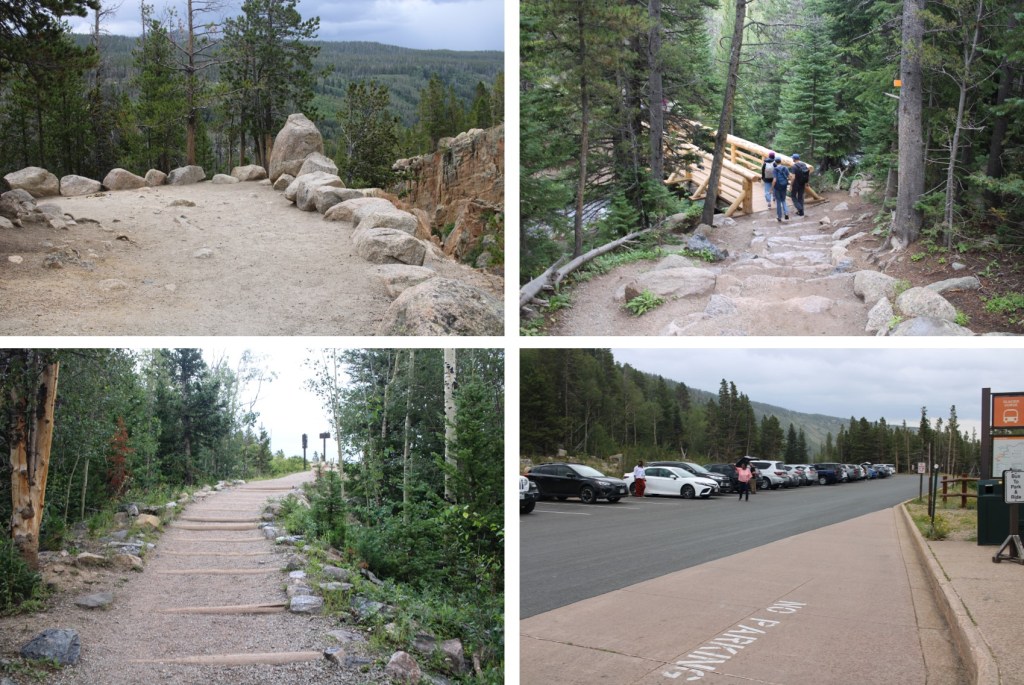
This hike, while long, was much easier than anticipated.  I arrived at the Wild Basin Trailhead inside Rocky Mountain National Park and was on the trail at 4am.   I’m sure most of you know this, but the park has an entrance fee, and timed entry for this trailhead between the hours of 9am-2pm.  The trailhead holds dozens of vehicles, and there’s a bathroom there.

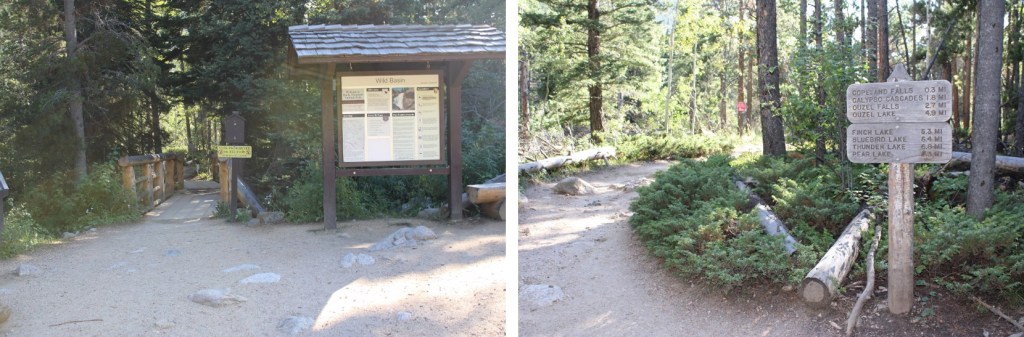
The trailhead starts at the west end of the parking area and is clearly marked.
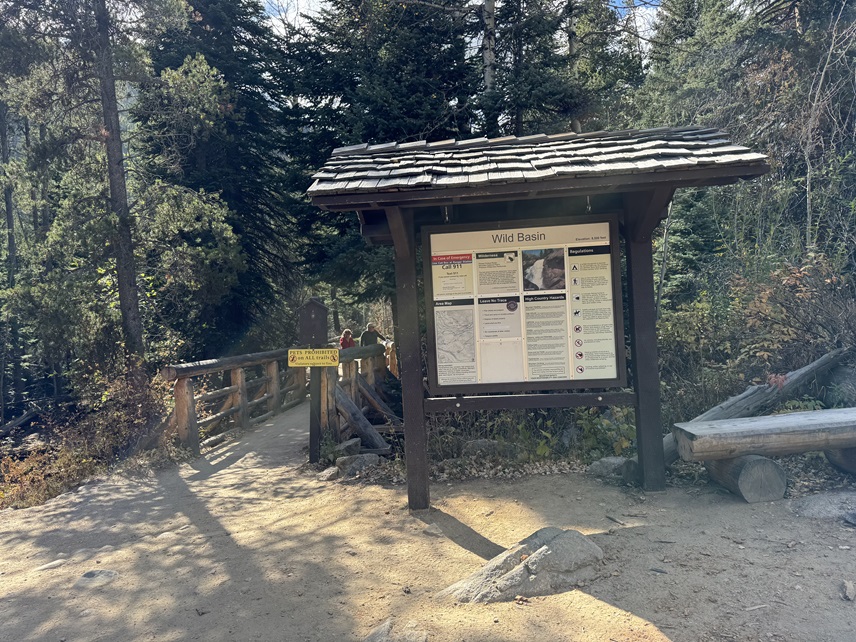
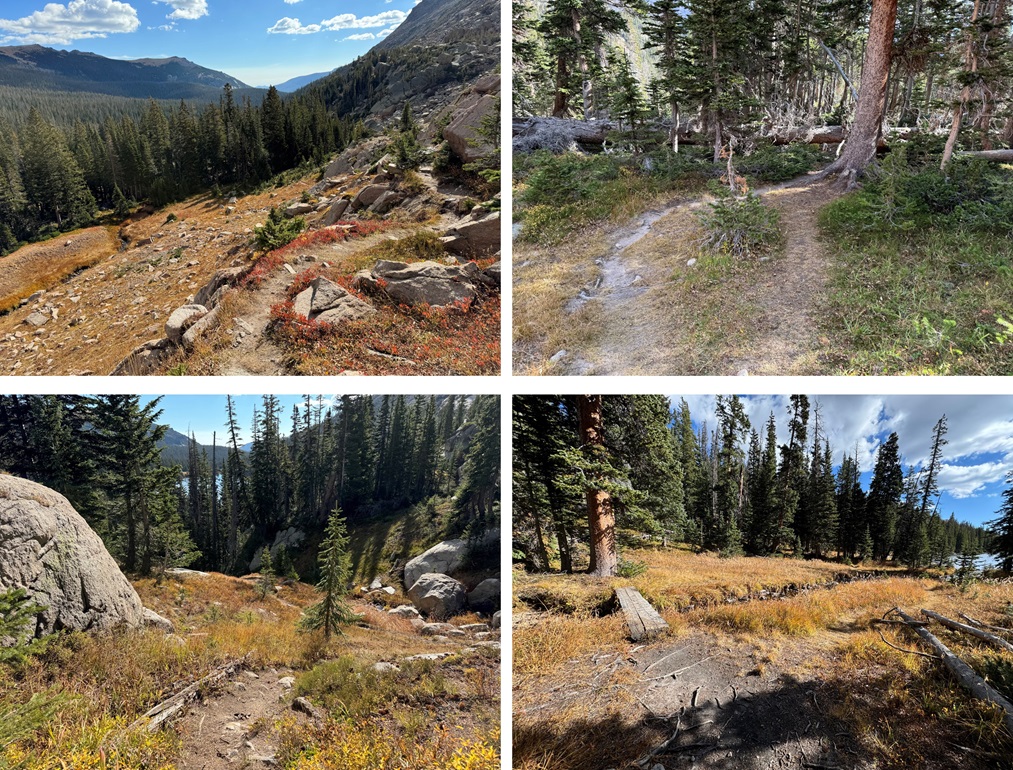
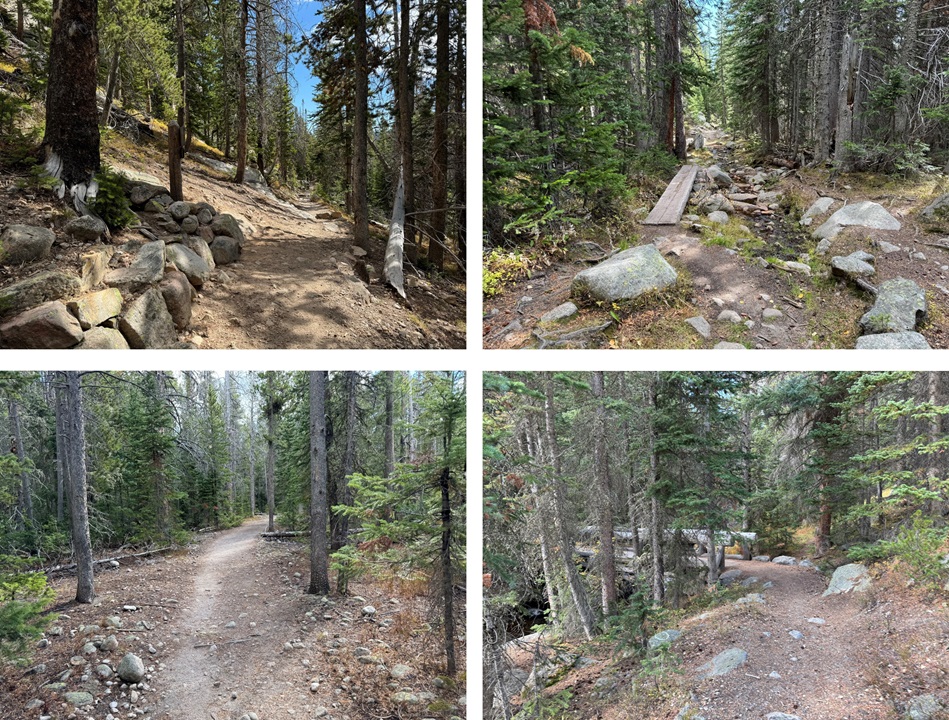
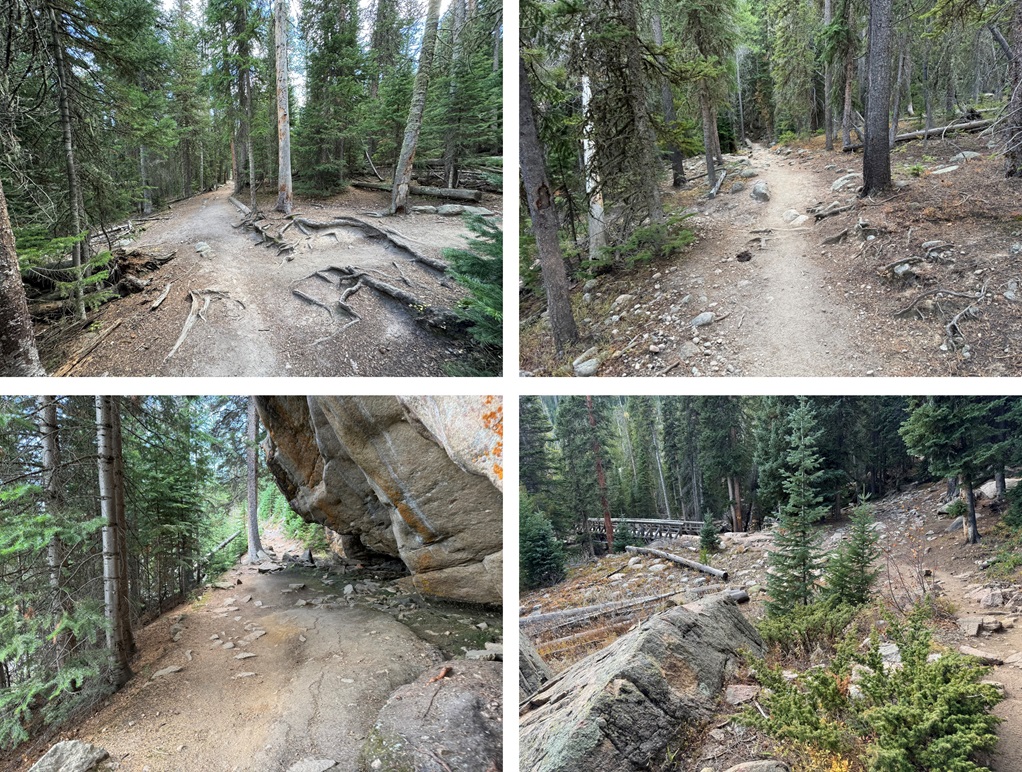
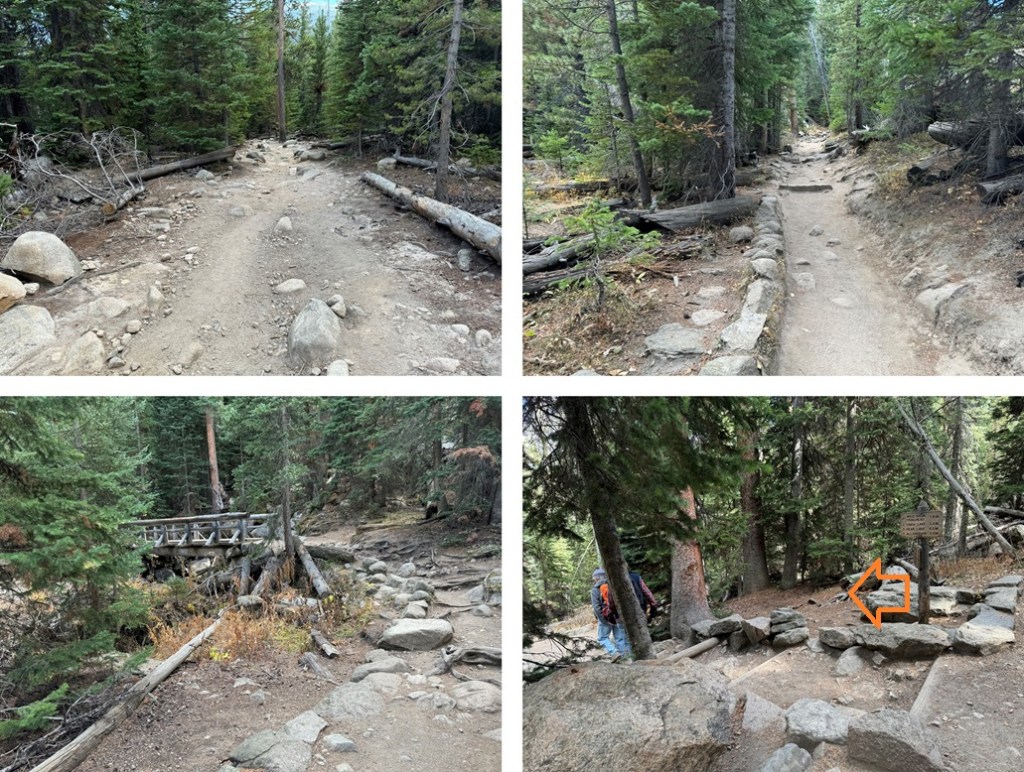
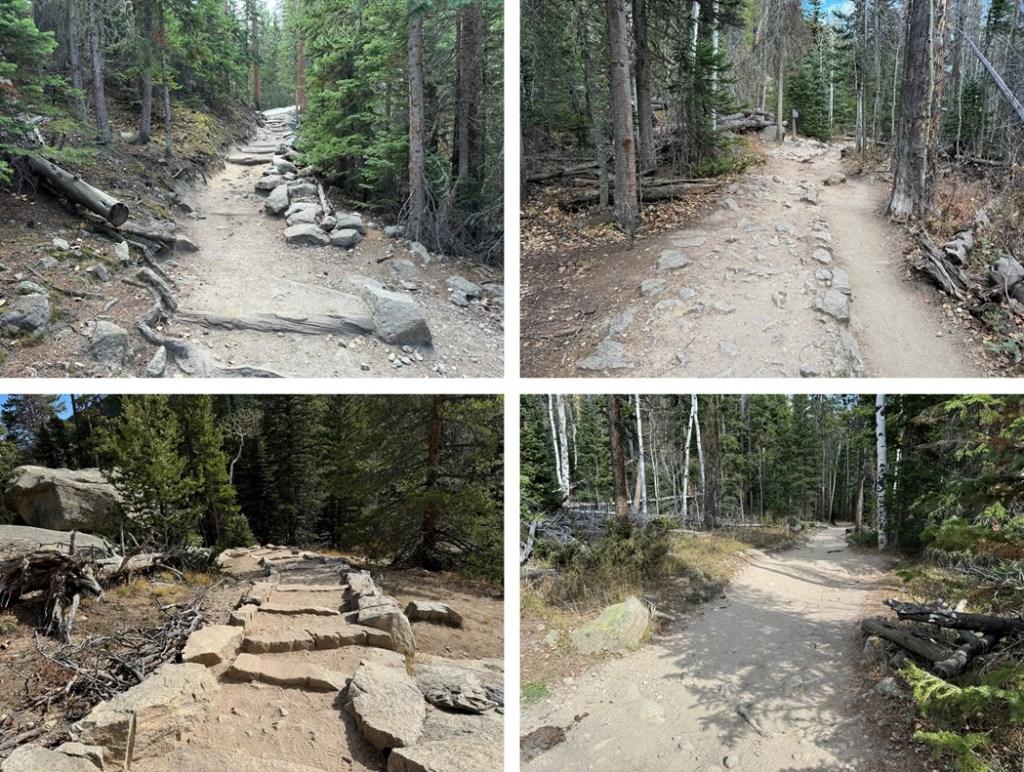
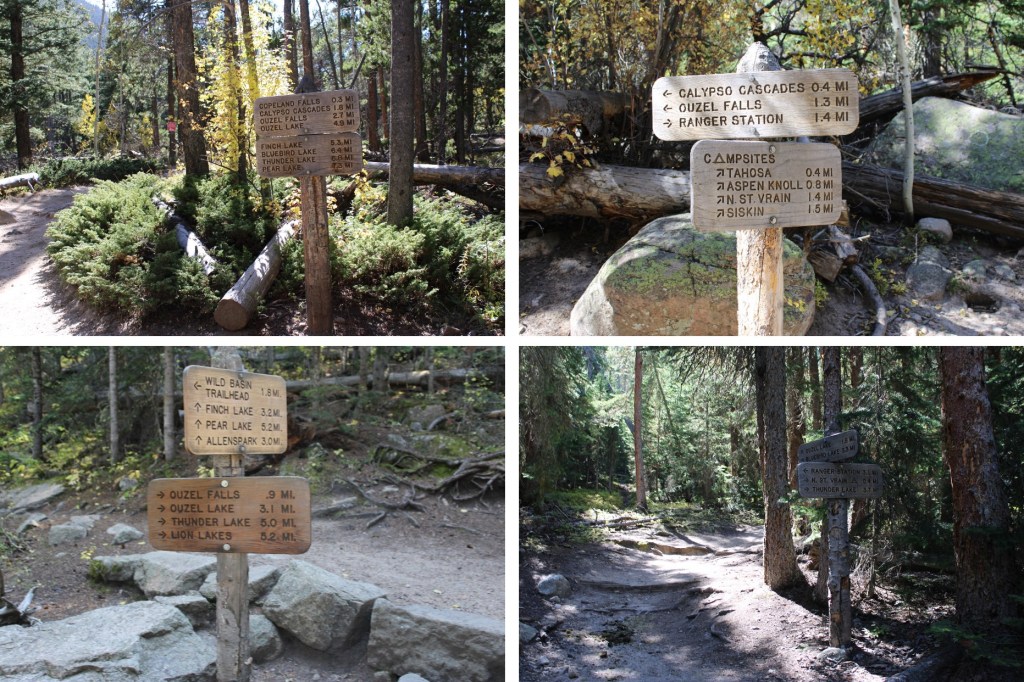
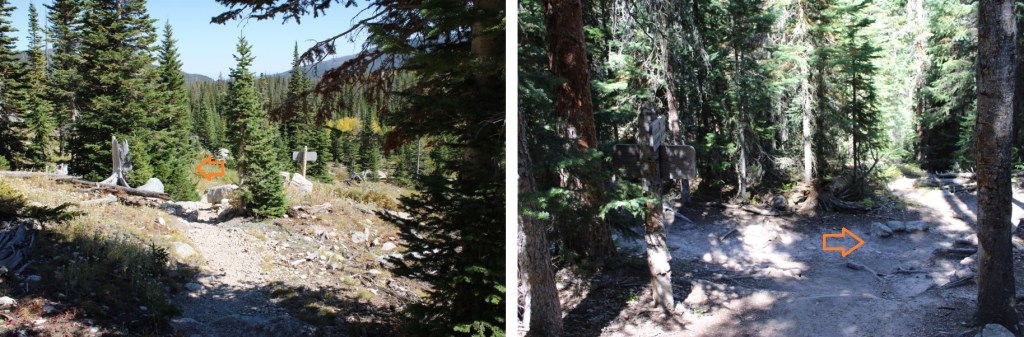
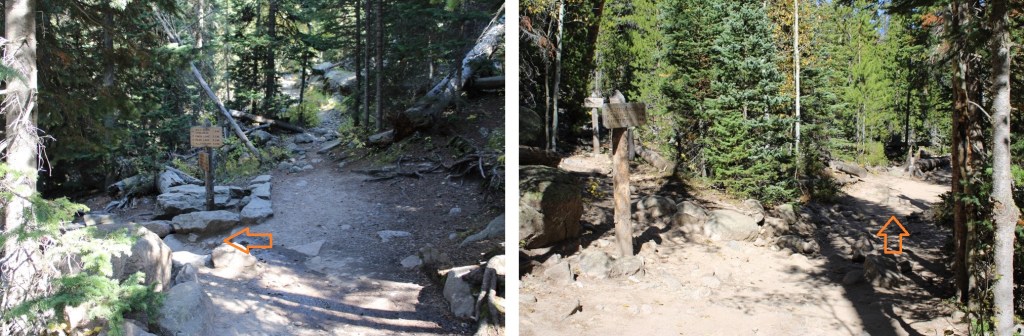
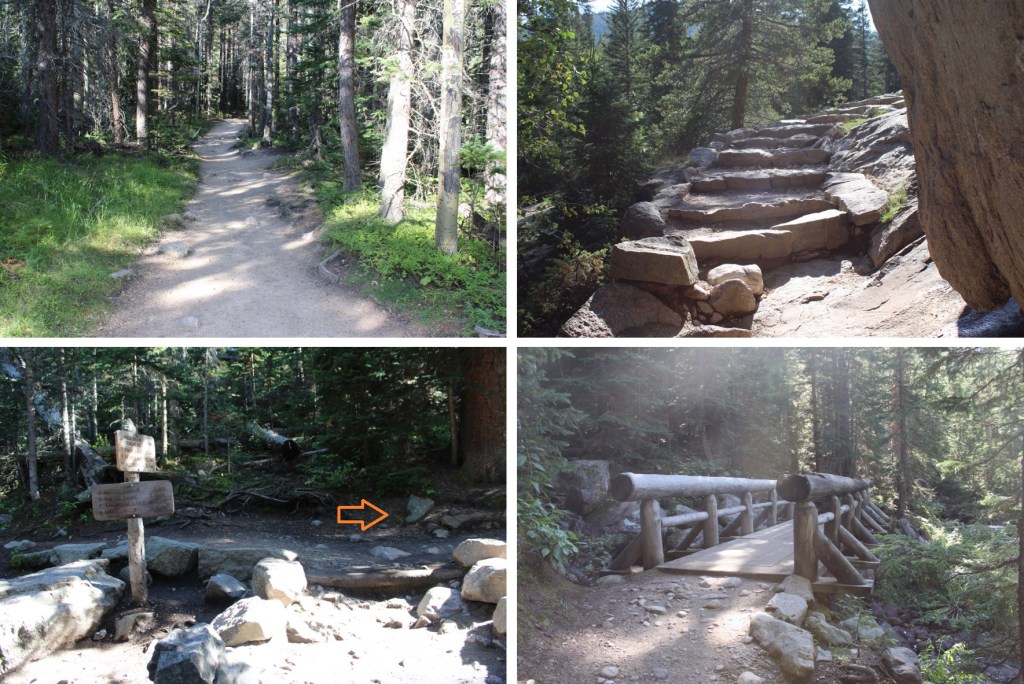
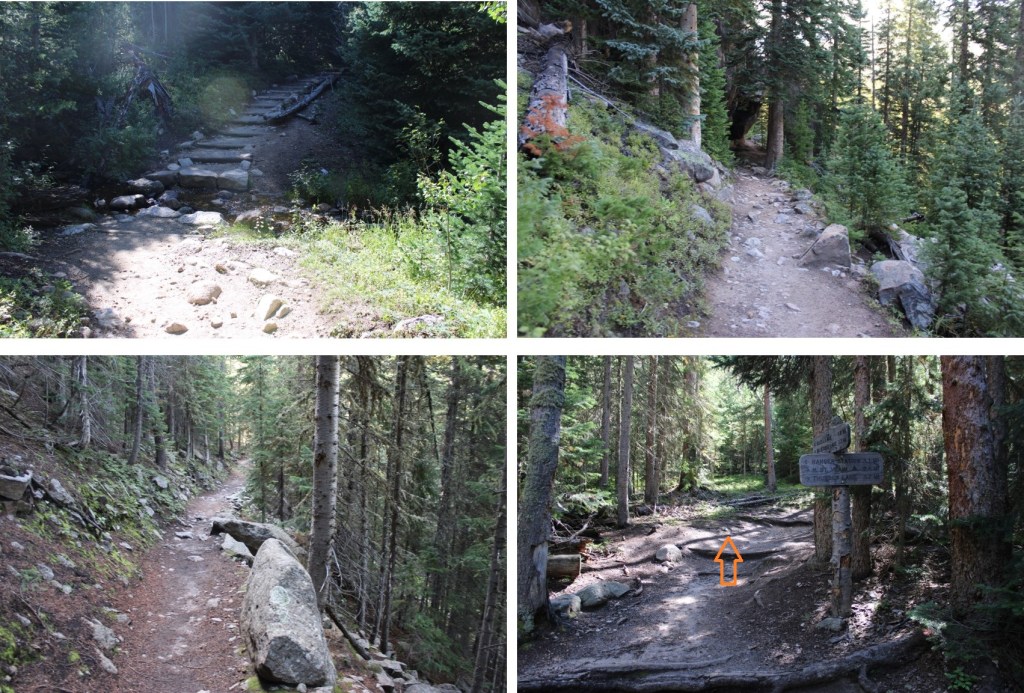
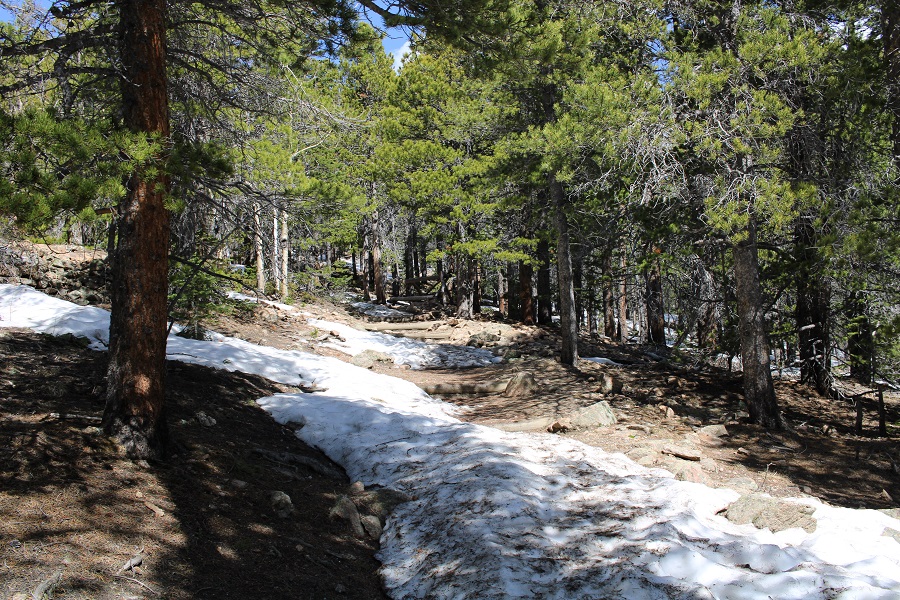
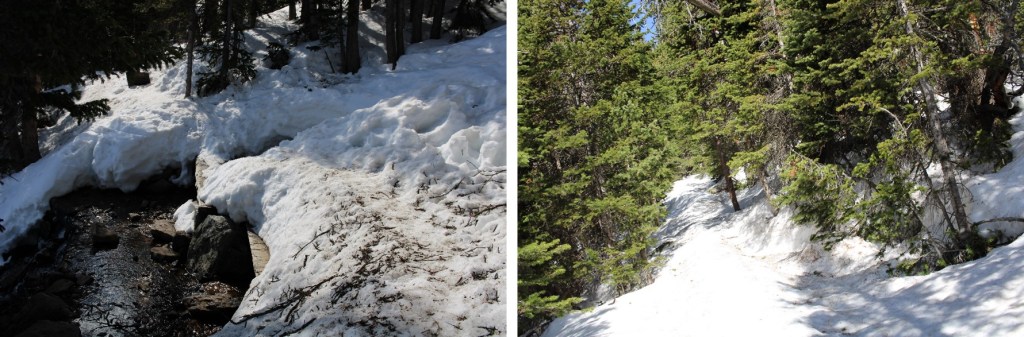
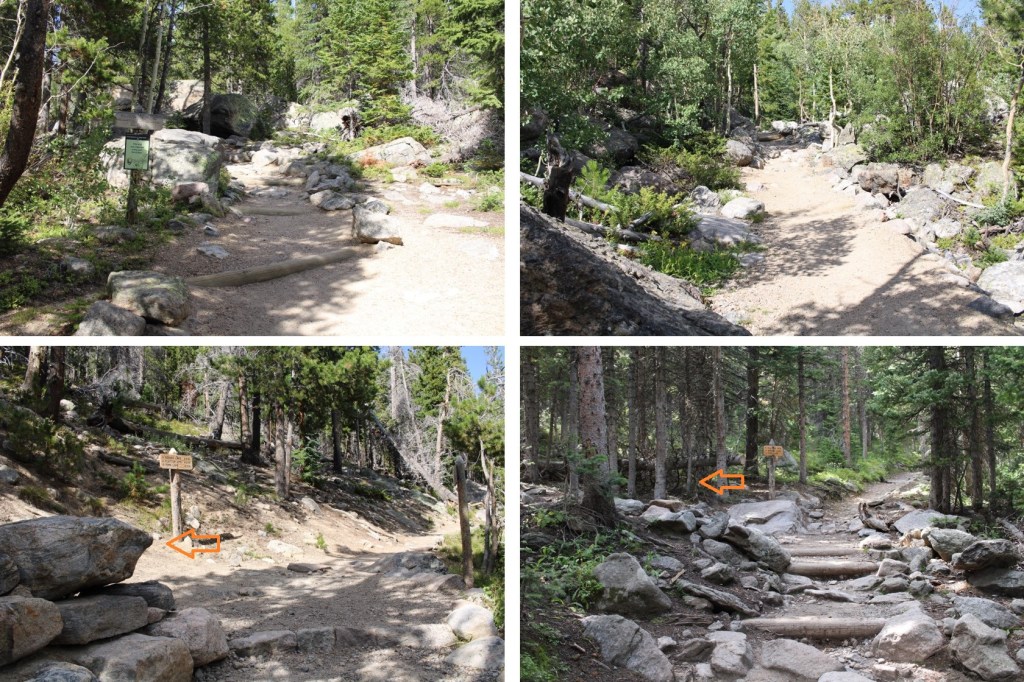
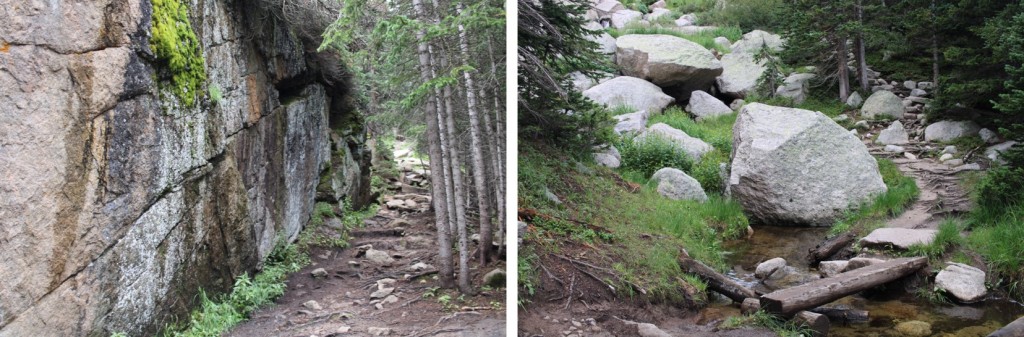
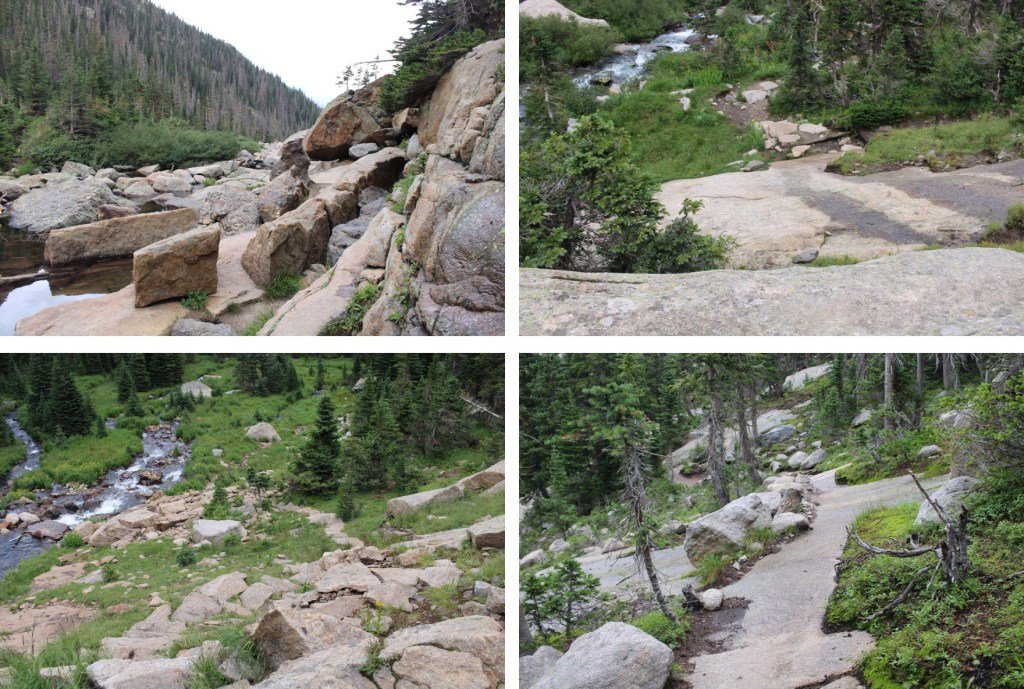
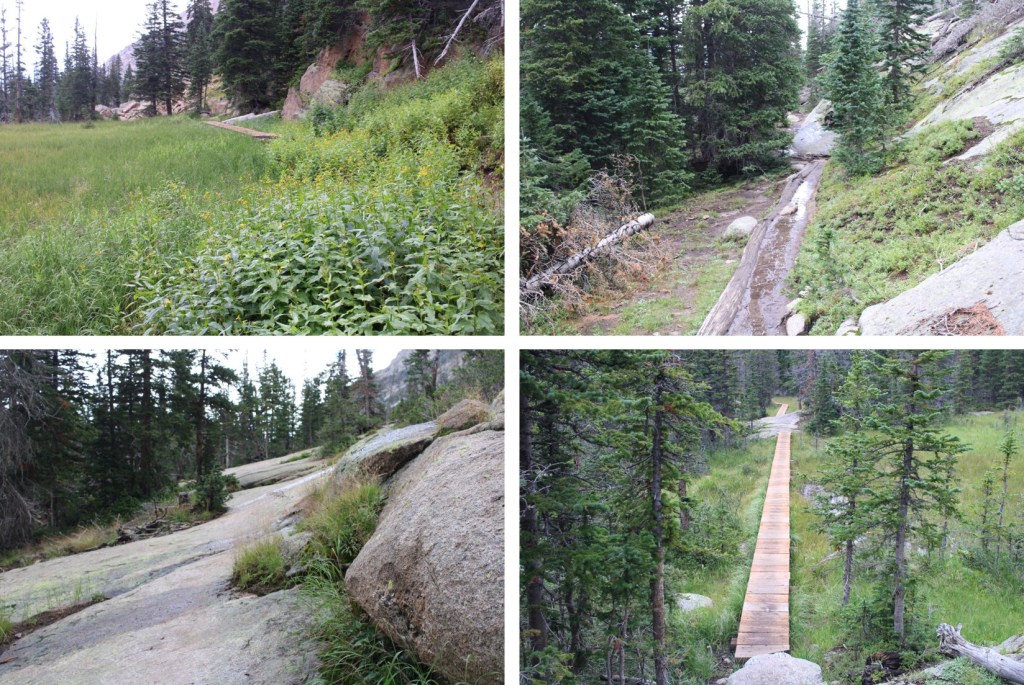
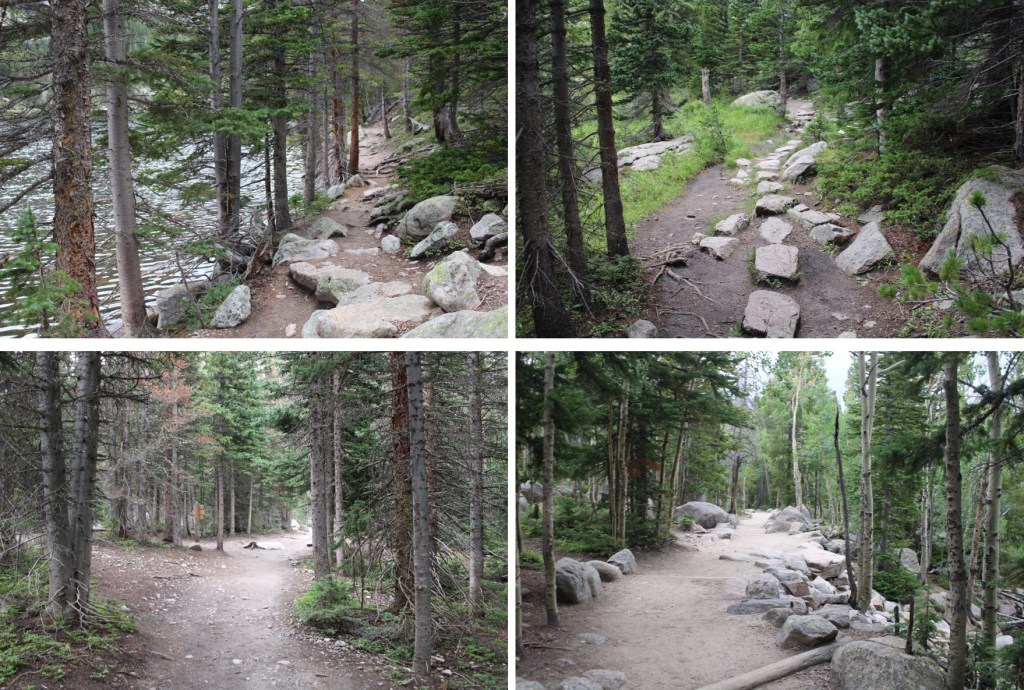
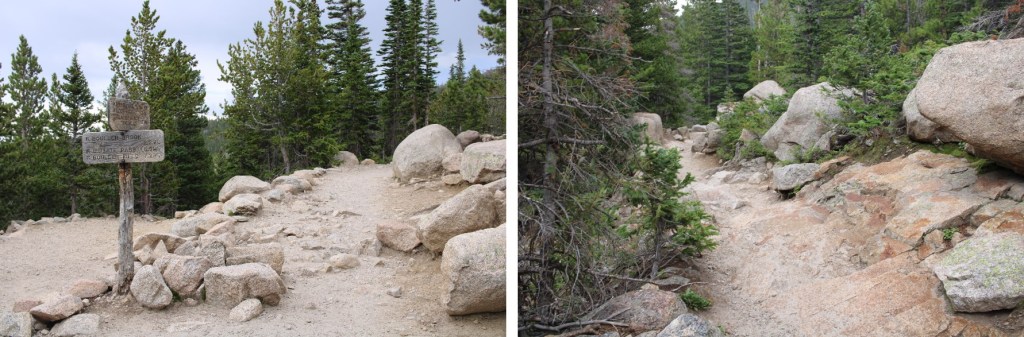
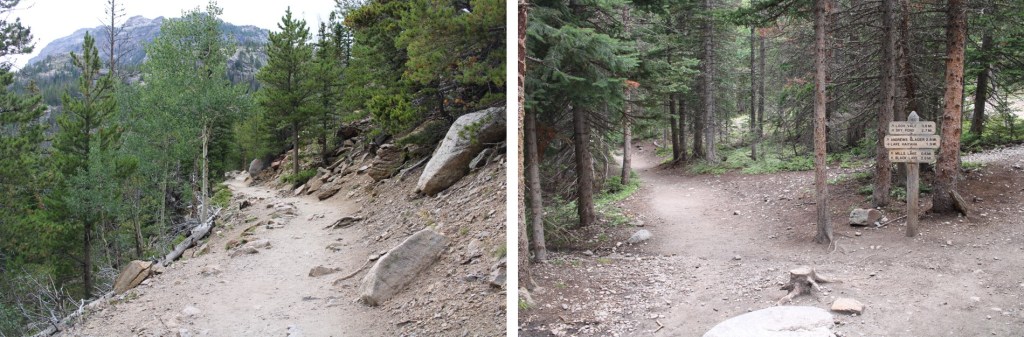
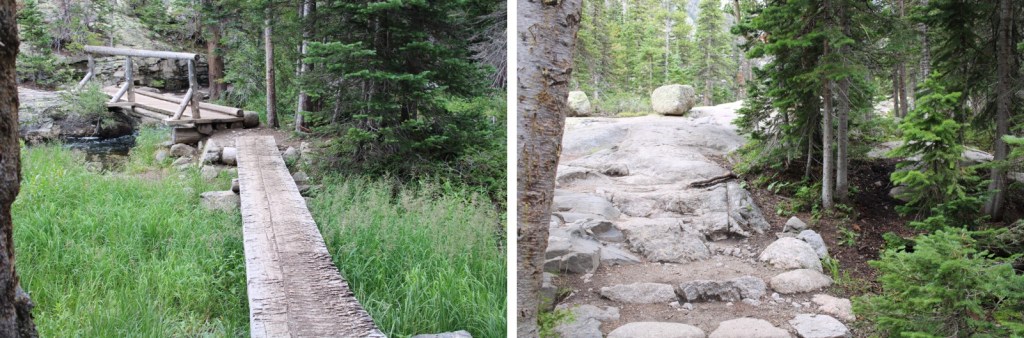
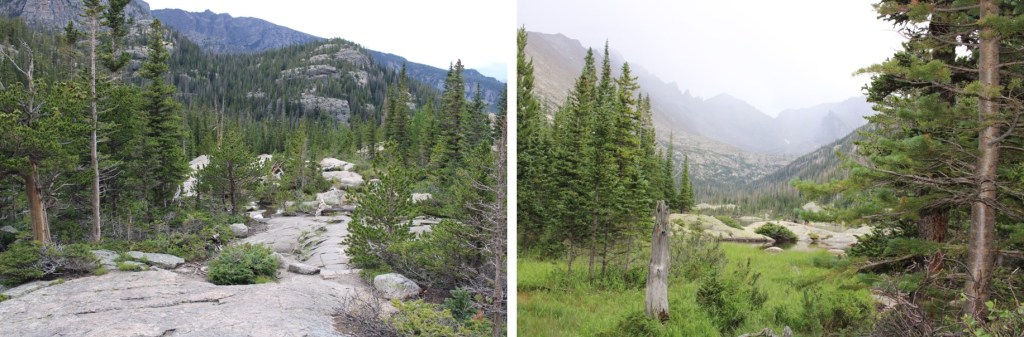
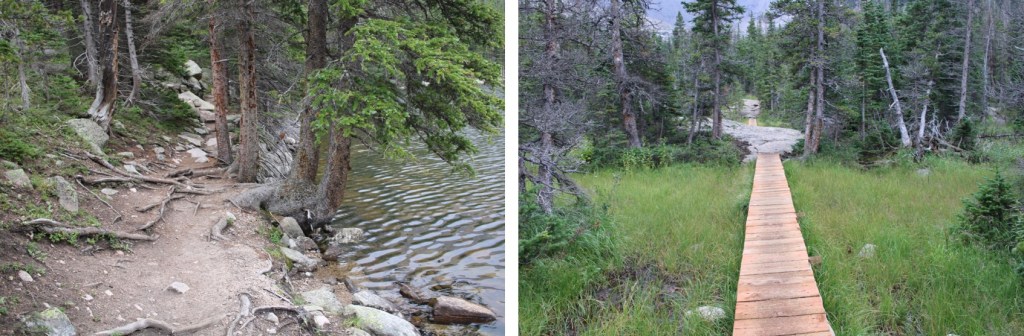
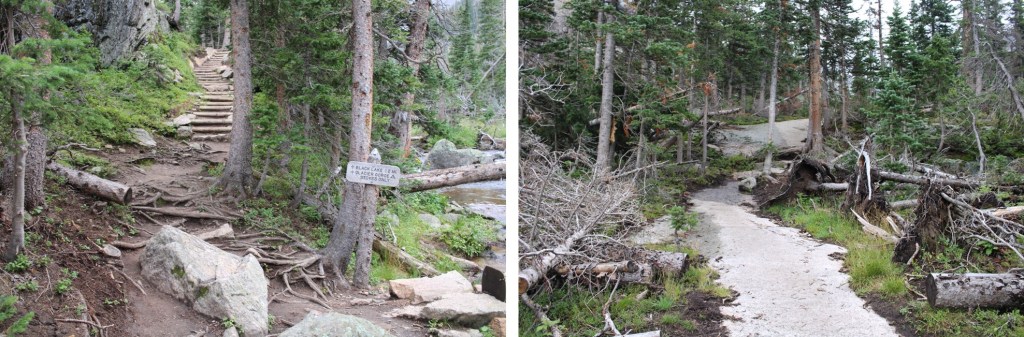
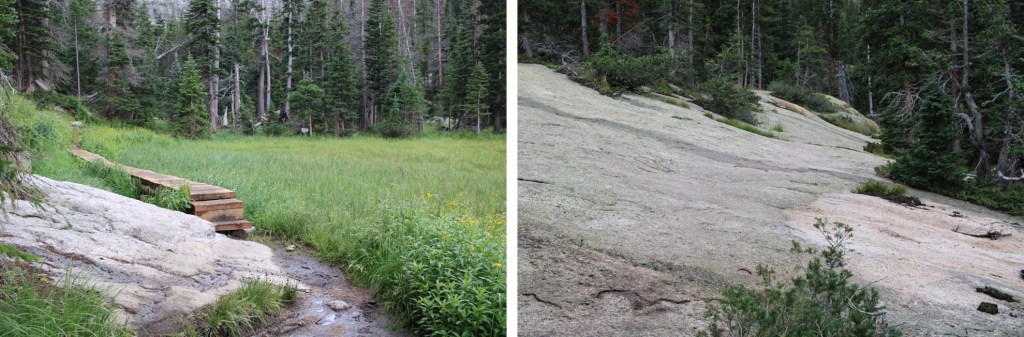
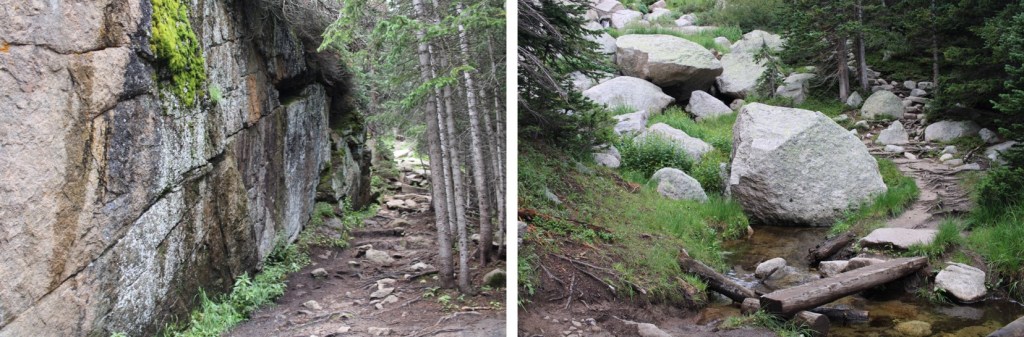
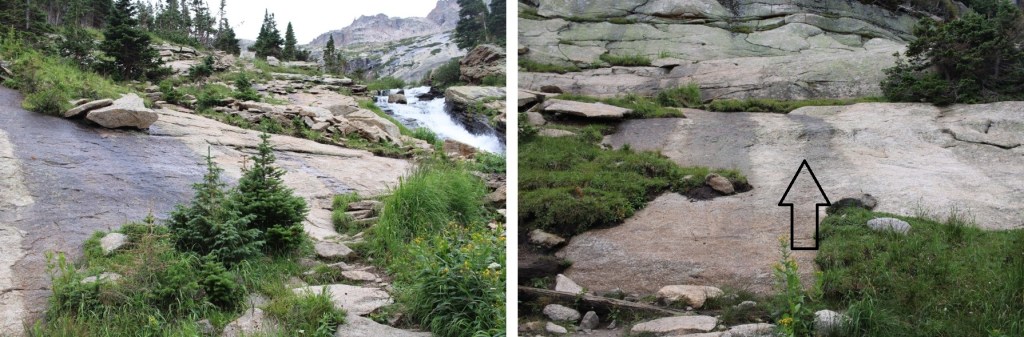
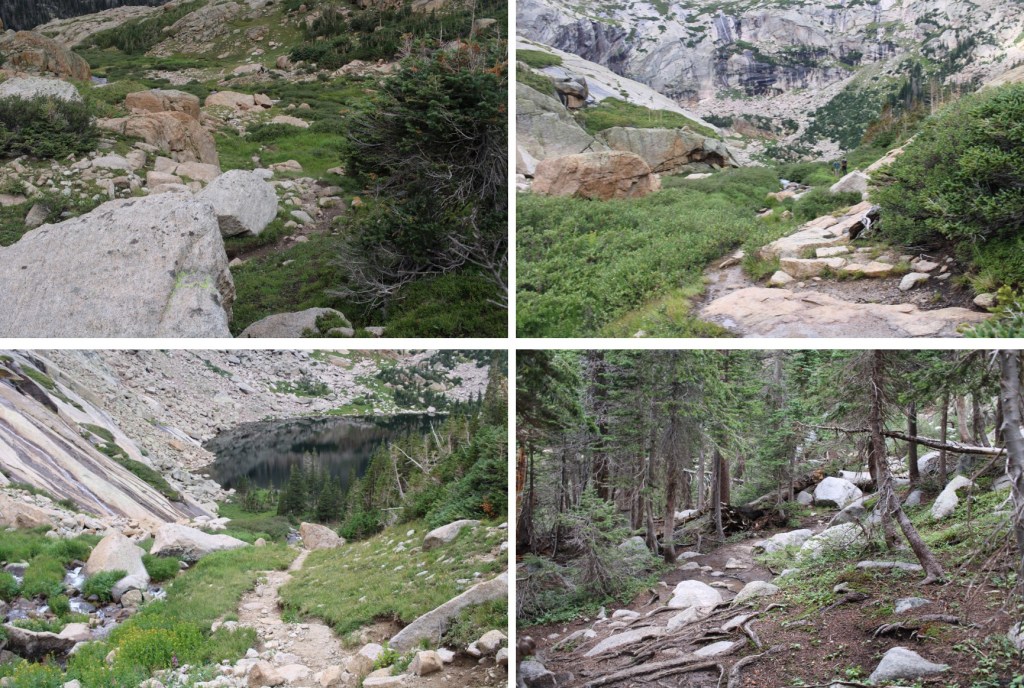
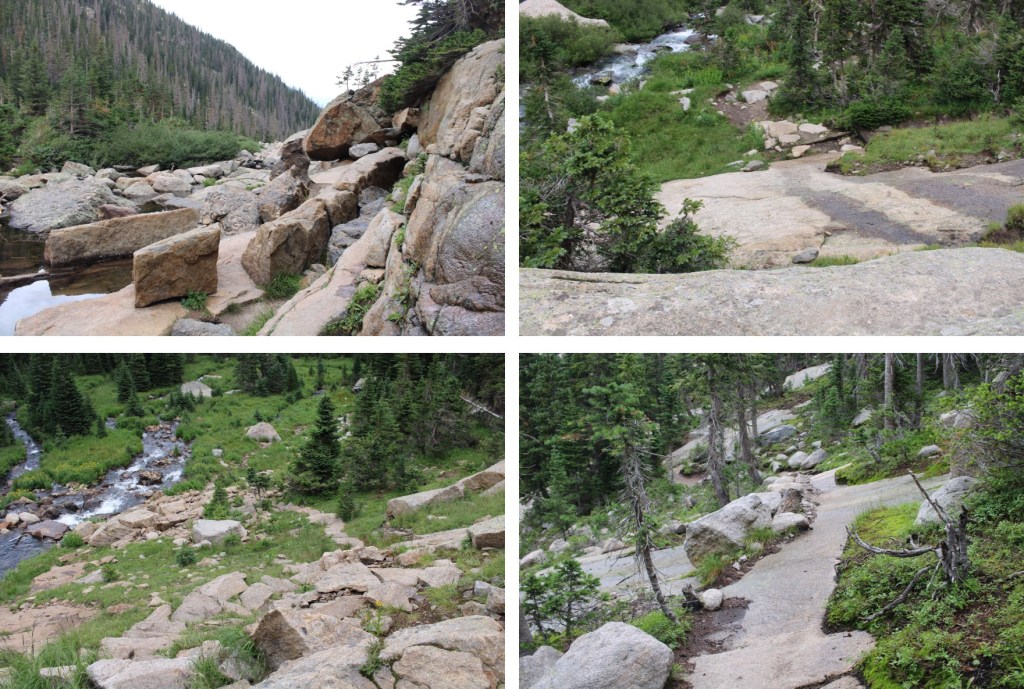
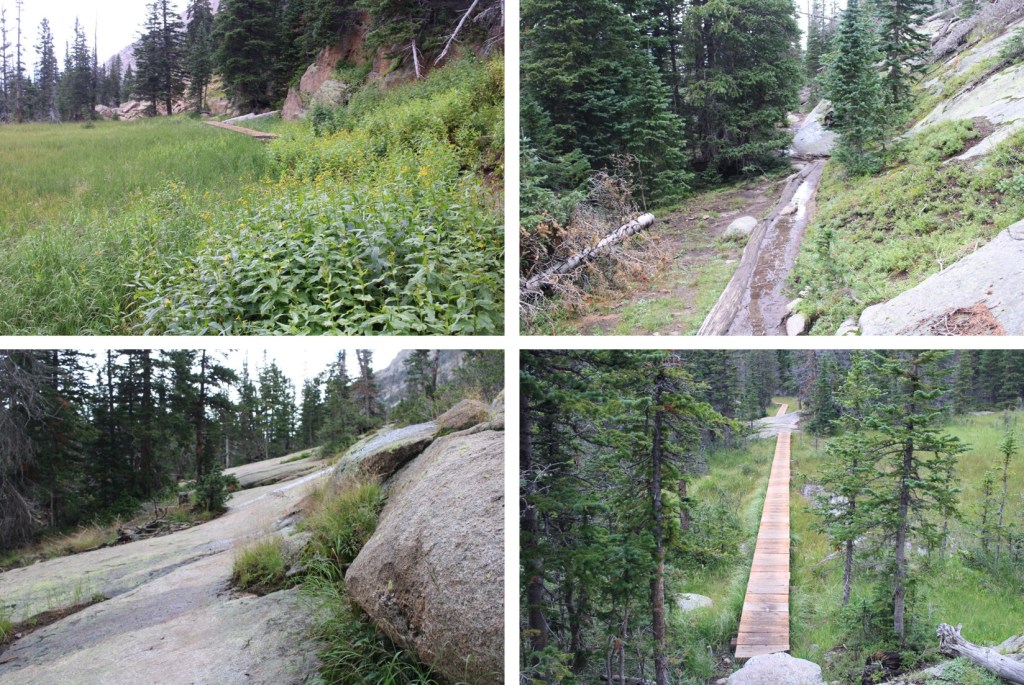
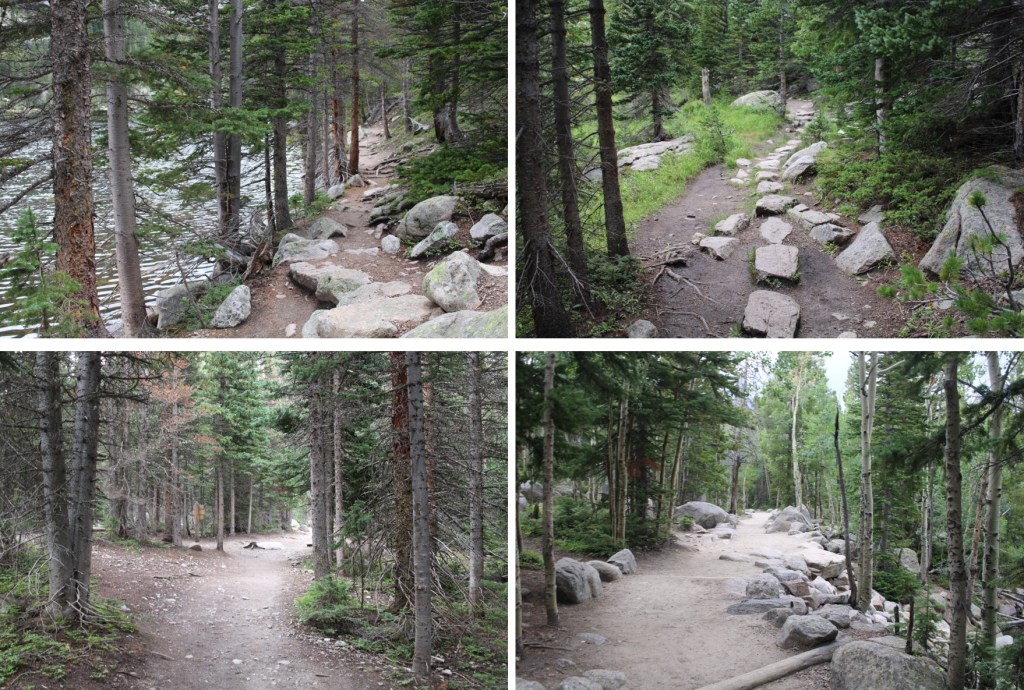
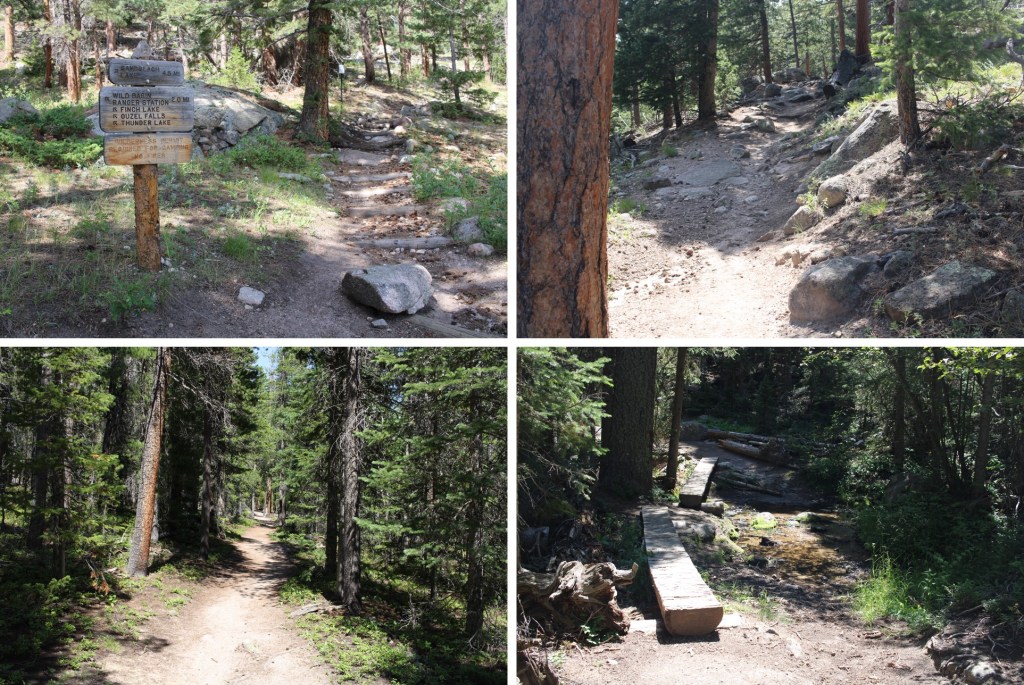
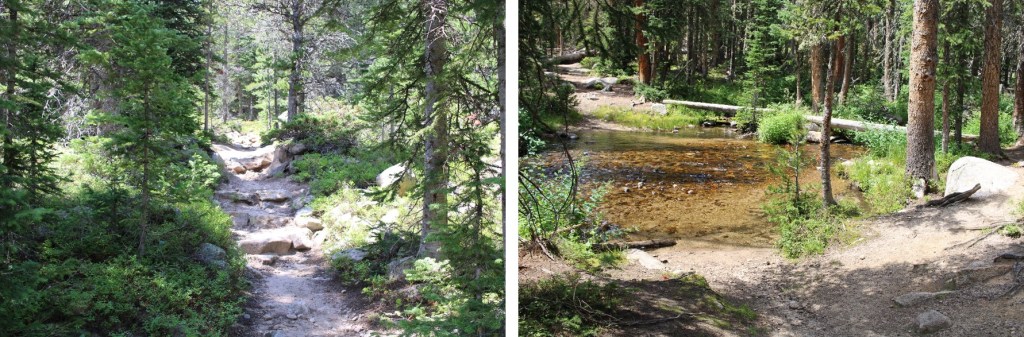
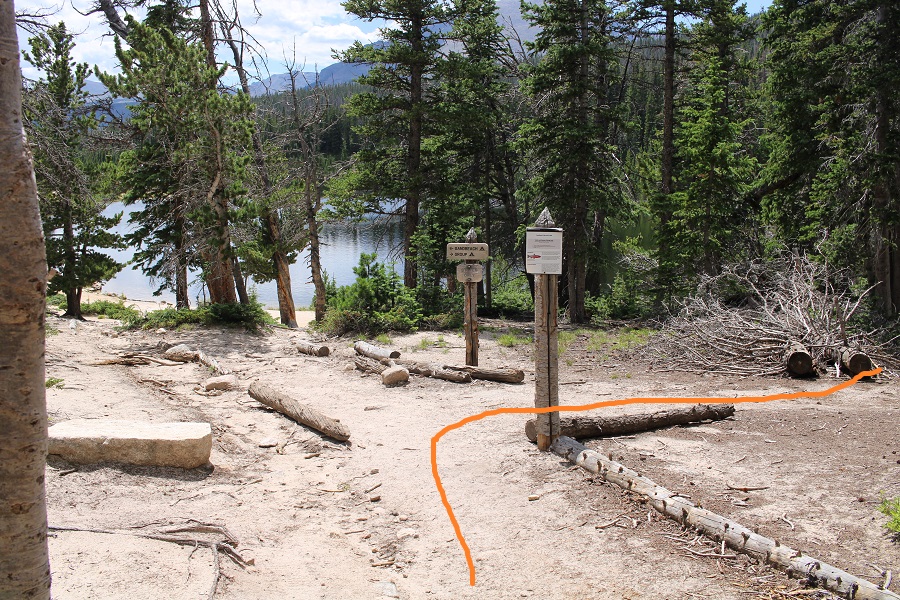
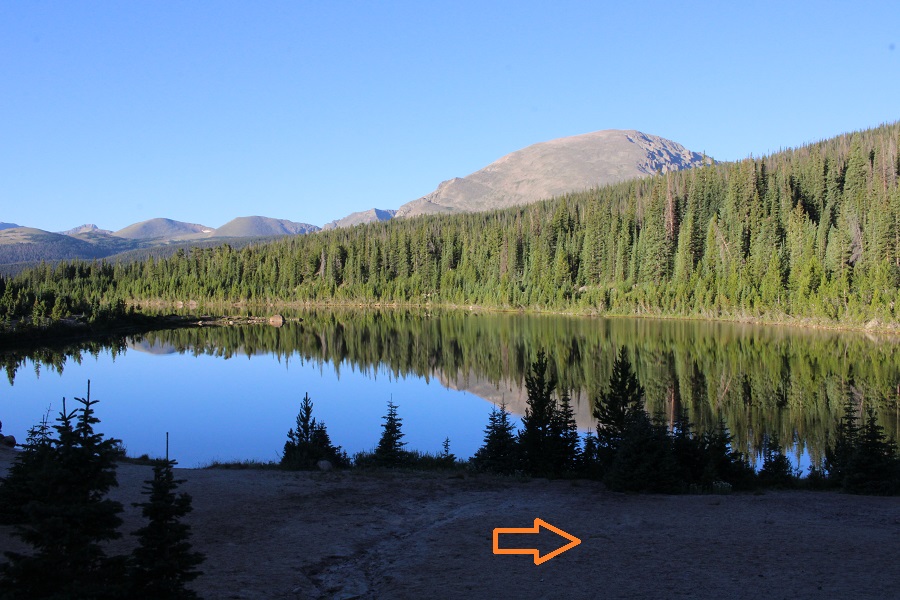
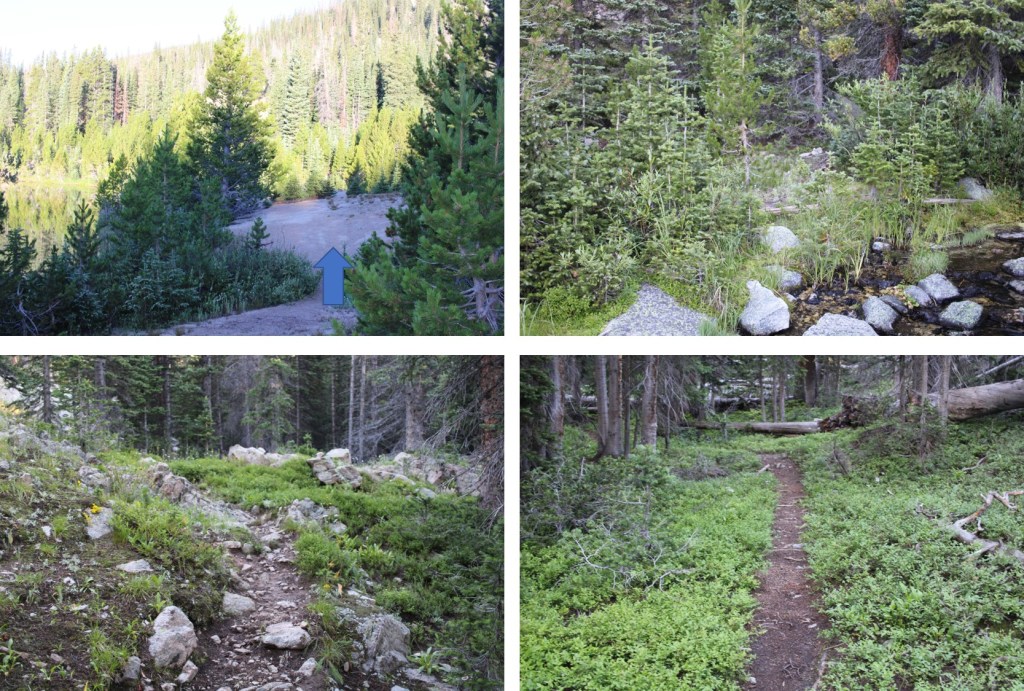
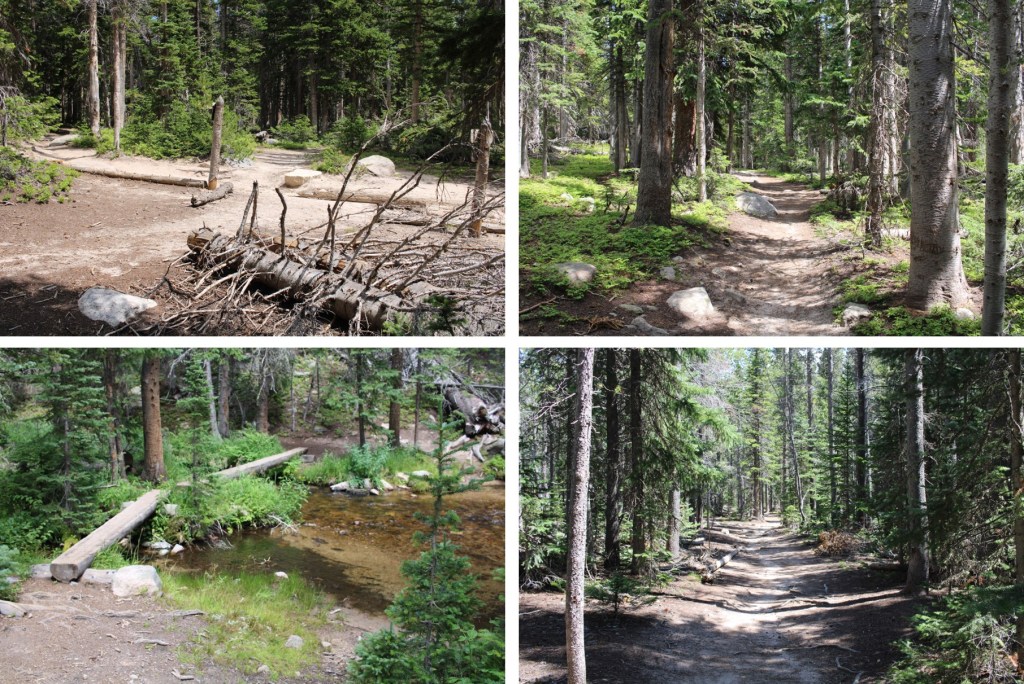
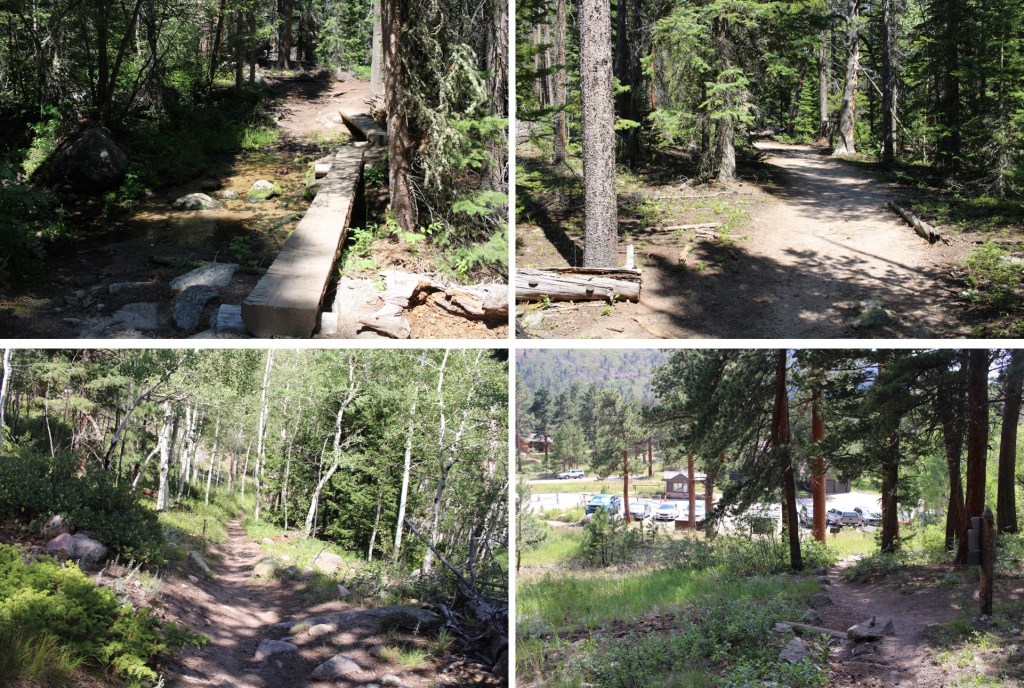
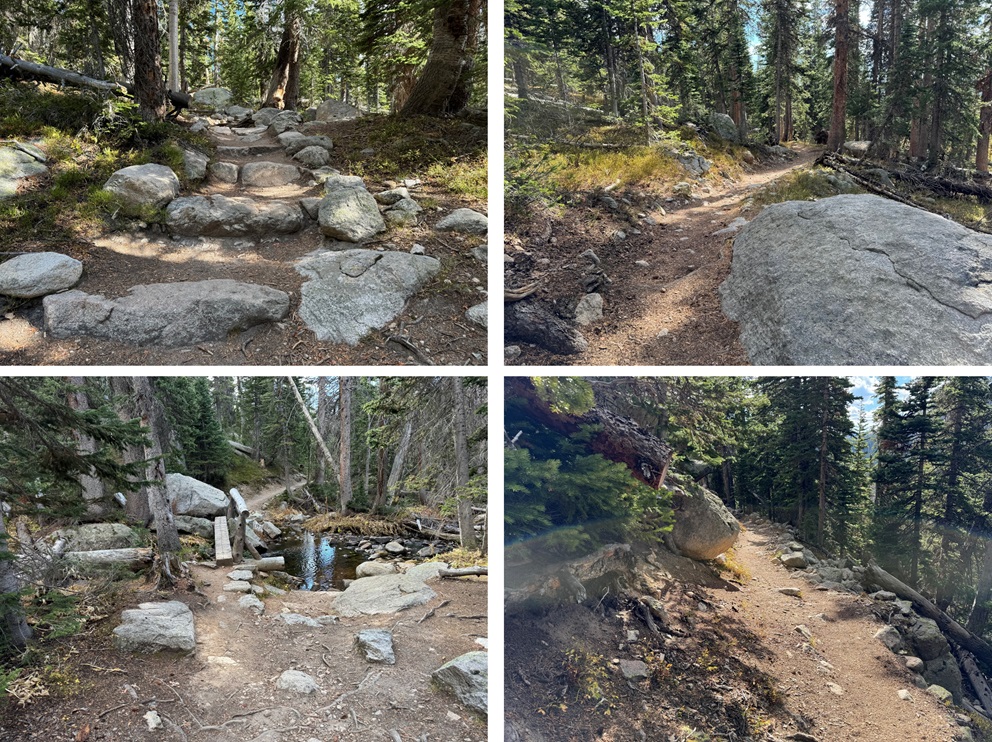
I followed the trail all the way to Thunder Lake. This is a class 1 trail with many junctions, but they are all clearly labeled.  I just kept heading towards Thunder Lake, and if Thunder Lake wasn’t on the trail sign (which it wasn’t always), I followed the signs to Ouzel Falls, and then Thunder Lake was on all the rest of the signs.  Along the way I passed Calypso Falls and Ouzel Falls.  Here are some pictures of the trail and junctions to Thunder Lake:

After hiking for a total of 7.2 miles I made it to Thunder Lake, and the Patrol Cabin (which was now boarded up for the winter).
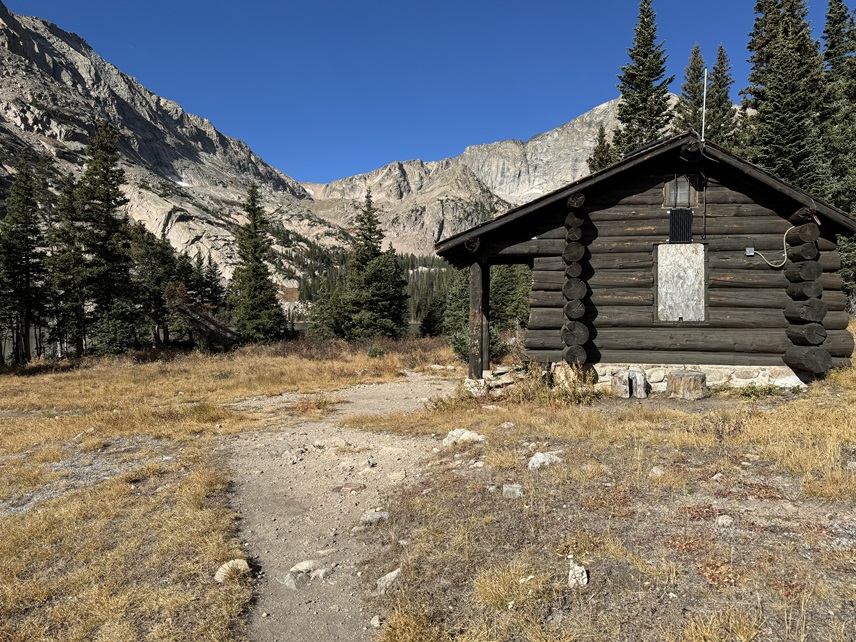
Here the trail continues, skirting the north side of Thunder Lake, then continuing into the trees, heading west all the way up to Lake of Many Winds. 
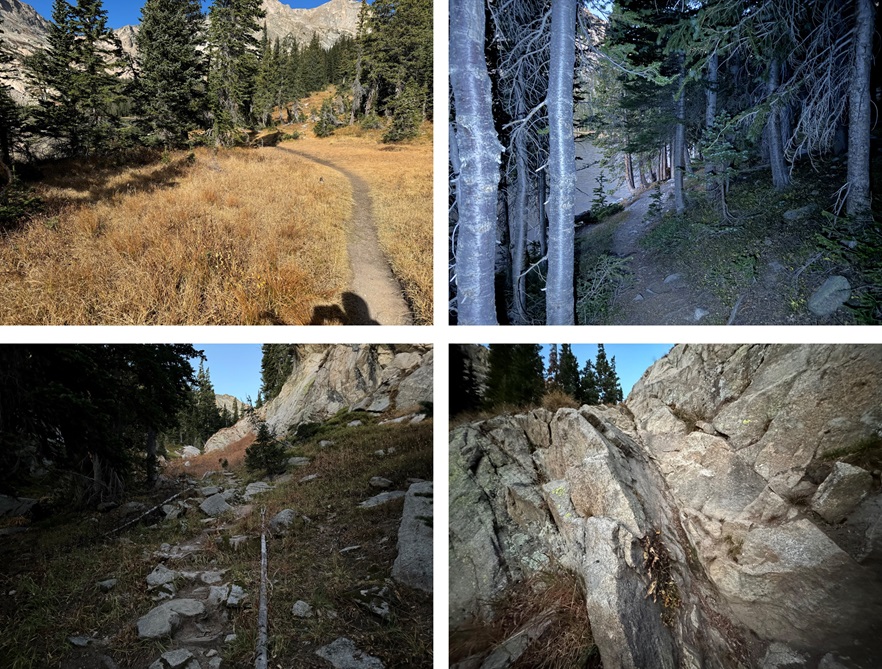
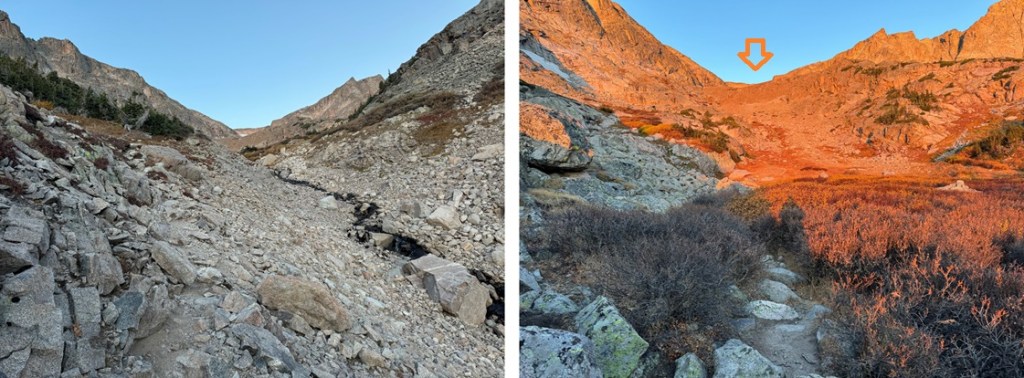
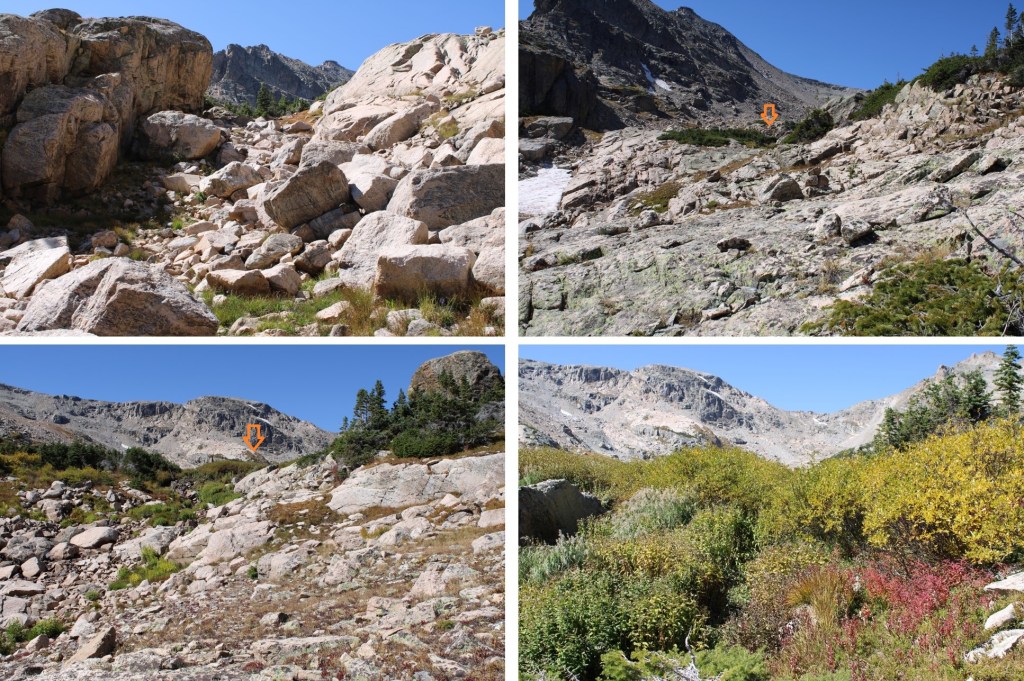
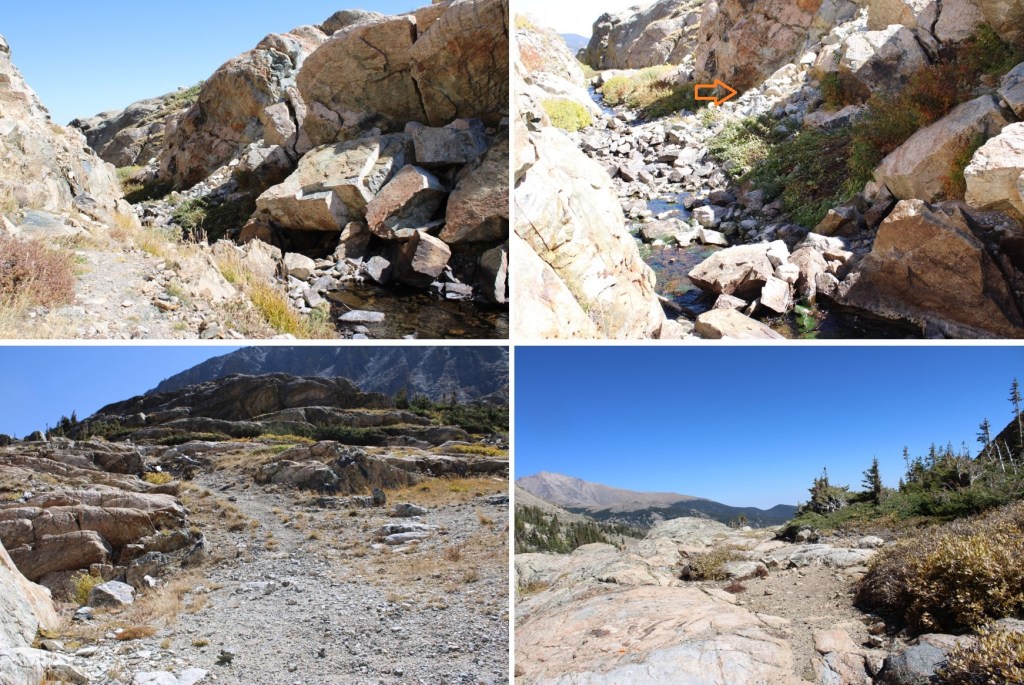
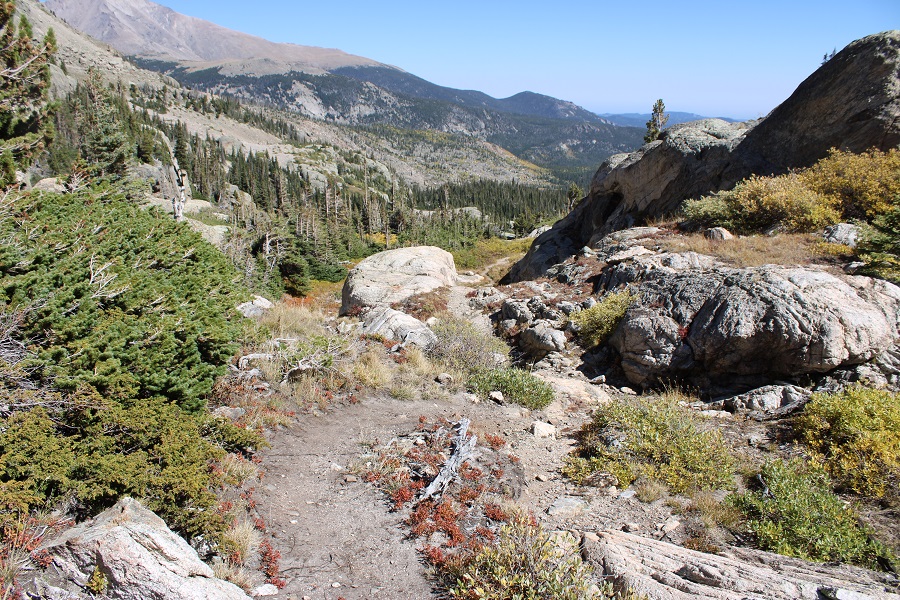
At Lake of Many Winds the trail stops, but the route finding is class 2 and easy to figure out. I kept heading west, aiming for the saddle between 12er Tanima and Mt Alice, otherwise known as Boulder-Grand Pass.
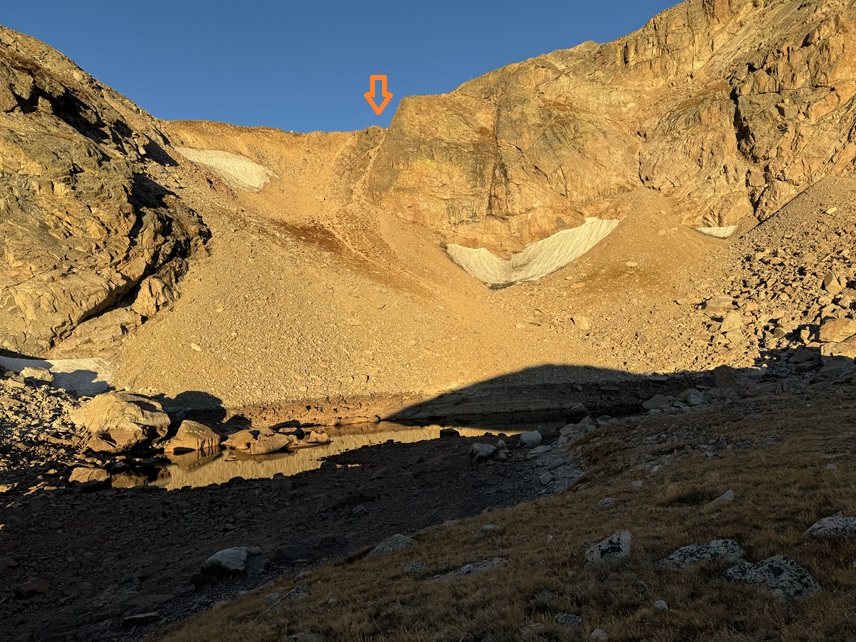
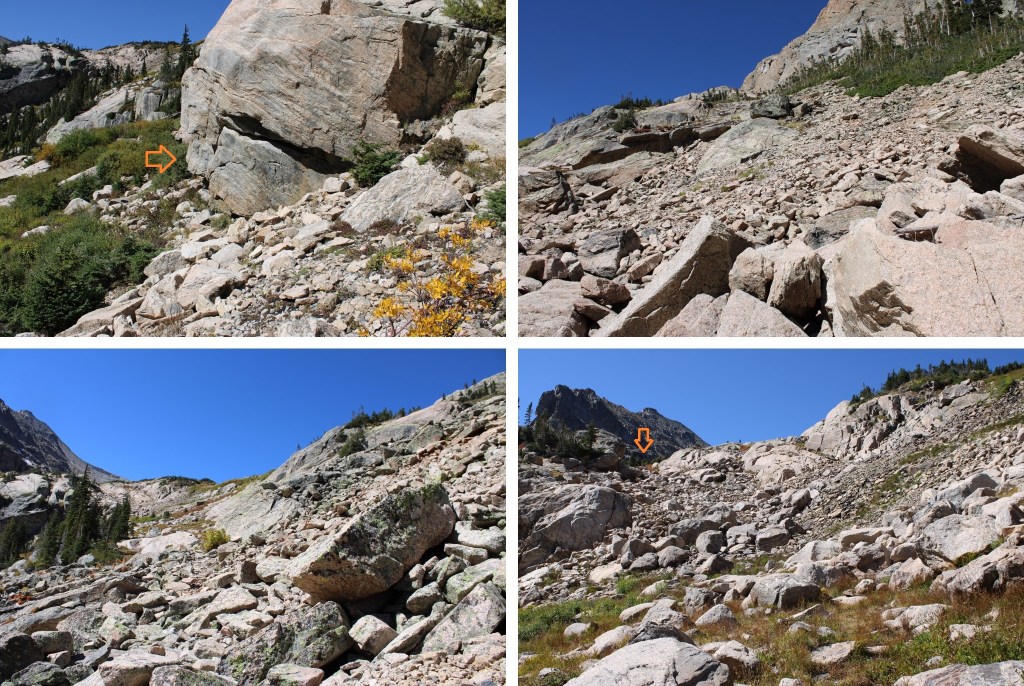
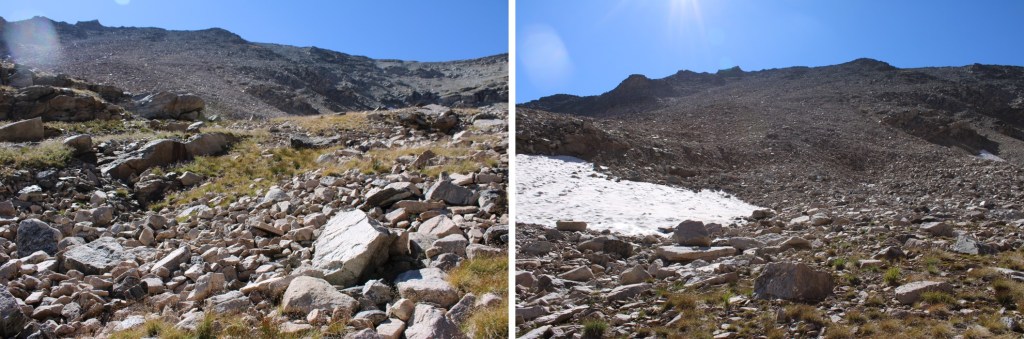
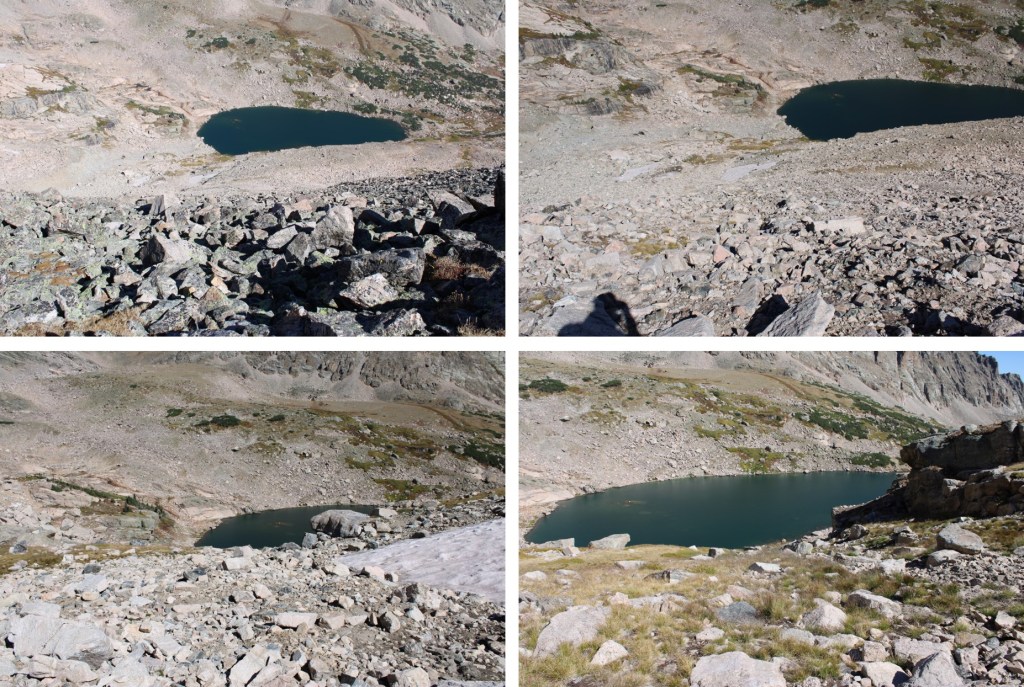
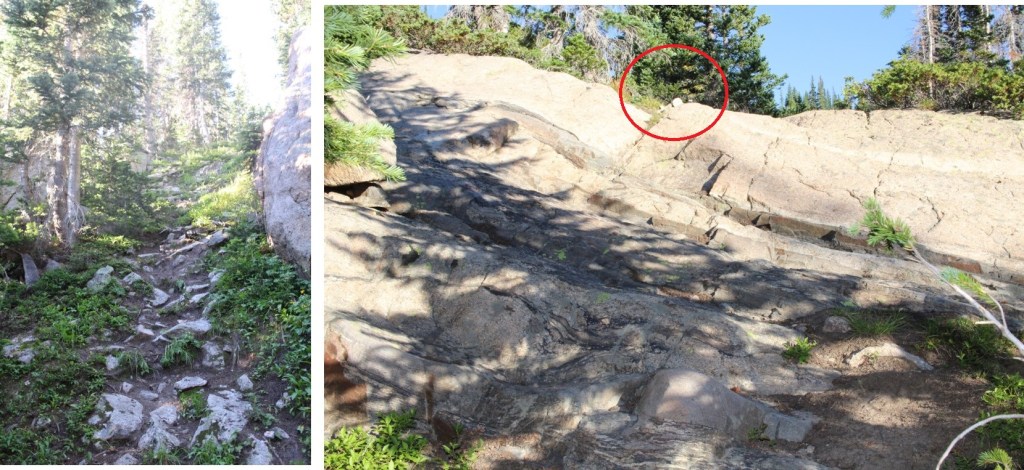
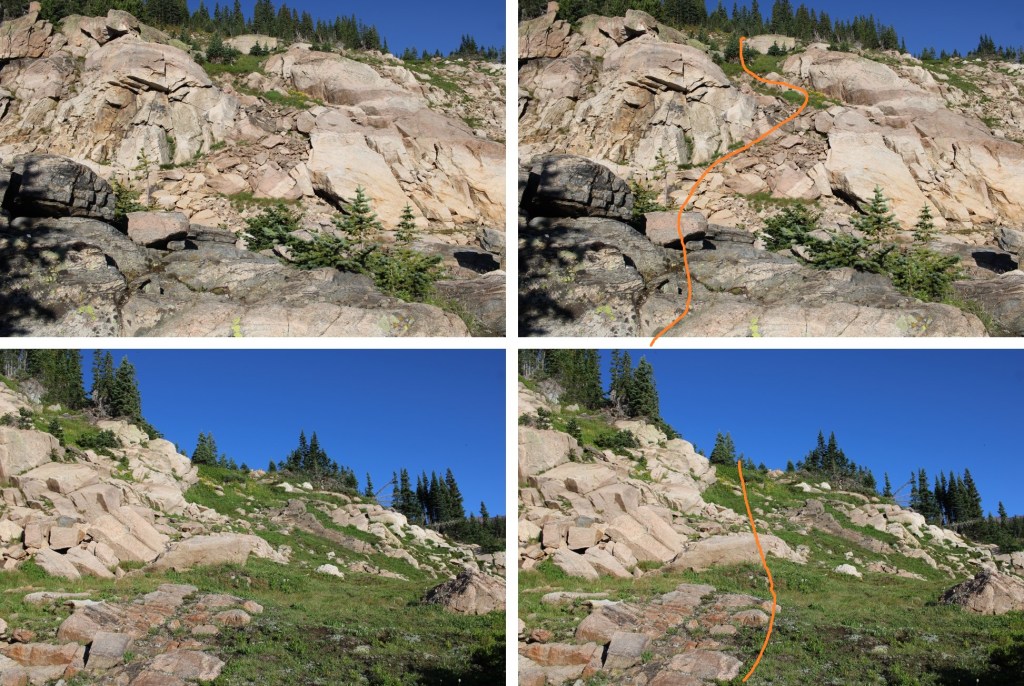
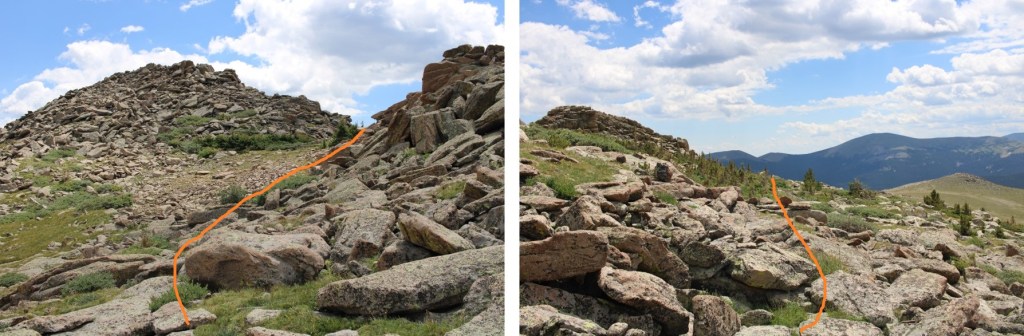
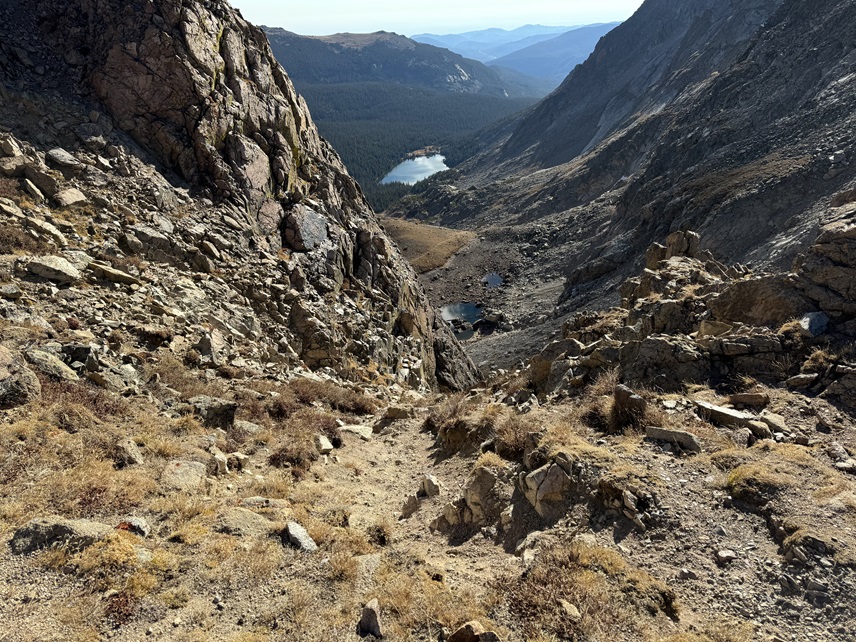
This part is choose your own adventure, but the remainder of the hike is class 2.  You’re just trying to gain the saddle.  I’d been here before (when I was climbing Isolation), and just went down the scree, which worked well.  However, this morning I wanted to try the gully to the right.  It was more solid than the scree and offered hand and foot holds.  You can take the scree up as well, as all routes here lead to the same place.

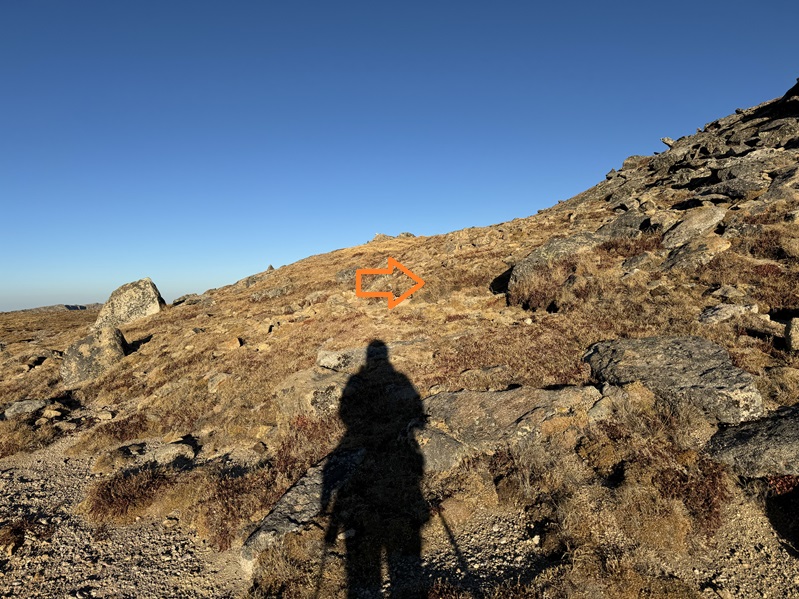
Once at the saddle, I turned right and ascended the ridge north.  The true summit is to the west (as per LoJ and my Peakbagger app, and summit register placement). 
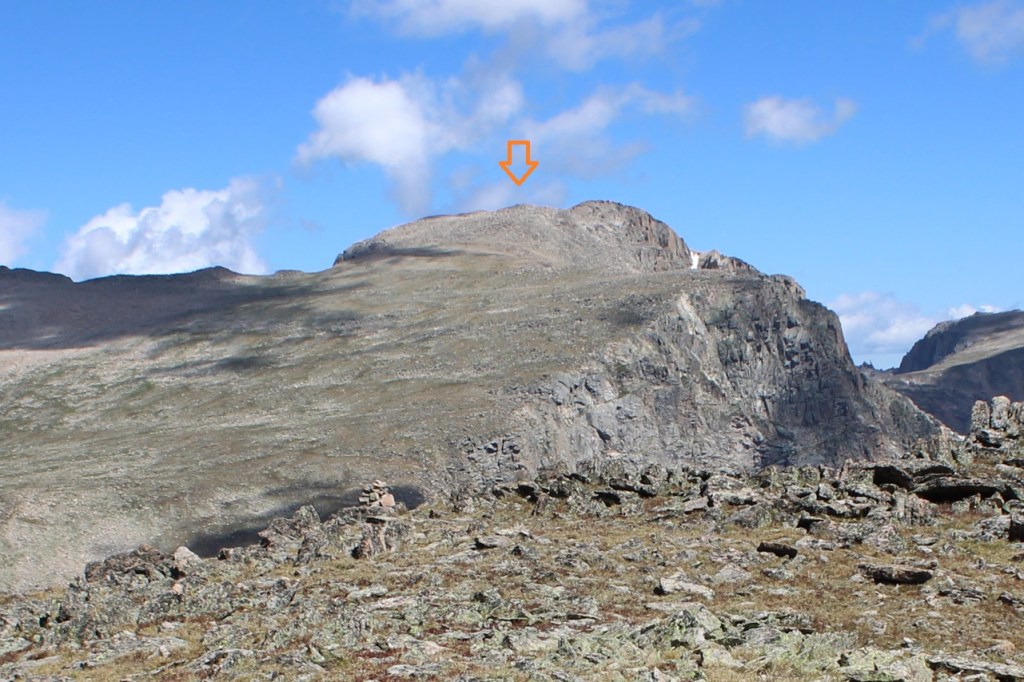
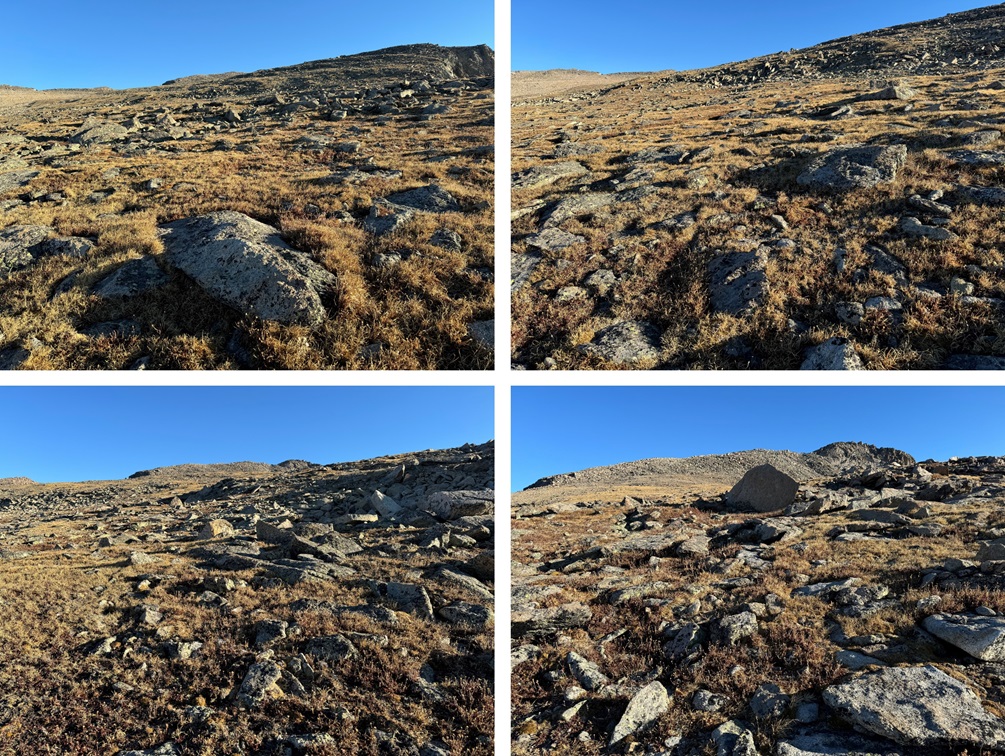
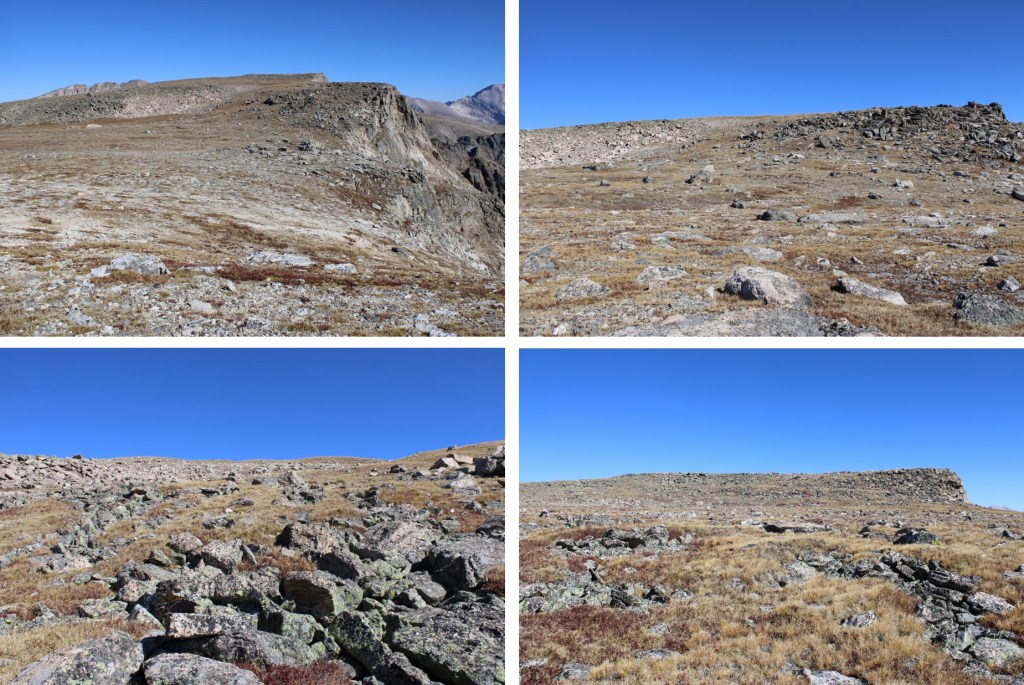
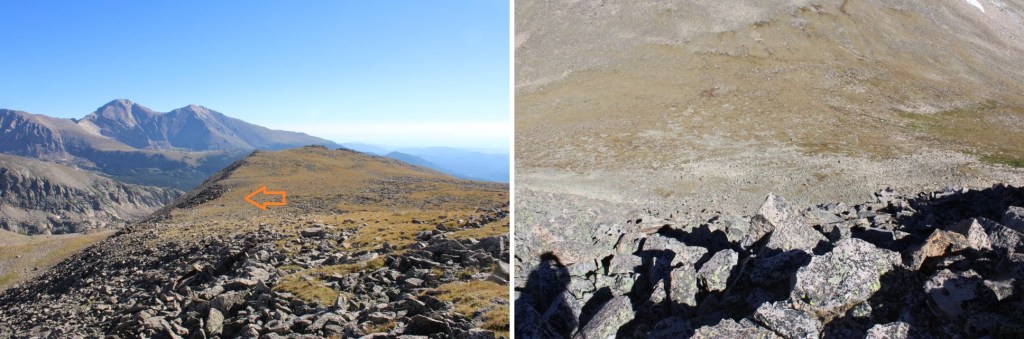
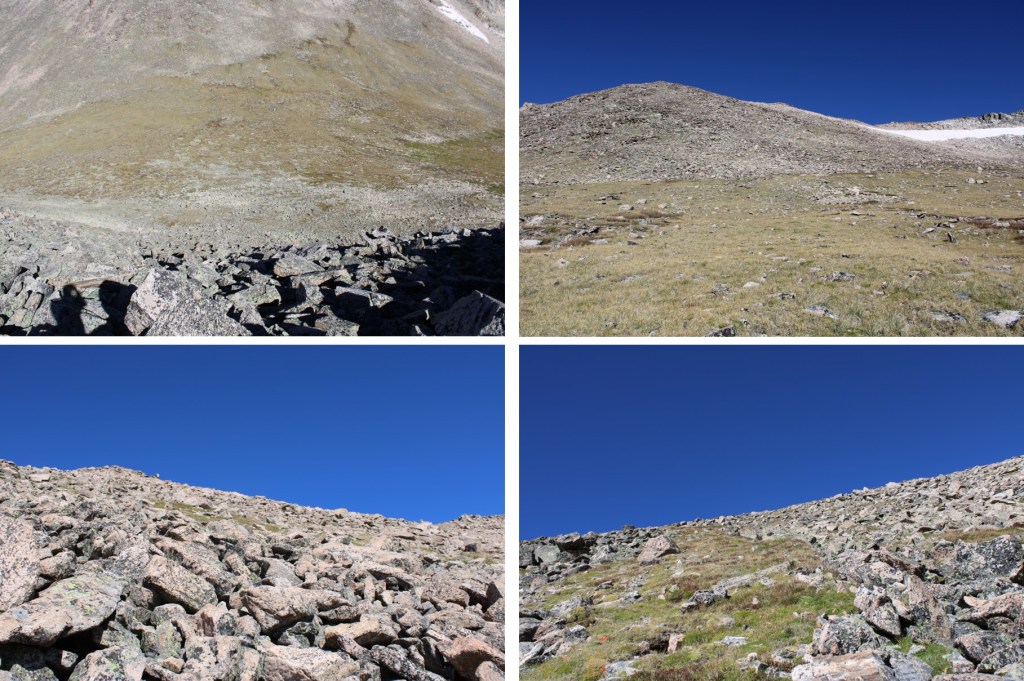
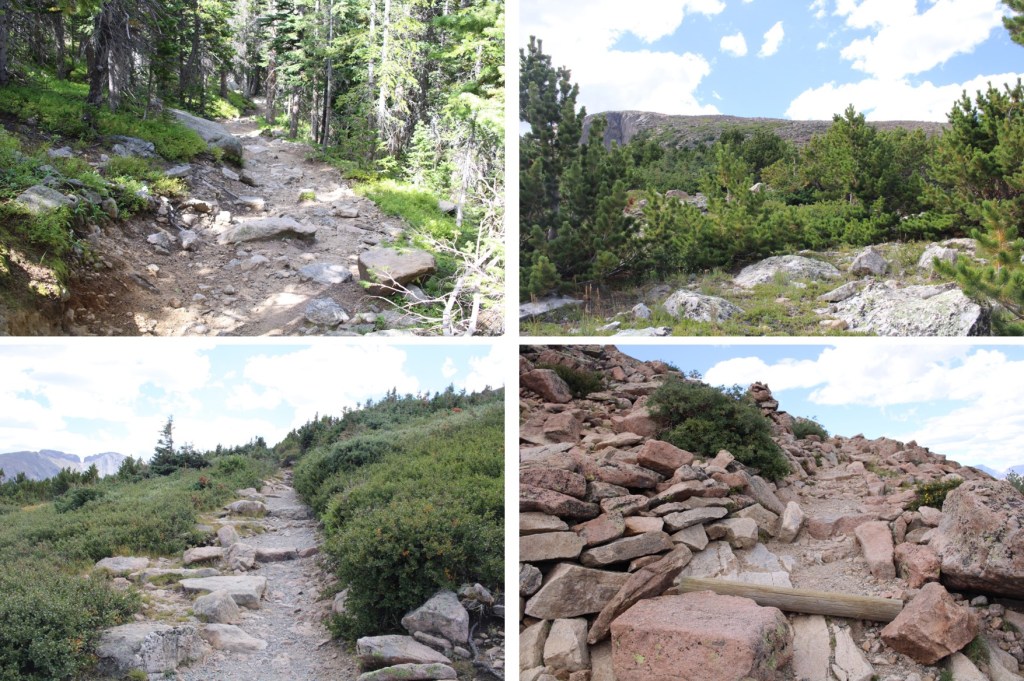
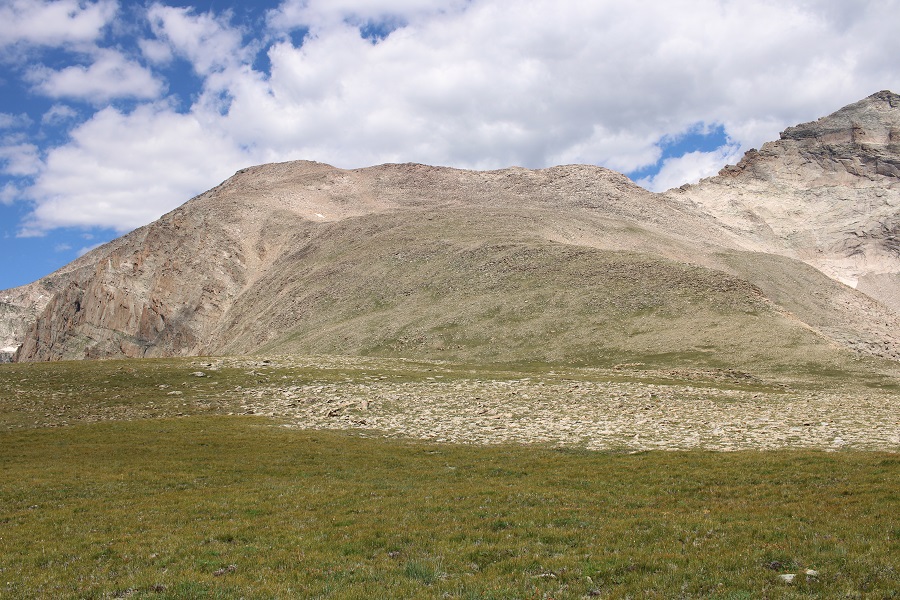
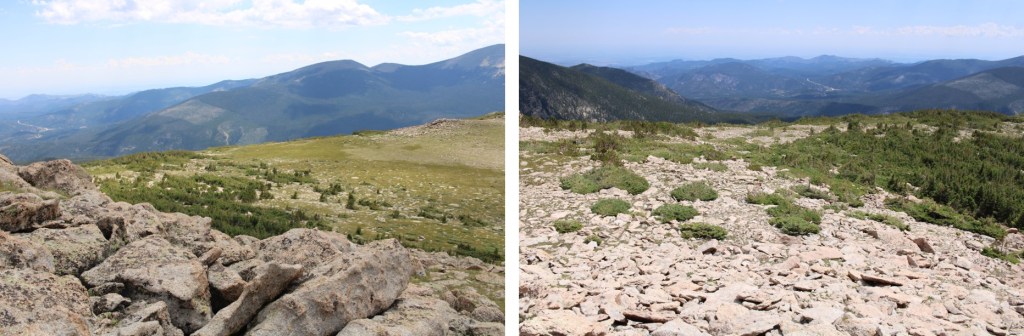
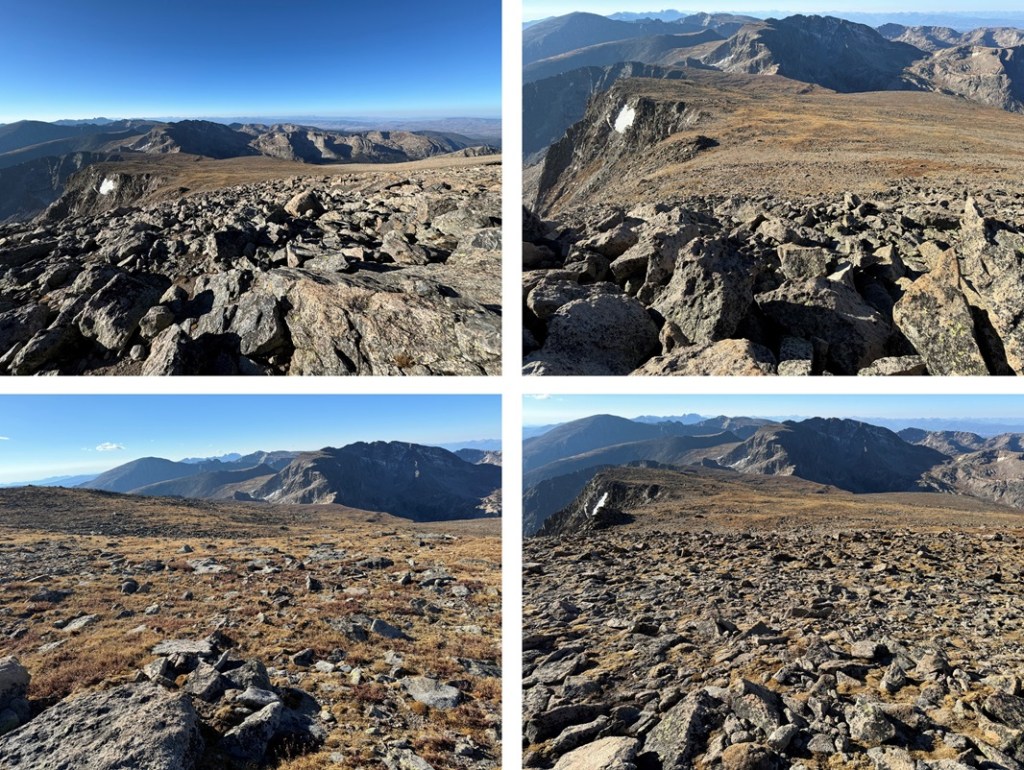
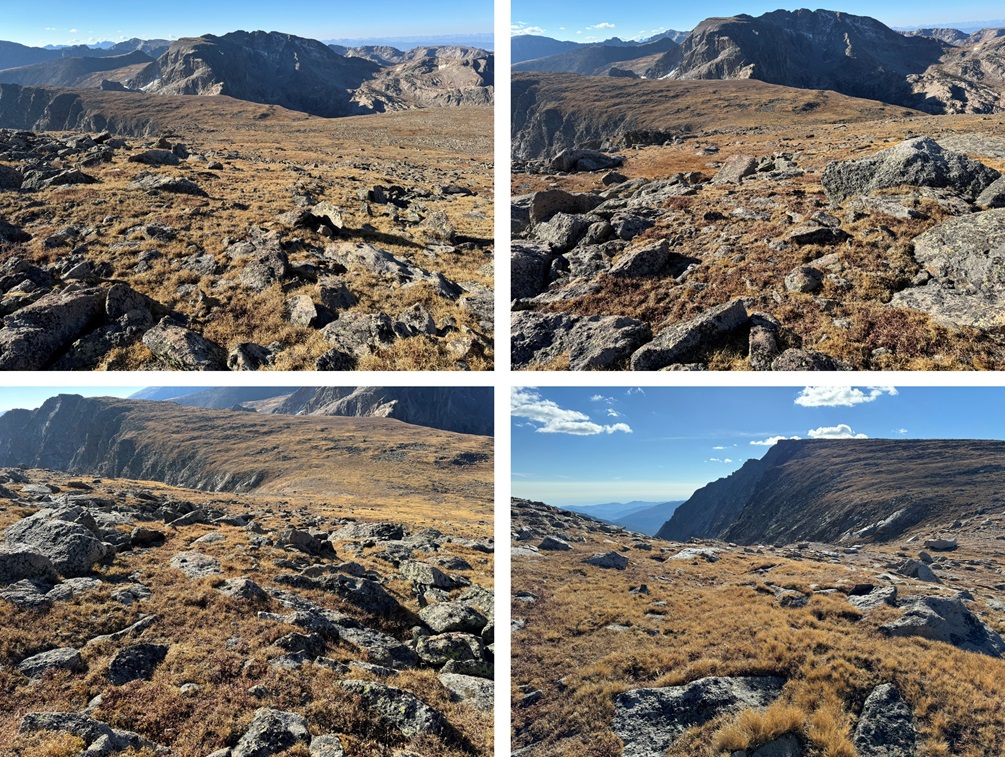
This ridge has a gentle slope and is filled with tundra and large boulders.  I was easily able to navigate around the boulders, staying on tundra most of the way.  I just kept heading north.  I gained 1250’ of elevation in about 1.1 miles to the summit from the pass.
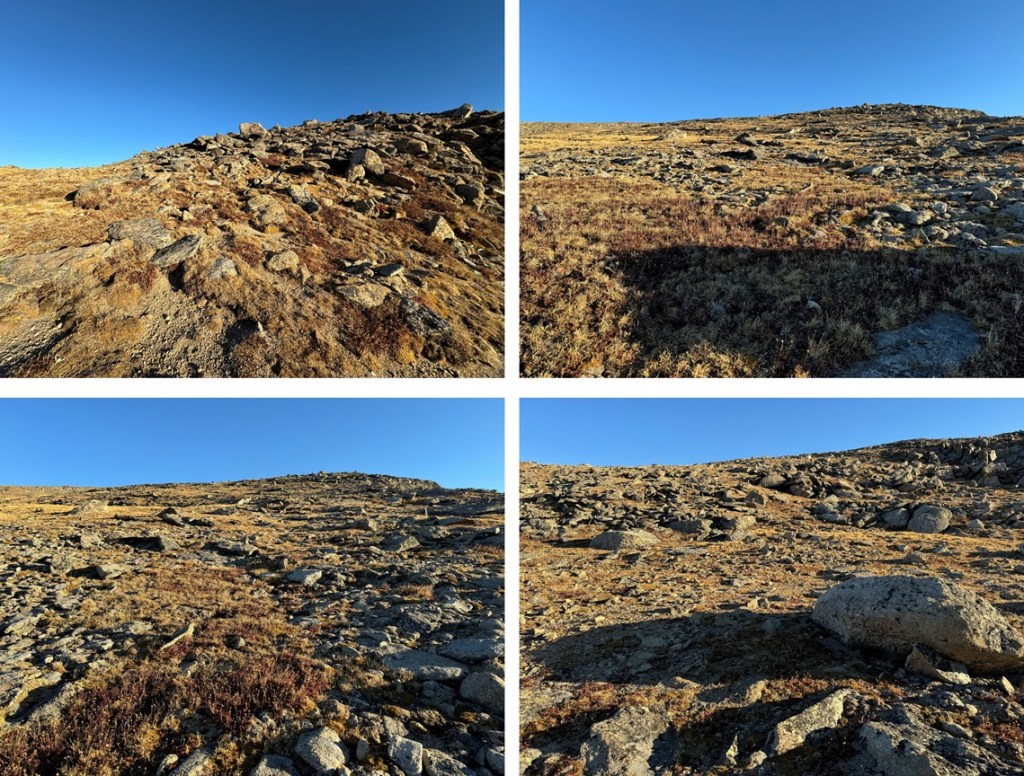
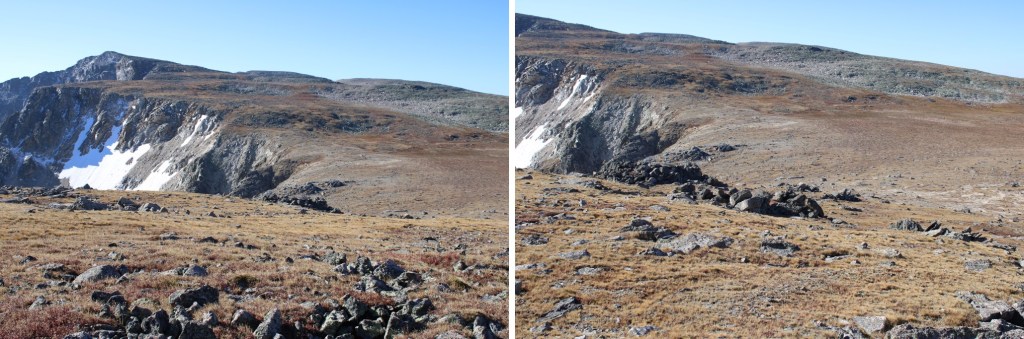
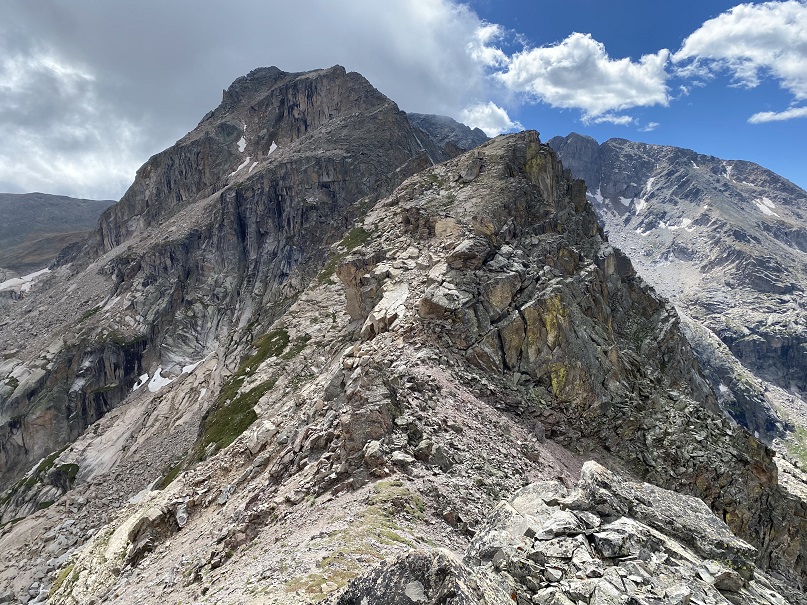
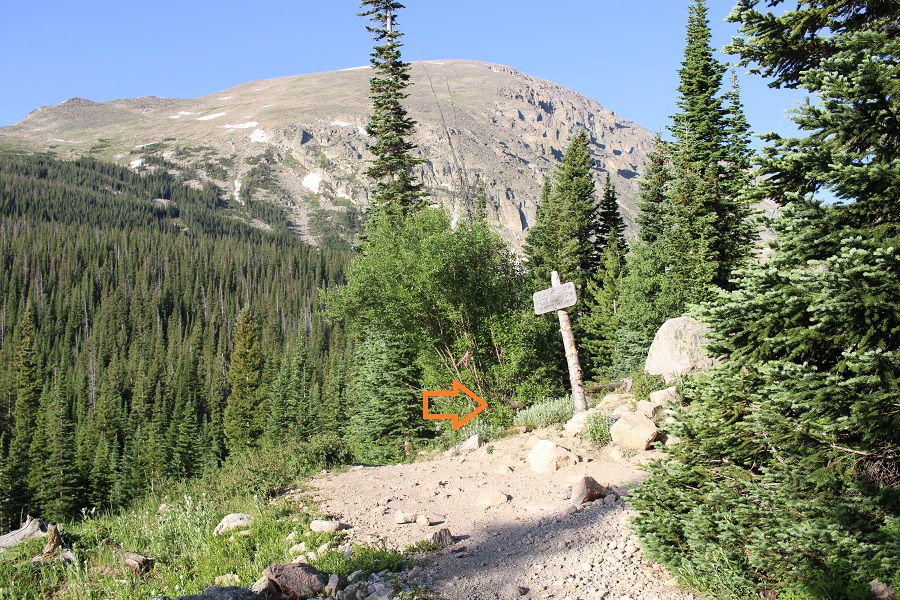
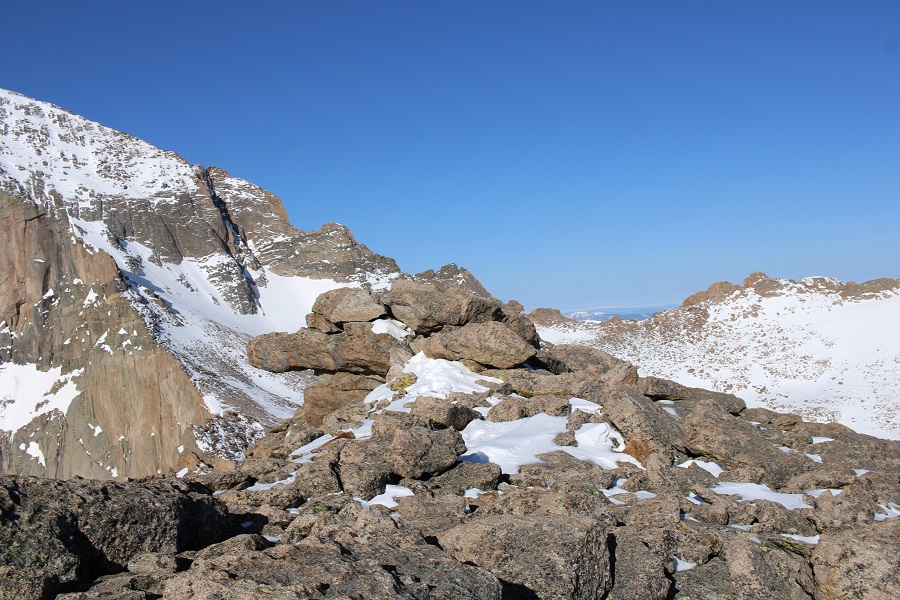
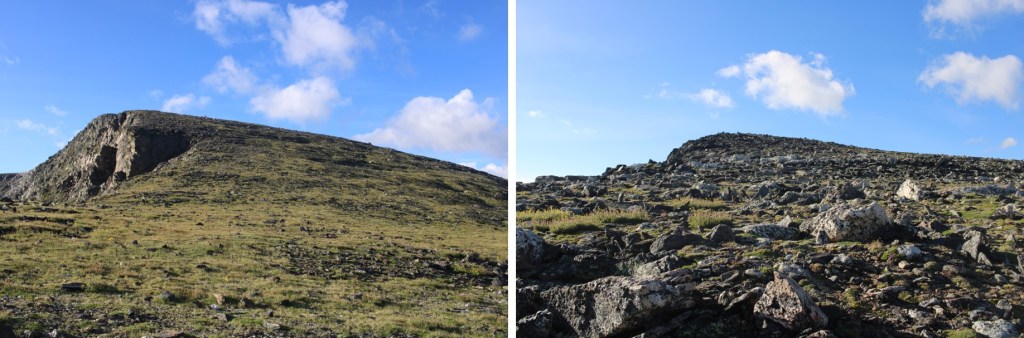
Eventually I could see the summit of Mt Alice come into view
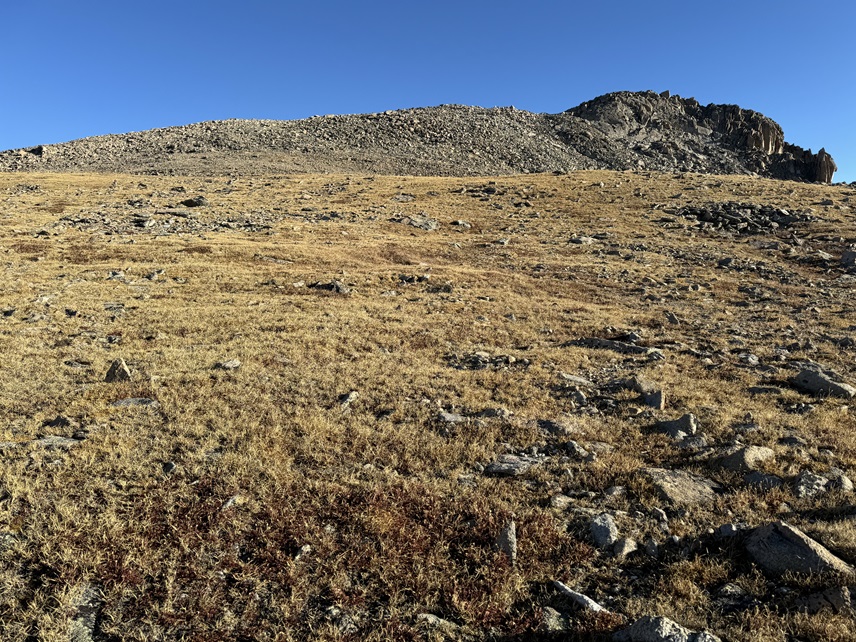
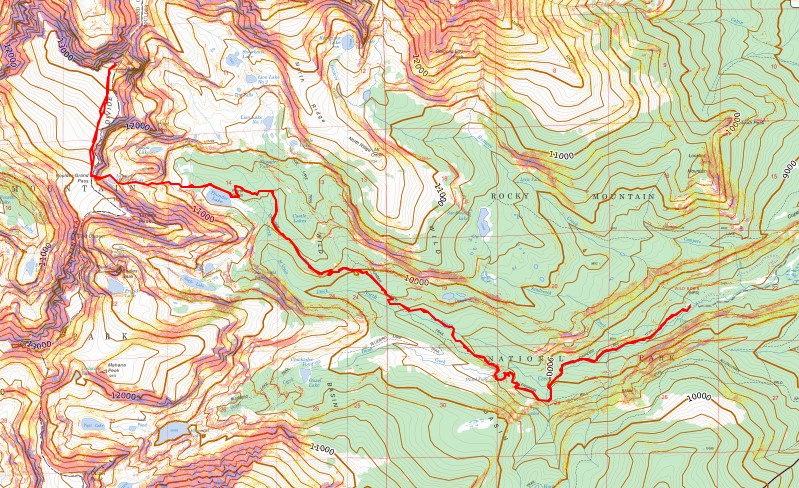
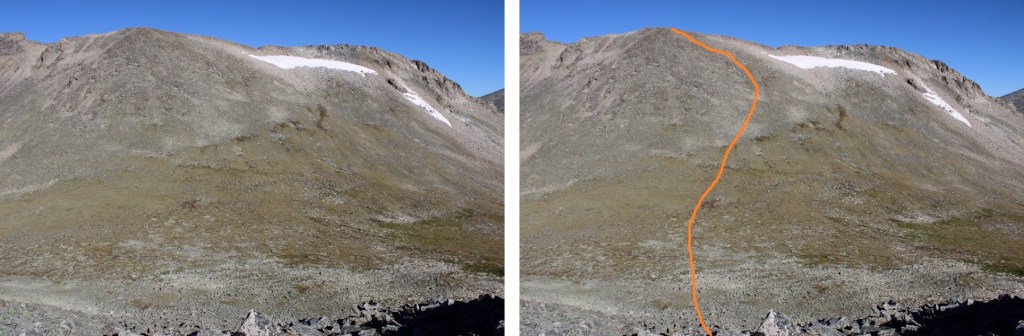
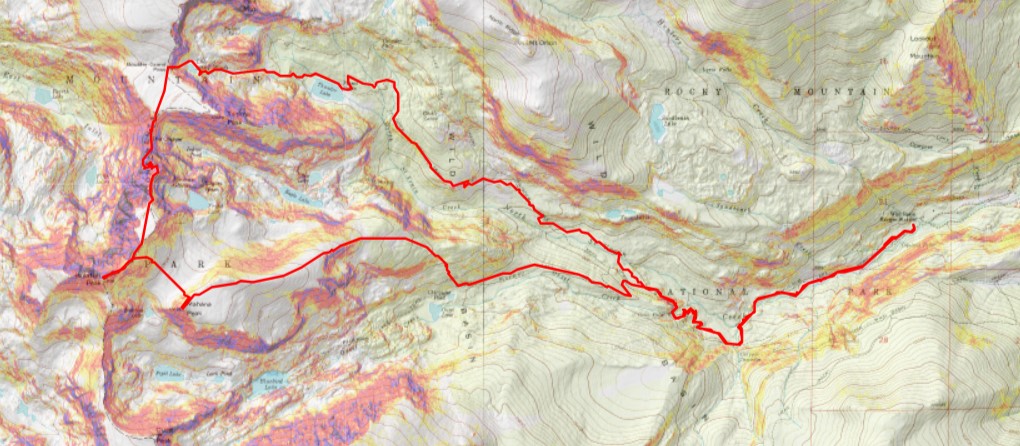
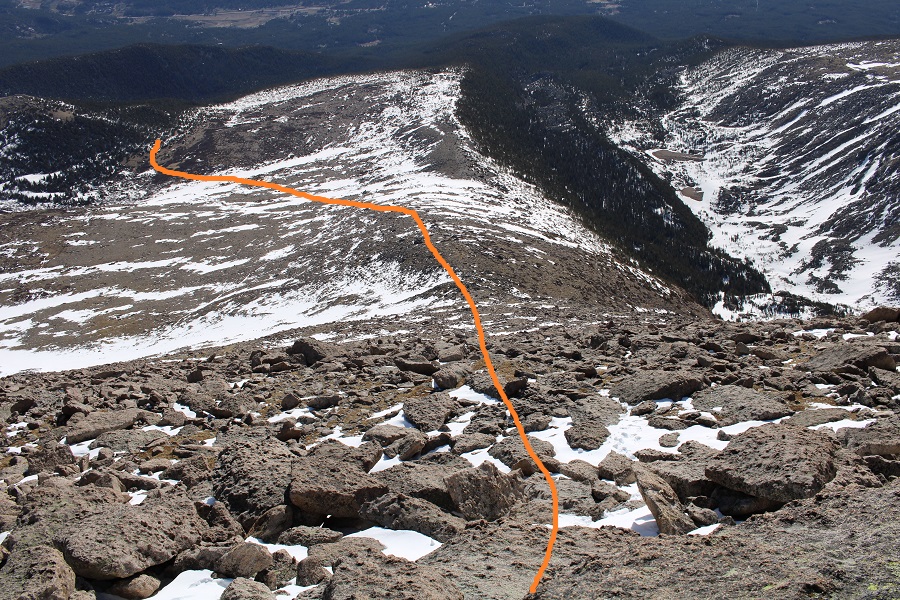
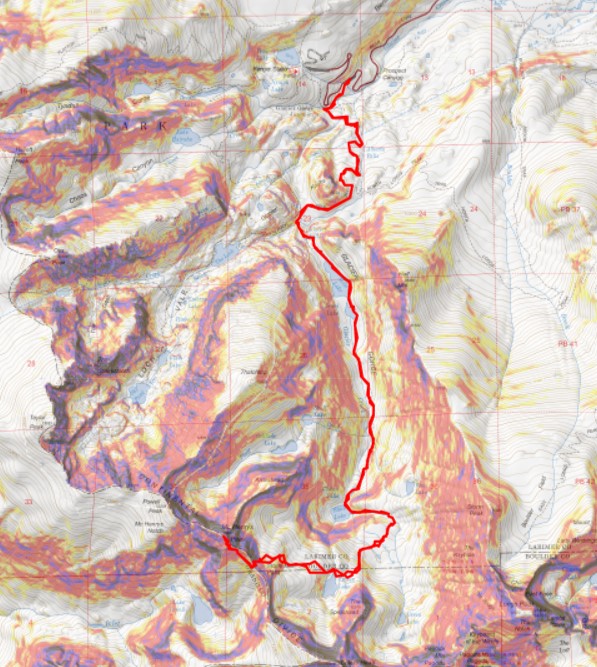
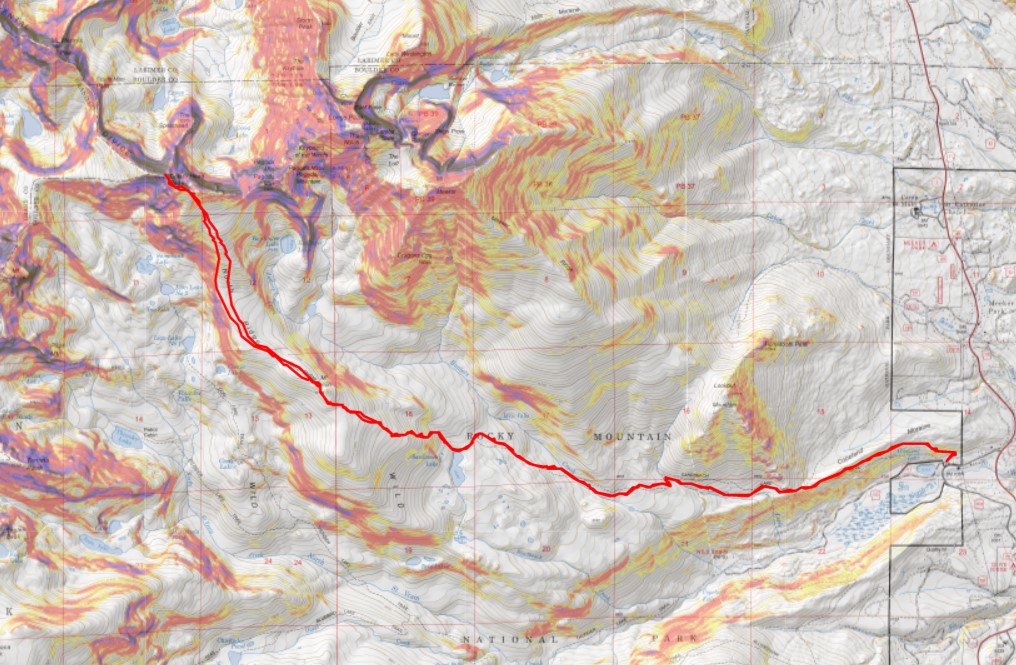
This is the overall route I took to get there

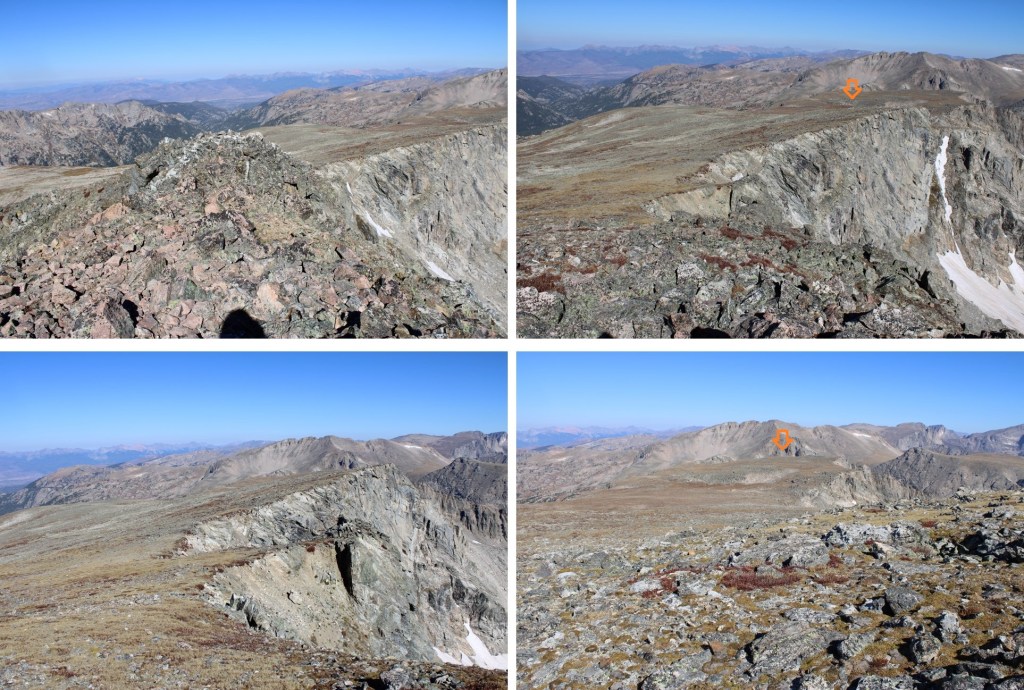
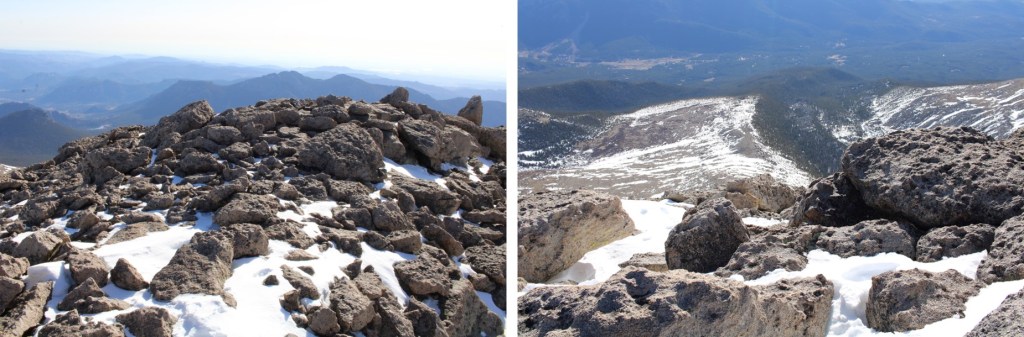
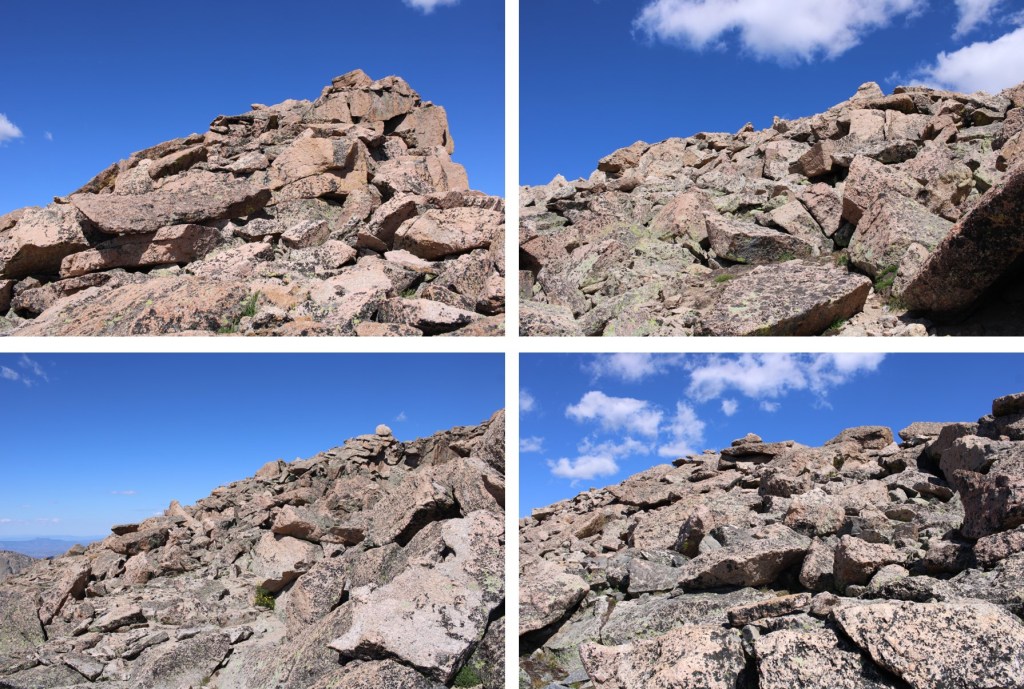
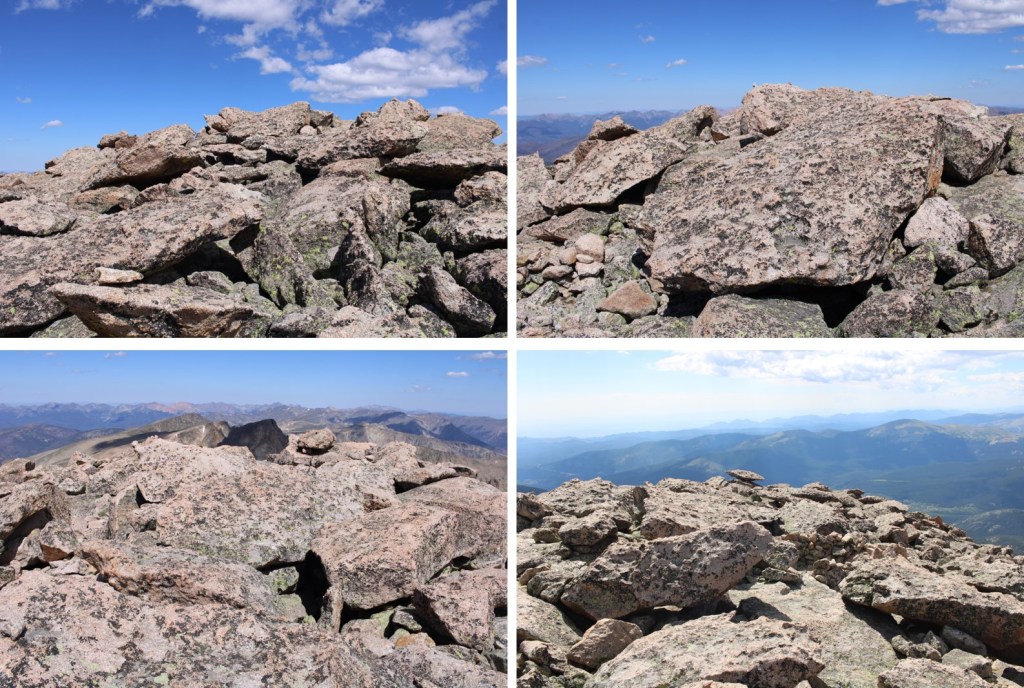
The boulders here were stable, and rock-hopping was quick.  Before I knew it, I was at the summit of Mt Alice (which had a cairn and a summit register, but the register was open and empty).
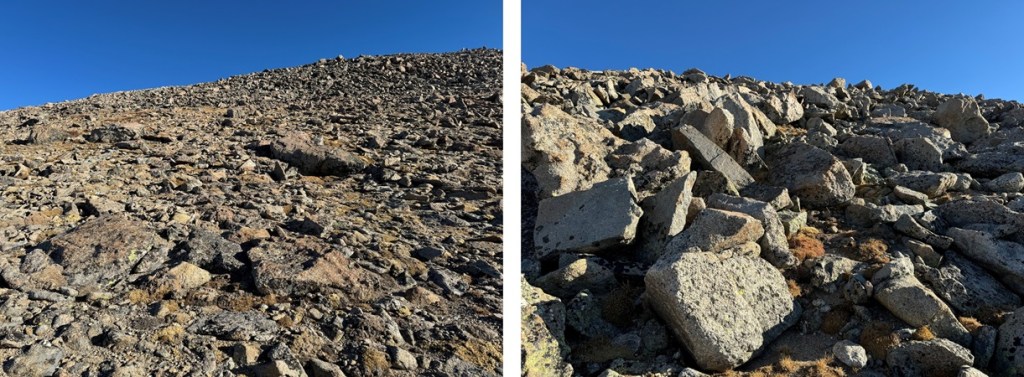
I summited Mt Alice at 9am

Mt Alice:

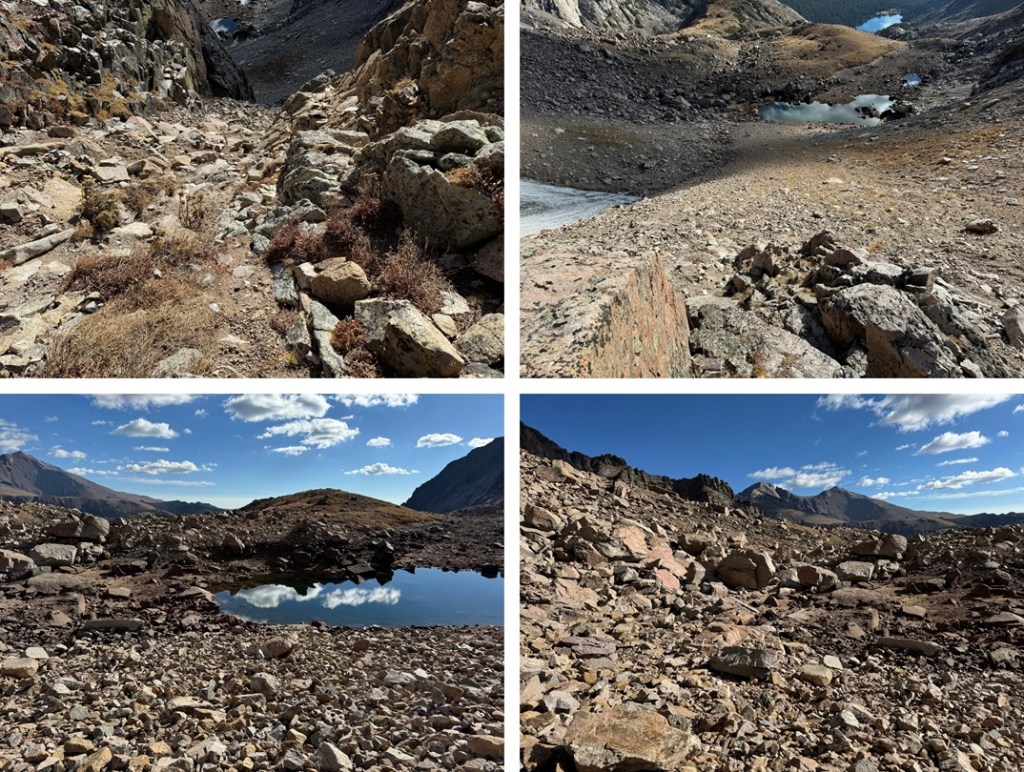
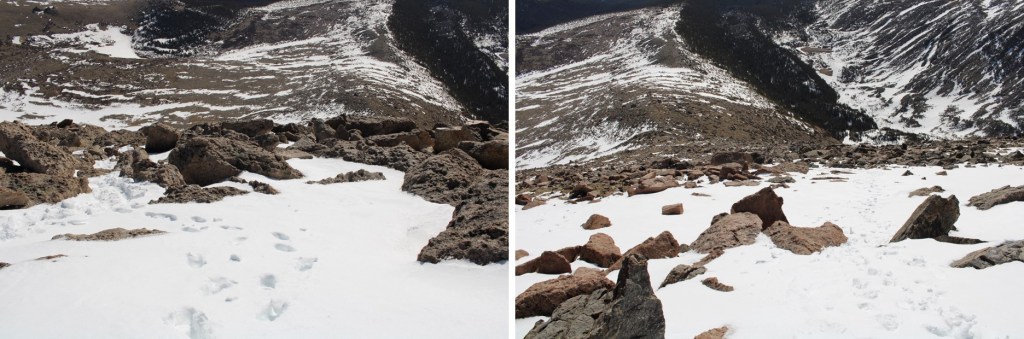
Now to head back to Boulder-Grand Pass, I turned around and headed south, back the way I’d ascended.
I took the same gully back down to Lake of Many Winds
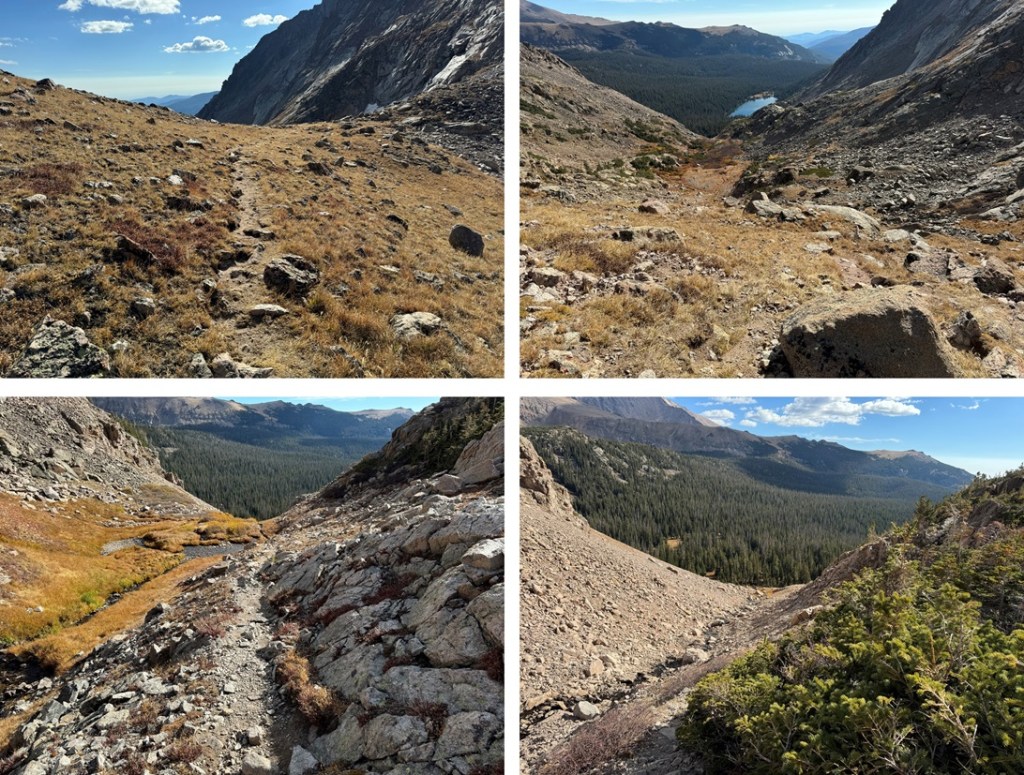
And then picked up the trail that would lead me back to Thunder Lake.
I skirted Thunder Lake to the north, then followed the clearly marked trail signs for the Wild Basin Ranger Station back to the Wild Basin Trailhead

I made it back to my truck at 12:45pm, making this a 19.98 mile hike with 5159’ of elevation gain in 8 hours, 45 minutes.

On to the next trailhead!

Ouzel Peak – 12,704 and Ogalalla Peak – 13,154

RT Length:  20.7 miles

Elevation Gain:  5309’

I’m going to do my best to keep this class 2/2+ here.  I made it unnecessarily class 3 in areas, but they can be avoided.  I started at the Wild Basin Trailhead in Rocky Mountain National Park.  I was on the trail at 4am.  The beginning of the trail is obvious.

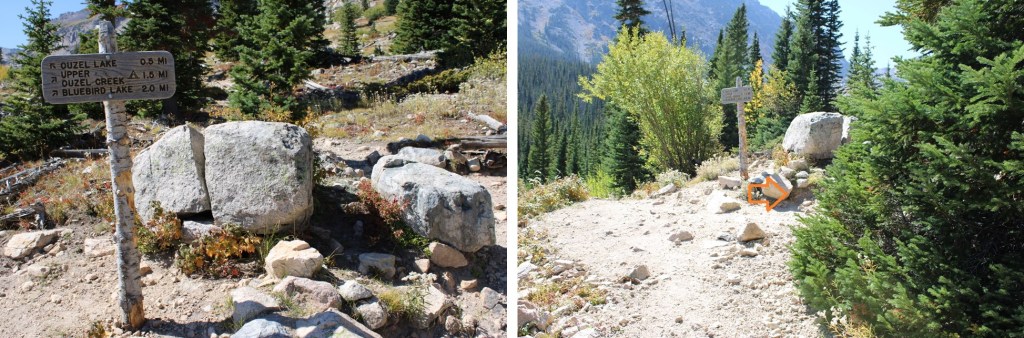
I’m not going to detail the approach to Bluebird Lake, as I’ve already done that in previous reports and the trail is class 1 trail the entire way.  Just follow the signs towards Bluebird Lake.  If Bluebird Lake isn’t on the sign, follow the one that says Ouzel Lake.  The signs say it’s 6.4 miles to Bluebird Lake.   

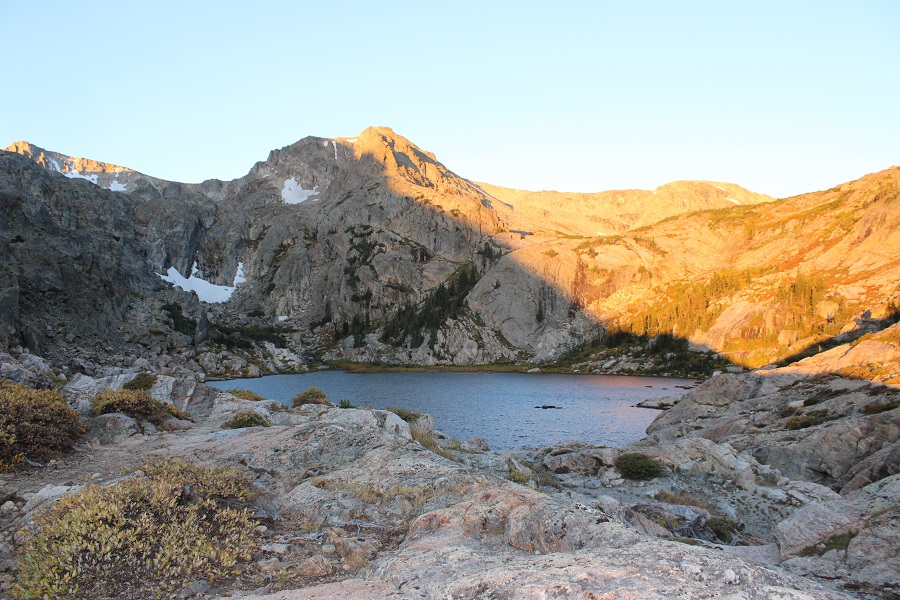
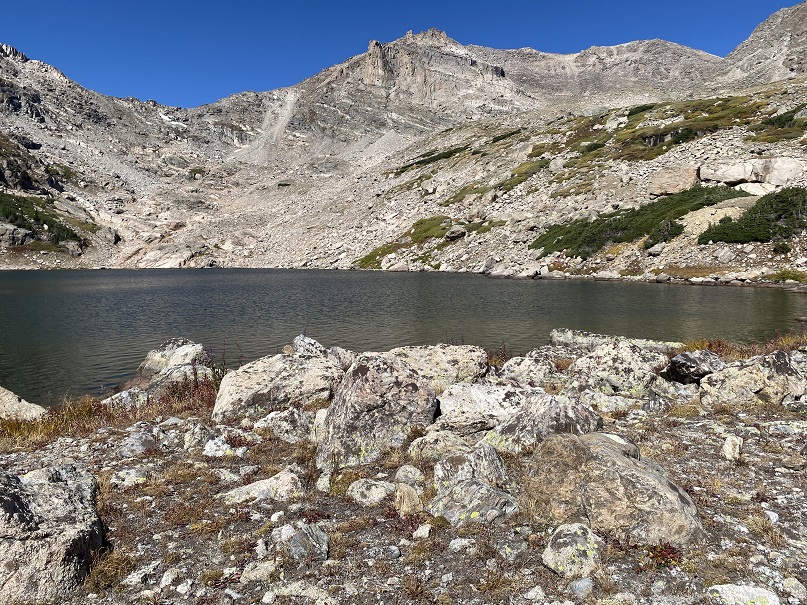
Now the fun begins!  The class 1 trail that got me to Bluebird Lake stopped at Bluebird Lake. 

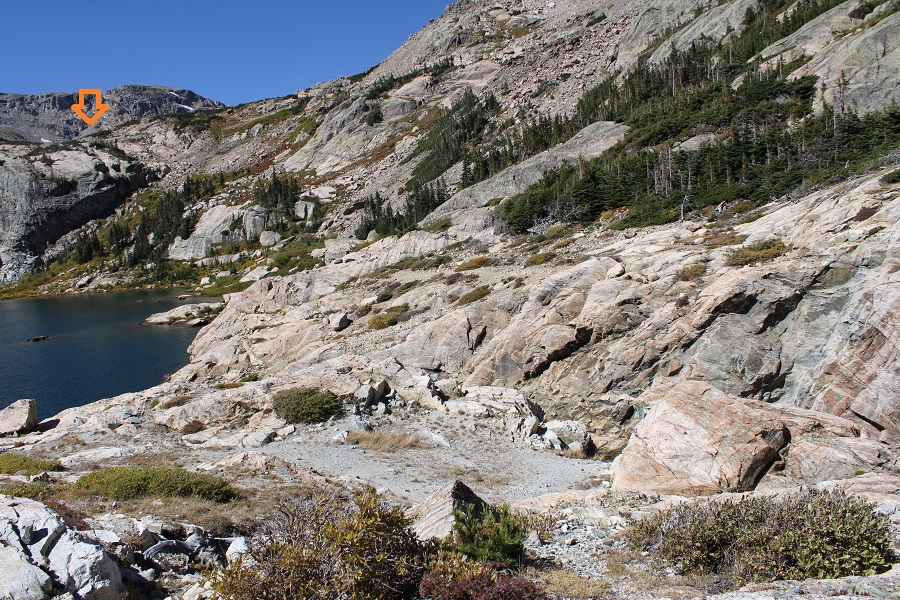
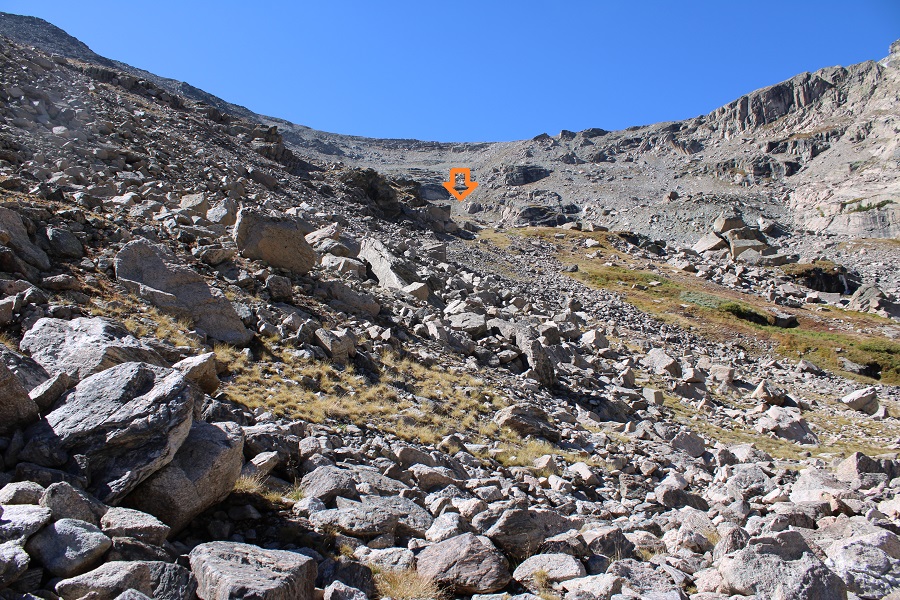
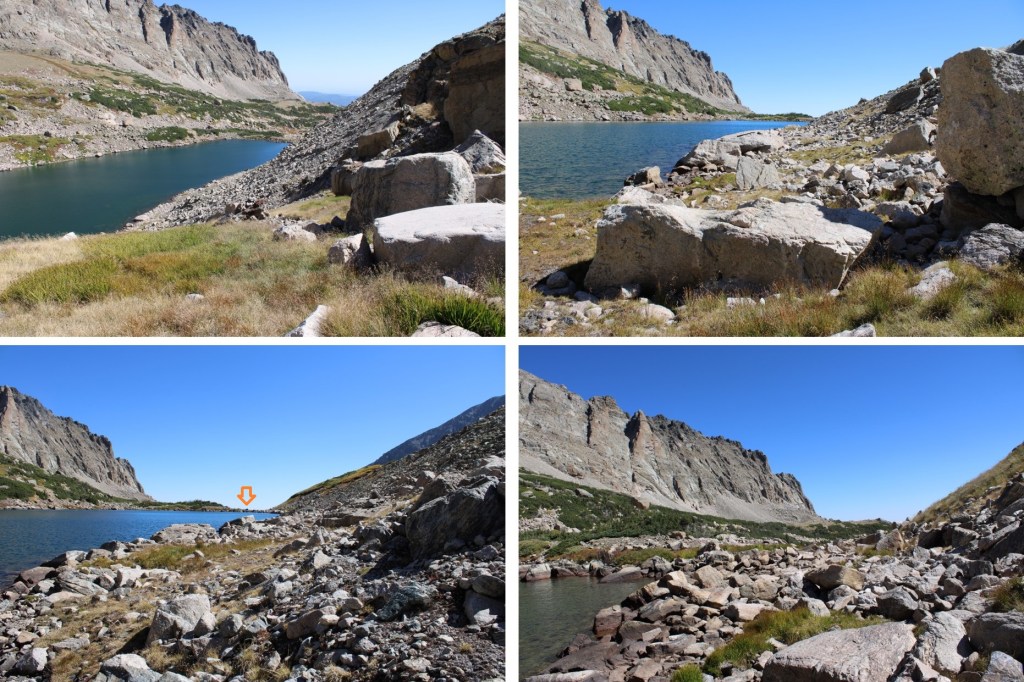
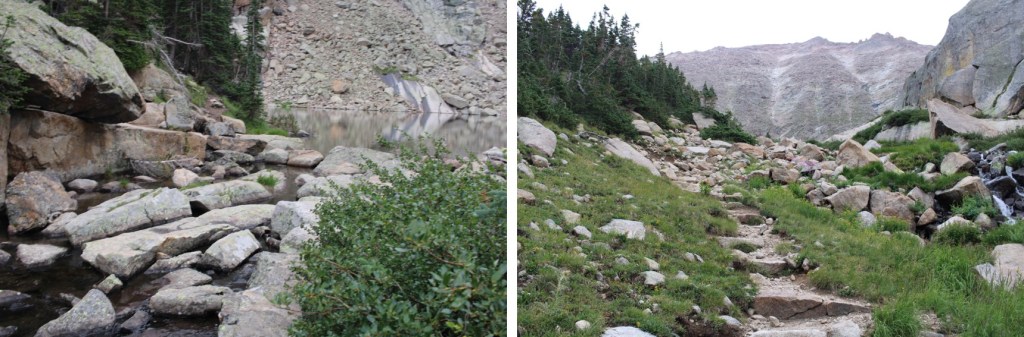
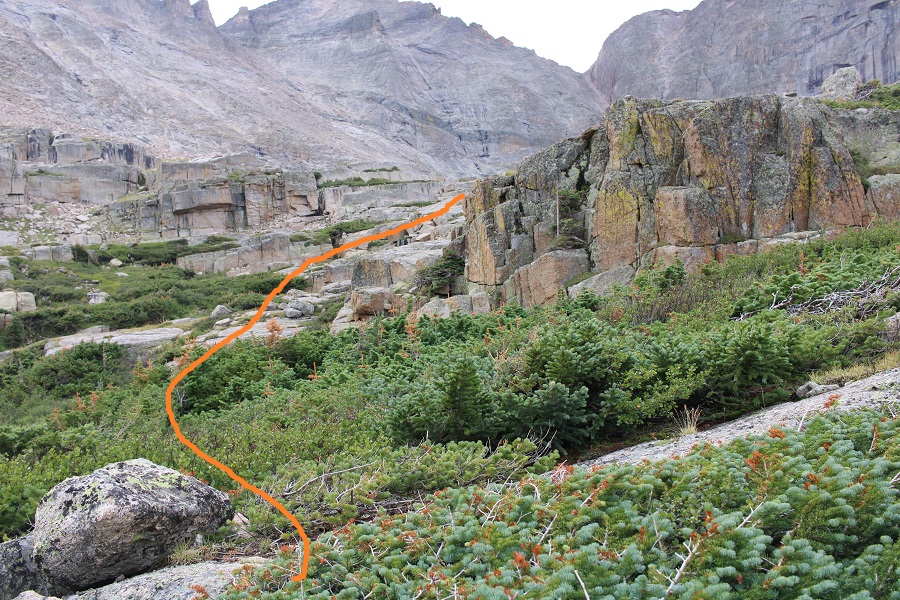
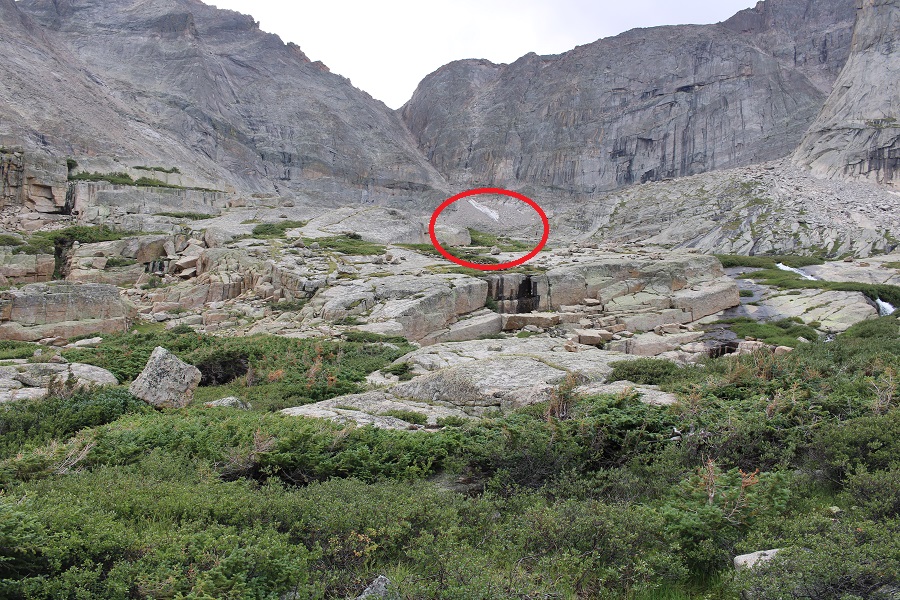
I was able to find some faint game trails here, but like I said, they were faint. This was my next objective, a ramp in the distance:

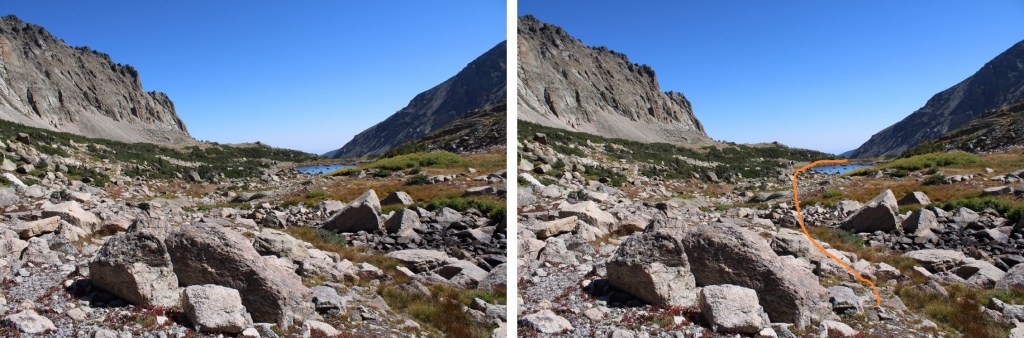
And my overall route to get there. 

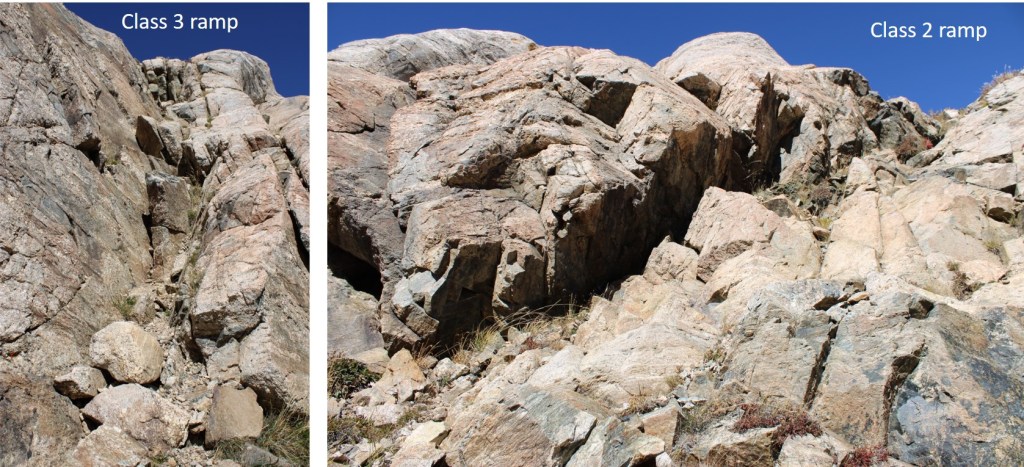
I was able to keep this class 2, but there are class 3 options.  First, I descended down to the lake, then ascended a class 2 ramp.  There’s an easy class 3 ramp here as well.

At the top of the ramps was a trail for a short distance heading west.

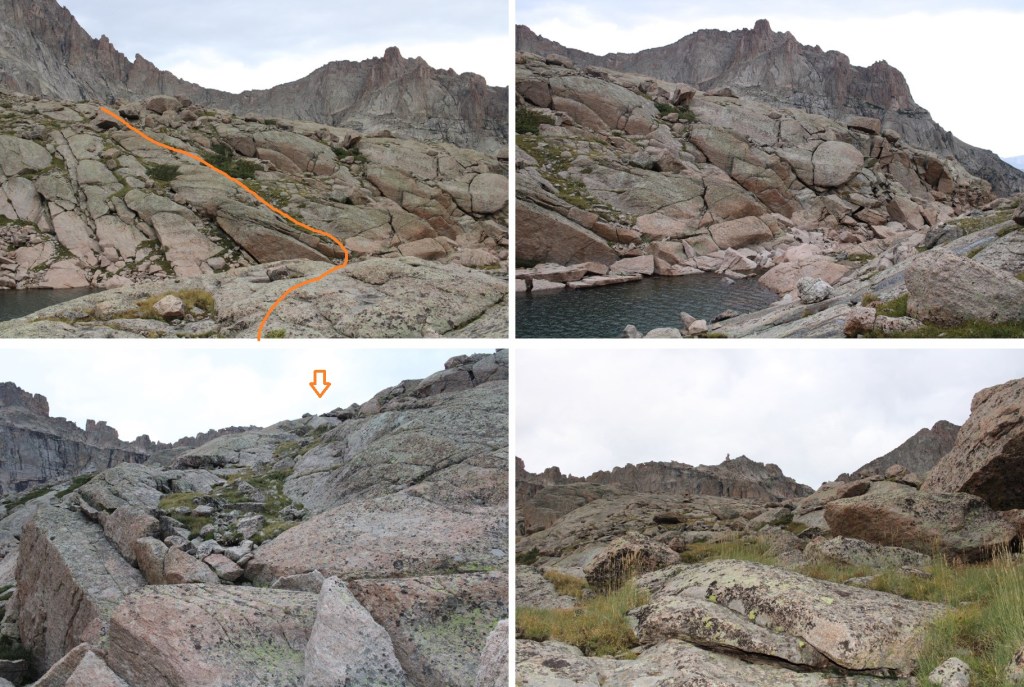
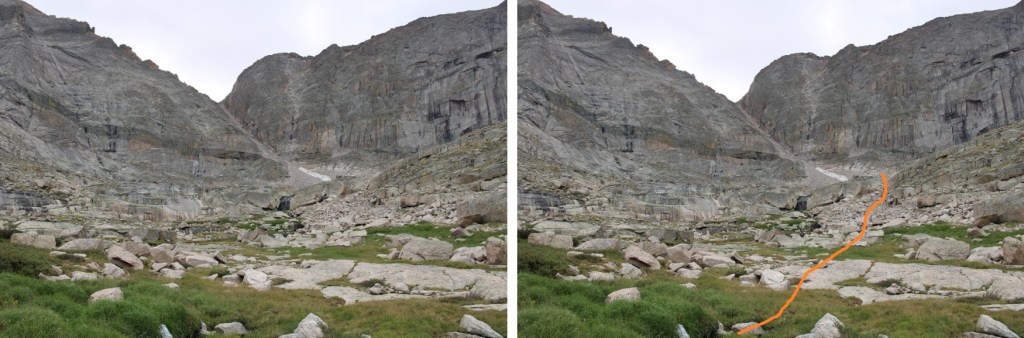
This is the route I took to get to Lark Pond, aiming for a ramp in the distance

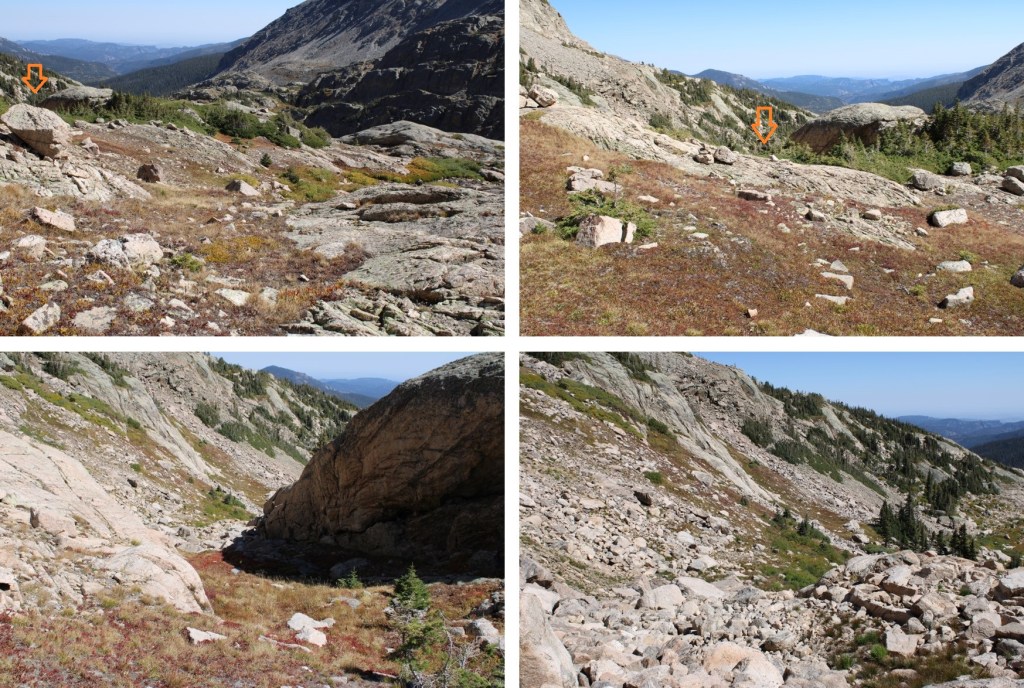
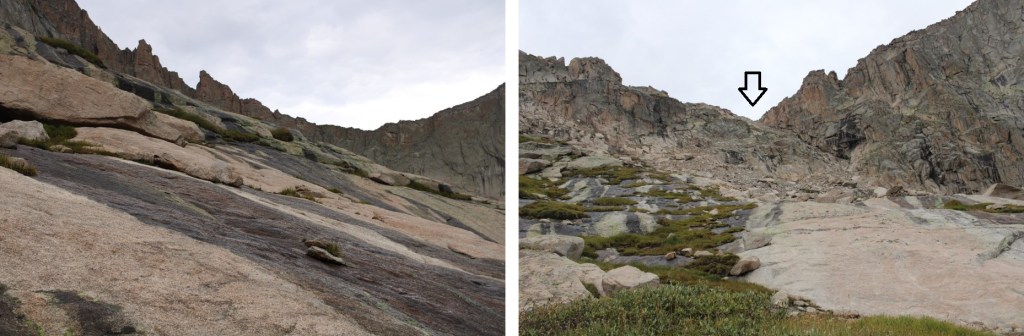
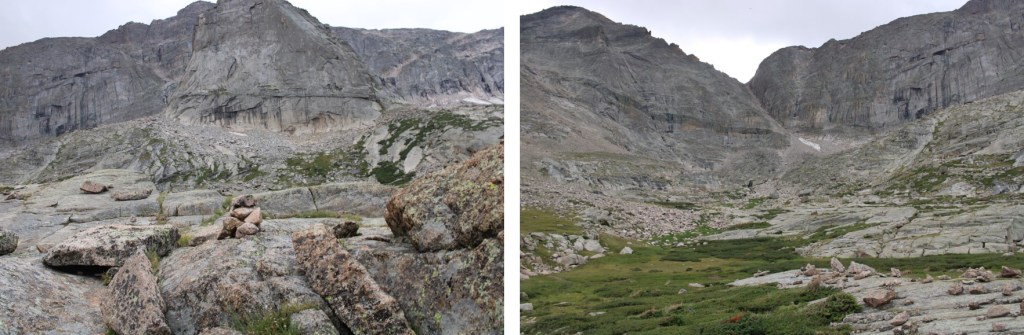
And some step-by-step pictures

Now at Lark Pond, I stayed to the right of the pond to get to Pipit Lake.  There weren’t any trails here.

Yay!  Pipit Lake!

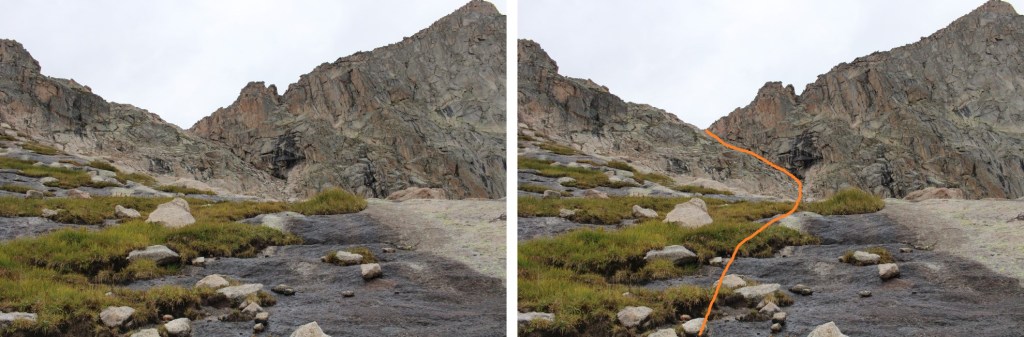
I skirted the left side of the lake, heading towards the grassy gully.  This involved rock hopping on stable rock.

If you’re following my GPX file, you’ll note I ascended to the left on the rocky area.  I wouldn’t recommend this, as it’s extremely steep.  I ended up gravitating towards the rocks to avoid the steepness of the scree, and got into sketchy class 3 territory (lots of very lose rocks the size of bowling balls on top and around larger rocks, forming small, unstable gullies).  Instead, this can be kept class 2 by taking the grassy gully up.

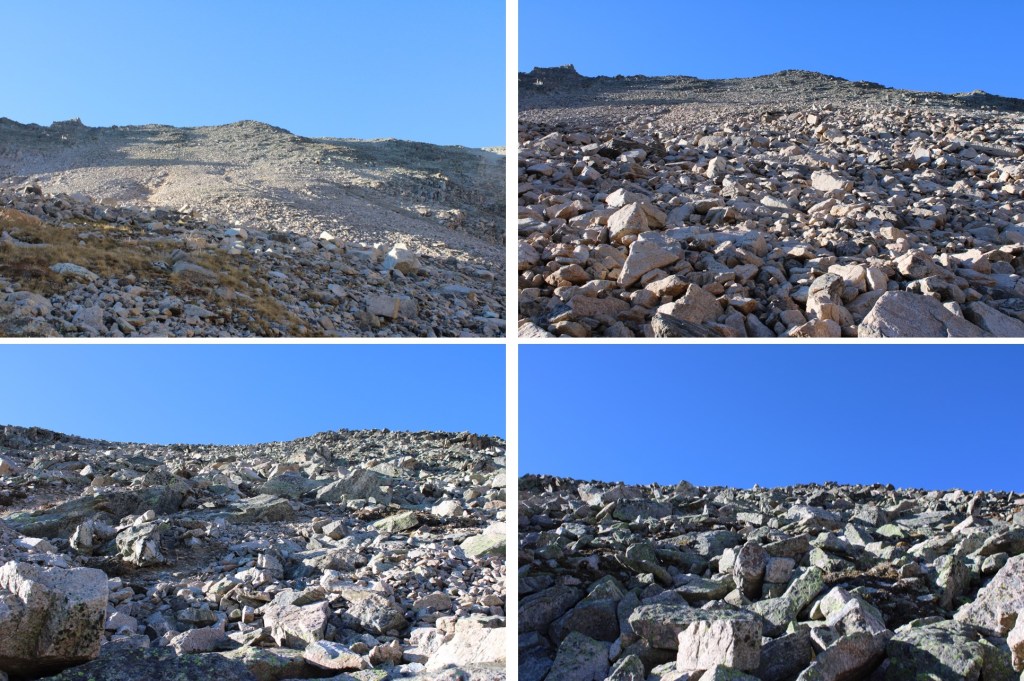
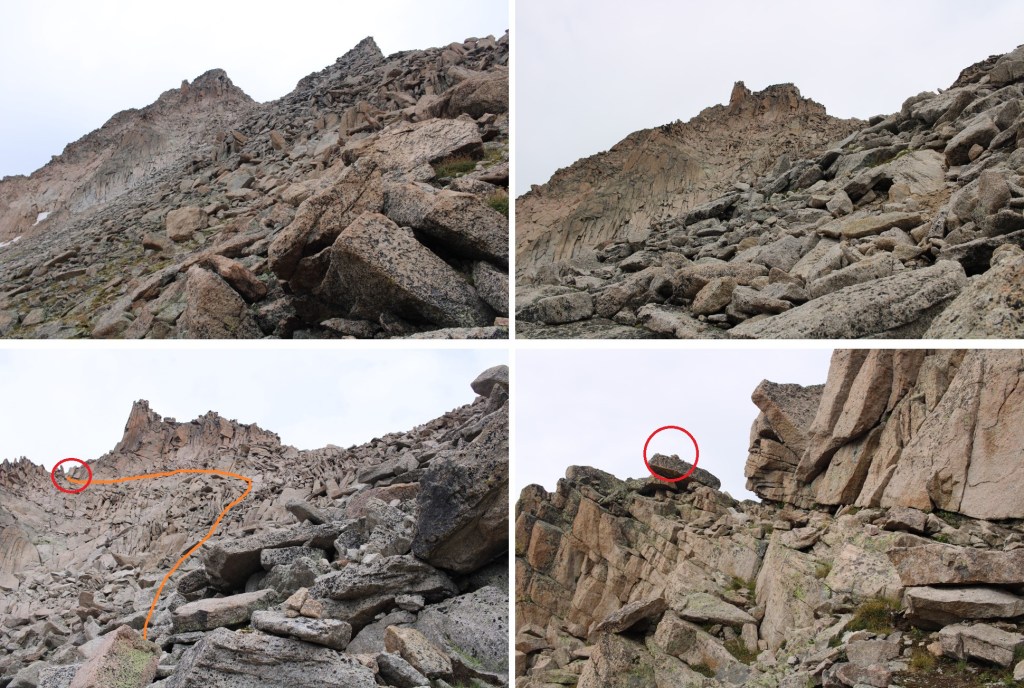
Once at the top of the grassy gully I turned left, and ascended the slope.  Yes, it’s steep.  This is class 2+, but luckily there isn’t a lot of scree.  Instead, these rocks are fairly stable (still check your footing for loose rocks).  This is also choose your own adventure.  The entire slope goes.  It’s about 1200’ of elevation gain from Pipit Lake to the ridge.

At the top of the rock slope I turned left, and walked the short distance to the summit of unranked Ouzel Peak

I summited Ouzel Peak at 9:15am

Ouzel Peak:

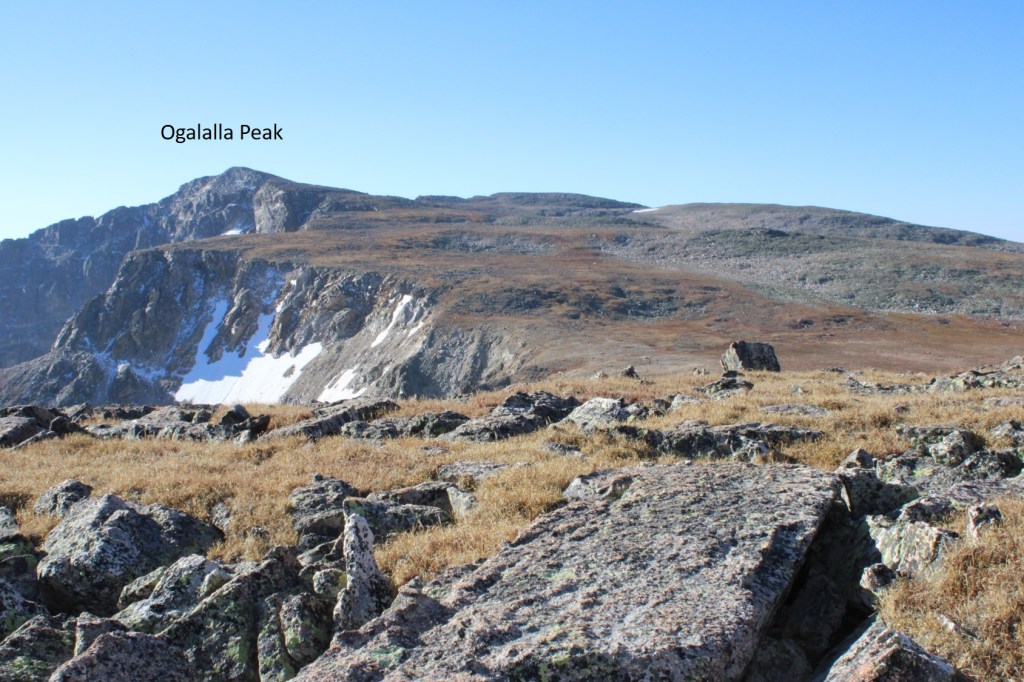
To the south I could see Ogalalla Peak. 

This was an easy tundra trek of about 1.5 miles.  First, I descended to the Ouzel/Ogalalla saddle

Then I followed the ridge as I ascended about 670’ to the summit

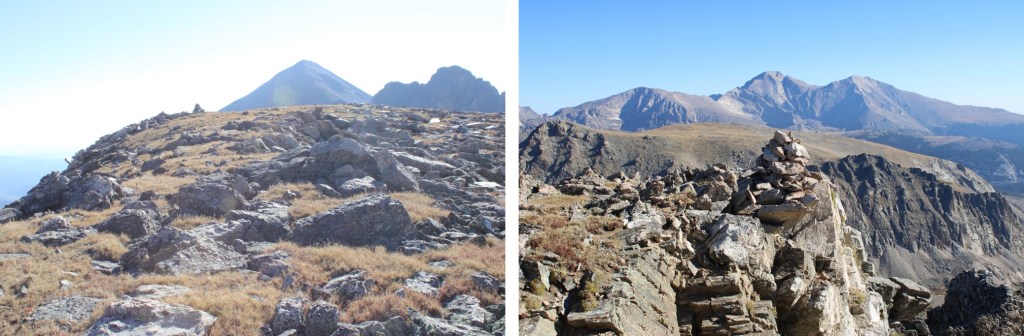
The final push to the summit was rocky, but class 2

I summited Ogalalla Peak at 10am

Ogalalla Peak:

This was an out and back hike for me, so I retraced my steps back to Ouzel Peak

Then it was navigating the rocks and heading back down the gully to Pipit Lake

At Pipit Lake I skirted the lake to the right, and headed back towards Lark Pond

I stayed to the left of Lark Pond

Then looked for the ramp I’d used to on my way in

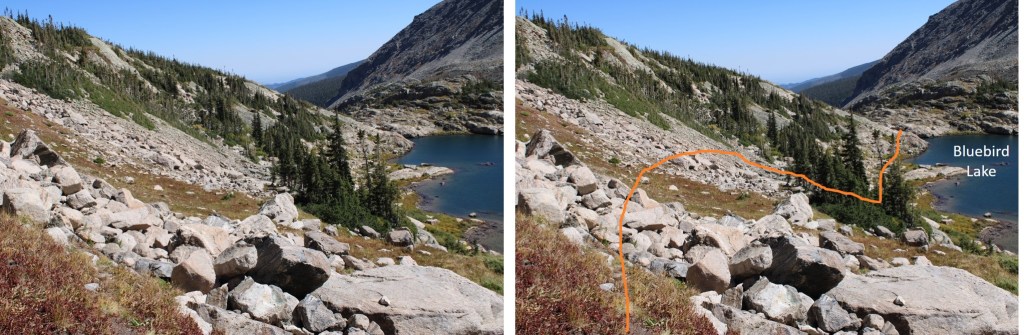
Now to make it back to the trail.  Here’s the overall route I took

I went down the class 3 ramp this time, facing forward, without too much difficulty.

Then crossed the stream and headed back up to the trail

It was now a class 1 hike 6.4 miles back to the Wild Basin Trailhead.  There were plenty of signs indicating the way

I made it back to the trailhead at 3pm, making this a 20.7 mile hike with 5309’ of elevation gain in 11 hours.

On to the next trailhead!

Mahana Peak – 12,643 and Isolation Peak – 13,114

RT Length:  21.79 miles

Elevation Gain:  5665’

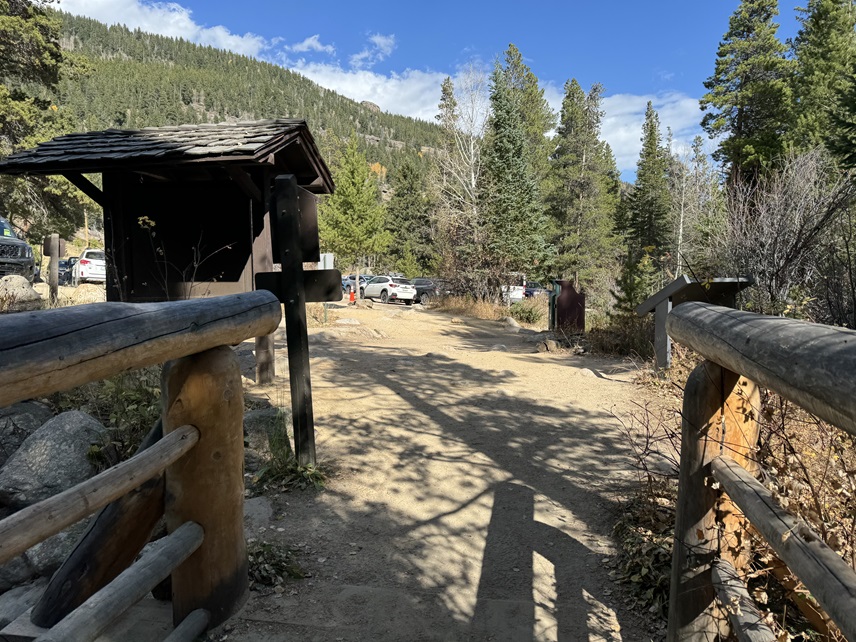
I parked at the Wild Basin Trailhead inside Rocky Mountain National Park and was on the trail at 4am. There’s plenty of parking here, but they have timed entry from 9am-2pm every day. 

The trailhead starts at the south end of the parking area

I followed the signs for Ouzel Lake/Bluebird Lake.  This class 1 trail is really well marked, so it’s difficult to get lost if you read the signs.  I passed several waterfalls (Copeland Falls, Calypso Falls, and Ouzel Falls).

After hiking for 4.75 miles I came to the junction for Ouzel Lake and Bluebird Lake.  I turned right onto the Bluebird Lake Trail.

I didn’t stay on this trail long however.  Maybe about 10 yards or so. Then I left the trail and headed northeast to gain the ridge

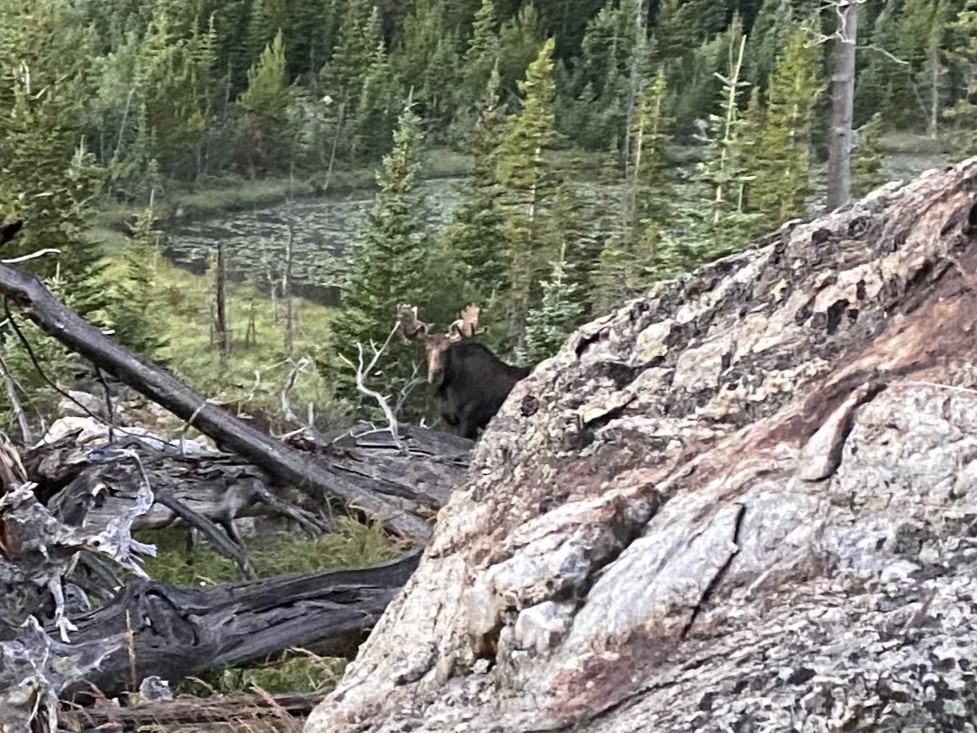
This is where I startled a moose.  He was about 15 feet away from me when I saw him, so I quickly ducked behind a large boulder.  Usually, moose run away when they see you, or ignore you, but this guy seemed interested in me.  I’ve seen probably over a hundred moose in Colorado, and I’ve only been charged once.  This guy looked like he wanted to charge me, so I remained hidden.  For a solid 15 minutes, every time I peeked out from behind the boulder, he was still staring at the boulder I’d hidden behind.  I know moose have poor eyesight, so while he knew I was still there, he was probably trying to figure out if I were a threat or not.  (That’s Chickadee Pond in the background).

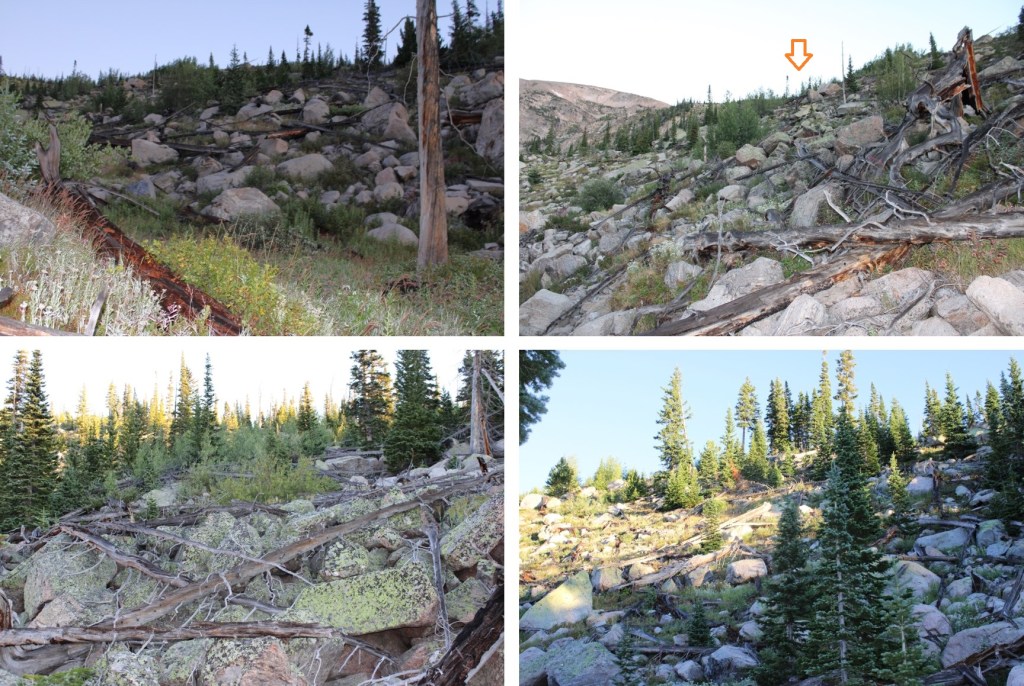
Eventually I crawled away on my hands and knees so he couldn’t see me in the brush, and continued my way up the ridge.  This included a lot of bushwhacking through downed trees.  A lot of downed trees.

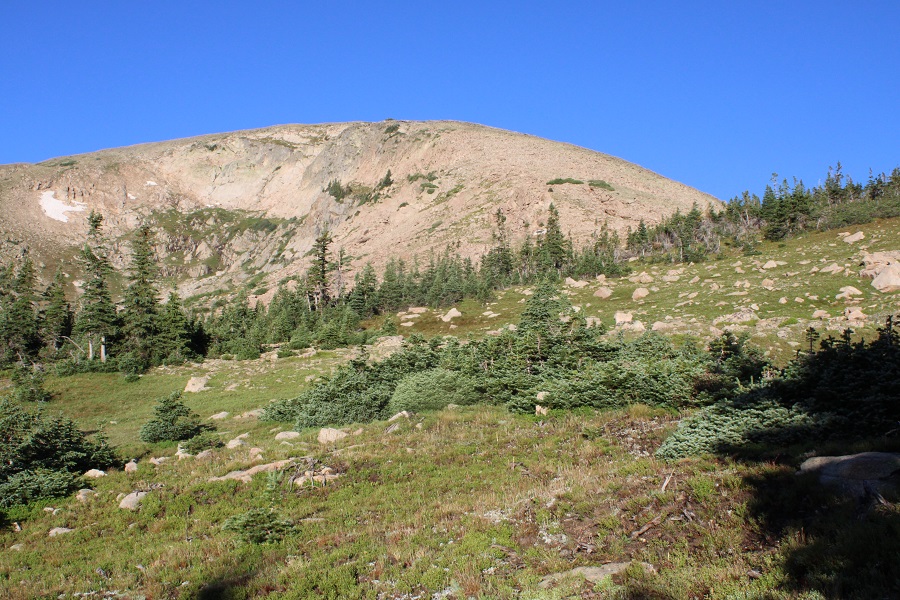
Once I made it to the ridge, I followed it west to treeline

The route from here was straightforward.  I stayed o the ridge, following it west.  The terrain started out as loose rocks, then changed to tundra.

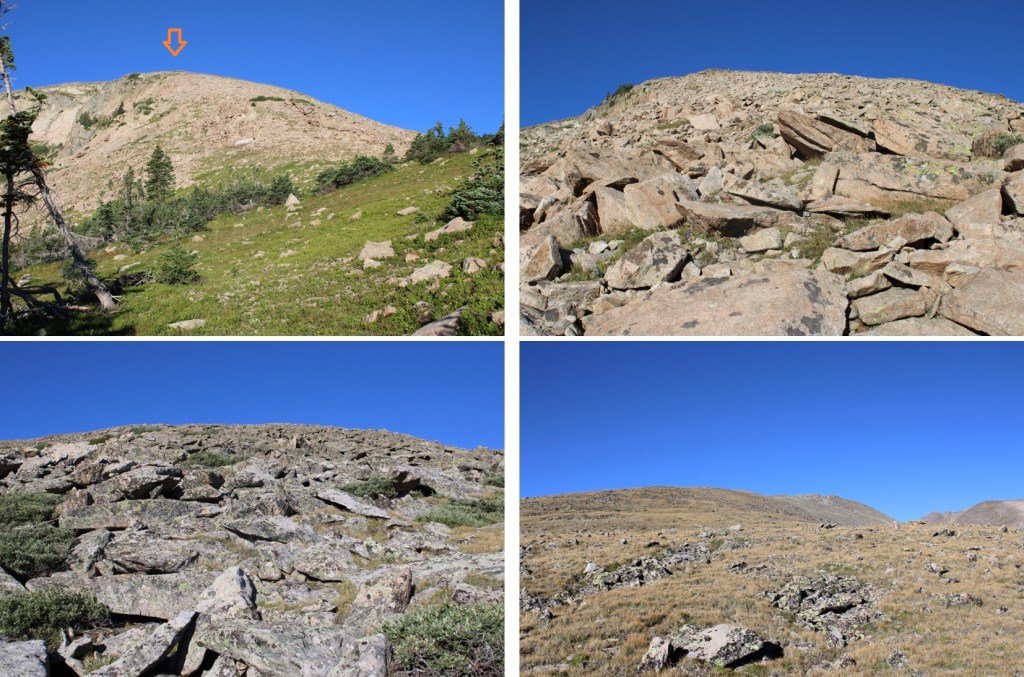
When you get to the tundra, don’t be fooled:  this is a false summit.  Stay to the left of it

This is the true summit of Manaha Peak.  It’s easy class 2 to get there

I summited Mahana Peak at 9am

Mahana Peak:

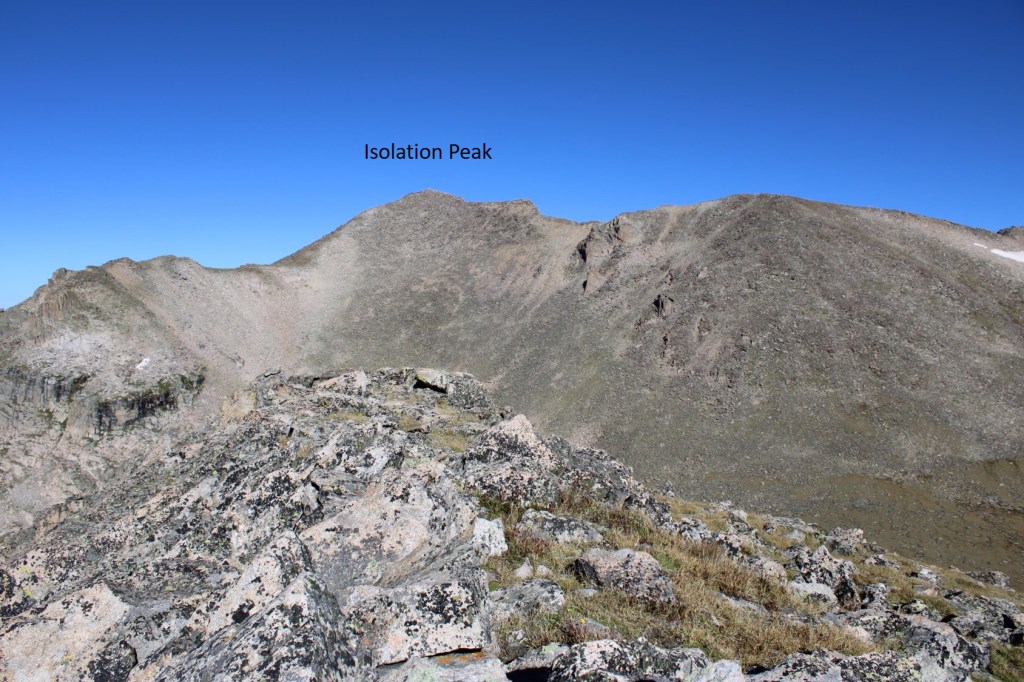
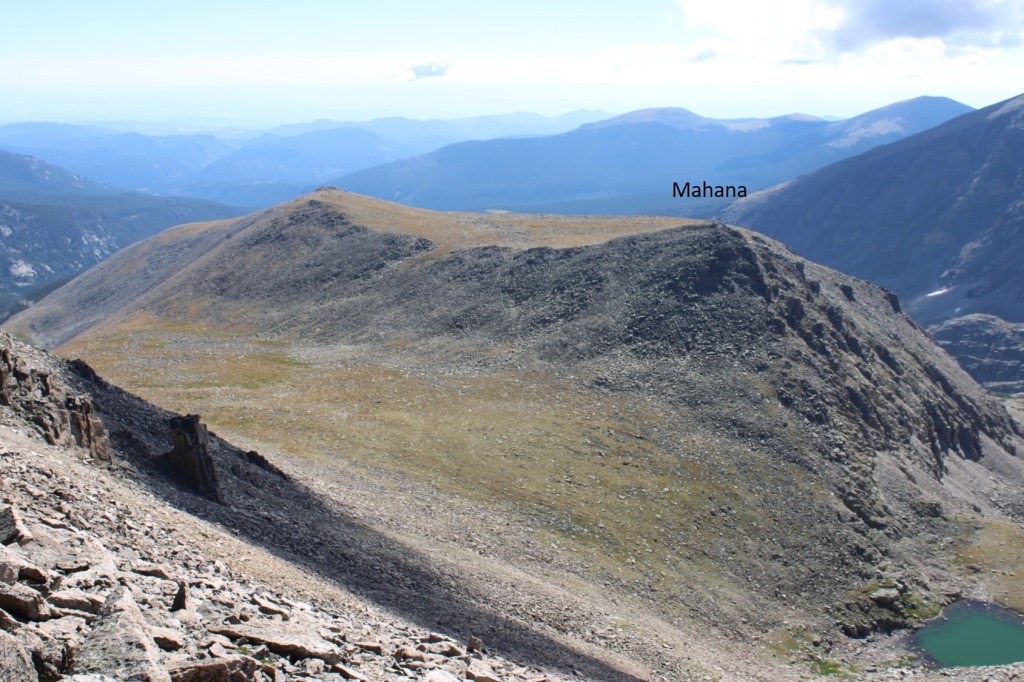
From Mahana Peak, I could see Isolation Peak to the northwest

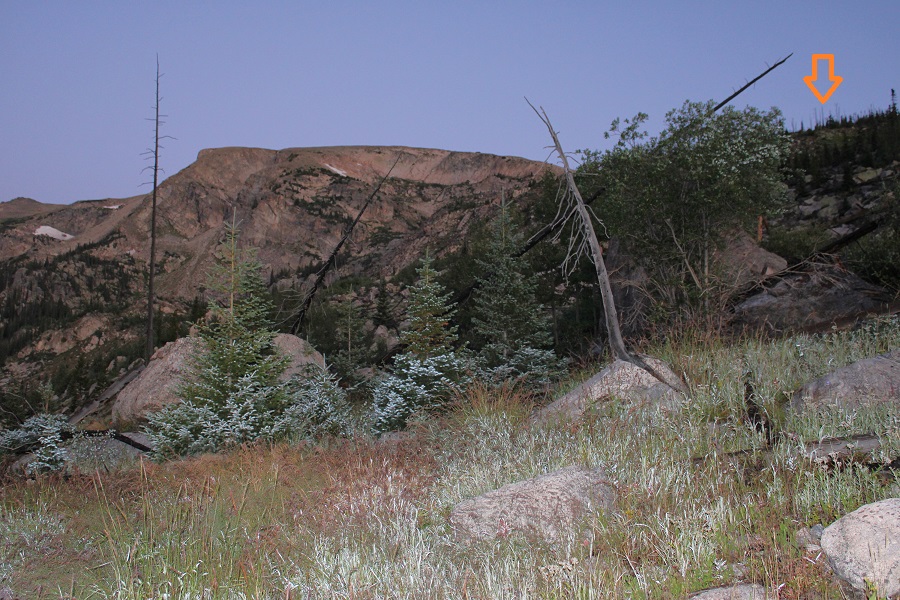
To get there, I headed northeast along the ridge until I came to a low point, and then headed northwest towards the ridge.

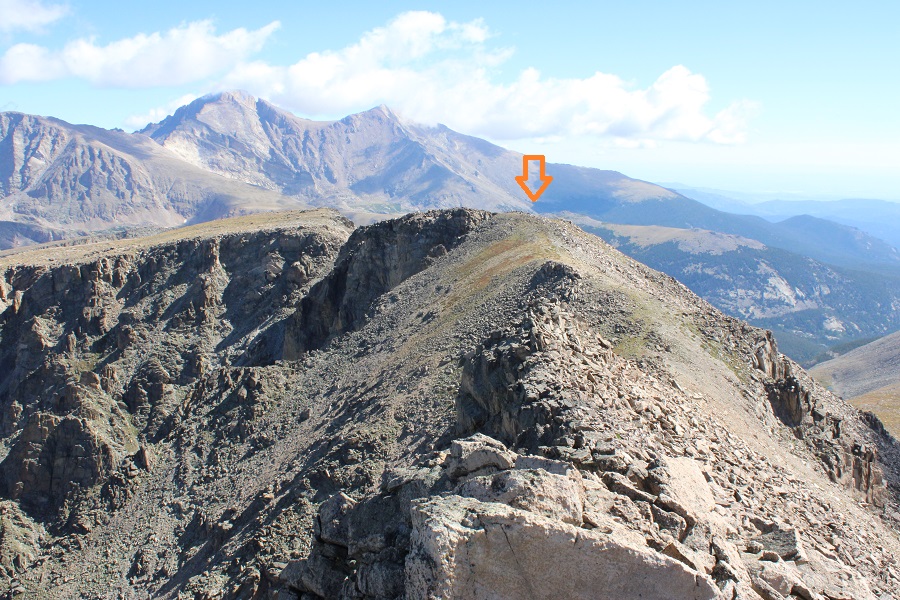
This is the overall route I took to gain the ridge of Isolation Peak.  If you look carefully, you will see a green band of grass that makes the route easy to follow.  I descended on rocky terrain, then was greeted with tundra, then rocky tundra as I ascended.

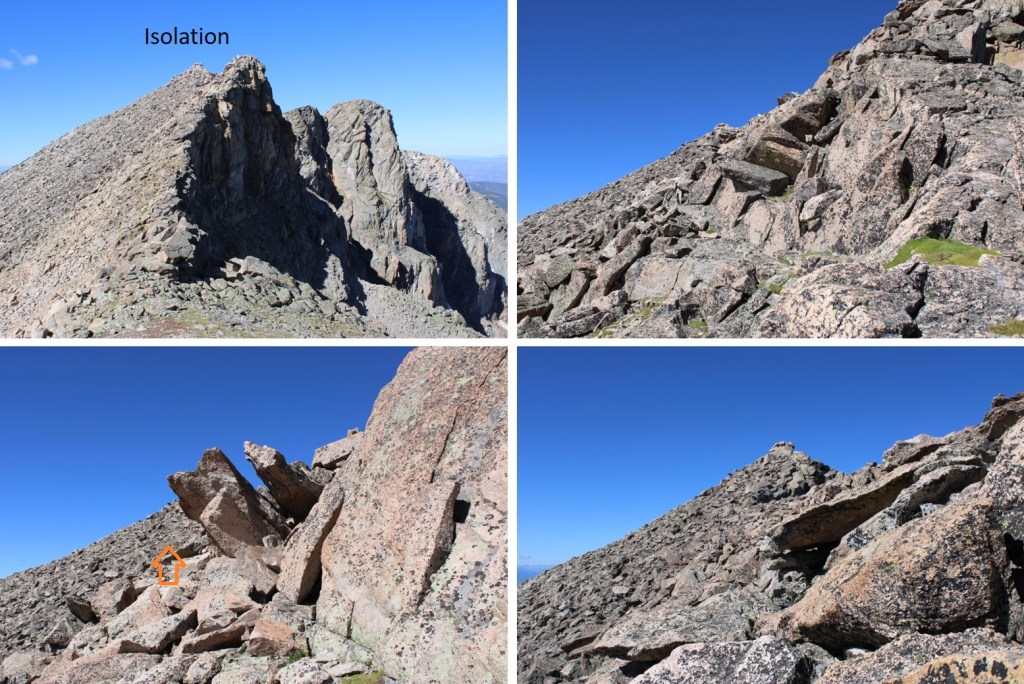
Once on the ridge, I turned left and could see Isolation Peak to the southwest. This was a class 2 hike, sticking to game trails either directly on or to the left of the ridge, until the last 10 feet or so, when it was a quick class 3 scramble to the summit

I’m pretty sure this block is the summit.  I sat on it, but briefly.  Pictures/video were difficult.  The summit rocks didn’t feel stable, and I could see through them to air below if I looked down. 

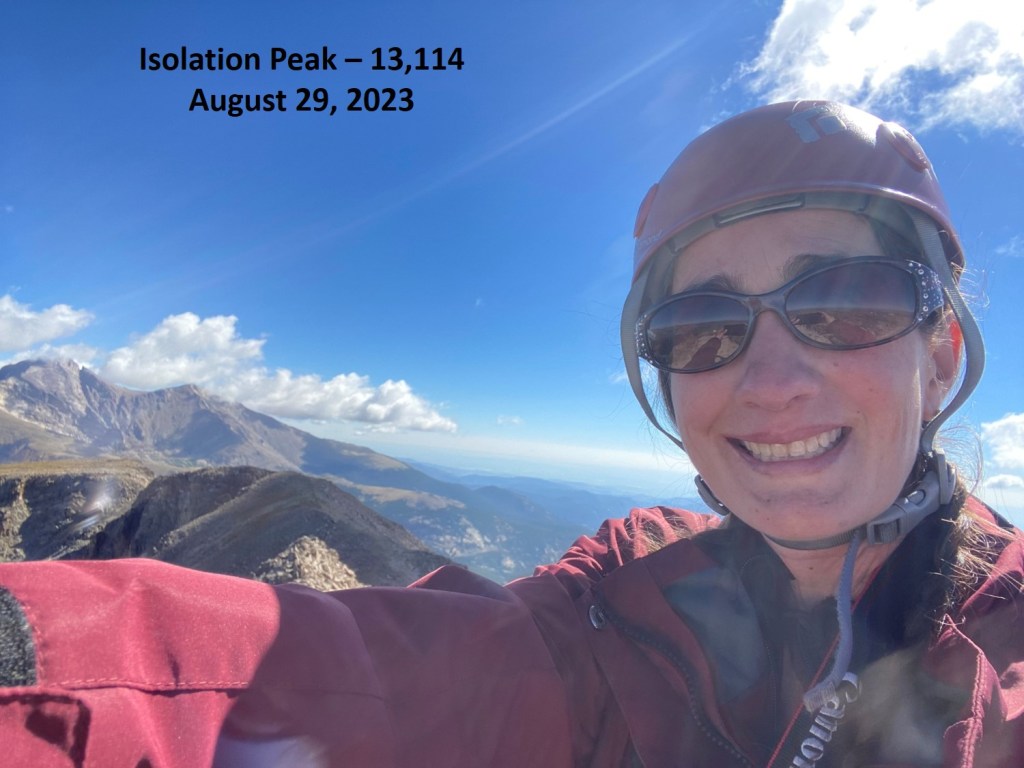
I summited Isolation Peak at 10:30am

Isolation Peak:

Here’s looking back at Mahana Peak from Isolation Peak

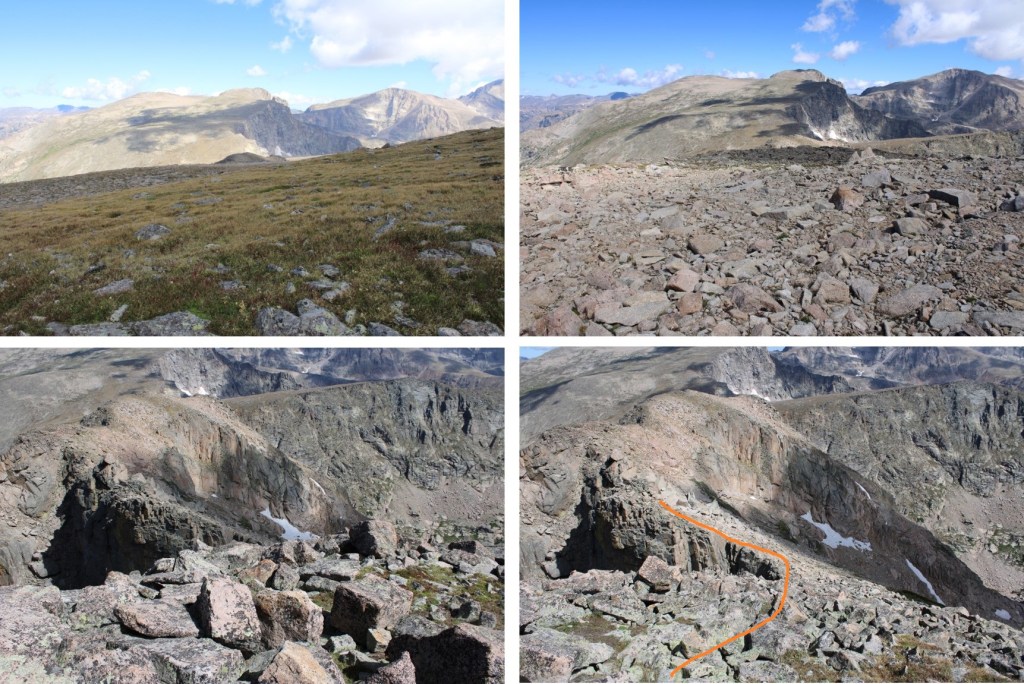
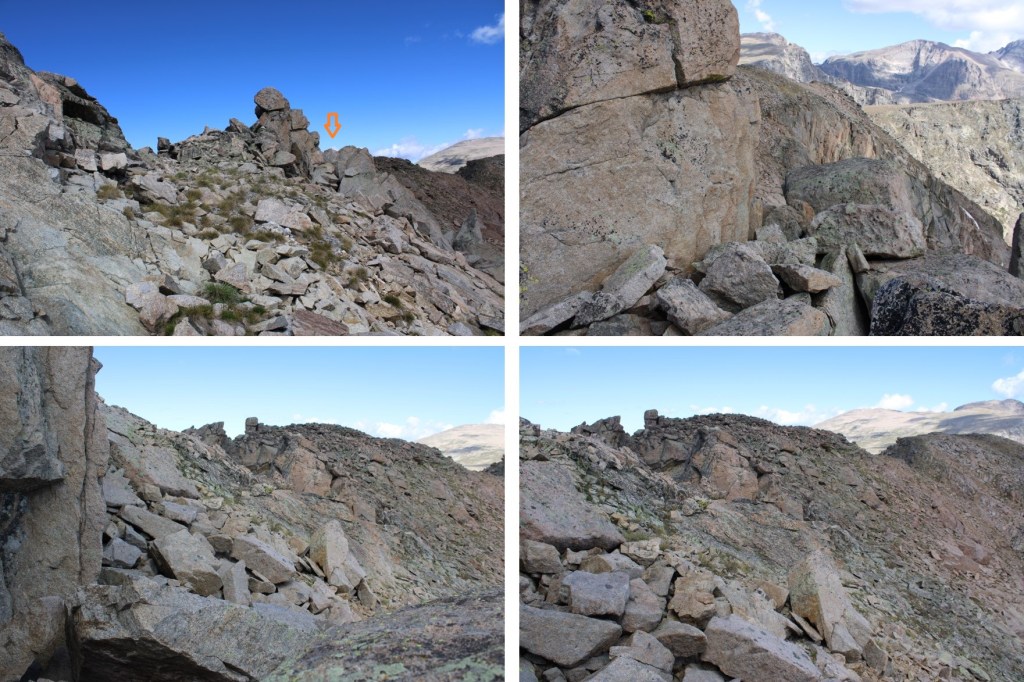
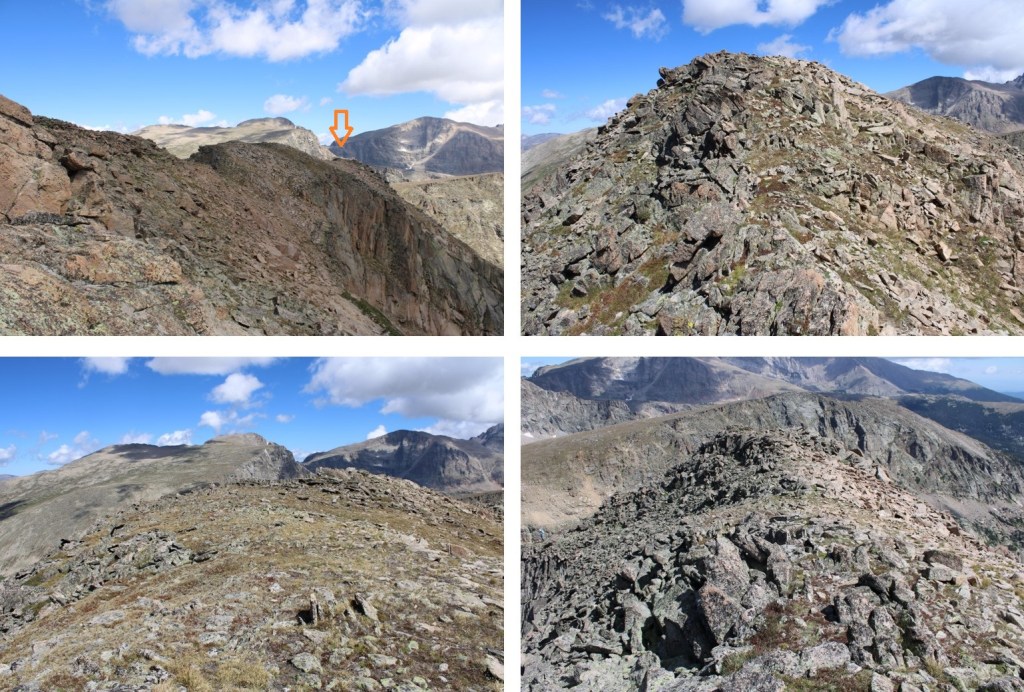
If you’re not up for class 3-4 scrambling, now’s the time to head back the way you came in, towards Mahana.  It’s the fastest route.  If you’re up for some scrambling, strap on your helmet if you haven’t already, and head northeast along the ridge.  Some of this ridge I’d consider choose your own adventure.  This is the route I took, keeping it class 3, with some easy class 4 scrambling (down chimneys/gullies).

I was now back to where I ascended the ridge, and followed the ridge northeast.  There is a lot of elevation gain and loss on this descent

I went to the right of this boulder.  Getting through was sketchy class 3.  The boulders were large, but there was a lot of empty space between them, and they didn’t feel solid. 

My next objective was to make it here (this was class 2, sticking to the ridge)

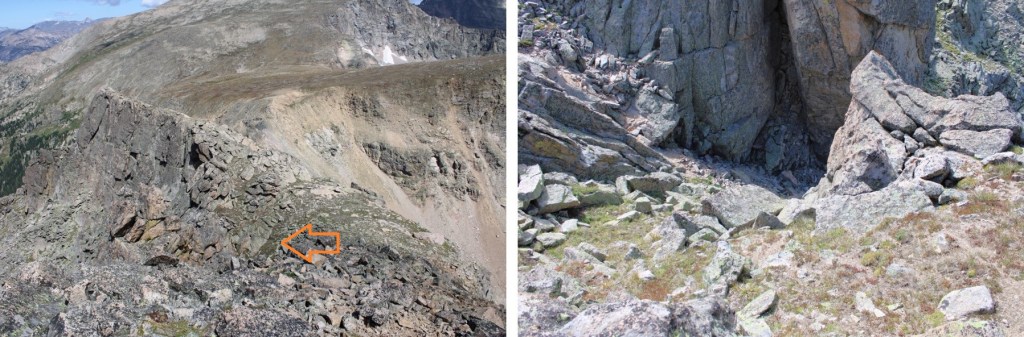
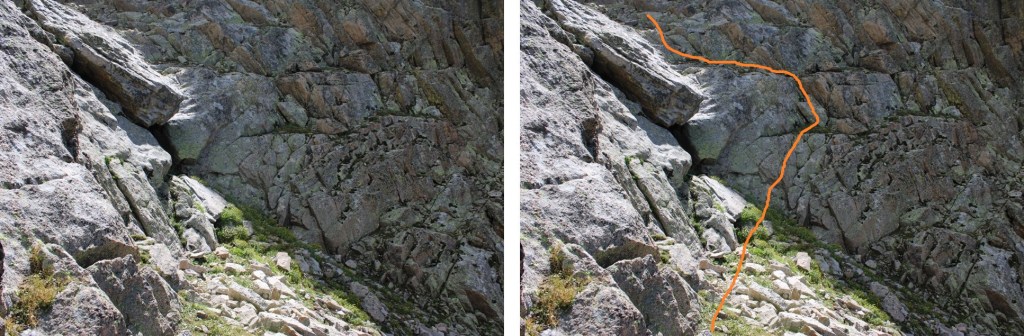
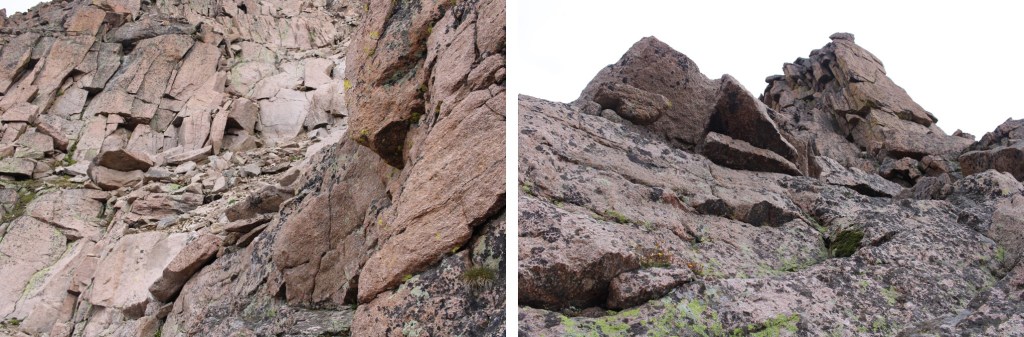
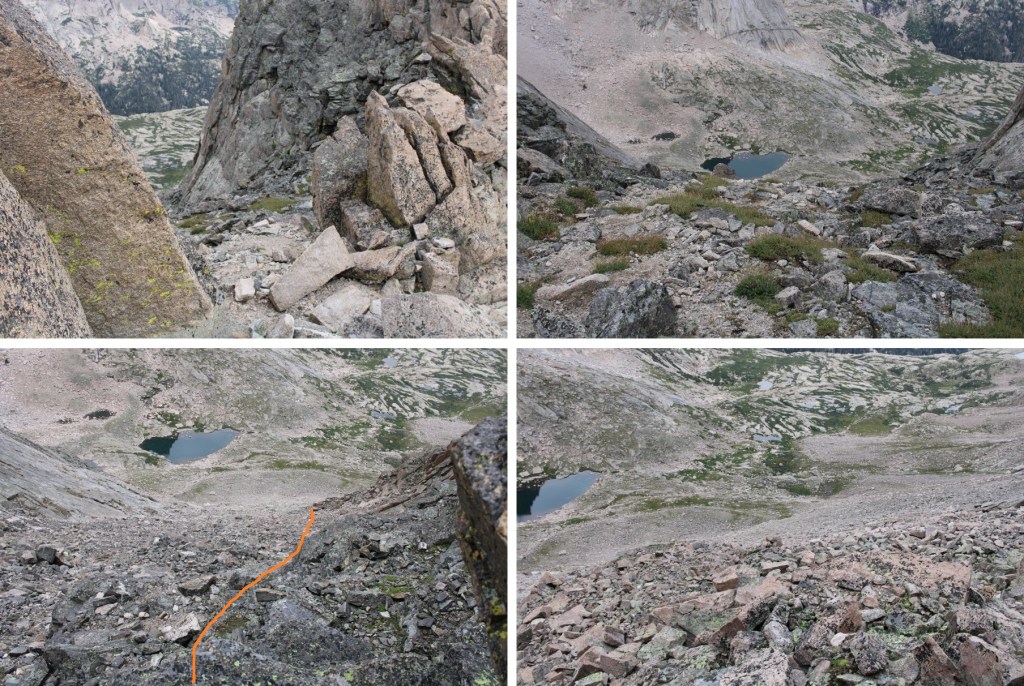
This is where it got a bit tricky.  I turned left, and descended into a rather large and steep gully.  I spent a lot of time in this gully route finding, and my advice is to stick to the gully proper until you make it down to 12160’.  You’re trying to go below this rock formation, which goes a lot further down than you’d think.

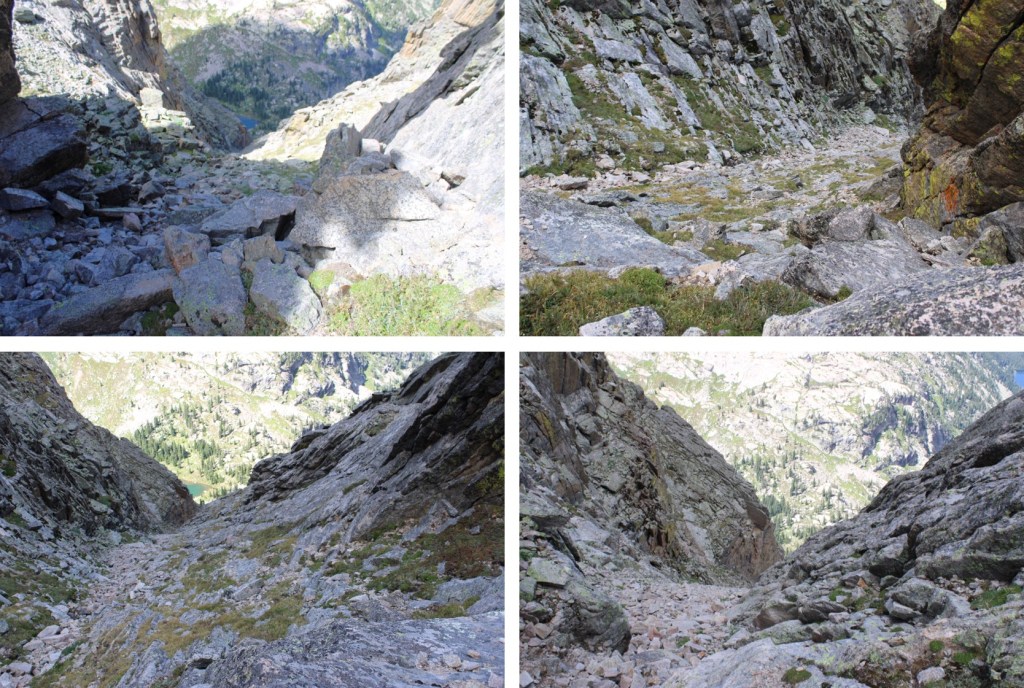
I turned left, and descended into the gully

I came to a place that looked like it cliffed out, but it was really just a drop onto a boulder, then a 7-foot downclimb. 

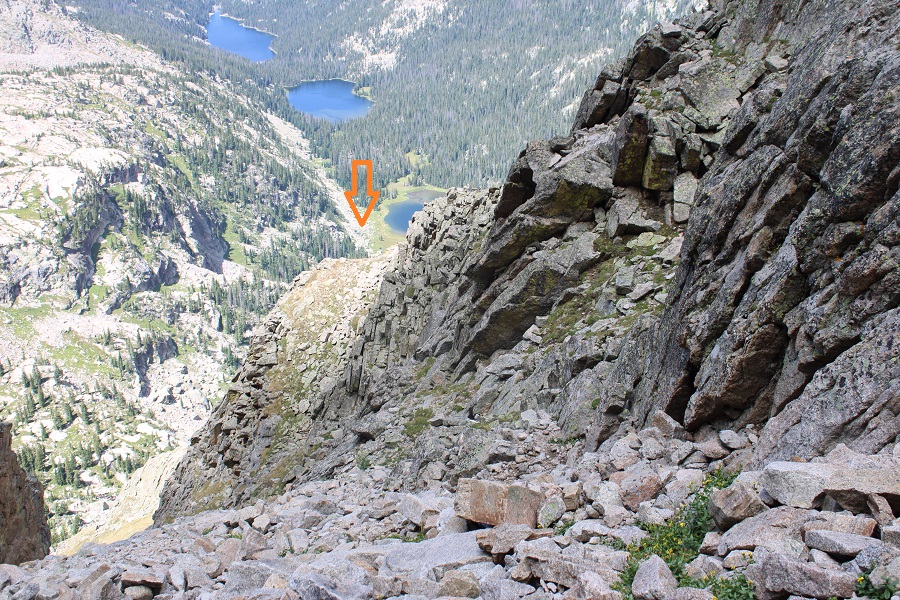
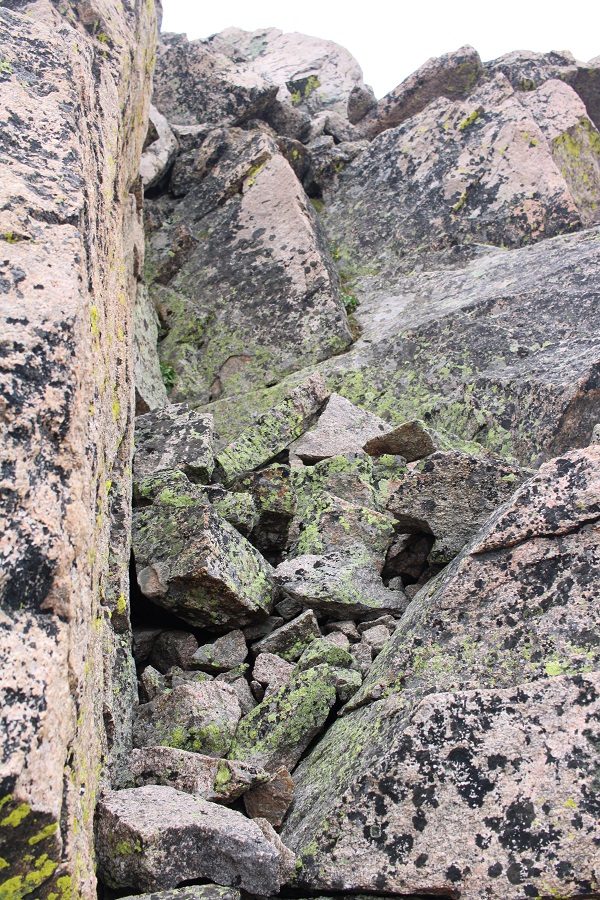
Here’s looking back up at the gully

And a look at the final drop.  The boulder in the middle was essential to the descent.

This was at about 12160’, where I stopped descending the gully, and looked for a grassy ledge climbers right. 

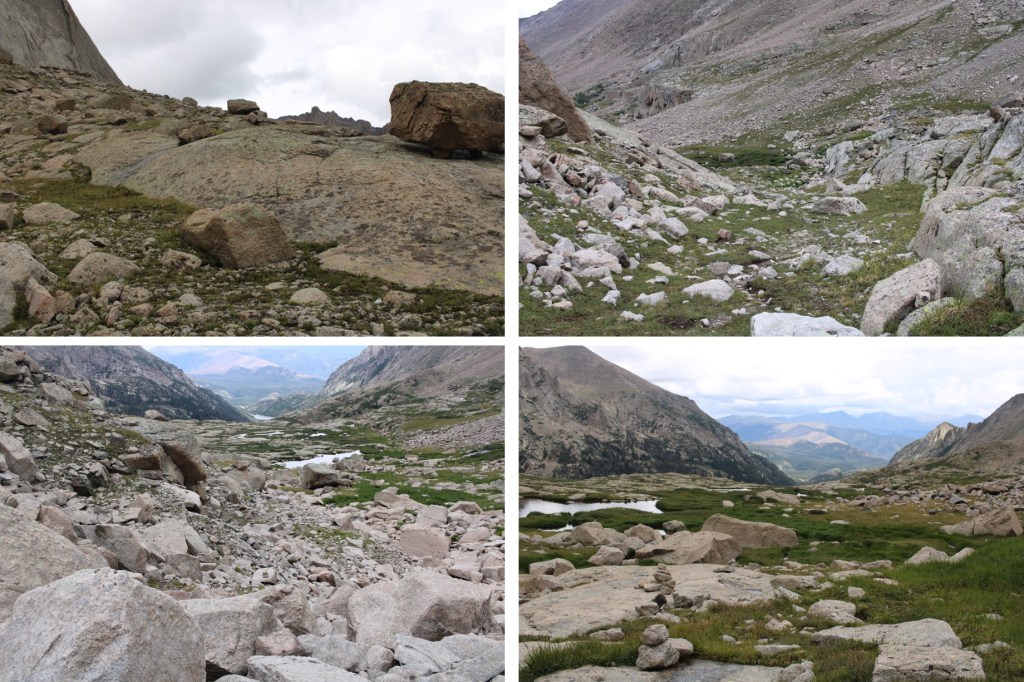
I made it to the ledge, descended another grassy ledge, then reascended a grassy ledge to re-gain the ridge

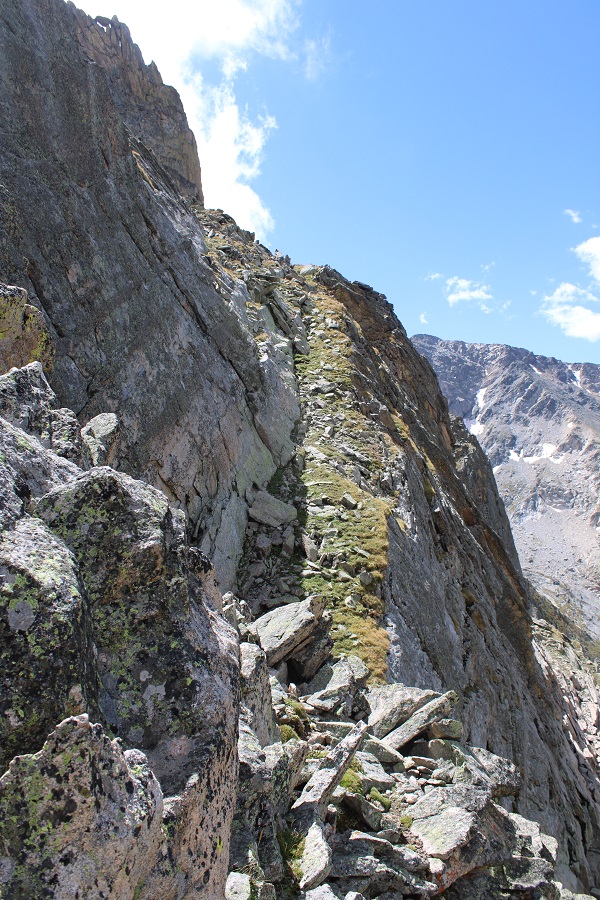
For those of you doing this the opposite way, here’s a look back at the grassy ledge I descended.  You can see why I had to drop down so low in the gully, with the sheer cliff face to navigate.

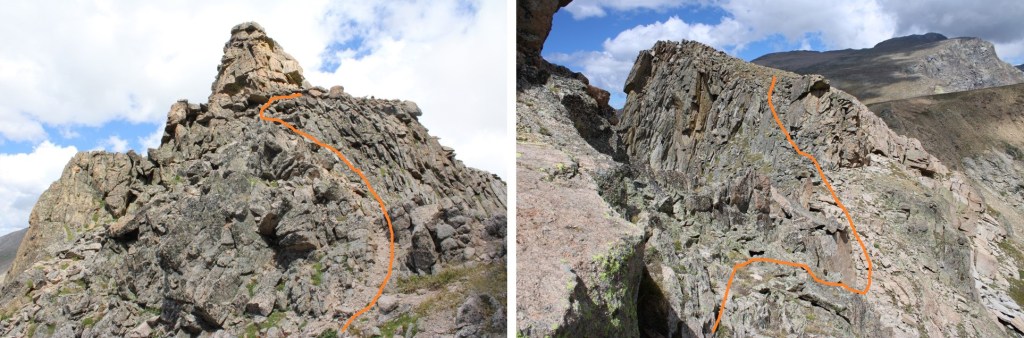
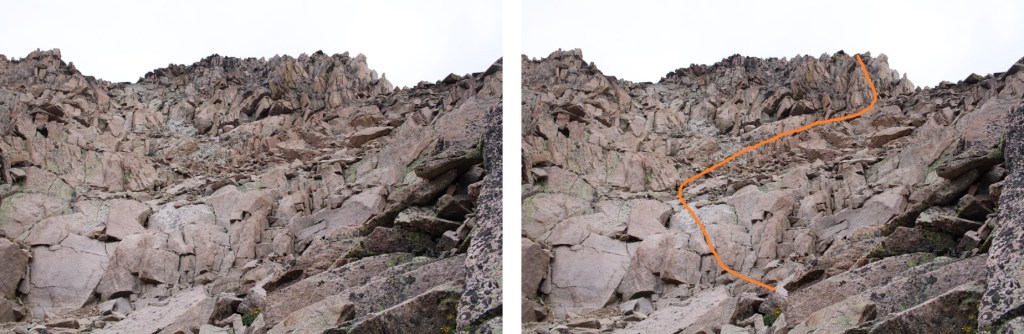
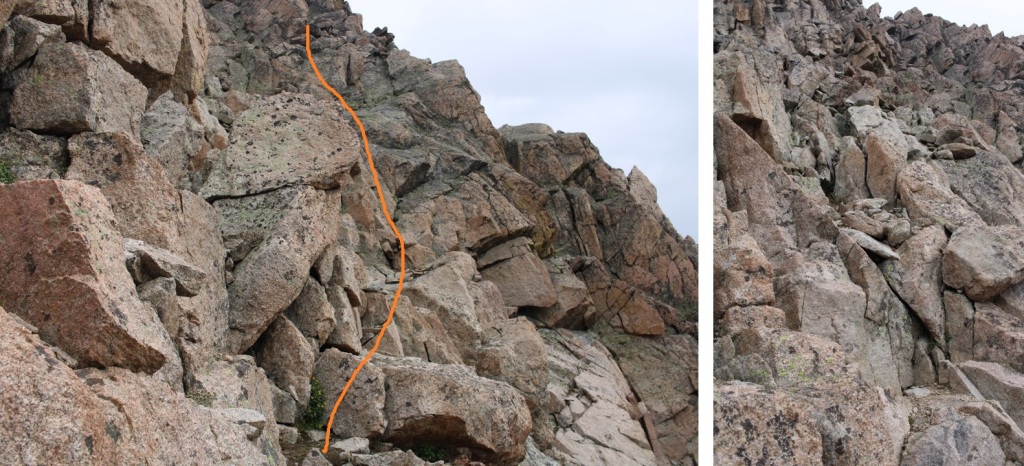
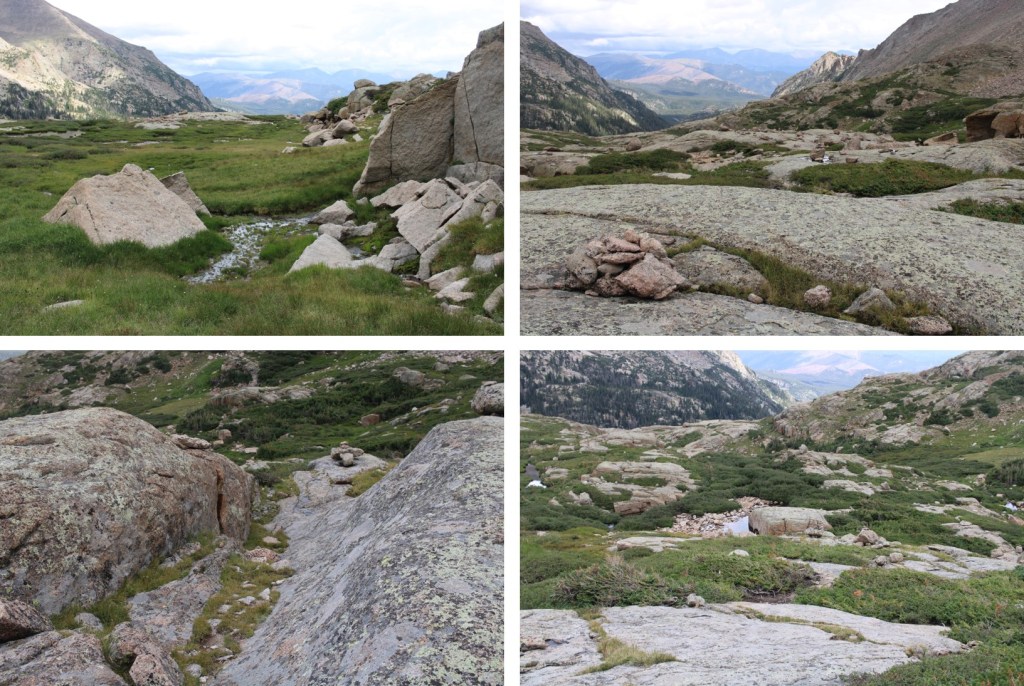
Here’s how I got around the next few obstacles

And that was it for the climbing for today.  I kept my helmet on because I still had a scree-gully to descend, but all the class 3 and 4 stuff was done.  I’d wanted to head over to Mt Alice today too, but clouds were forming and I didn’t think it was a good idea.  I headed towards Boulder-Grand Pass, turned right, and descended the gully towards Lake of Many Winds.  From the pass, it was 9.5 miles back to the trailhead.

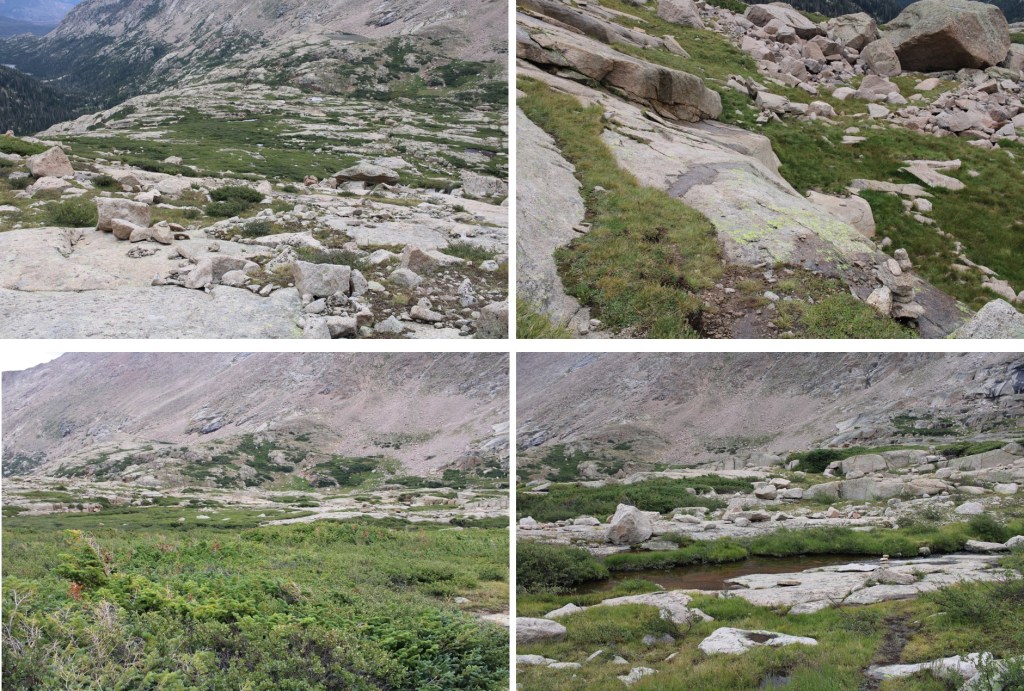
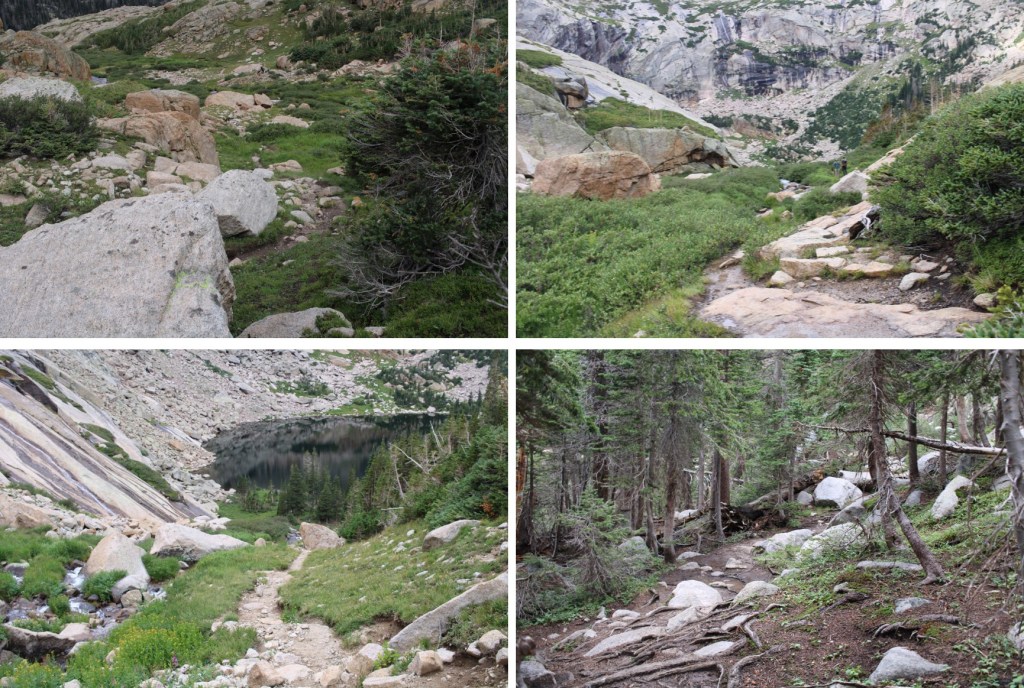
A good trail picks up here, and leads all the way back to the Wild Basin Trailhead.  Here you can see Thunder Lake.  This trail becomes the Thunder Lake Trail, skirting the lake to the left.  This is a class 1 trail.  Once again, it’s very well marked, with signs indicating the route back to the Wild Basin Trailhead
I made it back to the trailhead at 4:45pm, making this a 21.79 mile hike with 5665’ of elevation gain in 12 hours, 45 minutes, at least according to CalTopo.  Strava gave me drastically different numbers

On to the next trailhead!

Mt Lady Washington – 13,277

RT Length: 8.85 miles

Elevation Gain: 3869’

Side note: Mt Lady Washington is no longer a ranked 13er, but it does have 271’ of prominence.  It would be a nice addition to anyone doing Longs Peak, as it’s directly on the route.  This peak has been on my bucket list for years, so I’m including it on my website.

I started on the well-marked Longs Peak Trailhead at 4:30am, glad I’d put on microspikes in the truck. 

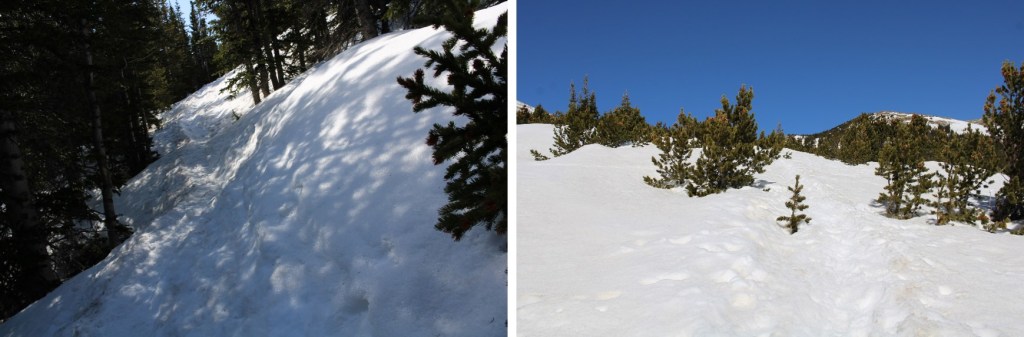
Snow levels increased as I hiked, but they were firmly packed down in the morning.  After .65 miles I came to a well-marked junction, and followed it left.

I followed the trail a total of 2.5 miles to treeline. 

At treeline the trail became difficult to follow, so I headed west, looking for the trail I knew I’d find in the upper basin. 

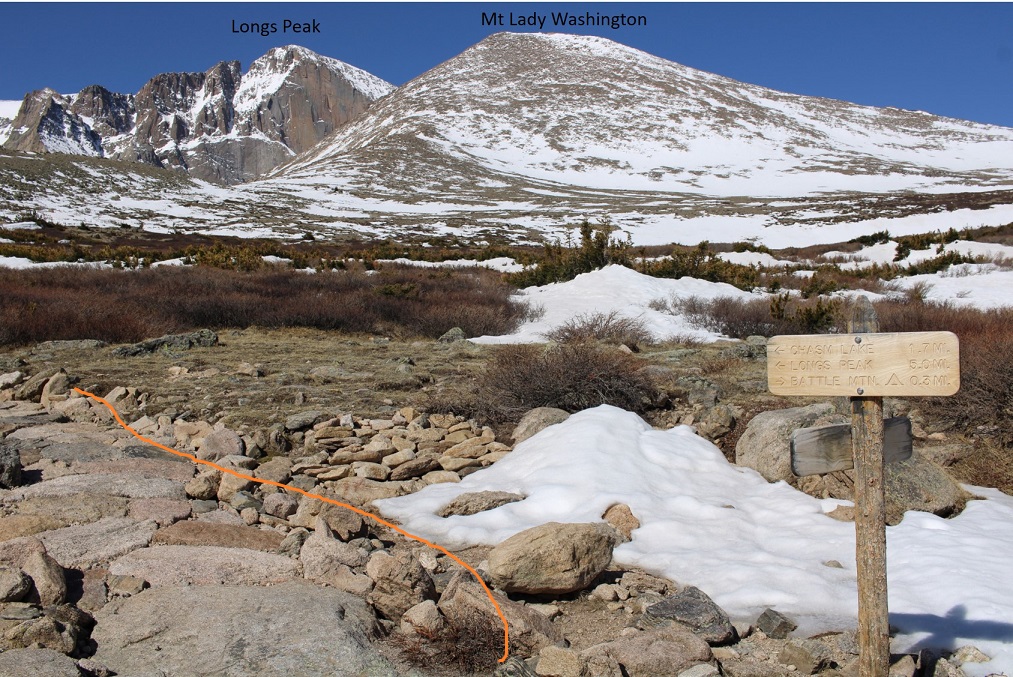
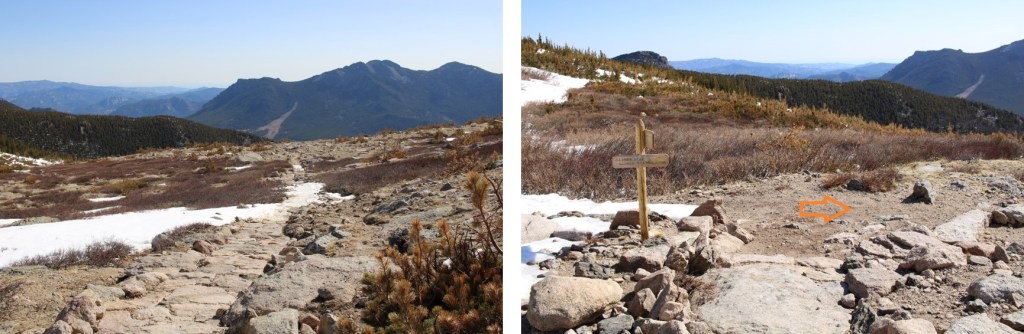
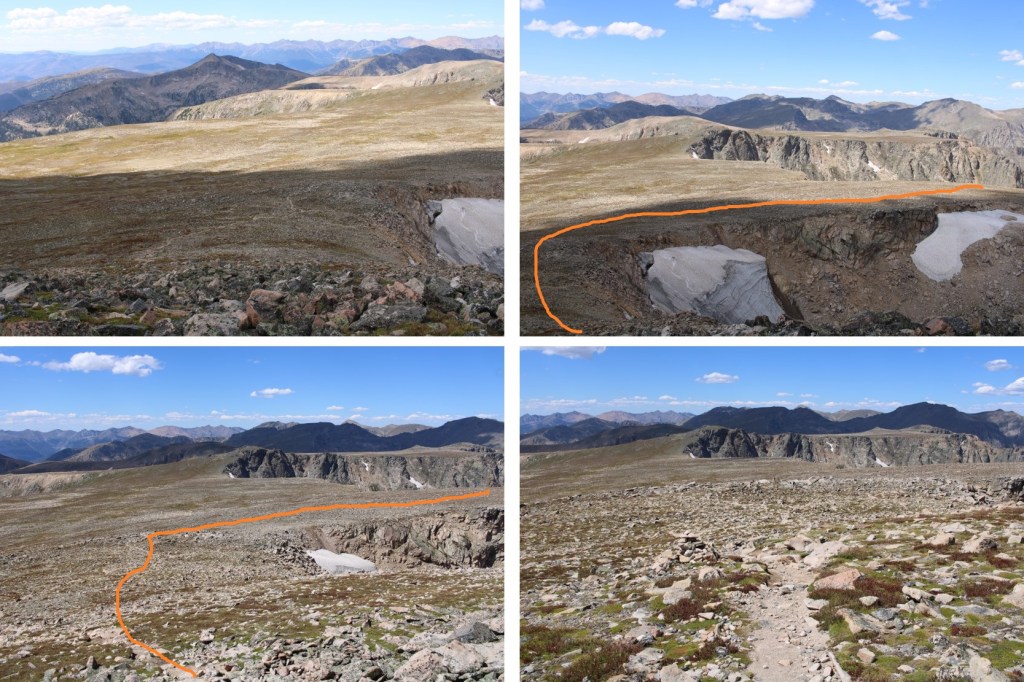
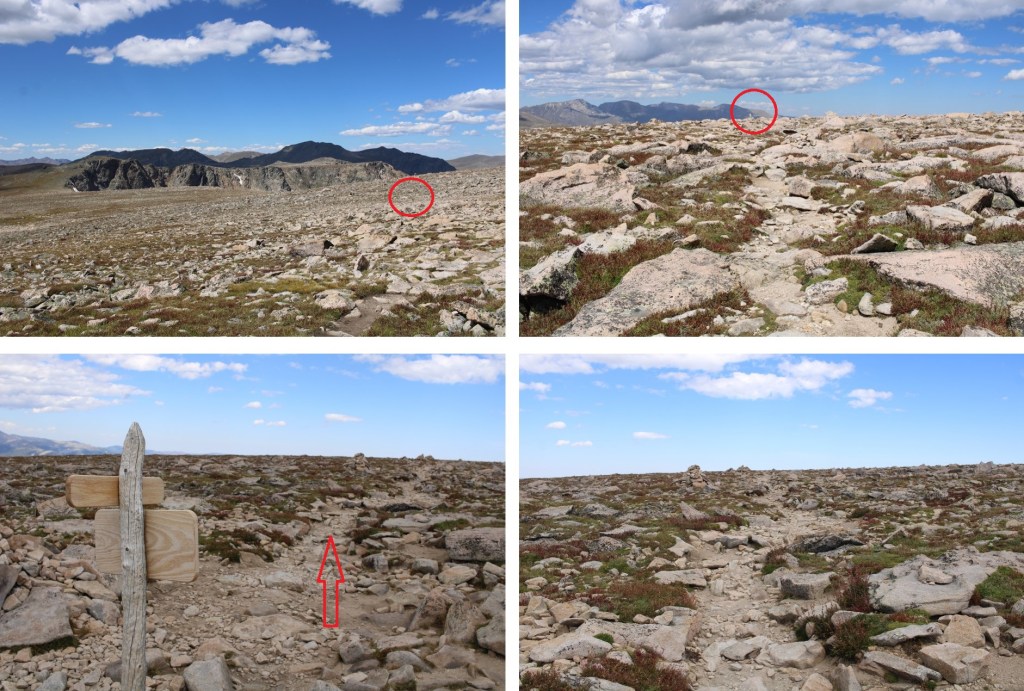
Once above treeline I turned left at this sign

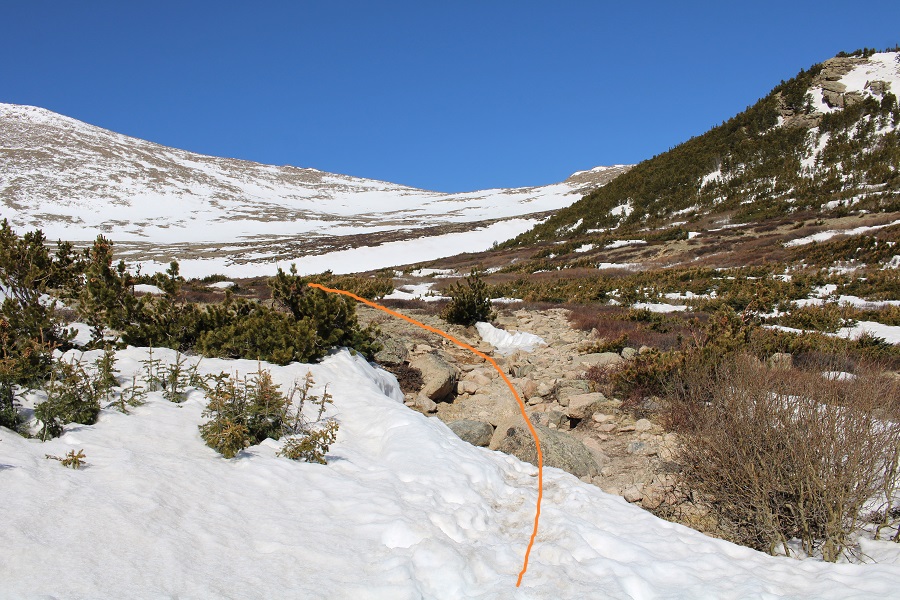
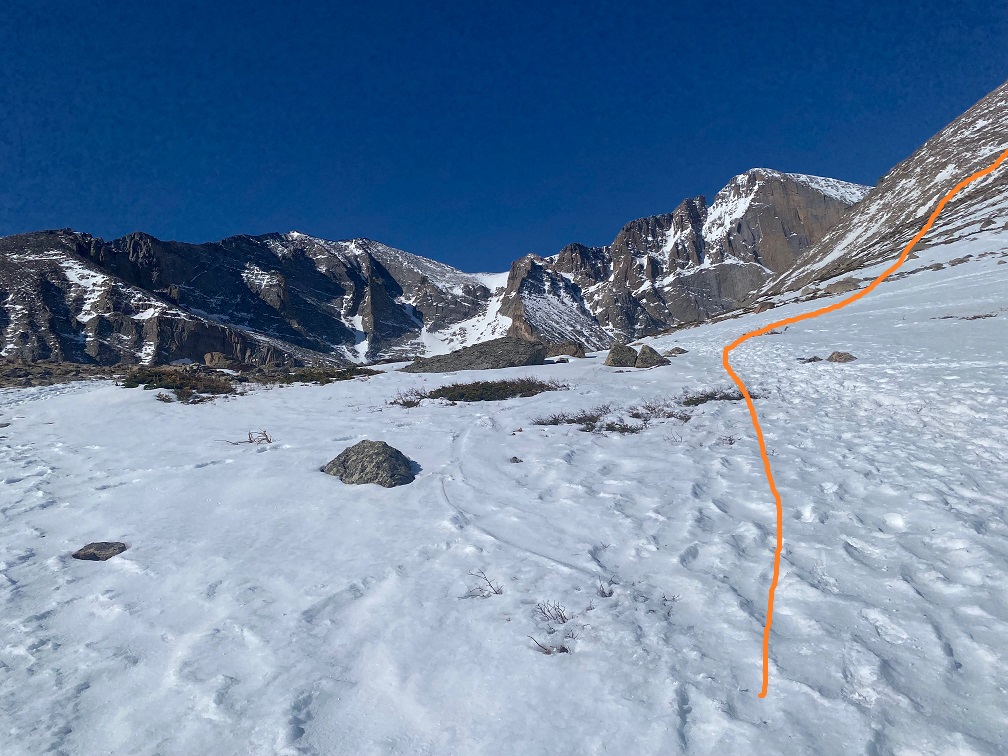
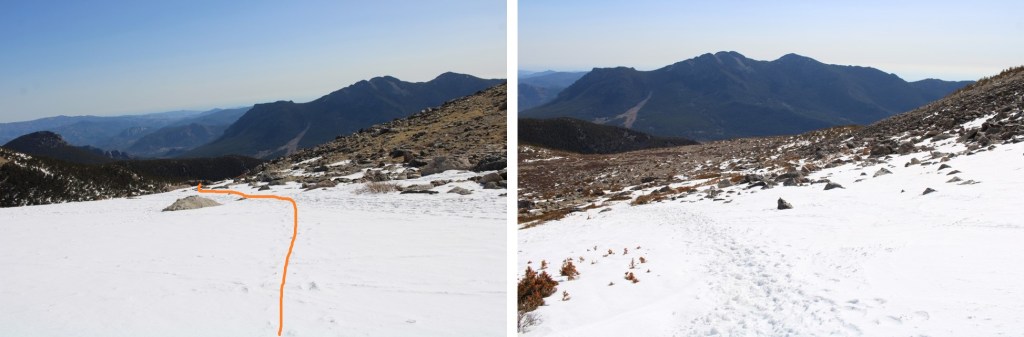
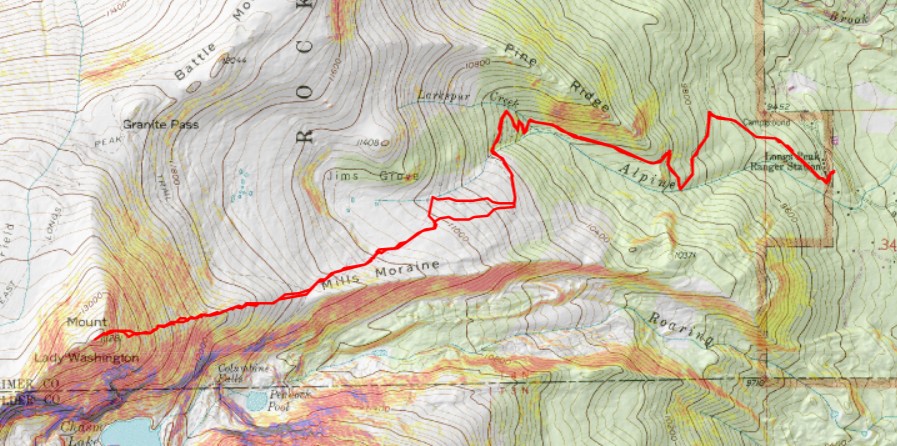
Here’s an overall view of the route.  It was very straightforward.

I made my way on the class 1 trail to the junction for Chasm Lake.  I’d hiked a total of 3.4 miles to this point.

I then turned right, and headed up the east side of Mt Lady Washington

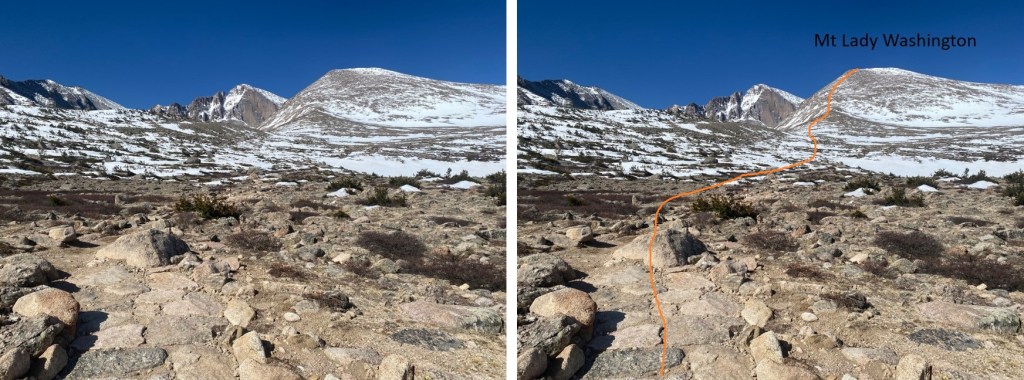
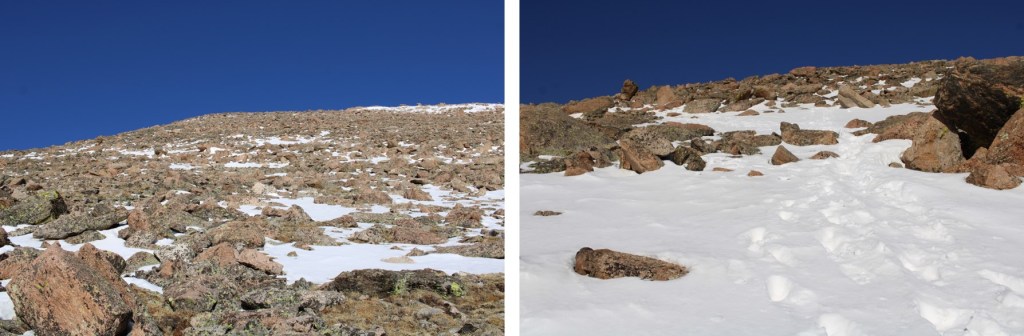
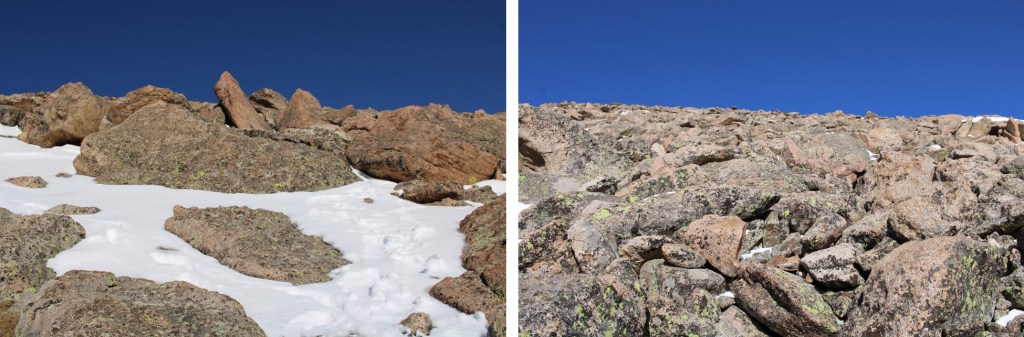
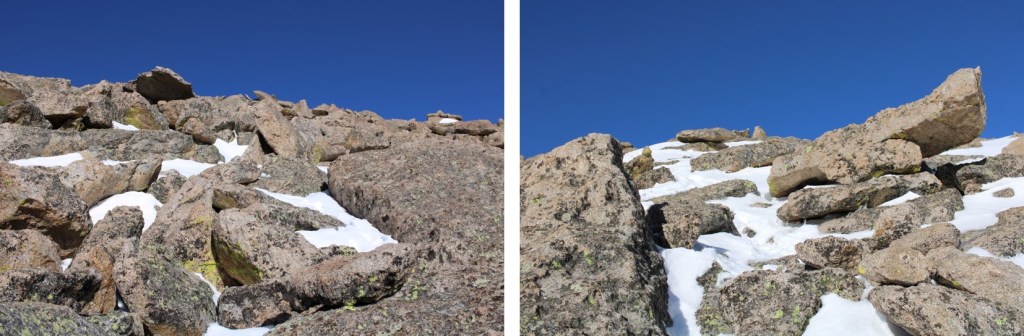
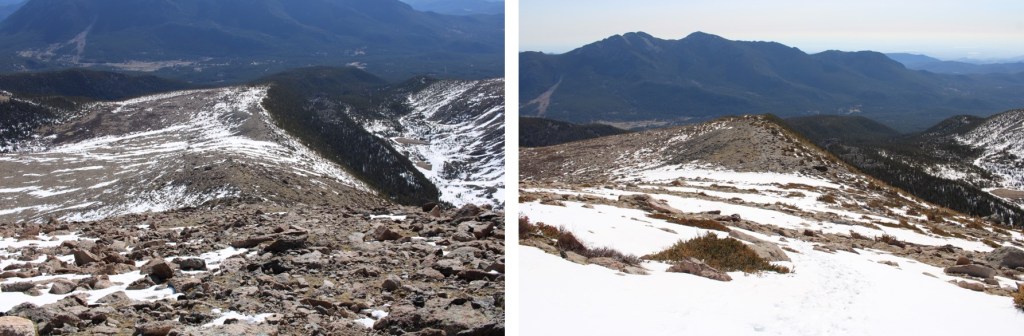
This was a class 2, choose your own adventure, 1 mile with 1700’ of elevation gain trek from the Chasm Lake turnoff to the summit of Mt Lady Washington.  Here are some pictures of the hike to the summit, which included a lot of rock hopping.  I just kept heading west, to the obvious summit.

Here’s the actual summit, which is a class 2 rock scramble

I summited Mt Lady Washington at 8am

Mt Lady Washington:

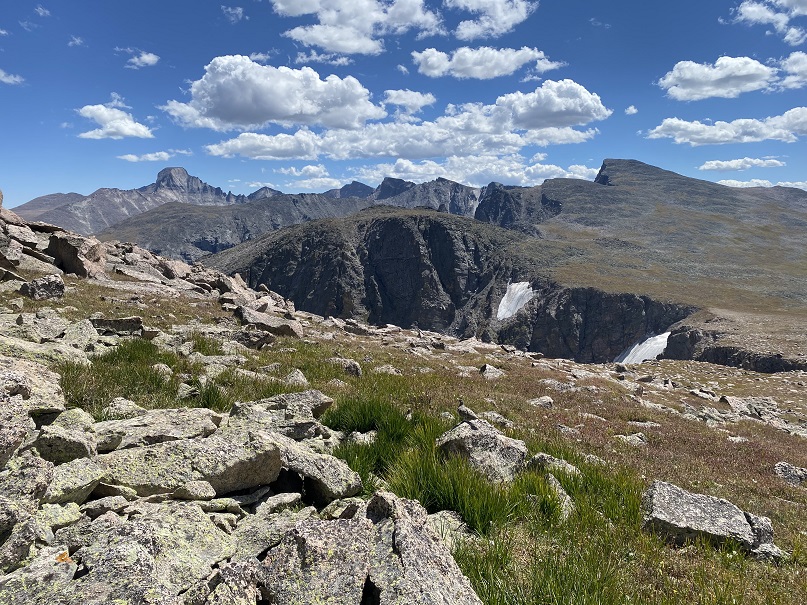
Mt Lady Washington has arguably the best view of the Diamond on Longs Peak, so I sat for a bit to enjoy the view

Now to head back. This was an out and back hike for me, so I turned and headed east, following my tracks back down to the trail.

Here’s an overview of my route back to the Longs Peak Trail

And some step-by-step pictures of the terrain

Once back at the junction of the Longs Peak/Chasm Lake trail, the trail was easy to follow back down to treeline

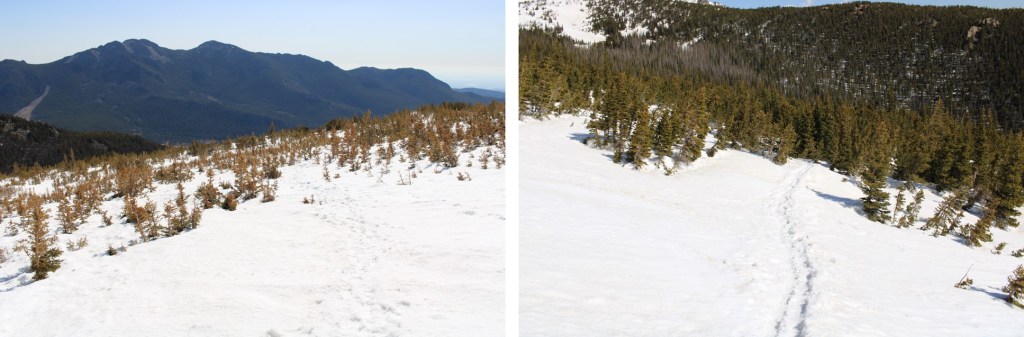
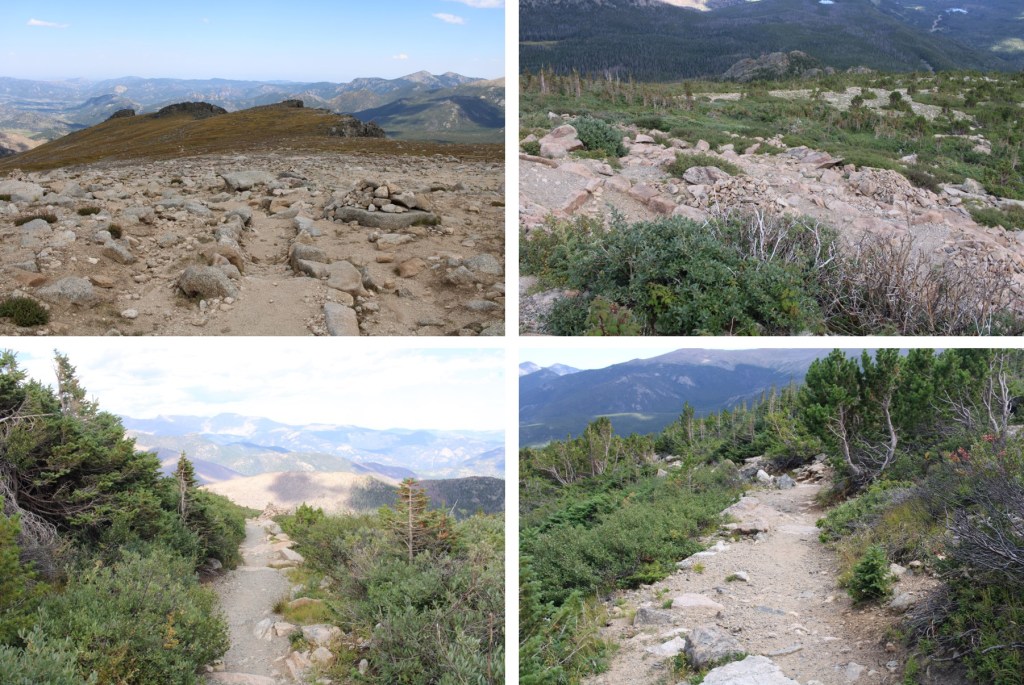
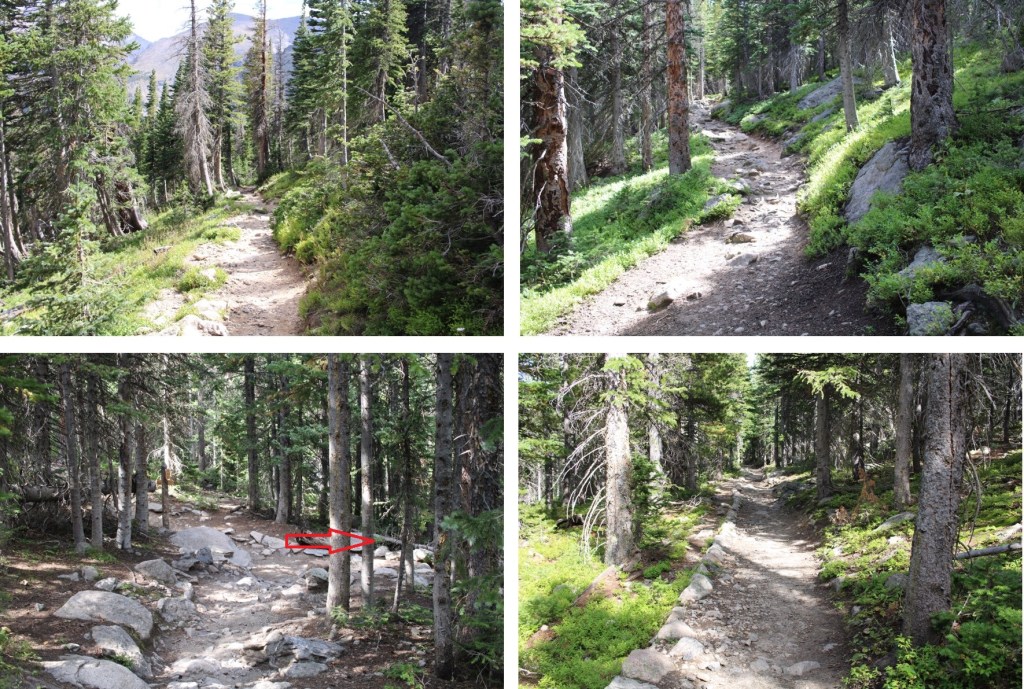
Here are some pictures of the route back to the trailhead.  It was only 8:30 in the morning, but the snow was already softening up.  There was evidence others had postholed at least 4 feet in this section.  I was glad I’d gotten an early start.

I made it back to my truck at 10am, making this a 8.85 mile hike with 3869’ of elevation gain in 5.5 hours.  On to the next trailhead!

Taylor Peak – 13,157, Powell Peak – 13,197, Otis Peak – 12,481, Hallett Peak – 12,723 & Flattop Mountain – 12,330

RT Length:  19.75 miles

Elevation Gain: 5983’

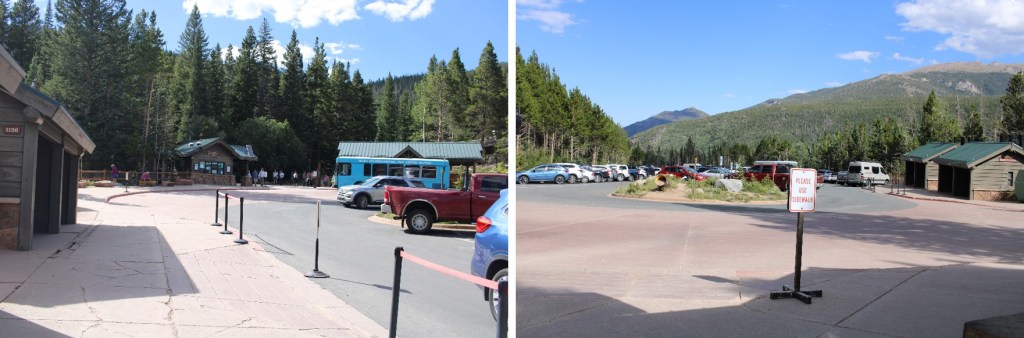
I started from the Flattop Mountain Trail inside Rocky Mountain National Park, at the Bear Lake parking area,  at 4am.  I’ve been to this trailhead a few times, and it fills up before 6am, so plan on getting there early to secure a spot. 

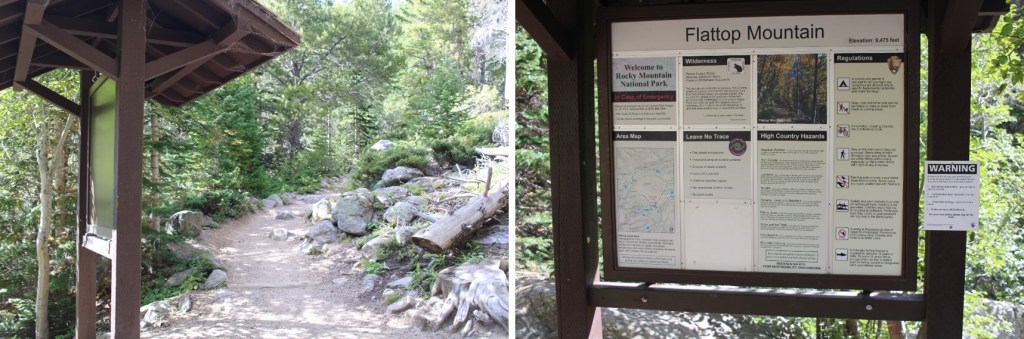
There is great signage in this area, leading you to the trailhead

I followed the class 1, well-marked trail for 5 miles up to Flattop Mountain, gaining almost 3000’ of elevation in the process

As soon as I hit treeline the sun began to rise, and I saw a small herd of elk, led by one male bull.  He bugled to me, and the ptarmigans began to chirp .

Elk Bugling:

Ptarmigans waking up:

I continued following the class 1 trail to Flattop Mountain (which is really just a plateau).

At the top of the plateau is a sign.  At this sign I turned left, following the cairns.  Note:  there isn’t a sign indicating there is a trail to the left, but there will be dozens of rather large cairns to follow towards Hallett Peak

While you could certainly summit Hallett Peak first, my main goal were some 13ers further ahead, so I skirted Hallett Peak to the right, staying at about 12360’, which kept me on rocky tundra.

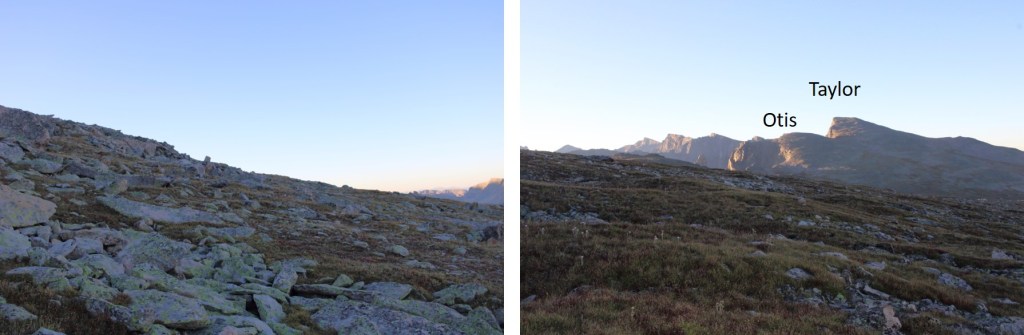
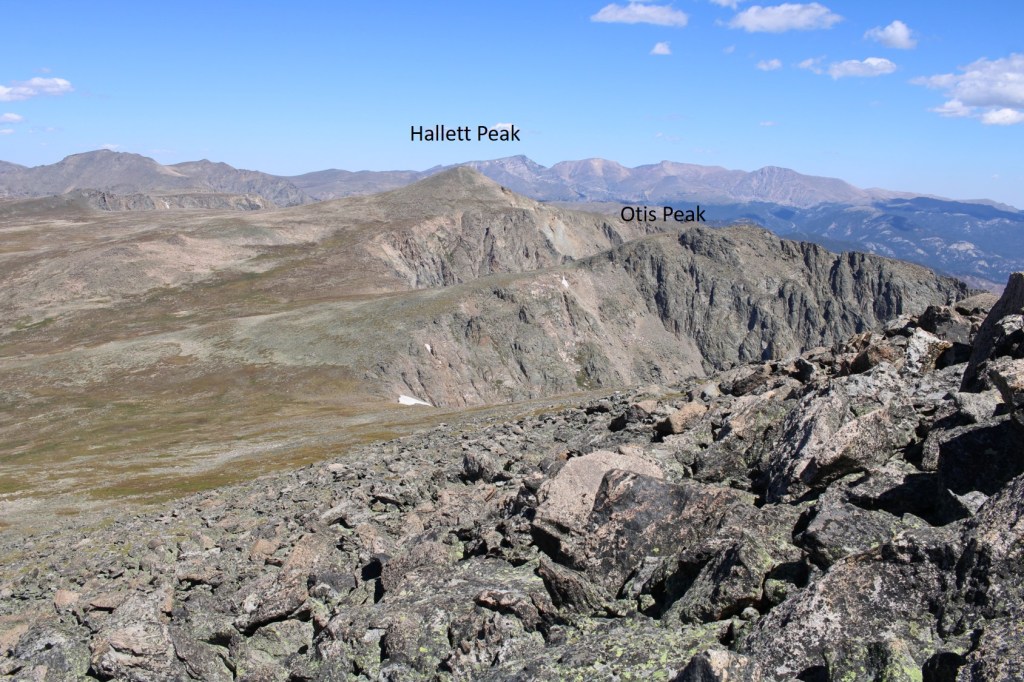
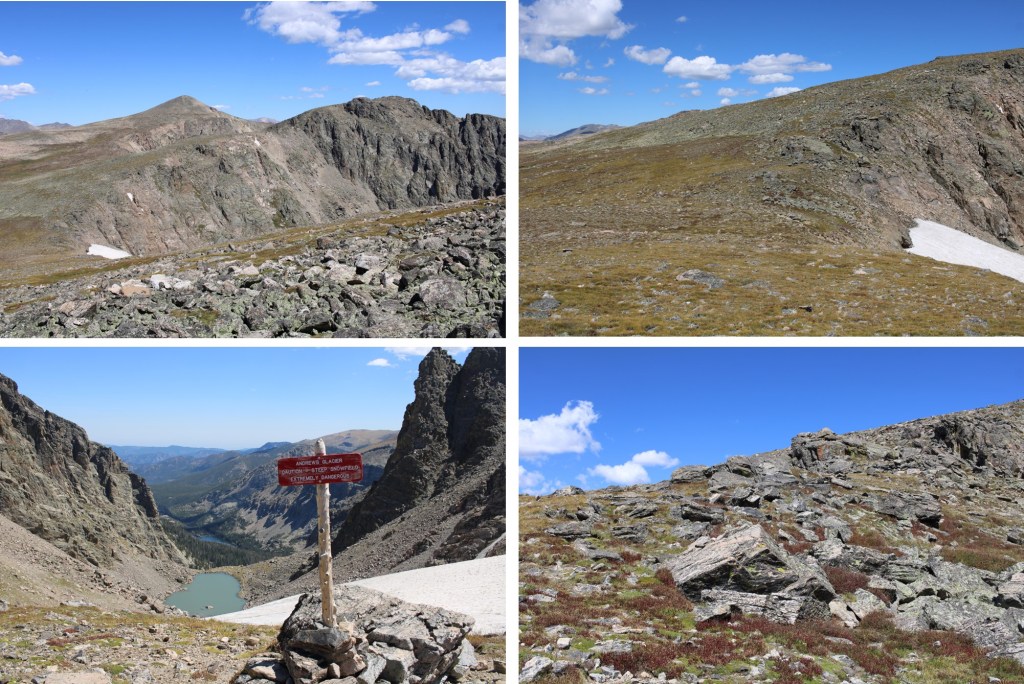
As I headed southwest, staying on the rocky tundra, I could see both Otis Peak and Taylor Peak.  It was my objective to summit Taylor Peak next, which meant I’d need to lose about 400’ of elevation to the Otis/Taylor Saddle (also where top of Andrews Glacier/Andrews Pass is located)

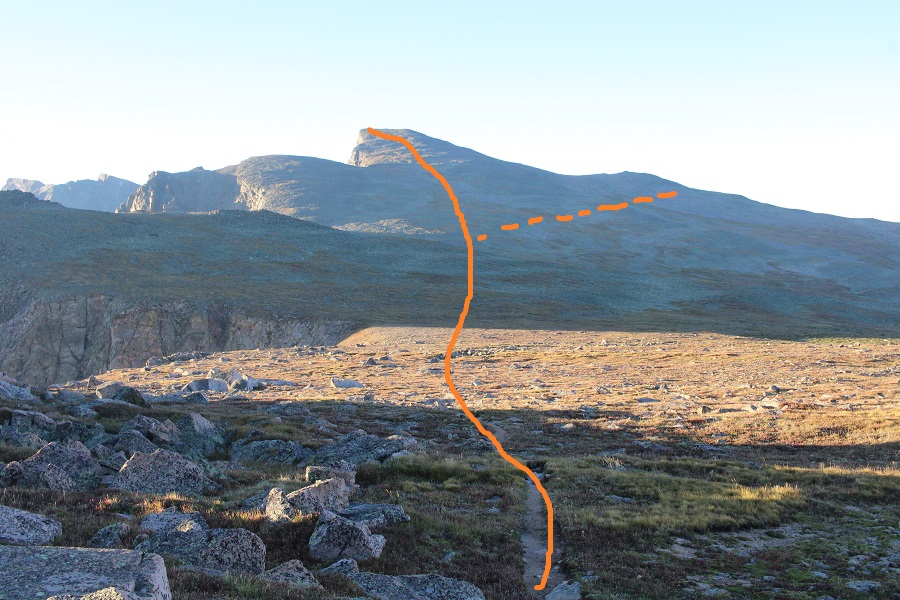
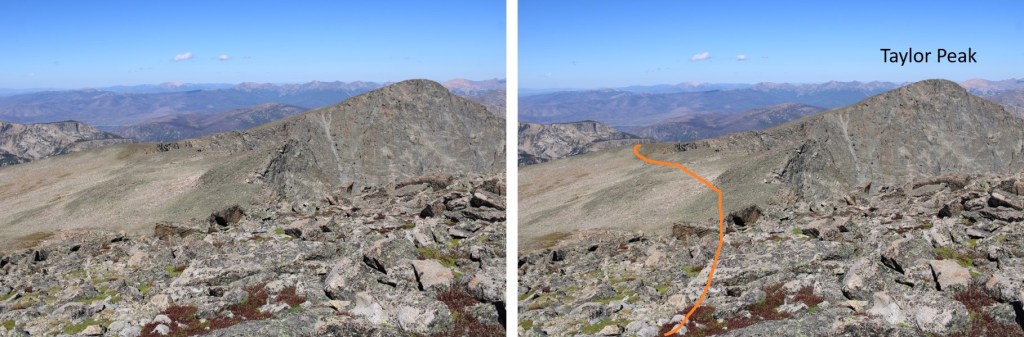
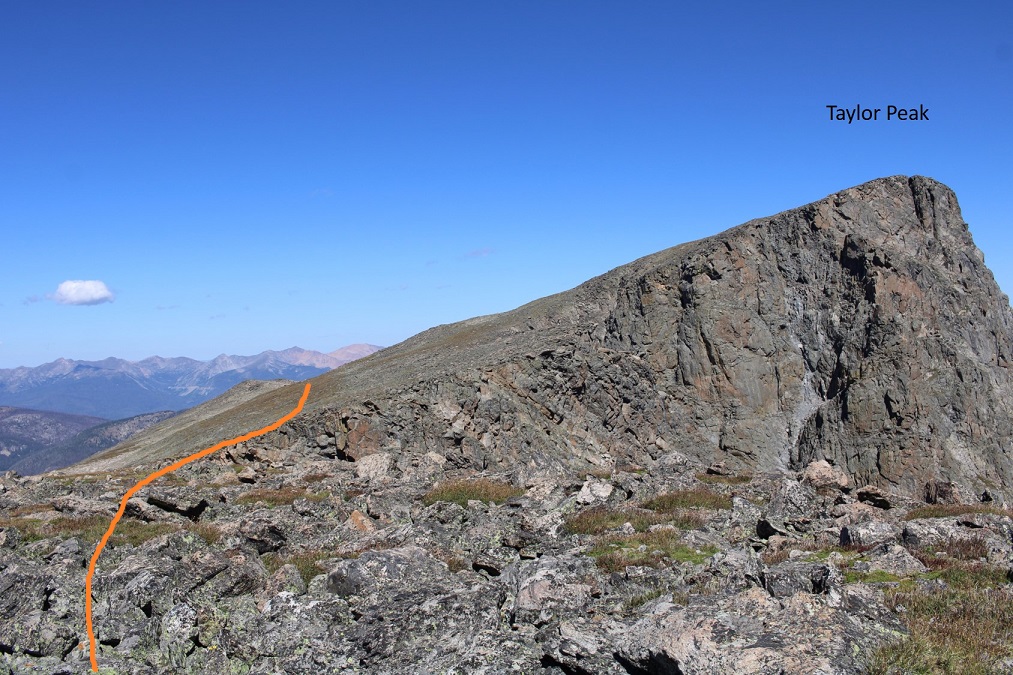
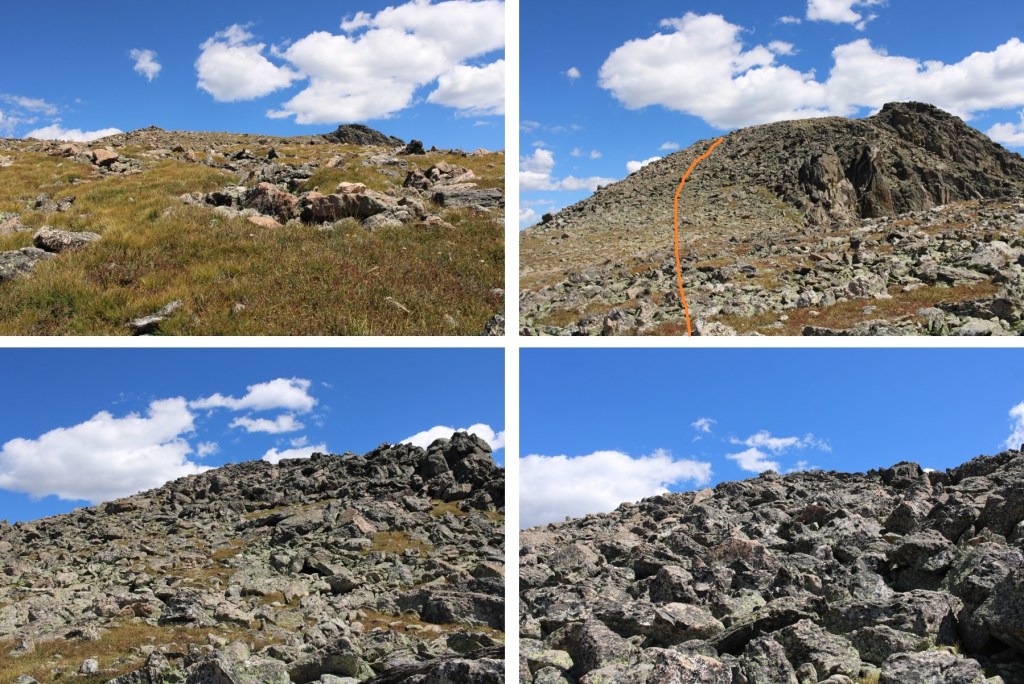
Here’s my route up to Taylor Peak from the Otis/Taylor Saddle. Note, my route up is solid, my route back down (after summiting Powell) is dotted.  I would recommend these routes in the same order I completed them.  The entire day consisted of class 2 terrain for all the peaks I summited.

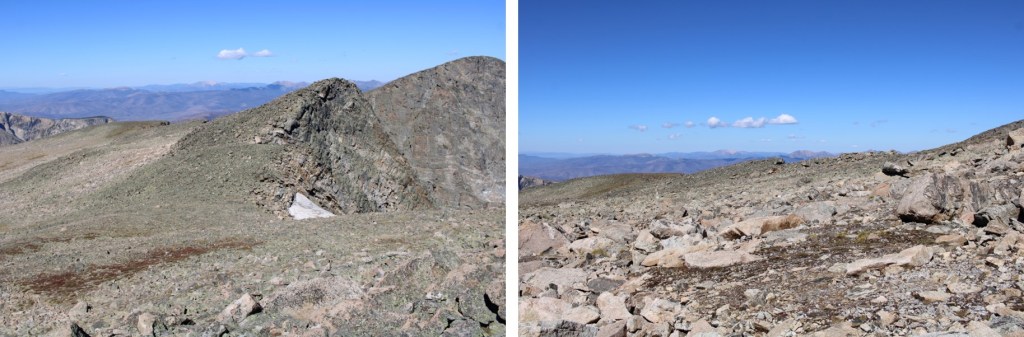
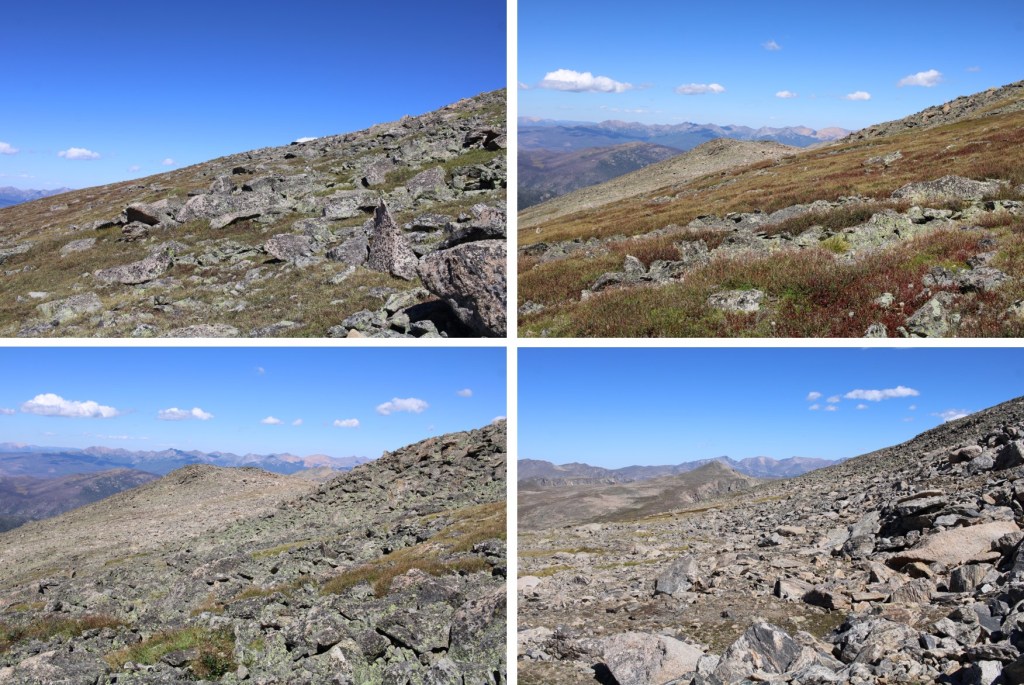
Here are some close-up pictures of the terrain to the summit of Taylor Peak


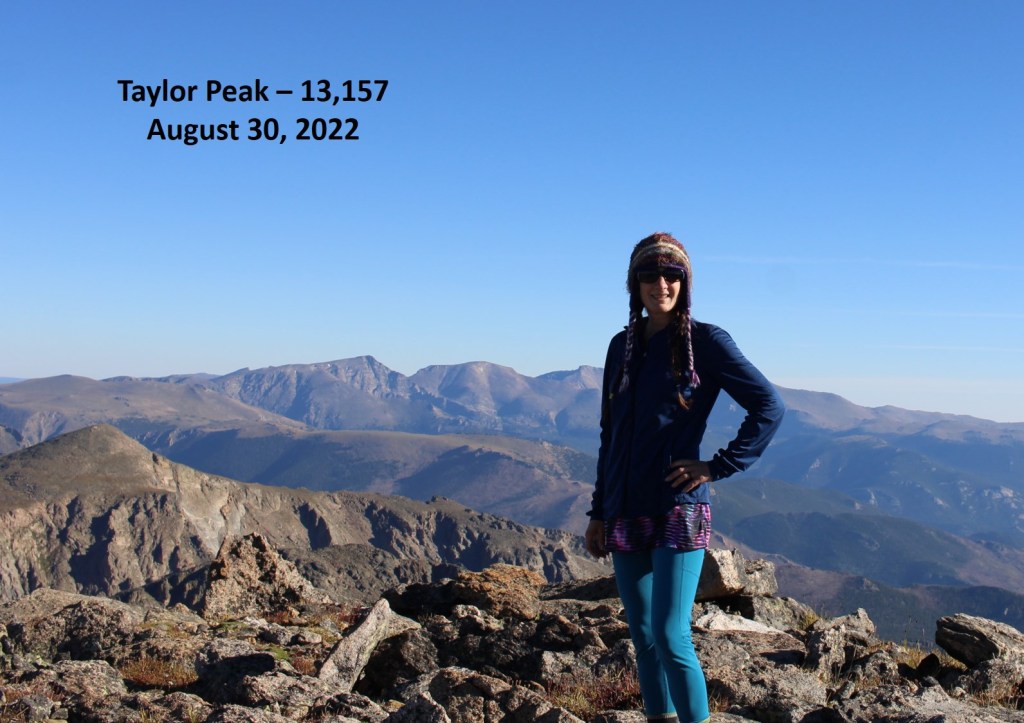
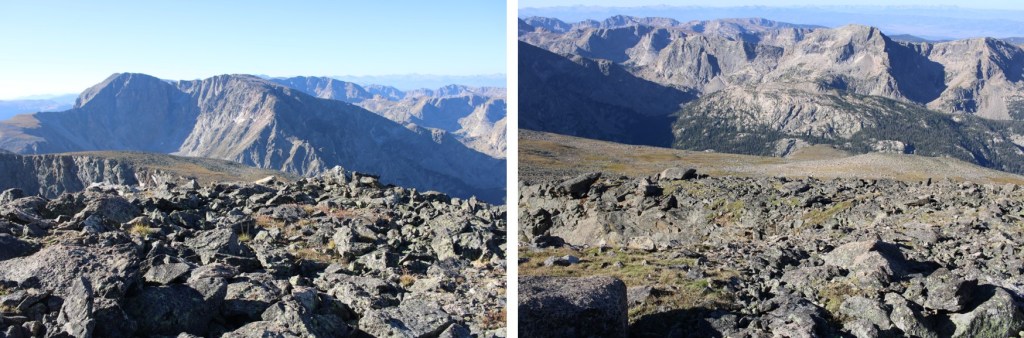
I summited Taylor Peak at 8:30am

Taylor Peak:

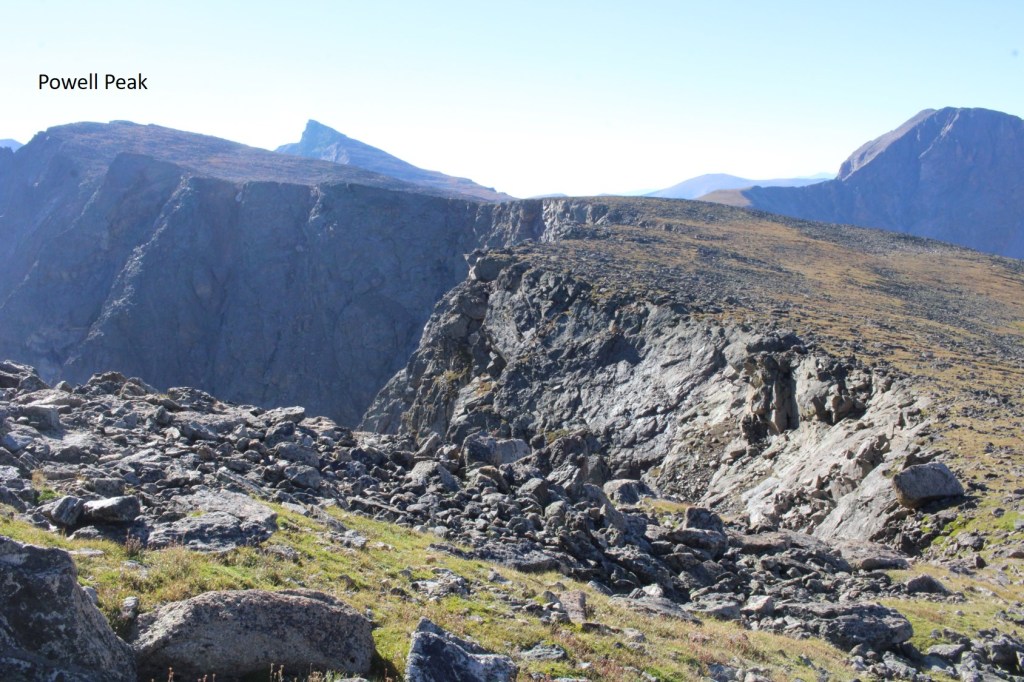
From Taylor Peak I could see Powell Peak to the southeast. 

To get there, I’d need to contour southwest down the south side of Taylor, and then follow the ridge towards Powell Peak.  The route is obvious, and easily kept class 2.

Here’s the route from the Taylor/Powell Saddle

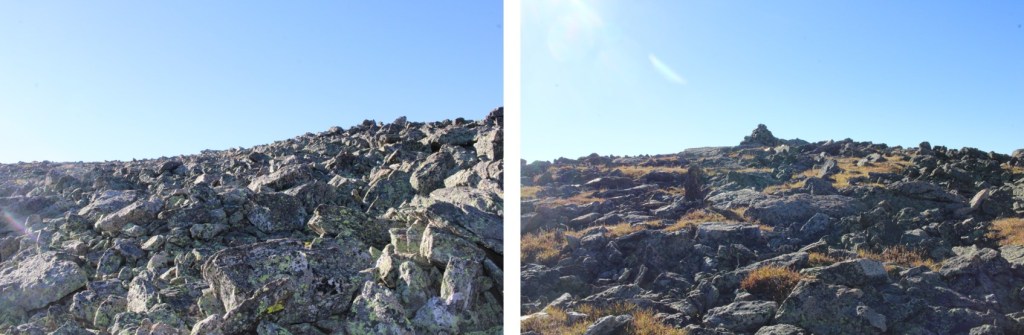
And some close-up pictures of the route

I aimed for the highpoint, a large rock on the ridge

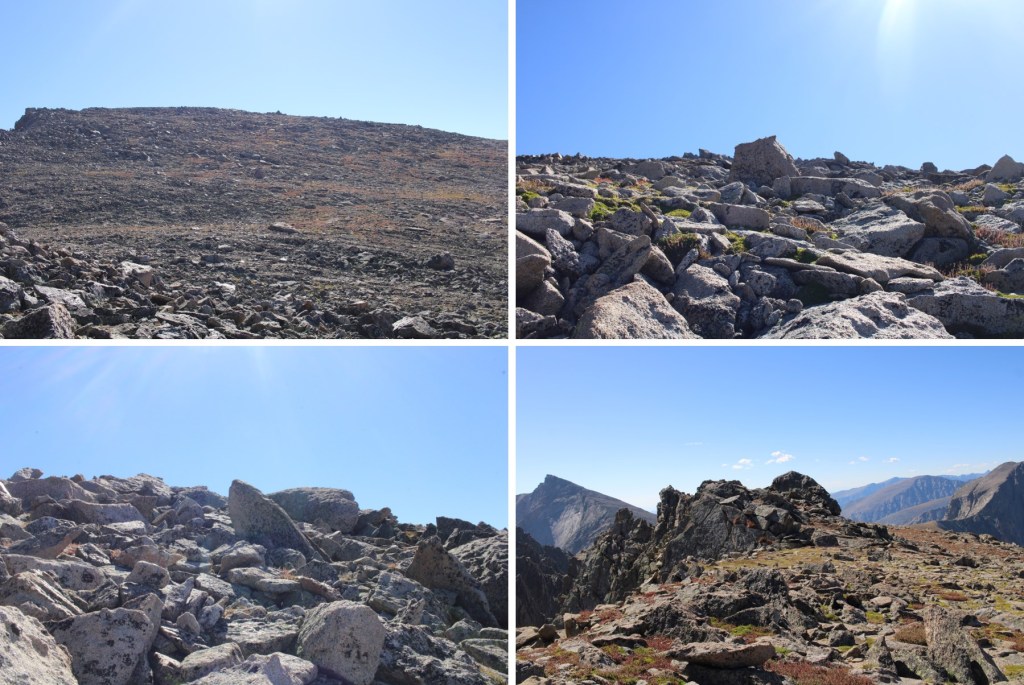
Here are some closer pictures of the route to the summit

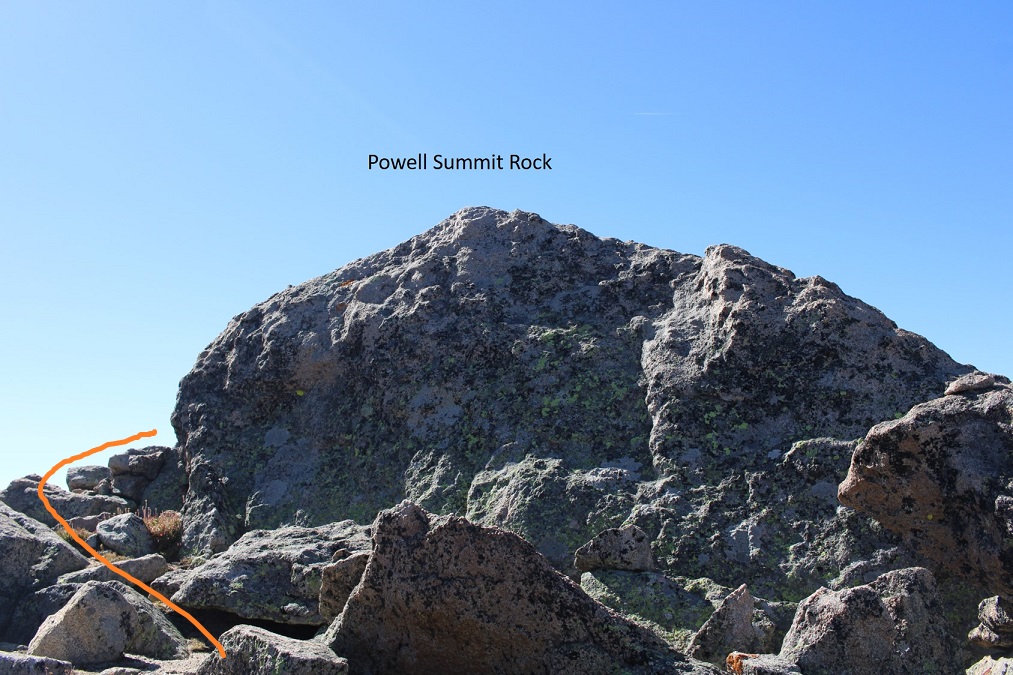
Powell Summit rock, easily scaled from the left

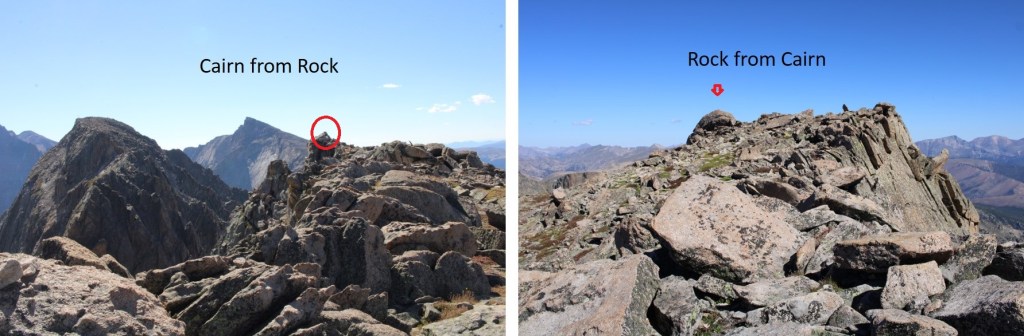
To be honest, I’m not sure where the true summit lies.  When I got to the large rock outcropping I saw what looked like a cairn a short distance away, further southeast, but when I went further southeast to that point, the rock looked higher.  When I got home my track showed the rock was the highpoint, but there wasn’t anything indicating it was (no cairn/summit register/etc.)  A point further northwest looked high too, so I made sure to walk over there, but my photos are from the rock outcropping.

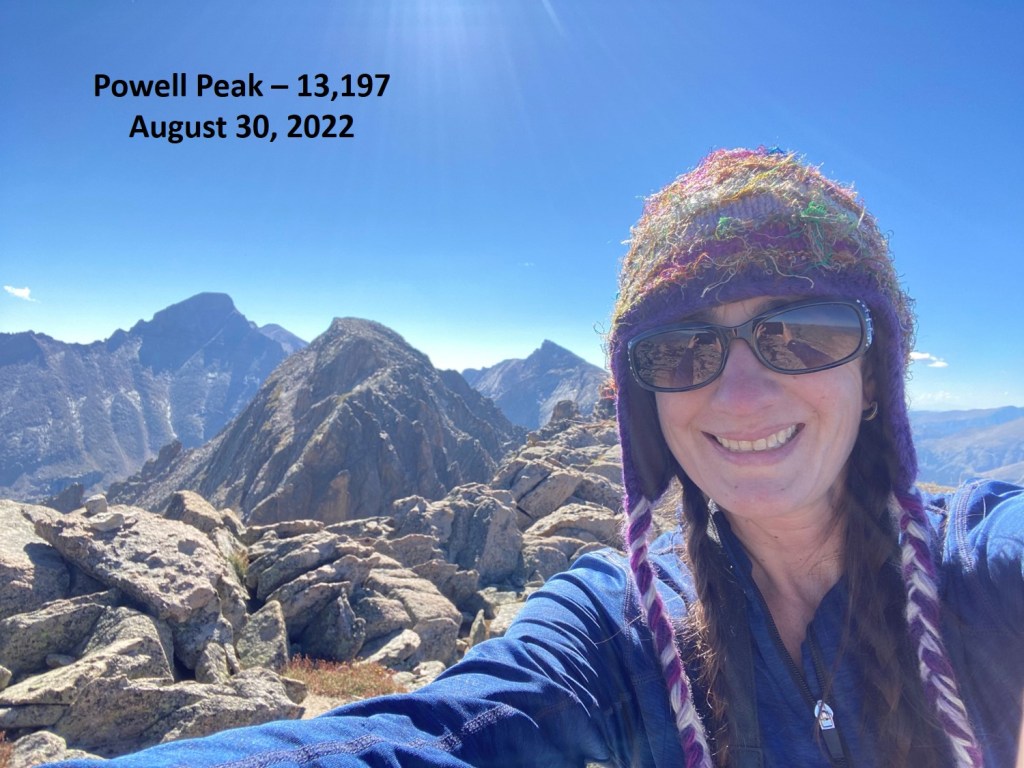
I summited Powell Peak at 10:15am

Powell Peak:

https://youtu.be/0oxEIaN_wYg

I then retraced my steps back to the Taylor/Powell Saddle

But instead of re-summiting Taylor Peak, I skirted the summit to the left, staying at around 12750’

This was all class 2, but required a bit of rock hopping

As I continued to round Taylor Peak, Otis Peak came into view.  The path towards the summit was obvious

I made my way down to Andrews Pass, and then up towards Otis Peak

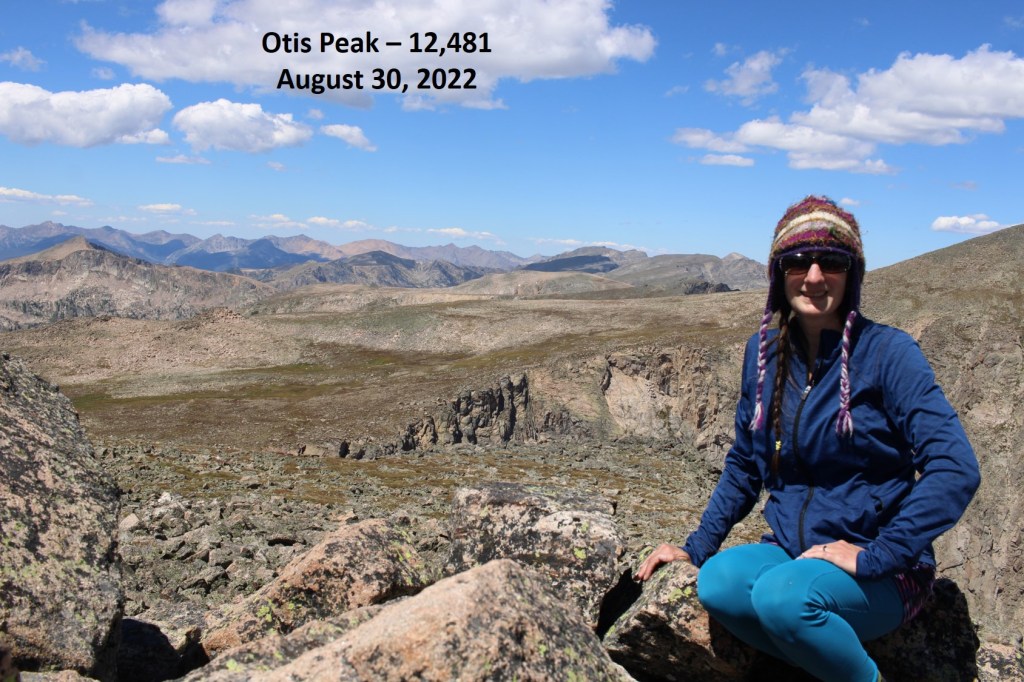
I summited Otis Peak at 12:45pm

Otis Peak:

I could see Hallett Peak to the northwest, and descended to the Otis/Hallett saddle

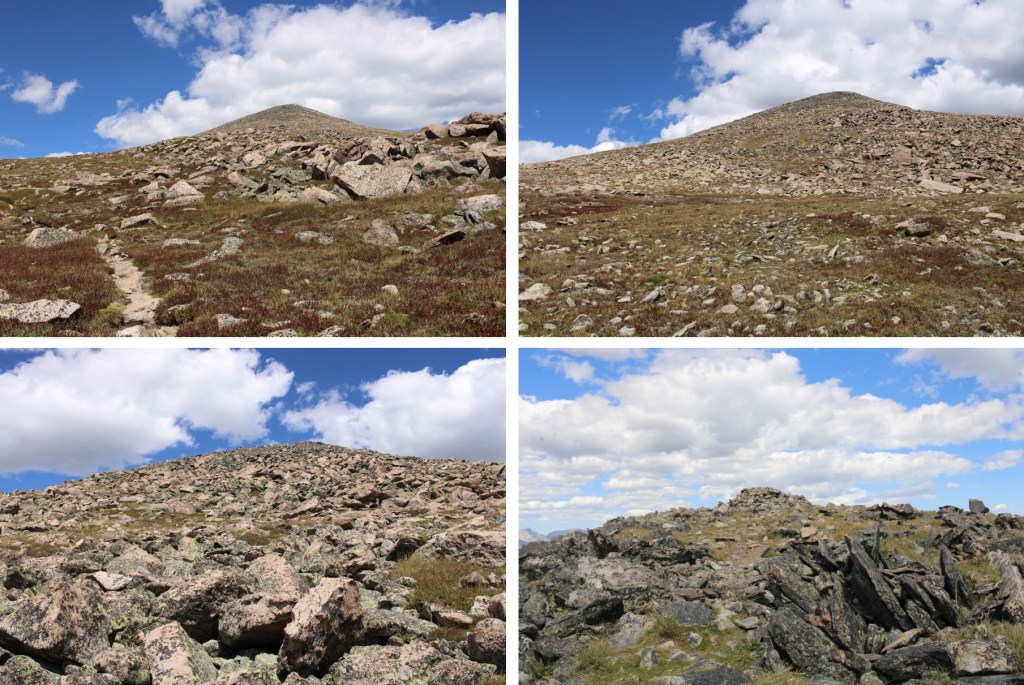
And then headed northeast up to the summit of Hallett Peak

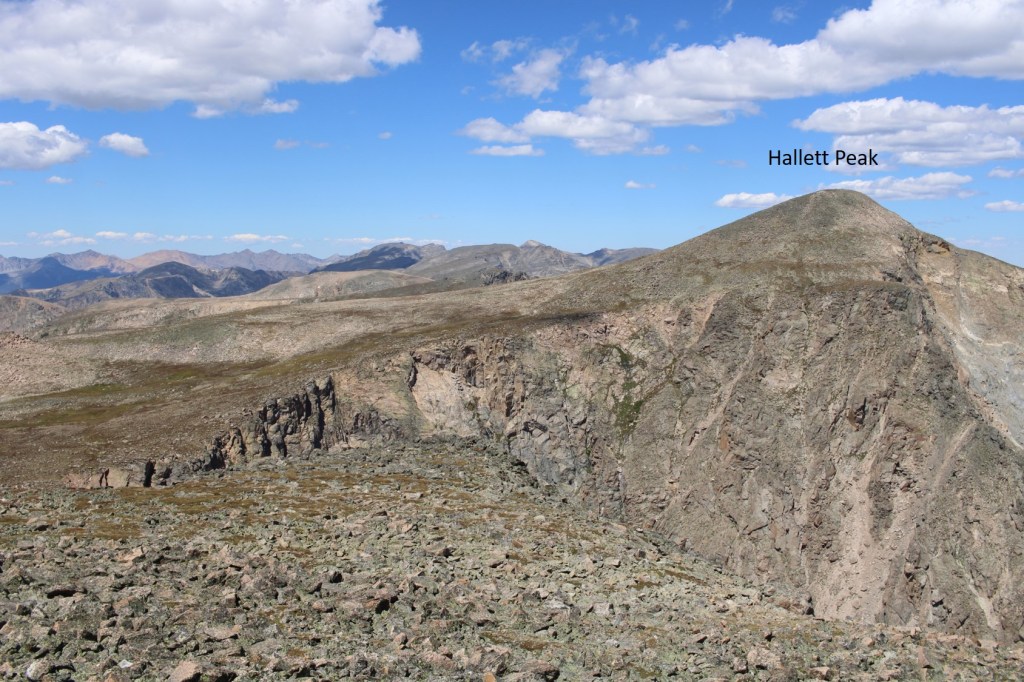
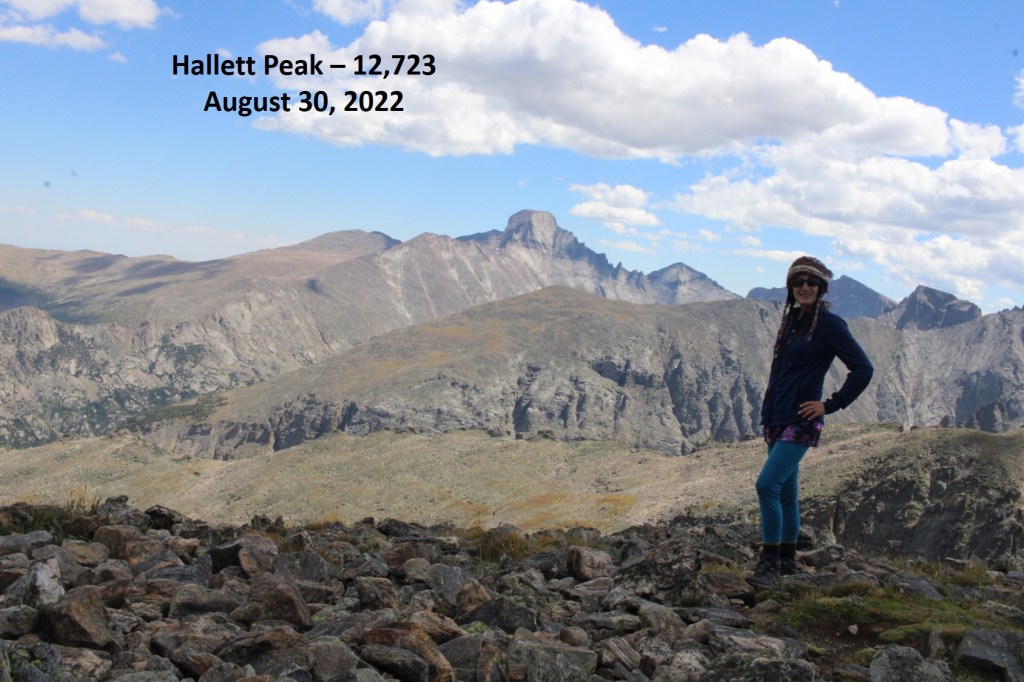
I summited Hallett Peak at 1:45pm

Hallett Peak:

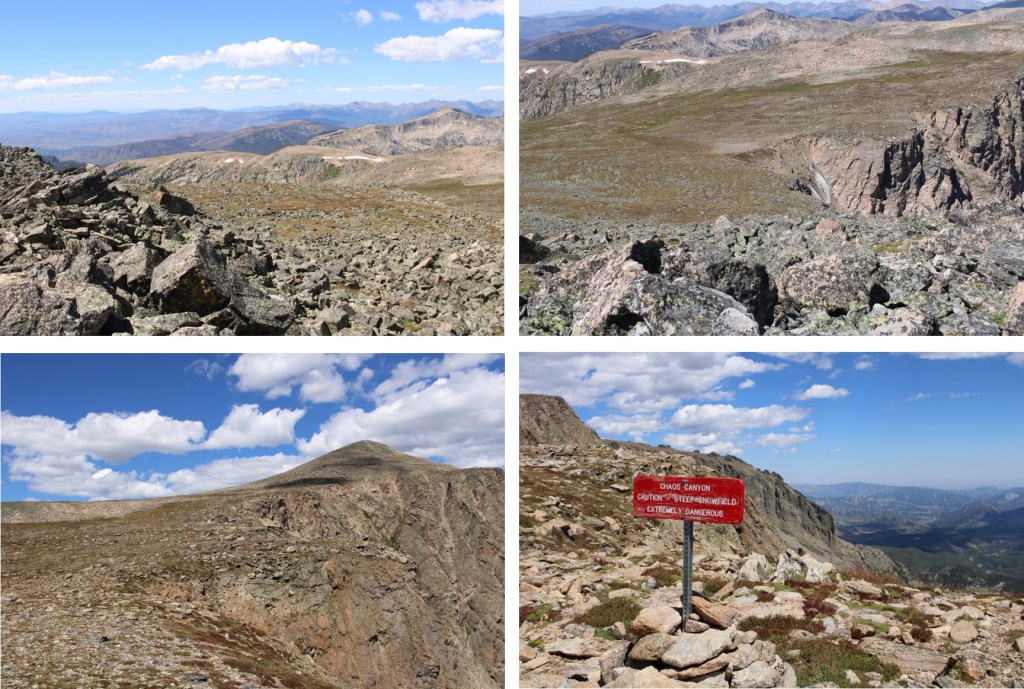
Now to head back to the trail.  This was all class 2, and there were cairns to guide the way.  Be careful not to aim for the obvious trail in the distance, as it will not lead you back to the trailhead.  This is the route you should take.   If you look carefully, you can see the sign you’re aiming for from earlier in the morning

At the junction I turned right, and followed the class 1 trail back to the trailhead

I made it back to my truck at 4pm, making this a 19.75 mile hike with 5983’ of elevation gain in 12 hours.

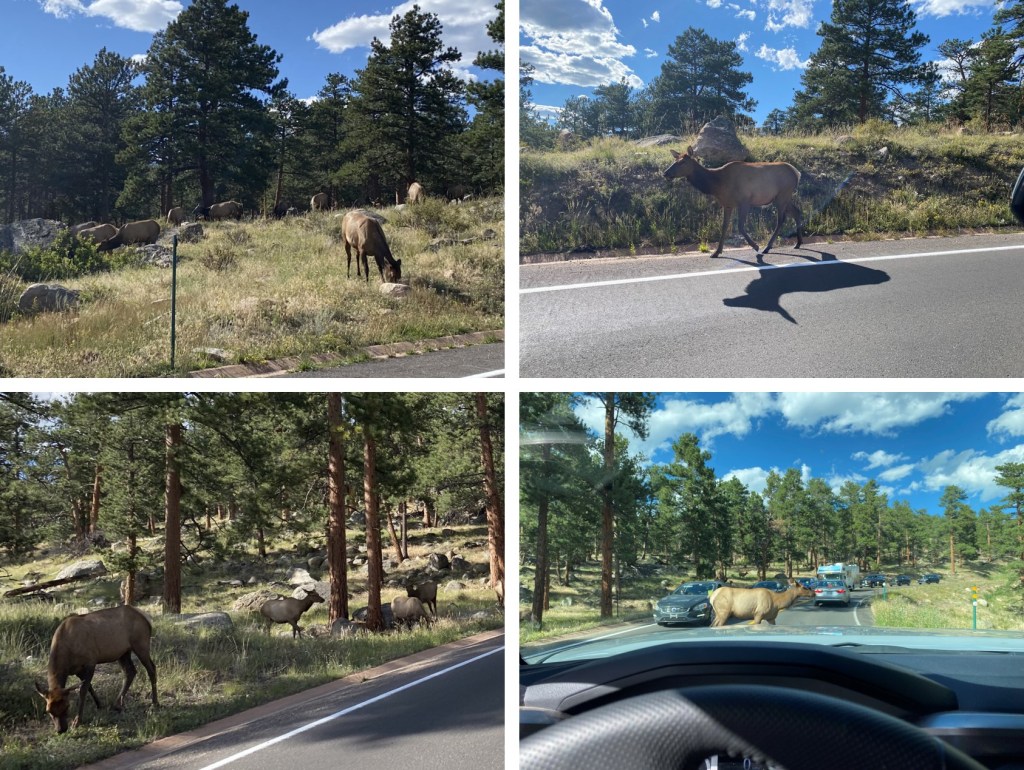
On the way out, I was stopped by another herd of elk, walking along the road.

On to the next trailhead!

McHenrys Peak – 13,330

RT Length:  17.46 miles

Elevation Gain:  4442’

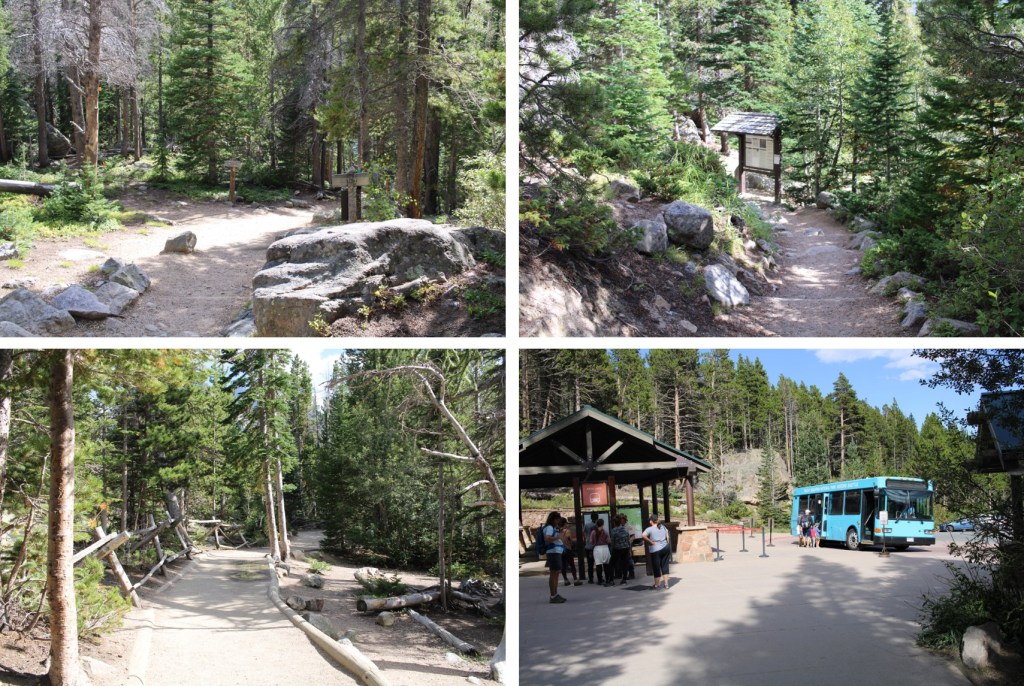
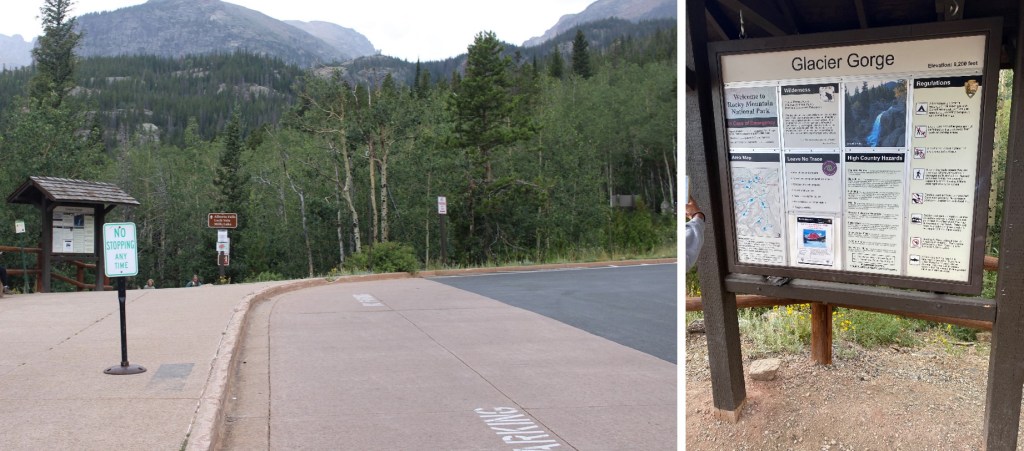
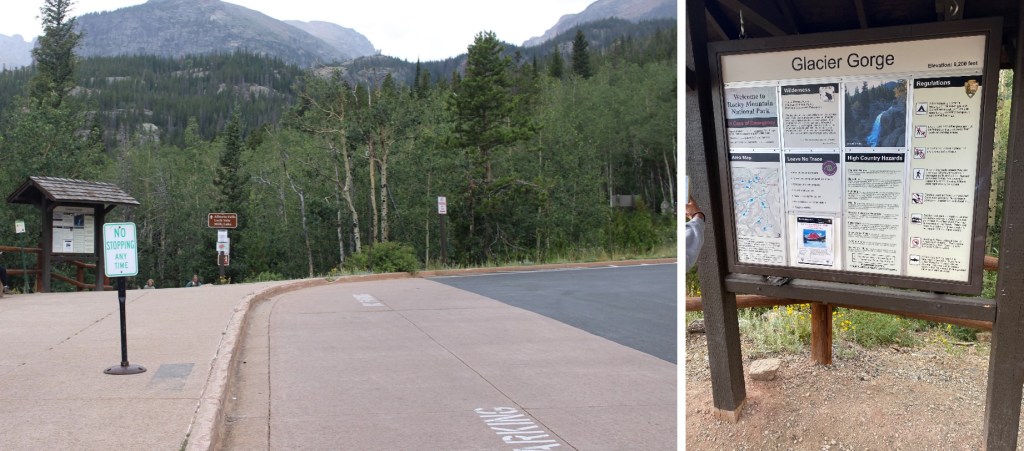
I started from the Glacier Gorge trailhead in Rocky Mountain National Park at 3:30am.  There were already several parties in the parking lot (probably 10 vehicles), but didn’t see another person on my route all day.   This is also a bus stop for access to Glacier Gorge (and lots of other hikes).  All this means is that it was overly crowded the last 2 miles of the hike on my way down.  Passing people became impossible, and more of a stroll as I hiked out with hundreds of other hikers. 

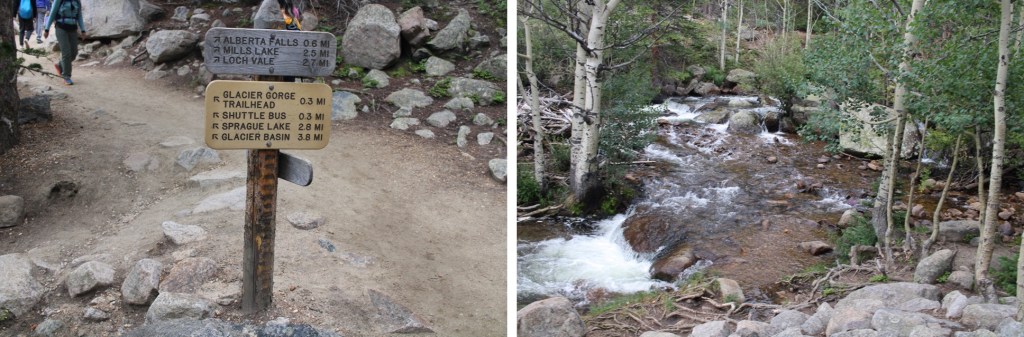
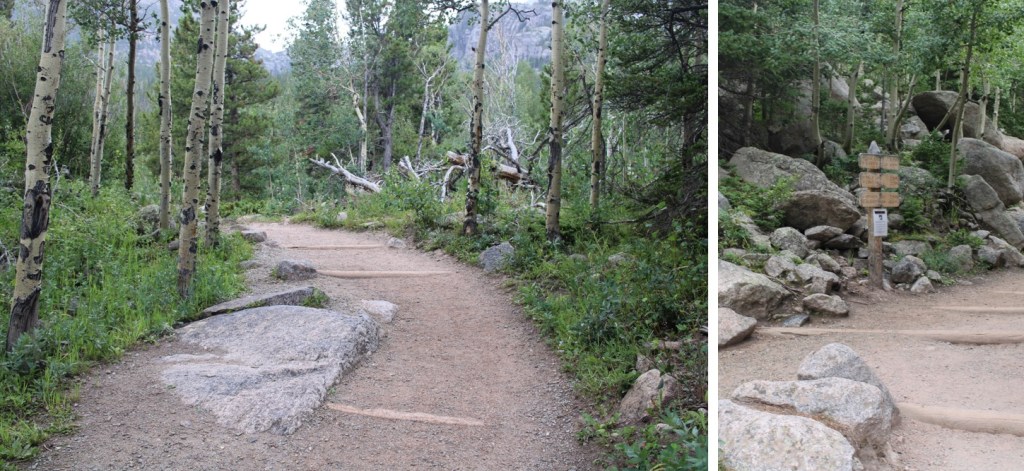
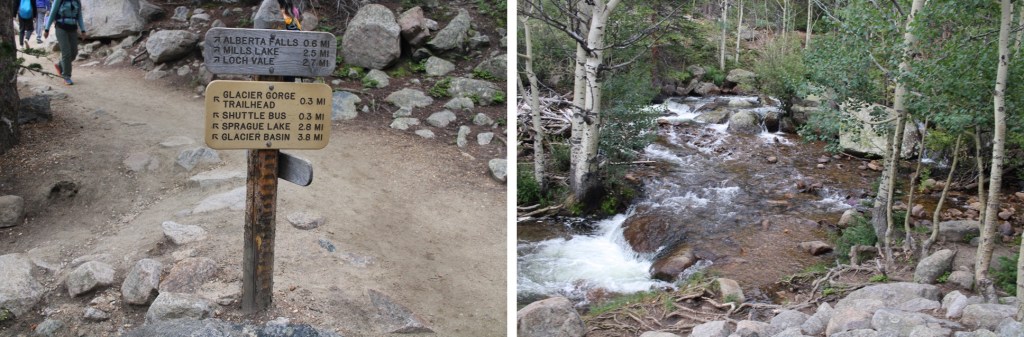
I followed the class 1 trail, staying on the Mills Lake trail.  There were wonderful signs that made getting lost difficult. 

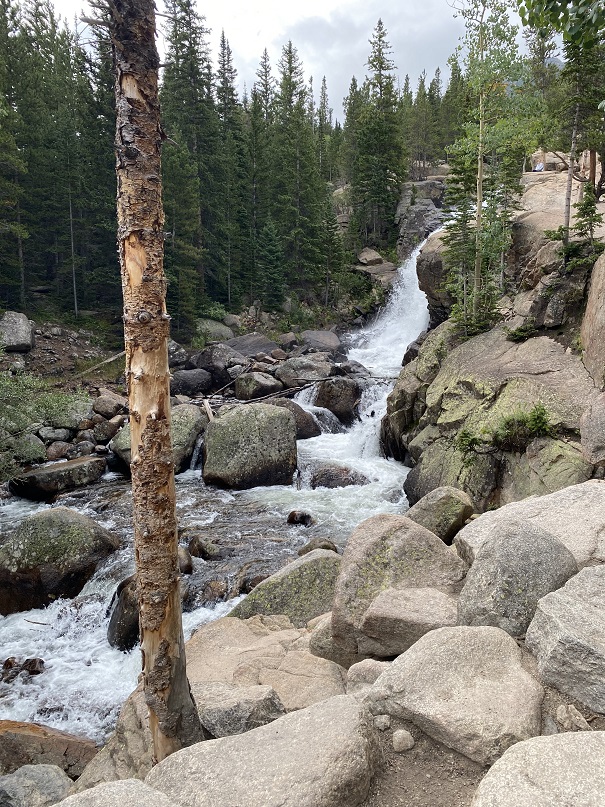
I passed Alberta Falls at 1.15 miles, and continued following the trail to Mills Lake

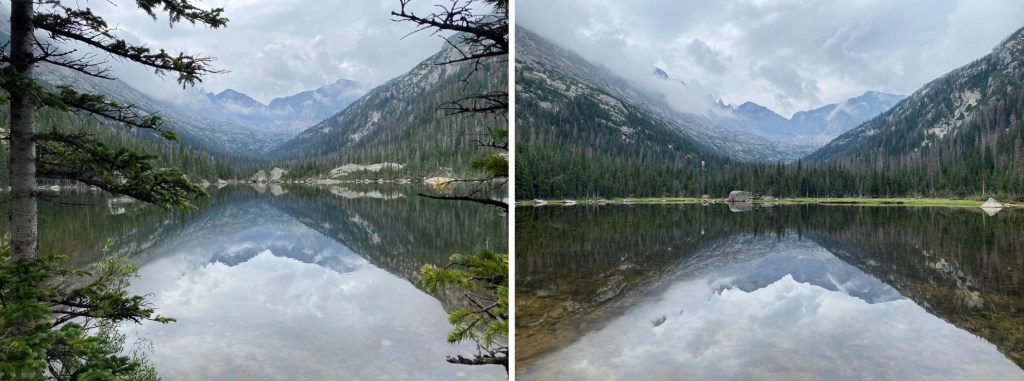
After hiking for 3.35 miles I passed Mills Lake, and at 3.85 miles I passed Jewel Lake.  Side note:  there’s great fishing here.  Lots of hungry trout, eager to feast on any worm you drop in.  The larger trout are in the stream above Jewel Lake, and in Mills Lake.

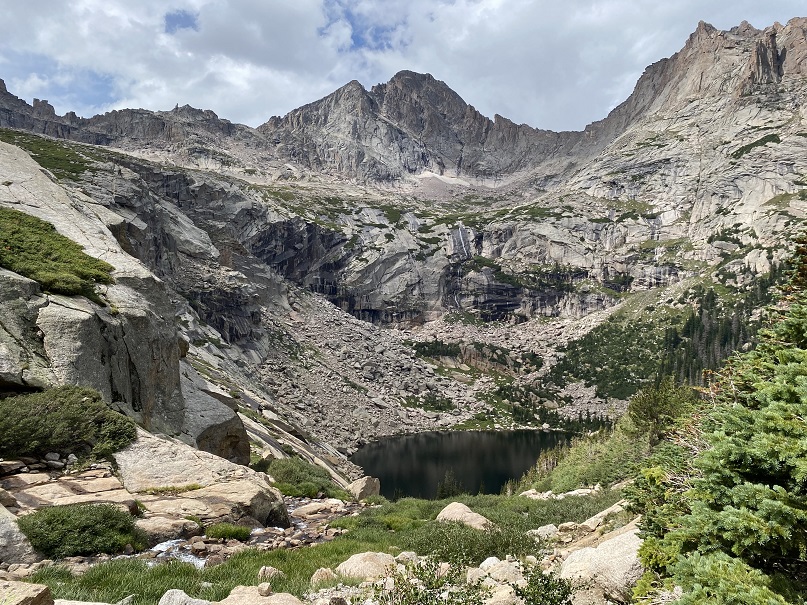
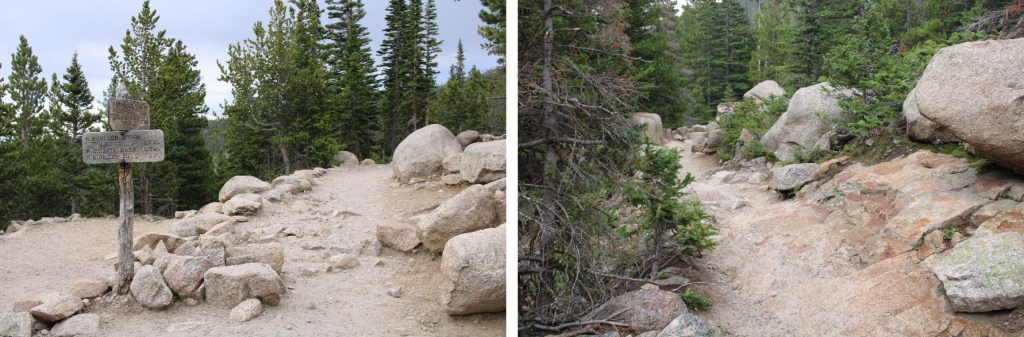
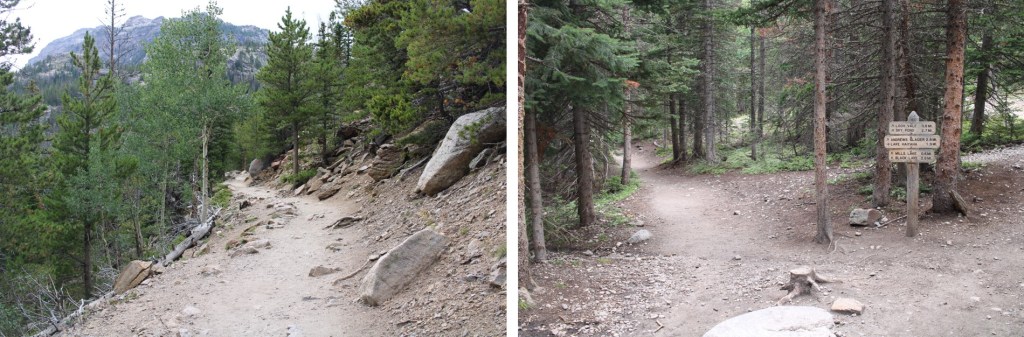
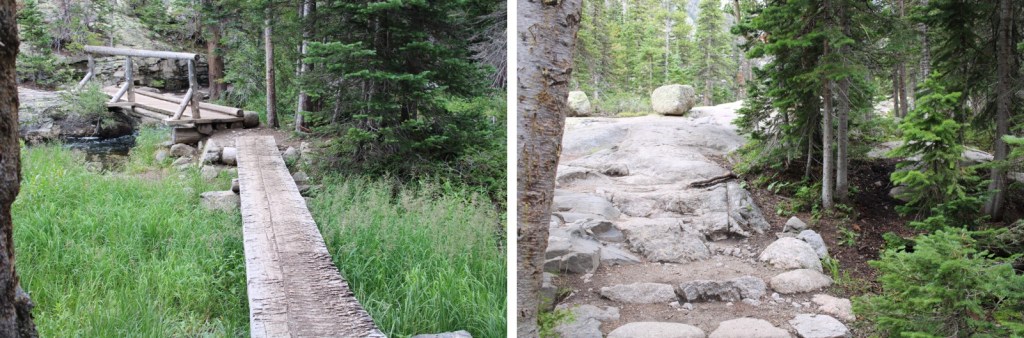
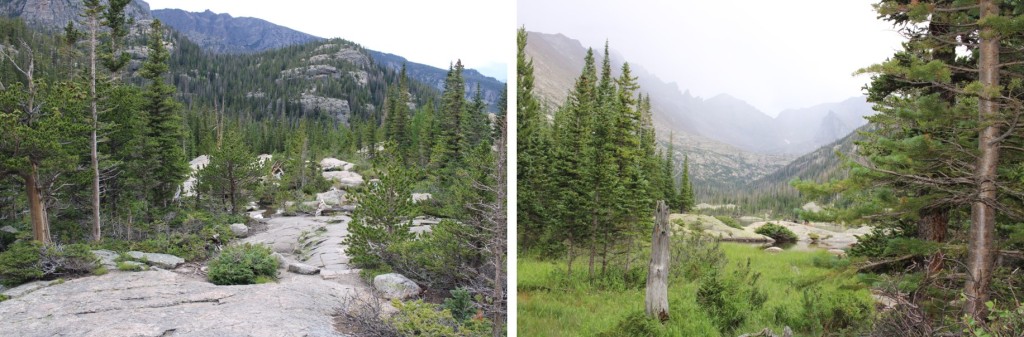
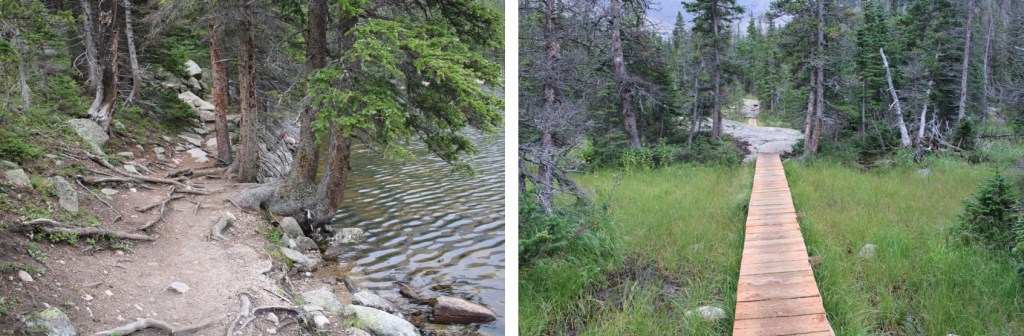
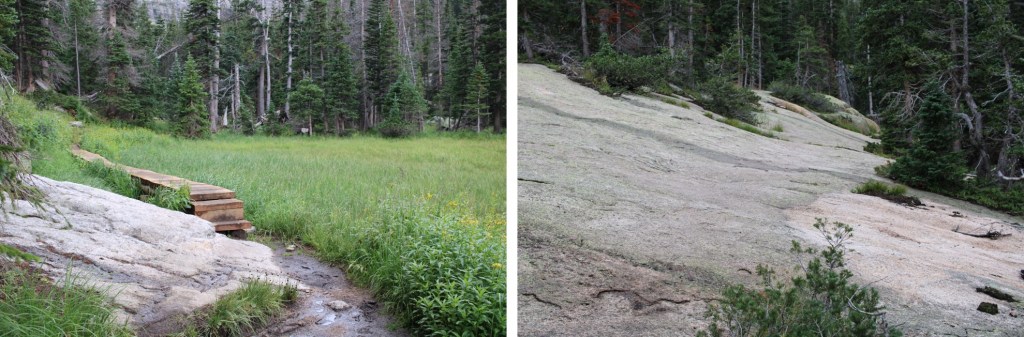
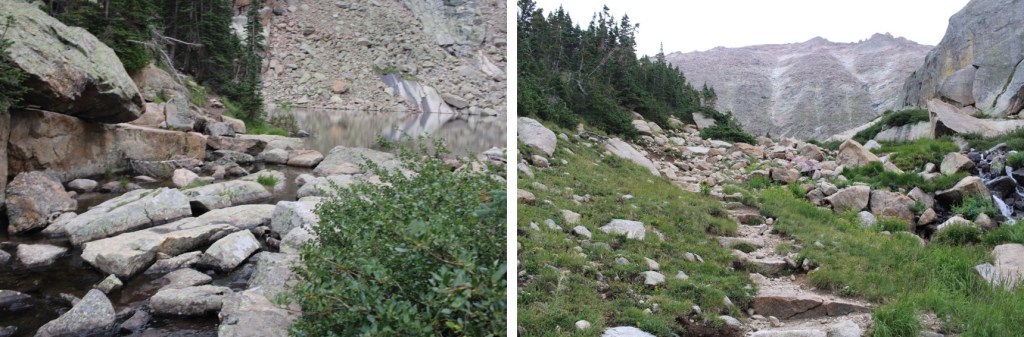
I continued following the class 1 trail all the way to Black Lake (6 miles in).  This part of the trail had a lot of wood foot bridges, and rock slabs to cross.  All class 1, but the rock slabs were tricky to navigate in the dark.

I made it to Black Lake, and continued on the class 1 trail, up a waterfall, and across more rock slabs.

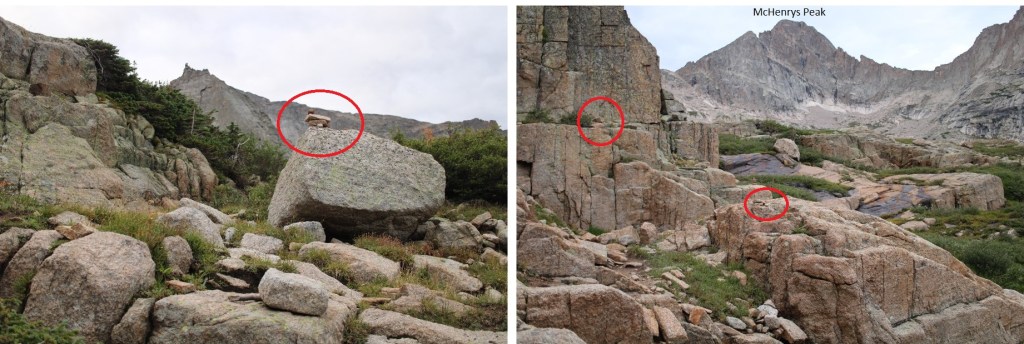
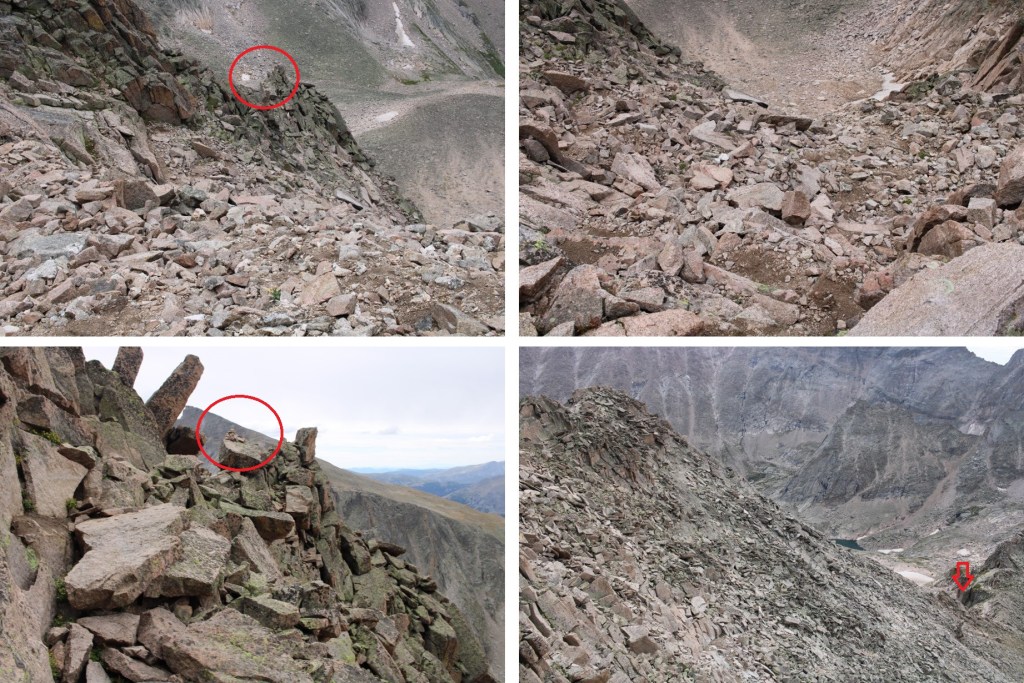
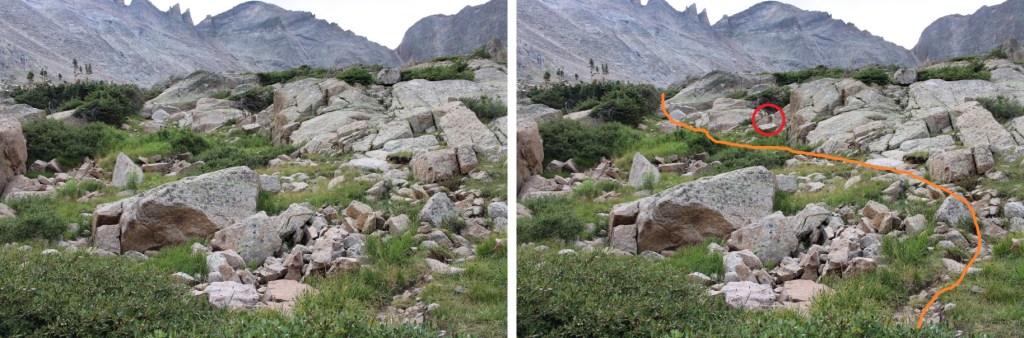
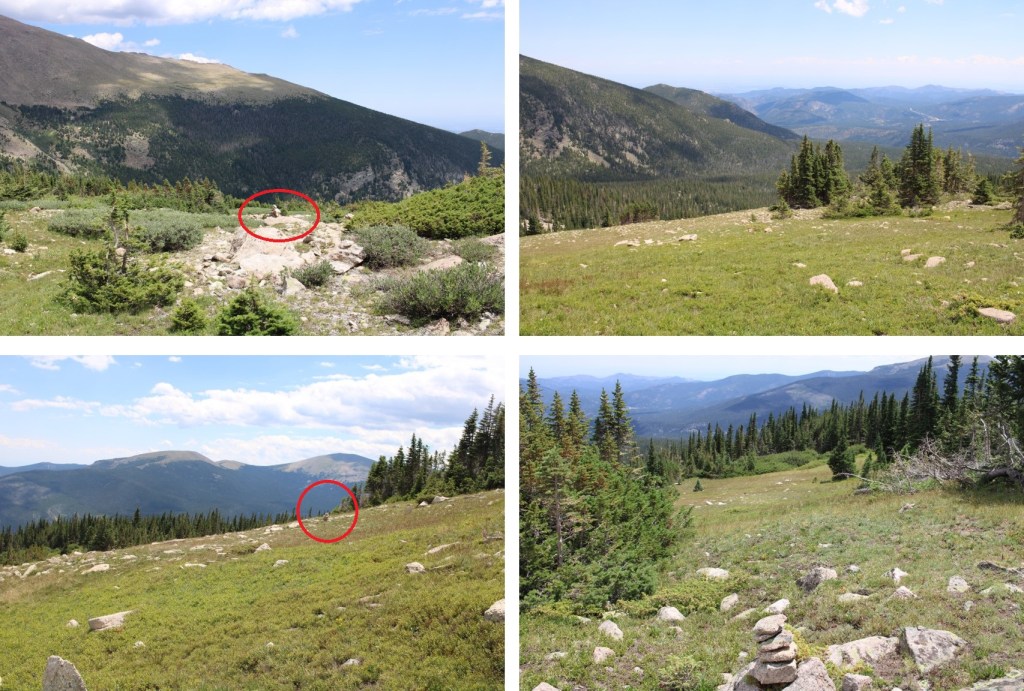
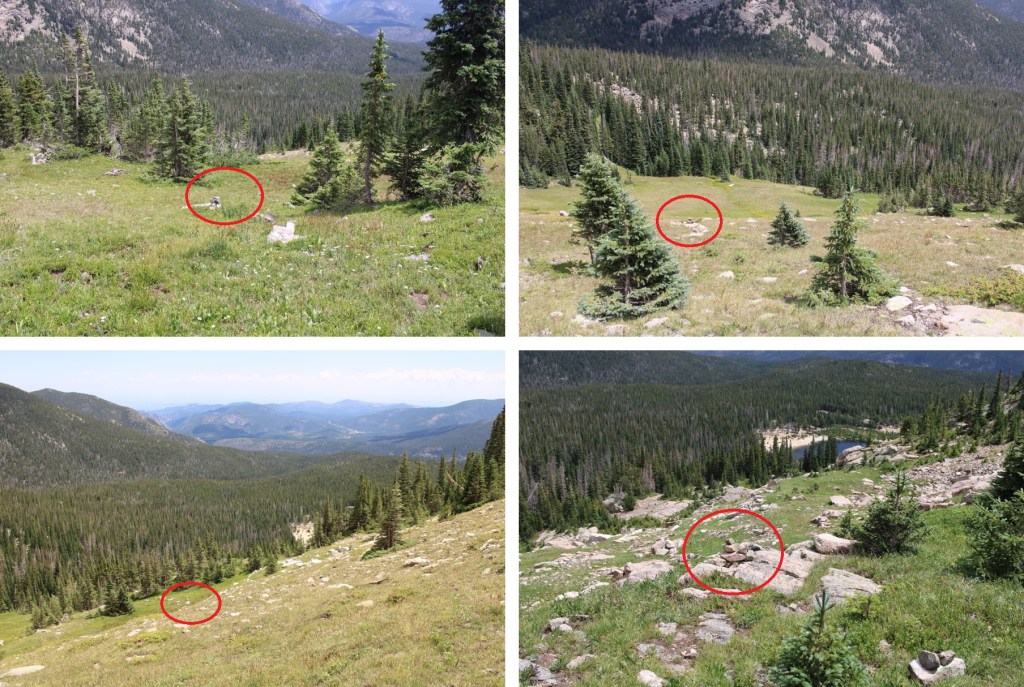
Here the trail kind of fizzled out, but I continued following cairns as I crossed a small creek, and headed southwest towards McHenrys Peak. There are a ton of cairns in this area (circled in red). 

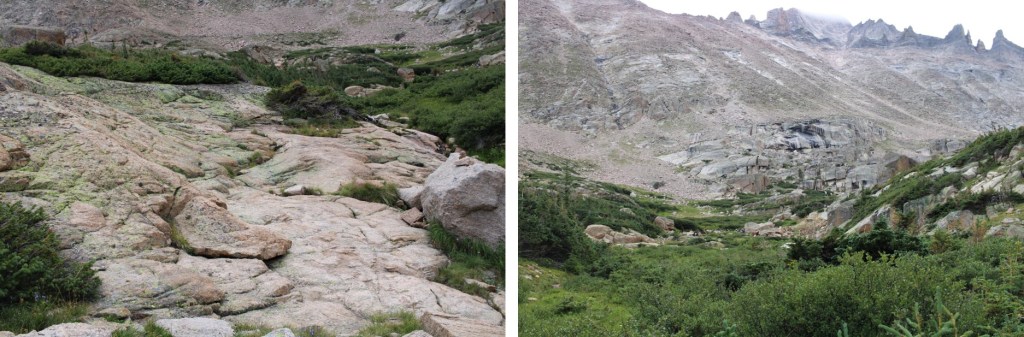
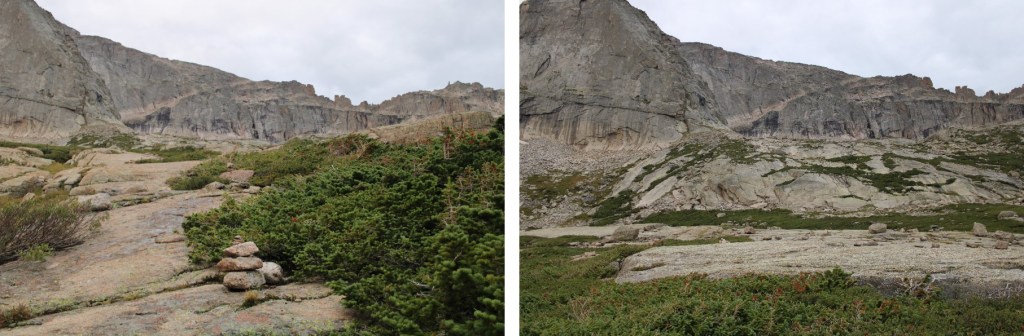
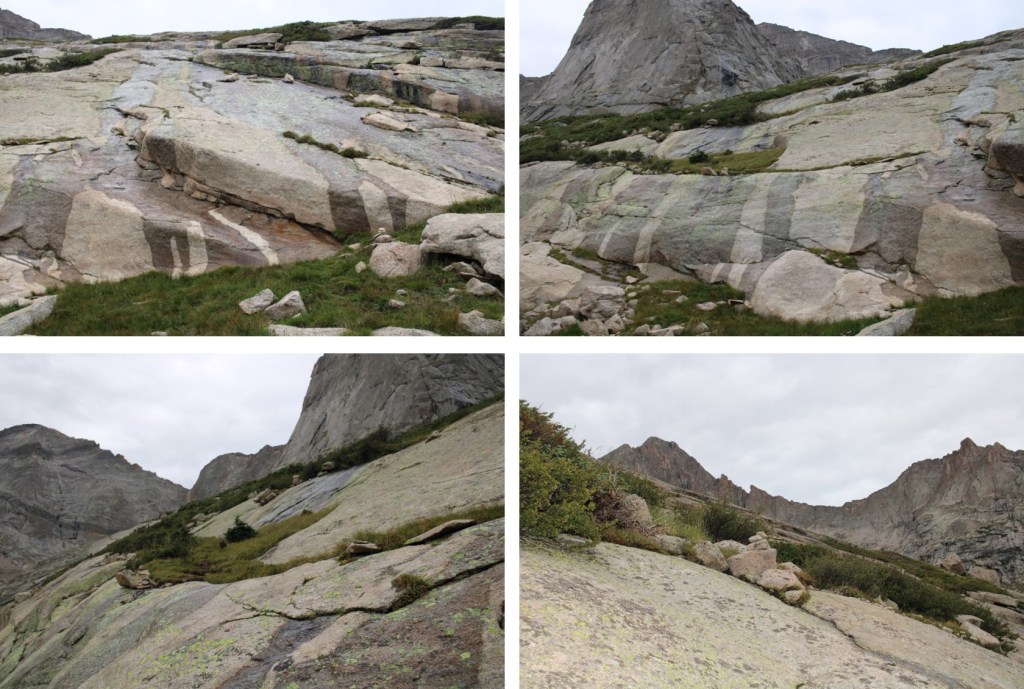
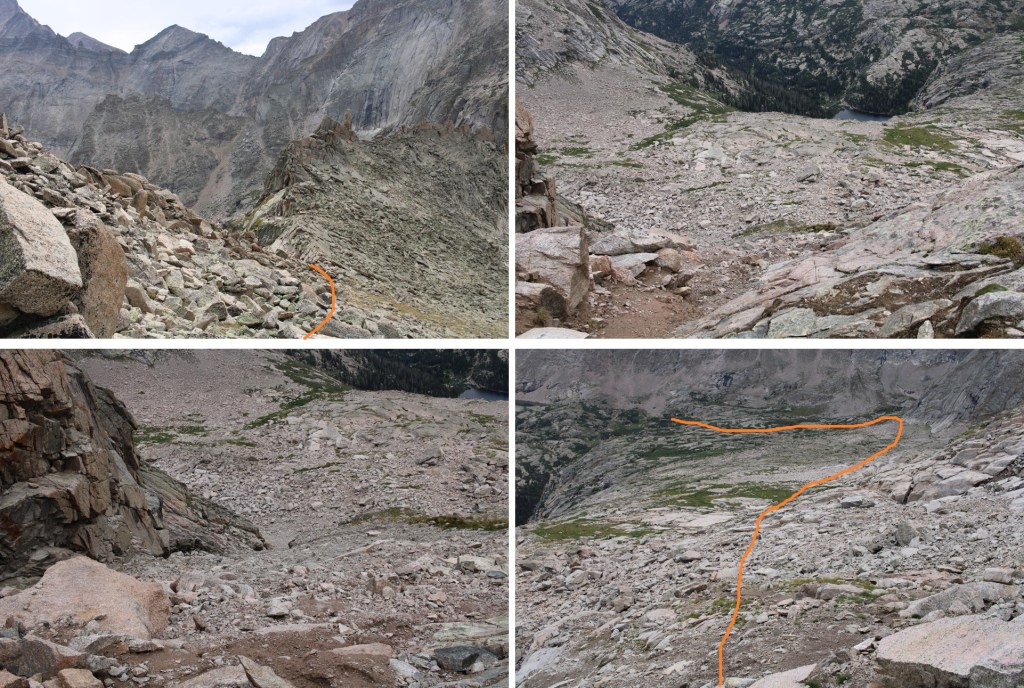
Here’s the overall route to Frozen Lake (not pictured) and up Stone Man Pass.  There are plenty of cairns to guide you, but for the rest of the hike be careful:  there are a lot of granite slabs that are quite steep to navigate (all class 2), and slippery where wet.

Here are some close up pictures to Frozen Lake

I easily rock hopped and crossed the lake on its north side, and continued heading west towards Stone Man Pass

There are still tons of cairns in this area, but choose your route based on the best conditions.  The rocks are very slippery where they are wet.  I was aiming for the gully below Stone Man Pass.

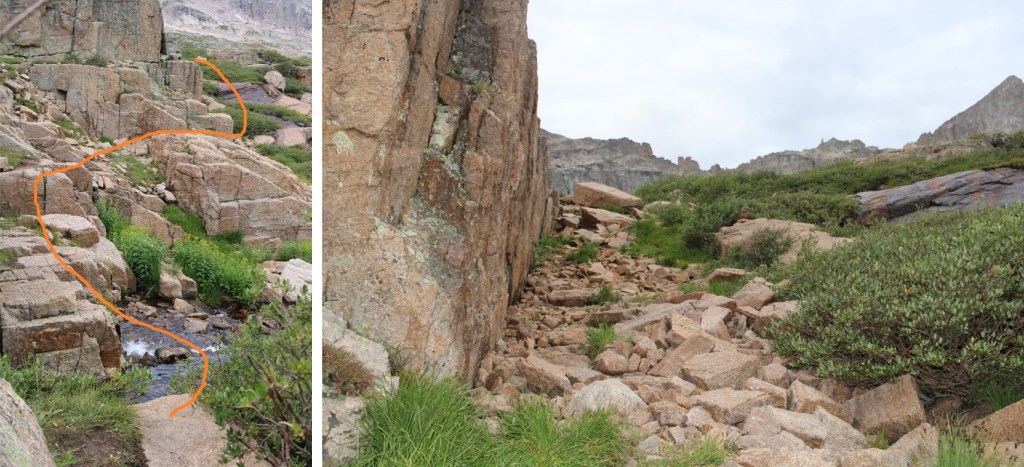
I didn’t think the gully was that bad.  I stayed right on my way up, but took the other side down.  I’d recommend climbing up the left side of the gully, as it was more stable, but both were fine.  Here are some pictures of the gully

Once at the top of the gully, I turned right and headed northwest towards McHenrys Peak.  Everything you can see here is class 2, and there are cairns to guide your way.

I rounded the mountain, and was now on the west side of the peak.  Here is got a bit trickier.  There were still cairns to follow.  I headed up a rock slab, and rock filled gully.  This was easy class 3

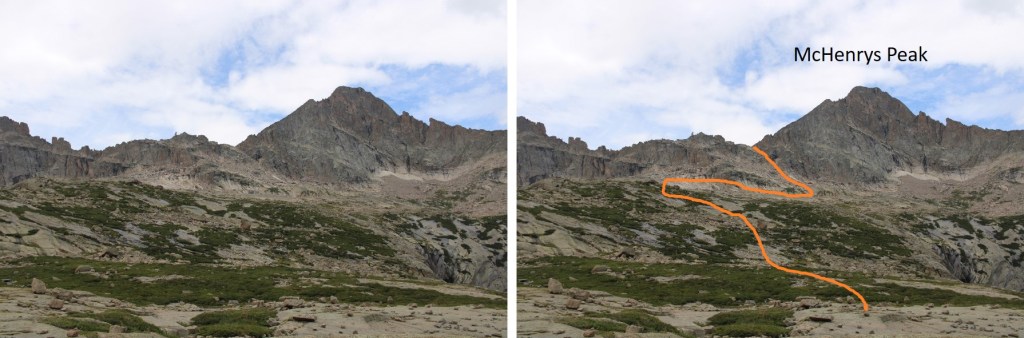
Here’s the overall route of the rest of the climb.  I felt this was difficult class 3, with some exposure. 

There was a chimney to head up, and then a short but intense scramble to the summit

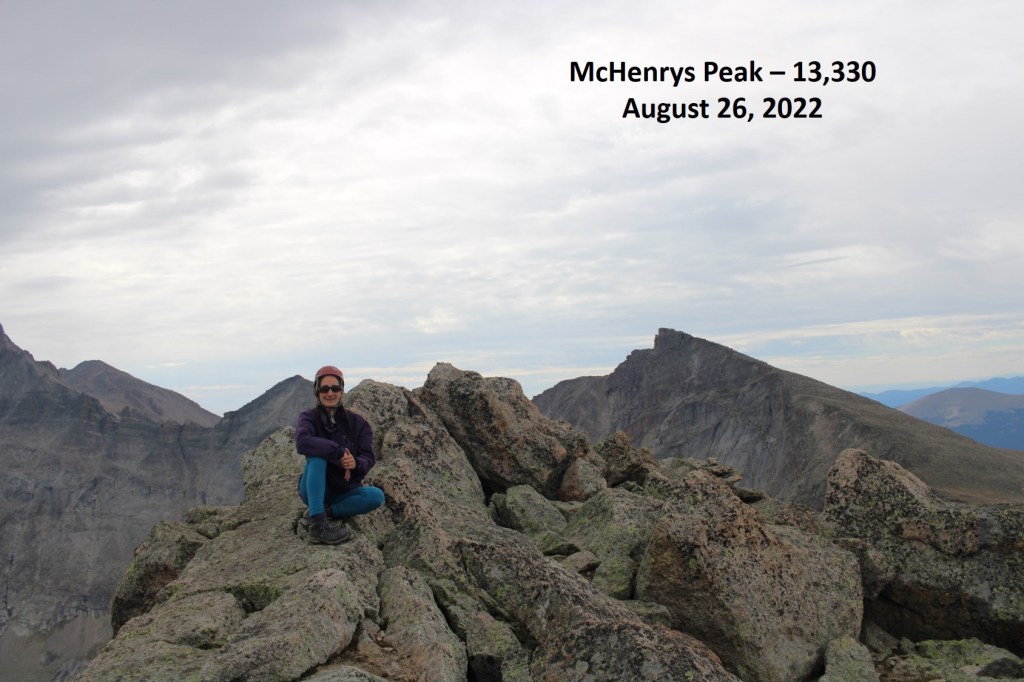
I summited McHenrys Peak at 9:50am

McHenrys Peak:

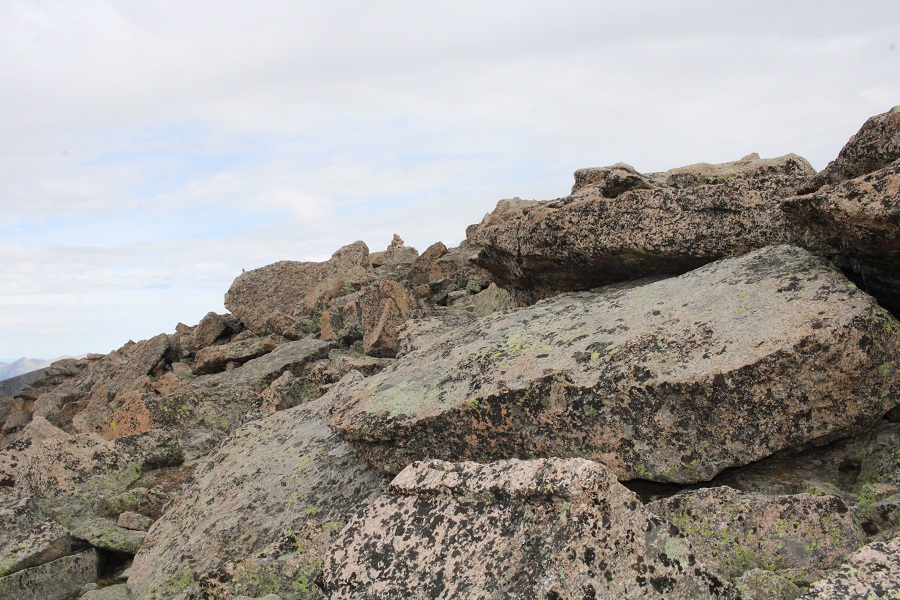
The summit looked like it could have several actual summits, so despite the large cairn and summit register, I made sure to walk all around the summit to make sure I’d actually summited.

Now to head back down. The trickiest part was descending the initial section, and finding my way back around the side of the mountain.  Once I was there, it was easy to find my way to Stone Man Pass, and then back down to Frozen Lake.

And then I followed the cairns northeast, back towards the trail that would lead me to Black Lake

Then followed the trail all the way back to the trailhead. 

I made it back to my truck at 2:30pm, making this a 17.46 mile hike with 4442’ of elevation gain, as per CalTopo.  Strava told me it was a 15.02 mile hike with 6573’ of elevation gain.  I tend to go with CalTopo when I write, for consistency purposes, especially since Strava tends to grossly exaggerate elevation gain. 

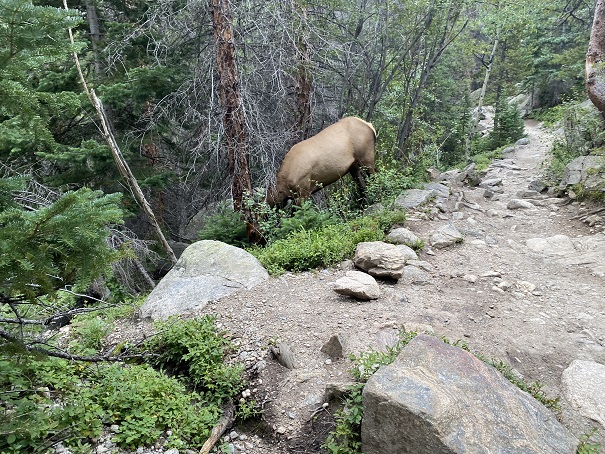
Also, there were a few elk along the trail who didn’t seem bothered by my presence… they wouldn’t even look up from whatever they were eating to acknowledge me.

On to the next trailhead!

Pagoda Mountain – 13,488

RT Length:  17.74 miles

Elevation Gain:  4544’

I started from the Glacier Gorge trailhead in Rocky Mountain National Park at 3:30am.  There were already several parties in the parking lot (probably 10 vehicles), but didn’t see another person on my route all day.   This is also a bus stop for access to Glacier Gulch (and lots of other hikes).  All this means is that it was overly crowded the last 2 miles of the hike on my way down.  Passing people became impossible, and more of a stroll as I hiked out with hundreds of other hikers. 

I followed the class 1 trail, staying on the Mills Lake trail.  There were wonderful signs that made getting lost difficult. 

I passed Alberta Falls at 1.15 miles, and continued following the trail to Mills Lake

After hiking for 3.35 miles I passed Mills Lake, and at 3.85 miles I passed Jewel Lake.  Side note:  there’s great fishing here.  Lots of hungry trout, eager to feast on any worm you drop in.  The larger trout are in the stream above Jewel Lake, and in Mills Lake.

I continued following the class 1 trail all the way to Black Lake (6 miles in).  This part of the trail had a lot of wood foot bridges, and rock slabs to cross.  All class 1, but the rock slabs were tricky to navigate in the dark.

I made it to Black Lake, and continued on the class 1 trail, up a waterfall, and across more rock slabs.

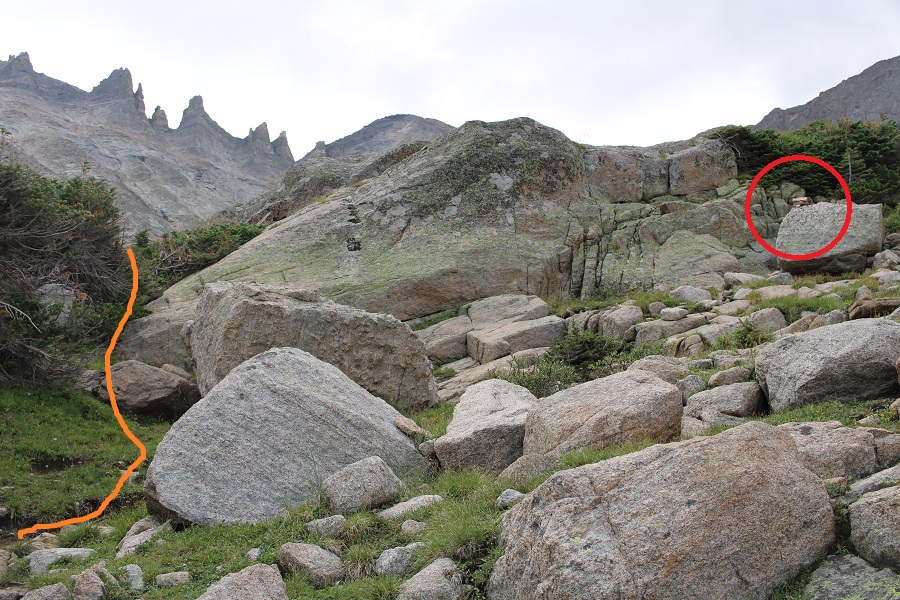
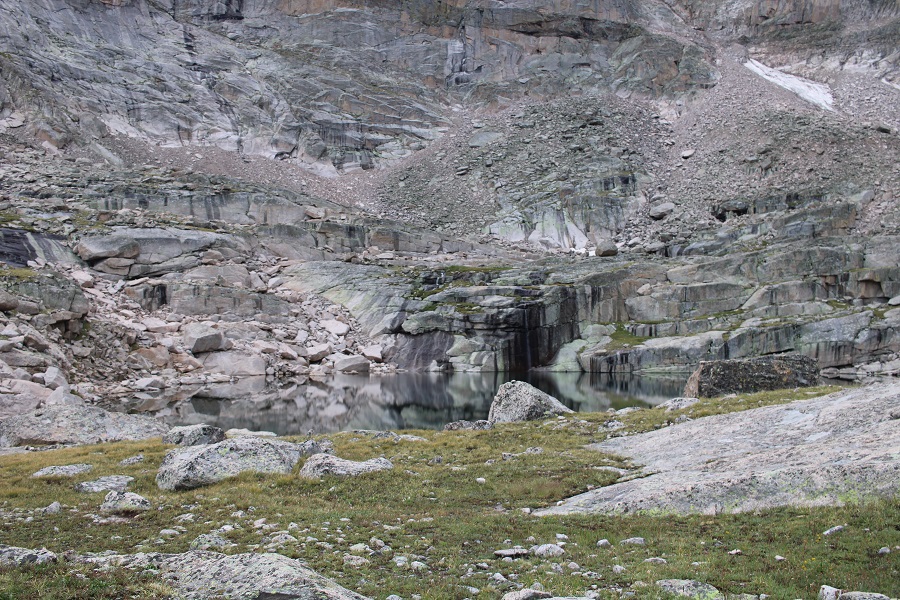
This is where my report may differ from others.  I took a different route in than I did out at this point, and liked my route out better.  It was easier to follow, and there were less willows/shrubs involved.  Here’s the overall picture of what I did.  There is a cairn circled in red, indicating the route to McHenry’s Peak.  Don’t take that route, but leave the trail and head behind the bush.  You will then easily see cairns that will guide you through the upper basin.

Once again, there is no established trail to Green Lake, but there are some tramped game trails (all covered in grass, not much dirt to be seen) and lots of cairns.  This is also choose your own adventure.  You’re aiming south, towards the mountains (circled in red).  There are several small streams to cross in this area, all easily hop-able.


I navigated a bit to the right of the waterfall to get to Green Lake (cairns here too)

Once at Green Lake, I turned left and headed southeast.  Here’s my overall route on scree, navigating around large boulders and rock slabs to keep this all class 2.

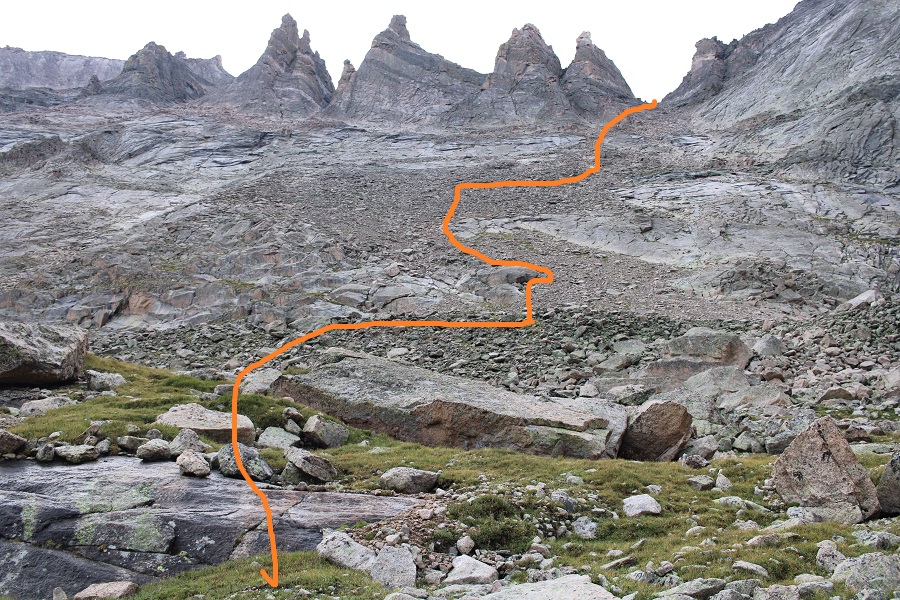
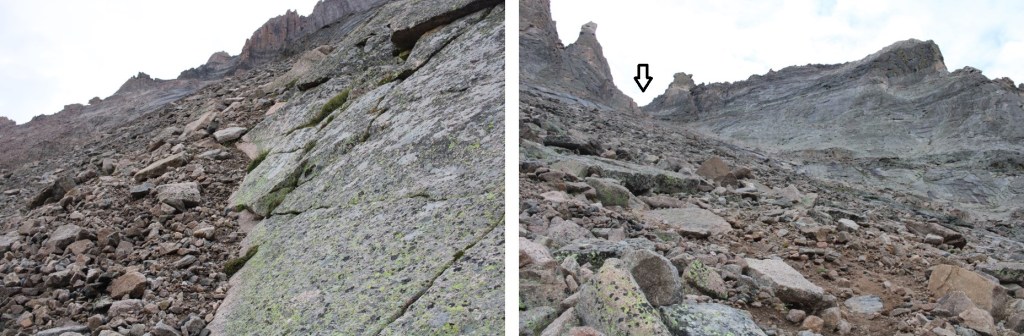
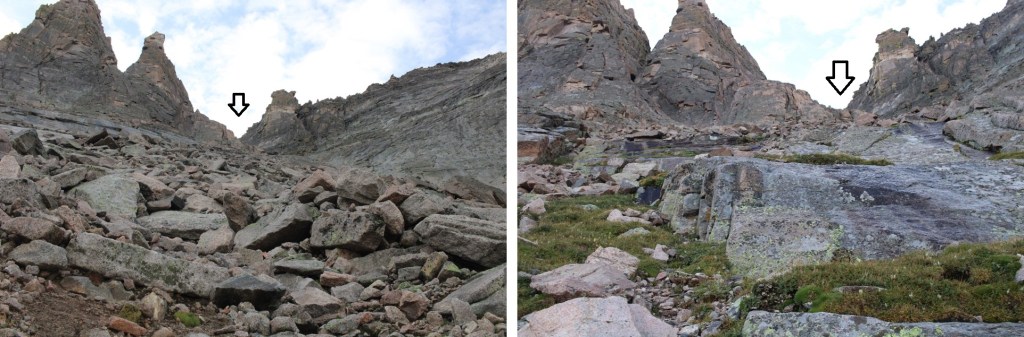
Here are some close-up pictures of my route up the gully, to the saddle

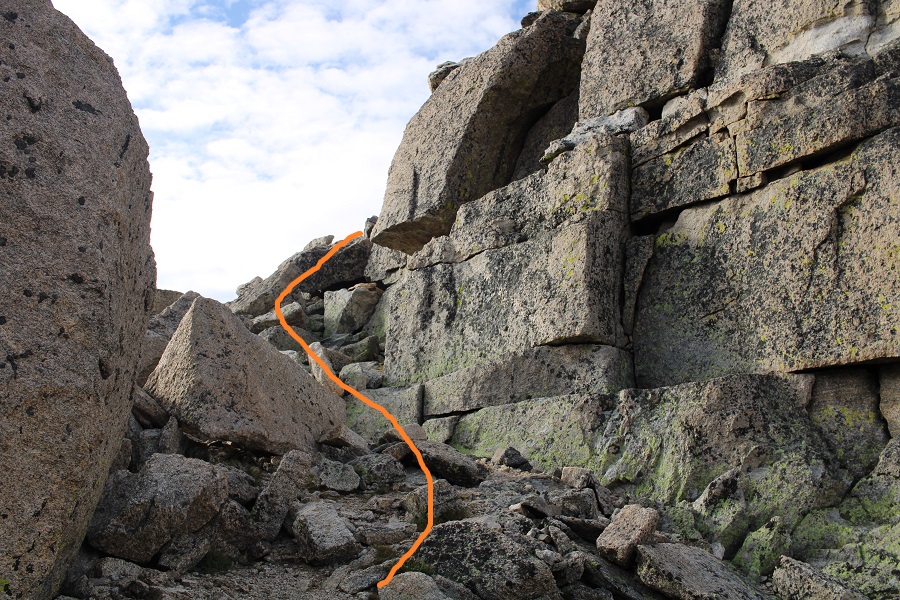
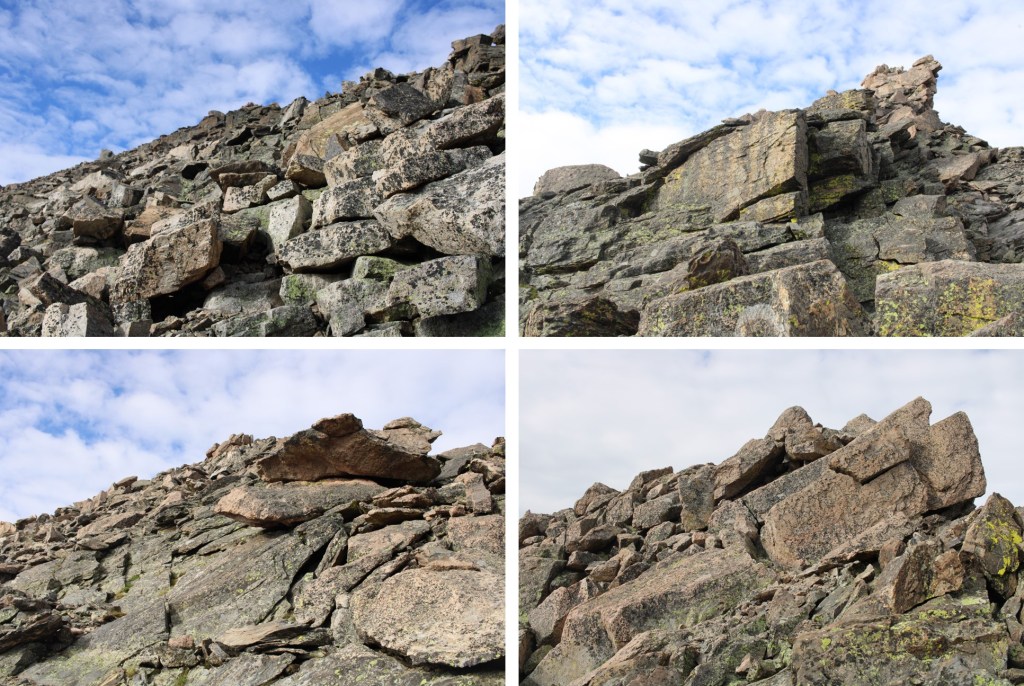
Once at the saddle, I turned right and headed up the ridge.  I went directly up the ridge on the way up, which was class 3.  I kept it class 2 on the way down by staying more to the left of the ridge. 

Here are some pictures of the ridge.

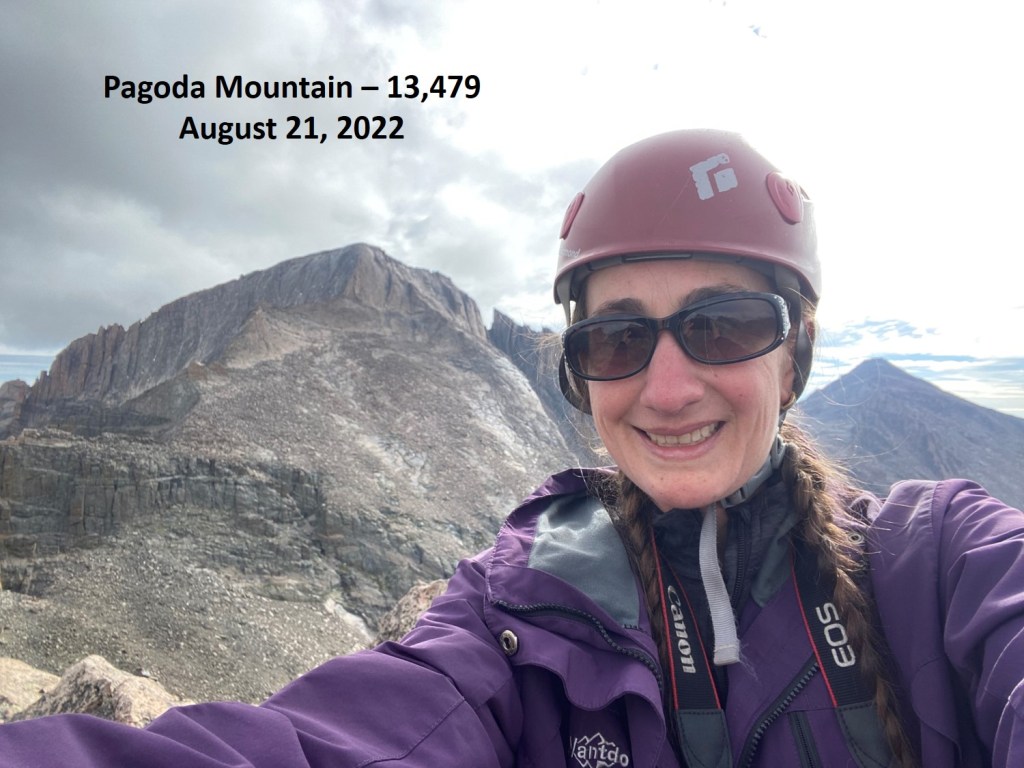
I summited Pagoda Mountain at 9am. There was a plastic tube at the summit as a register, lacking a lid, but with a ziplock bag inside.  I didn’t bother opening it.

Pagoda Mountain:

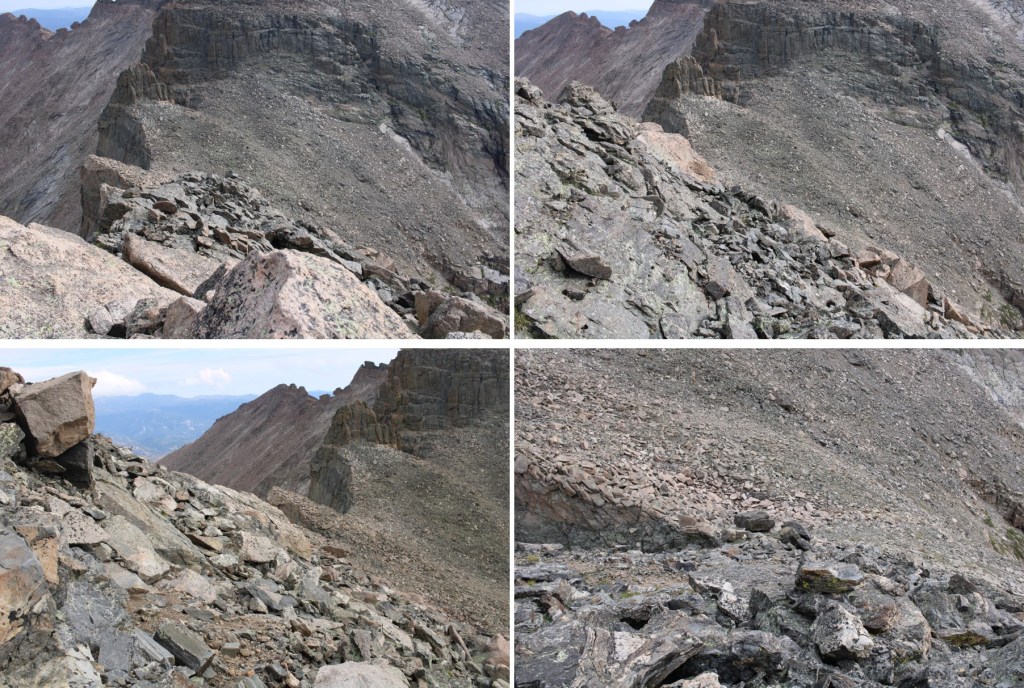
I had a great view of the Longs Peak keyhole route

Now to re-trace my steps back to the saddle, before the storm hit

And back down the scree to Green Lake

Once back at Green Lake, I turned right and followed the cairns north out of the basin

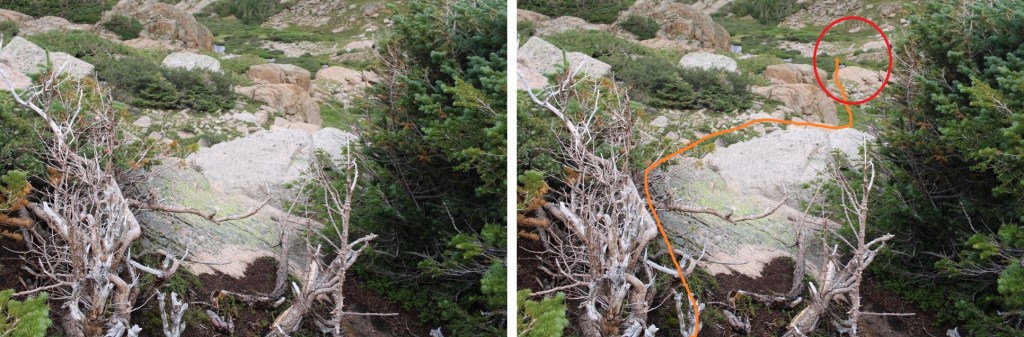
This time I went behind the rocks and picked up the old trail, circled in red

Then followed the trail all the way back to the trailhead.  It started raining just as soon as I made it to treeline, accompanied by a flash of lightning, a loud boom, and a wide rumbling all around me.

I made it back to my truck at 1:30pm, making this a 17.74 mile hike with 4544’ of elevation gain in 10 hours. 

On to the next trailhead!

Chiefs Head Peak – 13,577

RT Length:  18.17 miles

Elevation Gain:  5476’

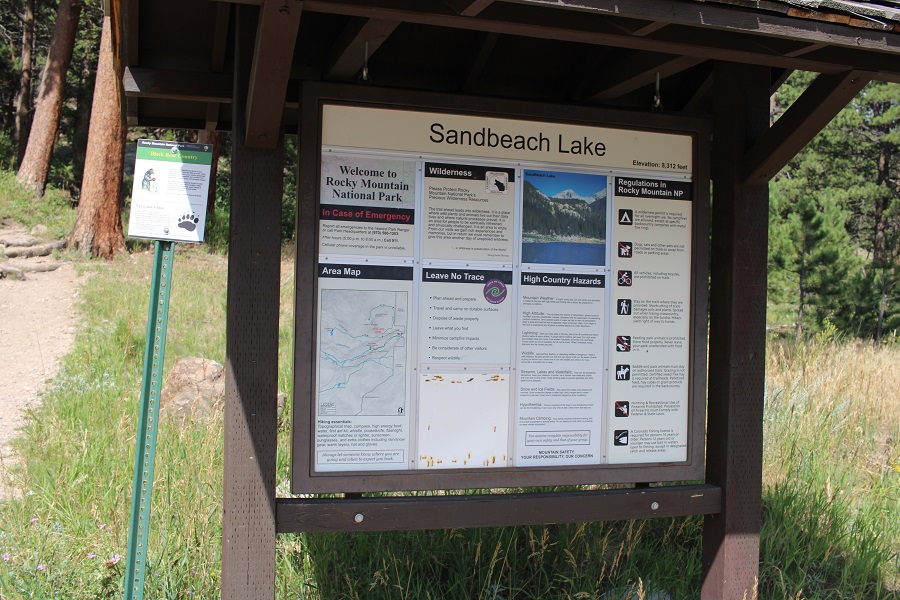
I parked at the Sandbeach Lake Trailhead at Rocky Mountain National Park, and was on the trail at 4:30am.

The Sandbeach Lake Trail was a class 1 trail I took all the way to Sandbeach Lake.  There were 2 creek crossings, but they had footbridges across.

It was 5 miles to Sandbeach Lake. Once at the lake, the fastest way to skirt the lake and find a trail is to go right here

But I wanted to see the lake, so I did, and then followed the lake past a small stream, and caught up with the trail there.  

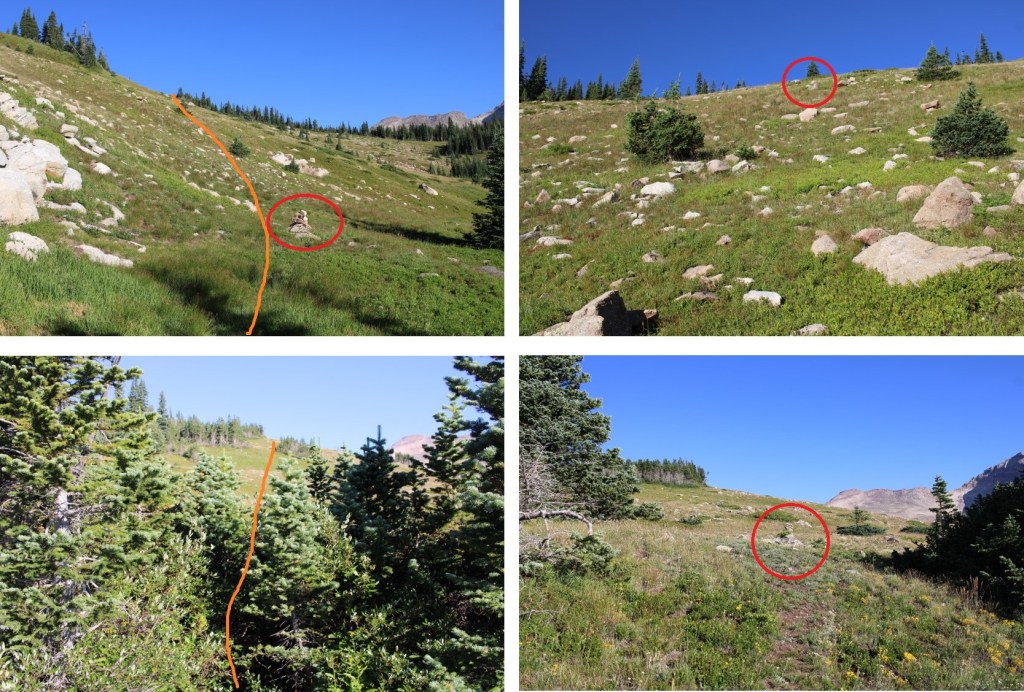
After crossing the creek, I followed the trail northeast to treeline.  When the trail ended, there were plenty of cairns to guide the way (circled in red).

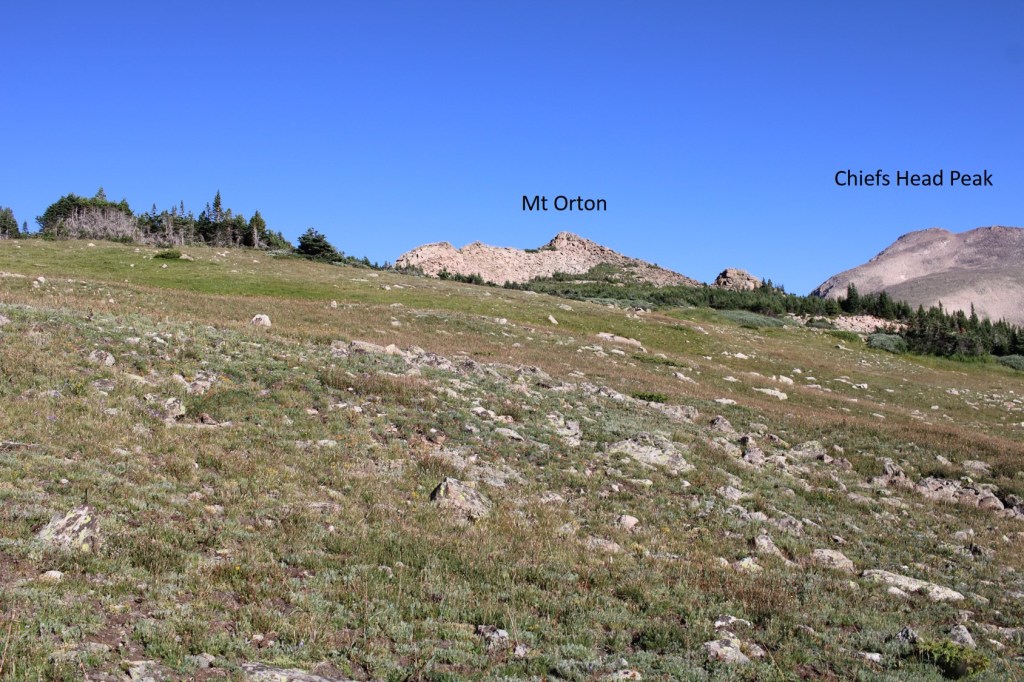
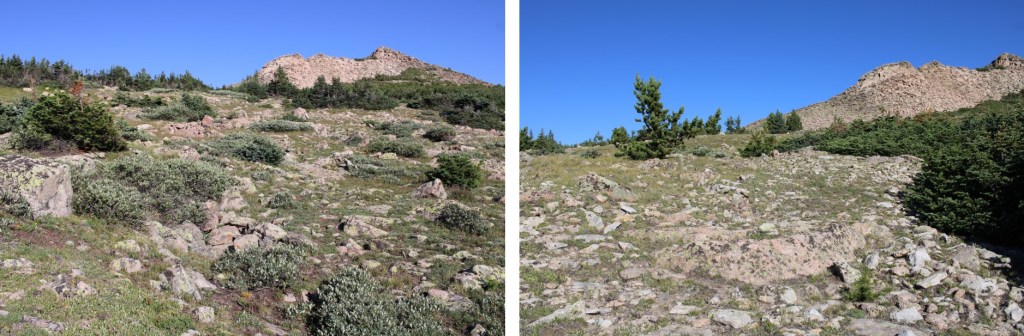
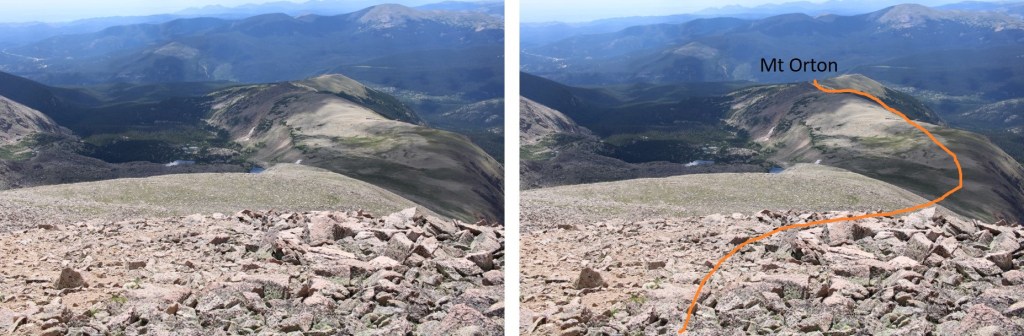
Once at treeline, I kept aiming for Mt Orton (unranked). There were cairns to mark the way until I was in front of Mt Orton

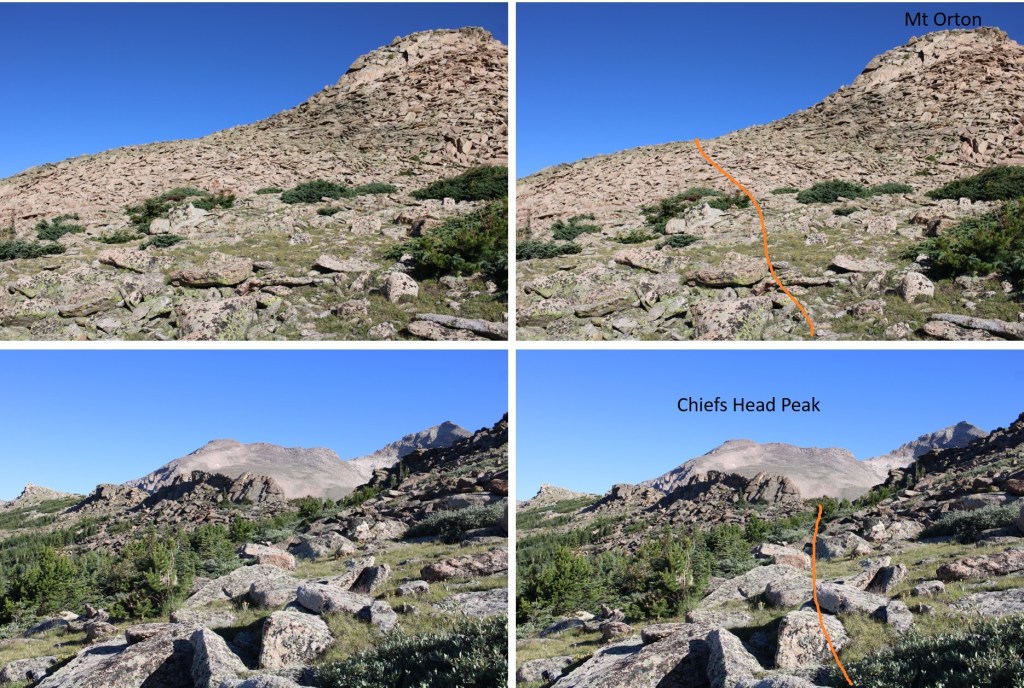
I then skirted Mt Orton to the left, and went through a very small saddle

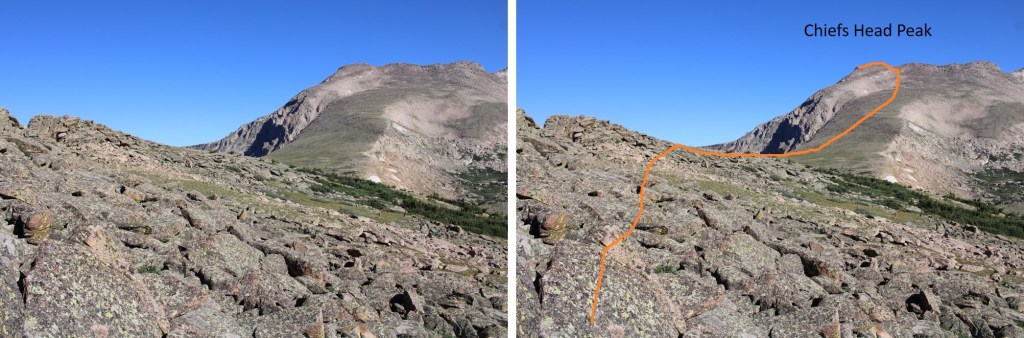
I could now see an easy path to Chief Head’s ridge.  Here’s the route I took

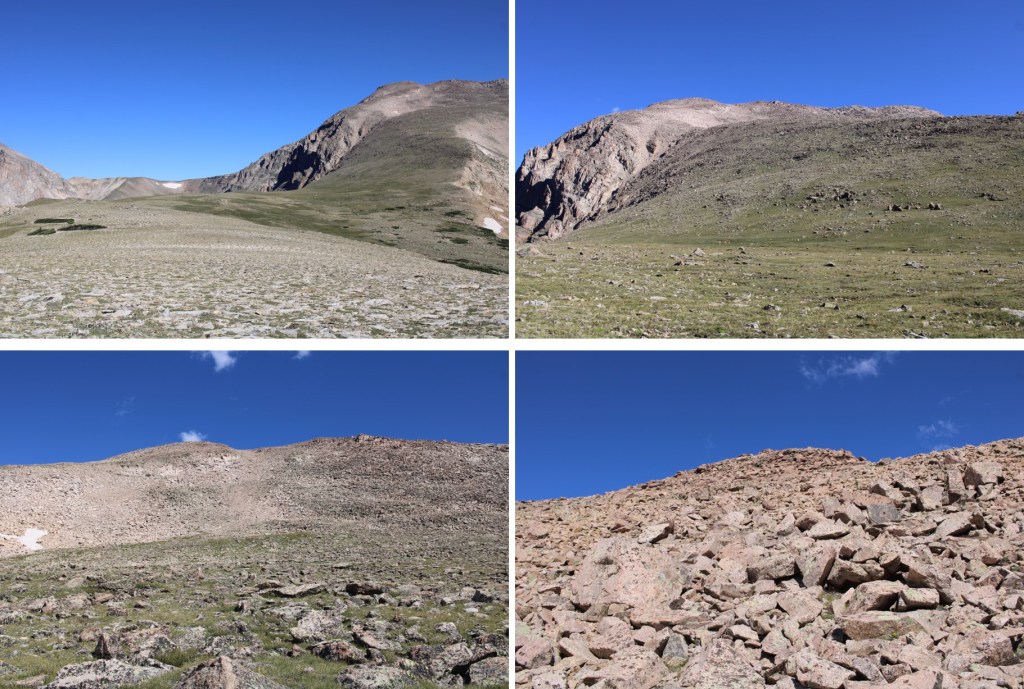
And some close-up pictures

Once on the ridge, I followed it .3 miles to the summit, on rocky terrain.  I was able to keep it all class 2 by staying to the left.

There wasn’t a summit register, or a cairn, or a marker, so I just walked all over the rocky summit.

I summited Chiefs Head Peak at 11am

Chiefs Head Peak:

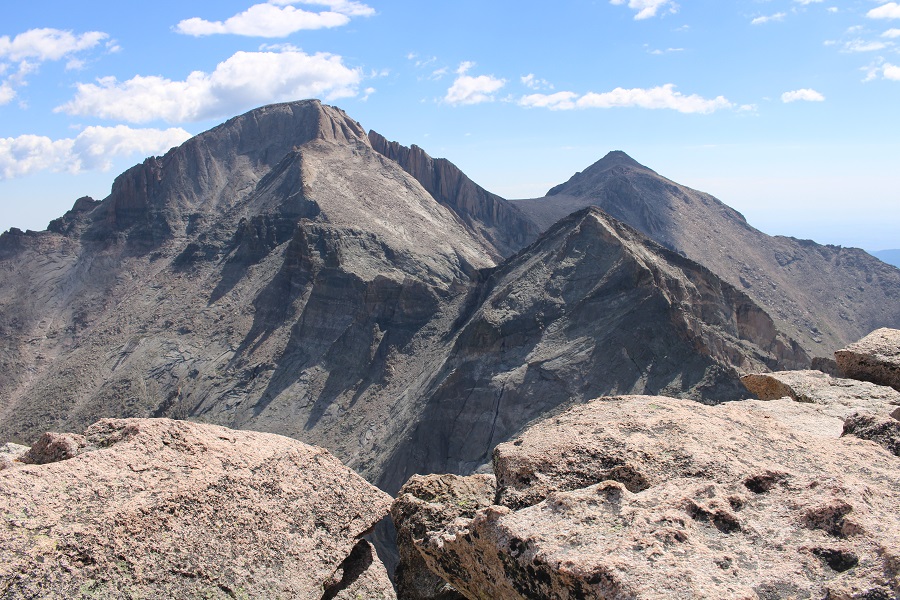
From the summit I had an amazing view of Pagoda, Longs, and Meeker

This was an out and back hike, so I turned and retraced my steps back down the mountain, around Mt Orton, and to Sandbeach Lake

The cairns picked up again, and I could now see Sandbeach Lake, so route finding was easy until I hit the trail.

Back at the lake, I picked up the Sandbeach Lake Trail, and took this class 1 trail all the way back to the trailhead.

I made it back to my truck at 3:15pm, making this an 18.17 mile hike with 5476’ of elevation gain in 10 hours 45 minutes.

On to the next trailhead!
Mt Chiquita – 13,054, Ypsilon Mountain – 13,513, Mt Chapin – 12,454

RT Length:  10.2 miles

Elevation Gain:  3555’

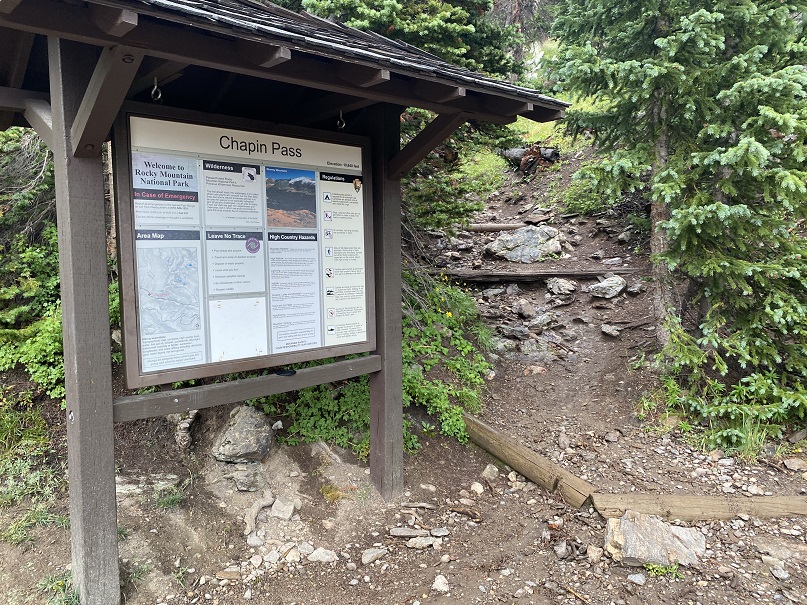
I parked my truck at the Chapin Pass trailhead and was on the trail at 4am. 

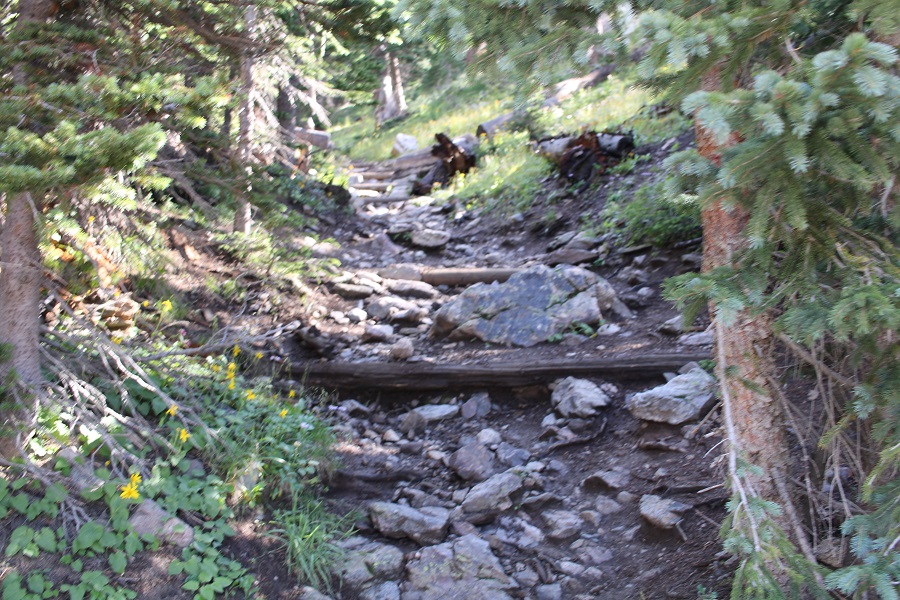
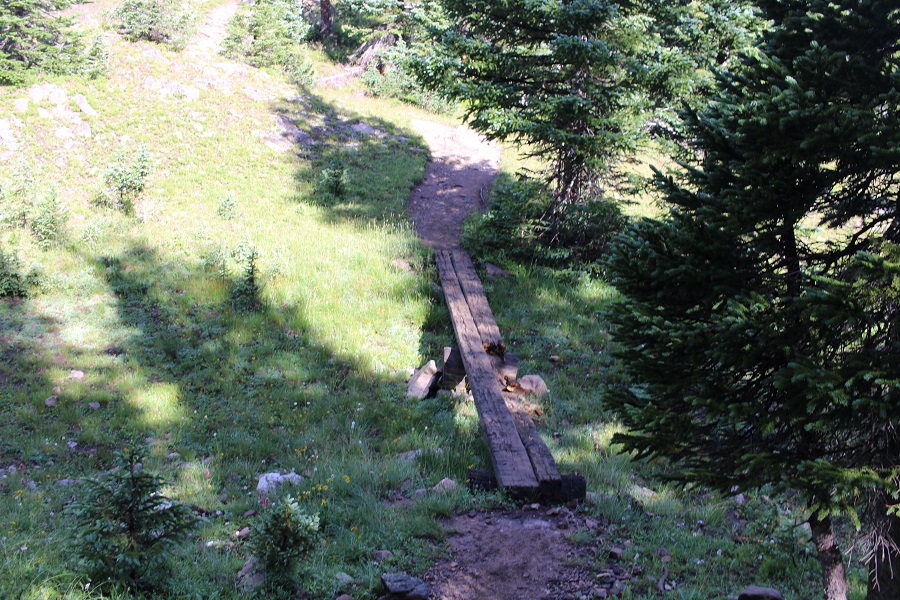
The trail starts out heading directly up to the pass. 

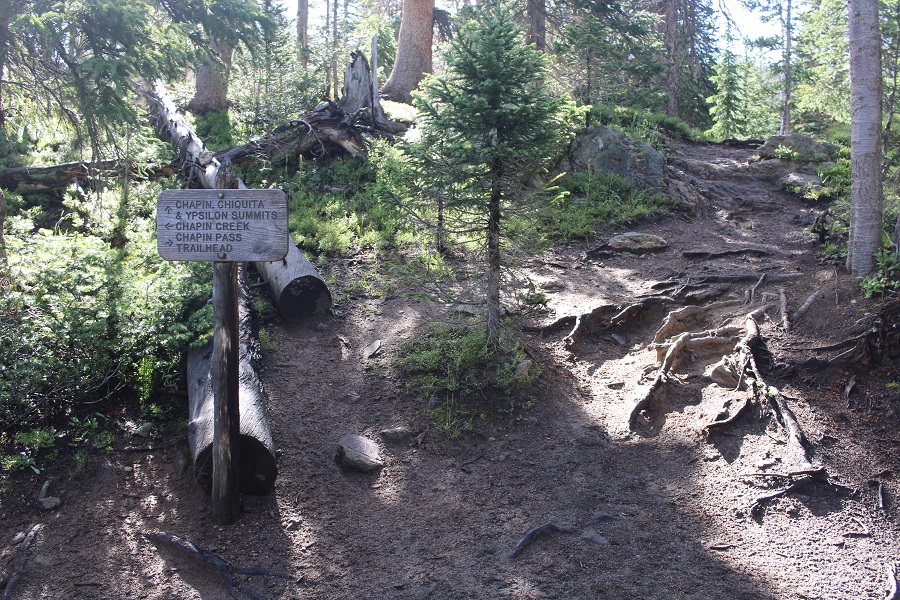
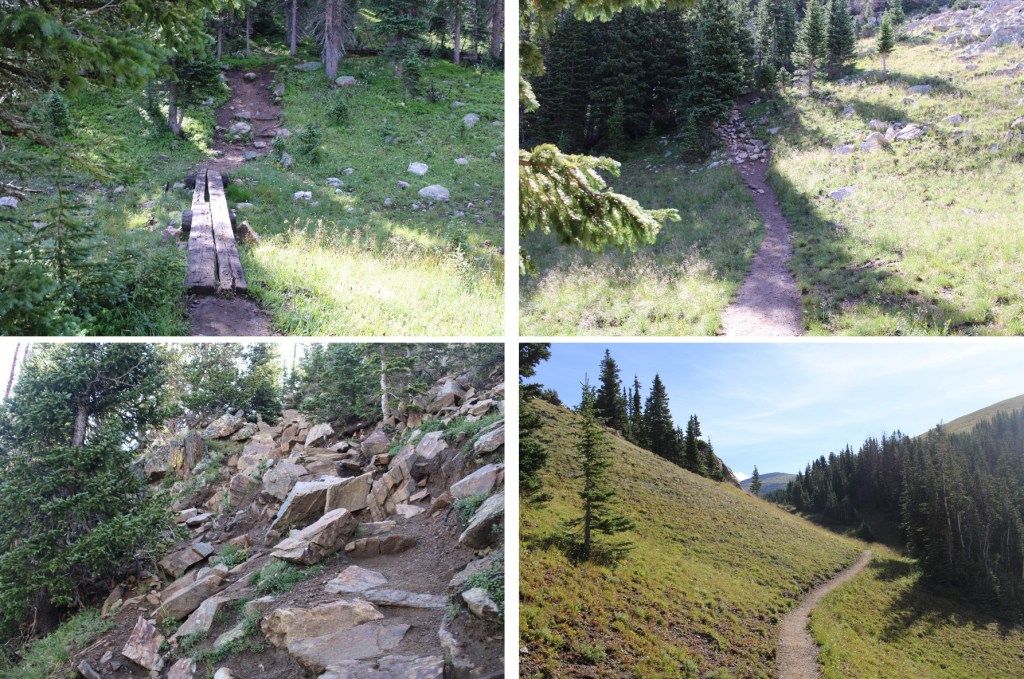
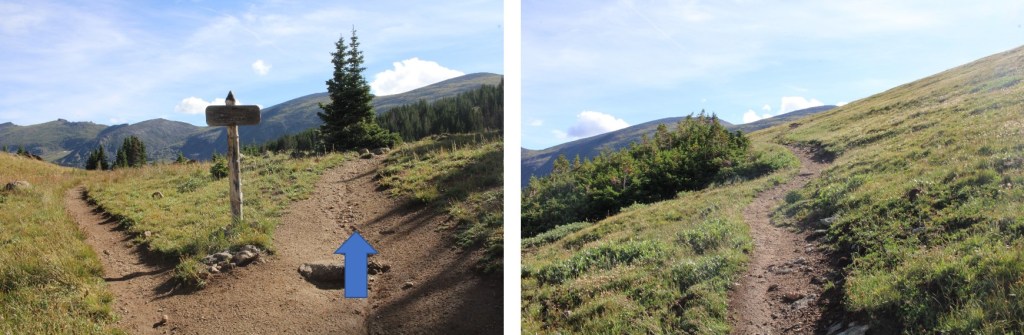
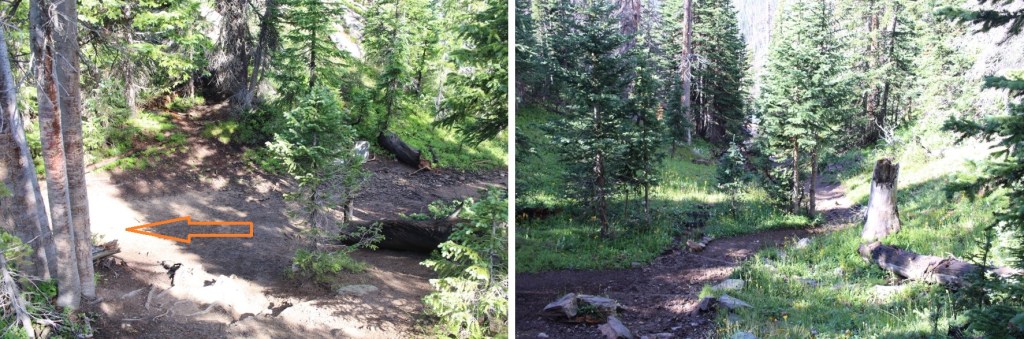
After hiking for .25 miles I came to an obvious junction and turned right, heading towards Chapin, Chiquita, and Ypsilon summits

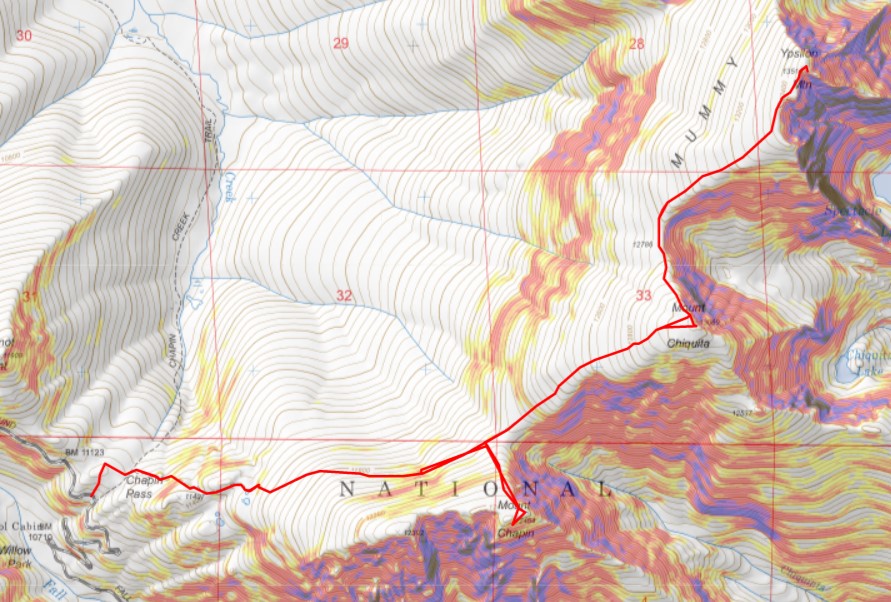
The trail was very easy to follow.  I followed it east and rounded the north side of Mt Chapin (saving it for later).

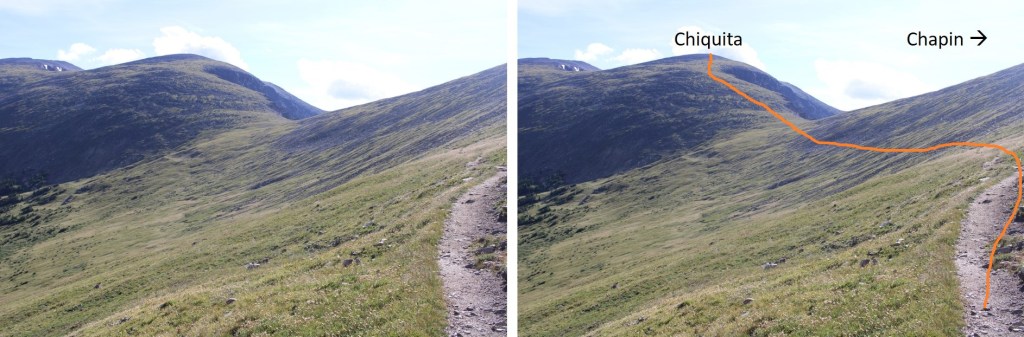
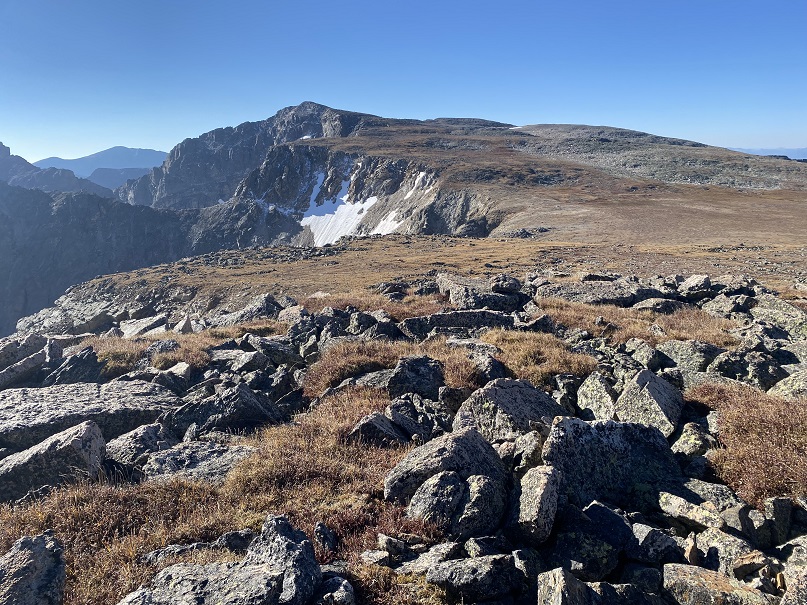
The trail changed from Class 1 to Class 2 as I made my way up to the top of Chiquita, heading northeast. 

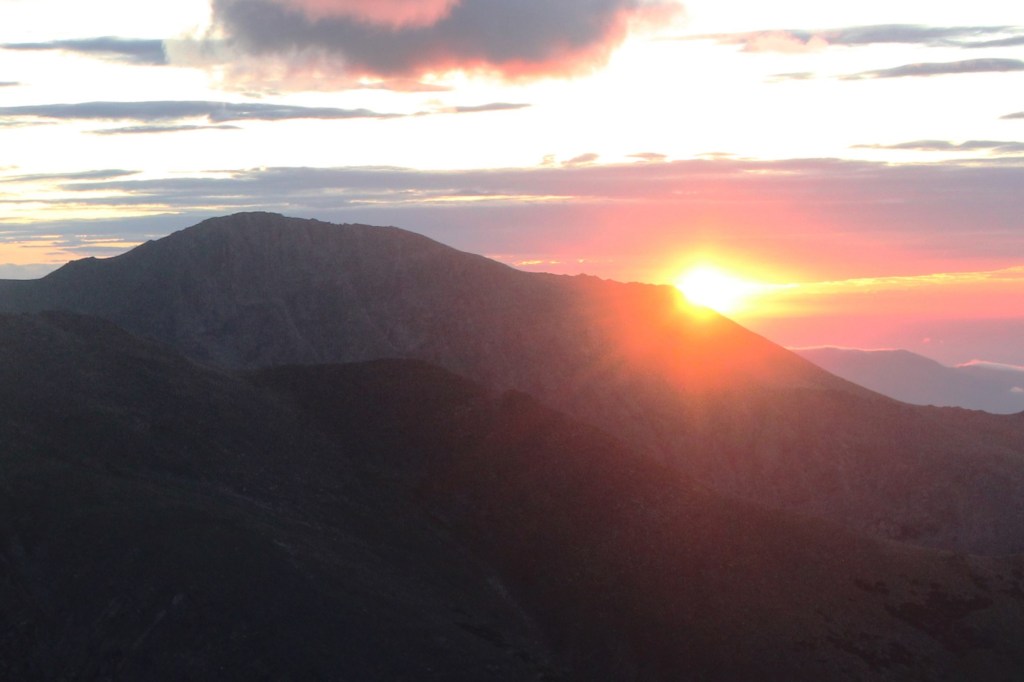
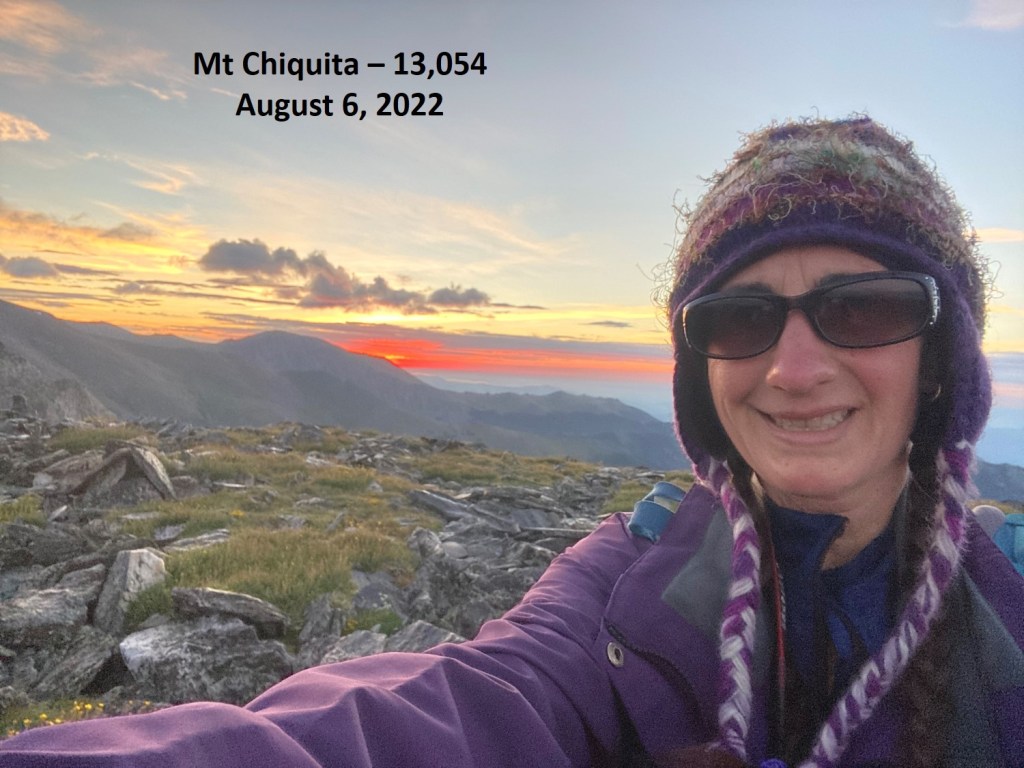
I made it to the summit just as the sun was starting to rise

 I summited Mt Chiquita at 6am

Mt Chiquita:

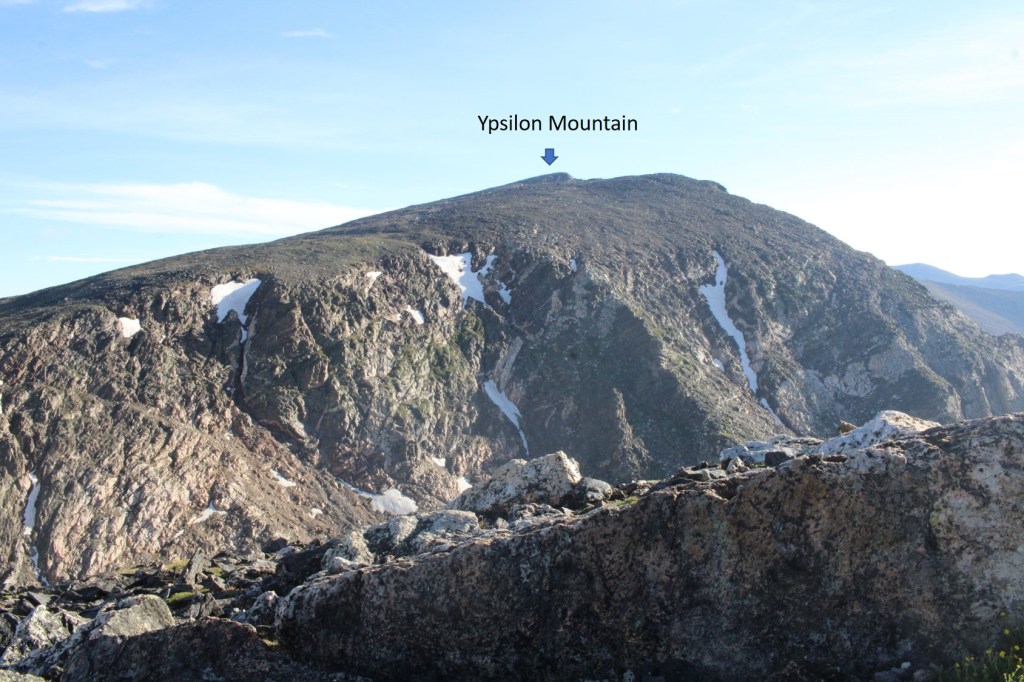
From the summit of Mt Chiquita I could see the summit of Ypsilon Mountain to the north. 

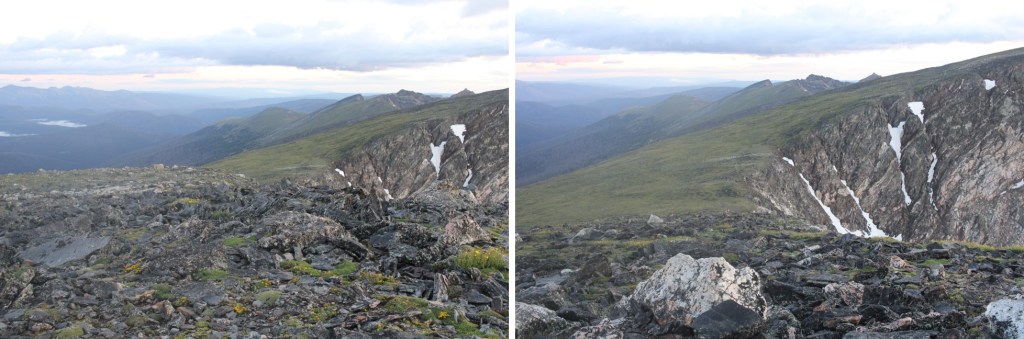
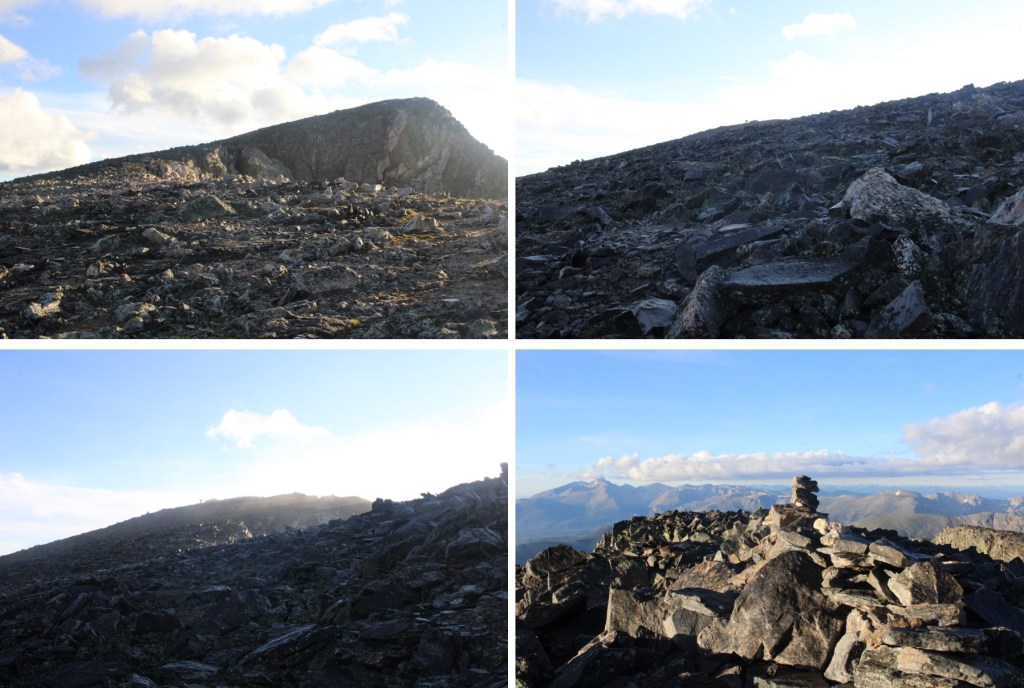
It was an easy ridge walk to get there, with a small false summit along the way. I just followed the ridge down 270’, and then up 722’ to the summit of Ypsilon.

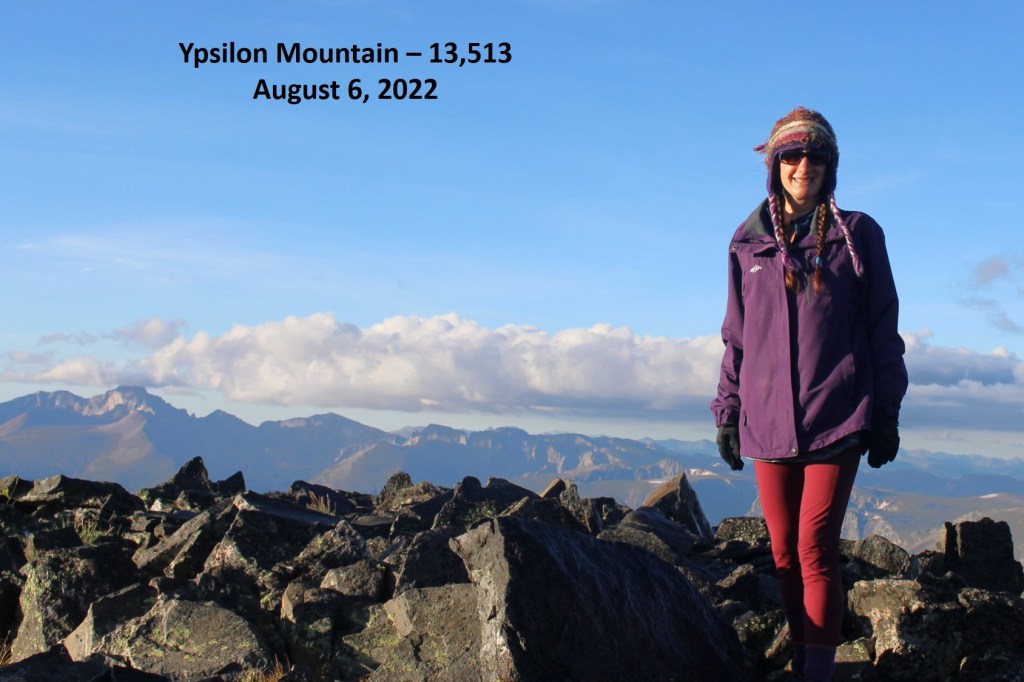
I summited Ypsilon Mountain at 7am

Mt Ypsilon:

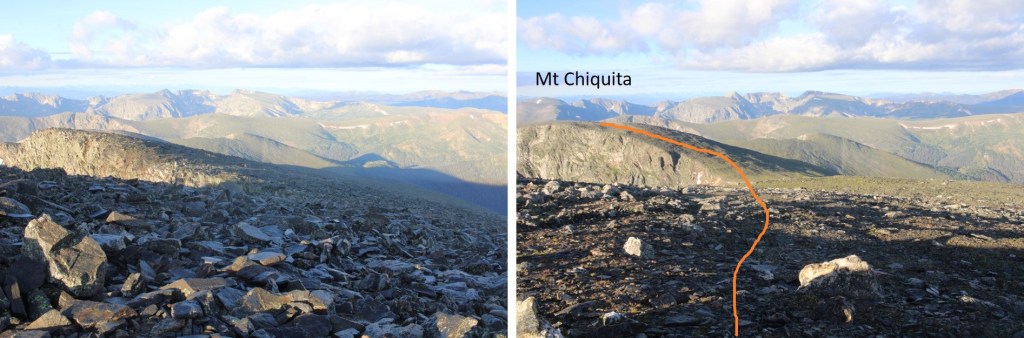
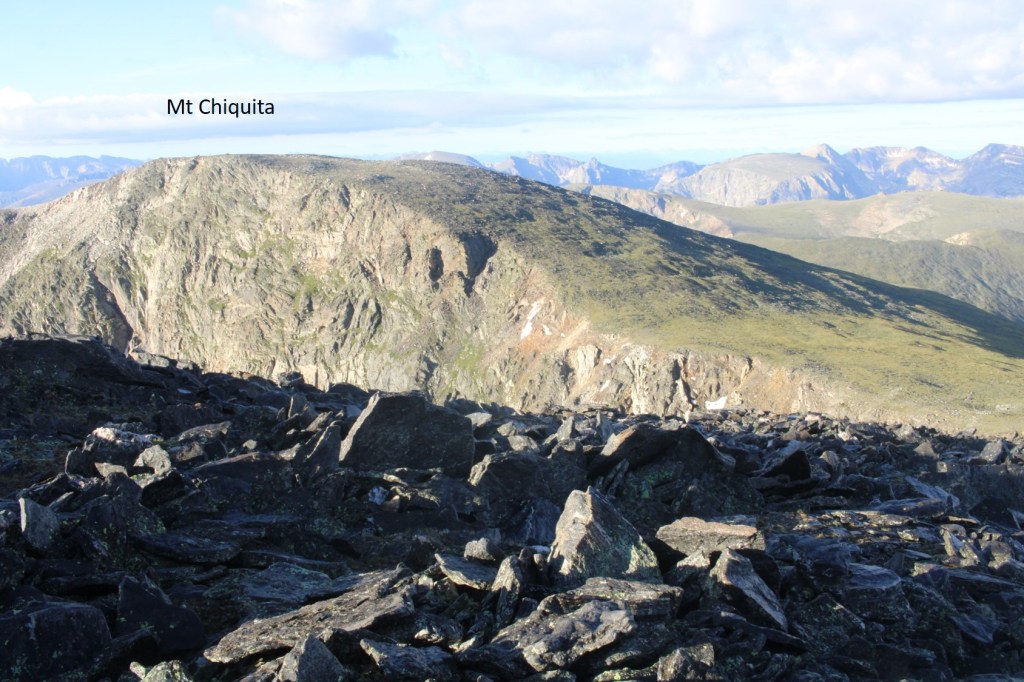
This was going to be an out and back for me, so I retraced my steps back to Chiquita, losing 722’ of elevation, and then gaining 270’

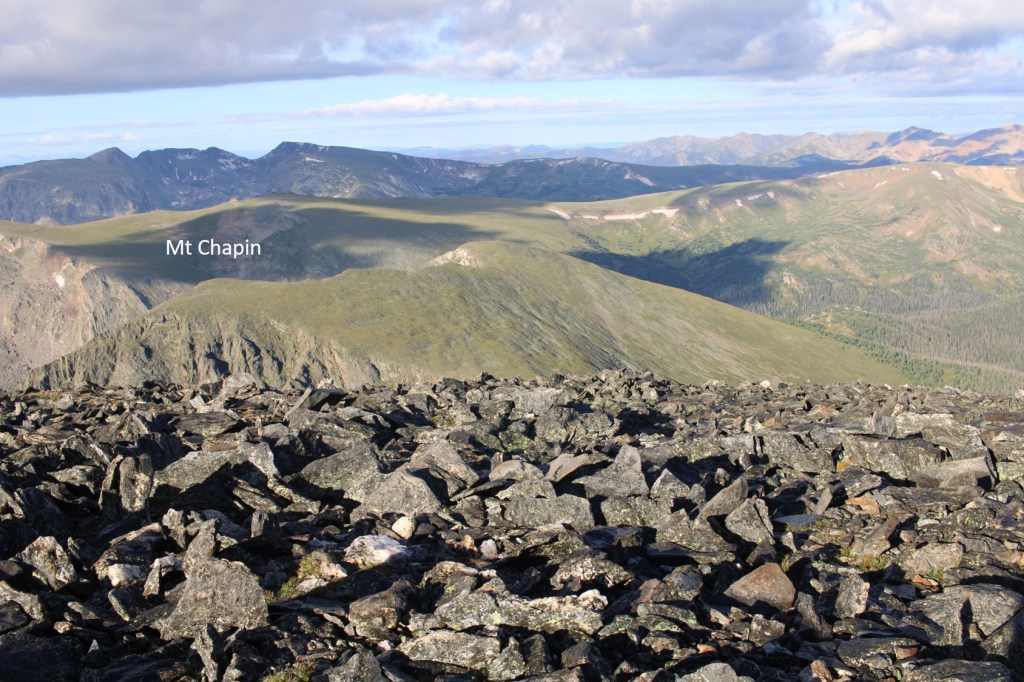
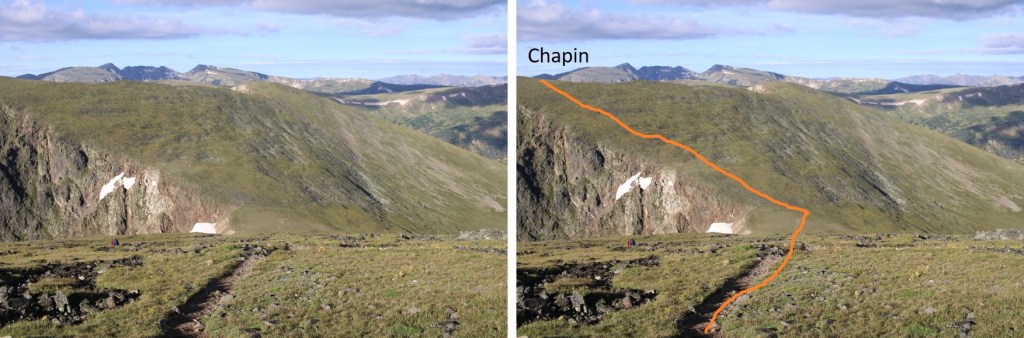
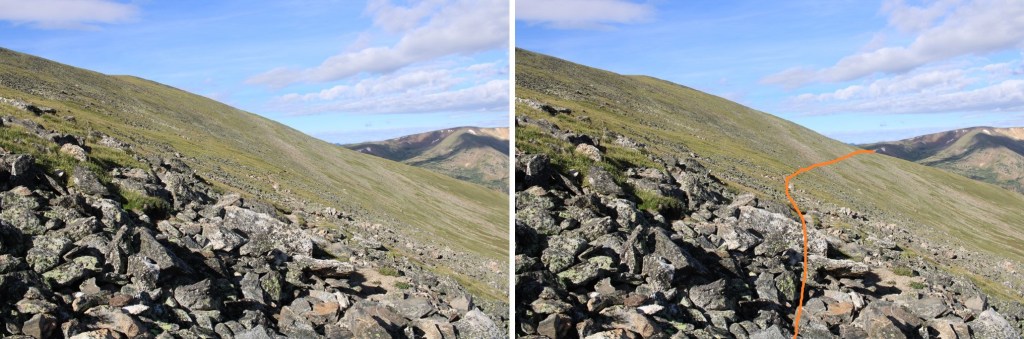
Back at the summit of Mt Chiquita I continued following the ridge southwest, back to the trail.  There is a trail to the summit of Mt Chapin from there.

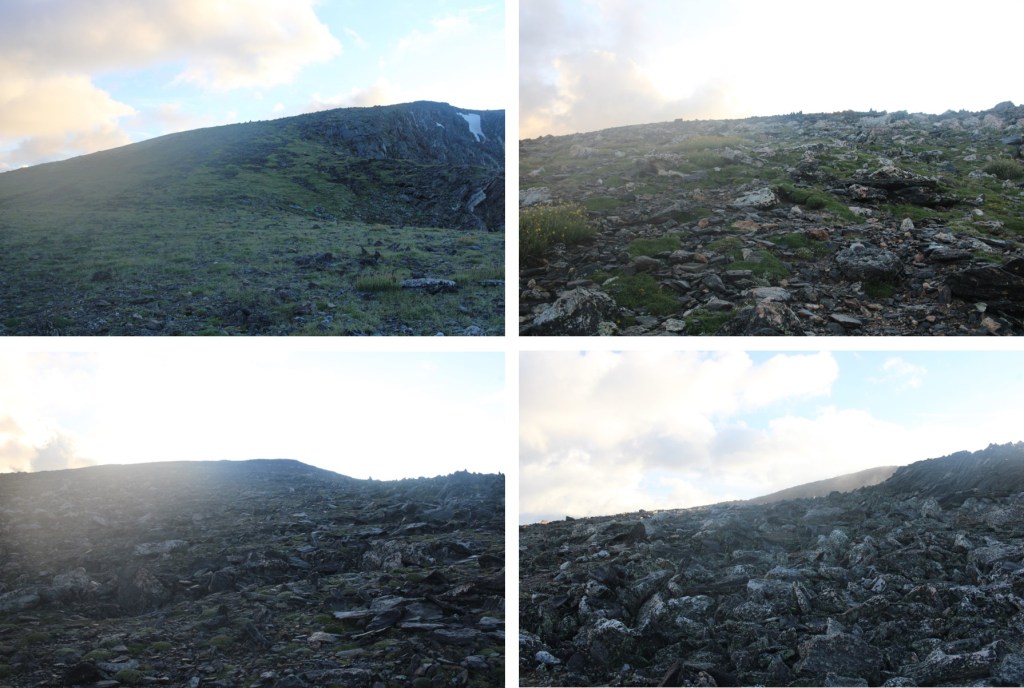
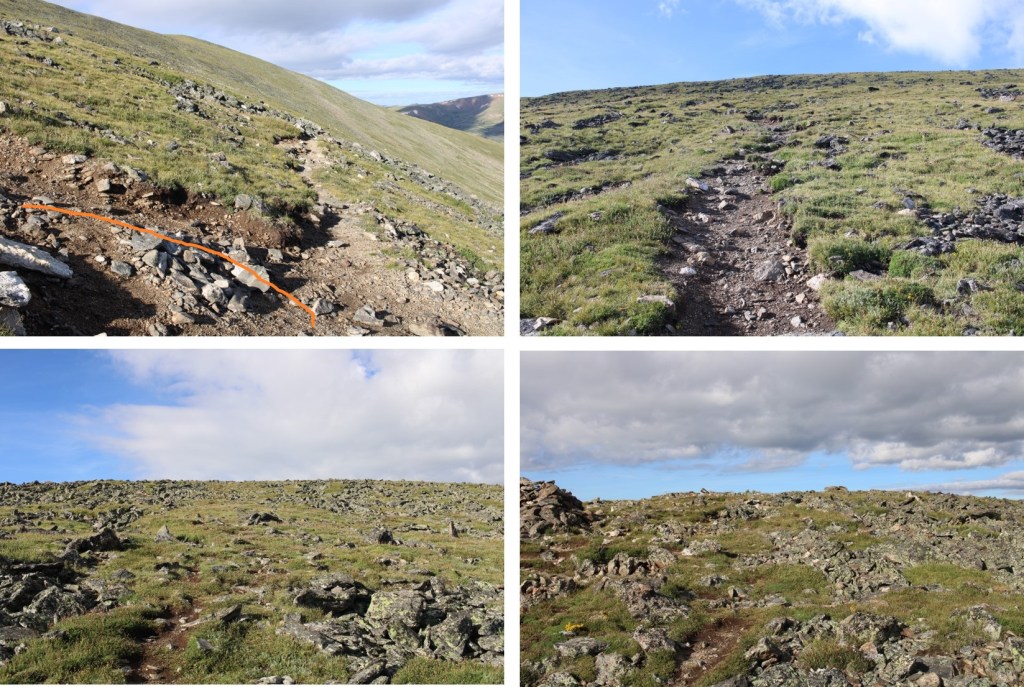
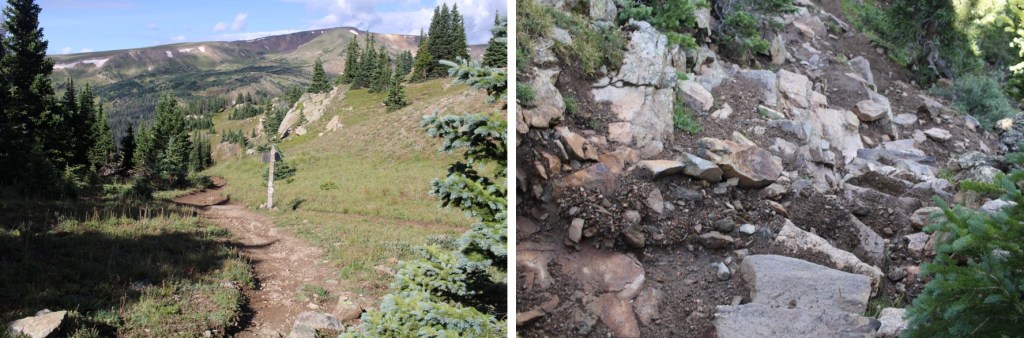
Here are some close up pictures of the class 1 trail

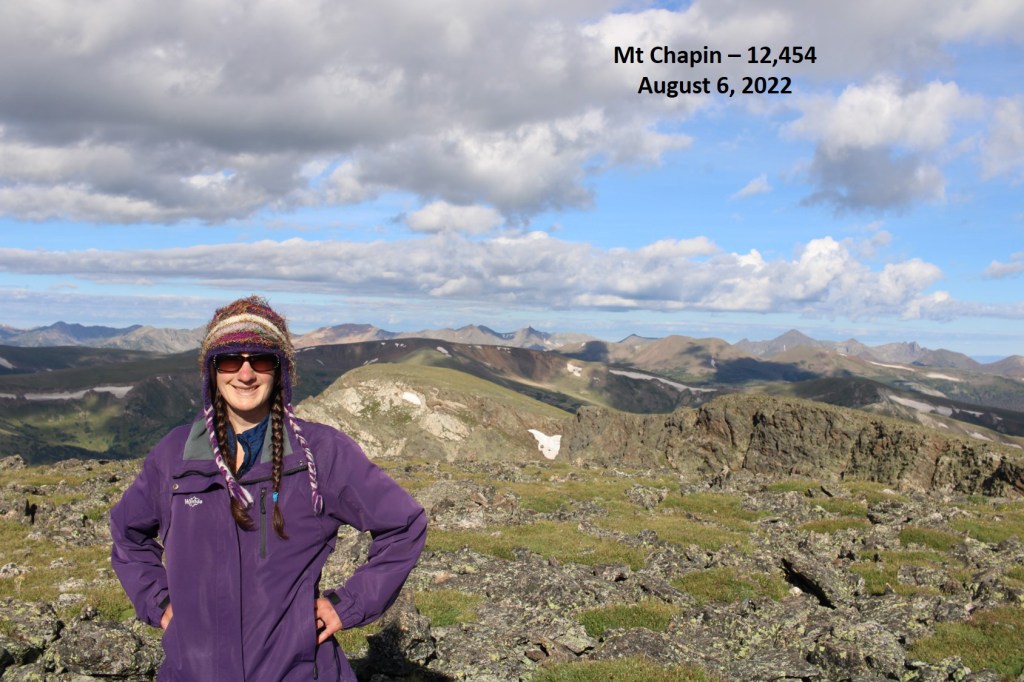
I summited Mt Chapin at 8:30am

Mt Chapin:

I turned and retraced my seps back to the trail below

Once back at the junction with the main trail, I turned left and followed it west to Chapin Pass

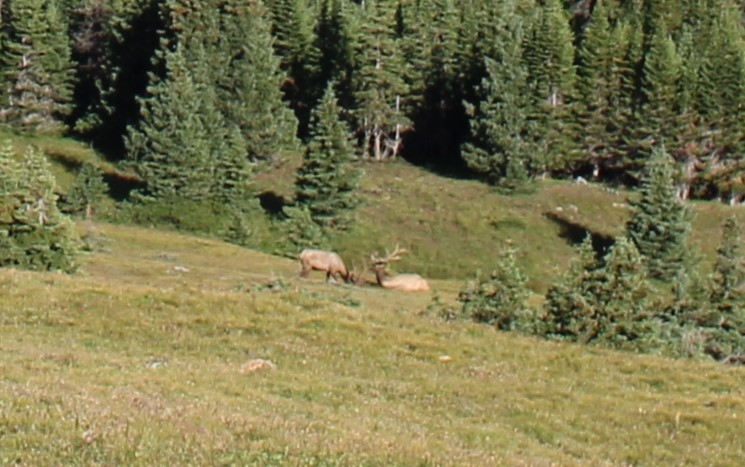
I even saw a few bull elk lounging along the way

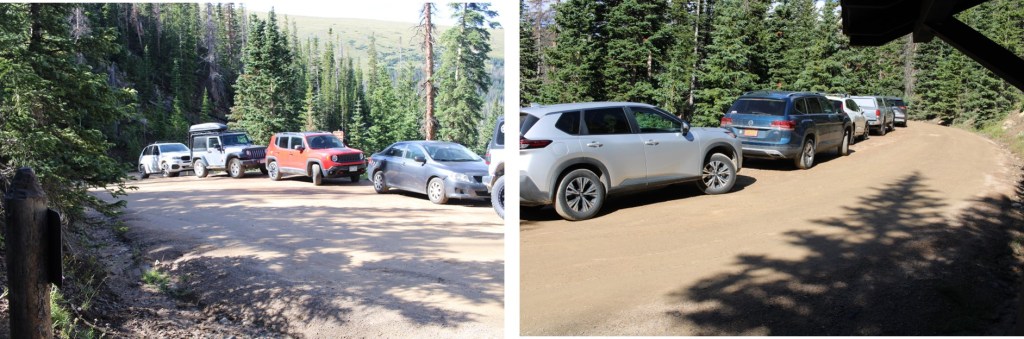
Back at Chapin Pass, I turned left, and followed it back to the parking area, which was now overflowing with dozens more vehicles than could fit in the area.  If you want to do this hike, get there early.

I made it back to my truck at 9:15am, making this a 10.2 mile hike with 3555’ of elevation gain in 5 hours, 15 minutes.

On to the next trailhead!