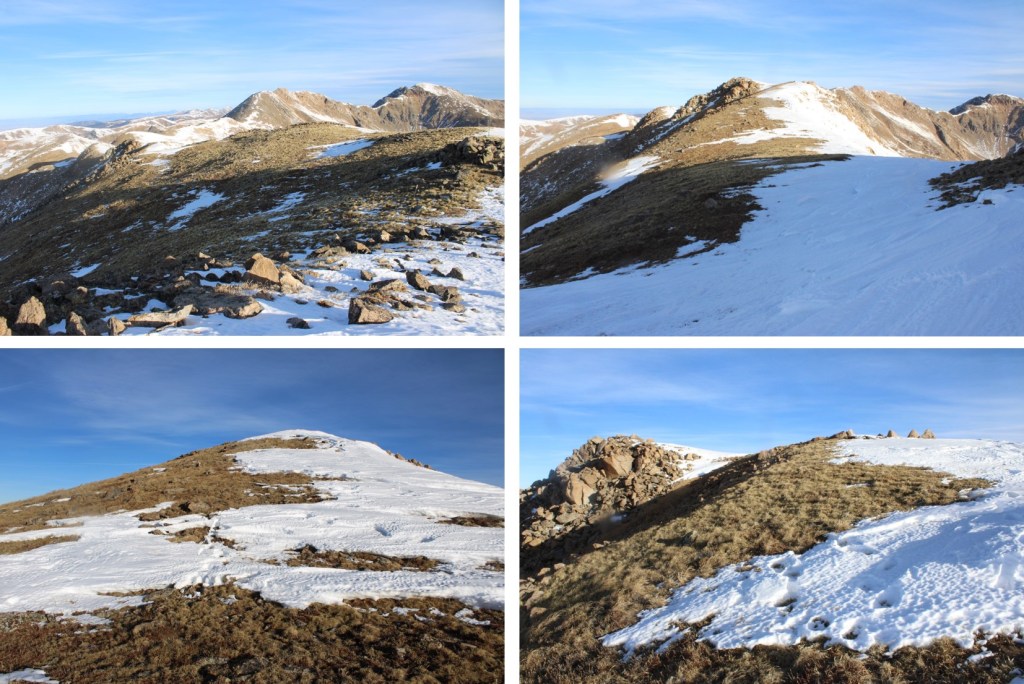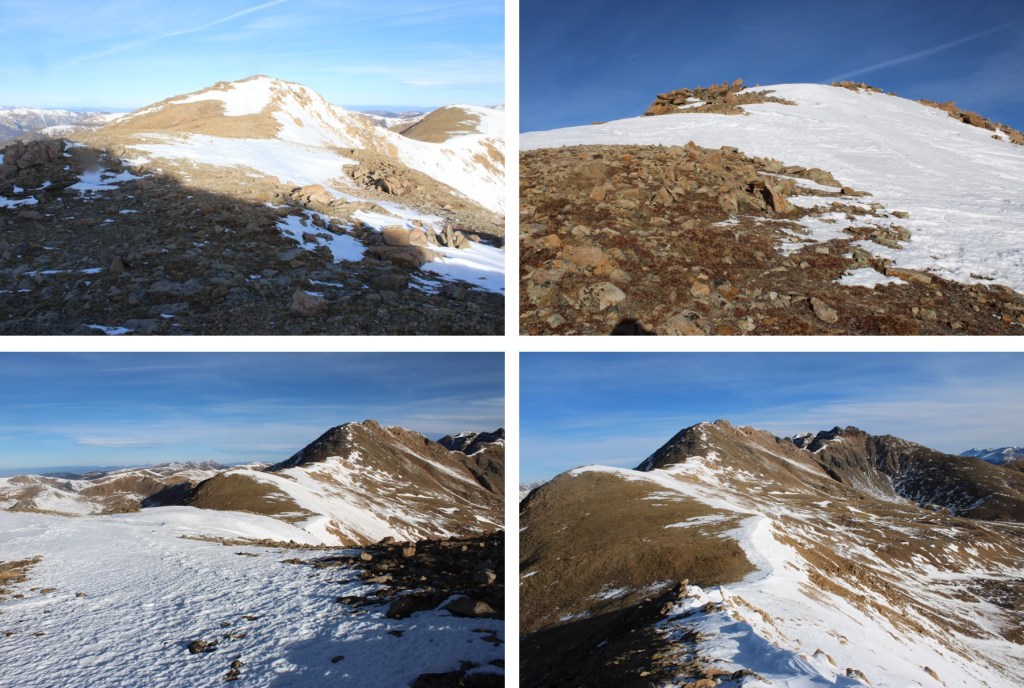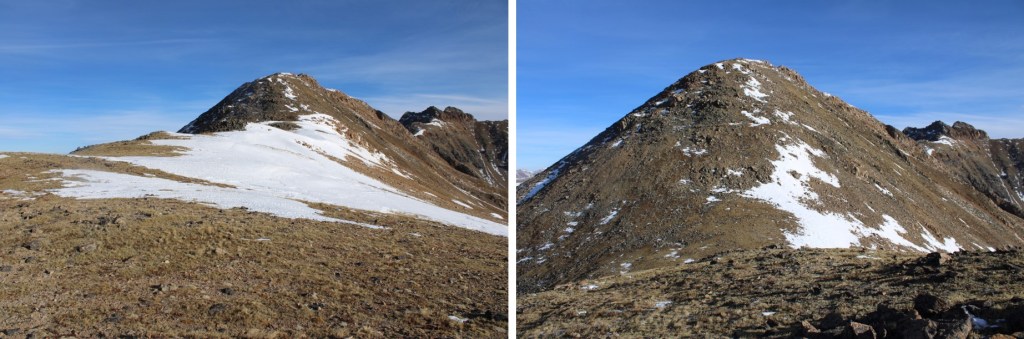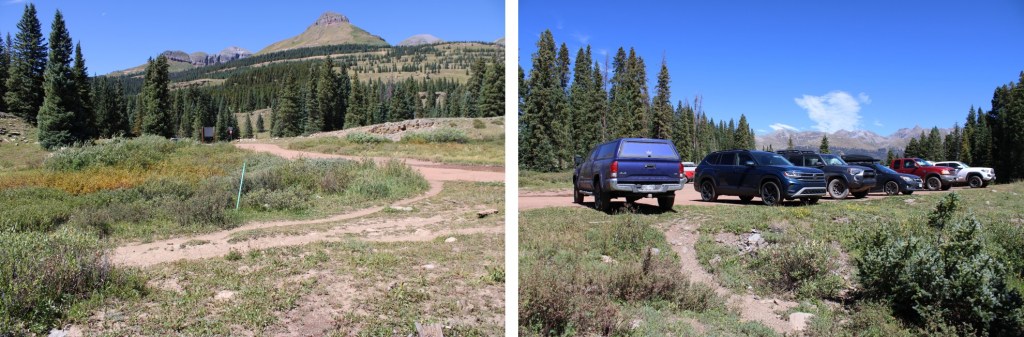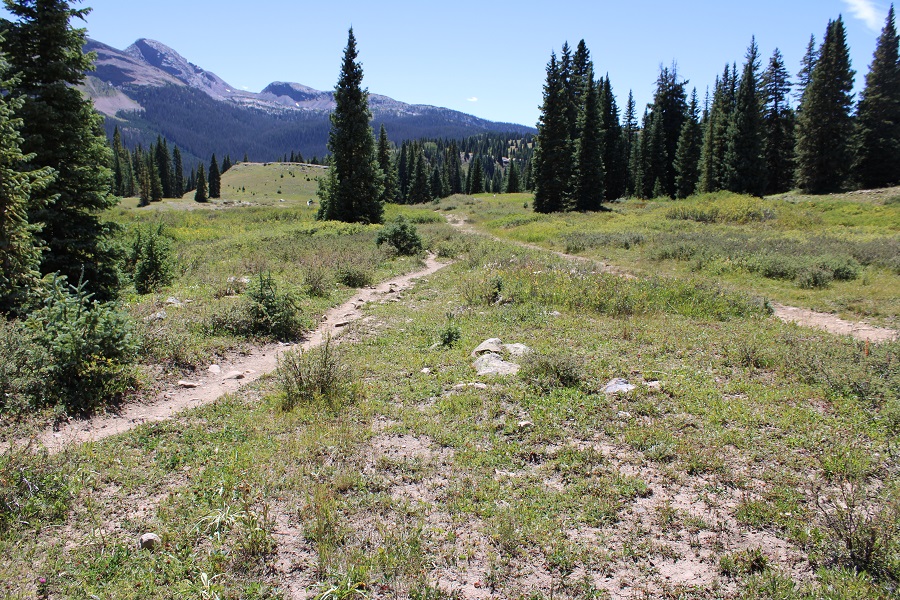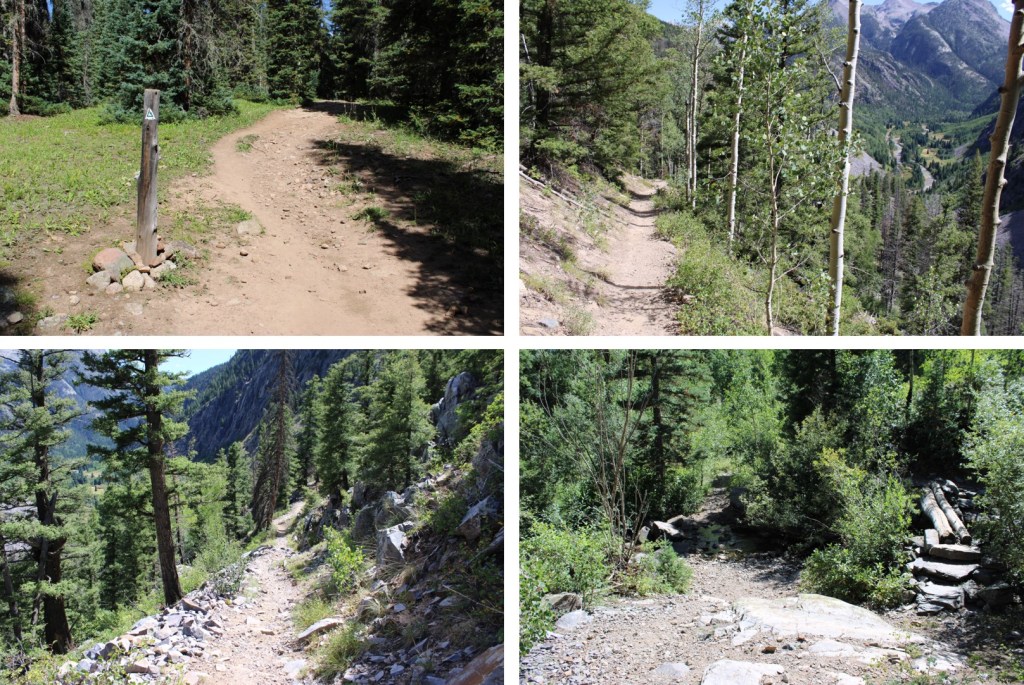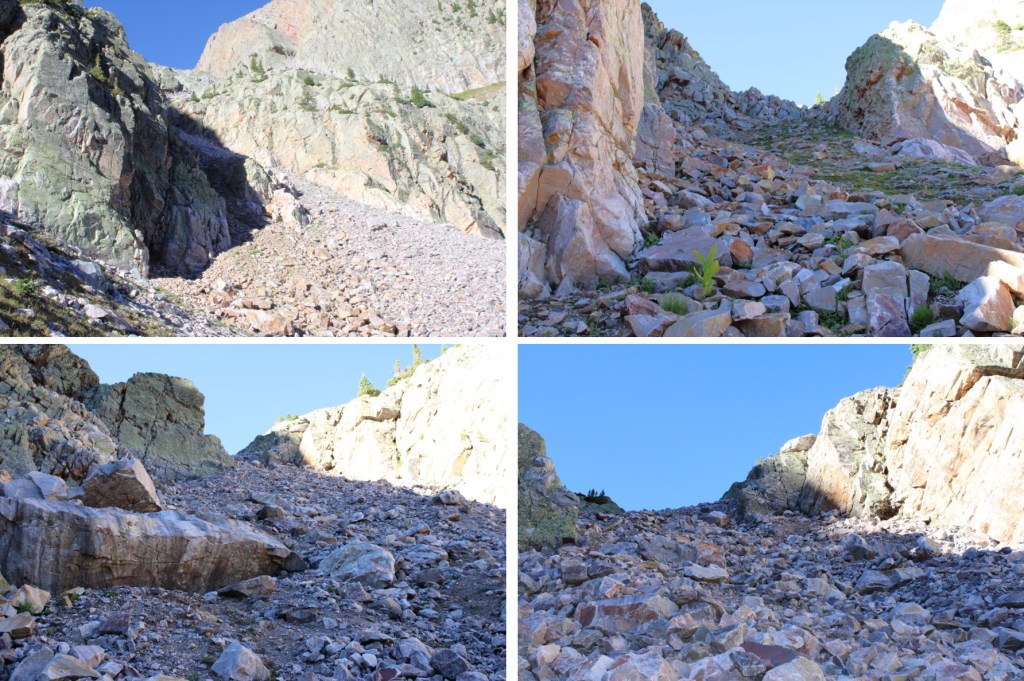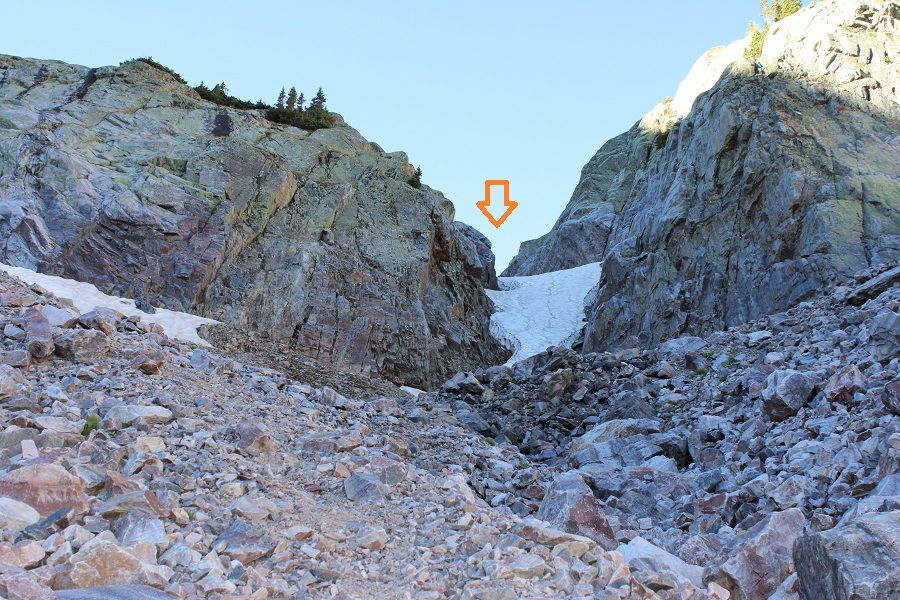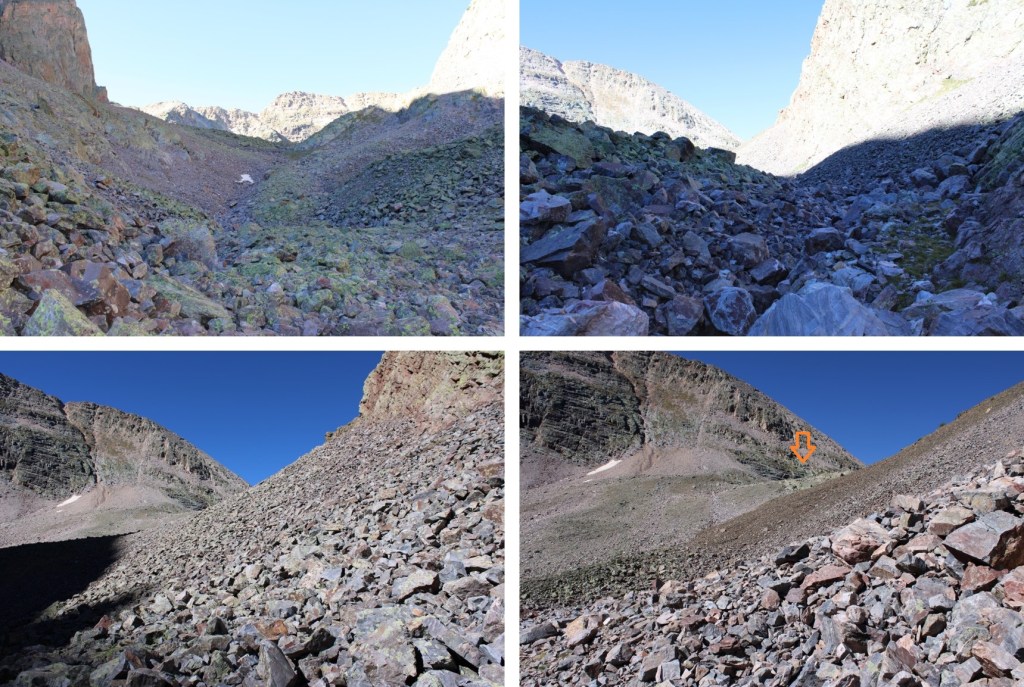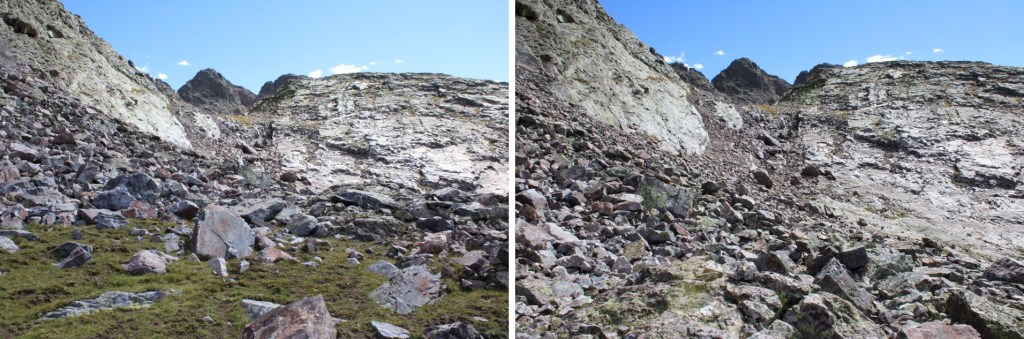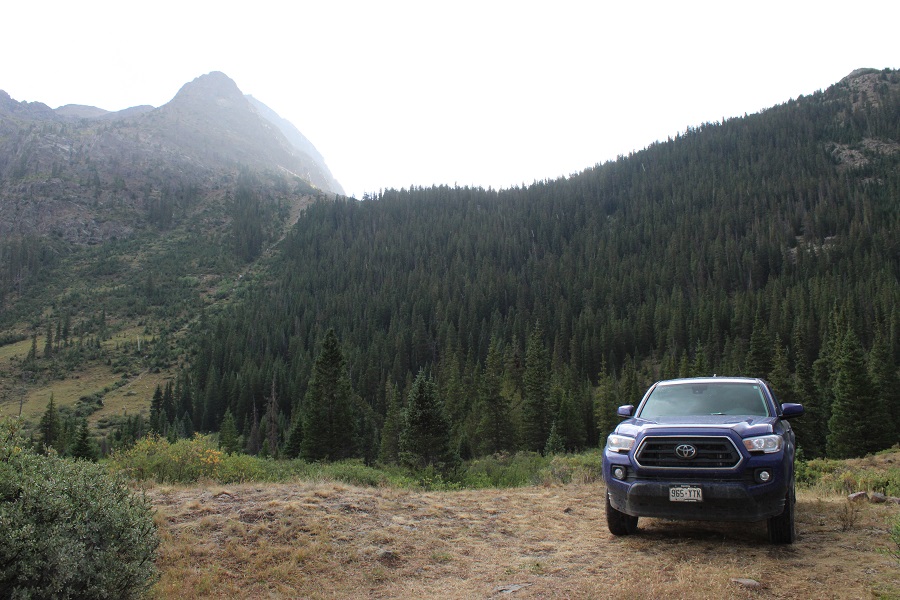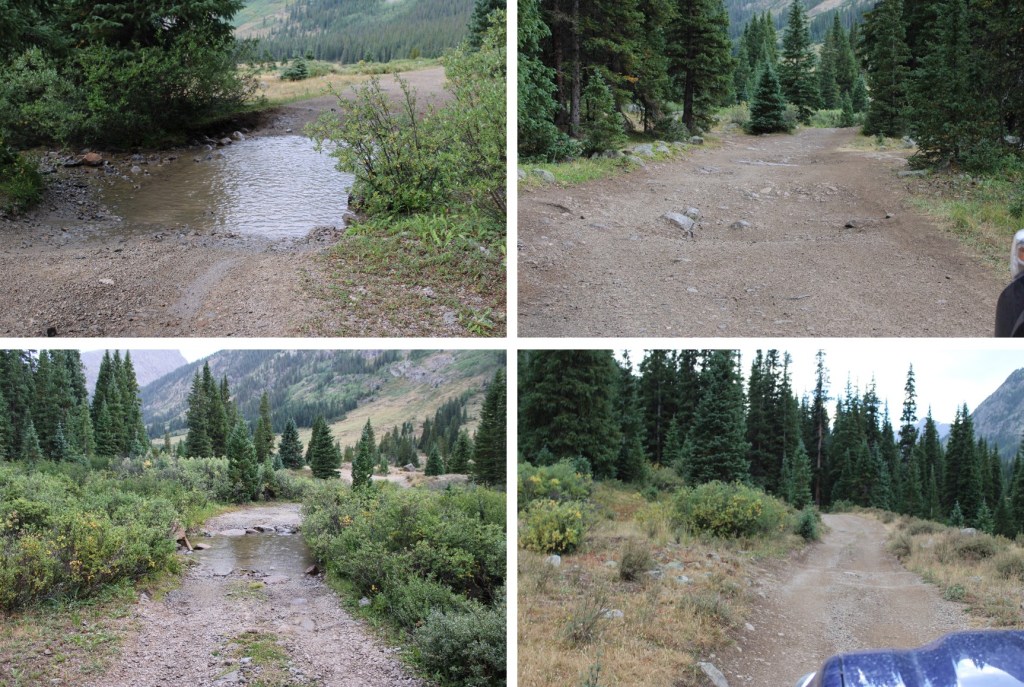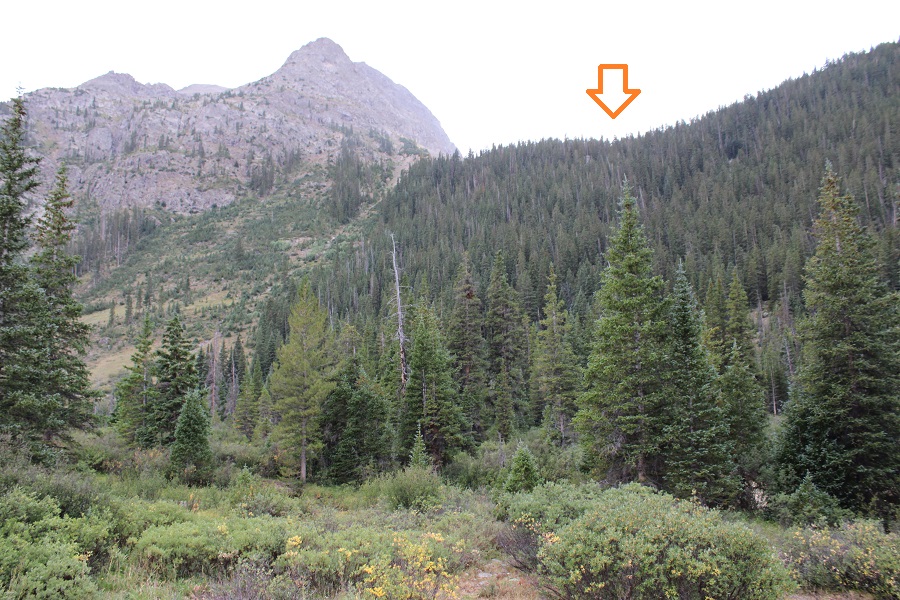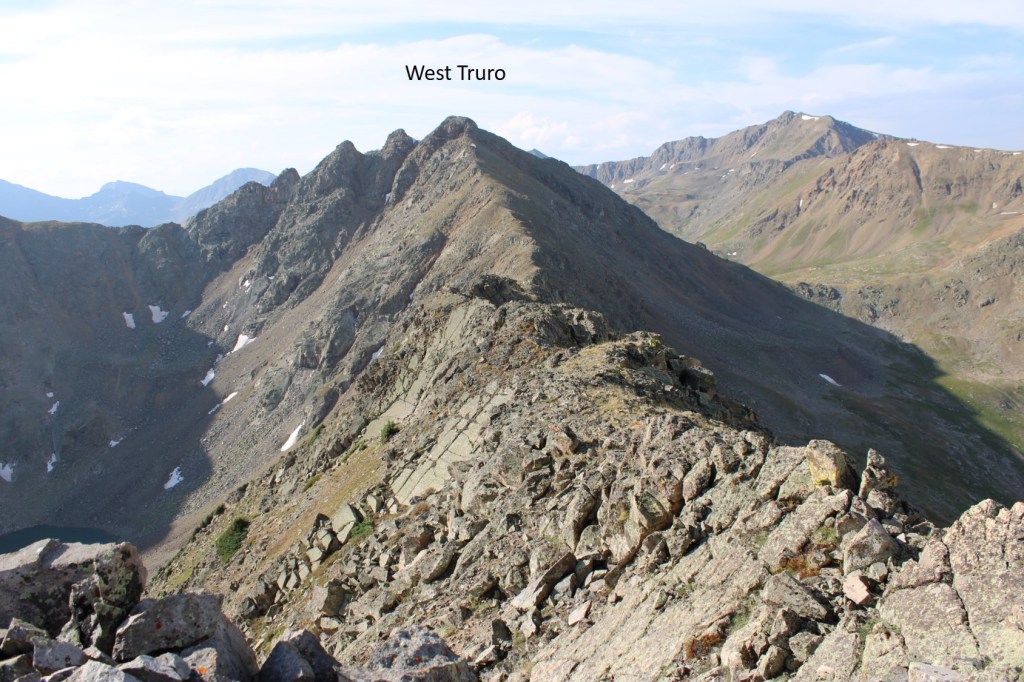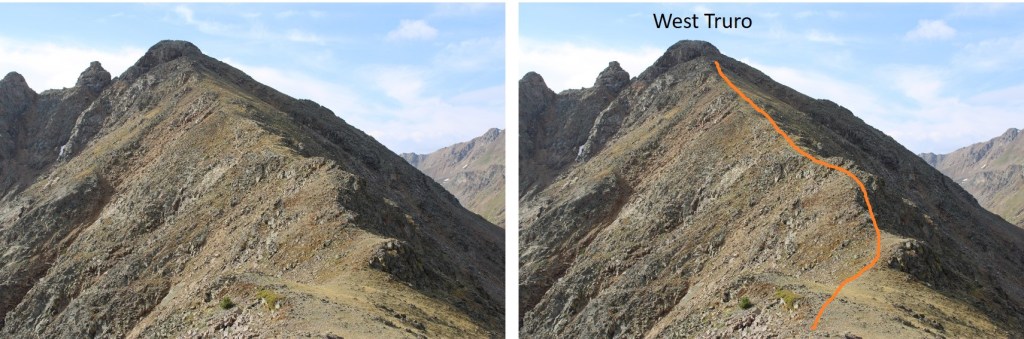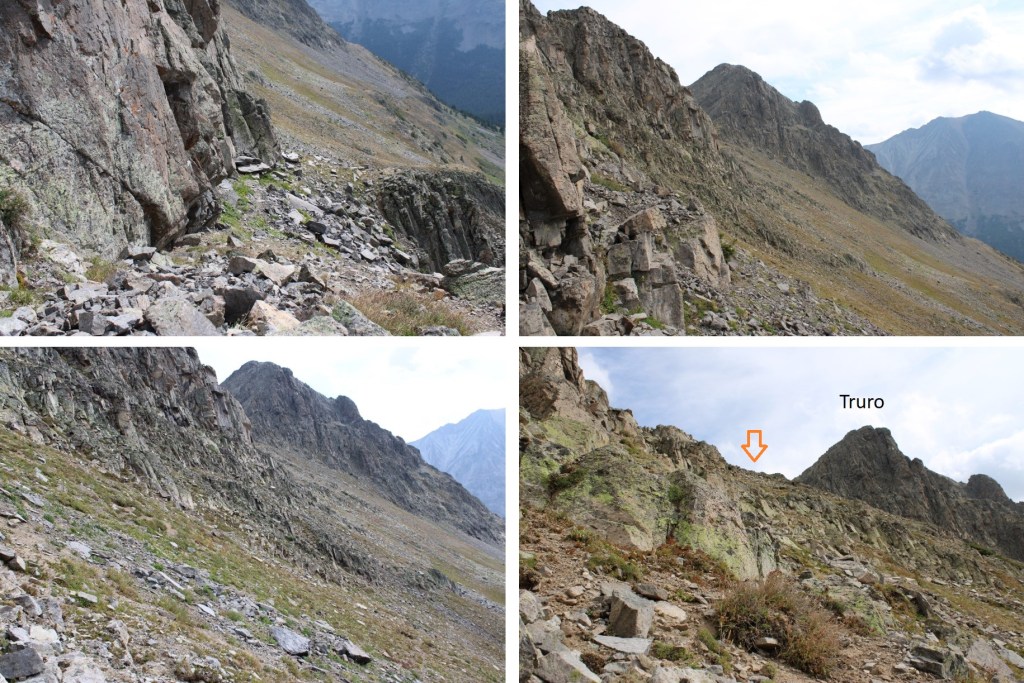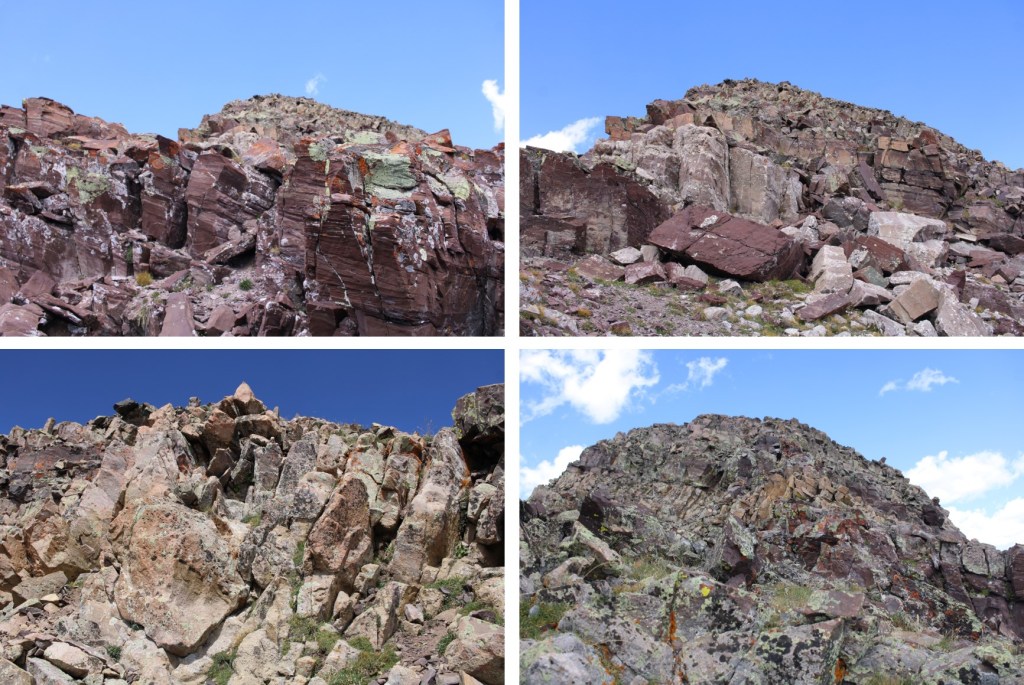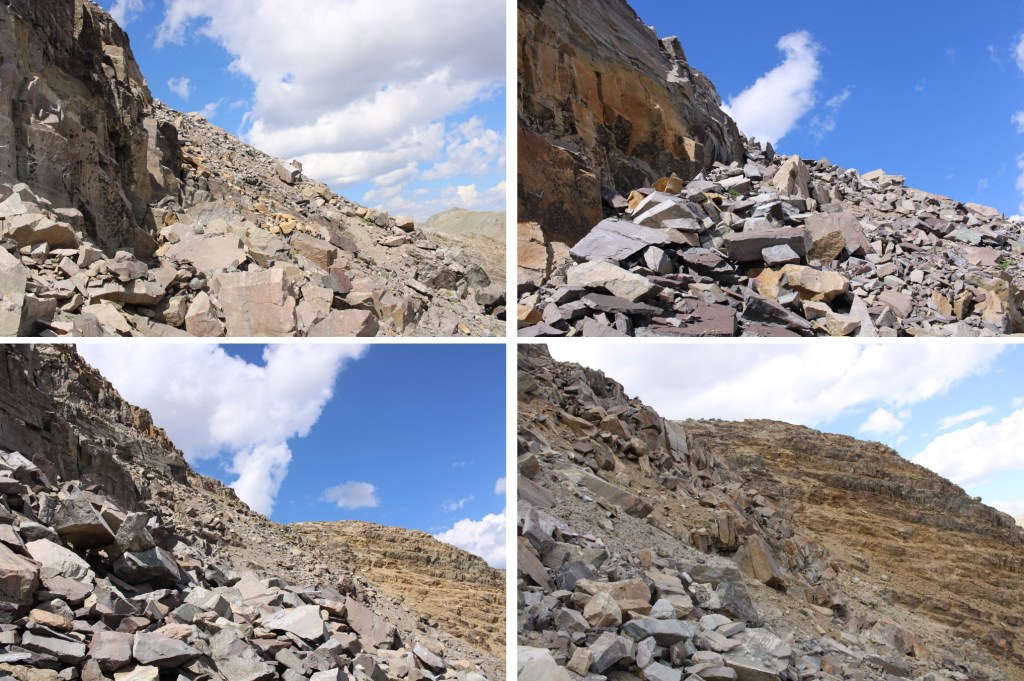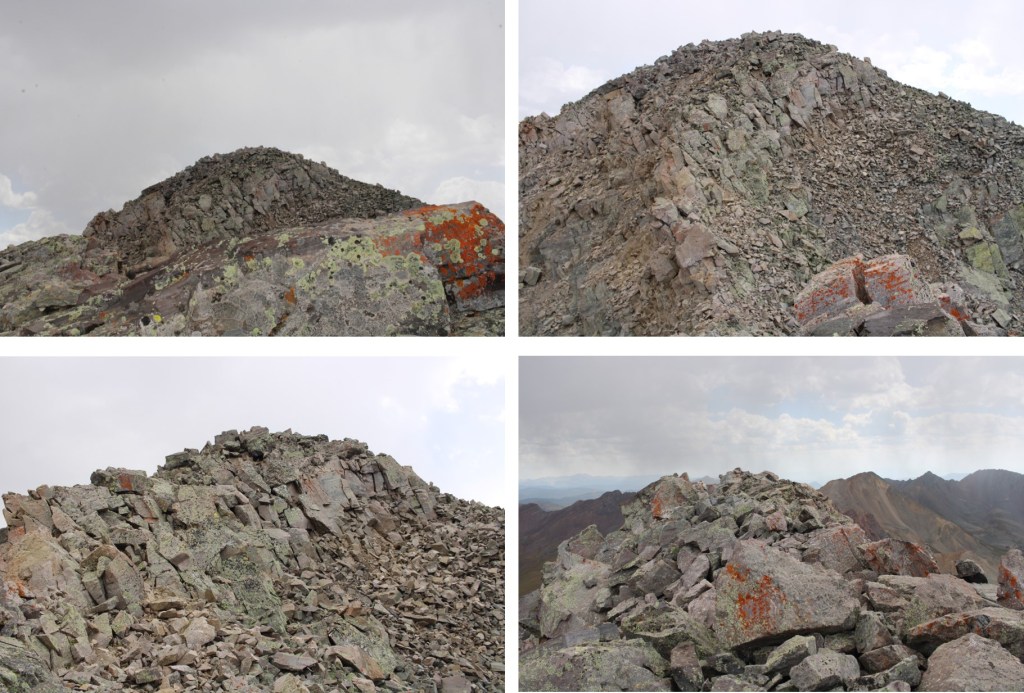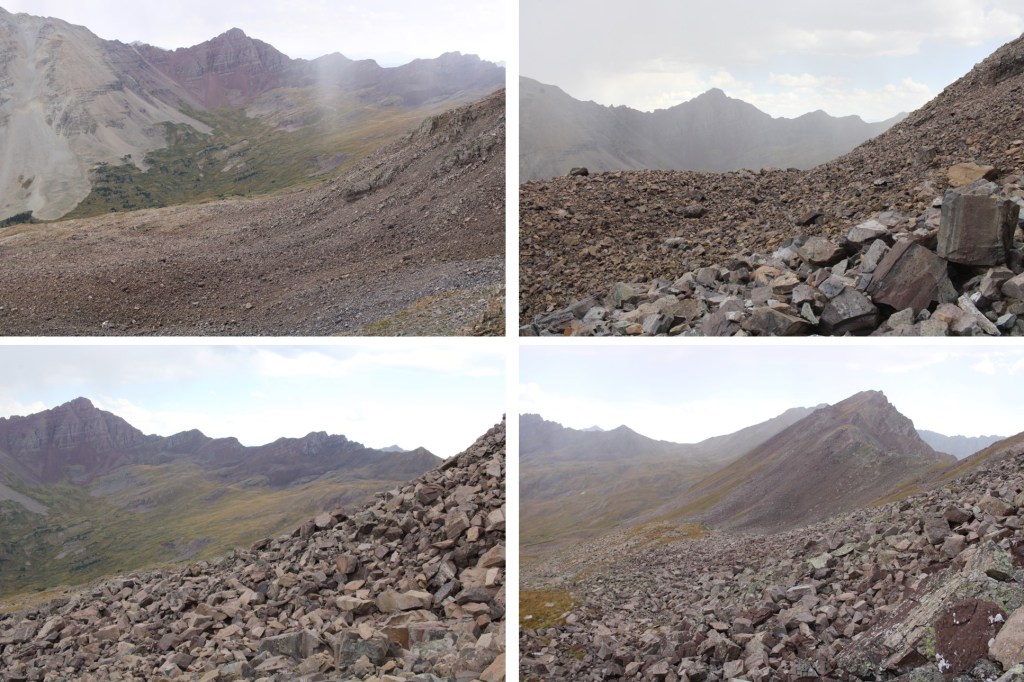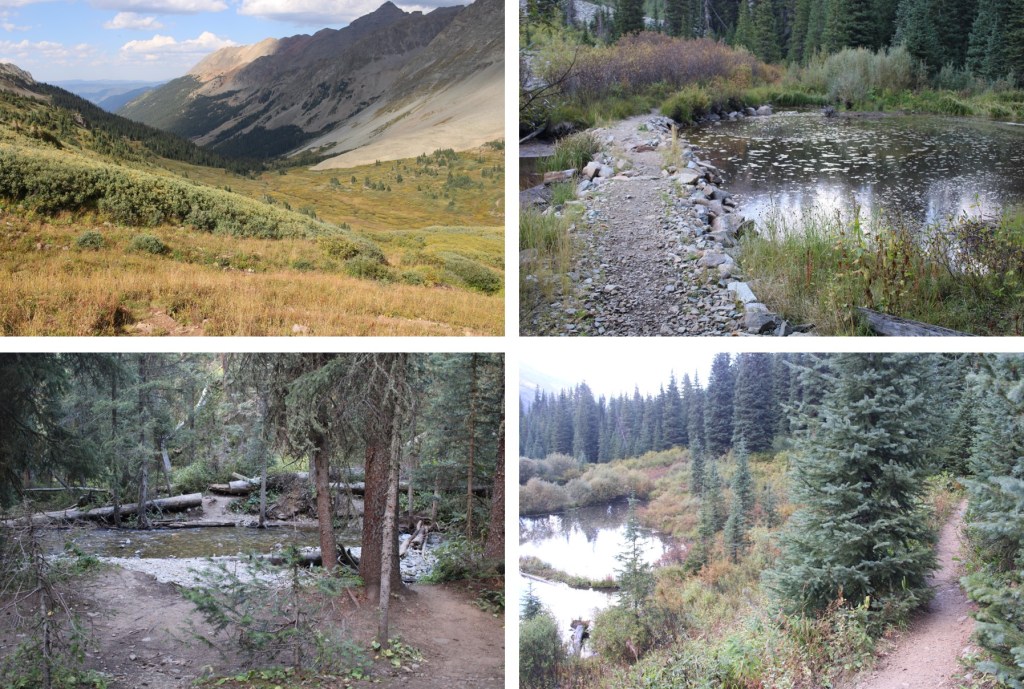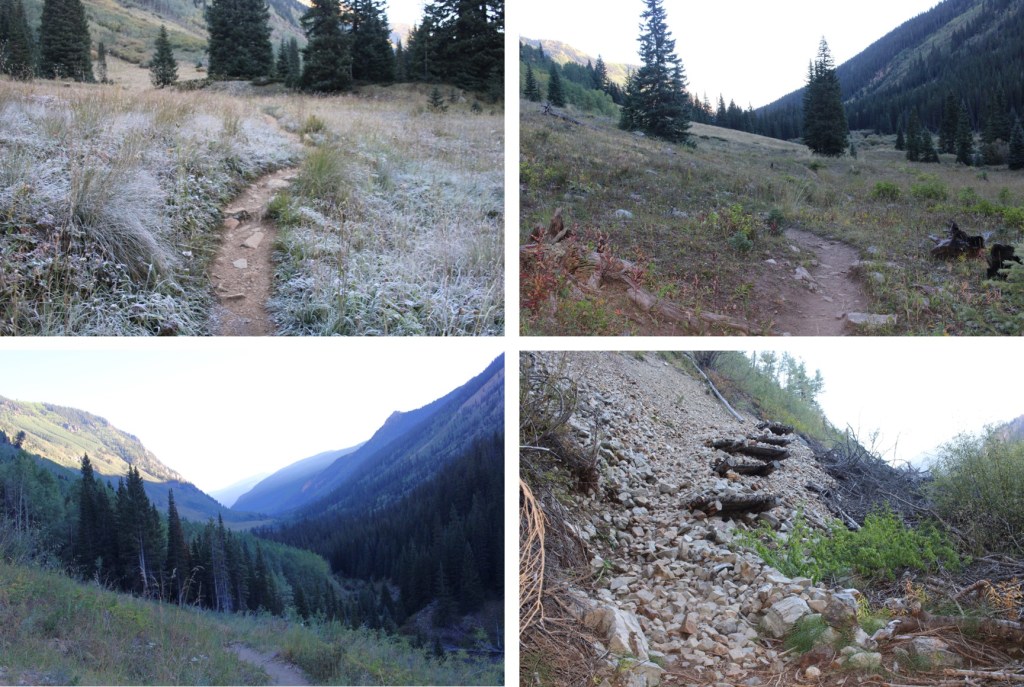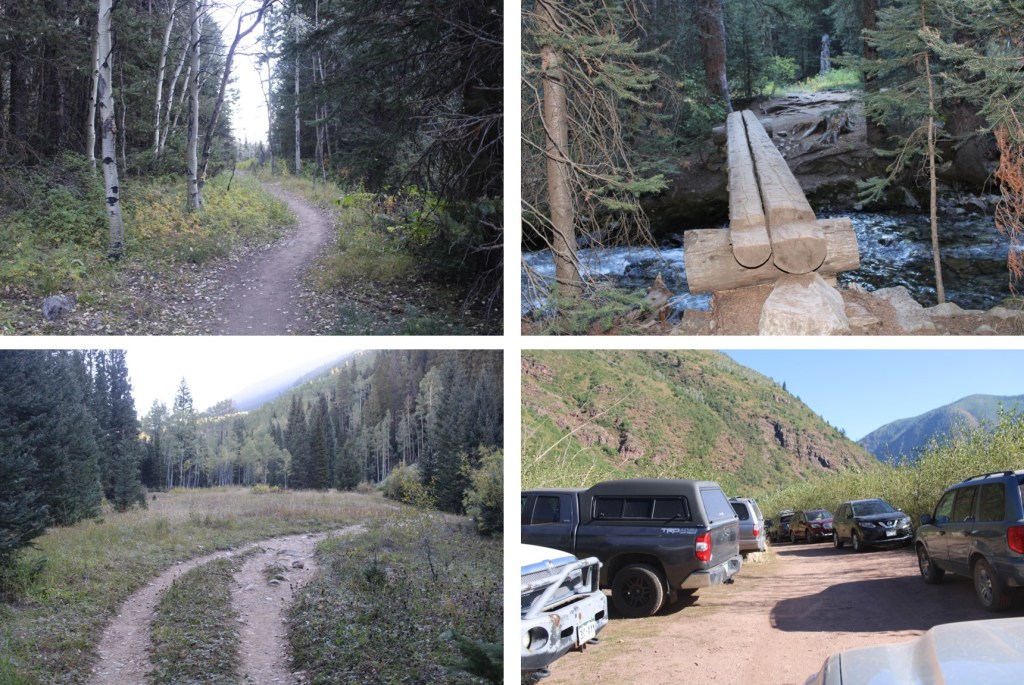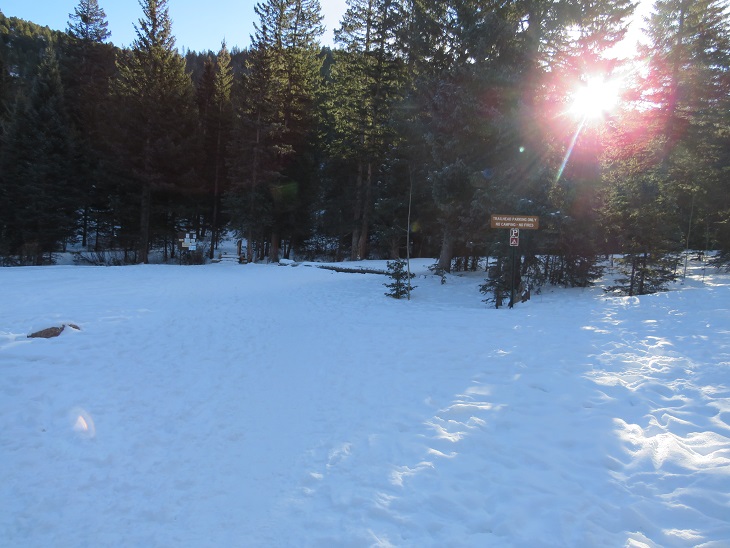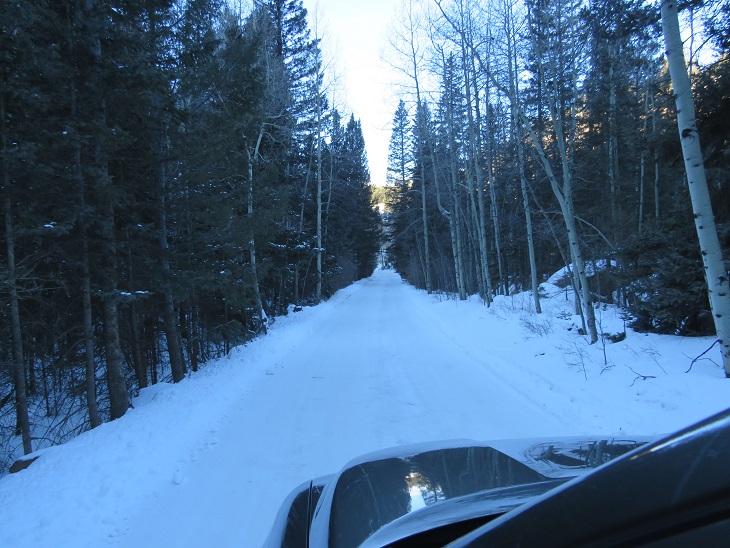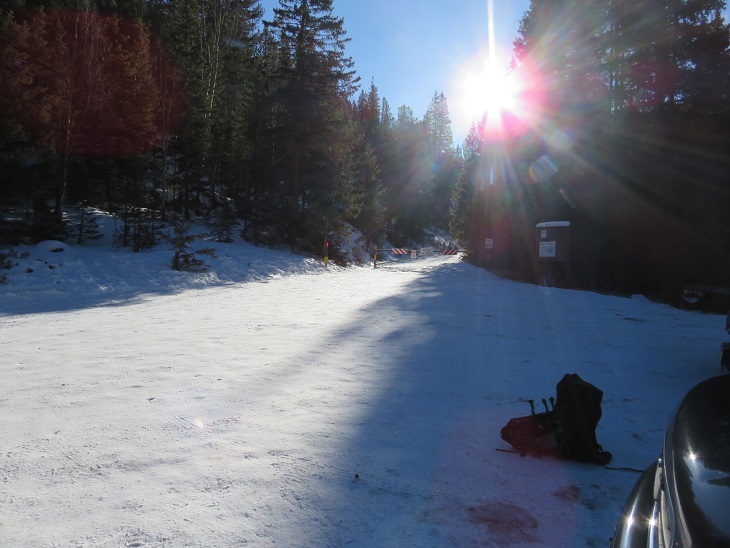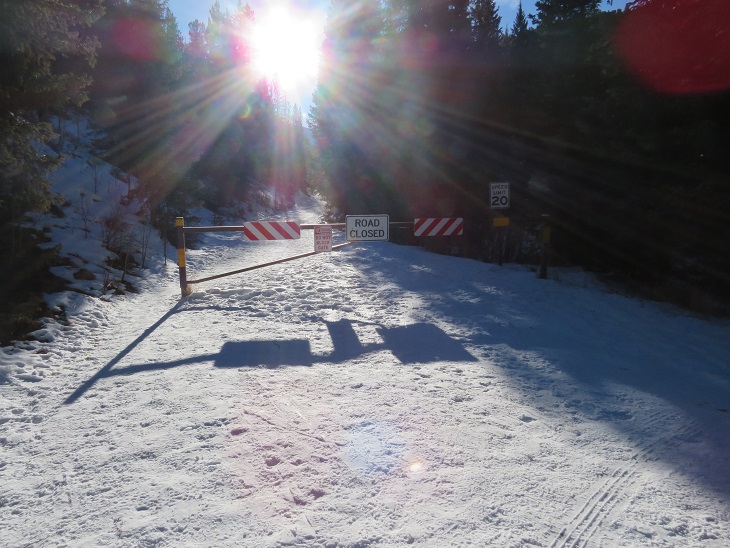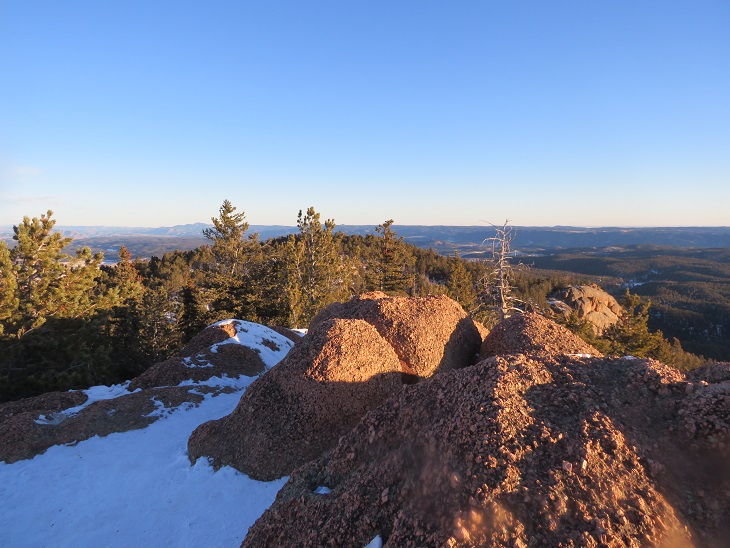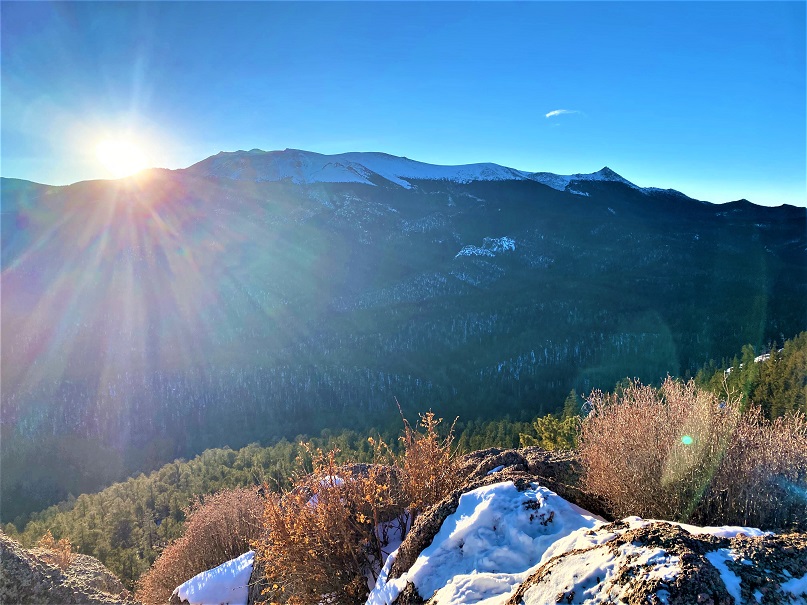
PT 13204

RT Length:  Varies depending on route (see below)

Elevation Gain:  Varies depending on route (see below)

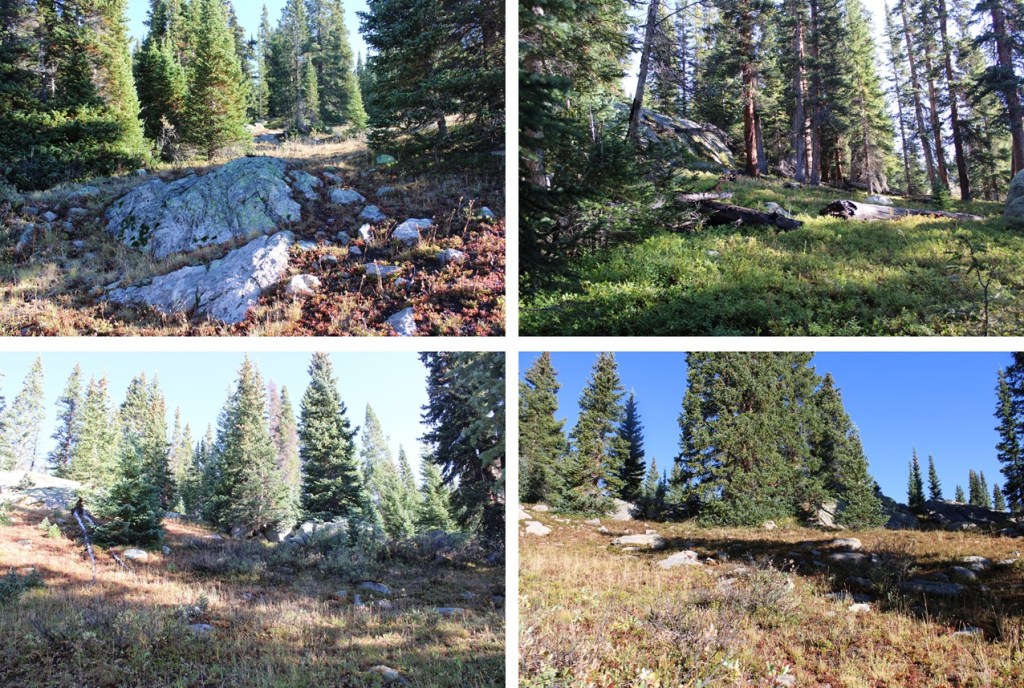
This is a three-trip-report peak for me, so my numbers are all splattered together.  I had an idea this peak would take me several attempts to get, so I came prepared and brought my backpacking gear.  I’m going to give you the three reports as they happened.  I found a way to make this a class 4, 3, or 2 peak.  You can choose your route.  Either way, the approach to the place I camped in the upper basin is the same. 

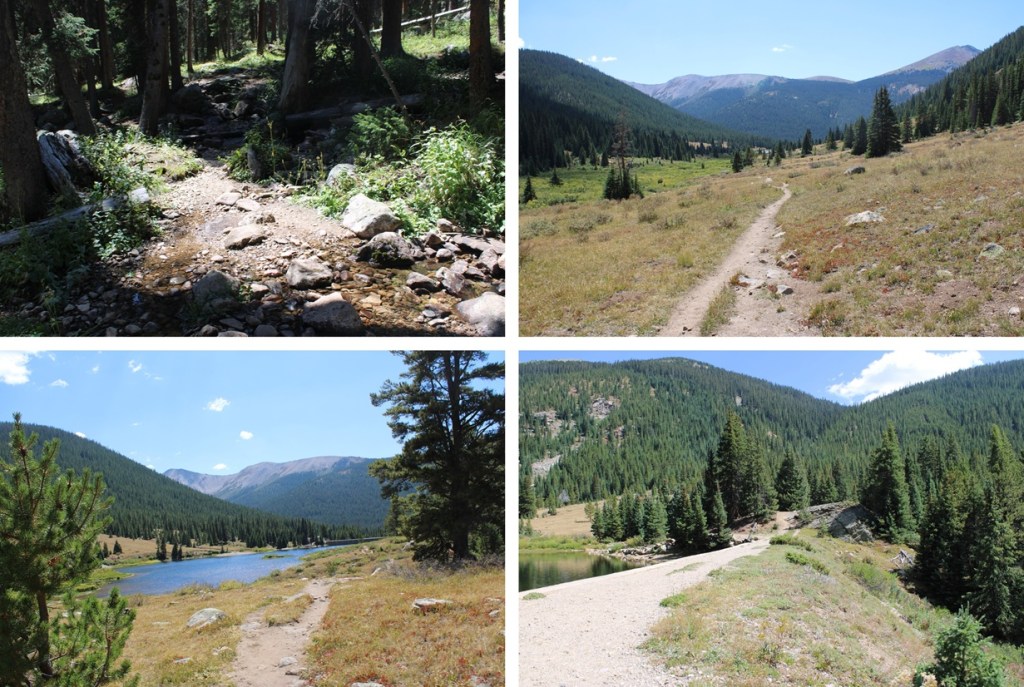
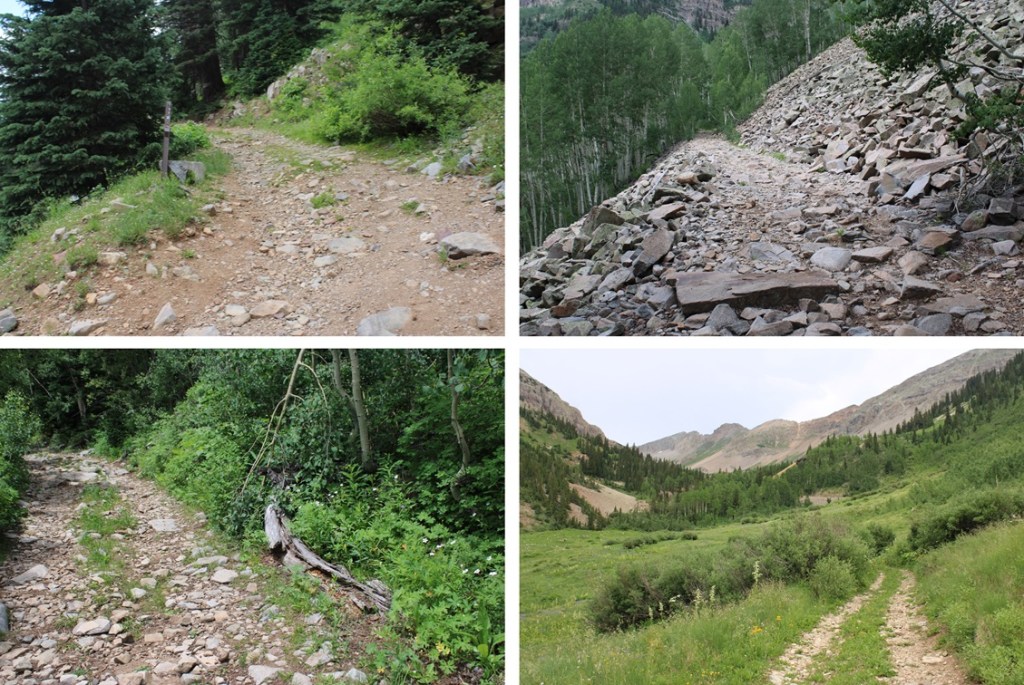
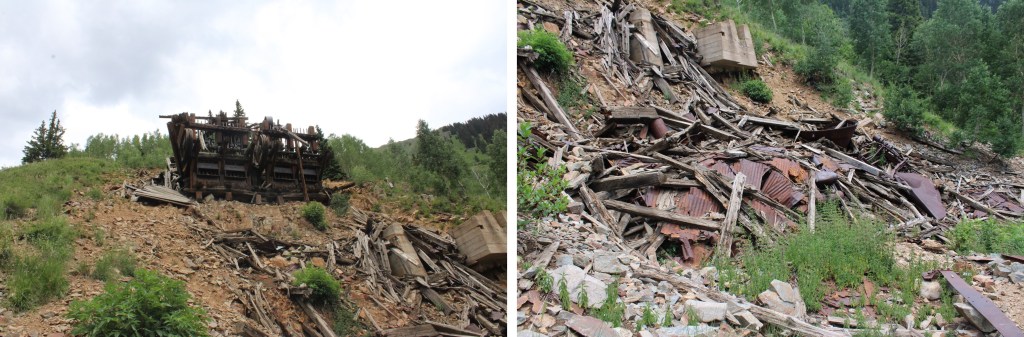
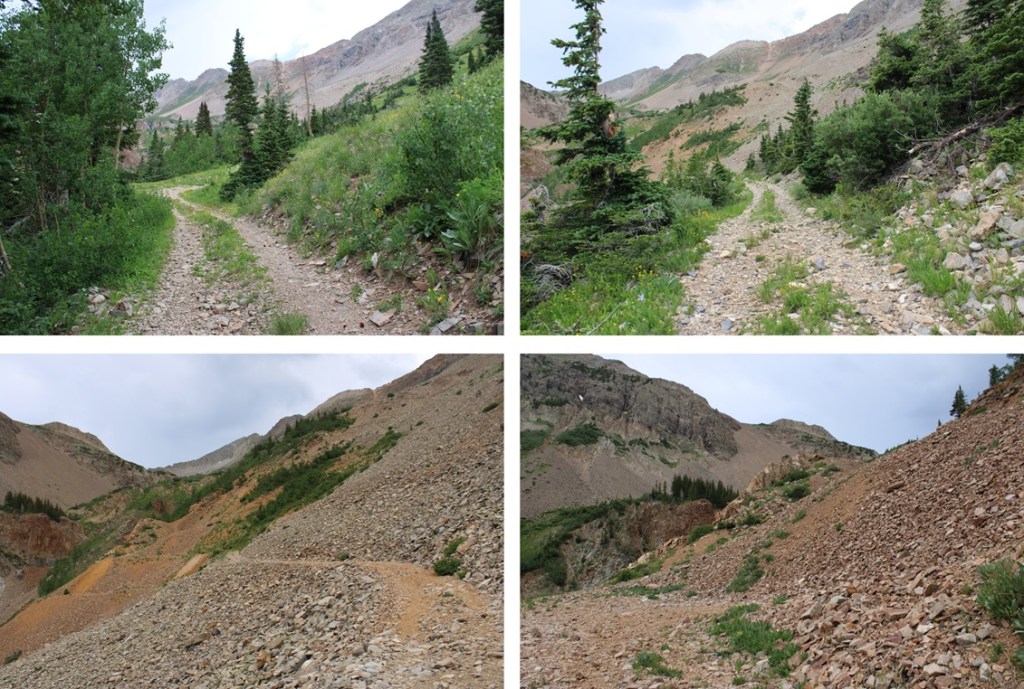
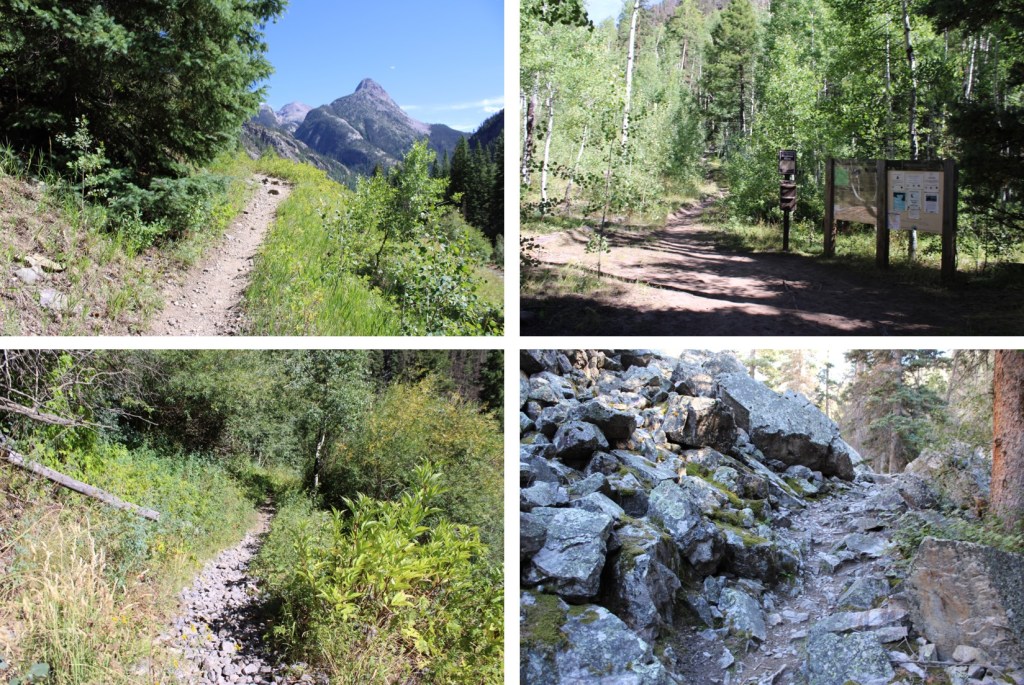
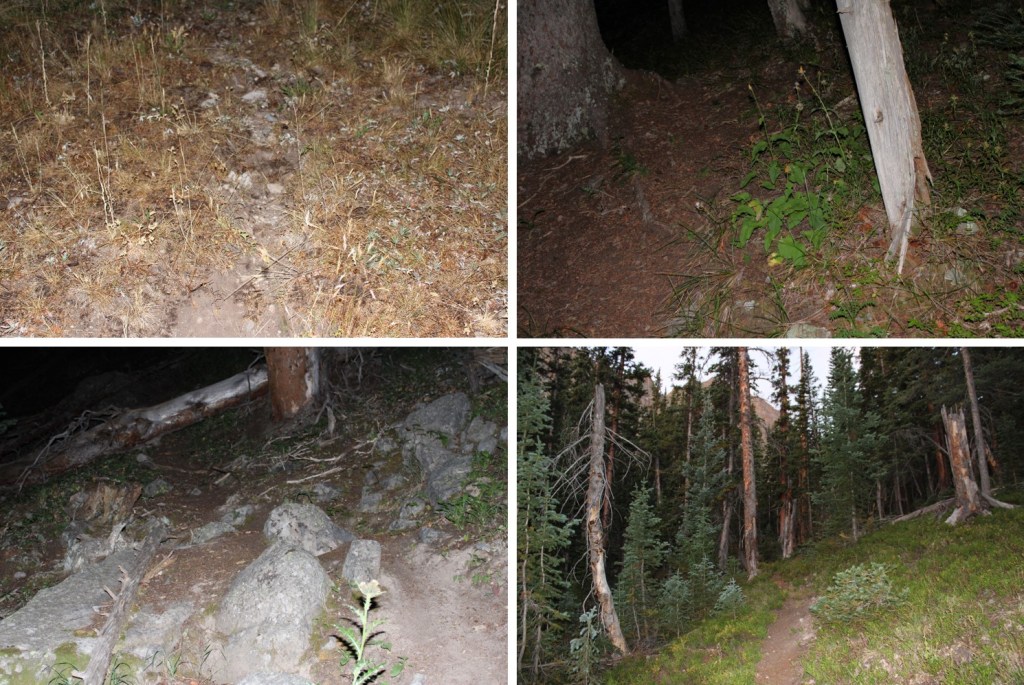
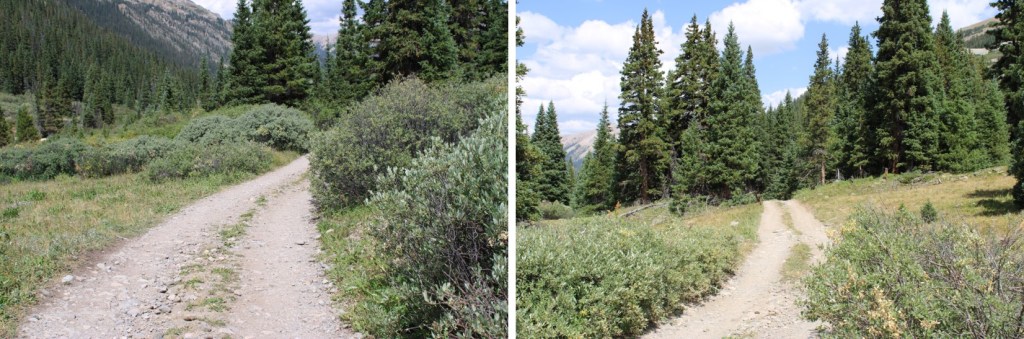
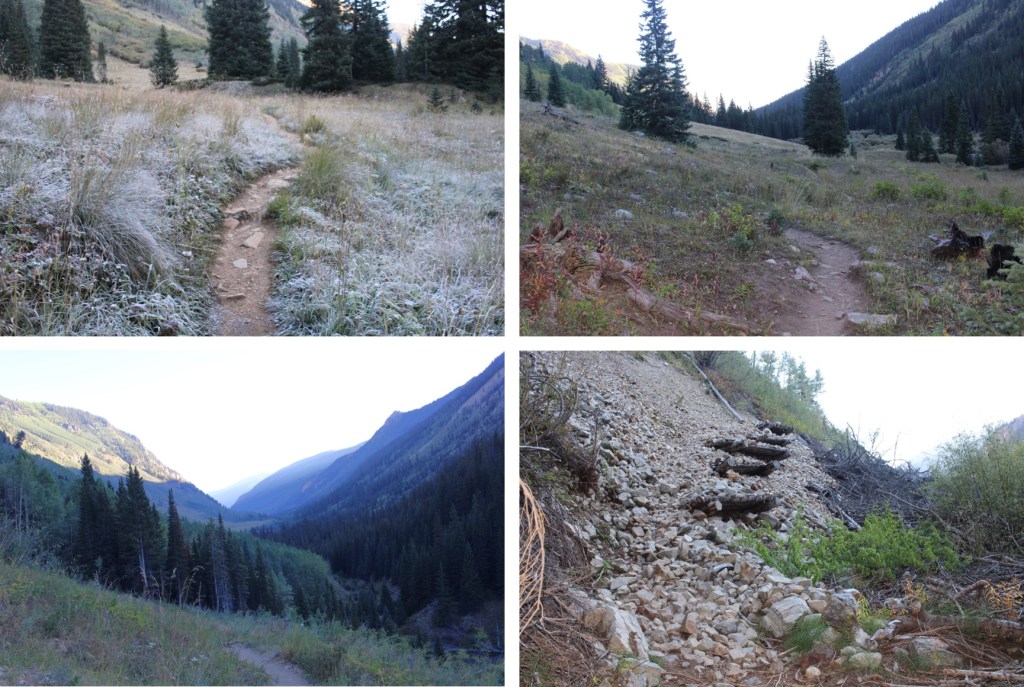
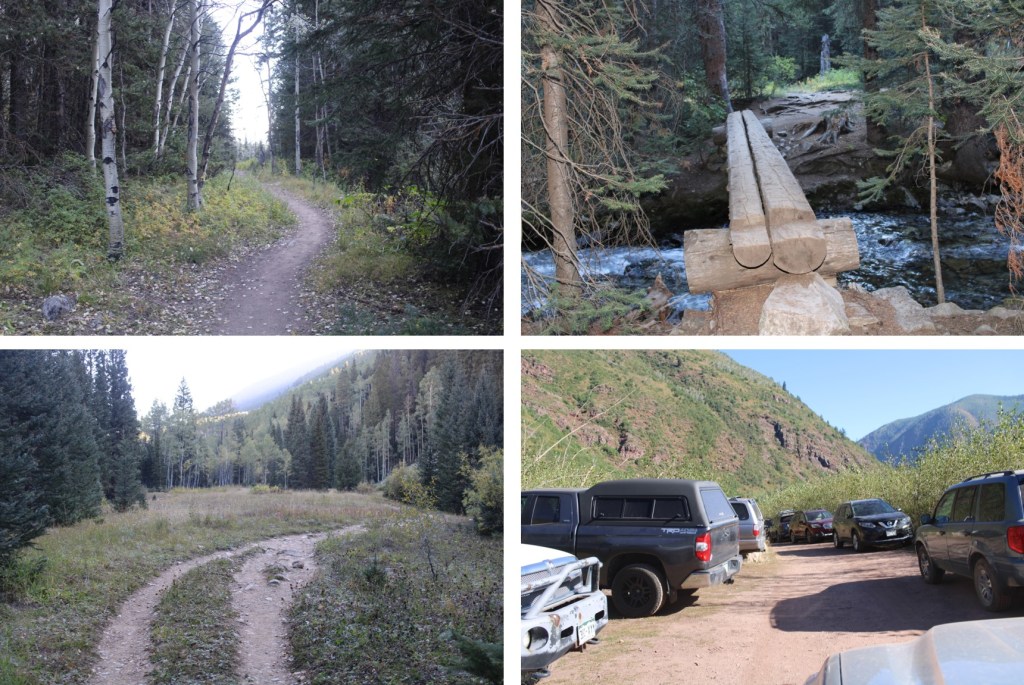
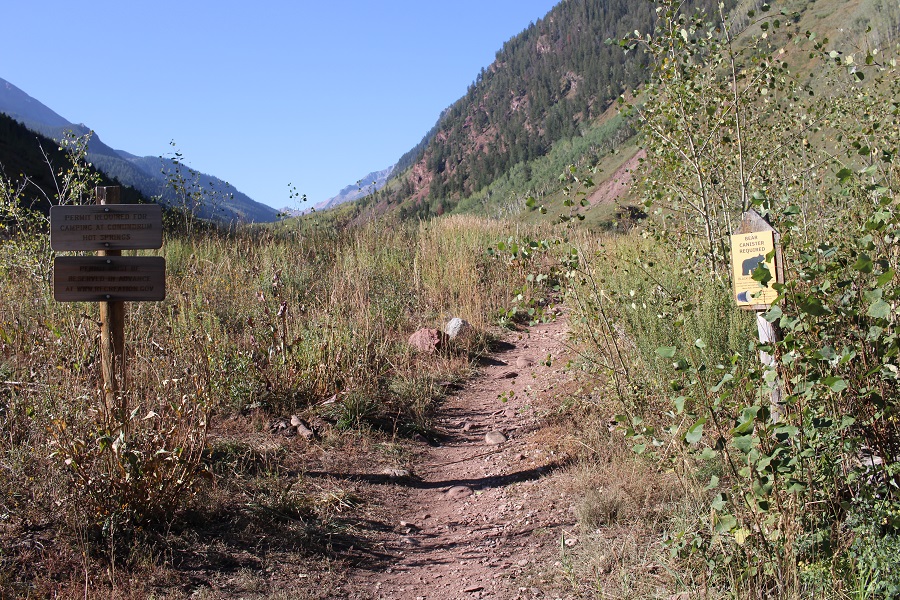
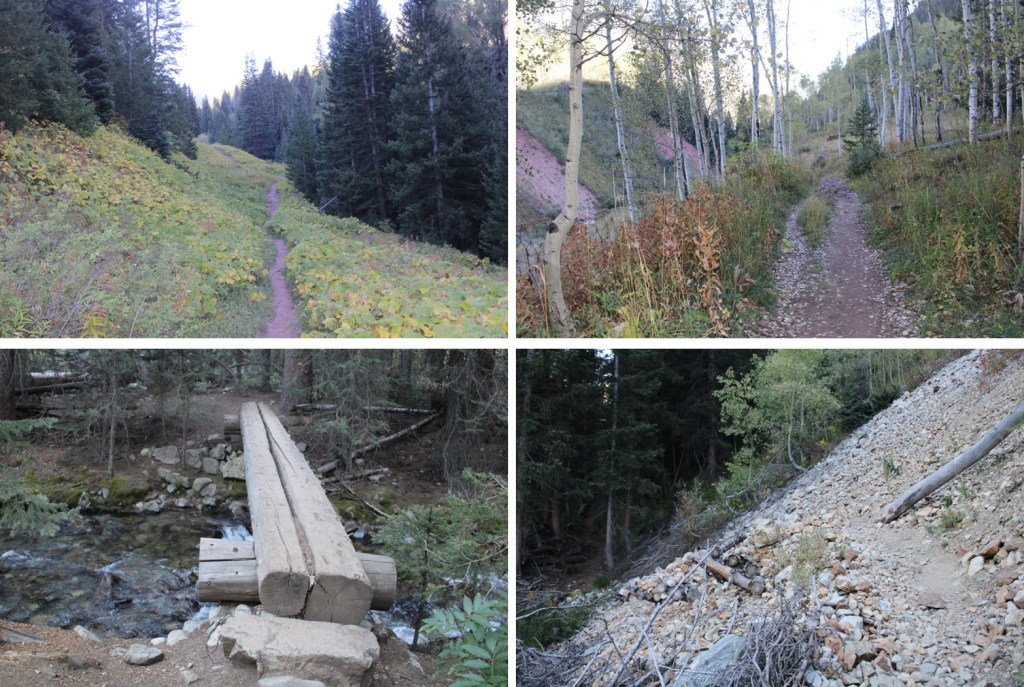
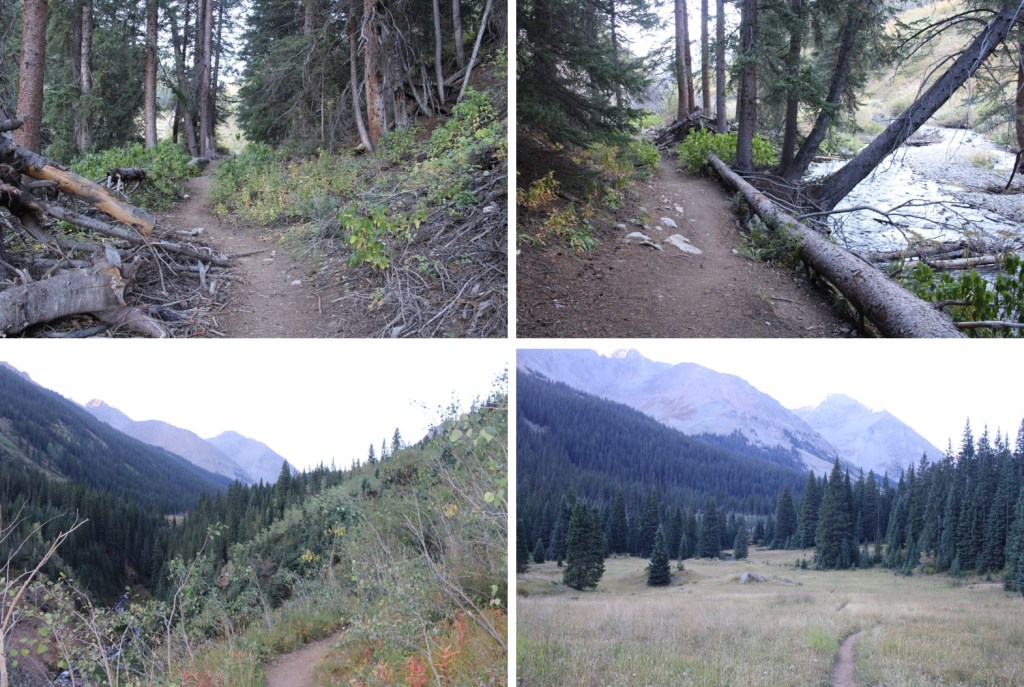
I started at the Lower Lost Man Campground and followed the trail (1996) north past Lost Man Reservoir and up towards South Fork Pass.  This is a class 1 trail I followed for about 4.25 miles.

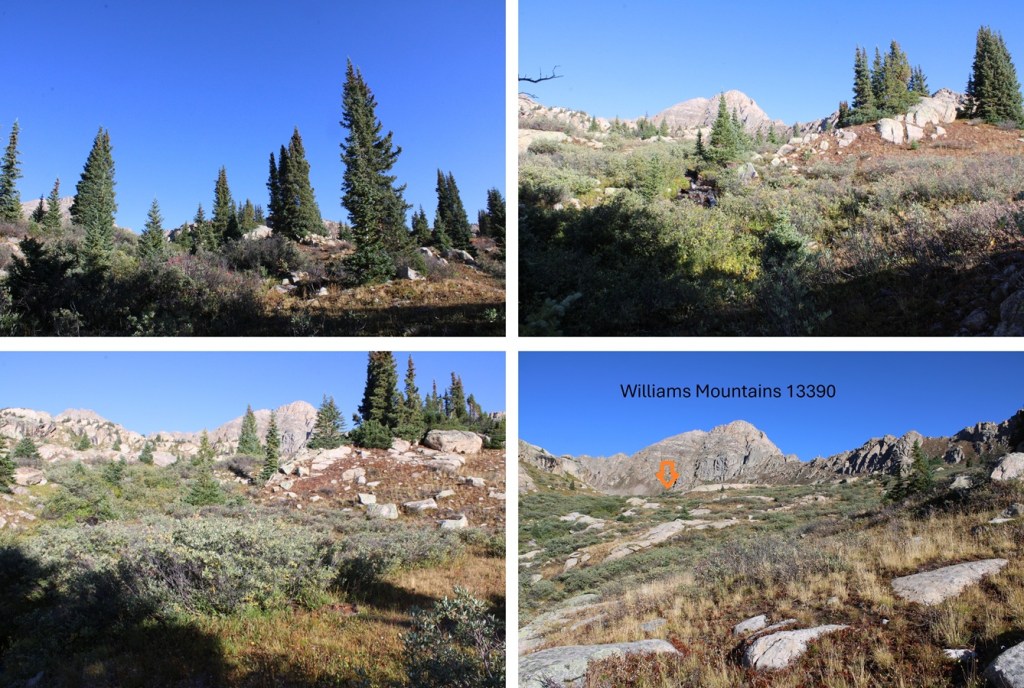
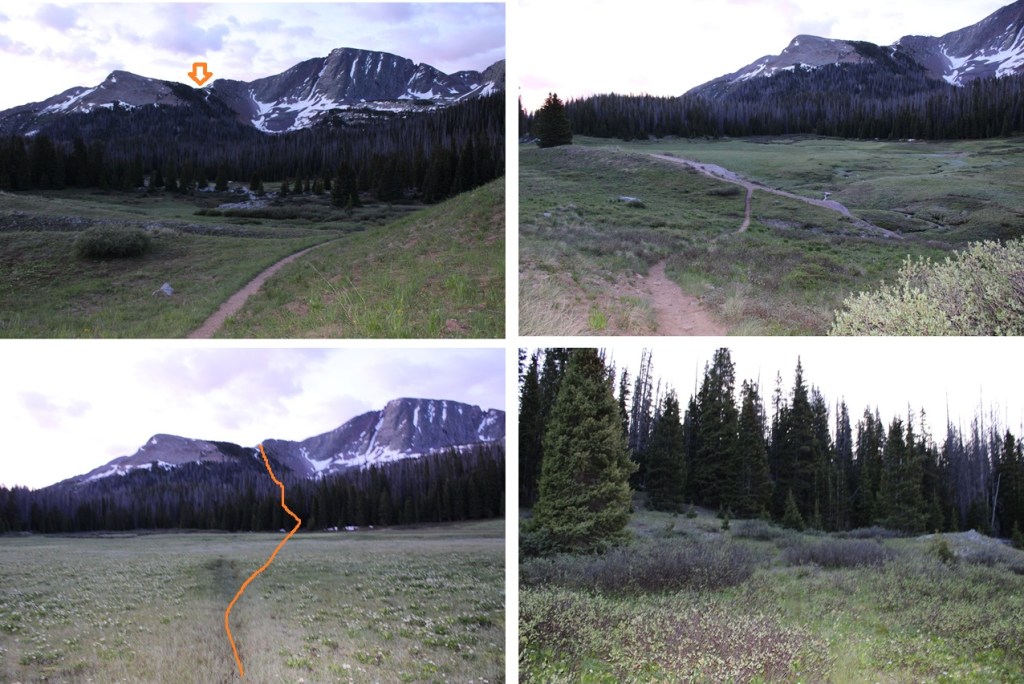
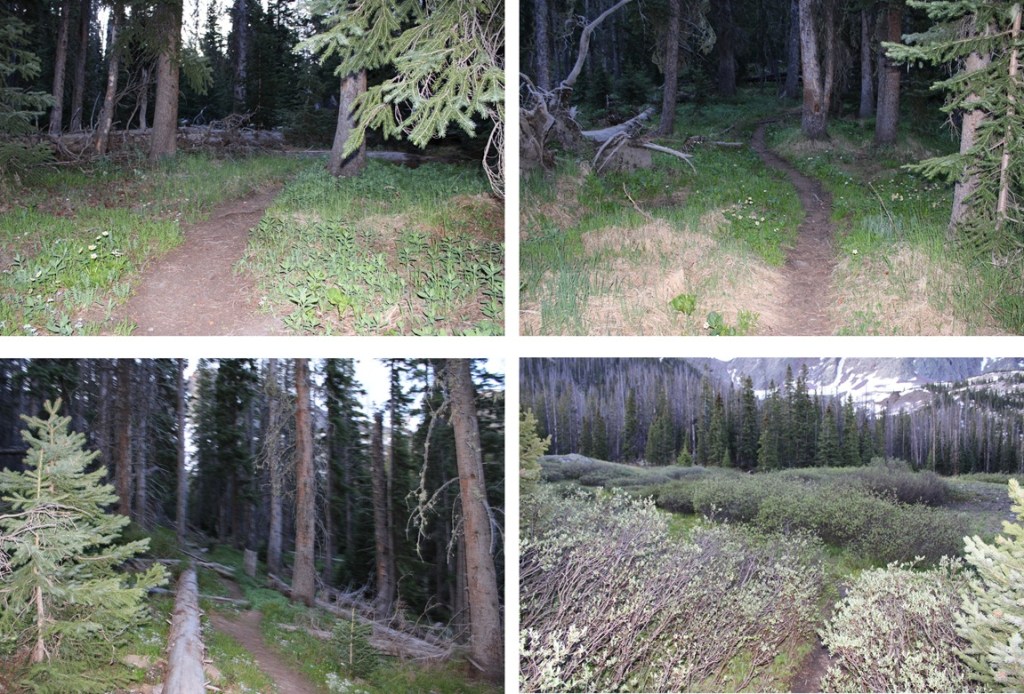
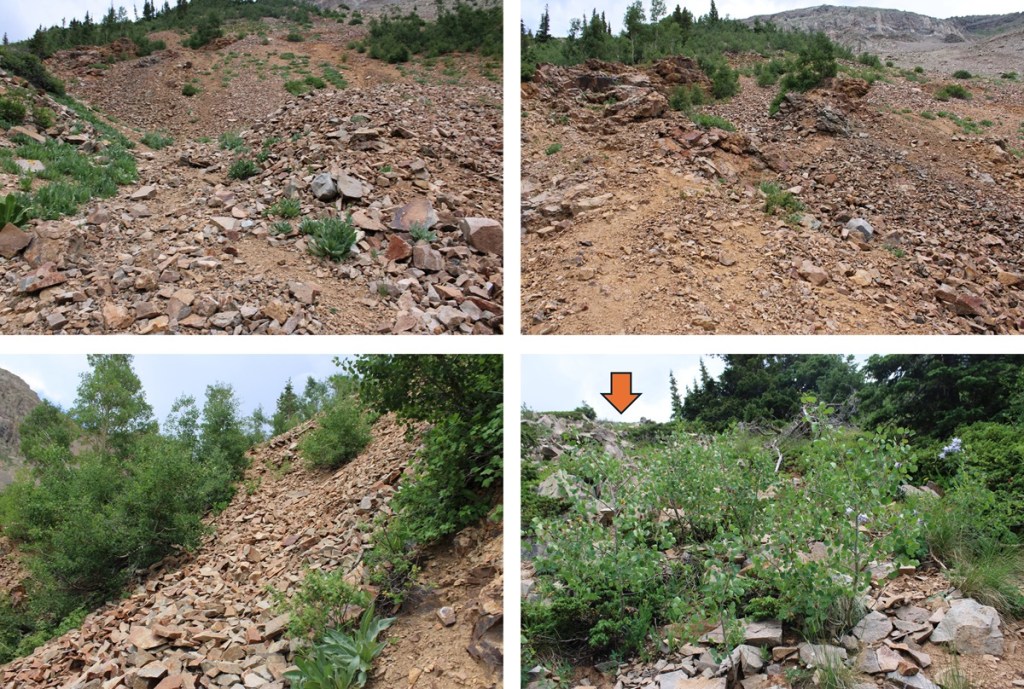
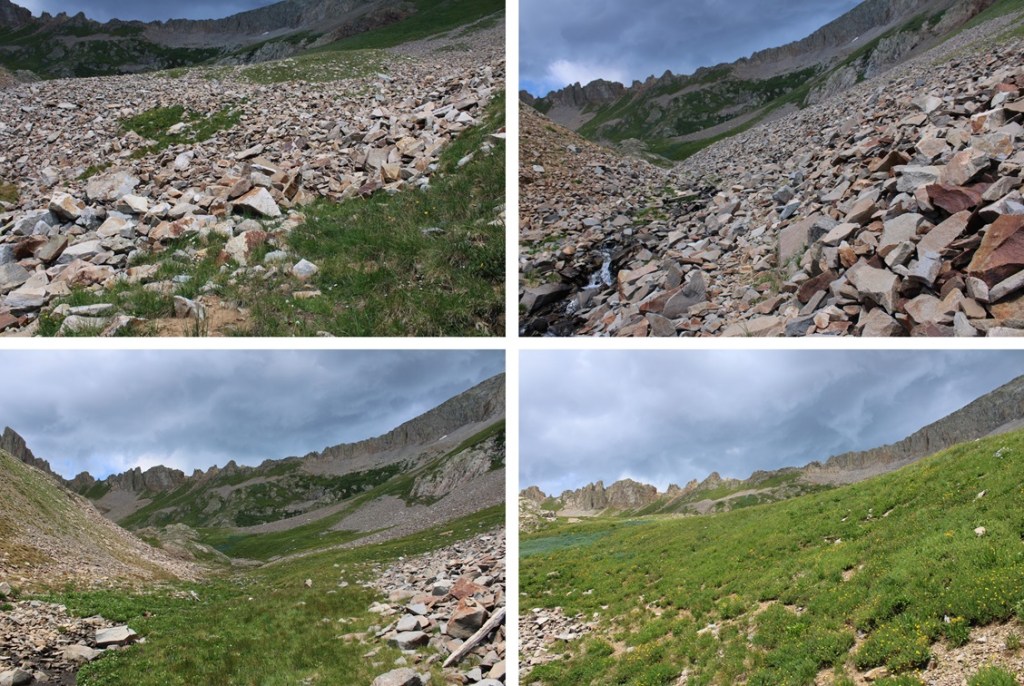
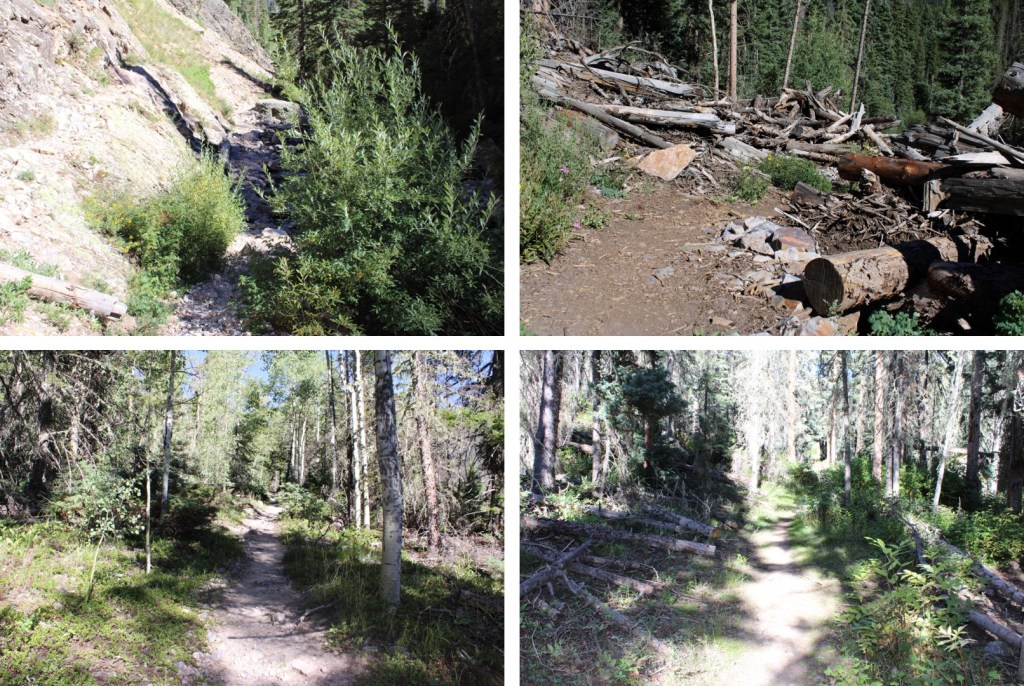
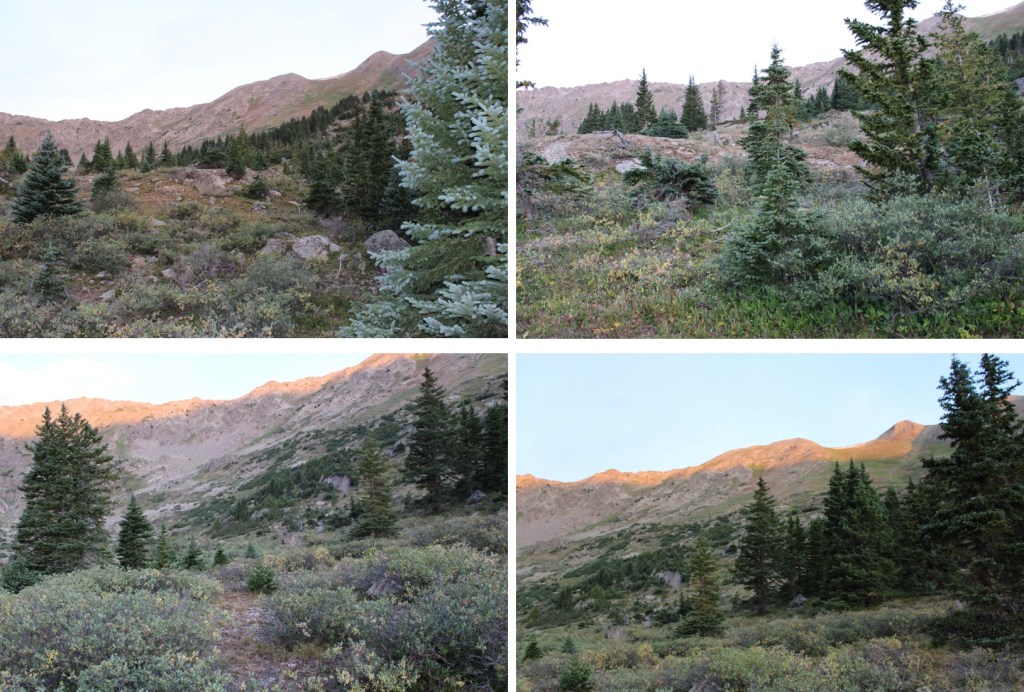
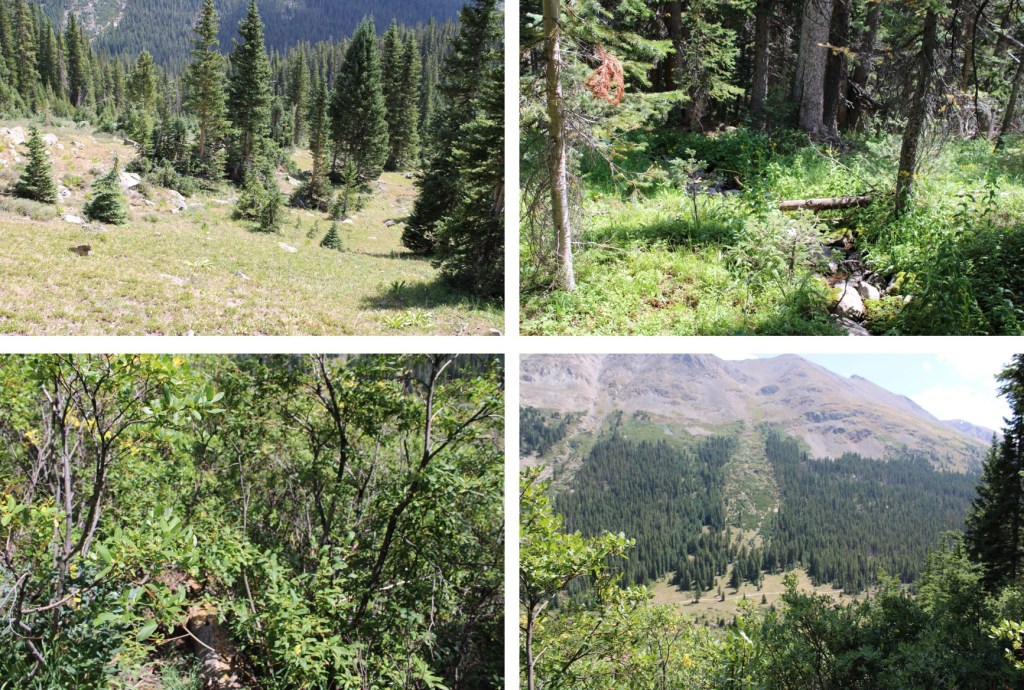
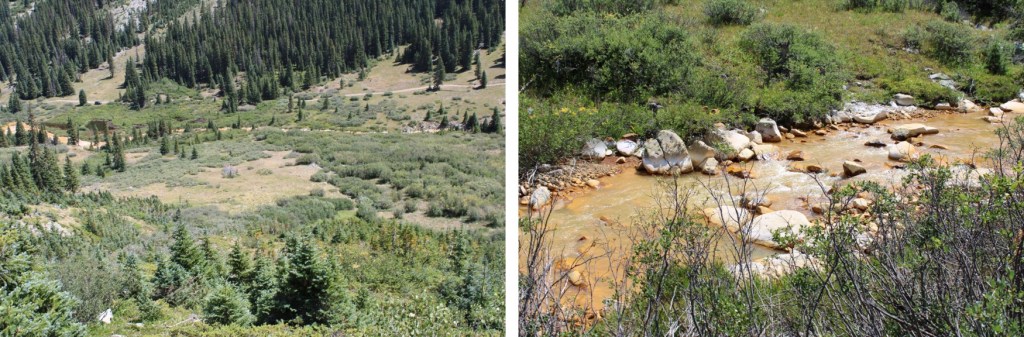
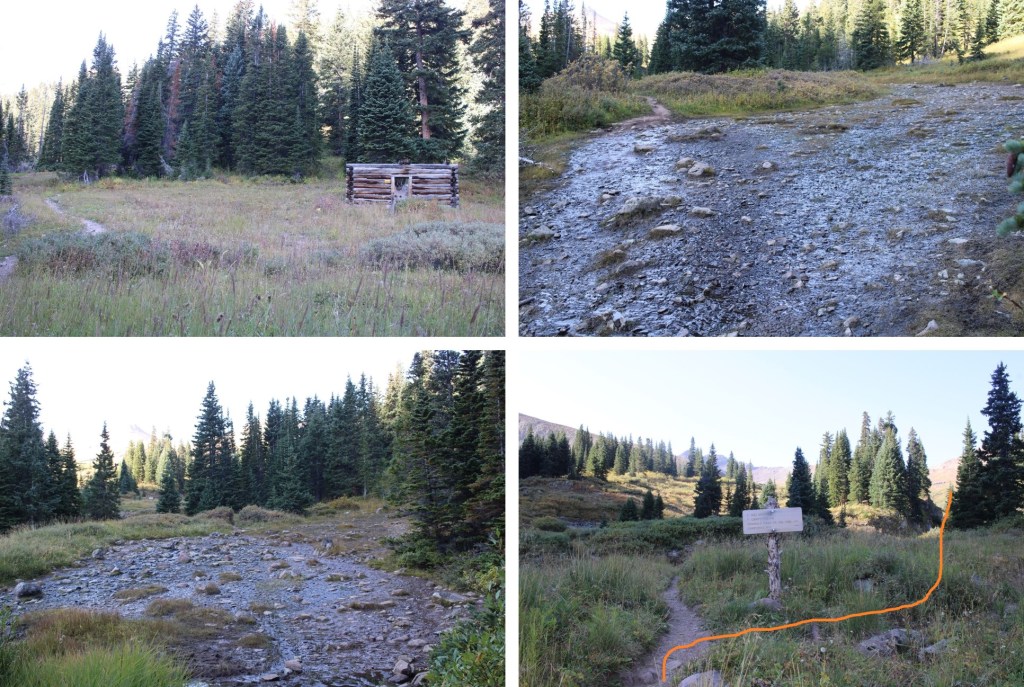
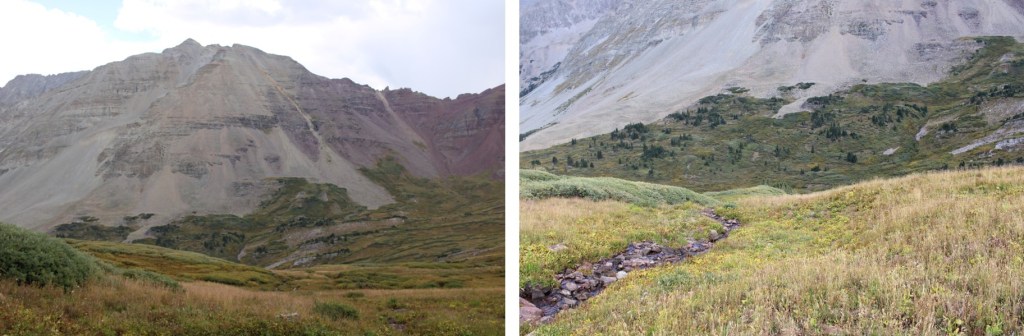
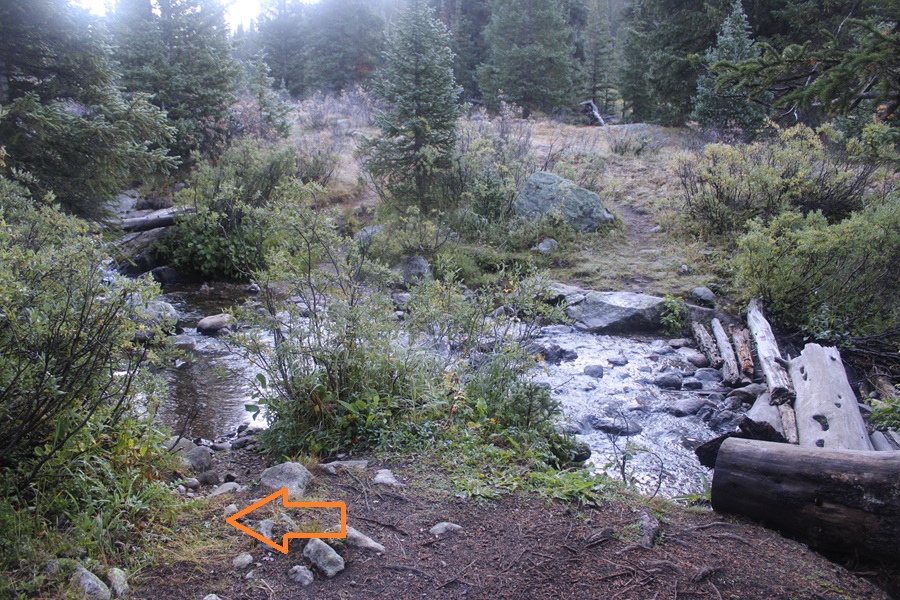
After about 4.25 miles, at 11430’, and just before the third creek crossing I turned left and followed the creek for about 20 yards before crossing the creek and then following the creek up to an upper basin, heading northeast.  This creek isn’t named, and neither is the basin, but following it will put you just east of 13024.  This is class 2.  It’s less than a mile to make it into the basin once you leave the trail.
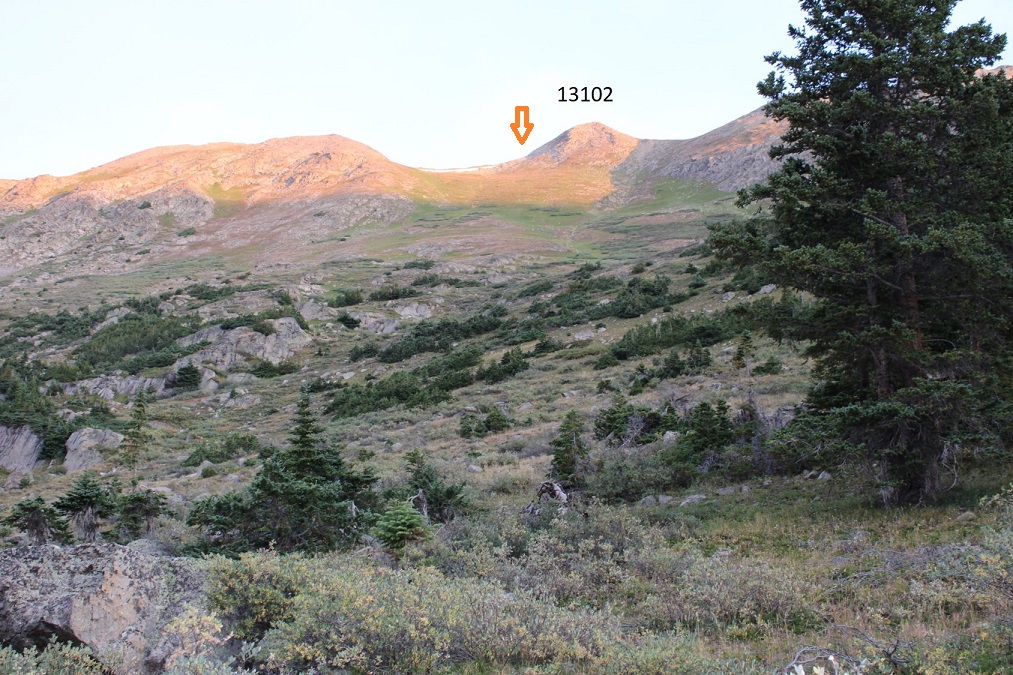
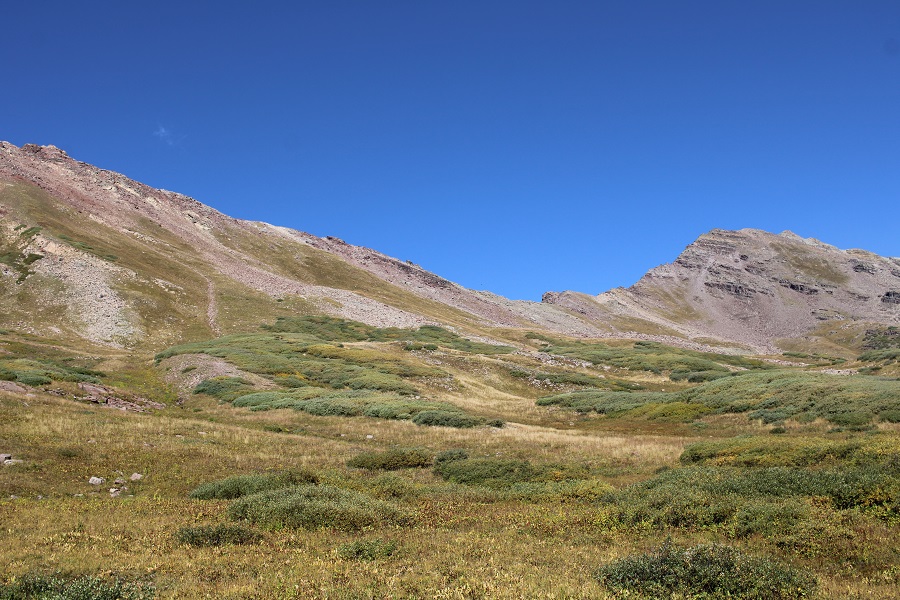
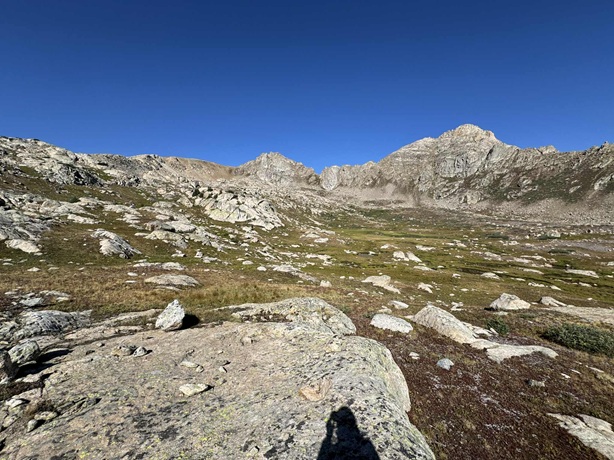
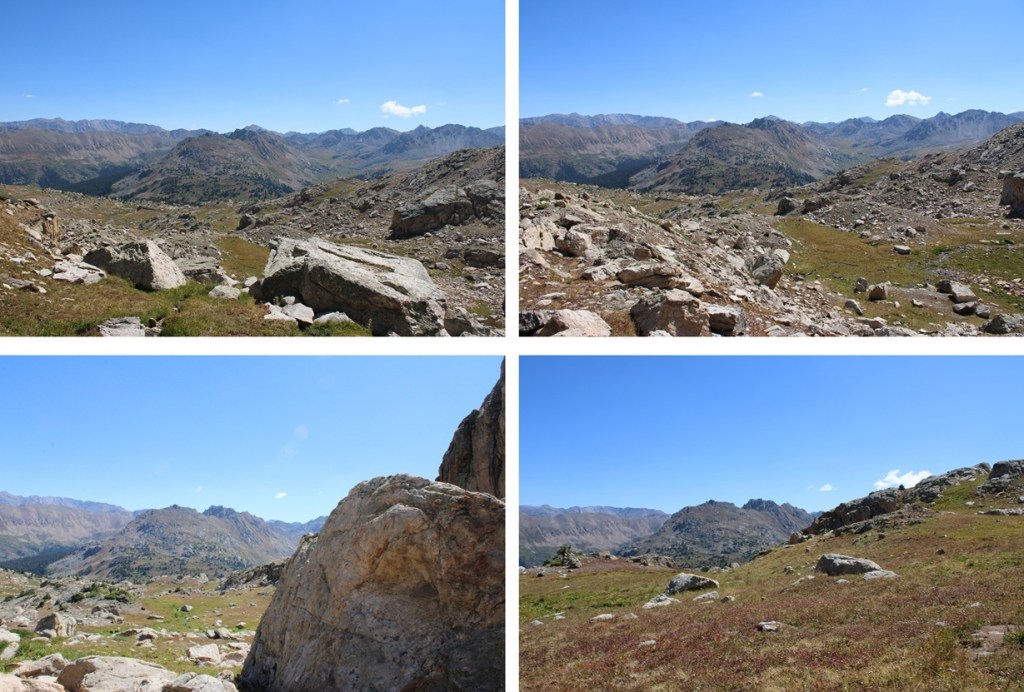
This put me into an upper basin.  From this point there are several options to climb 13024. 
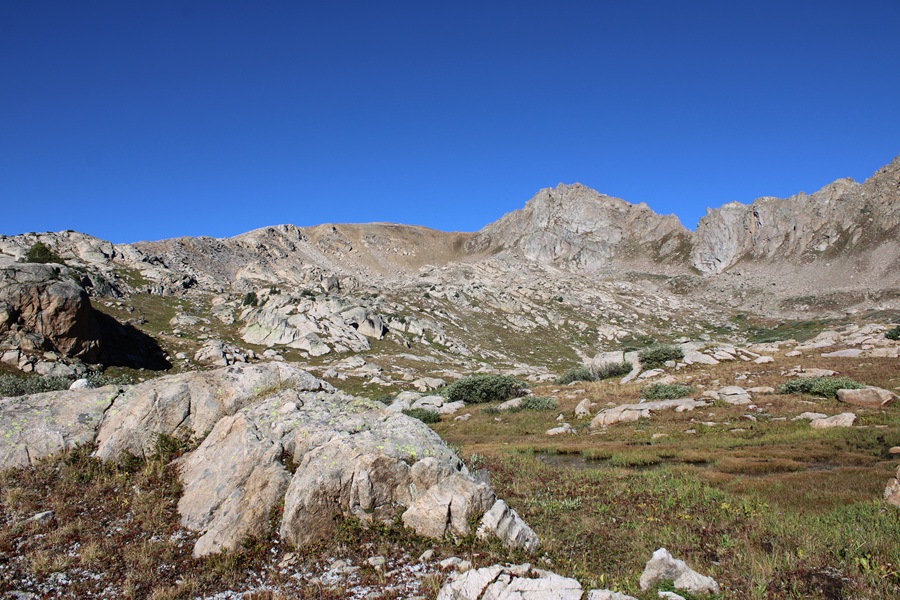
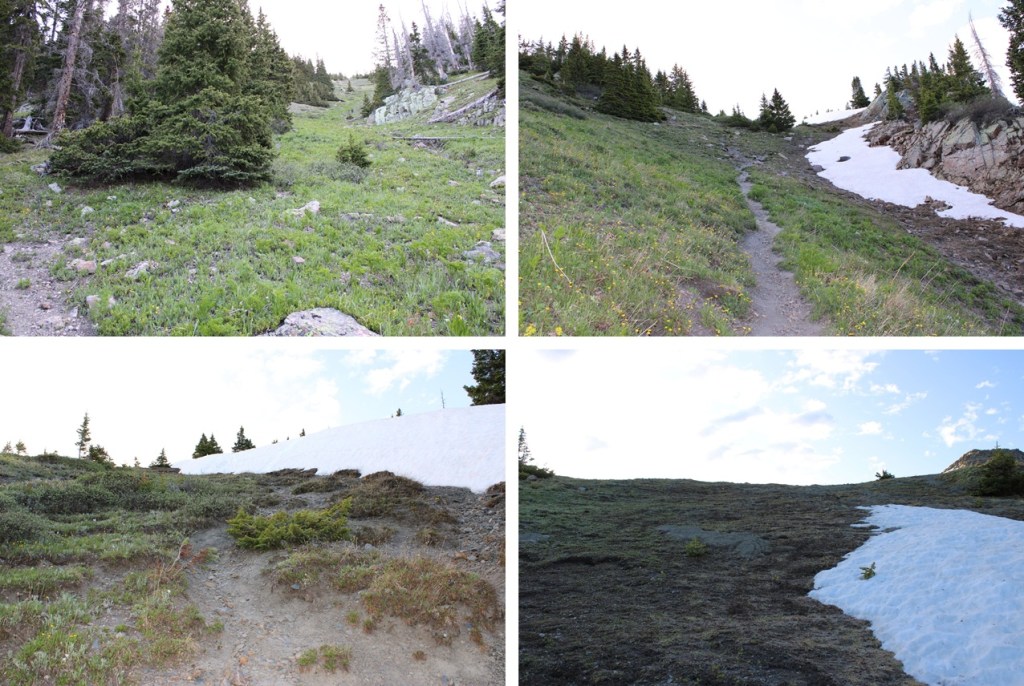
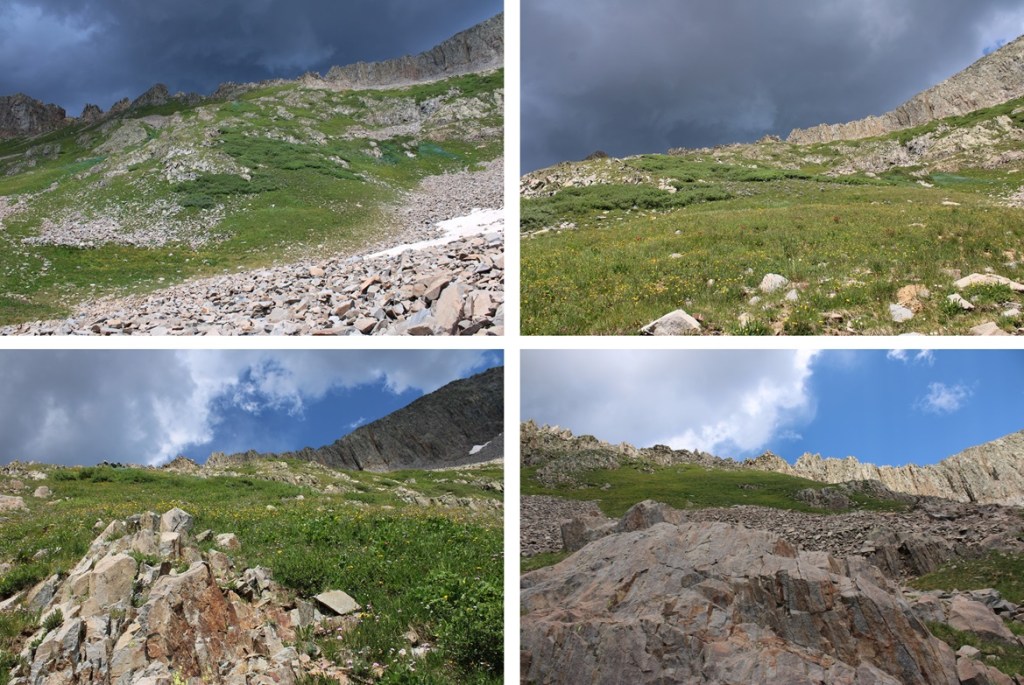
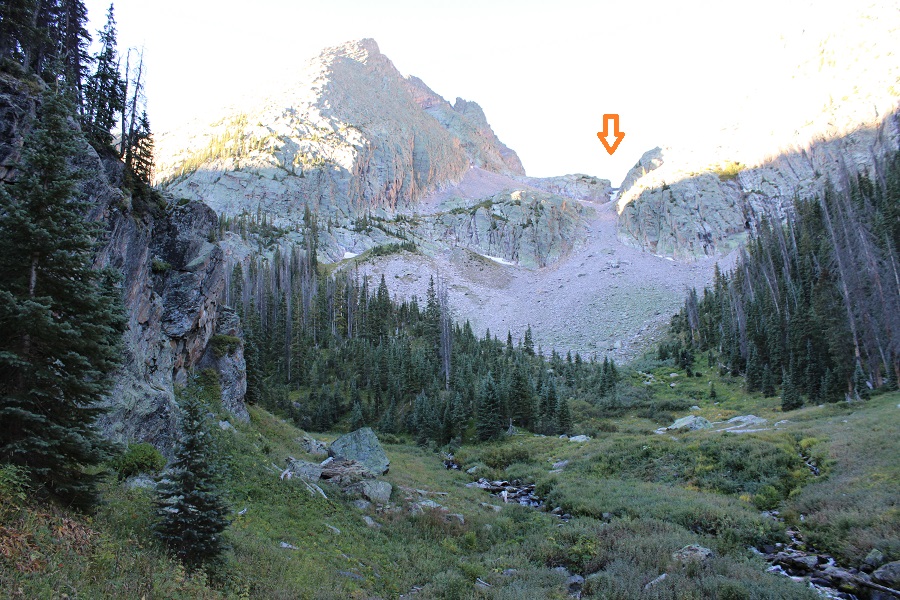
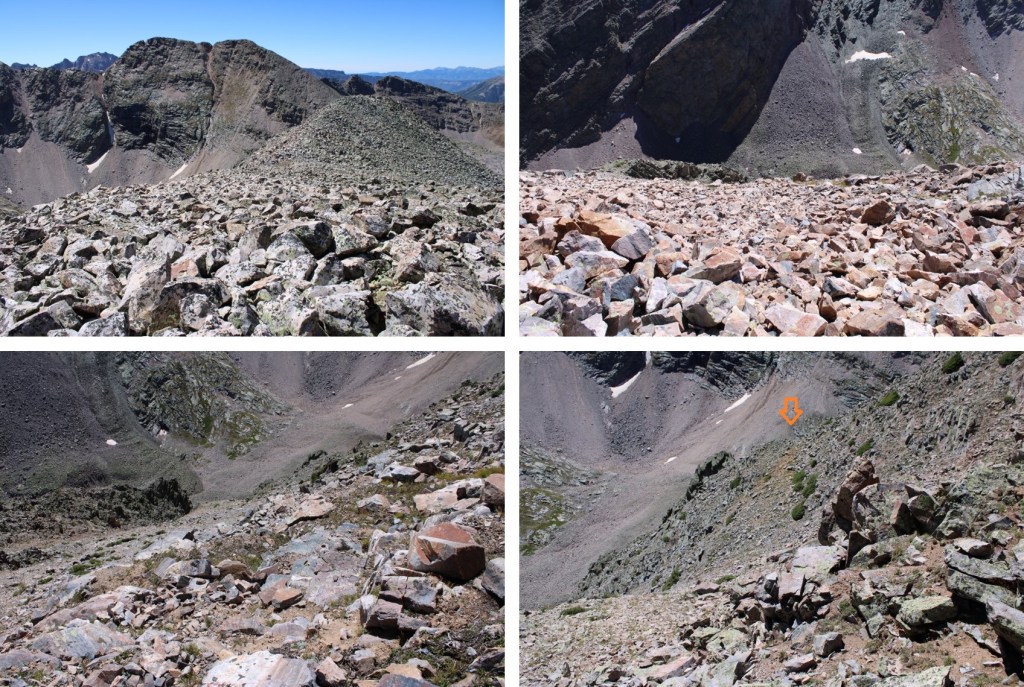
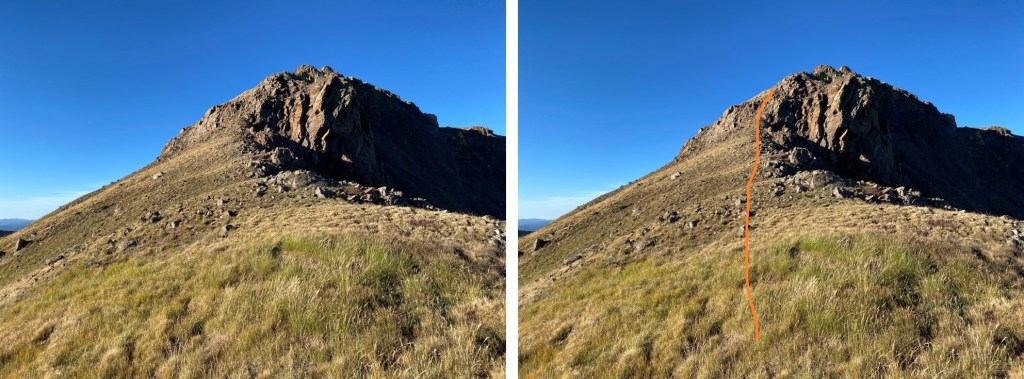
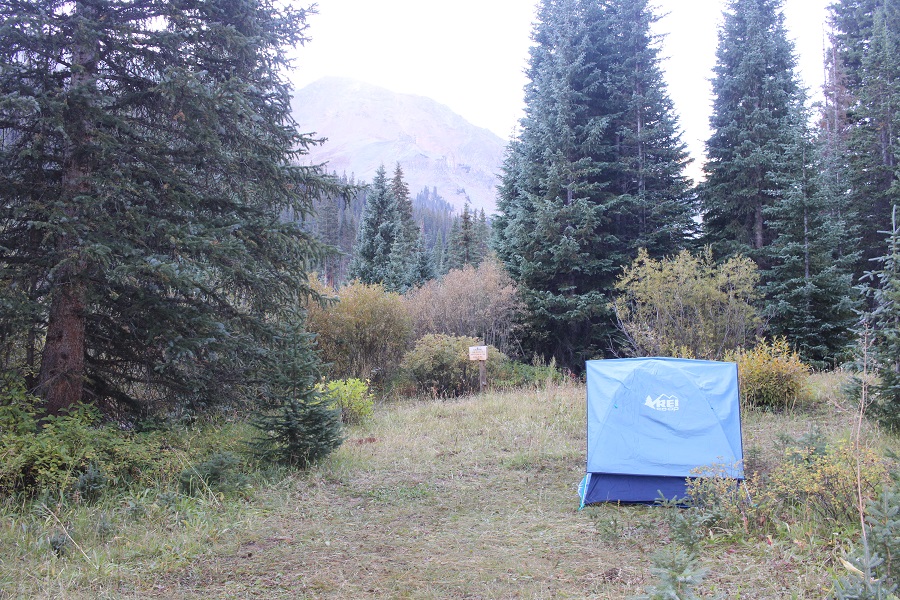
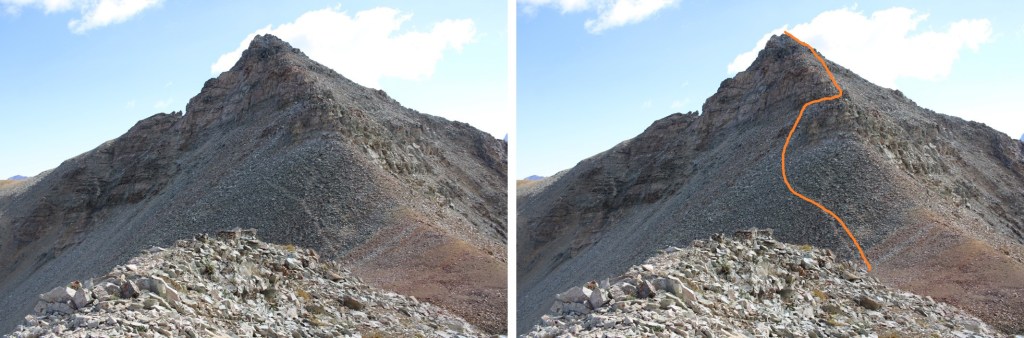
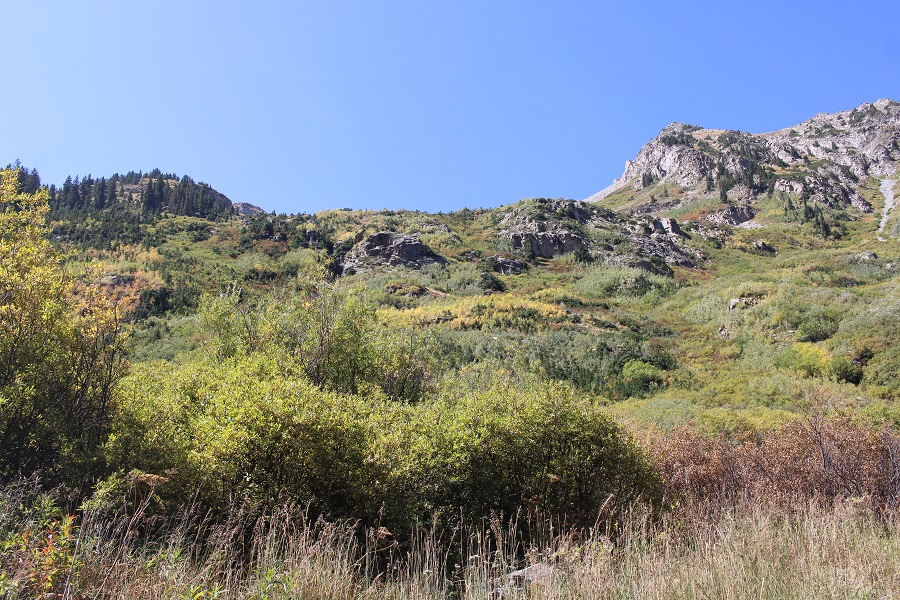
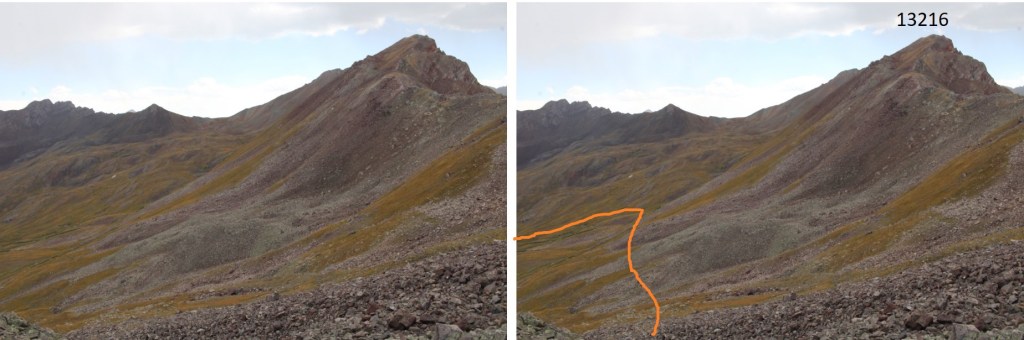
I found a camping spot and set up for the night. This area is boggy/marshy, and it’s difficult to find a spot 150’ from water, but I found one underneath a large rock outcropping.  As you can see by the picture below, I found three different routes up/down PT 13024.  The orange route is class 4, the blue route class 2, the pink route class 3 (I didn’t really know this beforehand).  My first attempt the next morning was going to be to the left hand side, as I didn’t yet know if the ridge would go, and had heard it was the easier side (it wasn’t).  I’d been in the area before, and the ridge looked like it went, so in the morning I was going to take the ridge to the summit from the left. 

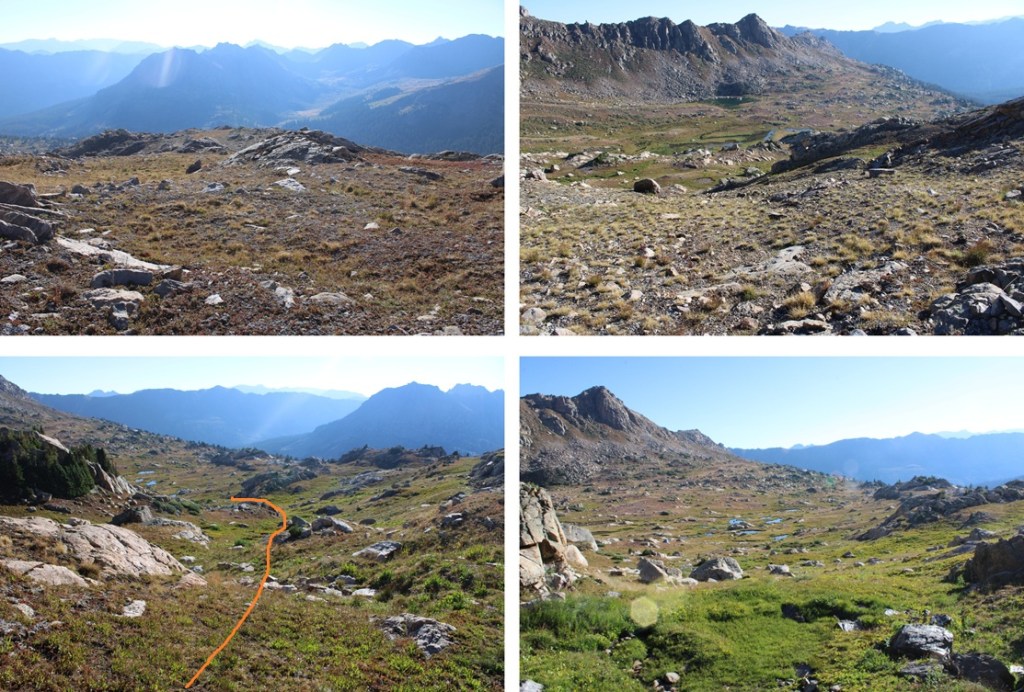
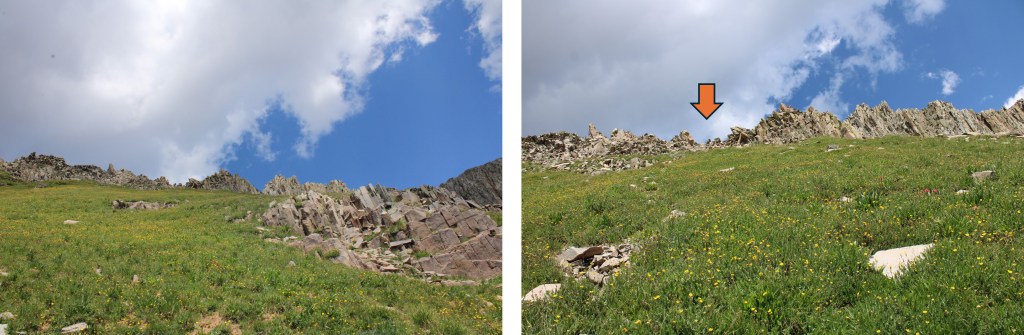
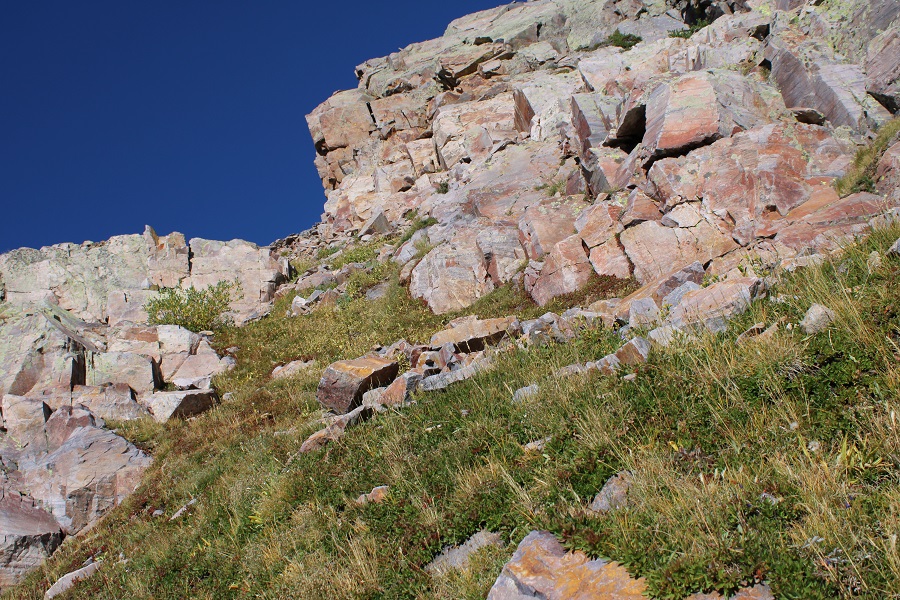
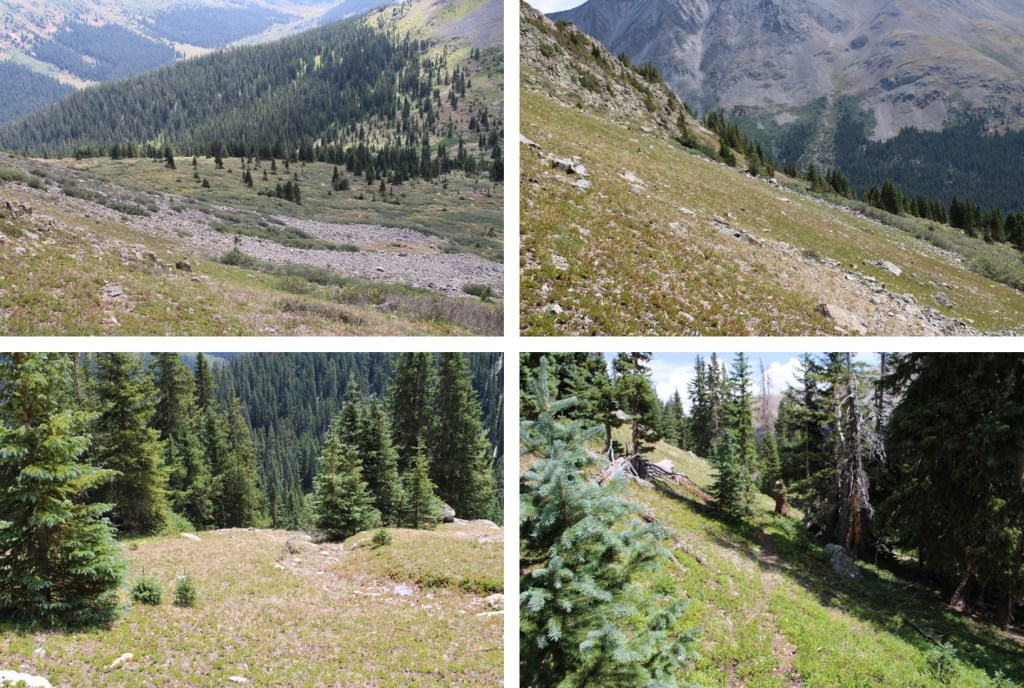
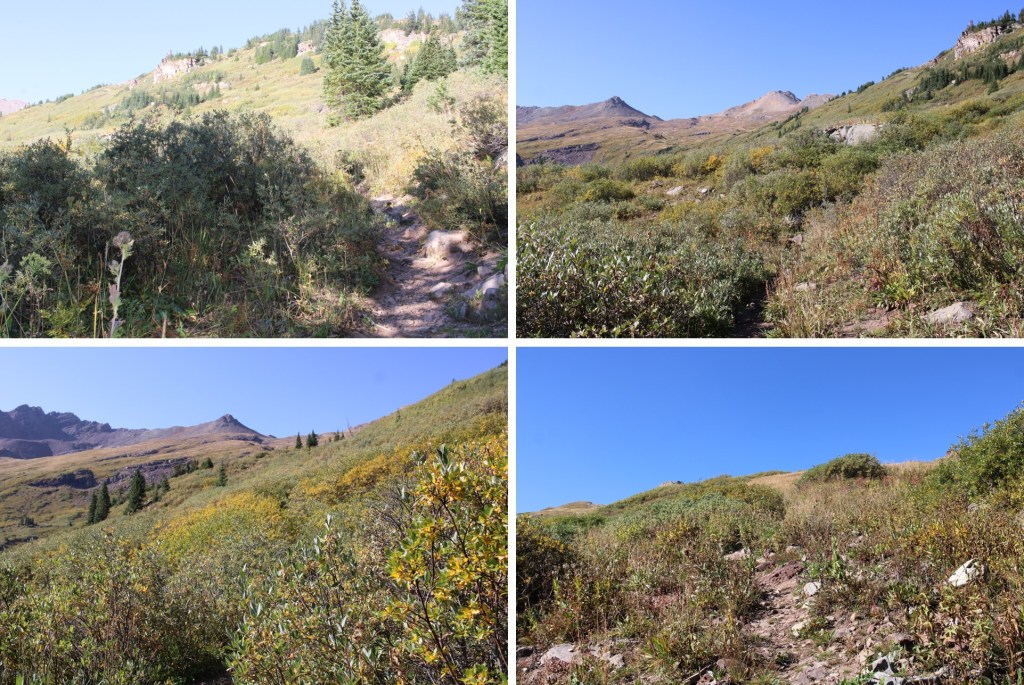
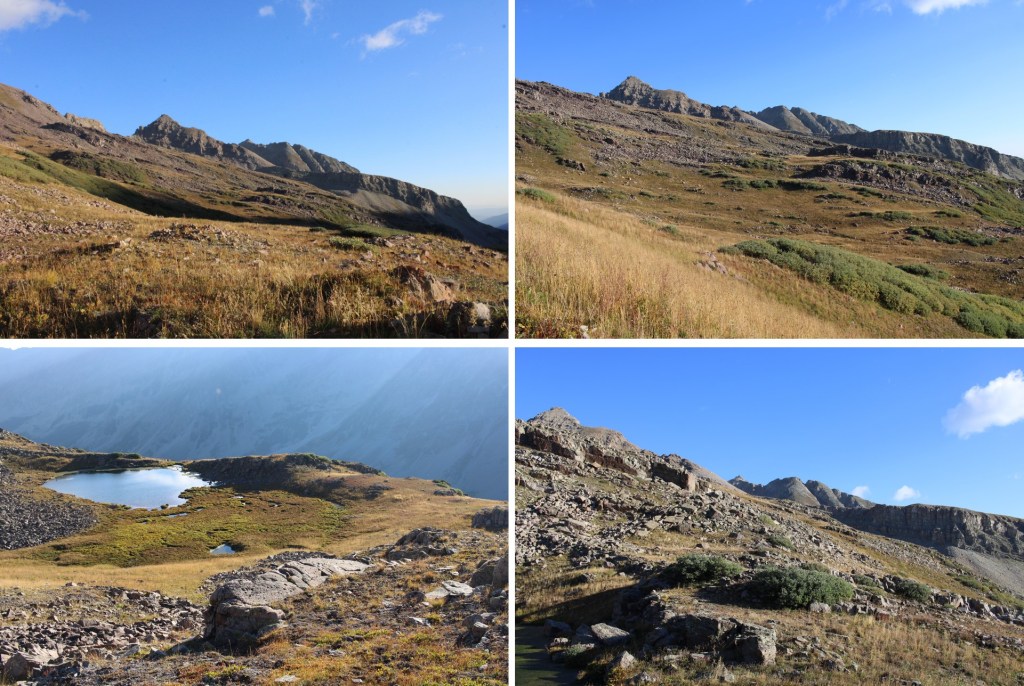
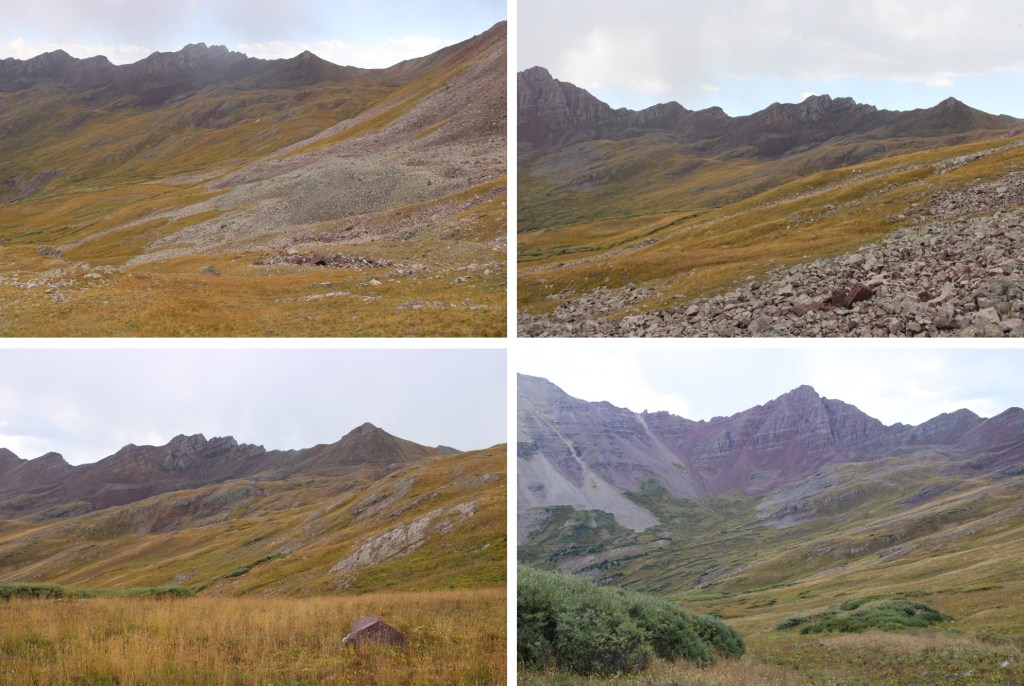
I set up my tent and had the late afternoon to just chill and relax (a goal of mine while climbing this year).  While I was there a couple of hunters hiked in, scouting the area (hunting season was to start in a couple of days).  I saw them pointing in the distance and getting out their binoculars and looking, then pointing again.  I gave them their space, but half an hour later they started hiking towards me and my tent.  They whistled and said “Just so you know, there’s a bear behind you about 200 feet, behind the rock you’re set up next to.”  I was thrilled with this information, but a bit upset it took them HALF AN HOUR to let me know a bear was behind me.  I got up, got my trekking pole, and spent the next 2 hours looking for the bear.  I never saw it.  I was mentally ok and prepared for the night (bear cannister and all), but still a little upset I never actually got to see the bear.  I did hear cow elk calling to their babies in the night, but no more sighting of that bear.  In the morning I was off at 6:30am to attempt the ridge (orange route).  I started by following the grassy area southwest towards the ridge.
I then found a small gully and gained the ridge on tundra.  This was all easy class 2.
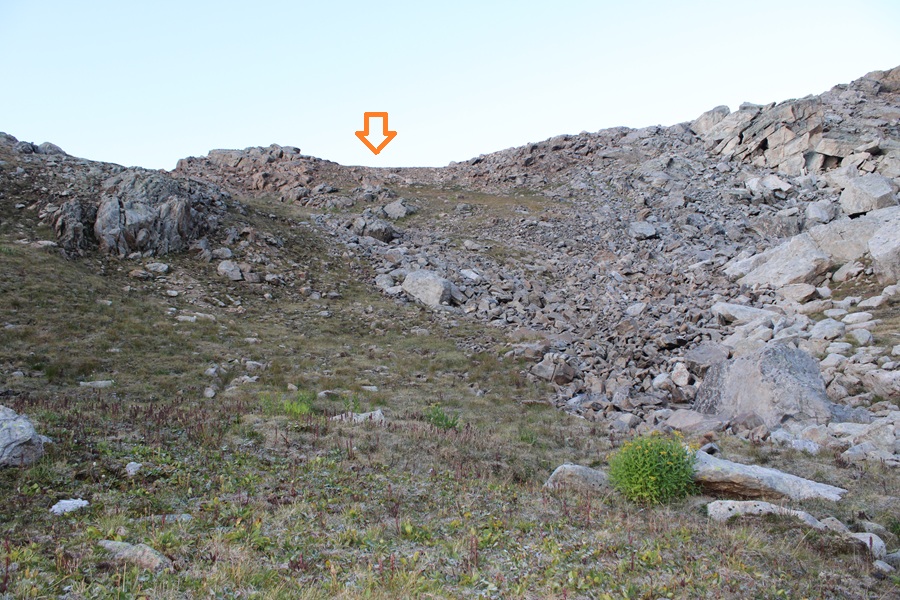
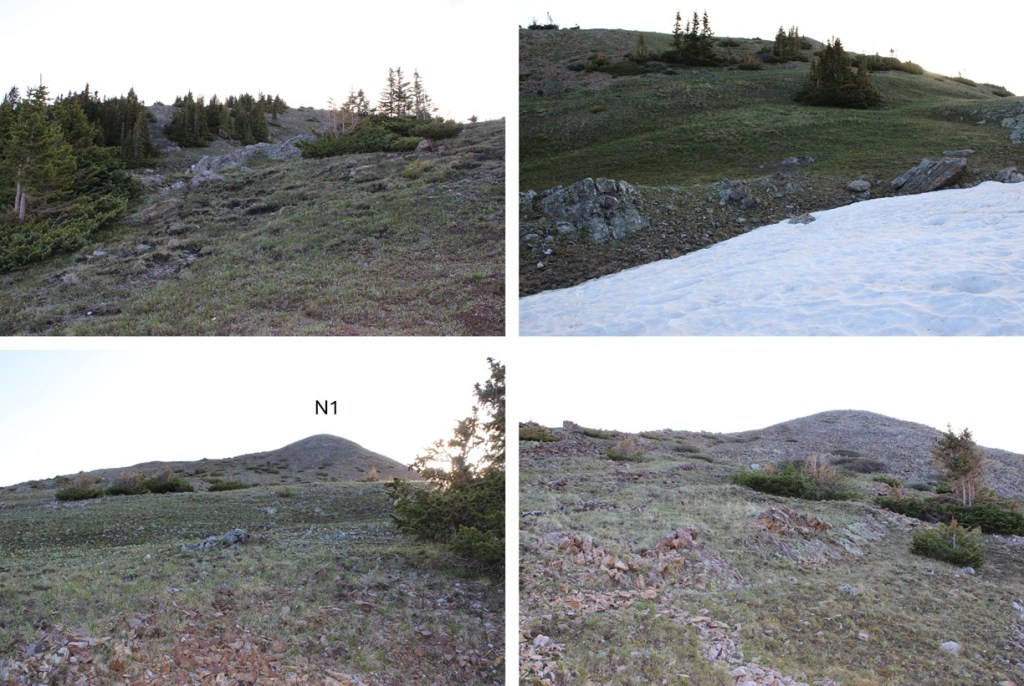
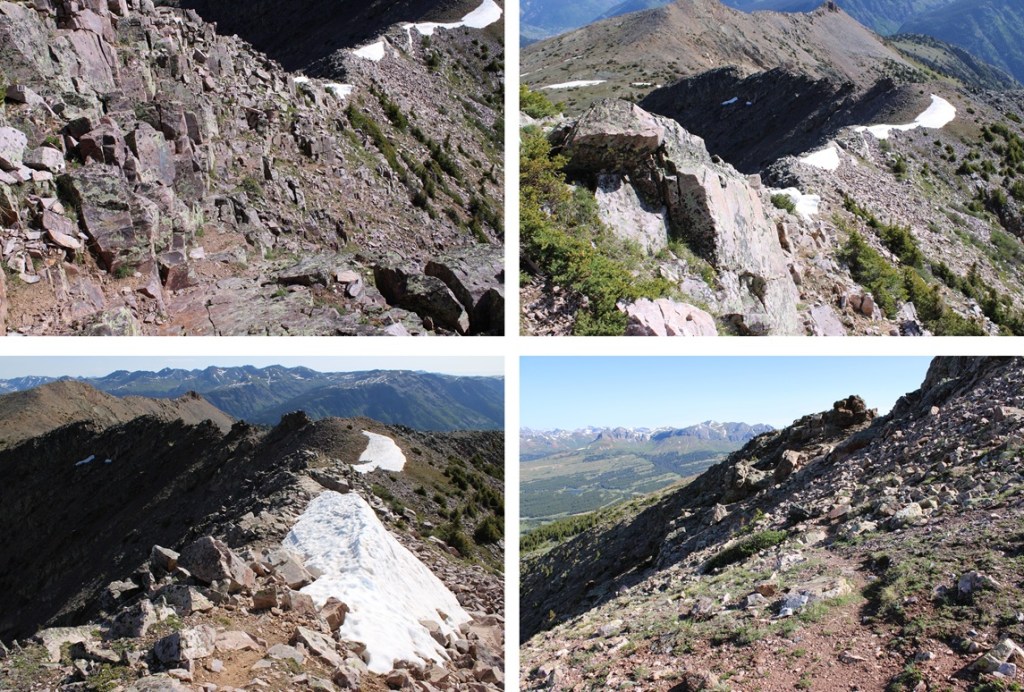
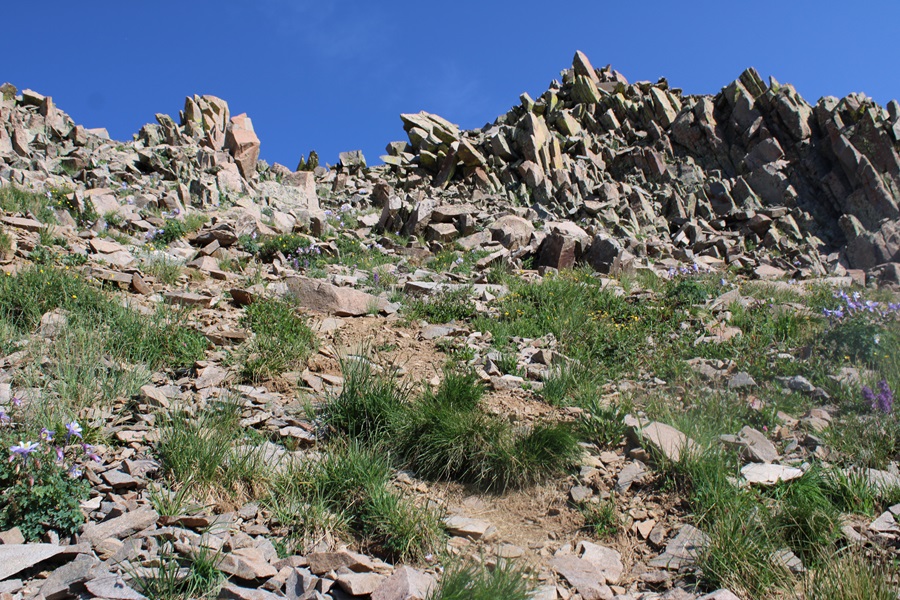
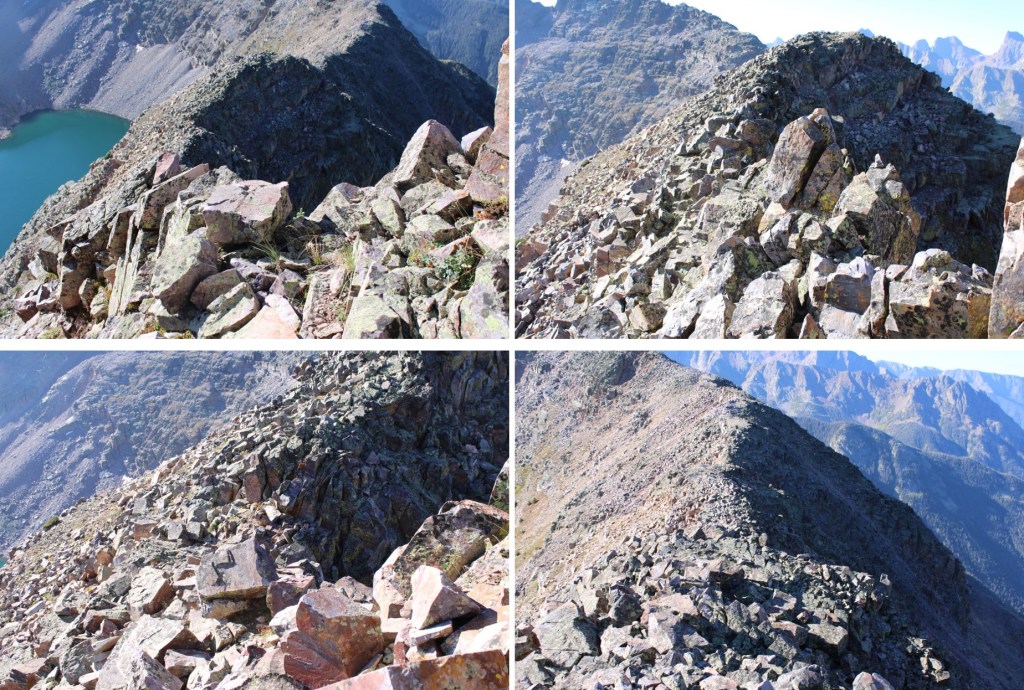
Once on the ridge it was an easy class 2 hike as I followed the ridge west/northwest.

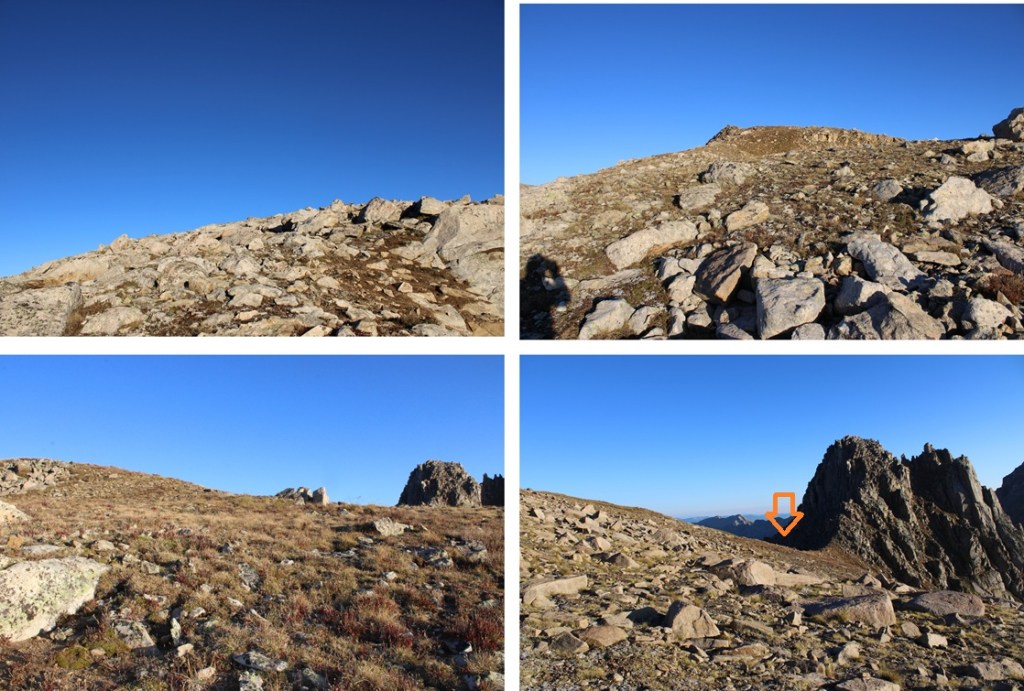
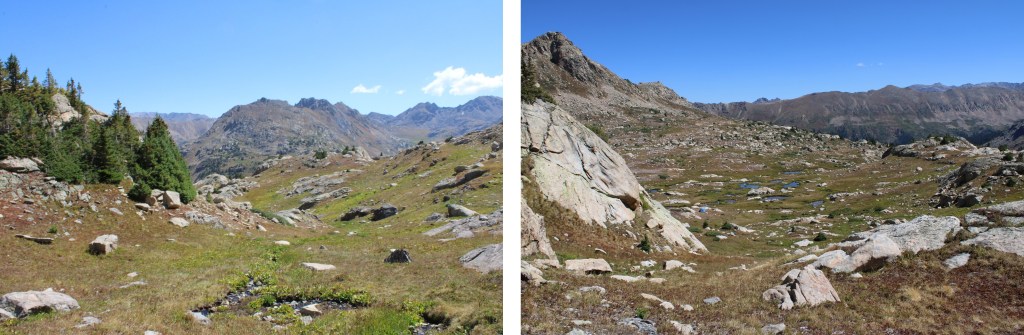
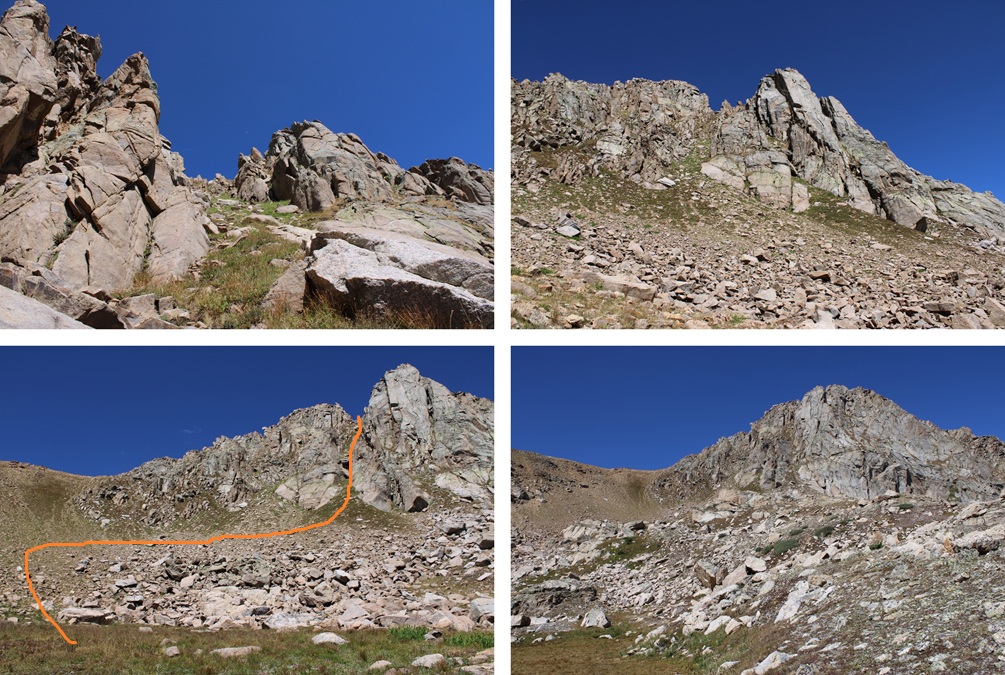
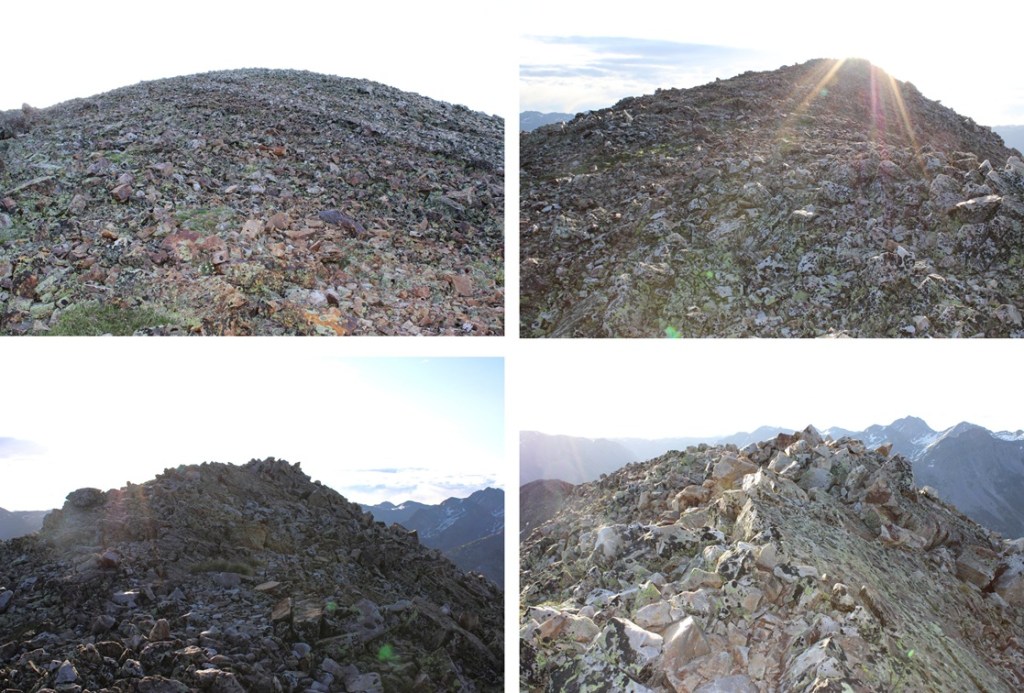
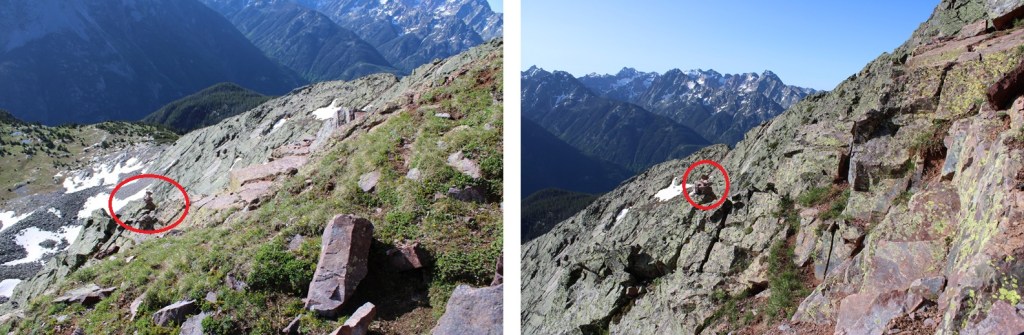
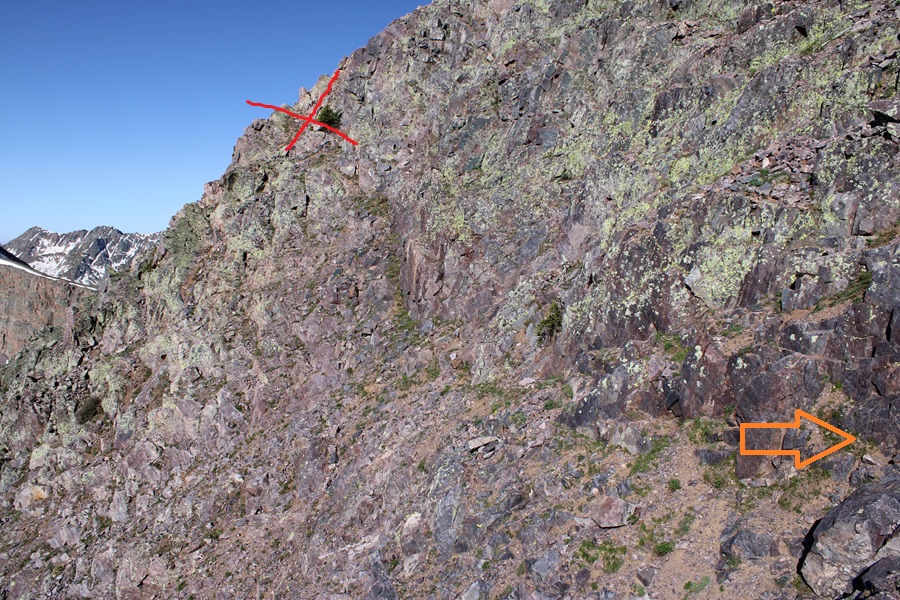
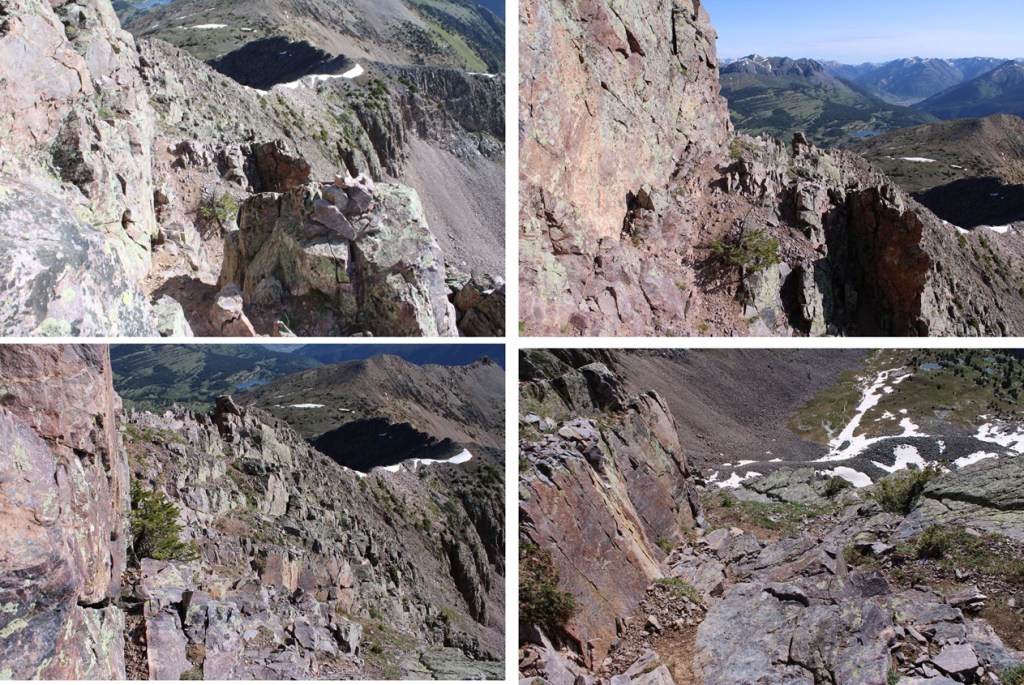
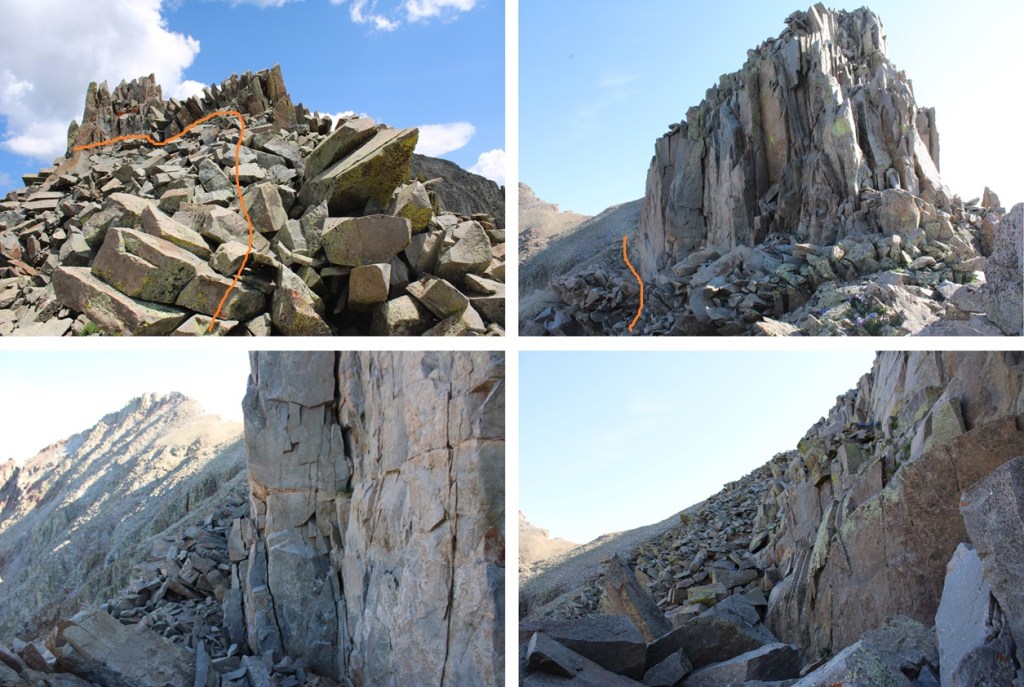
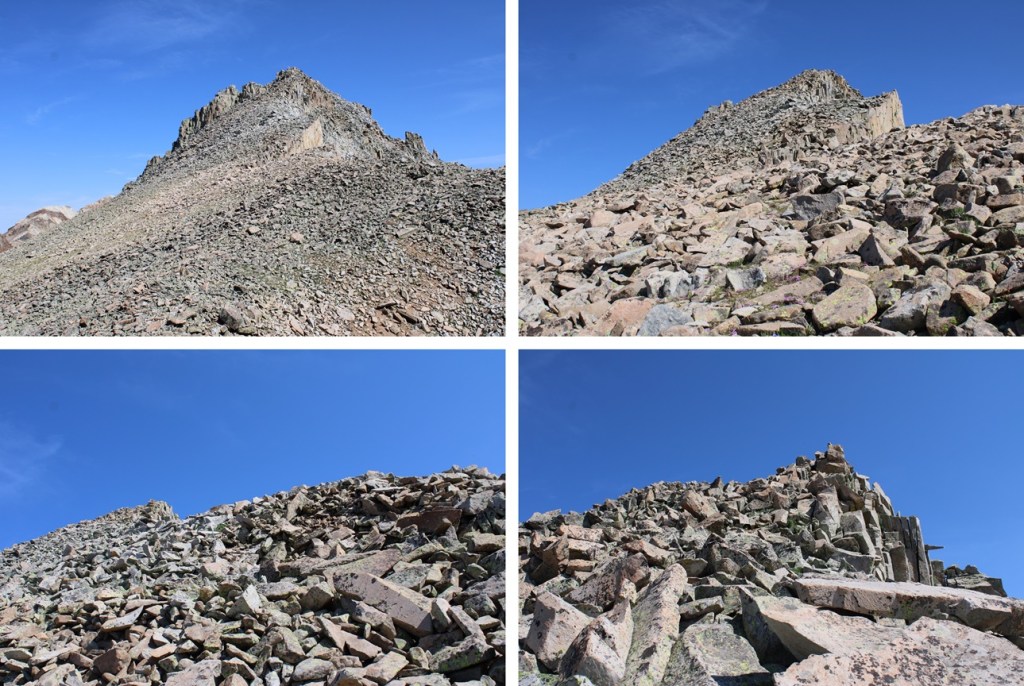
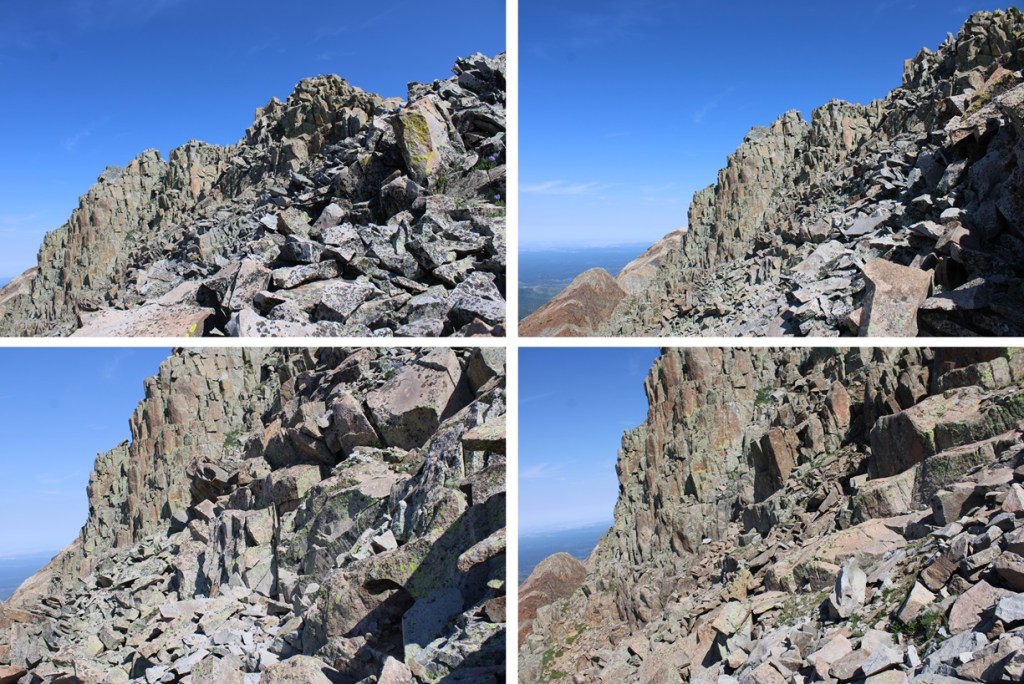
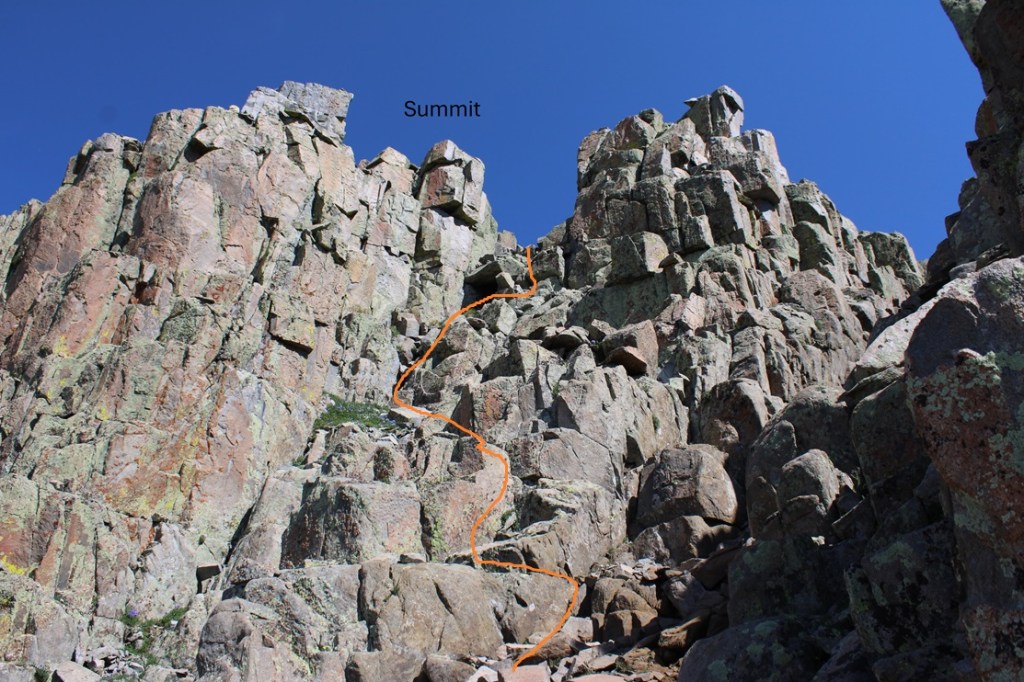
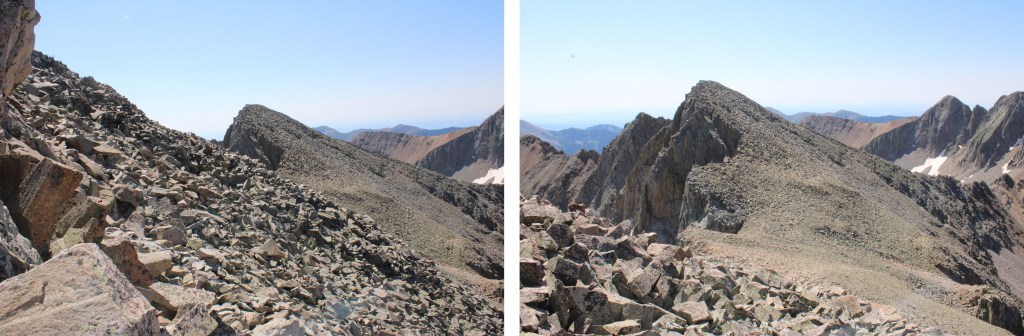
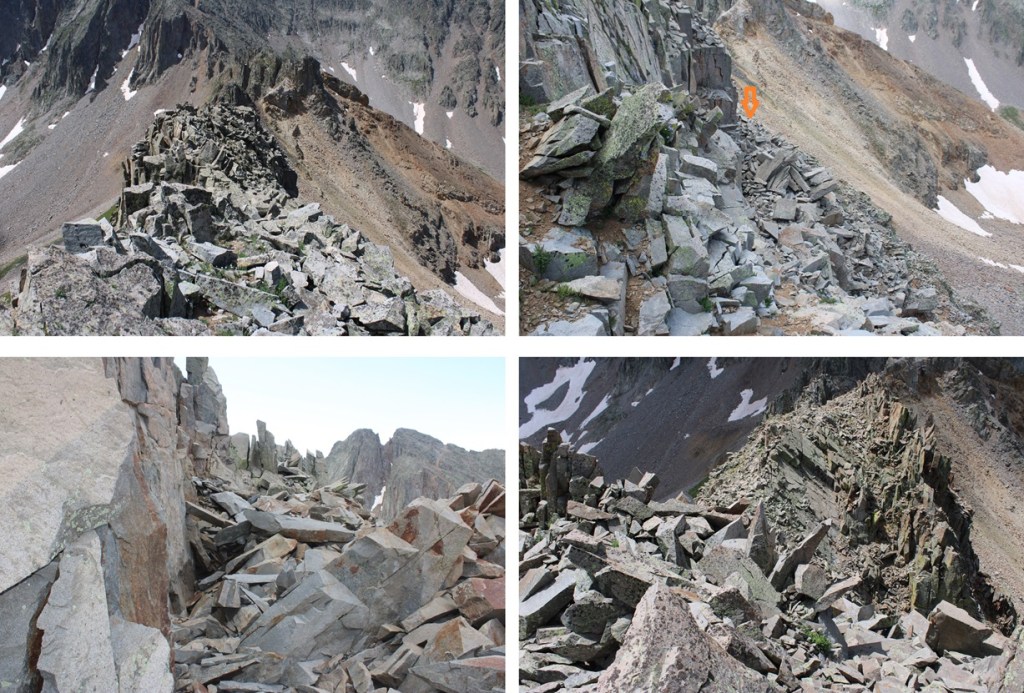
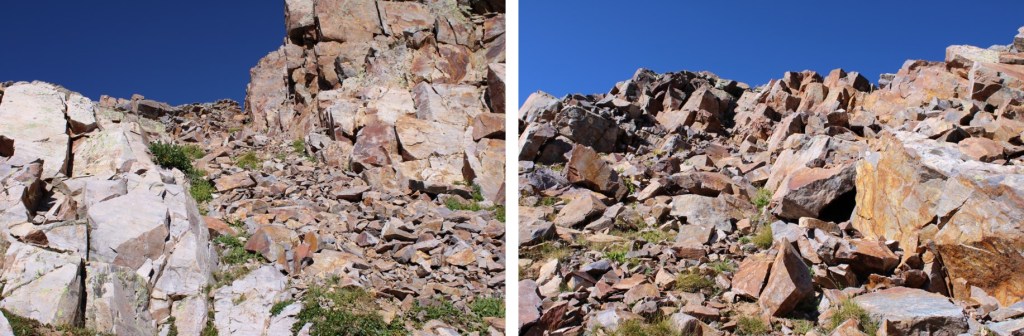
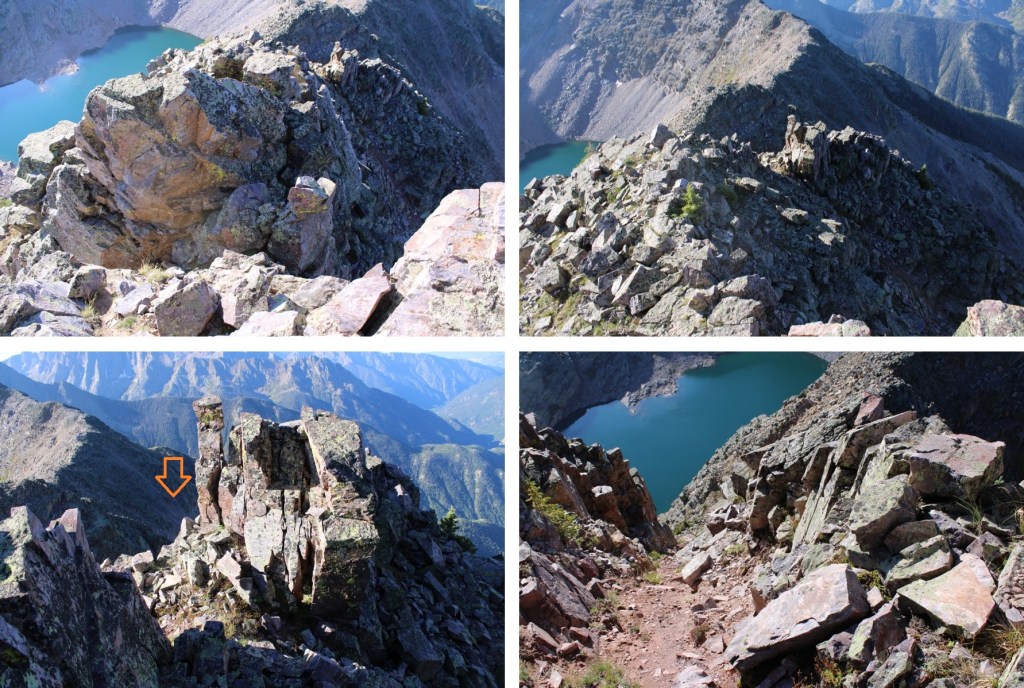
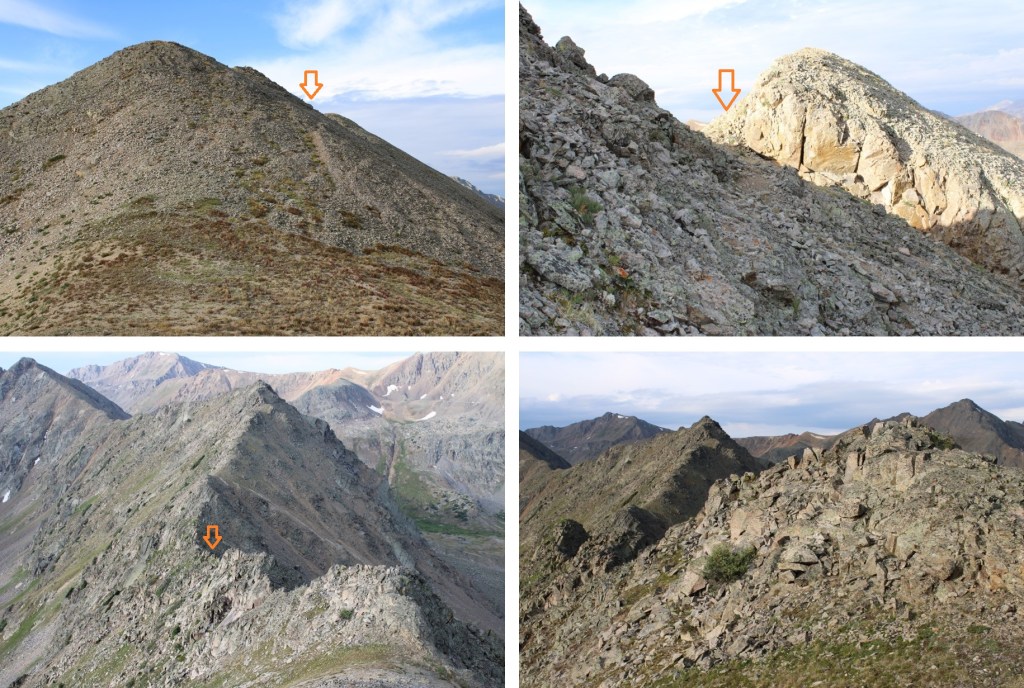
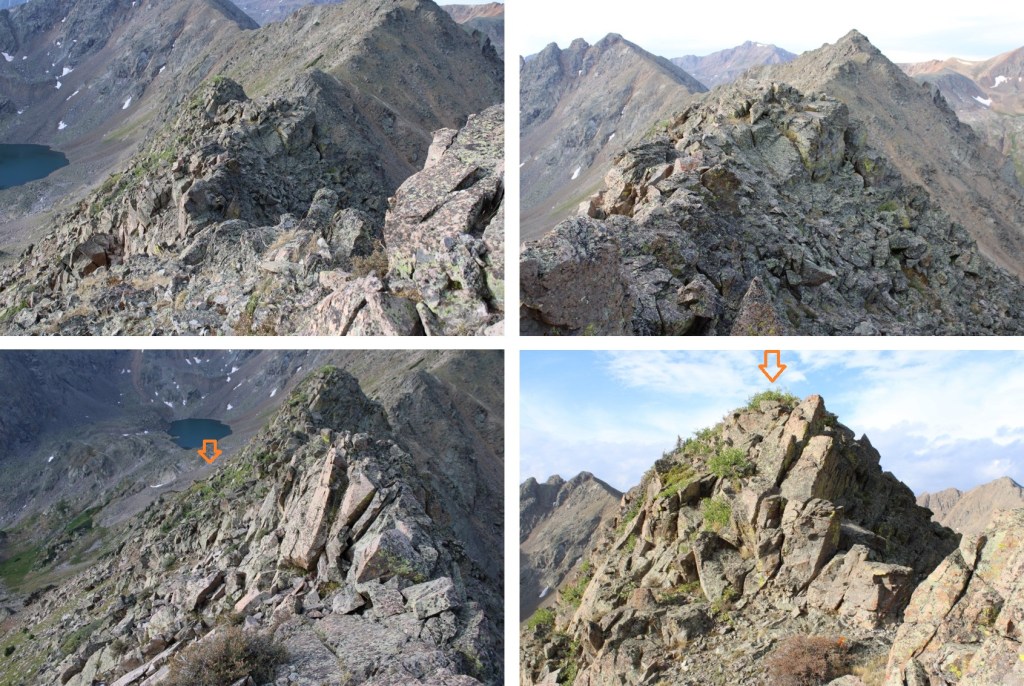
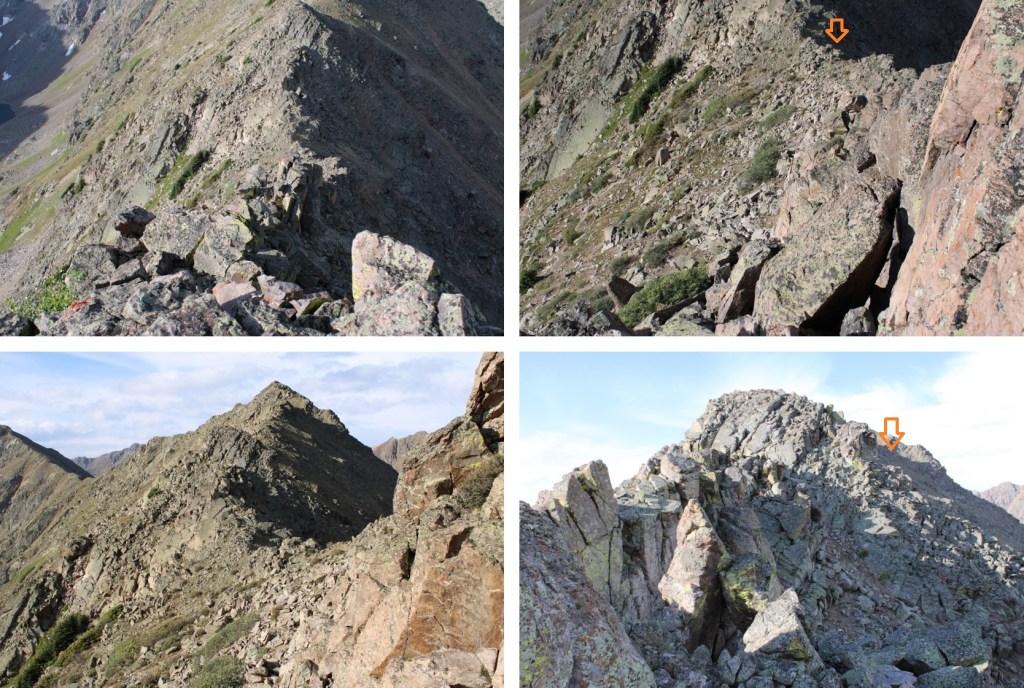
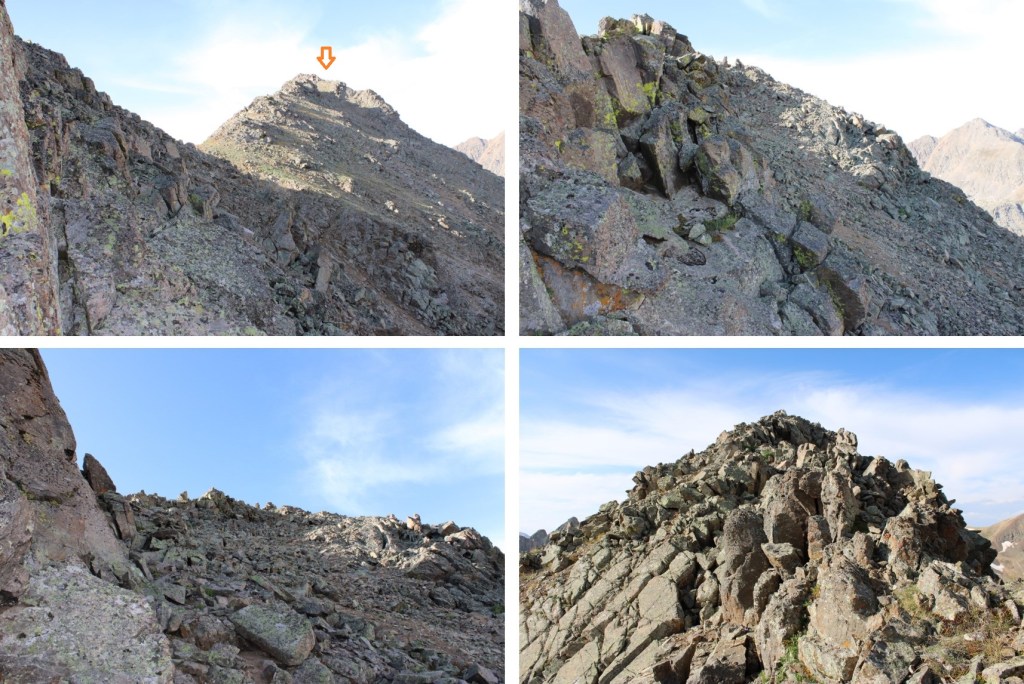
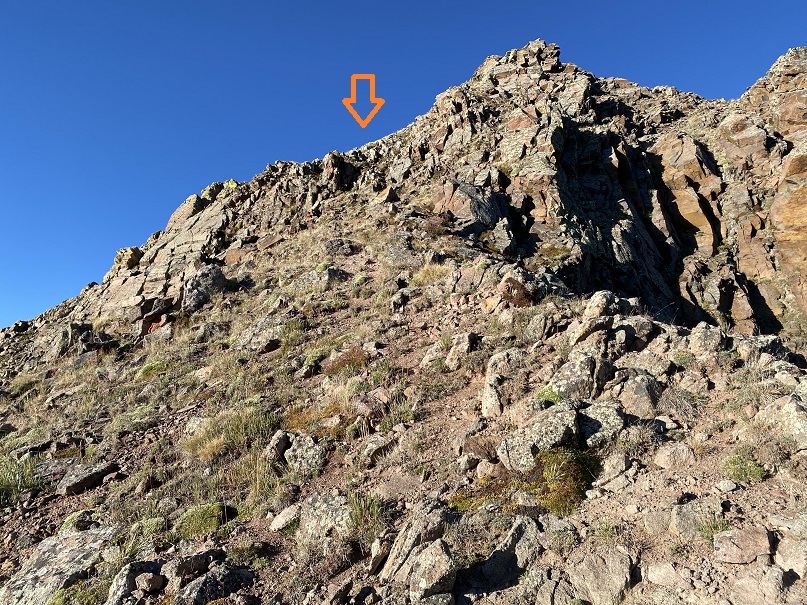
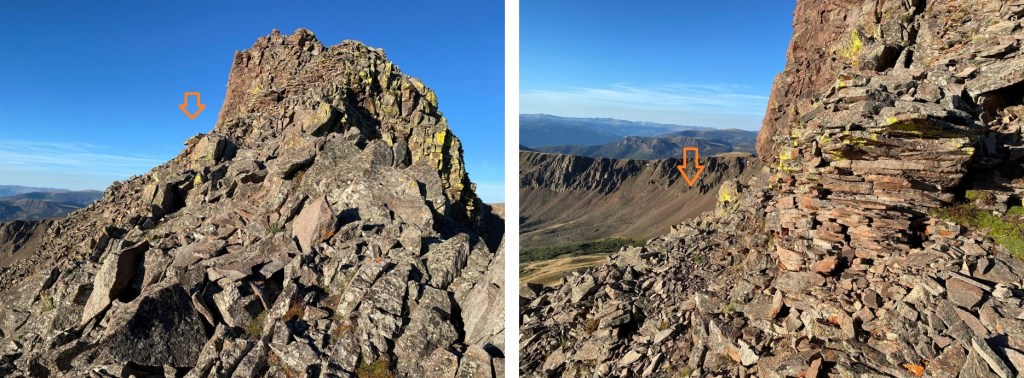
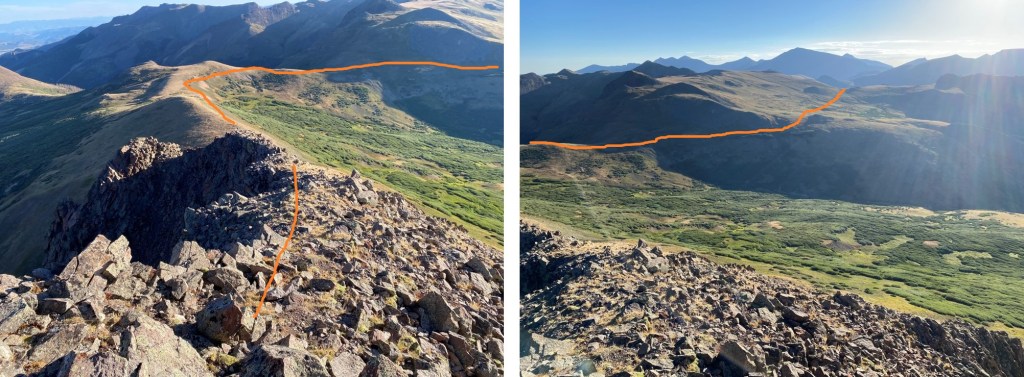
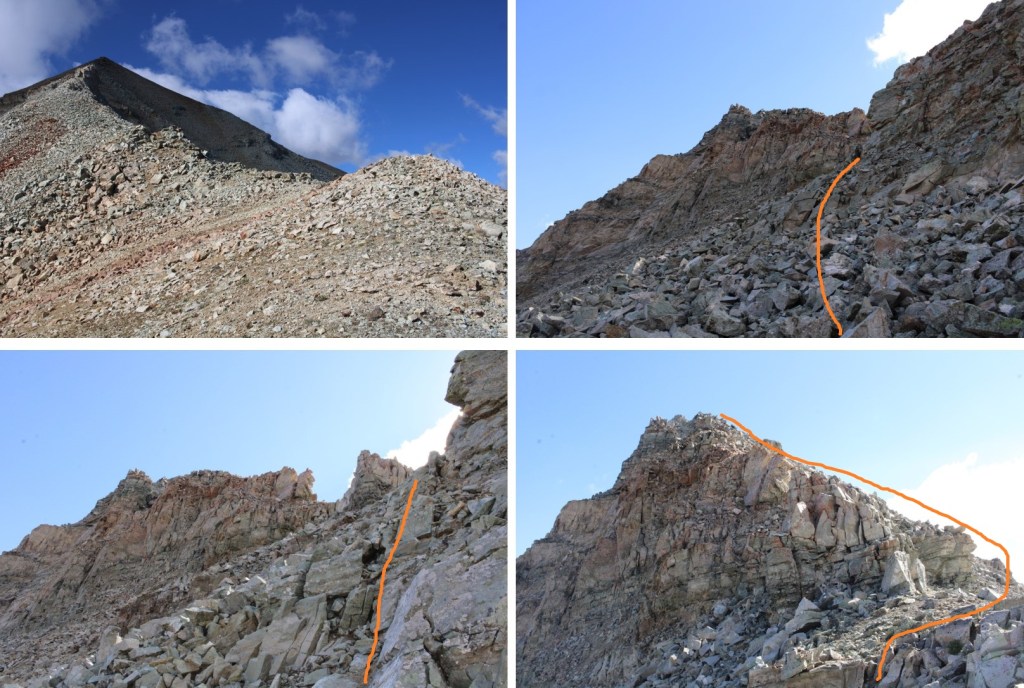
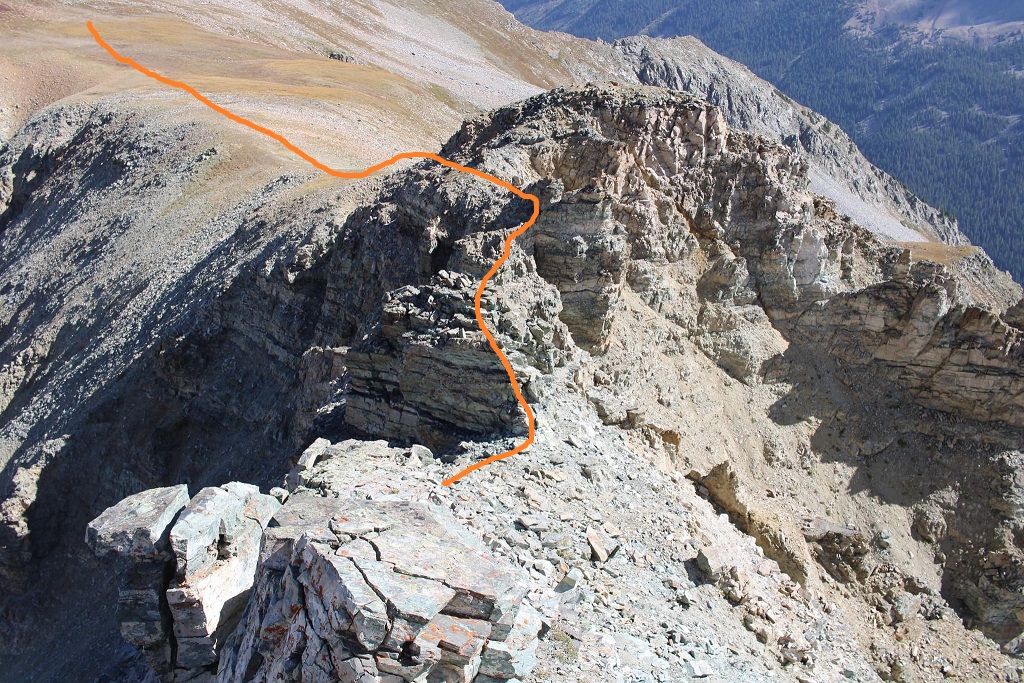
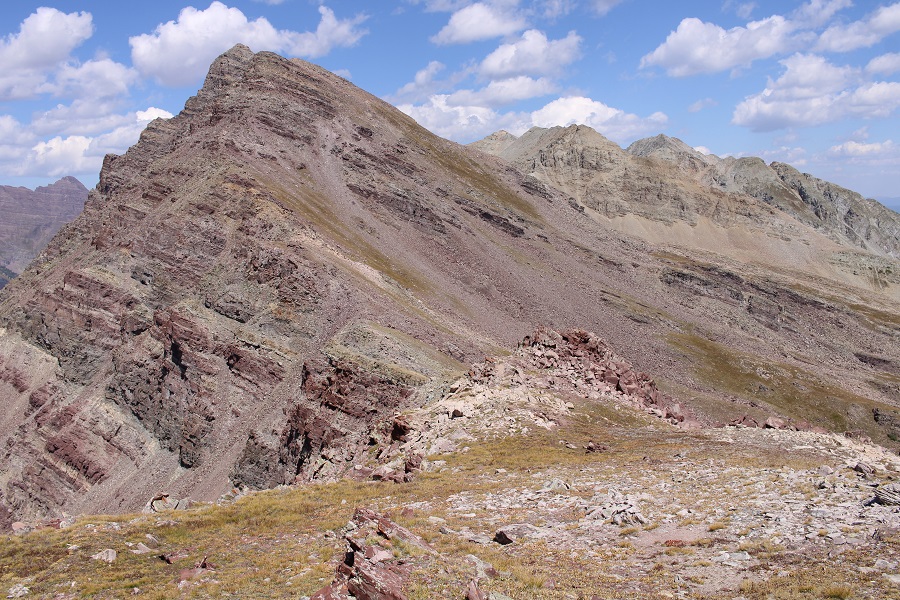
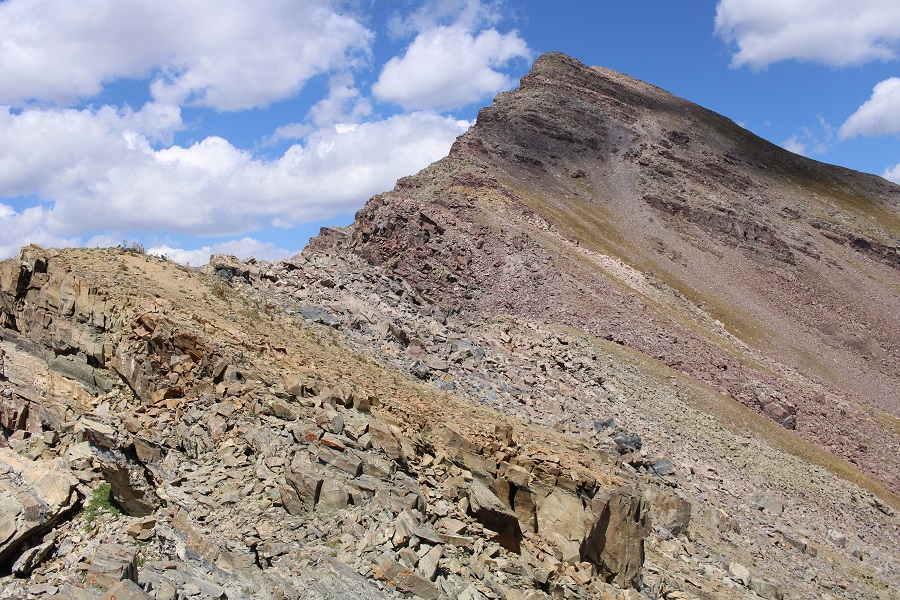
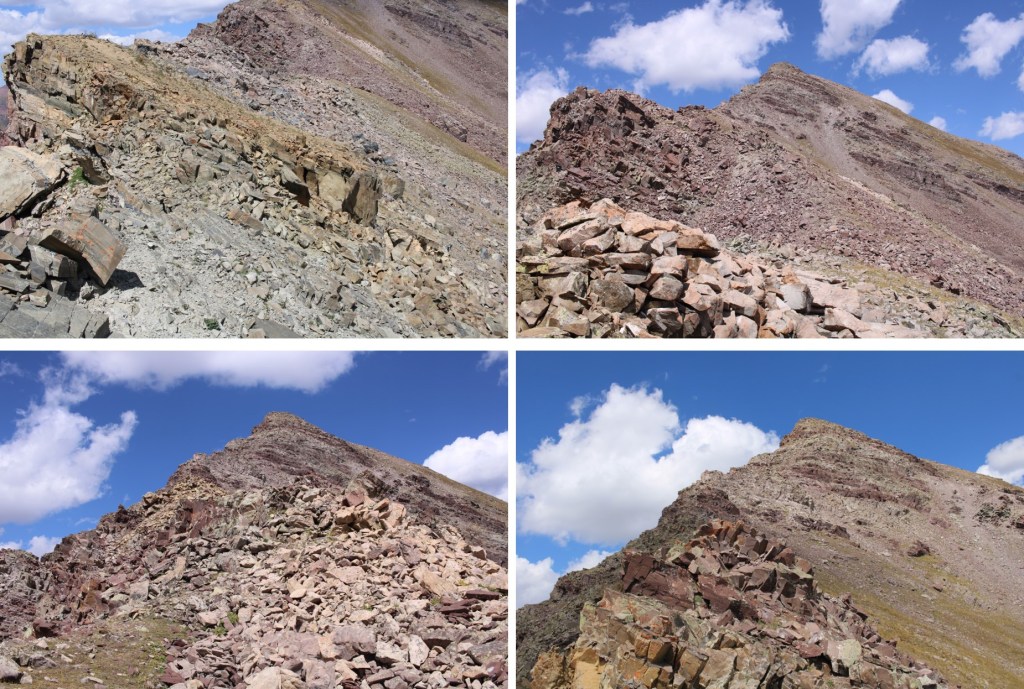
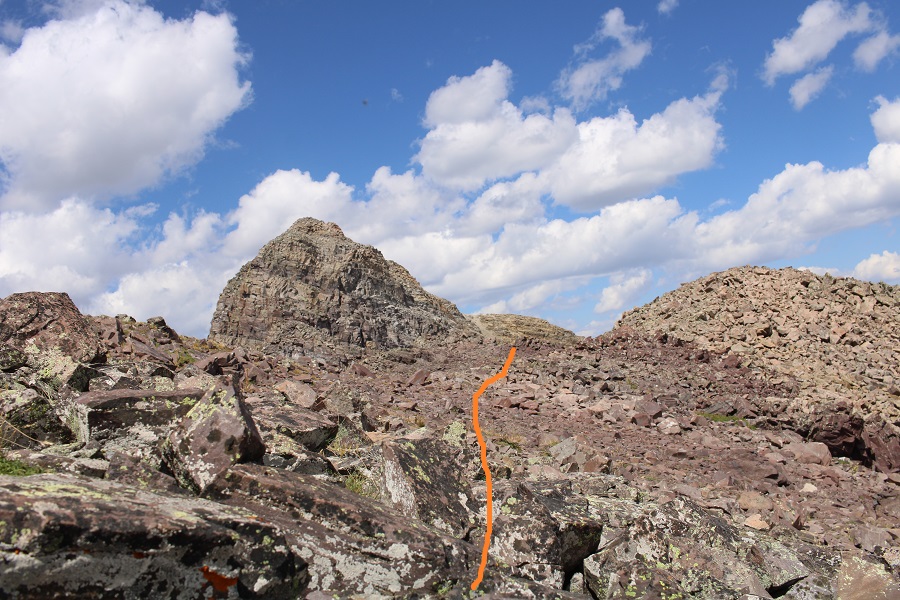
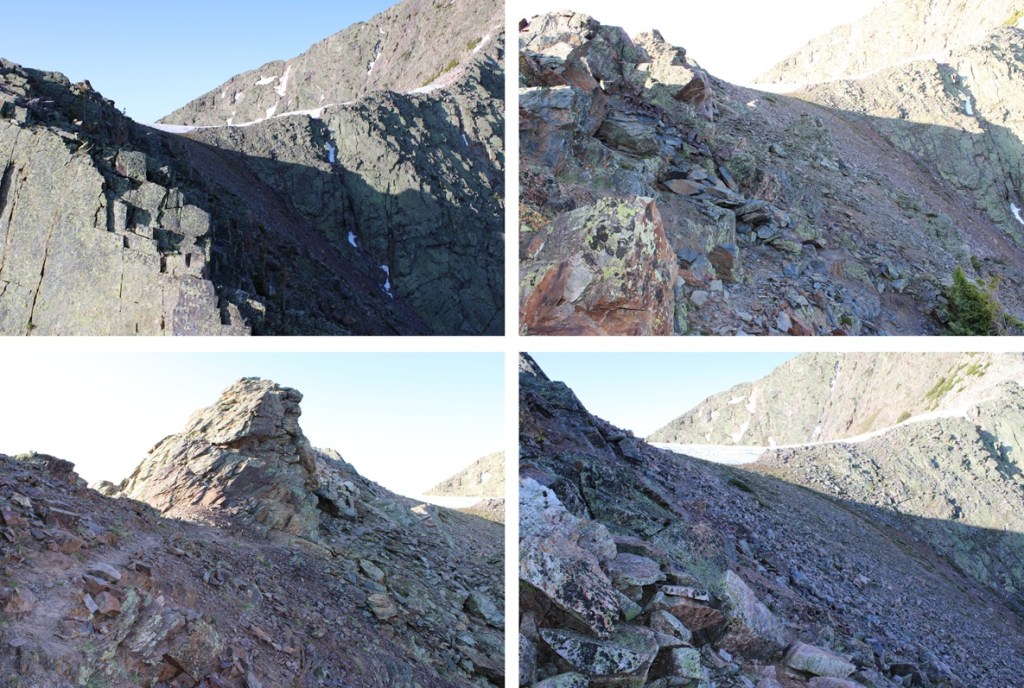
At the top of the ridge I could see 13024 to the right.  I followed the ridge on class 2 terrain to the base of the rocky area.  From here it’s only 1/10th of a mile and less than 200’ of elevation gain to the summit.  It’s mostly class 2 or easy 3, but there was one class 4 move I didn’t feel comfortable attempting without ropes.  Where the orange line ends is where I stopped, about 100’ from the summit.
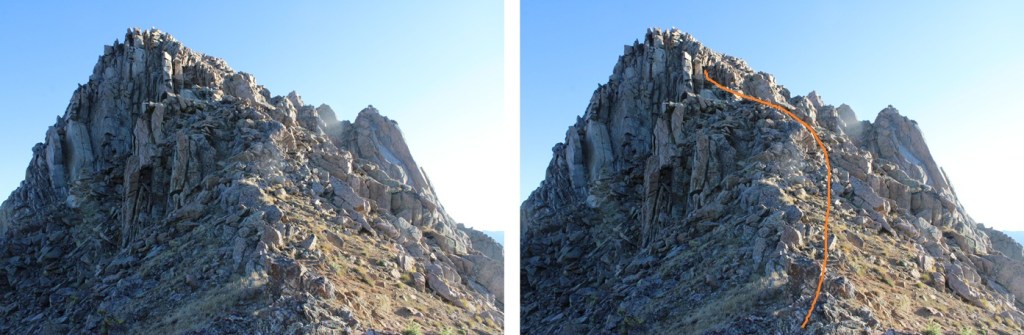
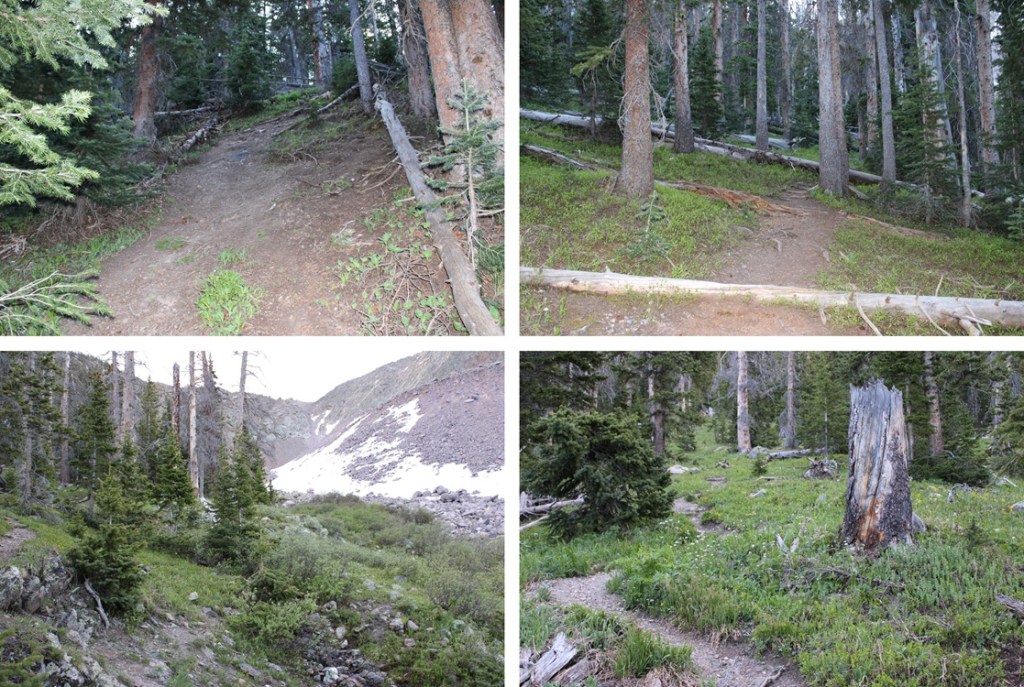
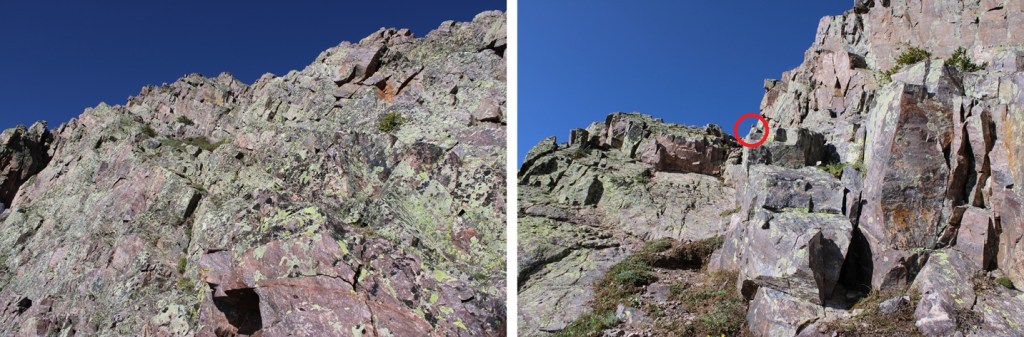
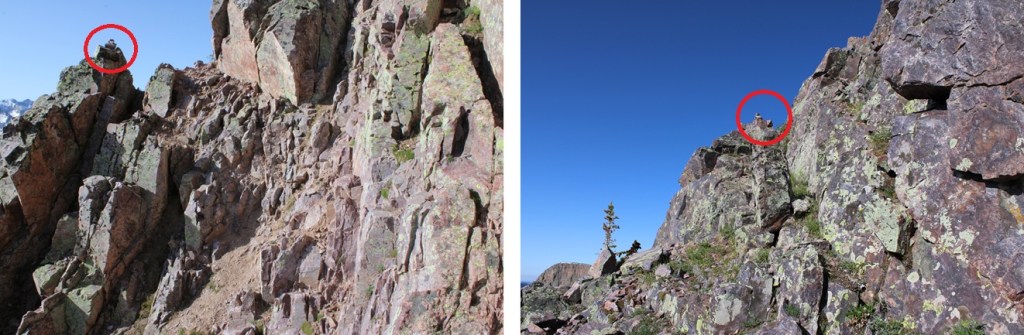
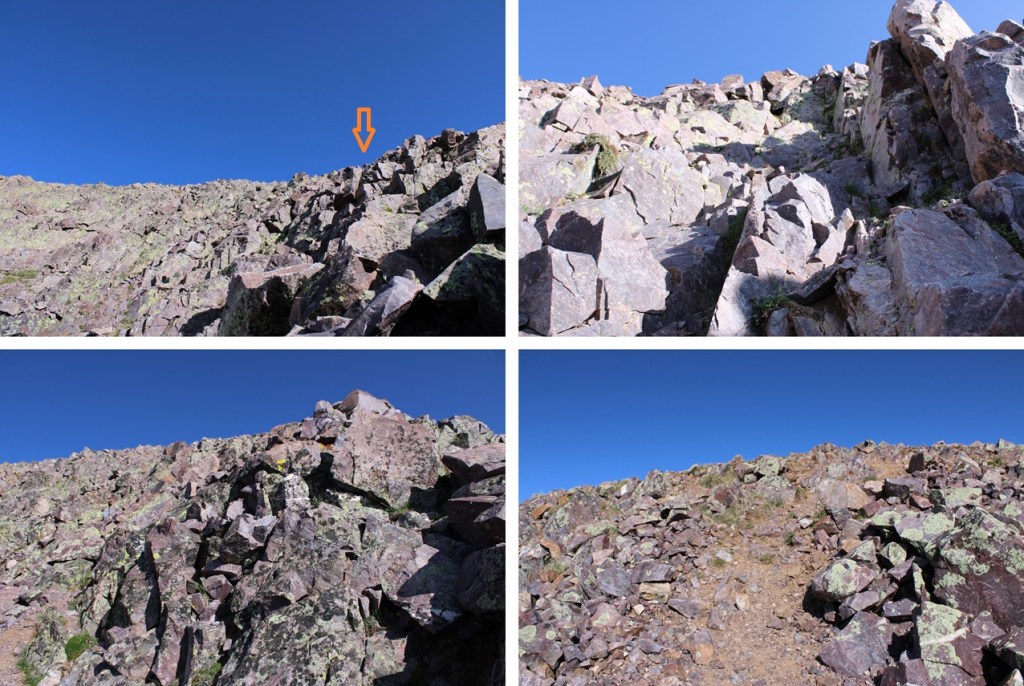
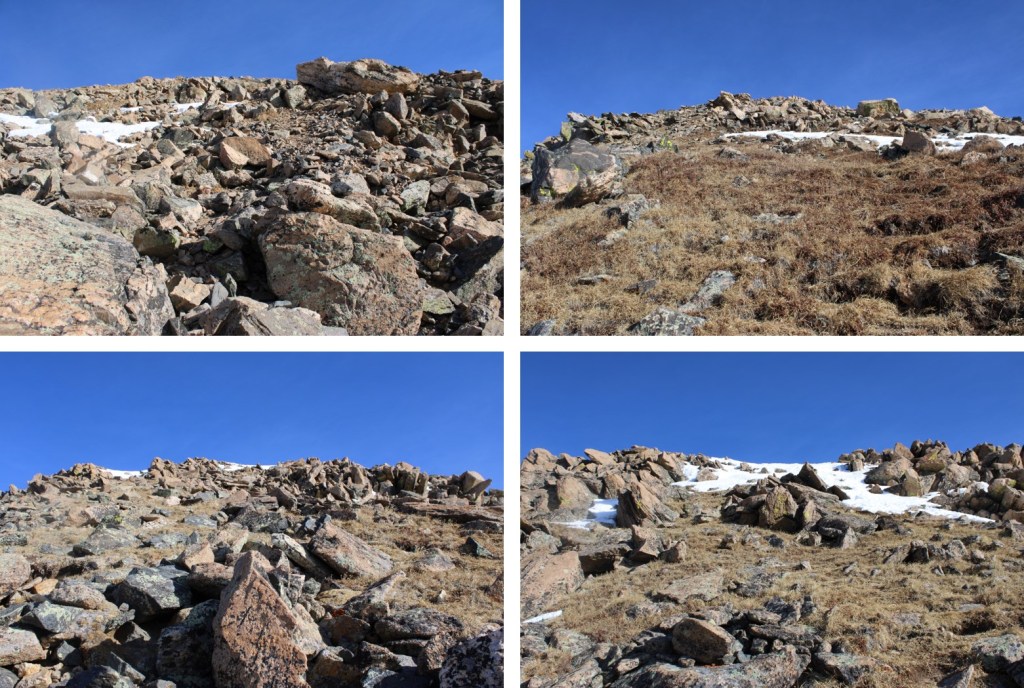
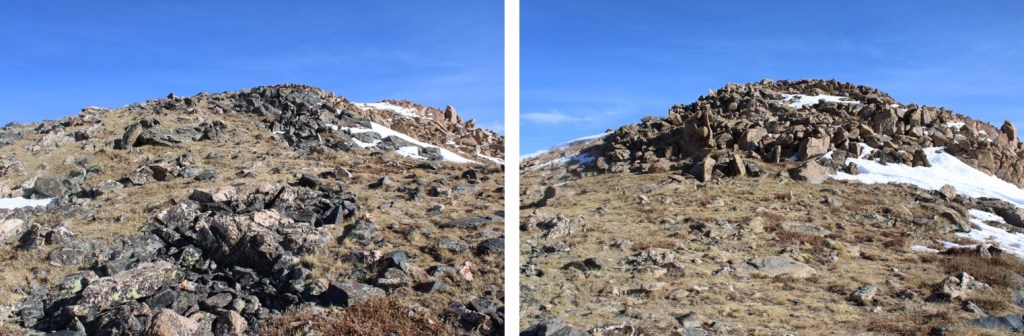
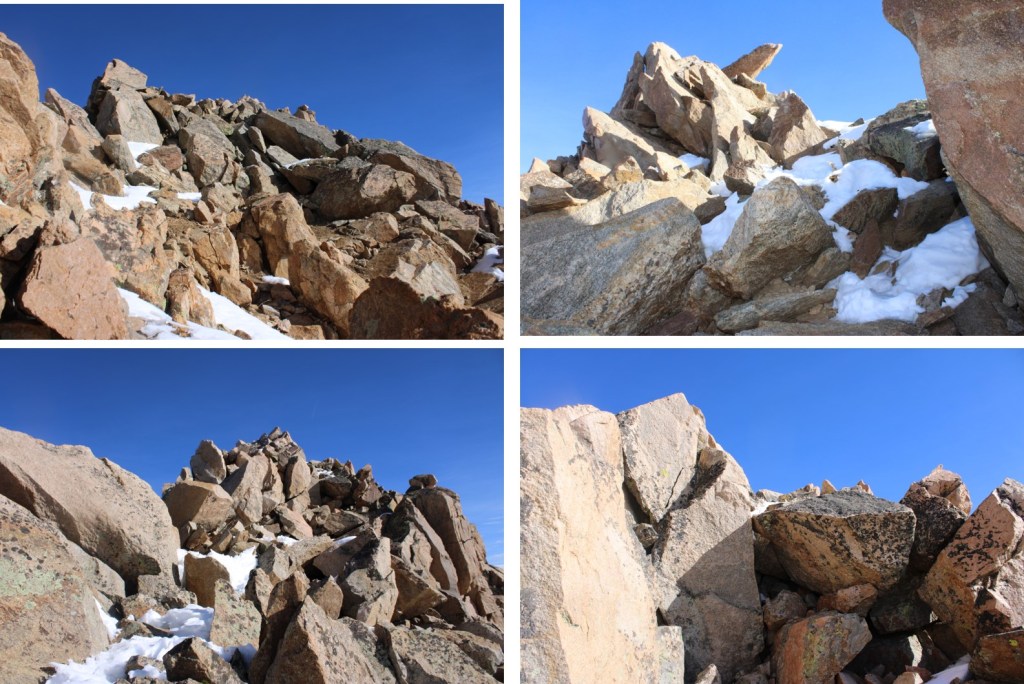
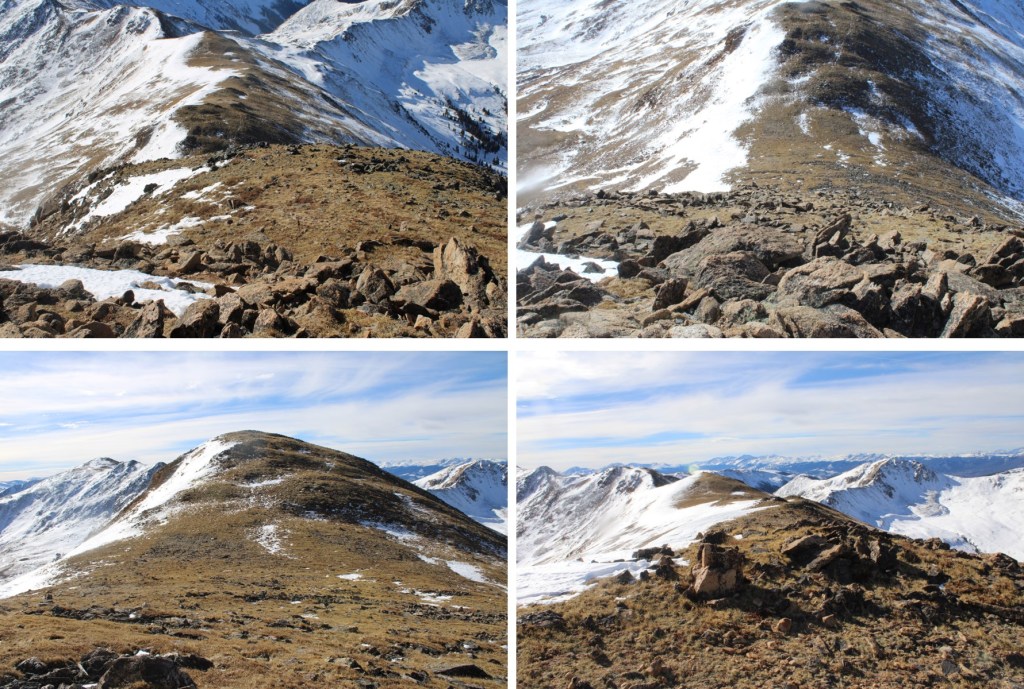
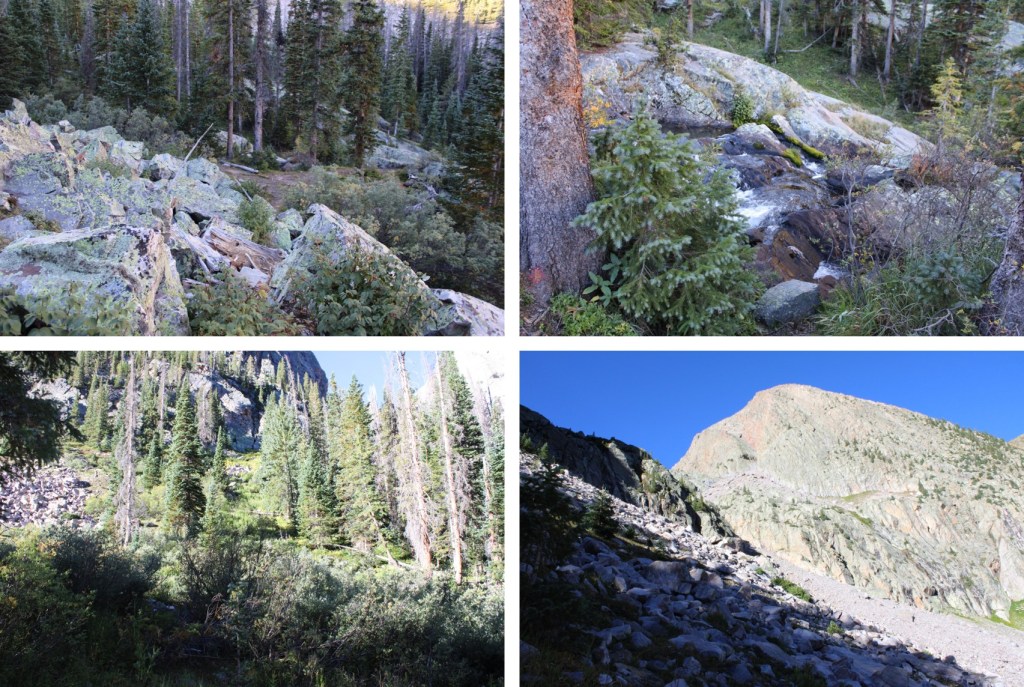
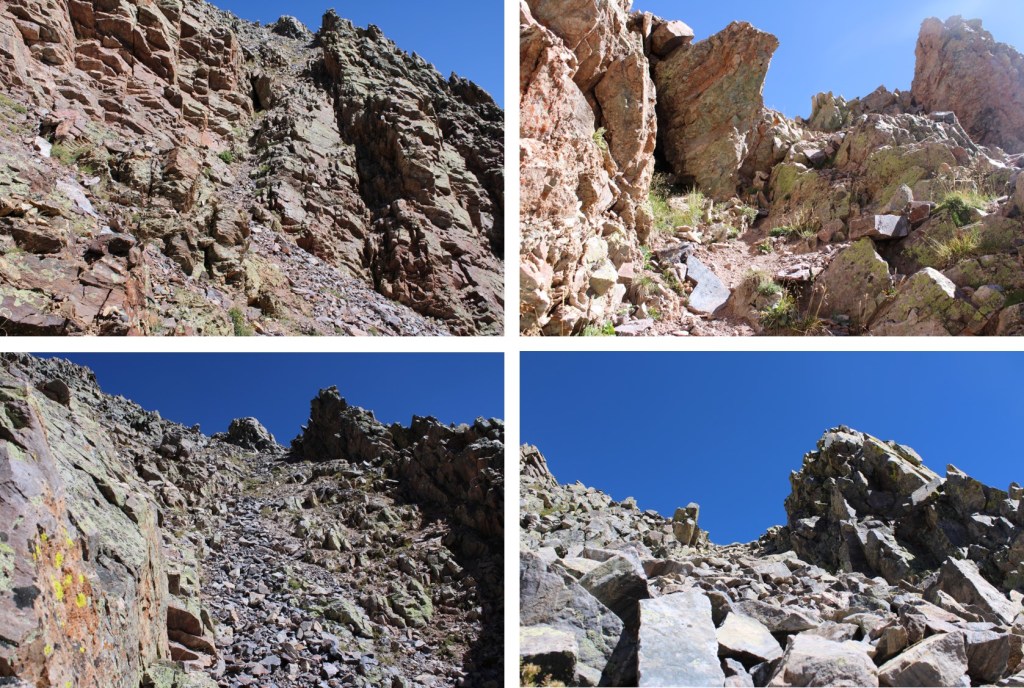
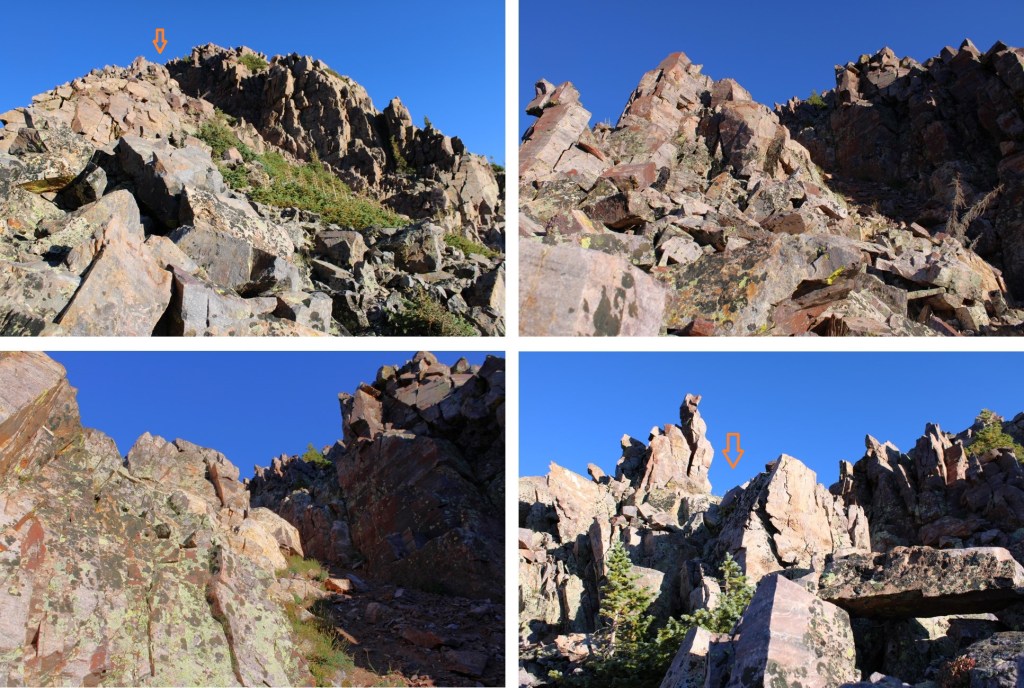
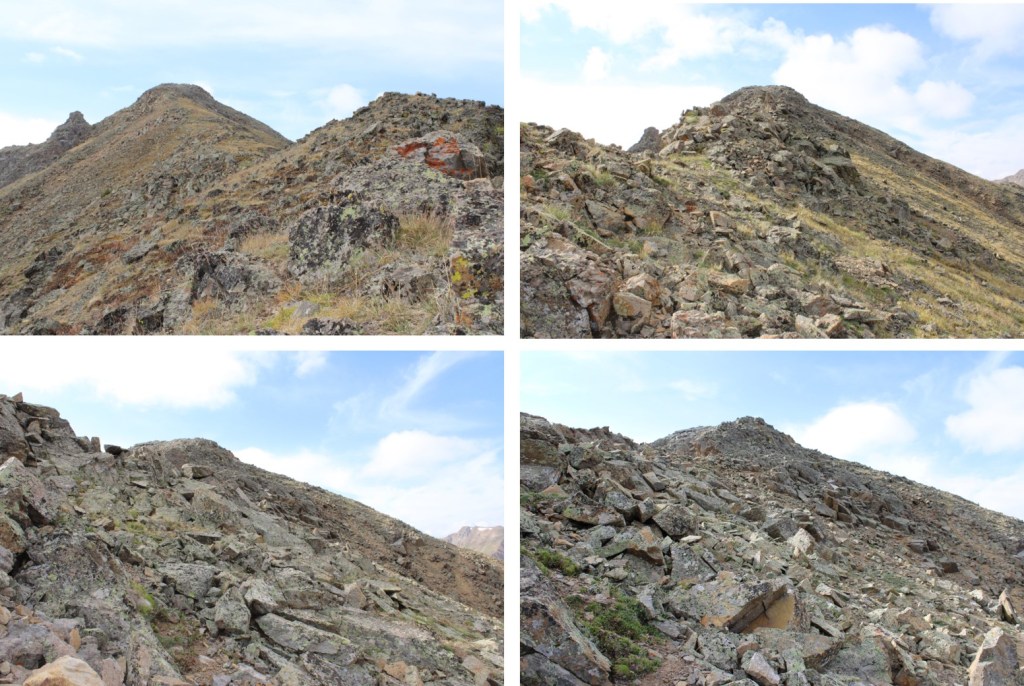
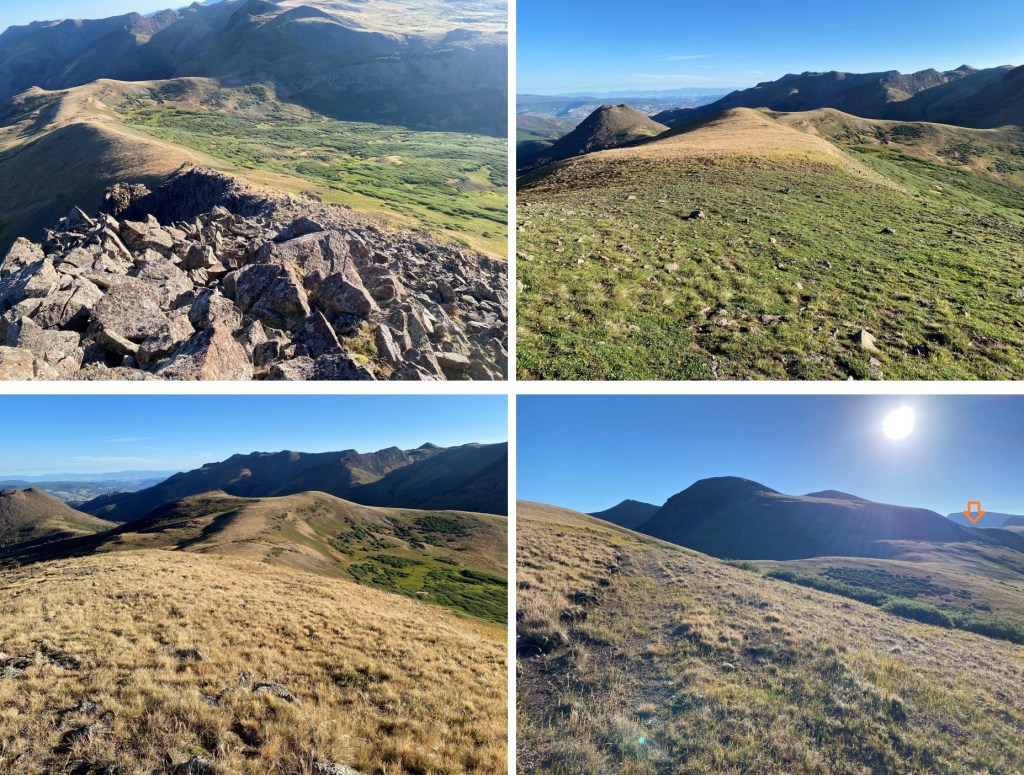
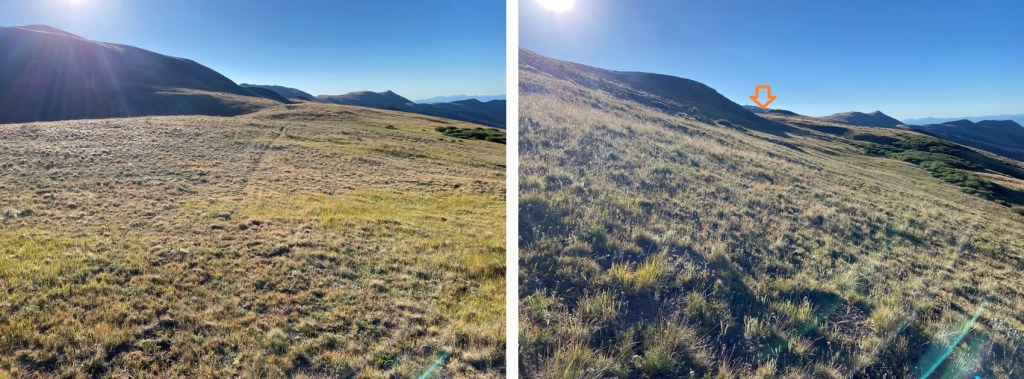
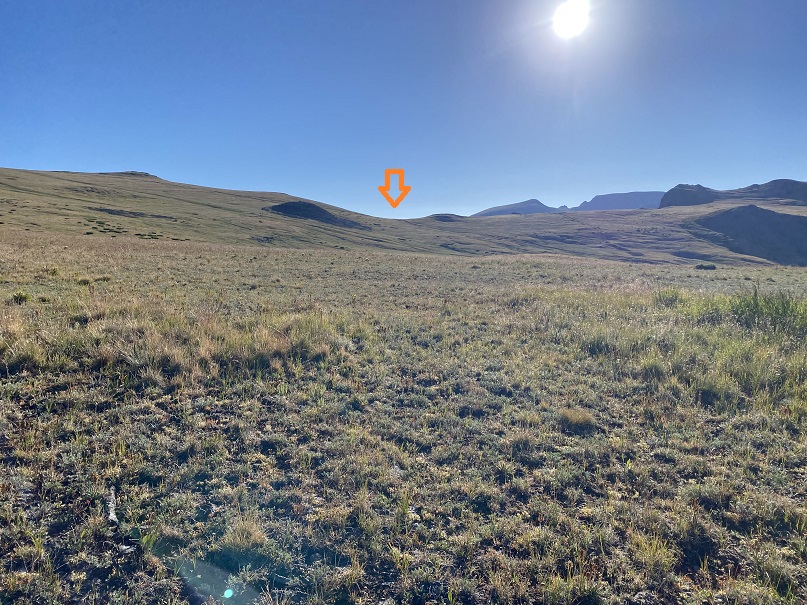
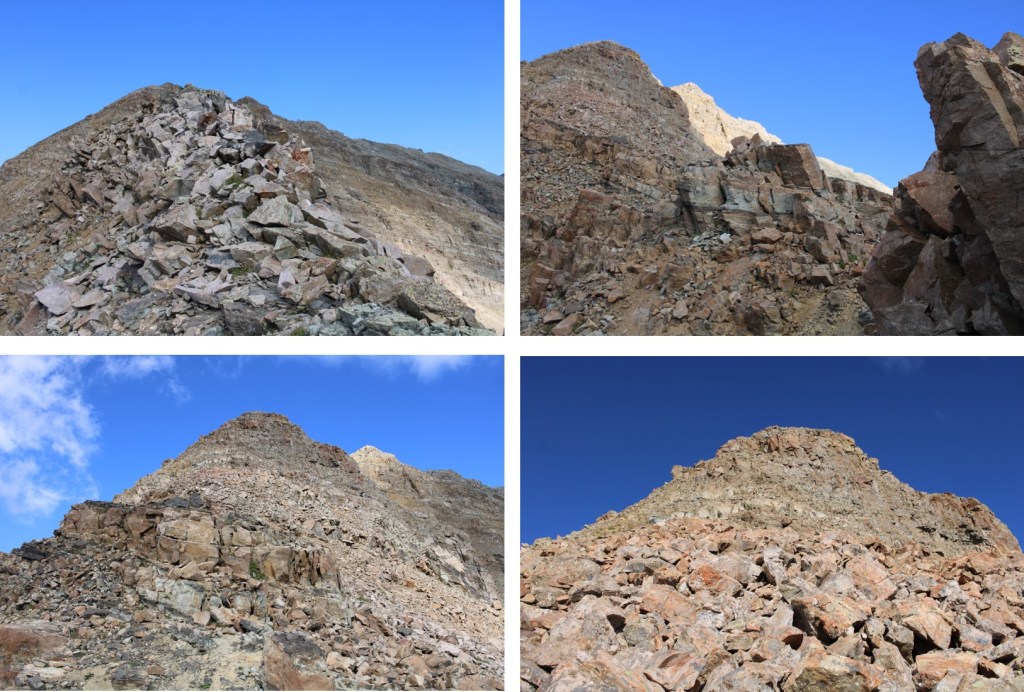
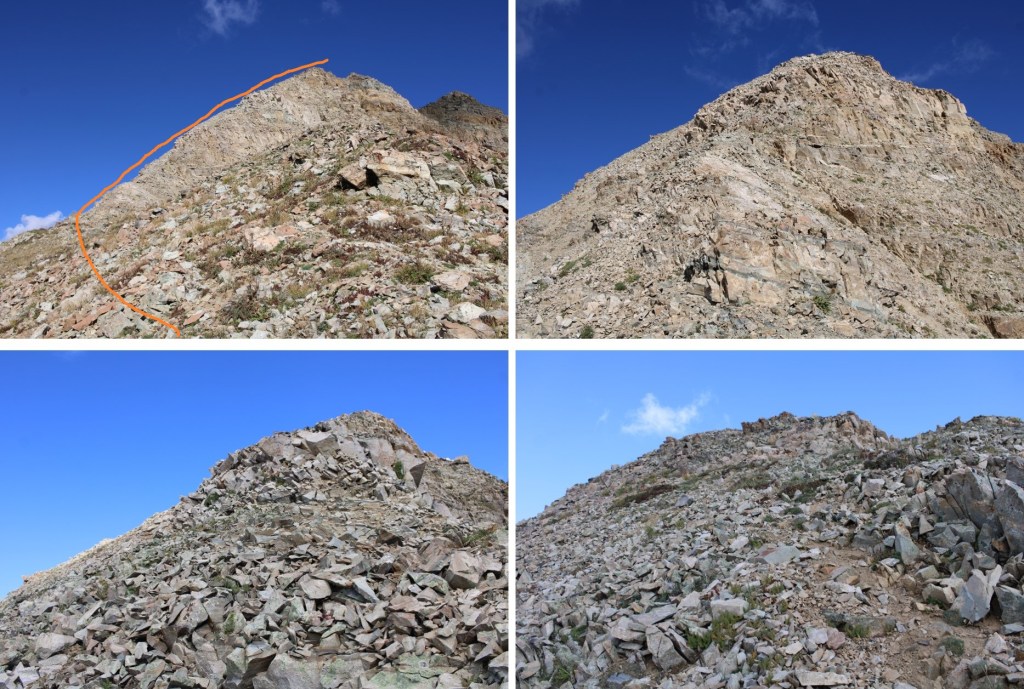
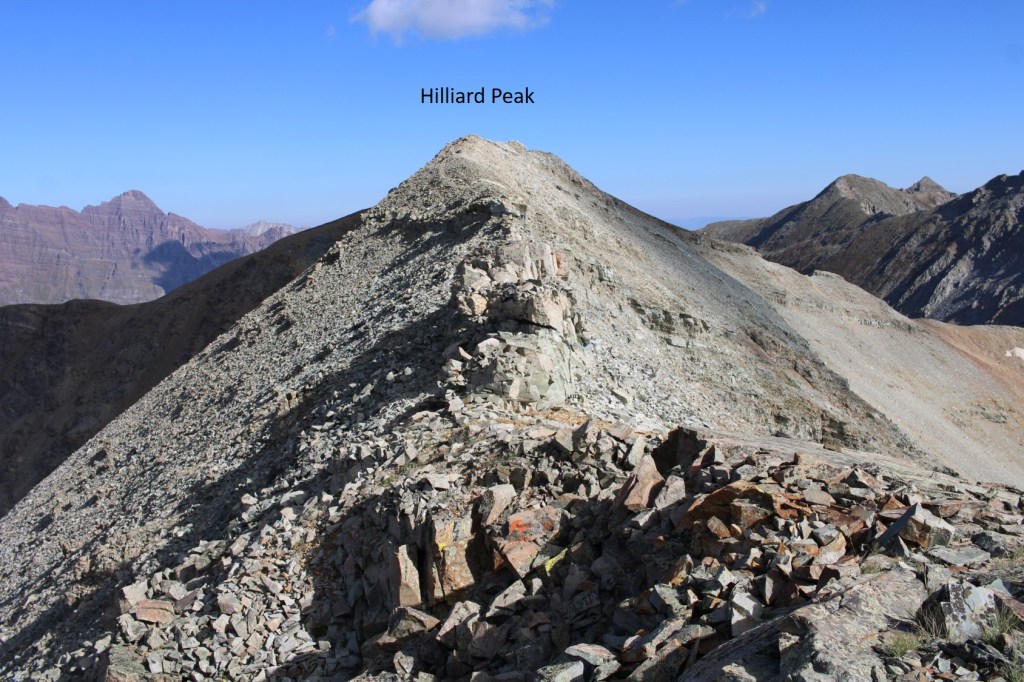
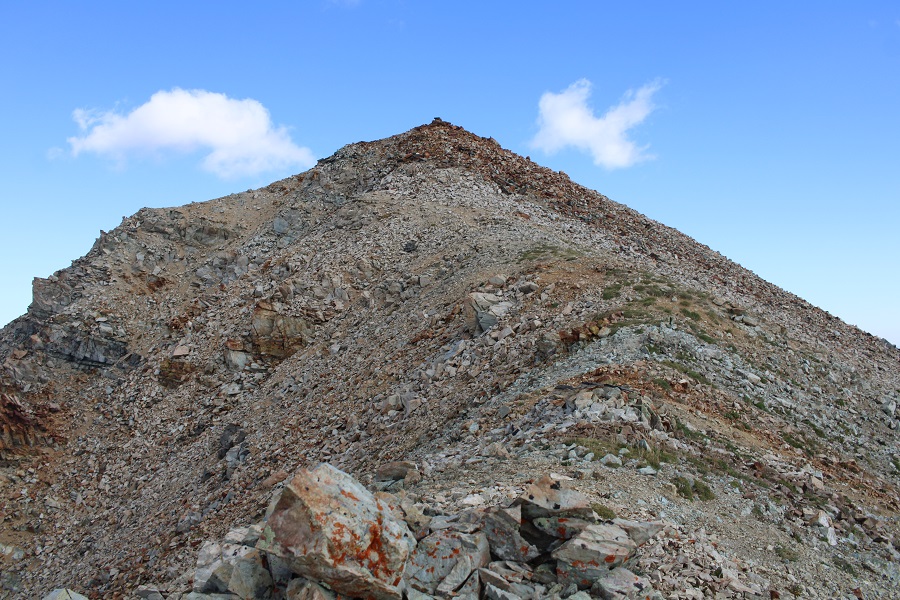
Here are some pictures of the route to that point.
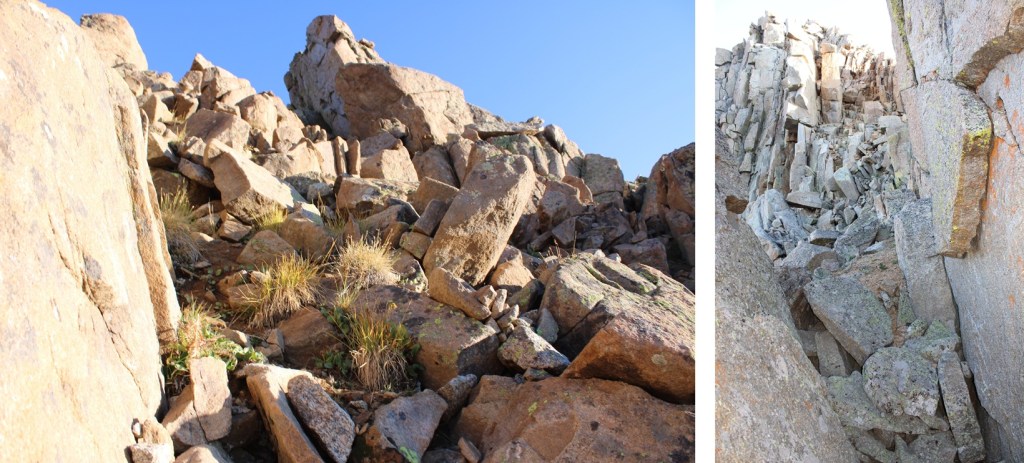
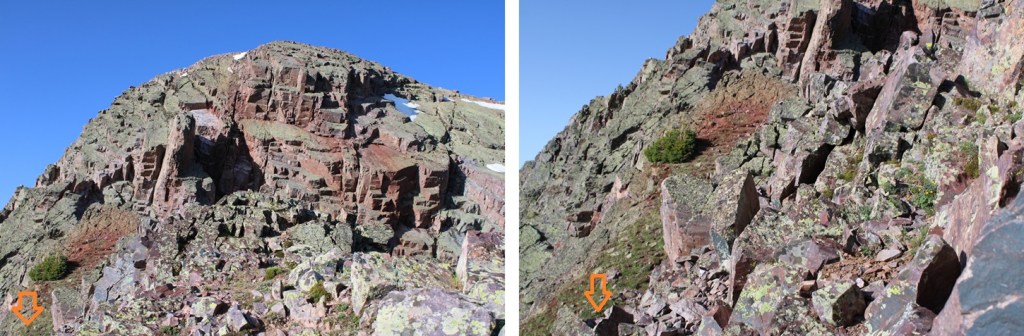
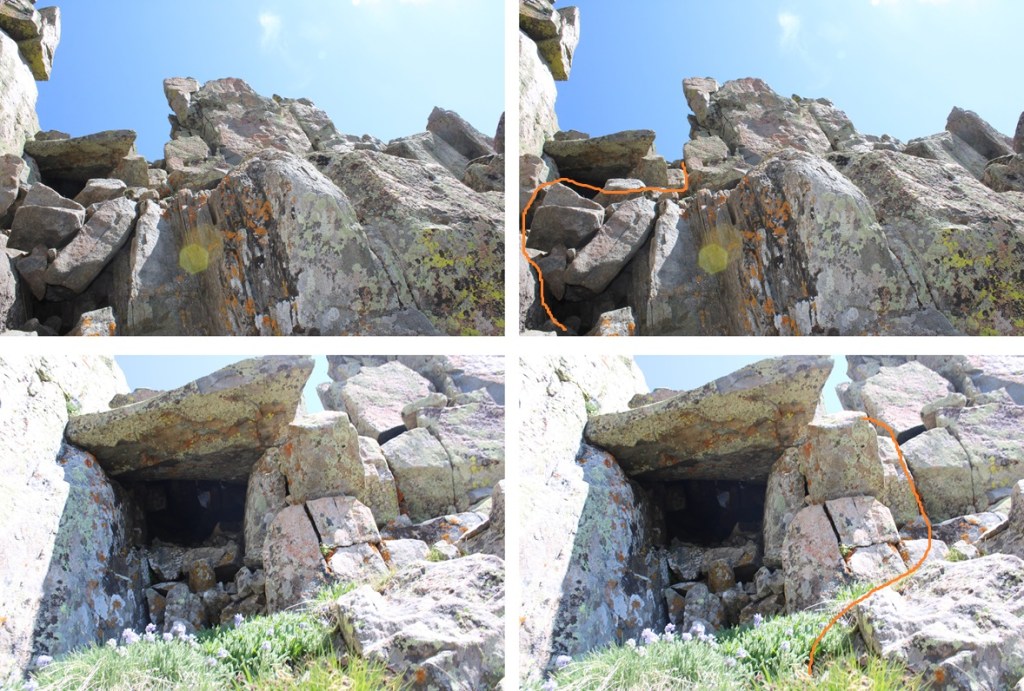
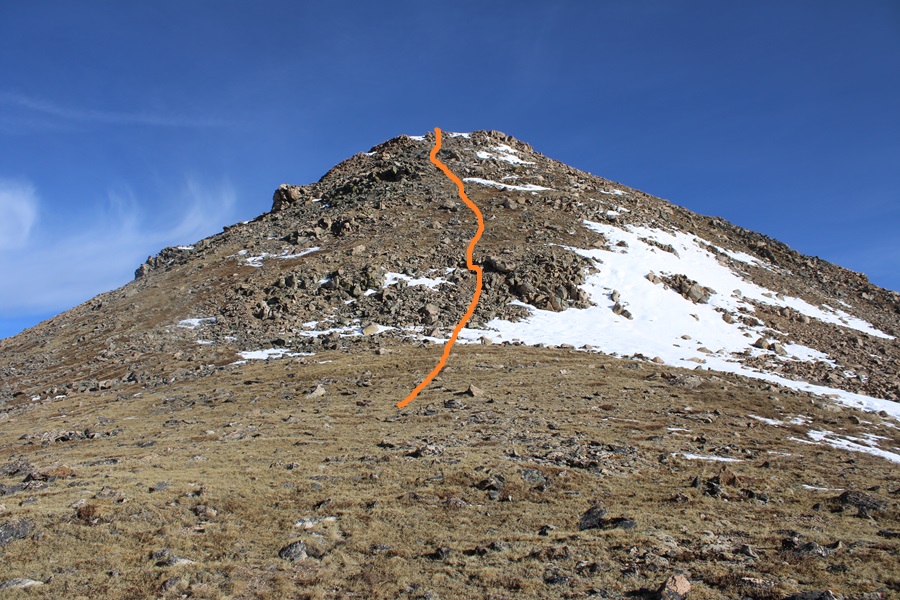
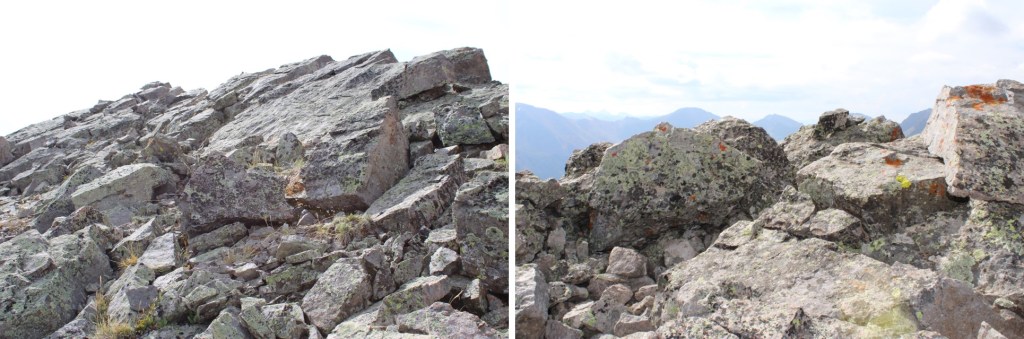
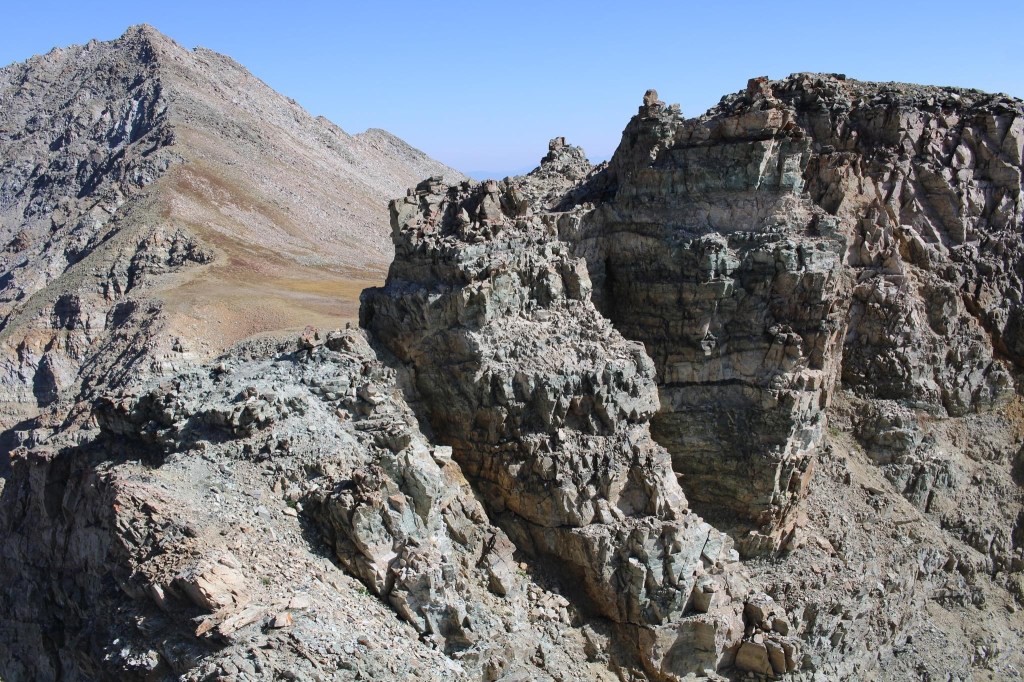
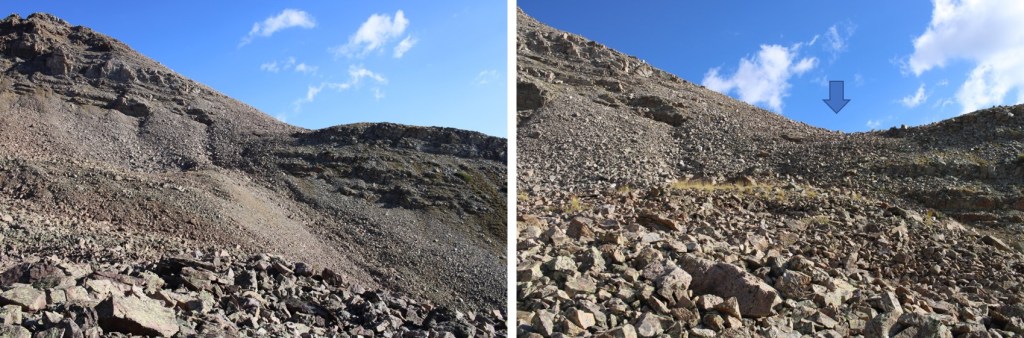
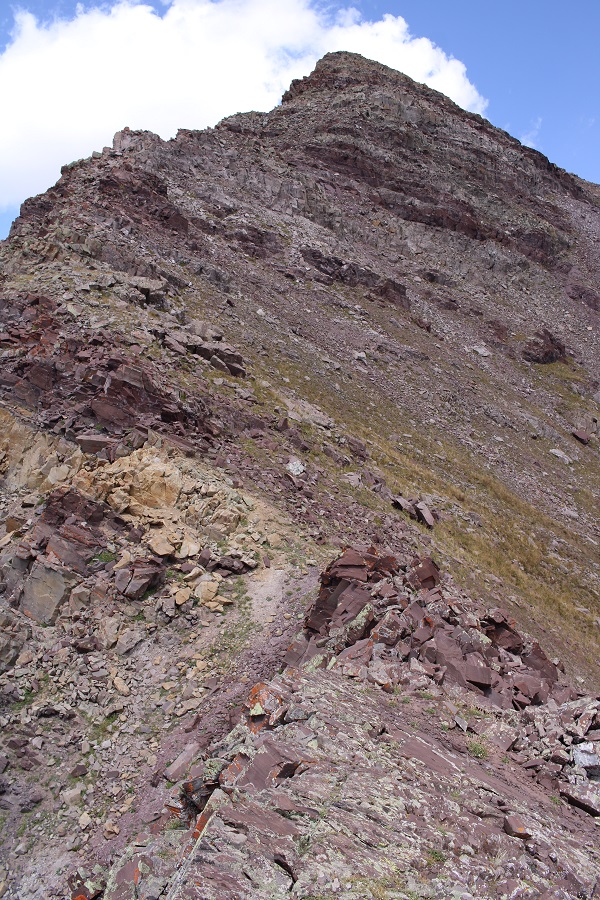
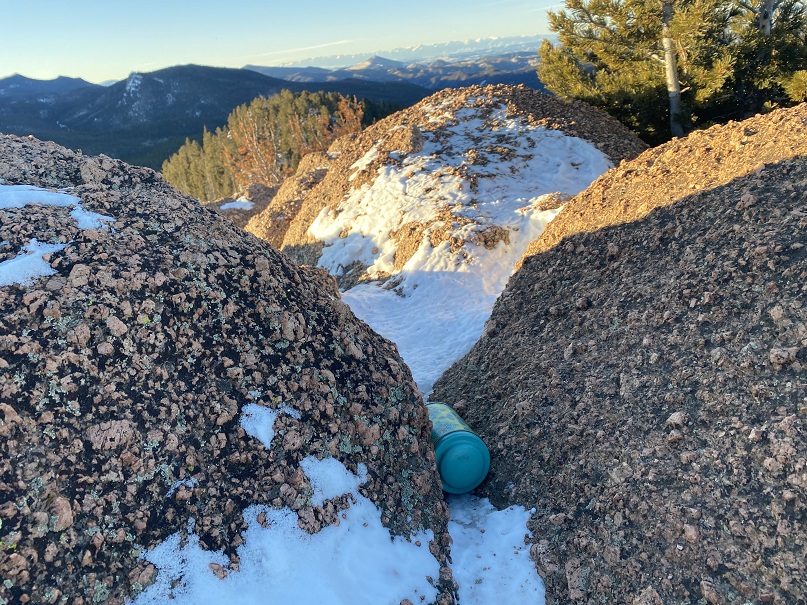
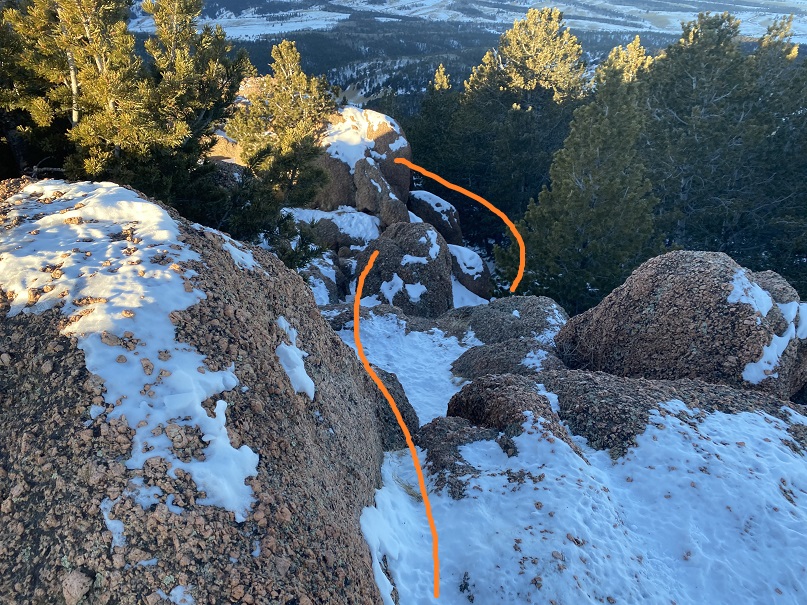
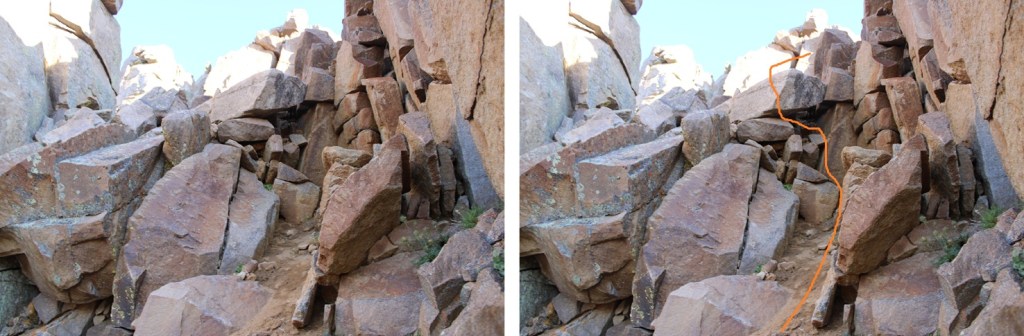
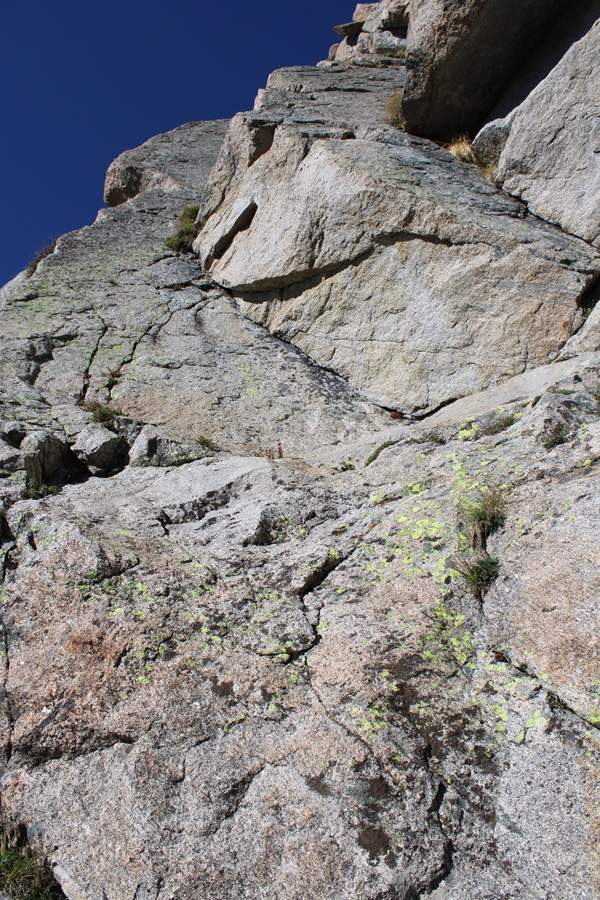
This was the move that I didn’t feel comfortable attempting without ropes.  It was very similar to the final crux on Jagged after the rockfall, but when I was there I had rope to help me.  The rocks above this problem overhang several feet over what look like easy steps from below, and it’s steep on all sides and all the rocks are loose, making depending on them for support/balance poor judgement.  The picture doesn’t do this area justice, and it wasn’t until I was under the rocks I realized the difficulty.  If I saw this picture, I’d go for it, but when I was there I knew it was too dangerous for me to do solo.  I could see where I needed to place my hands/feet, but I wasn’t tall enough to make the moves.  Rock climbing shoes might have helped, and a rope definitely would have, but I had neither.  I spent about 15 minutes trying to find a way up/around this, and in the end turned around.  I’d just been on an amazing podcast (seriously, you should listen to it just to know the podcaster: it’s called “Going in Blind” and will change the way you think of your own life experiences).  We talked about failed attempts, turnarounds, risk tolerance, etc. and this move was above my risk tolerance for soloing.  How terrible would it have been if I’d just talked about my many, many failed attempts and turnarounds and attempted this and failed because I was overconfident?  I’d look like  a fool.  If I’d been with a friend they could have cheerleader lifted me and I could have pulled them from above but solo I didn’t feel comfortable attempting this move.  I felt there was a 75% chance I could make it up, which just wasn’t good enough, especially when going solo.  However, if you can get over this class 4 move it’s an easy class 3 climb to the summit. 
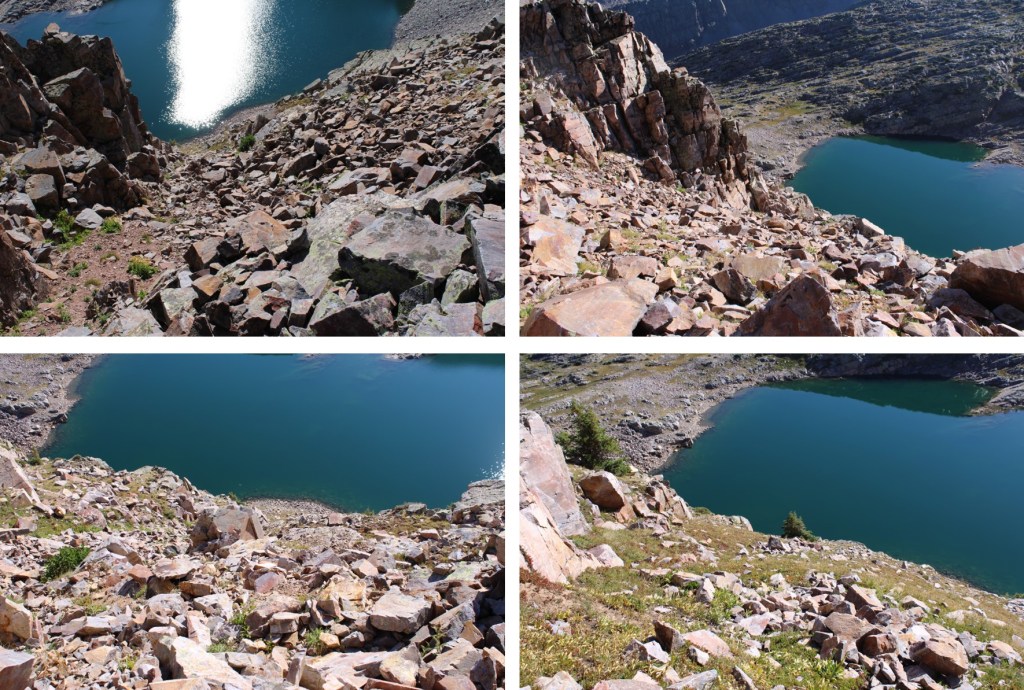
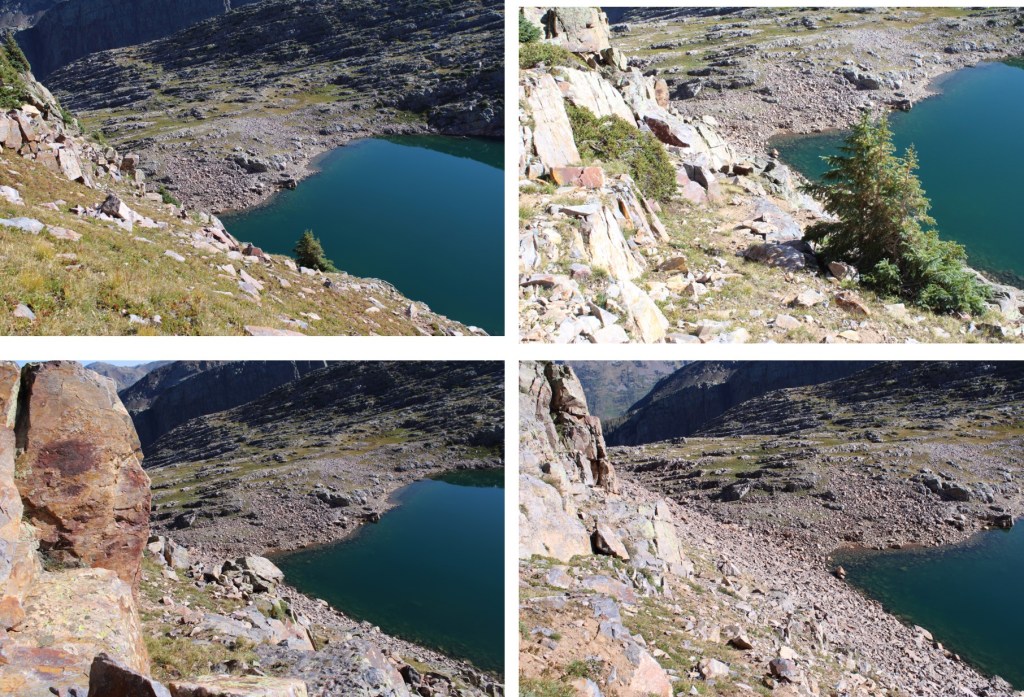
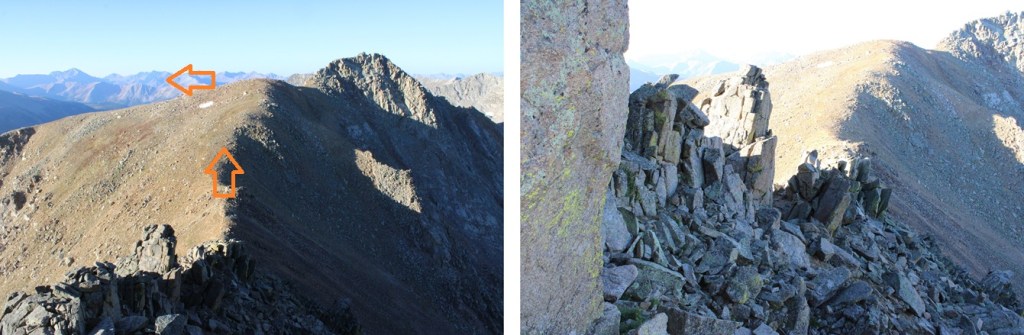
As I said, I turned around and headed back down to the basin, retracing my steps on easy class 2 terrain.
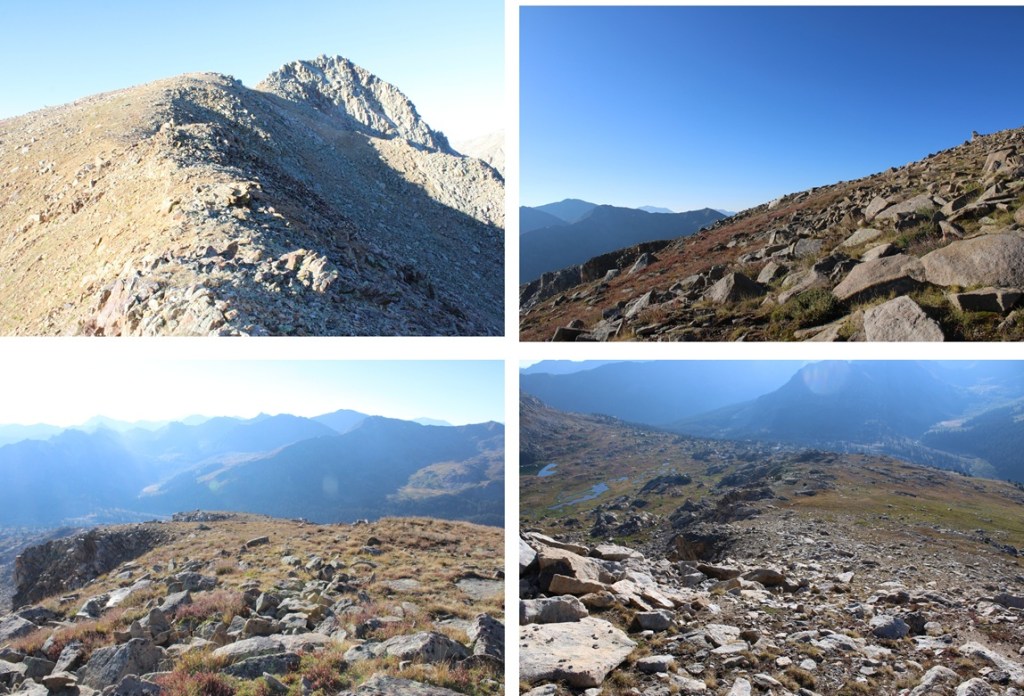
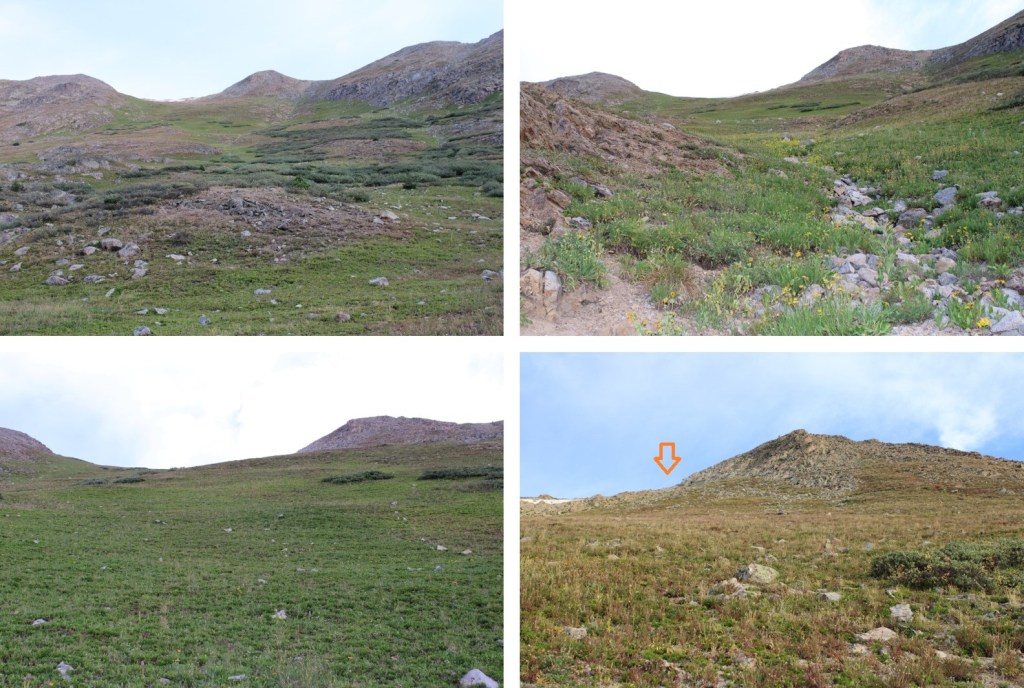
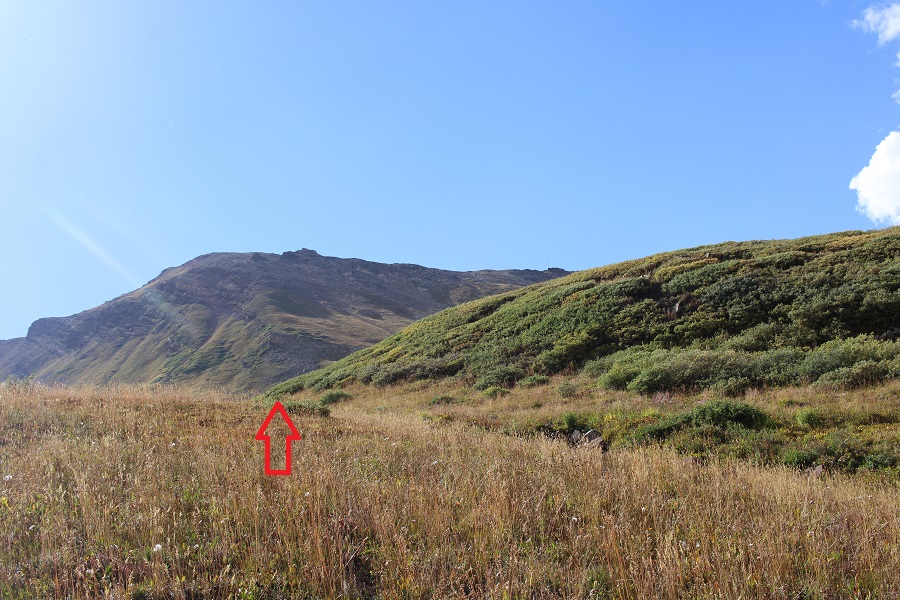
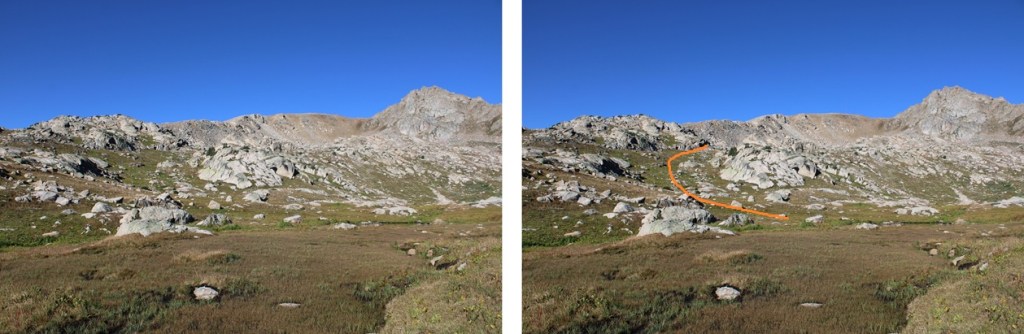
Back in the basin at my campsite it was only 9am.  I had a quick snack and started out again, this time taking the pink route up to 13204.  I started out by heading northwest up the basin towards the base of a large rock outcropping.  This is choose your own adventure, and all of it is class 2, just make your way towards the large rock outcropping.
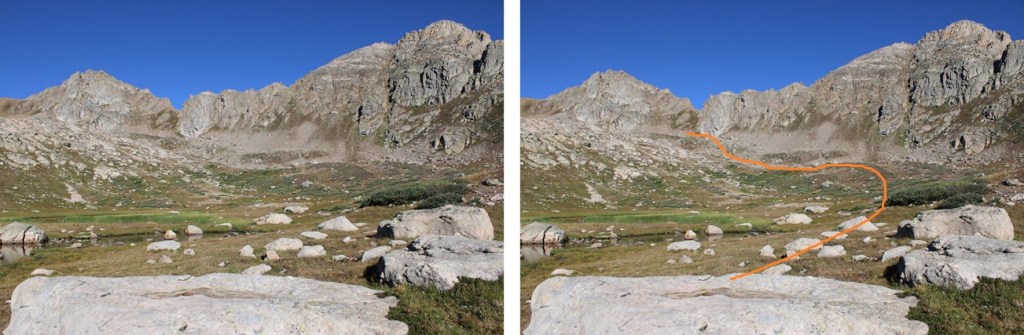
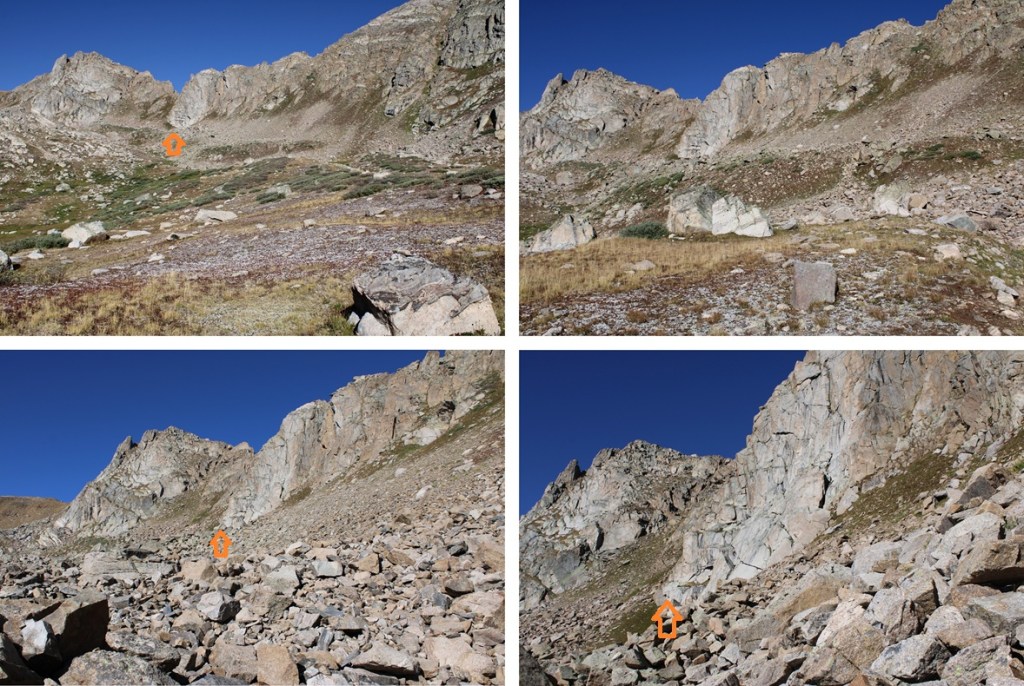
From the base of this large rock outcropping I looked for a grassy ramp in the distance to the south/southwest.  It’s small, and the access point for the rest of the climb. 
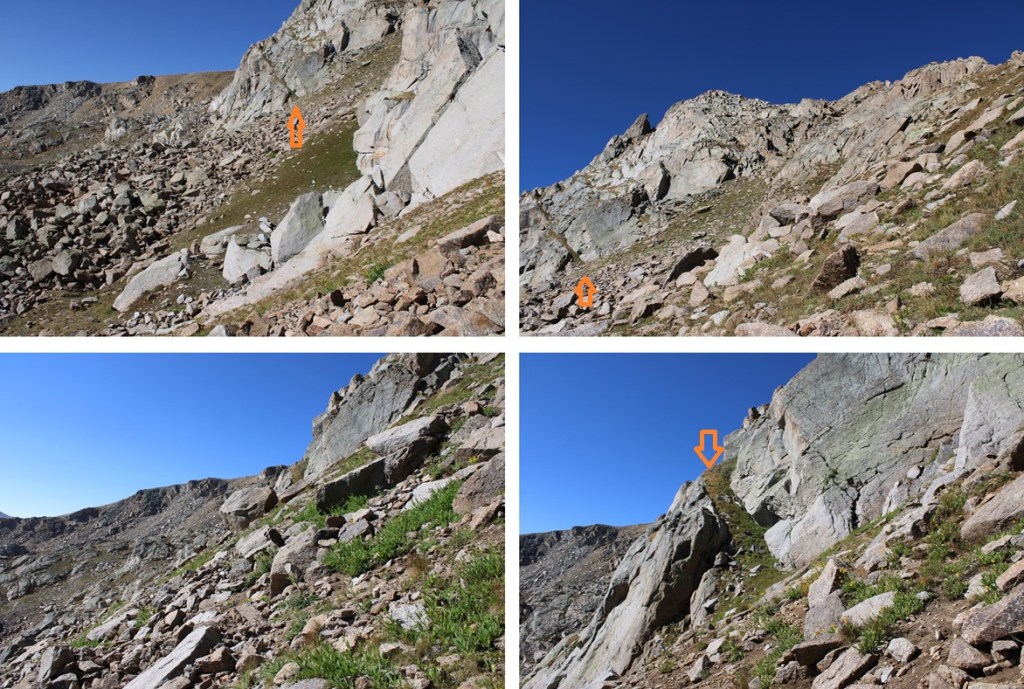
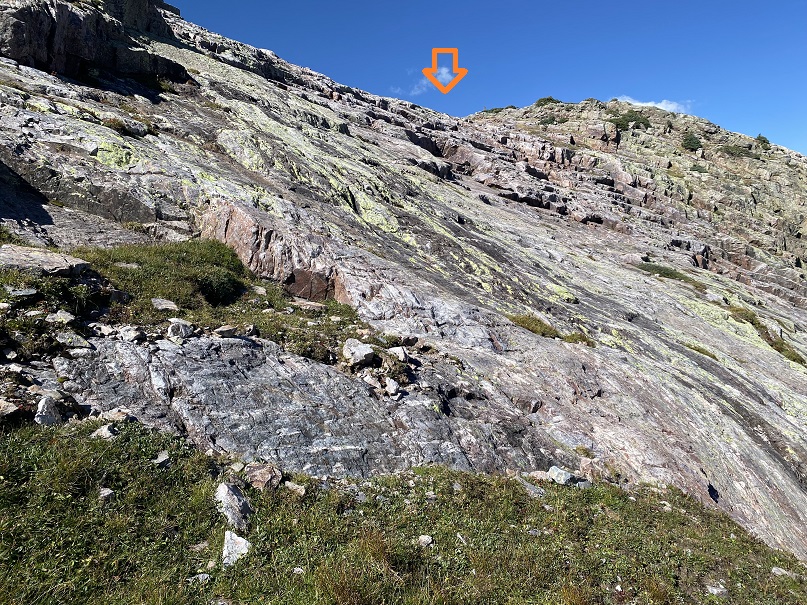
I hiked up the grassy ramp and came to some willows.  My beta said from here to climb up the rock slab.  This was obviously class 4+ and I once again didn’t feel comfortable climbing up this rock face. 
So I did some scouting around.  BEFORE you see this rock face and before you make it to the willows (which are obvious) there is a nicer class 3 grassy slope.  Take that up and follow it to the left and it will keep you on route but keeps it class 3.  There’s some  exposure, but I felt much safer on this route, and put up some cairns to indicate where you ascend.
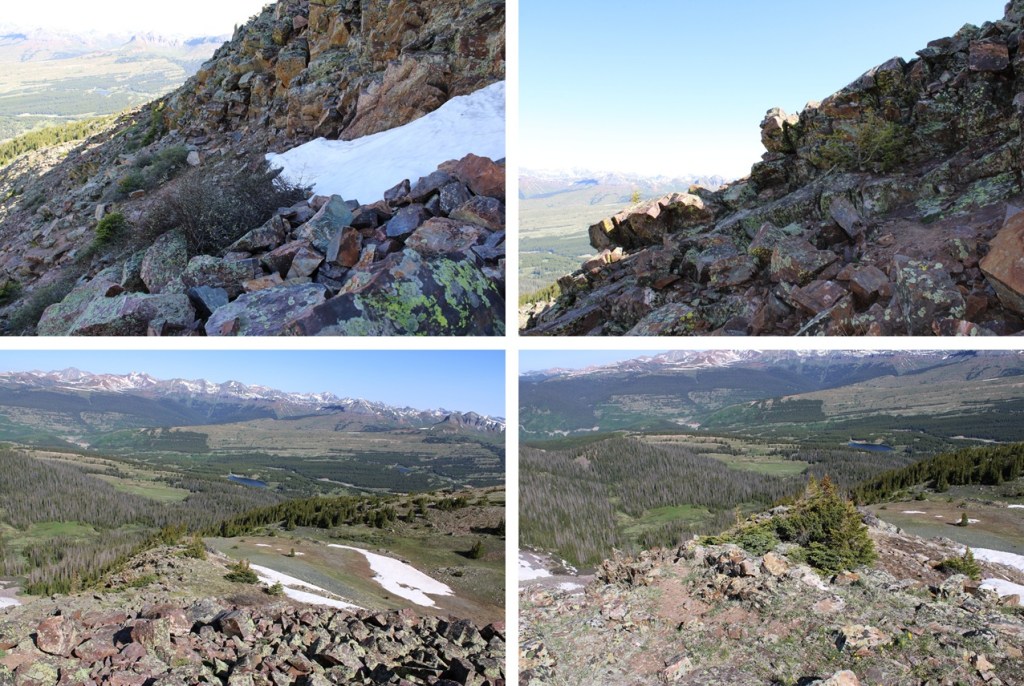
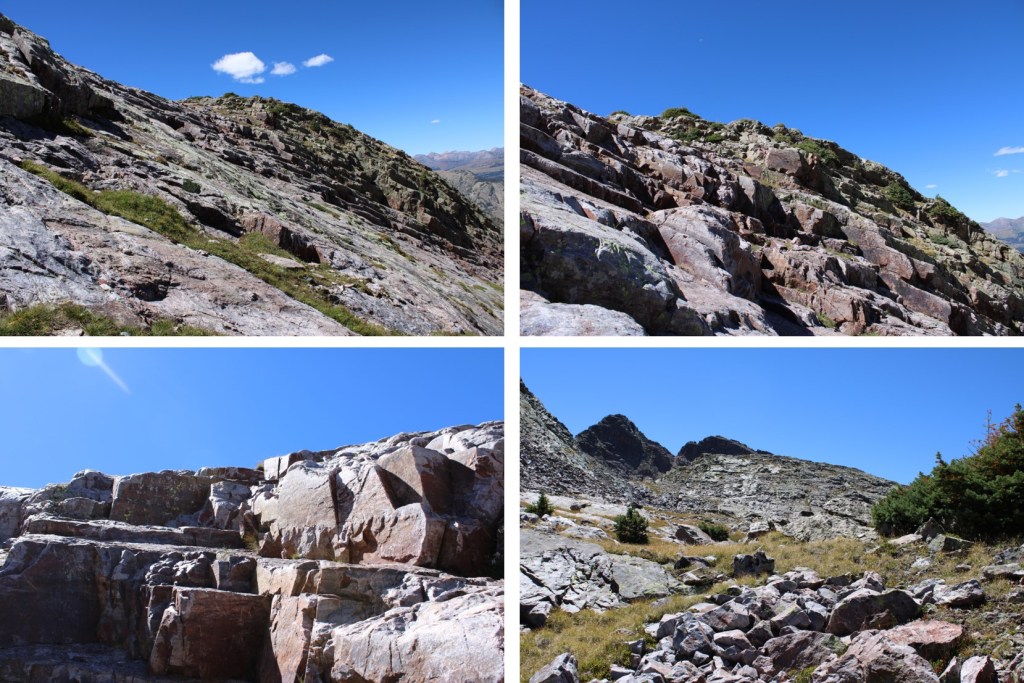
From here on out it’s class 3 choose your own adventure up the grassy slopes.  There is exposure here and be extra careful if the foliage is wet (which it was during my trip).  I was aiming for a notch in the mountain, heading west.
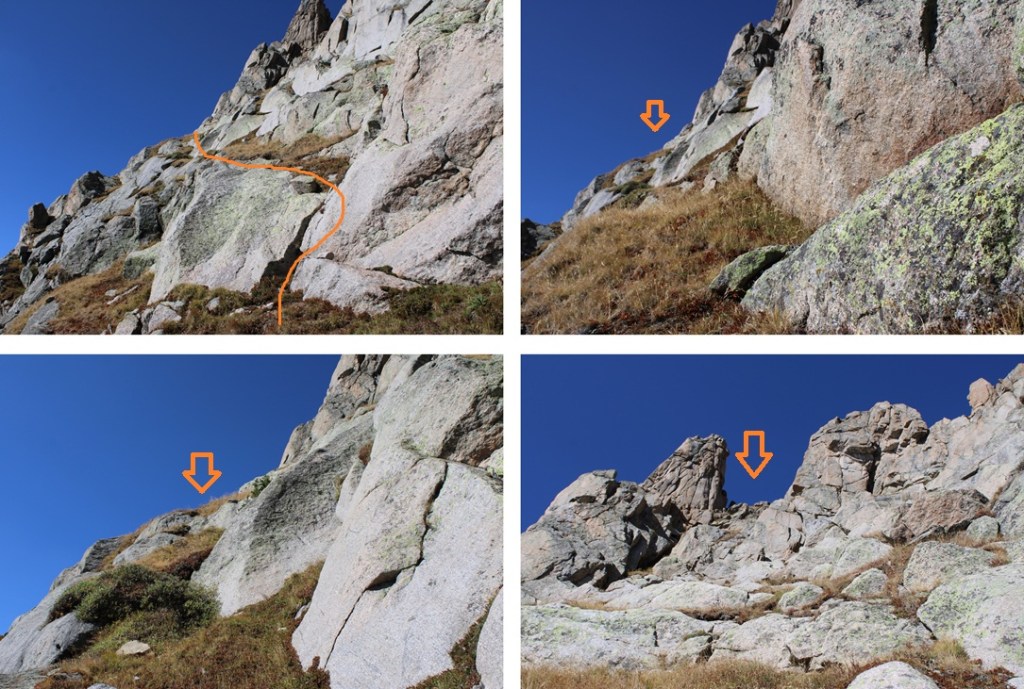
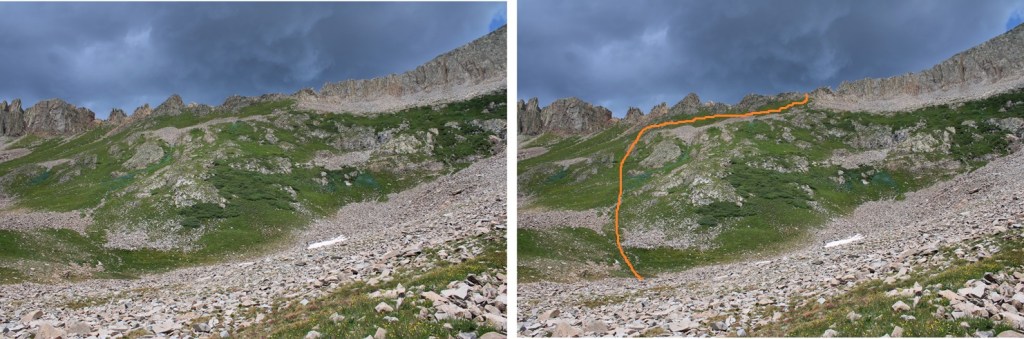
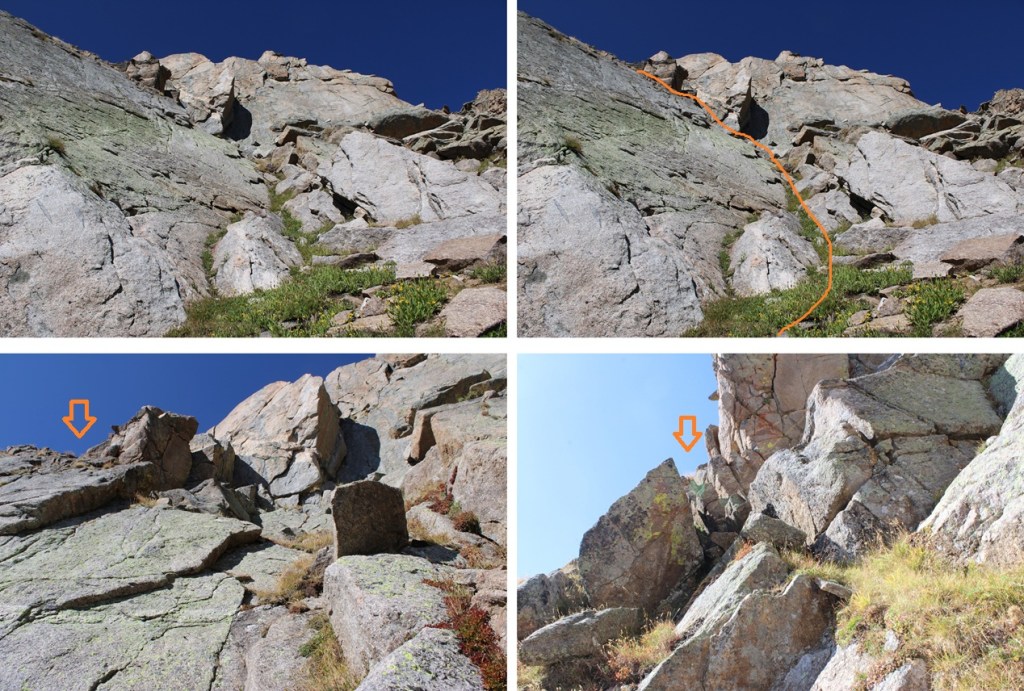
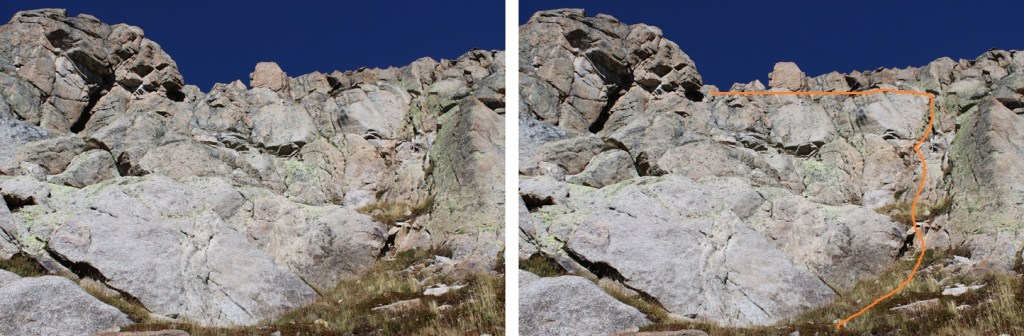
Here’s looking from below the notch, and the route I took, class 3
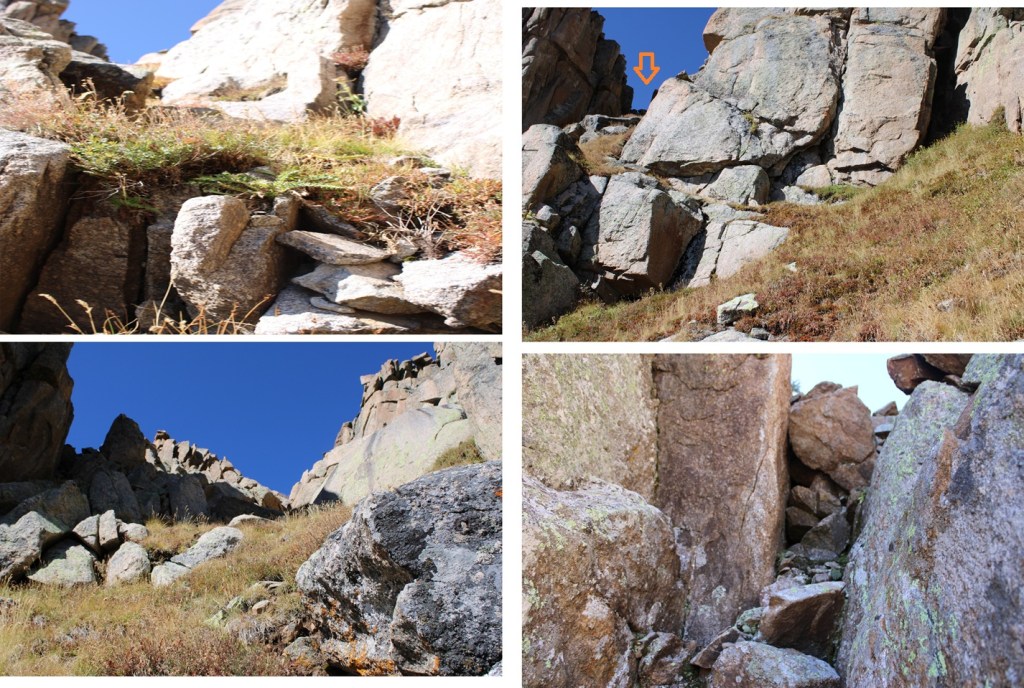
Once over the notch I needed to descend about 20 feet into a gully, then re-ascend to the other side. 
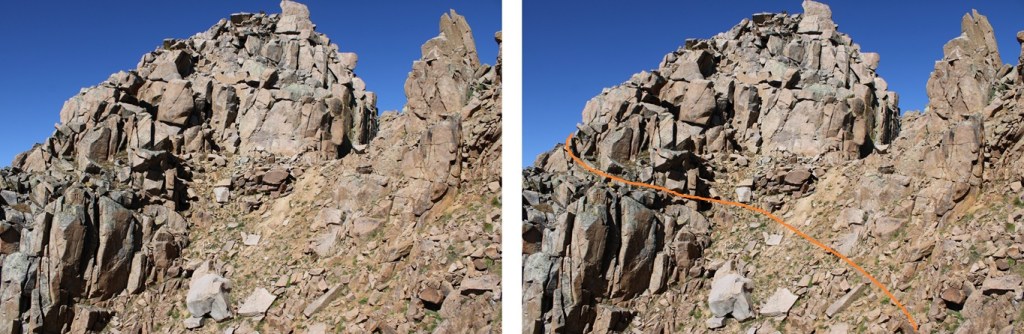
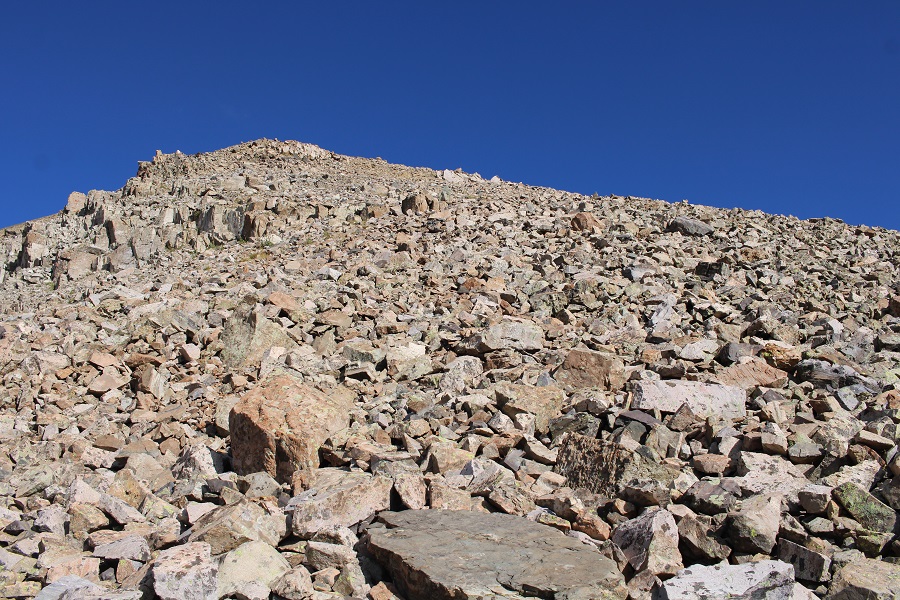
Now I found cairns leading me north and then west to the summit.  From this point on it was difficult class 2, easy class 3 to the summit.  It was choose your own adventure, and the routes were obvious.

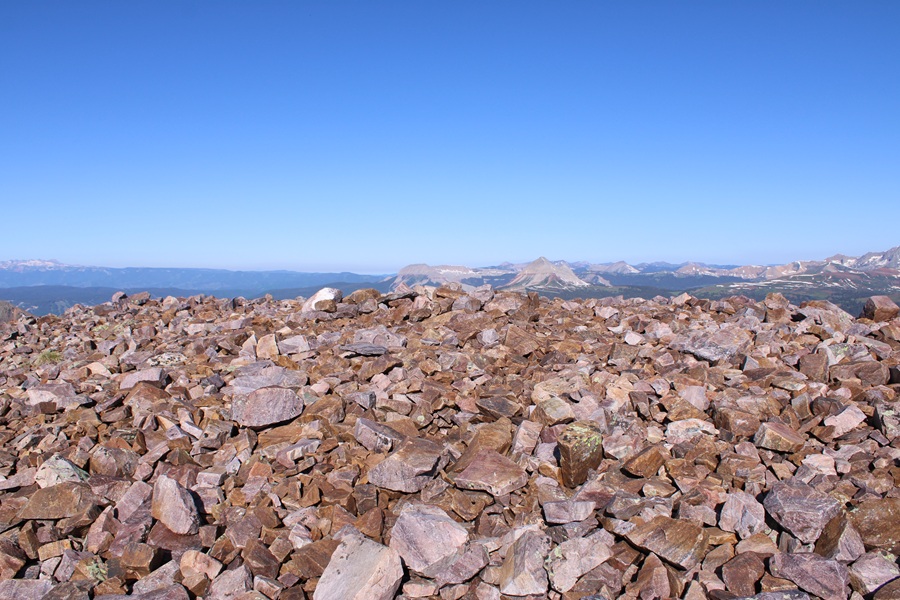
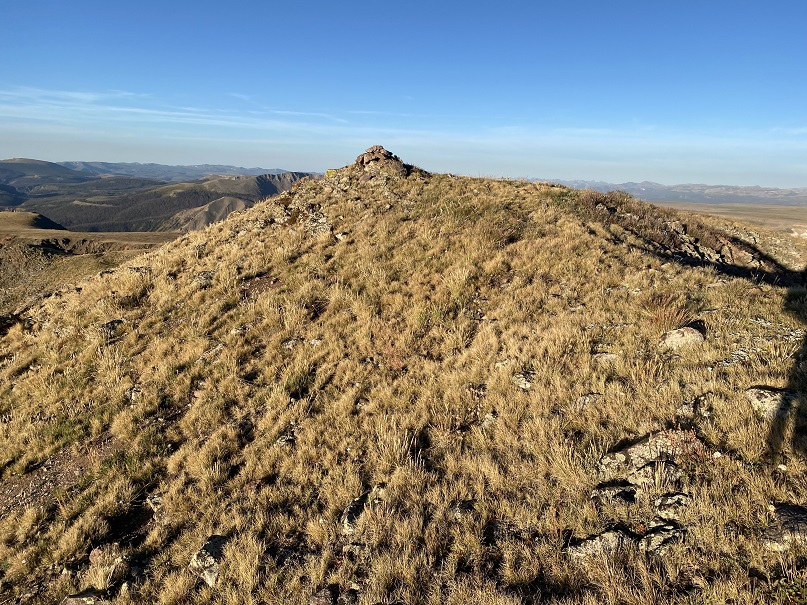
The true summit is to the left, with a small rock on top of a large boulder.
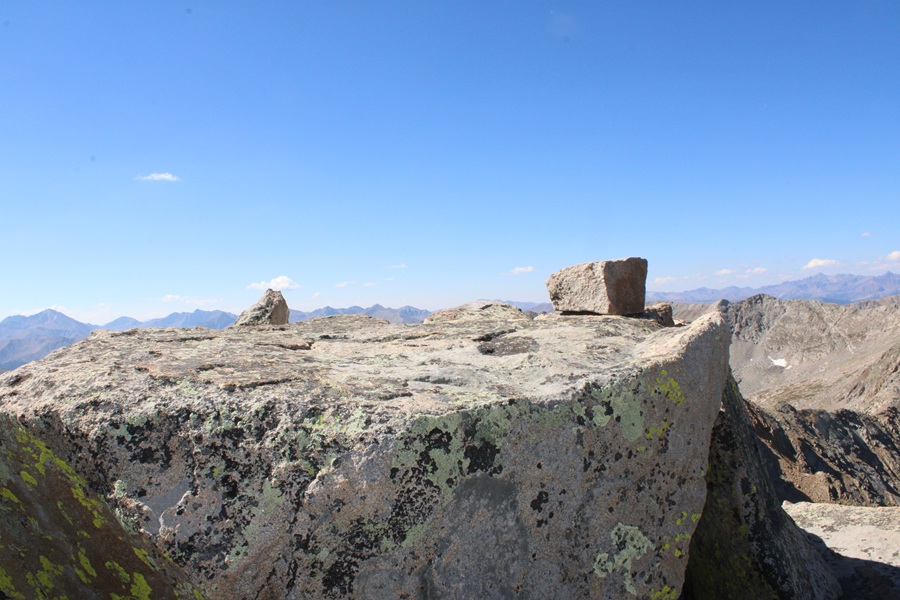
I summited 13204 at 10:50am

13204:

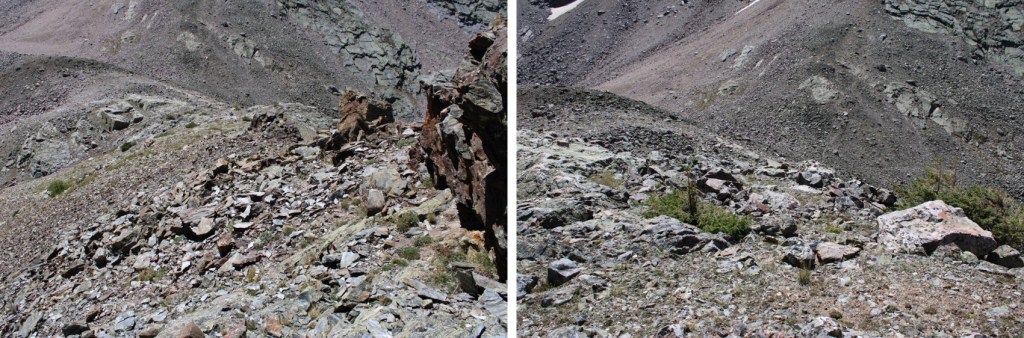
Now you might think I’d head back the way I’d summited, but I was curious as to if I could have made it down that class 4 route I’d attempted earlier, so I headed back the way I’d summited, then headed down southwest to try to link up my climb from earlier in the day.  It was all class 2 until I got to the class 4 part, and I was glad I’d turned around. 
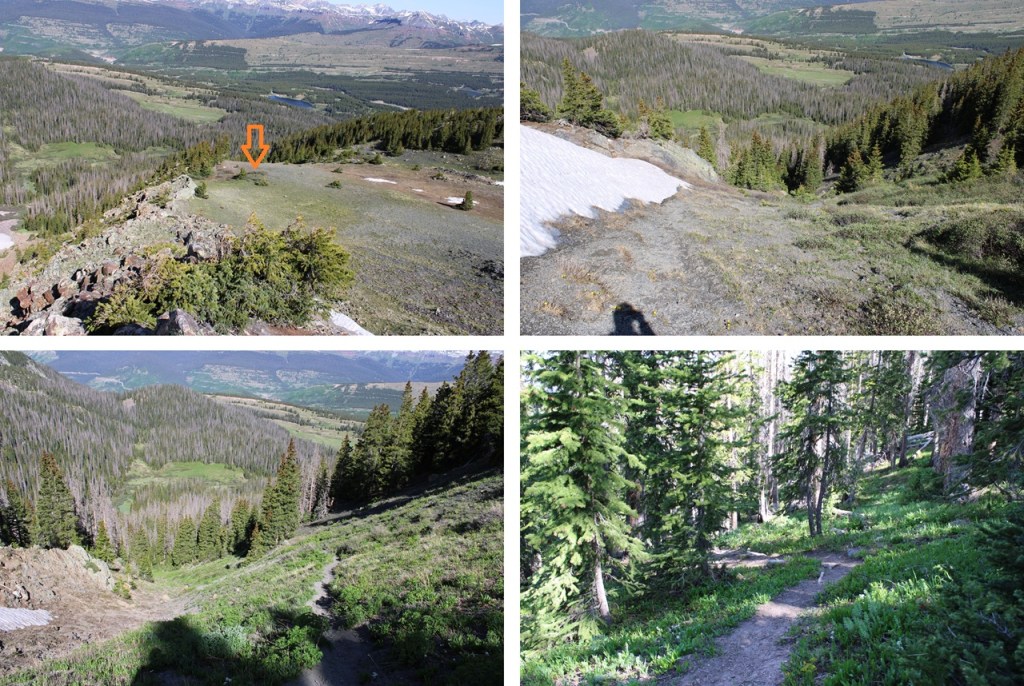
Seeing it wasn’t any better from this angle I reascended and found a gully to head down. I could see all the way down to the valley, it looked class 2, so I decided to go for it. I started at 13100’ and descended the entire way down on class 2 terrain just below where I’d dropped down and re-ascended again on the ascent.  The place just before the notch on the return.  That gully goes at class 2.  I could see the access point from the summit.
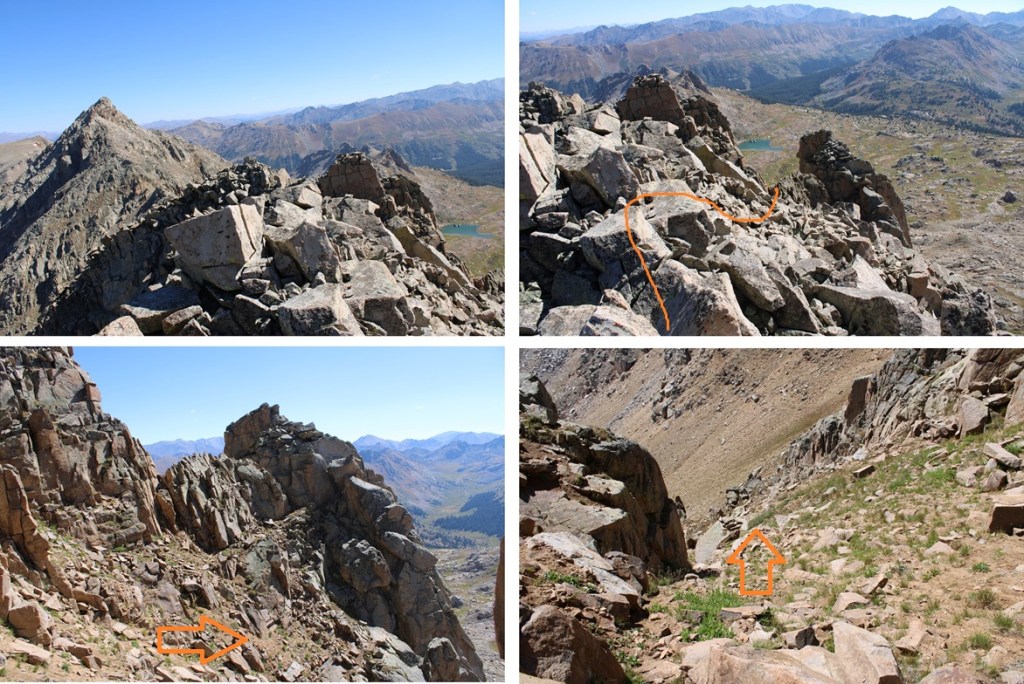
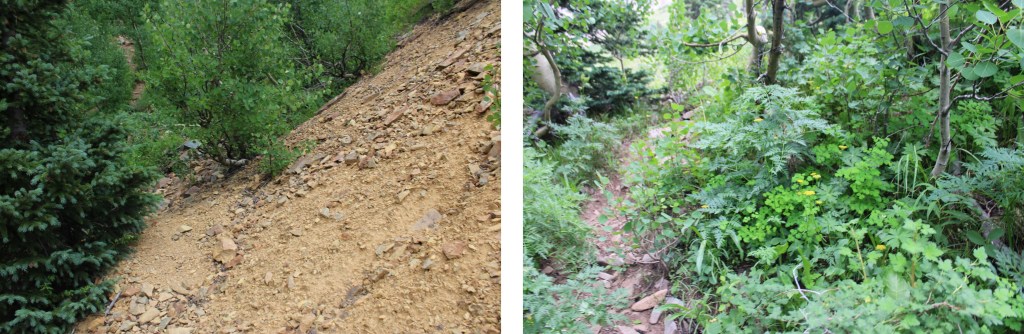
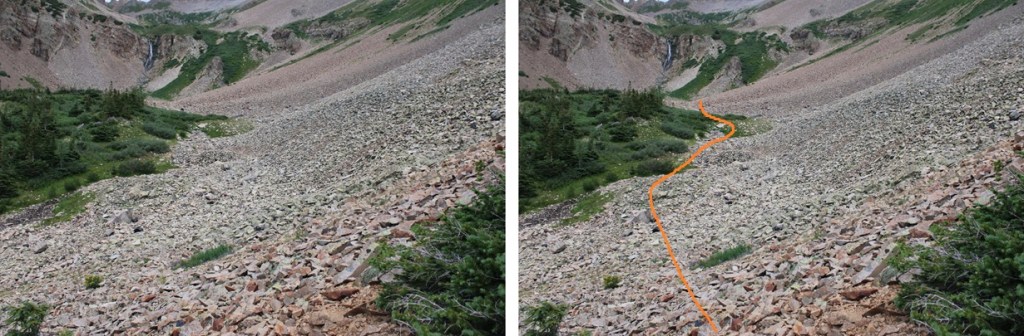
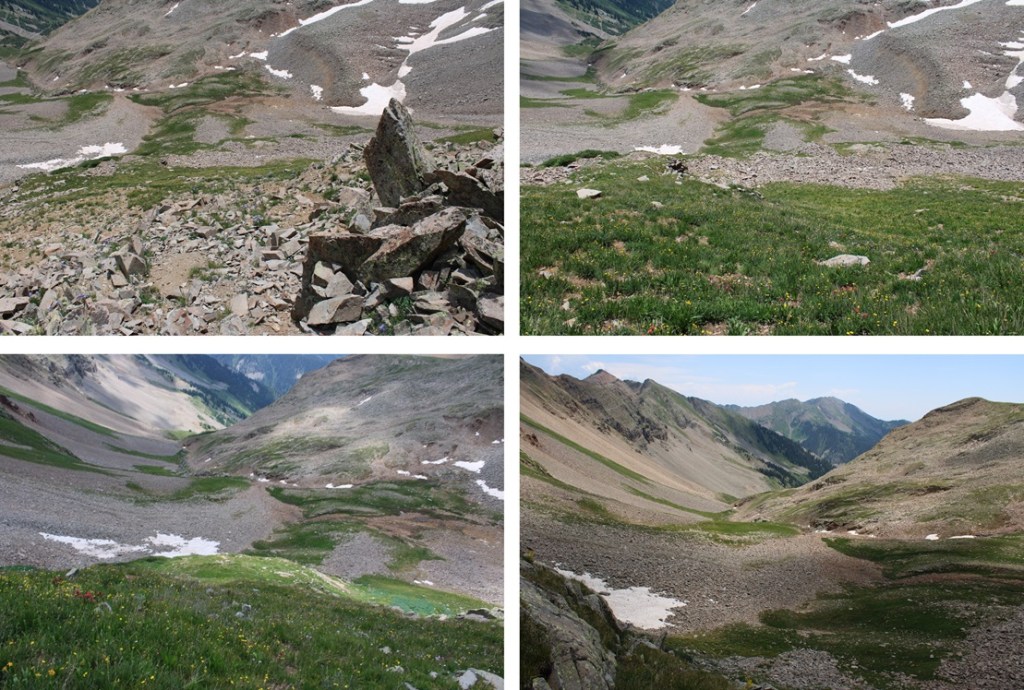
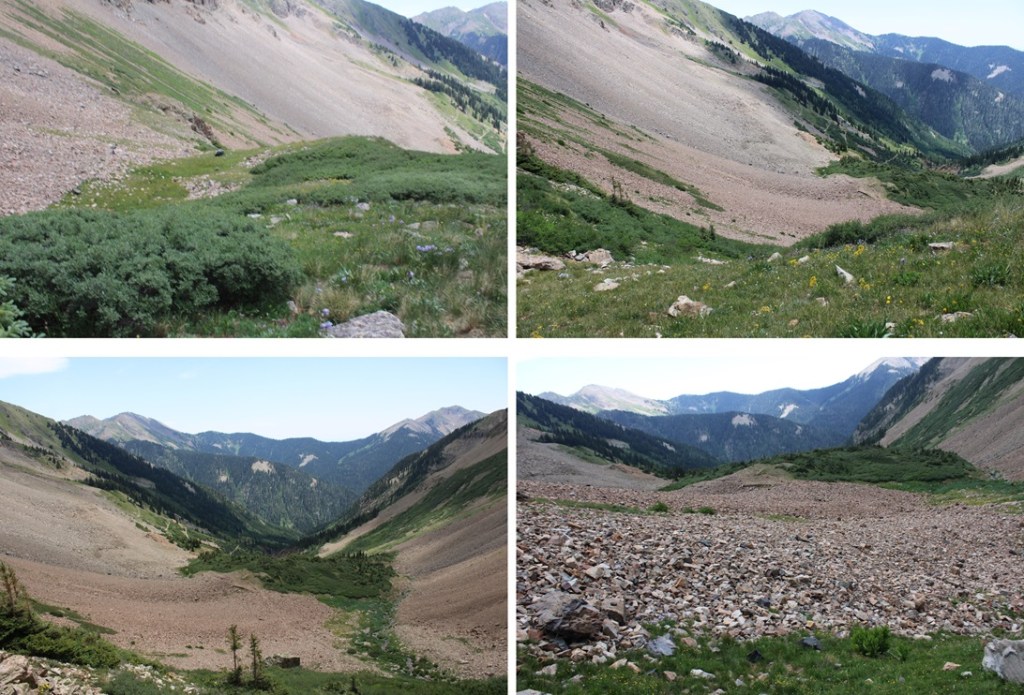
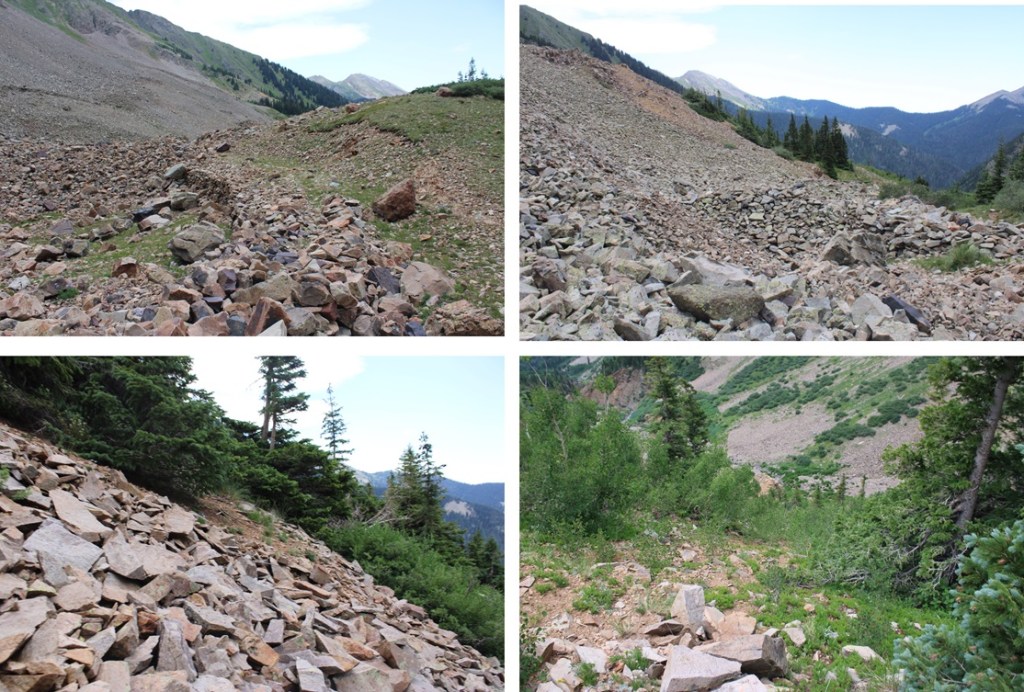
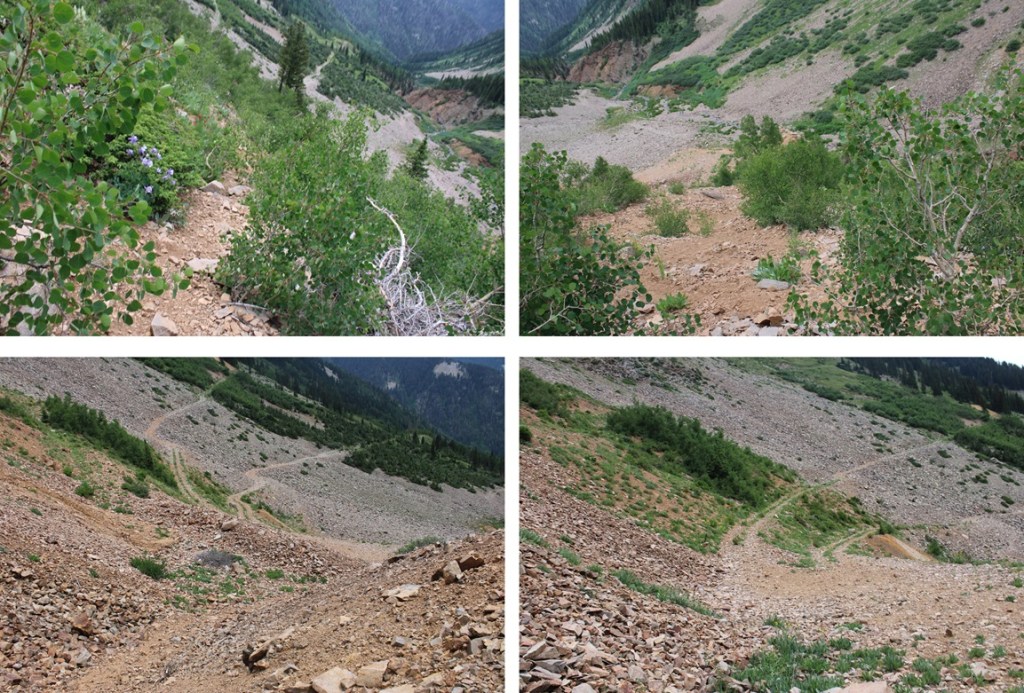
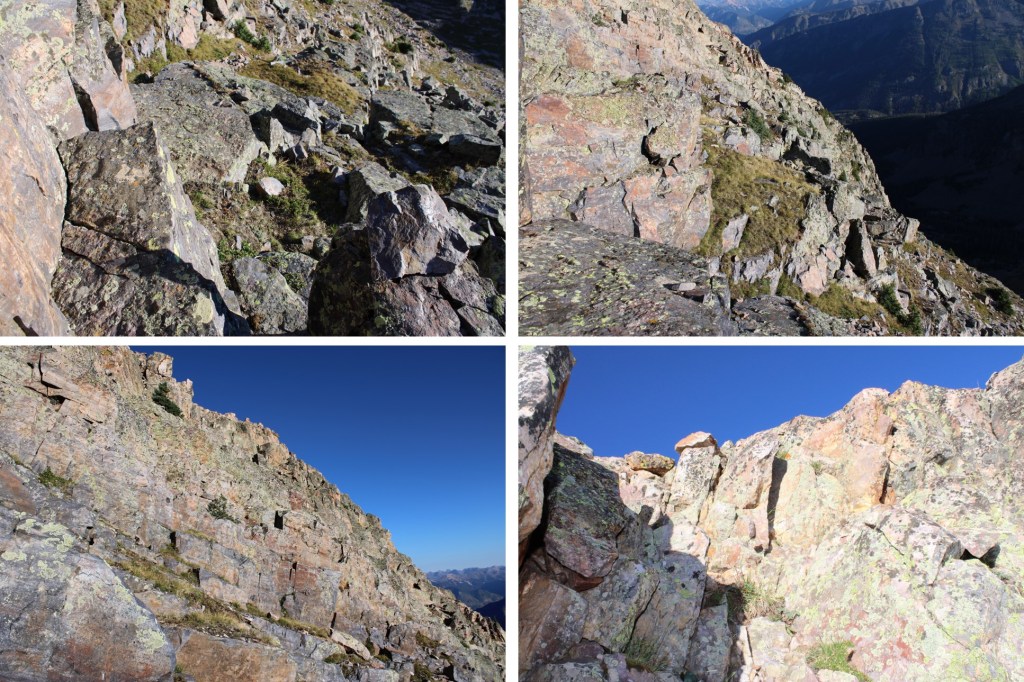
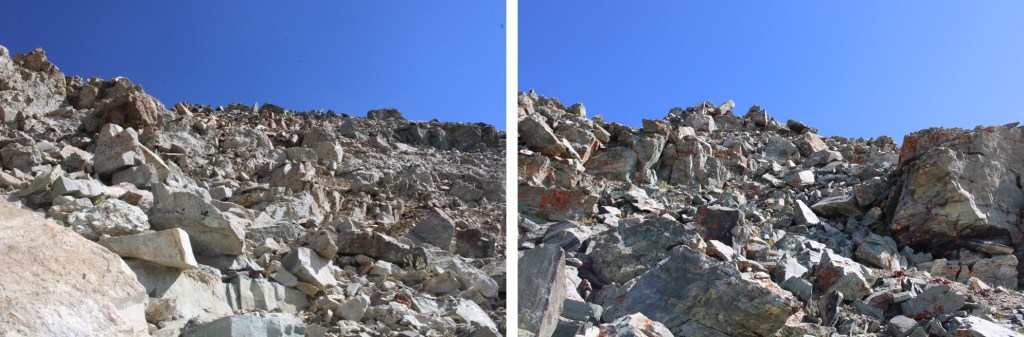
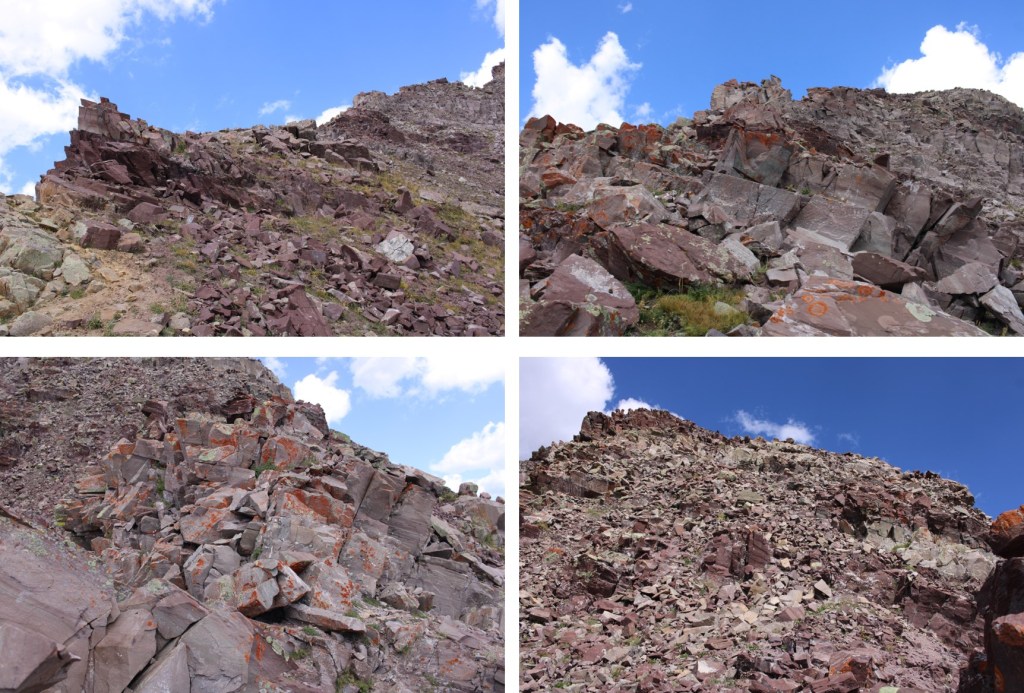
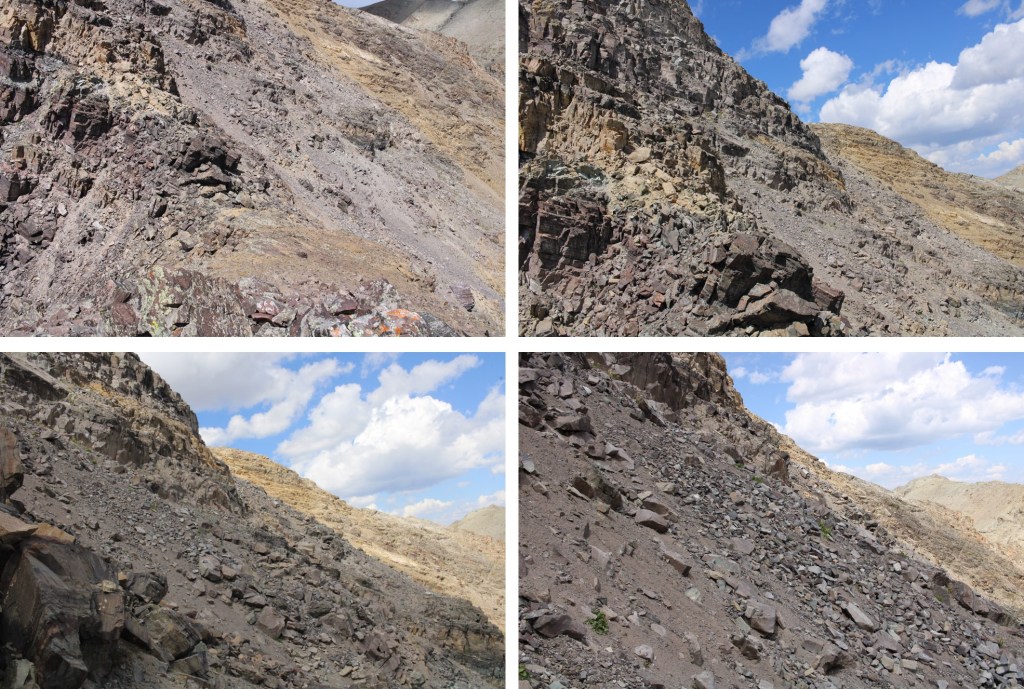
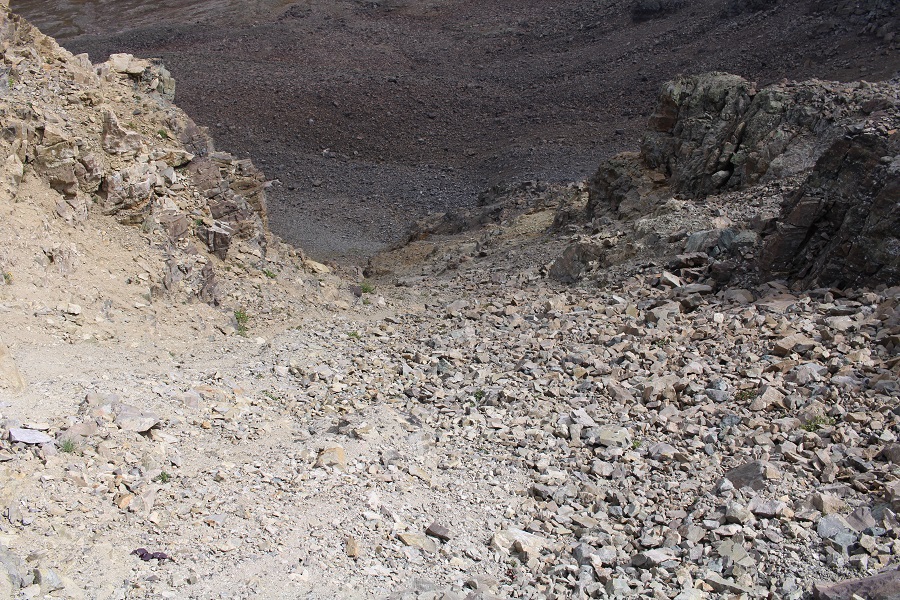
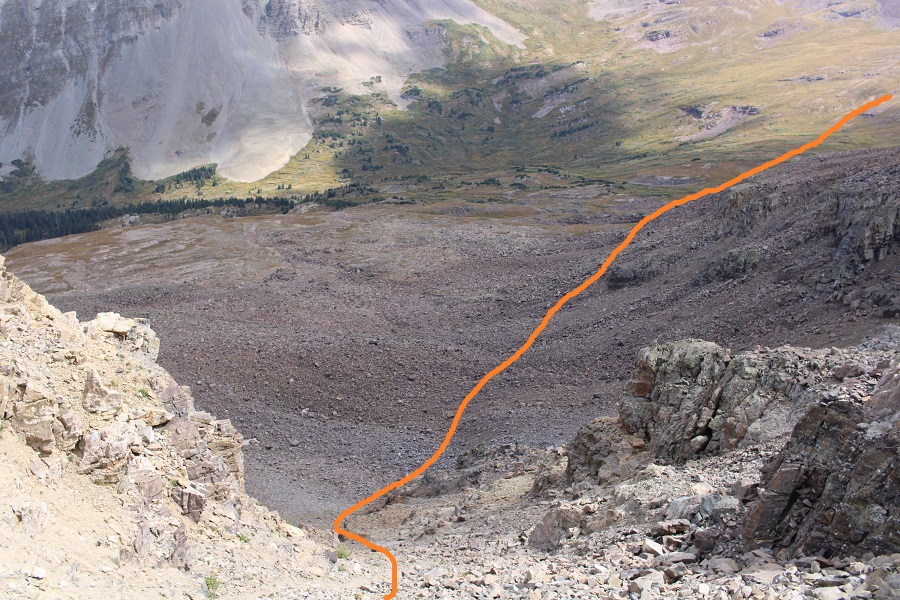
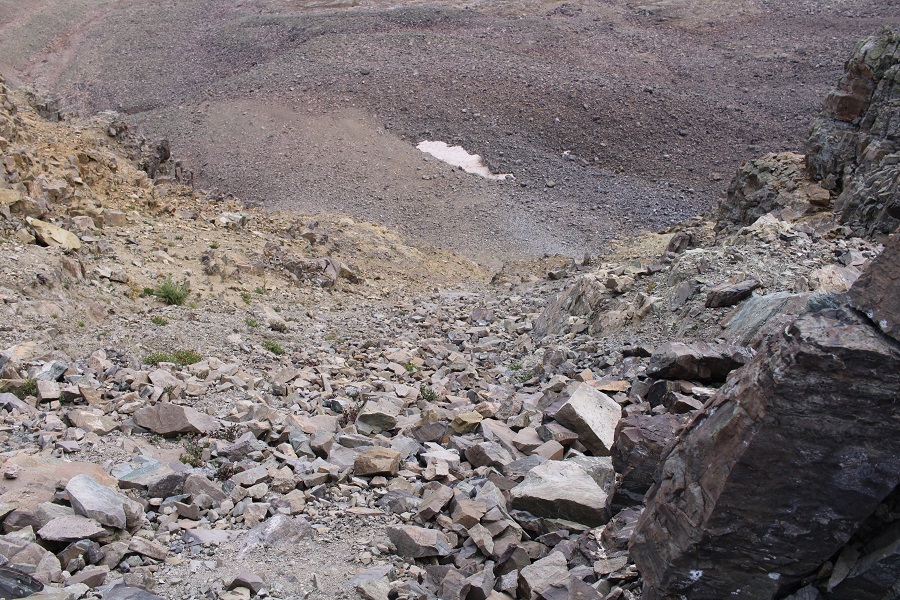
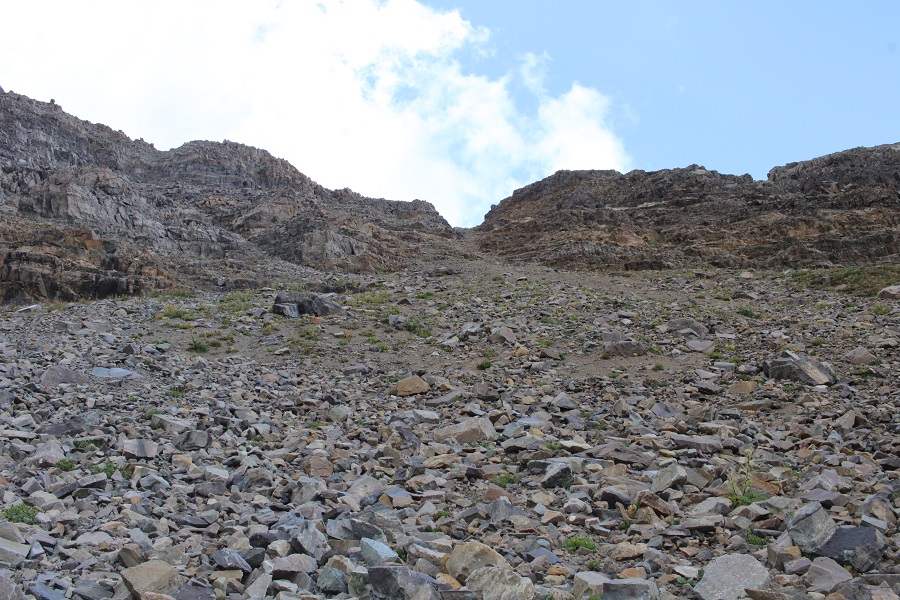
Here are some pictures looking down the gully.  It splits at least twice, but each option is class 2, so pick the route you like the best.  If I were to do this peak again, I’d take the gully.  Tons of game trails, not a lot of scree, lots of elevation gain but no exposure.  Just keep this as an option as a bail out point, or another way to summit this peak if you’re dividing the peaks and not doing the traverse. 

From the base of the gully I paralleled the ridge I’d hiked that morning, heading west until I’d reached my camping spot.
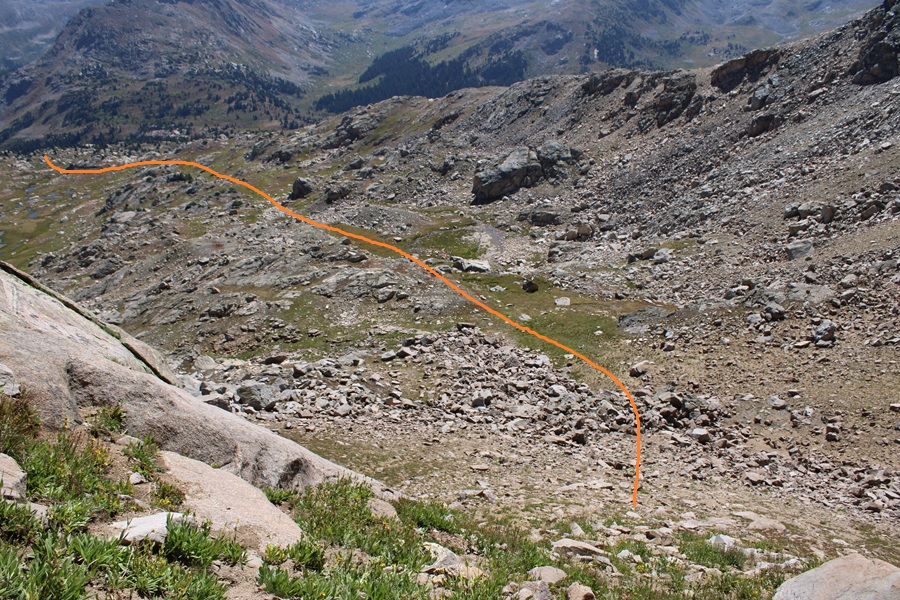
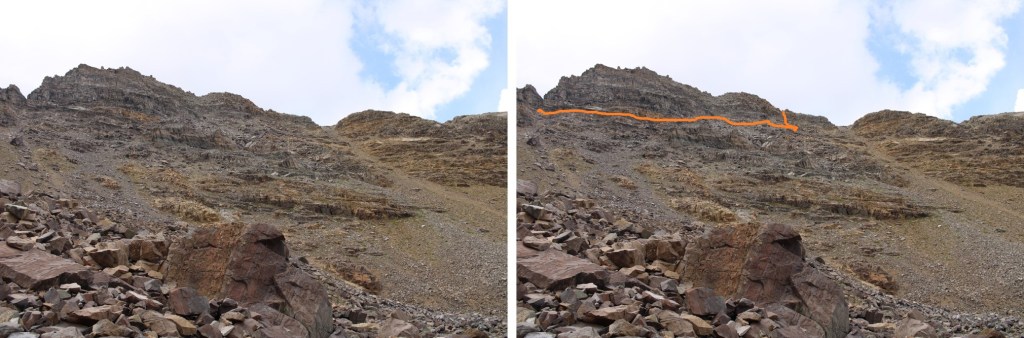
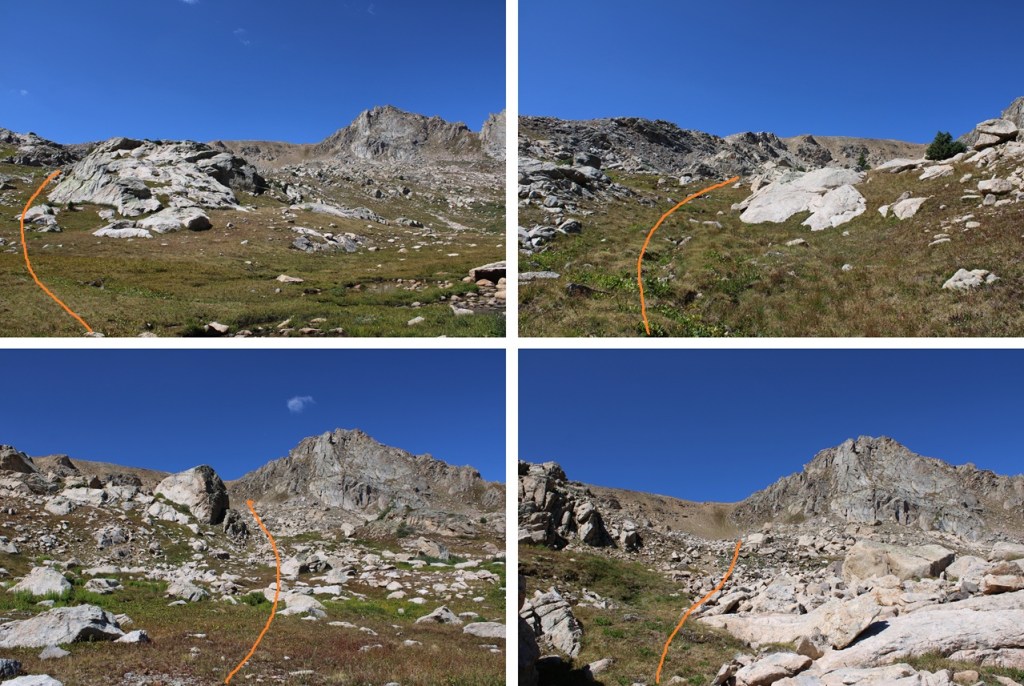
If you’re heading up from the basin doing this class 2 route, this is how the route would look:
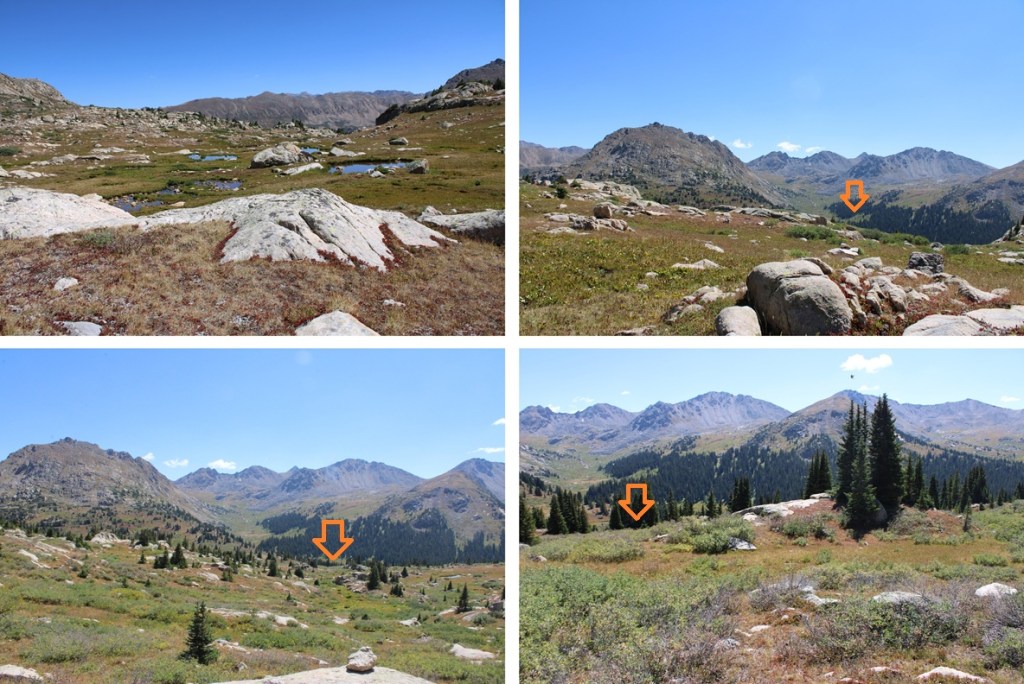
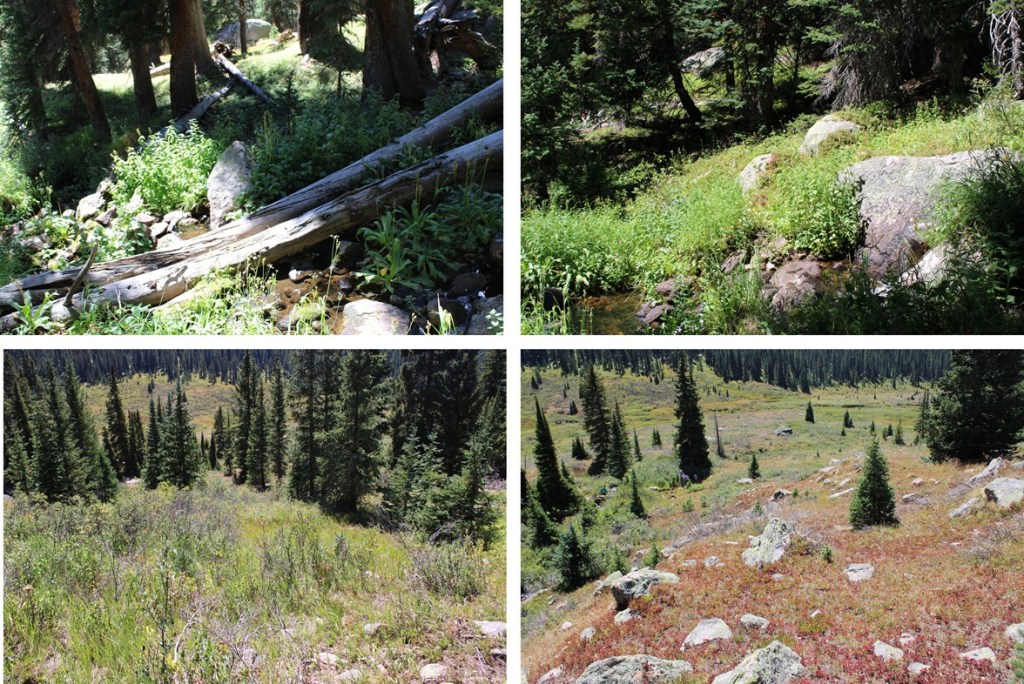
Back in the basin I followed the stream back down, heading Southeast, staying to the left of the stream until I was about 20 yards from the trail, then crossing the stream on an obvious area, and linking up with Lost Man Trail.
Back on Lost Man Trail I turned right and followed it back to the trailhead.
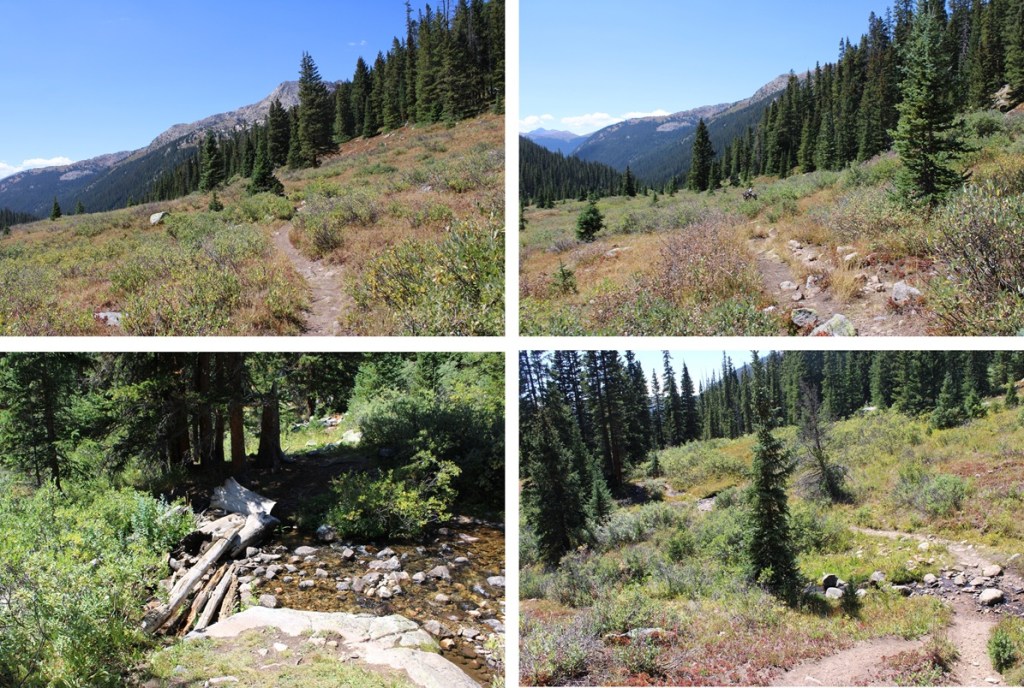
I made it back to my truck at 1pm.  Total stats for this hike vary.

Parking Area to campsite/upper basin: 5.43 miles, 1600’

Campsite to first attempt and back: 2.5 miles, 1000’

Campsite to class 3 summit: 1.3 miles, 1100’

Down summit class 2 route: 1 mile, 1100’ elevation loss

Campsite/upper basin to Parking Area:  5.43 miles

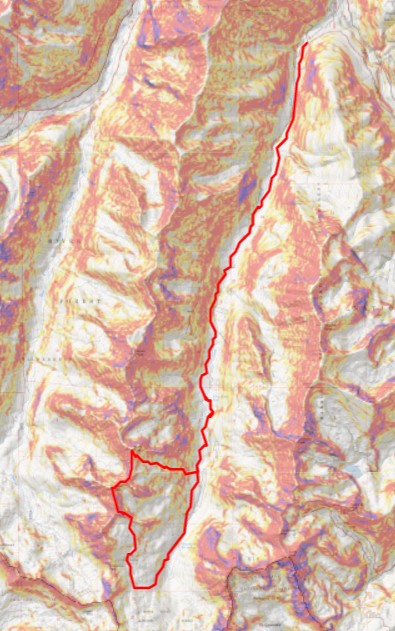
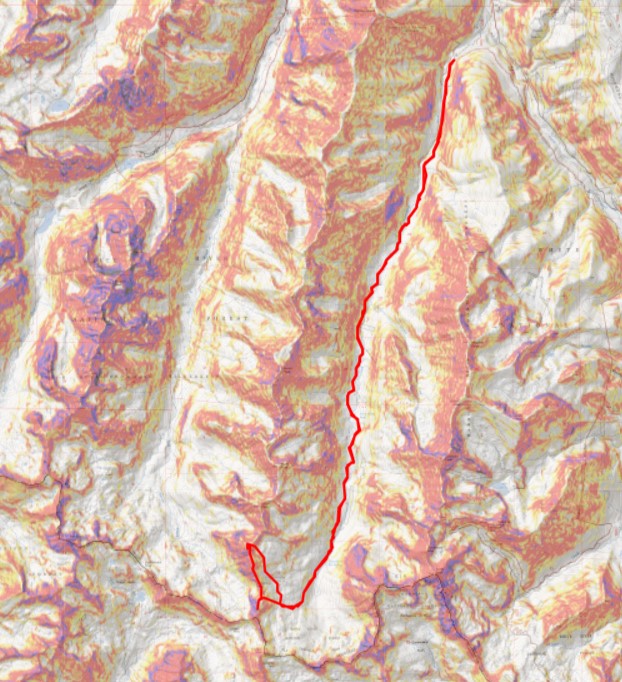
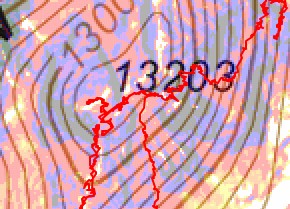
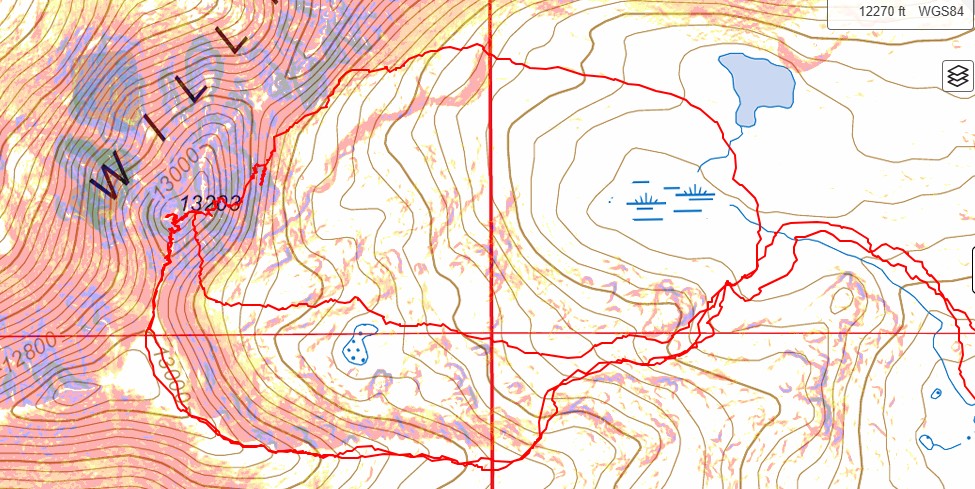
Topo for upper basin:
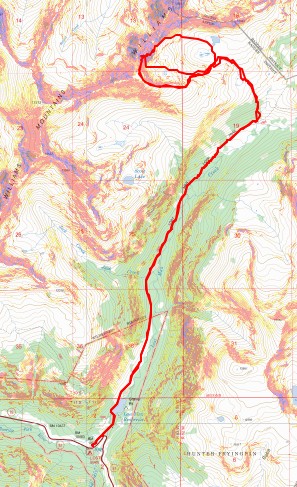
Route Topo:
On to the next trailhead!
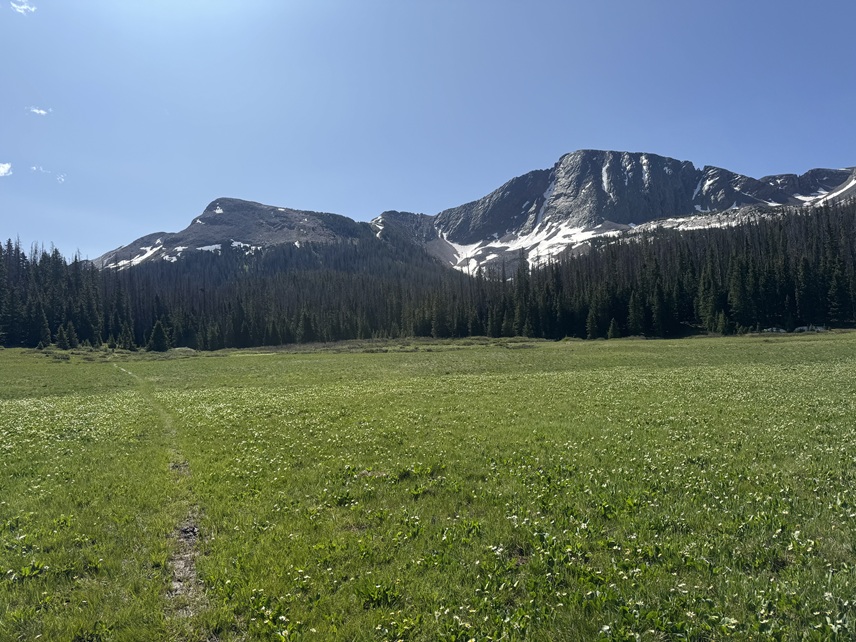
Snowdon Peak – 13,090 and ‘N1’ – 12,647

RT Length: 8.42 miles

Elevation Gain:  2746’

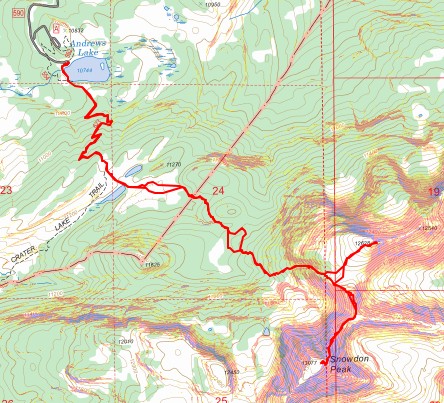
Yep, it’s been a while.  Those of you who follow me on my socials know what I’ve been up to, and I’ve been busy!  I’m really excited to have a few months off to tackle more peaks (kind of… I still need to travel for work most of August.  WHY is that my busiest climbing month, and my busiest work month???).  Most of the 13ers I have left still need to ‘melt out’ before I can climb them, but when I heard Snowdon was all clear I drove down to Andrews Lake and had to see for myself. 

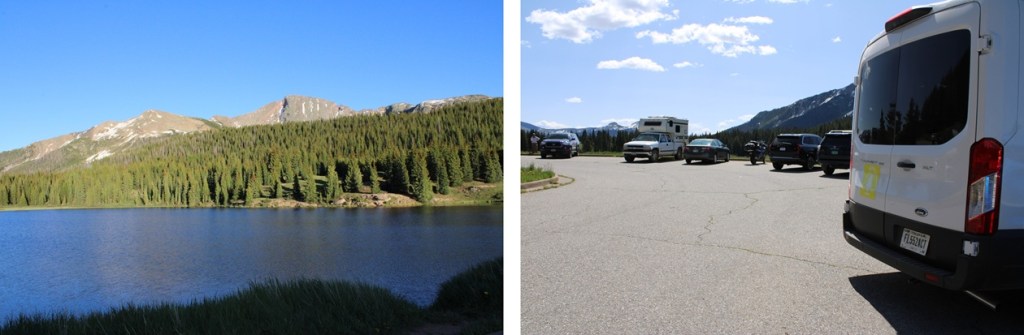
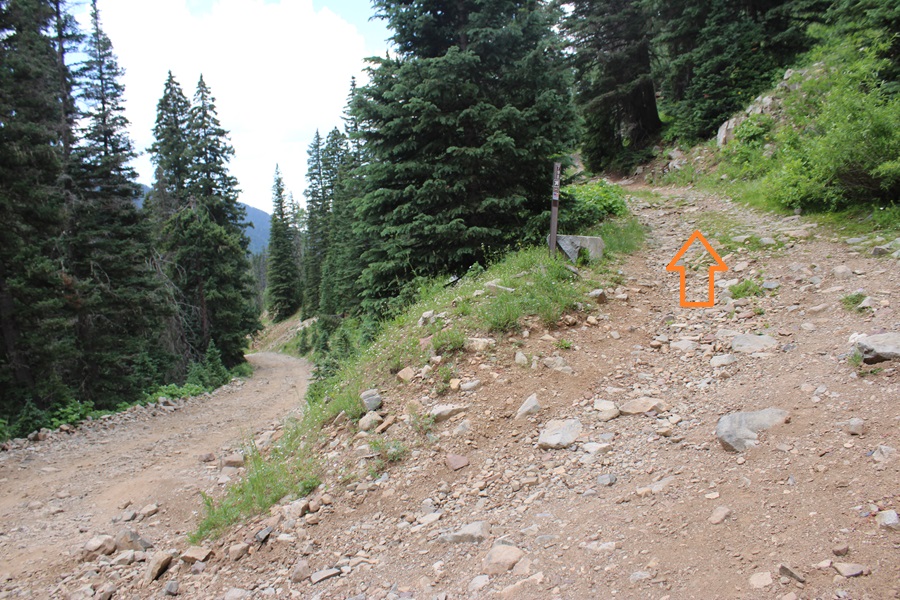
Andrews Lake has plenty of parking, and even an overflow lot.  However, that didn’t stop it from being full when I arrived.  Also, the bathrooms were dirty (and bring your own toilet paper).  Last time I was here the bathrooms didn’t lock. I was pleased to see they had been fixed.

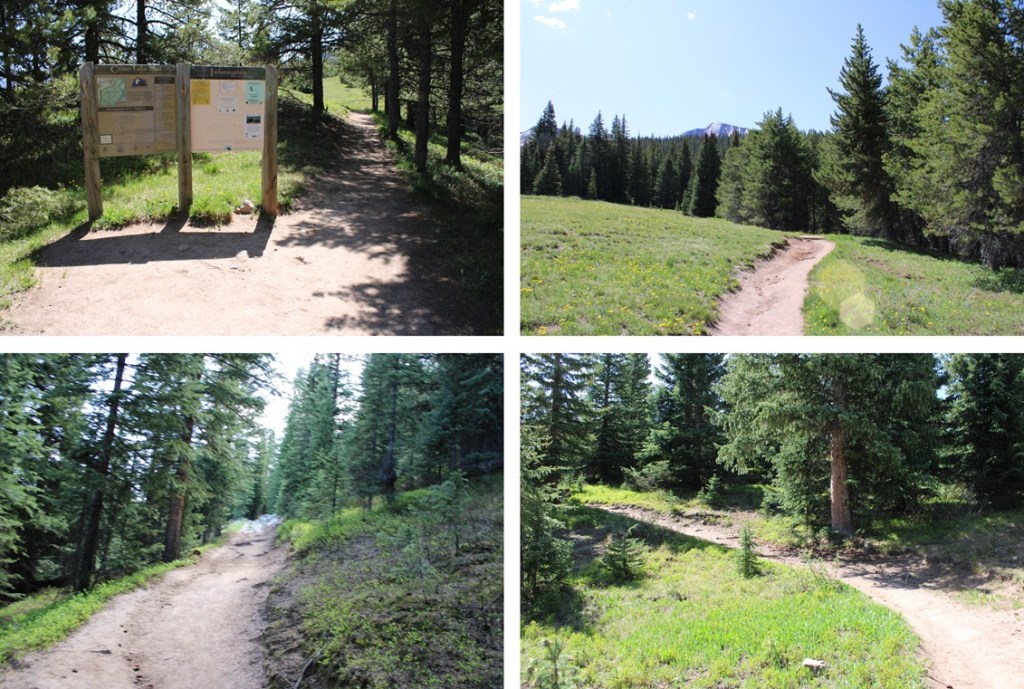
I started from Andrews Lake at 5:30am, skirting the east side of the lake to the trail.

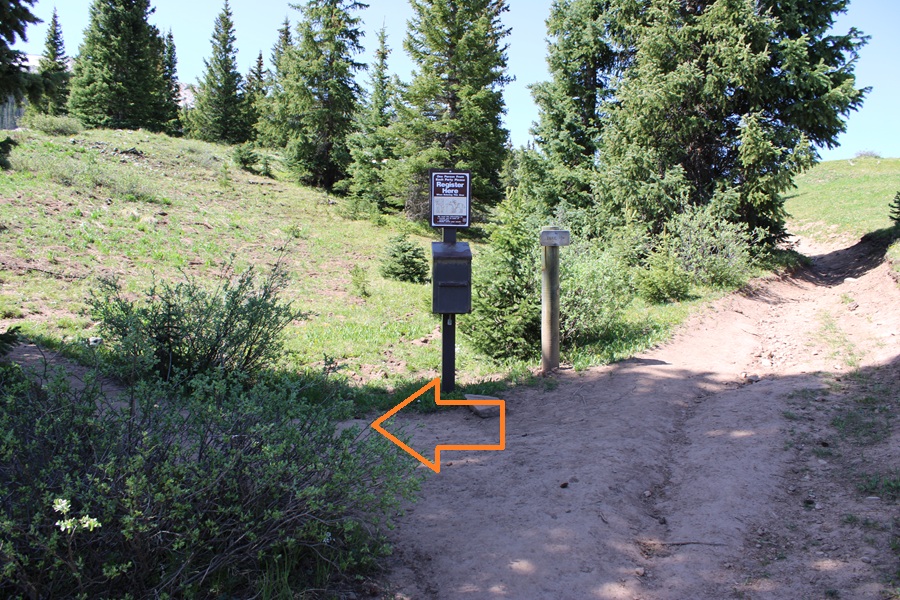
I followed this class 1 trail for about 1.3 miles to a junction with a trail register.

At the junction/trail register I turned left and followed an unnamed trail east/southeast.

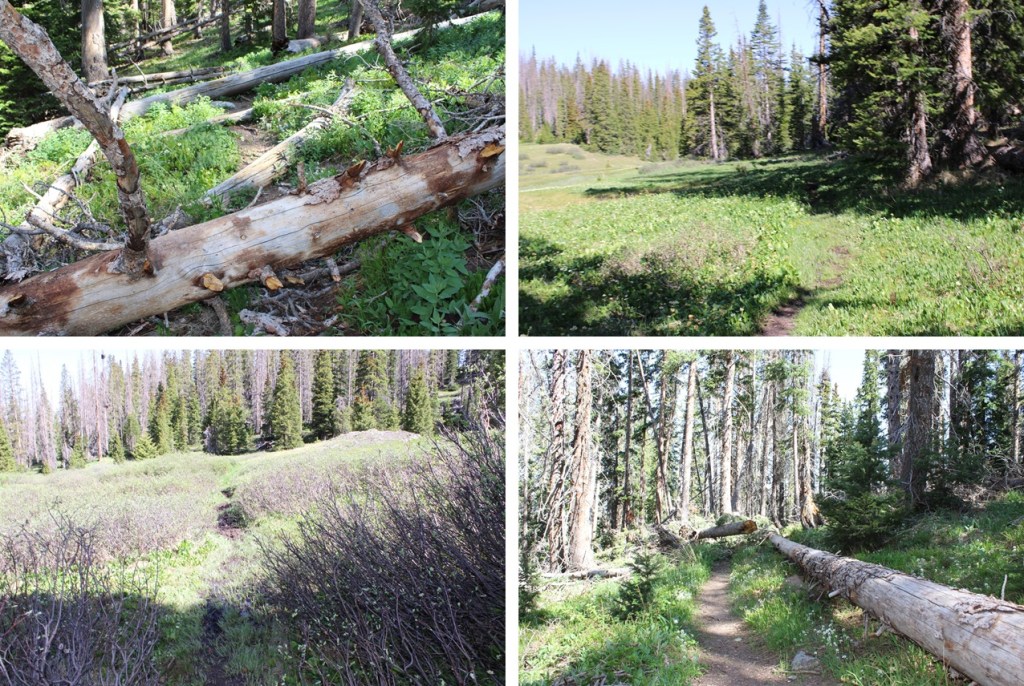
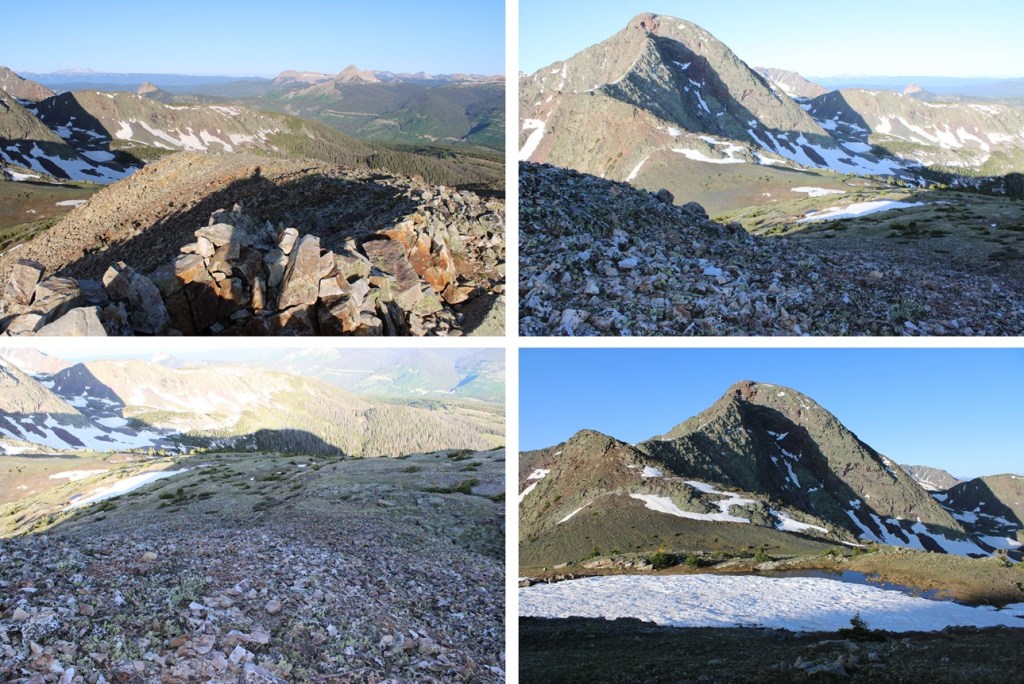
This trail was well defined in the beginning, but in the marshy areas became non-existent and I had to route find a bit.  There were areas with willows, marshes, and trees.  There were a few downed trees along the trail, but nothing too difficult to cross. I was headed towards this gully (there’s a good trail at the base). 

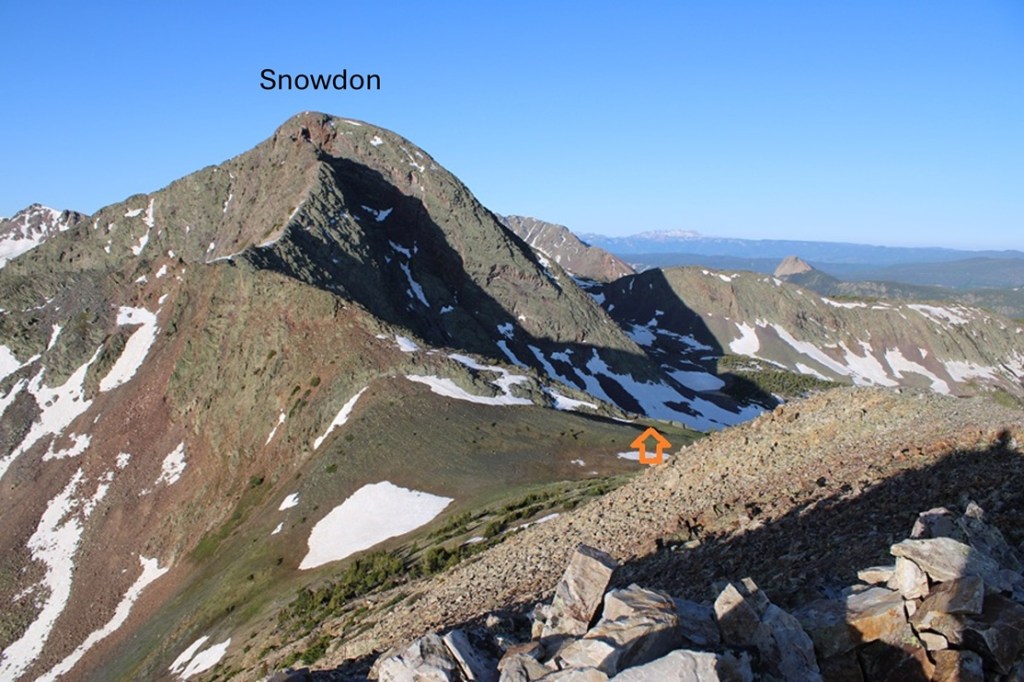
For reference, these are N1 and Snowdon

I followed the gully up a class 1, steep trail for 550’ in elevation.

At the top of the gully the trail ended.  I went left and headed northeast towards the summit of N1.  This was all class 2 and the route was obvious.  It felt “too easy”, almost like it shouldn’t have been ranked.

I summited ‘N1’ at 7am

N1:

Now for Snowdon Peak.  I turned and headed southwest back to the Snowdon/N1 saddle, to the right of the ridge.

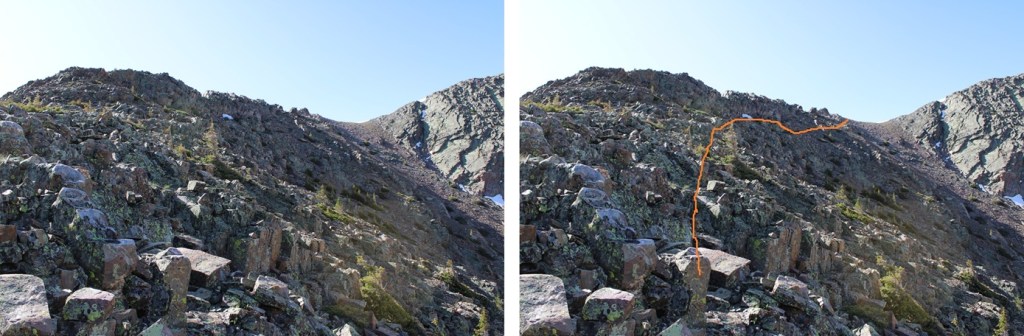
Now to head up the ridge.  There are several ways to do this.  On my ascent I stuck to the ridge proper, which went at class 3.  On the way back down I found a faint trail that kept this area at class 2 after climbing about halfway up the ridge.  Here’s a picture of that trail:

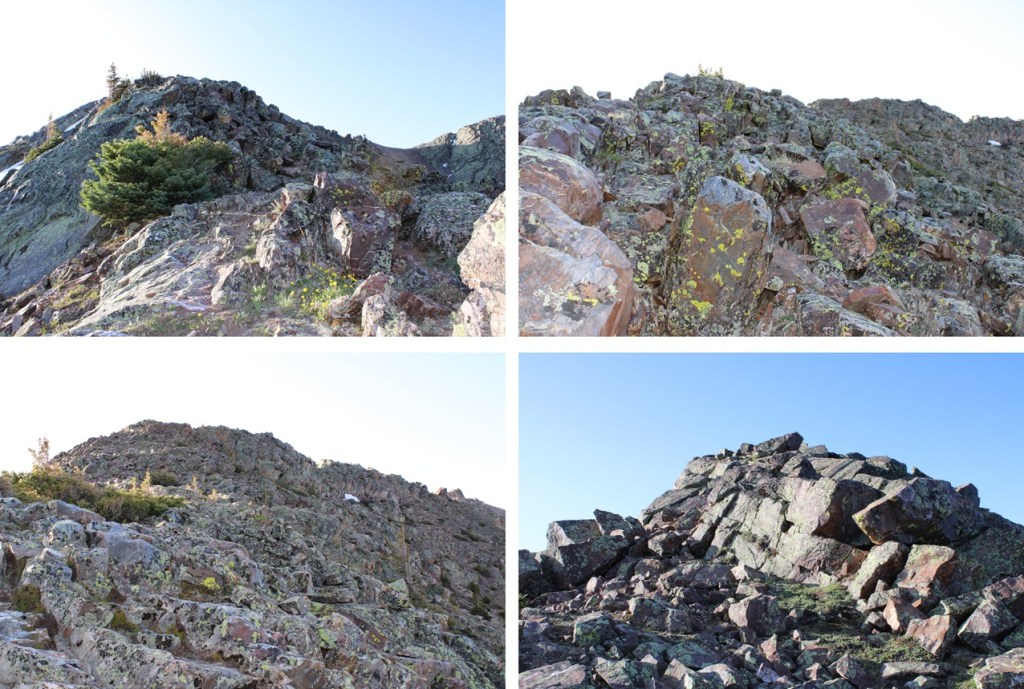
And some pictures of the ridge.  I was able to take the ridge proper to the next saddle until I came across the game trail, which was much easier.

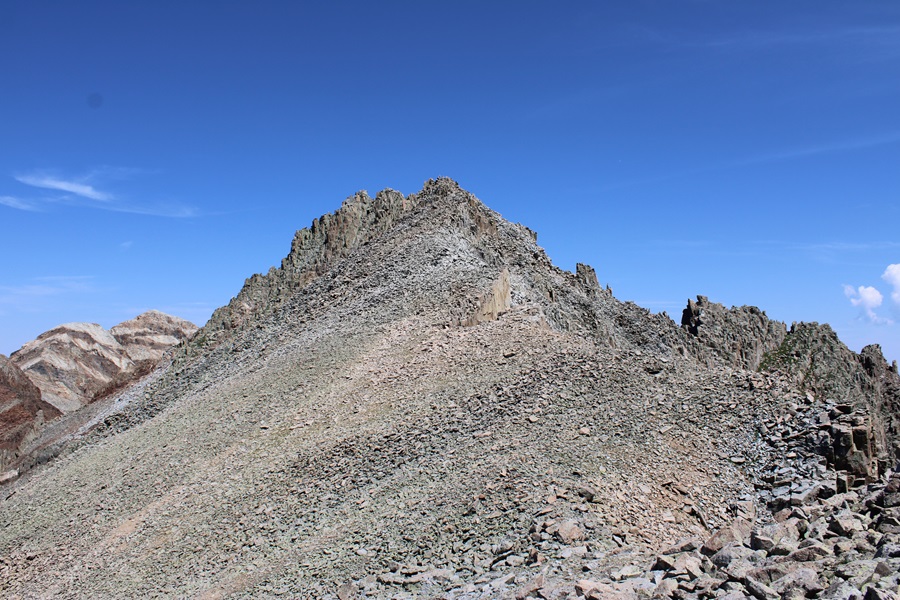
If you don’t already have your helmet on now is the time to do so.  There are several routes up this ridge.  I took the ridge proper at class 3 all the way to 12900’ before dipping down and south, then traversing around the east side of the mountain to get to the summit (lots of cairns to help once I dipped down).  However, you don’t need to take the ridge proper to this point.  If you stay to the left of the ridge there are game trails that keep you about 50 feet below the ridge on class 2 terrain most of the way.  Here are the routes:

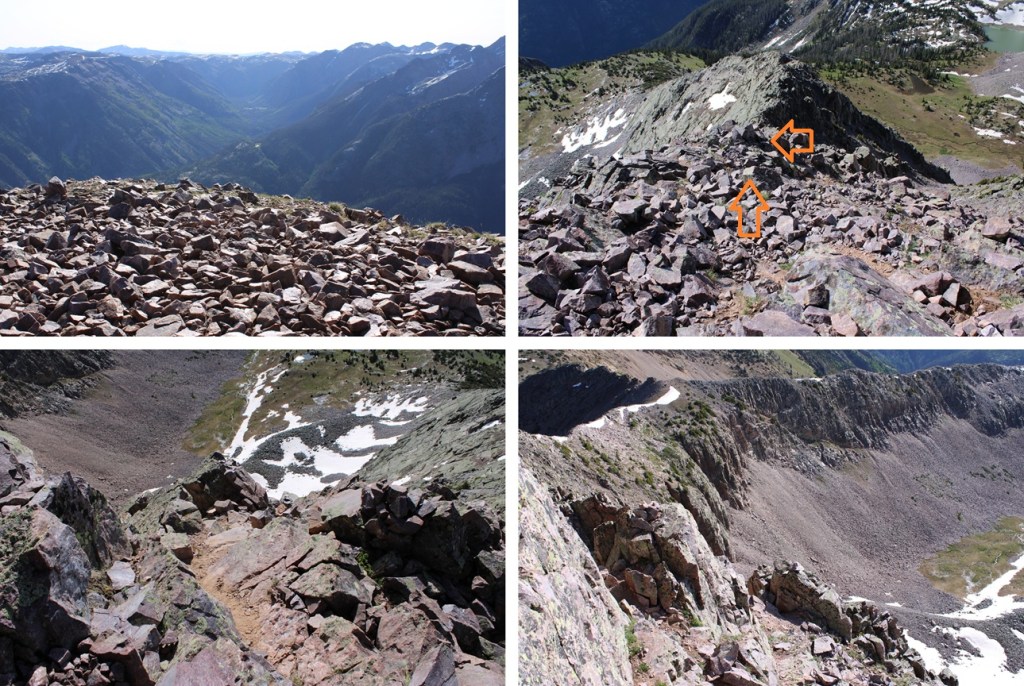
Here are some pictures of the ridge route I took to 12,900’

On the ridge at 12,900’ I hit a snag, and realized I needed to drop down where I saw this gully.  Directly below it I saw a cairn and headed that way.  Here’s a visual of where you should go when you hit this area.  Head down, not up, and continue around the left side.

From here on out there are cairns to the summit.  If you don’t see a cairn, you’re off route.  I kept heading left, and every time I wanted to ascend it seemed like I had to descend as well, but there were always cairns to help lead the way.  This is class 3.

When I got to 13,010’ I saw this in front of me, and a cairn in the distance.  Don’t head for that cairn.  This is where you just scramble to the top from where you are. 

It’s a short scramble, and soon I was on the relatively flat summit

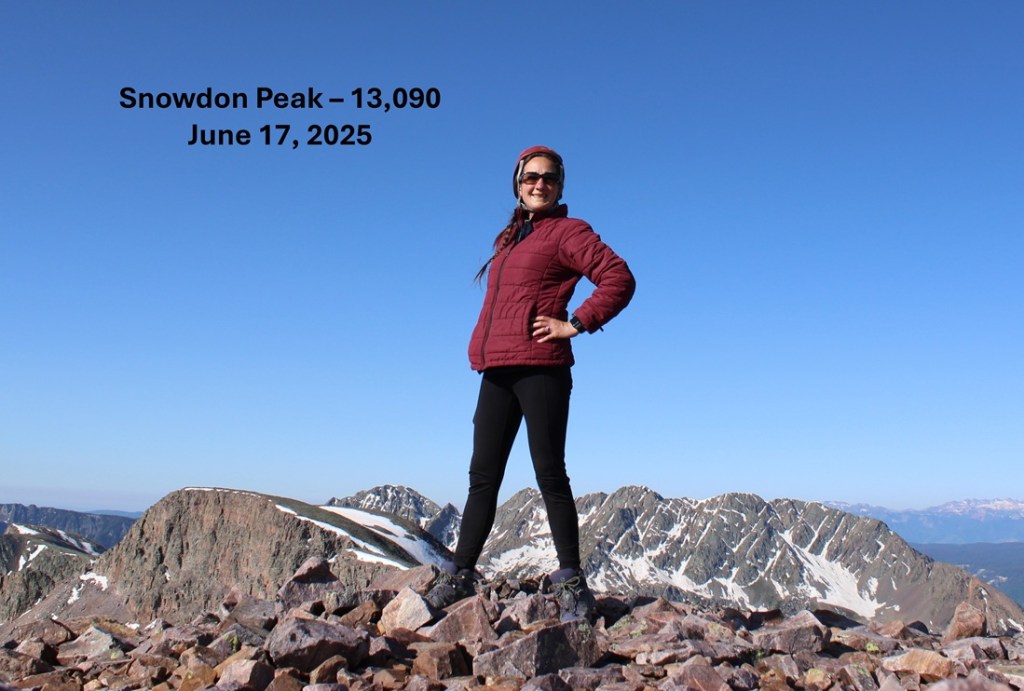
I summited Snowdon Peak at 8:20am

Snowdon Peak:

Now to head back down.  I took the same route back to the ridge following the cairns as I descended.

And now to follow the ridge back to the saddle.  Here’s a visual of the route I took:

I found my access gully and headed back down to the trail.

I then followed the trail back through the marshes and trees towards Andrews Lake.

Once back on the Crater Lake Trail I followed it back to Andrews Lake.

I made it back to Andrews Lake at 10:30am, making this an 8.42 mile hike with 2747’ of elevation gain. 

And for those of you wondering, my past few months consisted of:  Getting married, buying property, Mexico, Cookie Cupboard for 2 months (I love Girl Scouts!!!), Florida, Washington DC, my son visiting from South Korea, 2 of my kids graduating College in different states during the same week (one of them Valedictorian!), Georgia for a week, South America for a month,  building a ranch from the ground up (empty land, but after a few months of hard work I now have a well, a vineyard, an orchard and the animals have corrals).  Raising yaks and alpacas (all the females are pregnant), a nasty tick bite that left me out of the sun for a month but gave me time to do a  a couple of dozen podcasts, teaching Wilderness First Responder courses and several outdoor survival skill classes to multiple groups.  Oh, and last week we got a puppy, so it’s been a little busy around here!

On to the next trailhead!
Mount Moss – 13,194 and Lavender Peak – 13,327

RT Length: 10.58 miles

Elevation Gain: 3604’

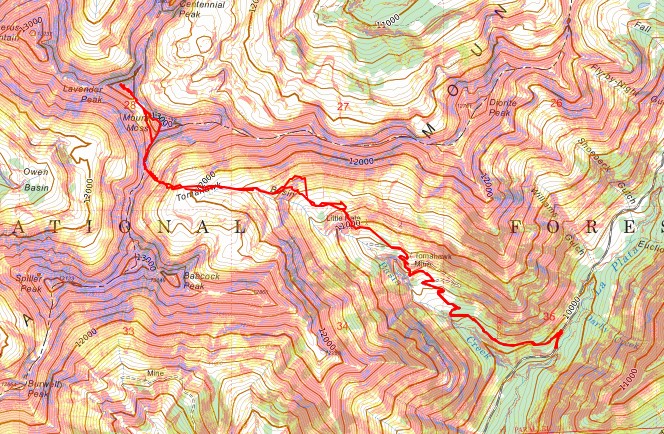
Once again, this wasn’t the peak I’d planned for today.  In fact, due to my carelessness with my new truck and forgetting to wrap the wires with rat tape, I had a 2am encounter with varmints and had to abandon a days worth of hiking (where I’d hoped to get in 5 ranked 13ers).  Not to bore you, but if you want to hear the story and see video footage, click here to find out what creature got stuck inside my truck, and the damage they did.  Also, rat tape your wires people.

So, after an 8 hour detour, I found myself at around 9800’, at the base of the Tomahawk Mine, parked off road 124 and 798 near Mancos.  I was up and on the trail at 6am

I followed road 798 for about 1.5 miles northwest.

After about 1.5 miles I came to a junction, and turned left.  You can continue on the road here, as it will eventually get you to the same place, but I wanted to see the Tomahawk Mine.  If you’d like to see the mine, turn left here, and follow the road.

The road will quickly end, but a trail will pick up to the right.  It will take you to Tomahawk Mine.

If you look closely, to the left of the mine is a trail that will lead you north, back to the 4WD road.

I turned left, and followed this road northeast until Little Kate Mine.

At the base of the mine, just as the road switchbacks to the right, I ascended a scree game trail northeast to treeline.  The trail is obvious, and splits and comes together a few times, but I generally headed towards treeline.

At treeline I headed west, towards Tomahawk Basin.  There’s kind of a trail here, but it’s really faint.

Now I needed to ascend into the upper basin.  There are several ways to do this (I went up a different way than I descended), but you basically want to get above the waterfall.  If you take the route I’ve outlined, there will be a faint game trail to the top, but you may need to search a bit to find it. 

I followed the creek as it headed west.  There is a faint game trail, but eventually it goes away.  Just keep heading west. 

Now in Tomahawk Basin, my next goal was to gain the ridge.  This was extremely steep.  I gained 665’ of elevation in .3 miles.  Luckily, the terrain was easy to navigate.  Here’s the route I took.

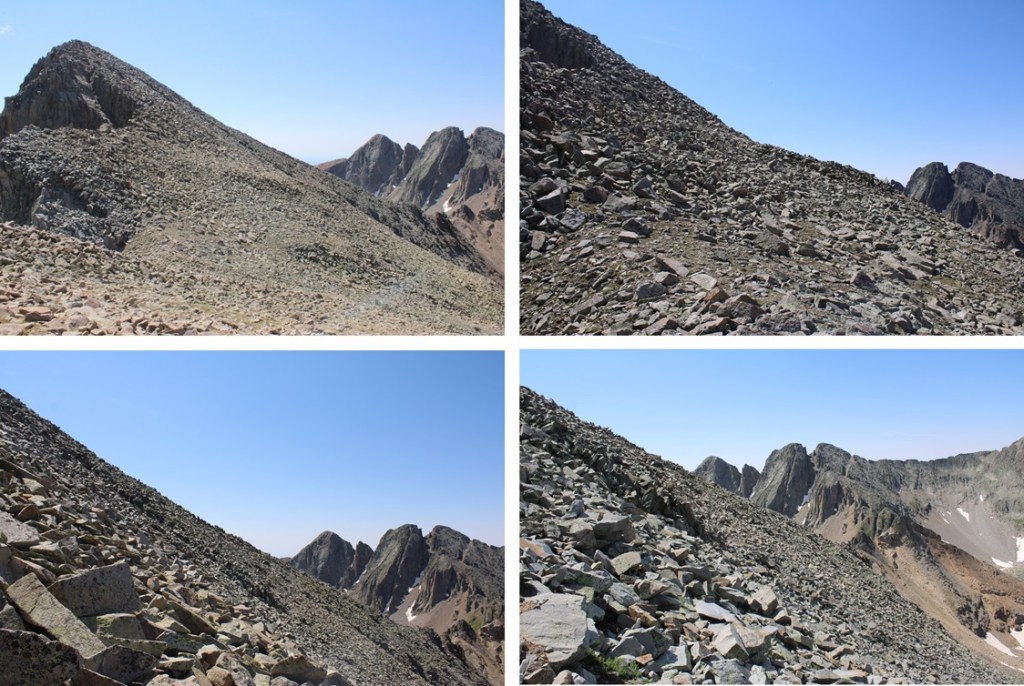
And some pictures of the hike to gain the ridge, staying mostly on tundra.

Once on the ridge I took a little break and put on my helmet.  There was a short class 3 section and some scrambling to do from here on out.  I headed north, following the ridge and then dipping down to the left.  It should be noted the ridge goes at class 3 most of the way, after the initial drop off to the left and re-gaining the ridge, but to make it easier there are game trails to the left of the ridge that I followed most of the time.   It should also be noted the rocks here are loose, so watch your footing.

I summited Mount Moss at 9:30am

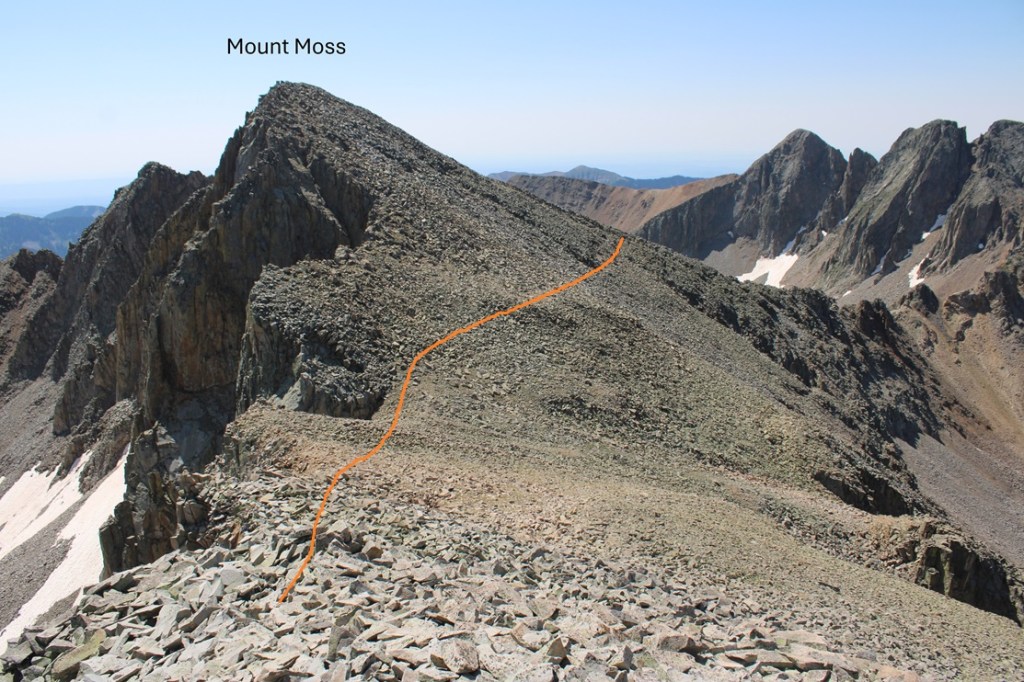
Mount Moss:

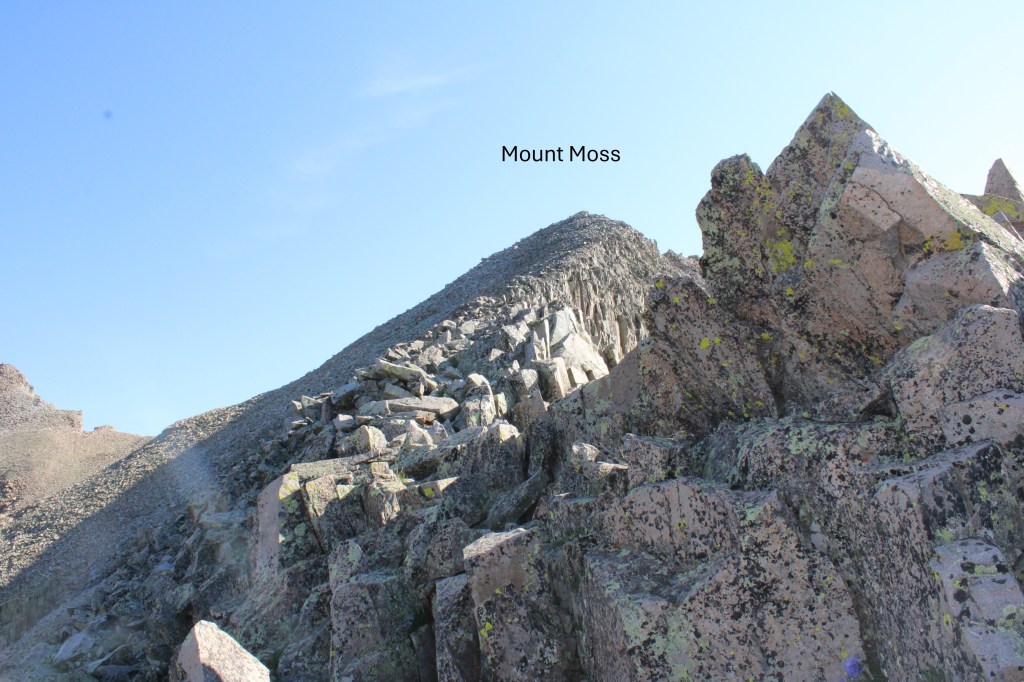
From Mount Moss I could see Lavender Peak to the northeast

It’s a really good idea to take a good look at the route you’d like to take now, as when you’re below the summit it can be difficult to figure out where you’re at.  The summit of Lavender is the point furthest west.  This is the route I took to the summit, which was mostly class 3, but included a class 4 chimney.

First, I descended to the Moss/Lavender saddle.  Once again, lots of large, loose rocks.

From the saddle, I ascend the ridge to Lavender to just below the gullies, at around 13125’

Next, I traversed west, looking for the gully I wanted to ascend. 

This is the route I took to ascend the gully.  There’s a difficult 3/easy 4 chimney to ascend, just below a cool looking cave.  Ascend straight up to the cave, to right around the cave, and the summit will be to the left. 

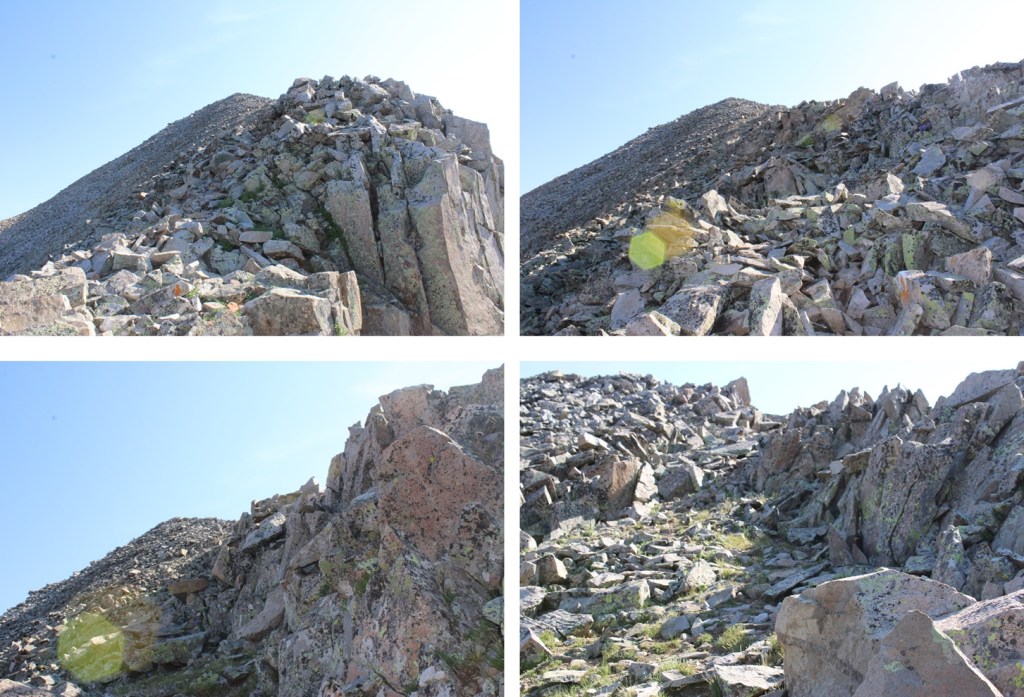
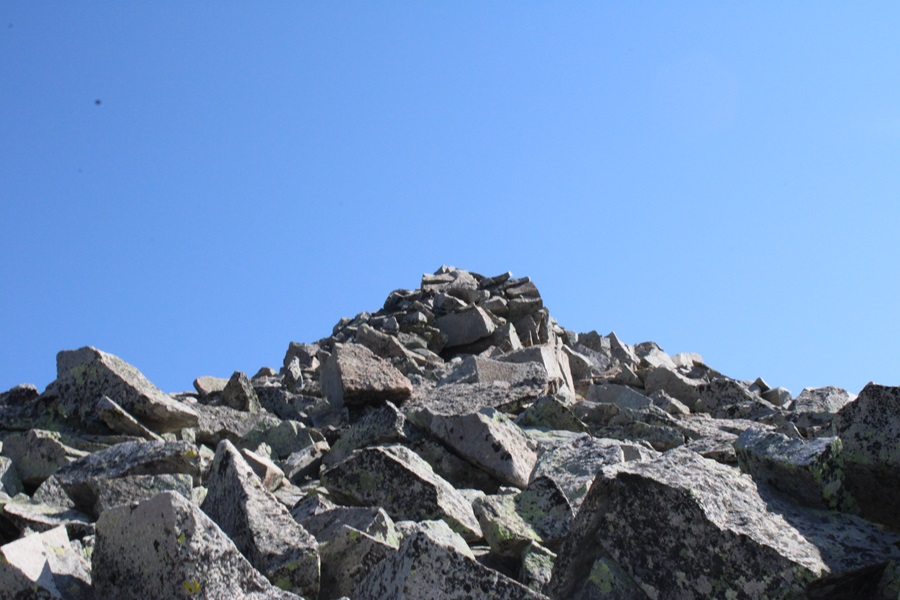
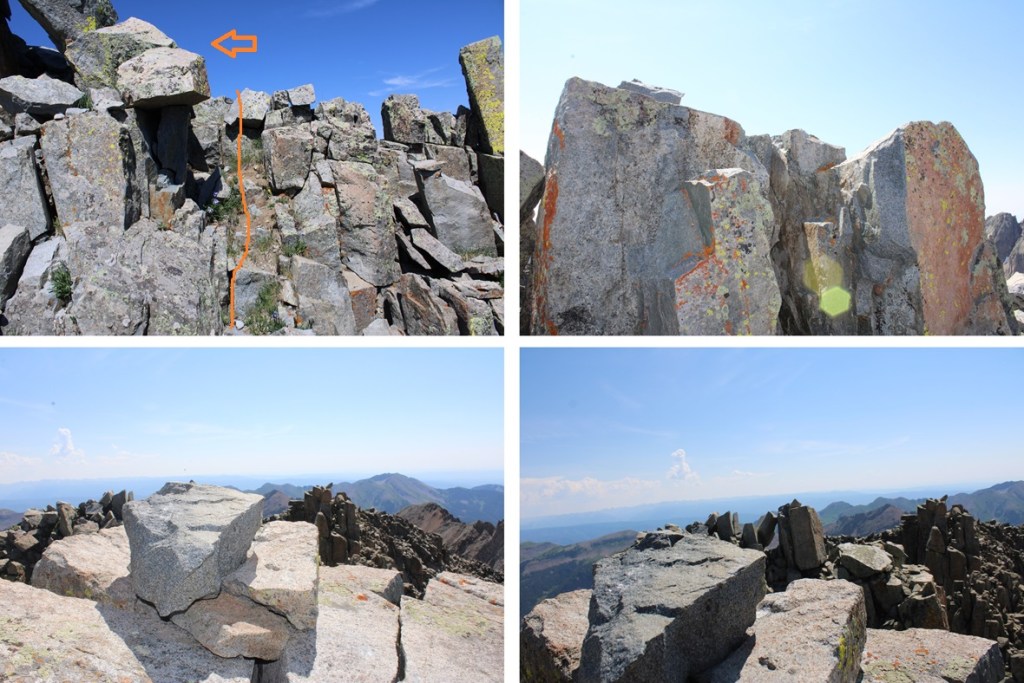
And some pictures up the gully.

Once you get past the cave, the summit is to your left

It’s an easy trek to get there, up a small ramp

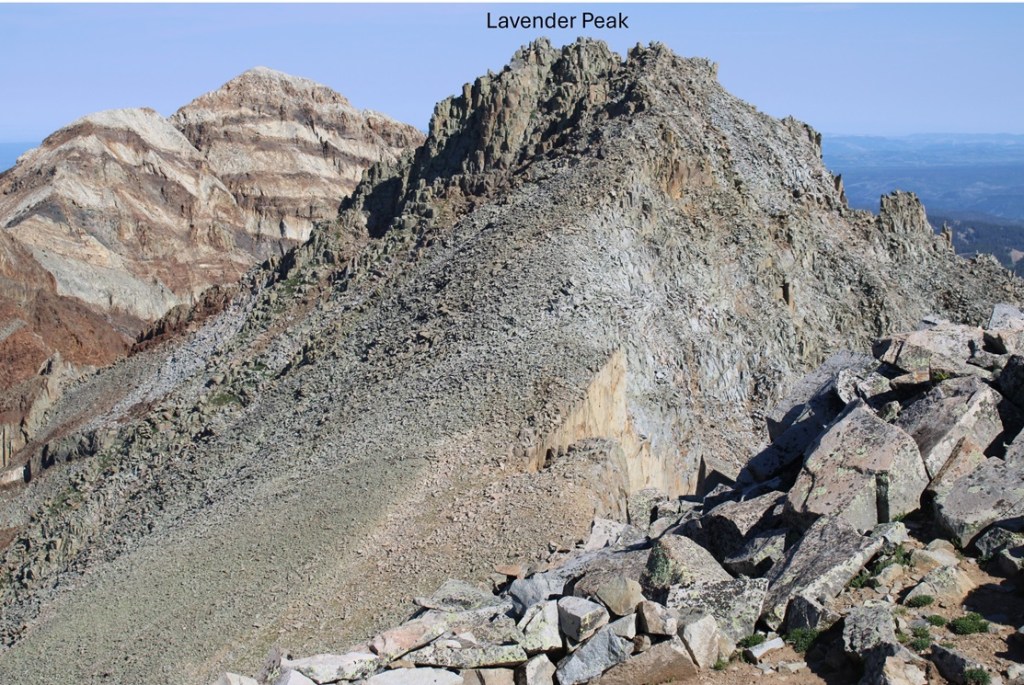
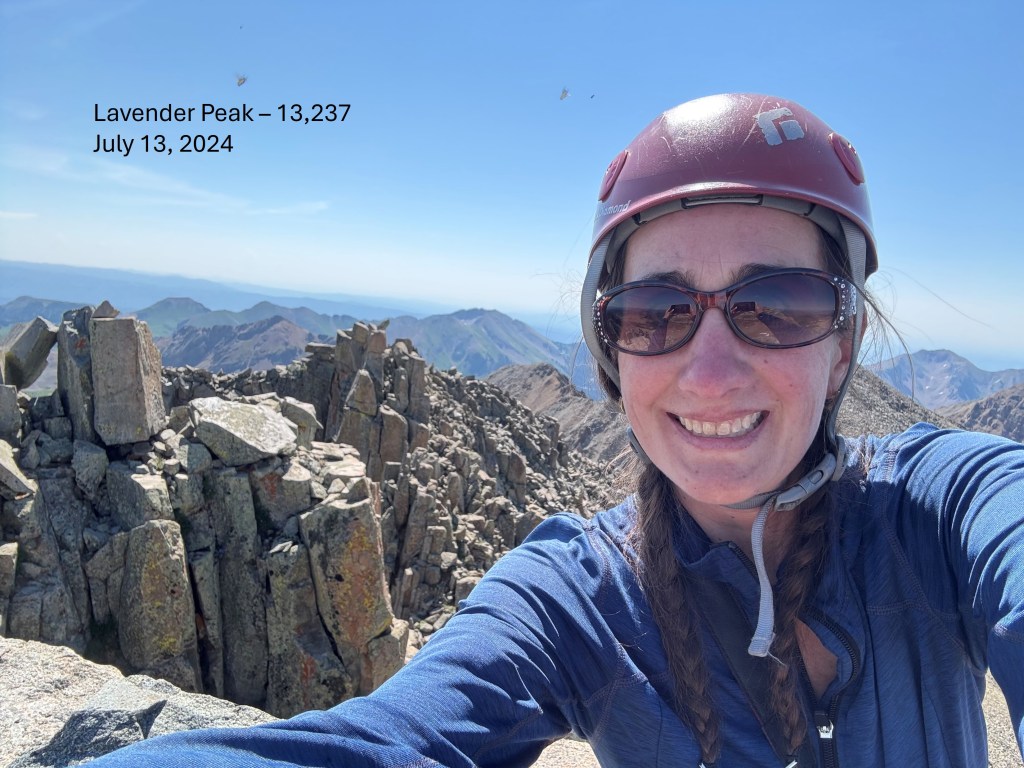
I summited Lavender Peak at 10:45am

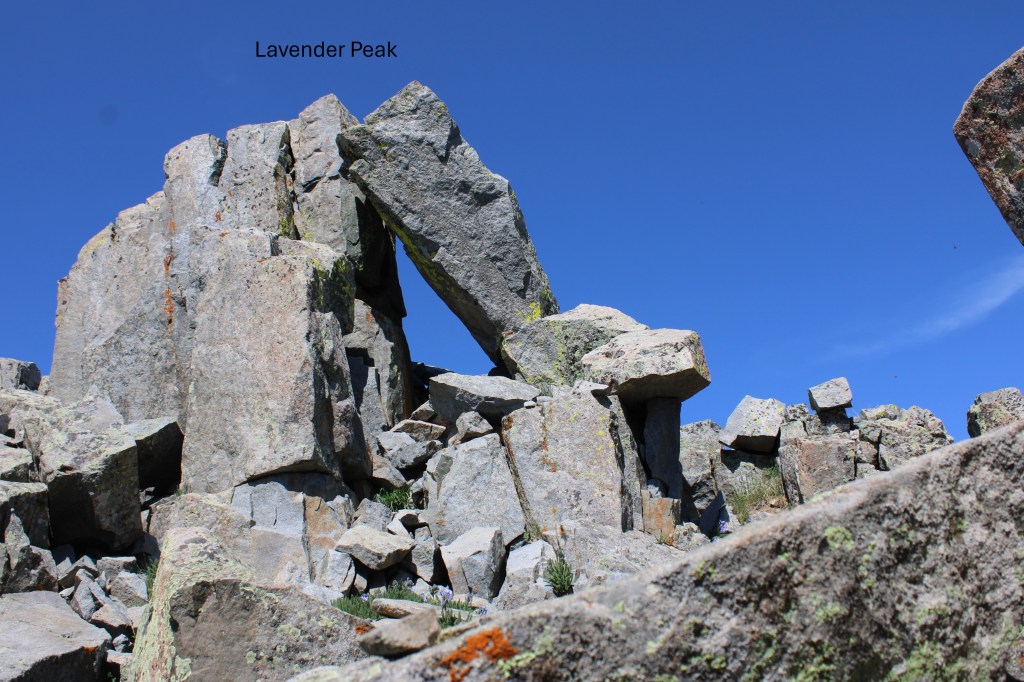
Lavender Peak:

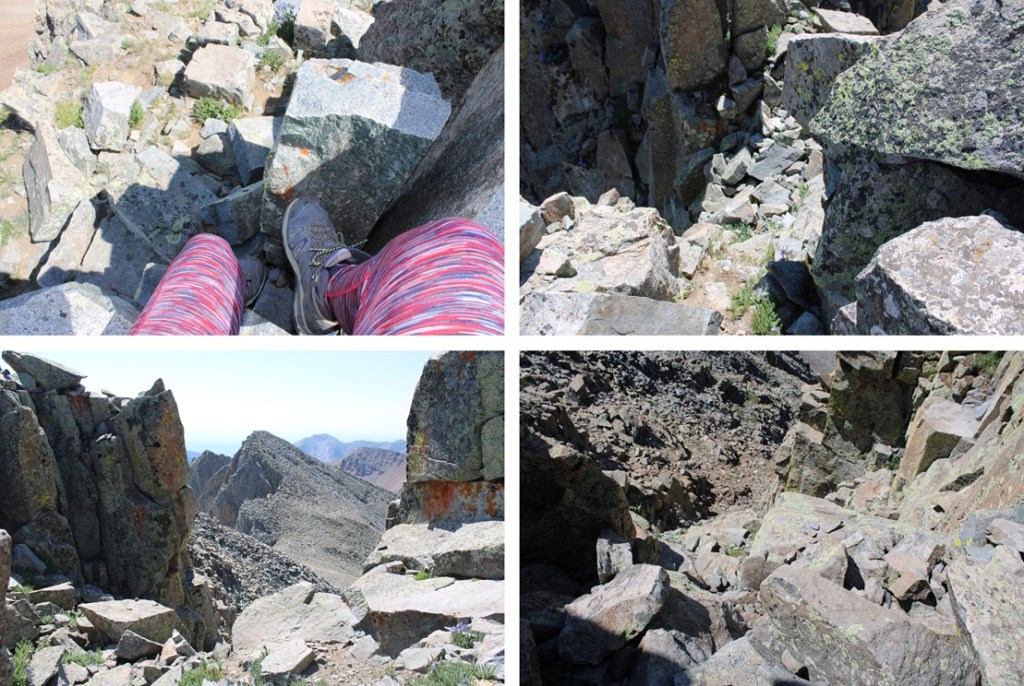
And now to head back down.  Here are some pictures of my way back down the gully.  I turned and faced the mountain for much of the trek down.

Safely down the gully, I made my way back to the Moss/Lavender saddle

Having no desire to summit Mount Moss again, I decided to traverse below the summit, staying at around 12900’ to get to the ridge

Once on the ridge, I followed it south to my entry point

And then back down into Tomahawk Basin

I made my way back to the scree trail

Then followed it back down to the 4WD road.

I followed the road a little more than 2 miles back down to the trailhead

I made it back to the trailhead at 1:30pm, making this a 10.58 mile hike with 3604’ of elevation gain in 7.5 hours

On to the next trailhead!
Golden Bear Peak – 13,005 and Hagar Mountain – 13,246

RT Length:  7.82 miles

Elevation Gain:  2760’

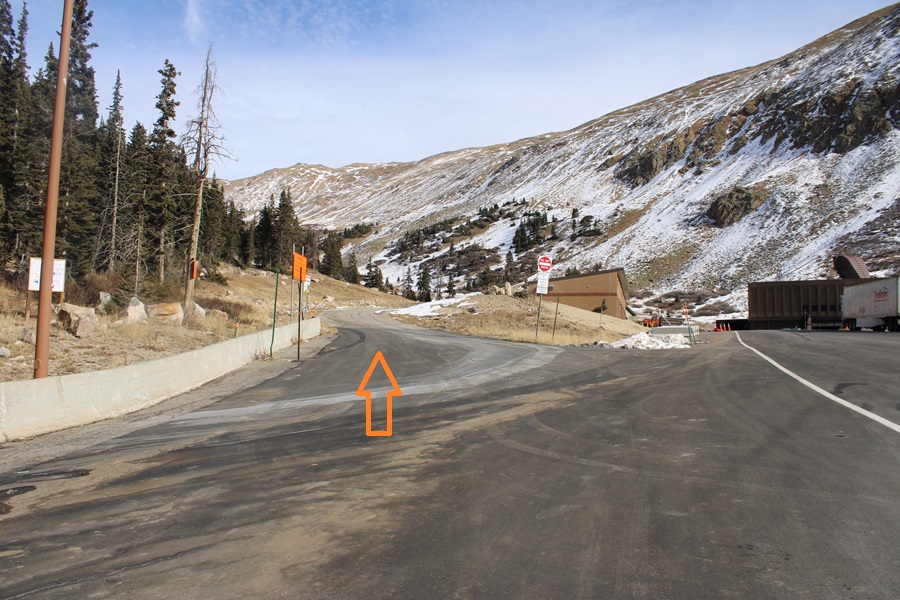
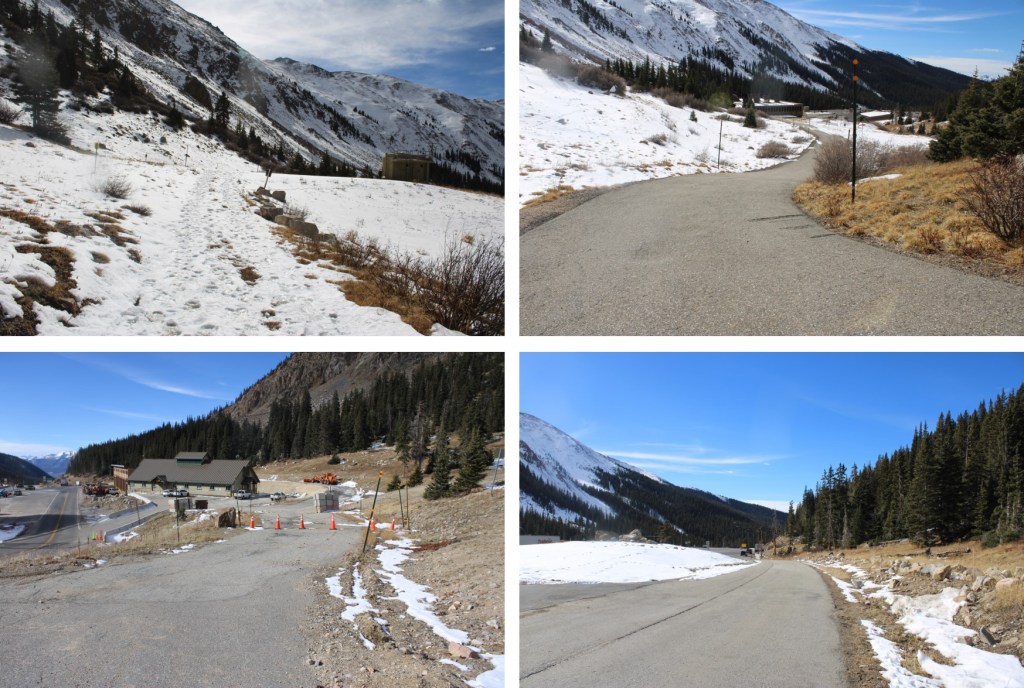
I parked behind some semis at the I-70 MM 213 Westbound Chain Station and was on the trail at 6:20am.  I started by taking a paved service road northeast.

The road eventually becomes a dirt road

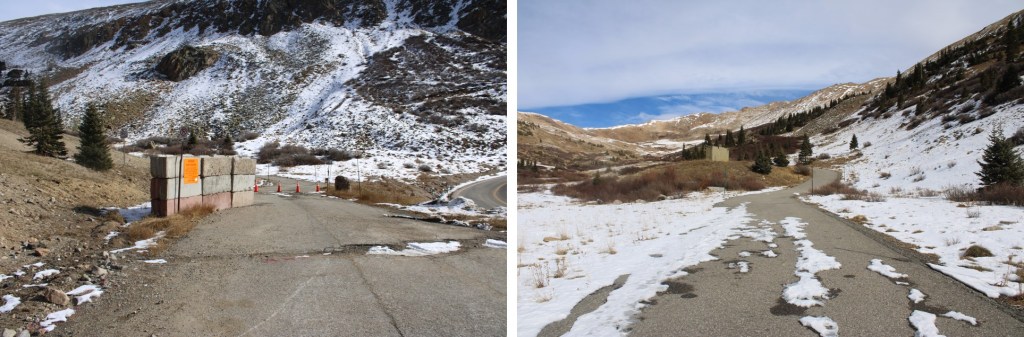
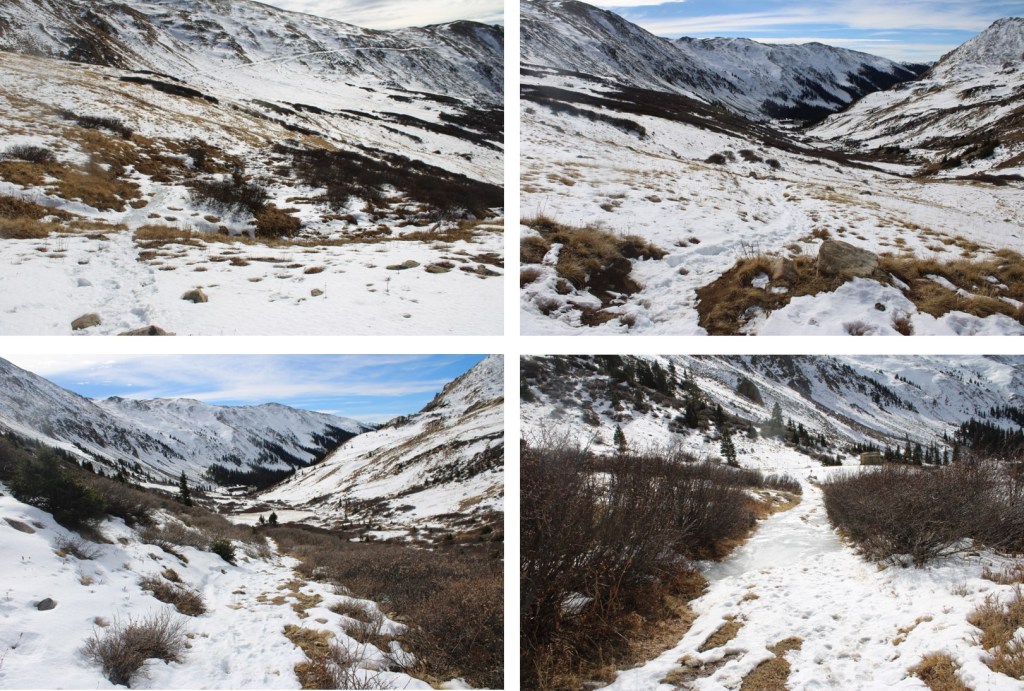
The dirt road quickly becomes a trail, and this morning that trail was filled with a couple of inches of ice.  The kind that microspikes slip on.  I followed it as it headed northeast into a basin

After hiking for 1.3 miles I came to a service road and turned right to follow the road towards the ridge.

As you can see from further away, this road goes all the way to the ridge. 

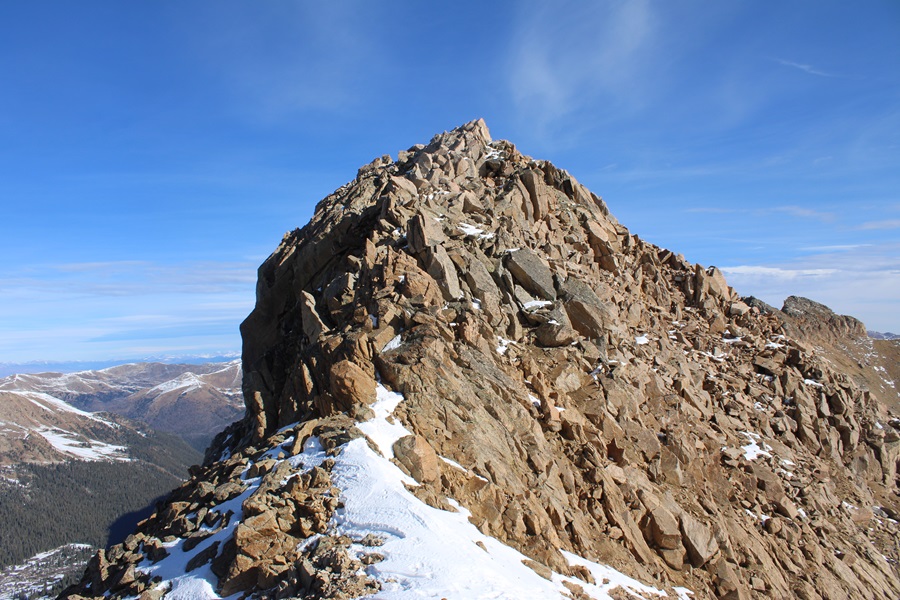
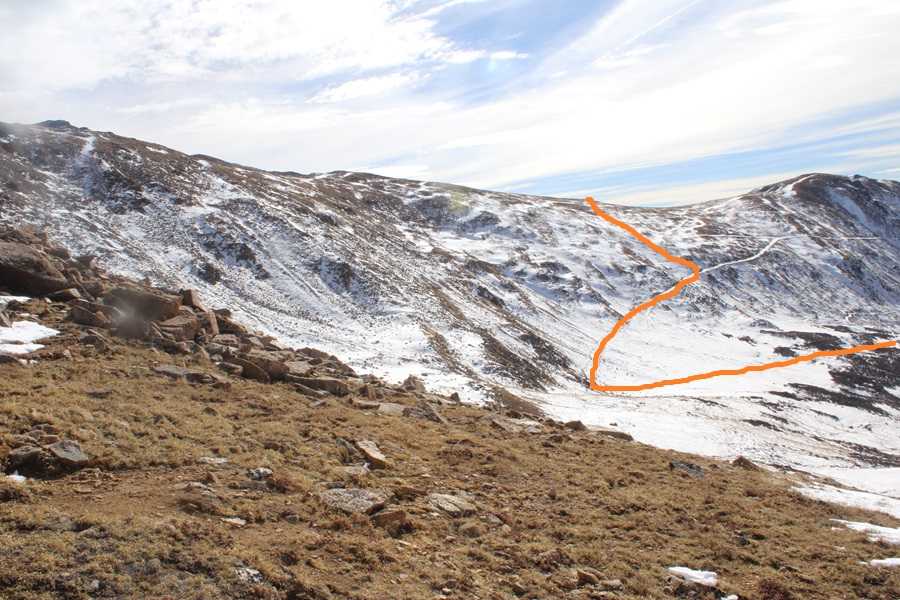
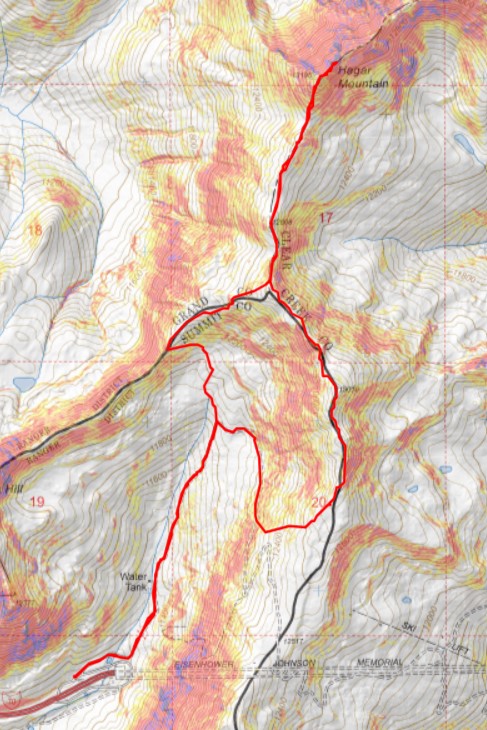
However, I did not take the road to the ridge.  The road was full of several feet of snow, but the mountainside only had a few inches of snow, so instead of trenching the route, I headed east towards the ridge.  This is the route I took.

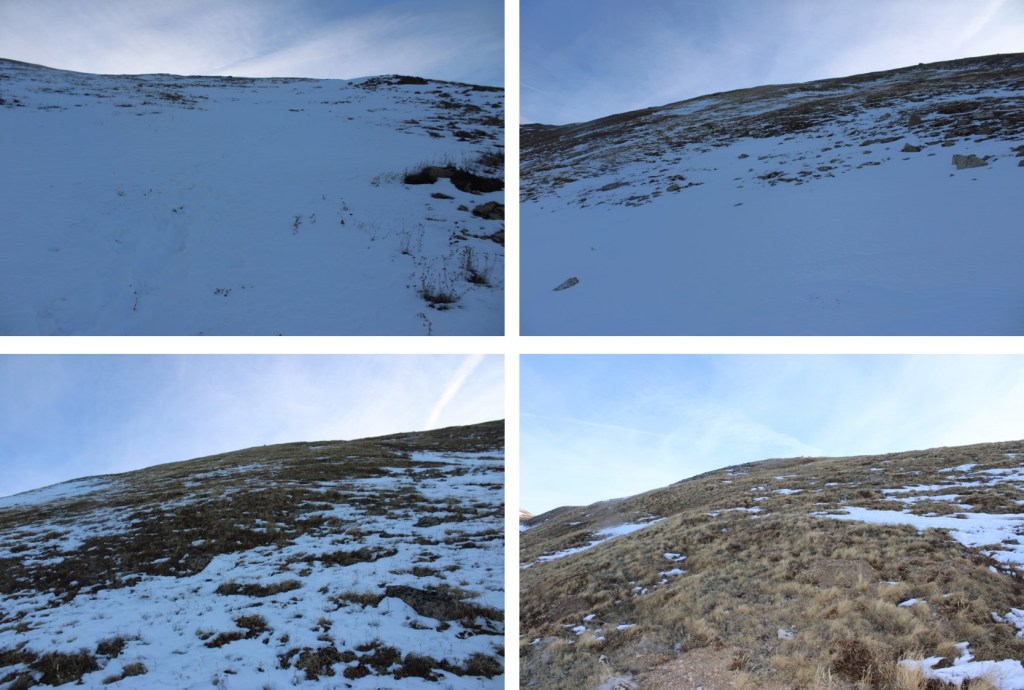
Here are some pictures of the road

At 12160’ I left the trail and headed up towards the ridge

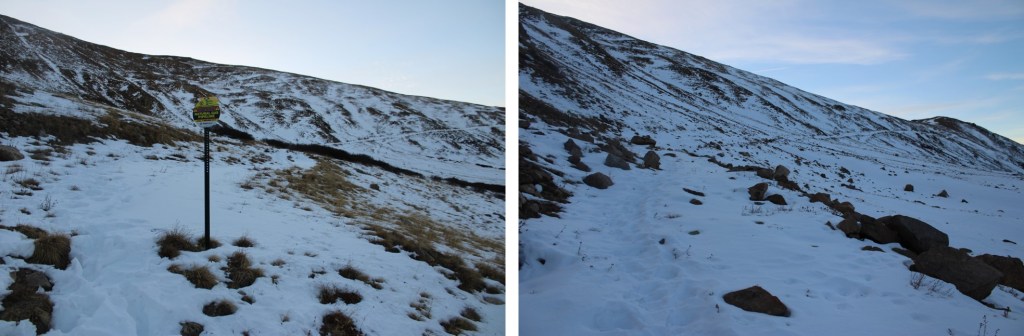
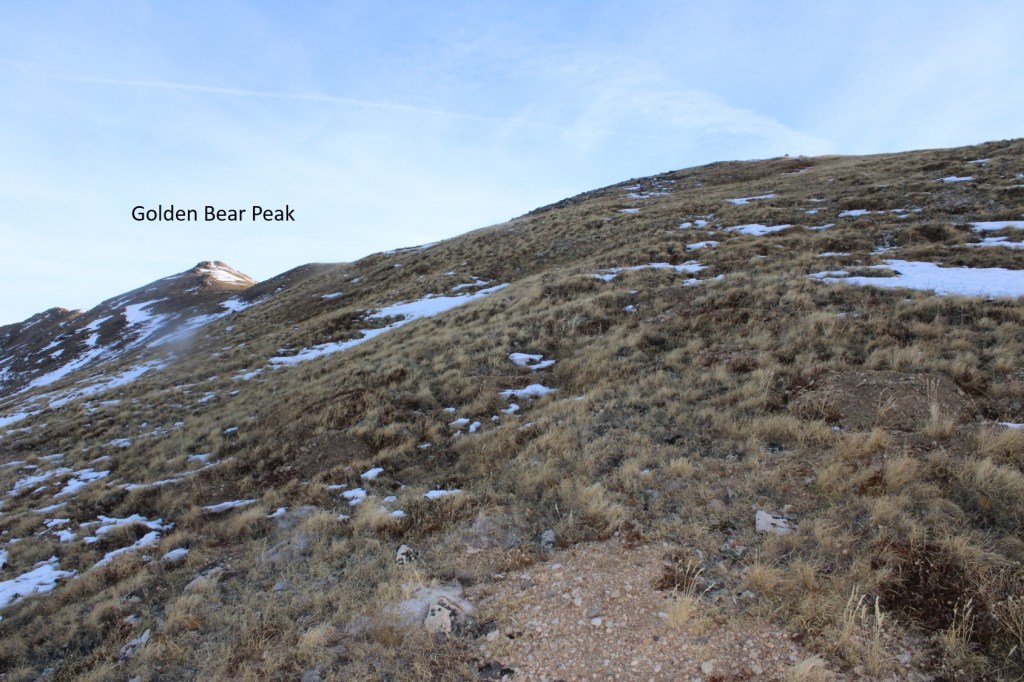
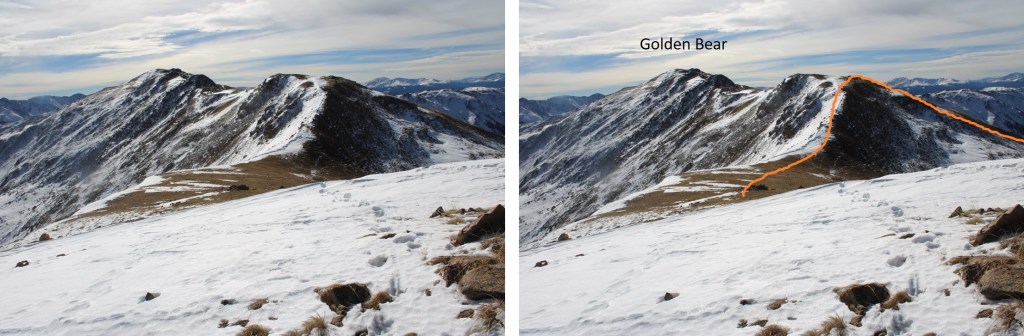
I could now see Golden Bear to my left. 

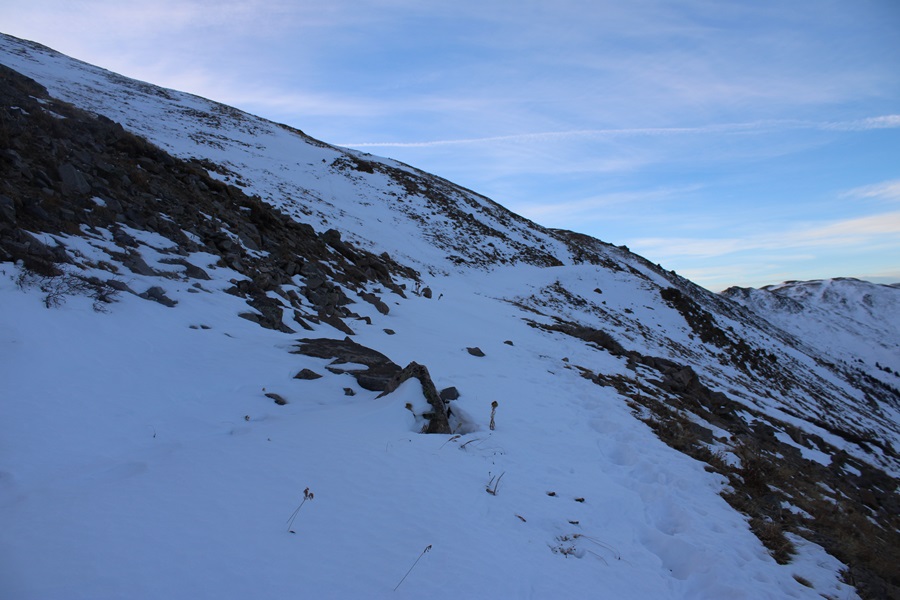
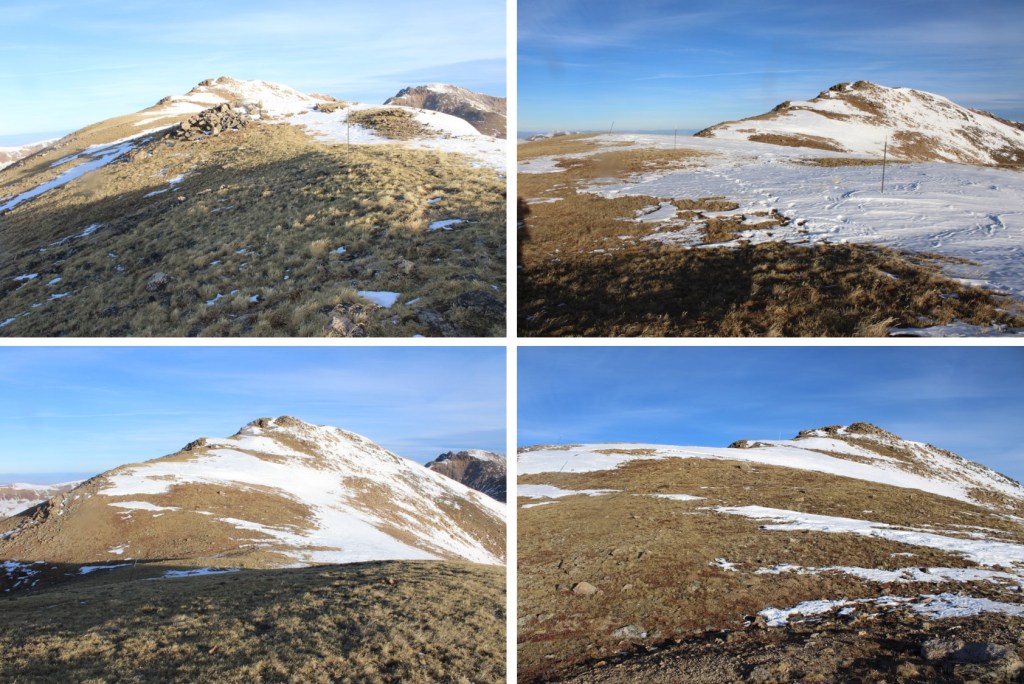
I gained the ridge, and followed it north to the summit of Golden Bear.  This was all class 2

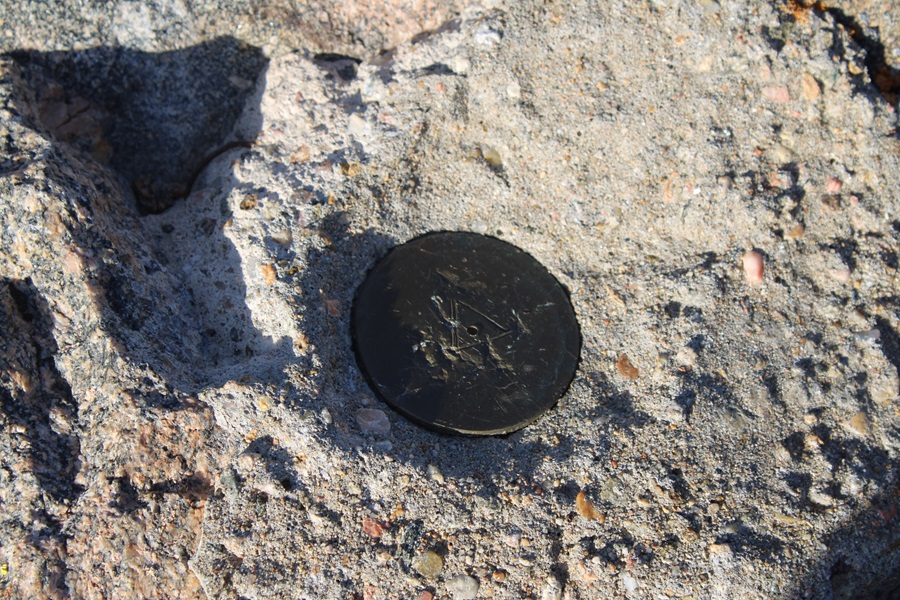
There was a marker at the summit

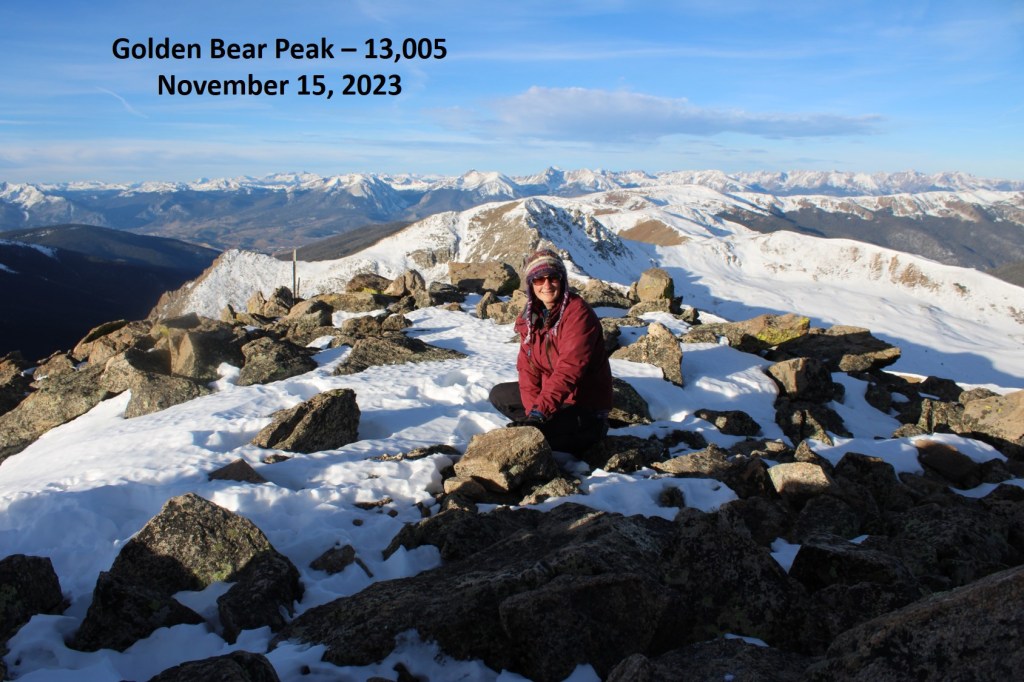
I summited Golden Bear Peak at 8am

Golden Bear Peak:

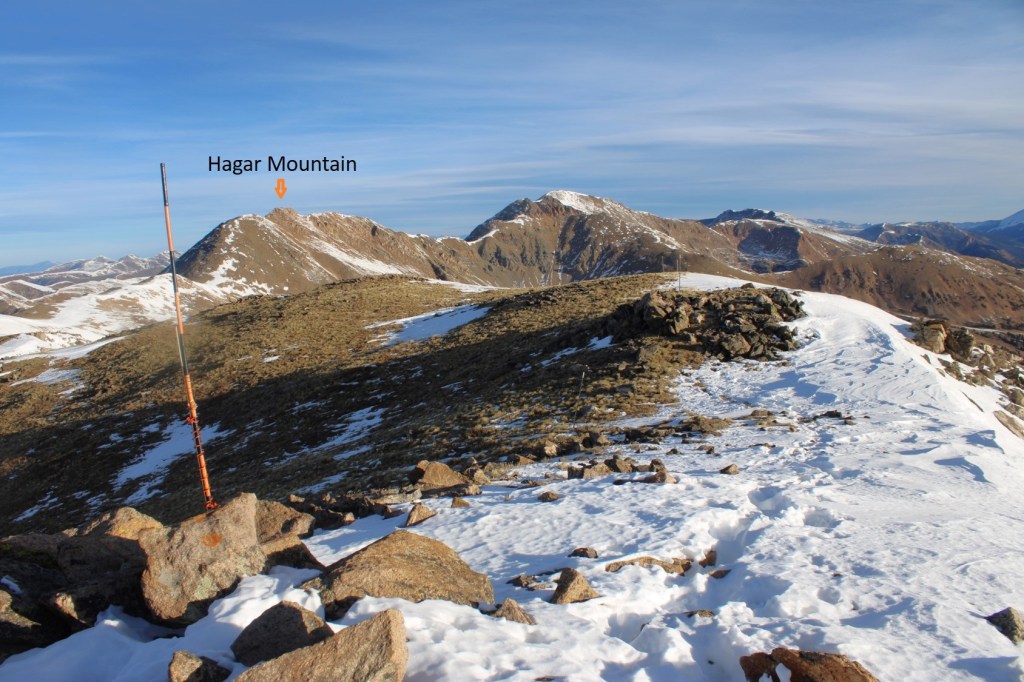
I could see Hagar Mountain to the north

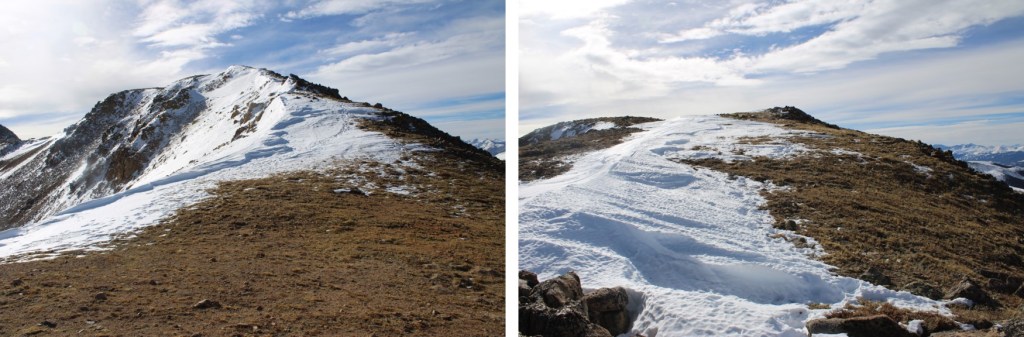
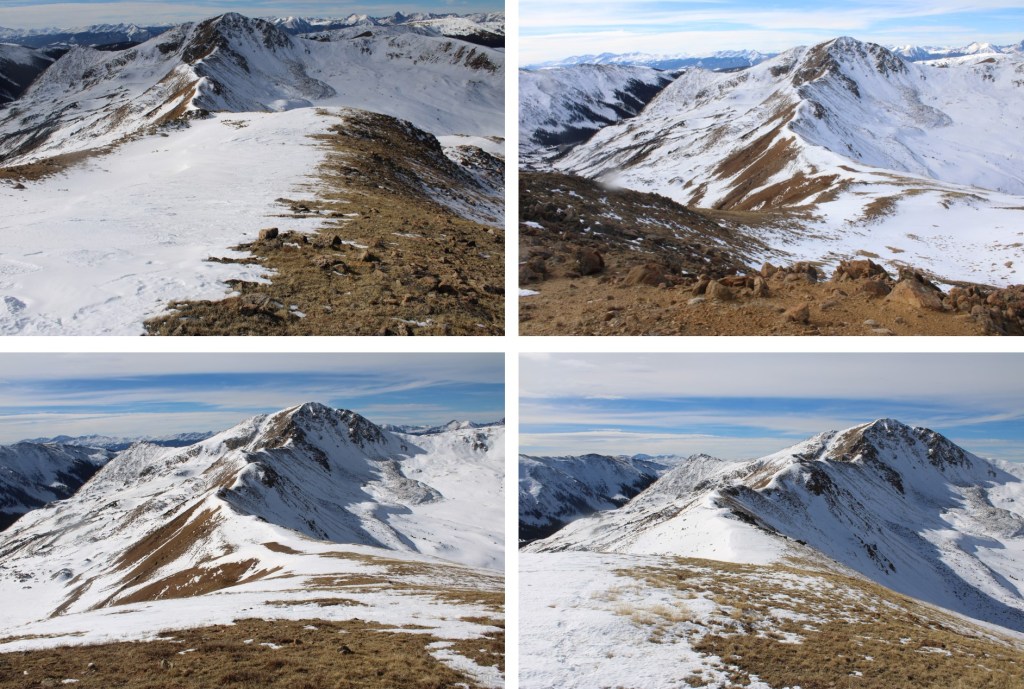
To get there, I continued following this class 2 ridge.  There were a lot of ups and downs, but it remained class 2 (until the last 50 feet of elevation gain or so).  Here are some pictures of the ridge

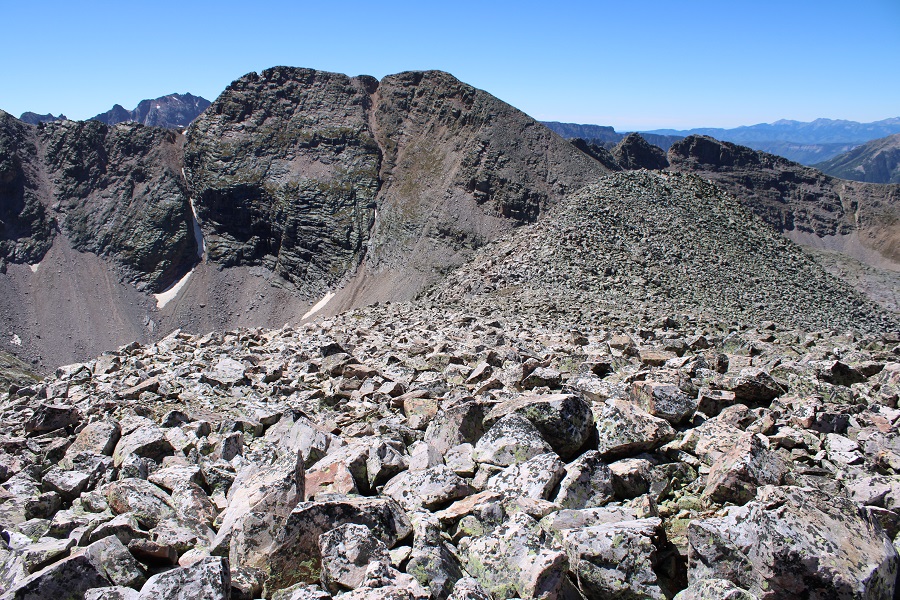
Now the fun begins.  It’s class 2 to the top of this ridge.  There are a few cairns, but it’s basically choose your own adventure.  I went straight up.  It’s steeper than it looks, so get a good view before you ascend. This is the route I took.

And some pictures of the route up.

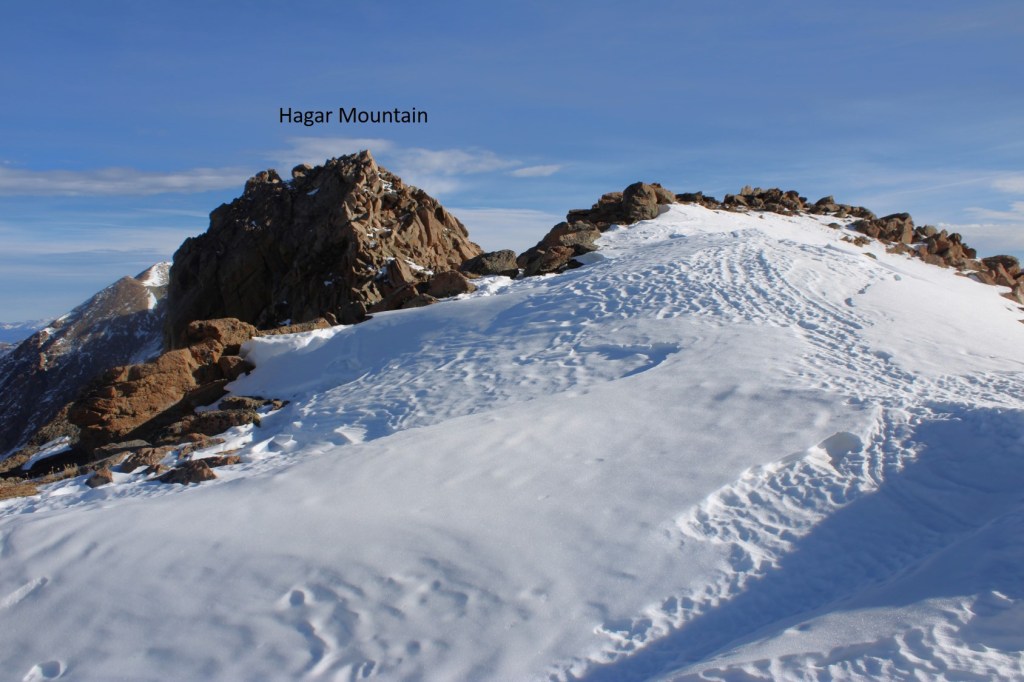
At the top I was greeted with a view of the final approach to Hagar Mountain.

To be honest, I hadn’t done a lot of research on Hagar, and was surprised to find the last bit was class 3.  In other words, I didn’t have a helmet. Be sure to bring one!  I dropped my pack, descended a bit to the saddle, and then started climbing up. 

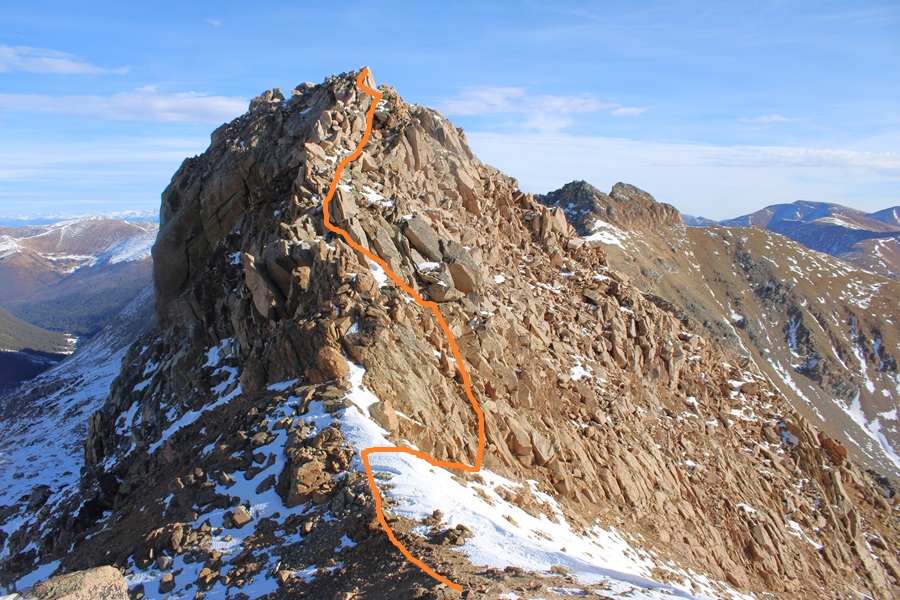
This is again choose your own adventure.  This is the overall route I took.

And some pictures of the scramble

Here’s the actual summit block.  It’s the first one you come to. 

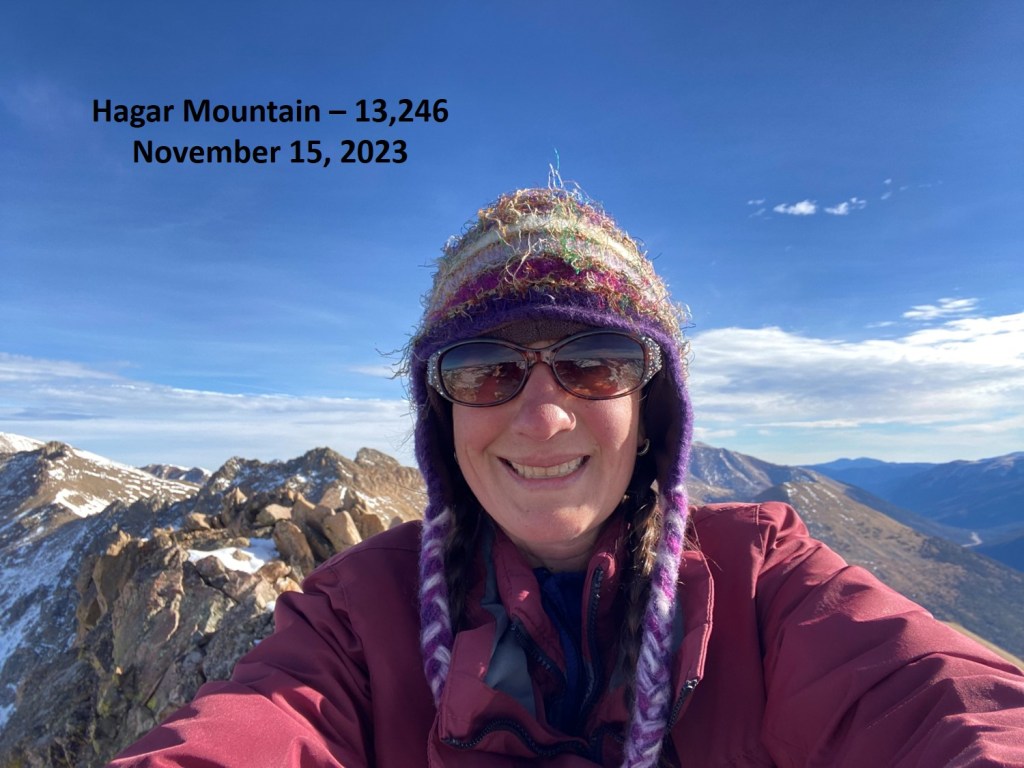
I summited Hagar Mountain at 9:20am          

Hagar Mountain:

From the summit looking north, it seemed as if the next point was equal height to where I was currently, so I scrambled over there too in case any LiDAR issues should arise.

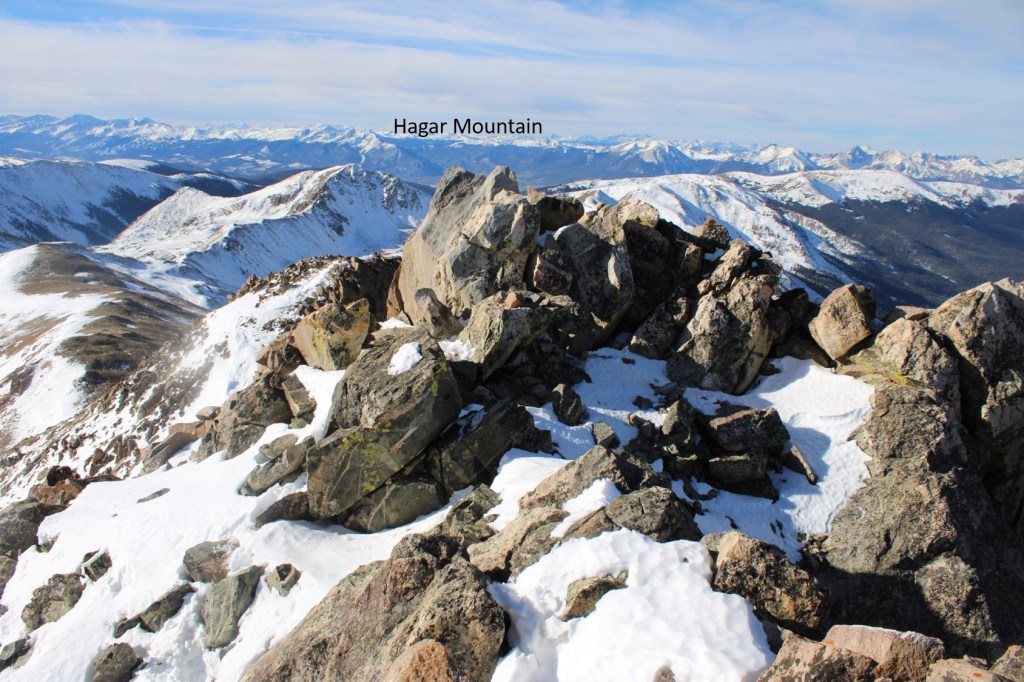
Here’s looking at Hagar Mountain from the second block

I trekked back over to the first block, and found a summit register, so I’m assuming the first block is the true summit.  Now to head back.  I retraced my steps, aiming for the Golden Bear/Hagar saddle.

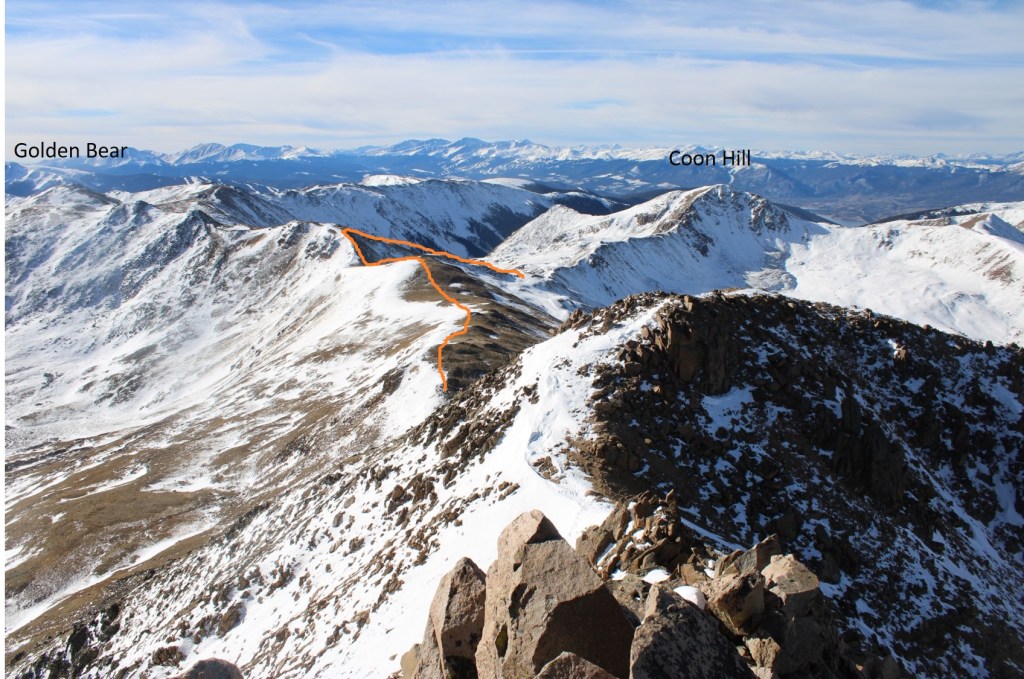
Here’s the overall route I took back to the basin, aiming for the Golden Bear / Coon Hill saddle

First I headed back down Hagar the way I ascended

After making it to the saddle,  I followed the ridge up to 12830’

At 12830’ I turned and headed southwest towards the saddle.

At the saddle I found an obvious trail and turned left.  This led me back down into the basin and back to the trailhead. 

I made it back to the trailhead at 11:20am, making this a 7.82 mile hike with 2760’ of elevation gain in 5 hours.

On to the next trailhead! 
Electric Peak – 13,297, Graystone Peak – 13,503 and Mount Garfield – 13,087

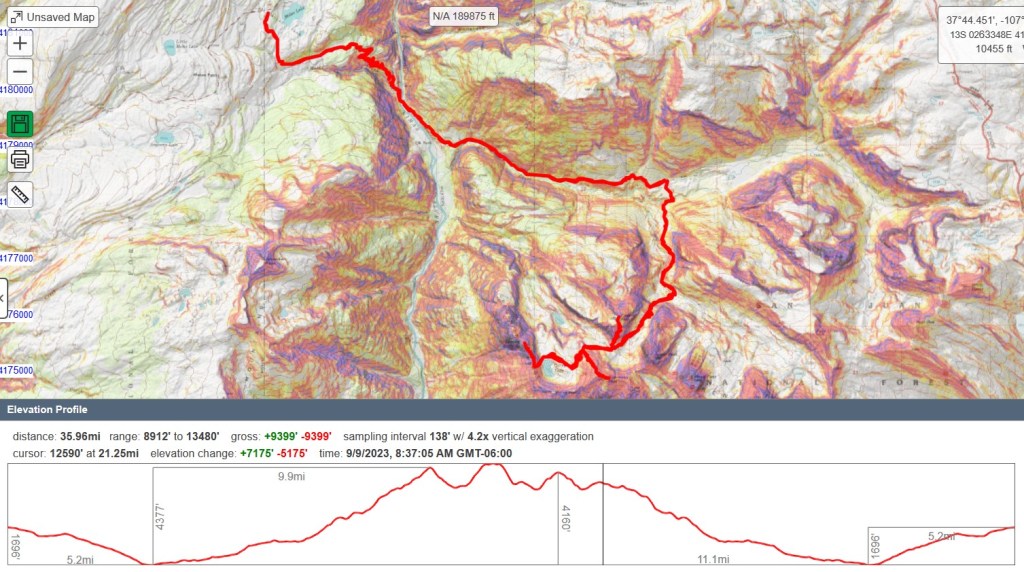
RT Length:  35.96 miles

Elevation Gain: 9399’

I started from the Molas Trailhead parking area.  This trailhead has plenty of parking, and is a popular spot among CT hikers. 

The trail starts at the south end of the parking area. 

Much of the approach route follows the Colorado Trail, so it’s well maintained and easy to navigate.  I followed the trail as I descended 1700’ to the Animas River.

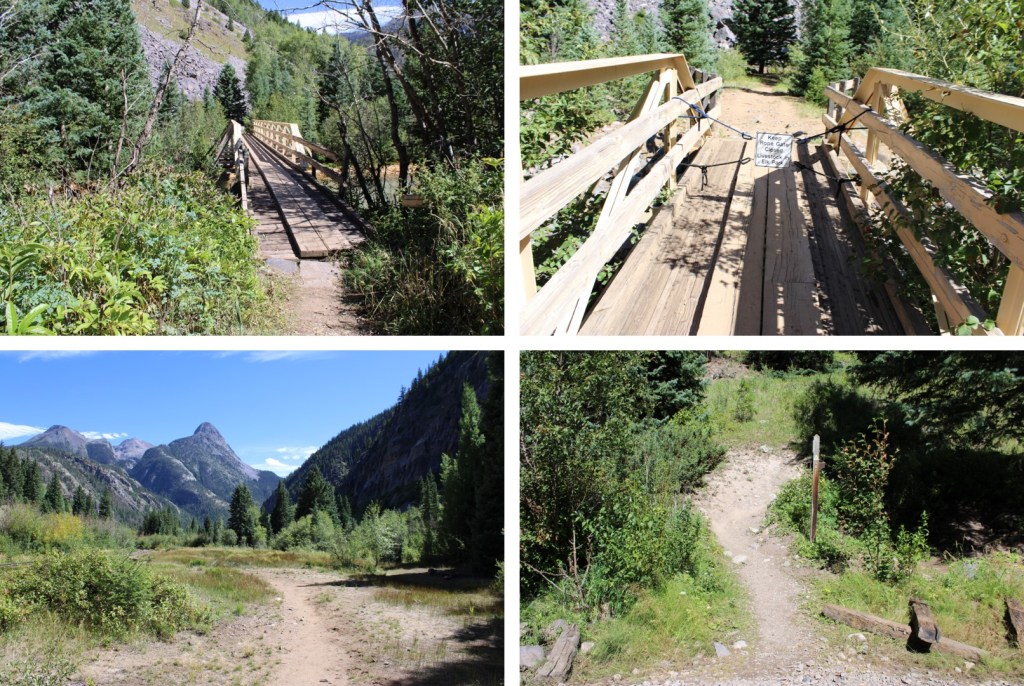
I crossed the river on a well-maintained bridge, and then followed the trail as it crossed the railroad tracks

Here is where the elevation gain begins.  I hiked along the Colorado Trail east to the Beaver Ponds, following Elk Creek and passing through a couple of cleared avalanche areas.  This trail is easy to follow, with no trail junctions.

This part trips people up all the time when headed towards Vestal Basin: Once at the beaver ponds, I turned right off the trail and traversed behind this large boulder.  There’s a faint trail here that picks up again once you’re past the ponds.

The trail picks up again after the beaver ponds, but it’s no longer as well maintained as the Colorado Trail.  There are fallen trees to navigate, but the trail is easy to see.  I followed the trail as it crossed a beautiful creek and headed south.

At 11260’ of elevation I left the trail.  There are several options to do this, but here’s a visual of where I was headed. 

This is the route I took:

I headed a little further up the trail, crossed the creek at an easily accessible spot, and headed southwest up the slope.  However, this is choose your own adventure, and you can climb straight up the talus/scree if that’s your choice.  I decided to skirt around it.

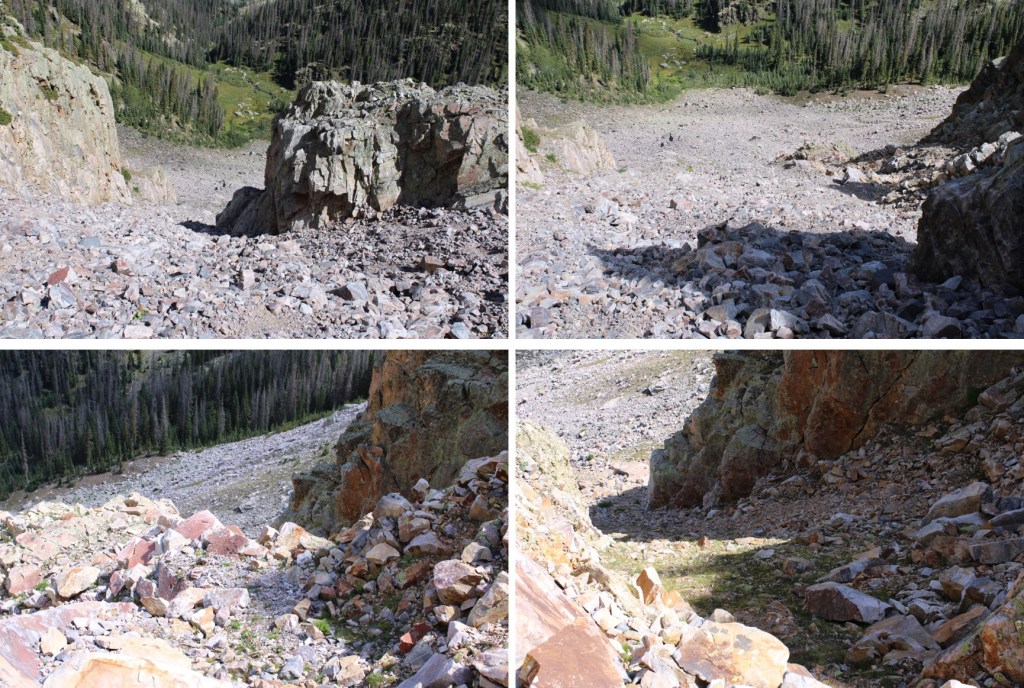
This gully wasn’t too bad as far as gullies go, but I put on my microspikes anyway. 

Towards the top I could see quite a bit of snow still left in the gully.

I traversed the gully to the right, finding there was about 2 feet of space where the snow had melted away from the rock.  The snow was avoidable until the last 30 feet or so, when I climbed on top of the snow and walked to the top of the gully on several feet of rock-solid snow.

However, if this is outside of your comfort zone, you can also traverse to the left and make it to the top of the gully on more scree.  Both routes lead to the same place (I took this route on my way down).

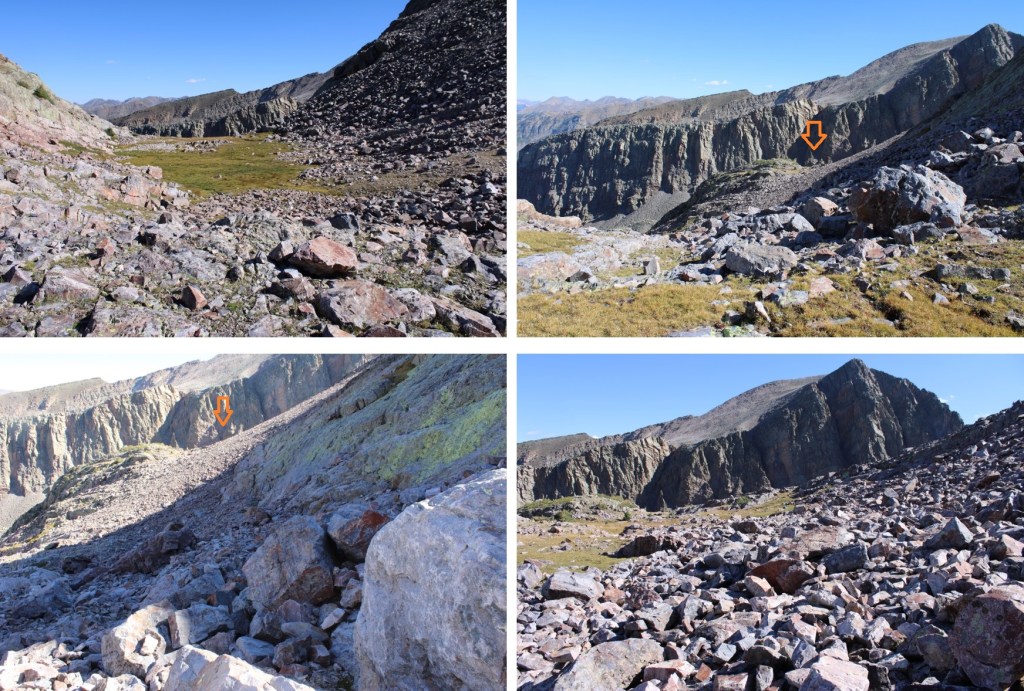
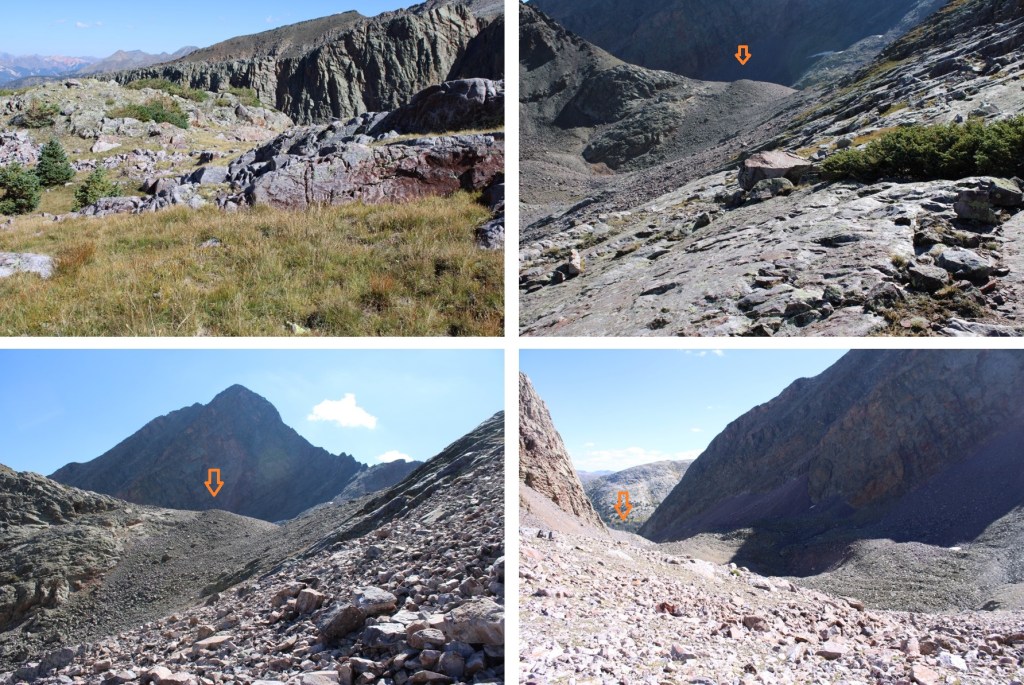
I was now in an upper basin, full of all different sizes of loose rocks.  This wasn’t difficult to navigate, but it was extremely time consuming.  I was headed southwest, staying to the right.

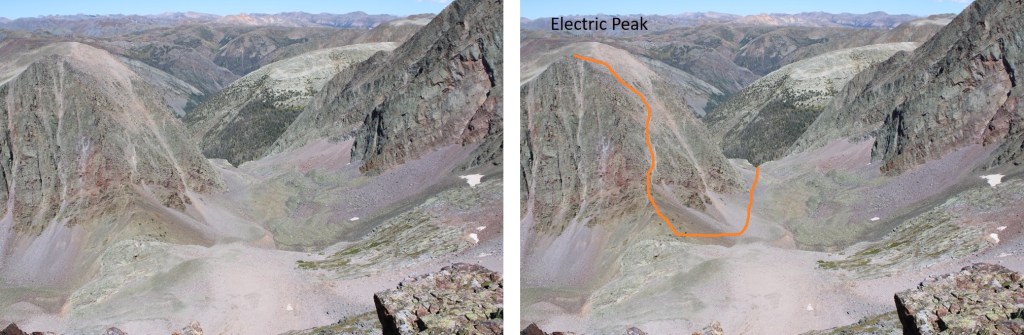
At 12500’ of elevation I turned right to start my climb up Electric Peak’s south side.  If you don’t already have your helmet on (I usually put them on for scree-filled gullies) now is the time to do it. 

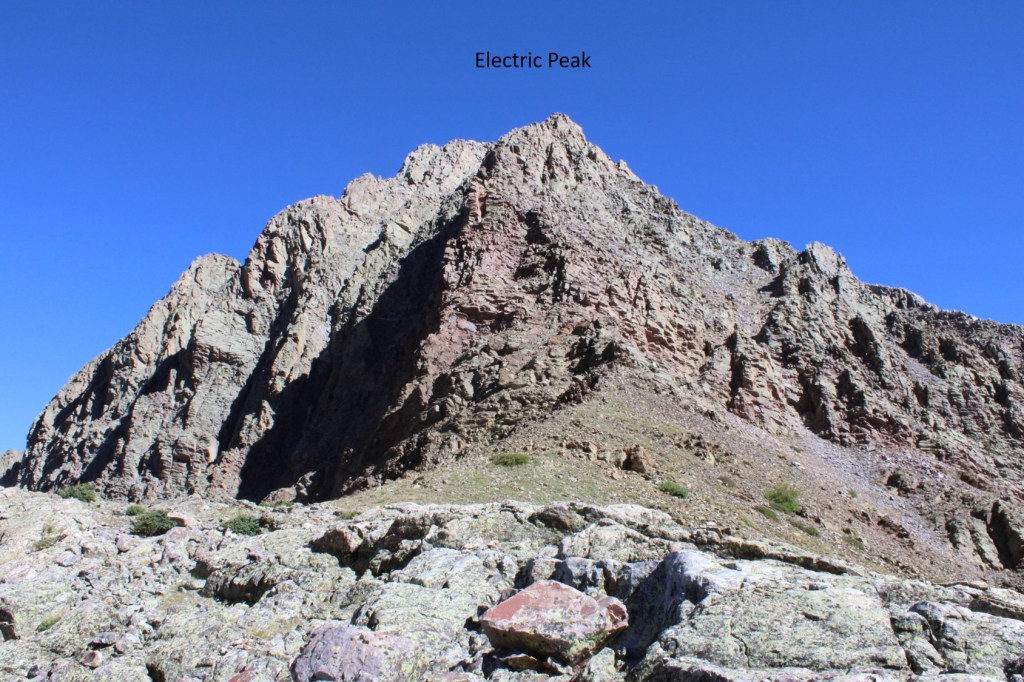
Much of the route to the summit is hidden at this time.  I started by climbing up a class 3 gully to the right

From Graystone Peak, I had a good visual of the route I took, keeping it mostly class 2 after the initial class 3 gully

Once on top of this gully, there are several options to make it to the summit.  Here are some on the ground pictures.  The terrain was rocky most of the way to the summit.

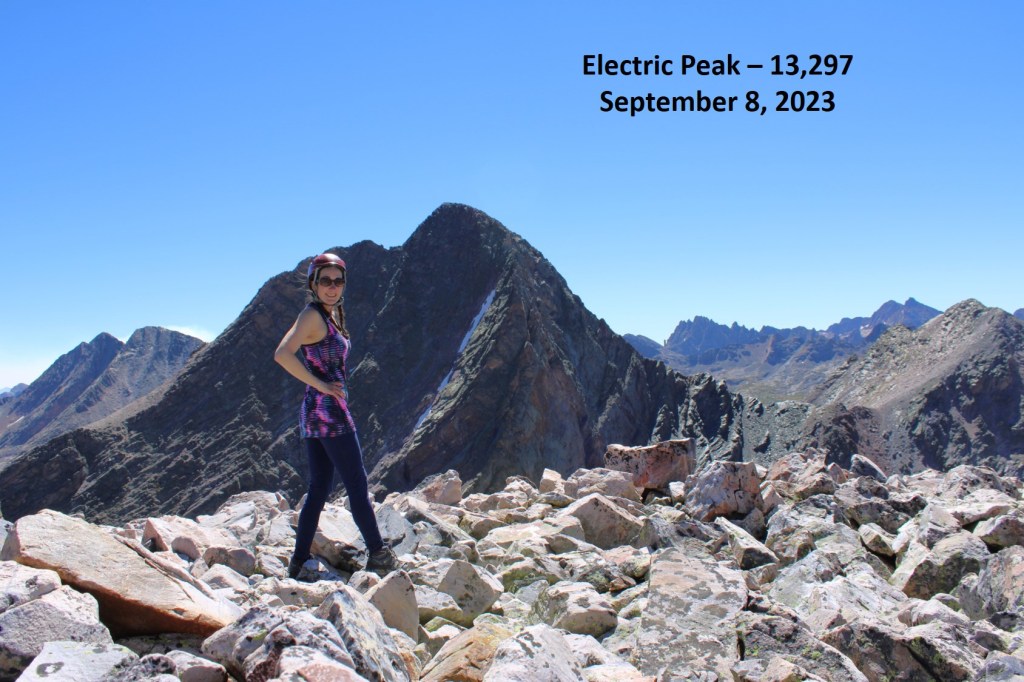
The summit was fairly flat and rocky.

Electric Peak:

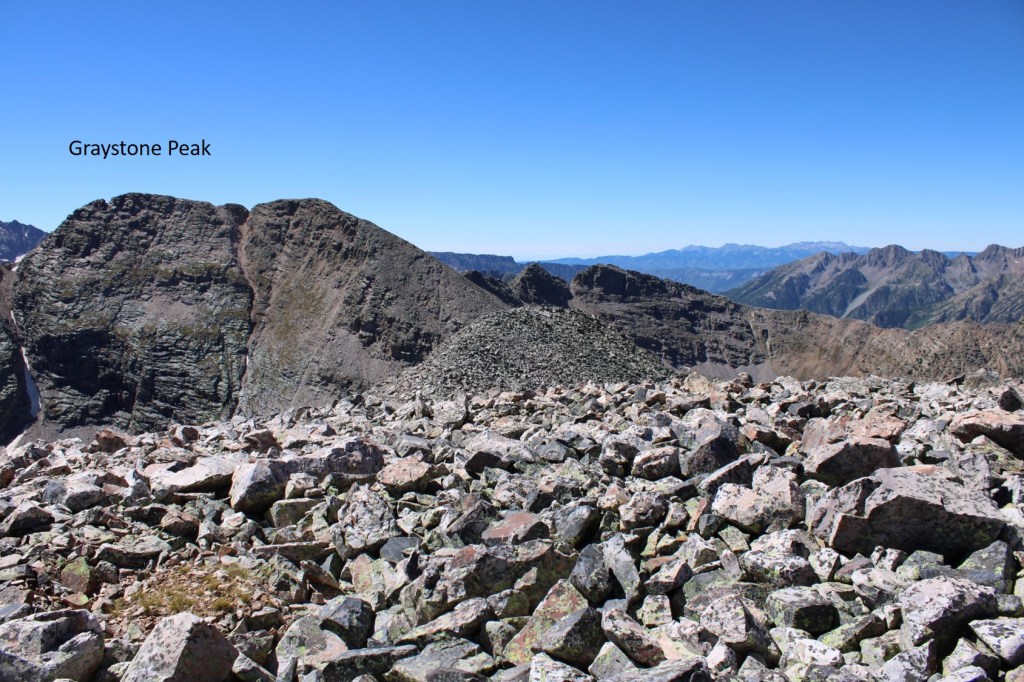
From the summit of Electric Peak, I could see my next objective, Graystone Peak, to the south.

I re-traced my steps back to the saddle

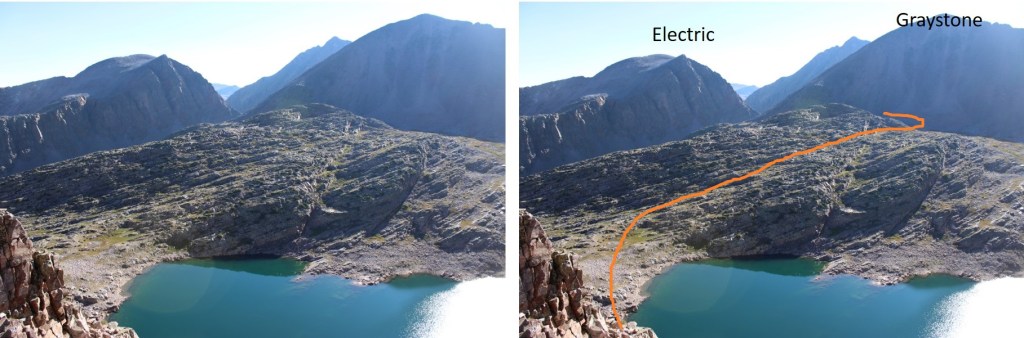
Now to head over towards Graystone Peak.  I looked east, and saw these wonderful rock slabs.

Traversing up and down large rock slabs is mostly a mental exercise in not freaking out. I kept telling myself “My shoes have got this, trust your shoes. Also, don’t look down”. This is the route I took.  There’s no avoiding the slabs.

Another view of the rock slabs, with a little bit of climbing towards the end (which was favorable to the smooth slabs)

After making it up the rock slabs, I turned left, now ready to scale Graystone Peak

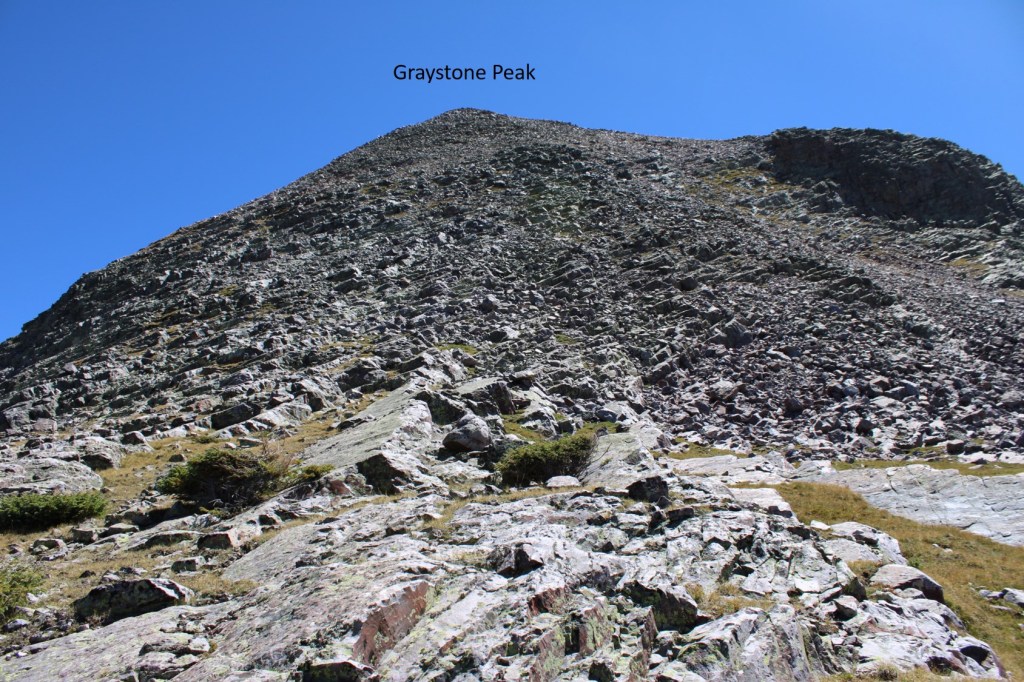
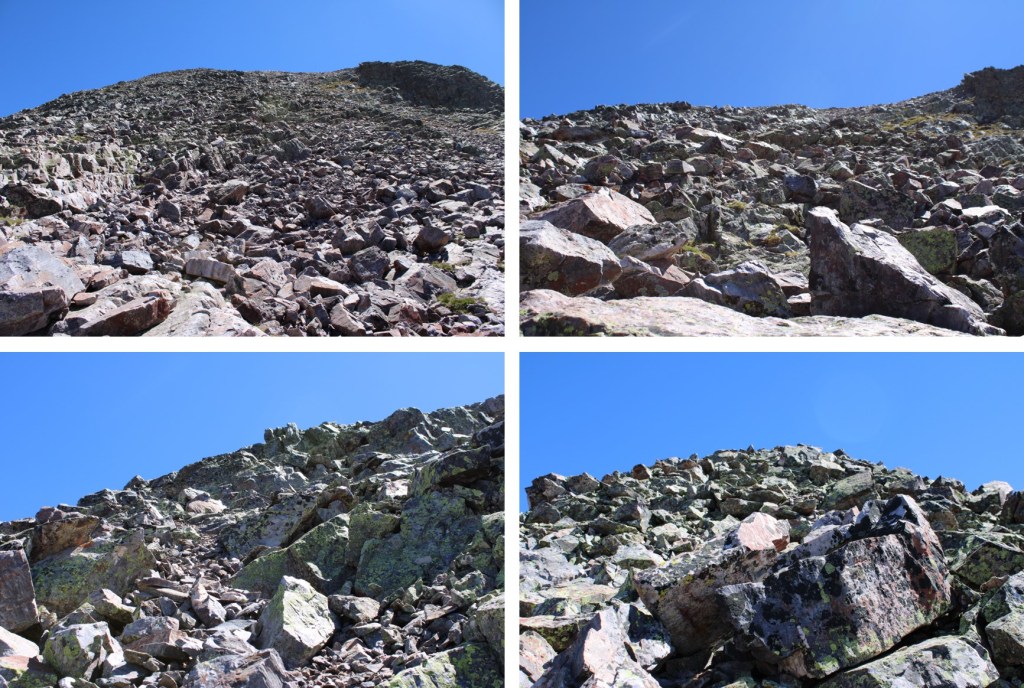
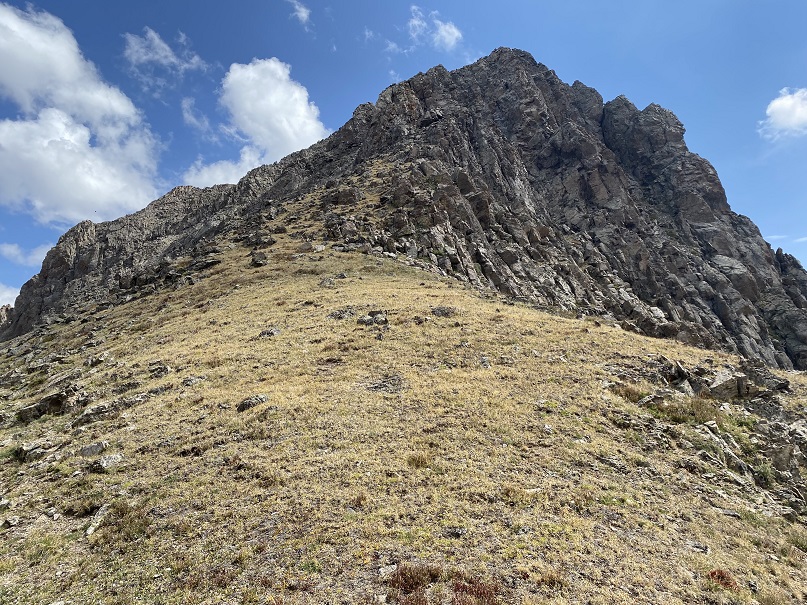
Scaling this peak is exactly what it looks like:  straight up the side with a lot of various sized rocks to traverse that are loose.  I headed southeast up the mountainside.

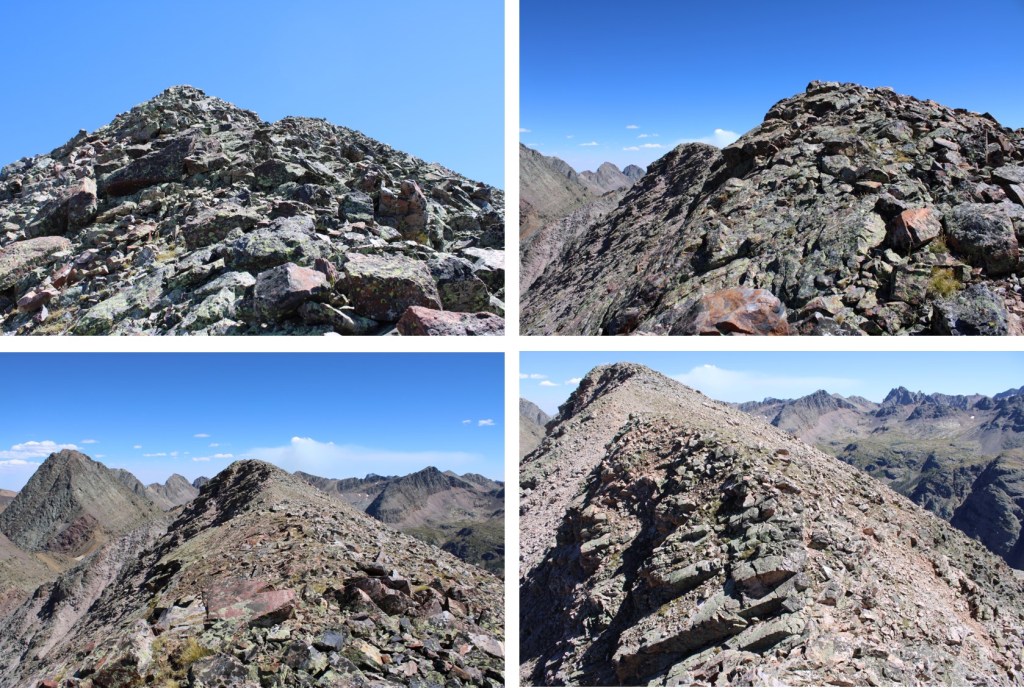
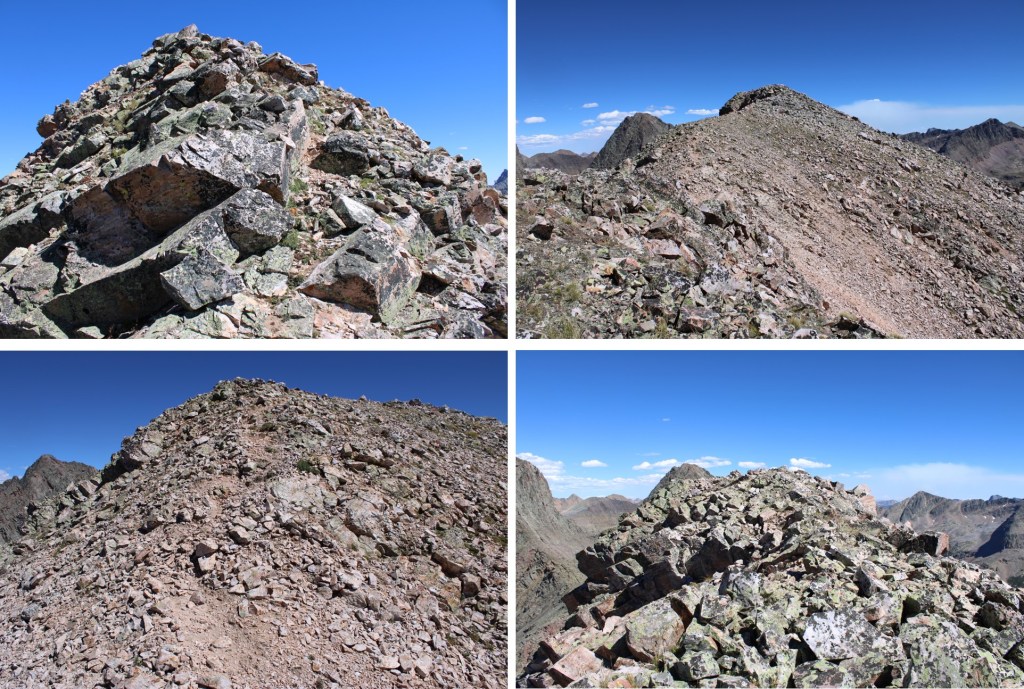
Once making it to the ridge, I stayed on the ridge proper to the summit, with some easy class 3 ups and downs along the way.

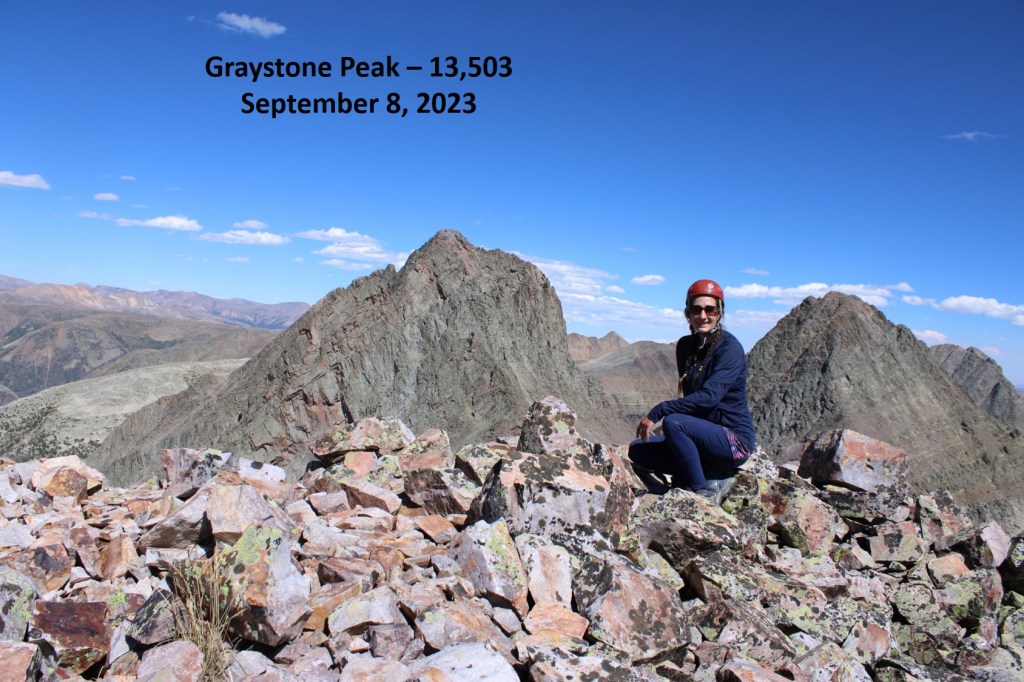
There was a large cairn at the summit

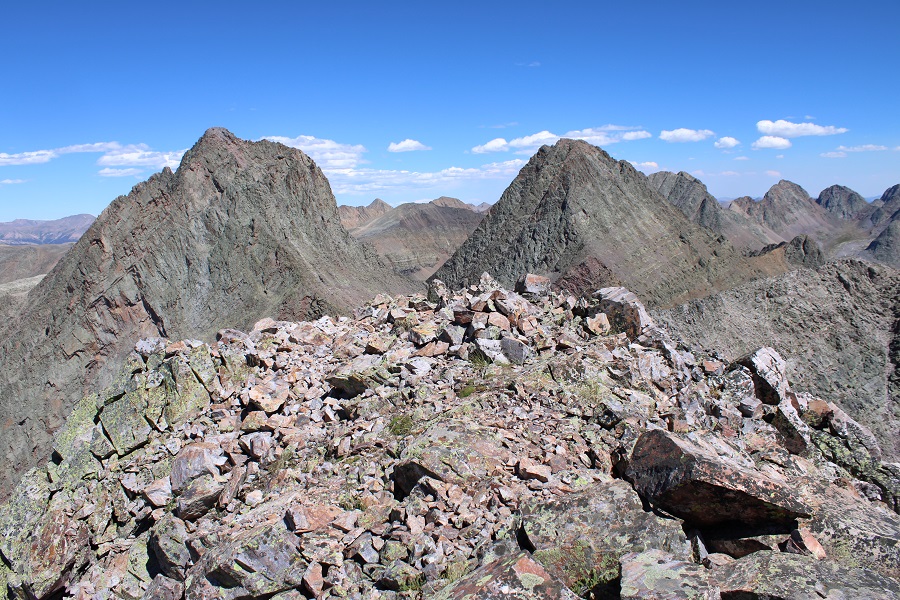
Graystone Peak

I turned around and headed back down the peak the way I’d ascended, doing my best to keep my balance and navigate the loose rocks.

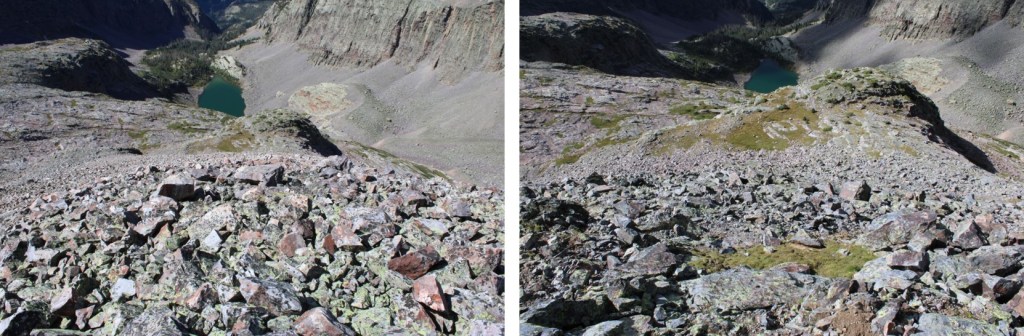
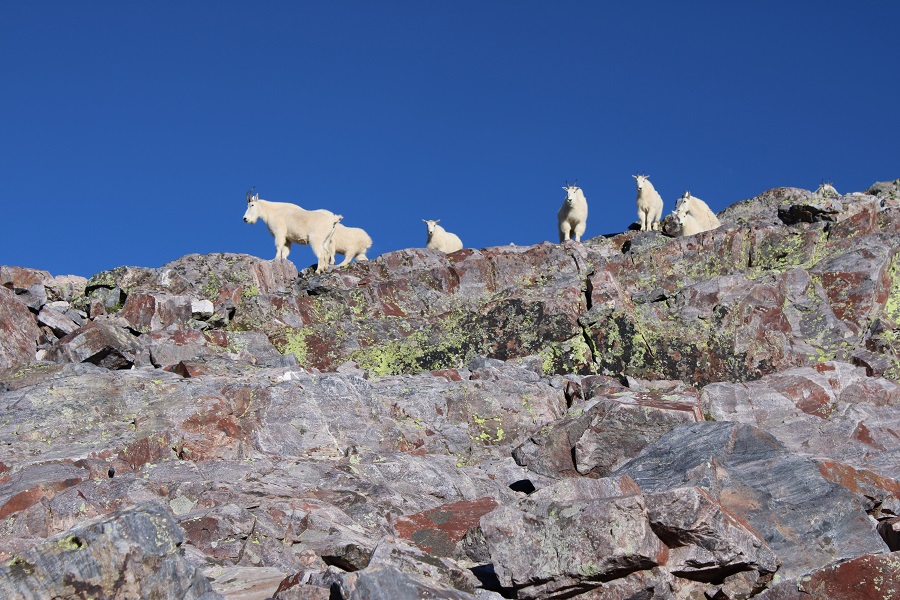
It had been a long day, so once I made it back down to the little patch of grass at the base of Graystone Peak I decided to call it a night and set up my bivy.  I dried out my clothes, ate some dinner, and wrote notes down in my journal.  Just before settling down for the night, I heard rocks tumbling and then skidding to a halt behind me.  I turned around, and about 30 mountain goats were standing on the ledge, about 20 feet away.  Most of them dashed away before I got a picture, but they seemed just as surprised to see me as I did them.  They were probably headed towards the patch of grass I was using as a bivy site, and seemed a little disappointed to find me already occupying the space.  I wish I could have told them I wouldn’t bother them and they were free to stay, as there wasn’t any other grazing areas around, but they all bounded away to find another site.

I was up early the next morning and on route to Mount Garfield.  Even though this was the shortest of the peaks I was doing this weekend, it was by far the most challenging.  Once on the ridge it was consistent class 3 the entire way.  I started out by heading southeast around the base of Graystone Peak. I was headed here:

This was a quick and easy gully to climb.  Once out of the gully, I passed through an open grassy area and then descended over 300 feet down grassy slopes to the right, towards Garfield Lake. 

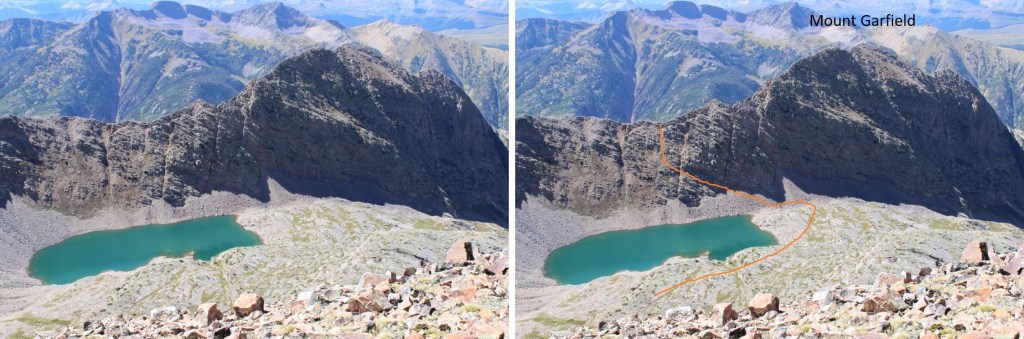
Once at Garfield Lake, I needed to gain the ridge.  This can be done in several ways, but this is the overall route I took.  There were a couple of nicely placed trees I used as a guide on the ledges.  I just aimed for one tree, and then the next.  Here’s an overview of the route to the ridge as seen from Graystone Peak

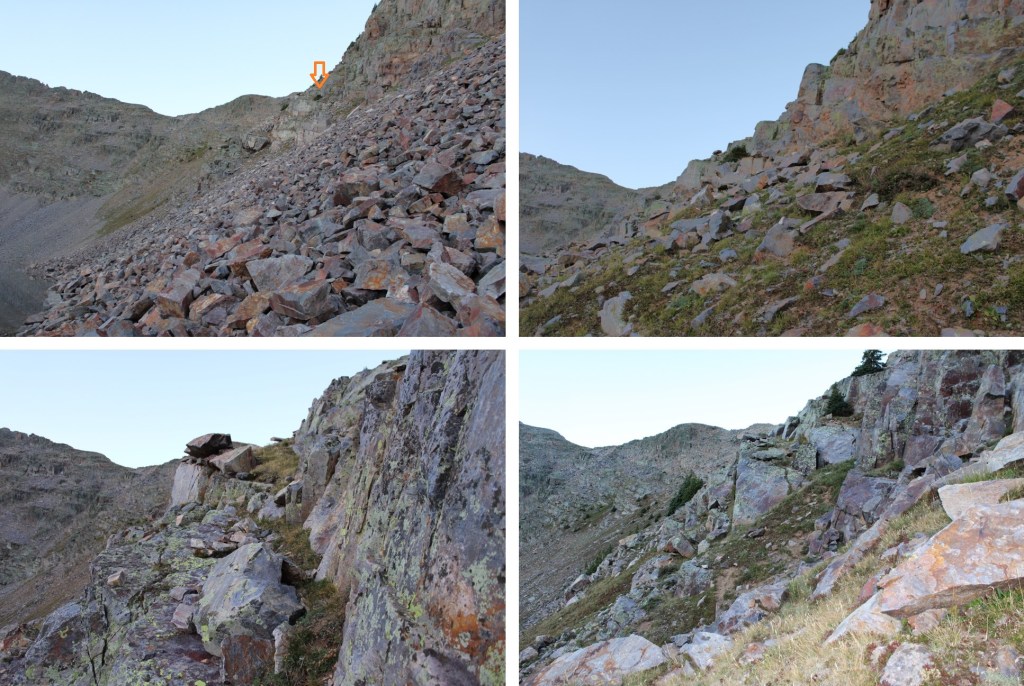
From Garfield Lake, I aimed for the rock ledge with two trees on it, spaced about 300 feet apart.  It was class 2 to the ridge.

When I’d passed the two trees, I looked up and saw this gully. 

I made my way straight up the gully to the ridge.

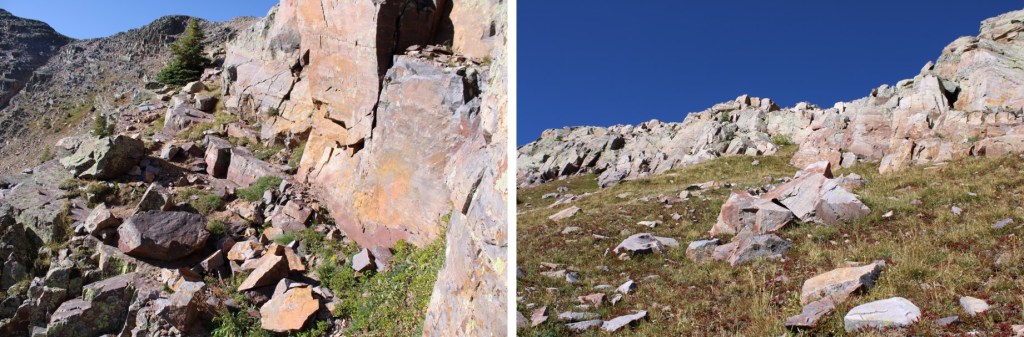
Once on the ridge I turned right, and this became a class 3 ridge hike all the way to the summit.  I was able to mostly stay on the ridge, dipping to the right one time.  If you encounter a class 4 move, you’re off route.  Here are some pictures of the ridge.

I stayed to the left of this gully, climbing up the rocks instead of on the scree.

At the top of the gully I turned right, and continued following the ridge.

The only time I dropped off the ridge was when I came to this large rock.  At this point I dropped to the right and descended about 30 feet before re-gaining the ridge.

Back on the ridge, I followed it to the summit, class 3 the whole way

Mount Garfield

Here are some pictures of the route back down the ridge

Then back down the gully to Garfield Lake

Back at Garfield Lake, I took the same route back to the base of Graystone Peak, this time going up the grassy ledges

This was an out  and back hike, so I re-traced my steps down the rock slabs, across the rock field, and back down the gully to the trail.

This time, instead of going down the snow-filled gully I went to the right, and descended on scree

Back on the trail, I followed it back to the Beaver Ponds

Then I followed the Colorado Trail back to the Animas River

I crossed the train tracks, and trudged back up to Molas Pass, something I timed just right so I’d be doing later, during the cool part of the day.

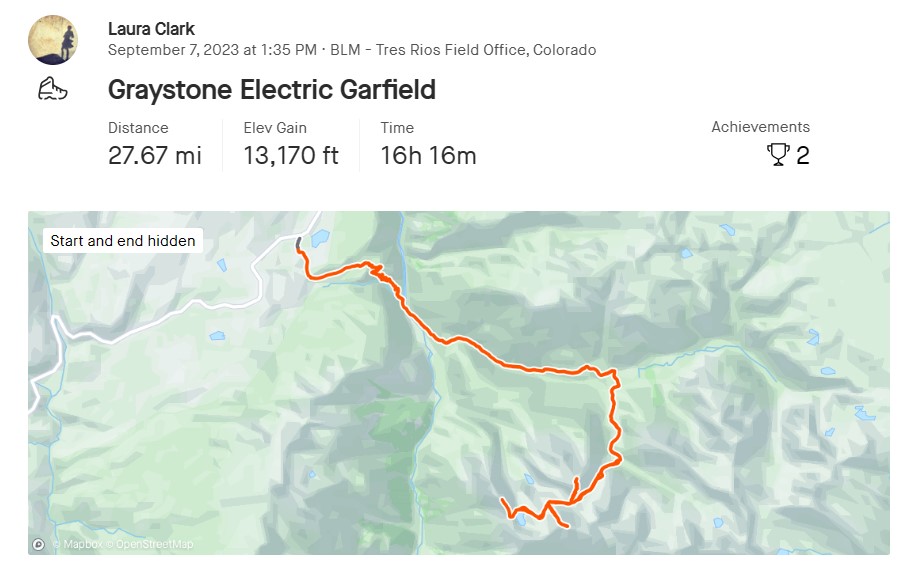
I usually go by CalTopo stats to keep things consistent.  CalTopo gave me 35.96 miles with 9399’ of elevation gain, but Strava gave me 27.67 miles with 13,170’ of elevation gain.  Take your pick! 

On to the next trailhead!
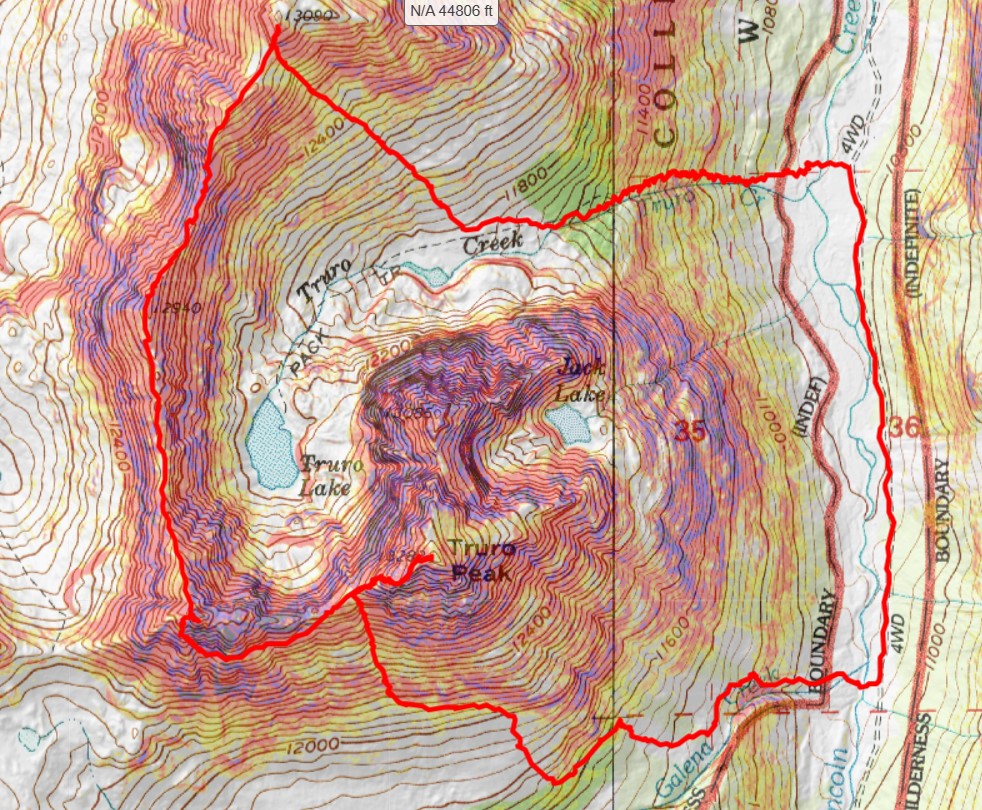
PT 13102, West Truro – 13,149 & Truro Peak – 13,298

RT Length: 8.49 miles

Elevation Gain: 3489’

As I sat down to type this up, I’m already at the next trailhead.  I got out my computer, camera, etc. and set it all up to write a trip report.  Just as I was starting, a huge gust of wind blew through the site, creating a whirlwind of dust.  All that dust is now inside the topper of my truck, as well as all over my computer, bedsheets, etc.  Oh, the joys of living out of your truck!  I swept it up as good as I could, but dirt and dust went everywhere!  My poor electronics.

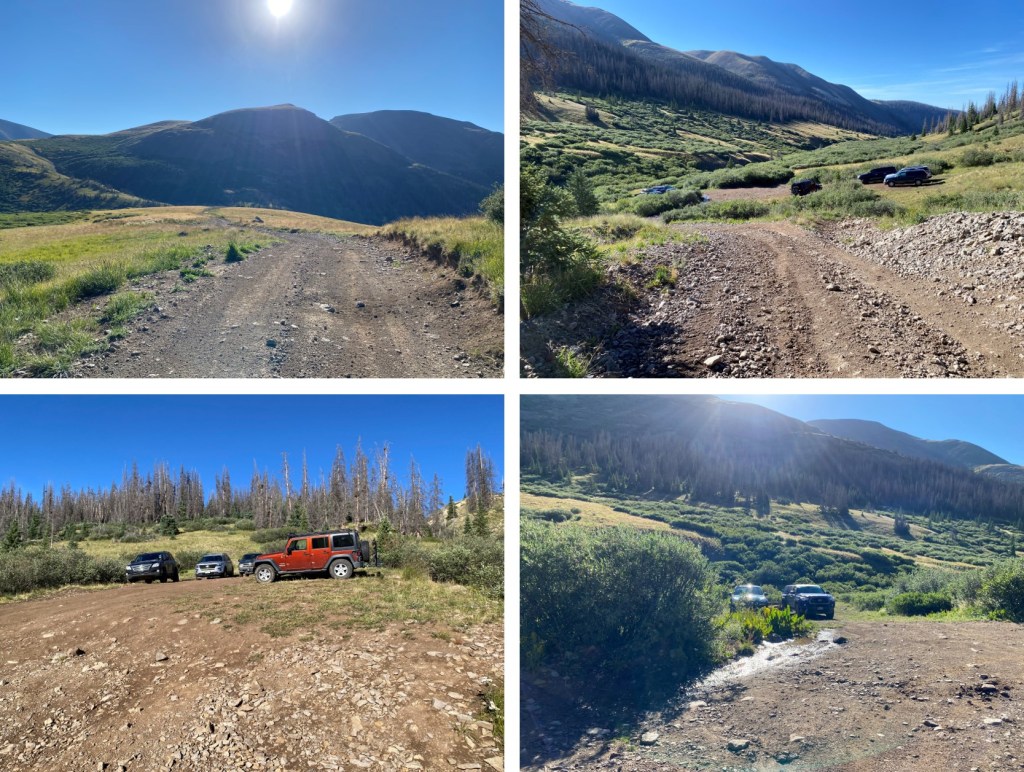
Ok, on to the trip report.  I parked past Grizzly Reservoir at 10800’ at a nice dispersed campsite to start this hike. 

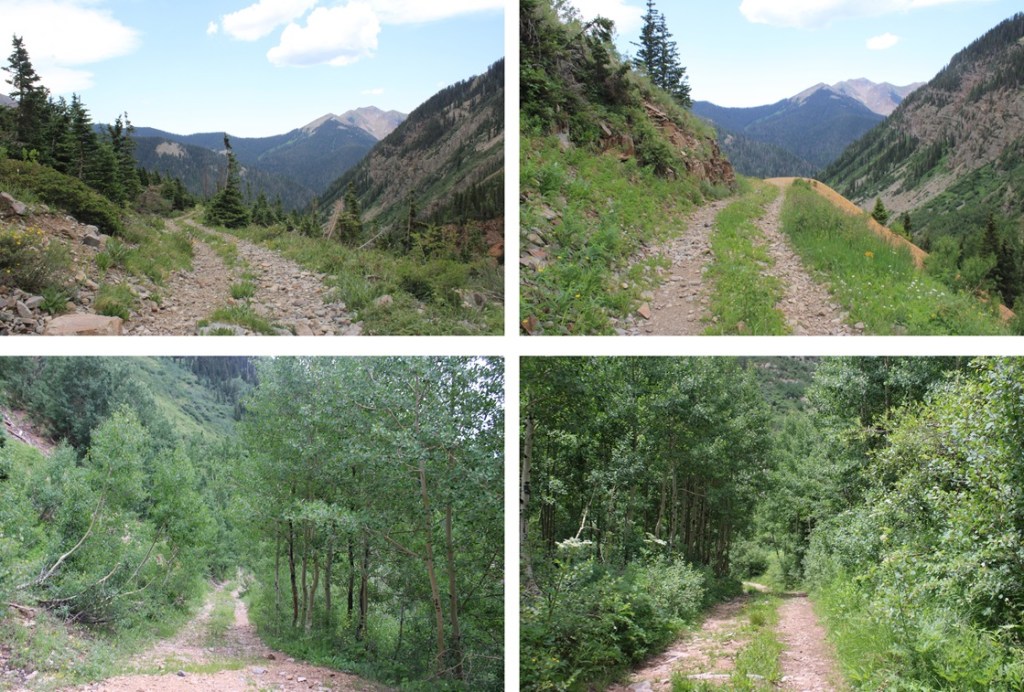
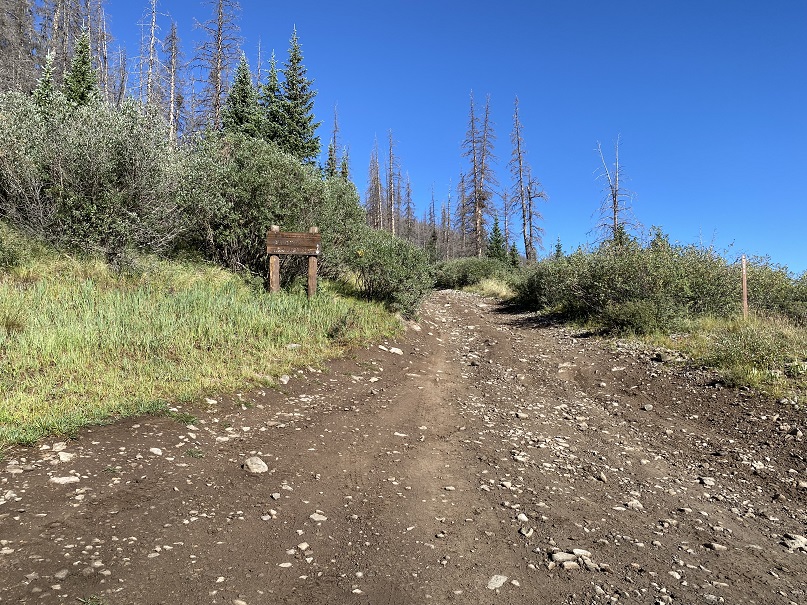
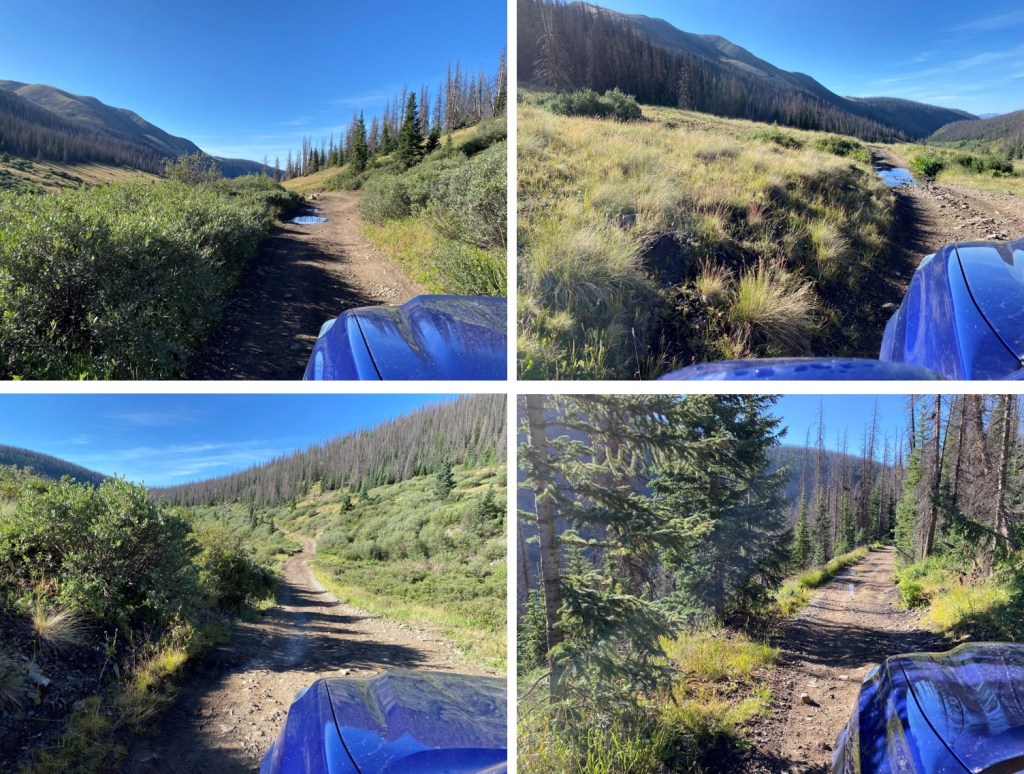
The drive in was easy 4WD, with a lot of creek crossings and potholes to maneuver. 

I was up and on the trail at 5:45am.  The trail starts at the wests end of the parking area, and almost immediately crosses Lincoln Creek.  I put on my stream crossing shoes and was on my way.

Here is an over view of where you’re going.  There are game trails to get you to the upper basin, but there are a lot of downed trees to contend with.  I just kept heading west, staying right of Truro Creek I could hear in the distance, following game trails as I went

Once I made it up the ridge, I continued west to treeline.

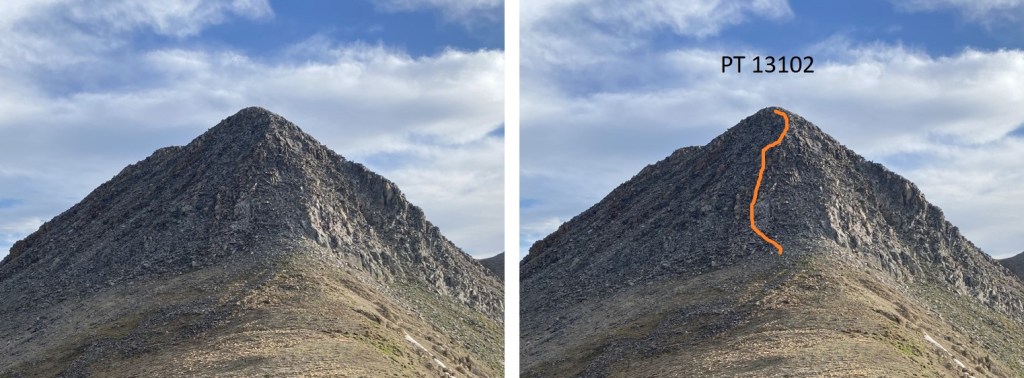
Once I got past the trees, PT 13102 was to the northeast.  It was choose your own adventure to make it to the ridge. 

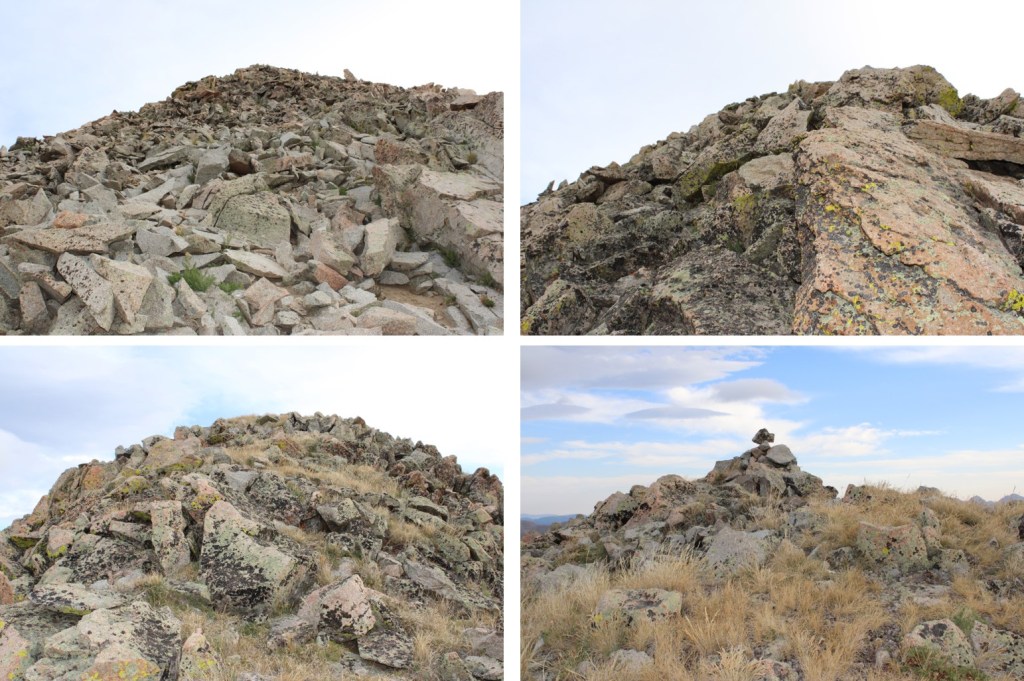
Here are some pictures of the easy tundra walk to the ridge

I put on my helmet, turned right, and headed north to the summit.  This was class 3, but solid and relatively short. 

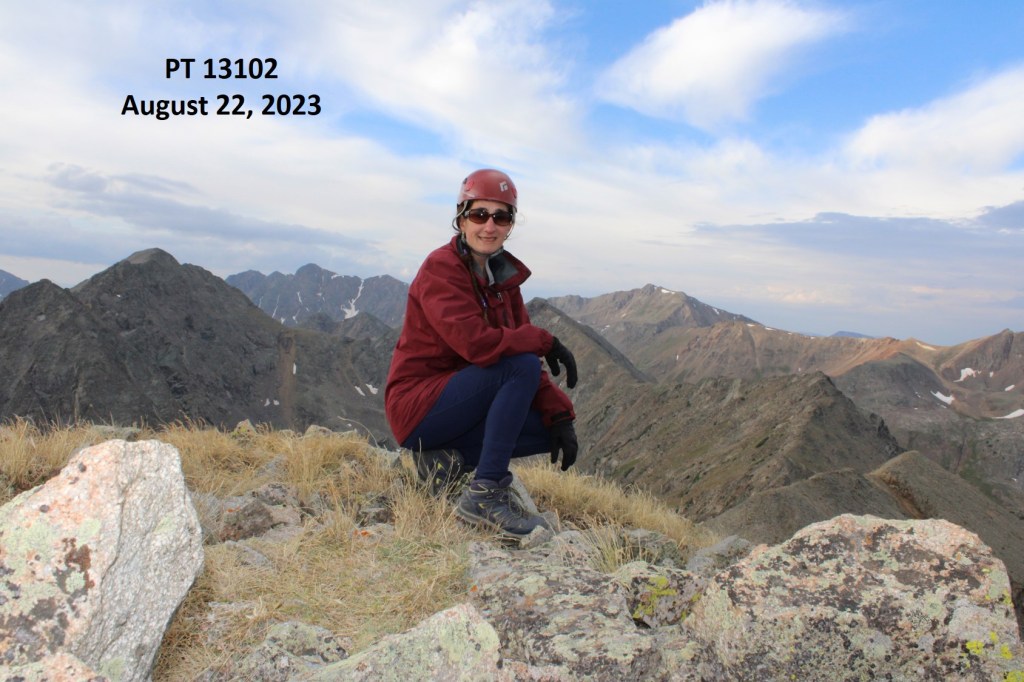
I summited PT 13102 at 7:30am

PT 13102:

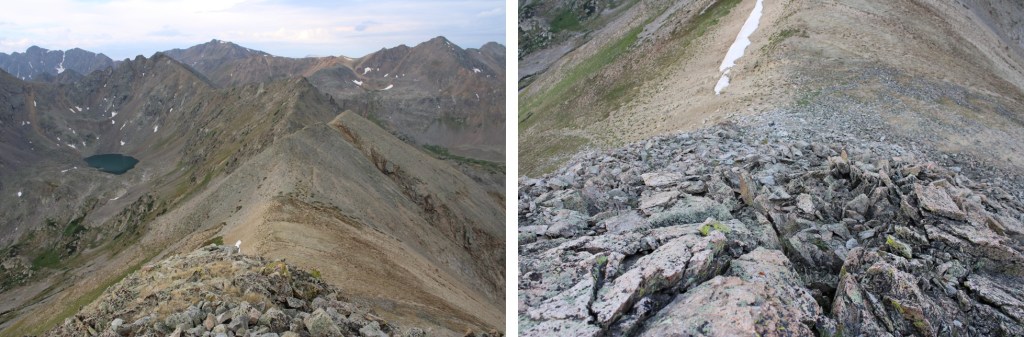
From here on out, this was a ridge hike to West Truro.  There were sections of class 2 and 2+, but most of it was class 3 and it was slow going, trying to figure out the best route to take.  I believe there are several ways to do this ridge, so you can choose how spicy you make it.  I found I stayed on the ridge proper, dropped to the left, and dropped to the right about equal amounts of time.  Just be forewarned:  once you commit to the route, there are few bailout points. 

I headed southwest back down the ridge.

From here on I was following the ridge basically west.  Since this is choose your own adventure, I’ll highlight a few pictures, and the route I took.

I was now halfway through the ridge to West Truro.  I sat down for a bit of a rest, and looked at the route before me.

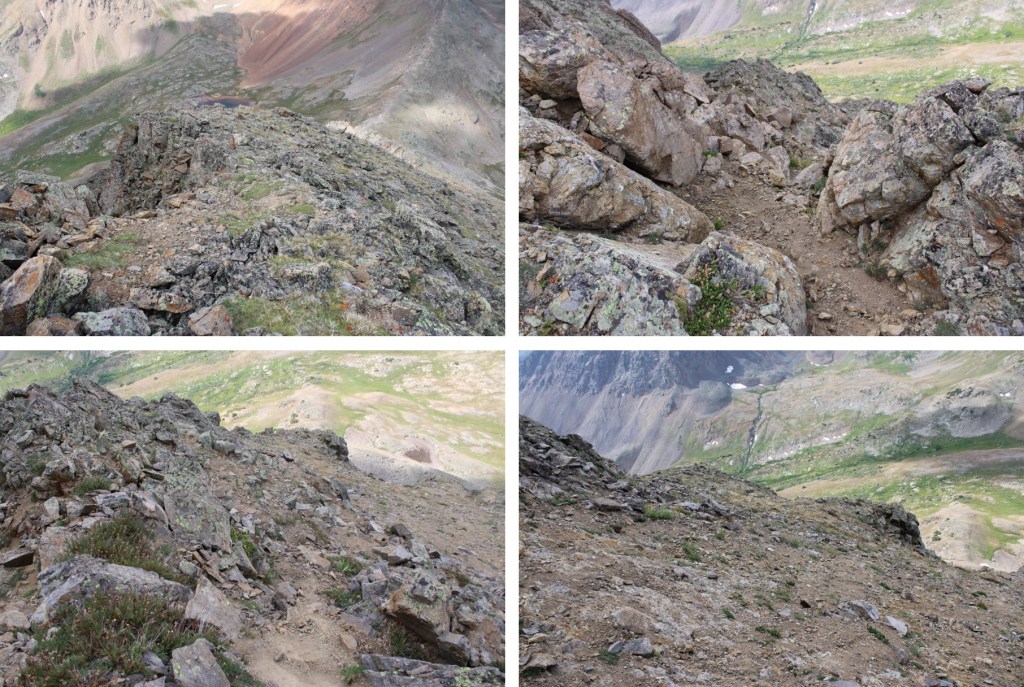
This second half of the ridge looked easier than the first, and indeed it was.  For this part of the ridge, I stayed mainly to the right.  Here are some pictures of this easier part of the ridge

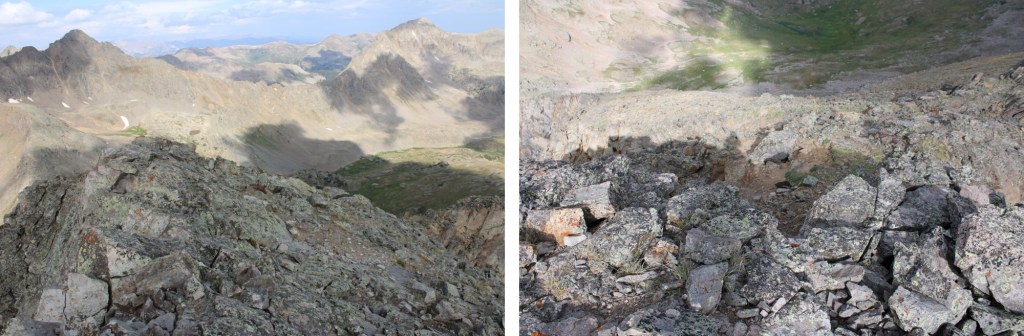
Most of the ascent up West Truro from the saddle was class 2 and stayed on the ridge, until just before the end.

There was a short class 3 chimney to scramble (class 4 is to the right), and then a short scramble to the summit.

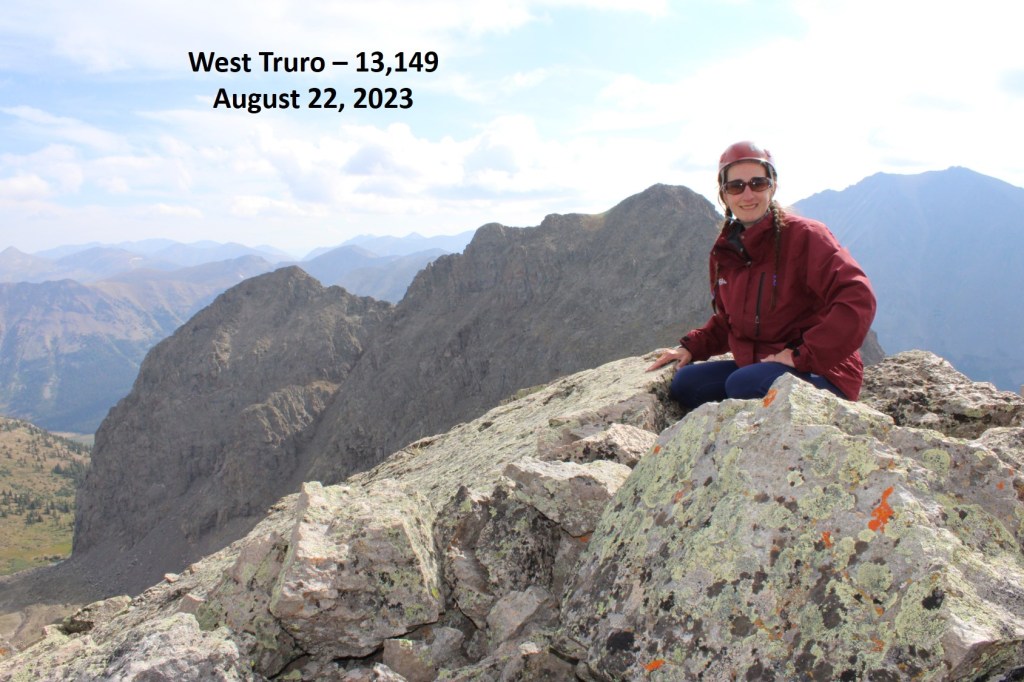
I summited West Truro at 9:30am

West Truro:

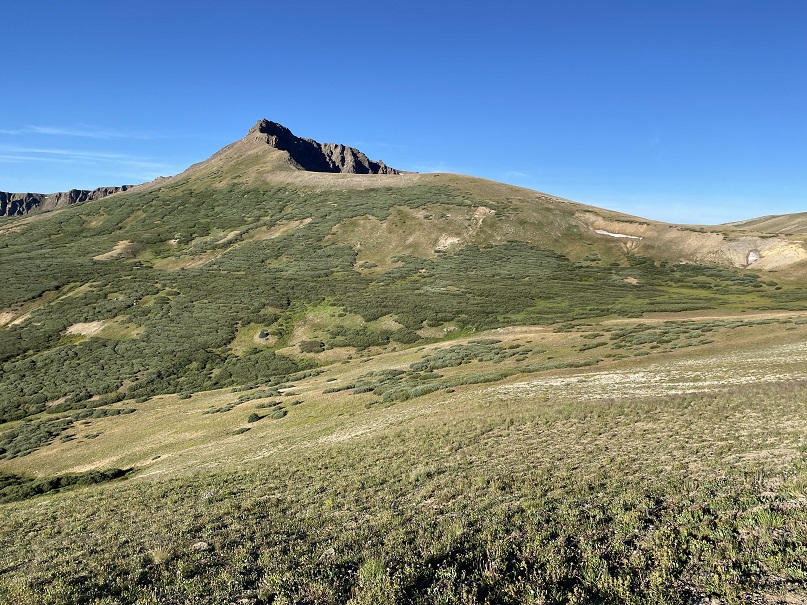
I could see Truro Peak to the northeast of me

Just for reference, this is how I climbed it (although this is choose your own adventure as well)

I wanted to skirt the south side of West Truro to make my way over to the West Truro/Truro saddle, so I made my way back down that class 3 chimney.

At 13050’ I descended down a game trail that led me to a scree filled gully.  I put on my microspikes for this part. 

This is where I was headed, so I lost and then gained elevation back to this point.

From here on our I just hugged the side of the mountain, making my way back up to the saddle.  This is also choose your own adventure, all class 2

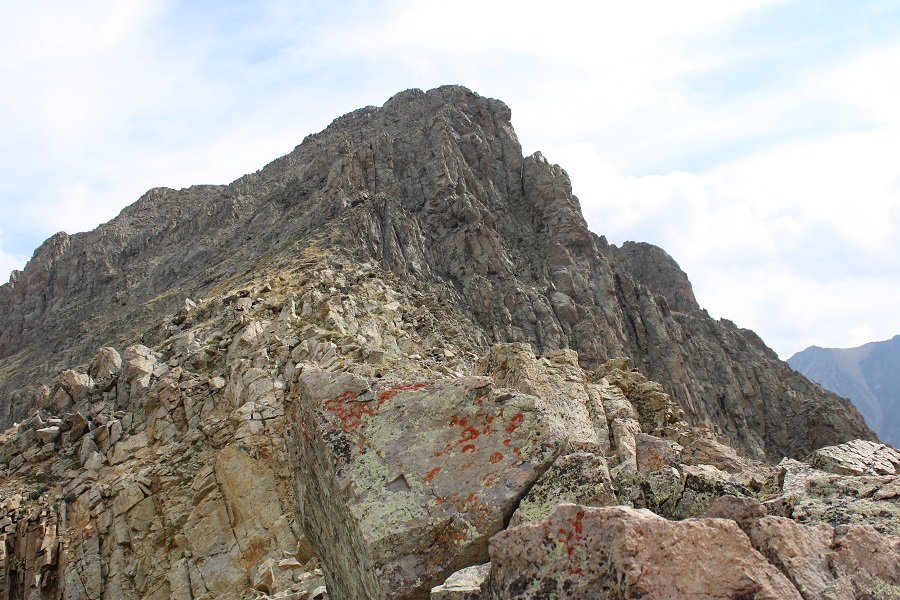
Now at the West Truro/Truro saddle, I had a good view of Truro Peak

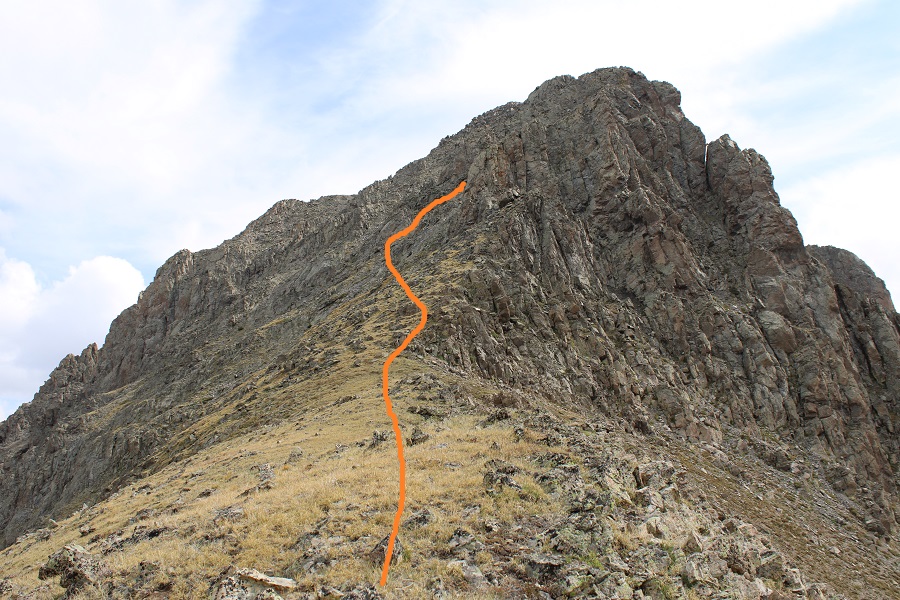
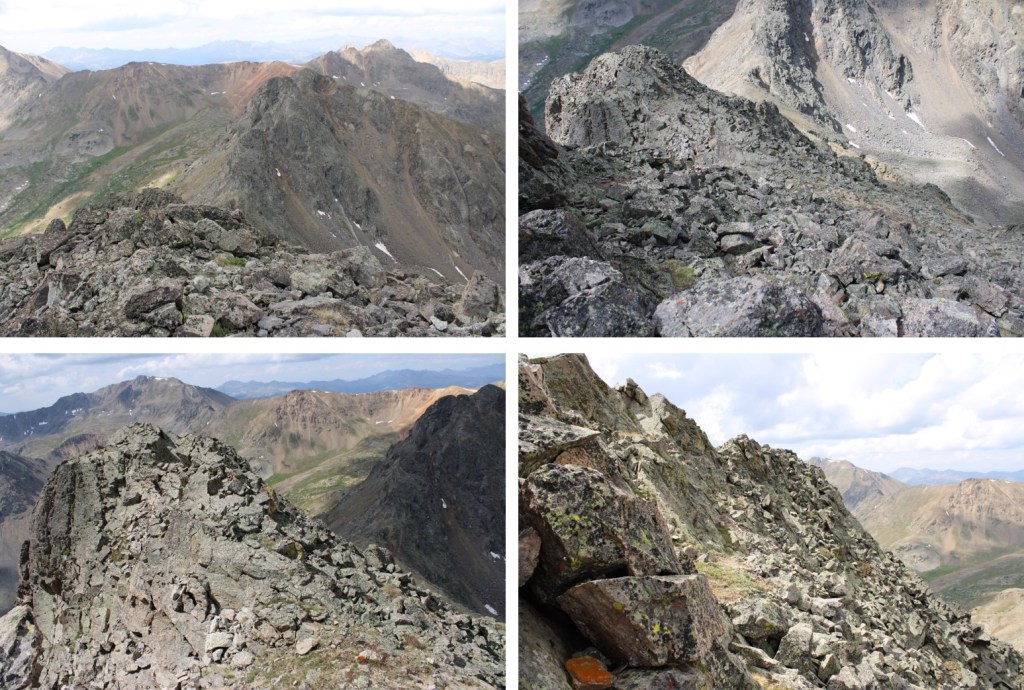
I stayed to the left on the tundra, and when the tundra ended the class 3 climbing began, and lasted until I made it to the summit.  On the class 3 section I stayed to the right and took the ridge, but it looks like there’s tons of class 3 options here.

Just before the summit I dropped down to the left, then scrambled up.  There are game trails here to guide the way.

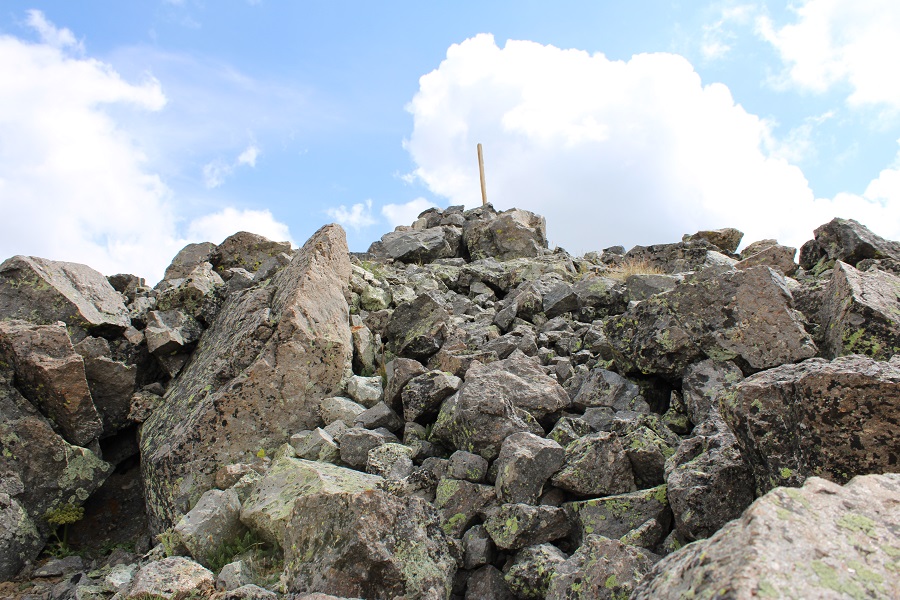
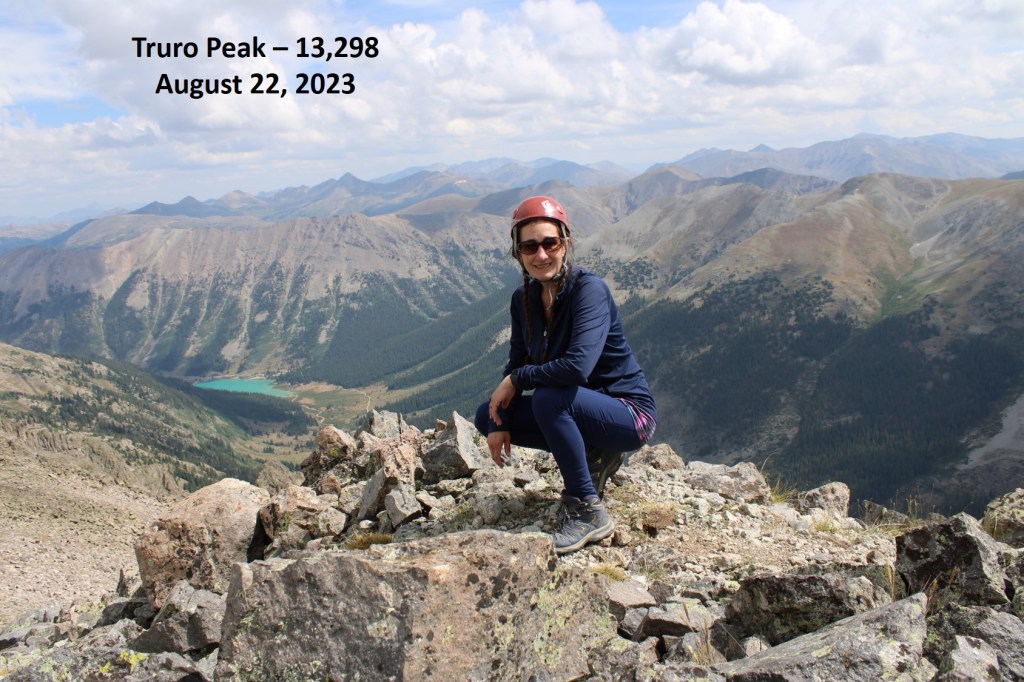
I summited Truro Peak at 10:45am

Truro Peak:

I turned and headed back to the Truro/West Truro saddle

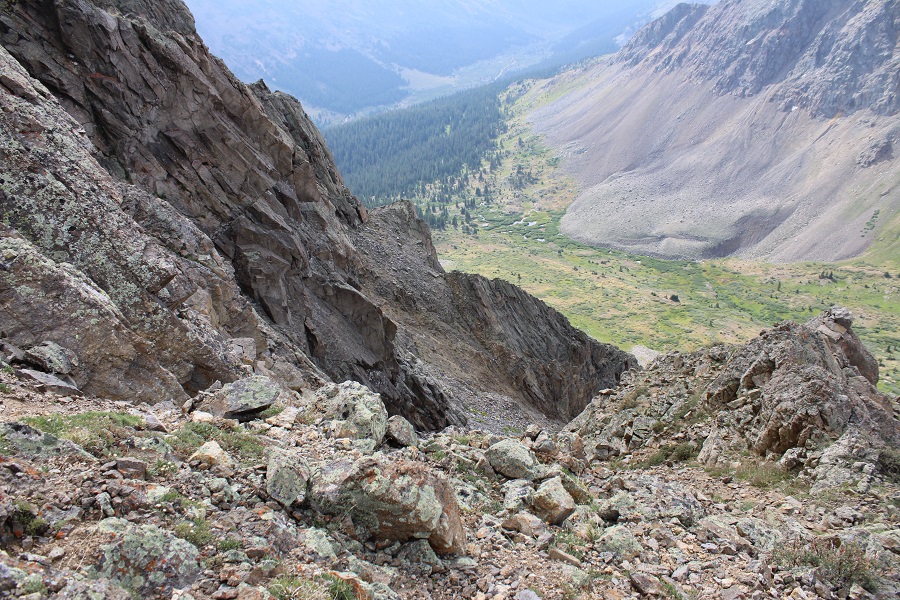
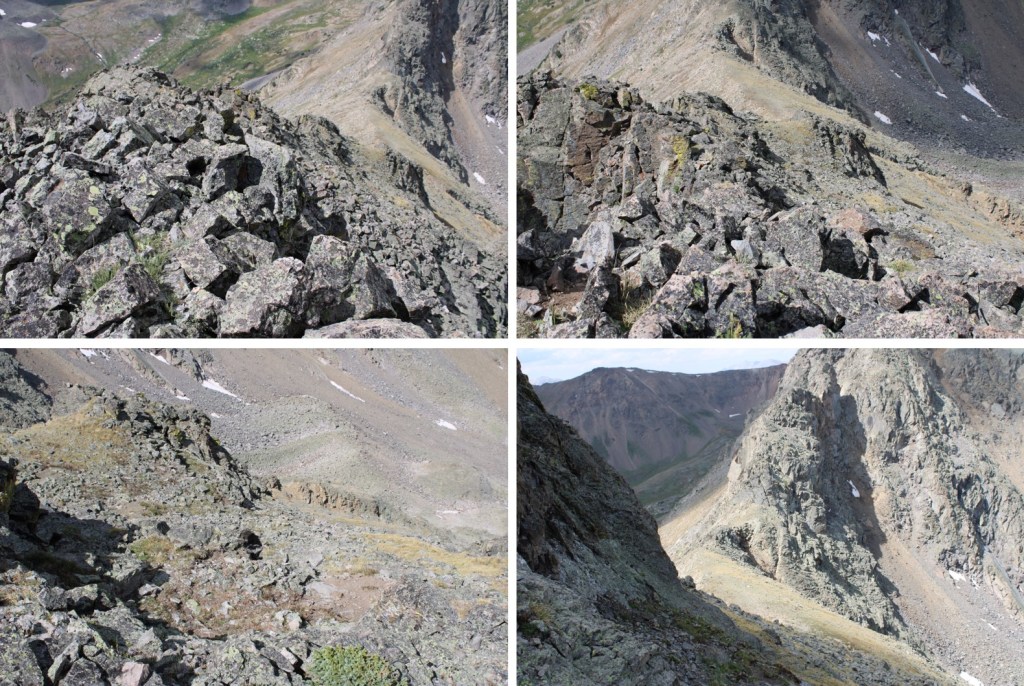
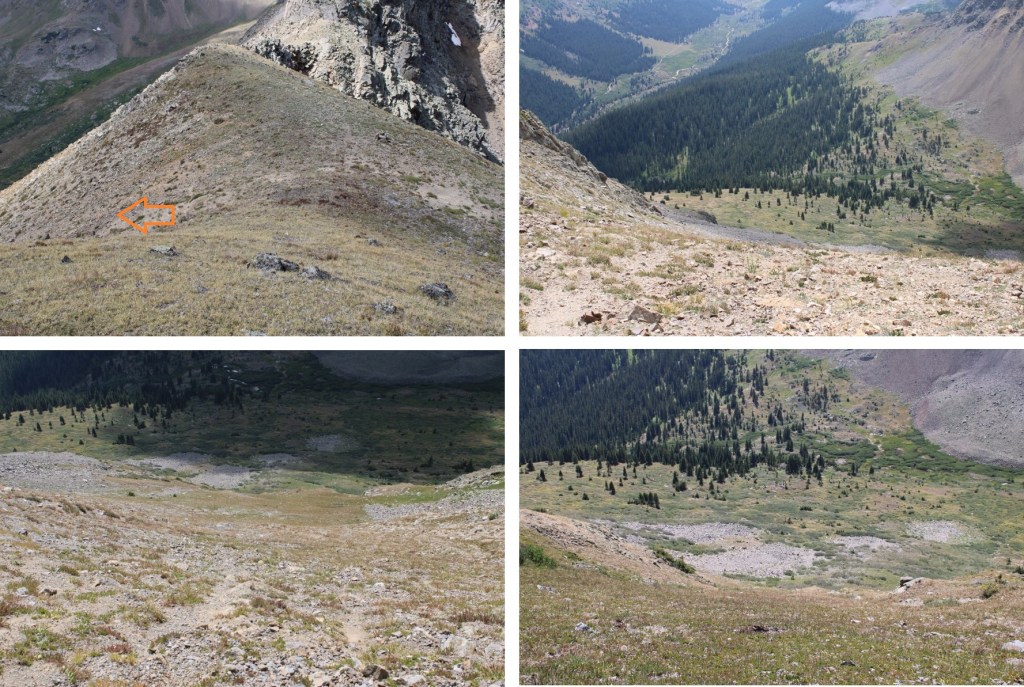
From the summit I had the brilliant idea to descend via the gully that goes left (south) and skirt the east side of the mountain to make it back to the trailhead.  My reasoning was I didn’t want to descend the steep, scree-filled east gully back to Truro Lake, and then rock hop for half a mile before hitting a trail.  Solid reasoning, but in implementation, I wouldn’t recommend the route I took.  Bushwhacking at the end proved cumbersome, whereas with the north gully, it would have all been above treeline.  In any event, this is how I descended.  I’d still recommend going right and taking the north gully if you’re ok with a steep, scree filled descent.

I stayed high to avoid the willows, and then dropped down into the trees.  I stayed climbers left of Galena Creek (east), and made y way back into the trees, following game trails where I could and getting whacked in the face with willows where I couldn’t.

I could finally see the dirt road, and made my way towards it, crossing Lincoln Creek in the process. 

Back on the road, I turned left and followed it north back to my truck

I made it back to my truck at 1pm, making this a 8.49 mile hike/climb with 3489’ of elevation gain in 7 hours, 15 minutes.

On to the next trailhead!
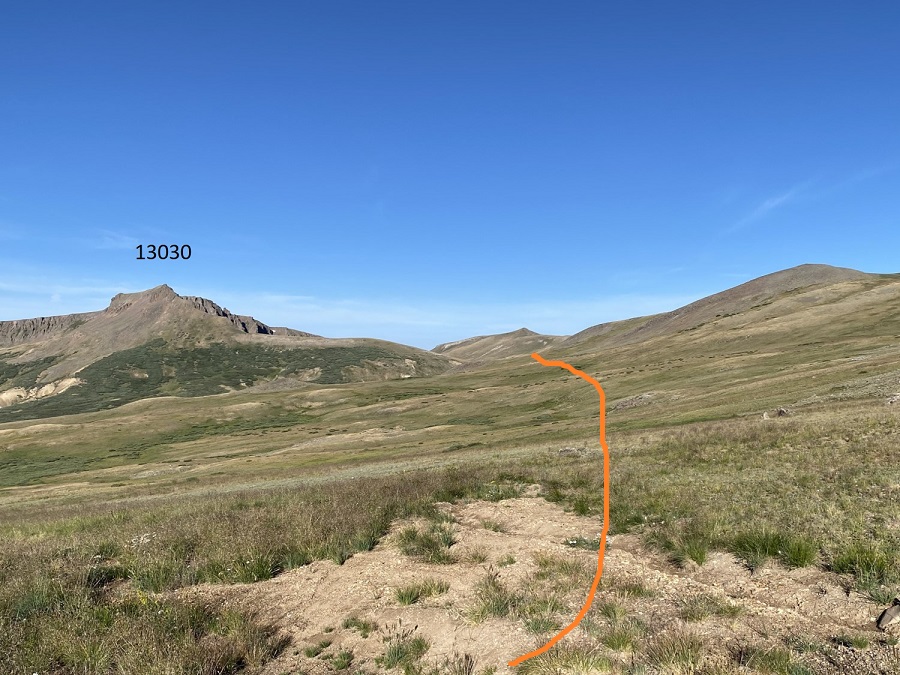
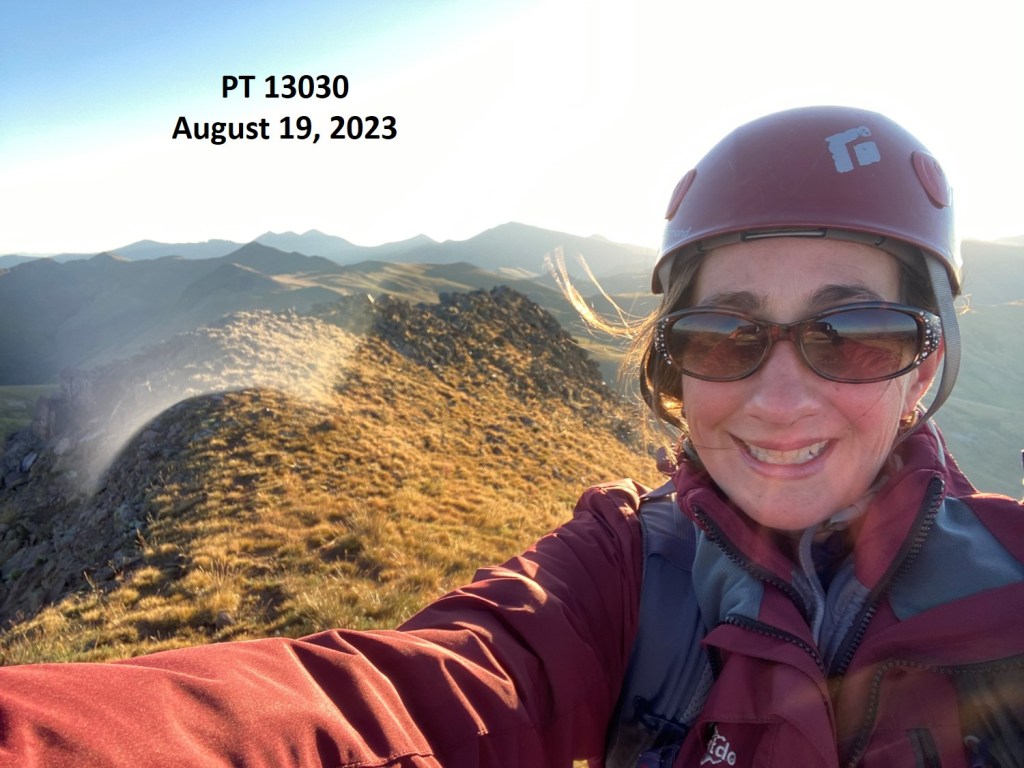
PT 13030

RT Length:  7.36 miles

Elevation Gain: 1920’

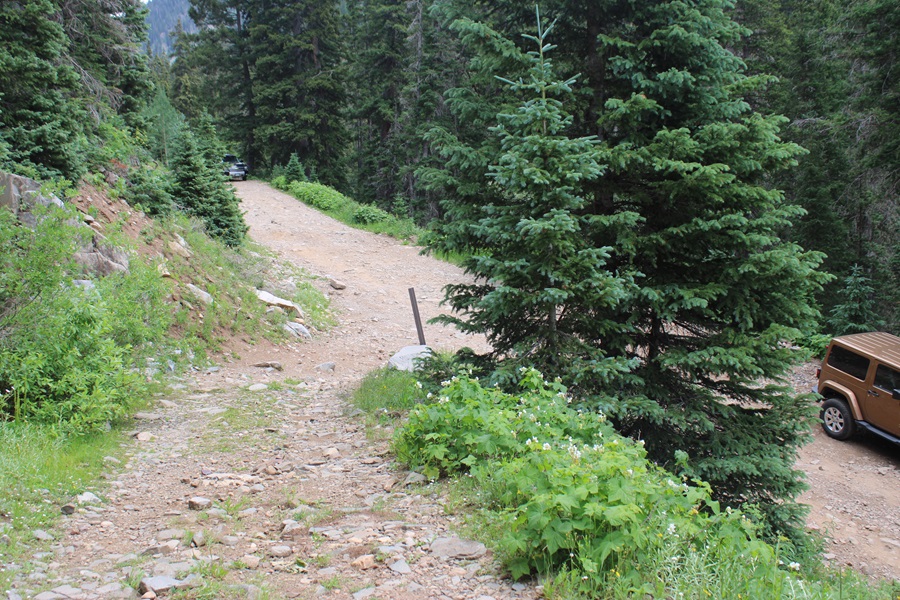
I started from the West Willow Creek 4WD trailhead at 11550’.  If you don’t have 4WD, park below, just before the road turns to 4WD.  This will add 3 miles and 500’ of elevation total to the hike.

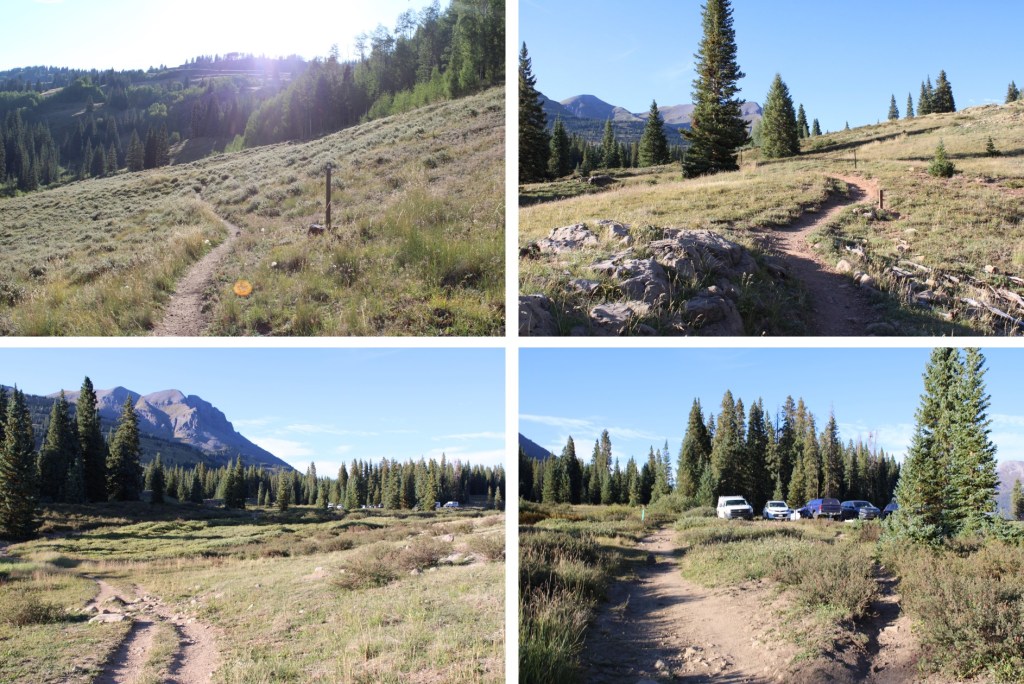
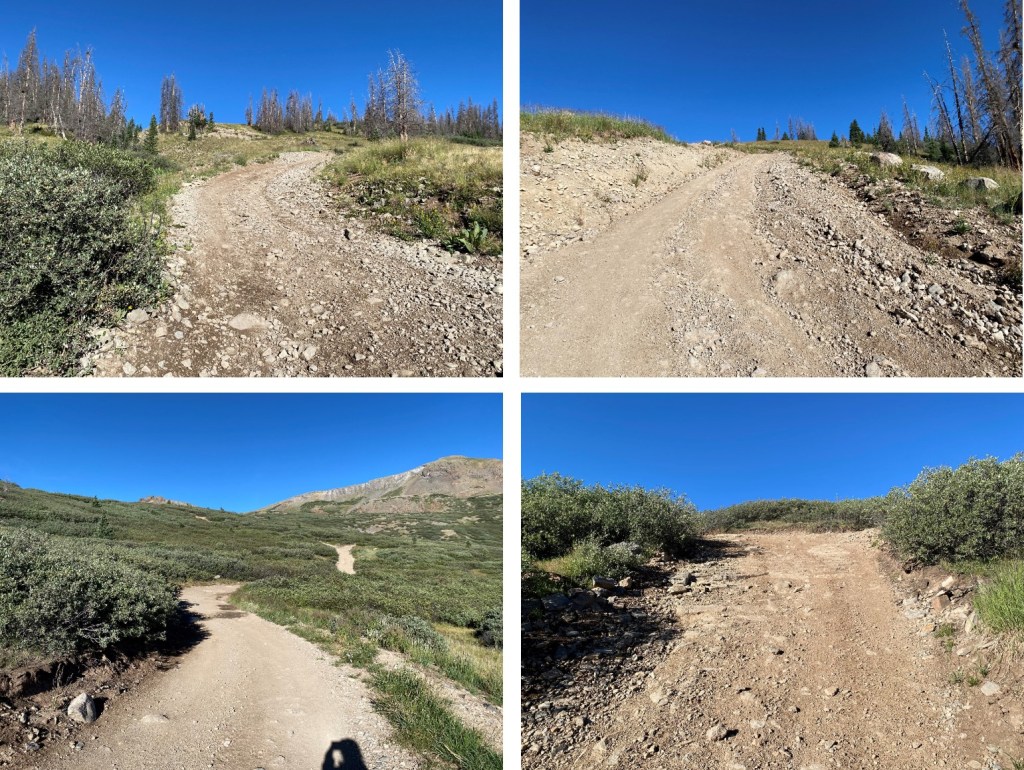
Here are some pictures of the 4WD road in

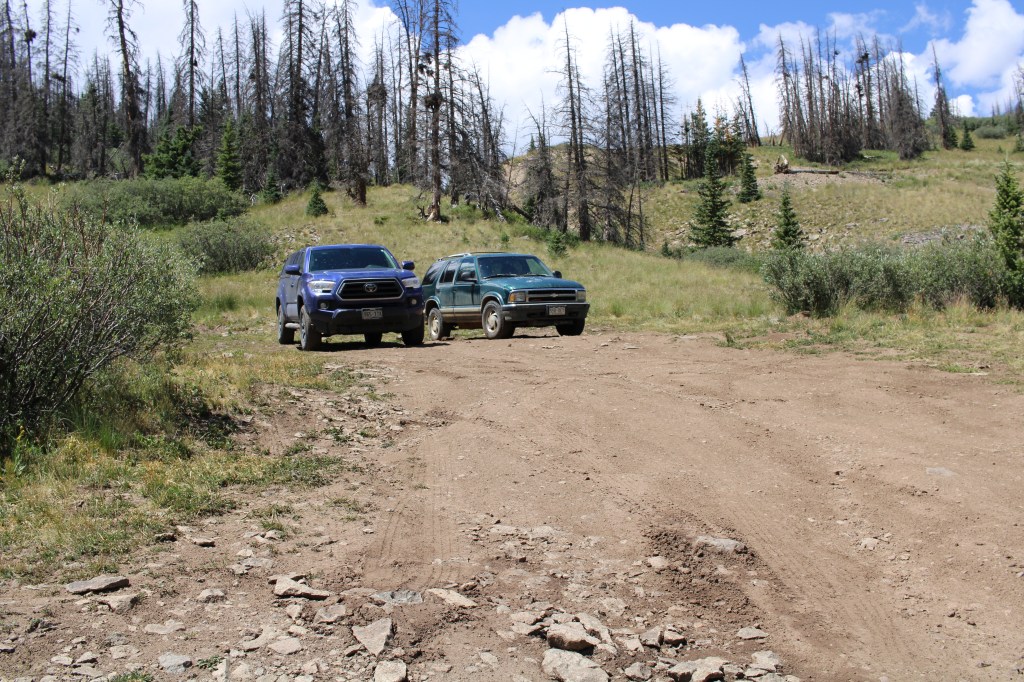
There are a few dispersed campsites here, and a parking area for about 5 vehicles.

I was on the trail at 5am.  The trail actually continues following the 4WD road, and if you have gotten this far, you can do the next few miles on the dirt road.  I chose to hike in, to get some extra mileage.  I followed 4WD road 505.1 west for 1.5 miles as it climbed into the upper basin.

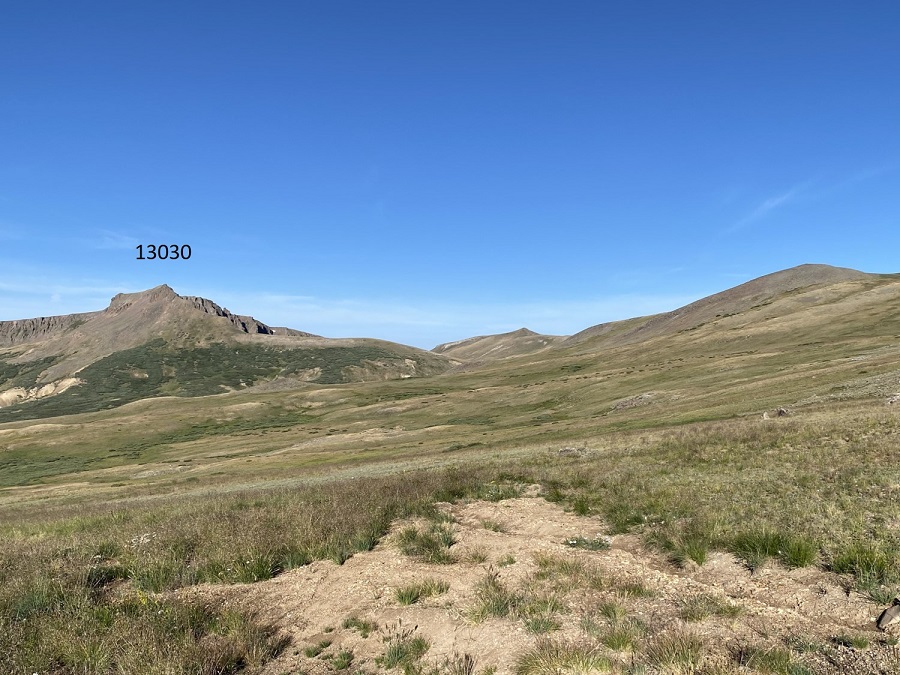
At the top f the pass I could see PT 13030.  At about 12500’ I left the road and headed for the ridge, staying at about 12,500’ of elevation.

Here’s an overall look at the route I took to the ridge.  CalTopo will tell you there’s a road here.  There isn’t.

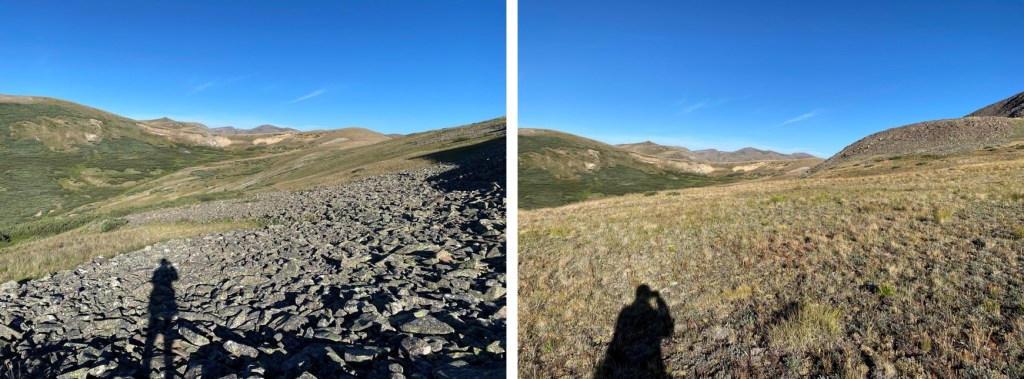
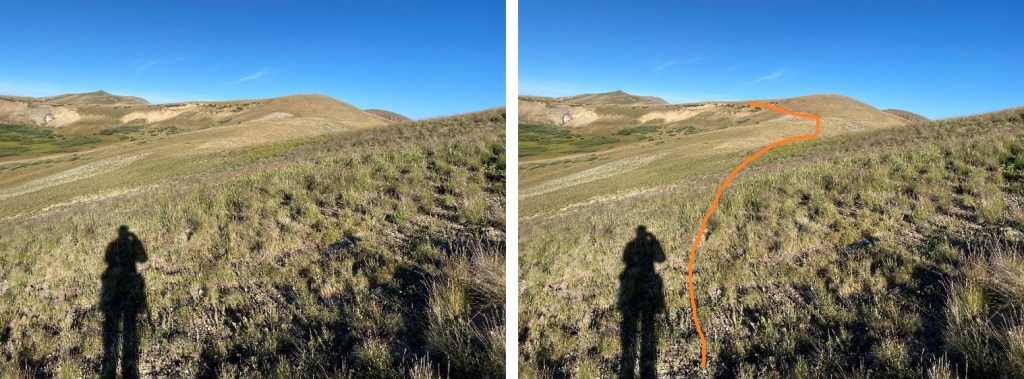
And some step-by-step pictures

There’s a small game trail that will lead you up the saddle

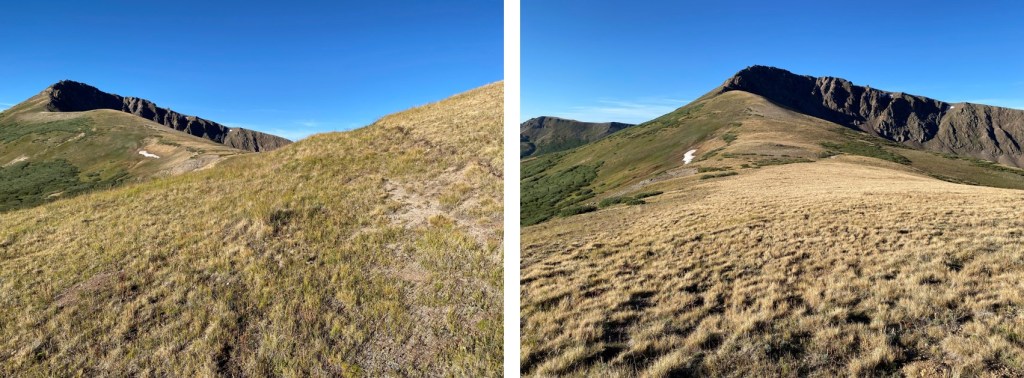
Once on the saddle I turned left and followed it south to the rocky area

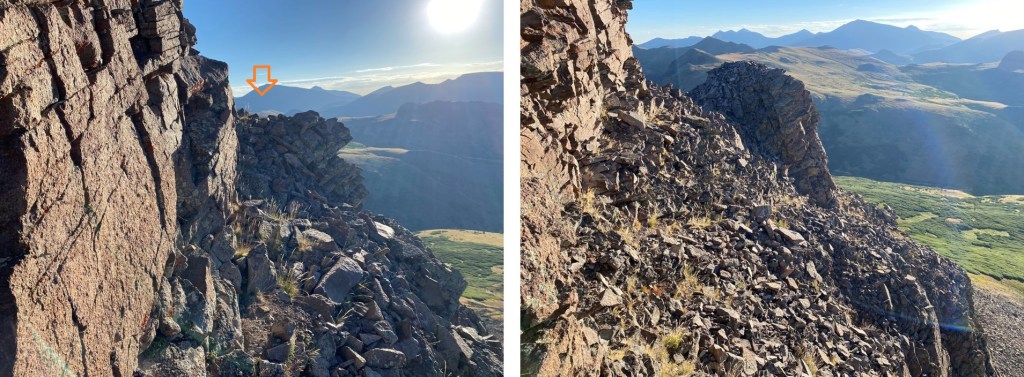
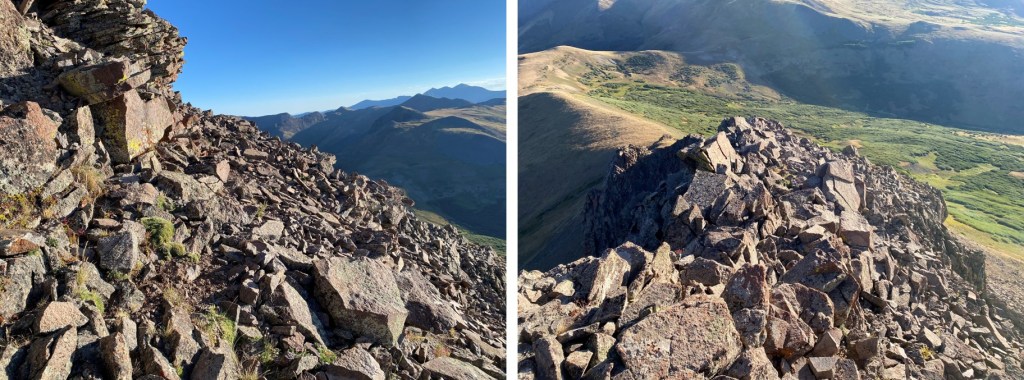
If you plan on rock scrambling, now is the time to put on your helmet.  I continued southwest up the ridge, following a tundra and rock filled slope

Then I went left, below this large boulder, keeping it class 2

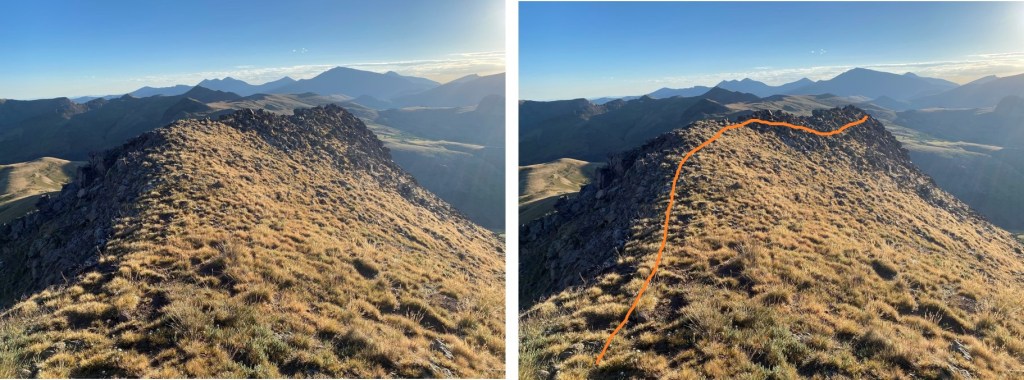
From here you have two options.  You can either gain the ridge for a quick class 3 scramble to the summit, or stay about 20 feet below the ridge to the left, and keep it class 2+.  Here’s looking at the route to the ridge for the class 3 scramble, which is stable but narrow and airy.

And here’s the class 2+ option, heading southwest, and then gaining the ridge

Once on the ridge, it was a quick walk to the summit

I summited PT 13030 at 7am

PT 13030:

I took the class 3 ridge option on the way in, and decided to take the class 2+ option on the way out.  Here’s the route I took back

There are two rocks placed as if they had been a cairn at one point, indicating where to descend from the ridge to keep it class 2.  It’s not obvious, and might not even be a true cairn at all, but it’s a good place to descend.

Then it was back to navigating around the large boulders

And heading back down to the ridge

Here’s an overall look at the route out of the basin

This is the route I took

And some step-by-step pictures. Once I was on the ridge there was a faint game trail to follow much of the way back to the road.  Unlike you’ll see on CalTopo, there is no road here. I stayed above the willows but below the rock rubble.

Ahead of me I could see two roads in the distance.  I was aiming for the closer dirt road

Back on 4WD dirt road 505.1, I followed it east back to the trailhead.

I made it back to my truck at 8:30am, making this a 7.36 mile hike with 1920’ of elevation gain in 3 hours 30 minutes.

On to the next trailhead!

Hilliard Peak – 13,422 and Keefe Peak – 13,516

RT Length: 24.35 miles

Elevation Gain: 5700’

Due to weather issues, I did this as a multi-day trip. Due to permit issues, I camped just before the camping permit boundary for Conundrum Hot Springs (worked fabulously!!!). My stats are taken from several GPX files meshed together.

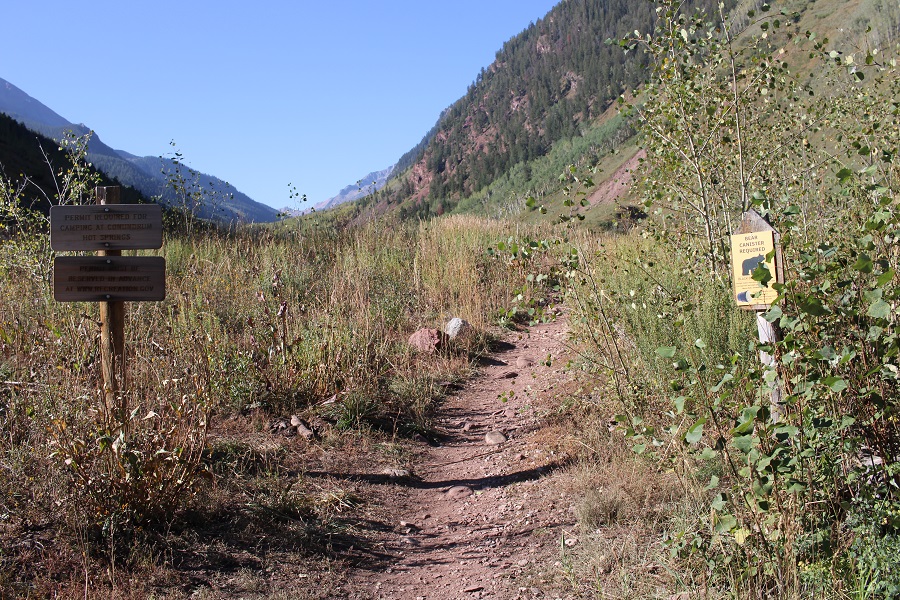
I started from the Conundrum Hot Springs Trailhead at 4:45am, after a quick nap on Independence Pass after a long drive and a long day.  Here’s the trailhead:

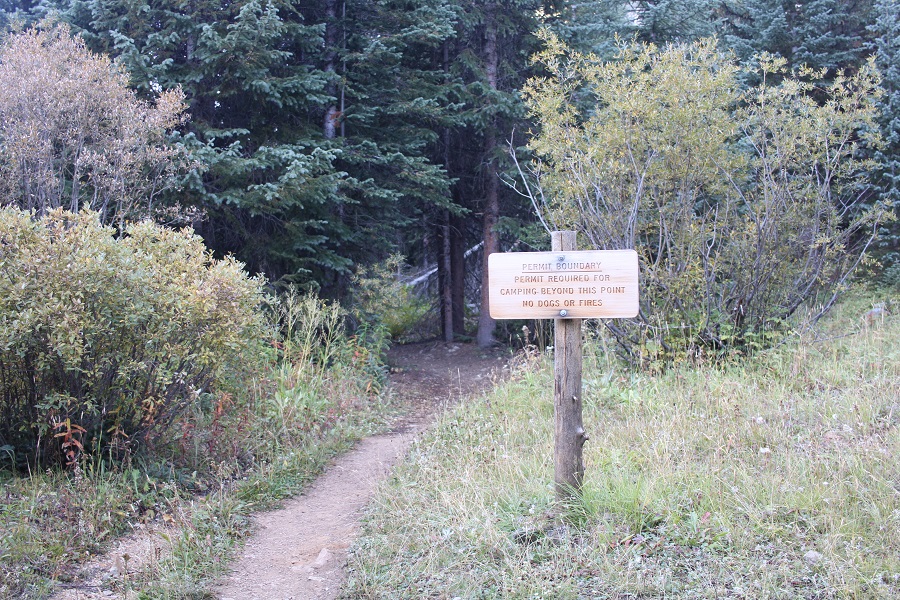
I followed the class 1 trail for 6 miles to the permit boundary, which is noted by a very visible sign. 

It was obvious this is a popular camping spot (just before the permit boundary).  There are a lot of social trails that lead off into the trees as well for campsites, if you don’t want to camp right next to the sign.  Here’s where I camped.   It’s relatively close to the stream, which is great for filtering water

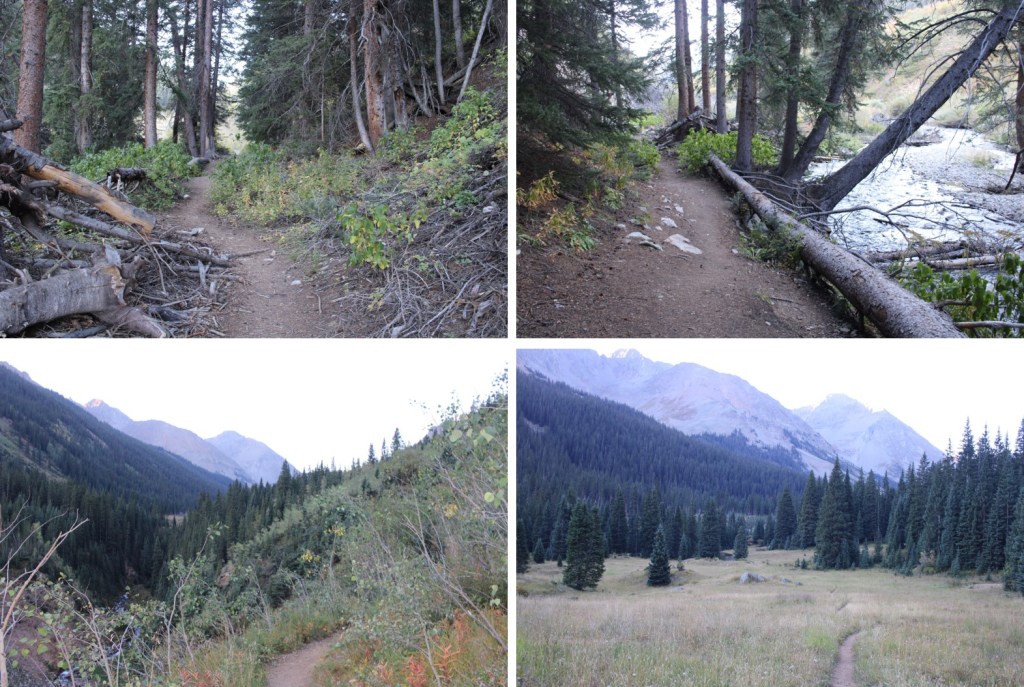
I set up my tent, as I planned on being here for a few days. The next morning, I started out at 4:45am.  The trail is still class 1, and crosses Conundrum Creek several times.  All creek crossings were easy.

After about 2 miles I came to the Conundrum Hot Springs campsites, an old abandoned cabin, and more small creek crossings.  I took the trail to the right towards Triangle Pass

I was now still on Trail 1981, headed southwest, into the willows

At 12000’ I left the trail, and followed a drainage west

At about 12200’ I turned right and headed north, across the basin.  Yes, there were a lot of crows. 

I kept heading north, skirting a small pond.  This was all class 2

My goal was to gain this ridge.  This was my route (still class 2)

Once on the ridge I placed a large cairn, turned left, and headed west up the ridge

The terrain quickly narrowed and became class 3, full of chossy, loose rock. It never got more difficult than class 3, but the terrain was sketchy.  I was able to stay directly on the ridge.

As the ridge rose, it curved, and I stayed more to the left

I topped out, turned the corner, and saw more class 3 ridge work as I now headed northwest

I lost a little bit of elevation, then followed the ridge to the summit

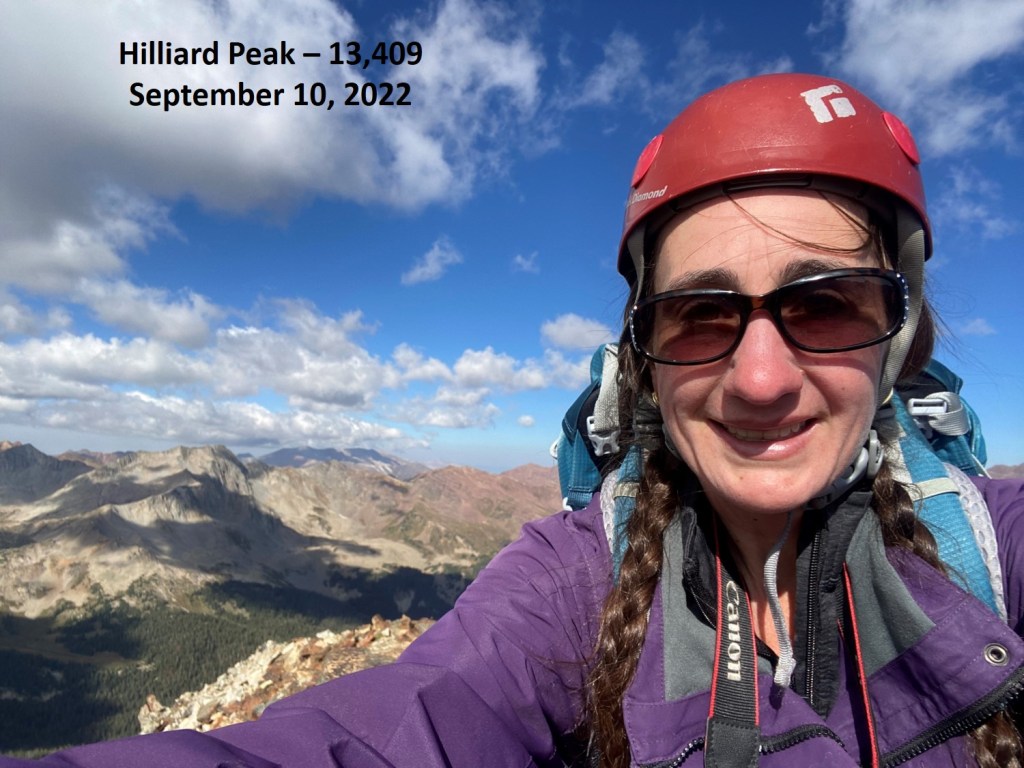
I summited Hilliard Peak at 9:45am

Hilliard Peak:

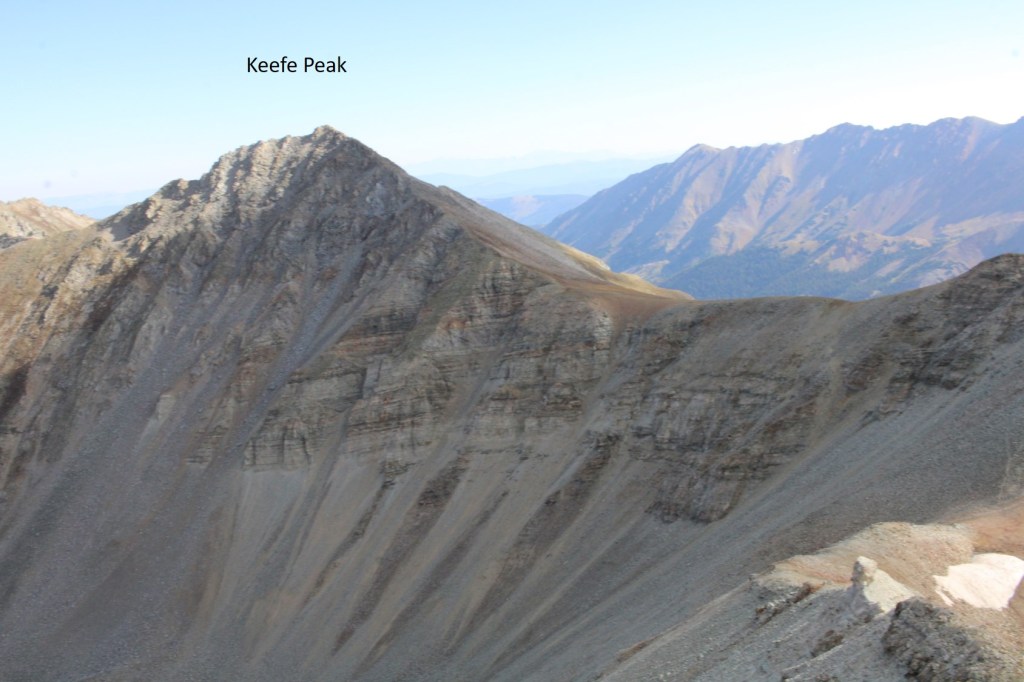
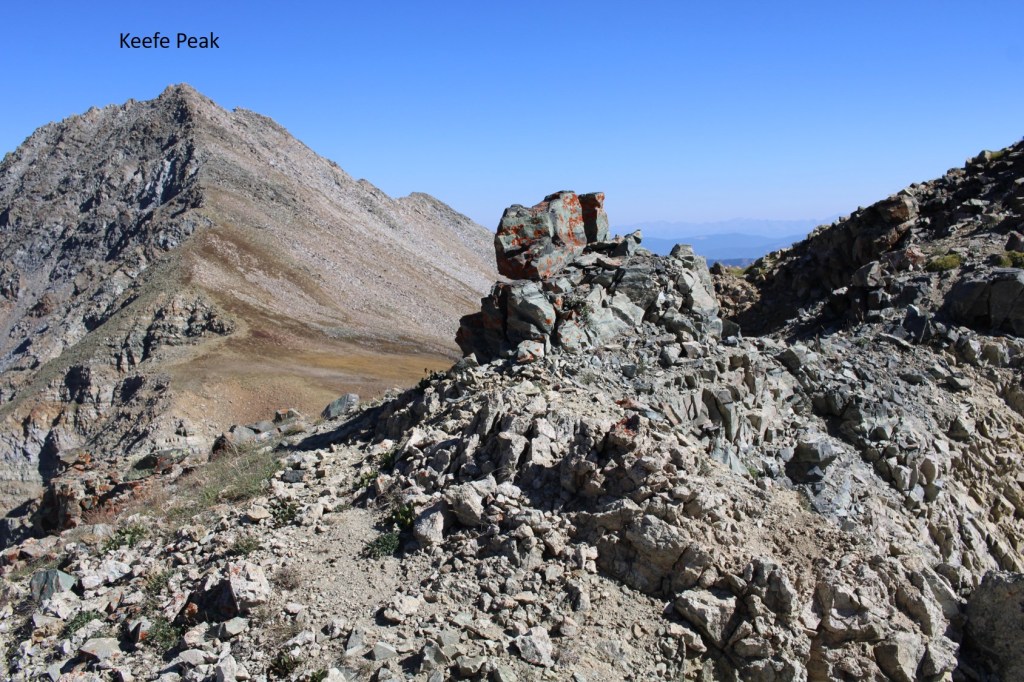
From Hilliard, I could see Keefe Peak to the northeast

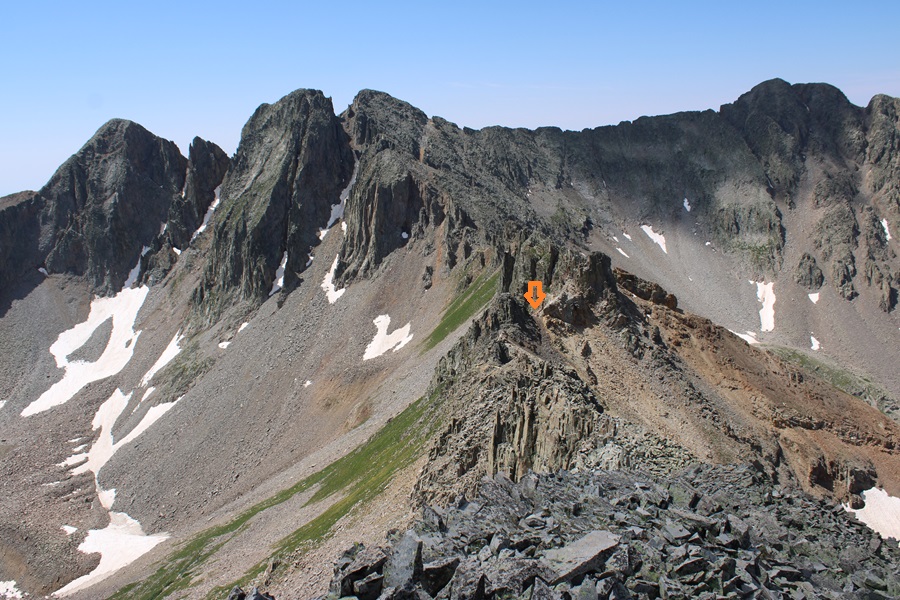
But first, I was going to have to get over the crux of the route: This pointy mountain right here.

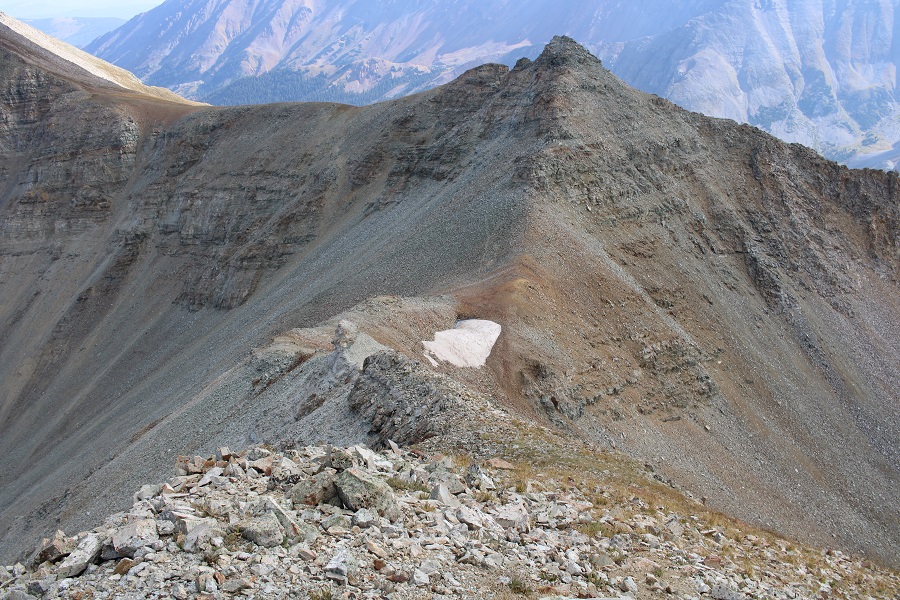
I followed the ridge northeast, and came across this fun formation. I easily passed it to the left

This brought me to a small saddle.  I ended up climbing this part by taking a game trail to the ridge, then crossing over to the right side and heading up

And now for the crux

This is the route I took

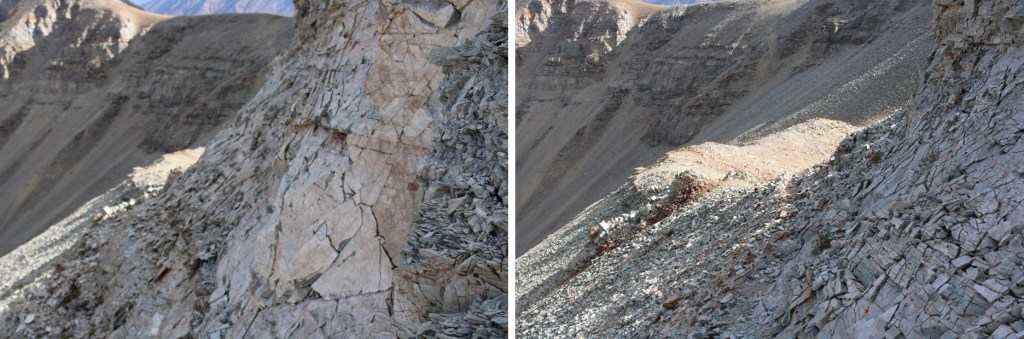
But there’s a lot you can’t see…  So here it is step by step.  This is class 4

This was a small, airy traverse, about 6 feet long, ad no more than a foot wide

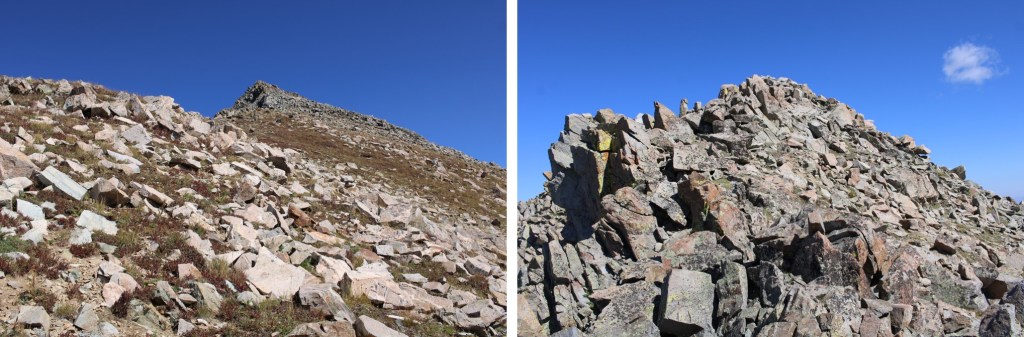
The good news is after that it’s all class 2 to the top of Keefe Peak.

I summited Keefe Peak at 11am

Keefe Peak:

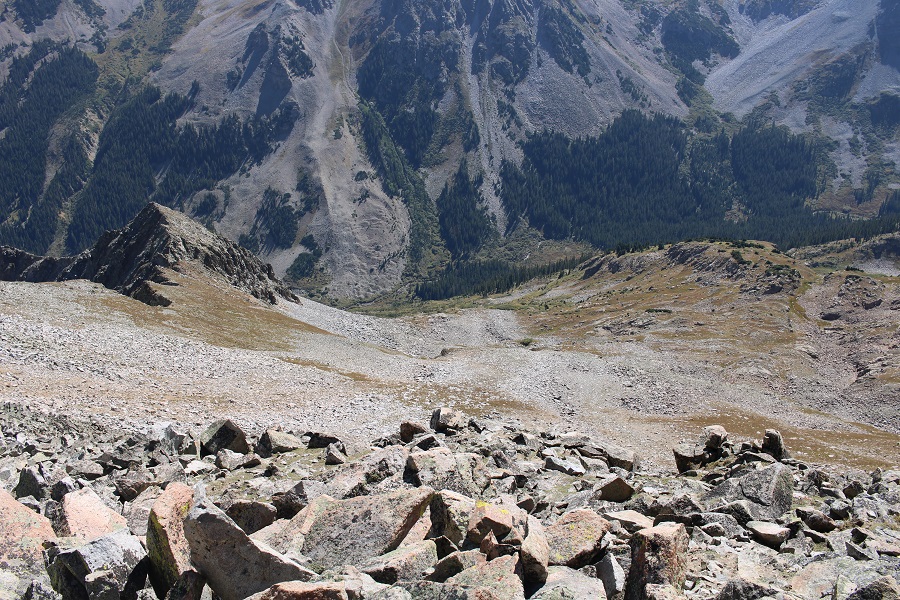
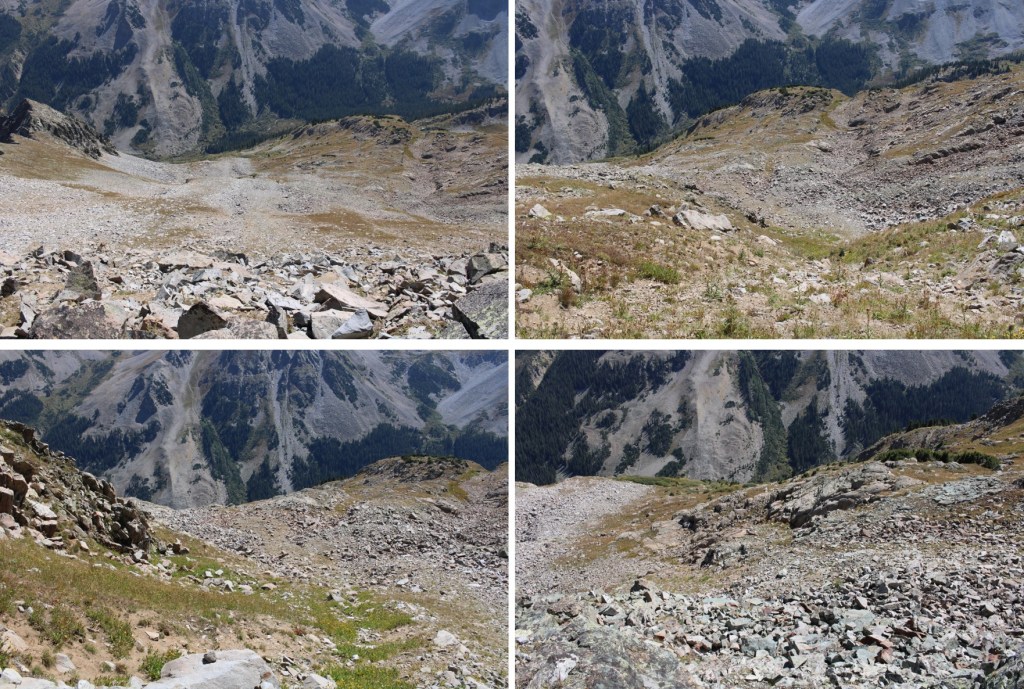
I decided to make this a loop, and head east down an old avalanche runout.  Let me preface this by saying it worked, but the runout is quickly growing back, and there was a ton of bushwhacking.  Plan your route carefully.  Here are some pictures of the route that led me directly back to the trail (1981) and Conundrum Creek below.

Here’s looking up at the route I took down.  You could also take this route up, and just do Keefe from this angle, and skip the class 4 section of the traverse.  It’s a lot of elevation gain in a short while though (3200’ in 7.5 miles) with a lot of initial bushwhacking, but it goes.  I came down the left side (when looking up), but would recommend sticking more to the right and avoiding the middle.

Back on the trail, I followed it back to my campsite, and stayed there for another night. 

Here’s a look at the route out from the campsite back to the trailhead.

And my topo map

13216 and 13537

RT Length:  25.61 miles

Elevation Gain:  5474’

Due to weather issues, I did this as a multi-day trip. Due to permit issues, I camped just before the camping permit boundary for Conundrum Hot Springs (worked fabulously!!!). My stats are taken from several GPX files meshed together.

I started from the Conundrum Hot Springs Trailhead at 4:45am, after a quick nap on Independence Pass after a long drive and a long day.  Here’s the trailhead:

I followed the class 1 trail for 6 miles to the permit boundary, which is noted by a very visible sign. 

It was obvious this is a popular camping spot (just before the permit boundary).  There are a lot of social trails that lead off into the trees as well for campsites, if you don’t want to camp right next to the sign.  While I saw a US Forest Service truck in the parking lot, I didn’t see a service member all weekend.  Also, I’m not advocating anything negative here:  I understand why they have the permit system, I just think permit systems aren’t well implemented.  For example:  I couldn’t get a permit for this weekend, yet more than half the reserved sites were empty THE ENTIRE WEEKEND.  Here’s where I camped.   It’s relatively close to the stream, which is great for filtering water

I set up my tent, as I planned on being here for a few days, and was on the trail again by 8am. The trail is still class 1, and crosses Conundrum Creek several times.  All creek crossings were easy.

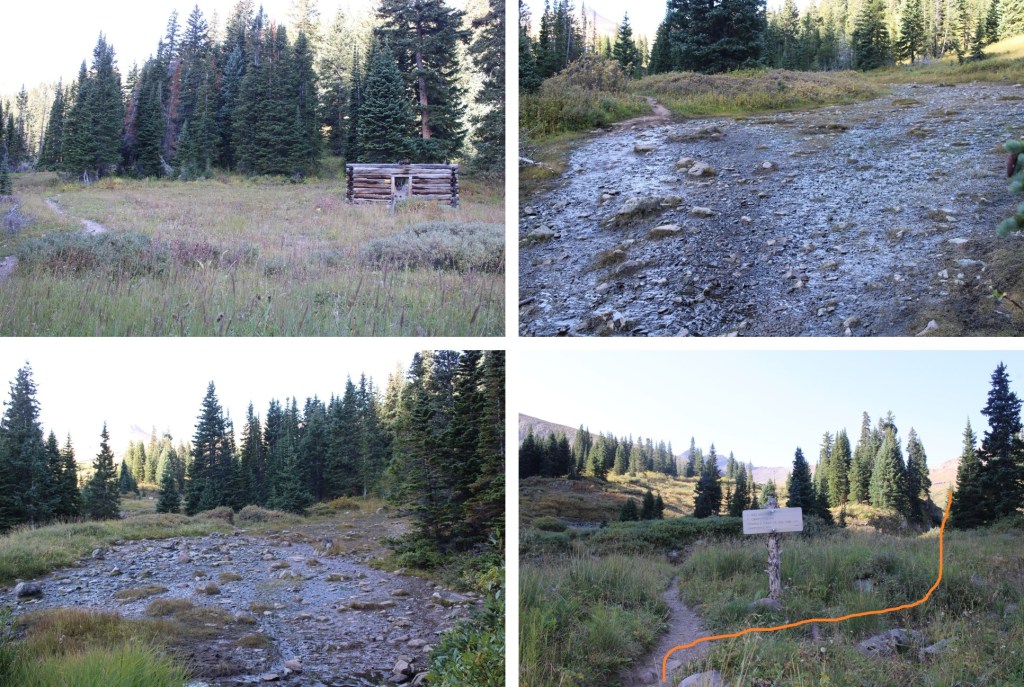
After about 2 miles I came to the Conundrum Hot Springs campsites, an old abandoned cabin, and more small creek crossings.  I took the trail to the right towards Triangle Pass

I was now still on Trail 1981, headed southwest, into the willows

At 12000’ I left the trail, and followed a drainage west

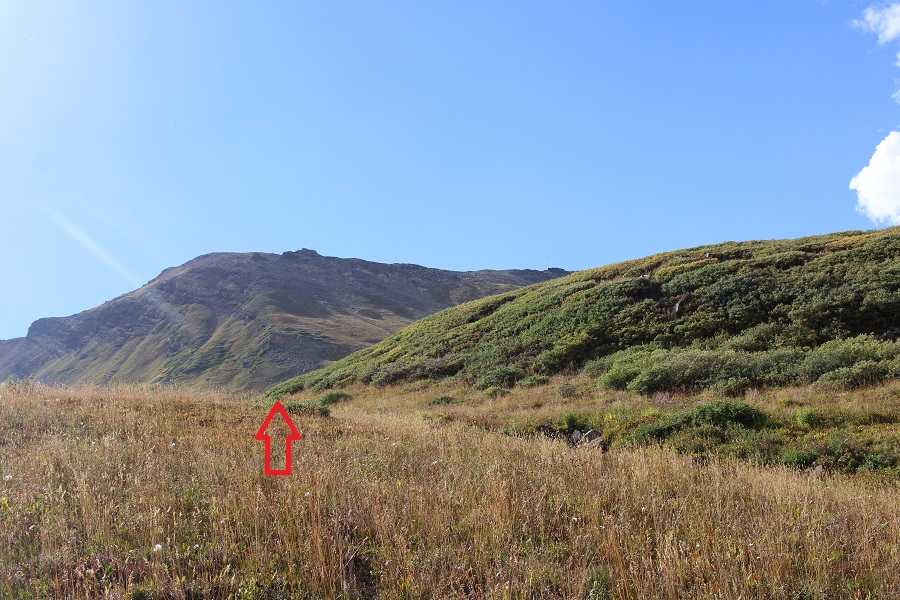
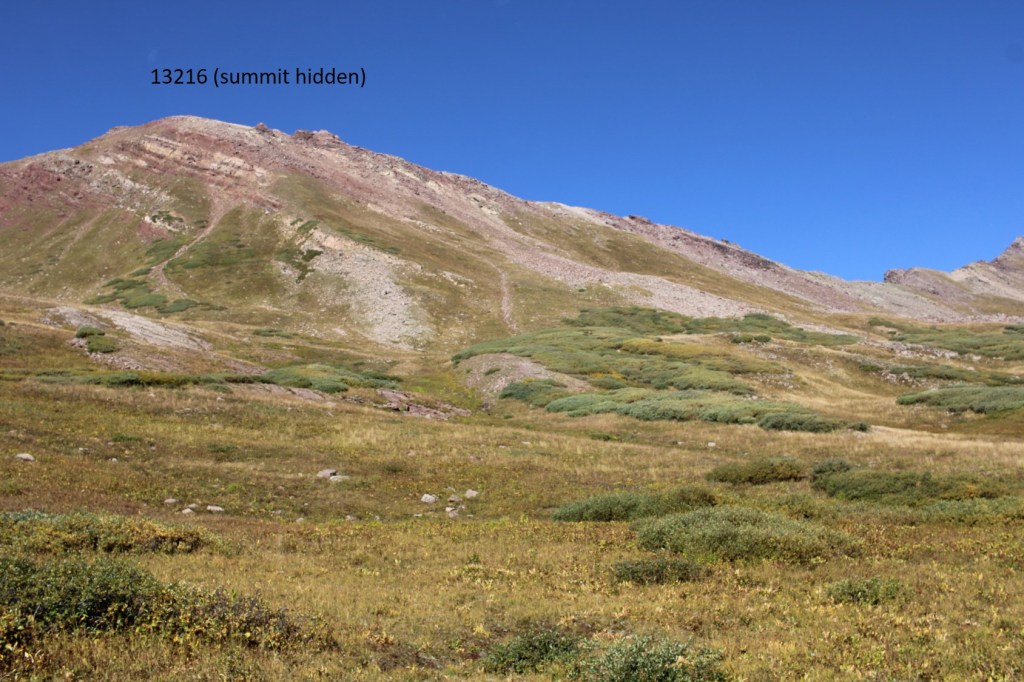
Now it was time to gain the ridge of 13216. 

This is the route I took

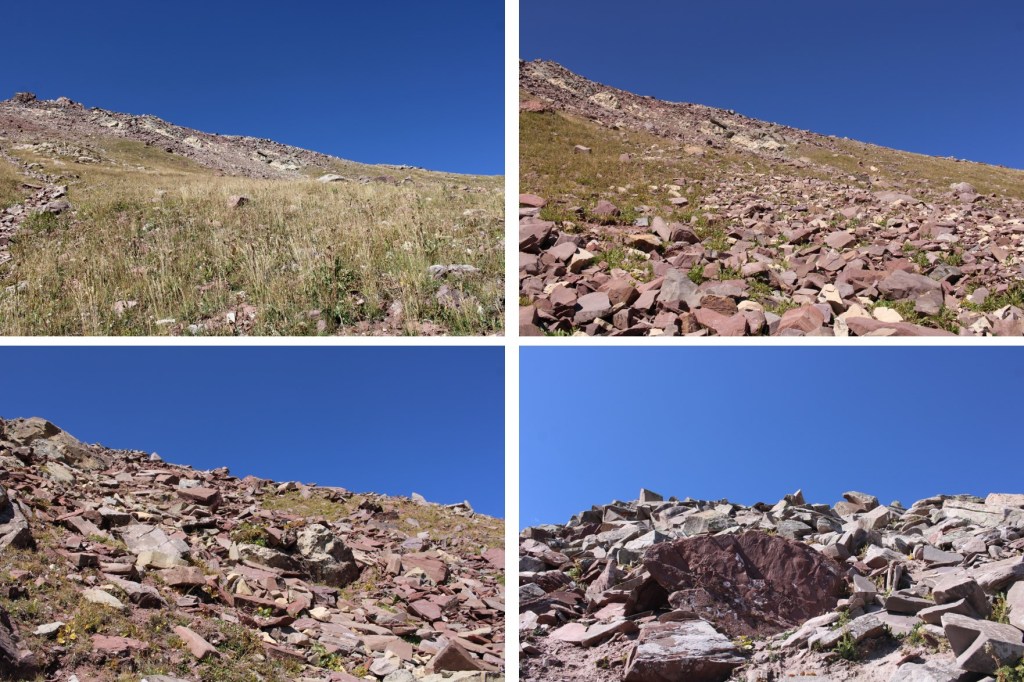
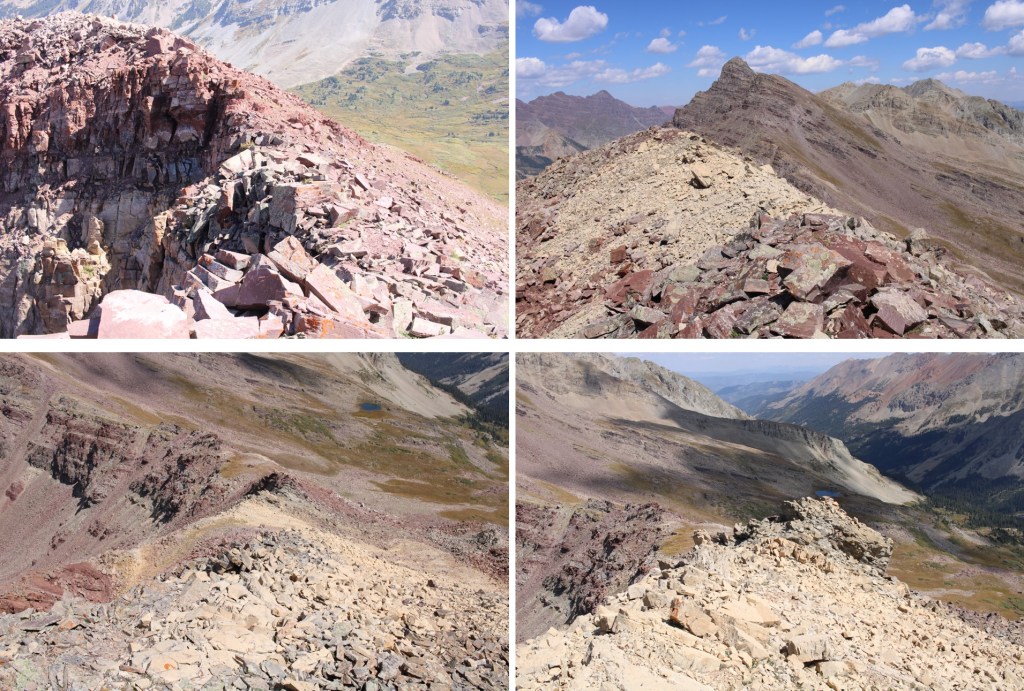
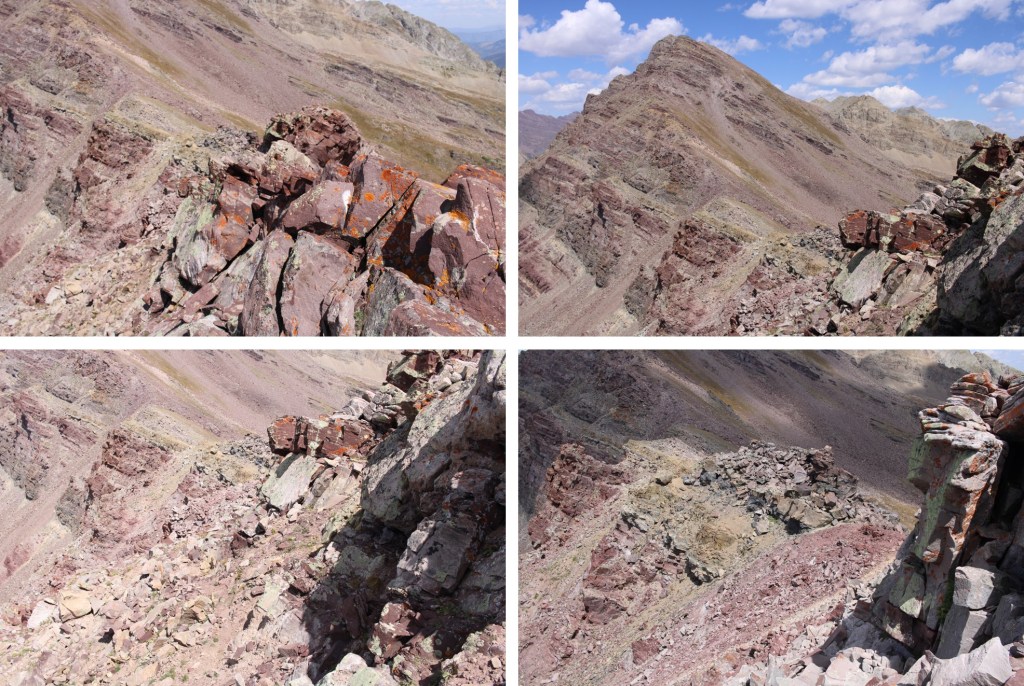
And some step-by-step pictures.  This was all class 2

When I made it to the ridge I turned left, and was surprised to find it wasn’t a straight shot to the summit.  I followed the ridge south

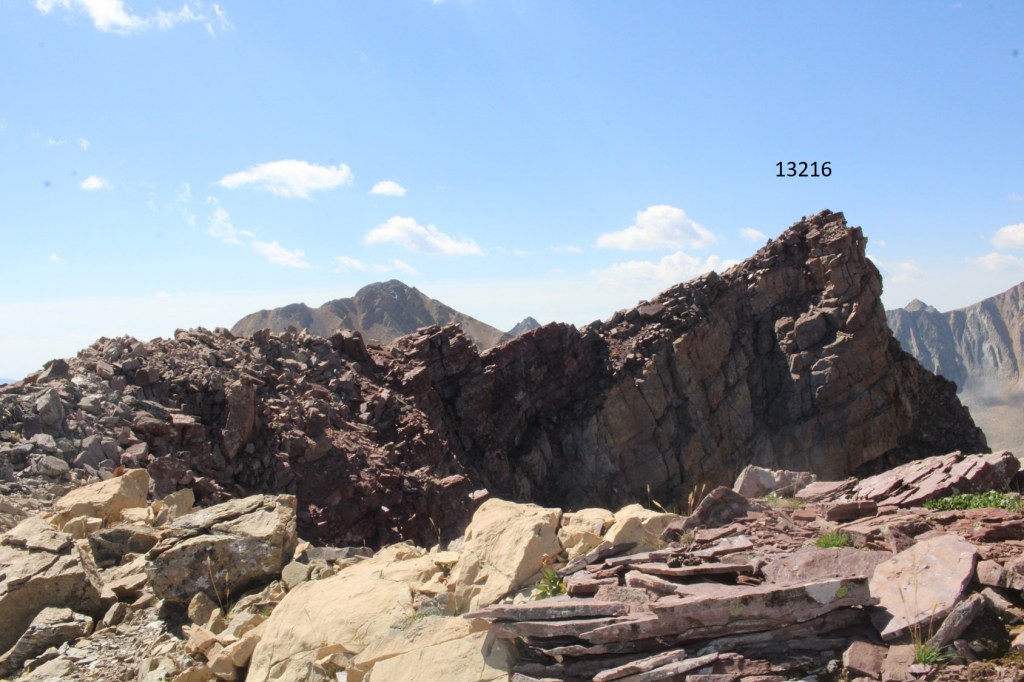
And was surprised once again to find this wasn’t the summit either.  It was a little further to the southwest.

It was all class 2 to the summit

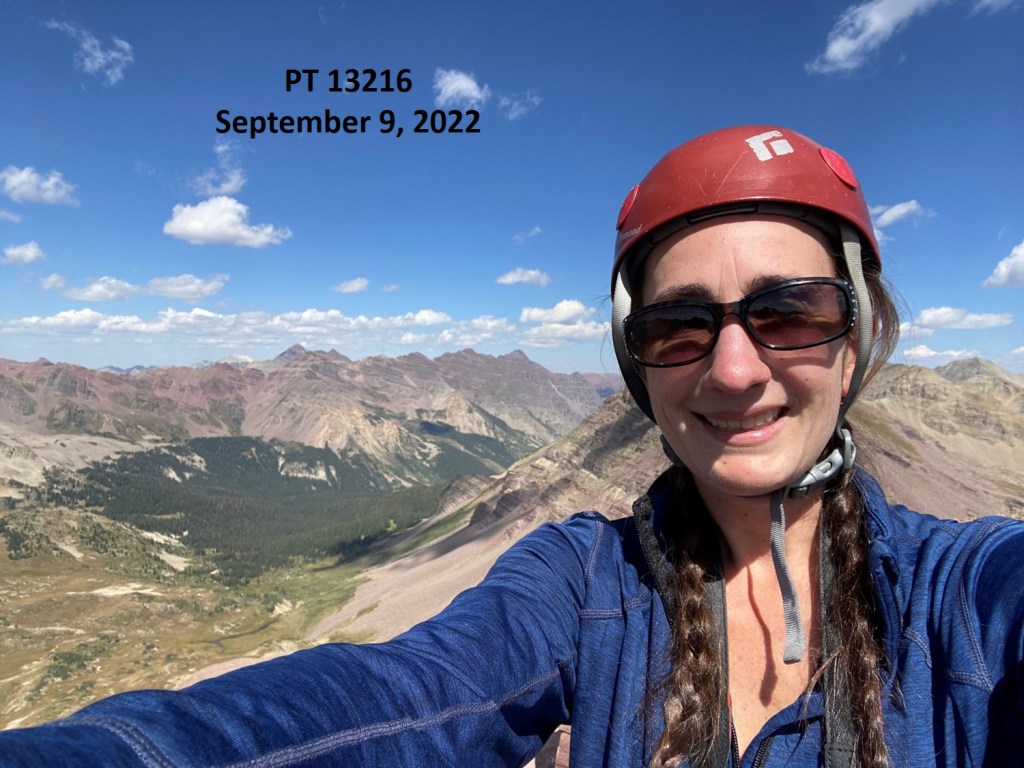
I summited 13216 at 11:40am

PT 13216:

My next goal was 13537, to the north

I followed the ridge over Conundrum Pass, all class 2 to the pass

Once at Conundrum Pass/13216-13537 saddle, the route became a class 3 scramble.  From my visual it looked like a straightforward scramble up the ridge, all the way to the summit, but what I couldn’t see was a dip in the ridge.  I started my scramble up.  

I came to a false summit, and noticed I could no longer climb up:  I’d need to parallel the ridge and summit from the other side.

Here’s where I made a mistake.  I tried to traverse over to the other ridge too high:  I should have dropped down a few hundred feet, then re-ascended via the obvious gully.  The route I took was sketchy class 4.  Everything was unstable, rocks moved, and the scree was solid dirt with kitty litter sitting on top.  I would not recommend the route I took.  From below, this is the route I took.

And here are some pictures of that route.  Once again, I’d recommend dropping down further and ascending via the gully. My microspikes saved me here.

Eventually I came to a gully that looked like it went.  I was tired of the terrain I’d been traversing, and welcomed the gully, only to find it was just as bad.  Large loose rocks, hard dirt, kitty litter, etc. I headed towards the ridge.

Once on the ridge I turned left, and followed it south to the summit

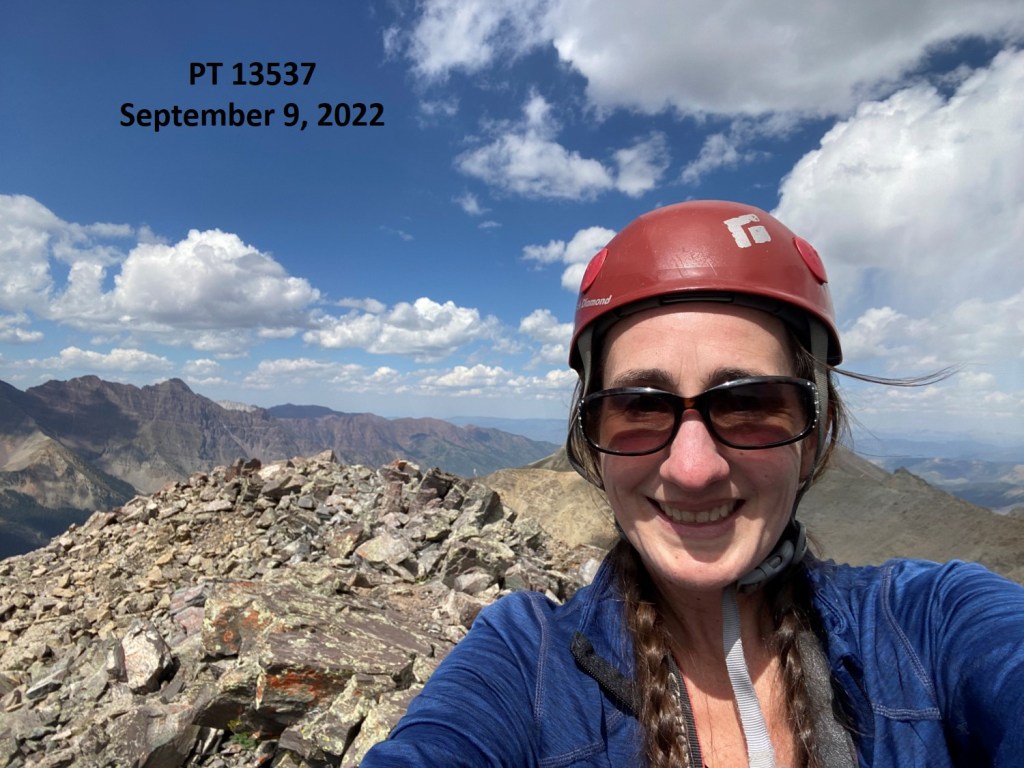
I summited 13537 ay 2pm

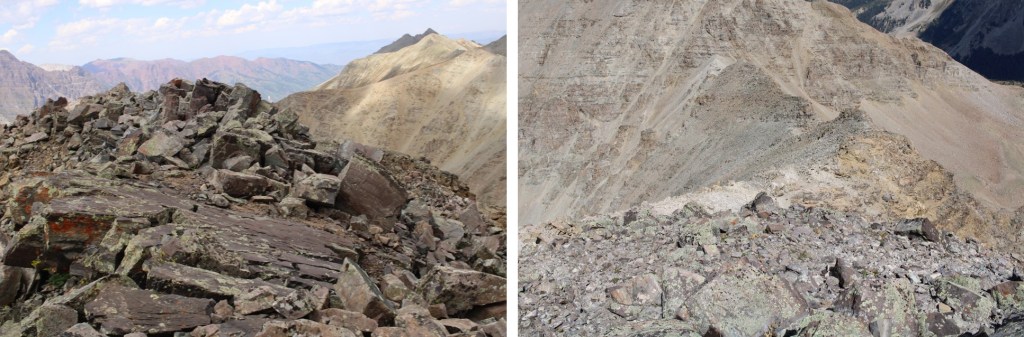
PT 13537:

Originally, I’d planned on doing the entire traverse, but I could see clouds moving in.  Indeed, it started snowing and hailing on my decent, so it had been a good idea to call the ridge for the day and head back to camp. But I didn’t want to take the same route I’d taken in, because I felt it was too sketchy to repeat.  Instead, I decided to walk north down the ridge to where I’d seen the gully earlier, and descend that way. 

Here’s a look down that gully

And my route back into the basin

The gully was much steeper than it looked. I was glad I had on my microspikes. 

From below, here’s a look up that gully. It goes all the way to the ridge.

And now, to make my way back to the trail.  I aimed southeast, doing my best to avoid the large rock bands

When I could see PT 13216, I stayed high, and then descended via the same drainage I’d come in on. 

Back on Trail 1981, I followed it northeast, back to my campsite.

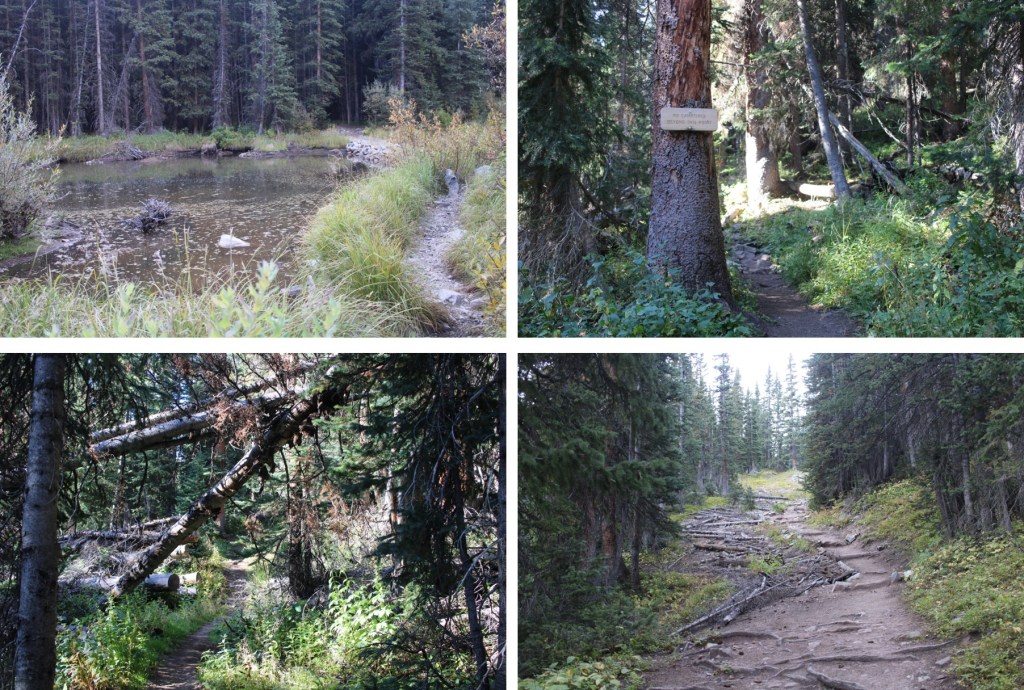
I stayed there for the night, but here are some pictures of the 6 mile hike out to an overflowing trailhead full of vehicles. 

And my topo map

Raspberry Mountain – 10,605

RT Length:  6.5 miles

Elevation Gain: 1579’

I arrived at the trailhead to find the roads icy but plowed all the way to the winter closure.  I was actually kind of surprised to find the gate closed, and this altered my plans just a little bit:  I’d planned to drive down the road to other peaks after this one.  With the road closed I didn’t have enough time.  I parked my truck and gathered my gear, noticing there was a light on in the vehicle next to me.  No one was inside the vehicle, and the doors were locked, so I couldn’t turn the lights off for them.  I’m guessing they were hiking Pikes Peak today, and would most likely run down their battery.  Luckily this is a popular trailhead, so they should be able to find help nearby.

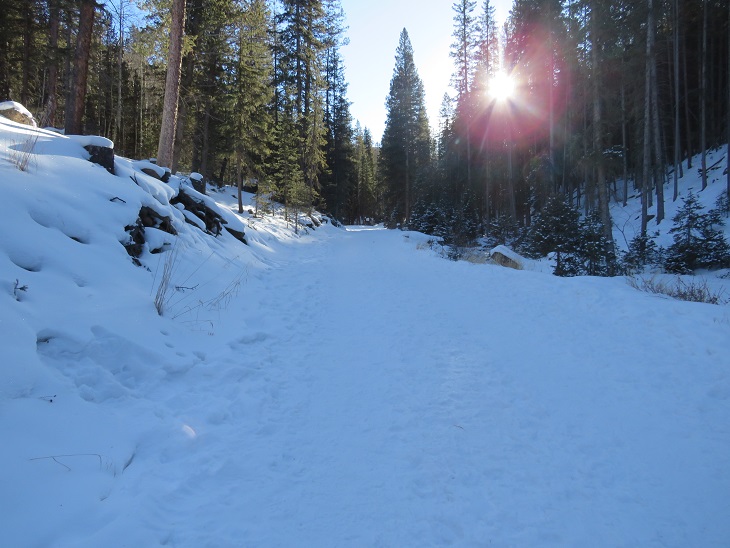
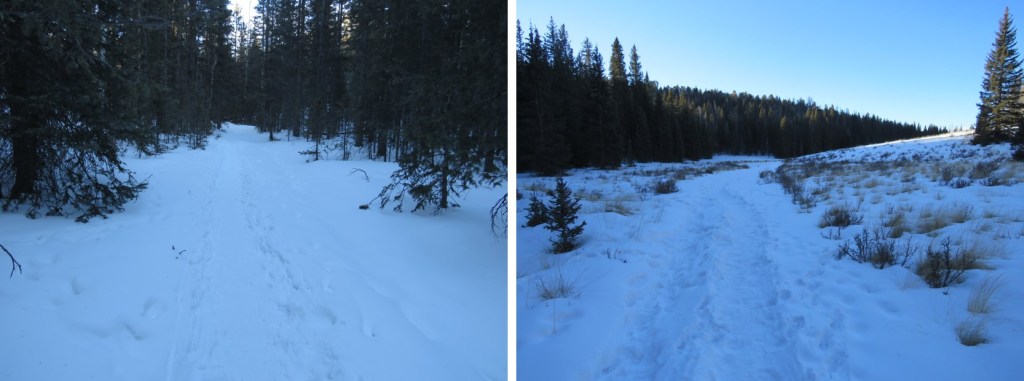
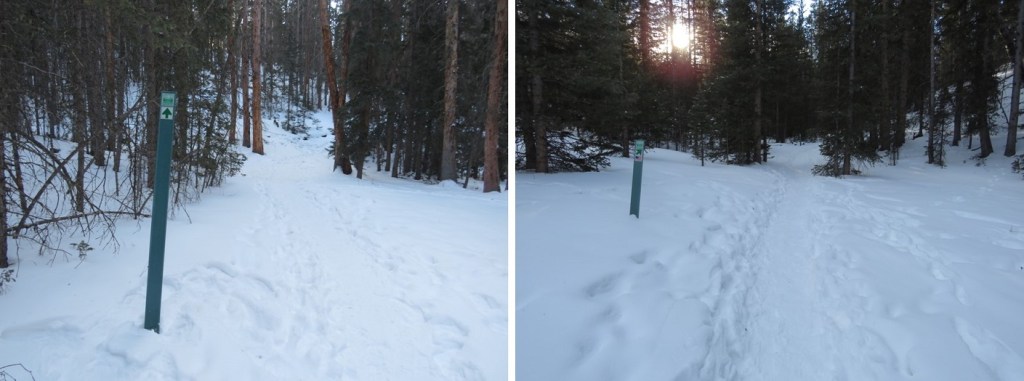
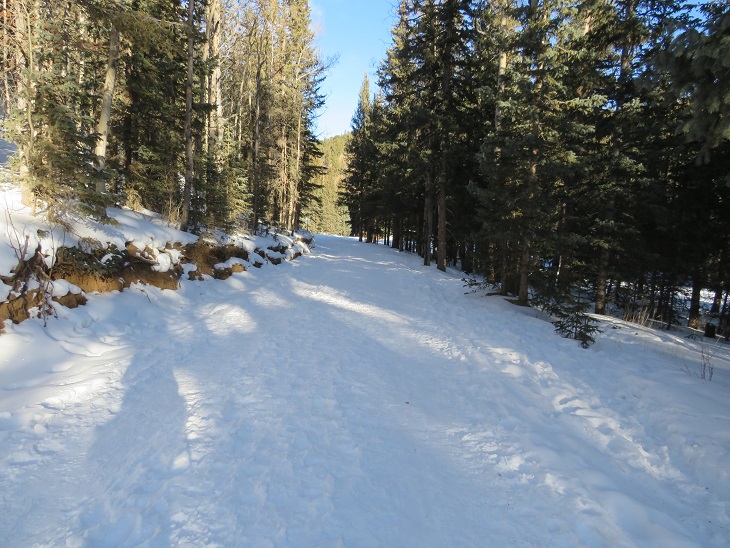
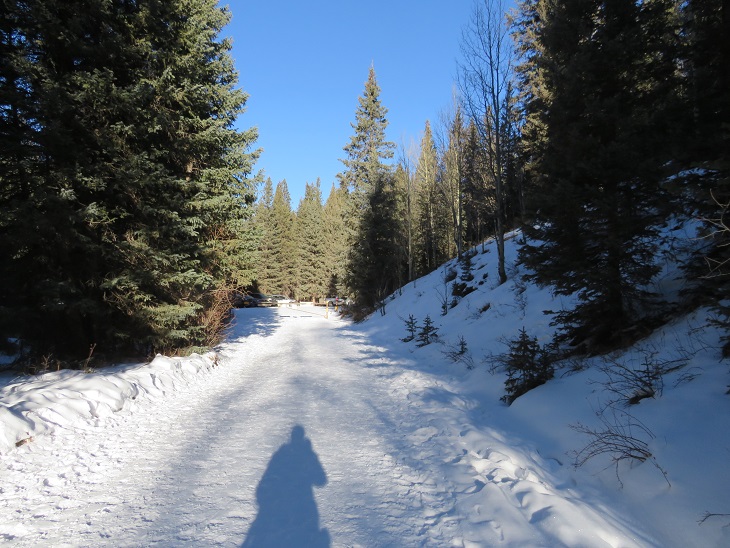
It was a cold morning (once again, below 12 degrees) so I put on all my gear and set out just as it was beginning to get light.  I love hiking without a flashlight!  I walked past the gate and followed the road for .7 miles

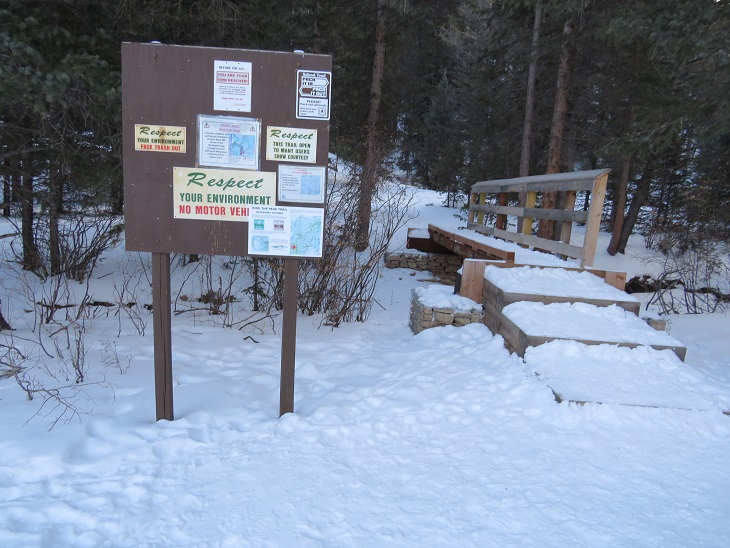
After .7 miles I came to the Raspberry Mountain Trailhead

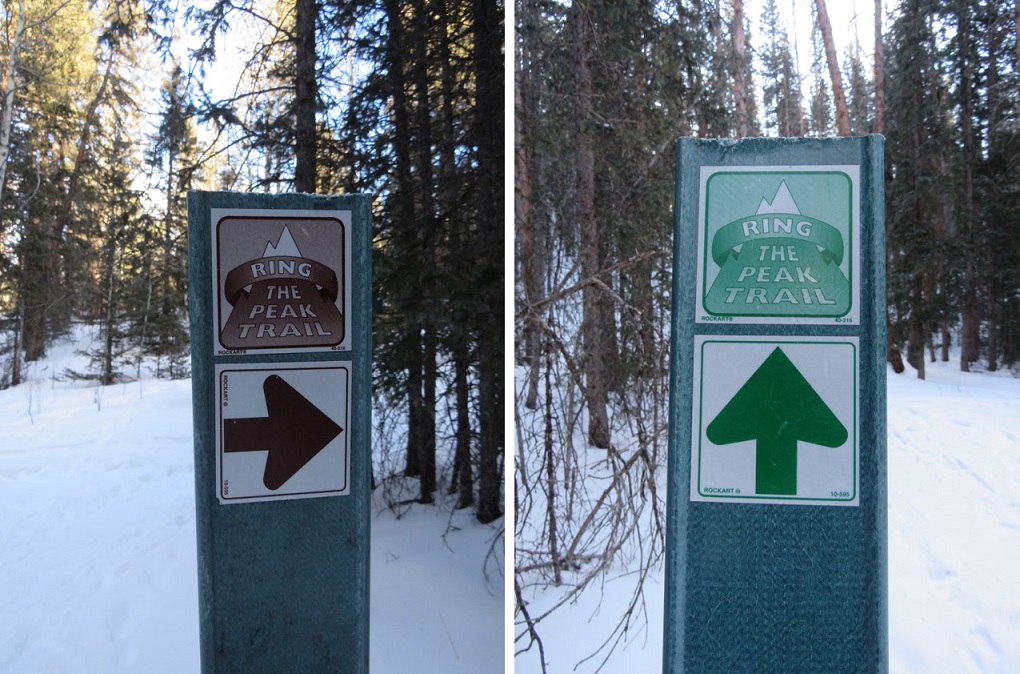
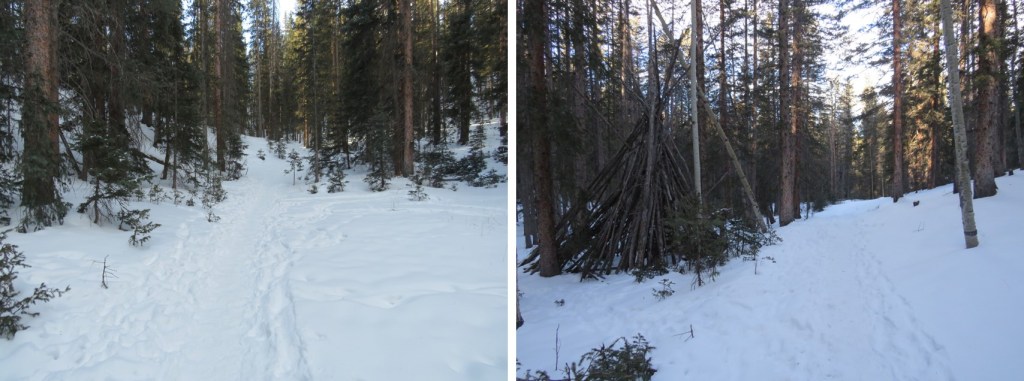
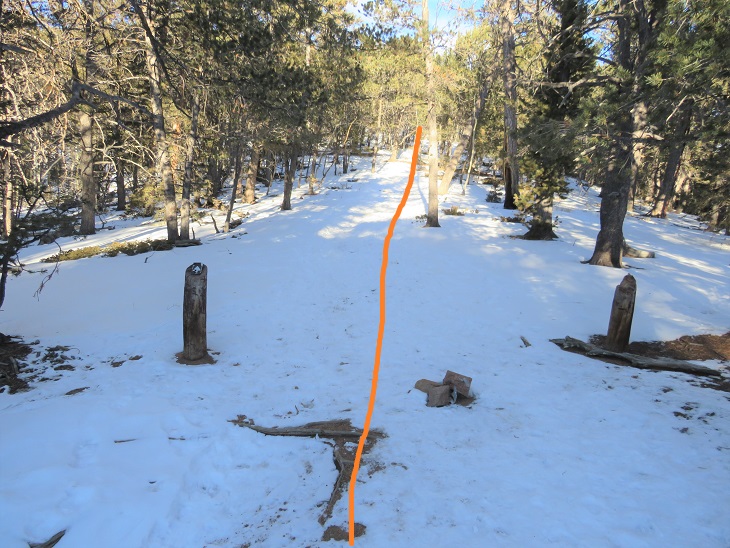
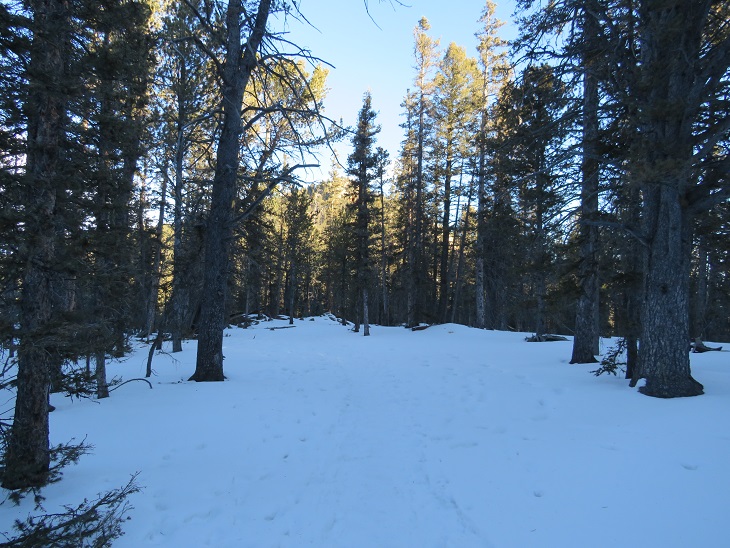
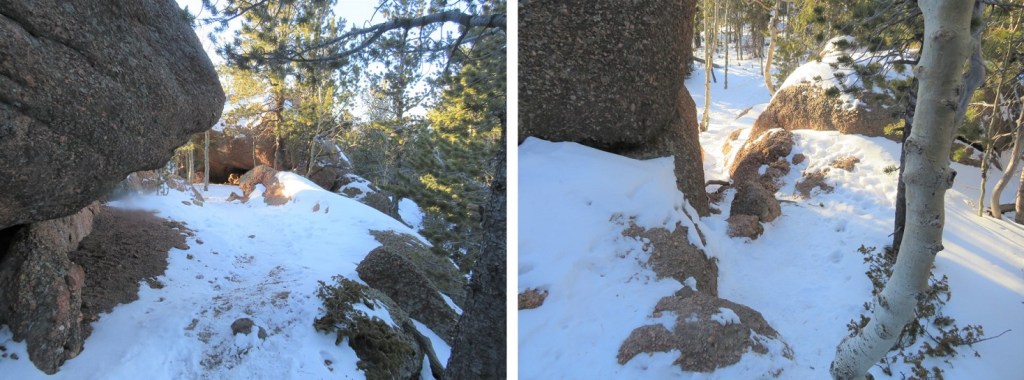
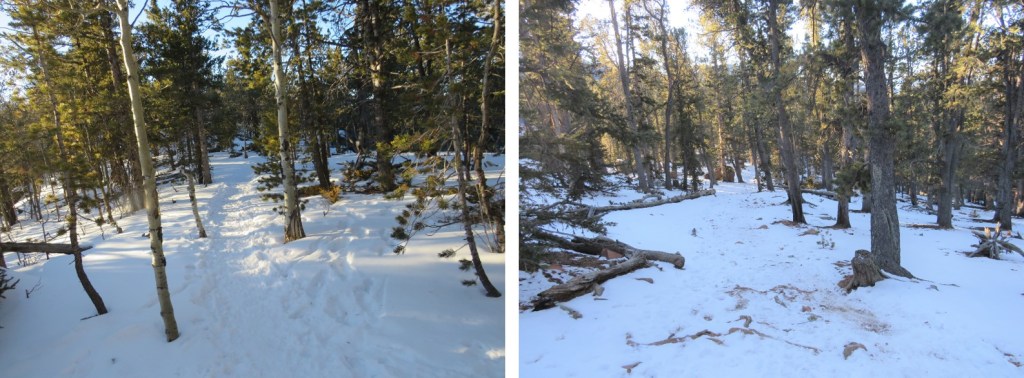
From here on it was a very simple hike: I just followed the bootpack.  In summer months this would be an easy to follow trail.  I had on microspikes, and didn’t need traction.  From the trailhead it was 2.5 miles of hiking north to the summit, following the Ring the Peak Trail

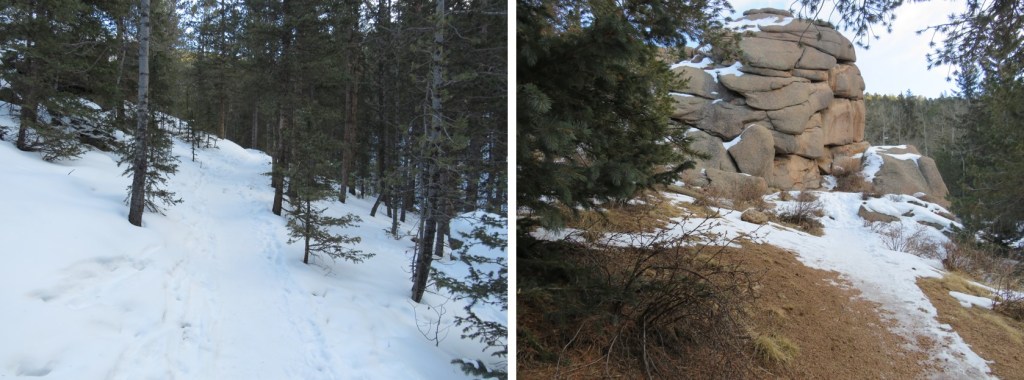
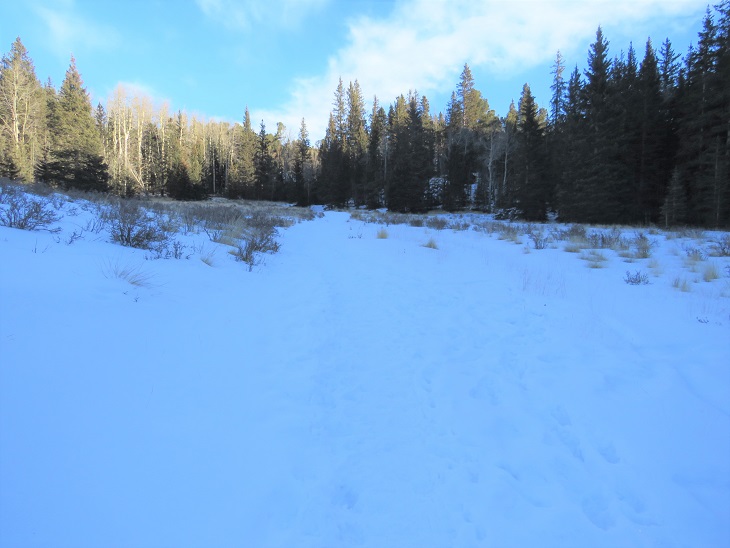
I passed through a small meadow

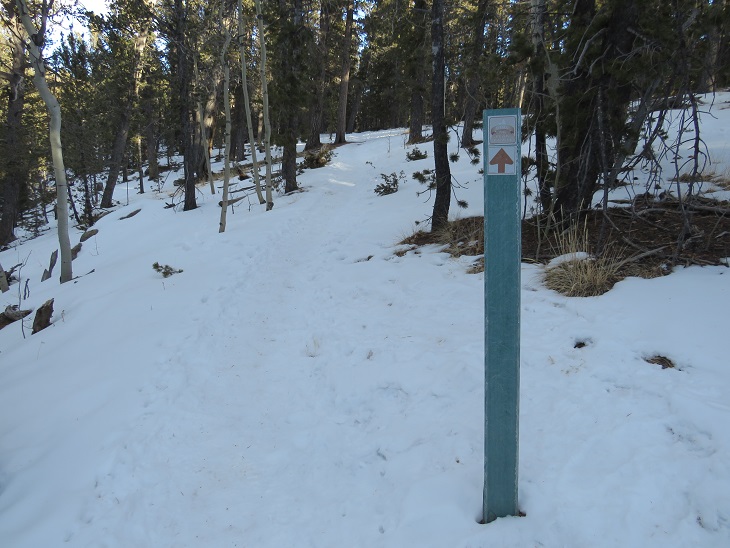
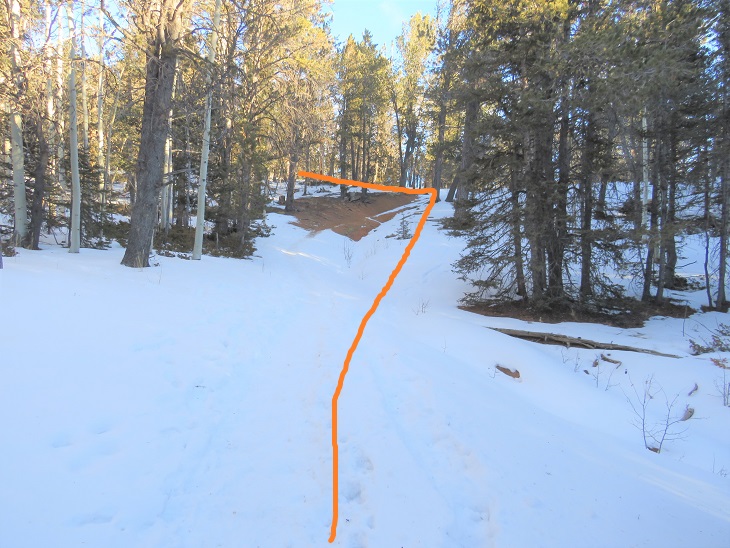
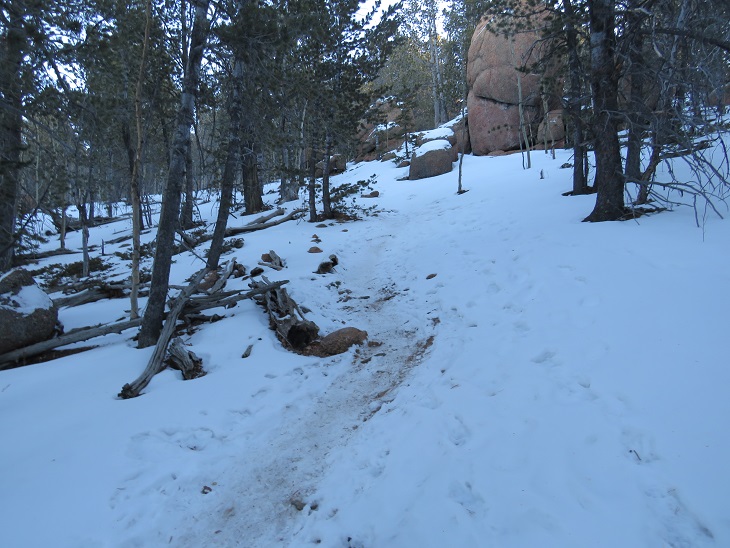
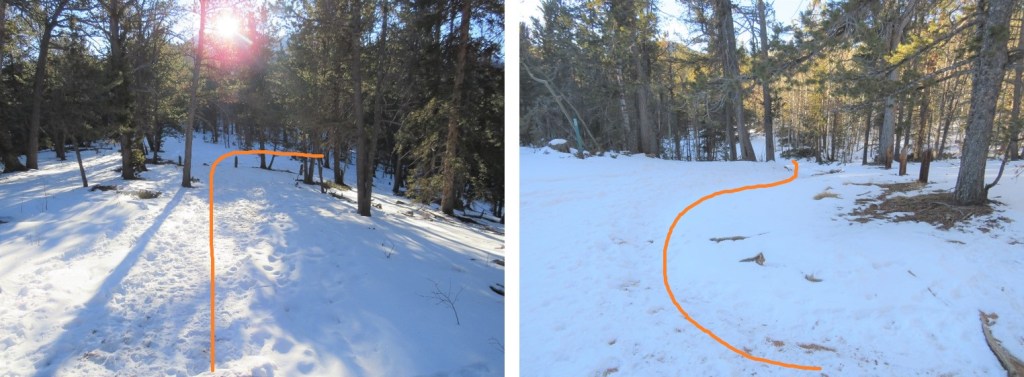
And then gained and lost some elevation as I rounded the west side of the mountain.  At the top of this small saddle there’s a trailhead of sorts.  Turn left here

As I followed the trail I could see Raspberry Mountain in the distance.  You actually summit from behind

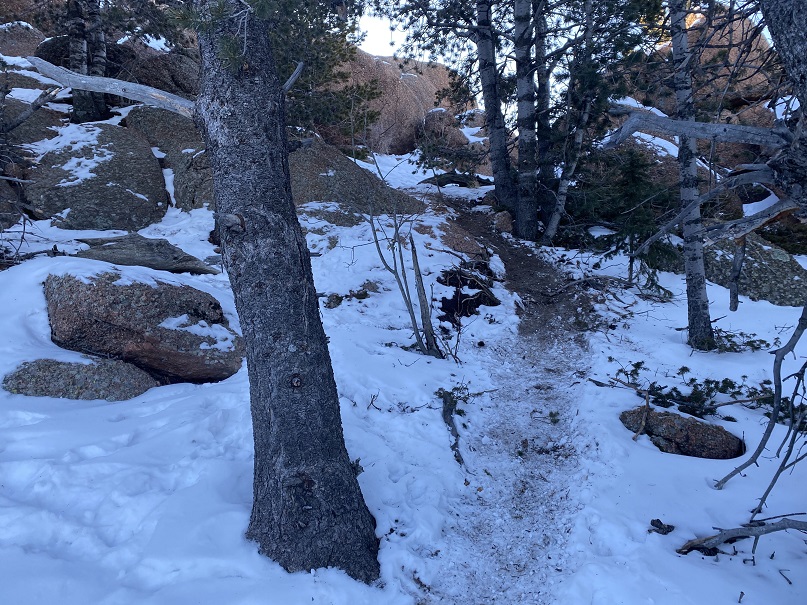
I curved around the north side of the mountain and came to a rocky outcropping

This was class 3, but without any exposure and easy to navigate.  I just heel-toed it up this ramp

And I’d made it to the summit.  The summit had large rocks, but no exposure

There was also a nice view of the west side of Pikes Peak. This side doesn’t get much attention, I’m afraid.

There wasn’t a commit register, so I left one in an obvious place.  This is a Teller County Highpoint, so I found it odd there wasn’t a register.

My camera stopped working about now.  It froze, and I was told to replace the battery (this is what happens when it gets cold), and then when I tried to clean the lens the water instantly turned to ice.  So I started using my cell phone. Did I mention it was quite windy and cold?  Time to head back, first down the rocky area

Then re-tracing my steps back to the upper ‘trailhead’

And back to the lower trailhead

Following the dirt ‘road’ back to the gate closure

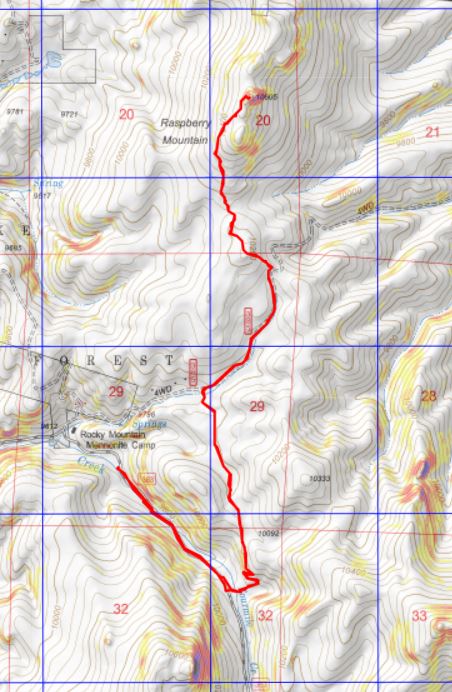
I made it back to my truck at 9:15am, with much of the day still ahead of me.  There were quite a few vehicles parked at the trailhead at this time. Today had been much easier than I’d anticipated, so I drove home and hopped on the treadmill for an hour.  Here’s a topo map of my route