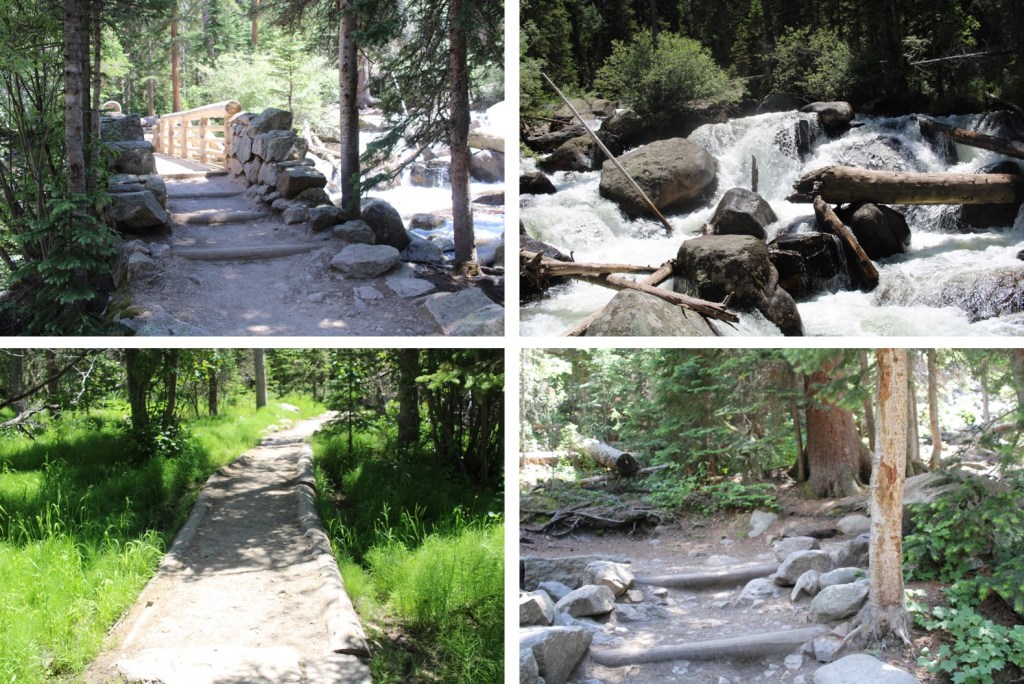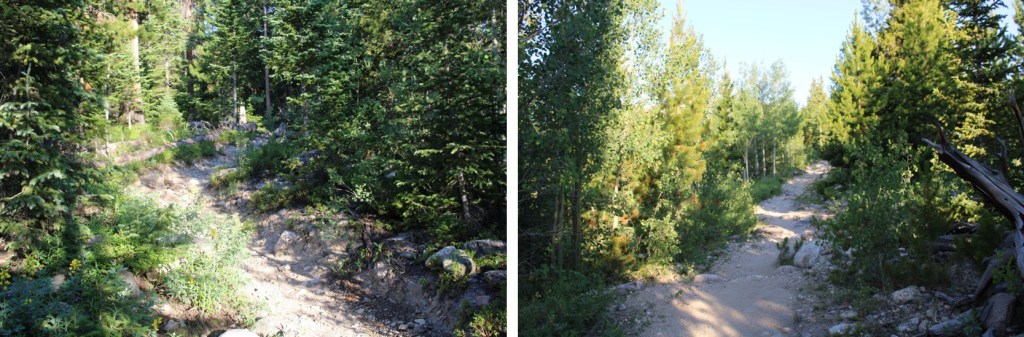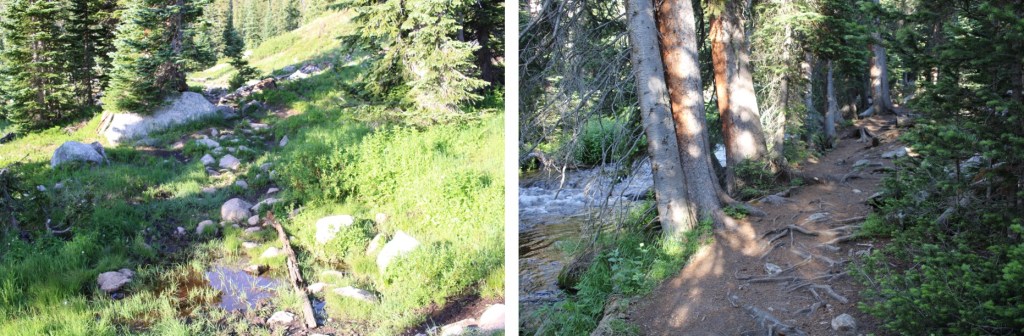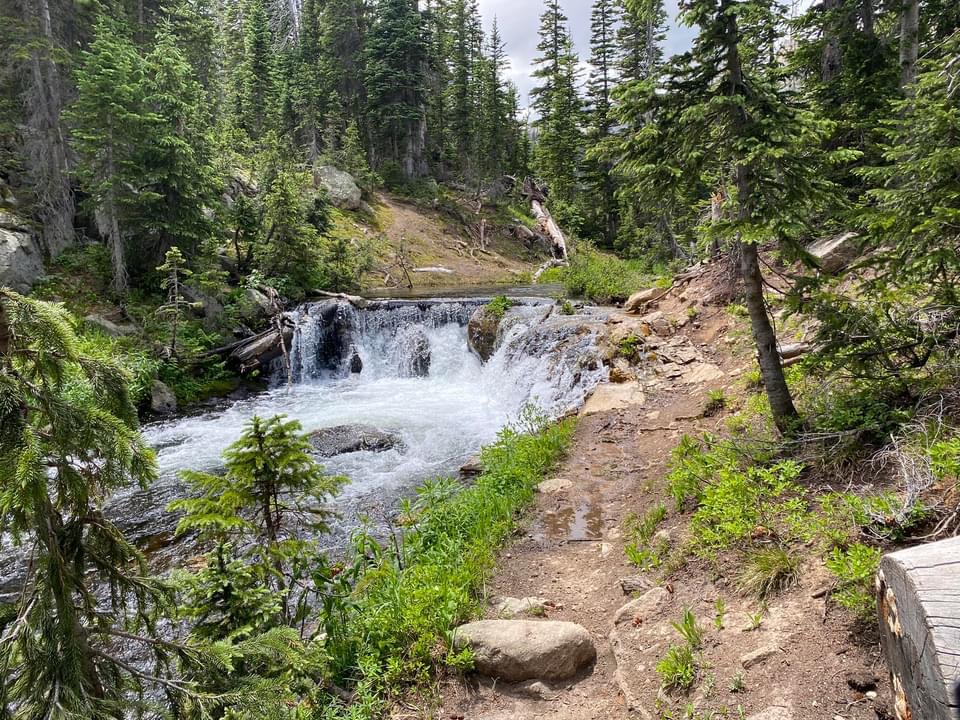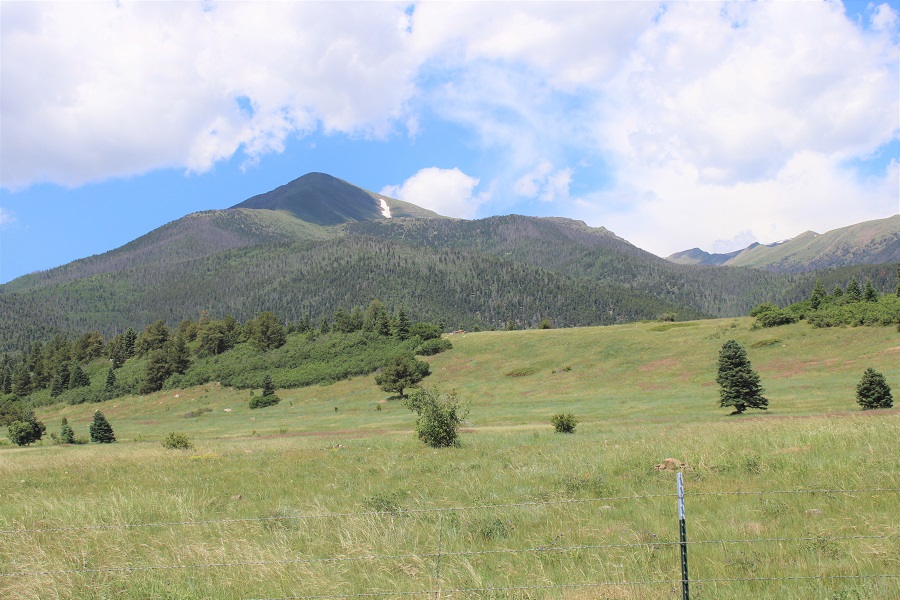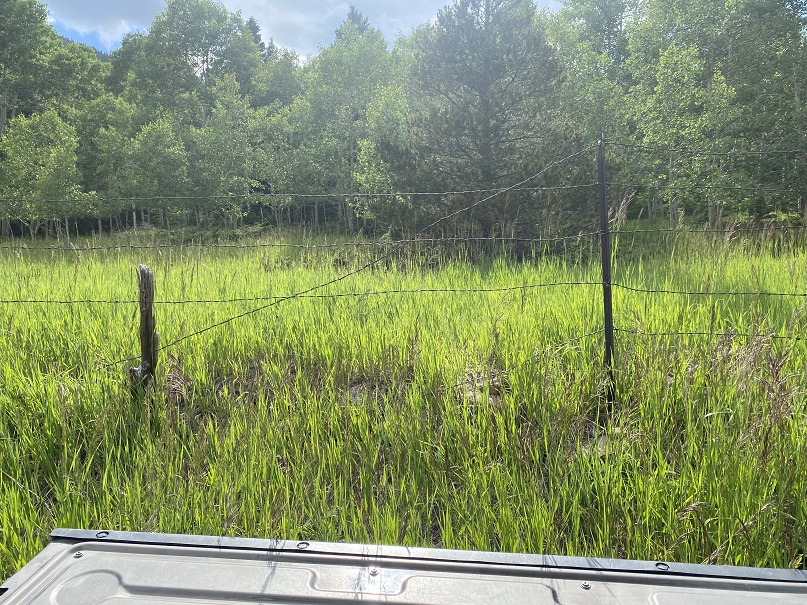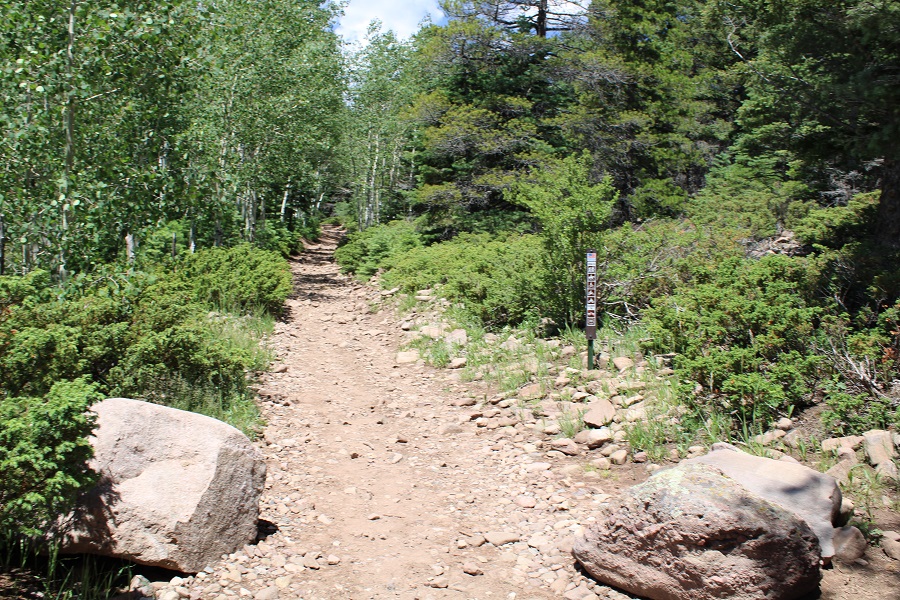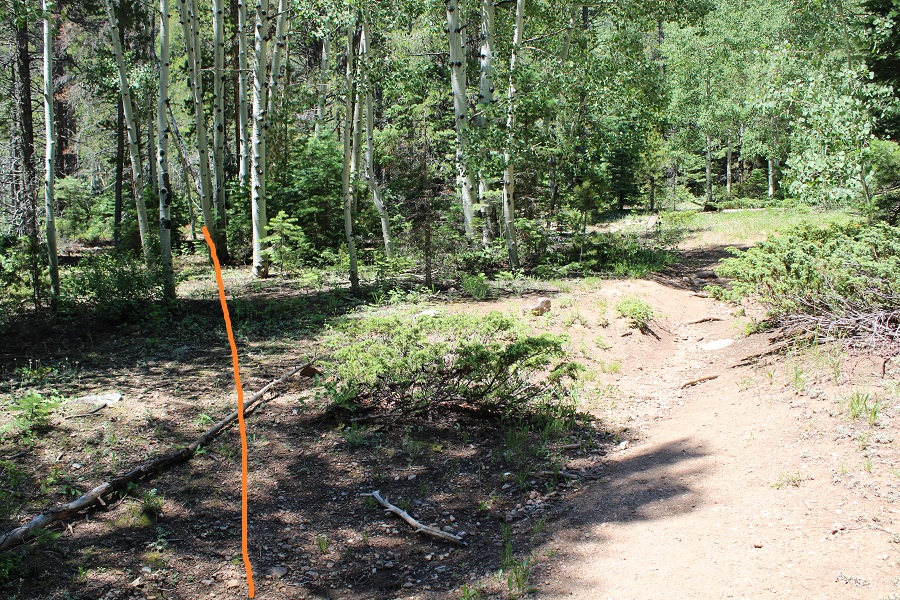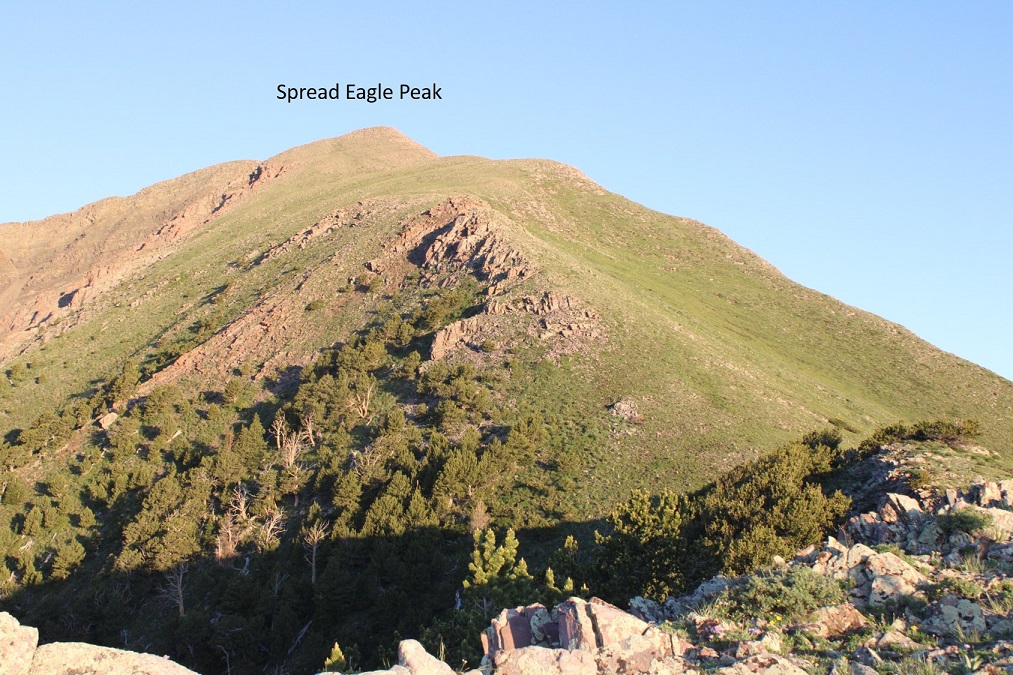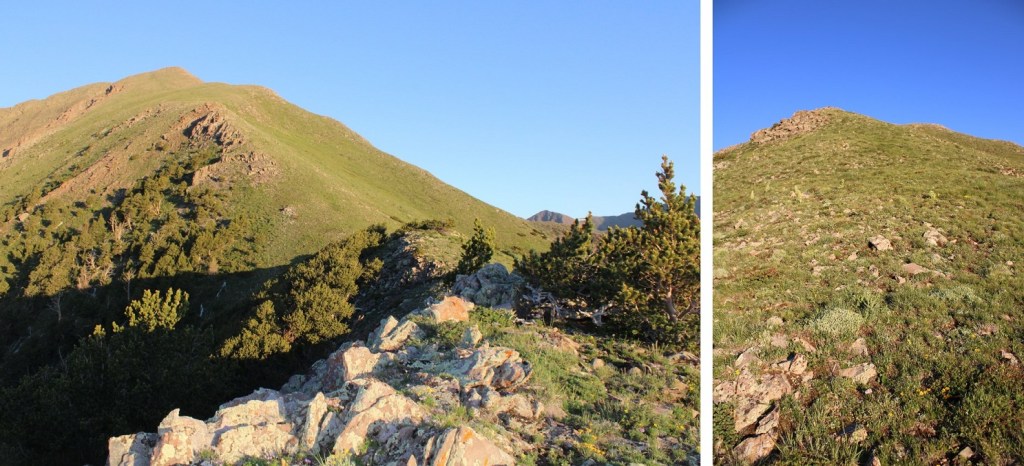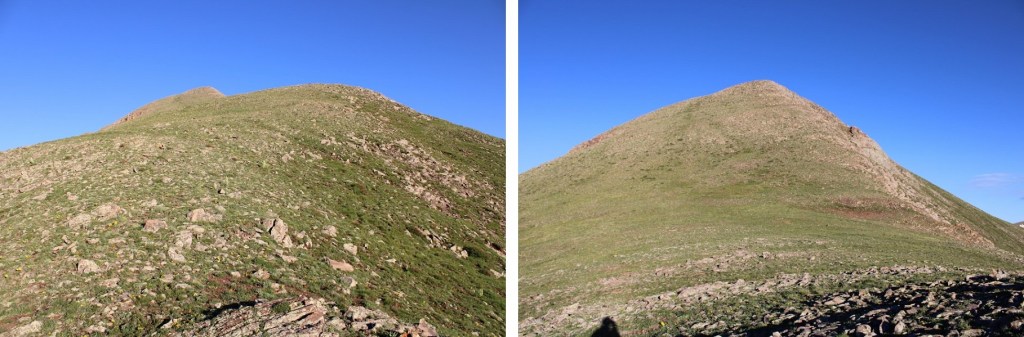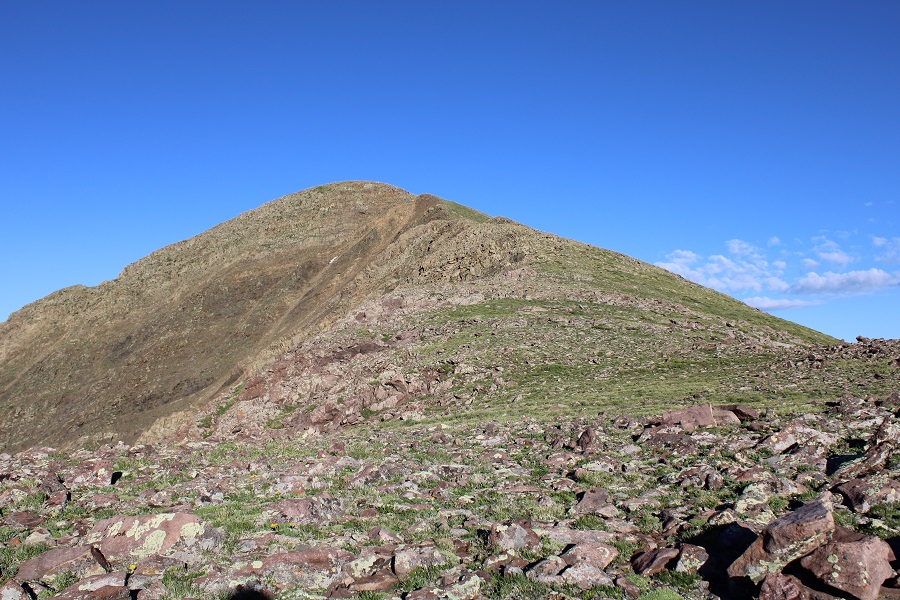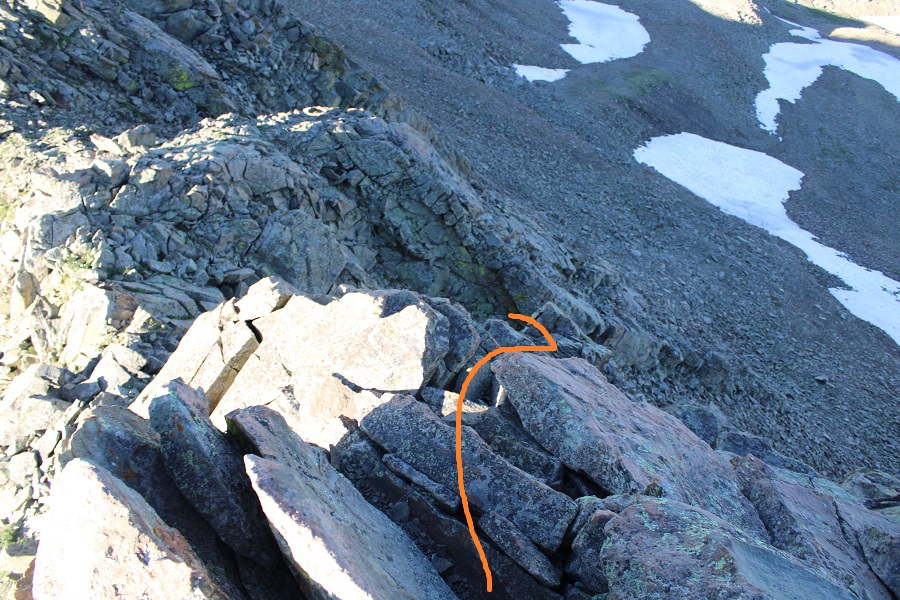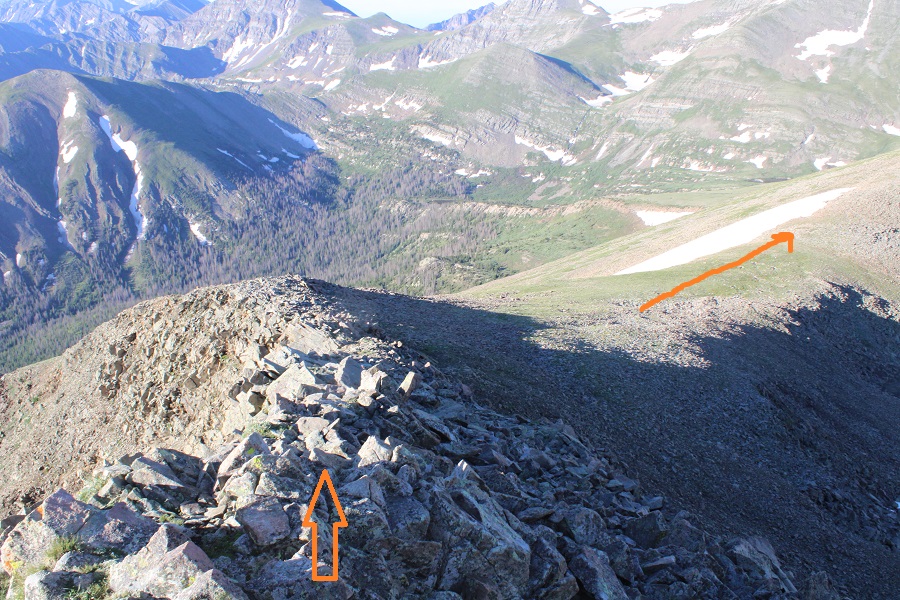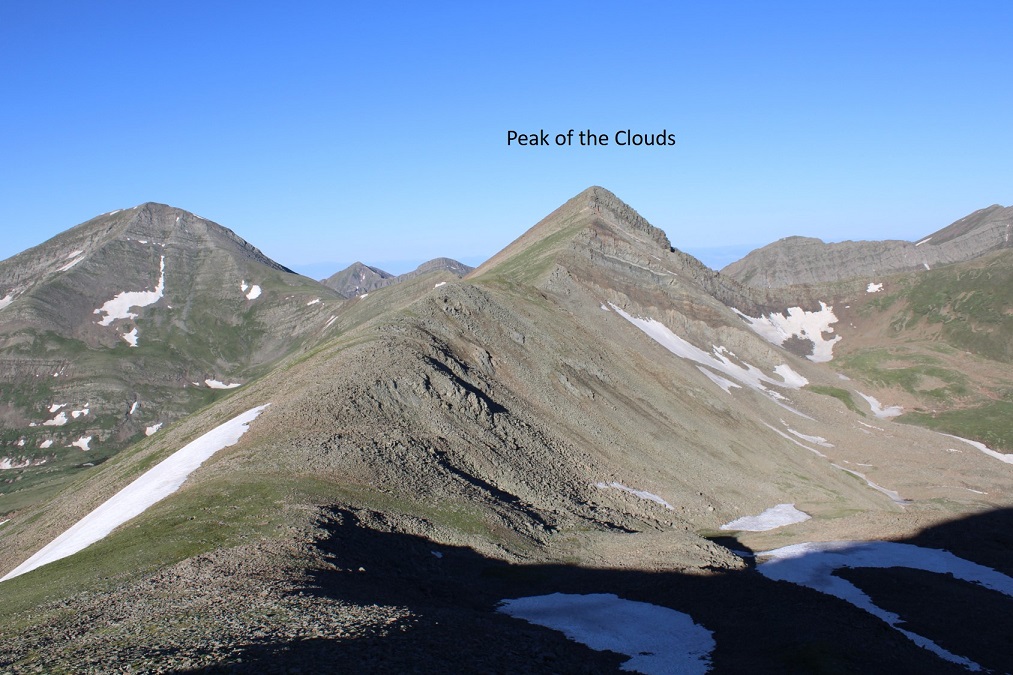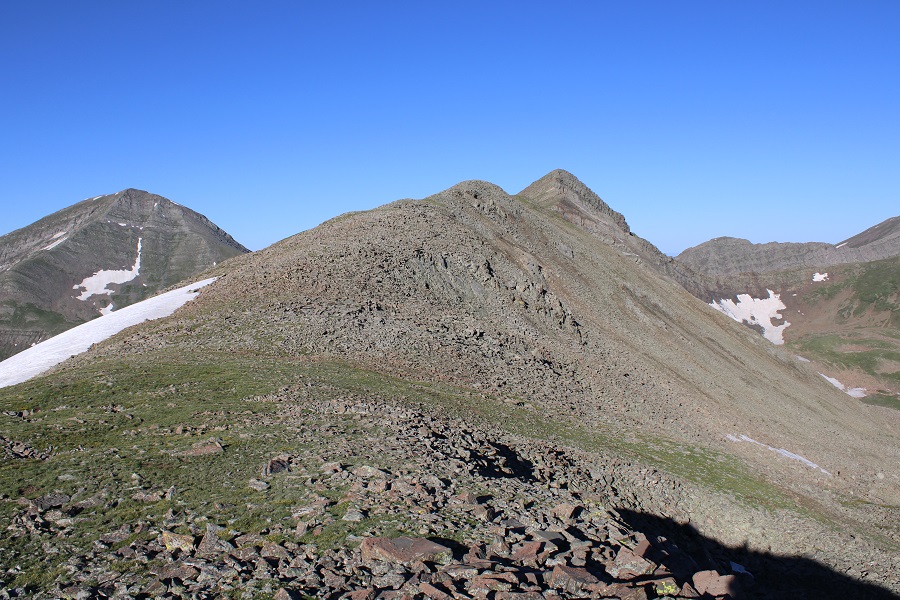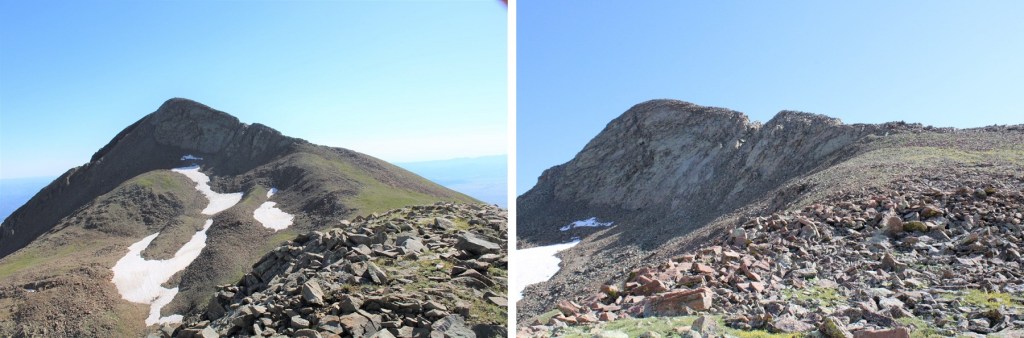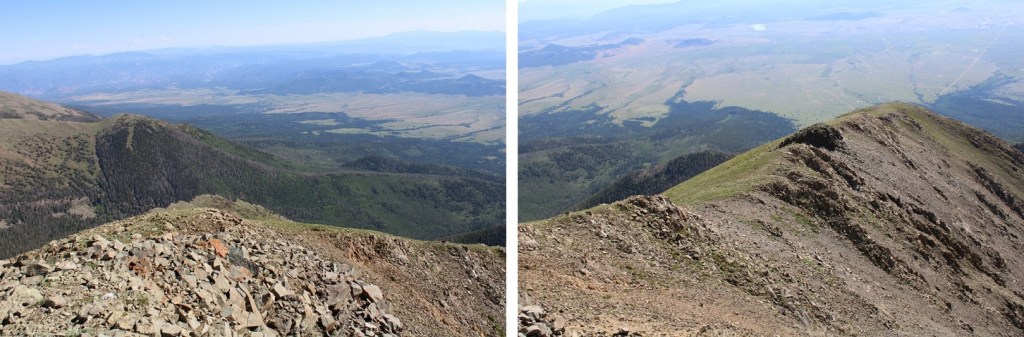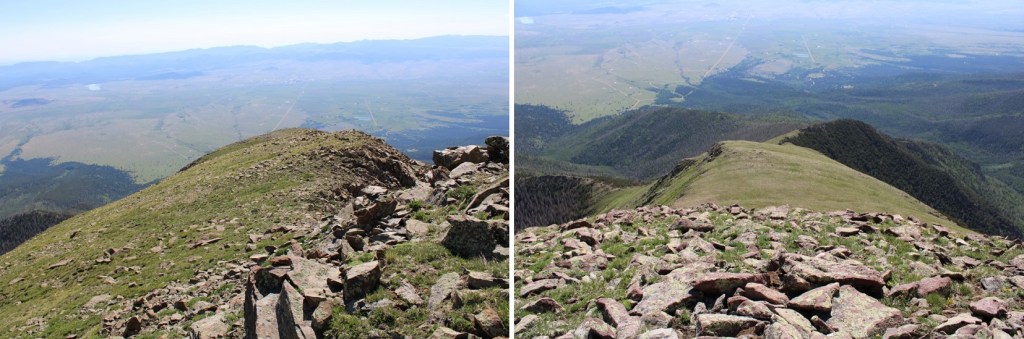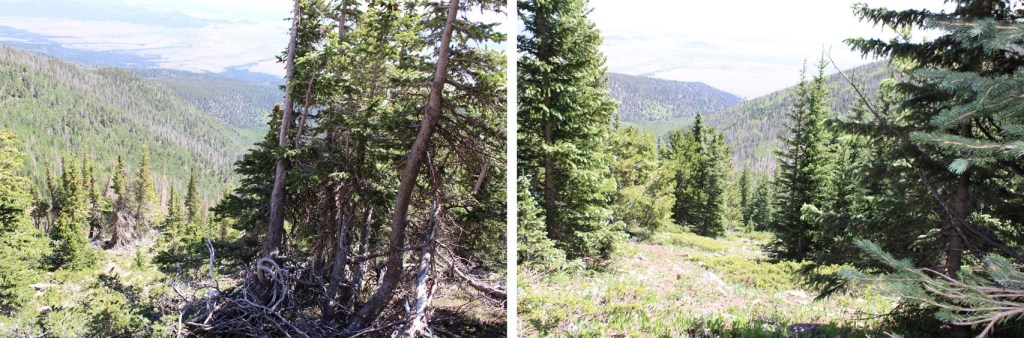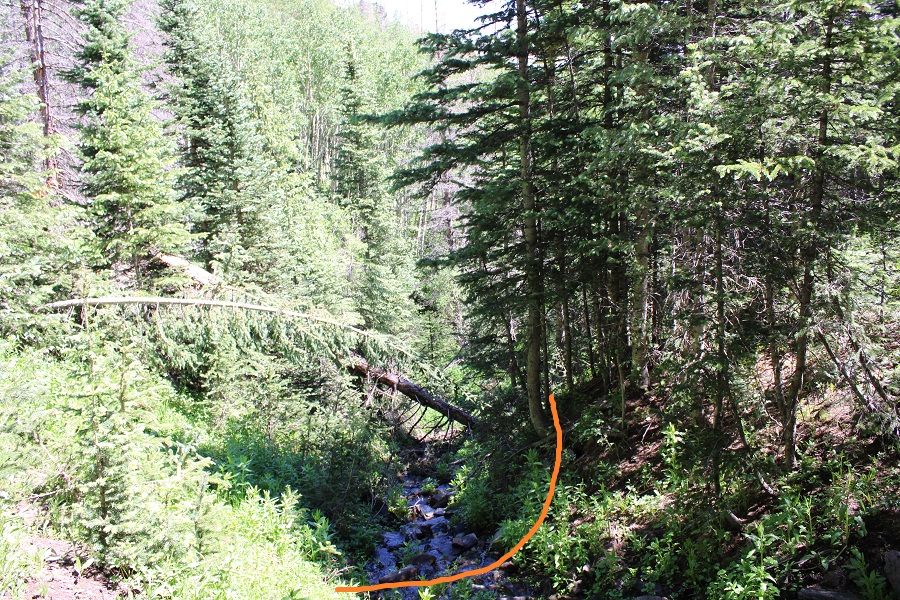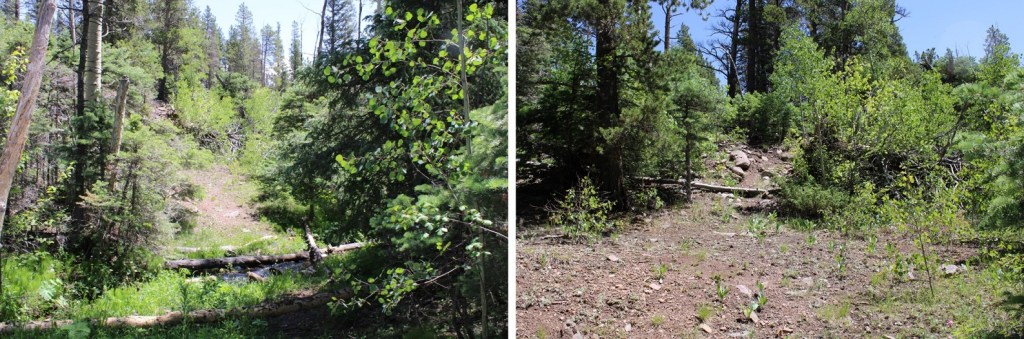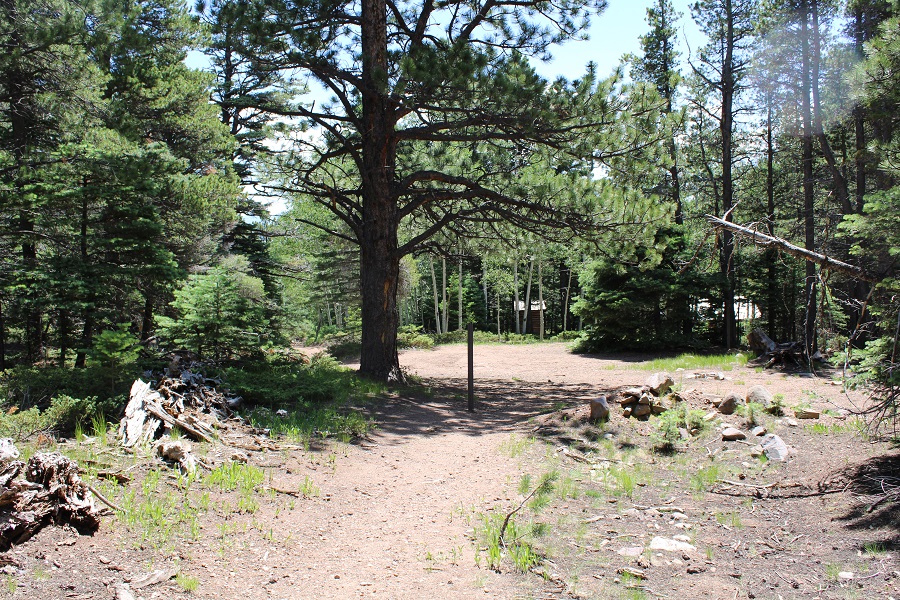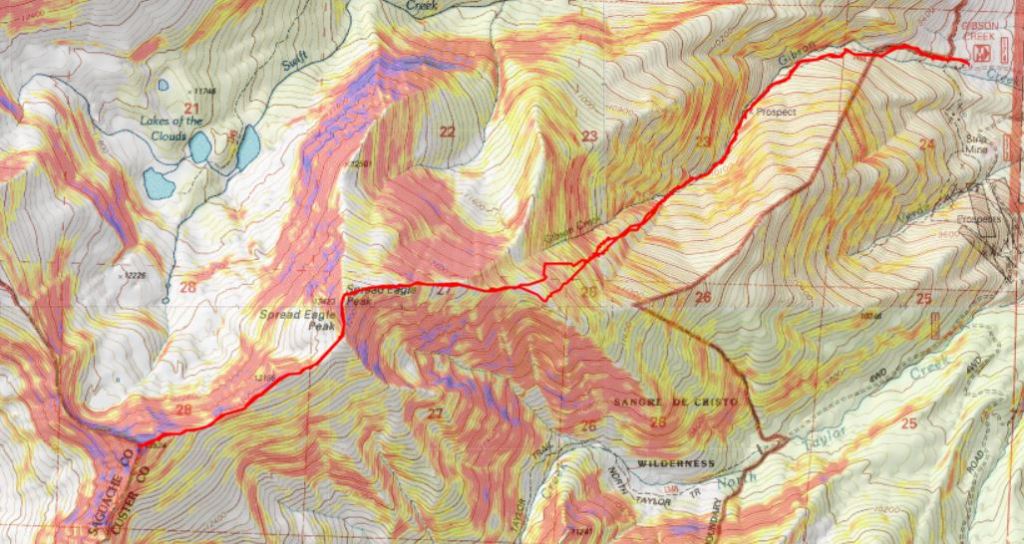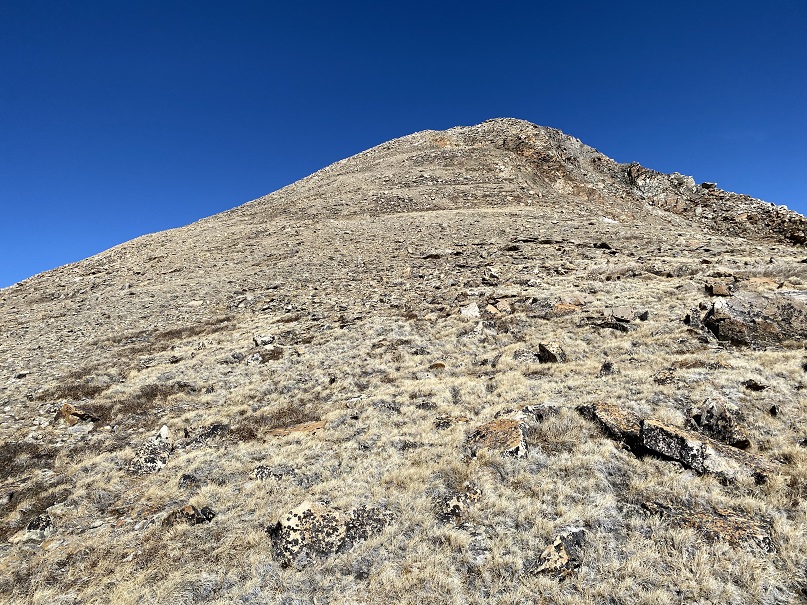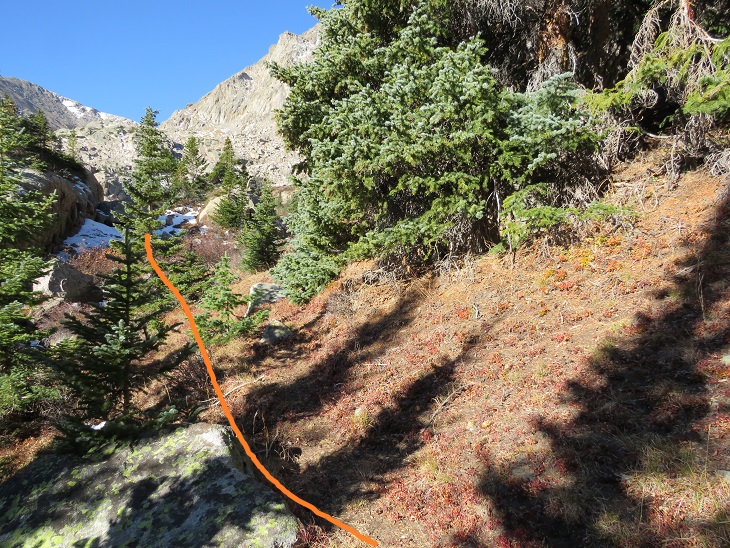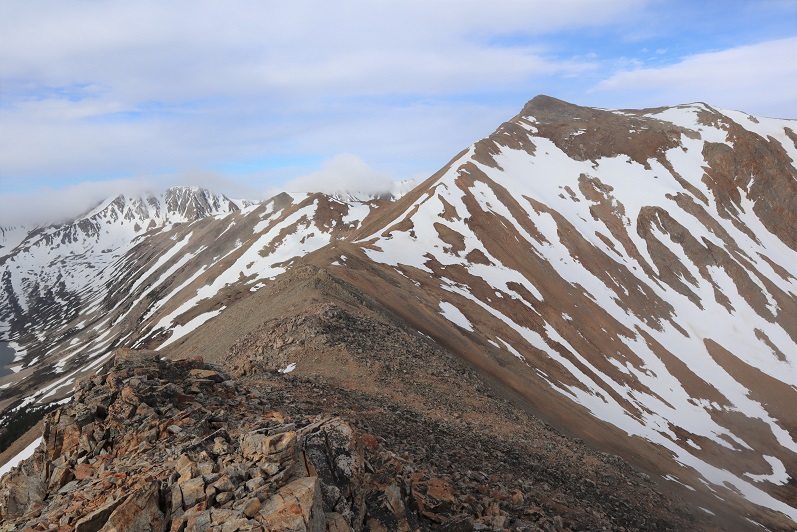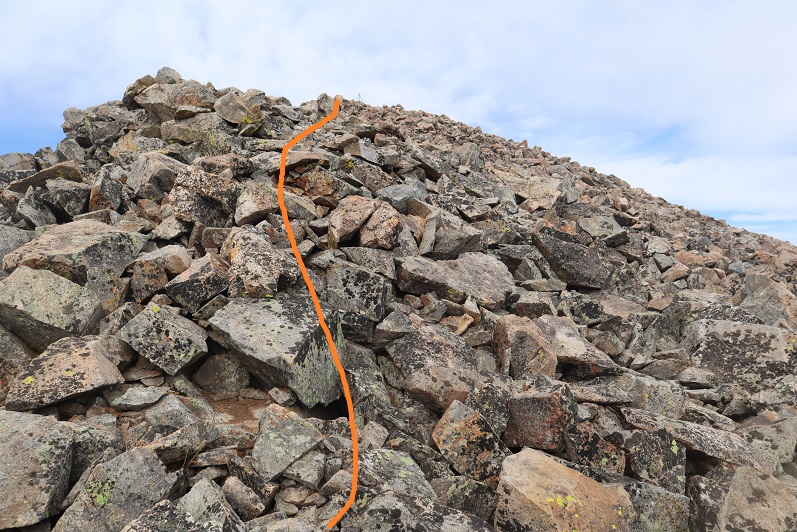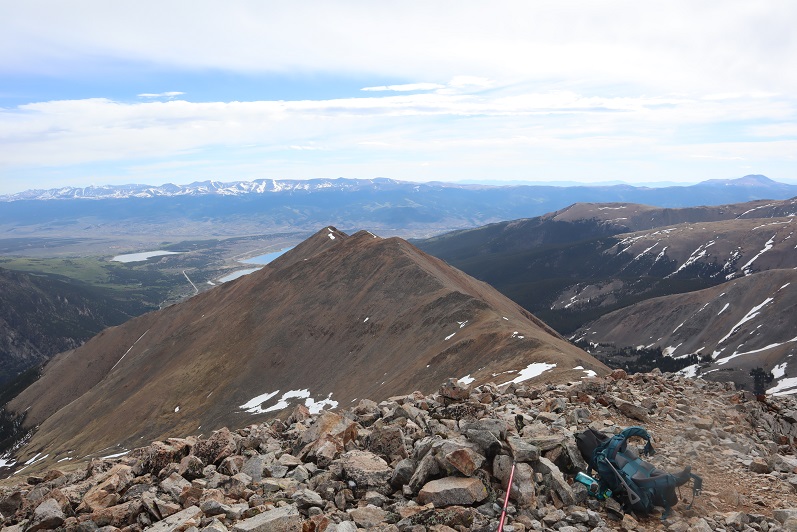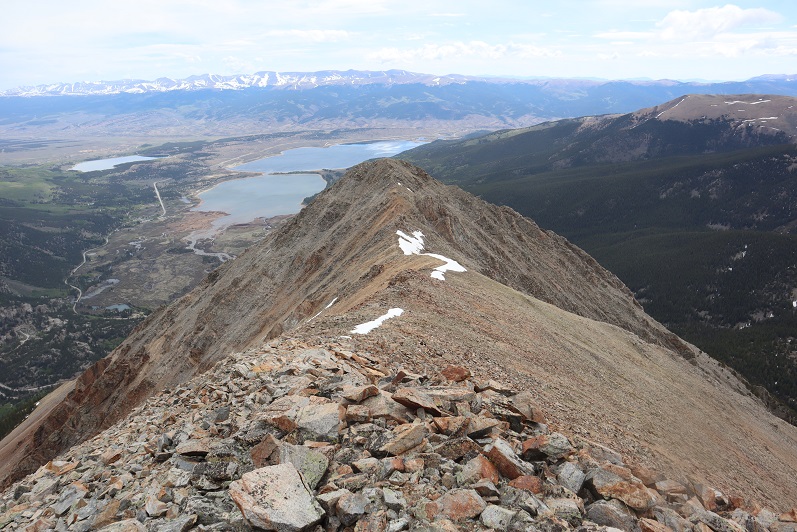
Keller Mountain – 13,080

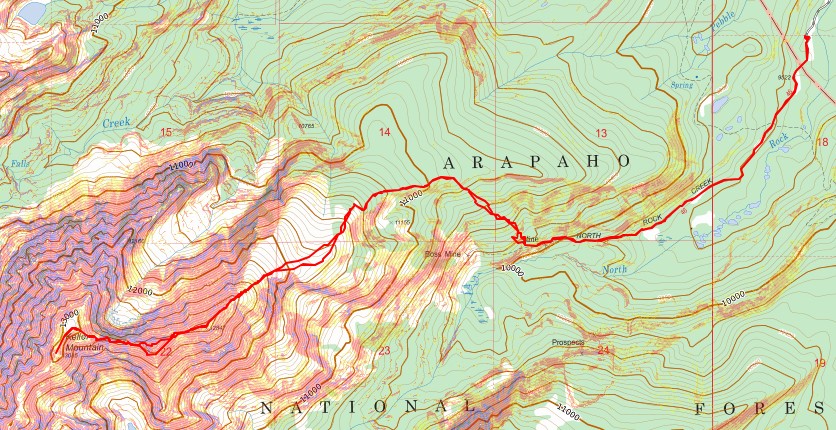
RT Length:  11.89 miles

Elevation Gain:  4086’

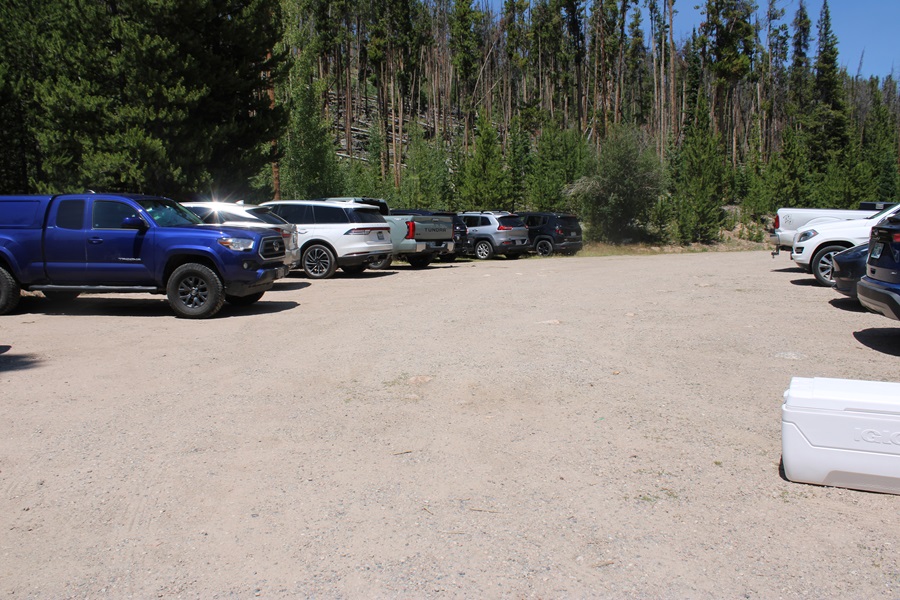
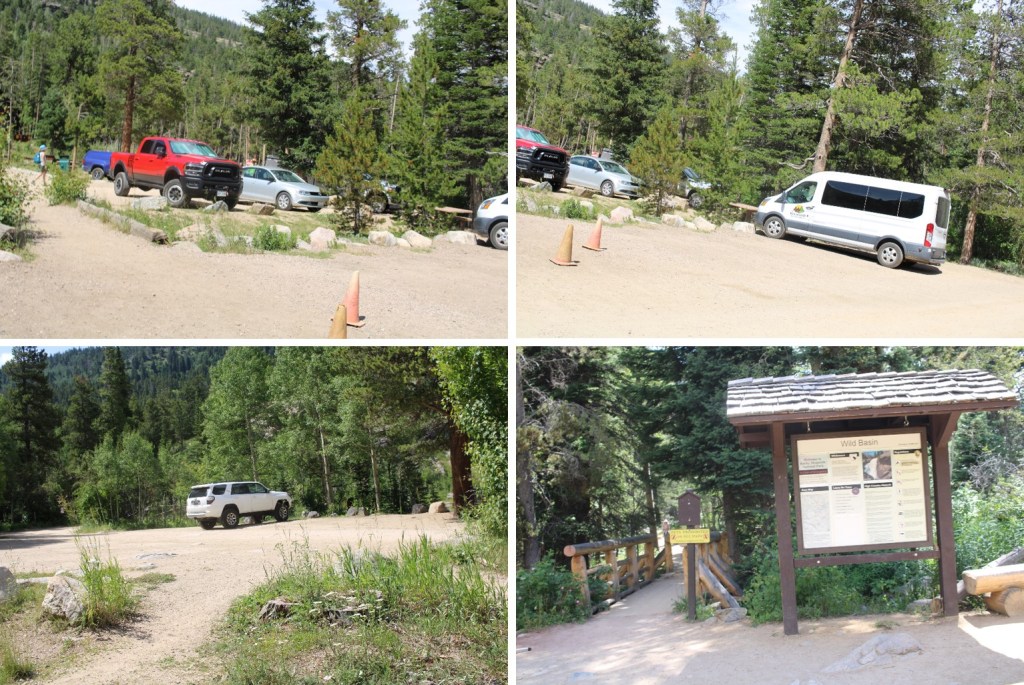
I parked at the Rock Creek Trailhead at 5am, and the parking lot, which holds about 20 vehicles total if everyone parks nice, was already full.  I’m guessing all the vehicles were from weekend backpackers (I arrived on a Sunday morning).  The drive in is mostly 2WD on a dirt road, but you’ll want high clearance for the last quarter mile or so.  I saw someone trying to head down in a Honda Odyssey who was having major issues (although it was probably just the driver, not the vehicle).

I was on the trail at 5:30am.  The trail starts at the east end of the parking area.
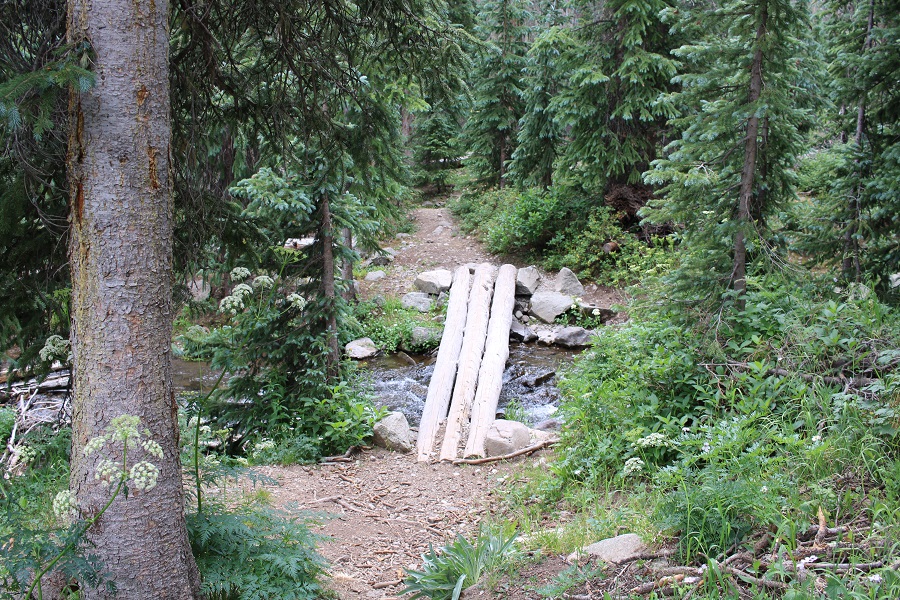
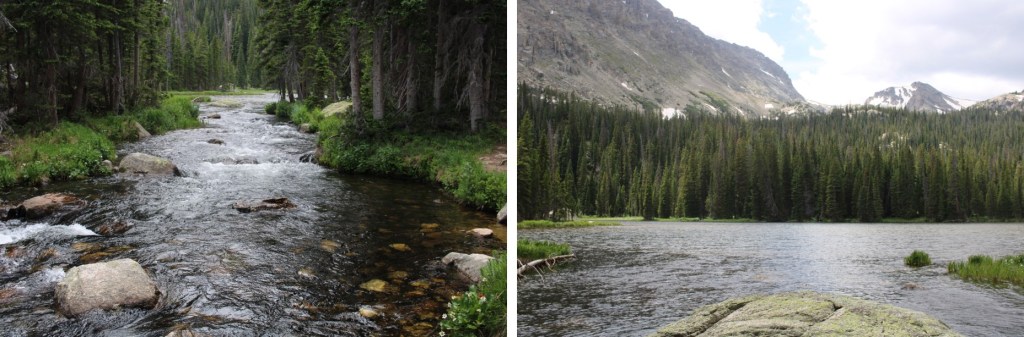
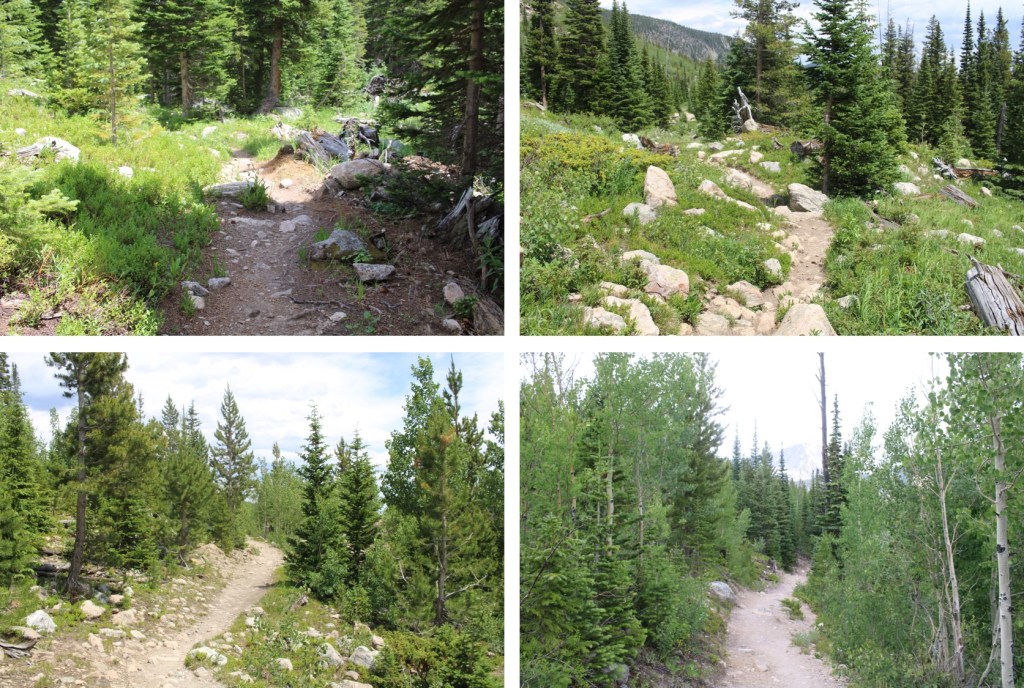
I followed this trail for 2.3 miles, headed west, and staying straight at the first junction to stay on North Rock Creek Trail No. 46.
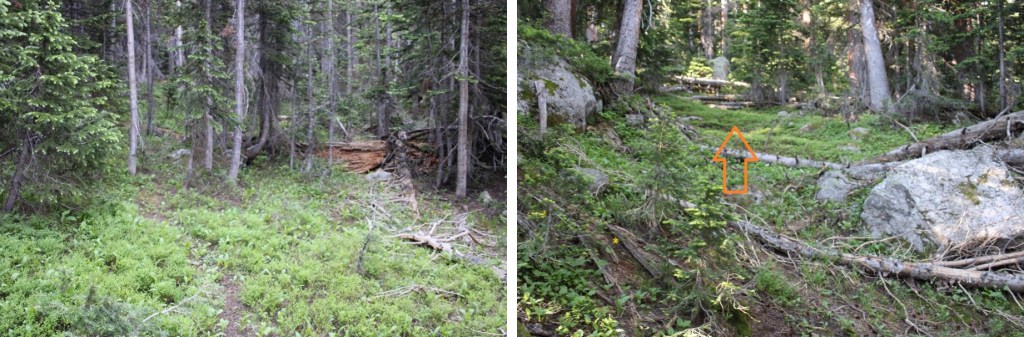
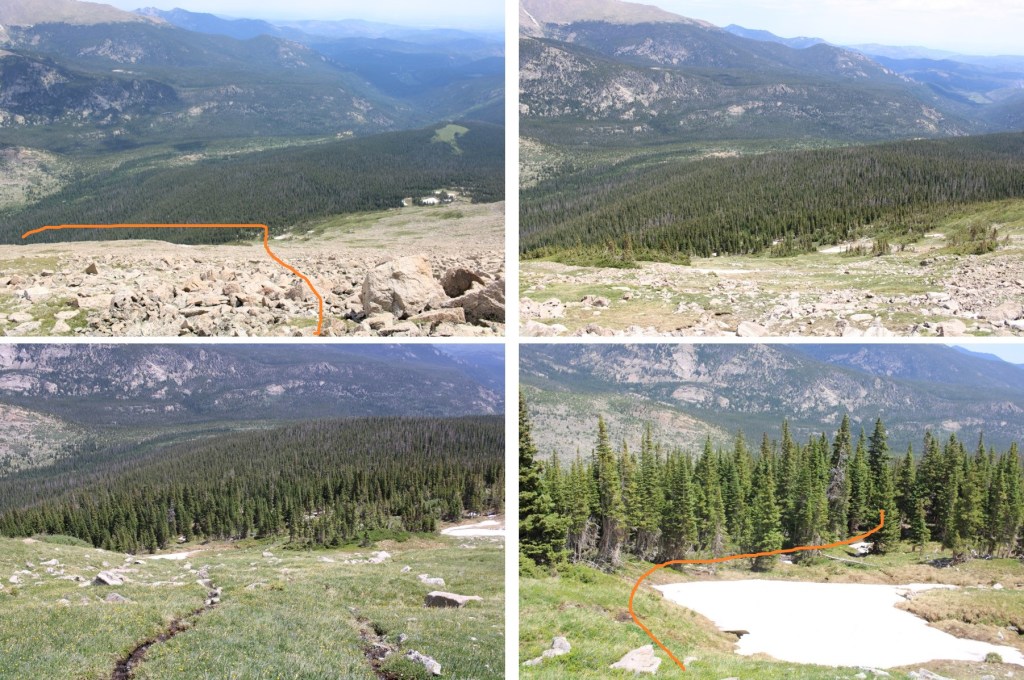
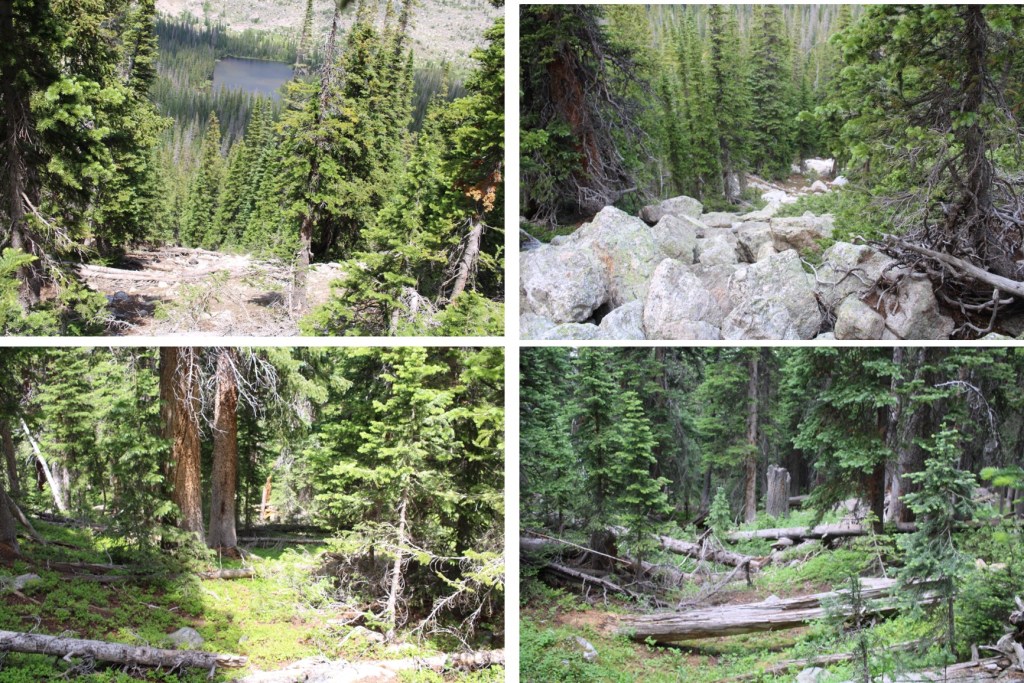
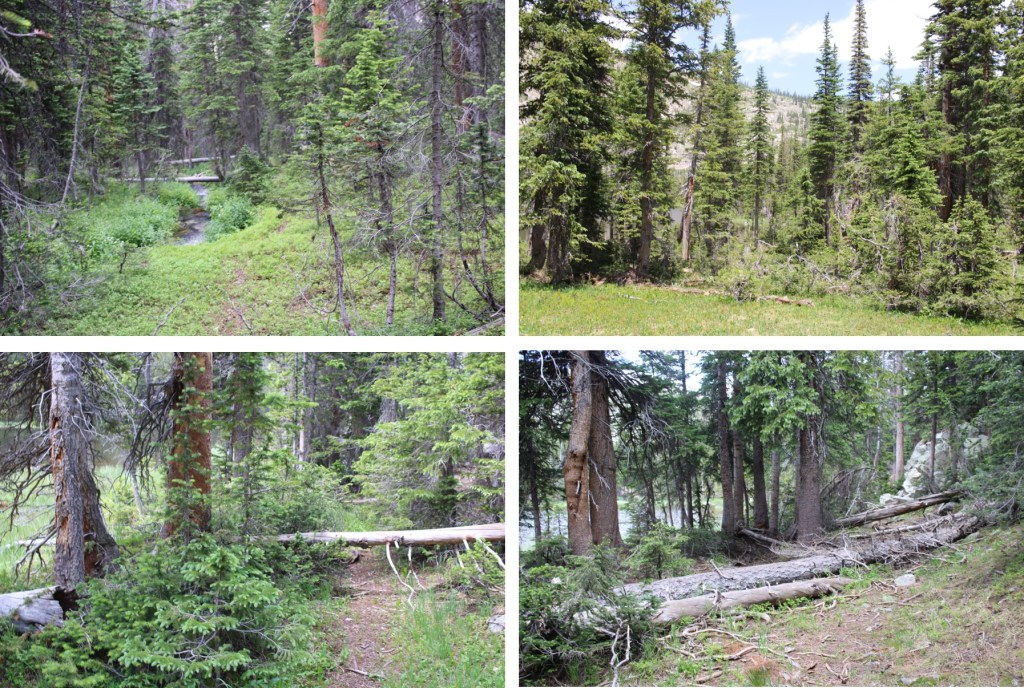
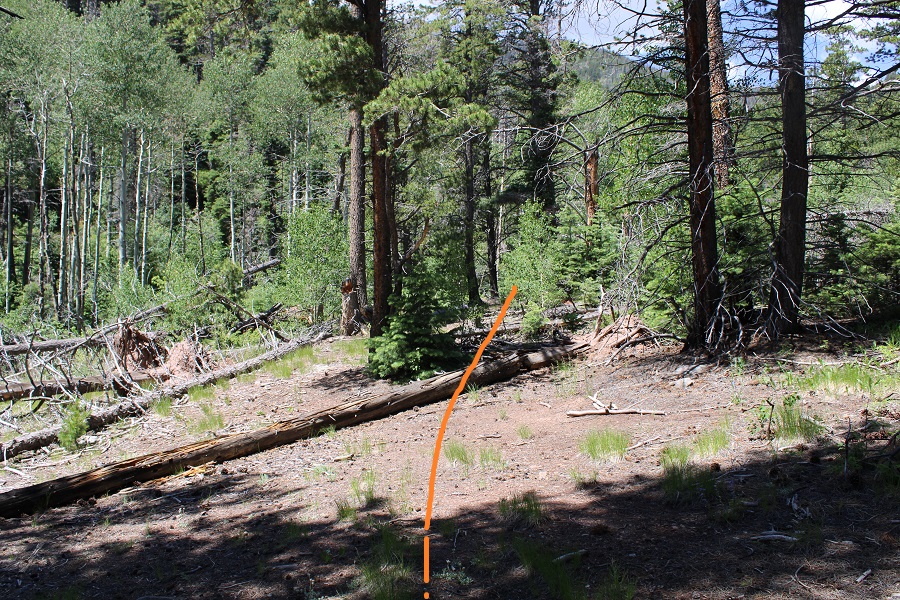
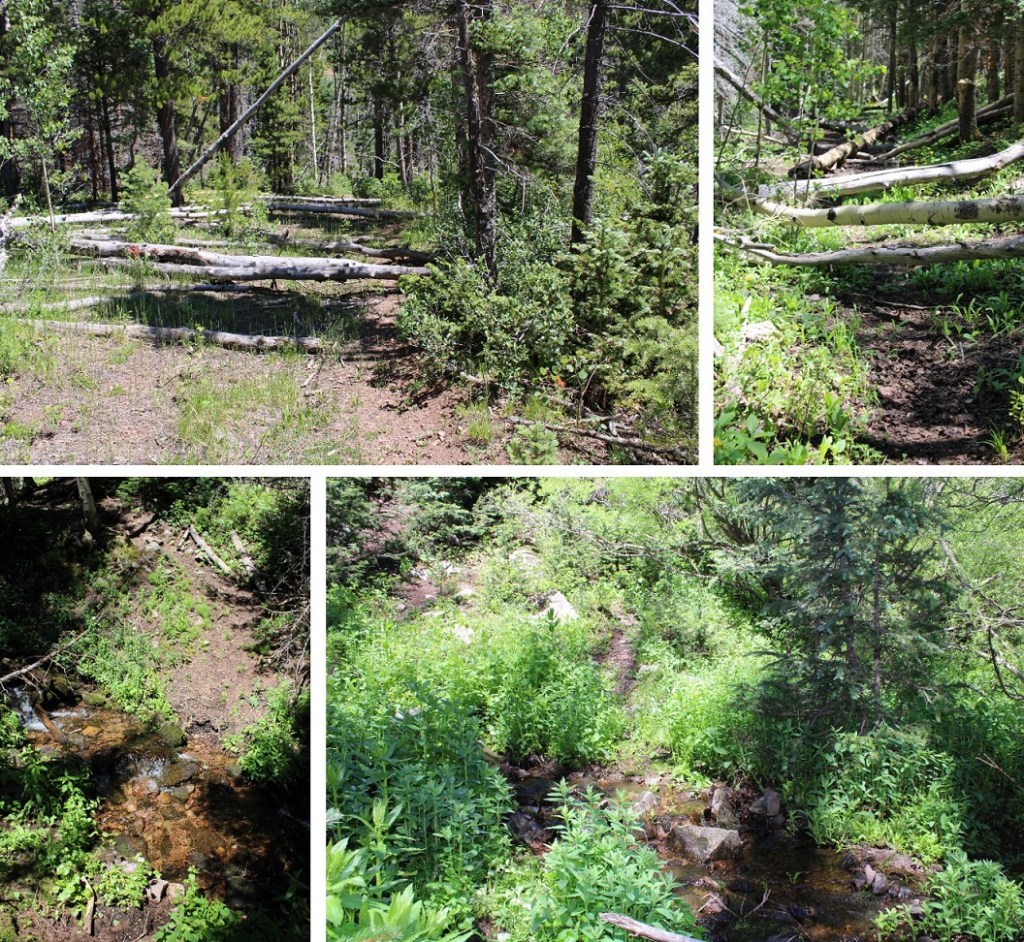
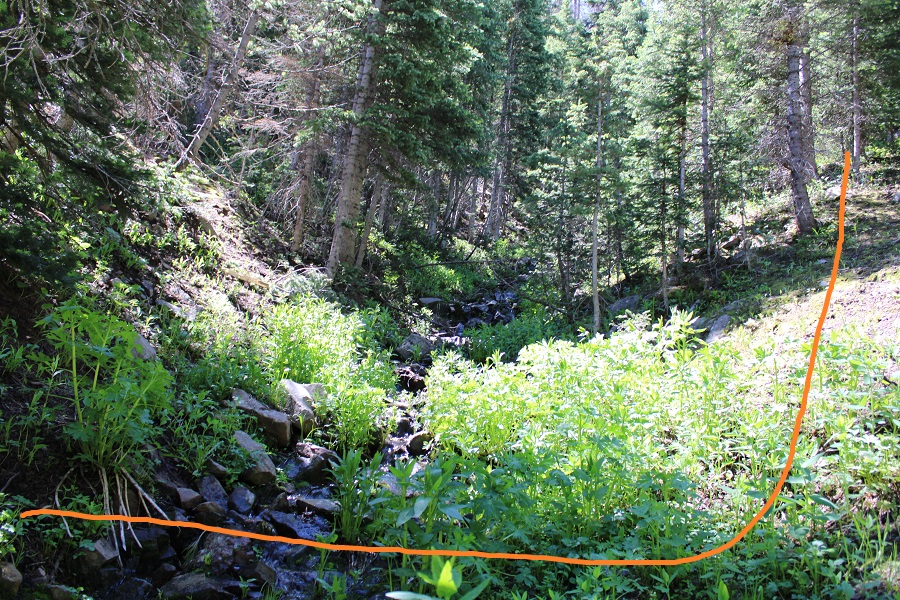
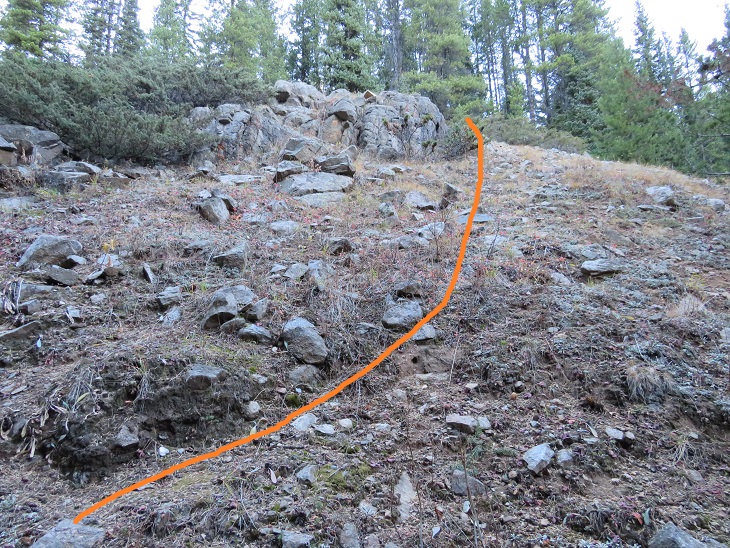
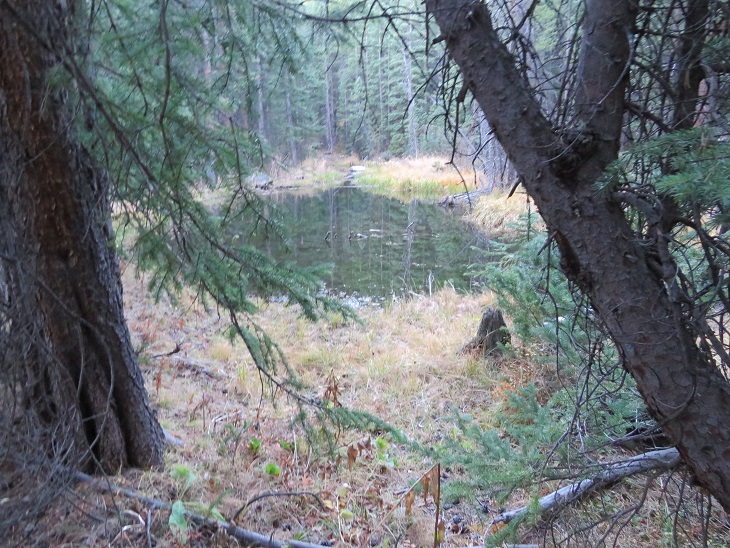
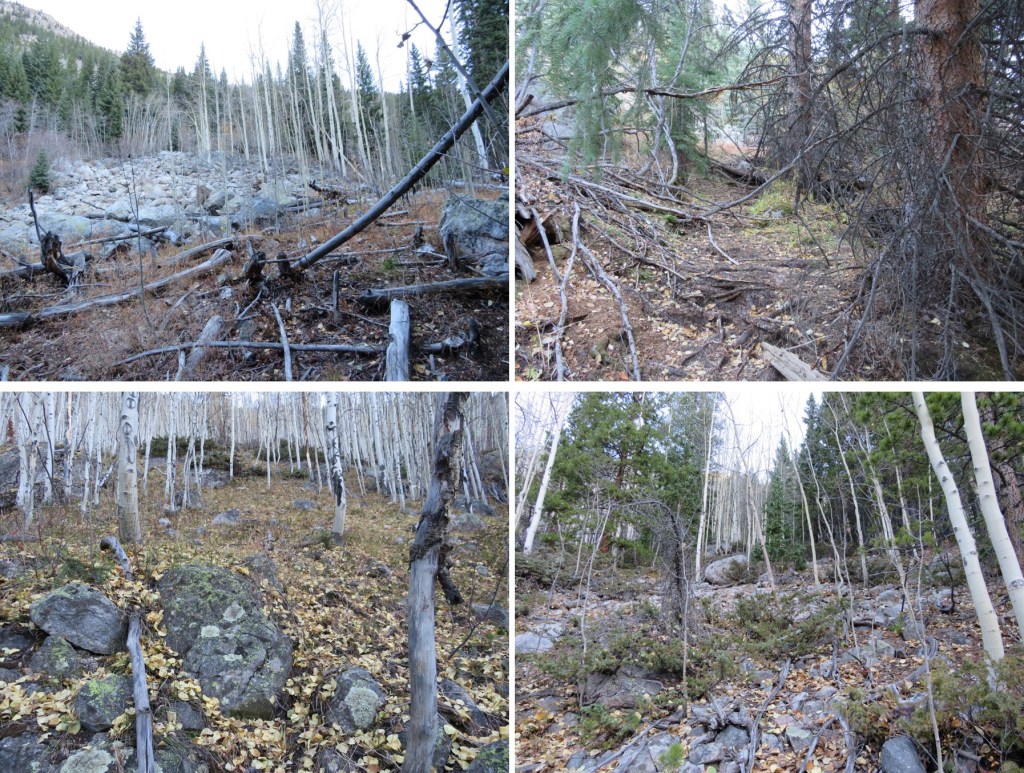
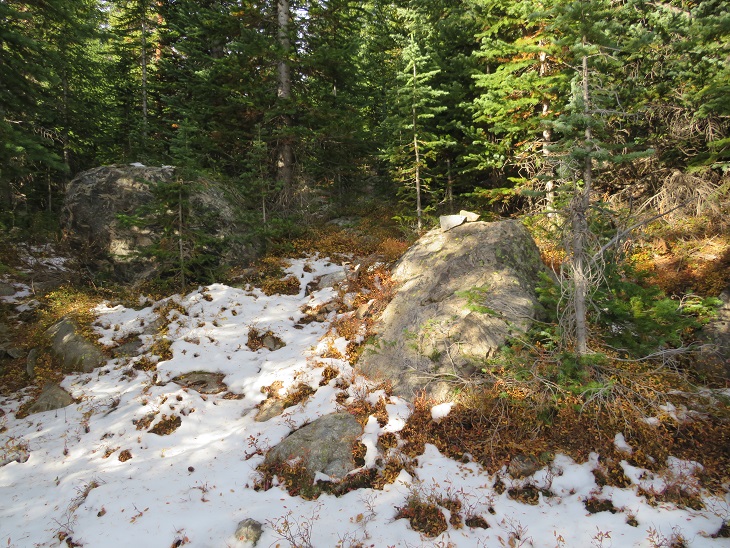
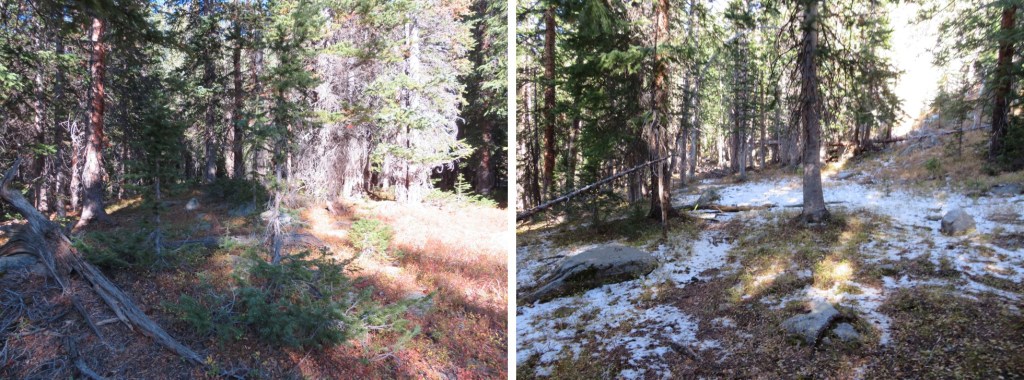
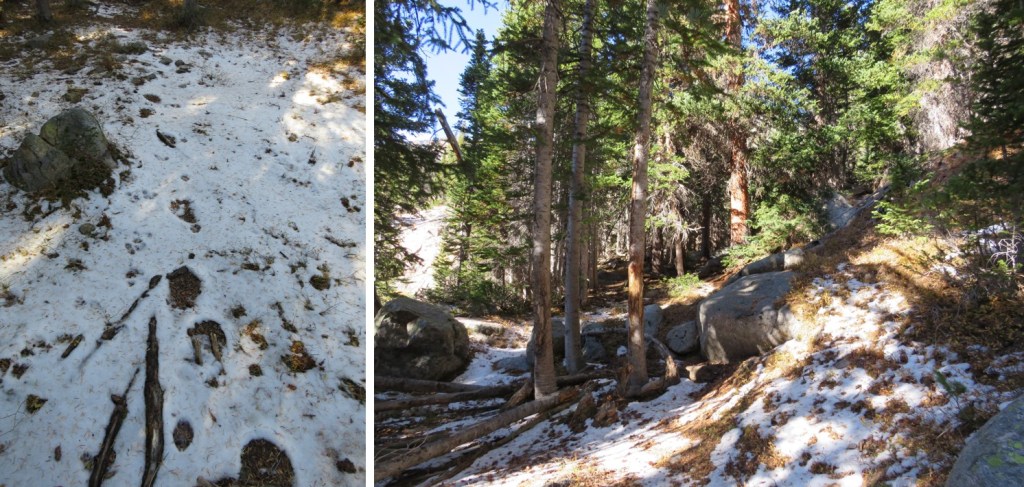
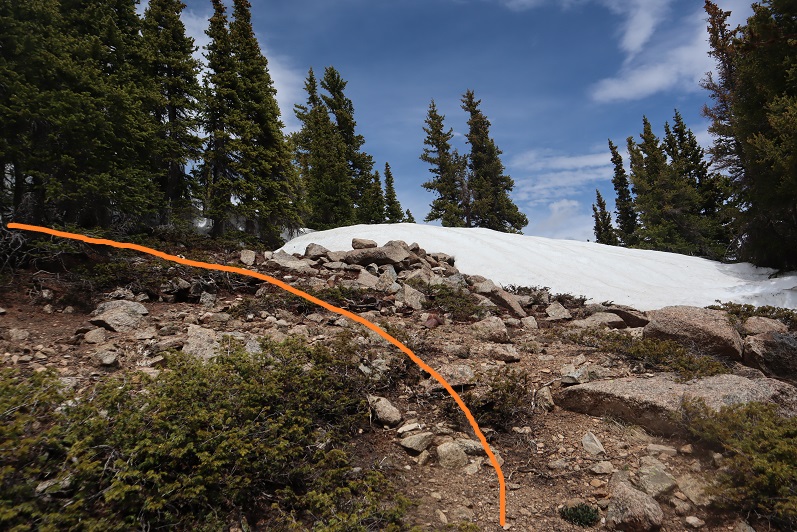
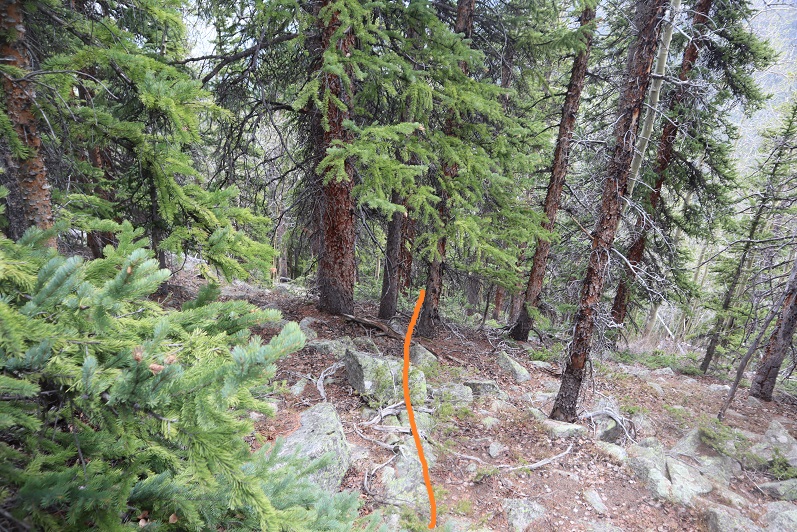
After hiking for over 2 miles on this class 1 trail, I turned right, and started bushwhacking northeast to the ridge.  There were a lot of downed trees in this area, so navigation was an adventure.  I just kept heading northeast, gaining 760’ of elevation in .7 miles as I made my way to 10900’
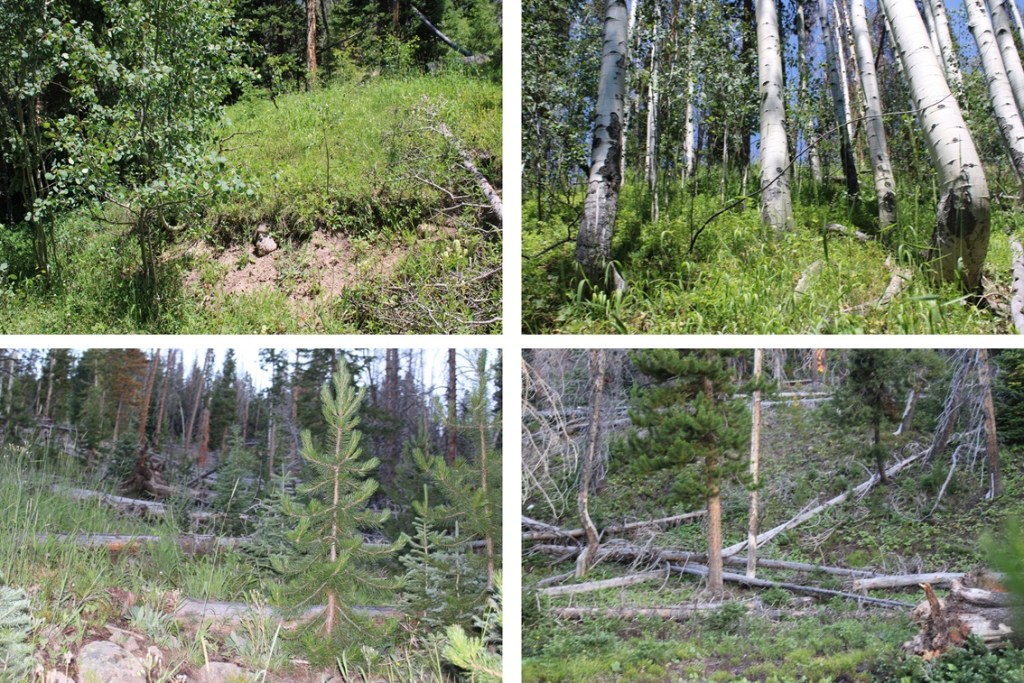
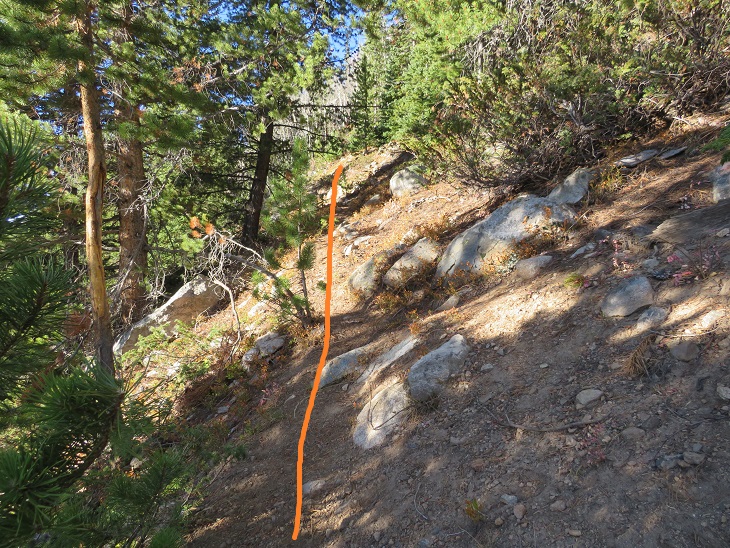
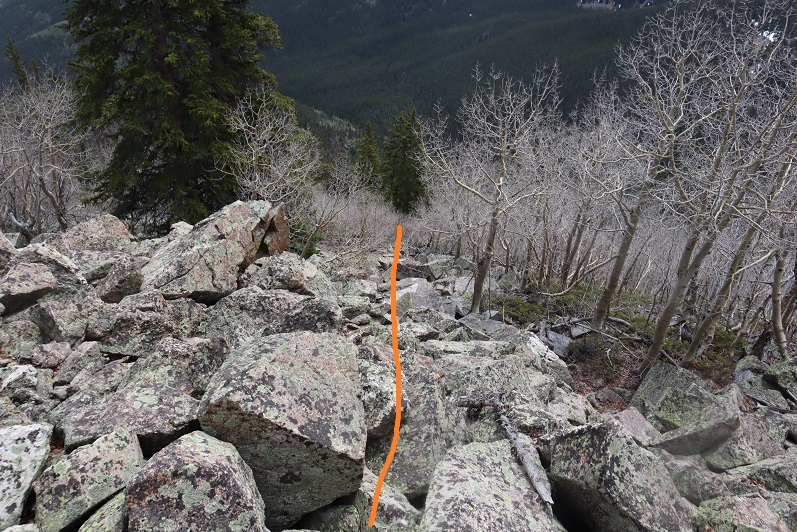
At 10900’ I came across a well-established game trail, and followed it west towards treeline.

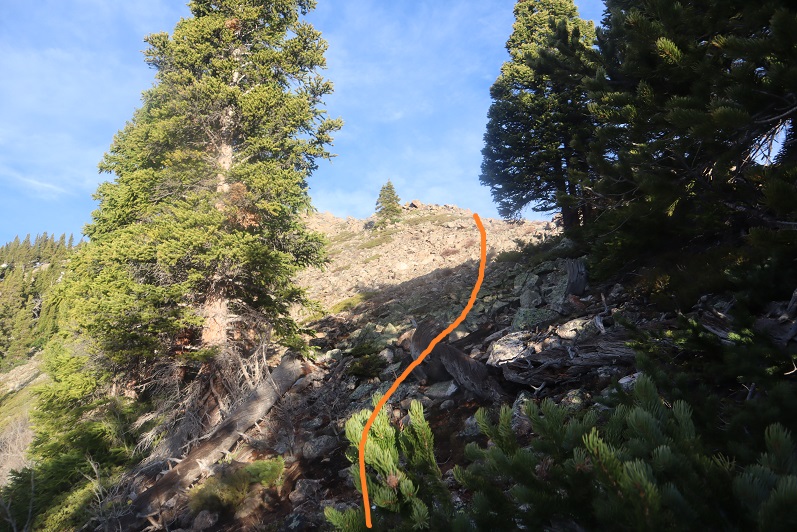
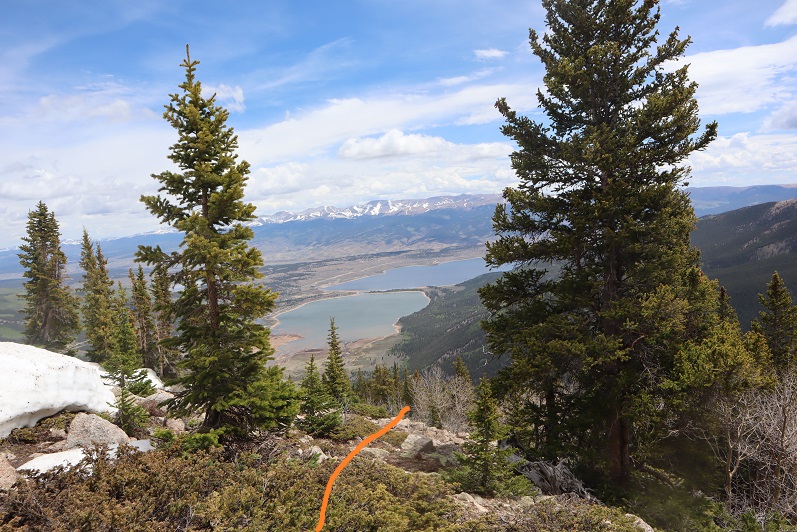
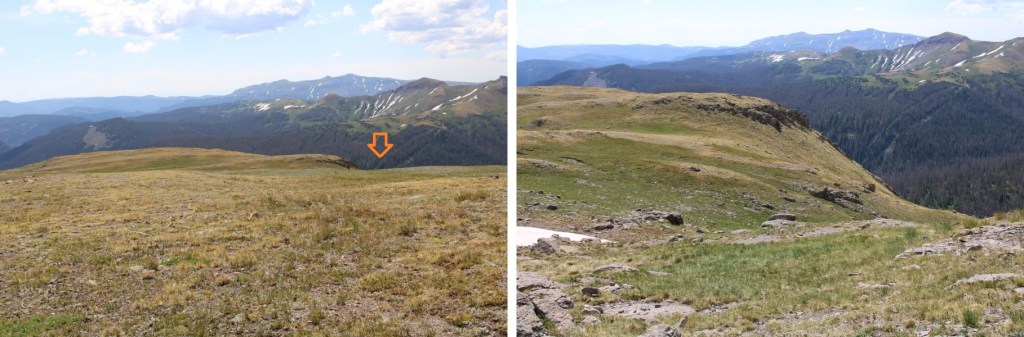
At 11400’ the trail fizzled out, but the route was obvious.  I was headed southwest, following the ridge to treeline.
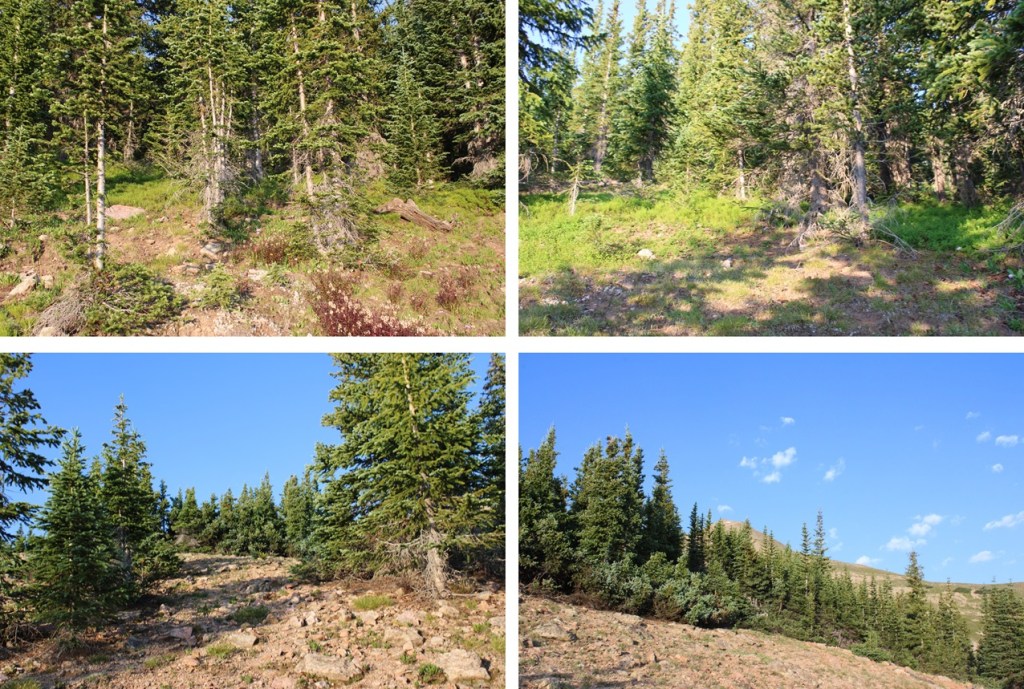
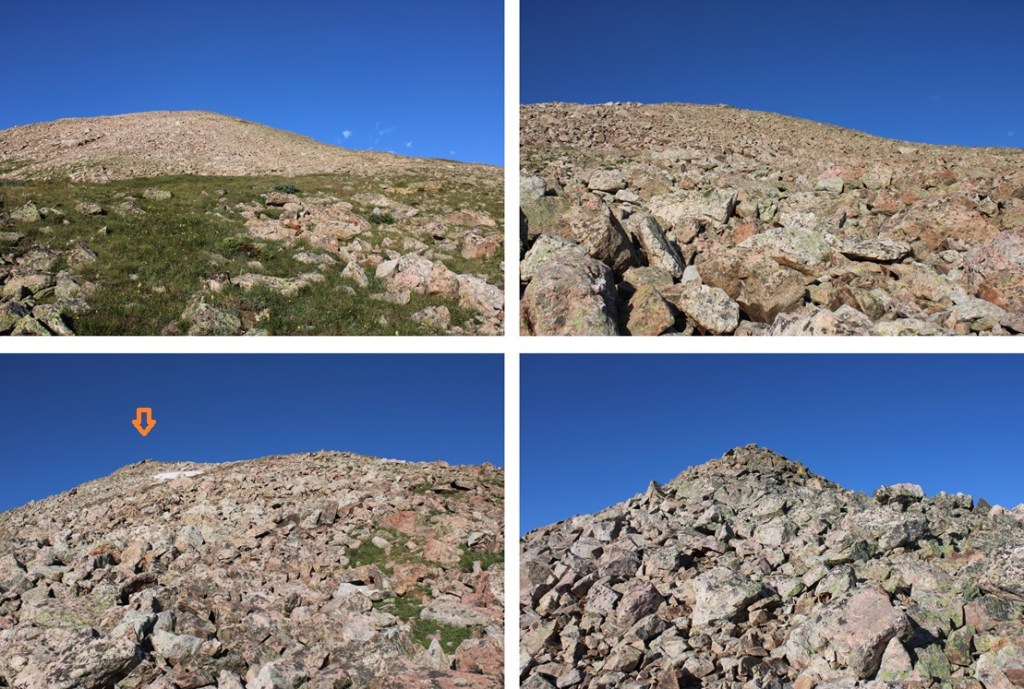
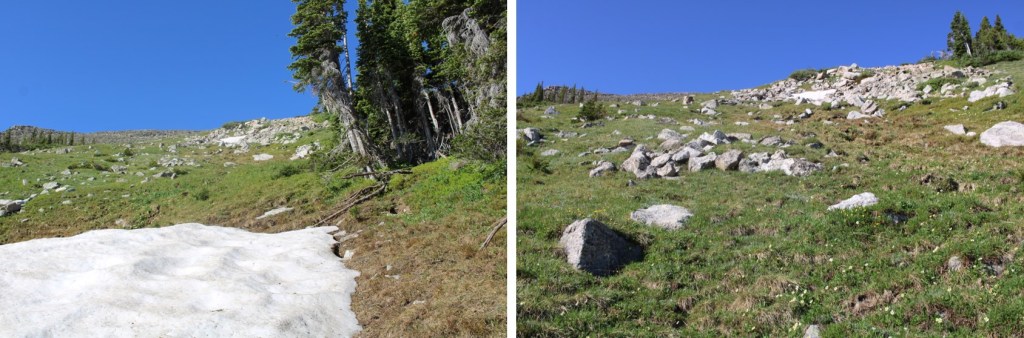
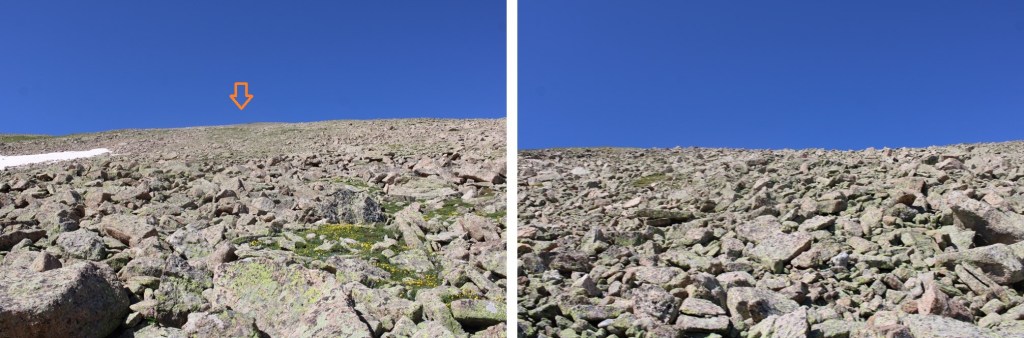
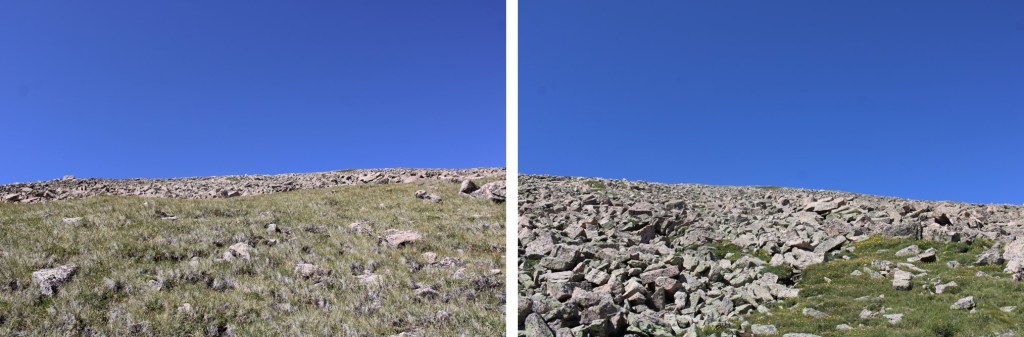
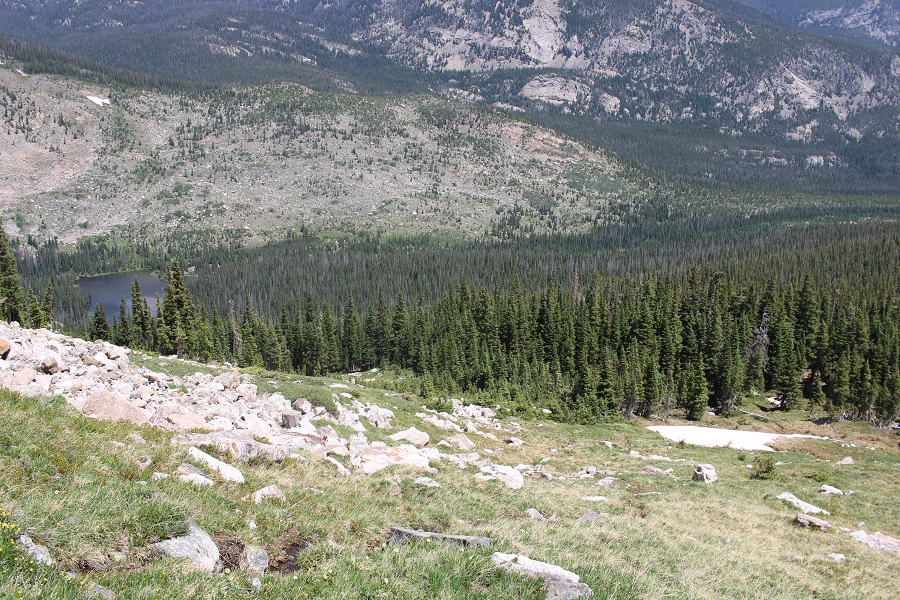
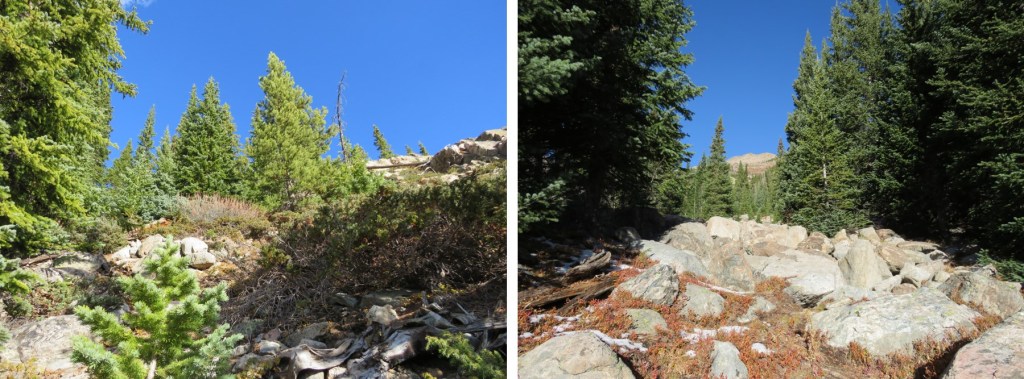
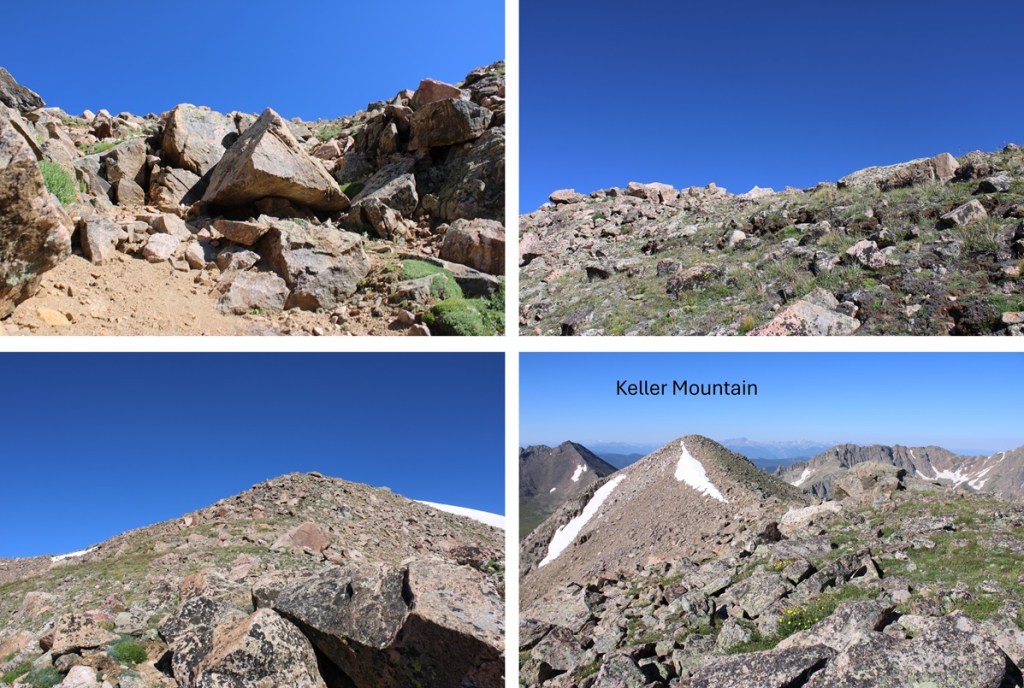
At treeline my next goal was to ascend the tundra and then rocky slope, still headed southwest.  The rocks here were solid, and easy to navigate.  I just kept following the rocky, class 2 ridge.
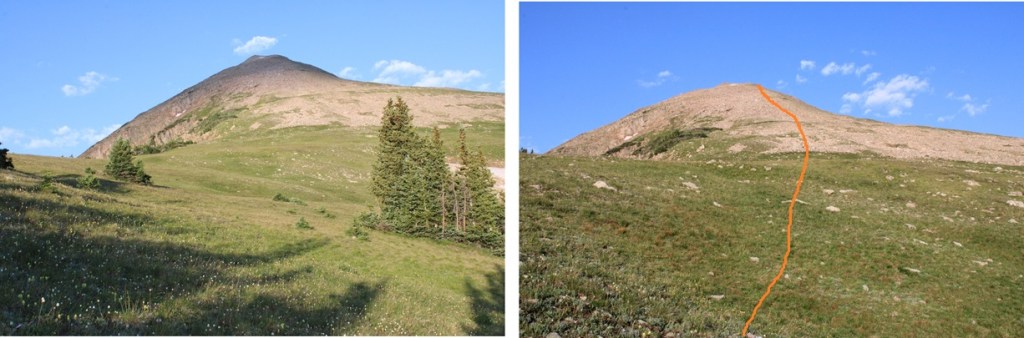
 

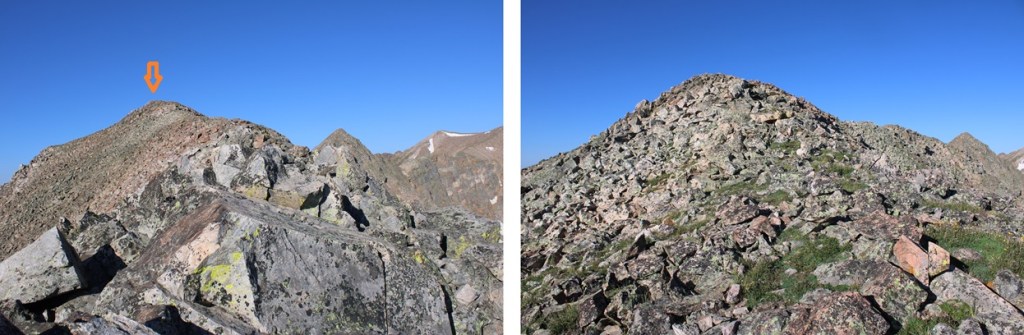
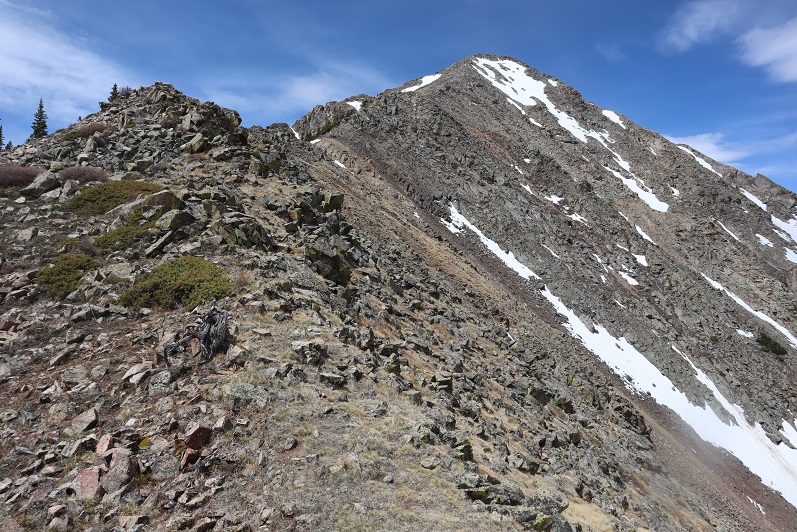
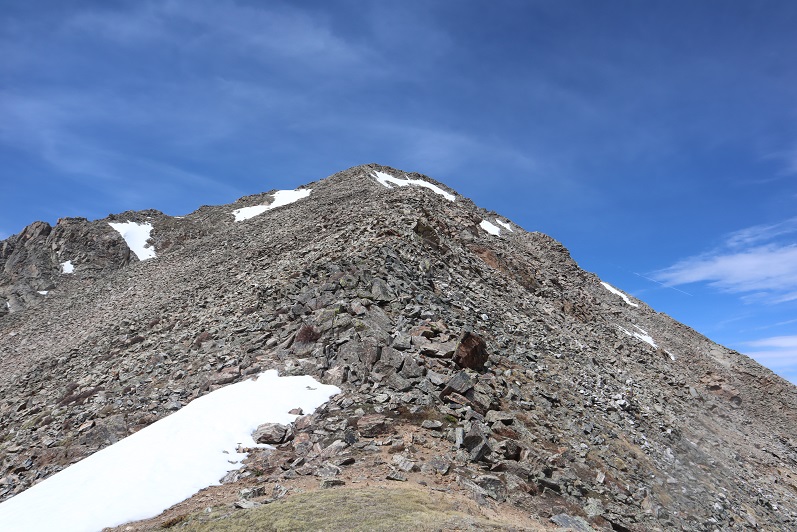
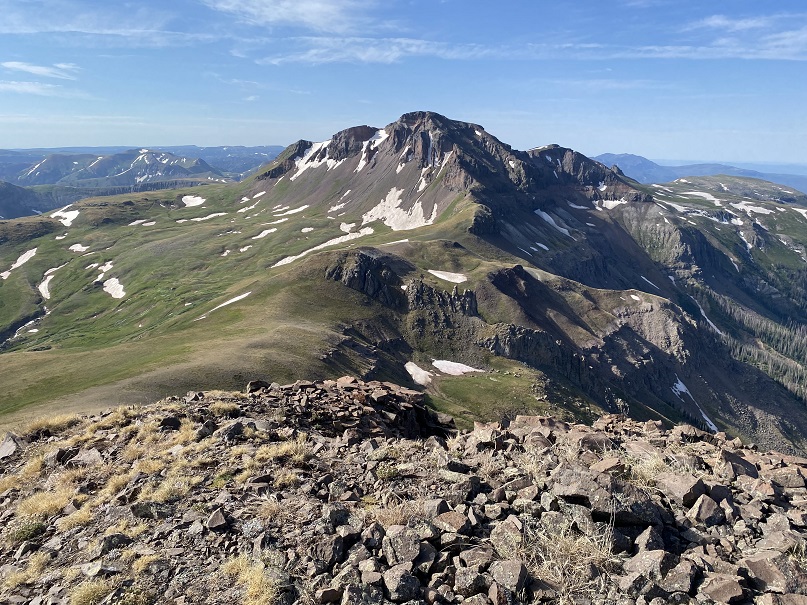
If you get here and think “Wow!  That was almost too easy!” it’s time to strap on your helmet, because you’re only at PT 12847, and the rest of the route is about to get class 3.  Here is the real summit of Keller Mountain, a mile off in the distance and a fun ridge to get there.
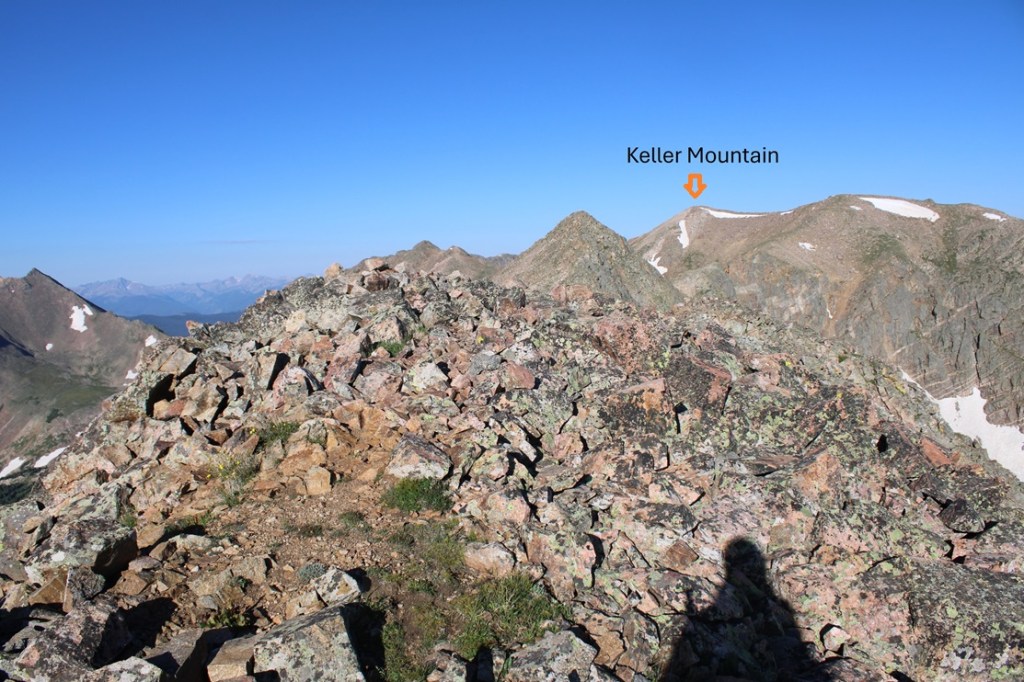
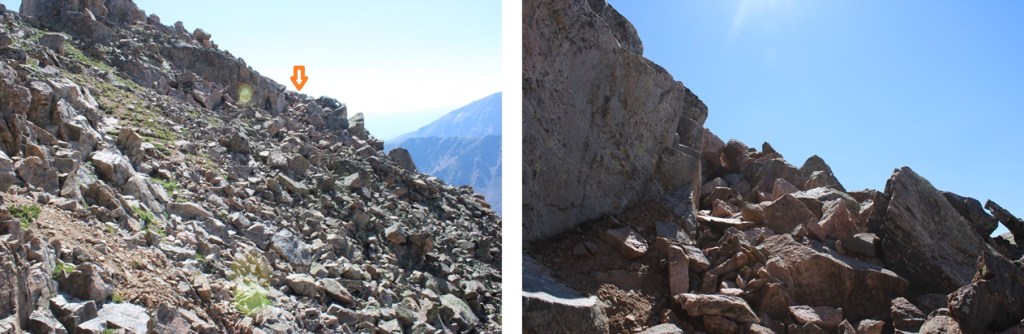
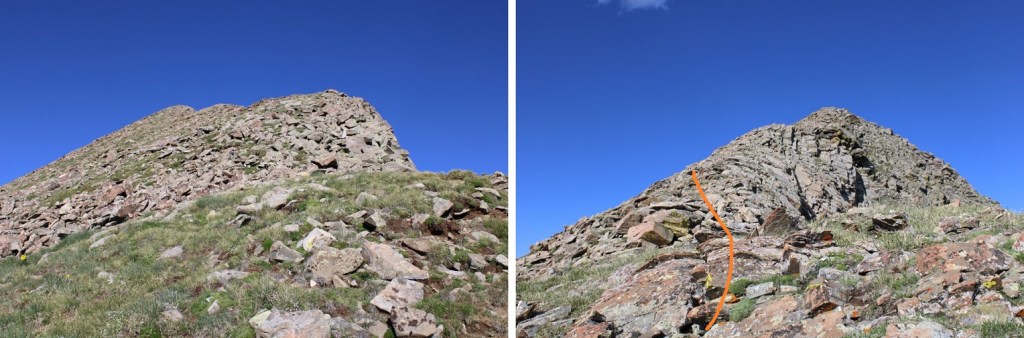
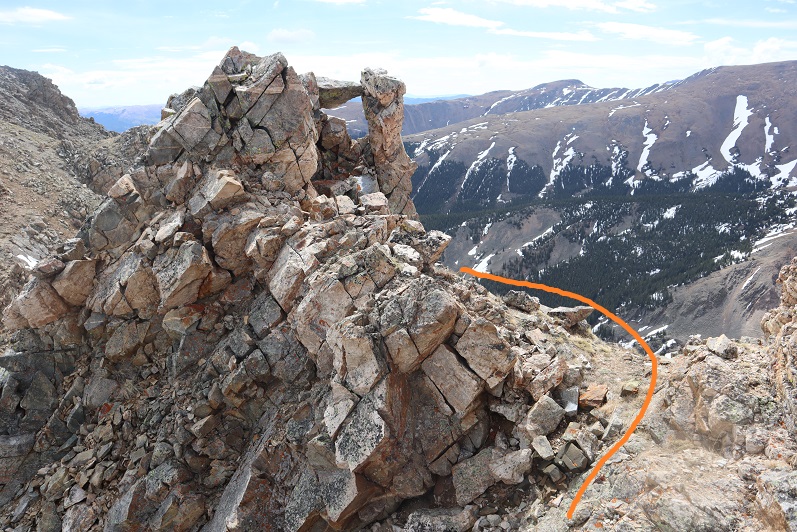
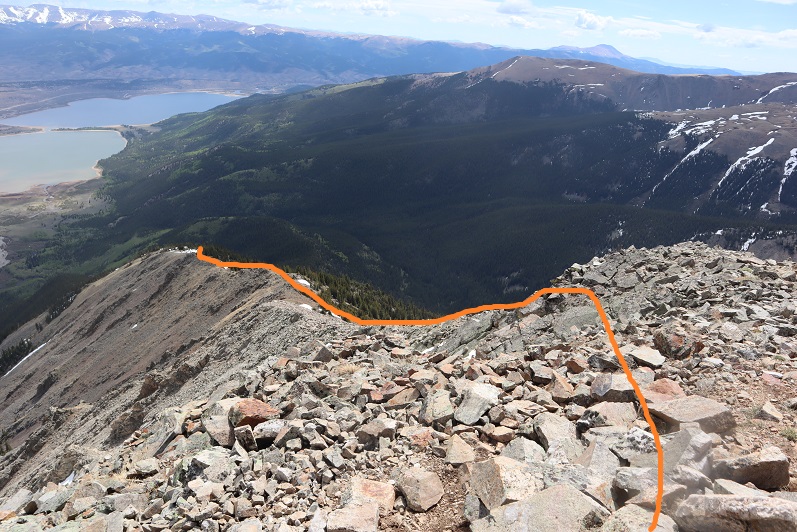
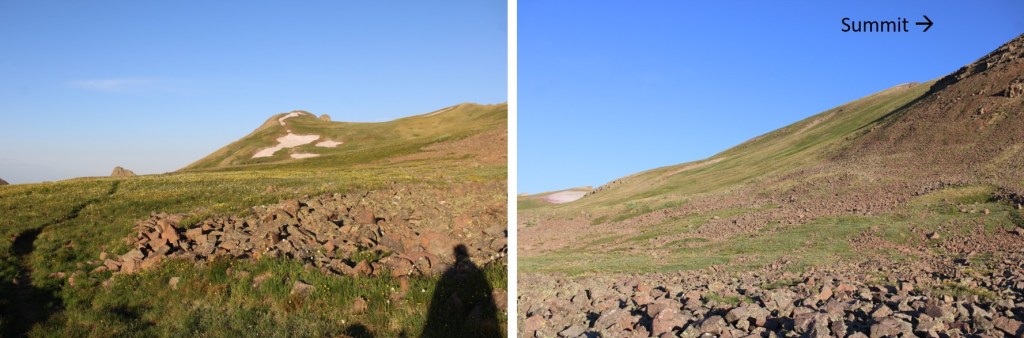
First, I had to get around this point.  Going up is straightforward, and I stuck to the ridge.  Going down, however, was a bit more challenging in the route-finding department. You can go directly up and over this class 3 ridge, or descend to 12750’ and keep this section class 2 by skirting the ridge.
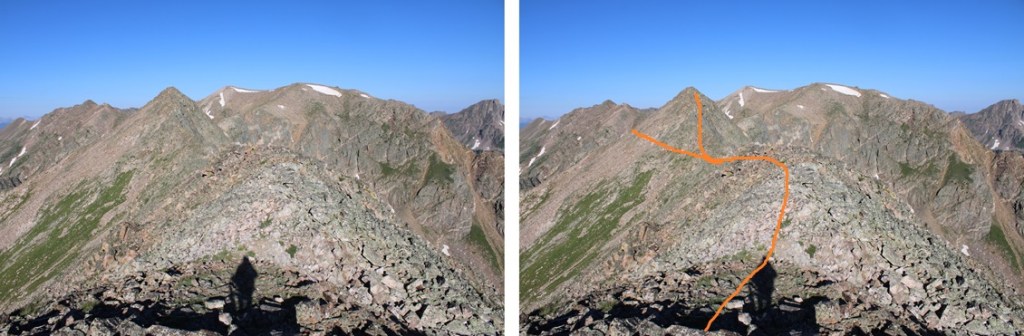
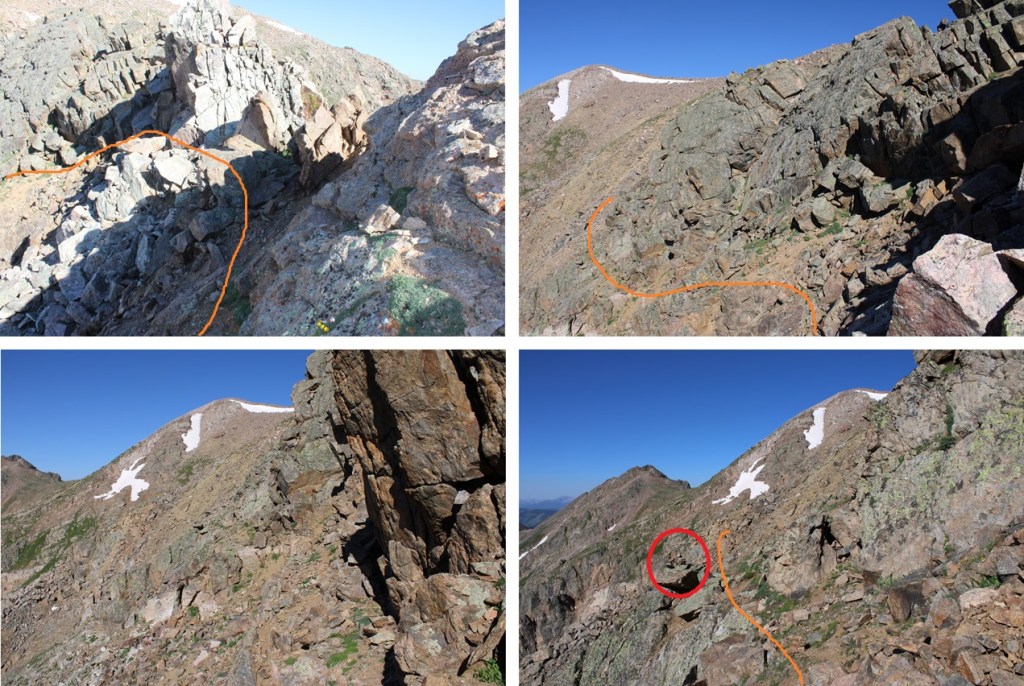
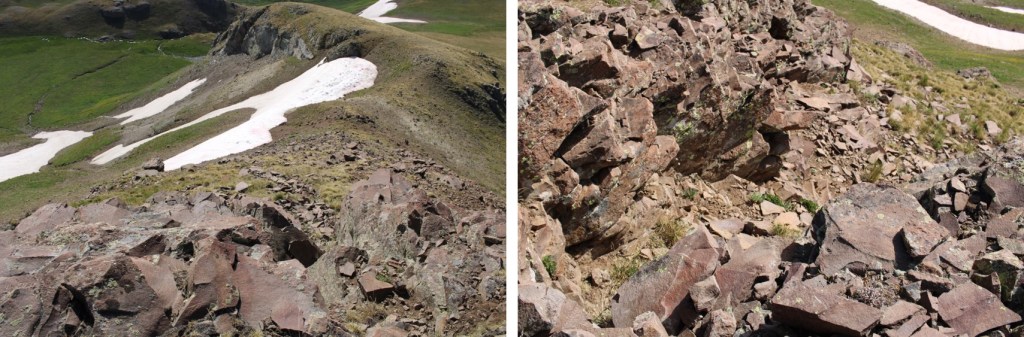
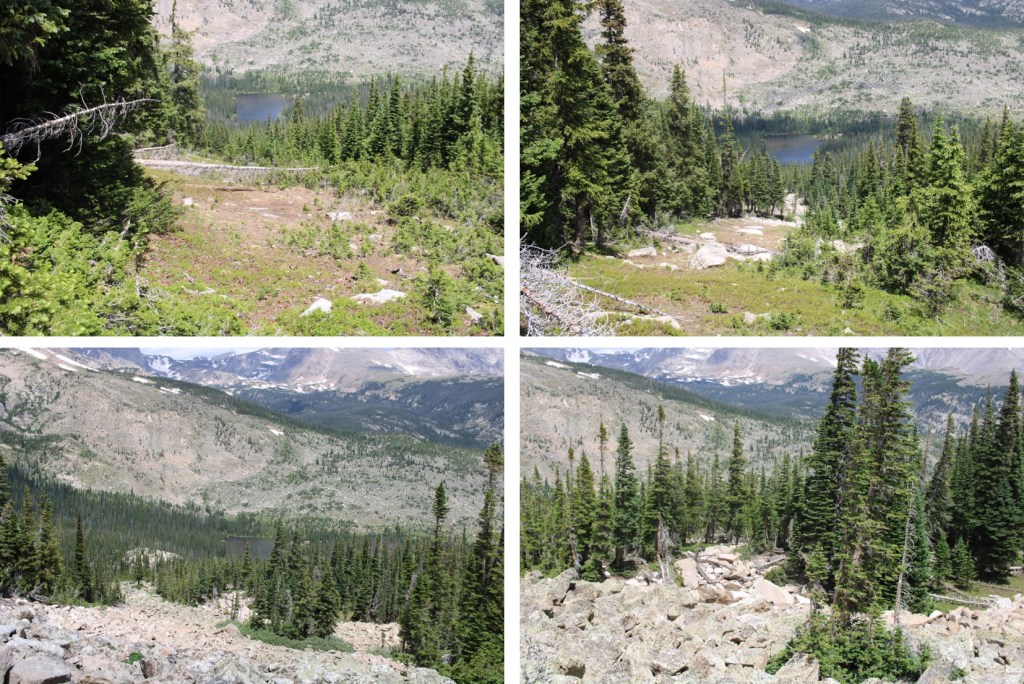
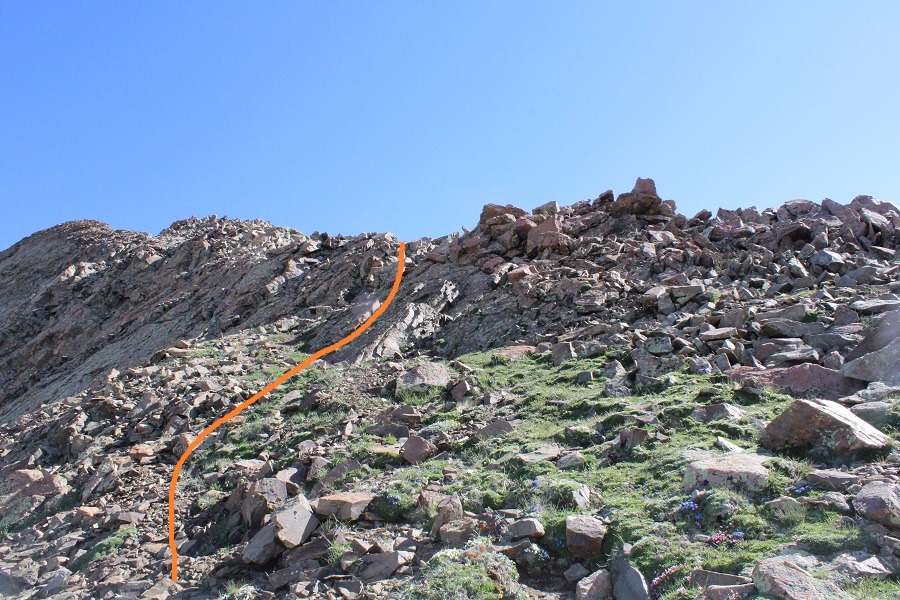
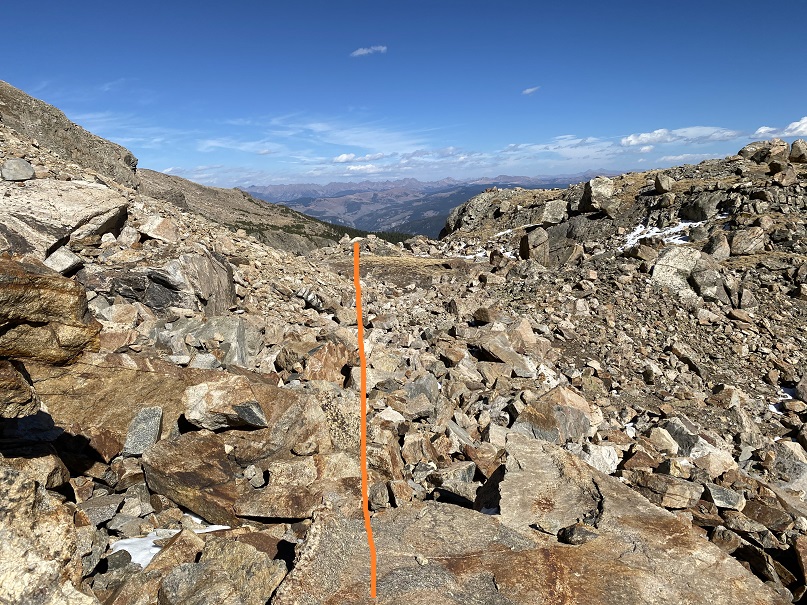
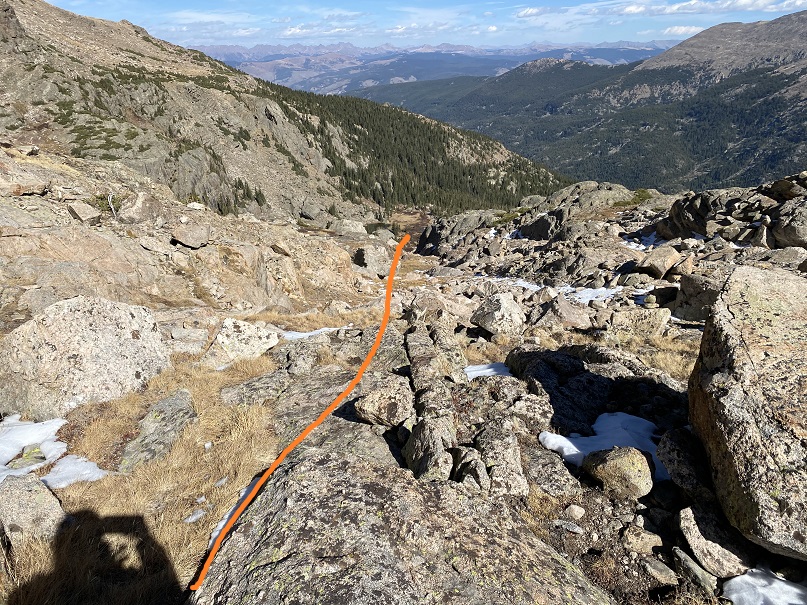
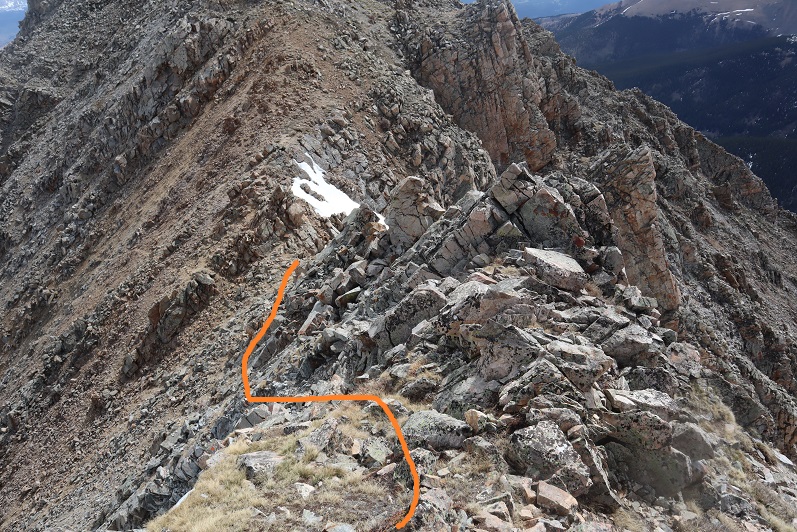
I took the ridge on my ascent, and skirted it on my decent.  Here are some pictures of this ridge. At times I dipped down to the left (never to the right) to ascend on rocky tundra.
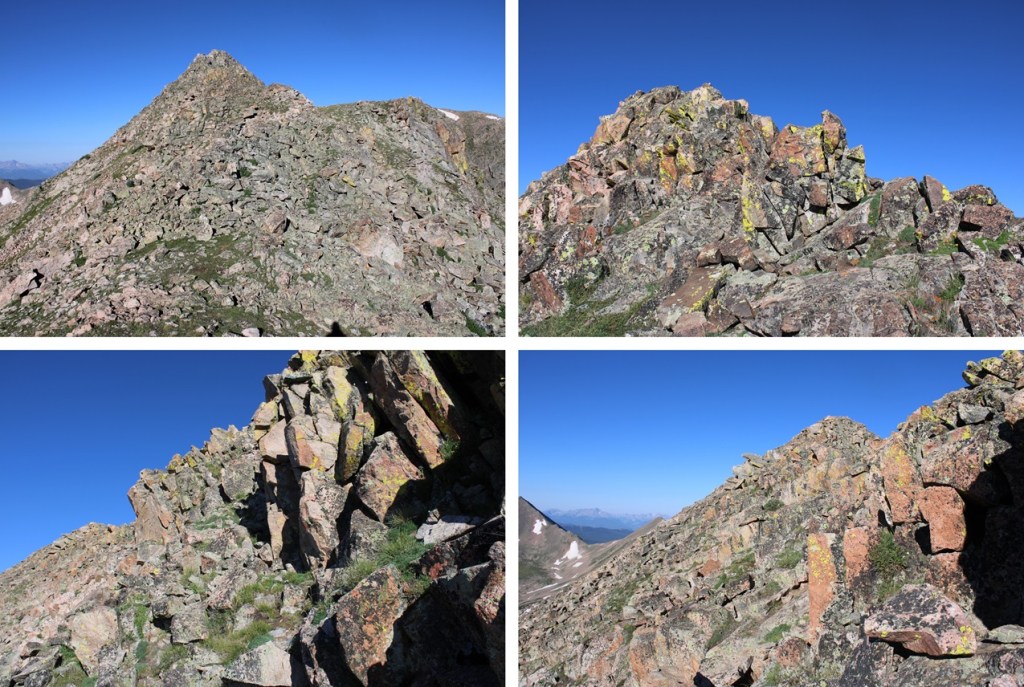
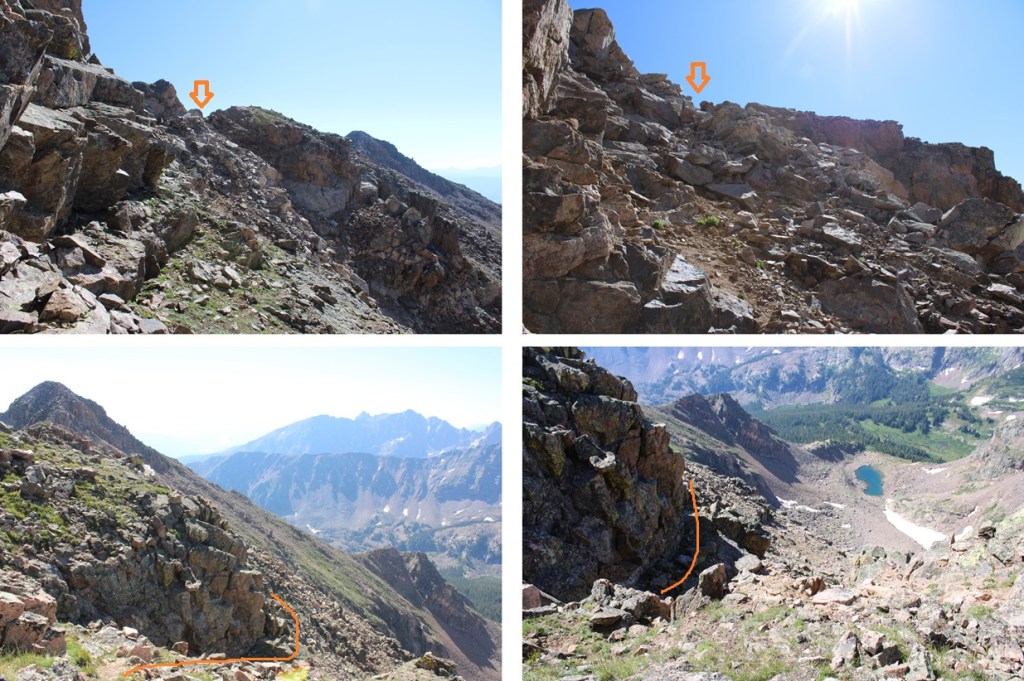
The descent off this ridge was a little more challenging, as there were gullies to navigate that had recent rockfall, and were unstable.  I stuck to the left side of the ridge all but in one obvious spot, where I dipped to the right and re-ascended to this small saddle.
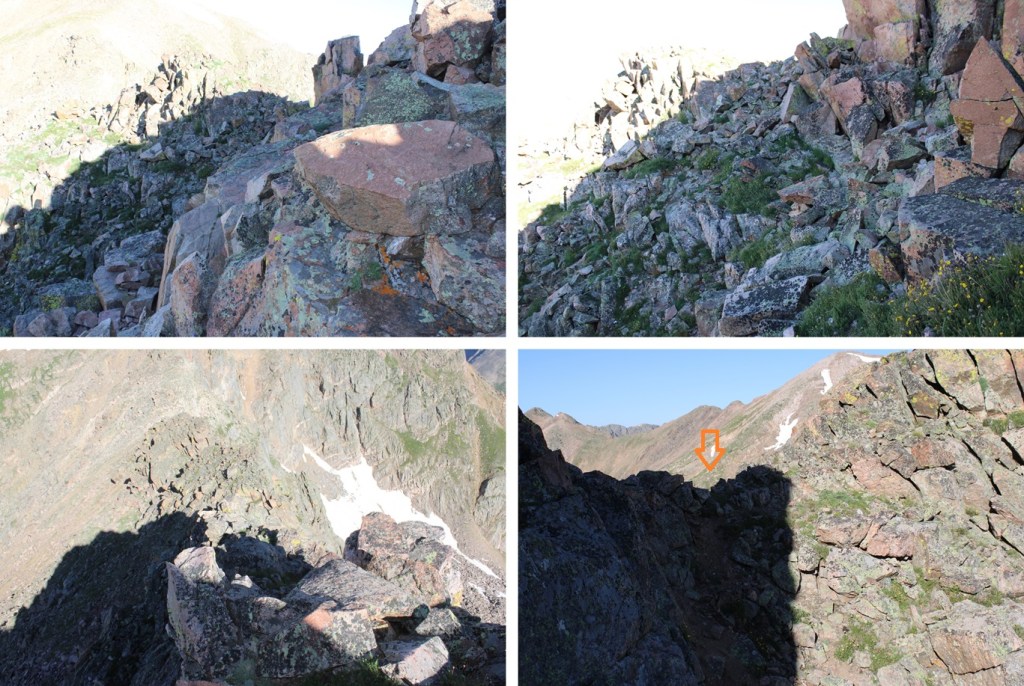
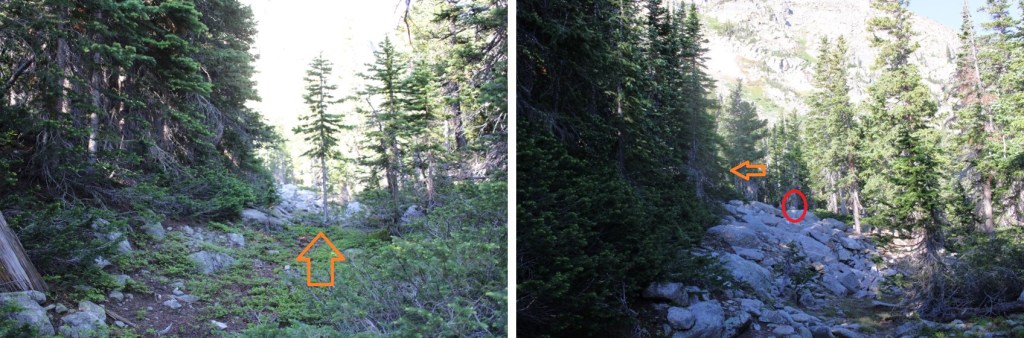
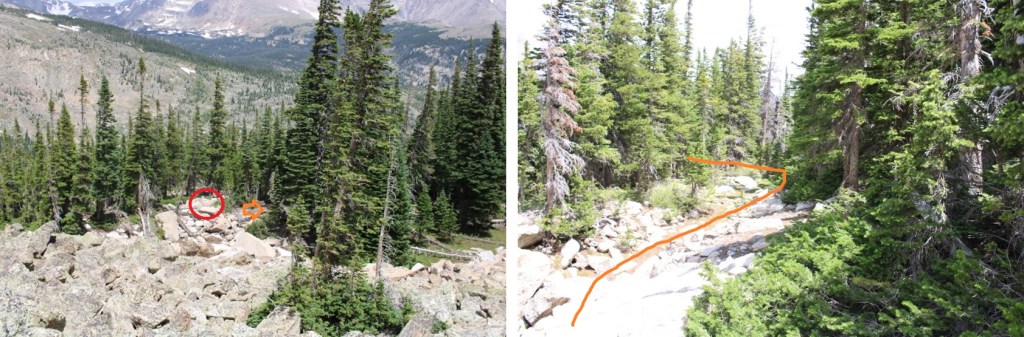
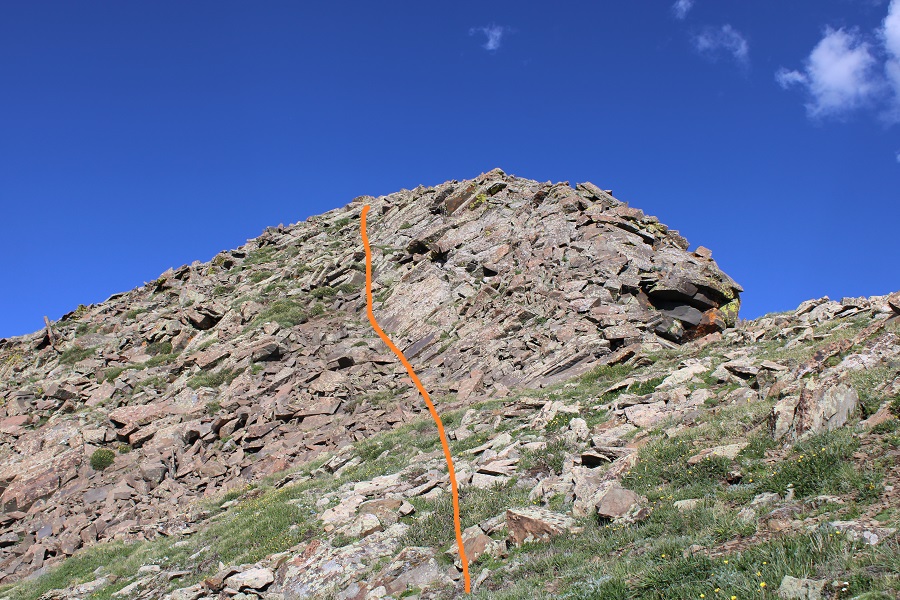
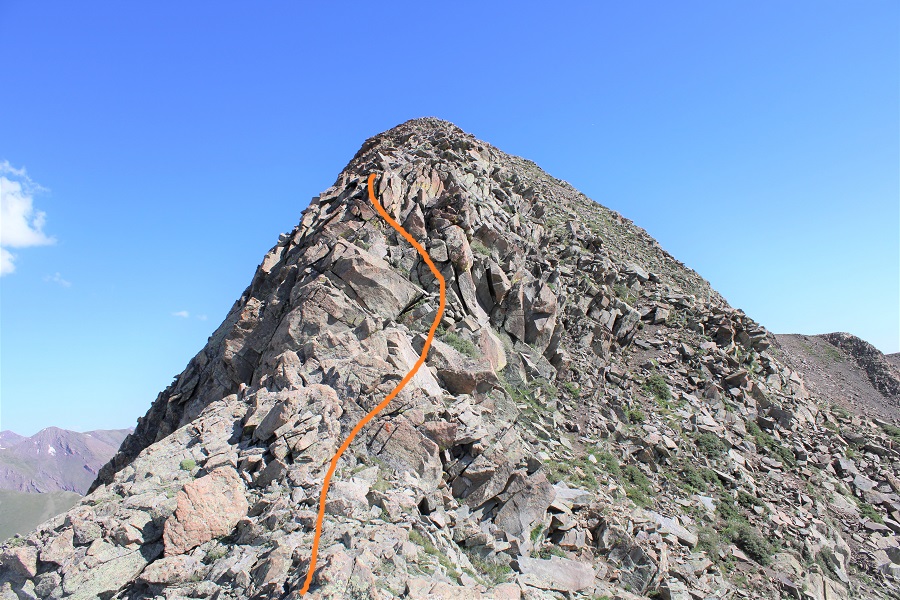
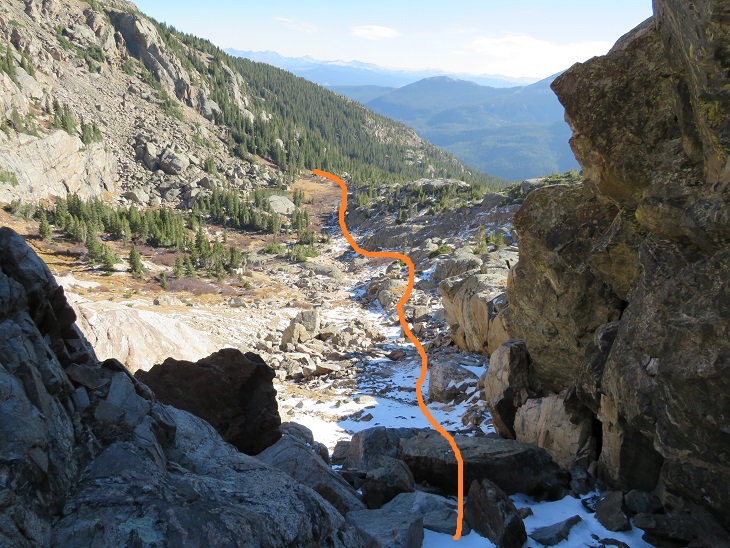
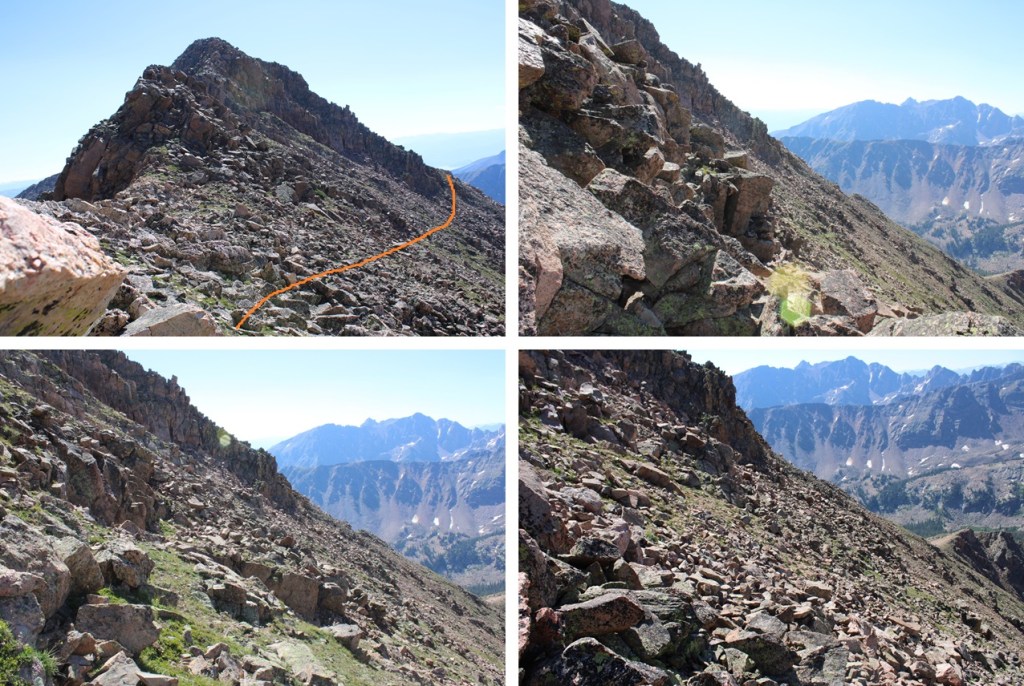
Now the real fun begins.  There are several more gullies to navigate, but luckily here, I found a few cairns.  Once again, I stayed to the left of the ridge.  I kept wanting to head back to the ridge, but found the gullies and large rock outcroppings kept keeping me about 50 feet below the ridge proper, so every time I’d make it to the ridge, another gully or rock outcropping would pop up and I’d have to descend again.  Here are some pictures of my route along the ridge (red circles are cairns).

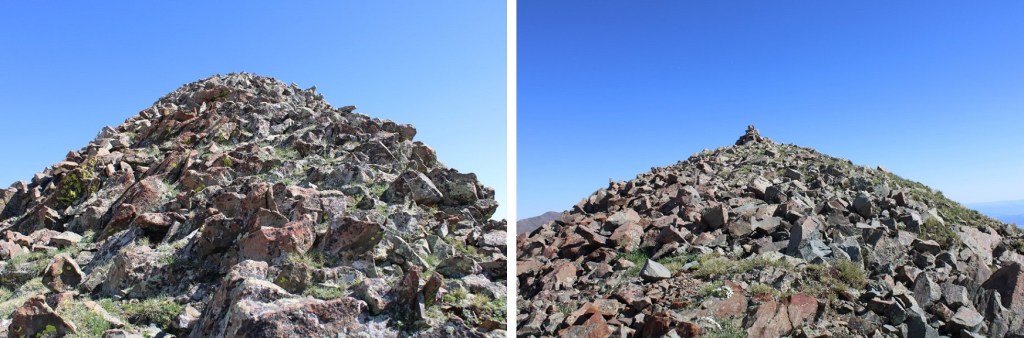
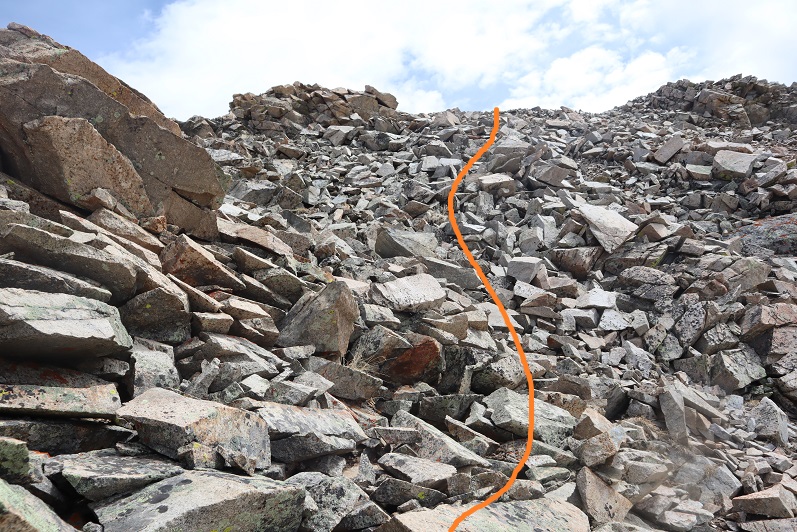
Here’s a picture of the final gully, the only one filled with scree.  You’ll see a cairn off in the distance here on the tundra ahead of you on the hillside, but don’t aim for it (circled in red).  Go around the rock outcropping and ascend the gully instead.  It keeps you from some sketchy stuff below. 
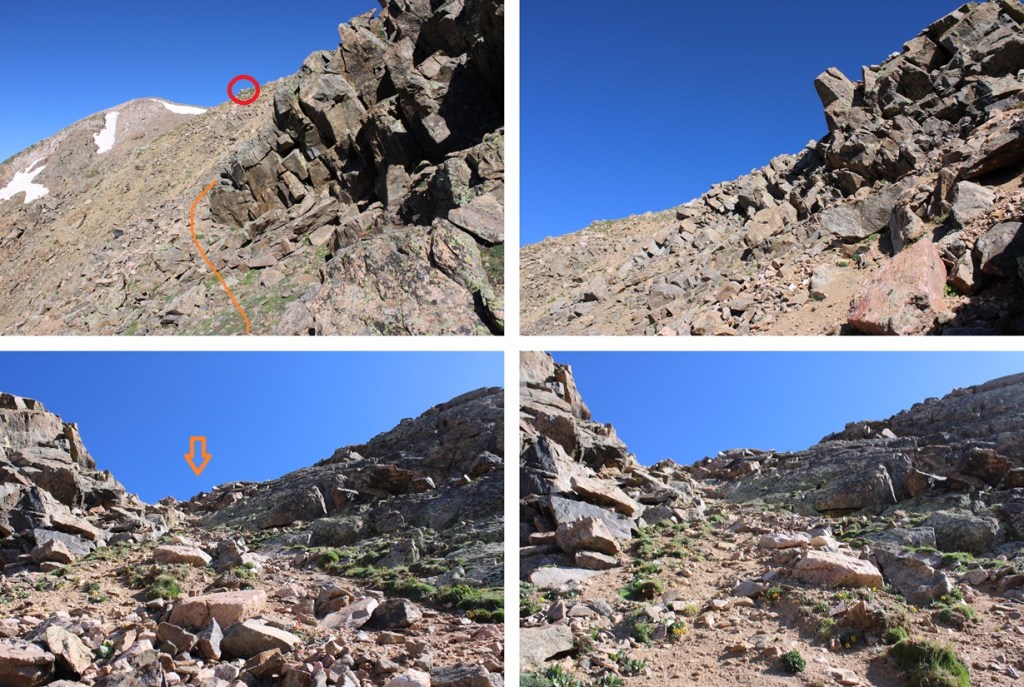
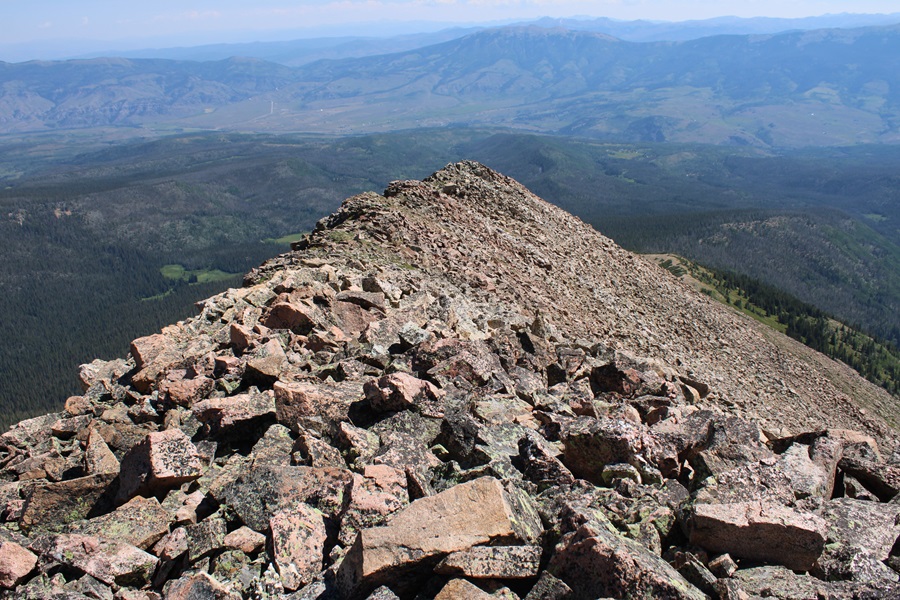
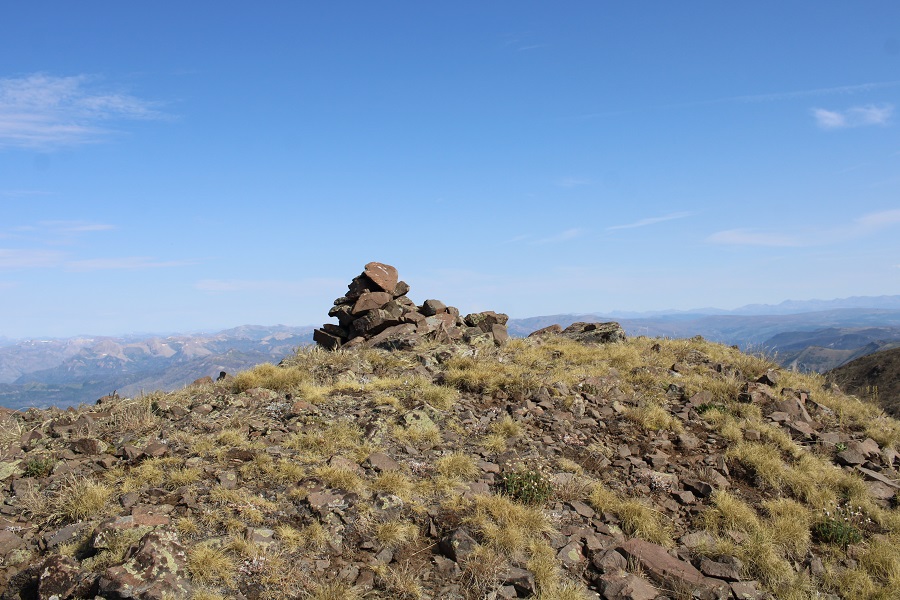
At the top of this last gully I turned left, and followed the ridge west, and then southwest to the summit of Keller Mountain.  This part was all class 2.  There was no summit cairn, but there was a summit register here
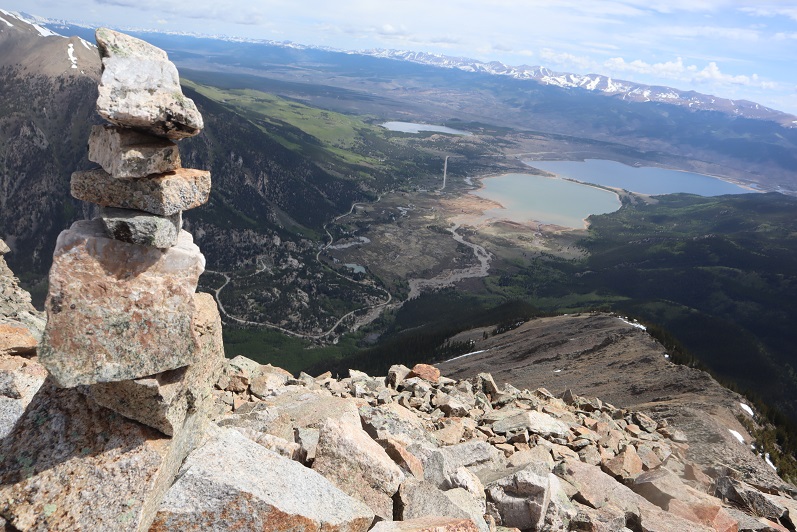
I summited Keller Mountain at 9:15am
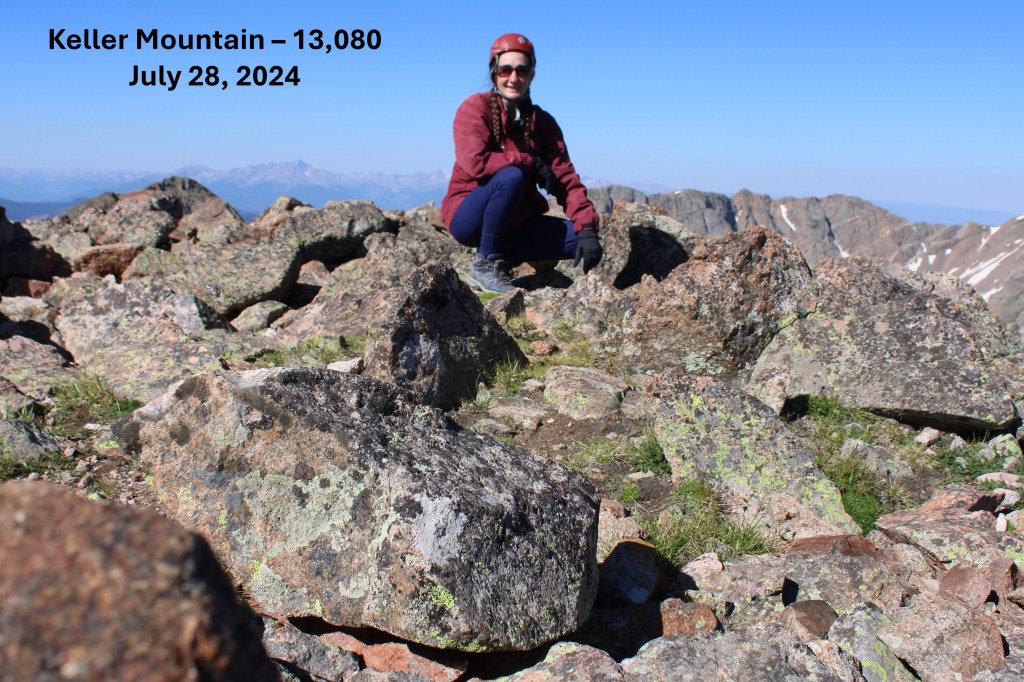
Keller Mountain:

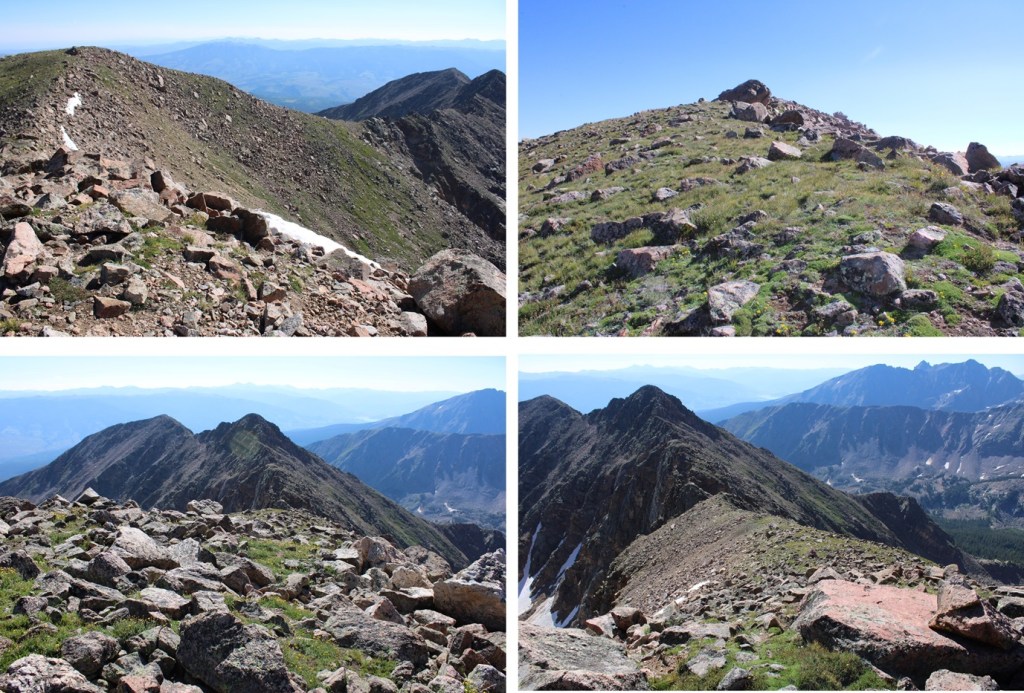
Here’s a look back at that ridge, and the route I took to get to the summit.  Notice how you don’t want to dip too low on the ridge, due to the chasm below.

This was an out and back hike for me, so I headed back to the false summit, and descended the ridge back to the gullies
By now I’d had enough of this fun ridge route finding and decided to stay at 12750’ and skirt this part of the ridge, keeping the rest of the hike class 2.
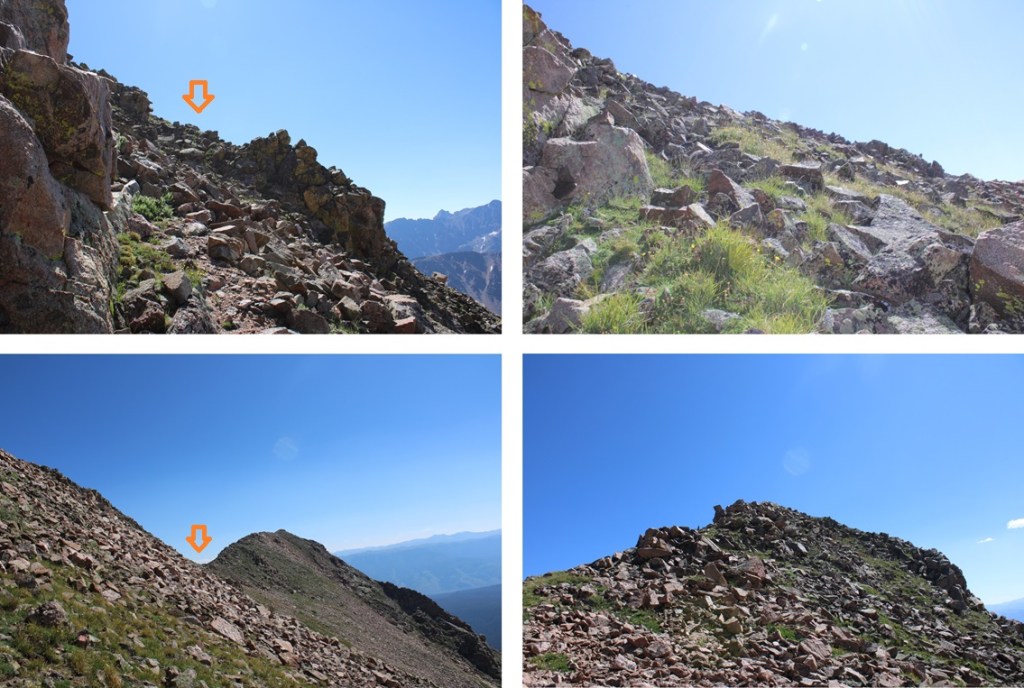
Back on the ridge, I followed it to the top of PT 12847

And then back down to treeline

Once at treeline, I followed the ridge northeast until I came back to the game trail, then followed the game trail to 10900’
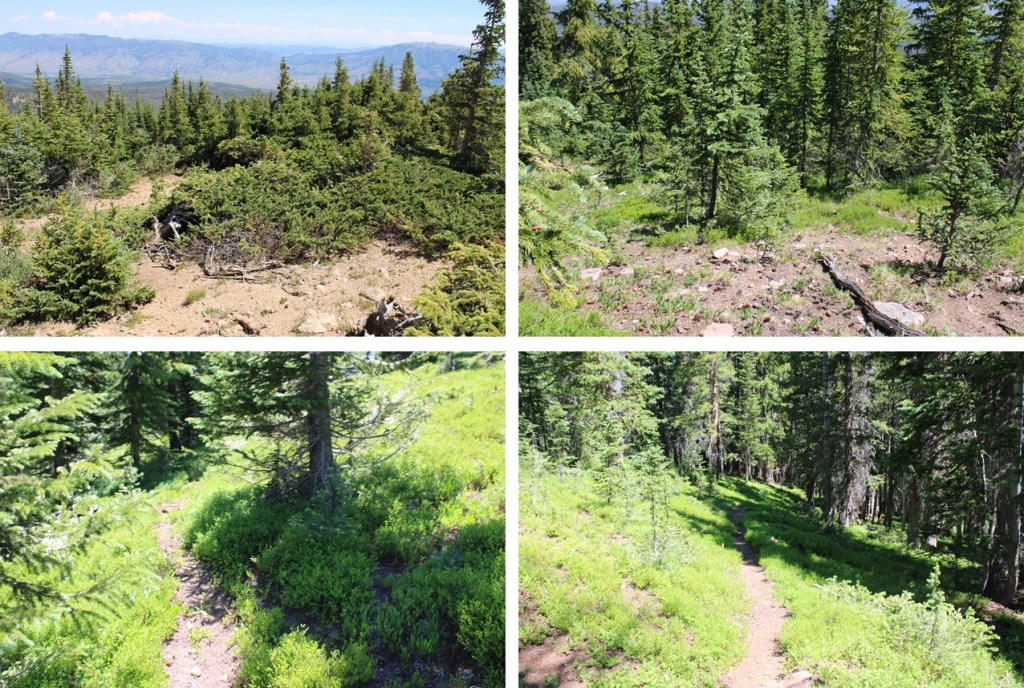
At 10900’ I turned and headed southeast down the hillside, aiming for the North Rock Trail No 46 I knew would be below, bushwhacking through grass taller than I was and tons of downed trees. 

Back on the trail, I turned left and followed it just over 2 miles east/northeast back to the trailhead.
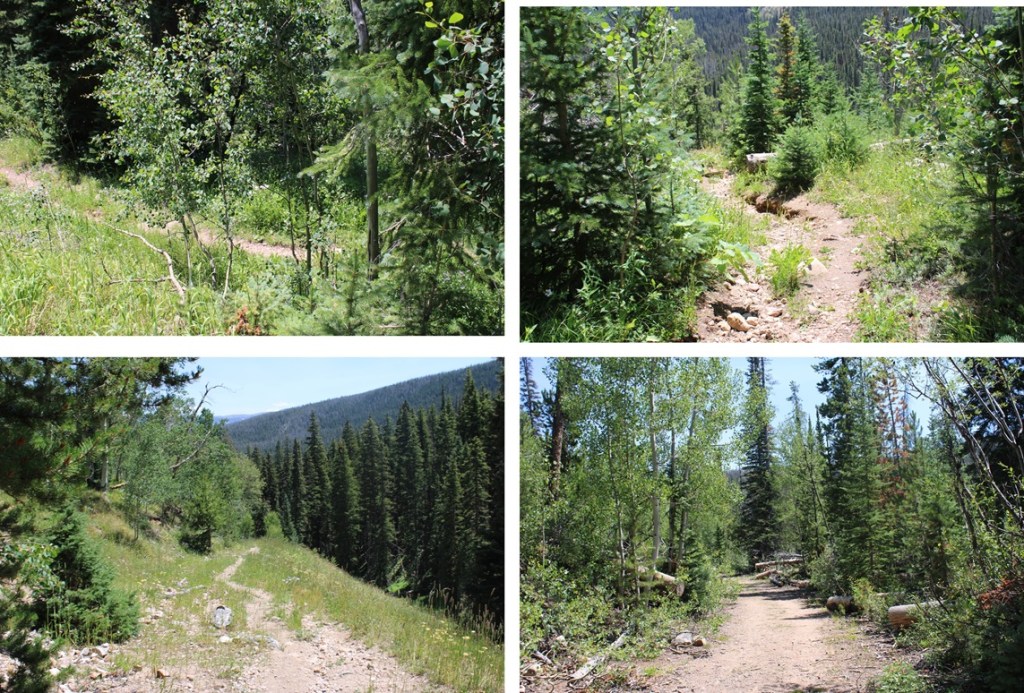
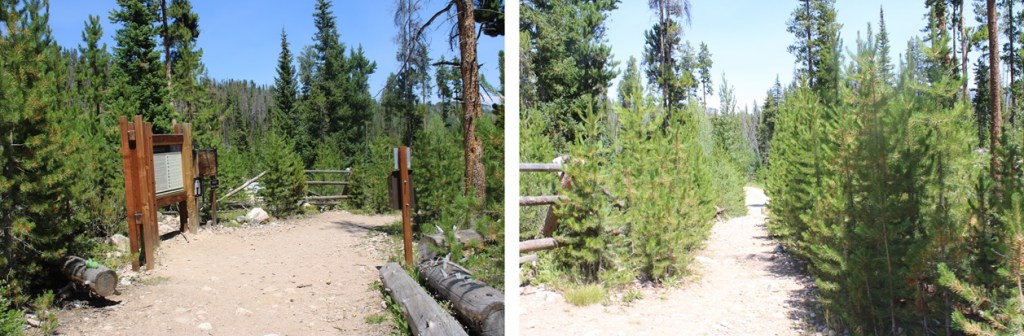
I made it back to the trailhead at 12:30pm, making this an 11.89 mile hike with 4086’ of elevation gain in 7 hours.
On to the next trailhead!
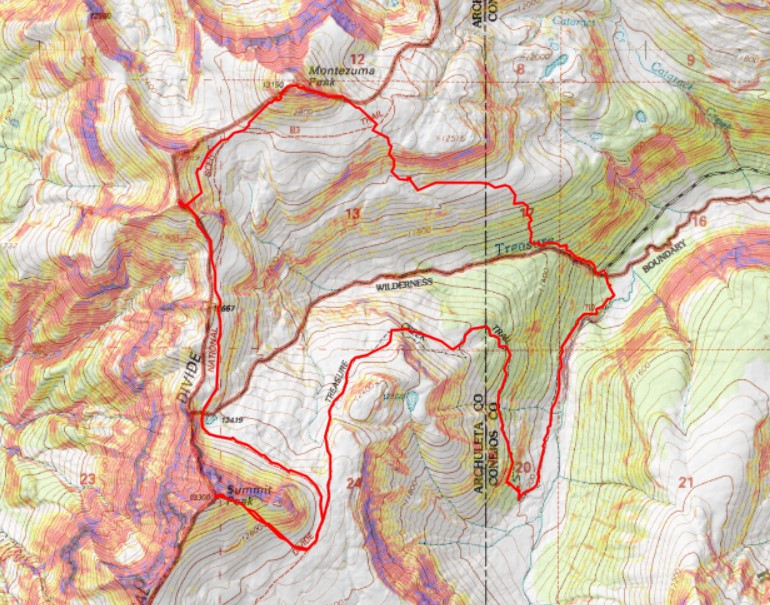
Summit Peak – 13,304, The Unicorn – 13,030, Montezuma Peak – 13,158

RT Length:  10.18 miles

Elevation Gain: 3534’

I parked the night before at the Summit Peak Trailhead and had the whole place to myself until I left the next day. 

The 2WD dirt road in is in good condition, with plenty of areas to pass other vehicles.  I got plenty of sleep, and was on the trail at 5am the next morning. I figured this trail would be easier to take clockwise, as in the dark it would start on an actual trail.  This was good thinking, but the ‘trail’ was more of a game trail that I lost and found repeatedly.  After the hike was over, I concluded this would still be the better way to go, and you’ll see why later. The trail starts at the south end of the parking area, immediately crossing a bridge over Treasure Creek and following Treasure Creek Trail 710.

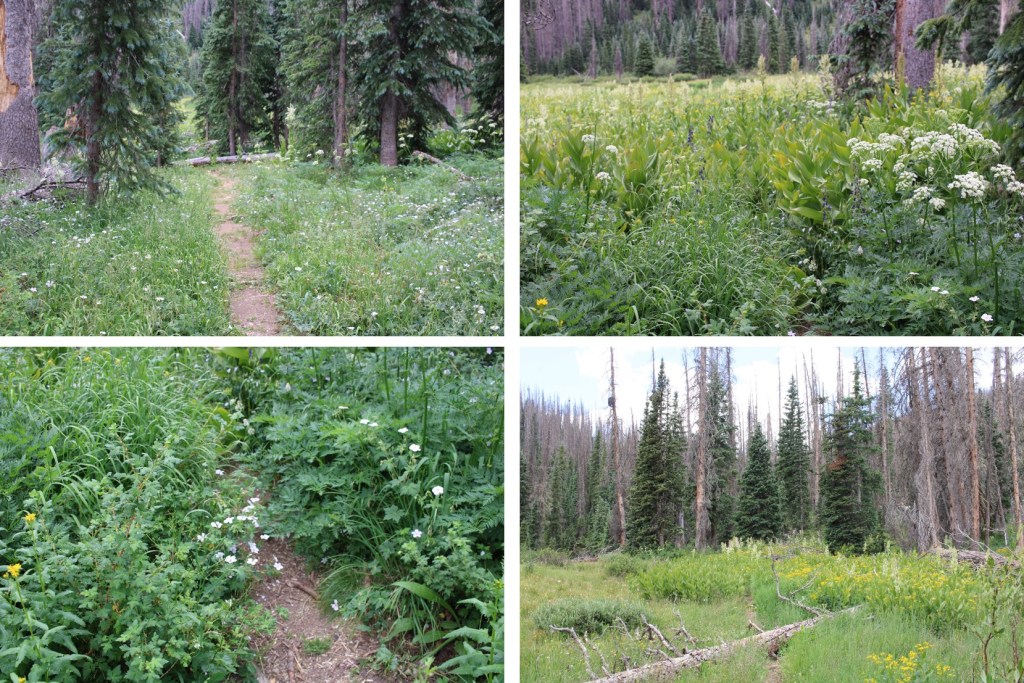
The trail quickly went through a flower filled meadow, and then headed south, through an open gate and open meadow.  Here the trail was easy to follow, even in the dark.

After hiking for 1.3 miles, I came to a cairn, turned right, and headed north up what was supposed to be Treasure Creek Trail.  It was a faint trail for a bit, but it was easy to lose. 

As I was hiking on this trail, I came across a rather fluffy ptarmigan.  In fact, I almost stepped on her, and would have if I’d already put my flashlight away.  I stopped for a second, and told her she could stay put and cover her babies if I could go around her.  As soon as I said this she exploded.  She jumped up into the air, and no less than 12 ptarmigan chicks cascaded out in all directions.  A feather bomb had gone off, and I felt bad for her.  A few seconds later I could hear her calling to the chicks, and watched them all make their way back to her.  Sorry mama, but nesting in the middle of a trail, even a small trail, is a bad idea. 

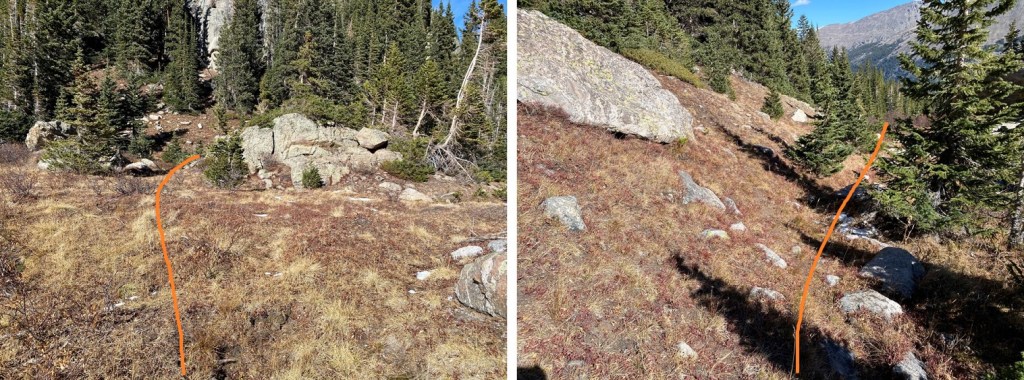
I continued through a faint trail that at times was a great trail, littered with flowers and pine trees

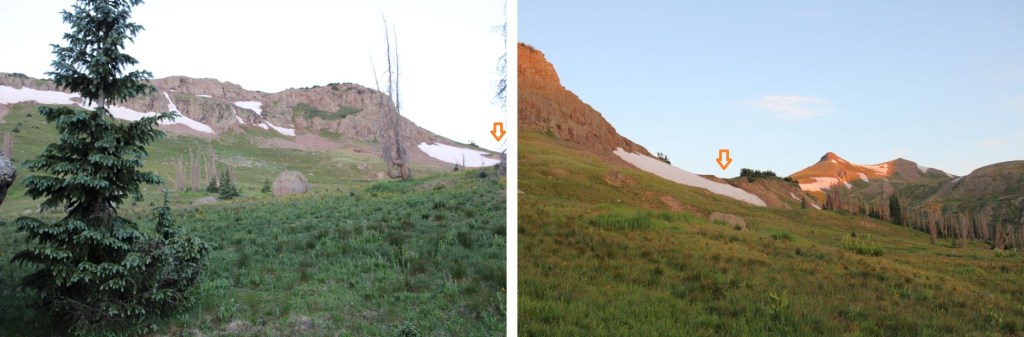
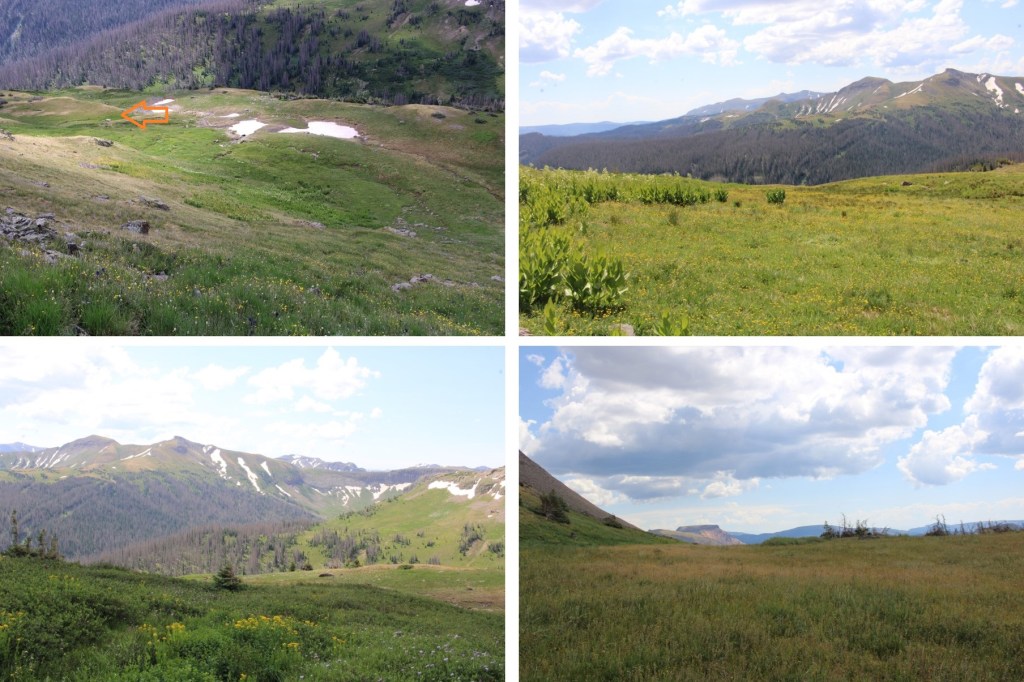
At 11600’ I turned left again, and headed west to treeline, still following a ‘trail’.  I was headed to the right. (Both arrows point to the same place)

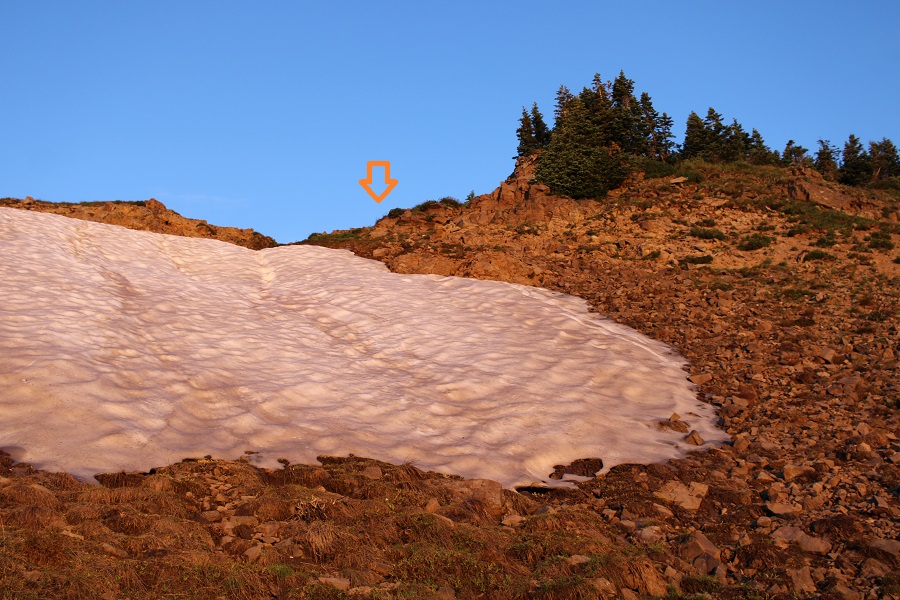
This was easy to ascend, and the snow avoidable

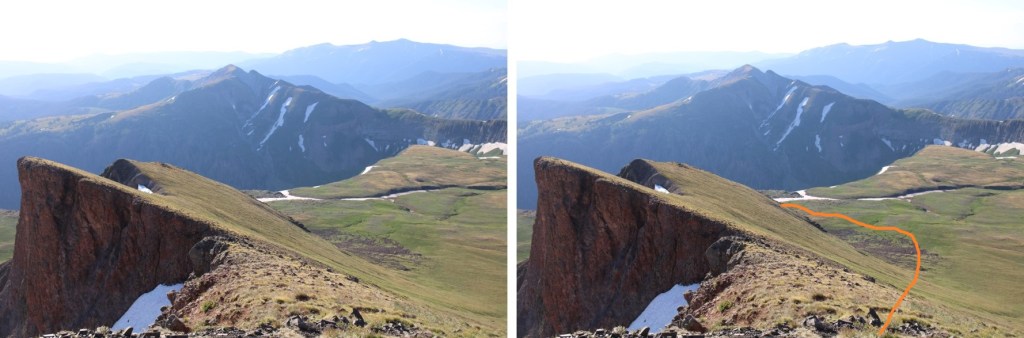
After ascending, a fairly decent trail led me south, towards the Continental Divide Trail, which skirted the south side of Summit Peak

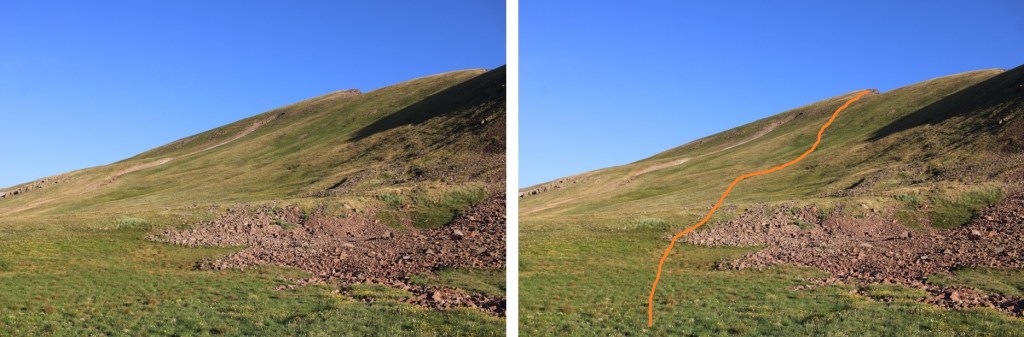
From here it was a steep tundra hike to the summit.  This is choose your own adventure, without many obstacles. This is the route I took.

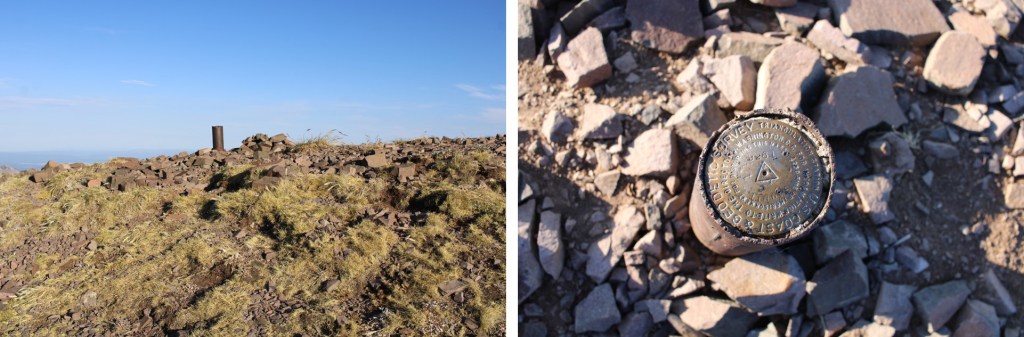
There was as summit marker at the top

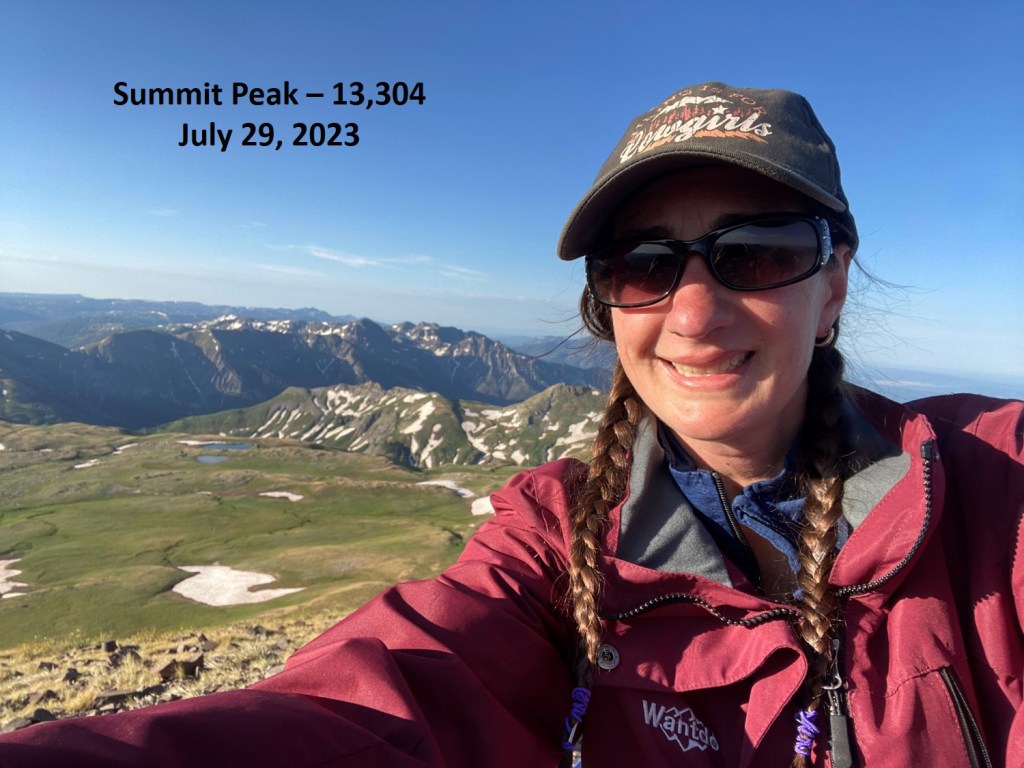
I summited Summit Peak at 7:30am

Summit Peak:

From the Summit I could see The Unicorn and Montezuma to the north

It was a beautiful day on the summit, and there was cell reception, so I spent some time there before turning around and heading back to the Continental Divide Trail.  The route back down was straightforward

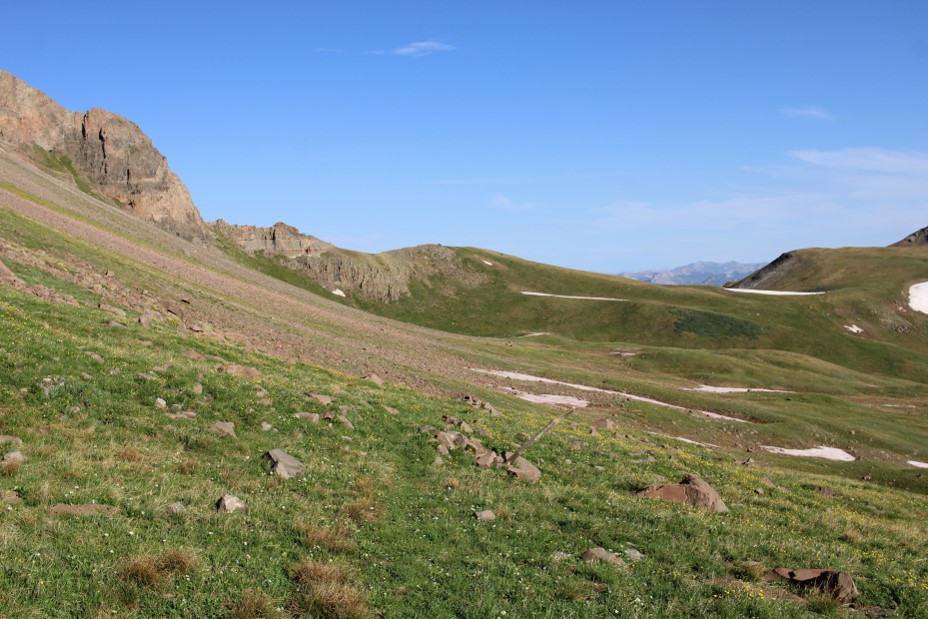
Back on the Continental Divide Trail, I followed it around the north side of Summit Peak.  There were trail markers to show the way, which was a good thing because the trail was faint

Here’s an overall look at the route to The Unicorn.  There was snow on the trail in places, and it was curious there wasn’t a trenched trail over the snow, considering this is the Continental Divide Trail, and I’m sure tons of others must have been through this area already this year.

And some step-by-step pictures. 

As I was doing this traverse, I could hear, but not see a herd of elk.  I wasn’t sure where they were in the basin, but they sure were being loud, so I figured there were a couple dozen of them.  Here I left the trail, and it became a class 2 hike, with just a short section (no more than 10 feet) of easy class 3 climbing up a sort of chimney.

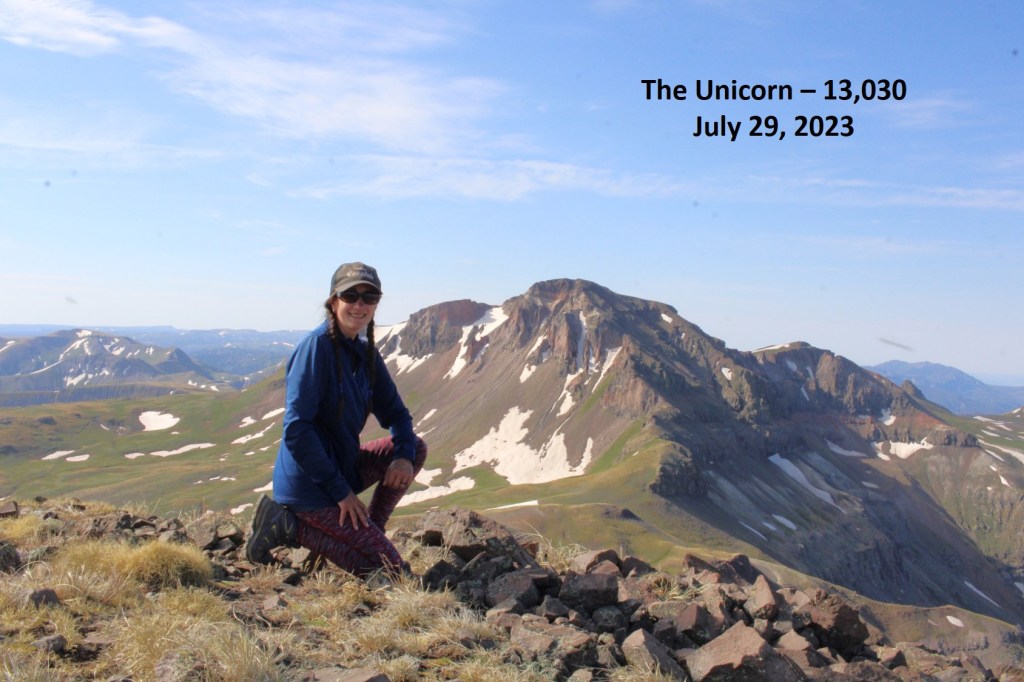
I summited The Unicorn at 9am

The Unicorn:

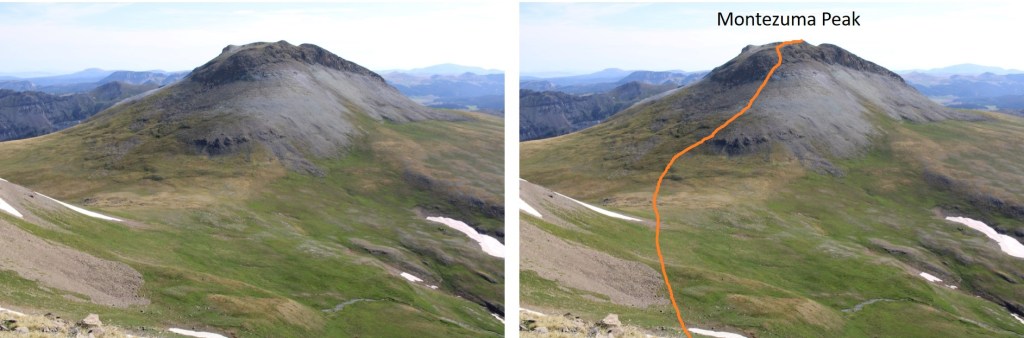
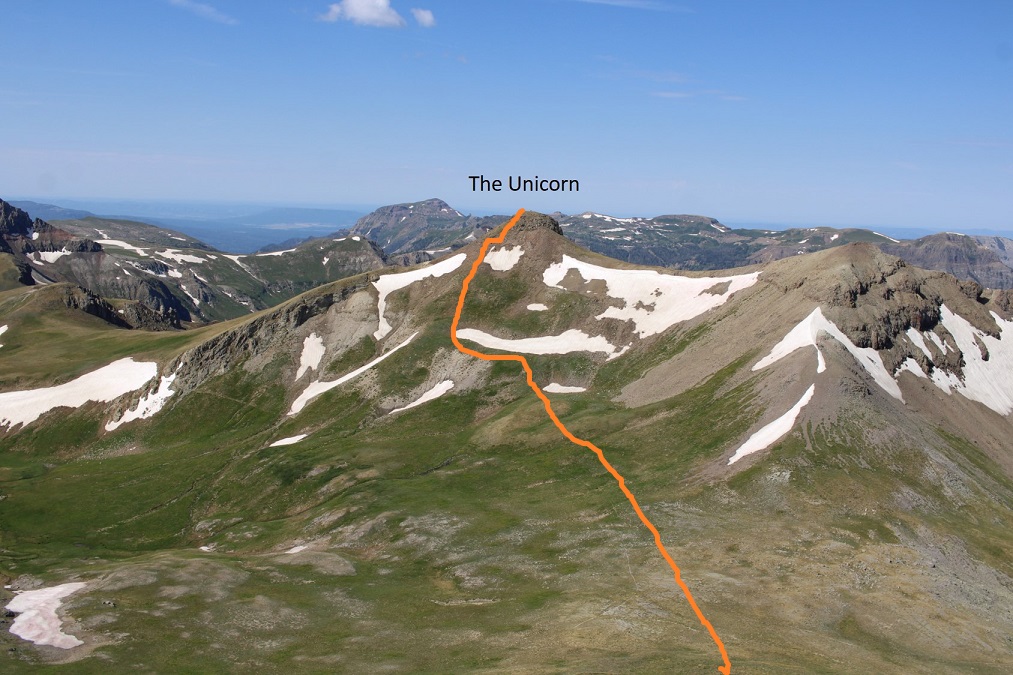
To the northeast I could see Montezuma Peak.  This was my overall route to get there.  It was all class 2, except for a brief period of class 2+ scree as I ascended the ridge.

This is also a good view of how I descended from Montezuma and made it back to the trailhead

I descended the short chimney

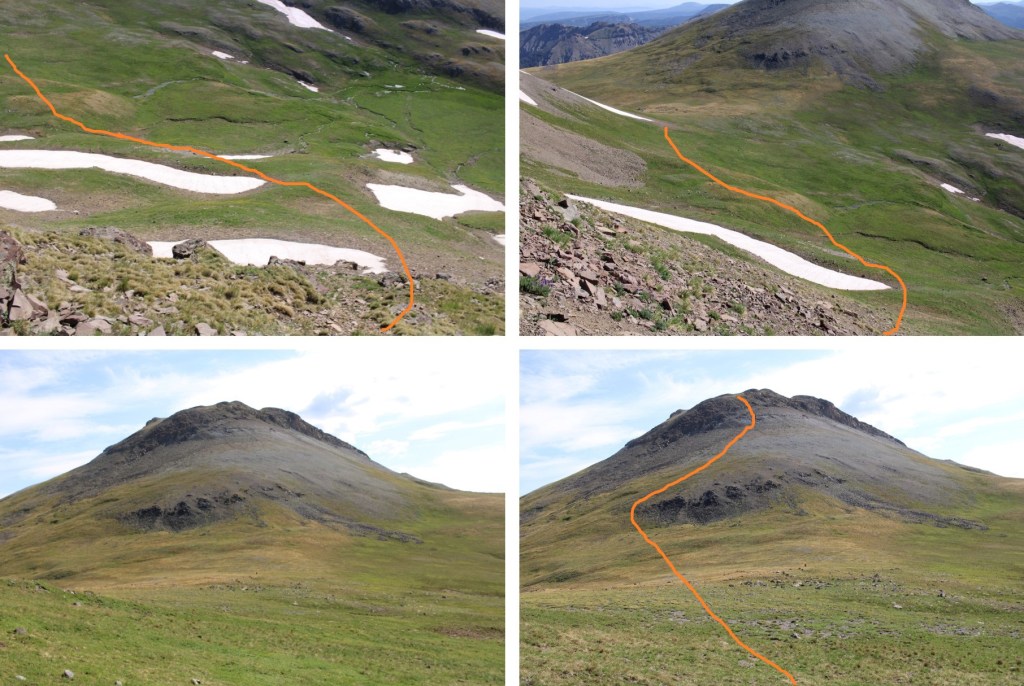
And then I headed northeast, towards Montezuma, being careful to avoid the snow fields in the way

And now to climb the west face of Montezuma.   It was steep, but mostly class 2 until just before gaining the ridge, where it was 2+, and choose your own adventure on the scree/talus.

After gaining the ridge I turned right, and headed east towards the summit of Montezuma

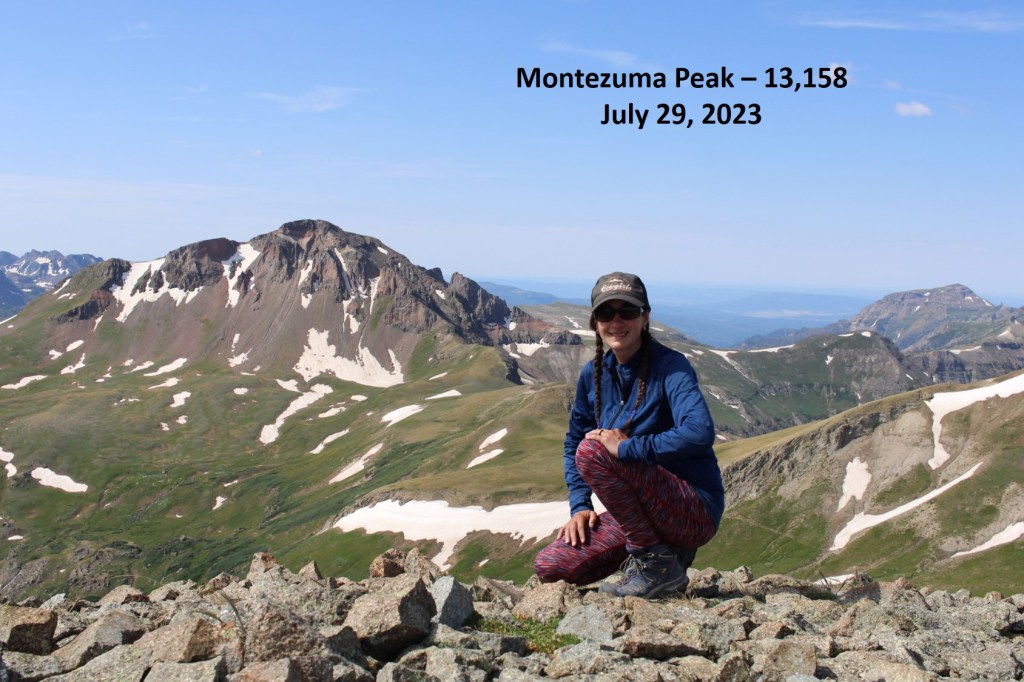
I summited Montezuma Peak at 10am

Montezuma Peak:

Here’s looking back at the route from The Unicorn to Montezuma

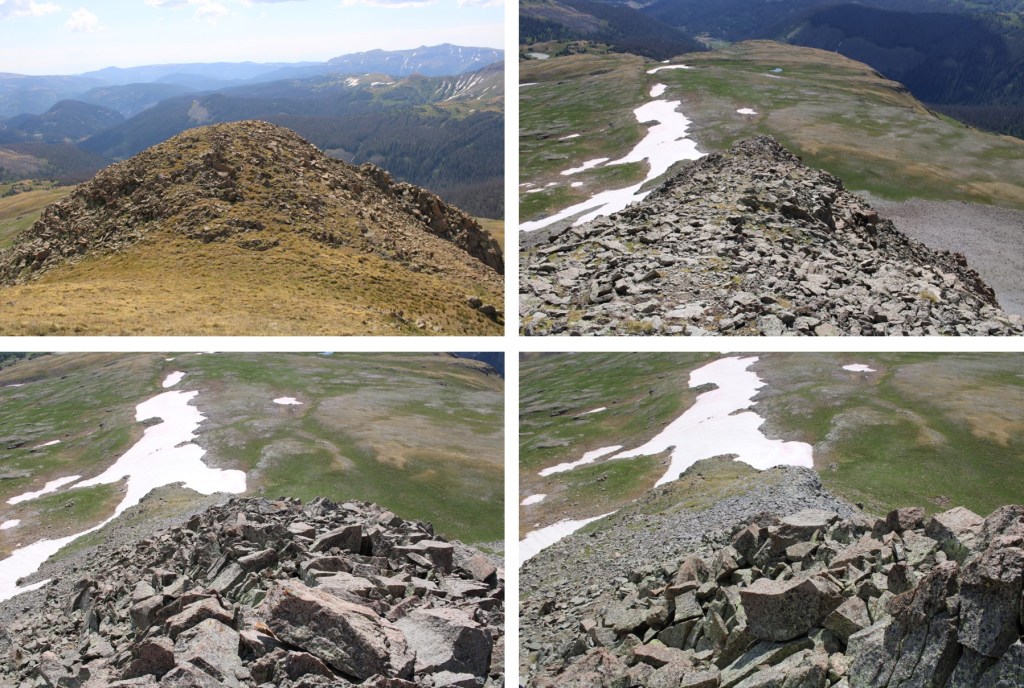
There were a ton of bees at the summit, so I didn’t stay long.  I turned and headed east, down the ridge.  This is a class 2 ridge (seriously).  I just stuck to the ridge proper and had no trouble descending.  Here’s my overall route down the ridge

Then I headed southeast

I planned on descending this grassy gully

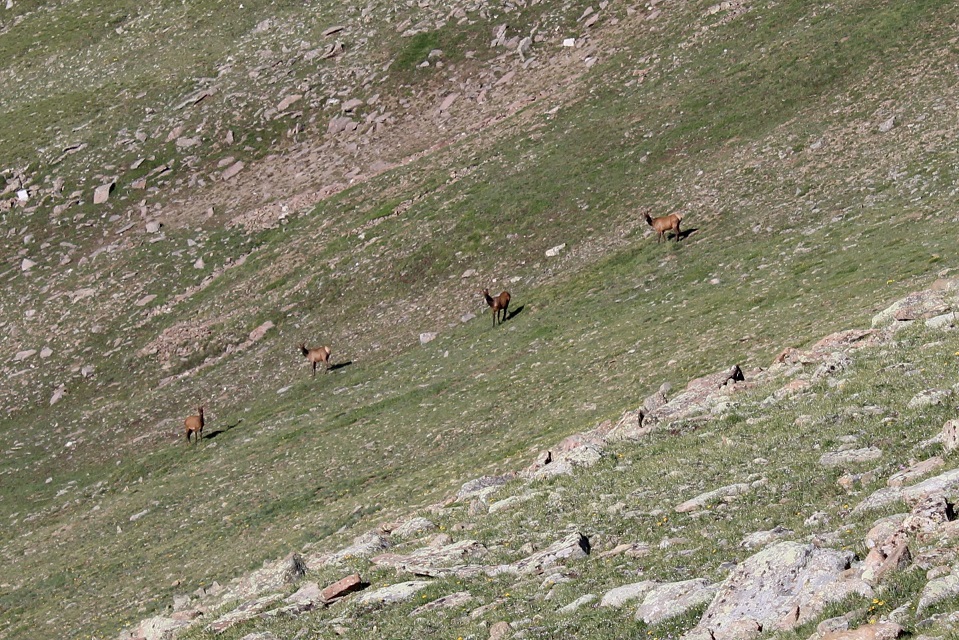
As I was descending, I finally saw the herd of elk I’d heard earlier in the day.  I sat on a rock for 10 minutes, just enjoying watching them.  Some were resting in a circle, others were grazing, and two mamas were watching their babies enjoying a patch of snow.  I hated to disturb them, but I had to get going.  As soon as the wind shifted, they could smell me, and they were off.  There were tons of signs they’d bedded down for at least a few nights there in the past few days.

Elk:

Once they were off I continued descending.  When I made it to the bottom of the gully I turned left, and headed east along the plateau

At the end of the plateau, when I came to the trees, I turned right and descended south towards the creek.  This was a lot of bushwhacking through downed trees and flowers and grasses that were as tall as I am, but I just aimed for the creek.

When I reached the creek, I stayed about 30 feet from it’s banks, and followed it (and game trails) southeast back to the trailhead.  It’s important to stay above the creek because there are waterfalls to avoid.

I made it back to my truck at 11:30am, making this a 10.18 mile hike with 3534’ of elevation gain in 6.5 hours.

On to the next trailhead! 

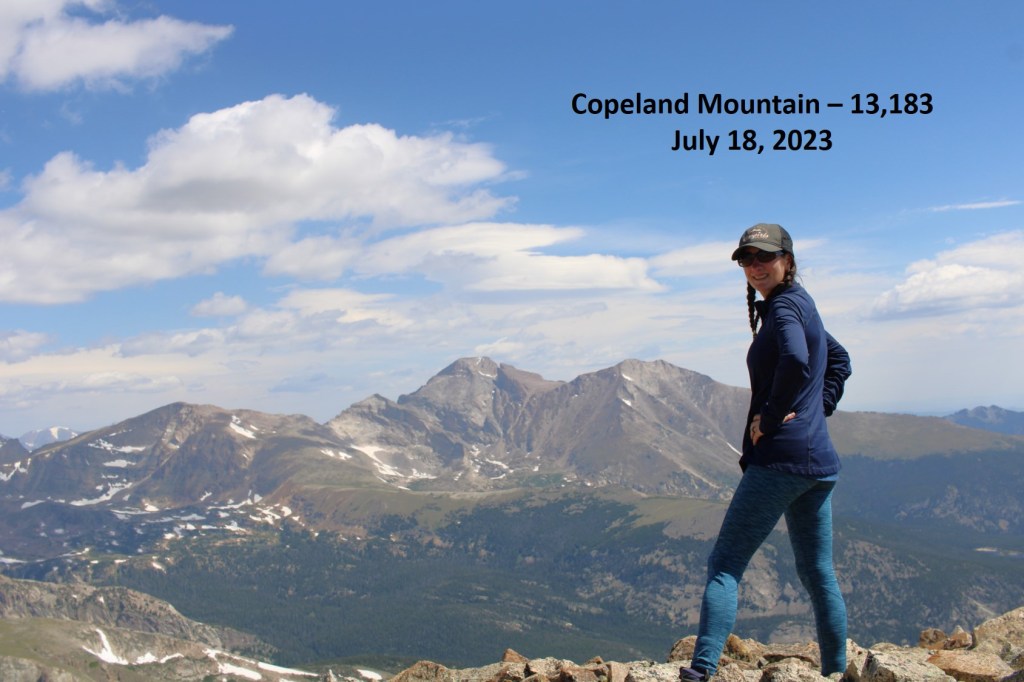
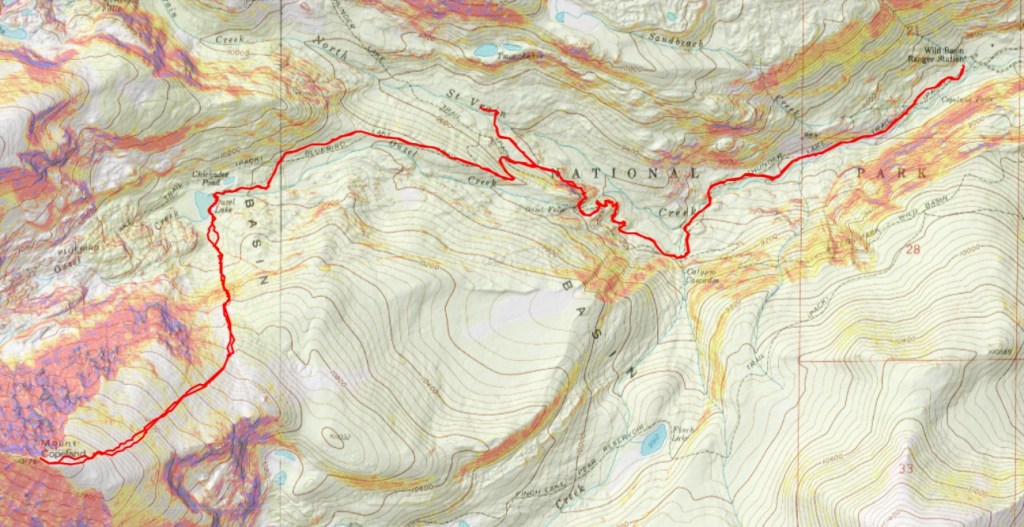
Copeland Mountain – 13,183

RT Length:  17.49 miles

Elevation Gain:  4975’

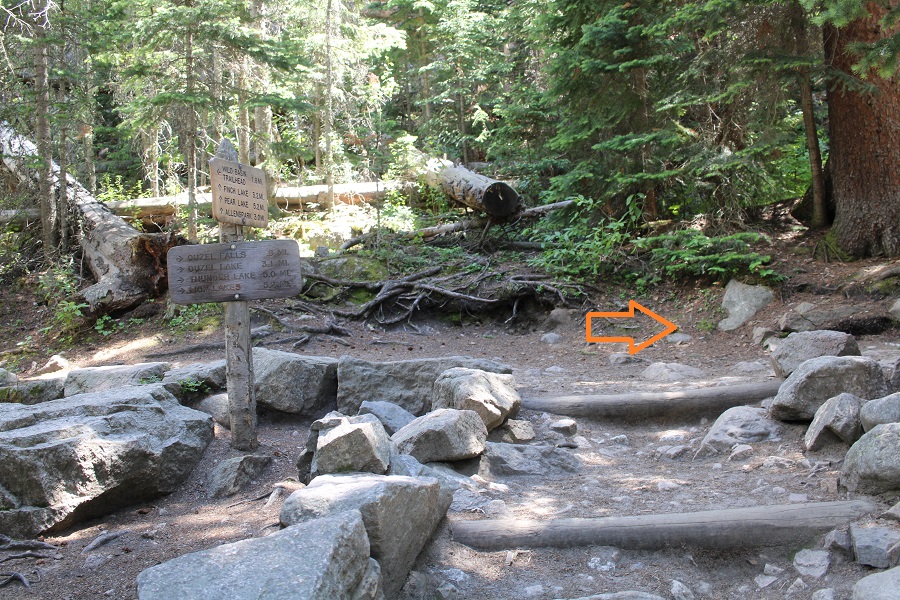
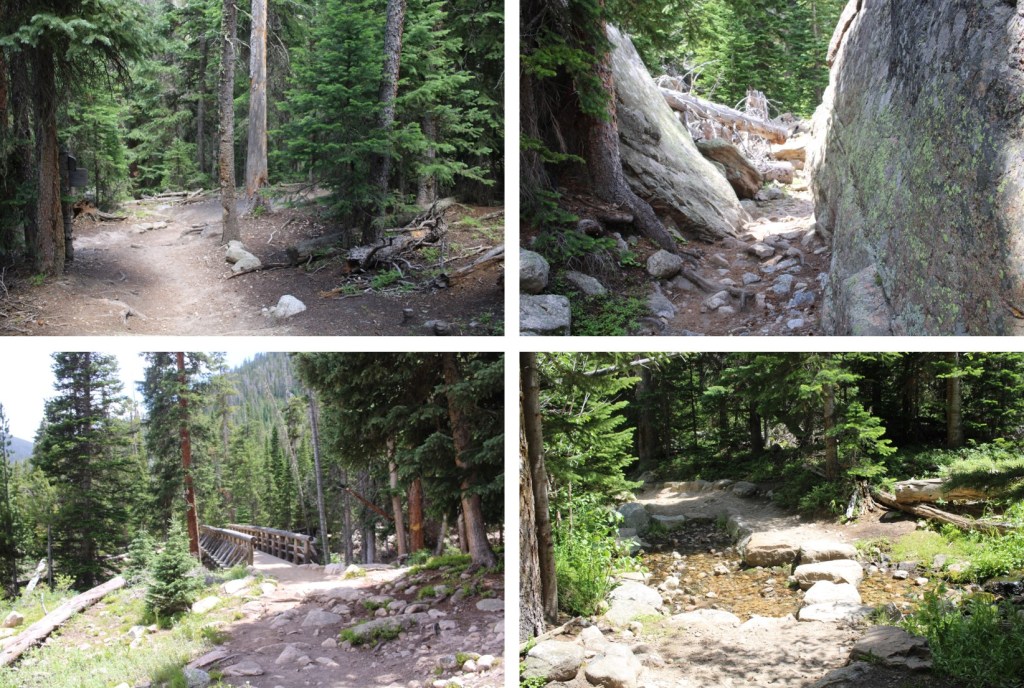
I arrived at the Wild Basin Ranger Station I RMNP at 4:30am and was on the trail at 5am.  There are several adjoining lots in the area, with room for about 50 vehicles.  The very well market trail starts at the southwest end of the parking area.

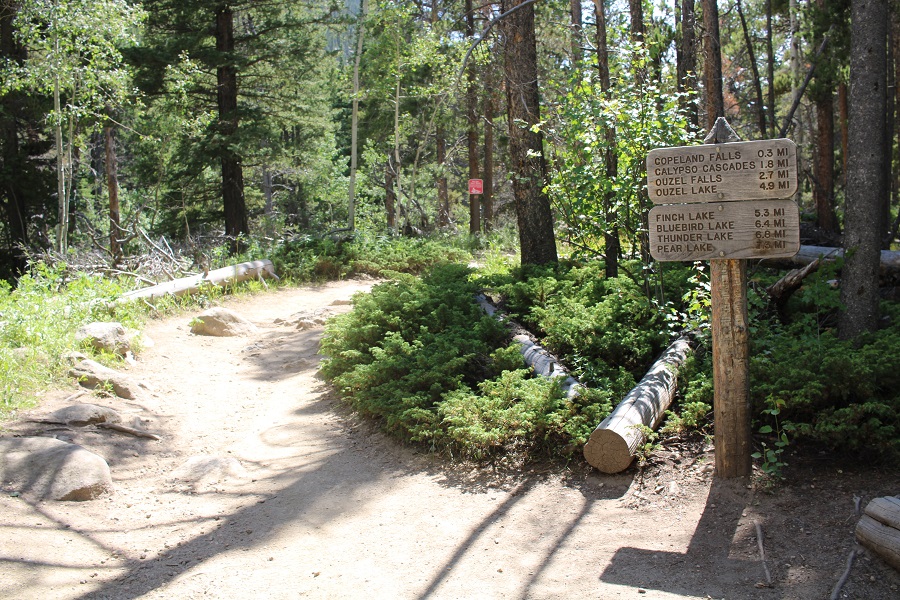
I was headed to Ouzel Lake, on a trail that first passed Copeland Falls, Calypso Falls, and Ouzel Falls (that’s a lot of falls) along the way. 

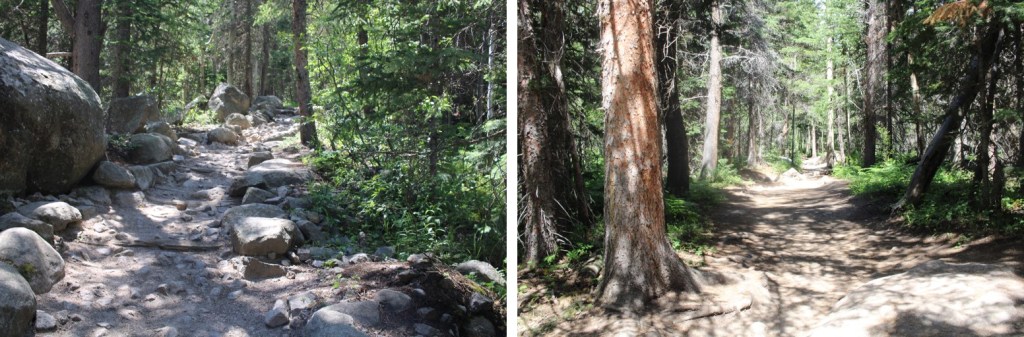
In true RMNP fashion, this is a well maintained, class 1 trail.

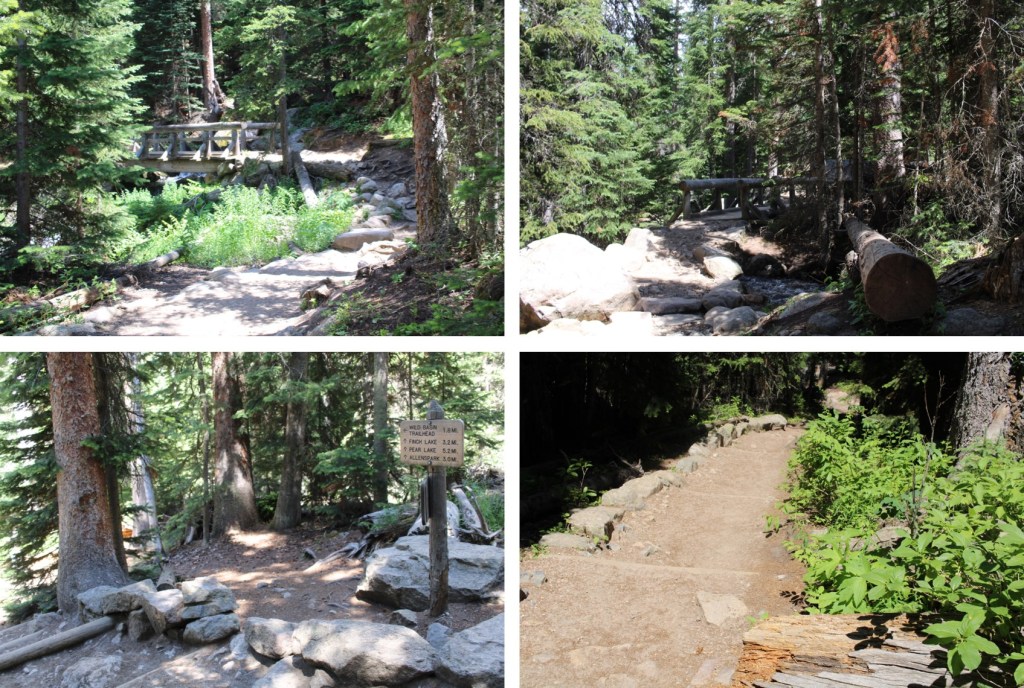
After hiking for 1.5 miles, I continued straight (towards Calypso Lake and Ouzel Falls) at this junction

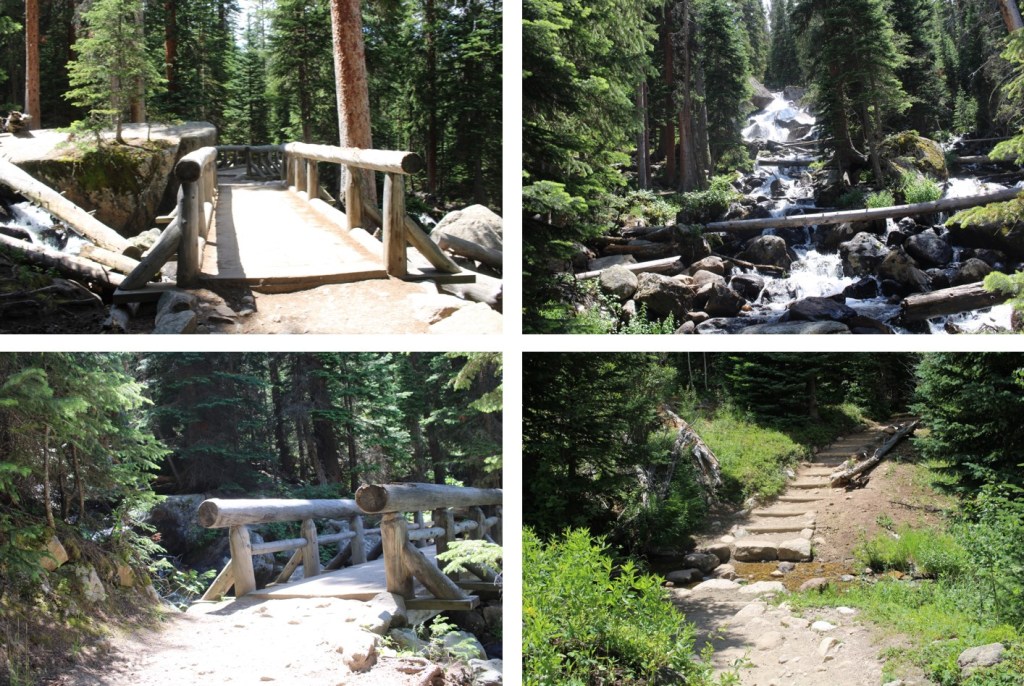
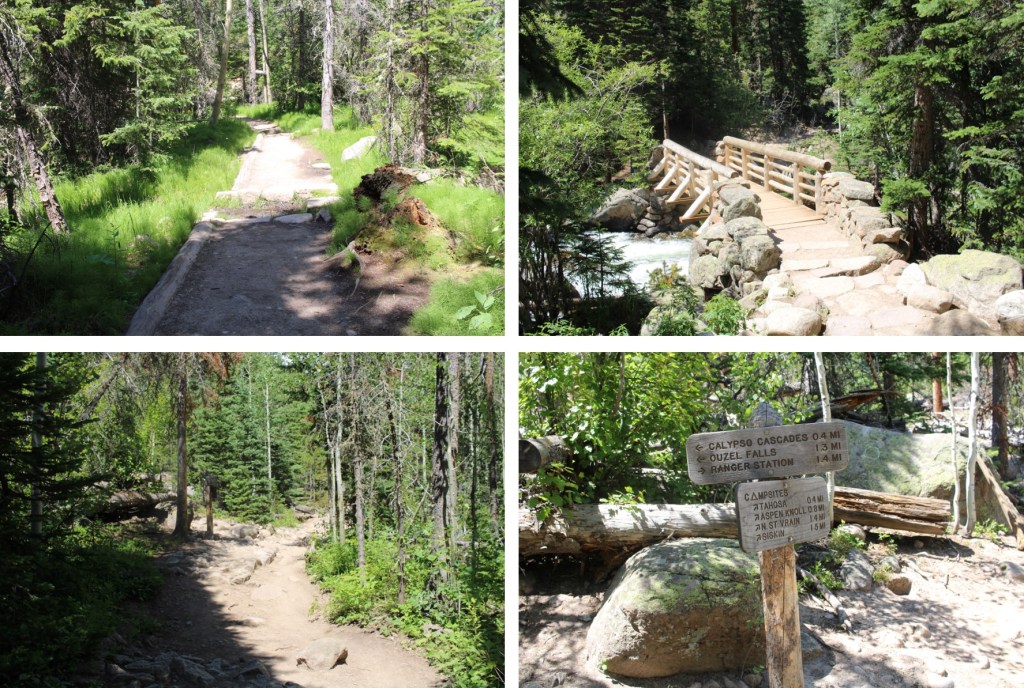
I continued to follow the well-maintained trail southwest, crossing several bridges

After hiking for just under 2 miles, I came to another junction, where I turned right and continued following the trail towards Ouzel Falls

Here’s where I made a mistake.  After hiking for about 3 miles there’s a junction where you turn left. In the dark, I didn’t see this junction, and continued on another half mile before realizing my mistake.  In any event, turn left at this junction, and continue heading towards Ouzel Lake.

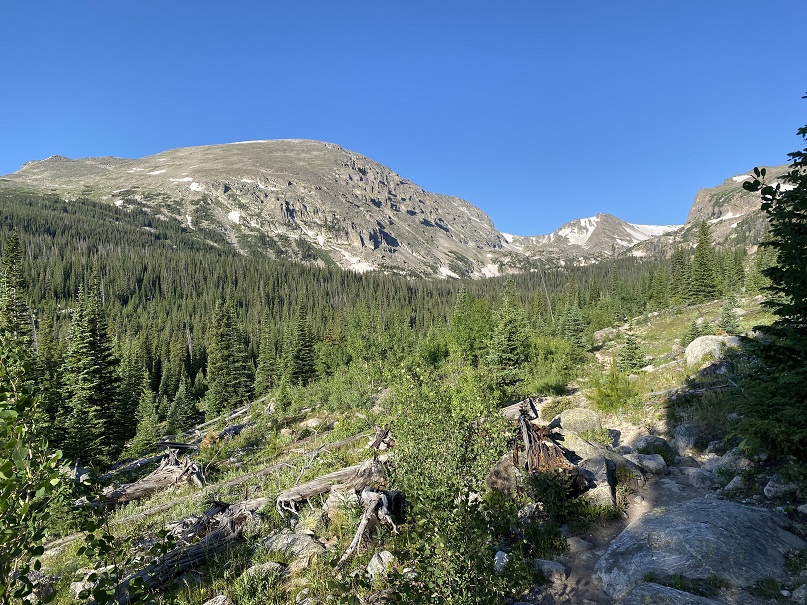
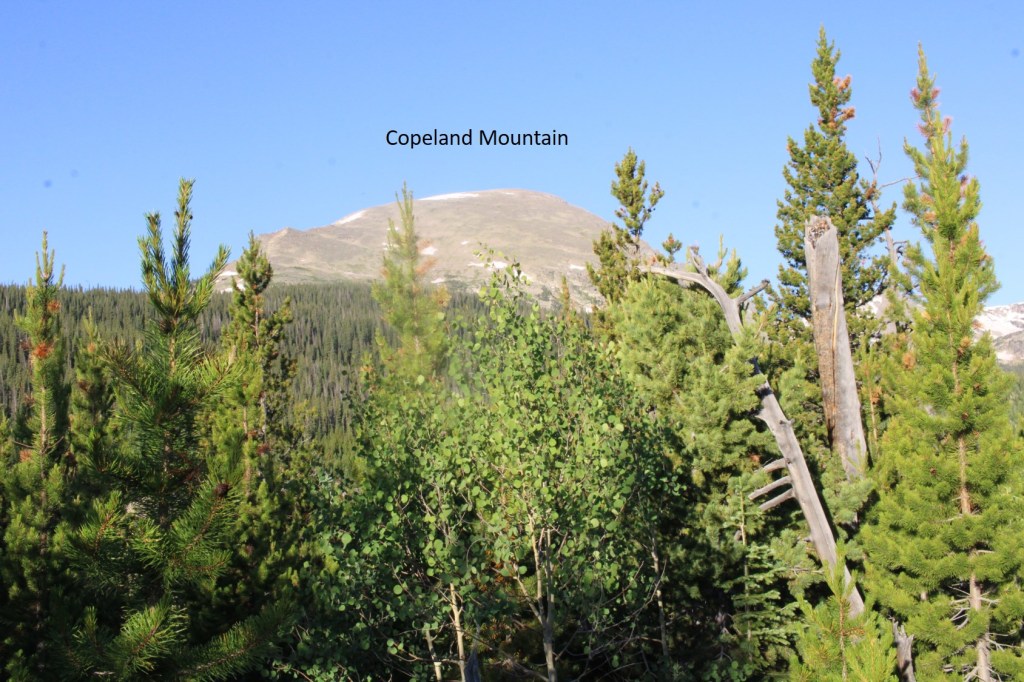
It is along this part of the trail you’ll get your first glimpse of Copeland Mountain.

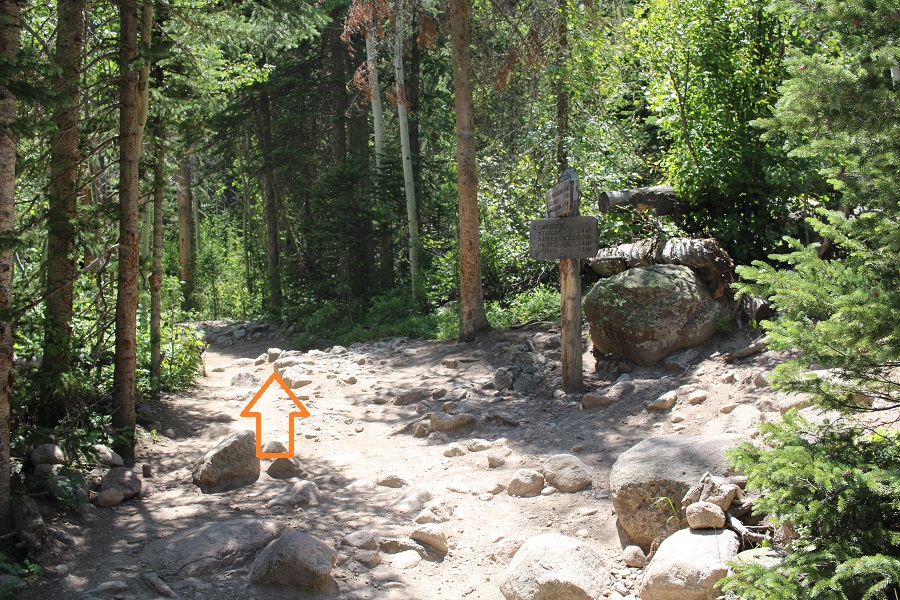
Here’s the final junction before coming to Ouzel Lake.  Follow the signs and continue straight.  Also, tale note of the gully on the left.  That’s what you’re going to want to ascend, and it’s a bushwhack below treeline with very little for sense of direction. That’s where you’re going to want to aim for to gain the ridge.

The trail was a bit washed out just before making it to the lake

After hiking for a total of 6.75 miles, you should make it to the lake.  It was more than that for me, because of my little side trip.

The water level was high, so the place where I would usually cross was underwater.  I changed to my creek crossing shoes, and waded the creek here.  The water level was up to my thighs.

This is where the bushwhacking begins.  I followed light game trails as they skirted the east side of the lake, then found a creek/drainage (not on a topo map), and followed it south to the ridge.  When you see it, you’ll know it’s an obvious drainage, the trouble is finding it in the dense growth.  Here are some pictures of the terrain.

Once you find the drainage, which will be full of vegetation and downed trees, and maybe even some water, continue heading south.

The drainage became rocky, which meant route finding was easier.

I headed up the rocks until they stopped, then turned right, and followed what could have almost once been a road for about 10 yards west, turned left, and followed another rocky drainage south to treeline. There was actually a cairn here (circled)

The rocks were solid, and easy to scramble over.  The rocks eventually became dirt, and I briefly entered the trees before making it to treeline, but I was always going south

From the lake, it was 1.2 miles, with 1100’ of elevation gain to treeline.  At treeline, I turned right, and followed the slope southwest towards the summit, gaining another 2100’ in 1.2 miles.  While a topo map makes it look like a gentle slope, it was anything but. The summit always looked out of reach.  It was one long false summit, where you thought you were almost there, and then you were surprised by more rock. The terrain started out as tundra, then switched to rocks that tended to roll if you weren’t careful. Route finding and terrain were all class 2.  There was also a lot of water here.  Even at the summit, I could hear the water rushing under the rocks.  Below, on the tundra, I saw several small streams of water flowing downhill.  This was all choose your own adventure.  Here are some pictures. 

At what I thought was going to be the summit I was met with some unexpected snow.  The snow was punchy, so I skirted it to the right and regained the ridge

Only to find more rocks,  Here you can see the true summit of Copeland Mountain

I summited Copeland Mountain at 10:45am

Copeland Mountain:

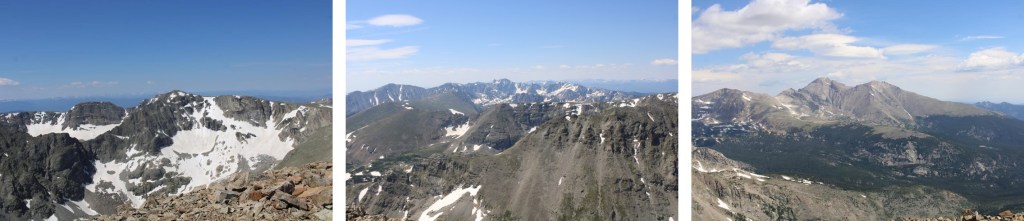
There was a plastic tube summit register at the top, which needs more paper. The only paper in there was (of course, since it’s a plastic tube) wet.  Here are some of the views from the top of other peaks in the area

I turned around and headed back the way I came, but navigation was a bit tricky, as everything looked the same

I headed northeast, and knowing if I went too far north I’d cliff out, I kept this meadow in my sights and aimed for it until I could see a proper route back down

Here’s the route I took back to treeline

Note where Ouzel Lake is to the left, as that’s where you’re headed.

Here are some pictures of the gully down

And the short traverse to the east

Then the bushwhack back down to the lake, following game trails where I could find them

I once again put on my creek crossing shoes and crossed Ouzel Creek.  I’d really recommend creek crossing shoes, as the rocks under the water were very slippery

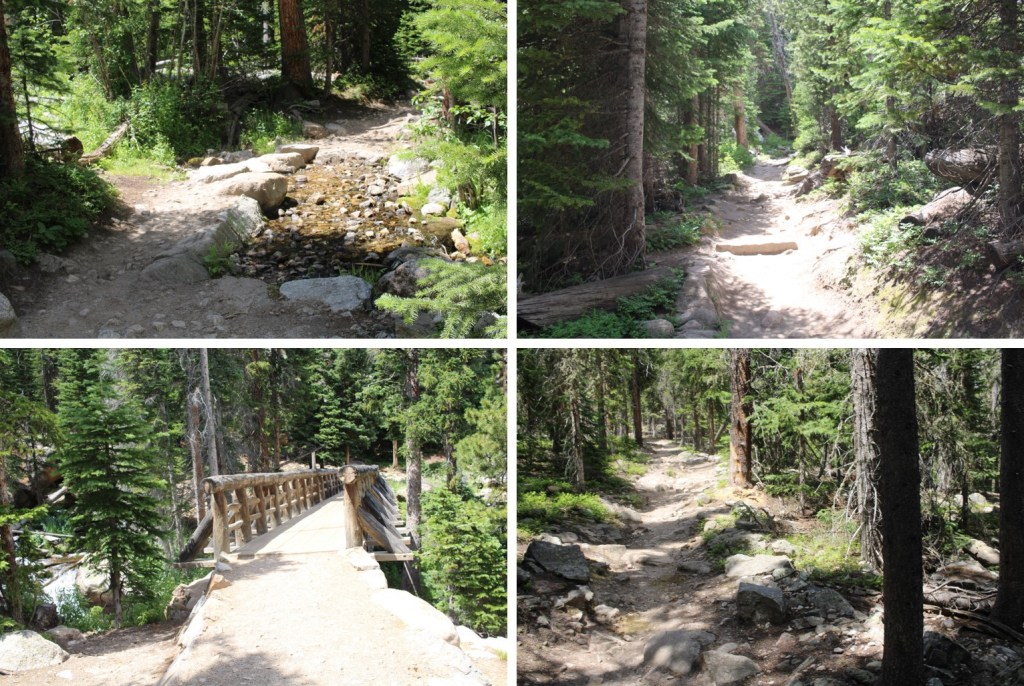
Here are some pictures of the trail back to the trailhead.  The signs (in daylight) make route finding easy.  Keep heading east towards either the Ranger Station, or Wild Basin Trailhead (the signs differ, but they get you to the same place).

I made it back to my truck at 2:45pm, making tis a 17.49 mile hike (with a bit added due to missing my cutoff) and 4975’ of elevation gain in 9 hours, 45 minutes. 

Side note:  if you see strange looking tracks, that look like a cross between a moose and a deer, they’re probably Alpaca Tracks.  I saw a trekking company with a few guests and 6 alpacas hiking into the basin to camp.  It looks like they do this a lot.  Make sure to step aside for them as they pass by you on the trail.

On to the next trailhead! 
Or so I thought… While I’d been hiking they had closed off the parking area, with about 15 vehicles in the lot.  As I tried to exit, a ranger asked me if I’d mind waiting a few minutes, as they were felling trees in the area.  While I waited for about 45 minutes, not one single tree was felled, and they decided to let me go.  I drove out, and someone was grading the road, so I waited for him to pass by.  He asked me to drive slower (although I’m not sure how I could drive much slower than 5mph).  When I got to the gate, it was locked, and I had to wait again for someone to open it. Apparently, they’d closed the roads for mitigation/tree work, etc. but hadn’t put up any signs warning people arriving before they got there they were going to close the road.  3 hours later, I was on my way home. 

Spread Eagle Peak – 13,423 and Peak of the Clouds – 13,524

RT Length:  11.05 miles

Elevation Gain:  5461’

This was my 4th attempt at Peak of the Clouds.  Not because it’s a difficult peak, but because every time I was in the area I was thwarted by the elements; snow conditions, or a fast-moving storm coming in.  Today had a great weather forecast, so I figured today was my day.

Unlike my previous stays at the Gibson Creek trailhead, this time it was packed.  Probably because it was a Saturday over 4th of July weekend.  There were RVs set up everywhere, and every parking space in the lot was taken.  Knowing I was going to spend the night in my truck I just waited for someone to leave and then backed into their spot. 

I was sitting at the trailhead, just appreciating the sounds of the birds chirping and insects humming, and then the sun comes out and lights up each individual blade of grass and all I can think is how lucky I am this is my life.  It was a perfect night, and the last one I’d be spending in this particular vehicle, as my new truck was waiting for me at the lot and I was picking it up Monday.  I wanted to enjoy tonight.

I’d been gone for a few days, and I also wanted to get back home to see my kids, so I made it an early morning.  I was on the trail at 3:45am.  The trail starts at the north end of the parking area, and follows trail 1456 west.

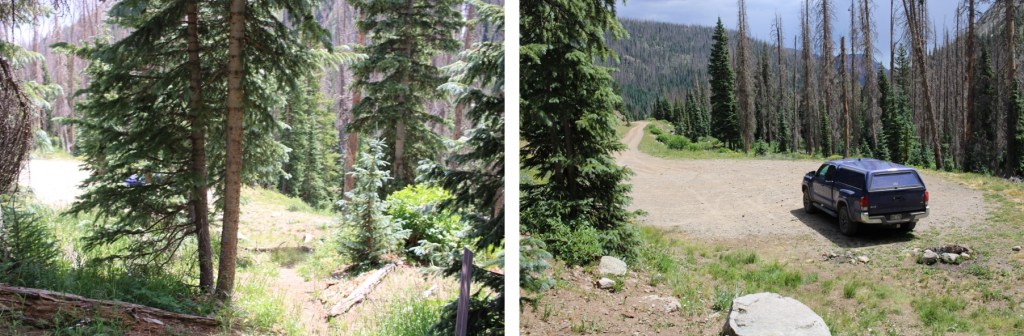
The trail starts out nicely defined.  Stay straight at the Rainbow Trail Crossing.  This sign has been broken for years.  I wonder if they’ll ever replace/fix it?

Here’s where it gets tricky.  After hiking for .4 miles, and at 9400’, leave the trail and cross Gibson Creek.  It looks like there used to be a good trail here at one time, but it’s no longer well defined.  In fact, someone placed a tree trunk over the way you’re supposed to go.

After crossing Gibson Creek, the trail picks up again. 

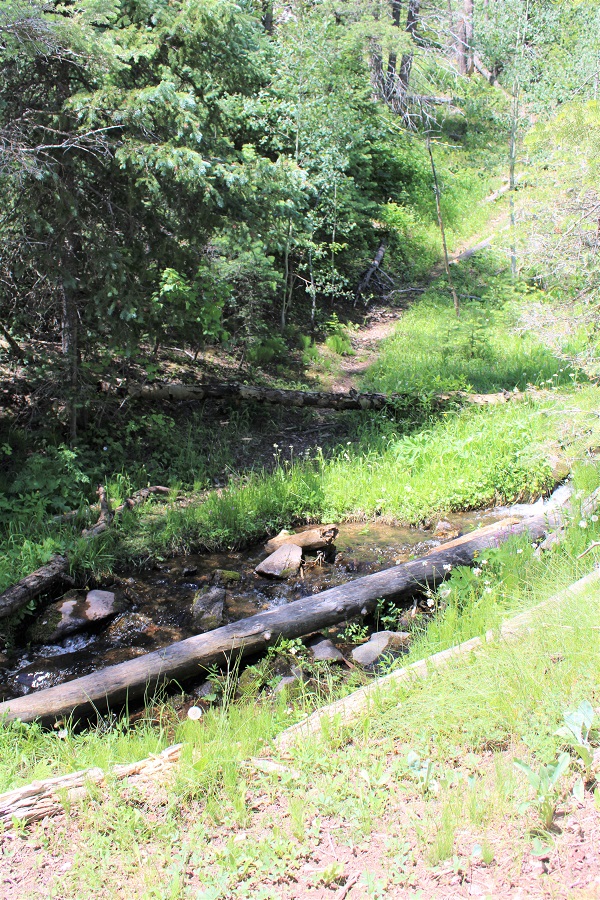
The trail goes through various conditions, from being well-defined, to being covered with downed trees, to barely being a trail at all.  It also crosses Gibson Creek several times. 

The main thing is to just keep following Gibson Creek west/southwest

I followed the trail for about 2 miles, to when the trail abruptly ended where a tree had fallen over the trail.  Here I crossed the creek one last time, and bushwhacked southwest, up the mountain.  It’s important to note here something the topo map doesn’t show:  Apparently, somewhere Gibson Creek was to my right, but a much larger creek was to my left (this creek is not shown on the topo map, and could just be an error in CalTopo, as the creek was always to the south of me, but on the map it’s shown as being north).  Gibson Creek pretty much fizzled out here, so keep the creek you can see to your left as you ascend the hillside. 

This is a steep hillside with some bushwhacking involved.  It seemed to go on forever.  I took a different way down than I did up, and I’d recommend taking the way I went up, directly aiming southwest towards the ridge, as it avoids the large section of willows to the northwest. 

I made it to the ridge as the sun was coming up

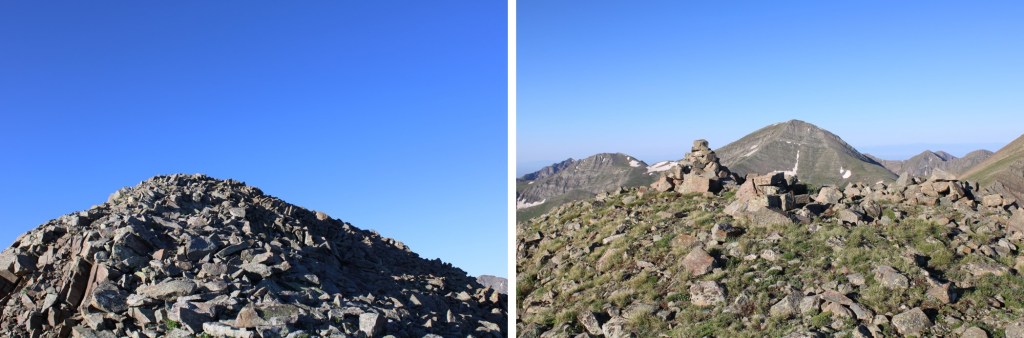
Once on the ridge, it’s a straightforward, class 2 ridge hike to the summit.

Here are some step-by-step pictures of the ridge

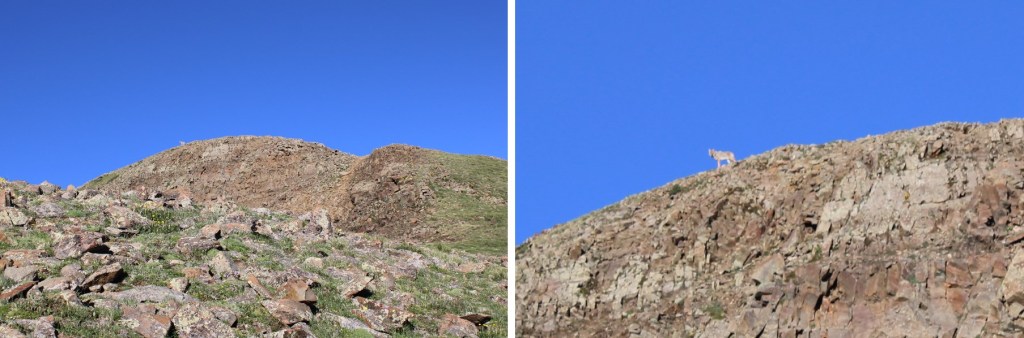
As I was nearing the summit, I looked towards the summit and thought I saw a bighorn sheep.  When I looked again I realized it was a coyote:  the biggest coyote I’ve ever seen!  He was chillin’ on the summit.
I summited Spread Eagle Peak at 7:15am.  The coyote was nowhere to be seen.

Spread Eagle Peak: 

It was an absolutely beautiful day!  I headed south, down the ridge to the Spread Eagle/Peak of the Clouds saddle.
This was a straightforward trek, with just one short class 3 move.  I stayed right and downclimbed this section.

Then followed the ridge to the saddle

It was a simple, class 2 ridge hike to the summit of Peak of the Clouds

Here are some step-by-step pictures

Here I saw some elk (they didn’t stay long)

Looking up at the ridge to Peak of the Clouds

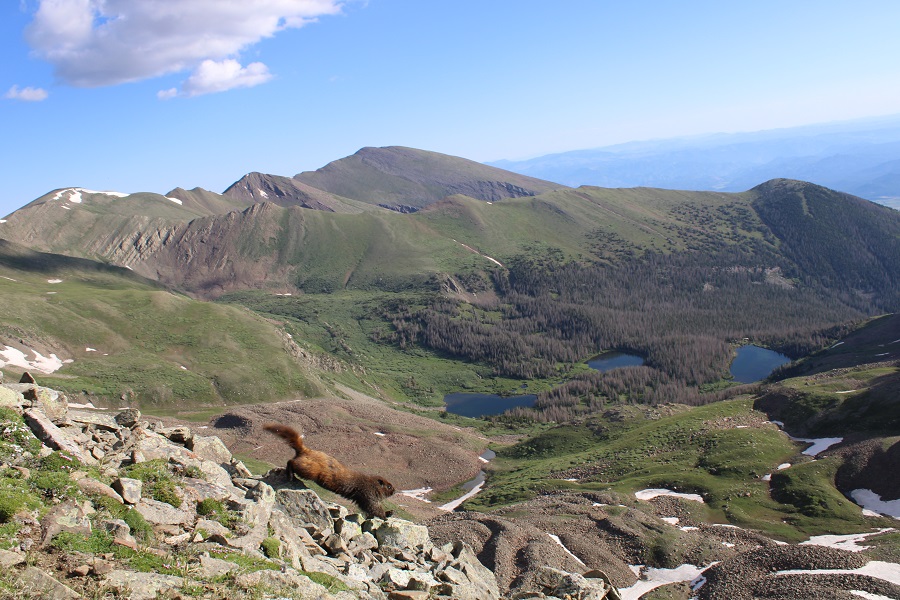
As I was hiking up, a marmot rushed down past me.  I wonder where he was going?

The last part of the ridge was rocky.  I stayed to the left.

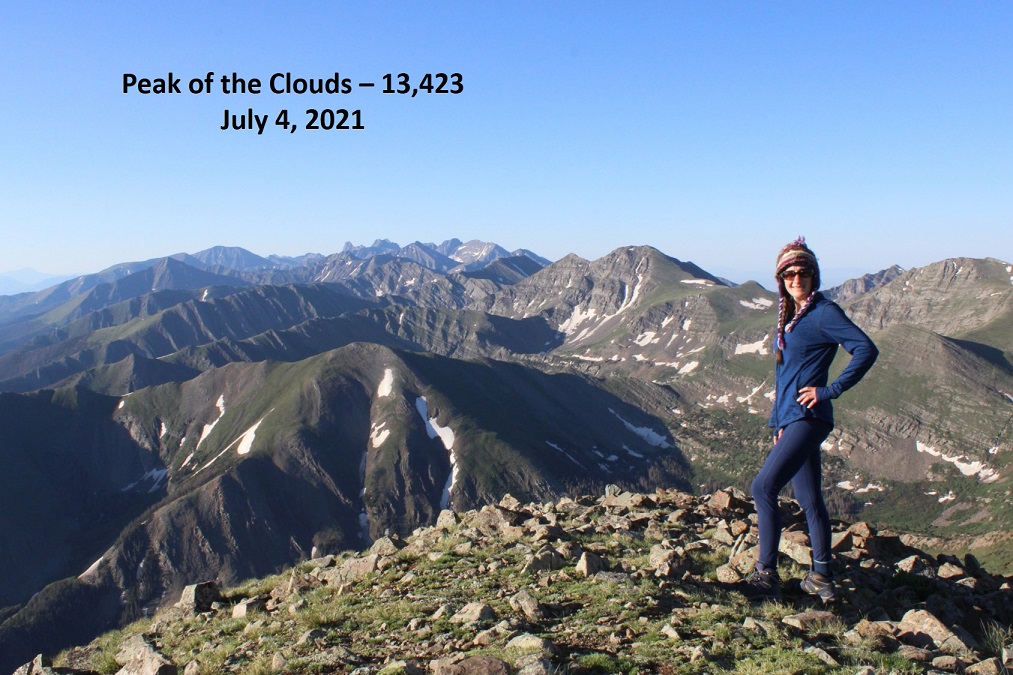
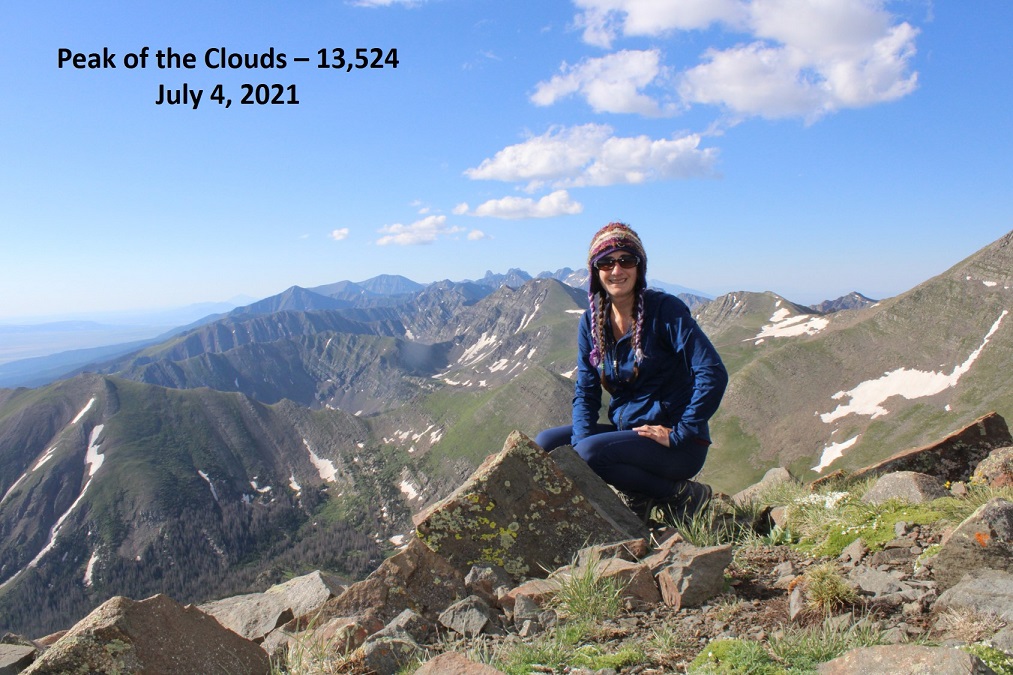
I summited Peak of the Cloud at 8:20am

Peak of the Clouds:

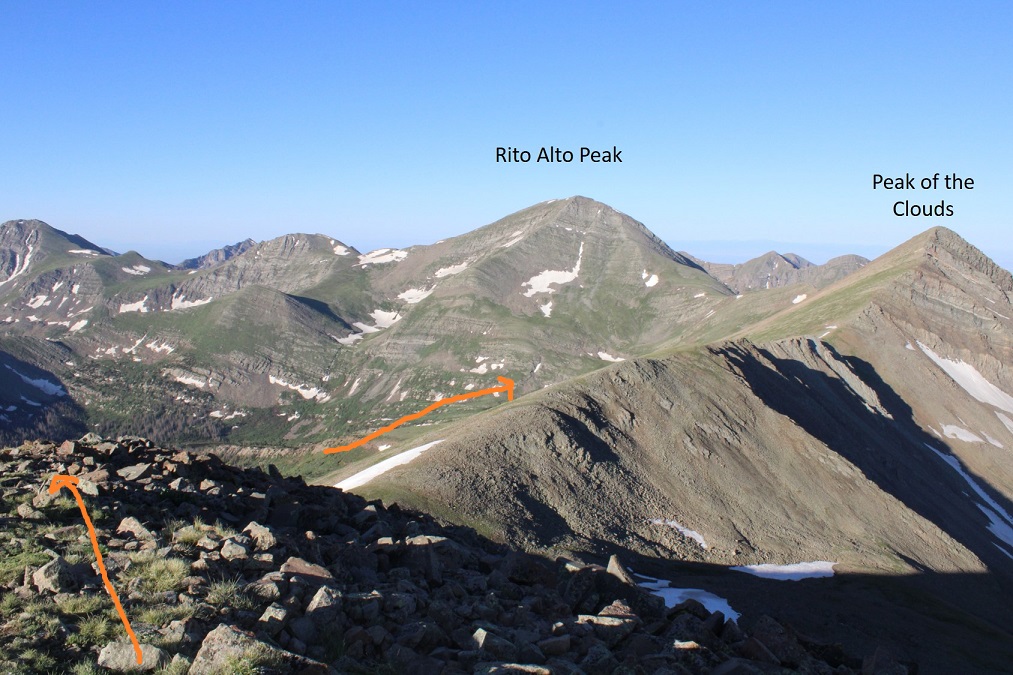
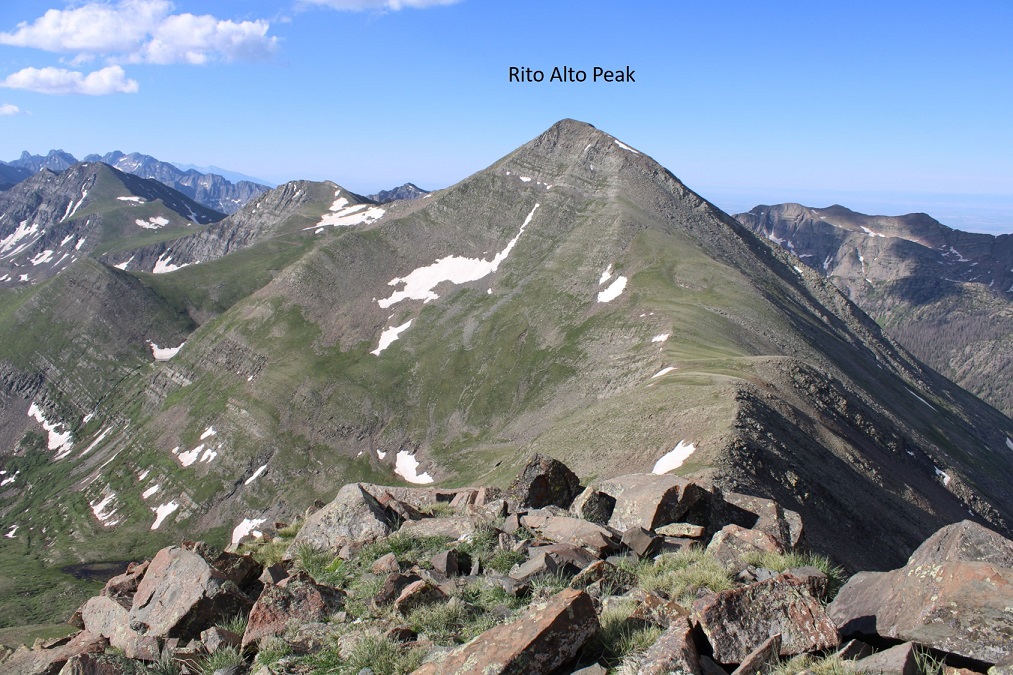
Here’s a look at the ridge to Rito Alto Peak (in case anyone is looking to do that one as well)

I sat for a minute and enjoyed my time on the summit.  It was a beautiful 4th of July in the Sangres!

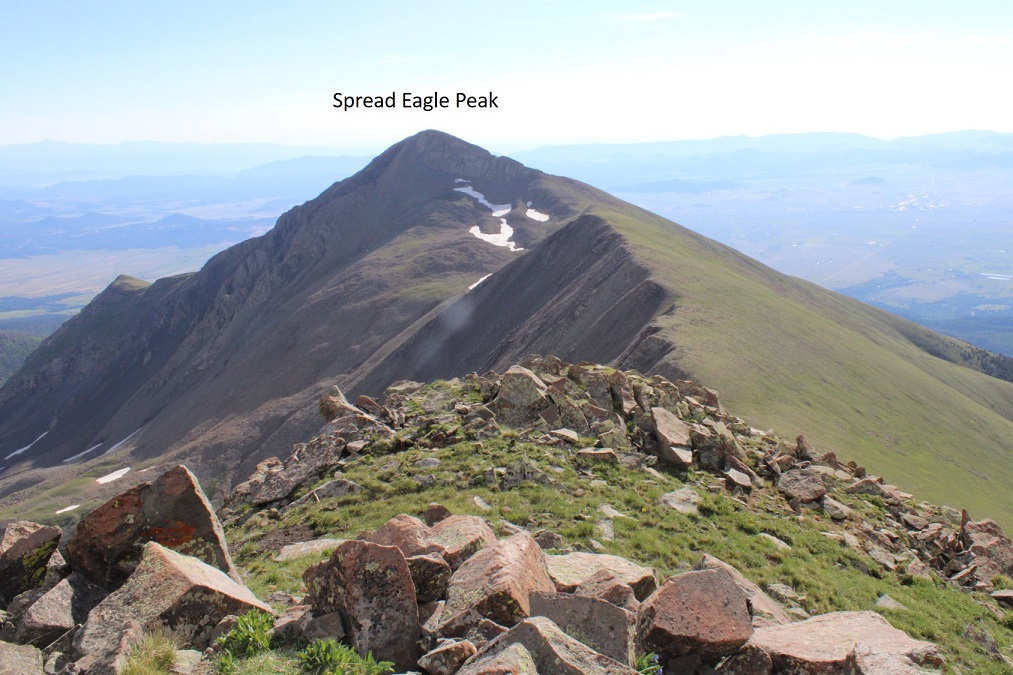
I was making this an out and back trip today, so I turned and looked back at Spread Eagle Peak

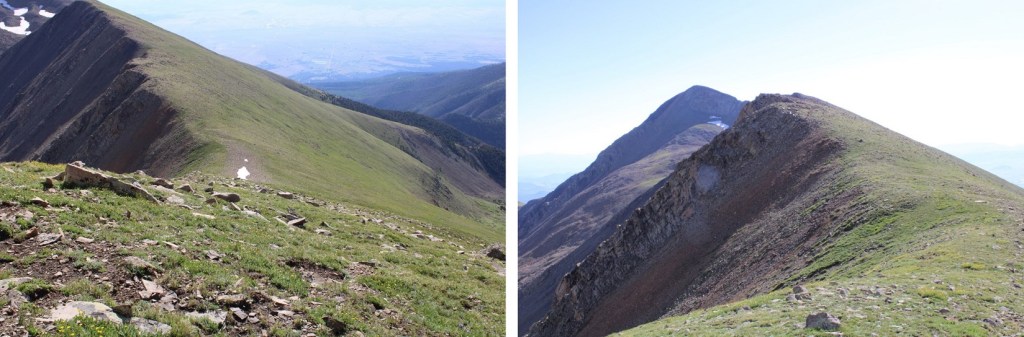
Here are some step-by-step pictures back to the saddle

This is how I accessed the ridge

And then followed the ridge north

The short class 3 section was easier to upclimb than downclimb.

Then it was an easy ridge hike to the summit

I turned and headed east down the ridge, back to treeline.  I saw elk here as well.

Once near treeline I headed back toward Gibson Creek, but as I said before, I encountered a lot of willows and it was slow going.  I’d recommend following the ridge as it slopes up a bit and becomes treed, and then heading northeast.

Yes, there’s bushwhacking and route finding involved.

I made it back to the creek, and followed the trail back as it curved northeast towards the trailhead

I crossed Gibson Creek one last time, and was back on the well-marked trail.

I made it back to my truck at 11:45am, making this an 11.05 mile hike with 5461’ of elevation gain in 8 hours.  Now, time to drive home, wake up my daughters, and grill some steak!

Mt Jackson – 13,675 & PT 13433

RT Length:  28.33 Miles

Elevation Gain: 6674’

I’m not entirely sure why I chose this approach, but I wouldn’t recommend it; the route finding below treeline is arduous.  In any event, if you still want to do this hike, this is how I climbed Mt Jackson and 13433. 

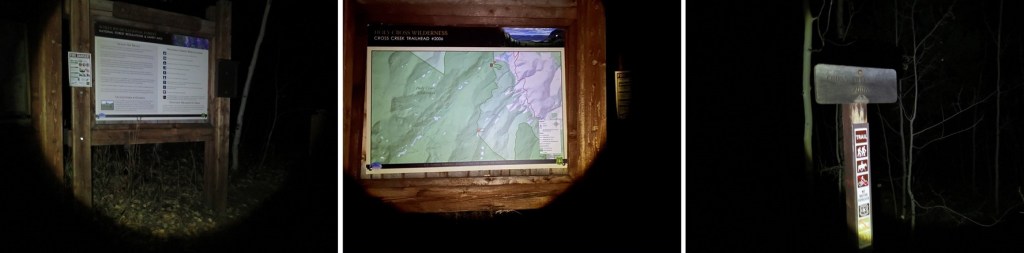
I arrived at the Cross Creek Trailhead and was the only vehicle in the lot.  It’s a poorly designed lot that doesn’t offer much room but can fit 5-6 cars if everyone parks nicely.  It looks more like a horse corral than a parking lot, and there’s not a lot of room to turn a vehicle around.  There is parking across the way as well.  I arrived and left in the dark, so unfortunately, no pictures of the trailhead.  I was on the trail at 3:45am.  Cross Creek trail starts behind obvious signage at the west end of the parking area.

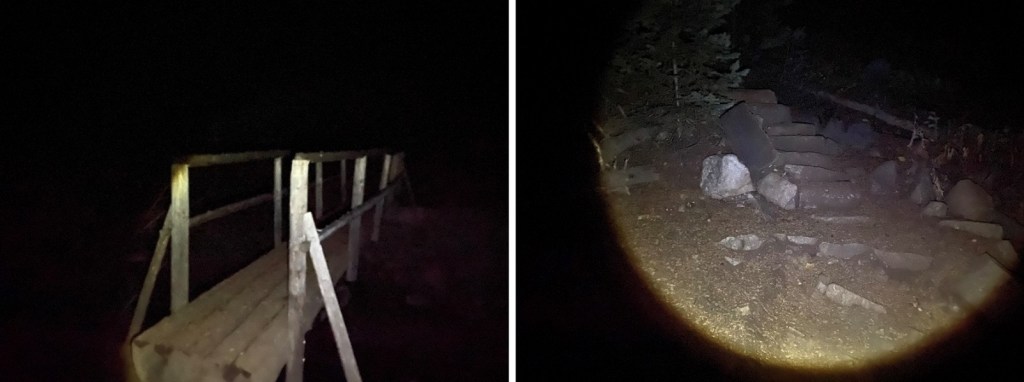
This is an easy to follow class 1 trail.  There’s a new bridge to cross over Cross Creek, and some nice stairs to ascend. 

After hiking for 3 miles I came across some avalanche debris on the trail.  As I was navigating at night I stepped over a log, and instead of hitting solid ground my right foot sank in watery mud up to my thigh. 

I quickly extricated myself and did a quick assessment.  My shoe and pants were soaking wet, cold, and covered in a layer of mud.  It was only around 5am, 30 degrees outside, and I had a serious decision to make.  Did I turn around now or continue hiking?  I was worried I’d eventually have a Raynaud’s attack, especially if I didn’t dry out before making it to treeline (where it would be windy:  I could already hear trees snapping all around me in the dark).  I cursed myself for not bringing at least an extra pair of socks.  In the end I decided the only way to dry off would be to keep moving, and I could do that either by heading back or forwards, so I continued on.  I followed this class 1 trail for a total of about 8.5 miles as it paralleled Cross Creek, staying straight at the Grouse Mountain Trail Junction (but noting where it was in case I wanted to make this a loop).

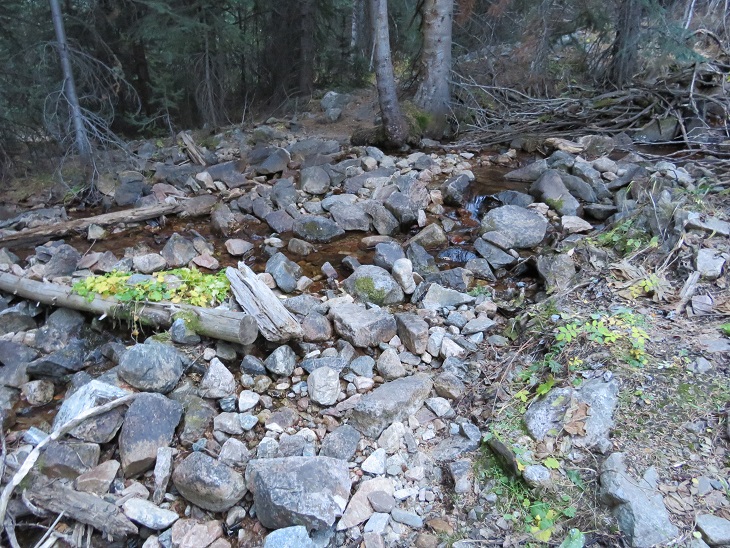
After hiking for 8.5 miles I crossed a stream and the real route finding began

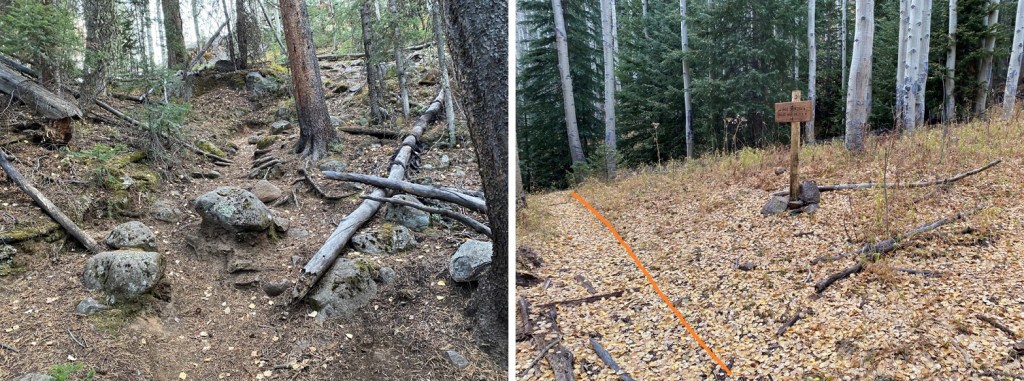
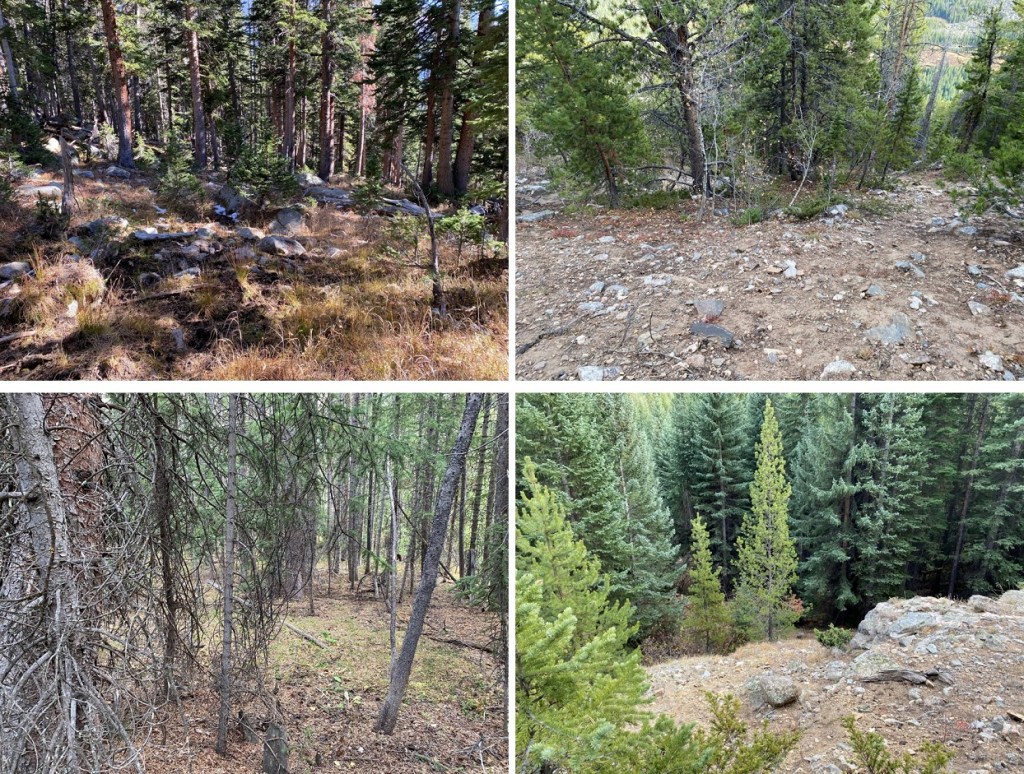
After crossing the stream, I turned right and headed straight up the mountainside, passing a small pond to my left.  There is no trail here, and the bushwhacking is intense.  I passed several sets of bear tracks while route finding here.

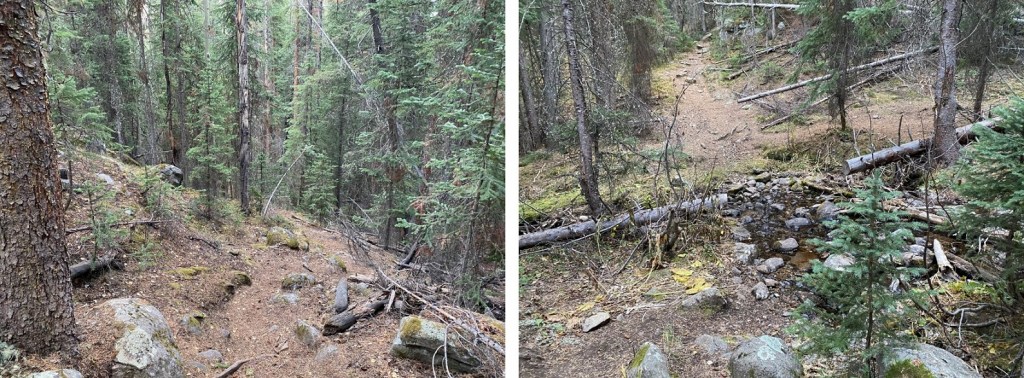
I’d gained 800’ of elevation in 1 mile heading northwest when I came upon a trail!  Woot!  This was a pleasant surprise.  It looked like a game trail, but every now and then I’d see a cairn. 

I followed this trail southwest for just over half a mile, until it suddenly ended. 

There was a cairn here, but it didn’t seem to lead anywhere.  I went about 20 yards in every pertinent direction and couldn’t locate a trail. The snow on the ground wasn’t helping.  I got out my map and realized I’d gone too far south, so I turned right and headed north up this drainage. 

At the top of the drainage I headed west.  You can see how much fun route finding was here as well.  I kept wishing for treeline so I’d have a visual of my route. On a positive note, my shoes and pants had dried out, so while I was still dirty, at least I was dry.

I also passed more bear tracks here.  These tracks had a different gait than the ones I’d encountered before, so I figured there were multiple bears in the area.

Hiking west eventually led me to a marshy area, and here I was finally able to get a good view of where I was headed

I skirted the marshy area to the south and then headed southwest.  It’s important to head up over the rocky area and not stay low because going low will lead you to a large rock wall bordering a pond with no way to cross.  Here’s an overall view of the route

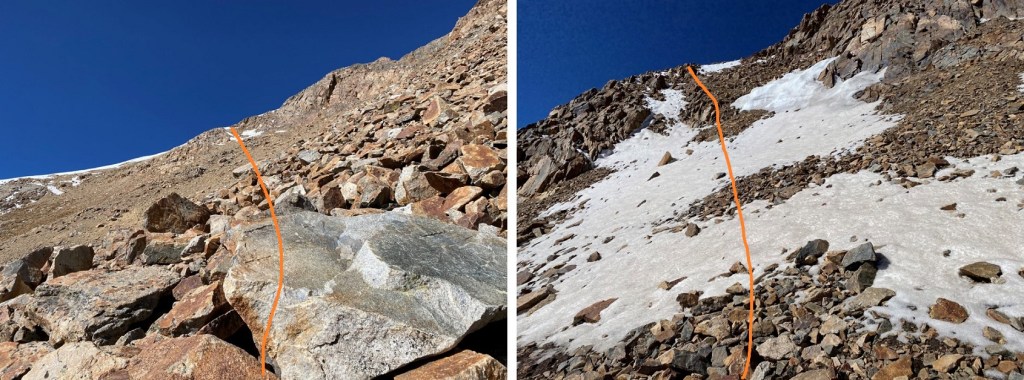
And step by step up the (first) gully

And second and third gullies.  This was really just one long gully that leveled out at times and started again.  The snow was bothersome because it was sugary and every once in a while, I’d posthole. It did make me roll my eyes at being worried my feet would be wet from the swampy water:  the snow had made sure of it. 

At the top of this long gully I continued southwest

Until I hit another (you guessed it) gully.  It was here the battery in my camera died and I had to switch to using my cellphone (I’m still figuring out my new camera, and the battery seemed to die rather quickly).

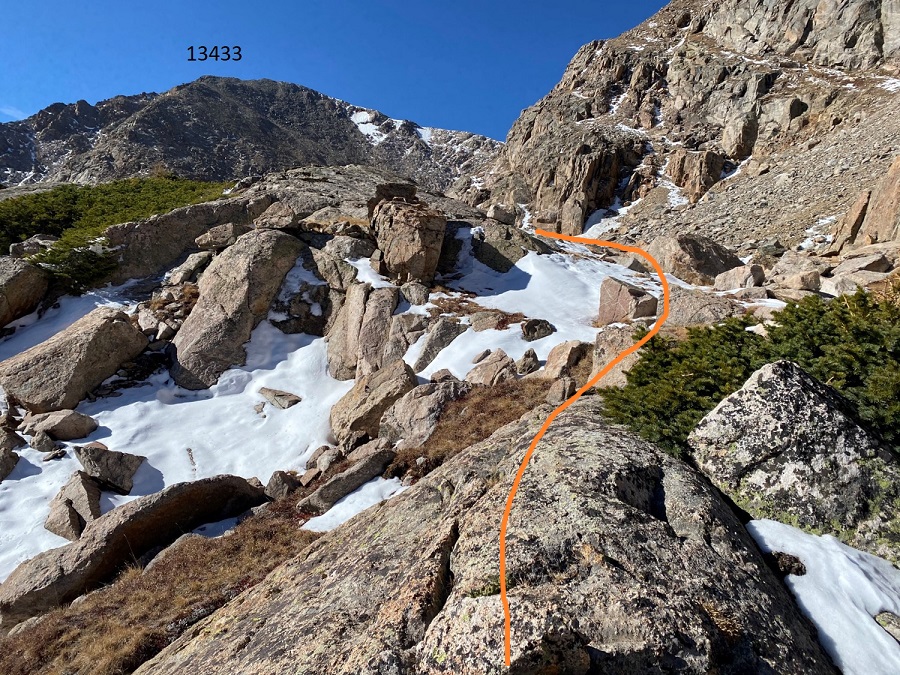
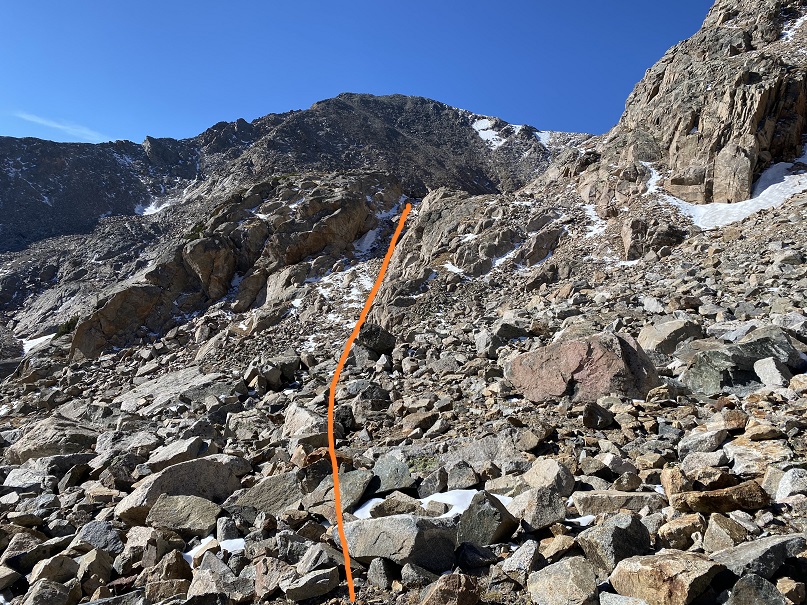
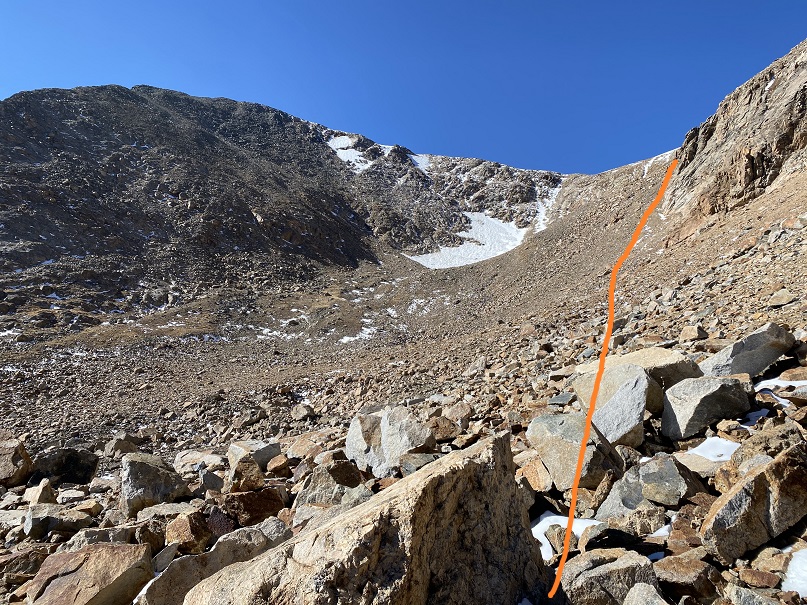
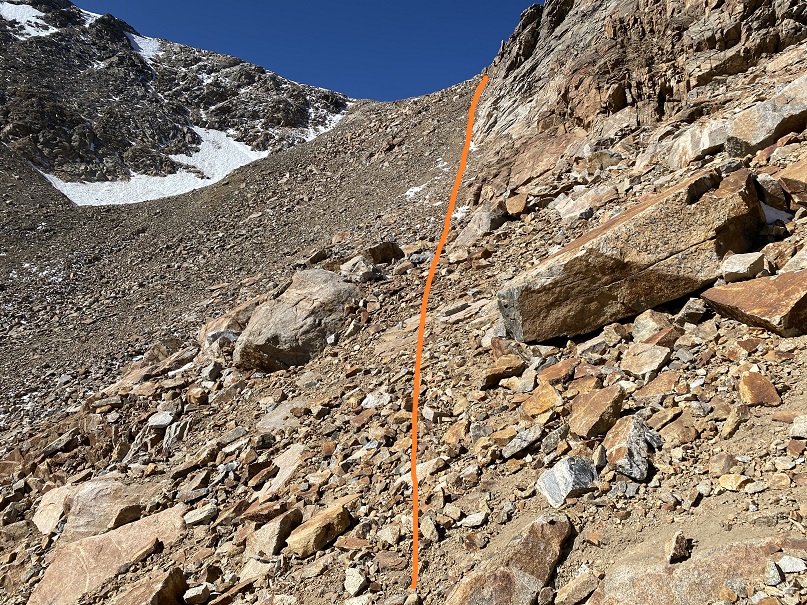
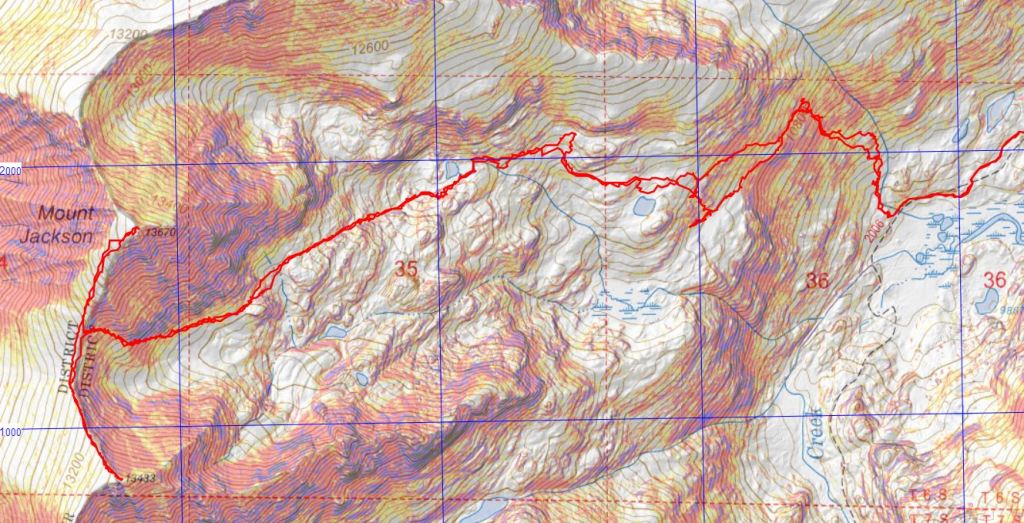
Here I got my first good look at the upper basin.  There are several routes I could have taken from here.  I’d heard there was a path up the north side of 13433, but I wanted to gain the saddle between UN 13433 and Mt Jackson.  I figured my best shot for today would be to stay high and hugging the south side of Mt Jackson.  Here’s my overall route

And step by step. 

The ground here was surprisingly stable, I just had to watch out for rolling rocks every now and then

Here’s how I gained the saddle

Up until this point I wasn’t sure which peak I was going to climb first.  I had the possibility of making this a loop (coming back down via the Grouse Mountain trail), but once I got to the ridge I was able to feel the wind I’d been hearing all morning.  Winds were predicted at 20-25mph, sustained, with 45mph gusts.  They were at least that.  And brutally cold.  I wasn’t sure I was going to be able to make one mountain today, let alone three.  I got out my balaclava and heavy-duty winter gloves, turned right, and headed north to the summit of Mt Jackson.  This was a fairly easy ridge hike.

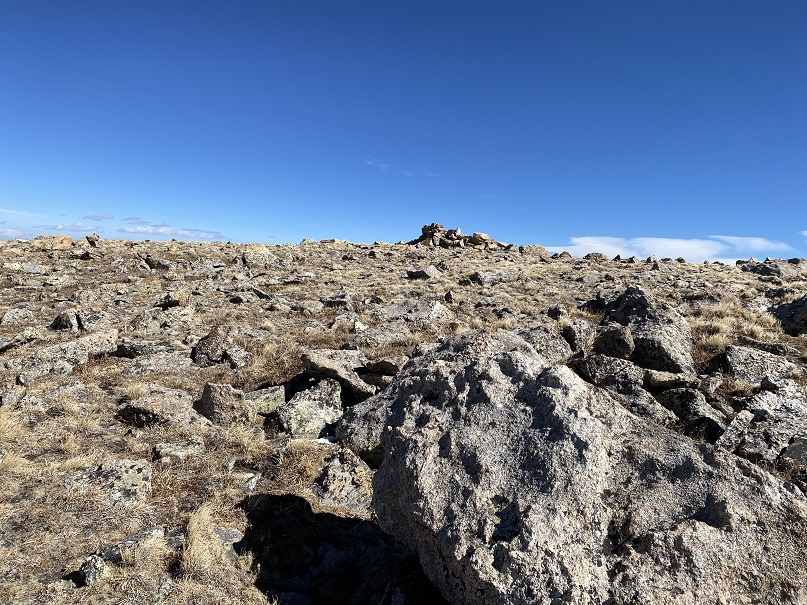
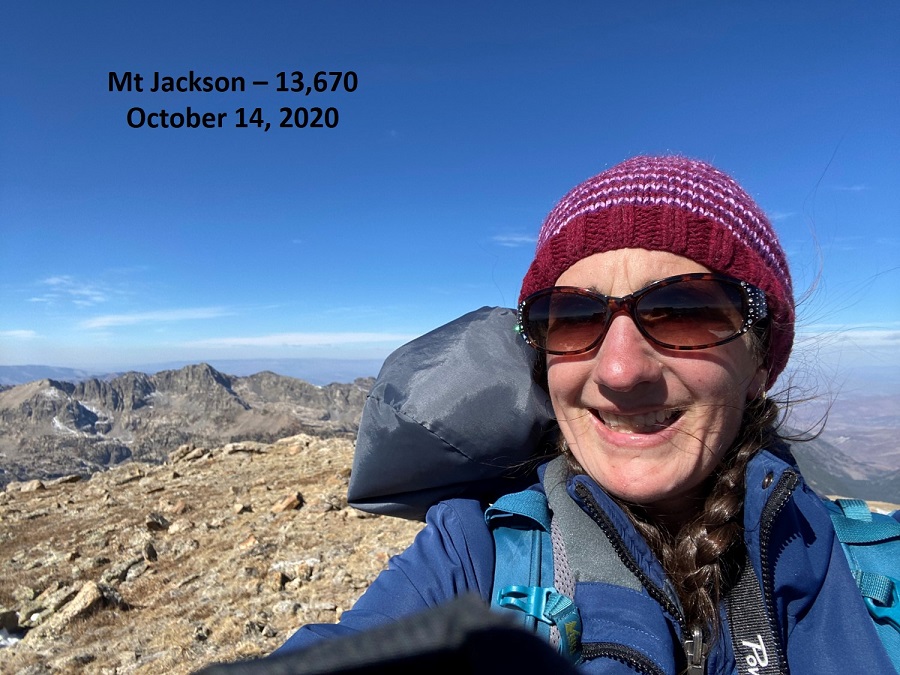
I summited Mt Jackson at noon.  The summit was relatively flat.

Mt Jackson: 

The wind was blowing so hard all the straps on my gear were slapping me in the face and several times I had snot fly into my sunglasses.  Ah, to be a mountaineer!  I turned and headed back the way I came, bracing myself against the wind as I made my way towards the Mt Jackson/13433 saddle.

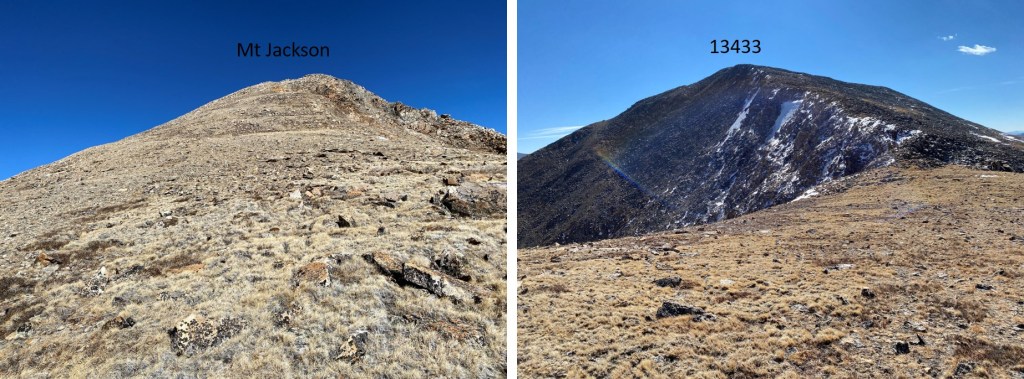
From the saddle here’s looking back at Mt Jackson and up at 13433

It was a short and simple ridge hike to the summit of 13433.  I summited at 1pm.

UN 13433: 

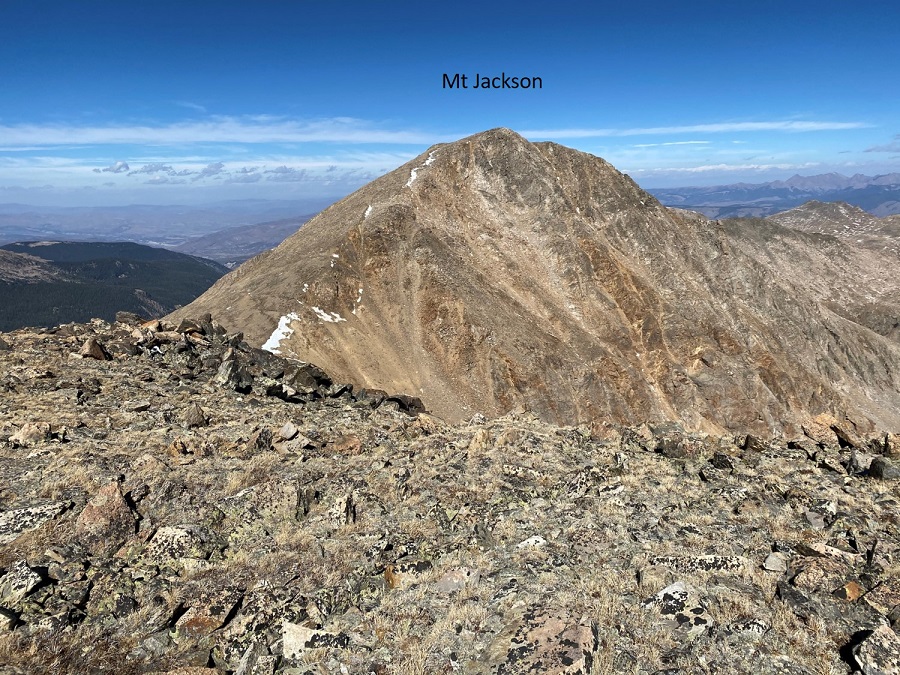
Here’s a view of Mt Jackson from 13433

At this point I couldn’t feel my fingers, so I quickly retraced my steps back to the saddle.  The wind refused to let up, and was blowing loudly long after I left the ridge.  I saw two crows playing with the currents above the saddle.

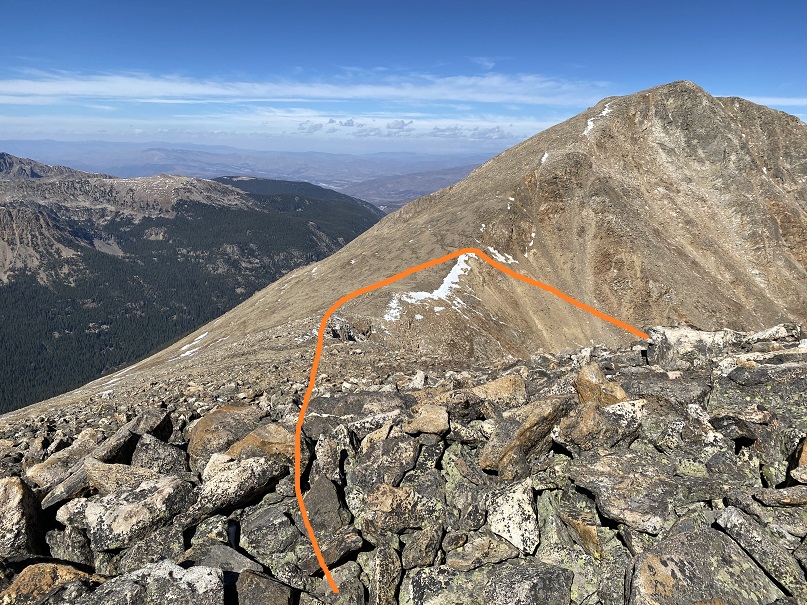
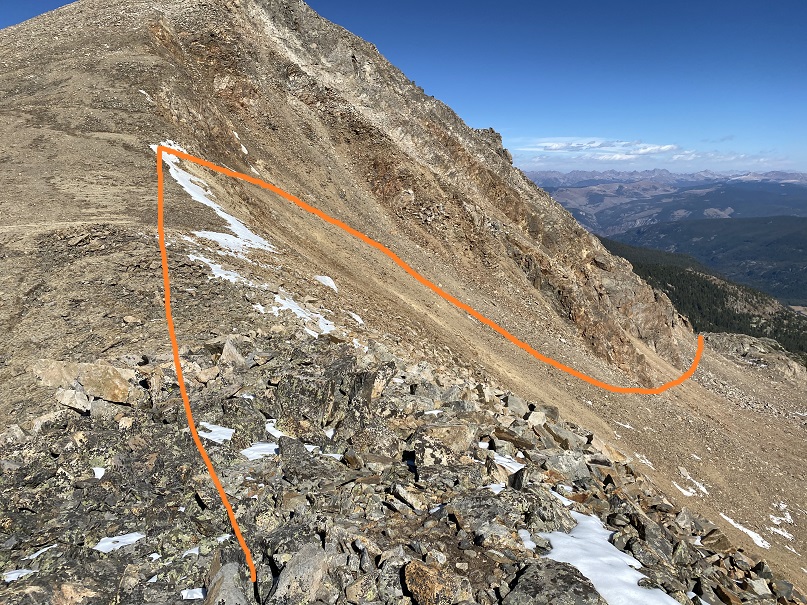
Here’s my route back down into the basin

And down the gullies

Here’s how I ascended the rock to avoid the pond to my left

And headed back out of the marshy area

Let the route finding begin again.  I tried to re-trace my steps, but it just wasn’t happening.  I kept looking for my original route in, but finally realized that wasn’t going to happen.   I knew Cross Creek Trail was below me, and as long as I headed down and east I’d eventually run into it.  So I headed east. 

After wandering down and east and down and east I connected up with Cross Creek Trail and followed it back to the trailhead.  I heard trees snapping in the wind the entire hike back.  They’d make a loud, booming sound I initially thought was rockfall, except there were no reverberations from rockslides, just a loud crack and boom! 

I got back to my truck at 8pm, making this a 28.33 mile hike with 6674’ of elevation gain in 16 hours, 15 minutes. 

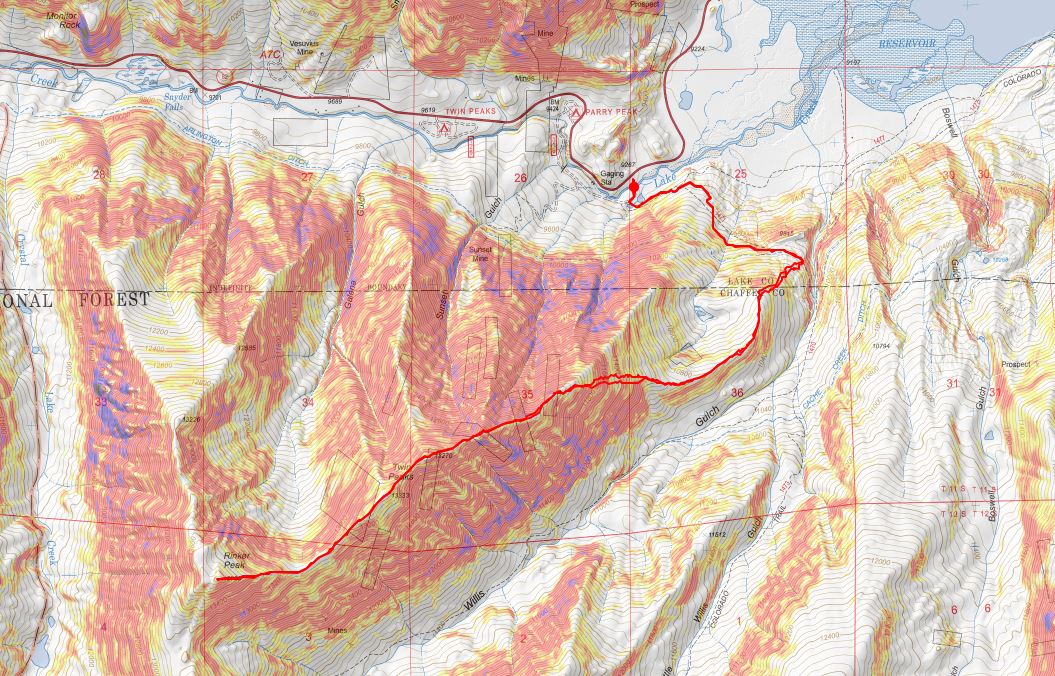
Rinker Peak – 13,789, Twin Peaks B – 13,333 & Twin Peaks Northeast – 13,270

1

RT Length: 10.5 Miles

Elevation Gain: 5471’

Wow, what a difference a couple of months make! I’d attempted Rinker Peak back in January but didn’t get very far. Today there was no snow on the ground at the Willis Gulch Trailhead and I was easily able to get a parking spot instead of parking on the side of the road. I gathered my gear and was on the trail by 3:30am.

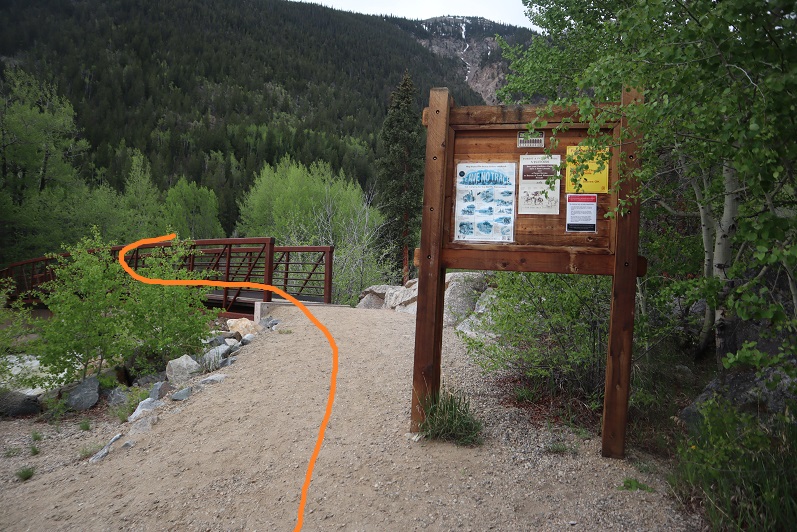
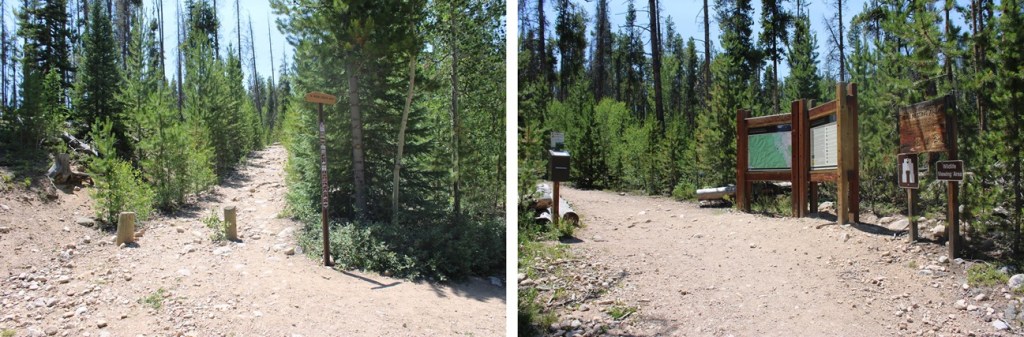
The trail begins at the south end of the parking area by crossing a bridge over Lake Creek and turning right.

2

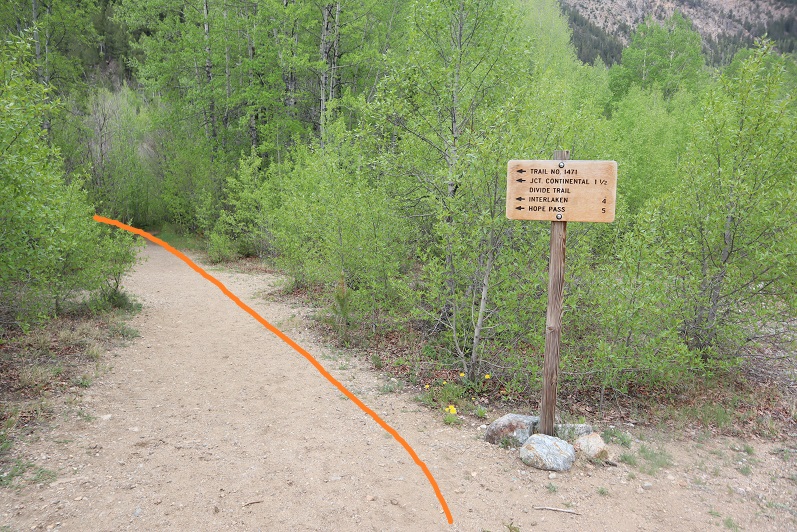
At this sign turn left and follow Trail No 1471

3

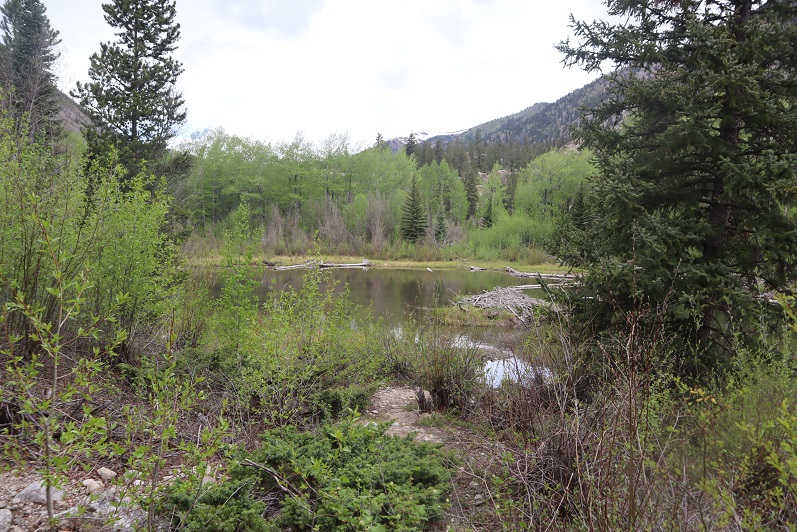
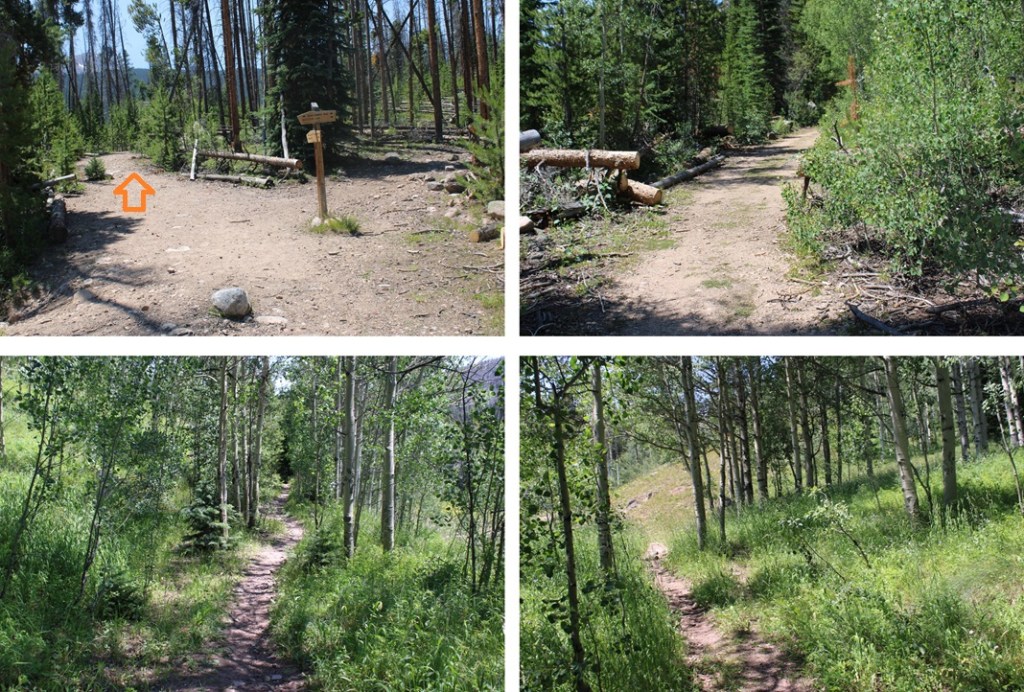
This will lead you through some Beaver Ponds on a nice trail. In the dark of the morning I heard a beaver sized splash about 4 feet away from me, stood in place for a second making noise, and for the next 15 minutes hit my trekking pole on every rock/tree I saw. I’m pretty sure it was a beaver, and the beaver didn’t care.

4

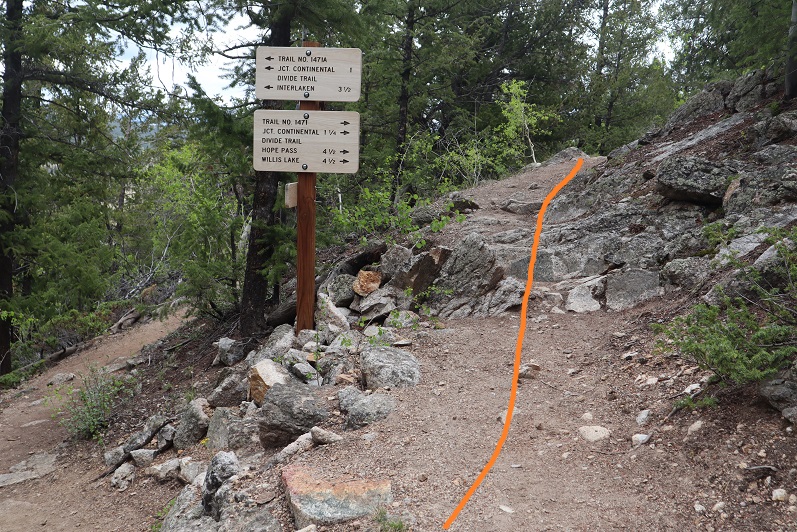
I followed the class 1 trail and stayed right at this junction to stay on Trail No 1471

5

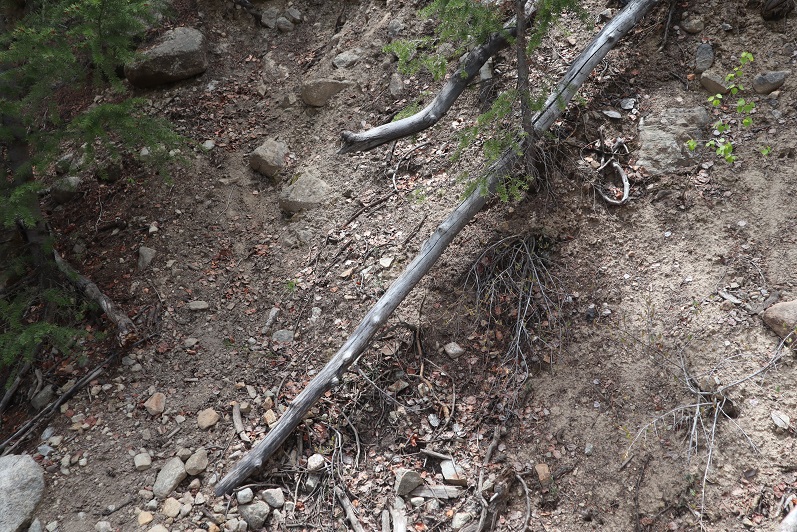
After hiking for 1.3 miles I turned right off the trail and bushwhacked my way up to the top of the slope. And I mean bushwhacked.

6

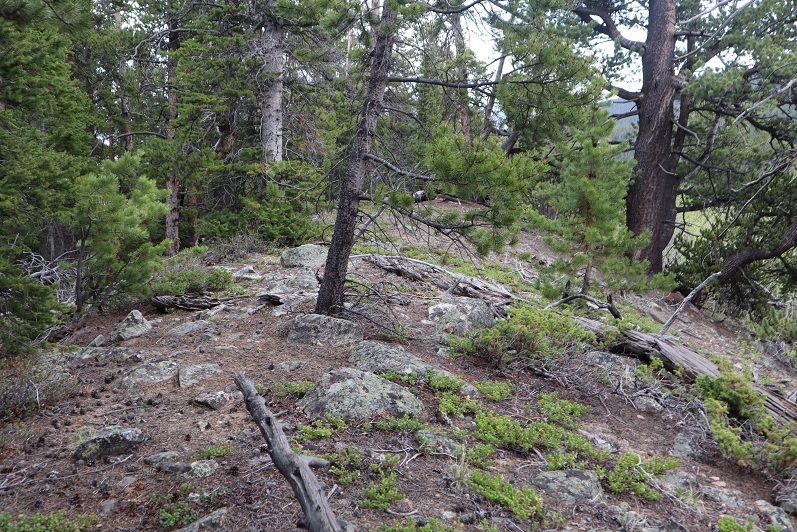
This was harder to do than it sounds, and I’m glad I did it at this time of year (before the bushes have too many leaves). There was a 20% chance of rain here last night and it looked like this section of the mountain got it: The branches and groundcover were wet and slippery and the slope angle just enough to keep me on my toes. There were tons of trails here, but they were all game trails and frequently and abruptly stopped. I just kept heading southwest, doing my best to find the path of least resistance, thinking to myself this ‘wet’ is the reason I could never do a thru hike, as I’d never dry out. Give me snow any day! (Also, I truly do want to do a thru hike…). It was quite an experience running into so many spiderwebs in the dark…

7

At 9275’ and after about half a mile of hiking off trail I came to the top of this part of the mountain, a kind of ‘ridge under the trees’. I wouldn’t call it a ridge per se, but from here if I would continue heading southwest I would have started losing elevation, so I turned left (south).

8

I followed this ridge south and then west as it rounded to treeline. There wasn’t a trail and I only saw 1 cairn all day (on the ridge)

9

I came to an area with a lot of downed trees (which was fun to navigate at night, easy during the day)

10

And headed straight up the mountain to treeline, passing through pine trees, dense aspens, and some loose rock piles

11

12

The rocks were large but many were loose. Be careful of your footing here: I don’t think any rocks will tumble down, but they will roll out from under you.

13

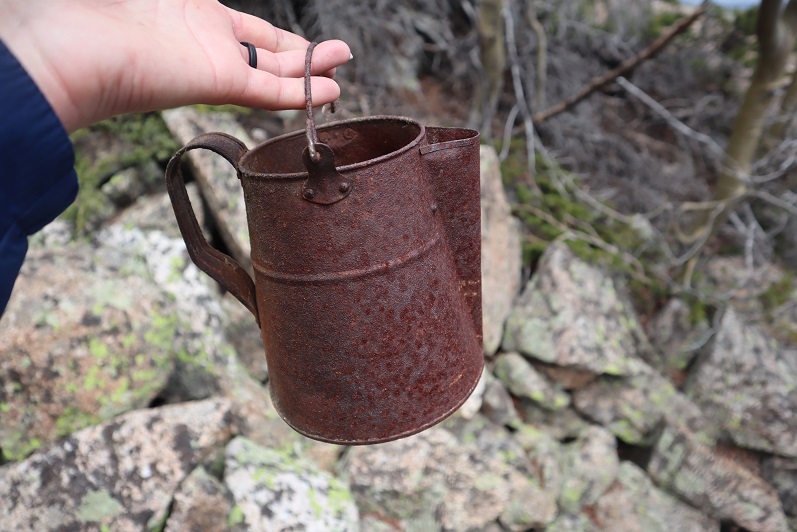
This brought me to treeline, where I found what looked like maybe an old structure (or windbreak) covered in snow so I couldn’t really tell. There were also rusted cans scattered all over and an old coffee pot. That means there had to be a better trail to get to this point than the one I’d taken, as it was obvious this area was once used more frequently.

14

This was basically treeline, but there was just enough snow that I skirted it for a bit to make it to the ridge.

15

16

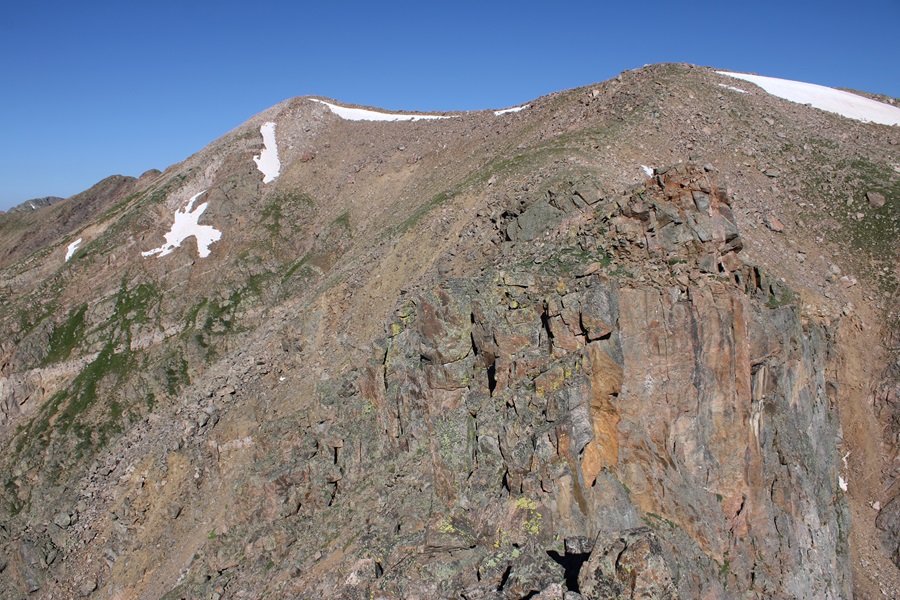
The ridge is straightforward. I thought the top would be Twin Peaks Northeast (it’s not).

17

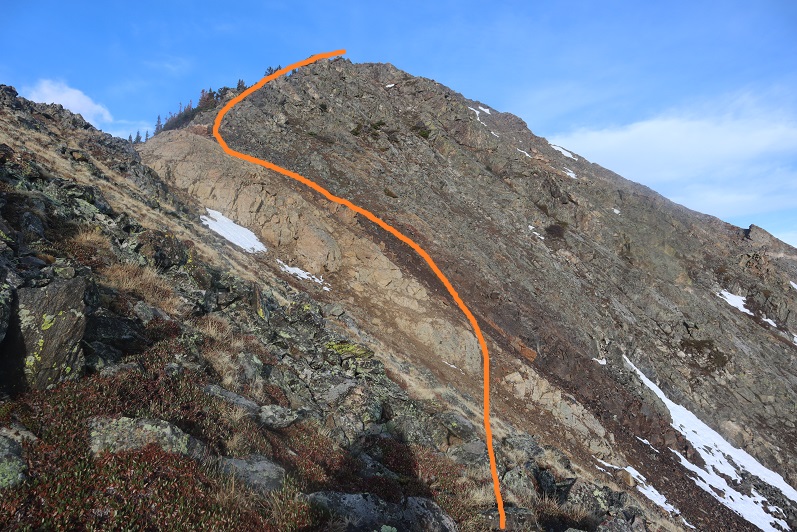
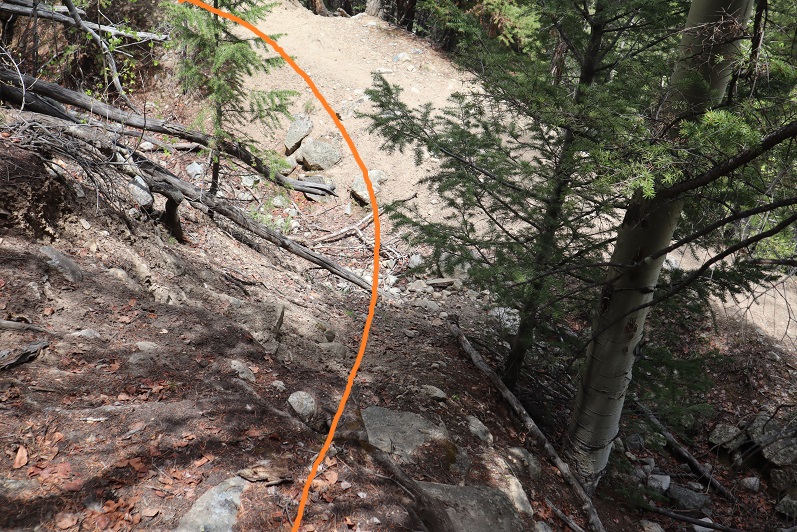
There are a couple of goat trails on the left side of the ridge, and one area where I had to dip down to the right to avoid a gully

18

19

There’s a cairn at the top. I reached the ridge after 3.75 miles of hiking

20

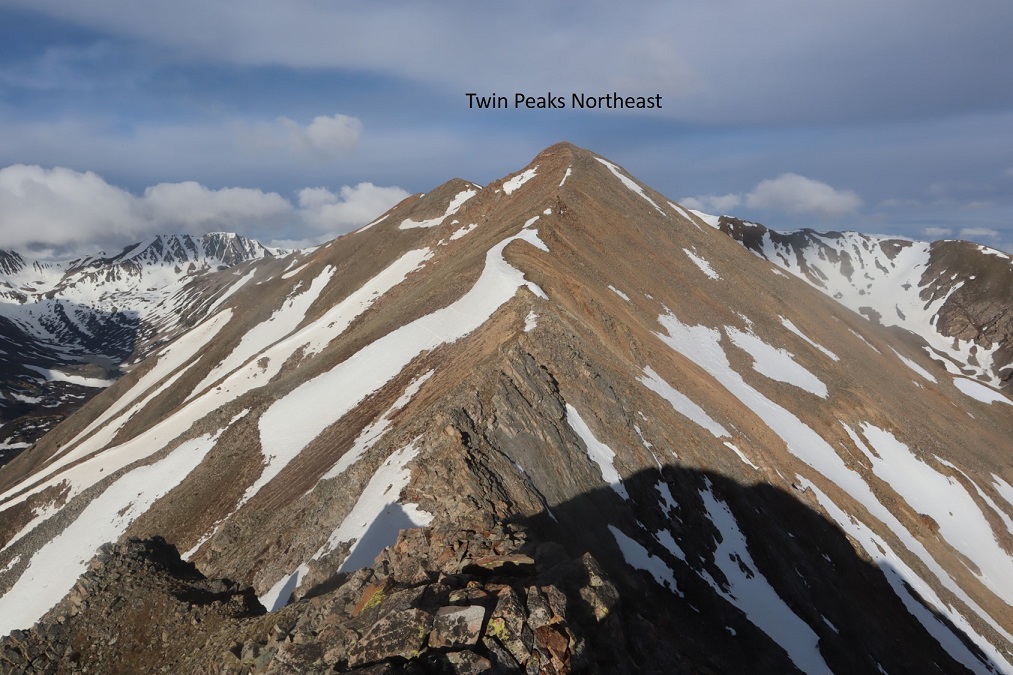
And from the top of the ridge you can see Twin Peaks Northeast

21

From here there are a lot of ups and downs to the rest of this hike. This is a class 2 ridge, and nothing too difficult presents itself. I went right here

22

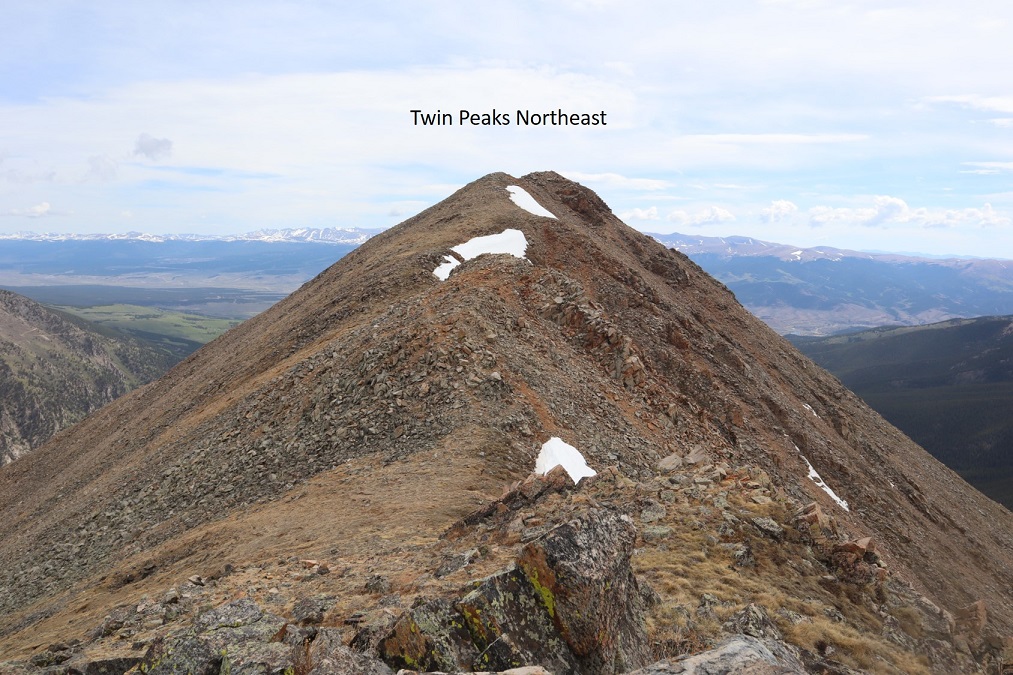
But mostly just followed the ridge. I made it to the top of Twin Peaks Northeast at 7:38am, after 4 miles of hiking. It was windy and thus cold, and here I put on my outer layer and balaclava and extra gloves. I got selfies here and at the next peak but I’ll spare you those and just let you see the videos, as these are unranked peaks.

23

Twin Peaks Northeast:

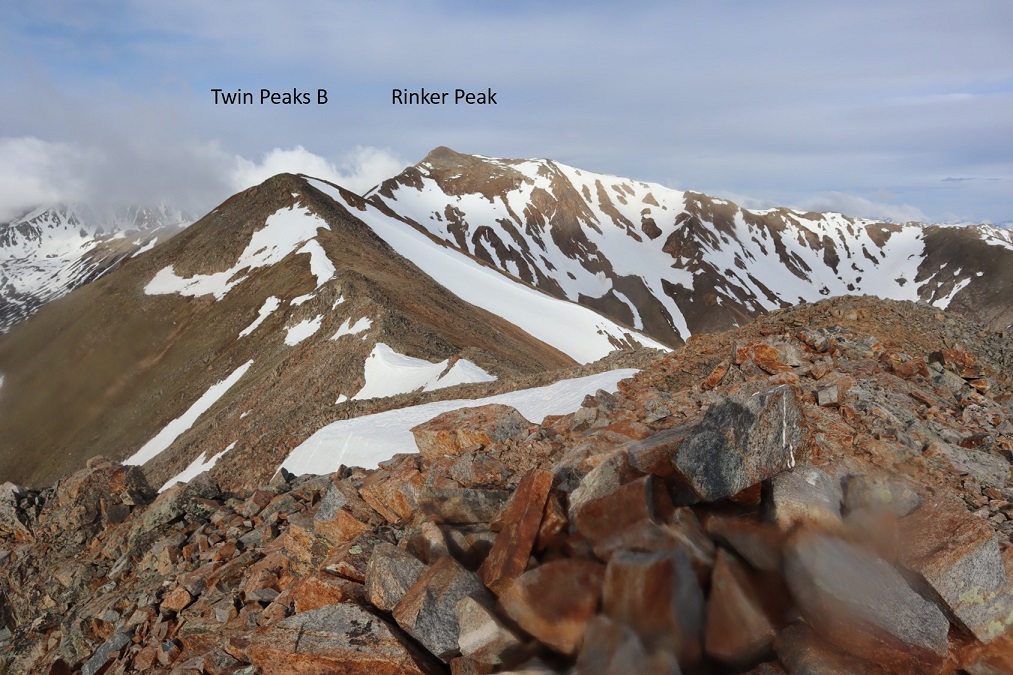
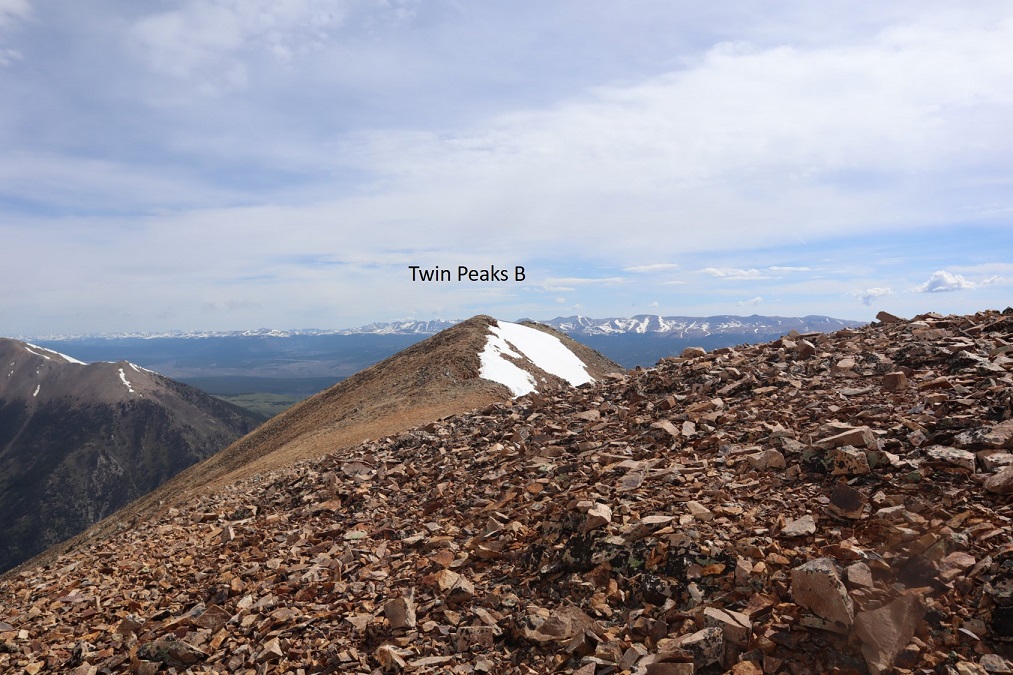
A storm was coming in, or at least it looked like clouds were rapidly forming, so I had to make a decision: Should I continue along the ridge or turn back? In the end I decided to continue to Twin Peaks and make the decision at that point. This is a long ridge, and requires commitment on the weathers part. I continued southwest along the ridge to Twin Peaks. The hardest part of this ridge was over and it was a simple trek (or it would have been simple without all that wind!!!). I made it to Twin Peaks B at 7:50am after 4.5 miles of hiking.

Twin Peaks B:

24

The weather seemed to be holding so I headed over to Rinker Peak. This was an easy class 2 ridge hike to the saddle

25

Here’s the route I took up to the summit of Rinker. Snow was (mostly) avoidable, and while I did some minor postholing, no traction was needed

26

27

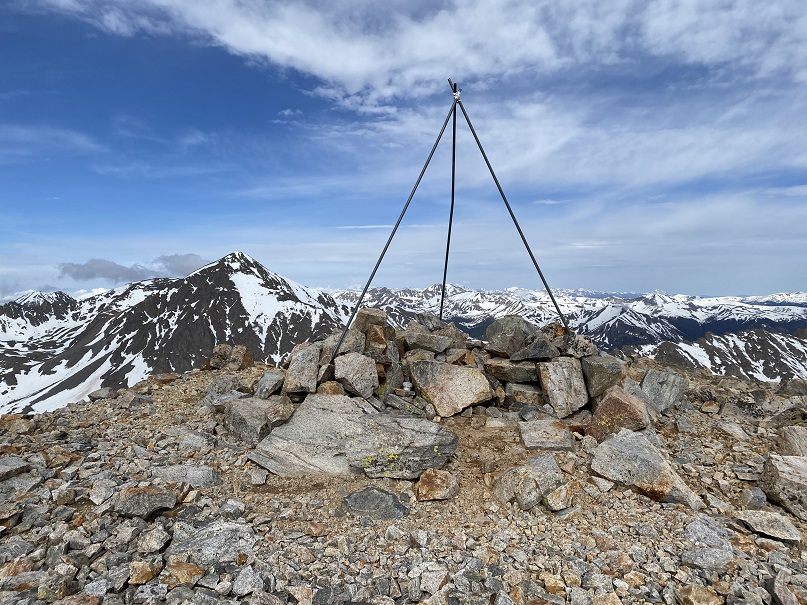
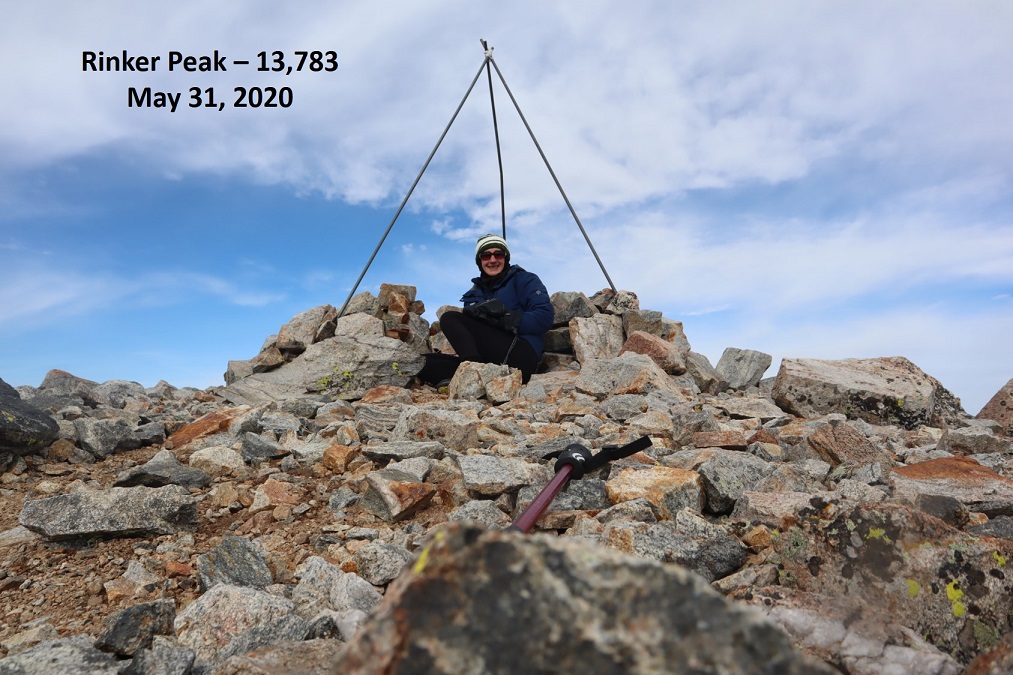
There was a tripod at the top, so if you brought up a tarp and rope you could have a nice shelter from the wind. I summited at 8:50am, glad I’d decided to continue this hike. It was 5.35 miles to this point and the weather was great.

28

29

Rinker Peak:

Here’s looking at the route to this point

30

And the route back along the ridge (there are goat trails in areas to follow here)

31

32

33

As on the way in, the only really tricky section (if you want to call it that) is between Twin Peaks Northeast and the point on the ridge to head back down

34

Go right around this rock

35

Left here (just before the saddle)

36

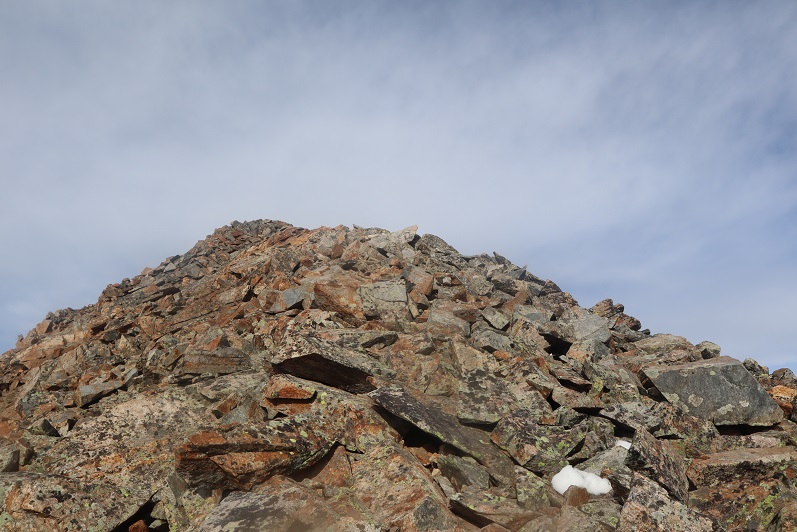
And this is the route to the top

37

Be careful of loose rock here

38

This will bring you back to the cairn

39

Just follow the ridge back to treeline

40

And back through the rocks, aspens, and pine trees

41

42

43

That will lead you to the ridge to follow below treeline

44

And eventually back to the trail

45

I passed the beaver pond in daylight (I didn’t see any beavers)

46

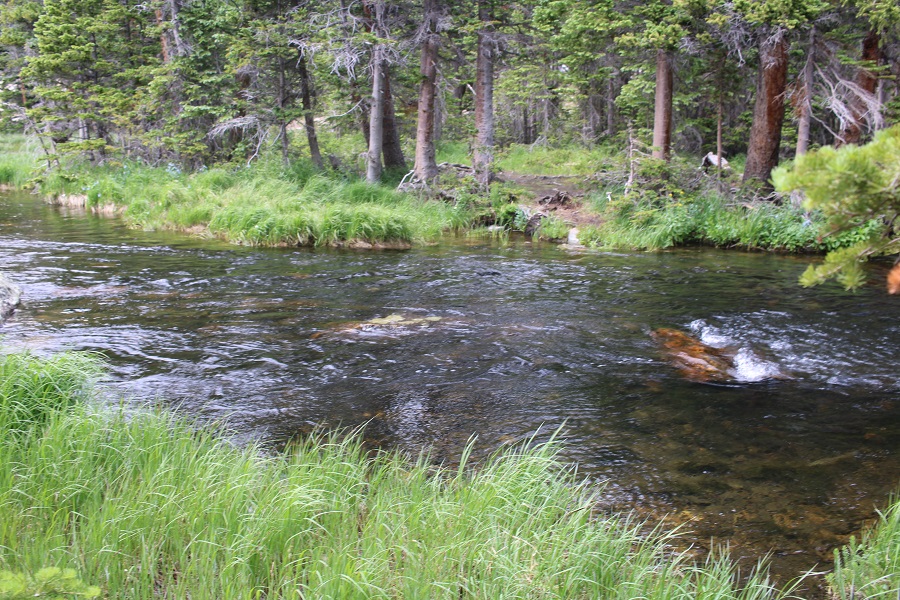
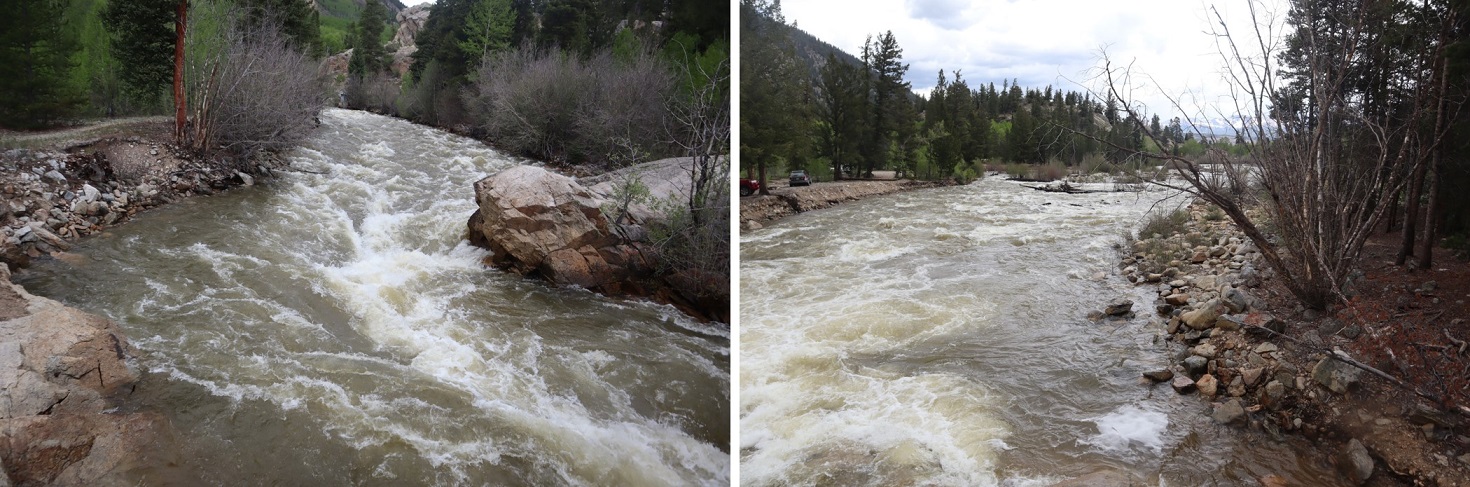
And crossed Lake Creek. It had more raging water than I’ve ever seen there before but to be fair, I’m usually in this area in winter and it’s mostly frozen.

47

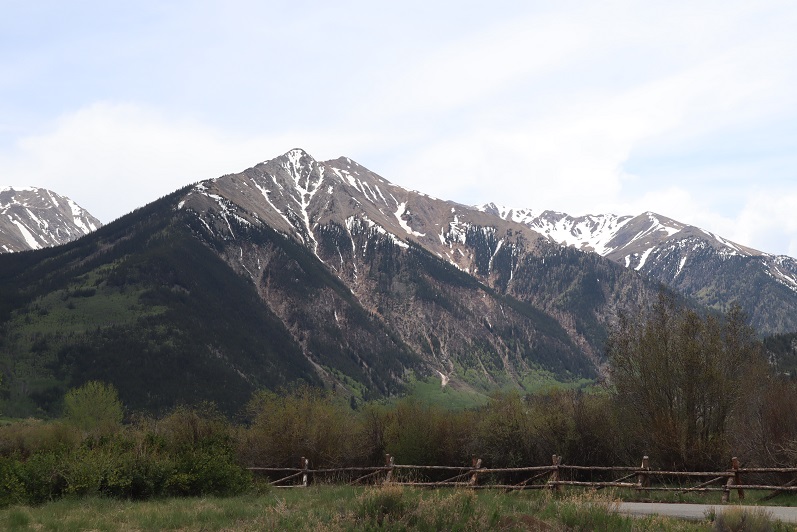
I made it back to my truck at 1:30pm, making this a 10.5 mile hike with 5471’ of elevation gain in 10 hours. I didn’t see another person all day, even when I was on the class 1 trail. It started raining as I left the parking lot. Here’s the route to the ridge as seen from Twin Lakes

48

And my topo

49