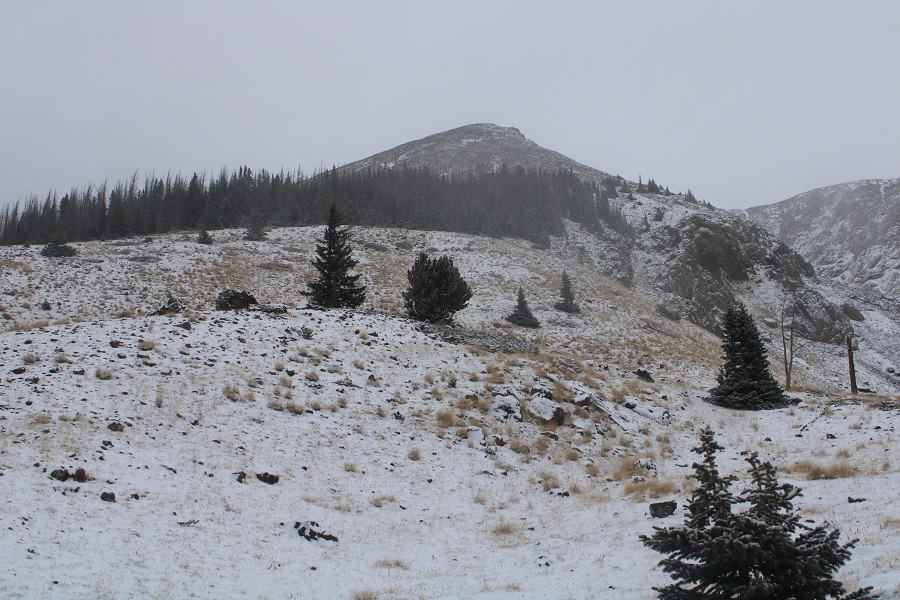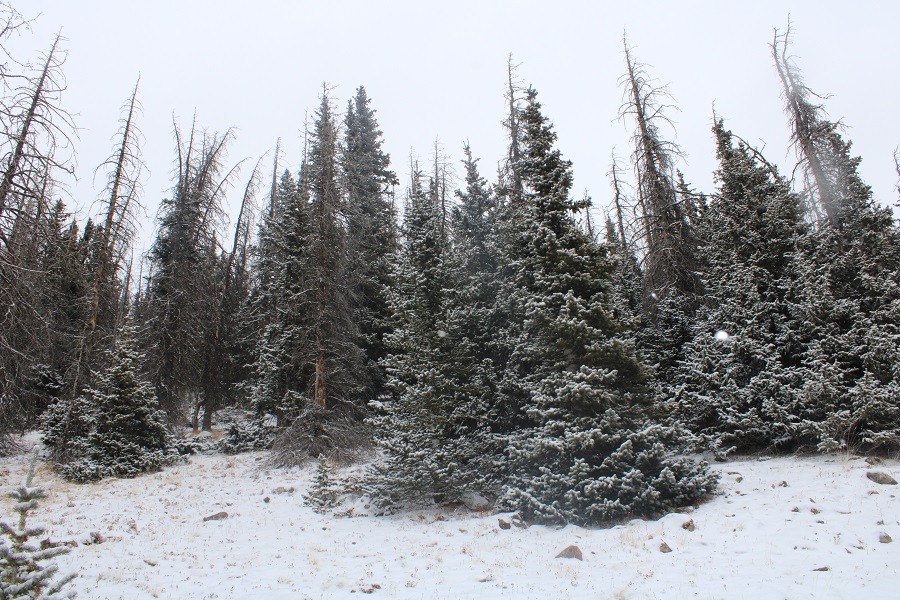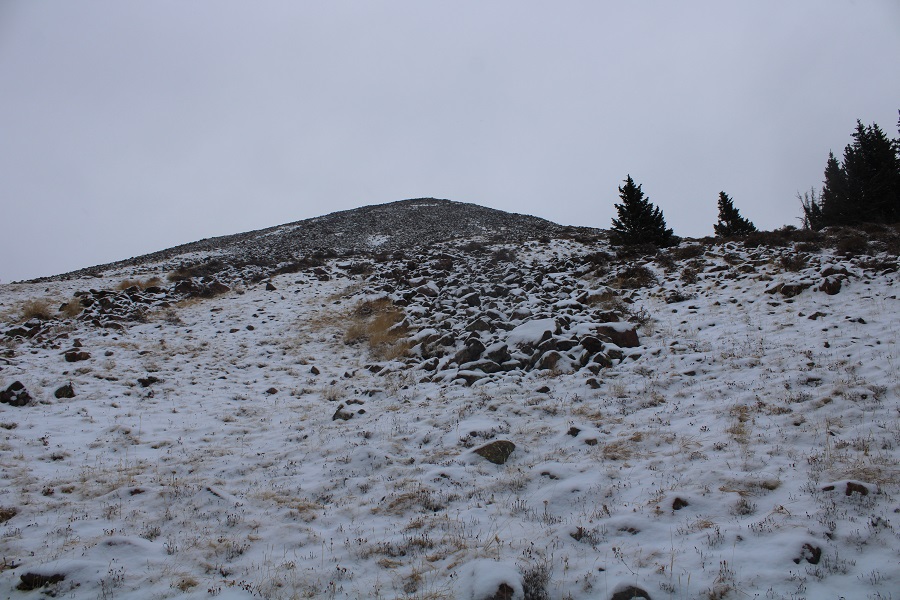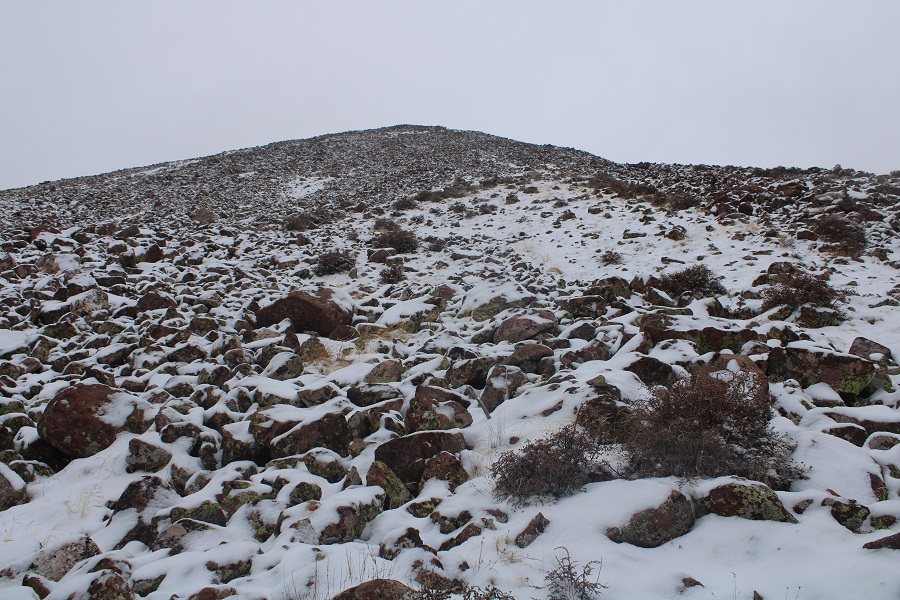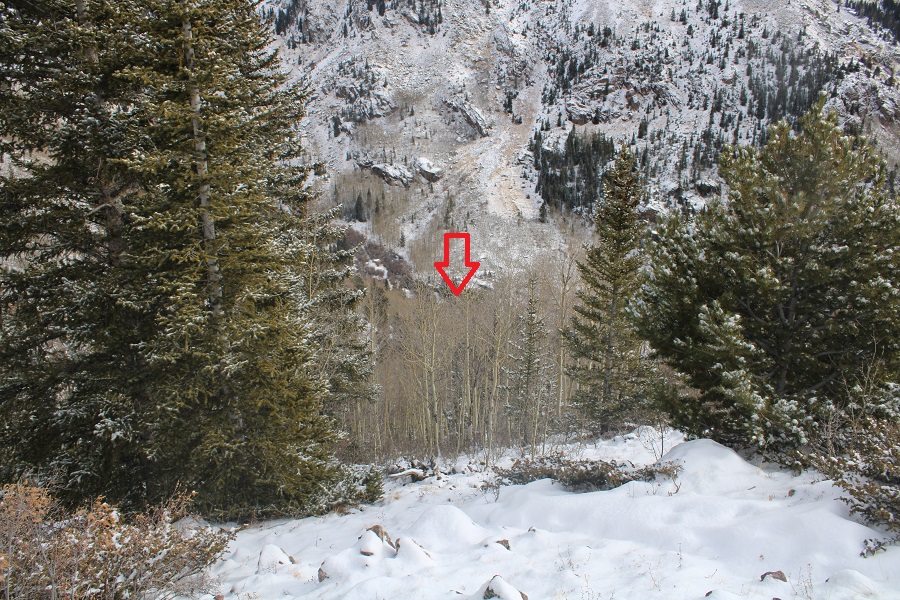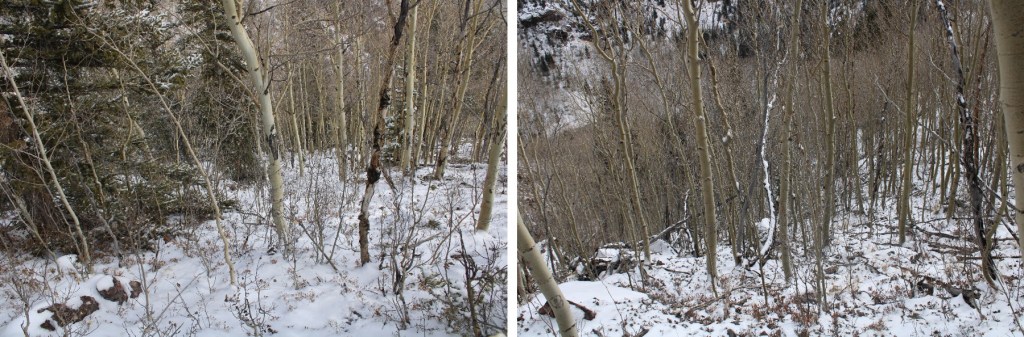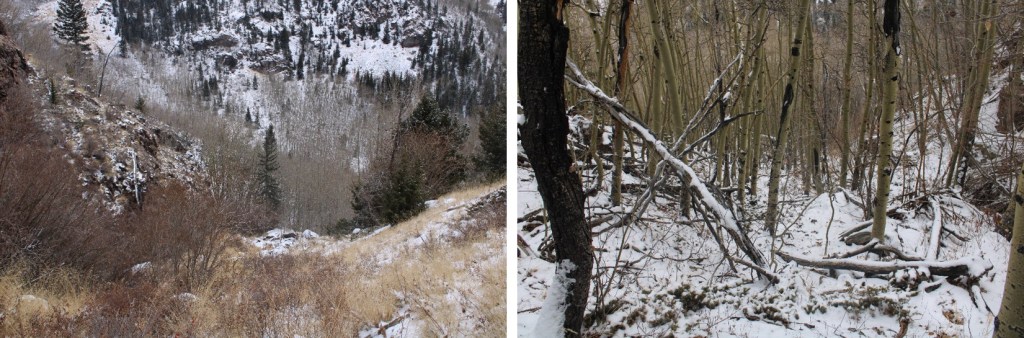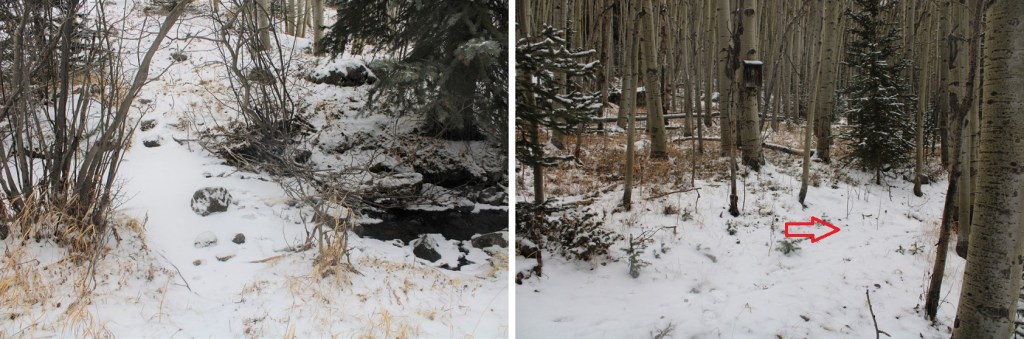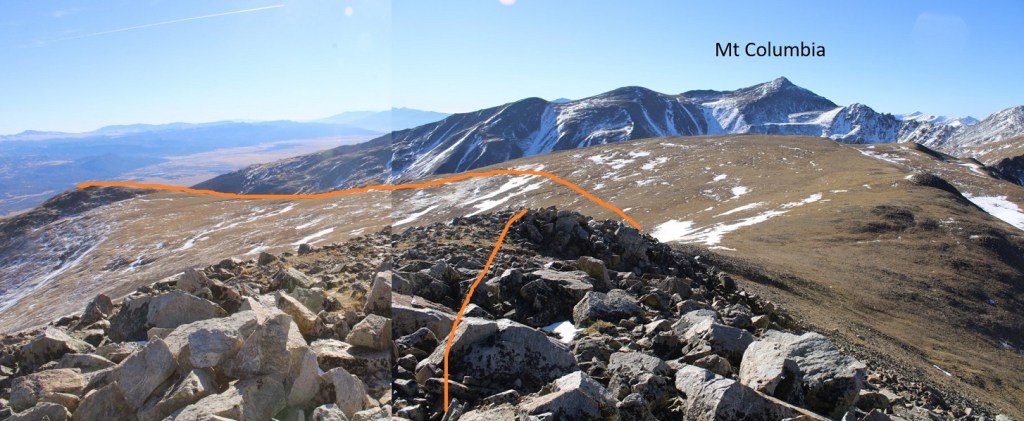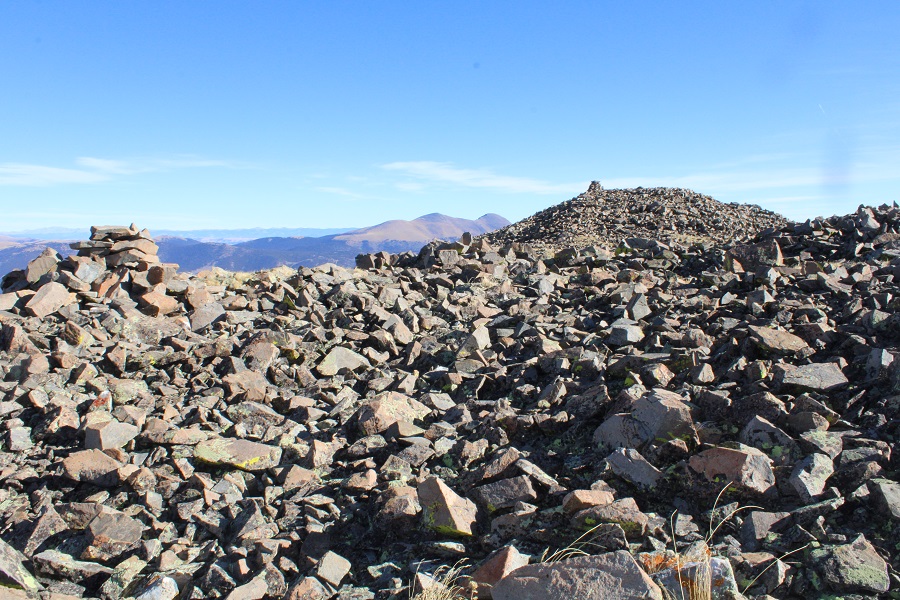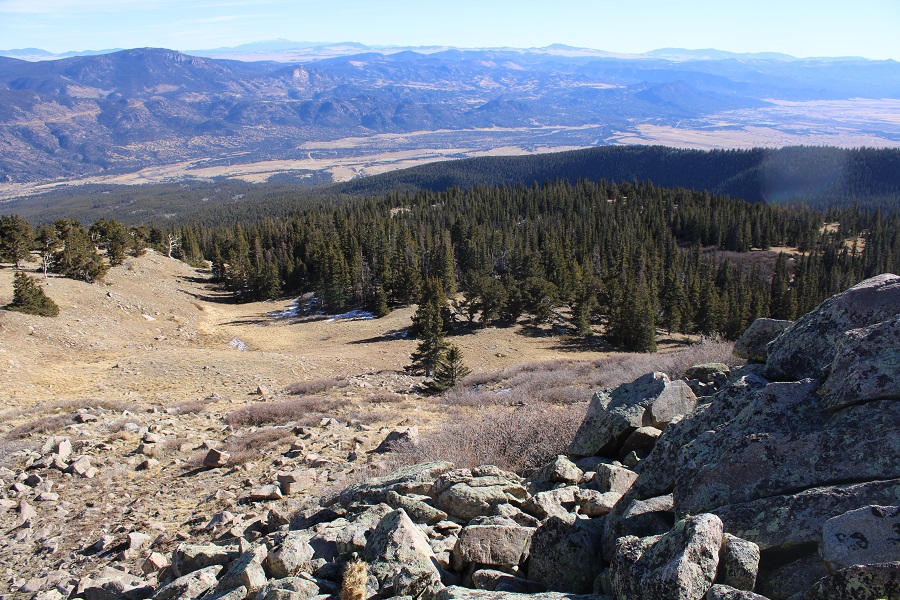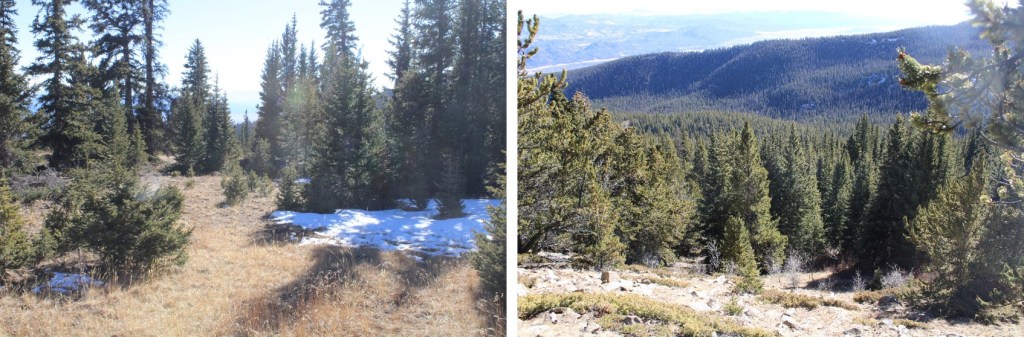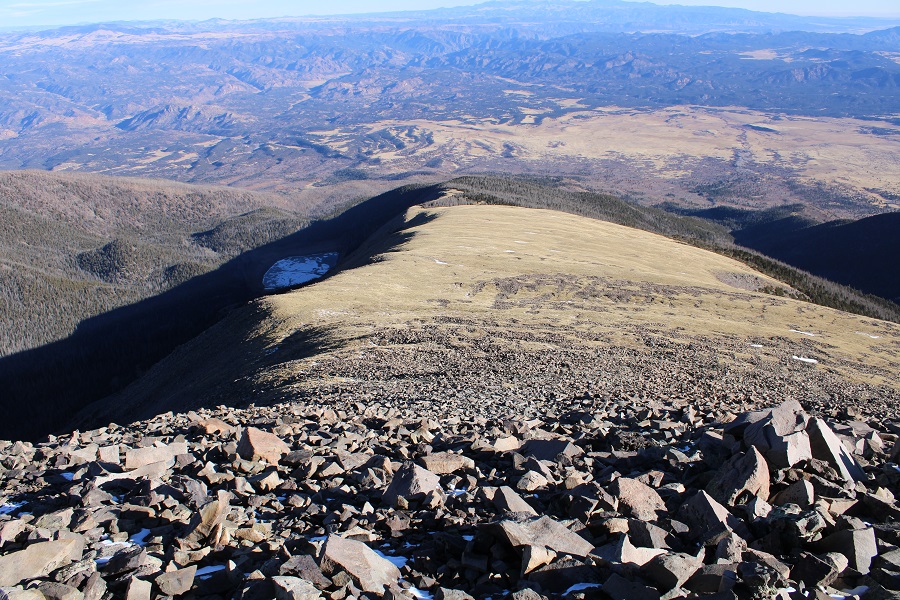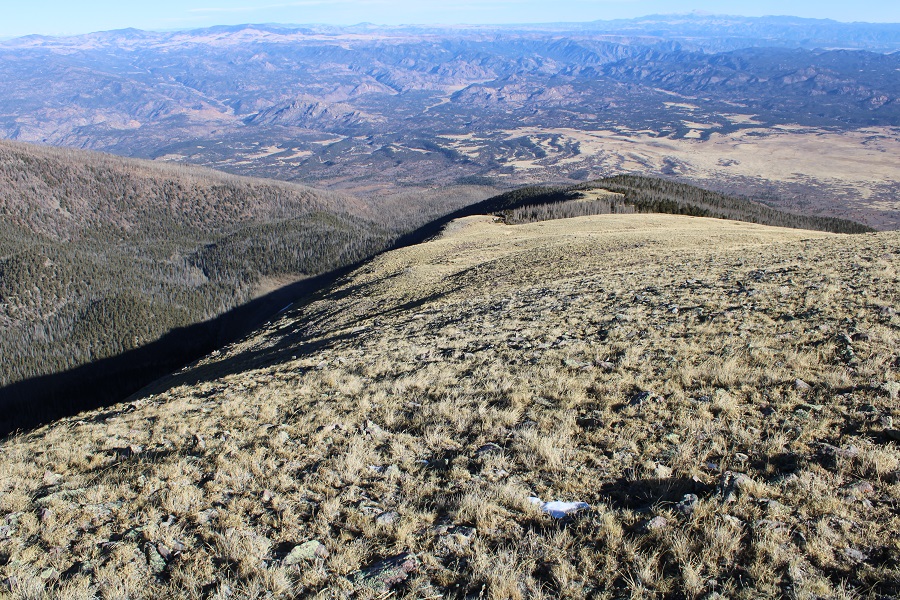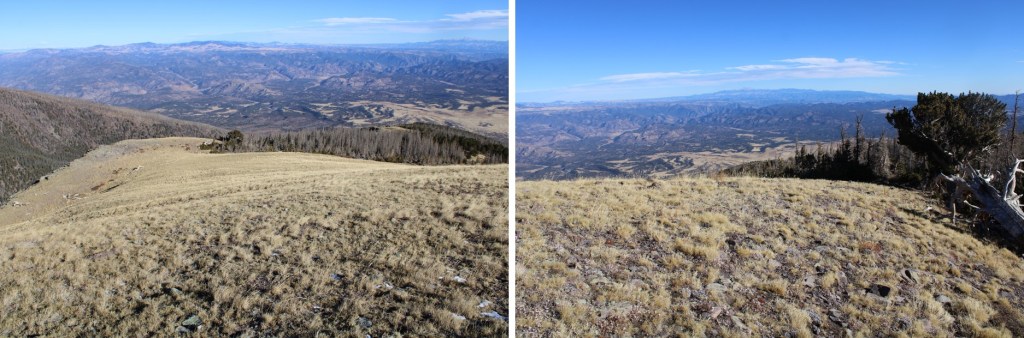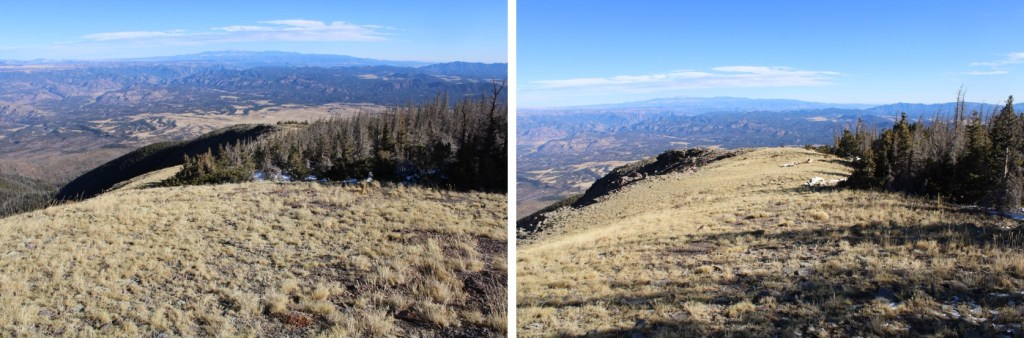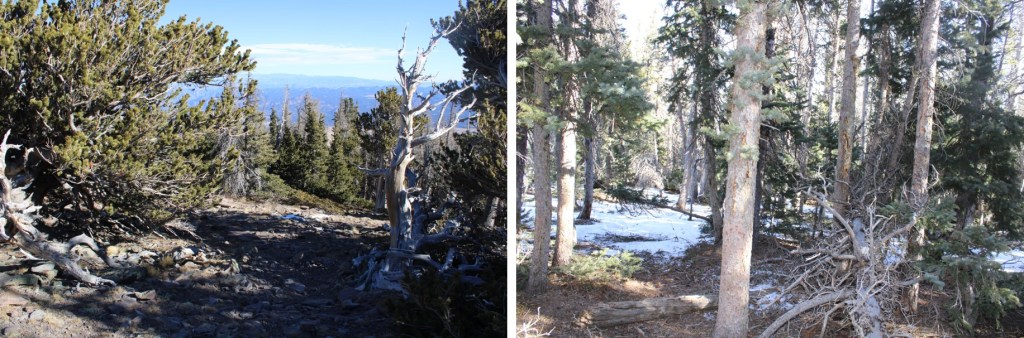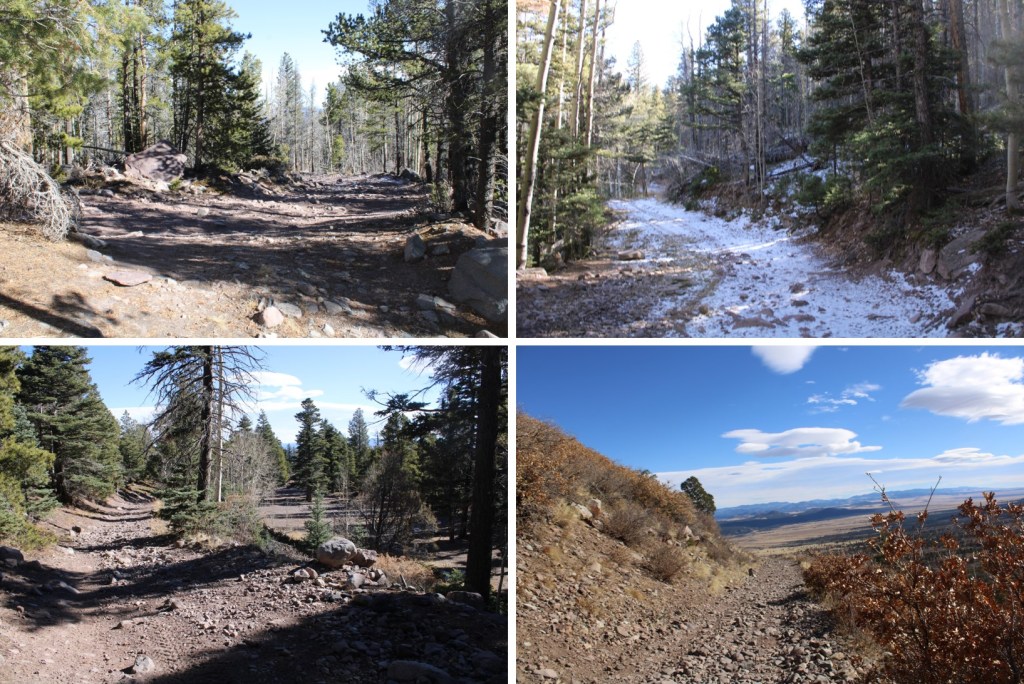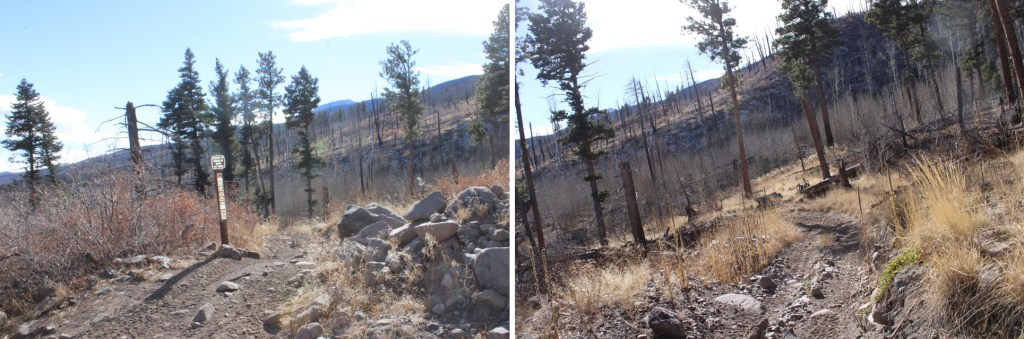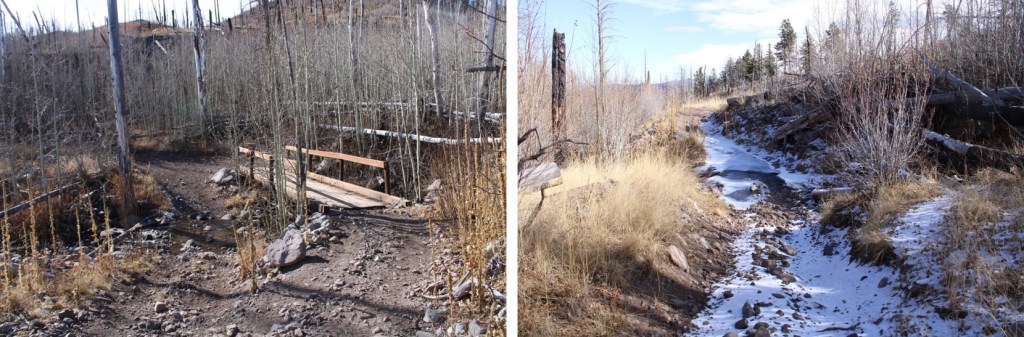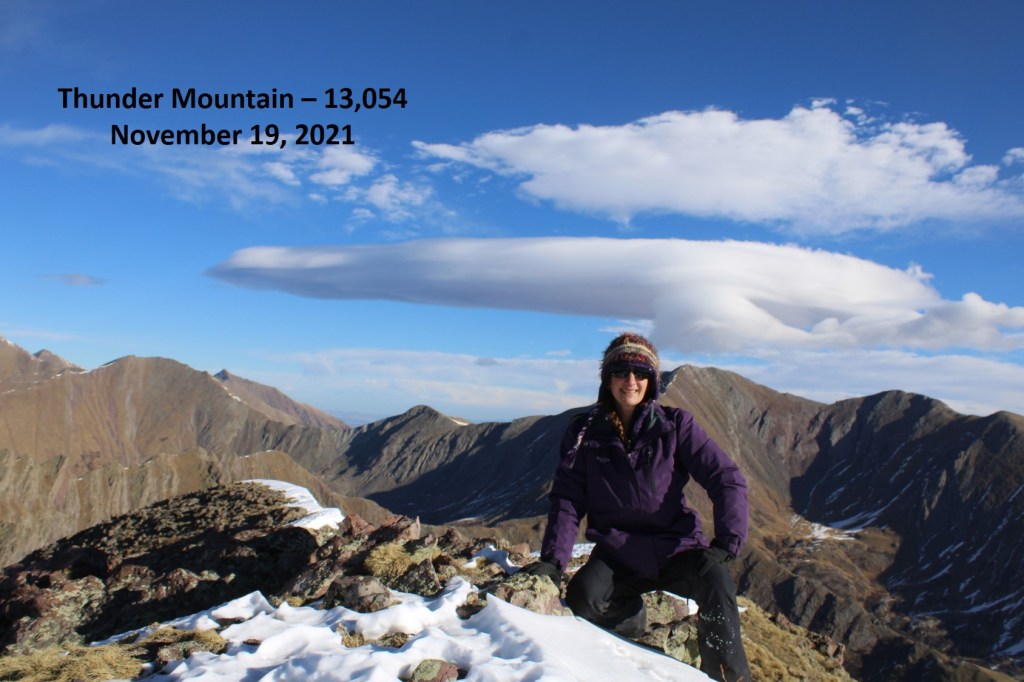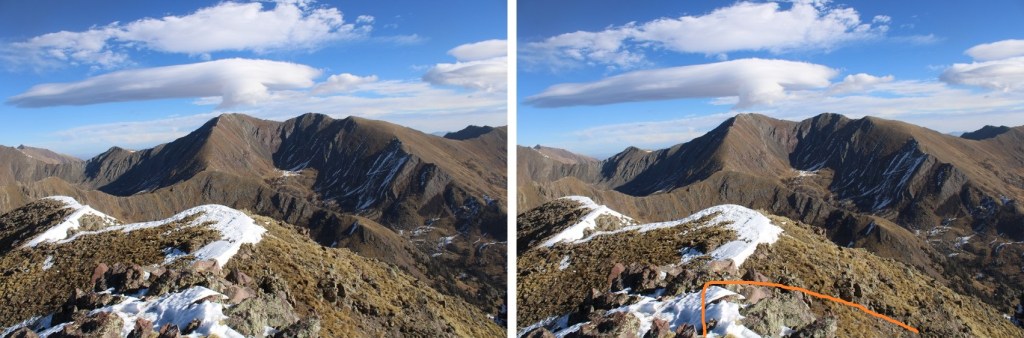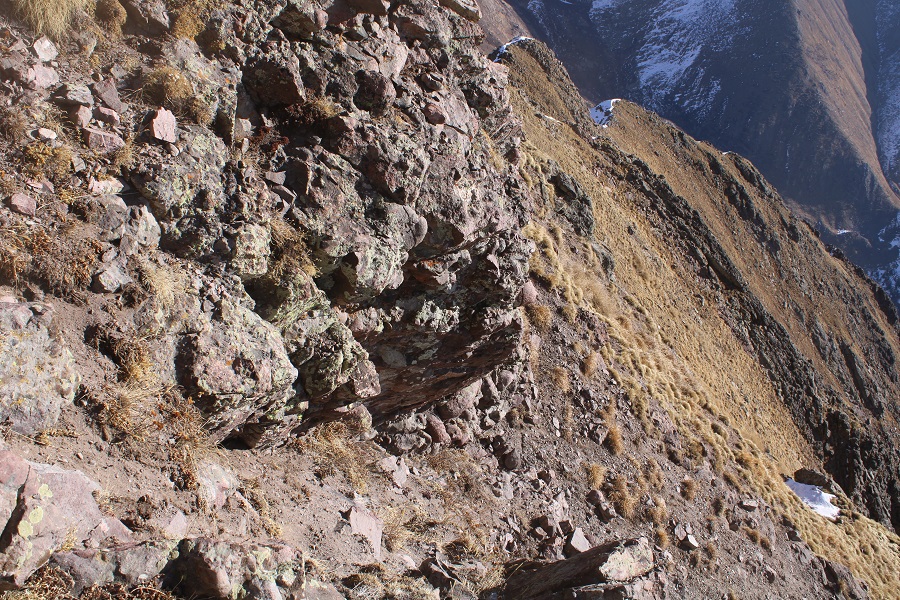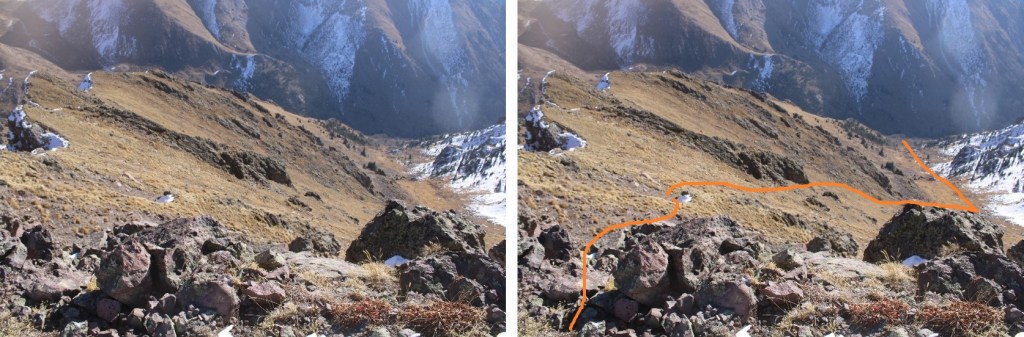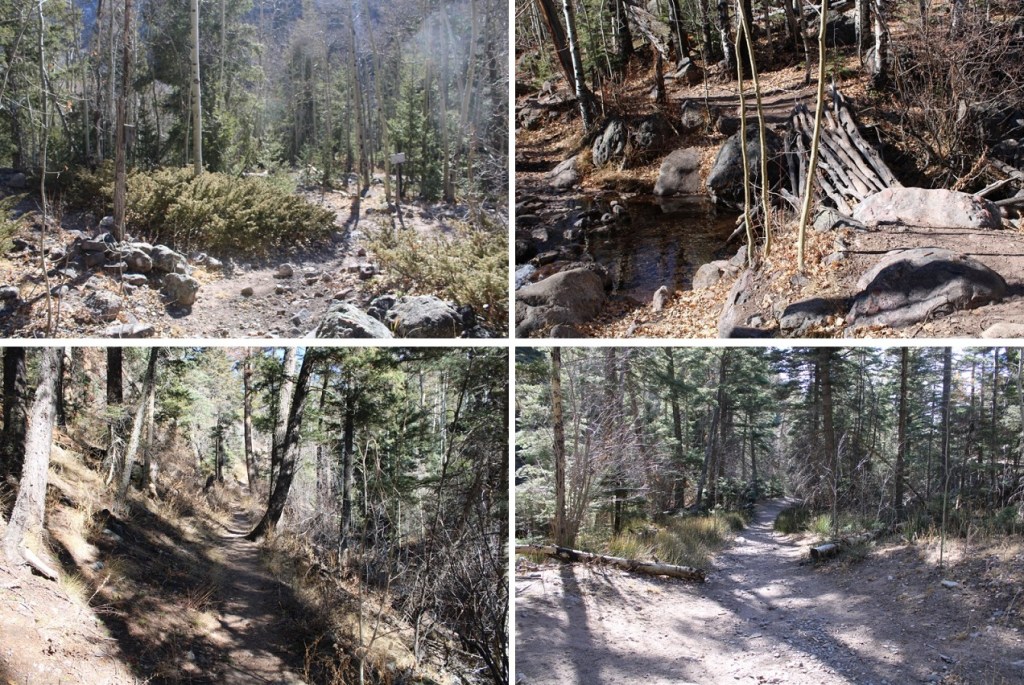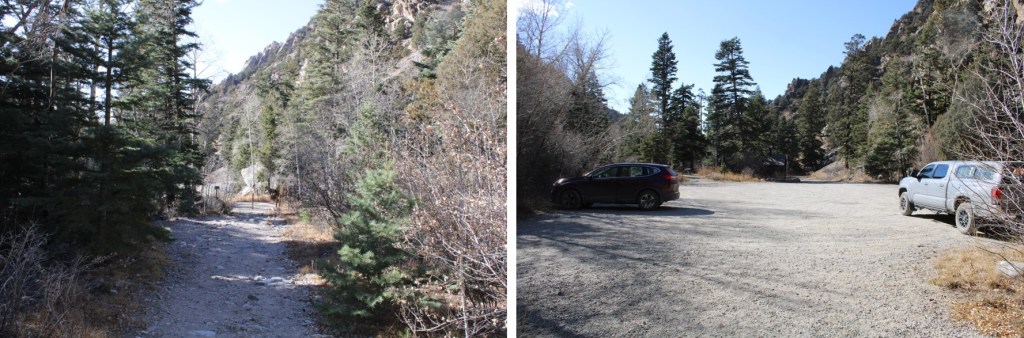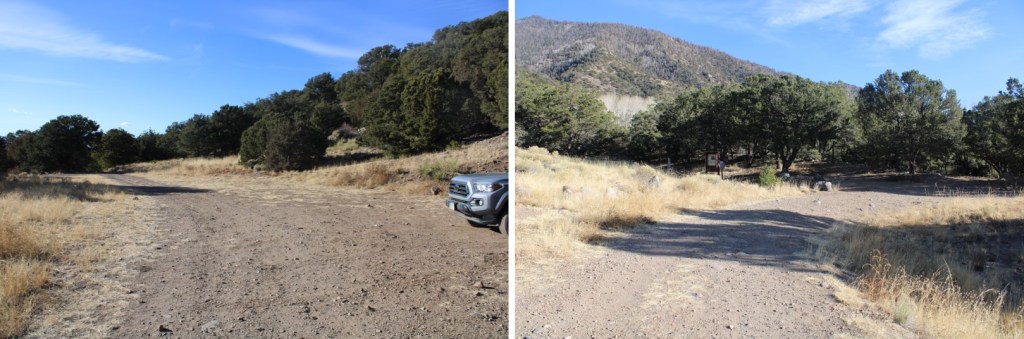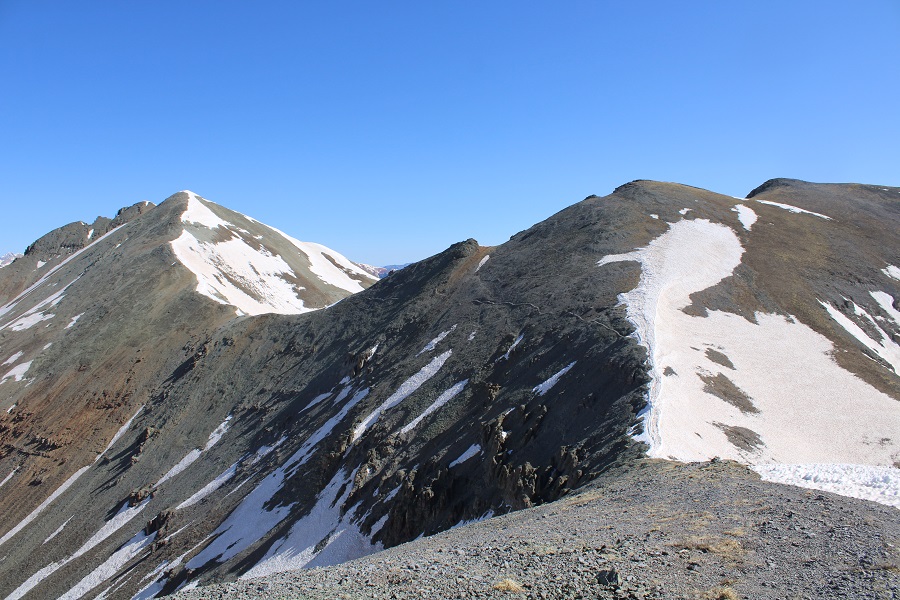
Grand Turk – 13,167, Sultan Mountain – 13368, Spencer Peak – 13,080

RT Length: 10.36

Elevation Gain: 3539’

I spent the night dispersed camping at the Molas Trailhead, because the views there are amazing.  Added bonus:  I was able to talk with trail runners who had been along the trail to the Vestal Basin, and learned (at least to the Beaver Ponds) it’s all melted out and there aren’t any new downed trees.

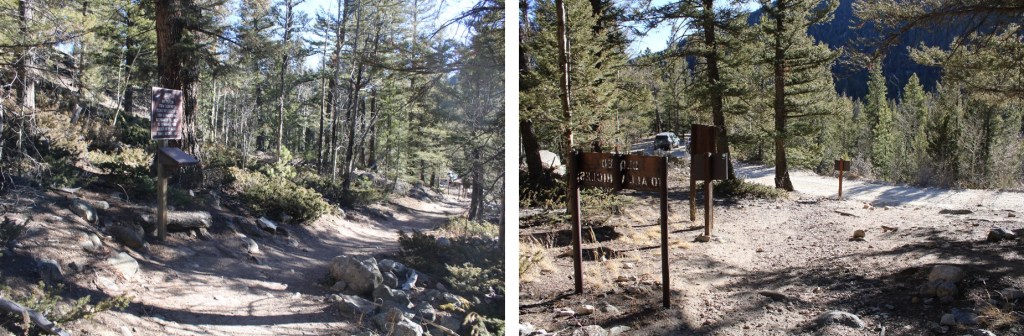
I woke up at 4:30 am and drove to the Little Molas Lake Trailhead.  The gate to the campground was still locked.

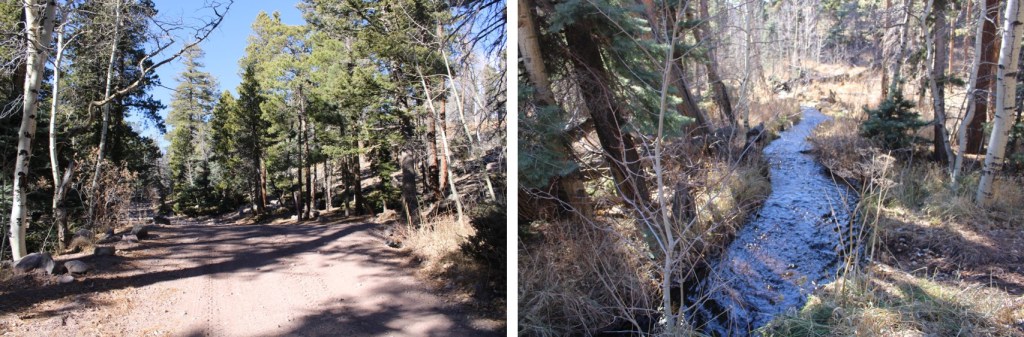
It was still ark when I started out.  I followed the road through the campground, staying right on the one- way loop.
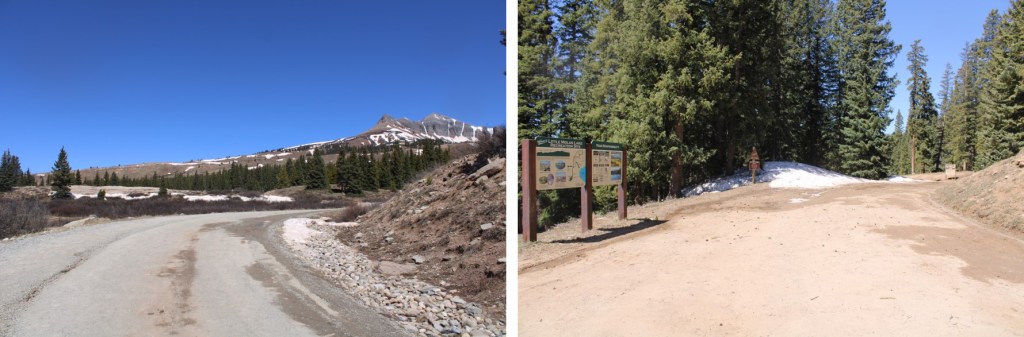
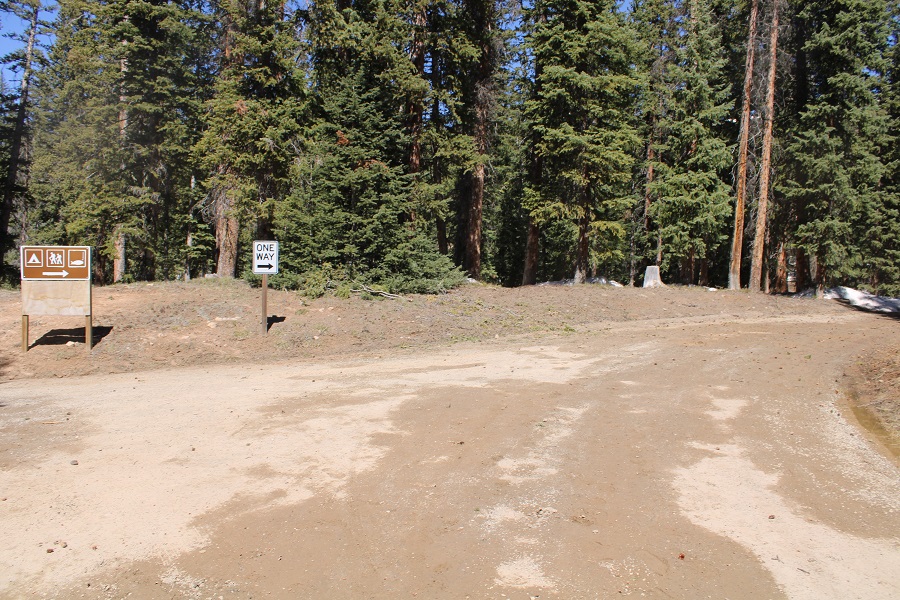
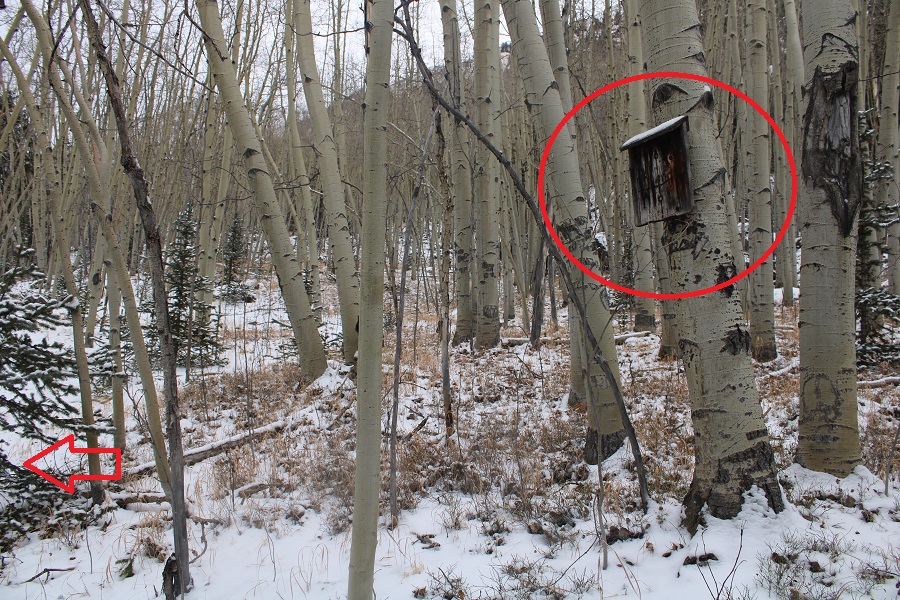
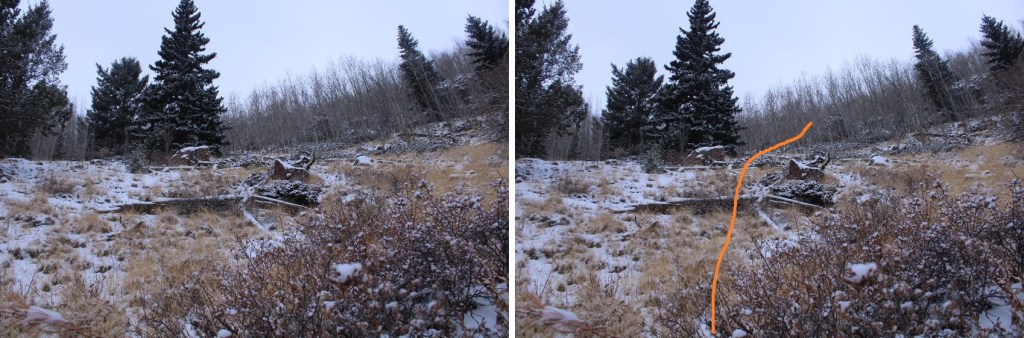
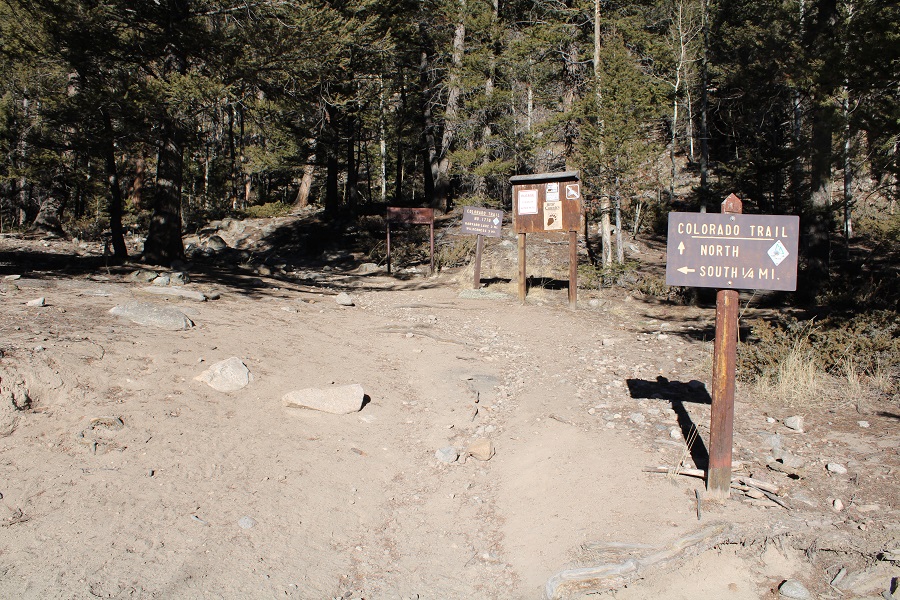
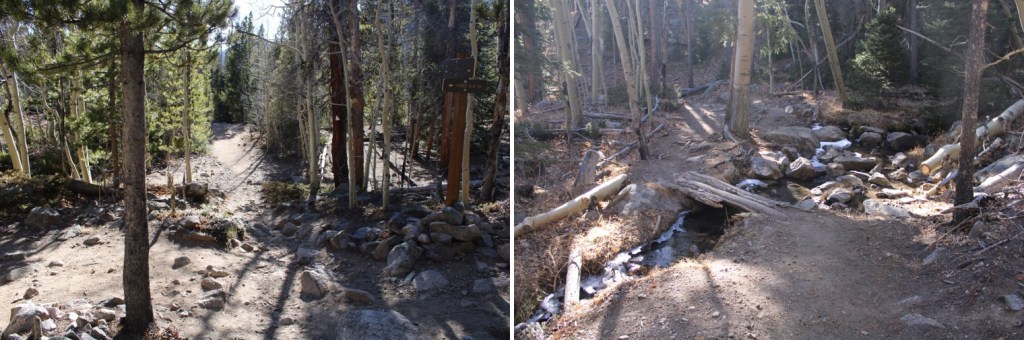
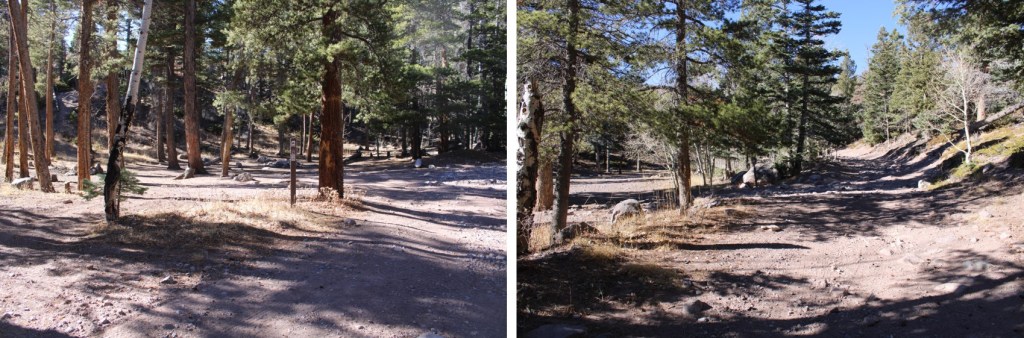
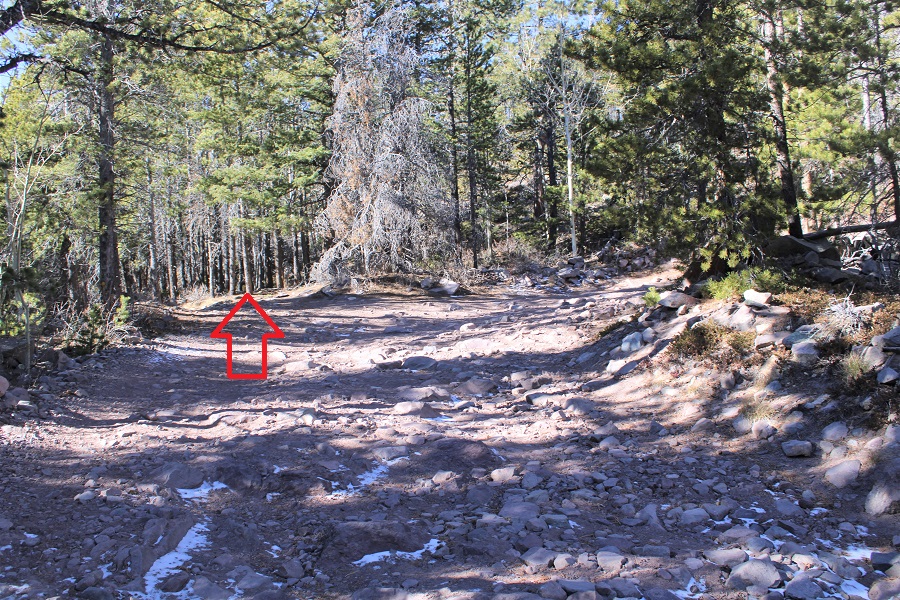
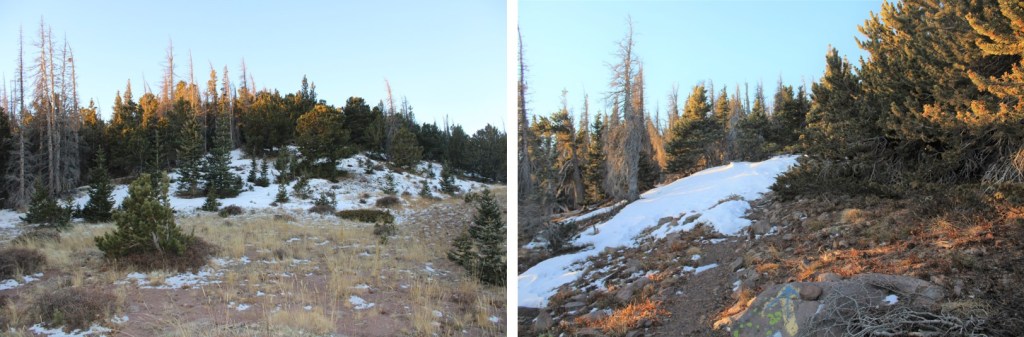
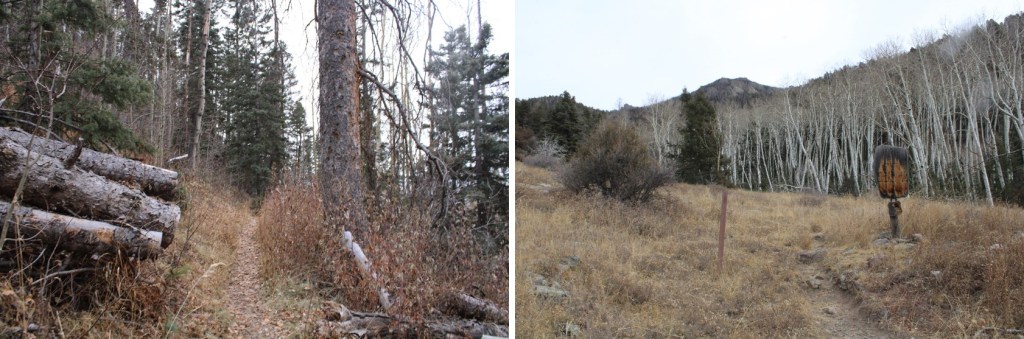
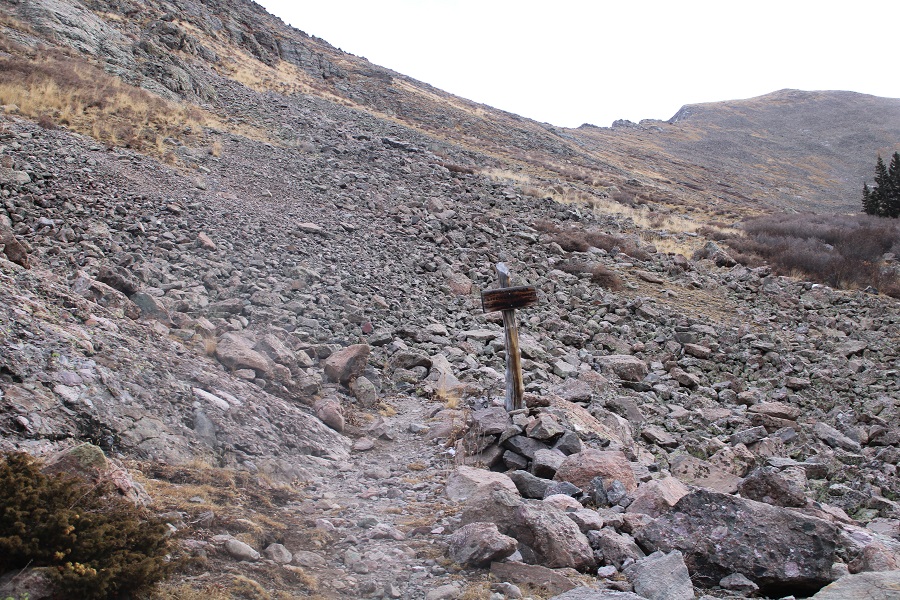
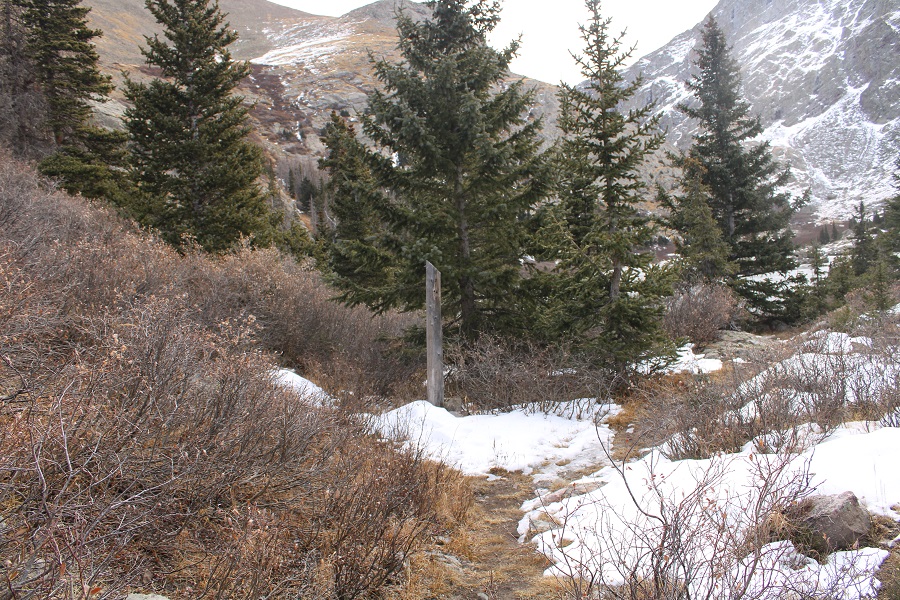
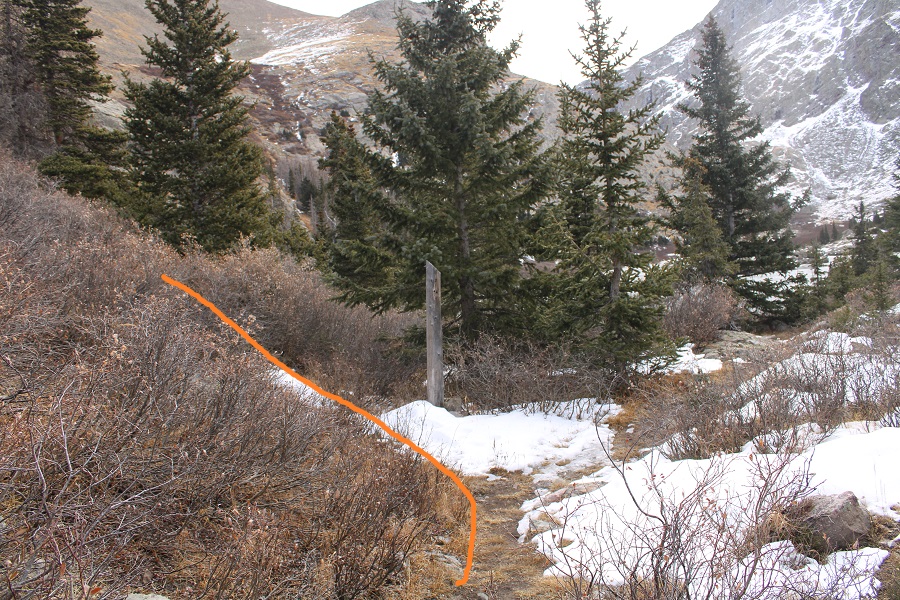
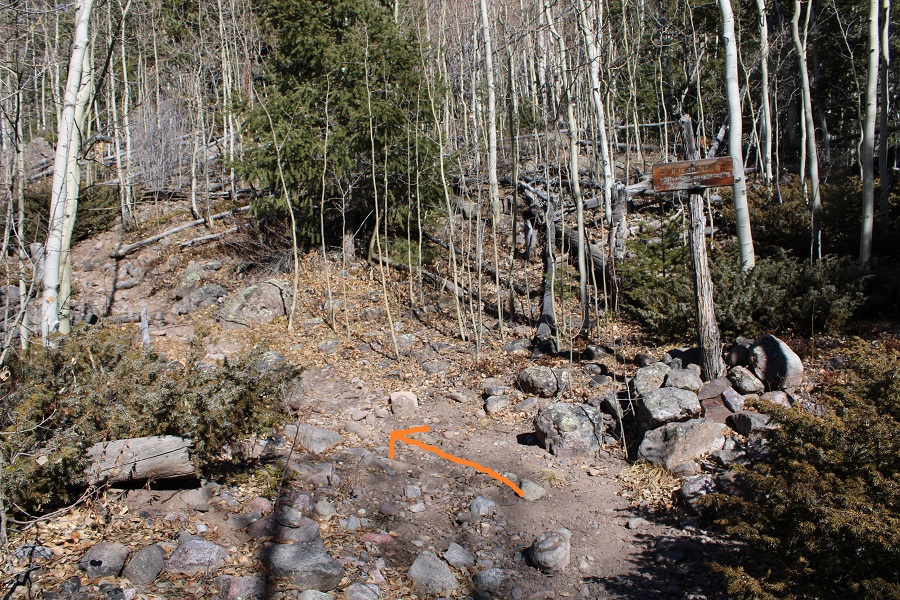
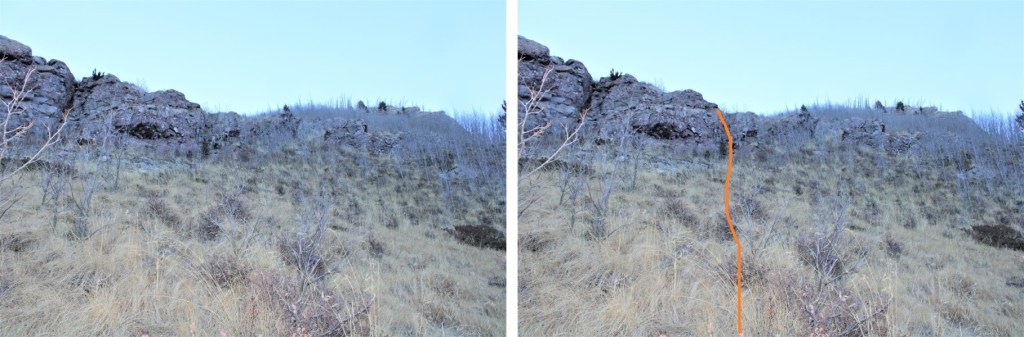
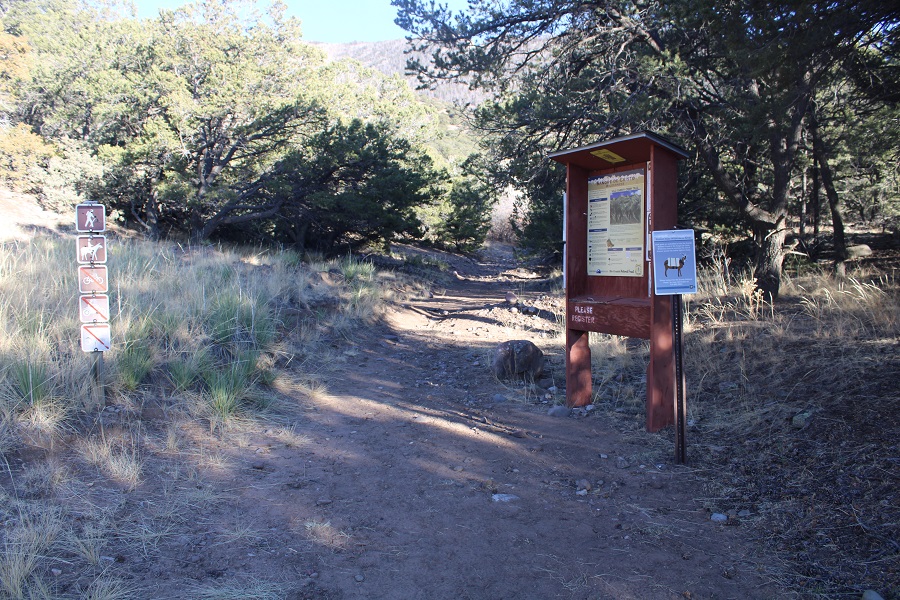
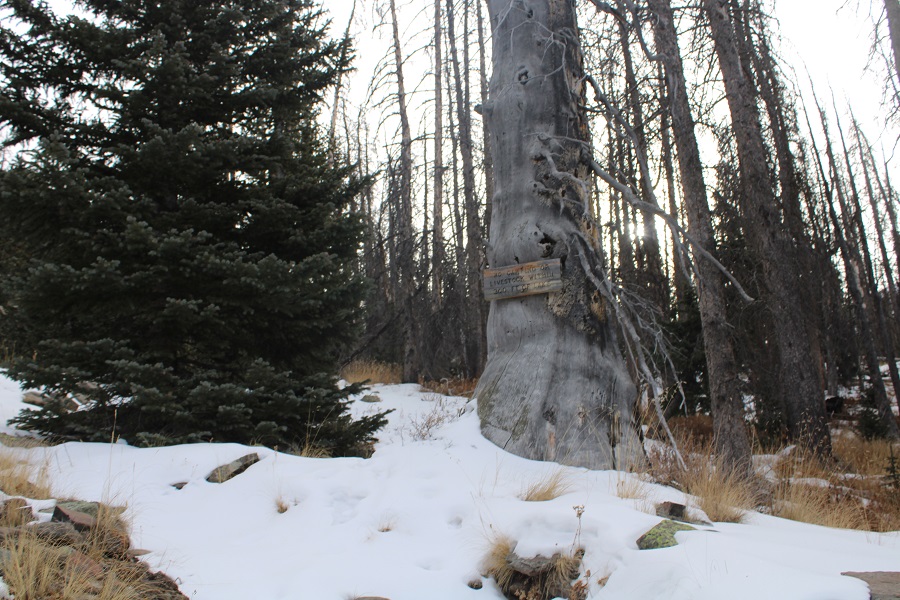
After hiking along the road for 1 mile, when I saw this sign to my left, I headed north through the trees (I turned right)

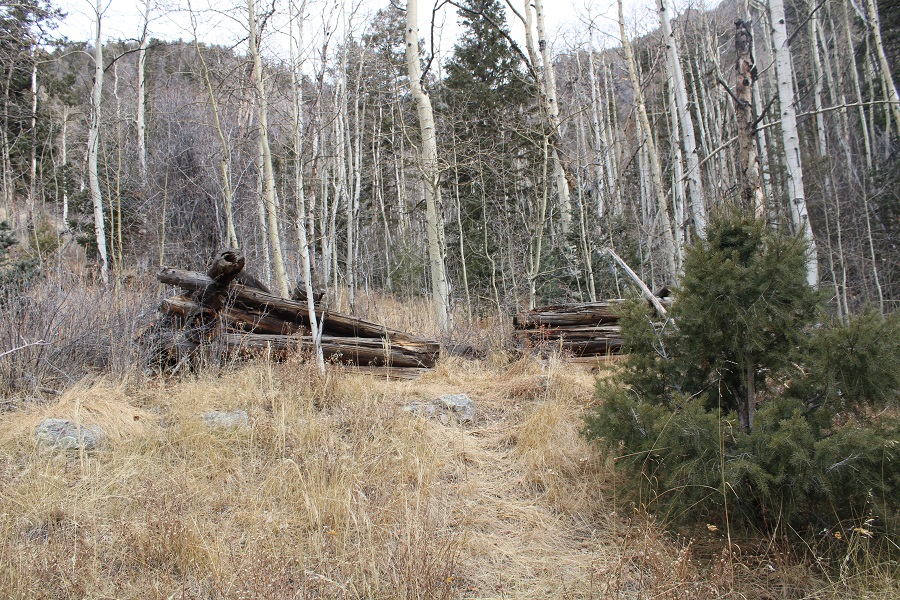
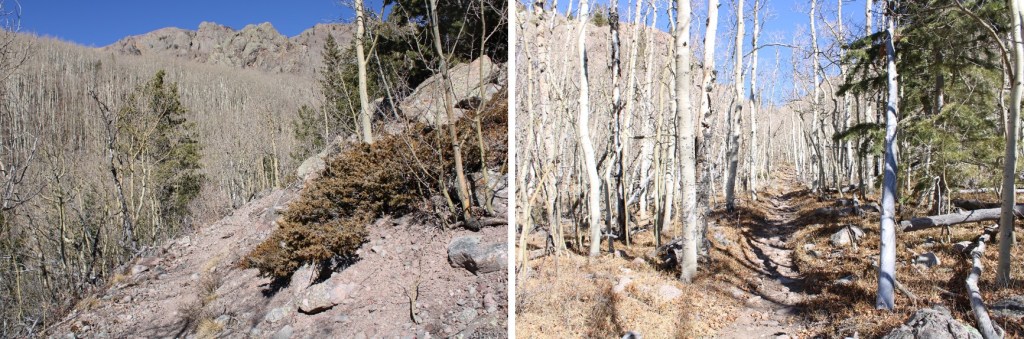
I came to a low and large outcropping of boulders, and turned right again
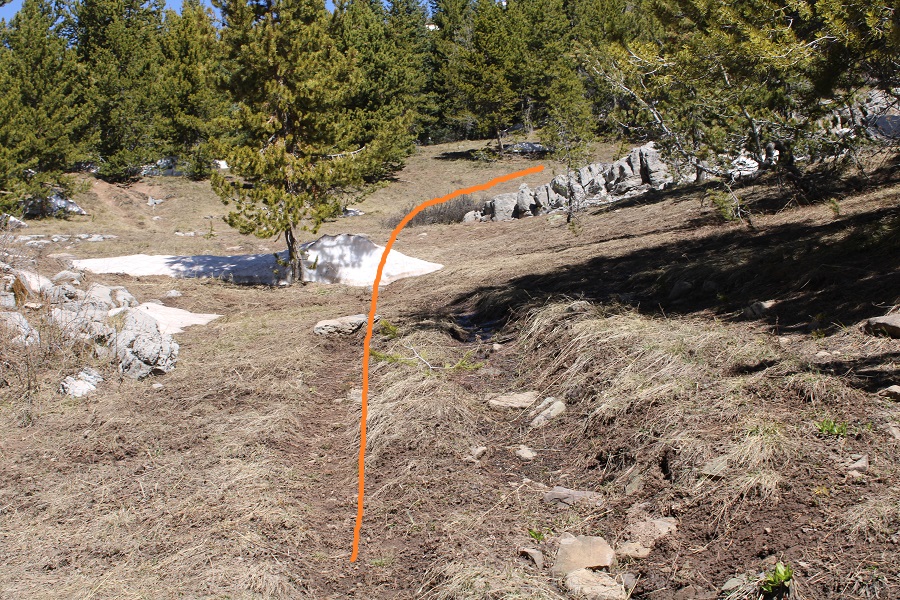
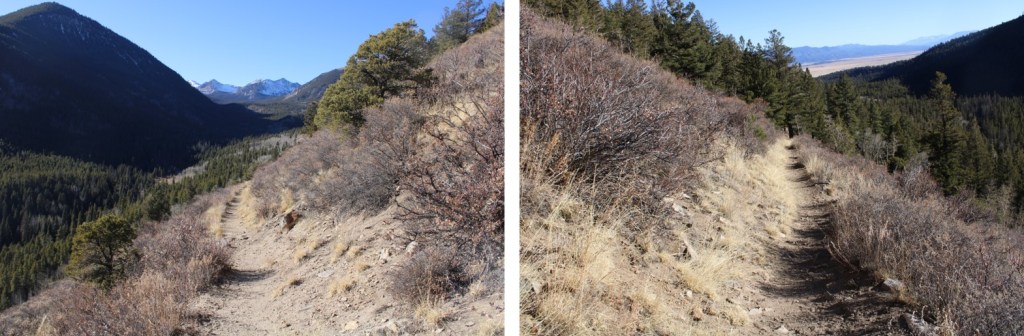
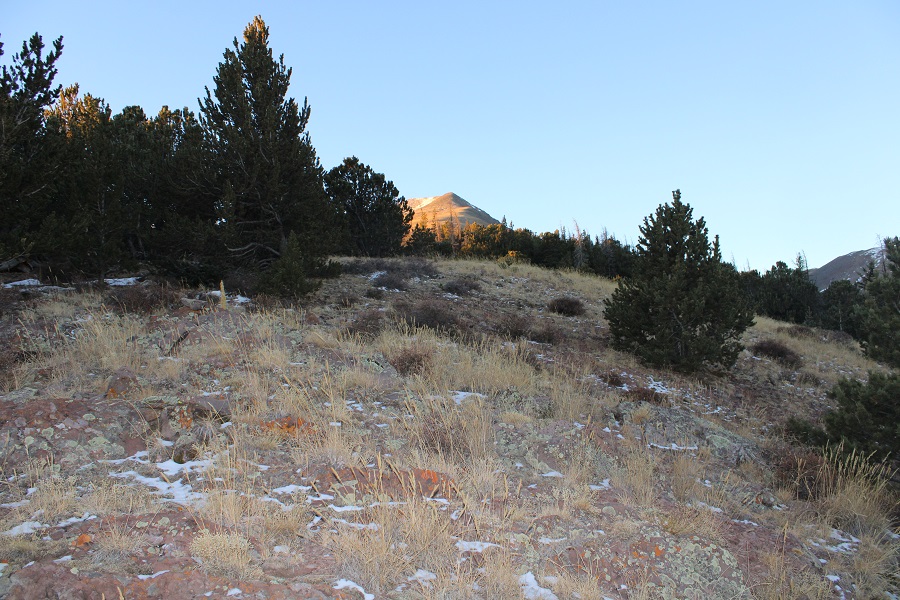
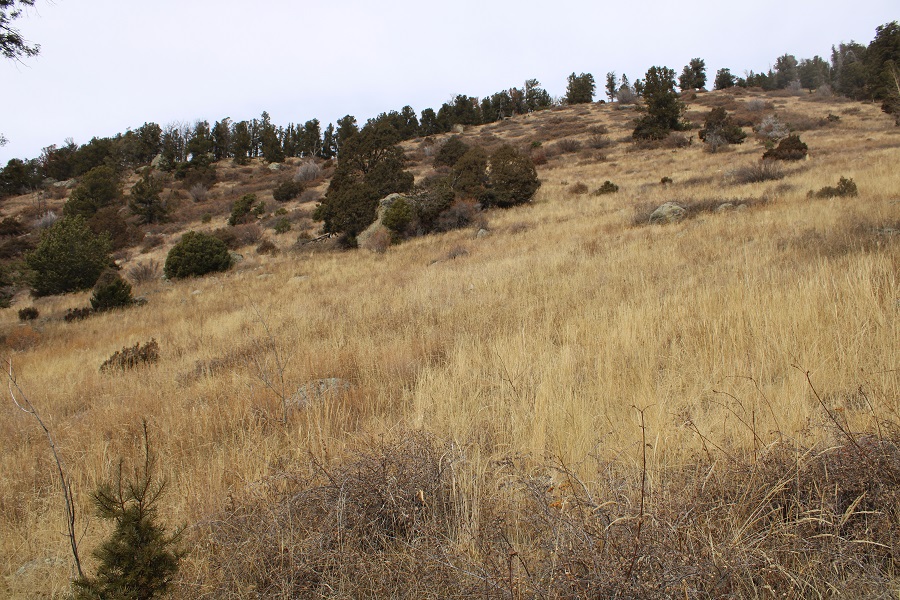
I then followed the ridge northeast
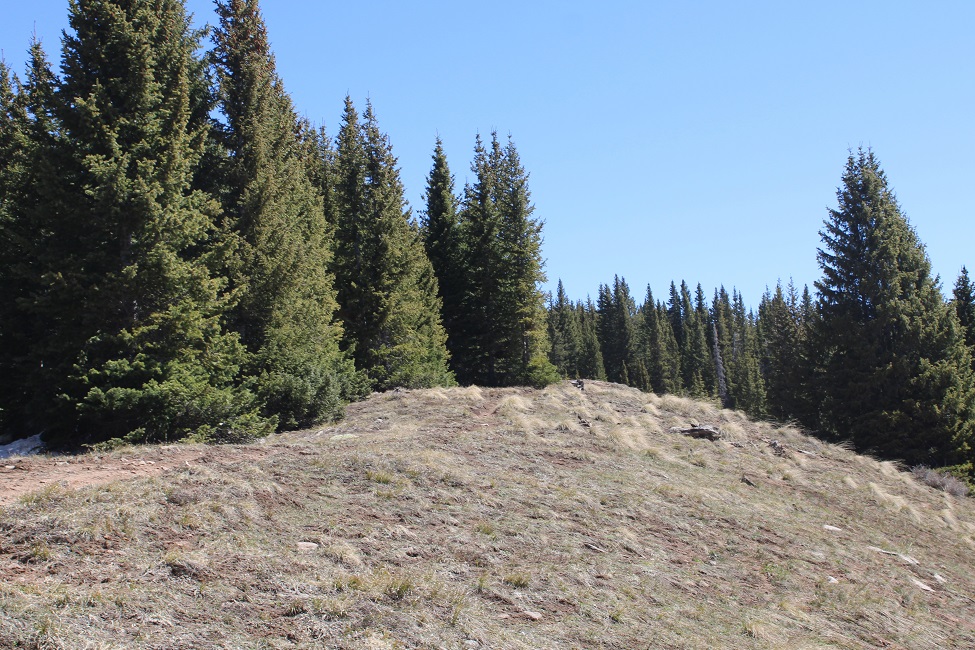
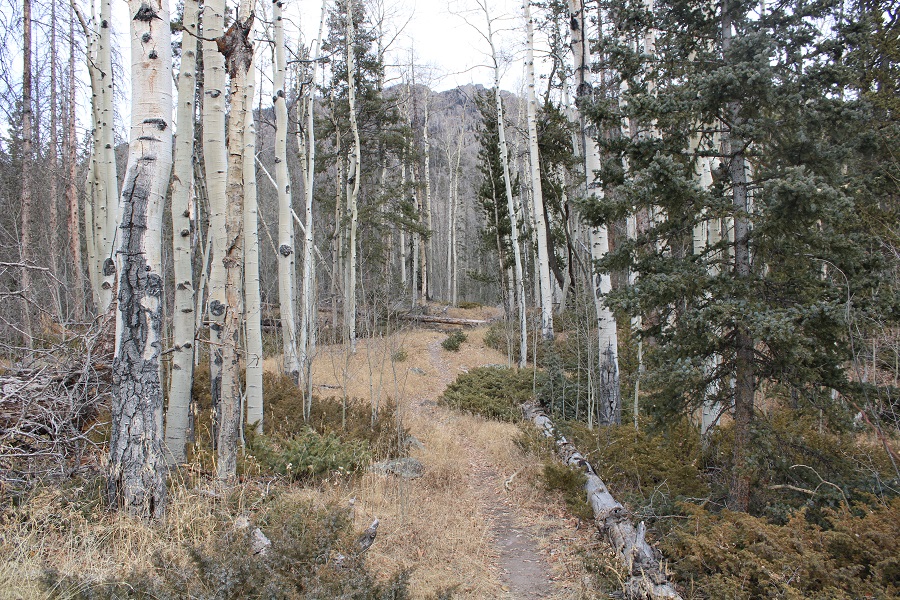
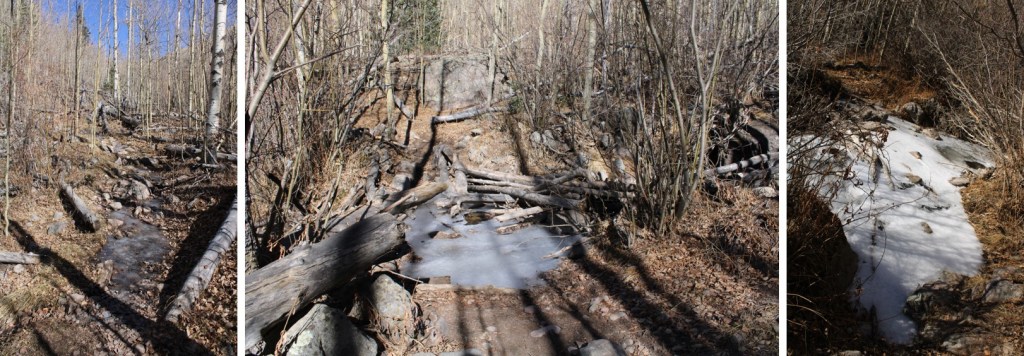
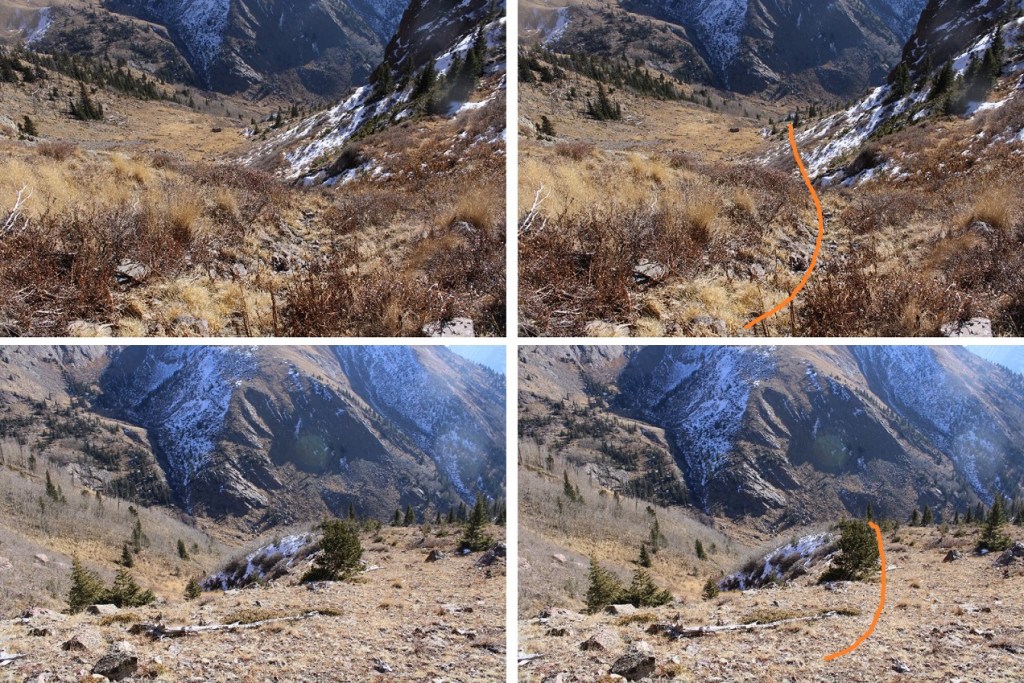
I crossed a small creek, and continued heading northeast. 
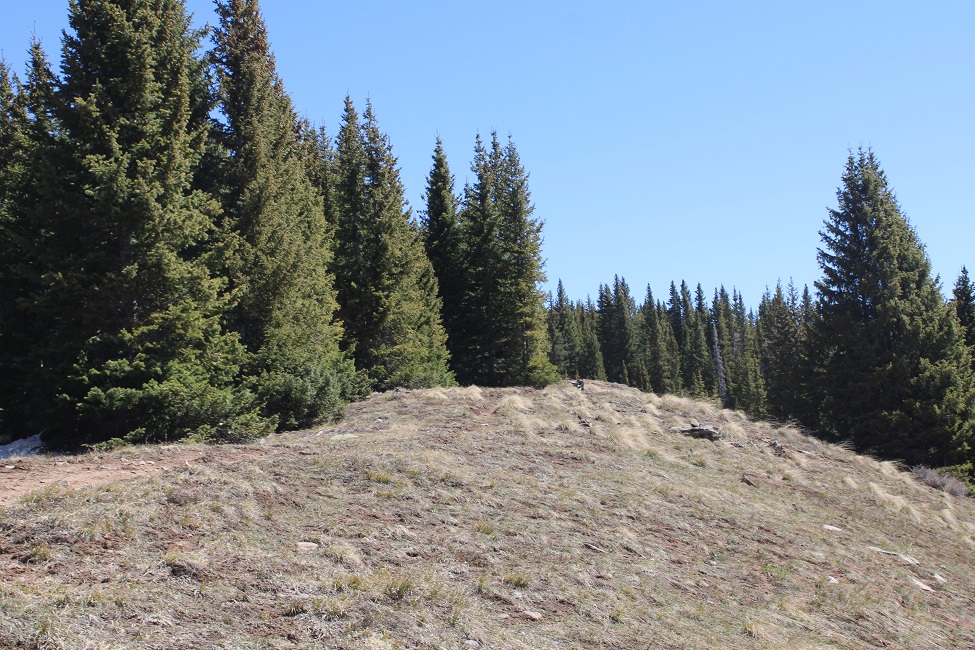
There were game trails in the area, and I followed them when I could, but mostly, I kept heading northeast, towards a large creek (crossing a smaller one in the process).
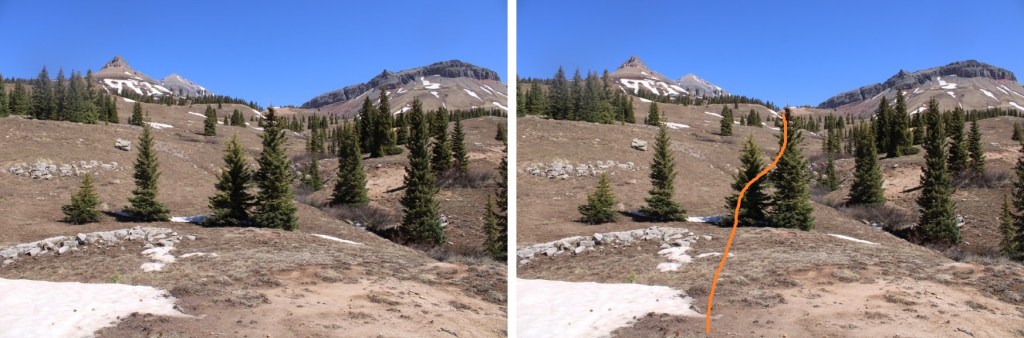
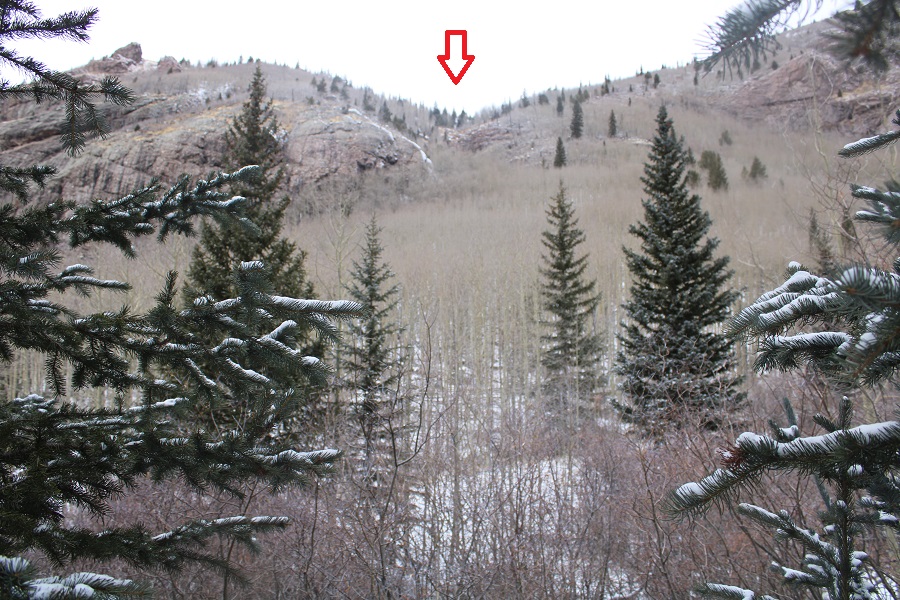
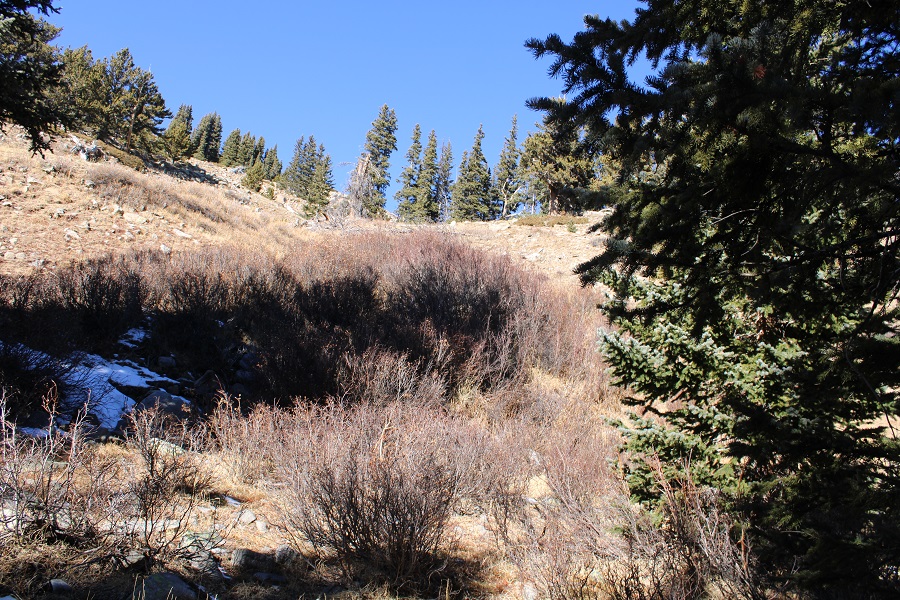
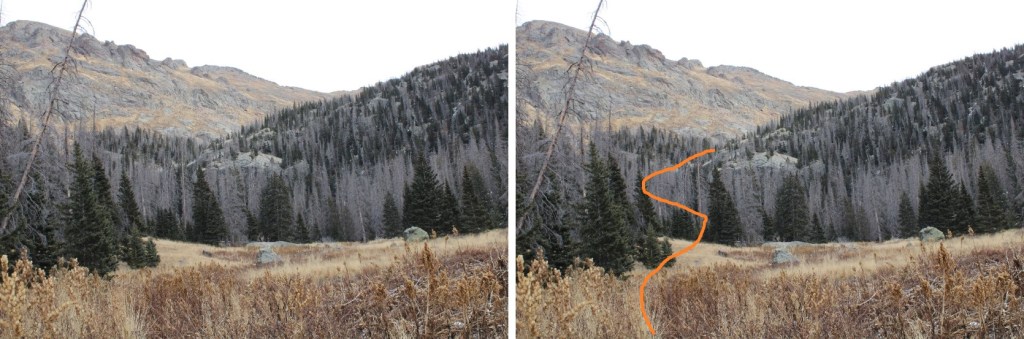
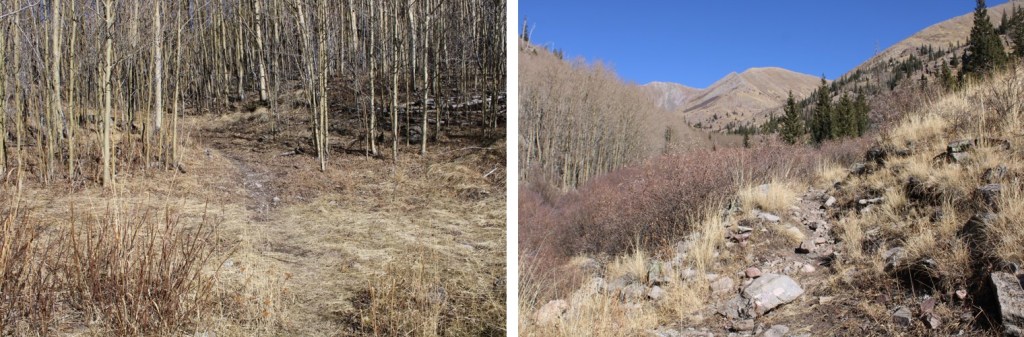
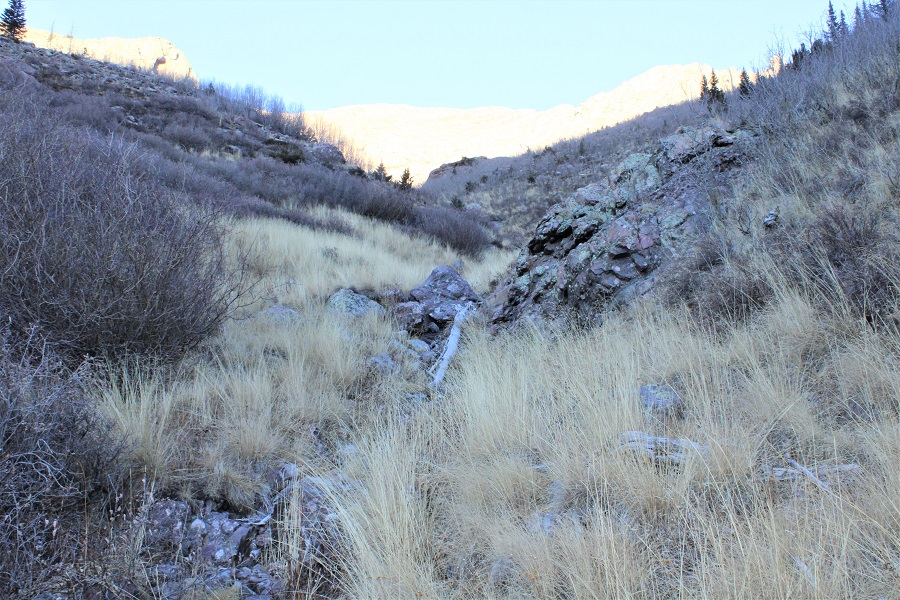
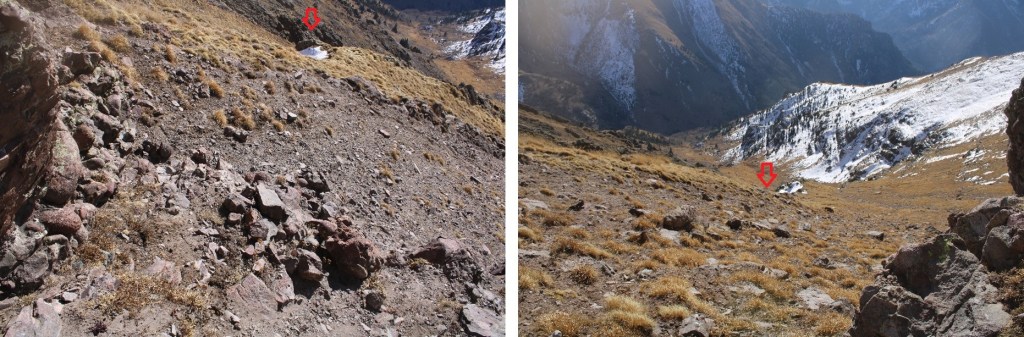
As I was hiking, I could see the gully I’d eventually need to ascend.  I kept heading towards it.

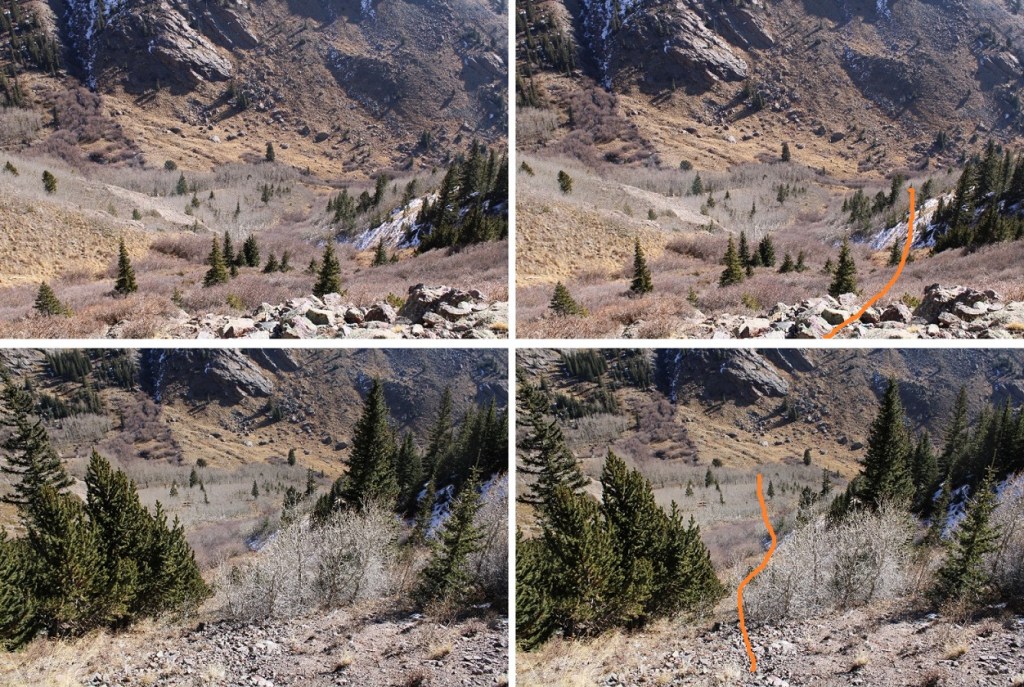
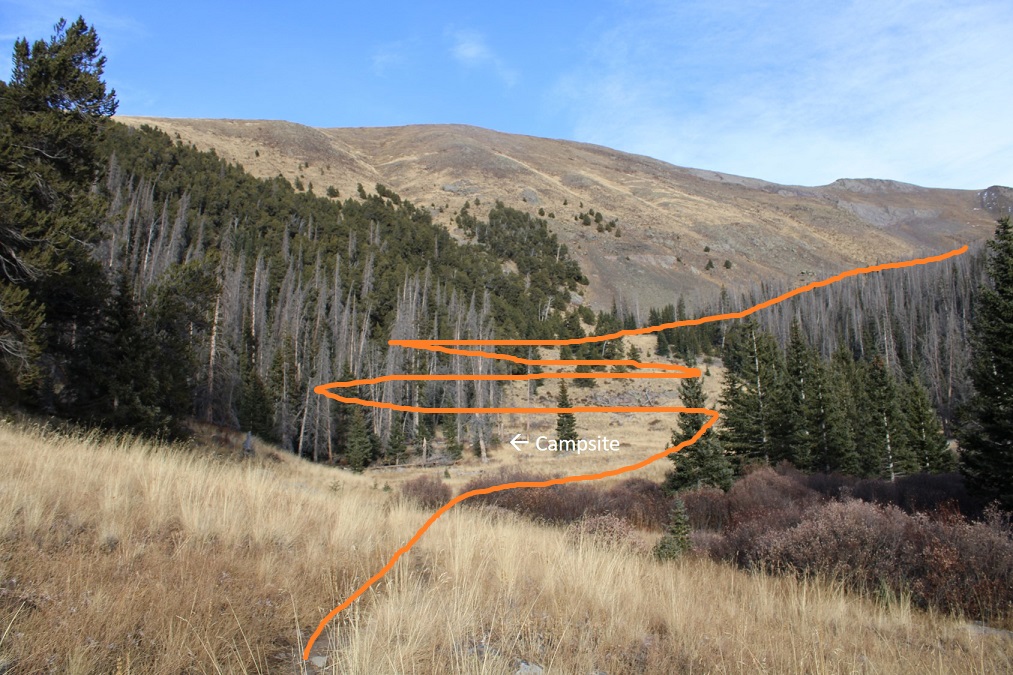
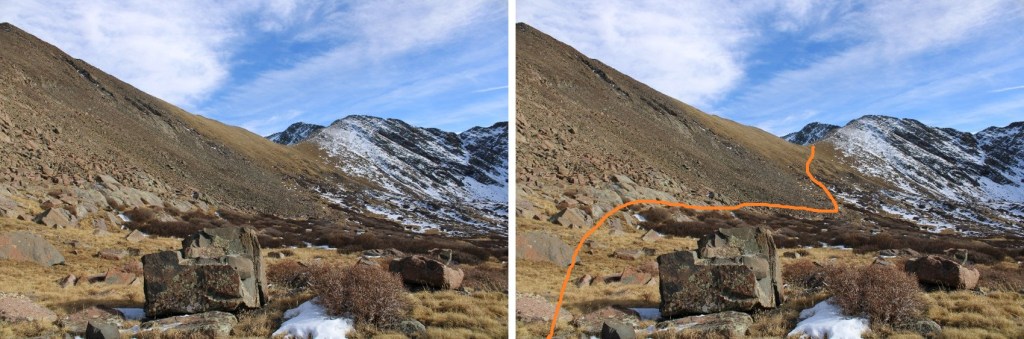
I came to a larger creek, and crossed it on a snow bridge.  Then I stayed right and walked along a willow-lined plateau

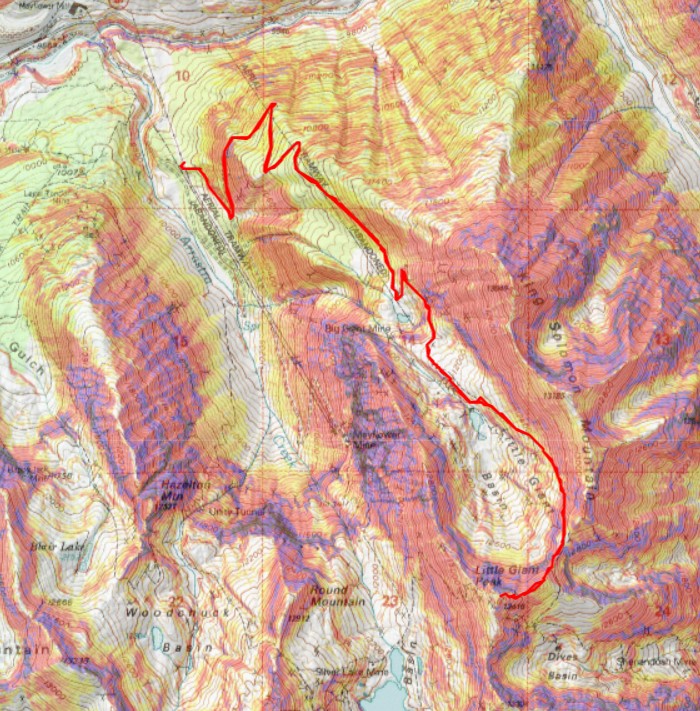
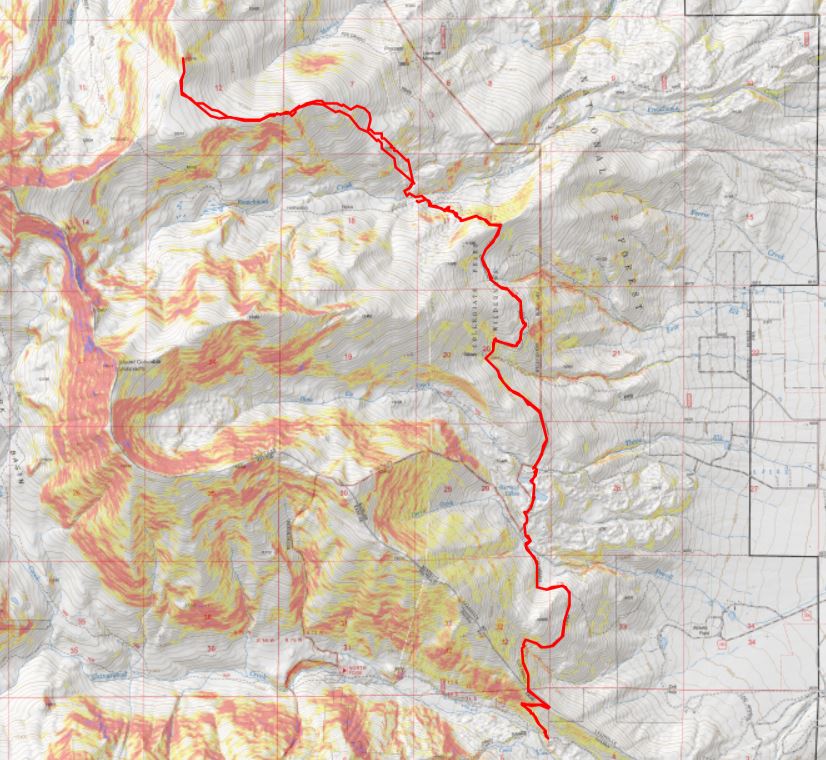
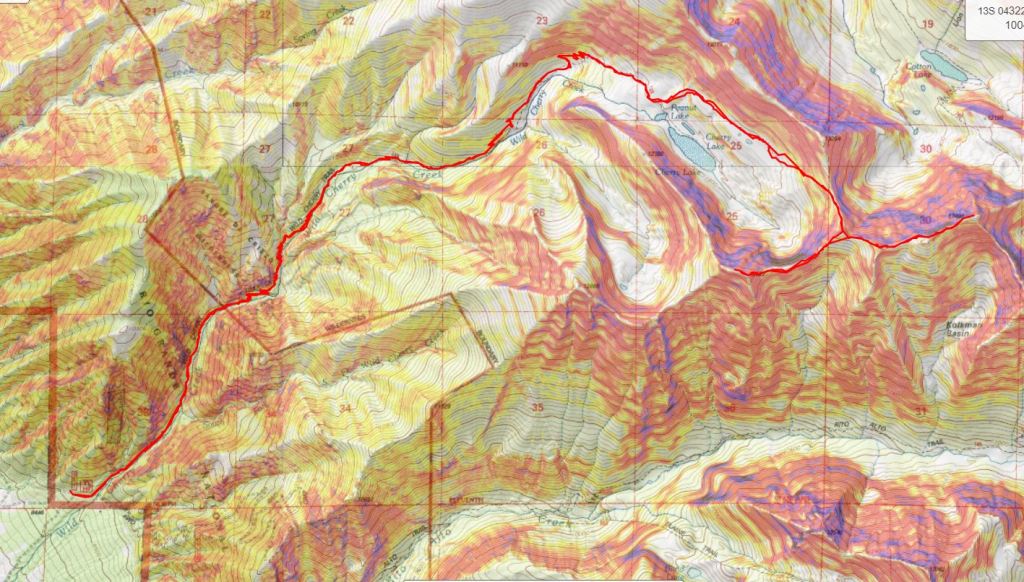
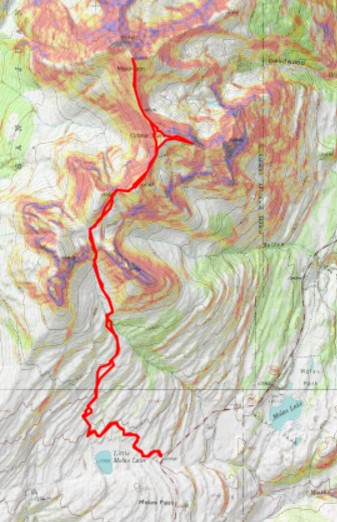
Here’s the overall route
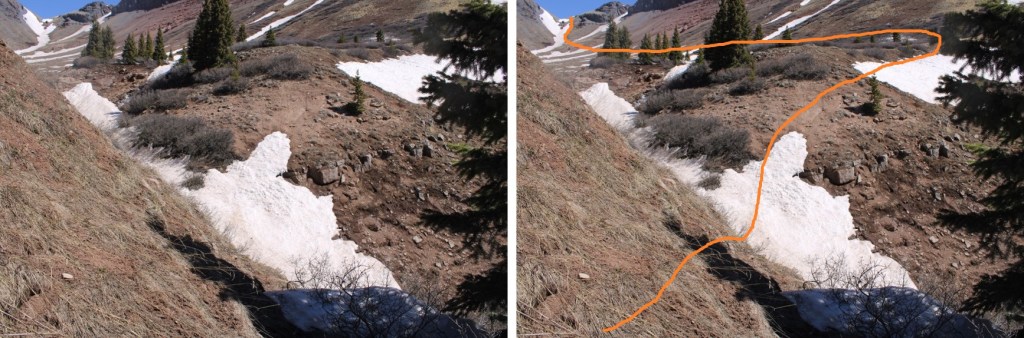
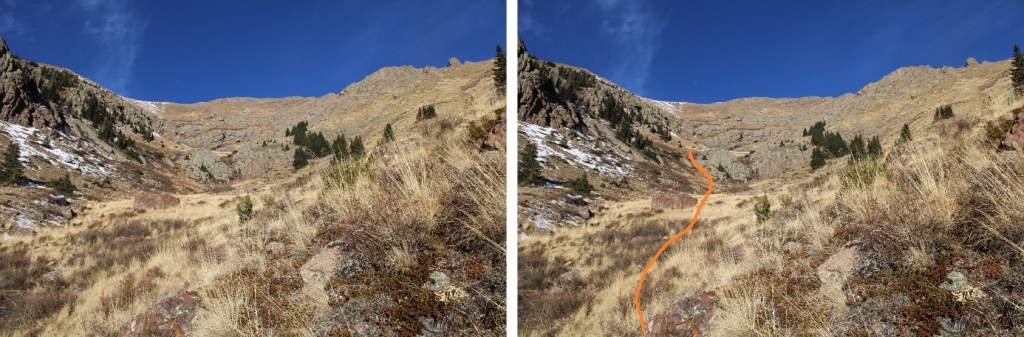
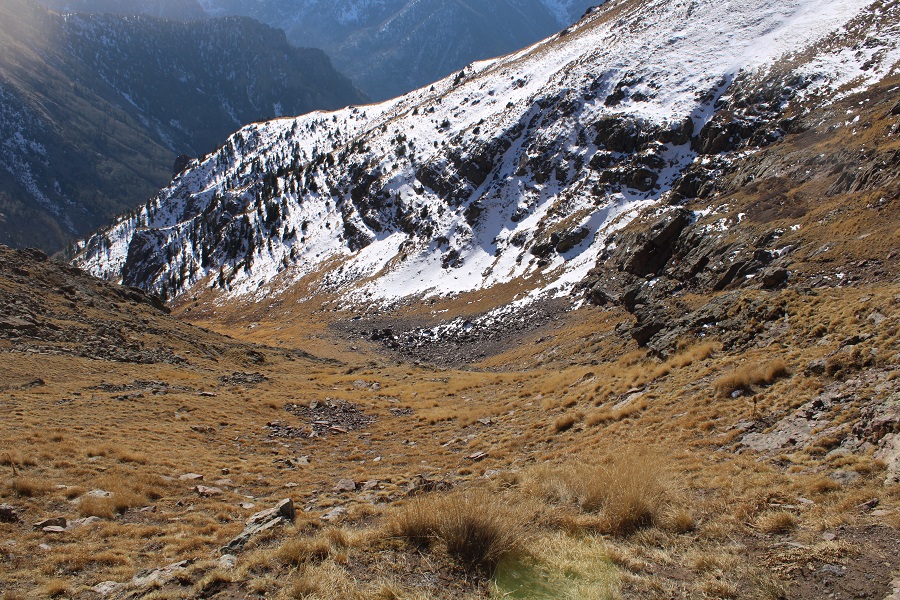
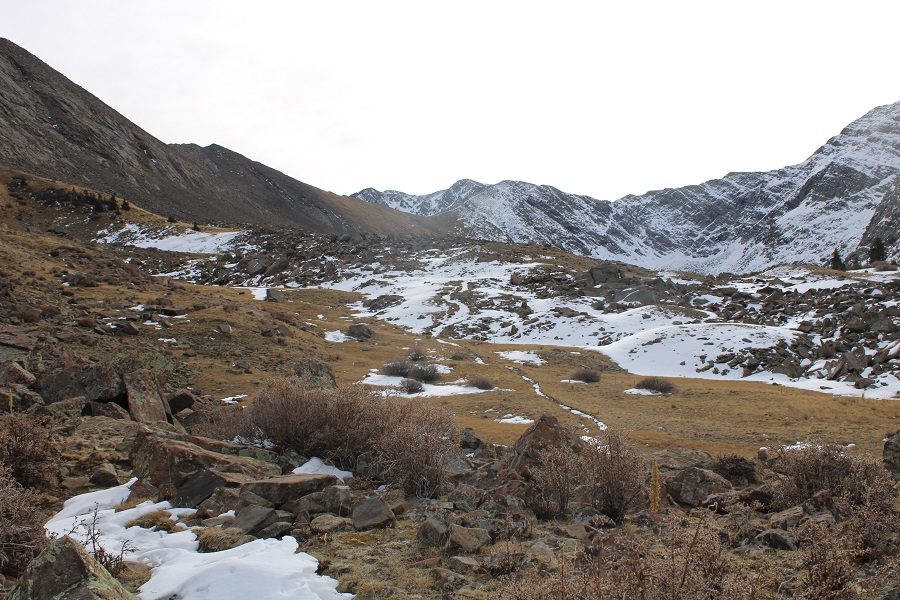
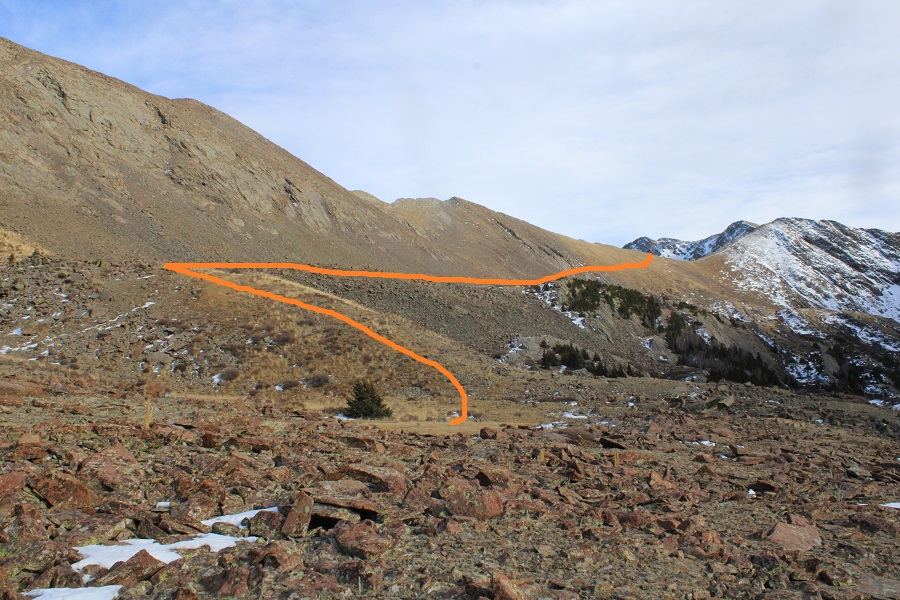
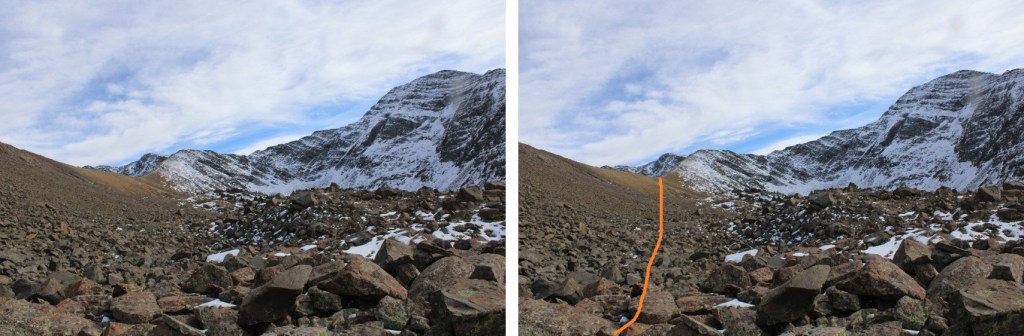
Once in the basin, I made my way toward the gully
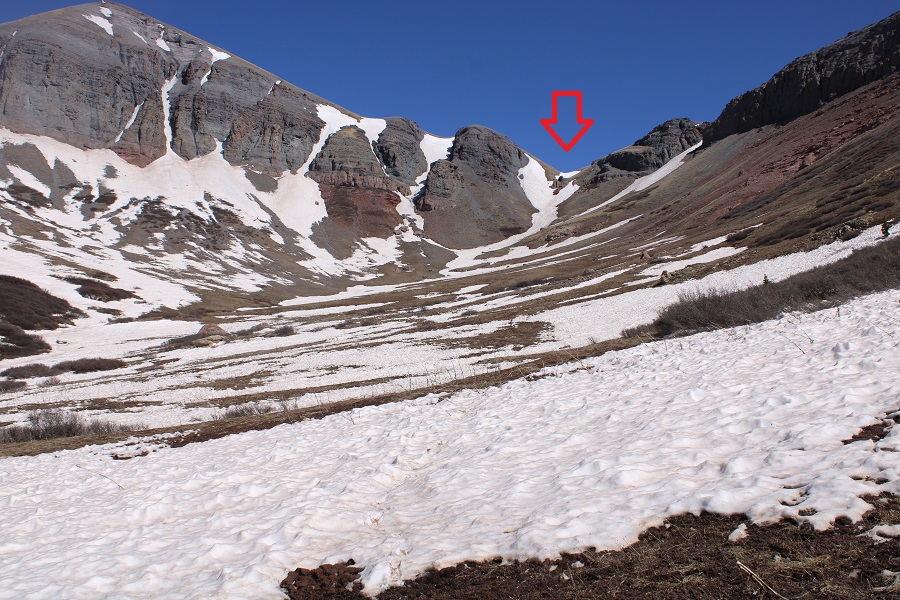
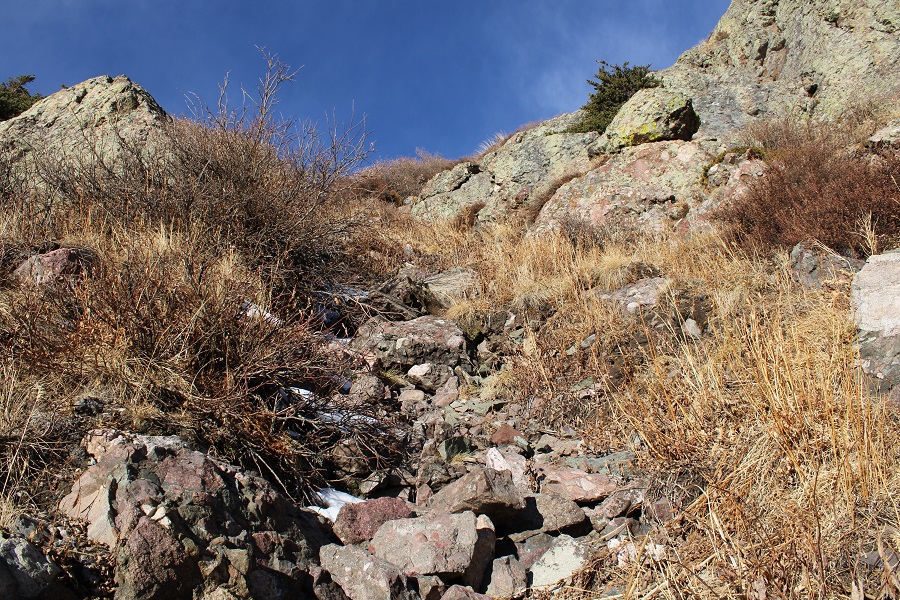
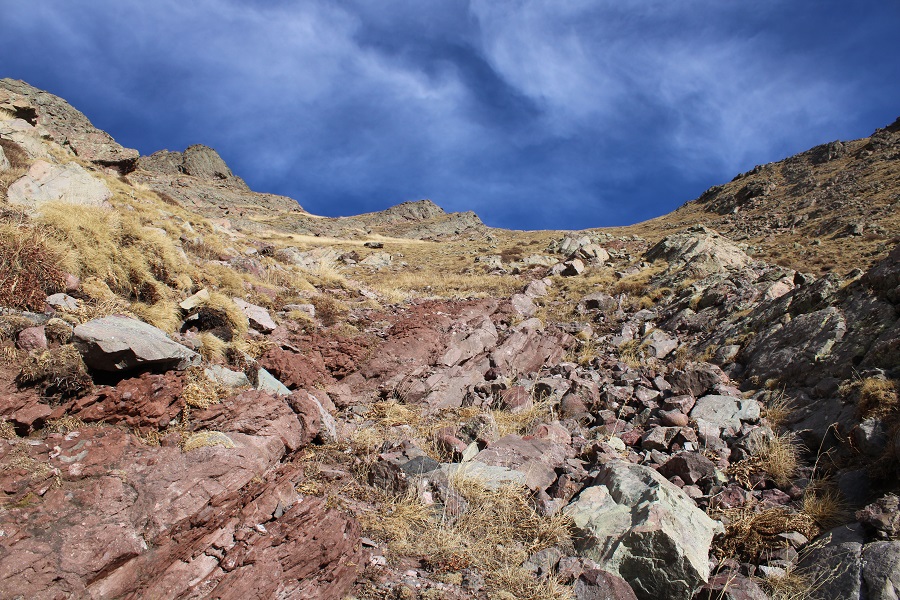
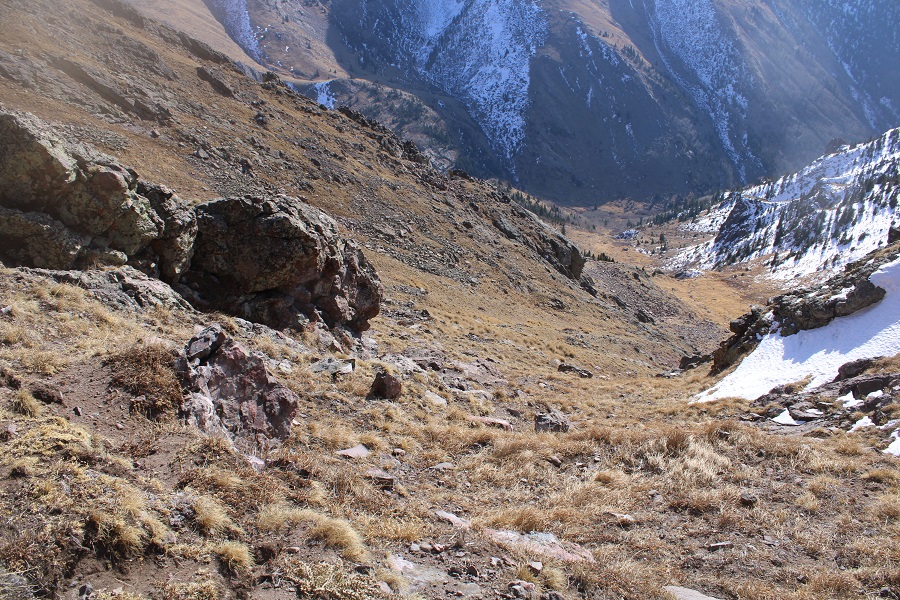
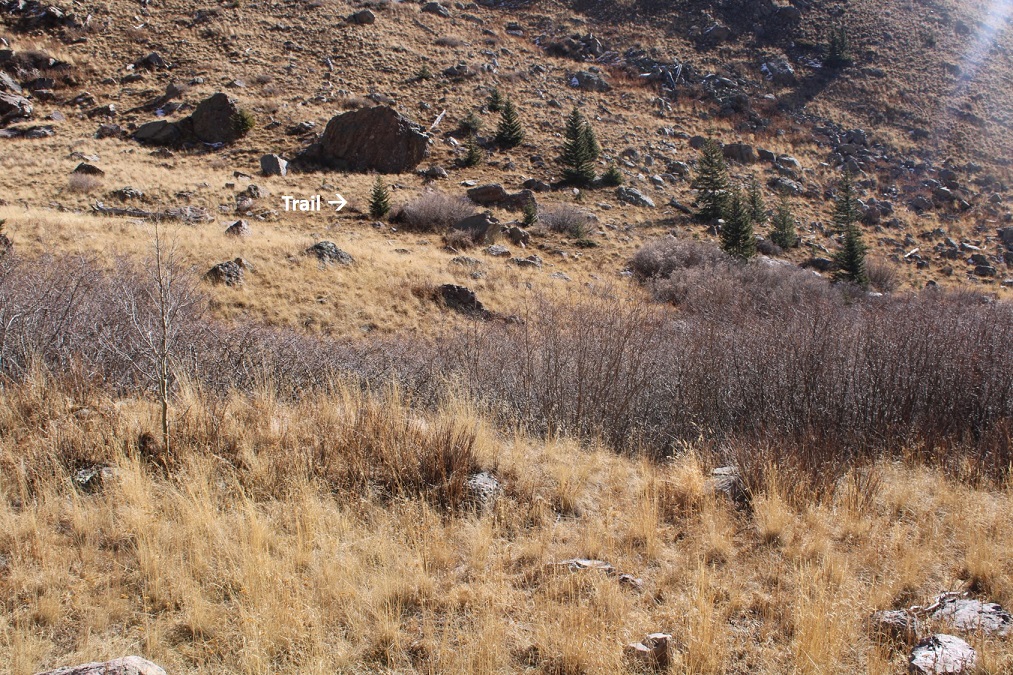
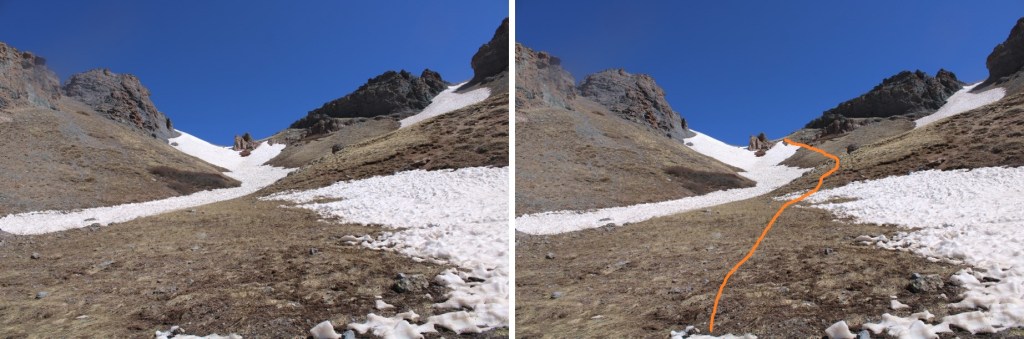
Today the gully was dry where I ascended, I was even able to pick up a trail towards the top.
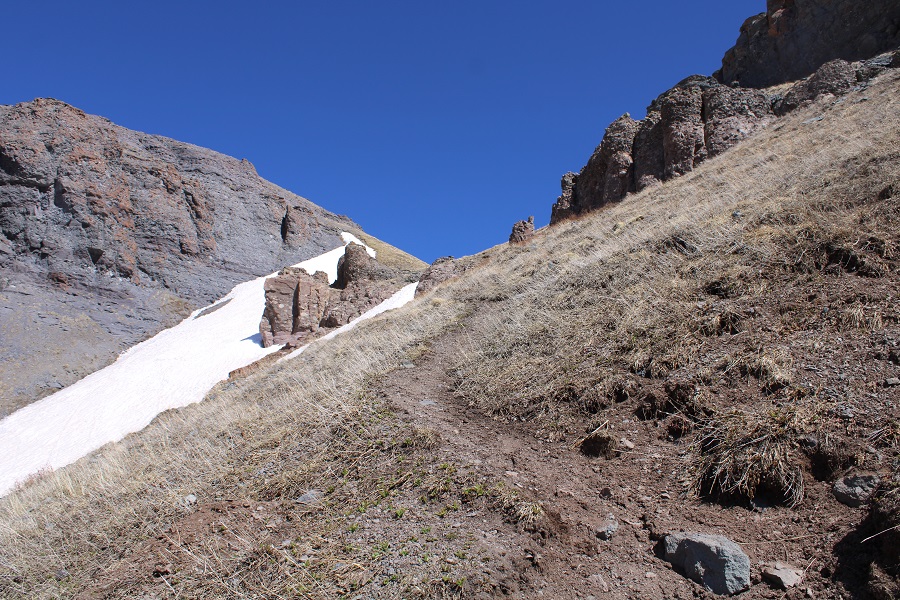
At the top of the gully the snow started, and I began heading northeast.

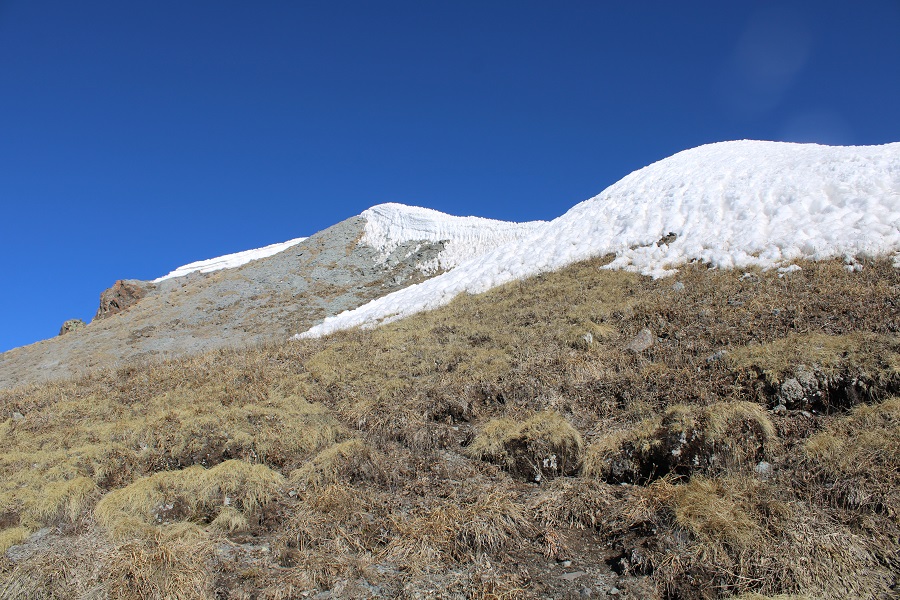
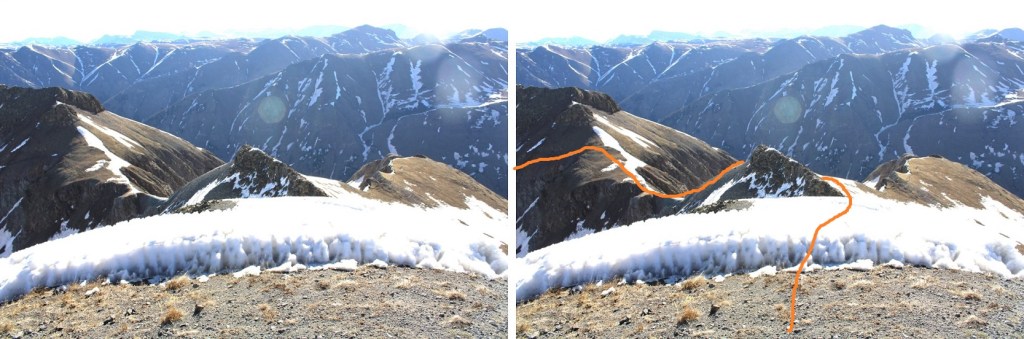
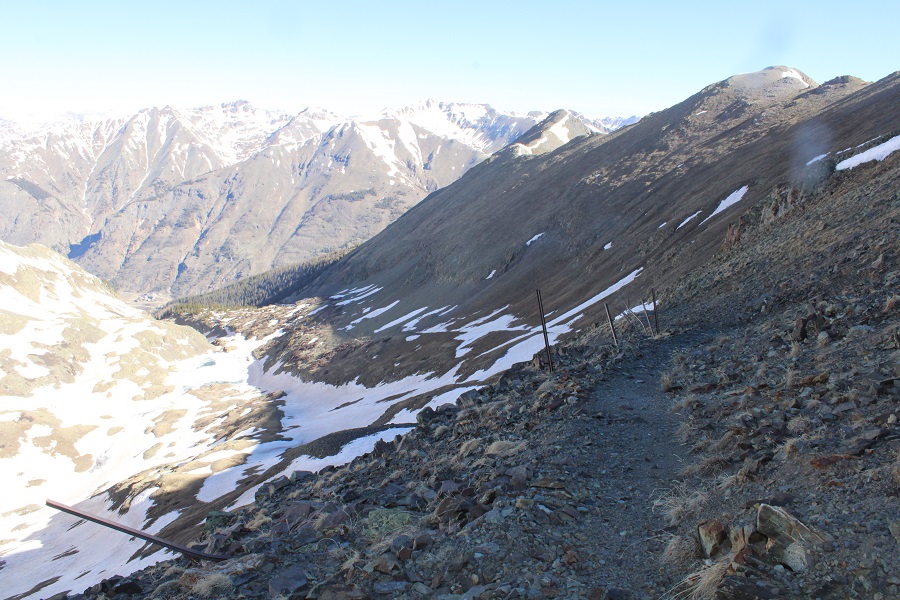
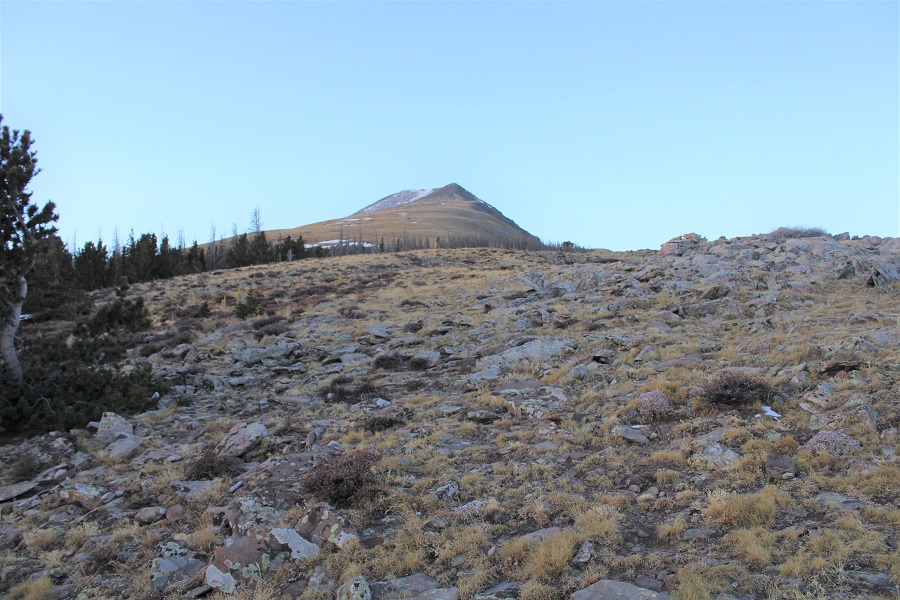
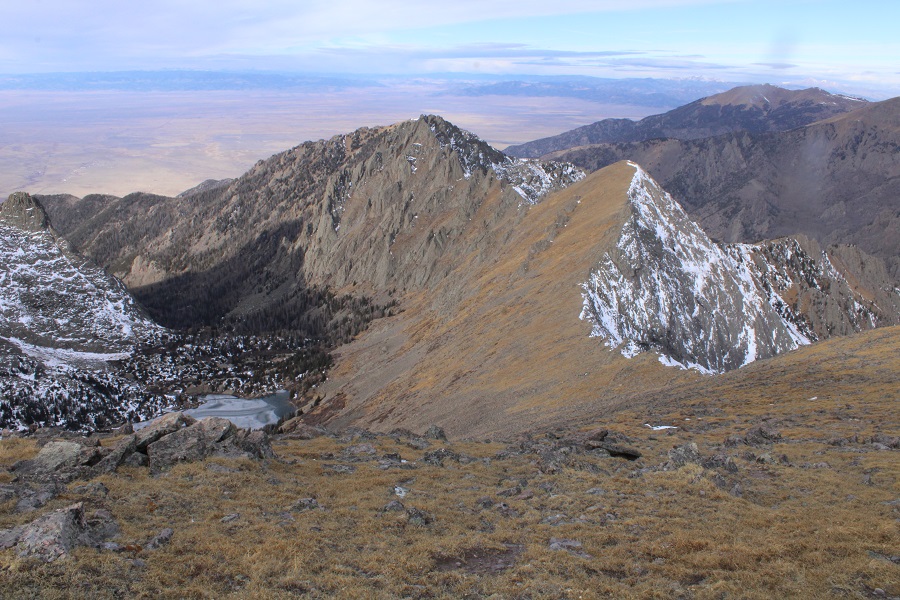
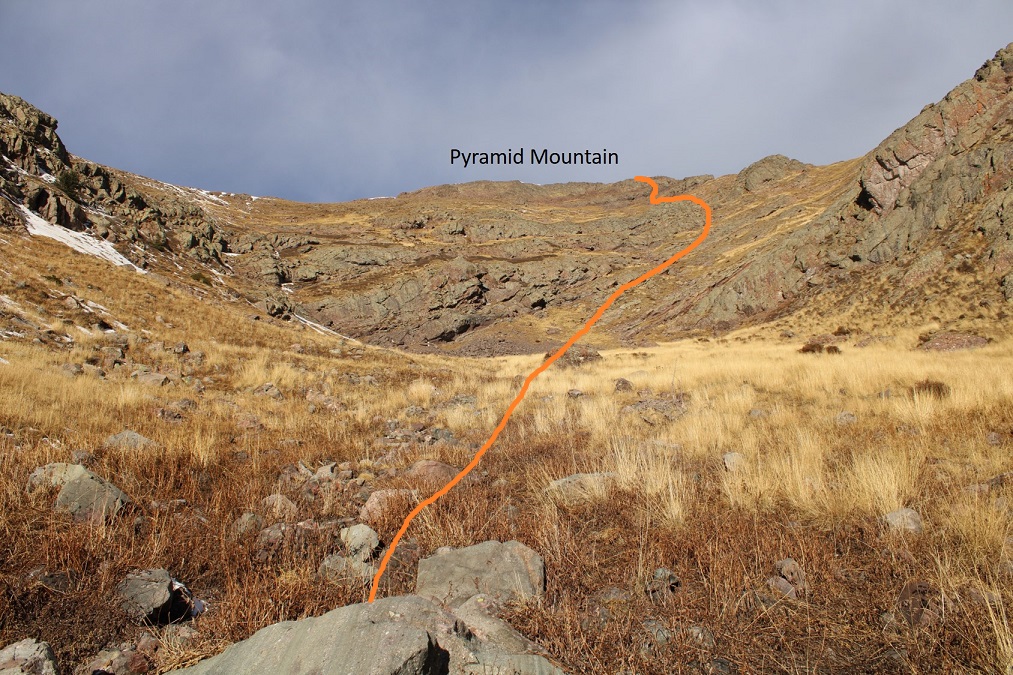
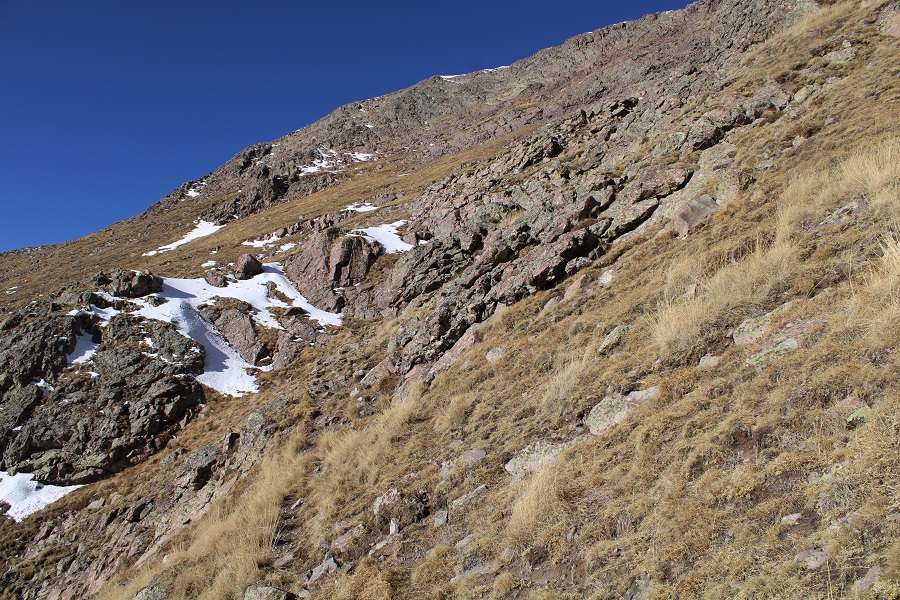
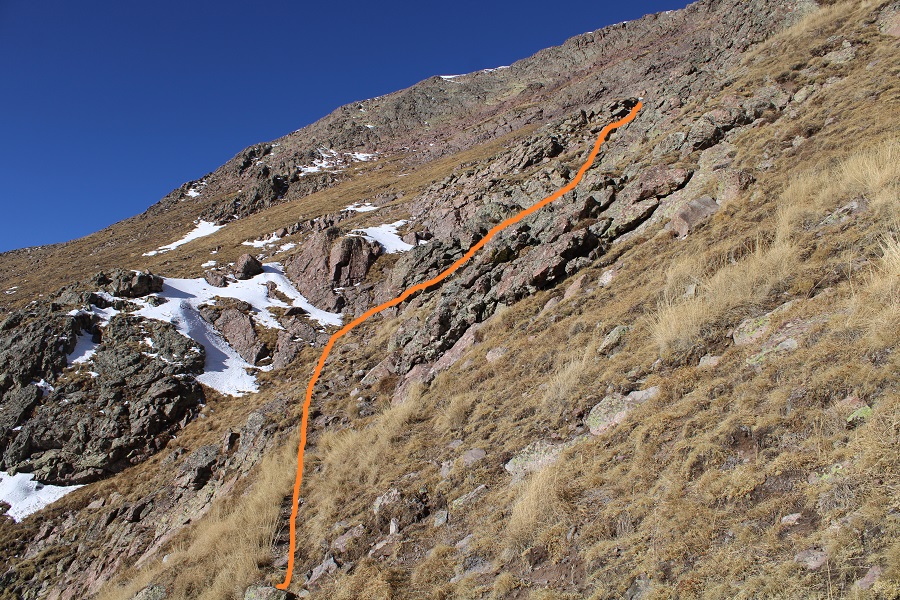
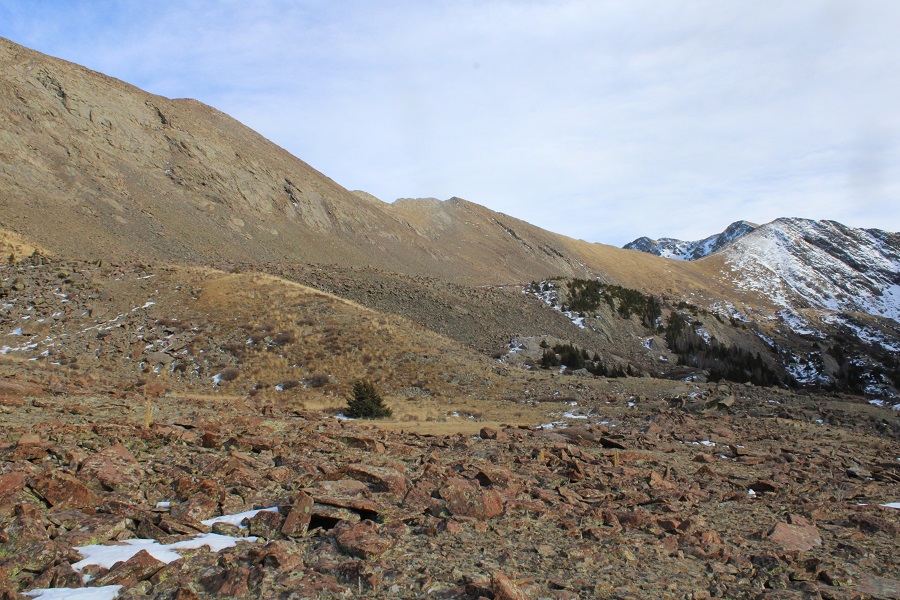
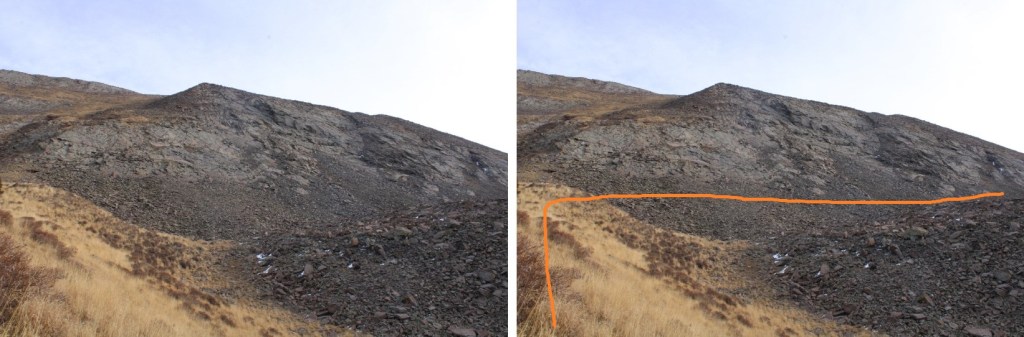
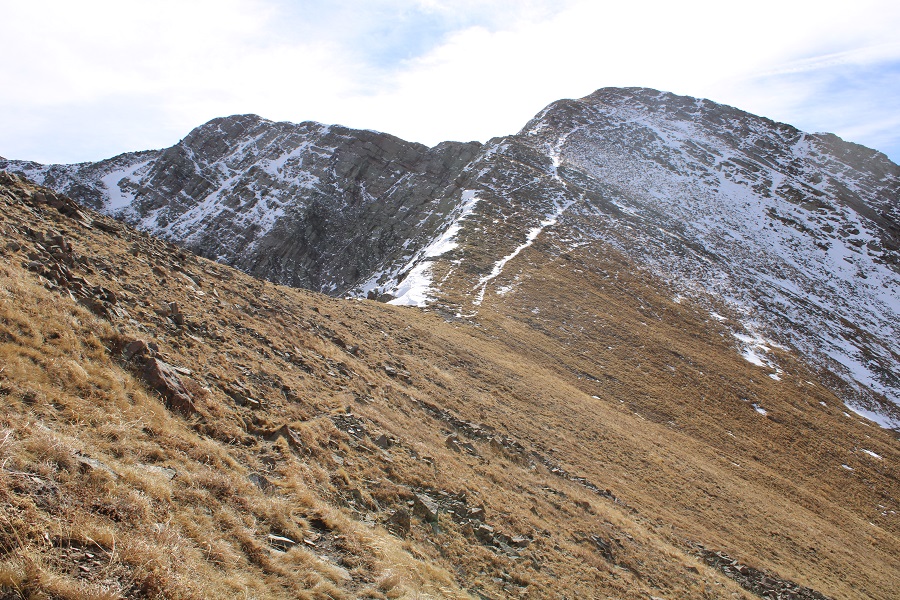
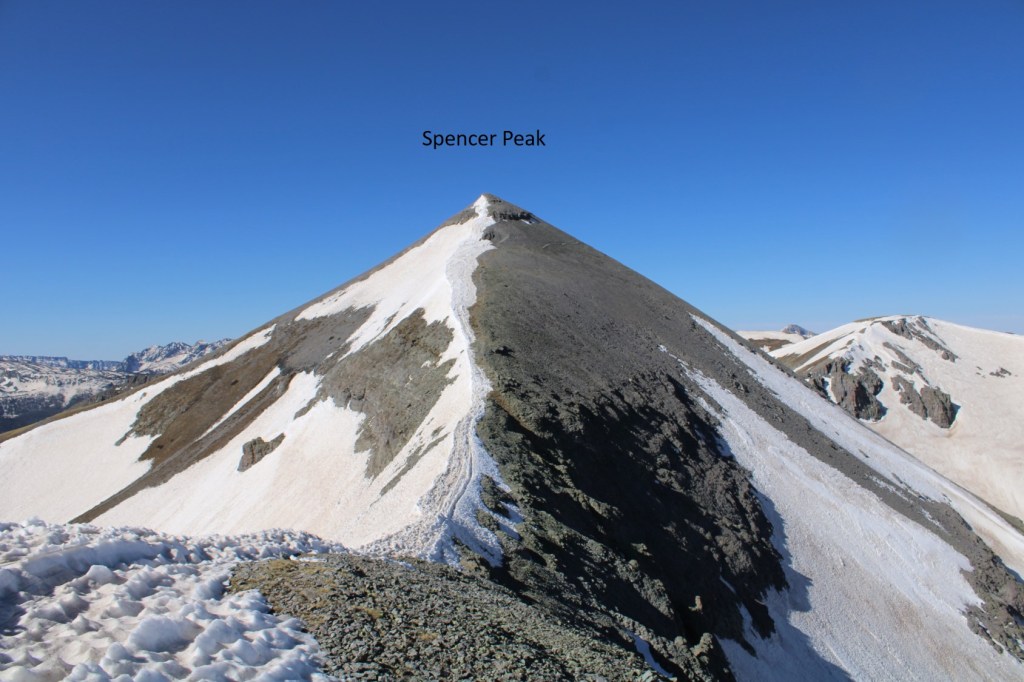
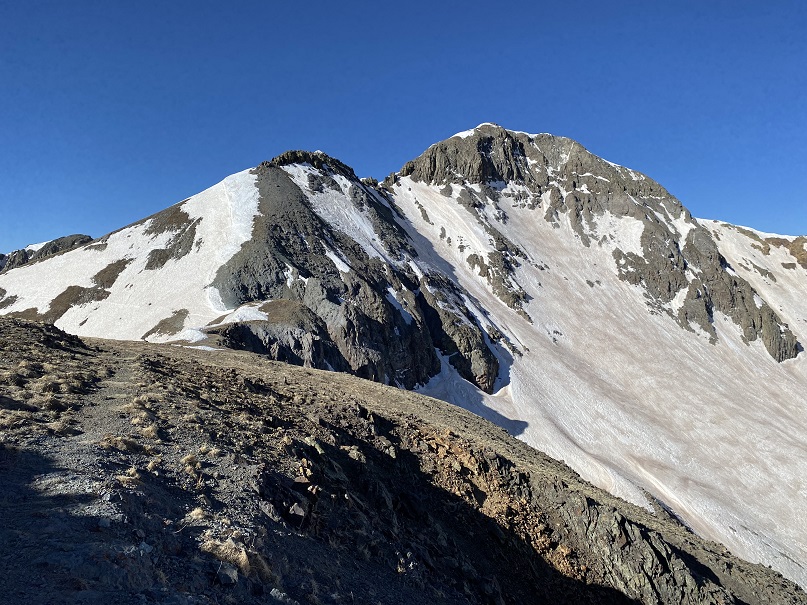
This is where I was headed, towards Spencer Peak
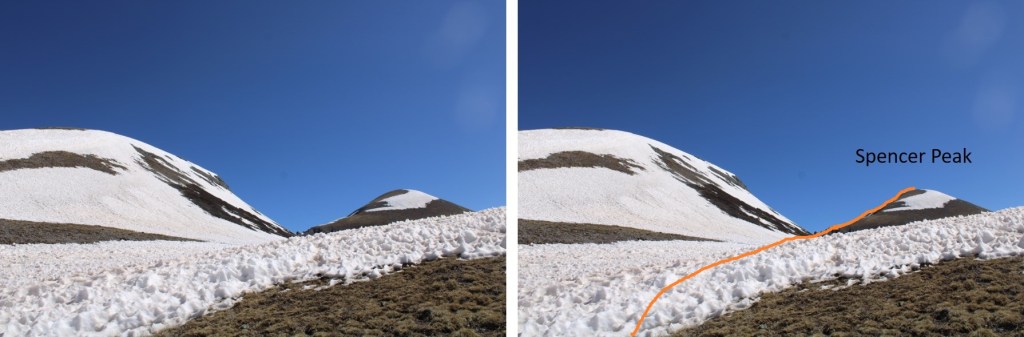
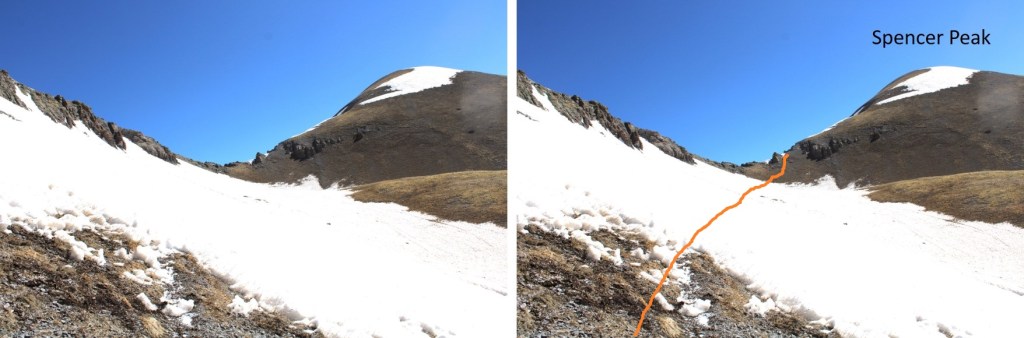
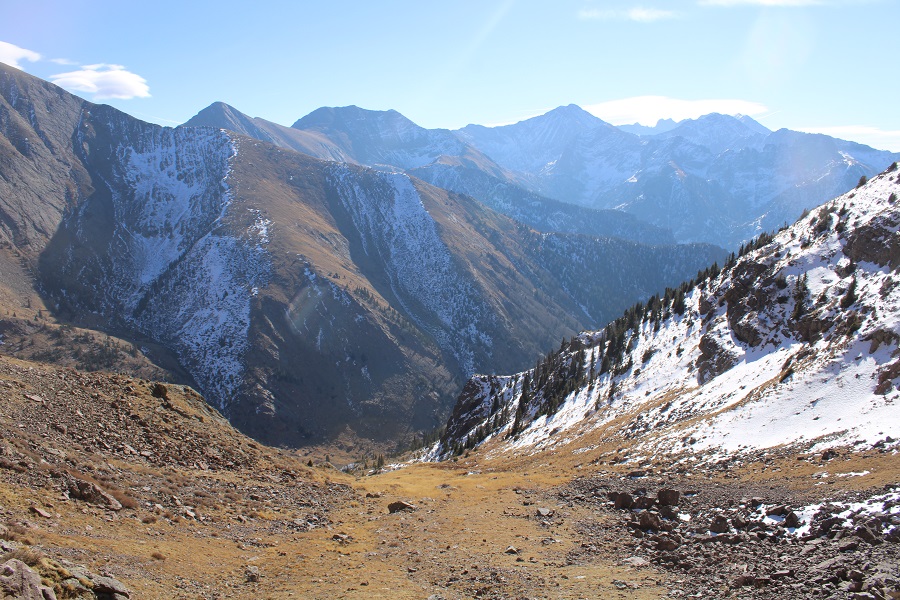
I gained the ridge, and picked up an obvious trail.  I followed that trail east. I could have just gone up and over Spencer Peak at that time, but I chose to follow the trail and summit Grand Turk first, by skirting the north side of Spencer.
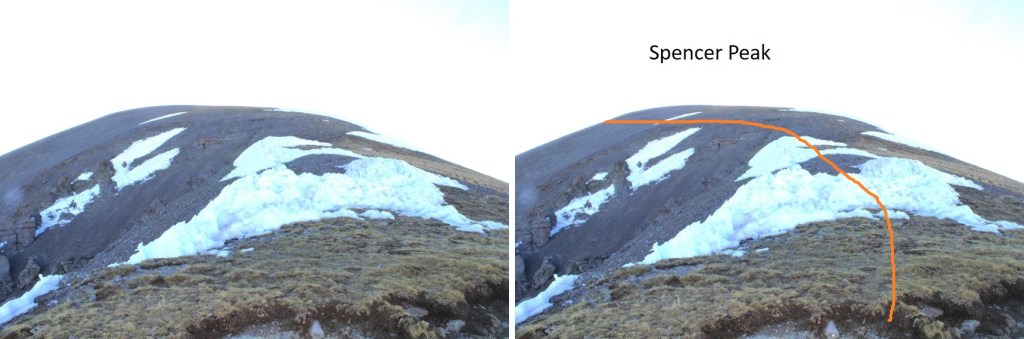
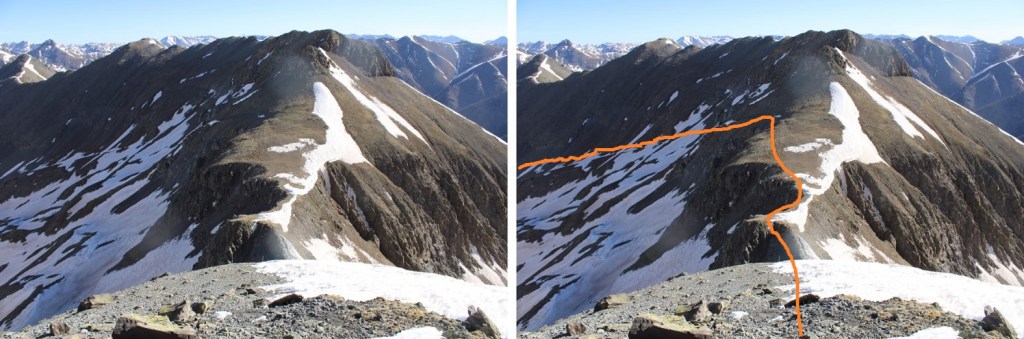
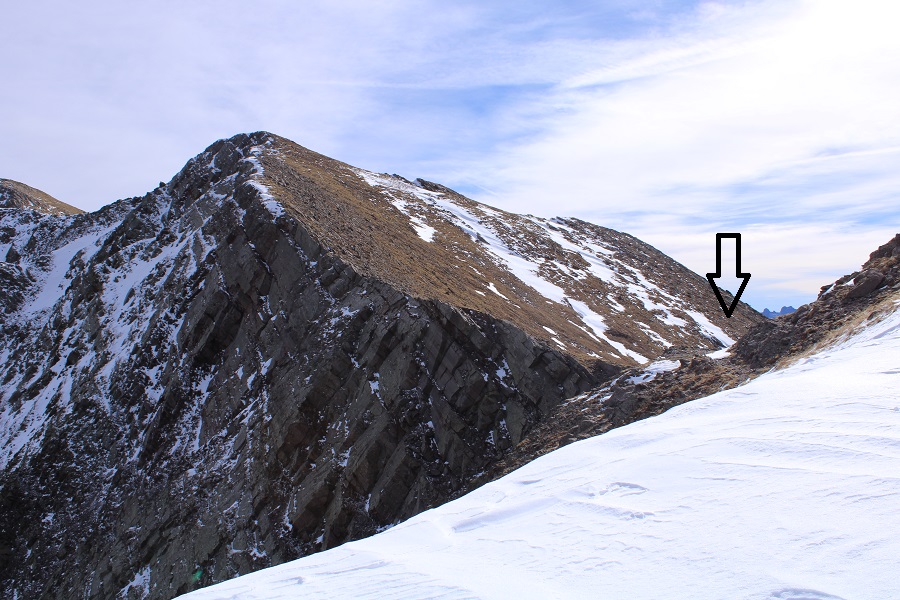
Here’s a look at the rest of the route.  I did Grand Turk first, and then Sultan, but you could do it in reverse as well.

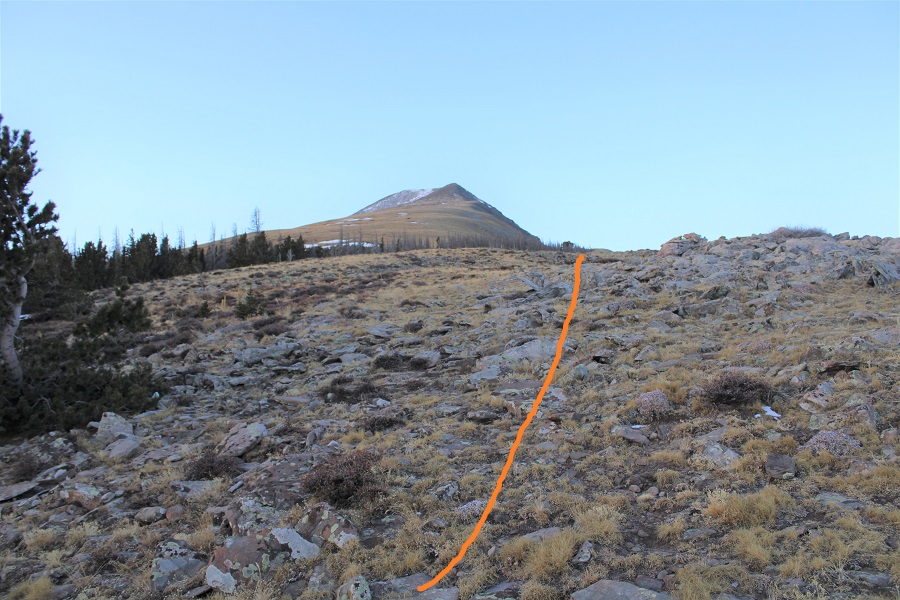
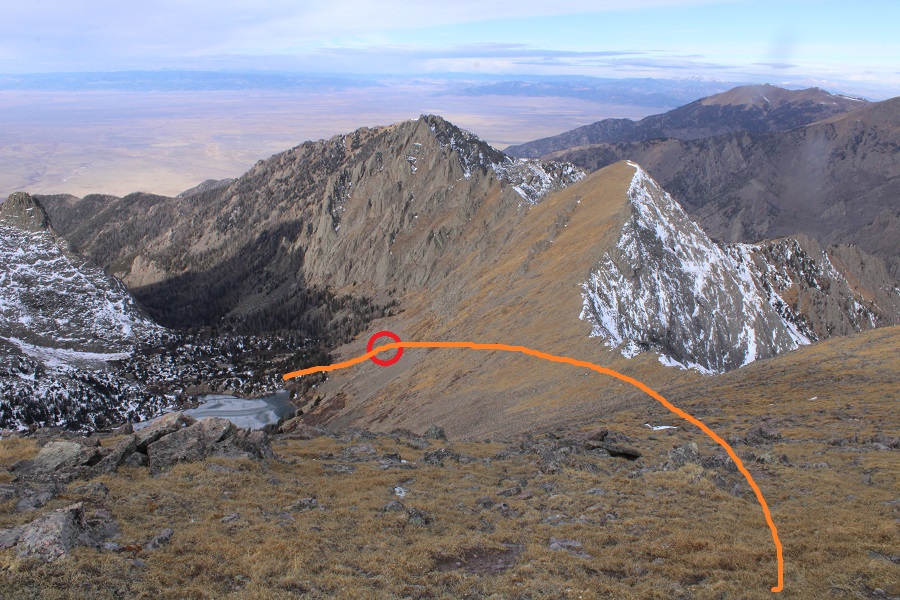
Here’s the route I took
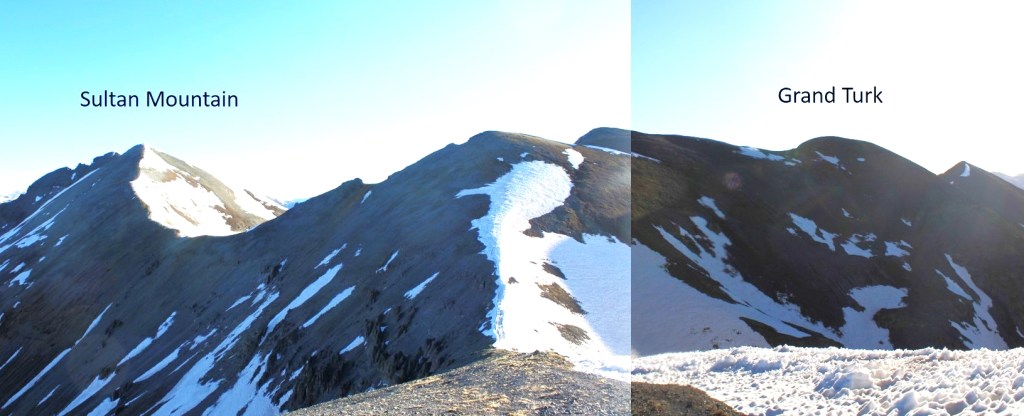
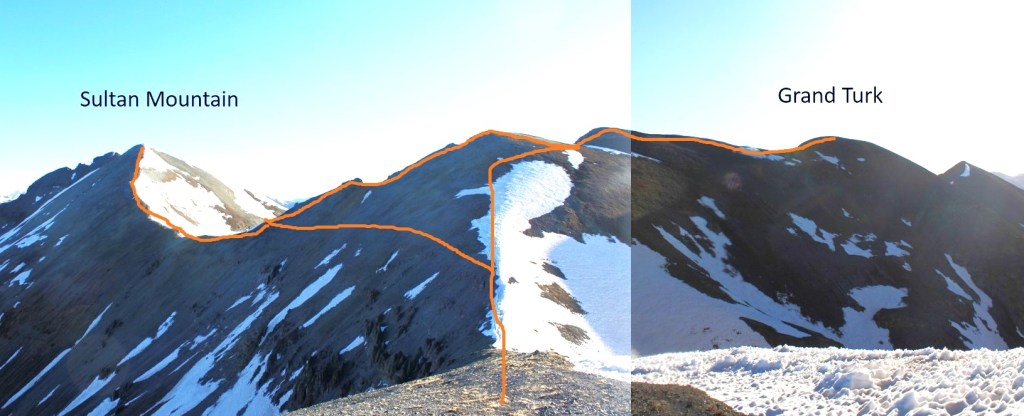
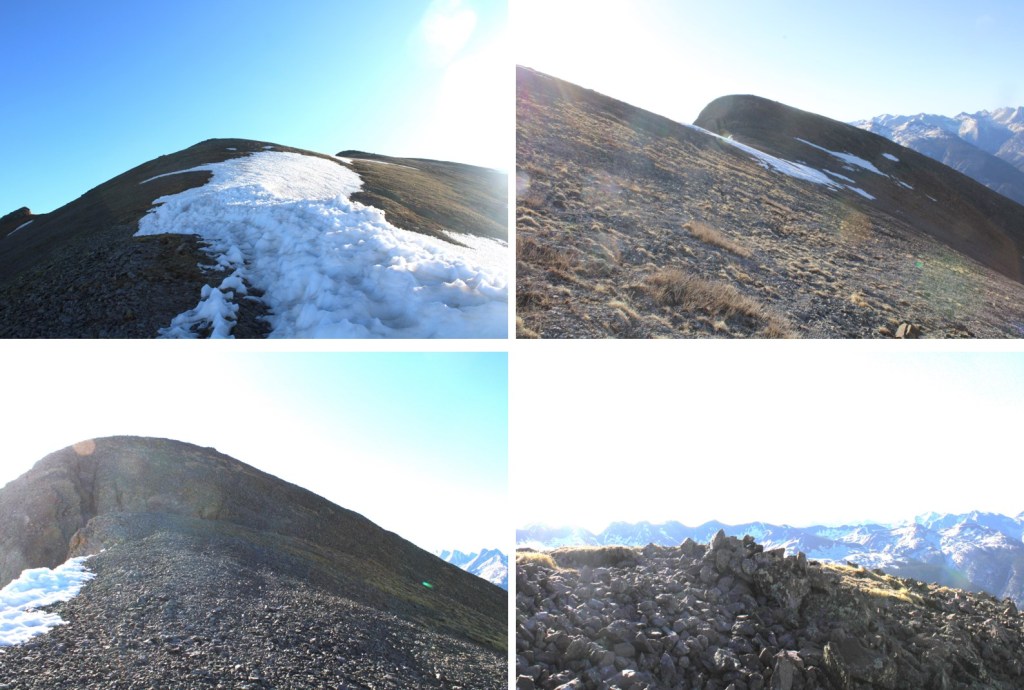
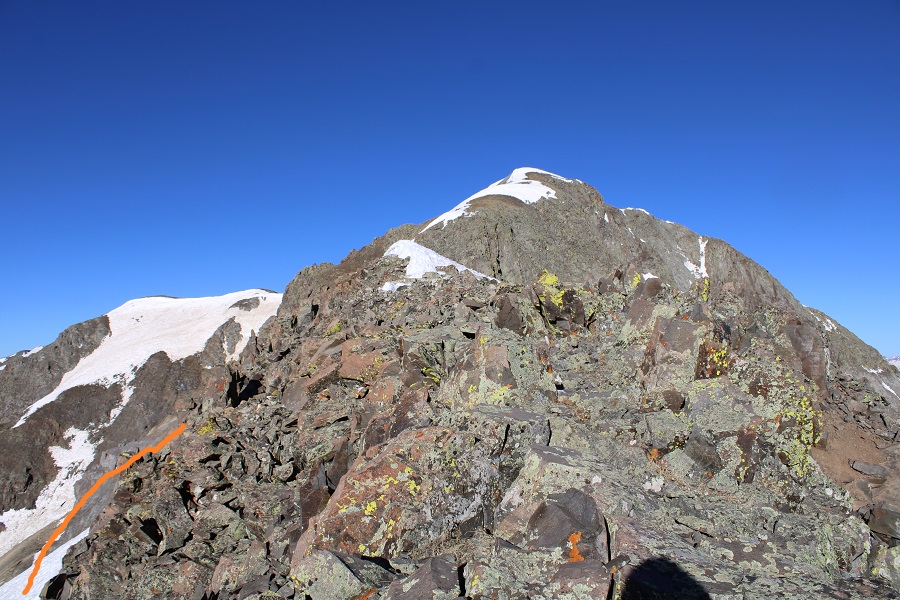
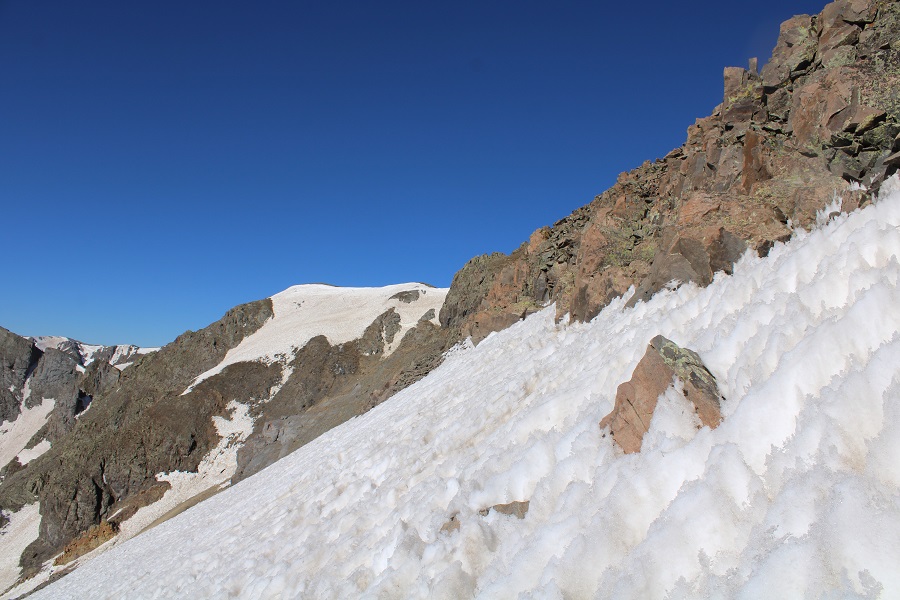
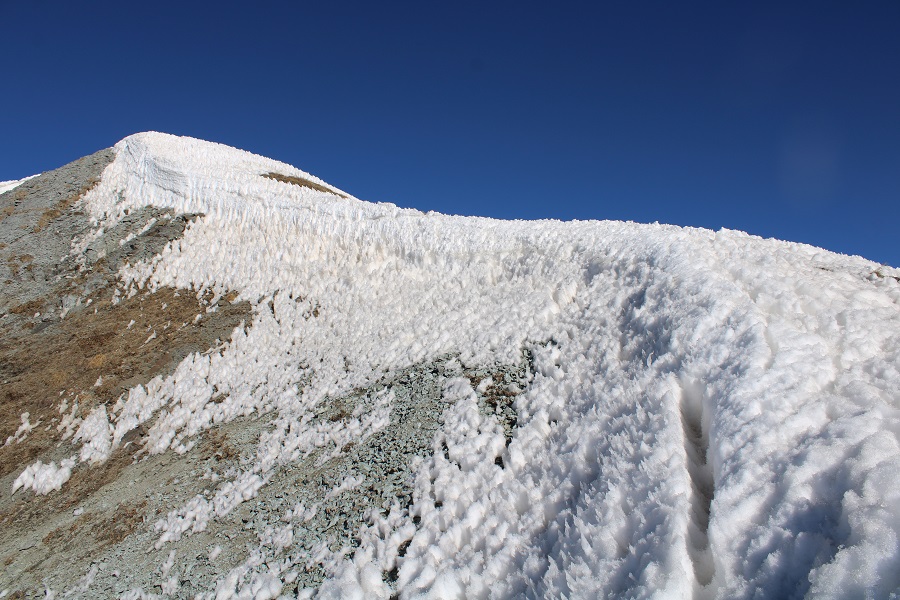
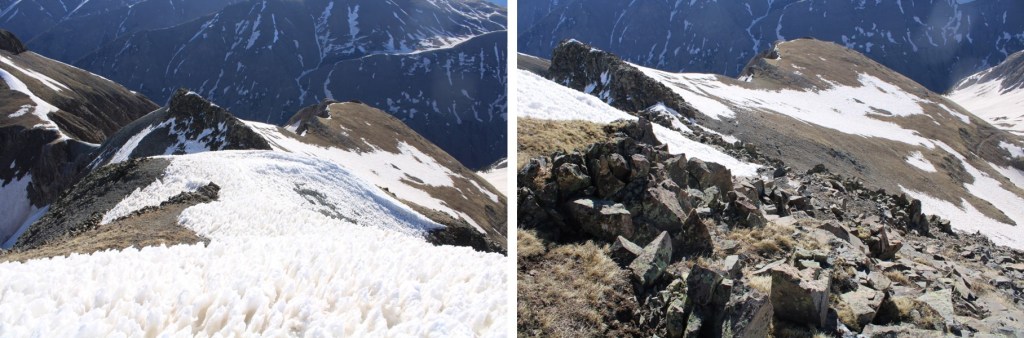
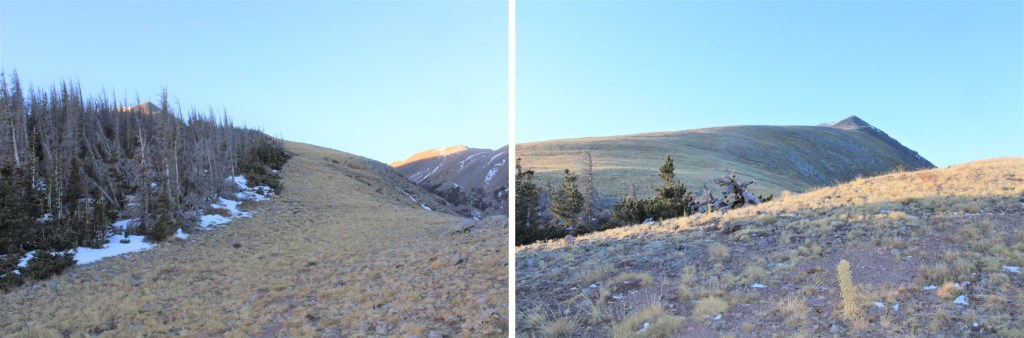
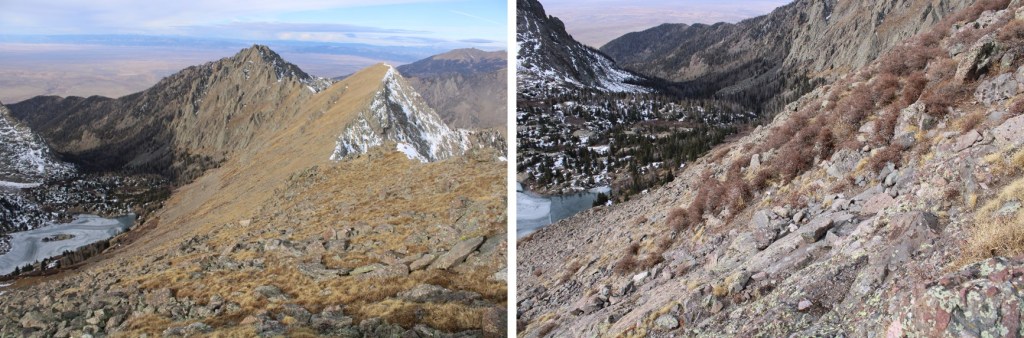
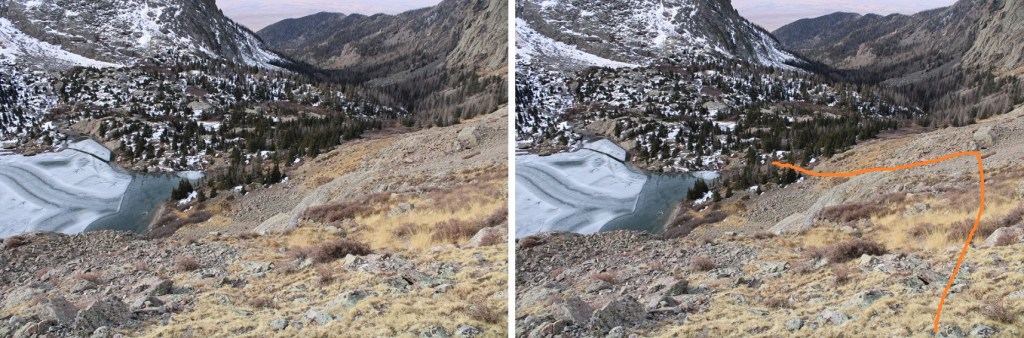
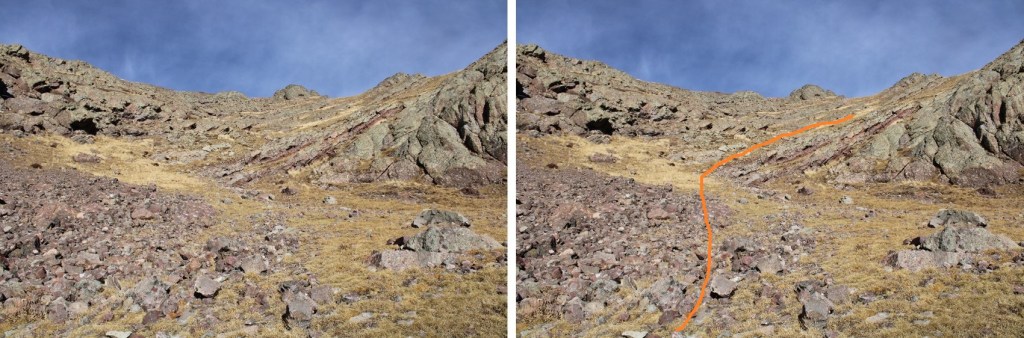
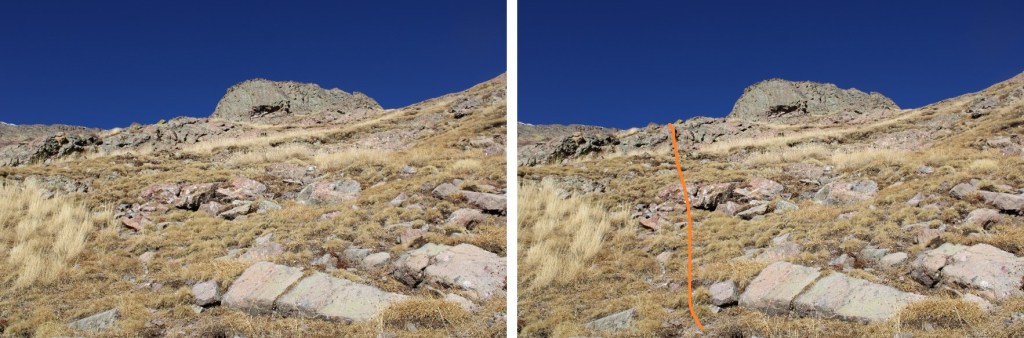
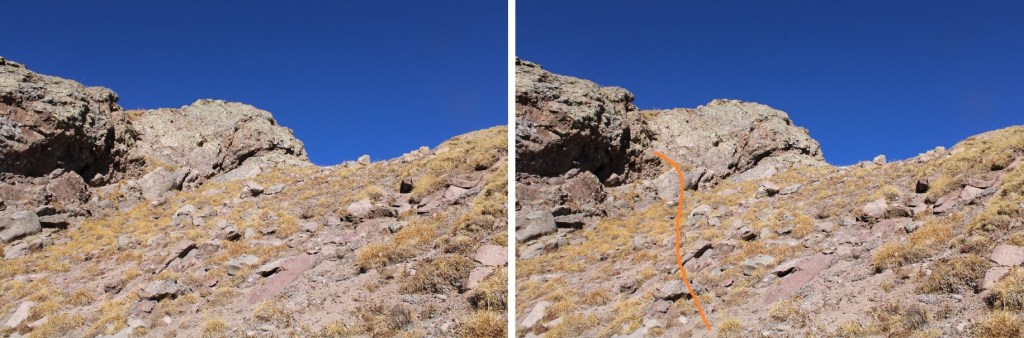
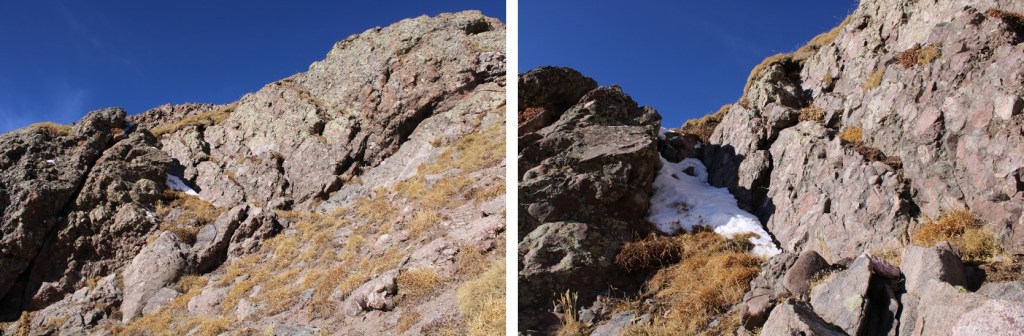
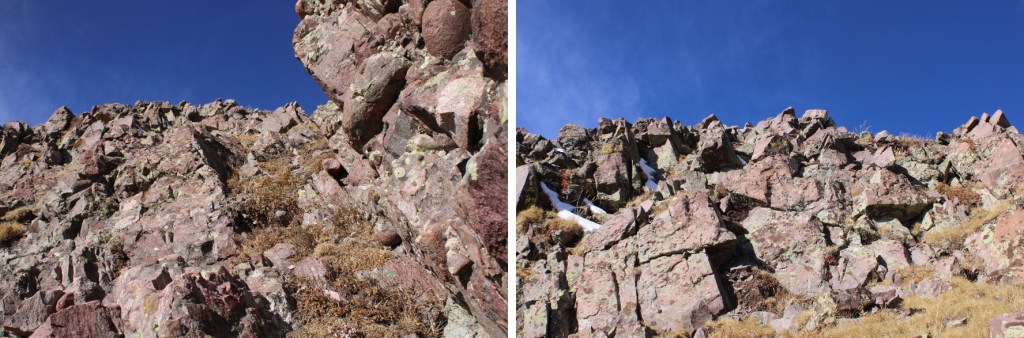
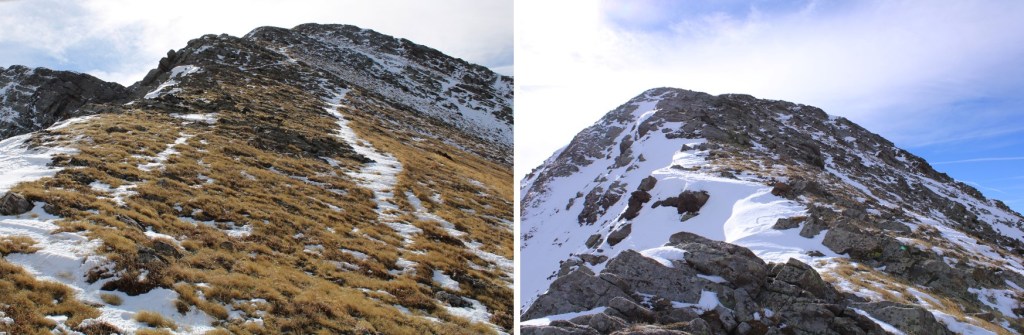
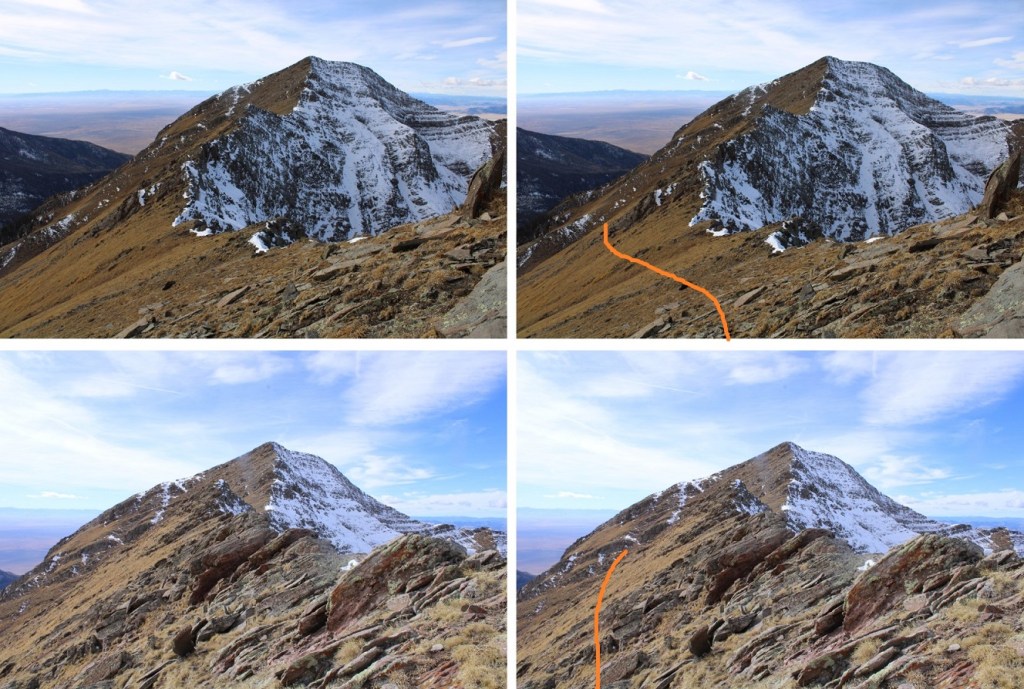
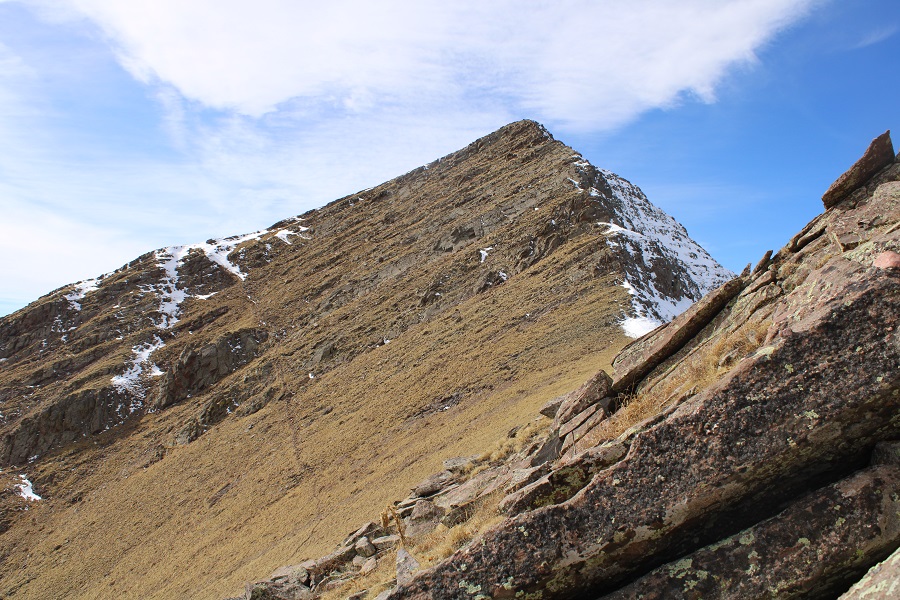
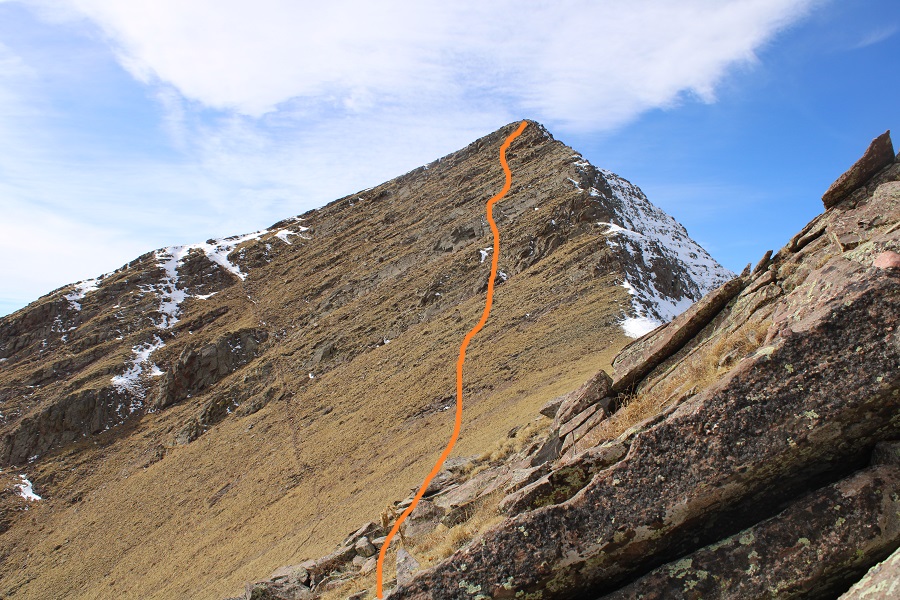
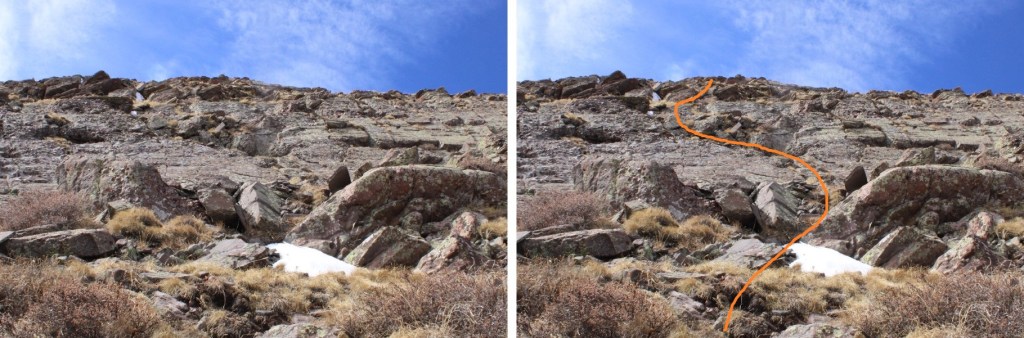
And some closer images of the way to Grand Turk

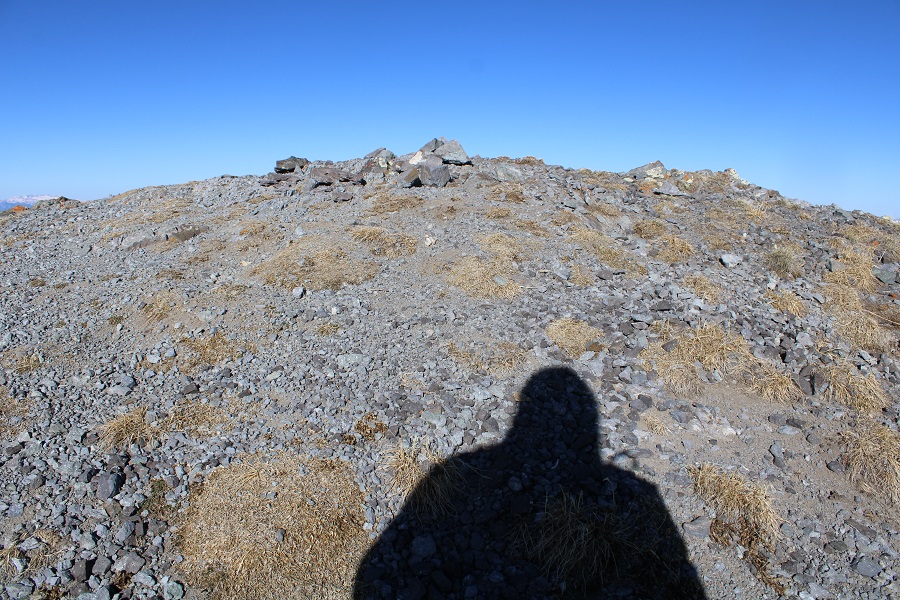
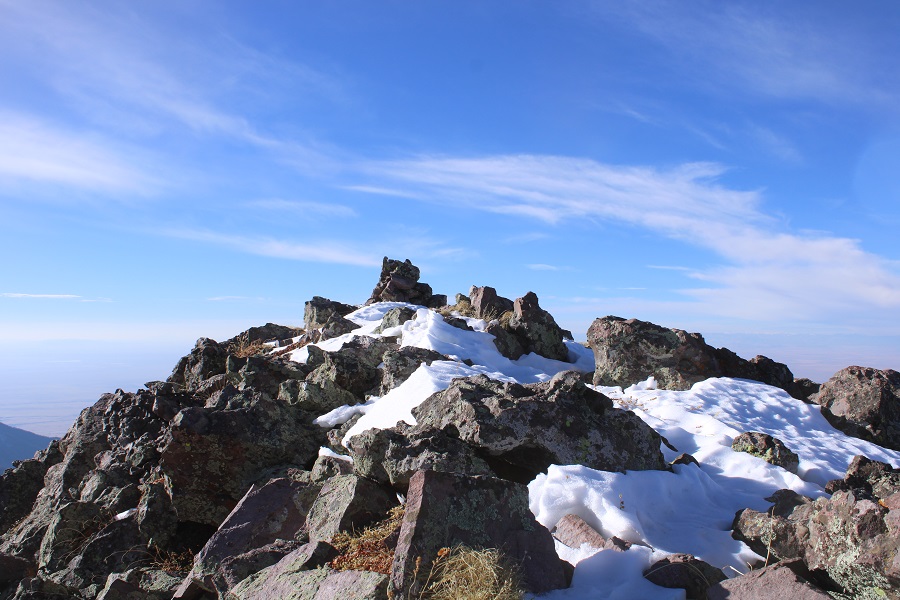
I summited Grand Turk at 7:35am

Grand Turk: 

Now to head over to Sultan Mountain
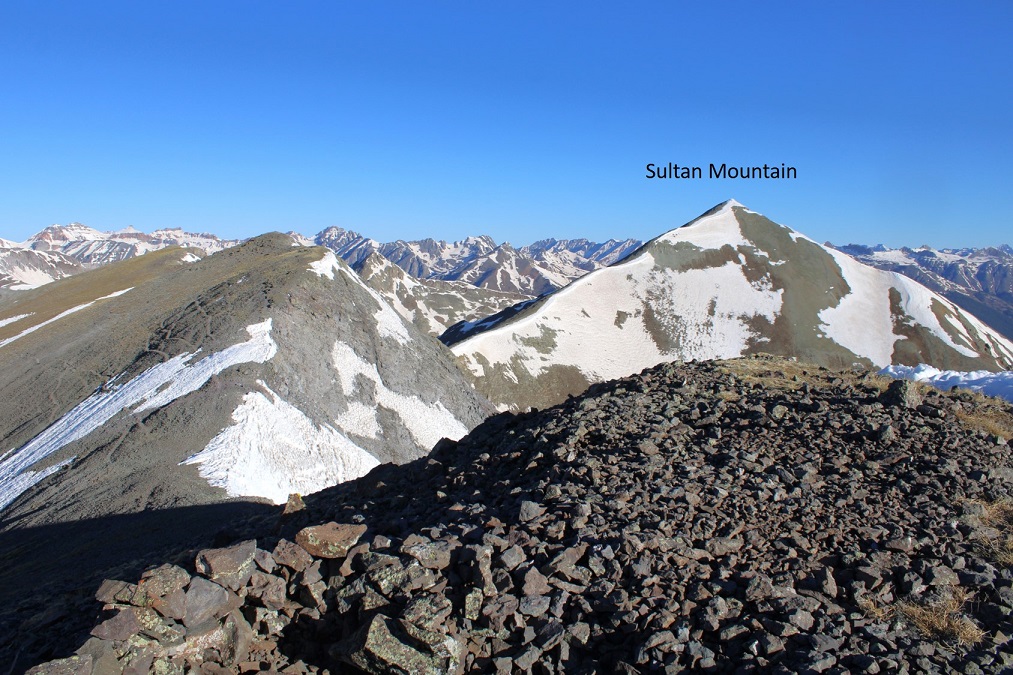
I re-traced my steps west, following the ridge
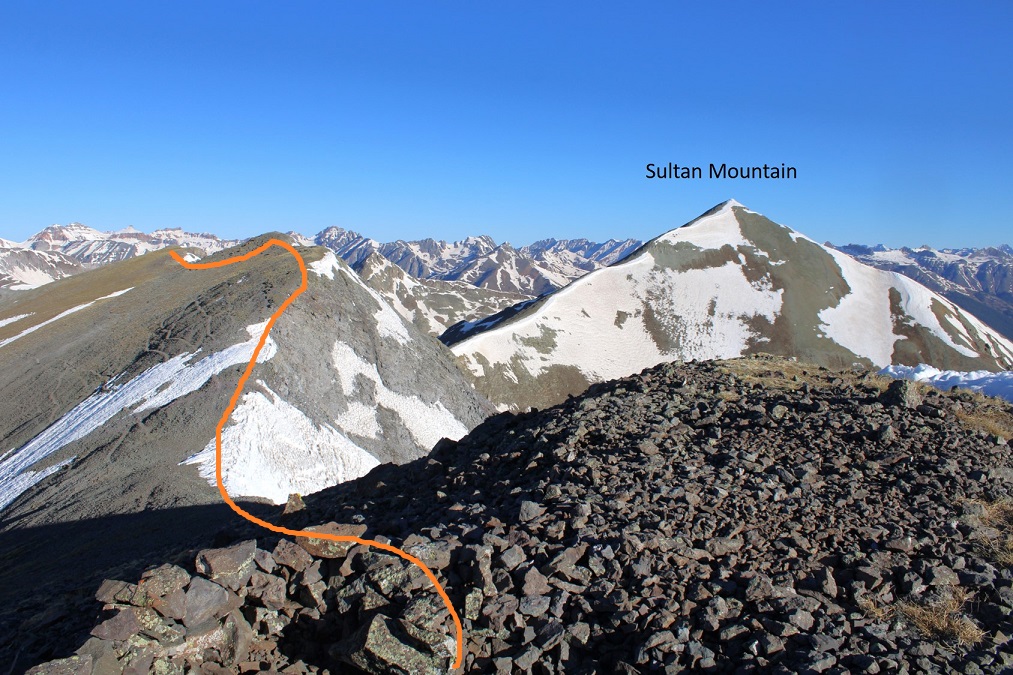
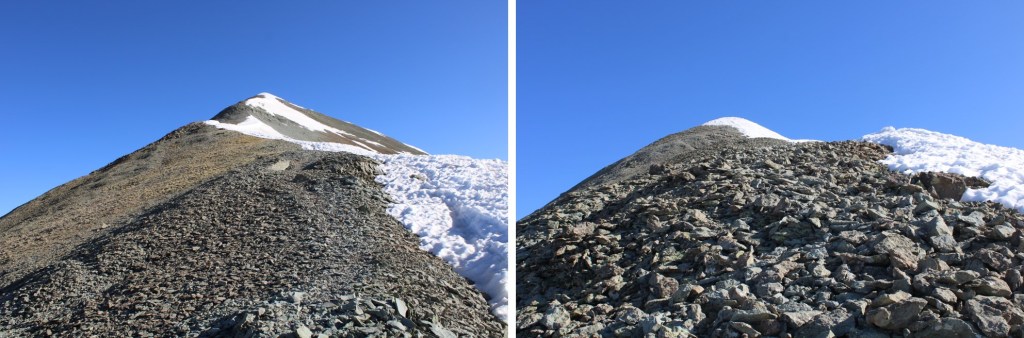
And then followed the ridge all the way to Sultan Mountain. This was all class 2 and very straightforward.

I summited Sultan Mountain at 8:40am.  Check out those views!
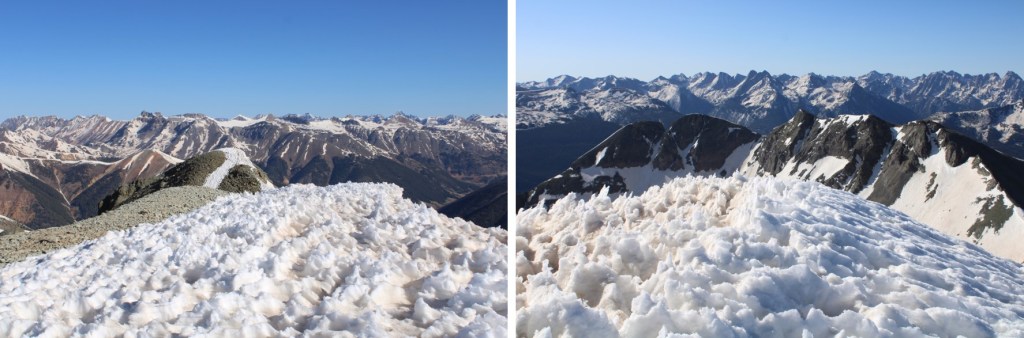
There wasn’t any place to set my camera down on the snow to take a picture, so I took a selfie with my phone.
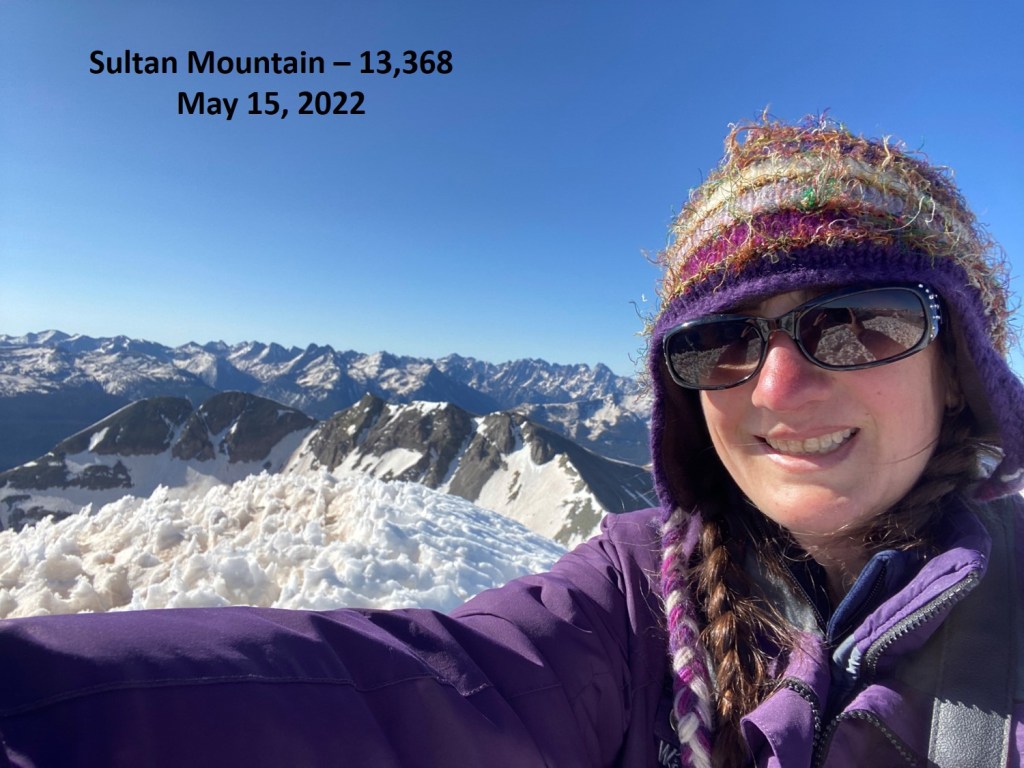
Sultan Mountain:

Now to turn and head back to Spencer Peak
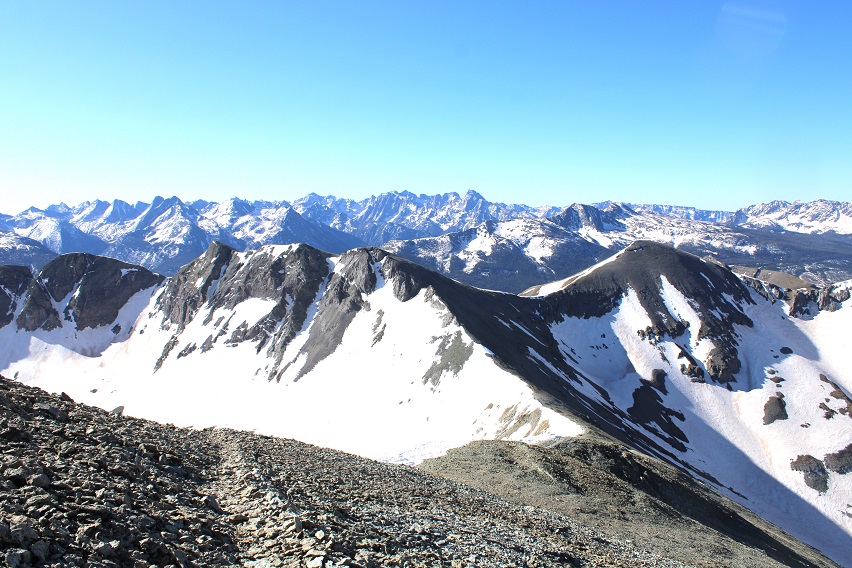
Here’s the route I took (dotted line is the route I took in)
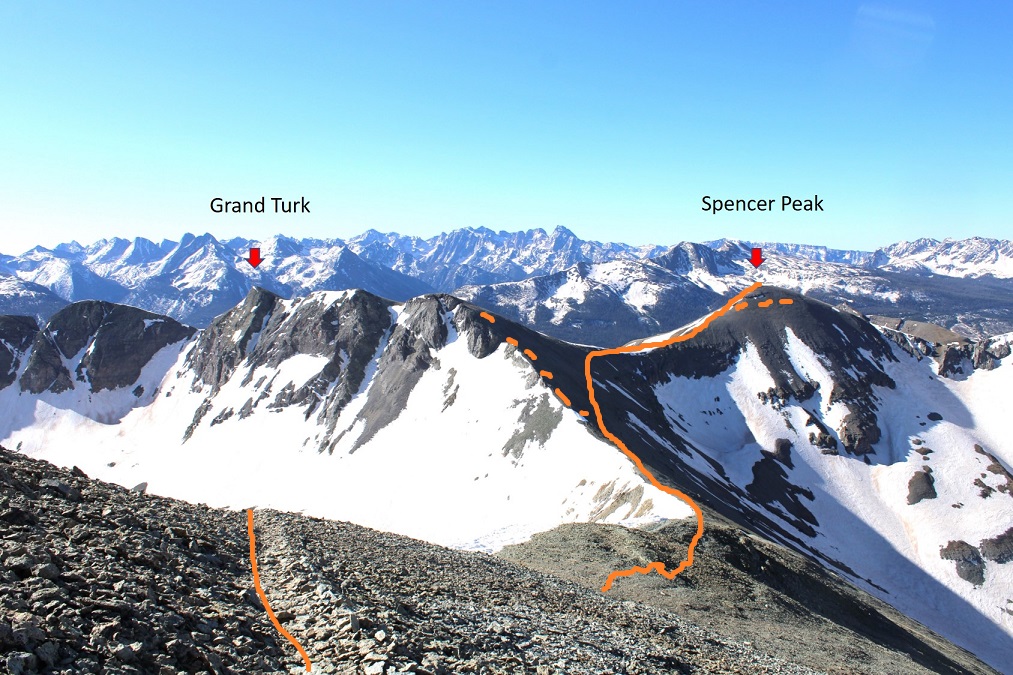
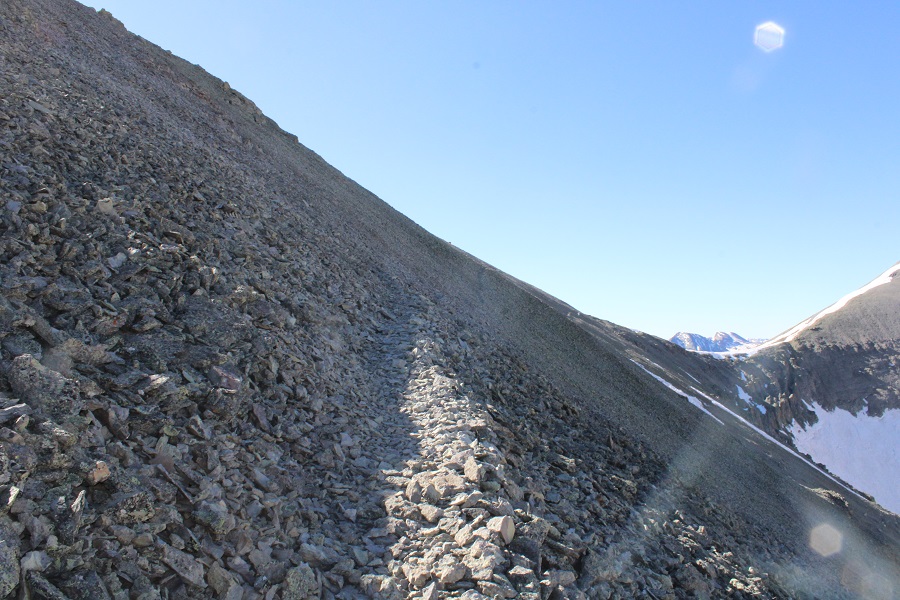
I retraced my steps, and then took the scree slope to the saddle

The scree slope had a well-defined trail, but it had been washed out in areas by sliding rock, so careful foot placement was a must.
Back on the saddle, I headed up Spencer Peak.
Just like the rest of the day, this was class 2
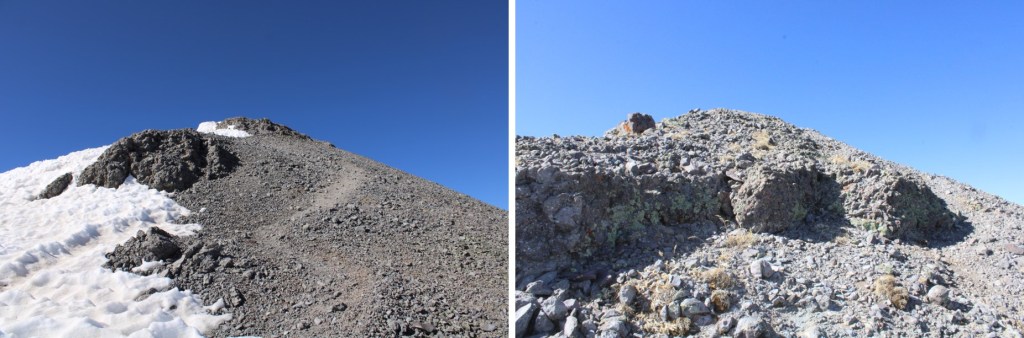
I summited Spencer Peak (unranked) at 9:30am

Spencer Peak:

Now to head back the way I came in.  I followed the obvious trail west to the saddle
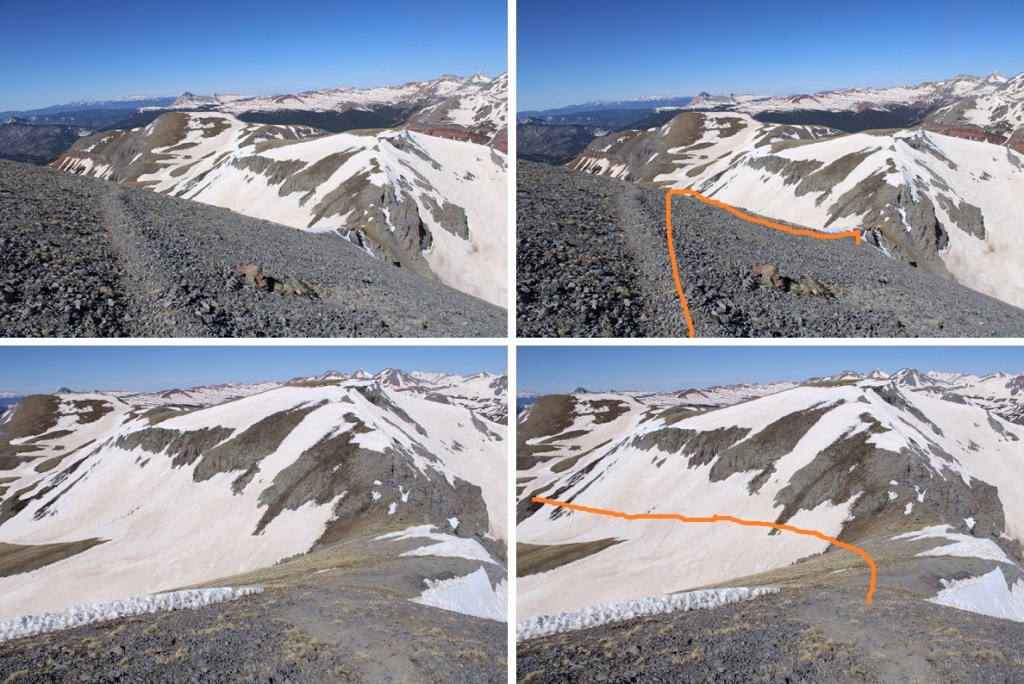
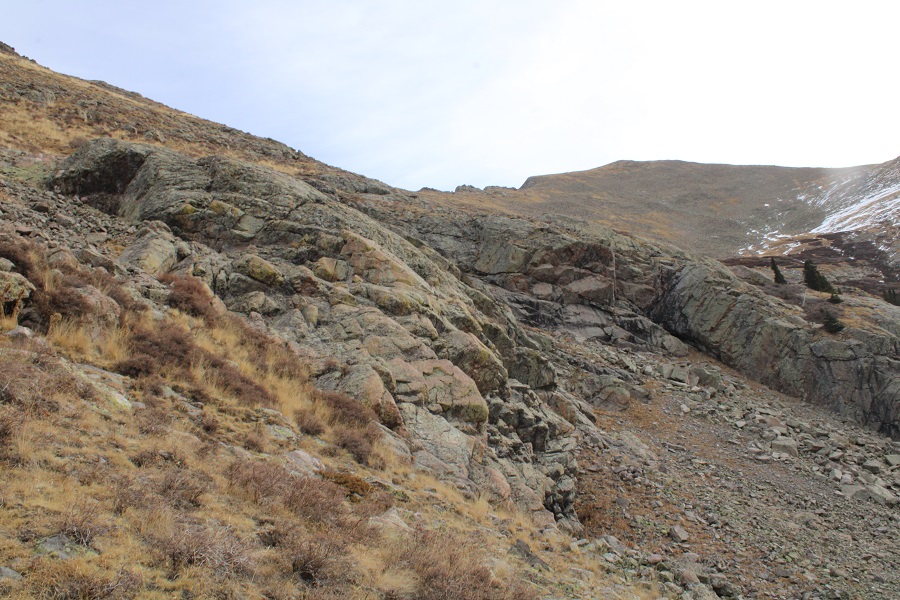
To descend, I looked for this obvious rock formation
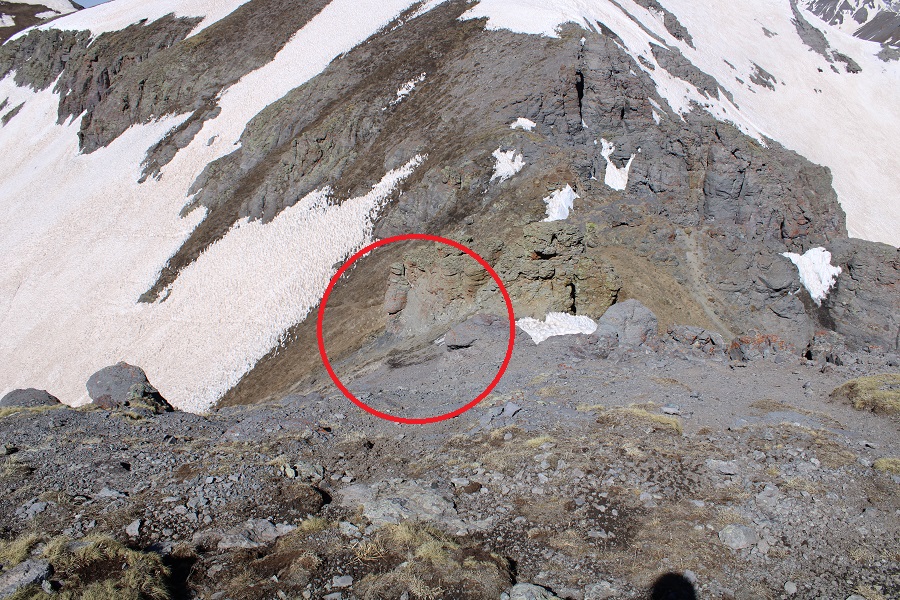
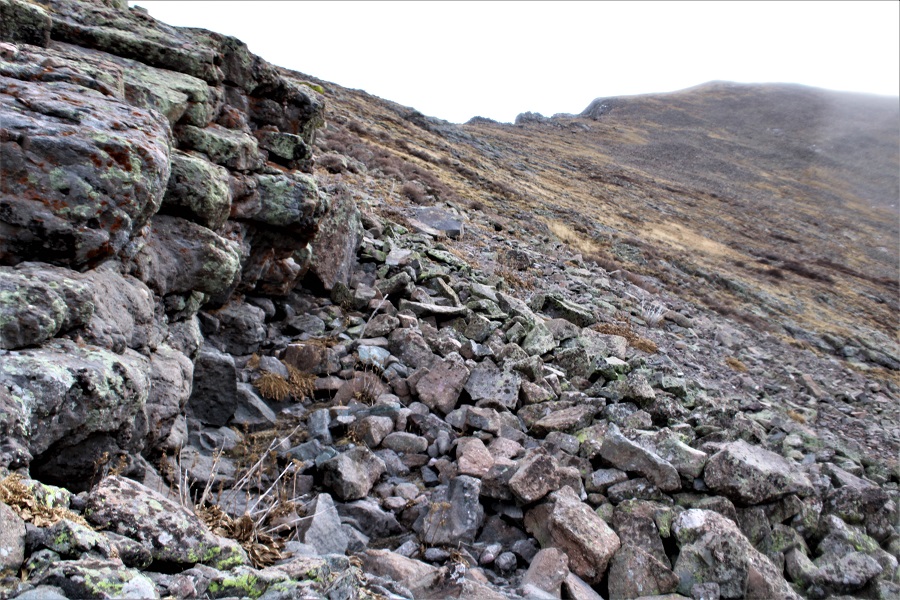
Then I stayed as high as I could so as not to need to regain elevation
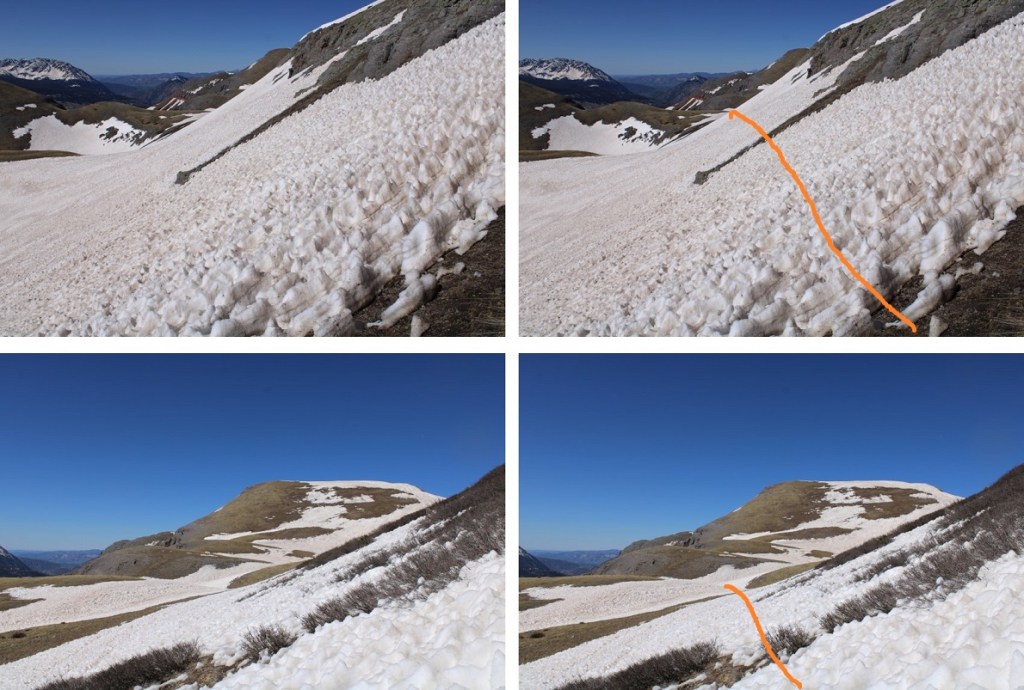
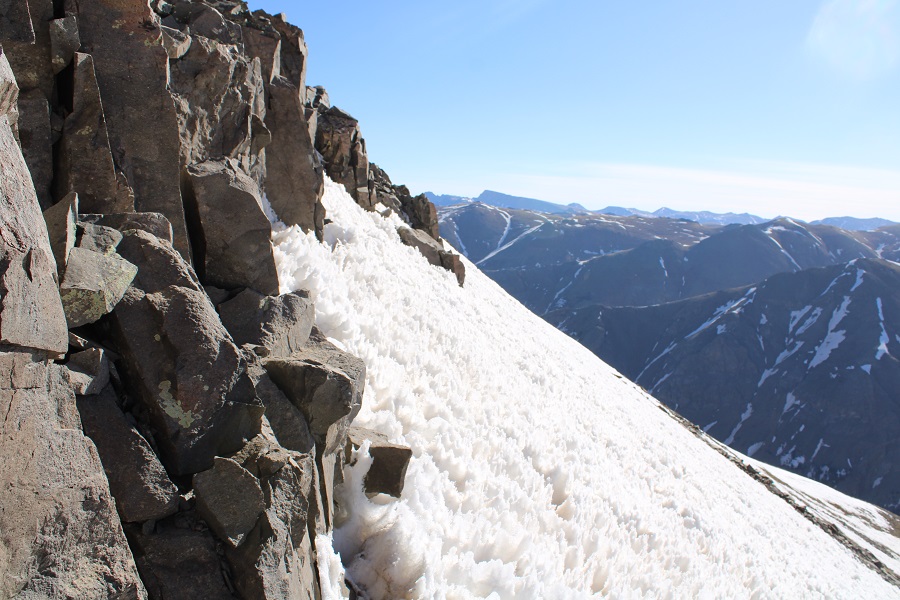
It should be noted, by this time in the morning, the snow was complete slush.  Snowshoes wouldn’t have worked because the suncups were terrible.  I was reduced to wading through the slush, with my socks and shoes sopping by the time I made it to the other side.  I’m not sure gaiters would have helped.  I now headed back down the gully and into the basin
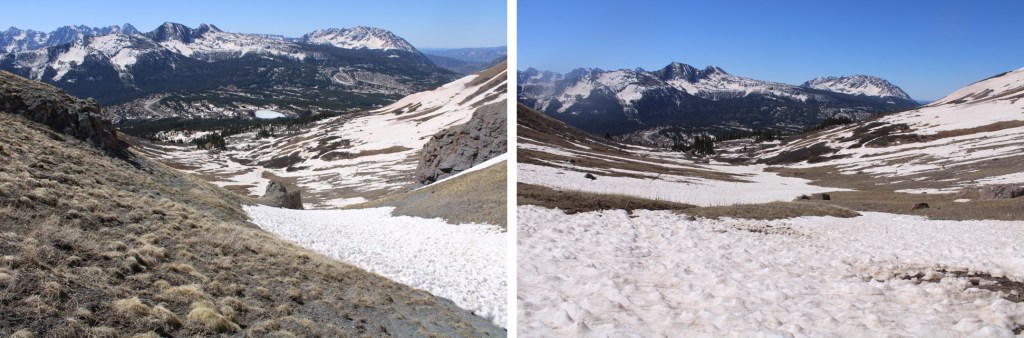
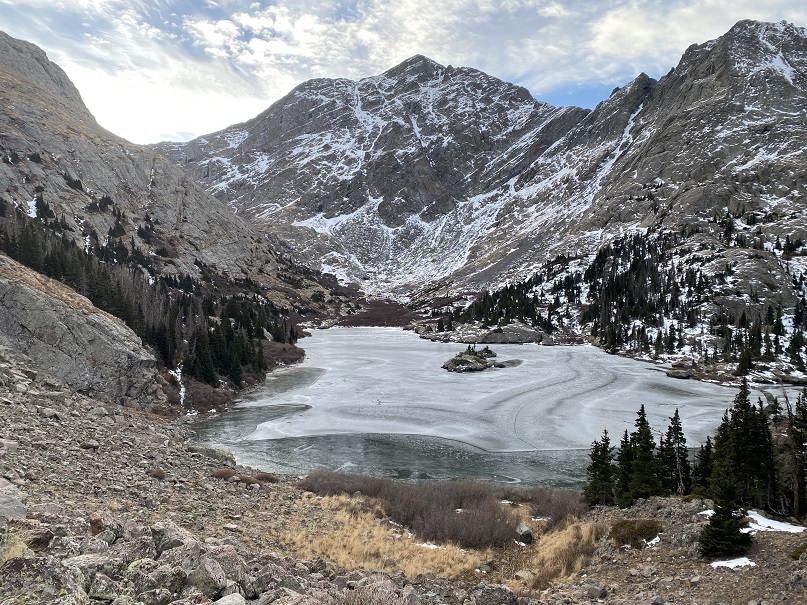
Now is a good time to get a look at Little Molas Lake.  That’s the direction you need to be headed to make it back to the dirt road, and the campground
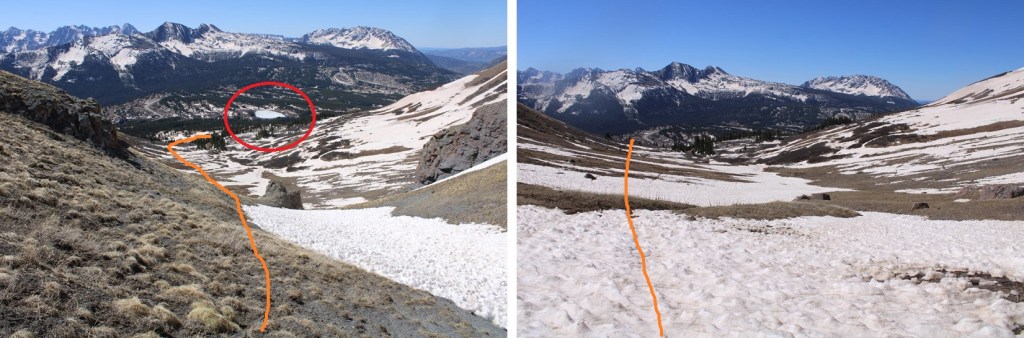
Once at the far end of the basin I turned right, and headed southwest to cross the creek

And then continued heading southwest
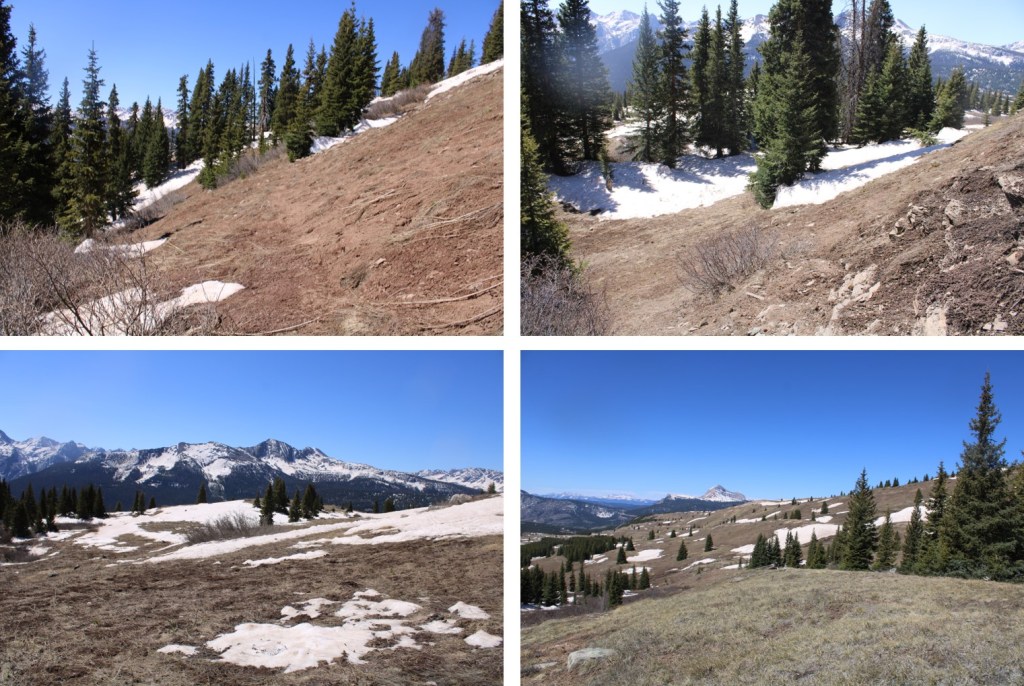
Always heading towards Little Molas Lake

I eventually made it to the road, and followed that back to my truck
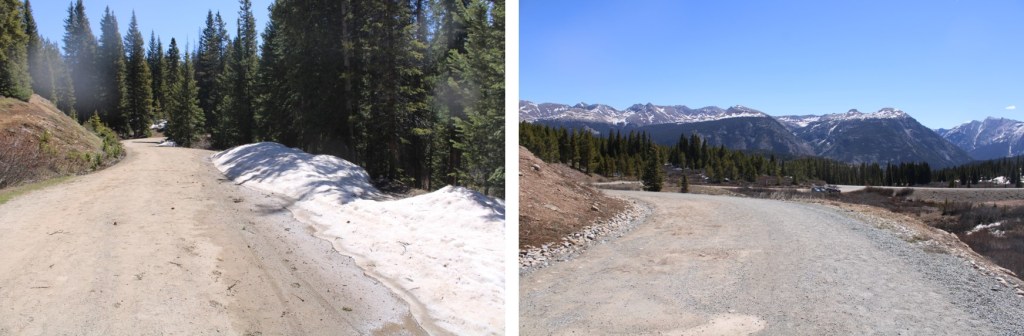
I made it back to my truck at 11:15pm, making this a 10.36 mile hike with 3539’ of elevation gain in 6 hours, 30 min.
On to the next trailhead!
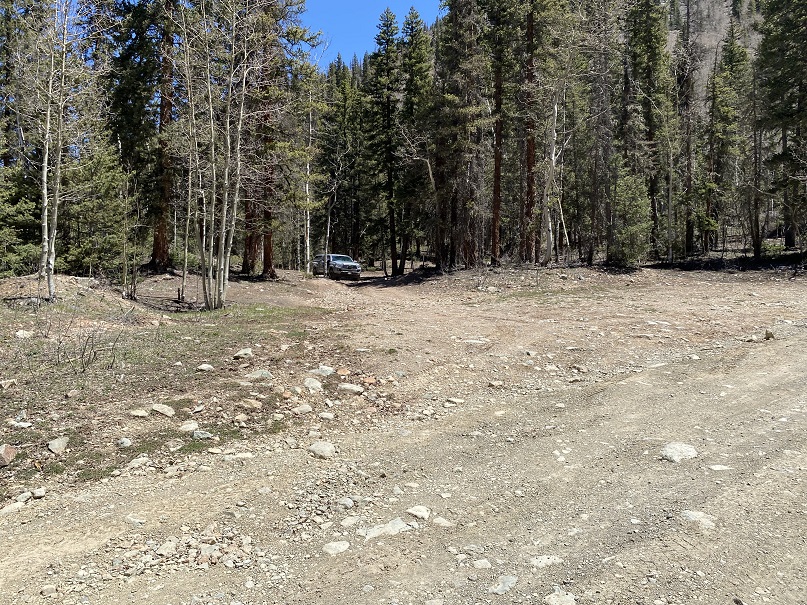
Little Giant Peak – 13,417

RT Length: 9.03 miles

Elevation Gain: 3526’

From CR2 near Silverton I turned right on 52 (just about where the Mayflower Mill Mine is) and followed the road to 9950’.  I could have continued on to a campsite at 10900’, but at this time I didn’t know it was there.  I was glad I’d stopped at 9950’, because the road was narrow, and there weren’t any spots to turn around before the second site.  Also, that’s the farthest you can drive at this point (10900’) as there are downed trees and snow blocking the road to the Big Giant Mine. 

I made it to my campsite around noon, and didn’t see another person the entire time I was there.  Not one car/OHV drove by me, and no hikers either. 

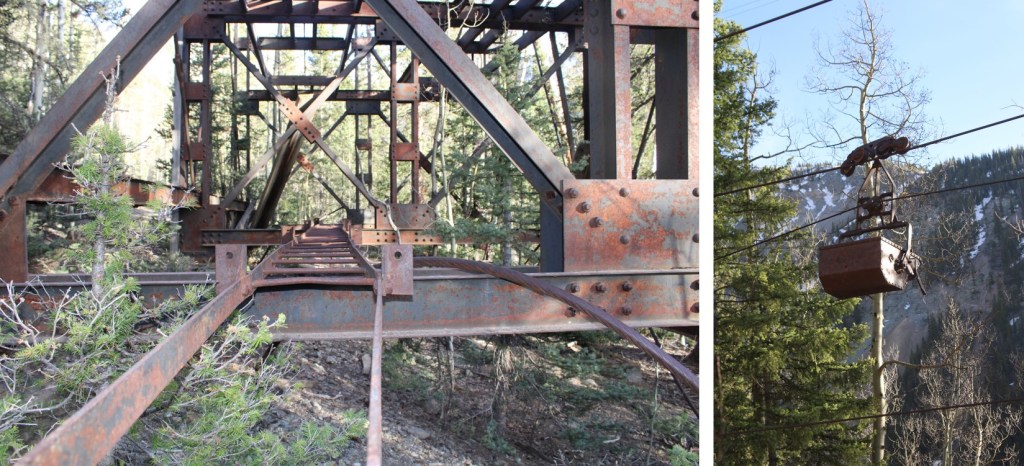
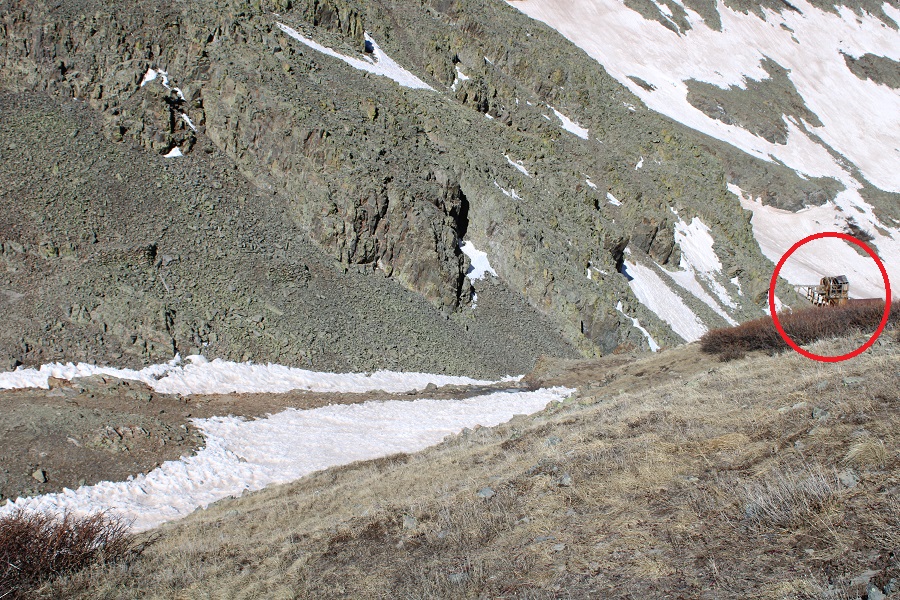
I was parked near an abandoned aerial tramway, so I spent some time taking a look around.  Old mining stuff is cool.

It was the quietest night I’d ever spent dispersed camping:  I didn’t hear the wind rustle, or any animals make any noise until I got up at 4:30am.  I was on the trail soon after.  I started out following 52 south, then after .4 miles I turned left at a junction, and continued following the dirt road as it switchbacked up the hillside.

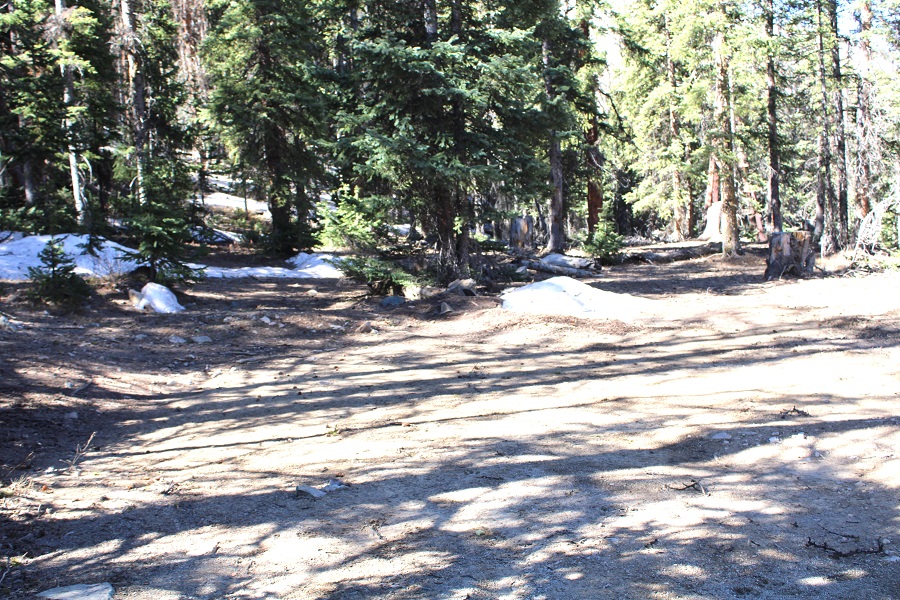
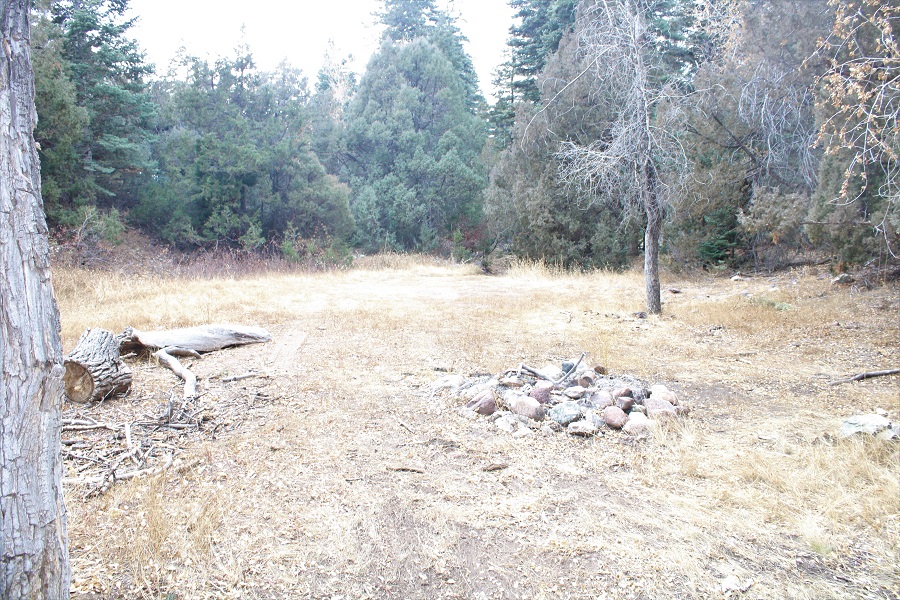
Moose scat.  There was tons of it, but none looked fresh.  I saw it around my campsite, and all along the road.  I passed the campsite at 10900’ after hiking for 1.5 miles.  This was the only place to park/turn around/pass another vehicle from where I parked my truck.  (There’s a fire ring behind the snow at this site).

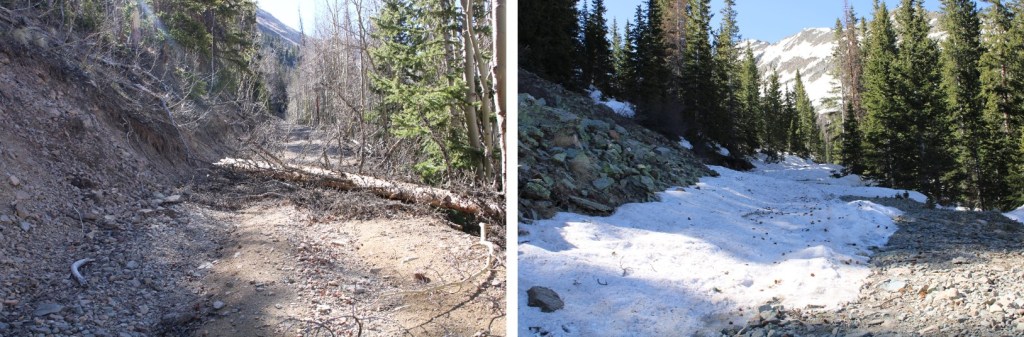
Just after passing the campsite snow began to line the road, and I came across some downed trees.

After hiking for just under 2.5 miles I came to the Big Giant Mine.

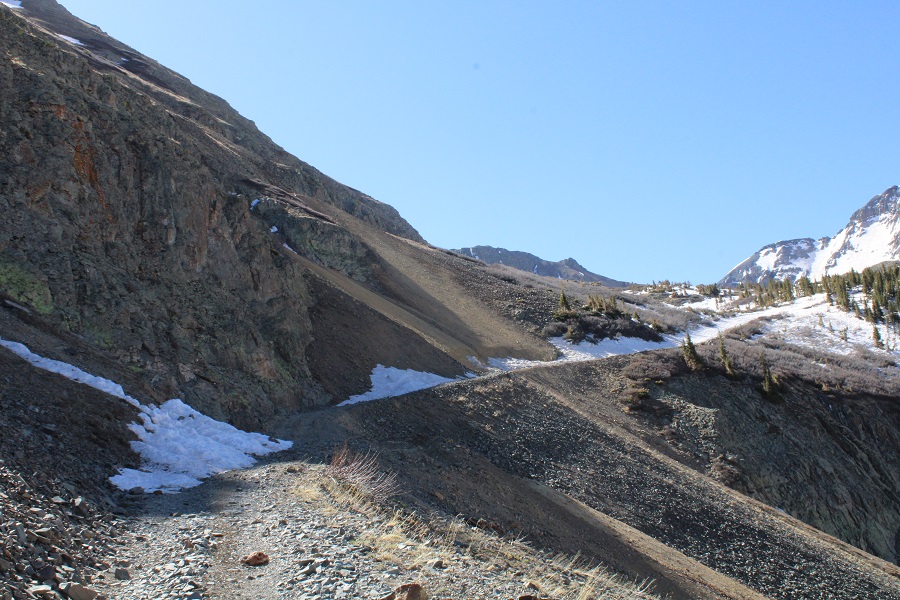
I continued following the road into the Little Giant Basin.  The road was either dry, or covered in snow.

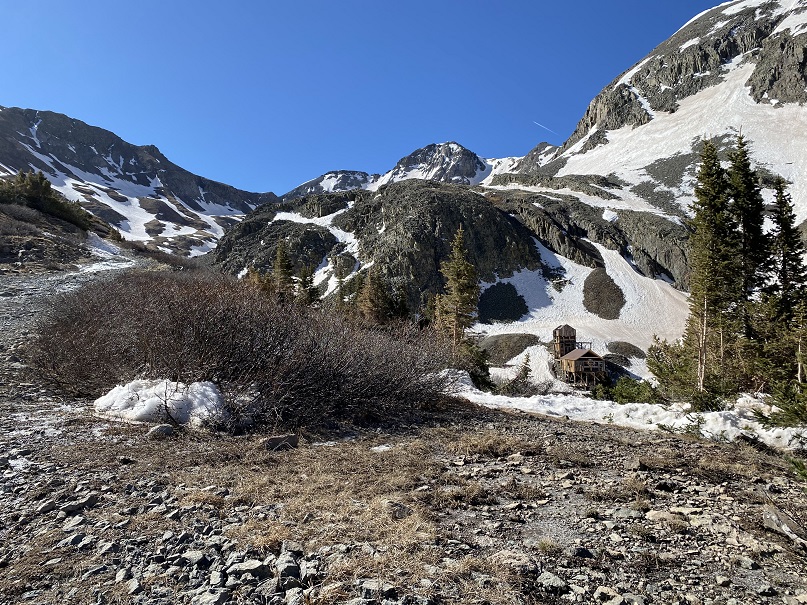
I saw more mining structures along the way.

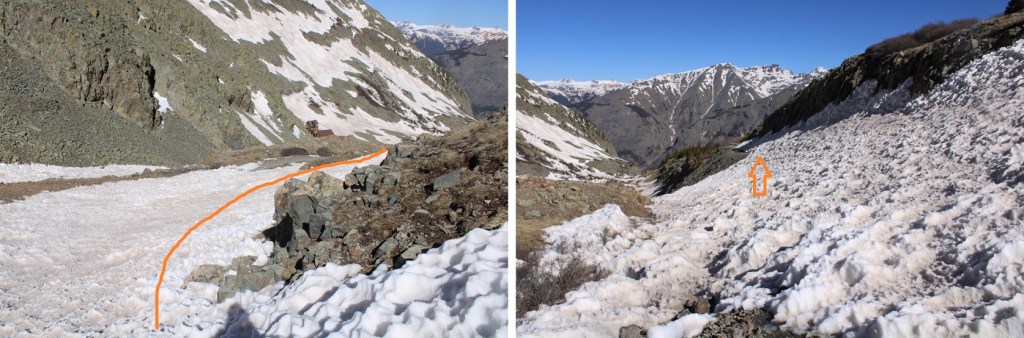
Once in the basin, I was able to see a trail to my left.  However, due to the snow, there was no start to the trail.  So I put on my microspikes and aimed for the trail in the distance, which took me to a pass.

Once on the trail, there was snow in several sections, all passable in the morning with microspikes.  I aimed for the saddle.

At the saddle I turned right, and followed the trail southwest

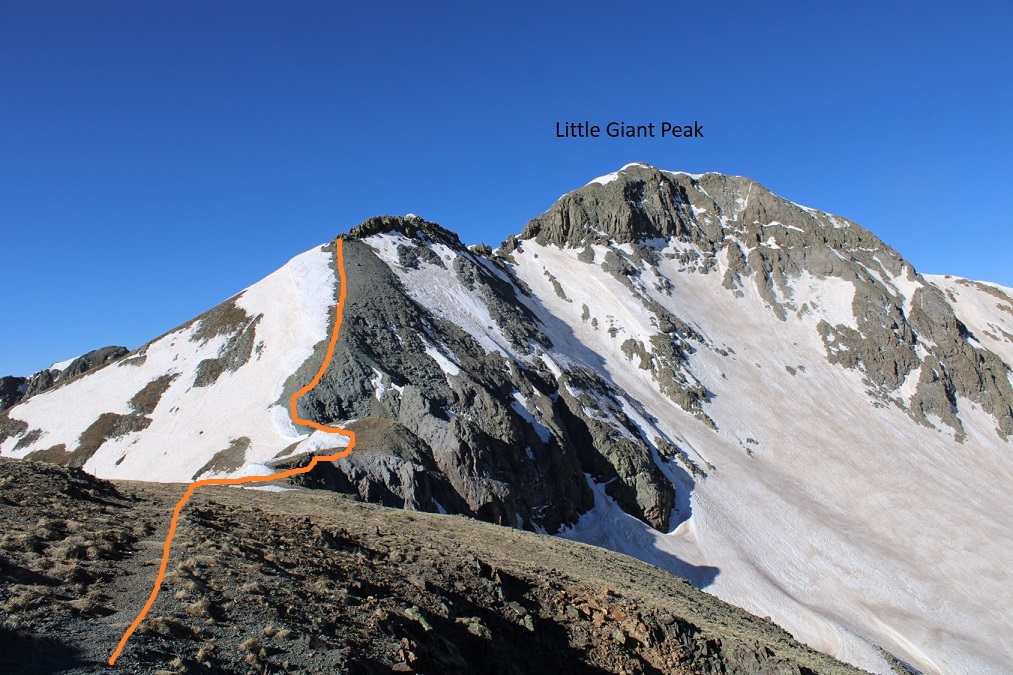
The trail I was supposed to take around the side of the mountain was covered in more snow than I wanted to deal with, so I went up and over the ridge. 

When I made it to the top of the scree, I came to a rocky area. I decided to go up and over the rocks, which was an easy class 3 scramble, but when I got to the end, I was met with snow and terrain I couldn’t downclimb, so I had to backtrack.  Instead, go around the rock outcropping to the left.  I was met with snow, but it was traversable.

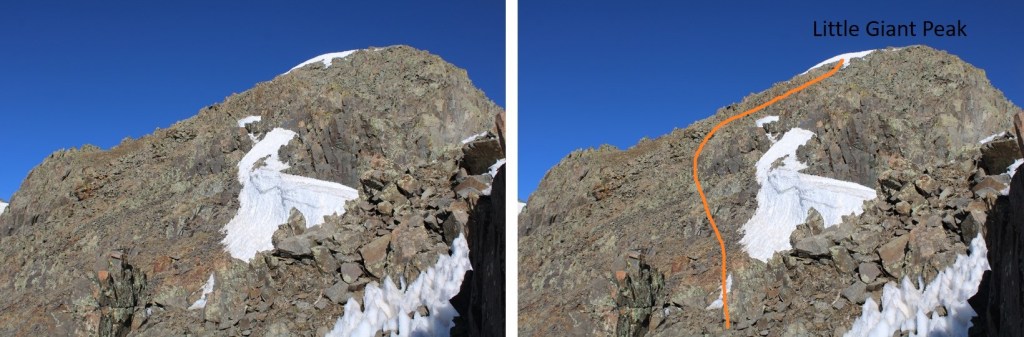
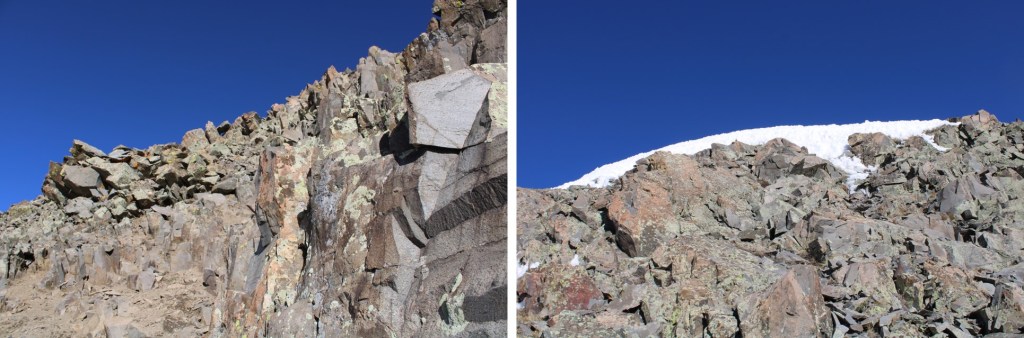
By staying left, and skirting the outcropping, I got a good view of the rest of the route to the summit, which included ‘choose your own adventure’ route finding.  I just kept aiming for the peak.

Towards the top I was met with snow.  I followed it to the summit.

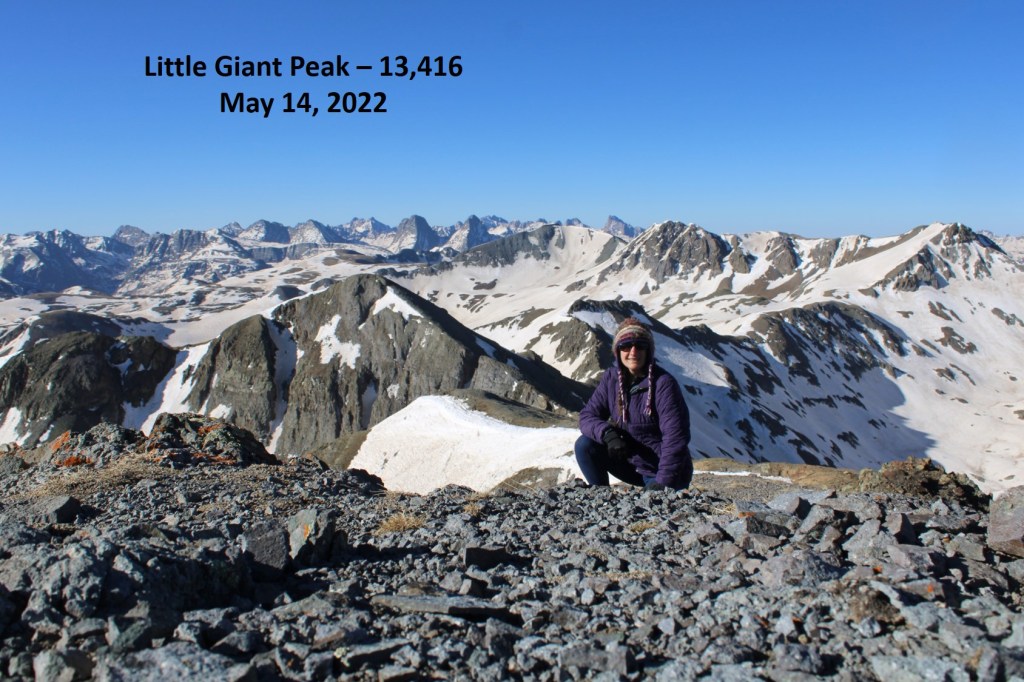
I summited Little Giant Peak at 8:15am

Little Giant: 

The snow was quickly softening up, so I didn’t stay long. I re-traced my steps back to the saddle.

The snow was exceedingly soft behind the rock outcropping, even though it was not yet 9am. 

I made my way back toward the saddle, and followed the trail back into the basin

When the trail gave out, I aimed for the mine in the distance, where the road picked up again

I then followed the road back to my truck

I made it back to my truck at 10:15am, making this a 9.03 mile hike with 3526’ of elevation gain in 5 hours, 30 minutes.

On to the next trailhead!
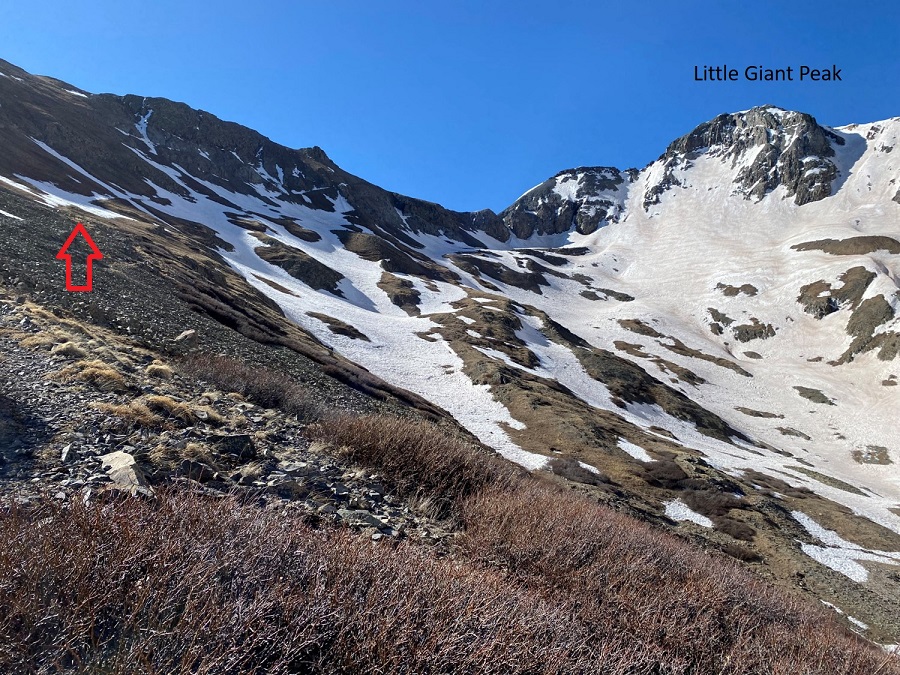
Kendall Mountain – 13,353

RT Length:  6.19 miles

Elevation Gain: 2742’

Let me begin by saying Kendall Mountain was not my first intended peak of the day, so my stats and topo map are a little off.  I made it to the Kendall Gulch parking area the night before, and slept at 11460’. 

The next morning I rose late, and was on the trail after the sun had risen, at 6am.  The road was easy to follow, and clear of snow the first half of the way.

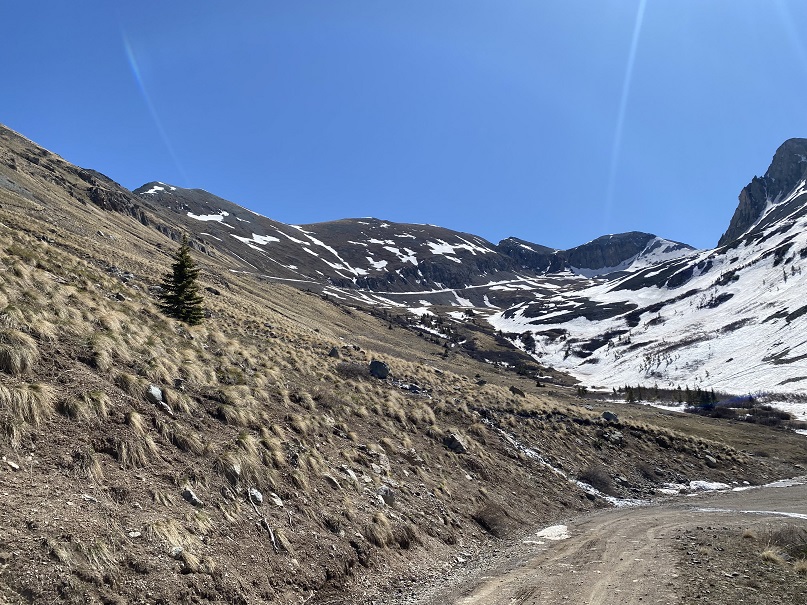
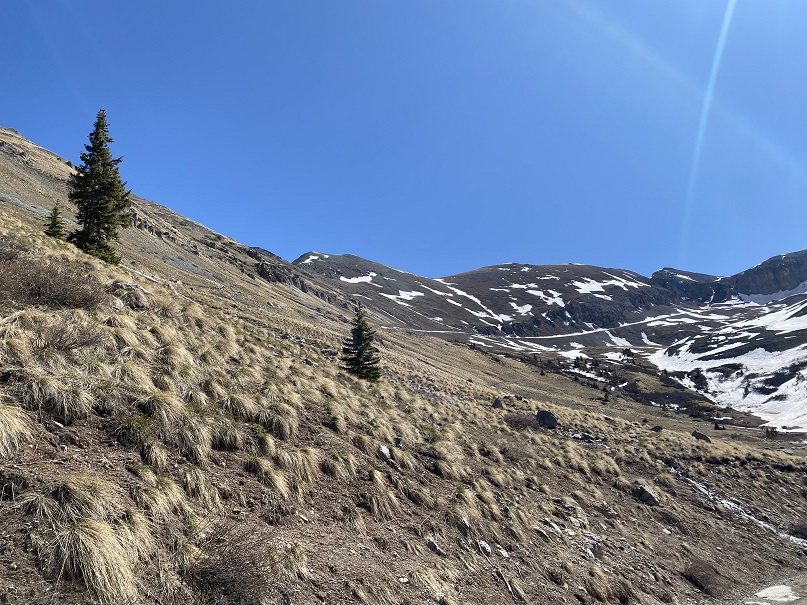
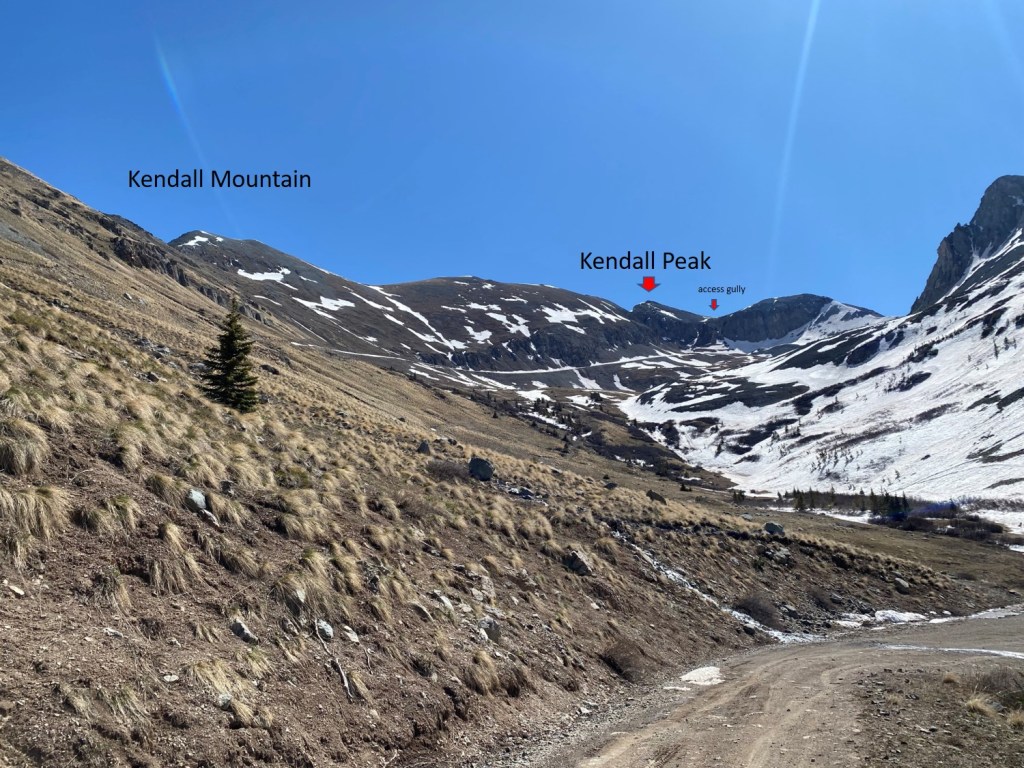
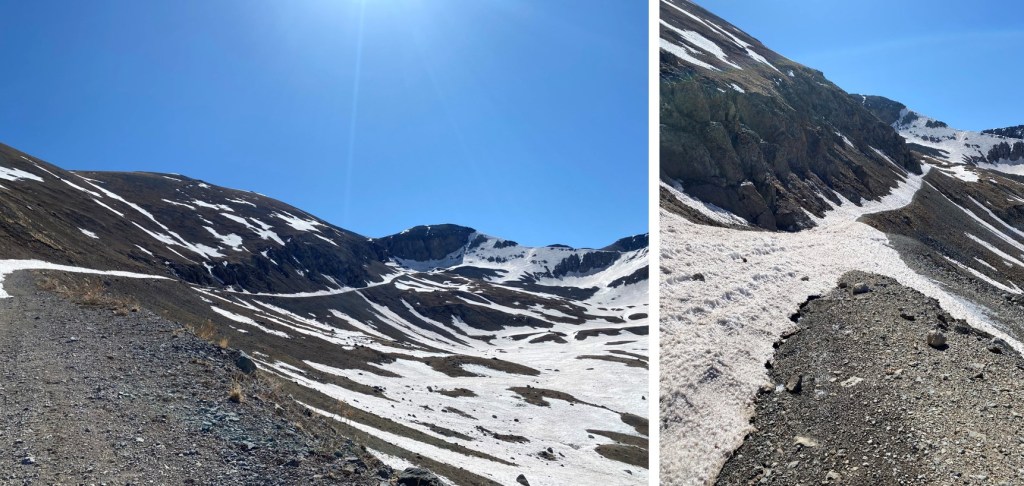
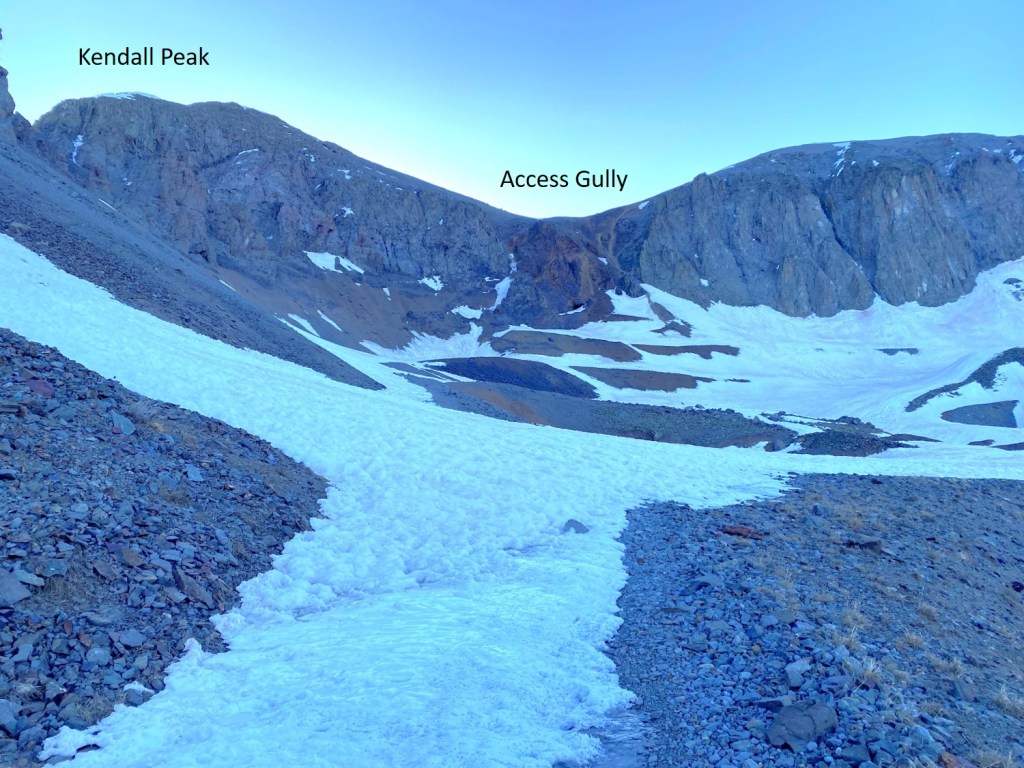
I was originally headed toward Kendall Peak; specifically, the gully

Here are some pictures of the way to the gully… I just followed the road to a mine

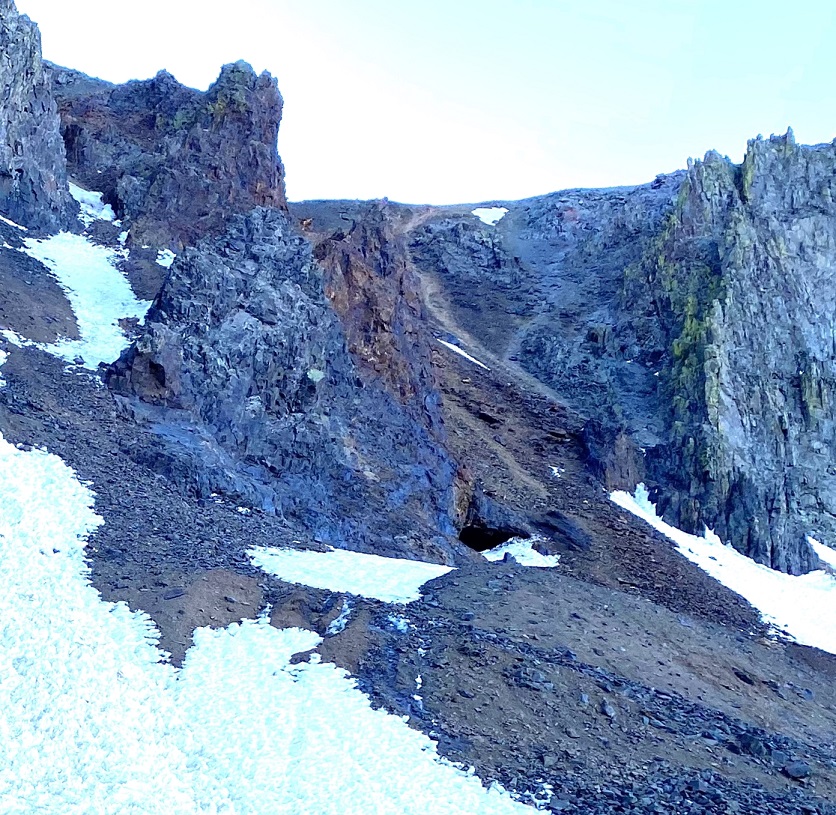
Once at the base, the route looked simple enough:  I just needed to get up the gully to the ridge, and take the ridge to the summit

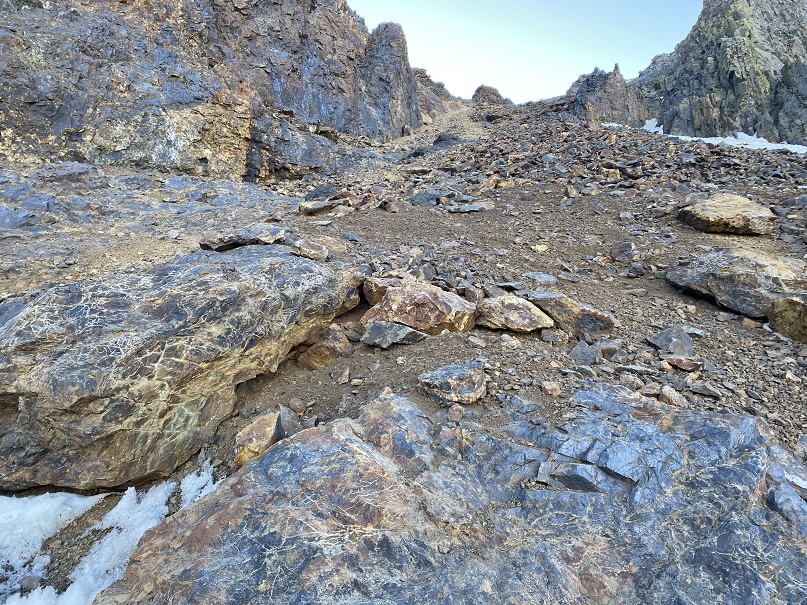
I’m really embarrassed to say this, but I wasn’t able to get up the gully.  I made it about half way, and it became too steep.  This was worse than kitty litter over rocks.  It was talus that gave way to rockslides, and tiny pebbles over rock.  Even with microspikes on, I couldn’t get traction, and kept slipping and falling down.  It’s a lot steeper than it looks. I tried several different routes, but was unable to gain traction on any of them.  After my fourth or fifth attempt, I started thinking to myself – who wasn’t wearing a helmet – “This isn’t the way I want to die.”  While I might have been able to make it up (doubtful) going down was going to be worse.   I made the decision to come back in the winter and try this as a snow climb, which should provide more traction.  This was a difficult decision to make, but I knew it was the correct one.

So, I backtracked, and tackled Kendall Mountain.  I hiked back to a junction in the road, at 12.265’. 

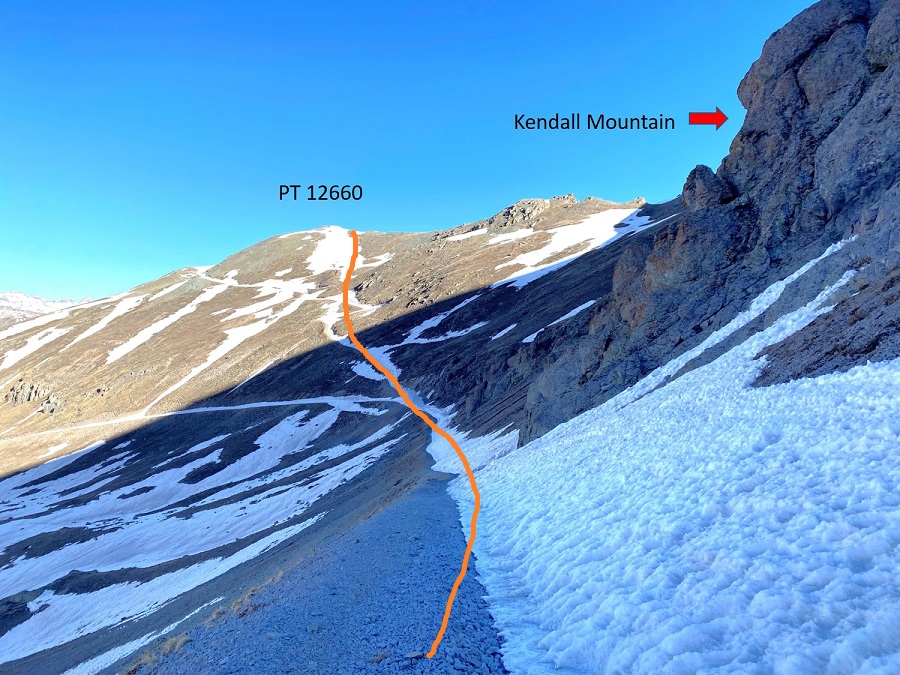
From the junction, I headed up to PT 12660

From PT 12660 I turned right and followed the ridge northeast towards Kendall Mountain.

Here’s the route I took to the summit (solid line) and back down (dotted line).  You could go up the way I descended, but it would be steep. 

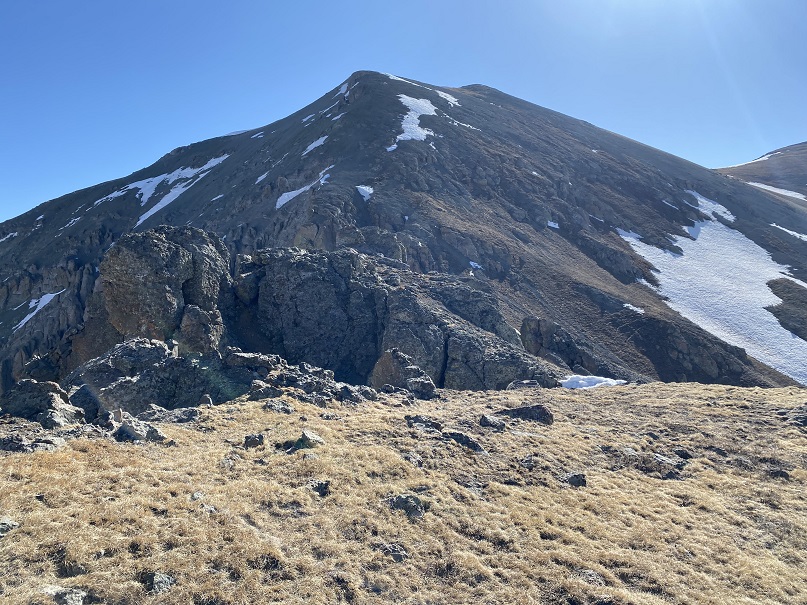
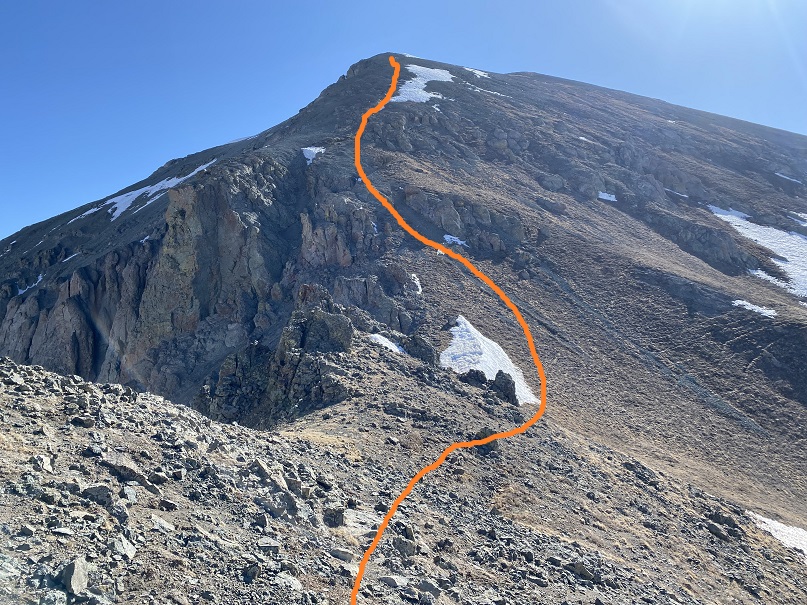
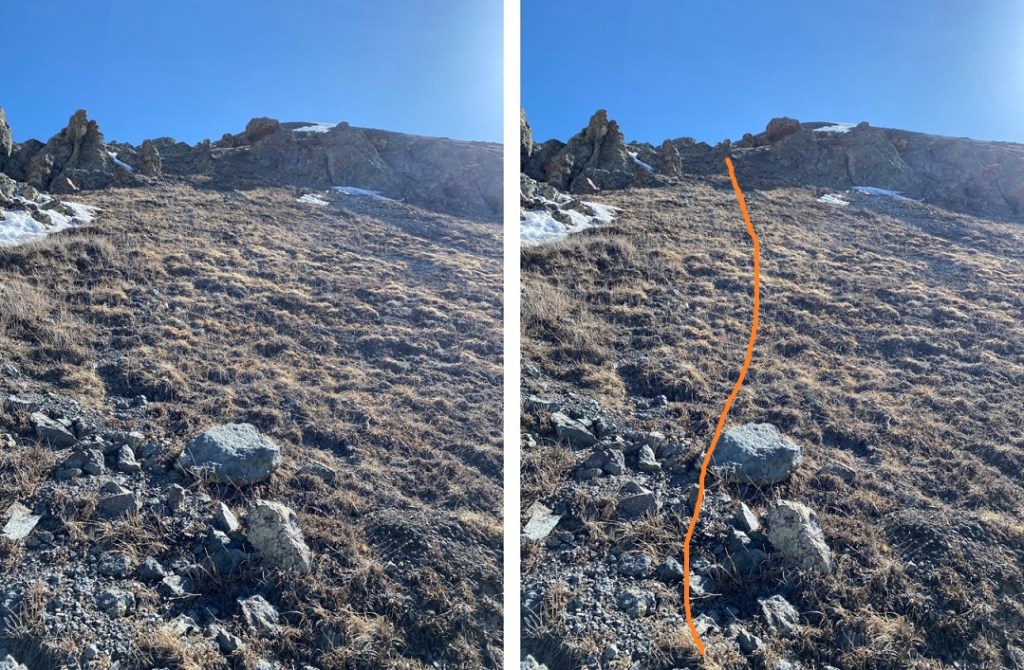
Here are some close-ups of the route to Kendall Mountain

The tundra gave way to small rocks toward the top

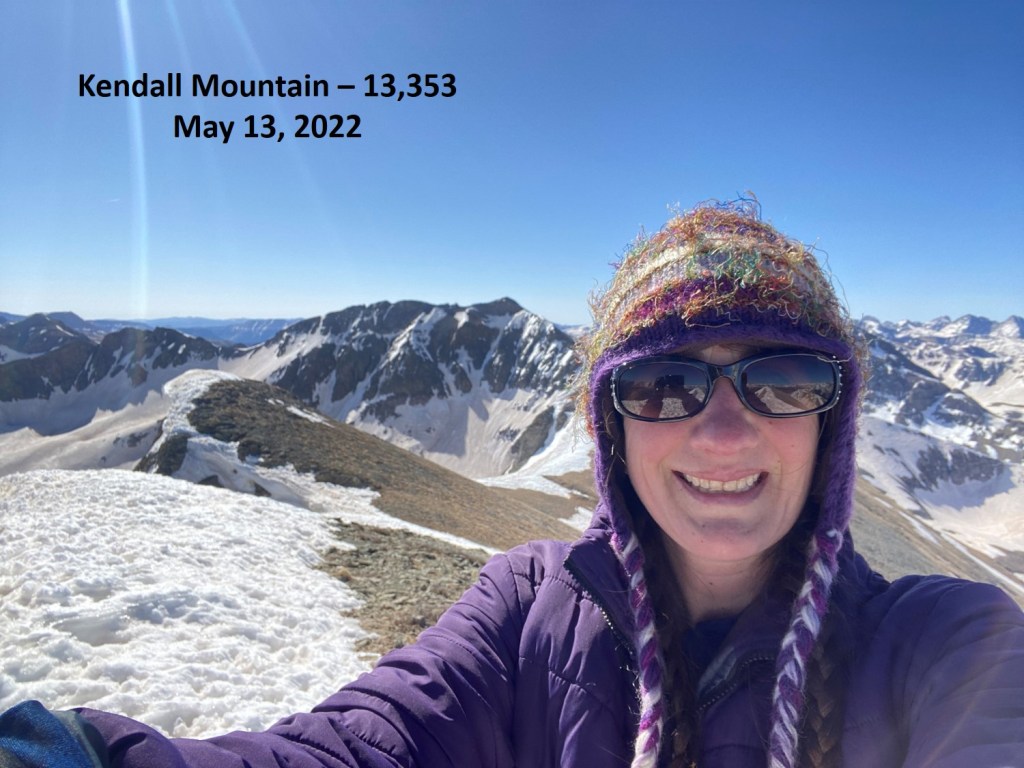
I summited Kendall Mountain at 9:20am

Kendall Mountain:

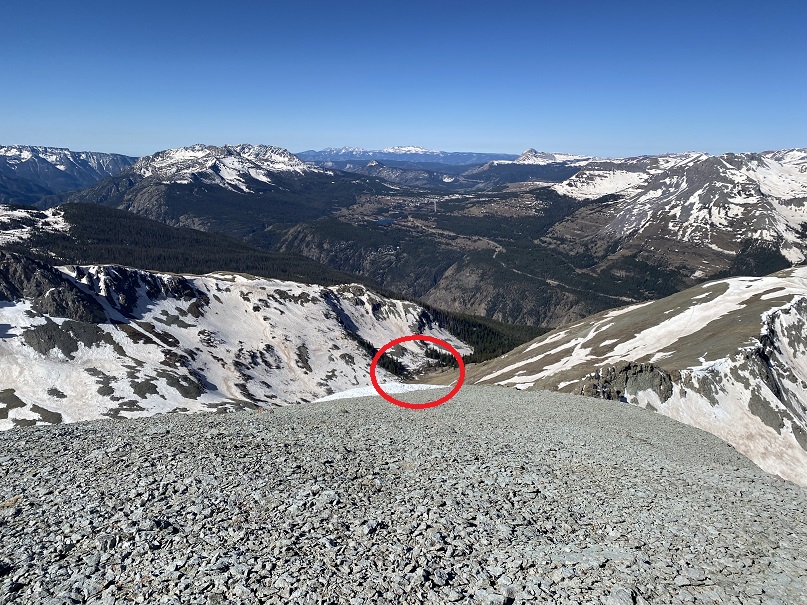
From the summit, when I looked southwest I could see my truck (circled)

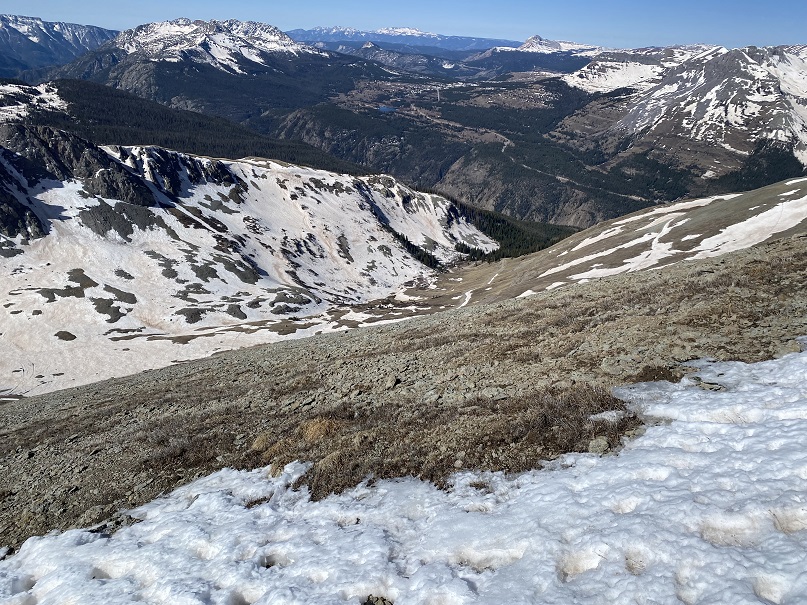
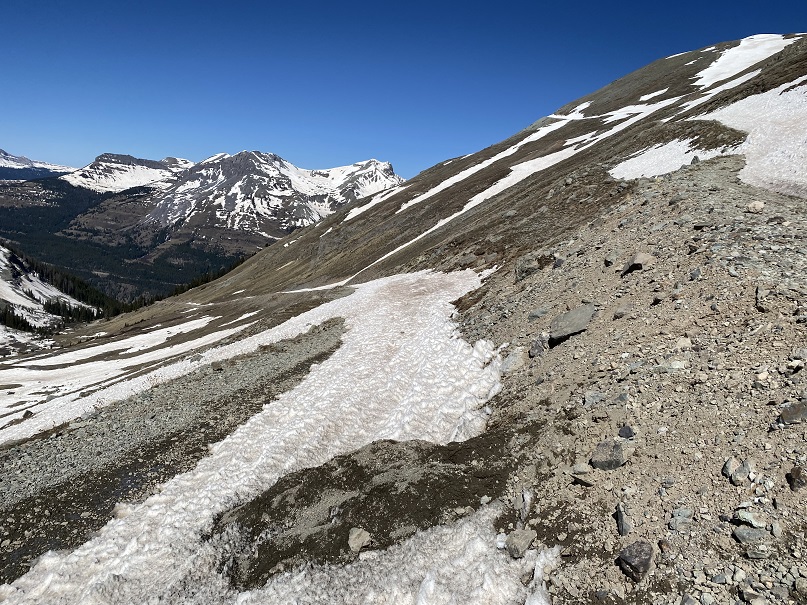
I aimed for it, and the road below.  It’s important to head southwest, because the terrain cliffs out if you head directly south or southeast.  This was steep, but it was easy to gain traction.

I made it back to the road, and followed it to my truck.

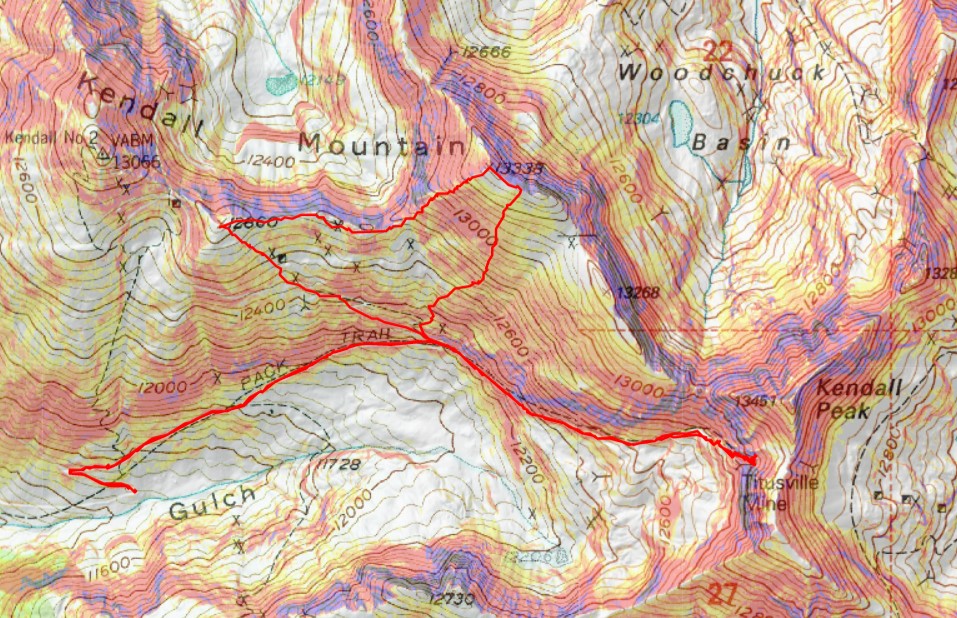
Here’s a topo map of the haphazard route I took. 

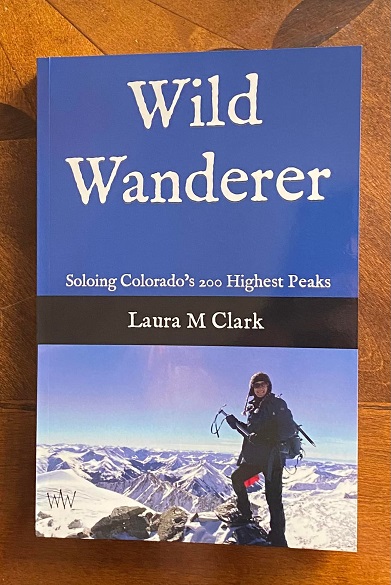
Wild Wanderer: Soloing Colorado’s 200 Highest Peaks

I know I’ve been silent for a few months, and I want to thank those of you who reached out to me asking how I was doing.  Yes, I was still summiting peaks, but I was summiting repeat peaks, so I wouldn’t need to write up trip reports.  Instead, I was spending my writing time… writing a book!  I’m proud to say I’m officially a published author!!!  I’m not going to promote the book for a couple of weeks, as I’d like some friends to read it and post reviews first.  It takes 10 positive reviews to counter each negative one, so if you enjoy my book, please post a positive review on Amazon.  If you notice a spelling error (etc.) please let me know:  I can still fix it before the big launch.  Please go easy on me: I’m more of a blogger than a writer.  Thank you all for your continued support!  Don’t buy the hard cover. 

You can purchase the book here on Amazon.

Menos Alto – 13,028

RT Length: 11.91 miles

Elevation Gain: 5143’

The San Isabel Creek Trailhead has a camping spot directly at the trailhead.  I parked a few yards away I a pullout, and was on the trail by 5:15am (after taking a 20 minute nap:  I was really tired this morning).

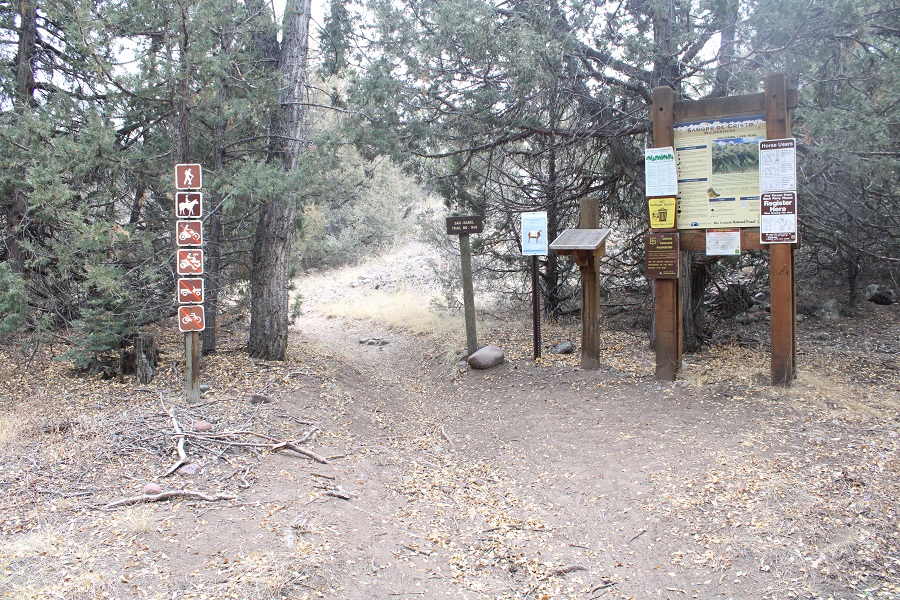
The San Isabel Trail (858) starts at the northeast side of the parking area (side note:  the trail register could use a pencil)

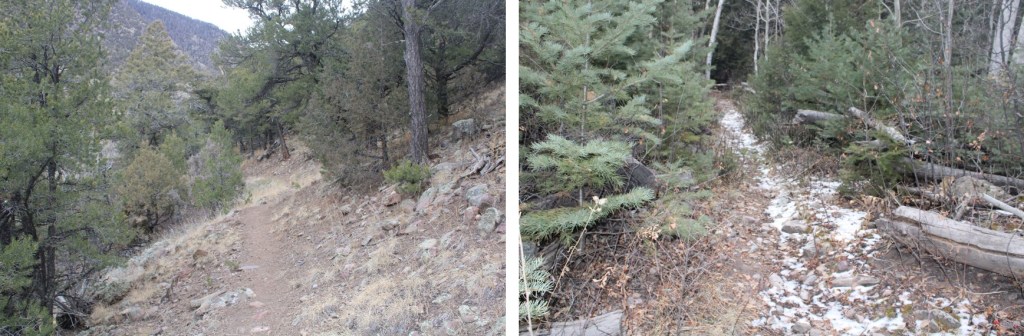
I followed the San Isabel Trail as it headed northeast. 

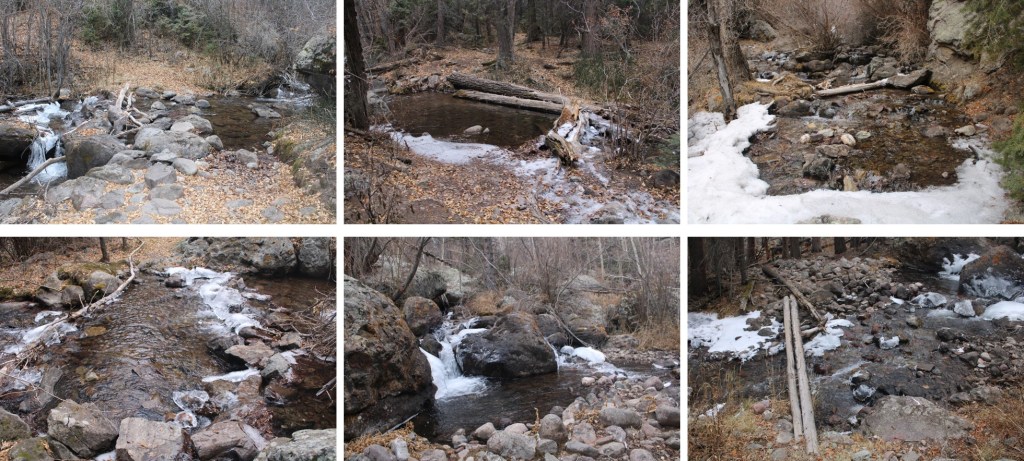
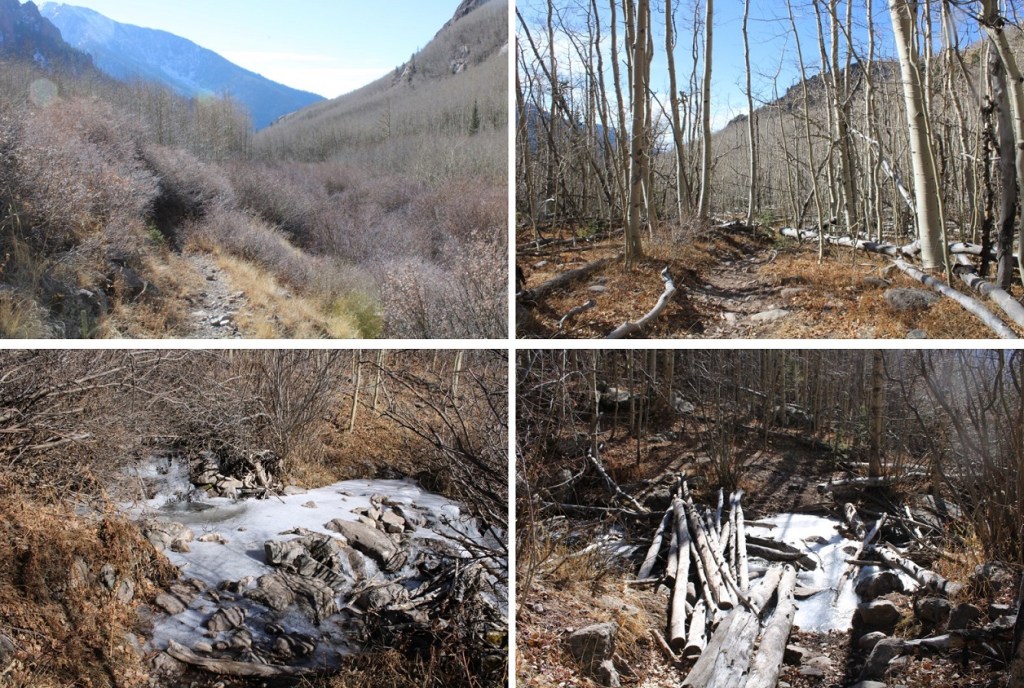
I crossed the creek quite a few times.  Creek crossing shoes weren’t necessary, but in the early morning there was a layer of ice on the logs and rocks, calling for some careful footwork.  In the afternoon the crossings were easy.

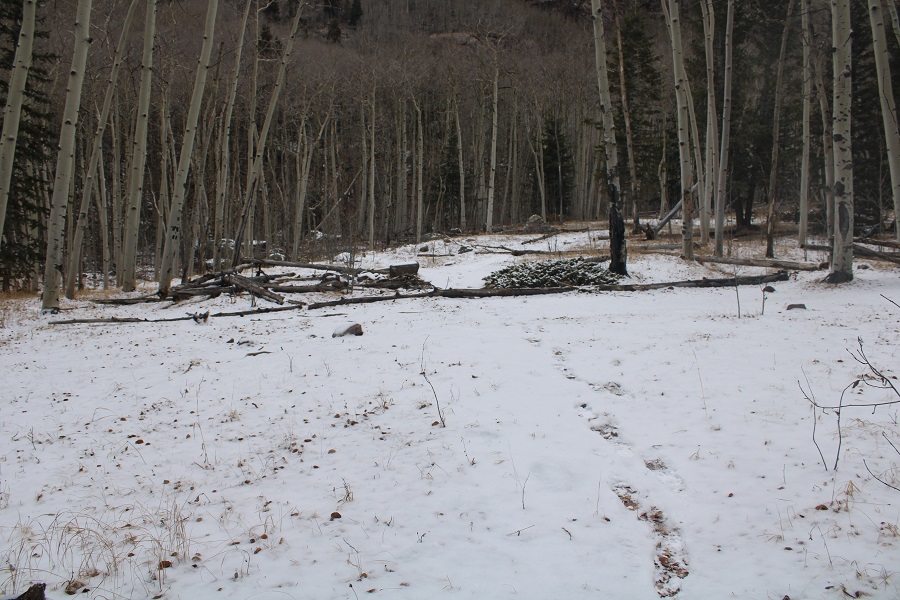
As I hiked, I came across a thin layer of snow on the ground, that eventually became a couple of inches deep.  There had been a 20% chance of snow forecasted the night before, and into the afternoon today. 

I hiked along the San Isabel Trail for just over 4 miles.  At 10,440’ I left the trail when I saw this (what used to be a) sign on my right for Trail 881.

Here I turned left, crossed San Isabel Creek, and headed up the drainage.  Here’s where I was headed.  As you can see, the ridge cliffs out to the left and right, so it’s important to stick to the drainage.

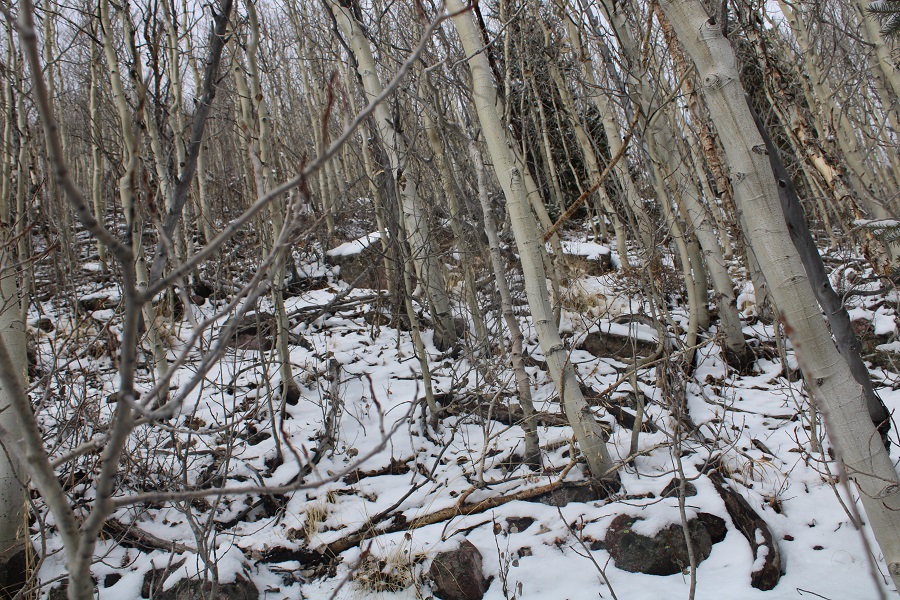
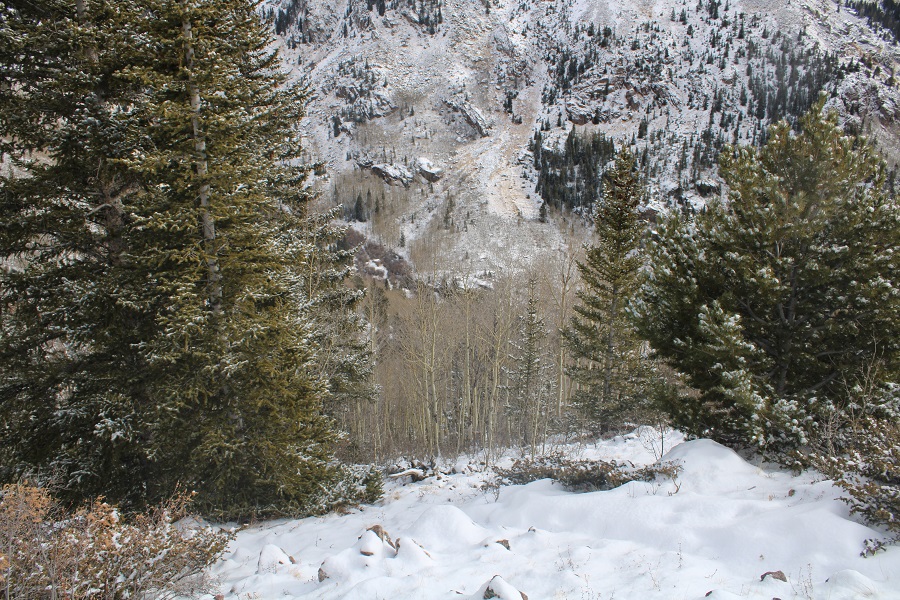
There were a lot of aspen trees here.  Since it’s almost winter there weren’t any leaves on the trees.  I’m guessing this is a completely different hike with leaves on the trees.  Today it was easy to stay in the drainage and hike up to the ridge.  I put on microspikes, as the snow wasn’t that deep and the leaf-snow combination was slippery.

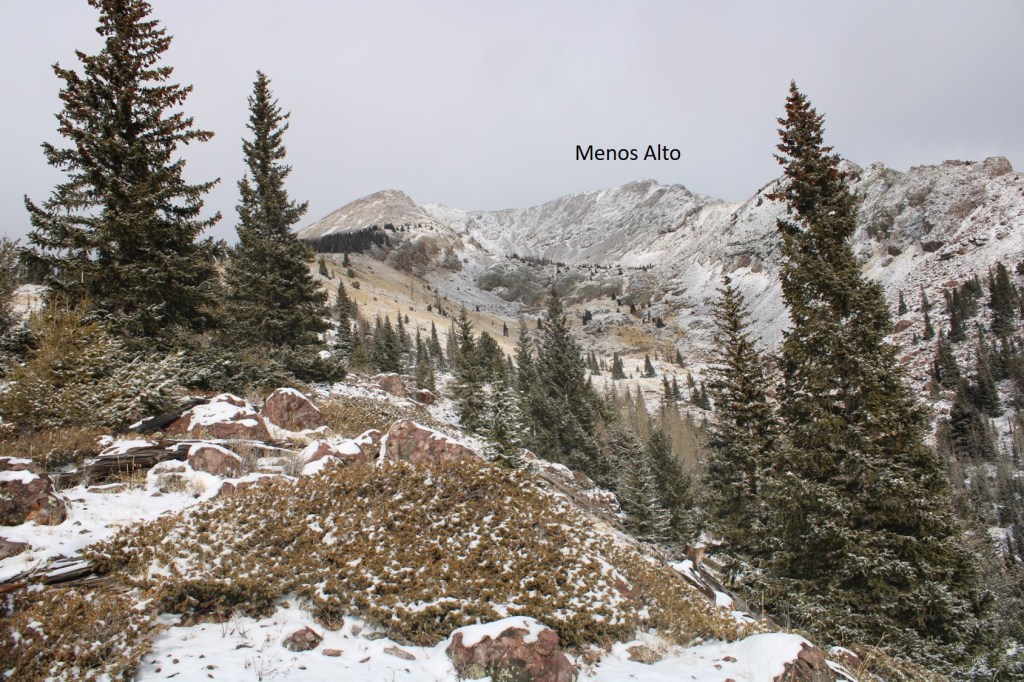
I made it to the ridge and turned right, following the ridge north.  The actual summit is to the right.

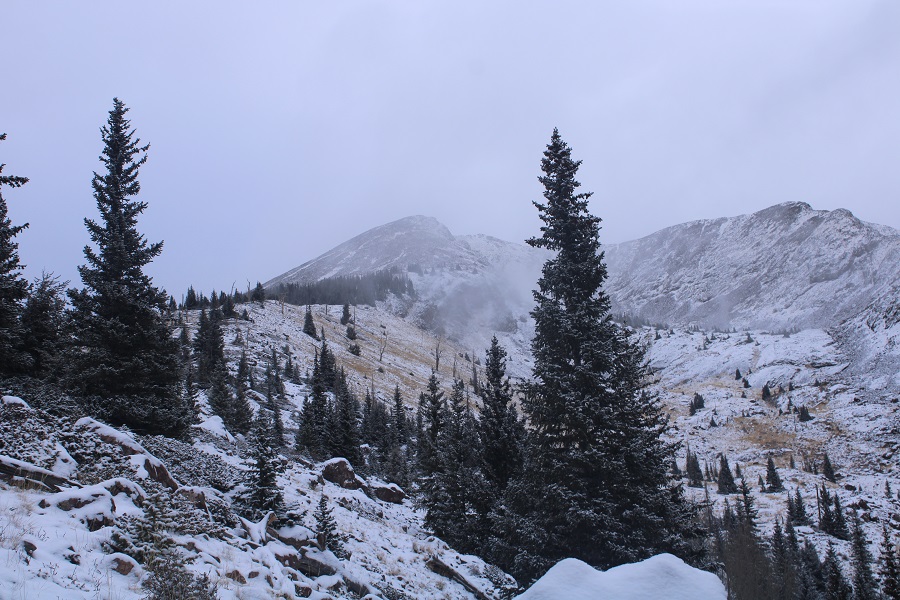
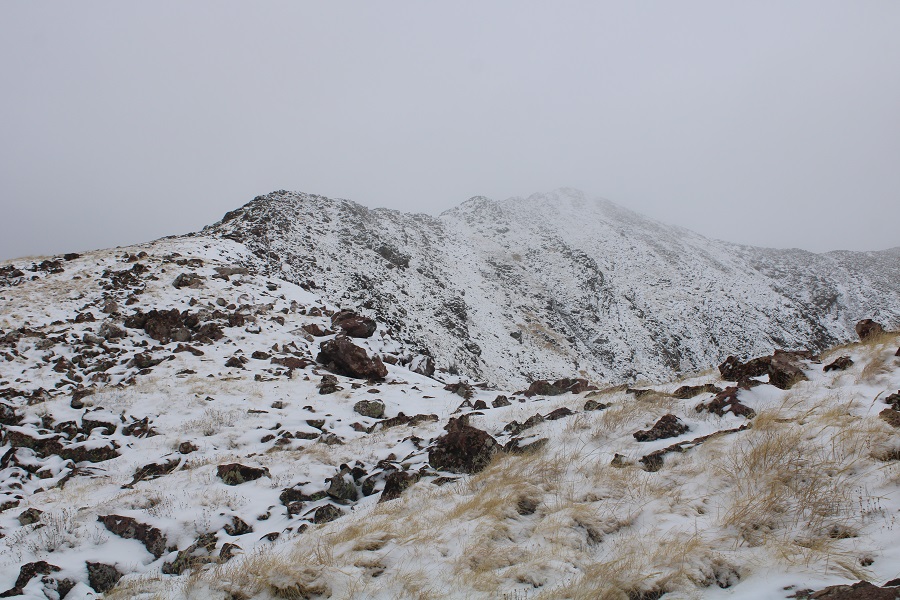
The snow was intermittent as I was hiking.  The clouds would clear a bit, and then race back in, swirling the snow around and adding to it.  Luckily, following the ridge was easy.  I headed towards the pine trees

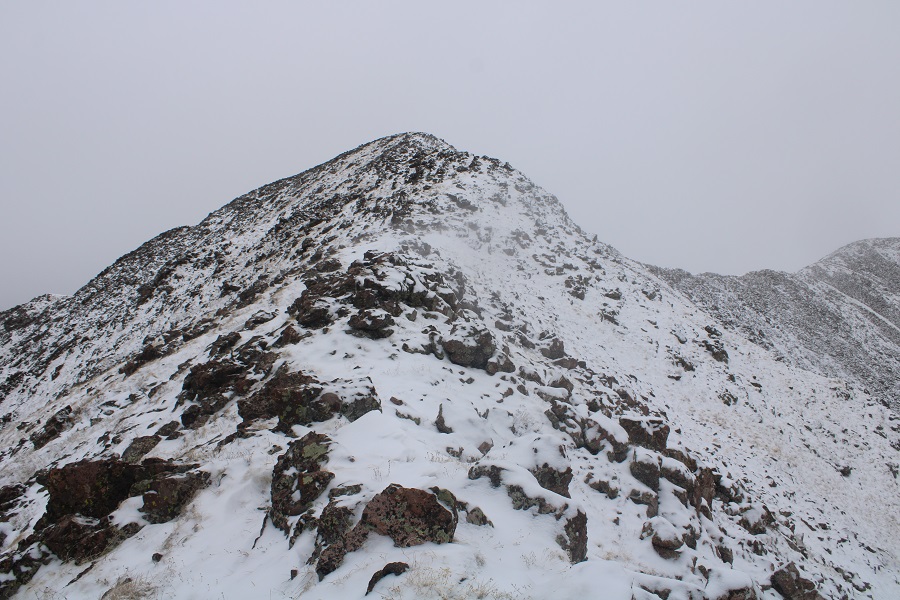
Once past the pine trees the tundra turned rocky.  I took this part carefully, as the thin layer of snow made the loose rocks slippery.  This is steeper than it looks, but class 2.

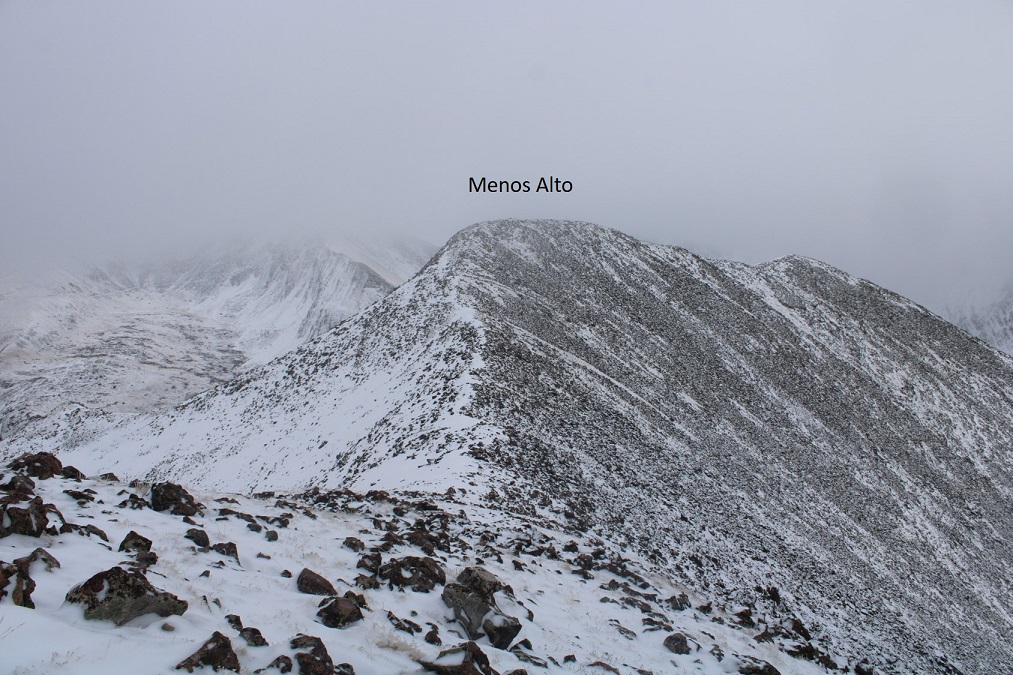
It’s also a false summit (but you already knew that: I didn’t at the time).  Here’s the actual summit

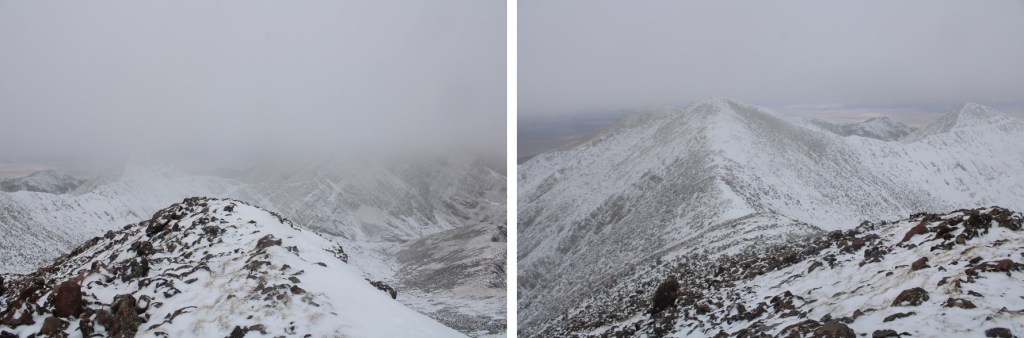
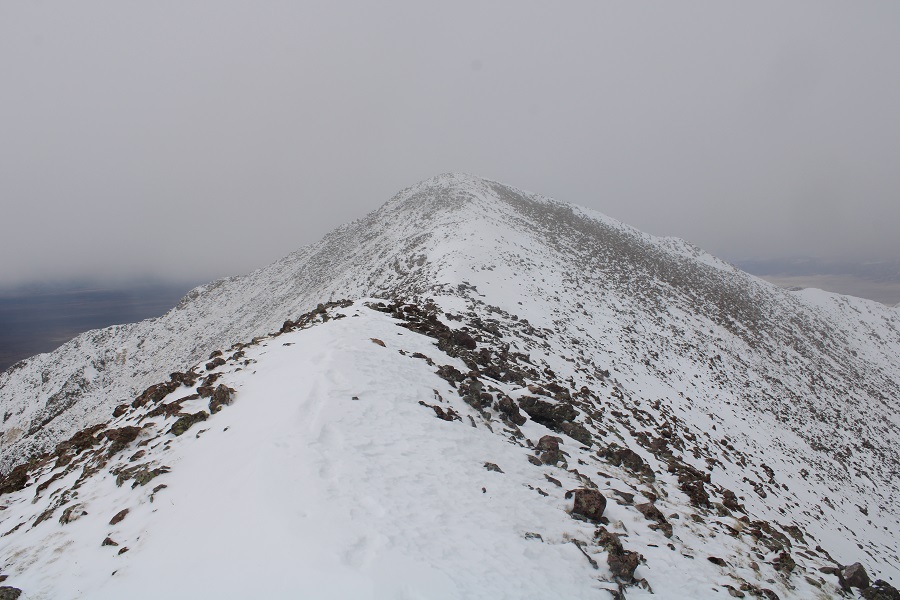
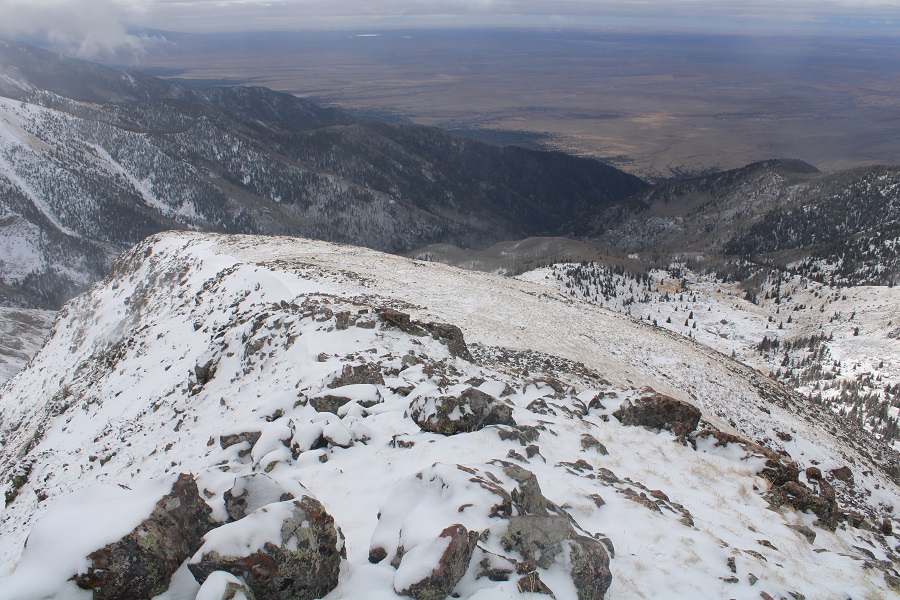
I just followed the ridge and its ups and downs.  The route was simple, but the wind and snow today gave it some spice.  Here are some pictures of the ridge hike

It was now time to head east and lose some elevation (not much, about 75 feet or so) and then gain the summit

The last bit to the summit was rocky.  There was a large cairn at the summit with 2 summit registers. It was windy and cold, so I didn’t open them.

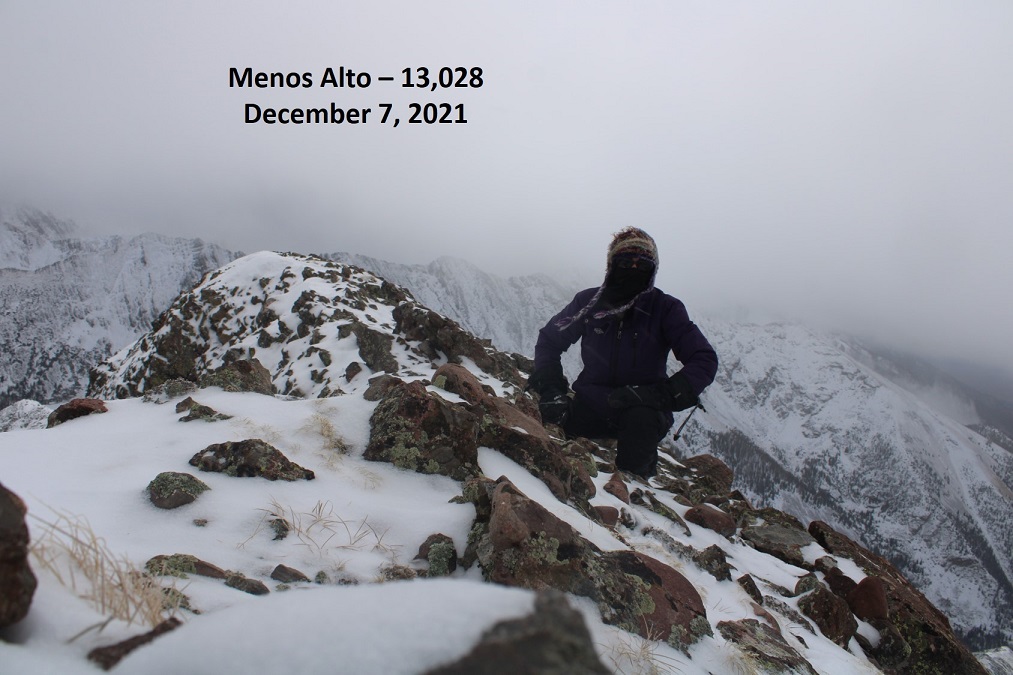
I summited Menos Alto at 10am.  The clouds obstructed the views, but we need the snow!

Menos Alto:

When I started out on this hike snow hadn’t been anticipated.  I’d planned on linking up a few other peaks (13060 and 13062) but it didn’t look like the weather was going to let up.  I didn’t have a good visual of the conditions, and pictures wouldn’t have much context in a trip report:  I’d have to come back for those peaks another day.  I turned and re-traced my steps back down the ridge.

Here’s an overall view of the path I took from the ridge back to treeline.  I descended exactly the way I ascended, to avoid cliffing out on the rocks.  This was easy, as I just followed my tracks in the snow.

When it came time to descend, there wasn’t much of a visual.  Just before entering the trees I noted where the trail was below me, and aimed southeast, following the drainage towards San Isabel Creek and the trail I knew was just beyond.

Here are some pictures of my way back down the drainage

I re-crossed San Isabel Creek, and headed towards the trail. I found the old wooden sign, turned right, and followed the trail 4 miles back to the trailhead.

There were still a ton of creek crossings. 

Eventually the snow on the ground gave way to dirt, but it continued snowing until I made it back to the trailhead.  Cutting this hike short had been a good idea.

I made it back to my truck at 1:15pm, making tis an 11.91 mile hike with 5143’ of elevation gain in 8 hours.

PT 13374

RT Length:  19.77 miles

Elevation Gain: 5178’

I’ve spent the past week in Florida for work, so I was a little worried about breathing above treeline today.  I made it to the Harvard Lakes trailhead easily, as there wasn’t any snow on the ground (and it’s December!).  I parked and was on the trail at 5am.  I was following the Colorado Trail north.

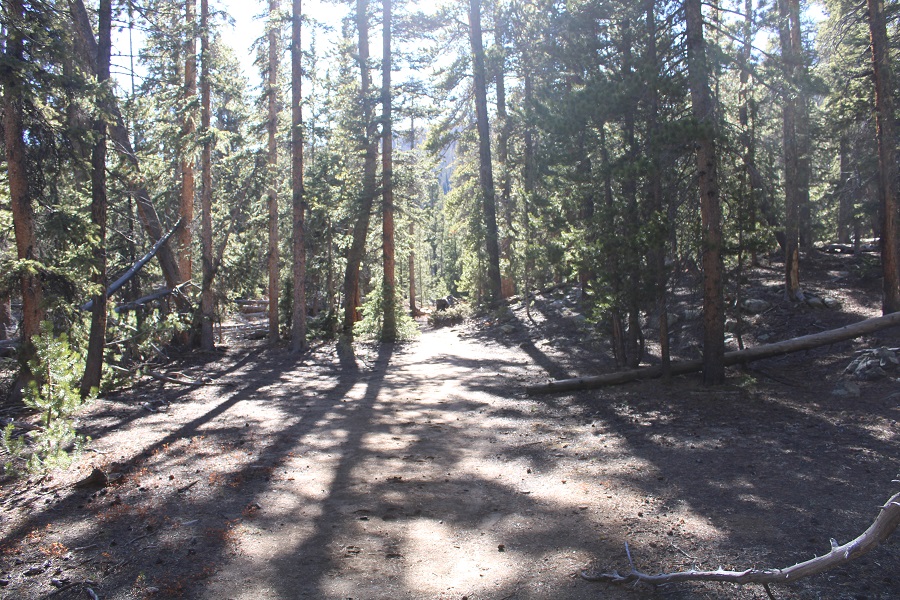
The first 7 miles of this trail follows the Colorado Trail.  The Colorado Trail is an easy to follow, class 1 trail.  It started with a few switchbacks, and then followed the curve of the mountainside north.

After hiking for 3 miles I came to Harvard Lakes.  They were both frozen and looked neat in the dark.  Later in the day I saw people walking across both lakes.  They didn’t seem frozen enough for that to be safe.

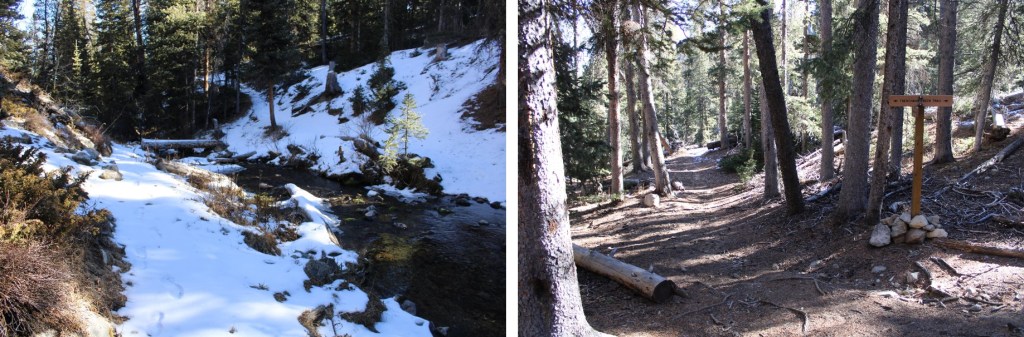
There were several, easily crossable stream crossings along the trail

After hiking for 6 miles I briefly lost about 250’ of elevation, which led me to a trail junction.

The junction was between the Frenchman Creek Trail (Harvard Trail on a topo map) and the Colorado Trail.  I continued along the Colorado Trail

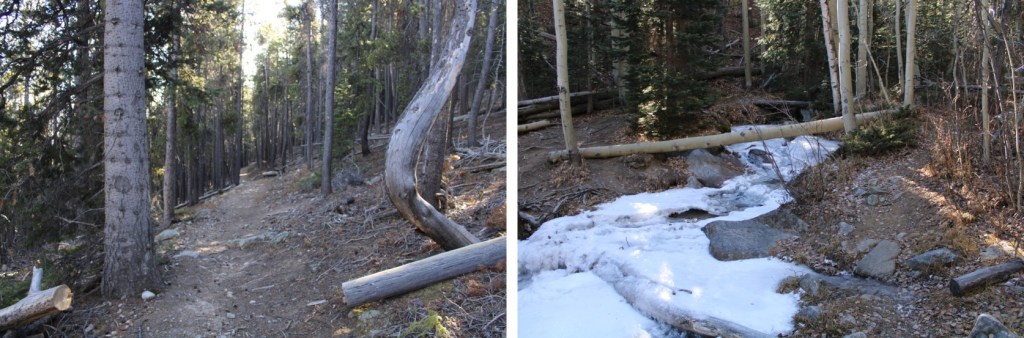
I crossed Frenchman Creek.  There were no tracks in the snow past this point, but there wasn’t much snow to begin with.  It didn’t look like anyone had been on this part of the trail in a while.

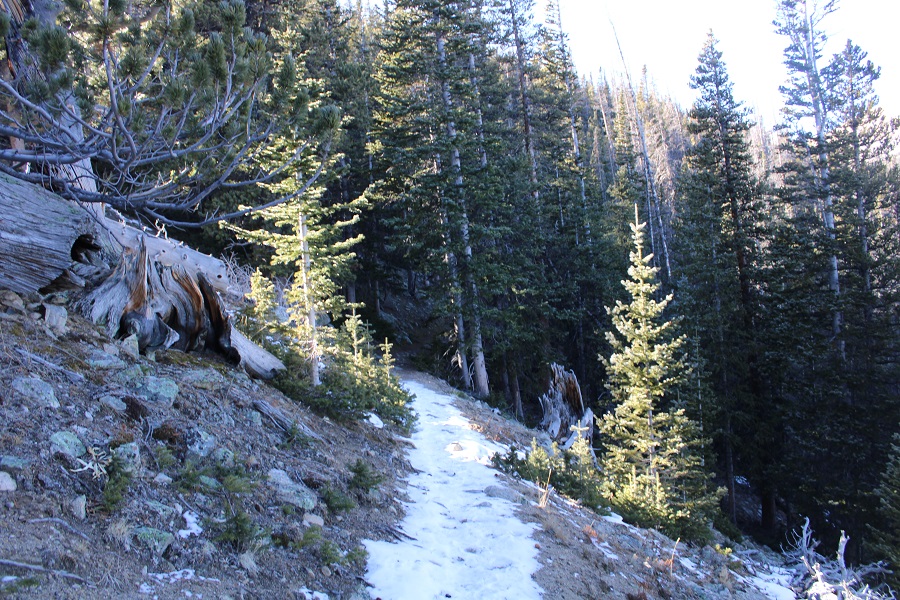
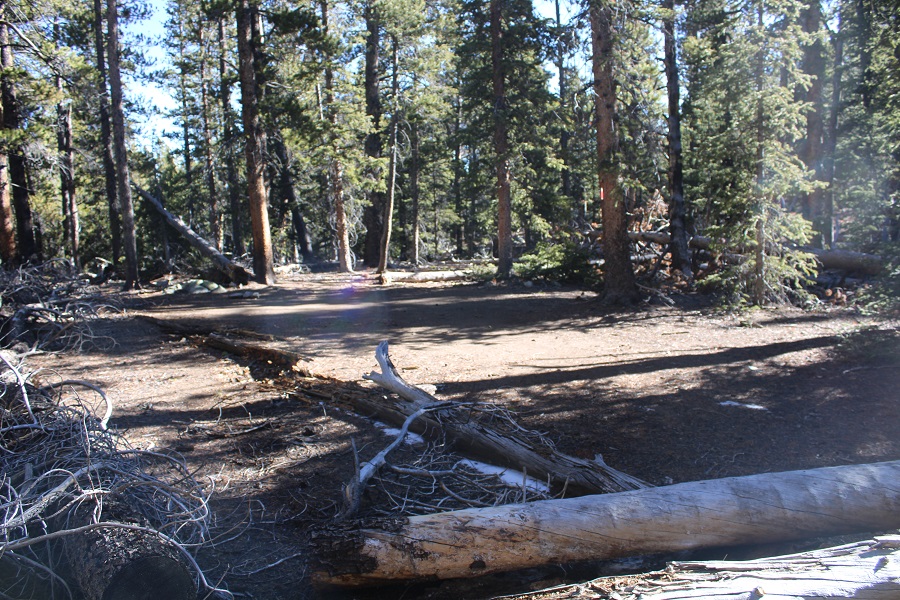
I quickly came to an area with several camping spots at 11150’.  I’d been hiking for a total of 7.15 miles.

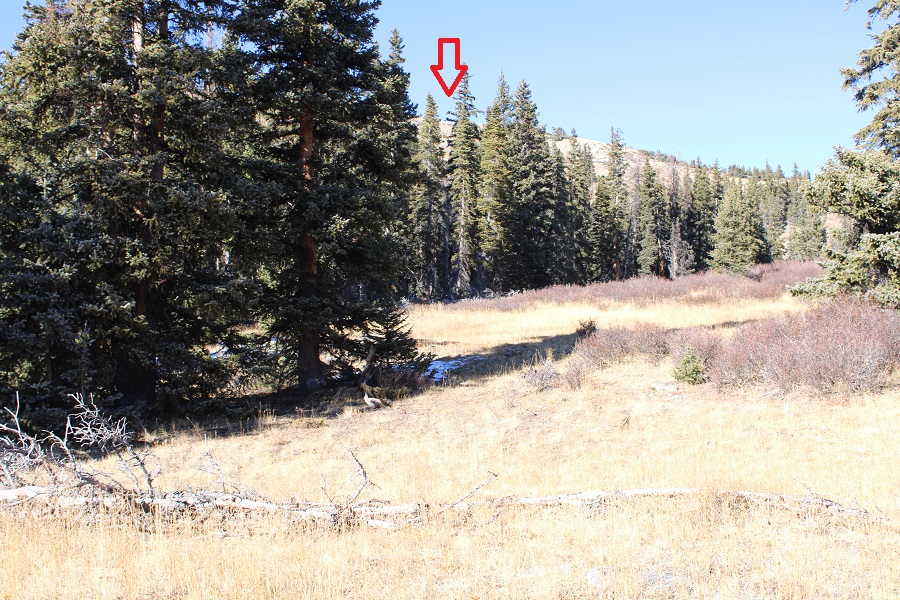
Here I left the trail and headed northwest to the ridge.

I bushwhacked to treeline.  This was easy as far as bushwhacking goes, as there weren’t too many downed trees and the trees weren’t jumbled close together.

At treeline I could see the ridge, and headed towards it

I skirted the ridge a little to the left

Once on the ridge I followed it west

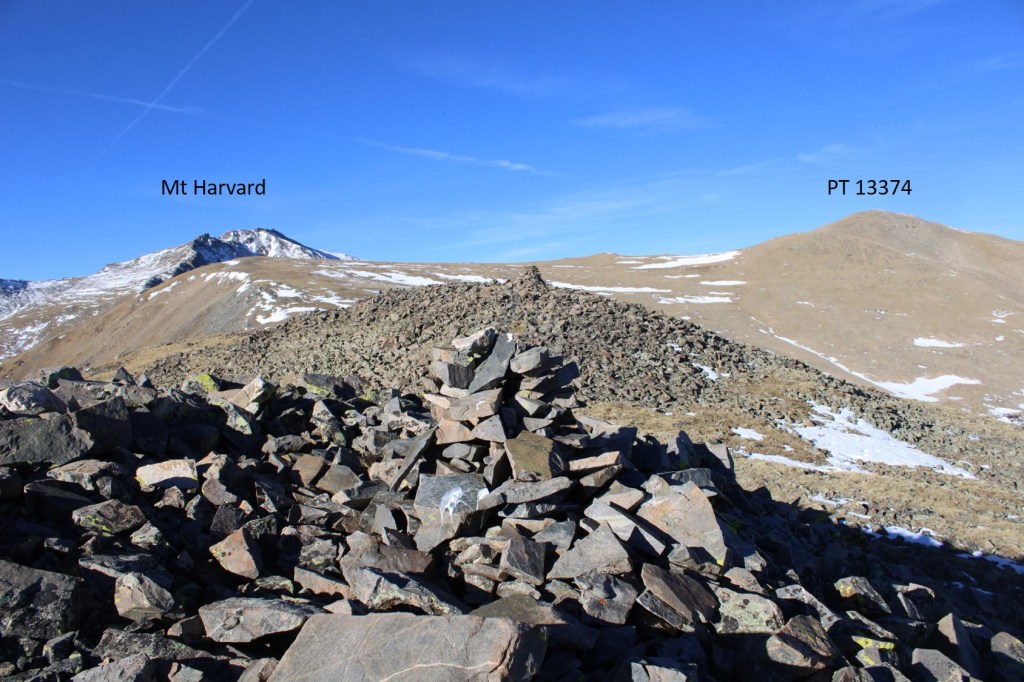
I came to a rocky, cairned area, and could see the route before me to PT 13374. 

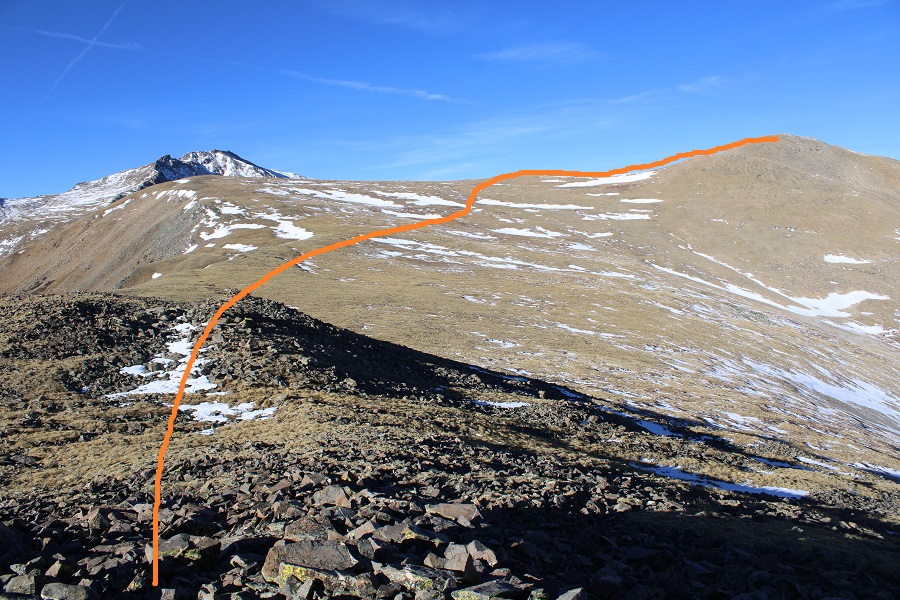
I crossed the rocky area, and followed the tundra to PT 13374, easily avoiding the snow

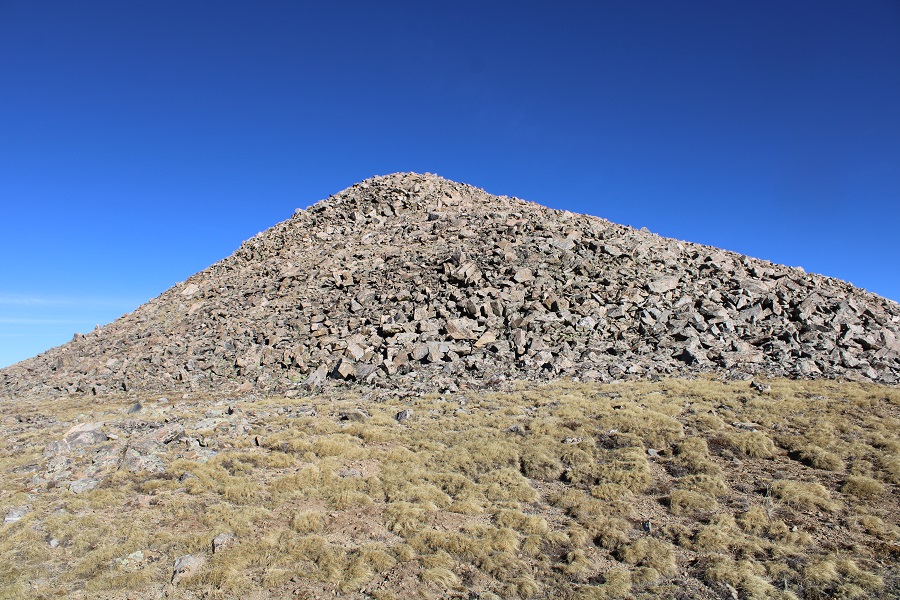
Here are some pictures of the final push to the summit

I summited PT 13374 at 8:45am

PT 13374:

There was a summit register (in a tube).  It was such a nice day I opened it and signed the register.  I then turned and retraced my steps back to the ridge.

I then followed the ridge back to treeline

At treeline I aimed southeast and bushwhacked it back to the Colorado Trail

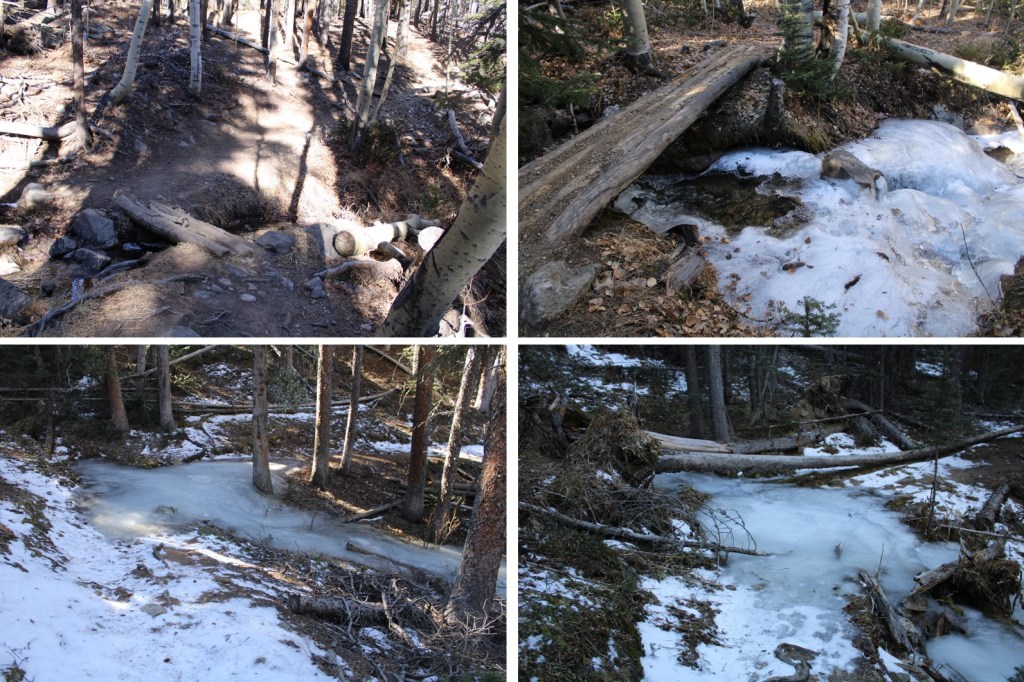
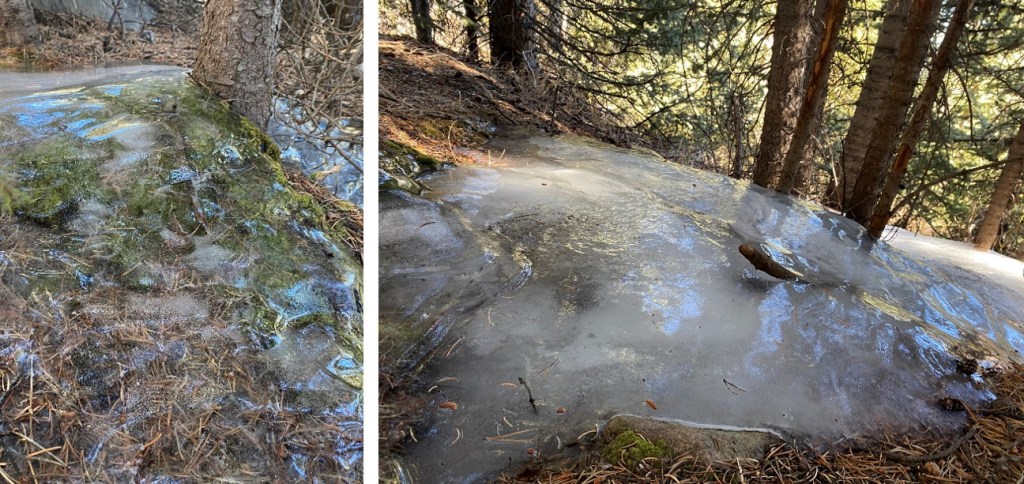
There’s surprisingly little snow for this time of year, but it’s still cold outside.  There were several areas of frozen water below treeline that looked really cool.

I made it back to the Colorado Trail, and followed it for 7 miles south, back to the trailhead

I made it back to my truck at 2pm, making this a 19.77 mile hike with 5178’ of elevation gain in 9 hours.  Today seemed almost too easy:  the gradual elevation gain made the miles fly by.

Eagle Peak – 13,205

RT: 12.14 miles

Elevation Gain: 4691’

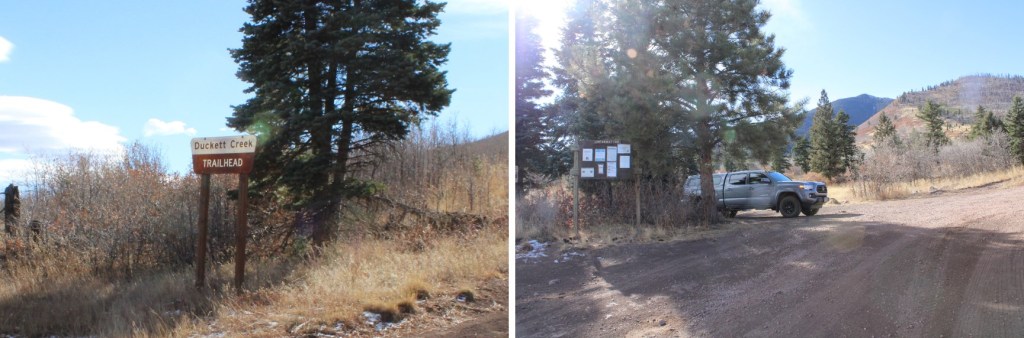
I knew it was supposed to be windy today, but the past few weeks the wind hasn’t materialized in the Sangres as predicted, so I decided to take a chance. I arrived at the Duckett Creek Trailhead, the only vehicle there. 

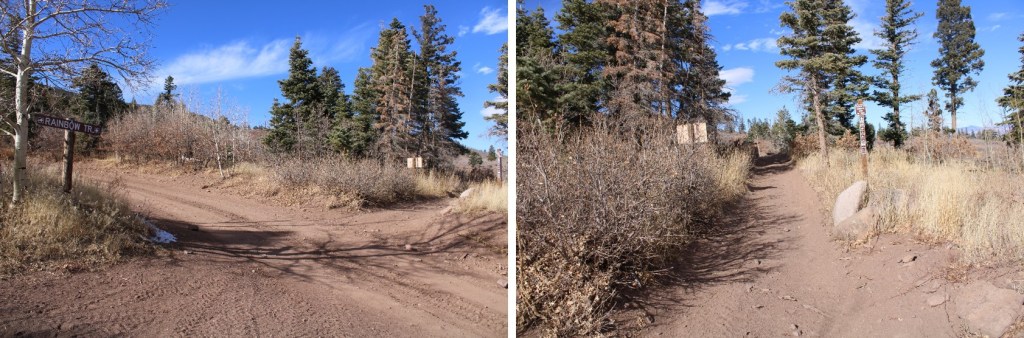
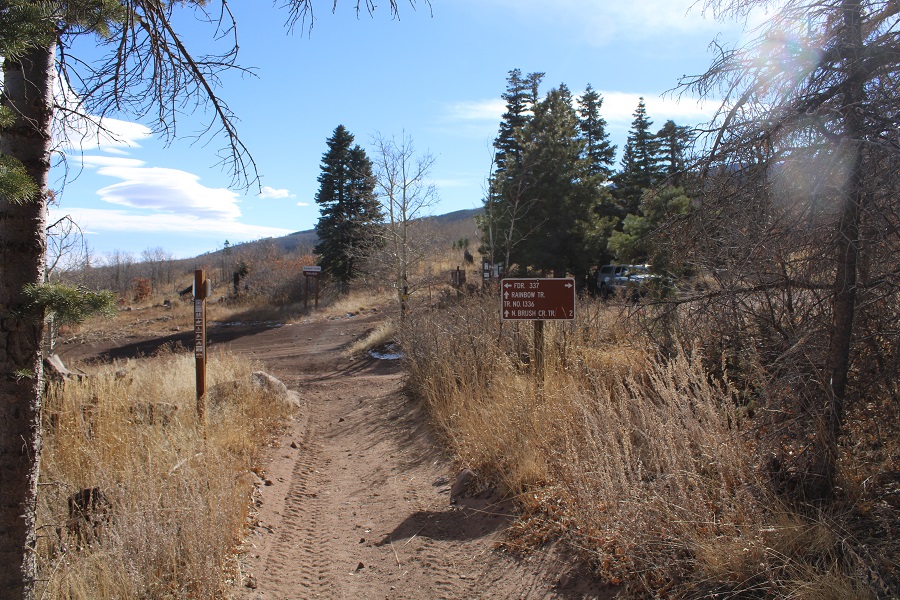
I actually started out taking the Rainbow Trail, which is located at the north end of the parking area.

The Rainbow Trail is wide enough to fit an ATV, and it looks like a lot of people take advantage of this.  There weren’t any footprints on this part of the trail, but there were a lot of tire tracks.  I lost a little elevation here, but nothing too dramatic.  I followed the Rainbow Trail northeast, as it passed through a burn area and crossed South Lake Creek Drainage (which was half frozen).

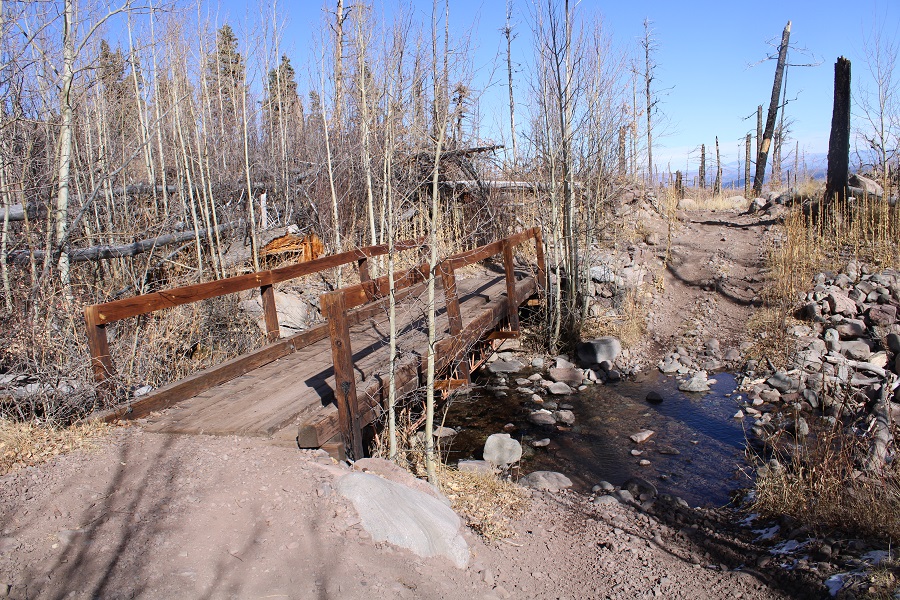
There was a nice bridge over North Lake Creek

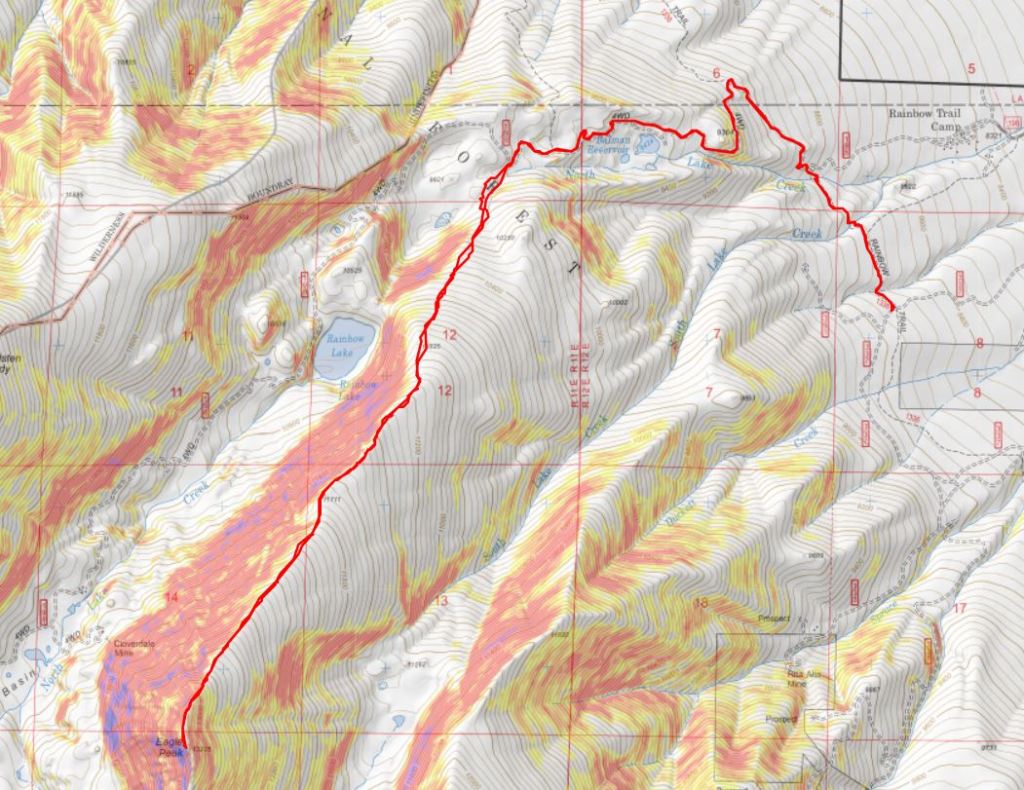
After hiking for 1.35 miles, I came to a junction with 4WD road 198.  I turned left, and started following FDR 198.

I followed this road as it crossed a section of North Lake Creek, skirted the Balman Reservoir, and passed several nice dispersed camping sites.

I hiked 2.9 miles from the trailhead to 9800’ of elevation, and a curve in the road.  This is where I left 198 and bushwhacked to treeline. 

It was just under 2 miles and 2000’ of elevation gain to treeline from where I left the road.  The trek was interesting without any visuals:  the pine trees obstructed any view.  I was however, able to hear the wind.  I followed the ridge proper southwest

Just before treeline I got a glimpse of Eagle Peak, before heading into the trees again

At this point, I came across what kind of looked like a trail, but it fizzled out

Once at treeline, you’ll be tempted to cut through the trees and head straight for the ridge. 

Today, the area with trees had snow, so I skirted the trees to the right on tundra. I’d recommend this, as there weren’t any obstacles.

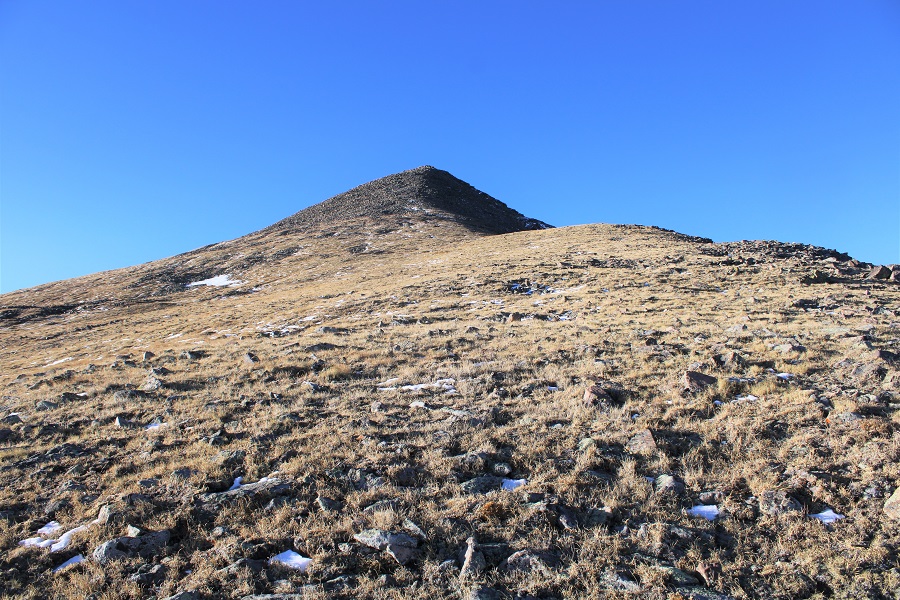
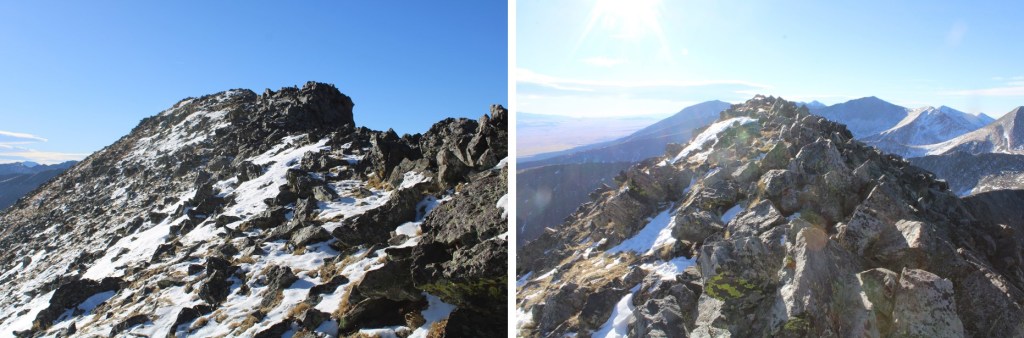
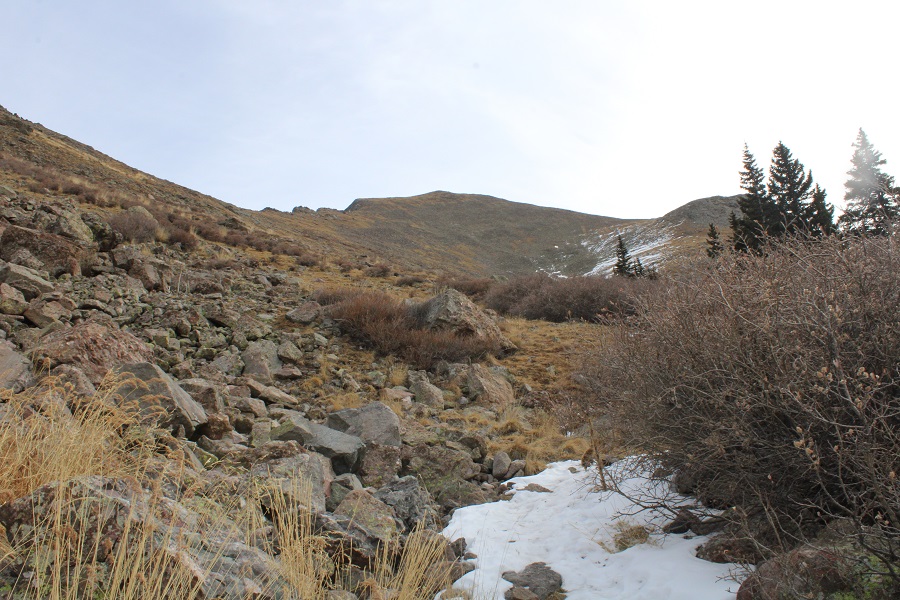
The hike towards the peak is obvious, and completed on 90% tundra.  The slope angle is low:  This would have been an easy summit, if it weren’t for today’s wind.

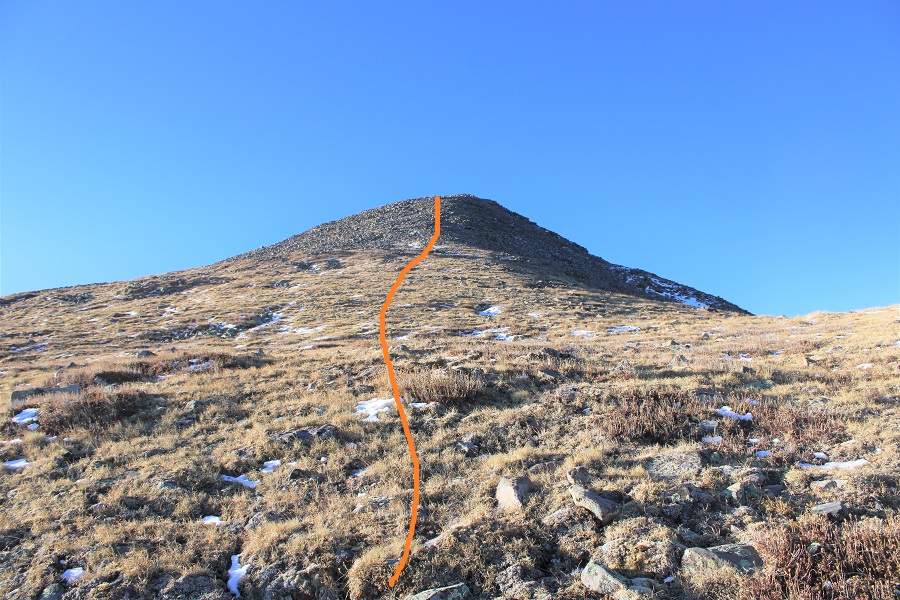
Tundra stopped at rocks.  I just went directly up the face.  This is a false summit.

Today this was tricky to navigate, as the wind was intense:  it never stopped.  I’m guessing there were sustained winds of 35mph, which are tolerable, but the unexpected gusts of 50+mph made things tricky.  I’d have to lean into the wind to remain upright as the winds were a constant 35mph, but every once in a while a gust came from the opposite direction and knocked me back (or pushed me forward).  It was added fun when this happened on the rocks that rolled and I skipped a few steps with my feet and flailed my arms in the air to regain balance, hoping not to fall.  I sat and laughed more than once as I waited for a gust to pass after falling down. Also, during one of the cross-directional gusts I hit my knee (again) on a rock in the same place for the third time this week.  I jumped up and down to relieve the pain and made up a few words in the process. 

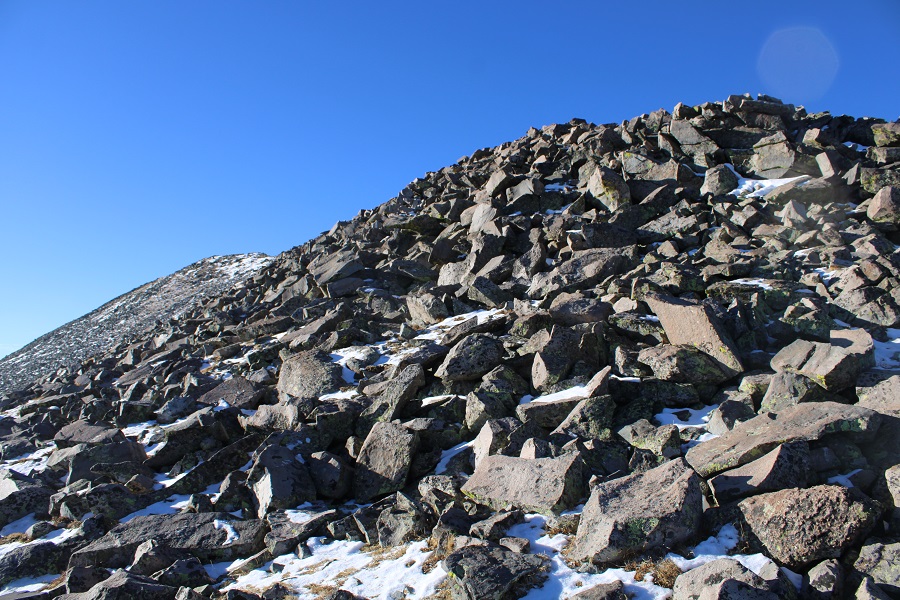
Back to the rocks.  These are microwave size, and some roll, especially the smaller ones. Choose your own adventure.

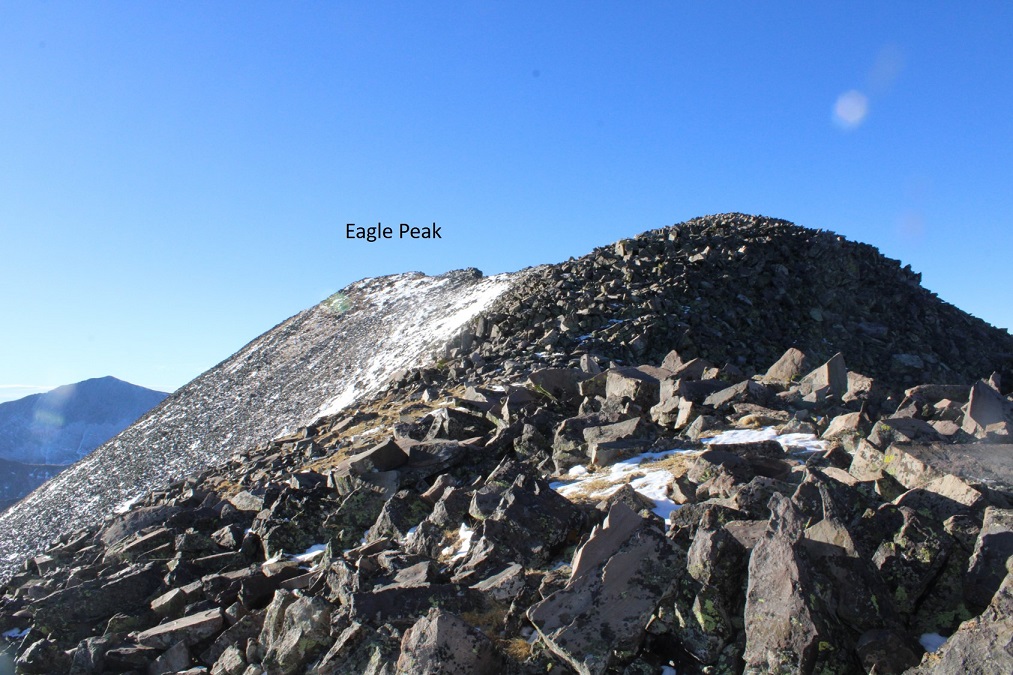
At the top of the rock pile you can see the rest of the route to the summit

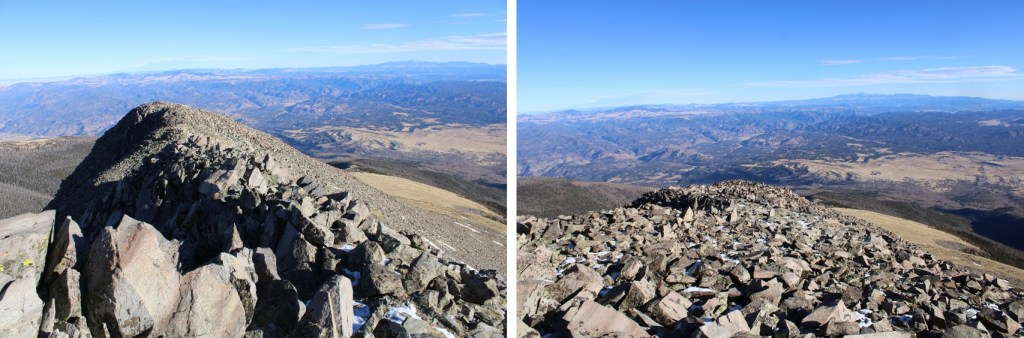
I just followed the ridge to the summit, hunkering down when the gusts of wind came.  This ridge is class 2

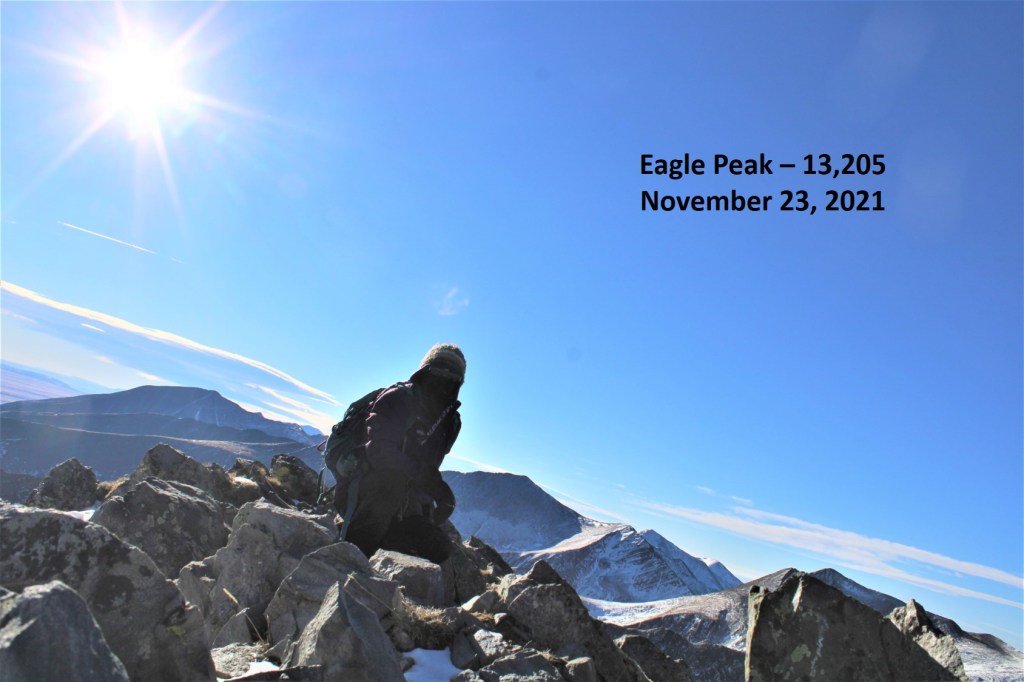
I summited Eagle Peak at 8:45am.  Yes, this is the best picture I got:  the wind kept knocking over my DSLR camera, and it was cold, so I didn’t make many attempts. I didn’t even attempt to take off my backpack for the photo:  I figured if the wind could knock me down while wearing my pack, I’d most likely lose my pack if I took it off.  I could picture it tumbling in the wind down the side of the mountain.  I probably wouldn’t stay standing long without my pack either.

Eagle Peak:

I didn’t stay long at the summit, as I wanted to get out of that wind asap.   This was an out and back hike, so I re-traced my steps back over the ridge

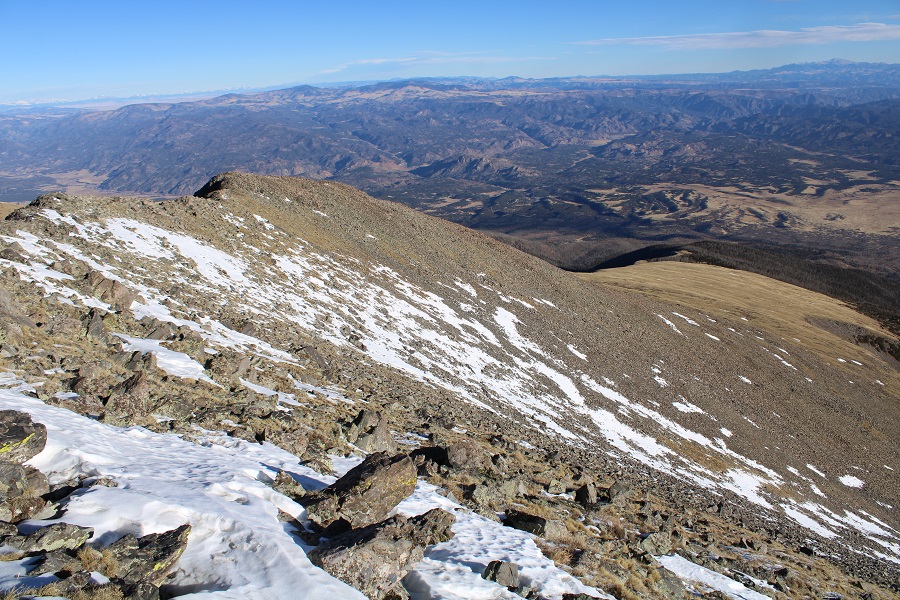
More ridge pictures:

Following the ridge back to treeline was easy.  I aimed for the tundra to the left of the bristlecone pine trees.

Here’s a quick video of the wind near treeline, once it started to die down.  I wish I’d captured a video of the wind gusts, but they weren’t predictable.

Wind: 

The hardest part of this hike was navigating back down the ridge, because I didn’t have any visuals.  I relied heavily on my compass, heading northeast back towards the road

I made it back to the 4WD road, and took it back to the Rainbow Trail

I then took the Rainbow Trail back to the Duckett Creek Trailhead

I made it back to my truck at 12pm, making this a 12.14 mile hike with 4691’ of elevation gain in 7.5 hours.

And now, to drive home and wake up my daughter.  She’s home on college break, and will most likely still be sleeping at 2pm when I get home.  Since it’s just the two of us this year, we decided to have an early Thanksgiving dinner so we can have all week to eat the leftovers before we leave.  

PT 13159

RT Length:  12.1 miles

Elevation Gain:  4530’

I just love the local herd of bighorn sheep in this area!  I’ve seen them a few times, usually up at Willow Lake. It’s neat watching the babies get bigger. They greeted me this time on my way to the Willow Lake trailhead.

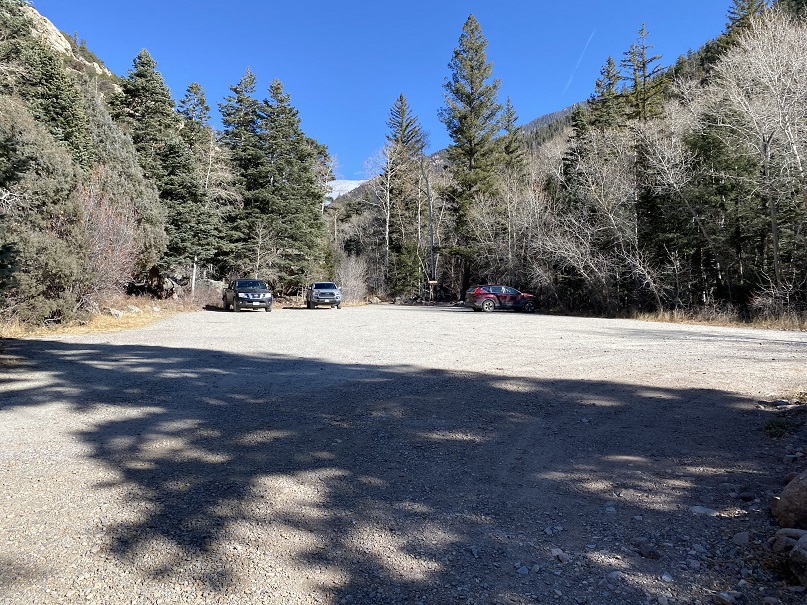
The trailhead was deserted for a Friday afternoon.  I sat back, ate some peanut butter off a spoon, sipped some whiskey, and jotted down notes from the day. The bathrooms were still open, clean, and stocked.

Before making it an early night I pre-signed the trail register, red a bit, and headed to bed.  I’m so darn comfortable sleeping in the bed of my truck, it’s difficult to get up and out in the morning.  Oh, and I ‘installed’ new lights, if anyone’s interested:

The South Crestone trail starts from the same area as the Willow Lake trail.

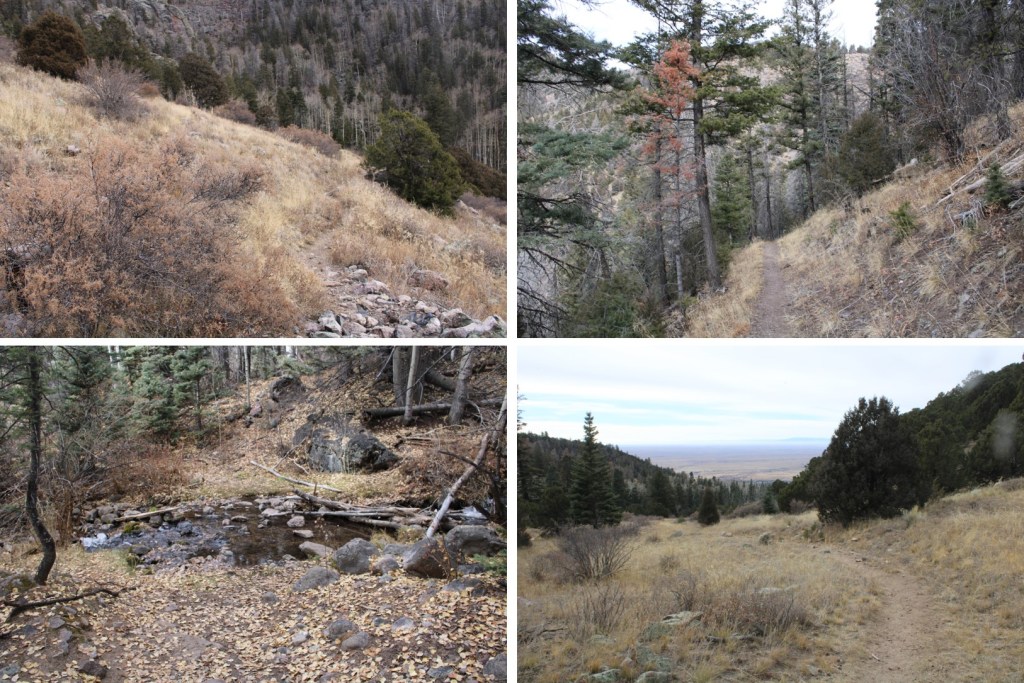
The trails quickly diverge, and I followed the South Crestone trail, heading northeast.

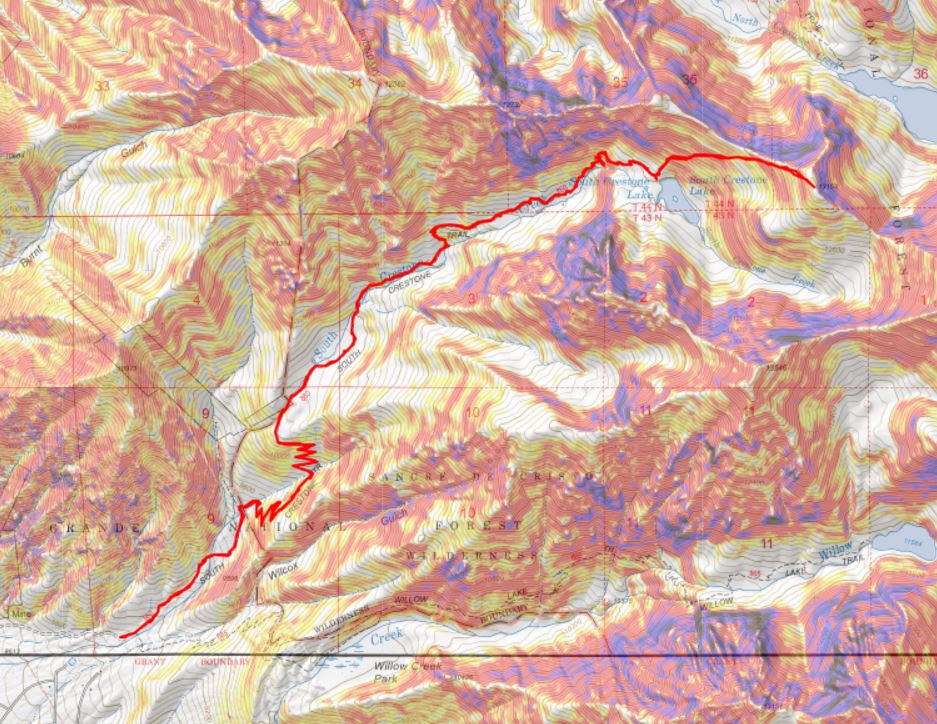
The South Crestone trail (860) is a class 1 trail that will lead you all the way to South Crestone Lake, without any junctions. 

After hiking for 1.6 miles I passed an old log cabin, and started switchbacking up the hillside.

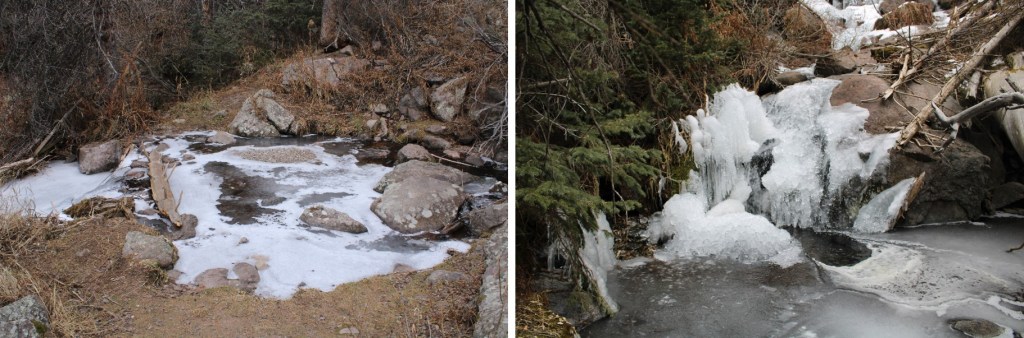
At the top of the swithcbacks the waterfalls started.  They were located alongside the trail, but didn’t impede the actual trail.  Since it was cold this morning, the ice never got a chance to melt (these pictures were taken on my return).

I came to a meadow, and then switchbacked up to the lake

I always know I’m close to the lake when I see the “no camping or livestock within 300 feet of lake” sign.

After hiking for just over 5 miles, I made it to South Crestone Lake

I’d gone too far, but on purpose:  I’d wanted to see the lake.  About 5 yards before the lake, there’s a post near the trail.  I’m sure it was informational at some point, but now it’s just a post (and difficult to miss).

At this post I turned left, leaving the trail.  From here on out, it was a class 2 hike.

As soon as you leave the trees, you have a great visual of the rest of the hike

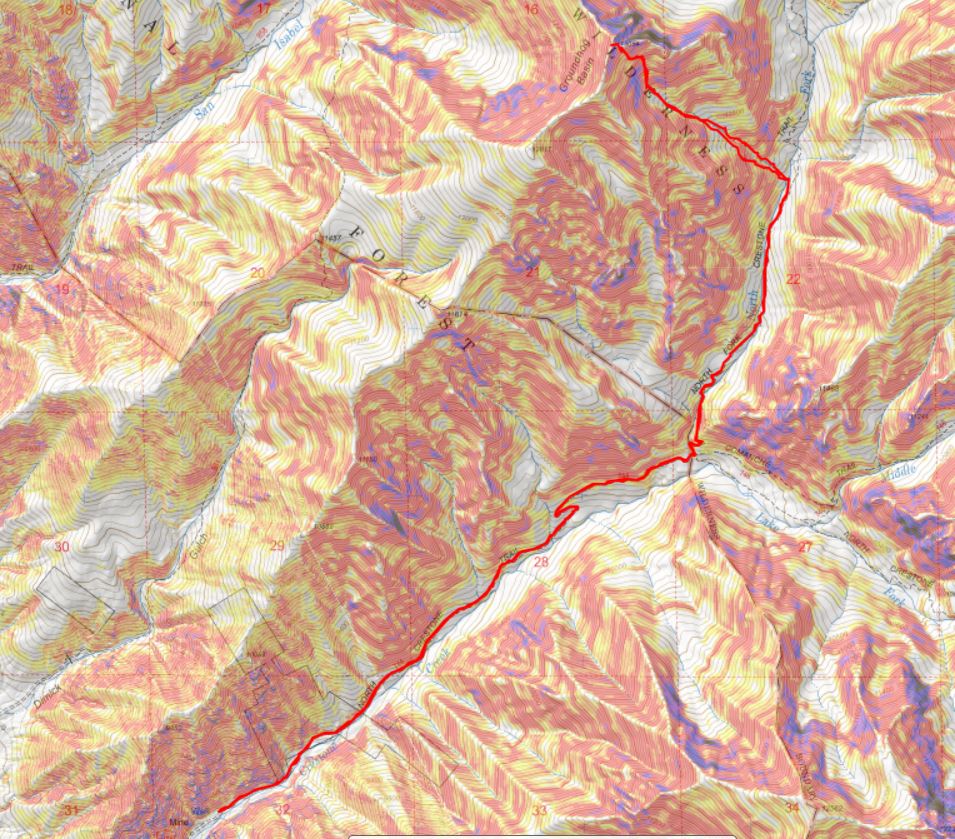
Here’s the route I took to the summit of PT 13153

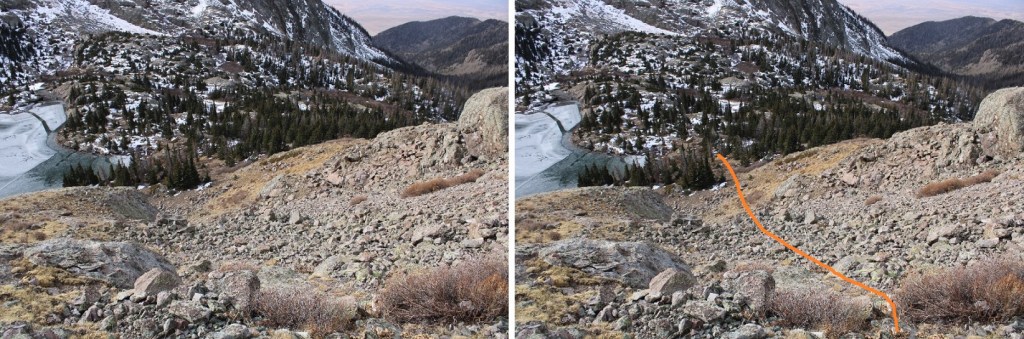
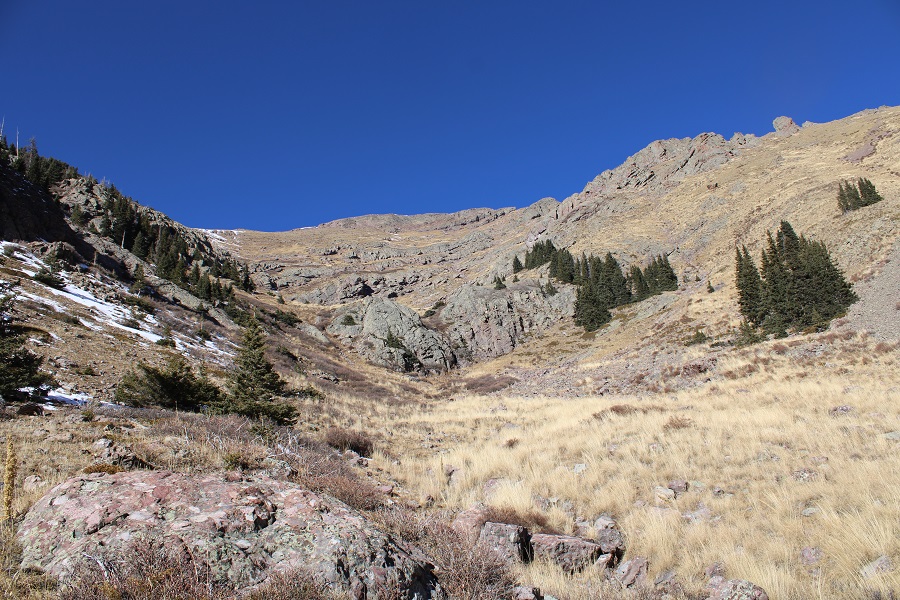
First, I ascended this rocky/willowy/tundra filled gully.  Note the rock circled, as it will be your visual cue when you exit. 

At the top of the gully, I stayed on the tundra, avoiding the rock outcroppings both above and below. But was unable to avoid the willows. I just aimed diagonally for the first pile of rocks on the ridge I could see.  There’s no reason to try to ascend directly to the ridge; just keep aiming northeast.

Staying on the tundra will help to avoid rock-hopping

Once on the ridge, it was a simple hike to the summit

I summited PT 13153 at 8:45am.  It was cold.

PT 13153: 

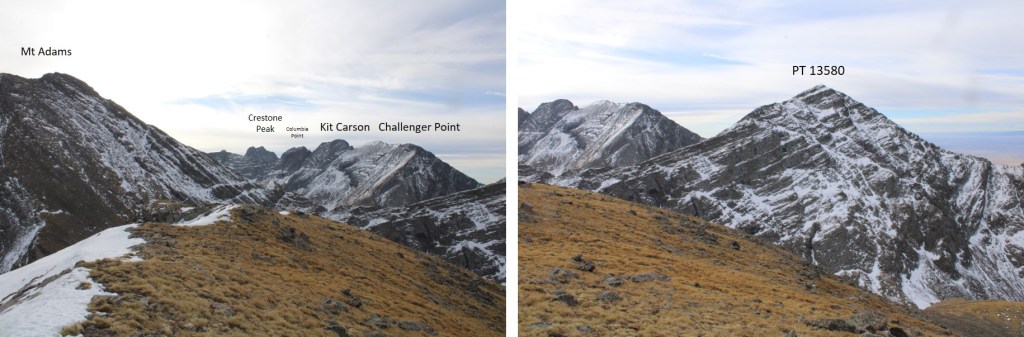
There were some great views of the Crestones

There was a summit register, but it was too cold for me to attempt to open it.  Have I mentioned it was cold and windy? I wanted to get down off the ridge asap. 

Here’s an overview of the route back to the lake.  Remember, just aim for that big rock that signals your decent down the gully

Here are some pictures of the way back to that large rock

Once at the large rock, I descended back down to the lake

This brought me to the class 1, South Crestone Trail, which I followed back to the trailhead

I was really surprised at all the witch’s hair I saw on the trees.  It’s completely taken over in some parts.  In the dark I’d thought the green were pine needles: Not so.

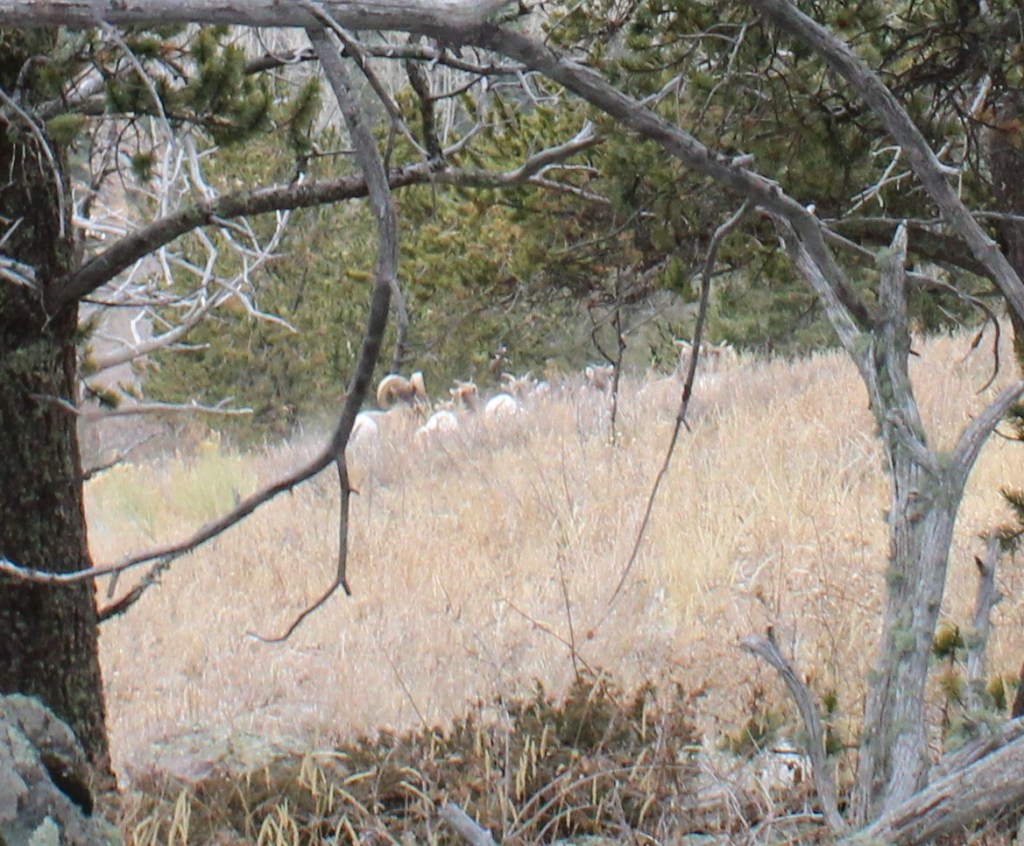
As I rounded the corner, just before descending down the switchbacks to the cabin, a herd of bighorn sheep darted across my path, kicking up dust and thundering down the hillside.  They were too quick for a good picture, but I was 100% sure it was the same herd I’d seen yesterday, and last time I was at Willow Lake (we’ve bonded).  I’ll add this to my growing list of wildlife ‘butt’ shots. 

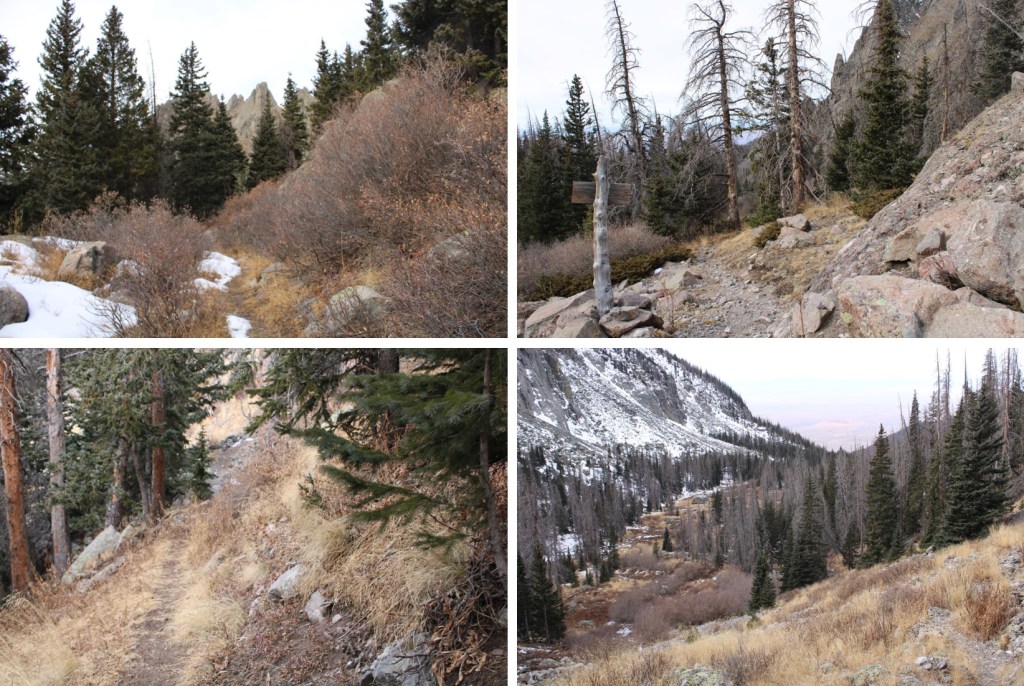
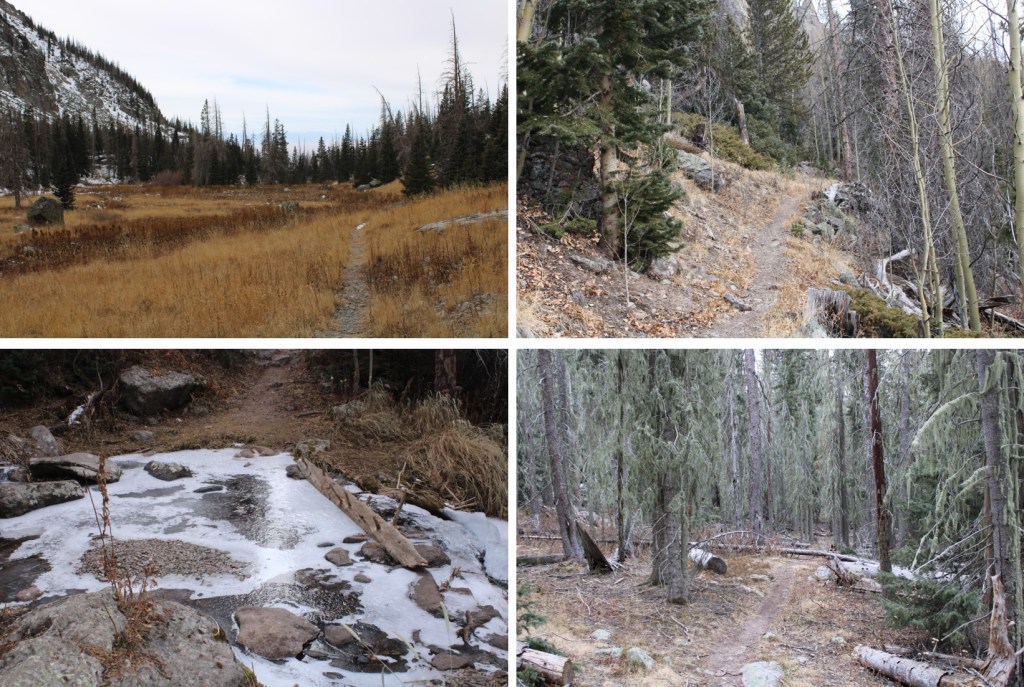
Here are some more pictures of the trail back to the trailhead

I made it back to my truck at 11:30am, making this a 12.1 mile hike with 4530’ of elevation gain in 6 hours, 30 minutes.

Today had been much easier than anticipated.  I was done earlier than expected, which was great!  Now to head home; my daughter comes back from college for Thanksgiving break tonight, and I want to have her favorite dinner ready for her when she arrives!

Pyramid Mountain – 13,054

RT:  11.27 miles

Elevation Gain:  4639’

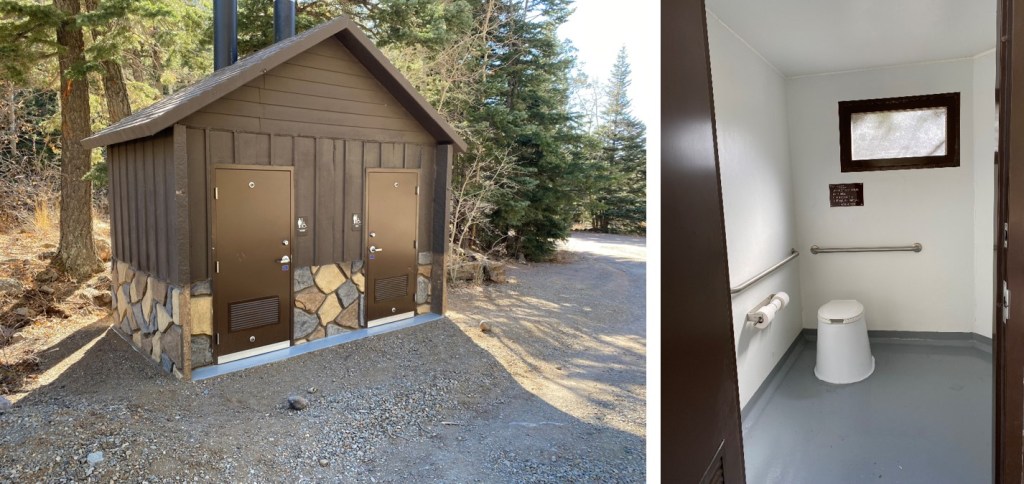
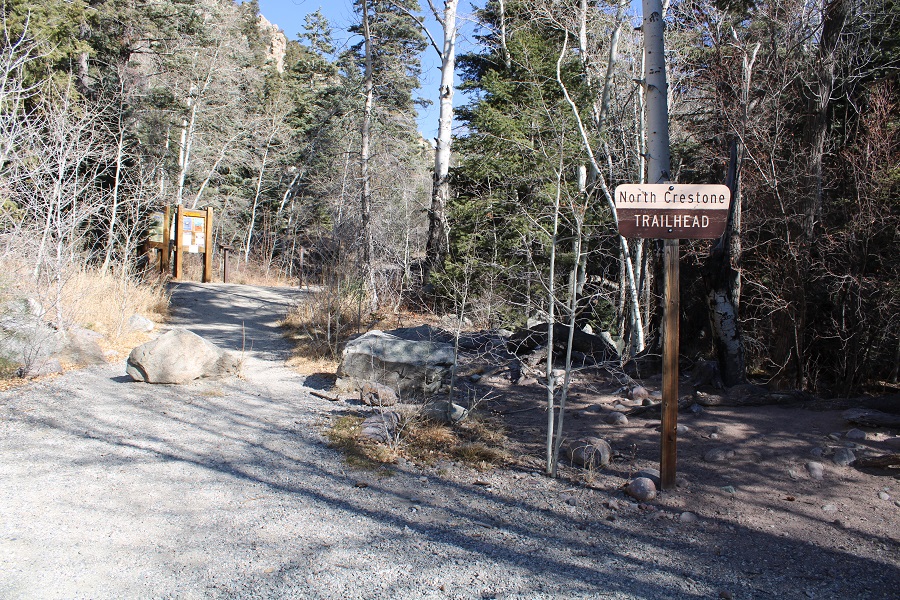
The moon was full, which makes hiking in the dark so much more enjoyable.  The trailhead is located at the northeast end of the North Crestone Campground.  I was surprised to find tent campers in some of the spots on this 20-degree morning.  There were no other vehicles I the lot when I arrived.  I was surprised to find the bathroom still open, and well stocked.

I was on the trail at 5am.  The trail is obvious. 

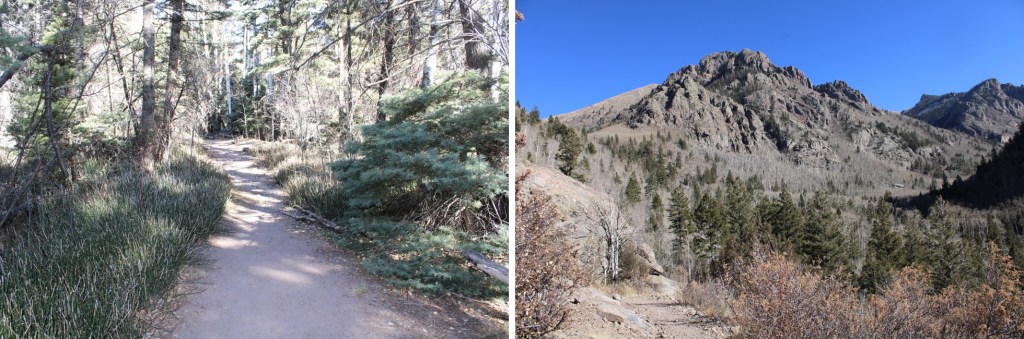
I signed the register (the first person to do so in about a week) and followed the North Crestone Trail northeast.   This is a class 1, easy to follow trail

After hiking for 2.8 miles, I came to the junction for the North Crestone Trail, Comanche Trail, and North Fork Crestone Trail.  I basically made 2 left turns, and began following the North Fork Crestone Trail

This trail was also easy to follow, as it switchbacked and headed north

There were some frozen stream crossings

There were also a lot of downed aspens from previous avalanches (but a clear trail) and willows

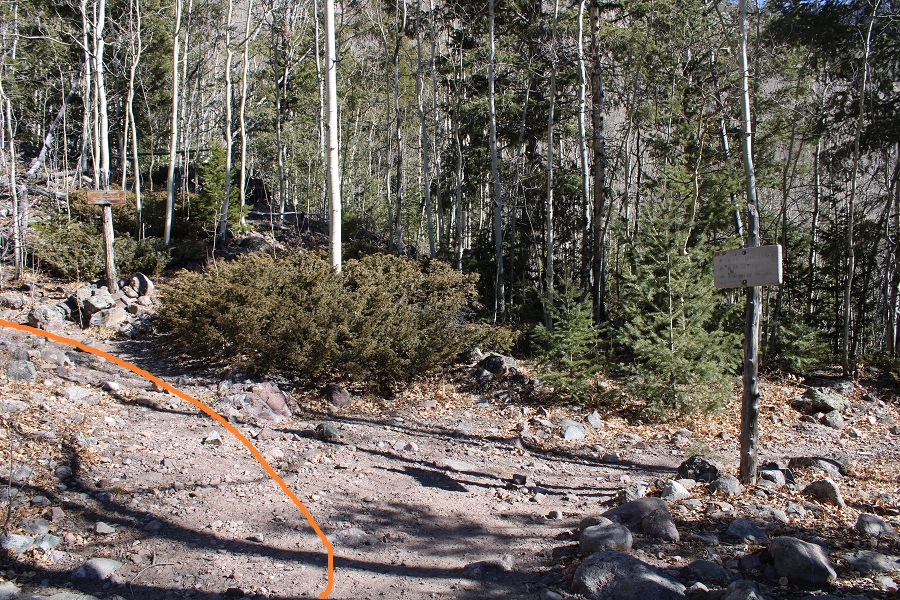
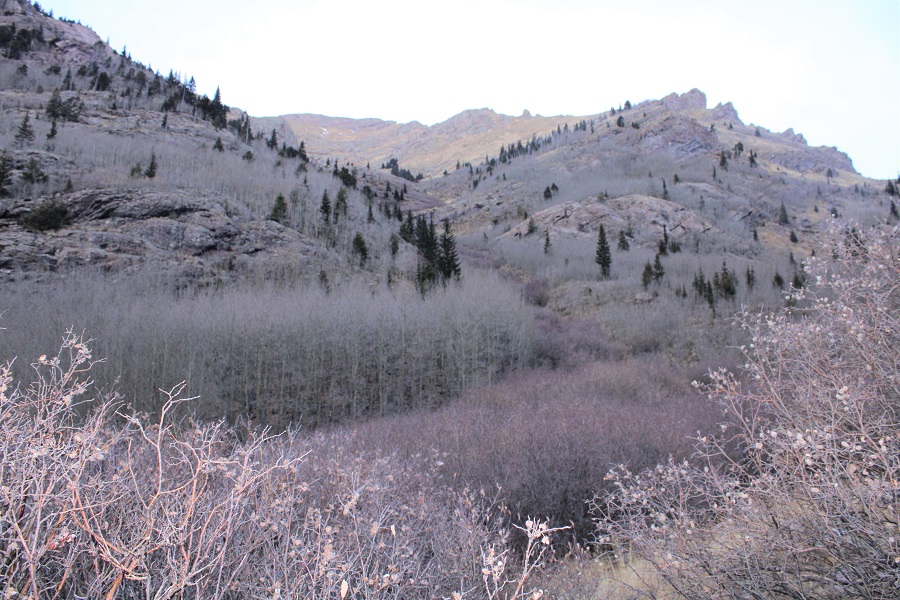
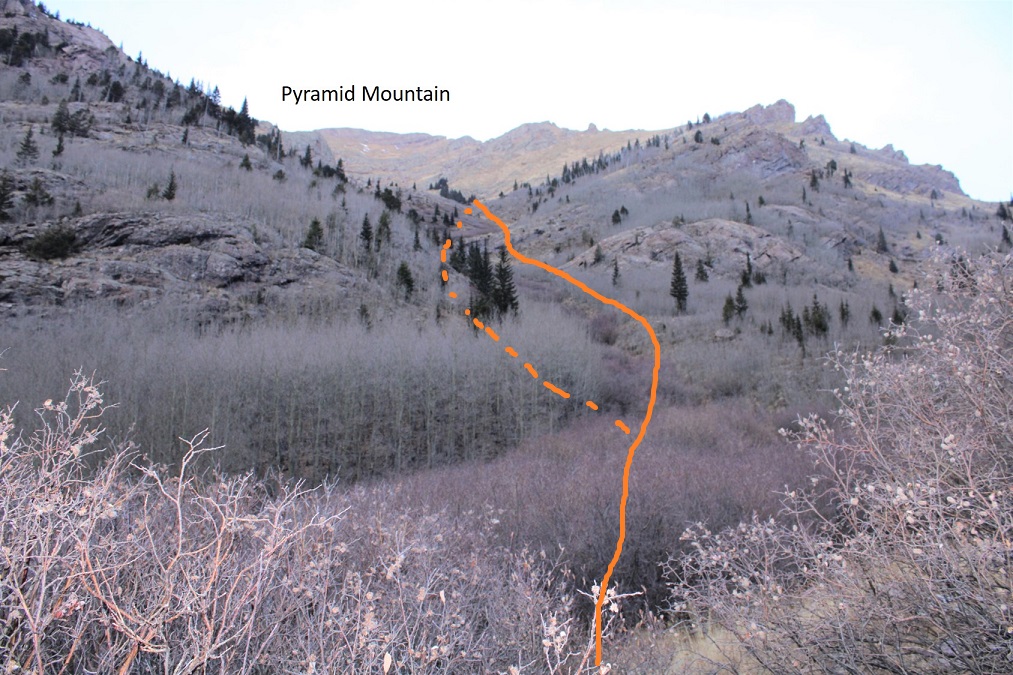
After hiking for a total of 4.25 miles and at 10750’ I looked left and saw a drainage.  This is the east side of Pyramid Mountain.

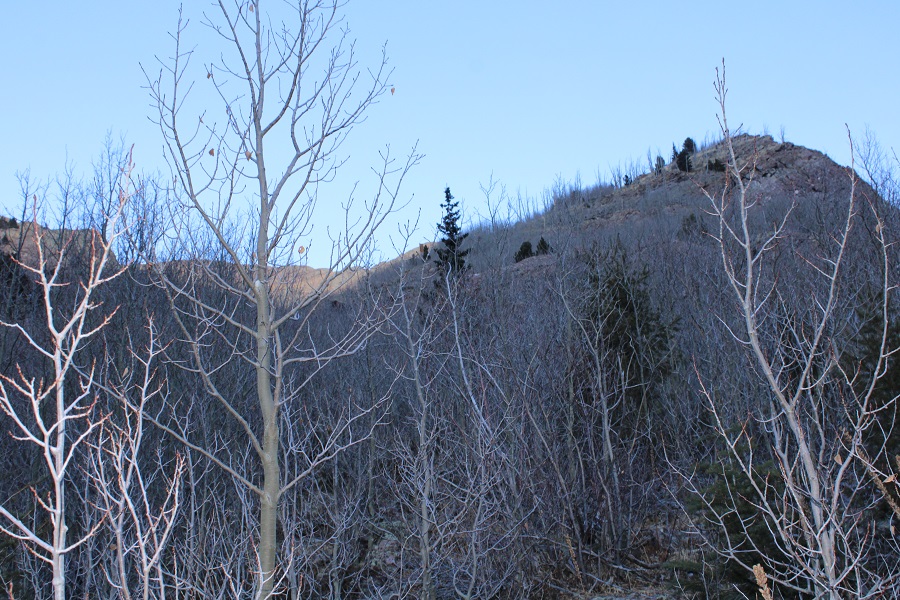
The idea here is to follow the drainage northwest.  This is harder than it sounds.  I ascended via the right, only to encounter some class 3 climbing and avalanche debris from aspens.  I descended via the left, in the snow with even denser aspens.  If I had to do this again, I’d probably stick to the route on the left, because, while there were more aspens, they were easier to navigate and much shorter than the ones on the right.  In any event, it’s choose-your-own adventure.  Following the drainage directly isn’t an option for the first 100 yards or so, due to the dense willows (but after that I’d recommend following the drainage proper, rock hopping).  Either way, you will come out of this part of the trek covered in aspen dust.  I can’t imagine attempting this when the trees and willows have leaves. 

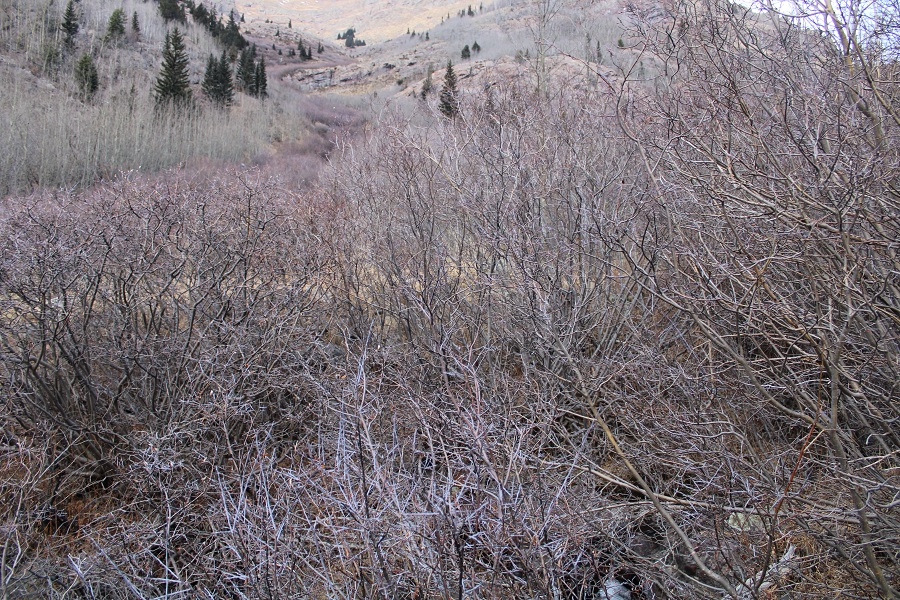
Here are some closer pictures of my ascent route.  First, I crossed the stream.  It was covered in willows, so pictures don’t do much, but trust me, there is a stream here.   Just float over it on the willow branches…

Next, I found an obvious game trail through the next set of willows

Directly after this game trail is another game trail to the left that crosses the drainage/a small stream (picture of this to come later).  This is how I came down.  But for now, I stayed to the right of the willows, trying to straddle the willows and the aspens (it didn’t work).

Staying to the right of the drainage brought me to a rocky area I needed to ascend.  This could be considered easy class 3

Once over this rock outcropping, I was easily able to follow the drainage northwest, as I was now above treeline

I took the ramp to the left, which is steeper than it looks.  Here I encountered a few stubborn willows, but was able to keep this class 2

Now I could see the rest of the route.  There are a few ways to ascend to the summit.  Once again, this is choose your own adventure.  It looks more intimidating than it is.  I was able to keep this all class 2, with one easy class 3 move (which would have been class 2 without snow).

Here’s my overall route to the summit

Let’s go step by step.  I made my way towards the rock outcropping.  Here there are two prominent, red ribs of rock.  Both go.  I chose a different one on the way up than I did on the way down.  Follow them north and they will quickly lead to tundra

At the top of these ribs, resist the urge to head to the ridge (it doesn’t go, yet).  Instead, aim for just below this prominent rock

Heading this way will take you to a game trail.  I followed it west a few yards, and then took a gully towards the ridge, avoiding the large rock.

When I did this there was snow.  Snow helps to make for a nice visual.  Just before making it to the snow, I turned right.  There was a faint trail here, heading northwest.

I was making my way northwest, towards the ridge, on tundra and Crestone conglomerate rock (side note, had I gone to the next gully further, this would all have been tundra).

I hit another large rock just before the ridge. There’s an access gully here that’s most likely class 2 in summer, but with snow felt easy class 3.  I climbed this gully

From here, it was an easy scramble up the ridge to the summit.  The pictures make this look tougher than it was. 

I summited Pyramid Mountain at 9:15am

Pyramid Mountain:

There was a summit register, which I actually signed because it was warm outside.  Then I was on my way back down.  

Here’s an overview of the exit, back to the drainage

I made it back to the game trail, followed it for a few yards, and then descended south

This time I took the opposite side of the drainage down.  I’d recommend taking this route up (it won’t be ‘fun’, but it will be slightly better than the other side)

Yes, there are a lot of aspens, but they’re small-er than those on the other side.  I made it to the willows and crossed the creek at what felt like a game trail, but had an access log across it, so maybe it’s intentional?

Now for the final creek crossing, willow wrestling, and back to the trail

I hiked over several (frozen) creek crossings, back to the junction with the North Crestone Trail, Comanche Trail, and North Fork Crestone Trail

I turned right twice this time, and hiked back to the trailhead, following North Crestone Trail

I made it back to my truck at 12:15pm, making this a 11.27 mile hike with 4639’ of elevation gain in 7 hours, 15 minutes. 

On to the next trailhead!
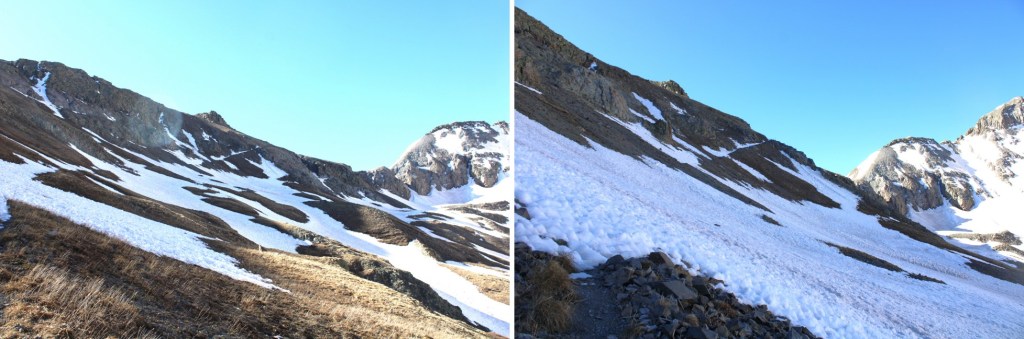
Cotton King Peak – 13,490 and PT 13,130

RT Length:  18.96 miles

Elevation Gain:  6296’

It’s that wonderful time of year when I start and end hikes in the dark.  I’d slept at this trailhead, quite comfortable, and didn’t want to get up.  That’s the only downside to loving your sleep set-up:  you don’t want to get out from under the covers.  Eventually I got up, and was on the trail at 5:30am.

The Wild Cherry Trail is at the end of a fun 4WD road.  There’s plenty of parking, and I had the whole place to myself the entire night (and the next day/night as well, odd since it was a Friday/Saturday/Sunday).

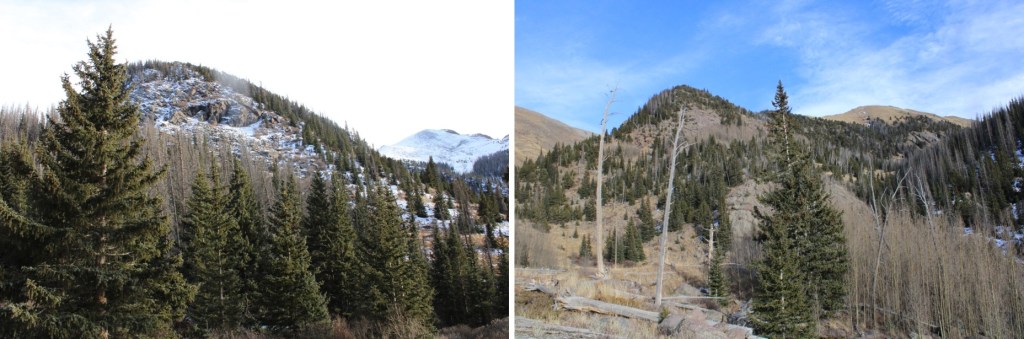
I followed this class 1 trail as it meandered and switchbacked alongside Wild Cherry Creek (no creek crossings this time)

The creek was running, but still kind of frozen

I was slowing down as I made it to a meadow with some nice camping spots at 11000’

So.  Many.  Switchbacks.  I was not feeling it.  I was hiking slow, my knee still hurt from yesterday, and for some reason, I felt unmotivated.  I looked at my tracker:  I’d gone (almost) 5 miles.  I’m good at playing mental games to keep myself motivated.  I decided to hike to 5 miles, then turn back.  A 10 mile day is pretty good, right?  When I hit 5 miles, I told myself I’d just go to the lake, and kept hiking. 

Just after the meadow with the camping area I switchbacked a few times, then entered a rocky area.  There was still a trail here (there’s as trail all the way to Peanut and Cherry Lakes).  It was here I encountered snow.  Mine were the first tracks since it snowed last (a few weeks ago?)

I knew I was getting close to the lake when I saw the sign warning me not to camp or bring livestock within 300 feet of the lakes

I continued following the trail, just wanting to see the lakes before turning back…

Once I made it to the lakes I had a visual of the rest of the route, and there was no stopping me now (visuals help my mood tremendously).   Also, the sun had come up, which made everything better: I’m not a fan of gloomy days (which this one started out to be).

With my newfound energy, I was now aiming for this saddle

I could see a sort of plateau hugging the south side of Mt Owen, and that’s where I wanted to be

Here’s an overall look at my path to the Mt Owen/Cotton King saddle

First, at around 11830, before making it to Peanut Lake, I found a grassy hillside and ascended it north

This brought me to 12000’, and a boulder field.  I stayed high (left), and followed the boulder field southeast towards the Mt Owen/Cotton King saddle

There are some willows to navigate, but if you stay high, you can avoid them.  There’s also a game trail that picks up in the tundra.  It goes as a trail about 75 percent of the time, and is easily seen from below

Once on the saddle, I didn’t follow the obvious, snow-covered trail (for obvious reasons), but instead took the class 2 ridge south.

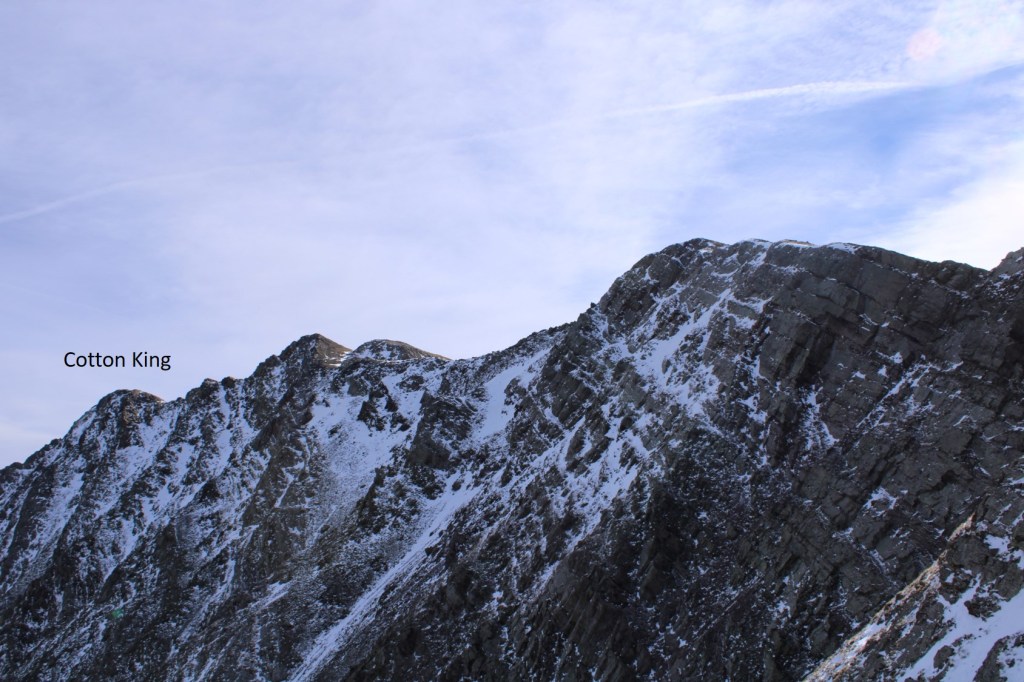
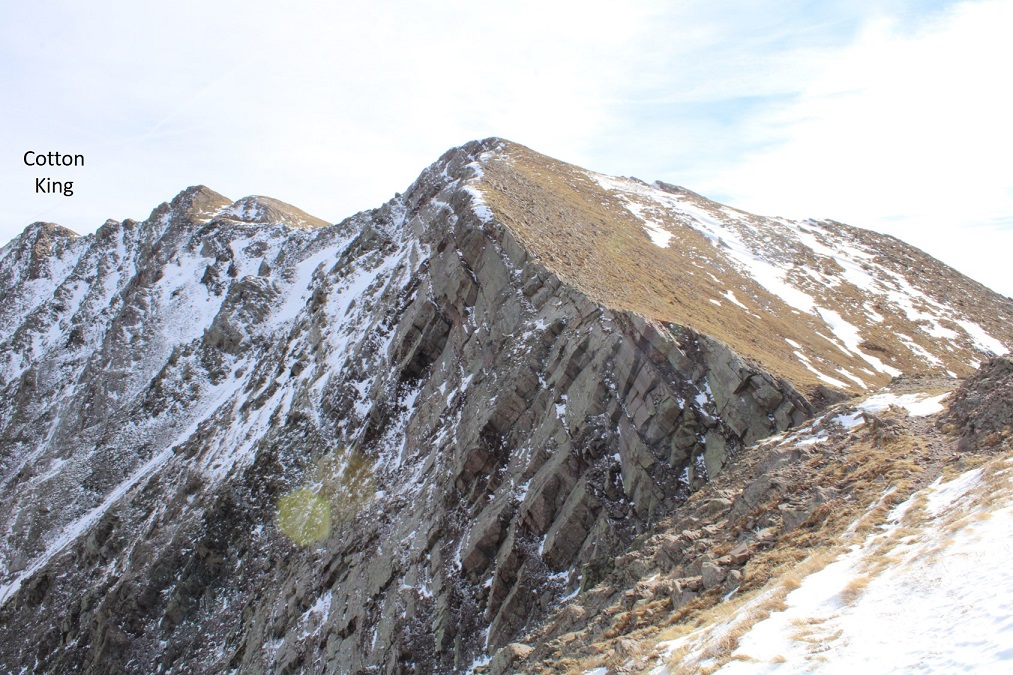
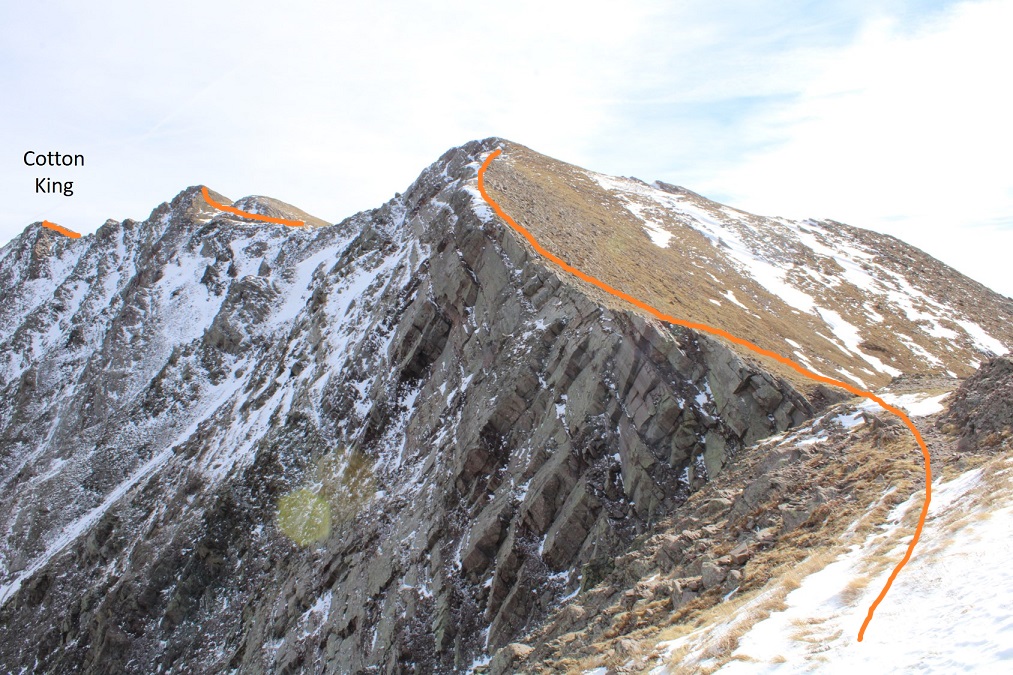
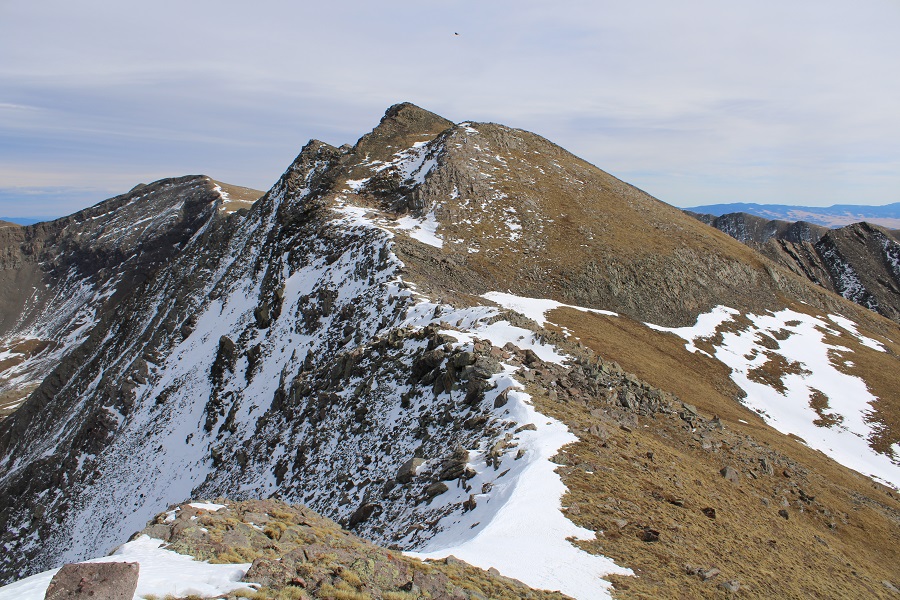
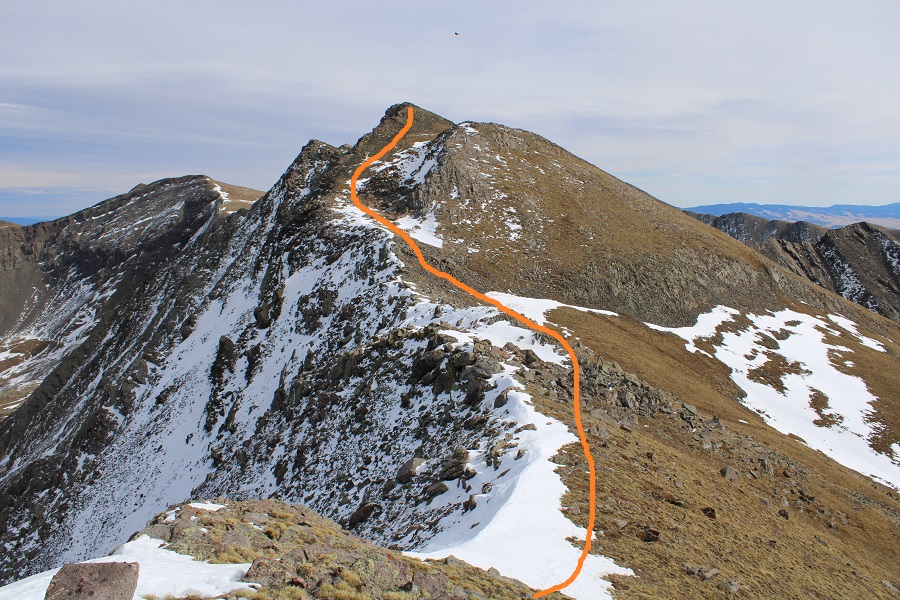
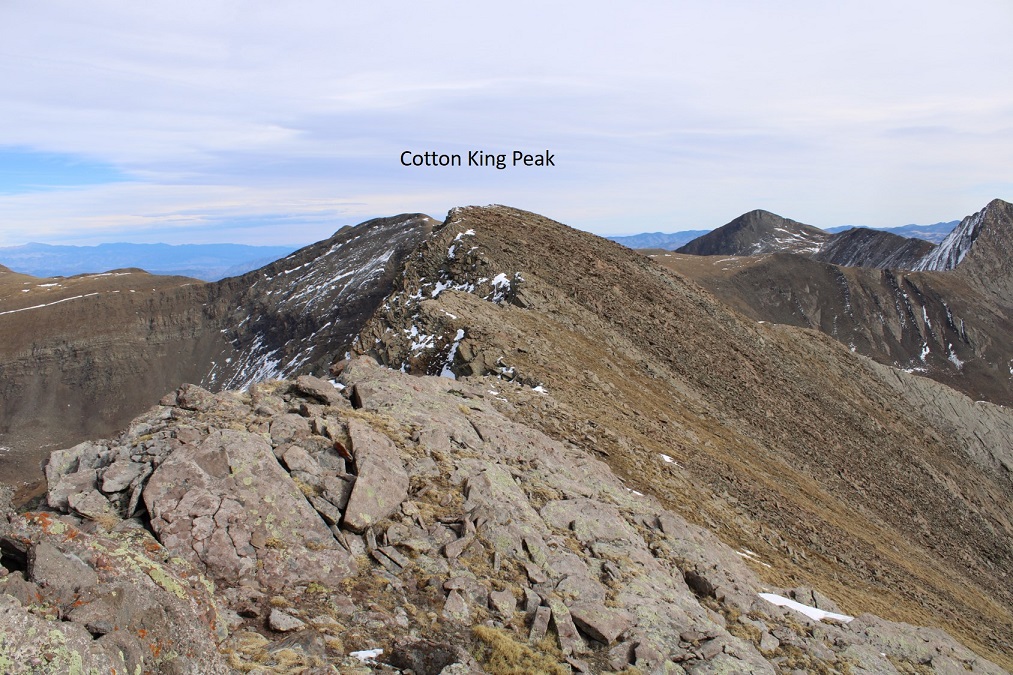
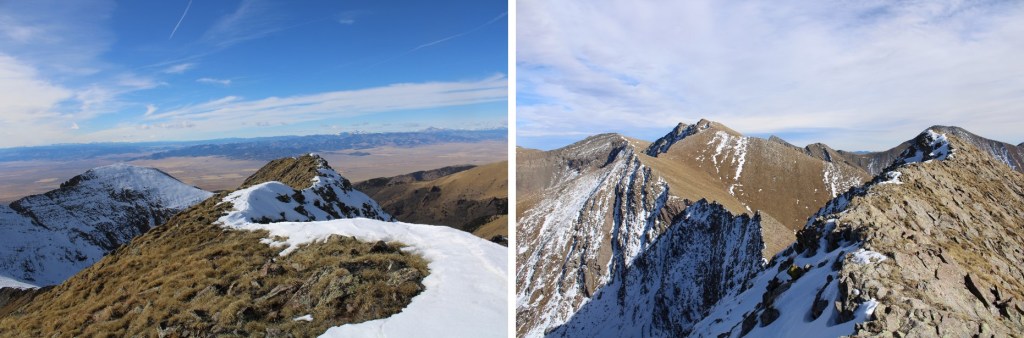
This is a good time to get a visual of where the summit of Cotton King Peak actually lies:  It’s at the end of the ridge to your left.  Looks can be deceiving:  There will be false summits.

Ok, so I continued up the class 2 ridge

Just before topping out there was a trail that went left.  There is currently a small cornice forming, but I was able to navigate the terrain with just my trekking pole (I had microspikes and didn’t feel the need to put them on)

Now I just needed to follow the ridge.  This is all class 2. Here’s an overview:

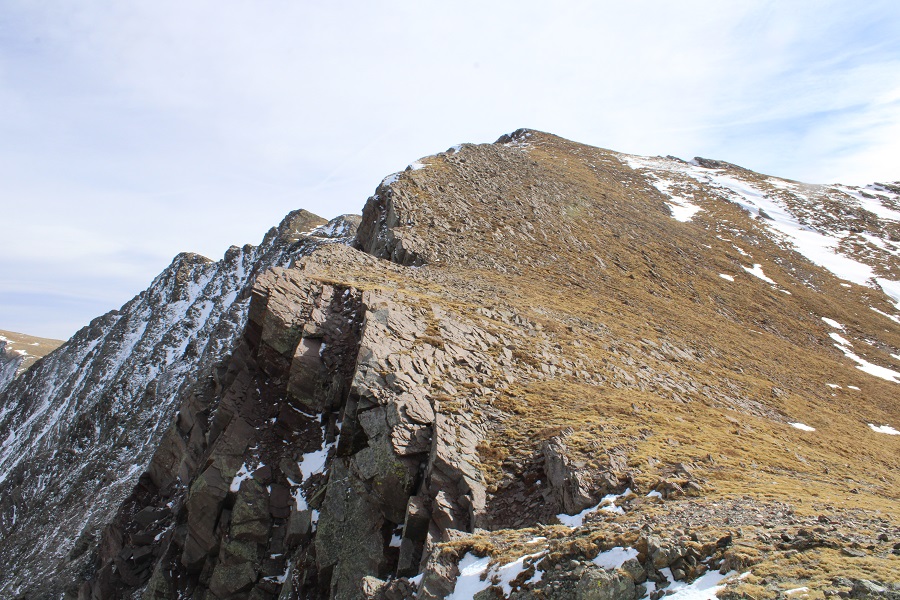
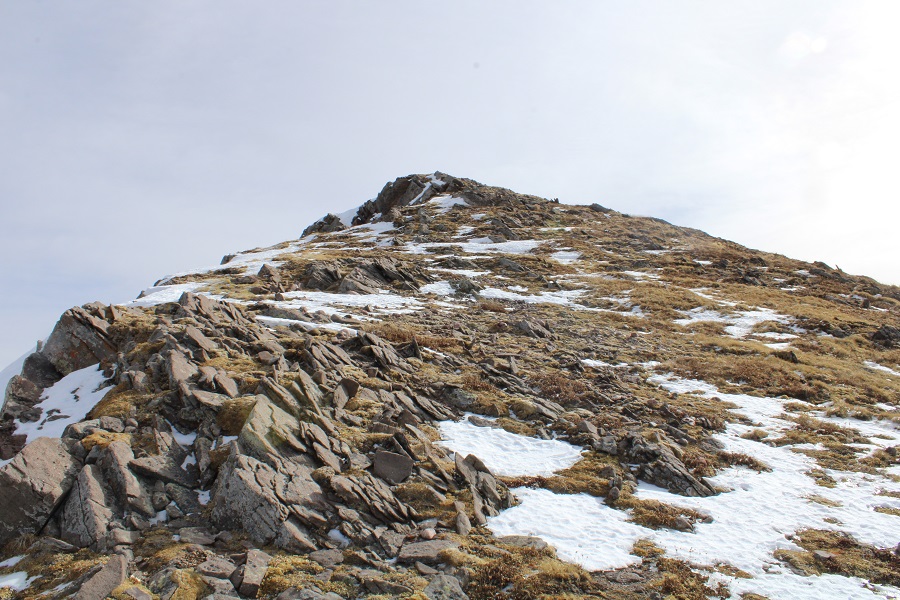
And some step-by-step photos.  Up the first ridge

Then I skirted the next false summit to the left, through a gully

I was convinced this was the summit, but alas, no. 

I followed the talus and rocky ridge east to the summit of Cotton King

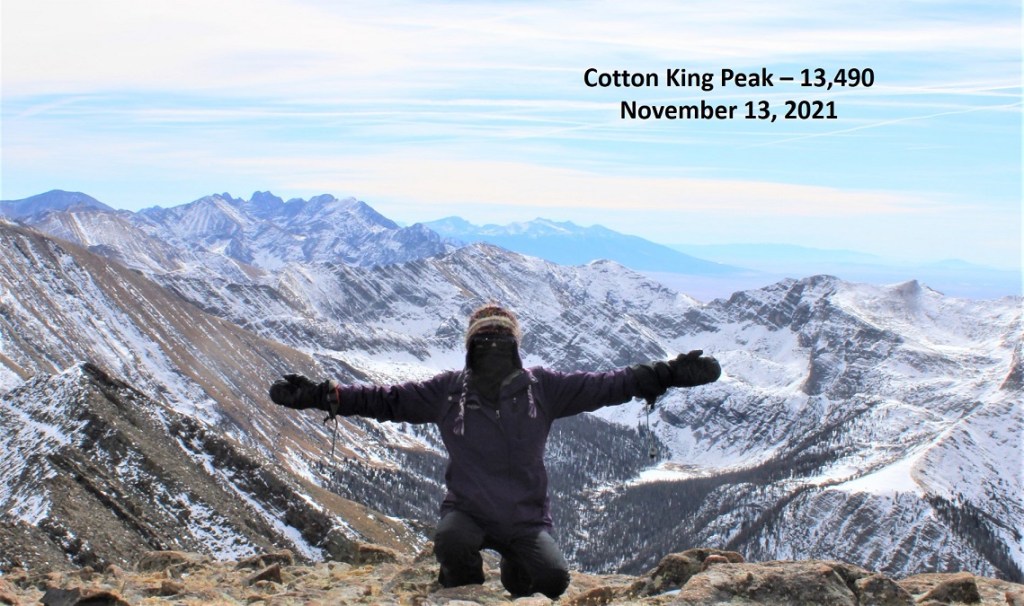
I summited Cotton King Peak at 11:30am

Cotton King Peak: 

Earlier this morning I’d made a mental deal with myself that if I summited Cotton King, I’d come back for PT 13122 another day.  Well, I’d changed my mind:  I was getting both in today.  I turned and re-traced my steps back down the ridge.

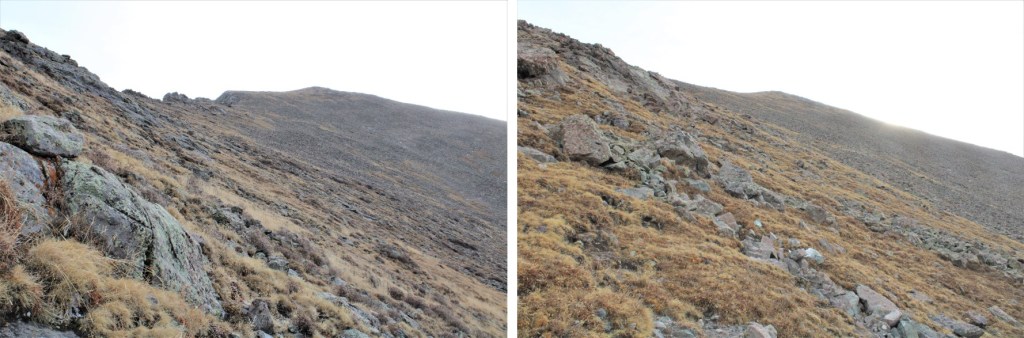
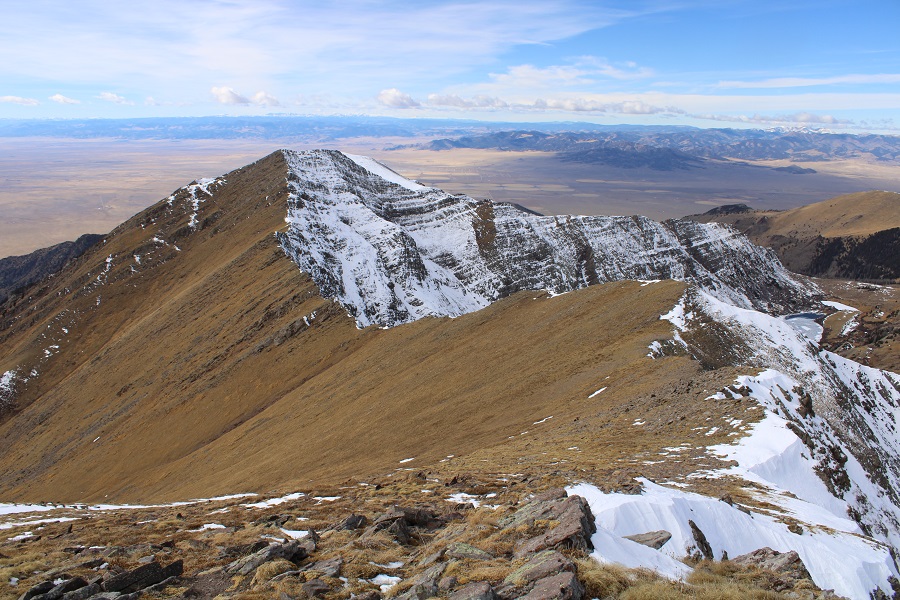
The route up 13122 looked easy enough

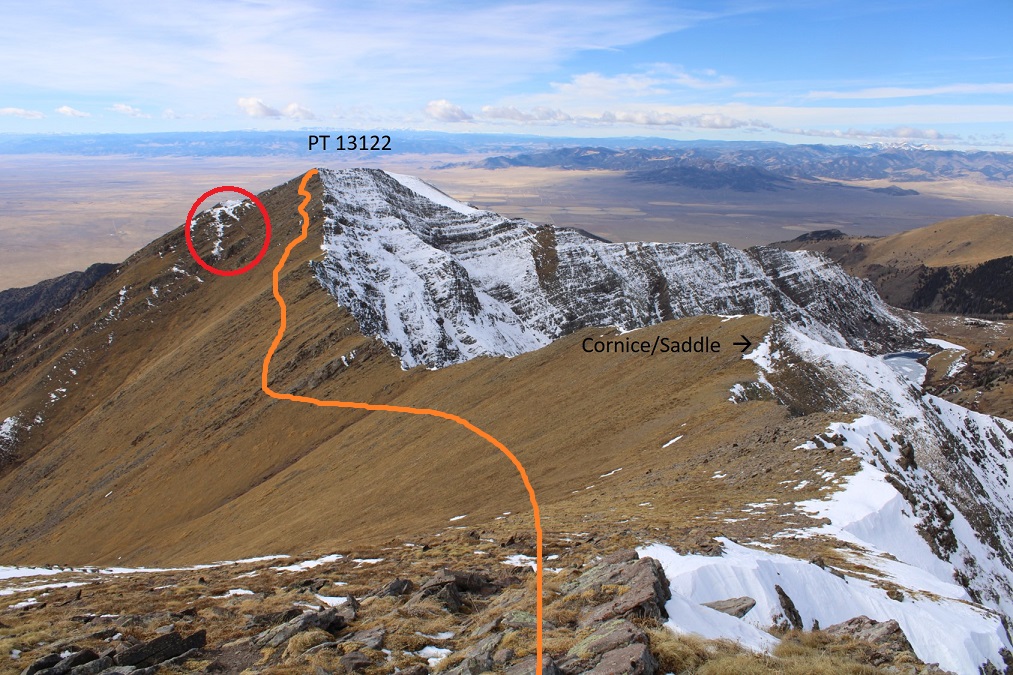
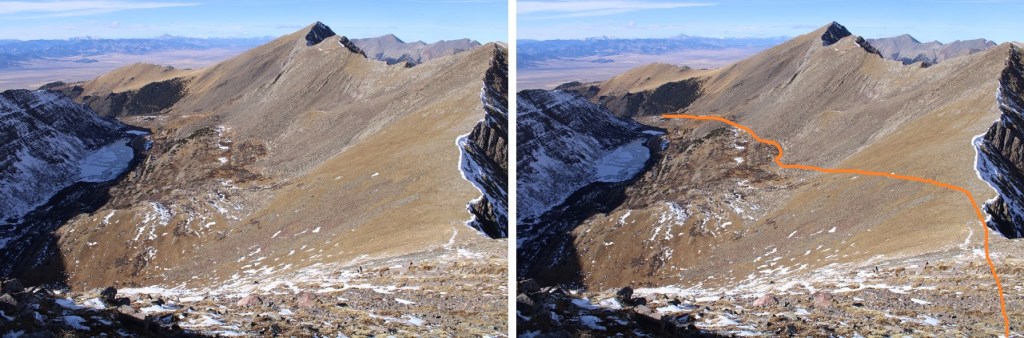
But as I got closer, I realized the normal, class 2 route up to the summit was full of snow (circled in red).  I wouldn’t be able to summit that way.  Instead, I kept mostly to the ridge, on class 2 terrain, until my final move was difficult class 3 up a chimney to the summit.  Here’s the overall route.

And some step-by-step pictures

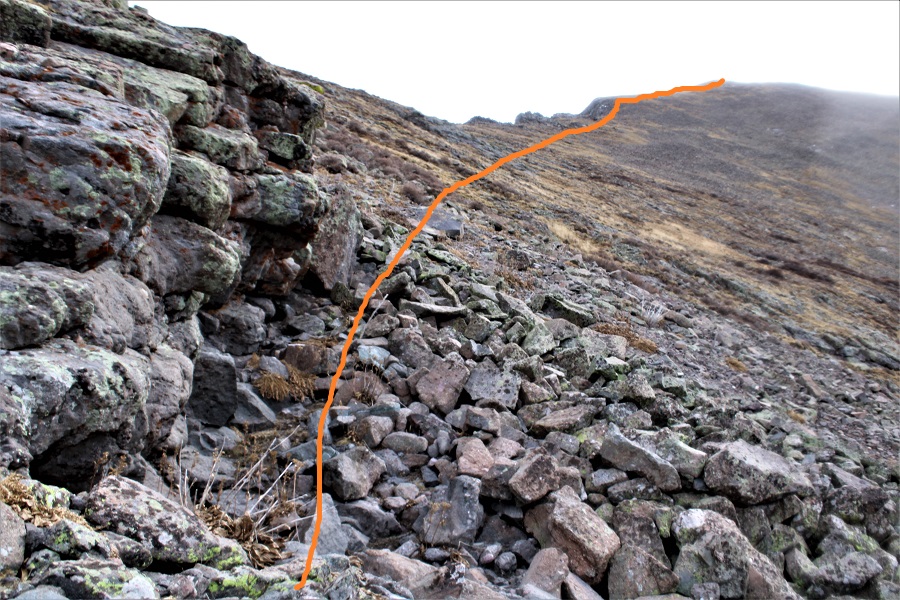
I kept this part class 2 by staying lower than I’d wanted to where the rock outcroppings were

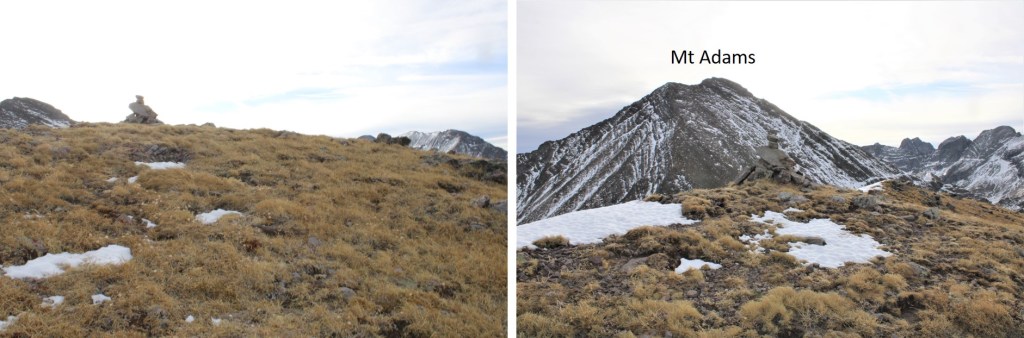
For the final push to the summit, I aimed for the snow areas, just for a good visual, and then followed the tundra/rock gullies to the summit. This kind of reminded me of the gullies on the Maroon Peaks. 

Here’s the route I took.  You can clearly see the ‘summer’ route to the left, covered in snow just before the ledge.

I just looked for a break in the rocks, and followed those towards the ridge

Here’s the class 3+ chimney I used to ascend the ridge

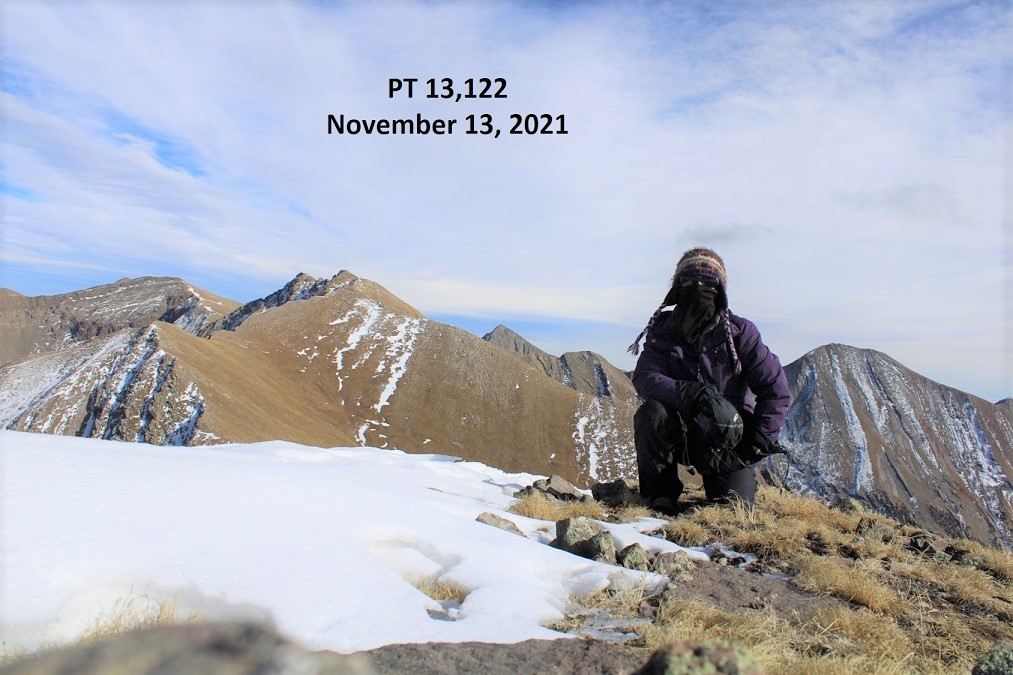
I summited PT 13122 at 1:10pm

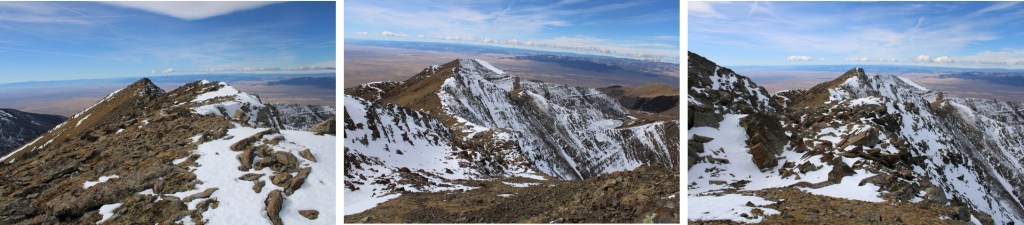
PT 13122:  

It looked like the true summit was further west, but I can assure you, the true summit is just as you gain the ridge. I walked over to the other side to check it out.

I know some people make this a loop, and continue heading northwest down the ridge, but I’d taken a look at the ridge down earlier in the day, and with the current snow, it didn’t look fun: either snow or cliffs to navigate at the moment. It would have been faster, in better conditions.

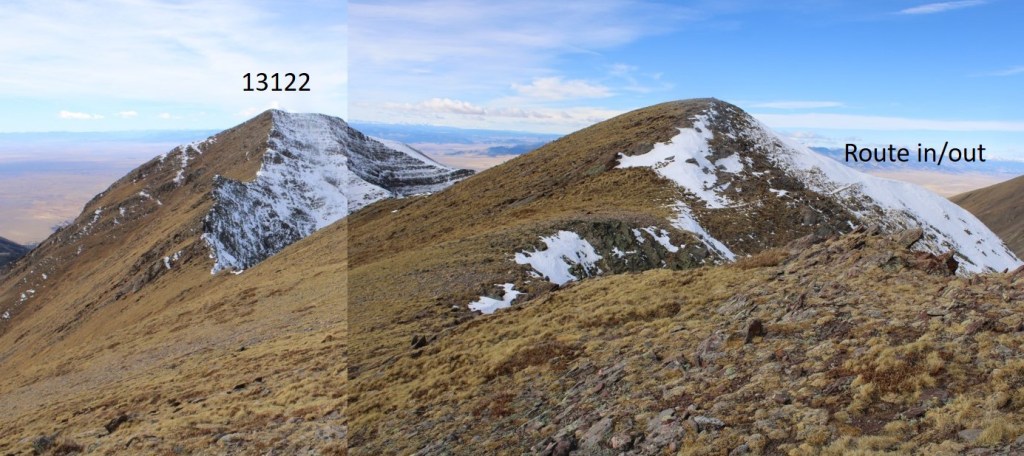
From the summit I made my way back to the Cotton King/PT 13122 saddle. 

Then I followed my tracks back to the trail staying high in the boulder field

And once on the trail I followed it back to the trailhead

I made it back to my truck at 5pm, making this a 18.96 mile hike with 6296’ of elevation gain in 11.5 hours.

I decided I’m giving myself a down day tomorrow, and I’m just going to stay tonight at this trailhead, then drive home and hit the treadmill tomorrow.  I had some spaghetti for dinner, read a bit, and enjoyed having cell service.