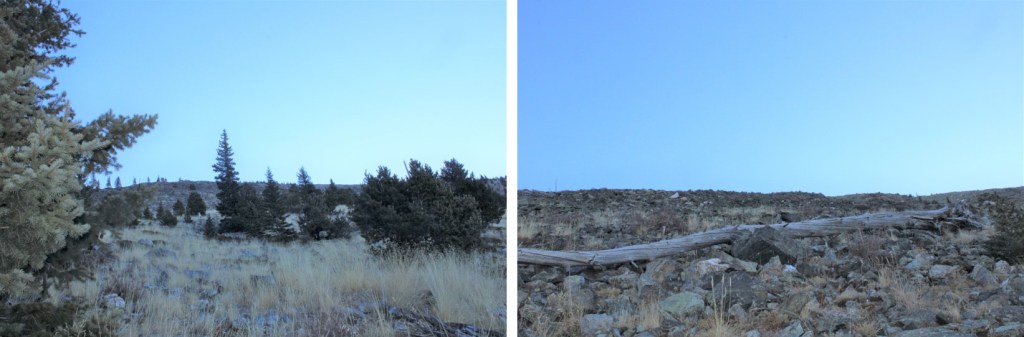
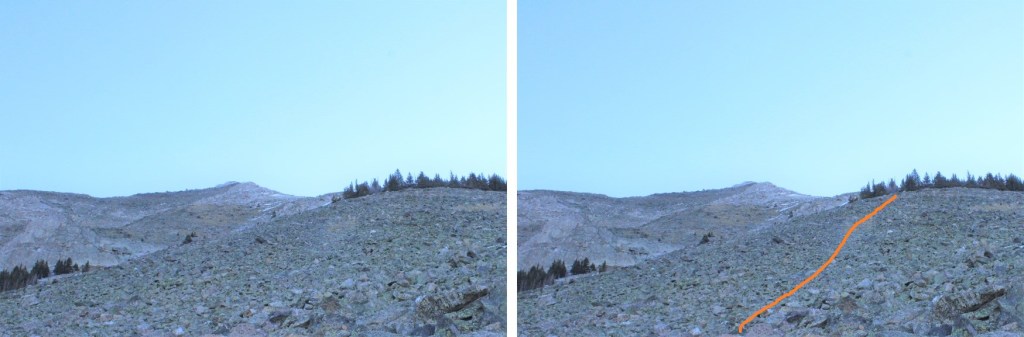
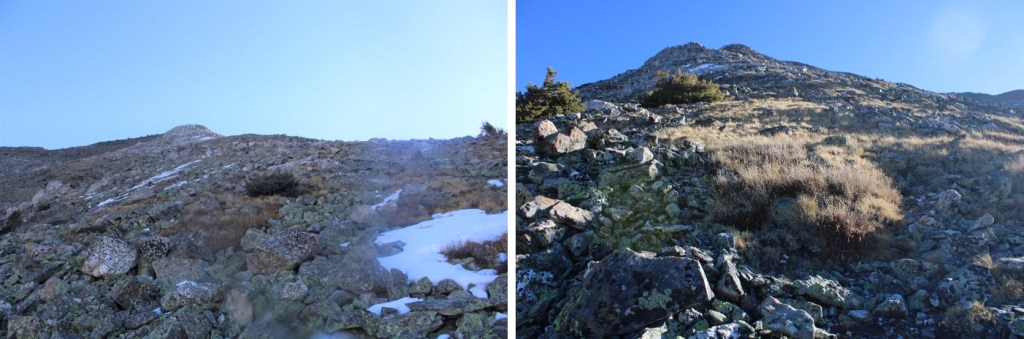
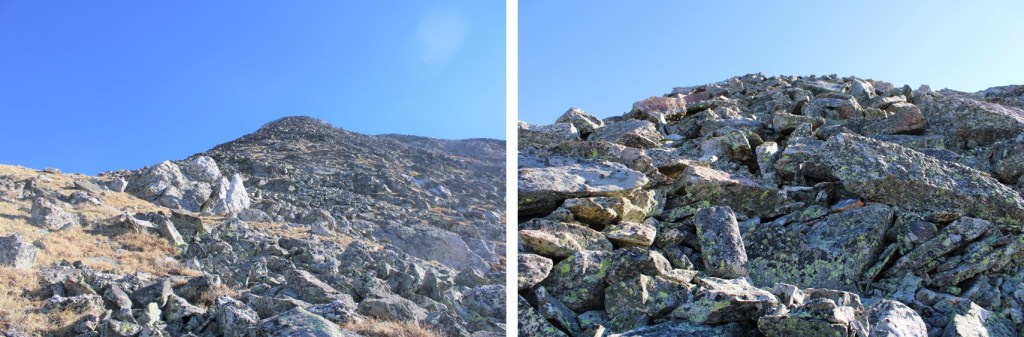
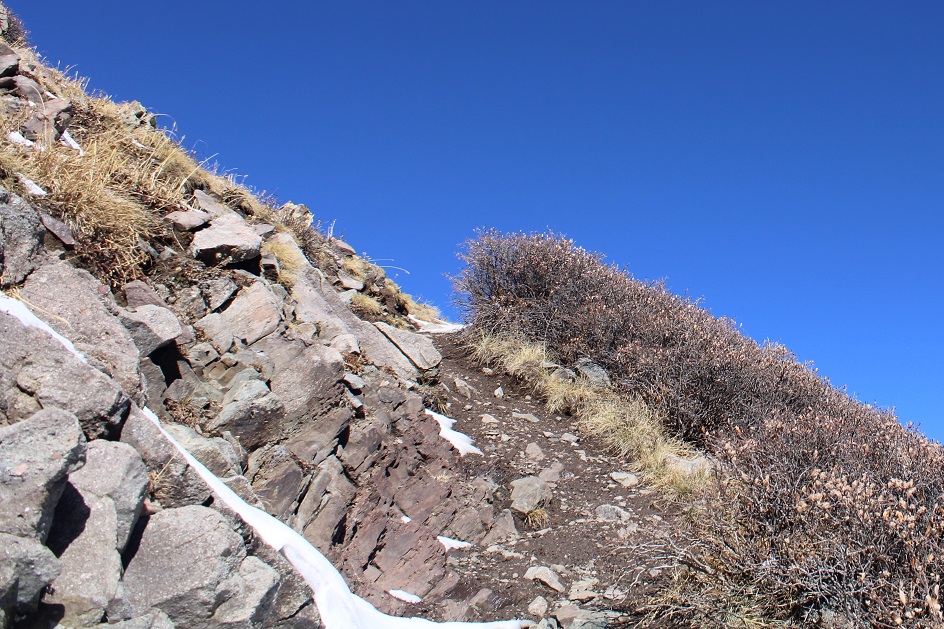
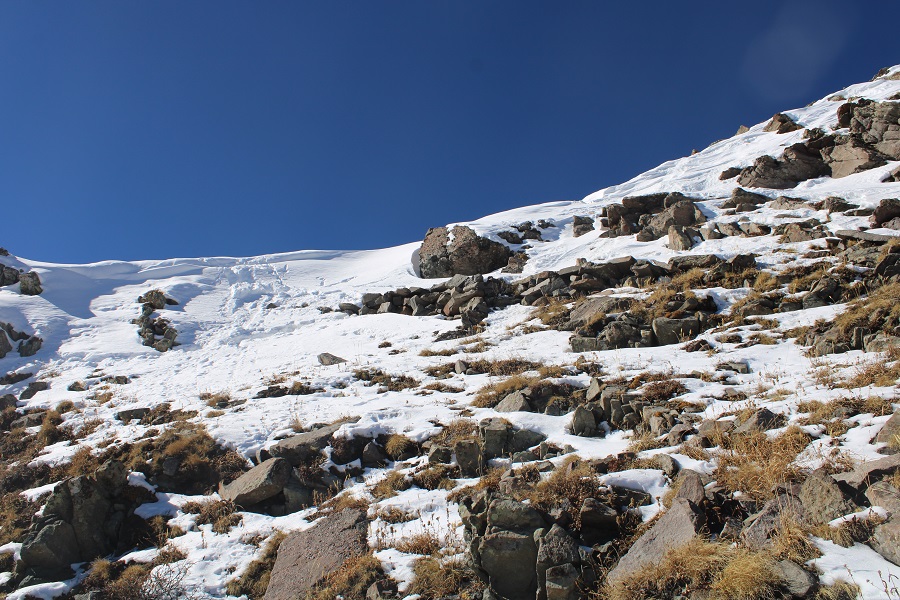
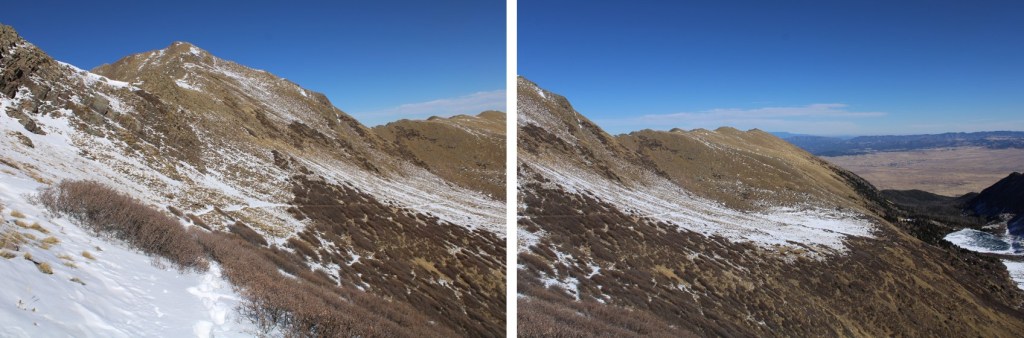
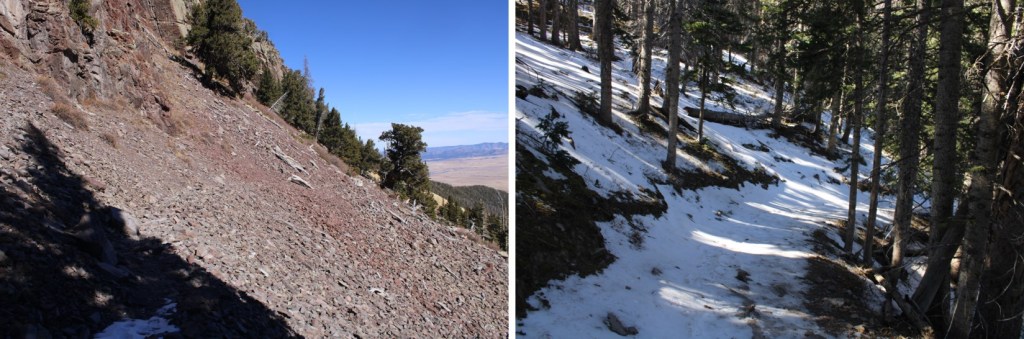
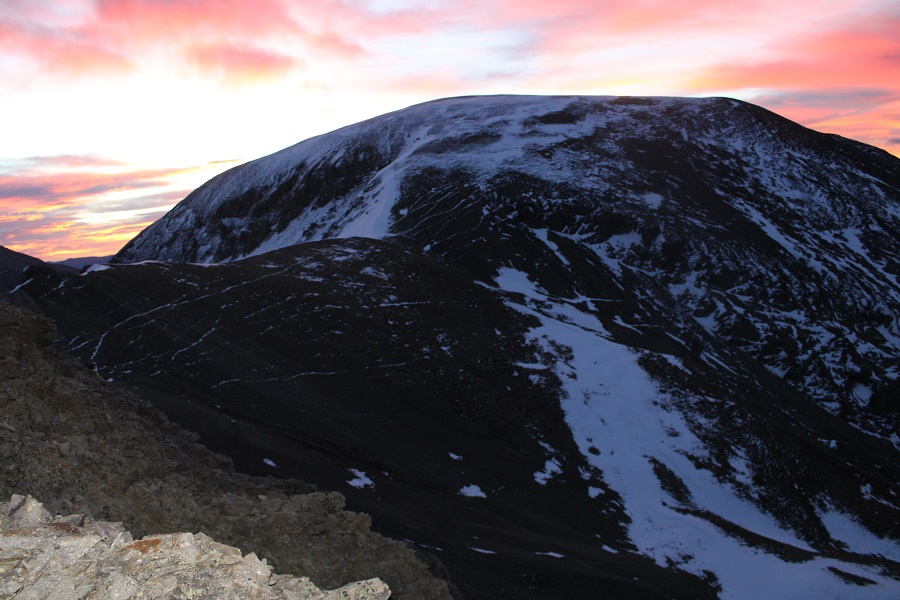
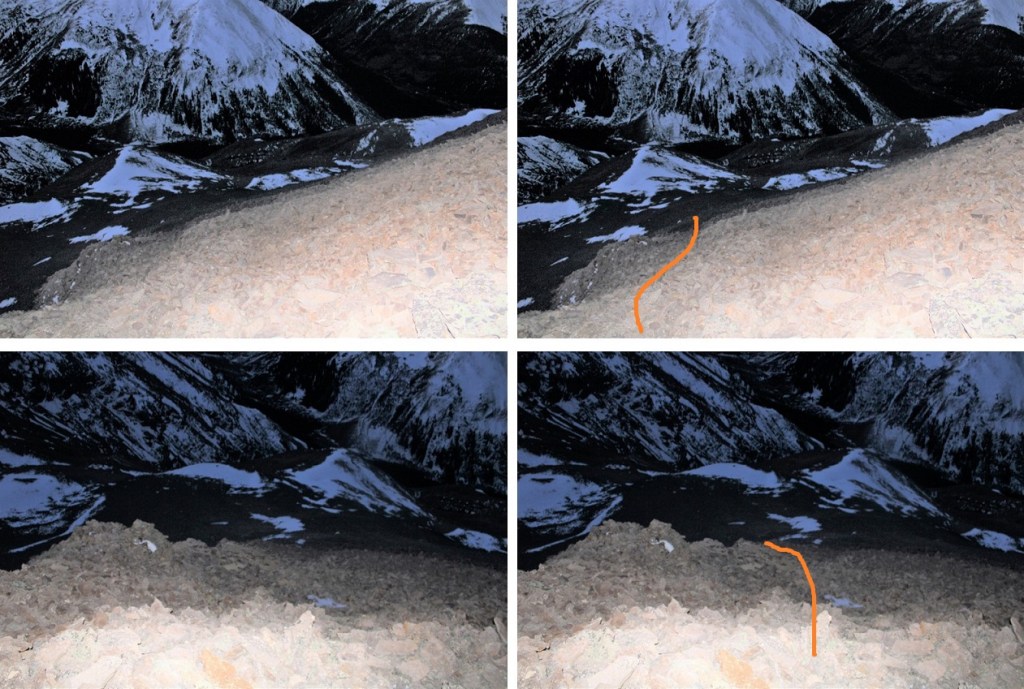
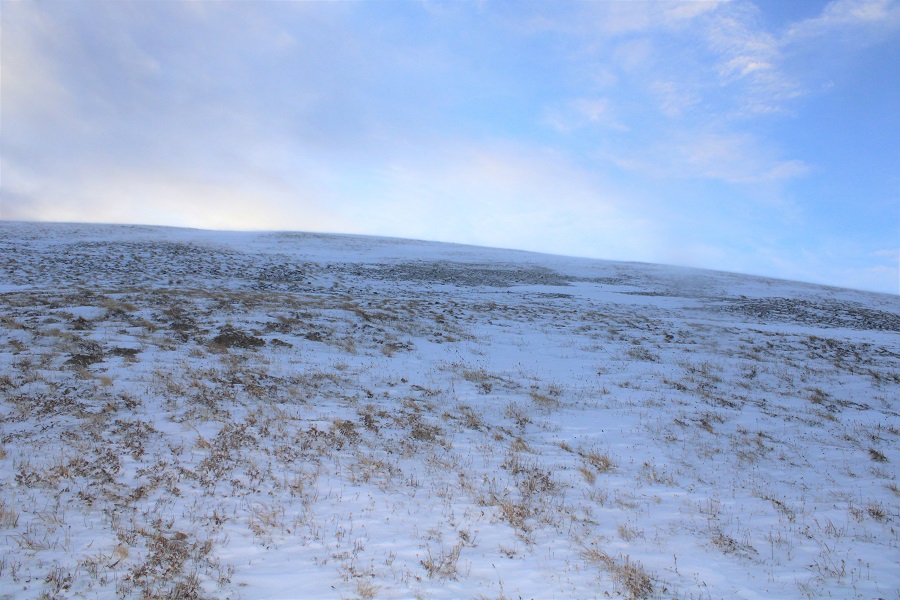
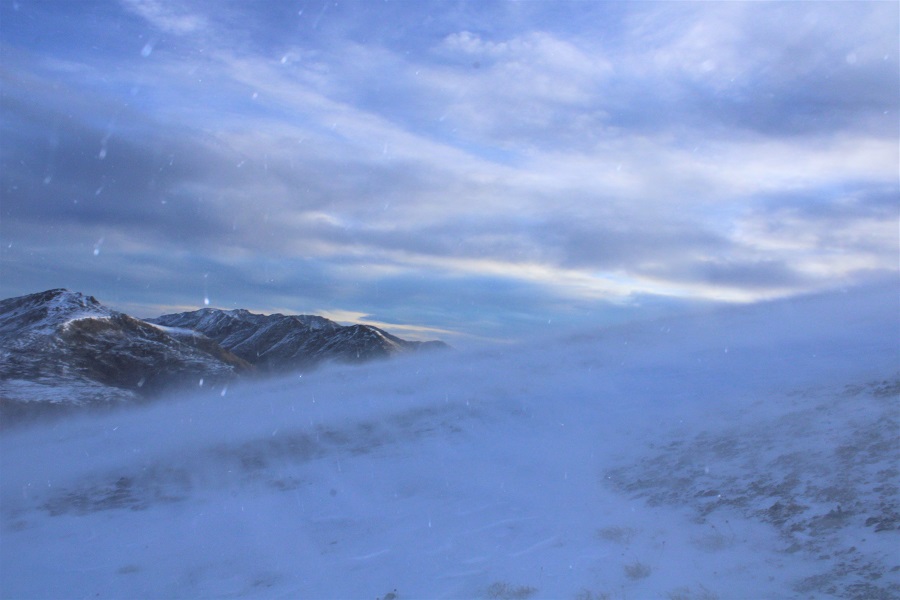
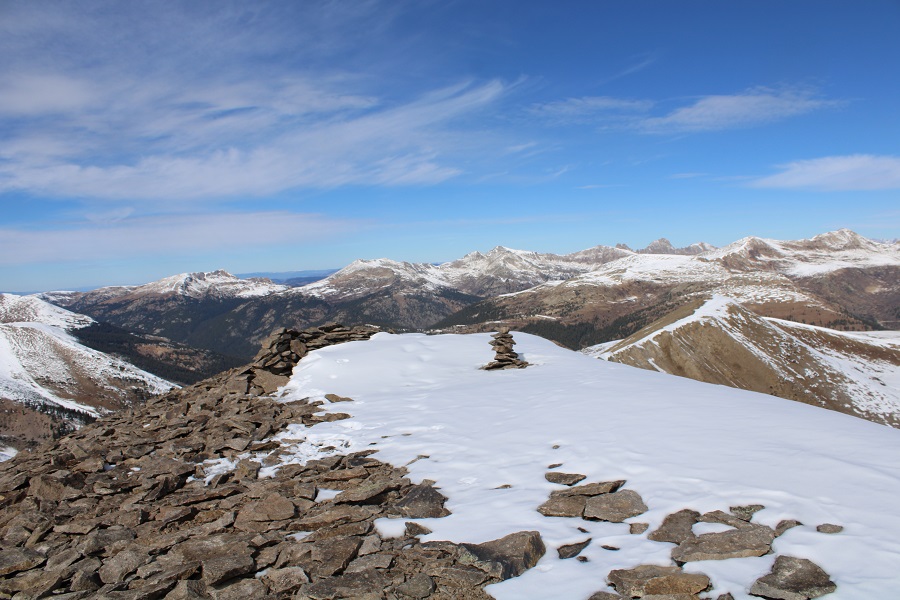
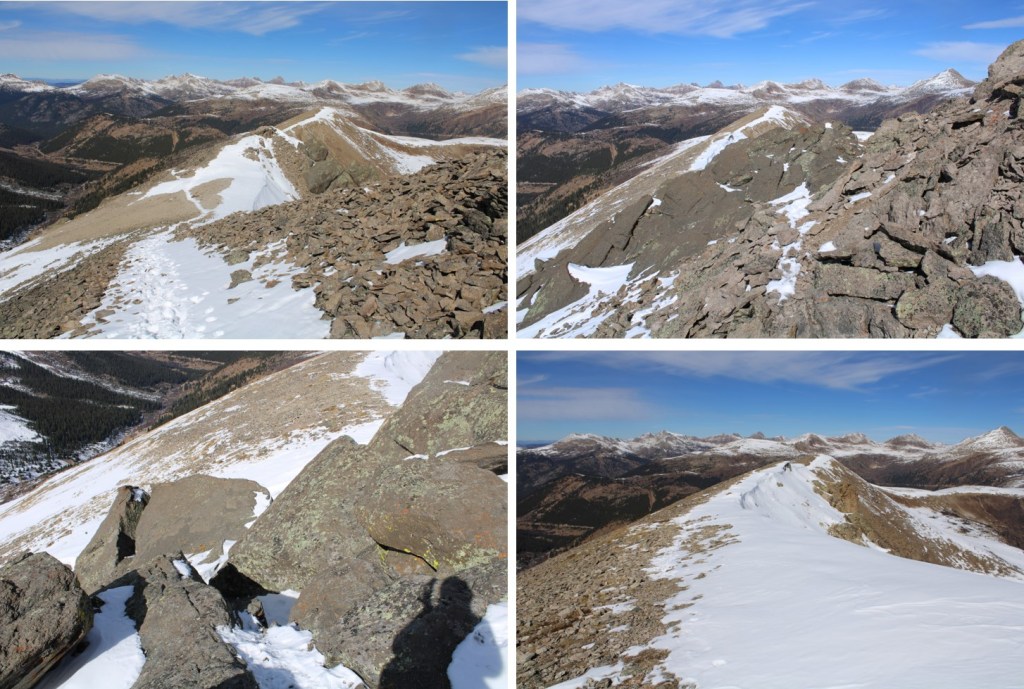
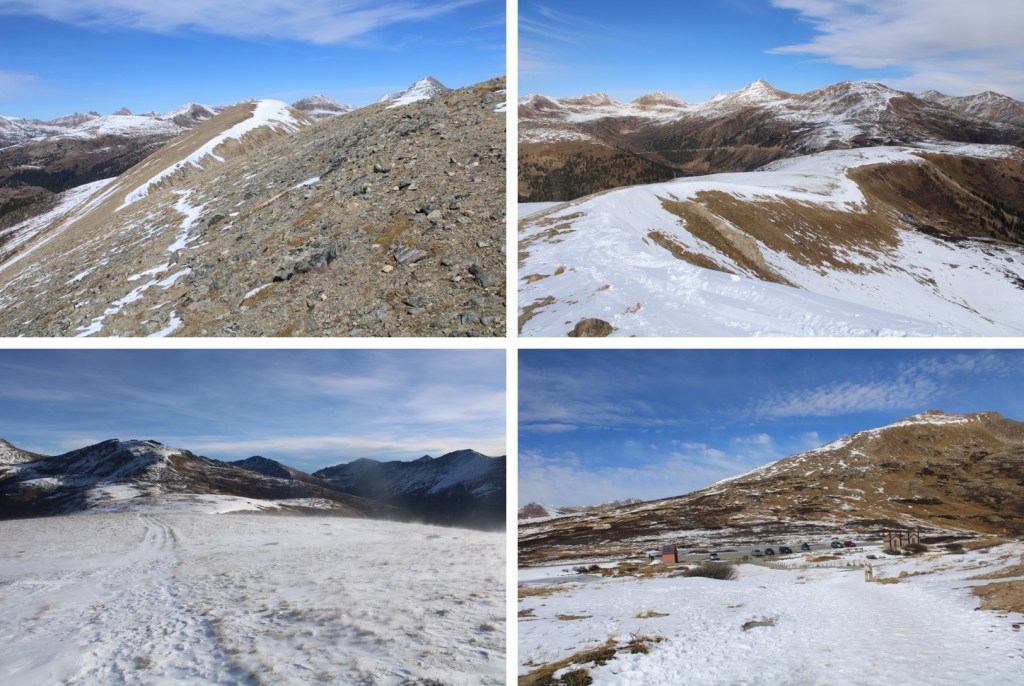
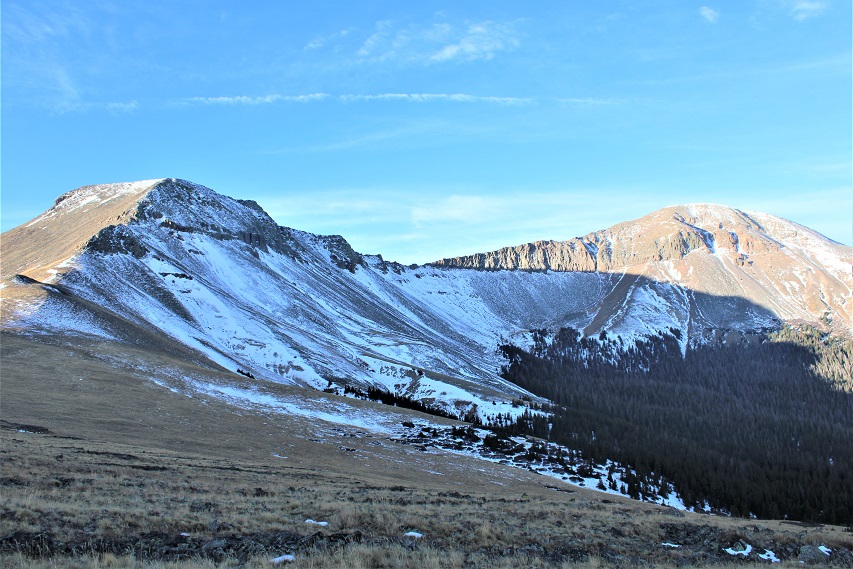
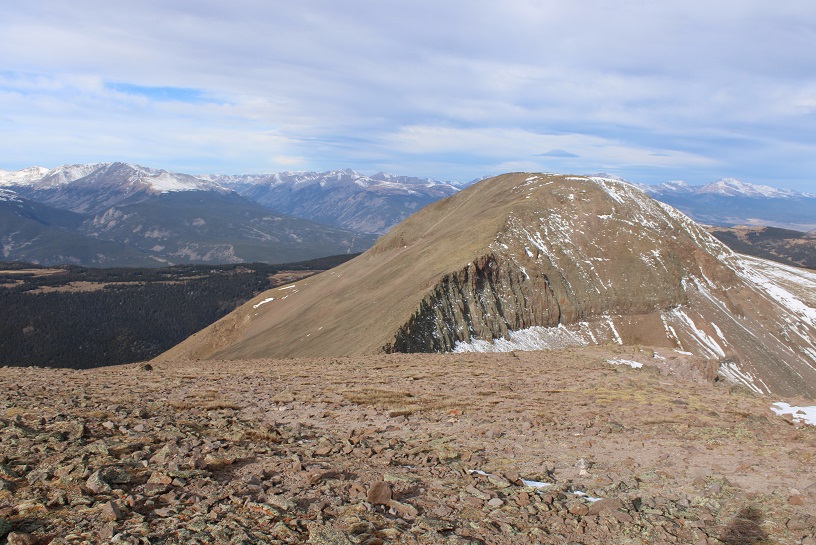
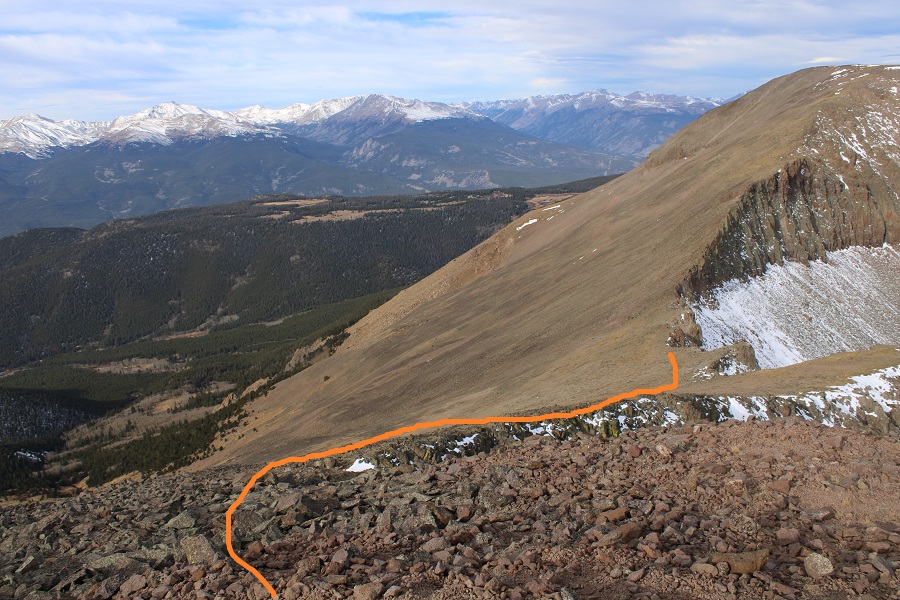
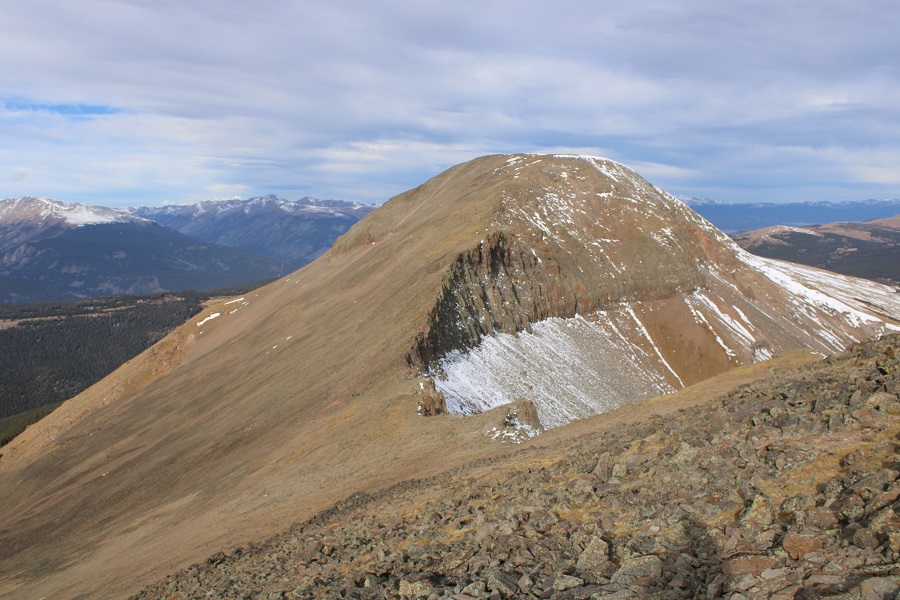
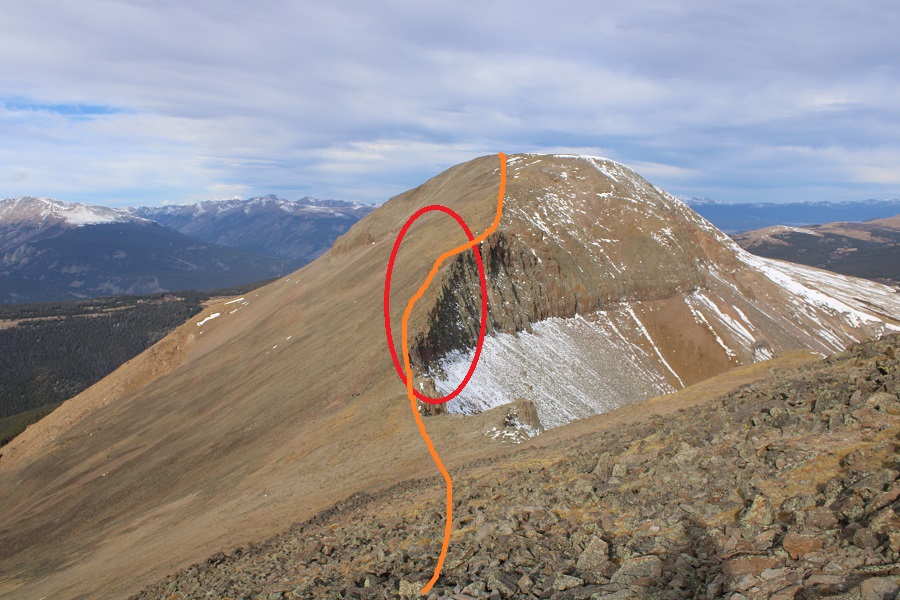
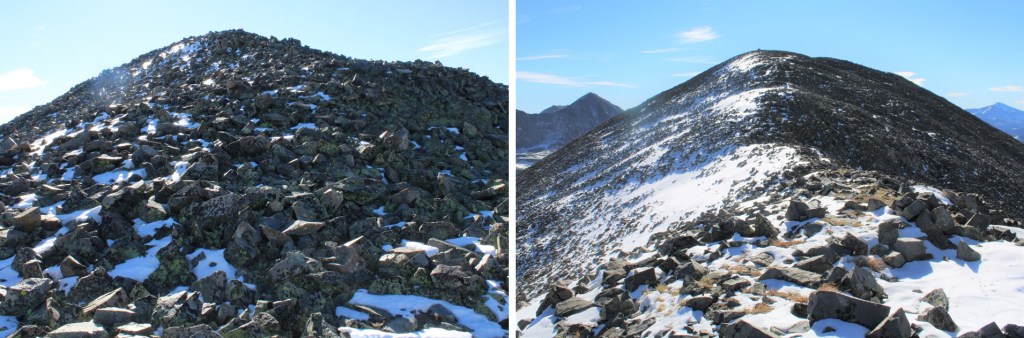
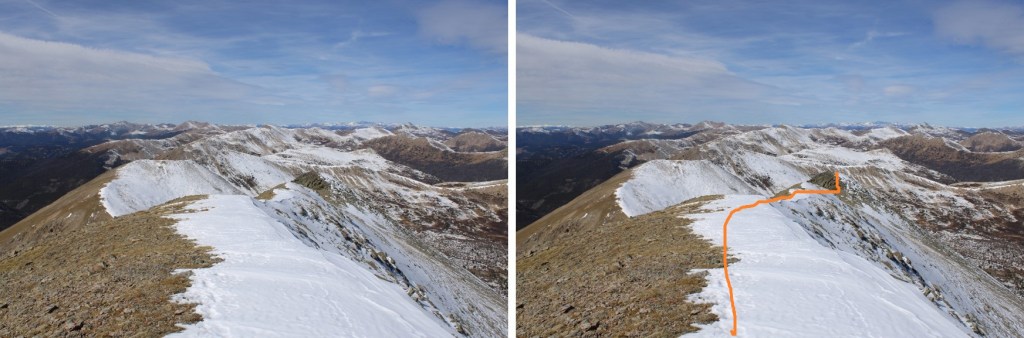
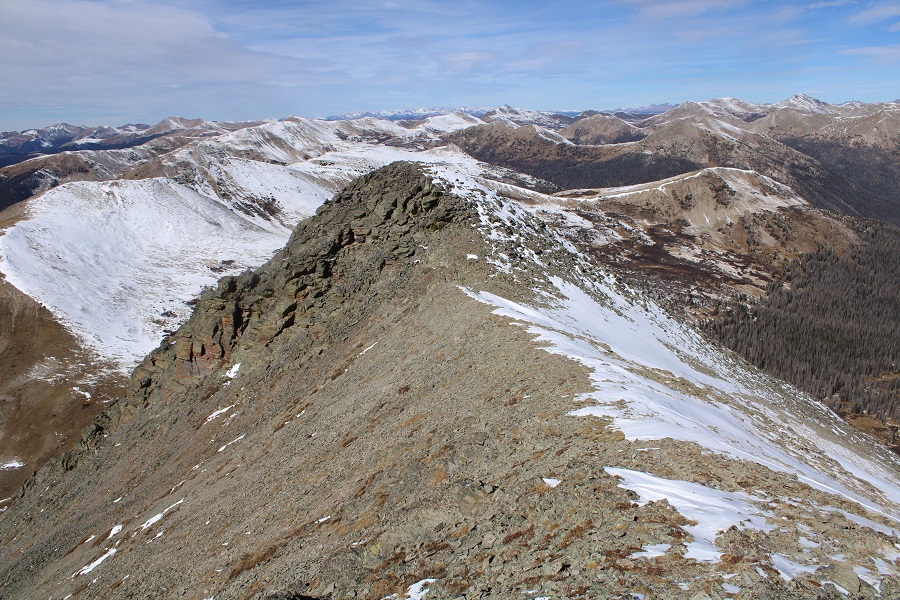
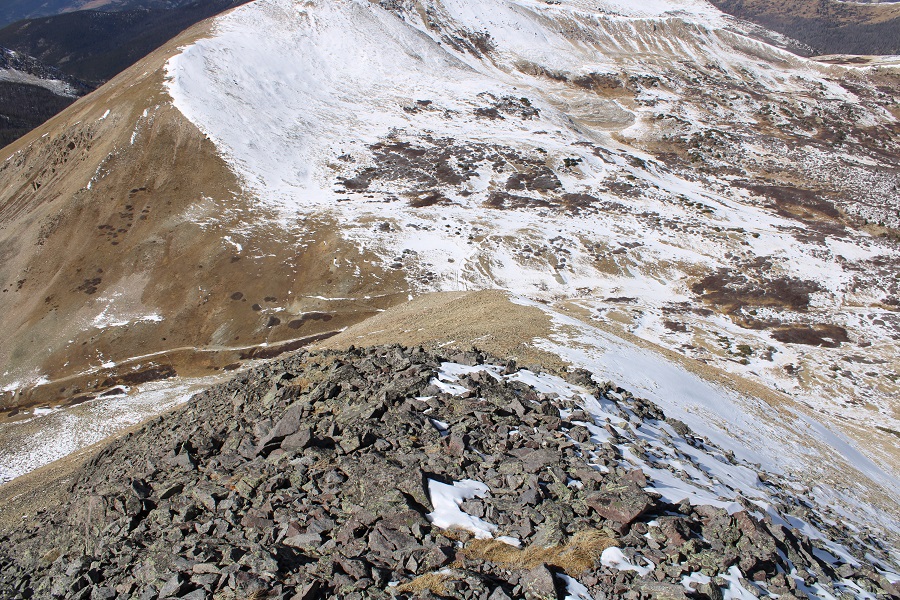
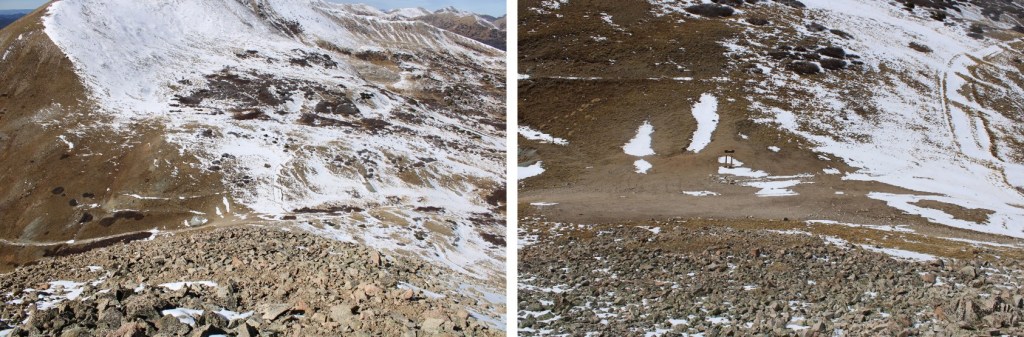
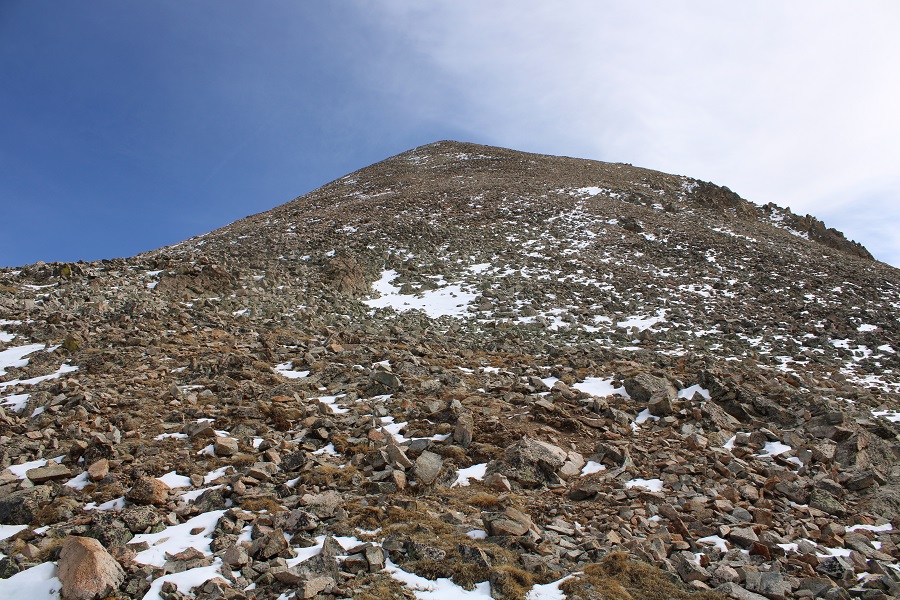
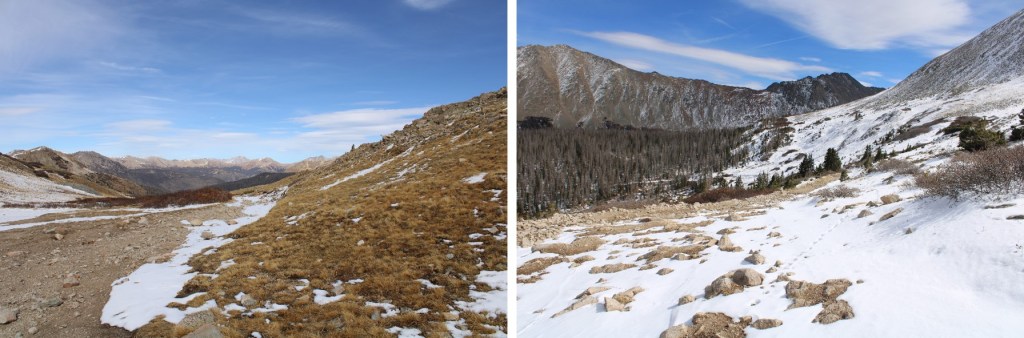
PT 13,128 and Thirsty Peak – 13,224

RT Length:  14.15 miles

Elevation Gain:  5370’

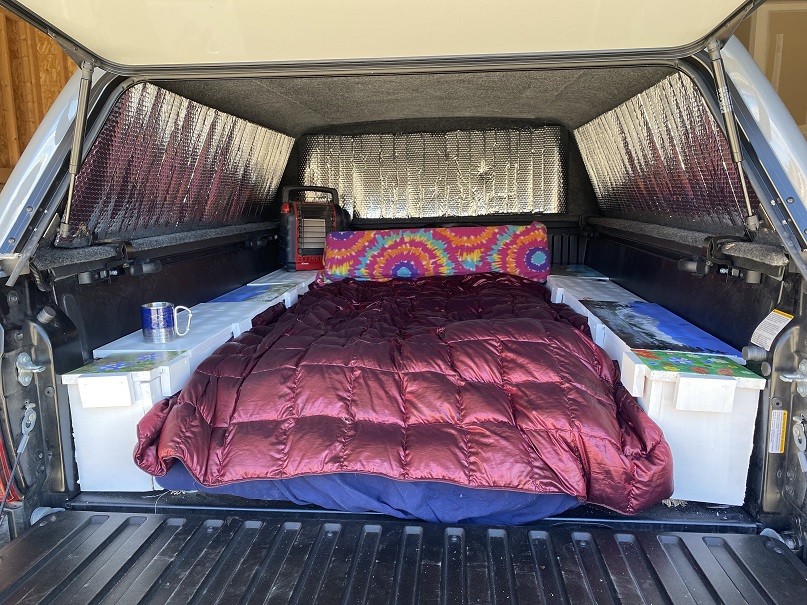
For those of you who’ve been following my truck situation, the topper for Miles finally arrived!!!  More than 4 months later, but let me tell you, it was worth it!  I’m so glad I did a trial run with my last truck (‘Truck Kirk’… if you get it, you’re awesome, and we should be friends), and got everything I wanted this time around.  This weekend was my first time trying out the new set-up, and I’m thrilled.  Plexiglass instead of glass gives me blackout windows, which are great for irregular sleep patterns that are sometimes necessary to wake up at 2am and hike.  Added bonus:  plexiglass doesn’t shatter! I put up Reflextrix around the windows to keep in the heat, and set up my Buddy heater in the corner.  I re-used the foam bedding from the Tundra (after cutting it a little to fit), built the cabinets myself (not bad considering the only ‘shop’ experience I have was in a 7th grade Industrial Arts class), and commissioned my daughter to paint them.  She used pictures I’d taken while hiking, and all I have to say is I love them!!!  We left a few of the lids to the cabinets blank, so if we meet at a trailhead, I expect you to add your signature to one of them so I can remember you.
Ok, moving on to the trip report.

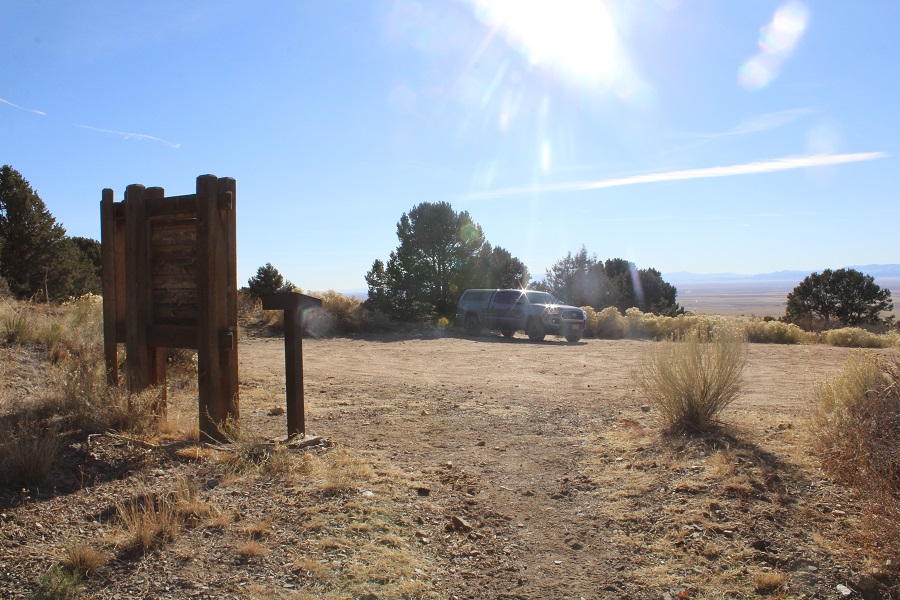
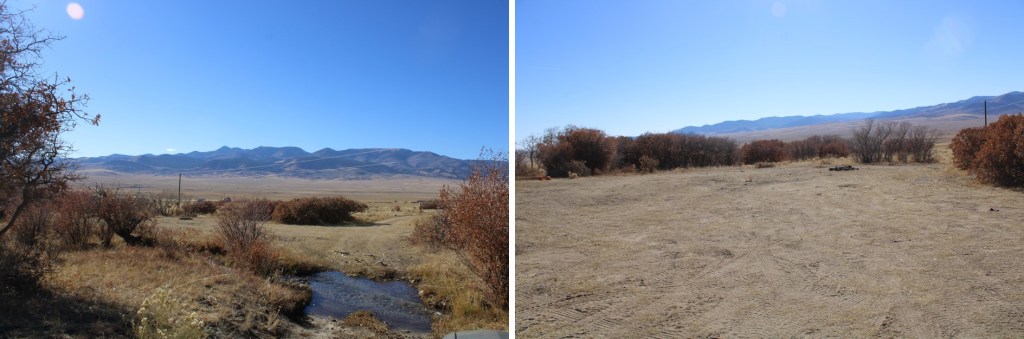
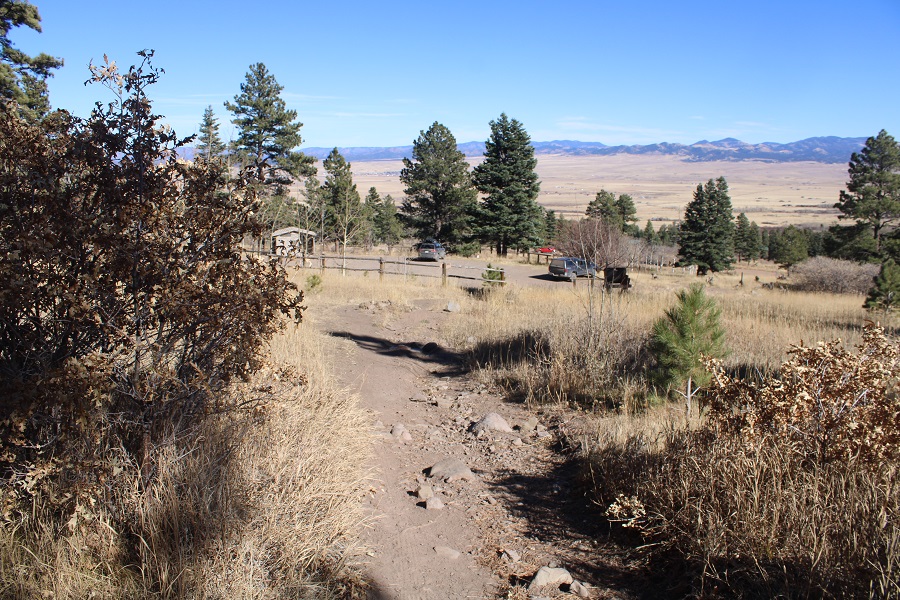
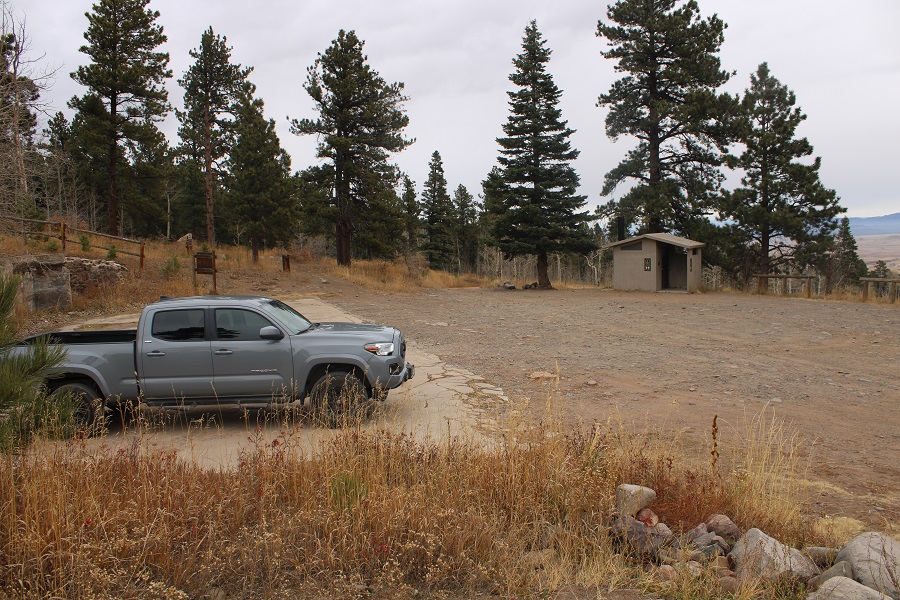
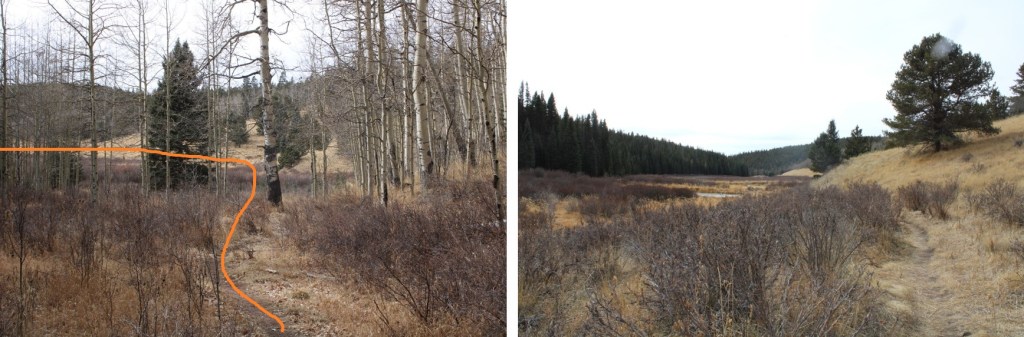
I arrived at the trailhead the night before to get plenty of rest before the hike.  I talked with some local hunters, pre-signed the register because I’ve learned pens don’t work in the early morning when they’re cold, and got to bed just as the sun went down.  At 5am I was up and on the trail, heading south through the scrub oak.

I was at the wrong trailhead.  After .25 miles of hiking, I knew I was on the wrong trail.  I pulled out my cell phone and started the compass app (which works moderately well): I didn’t want to deal with a flashlight and a ‘real’ compass in the dark.  While I was following the cell phone compass-directions, I tripped.  No worries though, because my cellphone broke my fall.  All I can say is:  good thing I had a screen protector on my phone.  Also, my knee still hurts.

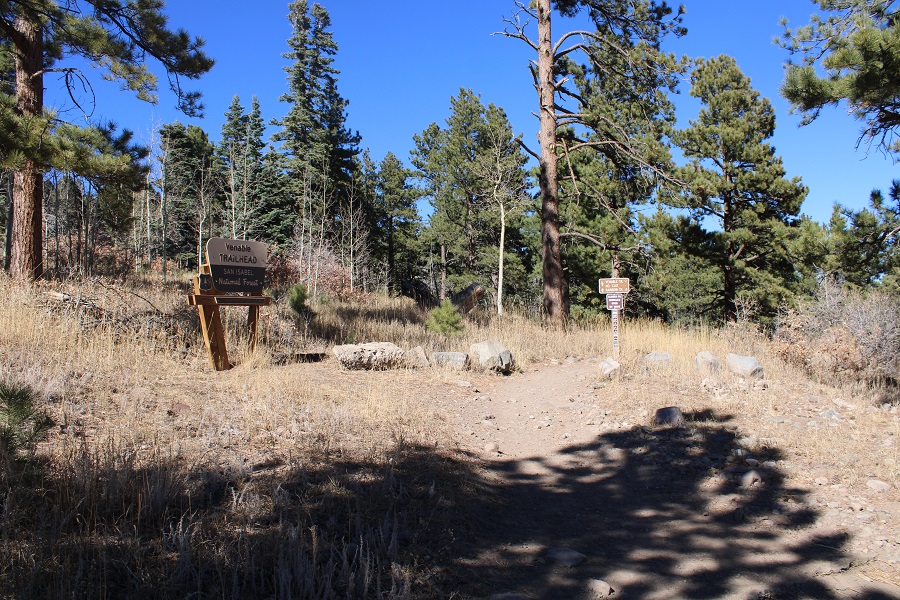
To save time I brought up a gpx file (which I only use when absolutely necessary) and realized it looked like I was going in the right direction, but about half a mile too far south.  Ugh.  I hoofed it back to the trailhead, signed out of the register by scratching on the paper with a pen, got in my truck, and drove to the Hot Springs Trailhead, about half a mile north.  I got there, jumped out of my truck, ready to go, signed the register, and was off.  It was now 6am.

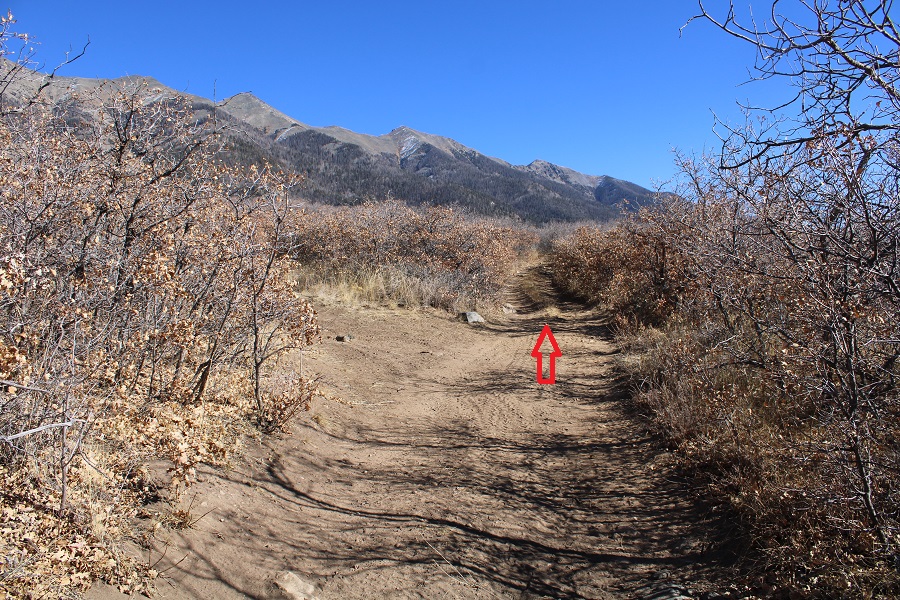
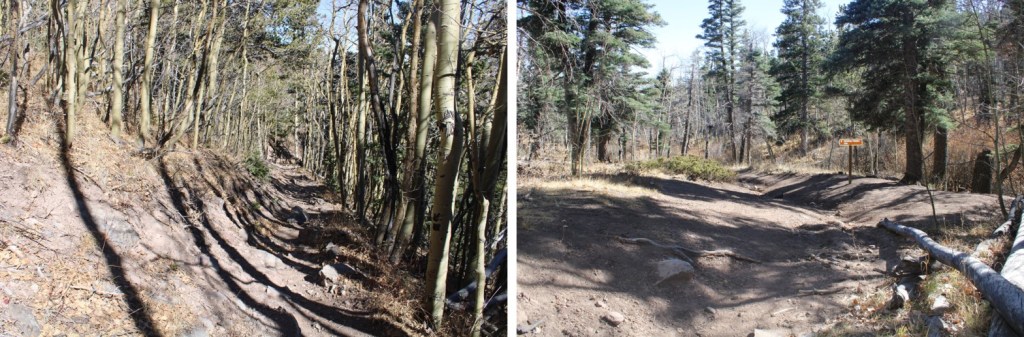
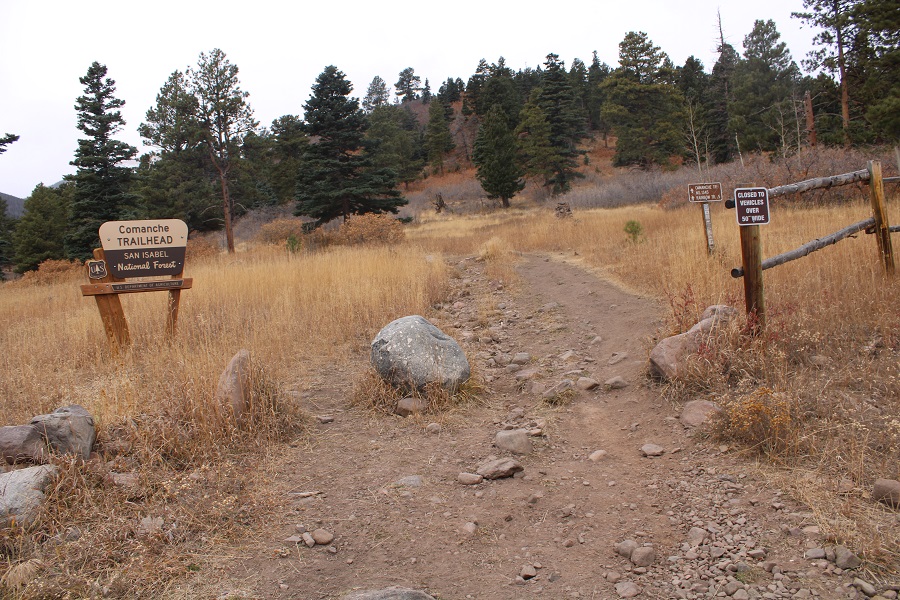
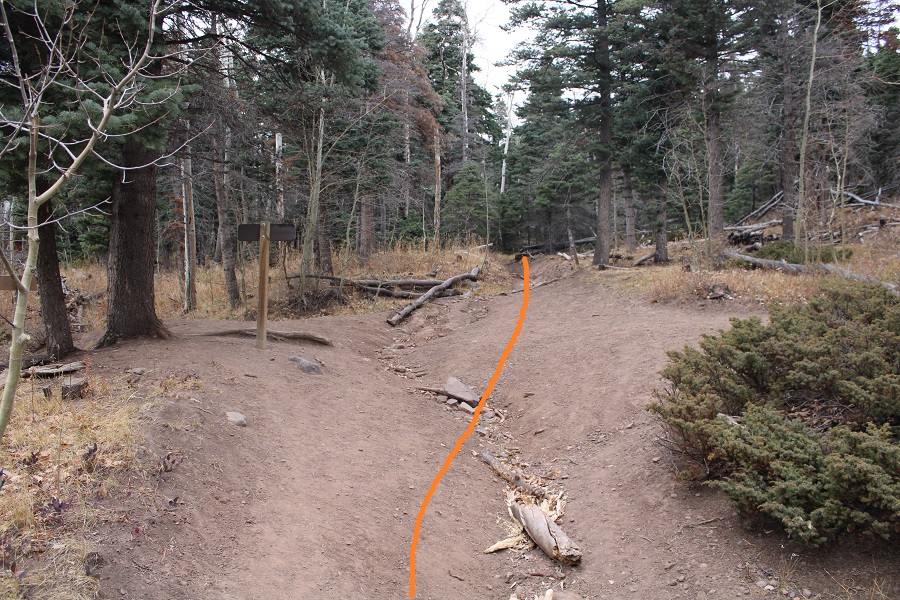
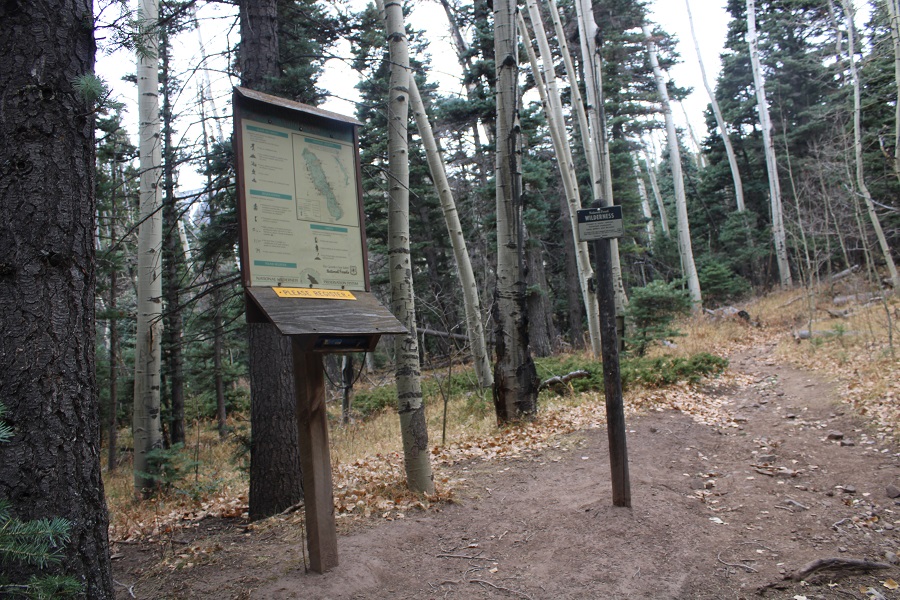
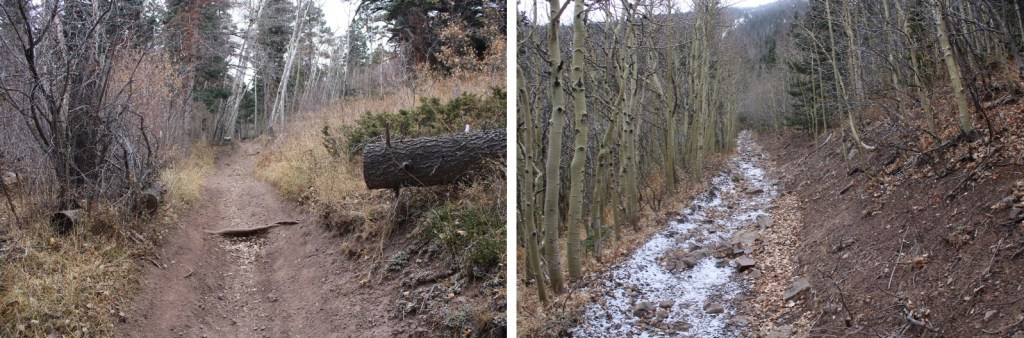
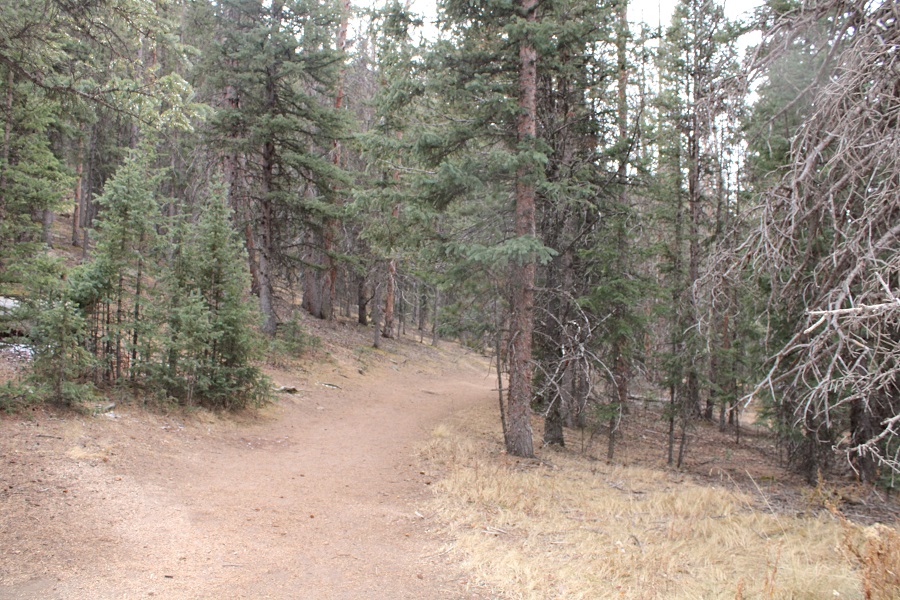
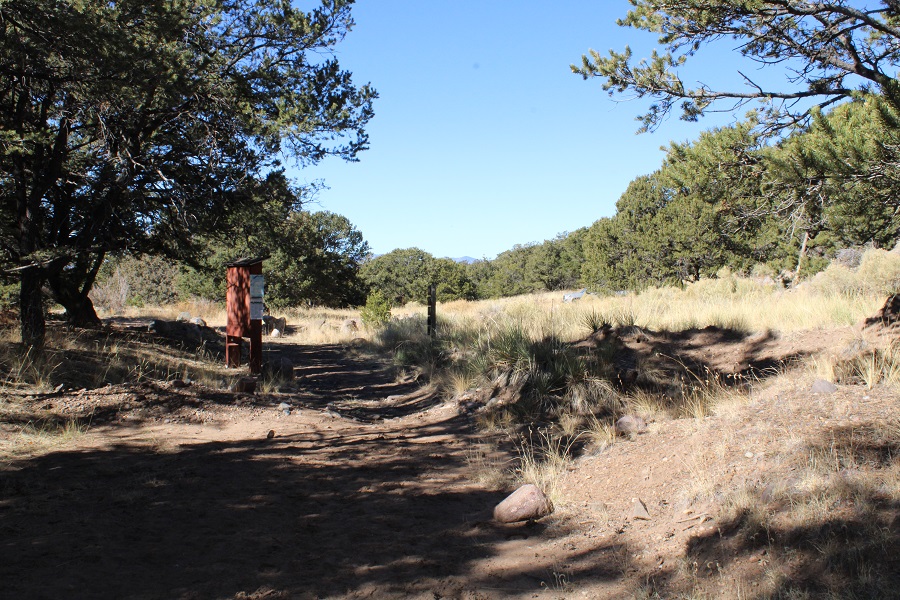
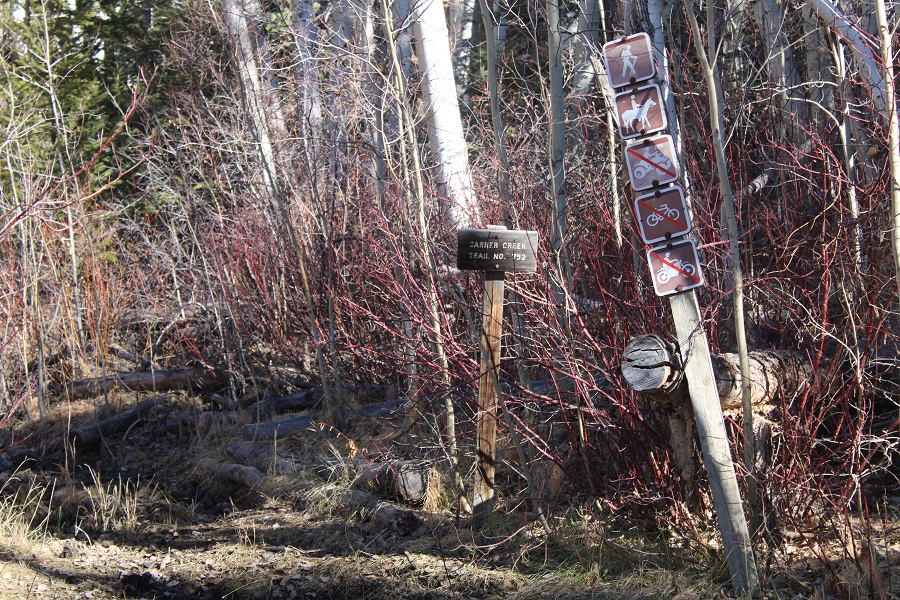
The correct trail starts at the Hot Springs Trailhead.  There are two different trails that originate from this trailhead.  I went right, following Garner Creek Trail 752.
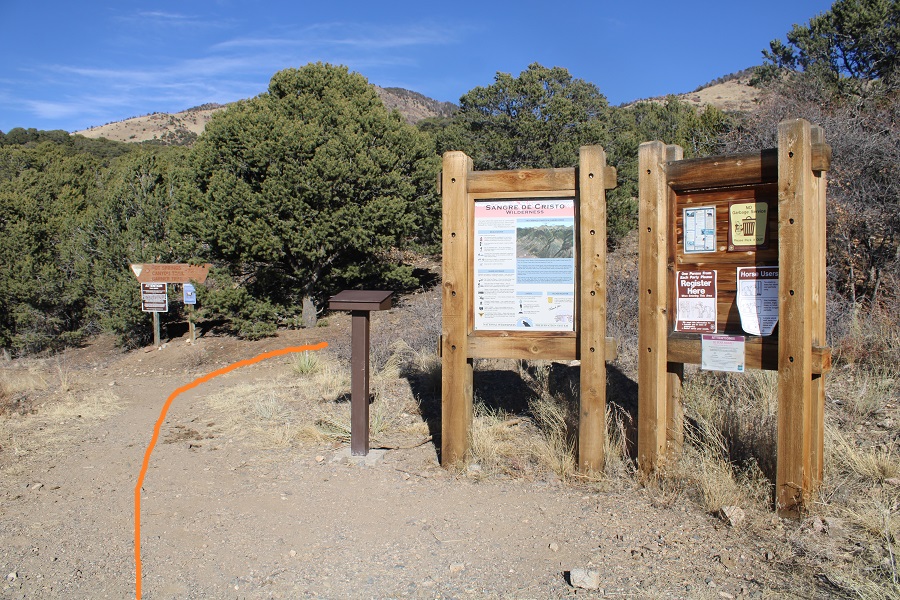
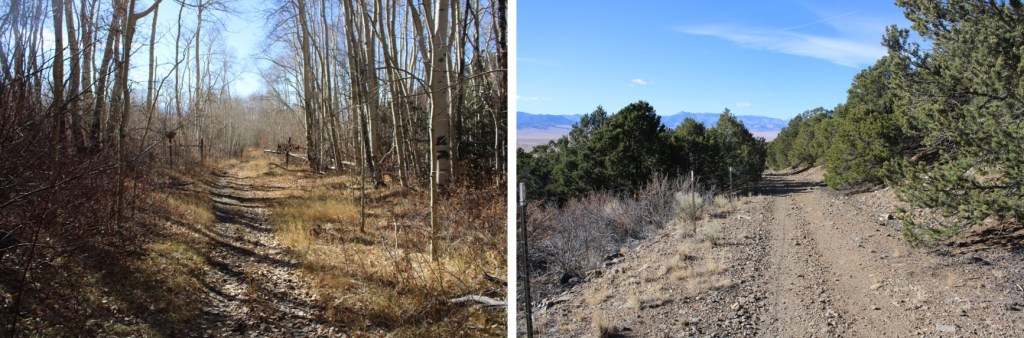
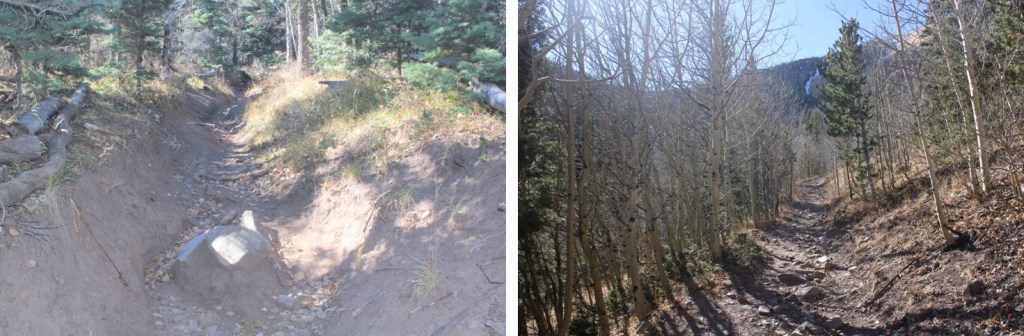
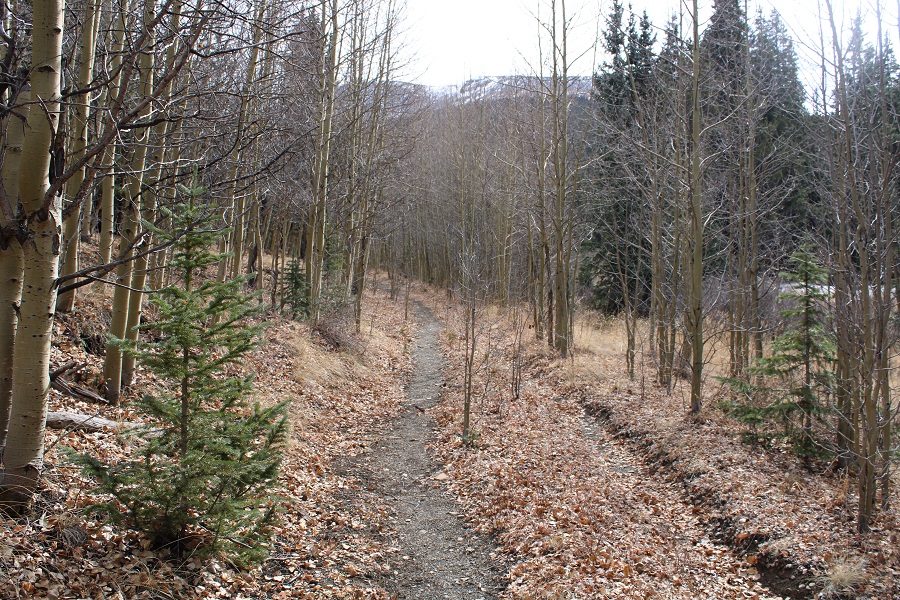
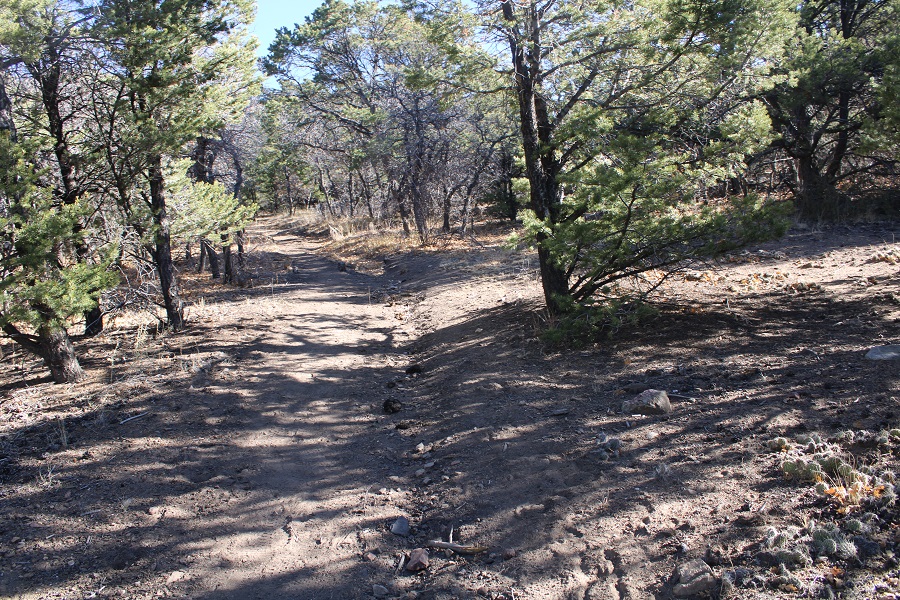
This is a wide, class 1 trail
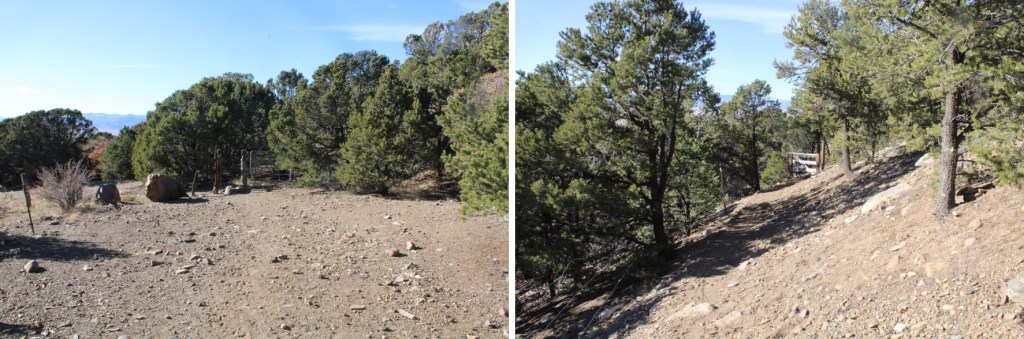
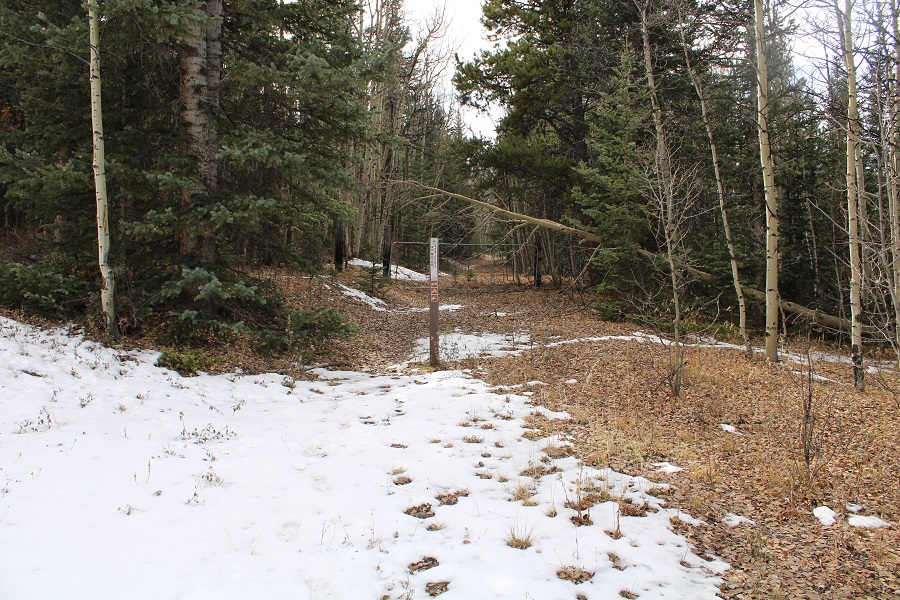
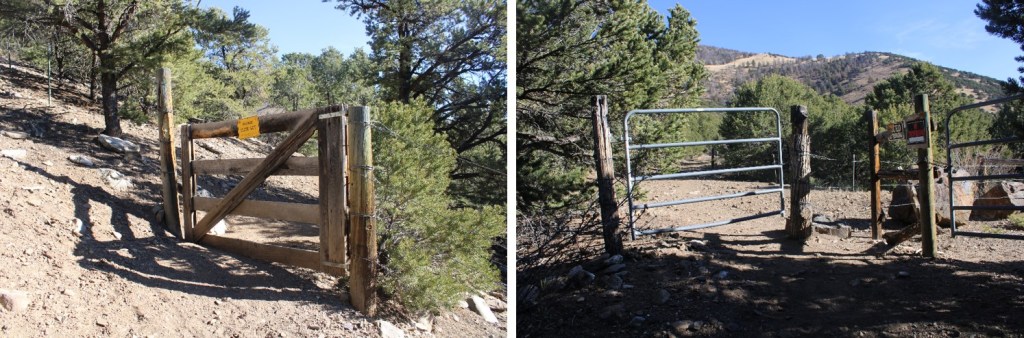
I quickly came to a gate, and then another gate.  I passed through both, closed them as instructed, and continued on my way.
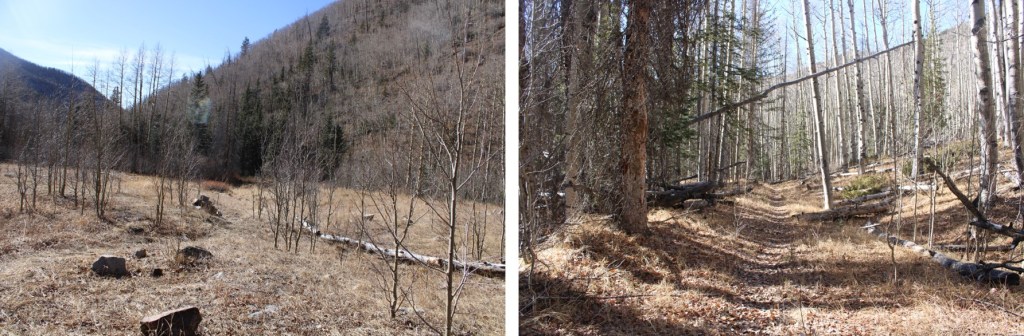
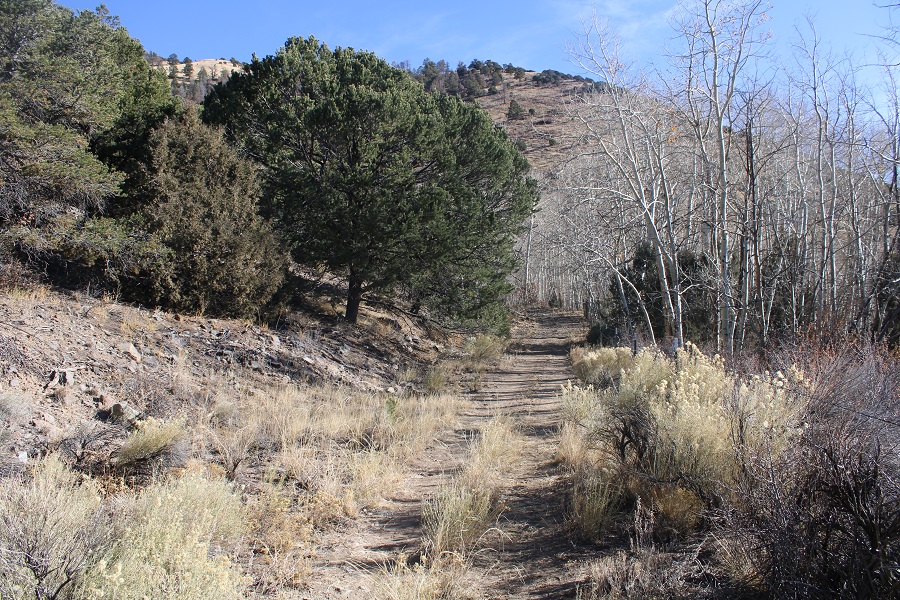
I followed this (mostly) class 1 trail for 6.3 miles to the 13123/Thirsty Peak saddle.
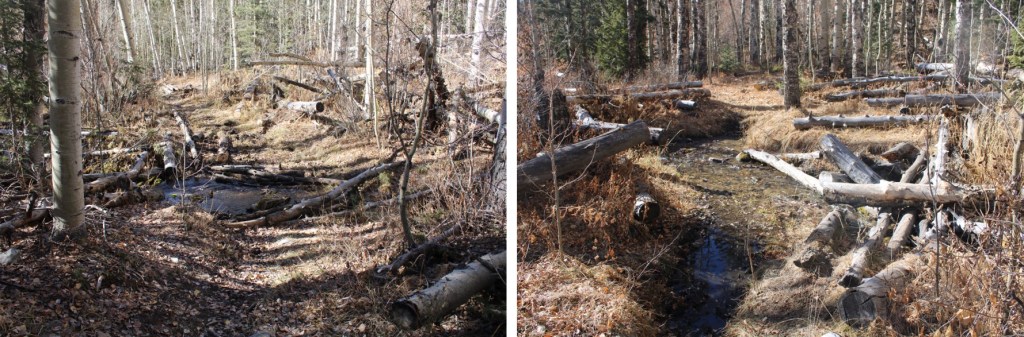
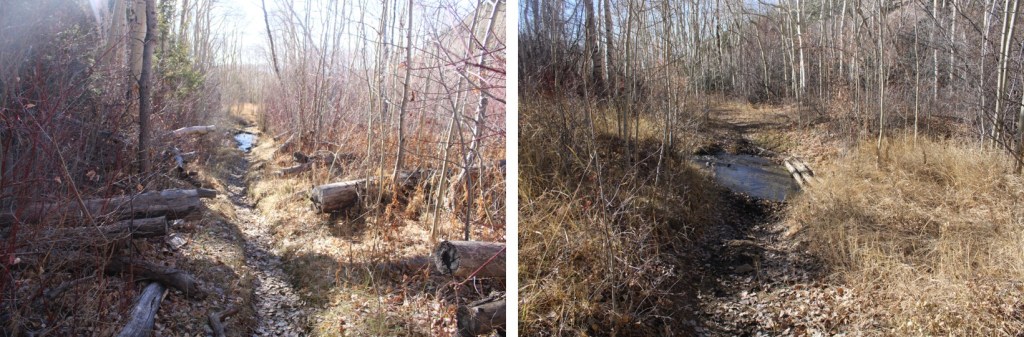
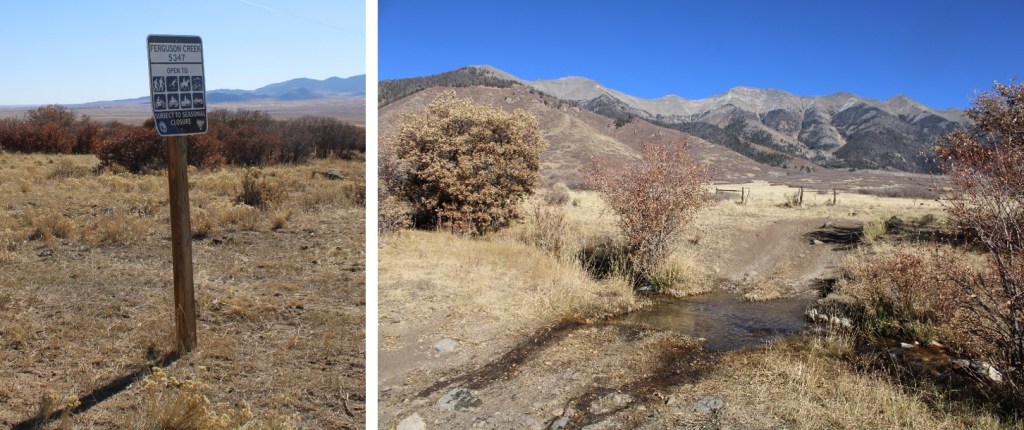
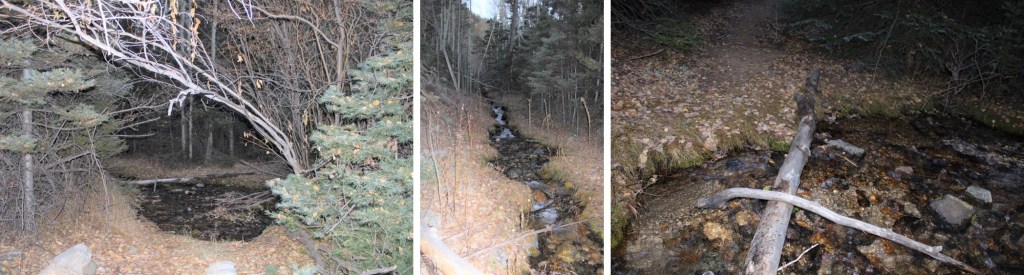
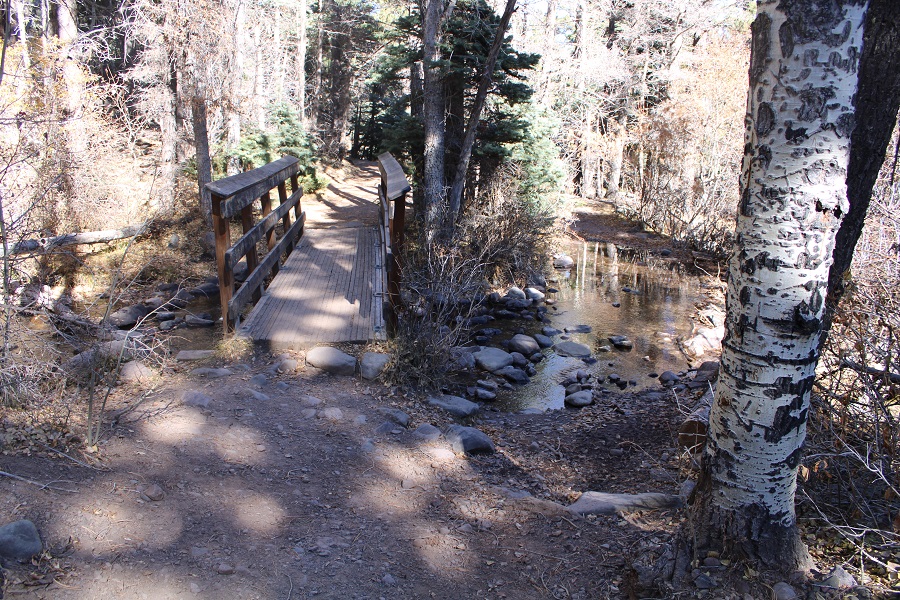
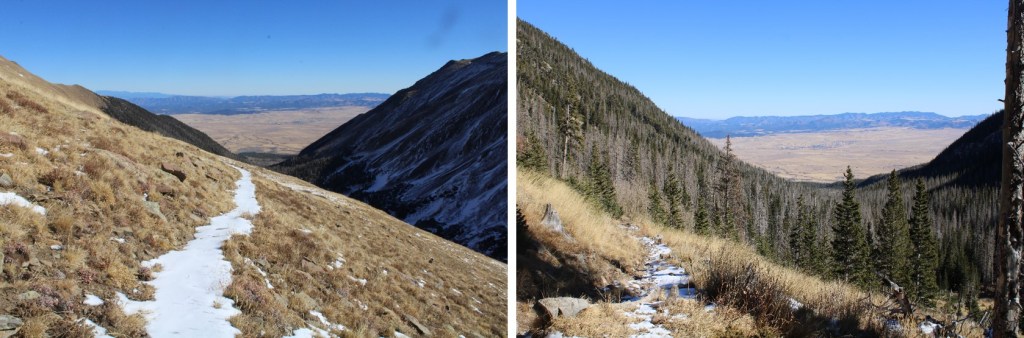
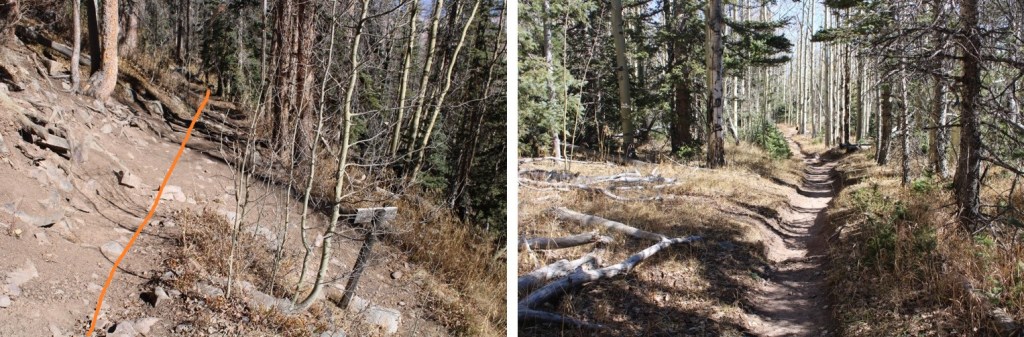
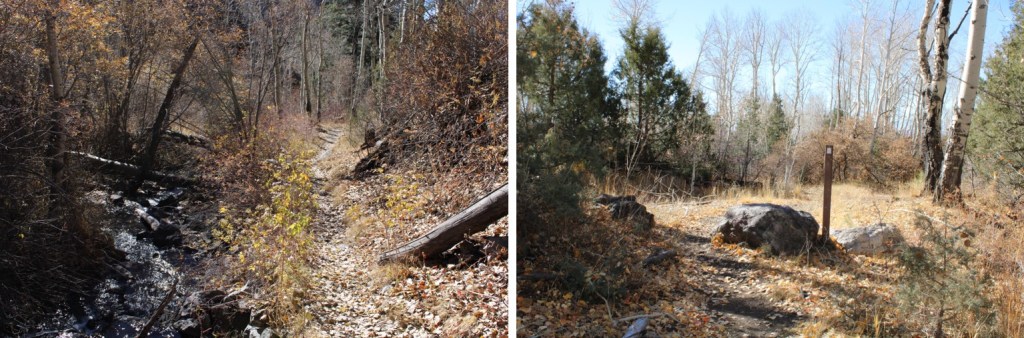
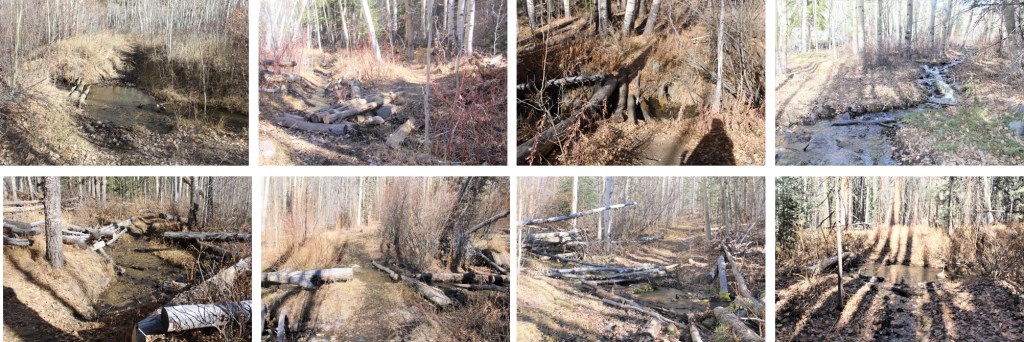
Even though I wrote it on the topo map, I forgot them: My stream crossing shoes.   Creek crossings.  Have I mentioned them?  I stopped counting at 10 on this trail.  Good news; they’re all easily crossed.  Here’s a visual…
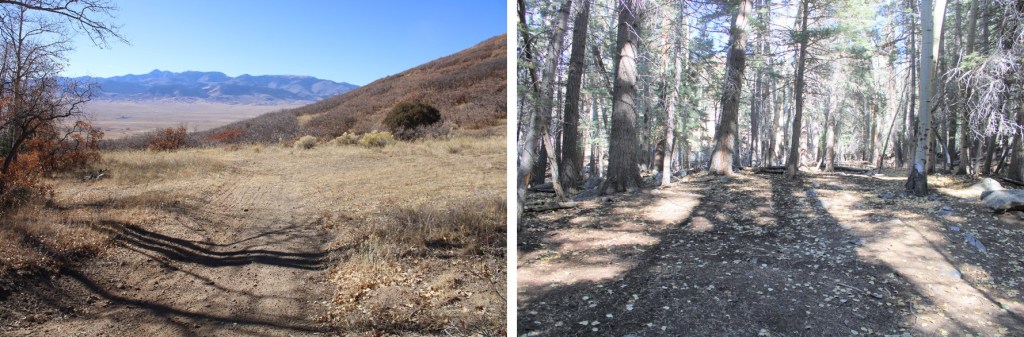
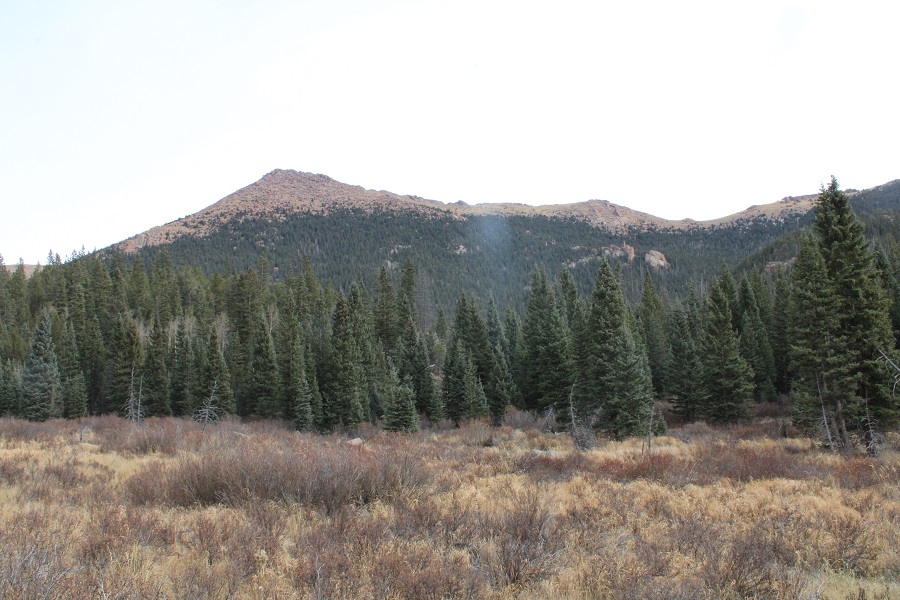
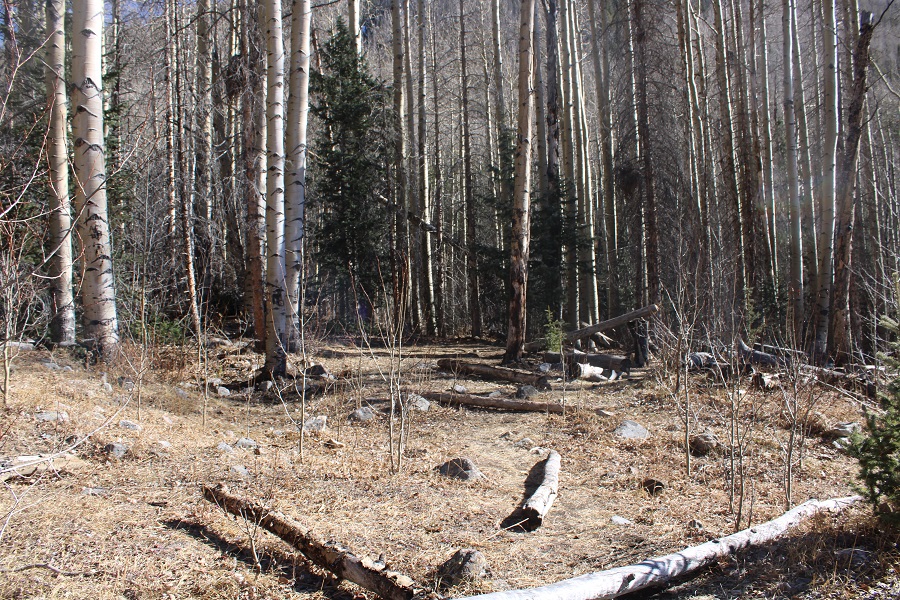
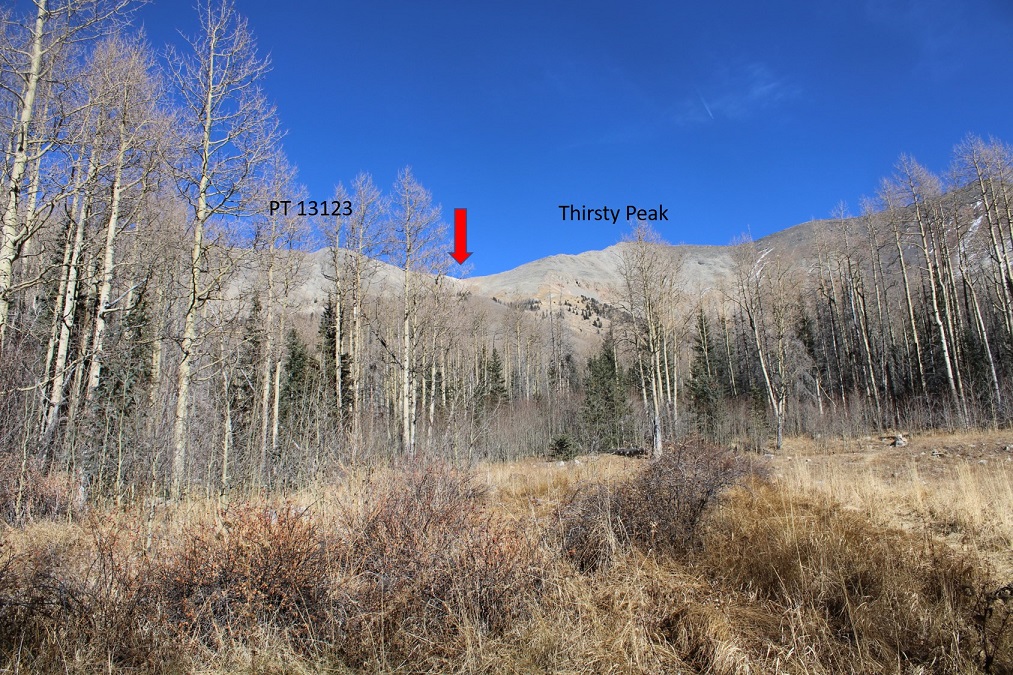
I passed some camping spots with hunters still sleeping in their tents, came to a bit of a clearing, and had a visual of where I was aiming; the saddle between PT 13123 and Thirsty Peak.
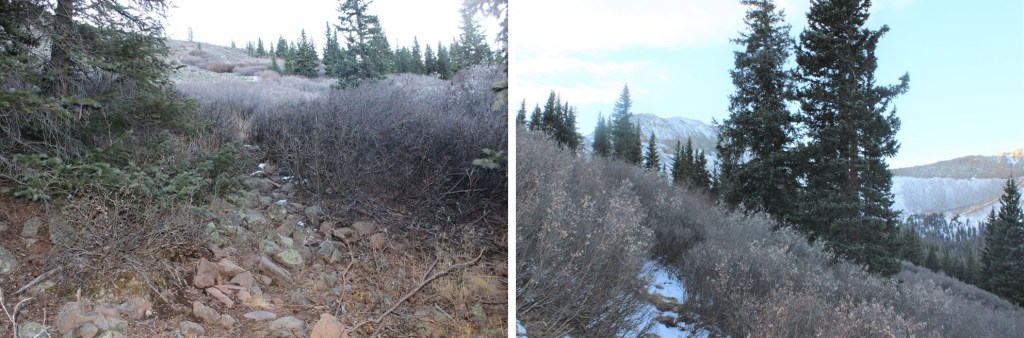
I continued following the trail as it headed northeast, crossing several more streams.
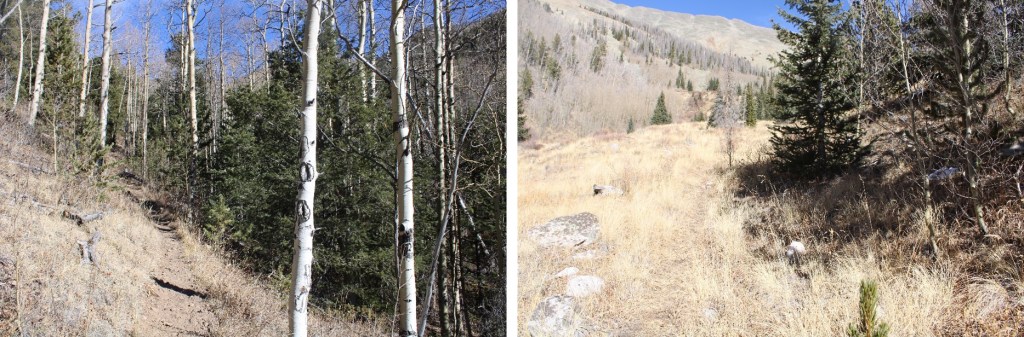
After hiking for about 5 miles, I was just below treeline.  Here the trail stopped, but the cairns picked up.
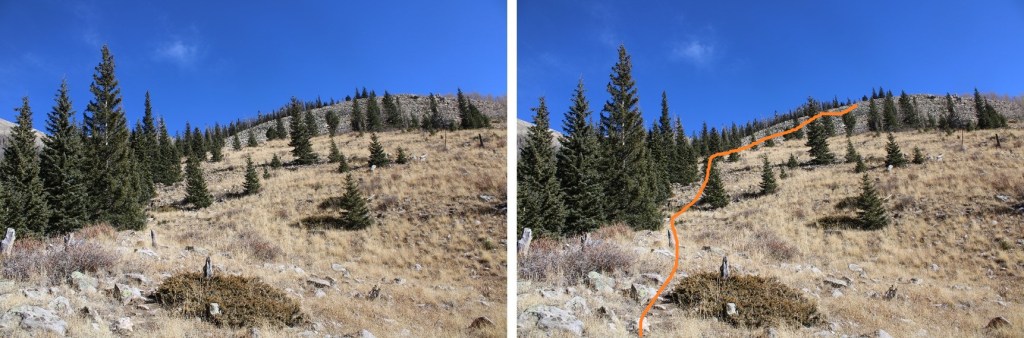
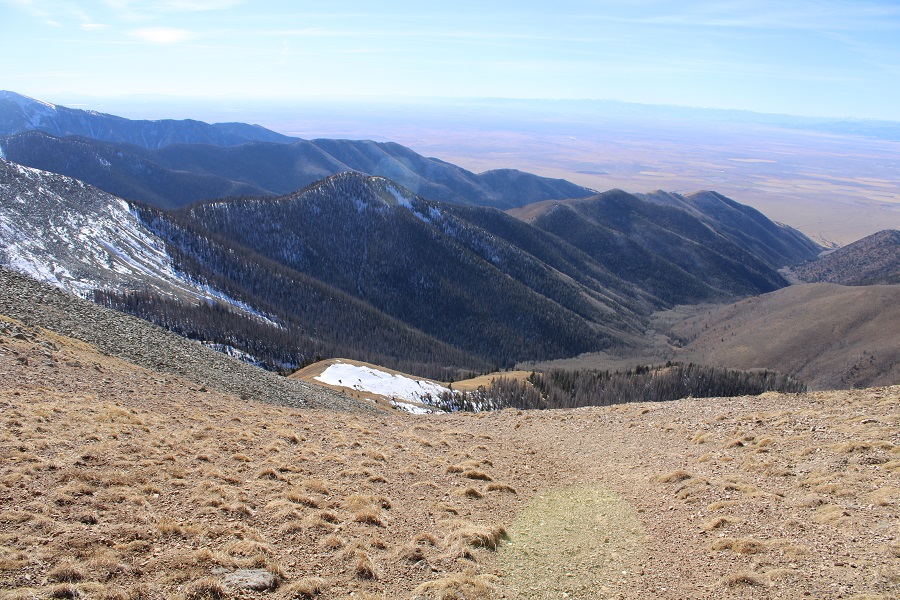
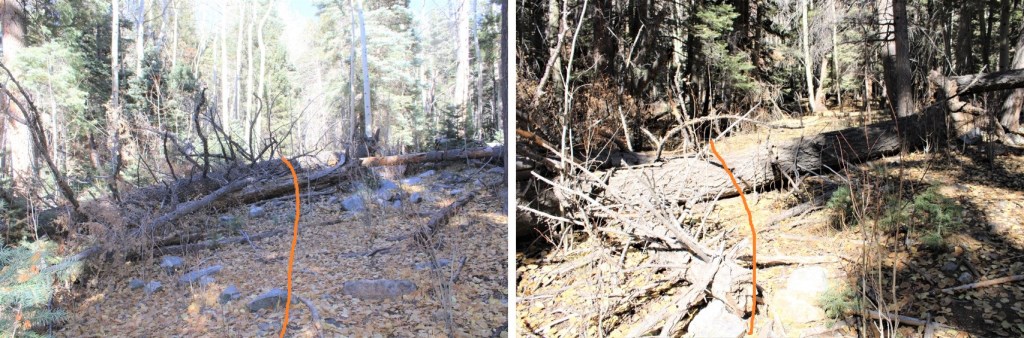
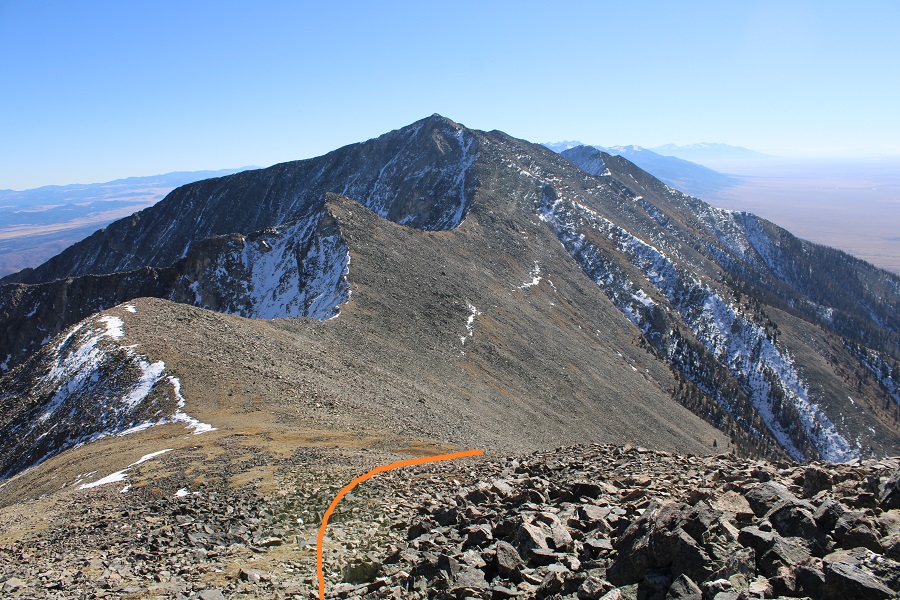
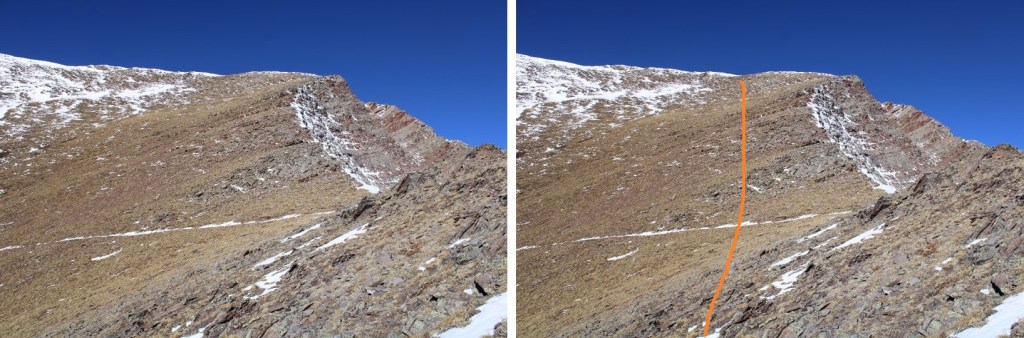
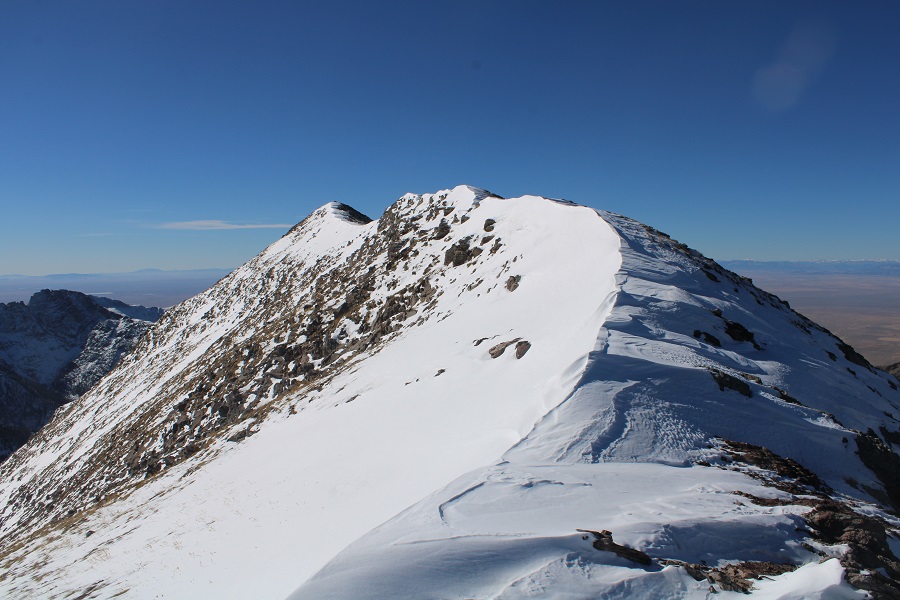
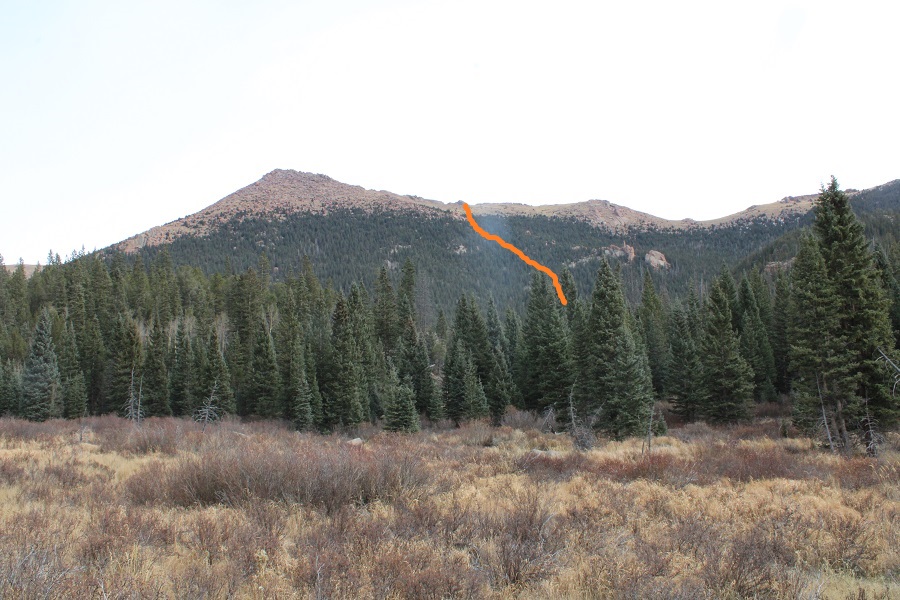
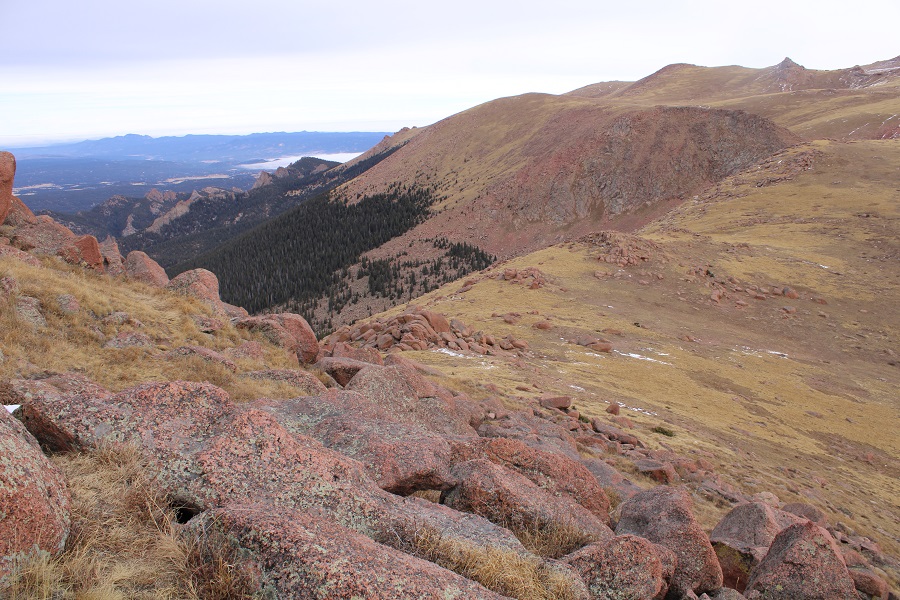
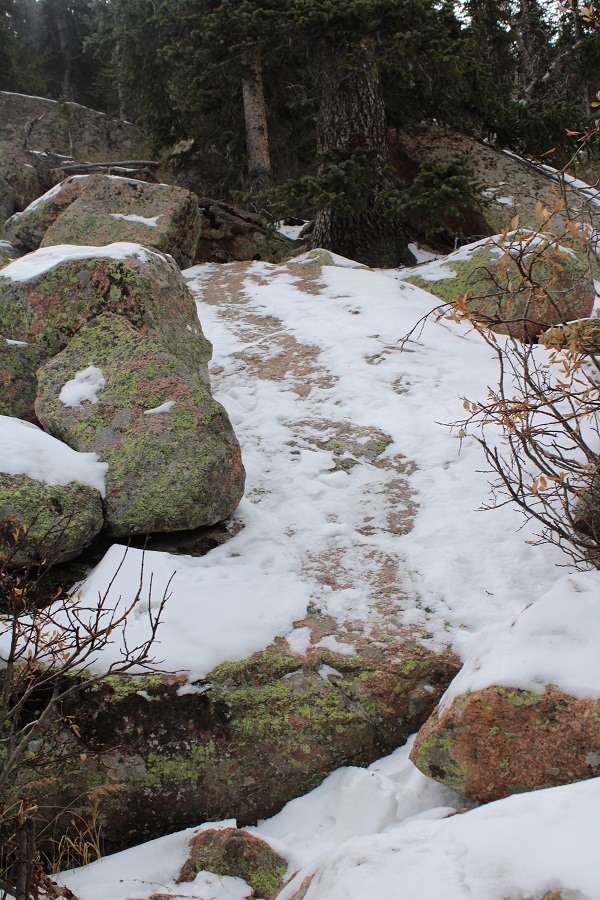
At the top of pile of rocks I was now just at treeline, and on a ridge. I followed the ridge east, and then north, staying directly on the ridge.  Here’s an overall view of the route.  There were cairns here.
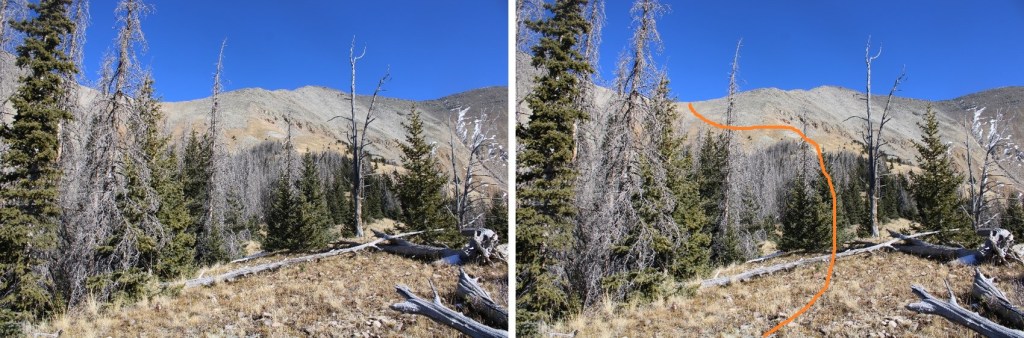
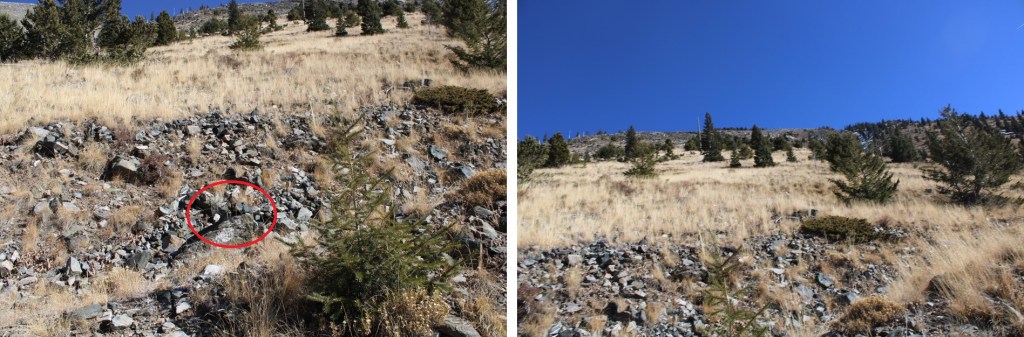
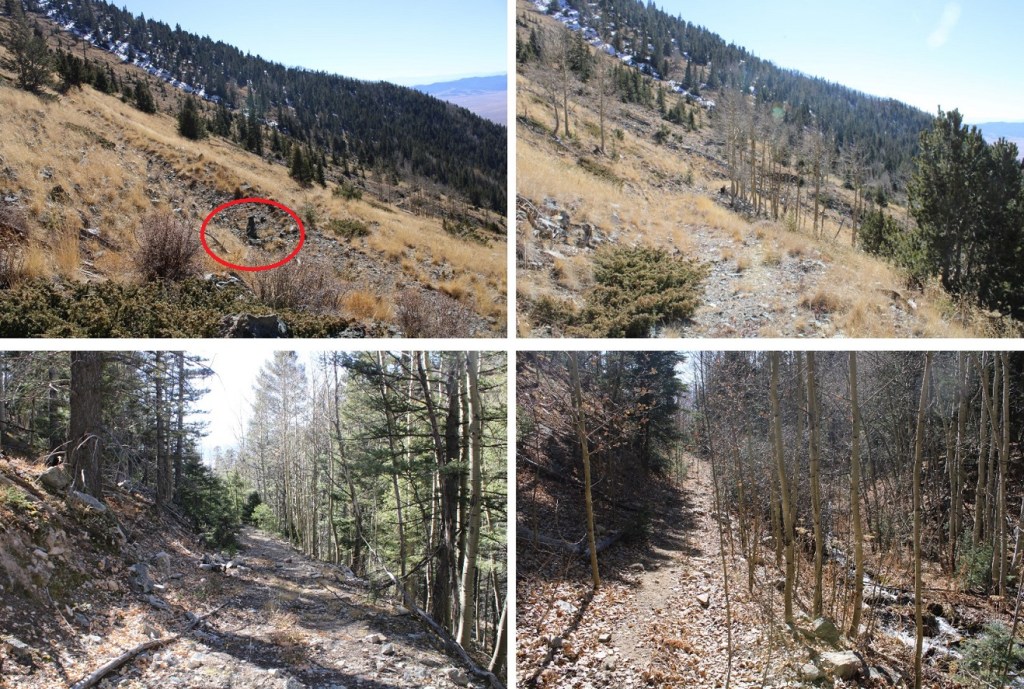
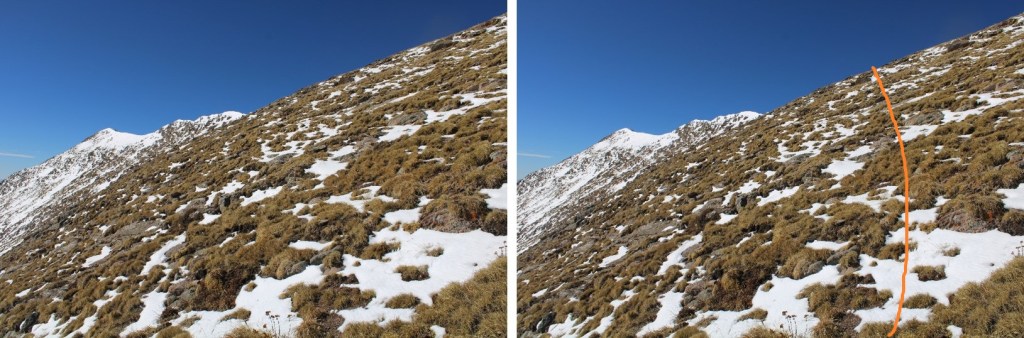
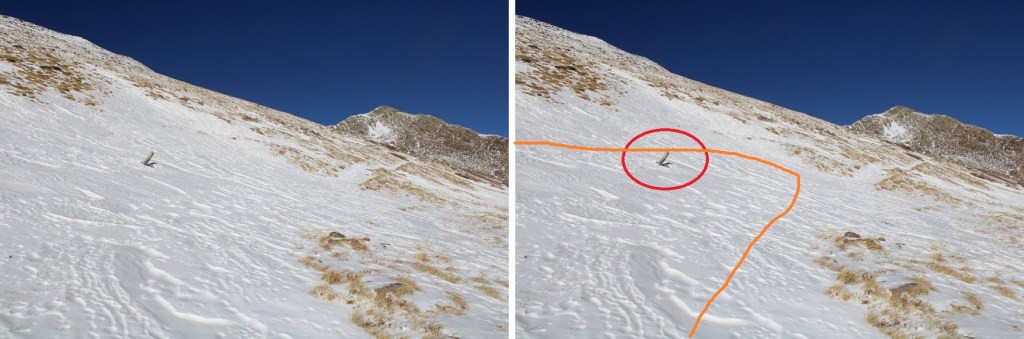
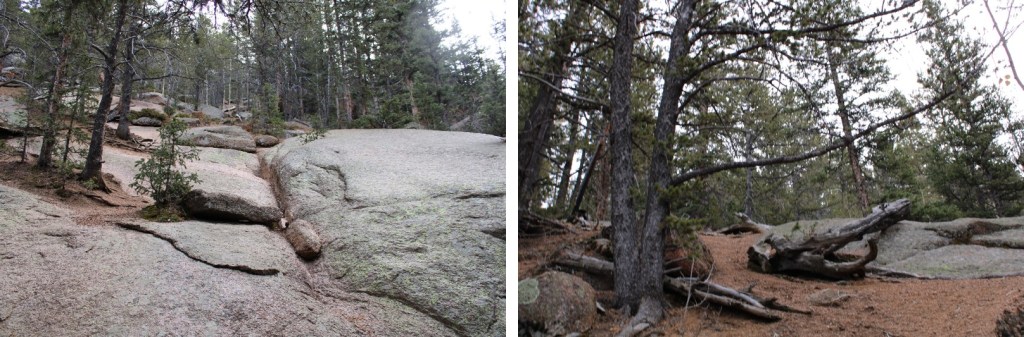
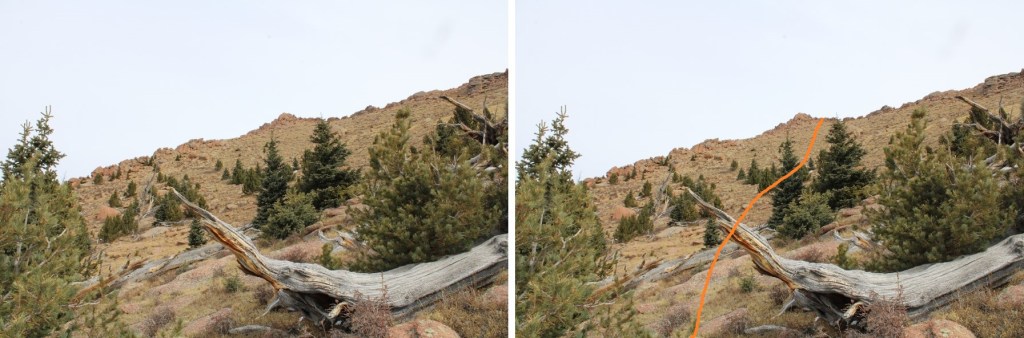
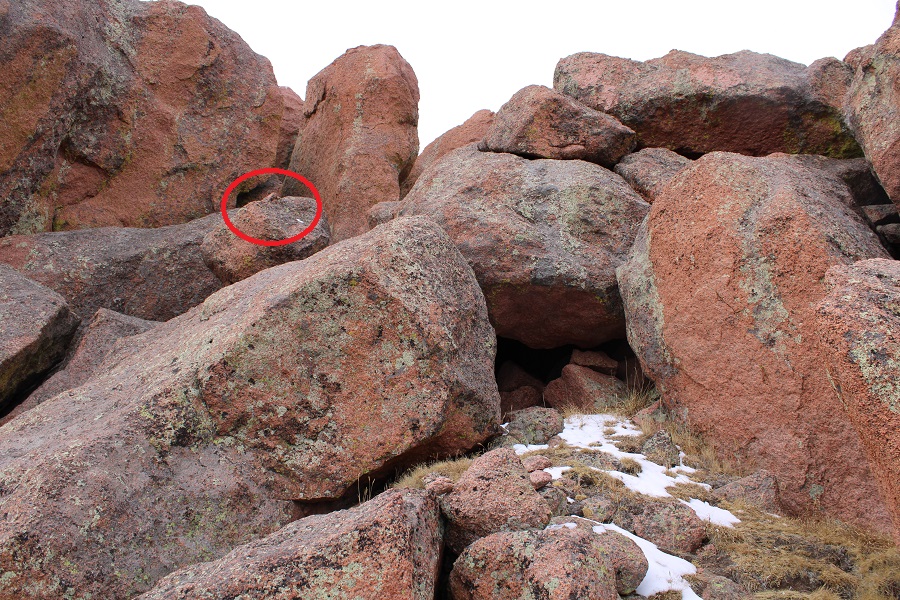
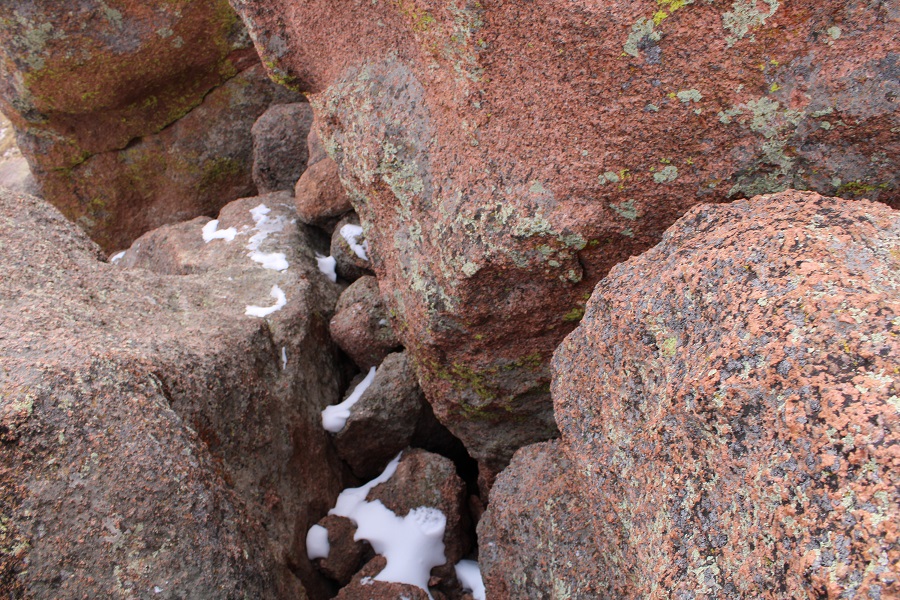
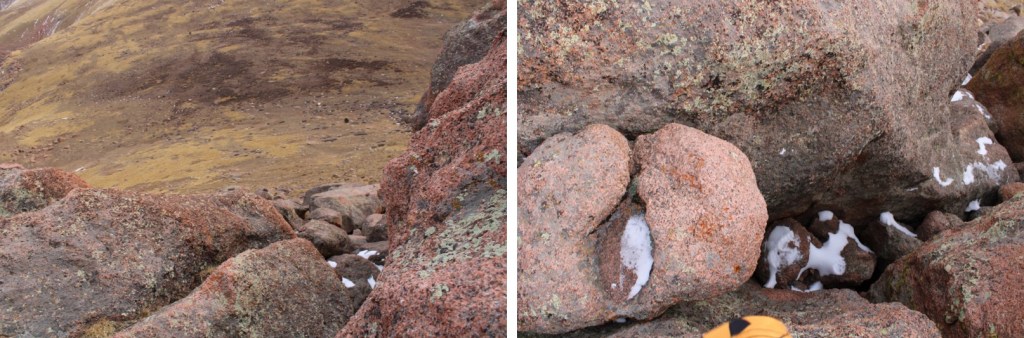
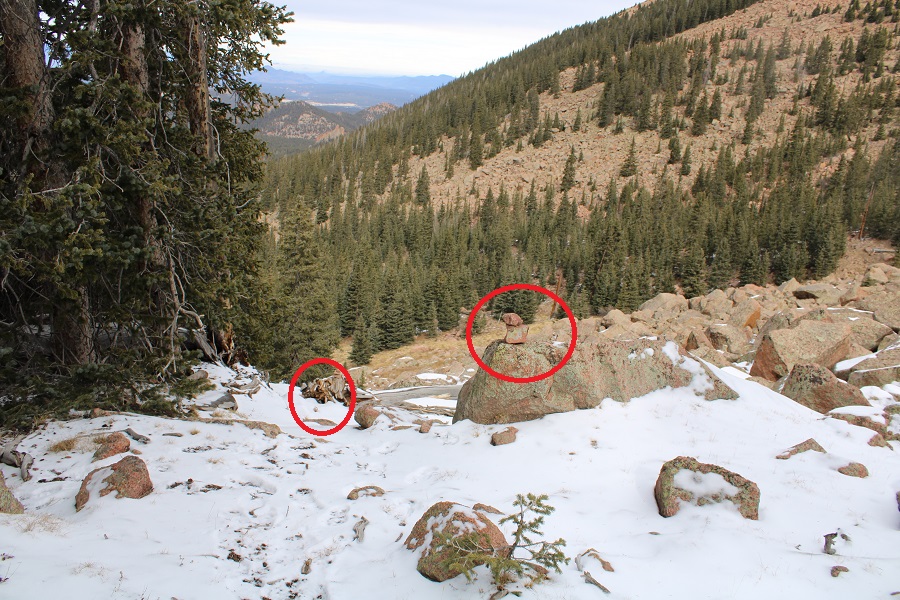
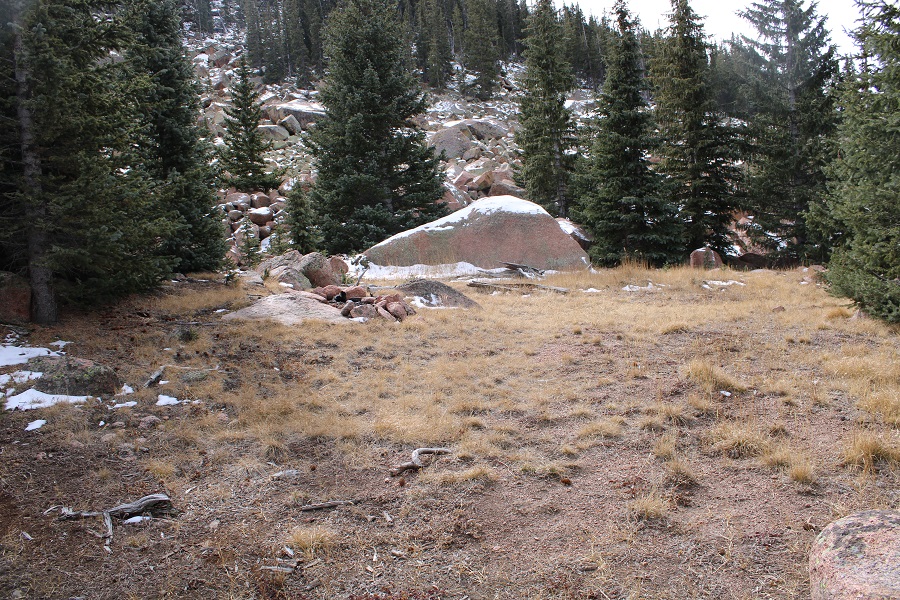
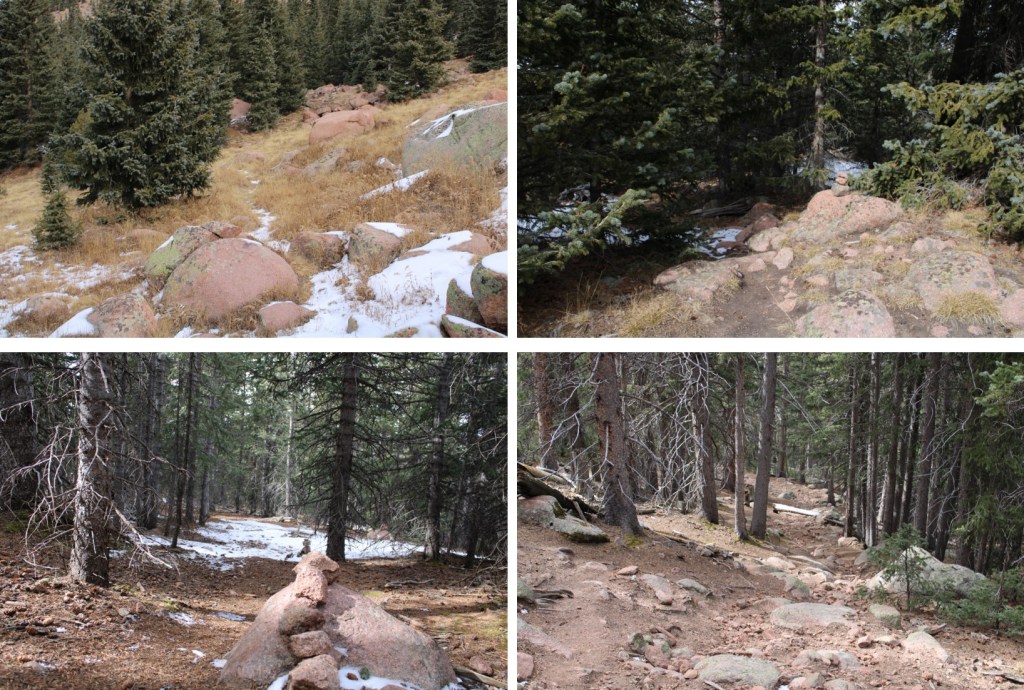
Here are some more pictures of the ridge.  The cairns are circled.  Most of the cairns were shorter than the grass, but they were accompanied by large branches sticking up from their centers, so they were easy to make out. 

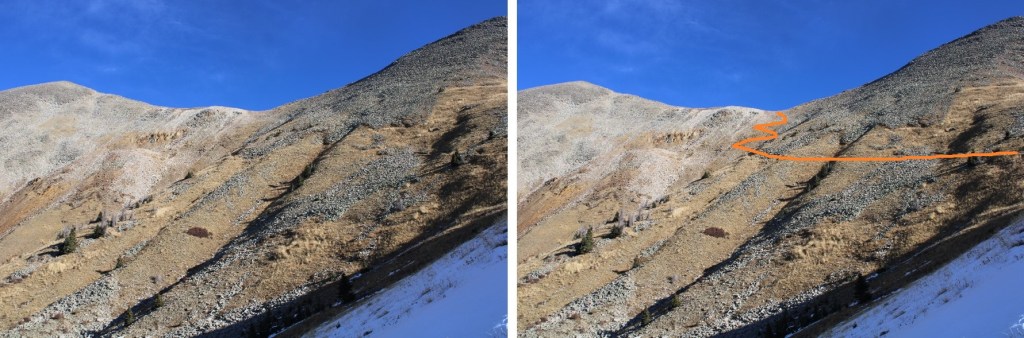
Once above treeline the trail faintly resumed.  I headed north to the 13123/Thirsty Peak saddle
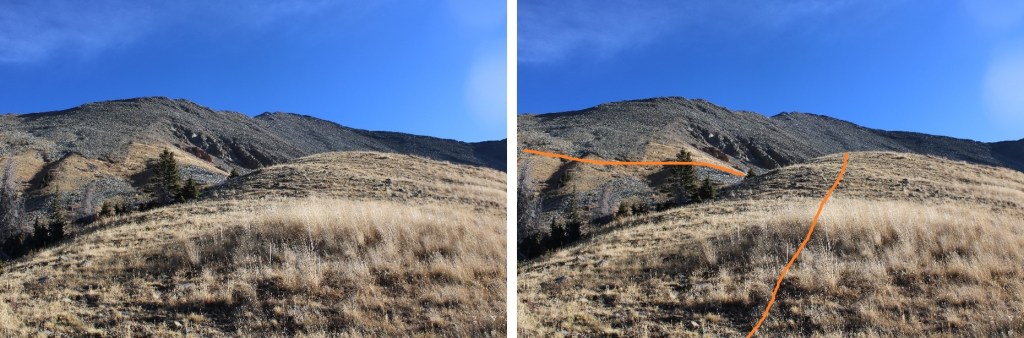
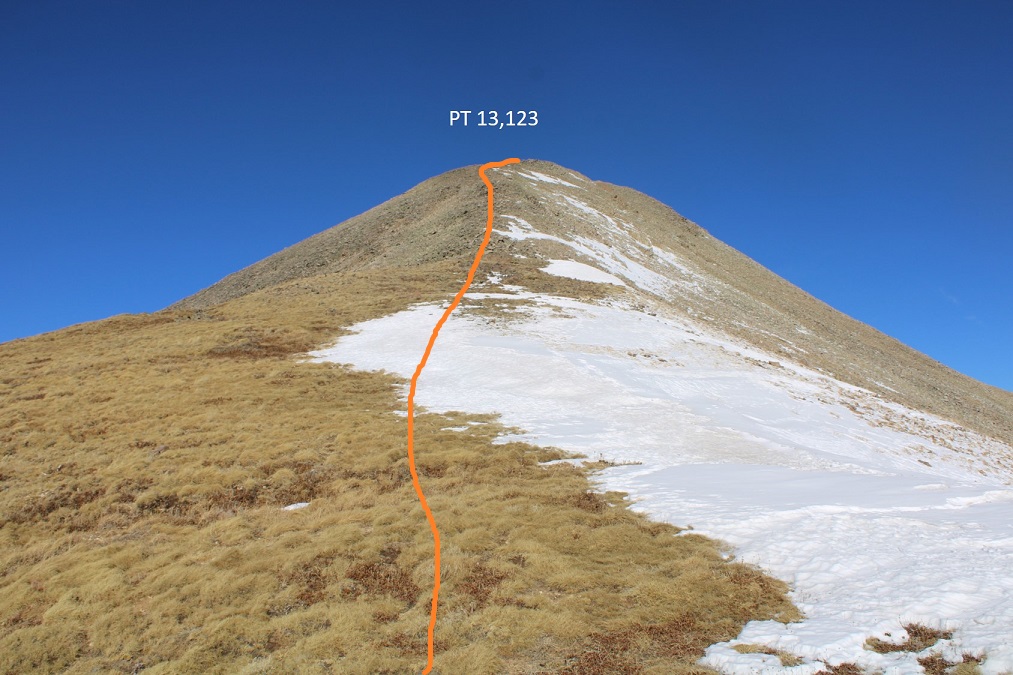
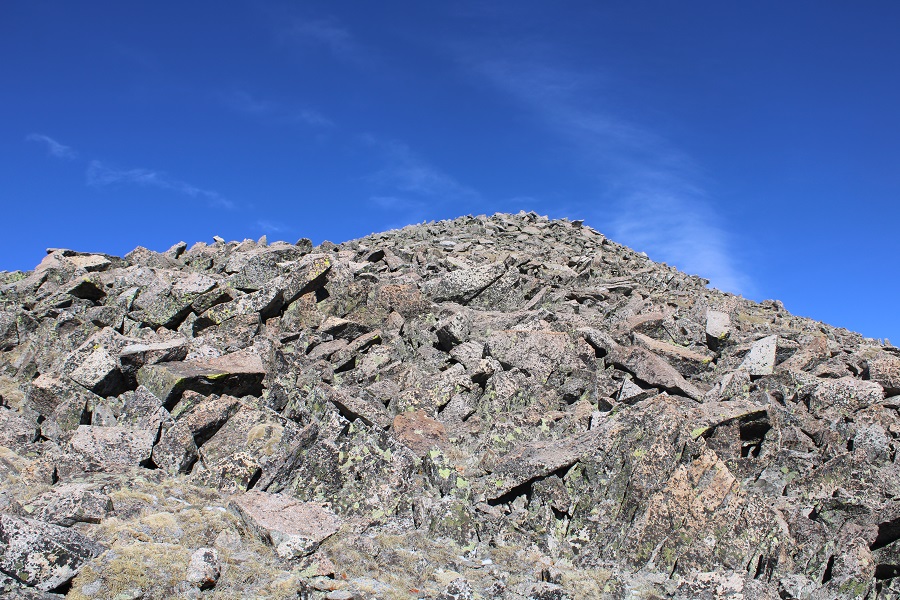
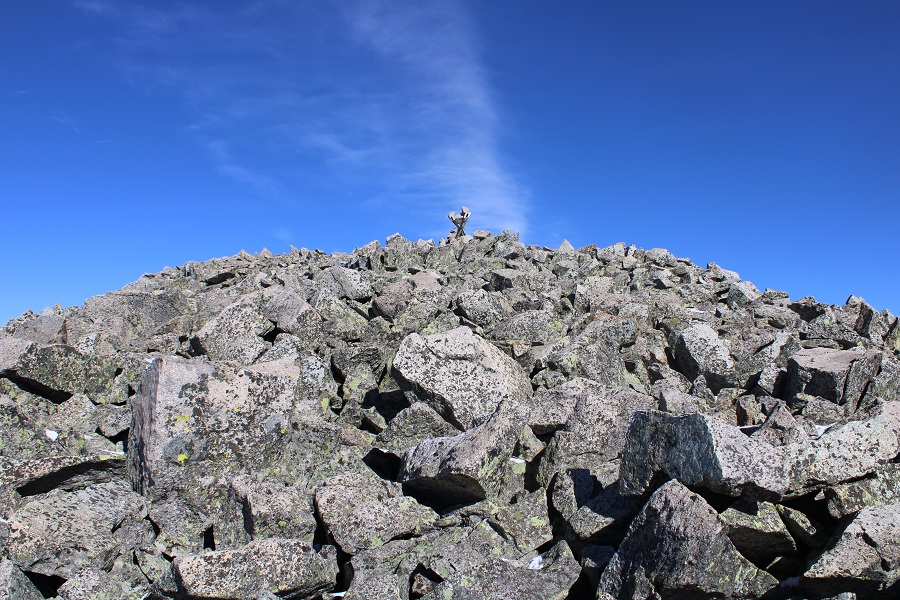
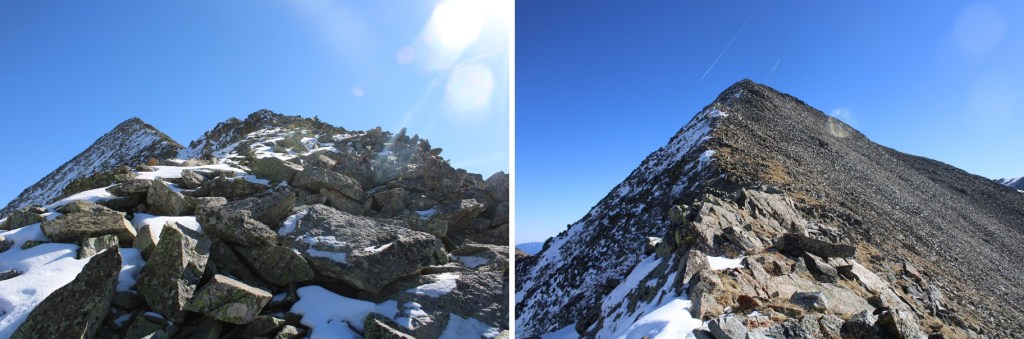
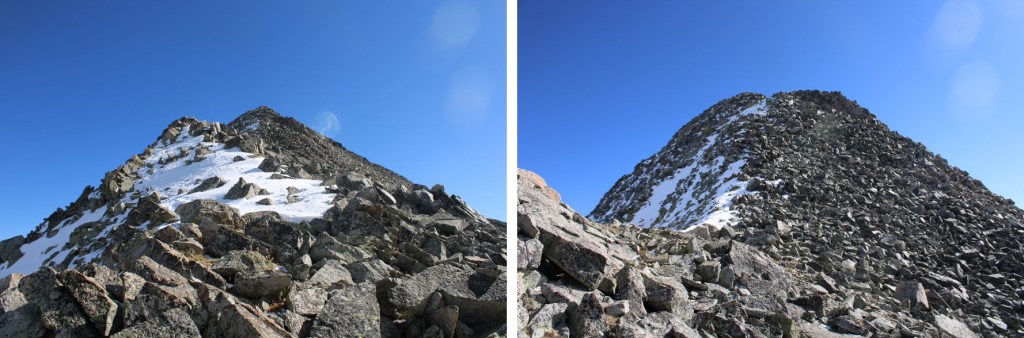
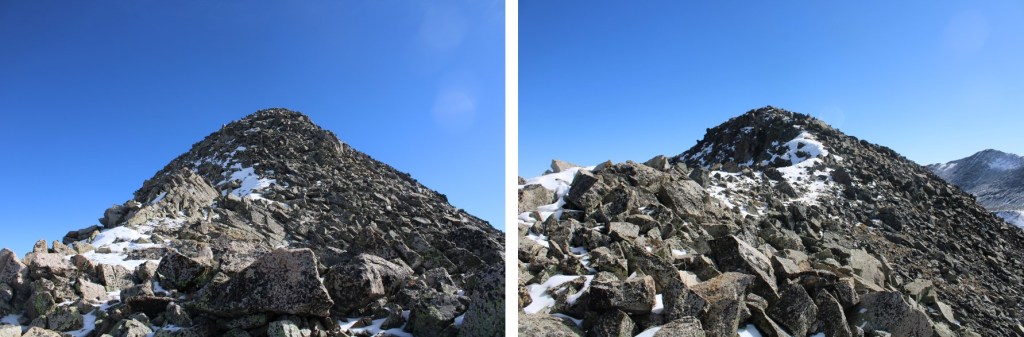
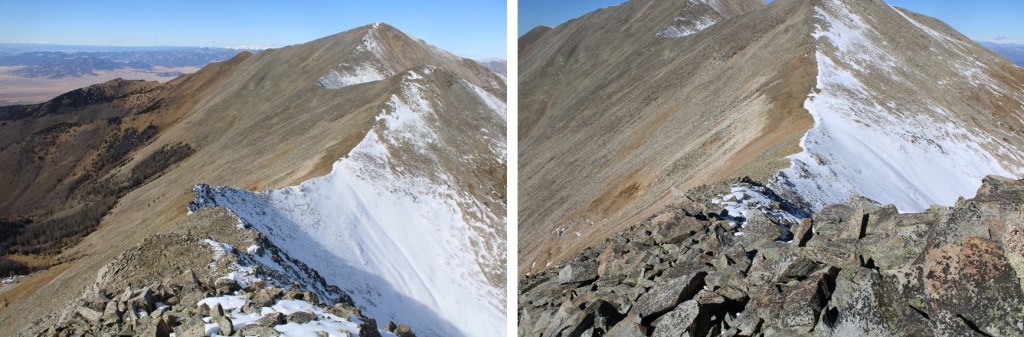
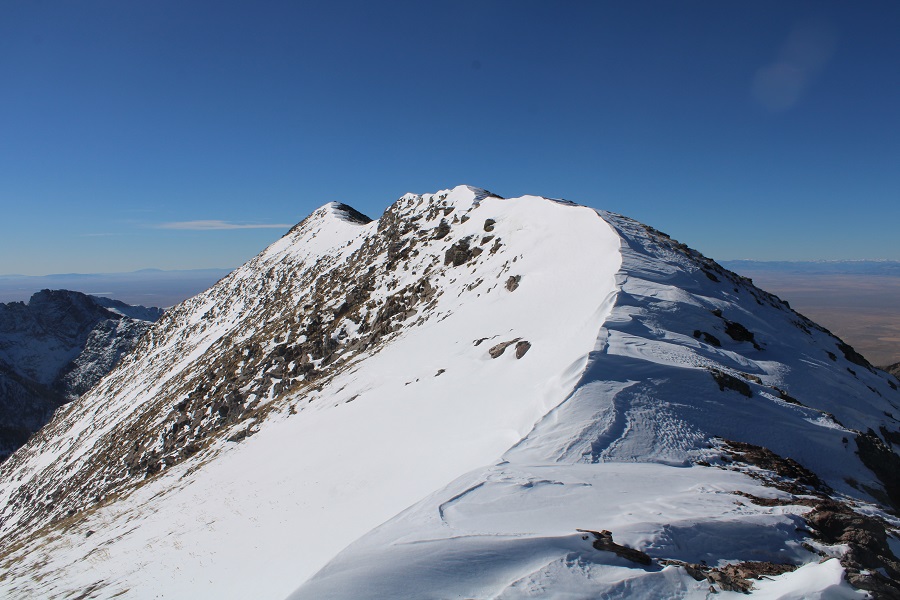
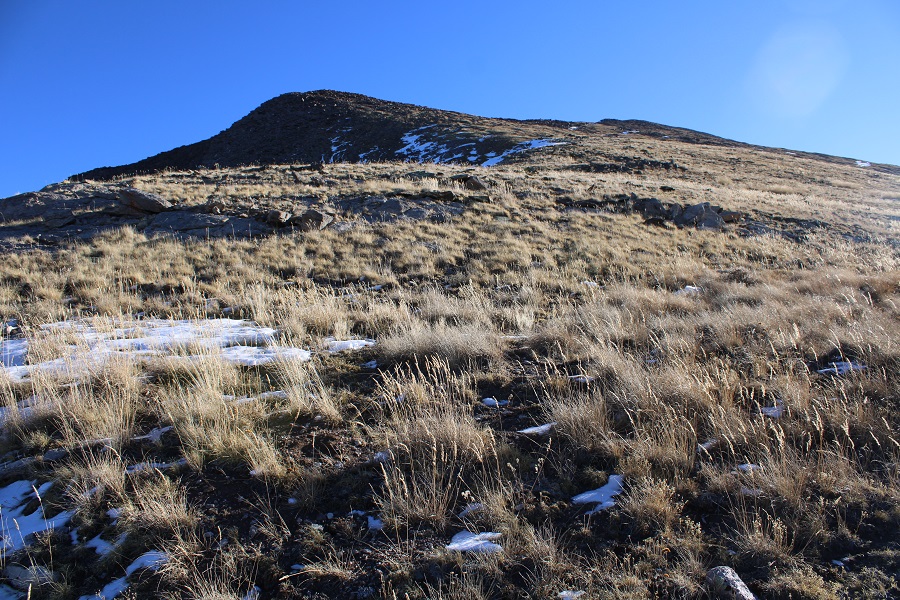
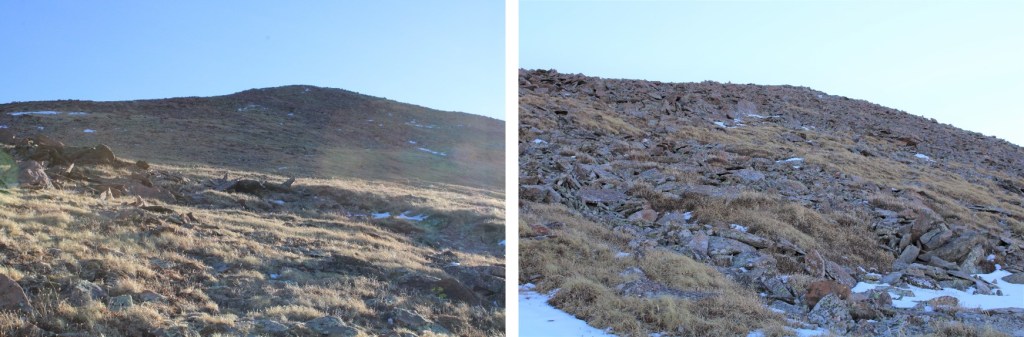
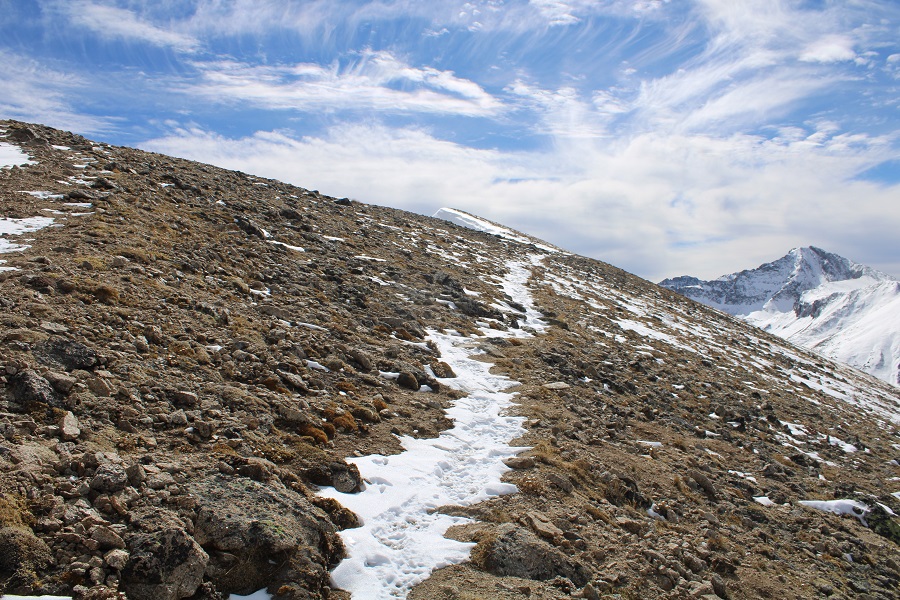
Once at the saddle I turned left and followed the ridge northwest to the summit of PT 13123, gaining 425’ in elevation.  This started out as tundra, but quickly became rocky. 
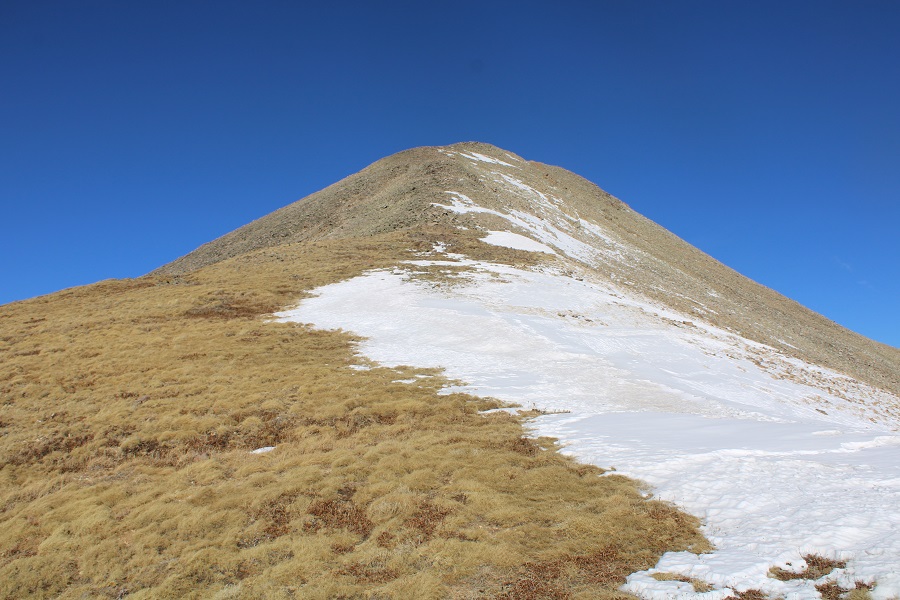
I summited PT 13123 at 9:55am
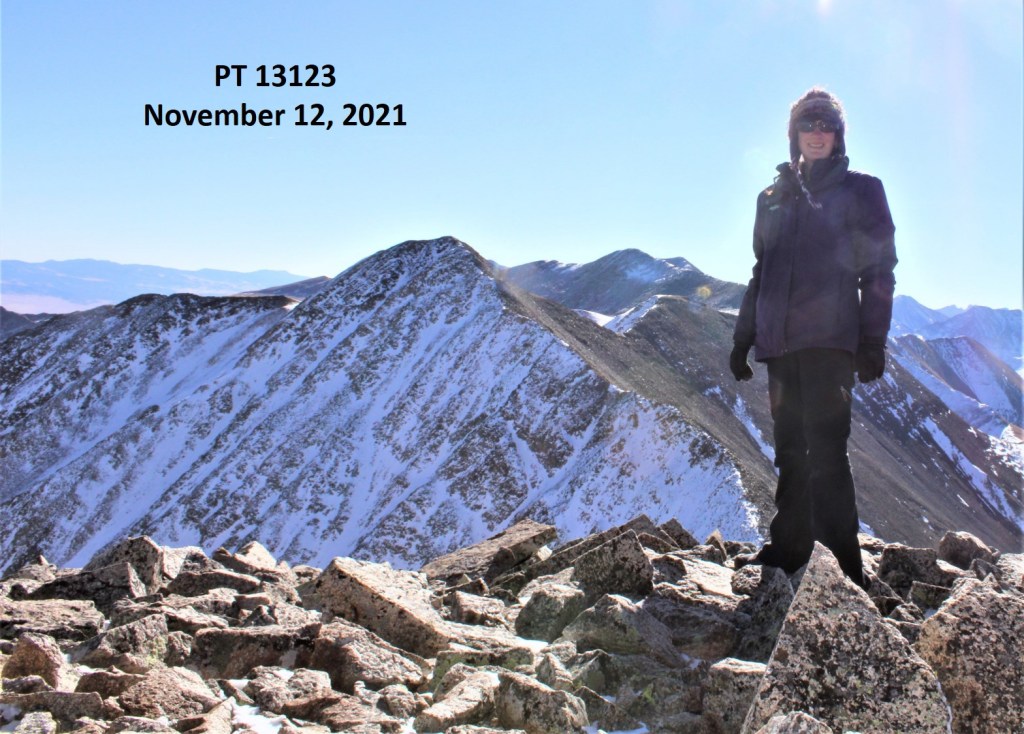
13123:

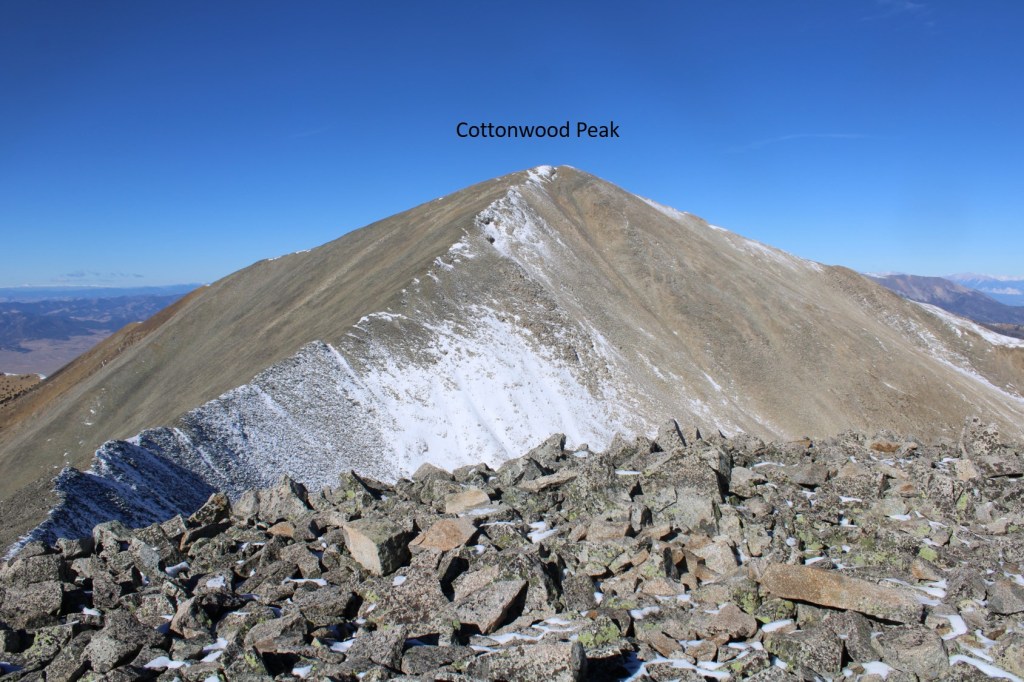
I could see Cottonwood Peak to the northeast (not on my agenda for today)
I turned and headed back to the PT 13123/Thirsty Peak saddle.
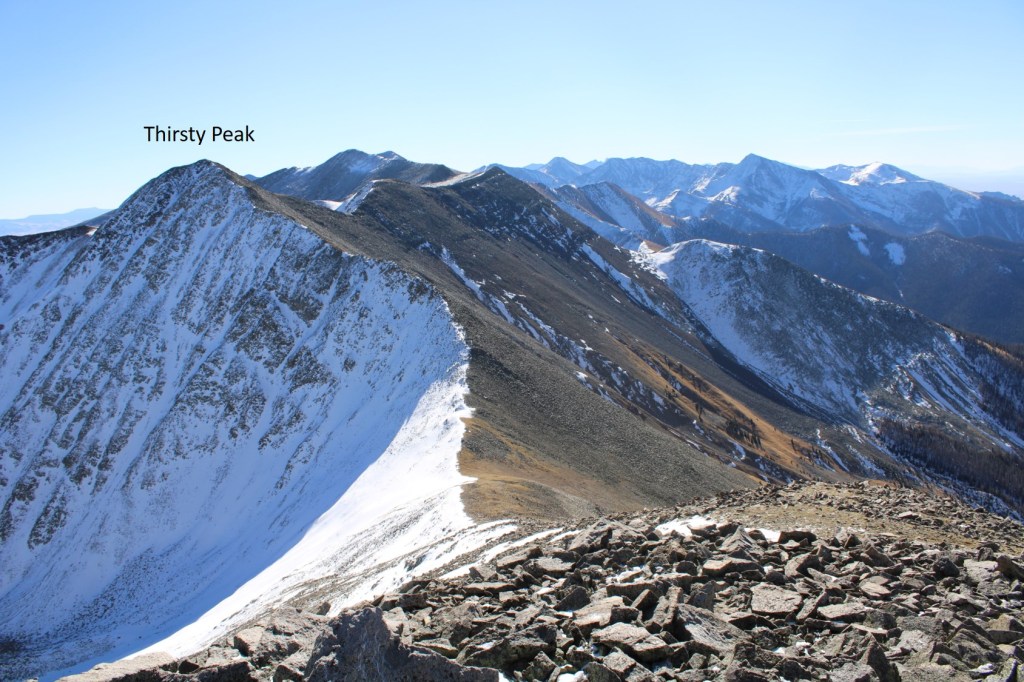
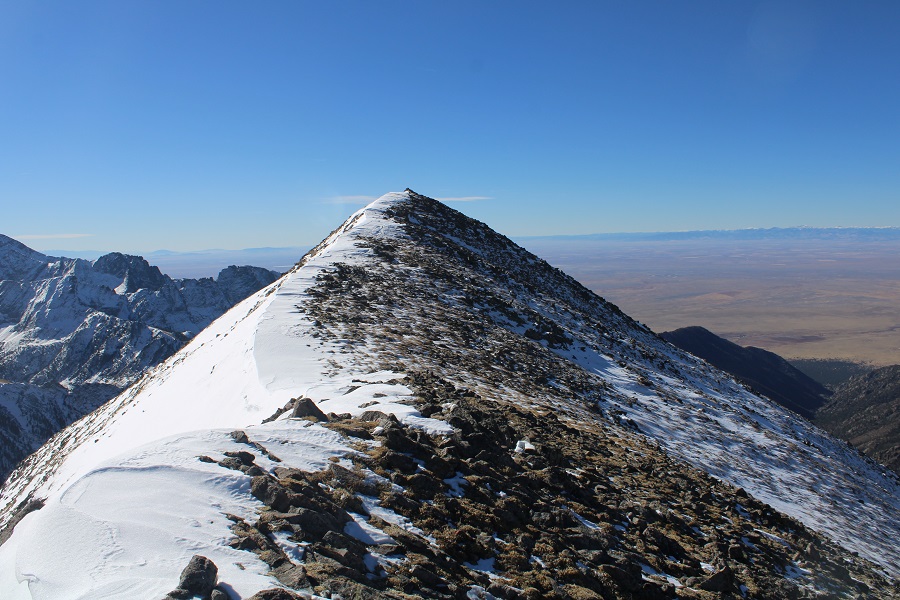
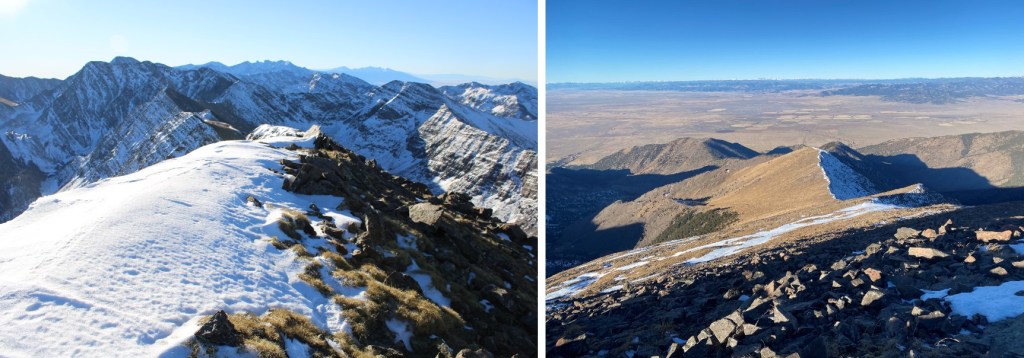
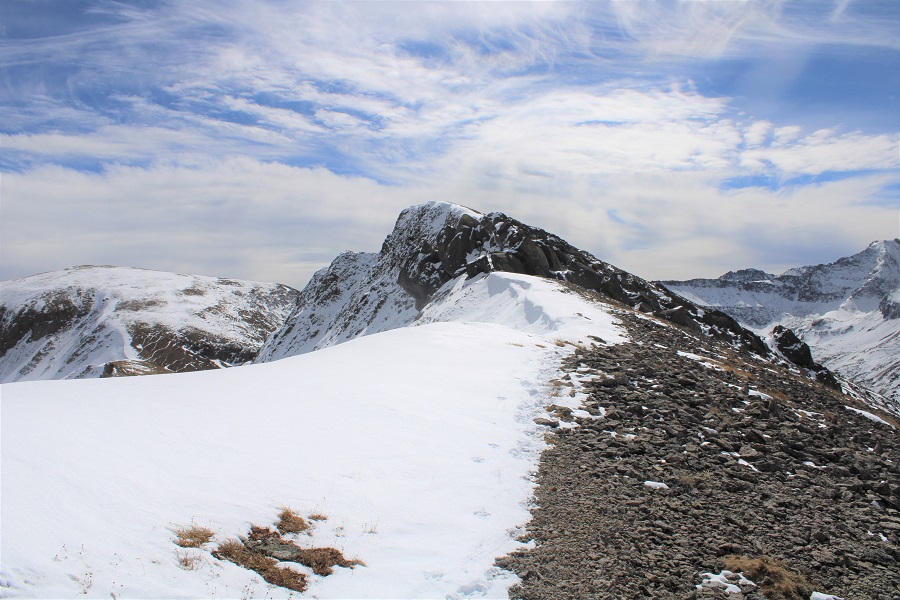
From the saddle, it was a class 2, rocky ridge hike to the summit of Thirsty Peak. I gained just over 500’ from the saddle to reach Thirsty Peak (unranked). 
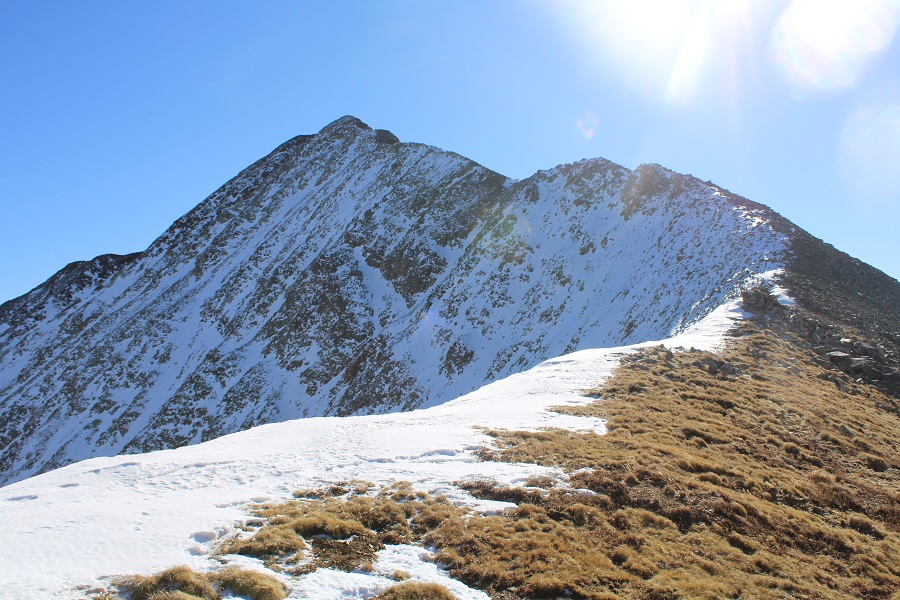
I summited Thirsty Peak at 11am. At the summit I heard a coyote yipping.  I got it briefly in the video, but just at the very beginning. 

Thirsty Peak:  

Here you can see the reason Thirsty Peak is unranked:  Lakes Peak
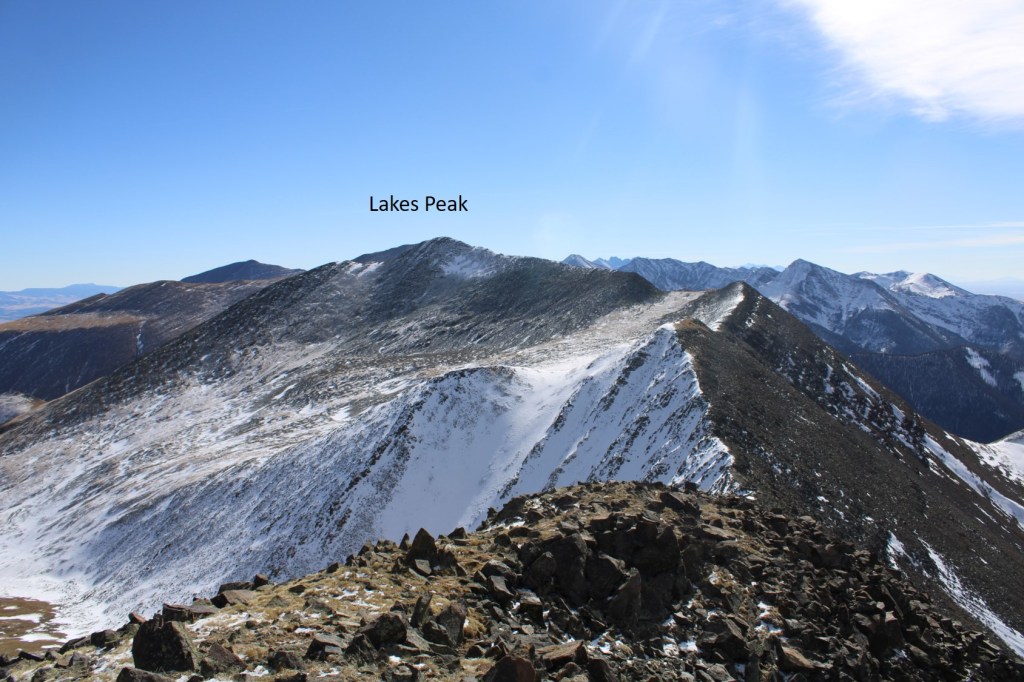
I turned and headed back to the 13123/Thirsty Peak saddle
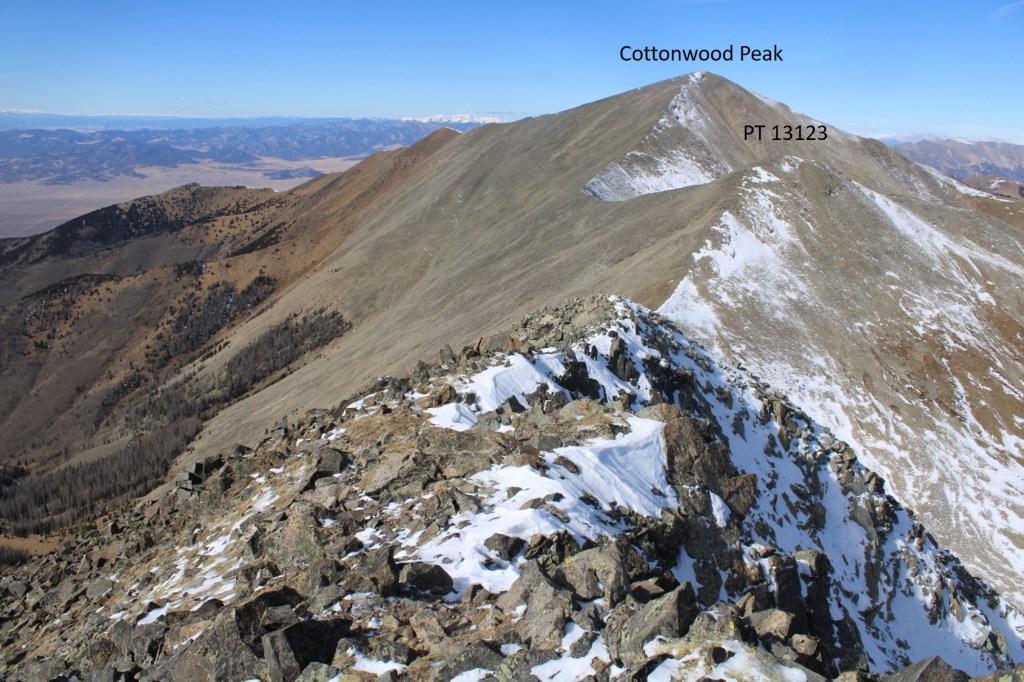
And then re-traced my steps back down to the ridge
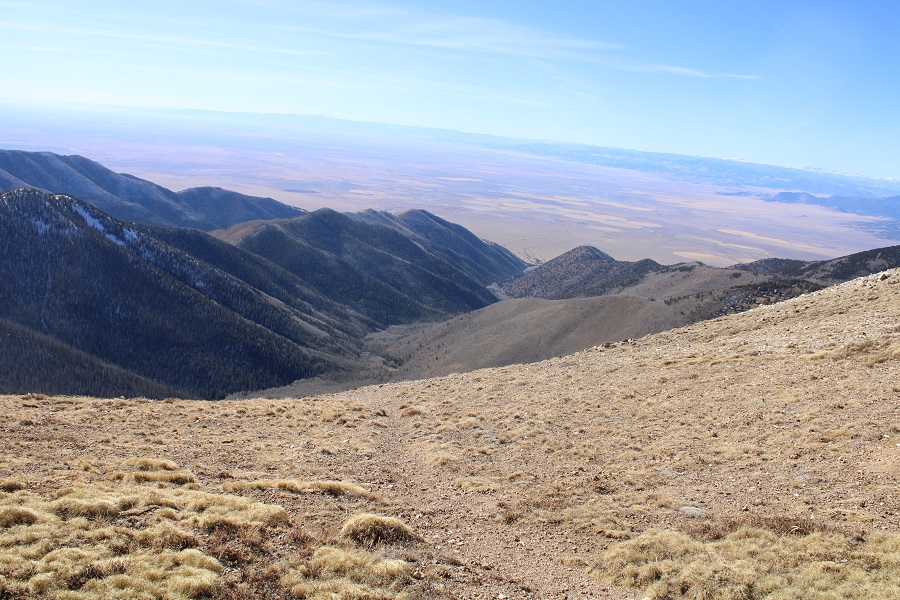
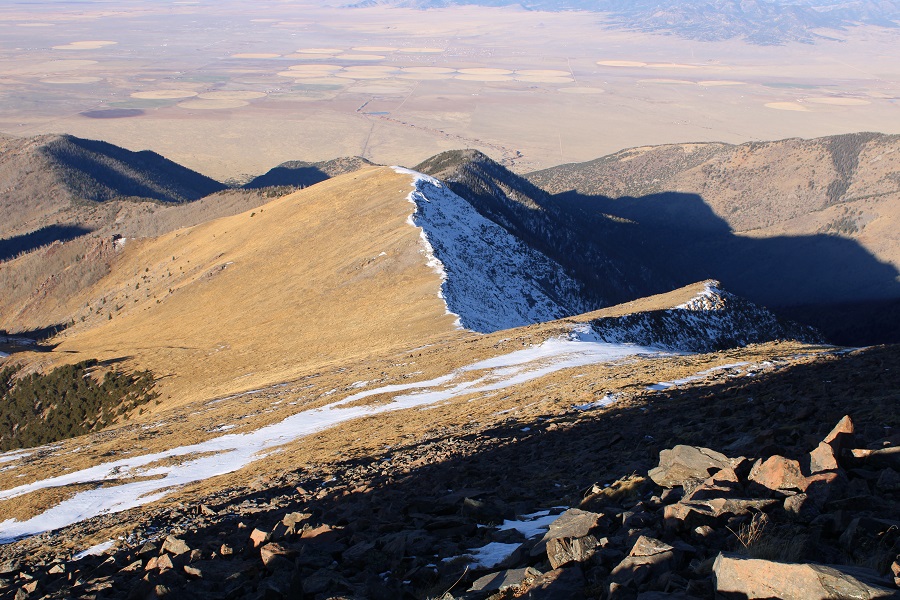
Here’s an overview of the route out
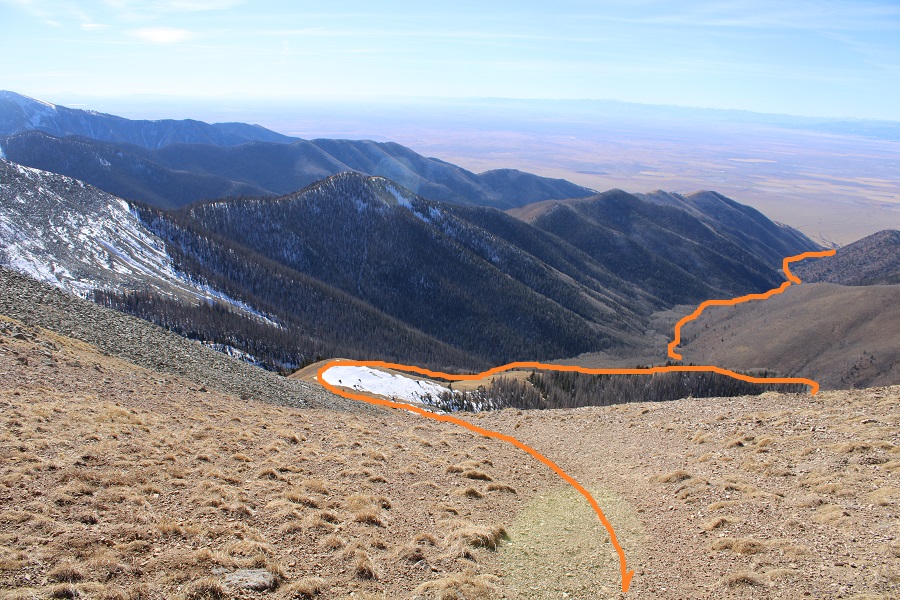
Here are some pictures of the way back to the trailhead
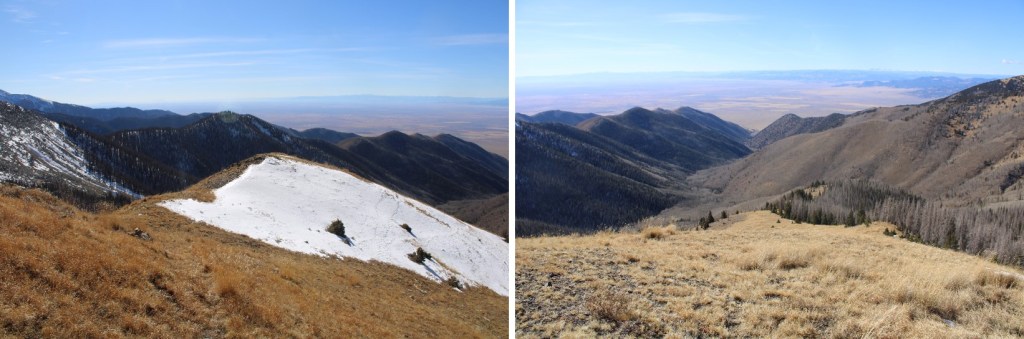
I made it back to the trailhead at 2pm, making this a 14.15 mile hike with 5370’ of elevation gain in 8 hours. 

On to the next trailhead!
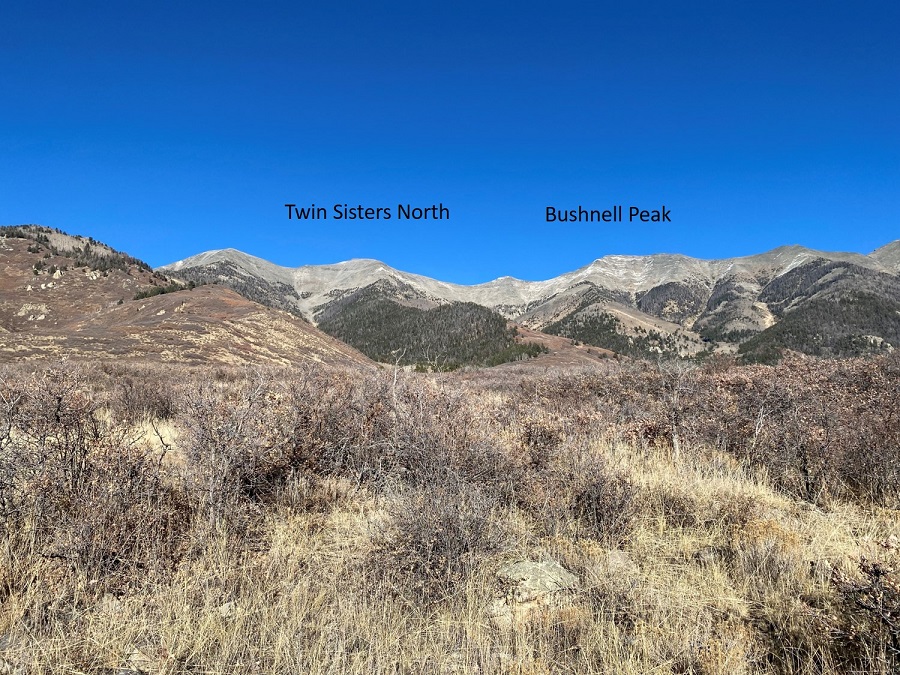
Bushnell Peak – 13,112 & Twin Sisters North – 13,009

RT Length:  10.07 miles

Elevation Gain:  5296’

It should be noted the Ferguson Creek trailhead is closed from March 15 – May 15 every year for Sage Grouse mating season. 

The weather forecast changed overnight.  Yesterday it predicted 10-15mph winds.  Today, 35-40mph.  Hmmmm…. Well, it was supposed to be warm, and I was already at the trailhead, so I decided to give it a go. I actually drove past the creek, turned left at the junction after the creek, and then drove for about a mile on the 4WD road before finding a spot to park for the night. 

If you don’t have a 4WD vehicle, there’s plenty of parking/camping at Ferguson Creek. 

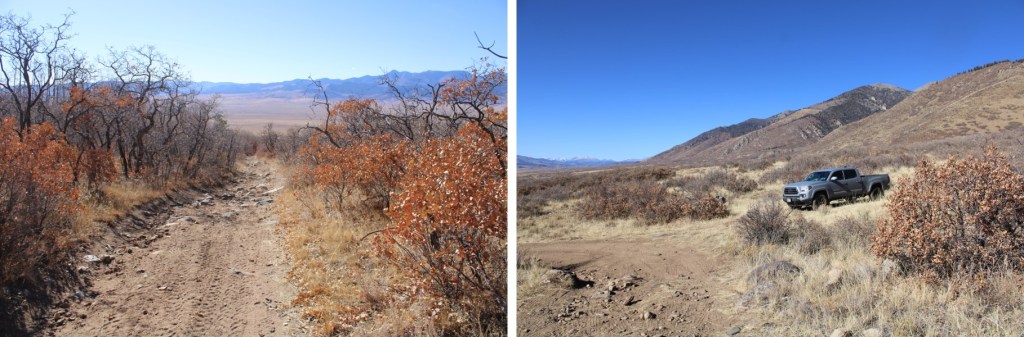
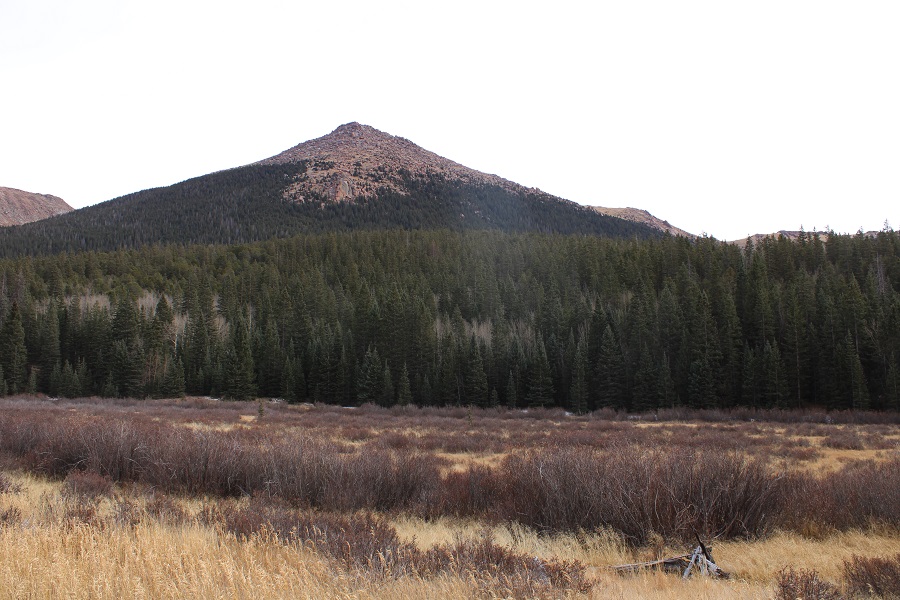
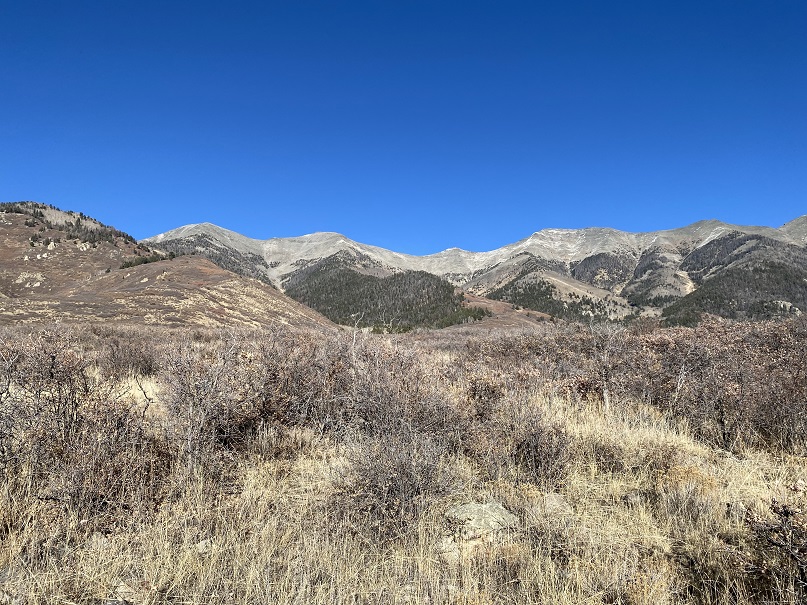
I could have driven all the way to where the scrub oak ended and the trees began, but that would have meant getting Colorado pinstripes on my ‘new’ truck.  Instead, I parked in an open area and took in a view of the peaks I’d be attempting tomorrow.  They looked straightforward enough.  My campsite was at 8500’, and from this angle, I couldn’t imagine there was enough elevation difference to make Bushnell and Twin Sisters both ranked peaks. Boy, was I wrong! 

I was also surprised:  it was a Saturday, the weather was great, it was hunting season, and no one passed me on this road the entire time I was here.  I made it an early night, and once again, pressed snooze on my alarm several times before hitting the trail the next morning: I’ve gotten too comfortable sleeping in the cab of my truck.  I was on the trail at 6am.

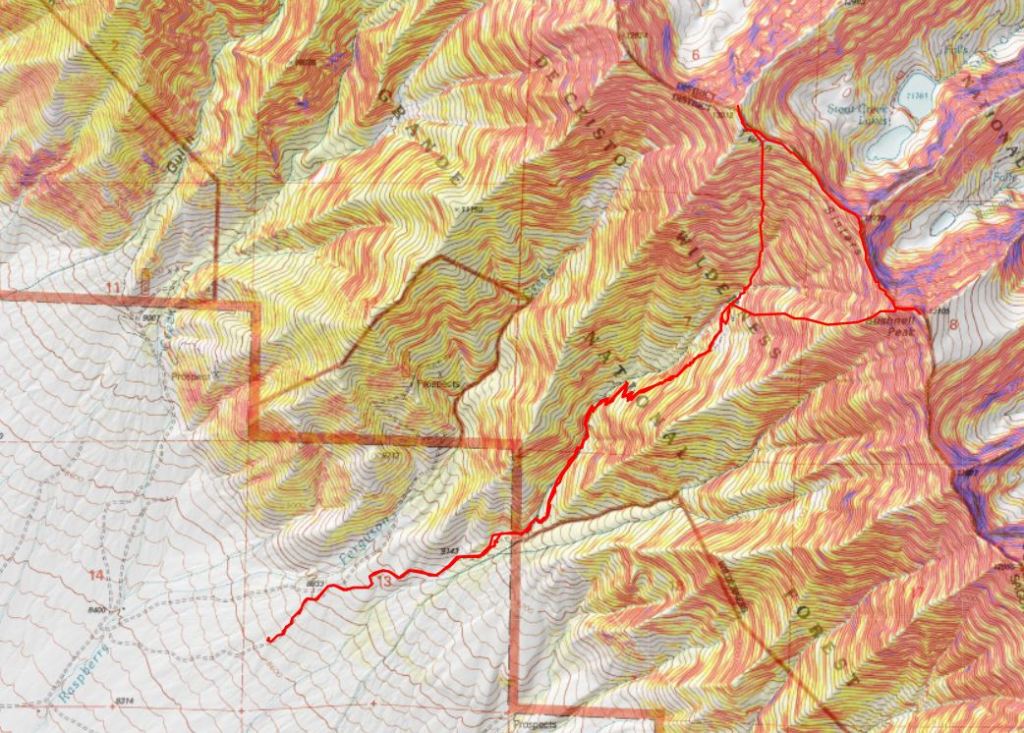
I followed the 4WD road east for about a mile and a half through scrub oak to the trees.  CalTopo says this is road 985, but it isn’t marked anywhere.

The roads here aren’t named.  The only junction I came to I kept hiking straight.

If you plan on driving your vehicle all the way to the trees, there are several campsites just before and after entering the trees.

The road doesn’t end at the trees, but there are some very large pine trees that have toppled and block the road from sight.  They make it look like the road ends, but if you scramble over the trees and aim north, you’ll run into the road again. 

I followed the road northeast

I crossed the stream 3 times

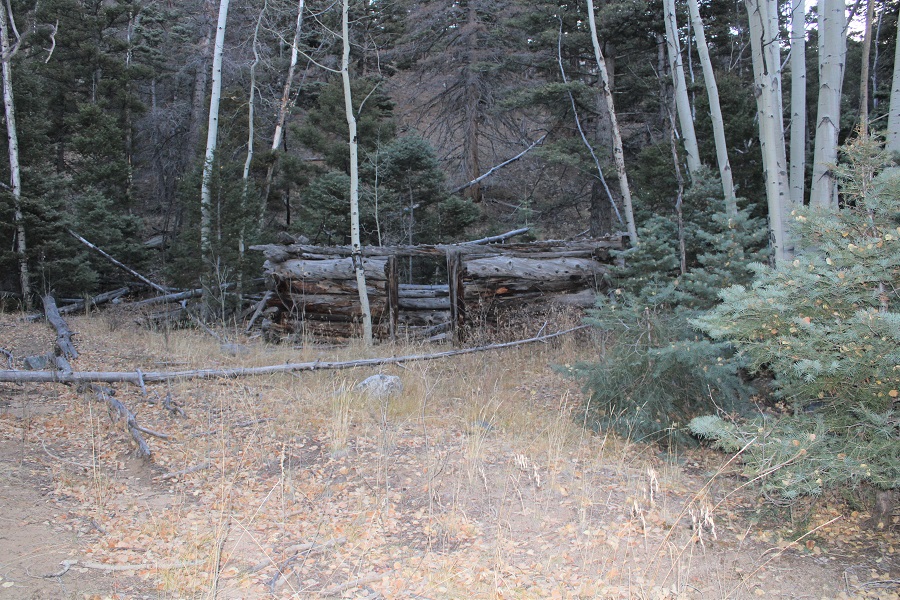
Passed the remnants of a cabin

And started switchbacking up the hillside, following the old road the entire time.

The road took me to treeline, where it ended. From where I parked my truck, it was 3.3 miles to the end of the road.  If you hiked from Ferguson Creek, it would be about 4.5 miles to treeline.

When the road ends at 10855’, there’s a cairn on a rock in the middle of the trail.  This is where I turned right, and headed east towards Bushnell Peak.

This is where the intense elevation gain began.  From treeline, I gained 2250’ of elevation in 1.25 miles to the summit of Bushnell Peak.  I just kept heading east

Once on the ridge the wind picked up.   I put on my balaclava and heavy mitts and kept hiking east, staying on the center of the ridge.

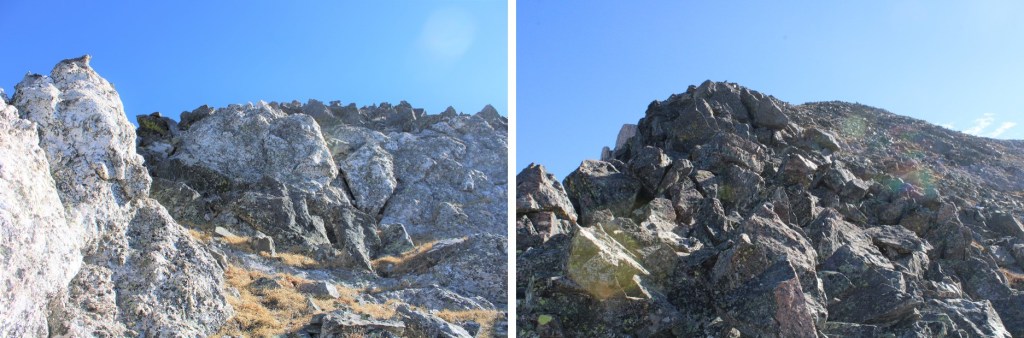
The terrain became rocky. These rocks weren’t too large, but they weren’t stable either.

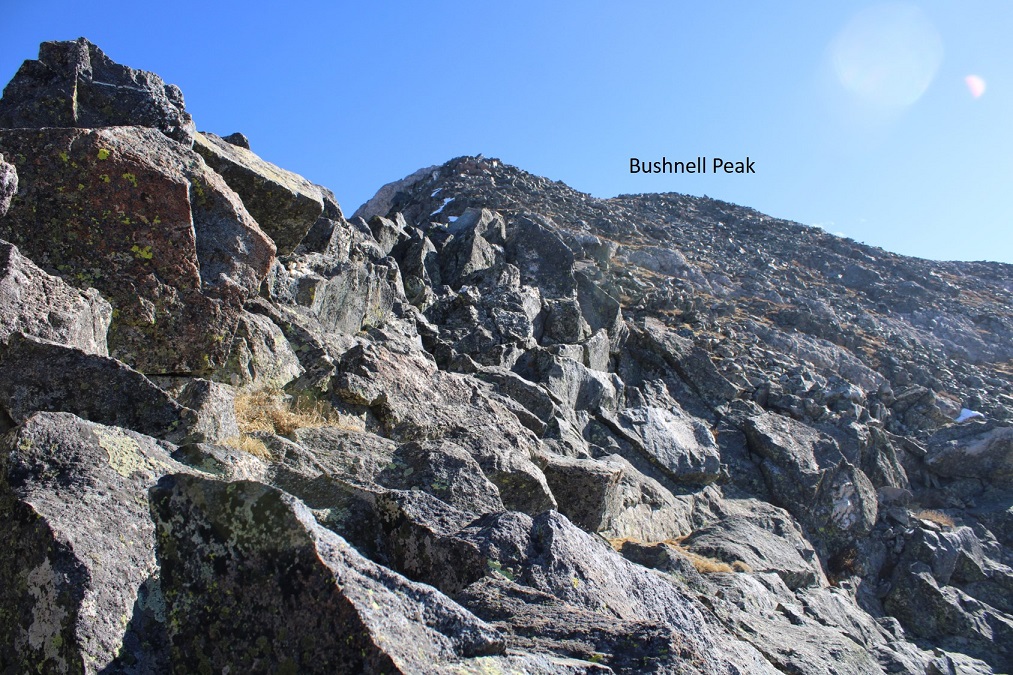
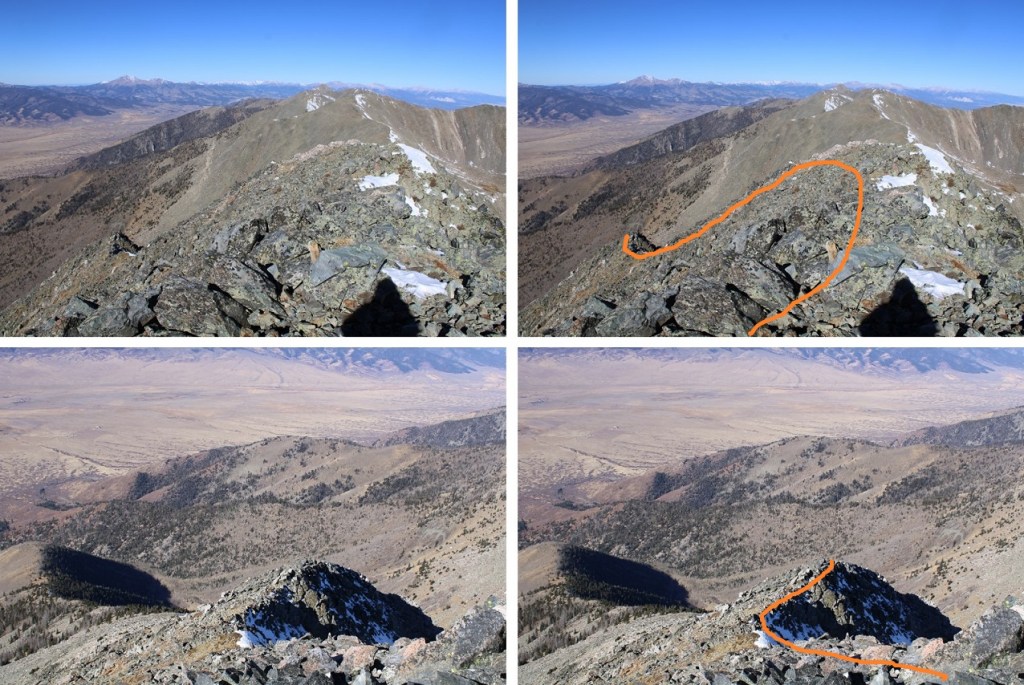
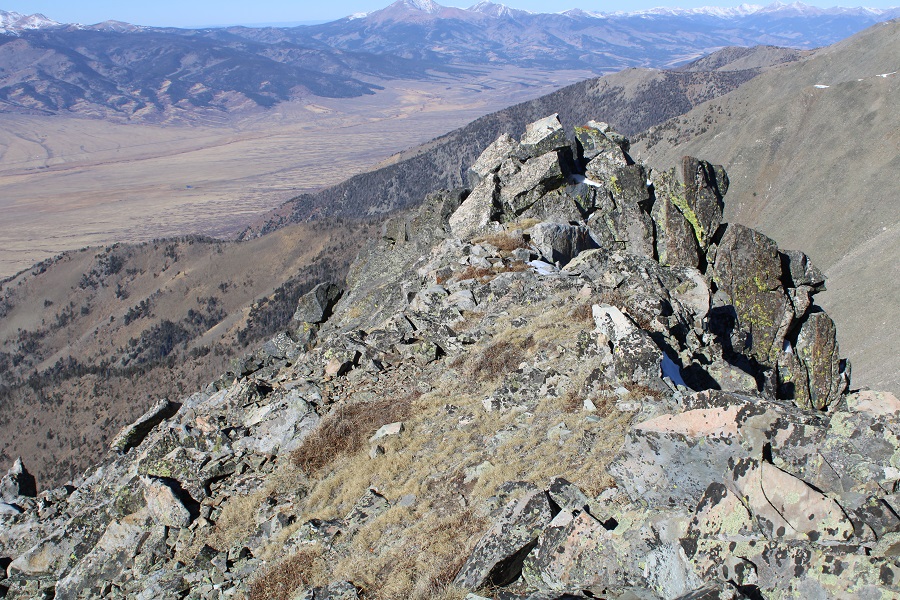
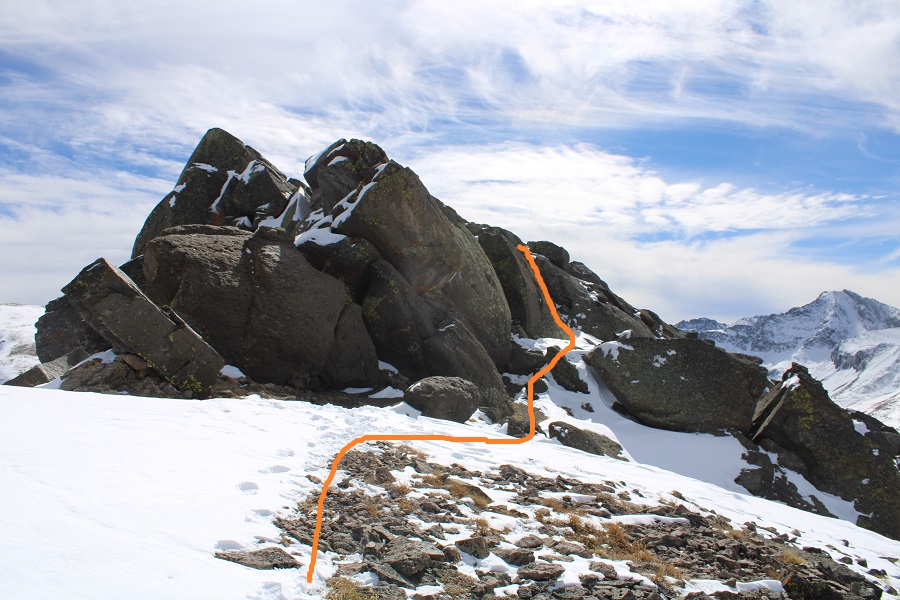
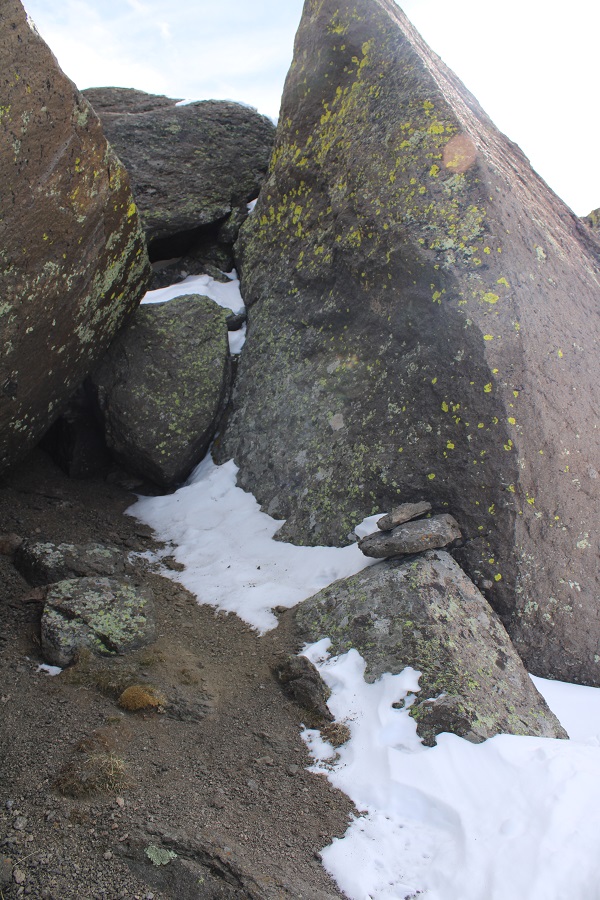
I came to some interesting rock formations, which I passed and continued up the ridge.  This was class 2.

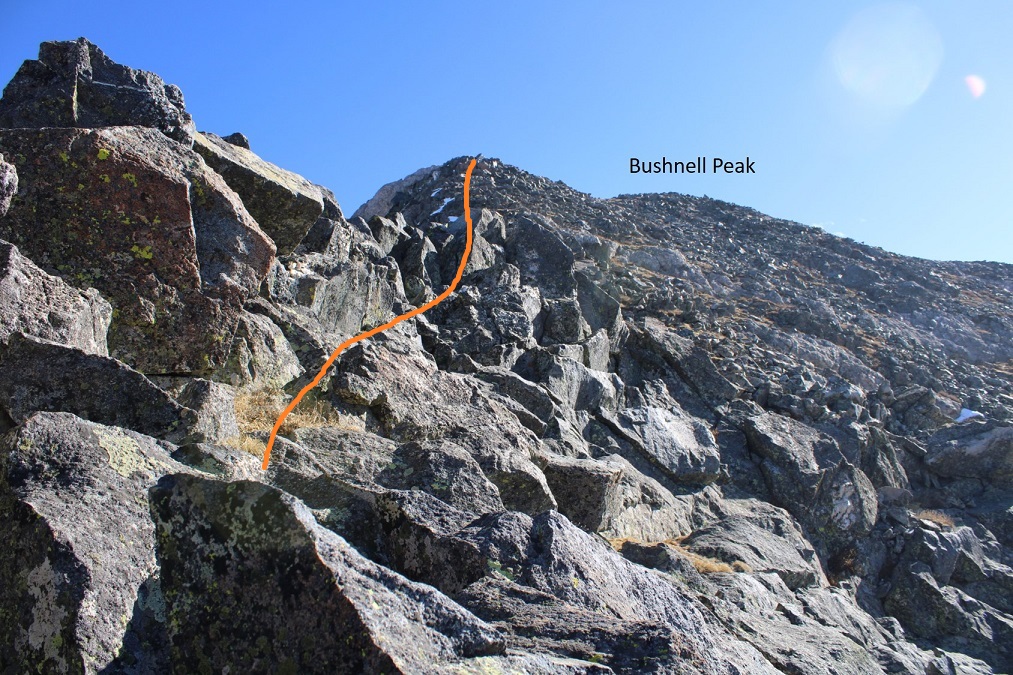
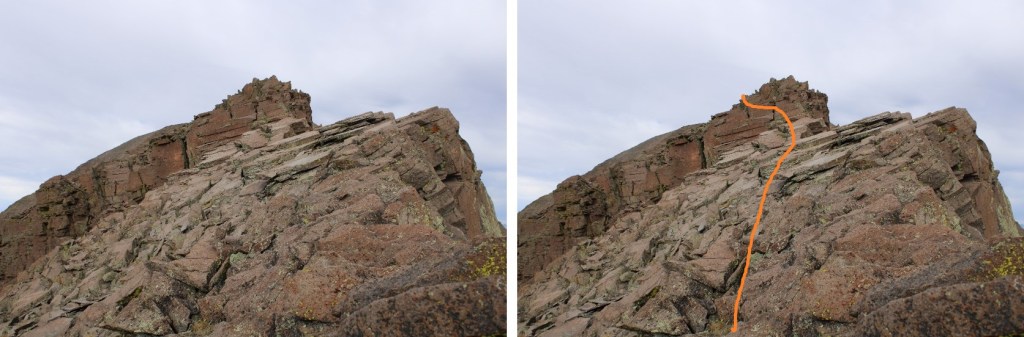
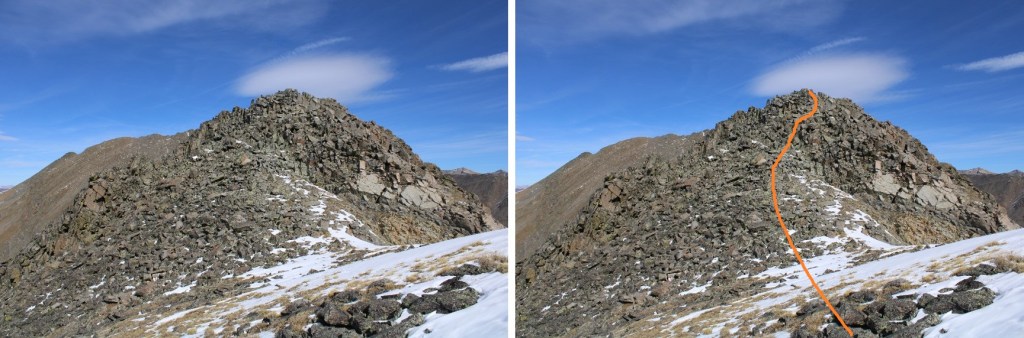
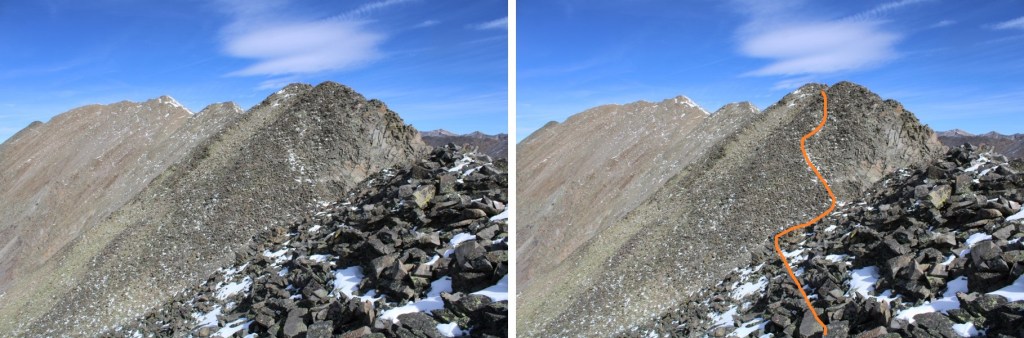
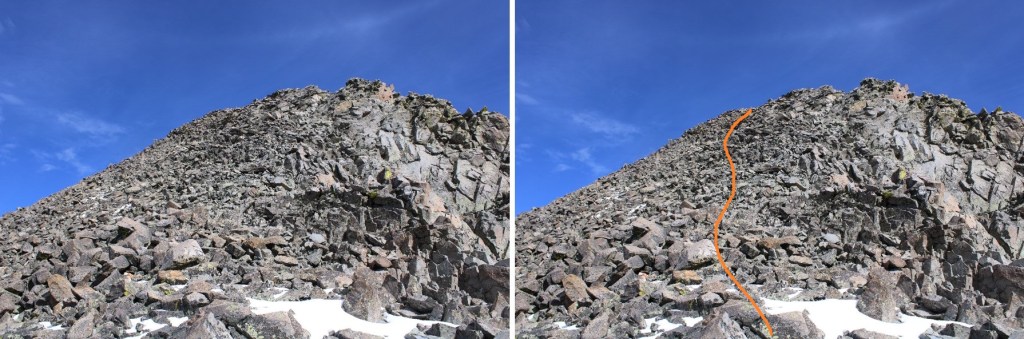
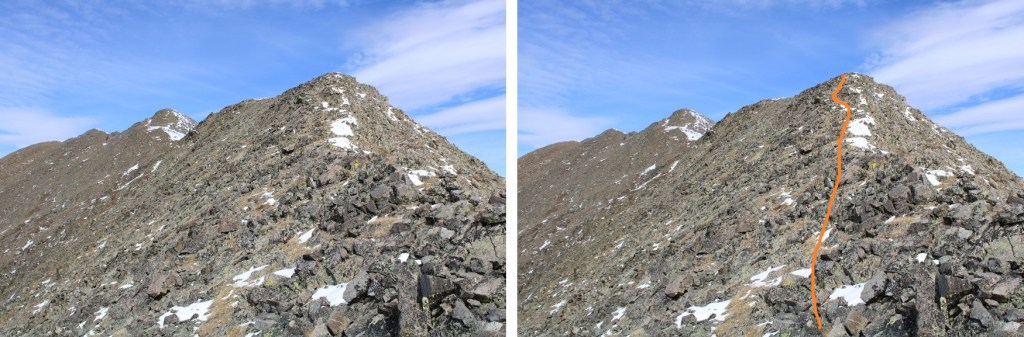
I stayed directly on the ridge all the way to the summit of Bushnell.  It was class 3 at times, but only for short sections.  I’m sure the summit could have been kept class 2 if I’d dipped to the right, but I was fine with a little class 3 scrambling (there are cliffs to the left).

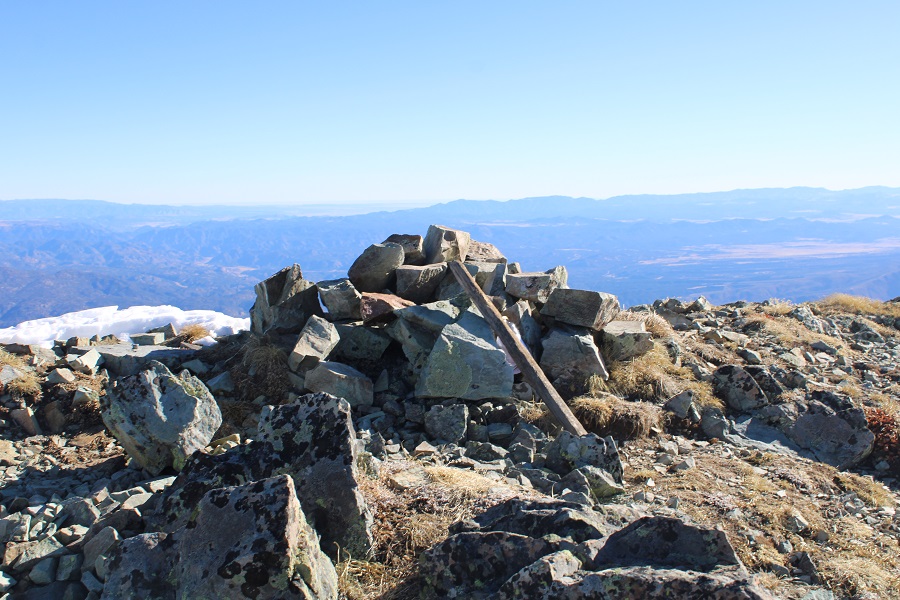
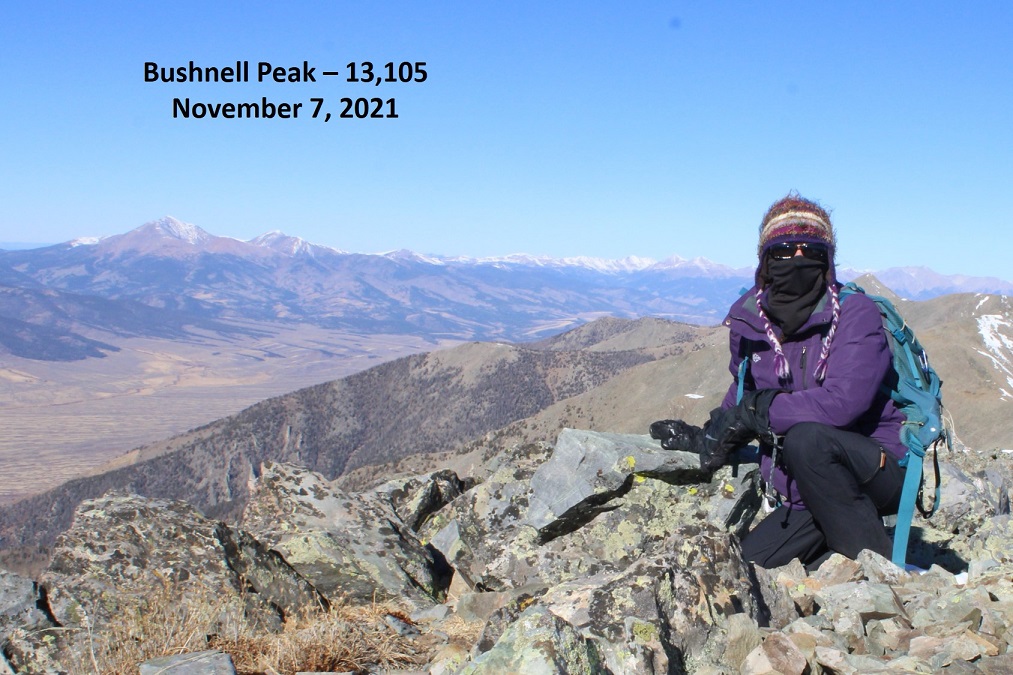
I summited Bushnell Peak at 9:30am

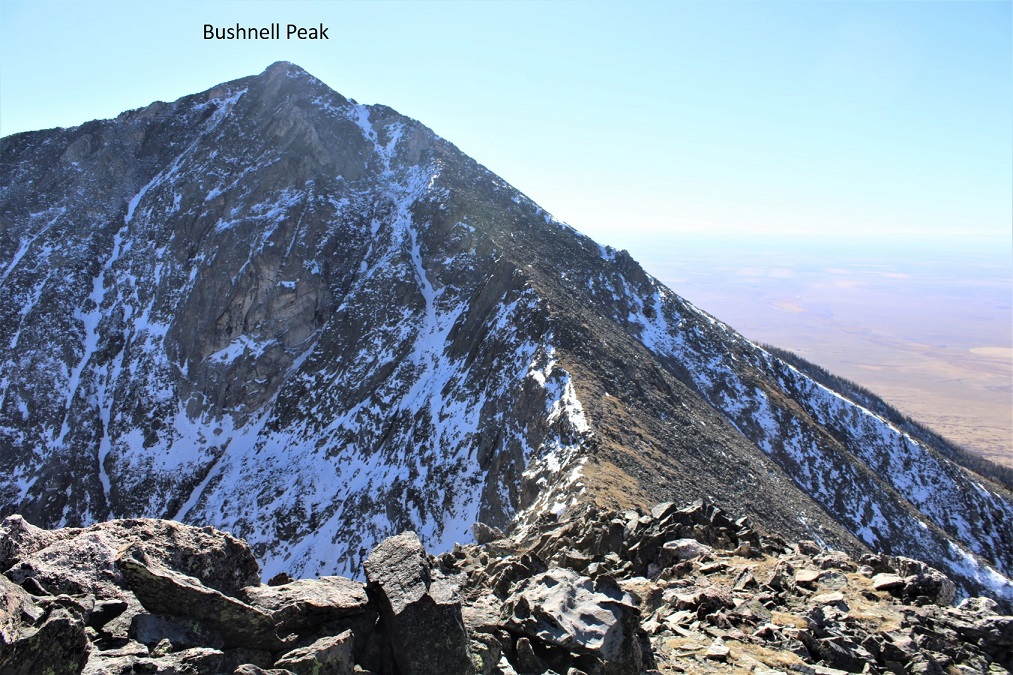
Bushnell Peak:

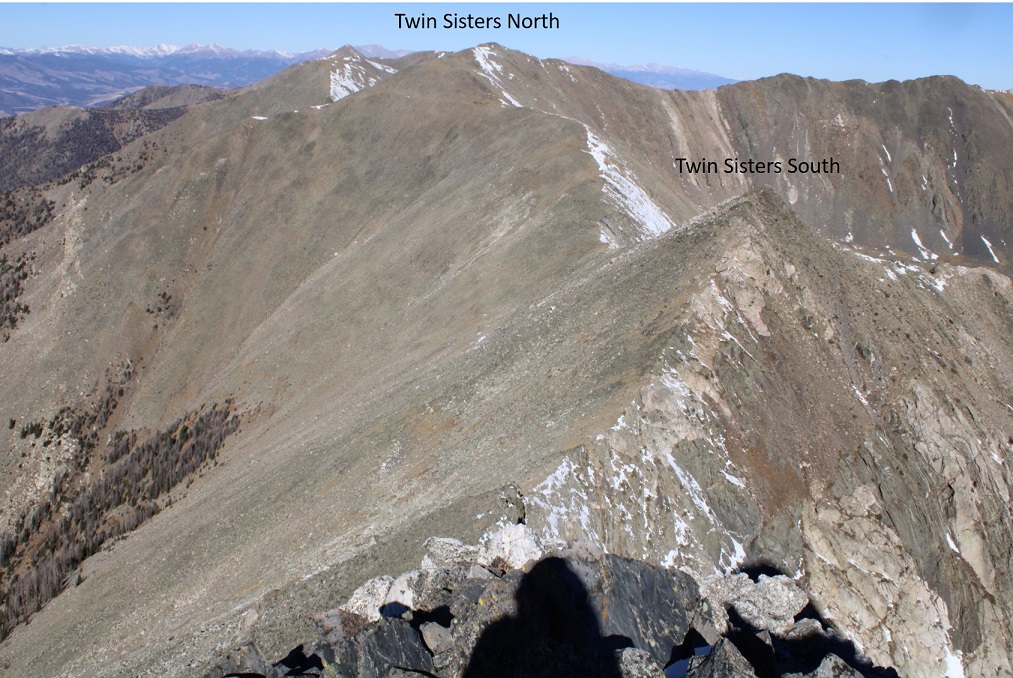
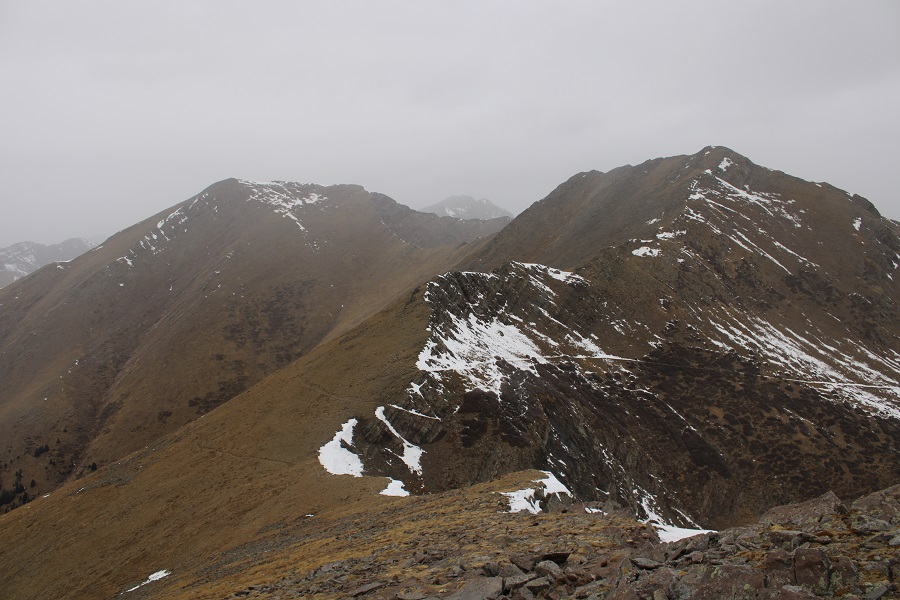
Now, on to Twin Sisters South (unranked) and Twin Sisters North.  I could see them to the northwest.  I retraced my steps down the ridge for about .2 miles, and then followed the ridge northeast to the Bushnell/Twin Sisters South saddle. 

Here’s that class 3 section on the way down.  I went straight up and over the top, but could have dipped to the left to keep it class 2.

Then I turned right and could see the Bushnell/Twin Sisters South saddle.  This was all class 2, but with large rocks that were unstable, so I had to watch my footing.  Here I lost 592’ of elevation to the saddle.

From the saddle I gained 213 feet to the summit of Twin Sisters South

The ridge to Twin Sisters South was easy to navigate.

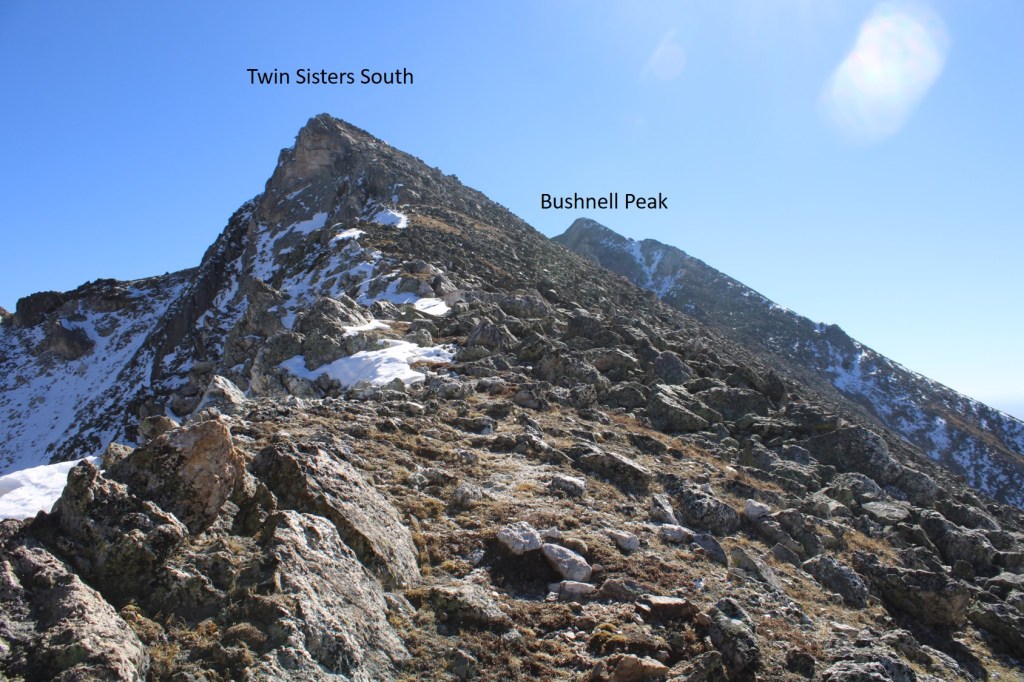
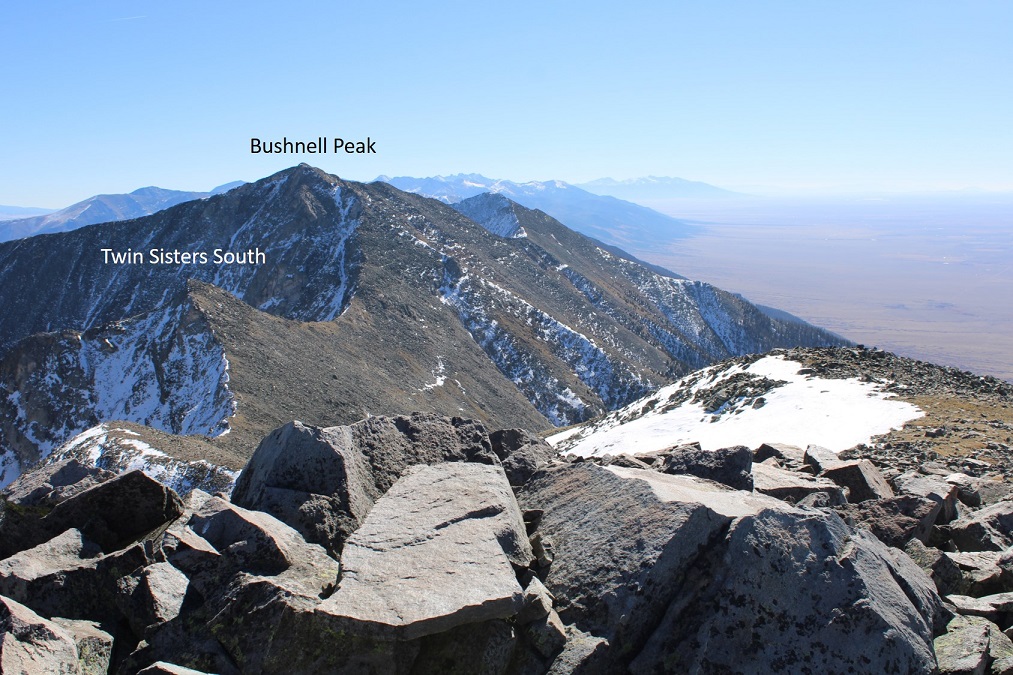
I summited Twin Sisters South, and turned around to look back at Bushnell Peak

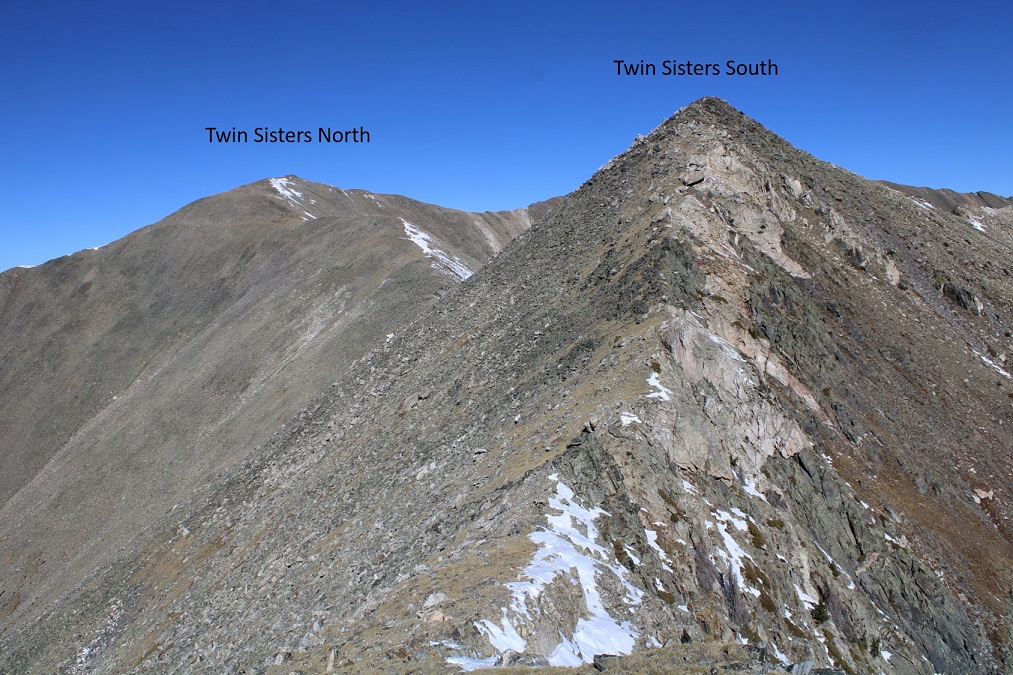
Then I continued following the ridge northwest towards Twin Sisters North, first losing 250’ of elevation to the Twin Sisters North/Twin Sisters South saddle. This was all class 2

Here’s looking back at Twin Sisters South and Bushnell Peak from the Twin Sisters North/South saddle.

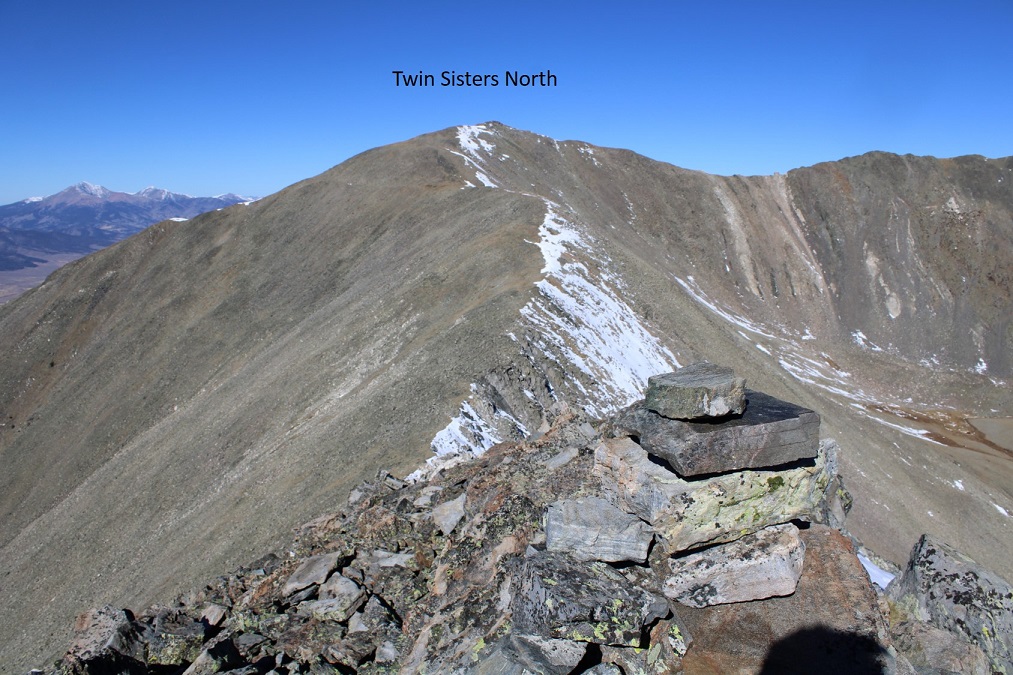
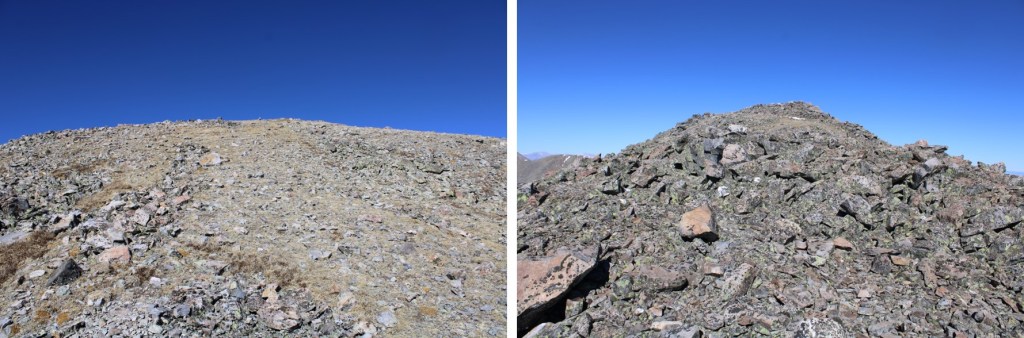
From the Twin Sisters North/Twin Sisters South saddle I gained 530’ to the summit of Twin Sisters North, mostly on tundra and small rocks.  Here’s the overall route I took, still class 2. 

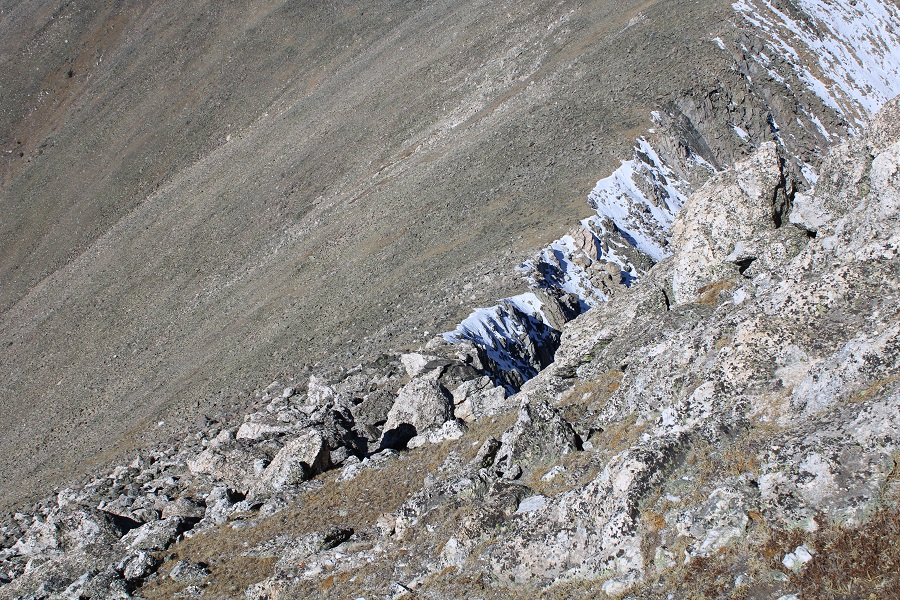
Here are some closer pictures of the ridge

The summit was at the north end of the ridge

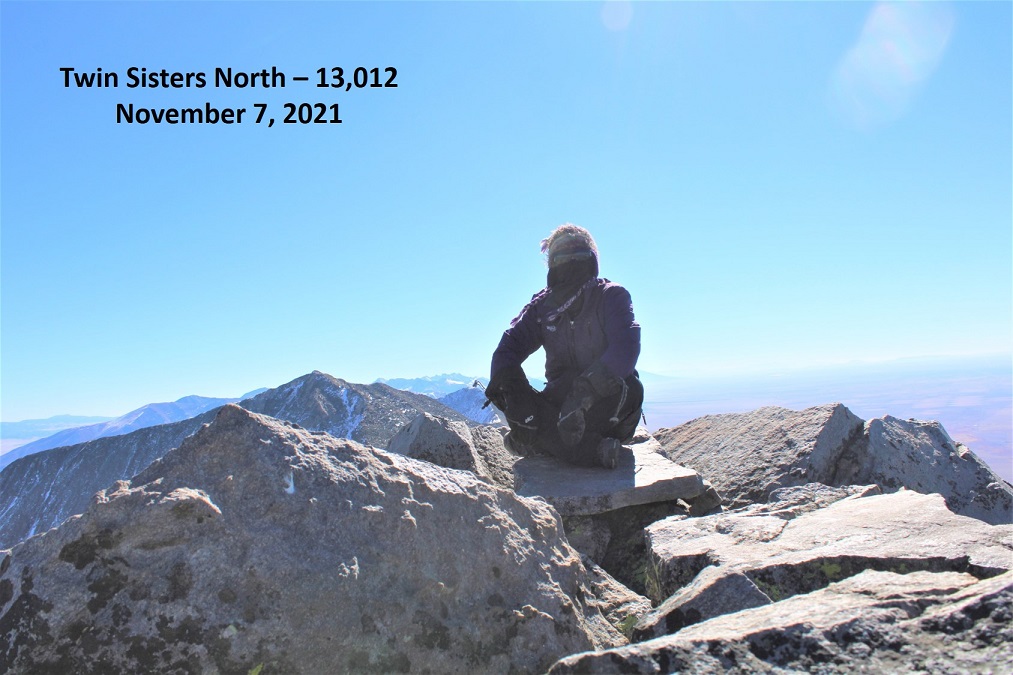
I summited Twin Sisters North at 11am

Twin Sisters North:

There was no summit register, so I left one, and headed back towards the Twin Sisters North/Twin Sisters South saddle. The wind still hadn’t let up, and I was anxious to get to a place without wind.

I didn’t go all the way to the saddle.  Instead, at 12900’ I started descending south.

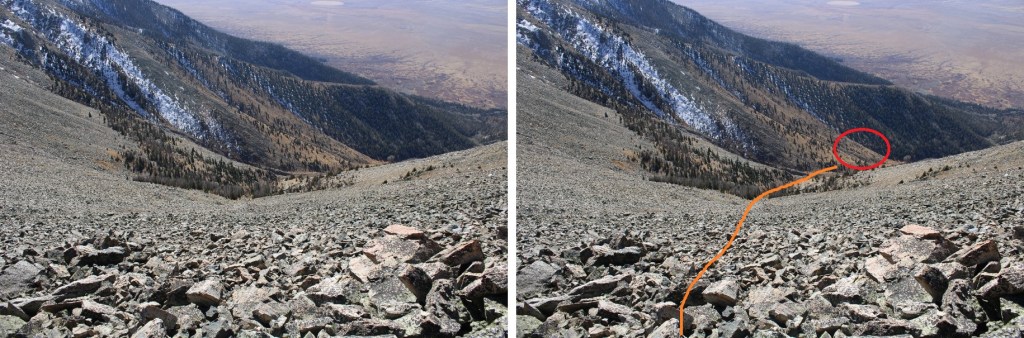
This area was steep, and filled with rolling talus.  I aimed for the drainage, heading directly south.  I could clearly see the road, and aimed for it as I descended (circled in red) 

Once in the drainage, I followed it to where it joined with another drainage, crossed it, and aimed for the road, heading southwest

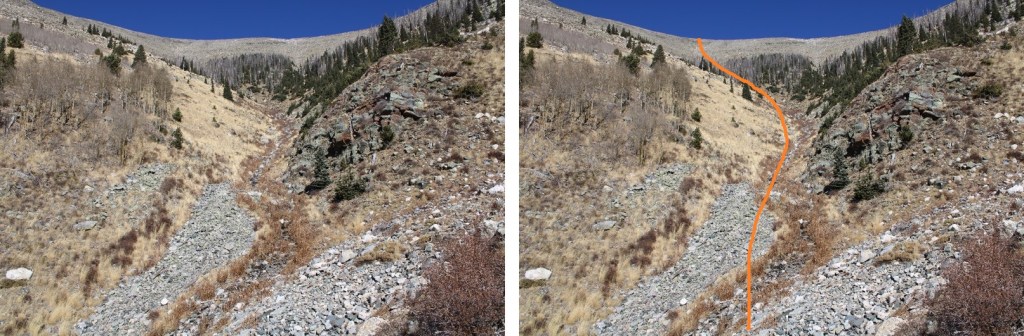
Here’s looking back up the gully I used as my decent route

Once back on the road (cairn circled in red) I was finally able to take off my cold weather gear as I was now out of the wind.  I followed the road southwest, back to my truck

I made it back to my truck at 1:30pm, making this a 10.07 mile hike with 5296’ of elevation gain in 7.5 hours

Spring Mountain – 13,244 and Venable Peak – 13,334

RT Length: 14.24 miles

Elevation Gain: 5572’

This was my third attempt at Spring Mountain and Venable Peak. My second attempt was just yesterday, when I turned around about 200 feet from the saddle, coming from Venable Trail (trip report can be found here).  This morning I was attempting to summit via the Comanche Trail, which I had used successfully earlier in the week to summit Comanche Peak (trip report can be found here). Of course, it had been snowing on my way out, but it hadn’t snowed since then.  I was crossing my fingers for fair conditions on the trail since the last storm.

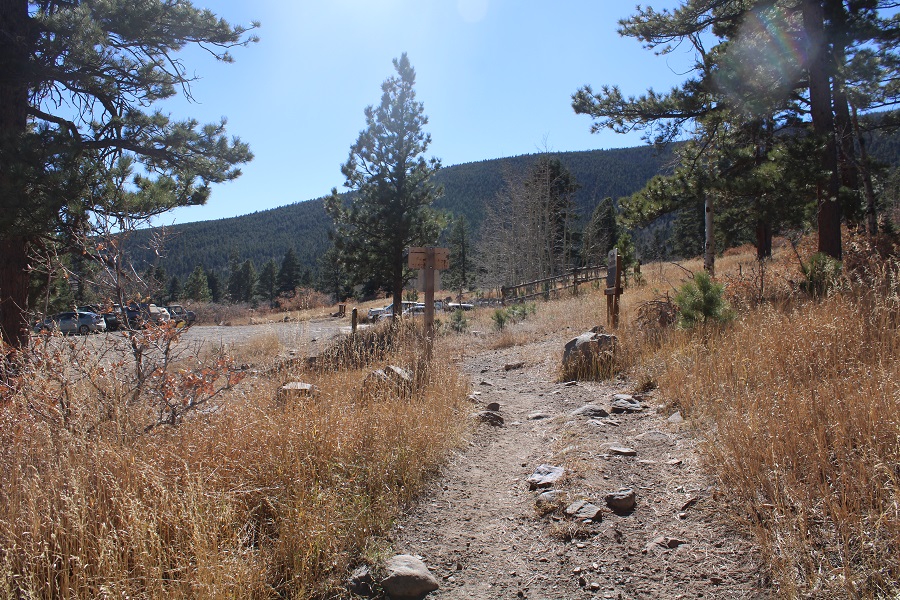
There was one other vehicle in the lot when I woke up.  I took my time getting ready, and was on the trail at 6am.  The trail is obvious from the parking area.

I followed this wide, class 1 trail for half a mile to the Rainbow Trail/Comanche Trail junction

At the Rainbow Trail/Comanche Trail junction I continued straight on the Comanche Trail (1345)

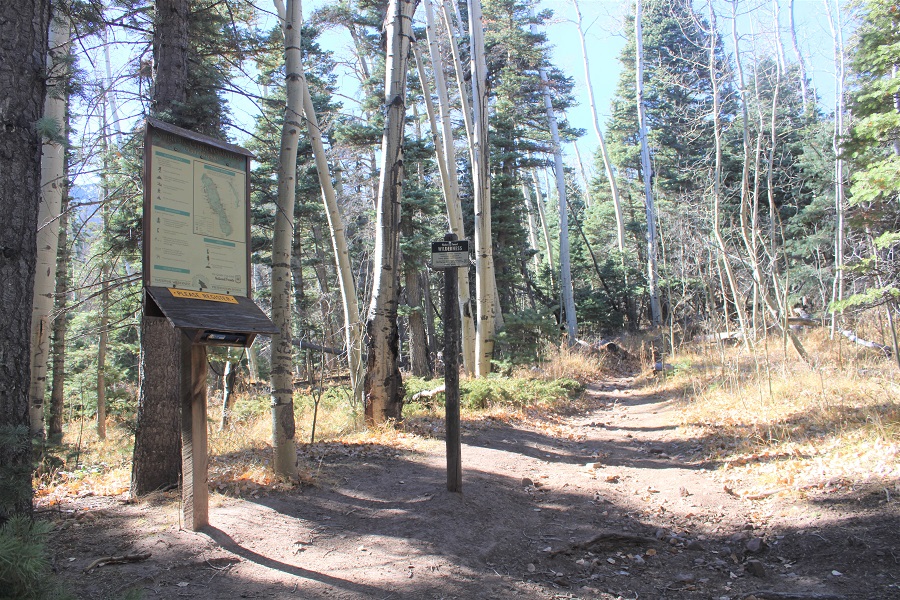
Just after the junction there was a trail register.  I registered and was on my way

From here on out the trail was narrower, but it was still class 1.  I followed the trail southwest as it headed toward Comanche Lake

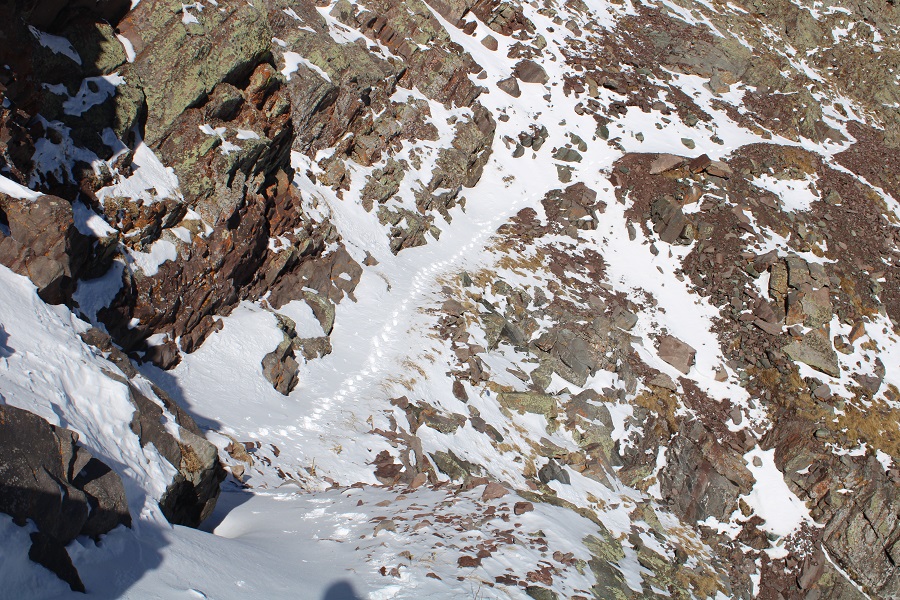
I saw snow on the trail around 10600’ and noticed a set of tracks.  It looked like someone was ahead of me on the trail.  I wondered how long it would be until I ran into them?

The snow continued off and on until I made it to the upper basin, where it was on the trail for good.

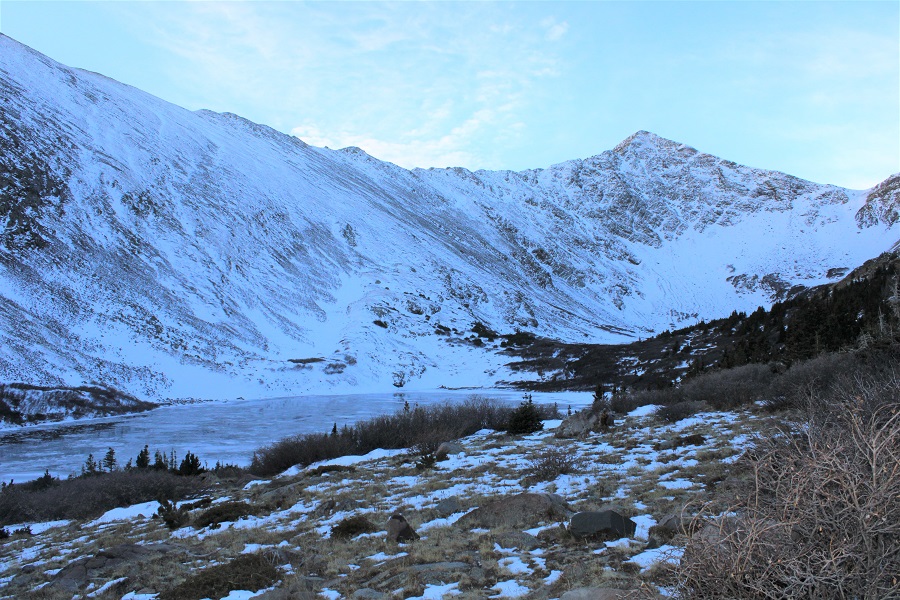
After 4.3 miles of hiking, I made it to Comanche Lake

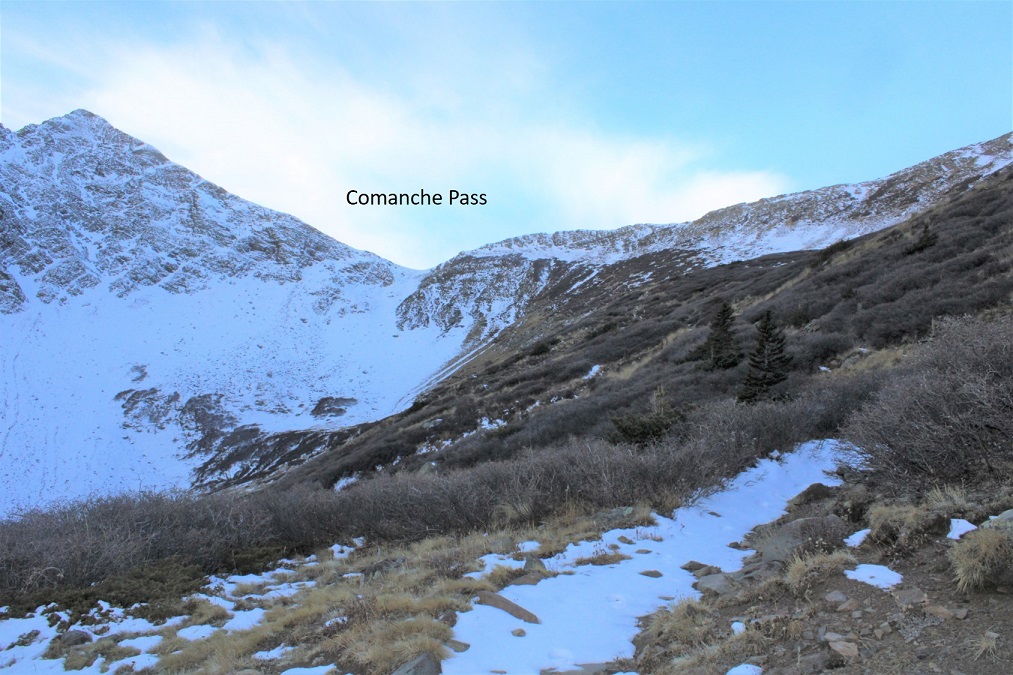
I continued on the trail.  I was headed for Comanche Pass

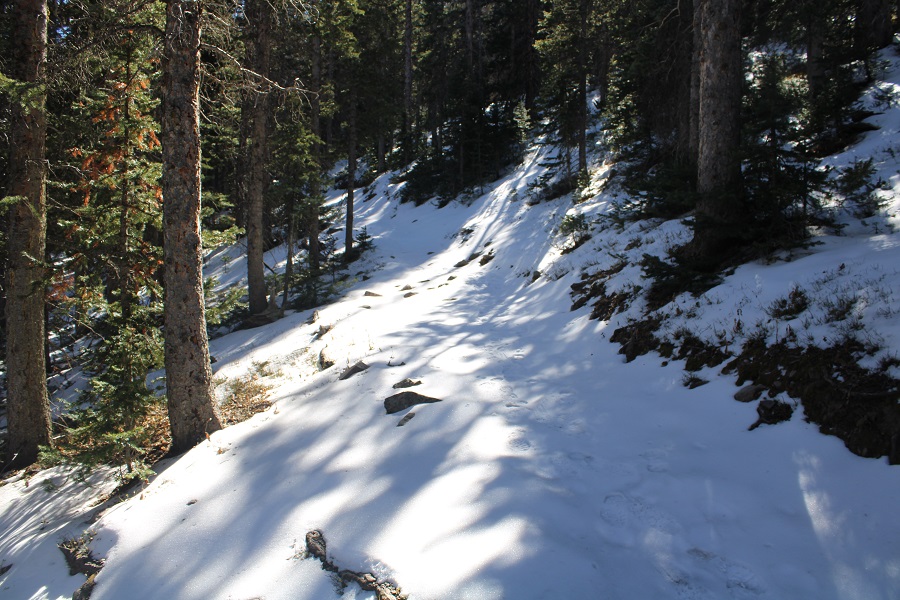
The trail, while under several inches of snow, was easy to follow. 

Just before making it to the pass I overtook the hiker ahead of me.  It was my turn to do the trenching!  I followed some coyote tracks to the pass.  The snow here was never more than knee deep, so I didn’t bother with snowshoes/traction.

I’d done this peak a few days ago, and knew I wanted microspikes and an ice axe to get over the cornice.  I sat down to put them on, and my new hiking buddy continued on the lower trail to the Comanche/Spring saddle (he was summiting Comanche today).  The cornice was just as sugary as it had been on Tuesday, which made for a fun time.

It was 5.8 miles of hiking to the pass.  Once over the cornice I turned right and headed north along the ridge.  This is where the wind picked up, and didn’t stop until I made it back down the pass on my way out. 

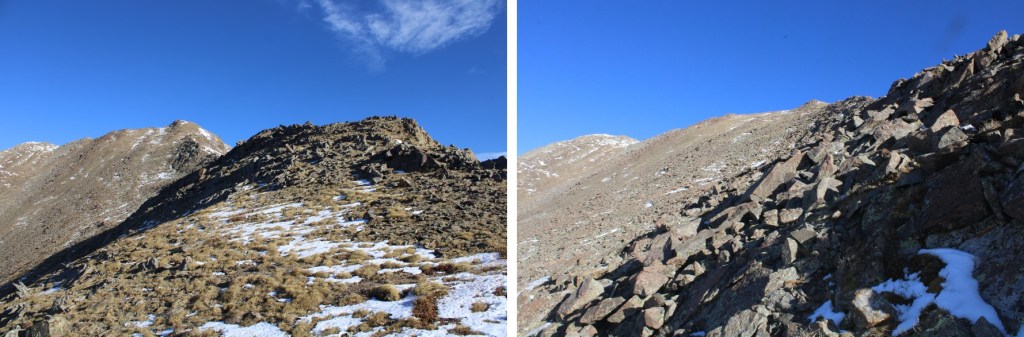
The terrain here started as tundra, but quickly turned rocky.  It stayed class 2.

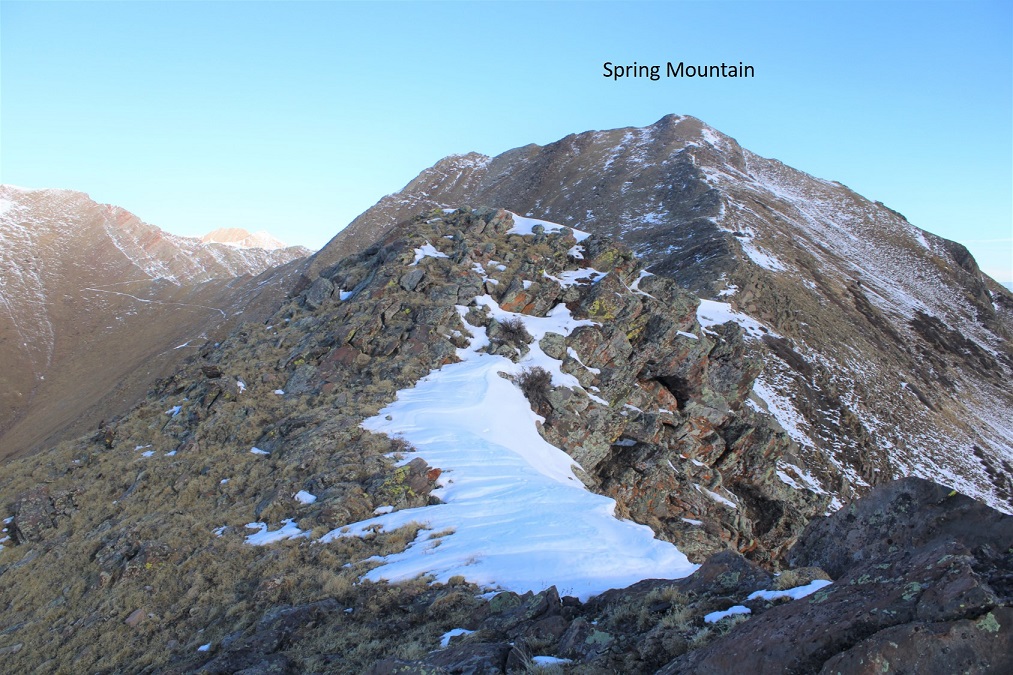
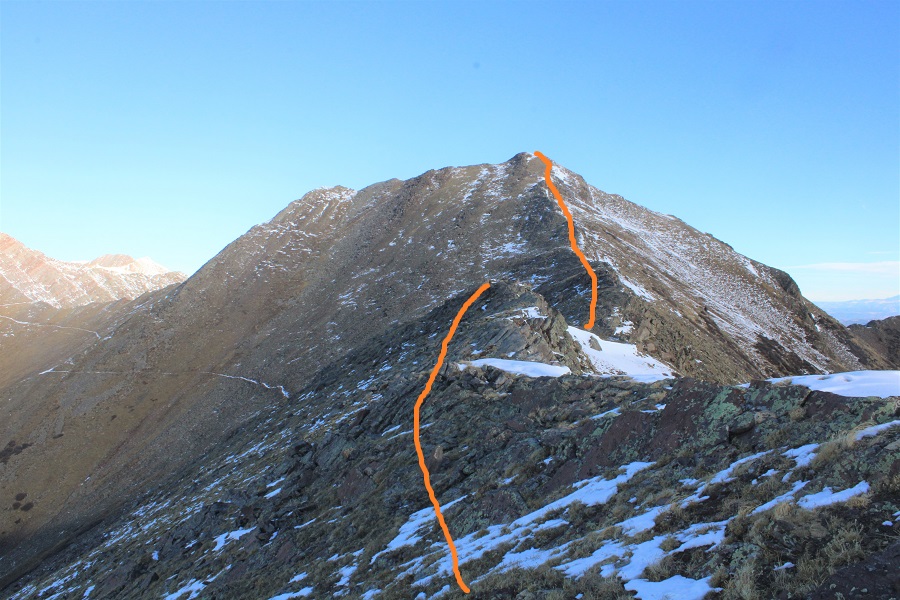
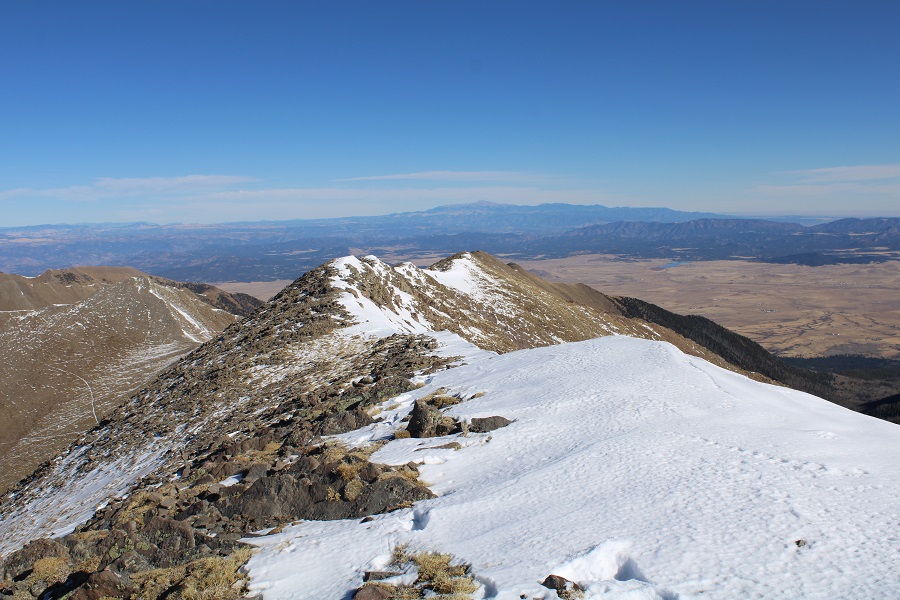
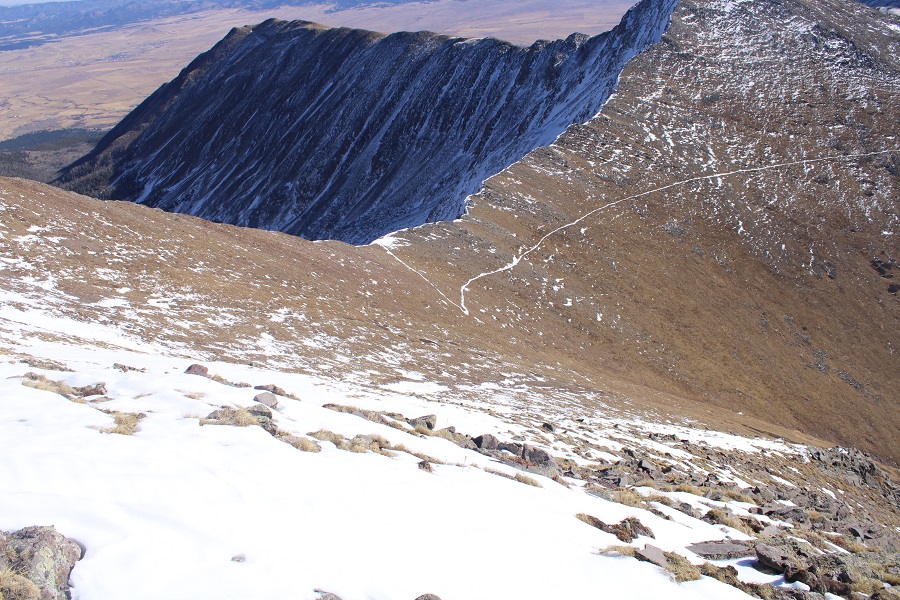
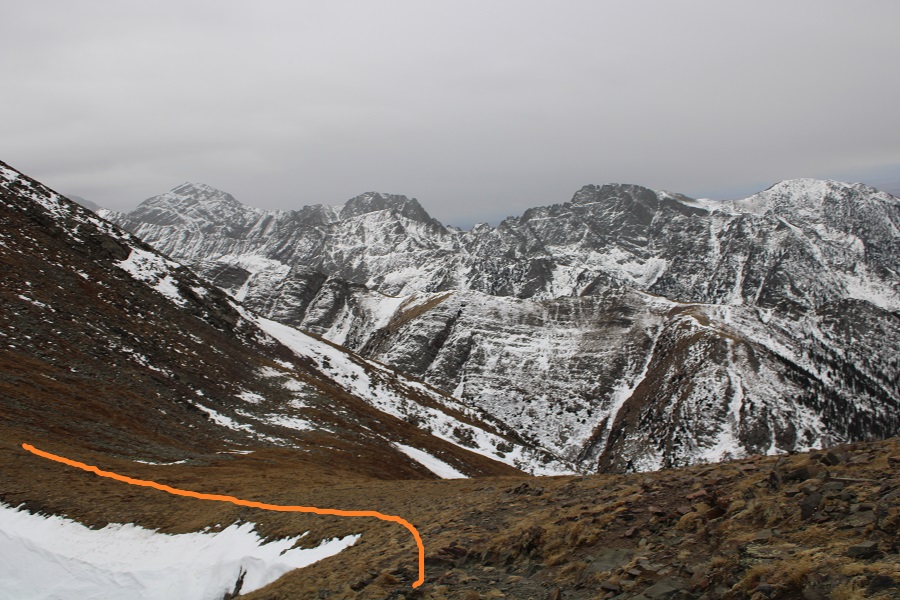
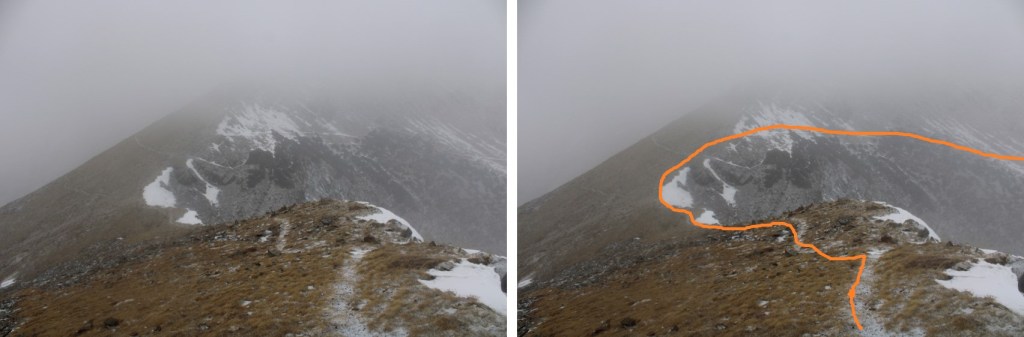
I mainly stuck to the ridge, dipping down left in the rocky areas, and to the right just before the summit.  If I looked left, I could see the trail I’d be taking on my way out (the only place the snow was sticking on this side of the mountain)

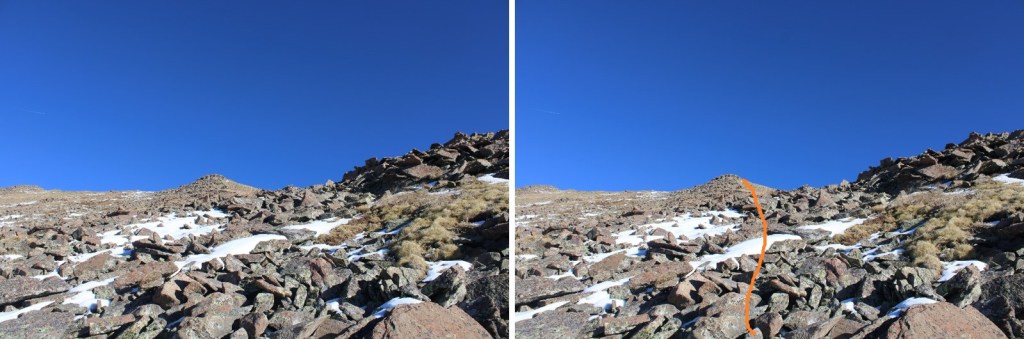
Here are some more pictures of the route up the ridge

The rocks here were unstable, so I had to be careful with every step

There was a little bit of snow the final push to the summit

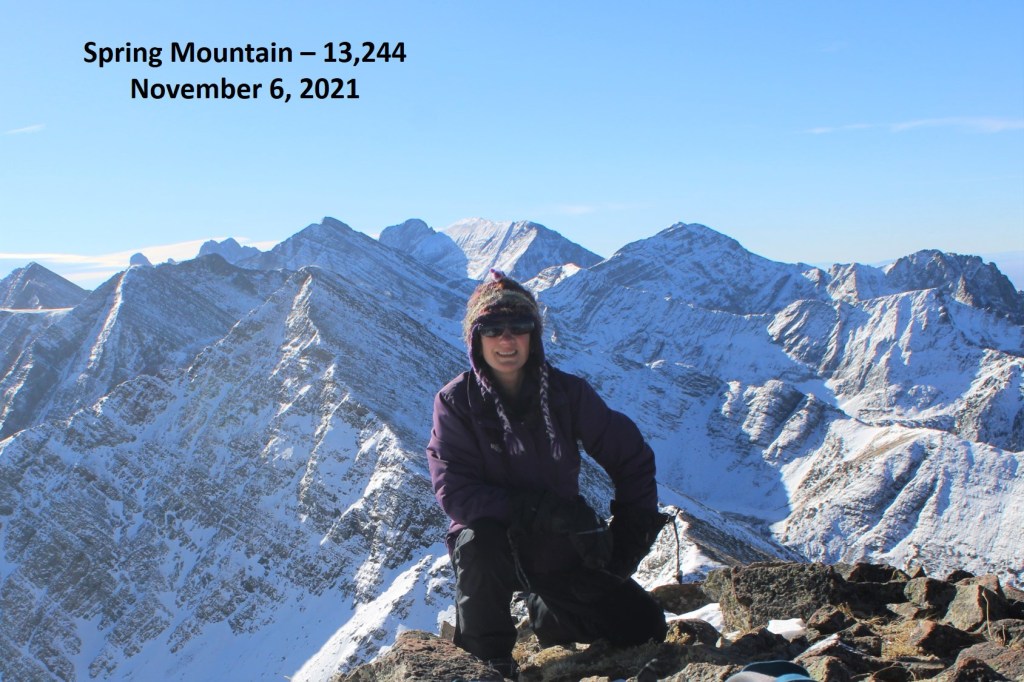
I summited Spring Mountain at 10am

Spring Mountain:

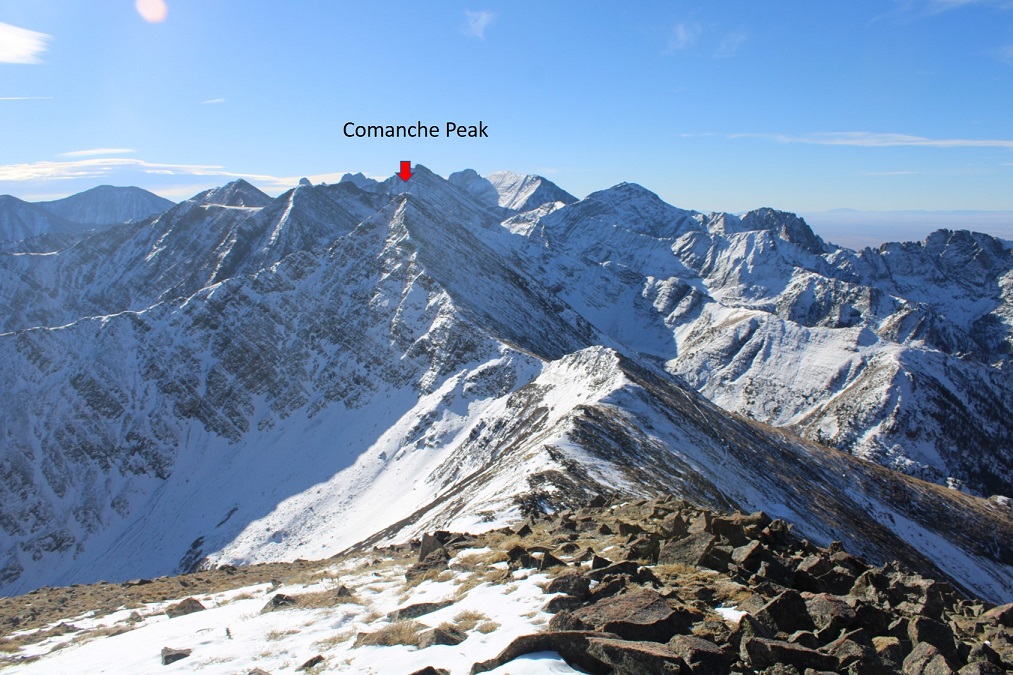
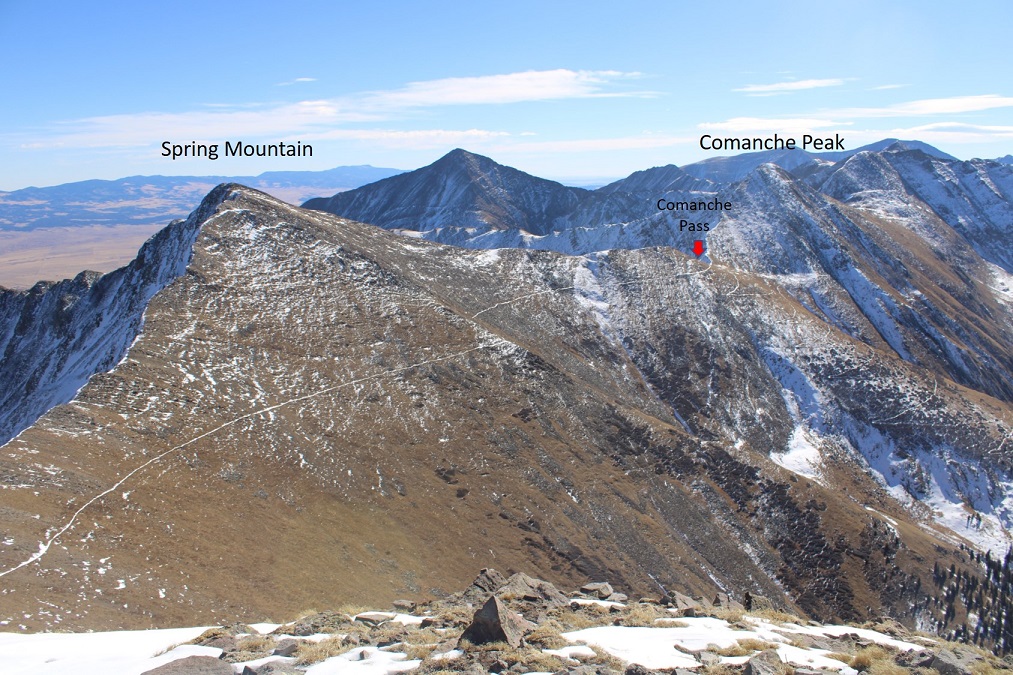
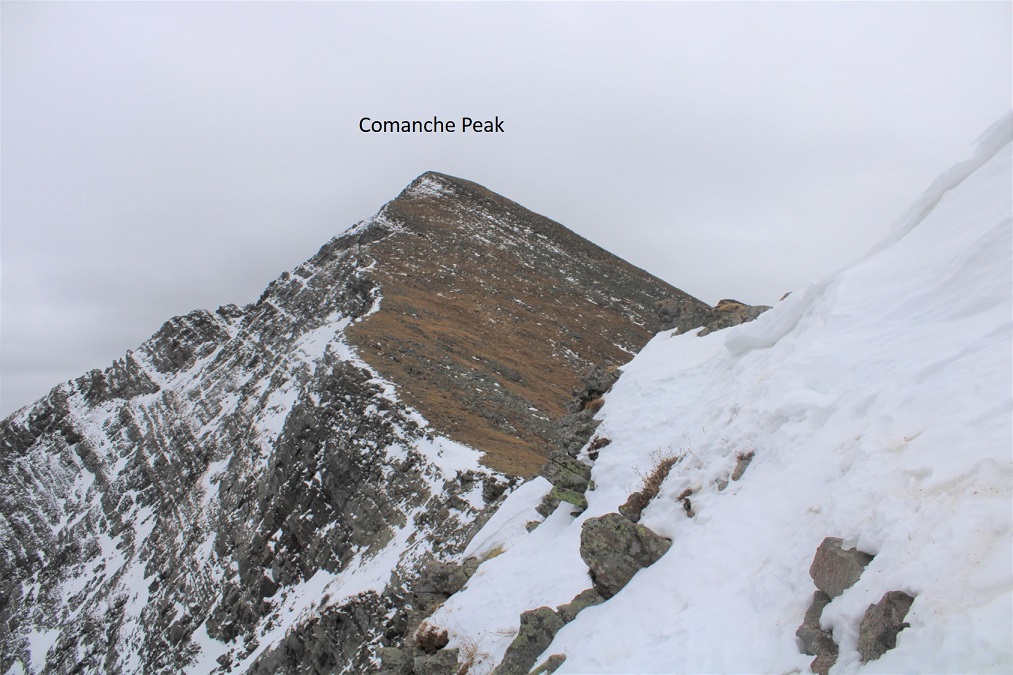
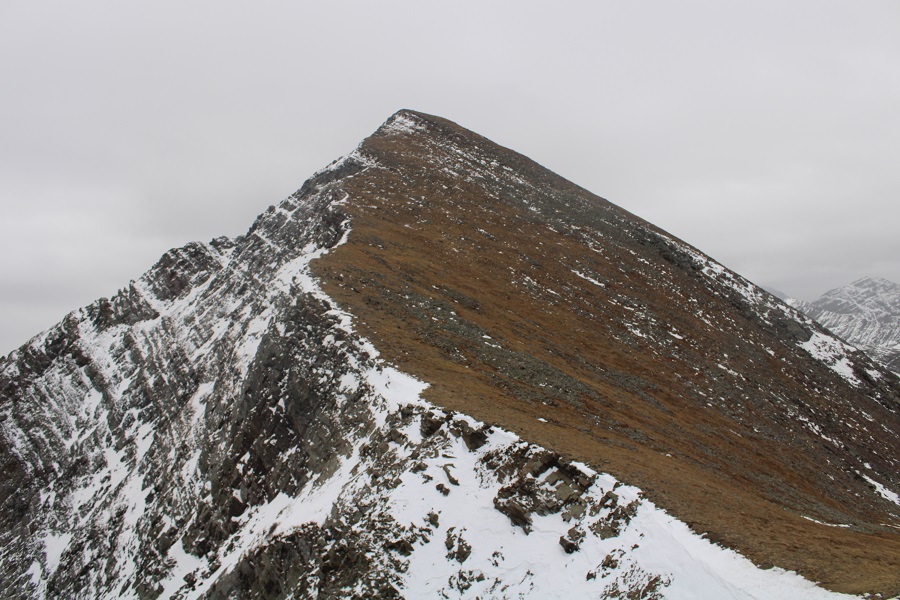
Here’s looking back at the ridge, Comanche Pass, and Comanche Peak

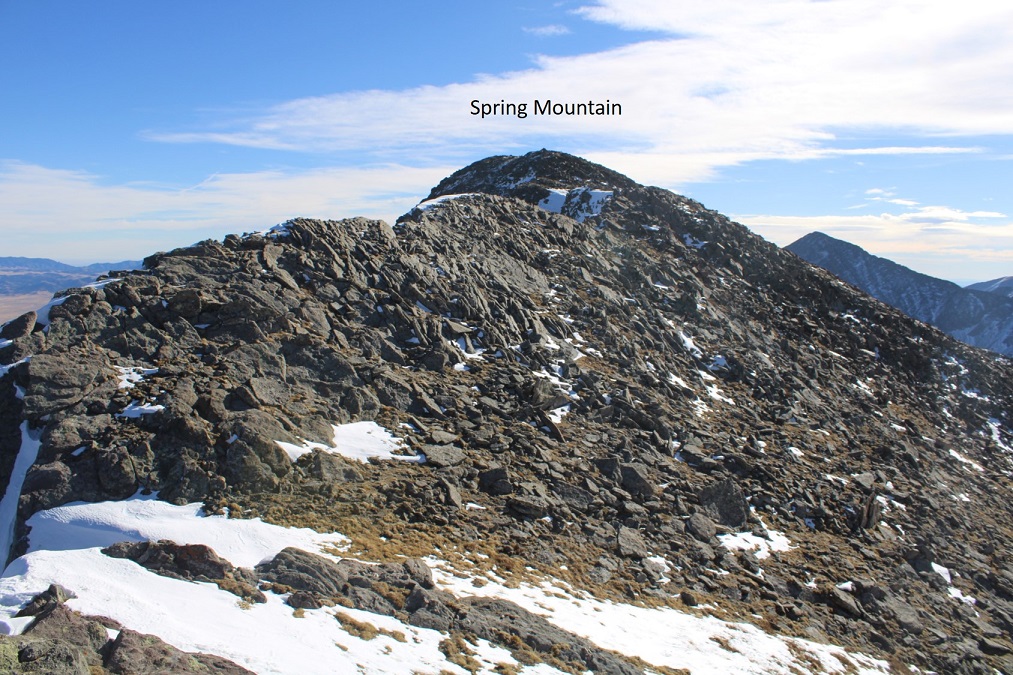
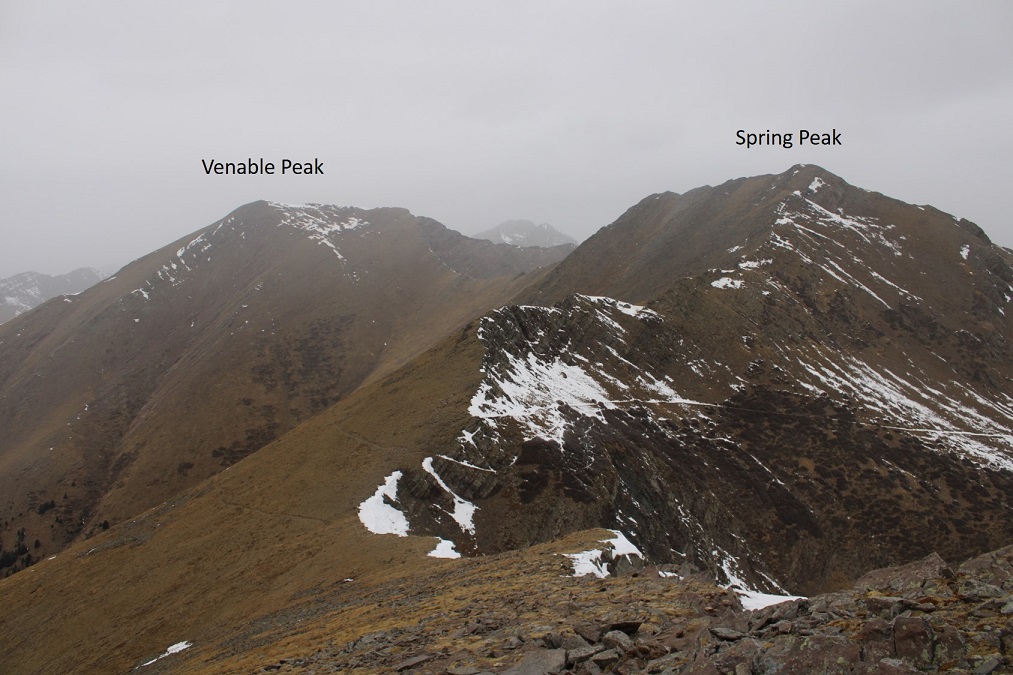
Next, I was headed to Venable Peak, directly to the west.

I made my way down to the Spring/Venable saddle, losing about 500’ in elevation over rocky terrain, all class 2

Here’s looking back at that rocky terrain coming down from Spring Mountain

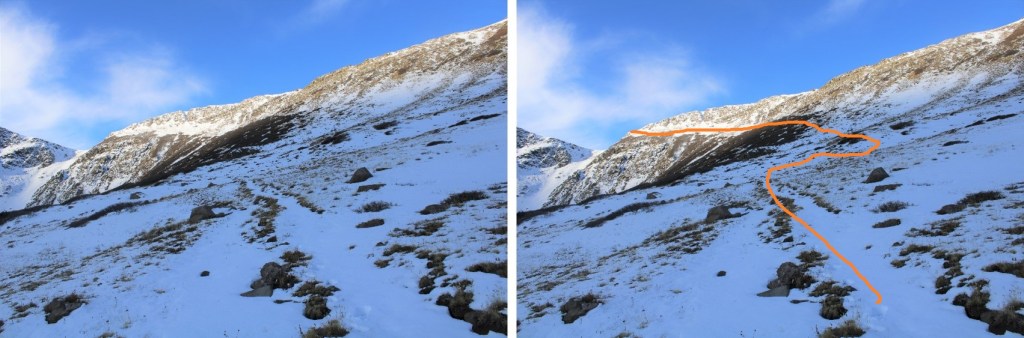
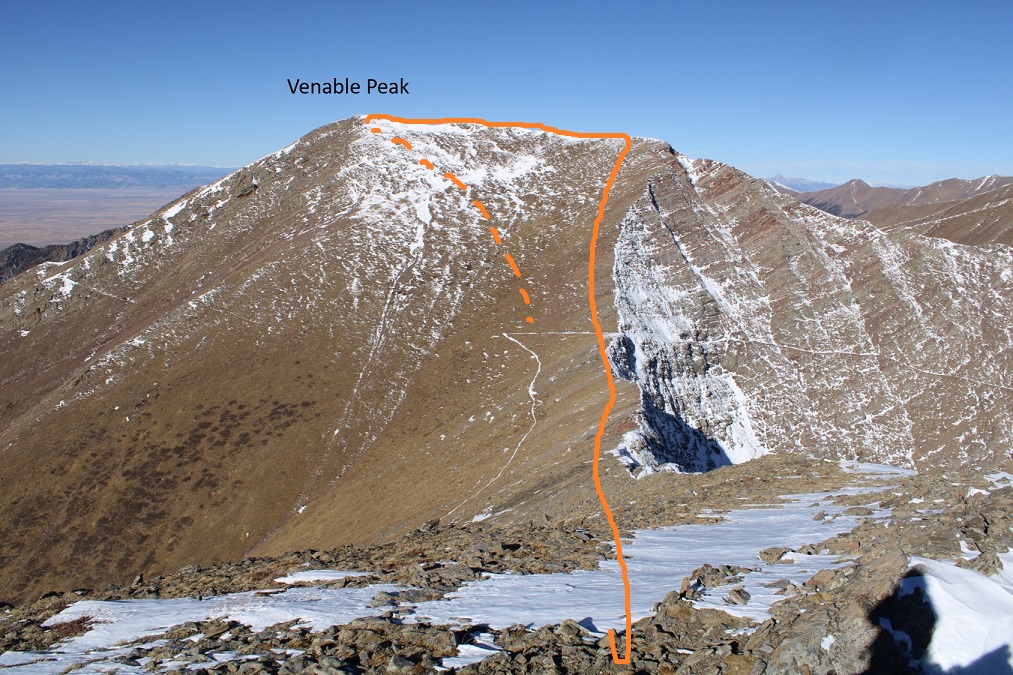
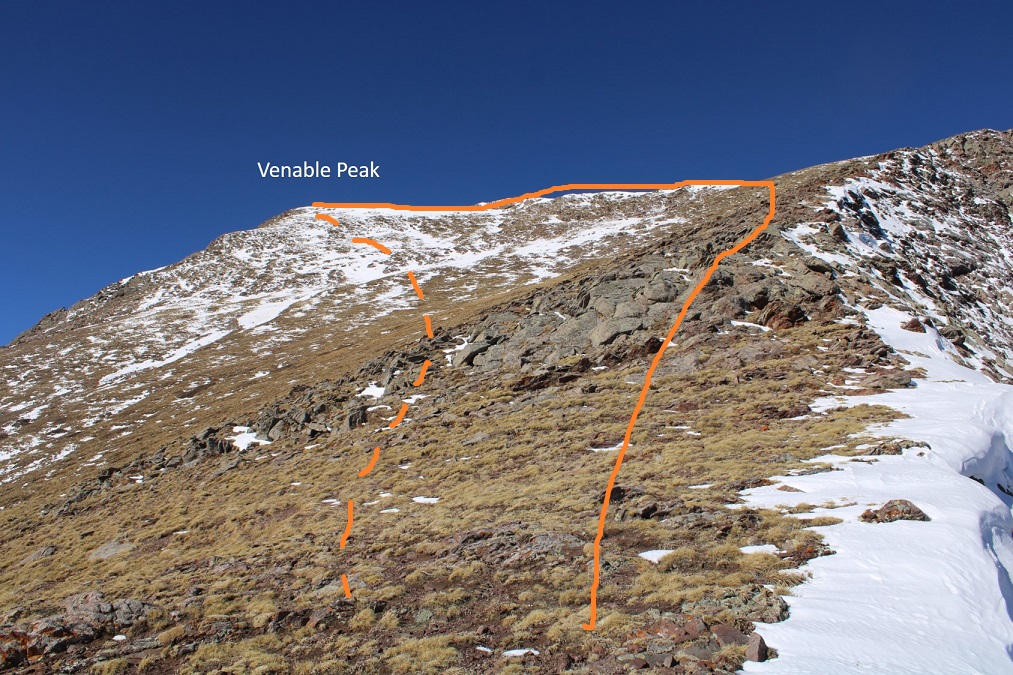
This is the path I took to summit Venable Peak.  I took the solid line up, the dotted line down.  The entire area is class 2, so choose your own adventure

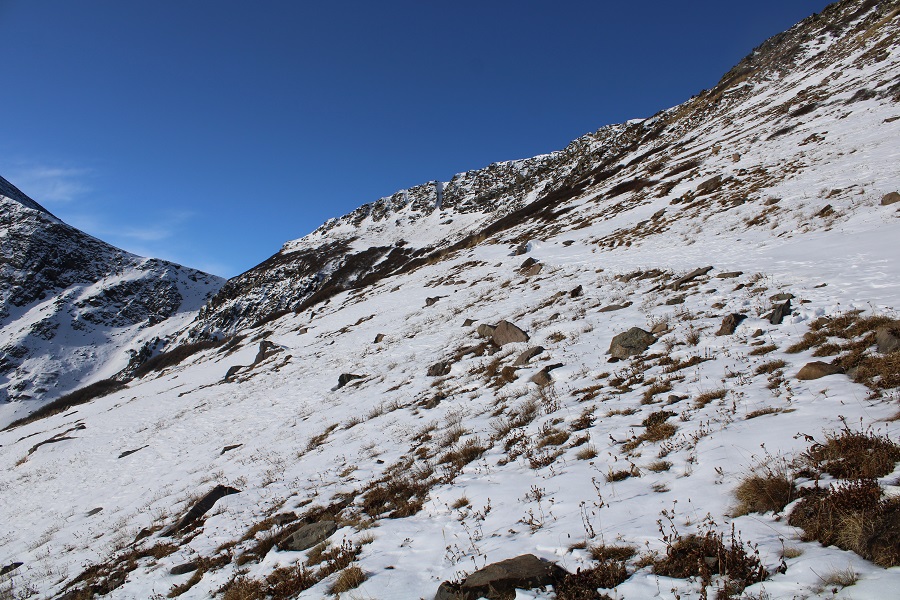
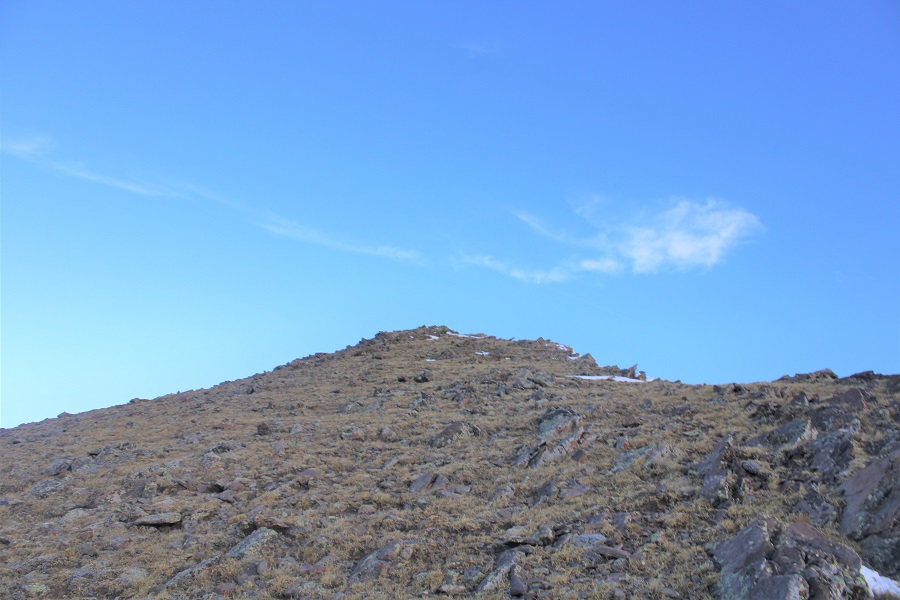
Step by step to the ridge, gaining about 580’.  The terrain started out rocky, and then turned to tundra

Once on the ridge, I followed it southwest to the summit.  The snow was sugary, so I stayed a bit to the right, near the rocks

I summited Venable Peak at 11am

Venable Peak:

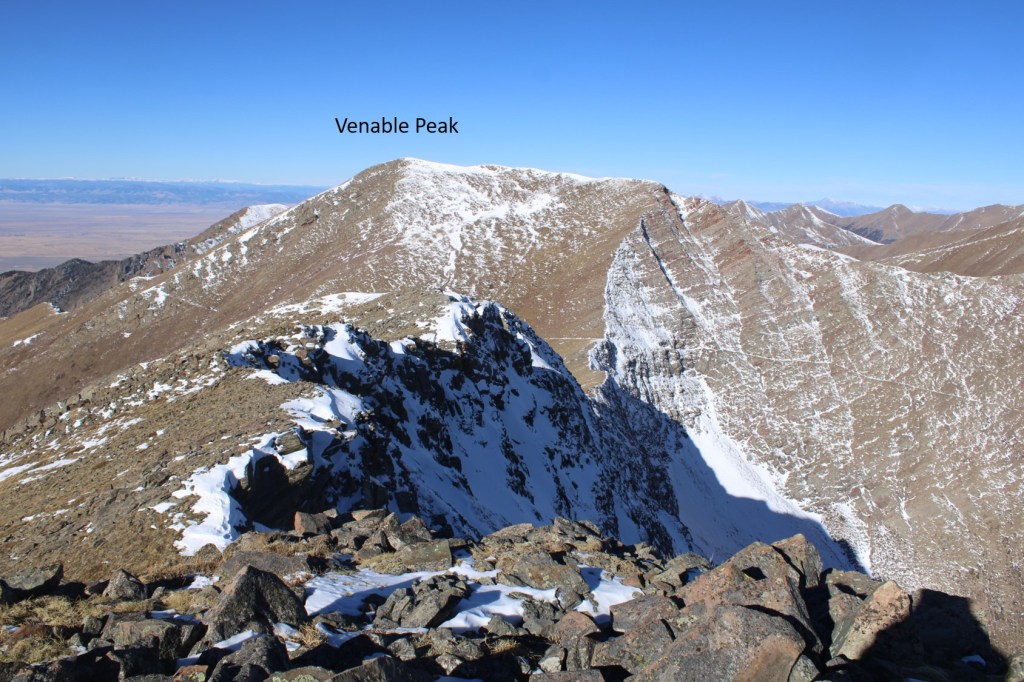
Here’s looking back at Venables ridge

From the summit, I headed east, towards the highly visible Comanche Trail.  I was aiming for Comanche Pass

I made my way towards Comanche Trail on class 2 tundra sprinkled with patches of snow

And then followed the trail south to Comanche Pass

Once at the Comanche/Spring saddle I turned left, and took the trail that goes below the cornice (it’s located near the willows).  I didn’t want to take the cornice back down, as it had been unconsolidated on my way up; I felt later in the afternoon it would be even more difficult to downclimb.

Here’s looking back up at that cornice (the trail is directly below the cornice)

From the pass I followed the class 1 trail 5.8 miles back to the trailhead.

I made it back to my truck at 1:30pm, making this a 14.24 mile hike with 5572’ of elevation gain in 7.5 hours.  

On to the next trailhead!
Venable Peak – 13,334- Attempt

RT Length:  11.9 miles

Elevation Gain: 3921’

I made it to the trailhead late the night before, and slept in the cab of my truck.  Well, I tried to sleep. Unfortunately, there was internet access at this trailhead.  This meant I was scrolling through my phone until 1 in the morning.  I hit the snooze button three times before waking up to dawn approaching.  I threw on my gear, waved at the hunter who just pulled up in the parking area, and was on the trail at 7am.  This morning I was taking the Venable Trail, which is clearly marked from the parking area.

I followed the trail as it crossed over a bridge

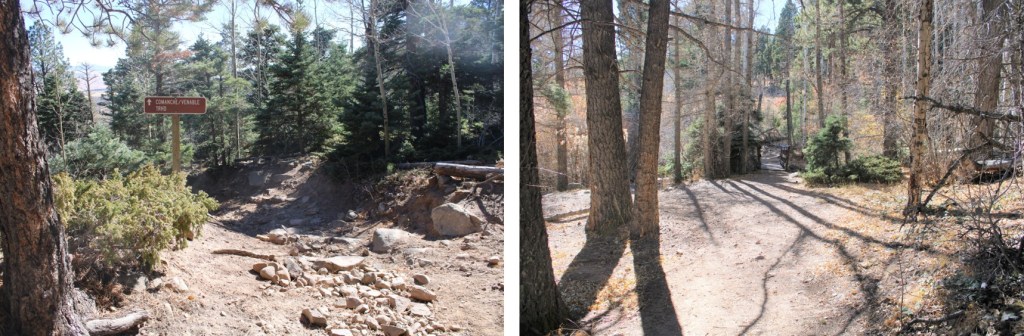
After hiking for half a mile, I came to a junction with the Rainbow Trail, and continued straight, following the Venable Trail (1347). 

Just after this junction there was a trail register.  I signed it, and continued following the Venable Trail southwest

This is a class 1 trail.  Today’s conditions varied, from being covered with ice, to being bare dirt, to several inches of snow. 

After hiking for 2.5 miles, I came to the junction for Venable Falls.  Here I continued straight on the trail, towards Venable Lakes

The trail increasingly became more snow covered, but no traction was necessary.  Of course, most of the snow present was directly on the trail.  This is where I was headed

I rounded this hill (lower Venable Lake is to the right)

And after 5 miles of hiking, I made it to the lower Venable Lake

I kept following the trail

After hiking a total of 5.5 miles I came to what I assumed was a junction (it was covered in snow and the sign was missing:  only a post remained). I turned left and took Comanche Trail (1345) towards the pass.

I now had a good view of the rest of my route to the pass

More and more snow started accumulating on the trail.  It was sugary, so I put on my microspikes.  I had snowshoes, but the snow was so sugary they wouldn’t have made much of a difference.

It was slow going, and I had to spend a lot of time making a solid path in some areas through the snow, doing my best to hug the cliff, not entirely sure how wide the trail was.  I was doing find until I got to this area:

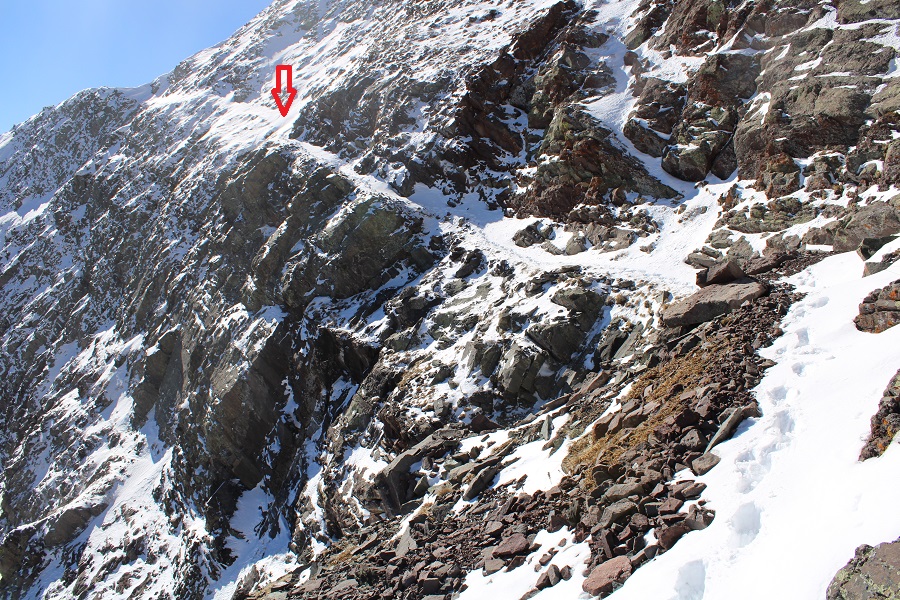
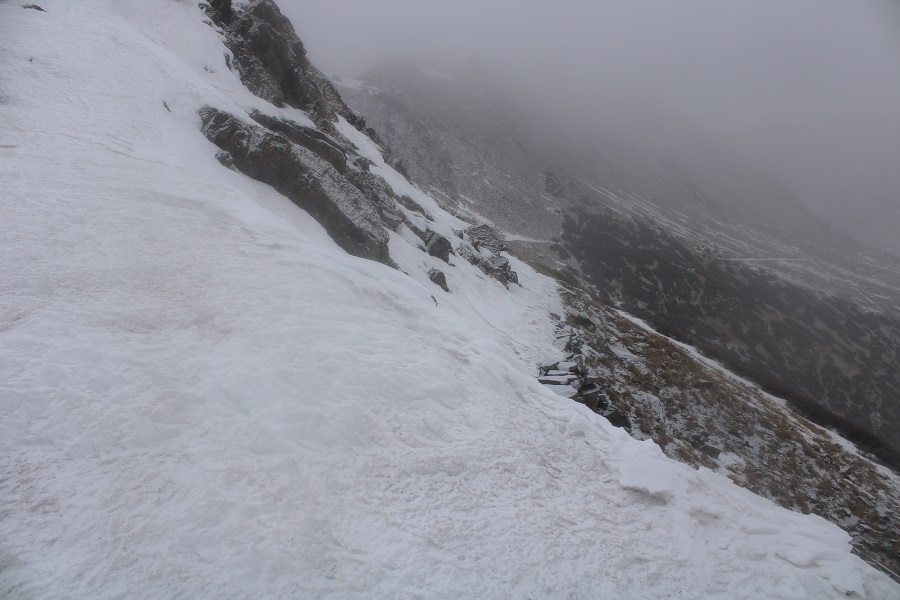
I was about 200 feet from the pass, and the snow drifts were now taller than I was.  I kept seeing snow slide down below my feet, over the cliffs, and made the decision to turn back. It hurt to turn back, but I knew it was for a good reason: I’m out here solo, and while I might have made it past the snow/cornice to the pass, I couldn’t have done so safely, and a fall would have been fatal.  The red arrow is where I turned around. You can see the tracks where I stopped

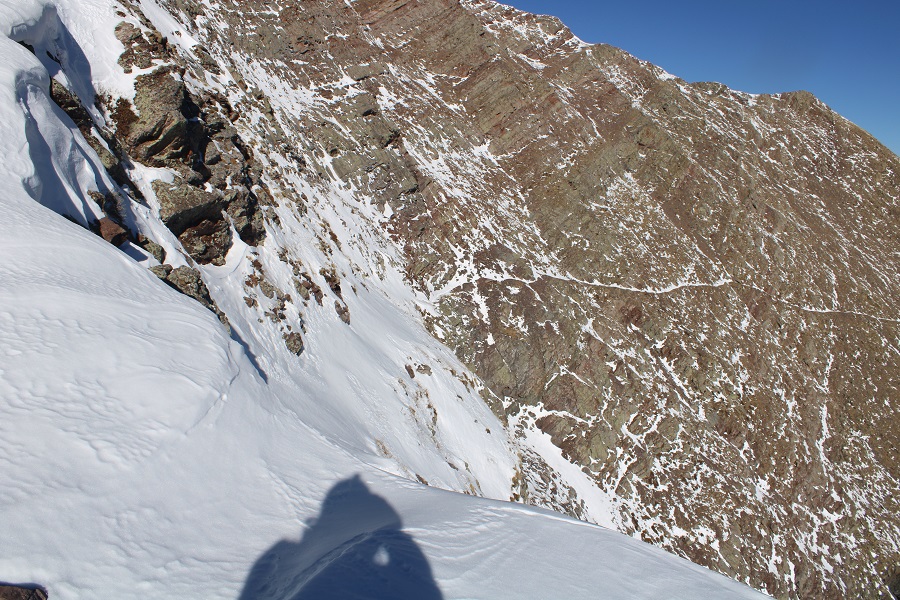
Just for reference, I was able to summit this peak via the Comanche trail the next day.  Here’s what the pass looked like from above

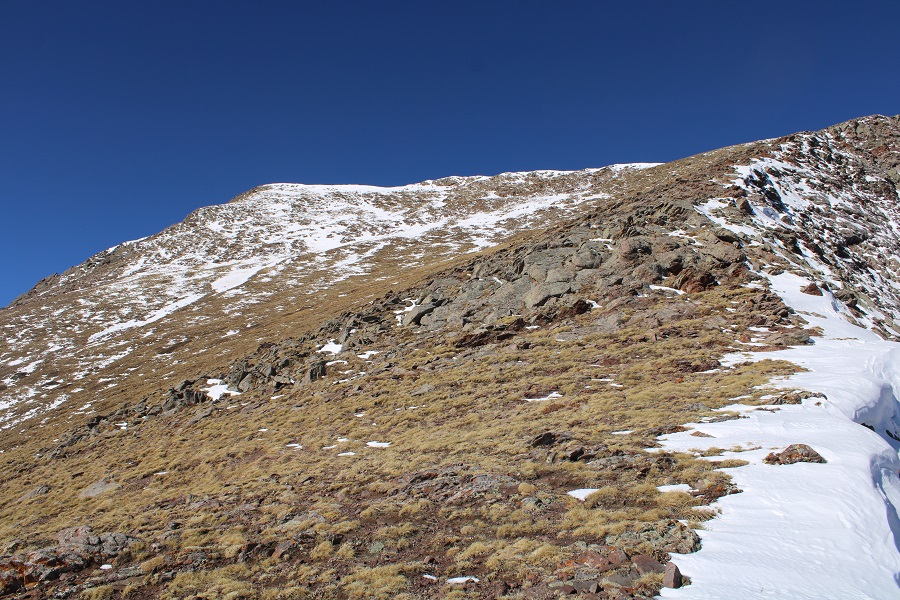
And look at how close I’d been to the summit of Venable! 

For those of you interested in taking this route, this is how I summited Venable the next day.  I took the solid line up, the dotted line down.  Both were class 2 (although the ridge had quite a bit of snow)

However, I wasn’t summiting today. Instead, I turned around and hiked the 6 miles back to the trailhead. 

On my way out I made plans to hike Venable and Spring from the Comanche Trail the next morning.  Added bonus: I didn’t have to drive to another trailhead, since the Venable and Comanche Trailheads share a parking lot.  I made it back to my truck at 12:30pm, which gave me plenty of time to read, drink whiskey, talk to hunters, and get some rest before tomorrow’s attempt.

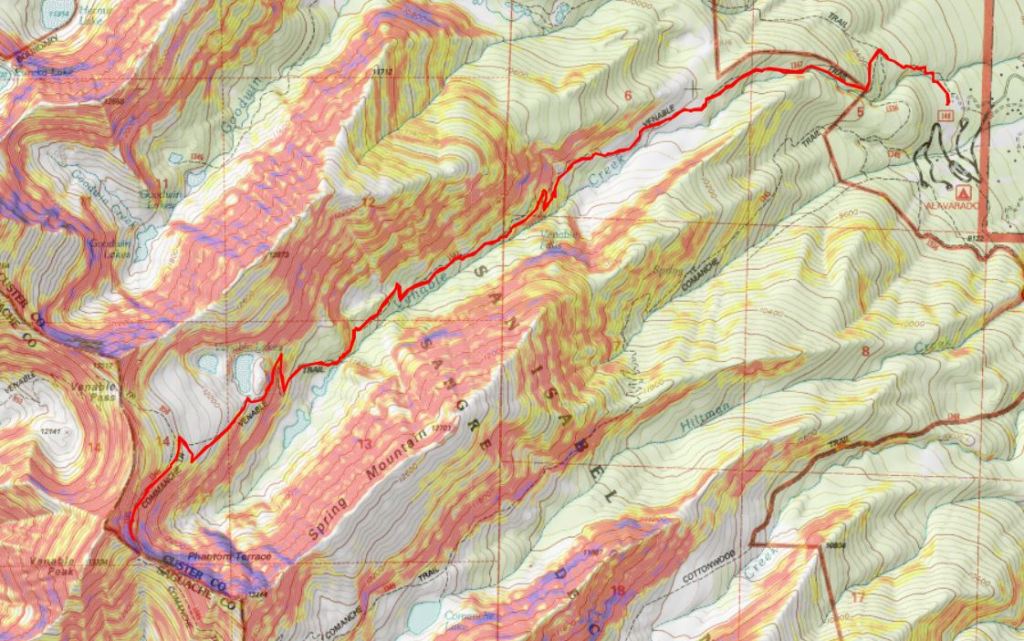
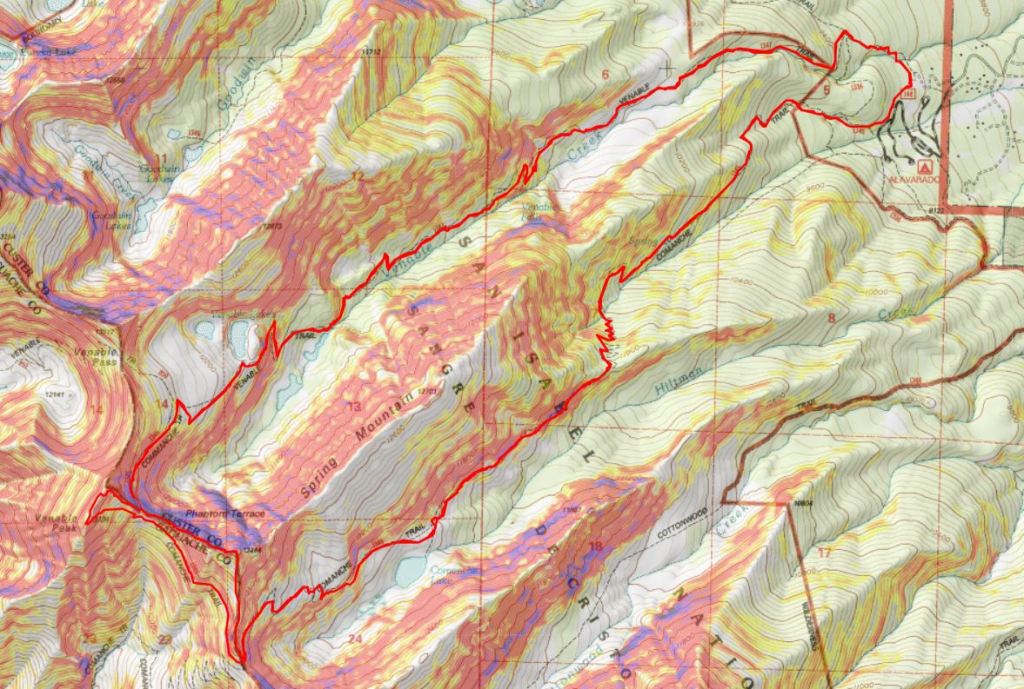
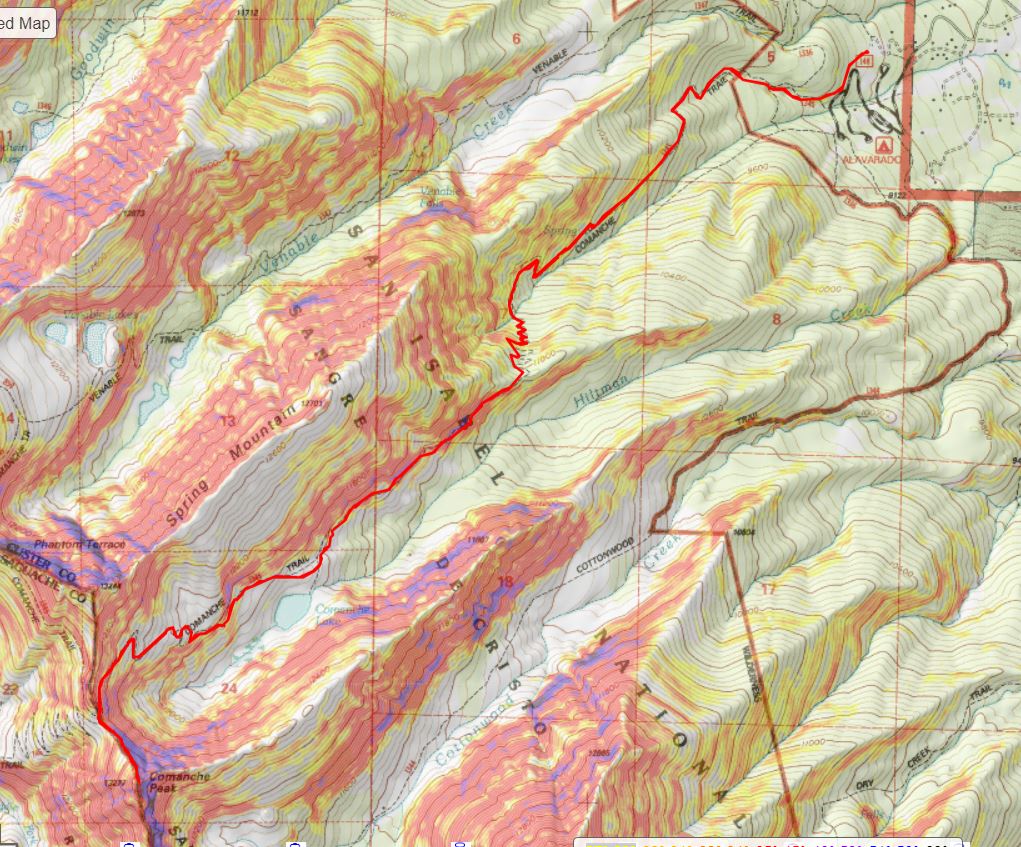
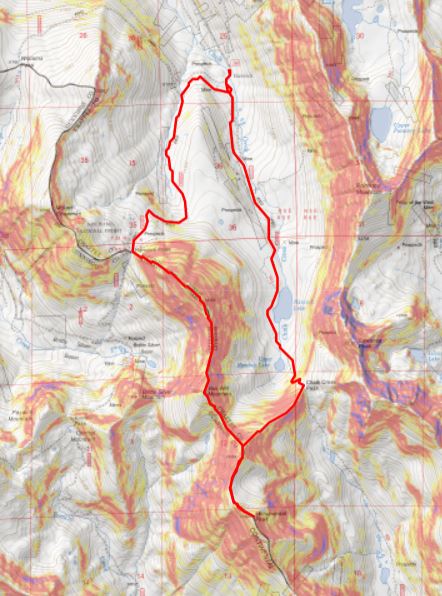
Here’s a topo map from today’s attempt, and another along with the route I took the next day

You can find my successful Venable trip report here.

Comanche Peak – 13,277

RT Length:  12 miles

Elevation Gain:  4837’

The weather forecast for today predicted a 40% chance of snow after noon, and the snow would be minimal, so I decided to head to the Sangres to do the Comanche/Venable loop.  Spoiler alert: I only got Comanche Peak.  My vehicle was the only one in the lot when I arrived.  I was on the trail at 5am.

I decided to do the loop clockwise, starting with Comanche Peak.  The Comanche Peak trail was clearly visible from the parking area.

I followed the Comanche Trail for about half a mile, and crossed the Rainbow Trail.  I stayed straight on the Comanche Trail.

There was a register and information area

This trail is well groomed and wide.  I followed the trail all the way to Comanche Lake, switchbacking up the mountainside.   

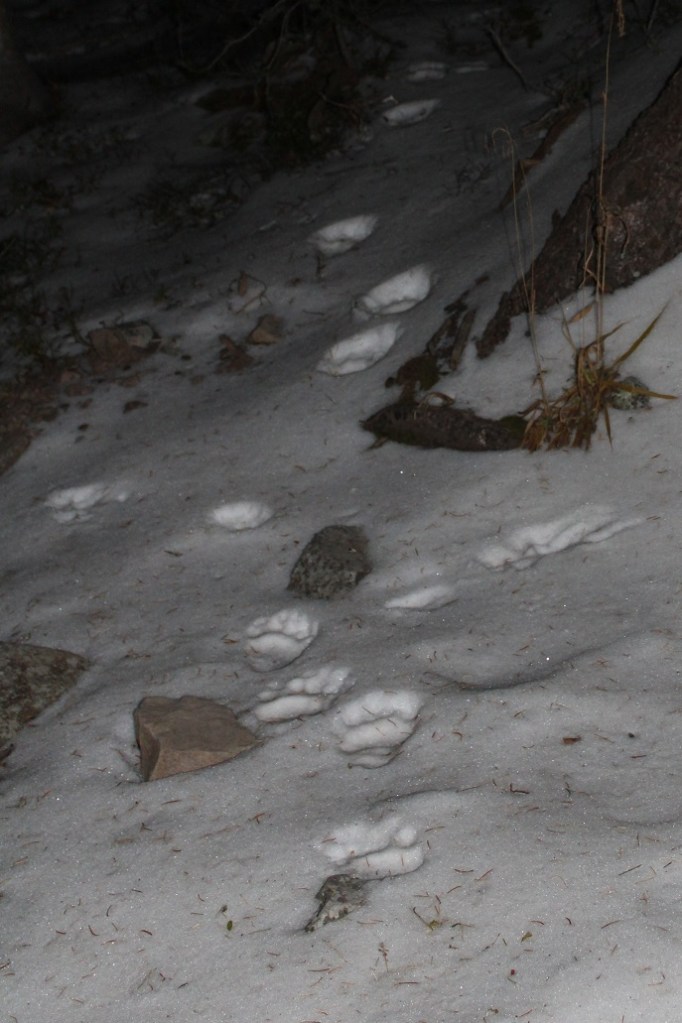
Also, the bears are still awake…

After hiking for 4.25 miles, just before making it to Comanche Lake, there’s a junction.  I continued straight, instead of heading down to the lake

I was headed to the Comanche/Spring saddle

The hike to the saddle continued to be class 1, but what little snow there was had accumulated directly on the trail. On the positive side, the trail was easy to locate!

Just before making it to the Comanche/Spring saddle there was a cornice to navigate.  I got out my microspikes and ice axe, and kicked in steps. 

As I was doing so, I looked to my left and could see Comanche Peak

I could also see weather coming in from the west.  It wasn’t supposed to snow until later in the day, but I could feel the wind picking up, and see the snow coming in.  I’d have to re-assess my hiking plans as I went. 

It was 5.8 miles from the trailhead to the saddle.

After putting away my microspikes and ice axe, I followed the saddle south

It was an easy, class 2 hike to the summit, mostly on tundra or stable rocks. In some areas there were bits of a game/social trail

As I was hiking up the ridge towards Comanche Peak the wind picked up, and it started snowing.  I figured I’d get a picture of Spring and Venable before the snow moved in.  In less than 10 minutes, I could no longer see these peaks.

Here’s a look at the last push to the summit of Comanche Peak

There was a cairn at the summit

I summited Comanche Peak at 8:50am. 

Comanche Peak:

I turned around to head back to the Spring/Comanche saddle, and noted the lack of visibility.

I descended to the saddle, and realized the snow wasn’t going to let up any time soon.  I could have made this a loop, but the pictures would have been useless in a trip report, and navigating a fresh layer of sugary snow on the rocks didn’t sound like a fun time, so I decided to just head back the way I came, making this an out and back hike.  I’d come back later for the other two peaks.

Here’s looking back at the trail from the saddle

And back over the cornice

It continued to snow the entire trek out, but the trail was easy to follow.  A nice layer of snow started to build up on my camera, gloves, eyelashes, backpack, etc. as I hiked out.

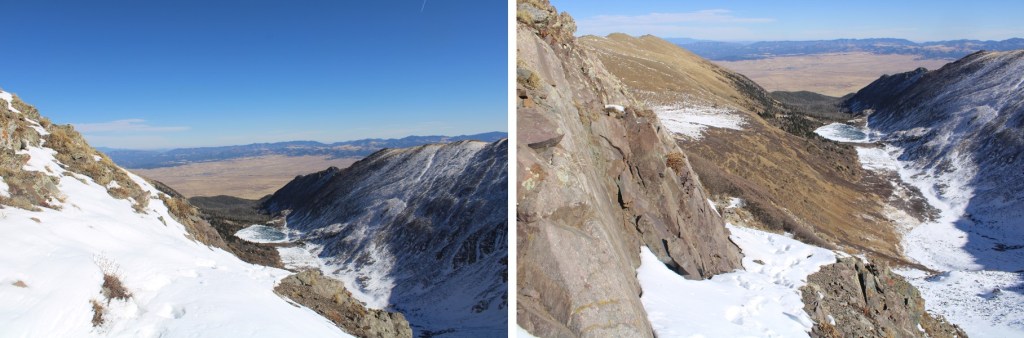
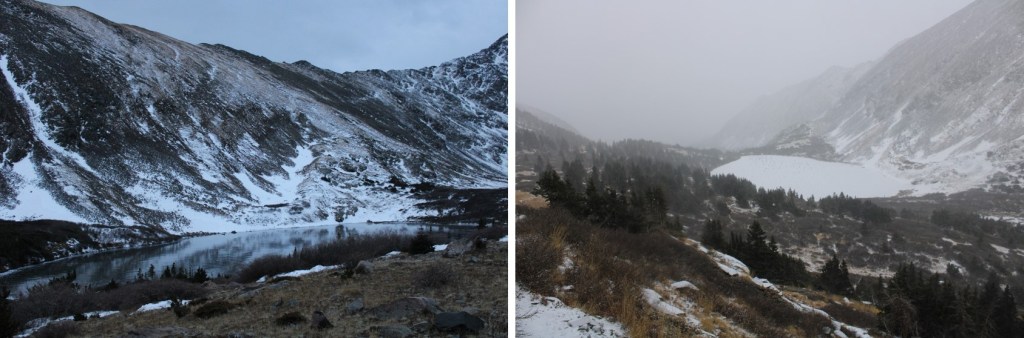
Check out the difference in Comanche Lake from earlier this morning

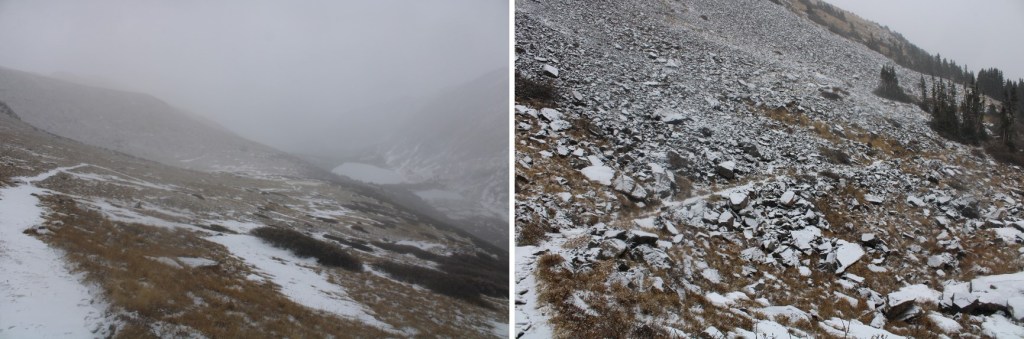
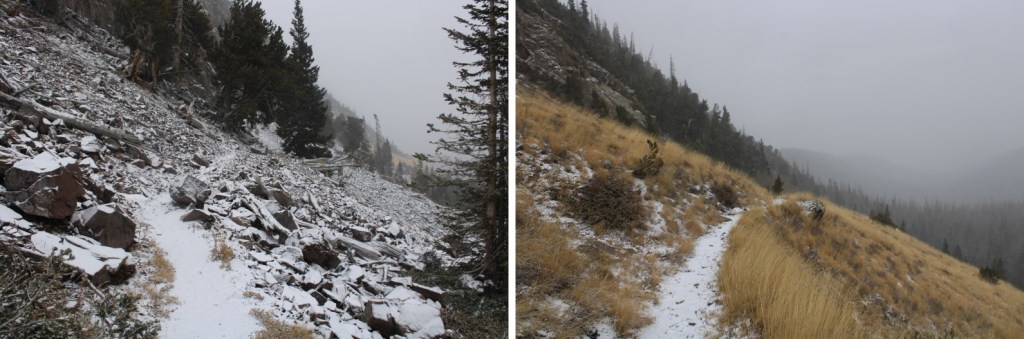
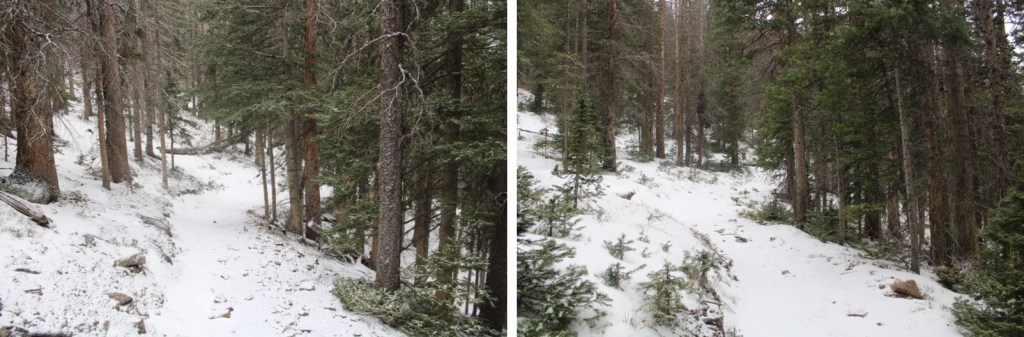
Here are some pictures from the hike out.  It was neat having more snow on the trail on the way out than I’d had on the way in.  The only downside: There had been ice on the trail this morning I could avoid because I could see it.  Now it was covered in a layer of snow and not quite as visible.  I did some slipping and sliding, but managed to remain upright.

It finally stopped snowing just as I made it back to the trailhead, but a look up at the peaks let me know it was definitely still snowing above treeline.

I made it back to my truck at 11:15am, making this a 12 mile hike with 4837’ of elevation gain in 6 hours, 15 minutes.

Sentinel Point- 12,527

RT Length: 8.1 miles

Elevation Gain: 2963’

I’ve wanted to hike Sentinel Point for a while now, but haven’t because it isn’t ranked.  I’ve been kind of waiting for a good excuse to hike it, and today was the day; My oldest daughter flew out from Georgia for the weekend, and this morning I took her to the airport to fly back home, so I needed a hike I could start later in the day.

Oh, and today’s Halloween, so of course I wore a pumpkin dress.  It was also quite cold, so there weren’t a lot of people parked at the Horsethief Falls trailhead.  I gathered my gear, and was on the trail at 9:30am.  The trail is clearly visible from the parking area.

I’d heard it was harder to do this hike counter-clockwise, so of course, that’s the way I chose to do it.  (Spoiler alert:  it is harder this way).  I followed the wide, class 1 trail for 1.4 miles, to the end of Horsethief Park, where the trail abruptly ended at a small waterfall.

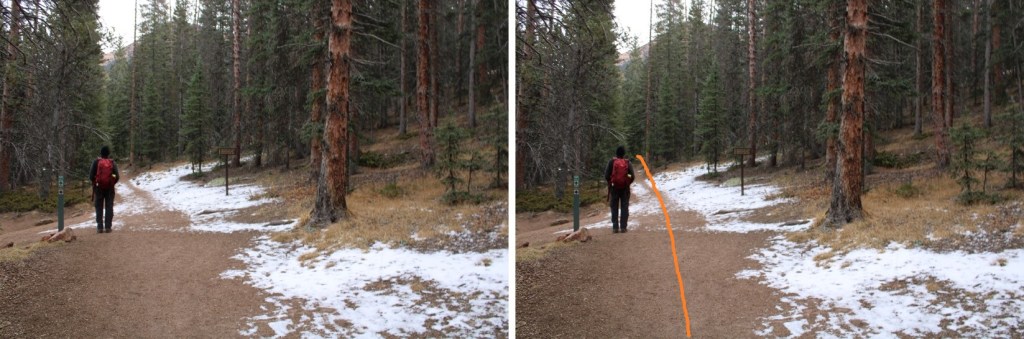
At the first junction, I continued straight, heading east

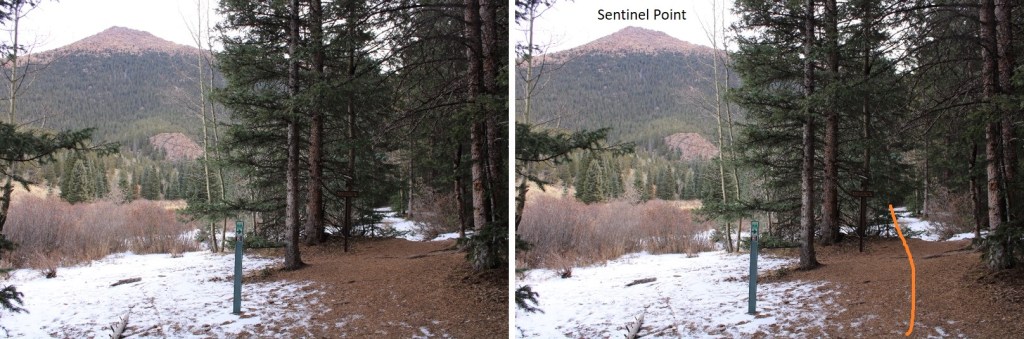
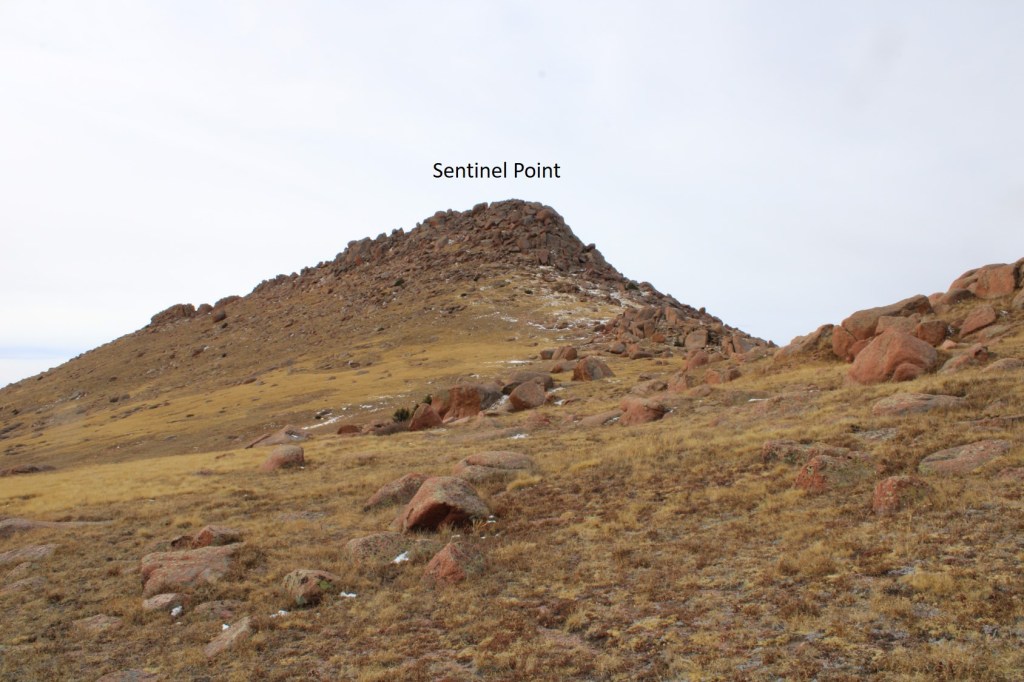
At the second junction, I again continued straight, heading east.   I was also able to see Sentinel Point from here

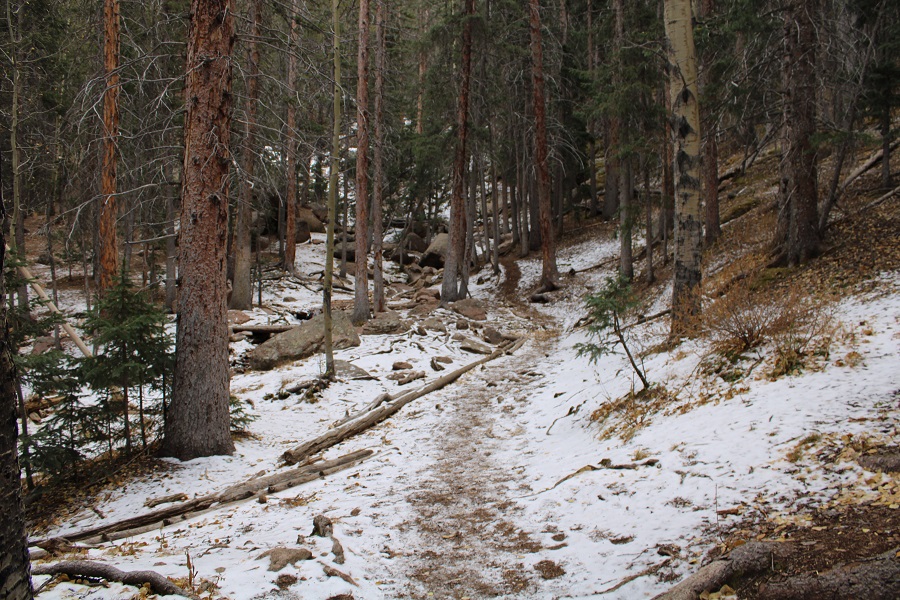
I was following Horsethief Falls trail

The trail was class 1, until it abruptly ended at what I’m assuming is Horsethief Falls

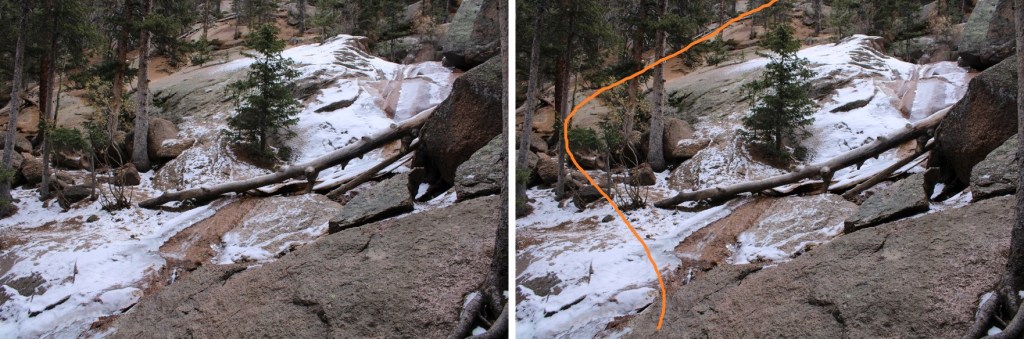
It was flowing at a trickle.  I crossed the falls, then immediately started ascending the hillside, heading directly east.

From the falls area, I hiked east 1.5 miles to treeline, bushwhacking the entire way, doing my best to avoid the boulders. 

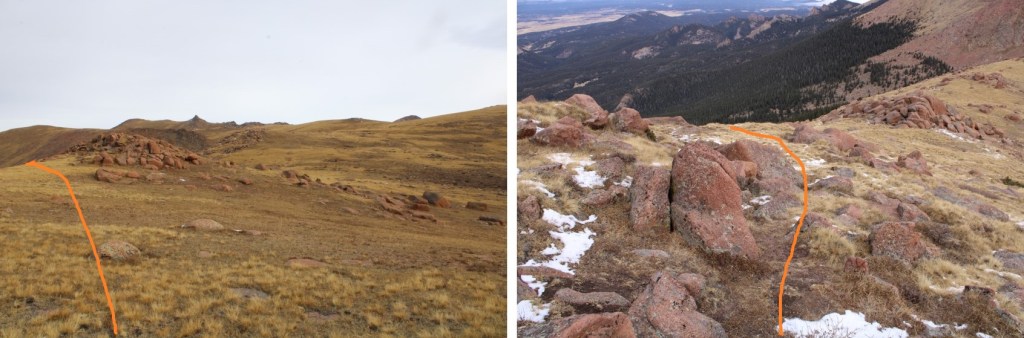
Here’s a picture of the route from later in the day.  You can see the obstacles to be avoided are mainly large boulders/rock outcroppings. 

This is the route I took, gaining about 2000’ of elevation in 1.5 miles

Once at treeline, I followed the ridge north

I was trying to get onto the other side of this rock formation

Once I did, finding the route to the summit proved difficult.  I kept trying to climb the rocks to find a summit, but they kept topping out.  My advice:  stay low and go further north than you think you should before trying to ascend to the summit.  Also, if you do this, you’ll find cairns.  Here are some photos…

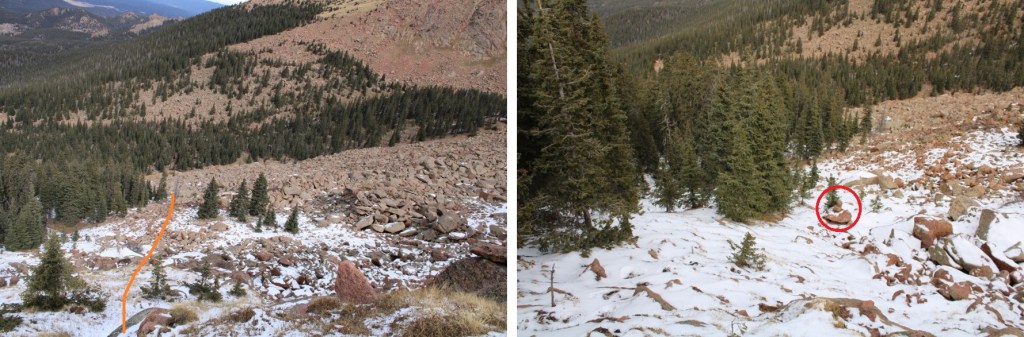
This is the entrance area to the summit.  The cairn is circled in red

This was difficult class 3 climbing, but sketchy due to the little bit of unavoidable snow/ice. 

I summited Sentinel Point at 11:30am.  Well, I wasn’t sure if I’d actually summited, because I couldn’t find a cairn/summit register, but I did rock-hop all over those rocks to make sure I hit the summit at some point.  The rocks were stable, but didn’t have a large surface area, so I wasn’t able to get good pictures.  I got a video at one of the most stable areas (and it’s a terrible video, but you get the point)

I was making this a loop, and continued heading north towards the tundra

Here’s looking back at Sentinel Point

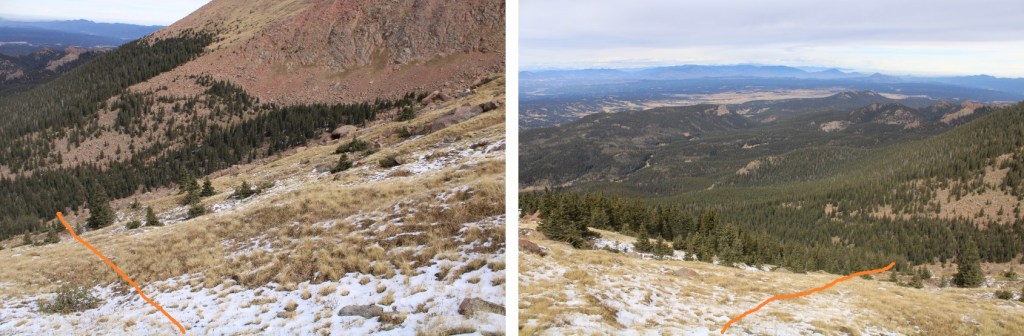
From here I actually found a bit of a trail, and followed it north, down to treeline.  Here are some pictures of the route

When I made it past the boulders to treeline, cairns started dotting the route.  Tons of cairns.  While the trail wasn’t well established, there were countless cairns to guide the way back to an actual trail.  Yes, this would have been the easier way to summit.  Cairns are circled in red

I slid down this on my butt, as walking down it seemed sketchy

It should be noted, there were several campsites below treeline along the trail, in case you’re interested in making this an overnight adventure

Once below treeline, I followed the trail northwest.  As I said before, there were tons of cairns to guide the way

Following the cairns eventually brought me to trail 704C, the Ring the Peak trail.  I followed this trail south back to make this a loop.

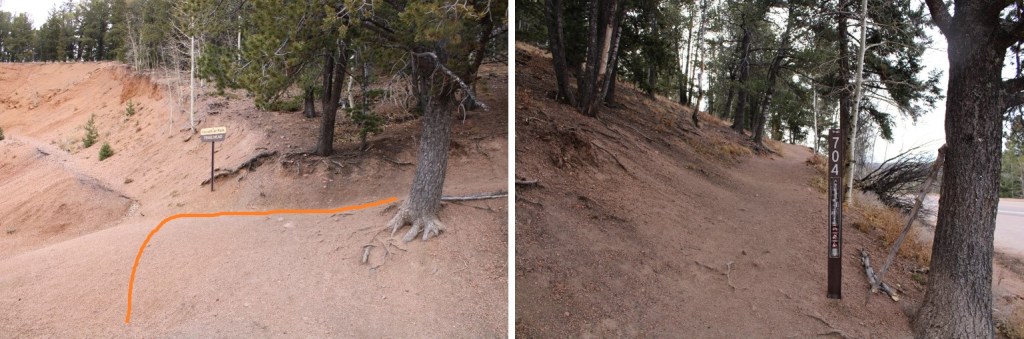
I made it back to the trail I hiked in on (704A), turned right, and followed it back to the trailhead

I made it back to my truck at 1:30pm, making this an 8.1 mile hike with 2963’ of elevation gain in 4 hours.

Mt Owen – 13,340

RT Length: 12.21 miles

Elevation Gain:  5049’

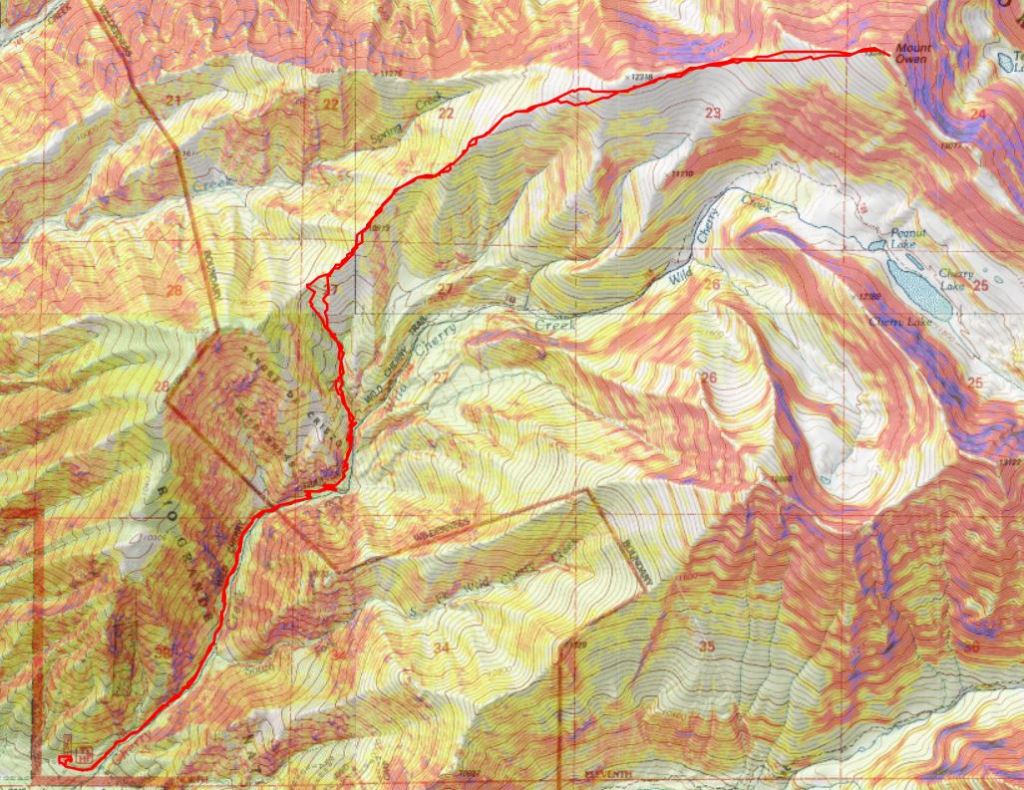
I was in a hurry today: I offered to help a Girl Scout Brownie troop (7–9-year-old girls) earn their hiking badge, and I needed to be home in time to meet them at the trailhead for their hike this evening.  So, while I’d initially wanted to make this a loop with some other peaks, I settled for just doing Mt Owen today.

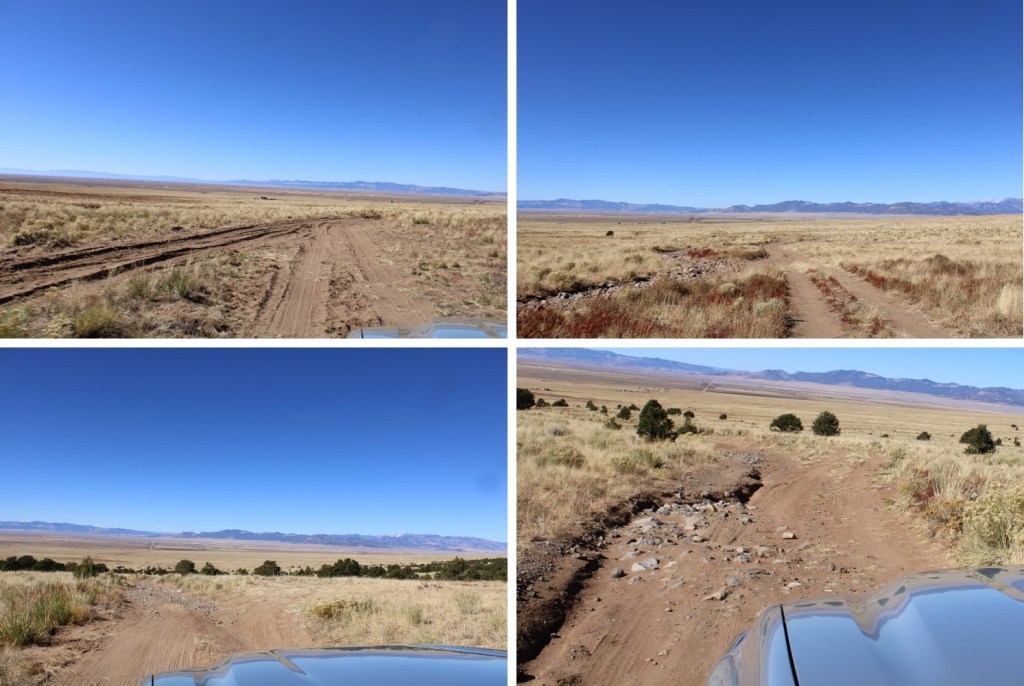
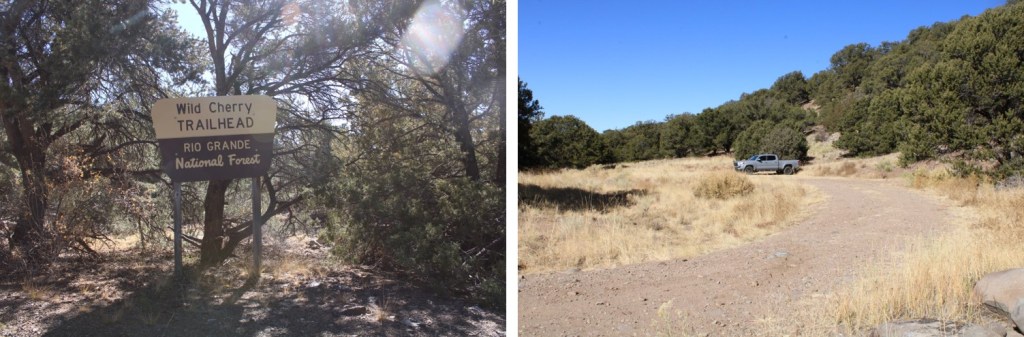
I drove to the Cherry Creek Trailhead, and was surprised at the condition of the road.  The last 2 miles is certainly 4WD.  I drove to the trailhead in the dark, and the first area of sand caught me by surprise. It had my tires spinning until I put my truck into 4WD. I backed up and took the side road.  There are at least 3 different side roads off the main road that look relatively new.  If you have the option, take the newer road, as the older road has been washed out and this is the workaround.  They always re-connect.

I gathered my gear, set my ‘halfway point’ alarm so I wouldn’t be late to my event tonight, and I was on my way.  There was a Subaru parked skewed in the parking area with a couple of boondockers, so I was doing my best to be quite as I made my way towards the trailhead.

The trail begins at the east end of the parking area, and is very well marked.  There’s a place to register, so I tried, but the pen was frozen and there wasn’t a pencil, so what I wrote only showed up as indentations on the paper.  If you do this hike soon, it’d be nice if you dropped off a pencil…

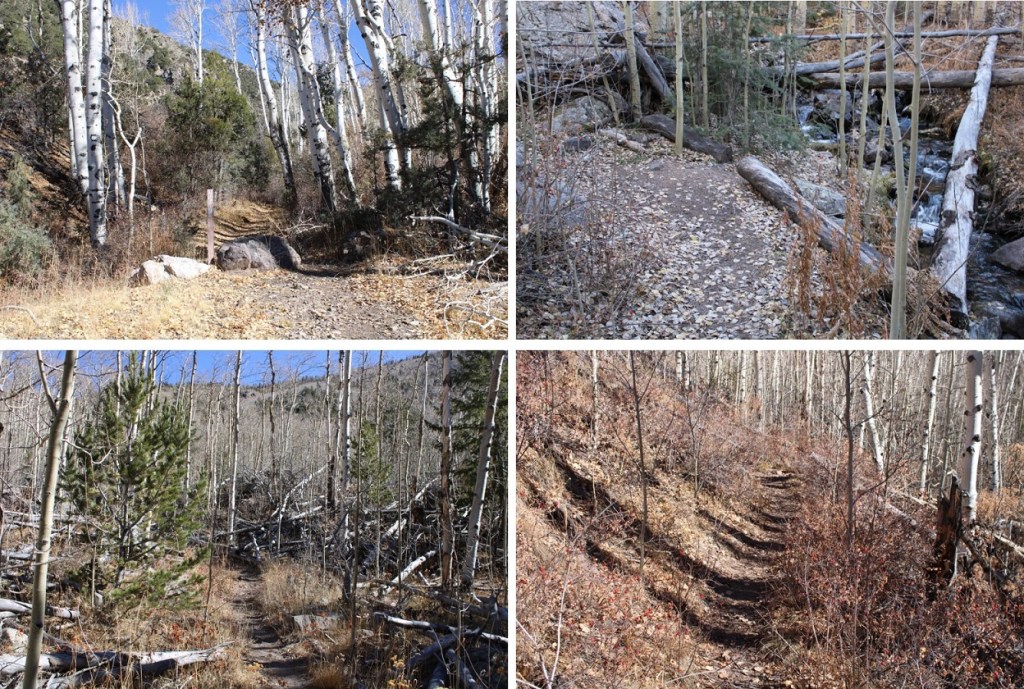
I followed the class 1, Wild Cherry Trail for 2.5 miles as it paralleled Wild Cherry Creek and the started to switchback northeast, skirting the mountainside.

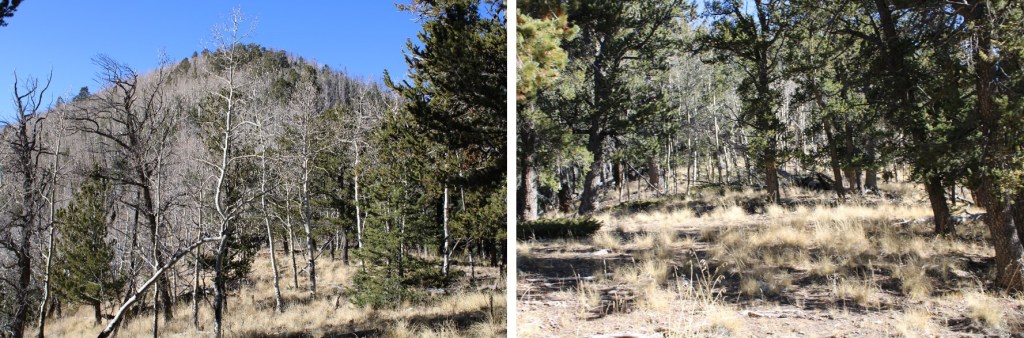
After 2.5 miles, at the middle of the last switchback, I left the trail and followed the drainage north to the ridge.  I stayed to the left of the drainage, but in the daylight, on the way back down, I realized it would have been much easier to stay to the right, on the tundra and grass instead of in the trees.  The bushwhacking wasn’t too difficult here, but there were a ton of downed trees, especially directly in the drainage.

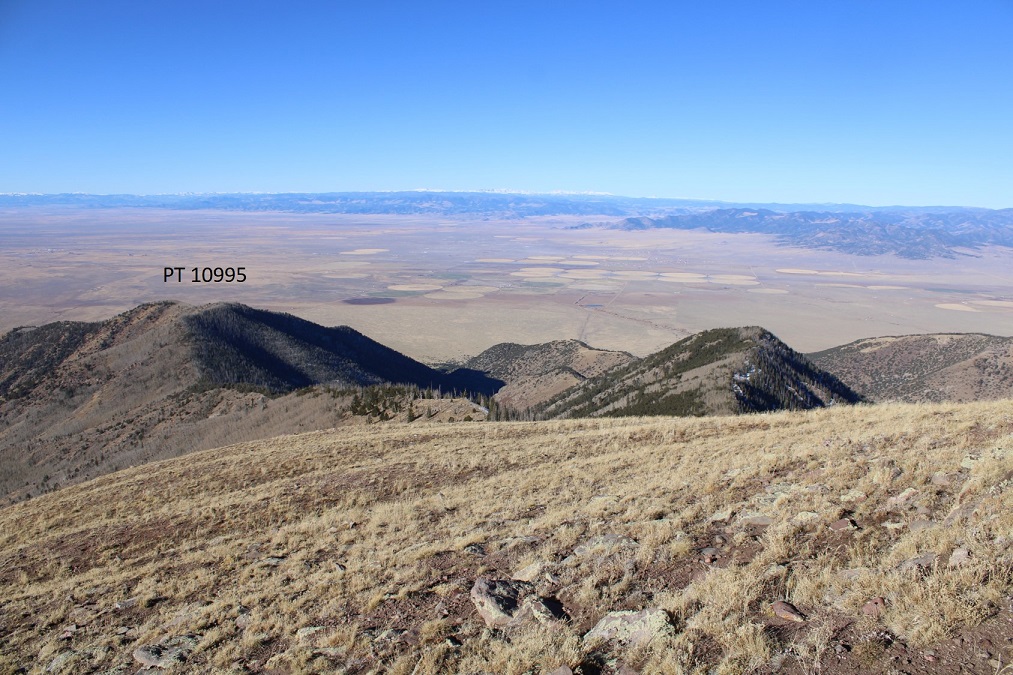
It was obvious when I made it to the ridge.  I could see PT 10995 to the left, and followed the ridge towards Mt Owen to the right

The ridge was easy to follow.  There were even game trails that were clearly evident.  I followed the ridge northeast.

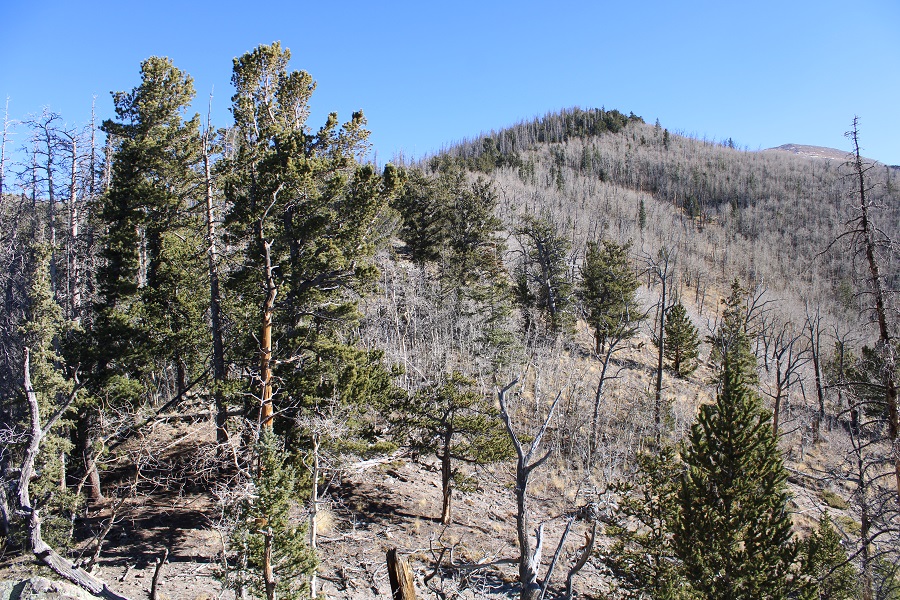
Through a break in the trees I could see the rest of the route to Mt Owen

I continued to follow the ridge

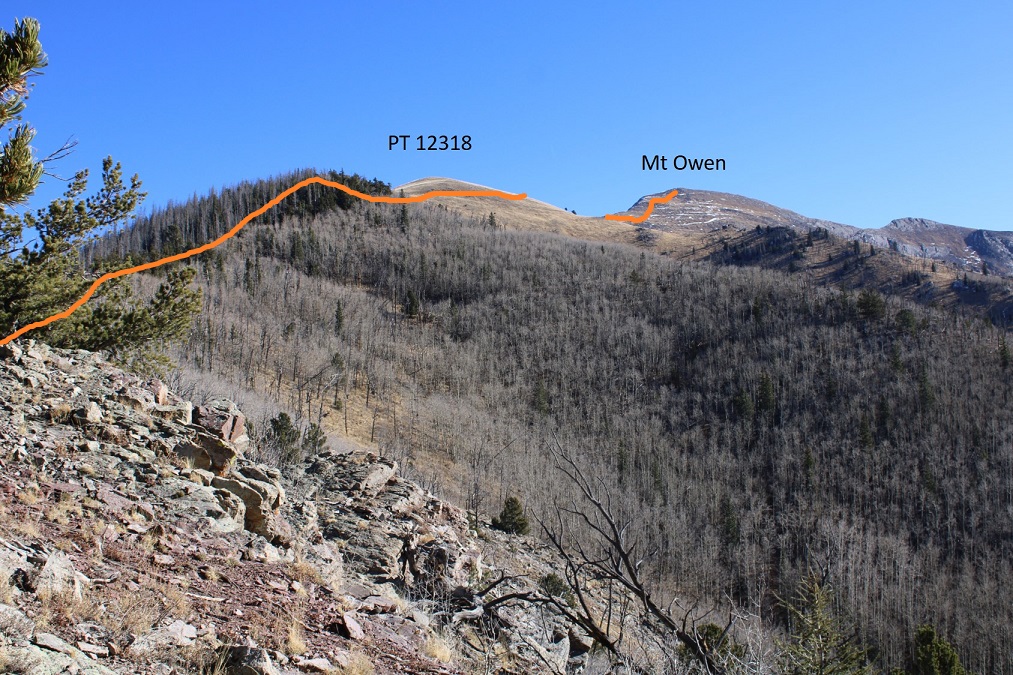
I made it to treeline, and instead of summiting unranked PT 12318, I skirted the mountain to the south, staying at about 12250’ (time was of the essence today….)

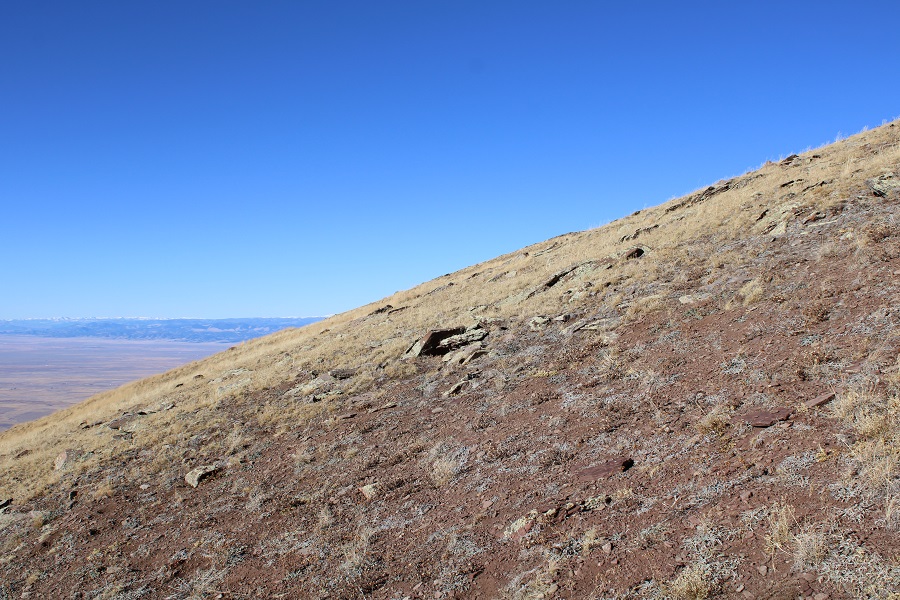
This was grassy tundra, and easy to navigate

If you stay around 12250’, you won’t have to lose much elevation as you make your way to the 12318/Mt Owen saddle

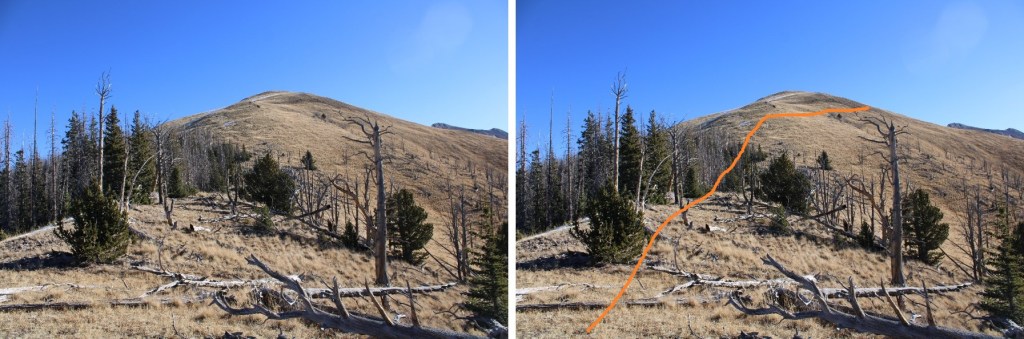
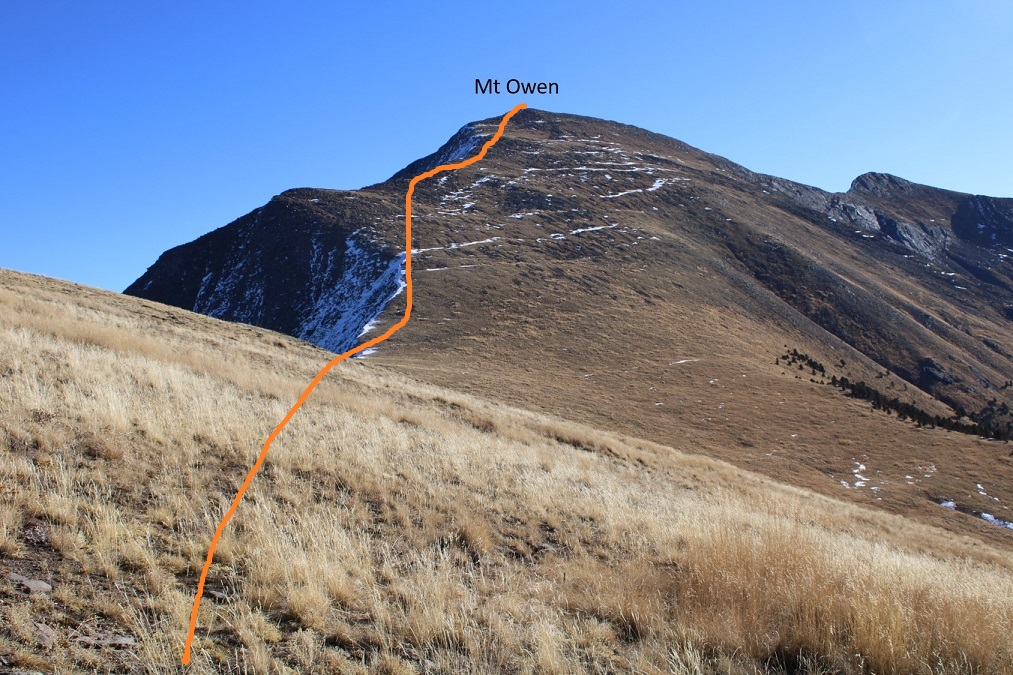
From the saddle, I gained 1100’ in .8 miles to the summit.  Here’s the route I took

And some step-by-step pictures.  It started out as tundra, and then became a bit rocky, but all class 2

I summited Mt Owen at 8:40am

Mt Owen:  

We’ve had some snow recently, but it hasn’t been sticking much in the Sangres. It’s always interesting to see the difference between the snow on the north versus south sides of the peaks in early season.

I was 20 minutes ahead of schedule, but that wasn’t enough time to make this a loop, so I turned and re-traced my steps back to treeline.

This small rock outcropping is a great visual.  Stay just above the rock and you’re at the perfect elevation go skirt the mountainside and head towards the ridge down.

Make sure you choose the correct ridge to hike down. It’s the one nearest PT 10995, which is the largest point you can see, making it easy to notice, but also easy to miss if you haven’t been paying attention.

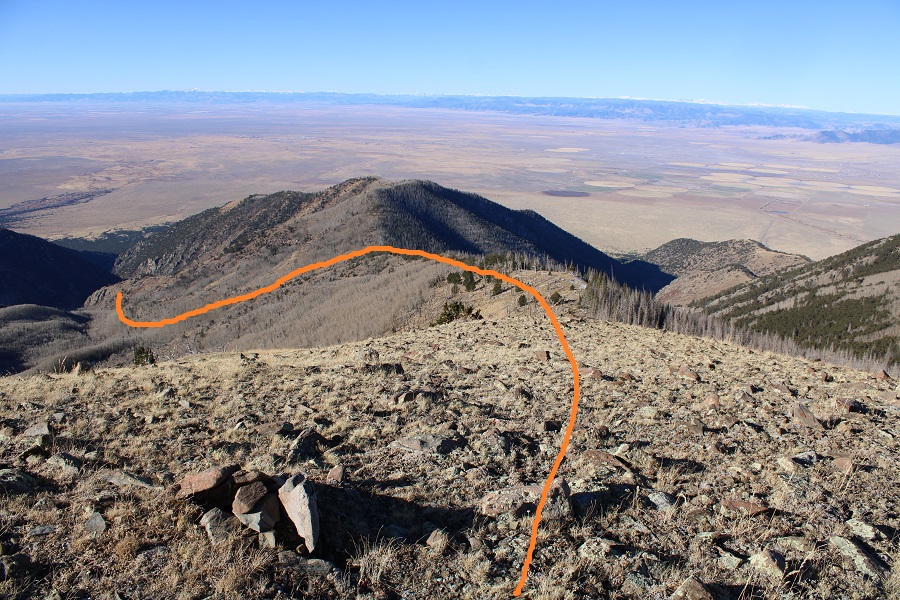
Here’s the route from the ridge back down to the trail

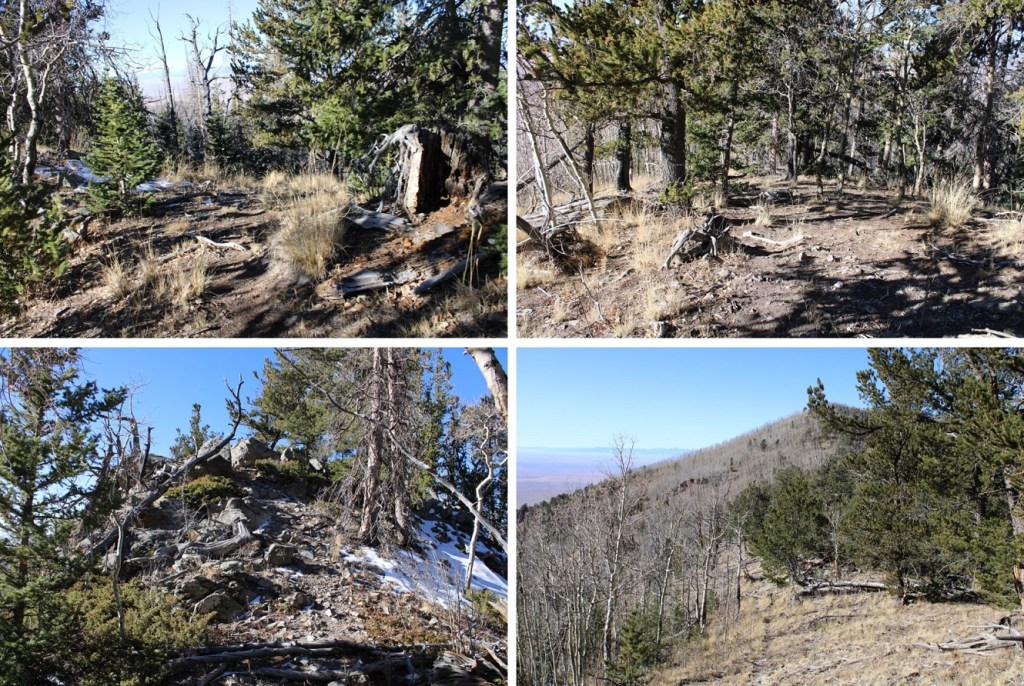
And some pictures of the ridge

Once at the lowest point on the ridge, I turned left, and headed south, following the drainage back towards the trail.  Once again, if you’re doing this, stay in the grassy area.  I… stayed in the trees.  I didn’t have a great visual, but I could hear the creek ahead of me, so I just aimed south, towards the creek

There was a little bushwhacking involved, but I easily found the trail, and followed it back to the trailhead.

I made it back to my truck at 11:30am, making this a 12.21 mile hike with 5049’ of elevation gai in 6 hours, 50 minutes. 

And now, back home to hike with some enthusiastic young adventurers!

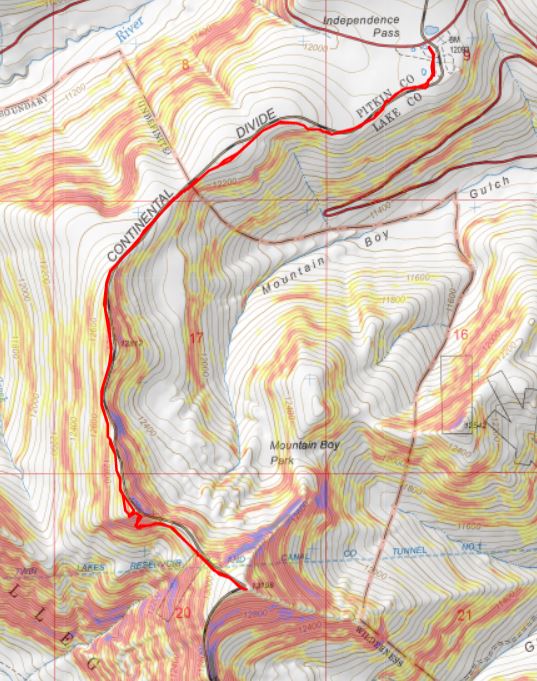
Mountain Boy Peak – 13,198 & Igloo Peak – 13060

RT Length: 6.78 miles

Elevation Gain: 2151’

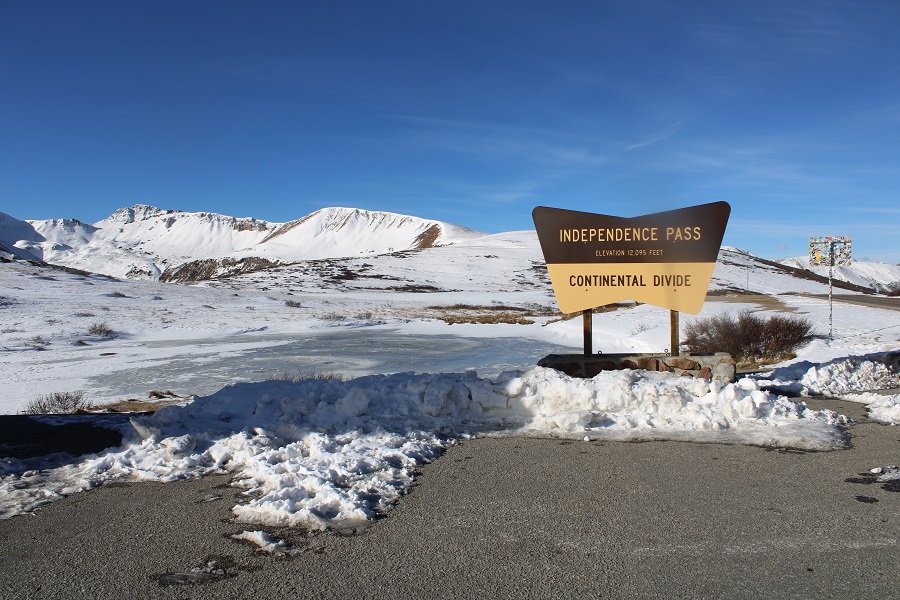
I wanted to get in one last peak before Interdependence Pass closes for the year.  I was supposed to hike this peak o Tuesday, but weather was coming in, so I changed my plans and hiked it Monday morning instead. 

I made it to Independence Pass and was on the trail by 5:30am.  Side note:  I was here October 25th, and the bathrooms were closed for the winter.

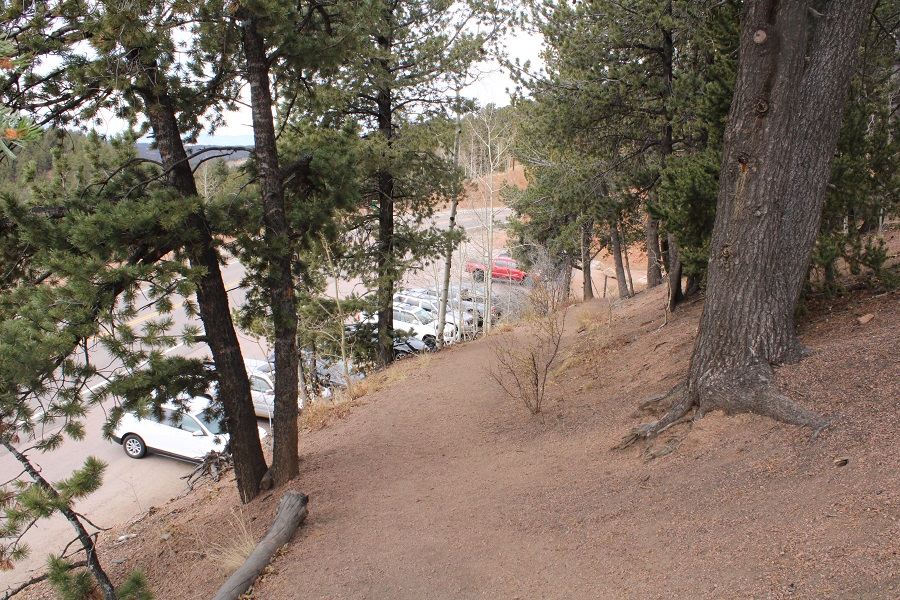
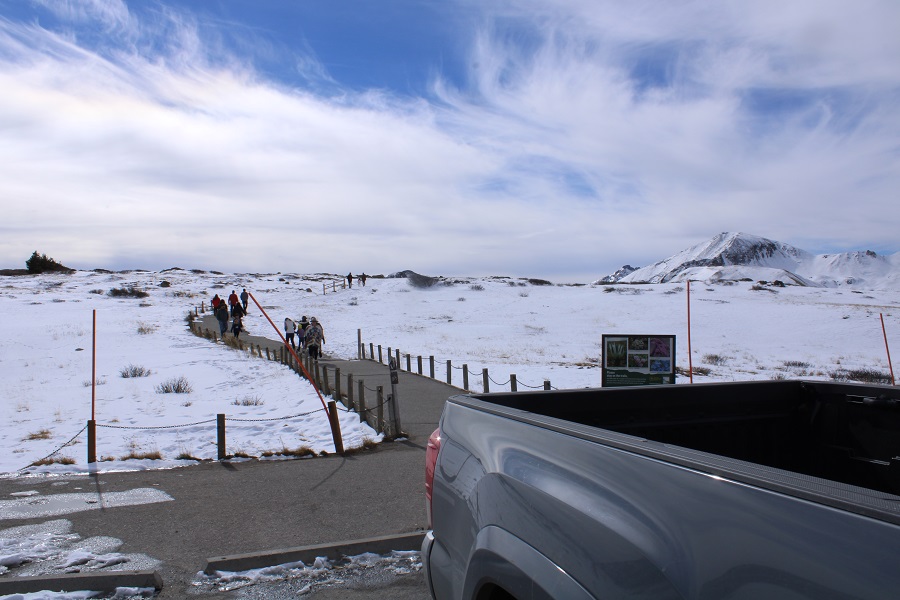
Obviously, mine was the only vehicle in the parking lot that early in the morning. The trail is obvious, and starts by heading south on a paved trail.

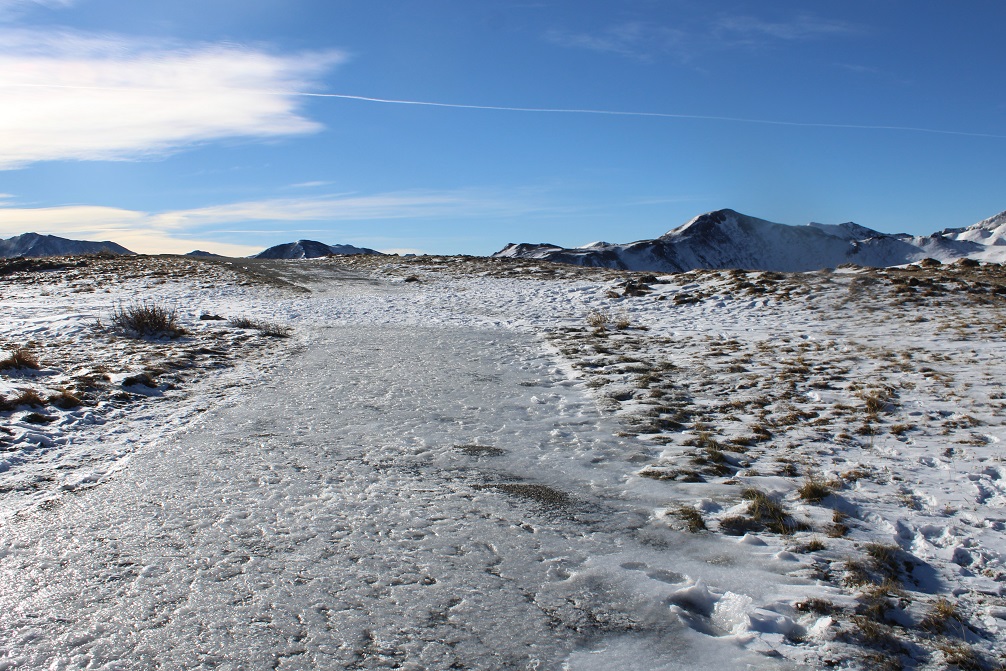
I’ve never been in this area in summer conditions, so I’m not really sure when the trail becomes a trail and no longer paved, but I know I was off pavement pretty quickly, heading west.  This morning, before making it to Igloo Peak, snowshoes were needed some of the time, overkill most of the time.

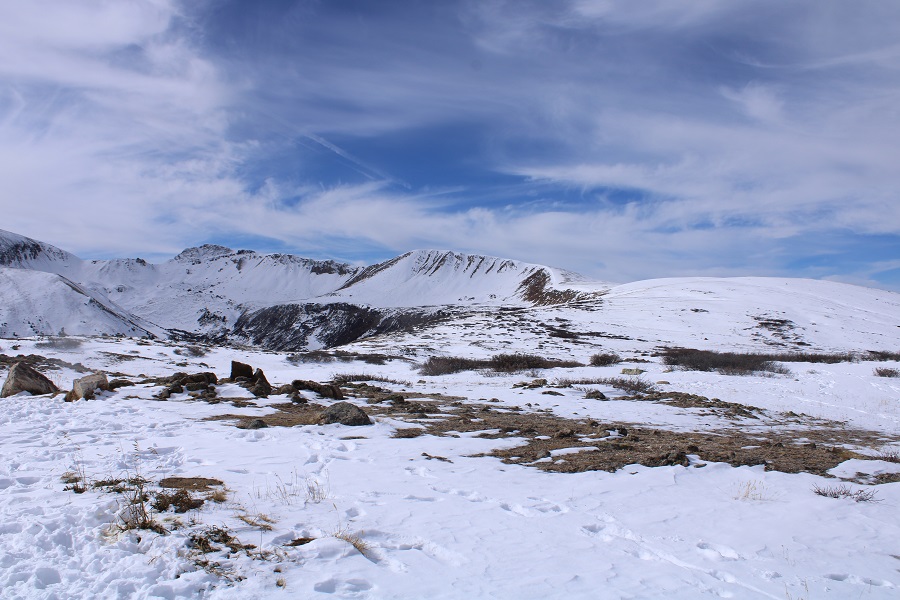
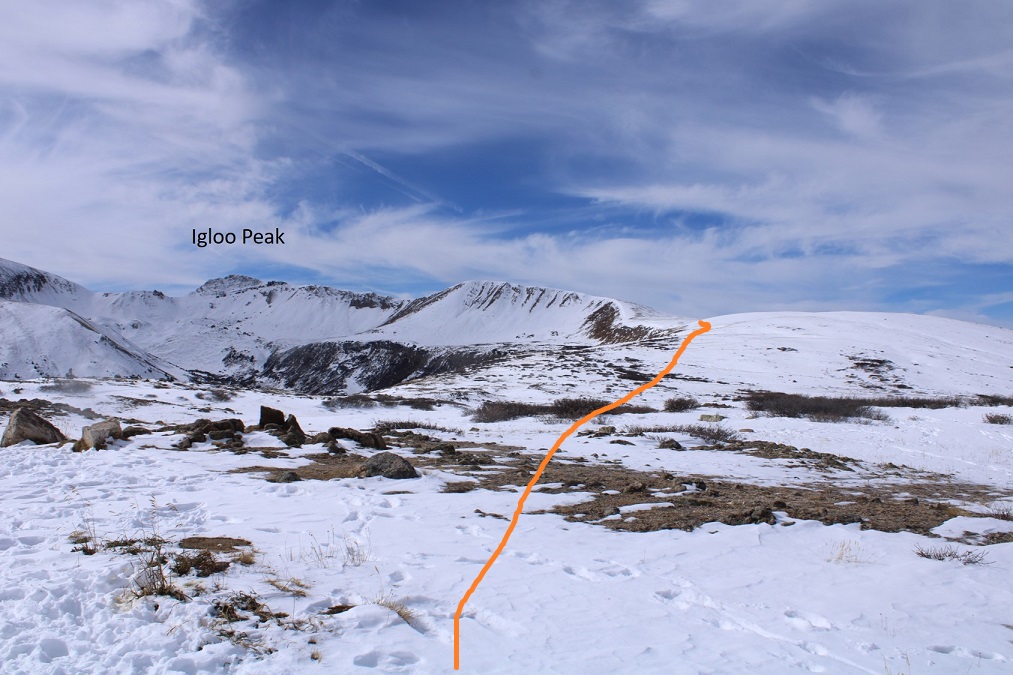
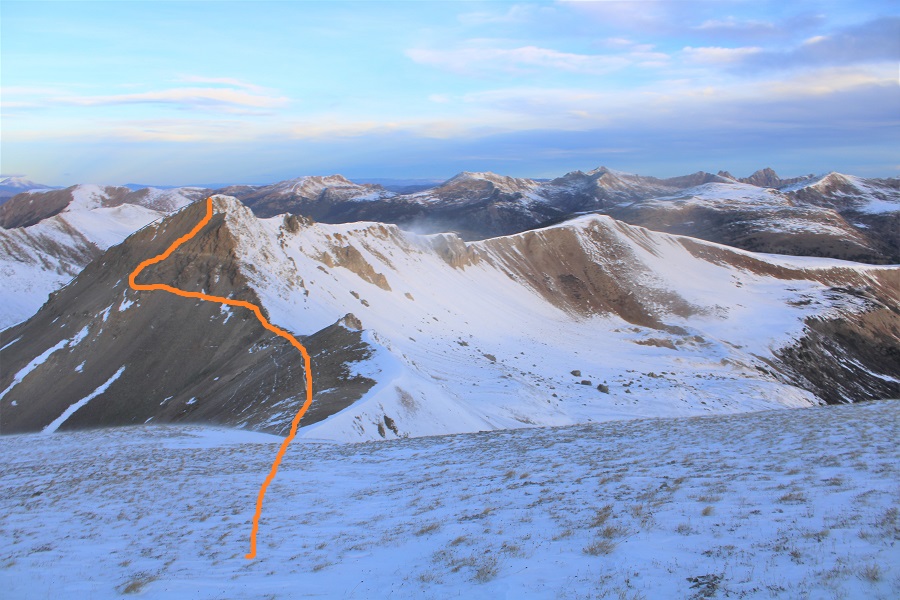
Here’s an overall view of the route to the ridge

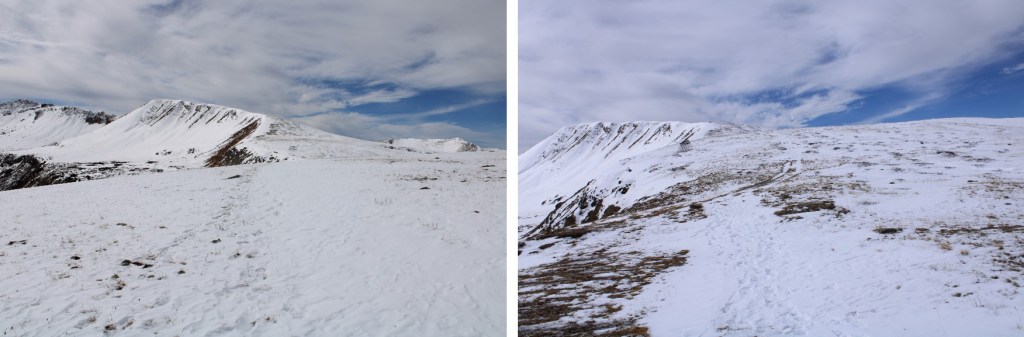
I headed towards the ridge, following an obvious route, which I am sure is class 1 in the summer.

As you can see from the pictures… obvious route.  If it’s not obvious when you’re here, follow the contour of the ridge.  It’s all tundra.

The route becomes briefly class 2 here

This is very easy to navigate

And then it’s back on a class 1 trail again

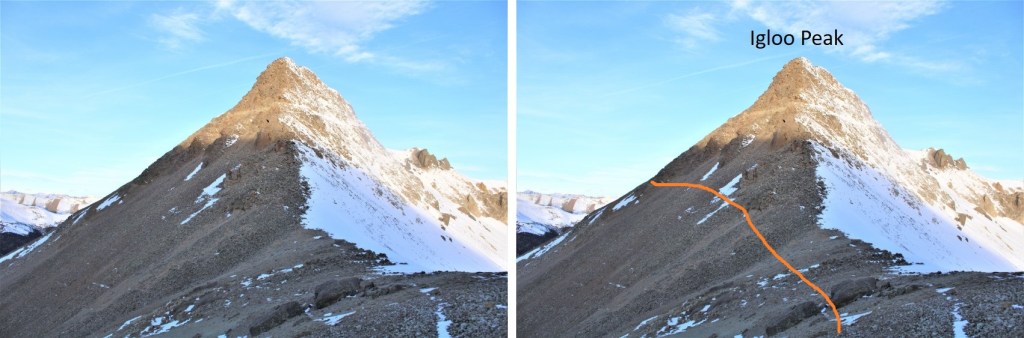
If you stay on the trail, the summit will be obvious

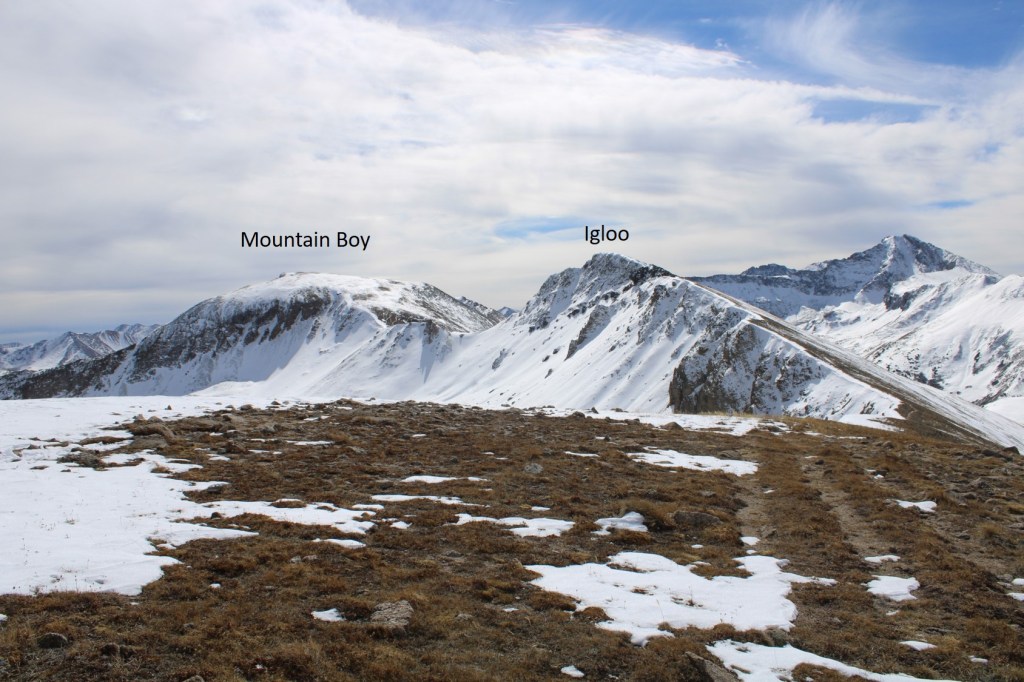
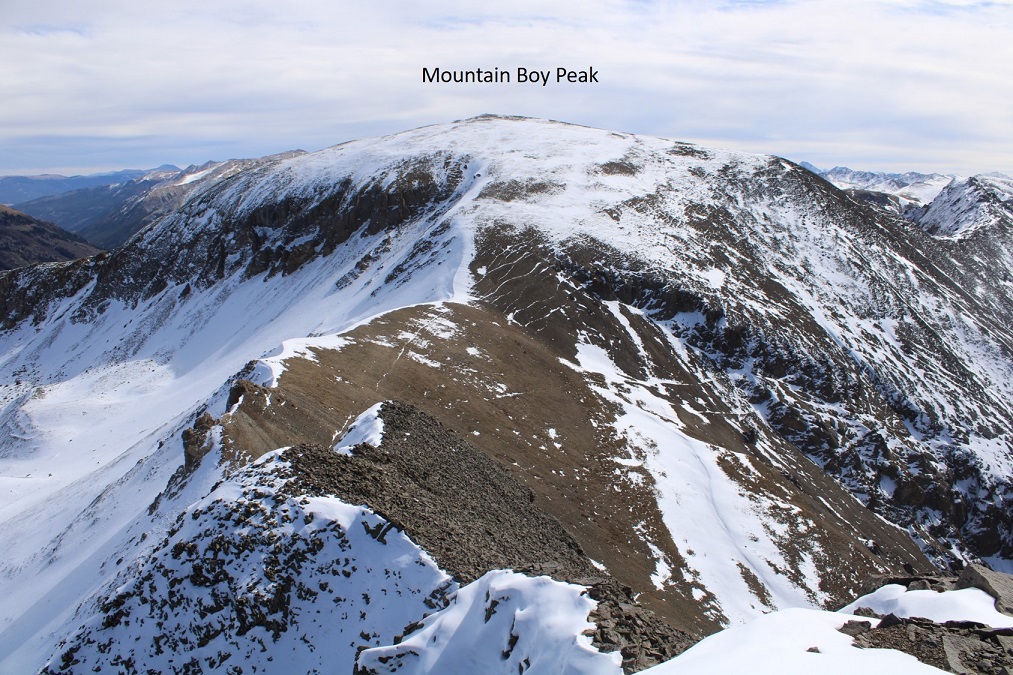
Here’s Mountain Boy from Igloo

From the summit of Igloo Peak, the trail towards Mountain Boy immediately gets fun.  It’s class 2 from here on out, with one brief class 3 move (or two… it’s a chimney).  Now is a good time to put on your microspikes.  I continued southeast, heading down this briefly class 3 chimney

The rock will be loose until you make it to the saddle. 

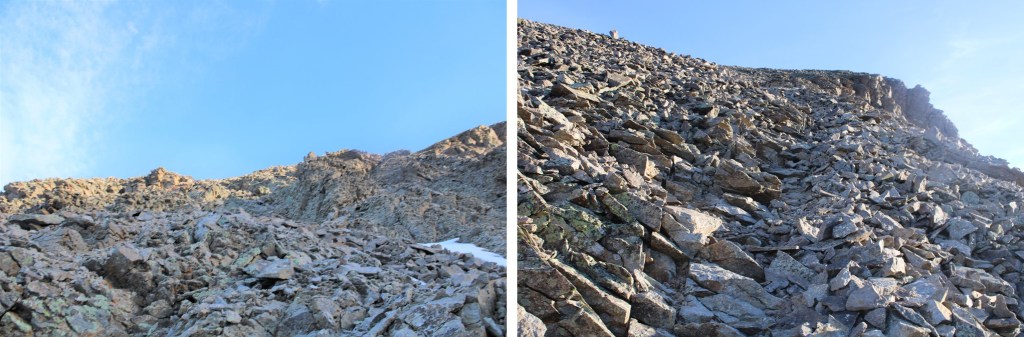
In order to get to the saddle, I headed straight south, down these scree/loose-rock filled gullies

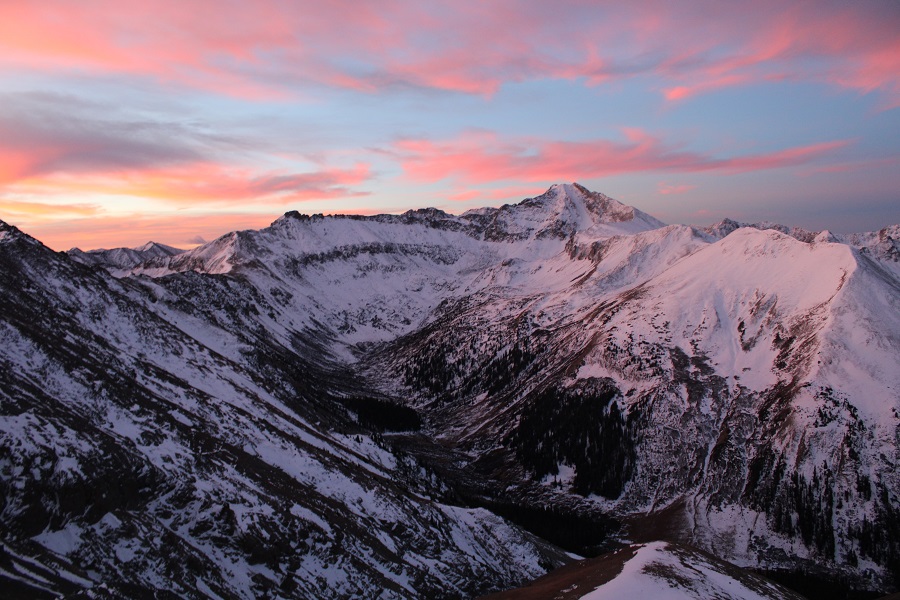
The sun was just starting to rise at this point.  Alpine sunrises are the best!

Since the sun was still rising, my view wasn’t that great.  Here’s what I saw as I was descending, following the contour of the drainages.  This is choose your own adventure, but it’ll be obvious when the drainages end.  Don’t descend too early.

It’ll also be obvious when it’s time to head towards the saddle.  There seem to be several social/game trails here.  I chose to stay high, about level with the saddle, and didn’t regret it.

Once at the saddle, there were still a ton of social/game trails.  I chose the one closest to the ridge.  From the saddle, it was an easy hike to the summit of Mountain Boy Peak on scree/tundra

Easy, except for today’s wind!!!  It was relentless, and difficult to catch I pictures/on video at its worst.  This doesn’t begin to describe the gusts

Wind on Mountain Boy: 

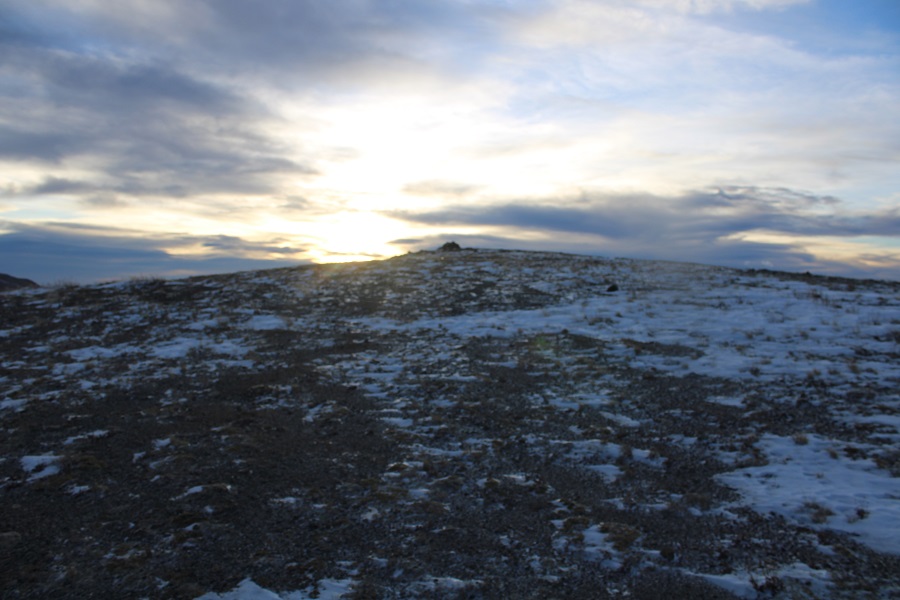
The summit is obvious, marked by a cairn

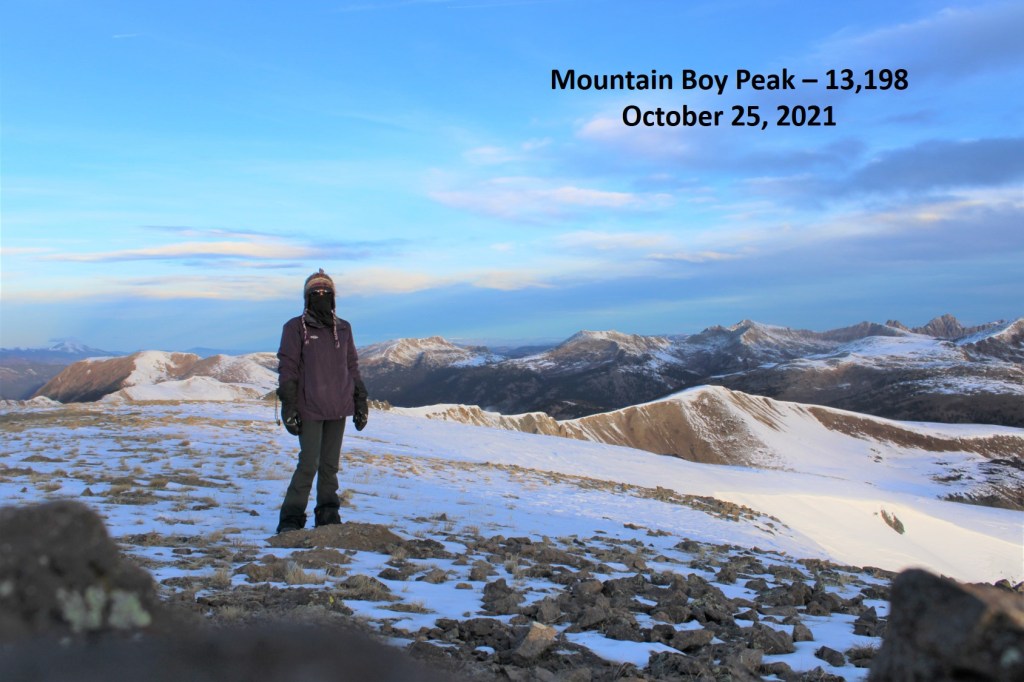
I summited Mountain Boy Peak at 7:45am.

Mountain Boy Peak:

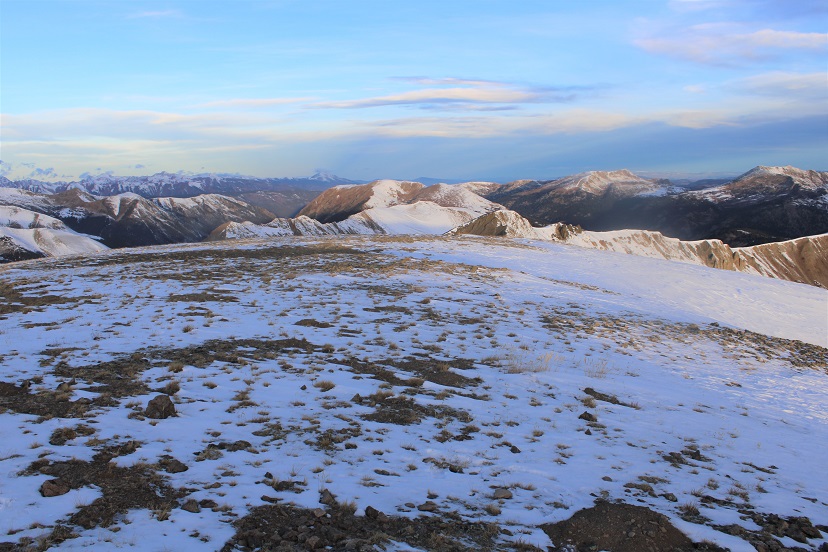
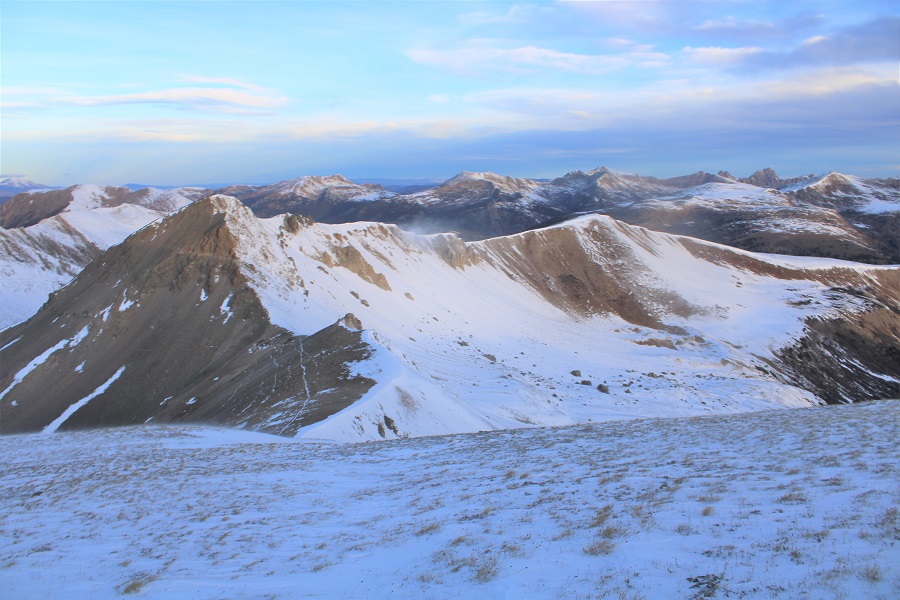
The views of Grizzly Peak were stunning!

I turned and retraced my steps back to the Mountain Boy/Igloo saddle

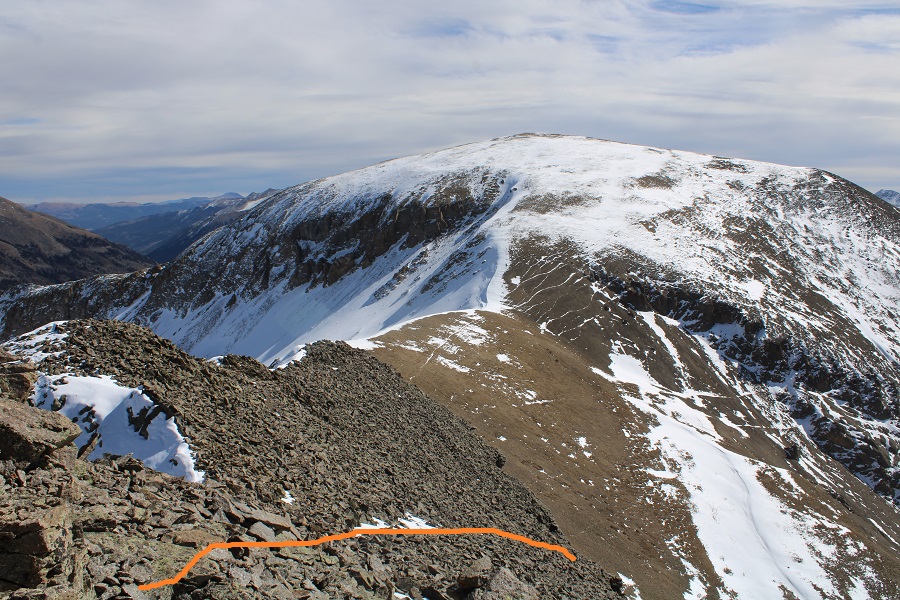
Here’s the route I took back to Igloo, which is the same route I took down.  Microspikes are helpful here, as it’s kitty litter in some areas.

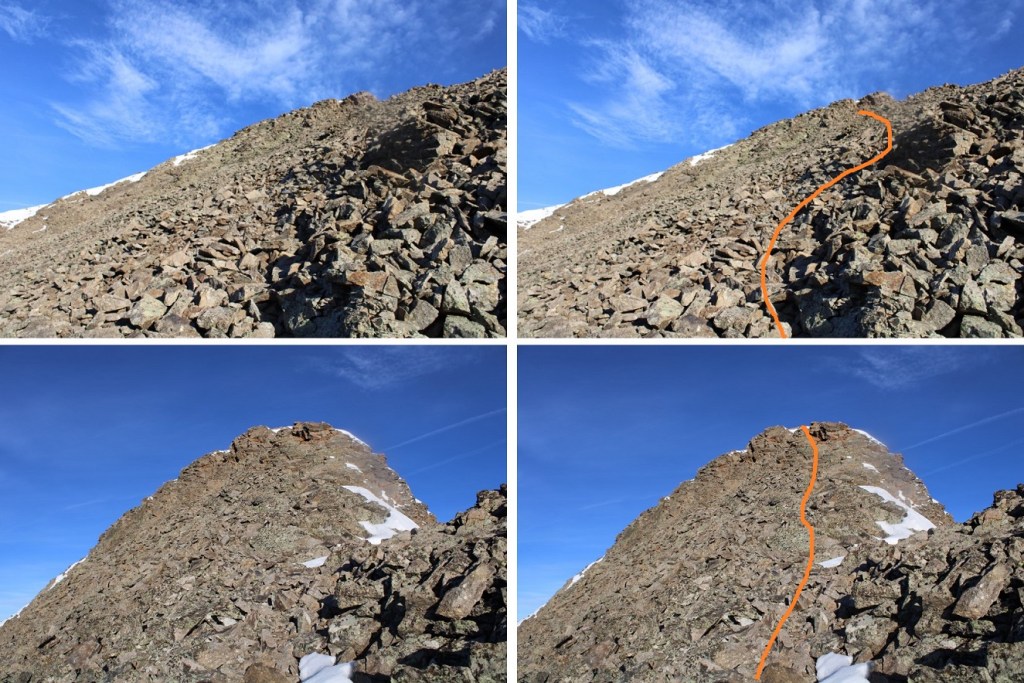
Here are some close-up pictures of the route back up to Igloo

And back up those scree/rock gullies

And up that quick chimney to the peak

I re-summited Igloo Peak at 8:25am

Igloo Peak:

The trek was easy back to the trailhead in the daylight

I made it back to my truck at 9:15am, making this a 6.78 mile hike with 2151’ in elevation gain in 3 hours, 45 minutes

Side note:  I didn’t have my microspikes.  Well, I did, but they fell out of my pack when I took off my snowshoes, and I didn’t realize this until they were needed.  So, when I went to find my microspikes, just before the kitty litter area on the south side of Igloo Peak, they weren’t in my pack.  But I really could have used them!  Especially on the snowy ascent/decent of Mountain Boy Peak. The kitty litter areas were so much more difficult than they needed to be without spikes as well.  I cursed myself the entire time, thinking I’d lost them for good and vowing to buy new ones on my way home as soon as I got cell service.  The reason my track shows movement near Igloo Peak is because, on my way back I realized when I must have lost them and went looking for them.  I found my microspikes, along with a whiskey flask I hadn’t realized I’d lost, just before the summit of Igloo Peak.  From now on, they’re going INSIDE my pack, not in the cup holder of my backpack (I know, I know, not the best decision).

East Buffalo Peak – 13,300 & West Buffalo Peak – 13,326

RT Length:  11.95 miles

Elevation Gain: 3489’

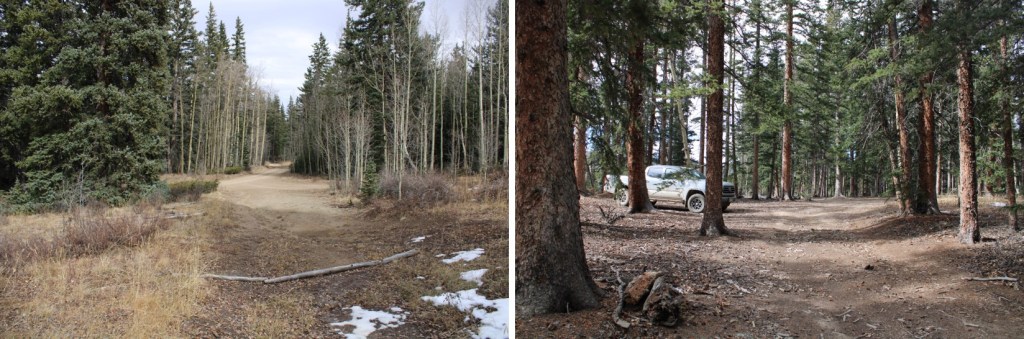
It was an easy 4WD road to the trailhead.  I was surprised I hadn’t seen a single vehicle on the long drive in.  There weren’t any cars parked at the trailhead, but the dispersed campsite was free, so I parked there, being sure to leave room in case anyone else wanted to camp. I read a bit, tried to eat (and failed), sipped whiskey, watched a curious camp robber, and once again, got to bed early.  The trailhead was just to the west of where I parked (trailhead circled in red)

I woke up hungover.  Or, at least, I felt hungover.  I hadn’t had enough to drink last night to give me a hangover, but here I was, with a pounding headache.  Probably has something to do with the fact I have a difficult time eating while I’m hiking, and I’d already hiked 7 peaks above 13K in the past 2 days.  On the positive side, I wasn’t cold this morning: that’s two mornings in a row!  It was 38 degrees.  I slowly gathered my gear, forced down a breakfast bar, and was on the trail at 6:30am, trudging slowly.  It was going to be a long day.

I made my way towards the trailhead (now with a vehicle parked there I hadn’t heard drive in), and followed the trail southwest to a closed 4WD trail.

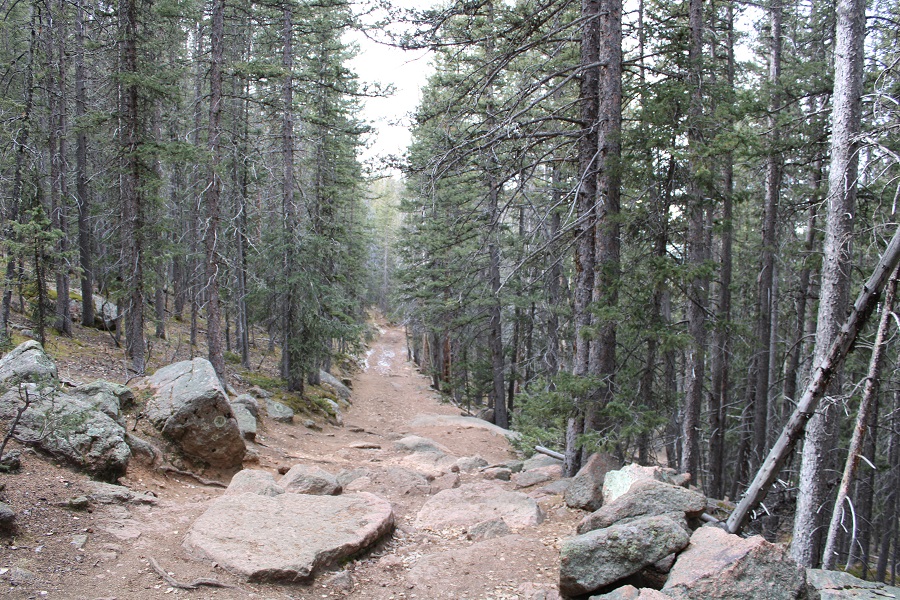
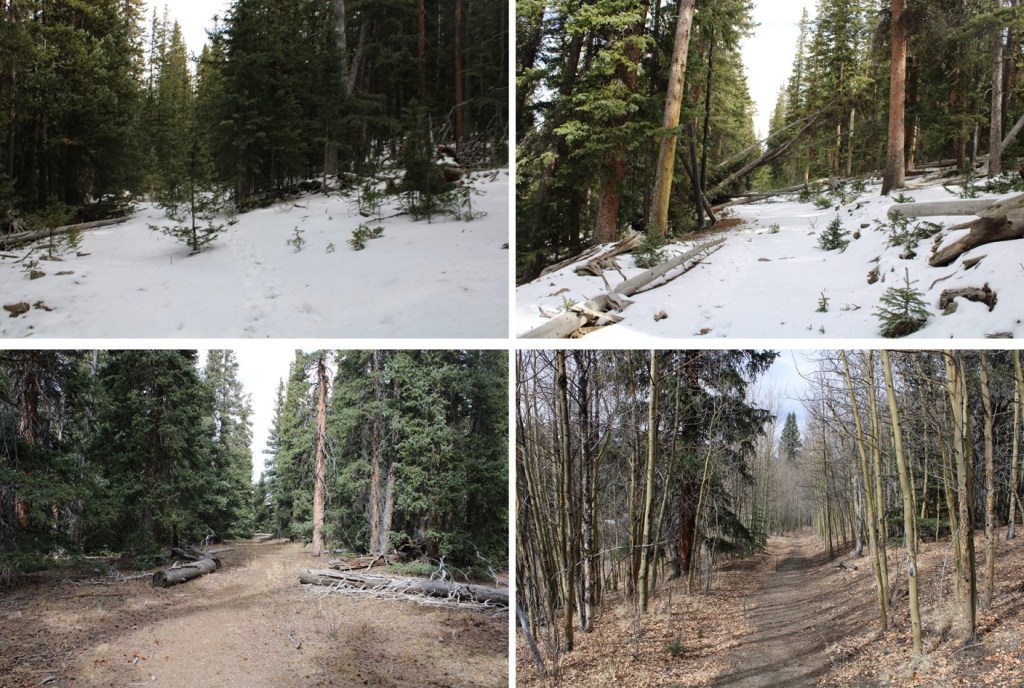
This road obviously hadn’t been in use in quite a while, as there were trees growing directly in the middle of the road, and large trees that had fallen across it years ago

I followed this 4WD road for 3 miles, almost to treeline.  As the sun came up, crows started cawing.  They must have known about my headache. Also, this is when I realized I’d forgotten my sunglasses.

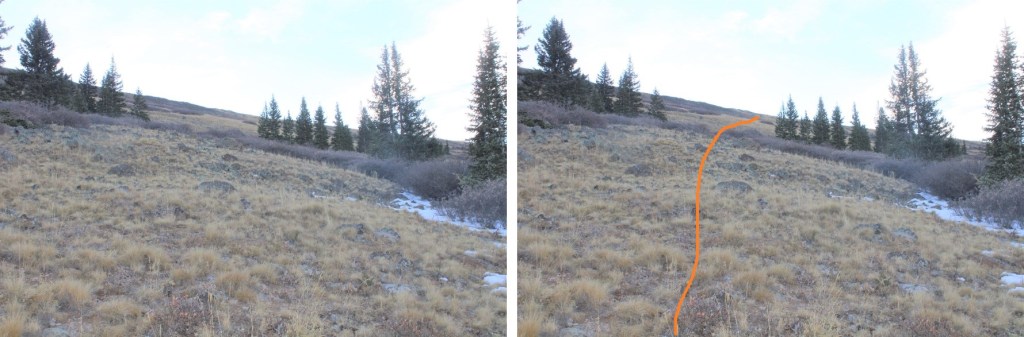
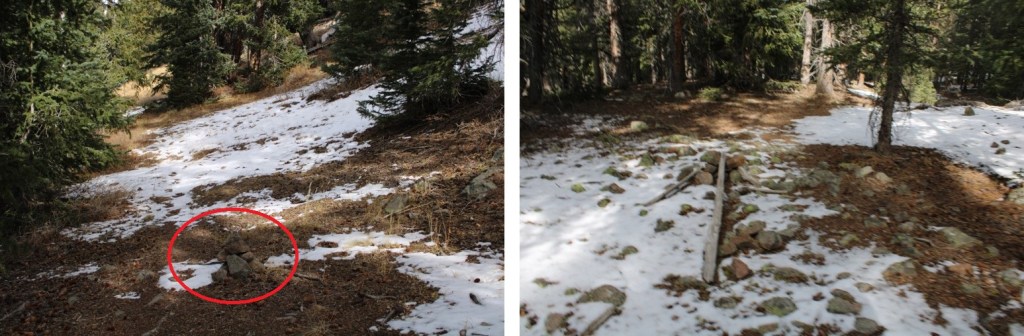
There was one set of tracks on the trail, which ended when the road ended.  When the 4WD road ended, the cairns picked up.  Initially, I’d wanted to hike West Buffalo Peak first, but I wasn’t able to find a marked route.  So, instead I took a visual of how I wanted to head back, in case there wasn’t a route, and followed the cairns south that would lead me towards East Buffalo Peak instead.  The cairns initially brought me to willows.  These willows were easy to navigate.

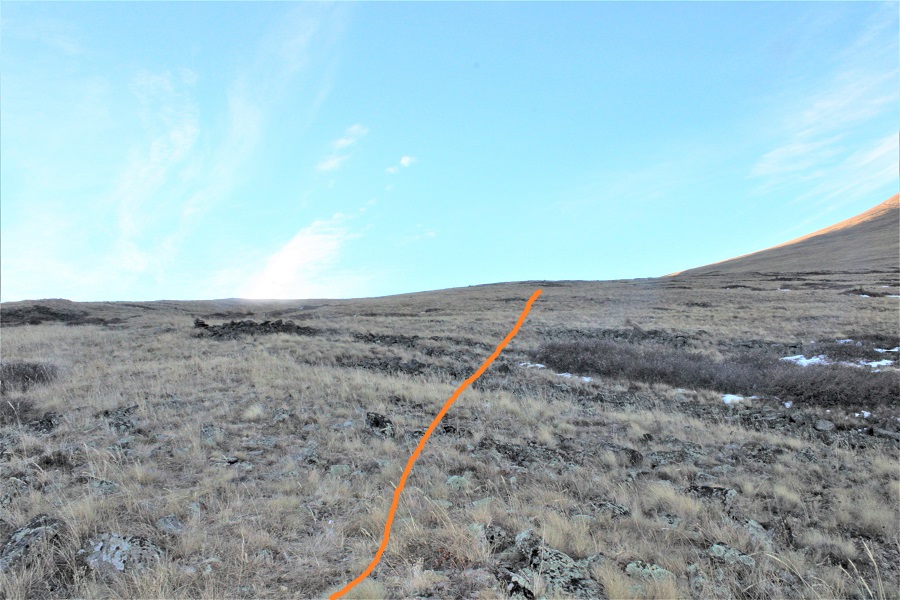
Once out of the willows, I was on tundra.  There were still cairns to guide the way.  I was heading south to the ridge. 

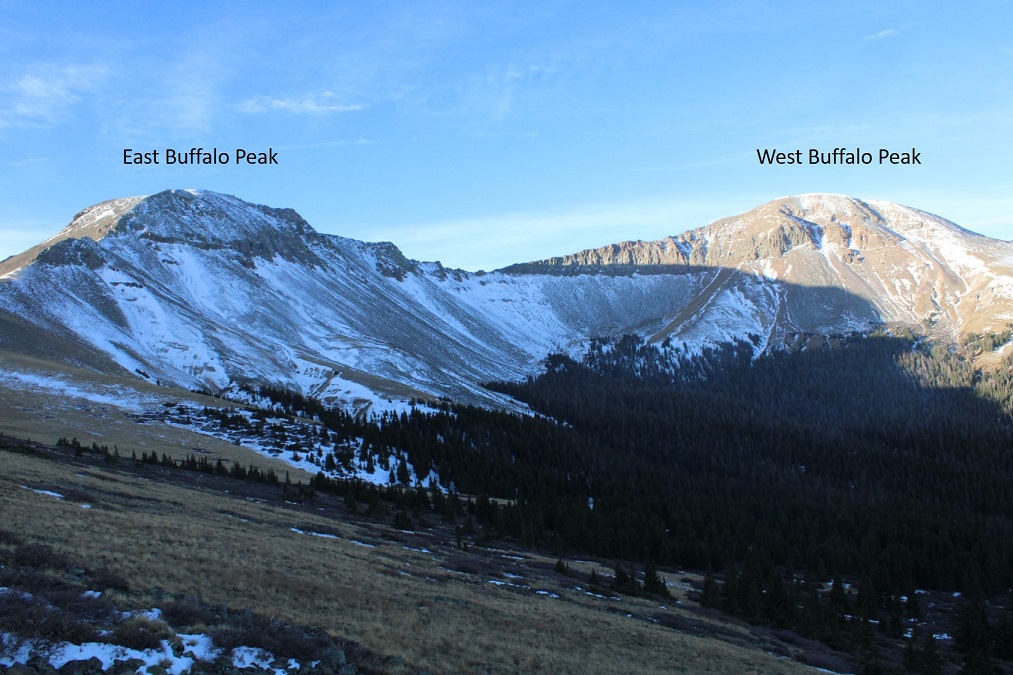
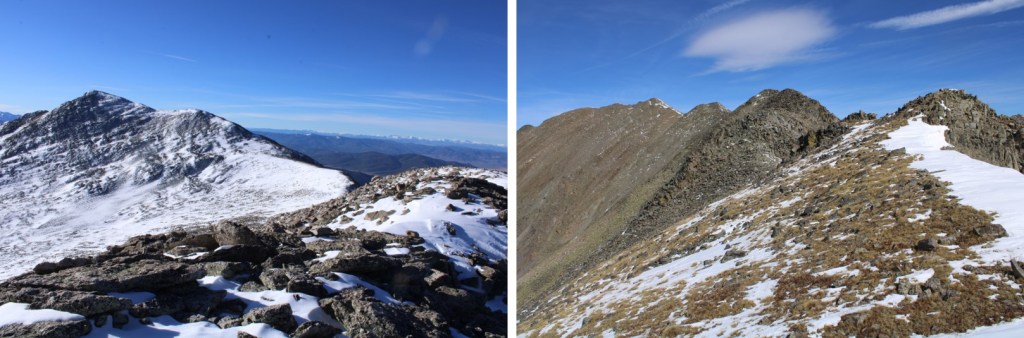
As I was ascending the ridge, I could see East and West Buffalo Peaks

Ok, back to that tundra ridge

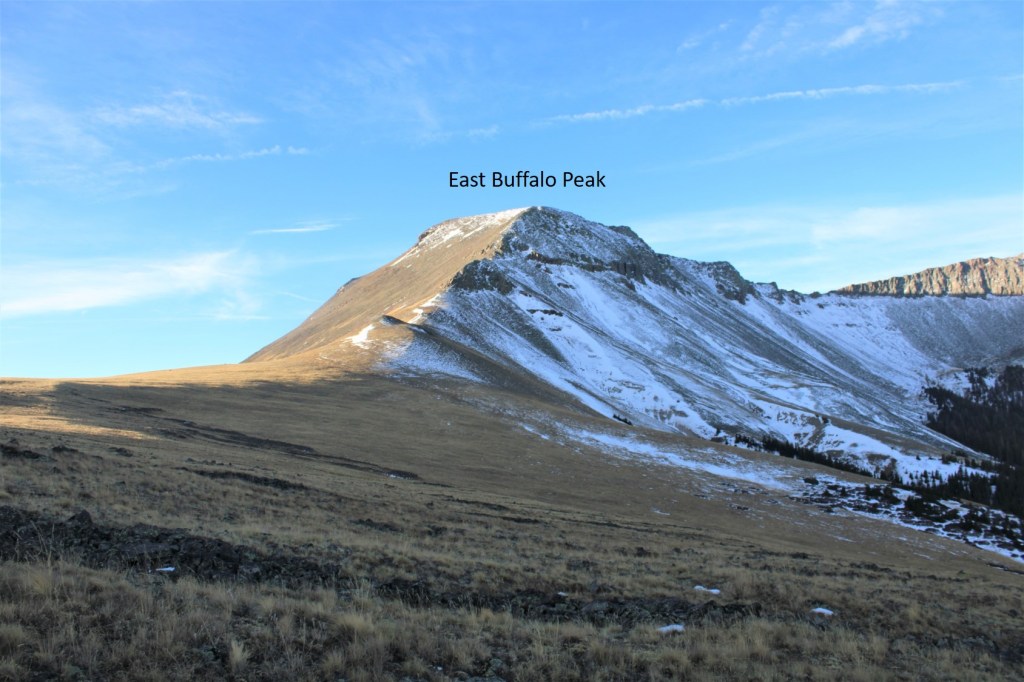
Once near the top of the ridge I turned right and headed southwest towards East Buffalo Peak

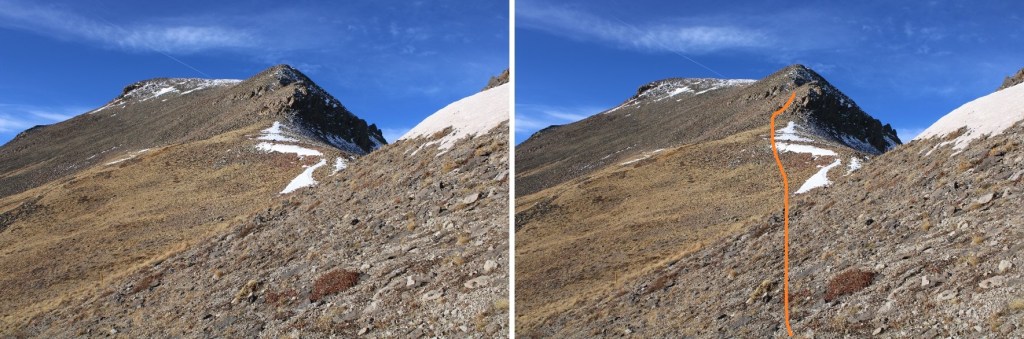
Here’s the overall route I took up the ridge

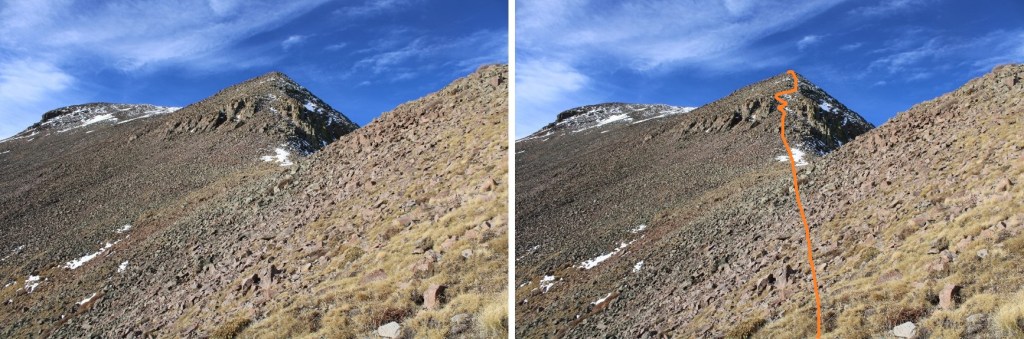
And some step-by-step pictures.  First, I skirted the initial hump to the left

Next, I continued to stay just a bit left, rounding the south side of the ridge

From here on out, I stayed right in the middle of the ridge.  It looked like there were game trails here, but they were half-covered in snow.  The rocks were a bit loose, but this was no more challenging than difficult class 2.  I still had a headache, so I decided to drink water, something I rarely do while hiking.  Where there was snow, I re-filled my water bottle.

I topped out and it was an easy walk on tundra and rocks to the summit, heading southwest.

The summit was large and flat and the summit was at the far west end of the summit area, marked by a large cairn.

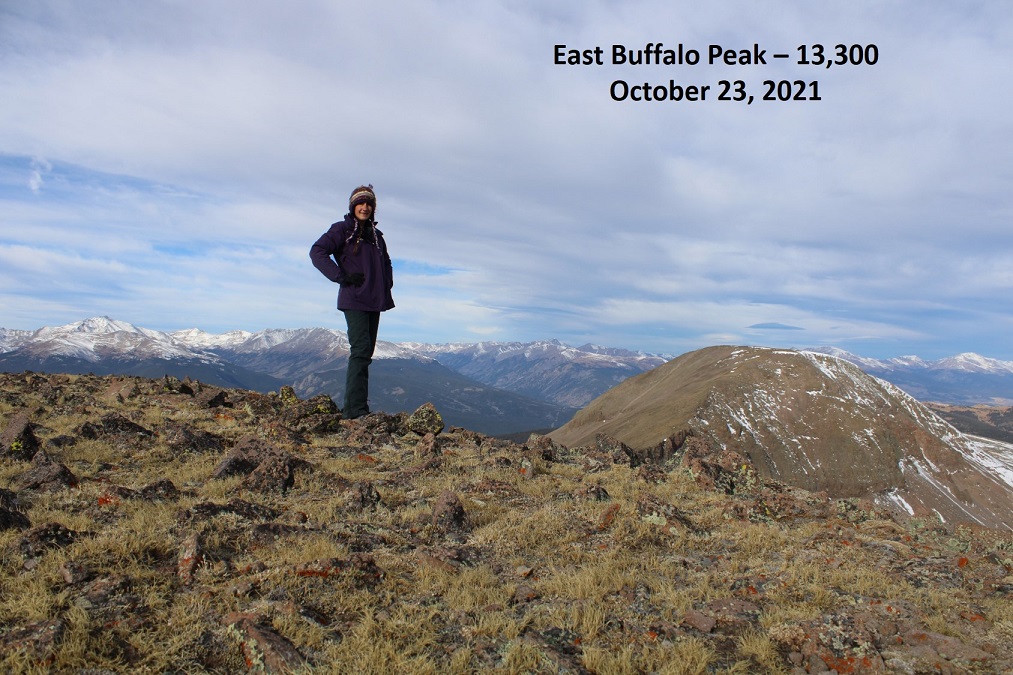
I summited East Buffalo Peak at 9:30am.

East Buffalo Peak:

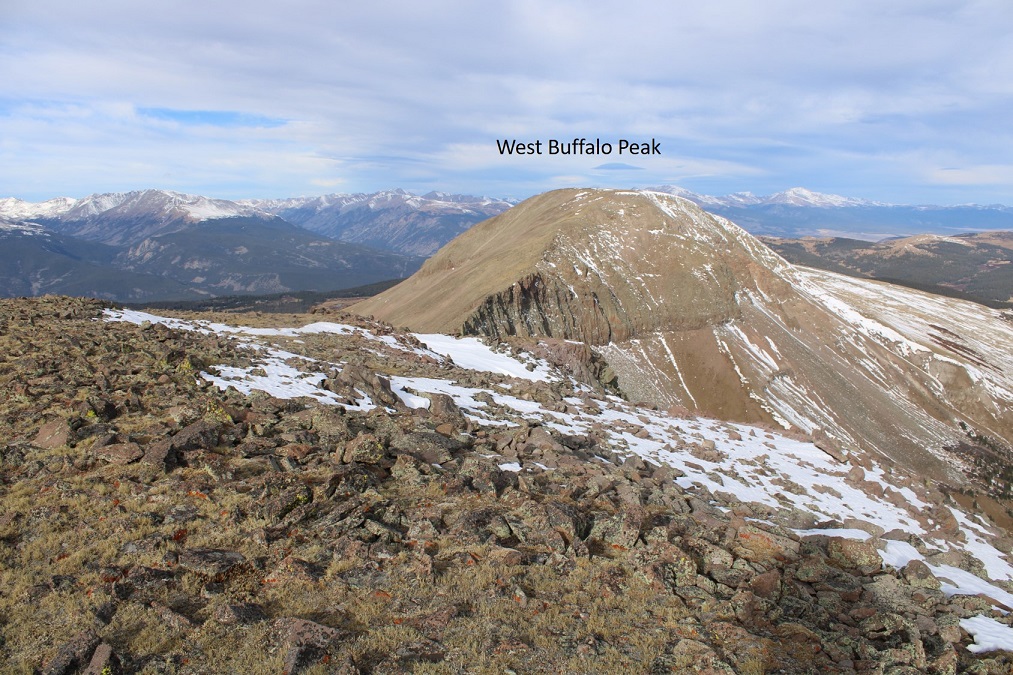
From East Buffalo Peak, West Buffalo Peak looks like a straightforward ridge hike.  To be honest, it wasn’t any more difficult than class 2, but it was a little harder than it looked.

I started out by following the ridge west, and came upon some drop-offs. These were easy to navigate

I made my way to the saddle on tundra.  What had initially looked like a rocky ridge was in fact, a very rocky ridge.  I stayed a few yards from the ridge proper to the left.

Here are some step-by-step pictures of the ridge up to West Buffalo Peak

I was initially worried about this area circled in red

However, while it was loose shale, I was able to go straight up and over the top without any difficulty.

From there, it was an easy stroll to the summit of West Buffalo Peak. 

The summit is at the very west end of the peak.  There’s a wind break here, and a summit marker (which says “Marmot Peak”)

I summited West Buffalo Peak at 10:30am

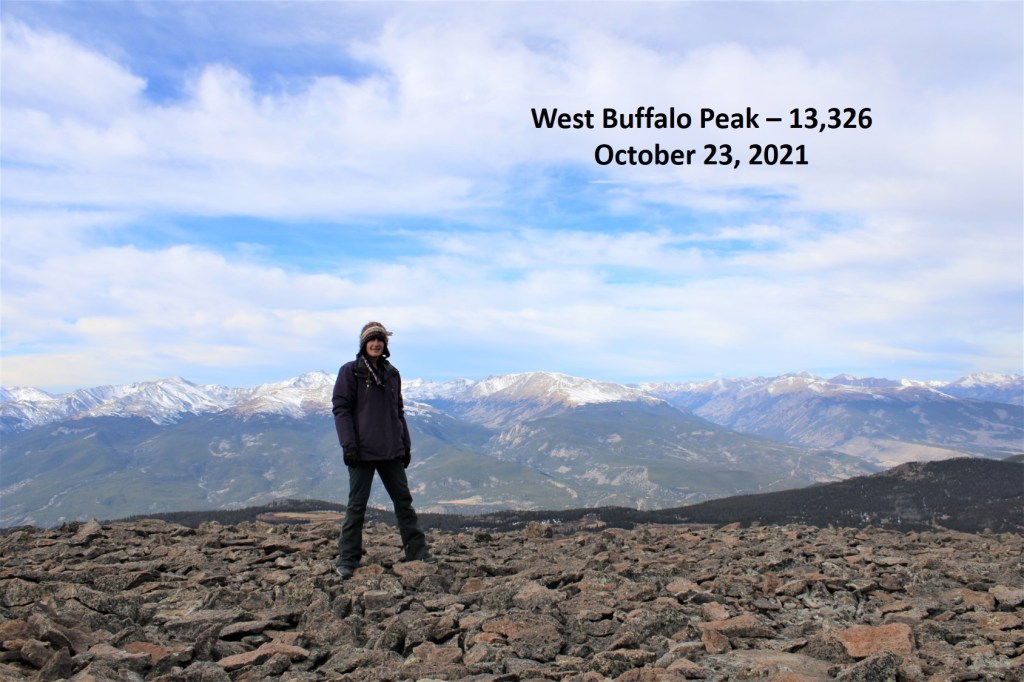
West Buffalo Peak:  

(Sorry about the orientation:  I didn’t realize it when I took the video, and now it’s a pain to fix it…)

I was making this a loop, so I turned and headed northeast, just for about .13 miles. 

Then I descended the ridge, heading northeast towards the 12917/West Buffalo Peak saddle, and then turned right and headed east.

I was hoping to pick up cairns here, similar to the ones I found hiking up East Buffalo Peak, but wasn’t able to locate any.  I wanted to hook back up with the 4WD road.  Much of the route would be below treeline, and in current conditions lined with snow, so as I hiked east, I visualized where I wanted to end up and got out my compass.

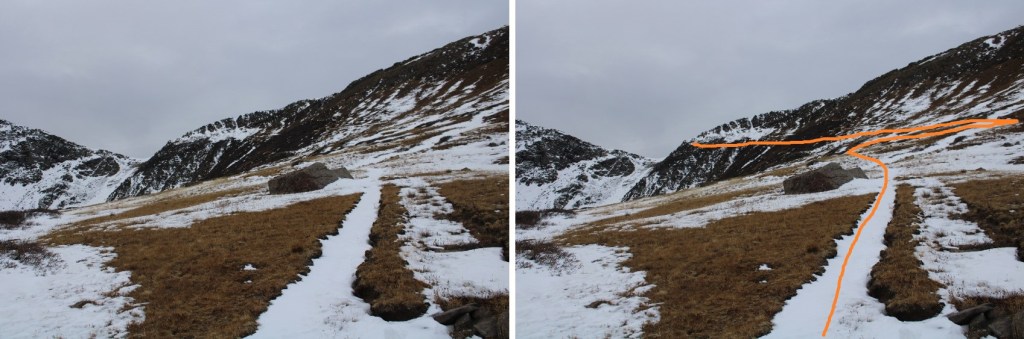
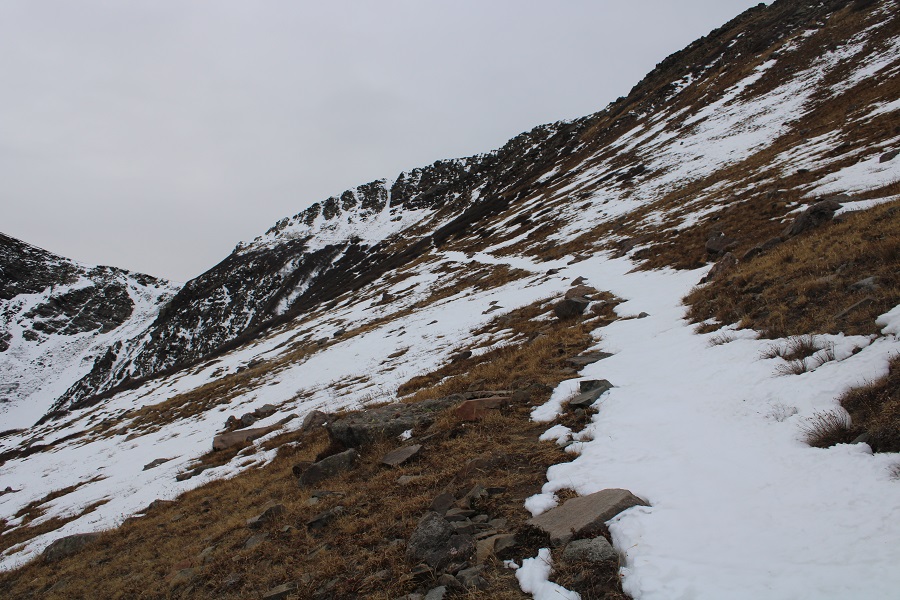
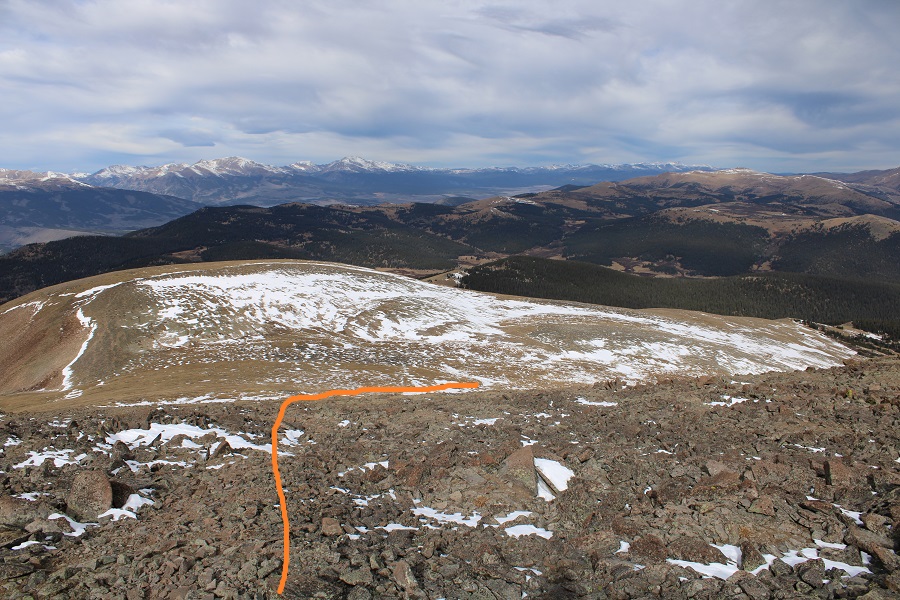
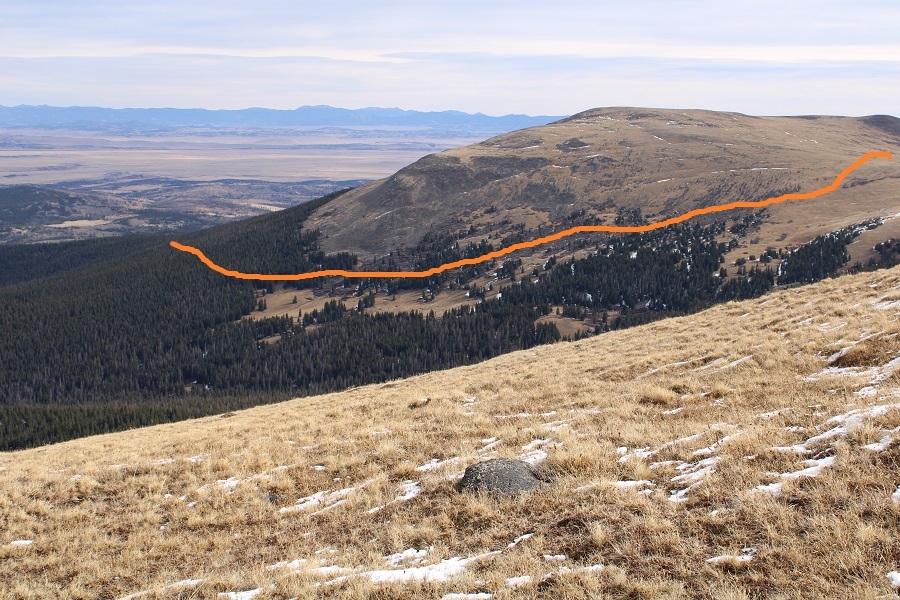
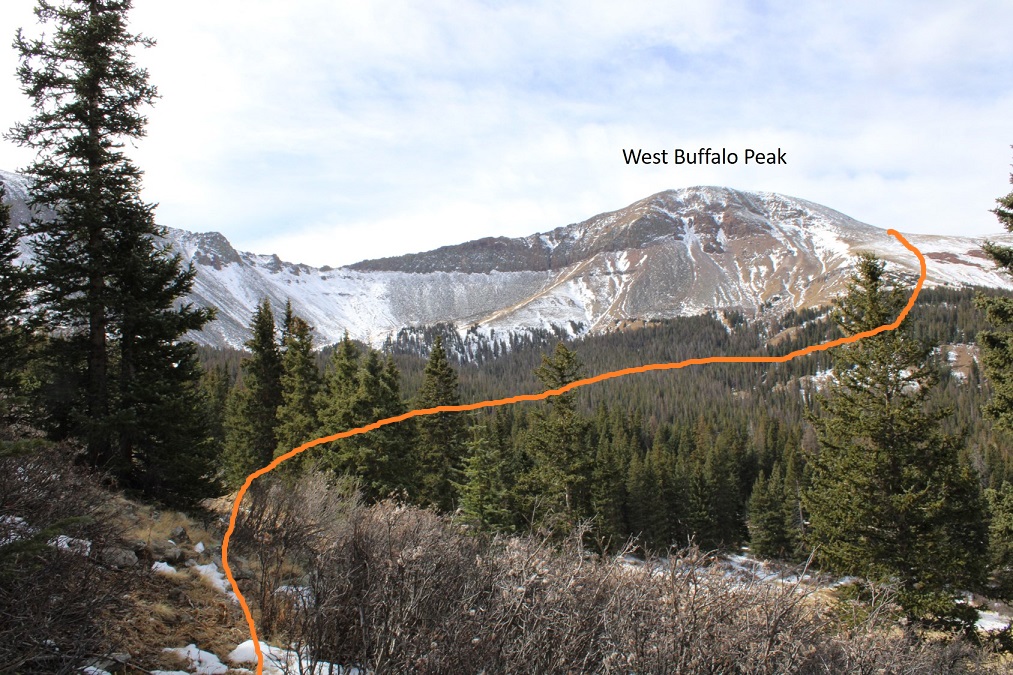
The orange line is how I ascended the ridge to East Buffalo Peak this morning.  So, from where I was at, I needed to aim towards the meadows.

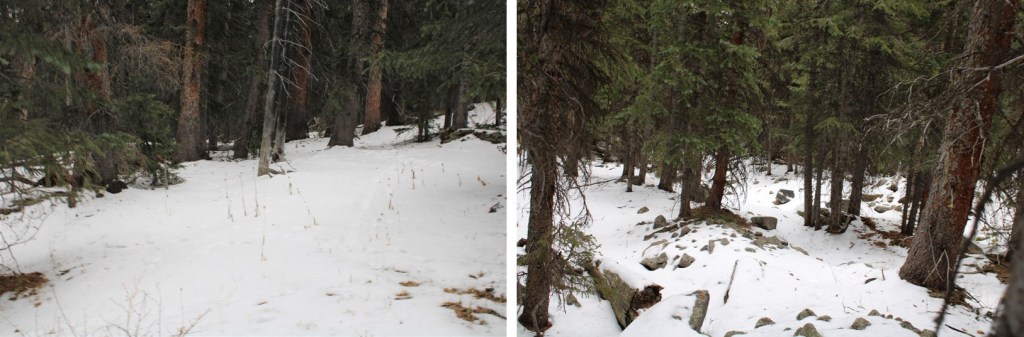
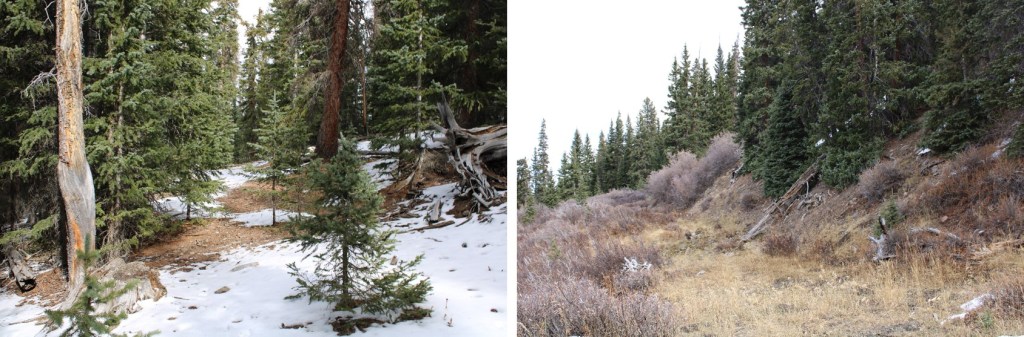
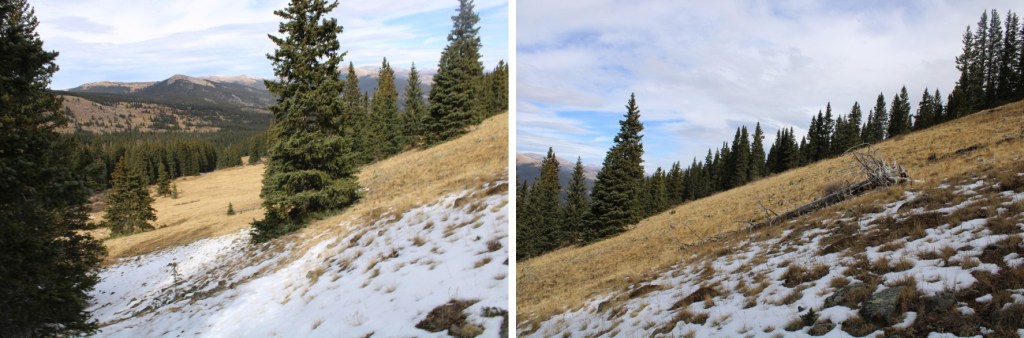
Much of this route is below treeline, so pictures won’t be that helpful.  Here’s an overview of the route I took to get to the meadows.  Once at 11650’, (and crossing a drainage) I did my best to stay at around that same elevation, skirting the mountainside, heading towards the meadows. There were some ups and downs along the way, but nothing major.

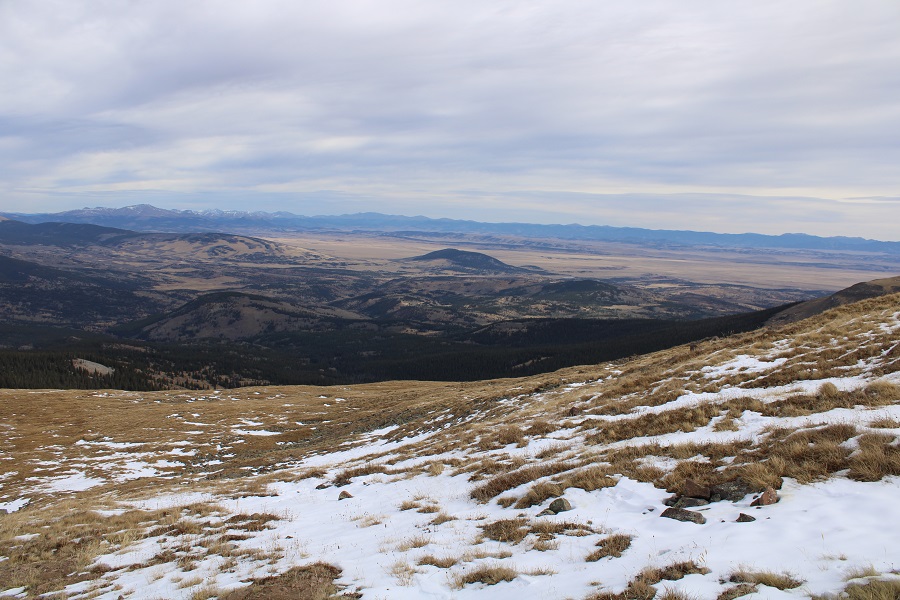
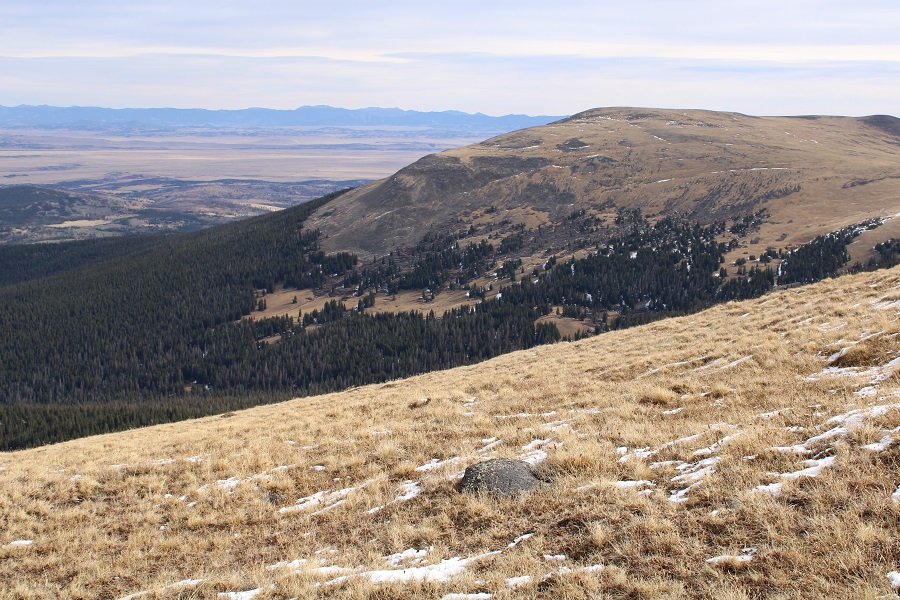
Here are some pictures of the route

Once in the trees, there were tons of elk tracks.  These were helpful in figuring out snow depth, and I frequently followed them when pertinent.  At one point, I could smell elk near, looked up, and saw a buck with rather large antlers startle about 15 feet from me and bound away.

I made it to the meadows, and followed them back to the 4WD road by trying to stay above them, in the trees

Here’s looking back at West Buffalo and my route back to the 4WD road.  If you’re planning on doing this as a loop and doing East Buffalo first, it’s a good idea to get this visual on your way in.

I was now back at the cairns that would lead me to the road (the same ones that led me to the willows earlier this morning)

I followed the 4WD road back to the trailhead (the crows were still there along the way)

I made it back to my truck at 1pm, making this an 11.95 mile hike with 3489’ of elevation gain in 6.5 hours.

On to the next trailhead!
Van Wit – 13,254, Monumental Peak – 13,369, Van Wirt – 13,024, and Hancock Peak – 13,111

RT Length:  10.27 miles

Elevation Gain: 3629’

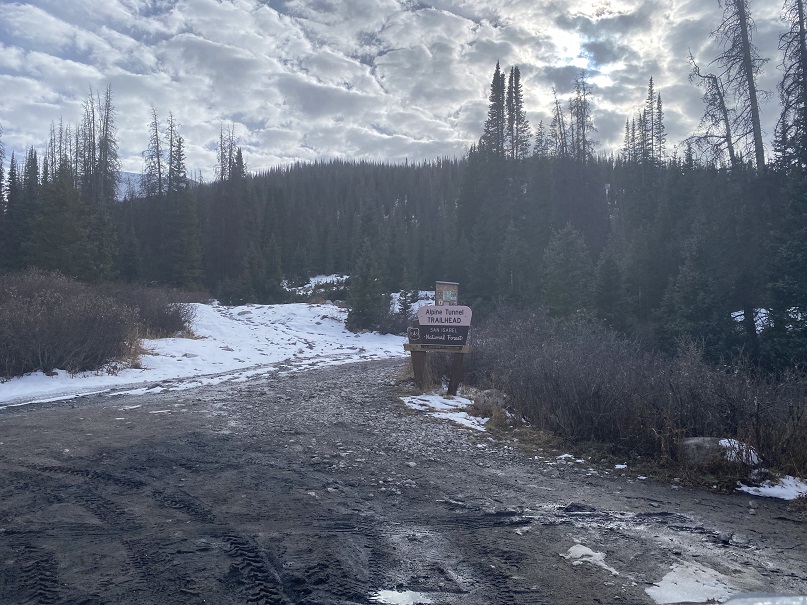
This was my first time at Hancock Ghost Town.  There wasn’t much to it… but there was good parking and the 4WD road looked doable in a 2WD, even in snow.  There was a lot of ice/snow on the road, but that was to be expected for this time of year.  There was an abandoned RV parked with “No Trespassing” signs just before the parking area.  I’m sure the signs were more to protect the mining claim behind the RV than the RV itself, which was missing several windows and looked occupied by wildlife.  Due to the ice and snow, it was also muddy, so I decided not to park at the Alpine Tunnel Trailhead, but at the parking area just before the bridge, where there was less mud.

I got to bed quite early, and woke up to my alarm at 6am.  I was surprised I hadn’t been cold, considering it was 22 degrees outside when I woke up and there was a layer of frost on my windows.  I ate breakfast, gathered my gear, and was on the trail at 6:30am. 

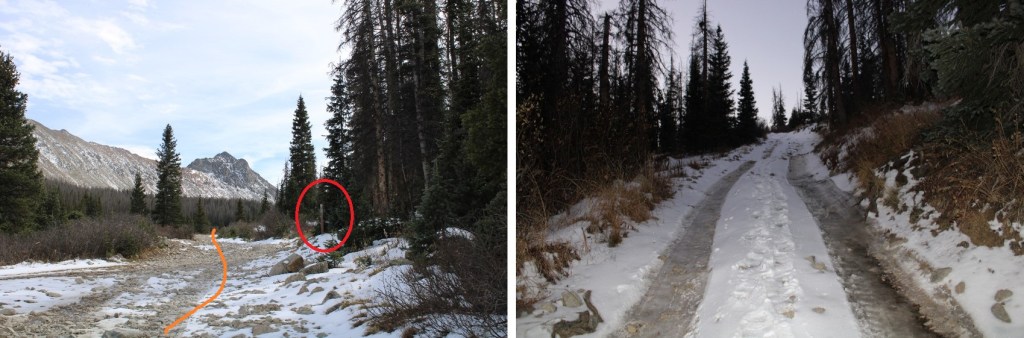
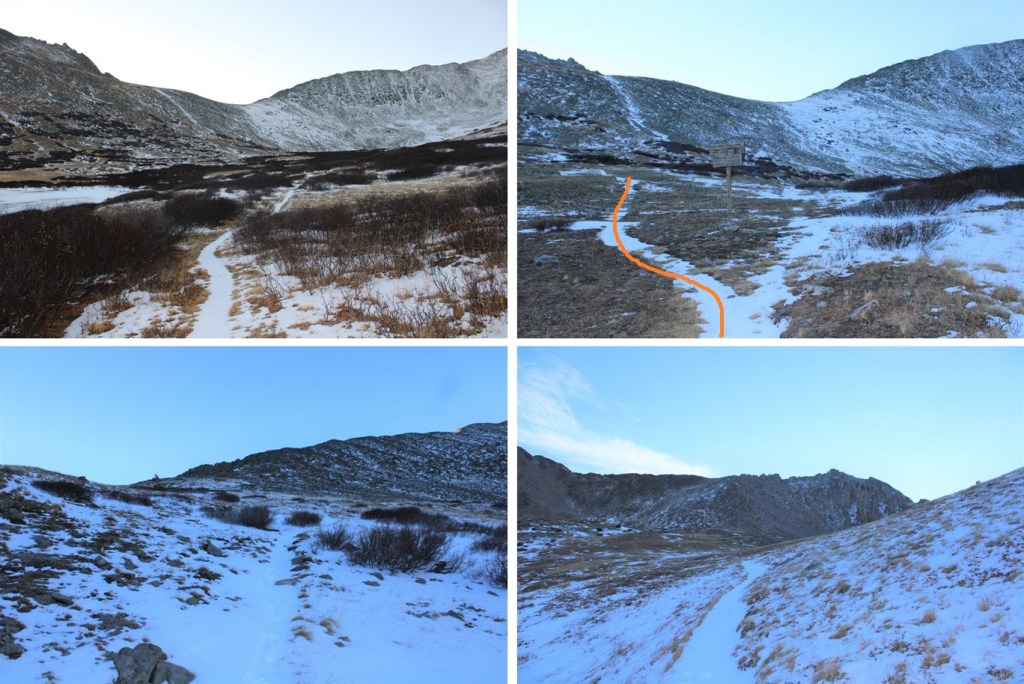
I was following Road 295 south, towards Hancock Lake.  It was dark out, but there was a full moon and the road was easy to follow. I just had to watch out for ice.

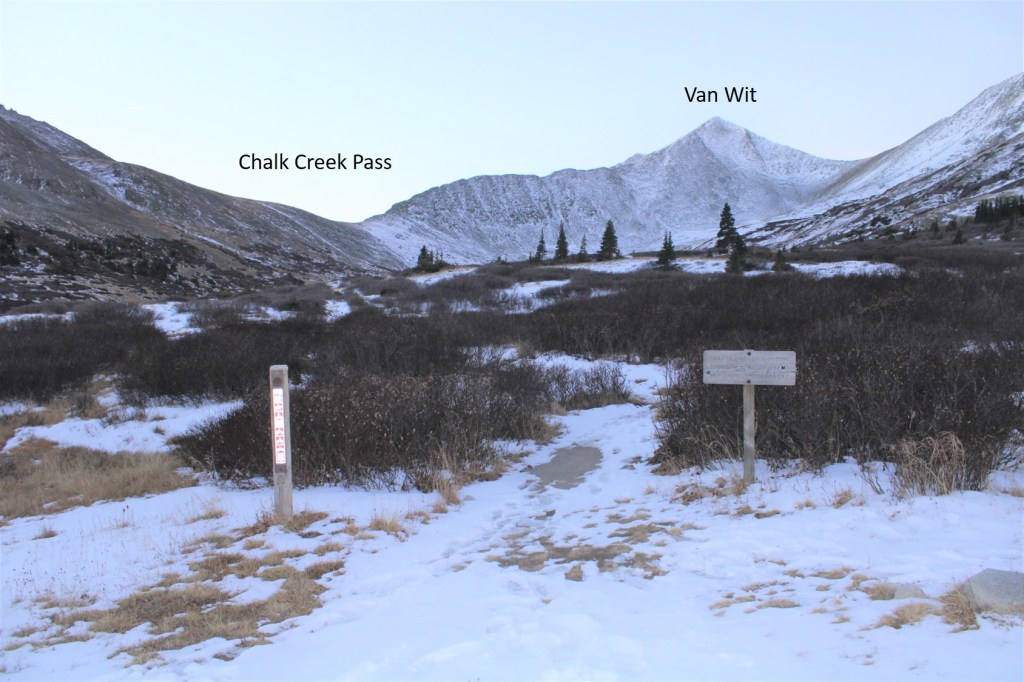
After hiking for 1.6 miles, I made it to Hancock Lake, where the road ended and I picked up trail 1422, skirting the lake to the west, before following the trail east up Chalk Creek Pass.  Here the footprints and tire tracks ended, and I was now making my own tracks in the snow. I kept thinking what a wonderful basin this would be for a moose, when I came across some moose tracks.  The tracks were facing the opposite direction, so I knew running into a moose was unlikely. I followed them all the way over Chalk Creek Pass.  This is a good view of the hike to the pass, and the ridge to Van Wit.

Here’s the route up to the pass, all class 1, sprinkled with snow.  At the junction, take the trail that goes left, towards Chalk Creek Pass.

At the pass I turned right, and headed southwest along the ridge. 

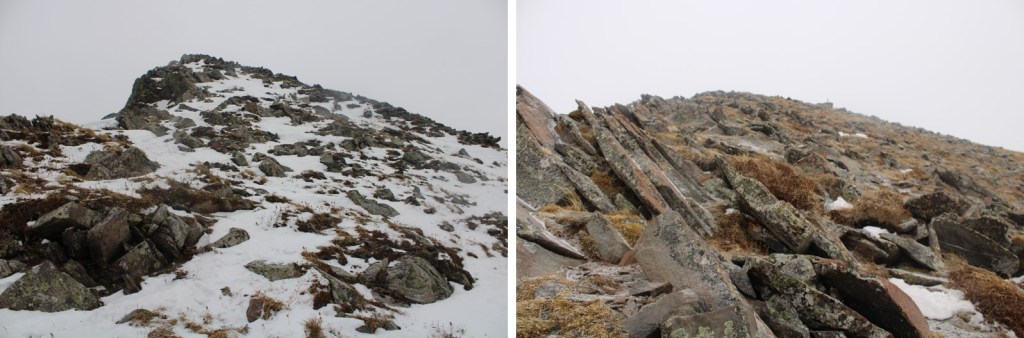
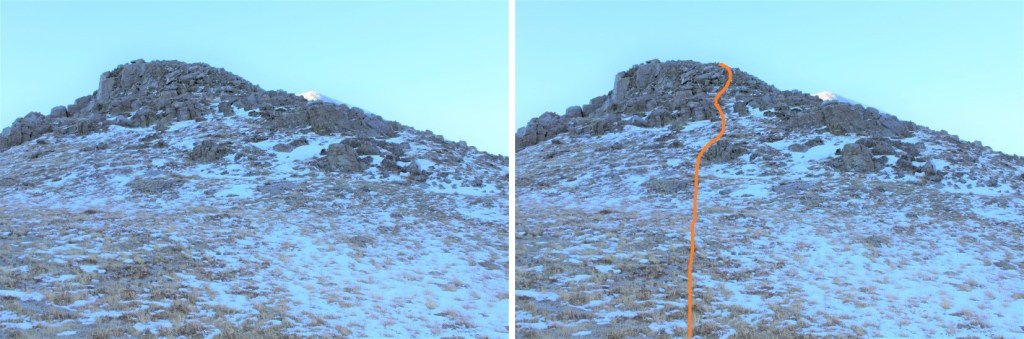
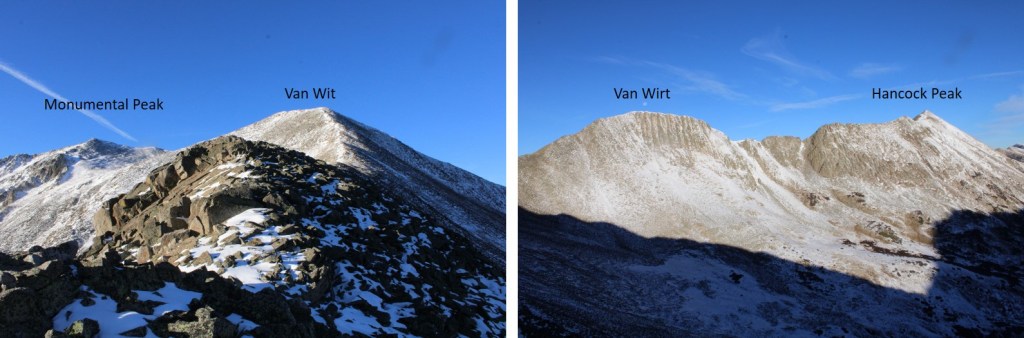
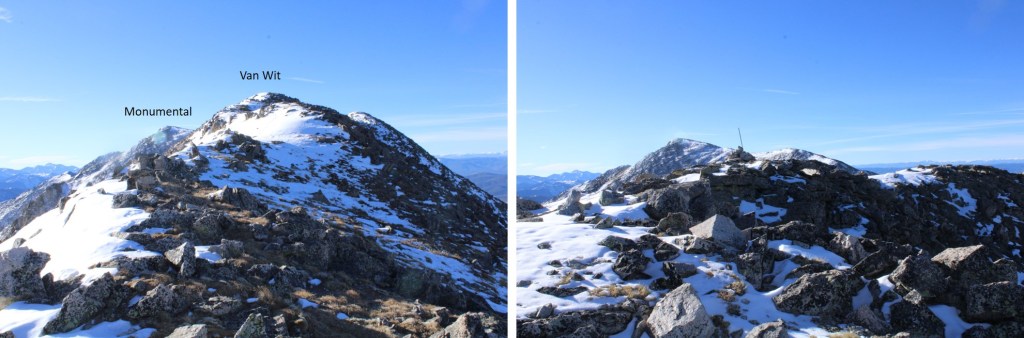
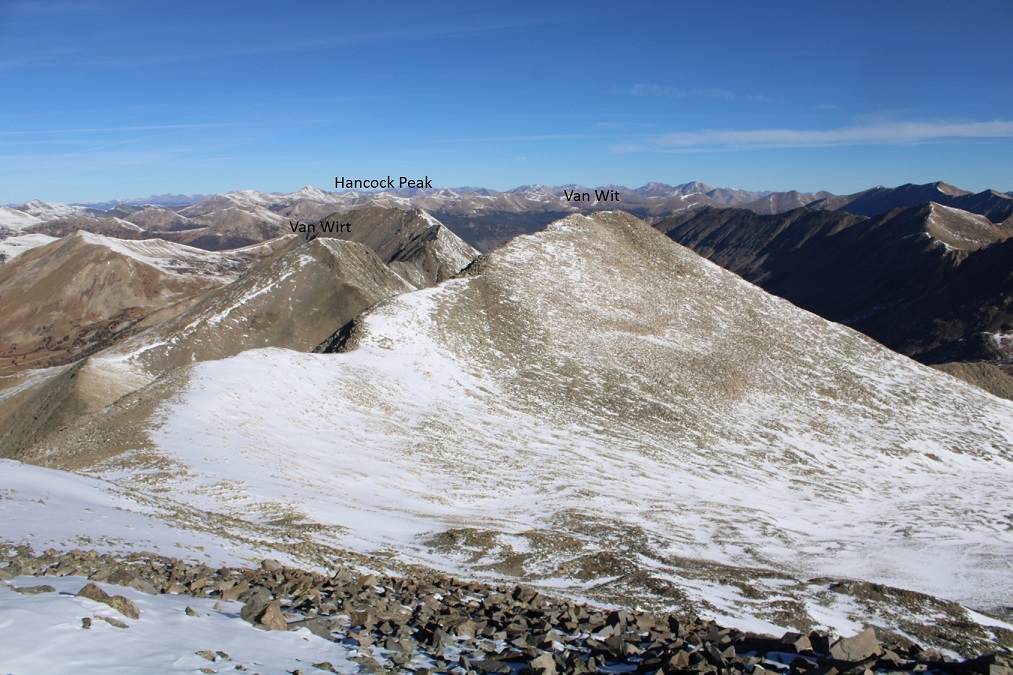
This is normally a class 2 ridge, but today, due to the snow, there were class 3 areas (on all the ridges with snow today). I continued following the ridge, being mindful of loose rocks and voids beneath the snow. From the ridge I had great views of all 4 peaks I’d be climbing today

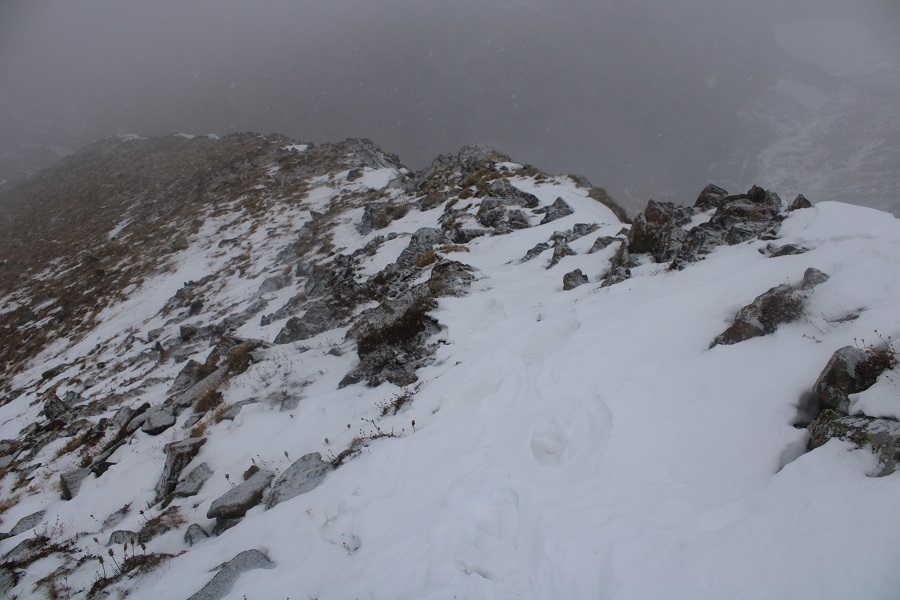
I stuck to the ridge proper, dipping to the right only when necessary

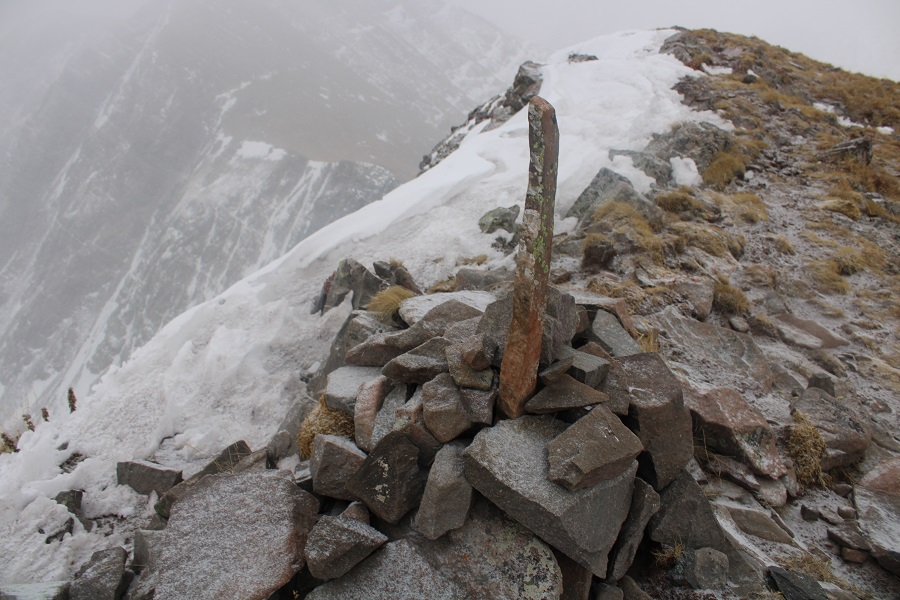
Topping out of the ridge there was some snow to deal with, but a cairn leading the way

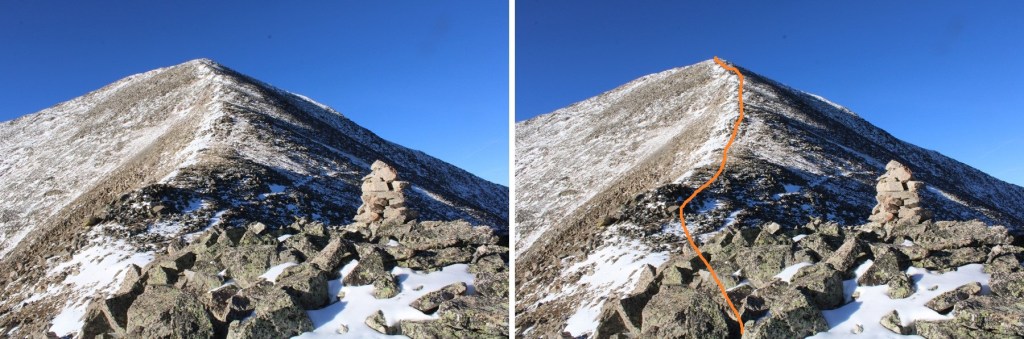
I turned left and followed the ridge south, towards an obvious cairn indicating the summit of Van Wit

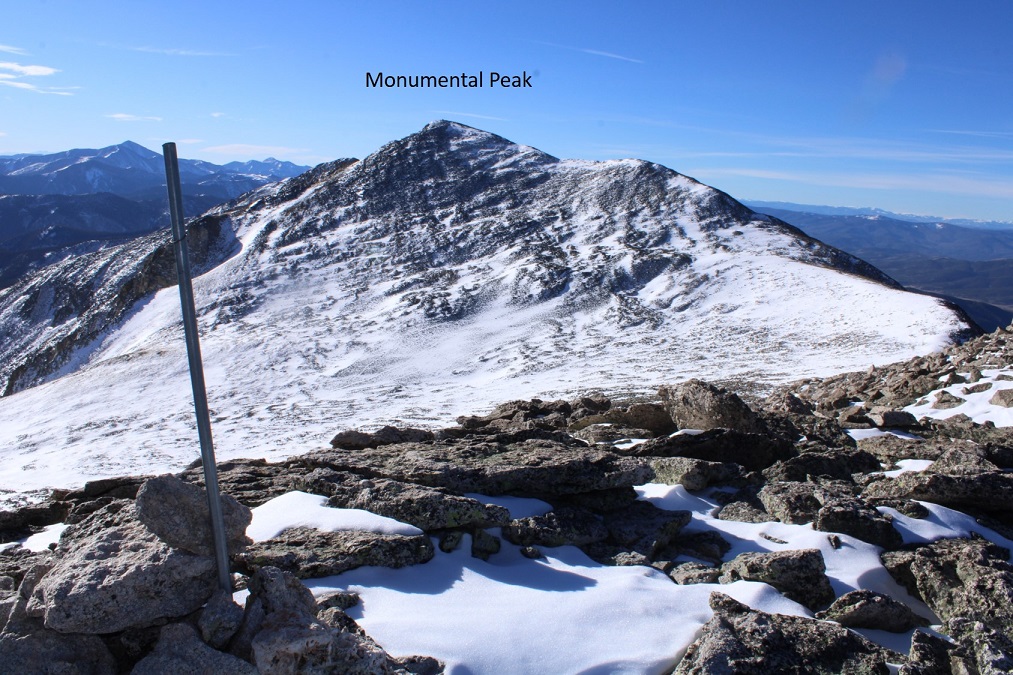
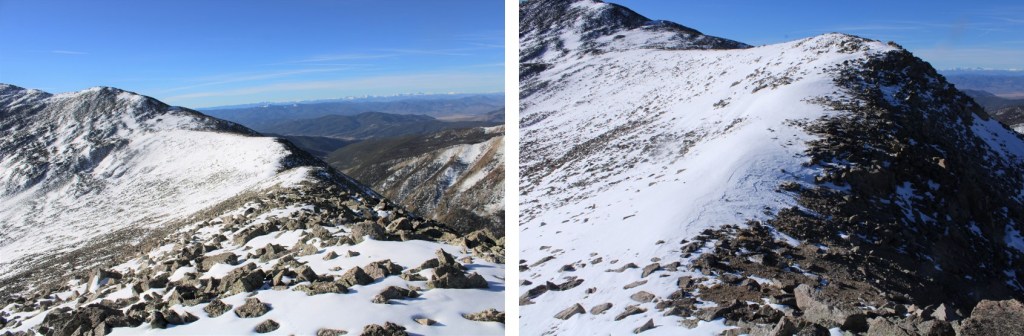
I passed the cairn indicating I was at the unranked summit of Van Wit, and continued following the class 2 ridge towards Monumental Peak

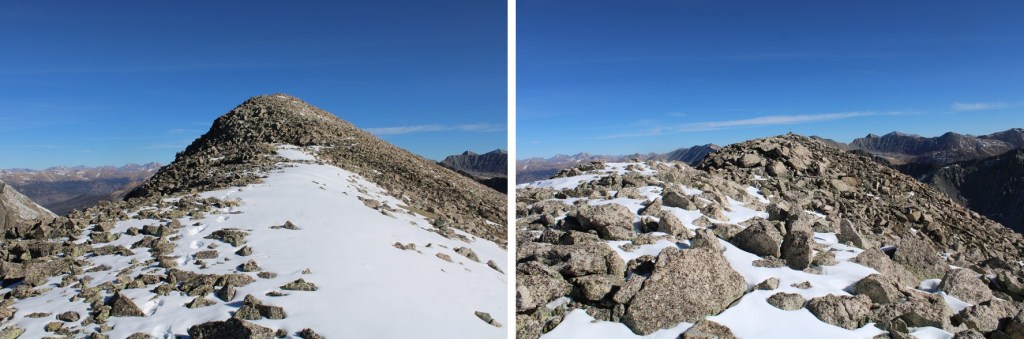
Here are some pictures of the rocky ridge

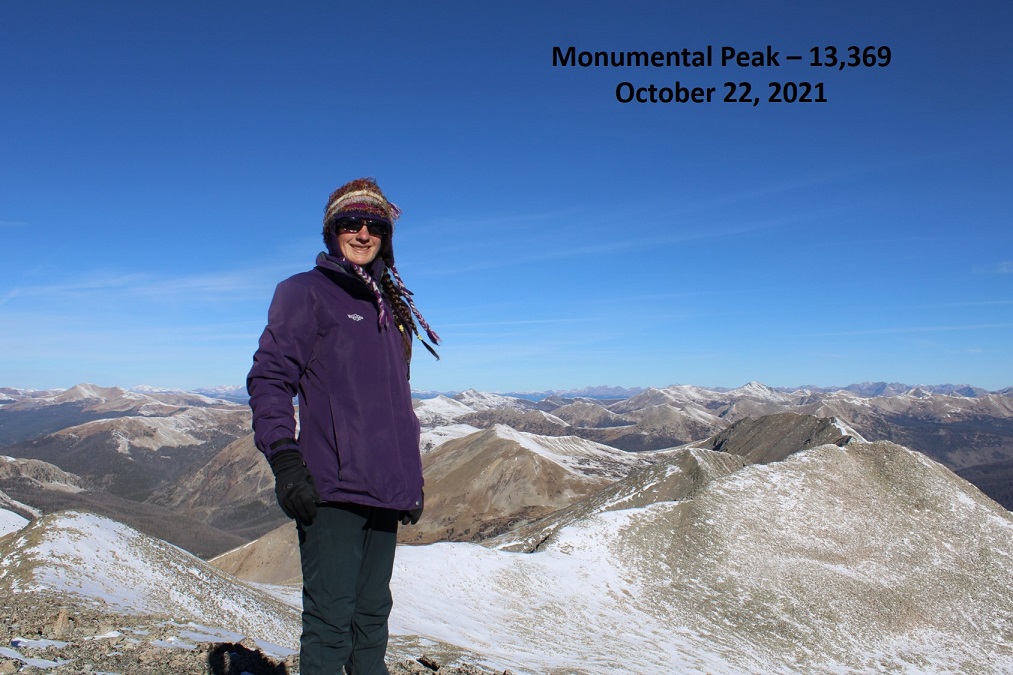
I summited Monumental Peak at 9:30am

Monumental Peak:

I re-traced my steps back to Van Wit, following the ridge and my tracks in the snow.

Back at the summit of Van Wit, I now followed the ridge northwest, towards Van Wirt.  Due to the snow, this was class 3.  I took a lot of time carefully navigating the rocks and snow on the way down, losing about 620’ of elevation.

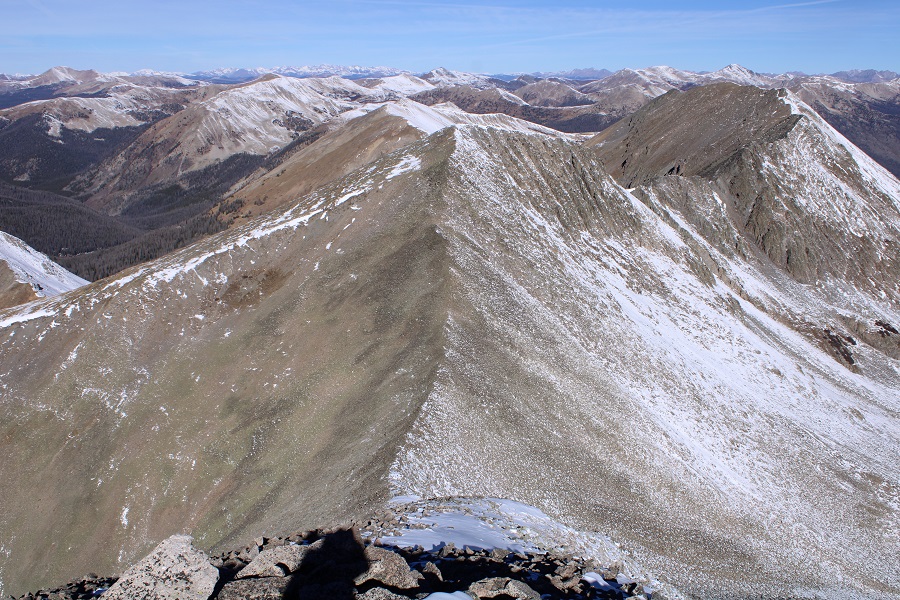
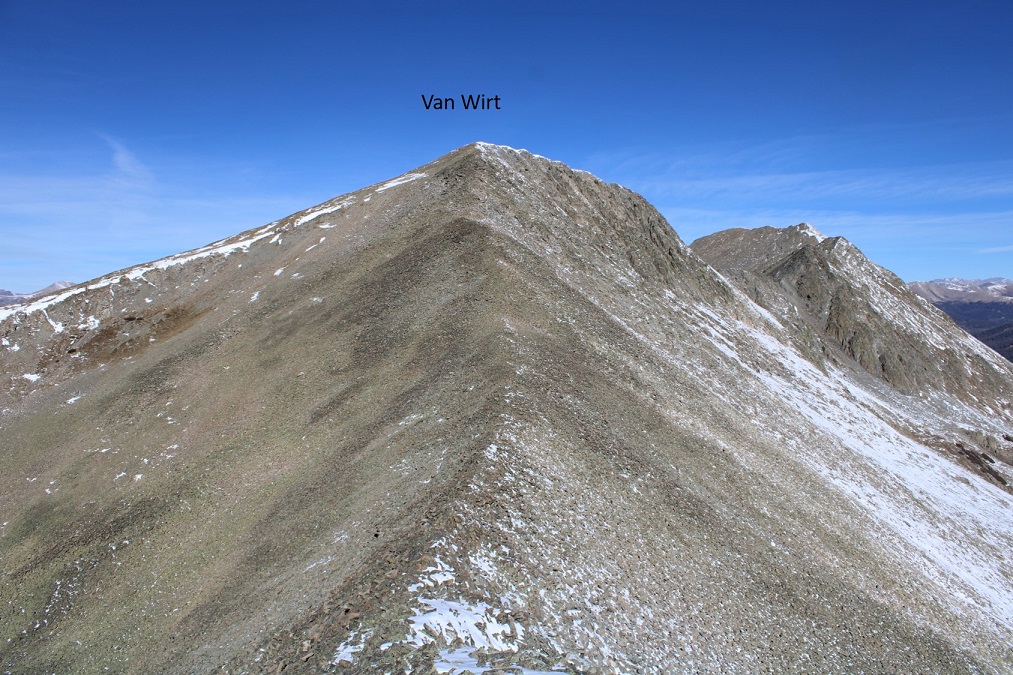
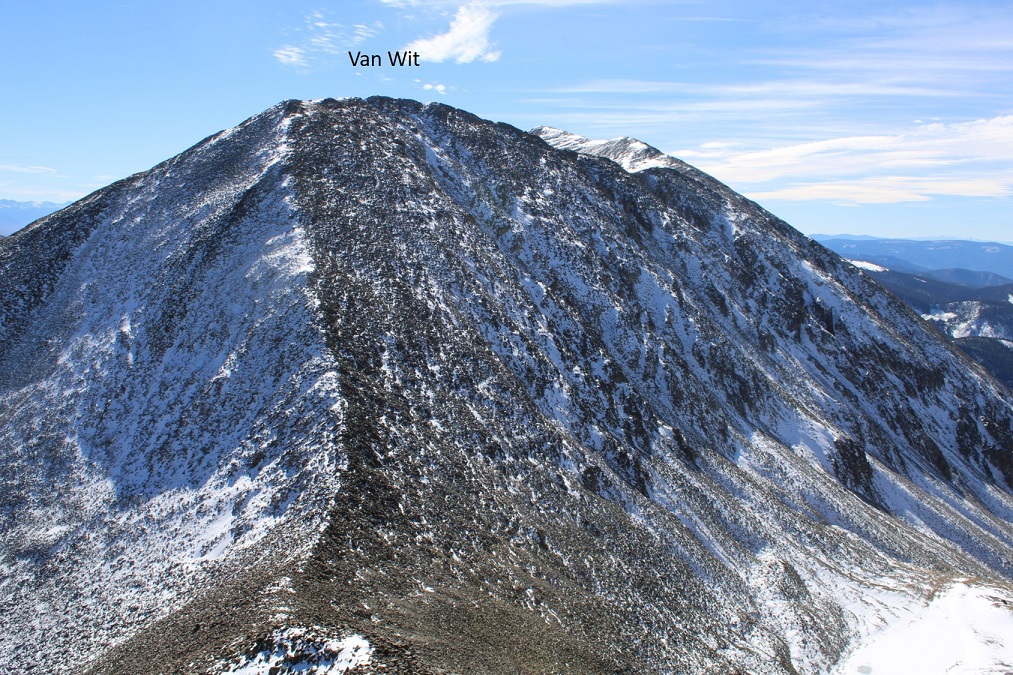
From the Van Wit/Van Wirt Saddle, here’s looking up at Van Wirt

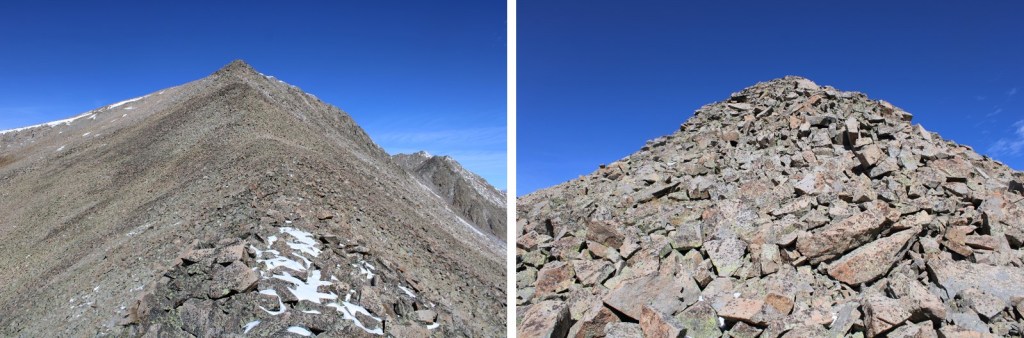
The ridge up to Van Wirt was rocky, but easy to navigate, especially without snow.  I just followed the ridge, gaining about 375’ in elevation

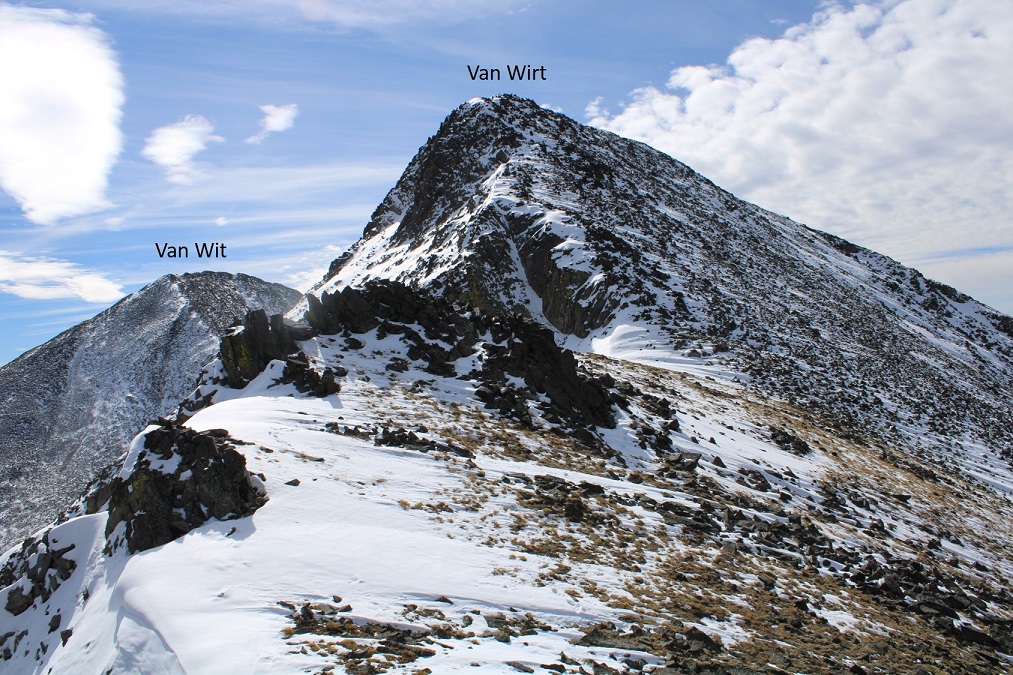
From the summit of Van Wirt, here’s looking back at Van Wit

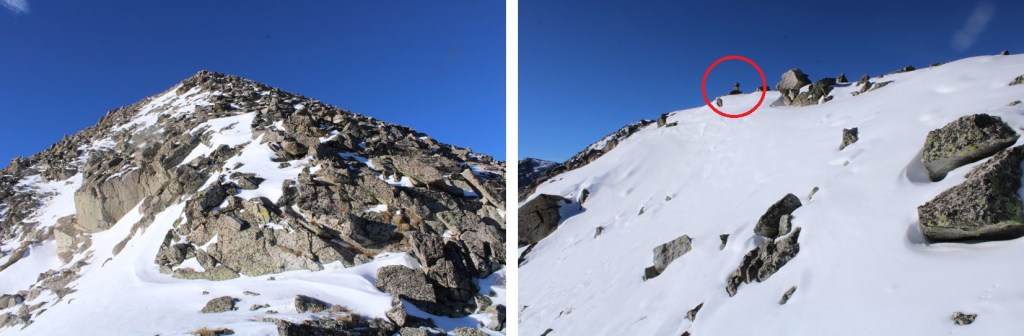
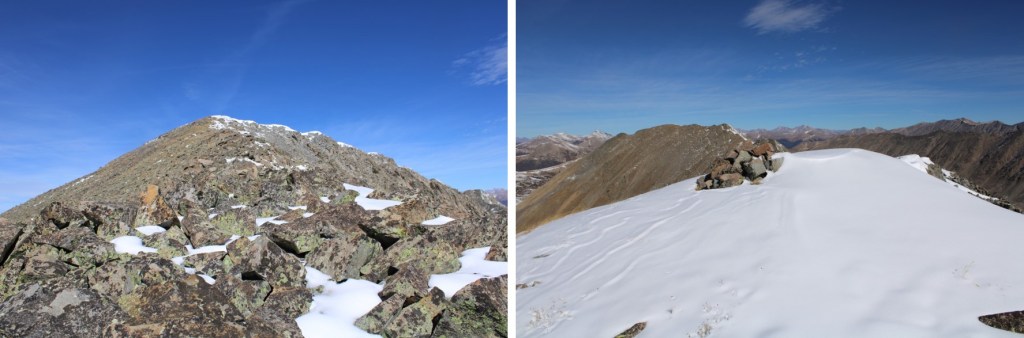
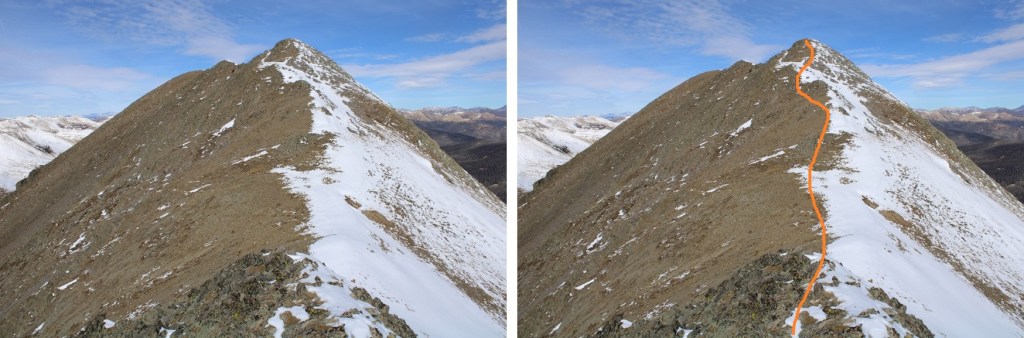
And now, to head over to Hancock Peak.  Here’s the actual summit (you’ll know it because it has a cairn, and it’s in the middle of the upper, long ridge)

I followed the ridge north, losing about 275’ in elevation towards the Van Wirt/Hancock Peak saddle, once again, being careful where I placed my feet with the rolling rocks and snow (all still class 2).

At the saddle I saw recent tracks from an adventurous fox, who decided to go down the gully this morning towards Hancock Lakes

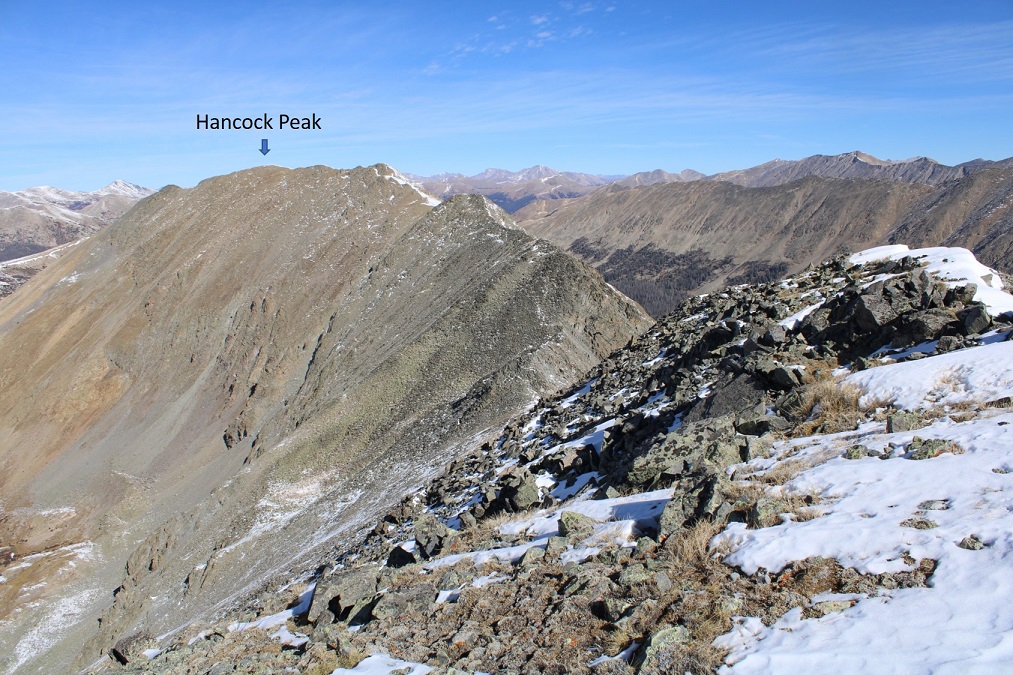
Here’s looking back at Van Wirt

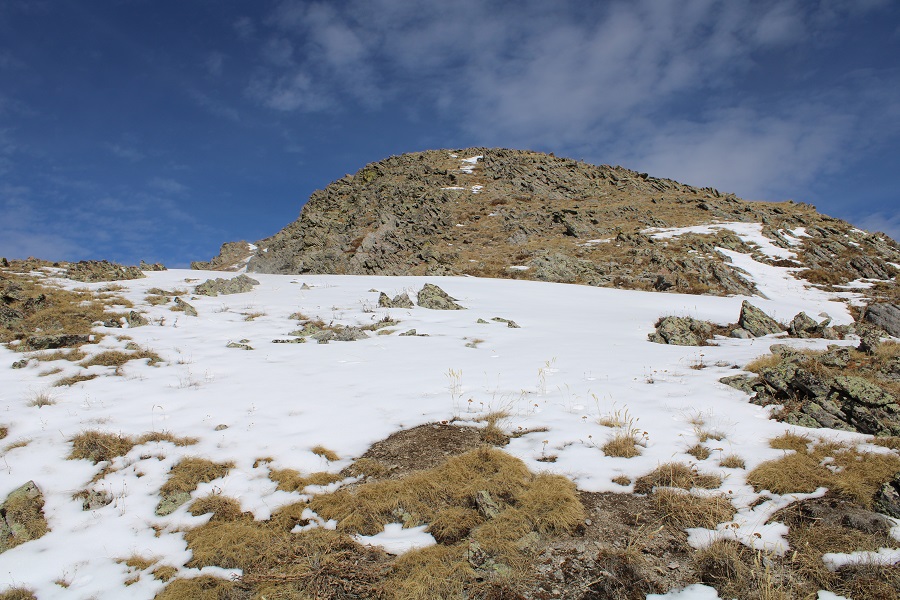
And now, to regain 375’ to the summit of Hancock Peak.  This was rocky, but I was able to follow the ridge directly, keeping it difficult class 2

Here I went a little left, but could have gone straight over the top. 

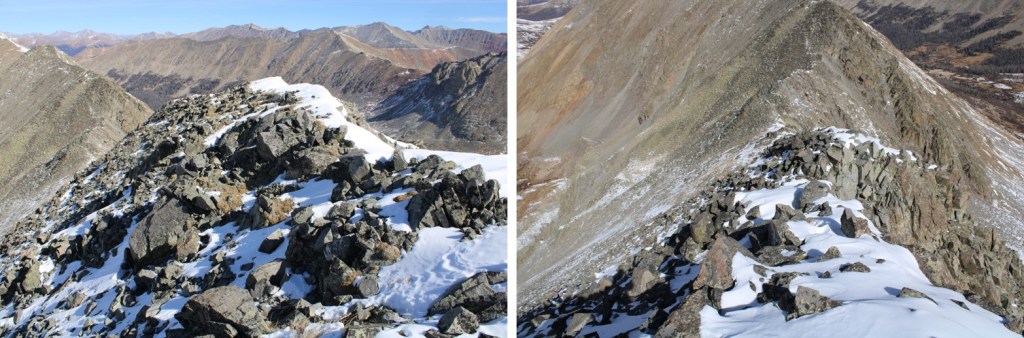
More ridge photos…

I crossed directly through the snow, which wasn’t as bad as it looked (note, this is a false summit)

Once at the top of this point, I could see the true summit to the northwest.  You guessed it:  I followed the ridge

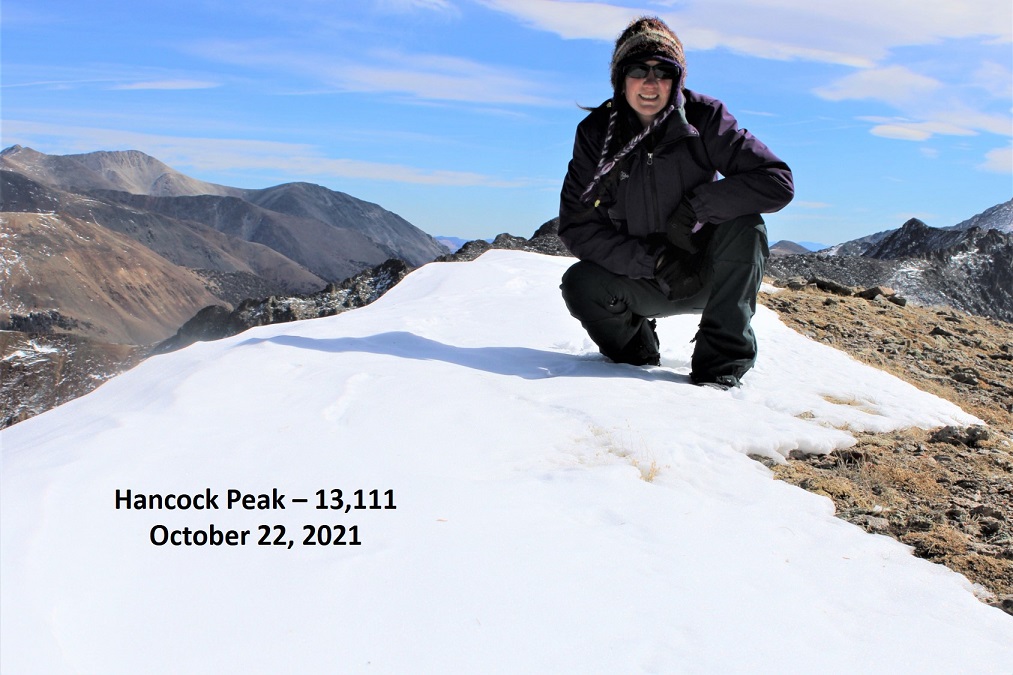
I summited Hancock Peak at 12:30pm

Hancock Peak:

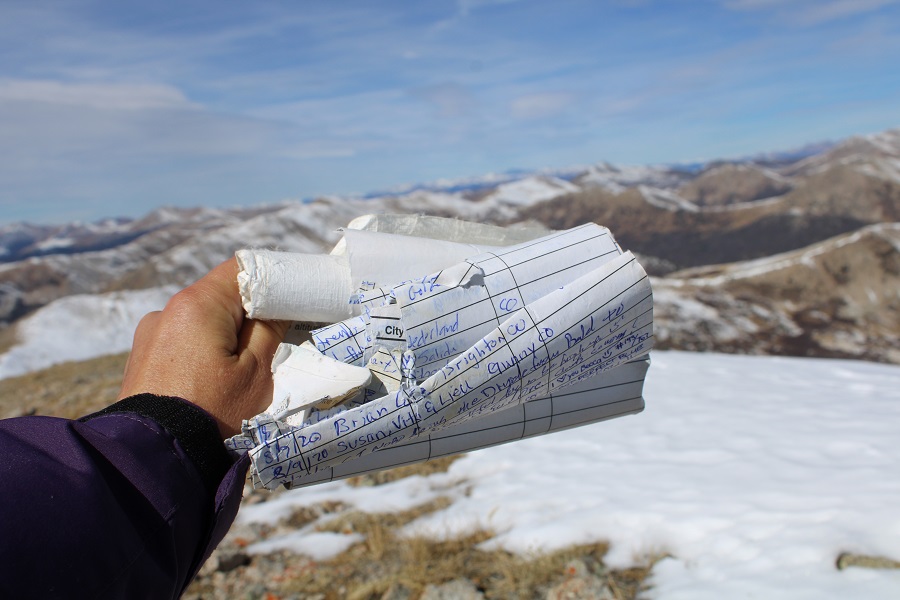
There was a torn-up summit register hidden in the cairn.  The last person to sign was here over a month ago.

I was making this a loop, so I continued following the ridge northwest

I was headed towards Hancock Pass.  At the end of the ridge, just before losing elevation, you can see the pass

I descended towards Hancock Pass, losing 850’ of elevation on rocky and scree filled terrain

From the pass, here’s looking back up the ridge

I turned right, and followed Road 299 for 2.5 miles back to the trailhead.

About halfway back I came across moose tracks again, headed up the pass.  That moose was moving!  It looked like he was just passing through after the storm, and did so quickly.
I made it back to my truck at 2pm, making this a 10.27 mile hike with 3629’ of elevation gain in 7.5 hours.

On to the next trailhead!