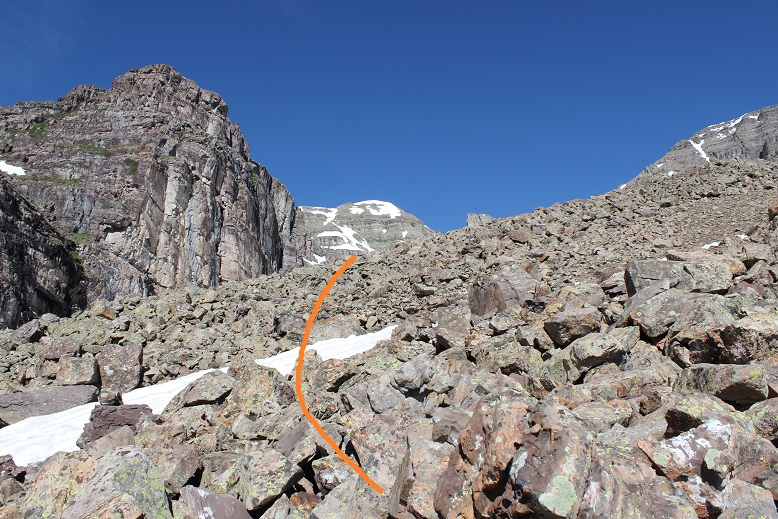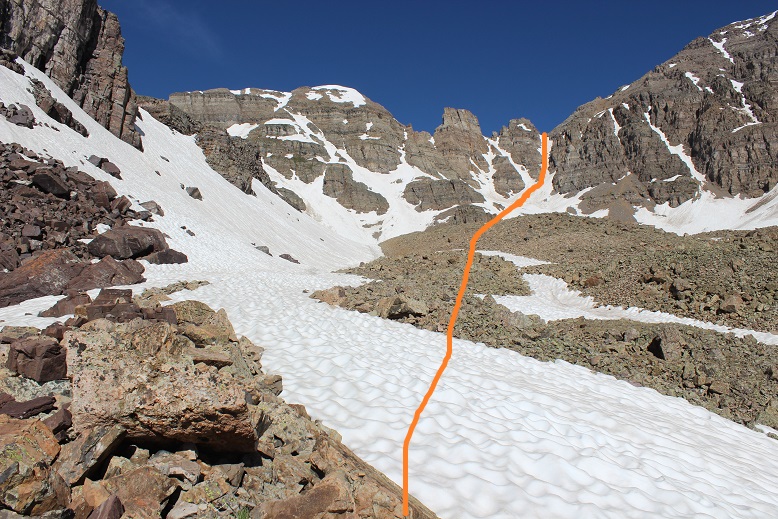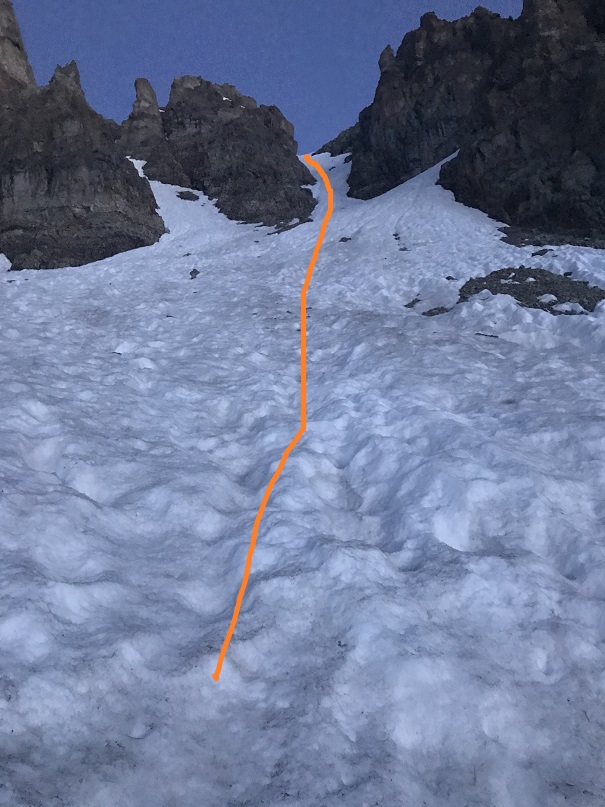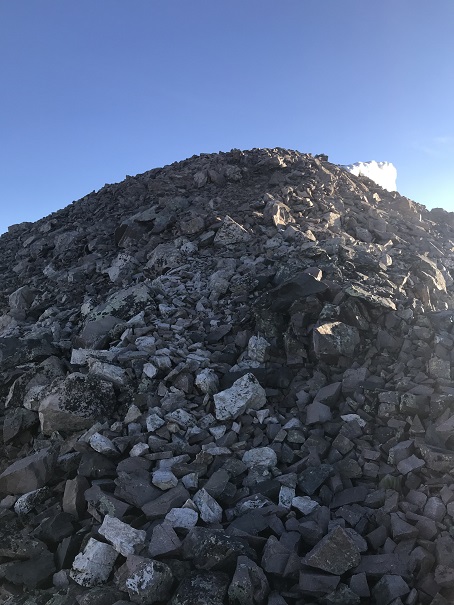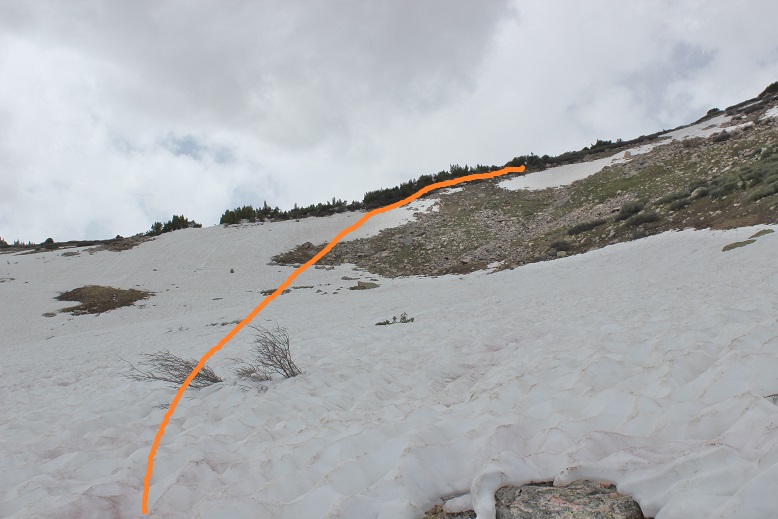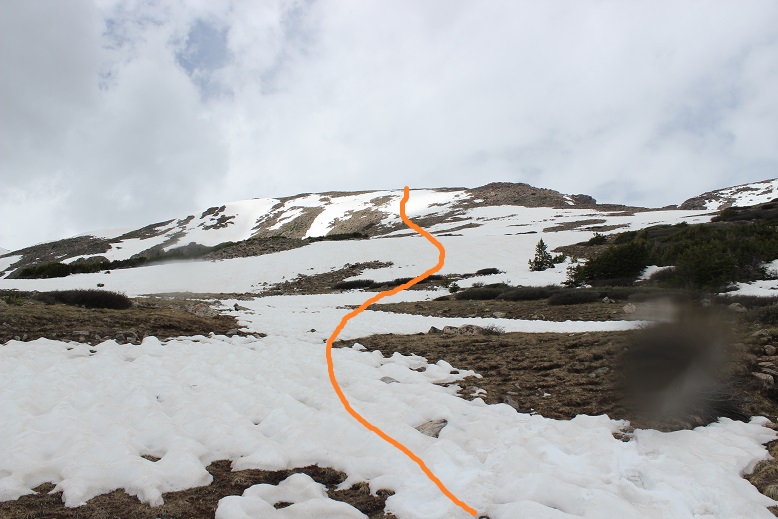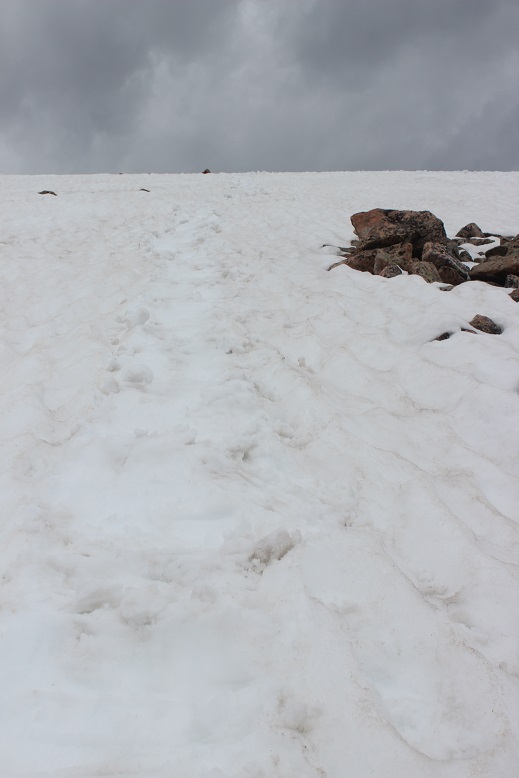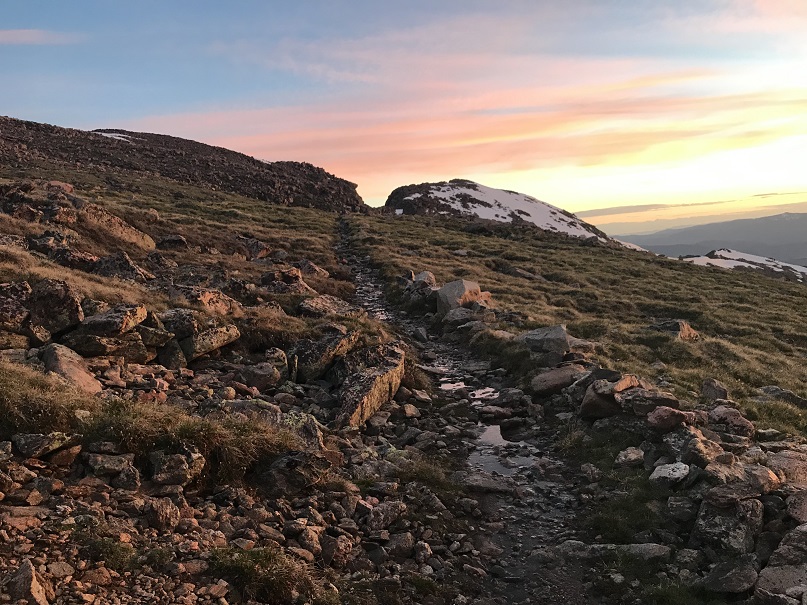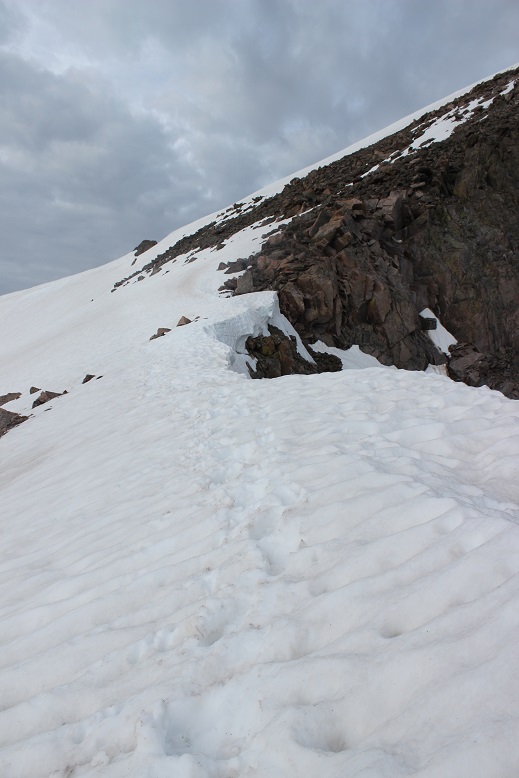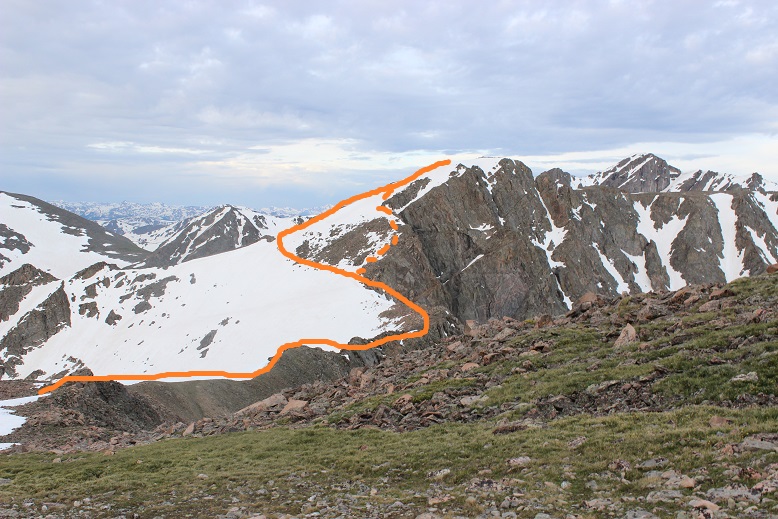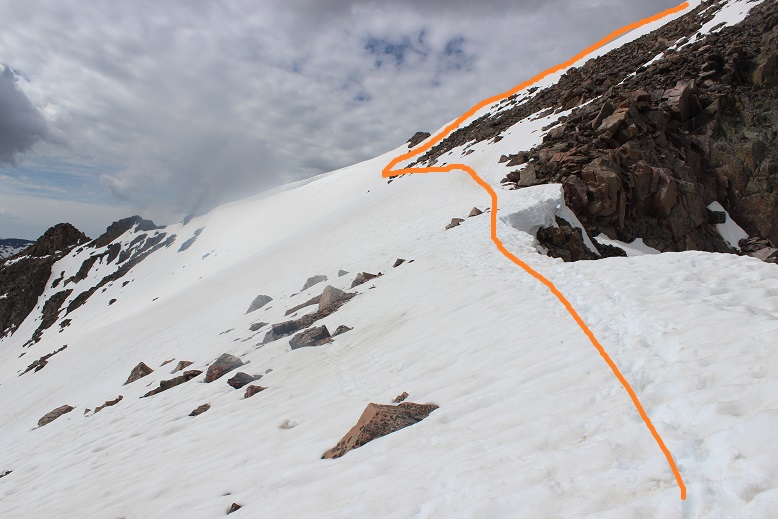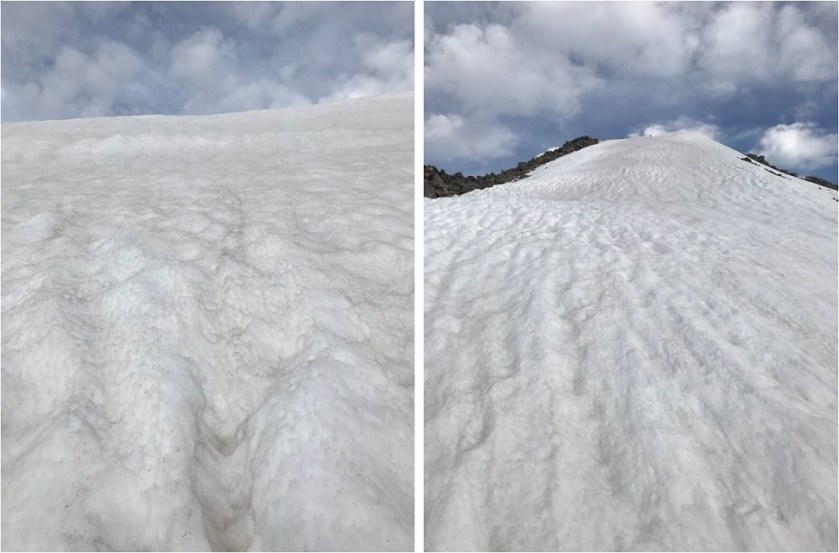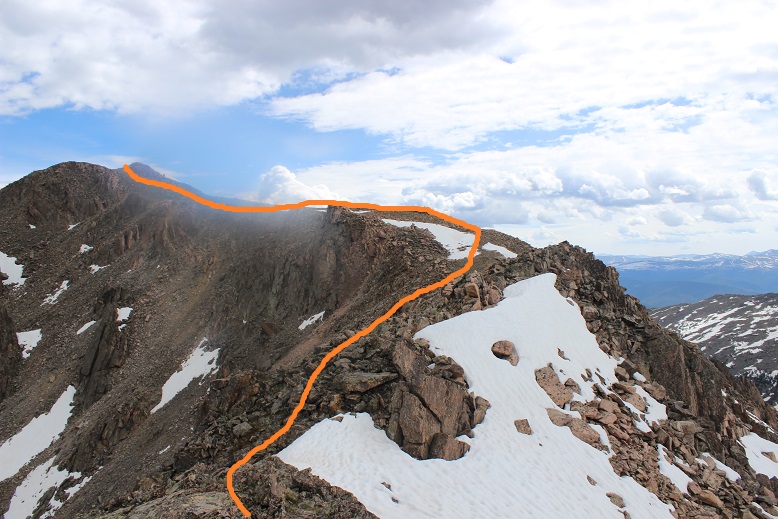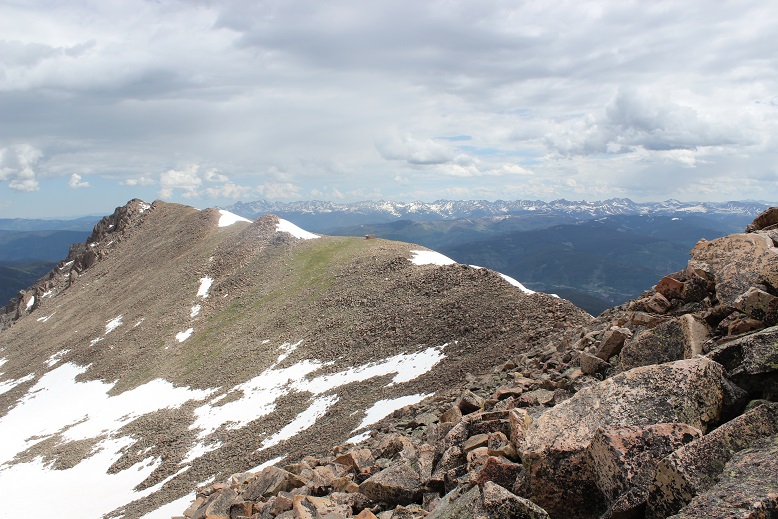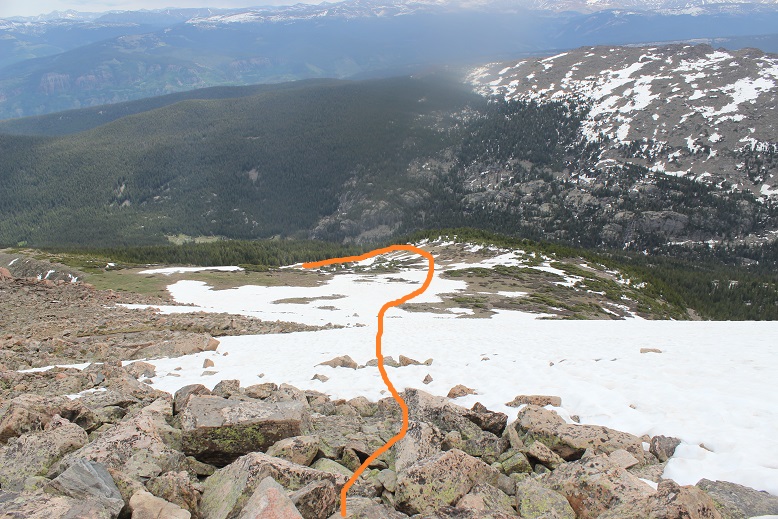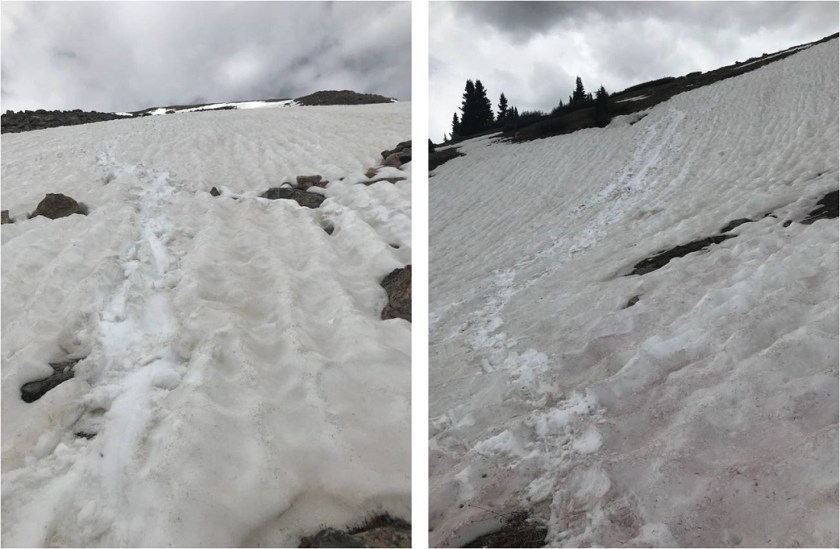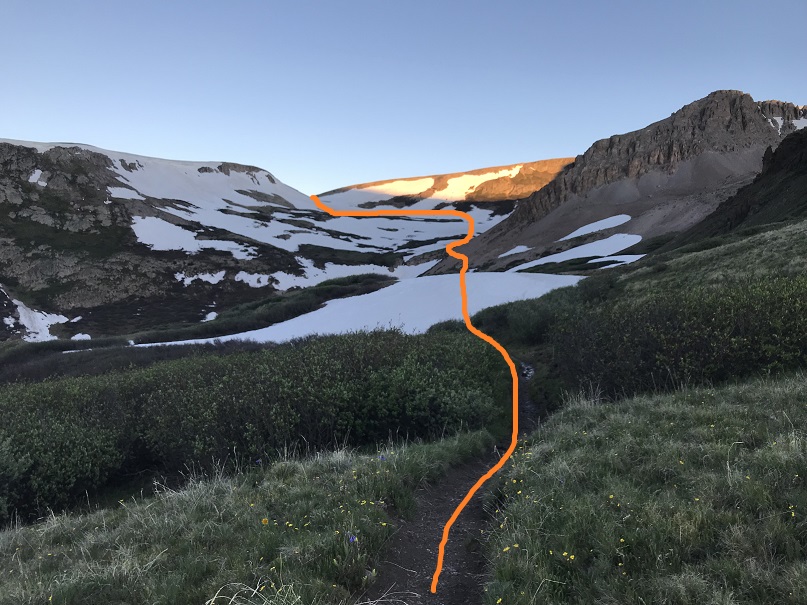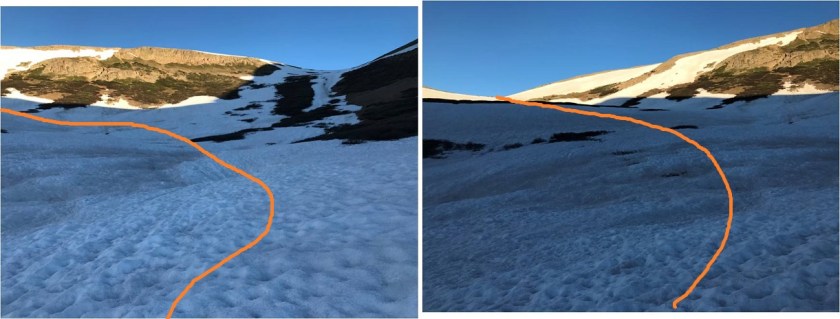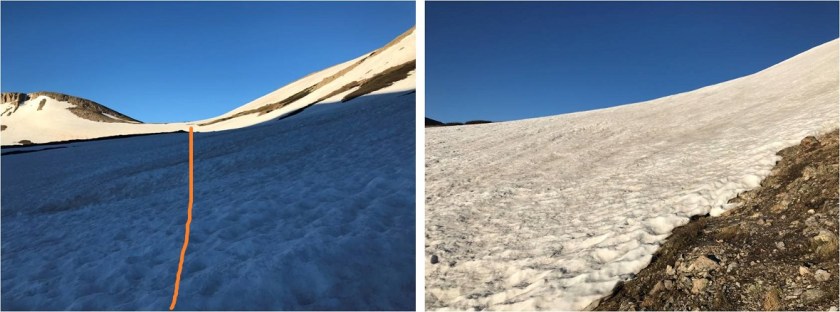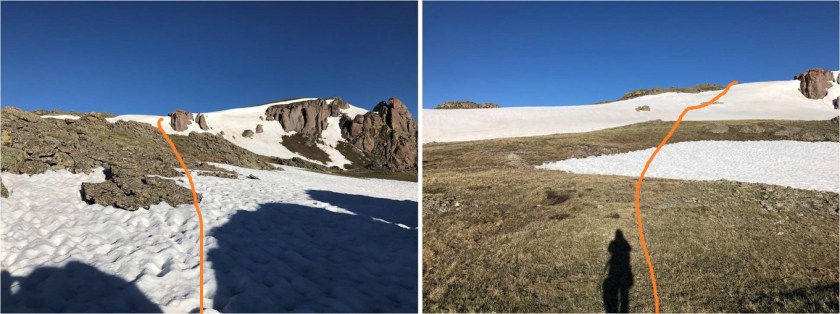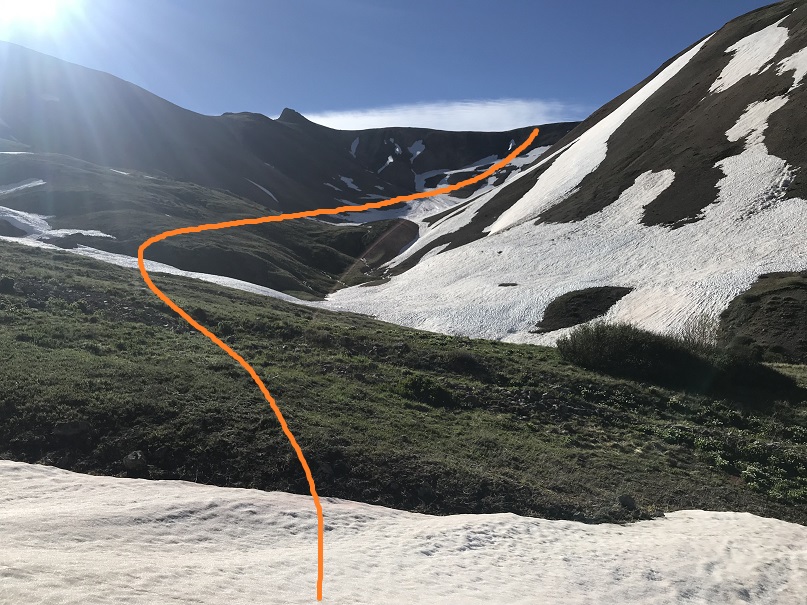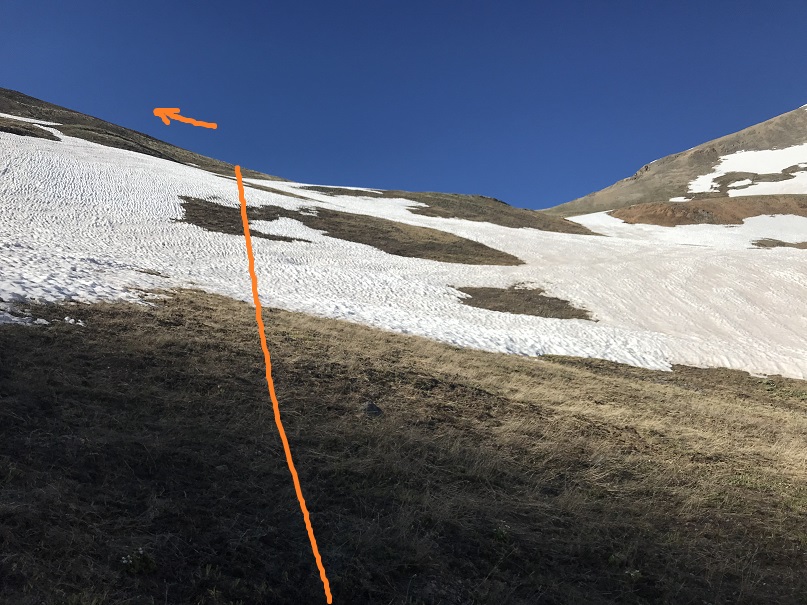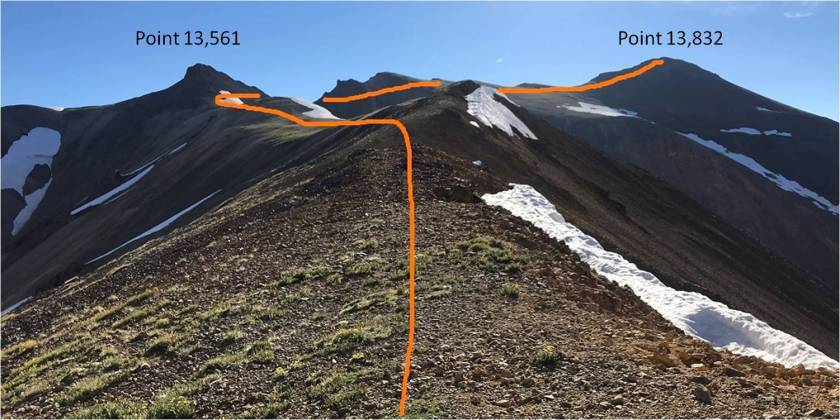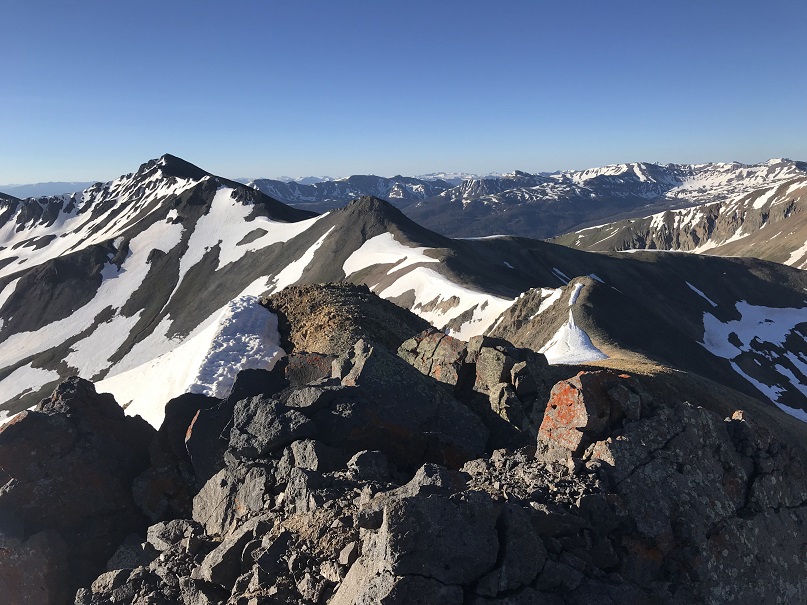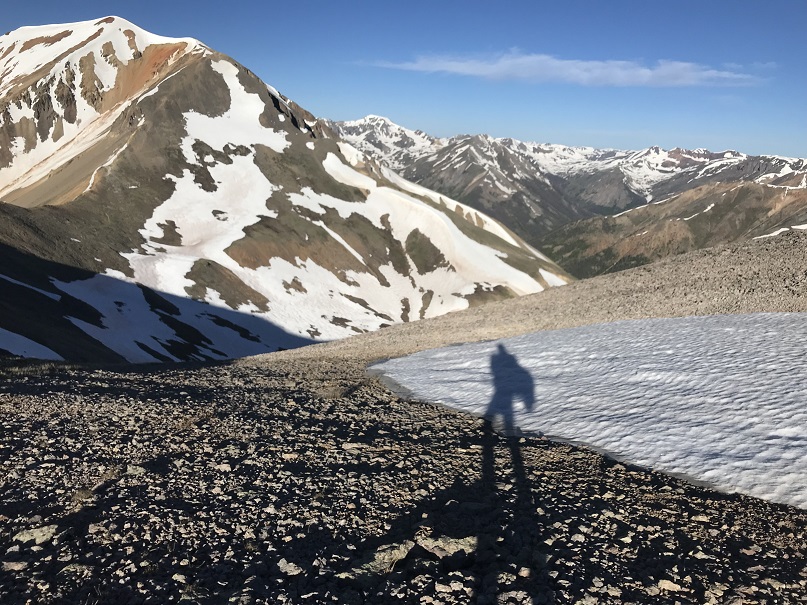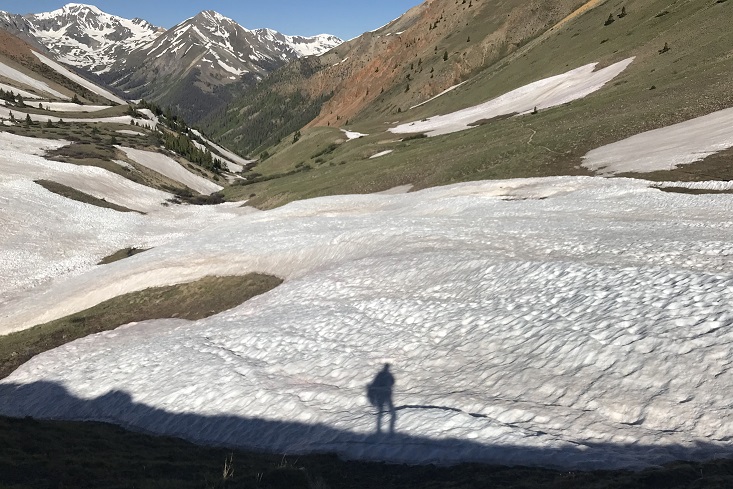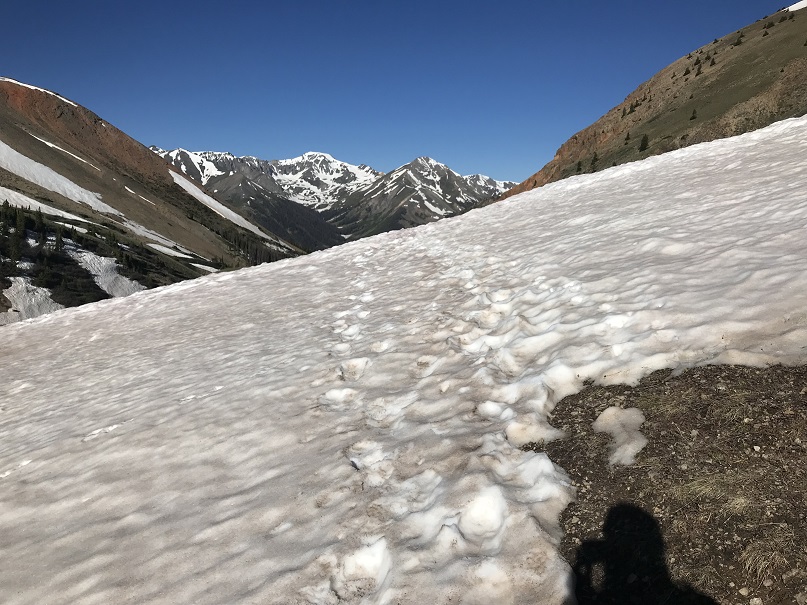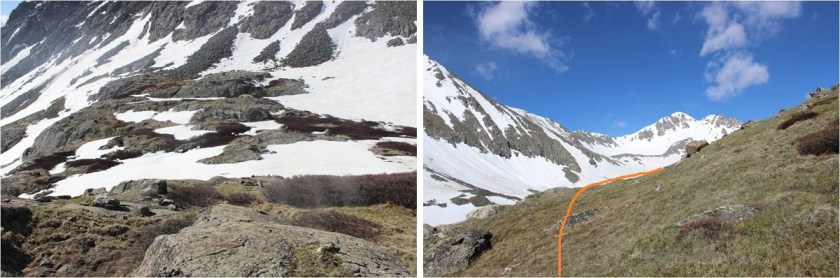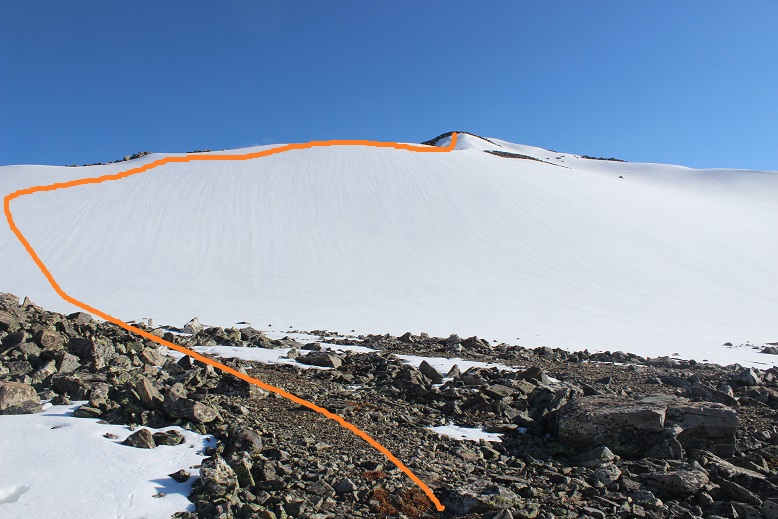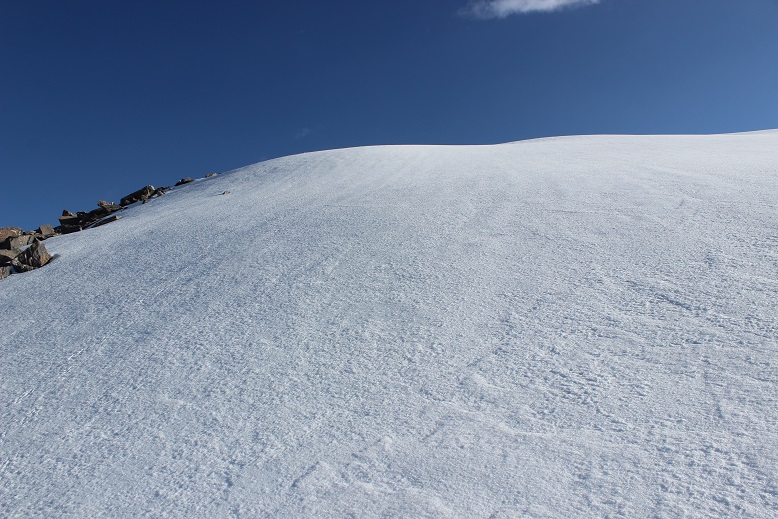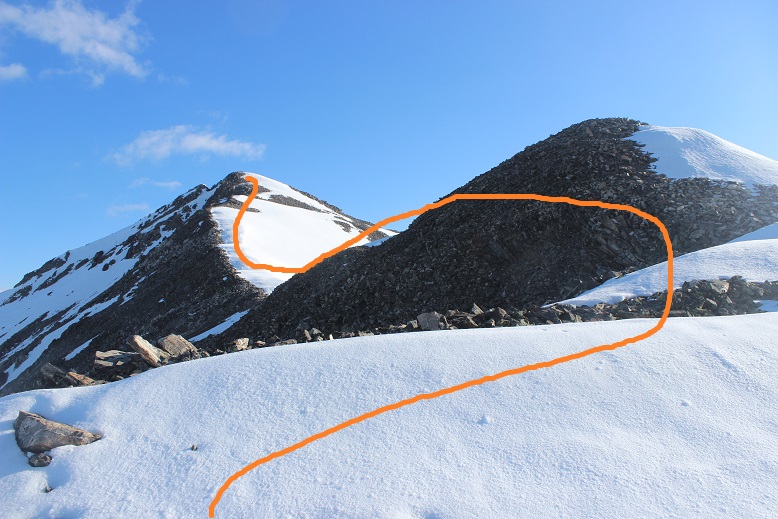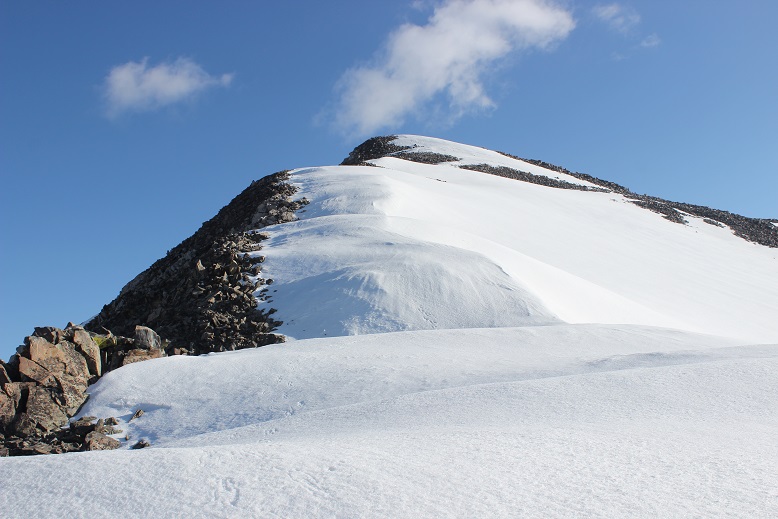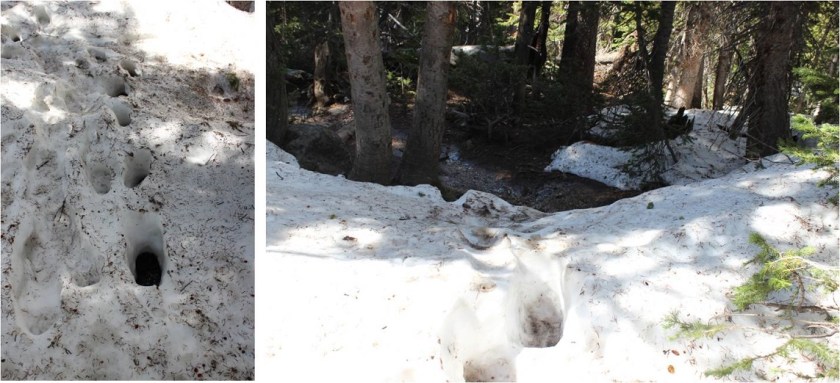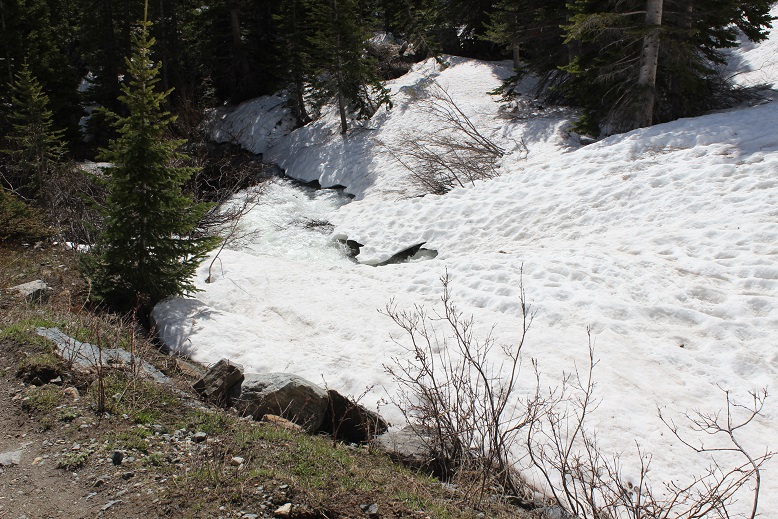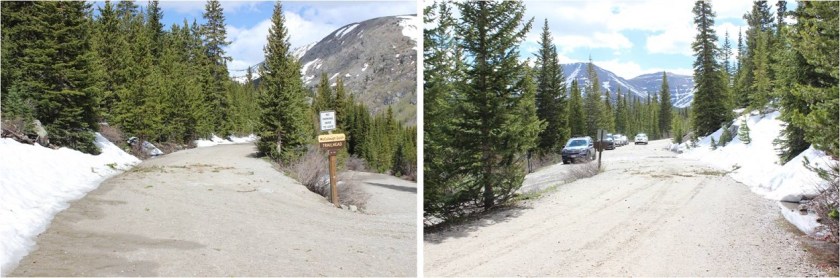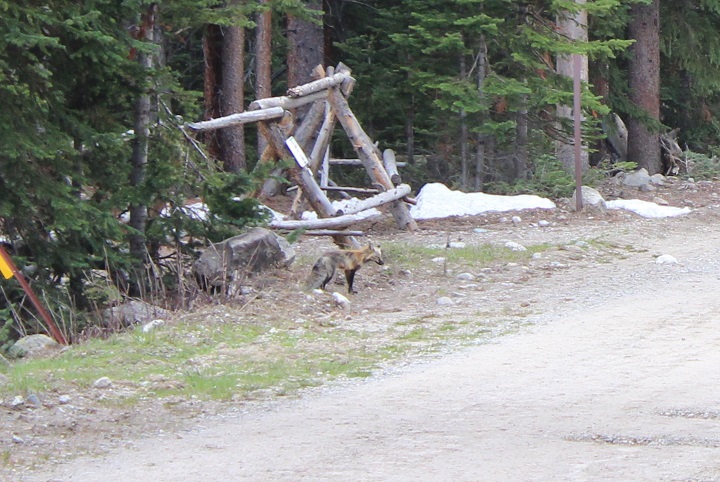
Sheep Mountain – 11,660

1

RT Length: 5 miles

Elevation Gain: 1659’

I really did’t want to write this one up because I made some amateur mistakes, but I also learned something, so here it goes…

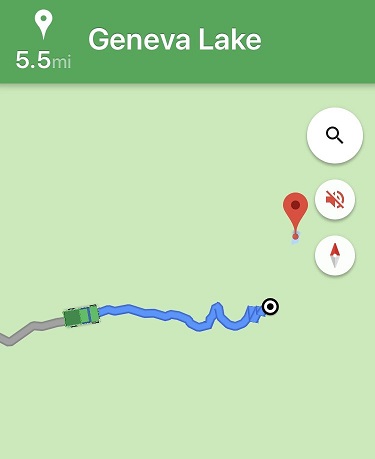
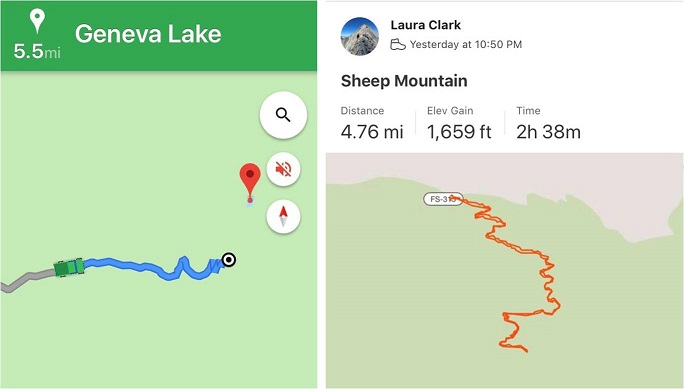
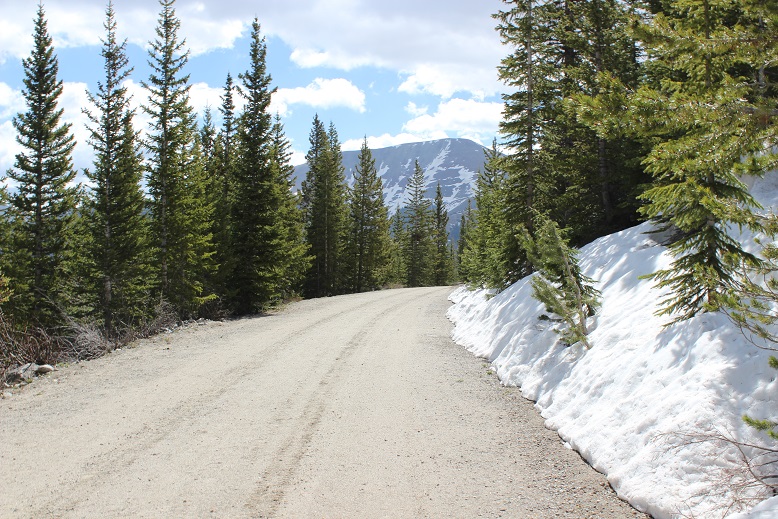
My goal today had been 13er Centennial Hagerman Peak. I drove from the Cathedral Lake Trailhead and set my GPS to Geneva Lake, where the trailhead was supposed to begin.  Just after the small town of Marble (which had tons of marble statues on front lawns) the road became rough and honestly quite fun in my 4WD Tundra.  The dirt road was narrow, and I had to pull over a few times to let OHVs by, but all in all I was having a great time.

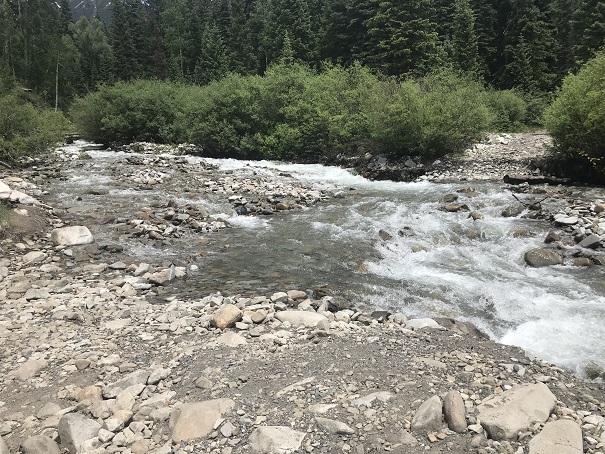
I came to a stream crossing and looked at my navigation. I was 5.5 miles from the trailhead.  Not bad.  Even if I decided to stay where I was and camp for the night I could still do the hike in under 20 miles.  Totally doable.  It’s important to note at this point I had no signal, so I was just going off this picture of my location (which rotated as I drove).

2

As I sat in my truck eating dinner (I’d found a Subway on the drive in) I watched several vehicles attempt to cross the creek.

3

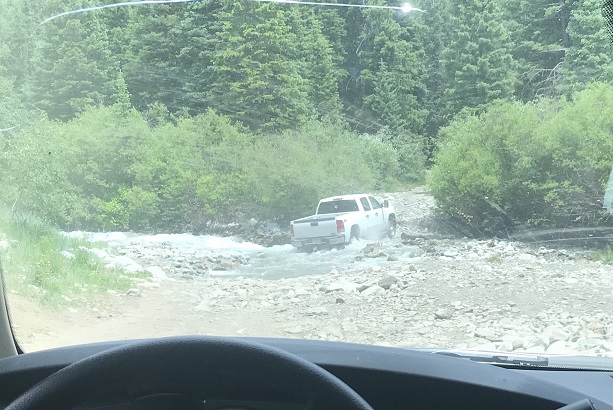
The water was just to the top of most of their wheels. The OHVs were lower to the ground and thus their occupants got soaked.  The vehicles did just fine crossing though.  I watched a GMC truck get stuck, but after some back and forth action it was able to get unstuck.  Then I saw an F150 cruise across the stream and thought “My truck can do anything those trucks can do and more” so I put it in drive and crossed the stream, no problem.

4

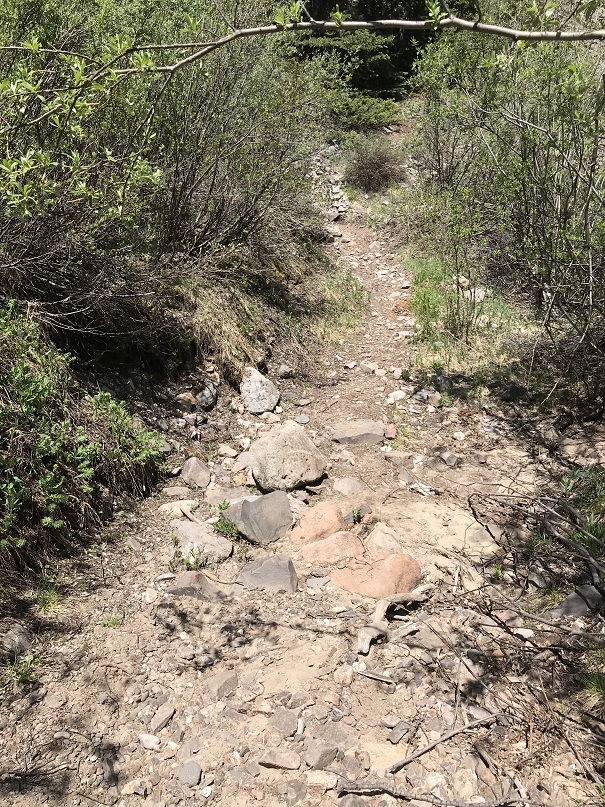
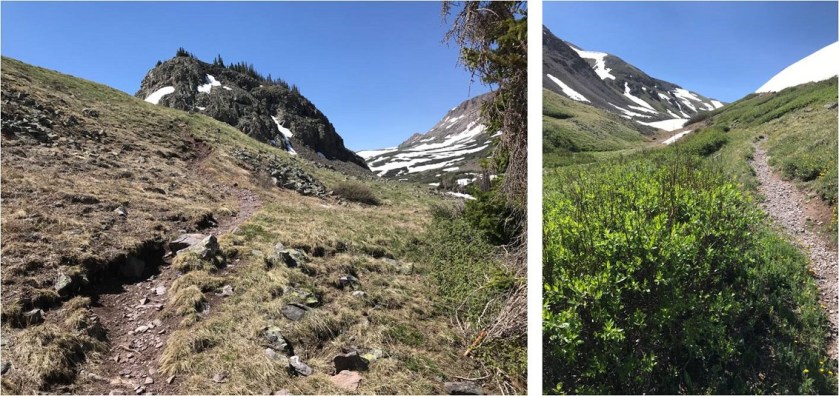
About a mile and a half up the road began to get rough. I’m talking closed upper south colony lakes trailhead rough (the part you can no longer drive on).  My truck was handling just fine, but huge boulders and water were increasing on the trail and there weren’t many (any) places to turn around, so I used a switchback to reverse my course and ended up parking back at 9960’.  I was pleased with this spot, as I was now 4.2 miles from the trailhead.

5

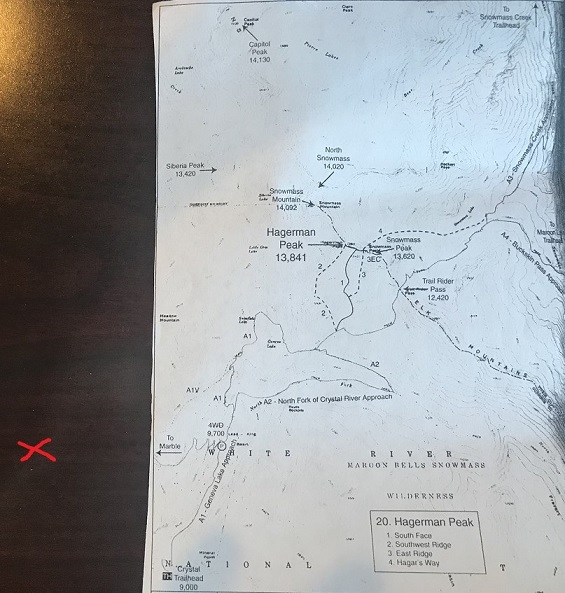
I got out my topo and did my best to guestimate where I was on the map. Unfortunately I was pretty sure I was currently “off map” at this point, but figured I was about here (red x). I realized later I was indeed correct in my assumed location.

6

Had I had a better topo or cell service I would have realized my mistake instantly, but going off of what I had I was sure of my current location (and actually, I was). I just needed to follow the 4WD road to the trailhead and I could pick it up from there.  I had several great topo maps that started at the trailhead, as well as a pre-loaded GPX file.  I spent the next 15 minutes or so going over the route again, and calculating how much elevation gain I’d add from starting from my current location. It looked like an extra 700’ each way, so no more than 1500’in total.  I was willing to live with that.

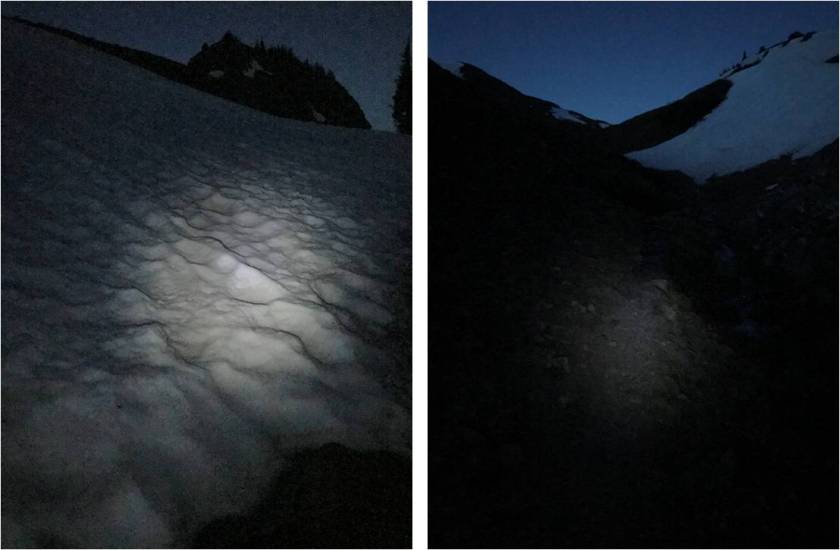
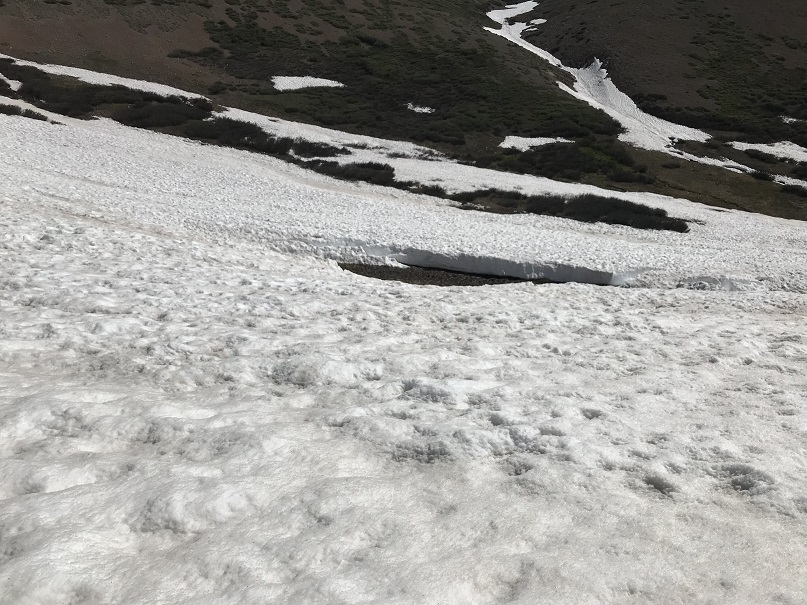
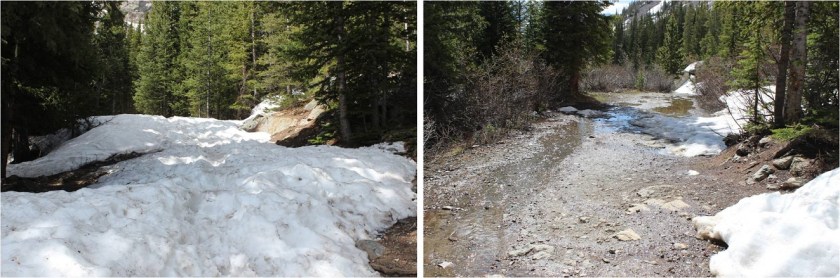
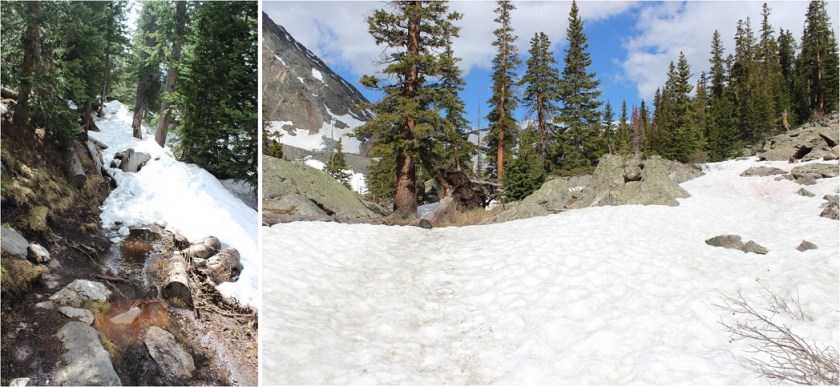
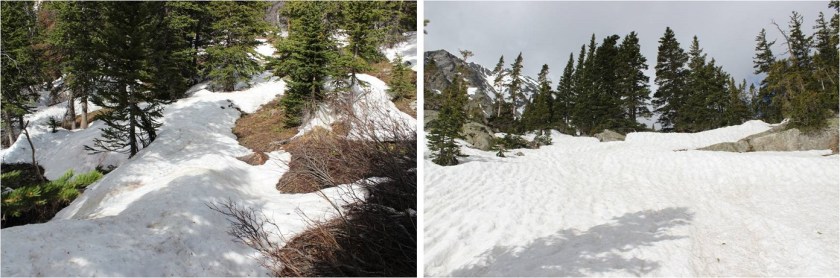
I made it an early night and woke up at 10:30pm to start my adventure. I was on the road by 10:50pm.  It started out easily enough:  I just followed the 4WD road.  I didn’t think to take out my map (etc) because I was just following the road.  After about a mile the snow started, and it was obvious no vehicle had been in this area yet this year.  Hmmm.  That was curious:  I saw a conditions report from last week stating it was snow free to the lake.  I should have stopped and reassessed here, but if I had I wouldn’t be telling this story.  Also, some people lie on conditions reports (it’s happened before).

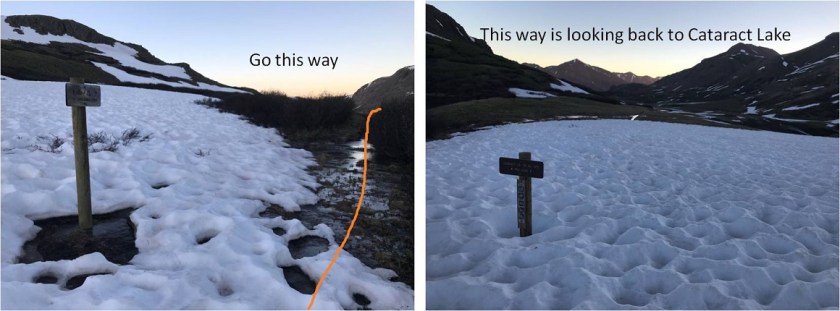
I continued on and thought to myself “Wow! This sure does feel like more than 700’ in elevation gain! I must still be sore from yesterday.”  There was a full moon out but it was obscured by the trees.  I kept following the road through increasing snow until the road just stopped.  That was curious.  It just ended and there was no trail to hook up with it. There was supposed to be an obvious trailhead… and I’d never decreased in elevation.

I took out my phone and looked at the picture I had of where I was going, and then looked at my tracks so far. It sure seemed I was going in the right direction.  At least my tracks looked similar to the route description. The trail must hook up here somewhere close. I got out my GPS track and yes, it looked like I just had to head in that direction and I’d make it.  The problem was ‘that direction’ led me over a cliff.

I kept scouting around and found what looked like fresh tracks. Awesome!  Someone had been here after all.  I walked over to them and noticed the tracks were from a mama bear and cub, and yes indeed they looked fresh.  That did it.  I was turning back and heading back to my truck.  I did not feel confident continuing in the direction I was going, and I was sure something was wrong with my navigation (I just wasn’t sure what I’d done wrong).

I followed my tracks back to my truck and made it back a little before 1:30am. Drat.  It was too late to drive somewhere else and start another hike.  The day was shot.  What really stinks is I lost an entire day of potential hiking.  I decided to drive back home and figure out where I went wrong.  On the positive side I was the only one on the 4WD road at 1:30am, so I didn’t need to move over for any passing vehicles.

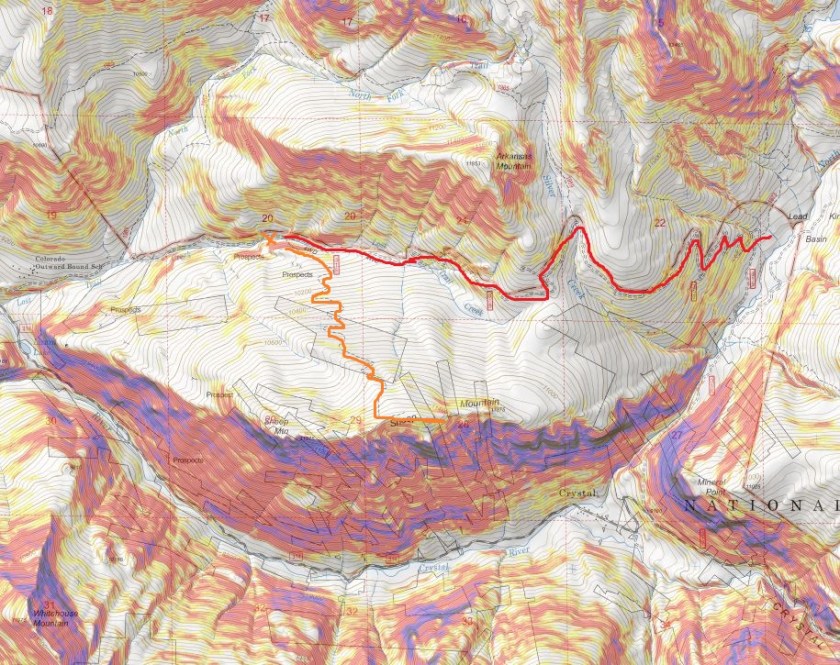
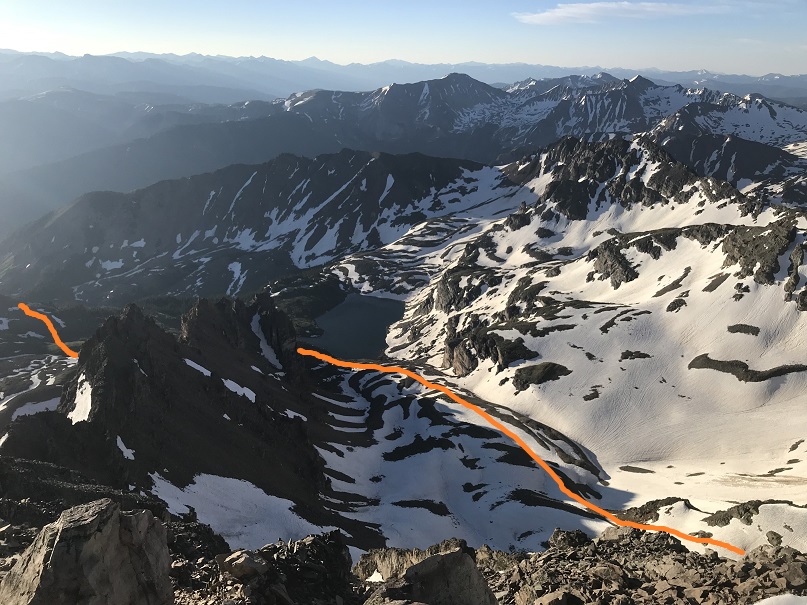
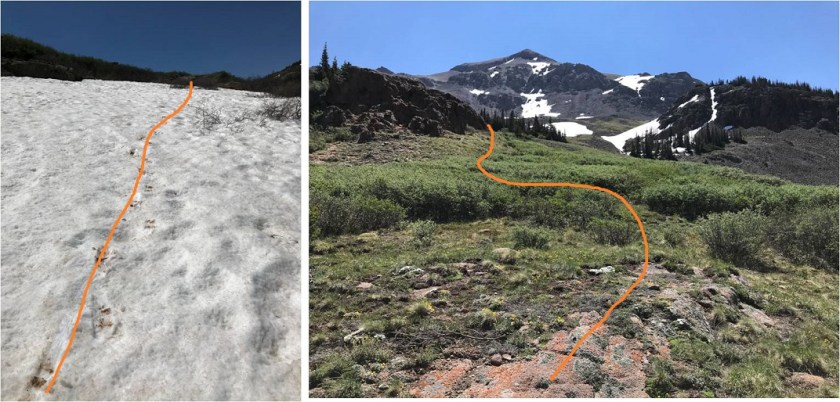
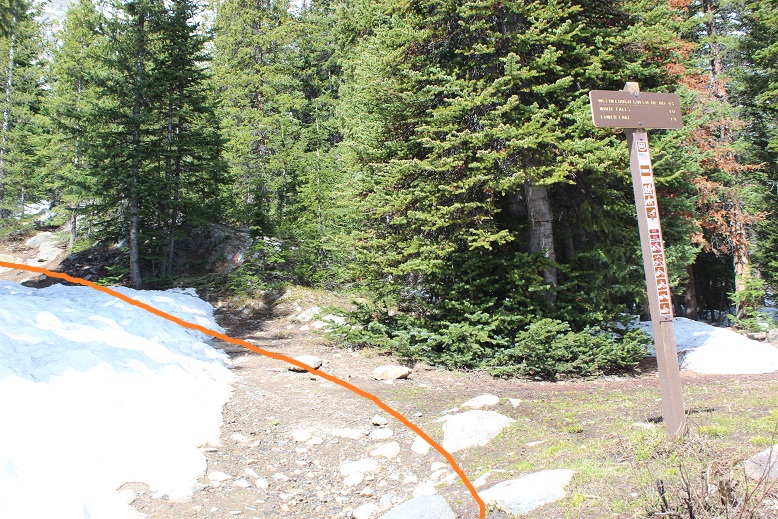
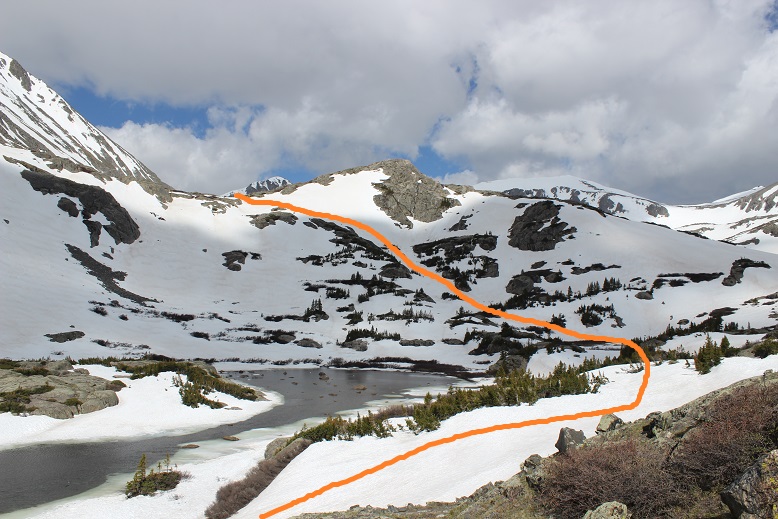
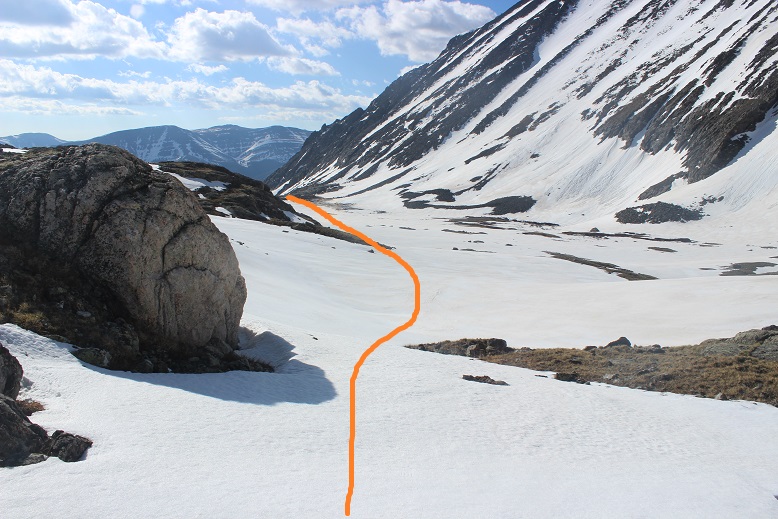
OK, so here’s what I’d done wrong: I followed the orange line, when I was supposed to follow the red line.  Note:  the orange trail hadn’t been on my map, so I didn’t even know it had been an option.  I just figured I was following the same 4WD road.

7

But if you look at my tracks, they do look pretty similar when you rotate them (which was what was happening as I was hiking)

8

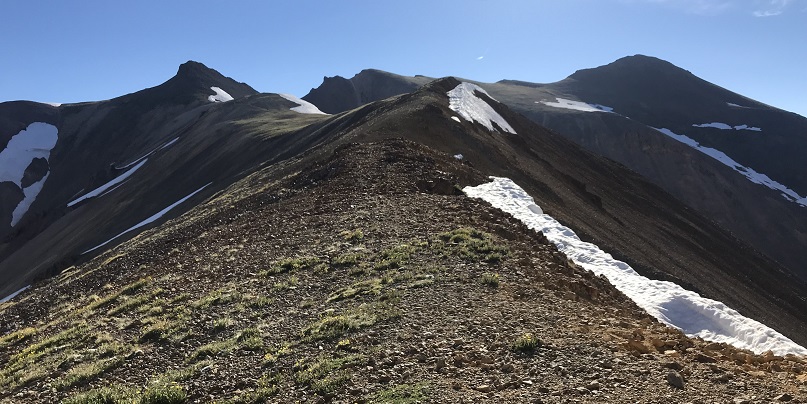
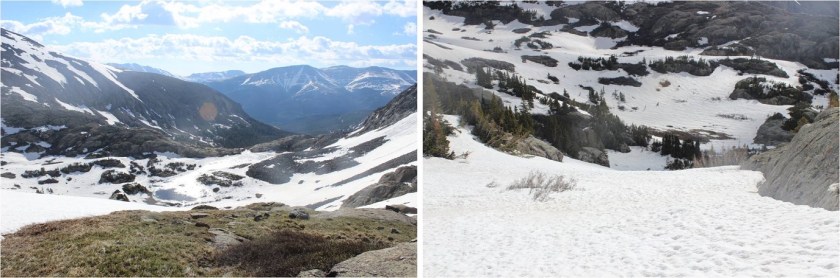
On the positive side, I ended up unknowingly summiting Sheep Mountain, a ranked 11er, so there’s that. Also, I got in 1659’ in elevation gain (see, I knew I’d gained more than 700’).  So, lesson learned.  Have topo maps that cover the approach in, even when it’s on a road.  I’m going to have to attempt this one again… luckily it’s only a 5 hour drive.

Peak A – 13,952

1

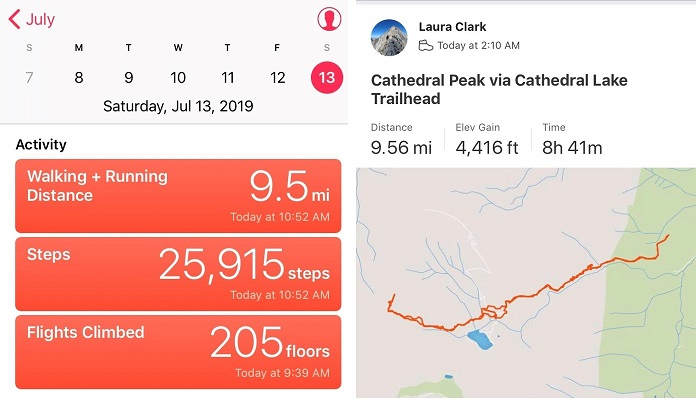
RT Length:  9.5 miles

Elevation Gain: 4416

This was my second attempt to summit Cathedral Peak this year.  The first time was back in April when I had to turn around due to avy debris I was unable to navigate in the dark.  I’d read a recent conditions report stating there was now a path around the avy debris and decided to attempt Cathedral Peak on my next free day.

My sleeping schedule is currently all messed up.  I’d woken up at 2pm, took my daughter to the art museum, and then left my house at 9:30pm to make it to the trailhead by 2am.  I wanted to get an early start on this one because of the potential thunderstorms later in the day, but mostly because I was worried the snow in the couloir would soften up early in the sunlight.

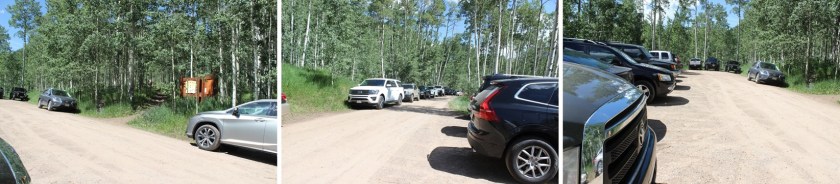
The trailhead had room for plenty of vehicles.  When I arrived, there were 4 or 5 cars in the lot, but when I left there were dozens, all lined up on the side of the road.  Also, apologies to the man I woke up who was trying to sleep in his vehicle:  apparently my trucks headlights were too bright.  I was on the trail at 2:10am.

2

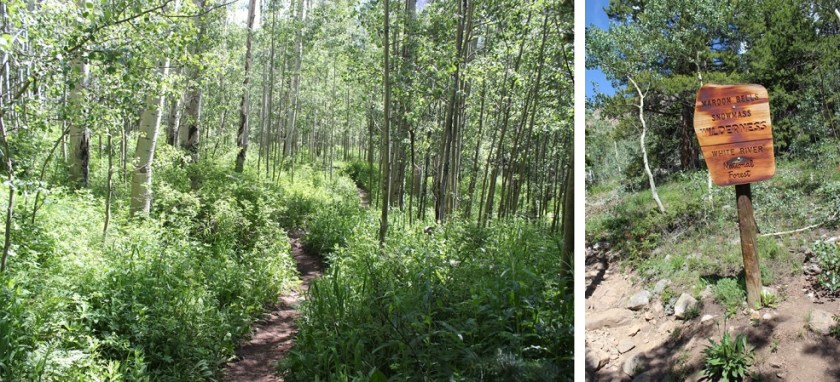
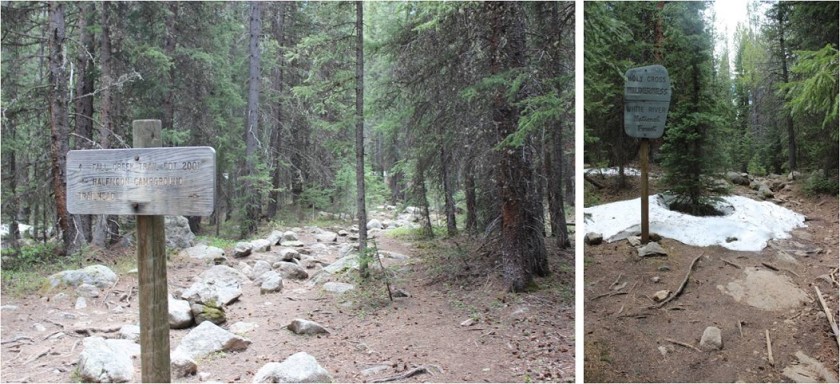
The trail starts off meandering through an aspen grove.  Last time I was here this had been covered in 3-4 feet of snow and I’d missed the sign…

3

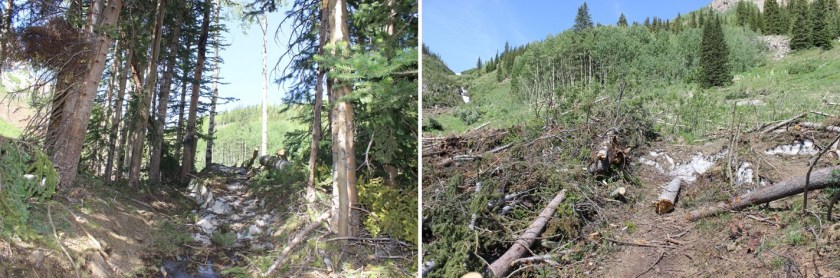
I made it to the avy debris area after about a mile and a half of hiking.  When I was here last I couldn’t see the top of the downed trees; they were supported by a huge layer of ice that was at least twice as tall as I am.  Today the area was much more manageable to navigate.

4

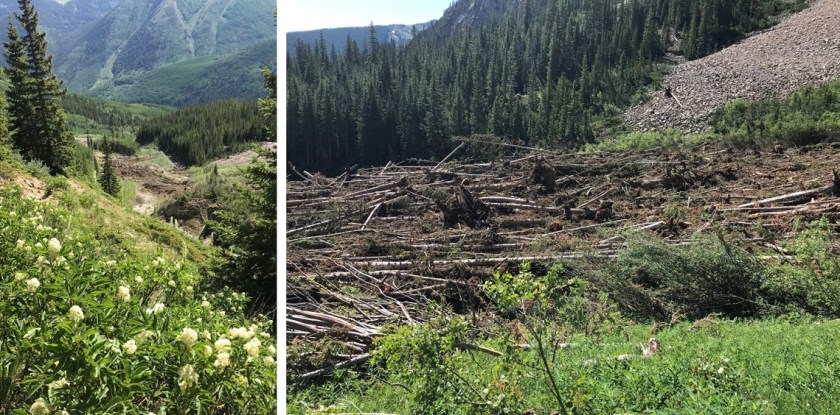
Next I followed the side of the mountain up some switchbacks on an obvious trail.  Side note:  Beargrass (the tall plant with lots of tiny white flowers) looks scary in the dark; kind of like children waiting for you silently in the night.  I like to keep my flashlight directly in front of me to keep myself from freaking out.

5

Once again, the trail is easy to follow.  Here’s a look back at the trail

6

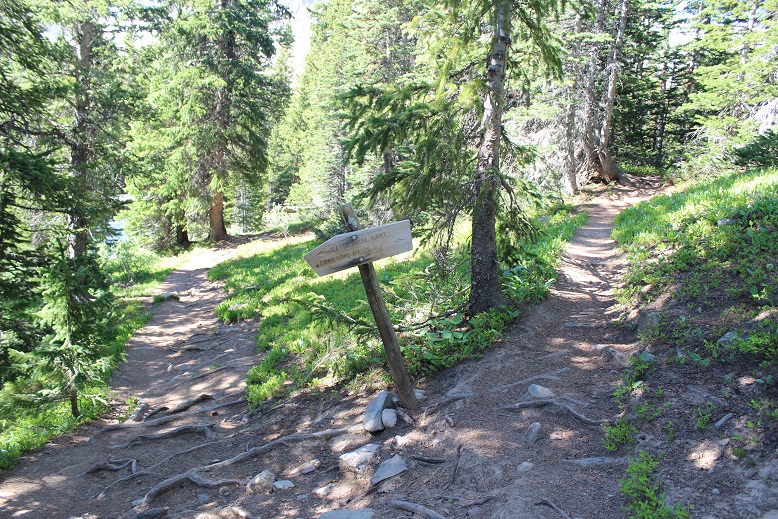
I stayed left at this junction on the way in (but on the way out ended up coming back down the Electric Pass trail and rejoining the trail here)

7

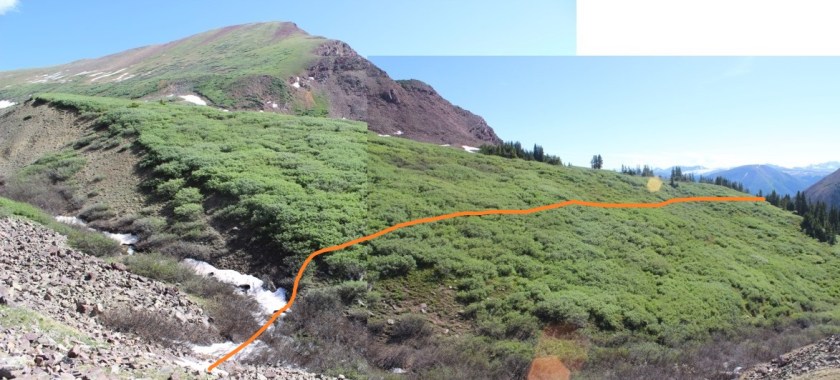
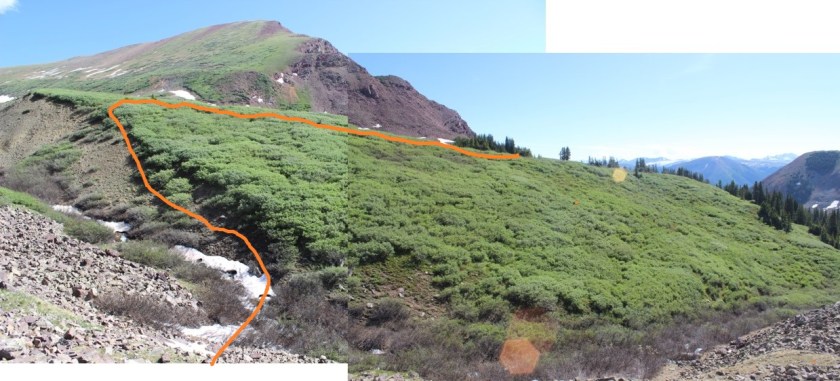
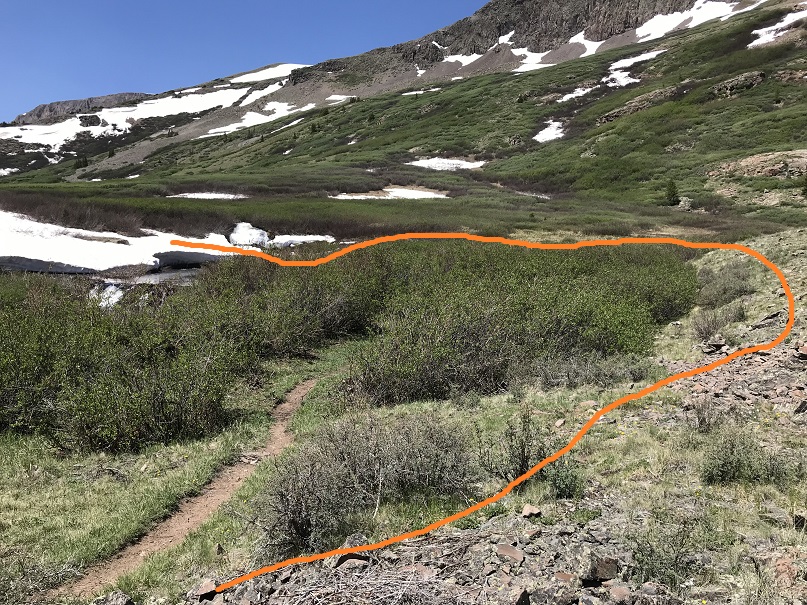
The most difficult route finding occurred here, before the lake.  I knew I could pass the lake on either side but due to a creek crossing I didn’t want to take I navigated to the north.  I was told there was a miners trail here, but was unable to locate it in the dark.  I lost half an hour going up and down the trail, looking for the offshoot and was unsuccessful (although I did find a lot of trails that went in other directions).  Finally, I decided to just head northwest through the willows.  This sounds easy enough, but the willows here were several feet taller than I am.  I just turned my trekking pole parallel to the ground and held it out in front of me while I bushwhacked across them.  I only got hit in the face a few times (and had a swollen upper lip the rest of the day to prove it).  The good news is I made it across, and the willows were no worse for the wear.  On my way back I could see the miners trail in the daylight (more on this later).  Here’s the route I took through the willows and across the creek (which was small enough I could jump across here without getting my boots wet).

8

Next I rounded Cathedral’s east ridge and found a well cairned trail that led me into the basin

9

This trail brought me above Cathedral Lake

10

This route was well cairned, and the talus was terrible.  I got to be the first to experience the spider webs this morning.  Tons of fun in the dark!  Second only to phantom children.

11

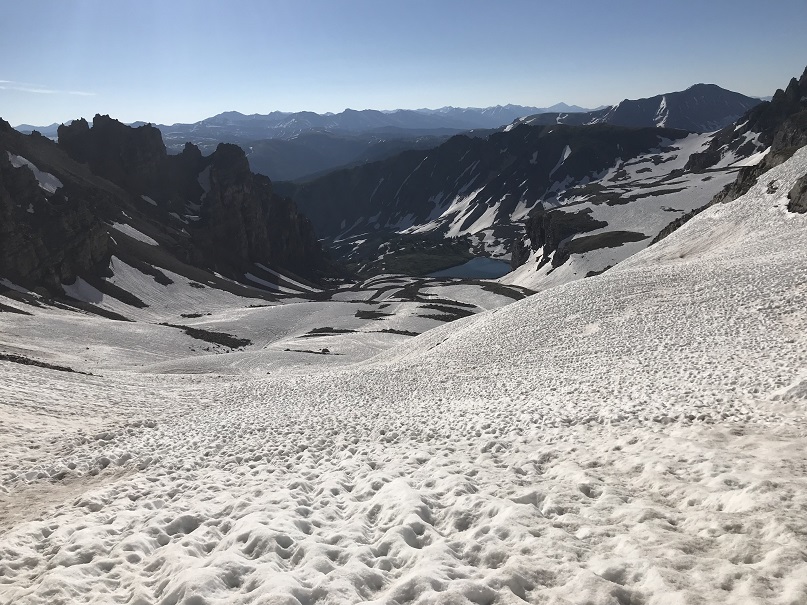
Once in the basin you can see the route up the access gully.  Today the basin was half filled with snow and I couldn’t help but think how much easier it would have been to traverse if it had all just been snow.

12

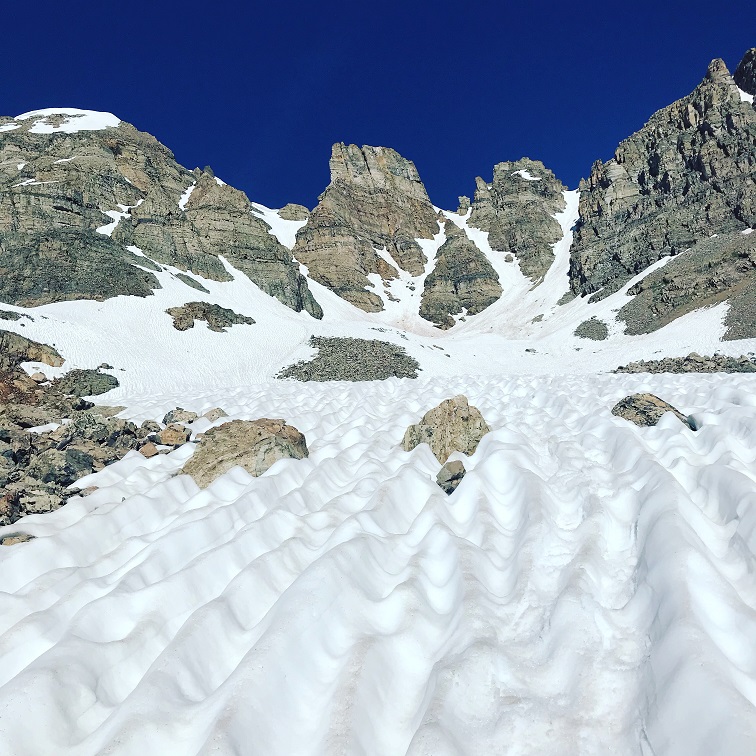
In the morning I didn’t need snowshoes.   I made it to the base of the access gully at 5:25am and put on my crampons and helmet and got out my ice axe and garden tool (that tool’s really coming in helpful, but I may just break down and buy another full ice axe).  This is steeper than it looks, but luckily it ‘went’ all the way to the ridge

13

Here’s looking back at the basin

14

The snow was still really firm and I was unable to kick in steps but I was able to ascend with crampons and ice axe.  I was glad to have both my ice axe and (garden) tool.  I was about 30 feet from the top when I decided it was better to be on the left side of the gully rather than the right and started traversing sideways.  About 4 steps in my crampon hit the ice sideways and my boot slipped out of the bindings.  This was the worse possible place for this to happen:  I was balanced on the side of the wall of ice, with one foot in front of the other (I wasn’t able to kick in steps here, and was balancing on a very small mound of frozen snow with my right toe pointed at my left heel, sideways).  I needed to have an ice pick in the wall for balance or I was going to slide all the way down the gully.  My pulse rate quickened as I realized the severity of the situation.  Luckily I had two tools. I carefully balanced on the working crampon and tried to knock the other back into place with my ice axe.  No dice, my crampon wasn’t going back over my toe by sheer force (as well it shouldn’t;  I’d fastened it pretty tightly initially, and had no idea how it had been knocked loose from my boot).  That meant I was going to have to untie the crampon and re-tie it with one hand while holding onto the ice with the other:  Without losing my balance and sliding down a few hundred feet of ice.  It took me a solid 10 minutes to gingerly untie and re-tie the crampon, but I was able to do so from where I was perched.  I mentally praised my daily yoga routine for developing my balancing skills.  Here’s where my crampon was knocked sideways

15

Ok, crampon back on I carefully hustled my way to the top of the gully, topping out at 6:09am, a little shaky as I looked back down.

16

From the top of the gully I turned right and noticed the rest of the route was snow free.  Woot!  I took off my crampons and put them in my pack.  Time for some scrambling!  On the way up I took a class 3-4 route up and over the ridge (solid line) on the way down I found the cairns and took the class 2+ route along the side of the towers (dotted line).

17

The last bit to the summit was easy

18

I summited at 6:40am (it took me half an hour from the top of the gully to summit).

19

Summit Video

Check it out!  A summit marker!

20

Here’s a look back at the basin and my route up to the gully

21

Time to head back down.  I made it back to the top of the gully and met 3 other climbers.  We chatted for a bit.  They said they’d kicked in steps on the way up to make their descent easier.  It was 7:20am as I headed back down the gully. On my way up I’d forgotten to put on my gloves (it wasn’t cold) and my knuckles were a bit tore up, but that’s the best way to learn a lesson.  Also, I wasn’t sure I’d have been able to untie and then re-tie my crampon with gloves on.  At any rate, I was putting gloves on for my descent.

22

I turned, faced the gully, and began my descent.  It was only just after 7am, but there was a huge difference from when I was climbing at 6am.  The snow was quickly softening up.  I was careful to either avoid the kicked in steps, or if I had to use them to make sure I only made them better, but the softening snow wasn’t making things easy.  Sticking to the climbers left of the gully seemed the best way to go.  About ¾ of the way down the snow was slush and I really just wanted to glissade the rest of the way (but didn’t because I was worried I’d mess up what was left of the kicked in steps).

Here’s the route once again

23

I actually took more time than necessary heading back down, and as soon as I could I switched out my crampons for snowshoes to exit the basin.

24

I met a man starting his climb up the gully and was worried for two reasons:  #1, the three people I’d met at the top of the gully hadn’t yet began their descent, and #2, it was rather late in the day for someone to start their climb (the snow at this point was rubbish).  I figured the trio up top must have decided to picnic at the summit and asked the current climber to look out for them.  It was now 8:25am, and I knew I wouldn’t want to begin my descent at this time.  I figured I’d timed it pretty well starting at 2am: it would have been perfect if I hadn’t spent half an hour lost in the willows.

Speaking of willows, I made my way back to the small creek crossing and in the light of day was able to locate the miners trail.  I crossed the creek and headed up the slope, aiming at a small pine tree.  From here I was able to follow a faint trail, which eventually led me to the Electric Pass Peak trail, which I took back to the junction with the Cathedral Lake trail.

25

On my way out I couldn’t help but think how dreadful this climb would have been with snow all the way up to the lake!  I have no idea how I found my way so far the first time.  Here’s a look at some of the avalanche debris

26

I made it back to my truck at 10:55am, making this a 9.5 mile hike with 4416’ in elevation gain in 8.5 hours.  The hike felt longer than it was, most likely because much of the trek out was done in direct sunlight on the way out (no trees for shade).

27

Second Attempt for the Win!


Life’s Not a Competition: I Hope We All Win

IMG_4210.JPG

Solo hiking!  So solitary, and yes, so lacking in absolutely anyone that can easily corroborate your accomplishments afterwards.

Yep, it happens. Questions about a route we took, a summit we might have missed, and fortunately, these are all usually handled so easily by simply getting the group together and comparing notes. Done. In light of everyone’s thoughts and ideas, a clear picture emerges and all questions are answered.

Not so much when you are the sole person making the attempt; sometimes there are questions. Despite Strava data, GPS tracks, and photos which all clearly paint a reasonable picture of where you were and what you accomplished, some people will still want more.

I do appreciate their comments, even the negative ones.  I appreciate them because they are making me better at what I love: summiting mountains and documenting those experiences to help others enjoy them as well.

My daughter asked me why the opinions of others mattered to me so much.  “Because the commenters are wrong and purposely trying to make me look bad”.  I’m not sure why this means so much to me, but it does.  Also, she’s right:  it shouldn’t matter if you’ve told the truth.

You never look good trying to make someone else look bad.  Successful people do not need to put others down.

We all experience judgement from others, but all that matters is the truth.  Clearly, I must be doing something worth talking about – and that’s worth celebrating! The reality is when someone creates a negative post aimed at me my website hits go up, and I get tons of positive private messages cheering me on.  In the end all of these comments make me better at what I do.  They bring up things I’d never think of, making me a better writer, photographer, documenter, blogger, and public speaker in the process.

Still, being a solo hiker/summiter means I’m often the only one who knows my experiences, so I do my best to document them as accurately as possible.  I’m human, and I’m not perfect.  I miss the photo sometimes, I don’t always see things I should, and yes, sometimes I miss the summit.  However, when these unfortunate mishaps occur I blog about what happened accurately and honestly, even if it makes me look bad.  I’ve taken wrong turns, forgotten important gear, and turned back on summits more times than I can count.  But if I wanted to, I could go back, read my blogs and list them all off because I’ve documented each and every one of them.

In the end, if you do have questions about people’s claims, ask yourself, “Why question them in a public setting?” Could it be solved by sending them a private message and getting your questions answered directly, allowing you both to save face? Why call someone out in a public forum?

Still, before you post/comment/etc., ask yourself:  Would you ever purposefully ridicule someone in person? If not, then why do it online?  If so, you might need to reevaluate your interpersonal communication skills.

For anyone wanting specific clarifications of my accomplishments, discussions of my data, GPS, or photos, I’d be more than happy to connect with you; Happy Hours are my favorite!

Life isn’t a competition:  I hope we all win.

Holy Cross Ridge – 13,850 & Point 13,253


1

RT Length: 13.5 miles

Elevation Gain: 4863’

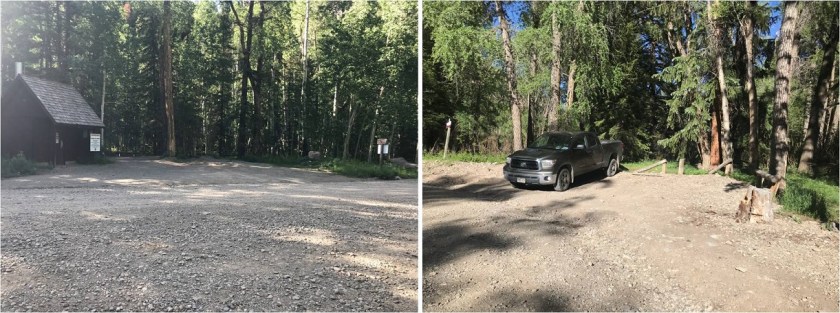
After 2 hours of sleep I woke up at 9:30pm to drive to the Halfmoon/Tigiwon/Fall Creek Trailhead.  My kids think I’m nuts, but starting early when hiking above treeline really has its advantages.  I was afraid of encountering afternoon thunderstorms, as there was a 50% chance after noon, and while I didn’t know if I’d be encountering any snow it was likely and would soften up during the day so I wanted an early start.  The 2WD dirt road in was a little rough but easy to navigate. I arrived at the trailhead at 2:15am and took one of the last available parking spots.

2

There’s a ton of signage at this trailhead and multiple routes up to the same peak(s). I chose to take the Fall Creek Trail, heading south.

3

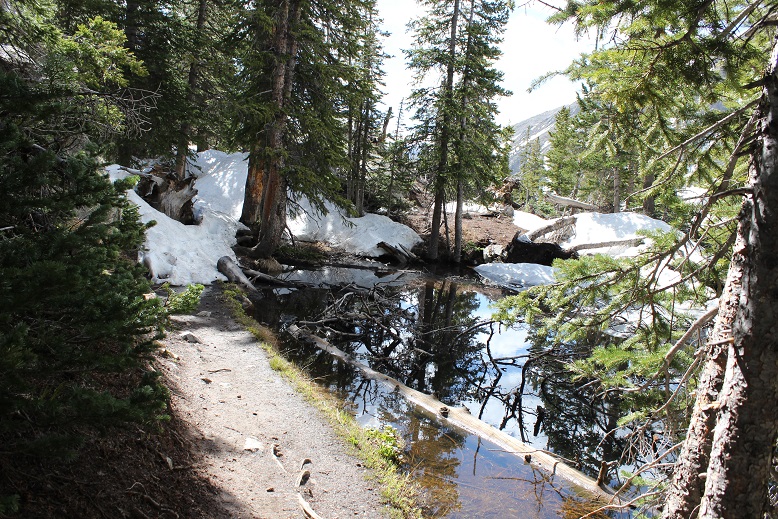
This trail is well established and well maintained. The first half mile or so was dry

4

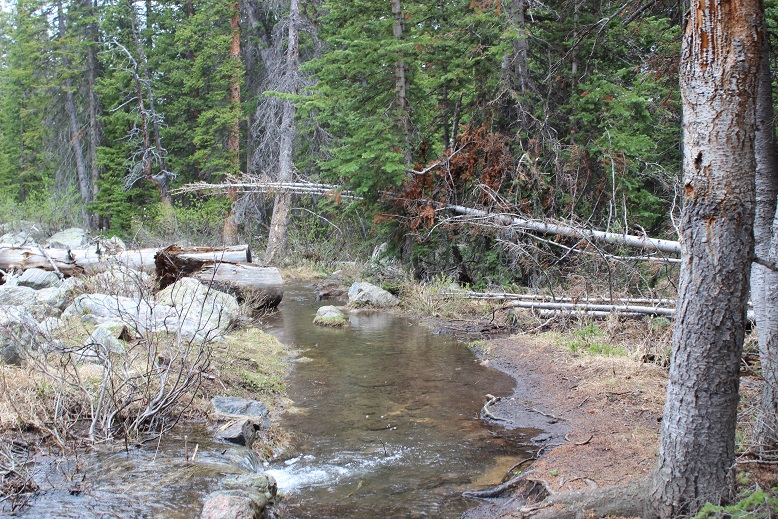
And then the trail was completely covered in several inches of water. I took off my boots to cross the waterfall area (about 1.5 miles into the trail)

5

6

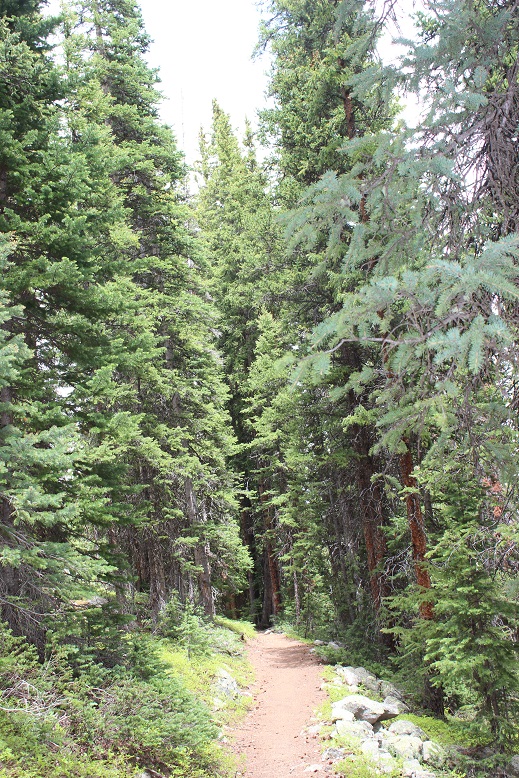
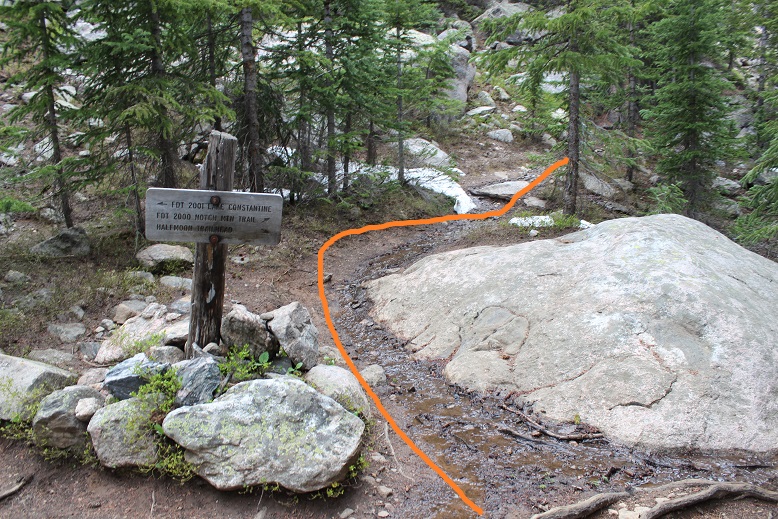
At 2.4 miles I came to a trail junction for Lake Constantine and Notch Mountain Trail, taking Notch Mountain Trail west.

7

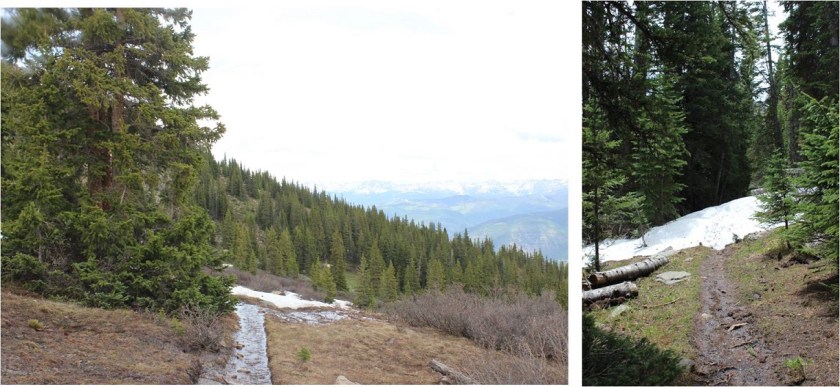
This trail switchbacked up the side of the mountain for another mile or so, and where there wasn’t water there was snow

8

At 11,750’ I came to the base of the slope up to the ridge, and needed snowshoes

9

In the dark I could only see a few feet in front of me and there was a lot of snow, so here I lost the defined trail and just hiked straight up the ridge. Snowshoes were very helpful here!  It’s also steeper than it looks

10

11

12

About 150’ from the ridge the snow stopped and I was able to follow a snow free trail to the ridge

13

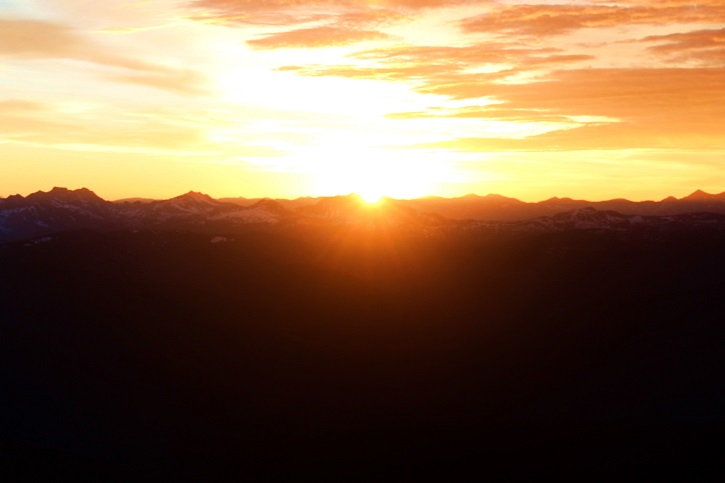
The sun was beginning to rise, and I love sitting and watching sunrises, so as soon as I reached the ridge I ascended a small (and unranked) slope to sit and enjoy the view

14

The sunrise didn’t disappoint!

15

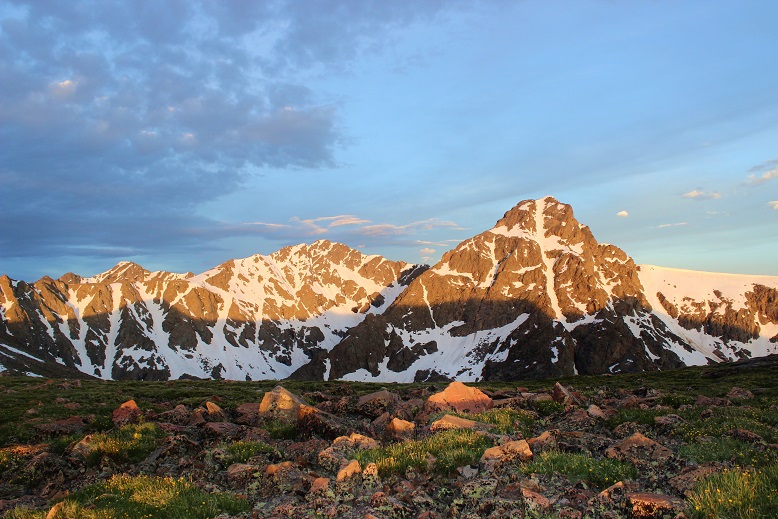
The best view was behind me though, of 14er Mt of the Holy Cross. Wow!  It’s beautiful in the morning light.

16

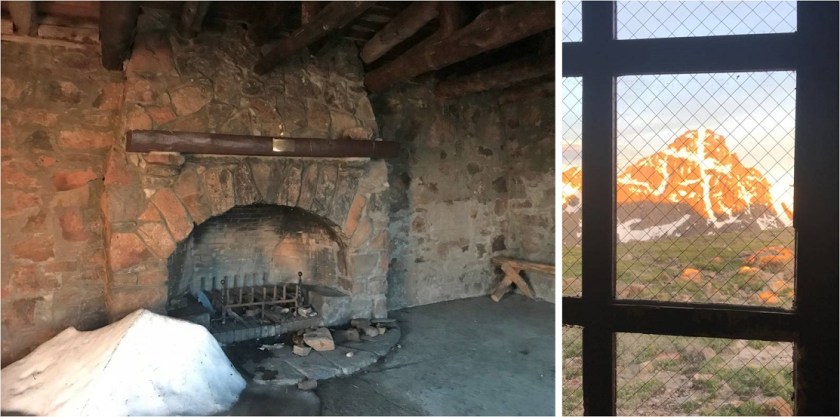
After enjoying the sunrise I walked over to the ridge shelter and was excited to find it unlocked (well, it had a lock but the lock wasn’t securing the door).

17

The shelter’s actually quite roomy, with a fireplace (not that there’s any firewood above treeline) and a great view of Mt of the Holy Cross. This would be a nice place to shelter if a storm hit the ridge.

18

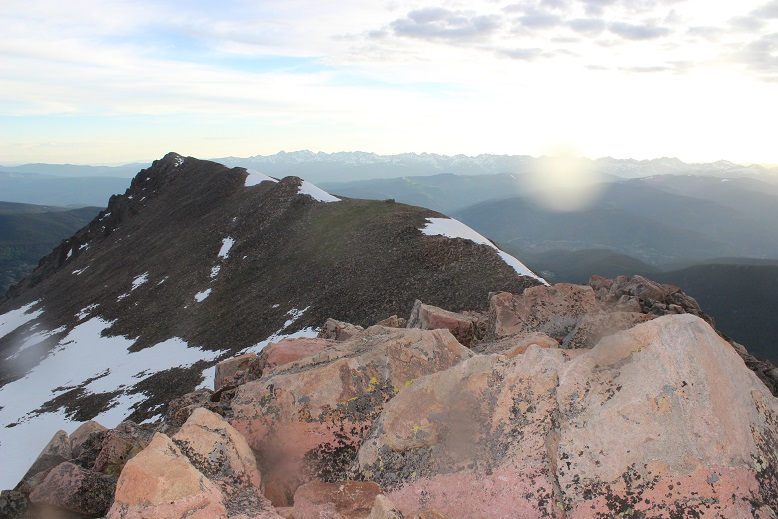
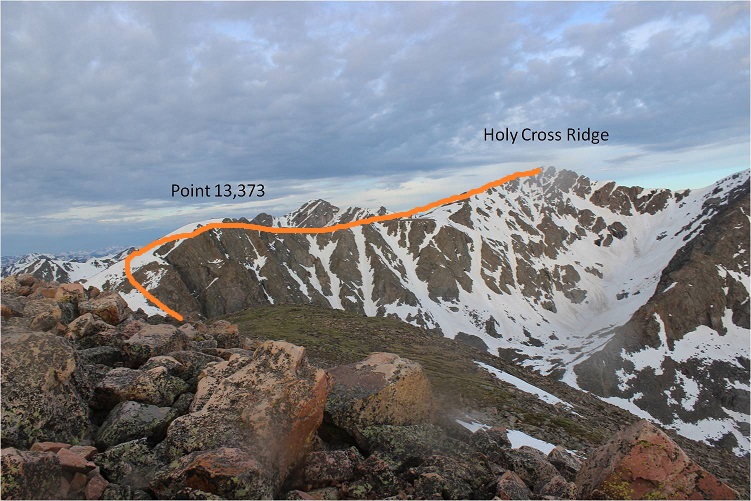
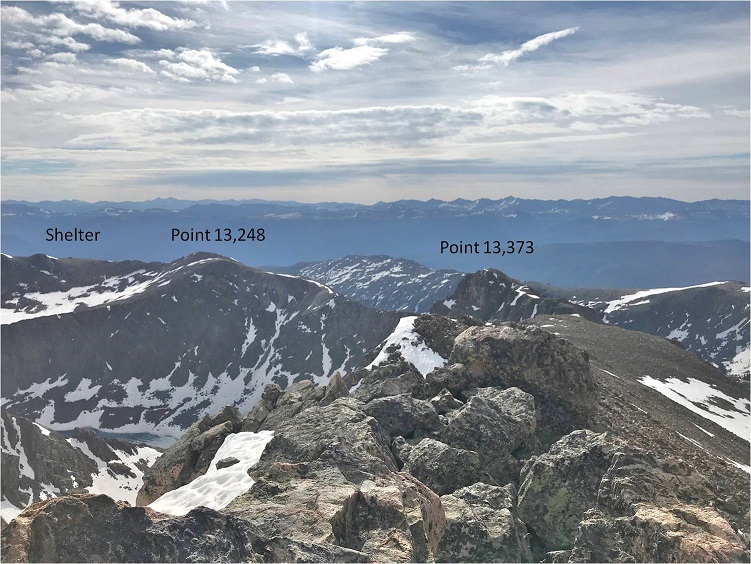
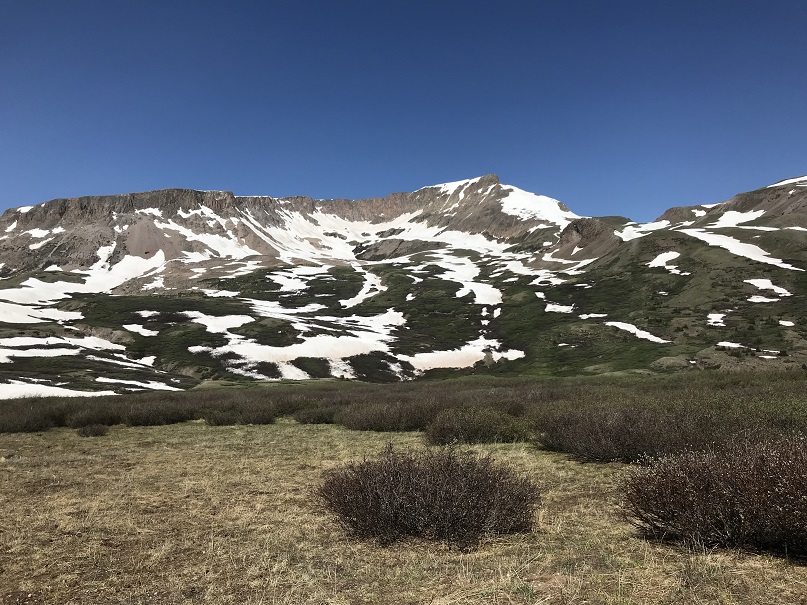
From the cabin I could see much of the rest of the route: Up Point 13,248, over to Point 13,373, and across to Holy Cross Ridge

19

The hike over to Point 13,248 was full of large rocks and hollow snow: the kind where you step on it and sink in a hole between the rocks up to your waist.  After the first few postholes I stuck to the rocks

20

I summited Point 13,248 at 6:20am

21

Point 13,248

Here’s looking back at the shelter

22

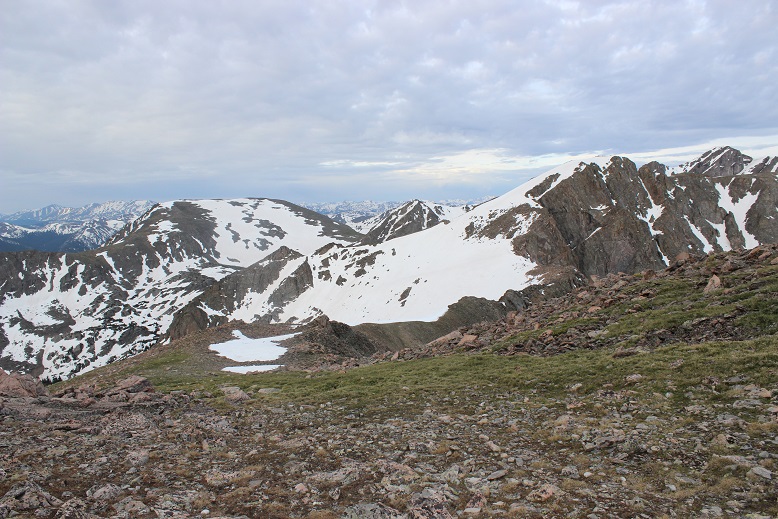
And here’s the route before me. It didn’t look like the sun wanted to peak out above the clouds this morning

23

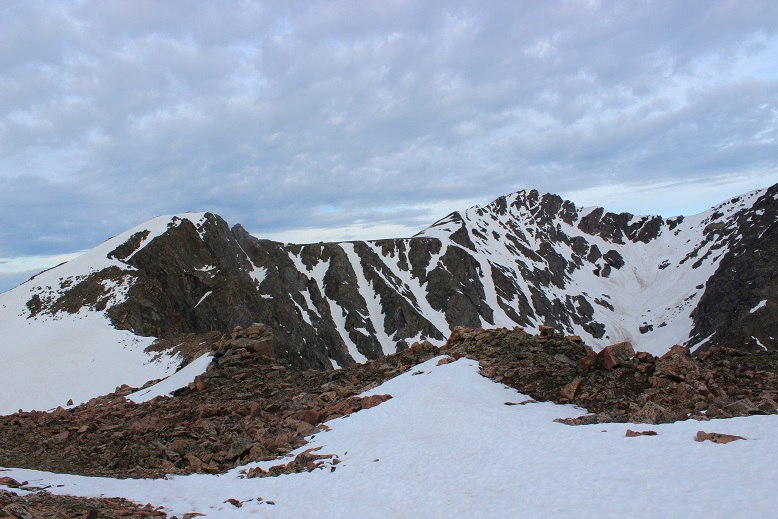
Here’s where I got a little nervous. The ridge looked like it was covered in more snow than I’d anticipated.

24

But when I made my way down there (losing about 600 feet in elevation along the way) the ridge was snow free enough to walk across. Well, not really walk, but more like scramble up and down on the rocks.  Sticking to the ridge worked well.

25

26

I was a bit worried about the large patches of snow I saw, hoping they weren’t hollow like the snow I’d encountered higher up on the ridge. Luckily, the snow here was solid

27

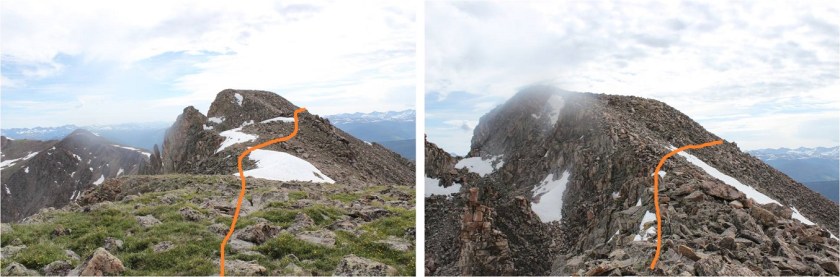
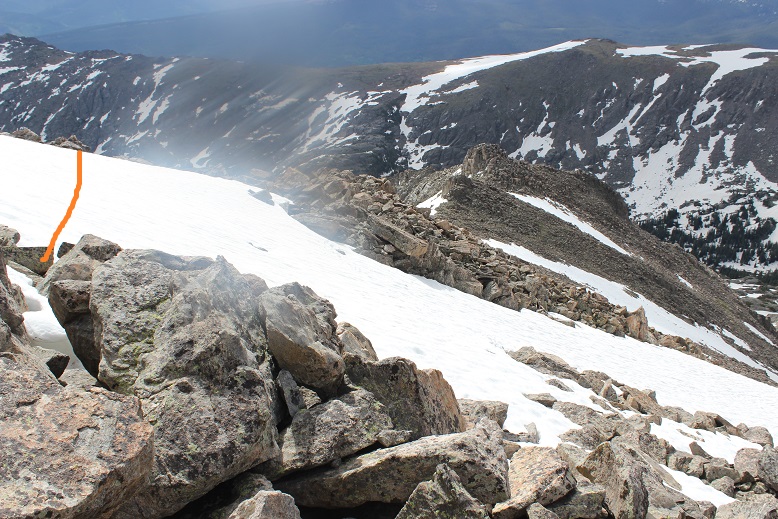
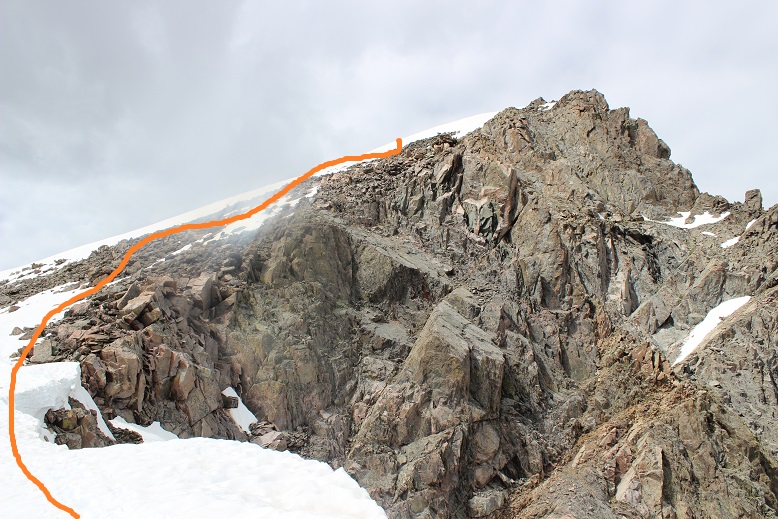
This is also where the crux of the route began. The solid line is the route I took up, and the dotted one is the route I took on the way down.

28

On my way up I went straight across the slope and then up the ridge

29

If I were to do this again I’d take the route I took down up as well. I didn’t initially because the rocks looked loose and unstable, but on my way down I found them to be stable and easy to climb through.  I needed my ice axe and crampons for this part (on the way up and down) because the snow was steep.  The traverse across the slope on my way in was sketchy, as every few feet or so I’d hit an air pocket and sink to my waist.  I went slowly, seriously worried at some point I was going to slip and fall.  Once I’d traversed the slope I needed to gain the ridge.  This was steep as well.  I couldn’t have done this without my ice axe and crampons

30

I breathed a sigh of relief when I finally gained Point 13,373. That had been more difficult than anticipated.  I took a look back at Point 13,248

31

And at the rest of the route before me

32

I descended a bit, and then traversed a flat area before ascending once again. The last few hundred feet go up and down in elevation quite a bit, creating a few small false summits.  My advice is not to go straight up the ridge, but circle the mountain to the left (west), gaining in elevation as you go

33

There were several large patches of snow to traverse here as well, and just my luck, the sun started to peek out from behind the clouds, making these crossings tricky as well

34

35

I summited at 8:30am

36

Holy Cross Ridge:


Here’s looking back on the route I took along the ridge

37

Ok, the sun was really warming things up and I was debating how safe the route back down Point 13,373 was going to be with soft snow. The ridge to Mt of the Holy Cross looked quite easy, and I considered just making this a loop, but I really wanted pictures of the route I took in, meaning I was going back the same way.  Time to head back.

38

This time instead of going directly over the top of Point 13,373 I skirted the mountain to the right (east)

39

This put me at a great place to descend, so I once again put on my crampons and got out my ice axe and garden tool

40

The snow had indeed softened up, but was now perfect for kicking in steps. I felt much more comfortable traversing down than I had up, and the best part was the rocks I thought had been loose were really much larger and stable than they’d looked from across the ridge.  Here’s the route I took down

41

And now the fun part: re-ascending point 13,248

42

I skirted the summit of this one as well, sticking to the left and then heading back to the shelter

43

Once at the shelter I met a couple eating lunch and taking a break. They’d intended on hiking the ridge today as well but were turning back due to weather/conditions. I thought this was a great idea, and noted it did look like we were indeed going to get some thunderstorms today after all.

I made it back to the switchbacks and when I came to snow put back on my snowshoes. This section looks short, but it’s actually a long and steep descent (which is made ‘easier’ with the switchbacks I couldn’t see under the snow, so I just headed straight down).

44

The sun had warmed up the snow, and what had been solid on my way in was now the consistency of a slushie. Each step I took I sank in the snow past my knees, and my trekking pole and ice axe were useless.  I was sliding everywhere, and finally gave up and glissaded down.  The couple behind me kept getting their feet stuck in the snow between rocks.  The conditions were terrible, and I mentally high-fived myself for an early start:  I wouldn’t have been able to descend Point 13,373 at this time of day.

45

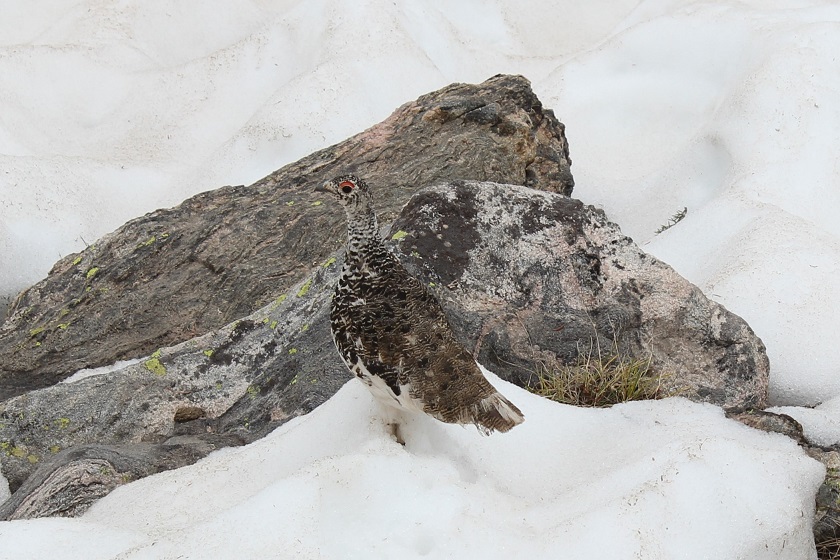
Oh, and I saw a ptarmigan. I love those guys!

46

Snow stopped at about 11,700’ and everything was wet again, including my feet. The slushy snow had gotten inside my boots and my feet were soaked through. Changing socks wouldn’t have helped because my boots were wet as well. I didn’t even bother taking off my boots for the creek/waterfall crossings because they were already soaking wet

47

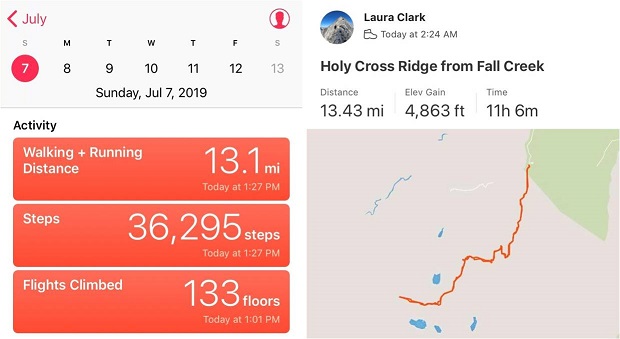
I made it back to my truck at 1:30pm, making this a 13.5 mile hike with 4863’ in elevation gain in 11 hours.

48


Half Peak – 13,866 & Point 13,164

1

RT Length: 18.5 miles

Elevation Gain: 5640’

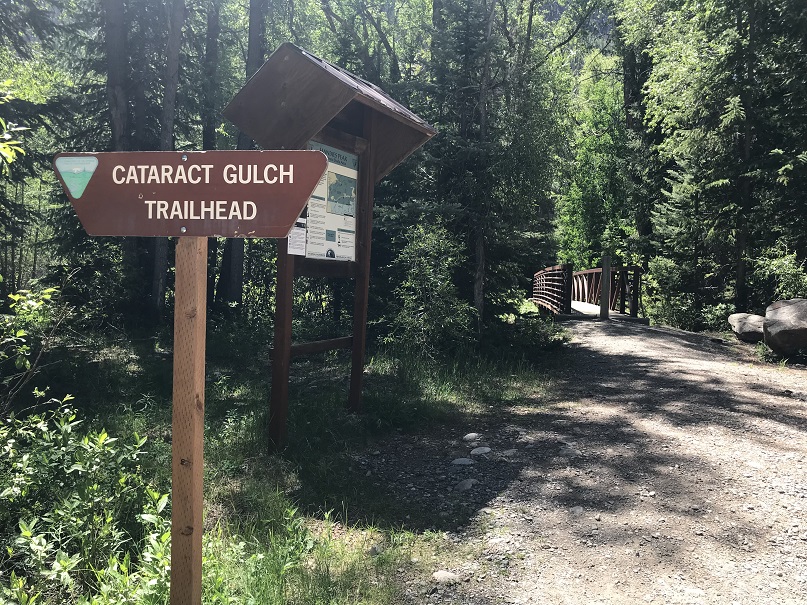
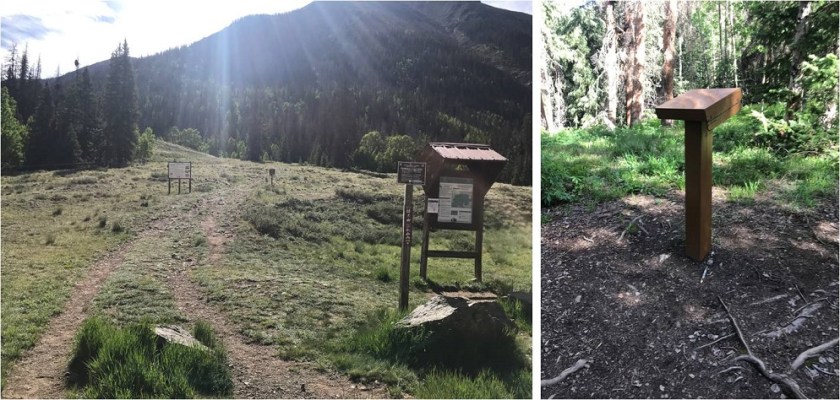
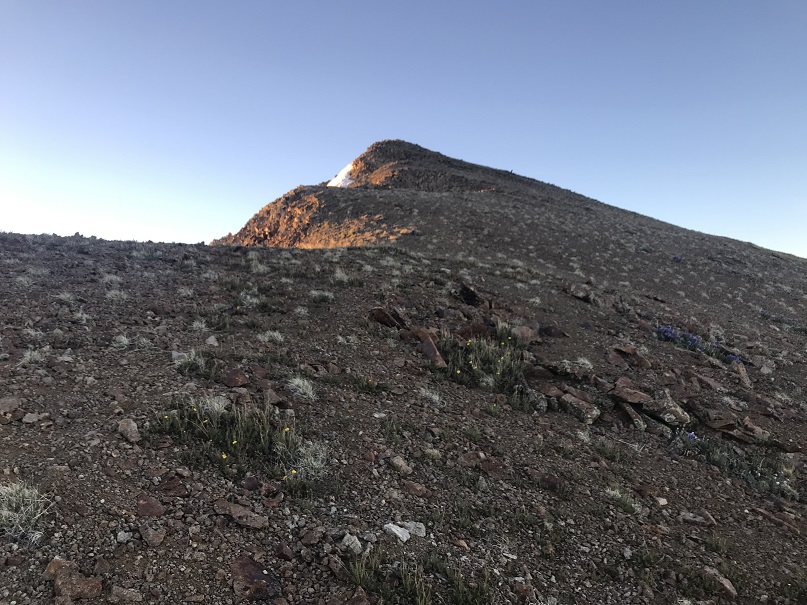
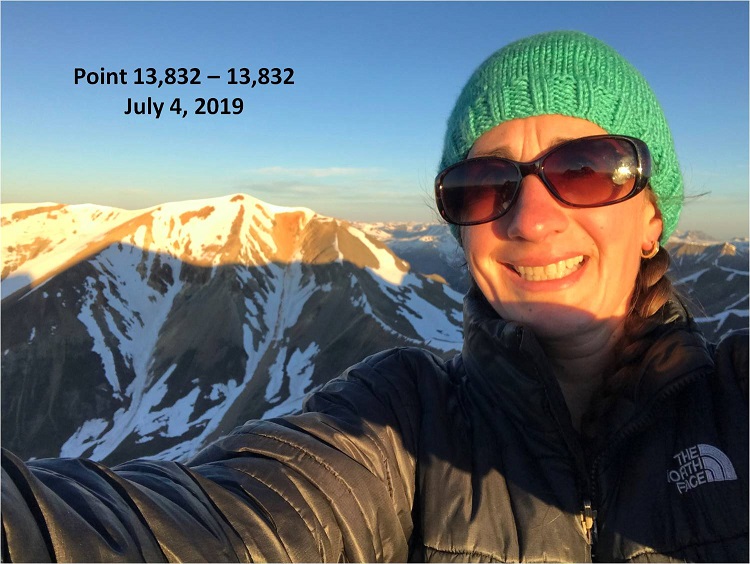
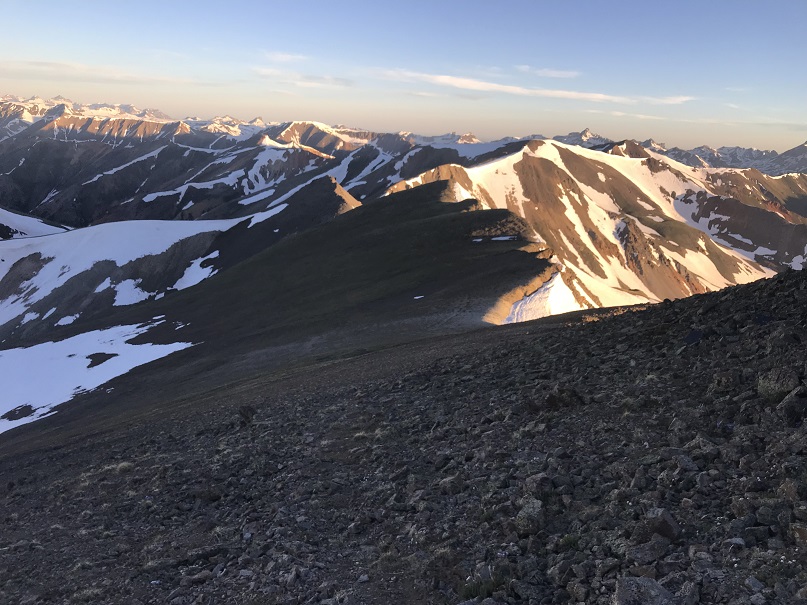
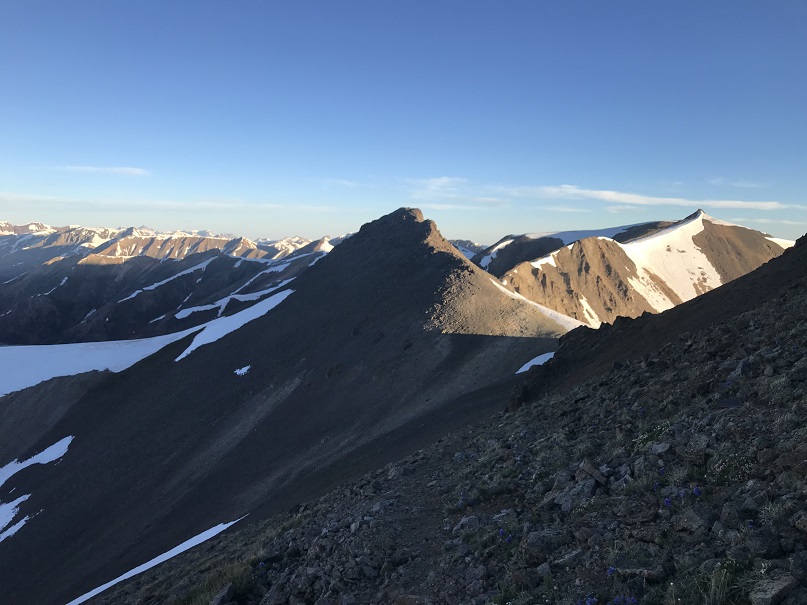
I arrived at the Cataract Gulch trailhead the day before, after summiting Point 13,832.  I was pleasantly surprised to find a well stocked and clean bathroom, as well as plenty of open parking space.   Mine was the only vehicle in the lot, despite it being 4th of July weekend.

2

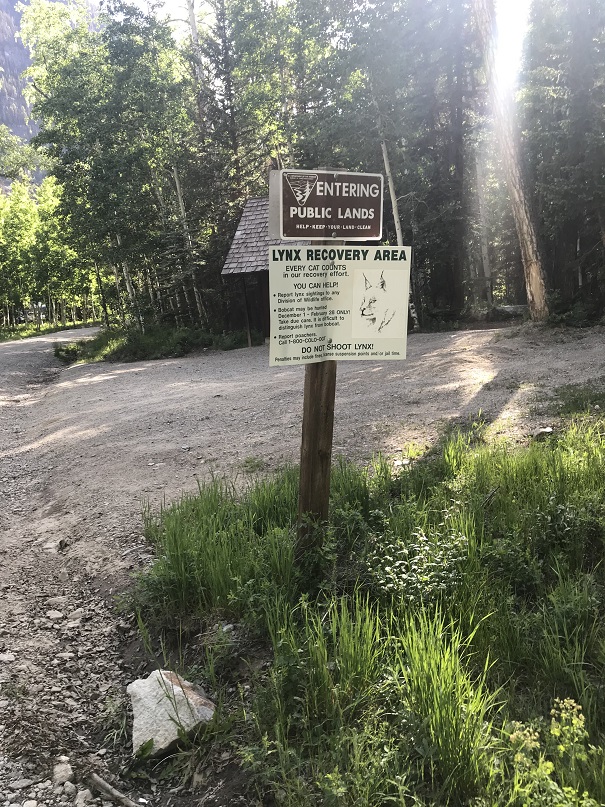
Also, apparently this is a Lynx recovery area, which I found interesting.

3

I’d ended my hike early and desperately needed to catch up on sleep, so I went to sleep around 2:30pm and only woke up twice:  once because it was too hot in my truck (the sun was going down but at exactly the right angle to heat up my vehicle drastically in just a few minutes) and another time I around 10pm. I still had over 4 hours of potential shut eye so I took a melatonin with a shot of whiskey and fell back asleep.  I didn’t wake up again until my alarm went off after 2am, so I consider it a successful night of truck camping (I notoriously sleep terribly at trailheads).

I fished around in my backpack for my flashlight and couldn’t find it.  I was sure I’d placed it in the small pocket the day before, but it was nowhere to be found. Luckily, I always carry a spare as well as extra batteries.  Immediately I remembered why I didn’t like this flashlight:  it was TOO bright.  That sounds like a good thing, but when hiking in the forest in the dark I’d actually rather not see every detail.  This flashlight was too good. I was going to have to replace it when I got home.

On this hike I was armed with a topo map, a compass and some beta from the campers I met last night, as well as a rough route description.  I started on the Cataract Gulch trailhead around 2:45am, crossing Cottonwood Creek on a well built bridge over a swiftly flowing creek

4

5

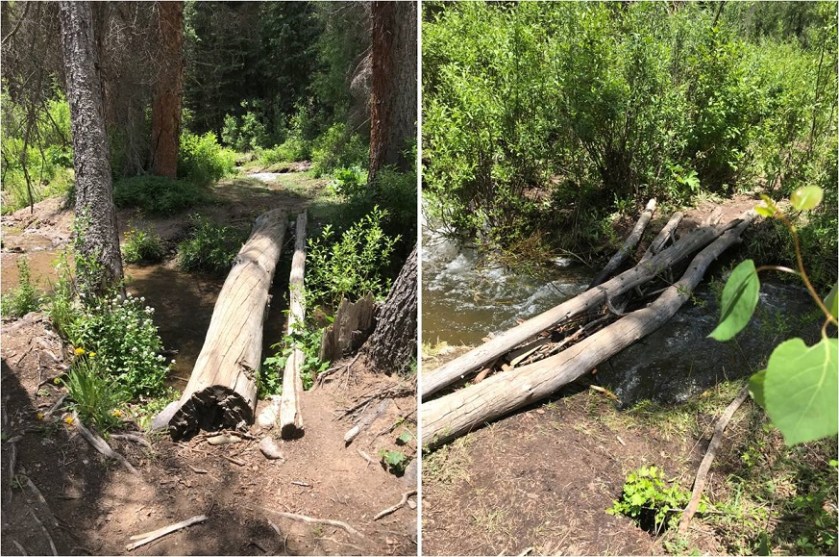
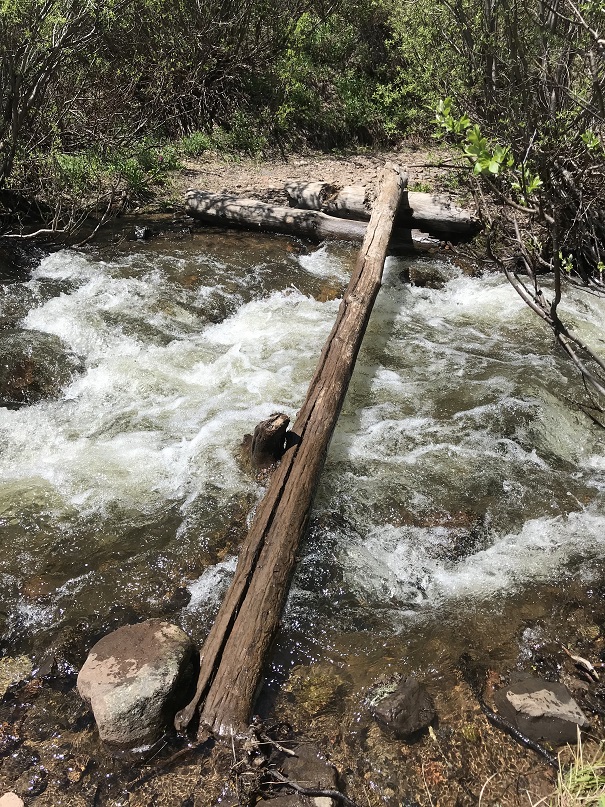
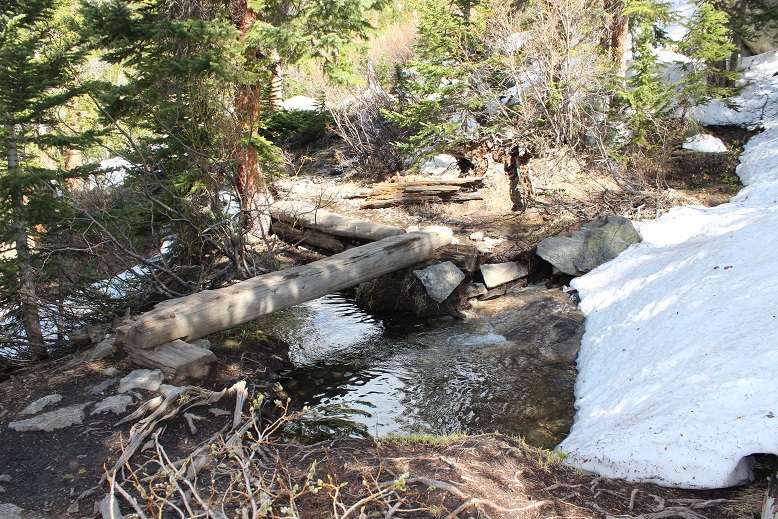
And then I crossed the creek twice more on well placed log bridges I had to hunt for in the dark because they weren’t on the main trail.  I was seriously worried I’d have to ford this creek multiple times before discovering the log bridges, which were (as usual) easy to spot in the daylight.

6
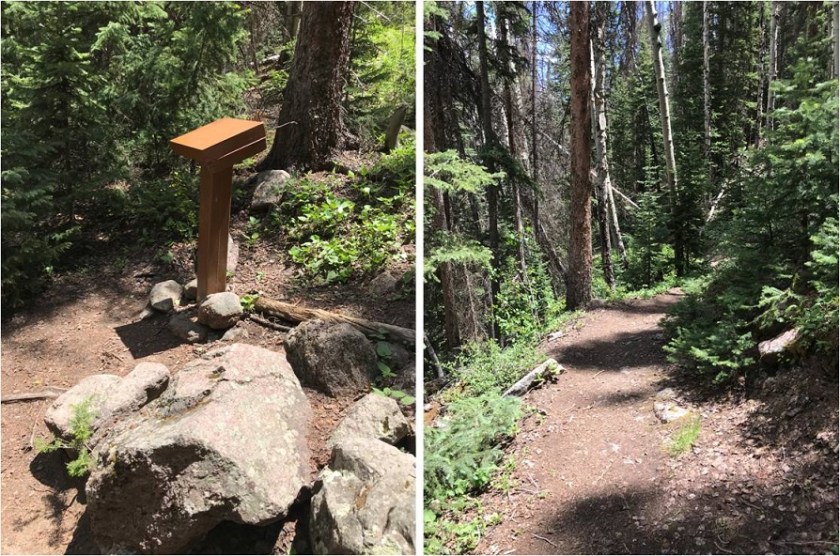
This trail had a trail register (Woot!  More noise!) and was easy to follow up to the first avalanche area

7

The avalanche area was very small and well packed down

8

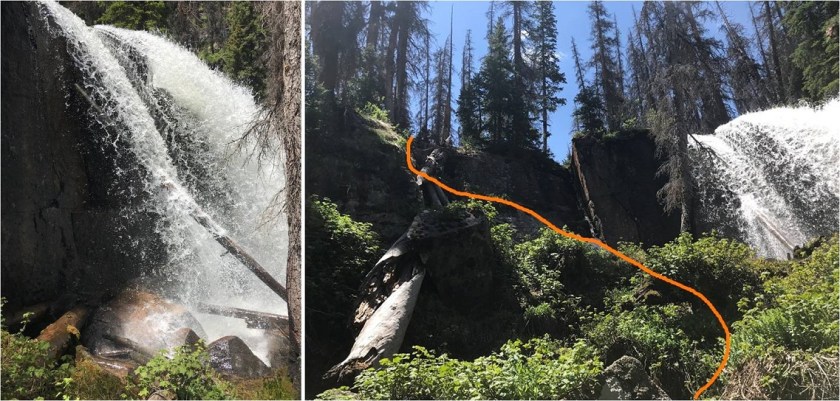
I didn’t have any difficulties until I made it to the waterfall area.  There had been a small avalanche and it looked as if the trail wanted me to cross the waterfall.  I took out my topo map and it looked too early to cross yet, which meant I’d have to follow the waterfall up for a ways first.  There was no trail so I bushwhacked in the dark up the mountainside, paralleling the creek.

9

Here’s when I came to the crux of the waterfall. It was still dark out (I’m guessing it was around 3:30am) and the waterfall was raging.  I could feel the spray of water on my face, even though I was standing several feet away.   I went right and left looking for a better way up and encountered very large boulders blocking the route in every direction.  I could tell I just needed to ascend 15 feet or so (maybe less) and I’d be where I needed to be to cross the waterfall.  It took some fancy footwork and a class 4 move, but I was able to work my way up the side of this boulder, up and over to flat terrain.  (Side note, apparently I made this too difficult and there’s an easier way I was unable to find in the dark.  Check out Angry’s conditions report for a class 2 route over the waterfall).

10

There was a camping area directly above the waterfall, and I was able to pick up a trail again.  I was already considering today a success:  the campers I’d talked to the night before hadn’t made it this far.  The trail rounded a corner and brought me to a creek crossing above the waterfall.  I had 2 options here:  either balance my way across the log and potentially fall in the water (I was carrying a full pack) or take off my shoes and wade across.   In the dark I took off my shoes and put on my water shoes (hurray for new gear and dry socks!).  Yes, I’m sure some could have walked across the log, but I decided to use the log for stability and wade across, keeping my feet dry in the long run.

11

The well established trail picks up directly after the creek crossing

12

And brings you to a boulder field

13

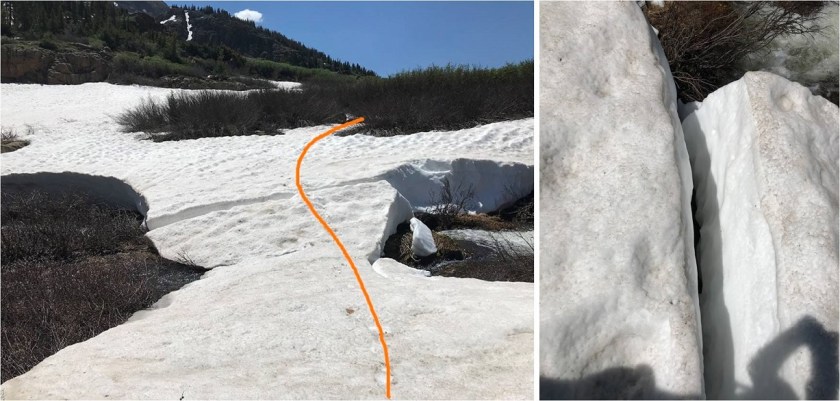
Just after the boulder field there’s another creek crossing.  Unfortunately, the creek was running quite high here and I became frustrated trying in the dark to find a passable route.  I noticed some cairns to the right and followed them to what looked like a goat trail through the willows.  This led me to a snow bridge that looked ready to collapse any day now, but it would get me across the roaring creek.

14

Check out the snow bridge.  I was so excited to come across this in the dark.  There weren’t any footprints from here on out, so I crossed my fingers I’d be able to find my way.

15

I didn’t find many pictures of this route, and to be honest route finding was difficult in the dark due to the snow, so I’m going to do my best to post some details.  I followed the well defined (when there wasn’t snow) Cataract Gulch Trail.  Just after the last creek crossing I headed south and rounded a large boulder

16

The (still snow free) trail brought me to a ravine

17

(In case anyone wants to see what the trail looks like at 4am…)

18

Here the snow picked up, covering the trail about 80% of the time.  This was both good and bad:  It was nice to see a trail every once in a while, but it was covered so much it was difficult to follow and became frustrating to someone like me who hikes on established trails when available.  Just head south until you reach Cataract Lake. It feels like you’re hiking forever, but I promise you it’s there.  My tracker showed it at 4.9 miles from the trailhead.

19

Here the birds started waking up.  This is one of my favorite part of early morning hikes!  I also saw a herd of Elk in the meadow.

Video:

Continue past the lake and you’ll come to a trail junction.  Continue heading South

20

You’ll pass a small pond on your right and head towards Cuba Gulch, which is also the East Fork Middle Pole Trail (another well defined trail when there’s no snow).

21

Follow this trail west as it hugs the side of a mountain, unfortunately losing a little bit in elevation in the process.  Here’s the general idea of where you’re headed

22

And some close ups.  There was quite a bit of snow here, obscuring the trail.

23

Here I rounded the small basin and headed to a small saddle

24

This section is steeper than it looks, and snowshoes were helpful.

25

Turn right at the saddle and follow the trail towards Point 13,164.  The dotted line is the suggested route to summit this ranked 13er, but I didn’t like the angle of the snow, so I continued on the trail until I found a better way to summit.

26

This is the route I took to gain the ridge of Point 13,164:  I needed snowshoes and an ice axe here

27

At the top of the ridge I wound my way north to the summit.

28

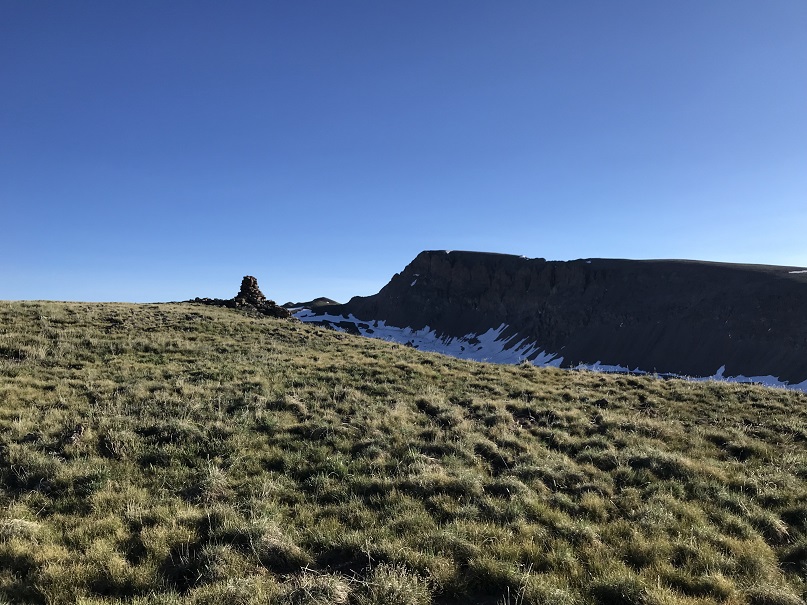
From there it was an easy walk up a tundra slope to the summit with a rather large cairn and a great view of Half Peak

29
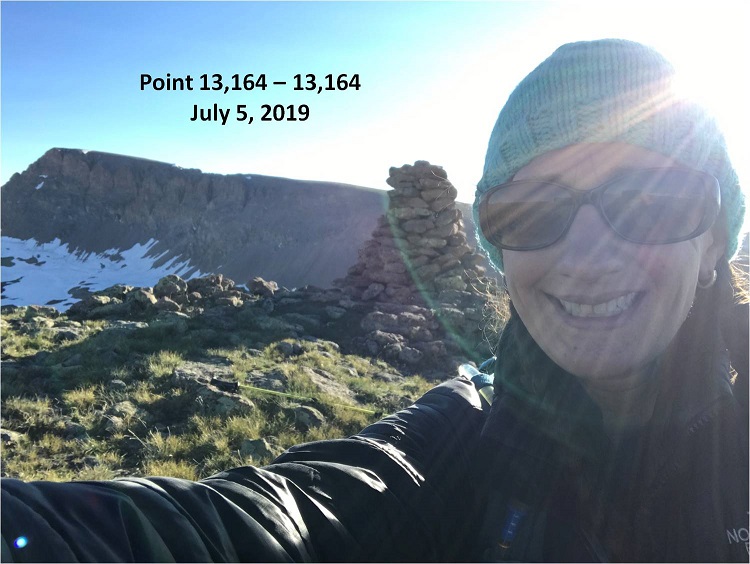
I summited at 7:10am

30

Video:

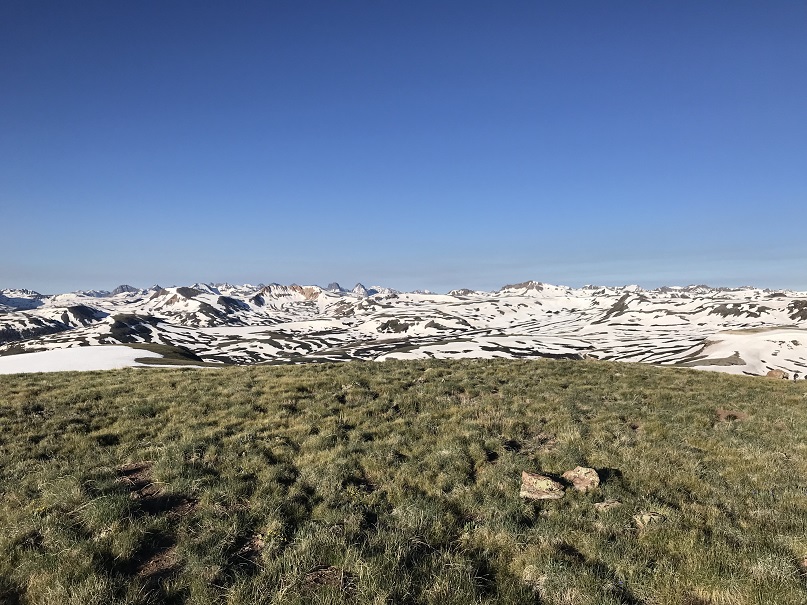
Also, the San Juan’s still have a lot of snow!!!

31

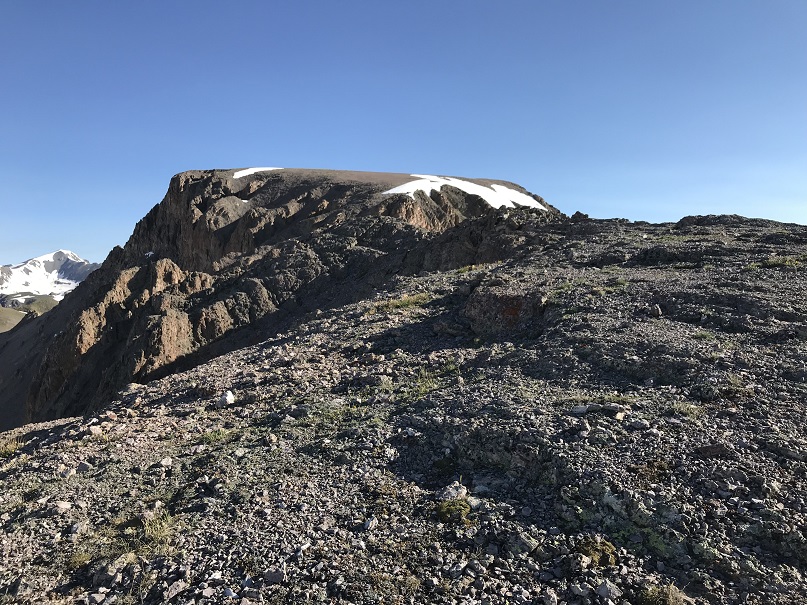
Ok, back down so I can get started with Half Peak.  Here’s the view of the way I went back down and then gained the ridge to hike up Half Peak.

32

Side note:  If you’re not interested in summiting 13,164 here are the coordinates along the trail you turn east at to gain the ridge of Half Peak

33

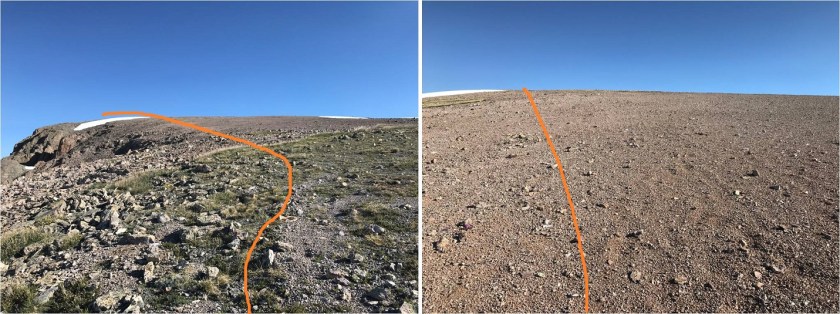
This is a long but gentle slope with no defined trail.

34

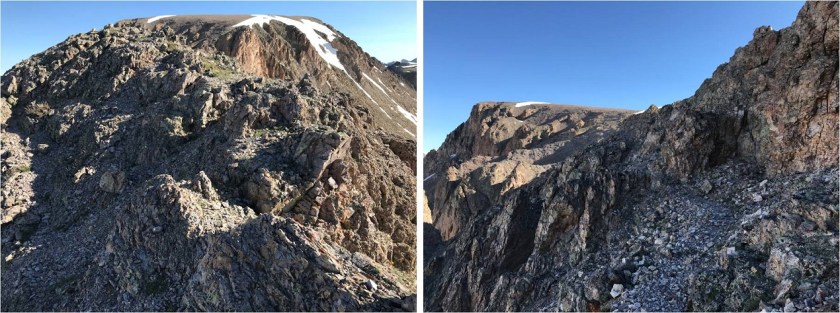
The crux of this route comes just before the summit at around 13,500’.  There is a narrow ridge to navigate.

35

Ther37e’s a lot of exposure but I agree with Roach’s assessment this can be kept class 2 with careful footwork.  I found the best strategy was to stick to the ridge in most places, dropping down 15 feet or so only when necessary

36

Here’s a picture looking back.  The ridge reminded me of the catwalk along the ridge to Eolus.

37

From here it’s an easy walk to the summit

38

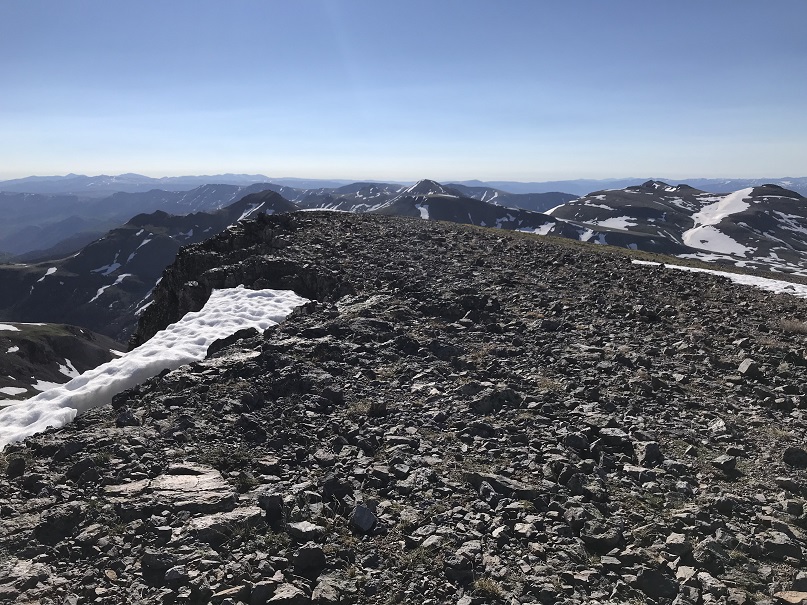
The summit is large and pretty flat

39

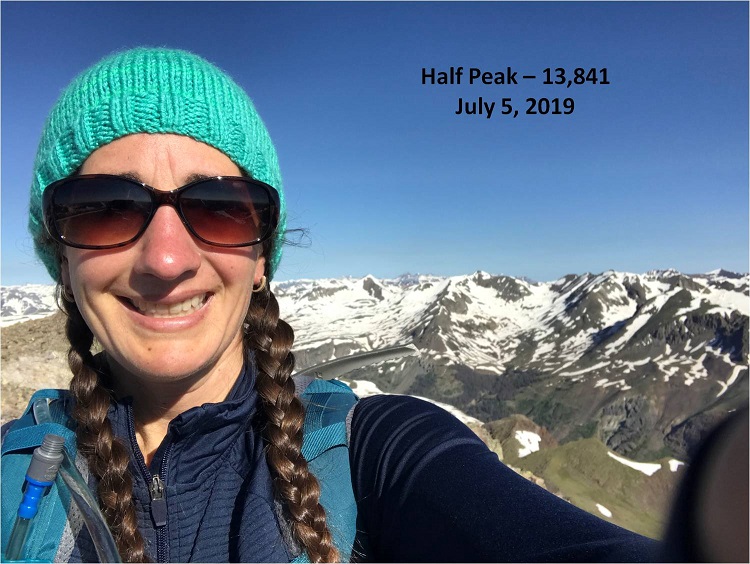
I summited at 8:30am

40

Video:

Here’s a look back on the route up the slope

41

I’d initially planned on hiking Quarter Peak (a bicentennial) today as well, but in the morning I’d gotten a look at Half Peak and the decent route off Half and towards Quarter had a lot of snow.  I didn’t feel ready to commit to the descent in this warm weather.  However, looking at Quarter from Half the ridge up to the summit of Quarter looked dry enough to summit without tackling snow

42 (2)

Oh well, time to head back down.  The snow was softening up, and the snow below the saddle required snowshoes once again (more necessary this time).   In this picture you can see a river flowing underneath several feet of snow

43

Here’s a look at the route back from Cataract Lake

44

I was almost back to the river crossing with the snow bridge when I looked over at the basin and saw 3 Bull Moose enjoying lunch together in the willows!  Very cool!

45

Video :


I crossed the snow bridge, following my previous tracks.  Here I started seeing people on the trail.  I warned those with unleashed dogs about the moose up ahead and gave some people advice on how to find the snow bridge so they could hike to the lake.  Actually, the park ranger/mom in me talked to everyone on the way down, but mostly just to see where they were headed.  Today was such a beautiful day to hike!

I crossed the stream above the waterfall, descended the waterfall the same way I’d ascended, and made it back to my truck at 12:45pm, making this an 18.5 mile hike with 5640’ in elevation gain in 10 hours.

46

Here’s a topo map of my route

47

13,838 & Pt 13,665

1

RT Length: 11 miles

Elevation Gain: 4055’

I had a totally different set of peaks in mind for the 4th of July weekend, but due to the (still) high levels of snow in the San Juan’s my plans changed a bit.  I feel a bit out of shape because haven’t been out hiking in 2 weeks: I took my Troop Hammock Camping (it snowed on us in June!) and then to Alaska/Canada for a week, staying mostly at or around sea level.  I got home the night of the 3rd late, decided to get in a 2 hour nap and was up and on the road at 9pm, headed to Lake City.  To most this schedule may seem crazy, but I suffer from nightmares when I get too much sleep so I’d rather keep myself busy.

The drive up until Lake City was uneventful, except for a cop that pulled me over doing 61 in a 60mph zone coming over a hill in Nathrop. This is the second time this has happened in the same area, which means I didn’t learn the first time.  Of course I was let off with a warning, and this time he didn’t try to give me his phone number.  Also, he had no idea where Lake City was.

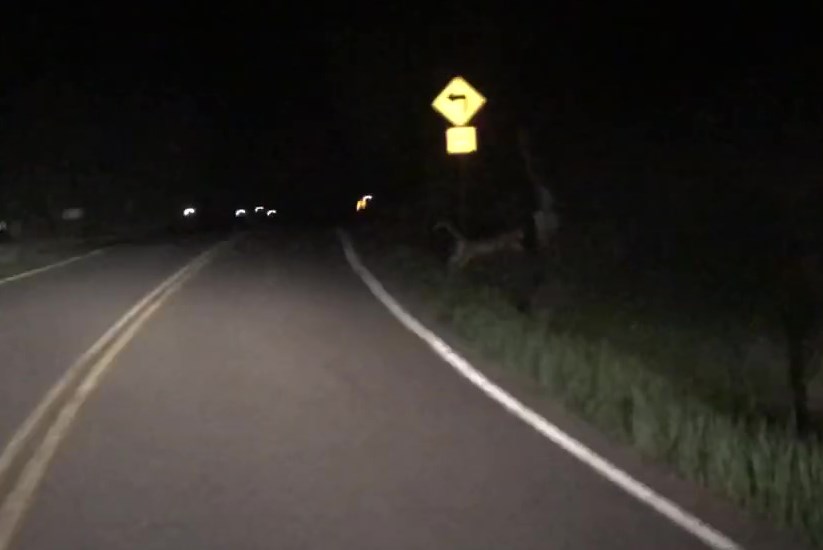
I was about 2 miles from Lake City when I saw it: My first thought was “Wow!  A mountain lion!”  Then quickly afterwards “Wait, that’s too big to be a mountain lion…” I was asking myself what animal could have a tail like that and be bigger than a mountain lion when it turned and looked at me:  White muzzle, pink nose, dark alert whiskers, and tan face.  That was definitely a mountain lion!  Woot!  And a healthy one to boot:  I’m talking African Lioness size, brawny and muscular.

I slowed down my truck to get a better look.   He(she?) was walking on the side of the road, seemingly not in any hurry.  I’ve hiked thousands of miles in Colorado, and this was the first mountain lion I’ve seen here, and also by far the biggest mountain lion I’ve ever seen.  Naturalist Nerd that I am, I’ve spent whole days at the Rocky Mountain Wild exhibit at the zoo, just sitting and watching Mountain Lions.  Those mountain lions at the zoo had pouchy stomachs and loose skin, but not this guy!  He was all muscle.

I was also a Park Ranger when I lived in California, and one time I encountered a Mountain Lion as I was leading a class of 3rd graders to the picnic area.  It saw us coming, jumped out of the tree it was lounging in and quickly bounded away (30 lunchtime 3rd graders will do that to wildlife).  While collared, that one must have been a juvenile because it had nothing in size on the one currently walking front of me.

After about 30 seconds I came to the conclusion I should try to get a picture. My cell phone was in my lap, so I turned off navigation and clumsily opened the camera app.  I took a quick video and tons of pictures and studied him until he eventually turned around and bounded up the hillside.  Imagine my disappointment when the video was too dark to see anything, and none of the pictures turned out of him sitting and looking straight at me.  The best one I got was of him jumping, which wasn’t too great to begin with.  In any event, it was a cool experience.  Lake City has some big mountain lions!

2

Video

The Grizzly Gulch / Silver Creek trailhead was full when I arrived at 2:30am and I had to get creative to find a parking spot in the parking lot big enough to fit my truck.

3

I headed northeast and was on the trail before 3am, a little jumpy after seeing the mountain lion but confident he was at least 20 miles away from my current location. I just tapped my trekking pole on every rock I saw and hoped I was scaring unwanted encounters away.  Also, there’s a trail register at this trailhead; one of those big metal ones that makes a terrible creaking sound when it’s opened and closed, and a big bang when the lid drops.  After signing my name and closing the lid I’m pretty sure I scared every creature within a couple mile radius.

4

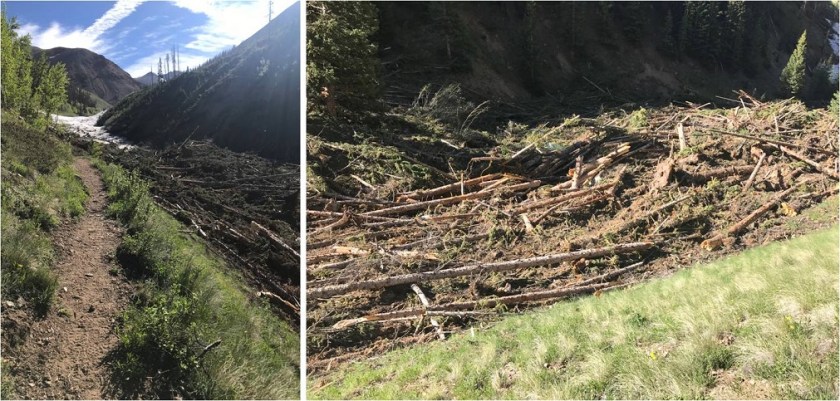
Almost immediately there was evidence of avalanche activity along the trail, and while it was still dark and I couldn’t see the downed trees I could smell the fresh pine scent that accompanies an avalanche.

5

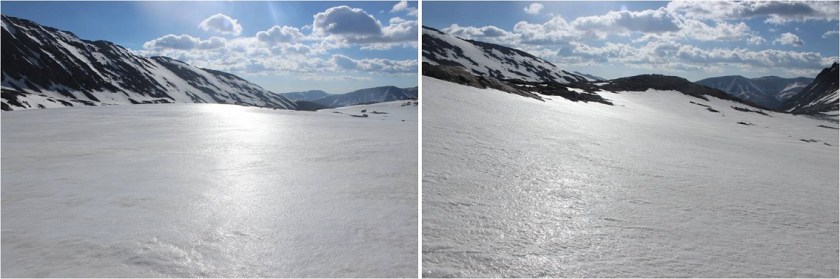
This is a very easy trail to follow, as it parallels Silver Creek all the way to the basin. As the trail began to follow Silver Creek I found myself walking on ice.  At first I thought the creek was frozen, but quickly realized the creek wasn’t frozen but covered in a layer of ice several feet thick.

6

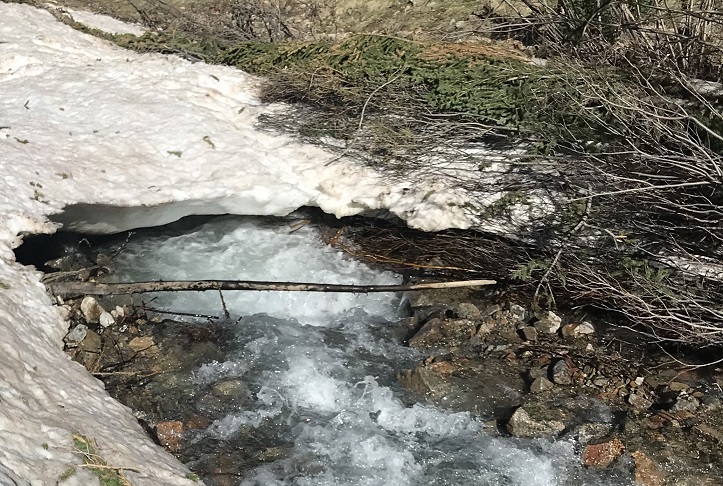
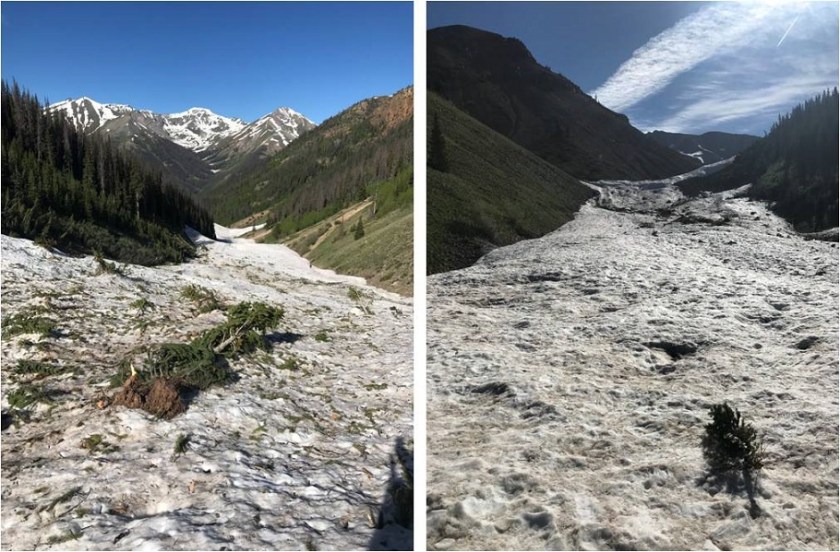
The ice was solid and reminded me of the glaciers I’d just seen in Alaska. It looked like an ice flow, but was most likely caused from avalanches throughout the basin.  Mixed in were various tree branches and avy debris

7

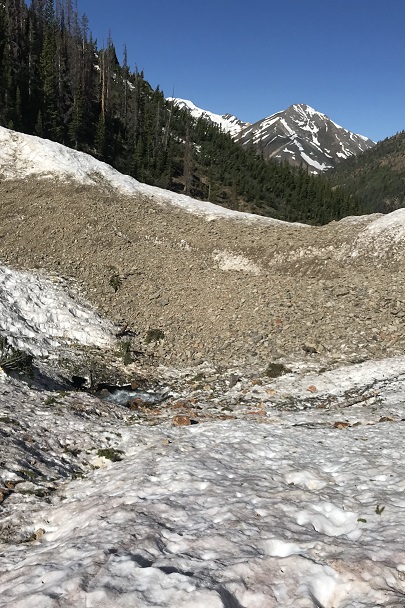
And even areas of rockslides (the creek was flowing swiftly underneath all the debris).

8

Once in the basin I ascended the slope to the saddle between Redcloud and Point 13,561. This was fairly straightforward, and while it was covered in snow I didn’t need traction.

9

At the top of the saddle I turned left

10

The sun was starting to rise so I dug in my backpack for my camera, but unfortunately must have left it at home. Drat!  I bring along my DSLR for pictures because taking photos on a phone is difficult with Raynaud’s:  any type of touch screen is an issue as my finger touches don’t always register, but it’s much worse when my fingers are cold.  I inwardly sighed and crossed my fingers there wouldn’t be too much wind, mentally resigning myself to not getting summit photos today (or tomorrow, as I was staying in Lake City hiking for a few days).

From the saddle I could see the rest of the route before me, and rejoiced it was basically snow free!

11

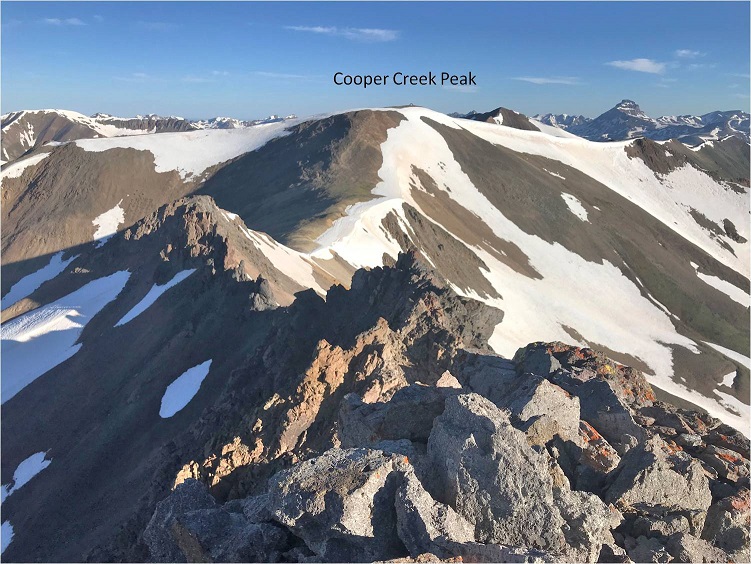
I looked left and was greeted with an unexpected view: I’d planned on summiting “Cooper Creek Peak” today as well, but hadn’t realized while going over my topo map there were gendarmes and a rocky ridge involved (and I didn’t have a helmet).  Looks like I was only summiting one peak today.

12

I headed towards the patch of snow on point 13,561

13

This was easy to cross. Here’s looking back at Redcloud and the patch of snow

14

I followed a faint trail across the ridge

15

The path to the summit was tundra mixed with small rocks.

16

17

I summited at 6am, thrilled I was able to take photos with my phone (yet upset I was forced to take a selfie). Also, the sun was in my eyes

18

Summit Video

I turned to head back

19

The snow patch doesn’t look so bad from here

20

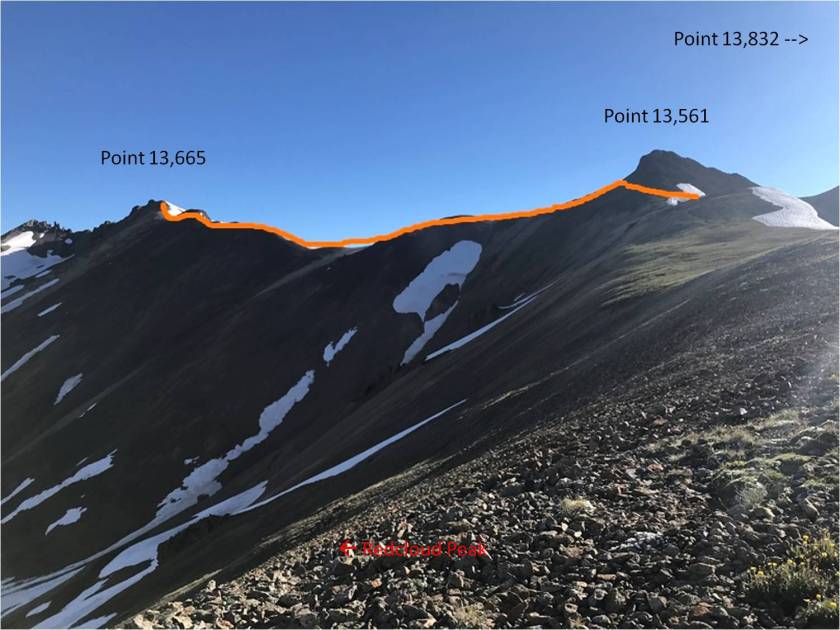
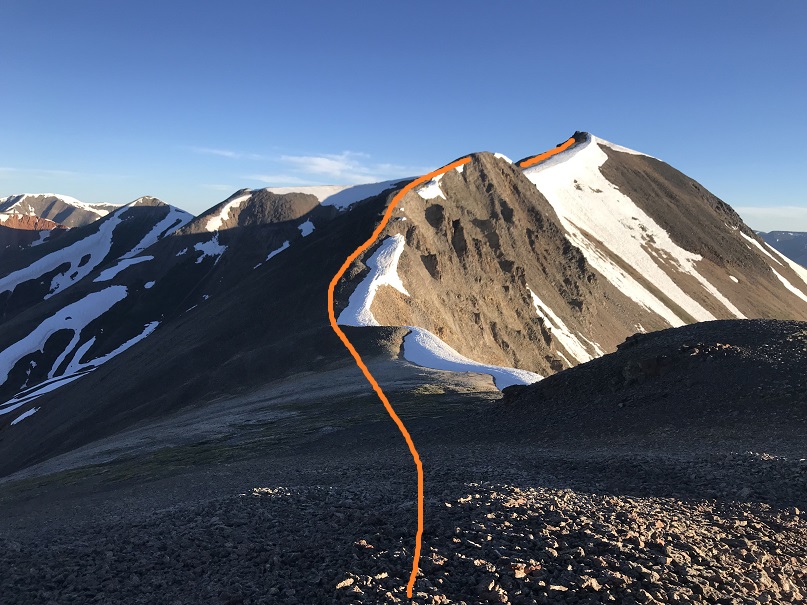
I crossed back over the patch of snow and thought again about Cooper Creek Peak. It was still really early and I wasn’t tired.  I didn’t think I could summit, but I could make it to the halfway point (Point 13,665) and add some extra mileage and elevation gain to today’s hike, helping to keep me at my 10 mile/4000’ average.  Here’s the path I took from the saddle

21

This was more challenging than Point 13,832, but in no way difficult. I just followed the ridge

22

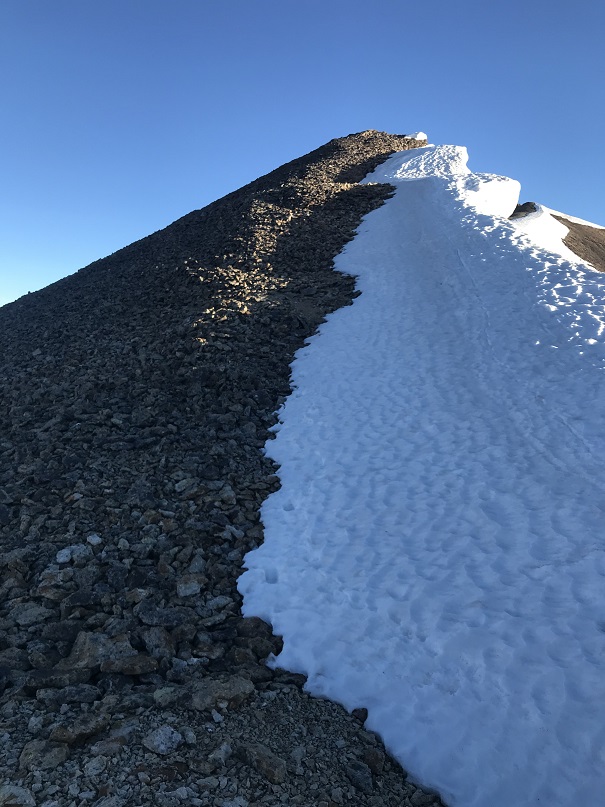
I just kept to the left of the snow, hiking up surprisingly stable scree

23

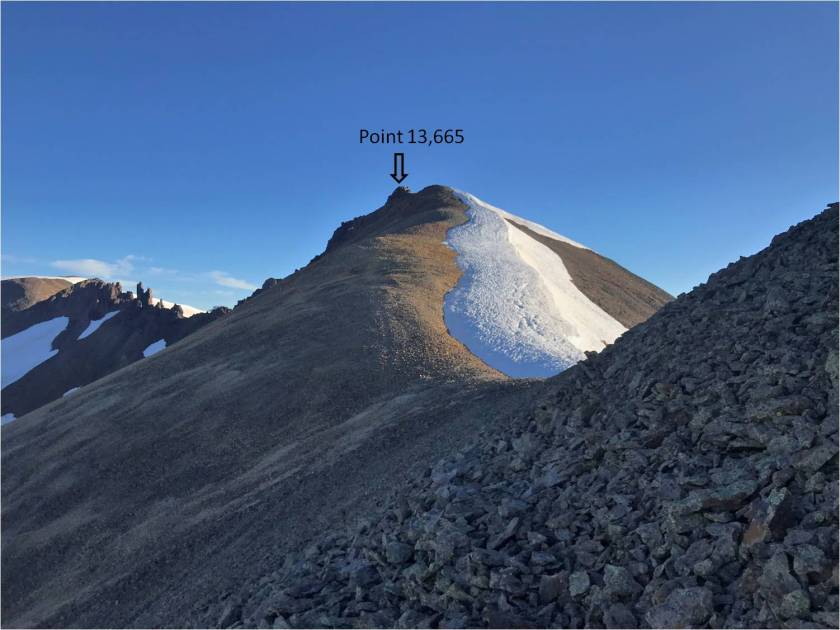
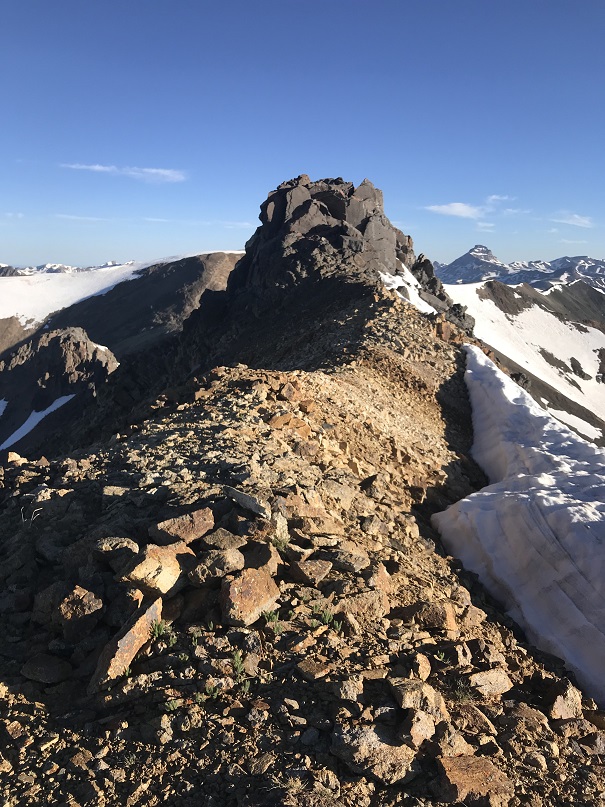
The fun part came at the end. The actual ‘summit’ is the bump to the left

24

This ended up being quite a fun (if short) scramble to the top!

25

It reminded me a bit of the final scramble on El Diente (but with a lot less scrambling to get there).

26

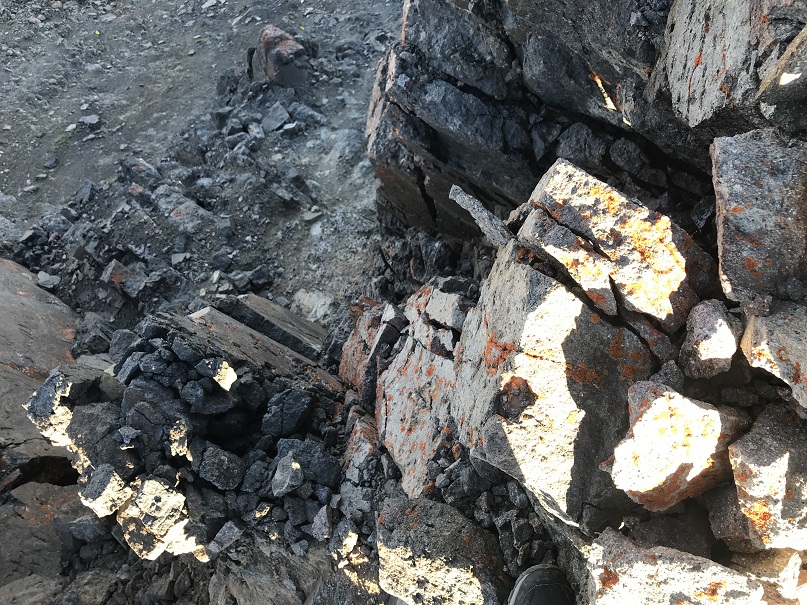
Yes, there were a few chosen class 4 moves and some exposure as well.

27

From here I could see the summit of Cooper Creek Peak, and once again verified I wouldn’t be climbing the ridge connecting it with point 13,665 today (next time I’ll bring a helmet)

28

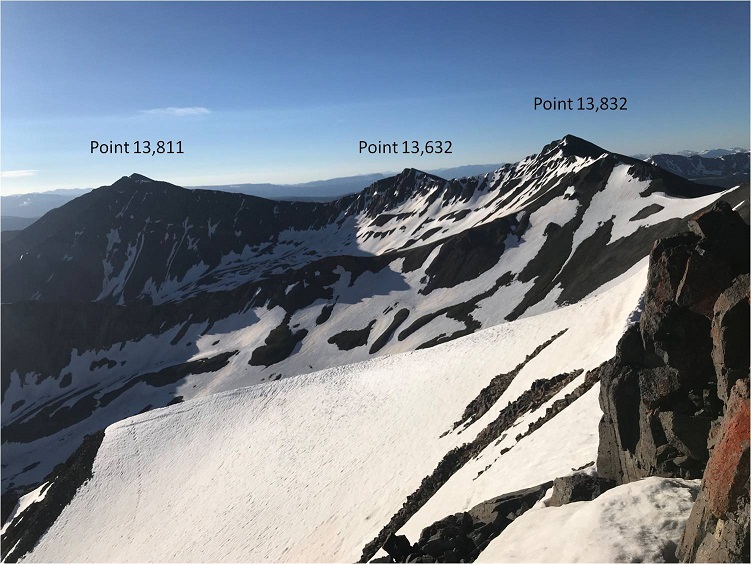
I had a really cool view of PTs 13,811 & 13,832 as well

29

Here’s a look back on the route

30

I trekked back to the saddle, having fun taking shadowselfies now that the sun was in the perfect position to do so

31

32

Back in the basin the 4th of July weekend was ramping up:  I saw a couple dozen people on their way to Redcloud.  I was glad I’d started early!  The snow was softer on the way out, but I still didn’t need traction.

33

In the daylight the trail was much easier to follow: I just walked along the river of ice.

34

I made it back to my truck at 9:30am, making this an 11 mile hike with 4055’ of elevation gain in 6.5 hours

35

I hopped back into my truck and drove to the next trailhead, anxious to find a spot on a busy 4th of July weekend.  No need however, since I was the only one there when I arrived (besides thousands of mosquitoes of course).  I forced myself to eat (a bagel, tuna, and some dried fruit) and appreciated the close and clean bathroom.  Eventually some dispersed campers wearing tank tops, flip flops, shorts, and backwards baseball camps arrived and I went to talk with them before heading to bed early (I’d only had 3 hours of sleep in the past 48 and needed to do some catching up:  Luckily, even though I’m prone to nightmares I’ve never had one while camping so I was hoping to get in a solid 10-12 hours or so).

I talked with the other campers about the trail I was taking for tomorrows hike, as they’d attempted the approach today but were unsuccessful. They hadn’t been able to make it more than 2 miles due to avalanches and high creek crossings.  I mentally filed this information away for tomorrow.  Between slapping mosquitoes and trail talk I discovered they were camping to celebrate the holiday weekend with a dozen or so of their closest friends and they offered me a Coors Light later if I was interested?  I thought back fondly to my days as a young 20-something, dispersed camping in the middle of nowhere with cheap beer, and then thought of the bottle of Knob Creek I had waiting for me in my truck.  I thanked them, but they didn’t need a 38 year old parental figure spoiling their fun… and I was pretty sure I was all set in the alcohol department.

“Chill” Hammock Camping

1

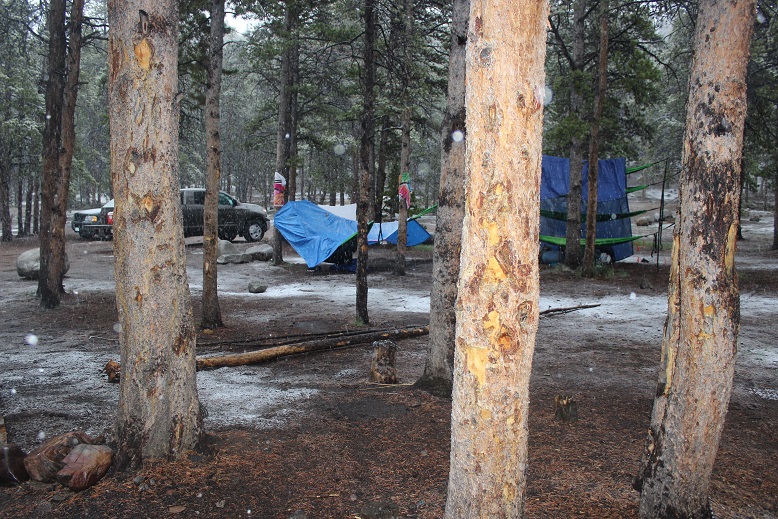
This year Girl Scout Troop 2393 decided to use some of the proceeds from their cookie sales to go Hammock Camping. Of course I was all about this, so we planned a couple of dates, one for June, another for July.  The theme?  “Chill”.

This past weekend was the first campout, and I just have to say, success! (kind of…)

After a long week of little sleep everyone met at my house at 6am on Saturday morning and we packed up the gear in my truck. It’s amazing how much gear is needed for a few days doing nothing!  After the 3 hour drive full of conversations centering around summer reading lists and upcoming concerts we arrived at the dispersed camping area and the girls spent some time picking out a site.  They didn’t like the first few spots, but settled on one that had creek access and trees they could set up their hammocks comfortably.

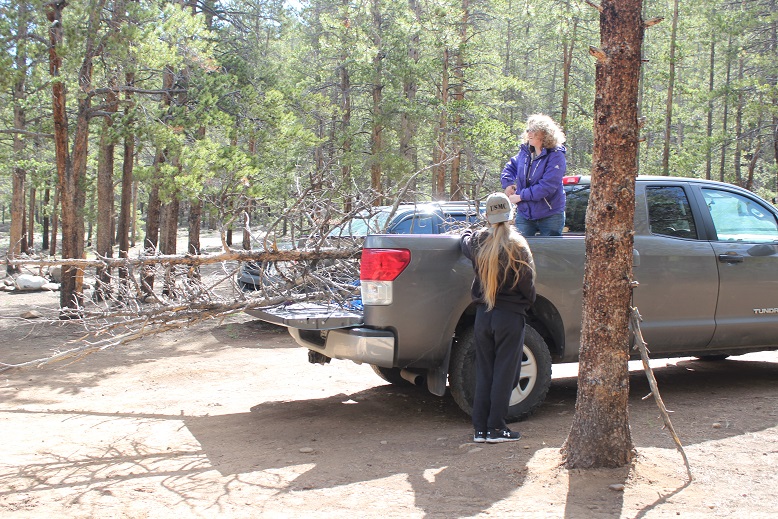
We unloaded the truck and split up into two teams: One to set up hammocks, another to collect firewood. I headed up firewood collection, which proved more difficult than anticipated.  We weren’t able to find much wood on the ground, but we were able to find some downed trees, and decided to just take those back and cut them up at camp.

2

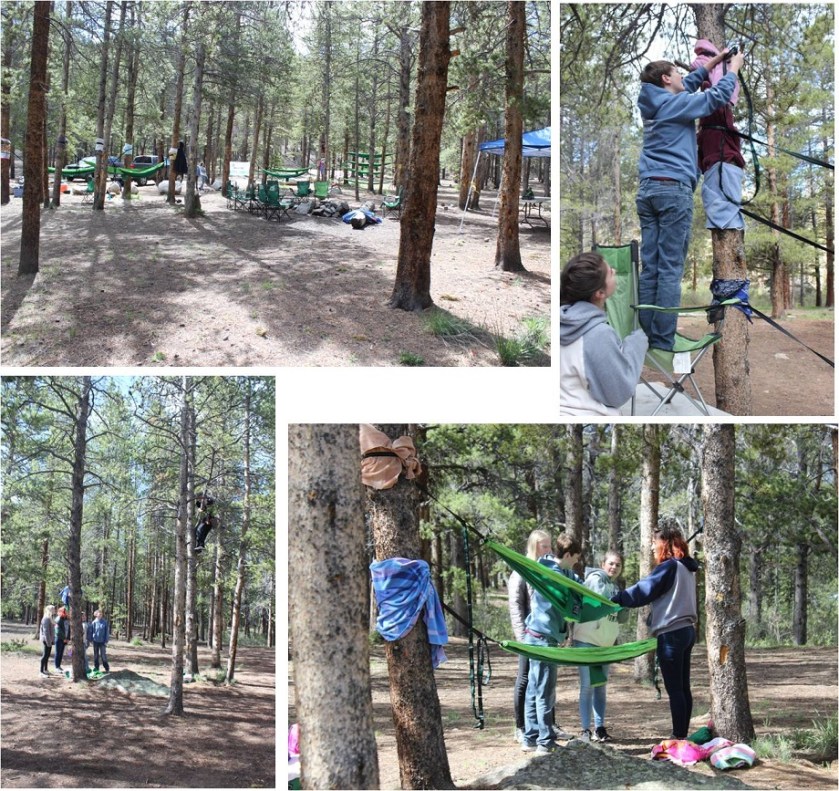
The girls weren’t yet done setting up camp when we made it back with the firewood so I got some pictures of them in the process (the towels help protect both the trees and webbing).

3

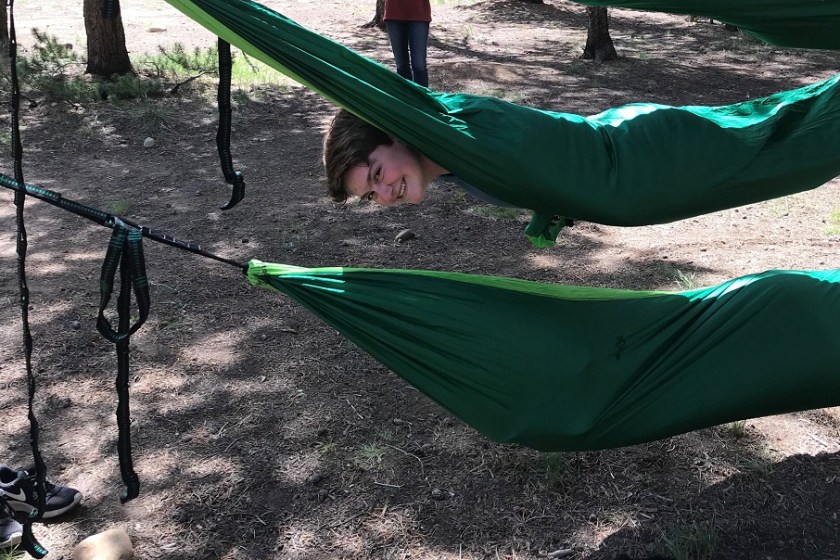
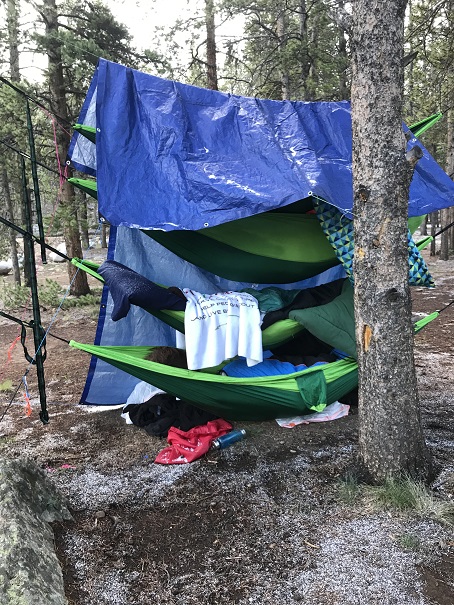
After campsite set up the girls had fun playing in the hammocks. The girls who chose to set up their hammocks on top of each other (despite my telling them it would make getting in/out difficult) had a blast getting up into their hammocks, and then turning themselves over so they were face to face with the person below…

Getting into hammocks

4

5

The girls did a great job! The only thing wrong with this set-up?  The weather forecasted rain, and they didn’t have tarps set up yet.  That changed quickly when the weather picked up.  We got a light dusting of snow and the girls all ran to set up shelter

6

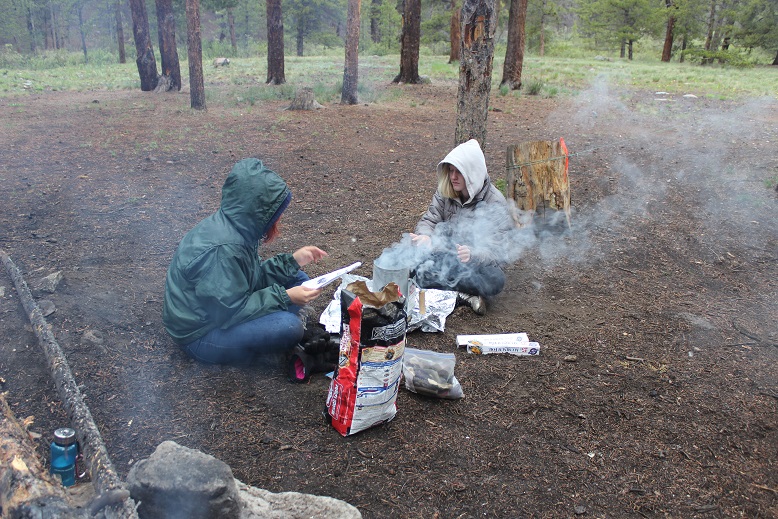
Believe it or not, the tarps were adequate. Ok, next we’re on to food.  The girls cooked their own food as well… some were in charge of fire

7

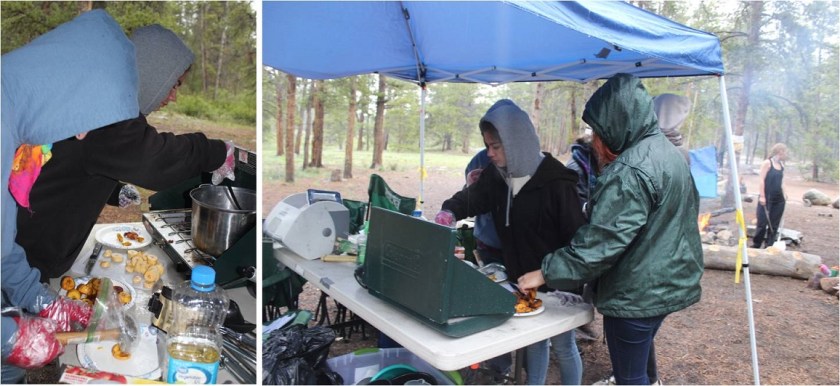
and others were in charge appetizers. The plaintain chips were amazing!

8

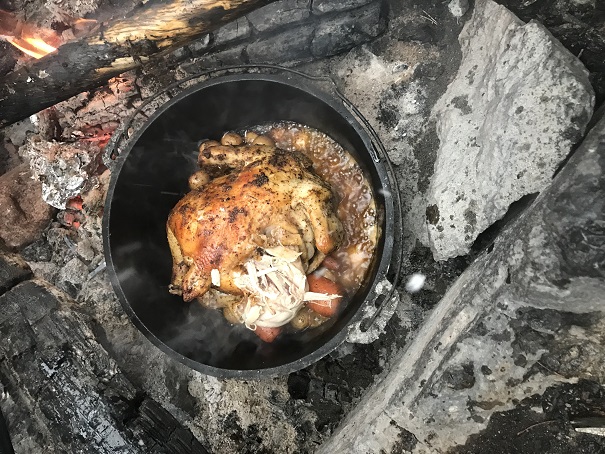
My favorite was the whole chicken they cooked in the Dutch Oven!

9

After dinner the girls sang songs by the campfire. Emily, just getting back from a week at Girl Scout Camp, was especially energetic.  Her call and response songs garnered less than enthusiastic comebacks, and she loved hamming it up even more!  As you can see from the photo below, the weather became colder than anticipated

10

Around 8pm the snow became heavier and even though it was still light out we decided to call it a night. It continued snowing all night long.  It wasn’t enough to accumulate, but it was wet and icy

11

12

This was the first time I’ve ever slept in a hammock, and I have to say, it’s not a bad way to camp! I didn’t sleep very well, but it wasn’t due to the hammock, it was due to the cold.  I was warm everywhere except for my feet, which felt like solid blocks of ice.  I woke up in the middle of the night to 3 rounds of gunshots, 20 at a time in rapid succession.  After that it was hard to fall back asleep.  It got down to 24 degrees. The morning was cold and the girls were slow to become cheerful.  They wanted to “chill” as much as possible, so we cooked our waffles over the campfire (ok, heated them up)

13

The snow wasn’t letting up and it didn’t look like it had any plans to stop, so we packed up our gear earlier than we’d anticipated and drove back home. Everything came back wet and muddy.  It’s currently sitting in my living room (on a dry tarp), ready for the next trip.  All in all the weekend was a success, and we expect the next one to have better weather, so it should be just as much fun!

Pacific Peak – 13,965

1

RT Length: 13 miles

Elevation Gain: 3706’ (From McCullough Gulch lower gate closure)

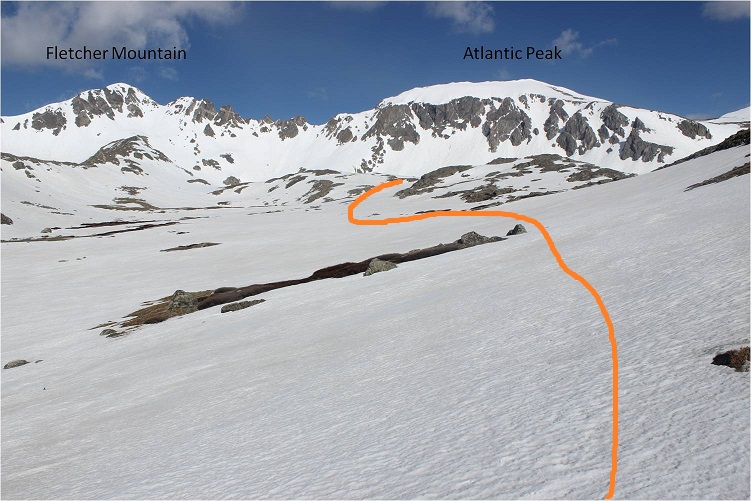
There are so many routes up Pacific Peak I wasn’t sure which one to take? I ended up making the decision the night before, and decided on the Southwest Slopes because I liked the way it looked best on a topo map (particularly the headwall area).  I arrived at the Blue Lakes road and found the gate closed to the McCullough Gulch Trailhead.  So I parked at the closed gate, right next to a small stream of water running off the road.  I gathered my gear and was off at 2:30am.

About 20 yards into my hike I heard a loud noise that sounded like a large animal slipping and sliding on the scree below the road and to the right of me. Well… at least whatever it was was running away from me.  Quickly.  The 2WD dirt road to the trailhead was clear, dry, and easy to follow.  I was confused as to why it was still closed, since besides some extremely minor avy debris and a short area with water running by the side of the road, the road was clear.

2

3

I hiked on this dirt road for 2.2 miles from the closed gate to the start of trailhead. This is where the snow started, and in the dark obscured the beginning of the trail.

4

For the next mile the snow was intermittent and soft. I’d need snowshoes for about 30 steps, then not need them for dozens of yards, and then I’d need them again for 30 steps or so.

5

I crossed a bridge

6

And headed left on a trail (the road ended here)

7

This is where I put snowshoes on and wore them for the rest of the hike. This is also where the trail finding became difficult.  I kept losing and finding the trail and losing it again, so I gave up trying to stay directly on trail and just headed northwest, keeping the creek to my left and the ridge to my right.

8

At the end of the boulder field I came across a sign indicating the trail kept going straight. Here I turned right (at the cairn) and followed the gully up and to the northwest, avoiding the large boulders

9

10

At the top of the gully I rounded the hillside and was deposited below a lake. I walked around the right side of the lake, found the rock rib, and decided to climb the snow next to it to the notch(so I didn’t need to take off my snowshoes again).

11

Here’s a look back down from the notch

12

I was at the top of the waterfall area and just needed to turn the corner to the right to see more of the basin

13

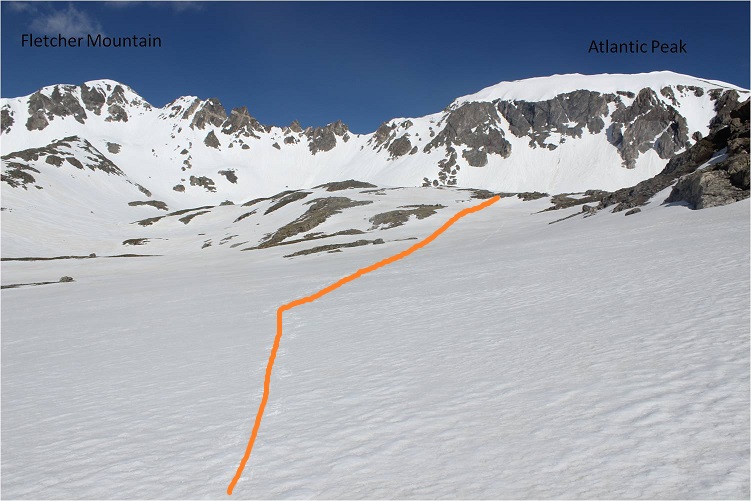
Wow! Lots of snow here!  I headed northeast, skirting what was probably a small lake to my left and couldn’t help but wonder how many feet of snow I was standing on top of?  Way to go June 2019 in Colorado!  You’ve got the snow thing down!

14

I kept rounding the basin, staying to the right

15

16

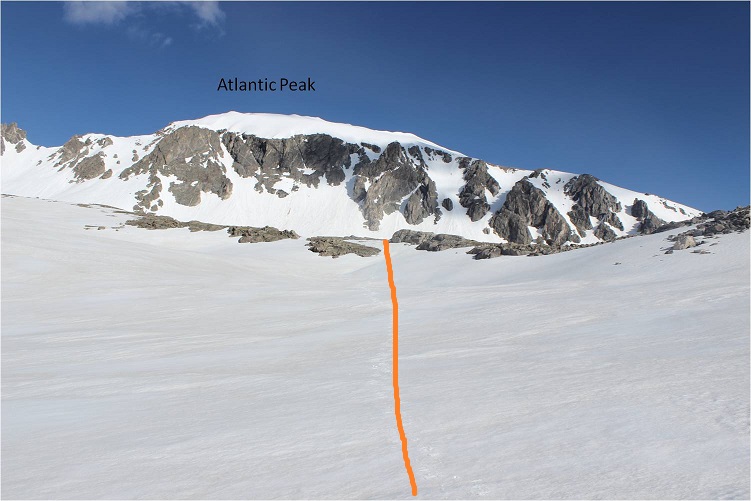
Once again: So.  Much.  Snow!  I kept heading northwest towards the end of the basin.  It’s best to stay high here so you don’t have to regain elevation.

17

I made it to the headwall. This is the crux of the route, and I decided it was time to take off my snowshoes and put on my crampons.  I got out my ice axe and garden tool (haven’t purchased a second ice tool yet).  The sun was just starting to rise

18

I was pleasantly surprised at the conditions of the headwall: continuous snow coverage that was consolidated just right for crampons.  It was tiring, but I had no difficulties gaining the top of the headwall.  I mentally high fived myself for choosing this route today.  Ok, just a few hundred more feet of elevation gain and I was there!  I made it to the saddle between Atlantic and Pacific, singing “Home for the Holidays” as I went.  To be honest, I that song was in my head for most of this hike.  Oh, and that’s a false summit…

19

There was a lot of snow here, and some of it felt steeper than the headwall

20

It seemed pointless to summit the false summit, so I skirted the bump to the left and continued towards Pacific.

21

From here the postholing began. The snow here looks solid, but it hugs a ridgeline and much of the snow underneath has melted away, leaving a hollow cap.  At times the cap was thick enough to support my weight, and at others I postholed up to my waist into (or between) large rocks.  I have a few bruises from the fun

22

Still, it was better than hiking with crampons on the rocks (I was too lazy to take them off, so I stuck to the snow)

23

I summited at 6:45am

24

Summit Video

Here’s a look back on the route from the saddle to the summit

25

The wind was intense here, so I decided to head back down. I made it to the saddle and Atlantic looked very inviting. I’ve already summited Atlantic, and I’m on a bit of a time limit today, so I didn’t feel it necessary to summit Atlantic as well (but it was tempting… you should do it!).

26

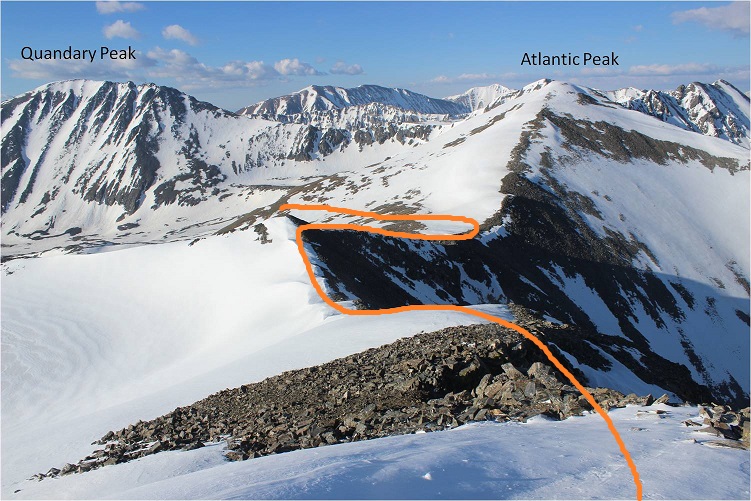
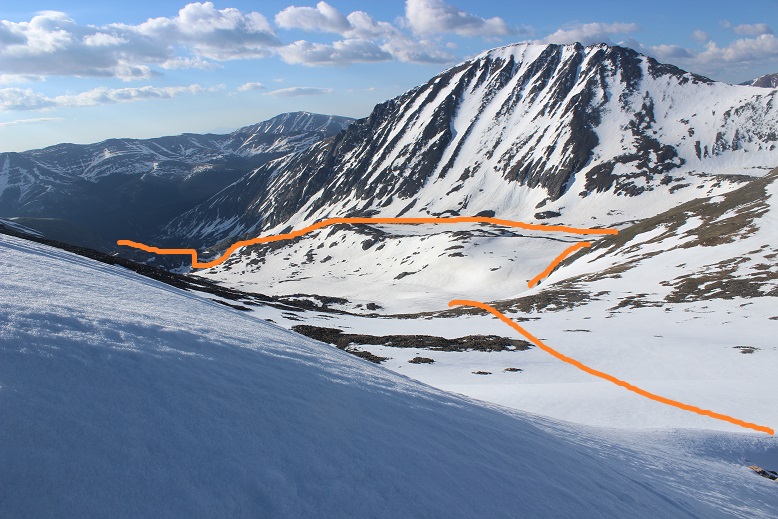
I had to stop and enjoy the view from the area just below the saddle (where the wind finally let up a bit). It was breathtaking!

Saddle

From here you can see most of the route back. It’s important to follow the basin and stay close to Quandary Peak on your way out to exit in the correct area.

27

OK, time to start down the headwall.

28

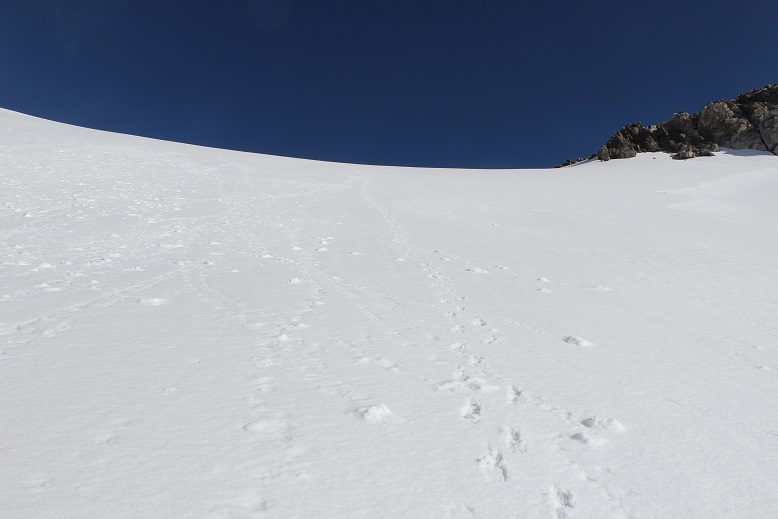
The headwall was steep (so steep you can’t see the route down it here), but not as bad as a lot of gullies I’ve done lately. It’s supposed to be 40-45 degrees at points, but I was able to walk down the entire headwall without turning and facing the mountain.

29

30

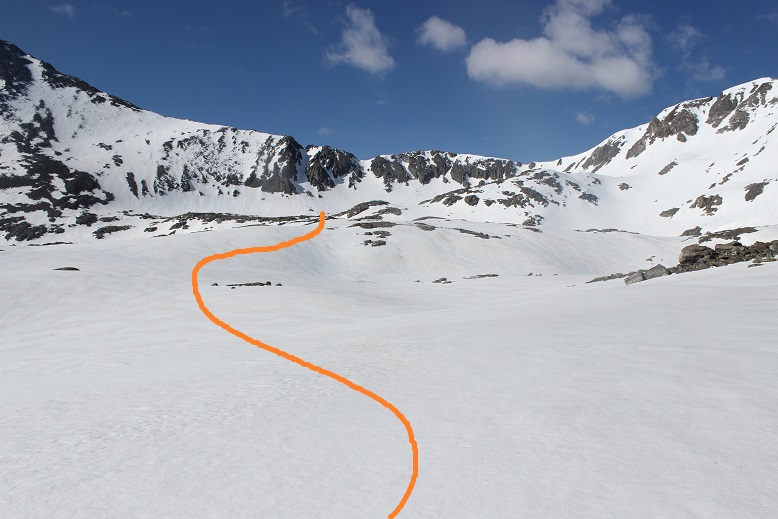
At the base of the headwall I switched out my crampons for snowshoes, but kept ahold of my ice axe. I followed my tracks southwest

31

Rounded the ridge, and walked out of the basin

32

The snow was really starting to soften up at this point. For June 21, this is a ton of snow!

33

I made it down past the rib area without incident, and was just getting ready to skirt the small lake when it happened.

34

I was stepping off a rock and into snow and immediately my left leg sank and slid up to my upper thigh. I’ve postholed thousands of times, but never experienced anything like this:  Try as I might, I couldn’t move my leg.  It wasn’t hurt, but my snowshoe was stuck in the snow and keeping me from being able to move my foot and leg.

As I’d stepped on and slid into the deeper snow the snow had immediately softened up and settled like concrete around my leg, making it immobile. I thought to myself  “So this is what they mean by not being able to get yourself out of an avalanche because the snow settles like concrete” and got to work.  Luckily, this hadn’t been an avalanche and I still had my ice axe in my hand, so I started digging myself out. It took me a solid 15 minutes of work to free my leg.  Also, my butt was now wet from sitting in the snow for so long.  Lovely.  At least no one was around to see.

The hike back to the trailhead was uneventful. In the light of day I was easily able to follow the trail and saw things I hadn’t before, like the log bridges and small pools and the actual trail itself…

35

36

There was also a lot of evidence of postholing from previous hikers using the trail. I hadn’t seen any of this in the dark (I’d paralleled the actual trail)

37

There was a snowbridge over the creek, and the creek was raging!

38

Stream

Back on the 2WD road I started seeing other hikers. Quite a few of them actually, and I figured they must have opened the gate. Sure enough, they had and there were cars parked at the summer trailhead as I passed.

39

I still had 2 miles to go however, but on a positive note, I saw a rather scruffy looking fox on my way back

40

Fox

Yep, the gate was now open

41

I made it back to my truck at 10:45am, making this a 13 mile hike with 3700’ in elevation gain in just over 8 hours.

42

Ugh! It looked like some kids had thrown mud at my truck!  There was dried mud/dirt on every corner, like someone had used my truck for target practice with mud pies.  I was going to have to wash it after picking my daughter up from camp (she’s a counselor at a Girl Scout Camp and off this weekend so I was on my way there now to pick her up).  It was a 3 hour drive, and I made it in plenty of time before release.  While we were walking back to the truck my daughter said “How did your truck get so dirty?”  I told her I it happened at the trailhead this morning.  She went and took a closer look, put each of her hands on two of the marks and said “Mom, how big are bears?”  That’s when I took a closer look at the blobs and realized no one had thrown mud at my truck:  It’d been visited by a bear!  I could see swishes of hair and even faint claw marks on the paint.  Cool!  Maybe that’s the animal I’d heard at the start of my hike?  Now I didn’t want to wash my truck!  Luckily, I took a few photos before it rained on my way home.  I just wish I’d looked at the ground around my truck when I’d noticed the mud… I would probably have seen bear tracks!

43

Solo Self Belay Practice

OLYMPUS DIGITAL CAMERA

I’m on a bit of a high right now: I’m feeling fantastic!  Like, Rockstar material!  It’s been a long week, so let me explain…

This week I’m an empty nester, as my oldest is off at Drum Corps for the summer, my son is stationed in Alaska, and my youngest is at Girl Scout Camp. My goal for this week with the kids gone was to learn how to properly set up anchors around rocks, self belay, and figure out what caused me to slip last time I tried doing this on my own.  I’ve been rock climbing/rappelling dozens of times, but I’ve never been in charge of gear/setting up equipment, etc.  I’d planned to find a very small rock, maybe only 5 feet or so off the ground, where I could practice without the fear of falling and hurting myself. I needed to get good at setting up and belaying solo, and this is the only week I have to practice before ‘showtime’.

I mentioned this to a friend who climbs, and he offered to take me out, saying he knew the perfect spot. I’d intended to do this alone (well, with the help of my new favorite book, Mountaineering: Freedom of the Hills, but thought: Great!  I’ll have someone to ask questions while I’m there who’ll be there in case I mess up and won’t let me die.

(Please note: a lot of the following was my fault. The friend who was helping me is a great guy, and I mean no disrespect to him.  I’m also very thankful he offered to help me with this. We have different communication styles and I was frustrated.  This is the way I felt it went down…)

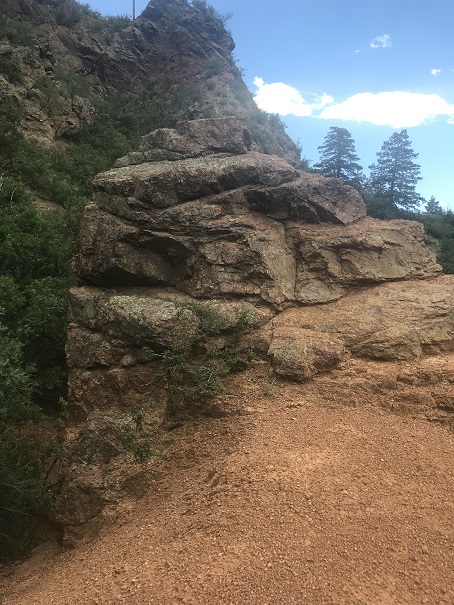
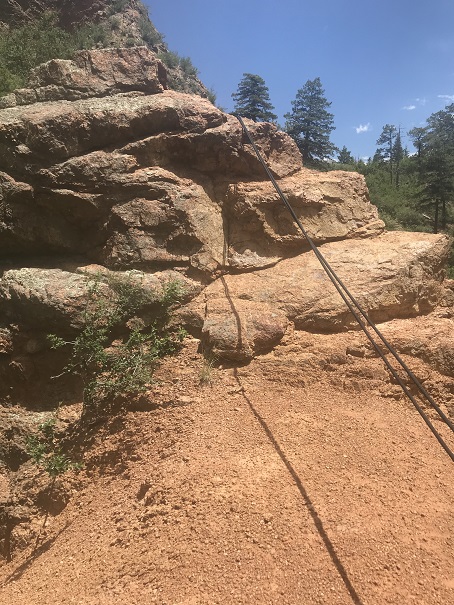
The whole adventure seemed doomed from the start. We arrived at his ‘perfect spot’ in North Cheyenne Canyon and I wasn’t convinced this was the place for me  ‘to learn how to properly set up anchors around rocks, self belay, and figure out what caused me to slip last time I tried doing this on my own’, mainly because there were spires here but few rocks.  I mentioned this to him and he didn’t seem fazed.   He did ask me to leave my gear in the vehicle, which didn’t make sense to me?  I mean, yes, he had better gear, but I needed to practice with the gear I was going to be using.  “Trust me, after today you’ll be throwing away your rope and getting another one”.

I took a deep breath. We argued a bit in the parking lot, where I once again said my goal for today was to ‘learn how to properly set up anchors around rocks, self belay, and figure out what caused me to slip last time I tried doing this on my own’.  I’d planned to find a very small rock, maybe only 5 feet or so off the ground, where I could practice without the fear of falling and hurting myself.

His answer was “Fine, we can do this your way or my way. Which is it going to be?”

Ha! That’s one way to quickly piss me off.  Of course I said “your way”, but only because he drove (no exit strategy) and to be fair, he was there helping me.  I mentally tossed this day out as a total failure and a loss of very precious practice time.  Ugh.  This is why I do things solo:  I should have just gone on my own with my textbook.

I tried to change my attitude and followed him up the hill to where we’d be practicing today. He asked me where I wanted to set up my anchor, and I said “around a very small rock, maybe only 5 feet or so off the ground, where I can practice without the fear of falling and hurting myself”.  But there weren’t any rocks here in which to do this.  So… we were going to set up around a tree.  This to me wasn’t very useful:  The rappelling I’m going to do is thousands of feet above treeline, so there won’t be any trees to use.  I once again stated my goal of today:  to learn how to properly set up anchors around rocks, self belay, and figure out what caused me to slip last time I tried doing this on my own.

He set up around a tree, and I took mental notes of the equipment he was using and asked some safety questions. There was a bit of squabbling here too, with tone implying I was a terrible partner/student, but at this point I probably was a poor student because I was upset and didn’t think he was listening to me.  I didn’t see the relevance of what we were doing as it applied to my final goal.  I’d have to say things two or three times and he’d still do it the way he wanted.  Another deep breath:  He was here to help, right?  Be nice to him.

OK, everything was set up. At this point it started to rain, but luckily it only lasted about 20 minutes or so.  When it stopped he asked me if I was ready to belay myself over the 25 foot spire.  Of course I told him no.  I still hadn’t figured out what had caused me to fall last time, and I did not feel comfortable rappelling on my own until I’d figured that out.

“But I thought you agreed to do this my way?”

Ugh!!! What man over 25 doesn’t know when a woman throws up her hands and says “Fine!  We’ll do it your way!”  she in no way means “Fine!  We’ll do it your way!”?  Also, I hadn’t known the extent of “his way” when we’d started.  I’d assumed he listened to my goals for today and what he had in mind paralleled those goals.  I didn’t mean to sound ungrateful, but what was going on here?

I explained to him my goals again: To learn how to properly set up anchors around rocks, self belay, and figure out what caused me to slip last time I tried doing this on my own. I’d planned to practice on a very small rock, maybe only 5 feet or so off the ground, where I could practice without the fear of falling and hurting myself.  At this point I still did not feel comfortable rappelling on my own because I was afraid I was going to fall and had not learned the techniques to prevent that from happening.  Added to this, red flags were going up everywhere: I’d explained my goals several times and he just wasn’t listening.  I did not feel safe, and I wasn’t going to do this if I didn’t feel safe.  My goal isn’t to love rock climbing, it’s ‘to not die’ while completing the centennials solo.

In the end we tried it where he Fireman belayed me from below. I still didn’t feel great about the whole situation, but I did feel secure enough this way to give it a go.  I belayed this way several times, with both his rope and mine, and was able to figure out differences in gear and my abilities.  The problem indeed had been my gear:   My rope was small, slippery, and dynamic, which is usually a good thing for many reasons, but not for this kind of rappelling.  I was going to need to buy new rope, but at least I’d figured out why and which was going to suit my needs best on my own.

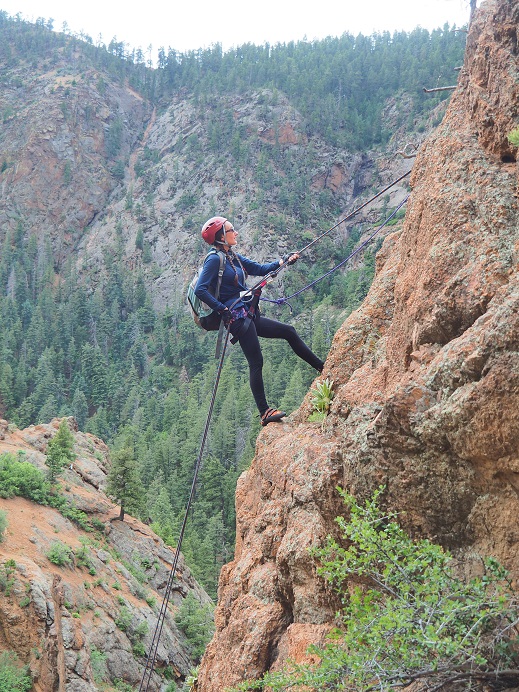
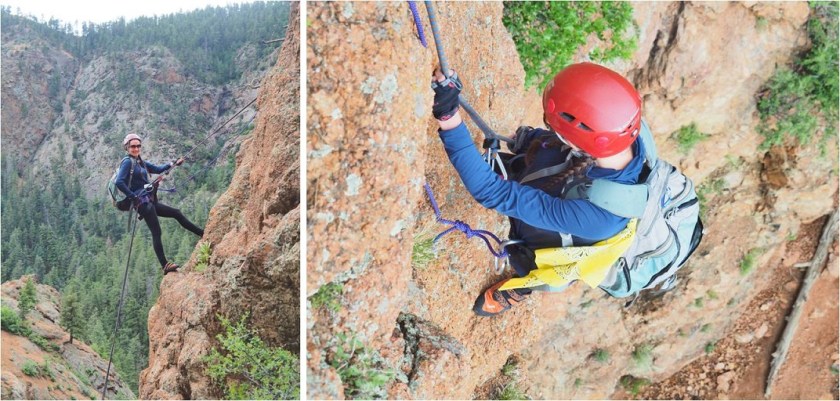
He took some pictures of me at one point.
2

So the day hadn’t been a total loss, but I did leave frustrated. The next day I went to REI and bought some new gear (Ugh! This is getting expensive!) and decided to try again.  Solo this time.

After work I could tell a storm was coming in, but I gave it two hours before it began. Today I chose to go to a ‘secret spot’ I know in Garden of the Gods I felt sure I’d find some proper rocks to practice making anchors with.  I found a parking spot (the last one in the lot: woot!), changed my clothes in the truck, gathered my gear, and started hiking.

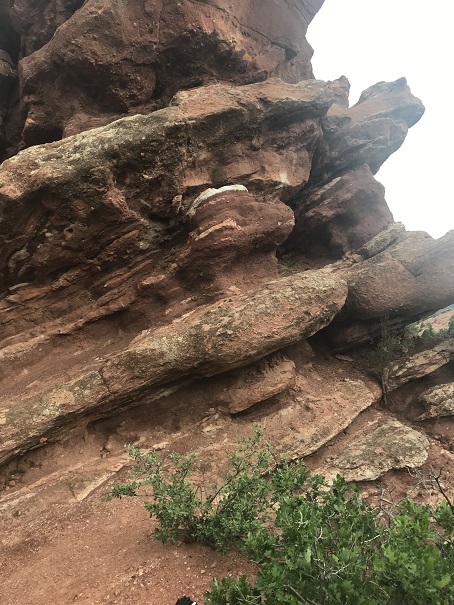
I made it to the area I’d had in mind and was disappointed: I looked and looked and looked, but nothing here was what I was looking for.  I really wanted to find some rocks that would allow me to properly set up anchors, but everything here was one solid block.  The weather wasn’t going to hold out much longer, so I found something that wasn’t perfect but that would work for today and got going.
3

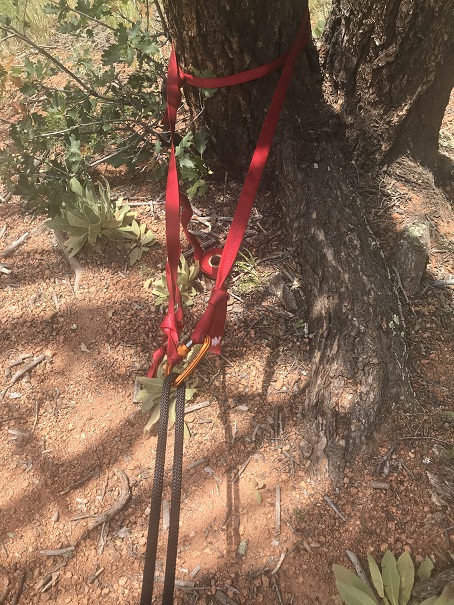
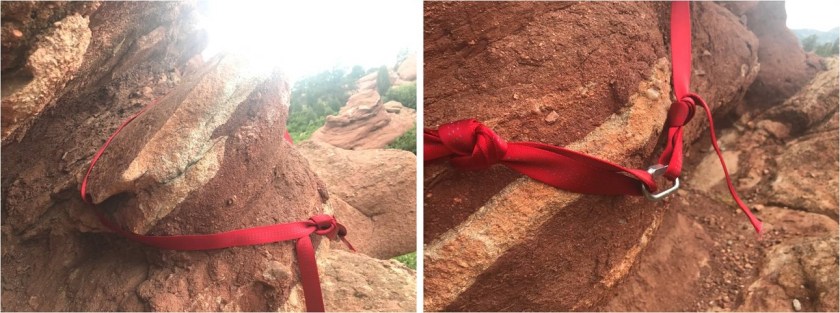
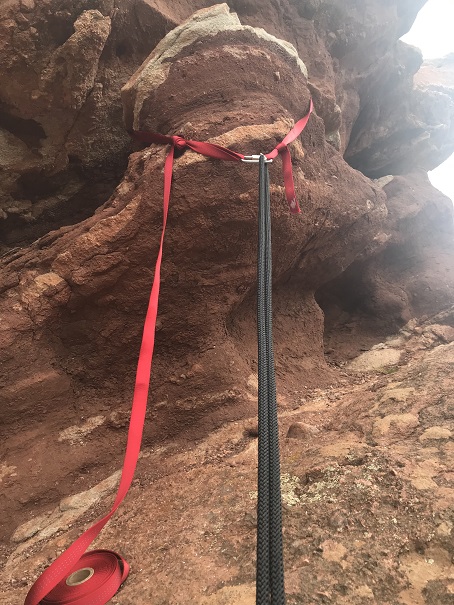
The first thing I did was set up my webbing, remembering to keep it at a 90* angle or less, pointing downward.
4

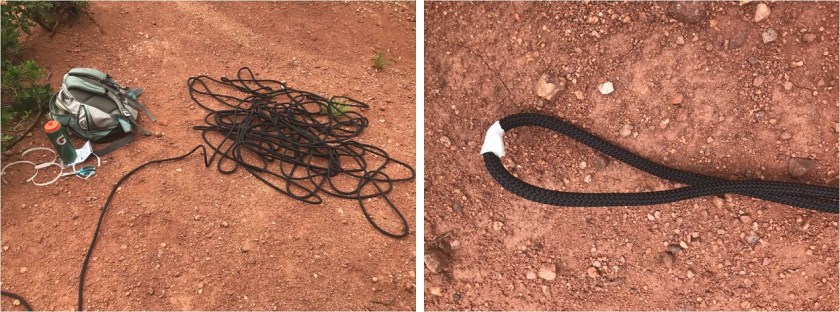
Next I uncoiled my rope, found the middle, and marked it with some tape (note to self: I need to replace the tape).  Also, yes, I cleaned up my mess before I left.
5

I clipped my rope into the screw lock carabiner and immediately discovered I was not a fan of this type of carabiner: There was no way my fingers would be able to screw and unscrew this thing when they were cold up at 13k+.  Note to self:  get another few twist lock carabiners.
6

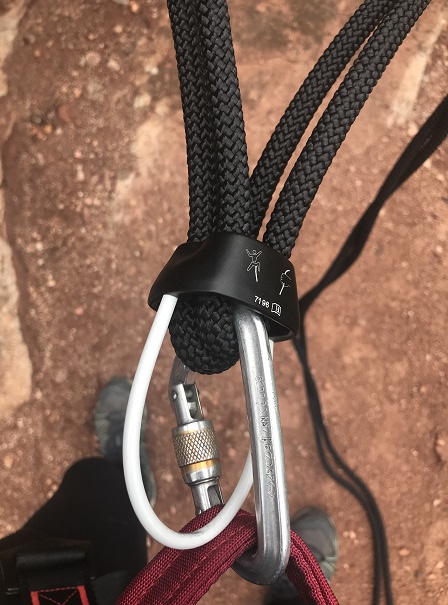
I got out my belay device and had difficulty putting the rope through the holes. For a moment I was worried it wouldn’t fit and that I’d bought the wrong size rope, but in the end I just needed to work the rope a bit for it to fit.
7

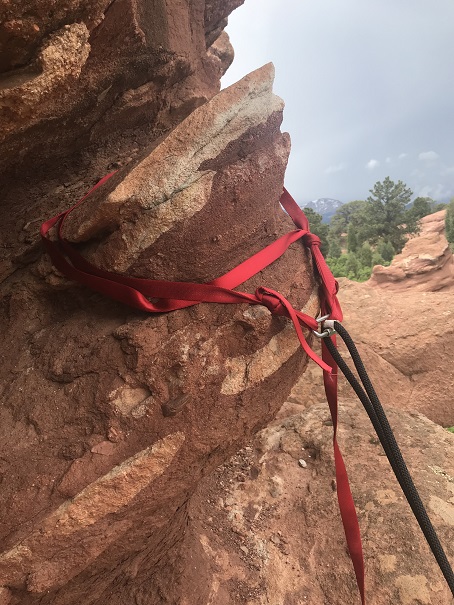
OK, now it was time to practice. I leaned back on the rope, jumped up and down, and played with the system.  Unfortunately the rope I’d anchored around the rock kept slipping.  It wasn’t as secure as I’d wanted.  Nope, this exact location wasn’t ideal, but it was all I had to work with at the moment.  So I adjusted the webbing by putting it around the rock twice and felt a little more secure (but not 100% confident, and no, I wouldn’t be using something like this for any rappelling over 5 feet).
8

No matter: Today was about learning and failing (hopefully fast) so I’d have time to learn and practice correctly later.  I was able to successfully belay myself up and down this area about a dozen times and felt confident I wasn’t going to fall.  I practiced my hand placement and got the knack of stopping myself.  The weather started turning (read:  lots of lightning) and I decided to call it a day.  I did an absolutely terrible job retying my rope (I’d fix that later), cleaned up my mess (this I did well) and hiked back to my truck.  All in all, it had been a successful few hours.  I wasn’t thrilled with my anchor, but I’d learned this location wasn’t a good place to practice.  I’d figured out I liked my rope but didn’t like my carabiner, and my anchor (for what it’s worth) held.  On my way home I stopped by REI and bought another twist lock carabiner to practice with tomorrow.

Armed with my new knowledge I decided to head to Red Rock Open Space after work to practice again. I wasn’t sure exactly where I was going to find a rock to set up webbing and rappel, but I know the area relatively well and had a few places in mind.  I figured I’d try to get in a little bit of a hike out of this as well, so I attached my rope to the top of my pack and headed towards the Quarry.  I came up empty here (everything was too smooth and solid) so I headed down to the cave.  Ugh!  Nothing here either?  Then I noticed a game trail and decided to follow it up and behind the cave.  Here I found an area that wasn’t perfect, but that had rocks I could work with.

I attached webbing around one rock, decided I didn’t like the stability, and looked around. That’s when I saw this lizard…

9

He was sitting on a rock I deemed much more acceptable than where I’d initially set up my webbing. It was further away from where I wanted to rappel than I’d have liked, but luckily I had plenty of rope.  It was going to take more webbing that I’d planned on using, but this was good information to have as well (note to self:  buy more webbing).  I set up the webbing around the rock, adjusted it to make sure it was secure,  and was quite pleased with the result.  I attached my new carabiner and rope and stood back to admire my work
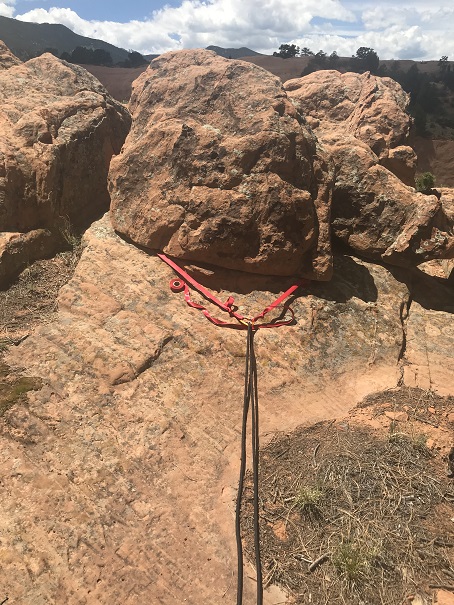
10

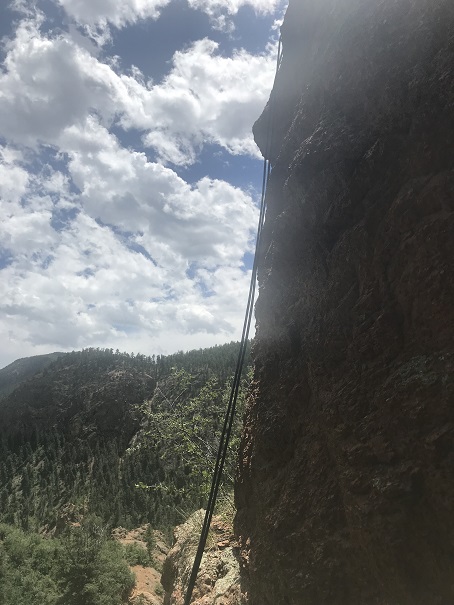
Ok, now to test this thing. I really didn’t have too far to rappel (remember, I’d wanted to find a very small rock, maybe only 5 feet or so off the ground, where I could practice without the fear of falling and hurting myself). This area was about 7 vertical feet, but there was a wide ledge before it dropped another 100 feet or so.
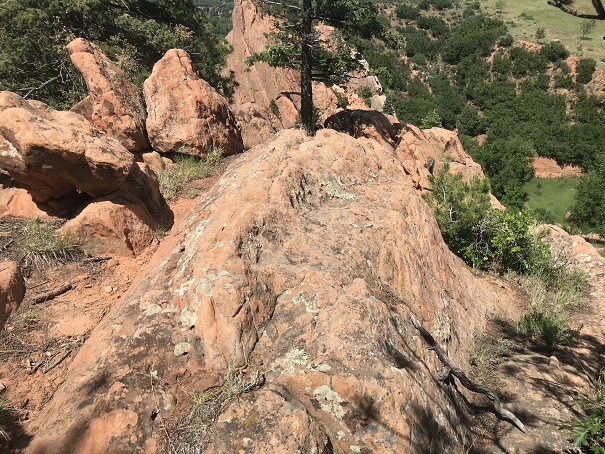
11

I felt safe here. I put on my harness and helmet, changed into my climbing shoes, and attached my belay device.

I jumped up and down, leaned back, pulled, etc. Everything looked good. I felt solid and ready to go.  I slowly walked backwards, practicing pulling the rope through the belay device (loosening up the stiff rope).
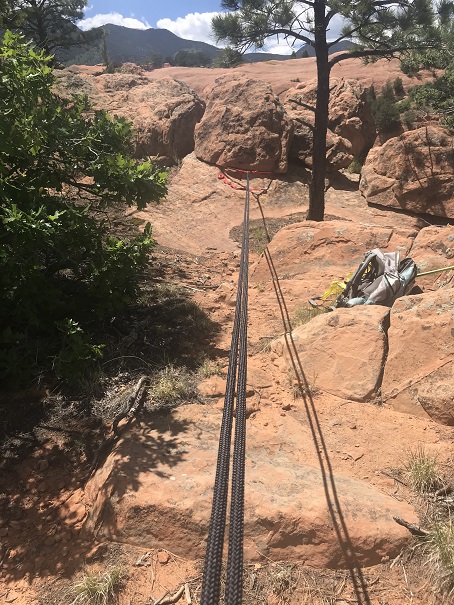
12

As I slowly walked backwards I found a rock that would work as a nice place to guide the rope, and acted accordingly
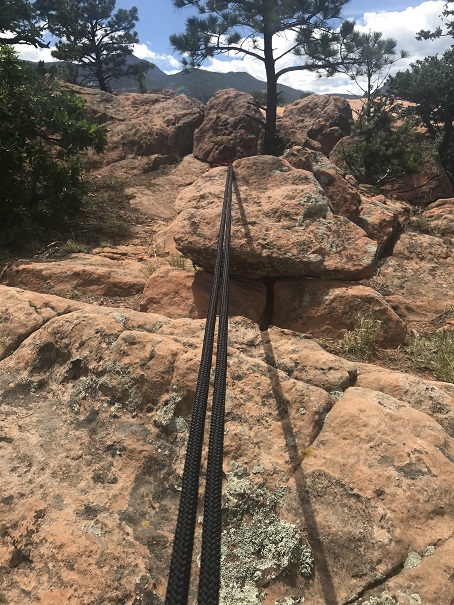
13

OK, here was where I needed to lean back and begin the short rappel. While this was still relatively short, it was a step up from yesterday, and I wanted to be sure I had this down.  I slowly leaned back, positioned my feet, and began my rappel.

14

Success! That had worked really, really well!  I walked back up to the webbing, verified the anchor was doing well, and practiced again.  I know this isn’t a big rappel, but I wanted to be totally secure before attempting anything more difficult.  After about an hour or so of rappelling here over and over again I felt confident in my abilities.  Because I’d figured the rock anchor thing out I felt I could now practice with trees on steeper terrain.

I re-coiled my rope (not perfect, but a little better than last time) and noted how sore my arms were from coiling the rope: I was going to have to build up coiling muscles!  As soon as I got home I’d begin practicing, by re-coiling this, um, attempt.

15

I cleaned up my area and headed back down, a skip to my step as I mulled the success of today. I was now happy with my gear, I’d successfully set up an anchor around a rock, and rappelled without hurting myself.  Tomorrow I was going to look for something with a little more elevation, and my options opened up because I wasn’t averse to using trees as anchors anymore now that I’d worked with rock.

All this was going through my head when I saw it: Exactly what I’d be looking for tomorrow!  The only problem?  This wasn’t something I could climb up first (I’m not there yet, nor did I have the proper equipment).

16

I walked about 50 more feet and found a trail that went up and behind the area, which would give me access from above:  Woot!  I’d found the perfect way to rappel!  I thought I’d been done for the day but no kids waiting for me at home and no other pressing responsibilities I immediately decided the day was just getting started!  I hiked up and around with my gear and set up an anchor around a tree.

17

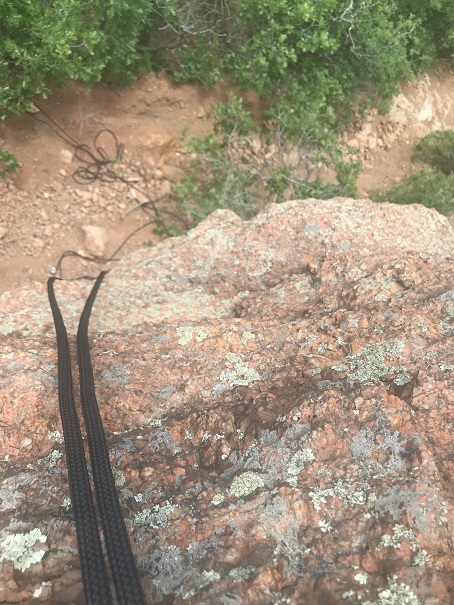
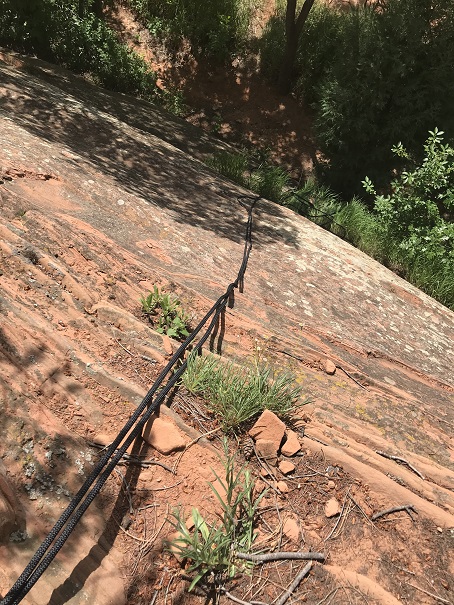
Next I got on my gear, attached the rope to my belay device, and looked down
18

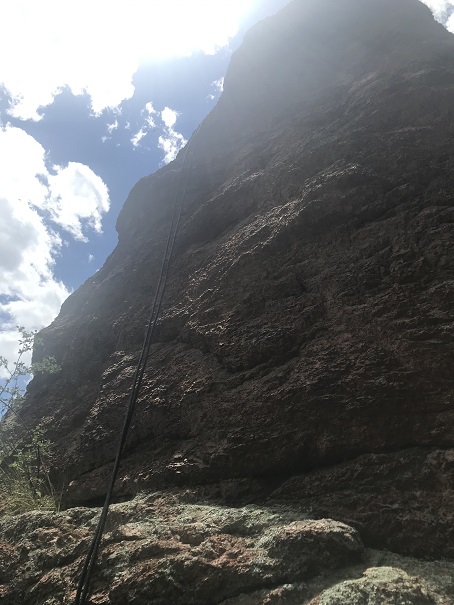
Once again, nothing too drastic (I’m guessing 25 feet or so), but a step above what I’d done so far. After practicing yesterday and today I felt confident I could perform a successful self belay here as well.  I walked to the edge, leaned back, and slowly eased my way down, finding a notch in the rock that worked well  with the rope…
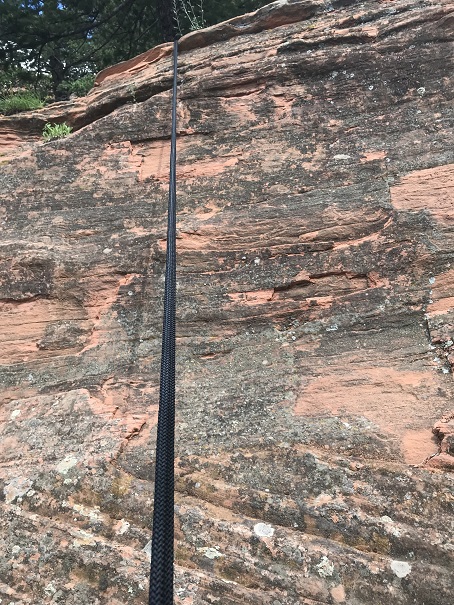
19

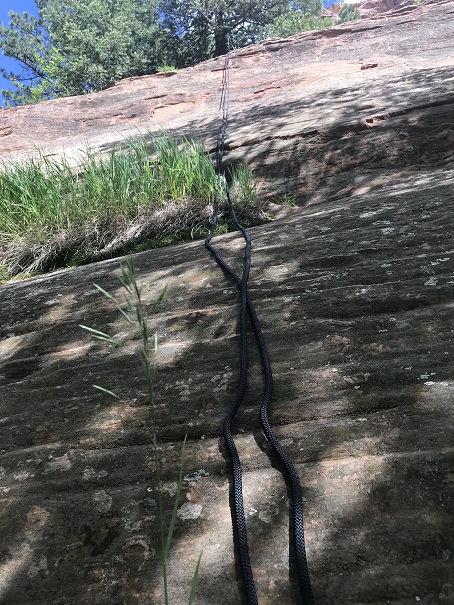
I stopped several times just to get the ‘stop and go’ thing down, and when I made it to the bottom I looked up at what I’d just accomplished: My first completely solo self belay!
20

I wanted to cry! I was so completely ecstatic!  I’d done it!  I’d done it!  Woot!  Up until this point I knew I’d need to be able to self belay, and I kind of knew I could do it, but it’s a totally different thing to actually, well, do it.  For the first time I felt I had the chance to finish the Centennials solo.  This was the last piece I needed to learn to make it happen, and I was doing it!

Time to do it again: I unhooked my gear, ran around to the top of the ledge, and tried it again.  This time I worked on swinging back and forth and staying stable.  The next time I tried rappelling down faster, and the next I adjusted the anchor to hold two carabiners (just for practice).  In total I rappelled successfully 5 times, and only stopped because the rope was starting to heat up.

I re-coiled my rope and was happier with this rendition (the coiling was getting easier). I’d found the rope sat on top of my pack nicely when secured over my helmet with a bandana.  I have straps to secure the rope but left them at home.  This arrangement seemed to work well as a backup.

21

I headed back to my truck, thrilled with today’s success! Tomorrow I’m going back to North Cheyenne Canyon to try it again (on my own).

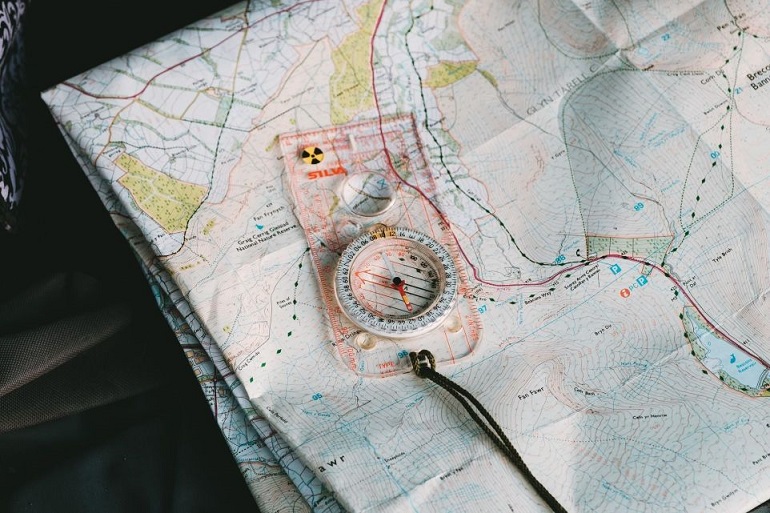
Oh, and on my way out I saw a dead fish on the trail… hmmm… curious? It was probably dropped there by a bird

22