We pulled up to the South Mt Elbert trailhead at 5am and were ready to go soon after. There were about 5 vehicles already in the lot, and we were now worried we’d started too late and eager to get started
On our last (failed) attempt of Mt Elbert in winter we took the trail, but this time we hiked in microspikes along the 4WD road/Colorado Trail for 1.75 miles to the upper trailhead. I would recommend hiking the road instead of the trail.
The road was passable for about a mile in 4WD vehicle, and then it became solely a hiking trail. I was glad I’d parked at the lower trailhead.
At the upper trailhead we turned right, crossed the bridge, and continued along the Colorado Trail for another quarter mile
This trail is really well marked, and the trench was nice and solid
After a quarter mile we came to the Colorado Trail/South Mt Elbert Trail junction and continued on the South Mt Elbert Trail
This well maintained trail took us to treeline
Here there was a lot more snow so we decided it was time to put on our snowshoes. The sun was also rising and we could put away the flashlight. Here’s looking back at Mt Elbert Forebay and Twin lakes
From treeline here’s the route up Mt Elbert.
Not long after making it to treeline we passed a hiker and wondered where everyone else was who’d been parked at the trailhead? There were at least 5 other vehicles there, and we only saw this one hiker along the ridge. Seemed curious.
The wind picked up as we hiked up the ridge. The forecast said 15-20mph winds, but we felt they were much higher here
Snowshoes were useful until about halfway up the ridge, and then they weren’t really needed. I kept mine on because the wind had picked up and I didn’t want to take off my gloves to take off my snowshoes. Steffen offered to help, but I was worried I’d need to put them back on again and honestly didn’t mind hiking wearing them, so I kept them on.
This was a simple ridge hike. I don’t do well with breaks (my feet lose function so I can’t stop) and since there weren’t any obstacles I hiked ahead of Steffen at a slow and steady pace while he took breaks as needed. I kept looking behind me to make sure he was still on track. I was excited to see the sign on top, indicating the summit was near.
At the saddle I decided to slow down and wait for Steffen so we could summit together. The only problem? It was super windy. So windy the wind kept knocking me down. So I decided to crouch down behind this rock and take in the Massive view while I waited for Steffen to catch up. Luckily he wasn’t too far behind
When he made it to the small saddle we turned and headed towards the summit together
It was a blue skies kind of day, but extremely windy on top. I’m proud of Steffen: this is his second 14er, and second in winter. It was weird having someone else there to take my picture: I had to crouch down because I kept getting blown over.
We didn’t stay long on the summit due to the wind. Steffen teaches skydiving, and was pretty sure the winds were closer to 50+mph than 20mph. It was nice having someone else there to verify the wind speed and let me know I wasn’t crazy for thinking it was higher than forecasted. The winds lessened as we hiked down the ridge. Here’s the way we took back
Along with the wind came some pretty cool clouds. I took off my snowshoes for most of the ridge descent.
About halfway down the ridge we began seeing other hikers. Tons of other hikers. They were like ants, marching their way up the mountain, and must have been sleeping in their vehicles when we made it to the trailhead.
Once we made it back to the snow we both put our snowshoes back on: we were postholing and it soon became evident the return route would be miserable without them. We were glad we’d started when we did: in a couple of hours this would be posthole city.
The route back was just as easy to follow as the route in, but with the added bonus of sunlight we had some pretty amazing views of the aspens
We made it back to the trailhead at 1:50pm, making this a 13.25 mile hike with 4934’ of elevation gain in 9 hours 40 minutes.
Note: Our successful winter summit can be found here.
This was an attempt of the East Ridge of Mt Elbert. We ended up turning back around 12,500’ and did not summit today. We still had a great time though, with great views and fun animal prints to be found in the snow!
We arrived at the South Mt Elbert trailhead and were on the trail around 5:30am. There was one other vehicle in the lot from out of state. From the booklets and maps in the front seat I figured they were highpointing. We ever did see this person…
In the dark we were unable to see the 4WD road and took the trail instead to the 4WD parking area, adding on 2.4 (unnecessary) miles to this hike
Even though there had been recent snowfall the trail was well trenched and we didn’t need snowshoes for the first few miles. Ours were the first tracks on the trail, leading me to believe the other hiker(s) had taken the 4WD road up. After about a mile of hiking we came across mountain lion prints! They looked to be only a few hours old. They were headed in the opposite direction and followed the trail for about 20 yards before disappearing.
I spent the next hour or so stopping frequently to scan the night for glowing eyes but didn’t see any. After about 3 miles we made it to the junction. Here I decided to put on my snowshoes, and kind of wished I’d done so earlier. The bridge had a couple feet of well packed snow to cross.
There were some interesting 14er signs and here’s where we caught up with the other hikers tracks.
The sun was beginning to rise and the forest suddenly became more beautiful. The aspen trees and snow made for a unique landscape
This hike was trenched and relatively straightforward but felt like it was taking forever to complete. We made numerous stops just to enjoy the view. The trench continued up and over the mountainside, and here Steffen stopped to put on his snowshoes. This made a ton of difference for him!
The tracks stopped at treeline but the route seemed obvious: just head to the ridge.
Now that we were above treeline we had a good view of the summit. Unfortunately, it looked windier than we’d anticipated.
The mountains all around us seemed to be making their own snow. We weren’t going at a very fast pace (lots of stopping) and Steffen had already taken a few pain killers. We still were only about half way in both elevation and distance. I didn’t think our chances of summiting today were very high so we decided to turn around here. It was a shame because it seemed like such a nice day but on a positive note the fun stuff happened on the way back.
This slope would be perfect to ski/snowboard down!
When we made it back below treeline I saw prints that hadn’t been there before: it looked like a bird had caught breakfast while we’d been gone!
Steffen made another snow angel and debated doing this on every hike until the realization hit there wouldn’t be snow in the summer… Ha! The shadows from the trees made it difficult to get great pictures.
We had fun identifying animal tracks and I enjoyed the aspen trees again. I don’t think I’ve ever seen so many aspen with snow below treeline: usually I see only pine trees so this was a fun treat!
We re-crossed the bridge
And headed back to the trailhead.
We came across the mountain lion tracks again and I got better pictures in the daylight. Just as we left the prints behind we came across a group of 5 snowshoers with their dogs. The dogs were off leash and the owners seemed upset we were there. Lucky for us we’d turned back when we did or the mountain lion tracks wouldn’t have been there upon our return. We made it back to my truck and checked our stats. I was surprised we hadn’t gained more elevation than we had. This hike seemed to have taken all day and I was sure we’d gained close to 4000’. Oh well: This was a well trenched hike, so I’ll be back to complete it in winter (soon).
This is the third time I’ve summited Quandary, and the second in winter, so I won’t give a full report. A full winter report can be found here.
Here are a few highlights from the day:
RT Length: 7 miles
Elevation Gain: 3435’
Time: 5 hours
Partner: Steffen
We arrived at the trailhead at 5am to a few other vehicles in the lot. This is pretty normal for Quandary Peak. One of the vehicles had their dome light on, with no one in the car. We tried to open the door to turn off the light but it was locked. Hopefully their vehicle would start when they got back.
We carried our snowshoes the entire way but didn’t need them. Microspikes were very, very helpful. The trail was well packed down from the trailhead all the way to treeline, but sugary and deep off trail.
We hiked at a steady pace, taking breaks as needed. This was Steffen’s first 14er (and a winter one at that!) so I didn’t want to push him too far. He did great! Here’s the path to the summit from treeline
Right about now the sun was beginning to rise. It stayed behind the clouds for most of the day but made for a nice sunrise photo
This is a simple ridge to summit hike. I was surprised at how little wind we encountered today!
Here’s the final push to the summit. This is where we came across the owner of the vehicle who’d left their lights on. He was a bit sheepish when he realized what he’d done, and picked up his pace on the way down. We offered to jump his vehicle when we made it down if it wouldn’t start for him. I started picking up the pace a bit here as well, hopping as I went and hiking backwards to make talking easier and to keep me going when things slowed down.
Summit Views: I love the little American Flag at the top (and wonder how it stayed with all that wind?)
Summit Photo:
Time to head back down the ridge
We saw mountain goats on our way down, but had a hard time getting a good photo. Mountain goats are frequently seen here. In fact, I’ve seen them every time I’ve hiked this peak.
We had a good view in the daylight of the recent avalanche area. The slope is only 31 degrees for a very short while, yet it slid yesterday. Luckily it wasn’t near the trail, but skiers/snowboarders would want to be careful not to ski this area during high avy days
The snow off the trail was really soft so Steffen decided to make a snow angel.
We made it back down to the trailhead and the guy who’d left his lights on was no longer there, so I guess his battery worked. All in all a great day above treeline! Congratulations Steffen on your first 14er!
The Quandary Peak Summit Sticker can be found here
I’m working on snowflake 14ers. Well, kind of. I set a goal to summit 5 more 14ers this year in calendar winter and I’ve been sitting on 4 since March (I only counted DeCaLiBron as 1because… well, it seemed too easy a hike to count it as more than 1) and I really wanted to get in another 14er snowflake this year. I checked the weather and Bierstadt had the best forecast on the first full day of winter so it’s the one I went with. It ended up being a fantastic choice!
I arrived at the trailhead at 5am to two other vehicles in the lot. I’d actually expected more, considering this is Guanella Pass and it’s the first day of winter. I spent quite a bit of time in my truck getting ready and wasn’t on the trail until 5:30am. I’d decided to start out wearing my spikes and snowshoes, and while they weren’t 100% necessary, I wore them the entire day but could have summited without them. I was just too lazy to take them off. Ok, not lazy, but exposing my fingers to the cold is a no-no and unfortunately a must if I’m going to take the snowshoes off. Also, I’m working on a ‘no blue toes’ season and it helps the cause if I’m not postholing. I would have postholed without the snowshoes.
Here are some pictures of the hike along the road
At the upper parking area the bathrooms were closed so I bypassed them and found the trail to the left
Here’s an overview of the route
The trail had a great trench and was easy to follow. There were tons of fresh signs indicating elk were in the area and using the same trails as the other hikers.
Here’s how to access the area above the willows
This is also when the sun began to rise. I turned back and my views were phenomenal!
There’s a lot you can say about Bierstadt. One of those things is it’s very well cairned/posted. The cairns are large and the posts even larger.
I just followed the snow covered trail and aimed for the next cairn/post. I came across a group of ptarmigans here. There had to be 7 or 8 of them altogether, and they blended in very well with the snow. I didn’t realize they stayed in groups of that size? I’ve only seen them singly or in pairs. It was neat to see so many at one time! One rogue ptarmigan ran ahead and about 10 yards away while the others huddled together. Also, what do you call a group of ptarmigans? A flock? A flight? A covey? (I think it’s a covey….)
In any event, the route was easy to follow all the way to the upper ridge
And to the summit
I summited at 8:40am. It was cold but not nearly as windy as forecasted. I was thrilled (but still didn’t take off my gloves)
Summit video:
Woot! A summit marker!
Here’s looking over at Evans
Time to head back
Here’s the basic route down the face
And a cool alternative view of Pikes Peak
This is about the time I started seeing other people. Mt Bierstadt can see hundreds of people a day, but today I only saw 5: Woot for hiking in winter!!! Only one other person had snowshoes, which was understandable, as the route was really well packed down.
Views of the way back down…
With more of those awesome trenches
I made it back to the upper parking lot
And hiked the rest of the way down to the Guanella Campground parking area. There were many more vehicles there now than when I arrived. Also, they do a good job of plowing this area.
I made it back to my truck at 10:45am, making this an 11 mile hike with 3455’ of elevation gain in 5 hours 15 minutes.
No, I didn’t drive straight to the Missouri Gulch trailhead. It took me forever to drive home going 50mph on the I70. I made it home at 7am and limped out of the truck. My feet seemed to hurt more now than they did last night. They’d dried out, but were now red and raw. I decided to take a few hours ‘off’ to let my feet rest. After cleaning up and pampering my feet I took a 5 hour nap. When I woke up my feet had dried out and I was able to get a better look. No blisters. That was a relief. They were still red and swollen though, meaning I’d had a Raynaud’s attack yesterday. It all made sense, and was most likely caused by the 20 minutes I spent trying to dig out my water shoes from the cold creek combined with a long, physical day.
Driving home had been the right thing to do. By the middle of the day my feet were still sore but I found I could walk on them. Kind of… you see, it hurt terribly to begin walking, but after the 10th step or so the pain went away. So I figured I just had to start hiking and not stop and I’d be fine.
At 9pm I made the decision to drive to the trailhead, try to nap for an hour, and attempt another hike. It was either that or stay home and do the treadmill thing in the morning, which did not sound appealing with sore feet.
Everything went well. I made it to the trailhead and slept for an hour before my alarm went off at 2am. There were tons of vehicles at the trailhead. As I was putting on my hiking boots a couple drove up in a Subaru. We were hitting the trail at the same time, so when I got out of my truck I waved and said hi to them. No response. Hmmmm… ok. Maybe they hadn’t seen me (or that the lights on in my truck)? I turned on my flashlight, walked over to the trailhead and once again said “hi guys!” I was hoping to just chat and see where they were going before setting off. When I see others at trailheads I like to connect in case something happens (to either of us). Once again, they didn’t respond (but their dog looked back at me). Maybe the creek was making too much noise for them to hear me? Ok, well, I don’t like to be rude but I’d tried to be nice. Maybe I’d see them on the way down. I didn’t say anything as I quickly scooted past them and headed down to the stream, crossed the bridge, and headed up the trail.
Yes, my feet hurt, but I had a plan: don’t stop. Also, take ibuprofen every 4 hours. The first few steps were painful, but after that as long as I kept moving the pain went away. This was my second attempt of Emerald/Iowa, and my 4th time hiking via the Missouri Gulch trailhead. Call me crazy, but those switchbacks are getting easier. Also, the baby grave doesn’t bother me so much anymore.
The avalanche area has been nicely cleared, and now there’s a log bridge over the creek and a nicely manicured trail through the avy debris.
I made it to the cabin in exactly 1 hour and thought that was pretty good time, considering.
I entered Missouri Gulch and had no problems following the well established trail. The willows seem so much bigger without all the snow.
I turned right at the junction for Elkhead Pass/Belford and followed the trail towards Elkhead Pass.
There were several stream crossings to navigate here. These were not fun in the dark, but in the daylight didn’t pose much of a problem. Oh, and there aren’t any ‘easier’ ways to cross: just cross them right where they intersect with the trail.
I felt like I was making pretty good time. It’s amazing how much easier the gulch is to navigate without snow. I made it to the Elkhead Pass/Missouri Mountain junction
This is where I got a little worried: this is the first hike all year I haven’t brought along my snowshoes, and the area before Elkhead Pass looked to be full of snow. Luckily there actually wasn’t that much and what snow there was was solid in the morning so I didn’t need traction (I had spikes and crampons in my bag, but didn’t need them).
It was still dark as I navigated my way through the snow and sometimes trail up to Elkhead Pass. Here’s a look at the route from later in the day coming down from Missouri. The snow was easily navigable, but seems like much more when you’re down there hiking through it.
I found myself at the top of Elkhead Pass at 5:15am. It had taken me 3 hours to get here (4.1 miles and 3580 in elevation gain). Remembering how icy conditions had forced me to turn around here last time I was a bit worried to see snow at the top of the pass, but as I got closer I noticed there wasn’t as much snow as I’d initially thought. (Sorry for the poor quality of the next few photos: I took them in the dark and had to lighten them up so show details)
I descended Elkhead Pass, but not all the way to the bottom of Missouri Basin (Yes, Missouri Basin, not Missouri Gulch. We need to get more creative with these names people!). I found a cliff band below Missouri and followed that towards the little lakes, as I didn’t want to lose more elevation than necessary. Here’s the path I took hugging Missouri
At the cliff band I descended the least amount possible, heading towards the lakes
Here’s looking back at Elkhead Pass and the way down (don’t drop lower than necessary: there’s a trail that takes you all the way to the bottom; avoid that).
The area between Missouri and Emerald was mucky
There are several ways to gain Emerald’s ridge. There was snow surrounding the access area to the south, so I went a little further north and took this path, avoiding the lakes and snow as much as possible.
Here’s a look back at the route and Elkhead Pass
Once I gained the ridge I turned right (west) and followed a faint trail up the ridge. (Note: the standard route up is the dotted line. I did not take this route because I wanted to avoid kicking in steps in the snow: I wasn’t sure my feet would appreciate that today)
Instead I skirted the mountain to the northwest to the saddle between Emerald and Iowa and summited via Emerald’s north slopes
The last 500 feet or so to the summit were filled with scree/talus and tons of goat/social trails. Just aim for the ridge
I had a goat watch me the entire way, then disappear when I reached the ridge
From the ridge I turned right (west) and walked my way to the summit
I summited Emerald Peak at 7:20am
Emerald:
Despite the threat of forecasted afternoon storms this morning was beautiful! I looked over to Iowa and back at the route I’d taken thus far. An idea came to me: it looked like similar elevation gain/loss going over Missouri as it did going back over Elkhead pass. I might as well tag Missouri again. I decided to wait and see if the weather held out before making a final decision, but it seemed a draw either way. Oh, and my feet were holding up, so that’s a plus.
The route to Iowa and Missouri was obvious. I headed down Emerald’s north slopes and towards the Emerald/Iowa saddle and up to the summit of Iowa
The hike up to Iowa’s summit was easier than expected; I just stayed to the left of the snow on the ridge. Once again, a goat watched my ascent.
I summited Iowa Peak (an unranked 13er) at 8:10am. You can see Emerald Peak in the background of this picture
Iowa:
The decision had been made: on to Missouri! Initially I tried to descend Iowa too far to the right (east) and had to turn back due to snow I didn’t particularly want to cross. To avoid all snow it was easier just to follow Iowa’s ridge to the Iowa/Missouri saddle.
Looking back at Iowa from the Iowa/Missouri Saddle
The ridge up to Missouri was much, much easier than anticipated. I don’t know if it was the ibuprofen I took on Iowa or just conditioning, but I felt the ridge from Iowa to Missouri wasn’t very challenging at all. In fact, when I made it to the top I’d assumed I was only halfway up, and actually asked the 10 other people I saw as I was approaching “Is this seriously the summit!?!?” (Note to self: not a good question to ask a group exhausted hikers when you aren’t even winded. Tone it down a bit.).
I reached Missouri at 9am and asked one of the other hikers to take my photo because I thought it would look silly setting up my gorillapod.
Missouri:
Missouri had been an added and unexpected bonus peak today, and it has a summit marker!
Here’s a look back on Emerald and Iowa
Knowing I couldn’t let my feet stop moving for long I thanked the photographer for taking my picture and headed back down via Missouri’s northwest ridge. There’s a great trail the entire way from the summit back to the Missouri Gulch Trailhead. Here’s the route of the ridge
The crux area was much easier to navigate than I remember it being when I hiked Missouri last time. This time I could even hold onto the rock face for added stability if needed
Is this rabbit named?
Here’s a look back at the ridge
Exiting the ridge is marked by a cairn (and today a tiny bit of snow). After rounding the corner get ready to do some scree surfing. (Note: if you’re not a fan of scree (who is?), microspikes help provide traction. Seriously, try them on scree, it’ll change your life).
Looking back up at the scree slope to gain the ridge
There were some slight snow fields to cross, but nothing that required traction
From here there’s an obvious trail back down to the gulch.
I met tons of people hiking on the way down from Missouri. It was the perfect day for a 14er, there are 3 in the area, and everyone was out. I made it back to my truck at 11:45am, making this a 14.5 mile hike with 5985’ in elevation gain in 9.5 hours.
My feet did not look pretty when I was done but I was very pleased with today’s hike. I didn’t feel tired, even at the end. My feet successfully made it the entire way without complaining (too much). I think the ups and downs in elevation gain on the ridges gave me little breaks that made all the difference. I’m sure you could do this hike in reverse and feel the same way. I never saw the couple I’d seen at the trailhead in the morning, but I’m hoping they stayed safe and had a fabulous hike as well!
After my failed attempt last week I decided to do more research and try Hagerman again today. I learned the upper road to Lead King Basin had an avalanche about 1 mile after the stream crossing (very close to where I’d parked) so I decided to take the lower road from Marble to Crystal instead. I’d heard a lot of conflicting reports on this road, but when I searched it online I found this video, which was very helpful.
The road itself wasn’t that difficult with a 4WD (I wouldn’t attempt in a 2WD), and my Tundra handled it just fine. The only problems I can foresee would be passing other vehicles. Luckily there are a lot of small turnout areas on this road, especially before and after the committing areas. I drove in at night to ensure I wouldn’t need to pass oncoming vehicles, which I knew would be problematic in my big truck, no matter the size of the other vehicle.
Since I drove in when it was dark I wasn’t able to see the Crystal Mill, but I expected to see it on my way out the next day.
I made it to Crystal around 10pm on a Thursday night and all the lights in the ‘city’ were out. As I passed the Crystal Mill I saw a sign saying Lead King Basin was closed, so I dimmed my lights and parked at the east end of town, mentally calculating the extra mileage and what time I needed to start in the morning. Looks like I was getting about 3.5 hours of sleep.
As I was preparing to go to bed (my lights were out) I saw the lights go on in the second story windows of a cabin across the street. The two story 18th century style wood cabin had two tiny windows upstairs, covered in lace curtains. The light from the windows was glowing pale blue, and I saw the silhouette of a woman walking around. She was wearing a long nightgown and her hair was pinned up in a bun. The woman slowly walked around the room, picking up objects and setting them back down. Then the lights went out.
I set my alarm for 2am. When I woke up I crawled from the back seat into my front seat and started putting on my shoes. I didn’t need to turn on any lights because the full moon was shining bright enough to allow me to see. I saw a fox run down the center of the road, and then noticed the lights in the second story window of the house across the street turn on. Once again I saw the silhouette of a woman walking around. She was wearing a long nightgown and her hair was pinned up in a bun. She slowly walked around the room, picking up objects and setting them back down. Then the lights went out.
Whoa. That was spooky. I knew I hadn’t woken her up because I hadn’t made any noise, opened any doors, turned on any lights, etc. I was going to have to investigate that house in the daylight upon my return because that was just… weird. I mean, what are the chances she was up at 10pm and 2am, just like I was? Also, how many women still wear nightgowns to bed?
Ok, so I was on the trail at 2:15am. It was a 2 mile hike to Lead King Basin along a 4WD road that didn’t offer many turnouts, but was indeed open and my truck could have made it just fine to the trailhead. Oh well, I was getting in 4 extra miles today.
The trailhead was about 2 miles from Crystal. I didn’t see any of this in the dark (these signs seriously need reflective elements to them for us who start before daylight).
There’s a nice junction where you turn left to head up and around the north end of Lead King Basin to Geneva Lake
Here the trail was quite overgrown with flowers, plants, and trees. I thought to myself how it felt a little like being in a rainforest, and how much fun the flowered areas would be on my way back (I’m not a fan of flying-stinging insects, so I was being sarcastic). On the positive side: no mosquitoes!
It was in this area I saw my first ever porcupine on the trail. I see them along the side of the road when I’m driving to trailheads quite a bit, and one time I heard one under my truck at the Grizzly Gulch trailhead and had to fend it off in the middle of the night, but this was the first one I’d encountered on the trail.
He was just sitting there, staring at me. So I talked to him to get him to move. He turned around and waddled ahead of me, staying directly in the middle of the trail. I didn’t really want to follow a porcupine to the lake, so I talked a little louder to him. He scurried into the bushes and I immediately realized the error of my ways: now I couldn’t see him and didn’t know where he was. I didn’t want to experience porcupine quills and all that entails, so I nicely talked to the porcupine in a sing-song voice as I passed where I’d last seen him, crossing my fingers I hadn’t made him mad/scared and that he wasn’t sitting in the bushes: poised to shoot.
Mission “pass the porcupine” accomplished I continued on to the lake. The moon was full and bright so I conserved flashlight battery and hiked by the moonlight. Just as I made it to the lake I heard a faint barking in the distance. I was worried there was a lost dog out there somewhere (hey, it’s happened) but as I rounded the bend to the lake the barking got louder, and then I saw a flashlight turn on. The owner was pointing the flashlight in the direction opposite of me, and the dog was starting to bark really loud. I yelled up at them “It’s just a hiker!” I received no response, but the dog stopped barking and the flashlight turned off. It was about 4:45am. I immediately felt more secure hiking in the dark: I was pretty sure there wasn’t another animal in the area, as that dog would have been alerted to it.
Just north of the lake the trail continues north and then there’s a stream crossing. There were tons of areas to cross here, and all required taking off my shoes. At times the water was knee deep (I’m 5’4”), but mostly it was just high on my shins. Also, it was cold. When I was done my water shoes were quite muddy so I left them on a rock to dry and to pick up later.
This is where my trip report diverges from some of the more popular field guides. I took the 1st west side gully to the southwest ridge.
I crossed the creek and headed north for about 100 yards, looking for a gully to my right (west gully). I’d seen pictures of the access gullies on the east that were still full of snow, so by taking the west side I was hoping to avoid any snow filled gullies. I wasn’t disappointed. Here’s the gully I took:
This gully was steep and loose. I did not feel comfortable sticking to the scree in the middle, so I stuck to the right side where the rocks were larger.
My goal was to gain the ridge as quickly as possible, aiming for this small saddle
Here’s looking back on the route
From the small saddle you can see Hagerman Peak
I turned left (north) and faced a class 3 section and headed up and over the ridge.
At the top of this point I could see the rest of the route before me
It’s important to note if you’re attempting this ridge to start early and make sure you have a large weather window. This ridge is very committing. I went at it slowly and carefully. The rocks here crumble: I’d find a hand hold, grip, and the rock would crumble in my hands. I had to make sure to test out each hold several times before using it to secure myself. Luckily, the ridge was snow free.
This is definitely a ridge you take by… sticking to the ridge. I was able to go directly up and over most areas, dipping to the left or right just a couple of times. As I ascended the rocks stopped crumbling and started tipping a bit (nothing fell, but not much was stable). Here’s the final push to the summit.
I made it to the summit at 9:10am
Hagerman:
I started the ridge at 7:15am and ended at 9:10am, making this a 2 hour ridge to cross. Here’s looking back at the route
The day was absolutely beautiful and it was still early morning so I considered traversing over to nearby 14er Snowmass Mountain. I’d done a lot of research and came up pretty empty with details, but I knew it could be done. I spent quite a bit of time looking around at possible paths before deciding if I was going to attempt traversing or not. I looked at Snowmass Mountain’s east side: nope, that was a no go. Tons of snow and no way I could see to begin from the summit. Next I looked to the left (west). A lot less snow but the shadows weren’t helping much.
I stopped and did a lot of thinking here. I knew the traverse was possible. The rock looked loose, but I could also see goat trails (or maybe those were gullies…). I was confident I could find traction in the dirt. I mentally calculated how much time I had, the weather, and looked for exit strategies in case I got to a place where I couldn’t continue. I decided both time and weather were in my favor today so I decided to go for it.
Note: This may not be the safest way to traverse from Hagerman to 14er Snowmass Mountain. For me and my abilities, it was the safest way on this particular day.
The first move committed me to the traverse: I down climbed about 50 feet of… this. I’m not sure I could have climbed back up this wall. (Ok, I could have or I wouldn’t have climbed down, but it would have been a lot of work).
I turned and looked towards Snowmass Mountain. This is what I saw. So I headed northeast and rounded the corner.
I was taking this one section at a time, focusing on what was directly in front of me but glancing up at the rest of the route every so often to make sure I was on course. I found myself trying to stick to the ridge, but that is not the way to do this traverse: you need to drop down much lower than you want to. Every time I tried to regain elevation I was forced to head back down.
My advice is to descend lower than the saddle, and then take the scree line up to where the trail connects with the east route. The best terrain was consistently 100-200 feet below the ridge.
Once you connect with the ridge where the east route links up you can easily follow the cairns to the summit.
This was a very slow climb. Everything was loose and what wasn’t loose was scree. I took extra time to be careful with each and every step, and kept the entire route in view as often as possible. I most likely made this take longer than necessary, but I stayed safe. I made it to the summit of Snowmass Mountain at 12:50pm, making this a traverse that took over 3.5 hours to complete. Here’s looking back at the route
Summit photo
Summit Video
I spent a lot of time on this bluebird day taking pictures. It’s harder than you think to set an automatic timer and then scramble up to the summit block. It took a few tries… and the ones that actually turned out were fuzzy, so I gave up.
After spending much more time on the summit than necessary I needed to make the decision of how I was going to head back down. I’d been hoping, similar to the west side of Hagerman, that the west side of Snowmass Mountain would be free from snow. No such luck. There was still snow in the gullies.
I did not want to do the traverse back to Hagerman because that and another 3 hour traverse would have been exhausting. I could tell the gullies on the west side of Snowmass Mountain ended/cliffed out in a waterfall area, but I could also see bare rock I could traverse either north or south to connect up where I needed to be. I decided to head down Snowmass Mountain’s west side, but for safety I would slightly alter the traditional route. It was too late in the day to safely take the gullies, so I was going to take the rock rib that wasn’t a rib but a bunch of loose rock that bulged from the mountainside. Here’s the route I took
Do not let these photos fool you: this is where I encountered the loosest rock of the day. These rocks are the size of refrigerators and tables. Every 3rd rock would tip, and I would think to myself: “That’s a lot of rock to tip!” Luckily not one rock actually tipped/fell/tumbled/caused a rock slide.
This was a very slow process but eventually I made it to the waterfall area. My feet were starting to hurt at this point from all the rock work.
The snow ended just at the waterfall and surprisingly I crossed the waterfall pretty easily here and headed down. I made it down to this area at 3:30pm.
The snow started up again after the waterfalls
From here I looked down at the basin, and unfortunately there was a lot of snow covering the trail I was supposed to take back to Geneva Lake. That snow was going to be several feet of mush at this time of day so I decided to traverse south along the mountainside, looking for a safer route down.
I made it here and unfortunately cliffed out yet again… but I could see where I needed to be: That goat trail should get me down.
After searching around for a bit I was able to find a way off this spot by circling the area to the north and down the small cliff
From here I followed the goat trail that went down a forested gully and came out ready to exit and head towards Geneva Lake.
The area through the trees to the stream crossing was wet.
At the stream crossing I reconnected with my water shoes. They were now dry but had been scattered and were now no longer sitting on the rock together but in the grass a few feet apart. I changed out of my shoes into my water shoes and crossed the creek
I’m ashamed to say the creek ate my water shoes. Seriously. The banks were quite muddy and during the last two steps my water shoes got sucked off my feet and into the muck. I spent 20 minutes trying to dig them out with my ice axe, but no dice. I couldn’t find them. They were buried in the banks of the stream. Ugh. From here I sat and put on my shoes and new, dry socks. I looked back at the route I’d taken to Hagerman.
My feet were hurting, and I still had 4 miles to go. Time to hit the trail. I skirted the lake and headed back towards Lead King Basin.
One great part of this hike was being able to see the waterfalls. And, since it was so late in the day: no bees!
At the base of the waterfalls the trail was running with quite a bit of water.
In the daylight I could see the upper 4WD trail to Lead King Basin
This is where my feet really started burning. I was surprised, since I’ve done more challenging hikes with greater mileage/elevation gain than this one, yet my feet were very sore. I made it past the Lead King Basin trailhead as the sun set and each step I took hurt more than the last. I wanted to cry. I’ve never felt foot pain like this. Also, I’d been hoping to stop in Carbondale tonight to get Subway for dinner, but it looked like I wasn’t going to make it back in time for that to happen.
It seemed as if it were taking forever to reach Crystal. I eventually came across a sign that said “Private Property next 2.5 miles” and mentally freaked out for a second. There was NO WAY it was 2.5 miles to Crystal! Not only could I physically not make it 2.5 more miles (My feet! My feet!!!) but I was pretty sure it had been 2 miles to the upper trailhead. Had I been wrong and it’d been 4? Ugh, I needed rest and I needed calories because my mind was playing tricks on me. Luckily it was only half a mile past that sign to the town of Crystal. I finished this hike at 8:45pm, making this a 15.5 mile hike/climb with 6211’ in elevation gain in 18.5 hours.
Read on for gross feet pictures and segue into the next hike…
I limped to my truck and sat down by a small access creek about 1 foot wide on the side of the road. I took off my shoes and gasped: Yuck! My feet had never looked like that before! The heels and pads were completely swollen and red/gray, and very painful to the touch (no blisters though).
I decided to wash them off in the water. I placed them both in at the same time and immediately felt relief, and then 2 seconds later started screaming because they started burning as if I’d placed them into a pot of boiling water. My feet turned bright red and were rendered useless. Seriously.
I couldn’t walk the 5 feet to my truck so I sat there for half an hour in the wet creek bank and thought about what I was going to do. I was supposed to drive to the next trailhead for my hike tomorrow, but doing the math if I left now I would get there and only have 1 hour to sleep before starting again. This hike had taken much longer than anticipated. I’d only had 3 hours of sleep last night so it was a bad idea to try to drive and then hike at this point. Also… my feet. I wasn’t sure they’d function tomorrow. They needed time to dry out. But long distance runners/thru hikers have this stuff happen, right? They just tape them up and hike/run anyway. I decided I was really, really tired and should sleep before attempting anything. I’d adjust my schedule as needed.
I had pain killers but decided not to take them: I wanted to be sure of an accurate pain level when I woke up so I could plan my day accordingly. Unfortunately, I never really made it to bed. I crawled into the cab of my truck, thankful I hadn’t rolled up my sleeping bag this morning. I tried to nap but even though I was exhausted I couldn’t get myself to fall asleep. After 2 hours I gave up and decided to drive home, with the added bonus of doing so in the dark late at night so I most likely wouldn’t need to pass anyone on the shelf road out. My feet had dried out a bit and were raw but less sore. They still overreacted every time I tried to use them. My right foot was healthier than my left; I couldn’t press down on the pedal very hard, so I drove slowly, but I made it.
Oh, and since I’d returned in the dark I never got to see the Crystal Mill, or get a good look at that old house with the lady in the windows…
I’ve been eyeing Emerald Peak for a while now, doing research and looking at feasibility for summiting this time of year with the heavier than normal snowpack. Unfortunately I wasn’t able to find much information (ok, any) for summiting with snow. I did see a report from June of one year saying Elkhead Pass wasn’t passable, but it didn’t explain why it wasn’t passable.
I looked at a topo map and studied the slope angle of Elkhead Pass: it didn’t look that steep. I know a lack of reports for peaks over specific months usually means there’s a reason no one has summited during that time of year, but I wanted specifics. I decided to be the beta and go out and see just why Elkhead Pass isn’t passable in winter. And hey, maybe it was? Maybe it was passable with more snow?
The drive in to Missouri Gulch was easy on a well maintained 2WD road.
I arrived at 2:45am, surprised to be the only vehicle in the parking lot. Hmmm… this is a pretty popular 14er trailhead. This didn’t make much sense, especially for a Sunday. Maybe I was just the early bird. (Nope, my truck was still the only one in the parking lot when I got back?)
The trail starts at the south end of the parking lot. You go left at the signs, cross a bridge and turn left to follow the class 1 trail up the mountain.
There’s immediate elevation gain that doesn’t quit. I rather enjoy this hike (this was my third time here). It’s always a little creepy hiking in the dark past the baby grave though. The worst part is I know it’s there, but never actually see it in the dark because it’s just a little ways off the road. So I know I’m passing it somewhere, but never actually know if I’ve passed it or not. (Anyone ever figure out why it’s so far away from the other graves?)
The trail conditions varied from bare to a couple feet of snow, but there’d been two hard freezes the past couple of nights so I didn’t need traction.
About half a mile before the cabin I came to the avalanche area. There was an avalanche here a few weeks ago, but I’d heard it was passable. It was, even in the dark. The beginning required a little creativity, but once I was in the avalanche area there was a clear path to follow that had been made by other hikers.
If it doesn’t snow again I’m pretty sure this will be the new route.
This new route picks up with the old one just before the cabin. Here the snow picked up as well and I put on my snowshoes. There was a full moon this morning, which really made the gulch come alive.
I followed the basin on my own path as the trail was covered in snow (at least most of the time). I made it to the junction for Elkhead Pass and Missouri Mountain and turned left (east).
I started hearing and seeing ptarmigans as the sun began to rise (here’s looking back at the way I’d hiked in)
I followed the basin to Elkhead Pass, which was surprisingly easy: I’d expected more of a challenge.
At this point I was beginning to think I was actually going to summit Emerald today. I took a closer look at the Missouri Basin (not the gulch, which I had just come from) and planned out my intended route. I was trying to decide if I should head over to Iowa or Emerald first, but from this distance I couldn’t tell what the snow conditions were on the ground, so I decided I’d decide when I got there.
I started heading down Elkhead pass and immediately turned around. Snowshoes weren’t going to do it: this was steeper than it looked! Ok, crampons on, time to try again. I could see where I needed to go, but I just couldn’t get there. The pass was a sieve for wind: Intense wind that didn’t often let up. On top of that the ground was slick like a frozen waterfall (probably due to warming during the day and freezing at night) but the ice was covered in about 3 inches of soft snow deposited by the wind. It made for an awkward small-cornice-like structure that seemed to extend all the way down the pass. And the drop down was serious! This picture shows the easy part of the decent (camera was put away for the more difficult parts, sorry!)
I made it past the ice covered rocks to the snow covered ice and retreated up, back the way I’d come.
At the top of the pass I once again tried to look for an easier way down, but the snow blanketed everything and I couldn’t tell where the icy-snow pass ended and the basin-snow began. I also couldn’t truly get a feel for how steep anything was just by looking. I tried again, made it about 30 feet down, and once again felt unsafe as I couldn’t get a good hold with my crampons. A big gust of wind picked up and I hugged the side of the pass for a good minute or so waiting for it to stop, and then I used my ice axe to climb back to the top of the pass. Seriously, it didn’t look this steep on the topo map! I made it to the red circle twice.
This was frustrating. Climbing up was no problem at all (I’d done it twice already), but the down climb wasn’t happening. I felt confident someone could make it over this pass; someone with more skills than I or maybe a backcountry skier (it looked skiable, but I don’t backcountry ski, so I’m not sure). Today I was not going to make it over this pass. The problem here was, due to the wind, there wasn’t enough snow, just ice. In fact, I didn’t like the look of it at all, and will most likely attempt Emerald next time from the Rockdale Trailhead. At this point, I’d rather do Little Bear again than Elkhead Pass (seriously, summer or winter, I felt safer on Little Bear, and that’s saying something!).
Enough complaining. I was here, what did I do now? I’d taken a good look at Missouri Mountain on my way in, and that was a big nope. I turned around and immediately decided to hike up Belford from where I was.
No, I didn’t have a route description or instructions, but I’d summited Belford before and knew it was just… well, right there. It looked very doable, so I decided to go for it. Here’s the route I took:
I kept heading east to the top of the ridge (the wind wasn’t stopping)
And then followed the ridge north towards the summit of Belford
I turned and looked back on Elkhead Pass: It really didn’t look that difficult, did it? (Sigh)
The ridge had areas of deep snow that I much prefer to icy rocks, so I put on my snowshoes and headed north
Halfway along the ridge I paused to take a look at Oxford.
It looked like fun, but there was a storm coming in and I didn’t want to get stuck in it all the way over there, so I waved and kept heading towards the summit of Belford.
I was a little worried about the last bit of climbing, but once I was there it wasn’t so bad
I summited to amazing views and intense (intense!) wind
The wind was so intense it kept knocking my camera over, so I took a selfie instead (with my DSLR)
I love how this mountain has a summit marker!
OK, time to head back and make this a loop. The only downside was I hadn’t hiked up the north slopes and I’d passed them in the dark, so I wasn’t sure of their current conditions. I thought to myself I could always turn back and descend the way I’d hiked in if I needed to. I paused and tried to remember which way was down? I knew there was a huge gully I wanted to avoid… I was pretty sure this way was the correct way down?
I headed that way and found a cairn (woot!) and what might have been a trail. I turned around and looked at the way I’d come
And now I was headed down…
This was actually trickier than it sounds. While I couldn’t much get lost here, the rocks were very unstable, as were much of the large areas of snow. I did not feel secure on any of the snow on the way down: it all felt ready to fall. The wind didn’t help either.
After about 300 feet the steepness mellowed out and it was a rocky walk down the ridge, avoiding the gully and slipping on the very loose rocks every 20 feet or so (I have a bruise on my bum to prove it)
There were also long sections of snow (I kept putting on and taking off my snowshoes). Here’s looking back up at the way I came down
Back in the gulch I knew there wasn’t a trail, so I stayed high on the snow and made a beeline for the cabin
Here’s the route I’d taken earlier in the morning from the gulch to Elkhead Pass.
Just past the cabin I was able to see in the light of day what the avalanche had done. It hadn’t been a big avalanche, yet it had altered the route of the trail. Here’s the way back to the trail
The rest of the hike down I thought about what had happened today. I was a bit bummed about Emerald, but had only given that a 25% chance of success to begin with so it wasn’t the end of the world. Time to start researching alternate routes (I know there are a couple). I was excited to discover you can summit Belford from Elkhead pass. In fact, I thought it was a much easier route than the north slopes. If I were to summit Belford again I’d absolutely chose to take Elkhead Pass, as it makes the elevation gain easier.
I made it back down to my truck at 10am, making this a 9.5 mile hike (it felt like more) with 4536’ in elevation gain (it felt like less) in about 7 hours (much of that time spent trying to navigate the pass).
Out of the 12 peaks on my short list to hike today Mt Sherman had the best weather, coming in at 12* with 15-20mph winds, and 30mph gusts. This was by far the best weather for wind gusts (most other peaks forecasted 50+mph winds) so it was a no brainer as to which peak to pick. Unfortunately (as you’ll read later) I made this decision at 9pm the night before and didn’t do much (ok, any) research on hiking Mt Sherman in winter because I’d seen some FB posts there was minimal avy danger that was easily avoidable and read the trailhead was clear. And hey, I’ve done this peak before and I knew what I was getting into. Right?
I was more nervous on the drive in to this trailhead than I’ve ever been. The last conditions report hinted it wouldn’t be difficult to make it to the Leavick site, and possibly further in a 4WD. However, about 4 miles before the Leavick site the normally 2WD road became a sketchy, drift and rut filled one way snow fest. This was a ‘both hands on the wheel’ kind of experience that required skill to stay in the lane and not drift into the deep snow on either side of the vehicle. I didn’t feel stellar about continuing on, but there was no place to turn around and in the dark I couldn’t see to back up so I just kept driving onward, bolstered by the fact others had obviously succeeded on this road yesterday.
I made it to the Leavick site at 5am in one piece (woohoo!) but there was no safe place to park my truck without it getting stuck in a snowbank. The wind had drifted snow all over the area, so I set about using my trucks tires as snowplows and drove it back and forth, up and down, flattening out an area big enough to park. This took a lot more time than anticipated as the snow was soft and kept sinking and squishing up on the sides as I drove over it. I had no idea how deep the snow actually was and the more I drove over it the more it pushed up the snow around it to make new walls. I got out my snow shovel and started scooping up some of the bigger areas of snow to make more room. Just as I was doing this another truck arrived and I let out a sigh of relief: The more vehicles to drive up the road and stomp down the snow the better! It looked like he was going to continue on, but then suddenly he backed up…. right into a drift. Ouch. I lent him my shovel and went back to work trying to make a suitable parking area. Once I felt I’d made enough room for my truck to safely park and about 2 others I went over to help the man with the stuck truck. We tried shoveling away all the snow, putting dirt and then rocks under the tires, and him gunning it while I pushed. No dice. That vehicle was stuck.
I was now an hour behind schedule and that truck wasn’t going anywhere. The man told me he had a few friends meeting him soon so I offered him the further use of my shovel and began my hike at 6am.
The Leavick area is 2.5 miles below the trailhead, but an easy hike on a 2WD dirt road (well, 2WD in the summertime). I put my snowshoes on in the truck and was grateful for them as I made my way up the road. It was windy but I’d anticipated the wind and was grateful for my balaclava, mittens, and hat.
At this point I started seeing footprints and even though I knew the road curved around to the left I decided to follow the footprints that led in the general direction of the basin, knowing they’d all connect when I made it further up. I made it to about here and stopped
The snow just didn’t feel right. I knew if I continued on I’d make it to the basin, but it felt like I was walking on a thin crust of ice with spongy layers below. It didn’t feel or sound right and the slope was getting steeper. I decided to just backtrack to the road. (Later I learned this was indeed the winter route, and others made it up said route that day, so I was most likely being over cautious, but no regrets).
I made it back to the road fairly quickly. There was plenty of snow blocking the gate
The sun started to rise just as I walked up to the Dauntless Mine area. I silently wished I’d started just a bit earlier so I could fully enjoy the alpenglow.
The wind was still present. Every once in a while a gust would hit me full force and I had to turn around and put my back to the wind, but this meant I was facing the sun
I was now in the basin. I looked at the summer route (or what I could see of it at the time) and got a little nervous: that was more snow than I’d anticipated and no ‘quick, easy way around’.
There are several routes (trails/roads?) around the hilltop mine. They were all covered in various degrees of snow, and some were too steep for my liking.
Here’s the route I took:
OK, so now I was in the basin and it was obvious the standard route was a no-go due to avy and cornice danger
I looked at the mountain and decided I had some options. I saw what looked like a viable path up the face and through a gully, and another that went off to the right, up a ramp, and then left to the summit. I knew from previous experience the ramp was a way down from White Ridge, and I was considering doing that peak as well today, so I decided to go up the gully (solid) and down the ramp (dotted).
By now the wind had died down and I was starting to get warm. This was fantastic! The gully had snow, but now very much. It was just enough to provide the necessary traction on the scree (which would have been nasty without the snow).
And boy was it steep!
From about halfway up I had a good view of my intended route down
The route kept getting steeper and steeper but I just kept to the areas where there was snow. Towards the end I got out my ice axe for support/stability.
I gained the ridge and looked back on what was the standard route. Yep, it had been an excellent choice to avoid the area altogether.
From the ridge I took a look back at the basin: yes, I could have just gone the way I’d started out, but I was where I wanted to be, so this was good too.
I turned north as the wind picked up a bit. Obviously others had been here recently. This didn’t look too bad
I gained one small ridge and saw what looked like more fun than I’d remembered last time I’d summited Sherman. Woot!
This was easy to cross, and as I was making my way I looked over to Gemini (another peak I was considering after Sherman)and debating if I should summit White Ridge or Gemini first?
Sherman has a very long ridge to the actual summit. Here’s more proof
I stopped for a second and looked over at White Ridge. It looked like it was getting some wind!
I continued on to the summit, with the wind increasing as I went. As I stood on the summit I turned around to get out my camera and was immediately knocked over by a gust of wind. Wow! That hadn’t been expected! I got to my knees and stood up again. Wham! I was knocked down again. Ugh! So I got out my trekking pole and used it as leverage, struggling to stand and the wind continued full force. It wasn’t happening. The wind was too strong! Ok I thought, I’ll just wait this gust out. But it didn’t stop. It became a sustained wind that didn’t seem like it was giving up anytime soon. There was no way this was the forecasted 30mph gusts. I’m not sure the speed, but it had to be pretty significant if I couldn’t stand. There was no way I was going to attempt Gemini or White Ridge in these conditions. It looked like I was heading back the way I’d come.
I couldn’t stand so I got out my ice axe and crawled back towards the ridge. This was a good and bad idea: I was making progress towards the ridge, but holding the ice axe was brutal on my hand. Note to self: bring something to wrap around my ice axe to work as a barrier for warmth between my glove and the axe, as gloves (mittens) don’t cut it. I noticed I couldn’t feel my fingers. This happens to me a lot, but this was the worse it’s ever been, and I got scared. Really scared. I was breathing fast and my breath froze my balaclava stiff. This meant I was now having a hard time breathing in and out of it due to the barrier. Wind chill is no joke.
I had to get out of this, and fast. I kept crawling down the ridge, hoping the wind would let up. It didn’t. Me being me, all I could think about was not getting a picture on the summit. I told myself there was no way I’d have been able to because the wind would have blown my camera away, but I still wanted one. I made my way to a rocky area that provided some shelter from the wind and took a selfie (kind of). I wasn’t on the summit at this time, but I was close, and it was the best I was going to get.
The camera wouldn’t focus due to the wind, and I thought it weird there was so much blowing snow on White Ridge but none on Sherman. The wind was insane but it wasn’t blowing any snow. I actually would have preferred blowing snow in a way because then I could have seen the wind coming towards me and anticipated the blast.
I put my camera away and while the wind was still brutal I was able to stand up. My fingers were seriously bothering me. I’d been trying to pump them back and forth but I wasn’t sure if it was working because I couldn’t feel them, and there was no way I was taking off my glove to check them out. Just before making it to the end of the ridge my fingers started burning intensely, as if I were touching a hot stove and not pulling my fingers away from the heat. The pain was extreme but I was relieved because this meant the blood was starting to flow through them and it also told me I hadn’t done any permanent damage.
I trudged back to the gully and started my way back down, pulsing my fingers the entire way. The initial descent from the ridge through the gully is very steep. I faced the mountain and used my ice axe. About 50 feet from the ridge the wind finally stopped and never started again. By now the sun had warmed up the snow in the gully, making it not quite slushy but still slippery.
Once I’d made it back to the basin I headed towards the hilltop mine.
And then followed my snowshoe tracks back down the mountain
By now my hands were sweating in my gloves, but I still didn’t want to take them off: the tips of my fingers hurt in a way they never had before and I wanted to keep them covered for as long as possible. I kept pulsing them and thinking to myself: now I know where my limit is. I can do cold to a certain point, but I cannot do wind chill. When I got home I looked it up, and if it were 10* on the summit (the forecast high had been 12*), after 40mph the wind chill stays constant at -39* up to 60mph winds. I learned today that’s too much for my body. From now on I cannot go hiking above treeline if the winds are forecasted over 25mph. I just can’t, and I need to hold myself to that. Also, I’m pretty sure the forecast had been wrong in this case, and if I’m honest I kind of knew this going in since Sherman’s forecast was so much better than every other mountain in the area. It had been too good to be true, and if it seems too good to be, it probably is.
Back to the trip report. The Dauntless Mine takes on a whole new quality with snow
I followed the road back to my truck, meeting a few hikers along the way. At one point it looked like someone had tried to drive further up the road past Leavick and had second thoughts. Instead of turning around it looked like they’d backed up down the road.
As I was walking the 2WD road back I was so warm I took off my balaclava and gloves about half a mile from my truck. My hands were swollen and sweaty and red and sore, but no blisters! It was warm and there wasn’t any wind so I kept my gloves off to let my hands dry out. I made it back to my truck at 10:15am, making this an 8 mile hike in just over 4 hours.
When I made it back the white truck was still stuck and there was one other vehicle in the area.
They’re still building a structure at the Leavick site. I’ve been told it’s a home but that sounds questionable to me. And creepy: the old structure creaks and groans with the wind continuously at night.
OK, let’s talk about the drive out. I wasn’t looking forward to driving those first 4 miles, but I was looking forward to them being over. After about a mile I came across a Jeep heading up the trail. Ugh! One of us was going to have to back up, but then the driver did something I hadn’t expected: He did what I’d done this morning to make a parking space, and drove up and down and up and down about a dozen times to make a spot for him to park and me to drive around. I slid around him with less than an inch to spare (and I mean this in more ways than one as despite being on my A-game I wasn’t 100% in control of the vehicle the whole time). I took a deep breath. That had been very, very close. I couldn’t believe I hadn’t hit him or gotten stuck on the side trying to pass, and I wasn’t entirely sure he could make it out of his ‘parking spot’.
Almost immediately after passing the Jeep I saw another vehicle coming towards me and thought “Oh no! Not again!” But this guy did something unexpected as well: He started backing up, quite efficiently, and didn’t stop for 2 miles! Even though I’d had the right of way he’d done the backing up. I was so grateful (and told him so when I was finally able to pass him). Once again, THANK YOU! You kept us both from potentially getting stuck. As a side note, whenever possible I used my truck to make the ruts in the road wider because it can do that kind of thing. Have I mentioned I love my truck?
Ok, let’s talk damage to my hands (and feet). I had indeed pushed them to their limit, but they aren’t permanently damaged. The tips of my fingers feel very raw, similar to how the little red sores you get on your feet feel after being in the pool for too long and rubbing your toes along the side. The tops are all red, and there are small blisters and lines under the tops of my fingernails (kind of like when you bend your nail backwards below the nail plate. Last night it felt like I had blisters all over the tips of my fingers (but no actual blisters present). My left pinky toe once again took the brunt of the hike: It’s swollen to twice its size, a fun purple/black color in the middle (not frostbite, but pretty bad chilblains, which are a consequence of Raynaud’s meeting cold) and very, very tender to the touch. I couldn’t get a shoe on today. Here’s a positive note: I teach wilderness first aid and we use aloe to treat frostnip (NOT frostbite). Since my chilblains have similar symptoms I put aloe on them, and it instantly felt the same relief as if I were cooling a sunburn. Woot! What’s even better is it’s not medicine so I can apply it as often as I’d like!
OK, I know this looks like an excuse to say I’ve hit my goal of summiting 5 winter 14ers for the year by just doing them all at once, but I’m only counting this as 1 winter 14er hike (putting me at 3 for this season… 2 more to go!).
Luckily the Kite Lake Trailhead is only 2 hours from my house so I made it there by 4:30am. Well, almost there. From turning west on Buckskin I was able to drive 2.5 miles on a bare dirt road and got my hopes up I’d be able to drive to the winter closure. No such luck. Almost immediately at 2.5 miles I ran into snow and stopped. Quite suddenly in fact.
It looked like someone had attempted to drive further and decided to back up, so I parked my truck and took a look. I was fairly certain I’d be able to drive my truck through what I could immediately see, but I wasn’t sure I’d be able to drive back out after the sun warmed up the snow later in the day. I decided to play it safe and stay parked near the Paris Mill site. This ended up being a fantastic idea.
I put on my snowshoes and other gear and was on the trail by 4:45am. The dirt road in ranged from bare dirt to covered in 3-4 feet of snow. Yes, tt had been a good idea to park where I had. The jury was still out on whether or not wearing my snowshoes had been a good idea (necessary in some places, and not in a lot). I could tell no one had been on this particular trail for a few days (probably since the weekend).
The first mile and a half to the gate went by quickly
It was still dark, and here the wind picked up. It felt like I was in a wind tunnel, and the drifts on the road got deeper. I wasn’t able to see the road most of the way but I knew where Kite Lake was so I just headed in that general direction. It was still dark when I made it to Kite Lake.
From here there was no visible trail: everything was covered in snow and the wind had swept any trace of tracks away long ago. I stayed to the right and came upon a sign. Woot! Last time I was here it was summer, but I remembered there were signs indicating where the trail was. I snowshoed over to the sign hoping to see it read “trail”. Nope, it just said “no camping”. Well, at least this meant I was on some sort of trail and not on the lake. I pointed my flashlight in the general direction I was supposed to go and saw another sign. Maybe this one would say ‘trail’? Nope, ‘no camping’ again. Then I saw another sign (this one ended up saying ‘trail’). You can probably guess what I did from here: I just went from sign to sign until I was out of the basin (by the collapsed mine). Unfortunately most of the signs I encountered said ‘Trail Closed for Restoration’, but this was encouraging because I knew I was going in the correct general direction (and I wasn’t worried I was damaging the trail because I was on top of several feet of snow). Some of the time the signs actually said ‘trail’. Here’s the route I took:
Remember however, it was still dark, so here’s what I was looking at as I was hiking
I made it past the mine and the route started getting very steep. Yes, snowshoes had been a good idea. I got really excited when I ran across a cairn (I haven’t seen one of those in ages!)
Here’s looking back at the slope from my way down later in the day
Now all I had to do was hike up the slope to the Democrat/Cameron Saddle
Luckily from here most of the mountain was windblown. I only ran into one or two tricky spots covered in snow. Here’s the view from above the saddle looking left at the hike up Mt Democrat. I just stuck to the ridge.
Yes, there’s a false summit on this one. Here’s the last bit of the trek to the summit
There was more snow than anticipated on this summit
Here’s my summit photo
I turned and looked back at the ridge and the route up Cameron
Here’s the route I took
From the saddle it looks steeper. The actual trail goes left and right, but I was able to just stay on the ridge (and snow)
For the final push to the summit you can clearly see the trail to the left outlined in snow.
When I gained this ridge it was like I was transported to the moon: The snow was gone and there were small rocks everywhere
I took a quick summit photo
And looked over towards Lincoln
I was debating taking off my snowshoes for the rest of the hike. It looked like everything on this side of the mountain was pretty much windswept, so I took them off, walked about 20 yards, and looked down to this:
I should have kept the snowshoes on just for this last little bit, but I found a way around the stuff causing me to posthole. The path up Lincoln is obvious. About halfway up to the summit I ended up putting on my snowshoes again because the snow was deeper than it looked from Cameron.
This one had a bit of a false summit as well
Summiting Lincoln was much easier than I remembered it from last time: Maybe it was the snow? Or maybe it was because the wind this time was nonexistent. In any event, I summited
There were two summit markers on this peak
So far my day had been pretty easy. I looked across at the route past Cameron and over to Bross, debating if I needed my snowshoes or not. There was only one area that gave me pause
I made it to the Lincoln/Cameron saddle, rook off my snowshoes, and hiked south. When I got to the slab of snow I put on my snowshoes and carefully began crossing the snow. This is much steeper than it looks, but with crampons on my snowshoes I felt secure
Here’s a look at the rest of the route up Bross
I didn’t think I’d be needing my snowshoes anymore so I took them off once again. I’m not a fan of taking them off and putting them back on again, but I’m even less of a fan of holding them (they’re too big to fit into my pack, and don’t fit nicely on the sides either). Also, it felt really warm. I’m not sure if it actually was warm outside or if it was due to the lack of wind, but I was actually starting to sweat. My hands were almost too warm in my gloves. I could get used to this!
It was a very quiet day. I hadn’t seen anyone else and the wind was silent, so imagine my surprise when I rounded the corner and saw this
Hm. Someone else must be up here today. I wonder why I hadn’t heard them drive up? No matter, now I as on the lookout for people. Until I got closer and realized the vehicle had been abandoned. It looked like someone had tried to fix a flat and gave up.
What was even more curious was they left the windows open and keys in the ignition.
I’m not sure how long the truck has been here, but with the roads the way they are it isn’t going anywhere anytime soon.
I turned around to look at the way I’d come and decided I didn’t want to traverse that snow slab later in the day: on my way back I was just going to trudge straight up the hill to the summit of Cameron.
Since this is a mining area there are multiple roads to the summit of Bross. I just kept aiming towards the top and followed one after the other.
This felt like an easy summit
Here’s a look back at the route from the summit of Bross
The summit of Bross was very similar to the summit of Cameron: barren except for rocks. It was also very large and flat
The last time I’d taken this hike I hadn’t known there was a “South Bross” and today I intended to make my way over there. There isn’t much of a trail, but the route’s obvious
I was losing elevation, and it wasn’t lost on me I’d need to regain about 150 feet in elevation on my way back (just for Bross, with more for Cameron) but the short .6 of a mile trek was worth it.
Here’s a look back on the entire route
I turned around and headed back to Bross. From the summit of Bross I pondered my options. I still wasn’t sure if I wanted to make this a loop and head down the west side of Bross or re-summit Cameron and head back the way I’d come. The only reason hiking down Bross sounded like an ok choice was because it was shorter. However, I’ve experienced that screet before and it wasn’t something I ever wanted to experience again, either hiking up or down. Cameron had its drawbacks too: it meant an extra 300 feet of elevation gain in a short distance, and it added a couple of miles onto the trip. However, it also meant I’d get photos of the way I’d come. That was it, I was re-summiting Cameron, and not by way of the Cameron-Lincoln saddle. I was just hiking straight up the slope.
Yes, there was some snow, and it was steep, but very navigable
Here’s a look back at Bross and South Bross
Once I made it to the summit of Cameron (again) I had a great view of Democrat
Here’s a look at the route back. You can see Kite Lake is completely covered in ice and snow. Once again, the sections of snow below the Democrat/Cameron saddle were steep.
Here’s the route from Kite Lake
The 3 miles back to my truck from Kite Lake took a while, but I wasn’t bothered: I had all the time I needed today, and it was such a lovely day I didn’t mind the hike. Another plus was the lack of people. It was obvious I’d been the only one on this trail today. In the light of the afternoon sun I was once again glad I’d decided not to drive my truck any further on this road: it would have gotten stuck. In fact, just as I could see my parked truck I heard a noise and saw a truck smaller than mine come plowing down the road. I tried to wave my arms at them to indicate they shouldn’t drive further but it was no use. They continued on and got stuck.
They weren’t too happy about the situation either, and rudely refused my help when offered as if it were my fault they’d gotten stuck. I made it back to my truck at about 3 pm, making this a 16 mile hike in just over 10 hours.
I have a goal of completing 5 winter 14ers this season, but that’s going to be more difficult to accomplish than it sounds. The weather hasn’t been cooperating on my hiking days, so I’ve been highpointing and sticking close to home the past couple of weeks (Manitou Incline over and over again & summiting the 9K mountains behind). I’ve only done one other winter 14er (Quandary) and my time is about to get seriously limited. This happened on Friday:
I volunteer as a cookie cupboard from mid-January through mid-March. This means Girl Scout Troop leaders come to my house to get cookies for their girls to sell. I have 2 semi trucks full of cookies delivered to my house twice a week, and those cookies are all gone by the next delivery date. (Think 20,000 cases of cookies, twice a week, in my living room, that have to be unloaded, sorted, and then loaded again when Troops come to pick them up). It’s intense, insane, and a full time job on top of my already full time job: I love it! Oh, and my house smells amazing right now! The only downside is it seriously limits the time I can allot to hiking. I had to give up my Friday hike for a delivery but the weather looked good for Sunday so I just switched days. I’m hoping to get in one more hike before sales start on February 3 (crossing my fingers).
OK, back to business. I arrived at the trailhead at 5:30am, a little later than expected. The drive in on Colorado 82 was a bit icy but manageable with no one else on the road.
La Plata Trailhead was full when I arrived. I’m pretty sure I got the last spot. It looked like several groups had slept at the trailhead overnight and were just now getting ready to hike (brave, brave souls to sleep at a trailhead in this 10* weather).
I was on the trail by 5:45am. The trail follows FSR 391 over a bridge and to the left. The bridge was covered in at least 2 feet of snow, making the railings irrelevant.
I passed an abandoned utility truck along the way and thought “that’s unfortunate”. I’m not sure if it was left here on purpose but it isn’t going anywhere anytime soon. I’m fairly certain several rodents and small animals have taken up residence under the vehicle.
I continued on until I came to the trailhead on the left.
If you see these signs, you’ve gone too far
It was still dark, but knowing exactly where the trailhead was made finding it so much easier this time. The last time I took this route I’d missed the trailhead and ended up hiking at least a mile in the wrong direction. The trailhead was also easier to find now because of the fabulous trench already in place. This trench went from the parking lot just about to the summit, and made route-finding very, very easy.
I crossed another snow-filled bridge
And shortly thereafter a snow covered log bridge. I remember this was very difficult to find in the early summer when it was overgrown and filled with new leaves. No problem this time!
From here I never saw the log/stone steps as they were most likely covered in snow. I followed a trench that went straight up the ridge. About halfway up the slope I smelled smoke and got a bit nervous (forest fire?) until I ran into two hikers taking a smoke break (no comment). The sun started to rise just as I was exiting the trees, but I wasn’t yet high enough on the mountain to enjoy the alpenglow.
The trench up this part of the hillside was a bit sketchy at times because it was on a steep portion of the mountain, but it did lead me here
From here I had to gain the ridge. I hadn’t expected a gully? This wasn’t too terribly difficult, but it had been unanticipated. Here’s the route up
The gully was much steeper than these pictures make it look. Here there was no trench, but instead a mixture of scree, snow, and unstable rocks that didn’t provide much traction. Wearing my snowshoes helped.
Here’s a look back down from the top
And my view as the sun continued to rise
The sun never fully rose today, as it stayed behind La Plata and the ridge for hours after sunrise and then hid behind clouds. From the top of the gully the ridge was just beginning. Here’s the first obstacle
And from there the rest of the ridge
Here’s the route
This ridge is much longer than it looks, with a few ups and downs along the way. Besides the trench there wasn’t a visible trail, but luckily it is very straightforward and all you need to do is follow the top of the ridge.
I came upon some spots where my ice axe and the crampons on my snowshoes were helpful (side note, the straps my snowshoes are still a major pain).
At about this point the wind started picking up. I wasn’t physically tired but I was having trouble breathing. Because my balaclava was covering my mouth I wasn’t getting a full breath of air, making each breath only half as effective as it normally would have been.
I kept trudging on, knowing I wasn’t in a hurry today so I could take as much time as I wanted. When I reached this cairn I turned left and wondered if the hill to the right had any significance?
From this point the wind really kicked into high gear. I was having difficulty standing up at times but wasn’t worried about falling (there was no real danger of falling anywhere that would send me very far)
I headed up this small rocky stretch
And came to a flat(ish) summit area
I’m not sure what time I summited because I’m doing this new winter hiking thing where I don’t take out my phone unless it’s an emergency, but it was most likely between 9-10am.
I’d thought about summiting East La Plata today but once I got a good view of the way there and considered the current wind conditions I thought twice about my intended second summit. It’ll have to wait for another time.
The views from the summit of La Plata were breathtaking
Because of the wind I didn’t stay too long at the summit. It also looked like snow was coming in: Not on La Plata, but the surrounding mountains. Here’s a view from the summit of the ridge
OK, time to head back
Just for fun I decided to climb the little hill before heading back down the ridge
Here’s a look at the summit of La Plata from that hill
Here’s a better look at the ridge and my way back
The sun never quite made it out all the way: it kept hiding behind thin clouds. It was about here I caught up with the two hikers (now a party of 4) I’d seen taking a break on my way up. They only had on microspikes but seemed to be doing just fine (my snowshoes were most likely overkill on the ridge). A little bit further down I saw where they’d stashed their snowshoes.
As I kept descending I started running into more hikers. I thought this was a cool pic of a young man starting his trek up to the summit
The rest of the way back was fairly straightforward. The ridge had a great trench by this point and I could tell where those who’d ditched their snowshoes or hadn’t worn them had post-holed up to their waist on several occasions. The short descent down the gully made me wish I’d brought a helmet, as now bowling ball sized rocks were set loose both above and below me as I made my way down. I breathed a sigh of relief when that was over and I followed the trench back to my truck.
Once I made it to treeline the sun stayed behind the clouds and I could tell it was snowing on nearby peaks. Despite the summit wind it had been a very nice and quiet hike. I didn’t see any animals or very many animal tracks in the snow. I made it back down to my truck at 1pm, making this a 9 mile hike in just over 7 hours. Oh, and total bonus for today: My hands didn’t freeze! They didn’t even get cold. In fact, they were sweating in my mittens when I made it back to my truck. Two of my toes were blue, but nevertheless I’m considering today a huge success in the ‘cold’ department!
2 winter 14ers down for the year, 3 to go!
Just because they’re fun… here’s my Relive (I thought it was interesting this says my elevation was at 14,338 when La Plata’s elevation is 14,336): https://www.relive.cc/view/2107811469
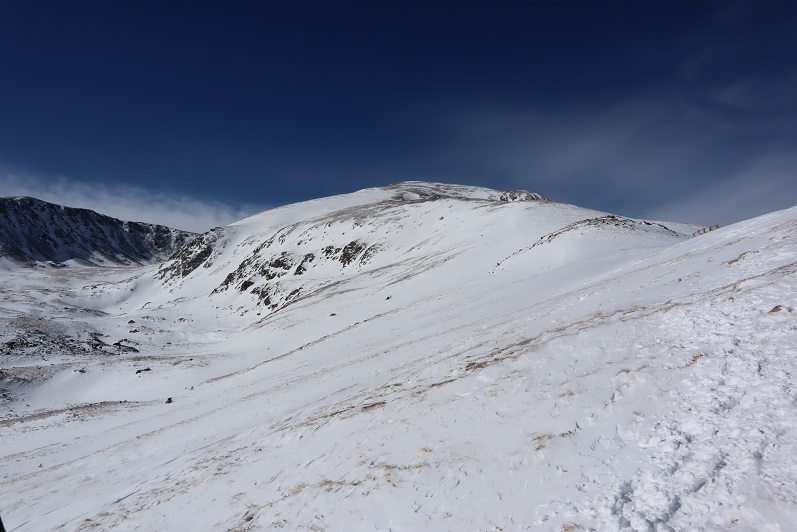

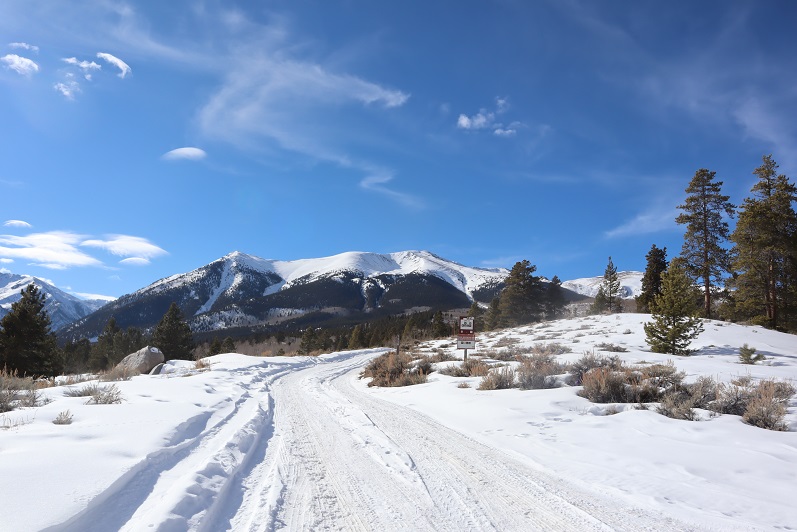
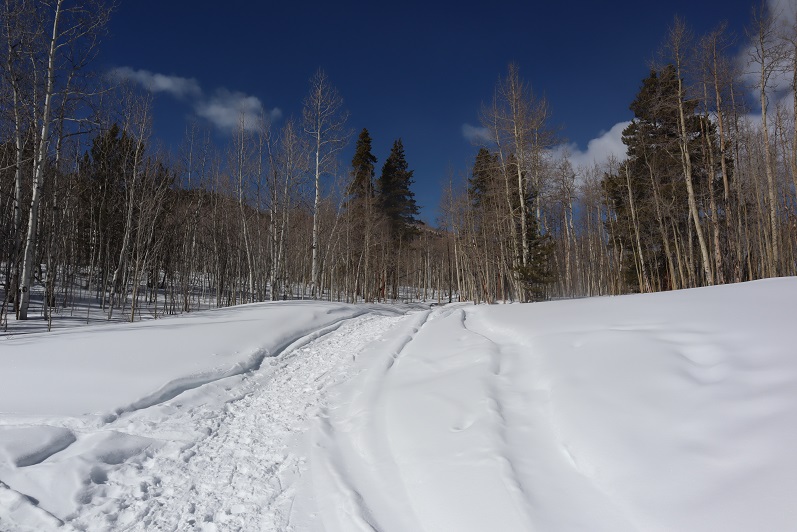
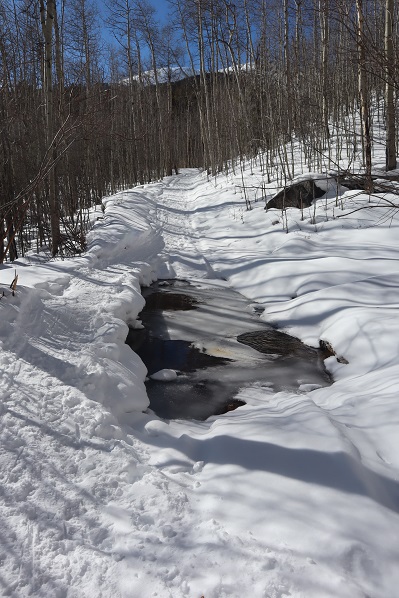
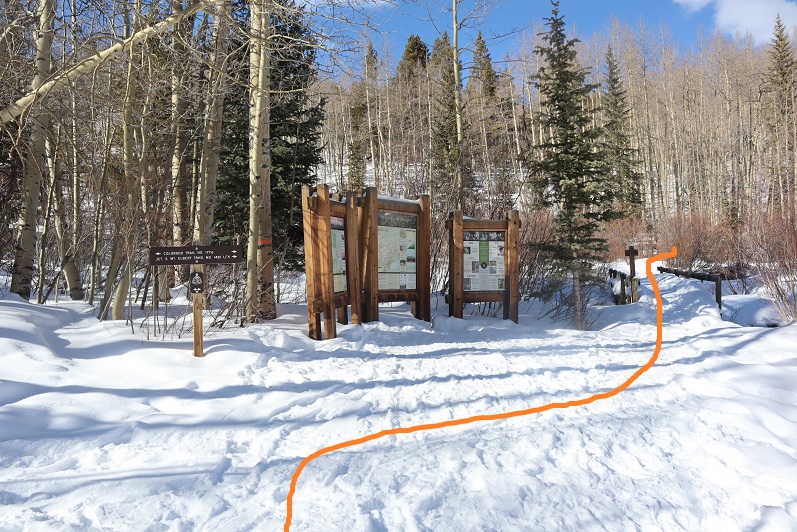

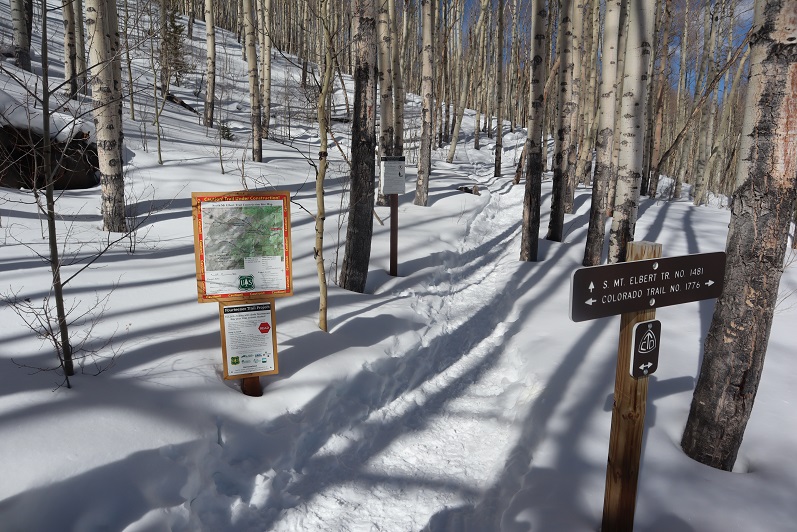

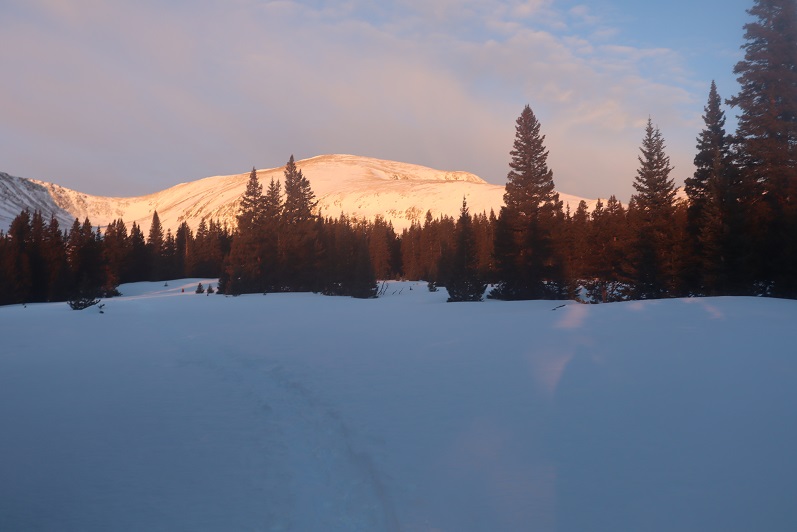
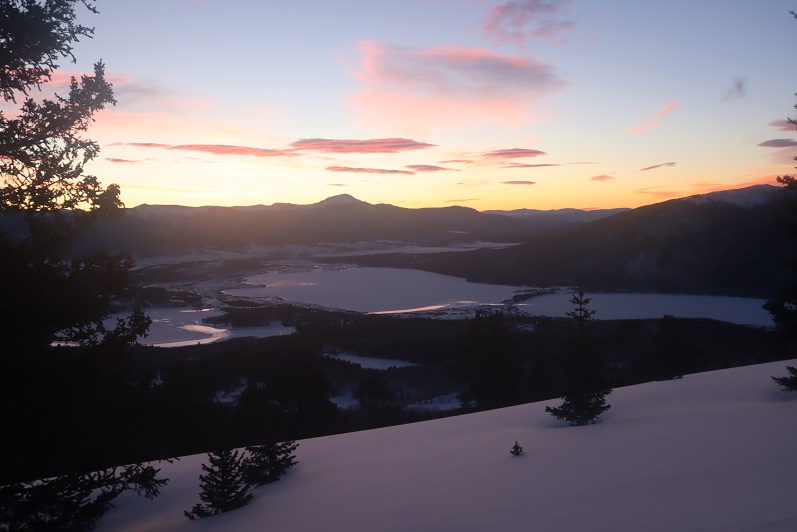

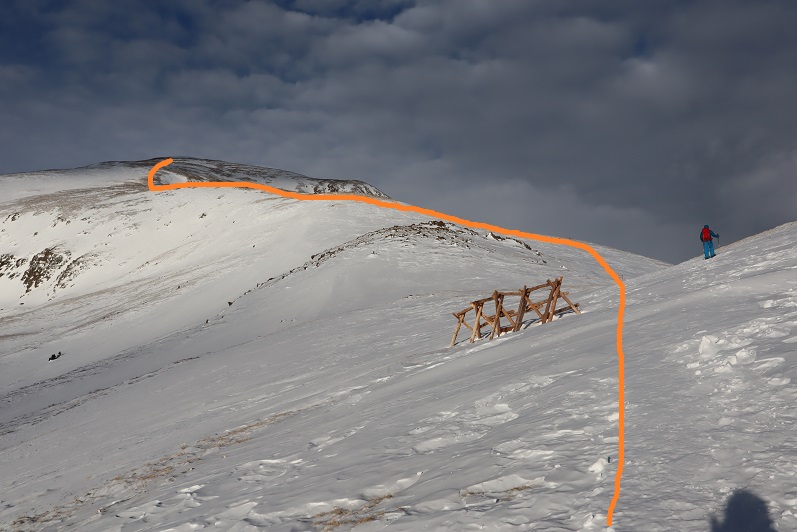
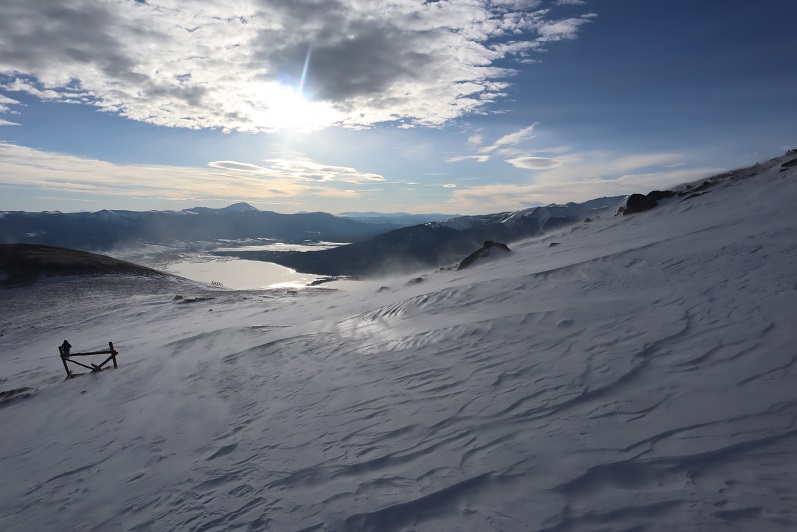
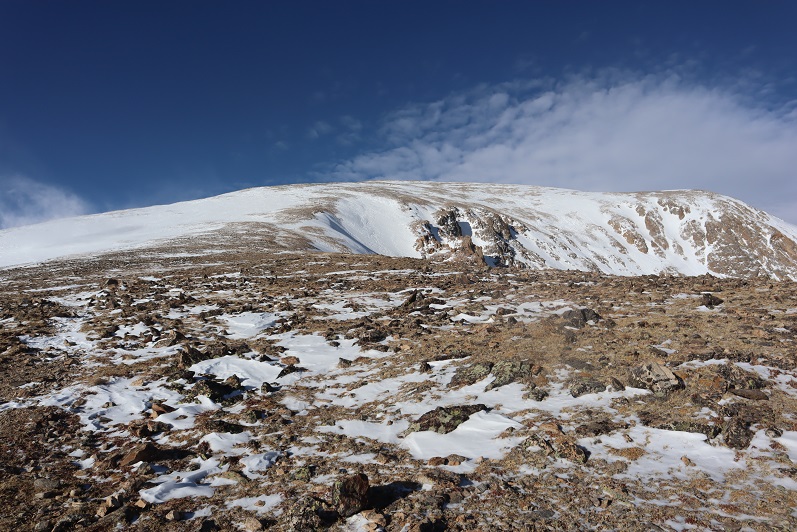
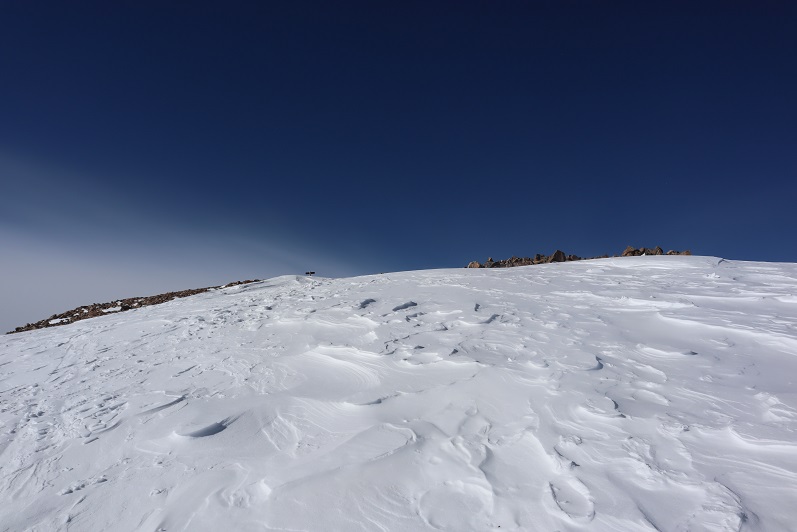
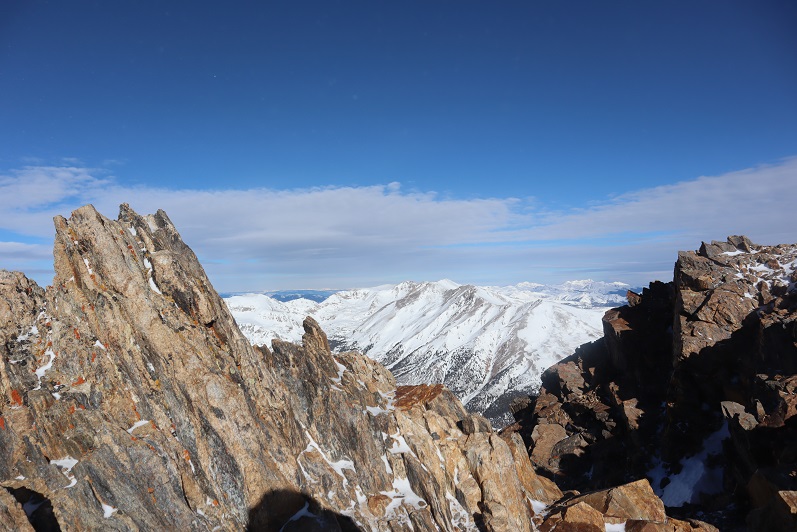


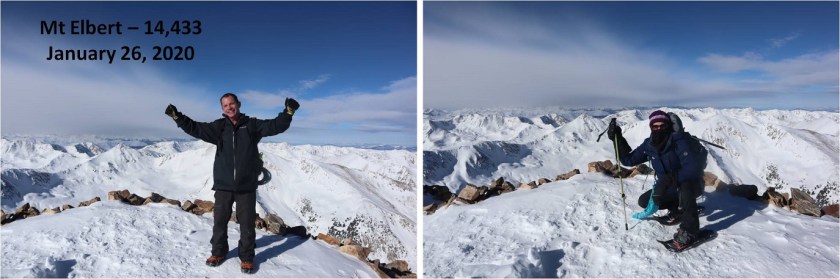
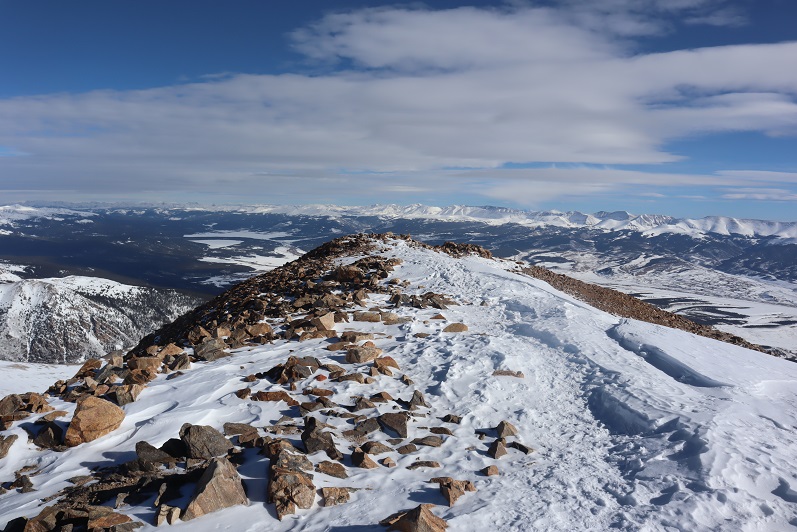

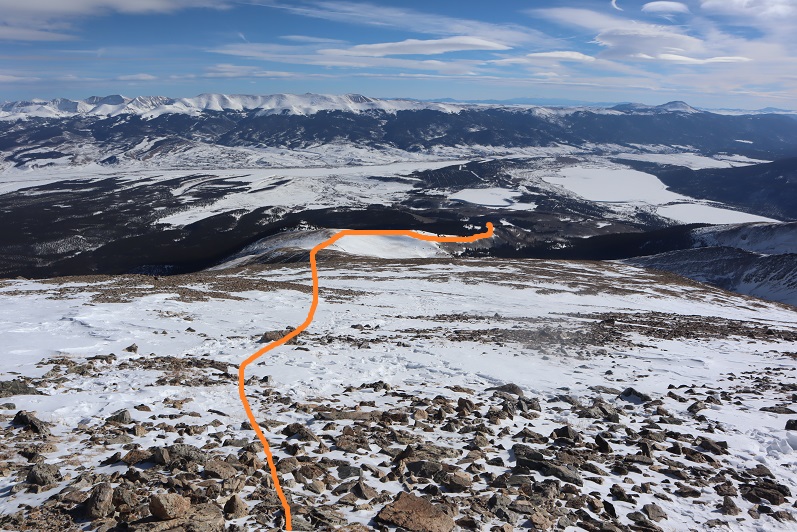
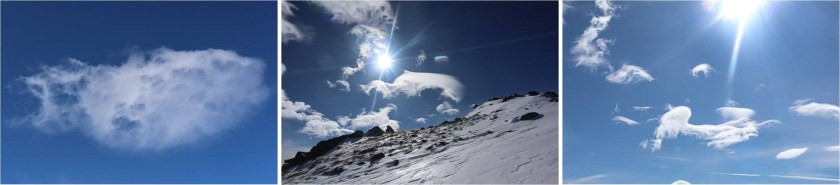
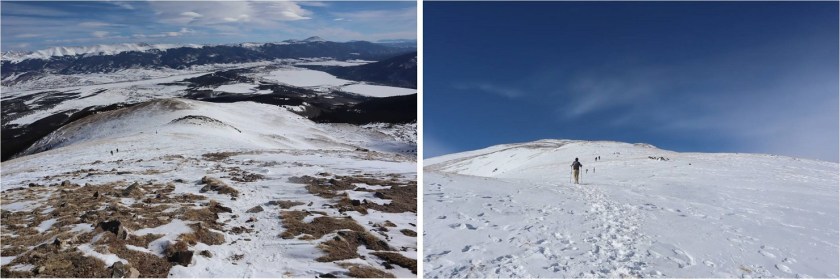

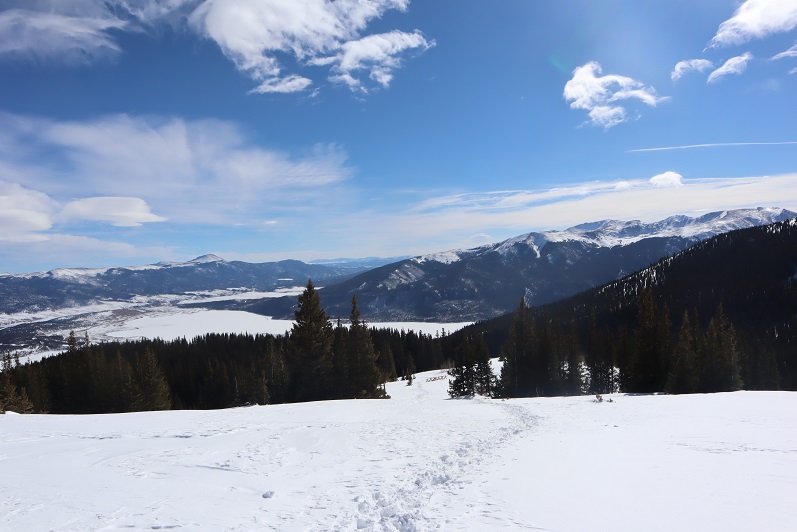
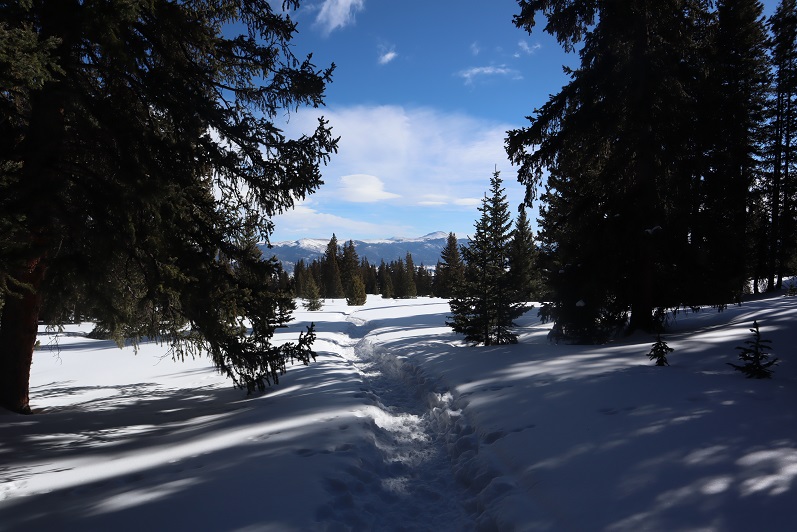
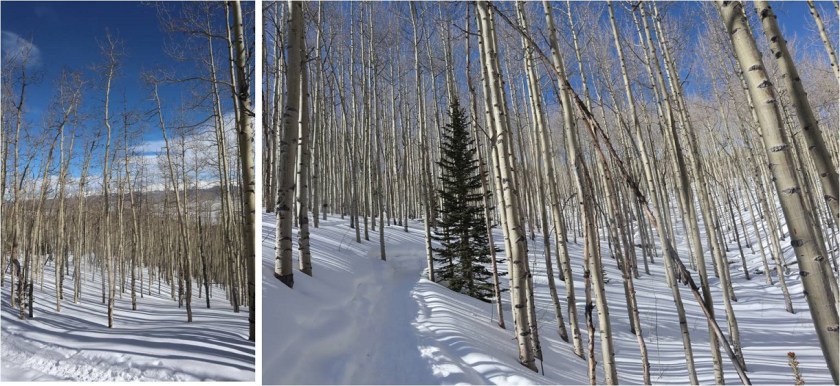
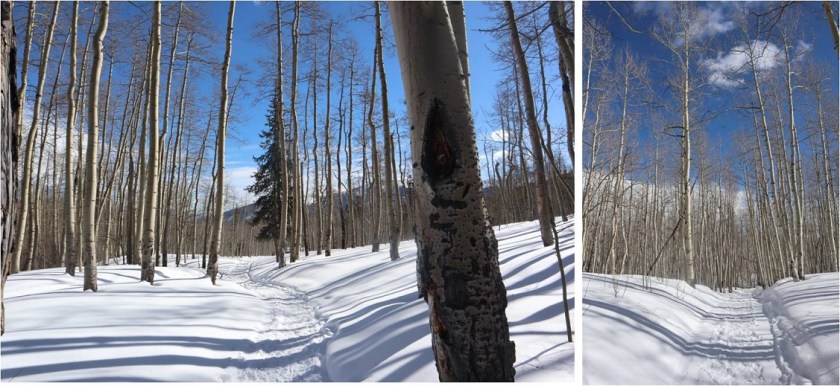
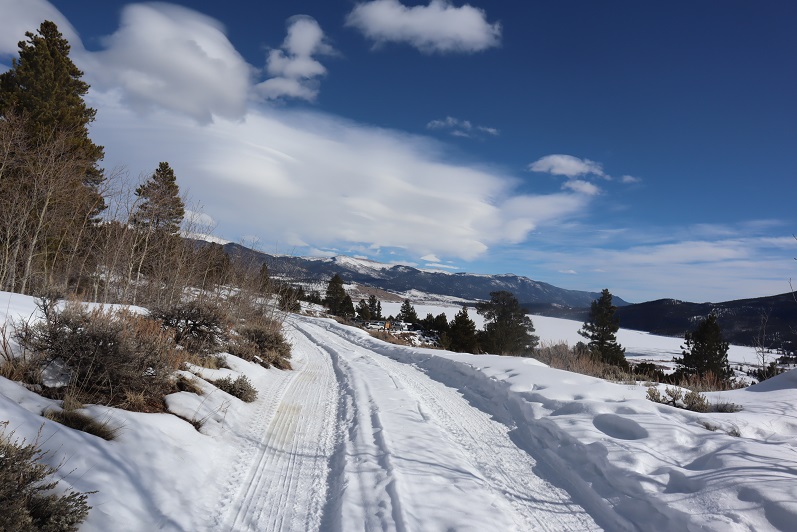
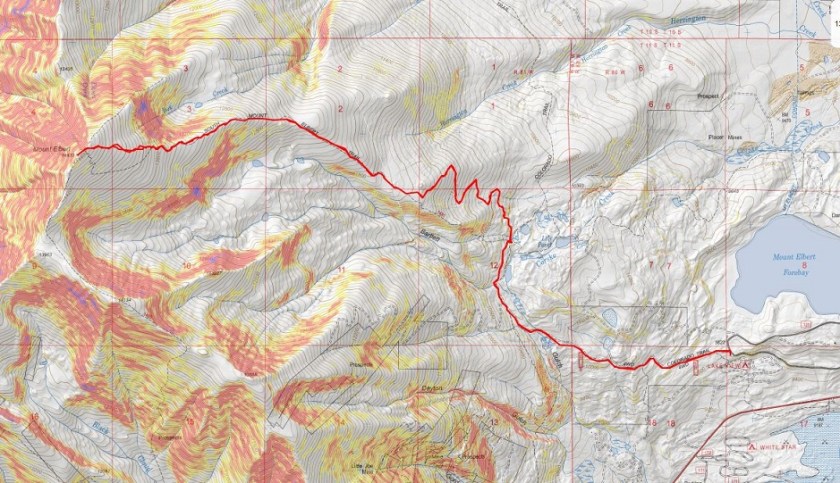

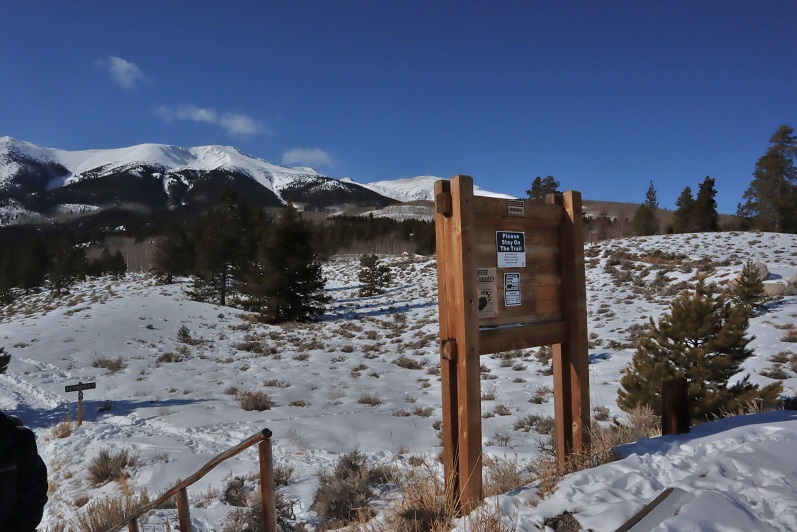
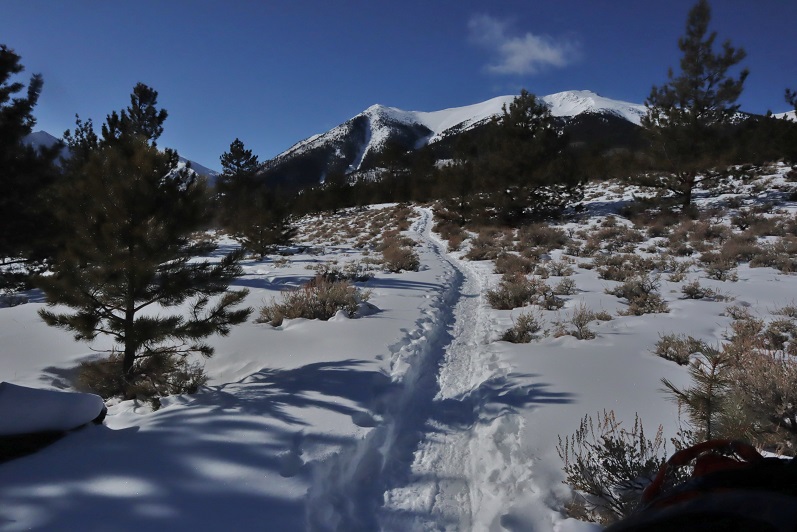
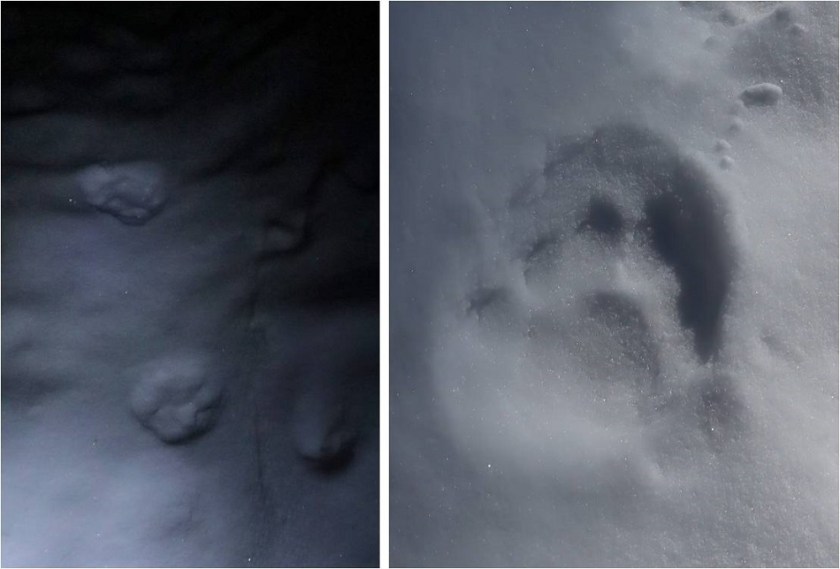

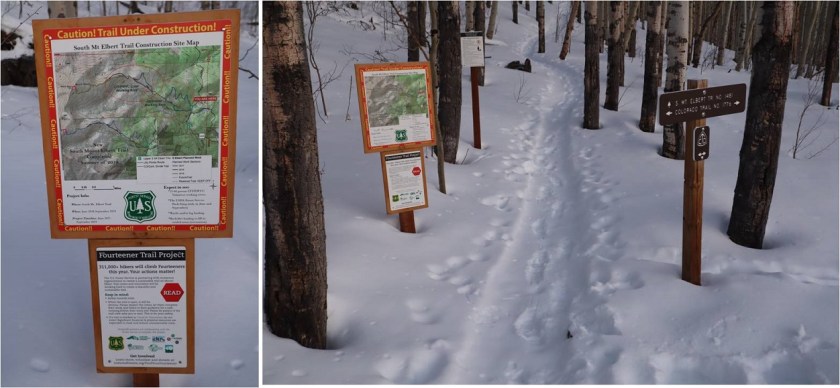

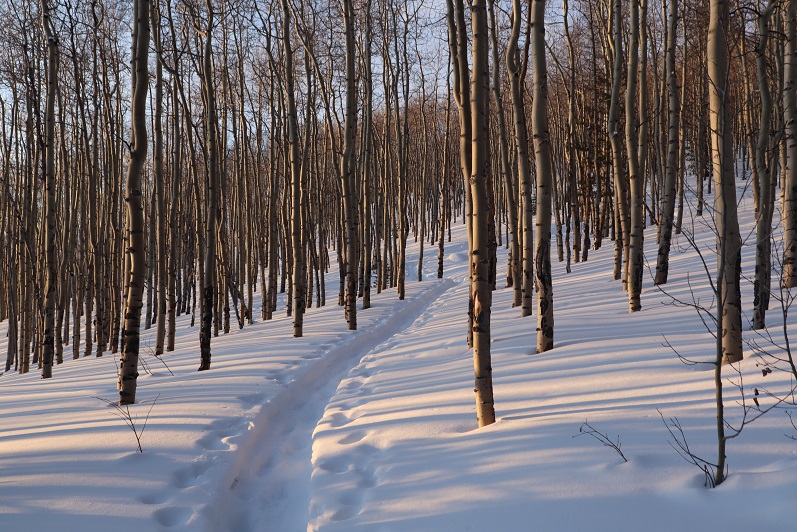
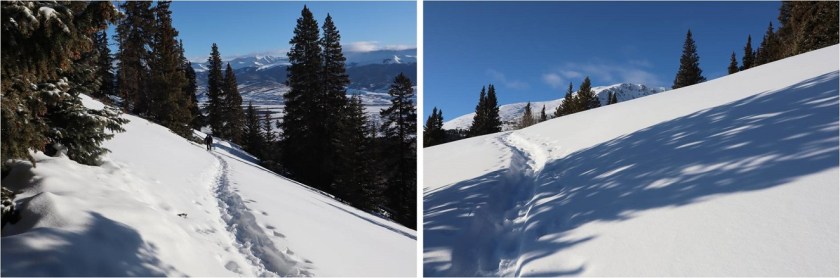
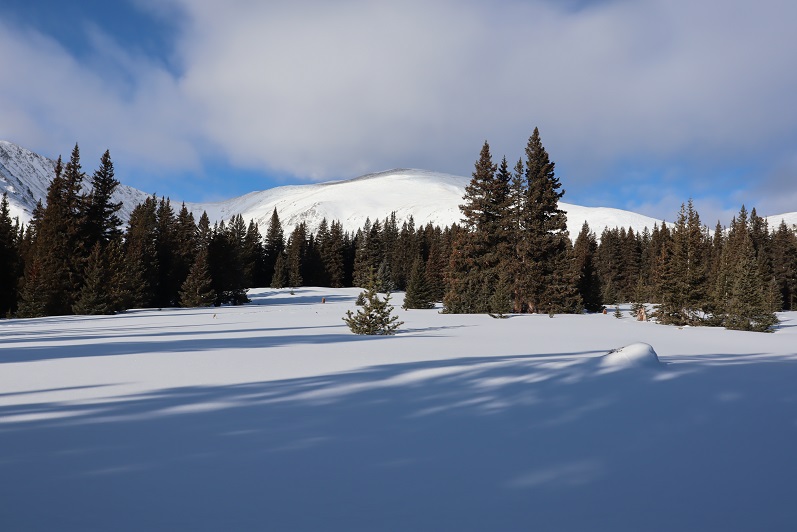
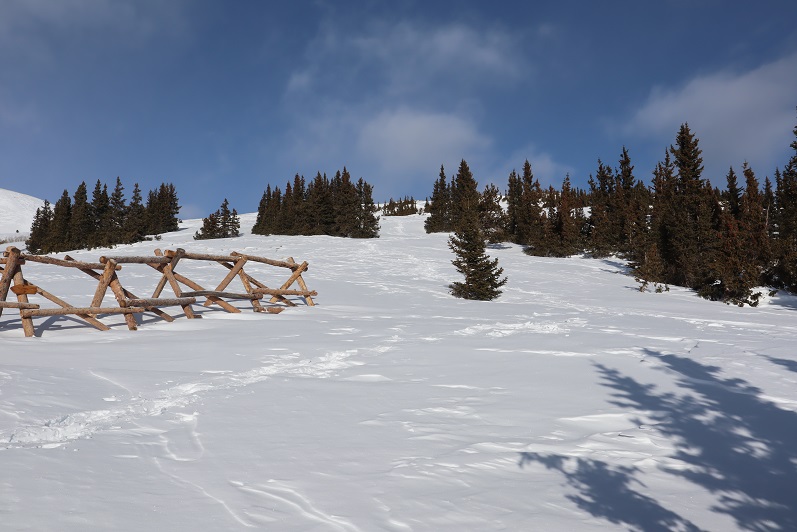
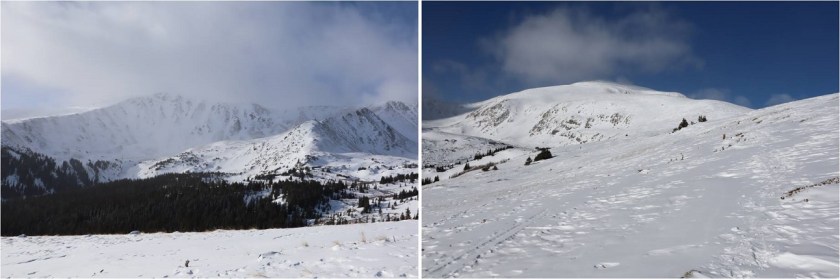
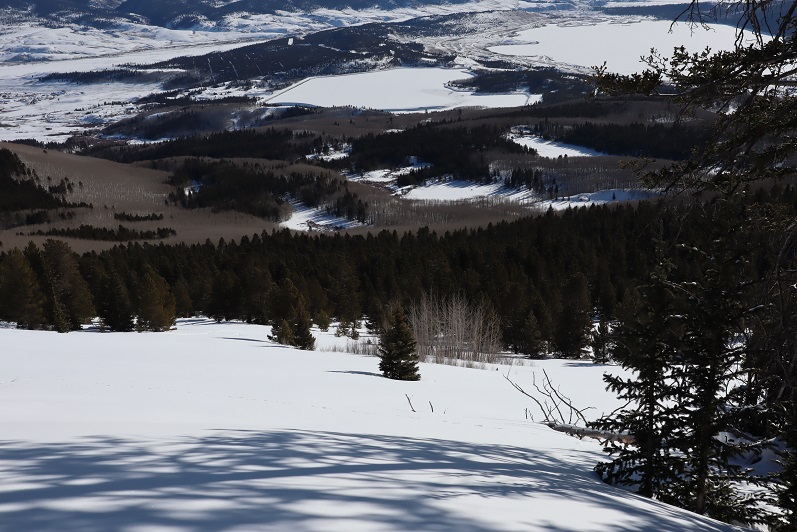
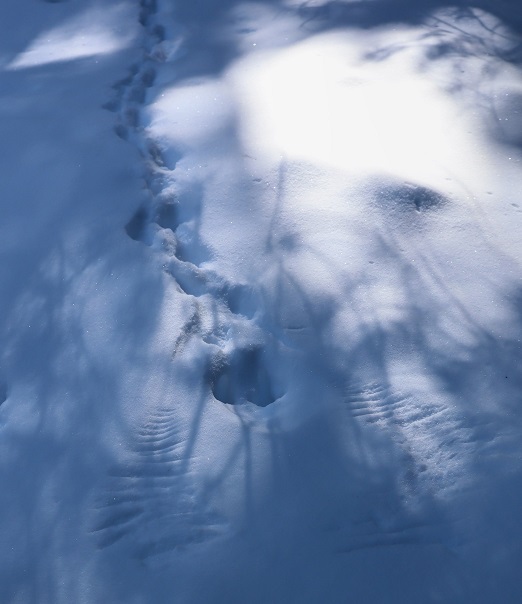
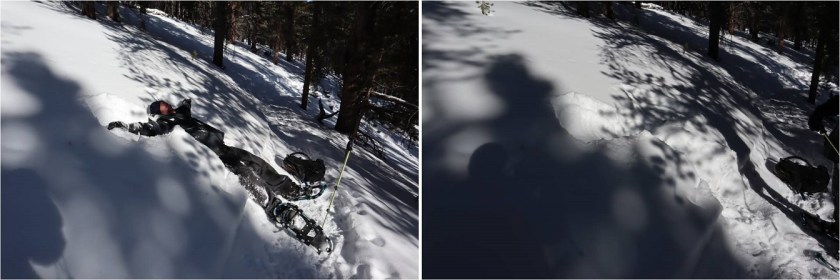


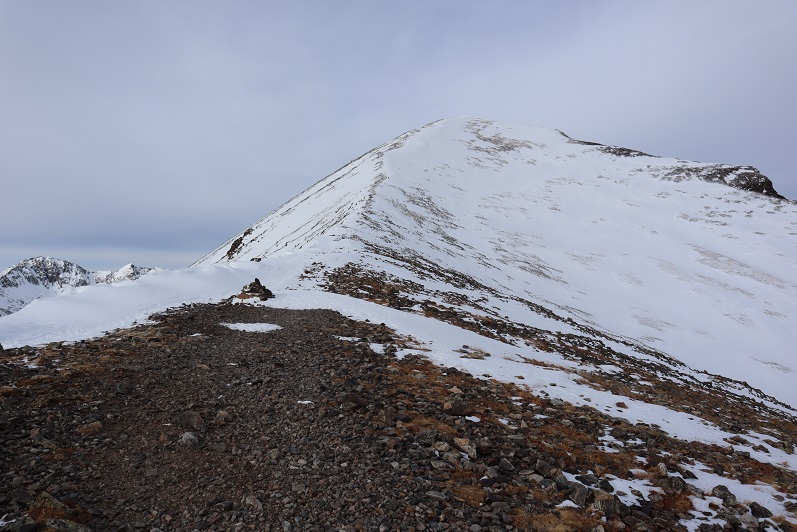

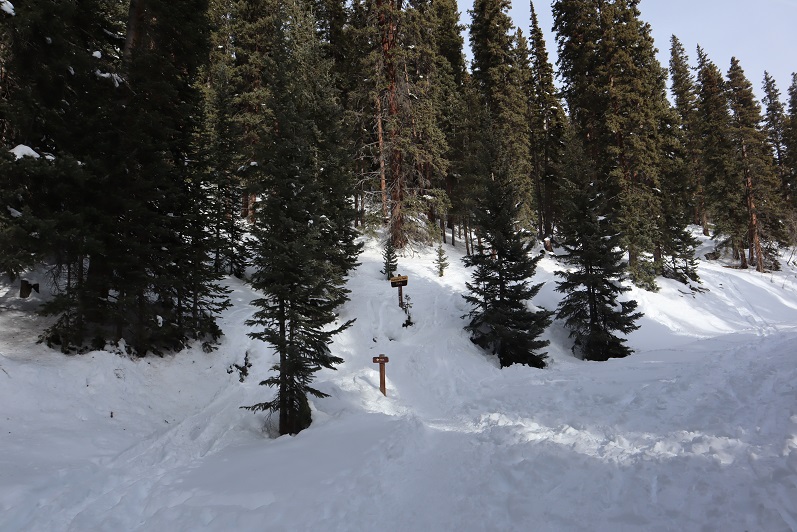
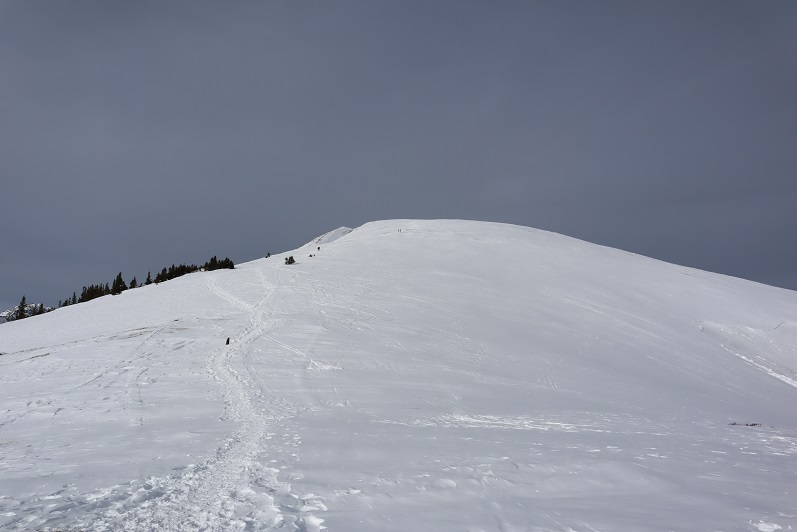
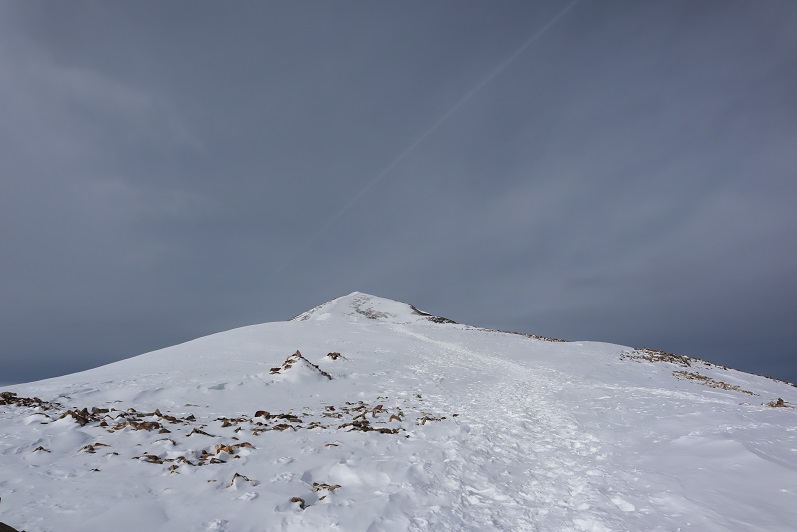
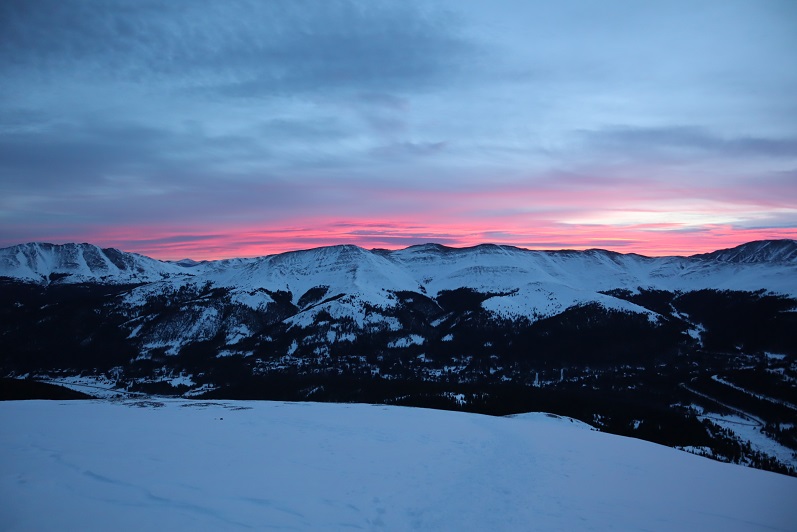
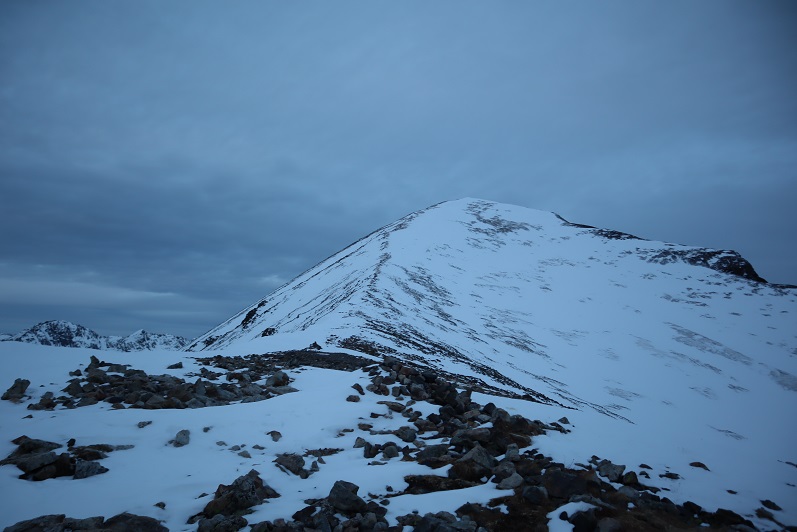
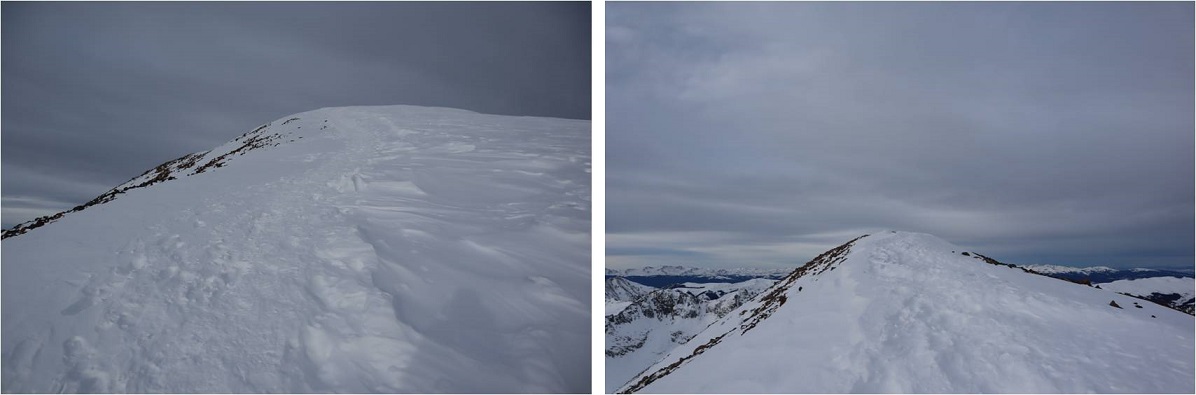
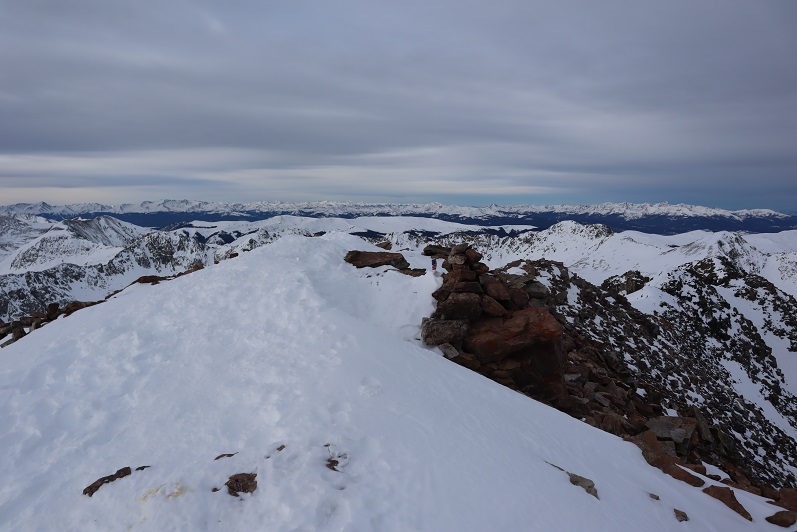
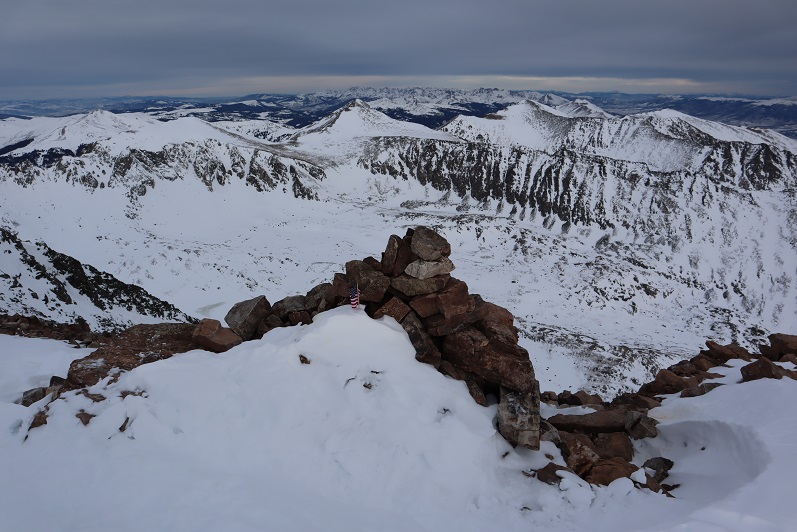
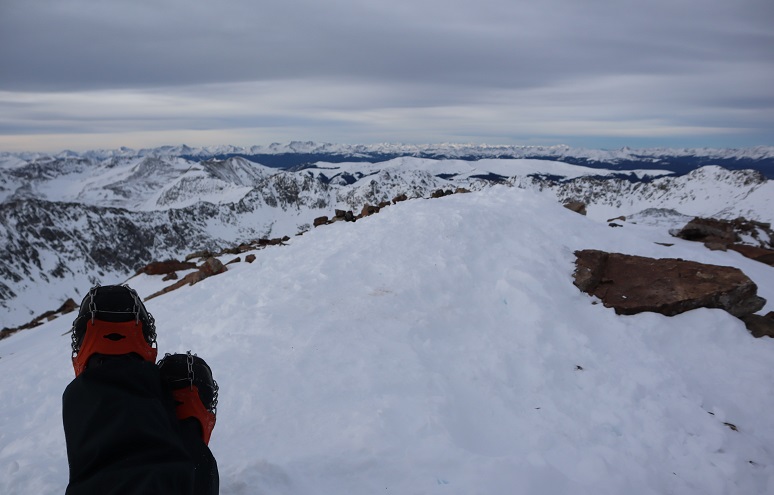
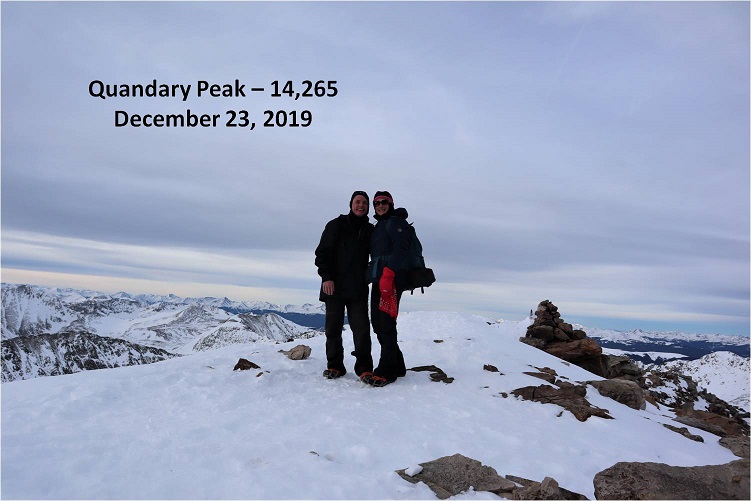
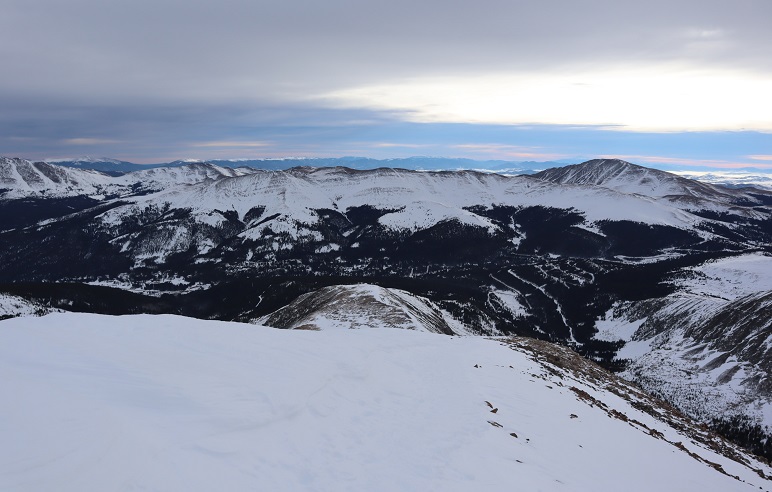
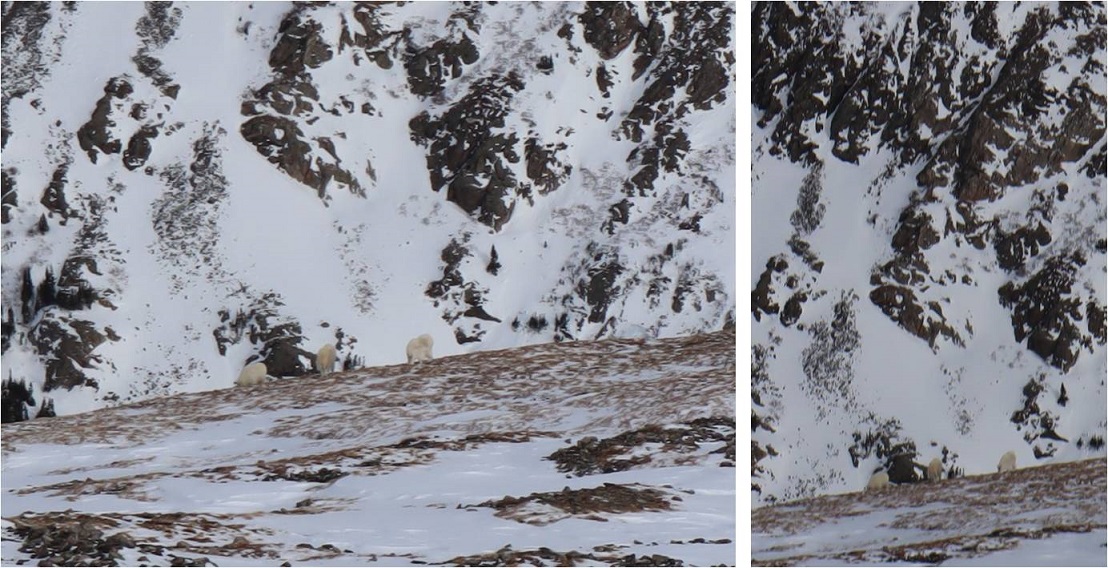


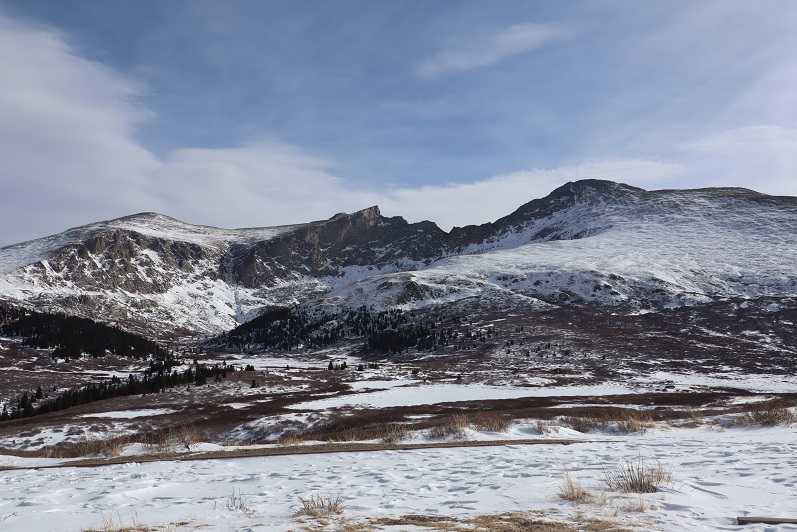
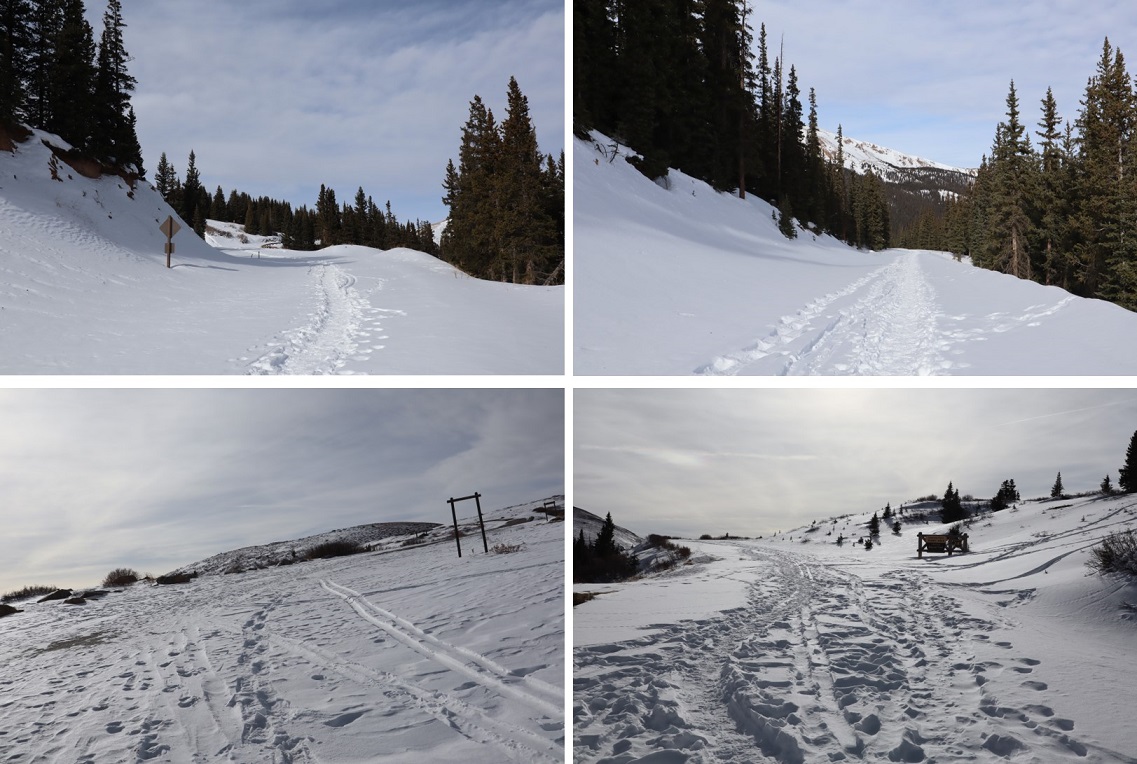
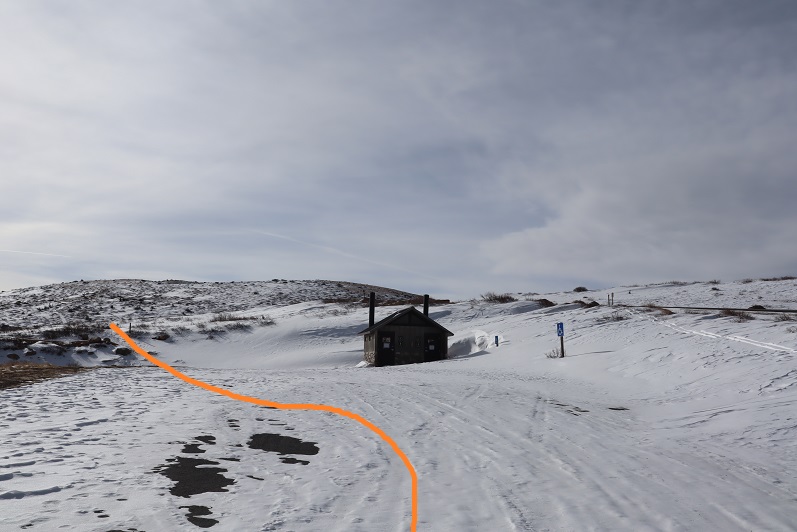
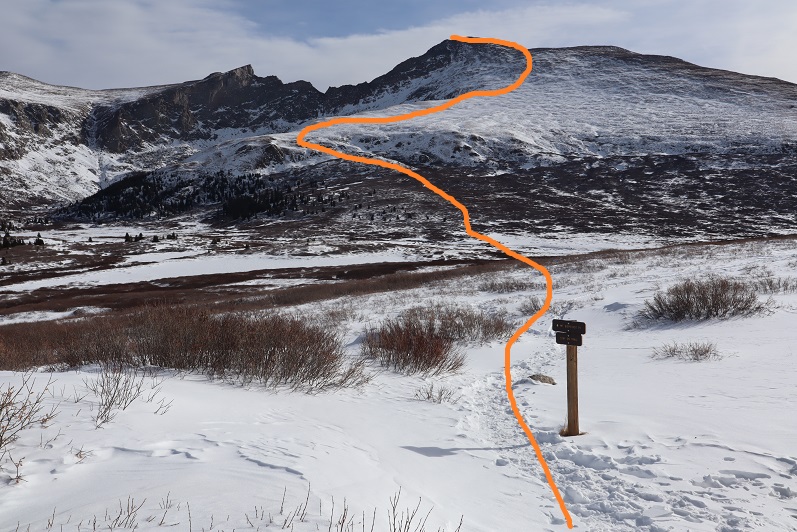
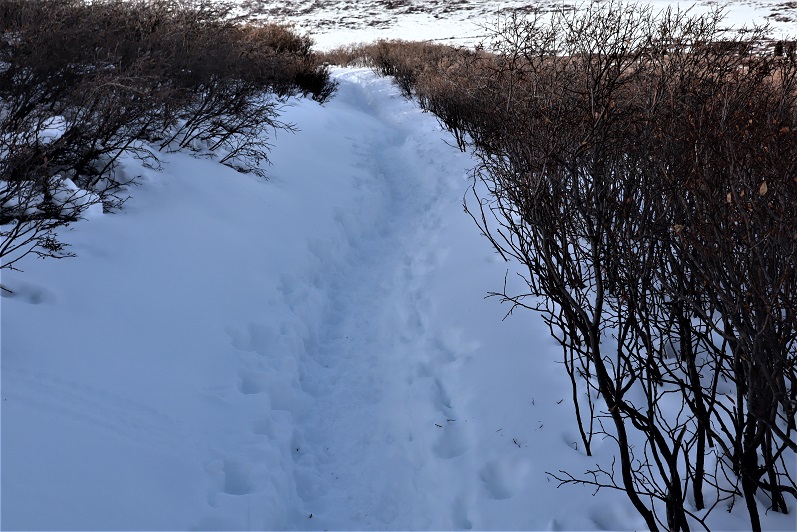
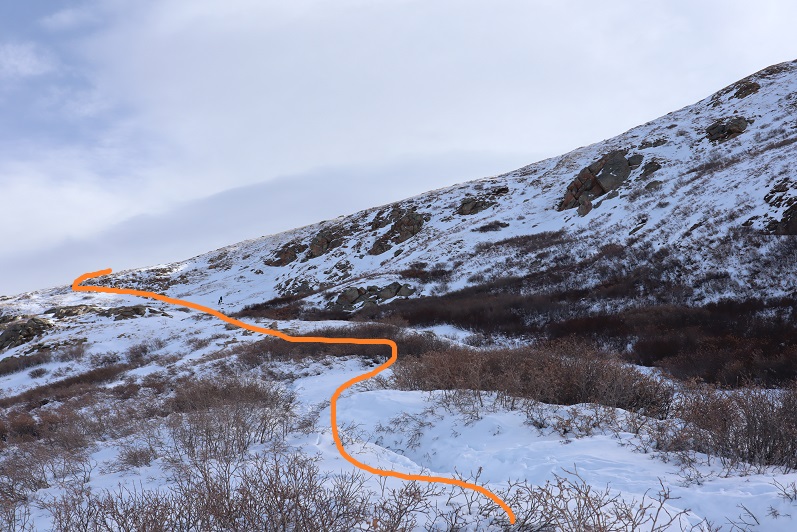
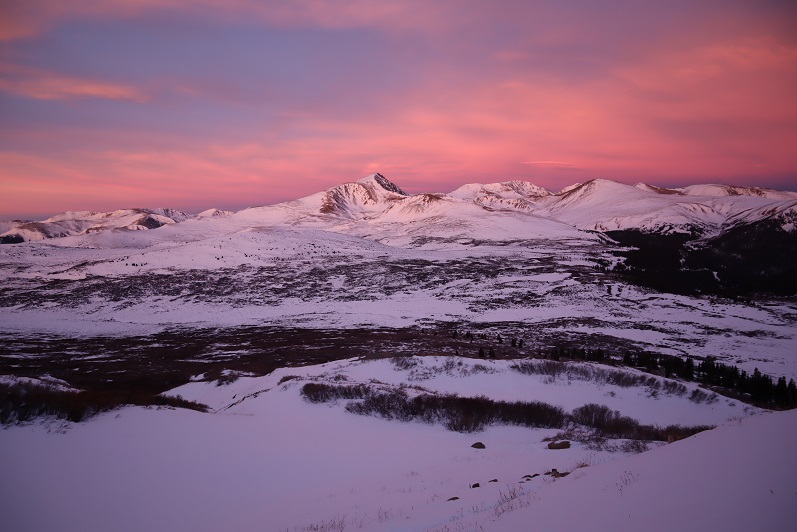

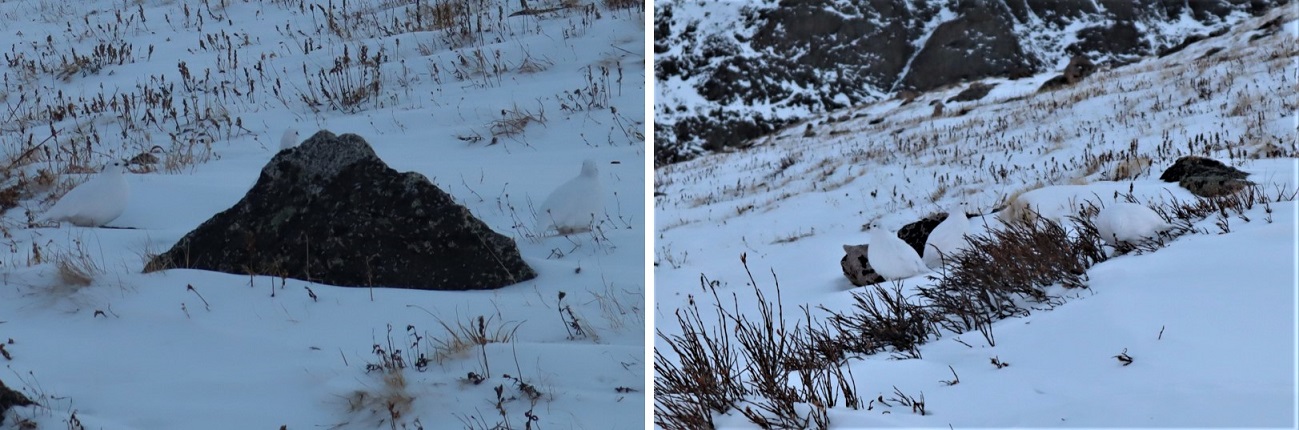
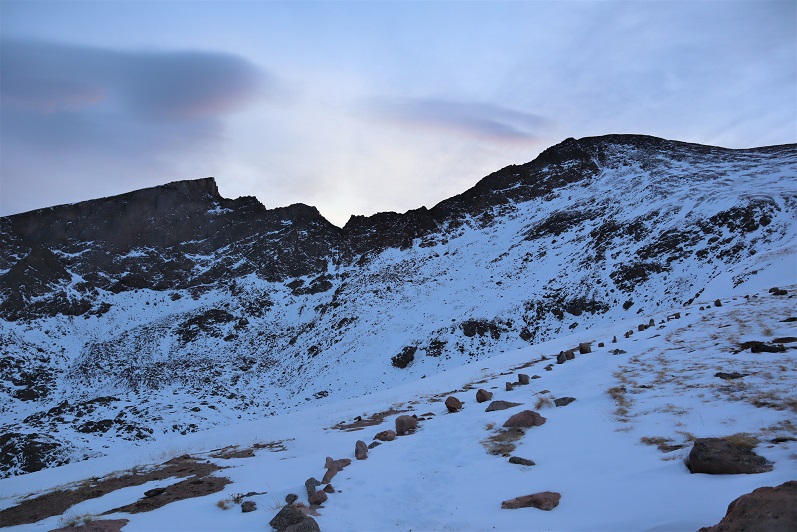
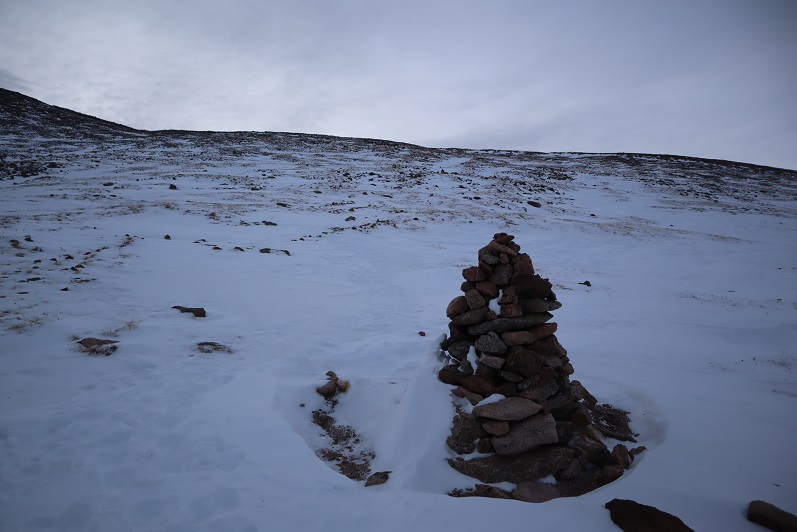
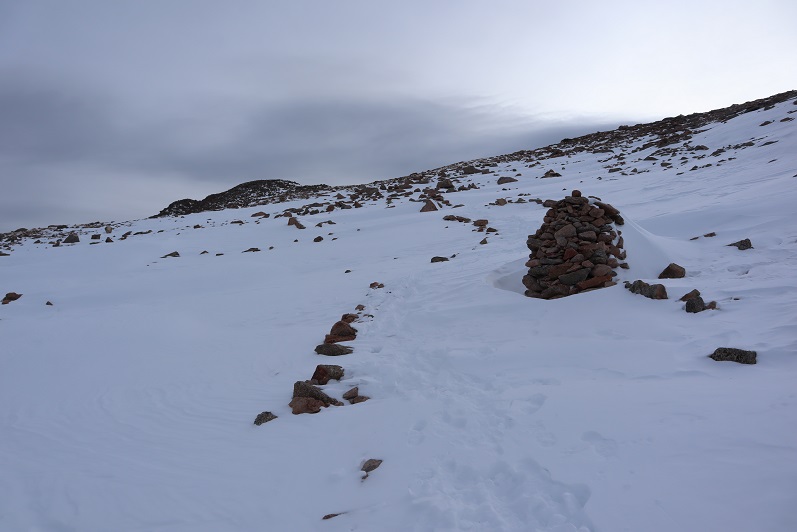
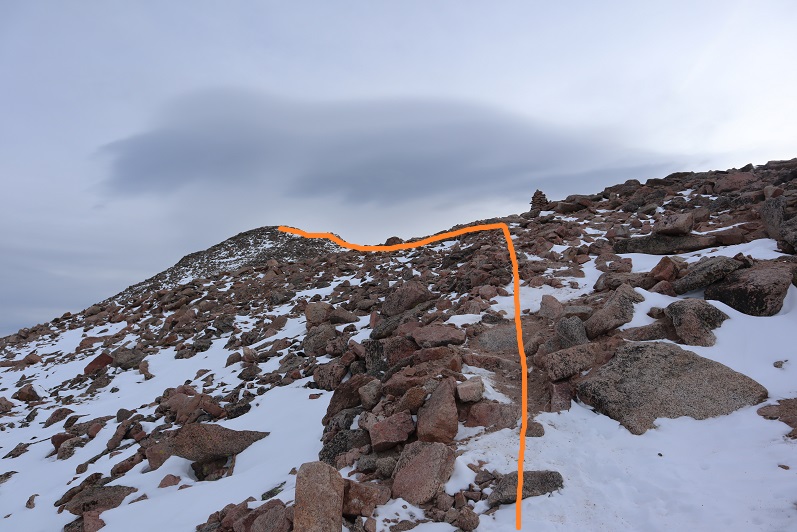
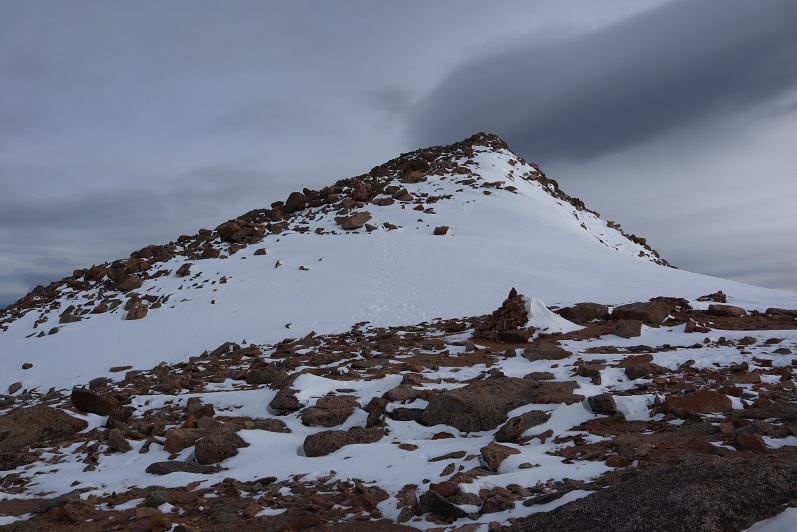
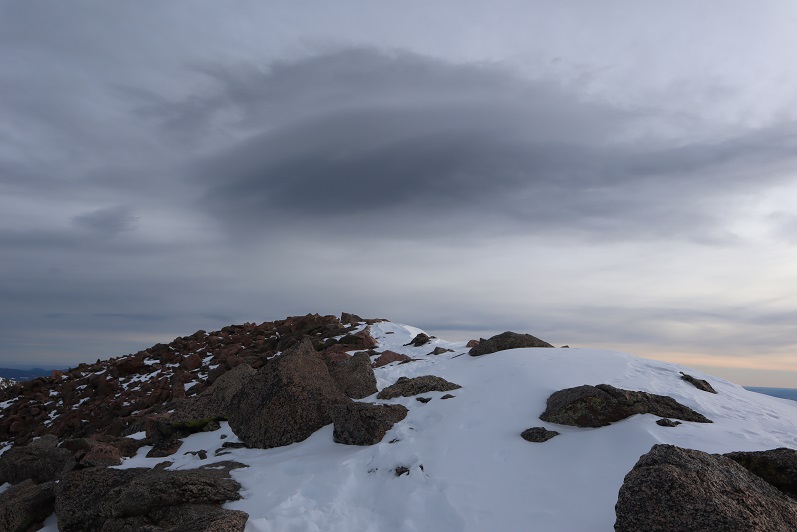
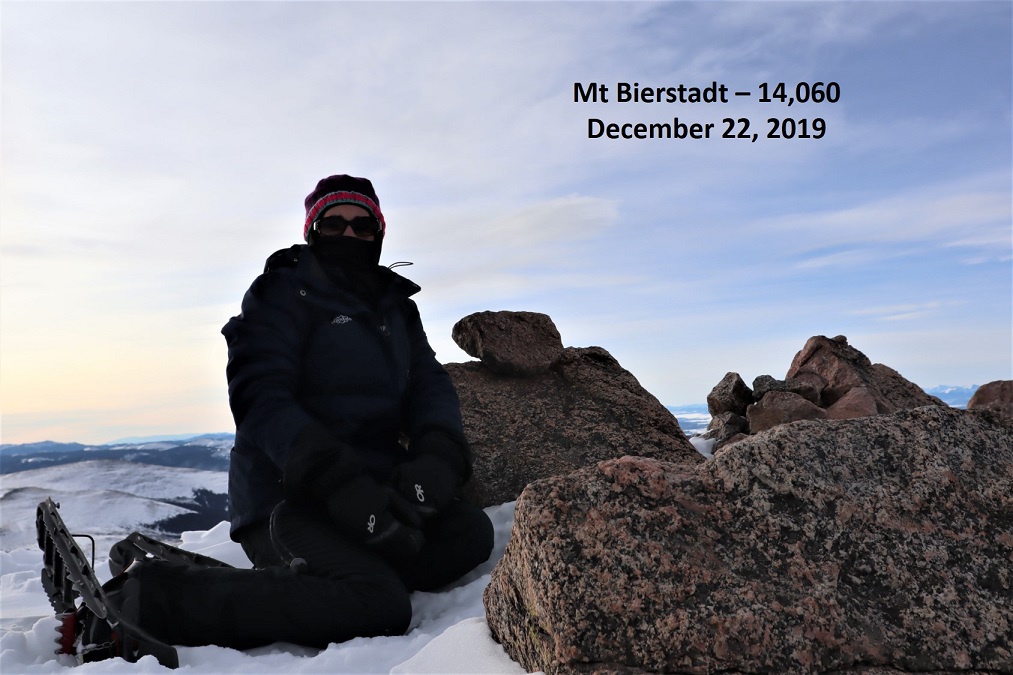
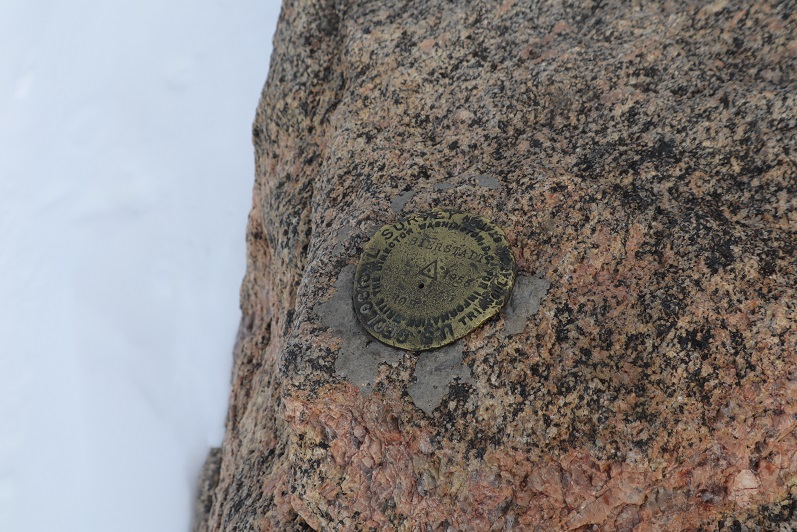
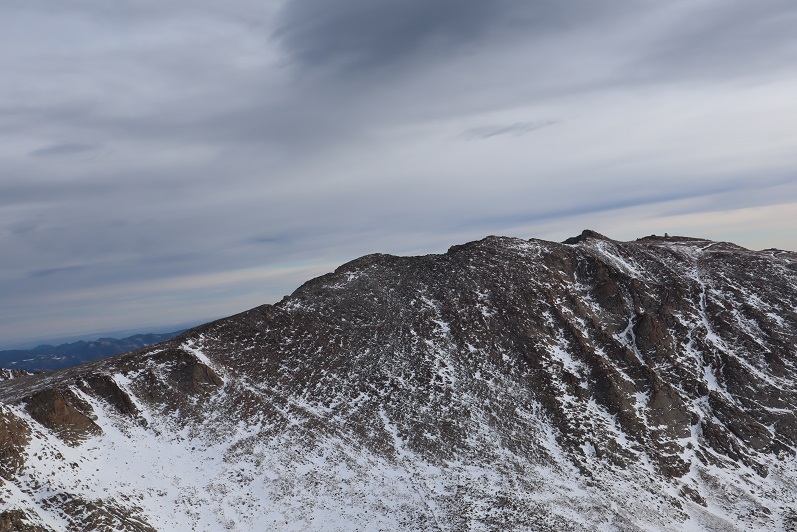
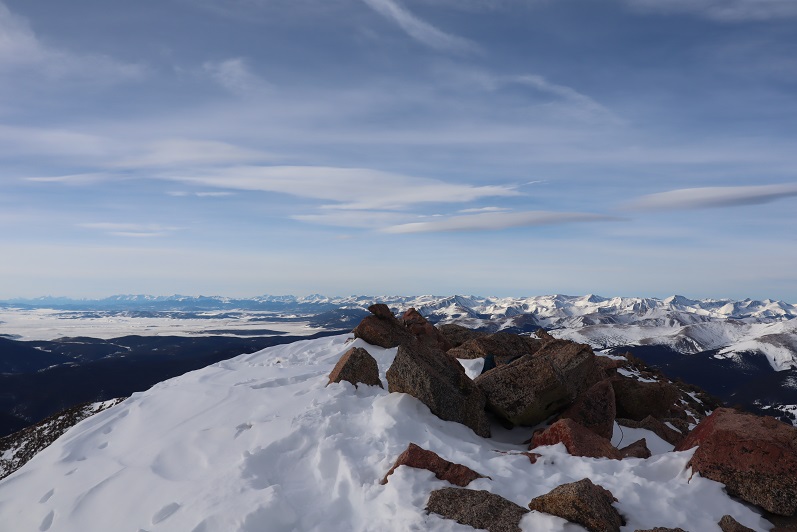

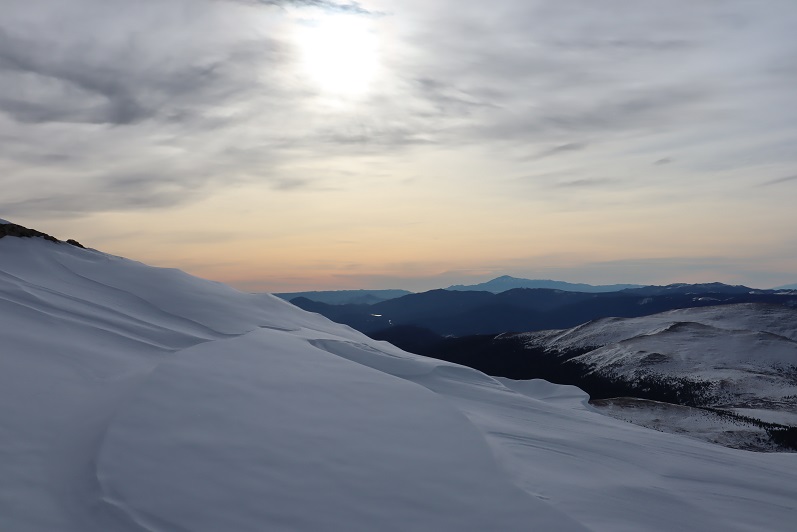
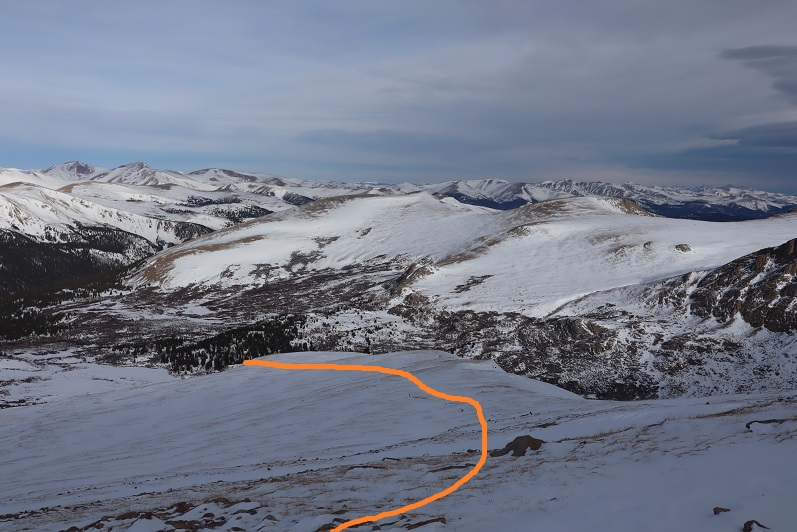
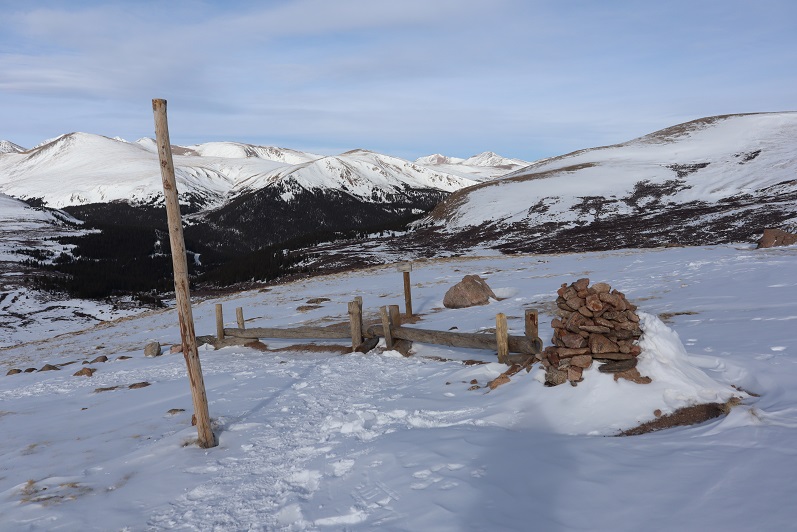
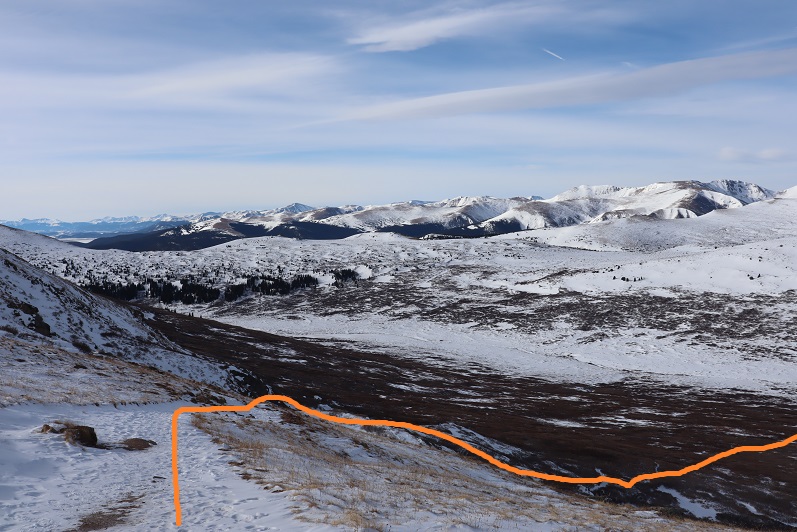
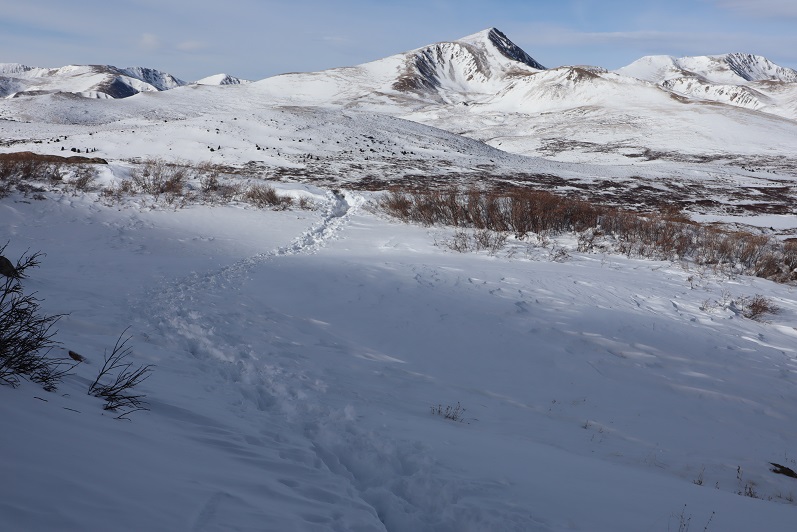


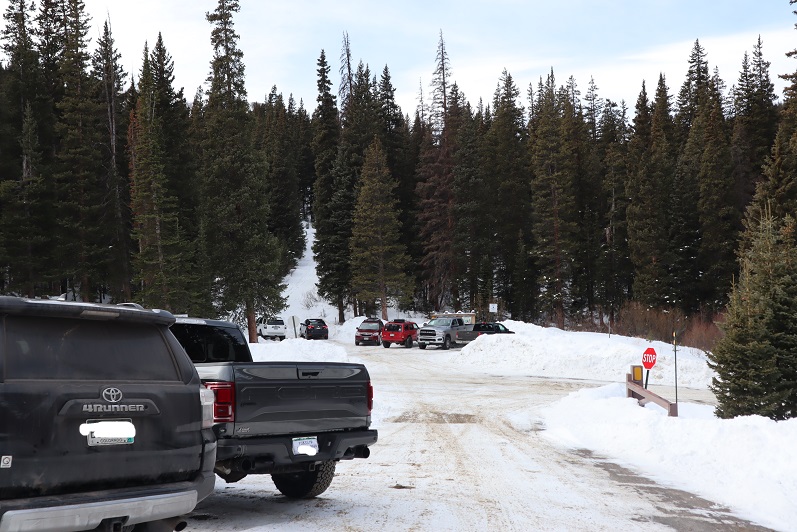
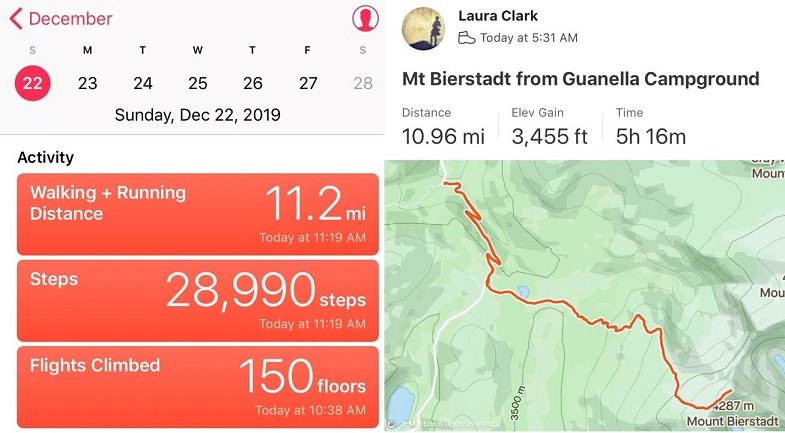


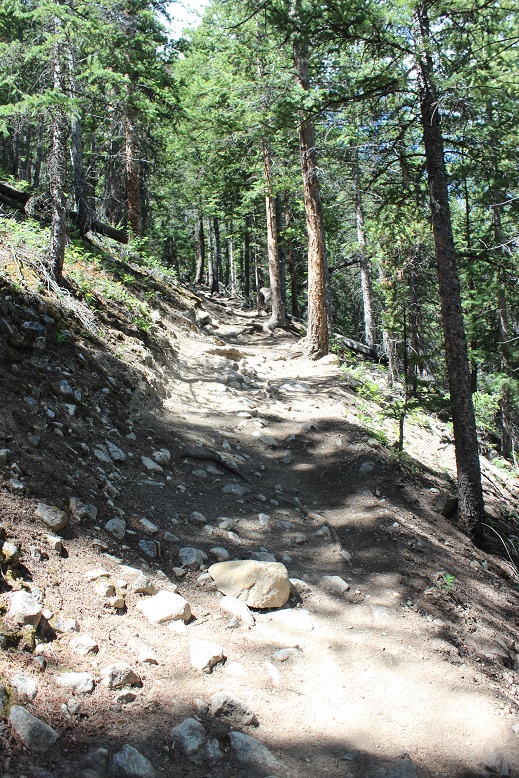


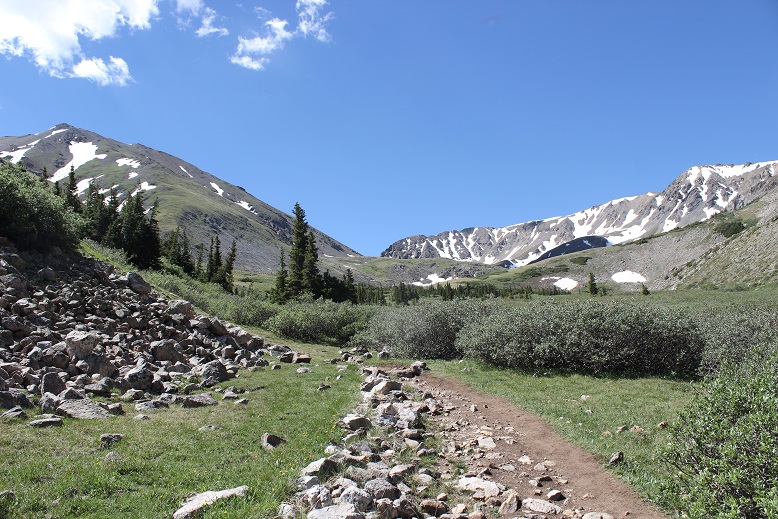
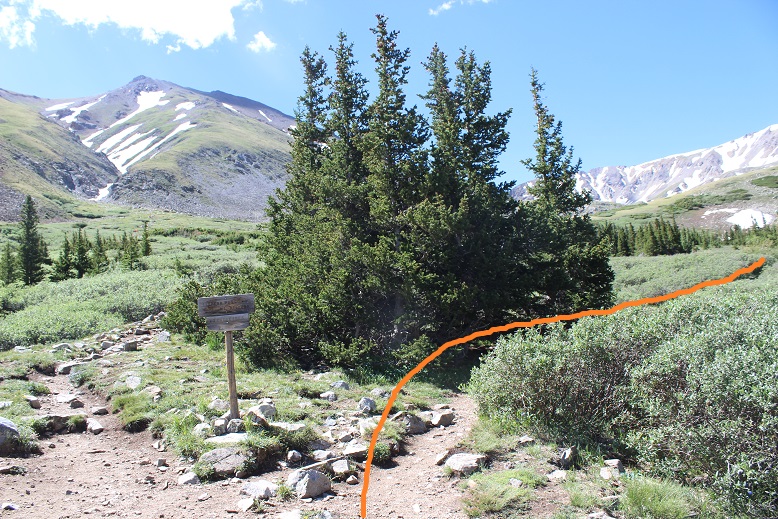
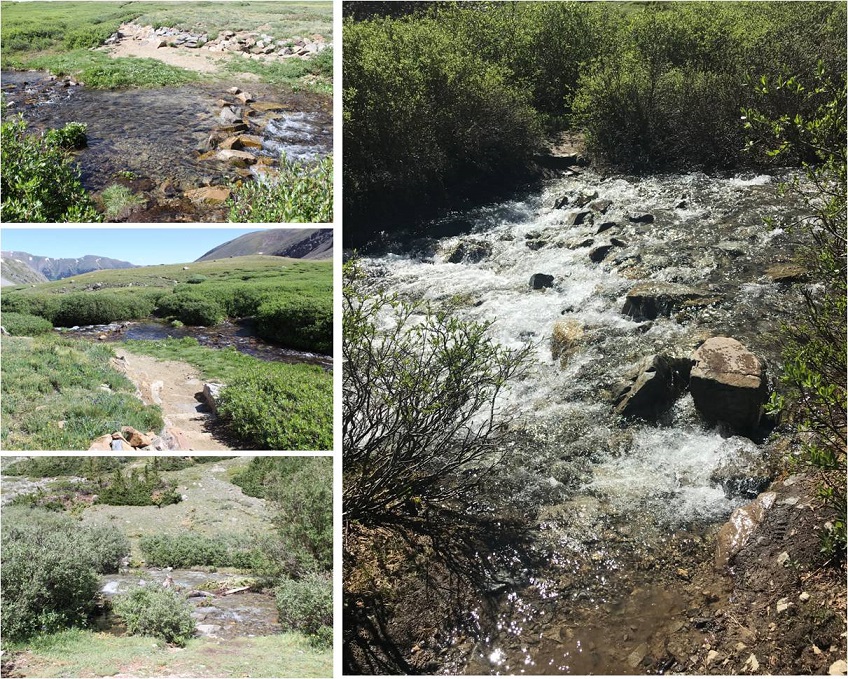

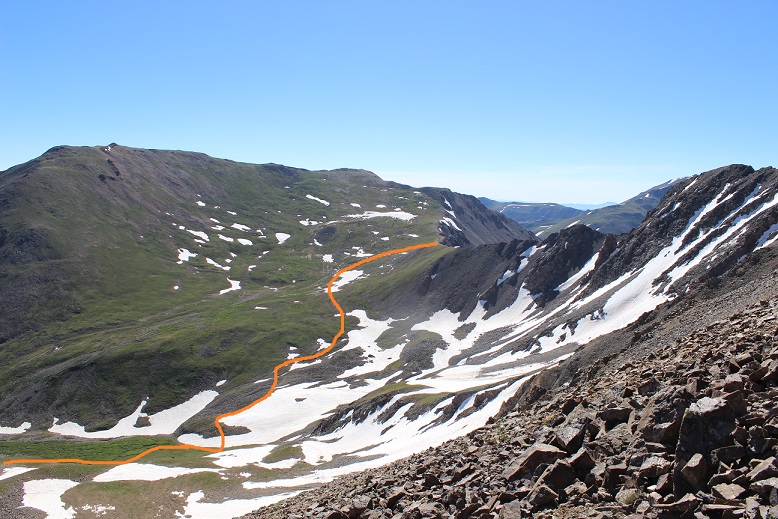


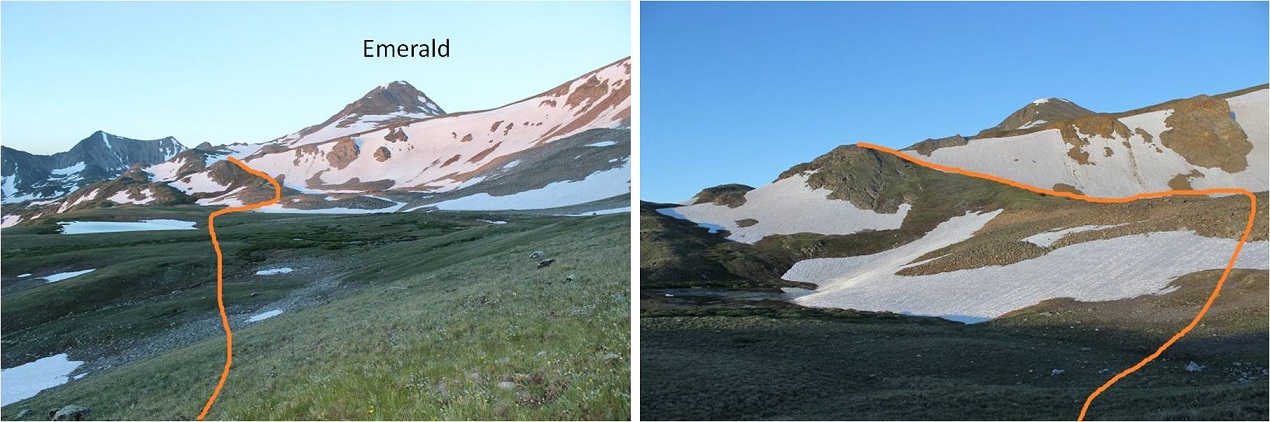


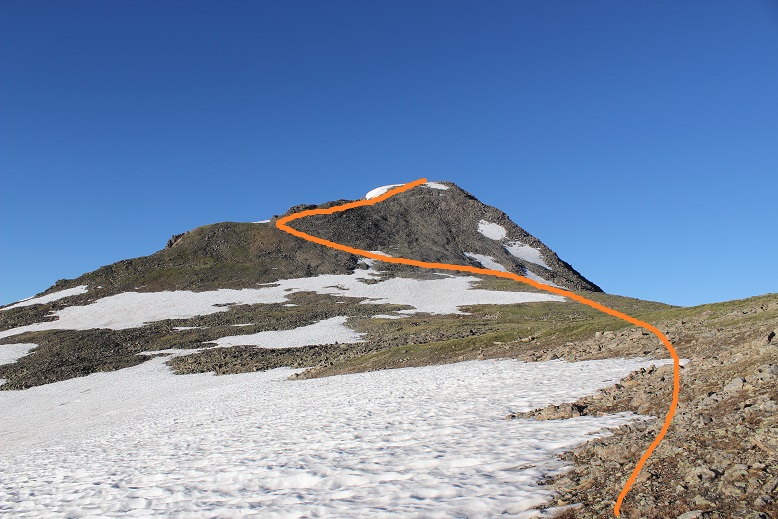
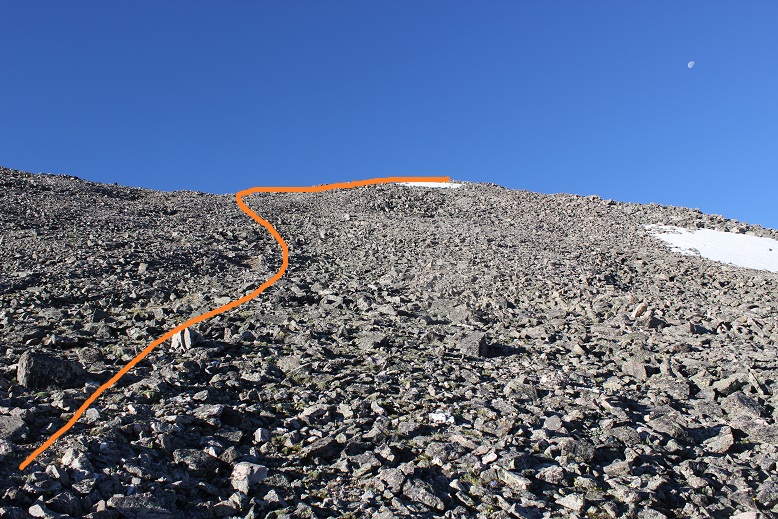
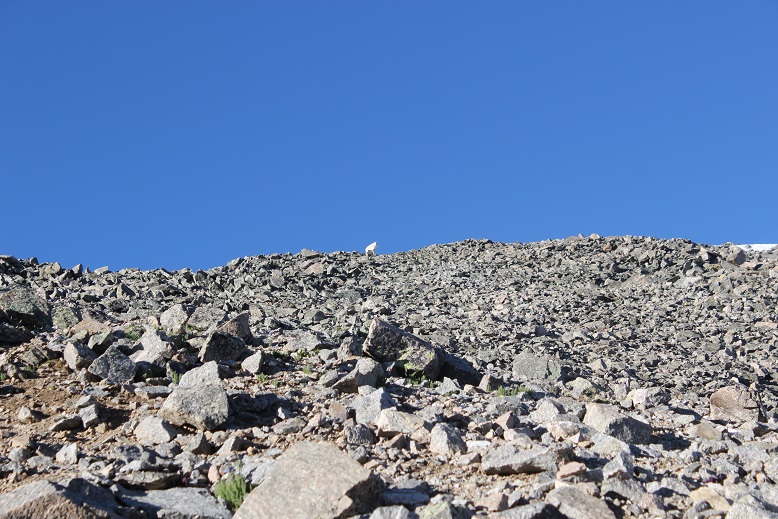
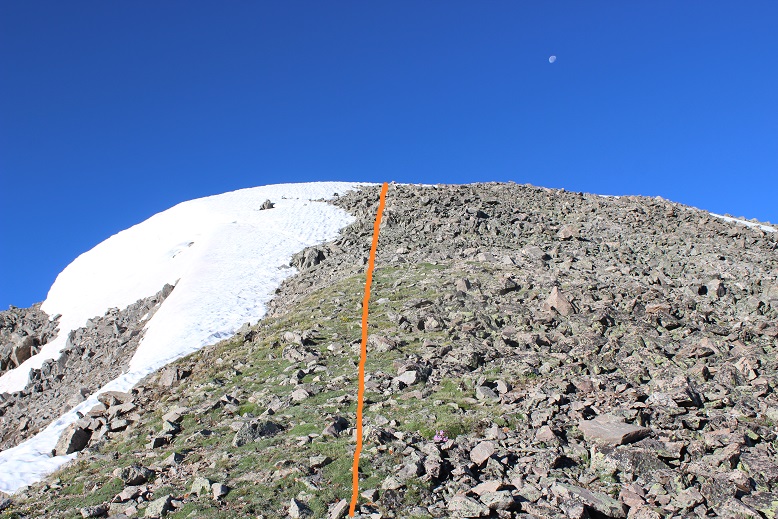
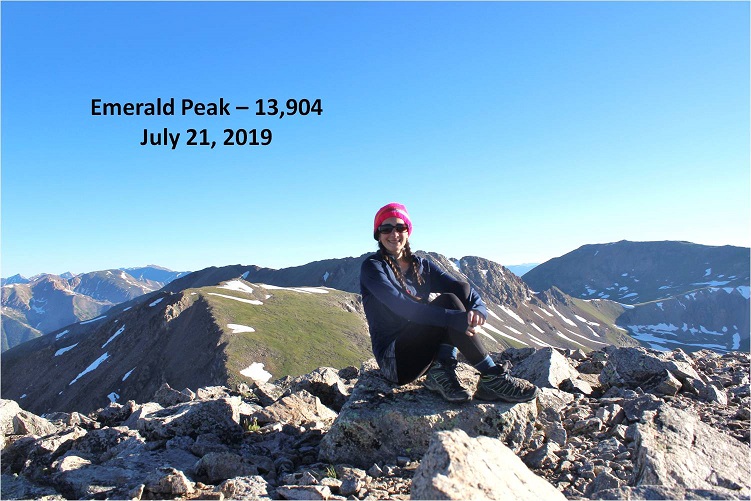
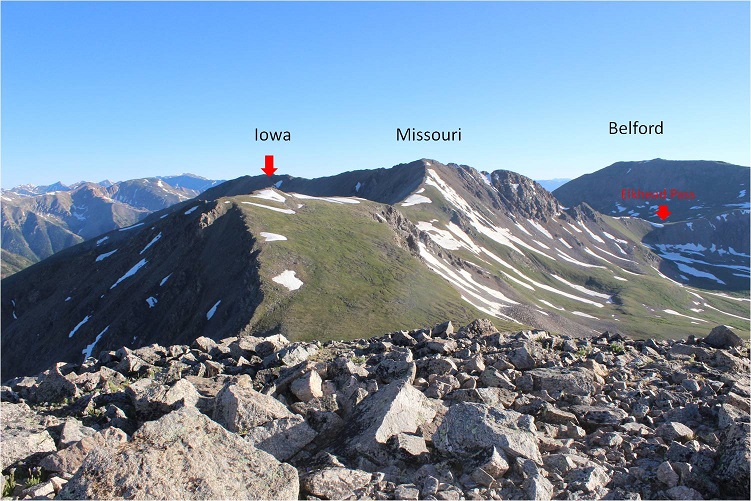

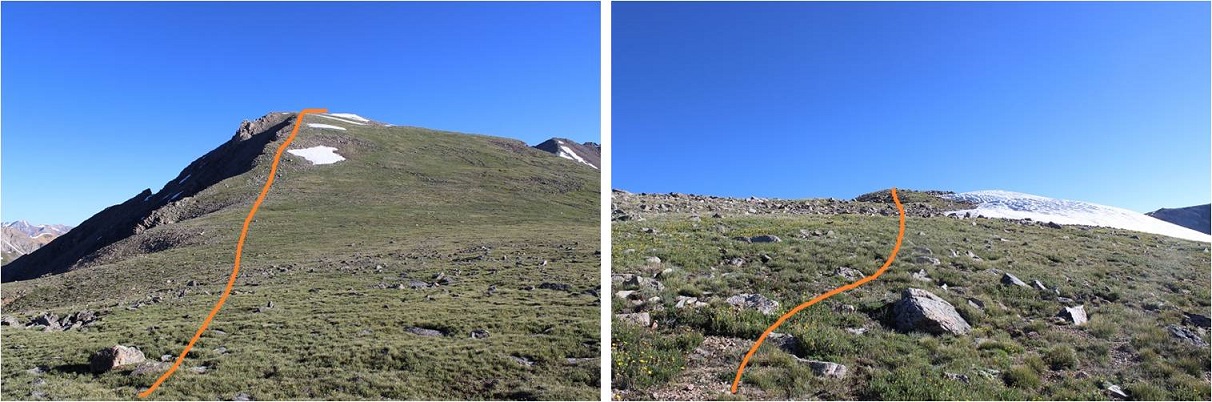

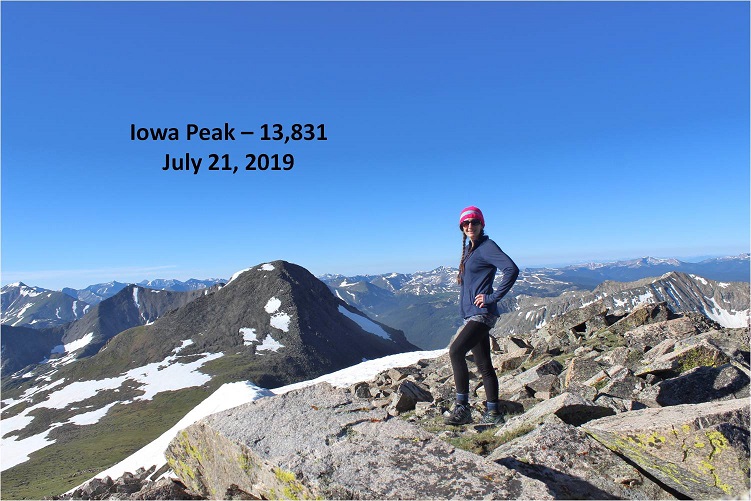
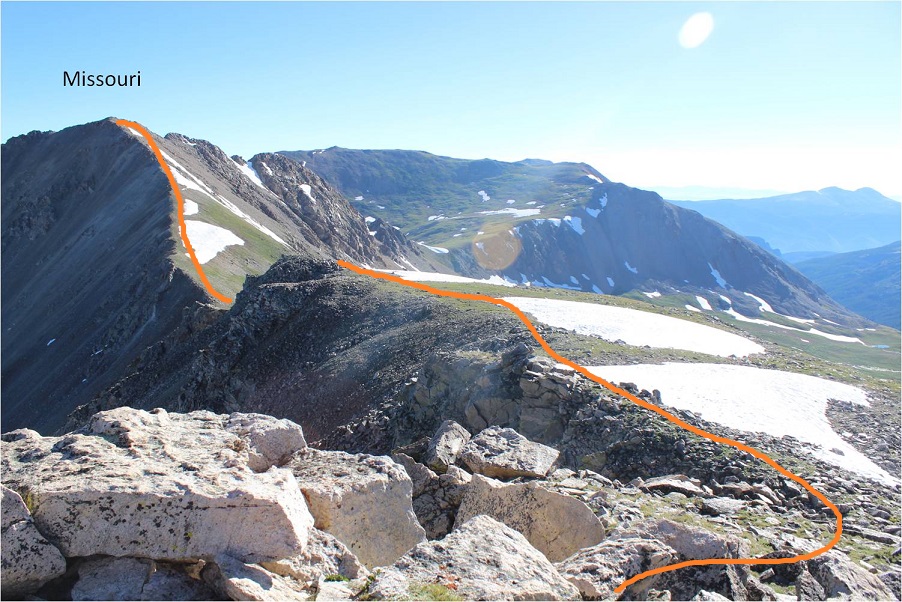
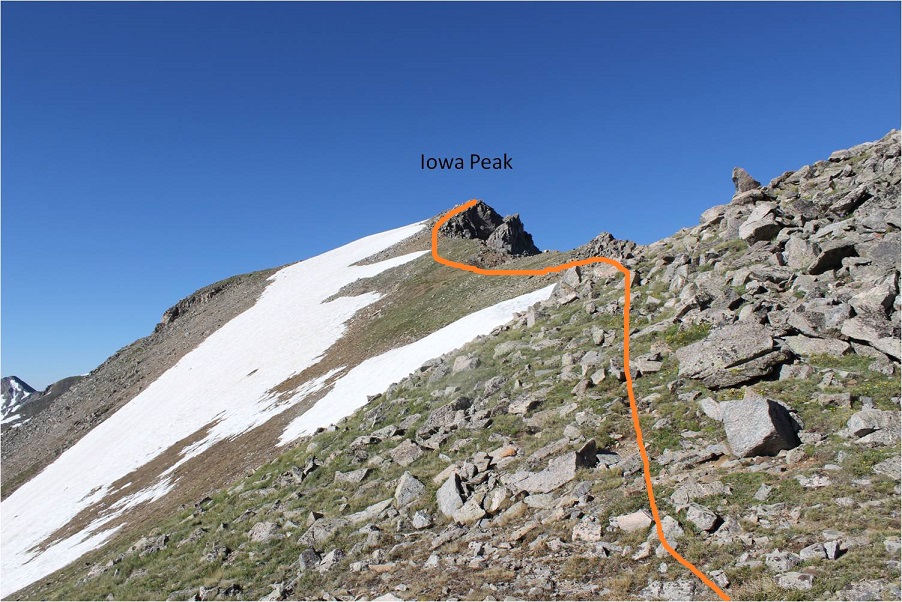
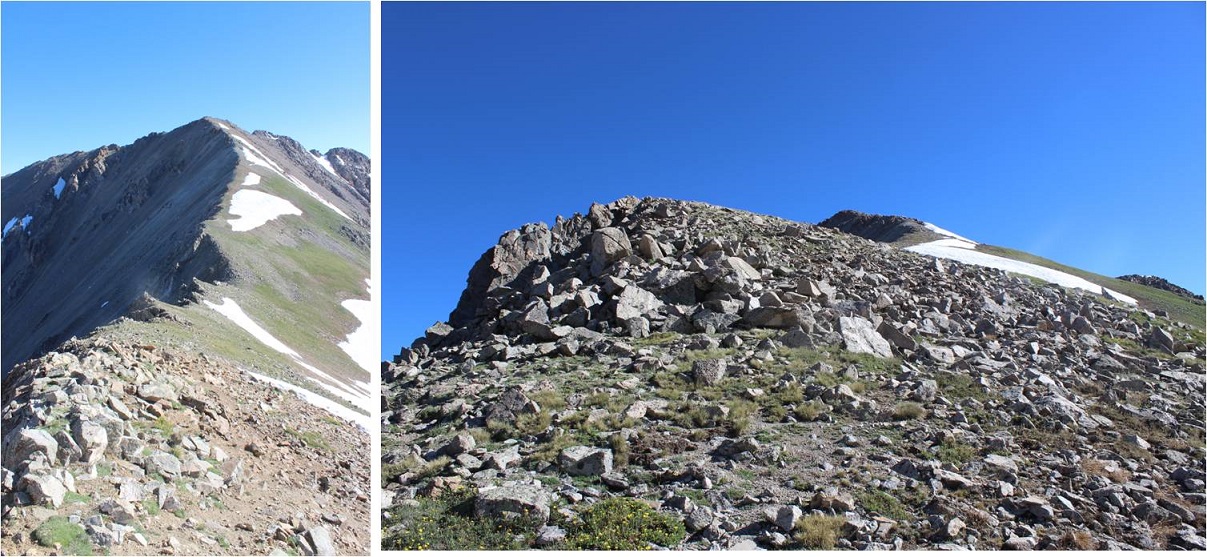


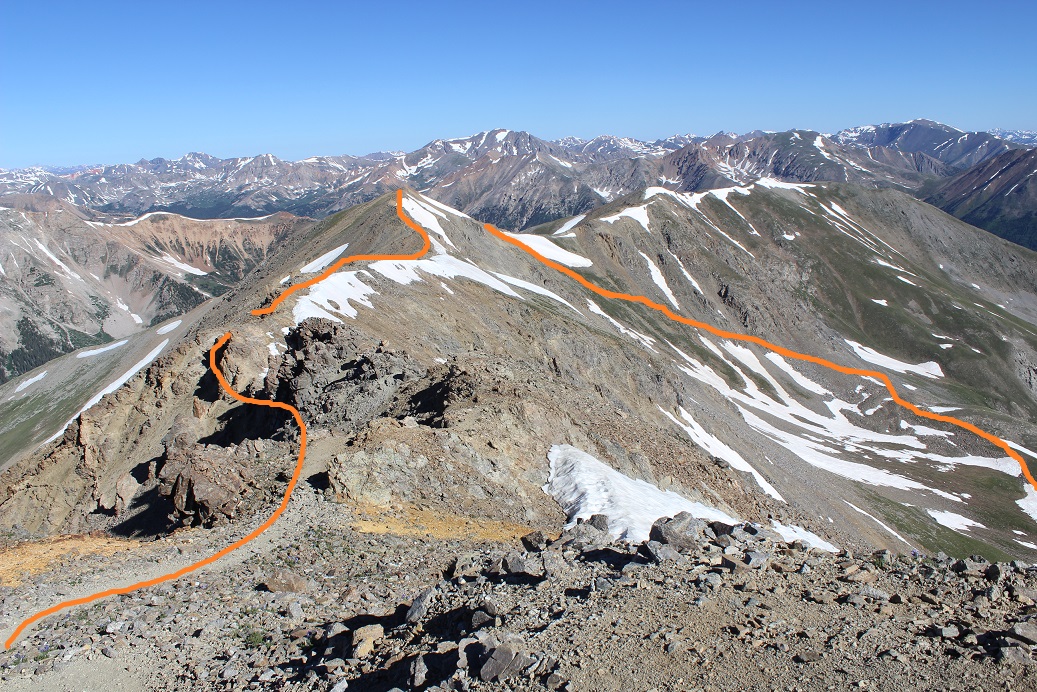

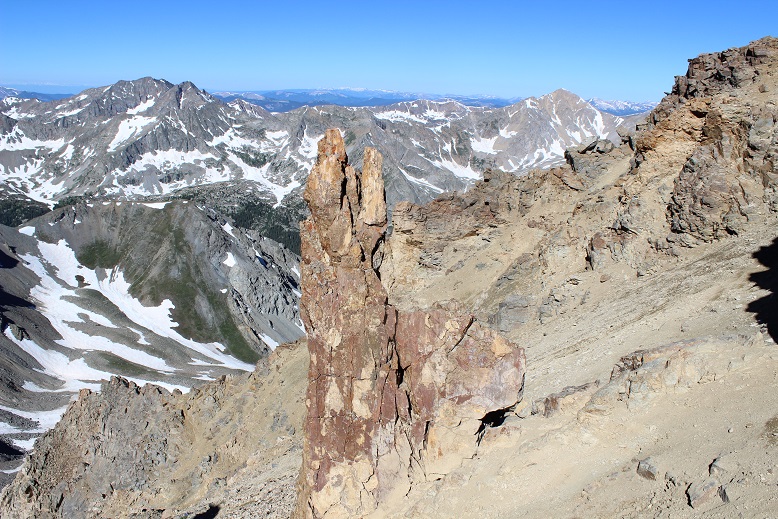


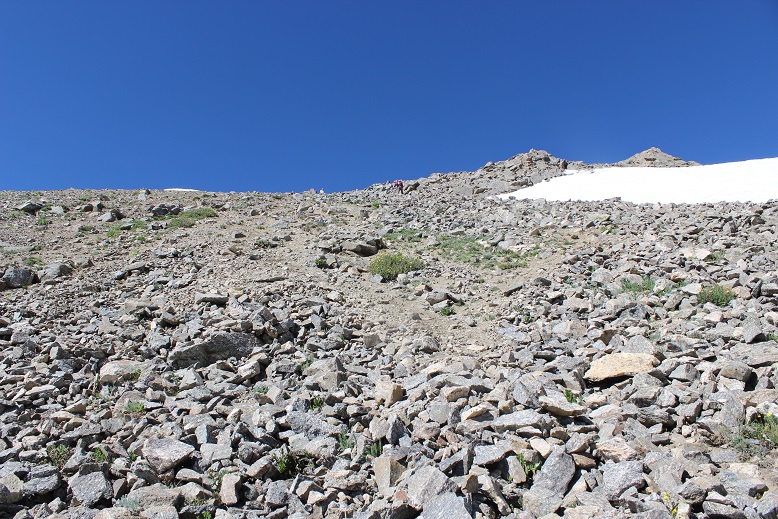

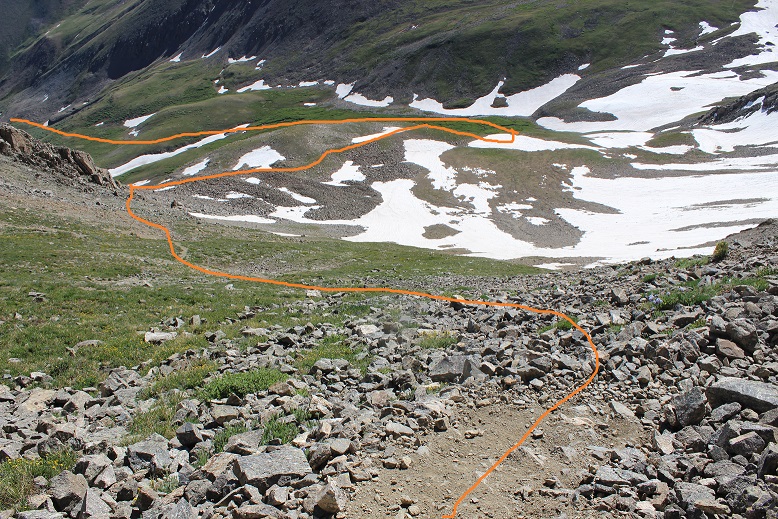
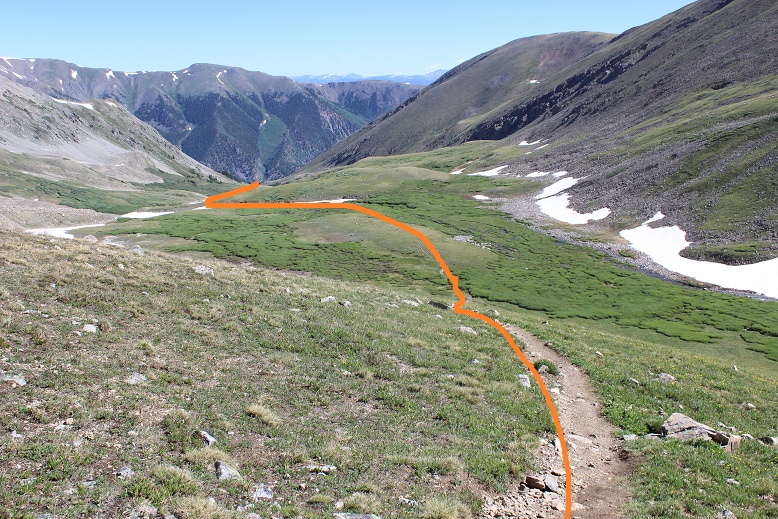
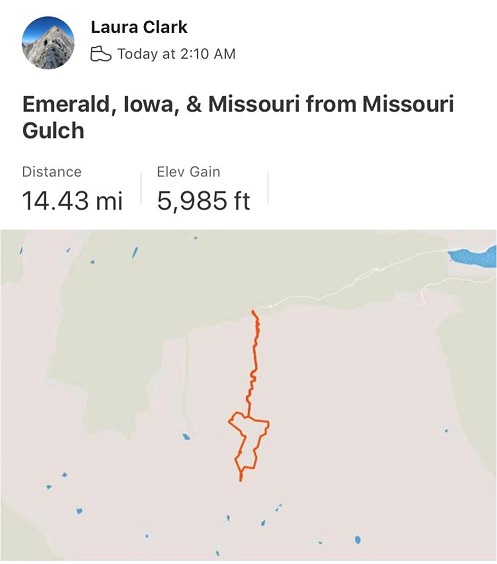
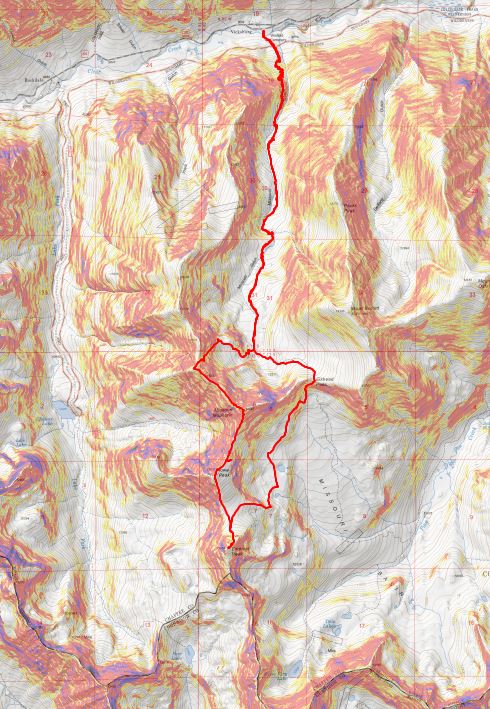
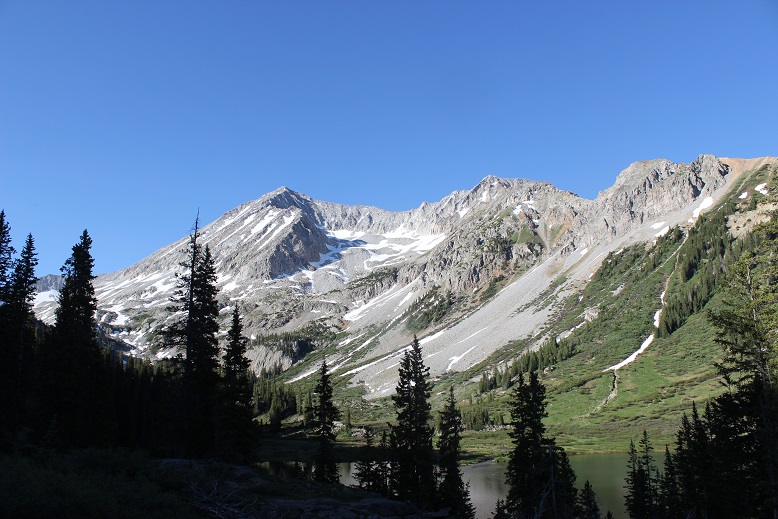
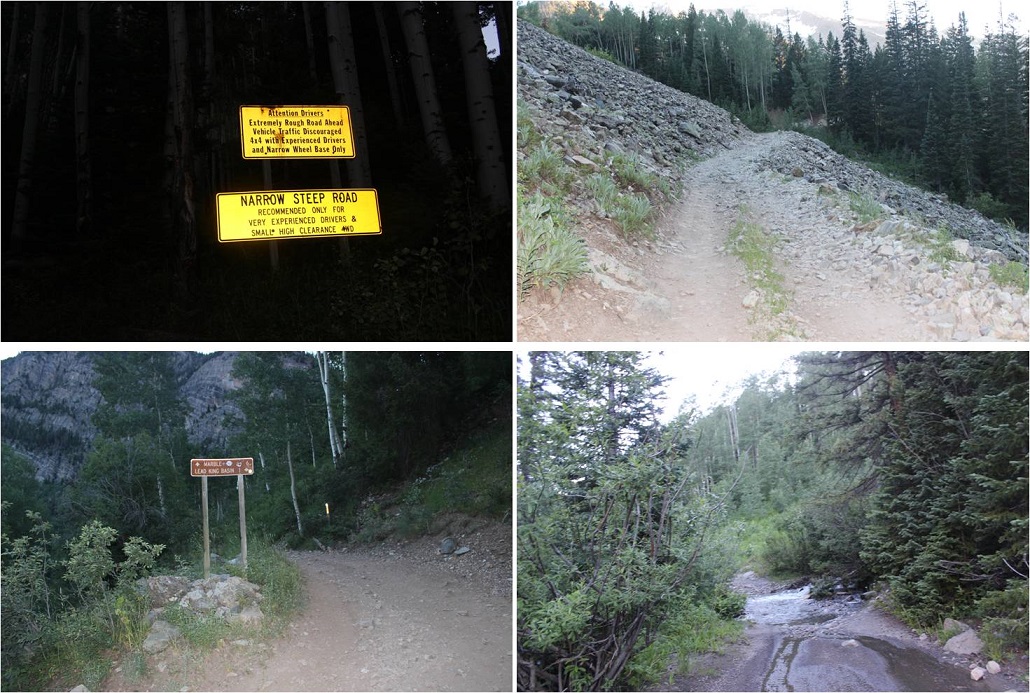
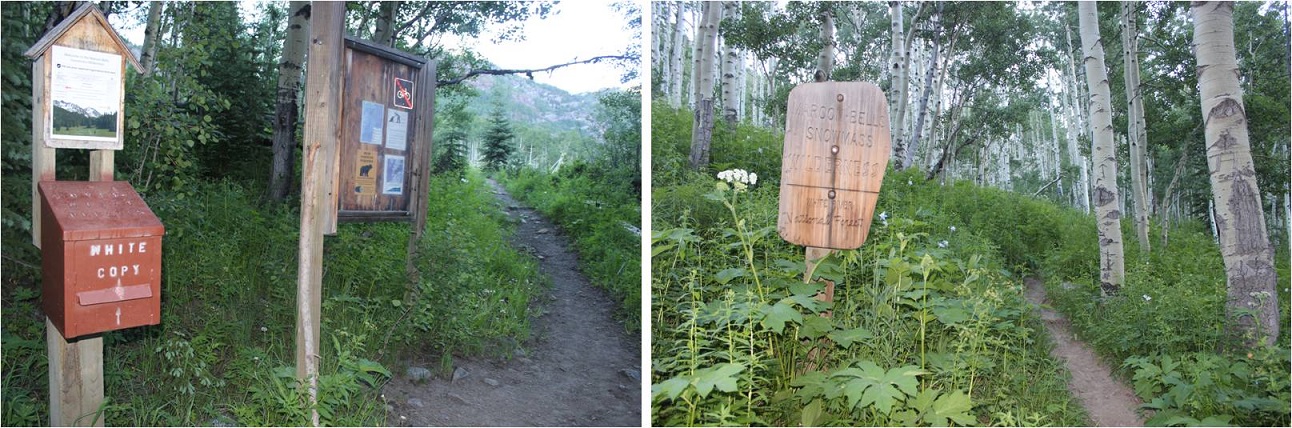
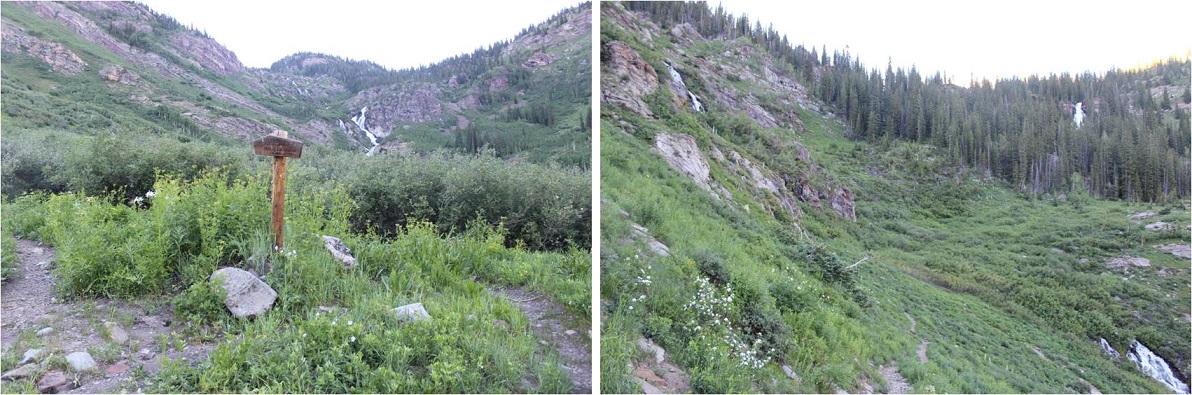
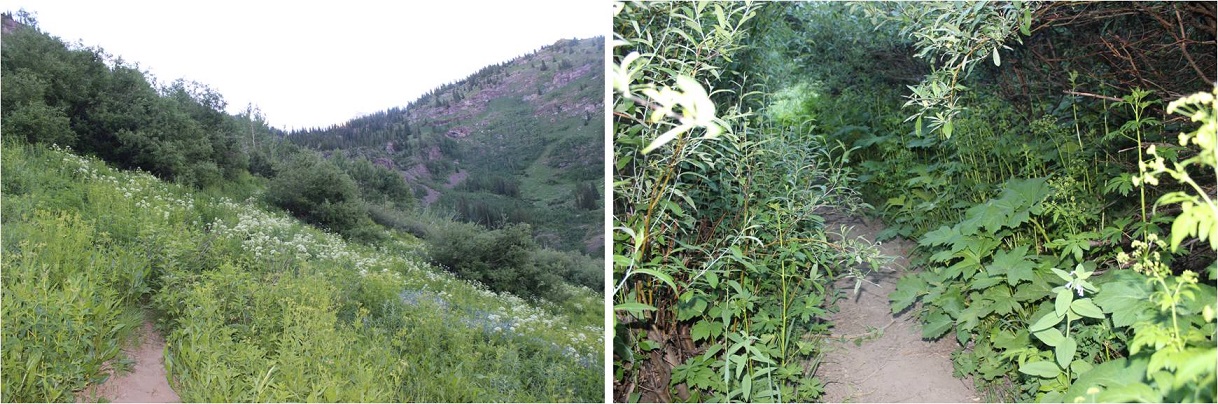
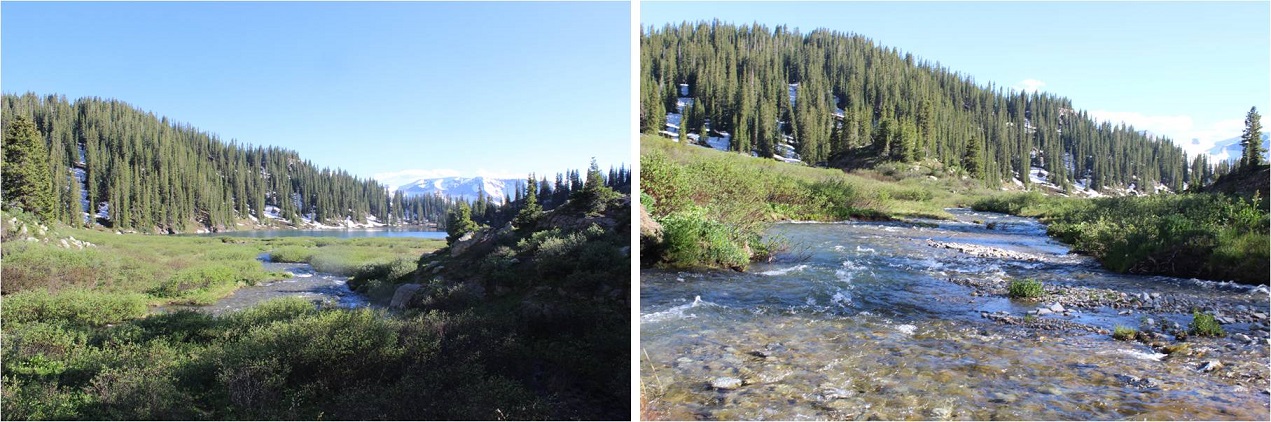
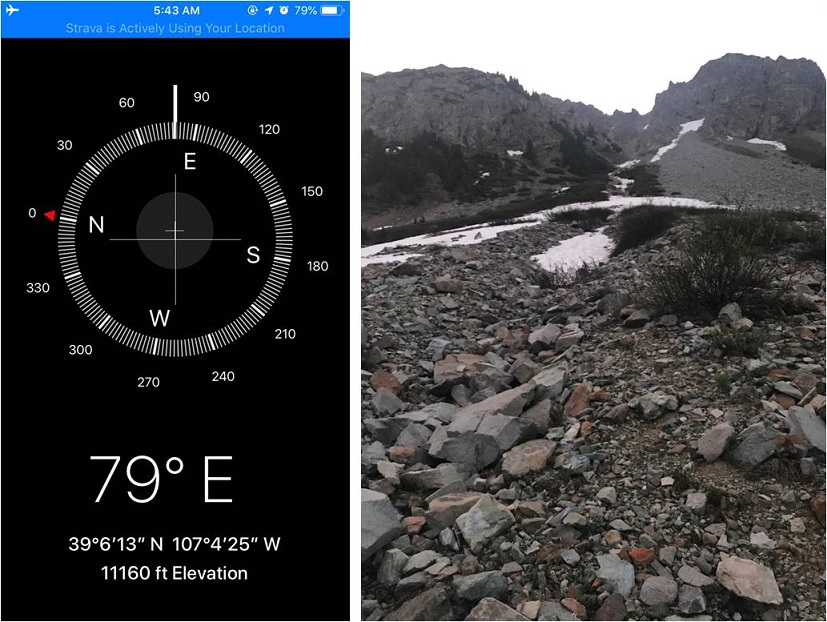
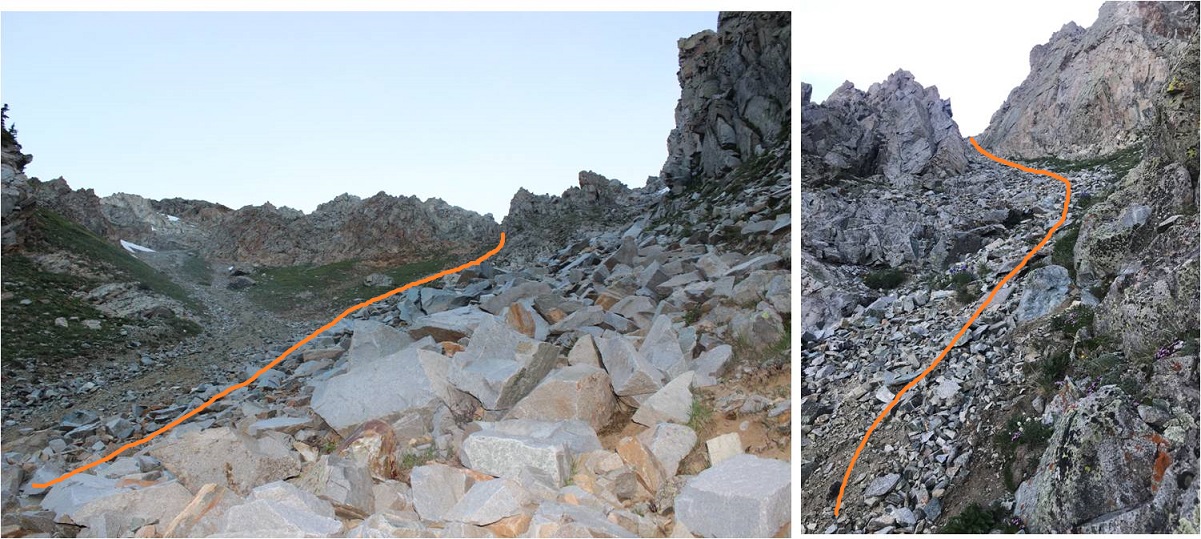
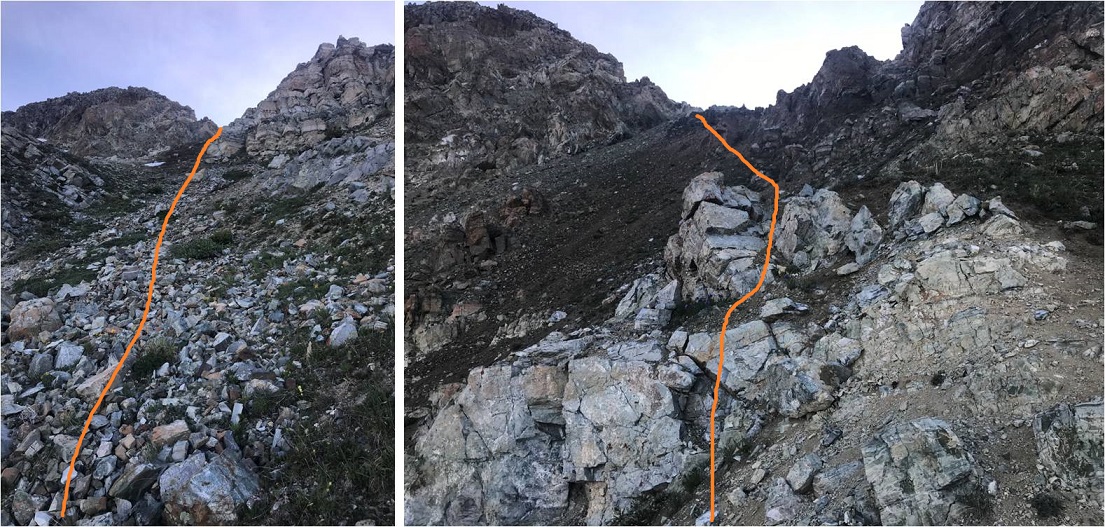


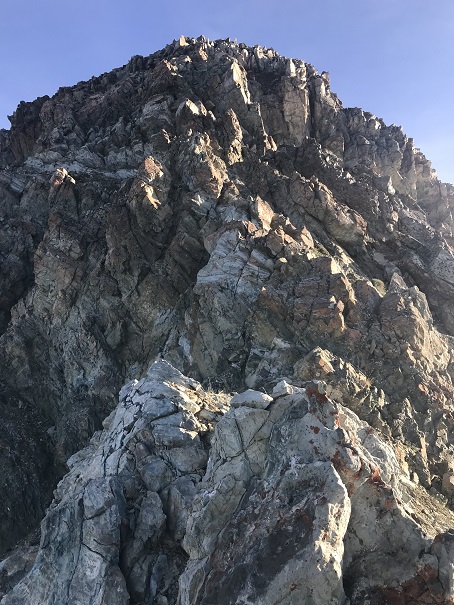
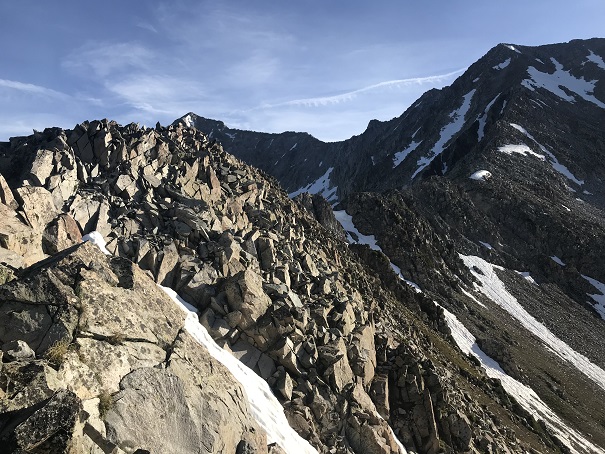
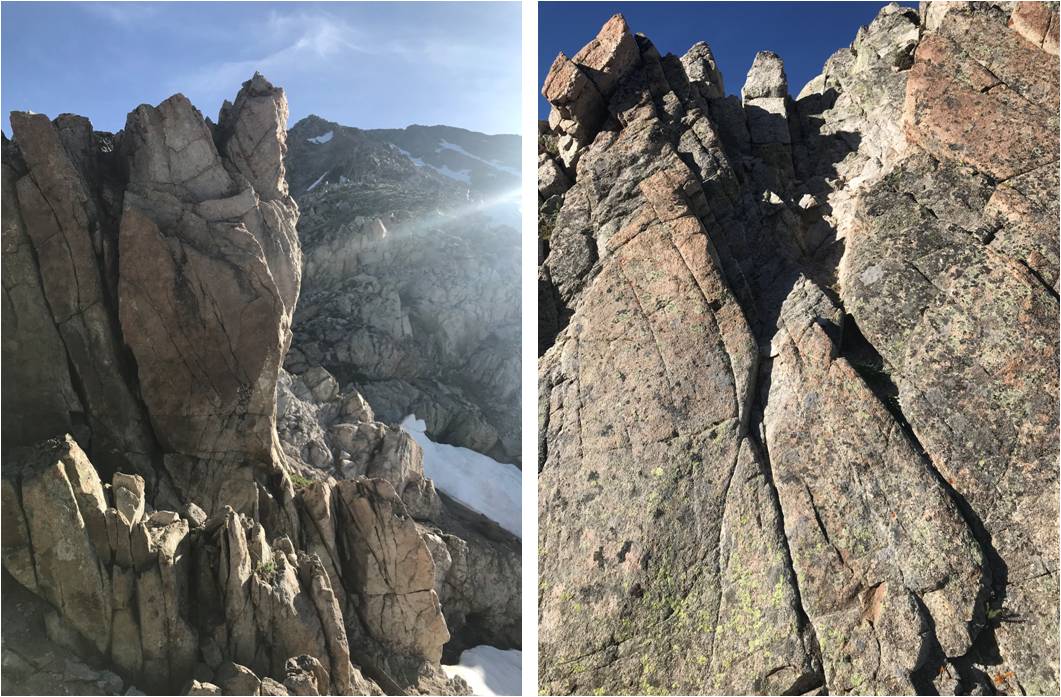
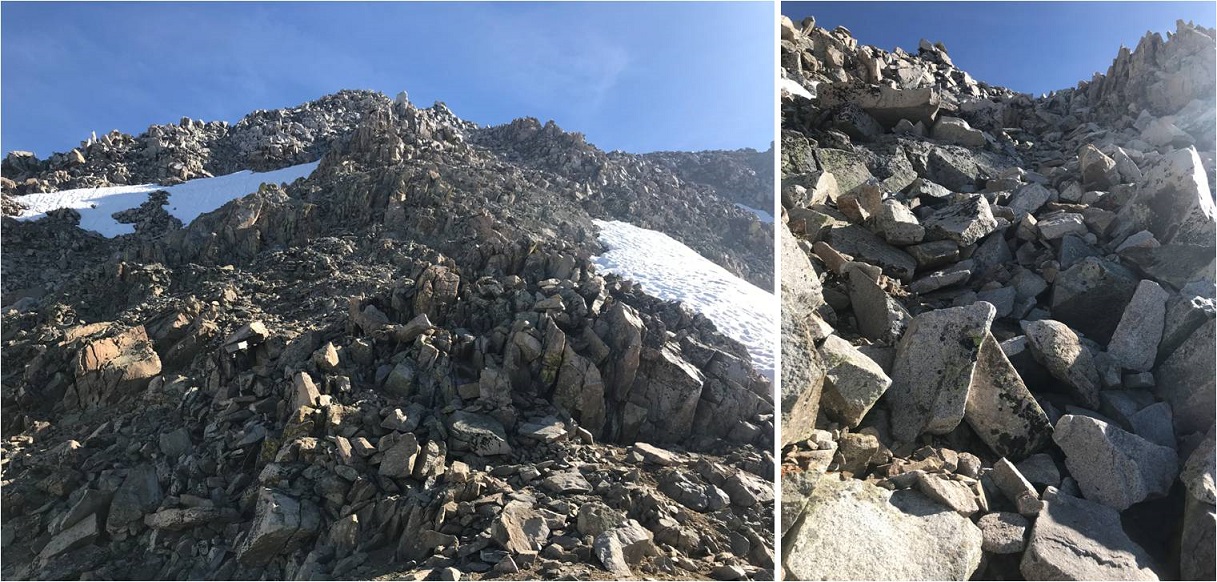
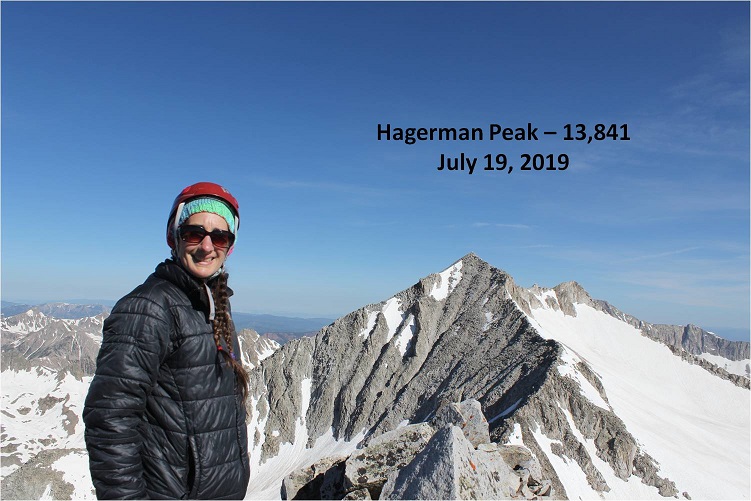
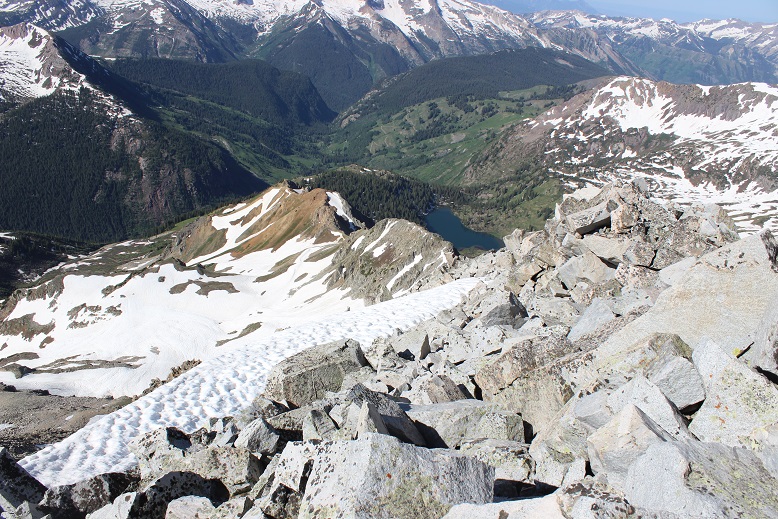

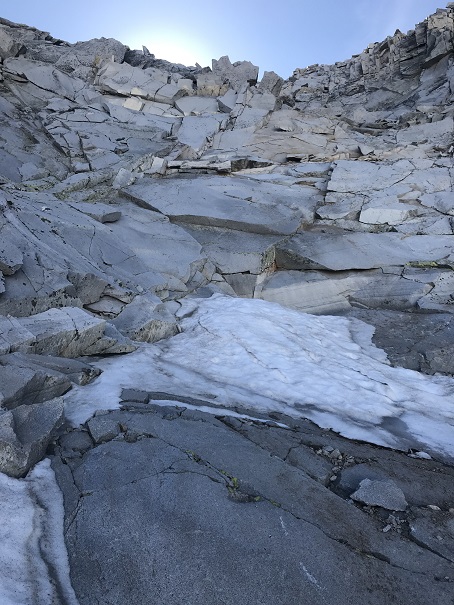
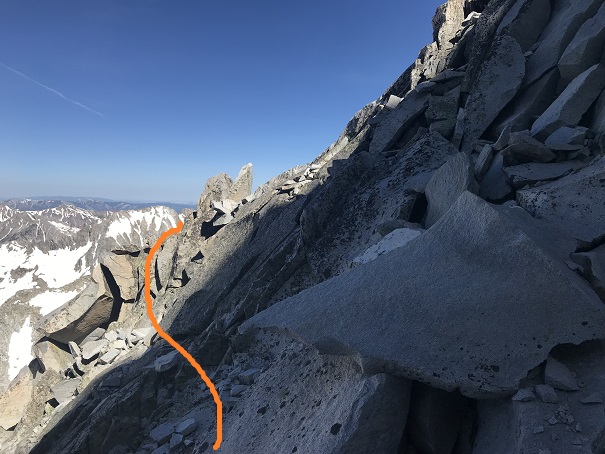
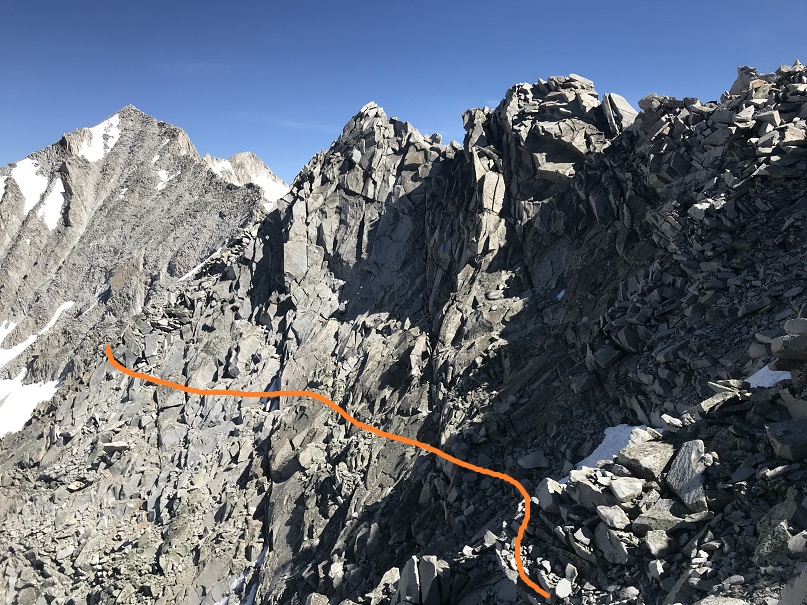
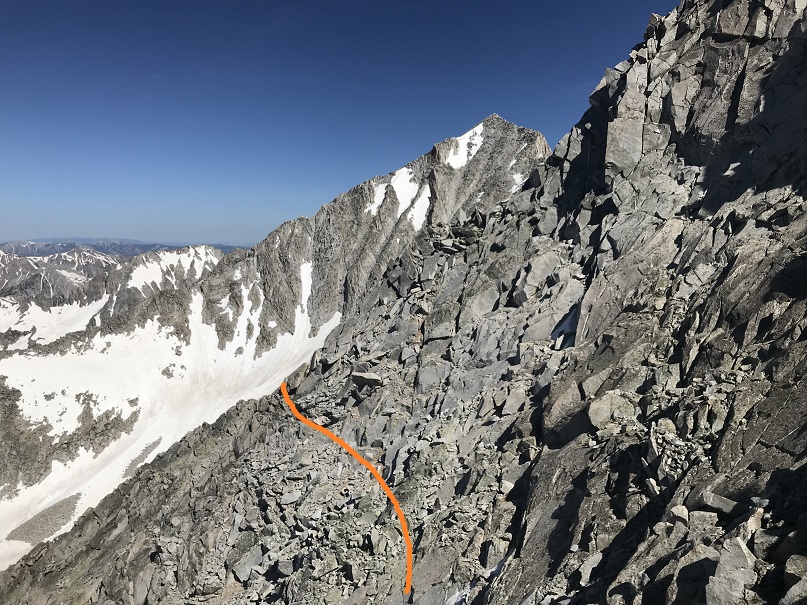
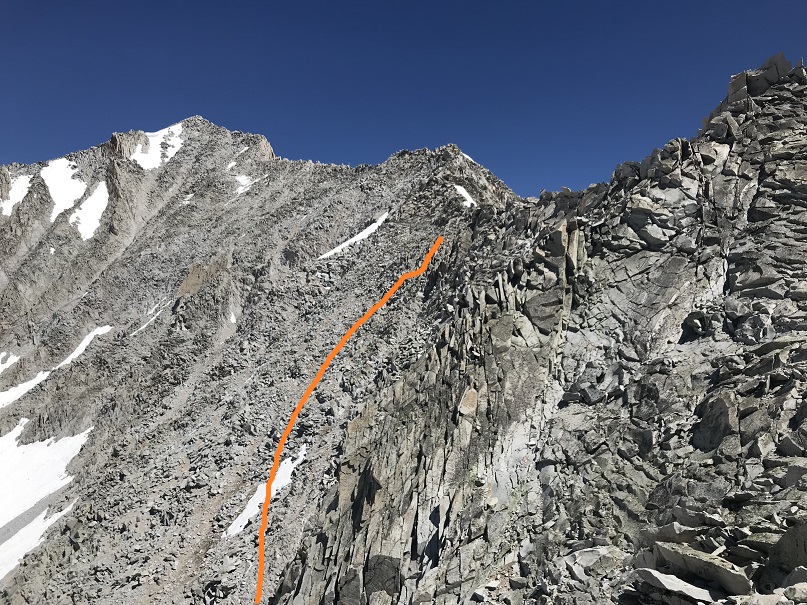
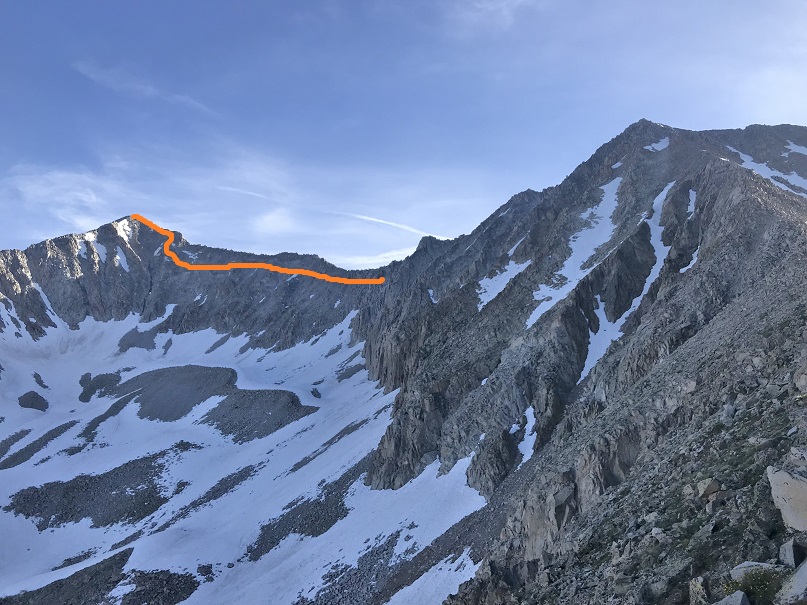
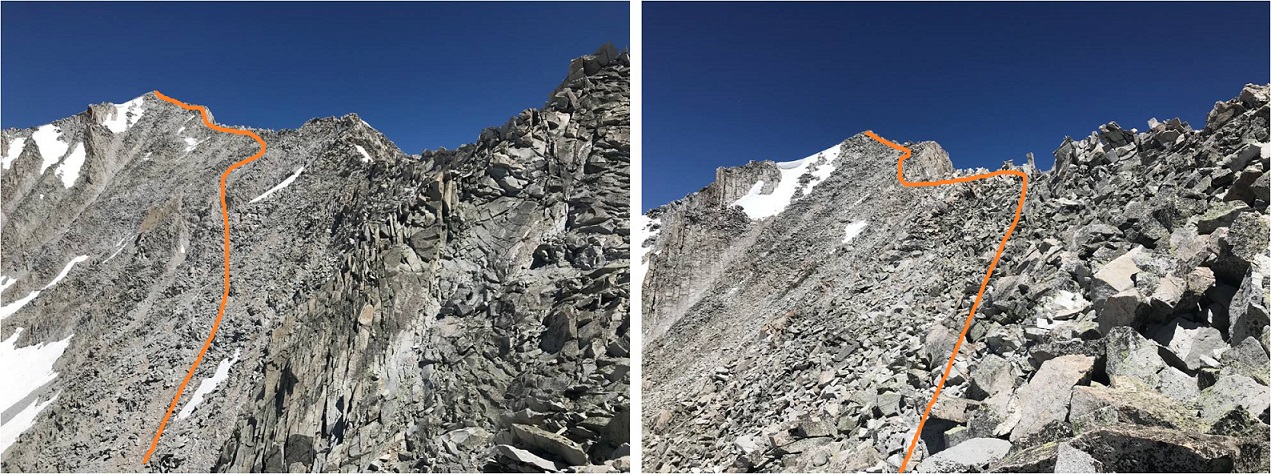

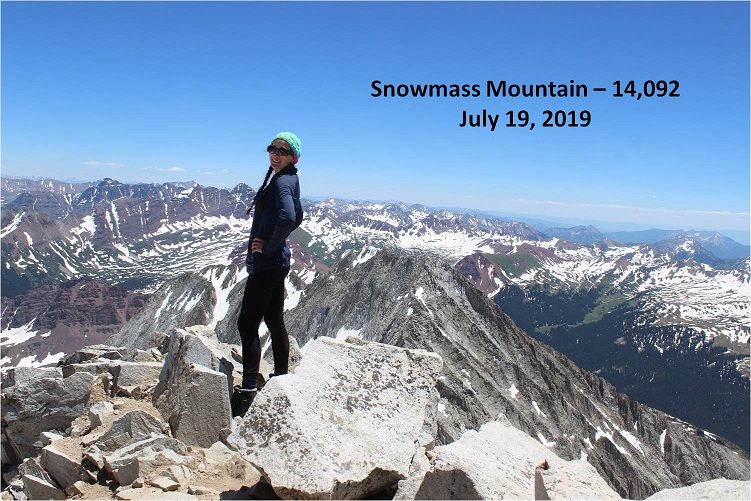
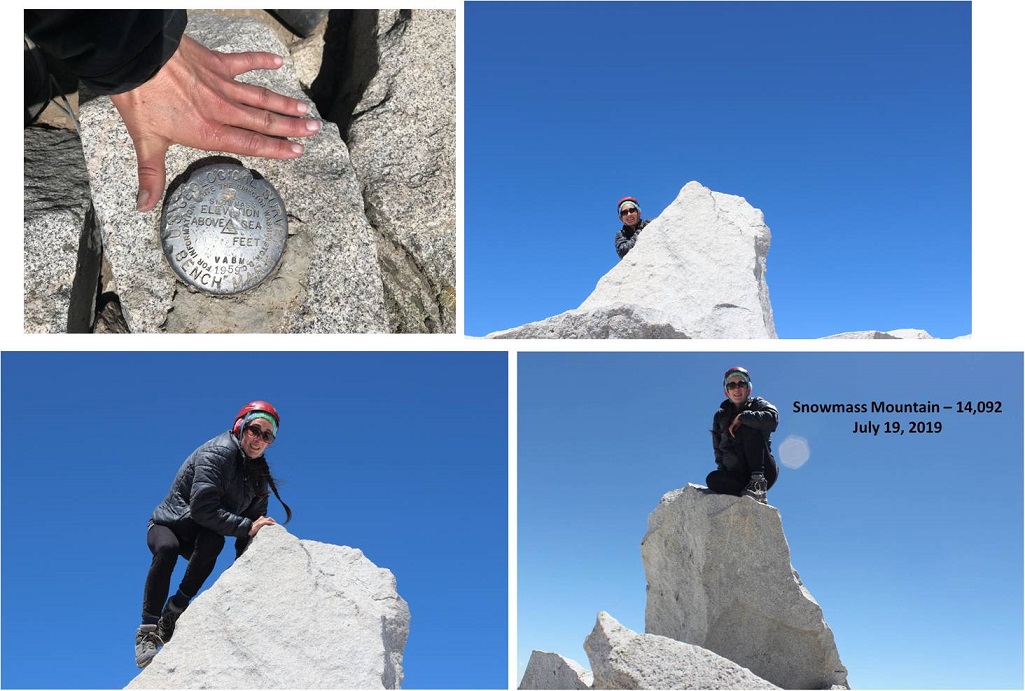
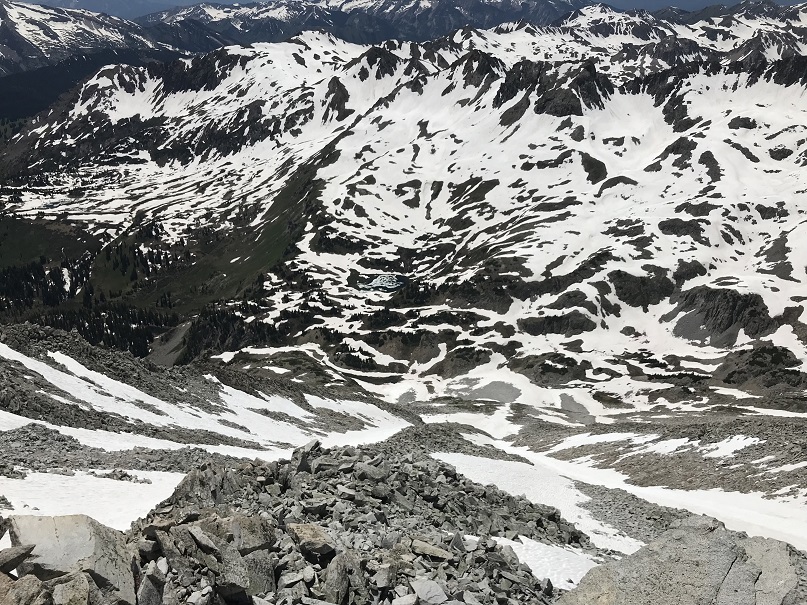

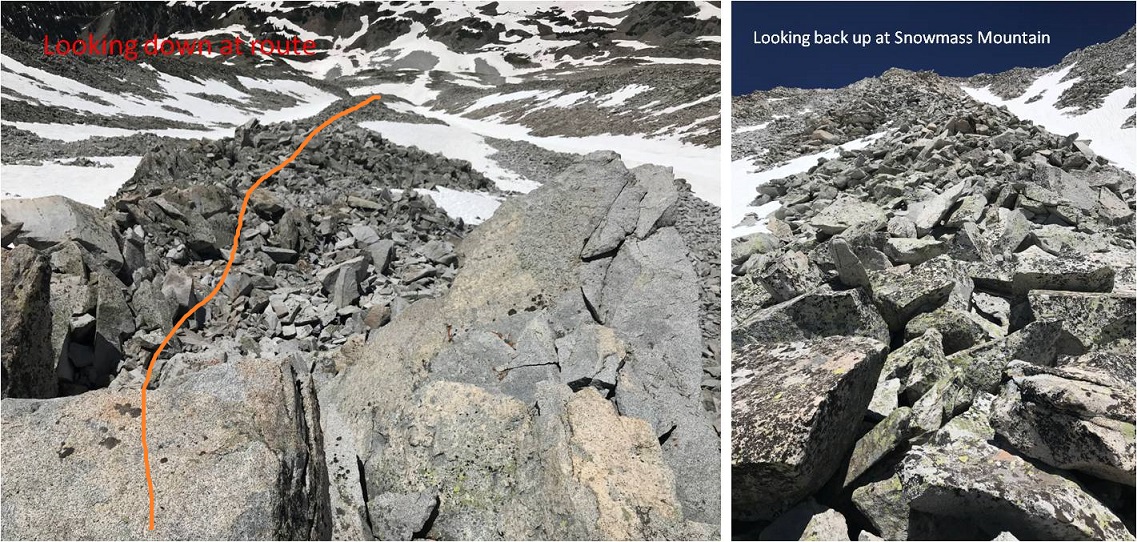
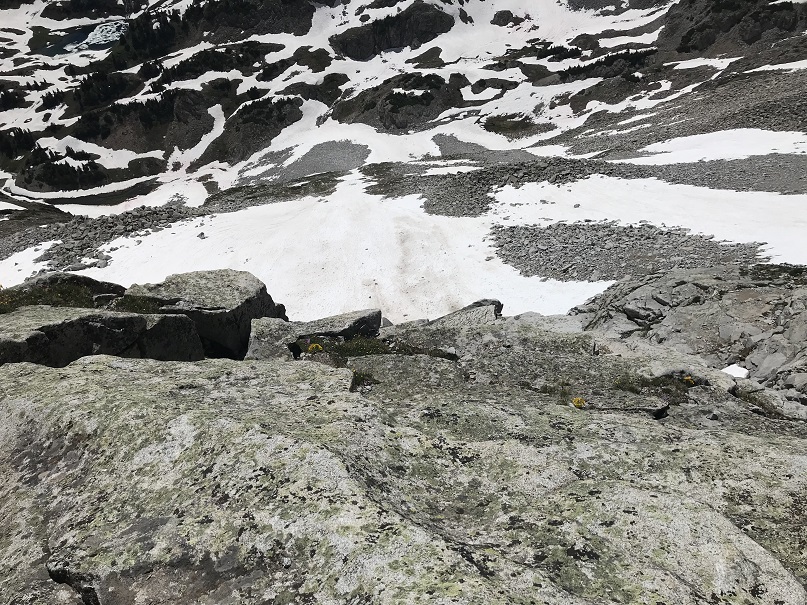
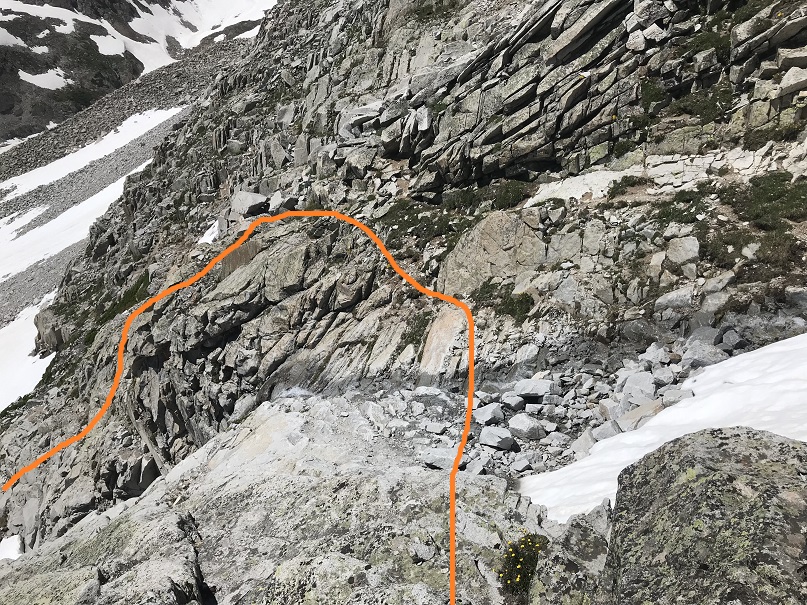
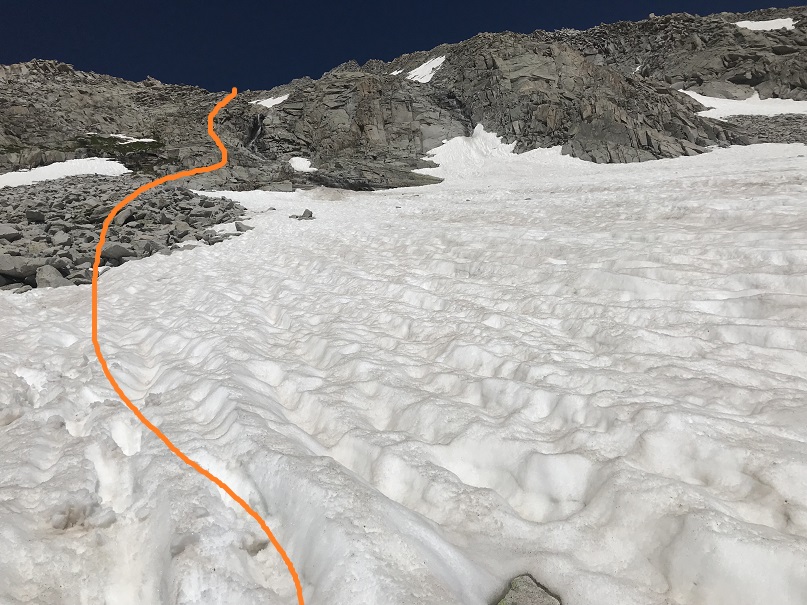
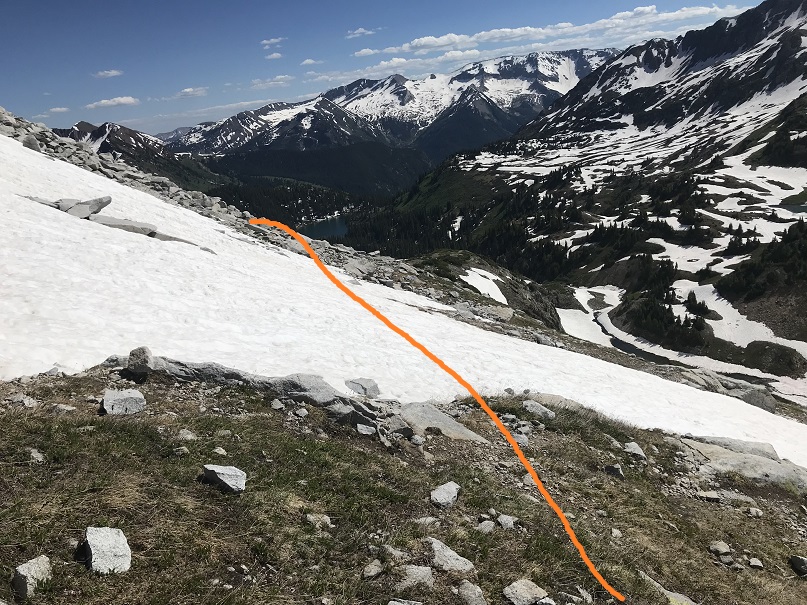

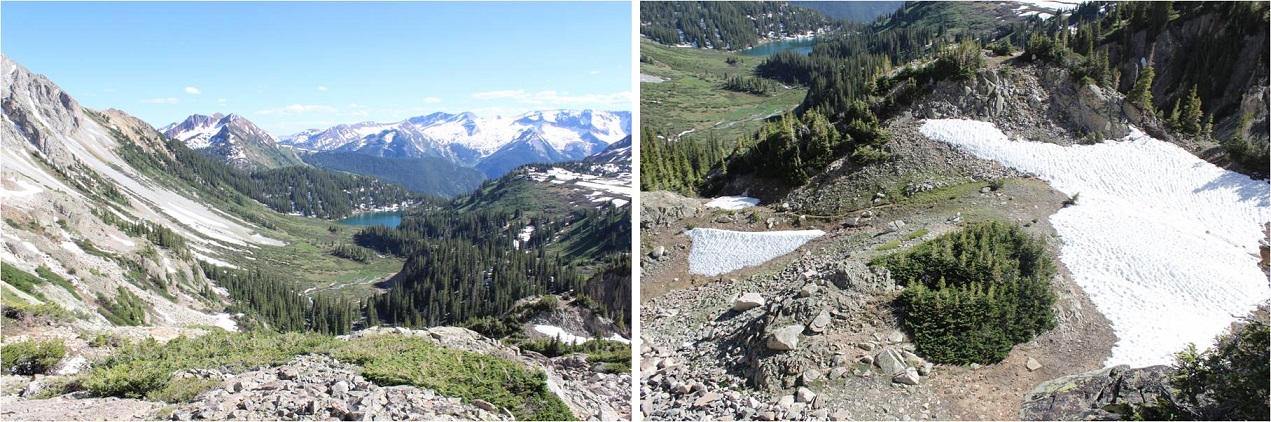
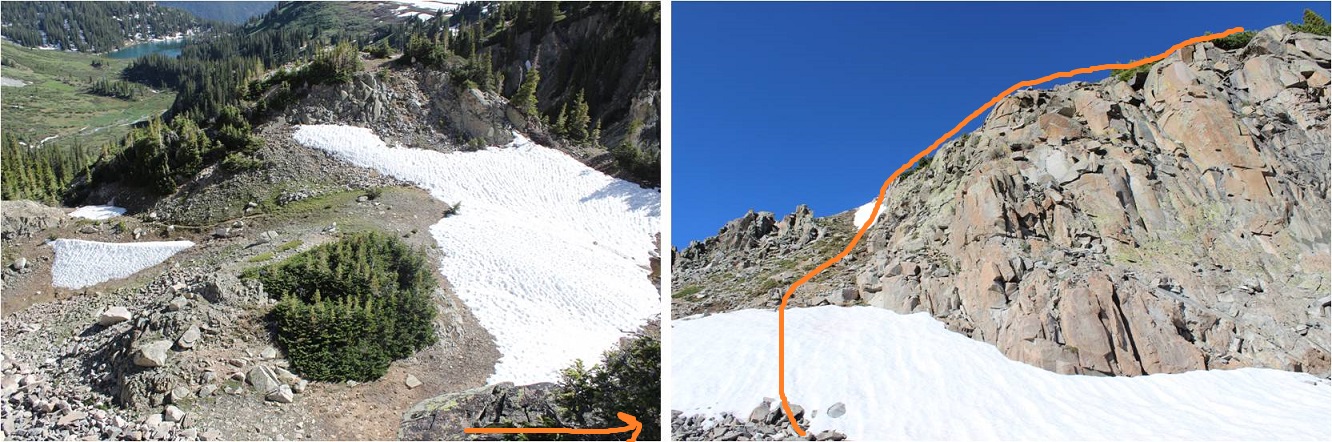
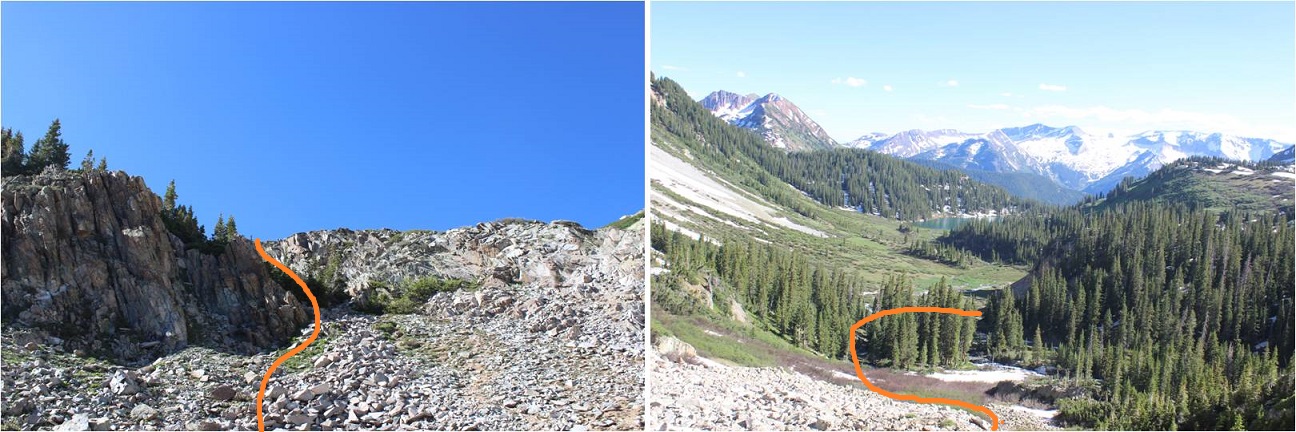
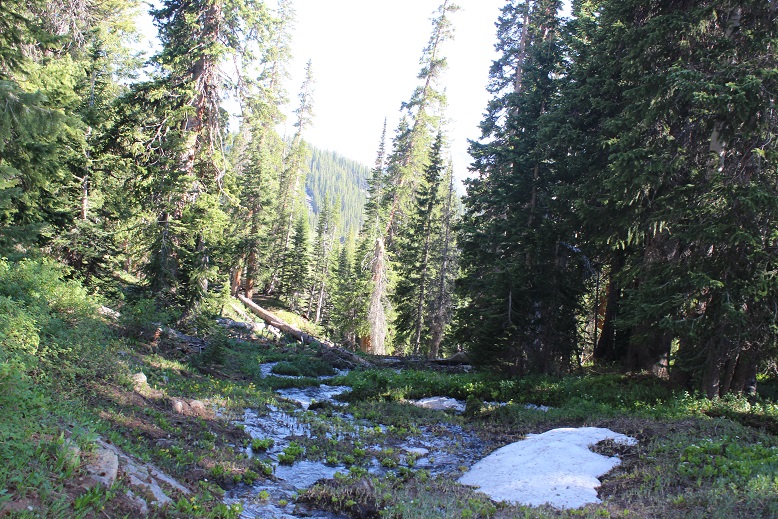


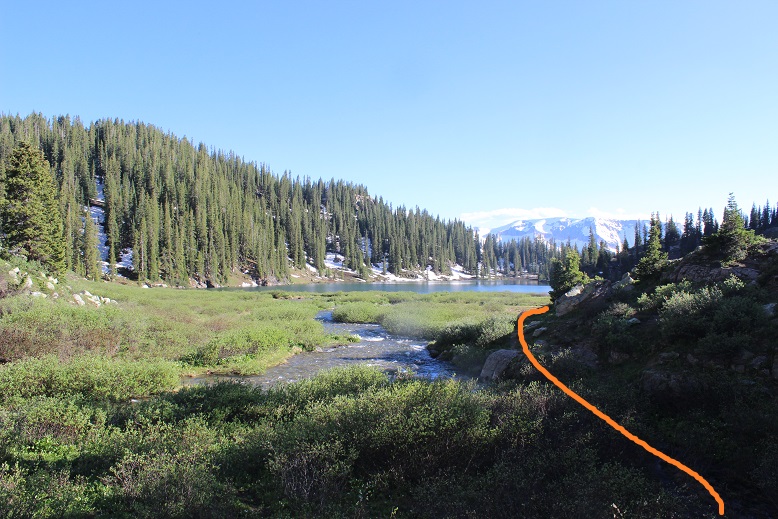
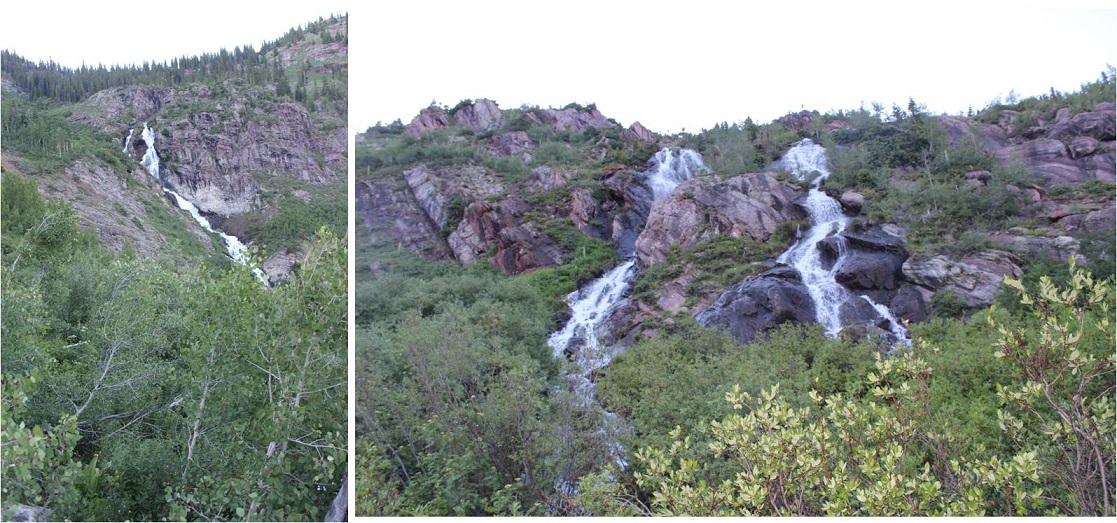
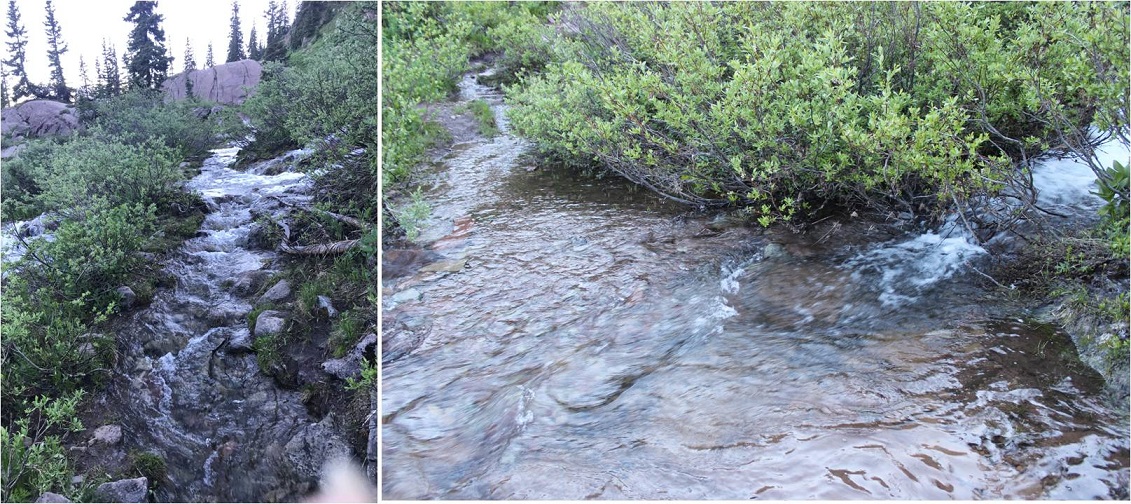


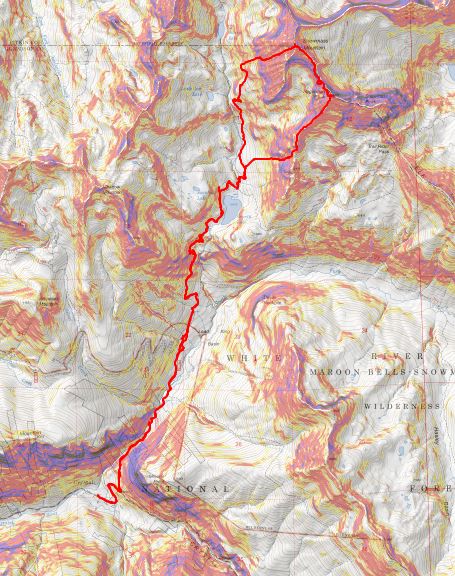
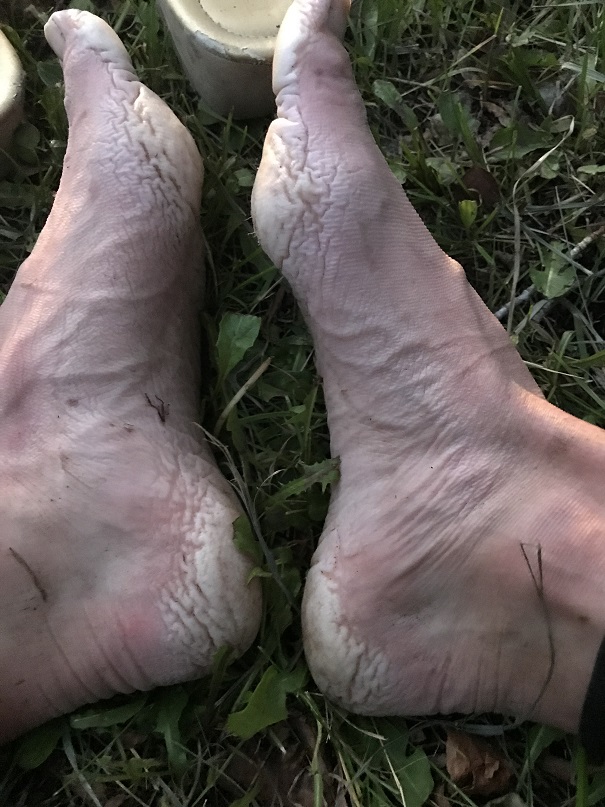
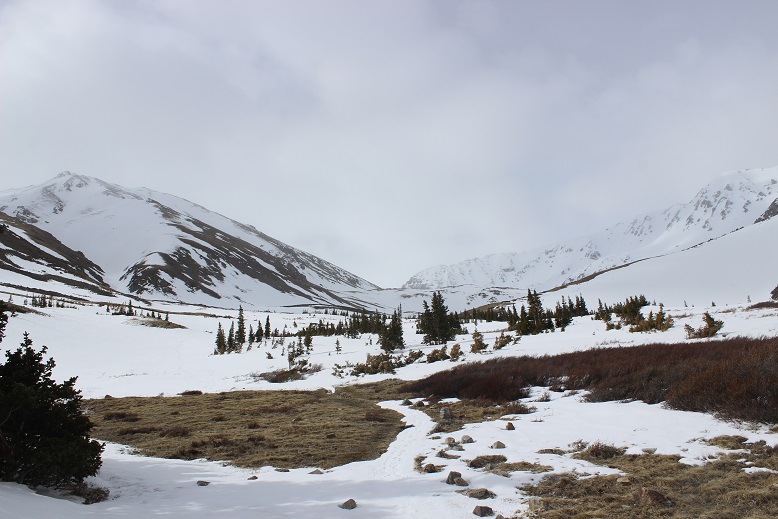


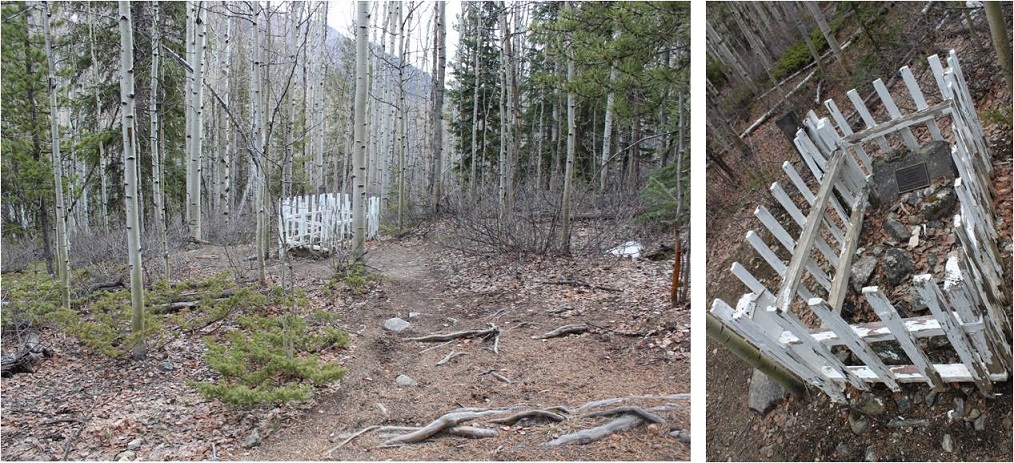
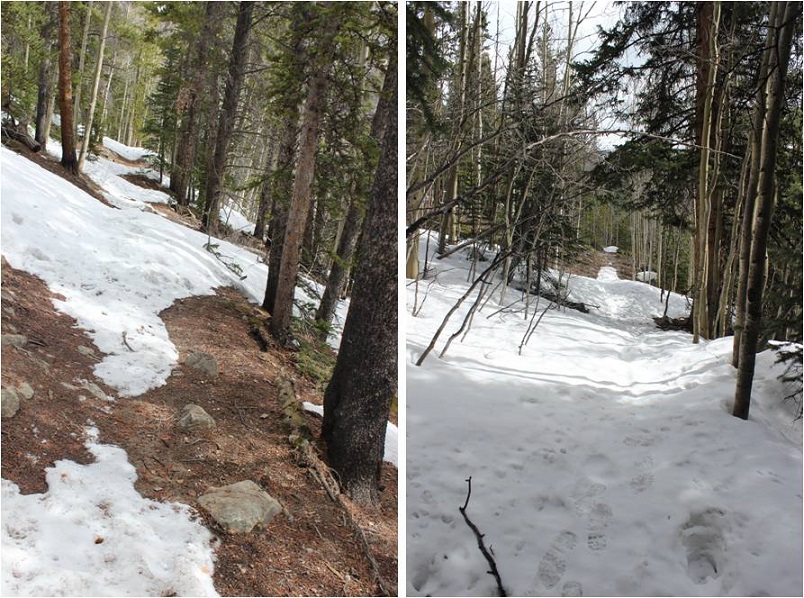
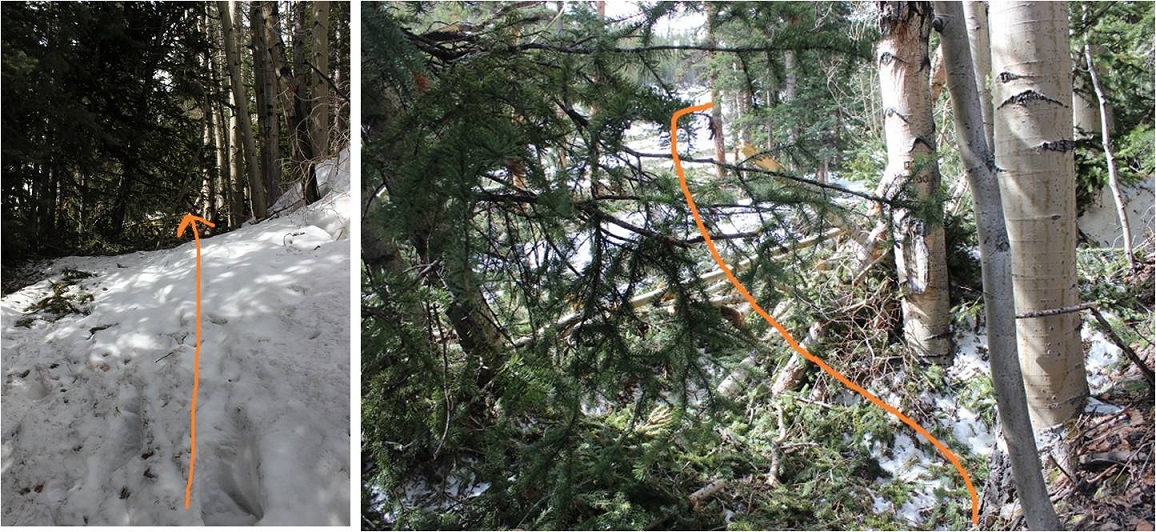
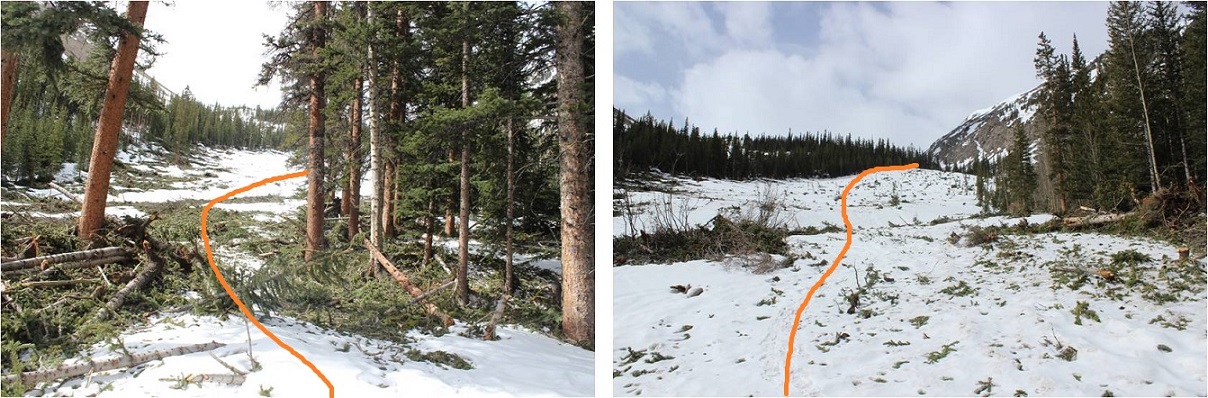
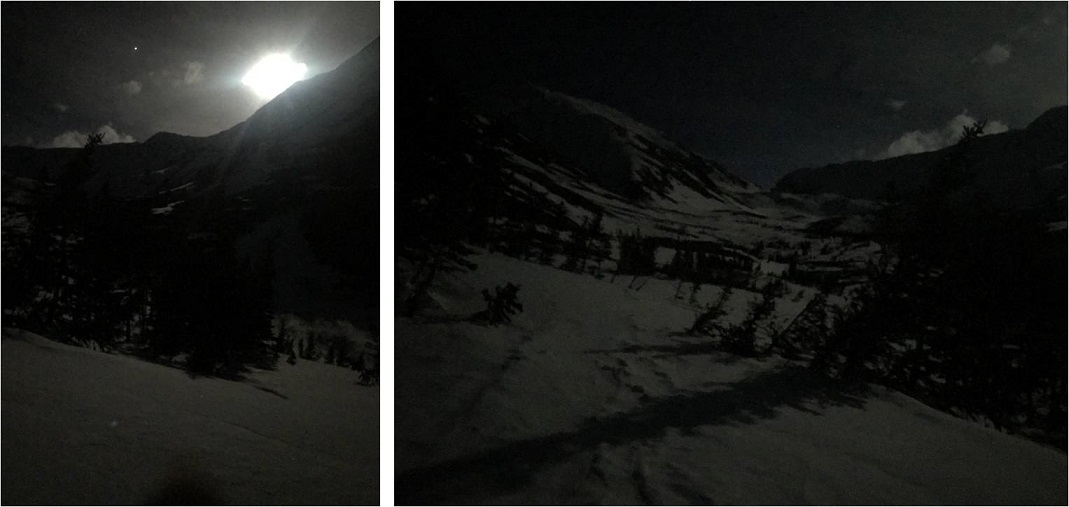
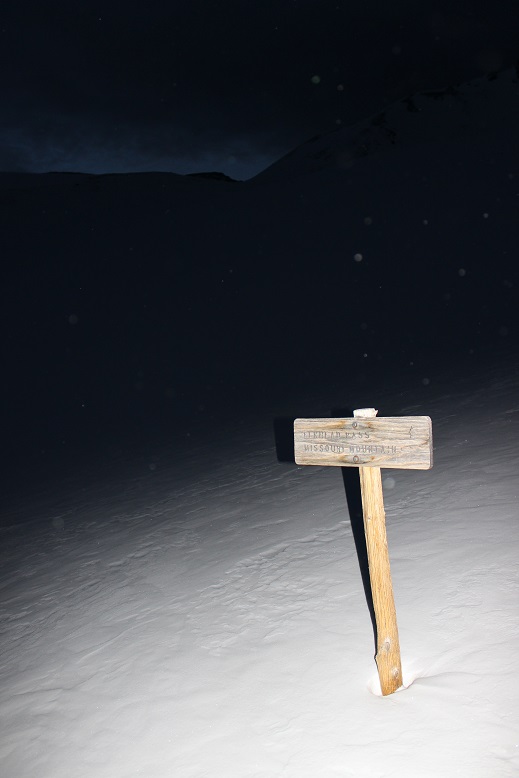
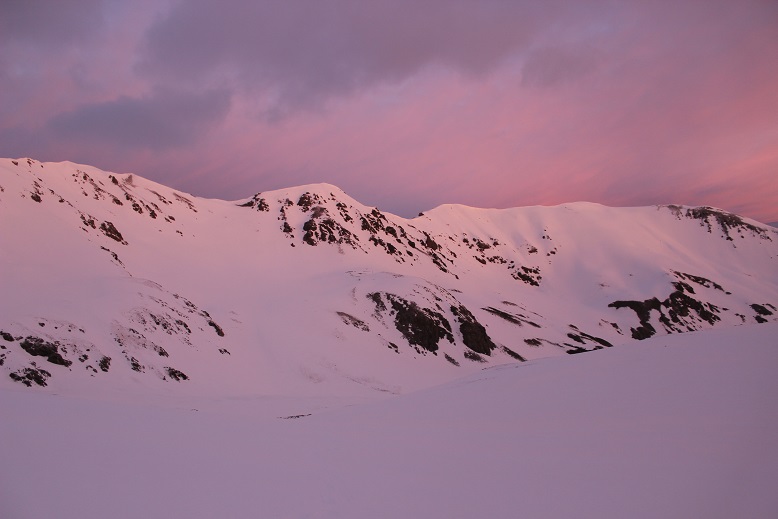

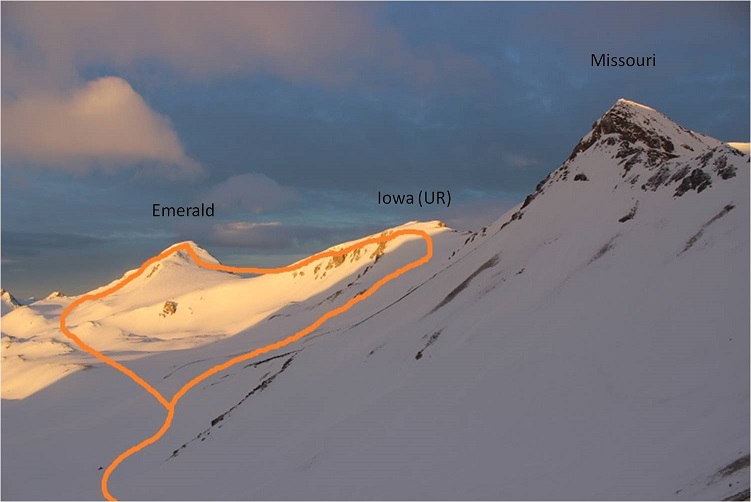

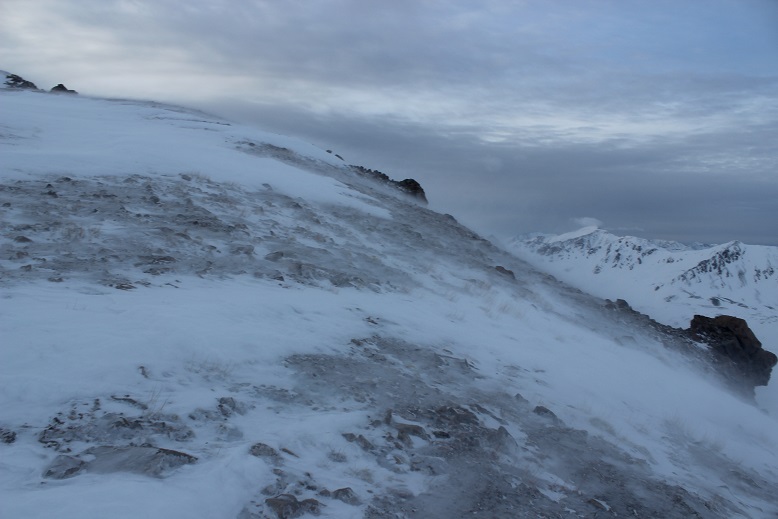

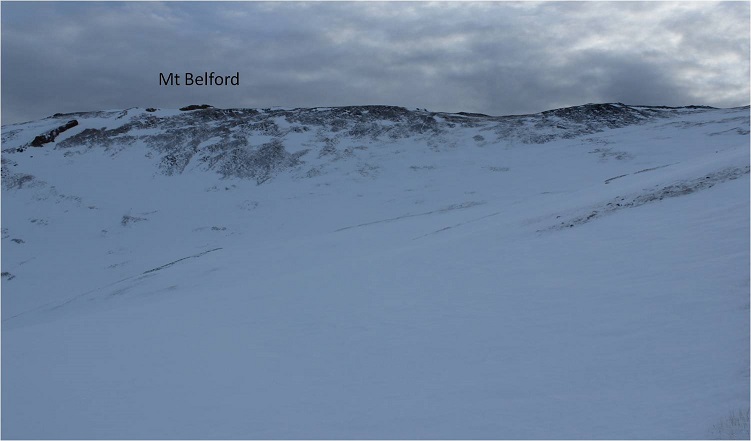


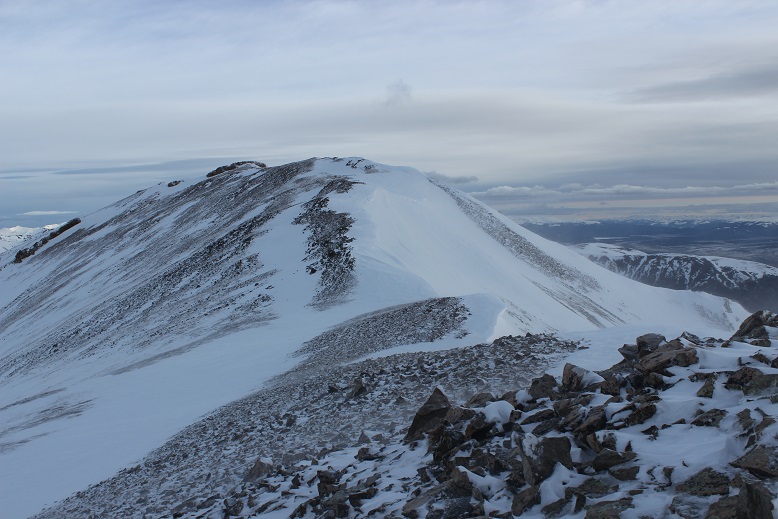
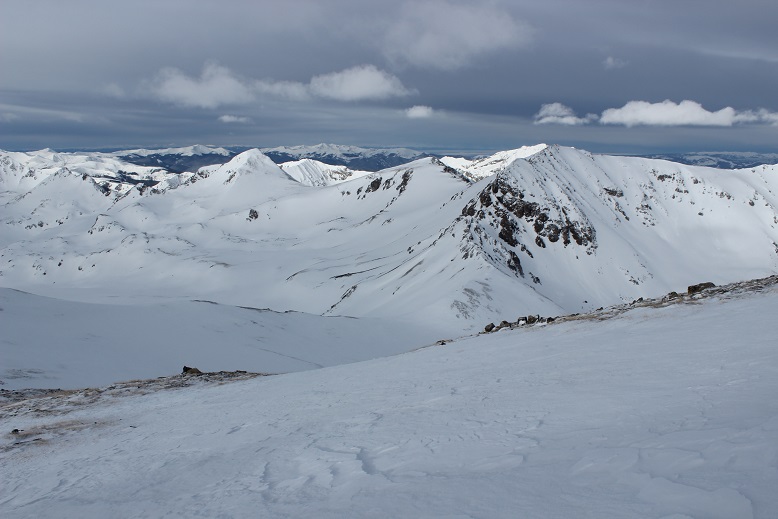

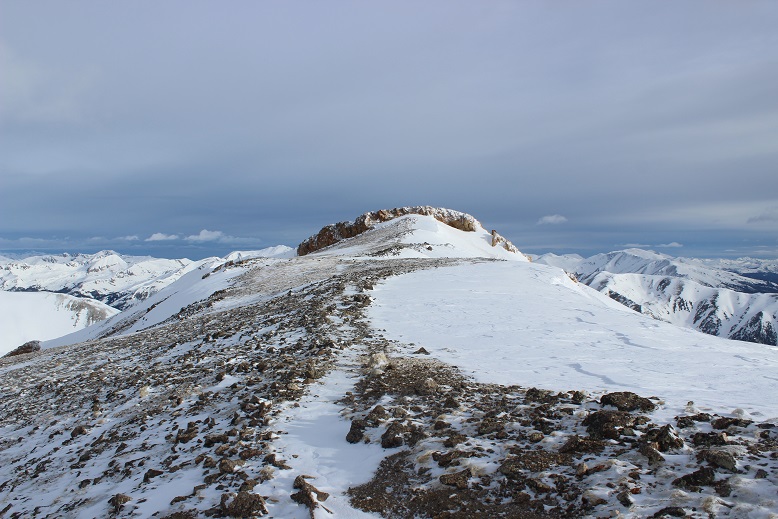


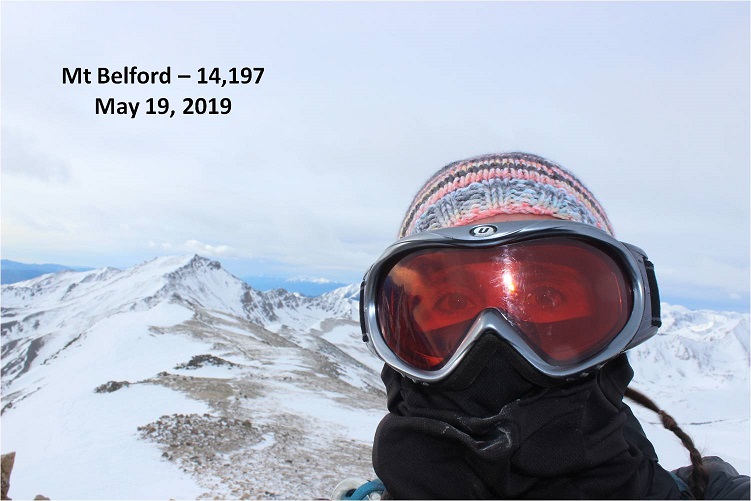
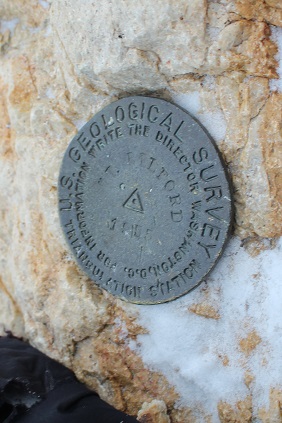
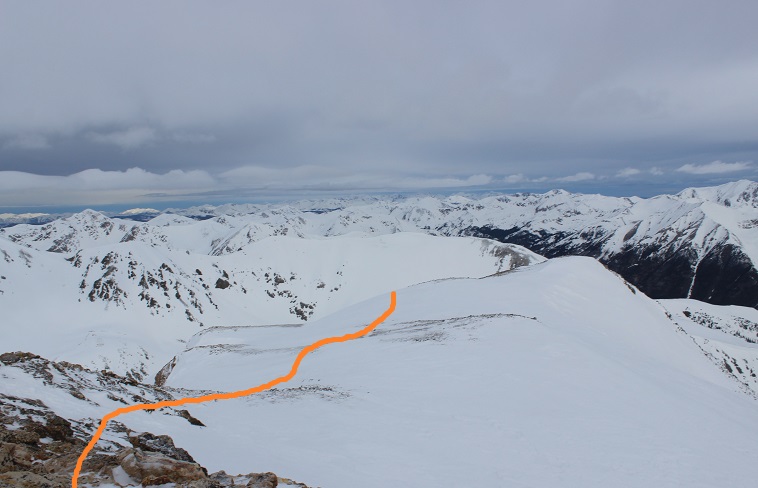
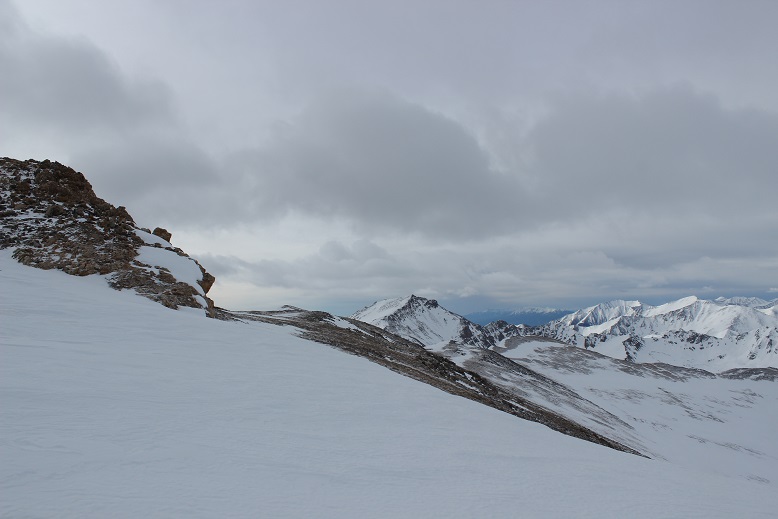
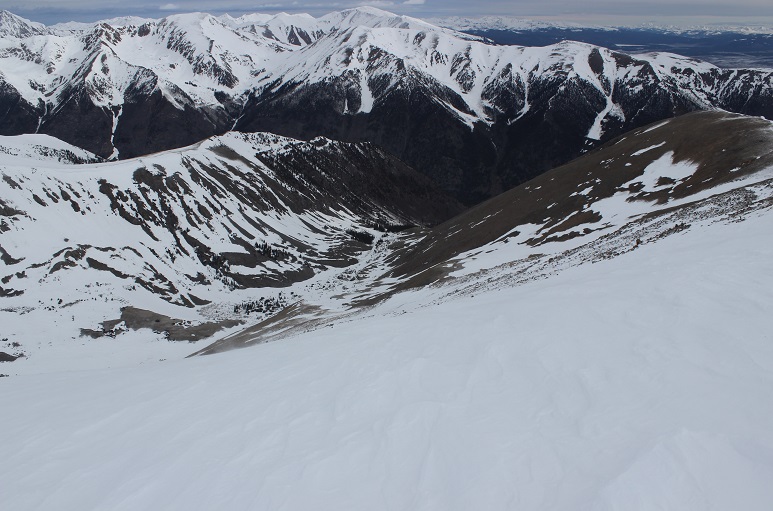
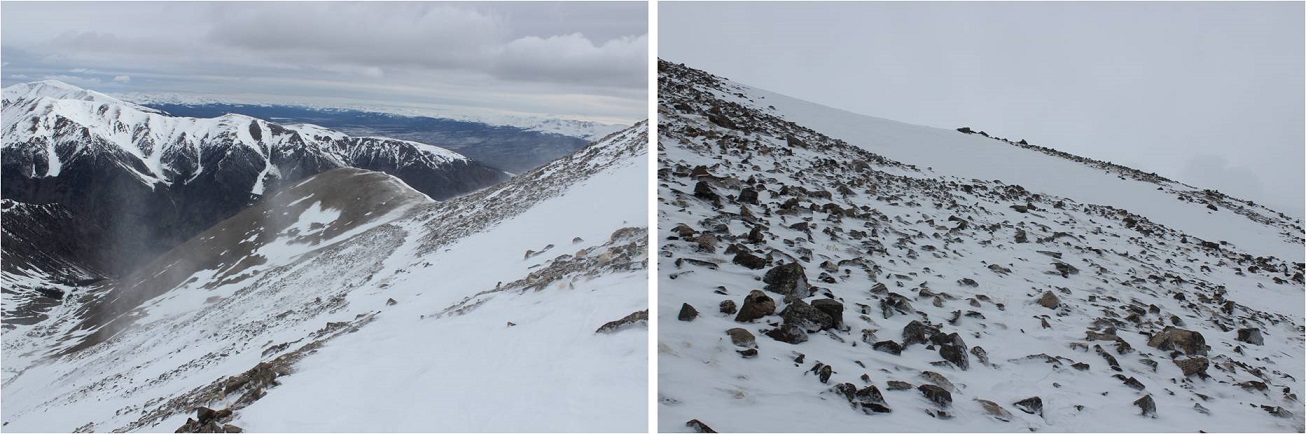
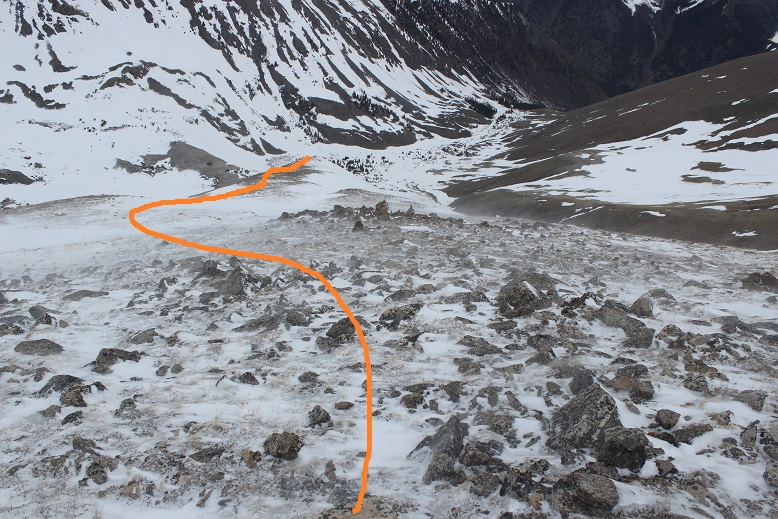
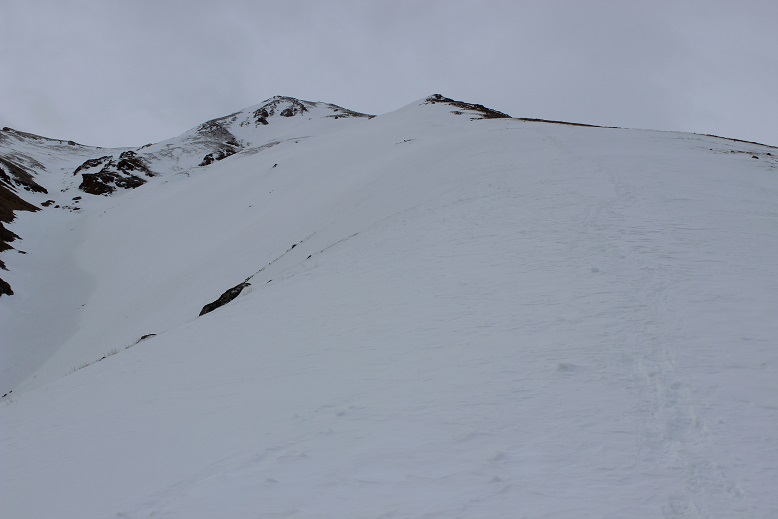
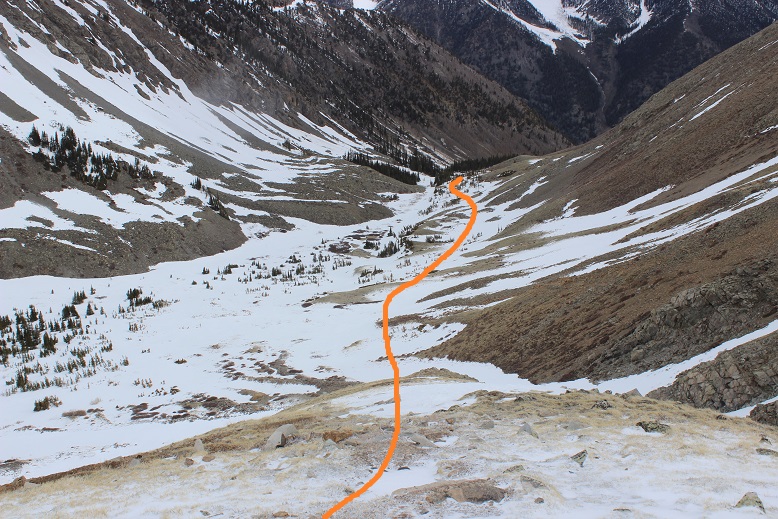

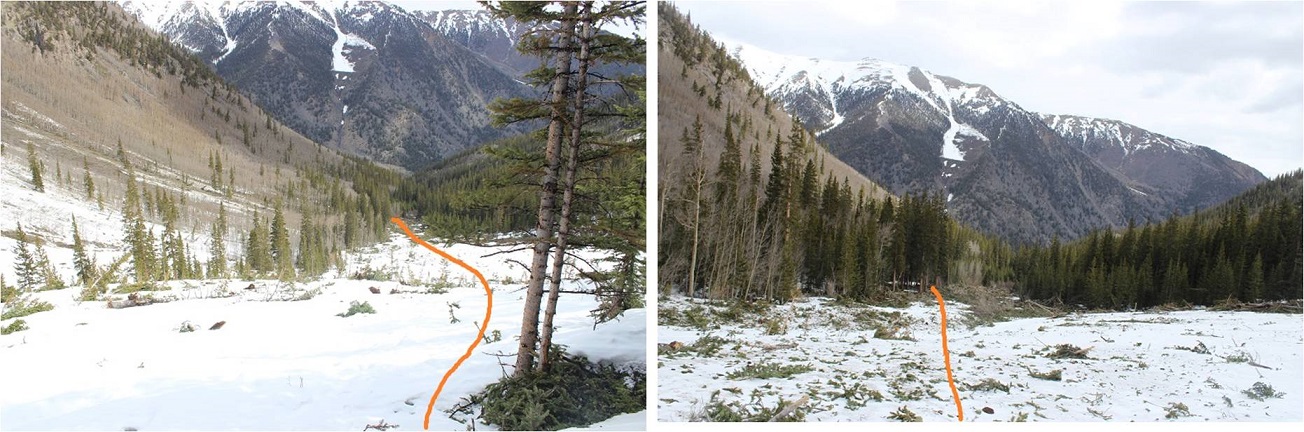
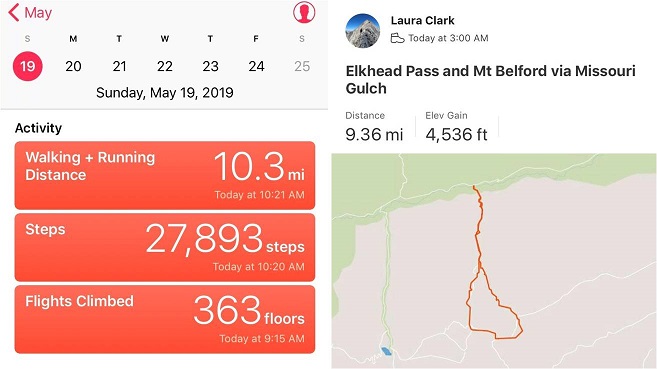
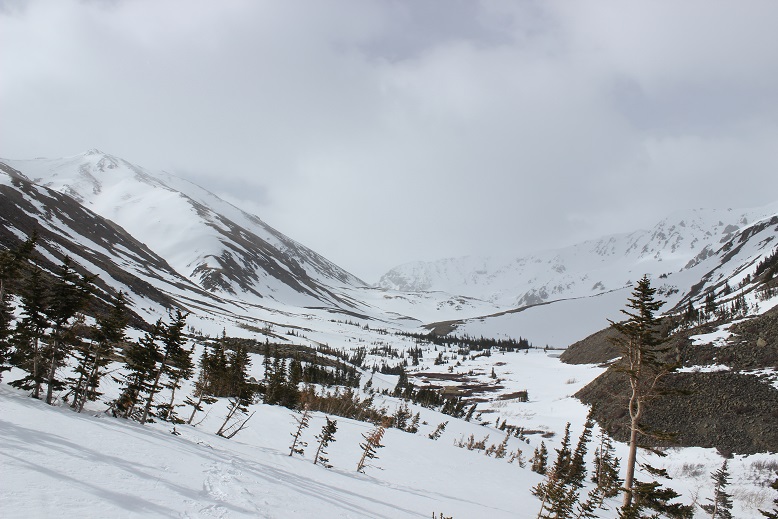
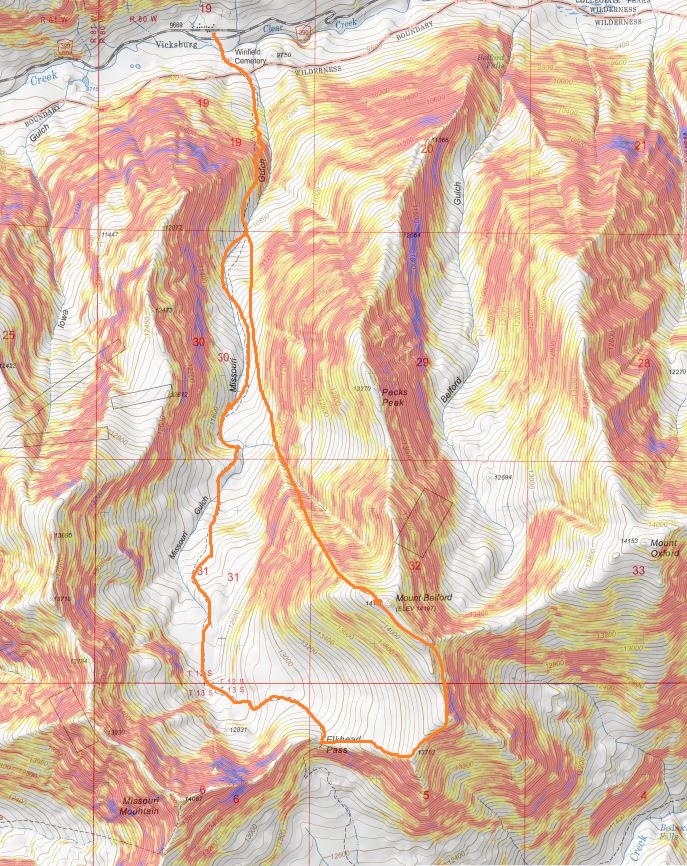
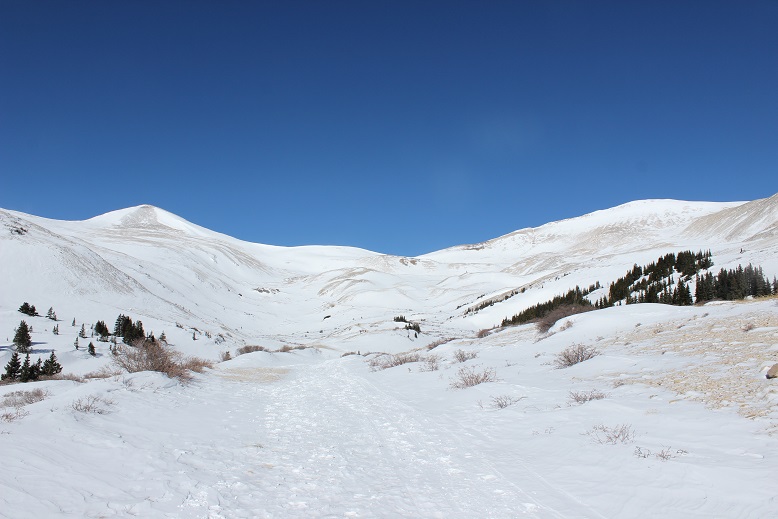
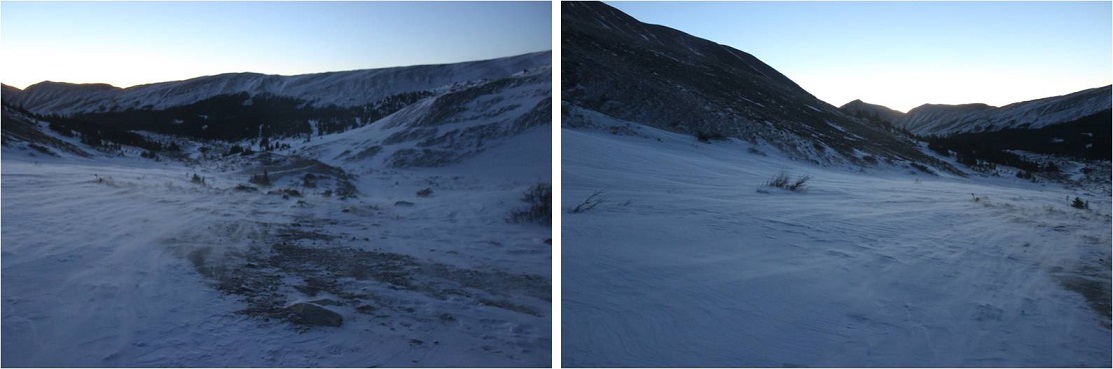
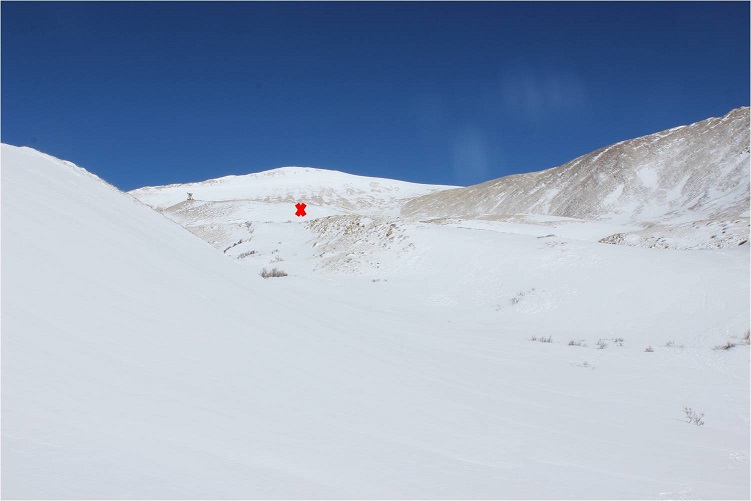
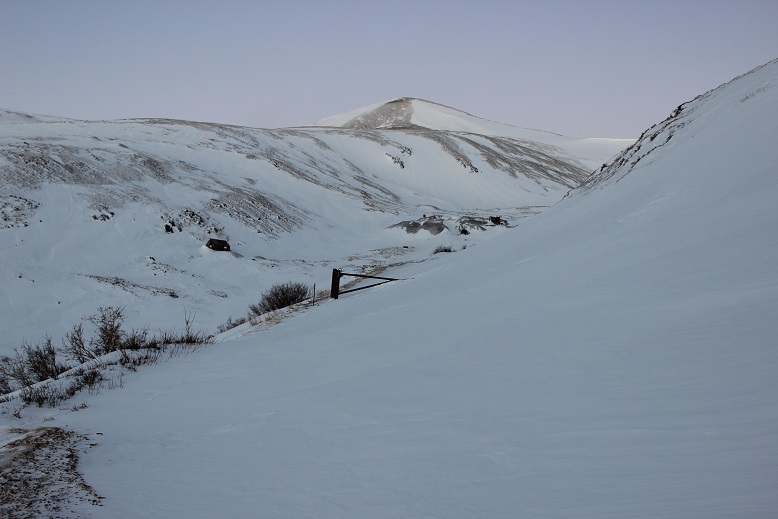
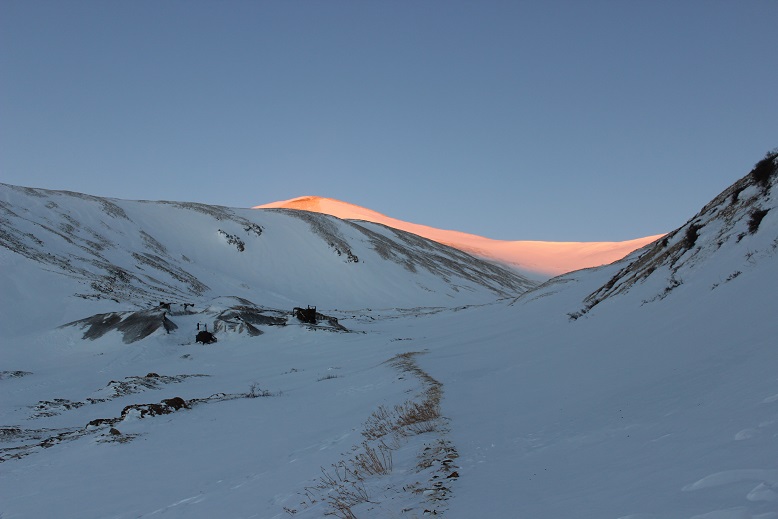
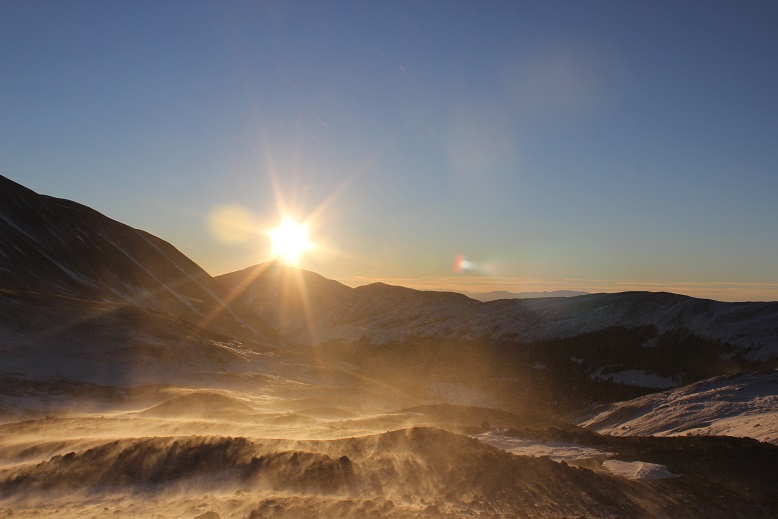
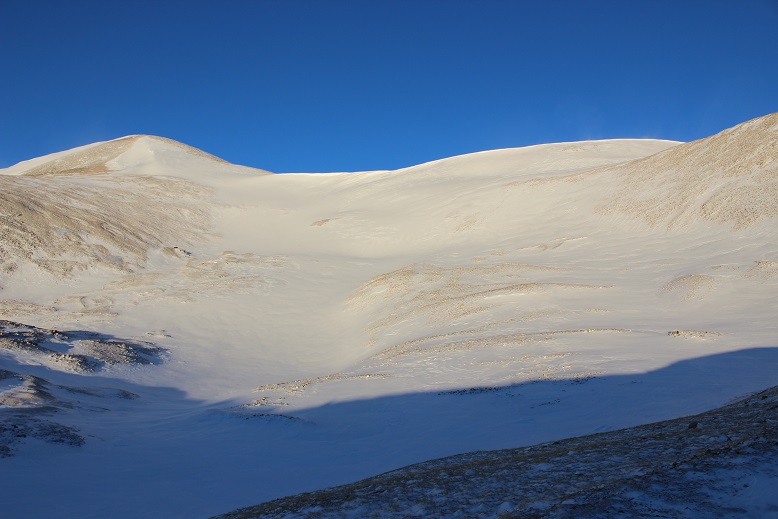
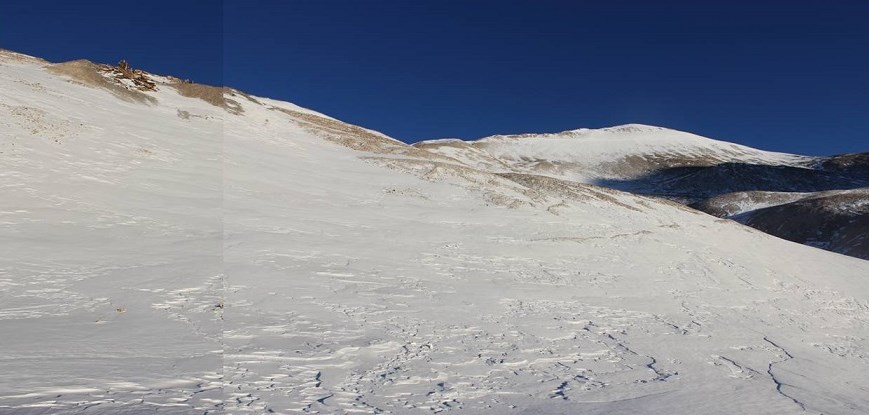
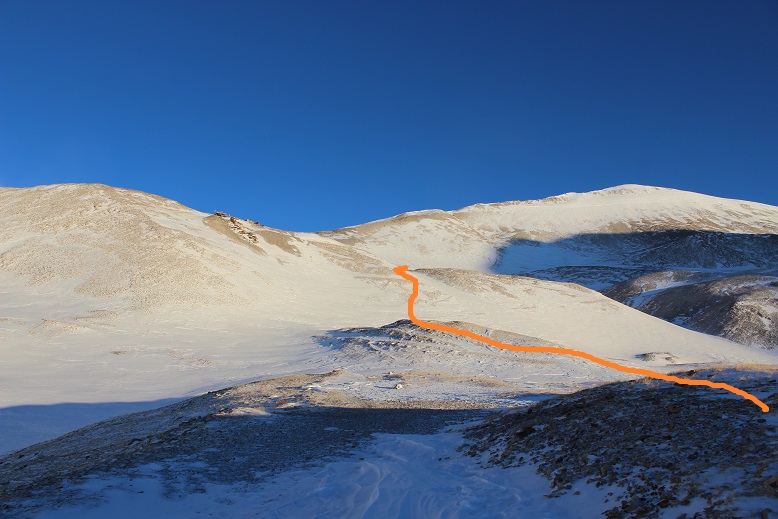
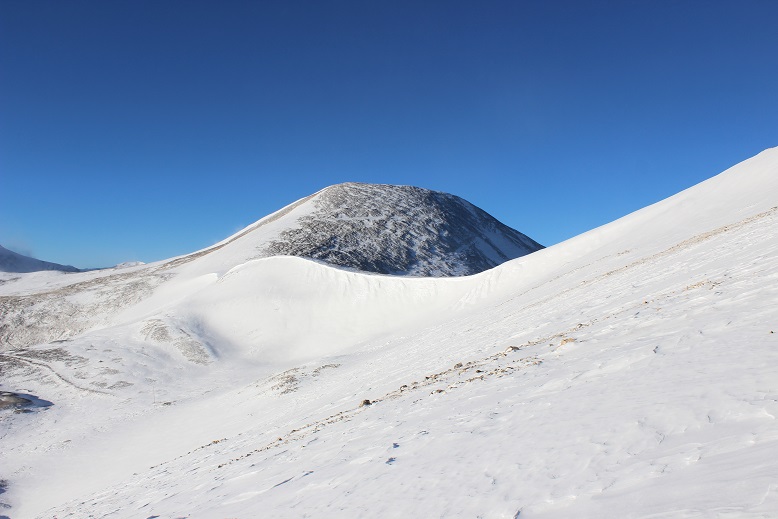

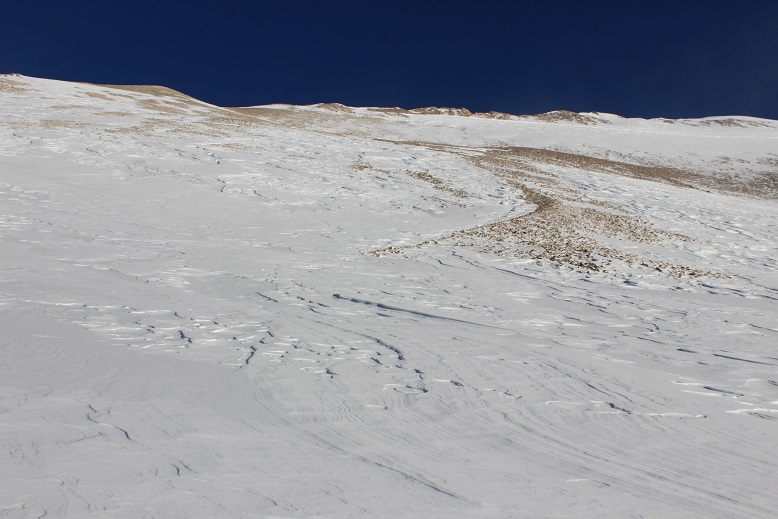

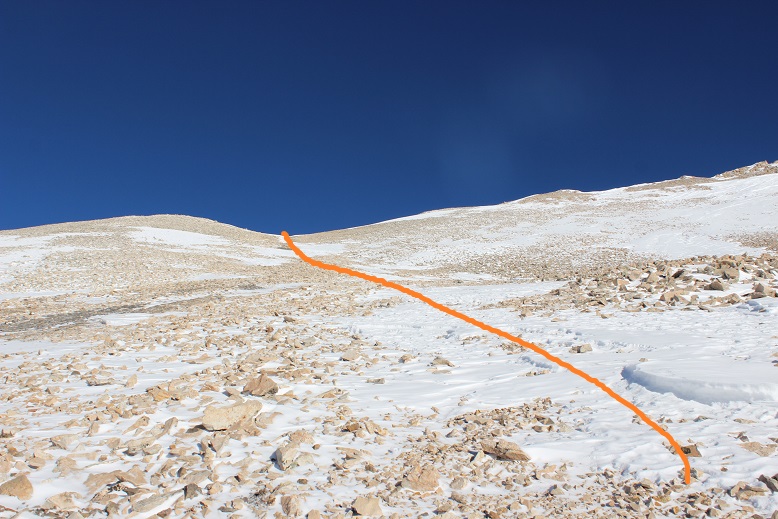
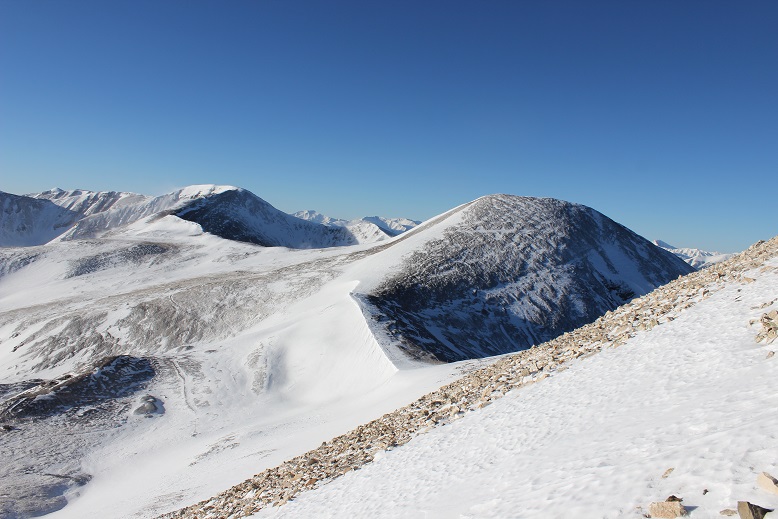
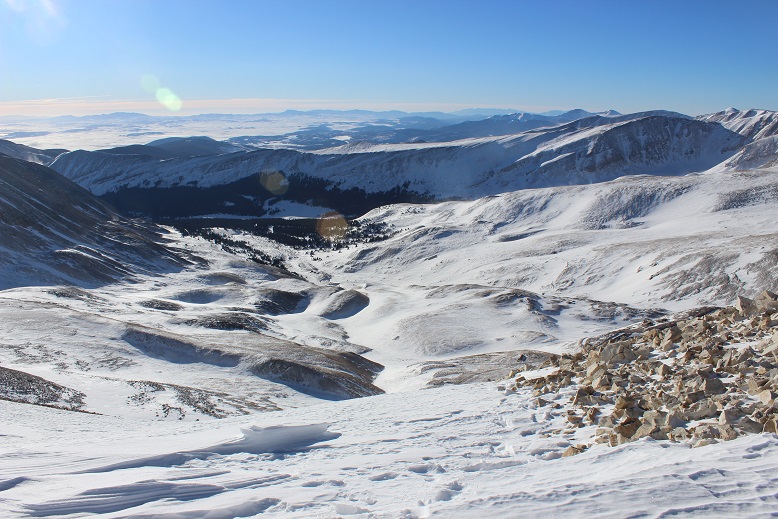

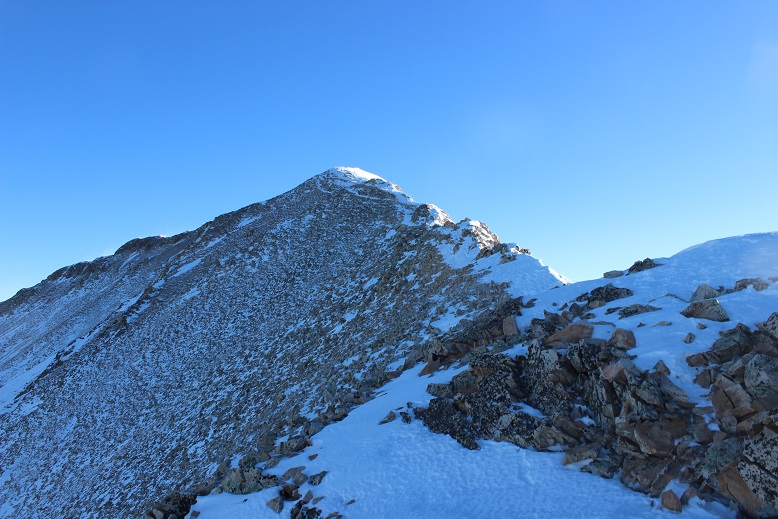
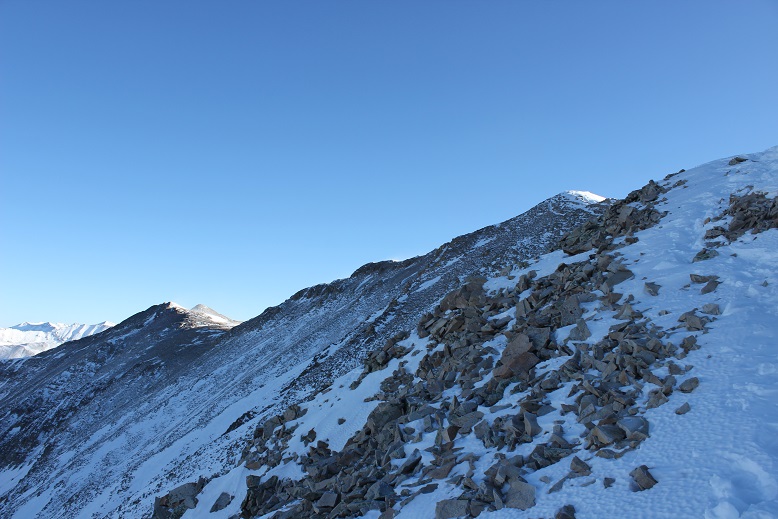
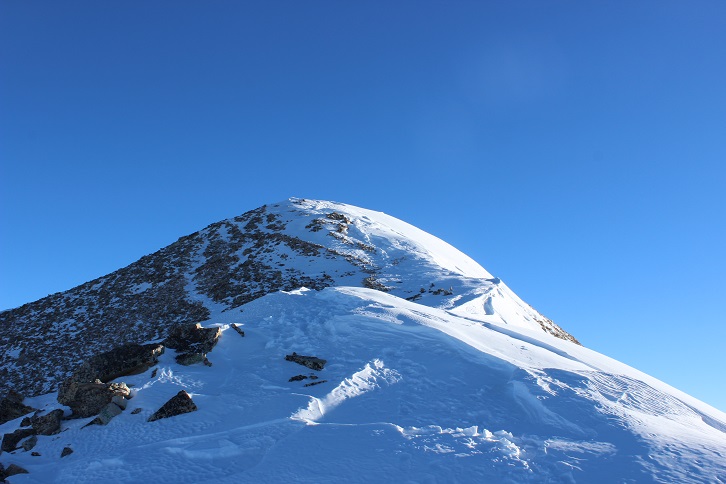
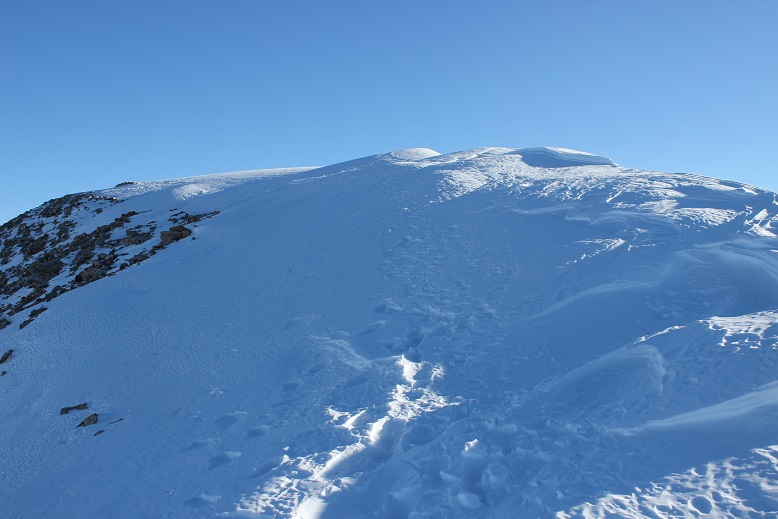
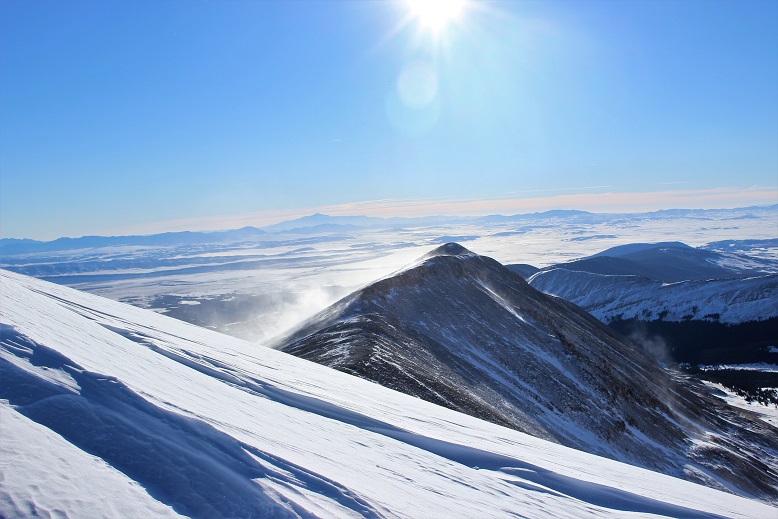

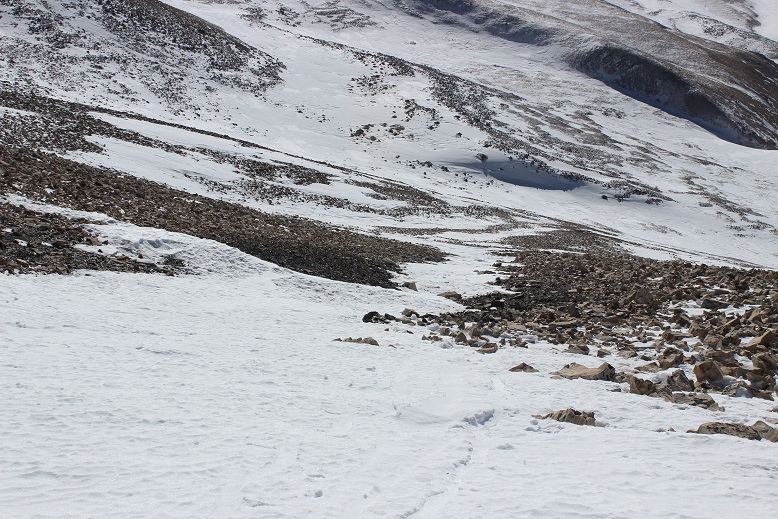
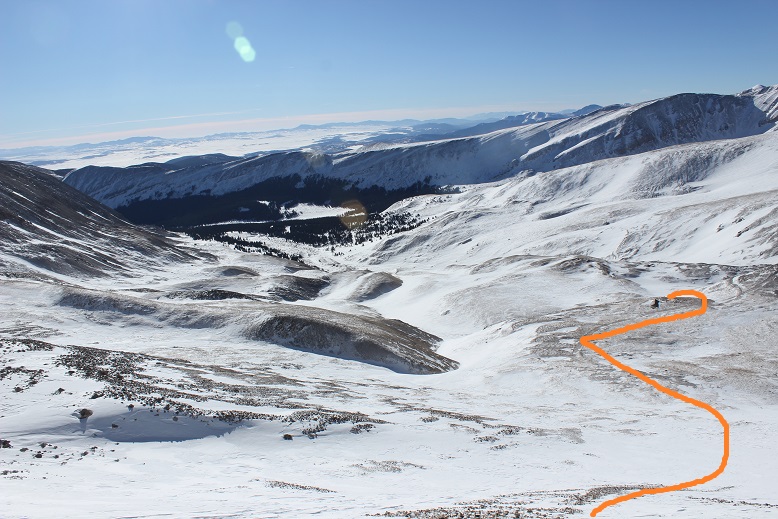
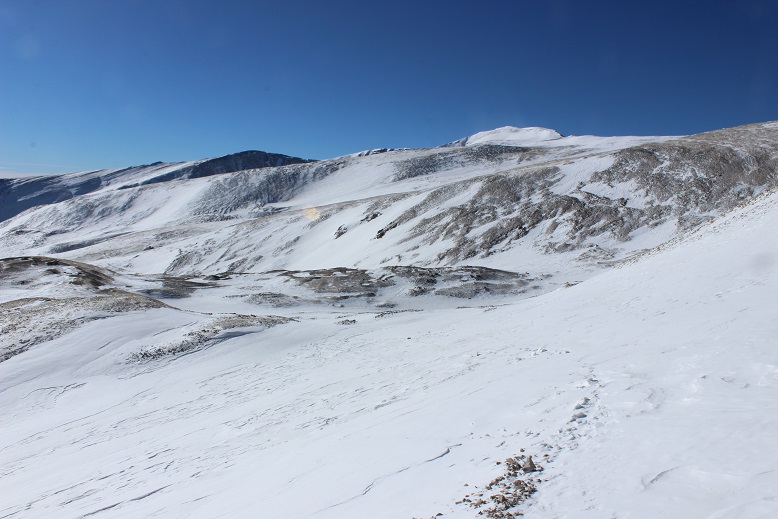
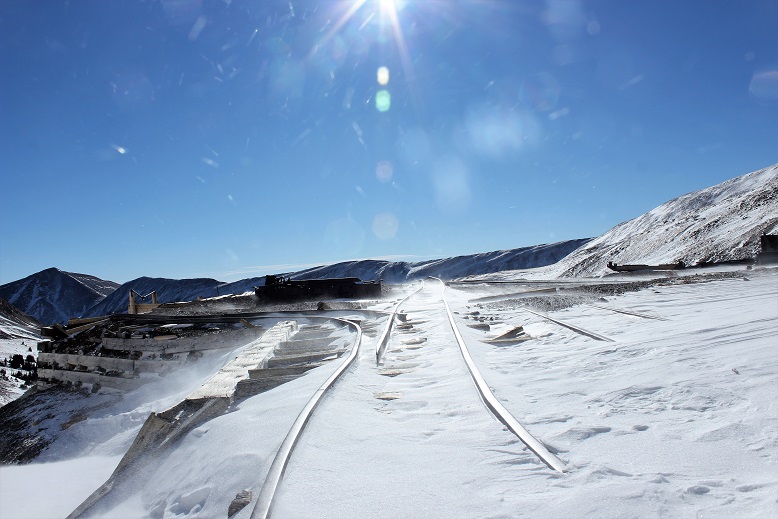
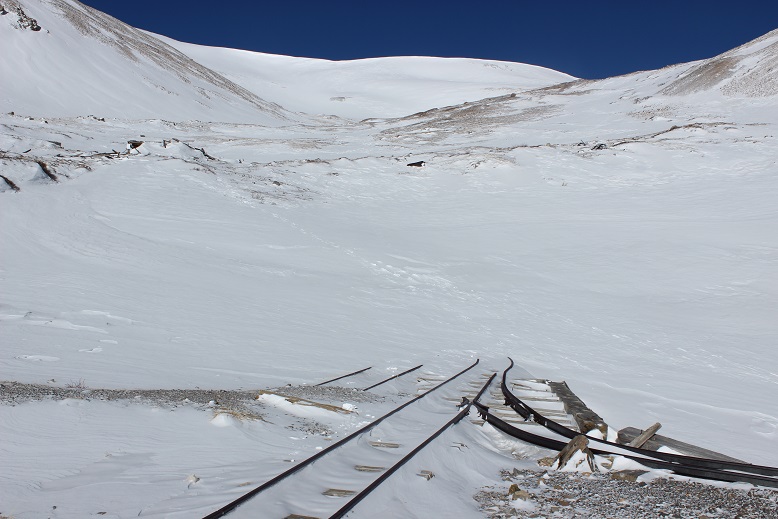
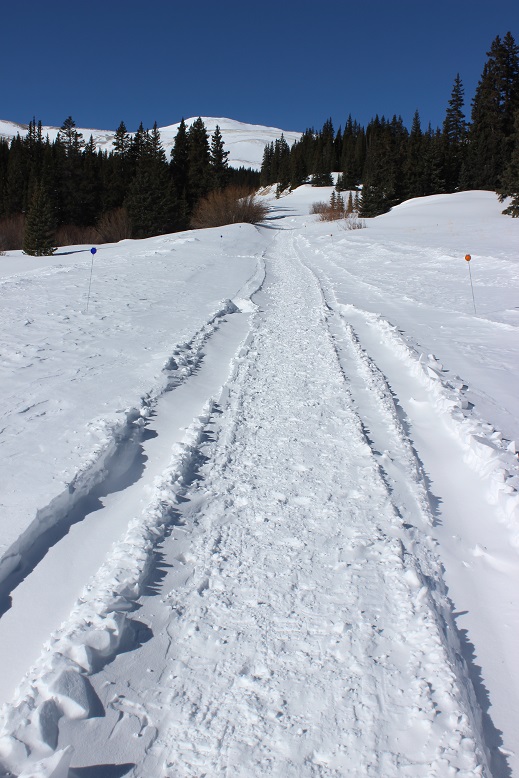
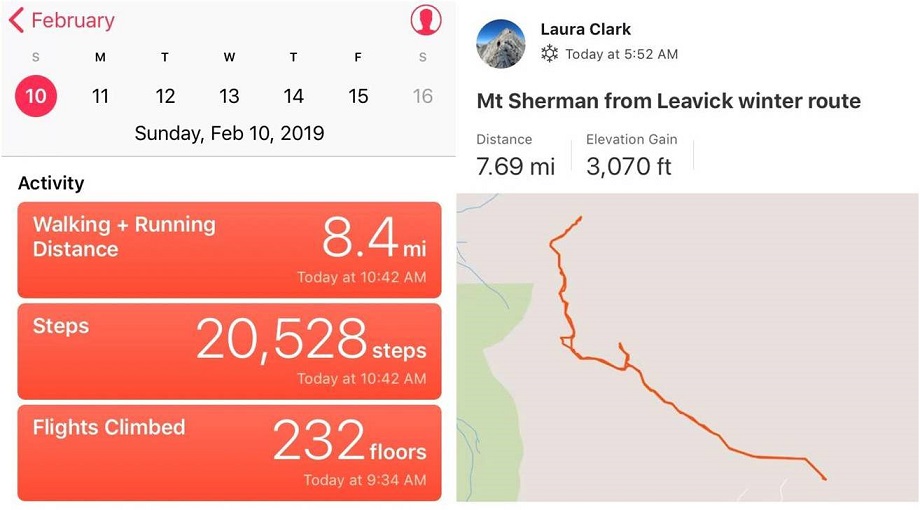
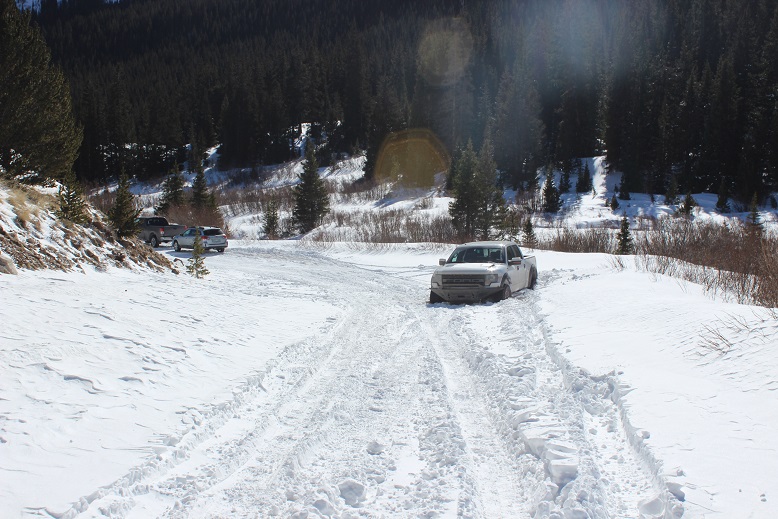
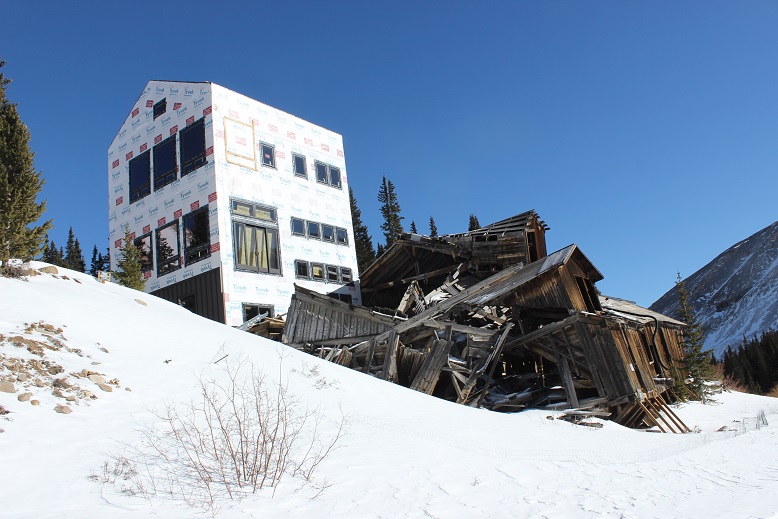
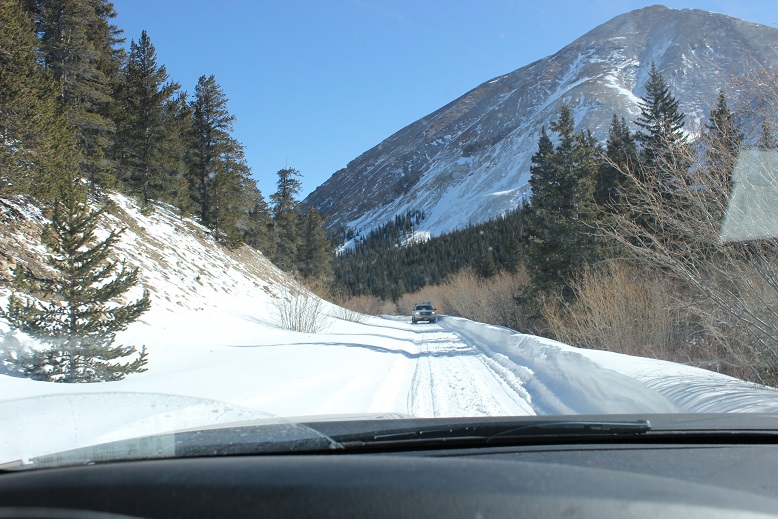
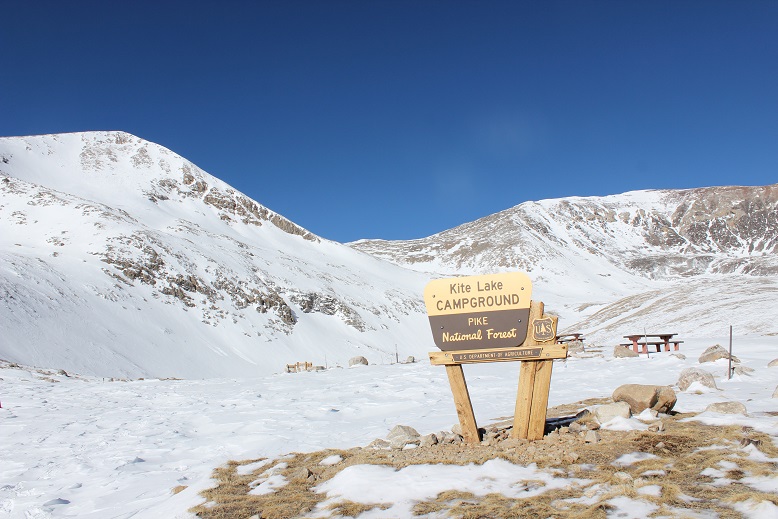
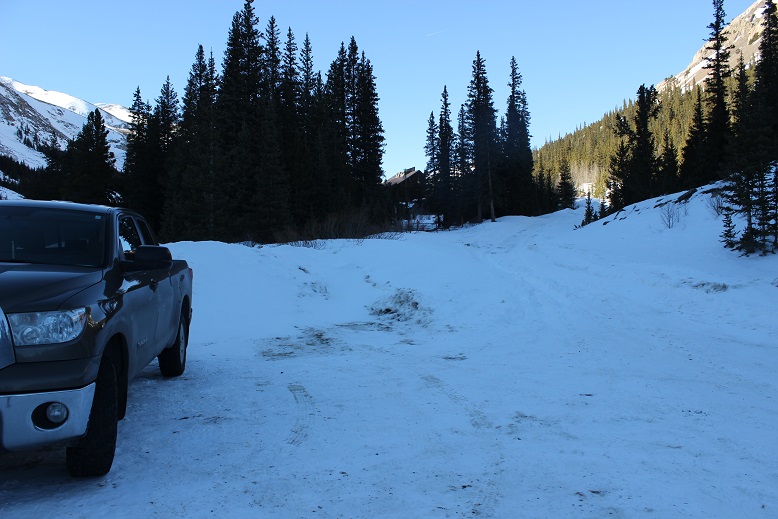
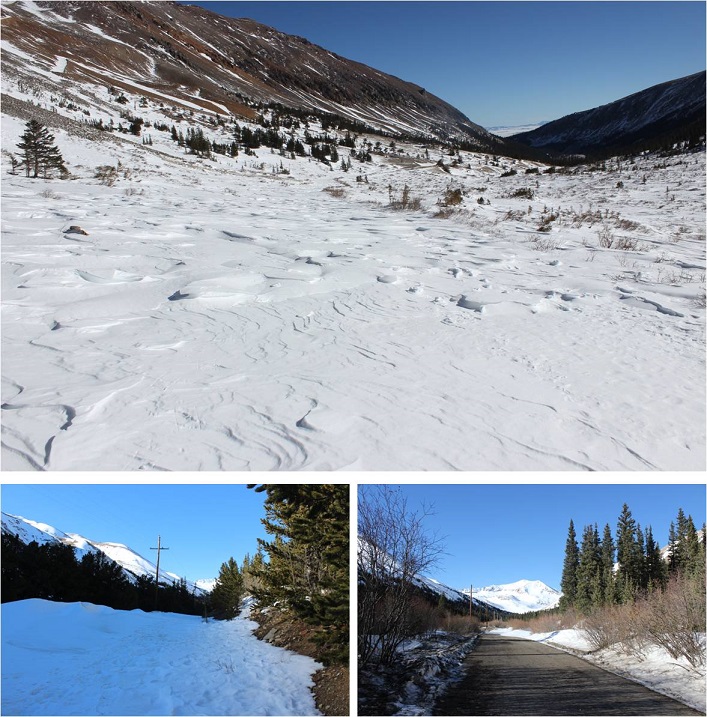

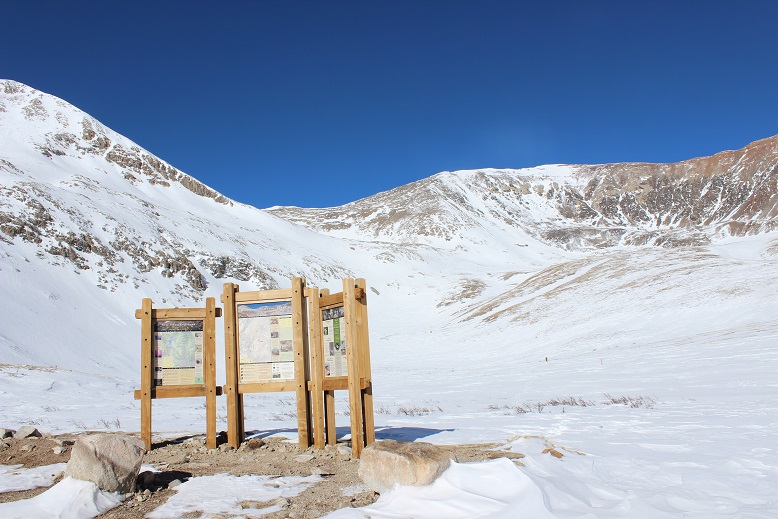
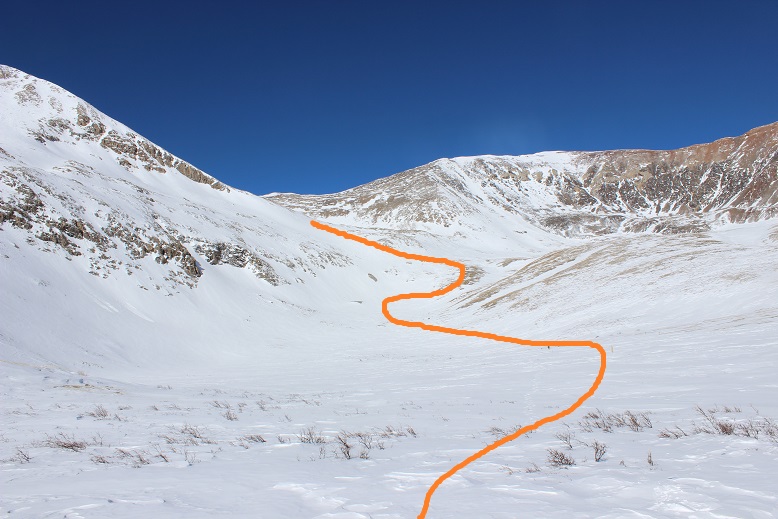
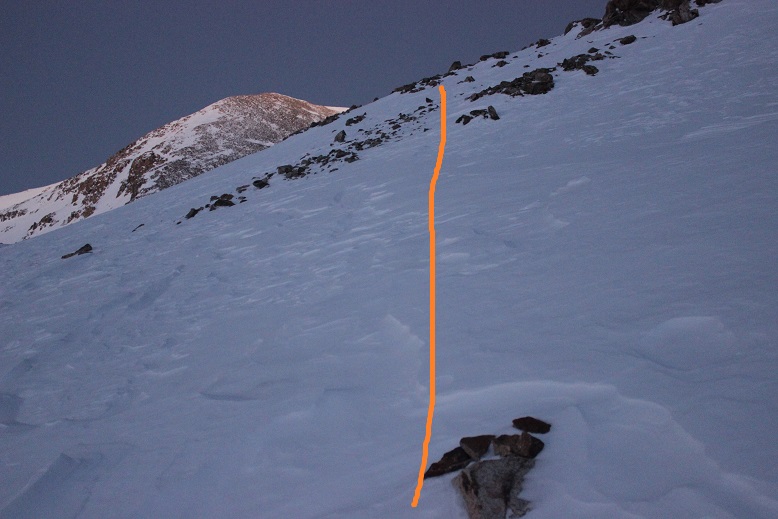
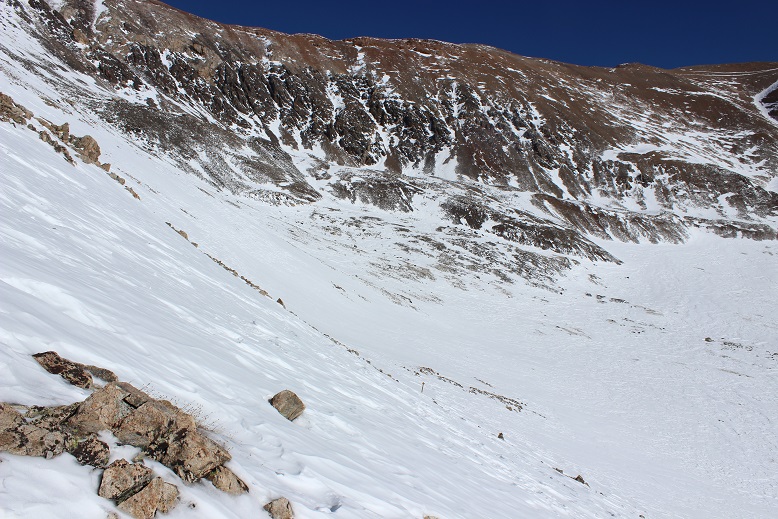
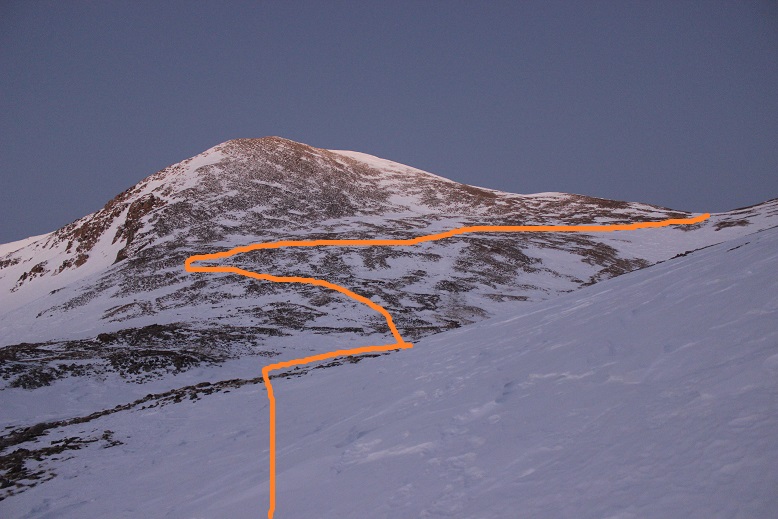
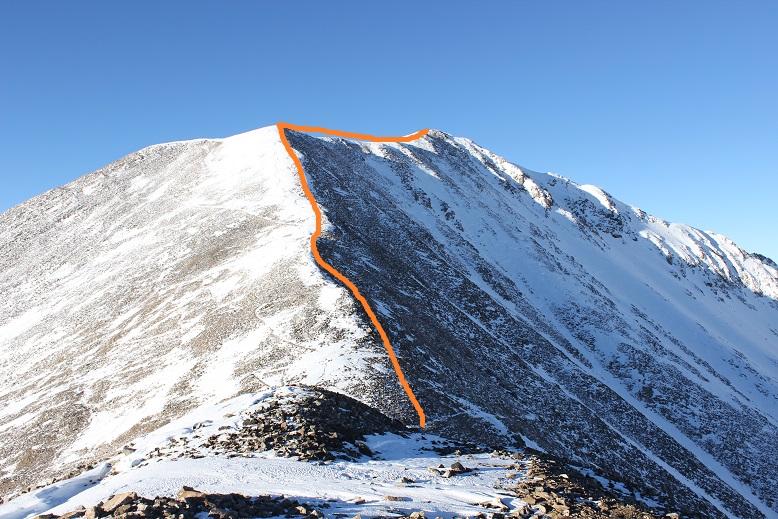
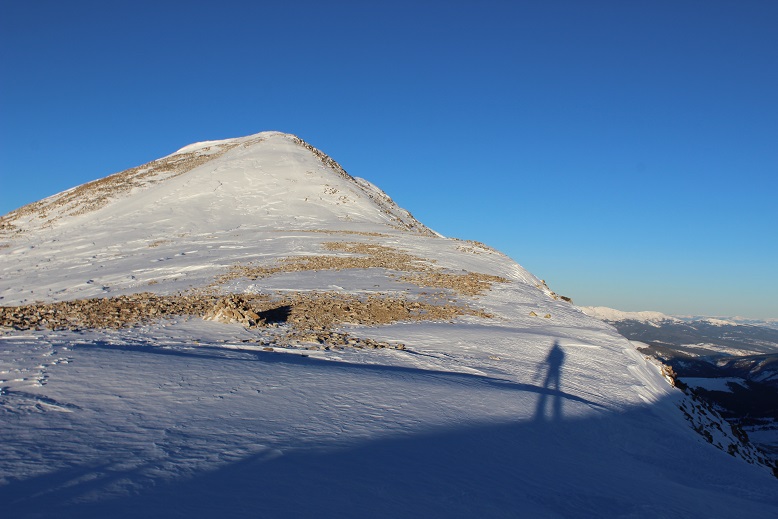

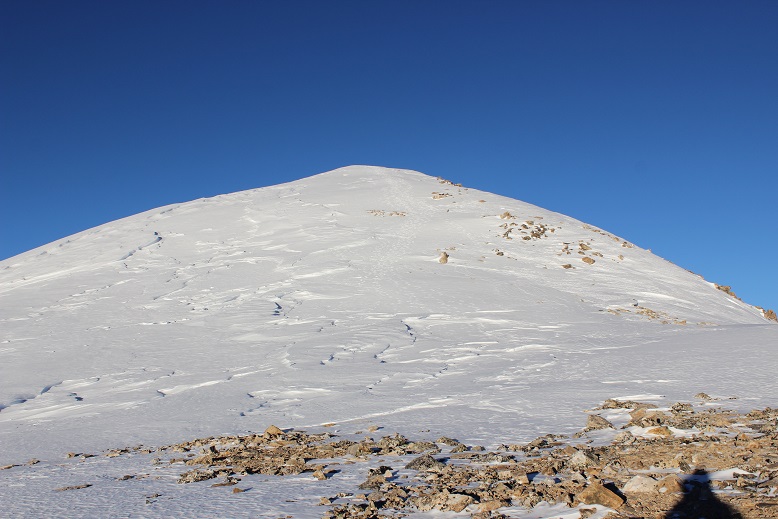
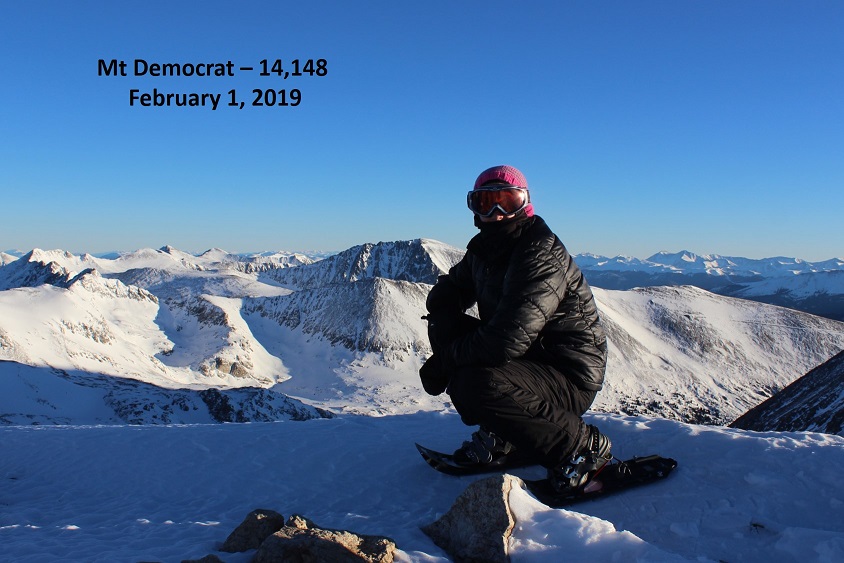

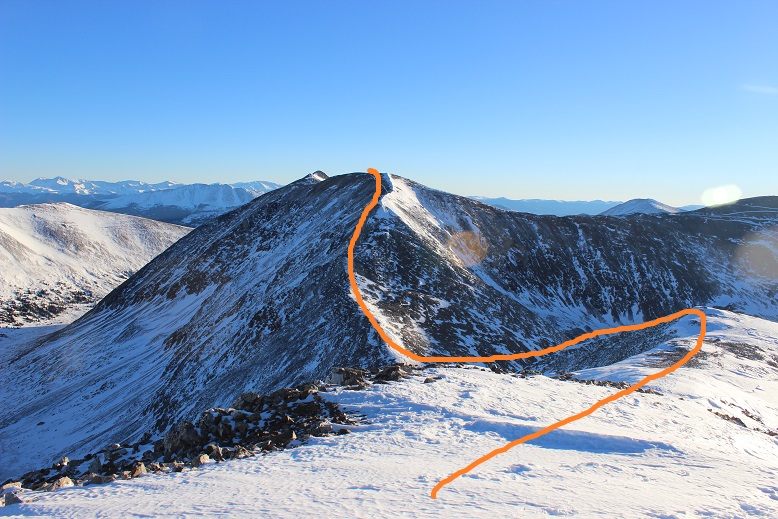
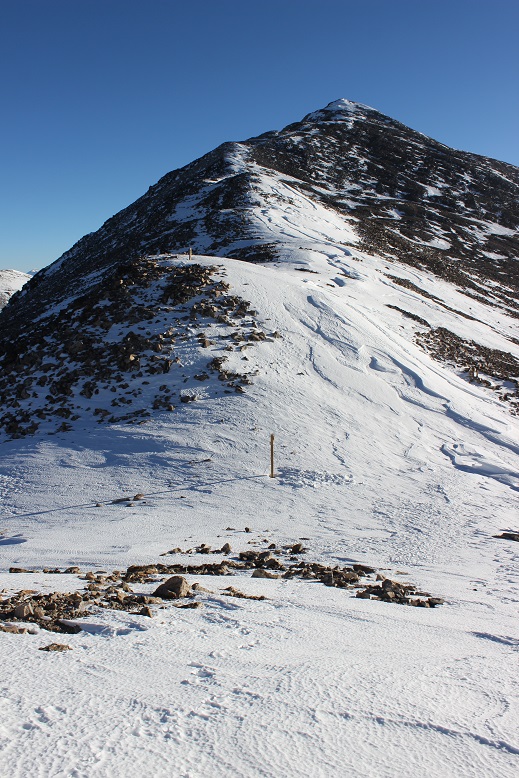
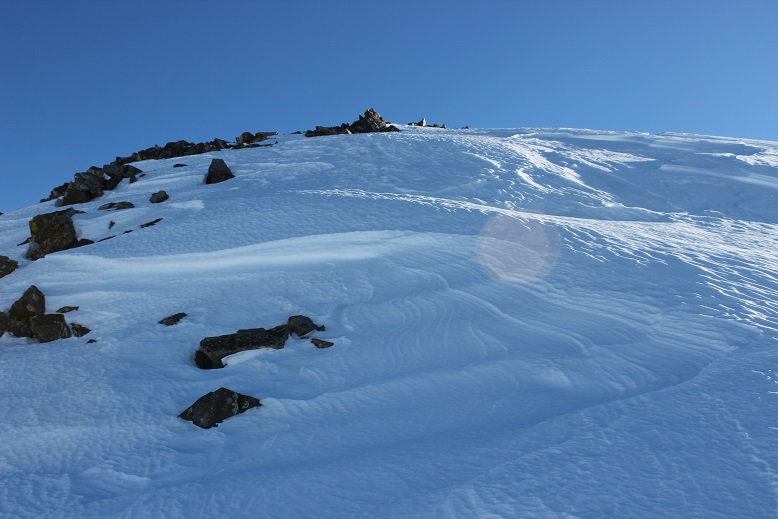
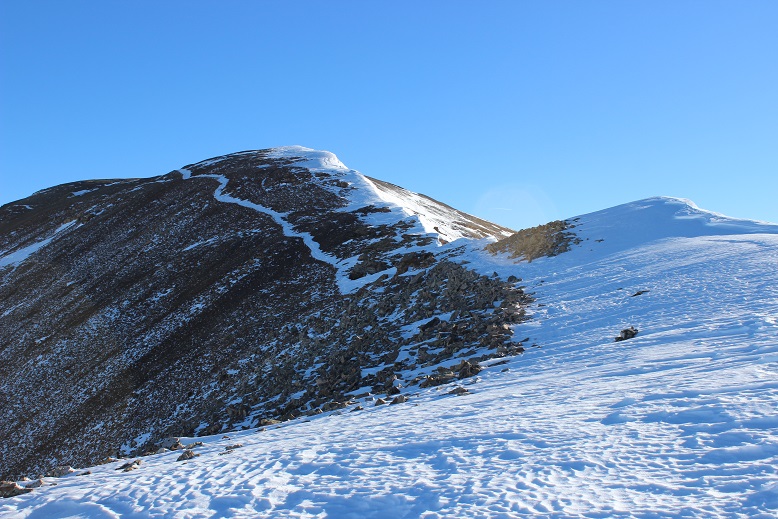
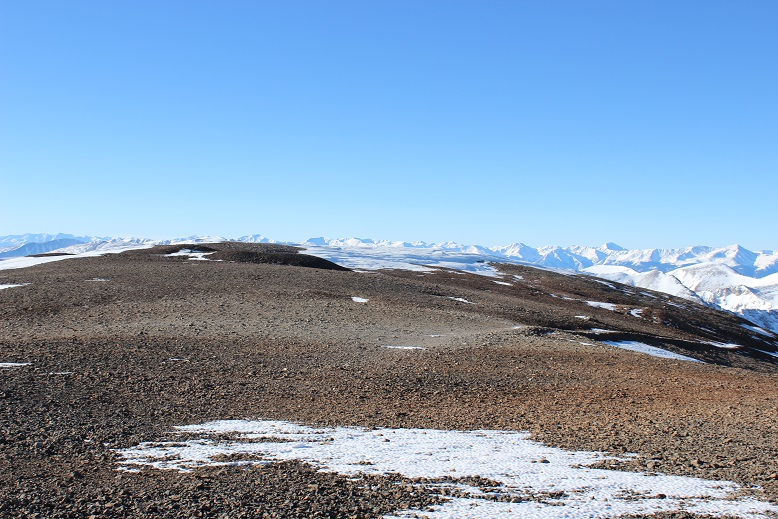
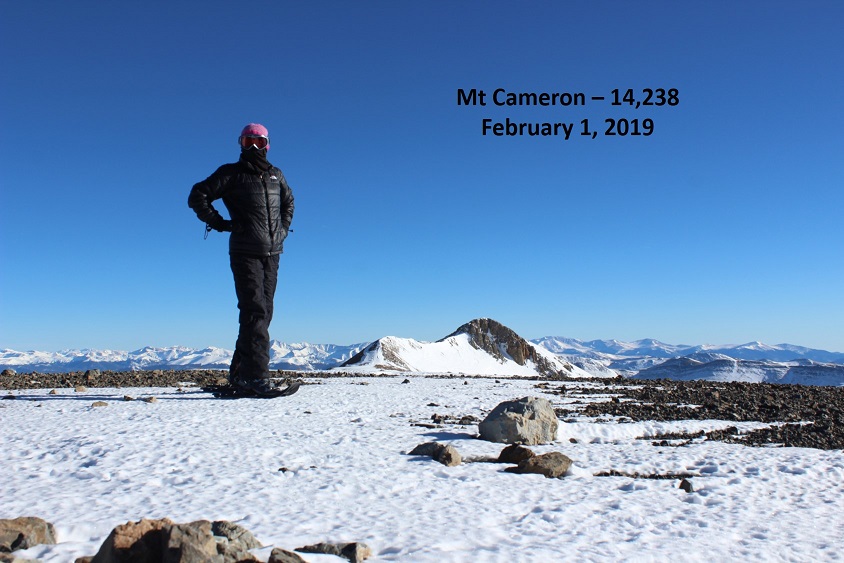
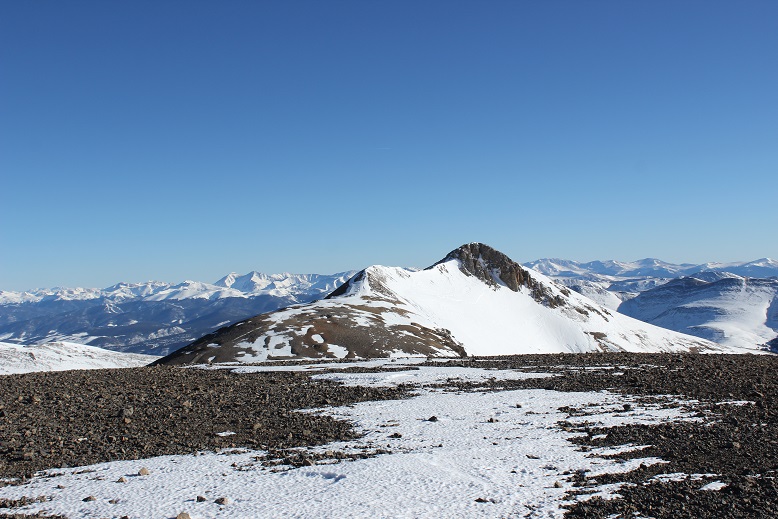
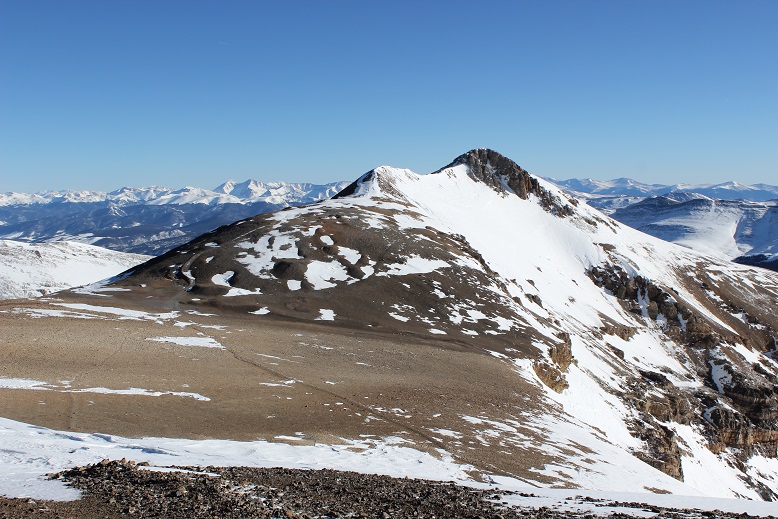
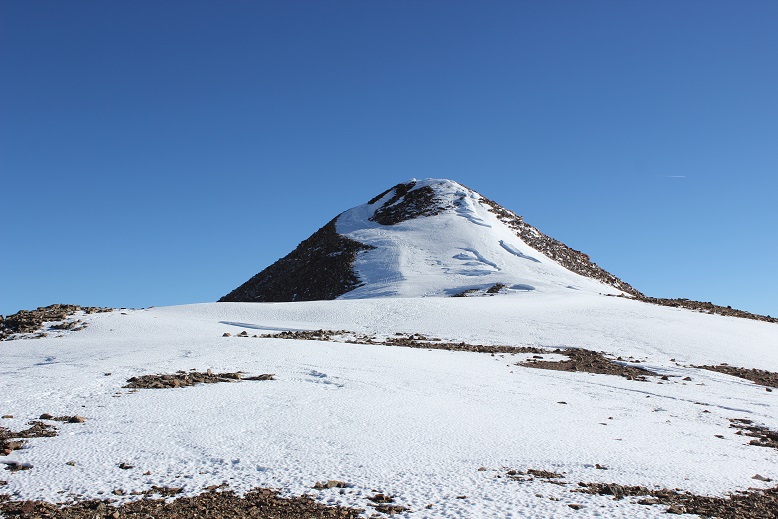
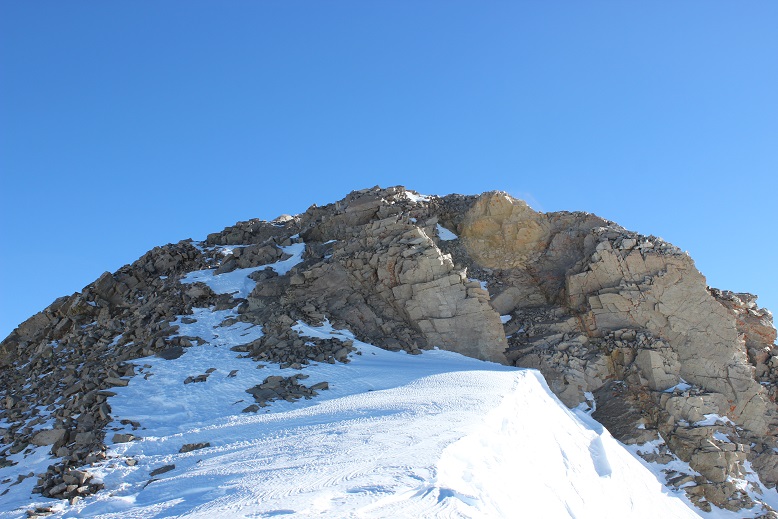

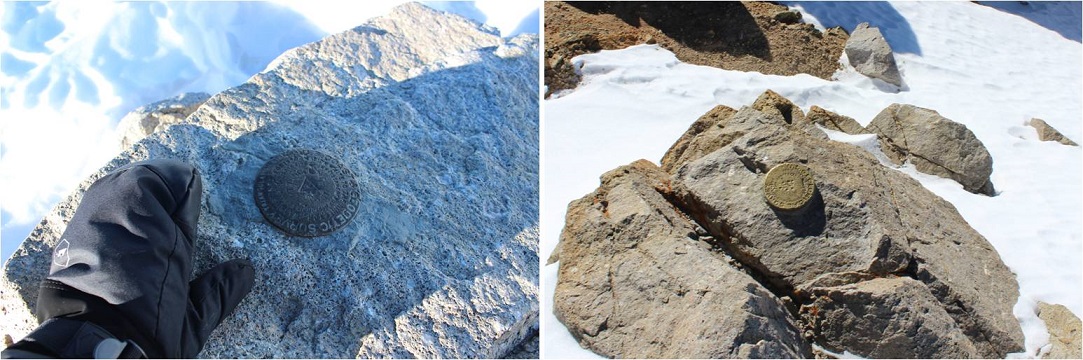
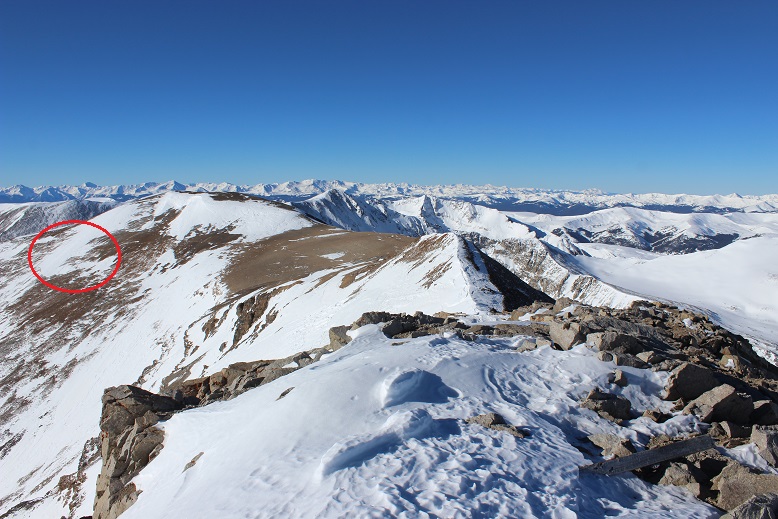

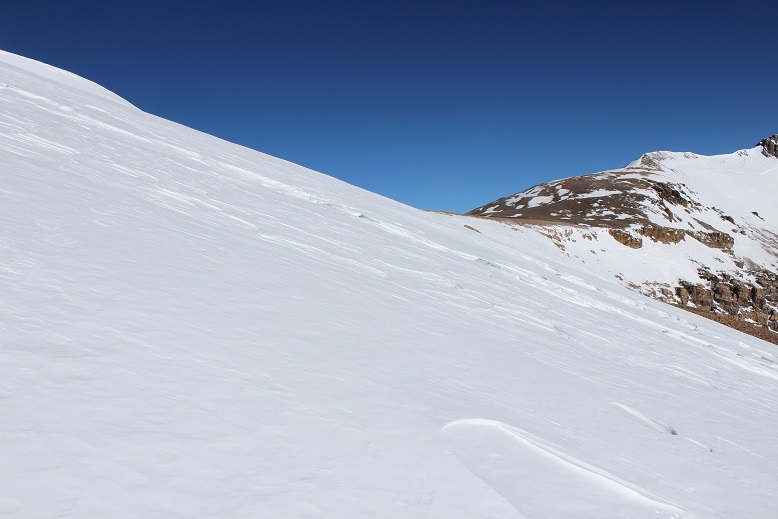

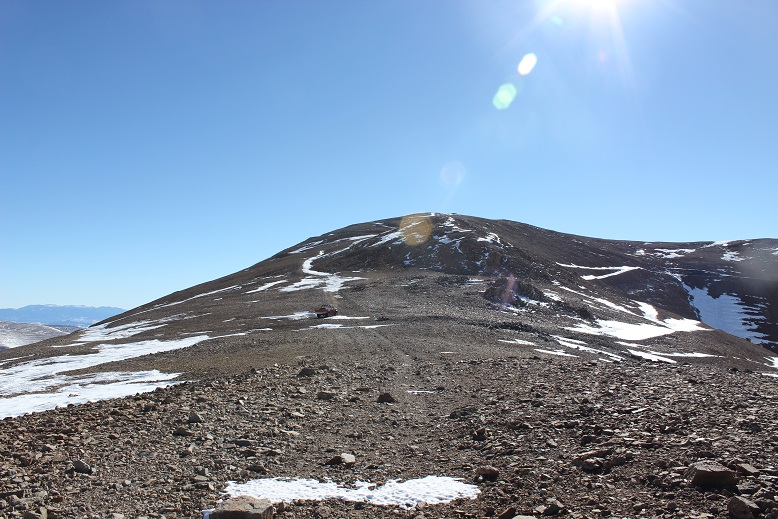
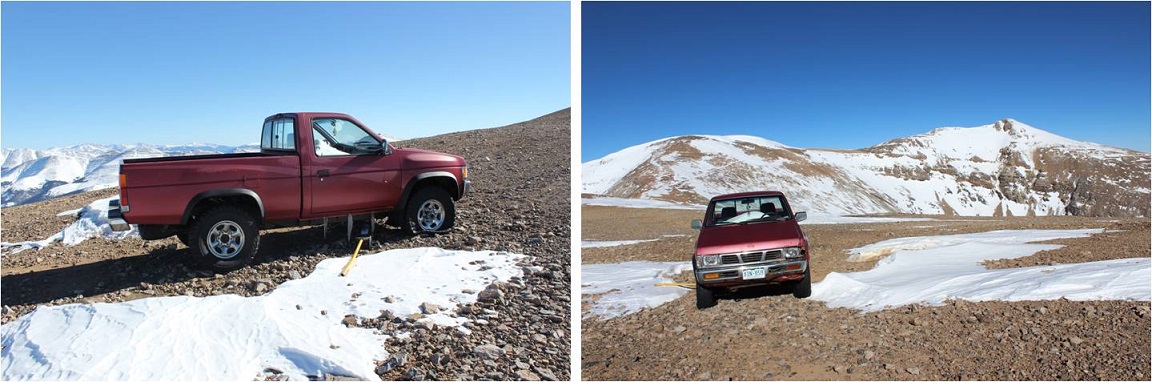
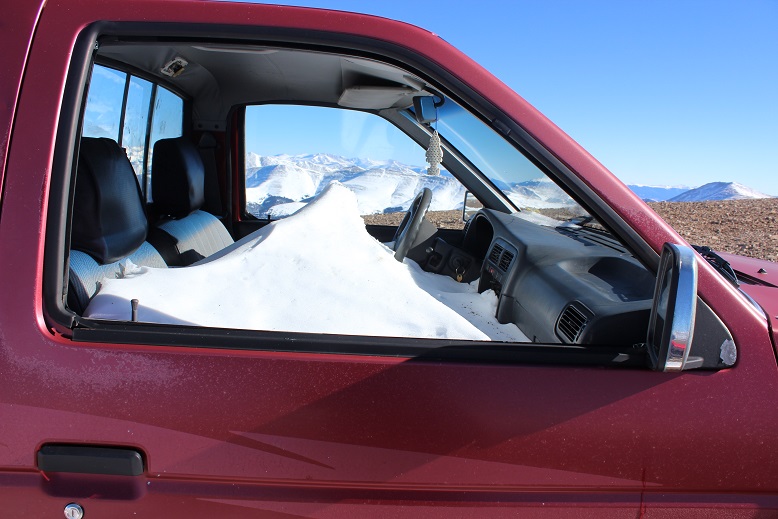


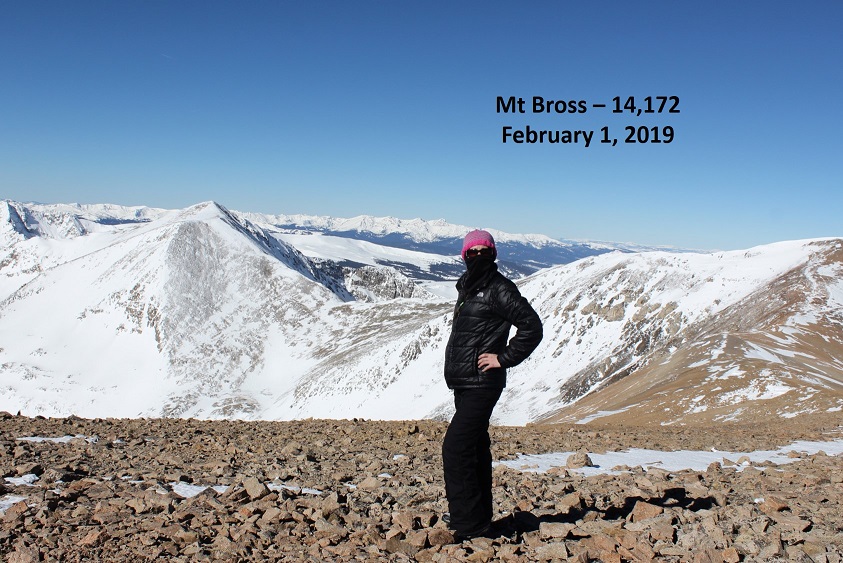
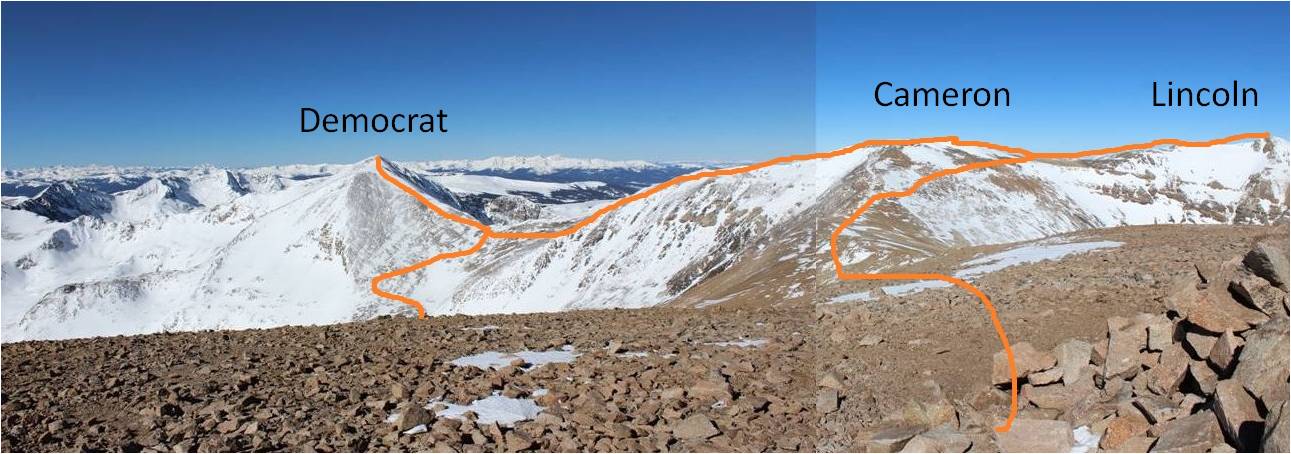
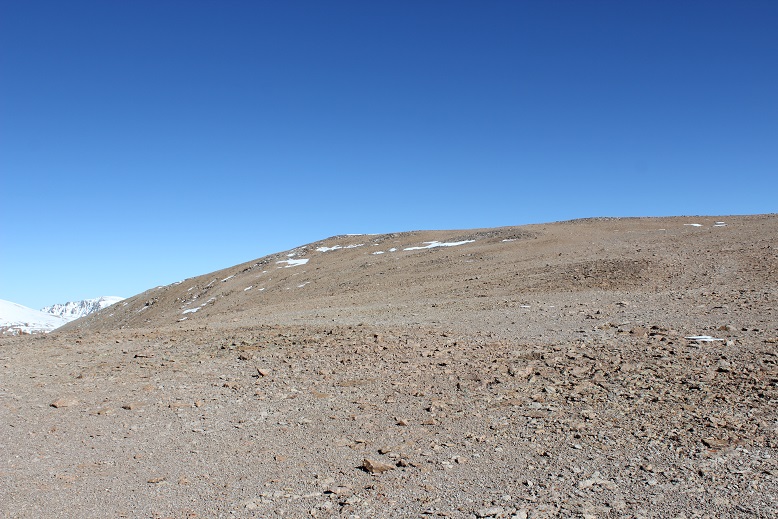
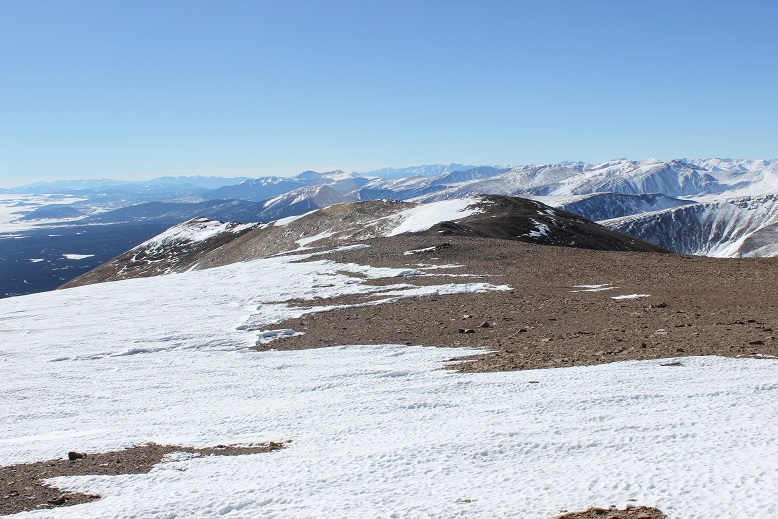
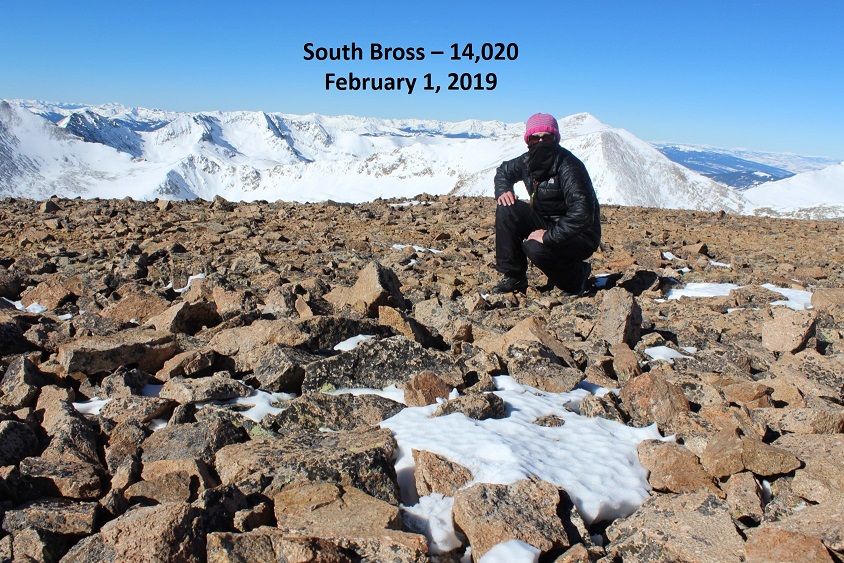
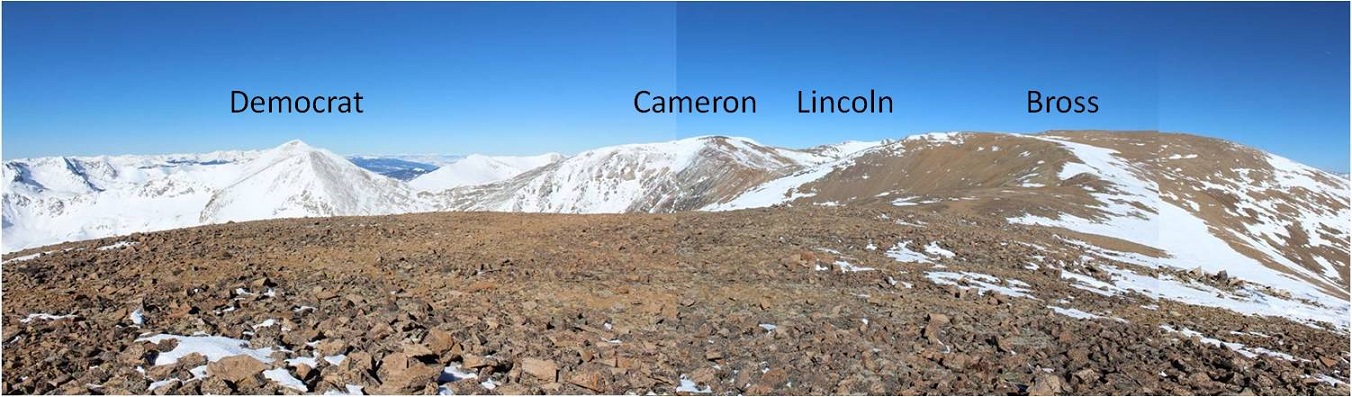
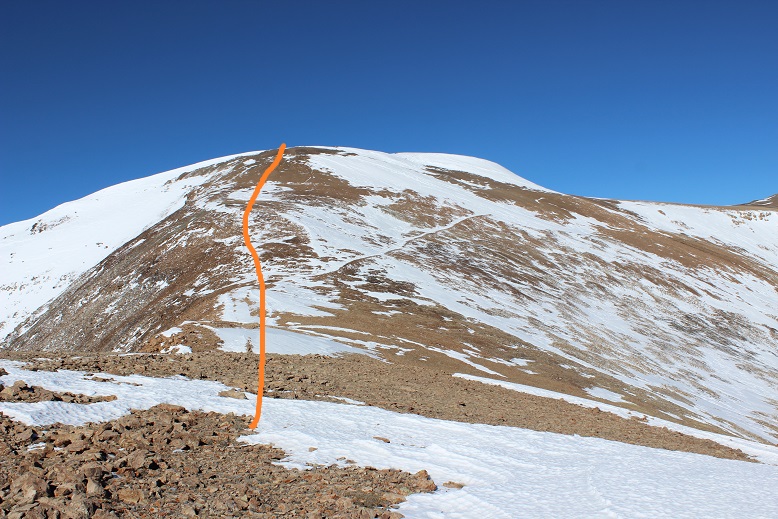
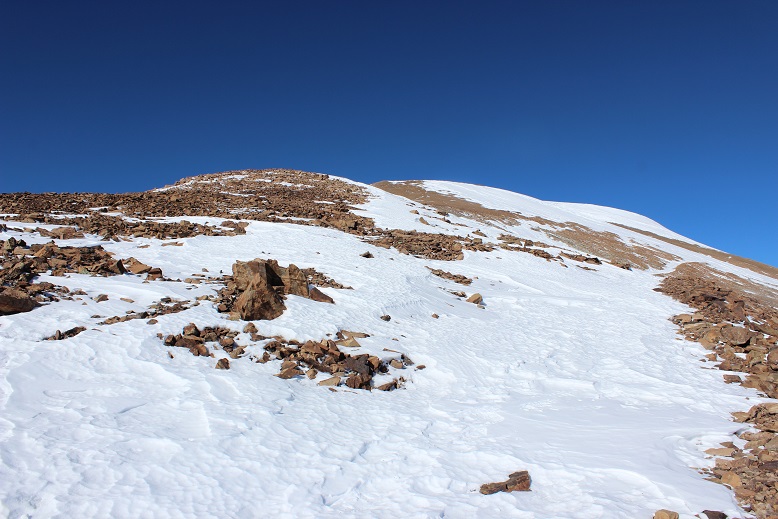
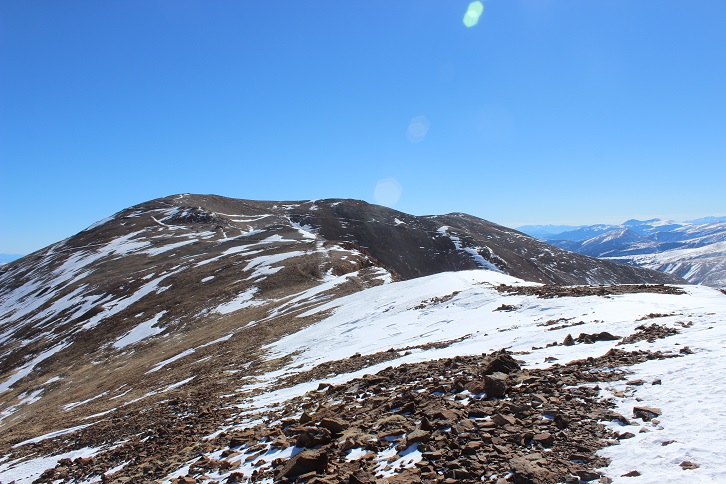
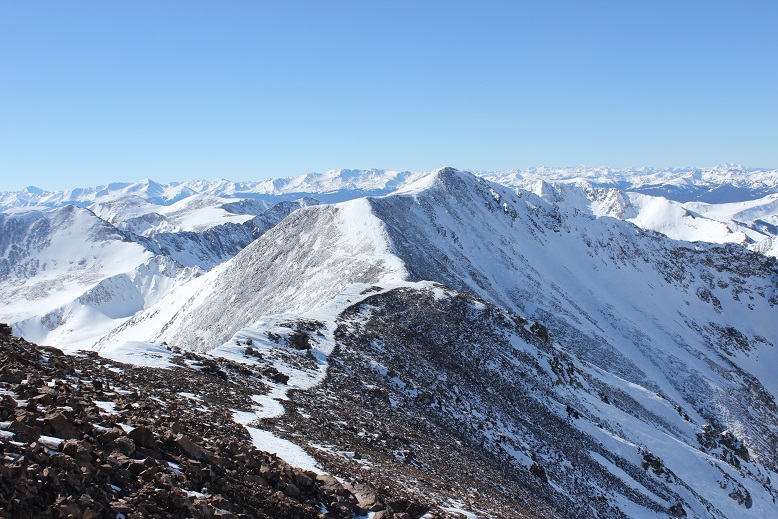
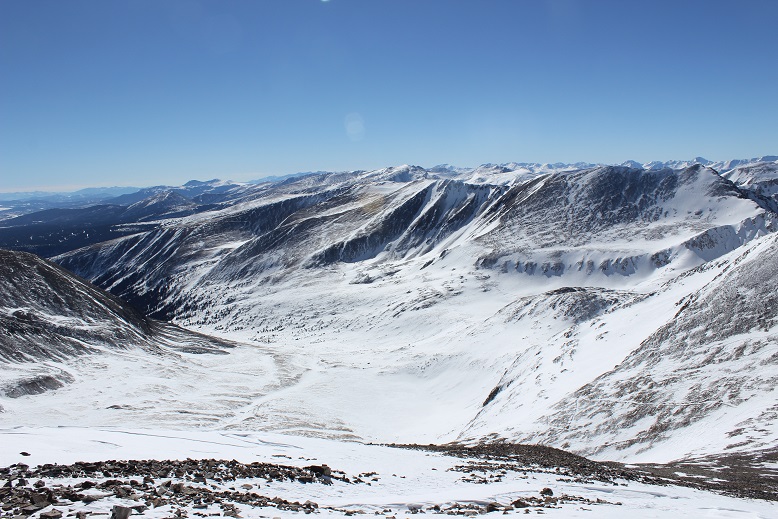
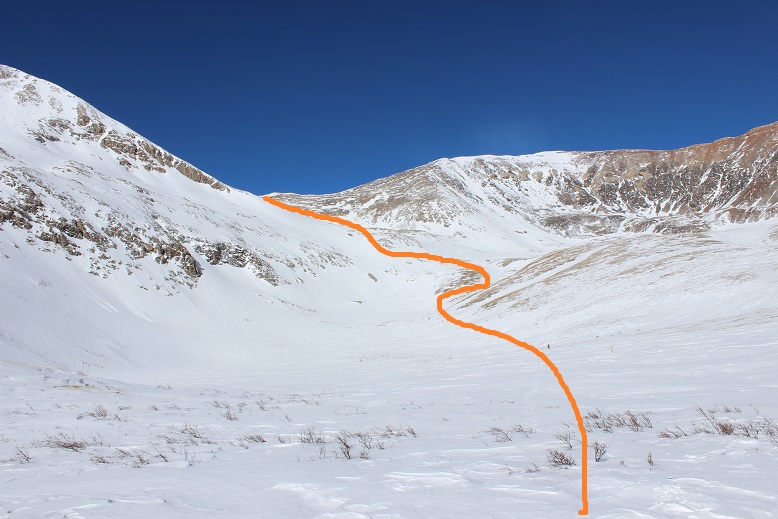
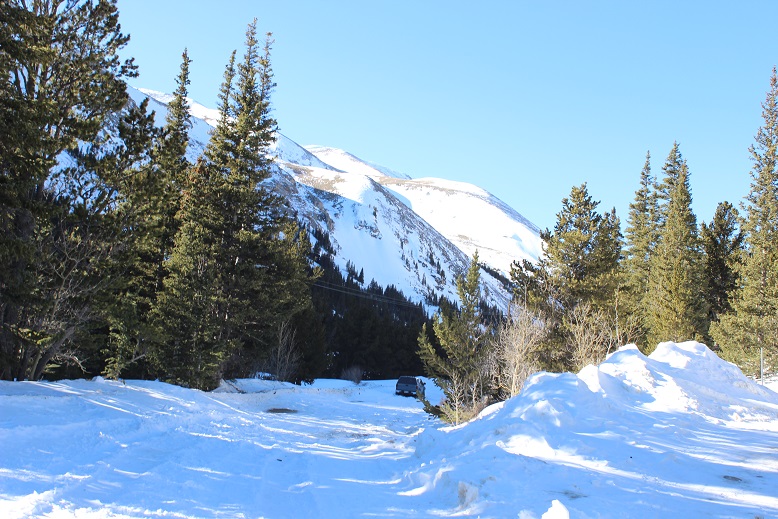
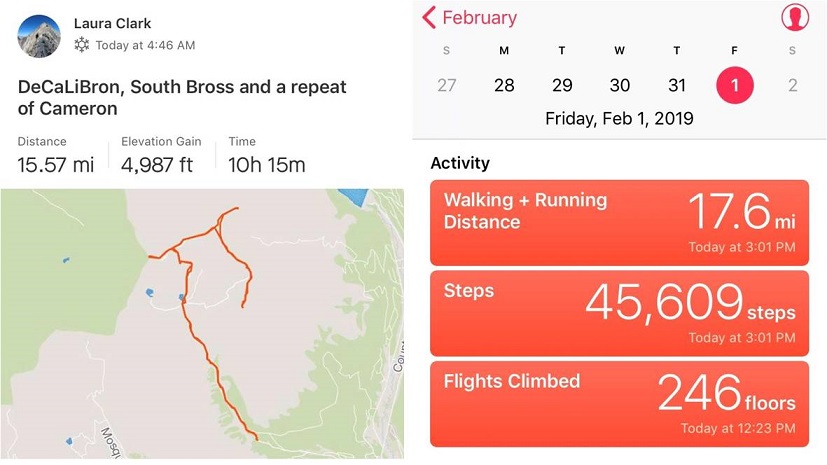
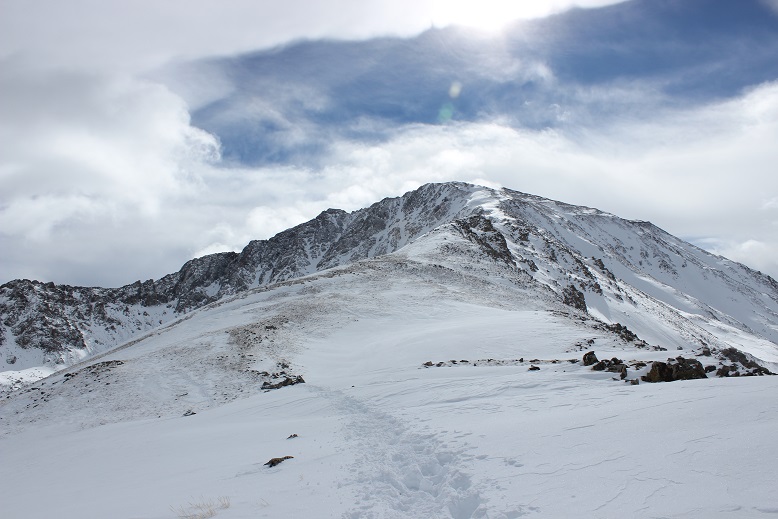
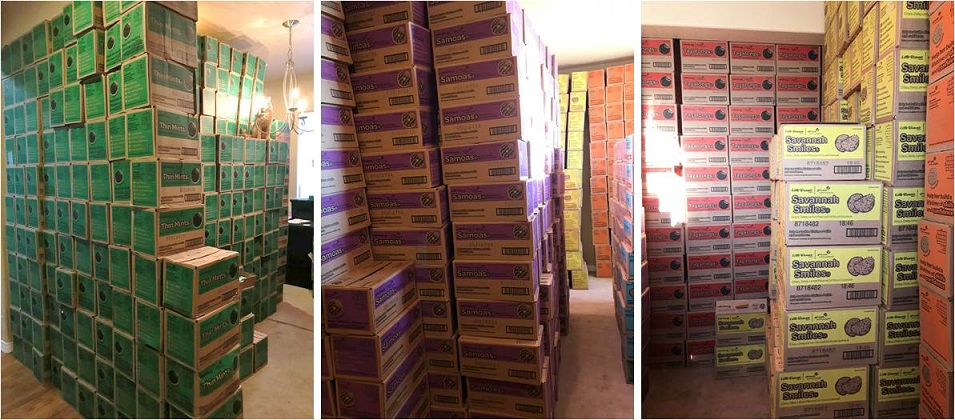
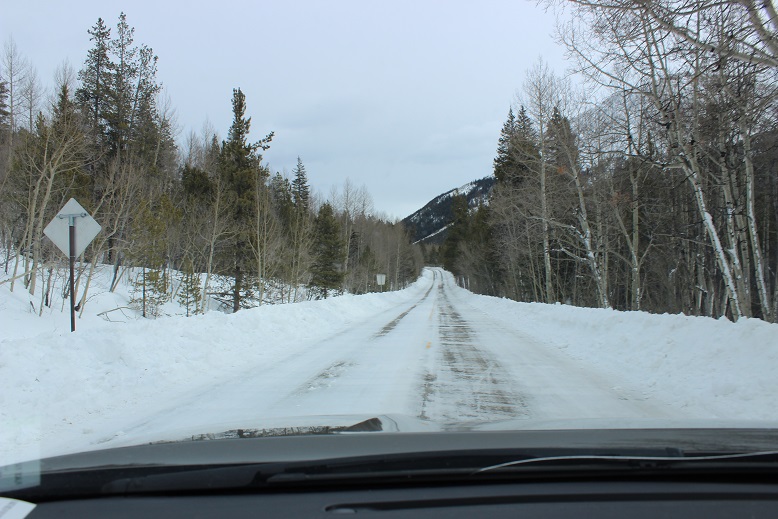
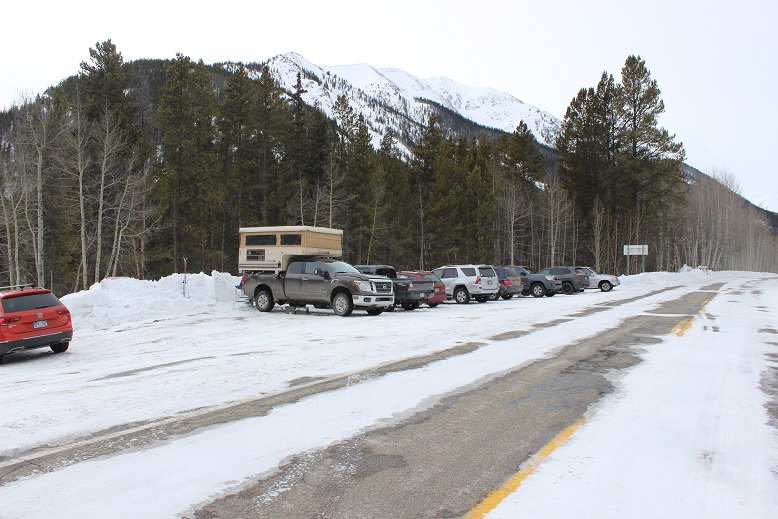
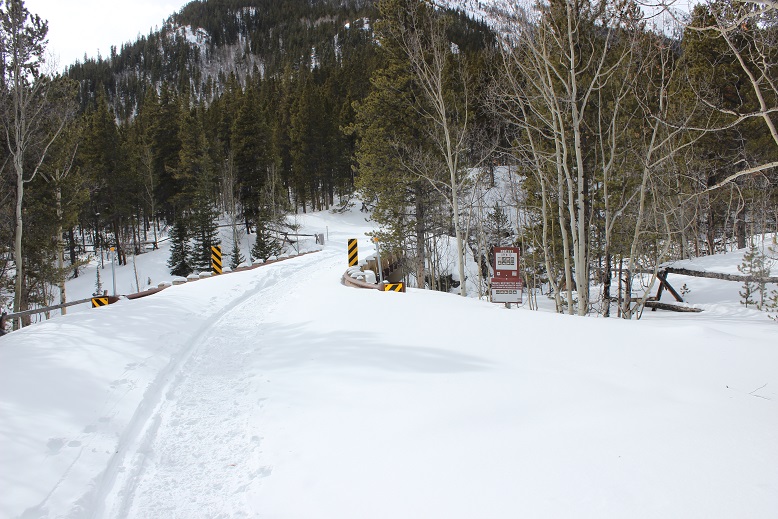
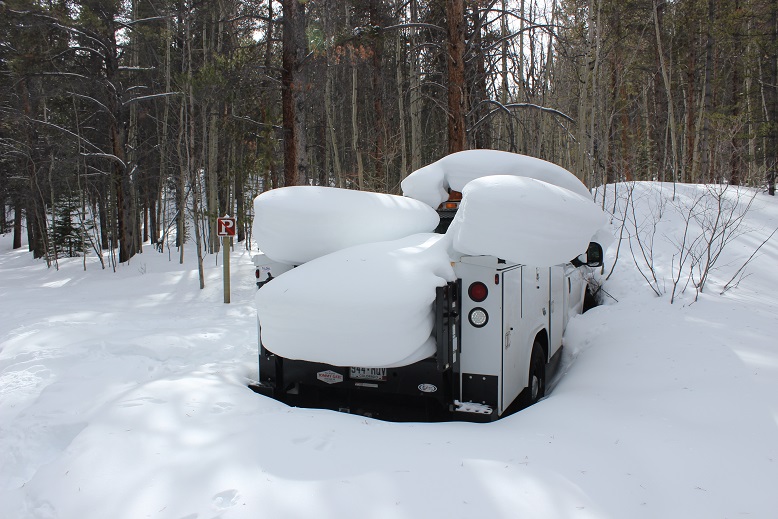
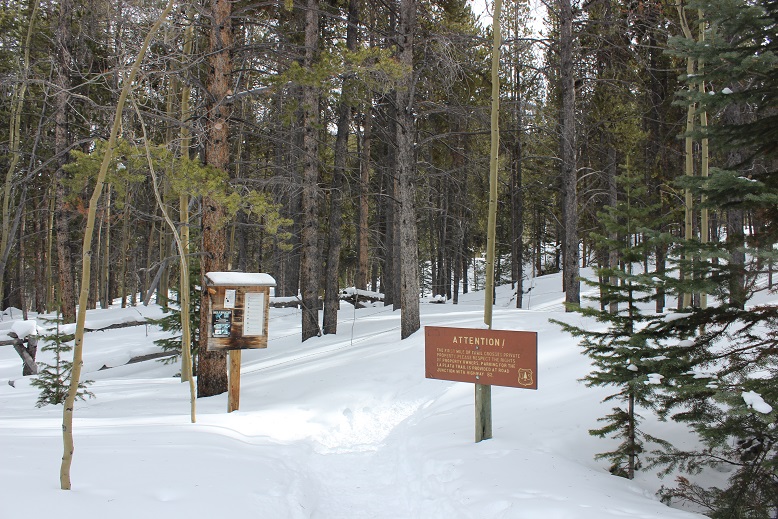
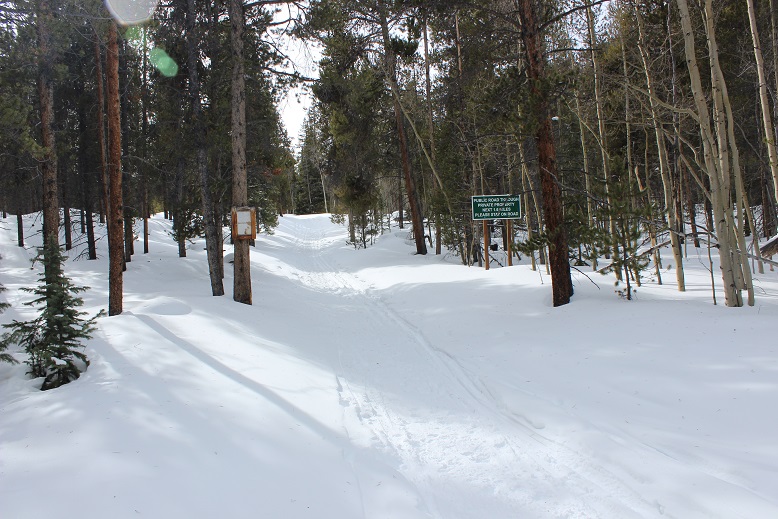
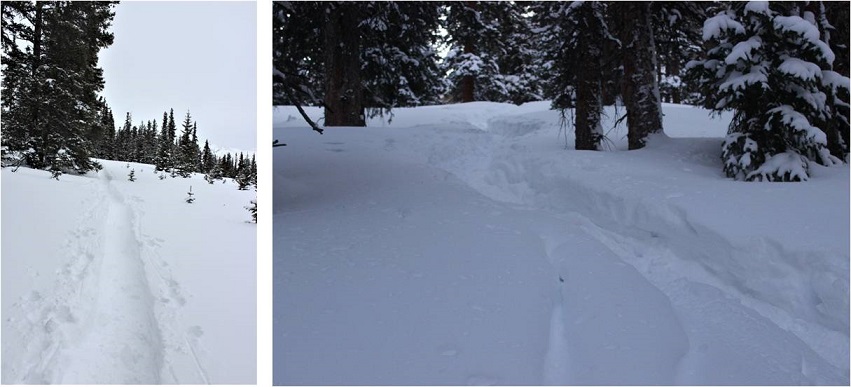
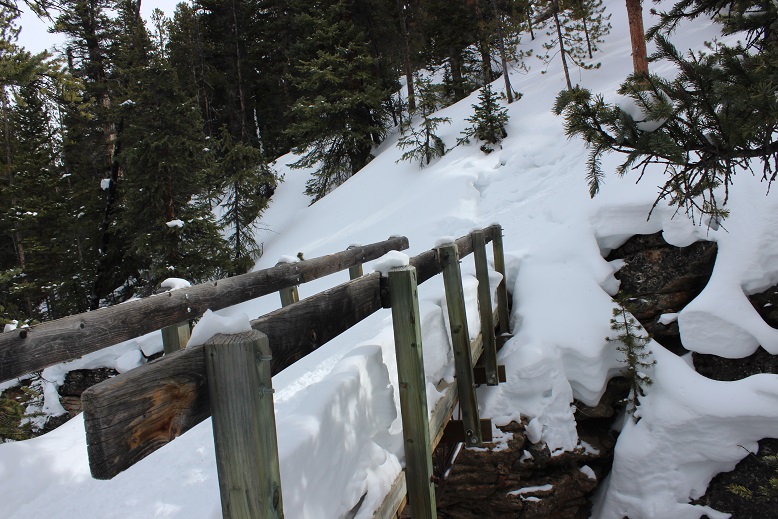

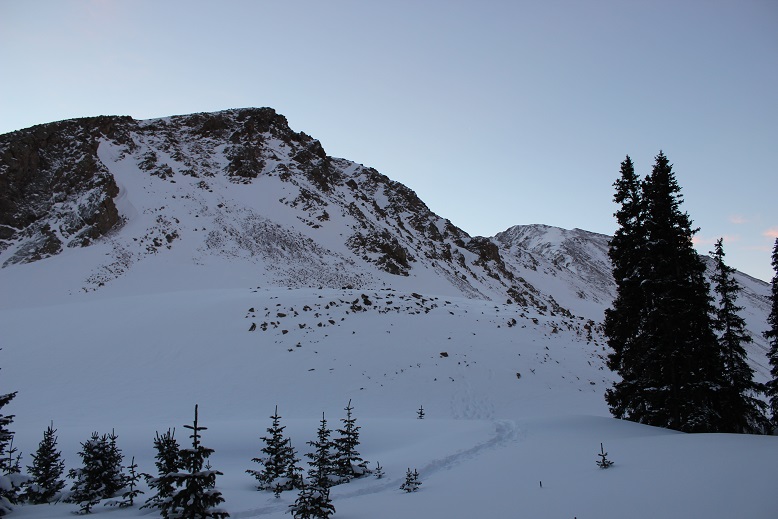
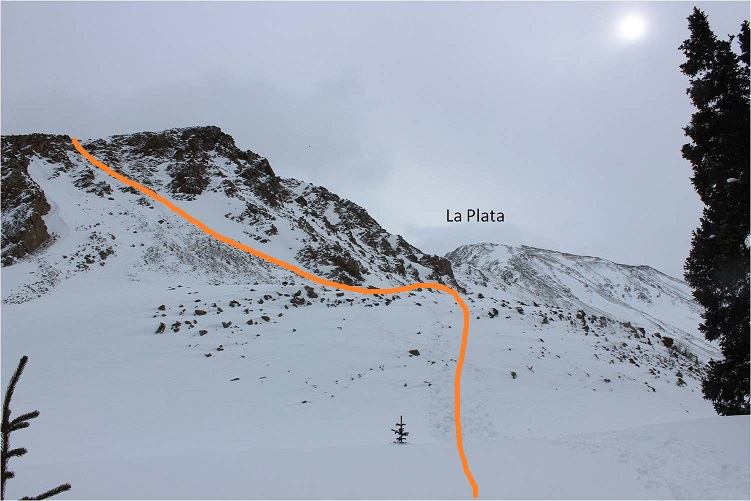
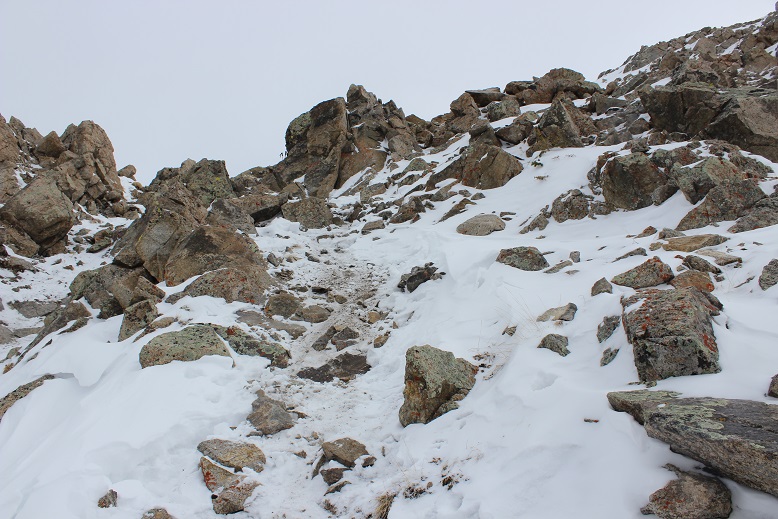
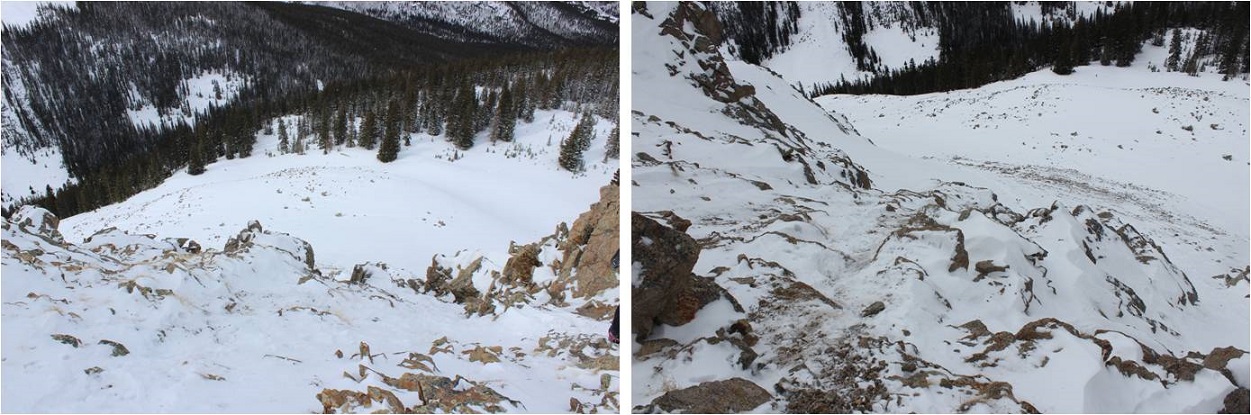

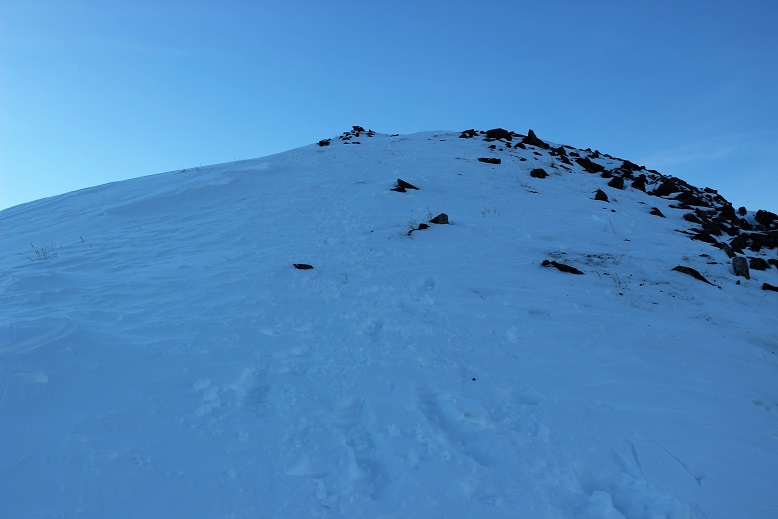
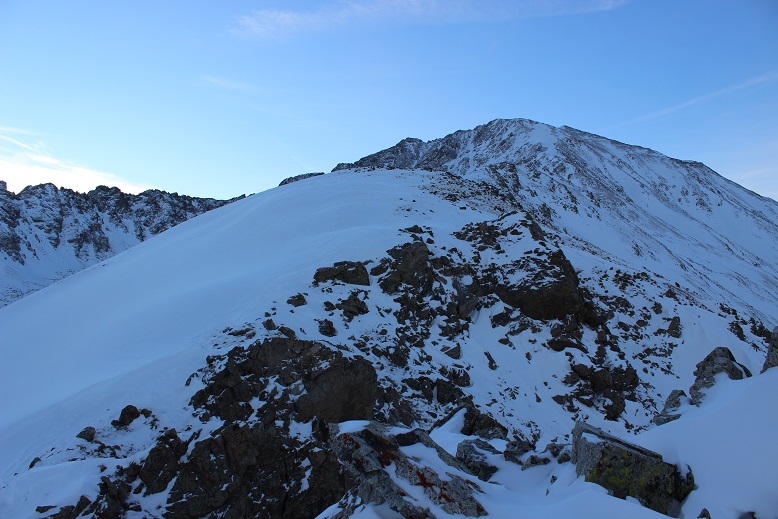
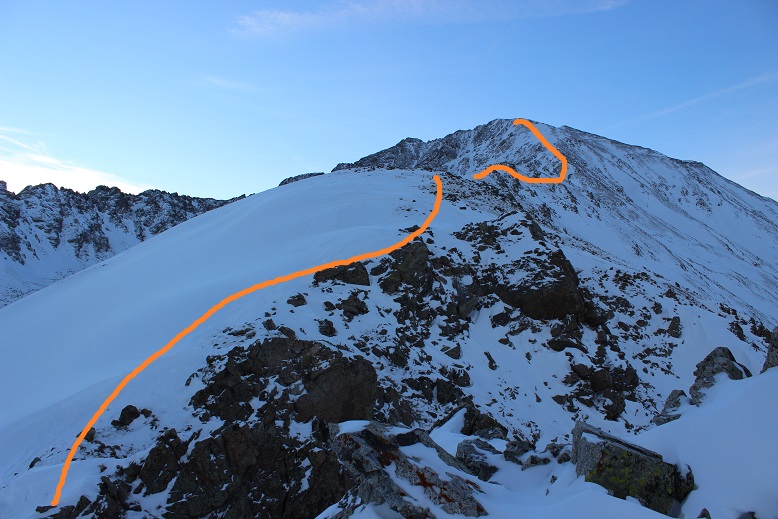
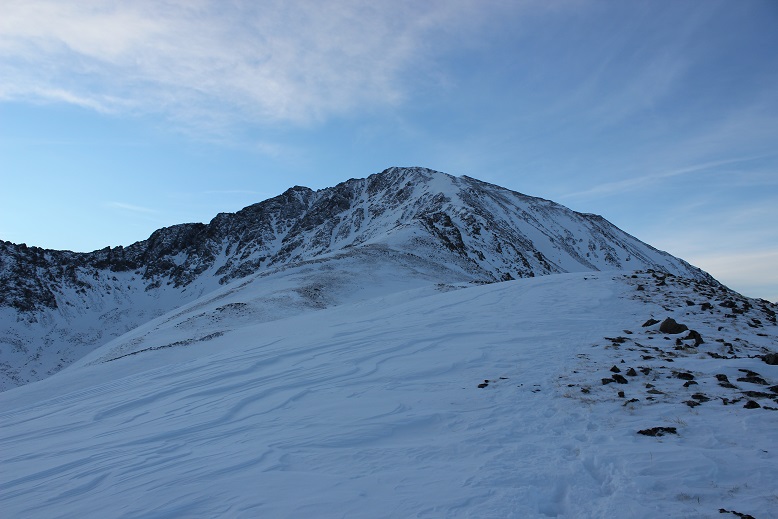
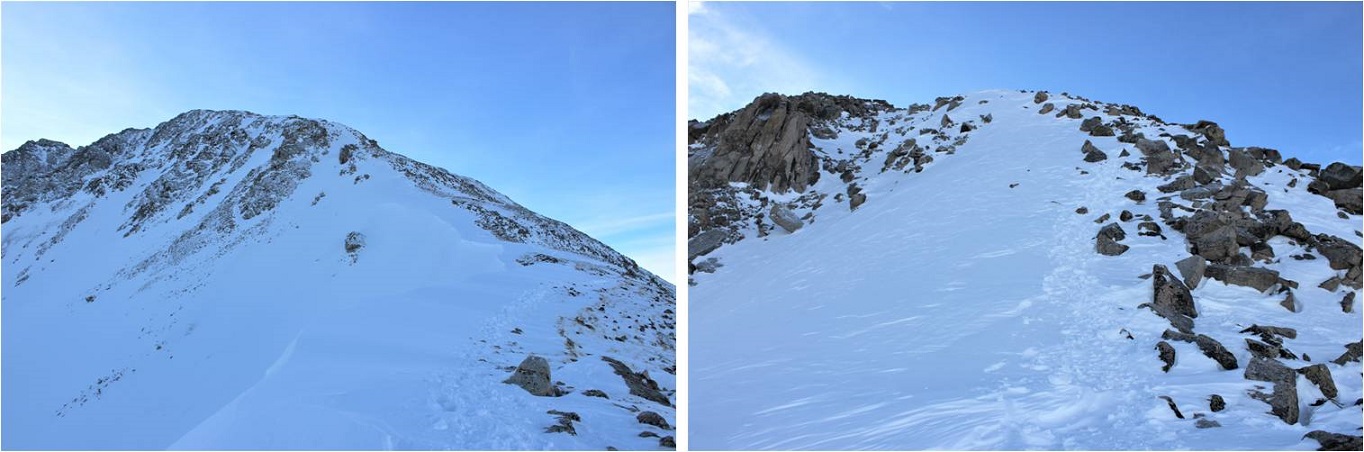
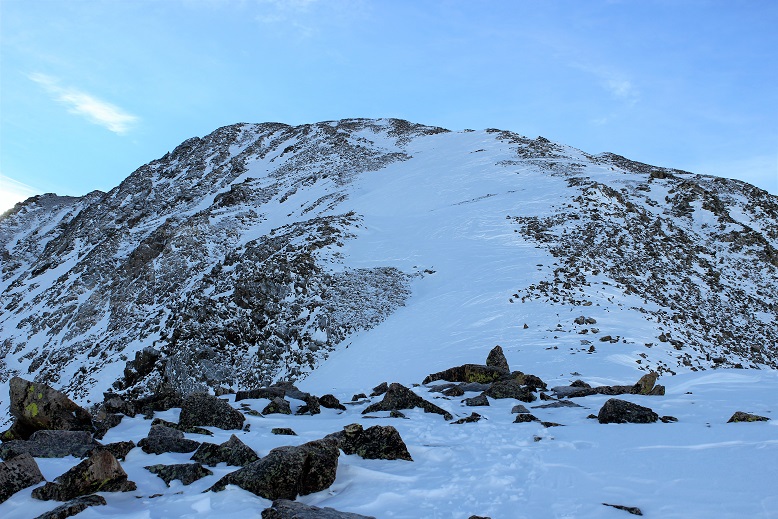
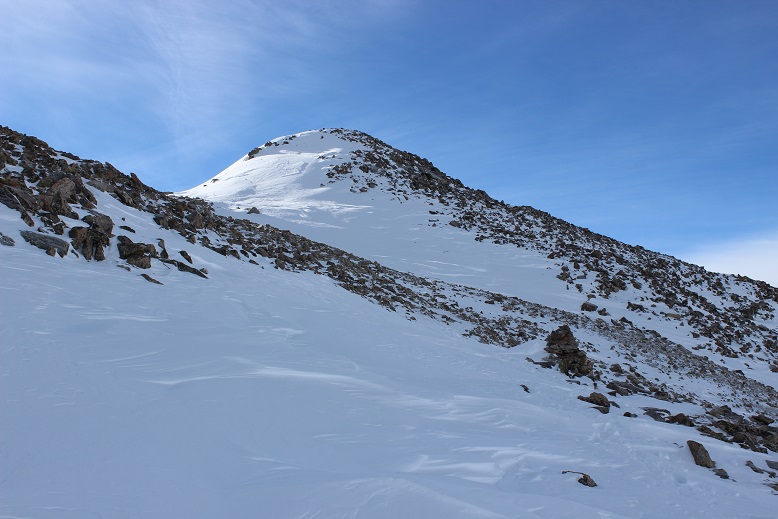
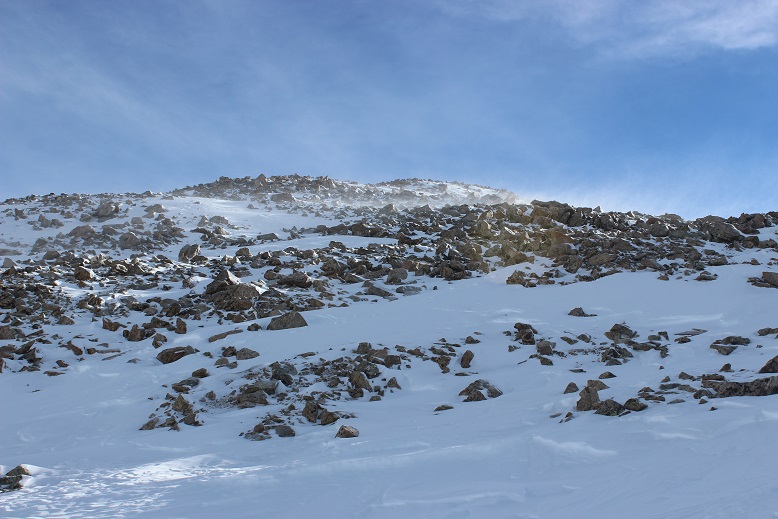
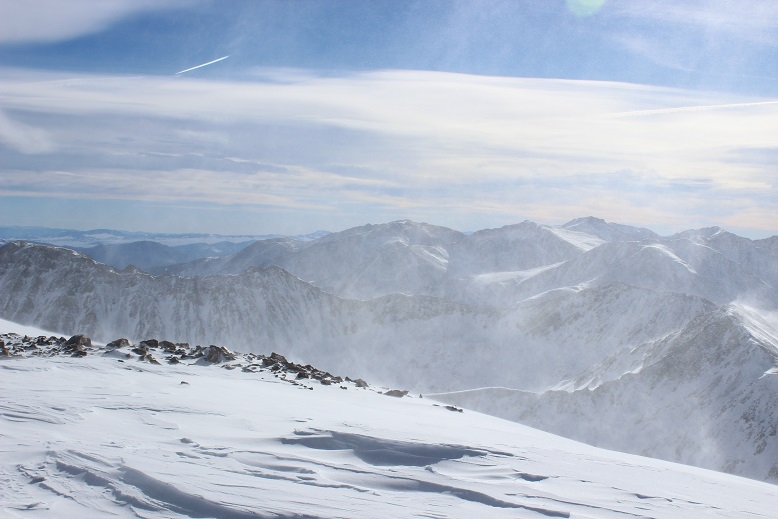
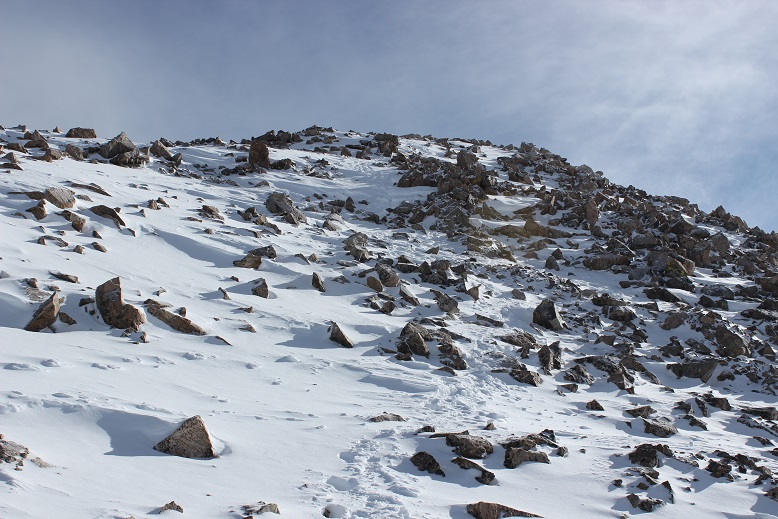


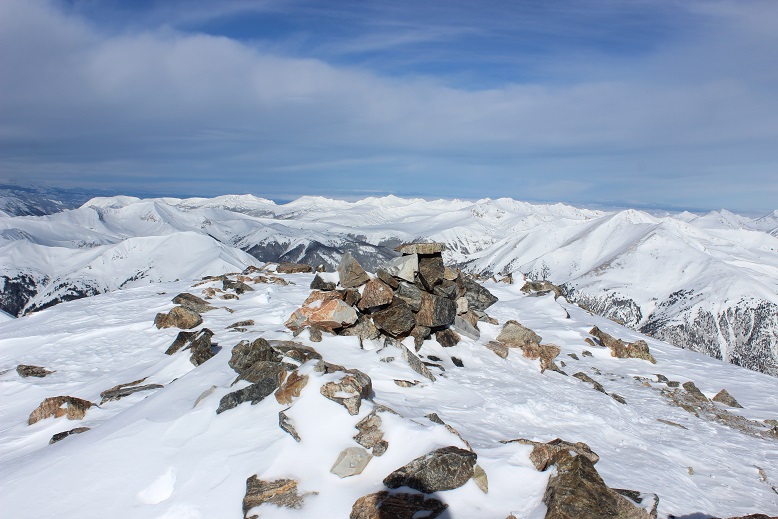
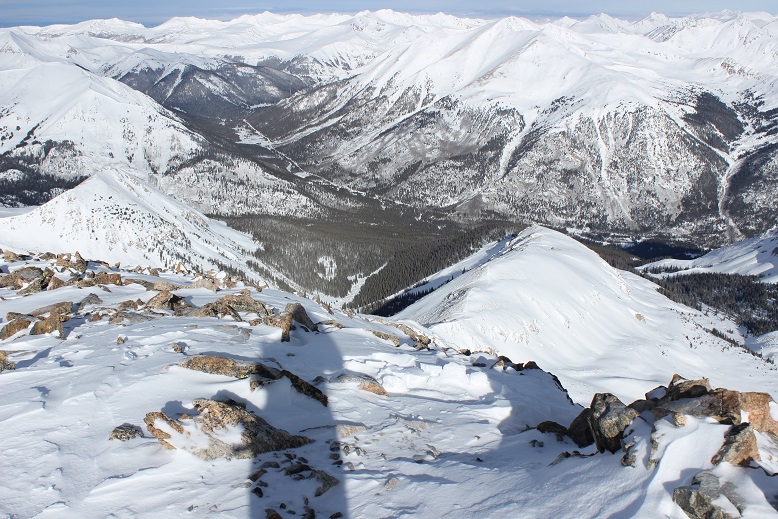
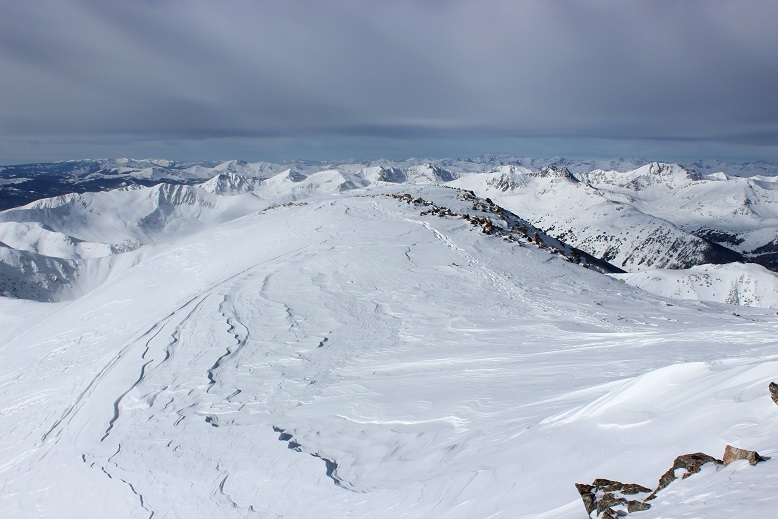
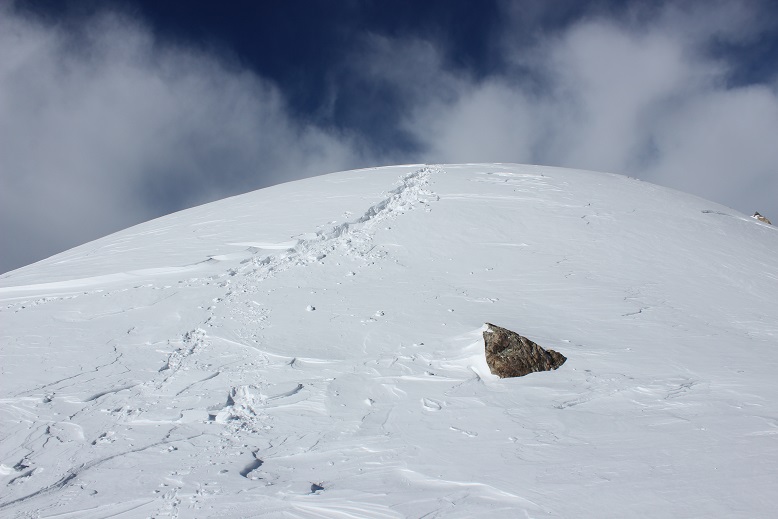
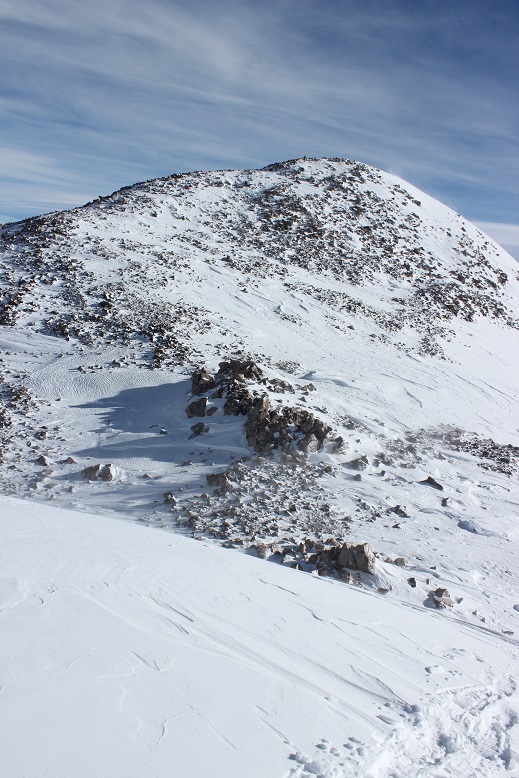
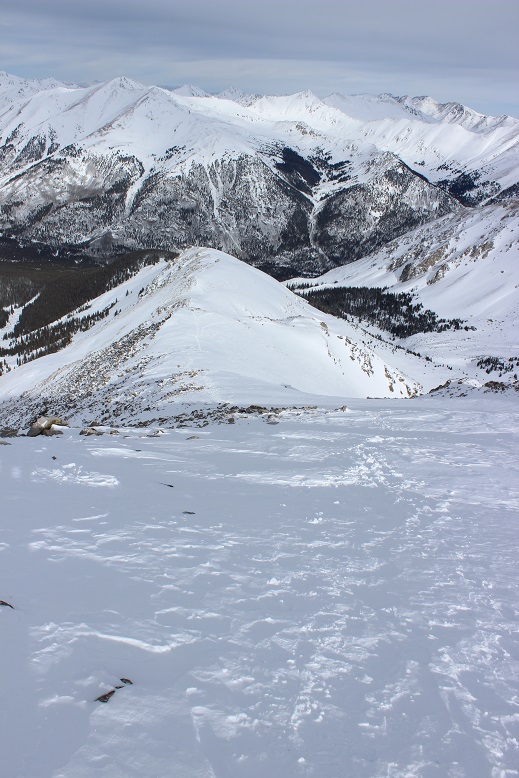
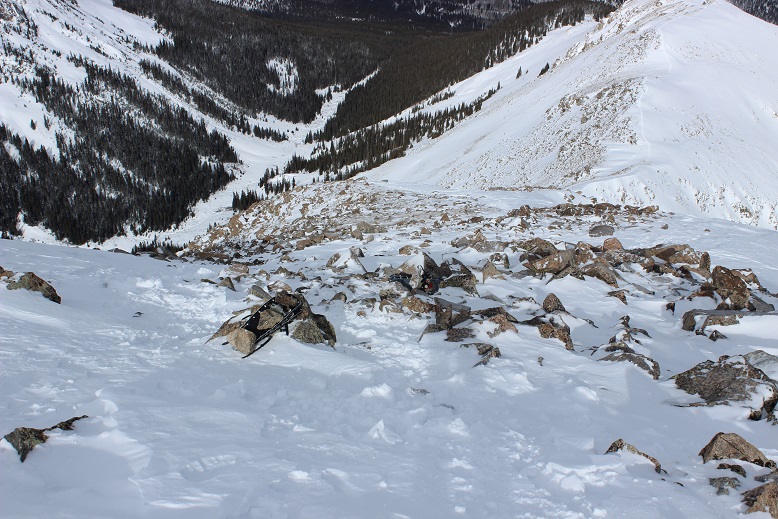
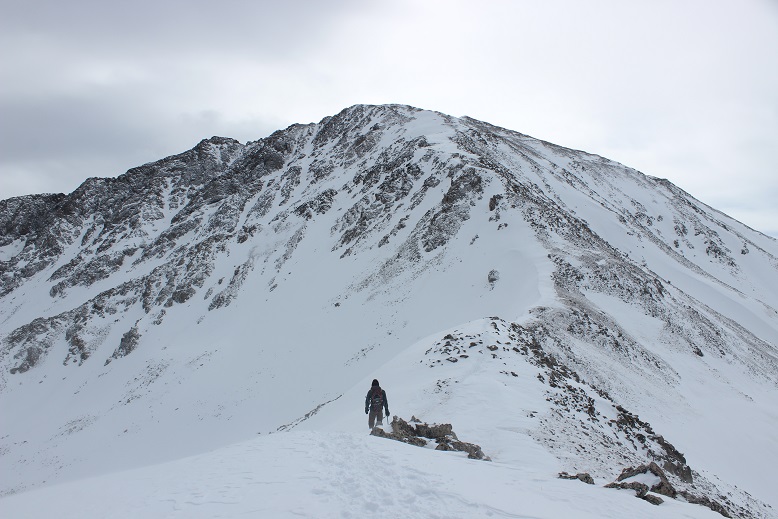
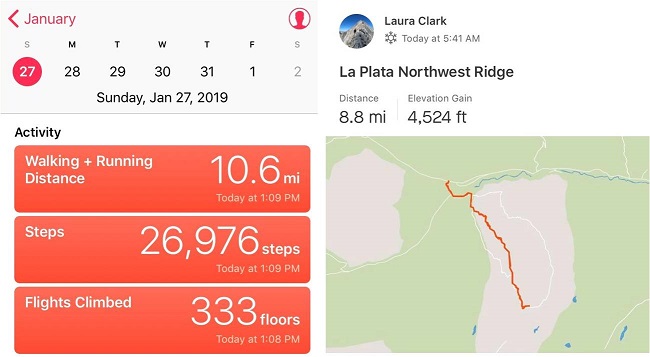
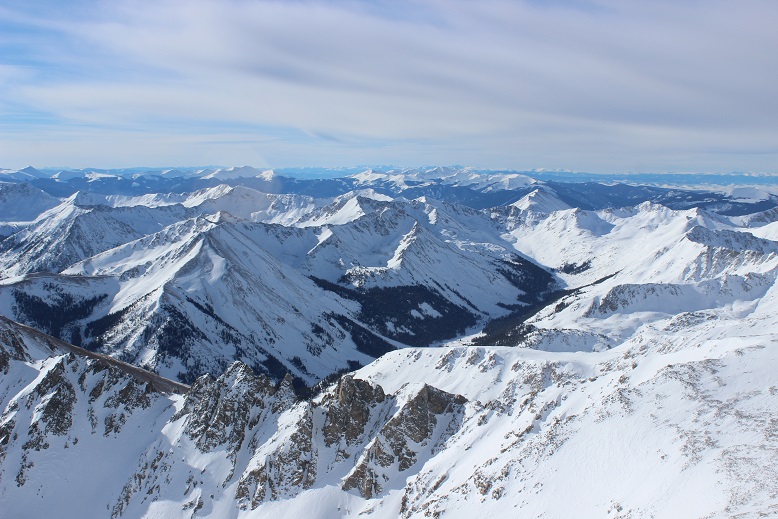
 Wild Wanderer