I’m kind of liking this ‘work from home’ thing that’s been going on for the past few months. Today I had a zoom meeting I attended at a Starbucks and then I was off to the Yankee Boy Basin (which I considered an appropriate place to spend the 4th of July weekend). The road to Yankee Boy Basin is easier than I remember. It’s only 4WD for the last mile or so. There’s a little bit of exposure but the road is plenty wide enough to pretend it’s not there.
I arrived at the trailhead and backed into a spot near the bathrooms (P.S. bring your own TP).
I got out and took a look around at the route I intended to take while it was still daylight. I was pretty sure I wanted to hit Cirque Mountain first, and then cross over to Gilpin Peak. Everything is different in the dark and a good visual in the daylight is helpful.
While I was looking around I heard a couple talking about Mt Sneffles. I went over to ask if they’d seen any snow on Cirque Mountain/Gilpin Peak while hiking. They were staying the night at the trailhead too, climbing Teakettle in the morning. We struck up a conversation and ended up exchanging beers and candy and 14er stories and caps full of whiskey. About an hour later two more of their friends showed up and we huddled around my truck as it rained a bit. When the rain stopped, they went over their gear and practiced some rappelling. They allowed me to tag along. I ended up calling it a night really early (I get up at 3am to work and get tired early in the evening). I’m sure I forgot to say it, so I’ll say it now: It was really nice getting to meet you all! Also, I will never be able to hear the word ‘traverse’ again and not say it twice @climbingcue, @dwoodward13, @hikesingeologictime, & @tallgrass!
I woke up at 3:30am, hit snooze once because I was really warm in the bed of my truck. I was ready to go a little before 4am. Tallgrass came to say goodbye and good luck. I was still groggy (I don’t wake up until about an hour into a hike). Thanks for the beer Tallgrass! I started by following the 4WD road northwest.
After hiking for almost half a mile I turned right and followed the small ridge up to the saddle of Kismet and Cirque.
The trail eventually narrowed and I went up a low flowing waterfall type gully
And then followed the scree filled gully to the saddle. All snow was avoidable.
At the saddle I turned right (east) and followed the ridge. Note, the point on the right isn’t a ranked peak. It’s easily bypassed by a trail to the left. I climbed it on my way back just to get in some added elevation and for the views.
I picked up my pace here because it looked like I could make it to the summit for the sunrise. Wow, that part of the hike hadn’t taken as long as I’d anticipated.
There was some choss and a chimney to climb. I put on my helmet and worked my way up.
There was some route finding for the last little bit as well as some easy scrambling
I summited Cirque Mountain at 5:45am
Cirque Mountain:
I made it a few minutes before sunrise and decided to stay to enjoy the show. It didn’t disappoint.
I also had some great views of Teakettle and Potosi to the southeast
I headed back the way I’d come, and decided to summit the small point and then head back down the gully
I didn’t go all the way down the gully. Instead when I hit tundra I turned right and headed west until I reached a small pond.
At the pond I hooked up with the Wrights Lake Spur trail and followed it until the first switchback.
Right about now it started to rain. I looked back on Teakettle and thought about my new friends hiking up there. I hoped they were staying dry.
The trail was an easy to follow, class 1 trail. At the first switchback I left the trail to continue heading west towards the saddle. There was a little bit of snow to contend with here so I put on my microspikes and walked across.
At this point I could see there was a gully I’d have to ascend that was still holding a little bit of snow at the top
Once on the saddle I followed it south. On the ascent I made the wrong choice and tried to ascend directly up the gully. This got me onto very loose, chossy terrain and took me longer than necessary to figure out. The rocks were the size of toasters and none of them were stable. Large sections would move below me at a time, taking me with them. On my way down I found a better route, so I’ll describe that route here.
From the ridge, dip down to the left to go around this first obstacle
Next, hug the area where the snow meets the rock. I’m pretty sure there’s an actual trail here under the snow
From here I’d wanted to ascend directly up the gully. DON’T DO THAT. Instead, try to make it as close to the ridge as you can
At the small saddle there was snow to contend with (a lot more snow than the pictures suggest). Glad to have brought my ice axe and crampons (something I do on every hike I don’t have beta on) and got to work kicking in steps and climbing over the snow. There was probably 30 feet worth of work to do over the snow at its narrowest point.
At the saddle I sat down to take off my crampons. From here it was a short trek to the summit, after first going over a false summit. This was all class 2, but I kept my helmet on.
I made it to the summit of Gilpin Peak at 9:30am. It was lightly snowing.
Gilpin Peak:
Here’s a look at the route I took out the basin from the summit
I turned and headed back over the false summit and headed back to the saddle
Because I’d already kicked in steps I made the decision to put on microspikes instead of crampons to go down the snow. This was a bad idea, but I didn’t realize it until I was already too committed. I made it down the snow safely, but I was shaking as I did so: crampons provide much more stability than microspikes (duh) and I wasn’t very stable on the downclimb. I relied a lot on my ice axe.
Here’s looking at the ridge back down
I re-crossed the snow below, this time without traction: I boot-slid my way across much of the snow.
I made it back to the trail and there was a family standing there, waiting for me. There was a mom and dad and grandparents with 6 kids who all had to be under 10 years old. They’d been watching my descent, and the father asked if I would show the kids my gear (crampons, helmet, ice axe). The kids were fascinated with the equipment, and proudly told me they were hiking to the lakes. I wished them luck and was on my way.
After making it to the pond I followed the class 1 trail above Sneffles Creek until I made it to a road, and followed the road back down to my truck.
Just before making it to the road I passed what I thought was a trail register. I opened it and found one of the most confusing maps ever! Not only did it not correspond with the visual direction of the peaks, north was at the bottom. This map is going to get a lot of people lost.
I passed a jeep that had gotten stuck. Everyone pitched in to get her un-stuck.
It was easy to follow the 4WD road back to where I’d parked my truck
I made it back to my truck at 11:15am, making this an 11.1 mile hike with 4382’ of elevation gain in 6 hours, 15 minutes.
I still had plenty of time left in the day, so I decided to drive to the next trailhead and attempt another mountain.
This was my third attempt going for Bard Peak. The first time I made it as far as Parnassus, but the wind and cold temperatures (and Raynaud’s) prevented me from going any further. My second attempt was from the Berthoud Falls area, and the snow just wasn’t cooperating. Imagine my surprise when I found out today this is actually an easy trail when not in full winter conditions!
I parked at the Herman Gulch trailhead and was on the trail by 4:30am. This trailhead has tons of parking, but beware: it fills up fast. There was a full moon and I could see by looking at the mountains I wouldn’t be needing snowshoes today, so I left them in my truck.
The trail starts in the middle of the parking area. I took the Herman Gulch trail to begin, which is just behind the information signs.
After hiking .2 miles I turned right (east) at this junction to follow the Waterous Gulch Trail.
This trail is an easy, class 1 trail all the way to the basin. Last time I was here the area was covered in snow and I had no idea there was a trail that went that far. Today the hike was easy! No real route finding below treeline.
After hiking for about 1.5 miles I came to a creek crossing in Waterous Gulch, crossed the creek on an icy log by sitting down, straddling the log, and shimmying across (due to the ice I would definitely have slipped if I’d tried to cross standing up). I turned left and headed north through the gulch on a great trail (still the Waterous Gulch Trail).
Starting here there was snow on the trail, but just enough to be annoying: I could still figure out where the trail went
I crossed a small stream and continued on the trail. Note: You can also choose to go right and not cross the stream here and take a parallel trail that leads you to the exact same place as the Waterous Gulch trail. I stayed straight here and continued to the end of the gulch on the way in and took the parallel trail on the way out. They were similar, but the one that follows the gulch also follows the stream, which was nice.
I followed the class 1 trail to the end of the gulch, and after 2.2 miles of hiking turned right and continued following the trail up to the saddle of Woods/Parnassus. There are a lot of ways to gain the summit of Parnassus. Last time I hiked further south, avoiding the saddle, and I would not recommend that route. Instead, take the easy gully and aim for the saddle and go as far as you can before turning right and heading southeast towards the summit. This is where the intense wind started and didn’t stop. Forecasted winds were 17-24mph, but those winds don’t knock you over. For the rest of this hike I was using my trekking pole for stability, hiking sideways into the wind.
The trail stopped here somewhere under the snow. I paralleled the snow to the saddle
At the saddle I turned right and headed southeast towards the summit of Mt Parnassus. This is an easy hike on tundra.
The terrain gets a bit rockier near the top.
The summit is relatively flat. I summited Mt Parnassus at 6:40am, after just over 3.5 miles and 2 hours of hiking. Since this is my second summit of Mt Parnassus I’ll spare you the selfie and let you watch the summit video instead.
Mt Parnassus:
Bard Peak is just over a mile east of Mt Parnassus.
There’s a bit of a trail from Parnassus to Bard. I followed it where I could. It was faint, so sometimes I lost it, but mostly followed the ridge. It’s important to follow the ridge when snow is present. This ridge is easy class 2 ‘scrambling’. Just watch for loose rocks. I could see a faint trail go to the right of the ridge (south), but it became covered in snow and would have been difficult to cross. Here’s an overview of my route
And some close-ups in order:
When I got to this section I did not feel comfortable traversing without crampons and my ice axe (luckily I had both). I sat down, strapped on my crampons, and crossed the snow. The snow was slippery at this time in the morning (not mushy, more like icy). You could probably traverse this section with just microspikes if you were here at the right time of the day.
Because I could I kept the crampons on until the last of the snow.
Here’s looking back on the section you want to avoid, and the reason I stuck to the ridge. You can also see a slip here would take you a ways.
After taking off my crampons and putting them away I headed up to the summit of Bard Peak, keeping close to the ridge
I summited Bard Peak at 7:50am, after 4.7 miles of hiking.
Bard Peak:
There was a broken summit register and a benchmark on the summit
Now to head back to Mt Parnassus. I backtracked down to the saddle, put on my crampons again, got out my ice axe, and crossed the snow.
It was easy to avoid the snow on the rest of the way back to Parnassus
From the summit of Mt Parnassus I descended the way I’d summited, back down to the Woods/Parnassus saddle
When I made it to the saddle I still wasn’t tired so I decided to summit 12er Woods Mountain as well. This summit doesn’t require much guidance: it’s an easy tundra stroll to the top. This added 460’ of elevation gain to the hike. This is where the wind became the most intense (yes, it was still blowing). It was so windy I was hiking sideways with each step, and had to over-compensate each step to stay in a straight line, crisscrossing my steps as I went.
I reached the summit of Woods Mountain at 9:40am. I’ll spare you the selfie of this one as well, since I’ve already summited this peak. Here’s the summit register and a video
Woods Mountain:
This wind was insane! Time to head back down to the saddle and back down to the gulch
I followed the trail back down the gulch, over the log bridge, and back to the trailhead. This is where I started seeing a lot of other hikers. When I made it to the trailhead the large parking area was completely full.
I made it back to my truck at 11am, making this a 10.25 mile hike with 4965’ of elevation gain in 6.5 hours. Here’s a topo map of the route:
I felt really good about the hike today: The weather had been warm, no clouds, not much route finding, and when I made it back to my truck I wasn’t even tired yet. The only thing that could have been better was the wind. It’s amazing how good conditions can change the outcome of a hike!
This was my second attempt to summit Cathedral Peak this year. The first time was back in April when I had to turn around due to avy debris I was unable to navigate in the dark. I’d read a recent conditions report stating there was now a path around the avy debris and decided to attempt Cathedral Peak on my next free day.
My sleeping schedule is currently all messed up. I’d woken up at 2pm, took my daughter to the art museum, and then left my house at 9:30pm to make it to the trailhead by 2am. I wanted to get an early start on this one because of the potential thunderstorms later in the day, but mostly because I was worried the snow in the couloir would soften up early in the sunlight.
The trailhead had room for plenty of vehicles. When I arrived, there were 4 or 5 cars in the lot, but when I left there were dozens, all lined up on the side of the road. Also, apologies to the man I woke up who was trying to sleep in his vehicle: apparently my trucks headlights were too bright. I was on the trail at 2:10am.
The trail starts off meandering through an aspen grove. Last time I was here this had been covered in 3-4 feet of snow and I’d missed the sign…
I made it to the avy debris area after about a mile and a half of hiking. When I was here last I couldn’t see the top of the downed trees; they were supported by a huge layer of ice that was at least twice as tall as I am. Today the area was much more manageable to navigate.
Next I followed the side of the mountain up some switchbacks on an obvious trail. Side note: Beargrass (the tall plant with lots of tiny white flowers) looks scary in the dark; kind of like children waiting for you silently in the night. I like to keep my flashlight directly in front of me to keep myself from freaking out.
Once again, the trail is easy to follow. Here’s a look back at the trail
I stayed left at this junction on the way in (but on the way out ended up coming back down the Electric Pass trail and rejoining the trail here)
The most difficult route finding occurred here, before the lake. I knew I could pass the lake on either side but due to a creek crossing I didn’t want to take I navigated to the north. I was told there was a miners trail here, but was unable to locate it in the dark. I lost half an hour going up and down the trail, looking for the offshoot and was unsuccessful (although I did find a lot of trails that went in other directions). Finally, I decided to just head northwest through the willows. This sounds easy enough, but the willows here were several feet taller than I am. I just turned my trekking pole parallel to the ground and held it out in front of me while I bushwhacked across them. I only got hit in the face a few times (and had a swollen upper lip the rest of the day to prove it). The good news is I made it across, and the willows were no worse for the wear. On my way back I could see the miners trail in the daylight (more on this later). Here’s the route I took through the willows and across the creek (which was small enough I could jump across here without getting my boots wet).
Next I rounded Cathedral’s east ridge and found a well cairned trail that led me into the basin
This trail brought me above Cathedral Lake
This route was well cairned, and the talus was terrible. I got to be the first to experience the spider webs this morning. Tons of fun in the dark! Second only to phantom children.
Once in the basin you can see the route up the access gully. Today the basin was half filled with snow and I couldn’t help but think how much easier it would have been to traverse if it had all just been snow.
In the morning I didn’t need snowshoes. I made it to the base of the access gully at 5:25am and put on my crampons and helmet and got out my ice axe and garden tool (that tool’s really coming in helpful, but I may just break down and buy another full ice axe). This is steeper than it looks, but luckily it ‘went’ all the way to the ridge
Here’s looking back at the basin
The snow was still really firm and I was unable to kick in steps but I was able to ascend with crampons and ice axe. I was glad to have both my ice axe and (garden) tool. I was about 30 feet from the top when I decided it was better to be on the left side of the gully rather than the right and started traversing sideways. About 4 steps in my crampon hit the ice sideways and my boot slipped out of the bindings. This was the worse possible place for this to happen: I was balanced on the side of the wall of ice, with one foot in front of the other (I wasn’t able to kick in steps here, and was balancing on a very small mound of frozen snow with my right toe pointed at my left heel, sideways). I needed to have an ice pick in the wall for balance or I was going to slide all the way down the gully. My pulse rate quickened as I realized the severity of the situation. Luckily I had two tools. I carefully balanced on the working crampon and tried to knock the other back into place with my ice axe. No dice, my crampon wasn’t going back over my toe by sheer force (as well it shouldn’t; I’d fastened it pretty tightly initially, and had no idea how it had been knocked loose from my boot). That meant I was going to have to untie the crampon and re-tie it with one hand while holding onto the ice with the other: Without losing my balance and sliding down a few hundred feet of ice. It took me a solid 10 minutes to gingerly untie and re-tie the crampon, but I was able to do so from where I was perched. I mentally praised my daily yoga routine for developing my balancing skills. Here’s where my crampon was knocked sideways
Ok, crampon back on I carefully hustled my way to the top of the gully, topping out at 6:09am, a little shaky as I looked back down.
From the top of the gully I turned right and noticed the rest of the route was snow free. Woot! I took off my crampons and put them in my pack. Time for some scrambling! On the way up I took a class 3-4 route up and over the ridge (solid line) on the way down I found the cairns and took the class 2+ route along the side of the towers (dotted line).
The last bit to the summit was easy
I summited at 6:40am (it took me half an hour from the top of the gully to summit).
Summit Video
Check it out! A summit marker!
Here’s a look back at the basin and my route up to the gully
Time to head back down. I made it back to the top of the gully and met 3 other climbers. We chatted for a bit. They said they’d kicked in steps on the way up to make their descent easier. It was 7:20am as I headed back down the gully. On my way up I’d forgotten to put on my gloves (it wasn’t cold) and my knuckles were a bit tore up, but that’s the best way to learn a lesson. Also, I wasn’t sure I’d have been able to untie and then re-tie my crampon with gloves on. At any rate, I was putting gloves on for my descent.
I turned, faced the gully, and began my descent. It was only just after 7am, but there was a huge difference from when I was climbing at 6am. The snow was quickly softening up. I was careful to either avoid the kicked in steps, or if I had to use them to make sure I only made them better, but the softening snow wasn’t making things easy. Sticking to the climbers left of the gully seemed the best way to go. About ¾ of the way down the snow was slush and I really just wanted to glissade the rest of the way (but didn’t because I was worried I’d mess up what was left of the kicked in steps).
Here’s the route once again
I actually took more time than necessary heading back down, and as soon as I could I switched out my crampons for snowshoes to exit the basin.
I met a man starting his climb up the gully and was worried for two reasons: #1, the three people I’d met at the top of the gully hadn’t yet began their descent, and #2, it was rather late in the day for someone to start their climb (the snow at this point was rubbish). I figured the trio up top must have decided to picnic at the summit and asked the current climber to look out for them. It was now 8:25am, and I knew I wouldn’t want to begin my descent at this time. I figured I’d timed it pretty well starting at 2am: it would have been perfect if I hadn’t spent half an hour lost in the willows.
Speaking of willows, I made my way back to the small creek crossing and in the light of day was able to locate the miners trail. I crossed the creek and headed up the slope, aiming at a small pine tree. From here I was able to follow a faint trail, which eventually led me to the Electric Pass Peak trail, which I took back to the junction with the Cathedral Lake trail.
On my way out I couldn’t help but think how dreadful this climb would have been with snow all the way up to the lake! I have no idea how I found my way so far the first time. Here’s a look at some of the avalanche debris
I made it back to my truck at 10:55am, making this a 9.5 mile hike with 4416’ in elevation gain in 8.5 hours. The hike felt longer than it was, most likely because much of the trek out was done in direct sunlight on the way out (no trees for shade).
I changed my mind several times before setting off on this hike. This is not the peak I’d wanted to do today, but after some last minute research I realized the one I really wanted to hike isn’t achievable this time of year. So I was bummed, but also glad I hadn’t attempted the peak just to have to turn back (that’s happened to me too many times this year as it is).
I arrived at the winter closure at 4am, surprised to find there was a winter closure? I was under the impression the winter closure was the Blue Lakes Campground, but here I was, faced with a locked gate 2 miles from the lake. Oh well, this was supposed to be a short hike, so I welcomed the added mileage.
I parked at the picnic area and was the only one there when I arrived. I’m not sure this area gets much winter use.
The dirt road up to the campground is a well maintained 2WD road. It was clear of snow in places and covered in a few feet of snow in others. It’s going to be a while before the FSR 422 road is opened this year.
Once I made it to the campground the snow coverage really picked up. Now the tricky part was trying to find the trail in the dark.
I’m sure this is a well maintained trail in the summertime, but it didn’t look like anyone had been out here in months, and certainly not since the last snow. At times the trail was obvious because there was a clear path through the trees, but most of the time I had to just keep heading southwest up towards treeline, making my own trench. There seemed to be several switchbacks.
Once at treeline the rest of the route became obvious. I found a path between the trees
And then gained the ridge and followed it up
I took a shadowselfie because I could, and turned and watched the sun rise over West Spanish Peak
Once on the ridge I started to get worried. What I thought was going to be a very easy hike now included an unforeseen obstacle: a HUGE cornice covering the entire summit. At least it looked stable.
The closer I got the larger the cornice became
I tried my best to find a route up that didn’t include the cornice, but that just wasn’t going to happen, so I aimed for the route with the least amount of danger. Sticking to the left I thought I could avoid most of the cornice and climb straight up a wall of ice. Here’s the route I took
The snow kept getting steeper and steeper, and the last 50 feet or so I continually used my ice axe and wished for my helmet. I just kept looking ahead and plugged in my ice axe, repositioned myself for stability, and hauled myself up. The last 10 feet were brutal, but I was able to hoist myself up over the lip of the cornice and found I was on a lot of solid snow with a windblown summit just beyond.
I summited at 7:30am. I tried not to get too excited about what I’d just done as I took a few pictures
I’d intended on summiting a few other 13ers today (Leaning South Peak, Leaning North Peak, and possibly Cuatro) but the extra miles I hadn’t expected from the winter closure meant I was behind schedule and unfortunately, the snow was warming up. As I was debating go or no-go I looked for a good route towards the other 13ers, but all I could see were cornices blocking my way down. Hmph. Oh well, I’ll just have to make another trip out here: In the summer when there aren’t any cornices.
Oh yeah, I still had to get down this cornice. I took a look over the edge…
Wow, that was steep! Here’s a look at the route from the summit back to treeline
I turned to face the cornice to head back and immediately realized snowshoes weren’t going to cut it on the way down. They’d been great for stability on the way up, but they would be in the way on the way down. I switched to crampons and was immediately pleased with my choice. OK, now to head down. The first 50 feet or so were harrowing to say the least. Wearing snowshoes on firm snow I hadn’t made steps on the way up but they were needed on the way down. So I spent a lot of time kicking in steps, balancing, and slowly making my way down off the slab of ice. I stopped when I felt safe and took a picture. The steepest part is circled
I was thrilled when the crampons were no longer needed and switched back into my snowshoes. I took a second to breathe and looked back at what I’d just done. Wow! Yes, much, much steeper than this picture makes it look. That had been an adrenaline rush!
Here’s the route back down to the trees
The snow was quickly becoming soft and was fun to walk though. I was very, very glad I’d chosen to head back and not summit those other 13ers: it was warming up fast!
As I hiked down I couldn’t help but think how this looked like a great mountain to ski, yet it was obvious no one had been here to do so in quite a while. There was continuous snow from the summit to treeline and honestly, all the way back to the campground. It seemed a shame no one was out here enjoying the skiable terrain.
I followed my tracks back to the “trail”
And through the forest
I made it back to my truck at 10am, making this a 10.5 mile hike in 6 hours.
Today was fantastic! All I can say is this peak needs more attention! It was a beautiful day, which helped, but when I made it back to my truck I didn’t feel exhausted or even tired or sore. The ice axe and crampon use had been a fun surprise, and the 10.5 miles had spread out the elevation gain nicely so I didn’t feel it much. It’s a shame this peak doesn’t get visited more often. If it’s on your list, you should move Trinchera to the top!
I made it to the La Plata Trailhead a little after 4am and was surprised to see someone getting ready to hike La Plata. As I was getting my gear together I heard him trek off in his snowshoes.
I started at 4:20am, excited to find the 82 open well past the La Plata trailhead. I briefly considered moving my truck, but quickly thought this wasn’t a long hike anyway: It would be nice to get in a few extra miles to make this hike a little longer.
The road was open, but there wasn’t a lot of parking available because of all the avalanche debris lining the roadway. Everything that could slide in the area apparently had slid at least once.
On a positive note, everything smelled like fresh cut pine. I followed the road for a mile in the dark and then turned right to begin the climb. This area had seen an avalanche as well, and even though they weren’t completely necessary at this point I put on my crampons and left them on for the entire hike. In the dark navigating the debris up the avalanche slide felt daunting, but in the light of day it looks pretty easy. Here’s the route I took
The gully was steep and filled with snow, so I just kept to the center and followed the gully. Even though this area had avalanched, as I neared the top of the gully I discovered it was loaded with snow ready to drop. I didn’t want to be here when the weather warmed up today!
The sun started to rise, and at about 13,000’ I started using my ice axe, following the center of the gully.
The steepest part was just below the summit ridge. Here is where my ice axe proved extremely useful and my calves started screaming. I just kept crawling forward, intent on summiting before the weather warmed the snow.
At the summit ridge the terrain became much easier. I stood up and walked toward the summit bump
This part was easy! There was a small section to climb
The weather was absolutely perfect! It wasn’t warm, but it wasn’t cold either, and there wasn’t any wind! I was able to get a video on the summit, and actually stayed and enjoyed the view for a while
OK, now it was time to head down.
In the light of day I could appreciate just how steep the gully was
About halfway down I paused to take a video of the water I could hear flowing under the snow below me. Yep, it was time to get off this waterfall
I decided to see just how far the 82 was open, so I drove down the road a bit in my truck. I made it 2.5 miles before the next closure sign, and saw evidence of multiple avalanches along the way.
With my morning over at 9am I decided to drive 4 hours to the next trailhead and rest a bit before my next adventure…
It‘d been a long week at work, so I needed a quick nap before heading to the trailhead. I got all my gear together and packed it into my backpacking pack and loaded it into my truck so I’d just need to get up and go.
My backpacking pack looked excessive for a day hike, but I was darned tired of carrying those snowshoes in my hands all the way up the trail again. They don’t strap to my day pack, and they’re a bugger to carry, but they fit nicely into my backpacking pack. So today that’s where they went. At least the pack was light.
My plan was to get to the trailhead at 1am and make it to the lake around 3:30am. That meant I needed to leave at 9:30pm. That gave me 2.5 hours to rest if I fell asleep right now. I jumped into bed, checked my alarm one more time to make sure it was set for 9pm, pulled the covers over my head and fell asleep. Two seconds later I turned over and looked at my phone because I felt way too rested. AGH!!! 10:33pm! My alarm hadn’t gone off! Drat! I did the mental calculations: Was it to late to start? This is really a hike that needs to be started very early in the morning. Very early. Did I just miss my shot? I knew I could make up some of the time driving, and I was all packed, so…
I jumped out of bed, re-heated the morning’s coffee, and was out the door in 5 minutes.
Surprisingly there was no one on the road at 11pm on a Thursday night. I drove most of the way not seeing another vehicle. I couldn’t speed however, because there were a lot of animals out. Just after Buena Vista I saw about 20 deer trying to cross the road in front of me. I had to slow down very quickly to avoid hitting them. I’ll admit I was pretty close, but was able to stop in time. I’m guessing we had 3 inches to spare.
Just as my truck came to a full stop, Wham! I heard a big thump on the back passenger side of the vehicle. I’d just been hit by a deer! I thought that kind of thing only happened in Gilmore Girls? I didn’t want to get out of my truck because there were a bunch of deer around, so I slowly crept the vehicle forward and looked in my rear-view mirror to see if the deer was ok. It was. It had just gotten scared and done the prey thing where they try to zig and zag to confuse their predator into going the other way. She’d zigged when she should have zagged, but all the deer were up and walking around behind me, so I continued on. I’d look at the damage to my truck when I got to the trailhead.
My GPS stated I was making good time. I’d already cut off 30 minutes of drive time, making me only a little over an hour behind schedule. That was promising. Until I made it to the trailhead. Or, what I thought was the trailhead. Those of you familiar with the Maroon-Bells and Snowmass area might think this was a stupid mistake, but my GPS directions and the directions from the .com were pretty parallel, and after following them I ended up at the Maroon Bells Trailhead instead of the Snowmass Trailhead. Both are referred to as the Maroon-Snowmass trailhead (side note: there’s a sign at the park entrance saying the $10 fee to enter Maroon Bells starts June 10).
I was starting at the Maroon-Snowmass Trailhead, but apparently there are two of those?!?! Luckily I’d started the GPX file for the hike before leaving the house (something I learned to do dozens of 14ers ago for situations just like this) and saw where I needed to go to fix this problem.
It took me an hour, and just an FYI, when using the .com directions there is no Snowmass Creek Road: It’s now called Brush Creek, with no mention of Snowmass anywhere, even when it becomes a dirt road.
I made it to the correct trailhead (also named Maroon-Snowmass BTW) at 3am. I’d wanted to almost be at the lake by this point. Now I was mad at myself. The alarm thing was my fault (I’d accidentally set it for Friday at 9pm instead of Thursday at 9pm), and even though I’d found several different directions to the trailhead I messed that up too. So all the time I’d “made up” driving was lost, and then some.
I jumped out of my truck, threw on my pack, and was on my way. I had serious time to make up. Side note: there was a huge tent set up in the parking area with a generator running? That seemed a bit excessive. There were 2 other cars in the lot, one I assumed belonged to the tent people and the other to another hiker(s). The road in was a 2WD dirt road for some of the way. Here’s a picture from later in the day.
About a quarter mile in I realized I forgot to eat my bagel, and I wasn’t 100% sure I remembered to pack my gloves. I knew they’d made it to the truck, but I wasn’t sure they made it into my pack. I was only a little ways in, but I wasn’t turning back. I had food with me, and if my hands got cold I had an extra jacket. I’d improvise.
I passed several closed gates and great signs indicating the correct trail.
It was dark but I was hiking by the light of the moon. I could hear but not see the river, and was glad the path was so easy to follow.
The trail was very well maintained
There were several downed trees directly on the trail, but they were (mostly) easily avoided).
There was also evidence of avalanche activity in the area.
It stayed dark until 5:30am, just as I reached the log jam. (Note, there’s a video of my crossing the log jam later towards the end of this post for those interested in experiencing it with me). The log jam was much easier to cross than I’d anticipated! The only tricky part was all of the logs were floating on the top of the water, making them springy and not secure. The lake was about 8 feet deep in the middle, so I didn’t want to accidentally fall and be a swimmer. I just made sure I checked for stability with each step, and where possible used my trekking pole for balance.
Snowshoes were needed about ¼ mile from the lake. I pulled them out to put them on and woot! I had my gloves! Things were looking up!
I kept the snowshoes on to cross this short log bridge, which actually ended up being a great idea: they gave me extra stability.
I’d made it to Snowmass Lake. It was beautiful in the morning light!
I made it the 8 miles to the lake at 6:45am, when my original intention was to be there at 3:30am. I was over 3 hours later than I’d wanted to be at this point. I did a mental sigh, knowing it was unlikely I’d summit today because the sun would melt the snow to a point that made climbing impossible. Even knowing this I continued on, telling myself there were probably more unknowns ahead and I’d want to be more prepared next time I attempted Snowmass. I’d just keep trekking on and see how far I could get and how much I could learn about the route for next time.
There was no evidence anyone had camped at the lake, so I assumed the extra vehicle belonged to day hikers.
There was evidence of recent avalanche activity at the lake. It looked quite recent, and was coming from the east side. The left banks of the lake were covered in snow I was sure should have melted out by now, and attributed it to an avalanche. There were broken pieces of trees everywhere. I kept my snowshoes on to cross the banks, which was extremely helpful. It looked like others had postholed. There was still ice on some of the lake.
Even after I made it past the lake I kept my snowshoes on as I headed towards the scree slope gully. This was 600’ in elevation gain of pure torture. I don’t like gullies. As far as I’m concerned a gully should either be full of climbable snow or not on the route. It took me forever to climb this thing! It was full of scree and large, loose rocks and boulders. Nothing was stable. It was like a bad Paula Abdul song: two steps forward and two steps back. I actually kept on the snowshoes until I was about halfway up the gully because they gave me added stability (don’t try this at home!!!). I only took them off when the scree and rocks transitioned to boulders. It was apparent they were now doing more harm than good and I didn’t want to risk a broken ankle.
I made it to the top of that very instable gully at 8:30am. I put back on my snowshoes and helmet, thinking to myself it probably would have been a good idea to put my helmet on before the gully.
I looked at the rest of the route before me. Snowmass is best done with snow in the mass, and boy did it have snow!
I started forward and noticed a guy glissading down towards me. This really ticked me off. I was so mad at myself! I should have been where he was right now, on my descent, but instead I still had 3 miles of difficult terrain ahead of me. He made his way towards me and started some small talk about the climb, how many 14ers we’d done, and the generator at the trailhead. He hadn’t seen anyone else all day, and was pretty cheerful. I tried to make small talk, but it was hard for me to remain upbeat. The sun was shining, the snow was melting, and I was behind schedule. I’m sure I came across as rude, and while I regret that I couldn’t help it. If you’re reading this, I apologize for my bad manners!
He told me he’d started at 1am, and was just going lightweight today (he noted, looking at my excessive pack). He didn’t have snowshoes, so he’d postholed around the lake, having a miserable time of it. The snow up towards the top of the mountain was still pretty stable, so I shouldn’t have trouble summiting. I sat down and switched my snowshoes for crampons. This putting on and taking off my snowshoes/crampons was getting exhausting!
We said goodbye, and I looked at the route before me and the way I’d traveled thus far (with the hiker to the right).
I steeled myself: If the snow was indeed still stable as the glissader said there was a small chance I could summit today, and I was going to do my best to make it happen if it was safe to do so. It looked like a long trudge, but doable if I could get there before the snow melted out too much.
Because the trail is covered in snow (if there even is a trail underneath?) you just need to aim for the ridge and make your own route. This mountain is much bigger than it looks, and those rocks and cliffs you see are at least 20 feet in width, some much larger. I aimed for boulders in front of me and just kept going, making my way towards the ridge.
All was going pretty well and I was quite pleased with my progress. It looked like I was actually going to do this! The snow was getting noticeably softer, but I was so close! When I hit about 20 feet from the ridge I hit a big problem: the snow became extremely soft. Stepping on it was like what happens when grab a piece of cotton candy between your fingers and squash it, but slushy. This was not good. I tried to follow tracks made by others, but that ended up making things worse. I was now going parallel to the ridge, trying to find a safe way to summit. It just wasn’t happening, and I was making a mess of the mountain. I hadn’t realized it while I was doing it, but I’d chosen a path that got the most sun earliest in the day. Ugh! I wish I’d have angled toward the right more! Then I wouldn’t have been in this situation. Oh well, I’m a problem solver, so I kept at it until I found a stable route. OK, I actually just tramped down the 5 feet or so of snow until I hit rock and made my way up that way. I apologize to those following in my steps! If you want to avoid this just gain the ridge more to the right…
At 10:30am, despite everything I had going against me, I gained the ridge! I was elated, but I knew one thing: I did NOT want to go back down the way I’d come up. Not only had I pretty much ruined that line it just wasn’t safe. This meant I needed to look for a safer route down and I needed to summit asap because that wonderful sun wasn’t on my side. I sat down to take off my crampons and took a look at the way I’d come and the ridge before me:
It took me about half an hour to travel those .2 miles. Not because the terrain was difficult but because the wind was insane! It was much faster than the predicted 30mph, and COLD!!! I was a popsicle, and could barely move. I summited at 11am. Snowmass is a small summit, and I was frozen and in a hurry to beat the sun, so no great summit photo. Surprisingly, I wasn’t thrilled with this summit like I usually am when I make it to the top. I did get (one) selfie that would have to do and booked it back to the ridge.
The snow came all the way up to the ridge in most areas, so finding a different route down wasn’t too challenging. What was challenging was the angle of the down climb!
This was much steeper than the way I’d taken on the way up. I was surprised at how much firmer the snow was in this area. The descent was easier than I’d anticipated (snow conditions wise) but it still took what seemed like forever! Here’s a photo of the route I took: I went to the left on the way up, and the right on the way down.
I finally made it back to a semi level area and sat down to glissade. Drat! I couldn’t! Because I was wearing my big pack! Oh well, I’d just hike out and enjoy the view while I did so.
The top of the gully had a great view.
The trek down the gully wasn’t any better than the way up. What little snow there was was too soft to traverse. The rocks were all unsable and it was impossible to get traction on the scree, so I had to carefully watch every step I took to avoid falling and creating a rockslide. It was very slow-going and I couldn’t get down fast enough. Have I mentioned I’m not a fan of gullies?
When I made it back down I got a quick video of the avalanche evidence. It looks pretty recent to me, with a lot of debris rolling on top of the snow in the wind.
OK, here I was back at the lake.
To make up for my bad attitude I decided to follow the post-holes the glissader made on his way back and trench them with my snowshoes to create a nice path for the next hikers to follow. This was slow going, and took me over an hour. I was making a nice, solid trail though!
I was half way across the lake when it happened. The section I was trenching calved while I was crossing it, right into the lake.
You’re probably thinking: Wasn’t the lake icy cold? Honestly, I couldn’t tell you. It all occurred in slow motion, and luckily I realized what was happening while it was happening so I had some time to plan and prepare before hitting the water.
As the snow and ice disintegrated below me I took a deep breath, filled my lungs with air and steeled myself for the shock of landing in the ice water. I hit the water ready to spring up and stable myself. I was still wearing my snowshoes, and had on my helmet and pack. I stood up, made it as quickly as I could to the shore, climbed up the snow bank, threw off my pack, and rolled in the snow to dry off. I was making snow angels and checking to make sure I hadn’t hurt any part of my body.
After a few good rolls I took off my outer layers of clothing and stripped down to my moisture wicking under-layers. I rolled in the snow again. When I felt I’d absorbed as much water as possible I got up and did jumping jacks for 2 minutes, warming up my body. While doing the calisthenics I considered my options. The next course of action should have been to start a fire and dry out my socks/shoes, but I was pretty sure there was a fire ban, and besides, it would take longer to dry out my stuff than it would take to hike the 8 miles out. I needed to stay as warm as possible, and sitting in front of a fire would just take time and provide the opportunity for me to go into shock. The best way to prevent shock (for me) is to keep moving. My altruism was done for the day. No more trenching: I threw my wet clothes into my pack and began the long slog back to my truck in soaking wet socks and boots. My new priority was making it back to my truck and the dry socks I had sitting on my passenger seat.
I made it to the log jam and decided to take a video of the crossing
In case you’re wondering, these ponds have fish in them. I saw dozens of trout near the shore.
It was a very long 8 miles back to my truck. Those 8 miles out were not as pleasant as I’m sure they were intended to be.
Around mile 18 is when I really got tired. My feet were rubbing against my wet socks and drenched shoes, creating terrible blisters. They squished with every step, and at one point I felt my pinky toenail come off. That stung. My pack, now full of wet clothes, was heavy and eating into my shoulders. Every quarter of a mile or so I had to stop and bend over to release some of the tension and weight from my shoulders.
I was following the creek back, and as I was relieving the pressure from my shoulders I heard it: singing. I righted myself and looked around to see if anyone was there, but the forest was empty. Yet I could distinctly hear singing. I couldn’t make out the words, but it was a woman, singing softly and humming. It almost sounded like it was coming from a radio, faint in the distance. I’ve often heard what sounds like music from a creek/flowing body of water, but that’s not what this was.
I shook it off and kept going, but every time I came close to the creek I heard it again. At one point it sounded like it was coming from a jukebox or an old staticky radio. I looked over at the raging creek. Water was a good conductor, maybe that’s where it was coming from? I shook my head. Ugh, not a conductor of sound Laura.
I knew what was happening: I’d only gotten 3 hours of sleep last night, and while I had food I hadn’t eaten all day because I didn’t feel like stopping to take it out of my pack (I don’t get hungry when I hike, so I have to force myself to eat). I was in shock and suffering from low blood sugar, causing auditory hallucinations. Not eating combined with lots of physical exercise and the distress of falling into the lake was causing me to go into shock. That didn’t stop me from taking a video while I heard the singing to assess later (in case you’re wondering, no, you can’t hear the ‘singing’ in the video).
On the positive side, there were a lot of beautiful flowers.
I made it back to my truck at 6:30pm and assessed the deer damage: none!
It had been quite a day: 22 miles, 5800’ feet of elevation gain, and an unexpected dunk in Snowmass Lake in 15 hours. It was 26 hours door to door, and I was exhausted!
The drive to the trailhead was much easier than I’d remembered it from last time. It’s still a 4WD trail in, but after some of the other 4WD roads I’ve navigated this one really isn’t so bad. It was clear of ice and snow, and pretty much mud free. On the way back there were a few more cars and a bit more mud.
I was the only one in the parking lot when I got there. I gathered my gear and was off around 5am. The first thing I saw after crossing the bridge were bear tracks…
The 2.5 miles to the junction on the old (closed) 4WD road had lots of varying conditions. There was mud, ice, snow, and water. I was able to hike this part without traction, but it would have been helpful.
I came to the junction, turned left, and headed across a log bridge and followed the service road.
The road took me to the South Colony Lakes campground. There was a gate for emergency access only.
From here until I made it back to the trees traction was necessary.
Because of the snow it was difficult to stay on the correct trail, but that just meant a little more route finding. When I was back in the trees I took off my crampons and made my way towards the lakes. This part of the hike was frustrating because traction was needed for about 25% of the hiking. Not enough to really put on snowshoes and crampons, but a bit miserable without them as well. Route finding was challenging here as well.
Here’s the trail junction. I love obvious trail junctions!
I finally broke down and put on my crampons when I reached the base of Broken Hand Pass.
I’d been carrying my snowshoes as well, and decided to just stash them at the cairn. It was obvious by looking at the route in front of me no one had been here in a few days at least (no foot tracks). That meant I got to make my own!
I crossed the slope and looked up at the route before me. Time for my ice ax!
I felt much more confident this time climbing. I’m not sure if it was because I’d done it before or the conditions were easier (probably both) but I was much more confident in my abilities. It wasn’t until I was at the crux I realized I’d forgotten to put on my helmet! Whoops! I felt like a total idiot, but at this point it would have been more dangerous to take out my pack and put it on, so I carefully navigated my way around the difficult part and climbed to the top of Broken Hand Pass.
The trail down to Cottonwood Lake was dry.
I made my way around the lake to the right, and curved towards the Crestone Basin. Here’s where I got my first look at Crestone Peak. It was full of ice.
I was supposed to hike straight up the red gully. It looked daunting, but I’ve found things that look daunting from far away are actually not that bad up close, so I continued on. Here’s the route I took.
This definitely has some class 3 scrambling! More than once I patted myself on the back for joining a climbing gym this winter. Those tiny holds (pinches) that make rock climbing so difficult and frustrating at the gym? I encountered several of them here, and was glad I knew how to navigate them! The only downside is my backpack made me unsteady. I think from now on I’ll practice climbing at the gym with my backpack on. I also would have felt much more comfortable with different shoes. I had on my winter boots, which don’t exactly make rock climbing easy.
Much of the route was navigable without crampons until I made it about ¾ of the way up just scrambling. That’s when I ran into a problem: snow, and lots of it. The last trip report indicated a dry scramble to the top, but it had obviously snowed quite a bit since then because I had to put back on my crampons and ice ax (and my helmet) to navigate this part. I took one step onto the snow, and sank up to my thigh.
Ugh! Not fair! I was so close! This didn’t look doable, but there was no way I was turning back now, so I kept prodding around until I found a stable route and started climbing again. That meant being closer to the ice (which didn’t make me comfortable) but at least I was making progress.
This gully was about 1500 feet in elevation, and just didn’t quit! It kept going and going and going. Just as soon as I felt I must be near the top I’d turn and see another stretch of gully. And it was getting warmer. The snow was melting and becoming soft underneath me.
I finally made it to the notch, and while crampons would have been helpful in a lot of areas, I took them off because they were a hinderance for most of the remaining route. Check out the view from the top of the red gully!
I summited around 12:30pm, and stayed there for longer than I usually stay on a summit.
It was incredibly perfect conditions! Very little wind, and warm but not hot. I took some pictures and made my way back down to the notch.
This is where it got dicey. That perfect weather I’d had on the peak was quickly melting the route I’d taken to summit. This was not good. I sat down and put on my crampons and developed a plan.
My plan? Get down this gully as quickly as I could. Now.
I turned and faced the mountain and began my descent. The first bit wasn’t too difficult, but that quickly changed. I’d step into the snow, and immediately my footprints would fill with water melting beneath me. This was instantaneous and terrifying. There’s just no way to describe the feeling I was having knowing my route was quickly turning to slush.
I could hear the ice turning to water and flowing underneath me, and the ice wasn’t condensed. Several times I thought about how to handle this situation if I got to a place where I couldn’t continue. I was prepared to spend the night in that gully if necessary (hoping the water would freeze and I could navigate back down in the morning).
I downclimbed as quickly as I safely could, but was on edge of my comfort level the entire time. The water just kept coming and coming and the ice and snow was rapidly disappearing from underneath me as I descended the mountain. I was aware I needed to reapply sunscreen, but terrified to do so, as I’d have to take off my backpack to get it and I knew I couldn’t do that without falling. I gave up and mentally prepared for a nasty sunburn on my face.
I got back to the place where I’d initially put on my crampons for the gully climb and took them off, thankful I’d made it this far. I then looked at the remaining route below me: waterfalls. Lots of waterfalls and water running down the exact path I needed to take. This is not a route you want to do when it’s raining, or now when ice was melting into waterfalls. Added to that bouldering down rocks is more difficult than climbing up. I was extremely careful and spent a lot of time crawling to stay safe. Once again, I was thankful for my time spent at the climbing gym. There were several moves I wouldn’t have been able to pull off had I not known how to execute them. There were a few close calls and I knocked my shins a few times on my way down, but I made it safely.
When I turned back to look at the mountain there were waterfalls everywhere! It was beautiful, and I was glad to be alive!
I hiked back to Cottonwood Lake and up Broken Hand Pass. This part of the hike was difficult for me. Not because of the terrain, but because I was physically exhausted by this point. It was my third time going up a gully for the day, and I hate gullies. The hike was slow going, with lots of slow steps. I found a pretty cool jaw bone though.
I made it to the top of Broken Hand pass for the second time that day at 4pm. I’d really wanted to try and get Crestone Needle today too because this route included 3 gullies and I wanted to make the effort worth it, but at this point my time was running out. I didn’t want to hike back down in the dark, and while I knew the North Facing gully below me would most likely not have been affected like the South Gullies, I wanted to get down it just in case.
I looked down at the route below me: still snow!
It was obvious I’d been the only one up today, so I put back on my equipment, turned and faced the mountain again and began my descent. This was a breeze! I’d done a terrific job last time making steps, and I was really getting the hang of this crampon/ice ax/climbing thing. This was much easier than Little Bear! The angle of the slope probably helped as well.
Now all that was left was to traverse the slope and head back down.
The only difficult part was avoiding the snow rollers. They were silent, and quickly picked up both speed and mass. I did not want to be hit by one of those things. They ranged in size from a baseball to car tire. I narrowly escaped at least a dozen in the 15 minutes it took me to navigate this area. But once again, I made it!
The hike out was frustrating. The varying conditions made it not worth putting on crampons or snowshoes, but they were needed as well. The trail was mostly clear, with areas of consolidated snow, and every 100 feet or so on the snow I’d posthole up to my thighs. It was like playing wack-a-mole in reverse: I never knew when I was going to end up in a posthole! Most of the time I was ok though.
The sun began to set and the mosquitoes came out. Tons of them! I just wanted down this mountain and back to my truck, so I picked up my speed and booked it down. I made it back to my truck at 7:30pm. That’s by far the longest day I’ve ever spend hiking a 14er! Frustrating too because it was only 14 miles, but 14 intense miles with 3 gullies and a lot of work in the ice and snow.
I have a major sunburn on just my face (it wasn’t safe to stop while downclimbing to take off my backpack to re-apply sunscreen), but it was worth it!
I’ve been obsessed with Little Bear Peak since I decided to hike all the 14ers. I knew if I wanted to hike them all I’d eventually have to hike this one, so I immediately began researching routes and difficulty levels. I do my best to attend all the 14er Happy Hours, and pick the brains of anyone who’s done the “harder peaks”. I read dozens of online reports, and came to the conclusion this was a summit I’d need to attempt in winter like conditions. The only problem is this year we haven’t actually had much winter like conditions. I’d like to complete all the 14ers by the end of this summer, and here we are in April and the conditions never really hit winter proportions for Little Bear. This was frustrating!
I’ve been desperately looking for current trip reports, but none of them have corresponded with recent weather, so my goal this morning was to hike up Lake Como Road and see for myself what the mountain looked like. Then I could assess when I’d be able to hike it (hopefully next week?).
I woke up at midnight with a low grade fever. This was not acceptable so I took a few Tylenol, and in the end didn’t end up leaving the house until 2am (dishes, laundry, etc. needed to be started or completed before I could head out). That meant I didn’t make it to the trailhead until 5am, which was later than I’d wanted to start. I parked my truck a little further up the Lake Como road than I had last time because I knew my truck could make it. I could have driven (much) further, but I wanted to make this hike count, and I love elevation gain.
It was a beautiful morning to hike! Lake Como Road was pretty much clear of snow and mud. If you have a vehicle that can normally make it to Lake Como the current conditions wouldn’t have prevented you from making it there. There was too much snow however past the lake to continue in a vehicle.
I made it to Lake Como just as the sun was rising. I’d carried my microspikes, crampons, and snowshoes the entire way. I never ended up needing the microspikes or the snowshoes. Here are the current conditions of Lake Como. Snowshoes would have been overkill (I wasn’t postholing, even on my way out).
For those of you who’ve never been to Lake Como, here’s what the camping situation looks like:
If it’s free you can bunk in the small cabin, or snow camp around the lake.
Snow camping isn’t an option for me personally, and I don’t like to chance it on cabins, so I hiked in instead.
This is where I got my first view of Little Bear Peak. The sun was just starting to rise, and the mountain looked magnificent!
I hiked around the lake, mentally cursed myself for bringing those snowshoes all this way and not needing them, and made my way to the cairn indicating the route to Little Bear. I was surprised to see two men sitting at the cairn, putting on their crampons. We had a quick chat. Here’s what I learned:
They’d spent the night at the lake. It seems one of them had hiked Little Bear before. The conditions in the hourglass were perfect today (I’m not sure how they knew this) so if I was even thinking of attempting it, today was the day to do it.
I told them I was going to see how far I could get today, but I probably wouldn’t summit. I’d also try to stay as far out of their way as possible.
What I didn’t tell them was I’ve never used crampons before, and I’ve never snow climbed. In fact, the first time I’d used snowshoes was two weeks ago. Now, I’m not completely daft. I have a lot of outdoor skills and I’m in excellent shape. I do 4000’+ feet of elevation gain daily (and have for 10 years), as well as an hour of yoga and 100 pushups a day. I boulder/climb at a local climbing gym. I’ve been mountaineering my whole life, just not in snow/ice conditions. I have a lot of theoretical knowledge when it comes to winter climbing. I’ve done tons of research and watched videos/talked with people about what to do in these sorts of scenarios. I just don’t have the actual practice.
I looked up at the route before me… (no pictures at the time because my hands were frozen, so here’s one from later in the day).
I contemplated my options. That gully looked mean. I hate gullies. Hate them. I’d rather do a class 4 any day than a class 2 with a gully (I love to boulder). This gully looked steep, but this gully had snow. Would that make it easier? (This picture was also taken later in the day).
I knew I’d need to do this hike with snow, but I have Raynauds, complicating the matter. I can’t hike when the weather’s too cold because my body over reacts and shuts down, telling itself I have frostbite (basically, that’s a condensed version). The weather today was pretty ideal for this time of year: 36* with 20mph winds. I took my crampons out of my bag and decided to put them on. Next I put on my balaclava, helmet, and goggles. I told myself I could always turn back if I didn’t feel safe, but I’d kick myself if I didn’t at least try.
I did my best to keep distance between the climbers ahead of me and myself, but watched them carefully for the first few minutes. Then I got out my ice ax and began my climb. Oh my gosh! Crampons are phenomenal!!! Yes, this was work, but they were actually sticking into the ice and snow, making me feel secure. This was much better than climbing up scree!
It was actually easier than I’d anticipated, and I kind of got carried away. What I mean is I just kept going without looking back down the route, and when I finally did my heart leapt into my throat. Holy Cow! That looked much steeper going back down than it did when I was going up, and the route ahead of me looked steeper still. I had a brief moment of panic (sanity?) where I thought about turning back, and then wondered how to even attempt that at this point? I took a deep breath and figured I’d gone this far and done fine: I’d worry about how to get down later. (Side note: it would have been safer to go back down at this point before the sun/shade changed conditions).
I made it to the top of the gully and was surprised to see the two hikers ahead of me taking a break at the top. In fact, they kind of startled me. I took a picture of where I came out of the gully to remember it for my return (the exit was at a notch, parallel to a small pond) and sat down to take off my crampons
And looked at the ridge ahead of me.
This was the west ridge. I was to follow it to the hourglass. It was actually pretty easy to follow, but had several cairned routes, making a direct route confusing. I have to say, this part of the hike looked nothing like any of the photos I’d seen of the route before. Probably because today the route had snow off and on. I ended up putting my crampons back on about halfway across the ridge, and then I just followed the ridge until I came to the base of the hourglass. Here’s what the route looked like turning back.
Woohoo! I’d made it to the hourglass! Over the traverse I’d played leapfrog with the other hikers a few times. I hate playing leapfrog with other hikers! It’s why I like to hike early and alone. I decided to sit and wait for a bit and let one of the hikers start up the hourglass to try and put some distance between us. (They weren’t hiking together at this point).
I gave him about 10 minutes and then looked at the route before me.
This looked sketchy, and it was. There wasn’t really enough snow to make this easy. The ice and what snow there was made crampons necessary, but cumbersome/slippery on areas where there wasn’t ice or snow. It was steep, and those ropes did not look safe. I didn’t use them, but for anyone thinking about using the ropes keep in mind several parts of the rope were secured to the rock by ice formed from melting snow, and that connection wasn’t very thick. In other words, by pulling on the rope you could dislodge the rope from the ice connecting it to the rock and fall back a foot or two (it would knock you off balance). Also, weather isn’t your friend and these ropes are left outside 24/7/365.
The hiker ahead of me was using the rope, and unbeknownst to him making my climb all the more difficult. The rope would swing back and forth, getting caught in my crampons as I tried to climb. Added to that he was kicking snow and ice down onto me. I decided to book it and climb past him. This ended up being a fabulous idea! I felt very confident at this point of my climbing abilities, and I was able to climb the rest of the way at my own pace. Oh, and the snow increased, making it that much easier.
A huge downside to the hourglass are the rocks that fall through the gully and down on you when you’re climbing up, and I have to say this isn’t just because of hikers above you. I was the first climber at this point, and the wind was so strong above the hourglass it was pushing rocks down into the gully. Big rocks. Wear your helmet, even if you’re the only one on the mountain.
I looked down and saw four climbers below me instead of two. Next I looked up at the rest of the route and decided to exit left. I love scrambling! This was going to be fun! I took off my crampons and had at it.
There was no clear path to the summit, and in fact what was South Little Bear actually looked like the summit and was confusing until I checked my topo map. After rounding a couple of outcroppings I found the correct summit of Little Bear and climbed to the top. Woot! I’d made it! I looked back behind me and saw climbers scrambling towards the summit as well. You can also see a look back at the west ridge route (the snow free part).
I had one of the hikers take a summit photo of me
Here’s South Little Bear from Little Bear
We chatted for a bit. It seems they were two cadets stationed at the USAFA. They seemed like great young men: very nice and respectful, but obviously kids having fun. I thought how nice it would be to have one of them date my 19 year old daughter…
I’d debated taking the Little Bear / Blanca traverse, but decided not to because I knew the way down and the conditions were already sketchy enough. It did look enticing though!
I don’t stay at summits long as a rule because I freeze, and I knew the hardest part of my hike was yet to come, so I was quickly off and on my way back down. I made it to the hourglass just as the last hiker was making it up. I called down and listened to make sure no one was below me, and then began my descent.
I’m not gonna lie, I slipped a few times. Down climbing is much more difficult than climbing up. The ice and crampons complicated matters. I slipped, but I didn’t fall. Actually, the scariest part of this part of the climb were the people down climbing above me. Just as I was finishing they started, and I’m sure they didn’t realize it, but they were kicking down quite a few rocks that chipped against larger rocks and started small landslides. More than once I heard the whooshing of rocks tumbling towards me, ducked, hugged the mountainside and put my hands up to protect my neck from rocks raining down. Several hit my helmet.
The traverse back to the notch took a lot longer than I’d remembered hiking in. I was really glad I’d taken that picture of the pond to remind me just how far I had to hike. I made it to the notch and looked down the gully. This picture does not do it justice! It. Was. Steep.
Well, there was nothing for it. I had to make it back down, and to do so I had to start. I turned and faced the mountainside and slowly began down climbing. The first 20 feet or so was pretty easy and I was able to figure out what I was doing. I practiced securing footholds and locking in my ice ax inbetween taking deep breaths.
And then everything changed. The snow became very consolidated and the tracks from this morning disappeared. I had to kick my crampons into the ice no less than 20-25 times to get each foothold. I mentally praised myself for investing in 14 point crampons. It was slow going and very physically exhausting. I could have used two ice picks instead of one ax. Despite what you may be thinking of me at this point, I’m overly cautions by nature. These toeholds were exhausting to form. I felt as if I was vertical down climbing, and the angle was very steep so I made sure each step was extra secure before starting on the next one. My footholds were probably 6-8 inches apart, and I had about 600’ to get through.
At this point I made the mistake of looking down behind me. In reality it was unavoidable because I had to make sure I was on a safe route, but the magnitude of what I was doing hit me, and hit me hard.
I’ve done some pretty scary things in my life: I’ve been shark diving without a cage, cliff jumping off 50 foot waterfalls, I’ve been in a car accident that took me off a gorge and into a raging river (I wasn’t driving), and I’ve raised 3 teenagers. This was by far the scariest thing I’ve ever done.
Here are some things that went through my head:
“That’s a very long drop. A very, very long drop”
“I can’t slip, and I can’t fall because I’ll just keep sliding”
“OMG, ok, if I do slip remember to self arrest”
“You’re wearing crampons, if you fall your feet need to be up in the air”
“Why am I not secured to a rope? This seems like something I should be roped in for”
“The mountains are very unforgiving of mistakes: One wrong move and I’m dead. I can’t be wrong”
My adrenaline was pumping. I decided the best thing to do was to focus on the task at hand and take it one foothold at a time. About halfway down the cadets made it to the top of the gully and began their descent. I tried to yell up at them to wait. All I could think about was them falling and sliding into me and me with nowhere to go to avoid this from happening. It wasn’t like I could dodge out of the way or anything. But they couldn’t hear me and began their descent. I’m sure they weren’t meaning to, but they were raining snow and ice down on me as they descended. I tried to move sideways and out of their direct path when possible.
Eventually I climbed out of the shadows and into the sun and the snow became softer and more pliable. This was great, except now I was postholing and it was hard to get a direct grip with my crampons and ice ax. This is when the cadets caught up to me (they’d been using my footholds so they were much quicker than I’d been). It was another 200 feet before it became safe to glissade (the slope had been too steep prior). They slid down (I didn’t because I had on crampons).
Once I made it safely to the bottom I took a good look at what I’d just done. Pictures simply do not do this feat justice: Down climbing that gully was much more dangerous in my opinion than anything the hourglass had to offer.
I’d been exposed for quite a long time on that slope. But I’d made it. I made it up and down that gully, and I’d done it on my own. I felt extremely satisfied with myself, and could now breathe a sigh of relief that the worst it was over. It was now I felt like I’d truly completed a summit of Little Bear Peak.
I chatted a bit more with the cadets, and then was off to hike the rest of the way back down to my truck. Along the way I came across several hikers who’d attempted Blanca but hadn’t summited due to wind. I’d had perfect weather on Little Bear, and thought how funny it is two mountains right next to each other can have such different weather, and then of how ‘smart; I was not to have taken the traverse.
I made it back to my truck and started the long drive home. It was 8pm before I realized I hadn’t eaten anything today: Nothing besides half a cup of coffee this morning and 4 small pretzels from a leftover snack pack at 2am. I’d brought food with me, but I never get hungry when I hike, so I never eat. I stopped at a Subway in Pueblo and got a 6 inch sandwich before finishing the drive home.
When I finally made it to bed I couldn’t settle down. My body was singing, but in a good way.
Let me start by saying these girls were prepared for this hike. They’d backpacked this trail multiple times before, and were even nominated by Search and Rescue to earn the Red Cross Lifesaving award for rescuing hikers on this trail on another occasion. They received that award. They also train for and participate in an outdoor survival skills competition every year. They are experienced, in great physical condition, “pumped” about going on the hike, and I know them and their personalities well. I trusted their abilities.
For those of you who worry, don’t. Everyone made it out ok without any injuries that needed more than moleskin and a few Tylenol.
As always the girls spent the night at my house the evening before the hike. They made blueberry muffins for breakfast the next morning, and stayed up way too late giggling. I checked the weather forecast for the next day: 83-90 degrees with no chance of rain. AWESOME!!! We’re always worried about thunderstorms above the treeline. We were so excited it wasn’t going to be an issue this time. We woke up at 3am and were in the parking lot by 3:55am.
The parking lot was pretty empty, except for two large passenger vans. As I was paying for parking I overheard a director surrounded by about 20 people talking about how they were all going to hike to the top today, and their goal was to do so by noon. He prayed for God to bless their bodies and journey. I thought a few things:How cool for a church group to hike Pikes Peak!
· They do NOT look prepared for a hike like this. They are in shorts and none of them look like “hikers”
· Making it to the top by noon was overly ambitious
· I wanted to get a start before they did because passing them would take forever!
I quickly paid for parking and ran back to the truck. We grabbed our gear, turned on our headlamps, and got going. I said a positive “Good Luck!” to one of the church ladies preparing to hike (she seemed confused when she noticed I wasn’t with her group), and we were on our way before 4am.
We’ve hiked Pikes Peak before, but this was the first time we’d done so with small packs carrying just water. We have always backpacked with 30lb packs, so this was a treat! We made great time! We hiked the first two miles in about 40 minutes (which is amazing, considering it’s all uphill). As always, we enjoyed the view. No matter how many times I try, I can’t capture the beauty. I need a special camera.
The hike up to Barr Camp was pretty uneventful. The first 3 miles of incline are the hardest, and then the next 3 are gently sloping. No long breaks were needed beyond shedding layers (it was getting warm, and we were sweating). We saw various new flowers that aren’t in bloom when we usually hike in July or August, as well as a caterpillar nest.
We made it to Barr Camp at 6am (6.5 miles in 2 hours) and had a heavy snack.
Most of the campers there were just waking up. One man came up to us and asked about the conditions of the trail. He said hikers came back yesterday saying the snow was up to their thighs in areas and they weren’t able to summit. They kept losing the trail and getting stuck in snow, but said you could get pretty far if you “kept going left” and asked if that sounded right?
I told him it made sense, but we had crampons, so we weren’t too worried. His concerned reply: “I wasn’t worried about you, I was worried about making it myself. Do you think I can make it?” I thought this was hilarious! I initially thought he was looking out for us, but he was really worried about himself and his abilities. Apparently we looked like we knew what we were doing. He was worried he wouldn’t be able to find the trail, so I gave him some pointers.
Around the 8 mile mark we saw patches of ice on the trail. Right in the middle of the trail to be exact.
It was 1 more mile to the A-frame, and at this point we were feeling pretty good. It was so much easier hiking with just water! We made it by 8:30am and took a look around. It was not as green as it usually is (probably too soon in the season), but otherwise it was cleaner than normal (kind of… still some trash here and there). We were met by a marmot living under the frame and a young buck! SO cool! We never see deer at 11,500 feet!
Just as we were getting ready to leave a man came down the trail. He looked like an experienced hiker, so we talked with him a bit about the trail conditions. We asked him if he’d summited yet, and he said he hadn’t. He’d been trying for the past 4 weeks, but there was always too much snow. Last week the A-frame had 4 feet of snow around it. He was hoping to summit today. He also said he’d seen the church group at about 6am near the top of the incline…it had taken them 2 hours to hike 2 miles. There was NO WAY they were going to summit today, but they still seemed to think they could. They had driven in from Oklahoma at 10pm the night before the hike. The girls and I had flashbacks of saving those hikers form Kansas, and mentally prepared ourselves to help if necessary.
We said our goodbyes and continued with our hike around 9am. Immediately after the A-frame we lost the trail due to snow. There wasn’t snow covering the ground completely, but huge piles of it covering large parts of the trail. We knew which way to go, but it was under too much snow to traverse.
We could see large switchbacks further up the mountain, so we decided to just head straight for those and continue with the trail there. Normally I am completely against going off trail and creating new ones, but we really had no choice: there wasn’t a trail to follow. We could see where other hikers had attempted to go up, and tried to follow their tracks where possible (all in the snow, so we weren’t trampling ground cover). If we found the trail we took it until it was buried in snow again. Many times we “made our own trail” over the previous one.
We got really good at confidently making our own solid tracks in the very slippery snow. You see, the problem was we had no way of knowing how deep the snow was. As you can see by the picture below, one step I was on solid ground. The next I sank to my waist, and was only able to get out because my right foot was in a stable position. There’s no telling how far I’d have sunk if I hadn’t had one foot in a solid position. Yes, I was scared the first time this happened!
Adding to this was the water. Water trickles down from Pikes Peak into rivulets and small streams, then continues past the A-frame down the mountain. Some of them run below the rocks, others above. These streams can be heard the entire time you’re above treeline. You can see them at points, but you can always hear them. We knew there was water flowing below us, but we never knew if it was under snow or rocks. We’d be in trouble if it was under the snow and we fell in!
There were times when I had to make our own tracks and could see hoof prints in the snow. I followed those tracks, trusting the Bighorn Sheep or Mountain Goat that had made them…
Did I mention the Marmots? We saw more marmots this trip than I’ve ever seen before, and they were quite fluffy…
There tracks were everywhere too… Adorable!
We eventually found a way to a switchback leading to the Cirque. Notice how hard I’m breathing? It’s really hard to breathe at 13,000+ feet!
Just after the Cirque we followed the trail until we found the 1 mile mark, where it completely disappeared. We could see the “16 Golden Stairs” sign, so we made our way towards it. At this point we had to completely abandon the trail and just hike straight up. There weren’t footprints to follow, or any sign indicating which way we should go. We knew how the trail usually bends, but due to snow were unable to get to those spots. We also knew we wouldn’t be damaging any groundcover because it was all rocks.
It was like rock climbing on ice! Except there were no footholds, so we had to make our own. And there was nothing to hold onto except for our hiking poles and the holds we made before lifting ourselves up. And there were a lot of unstable rocks hiding below the snow causing minor rock fall avalanches. It was really scary and slippery, but the girls confidently made their own trail. Oh, and crampons for the win! Those things are amazing!
We summited at 12pm. It had taken us 3 hours from the A-frame, the normal time is usually does, but not in the traditional fashion.
Side note: The man we met at the A-frame was with a group of about 10 male hikers. They followed our footprints, so basically we made the trail for them. They didn’t have crampons so they were unable to summit.
We summited about 20 seconds before a cog train arrived, so we booked it inside the summit house to grab a table. We got donuts!!! I’ve summited Pikes Peak several times, and this is the first the donut machine has been working. I celebrated!
We collapsed at a table to take a well-deserved break. That hike was insane! We were so proud of ourselves! We had never done anything like what we just did: blazing our own trail and climbing through ice and snow for 3 miles up the face of Pikes Peak!
We also noted how scary we must have looked to everyone else there arriving from the train: you know, the ones wearing makeup with their hair curled.
As we sat there a “Park Ranger” (I’m not really sure that’s an official title, but there’s always a guy in a park ranger uniform at the summit house) came up and asked us if we’d hiked up. When we told him we had, he said we were the first this season! Woot! He then asked us if we’d be hiking back down (instead of taking the train) and told us to be careful: The other day he had someone lose their backpack looking over the edge and it slid 1500 feet down the slope.
A bathroom stop was on the agenda, but the line for the bathroom was longer than the line for fudge (which had about 30 people in it) so we decided to book it down the trail and go at the A-frame instead.
We went outside for a few pictures. Everyone who talked with us was super impressed we’d hiked up the mountain. See how proud we are? The person taking the picture noted the awesome rain shower in the background…
We’d just been through a very intense hike, and came up without a proper trail. This time we were at the summit and knew where the trail down started, so we decided to descend using the trail as intended. The “park ranger” was standing at the edge where we’d summited, presumably discouraging people from taking that way down. All routes from the top looked impassable, but we knew if we could just get past the snow we’d be able to find our route down. After all, the snow wasn’t “everywhere” as there were patches of rocks in between, and we’d made it up, hadn’t we?
We hiked for about 40 feet and knew immediately hiking down was not the same as hiking up.
This is where I need to pause a moment and let you know how we got into the situation that put us at risk. I am a serious photographer (intense hobby). Much to the disappointment of my children I take pictures of everything. I am rarely seen without a camera in my hand, and indeed summited Pikes Peak this trip one handed (with my Canon Rebel in my left hand… yes, I got a scratch on the lens from a falling rock, but it was worth it). In addition, there was no room in my backpack to hold my camera, so I had to keep it around my neck.
Remember that picture from before where one foot was level, and the other sunk to my waist in the snow? Well, that happened just as we were descending, except instead of catching myself I was off balance (due to my camera) and slid one foot first, one sideways, 600 feet down the face of Pikes Peak. Things going through my head at this time:
· This is bad
· Don’t start turning! Do whatever you can to stay upright and don’t tip over!
· Don’t scare the girls! Keep calm. Talk to them as you’re going down to let them know you’re not scared and that you’re ok. “I’m sliding down, just wait a bit, ok?”
· Find a way to slow down!!!
· I’m not slowing down, try something else!!!
· This is really, really bad.
About 600 feet later I was able to slow myself down by making a large “V” with my legs and came to a stop just before a rock outcropping. I’d lost my hiking pole about 1/3 of the way down (my first attempt at stopping was to try and anchor myself… the hiking pole stayed where it was).
At this point I was scared. That “glissade” was NOT on purpose, and now I was separated by my girls by 600 feet. Not for long however, for they decided to follow me, and without thinking I encouraged them:
I hadn’t fully processed the situation when they started, and encouraged them on. I didn’t want them to know how scared I was, but I also realized there was no other way for us to make it down the mountain: we could not go up. We had to go down or stay where we were, which wasn’t an option.
Note: I don’t have pictures of everything from this point on because there were times when our safety was much more important than pictures, so I focused on getting us down safely. I needed two hands to navigate and steady myself.
The girls made it to me and we assessed our situation. We were in an awful spot! We couldn’t walk sideways because there was a rock outcropping too steep to traverse. In addition that “rain shower” had turned to snow above us (wonderful weather forecast, huh?) and the rocks were really slippery. The only way down was to slide on the snow another 200 feet.
So we did. The glissade wasn’t pretty, as the grade was too steep to do anything but dig your heels in to slow down your descent. The girls are all smiles in these pictures (I’ve trained them to smile on cue because I’m always taking their pictures), but I know they were thinking “I’m going to DIE!” In reality, that was a possibility if they didn’t control their descent. They were fabulous!
The first thing Tristina said when we got to the bottom was “I’m glad those rocks were there to break our fall!” It sounds comical, but she was actually sincere: the rocks provided us traction and gave us breaks from snow that kept us from sliding out of control. They also ripped a very large hole in her pants, right where you don’t want a hole. She used her sweatshirt to cover the damage.
I was seriously worried about our predicament at this point, but knew we needed to keep going to save ourselves. We were at an inaccessible spot on the mountain, no one was hurt, we were all together and we could make our way down. We just needed to be extremely careful and not make one misstep, or we’d seriously injure ourselves on the rocks. Or tumble and break something and be in serious trouble.
I knew I needed to be a leader for the girls, so I kept up a positive, encouraging attitude while inside being scared I was leading them into danger. For their part the girls were amazing! They trusted my decisions completely, followed my footsteps, and problem solved on their own when necessary. I went first and many times had to direct them on the right path from places they couldn’t see me.
From here on out we tried to avoid snow patches whenever possible, hiking up and around them as we could. We spent a lot of time navigating large granite boulders. One of my girls was in shock, and we were all on a serious adrenaline rush. None of us were hurt, but we all knew we should have been. I knew they were scared, but the girls didn’t stop: they kept hiking down.
The group of 10 guys who followed us up was now descending, so we made our way towards them. They weren’t using a trail, but hiking straight down. This making your own trail irks me, but in our present situation I totally understood. We bouldered and traversed straight down, using them as a reference point. It took us about 75 minutes to reach them. One of the guys in the group started talking to us: he said their group was being led by someone who placed 2nd in a very popular Pikes Peak run. Impressive!
We tried to stay behind the group of guys (remember that embarrassing hole in the pants?), but they kept slowing down and taking breaks. This didn’t make ANY sense! They were all very fit men who shouldn’t have had to take so many “breaks”.
Eventually we figured it out when they asked us if we were anywhere near the trail: They didn’t know where they were going! They asked us for help navigating back to the trail. We knew the general direction so we led the way.
At one point we came to a large expanse of snow there was no way to navigate around: we had to cross it. This time we did so more confidently. I went first, solidly sitting down and sliding feet first. The incline wasn’t as steep as at the top, so I was able to make a nice smooth slide. The girls quickly followed. This time glissading was fun!
I heard the group of guys shout “Wow! Those girls are badass!”
I shouted from below to the guys “feel free to use the slide!”
They enthusiastically accepted and we watched them get a running start, jump and slide, obviously having great fun!
Jordan was the one who eventually found the trail that led to the A-frame, and we were back in business! The guys continued down to Barr Camp, while we took a bit of a rest and assessed our current situation. We had just been through a very scary experience most people would have needed to have been rescued from. None of us was hurt, we’d made it out alive, and we were proud of how we handled everything! We considered this trip a very exciting win!
I am hiking the trail with another group next week, and we are staying overnight at the A-frame, so I “hid” my jacket so I don’t need to carry it up the trail next week. Then and used the facilities (although it was jokingly commented that might have already been taken care of accidentally on that first slide) and we hiked back down the trail.
The rest of the hike was uneventful. It rained a cold, biting rain the last 6 miles (once again, great weather forecast, huh? I almost wished I’d have kept my jacket). We were surrounded by rolling thunder but no lightening.
We talked with several hikers making their way to Barr Camp, intending on summiting the next day. They all had snow shoes, and said they’d gotten advice from someone on “14ners.com” indicating they were needed. We assured them they weren’t. The girls we met who were hiking up were all intrigued and started in on conversation, asking about trail conditions, etc. The men all seemed amused and acted like they knew better than we did. The conversation stopped with them there. Hmmm….
We also saw a hiker on his way up rather late in the day (6pm) with nothing but skis and a water jug. He looked extremely fit and like he knew what he was doing, but not prepared at all for sleeping overnight, which he’d need to do in order to reach an area with enough snow to ski.
We never did see that church group on the way back down, and their vans were gone by the time we made it to the parking lot, 13 hours and 26 miles later!
My final comments to the girls: Remember, you can do ANYTHING guys can do, one handed (I summited with a camera in my left hand), bleeding. Many times while wearing heels..
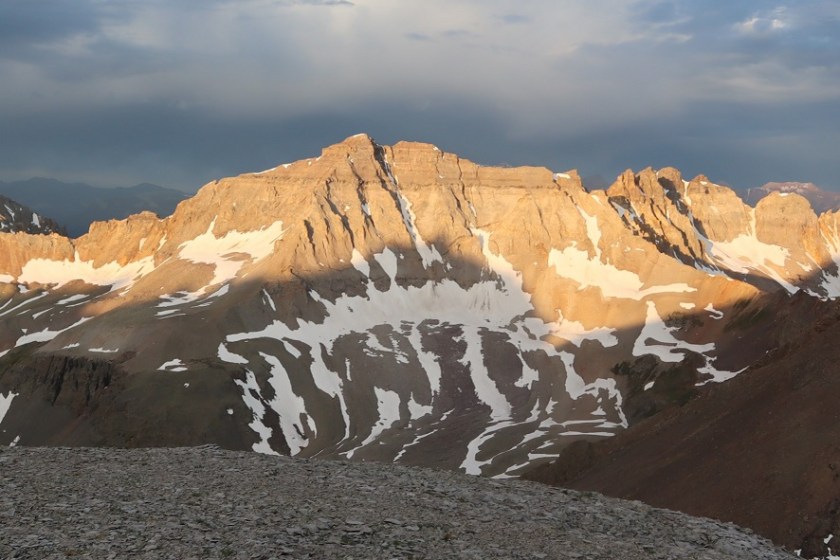
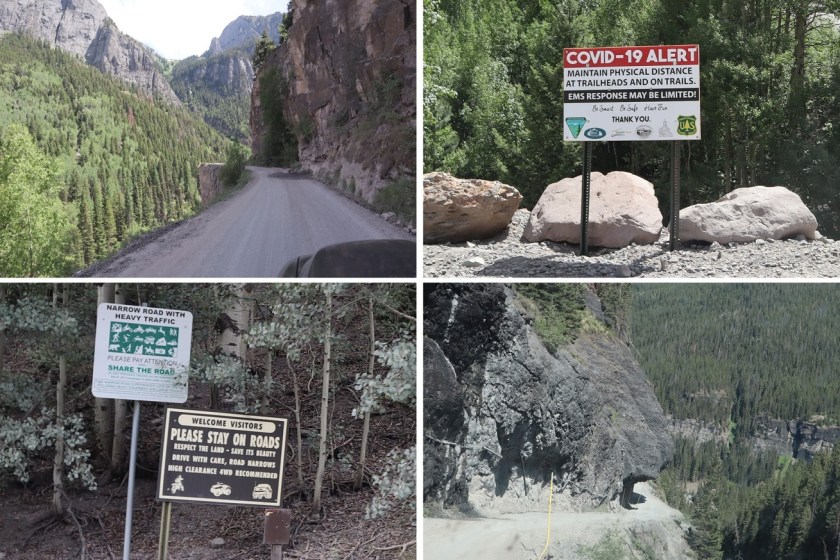

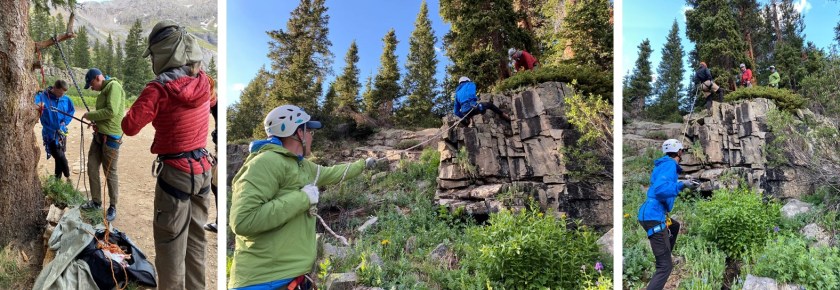
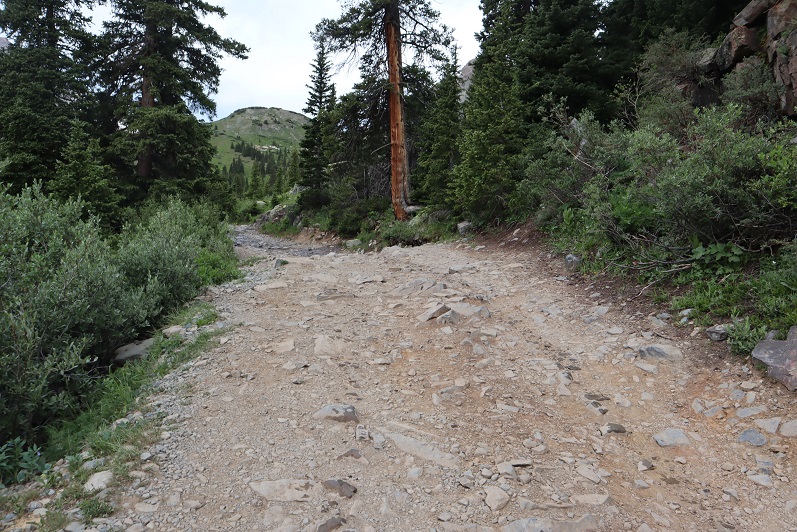
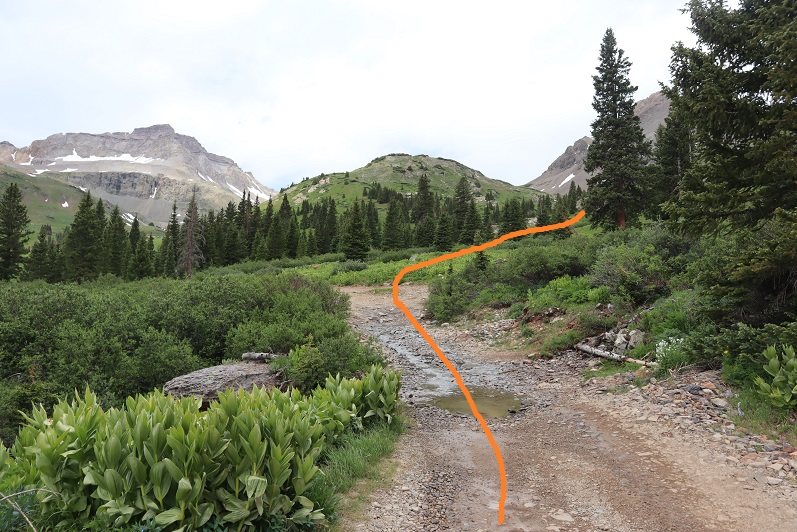
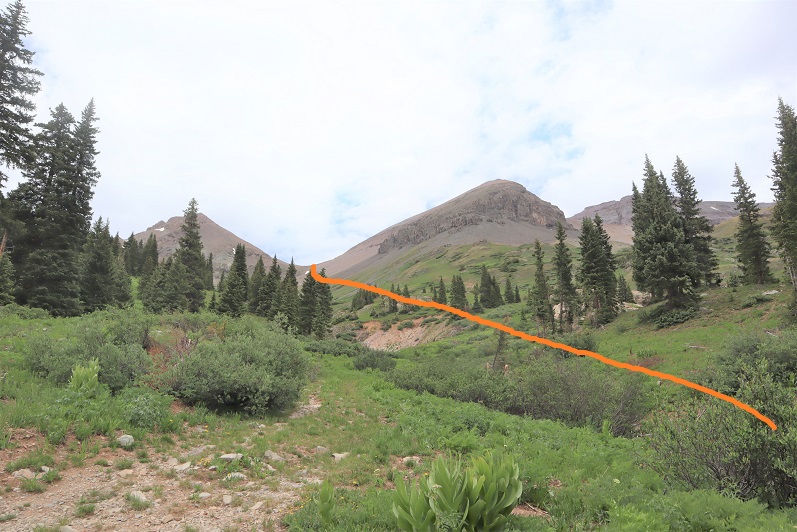
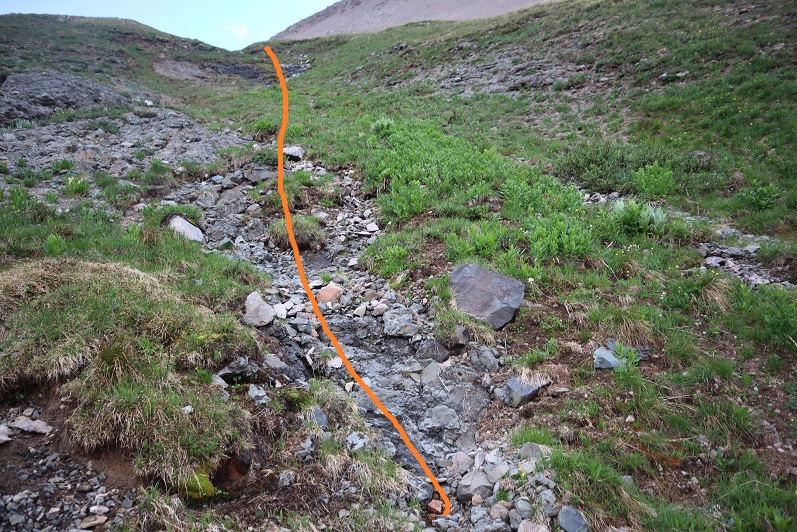
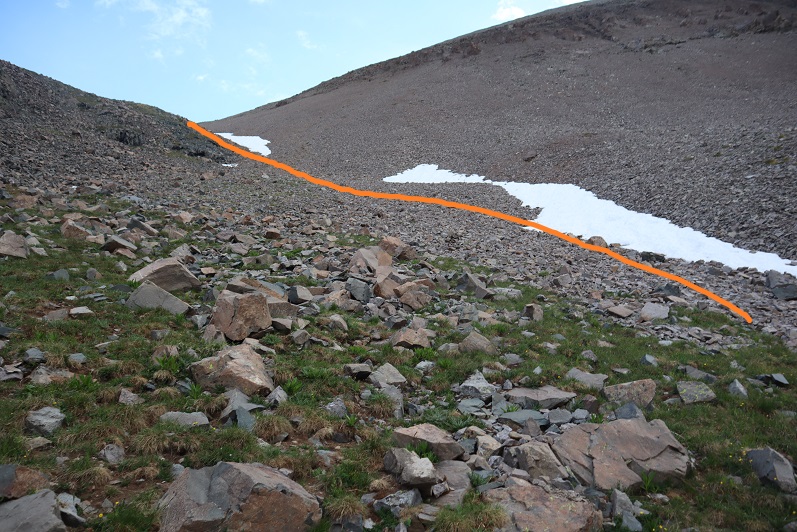
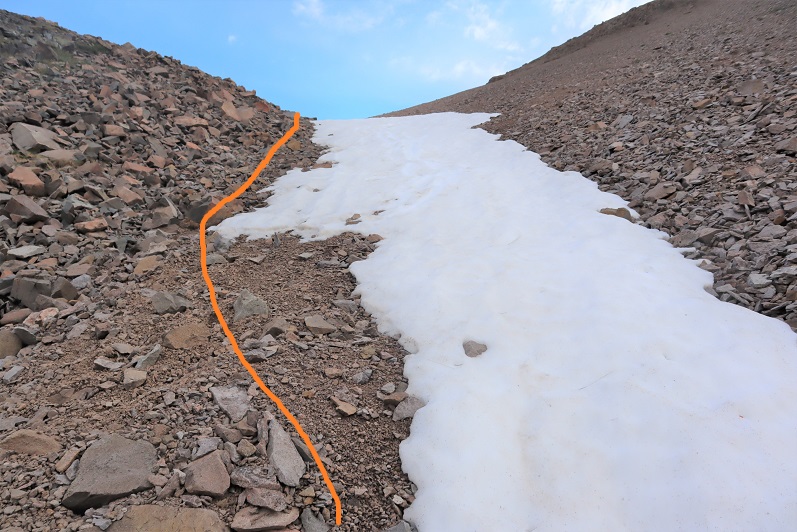
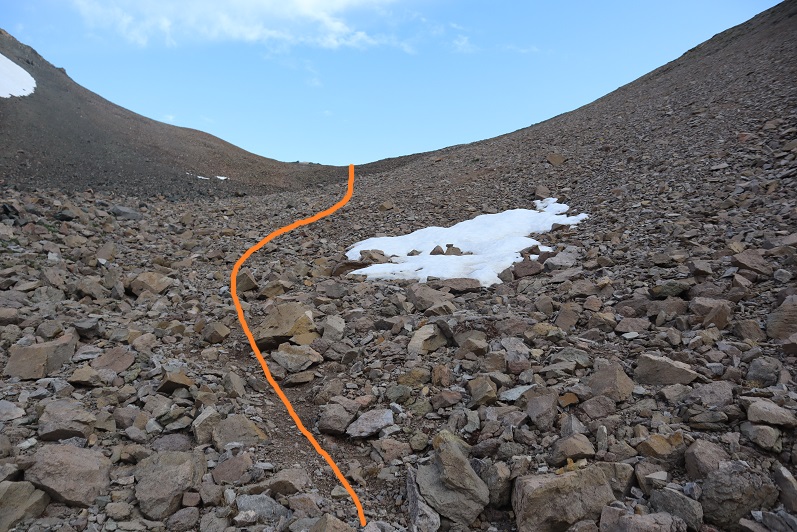
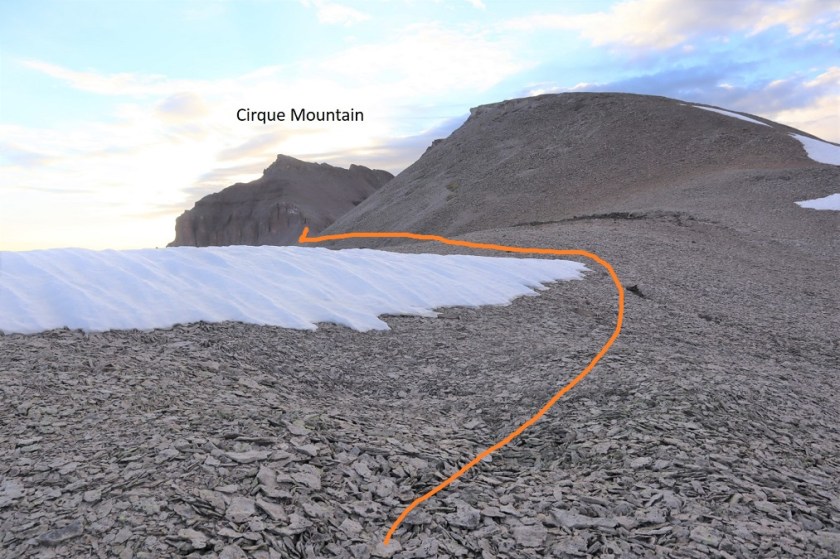
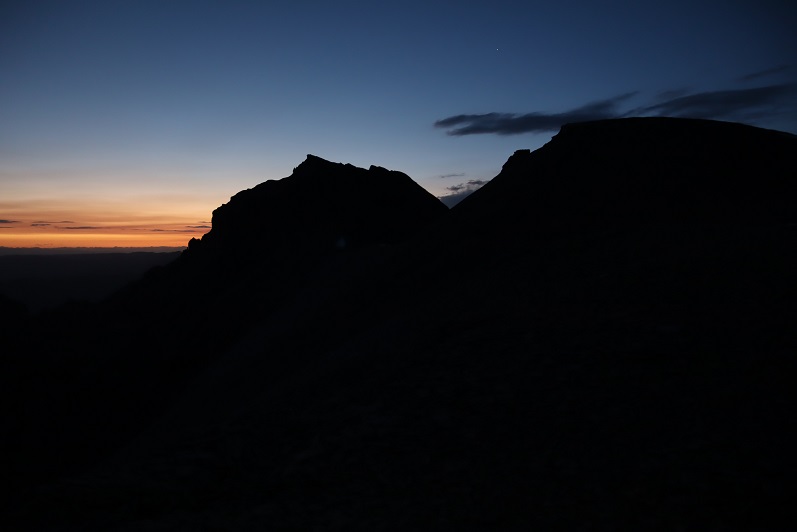
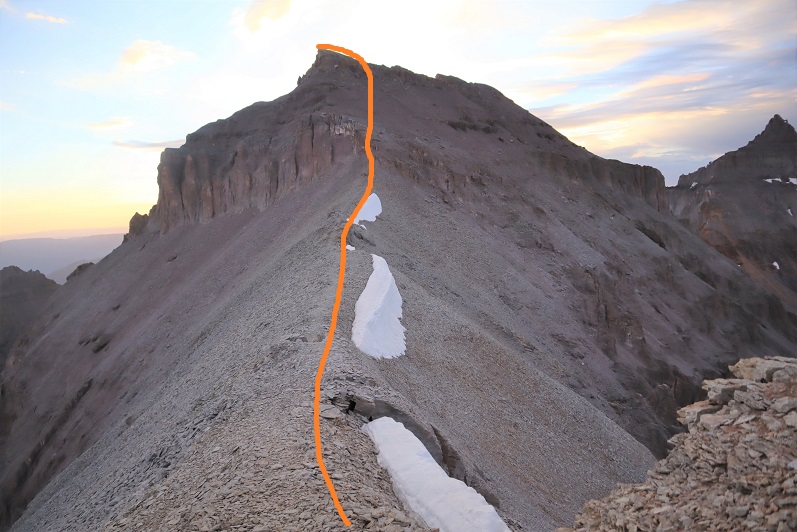
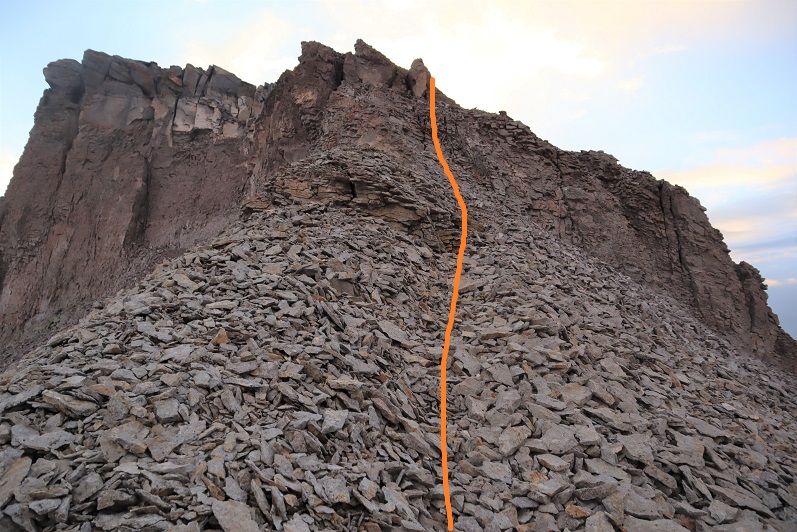
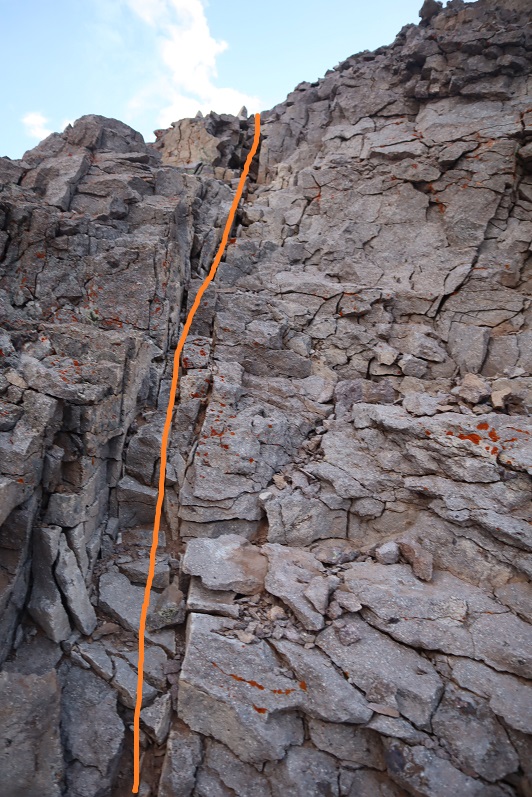
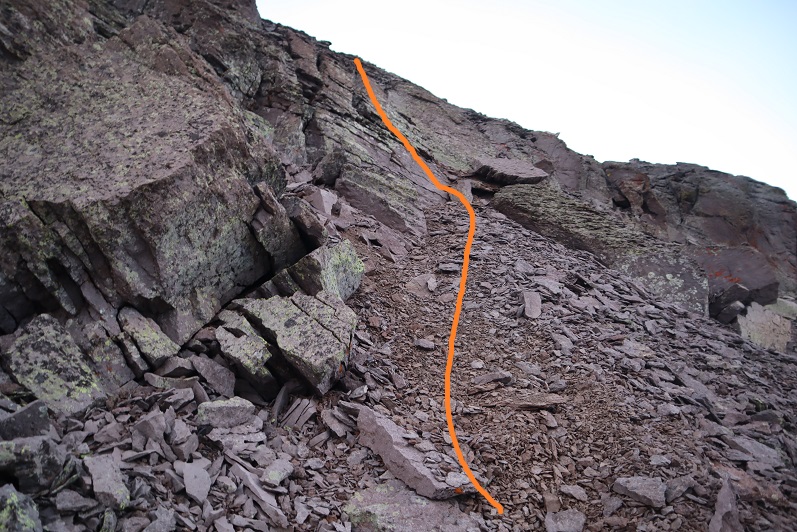
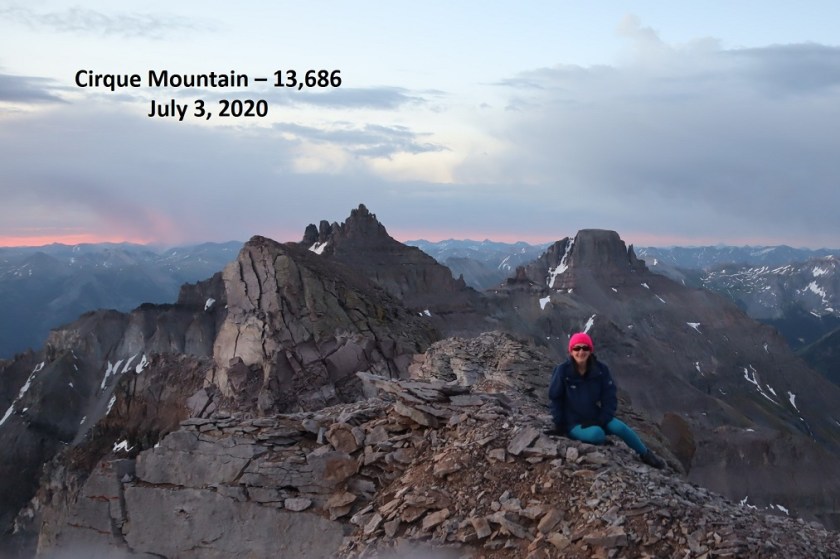
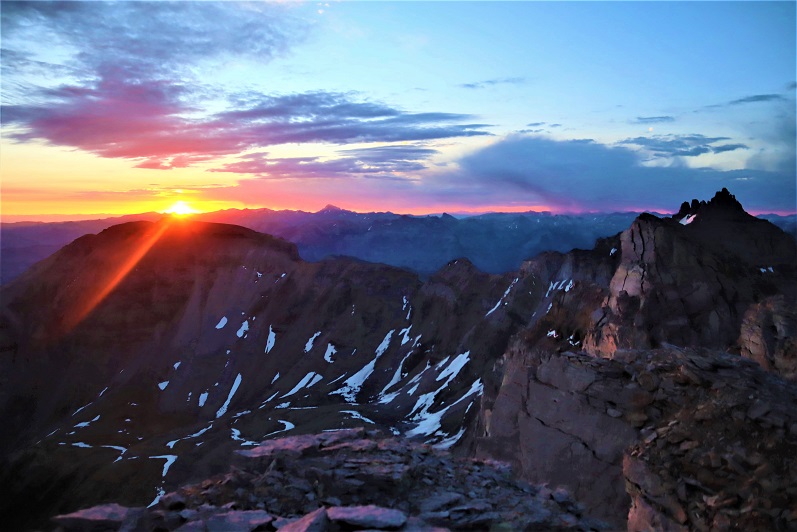
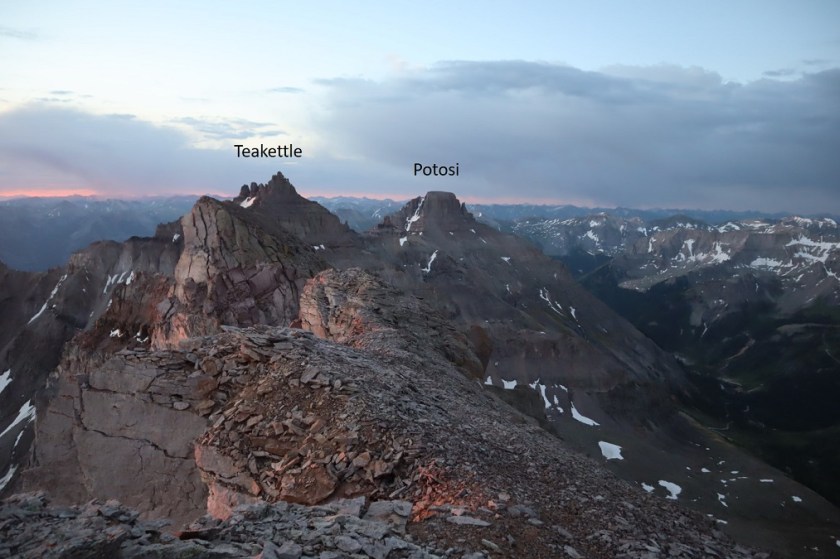
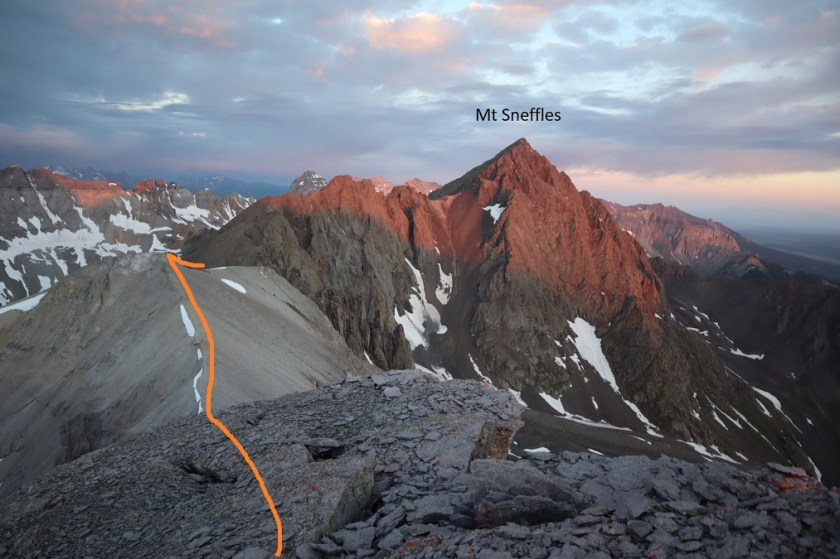
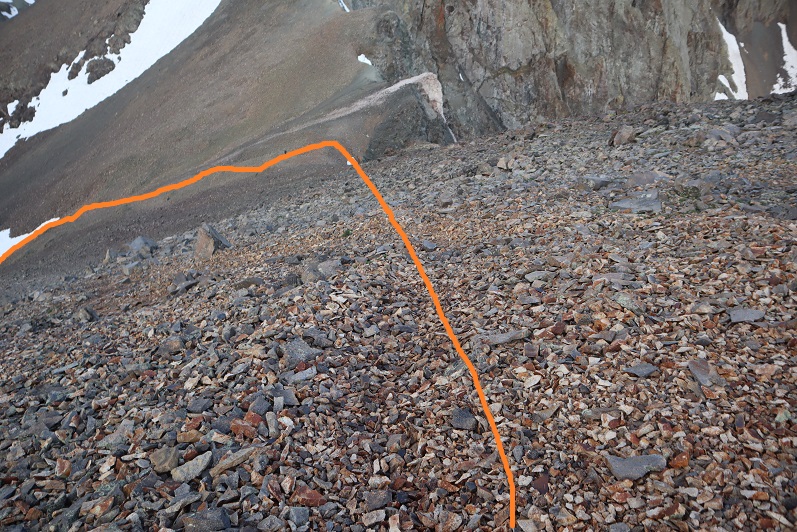


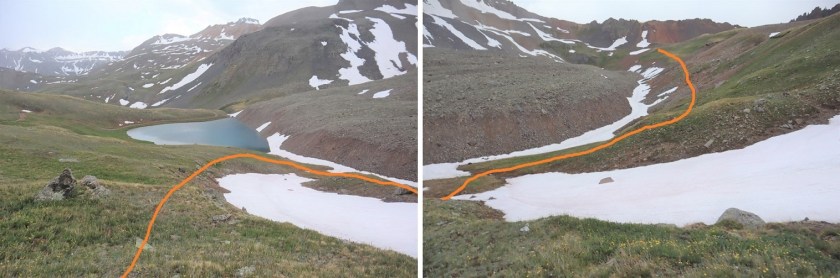
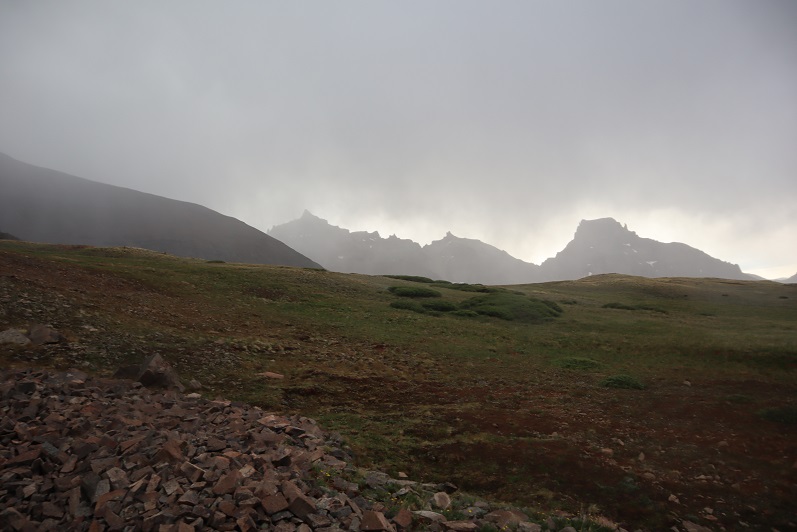
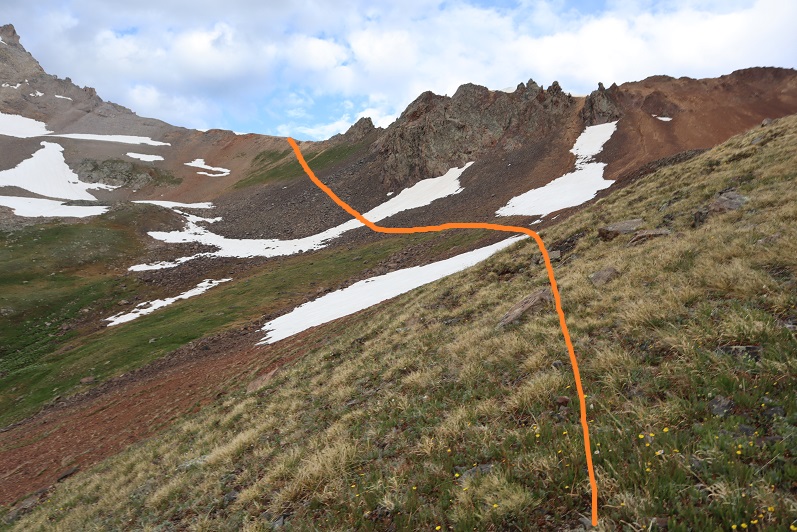
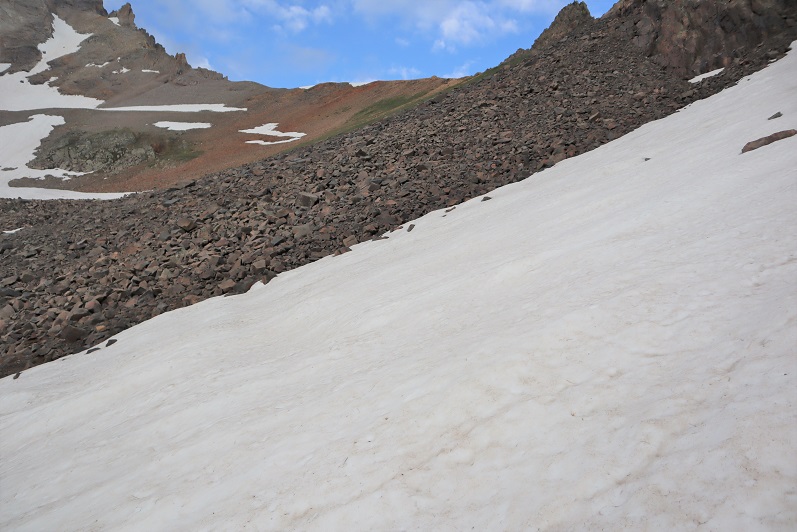
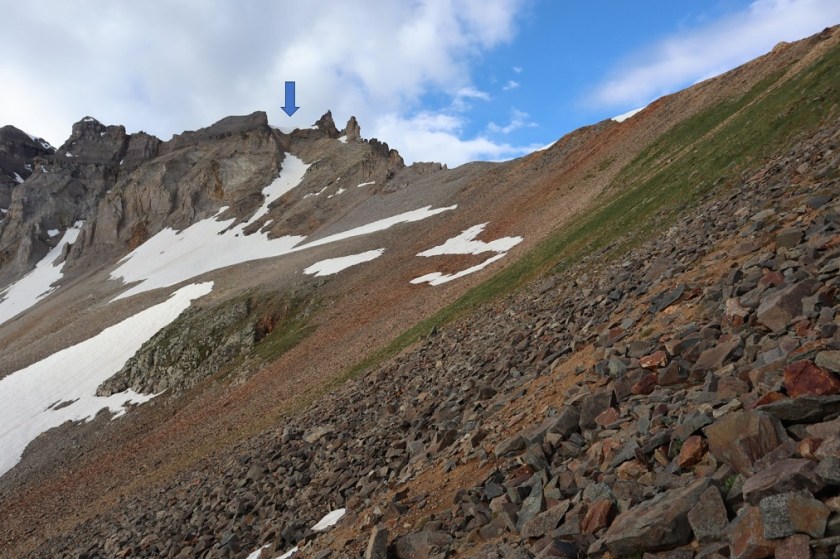
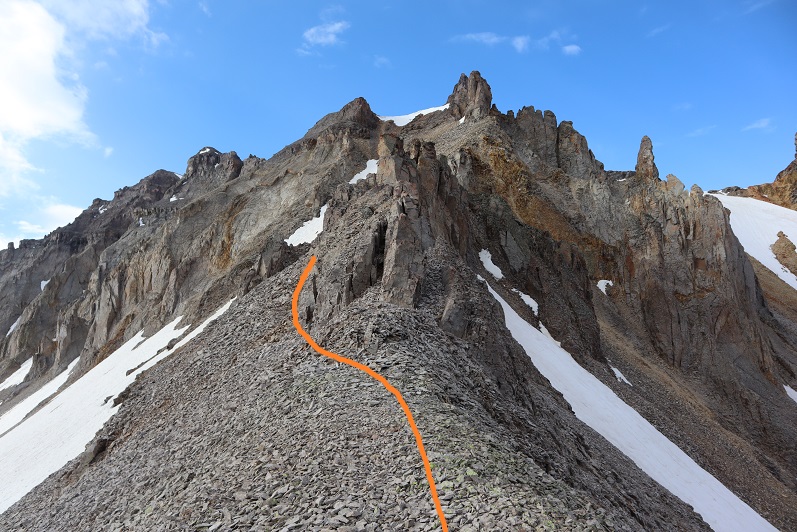
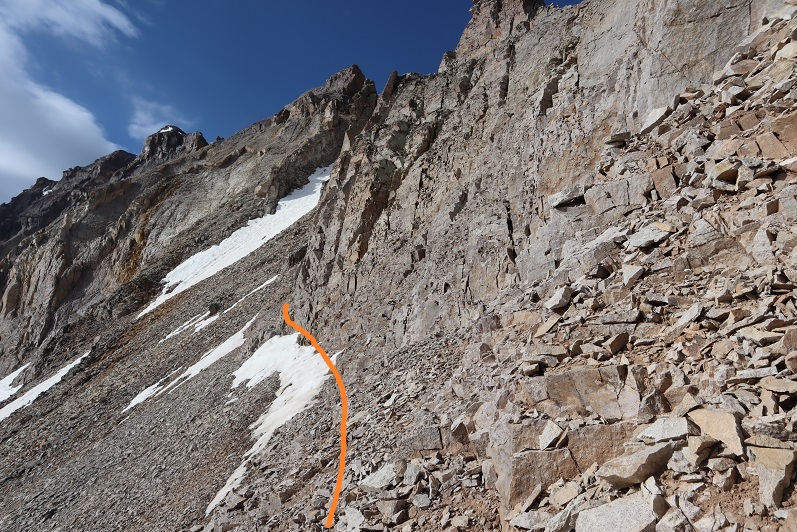
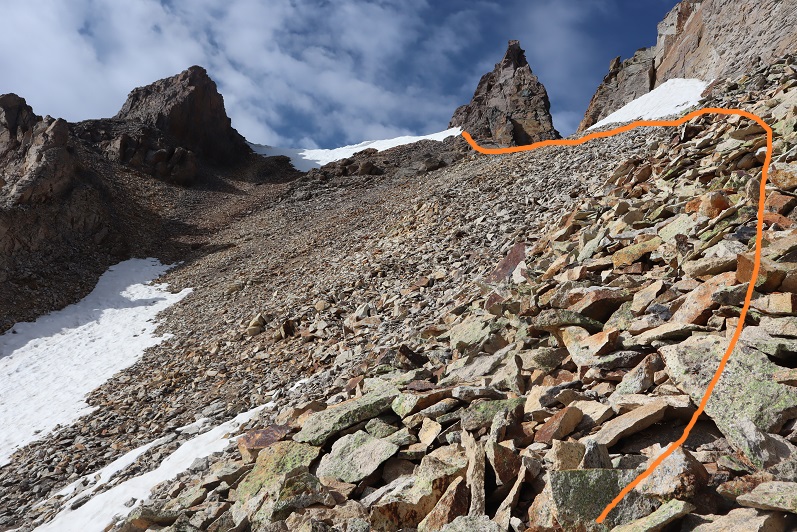

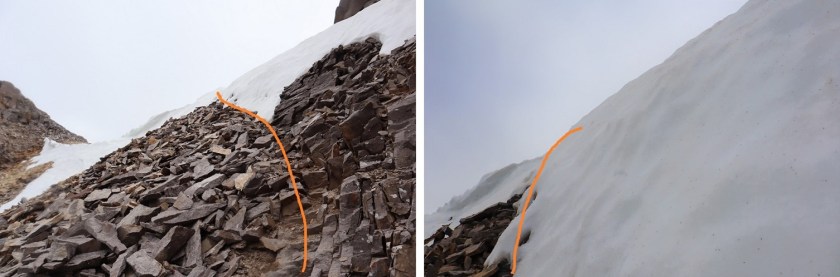
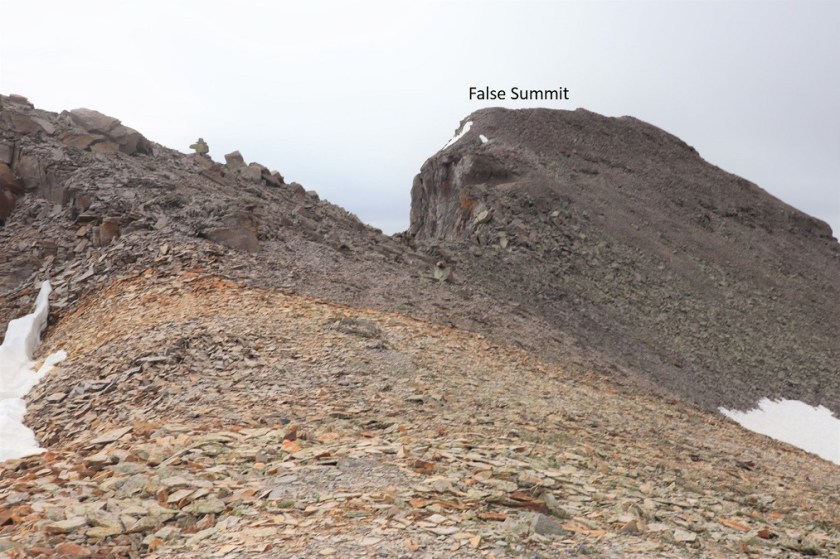

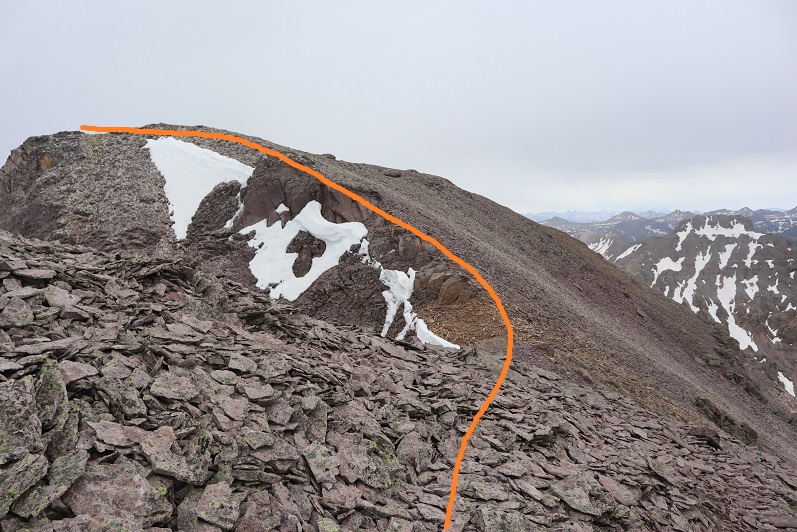
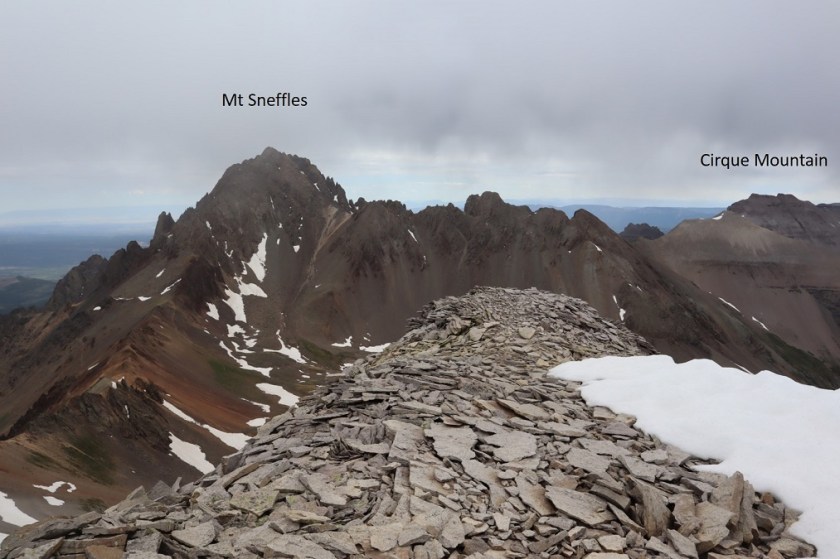

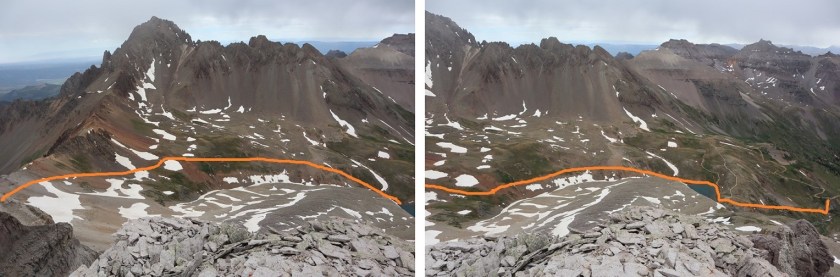
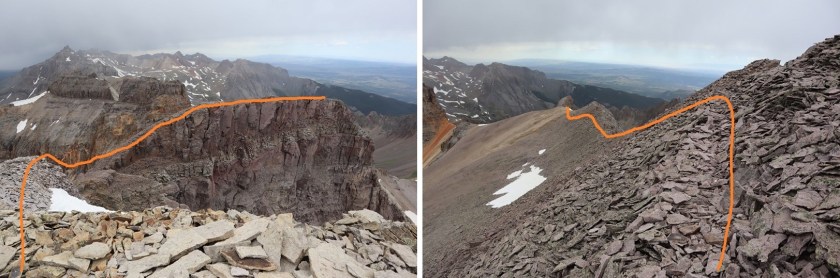

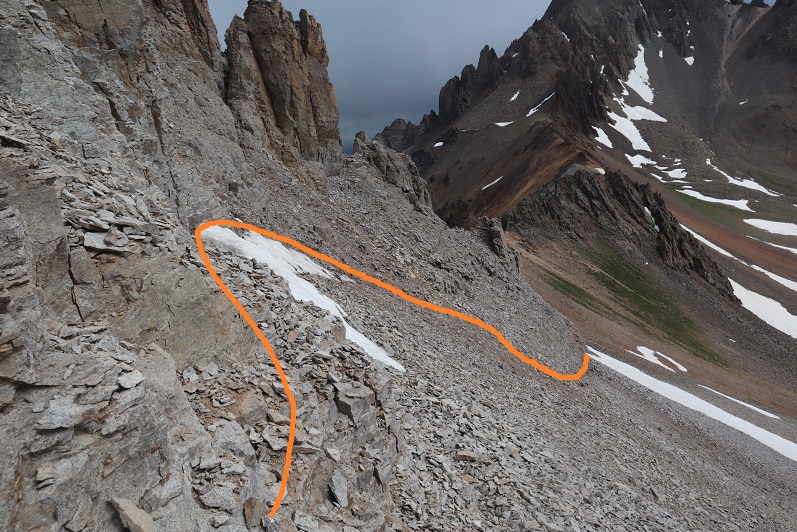
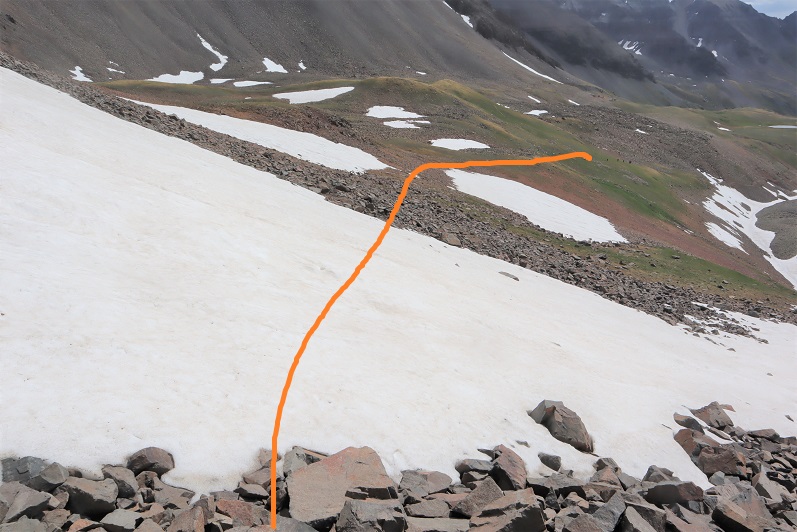
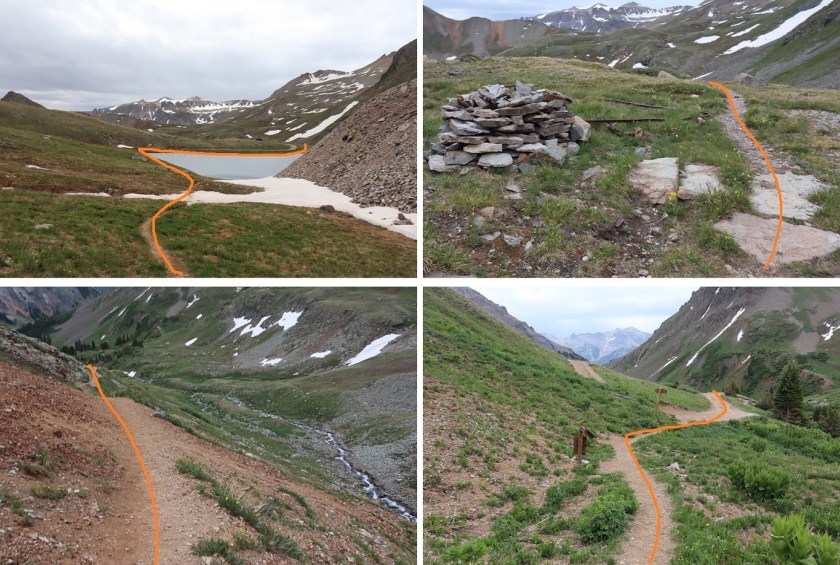
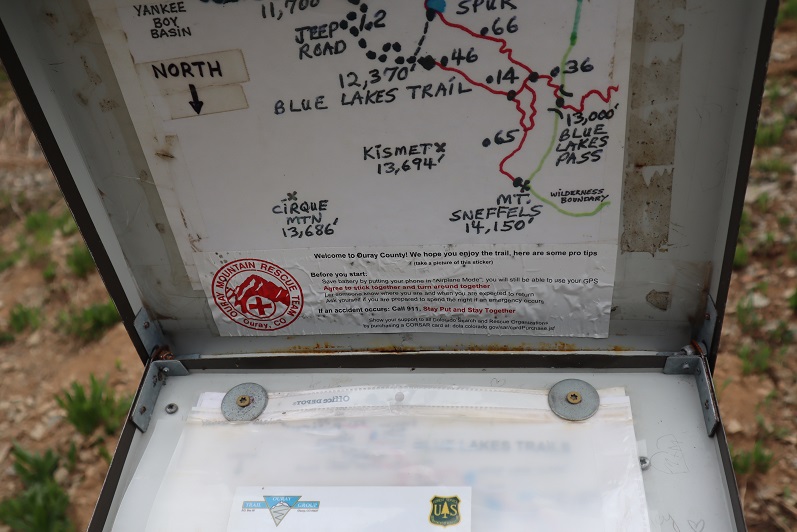
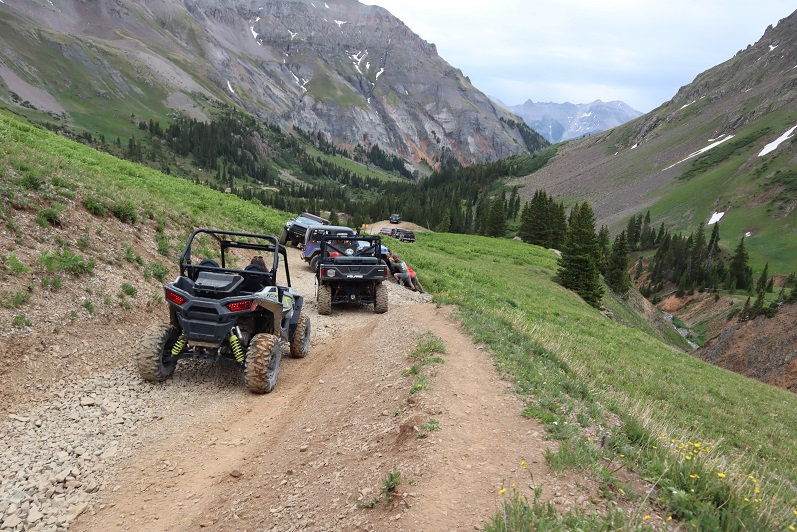


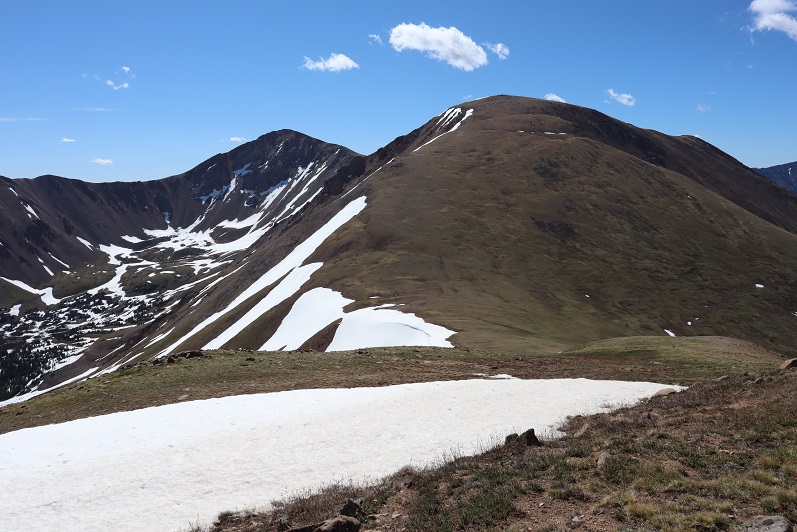
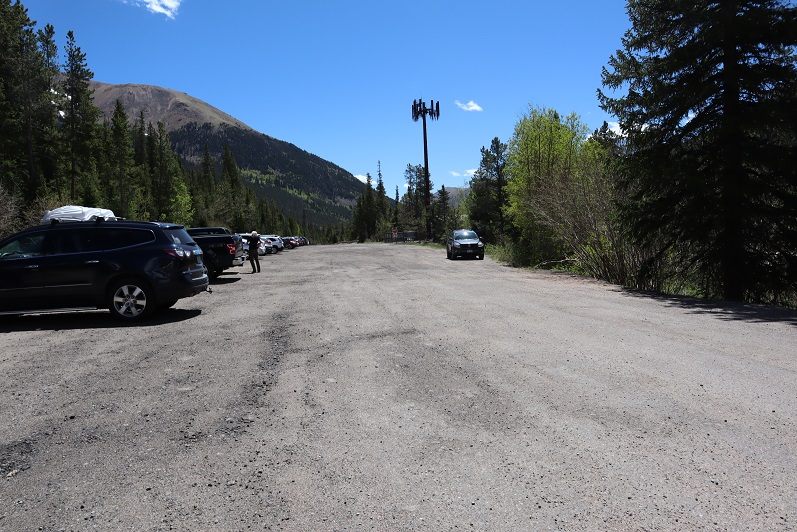
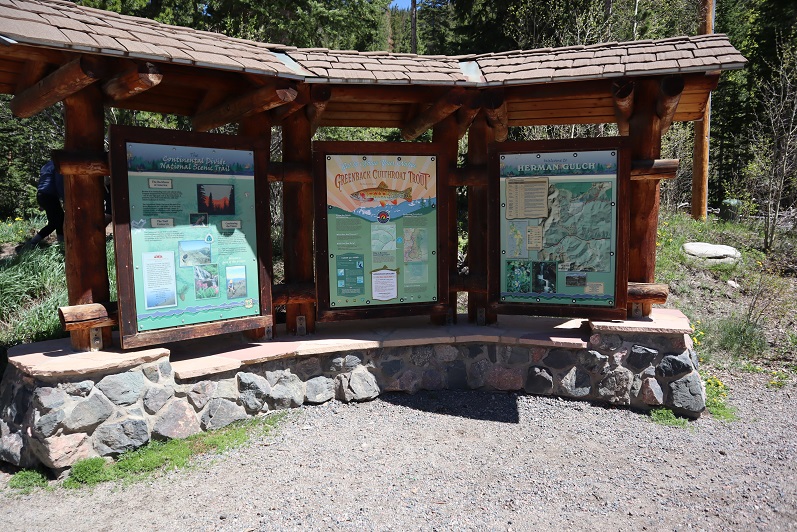
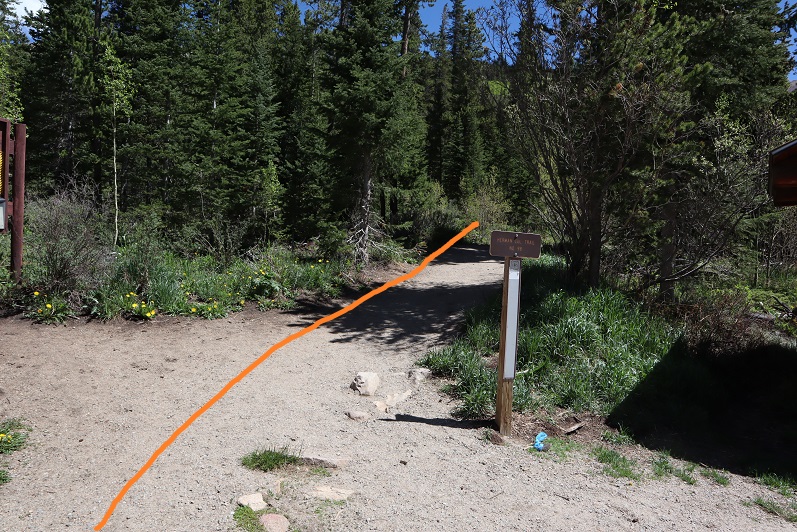
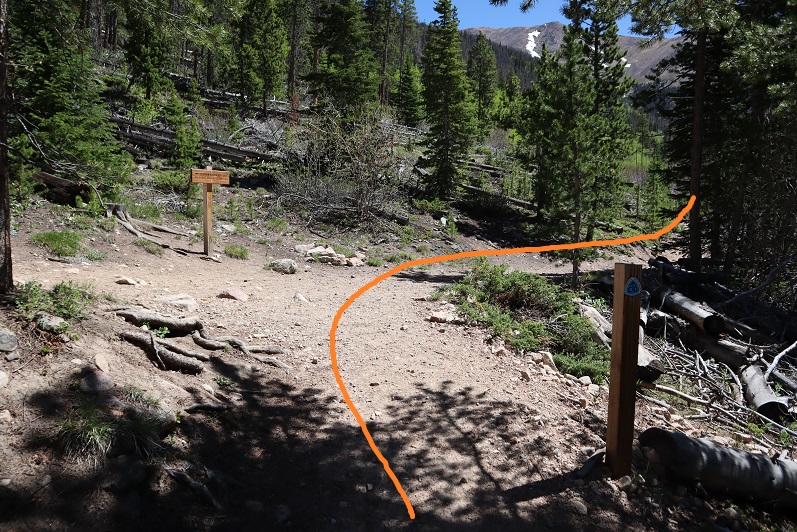
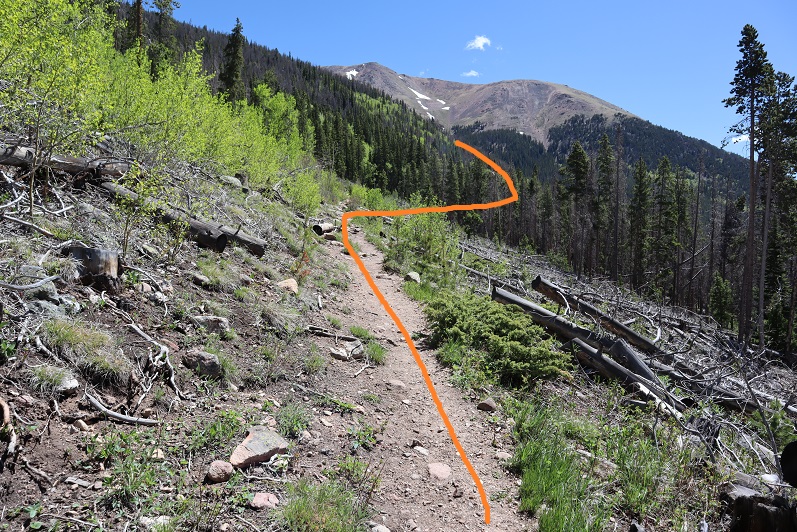
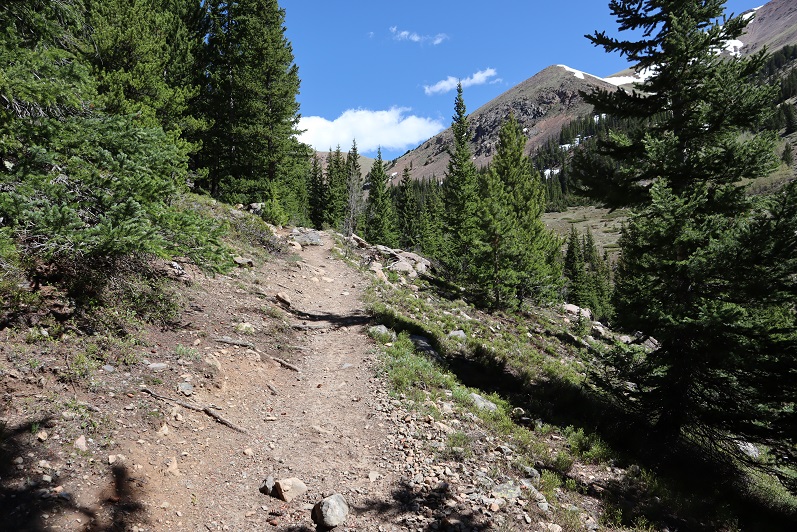

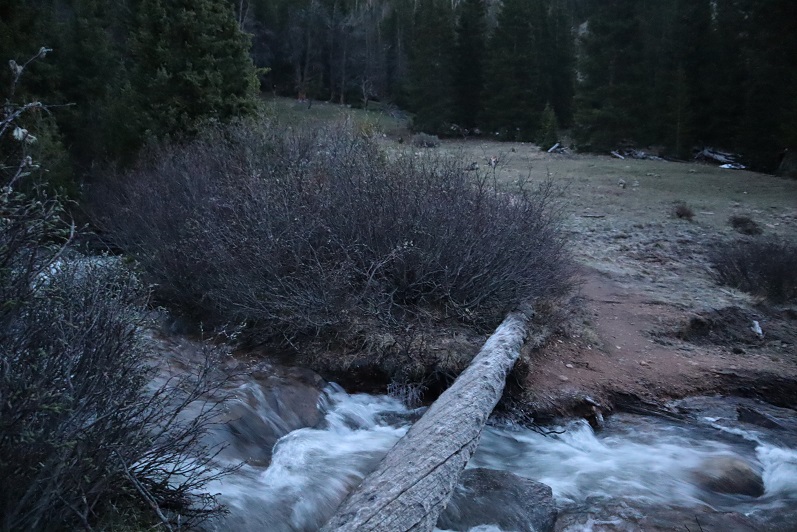
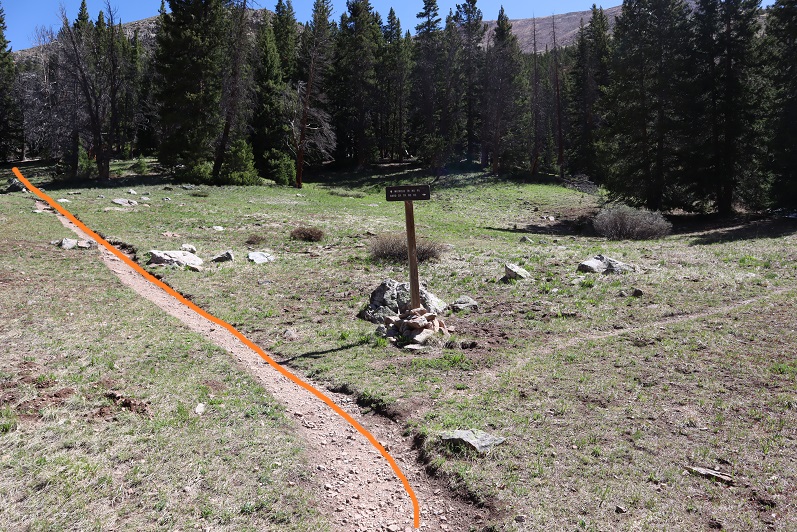
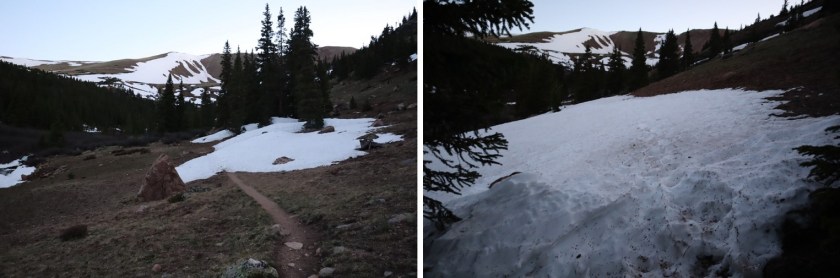
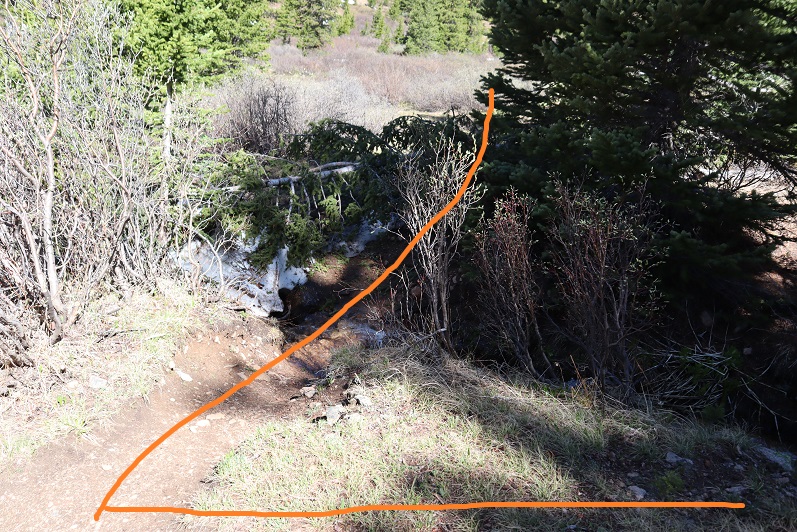
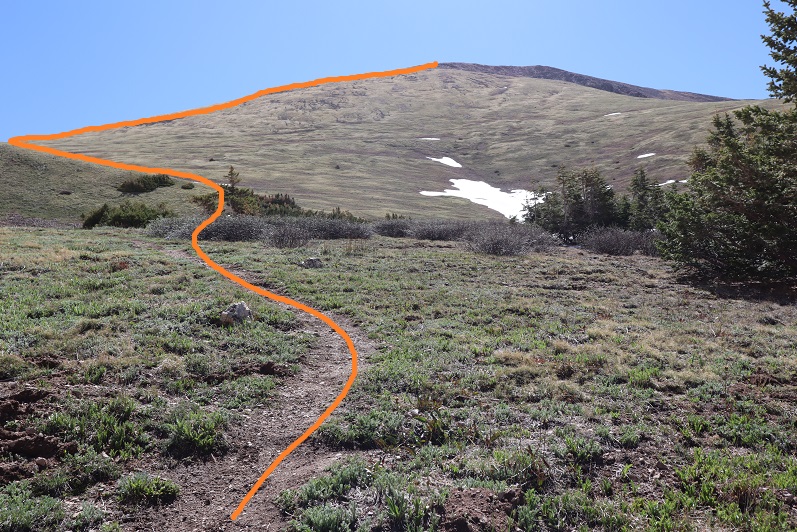
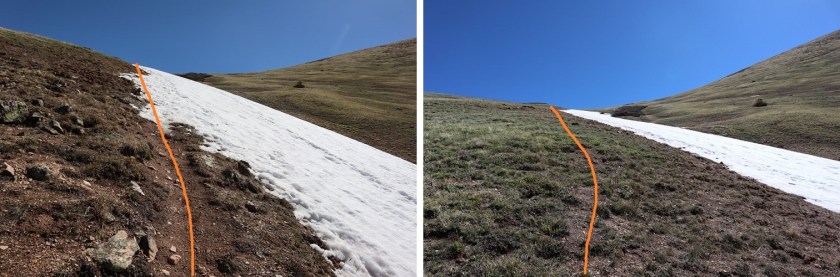
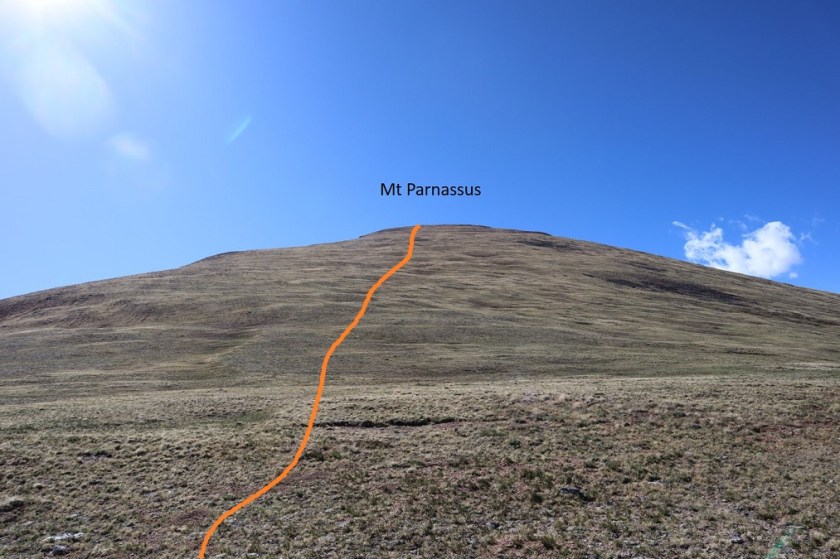

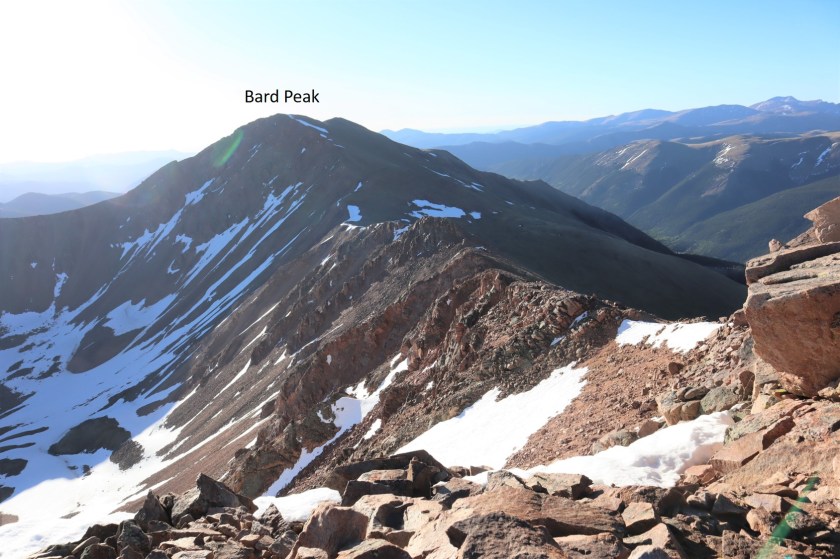
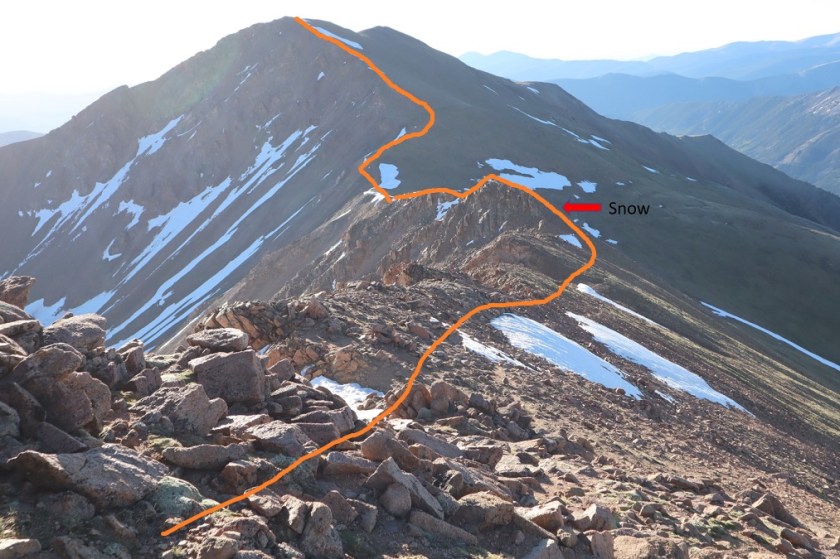
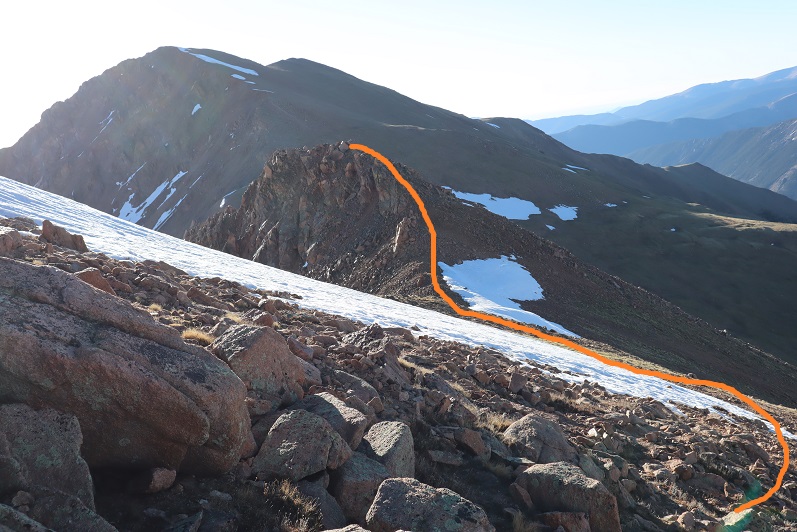
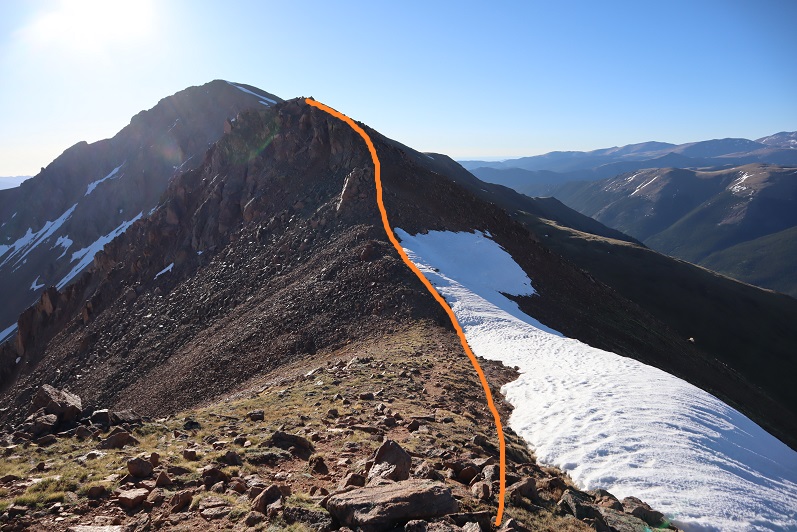
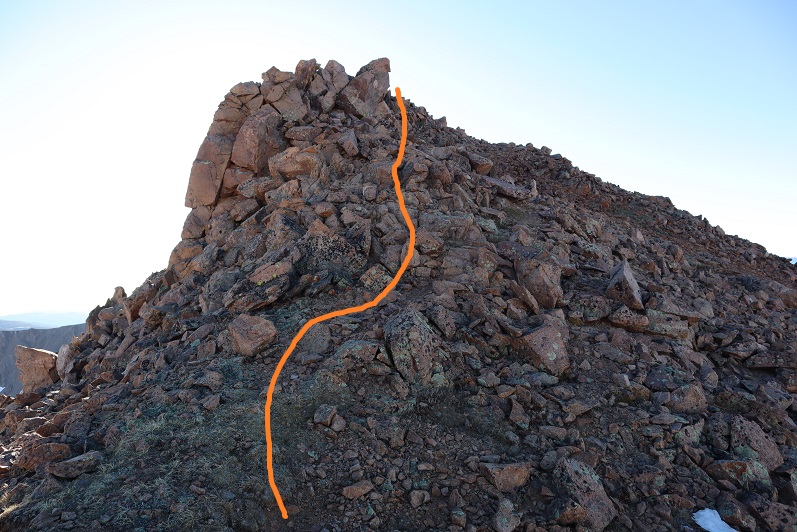
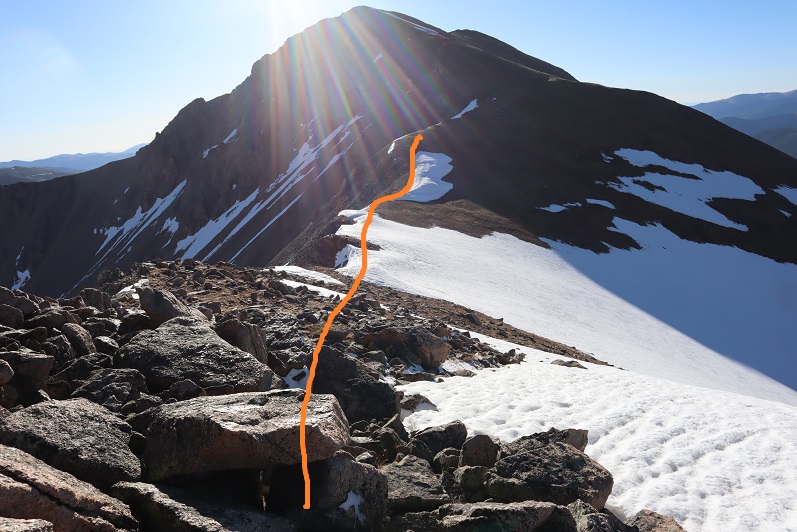
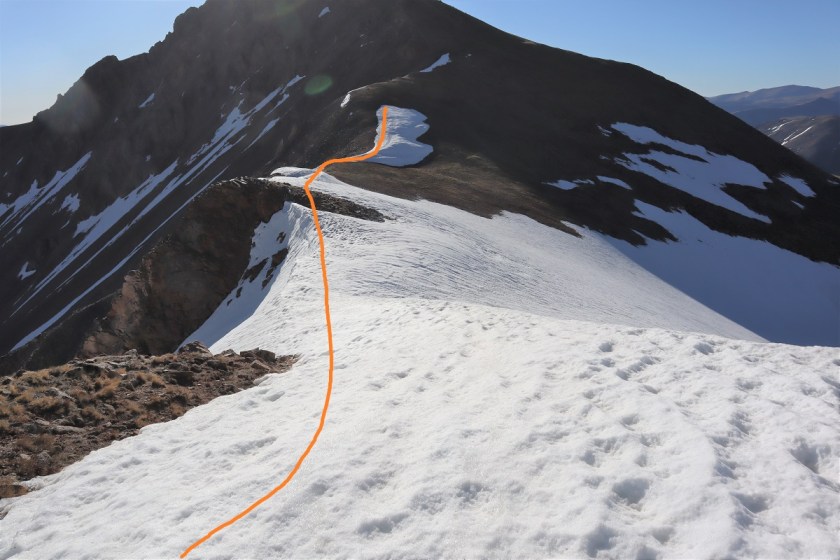
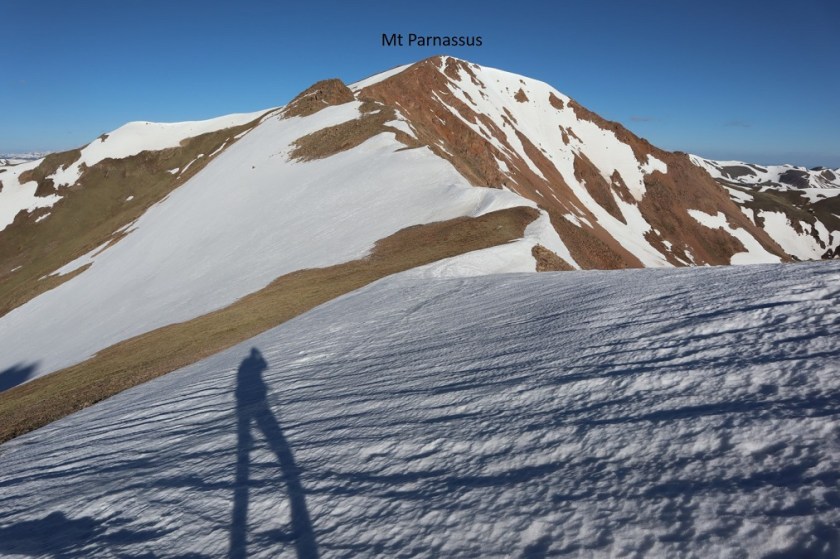
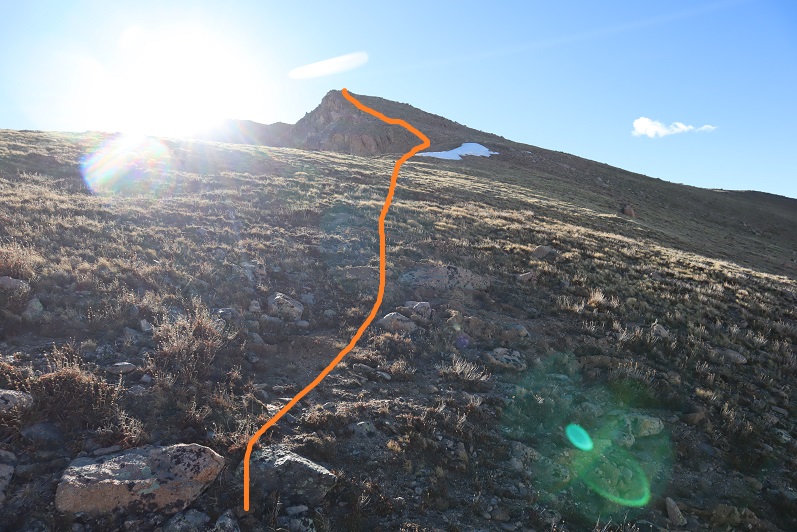
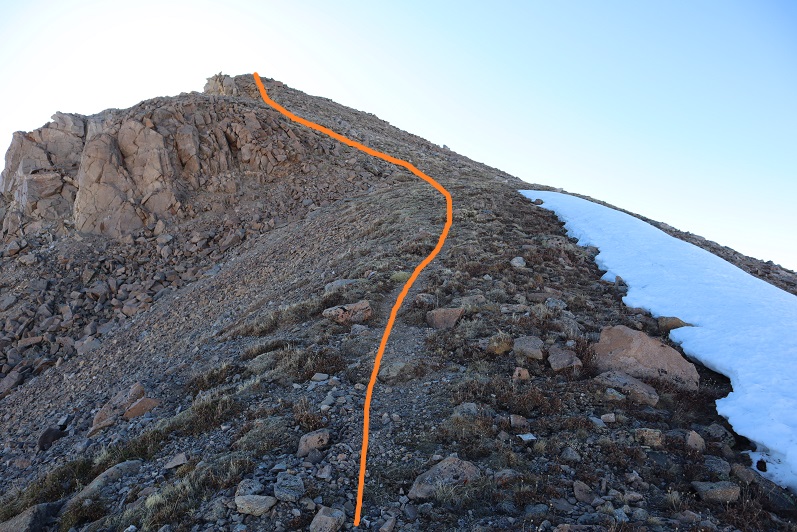
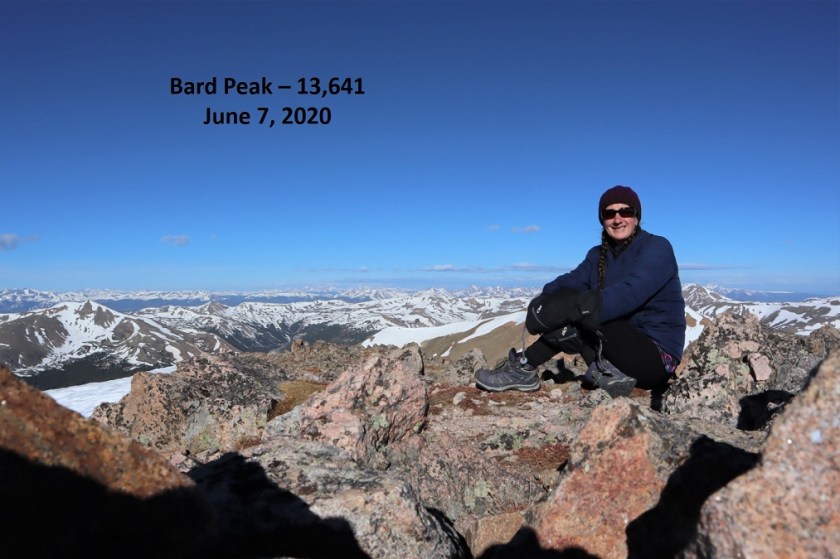
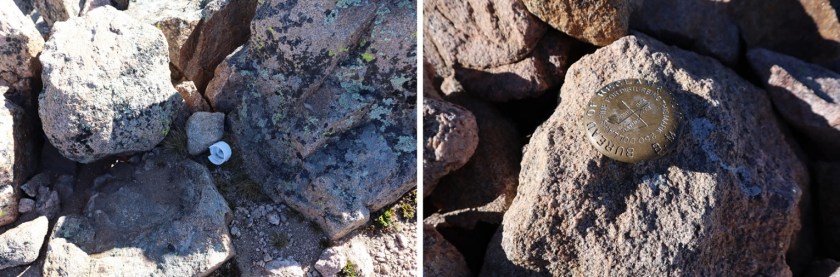
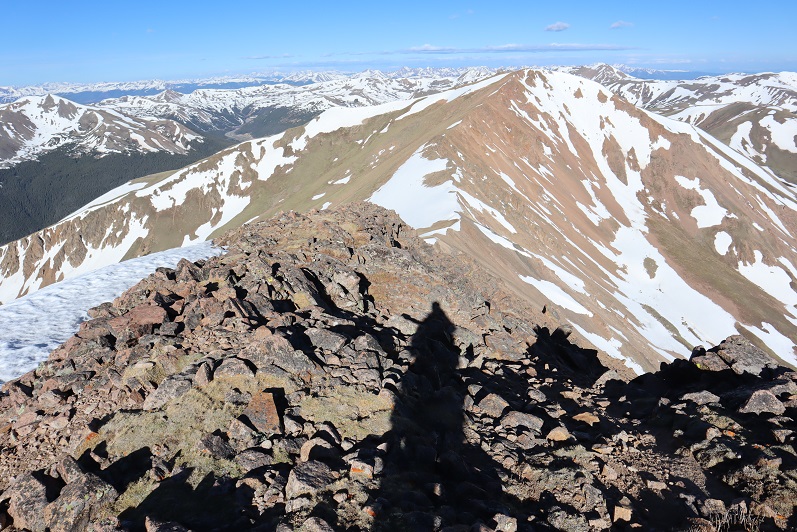
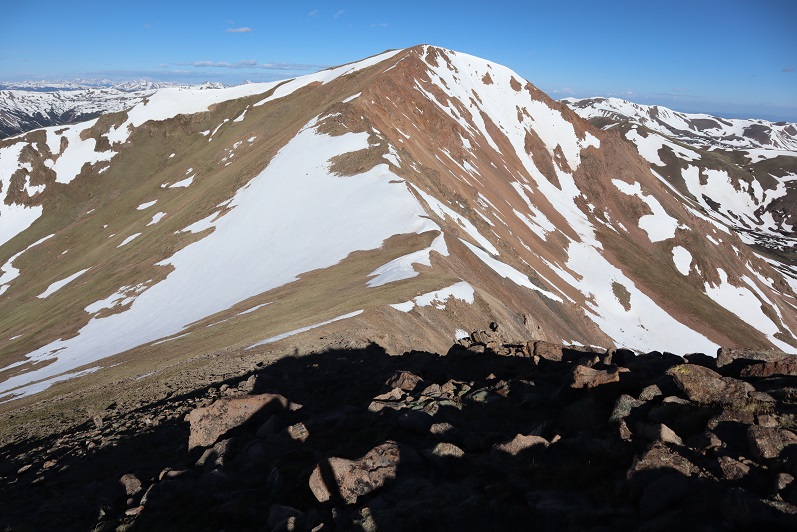
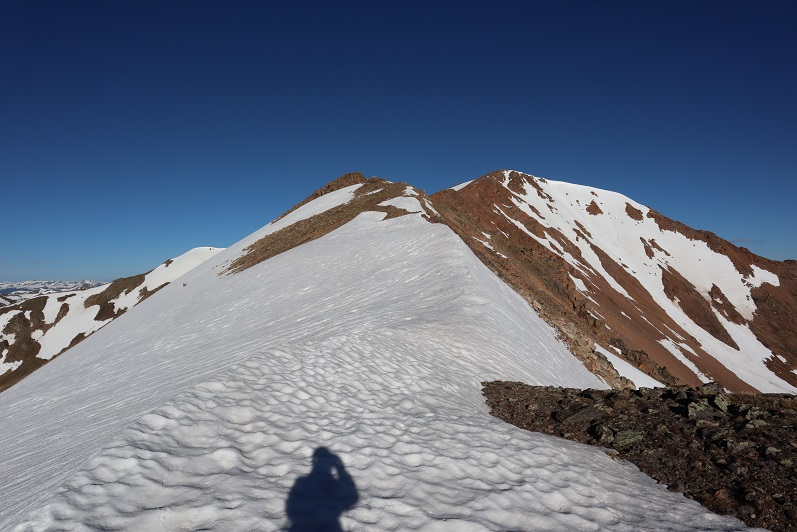
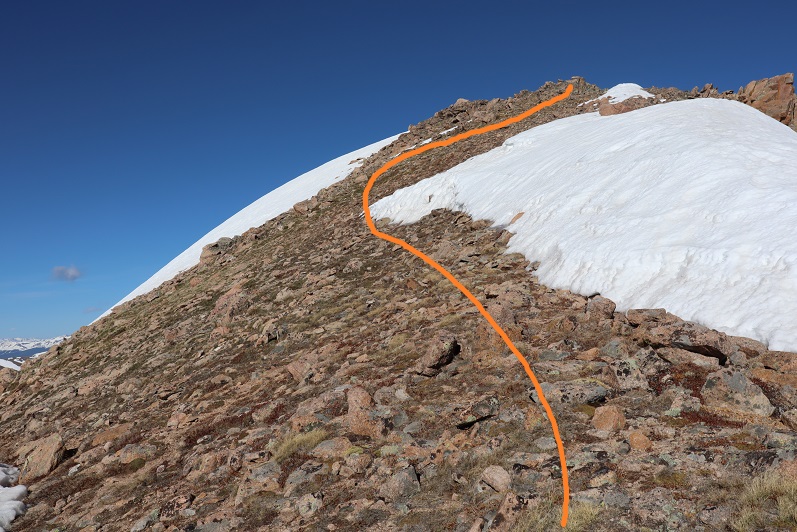
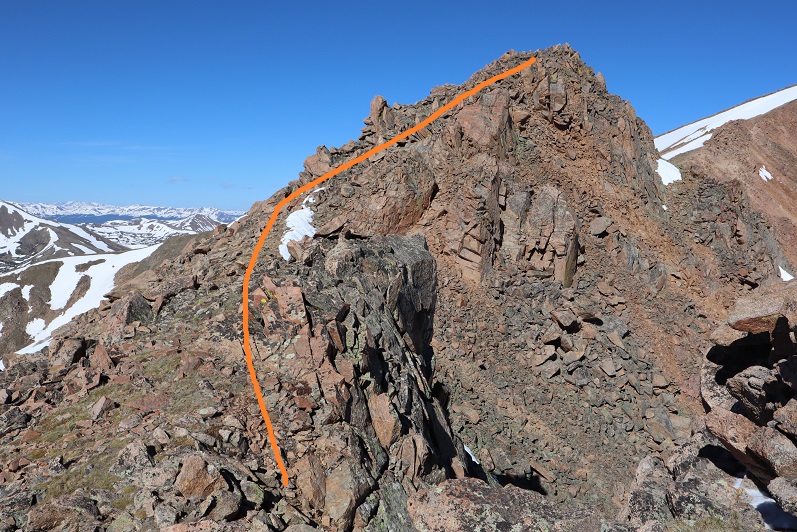

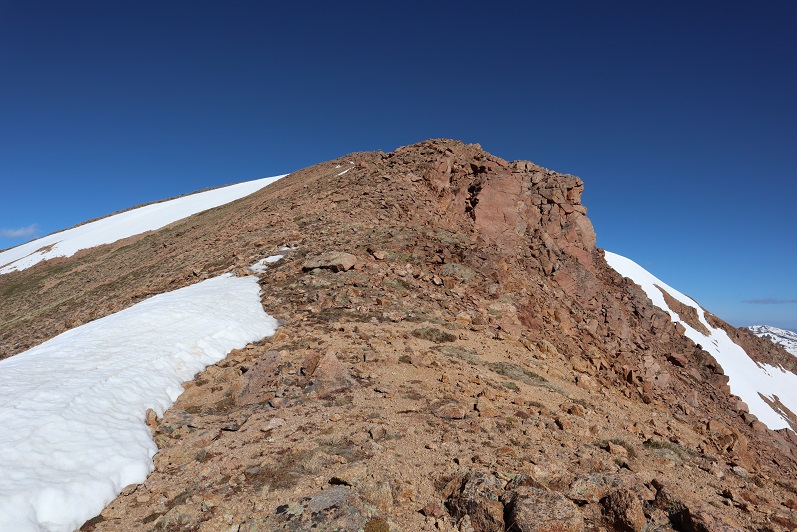
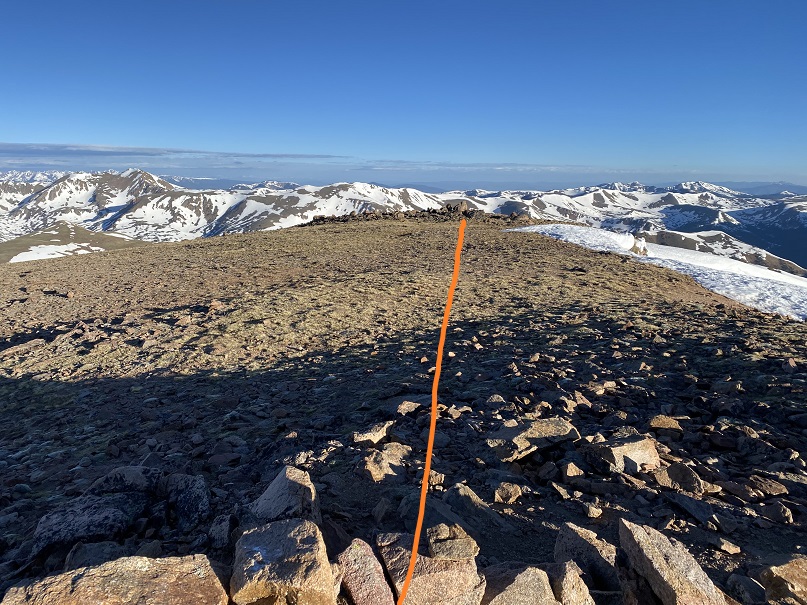
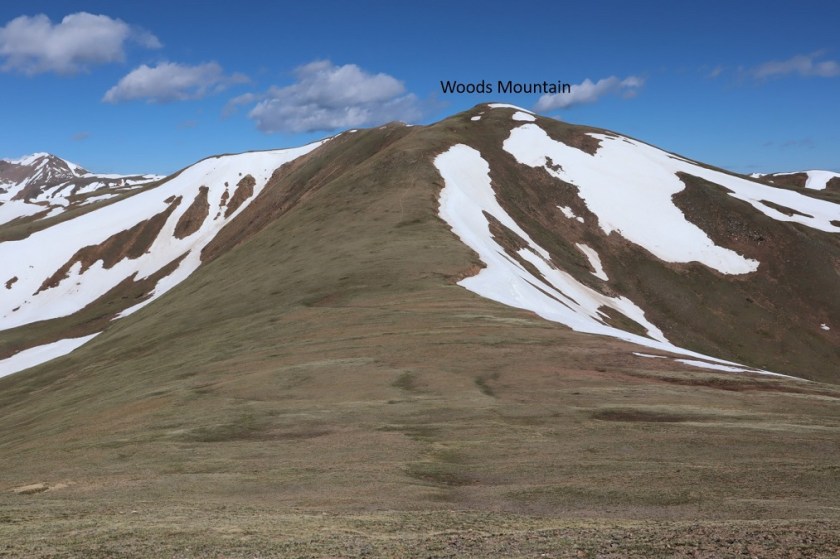


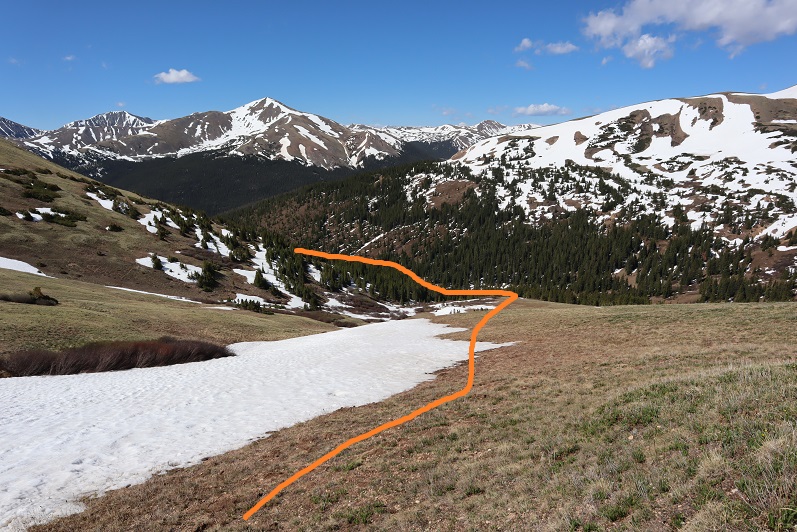
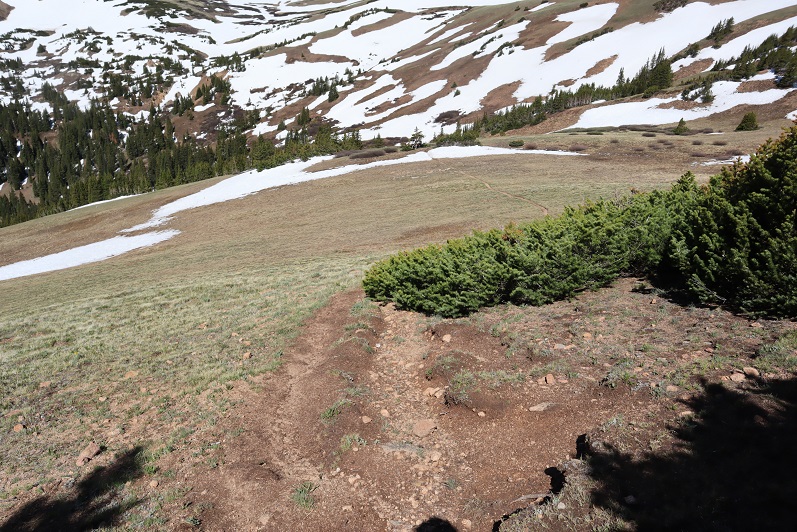

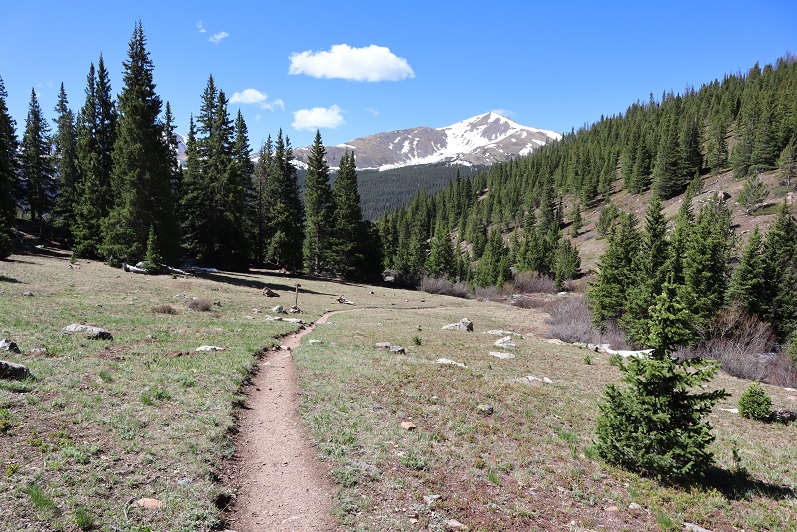
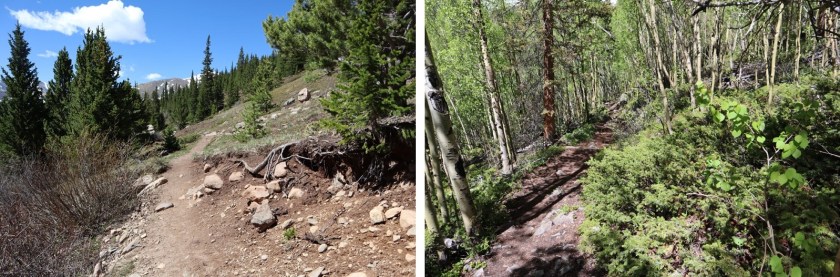
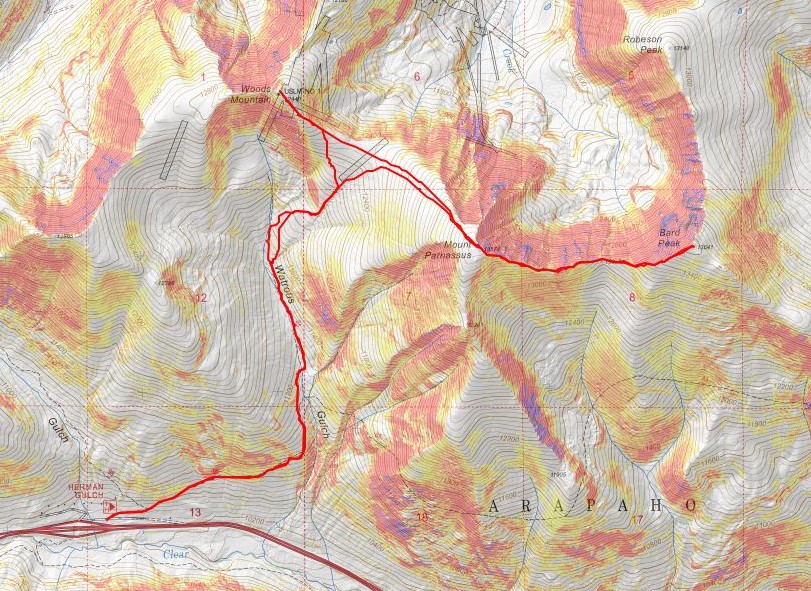
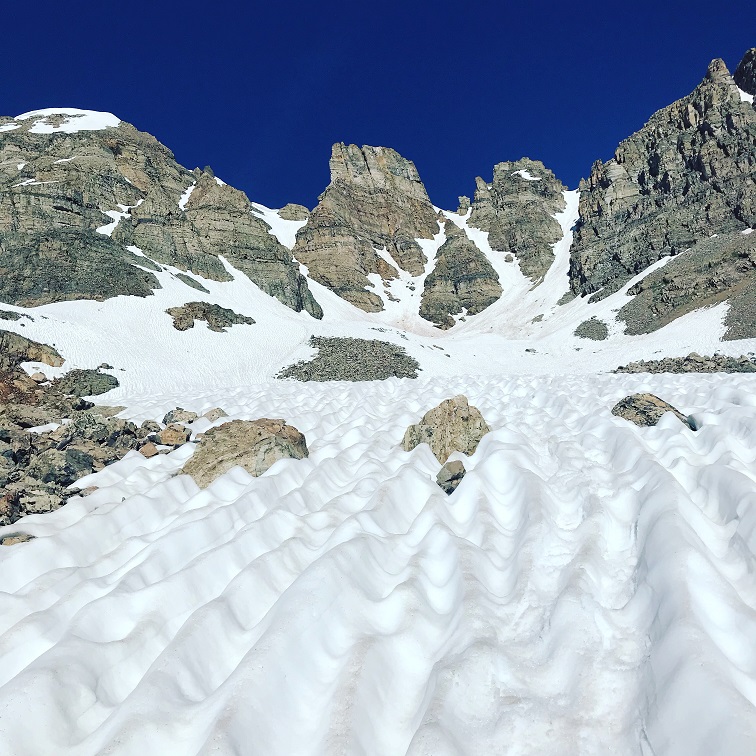
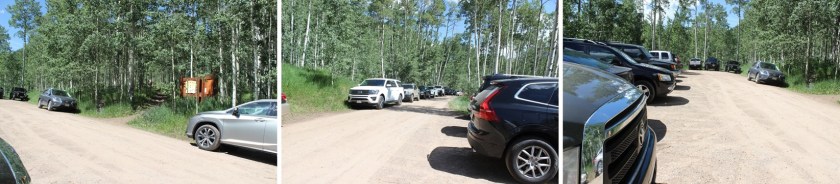
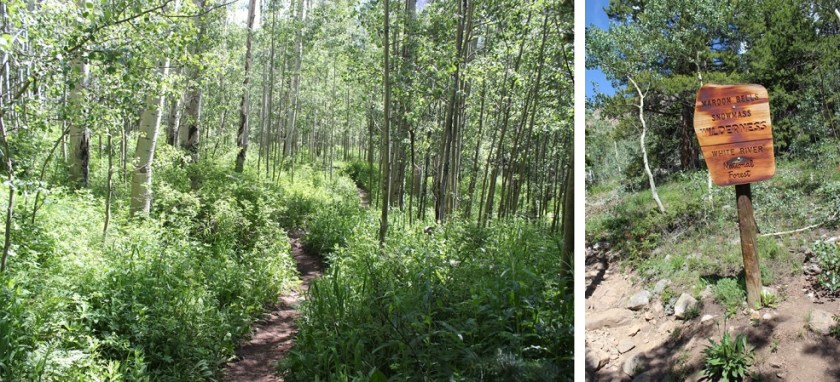
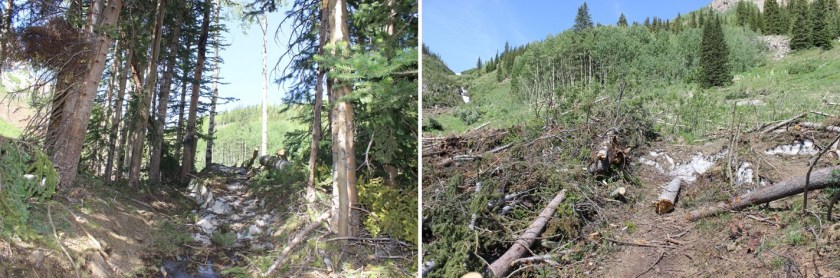


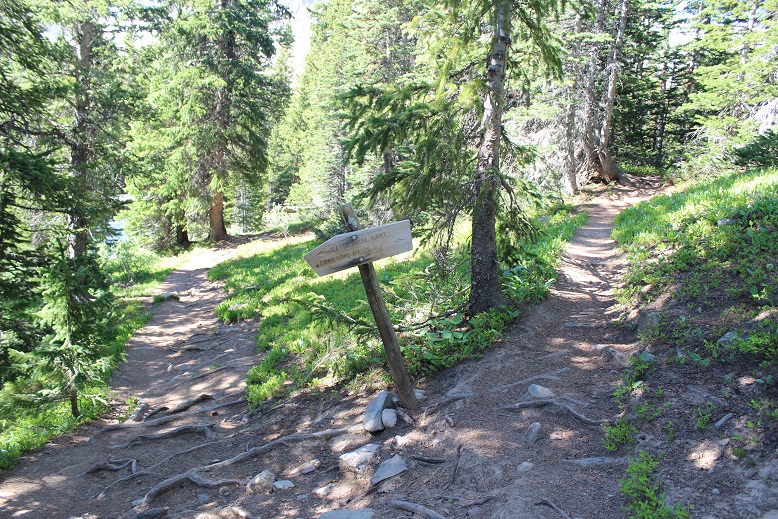
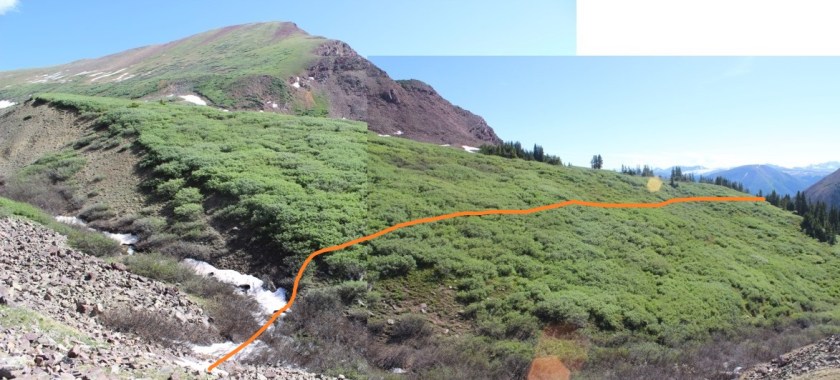


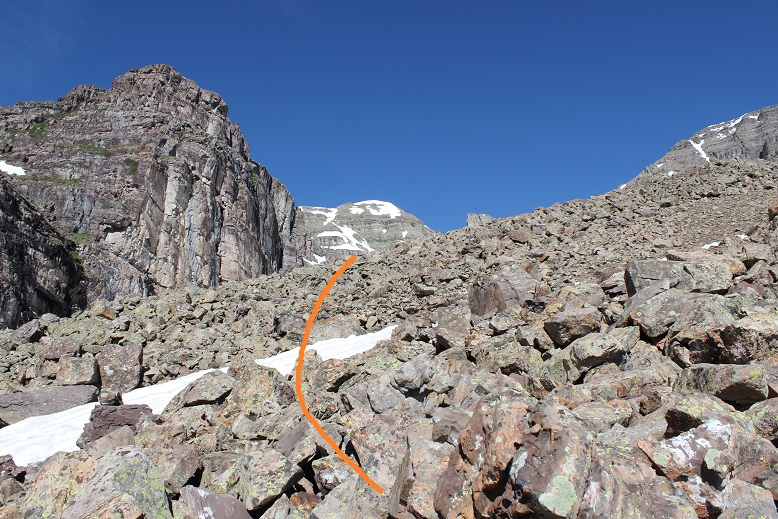
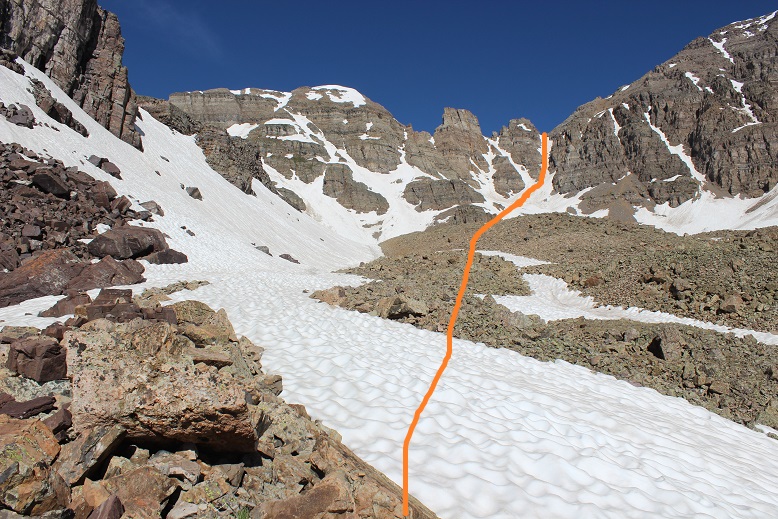
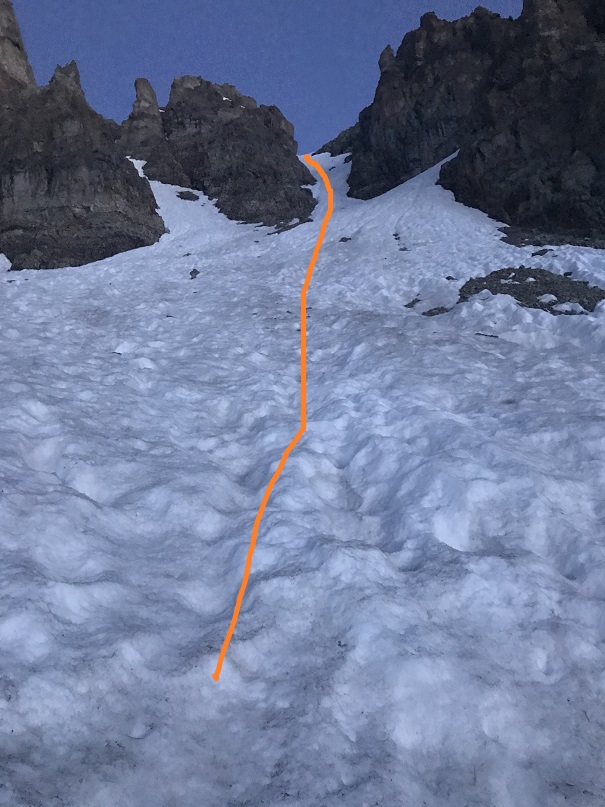


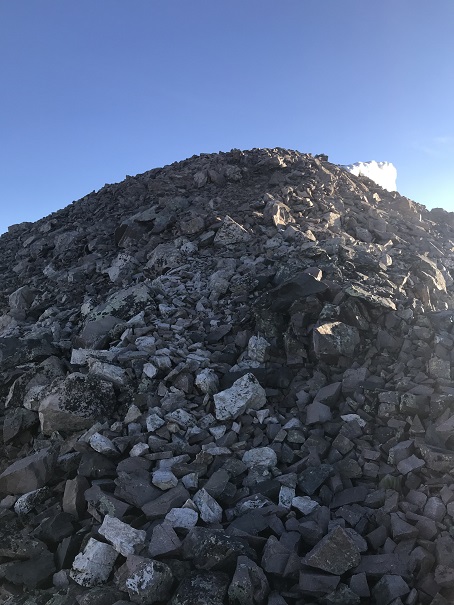


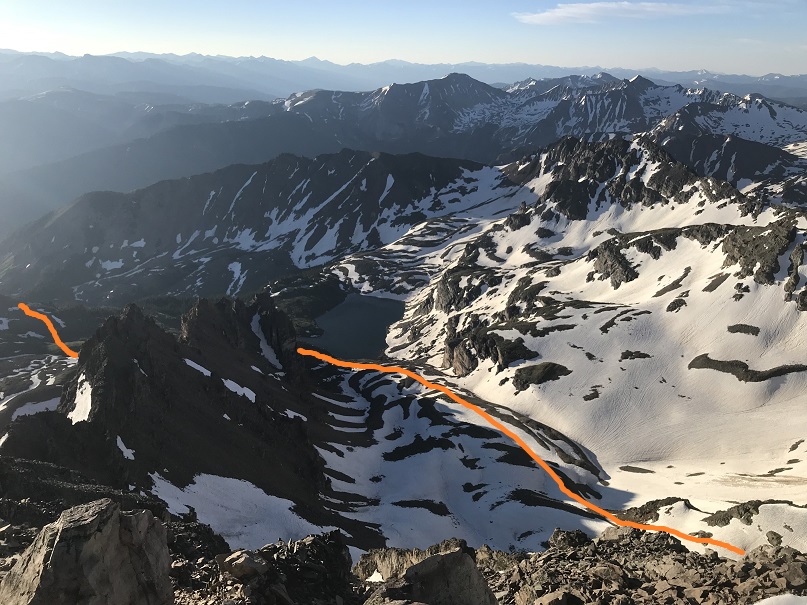


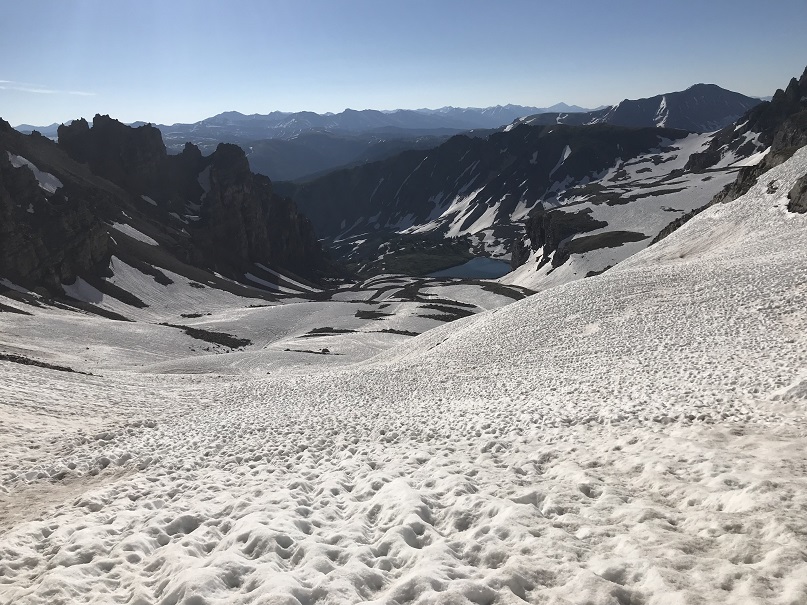
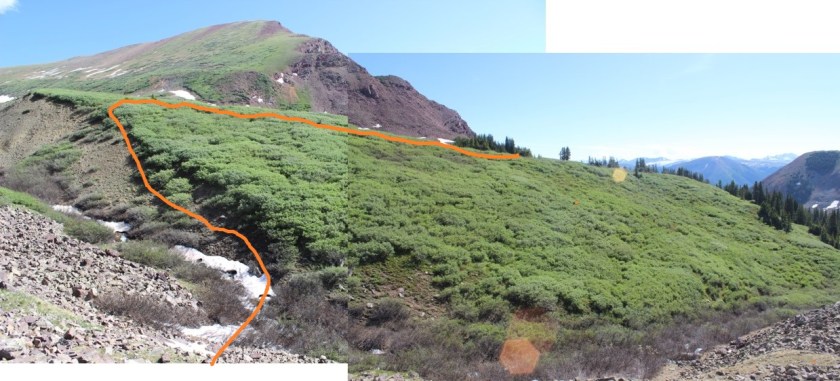
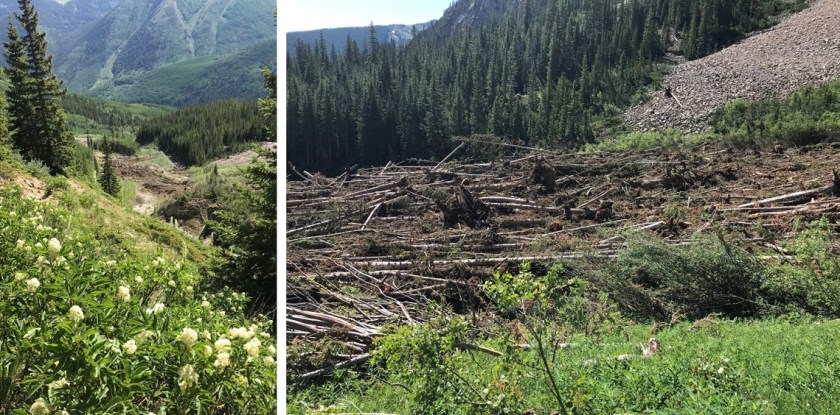
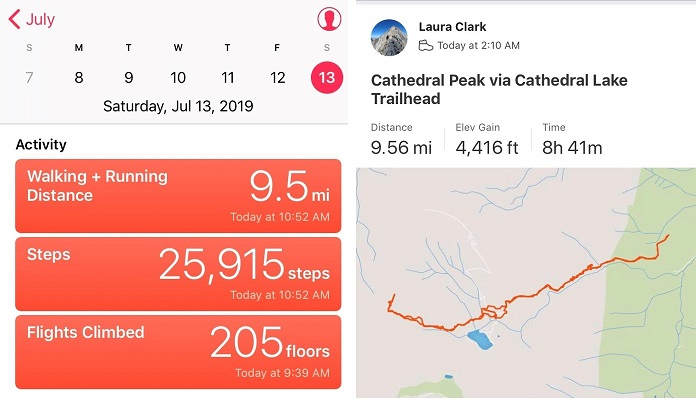
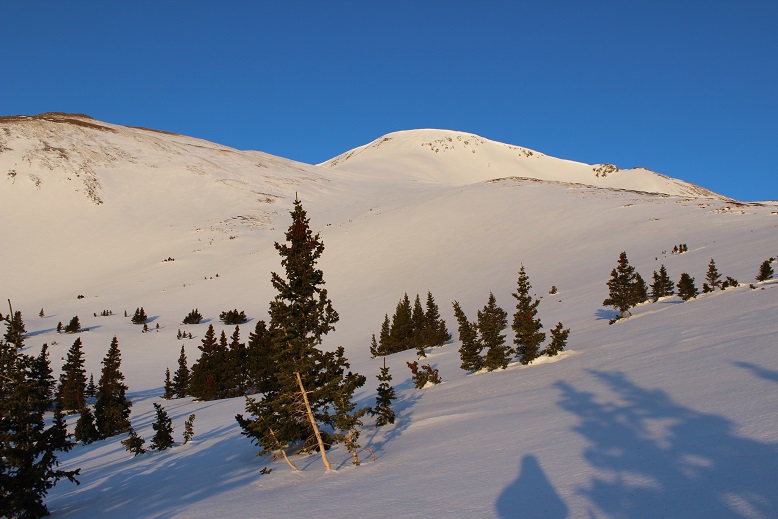
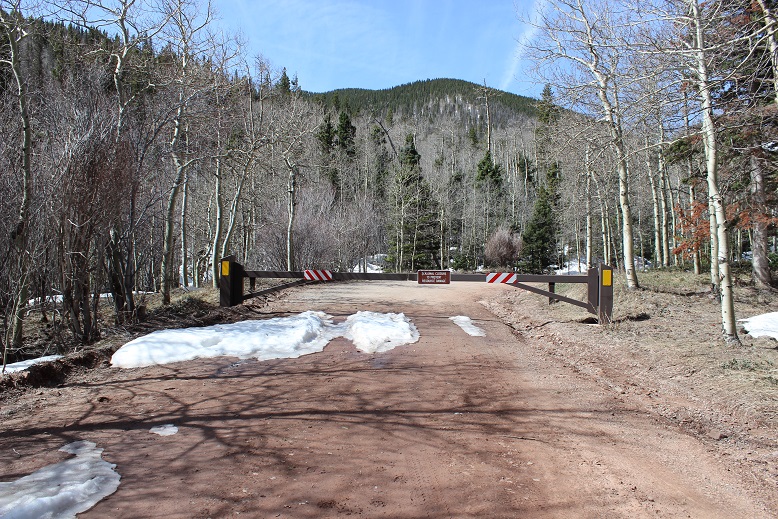
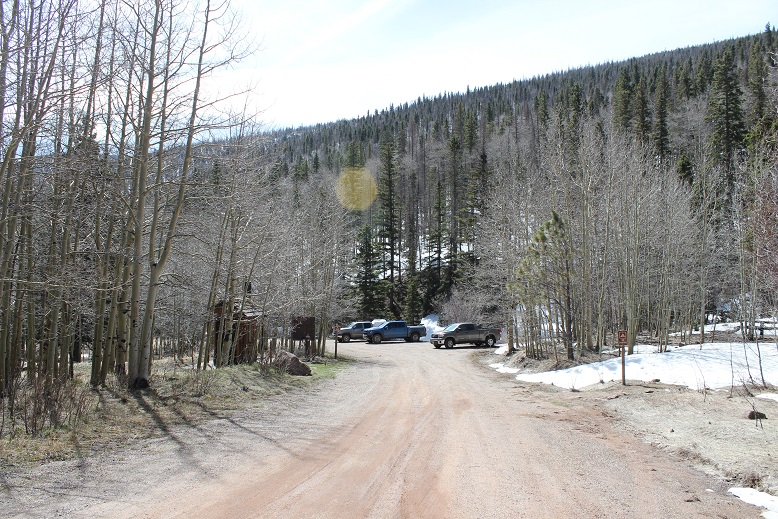
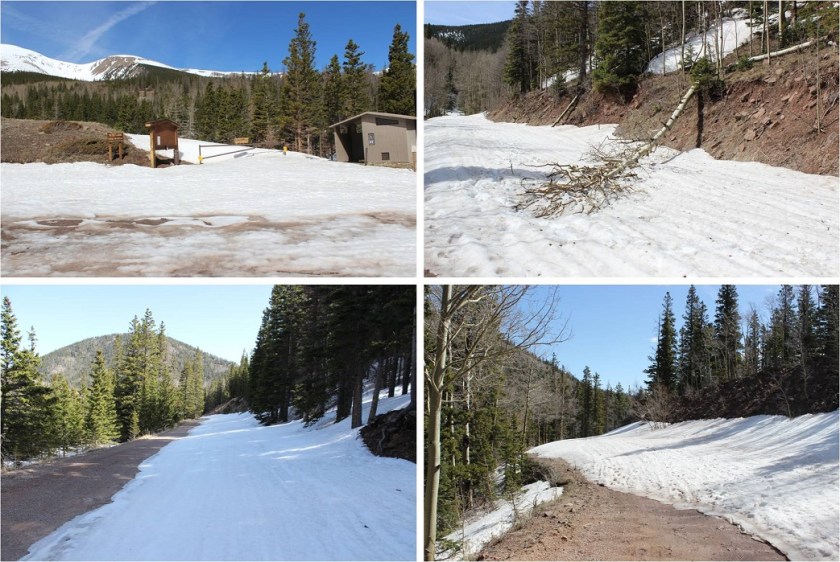

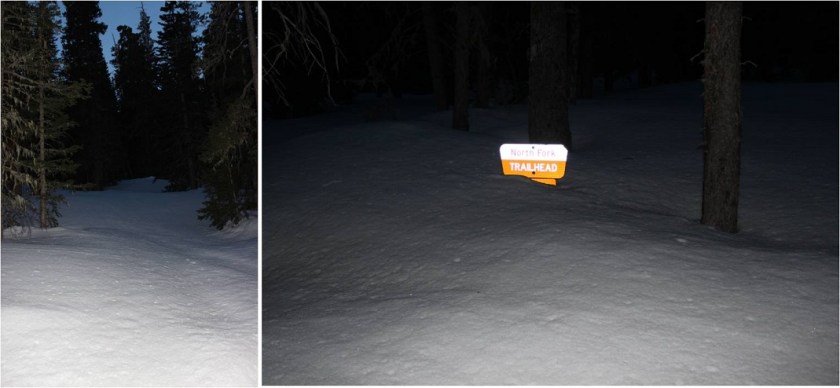
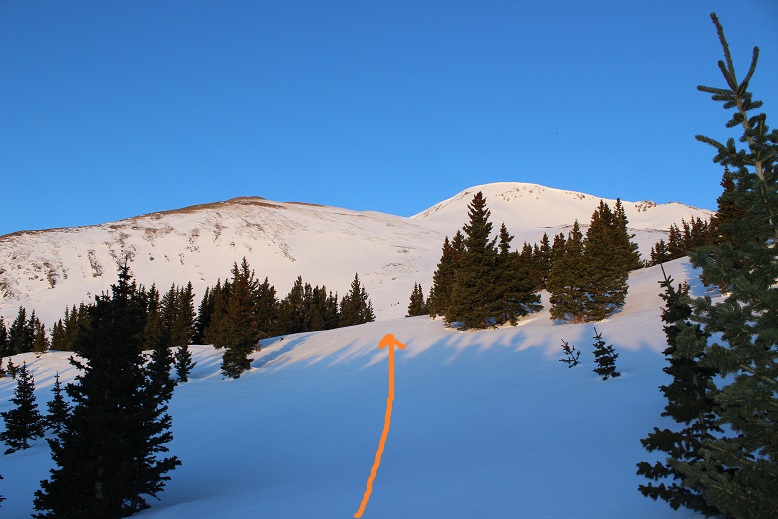
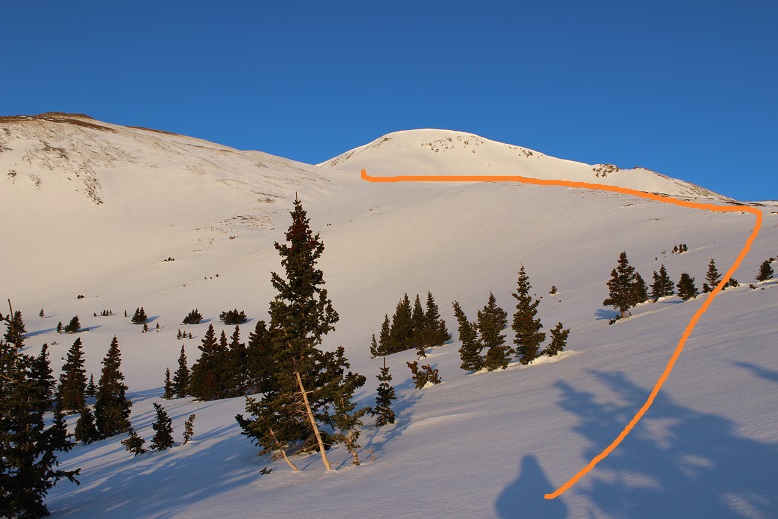
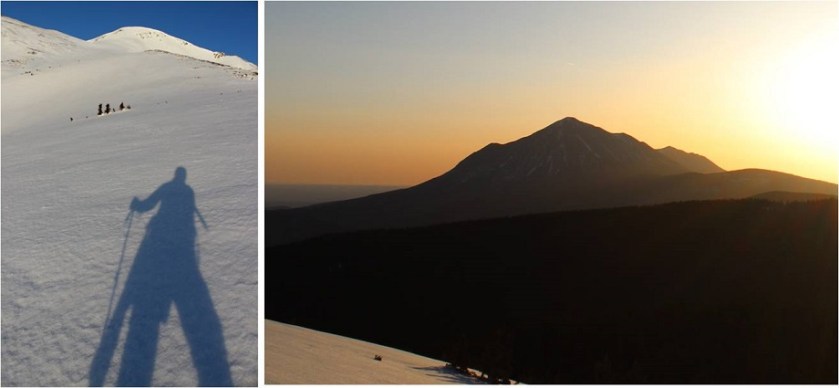
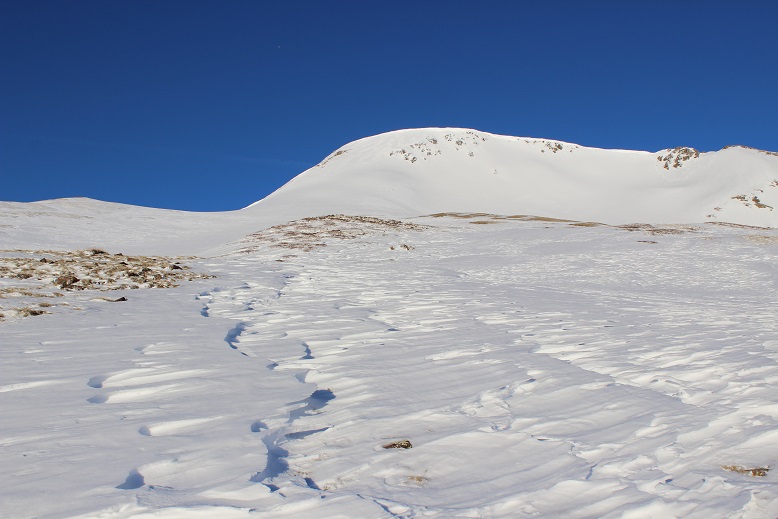


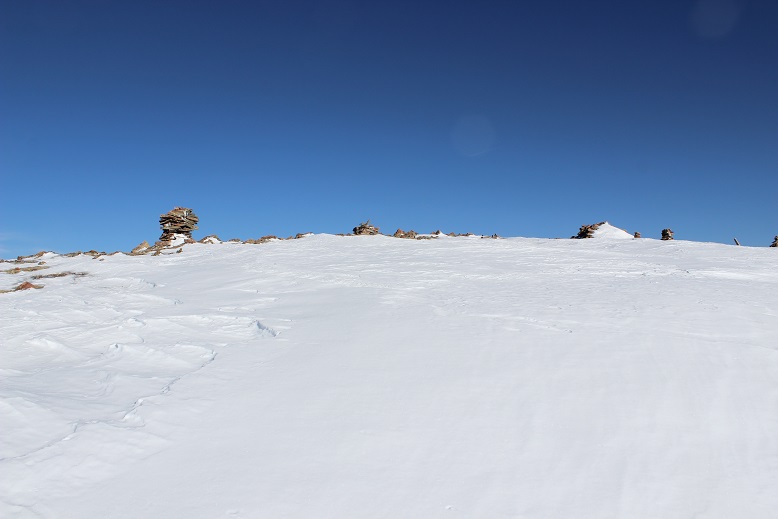
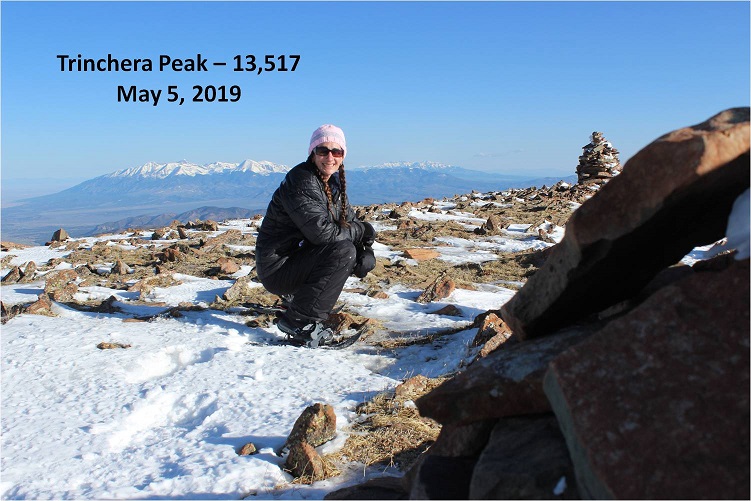
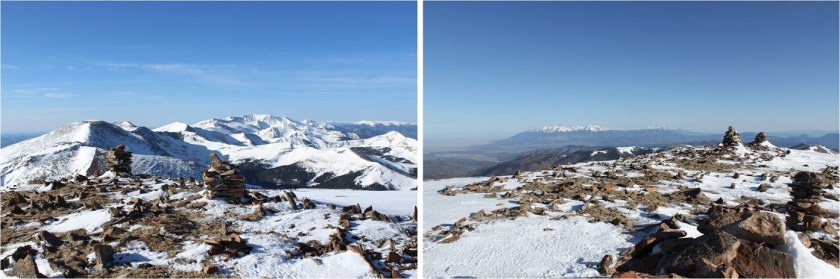
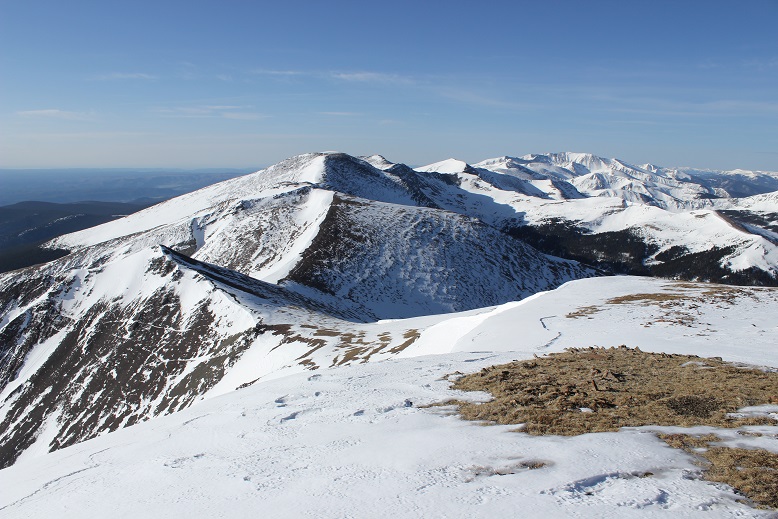
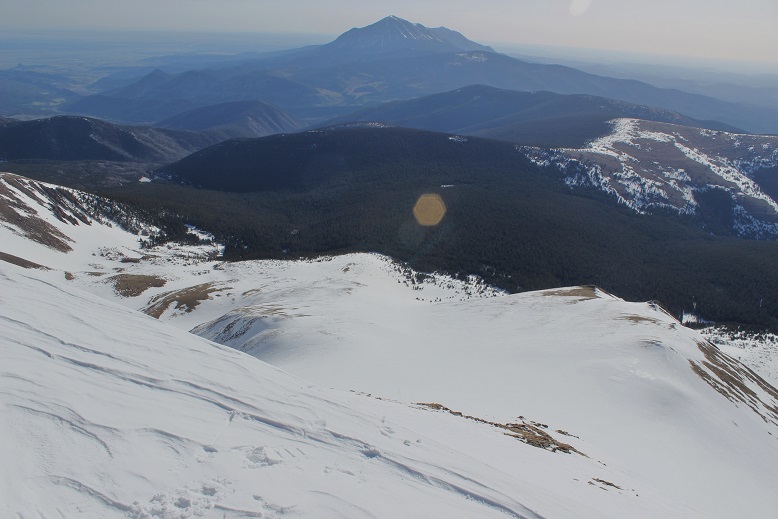

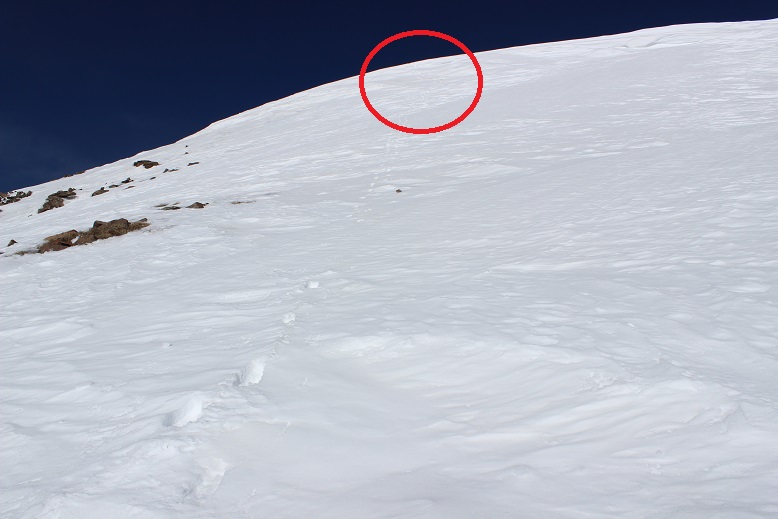
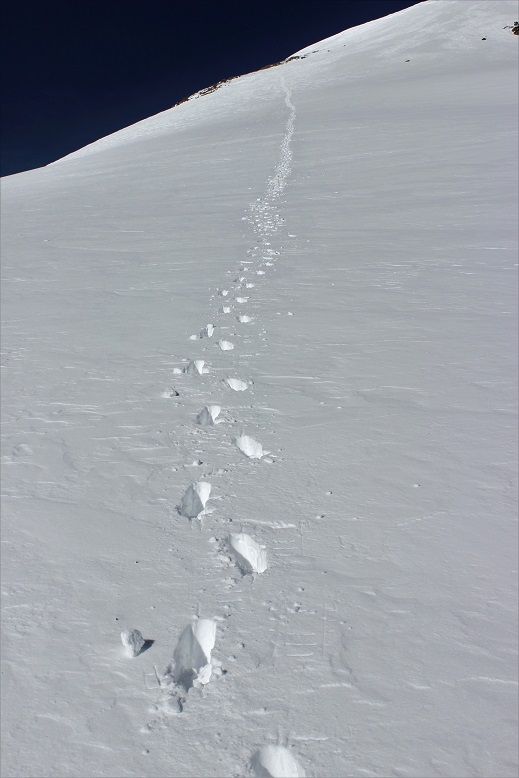
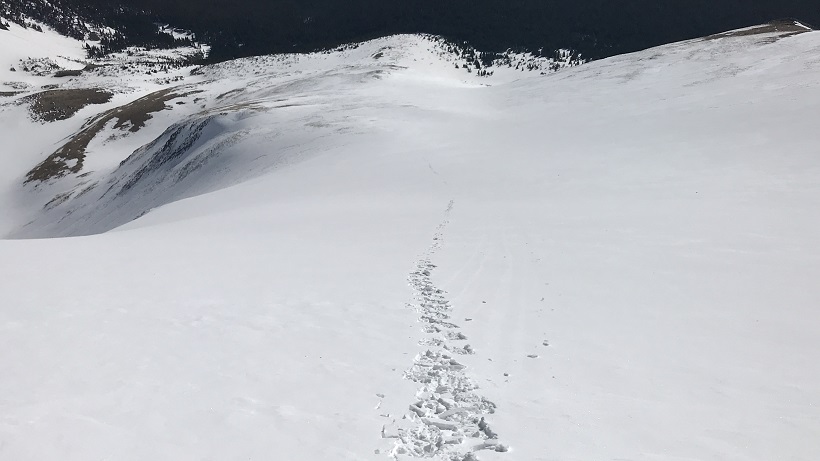
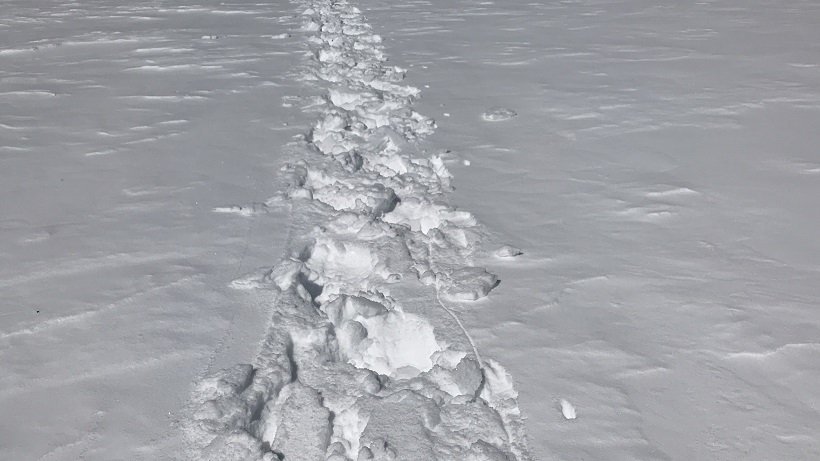
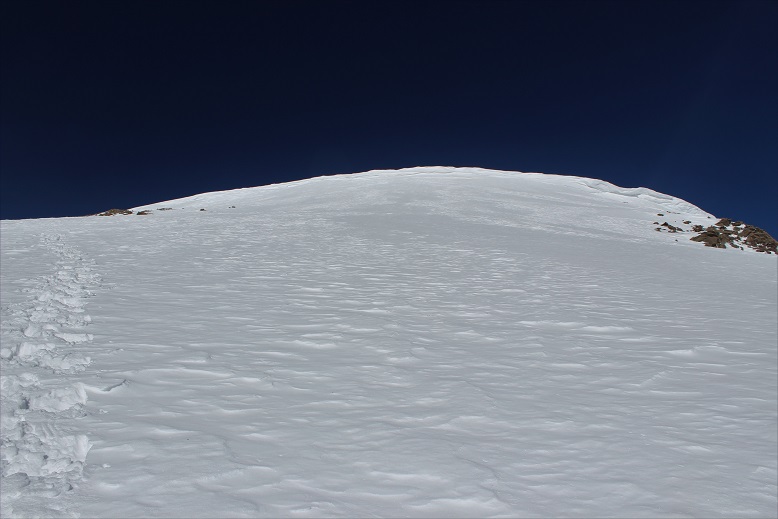
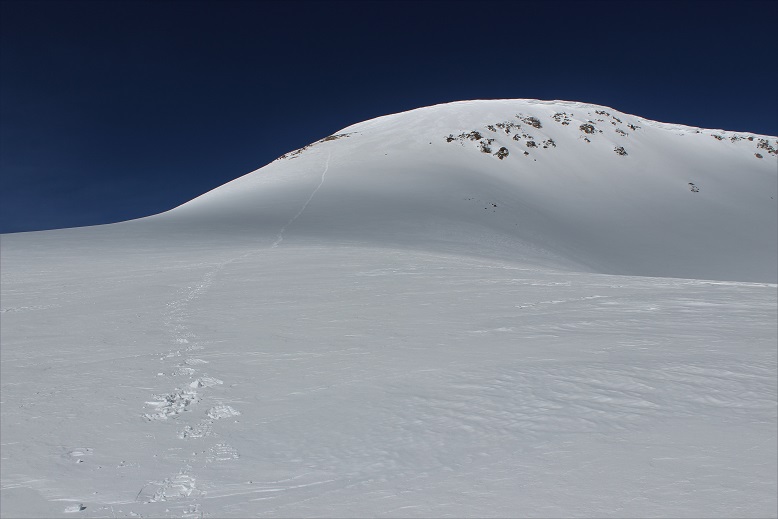
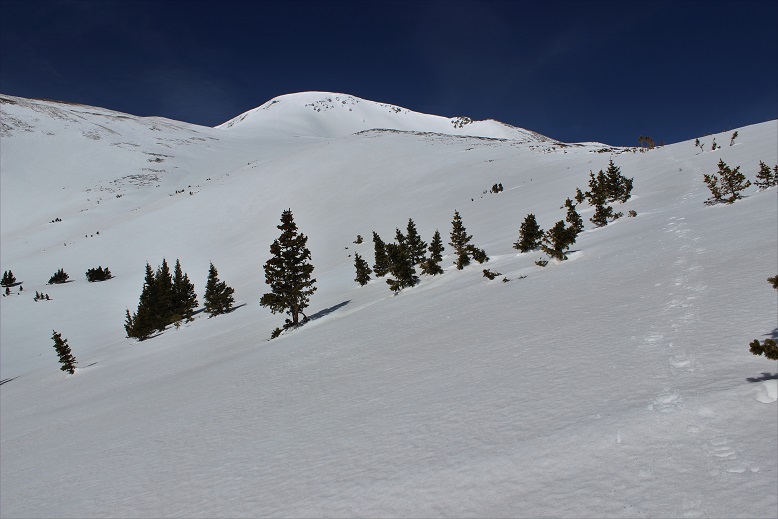

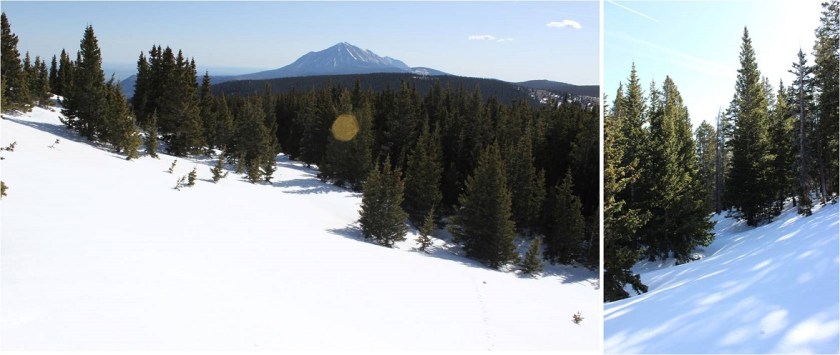
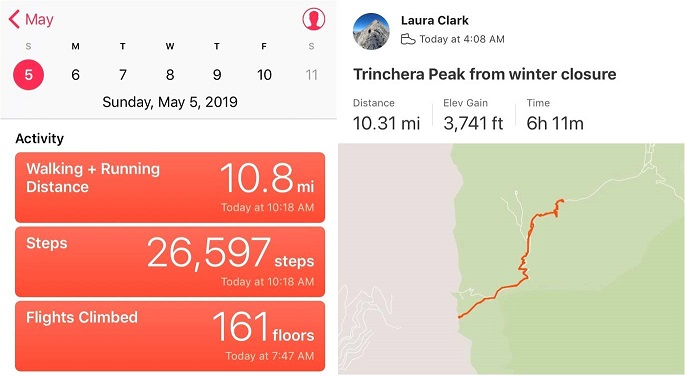
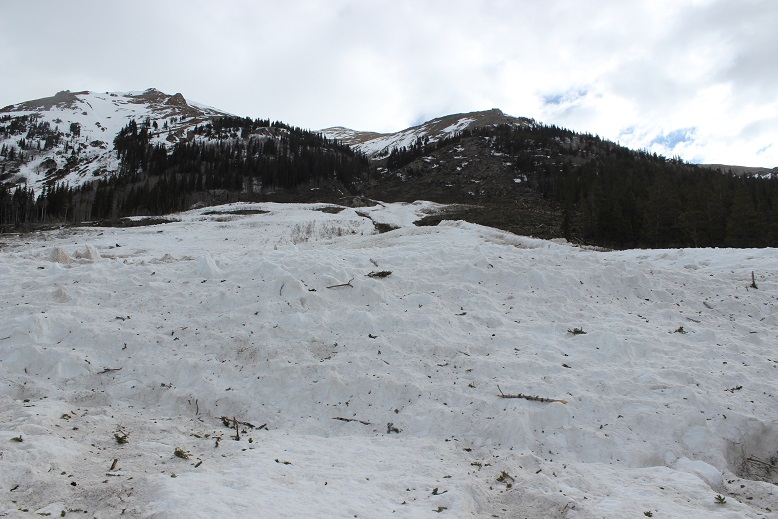
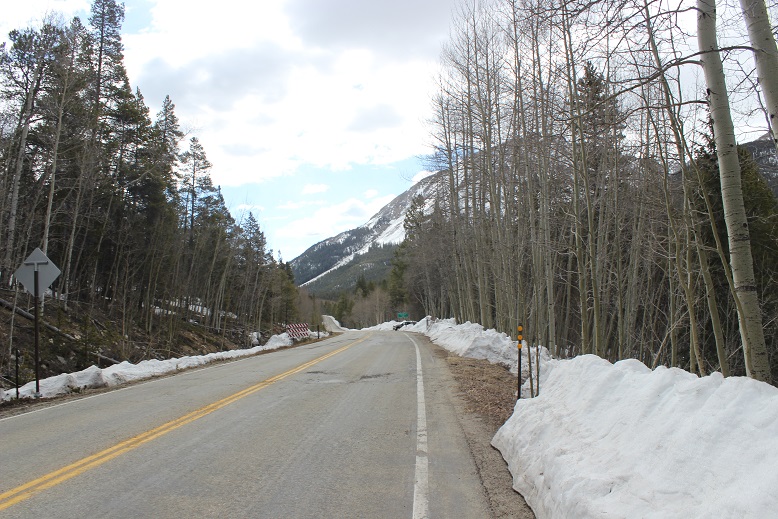
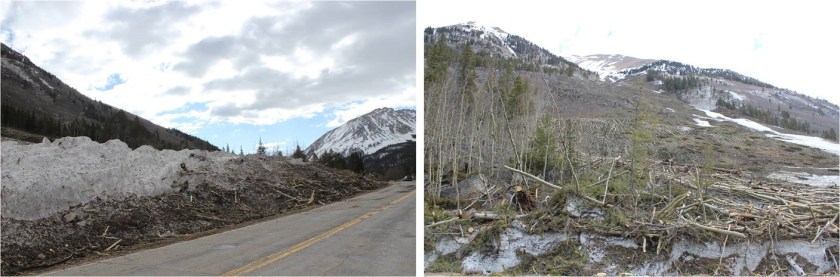
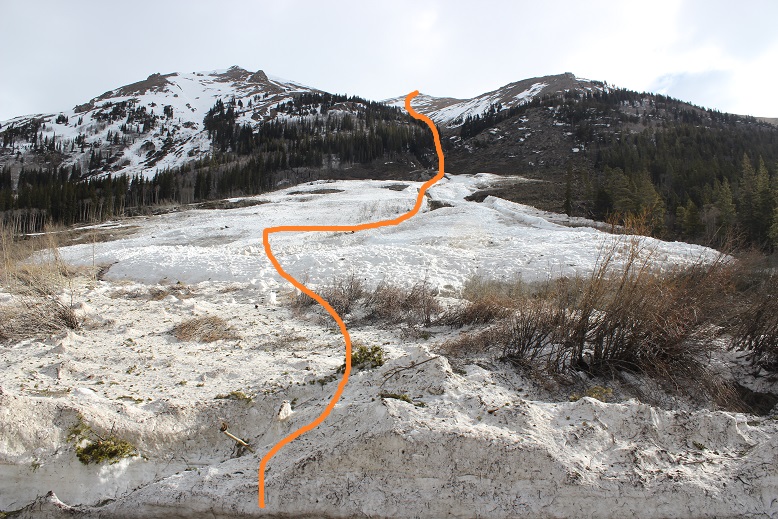


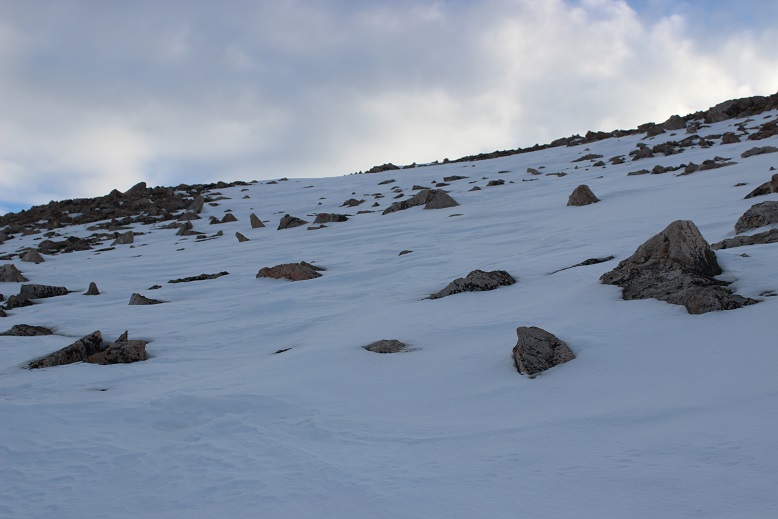
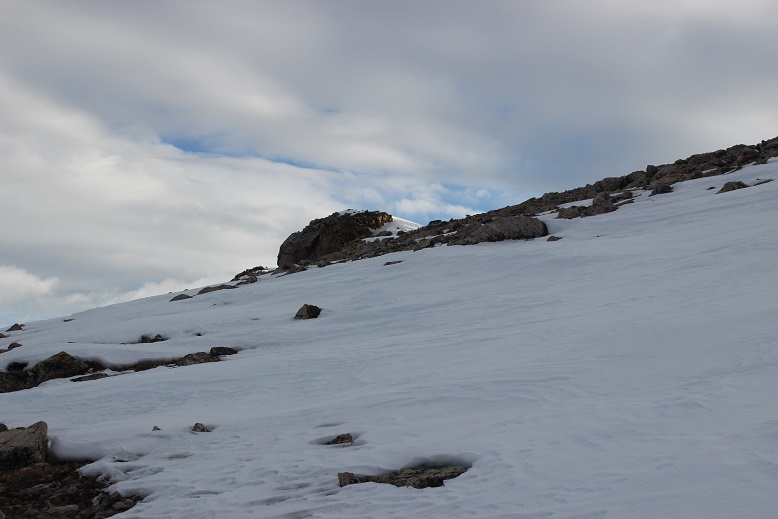
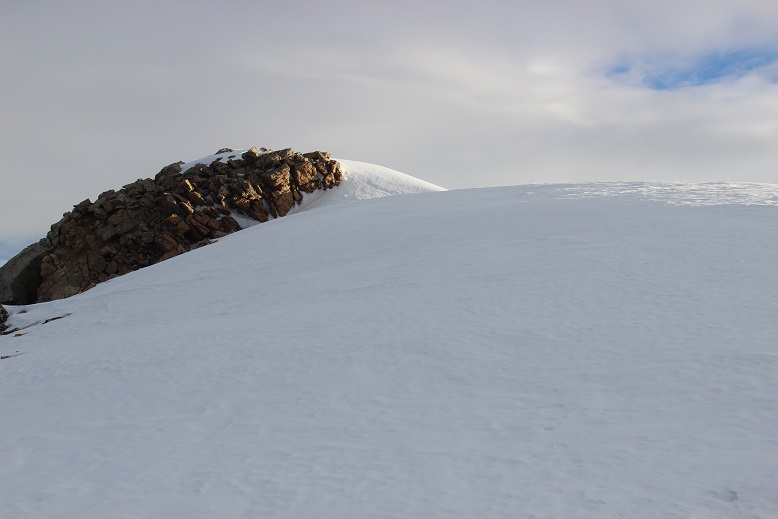
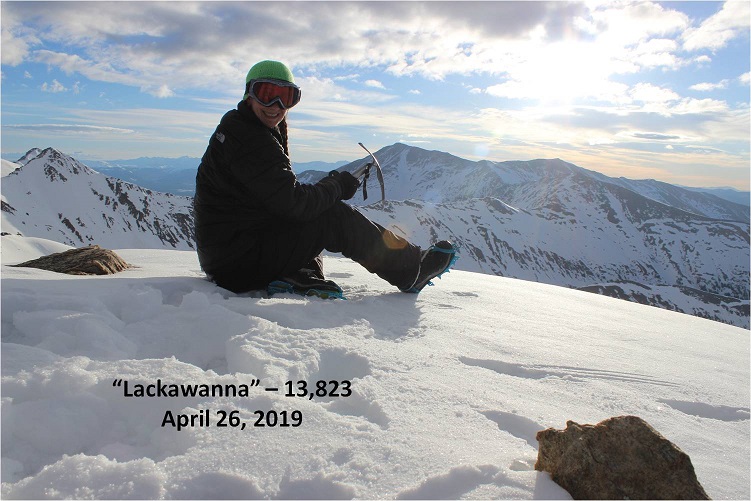
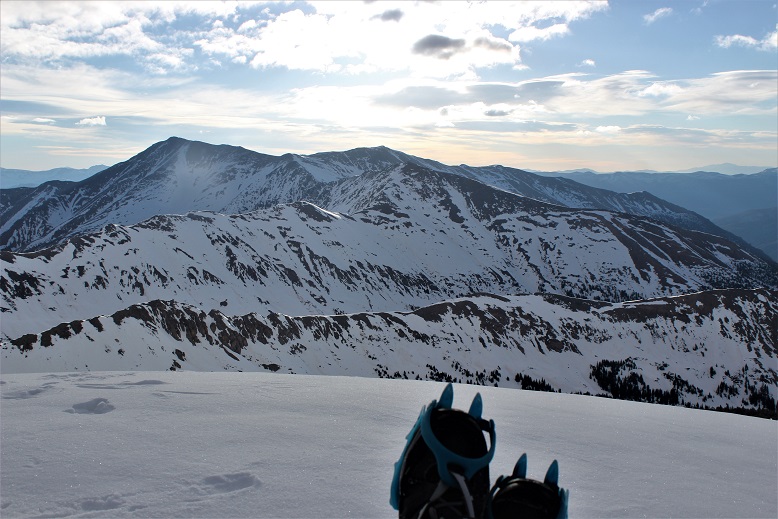

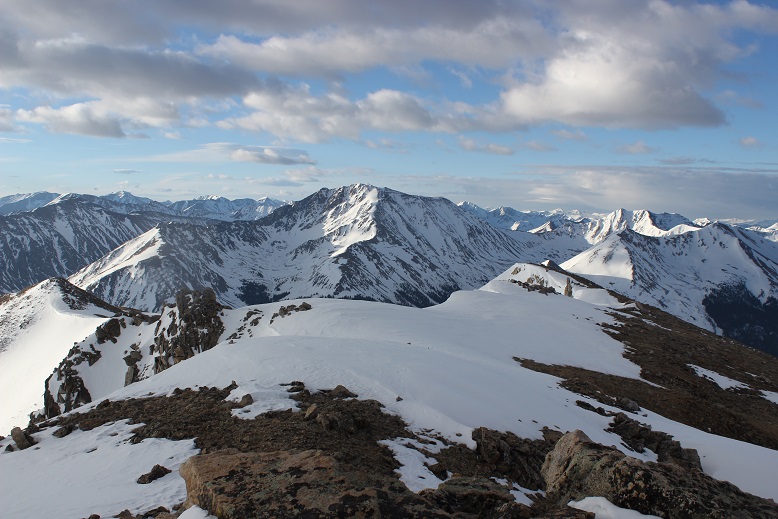
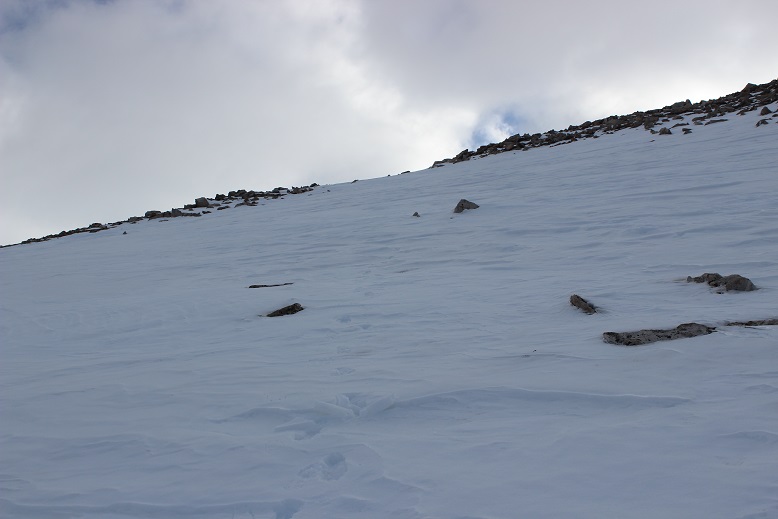

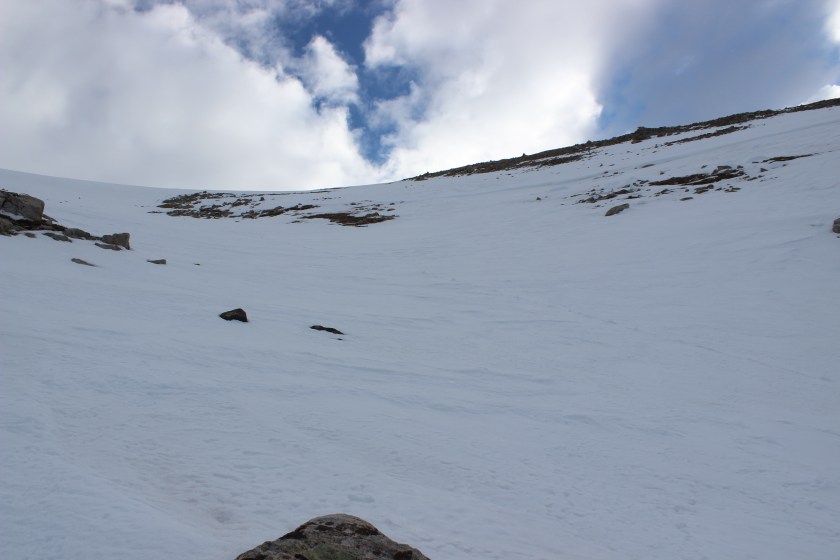

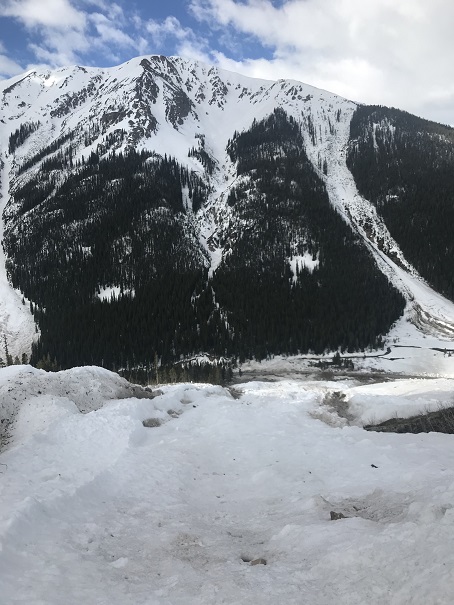
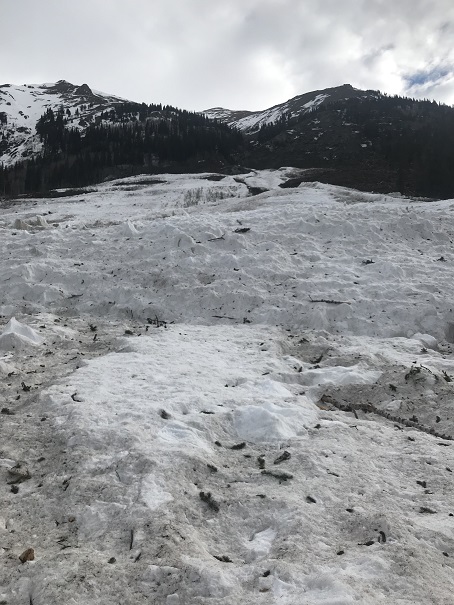

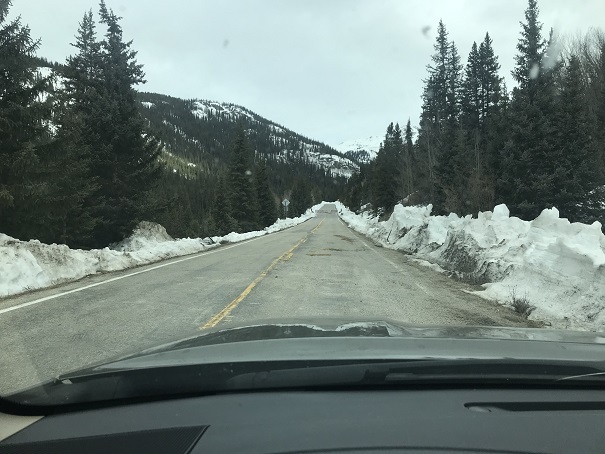
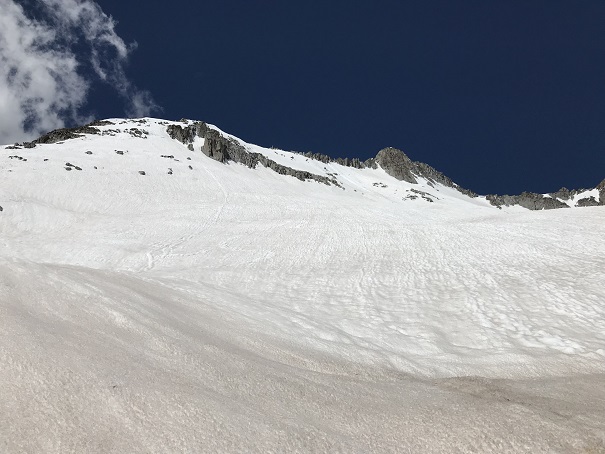 RT Mileage: 22 miles
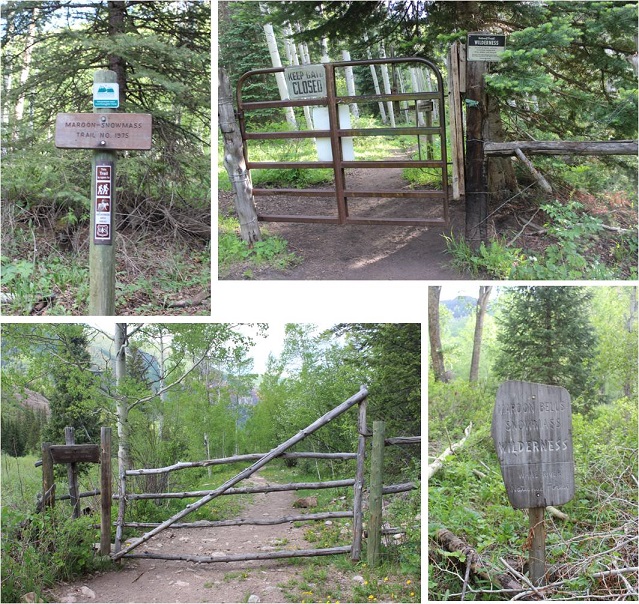

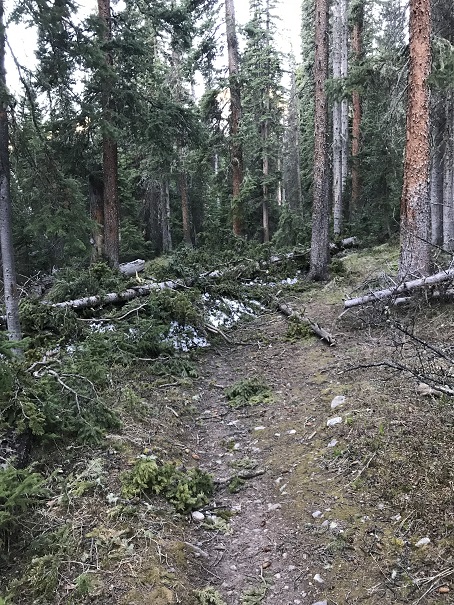
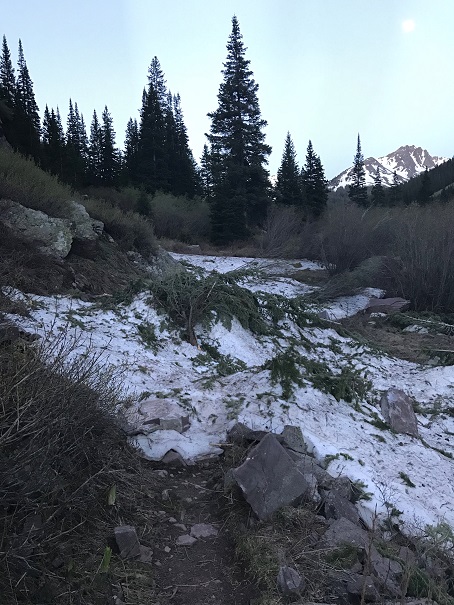

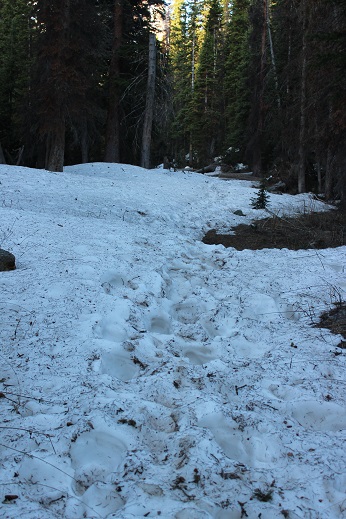
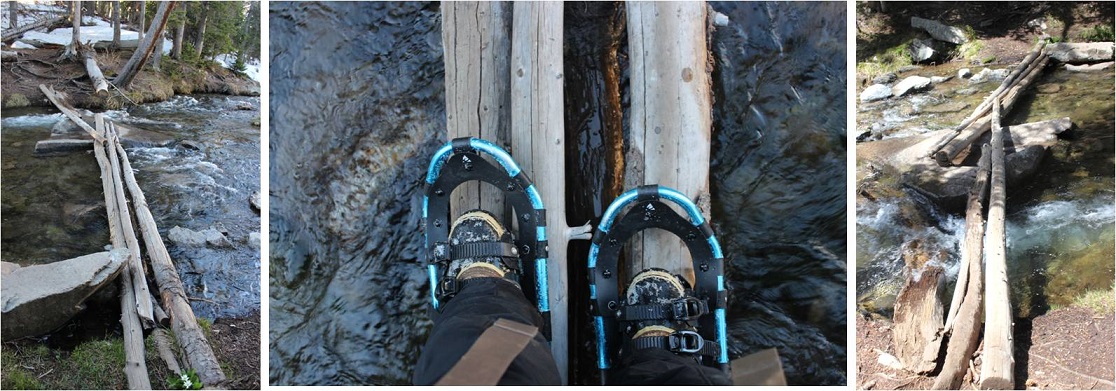
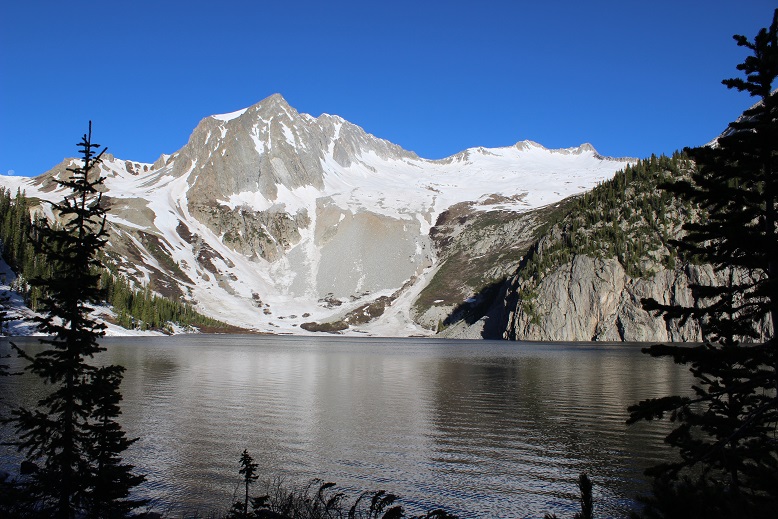
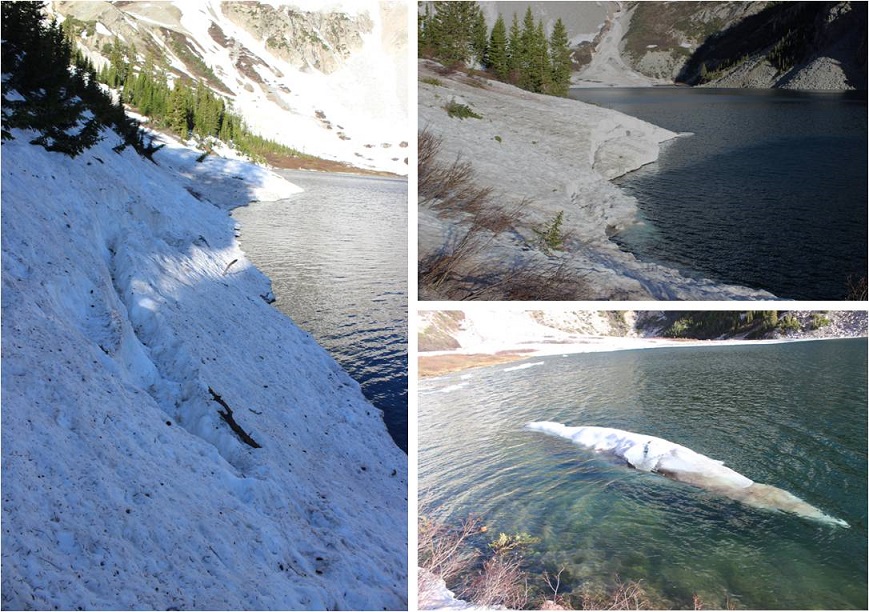
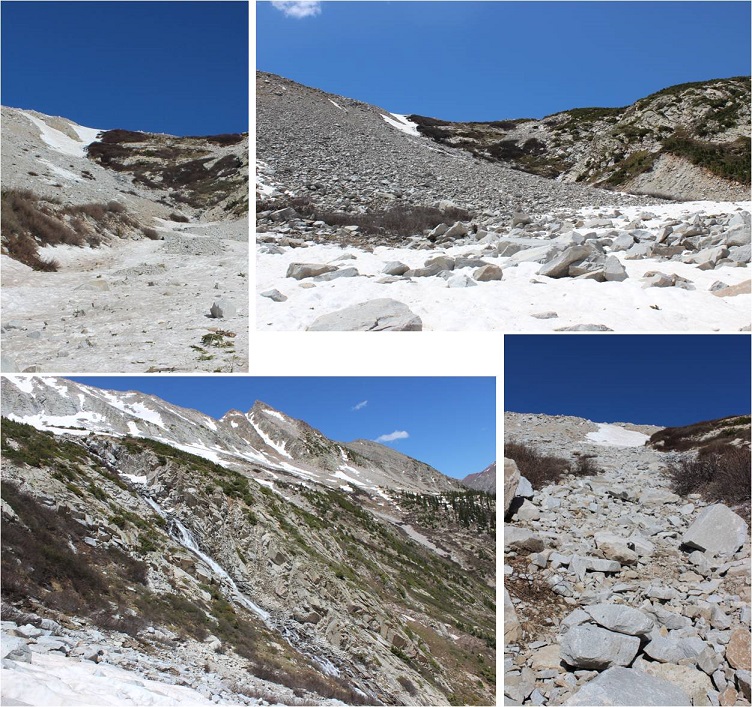
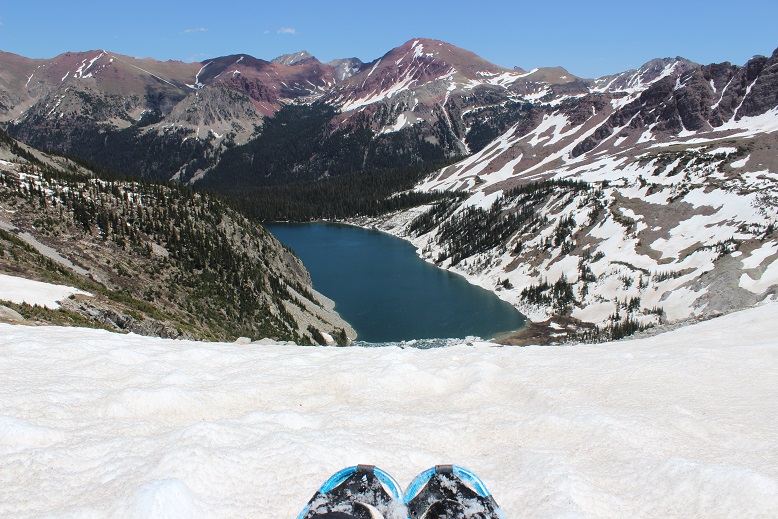
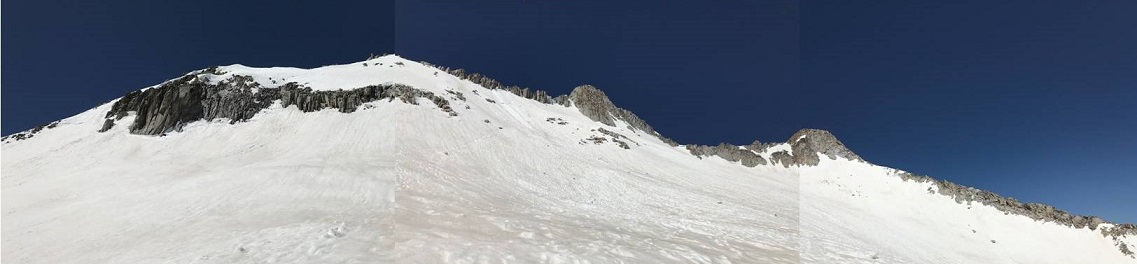
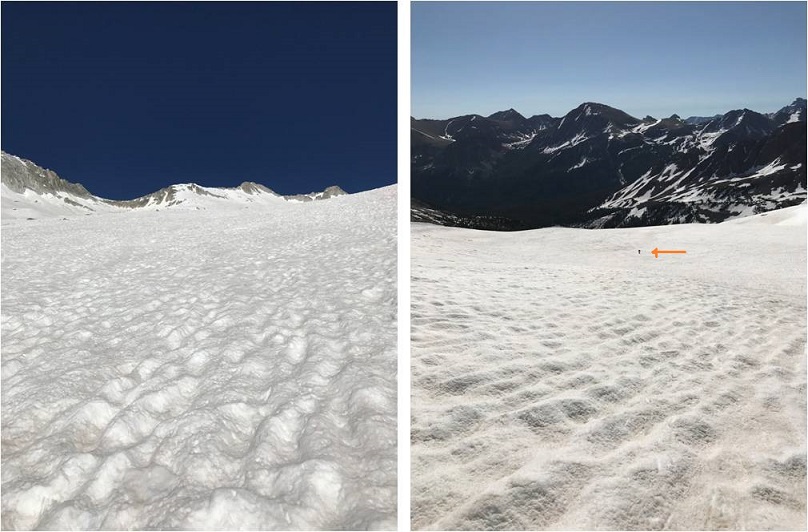
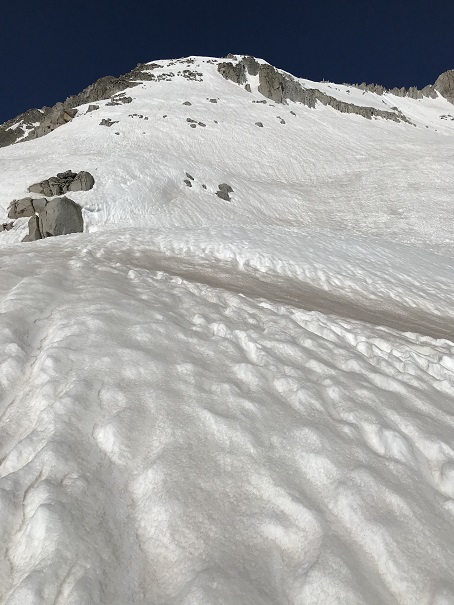


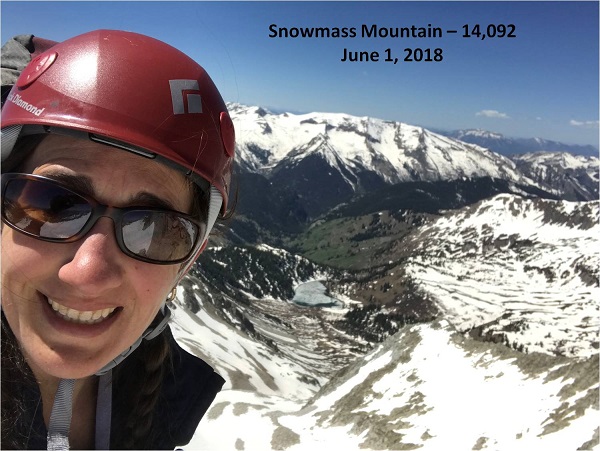
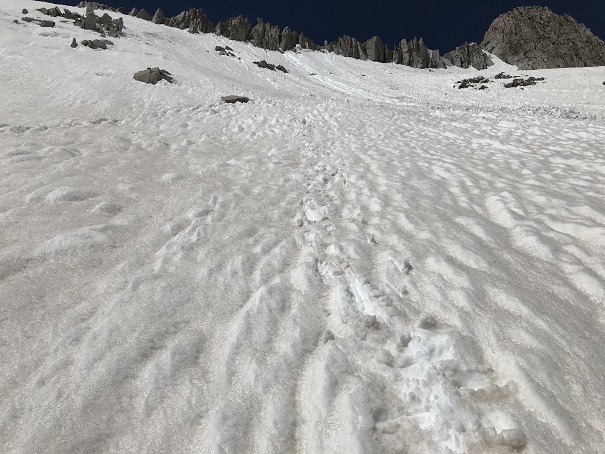
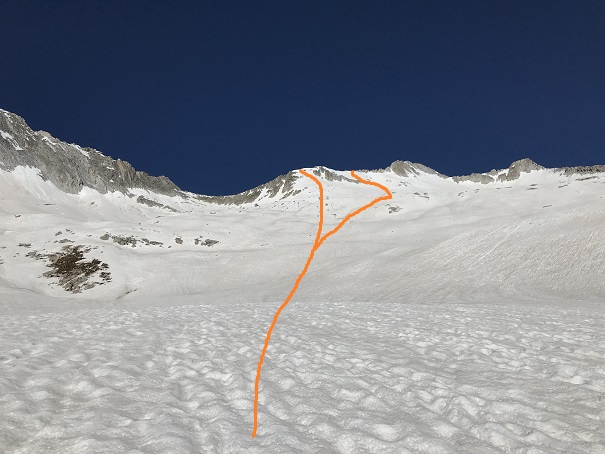
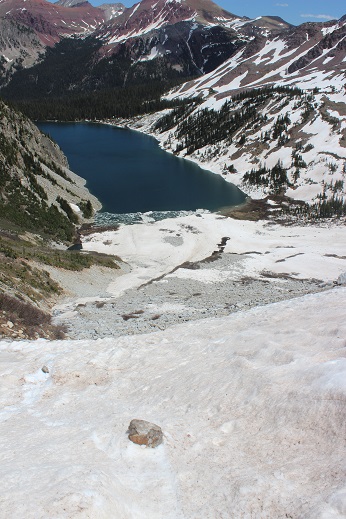
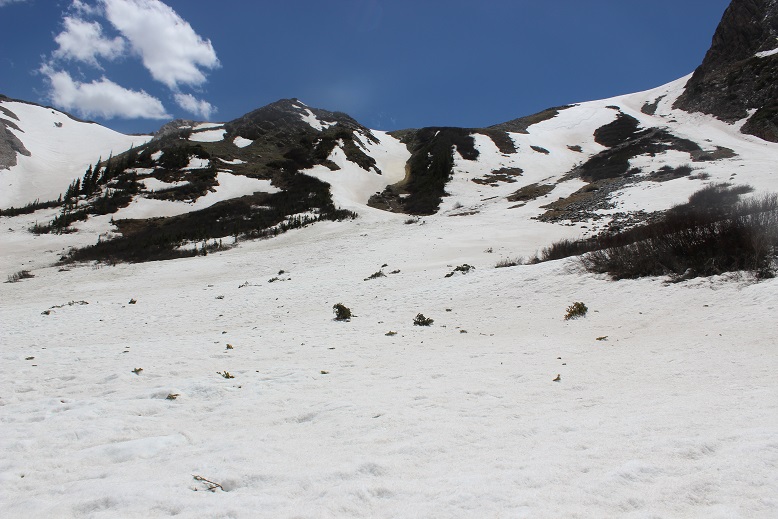

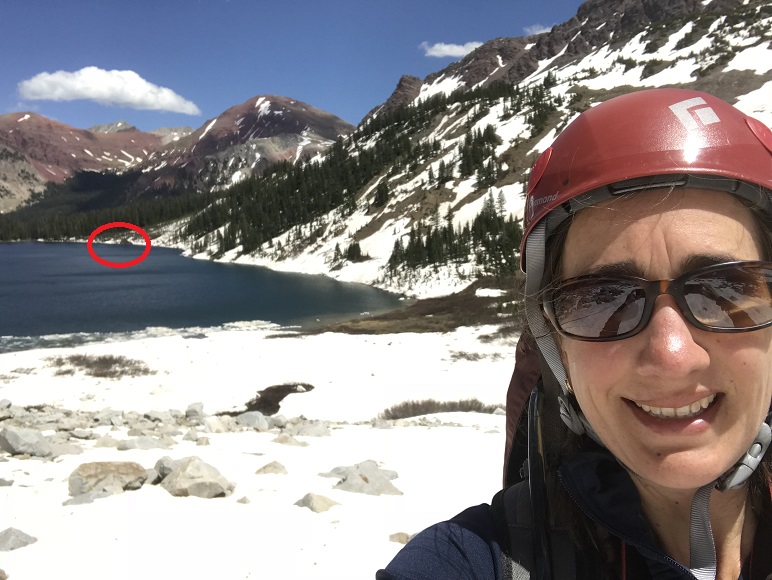
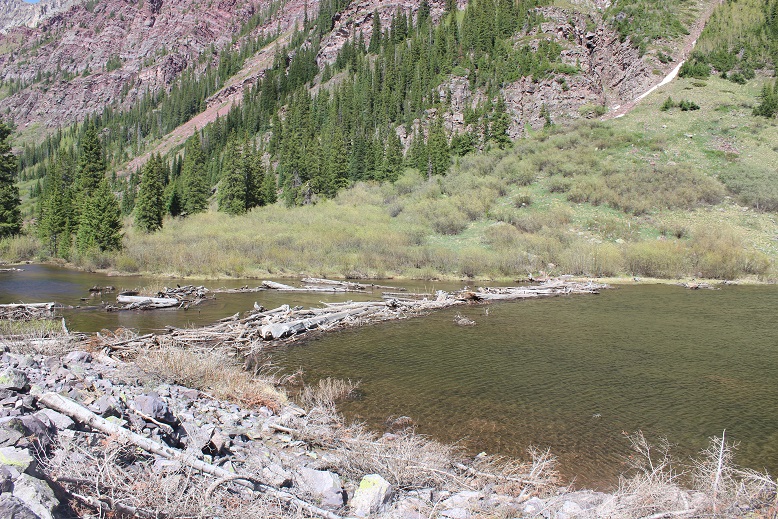
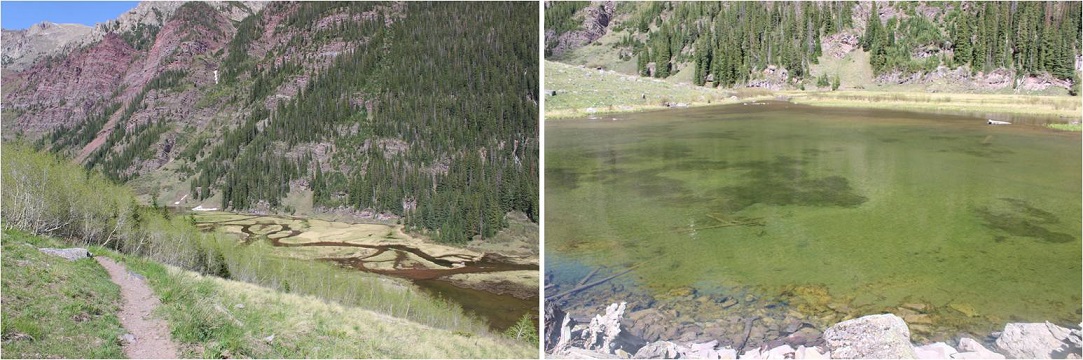
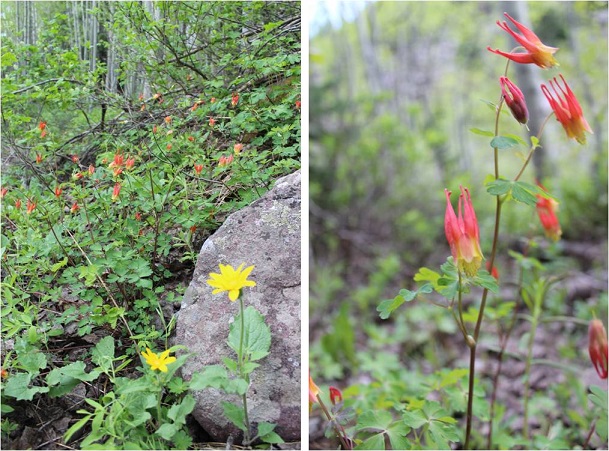
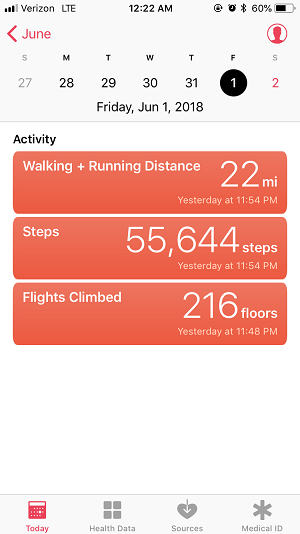
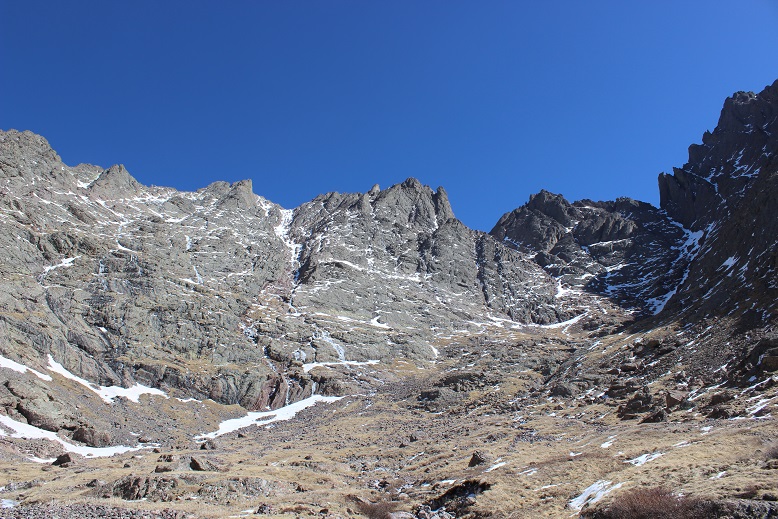


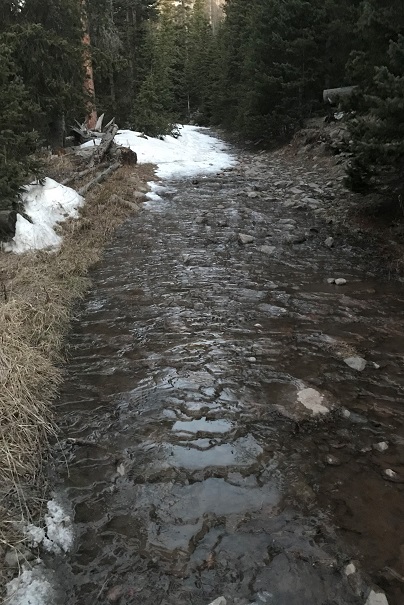


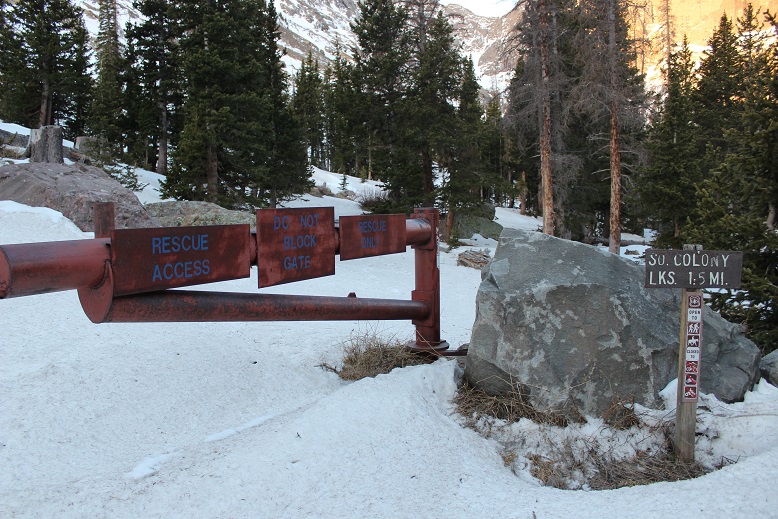
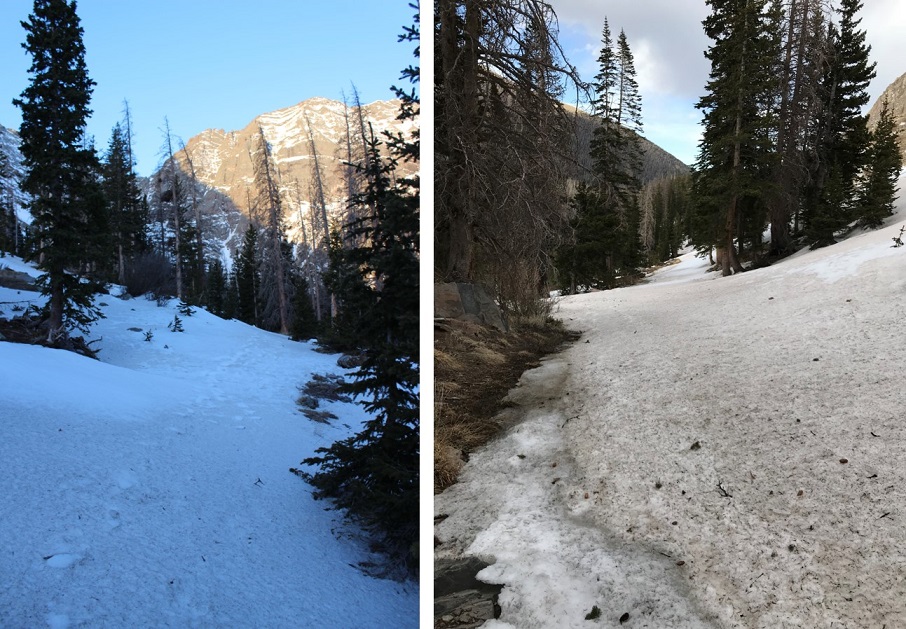
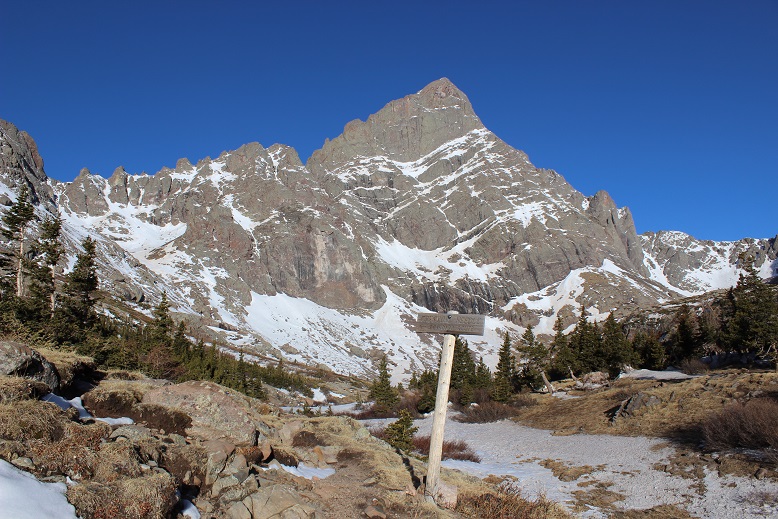
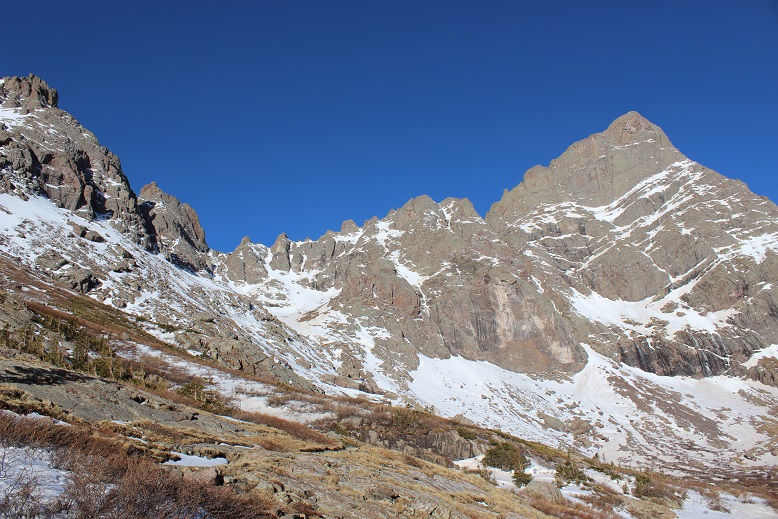
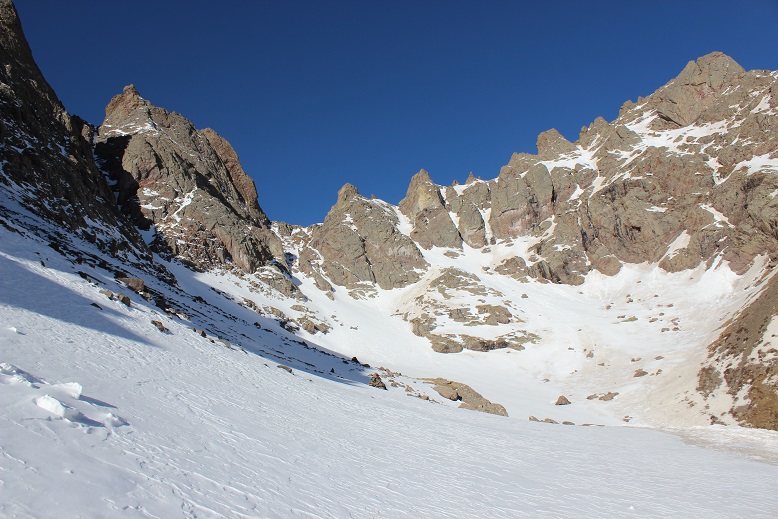
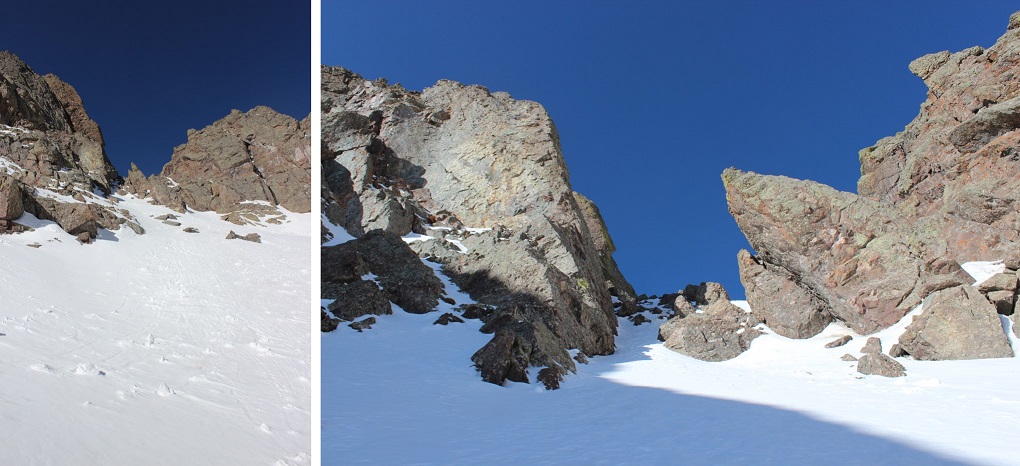
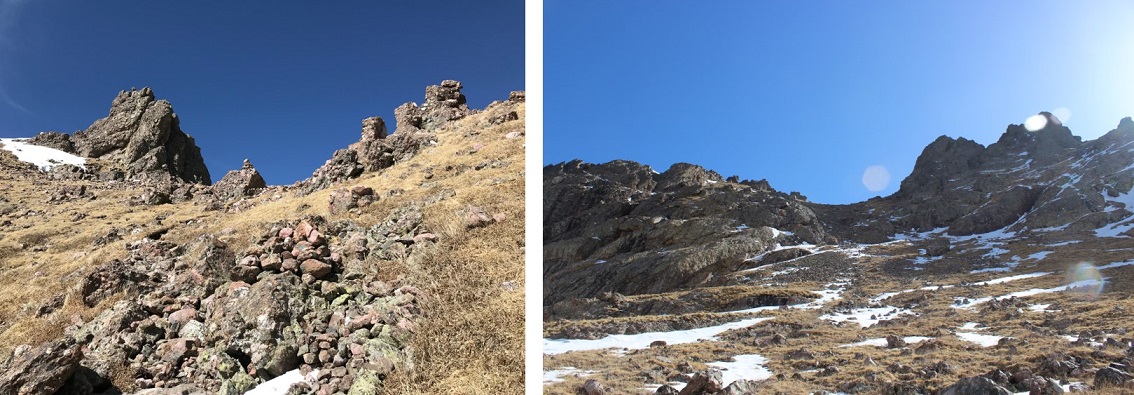
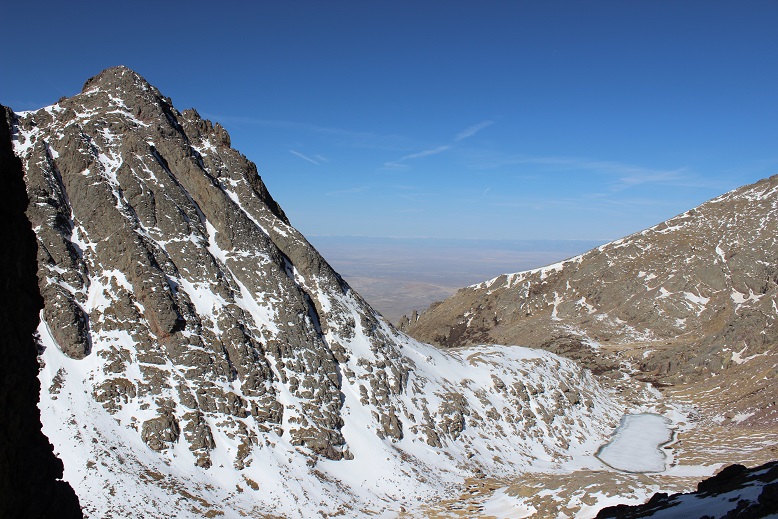


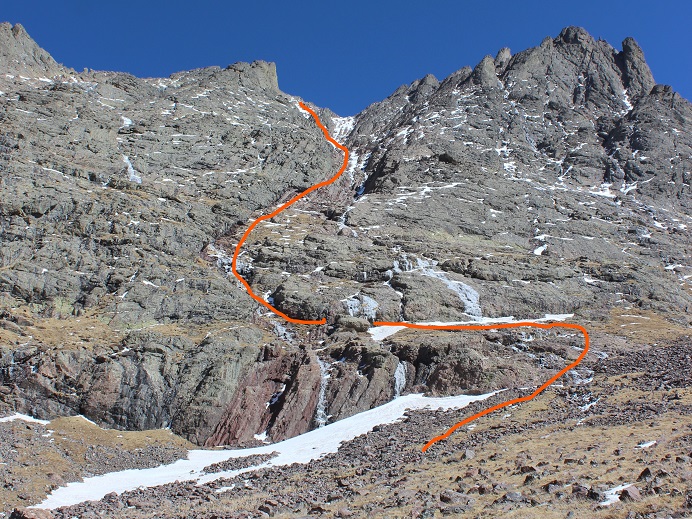
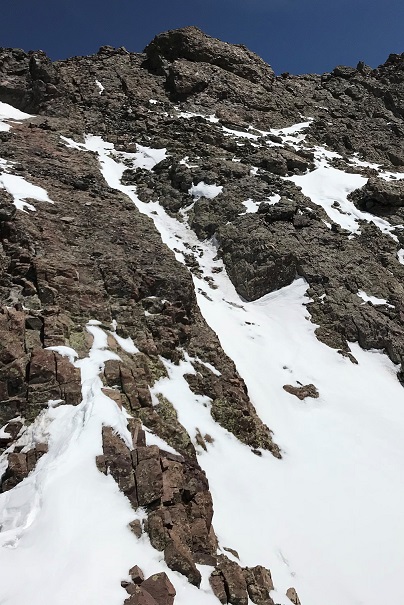
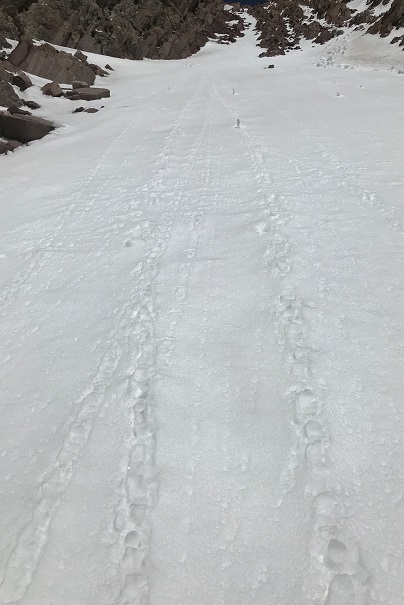
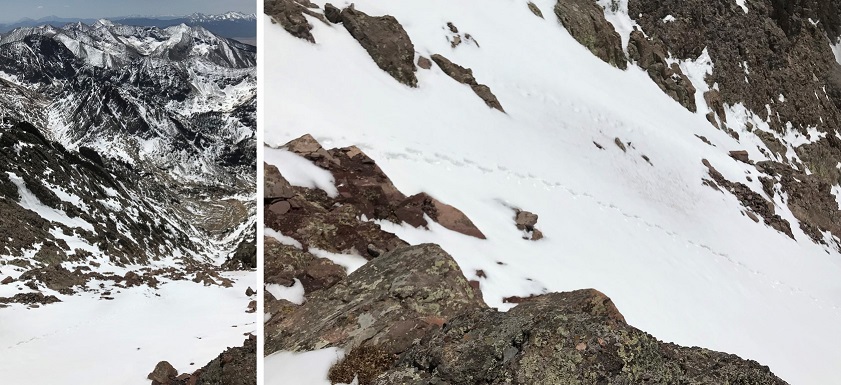
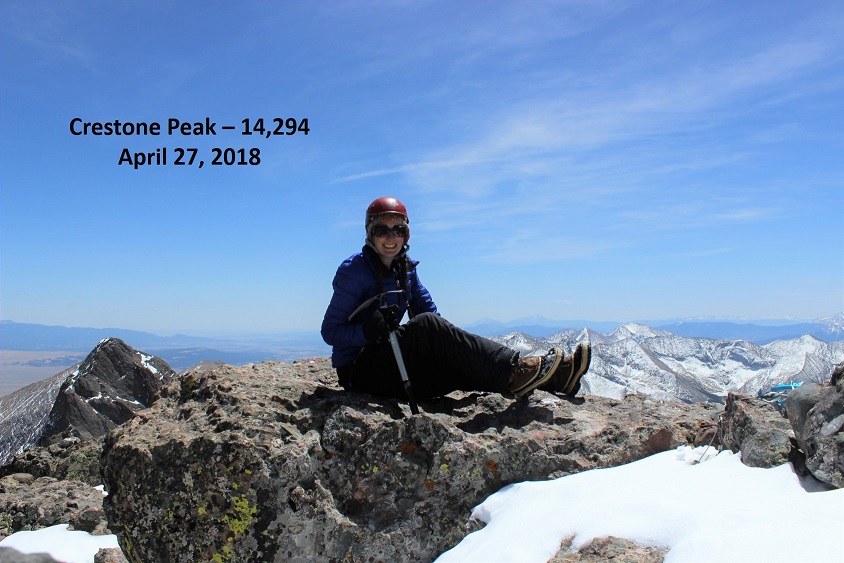
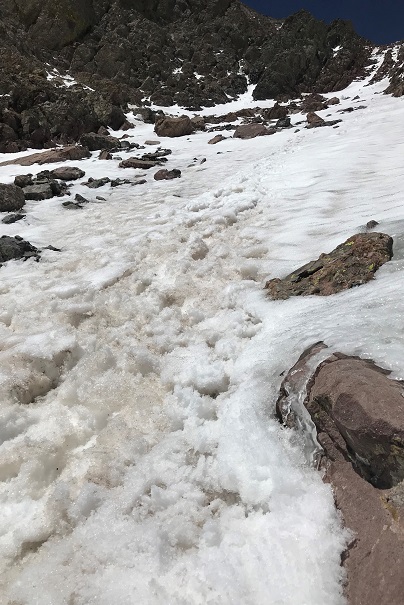
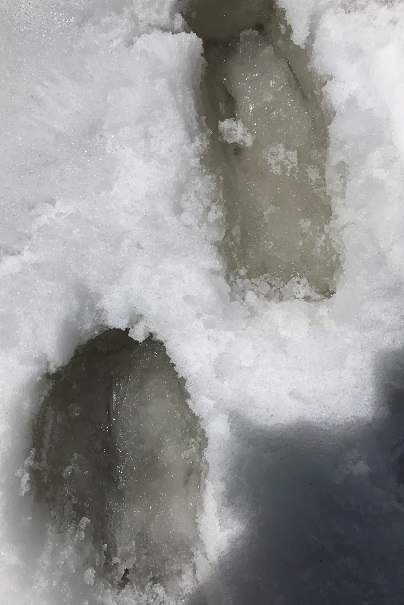
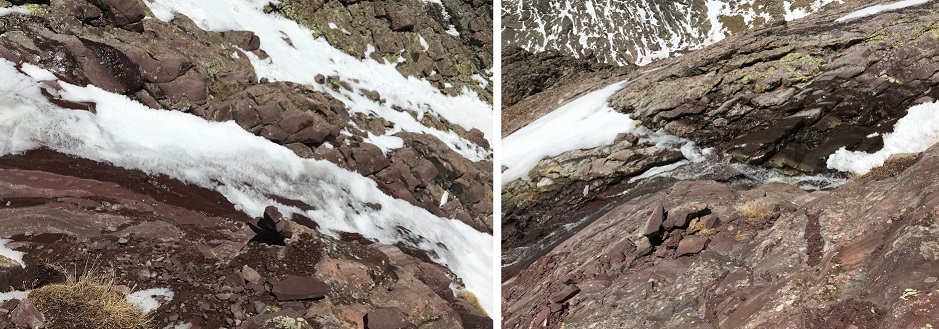
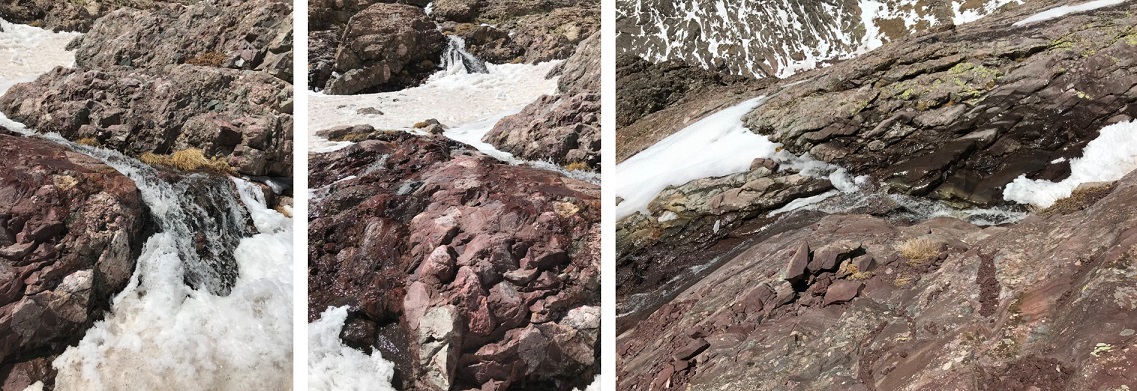
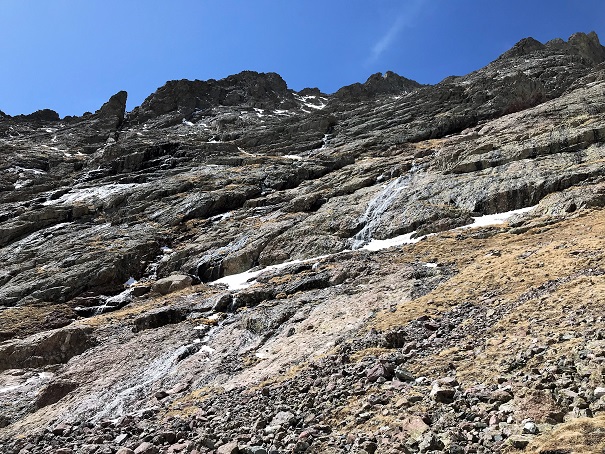
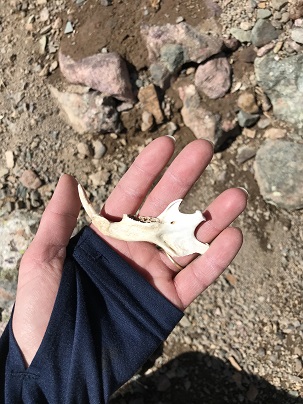
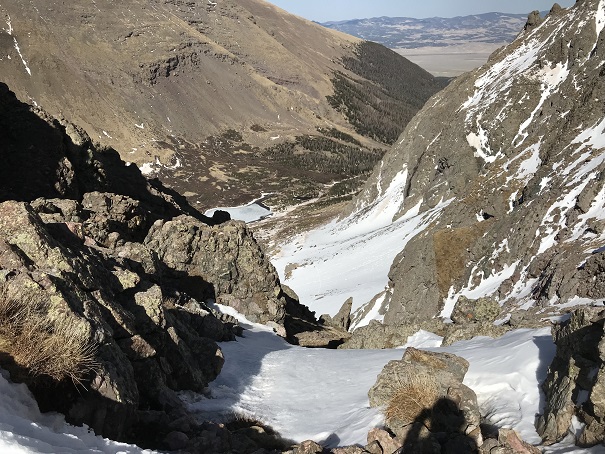
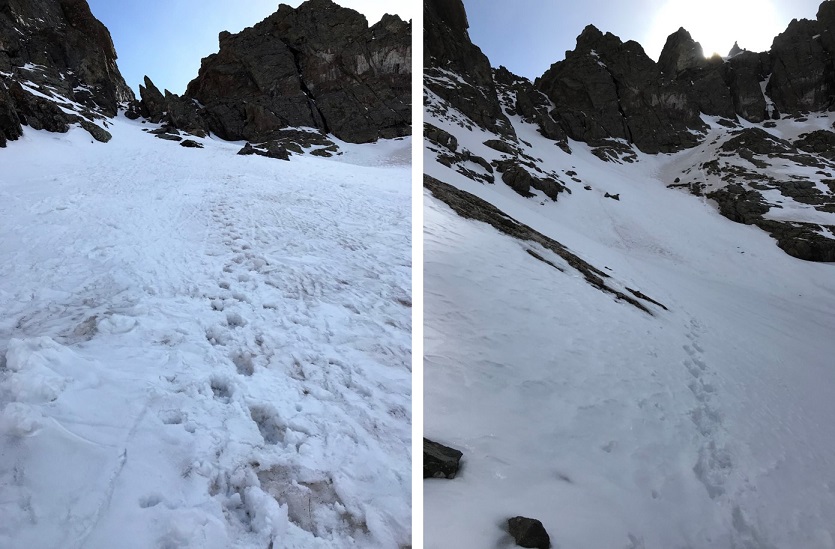
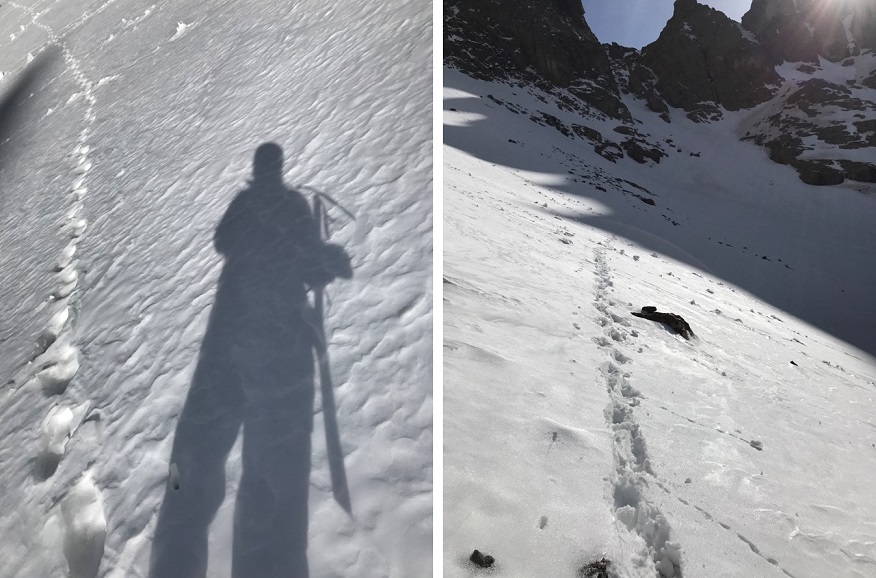

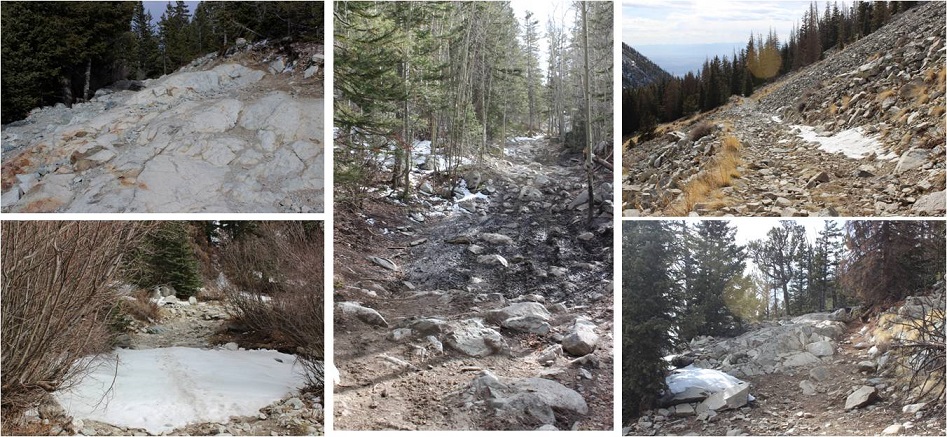
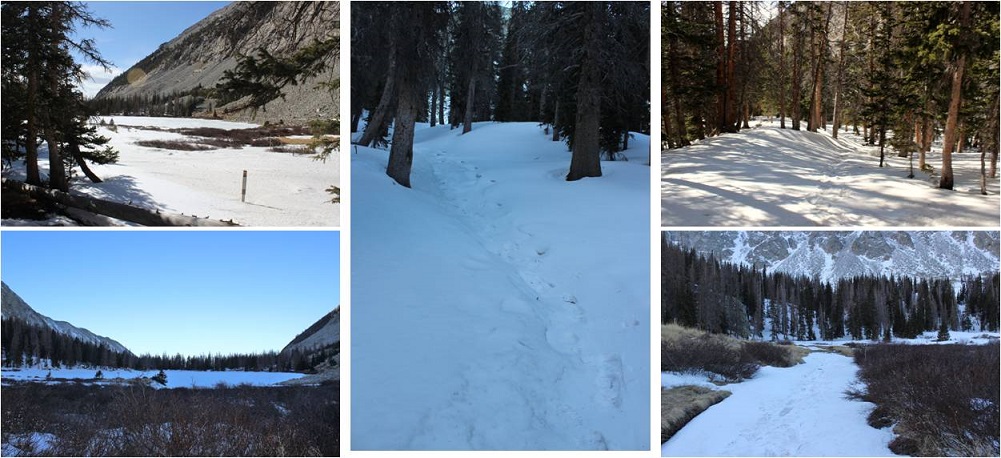

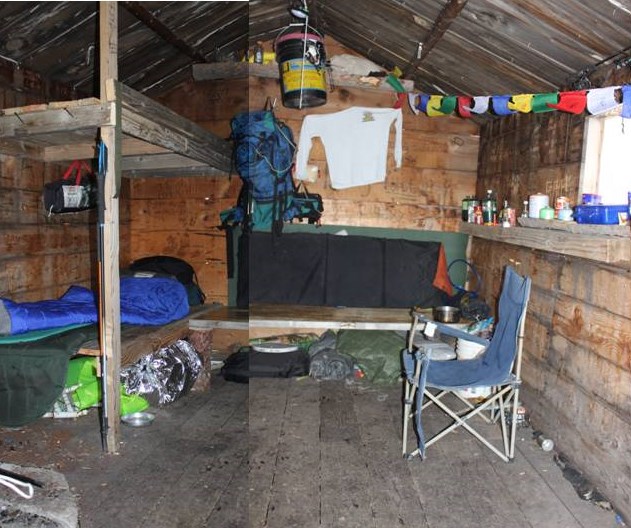
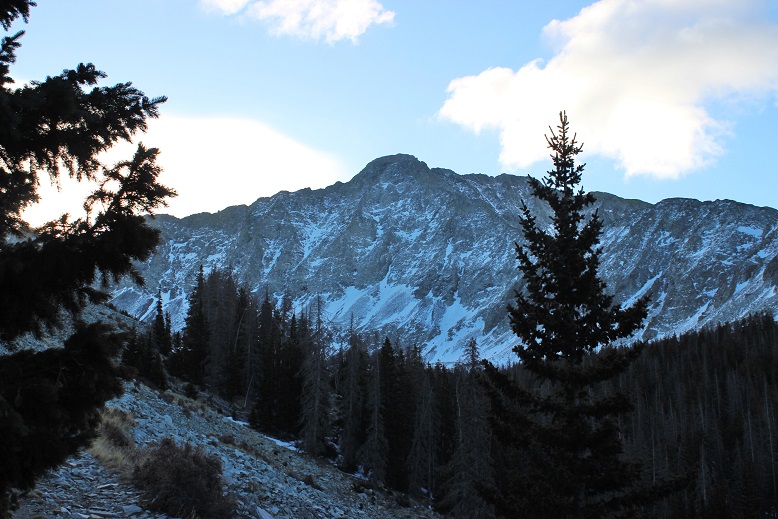
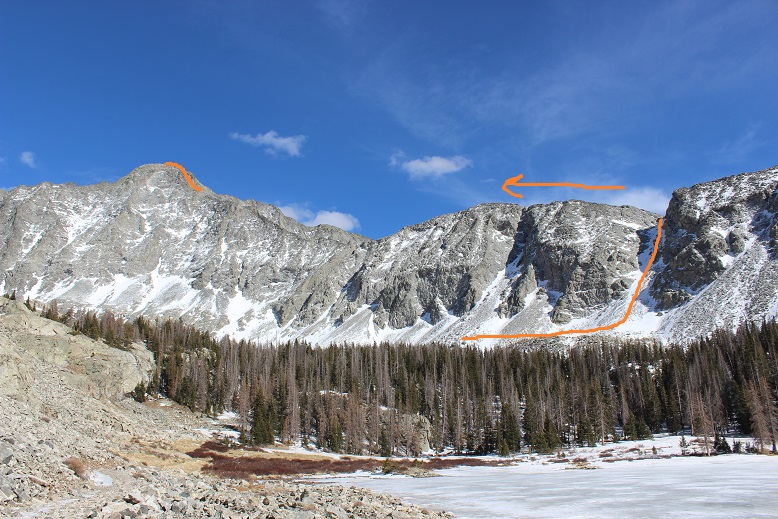
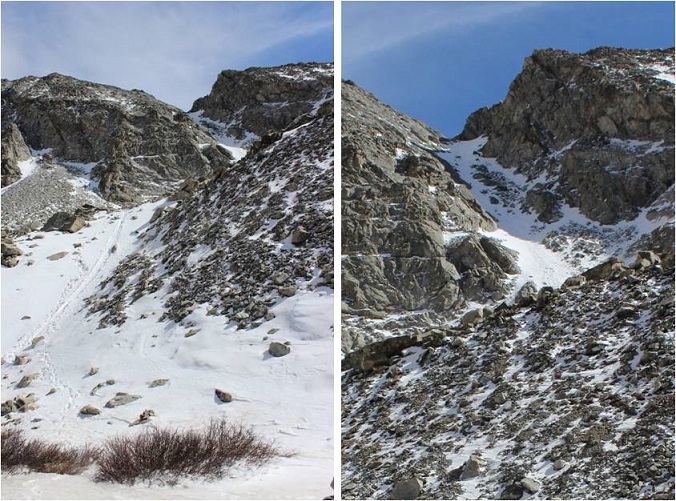
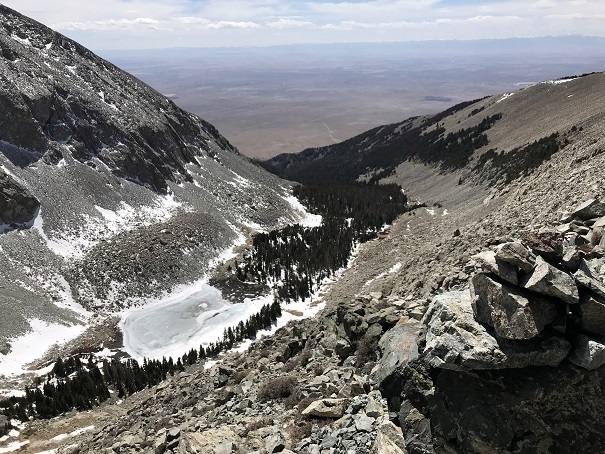
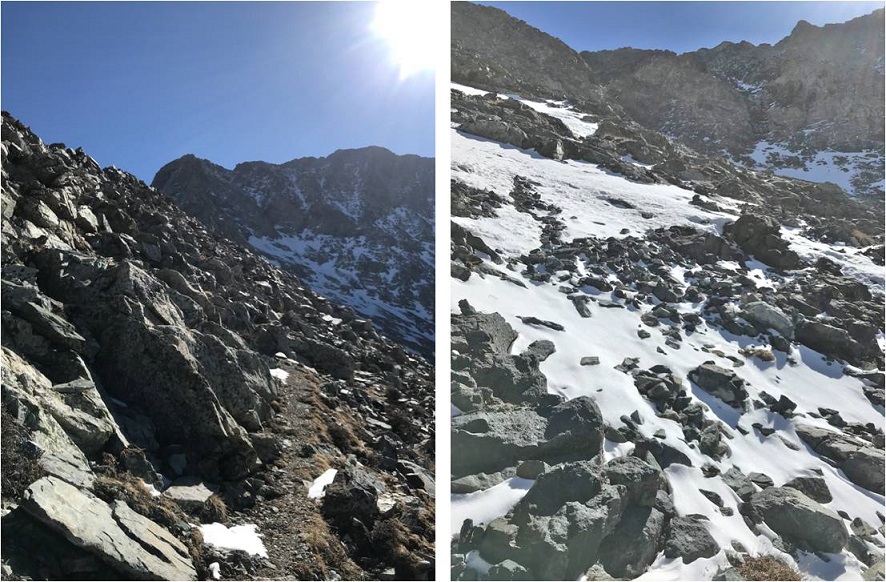

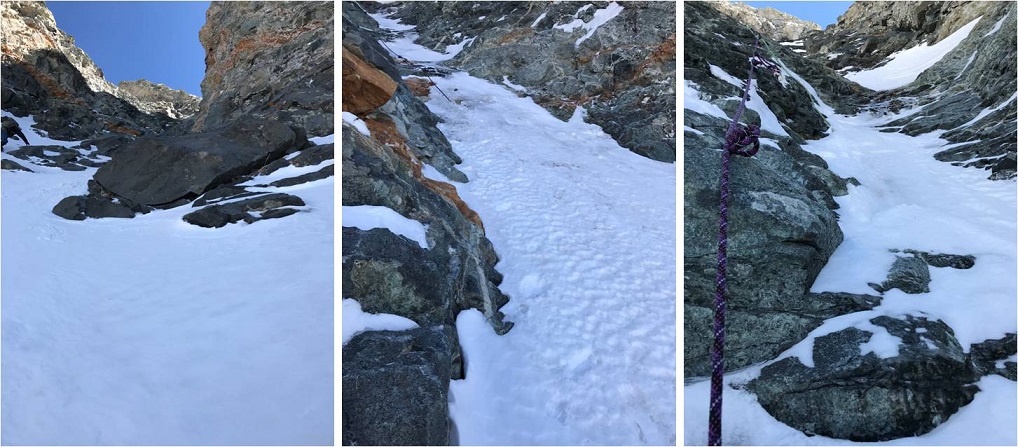
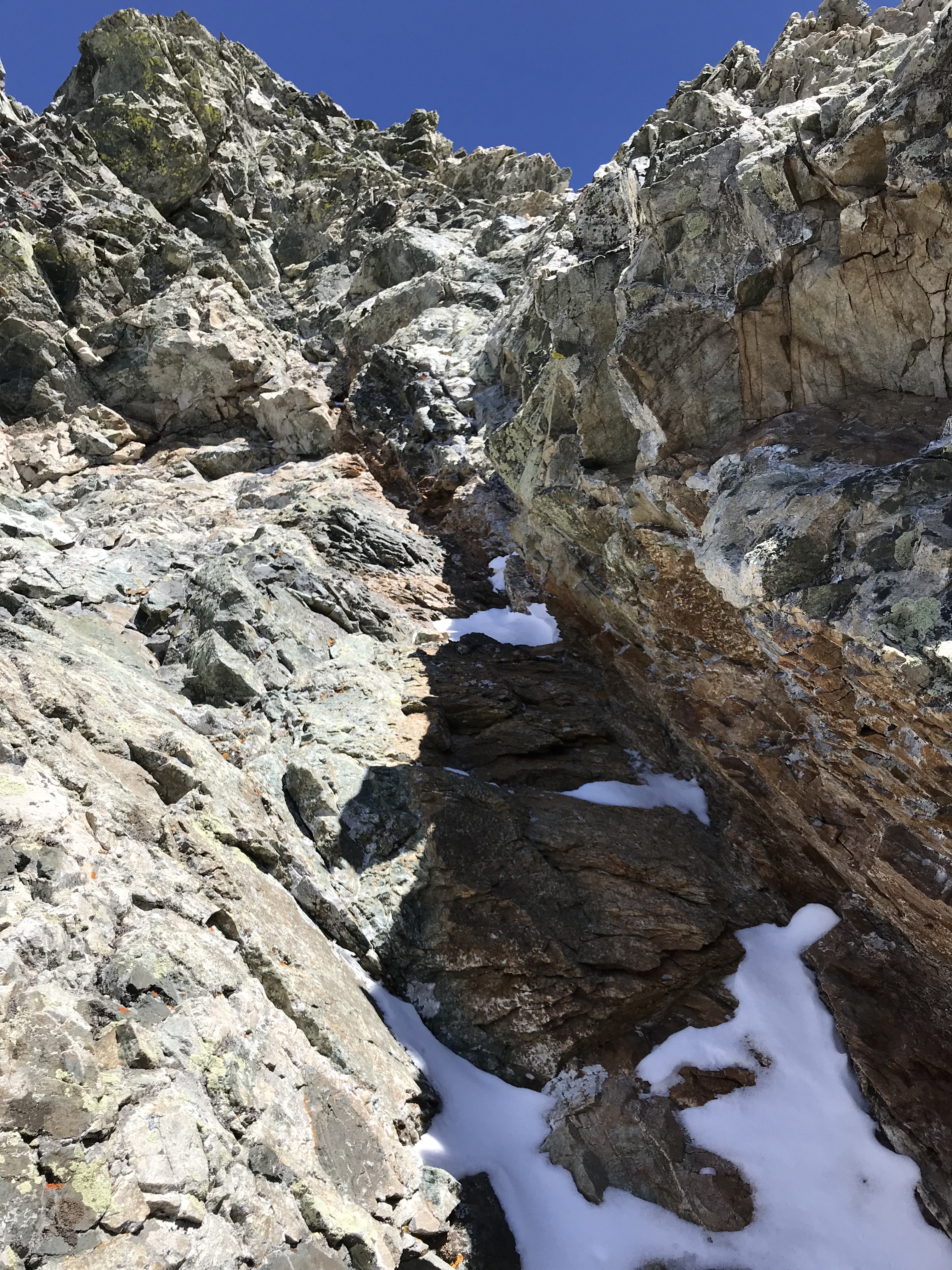
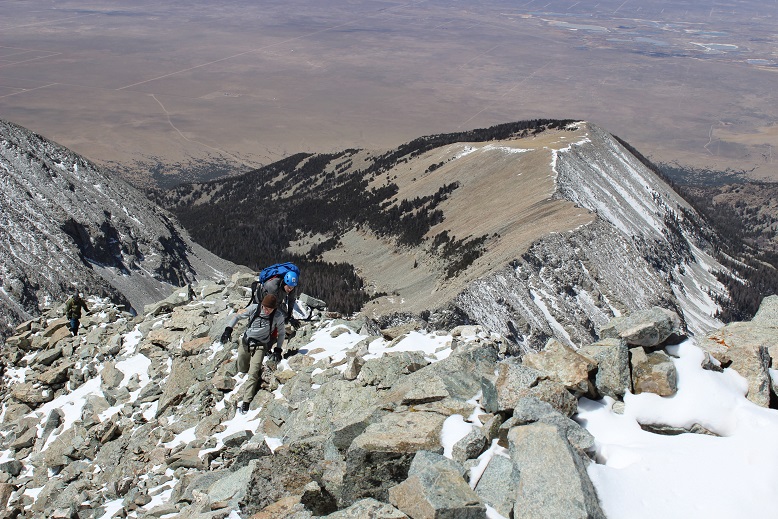


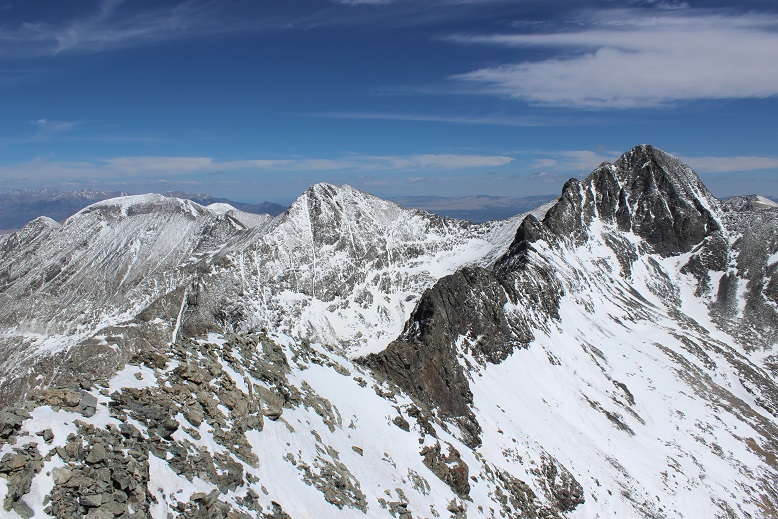
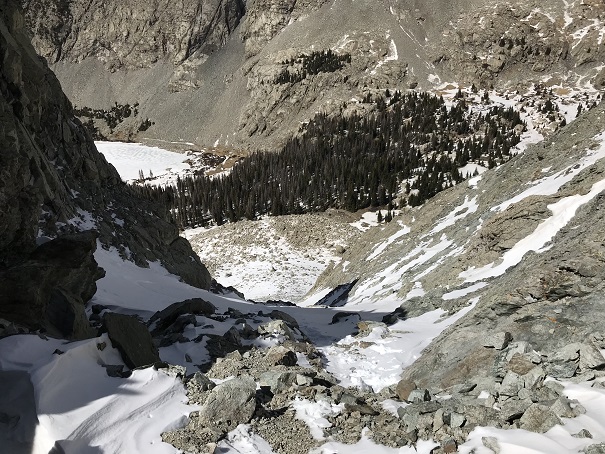
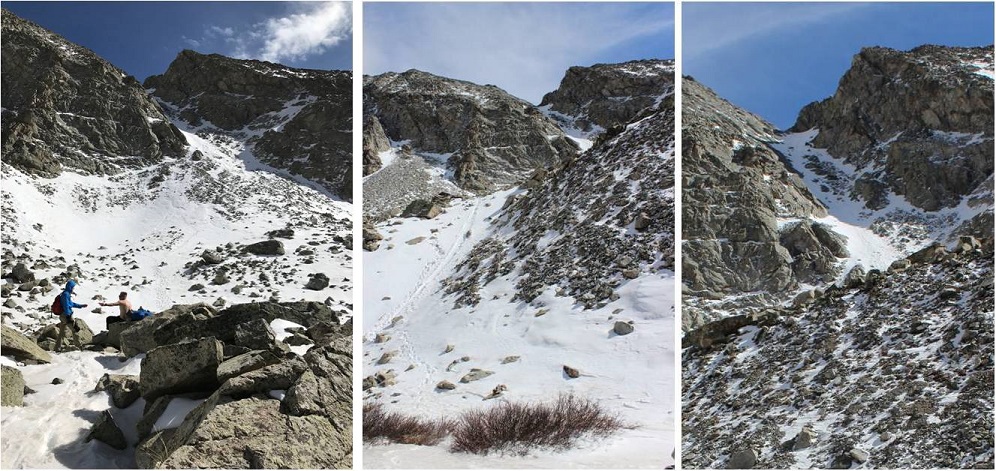
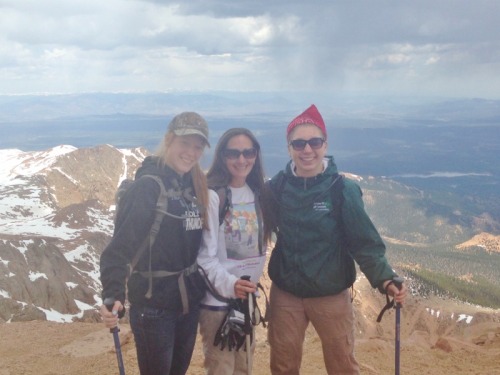
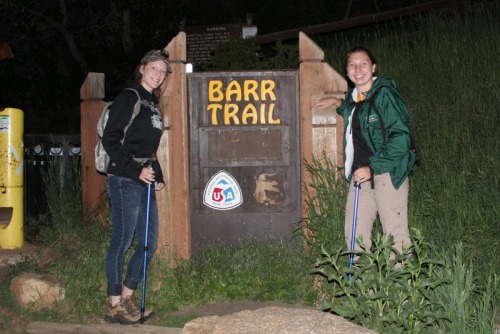
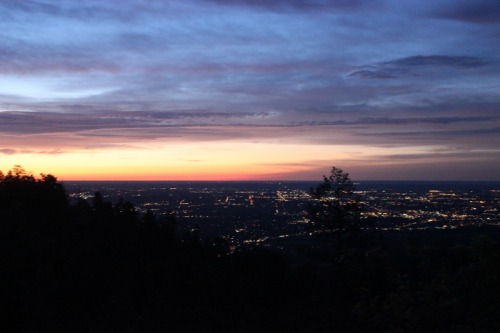
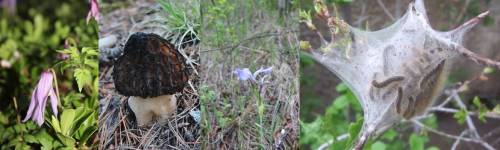
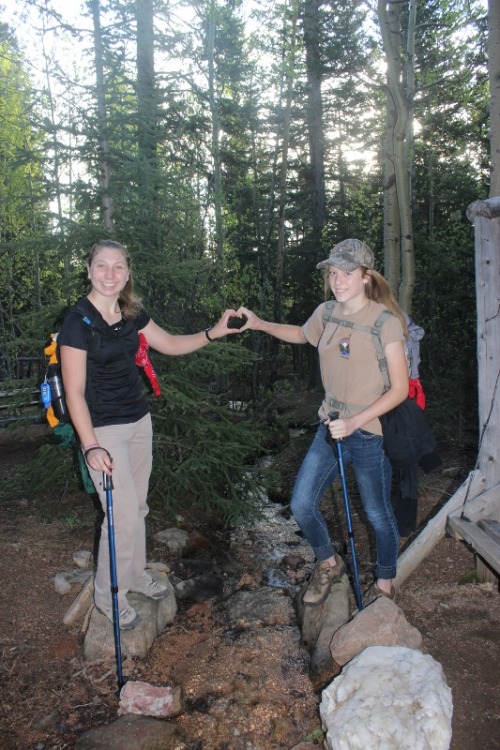
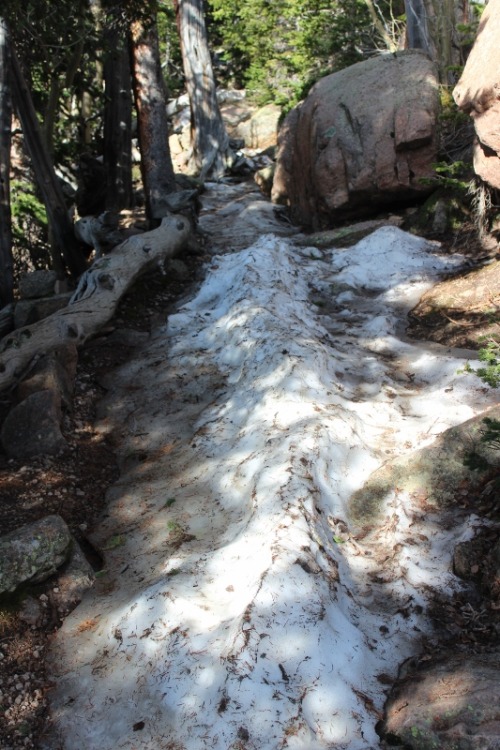
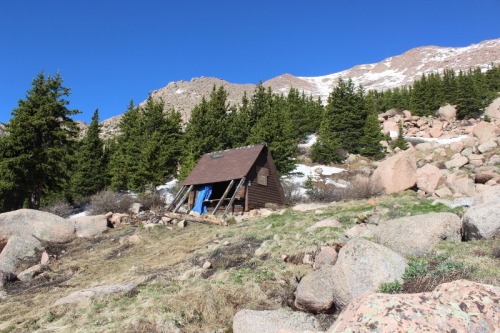
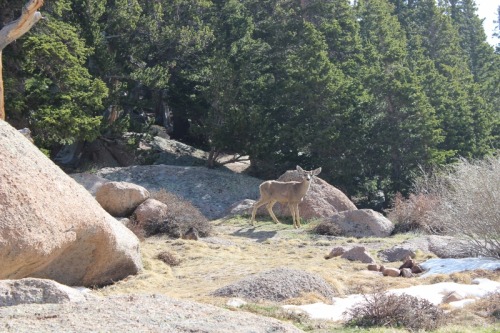
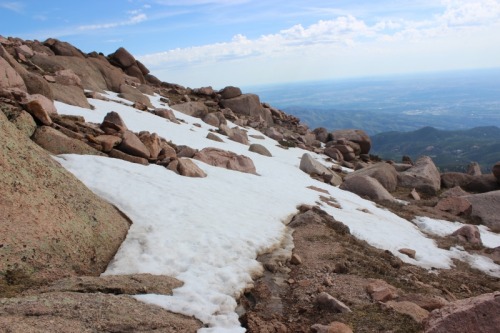
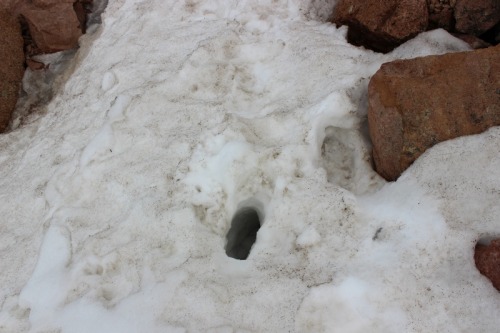

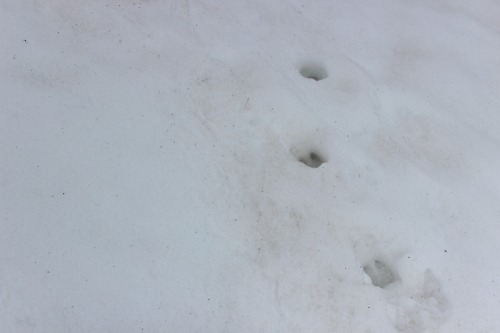

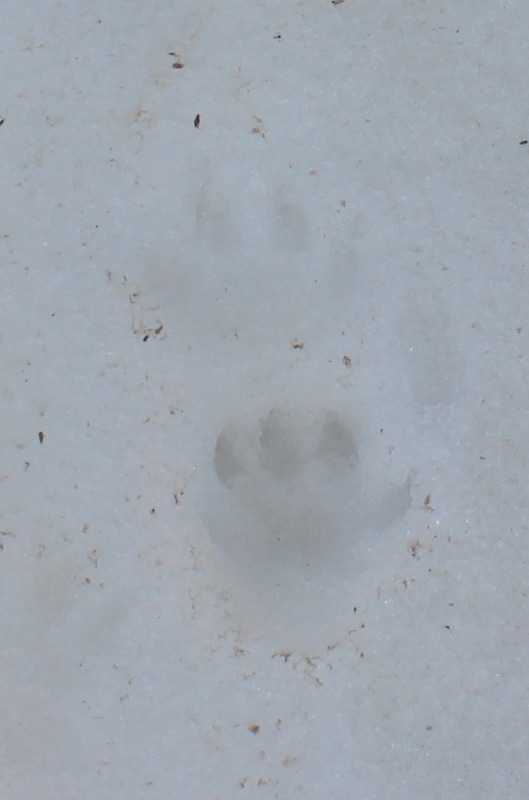
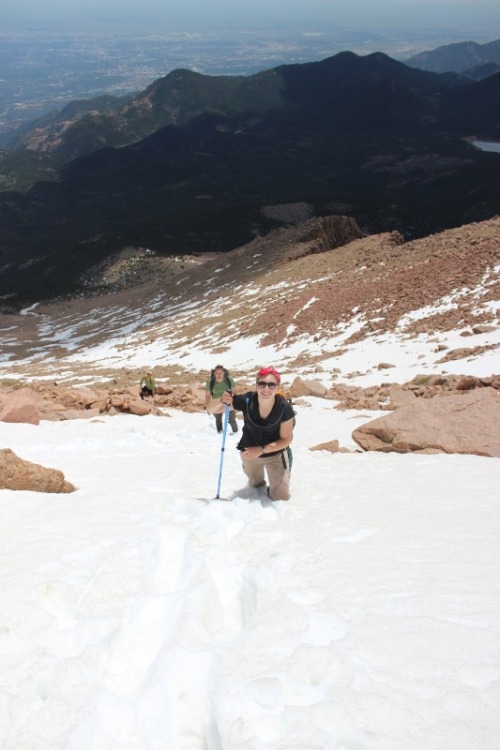

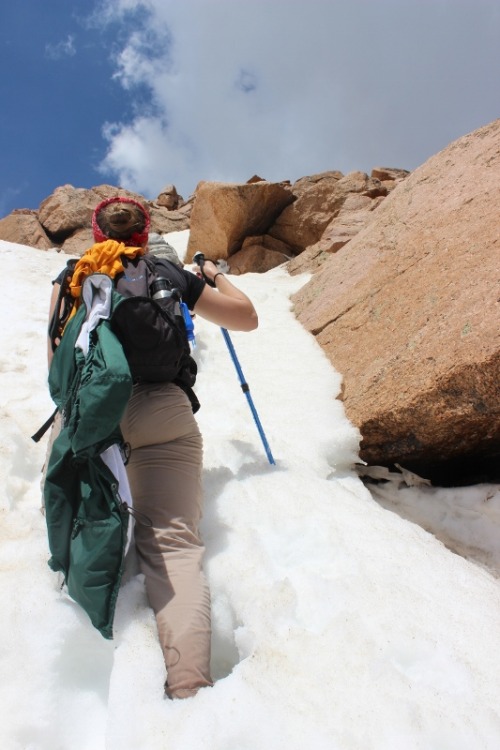
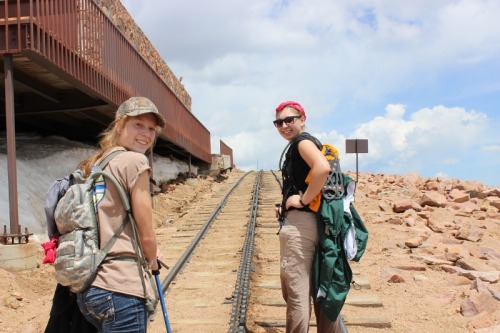
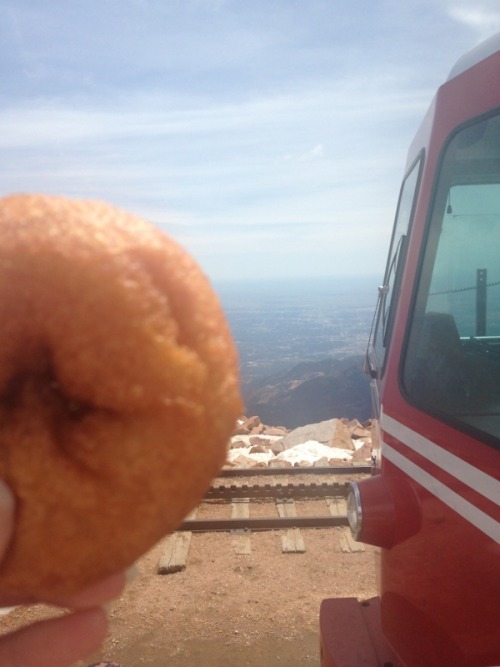
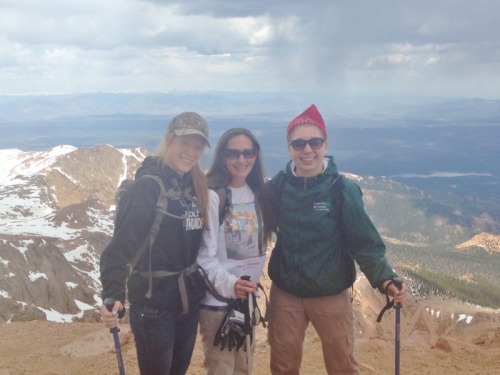
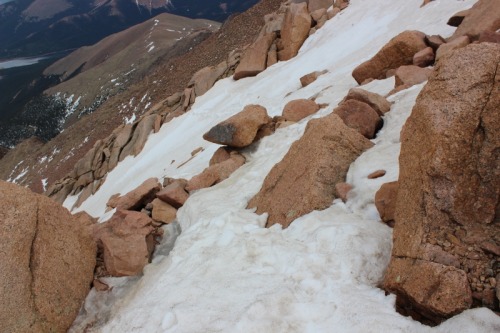
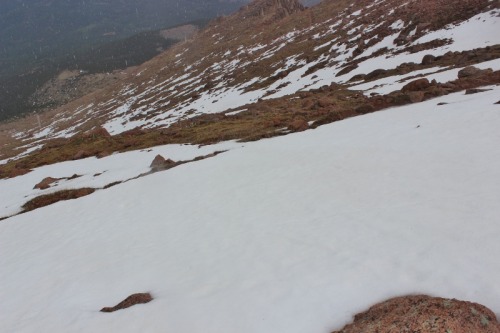
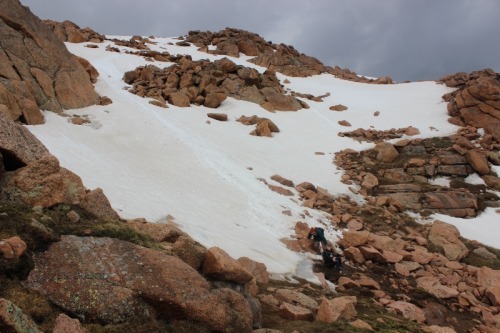
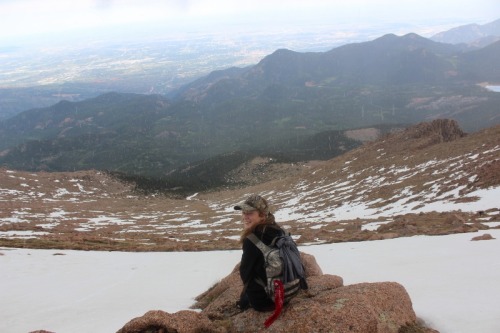
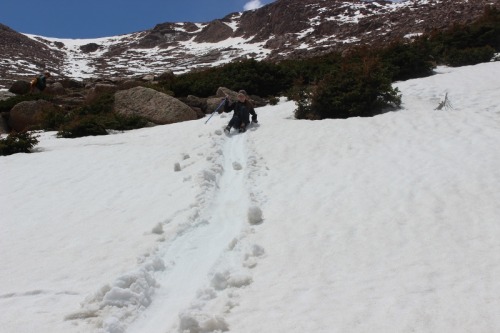
 Wild Wanderer