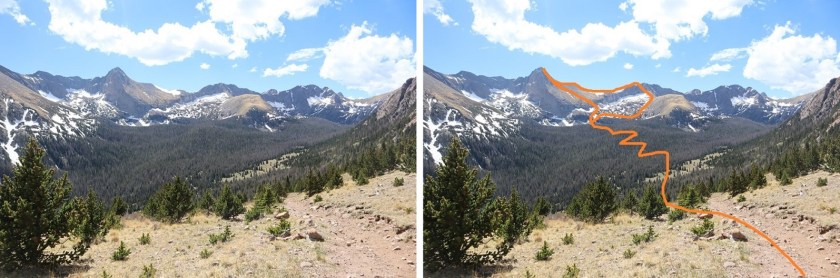
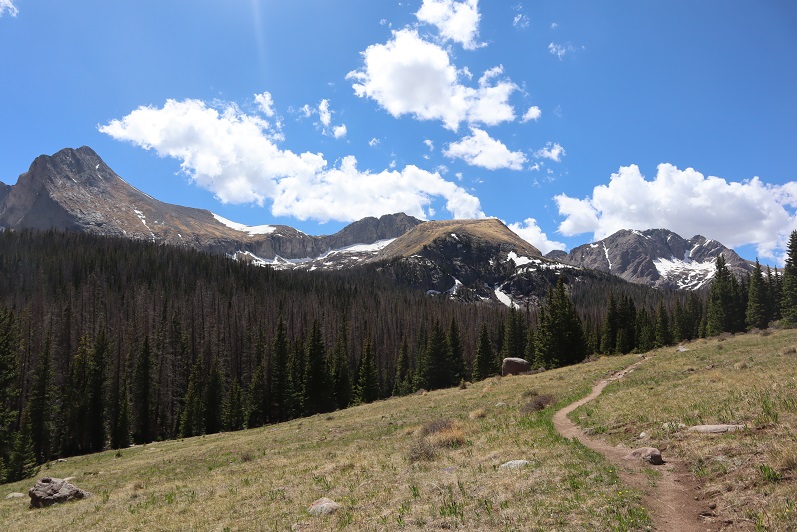
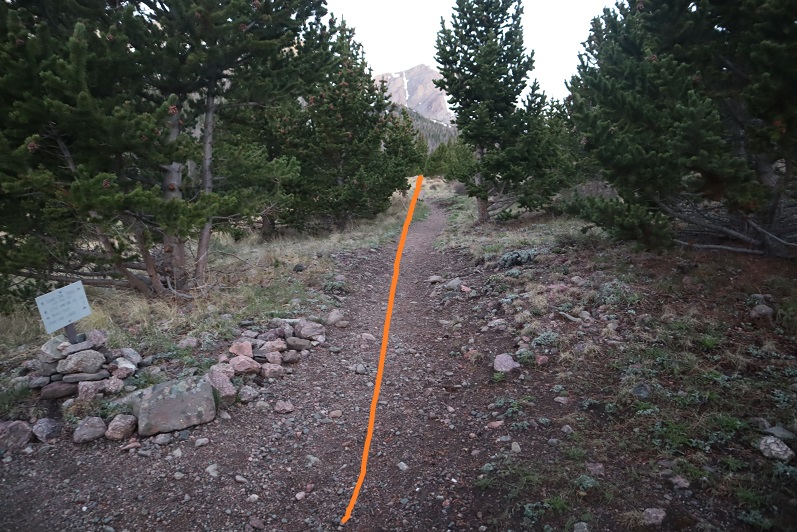
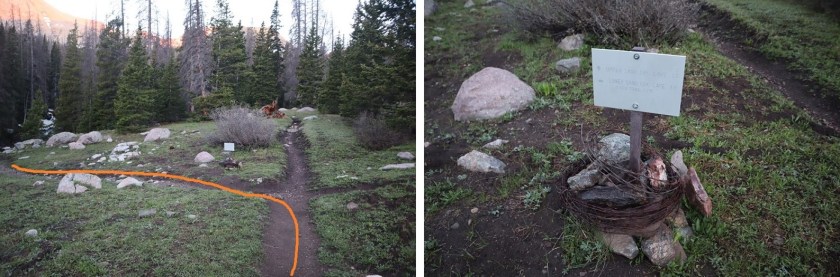
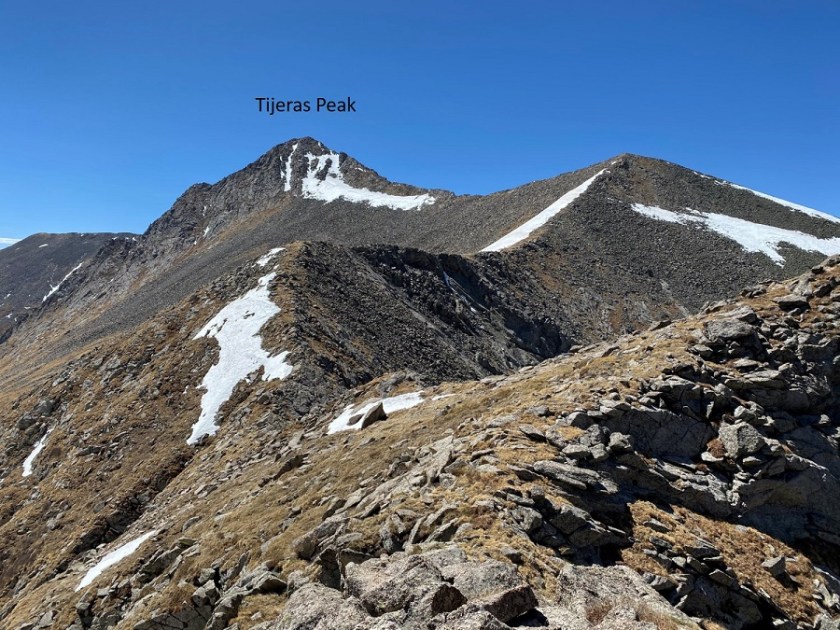
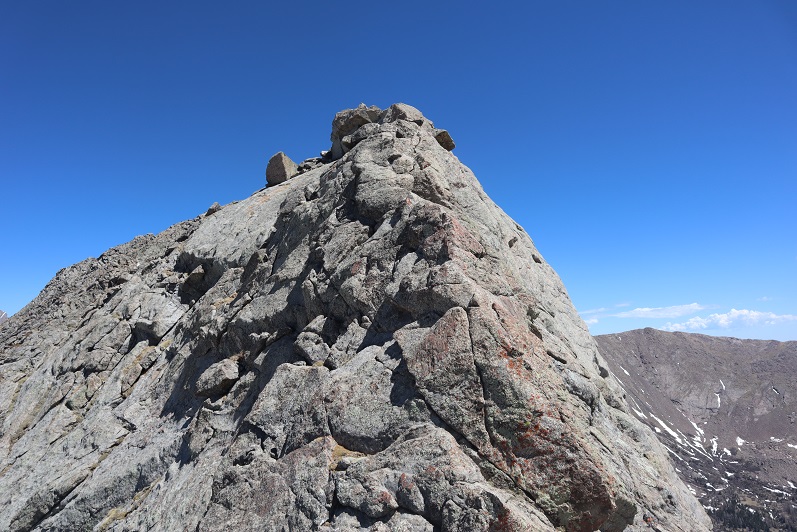
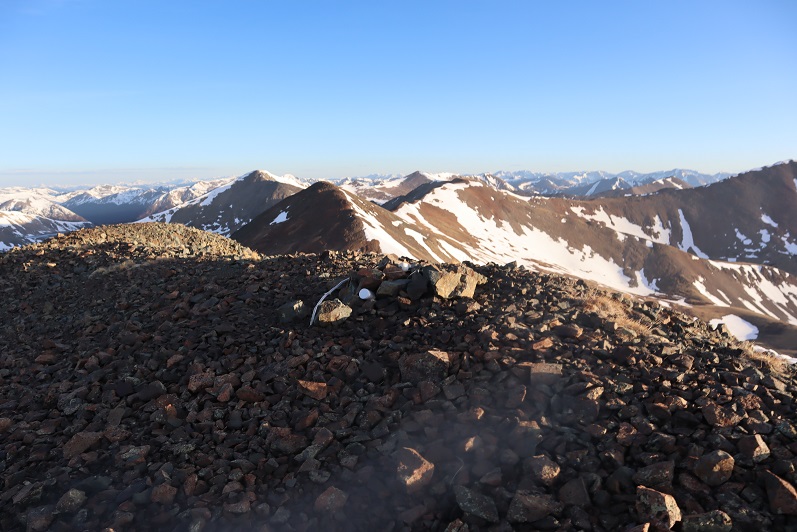
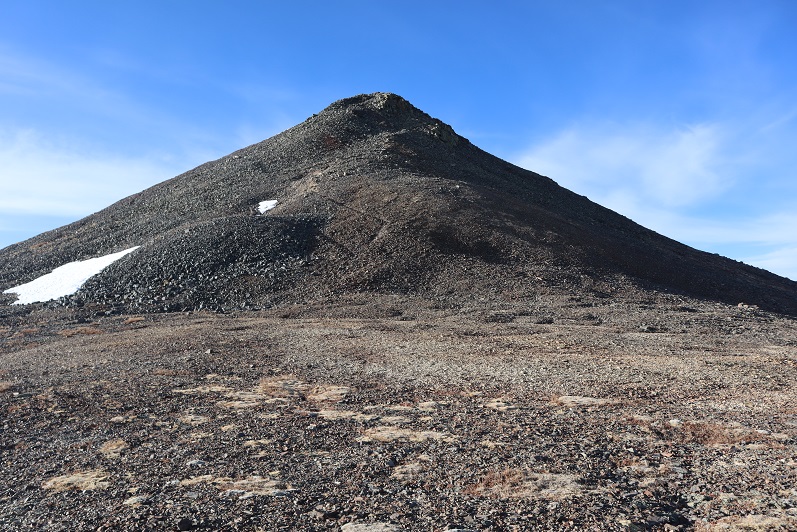
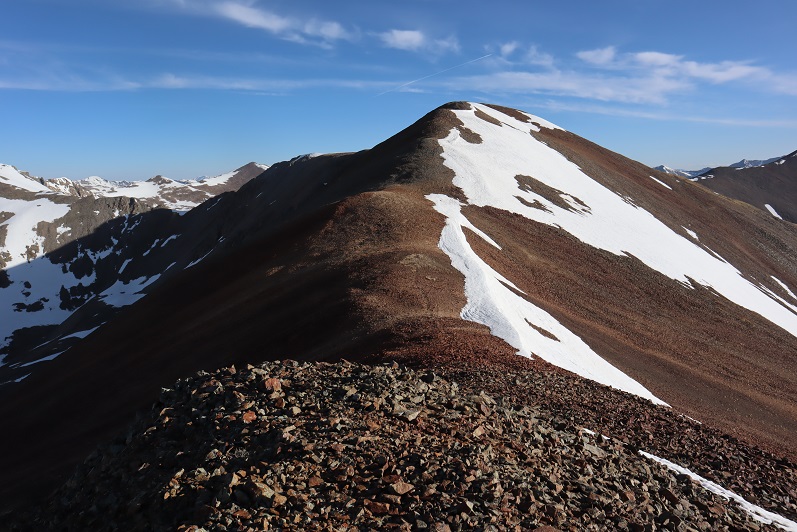
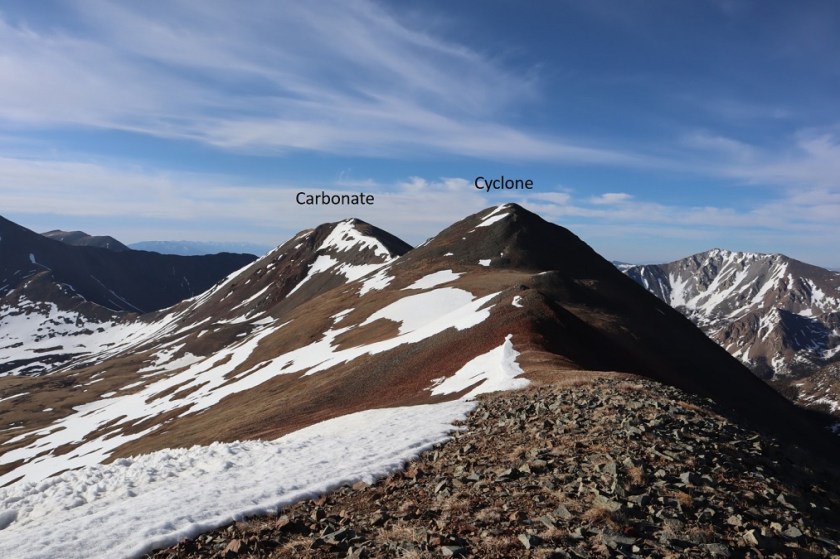
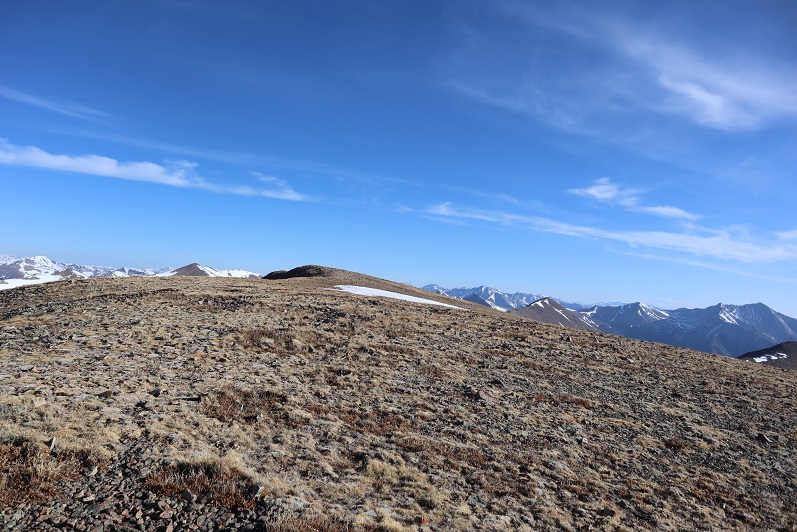
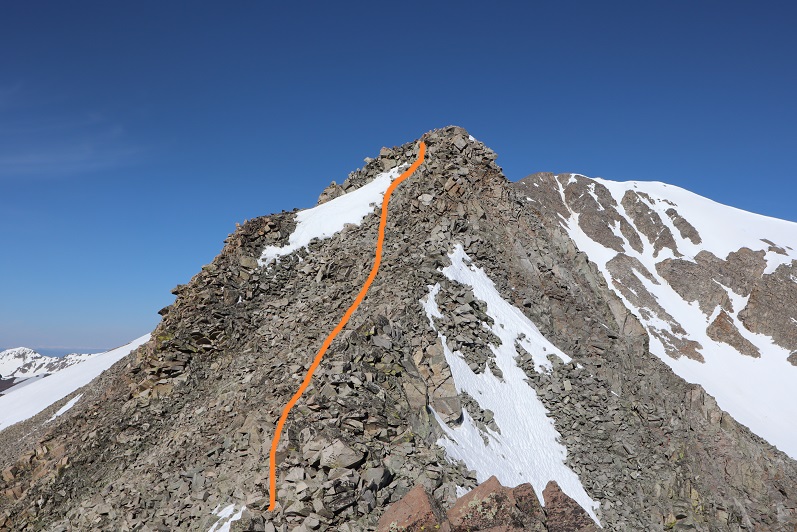
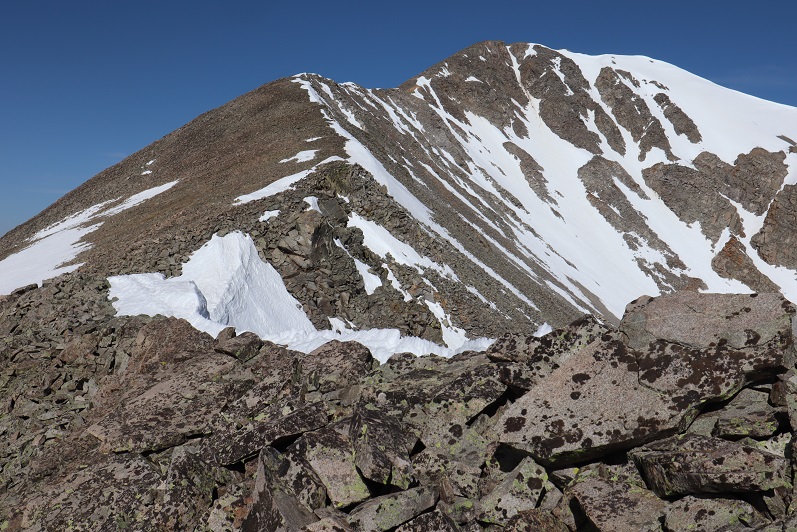
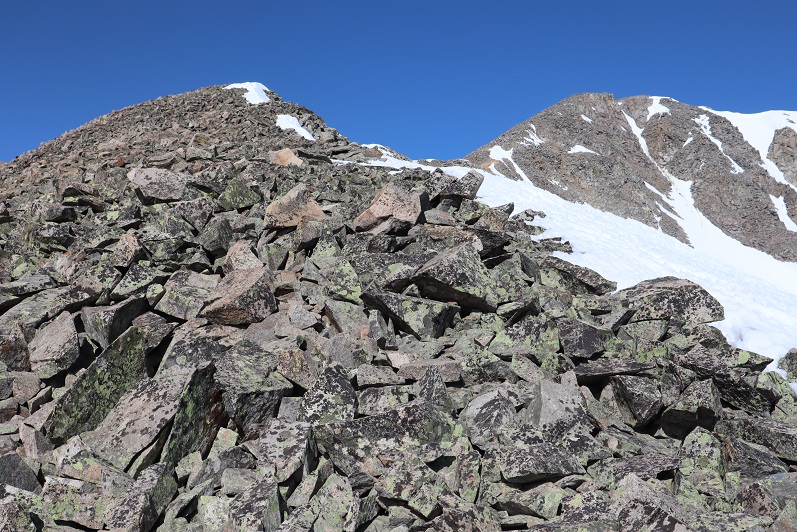
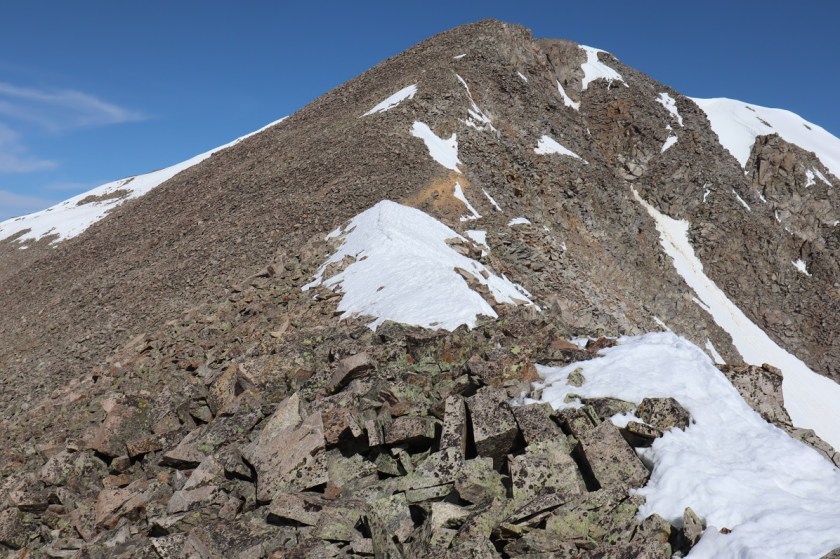
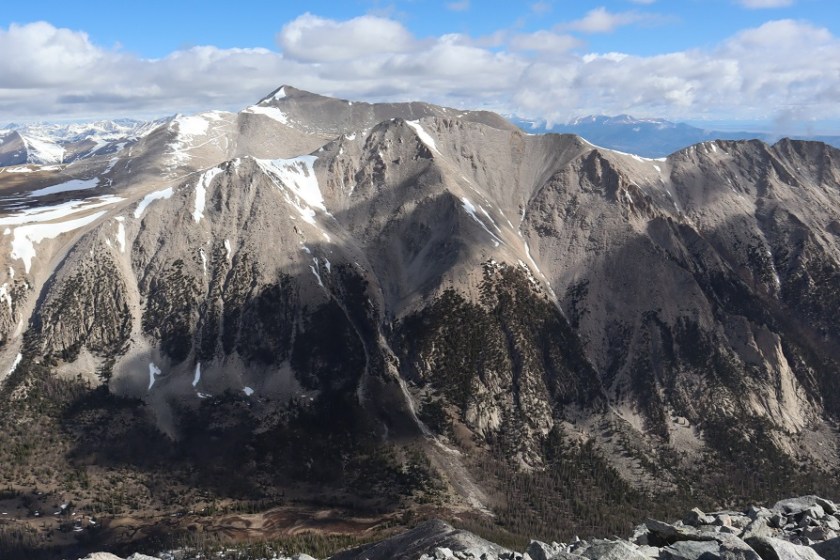
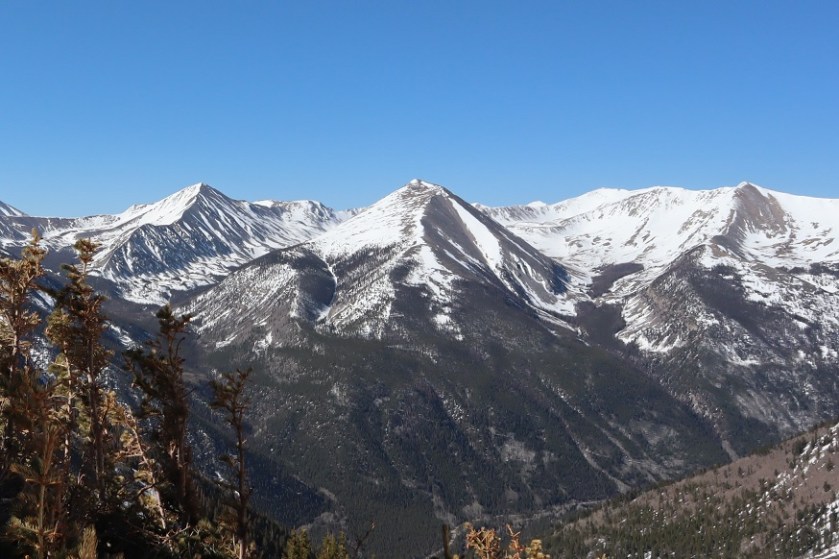
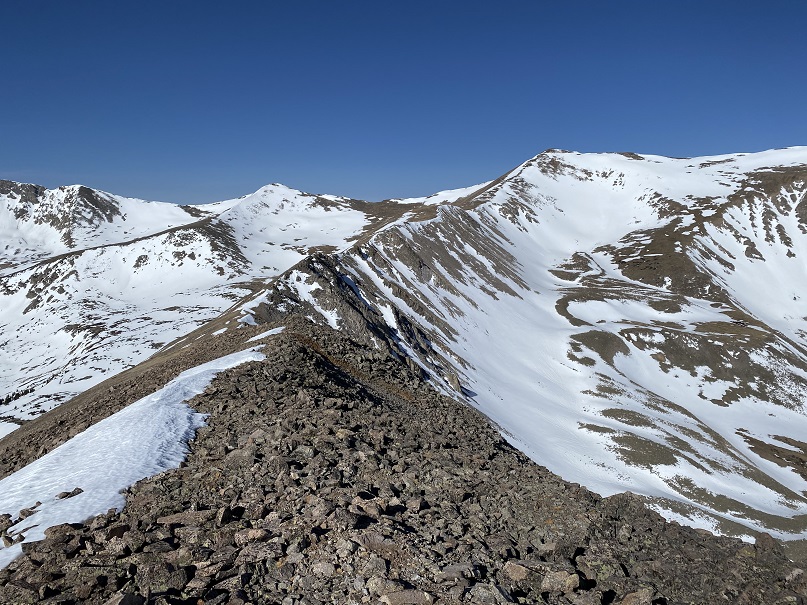
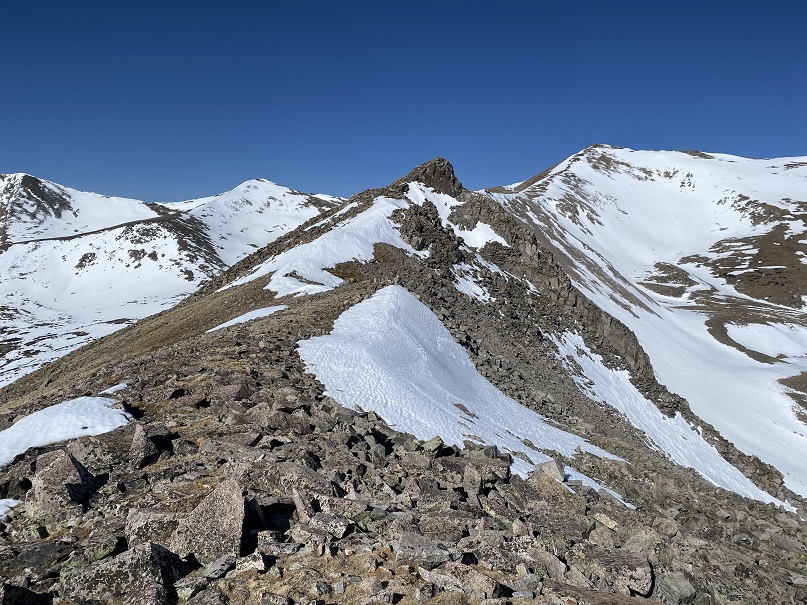
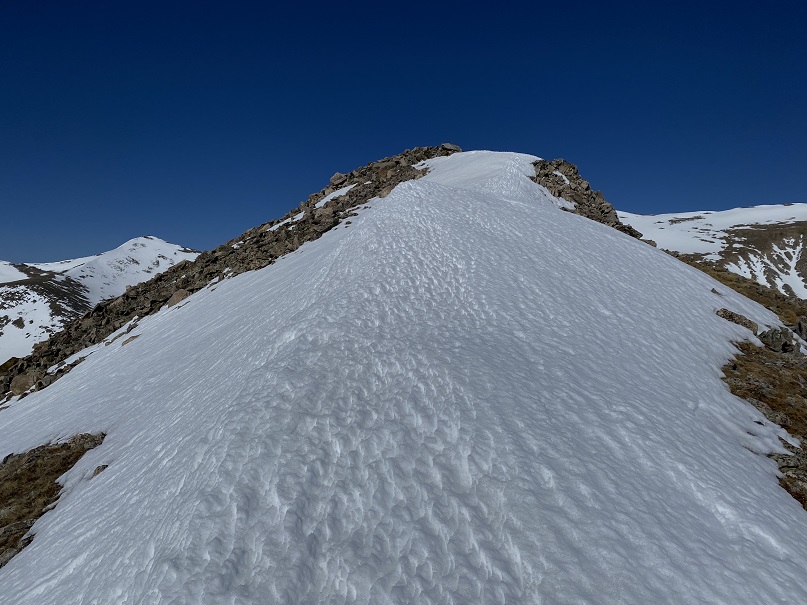
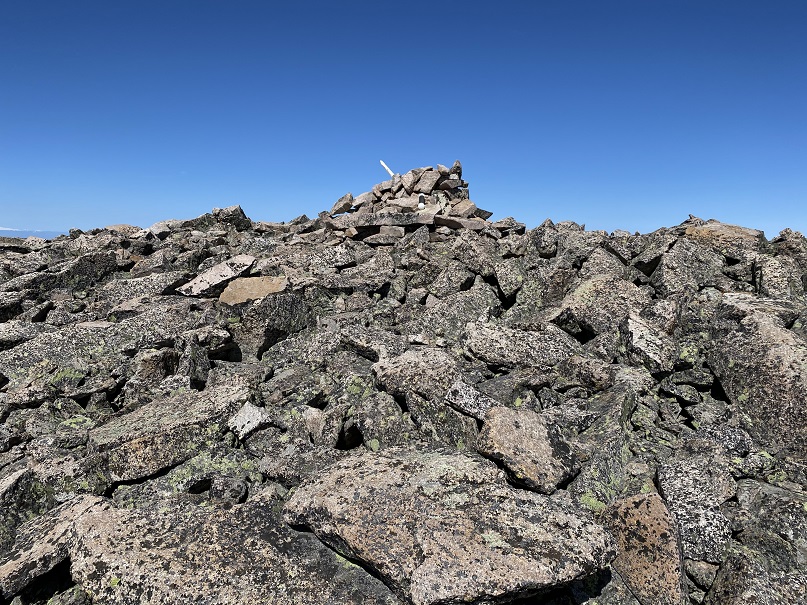
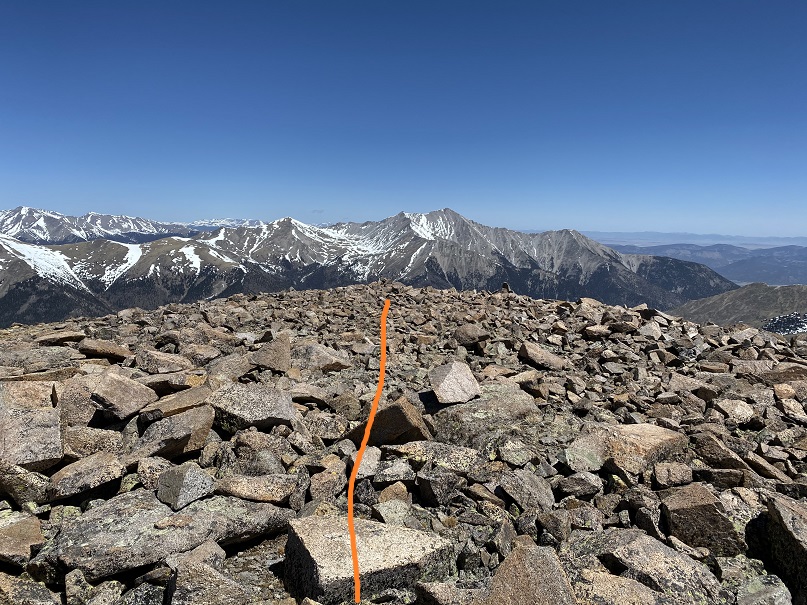
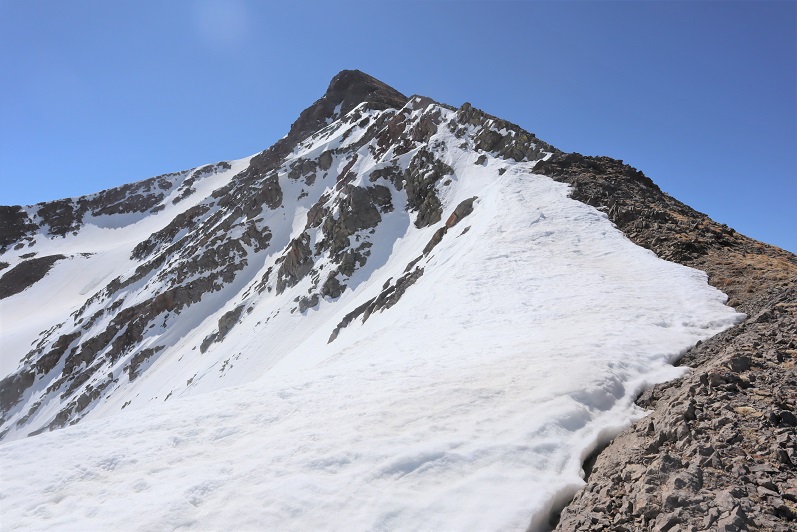
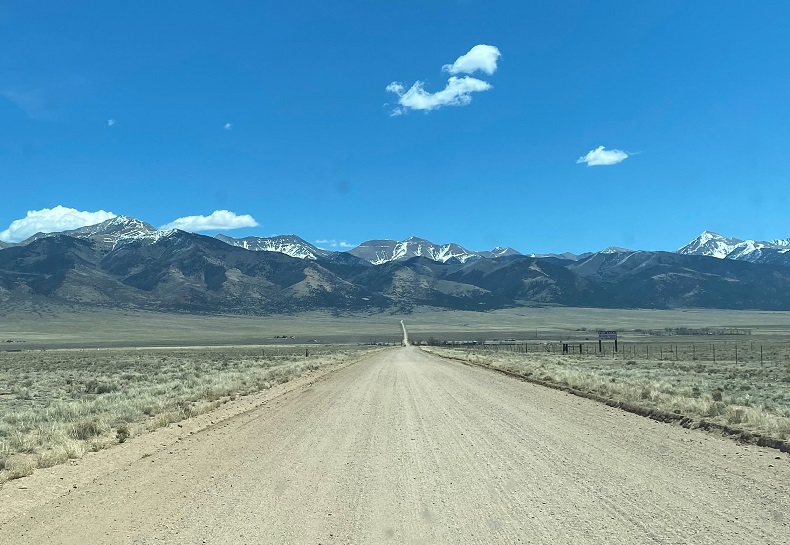
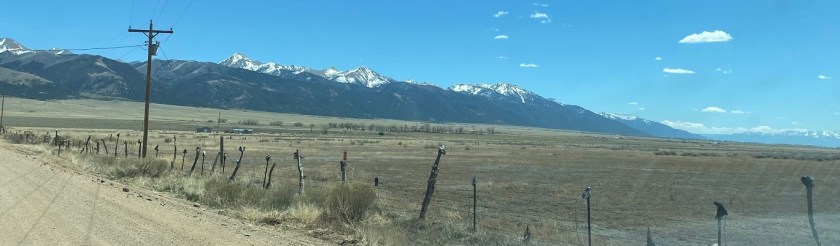
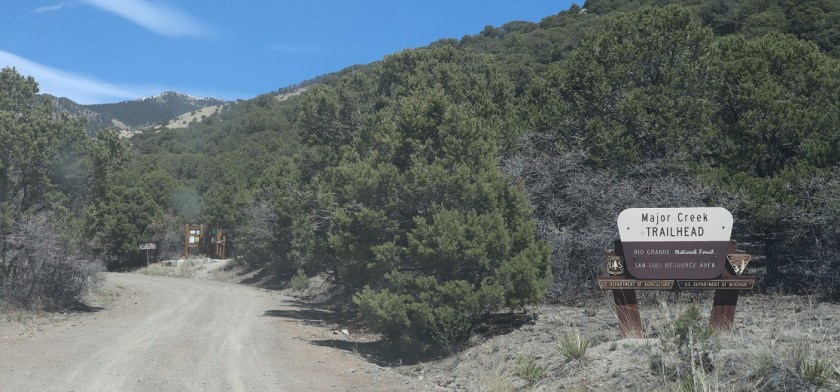
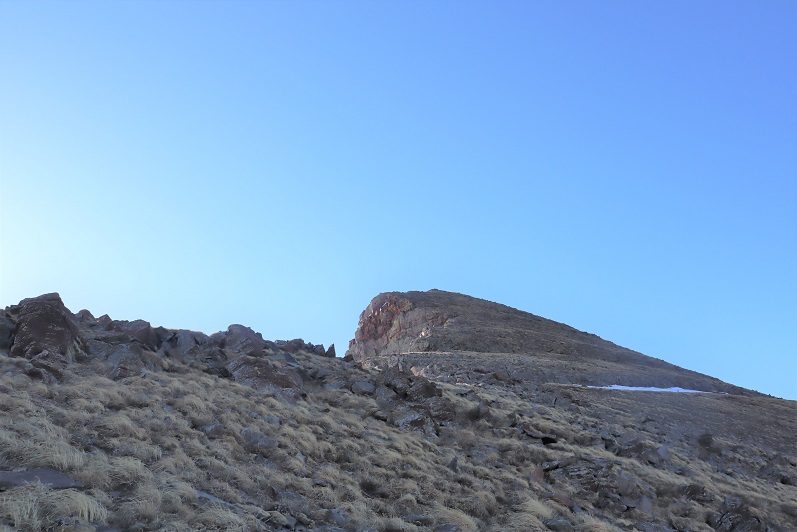
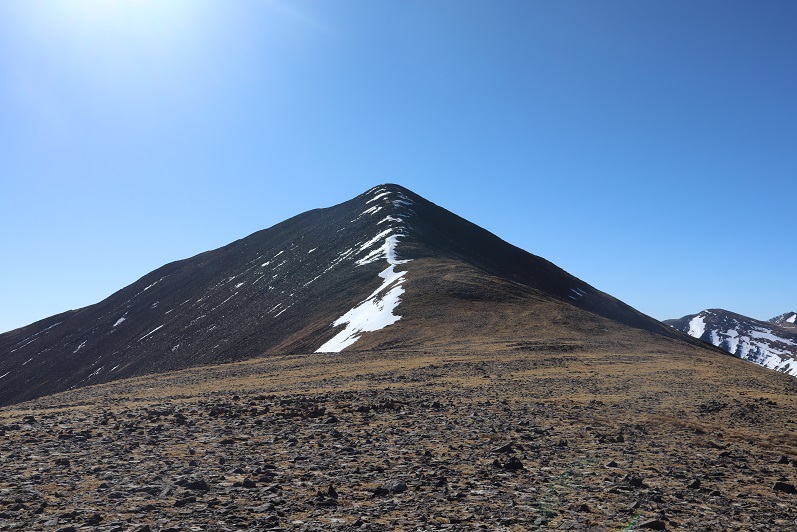
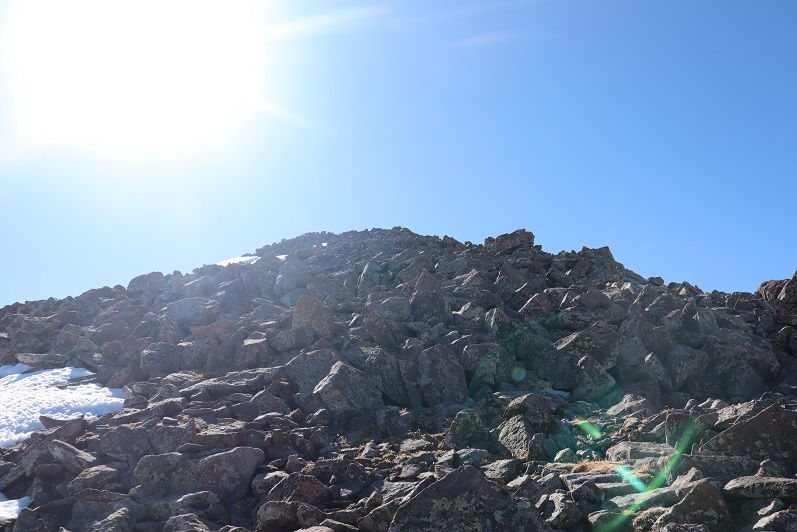
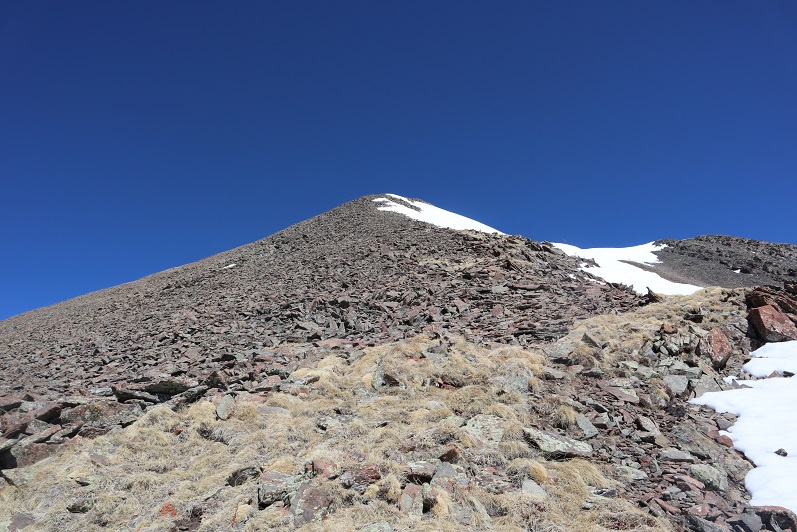
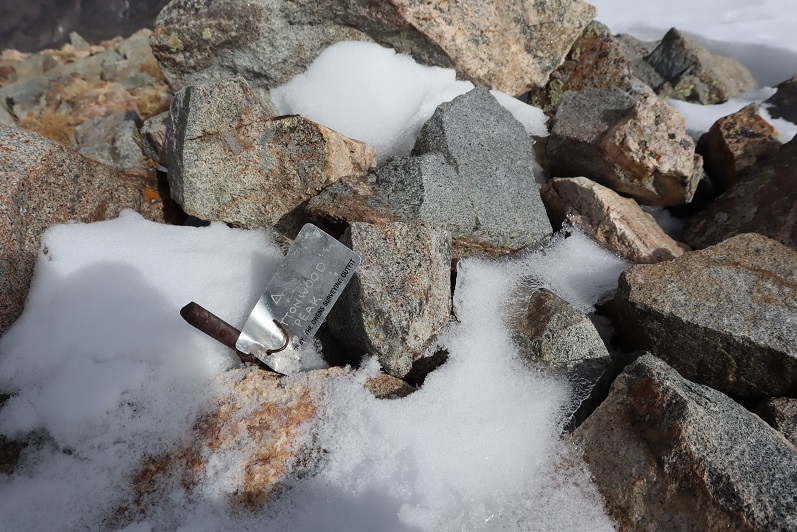
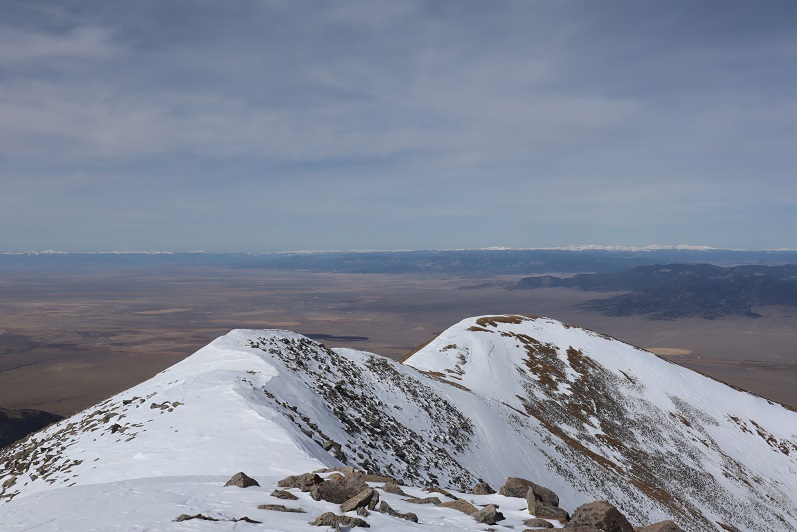
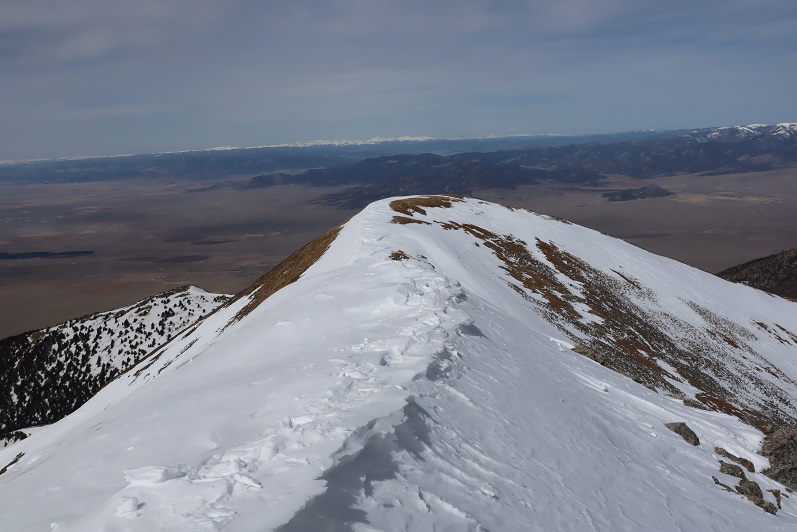
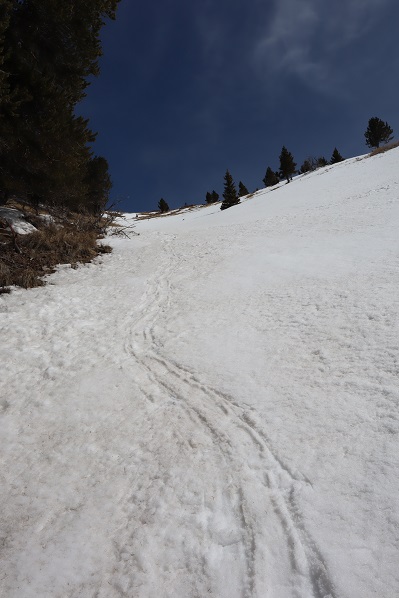
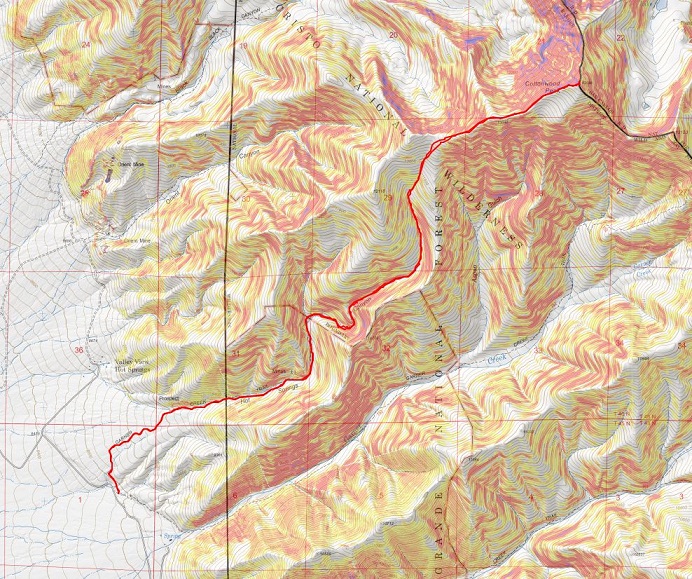
Mt Blaurock – 13,626 & Ervin Peak – 13,538

1

RT Length: 6 miles

Elevation Gain: 3821’

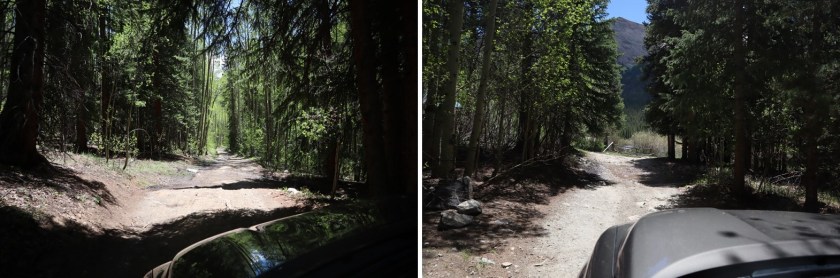
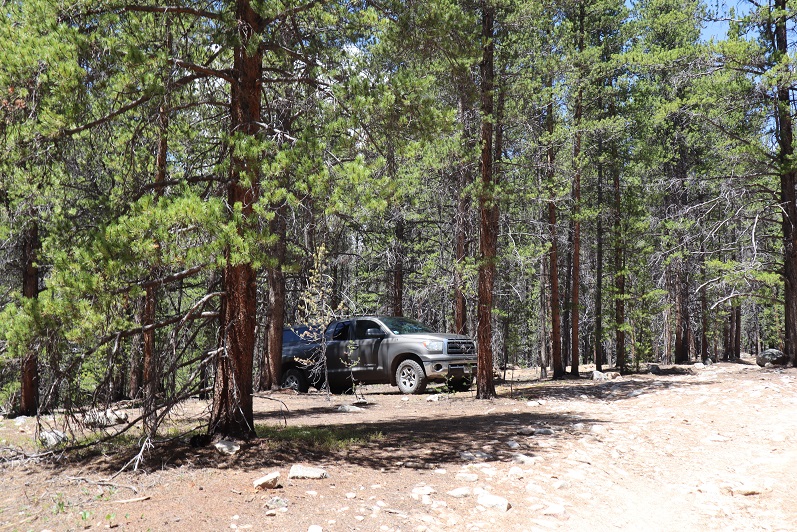
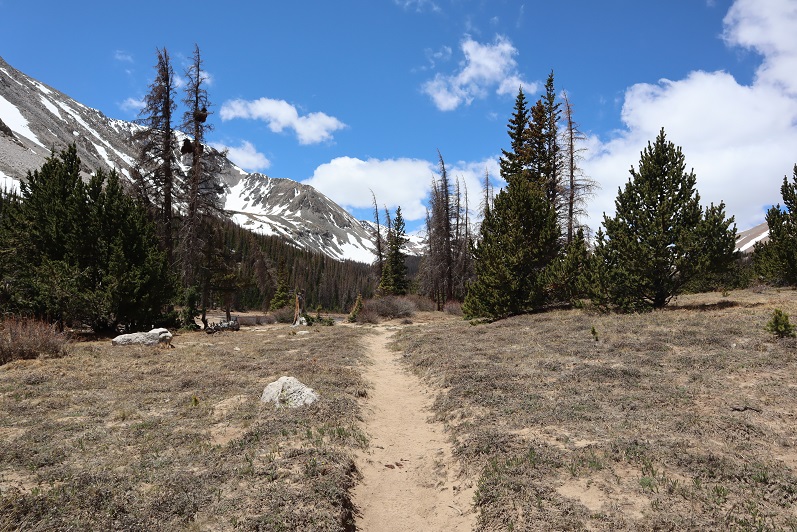
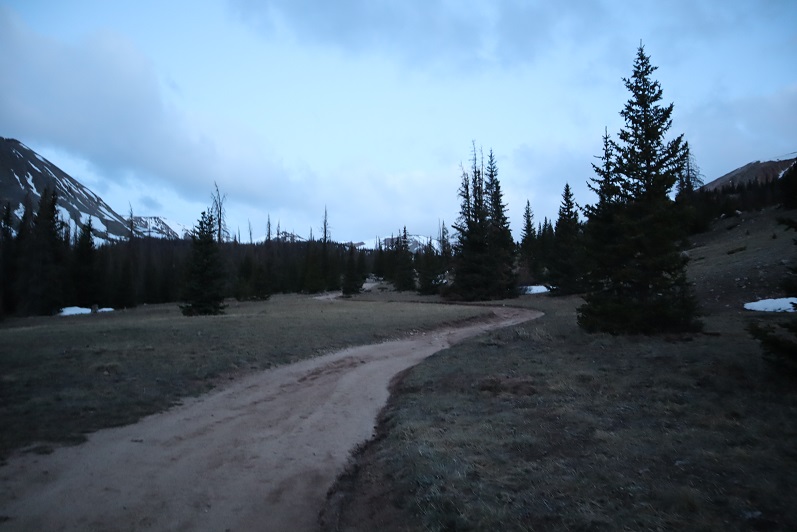
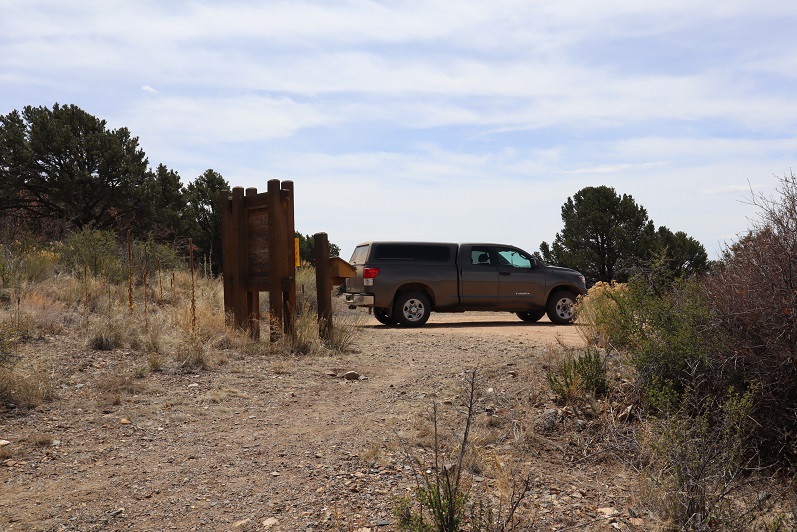
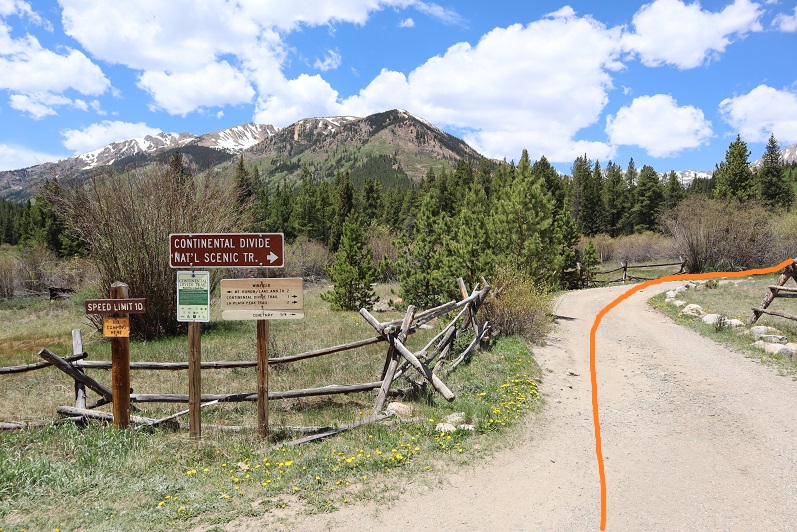
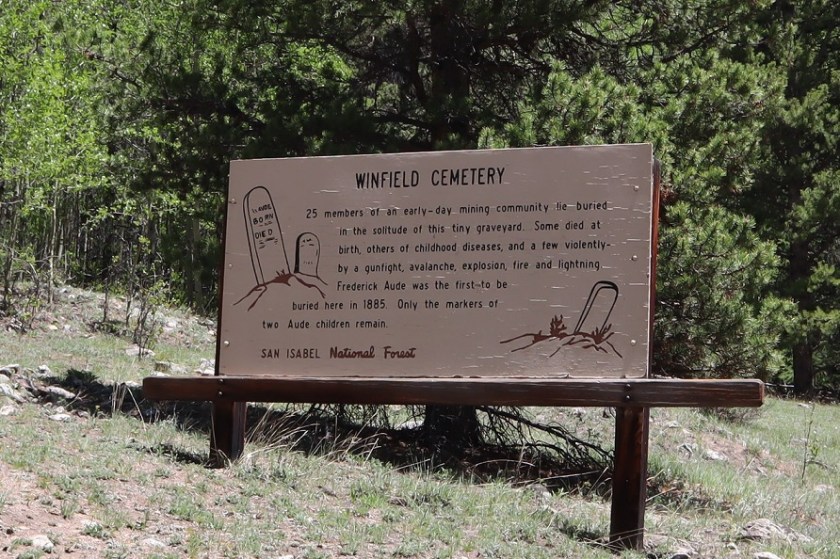
There’s currently a curfew in place in Colorado Springs, so the beginning of the drive felt a bit ominous: I didn’t see any other vehicles on the road until I made it to the freeway, and even then there were very few vehicles compared to normal, even for 1am, and even when compared to being quarantined. I’d stopped for gas the day before so I didn’t need to stop at all this morning. With less people out I felt like I saw more wildlife: 4 foxes and a dozen or so elk. I made it to Winfield around 4am and decided to take the easy 4WD dirt road a little further, past the cemetery to some dispersed camping spots .85 of a mile from Winfield. You can park at Winfield and it won’t add more than 2 miles to this hike.
2

3

4

5

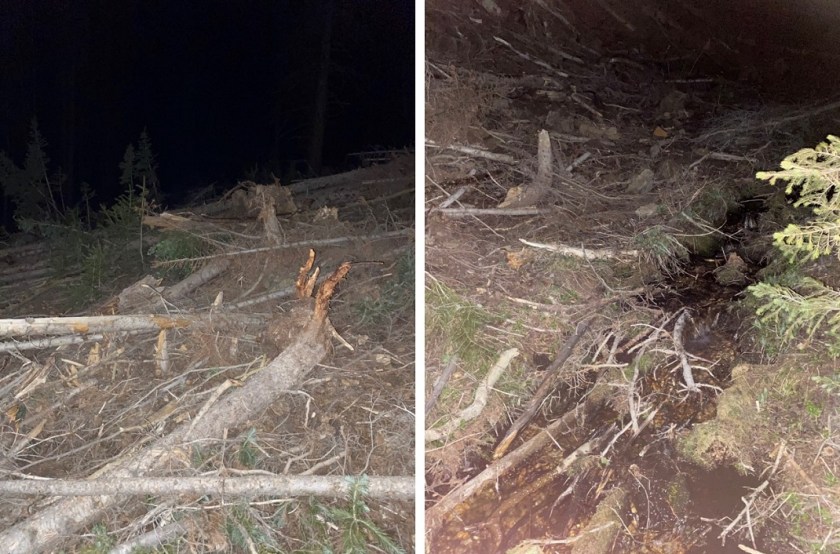
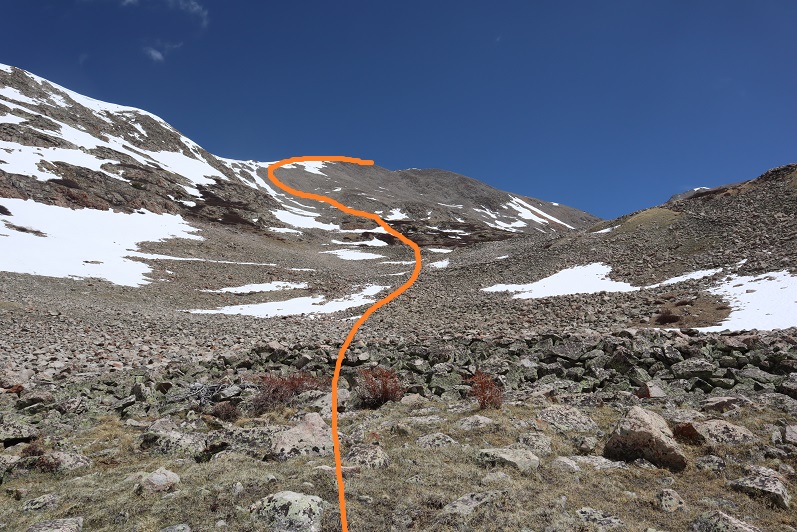
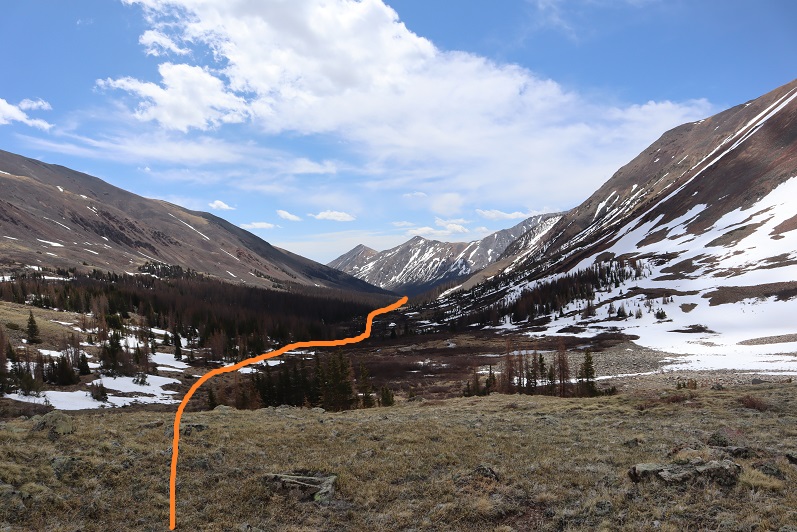
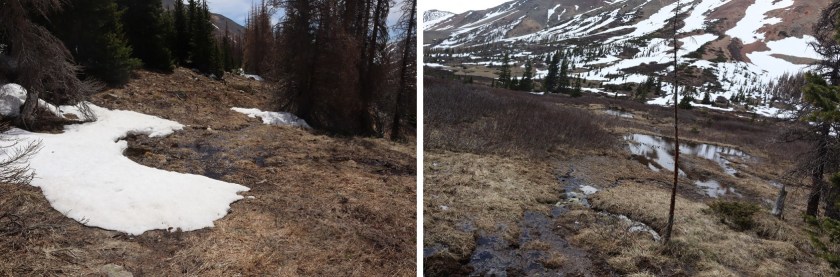
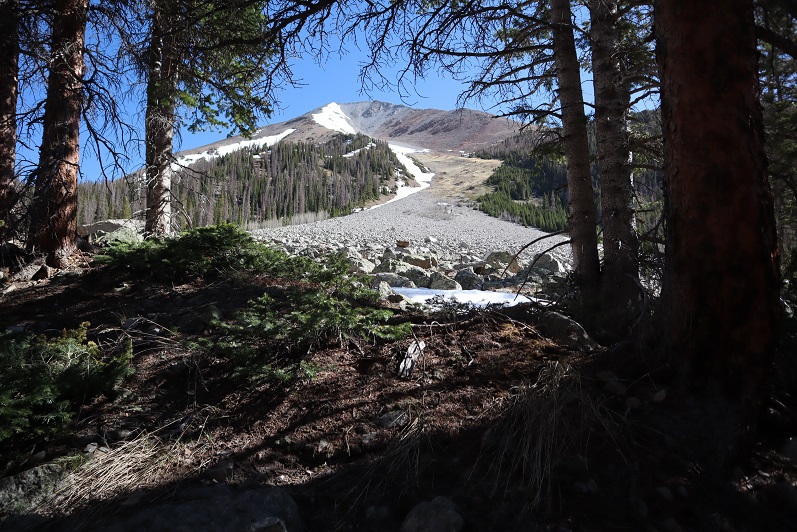
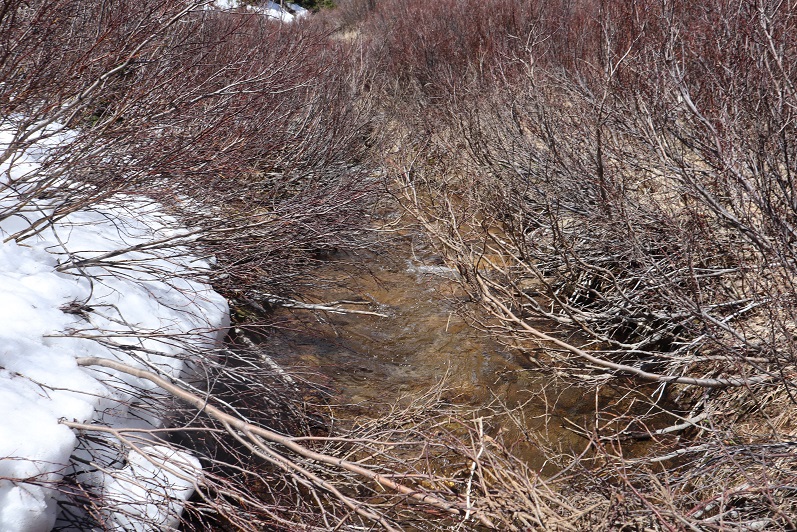
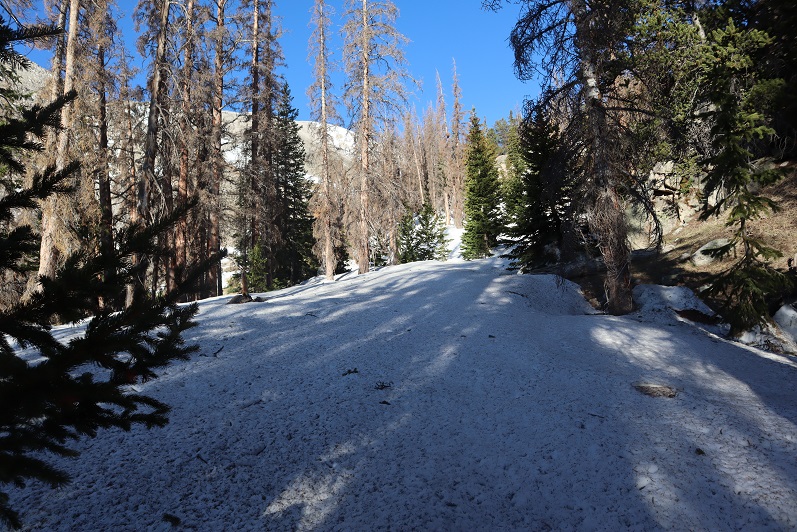
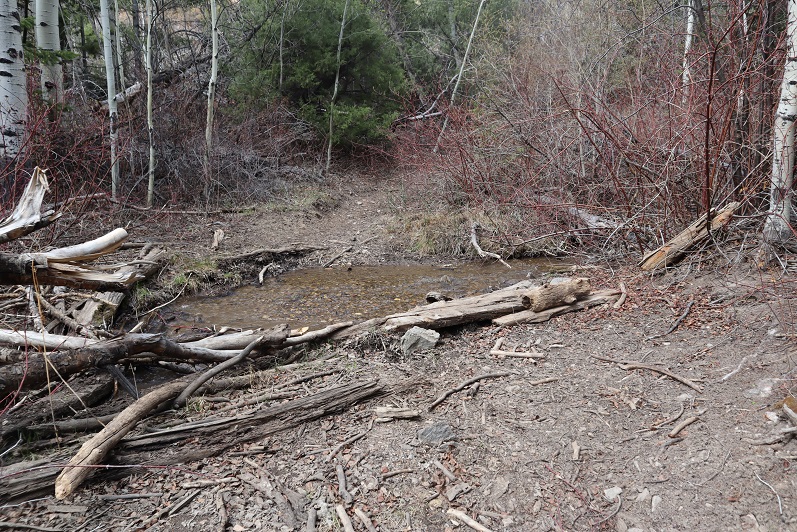
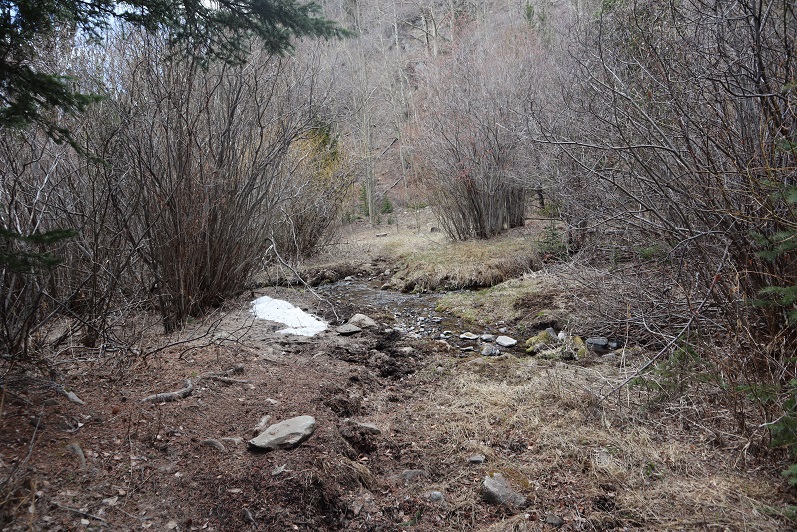
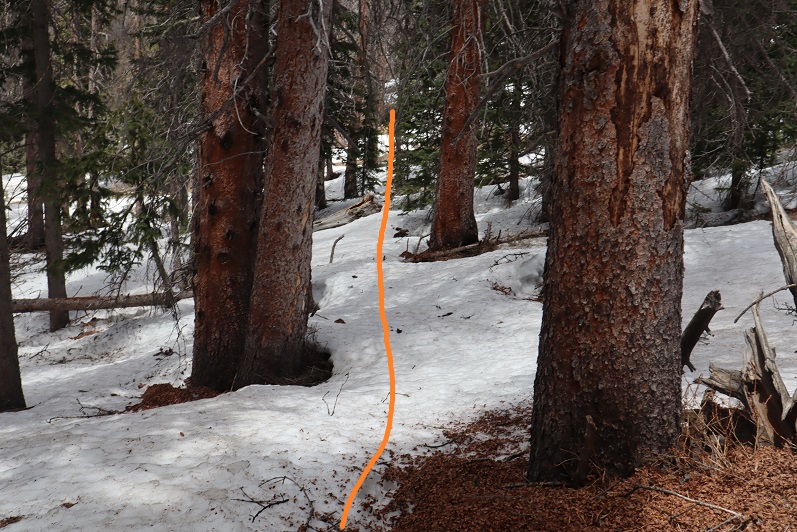
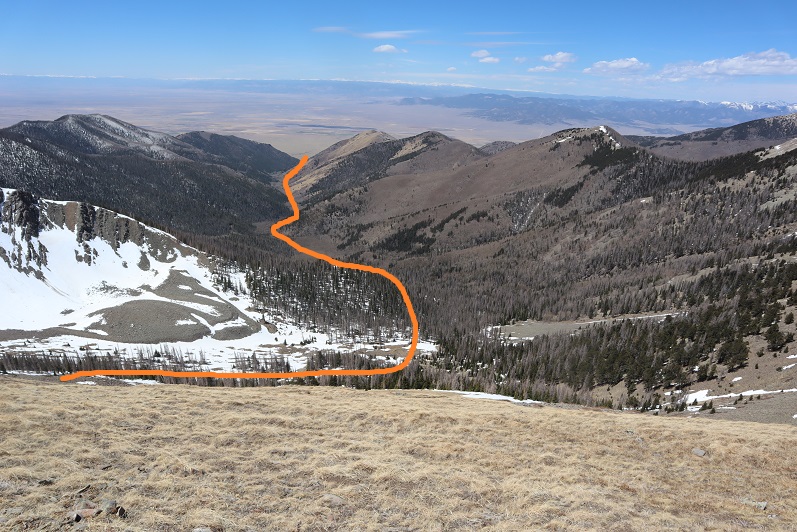
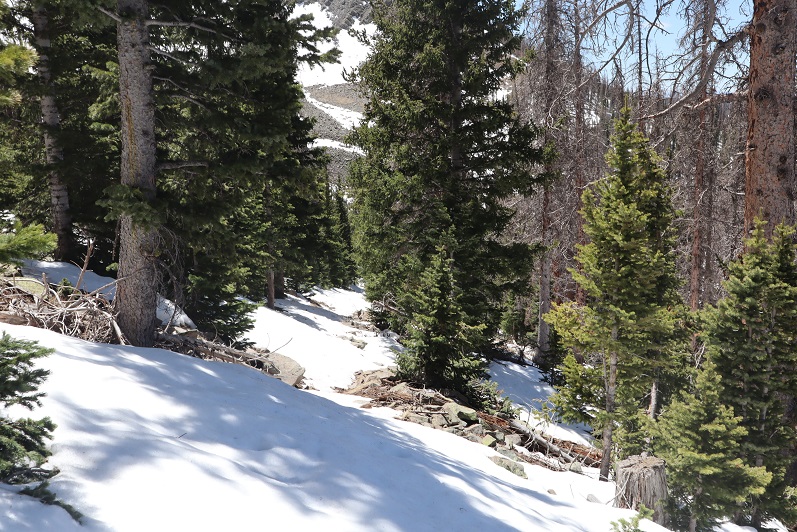
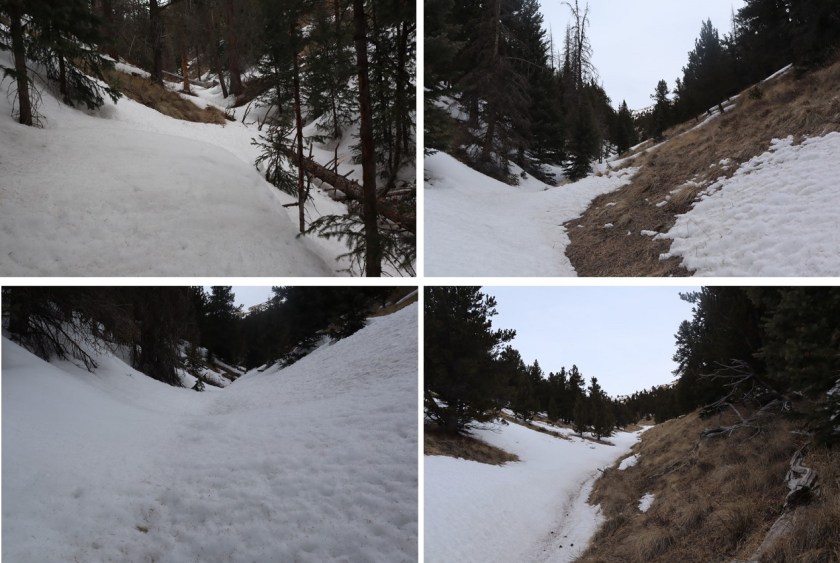
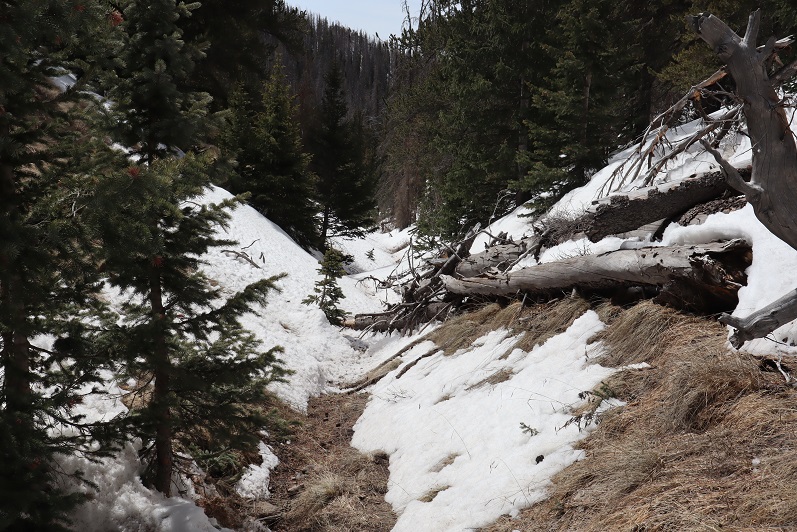
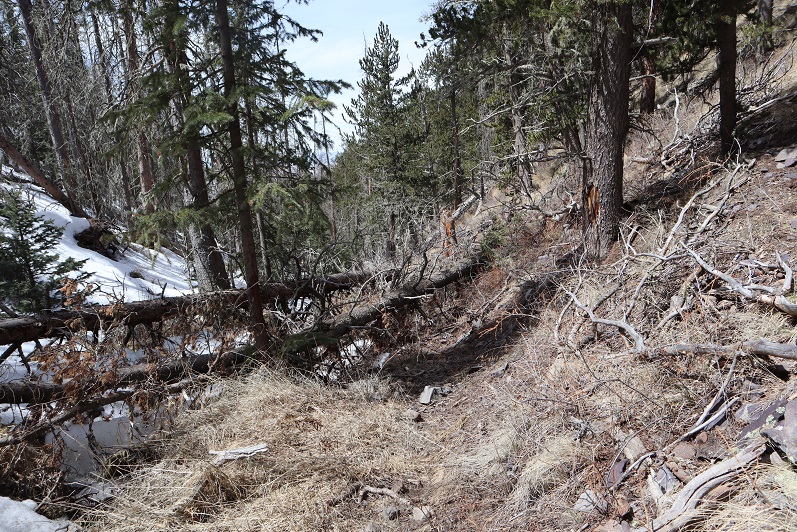
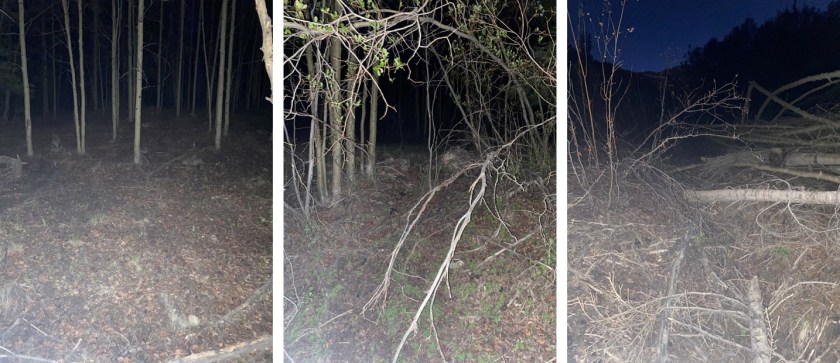
Looking at a topo map, I wanted to follow Grey Copper Creek to begin. After finding a dispersed parking spot I headed northwest in the dark, following game trails, zig-zagging in what felt like I was in a horror movie until I hit the creek. The creek was easy to find because there’s been a recent avalanche in the area.   This also made the creek easy to follow (after initially climbing over some downed trees).
6

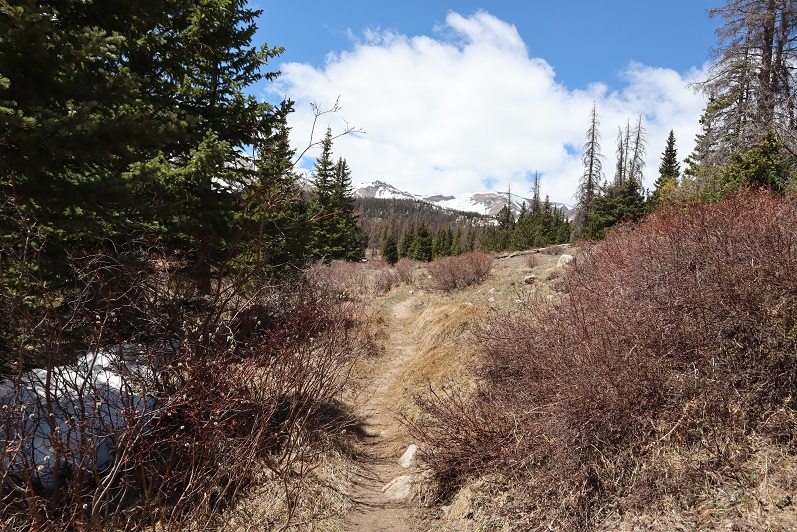
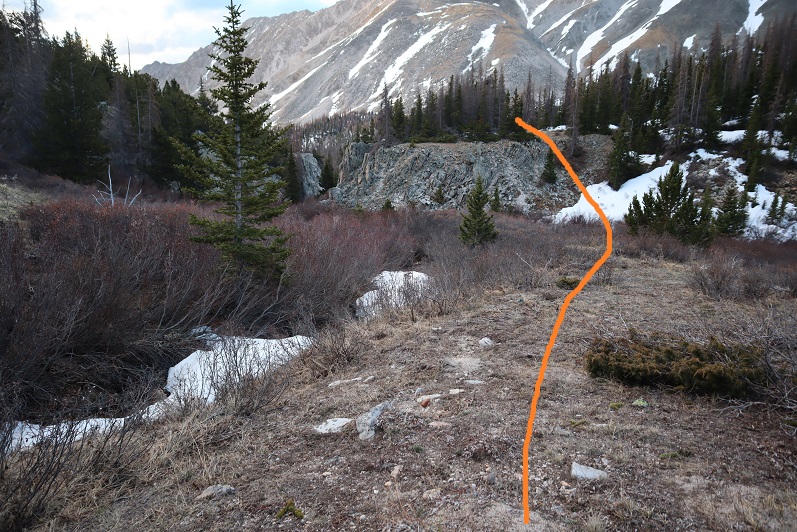
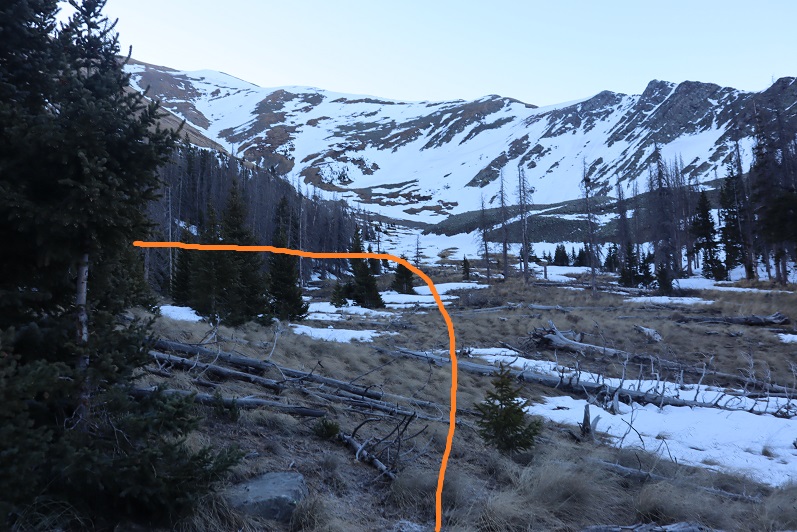
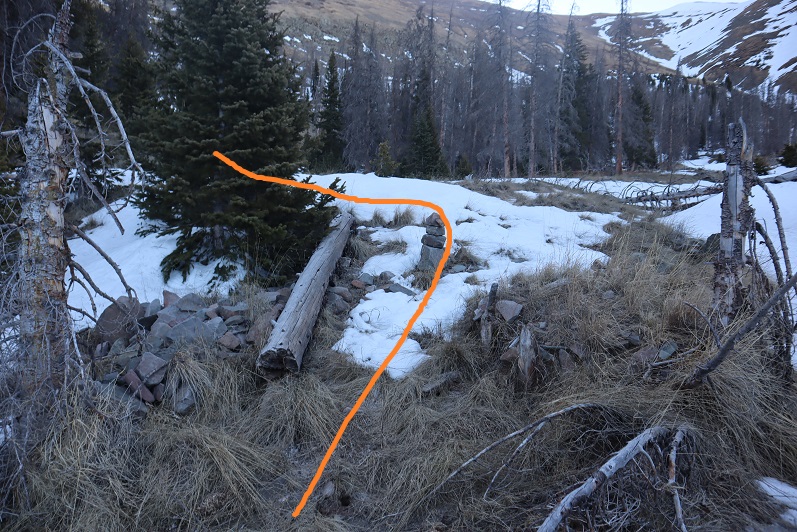
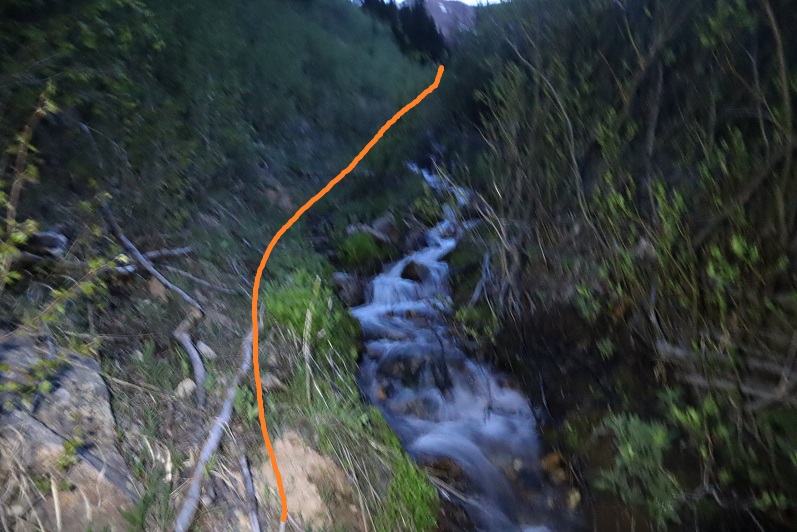
I crossed the creek and stayed on the west side, startling a porcupine as I went. There are new game trails starting here that parallel the creek.
7

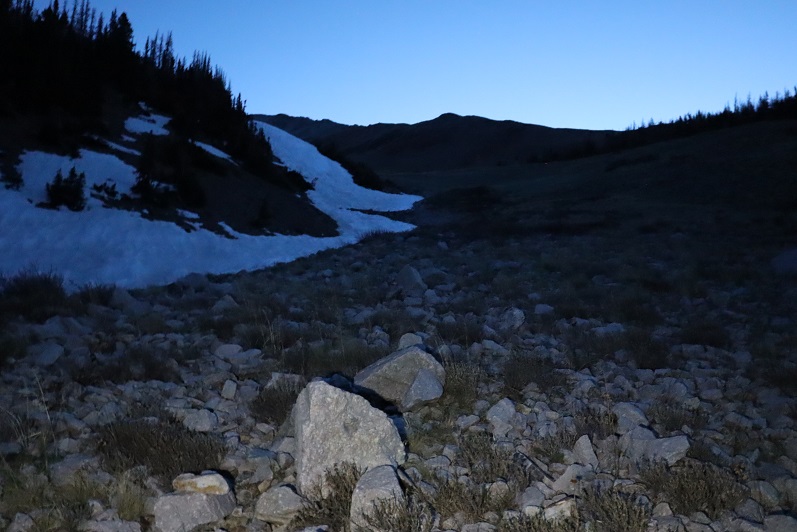
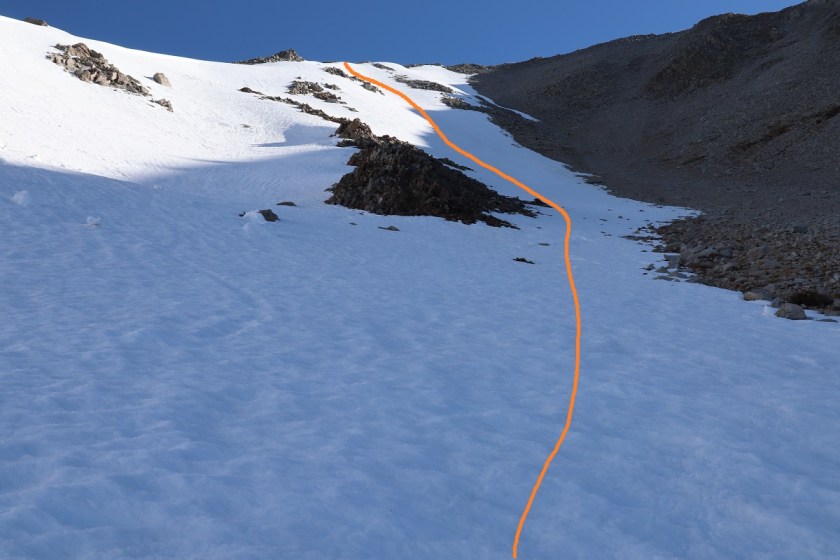
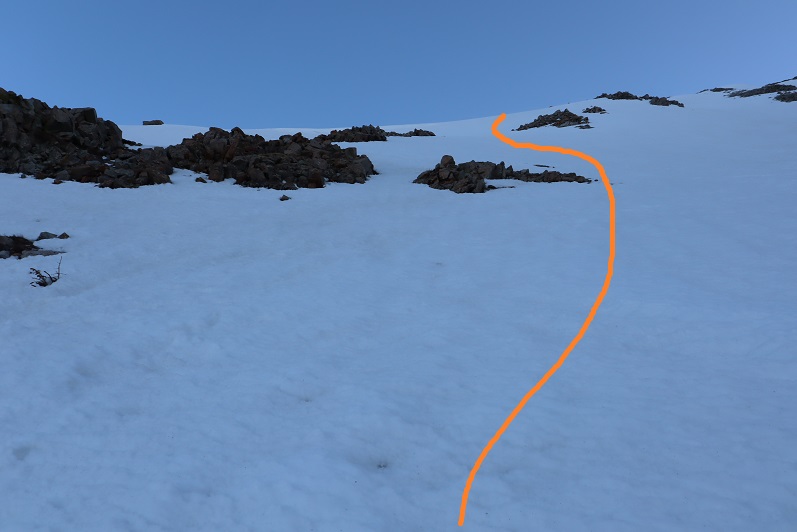
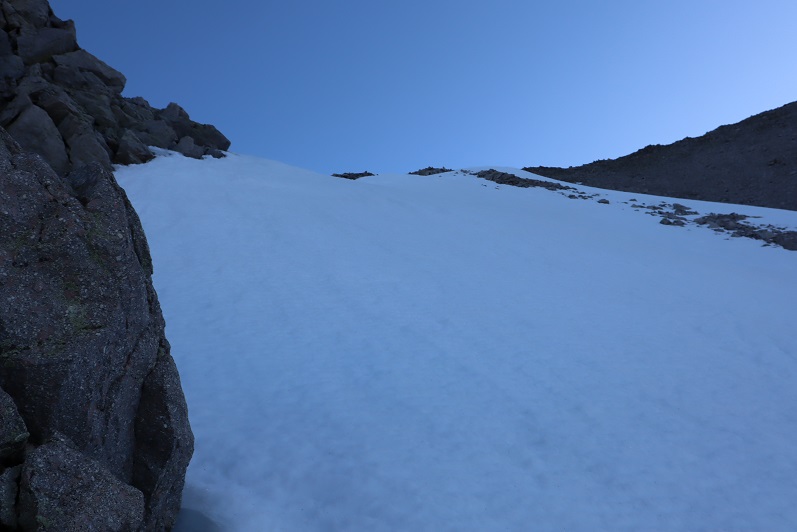
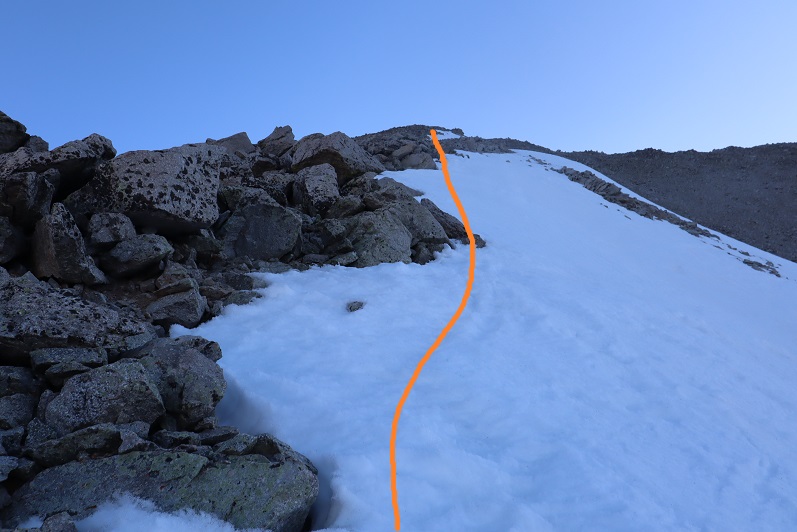
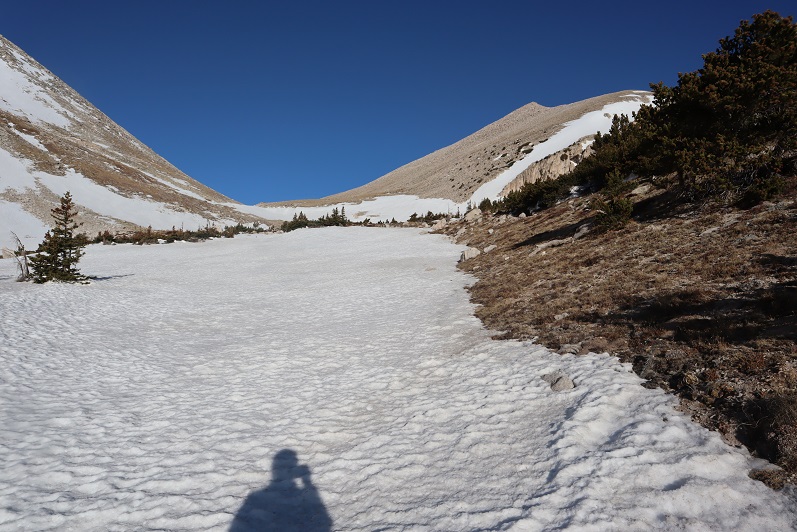
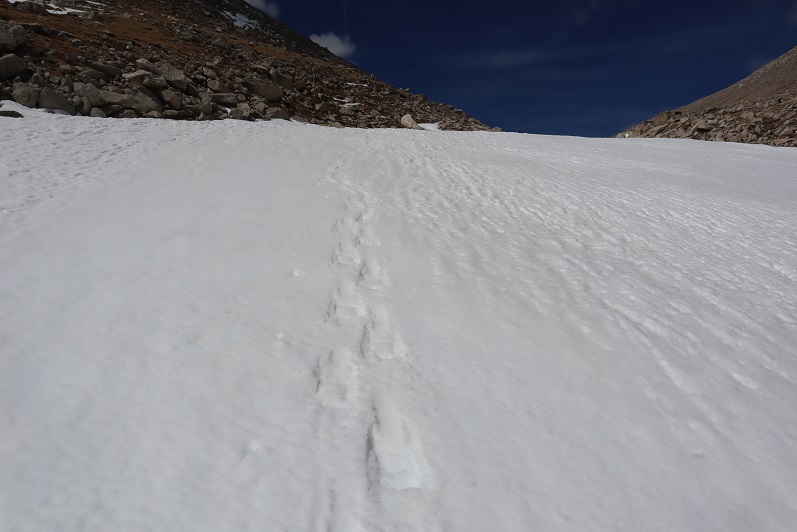
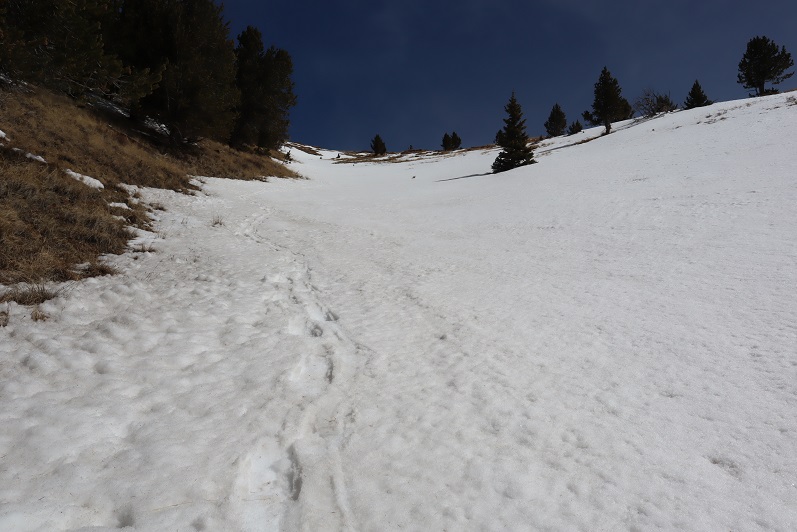
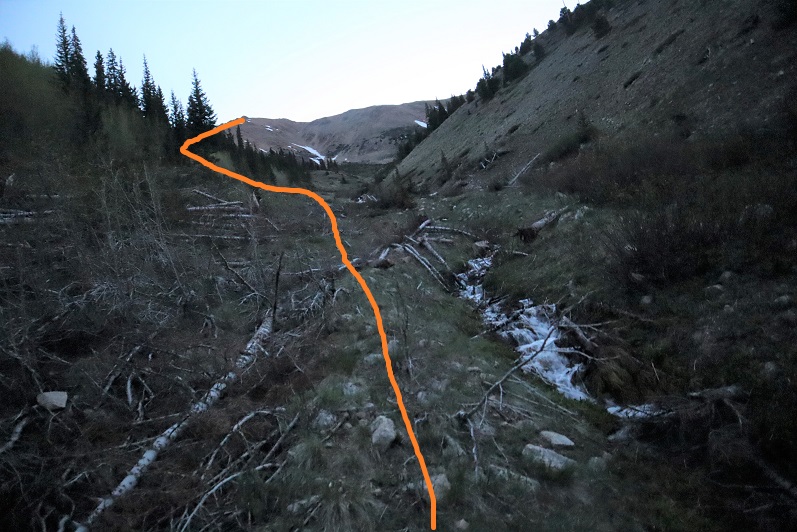
There are a few ways to summit Mt Blaurock: You can follow the creek until it ends and continue climbing until you make it to the Blaurock/Ervin saddle, or gain the south ridge and follow that route. There was still some snow in the gully so I decided to take the south ridge route.
8

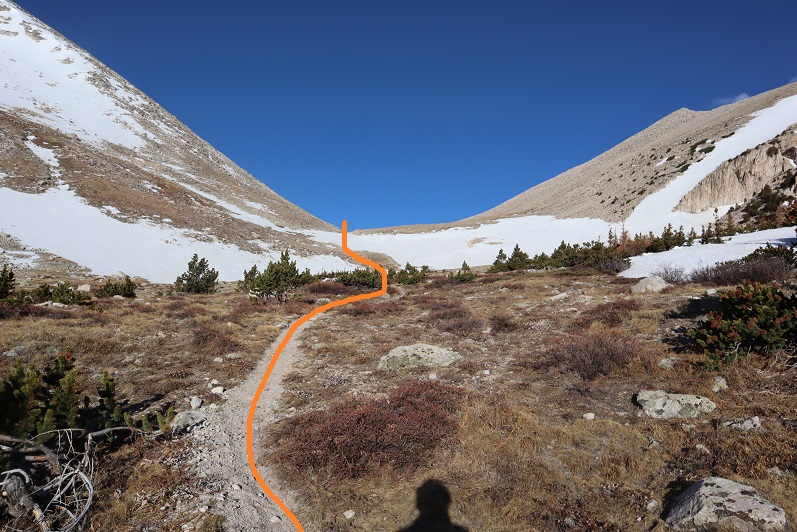
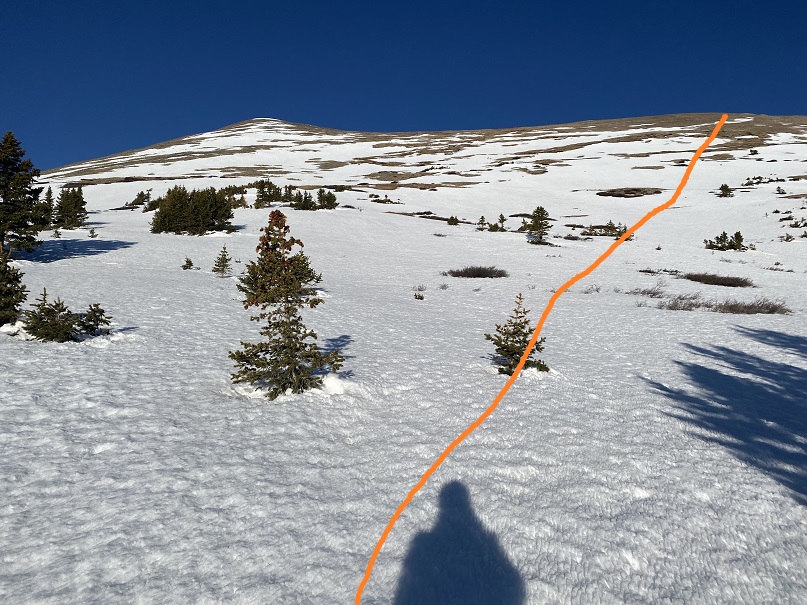
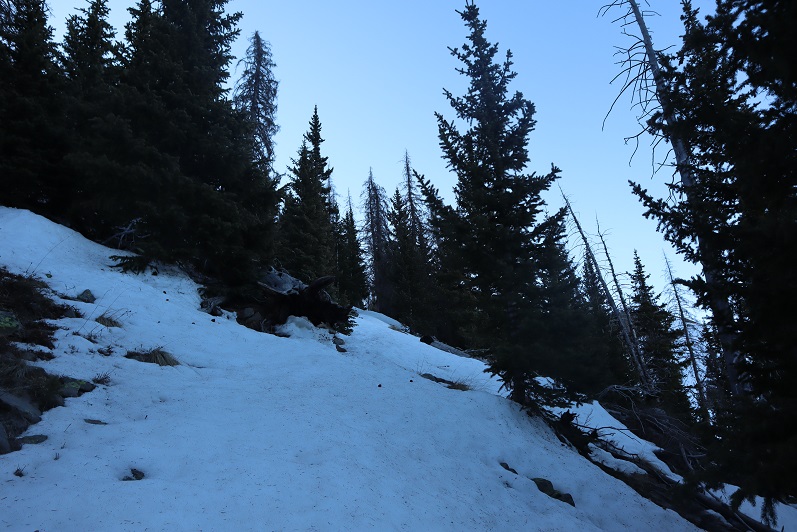
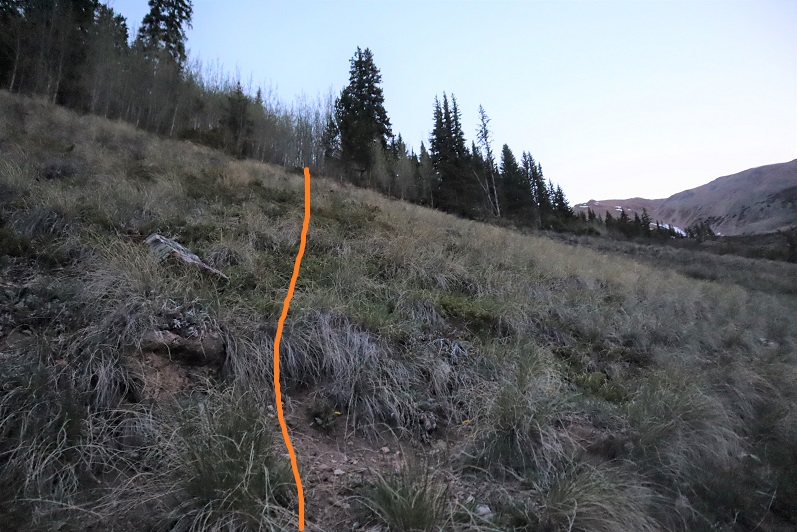
There is no special point to gain the south ridge. I turned and headed west after a little over a mile of hiking, aiming for the ridge
9

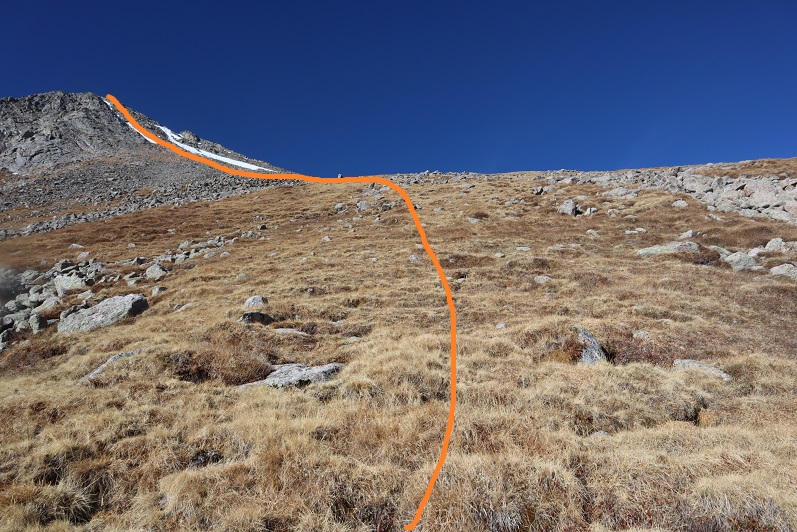
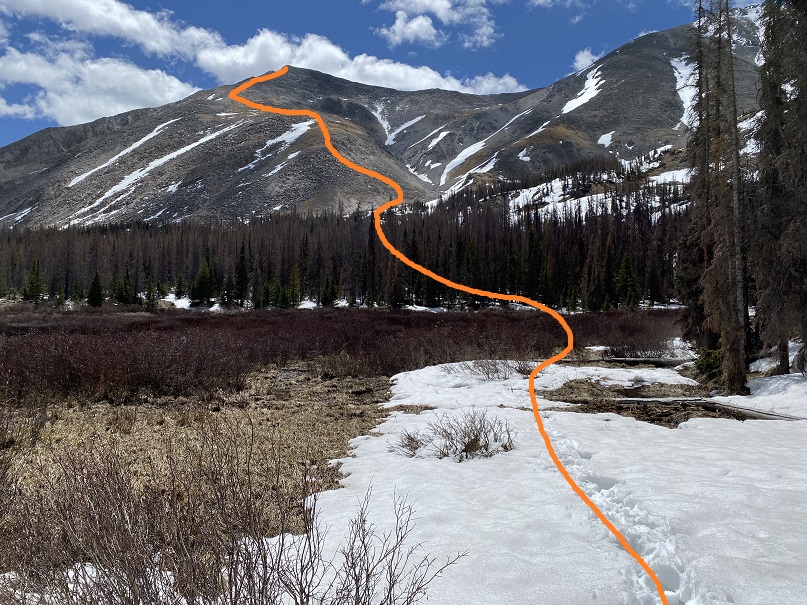
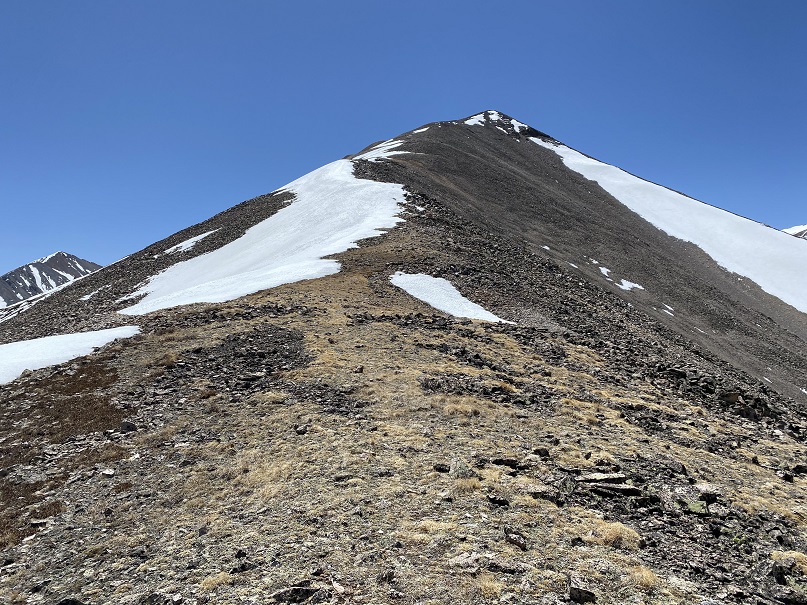
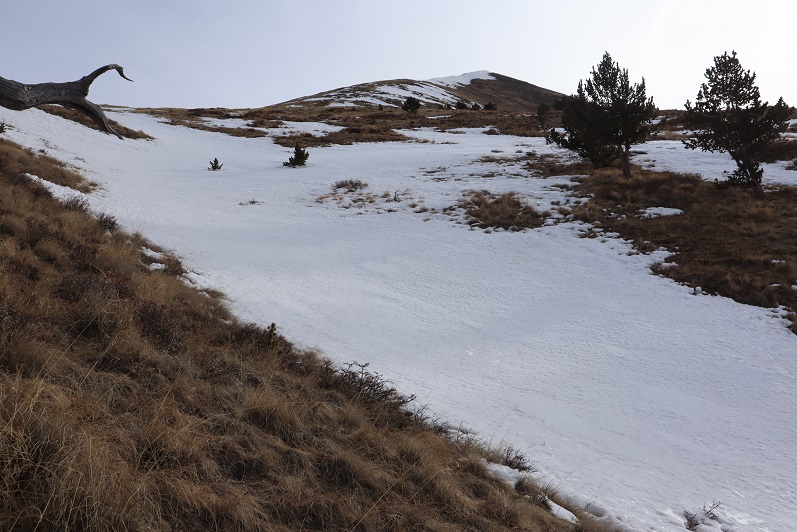
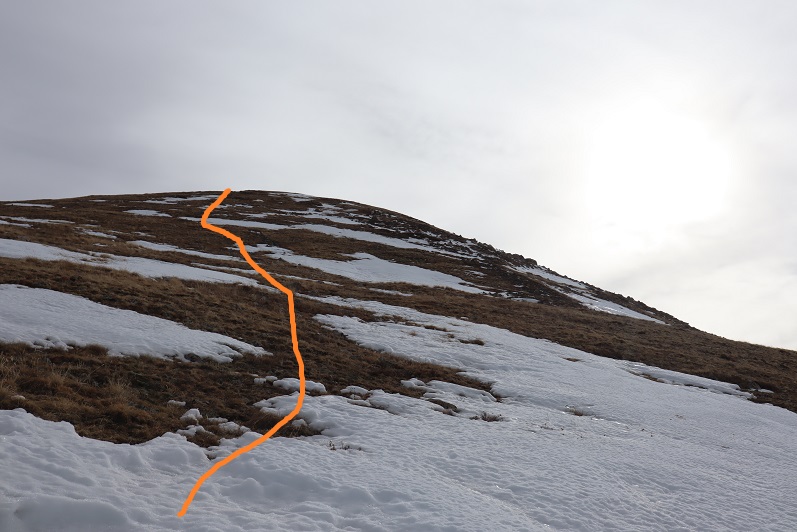
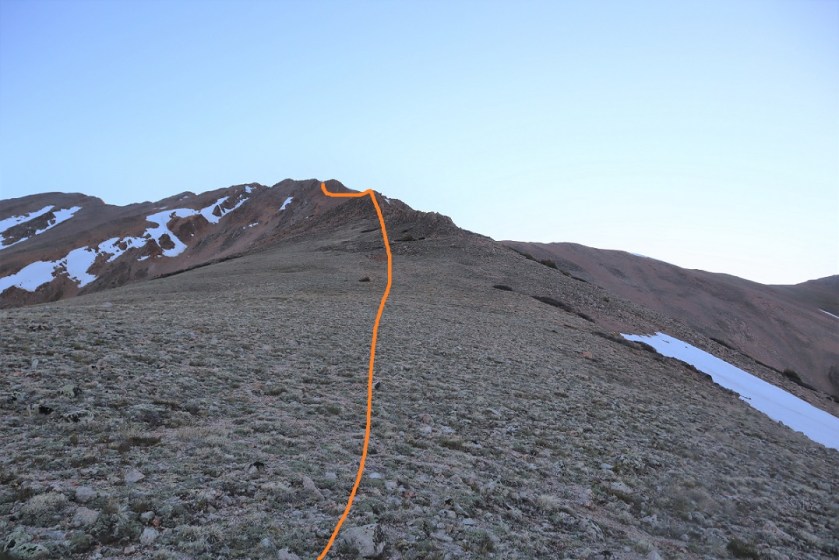
From treeline it was easy to see the route, following the ridge northeast
10

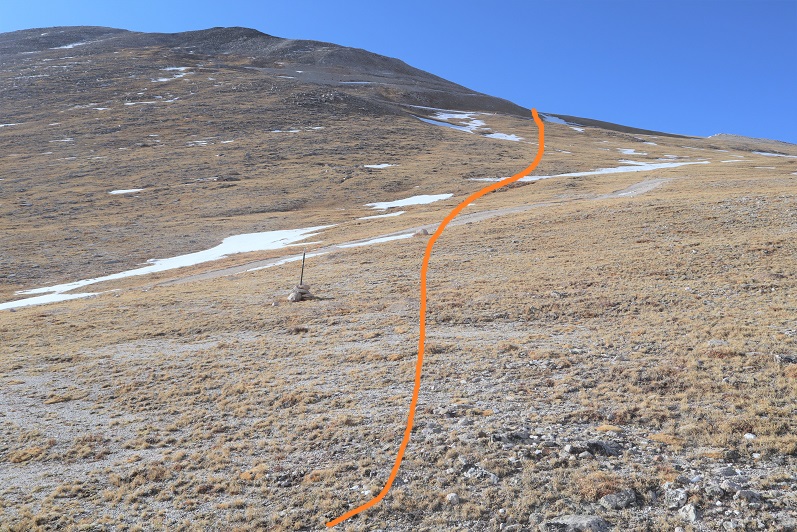
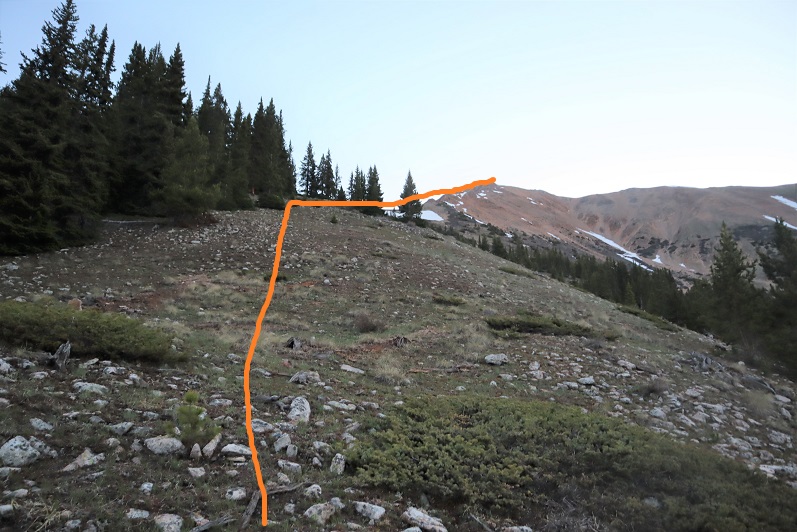
The first part of the ridge is an easy stroll on tundra

11

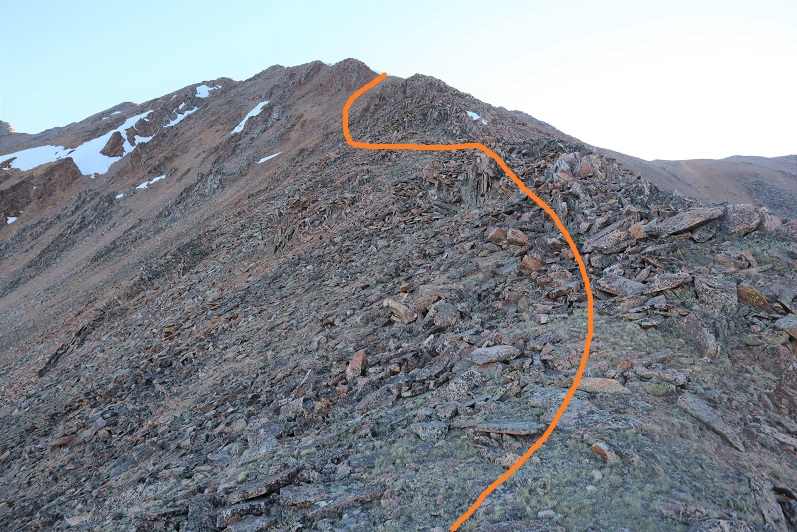
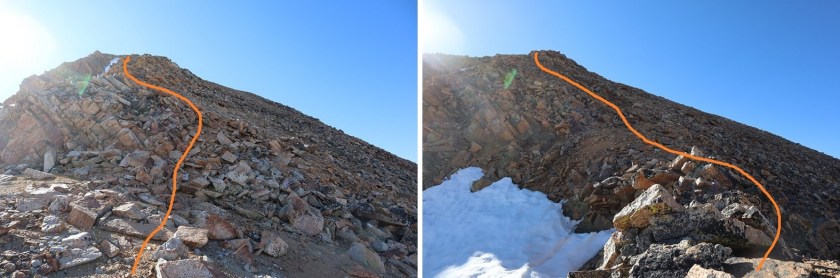
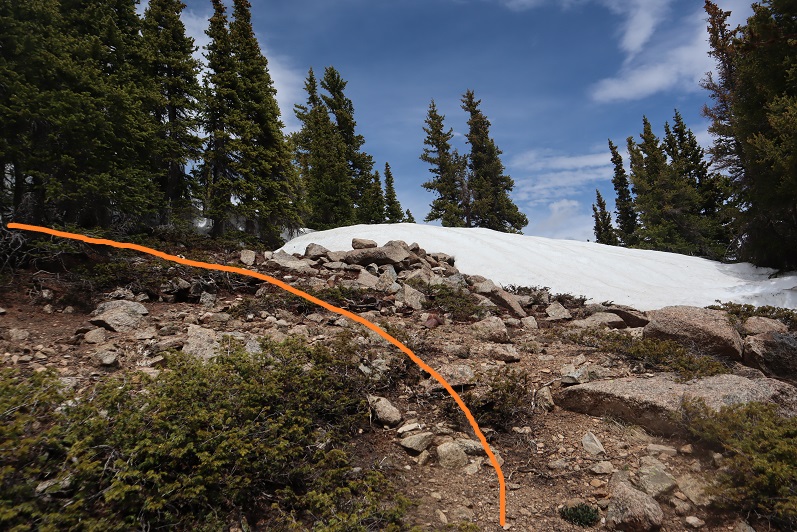
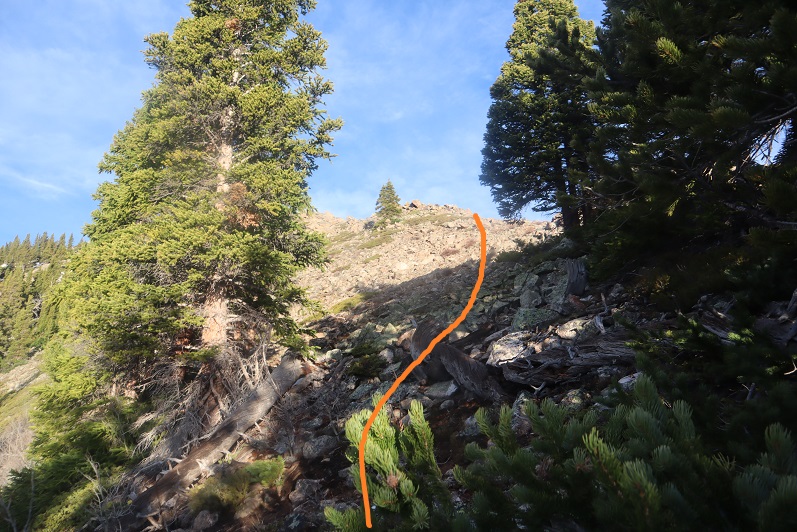
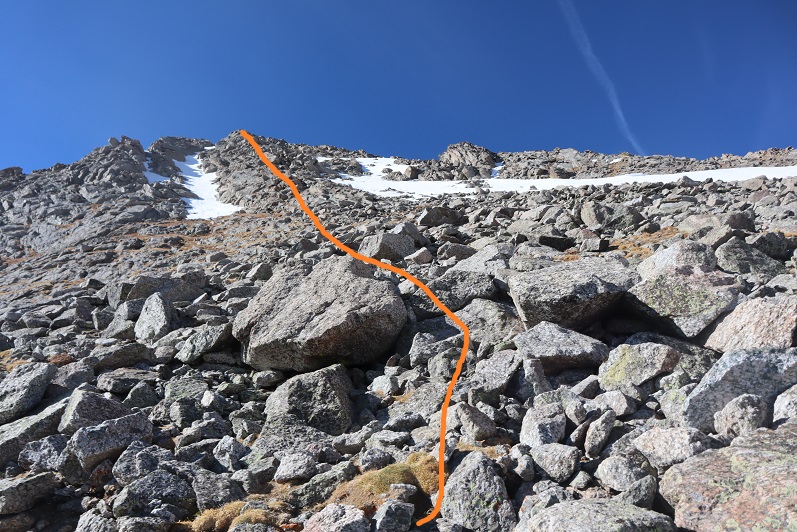
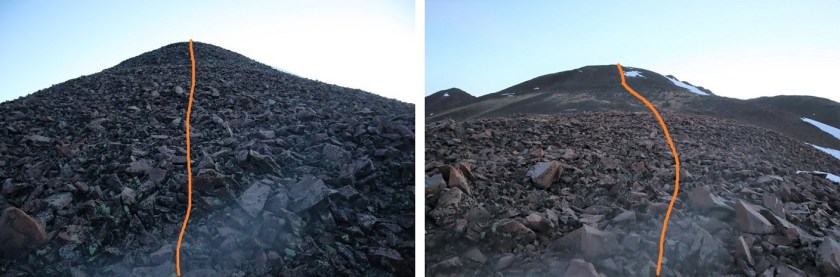
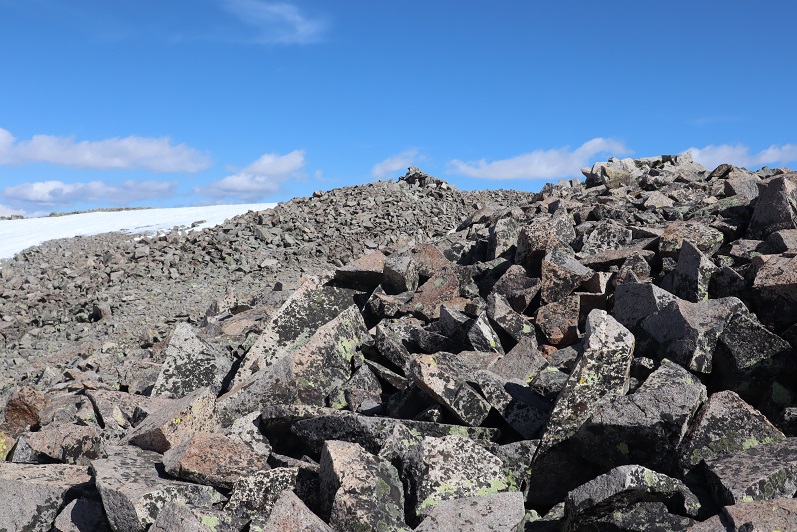
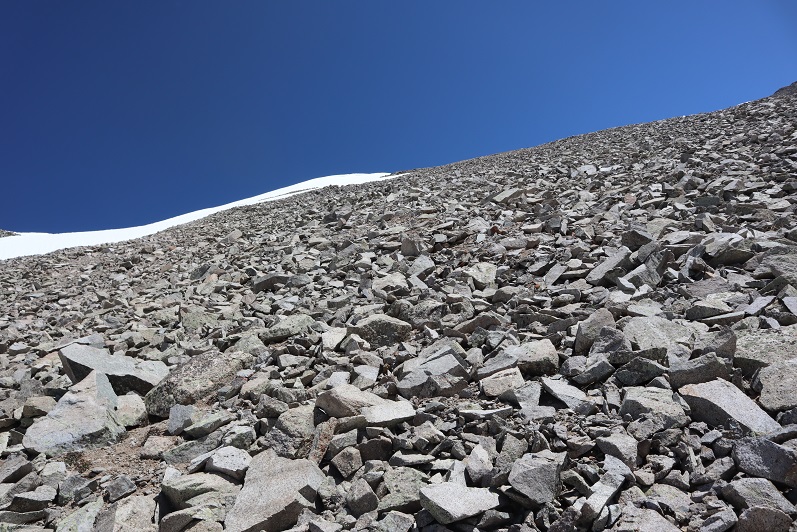
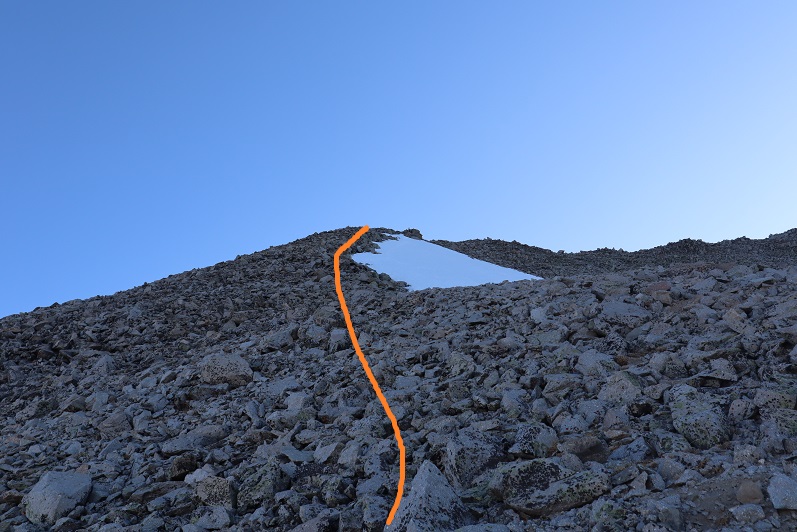
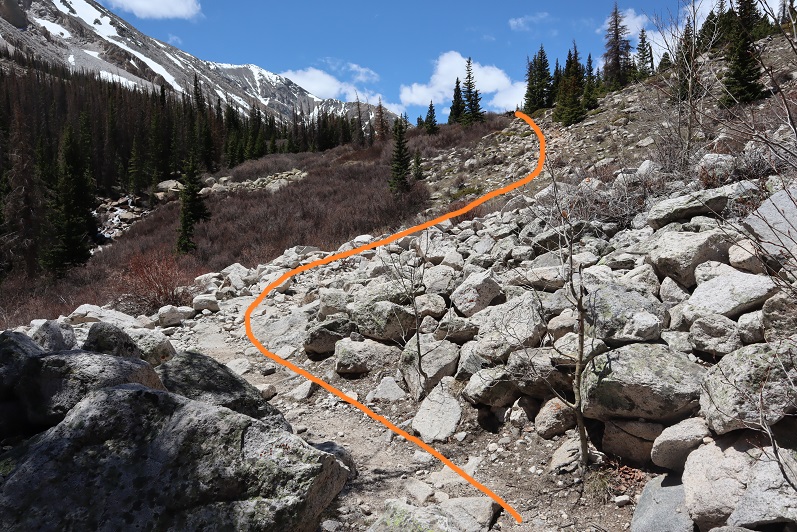
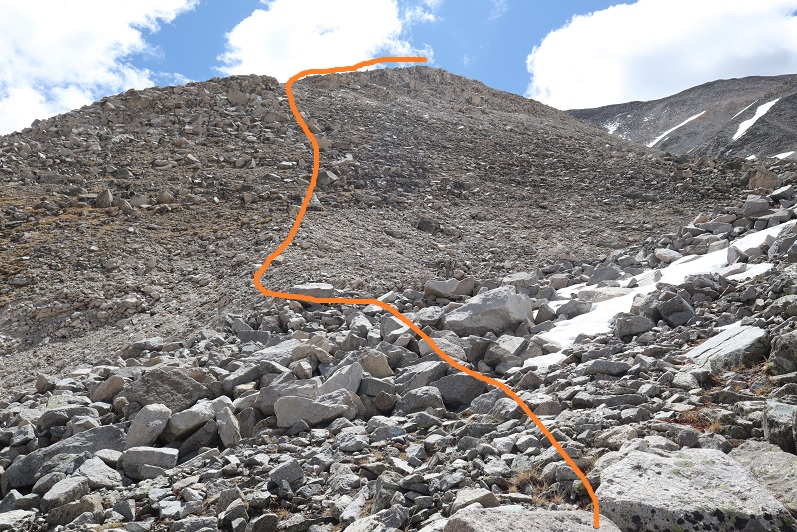
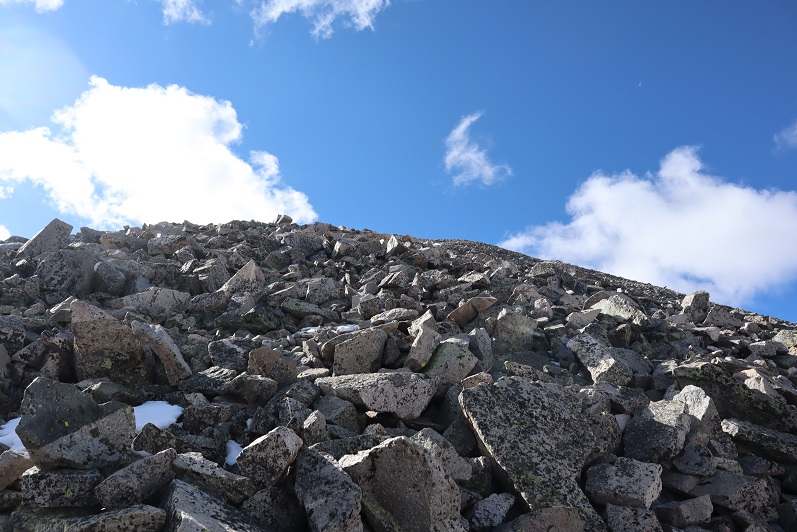
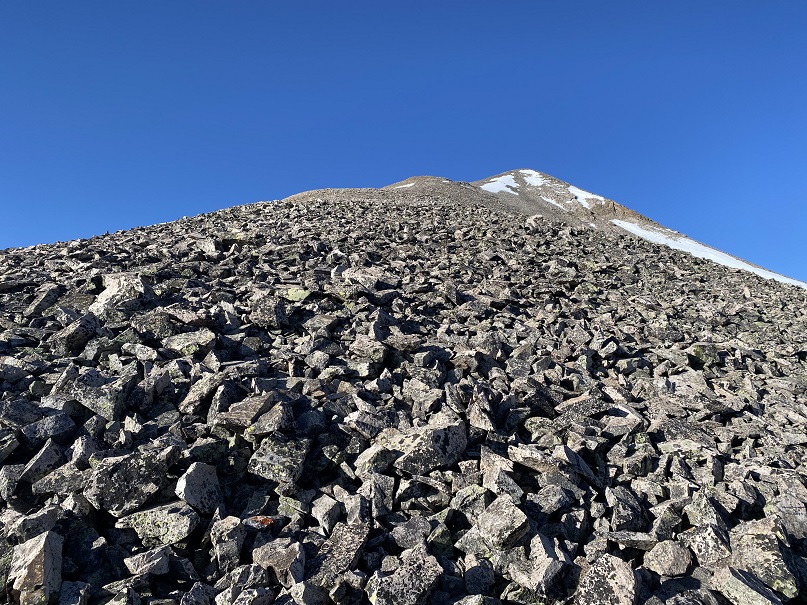
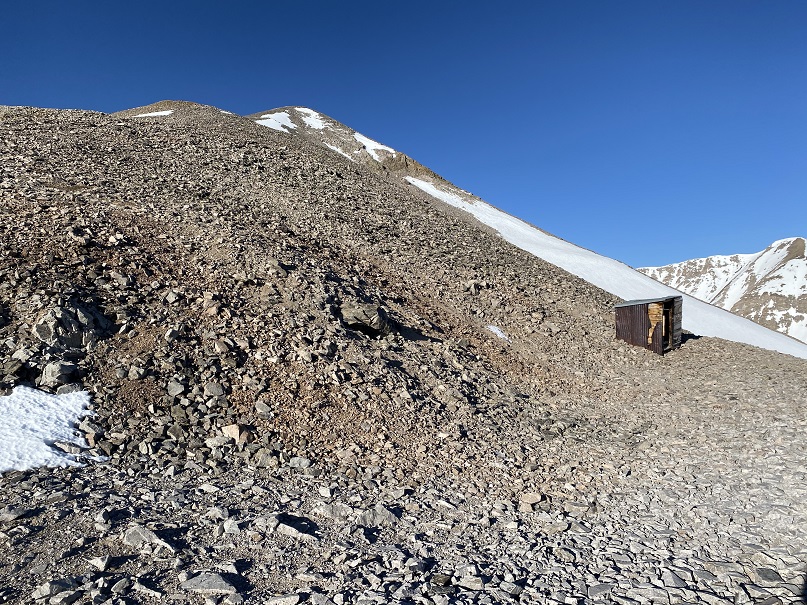
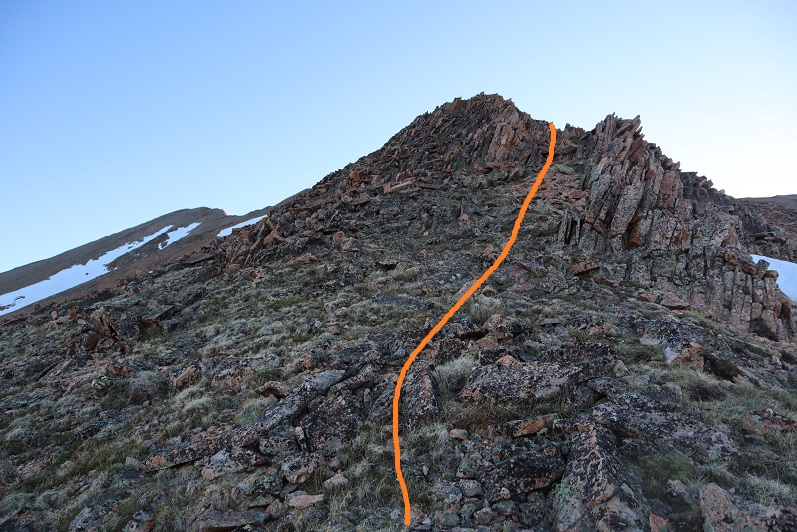
Once the tundra ended the loose rock began and didn’t quit until the hike was almost over and I was back at the avy area. I’d call it rotten rubble, or choss most of the way. I rounded the first bump in the ridge to the left, climbed straight over the second, and then took a gully up to the top. There is some loose rock here.
12

13

14

9

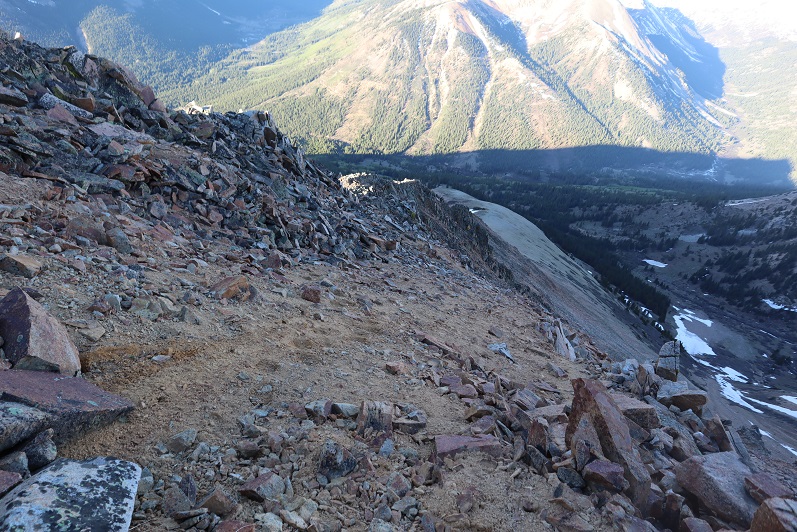
Here’s a look back down to this point
16

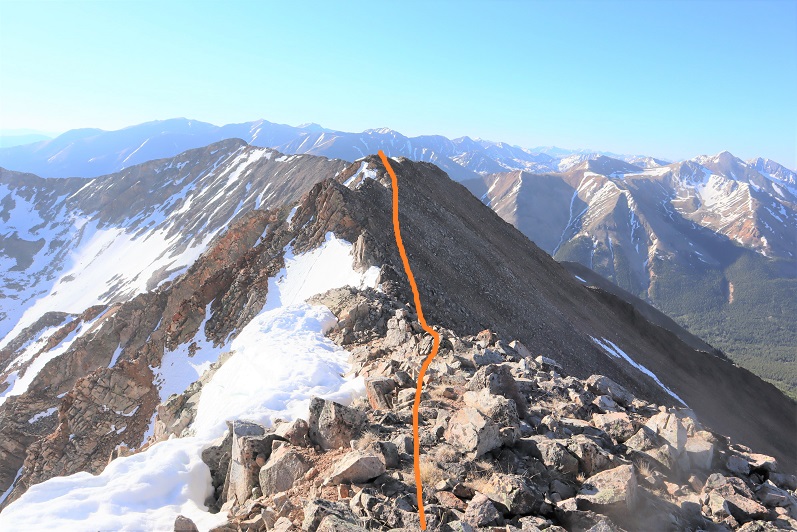
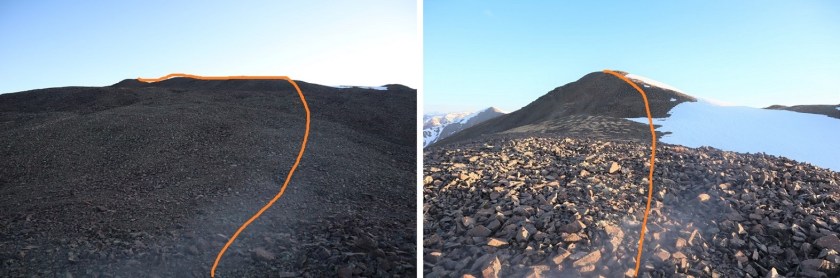
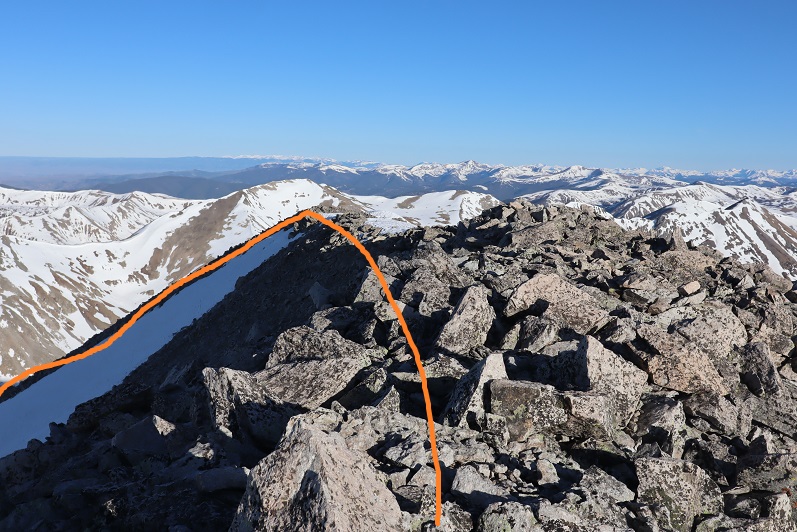
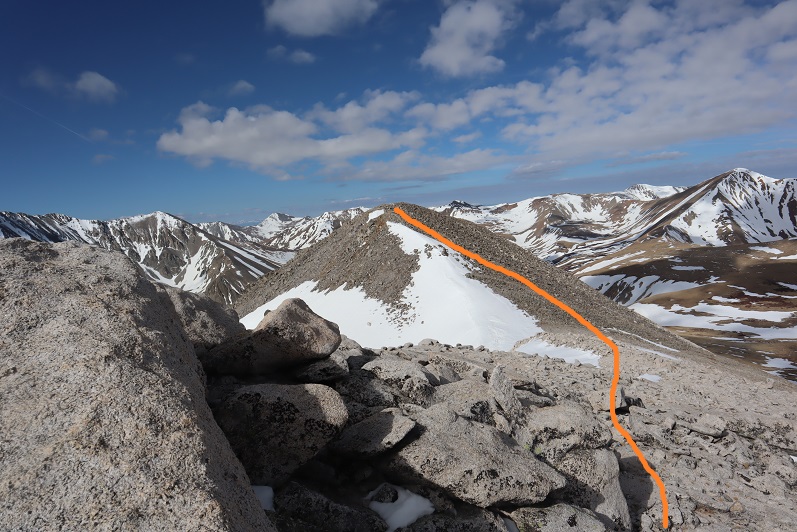
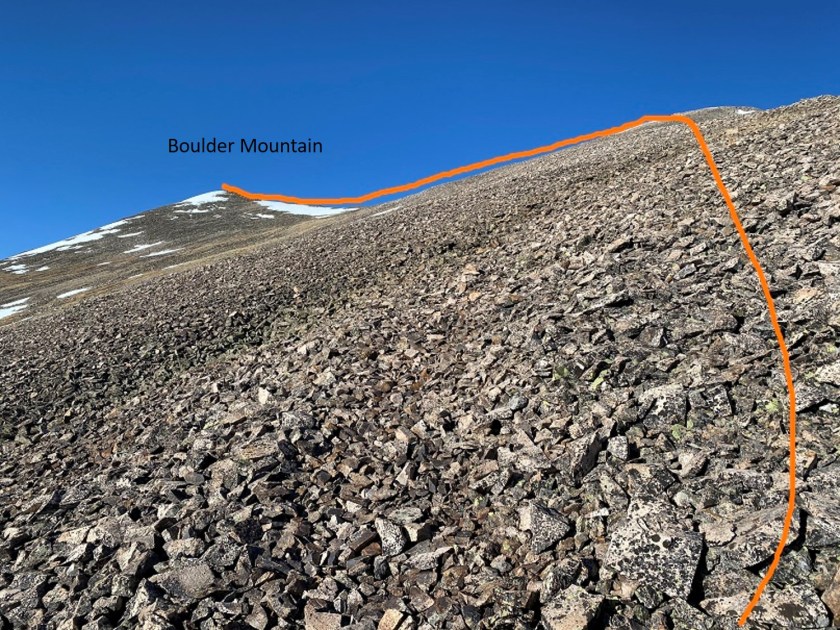
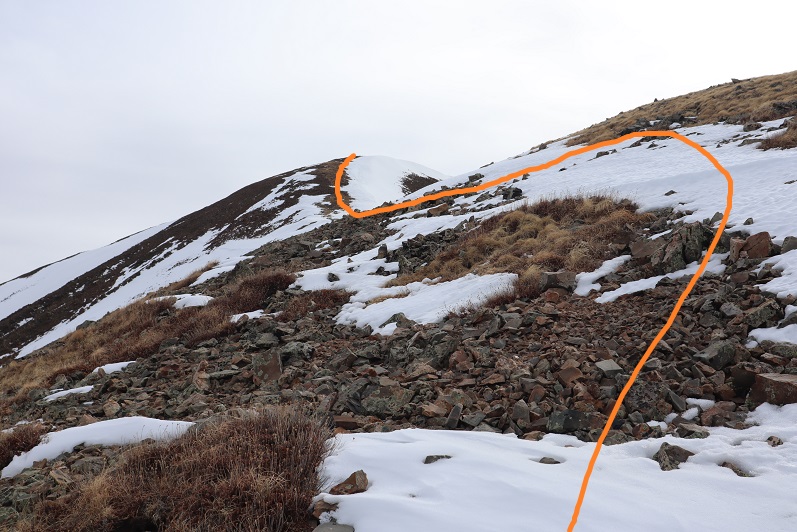
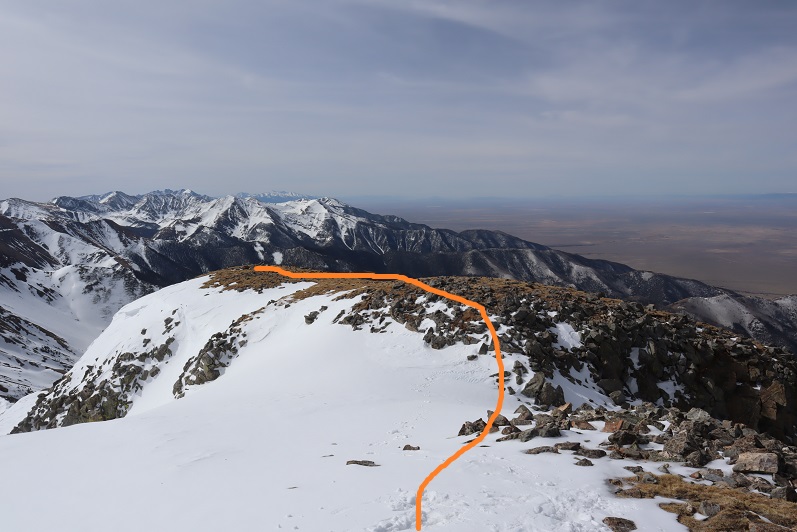
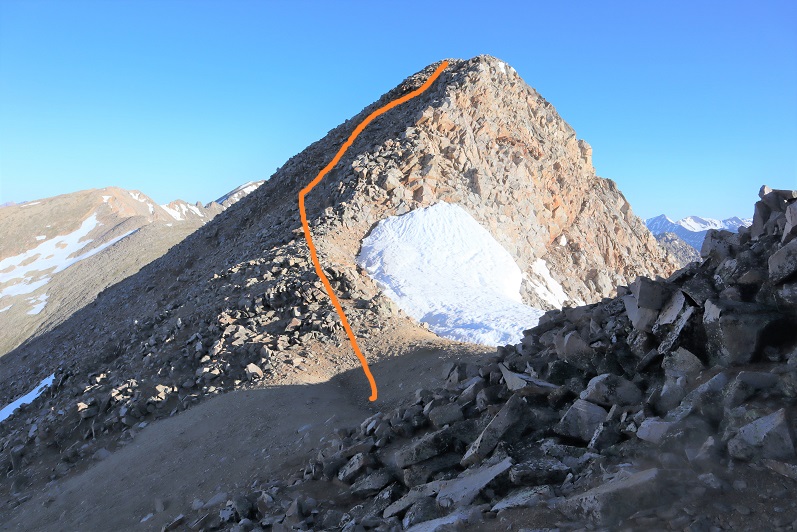
Turning left (northwest) I dipped down to the left a few times to avoid snow and unnecessary ridge crossings

17

18

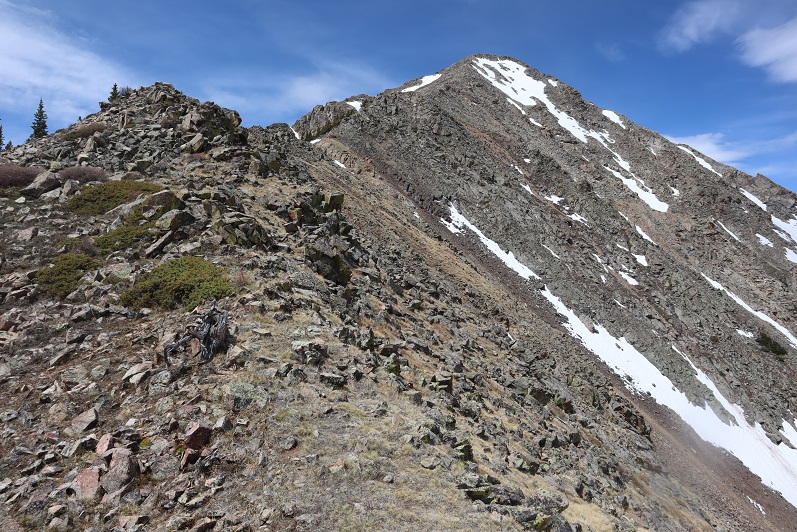
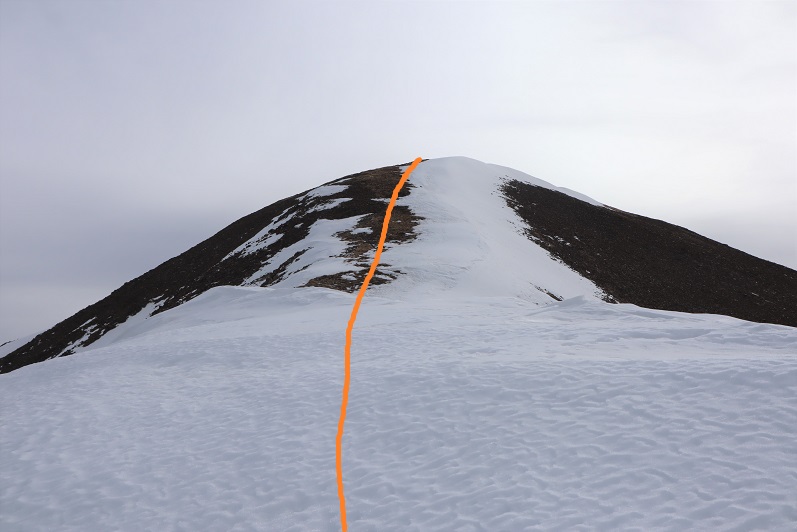
Of course, the summit is the furthest ‘hump’ on the ridge

19

I followed a small, rock filled gully to the summit
20

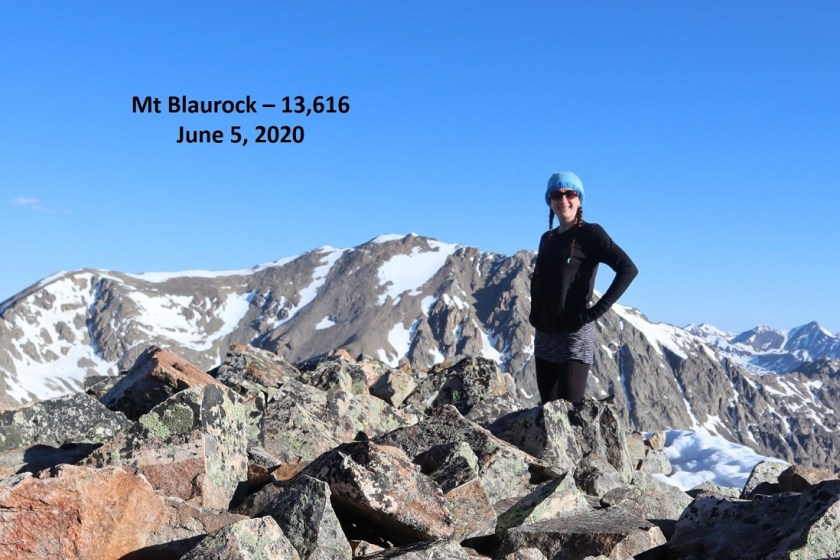
I summited Mt Blaurock at 7:30am

21

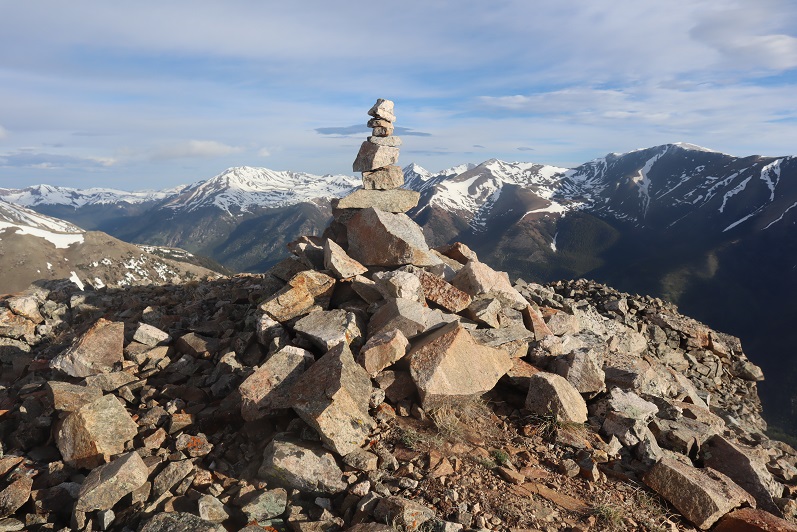
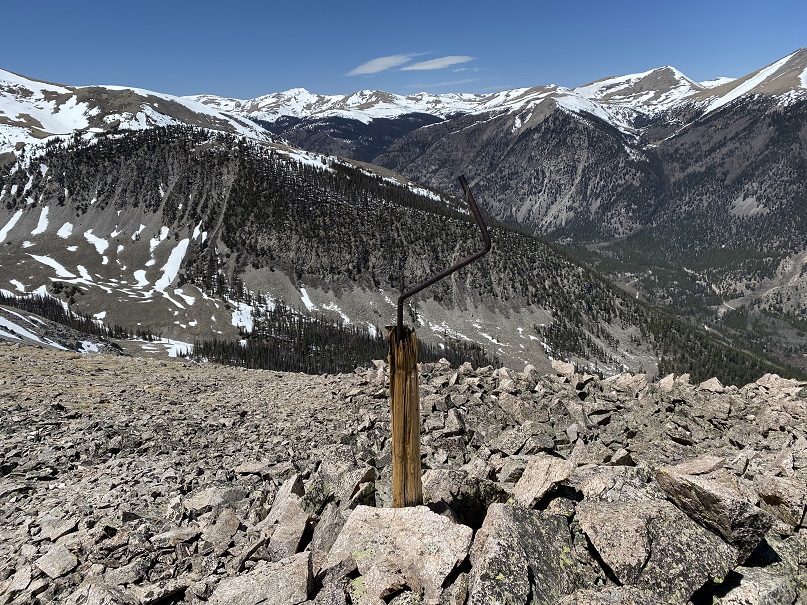
Mt Blaurock Summit:

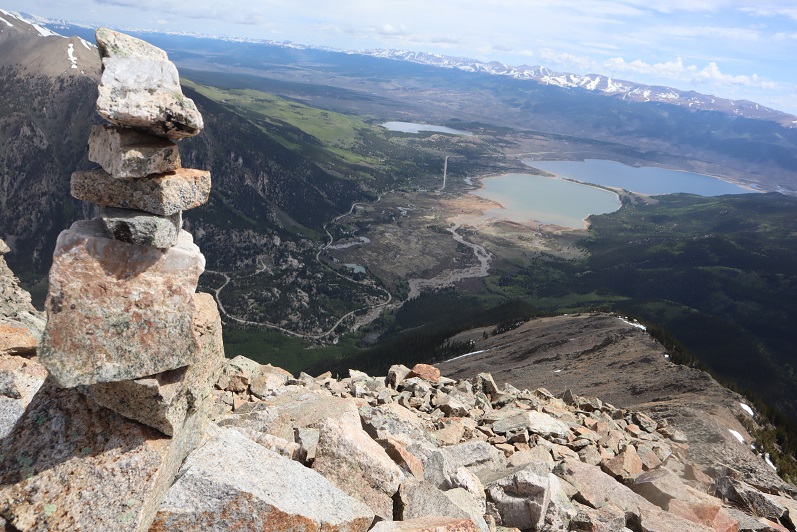
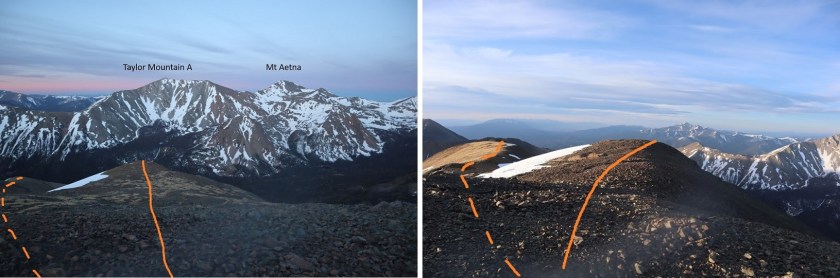
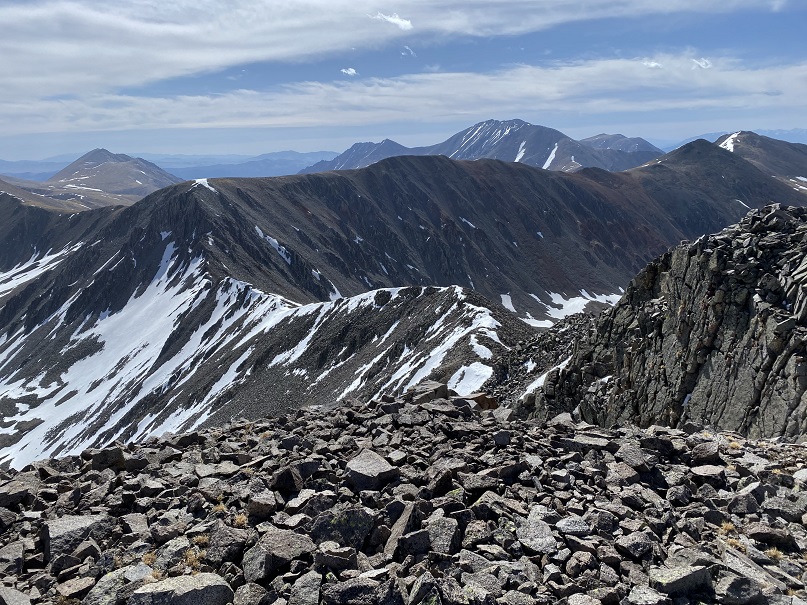
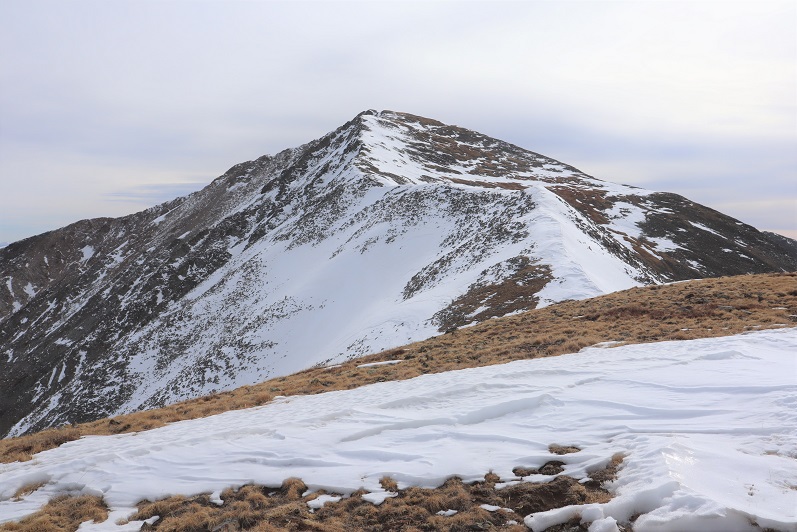
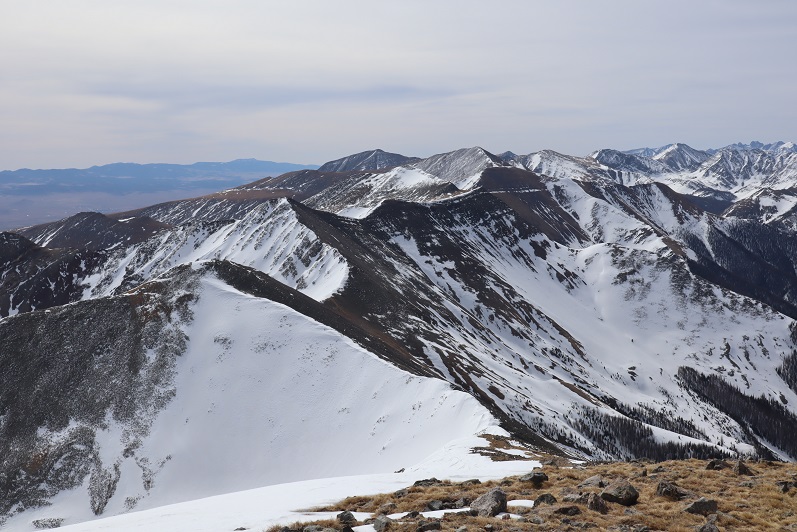
There are some great views of surrounding peaks, a few of which I visited last week;

22

23

I headed back over the ridge on the same path I took in:
24

25

26

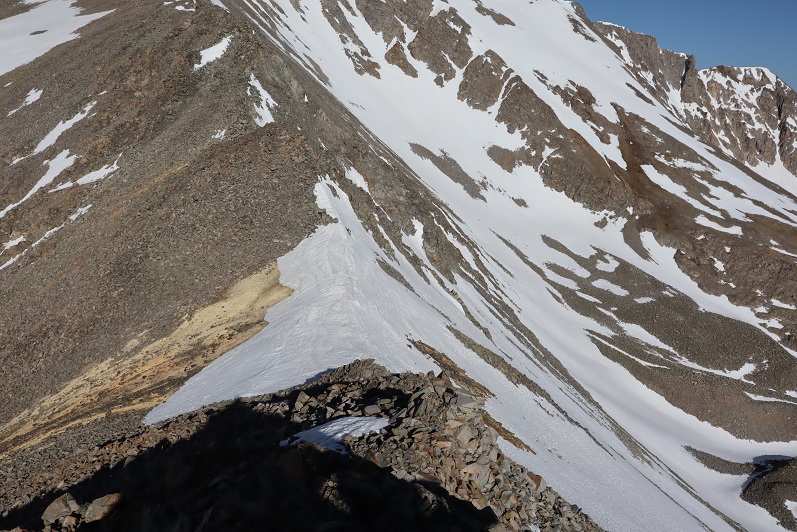
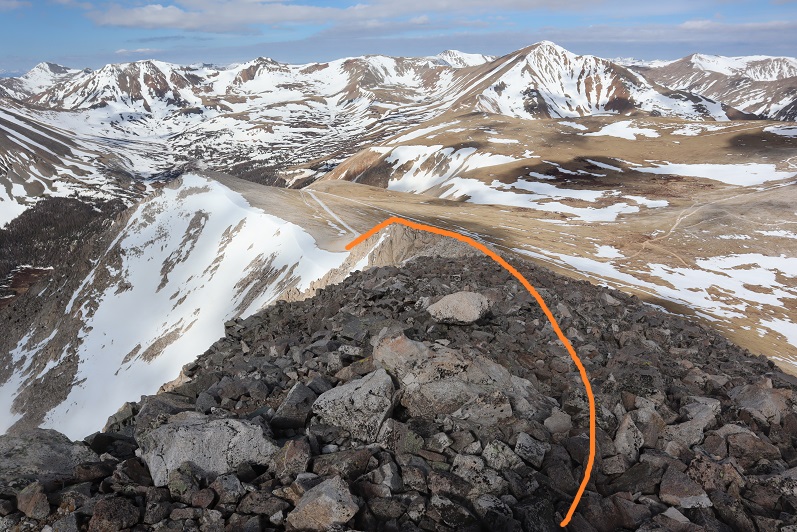
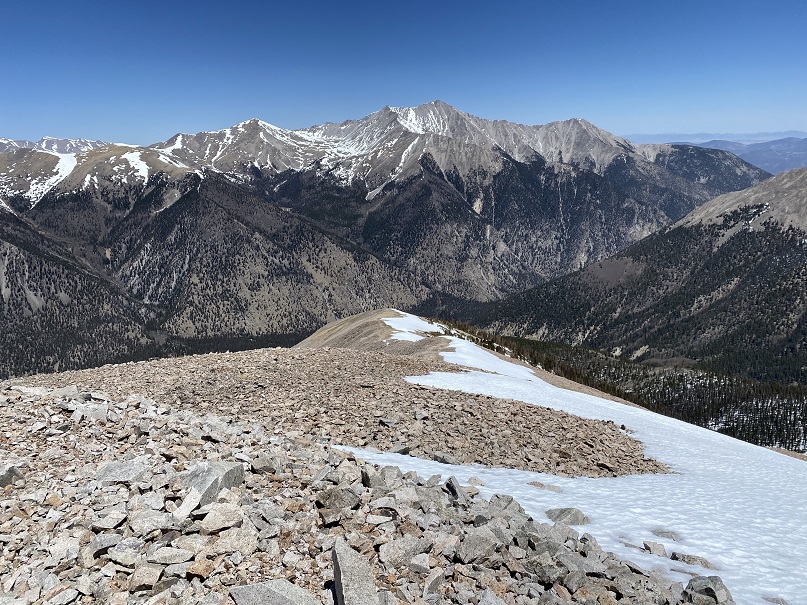
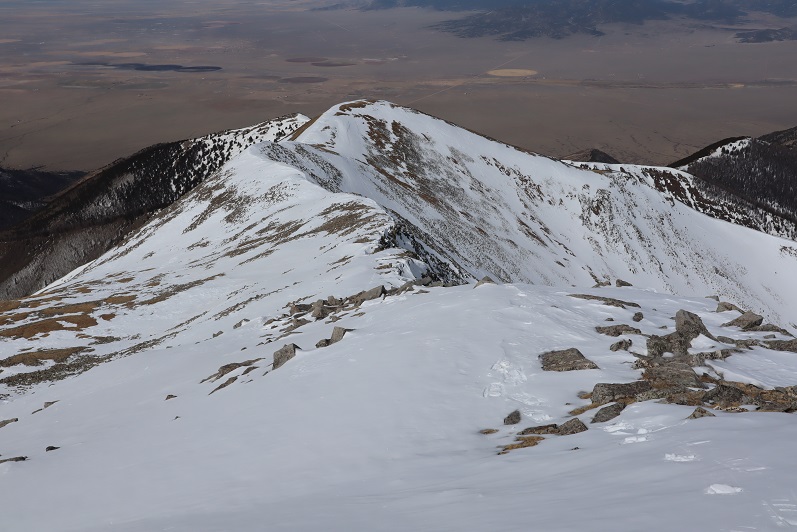
Here’s looking down at the traverse between Blaurock and Ervin Peak. The hike down to the saddle from Blaurock is easy
27

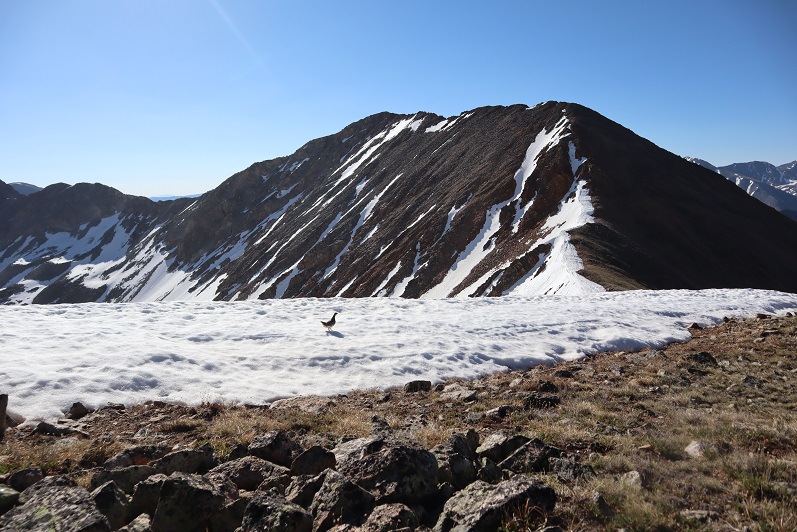
I met a nice ptarmigan along the way

28

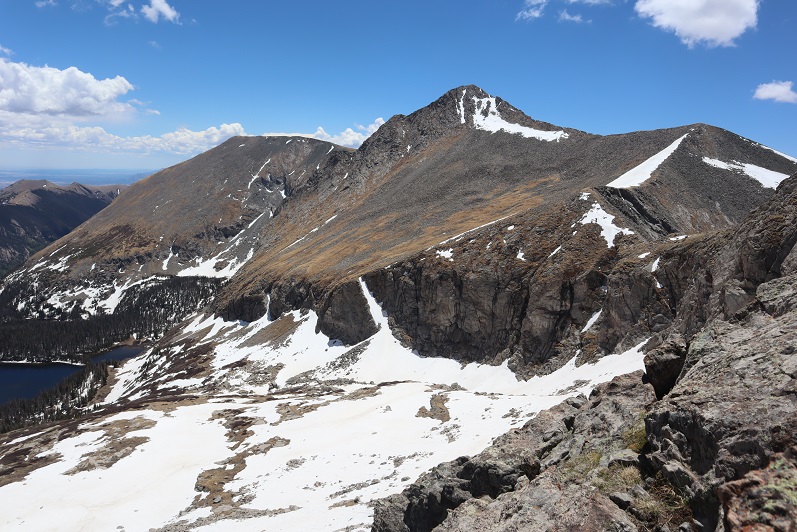
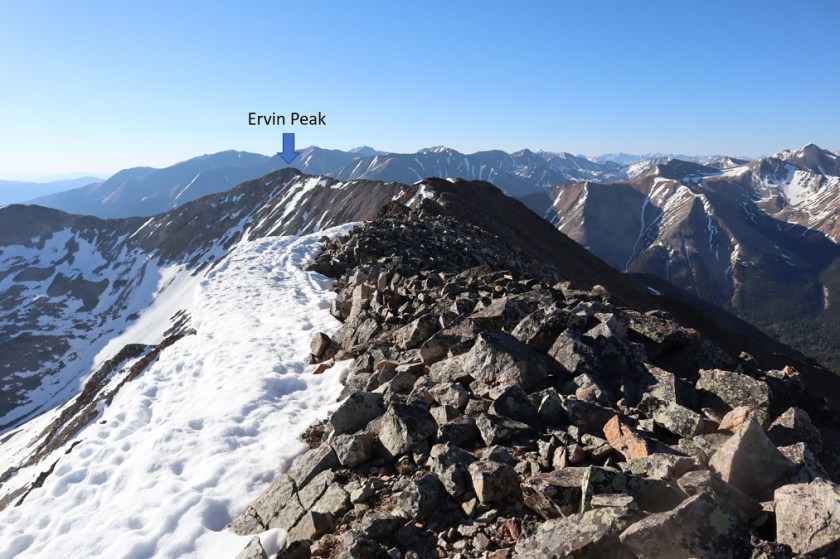
Here’s a look from the saddle of the ridge to Blaurock and Ervin

29

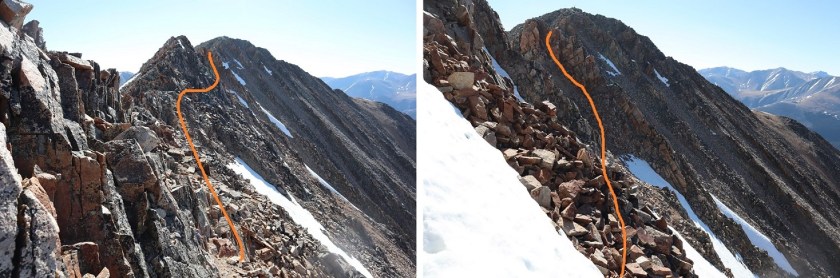
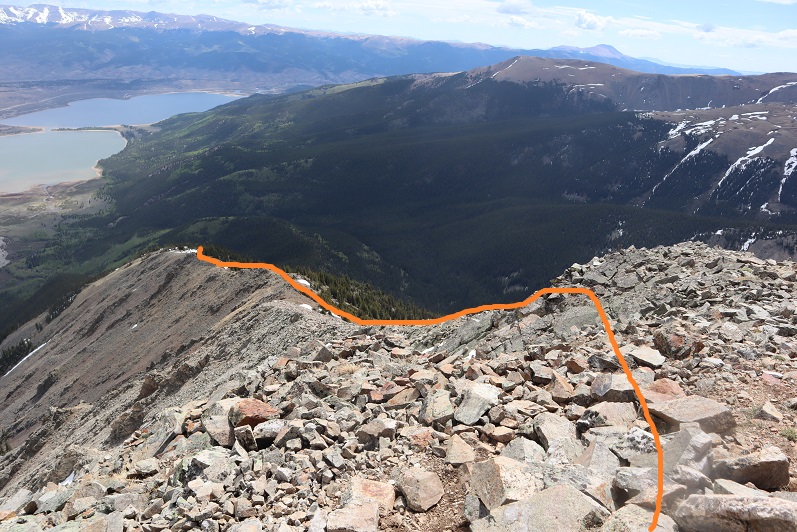
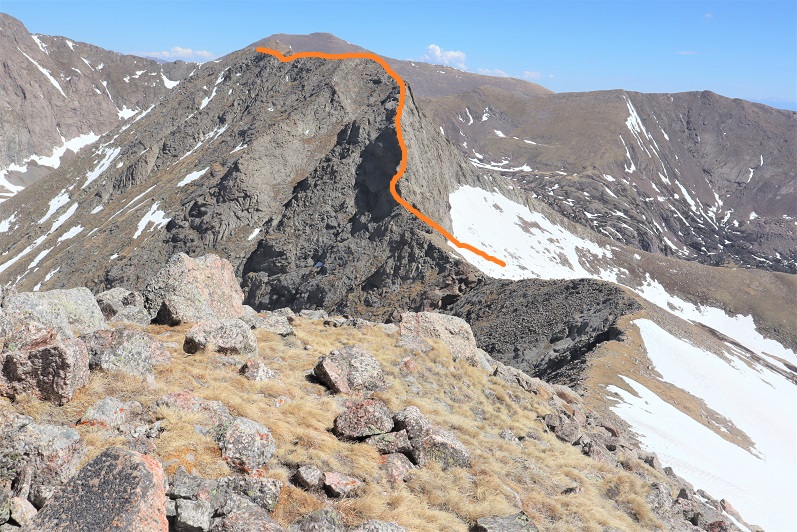
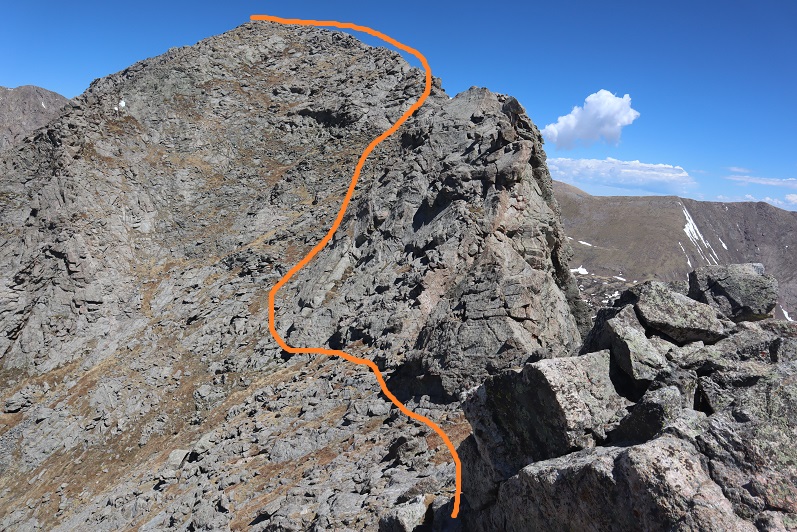
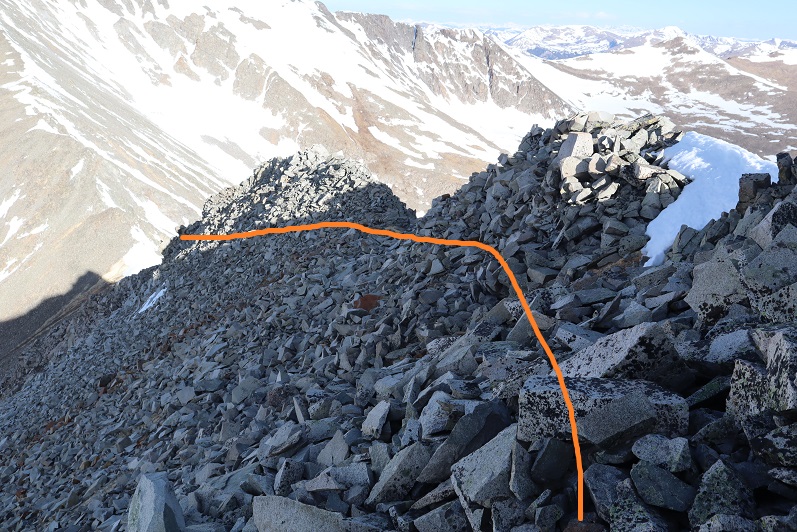
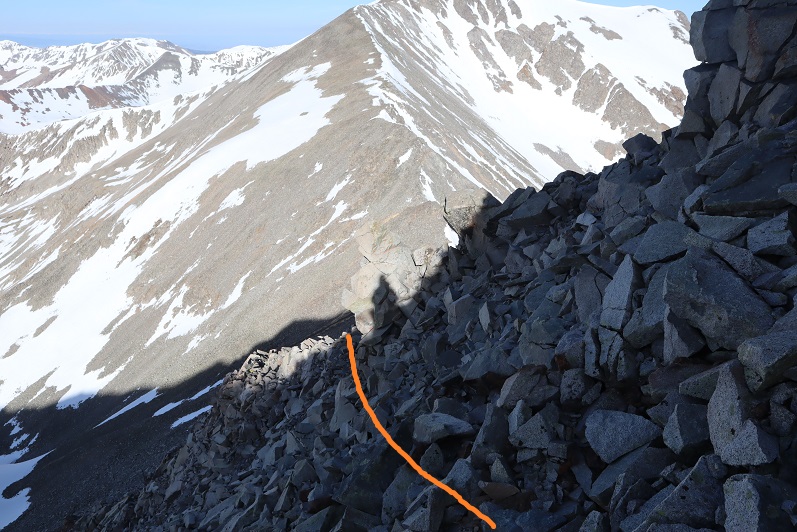
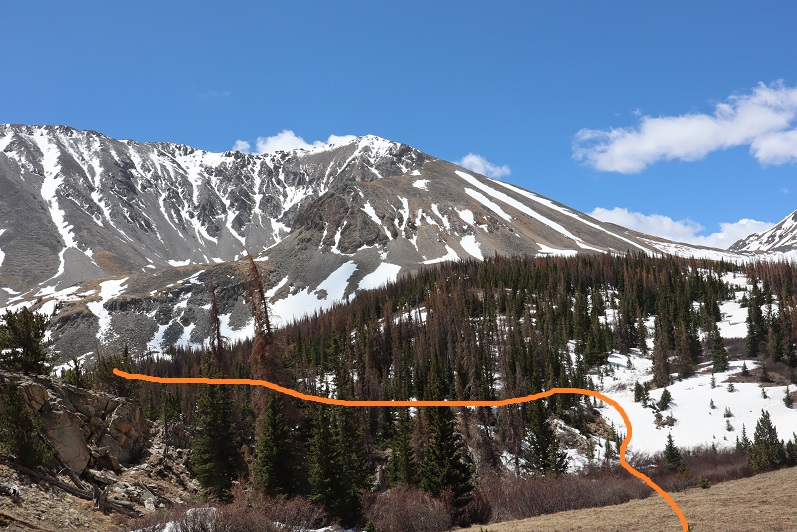
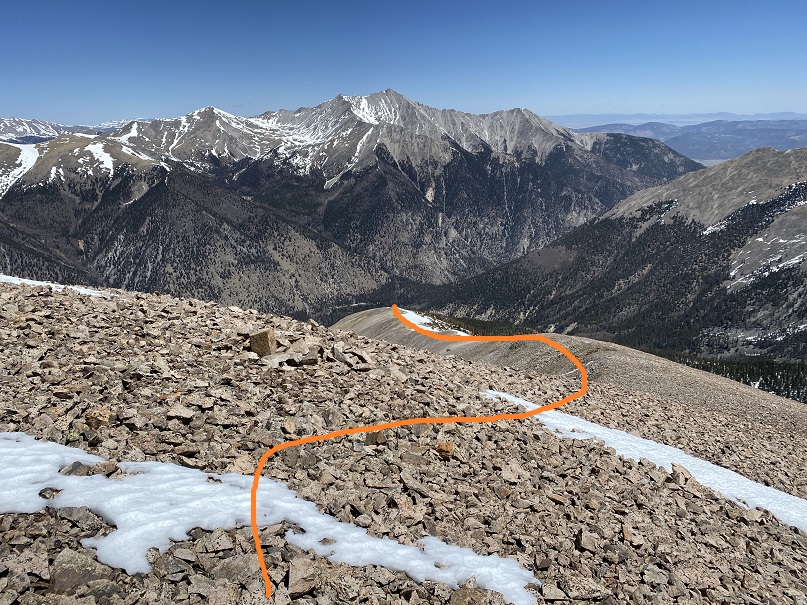
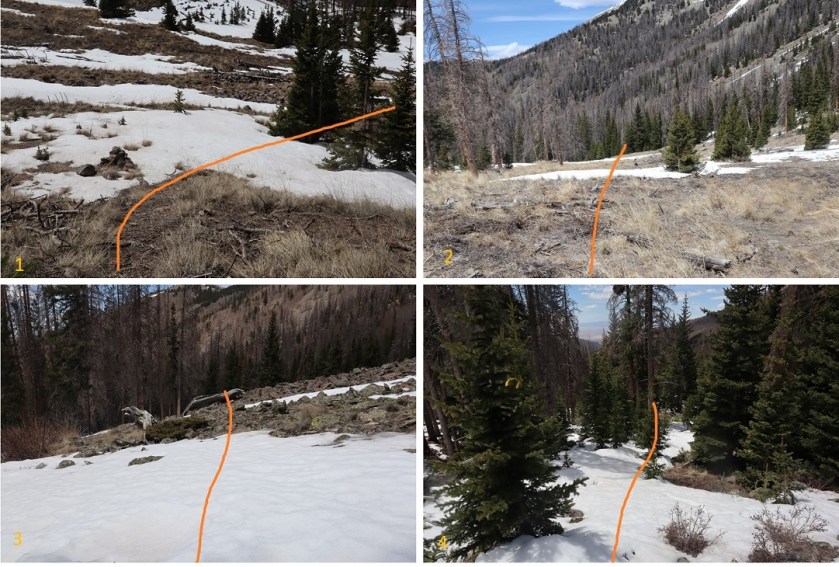
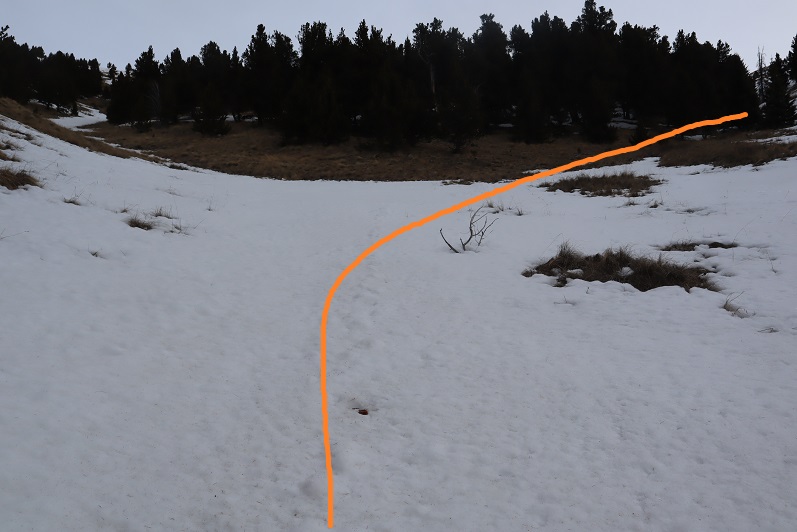
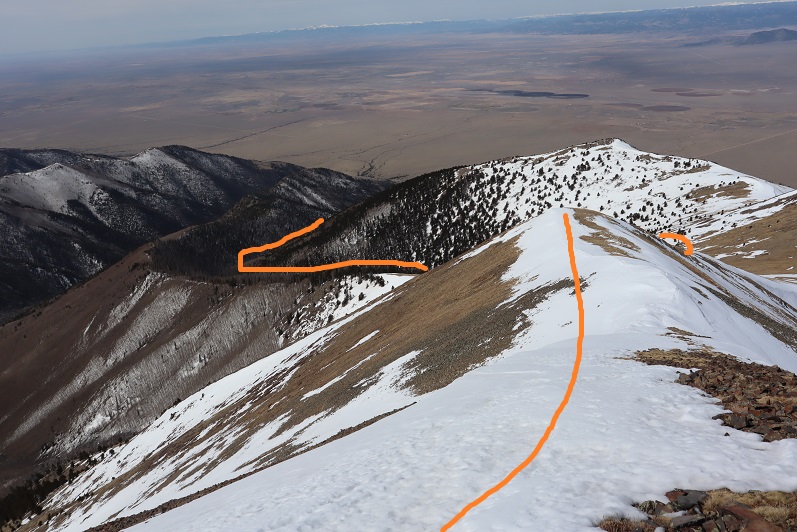
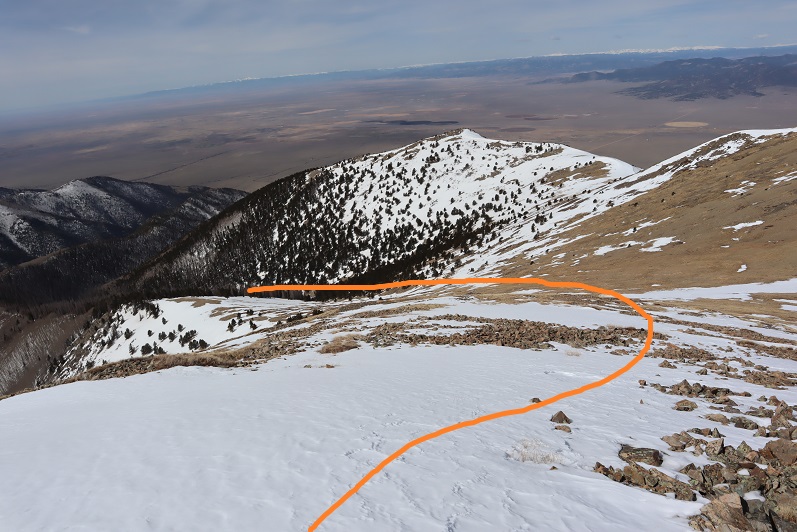
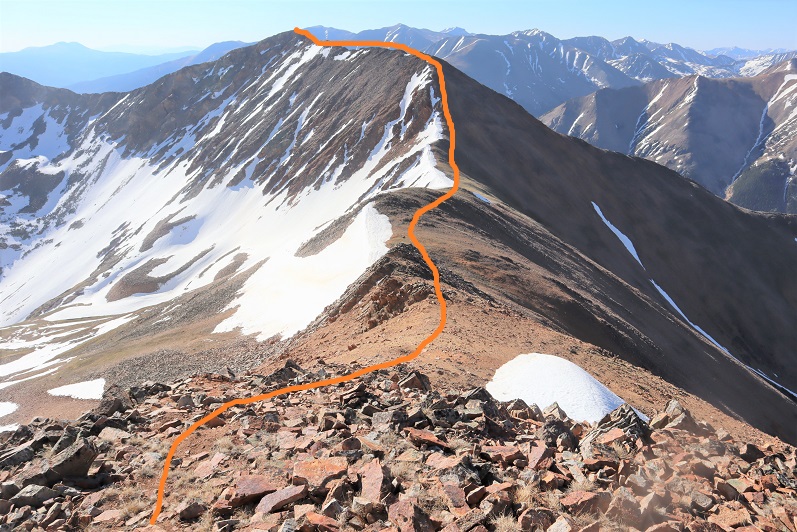
This is where it gets tricky. Here’s the route I took to avoid the snow:

30

31

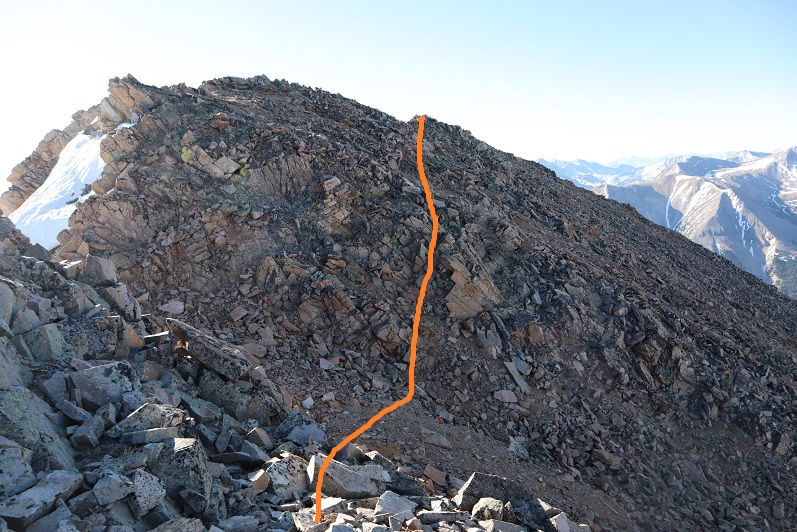
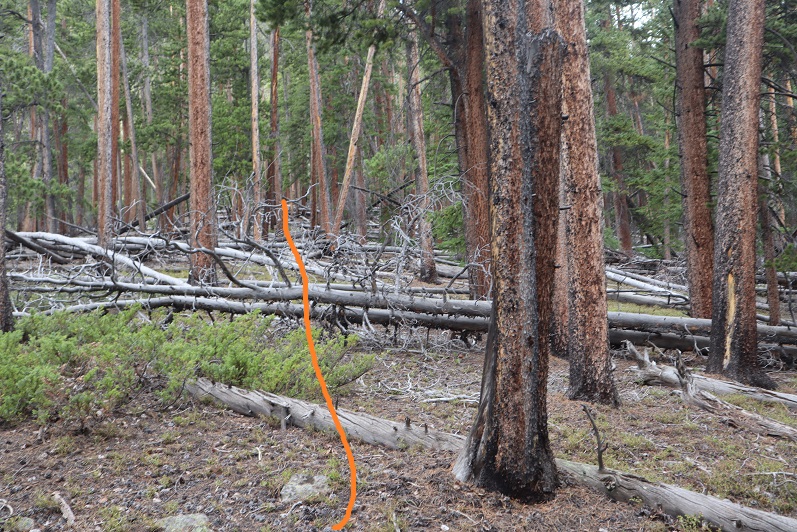
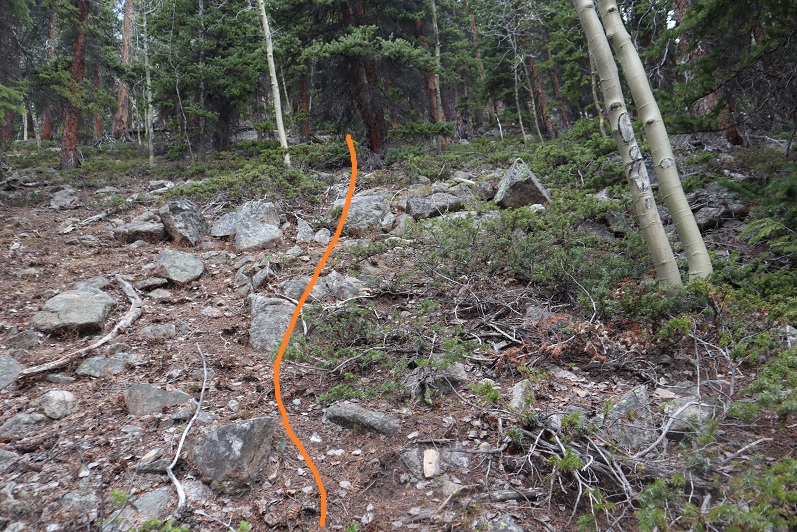
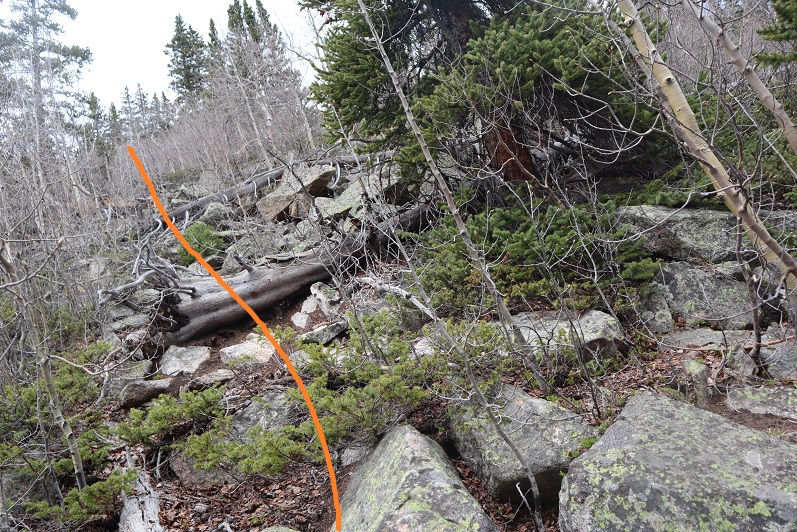
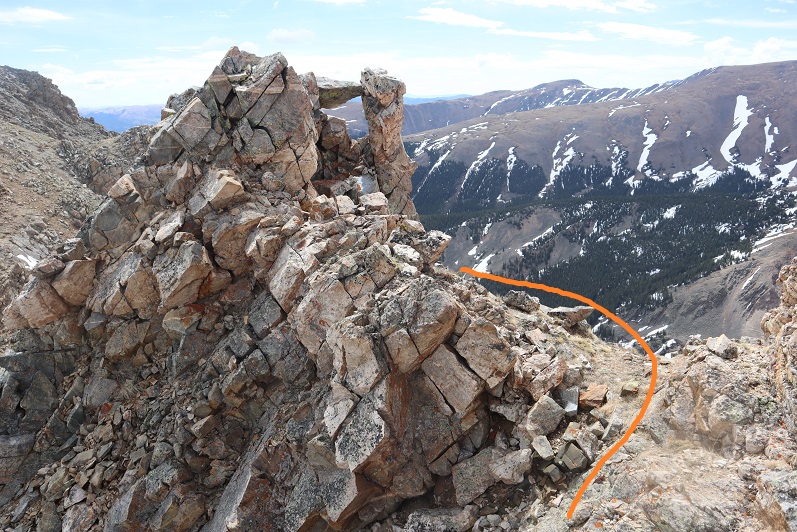
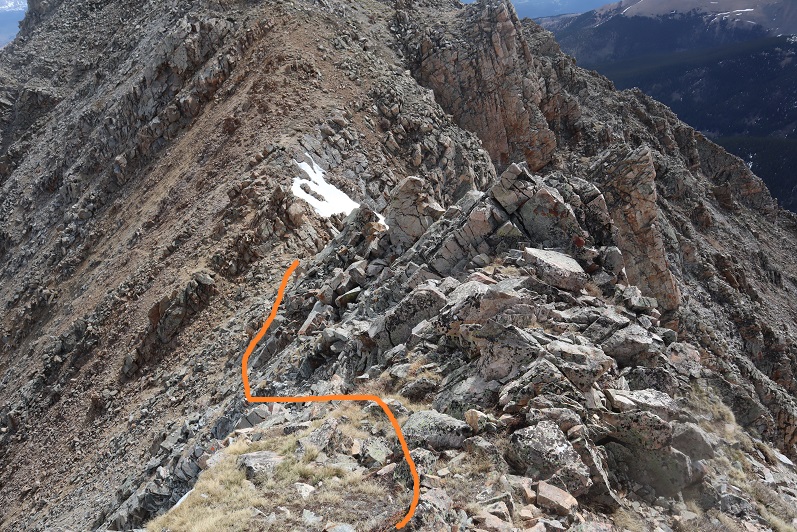
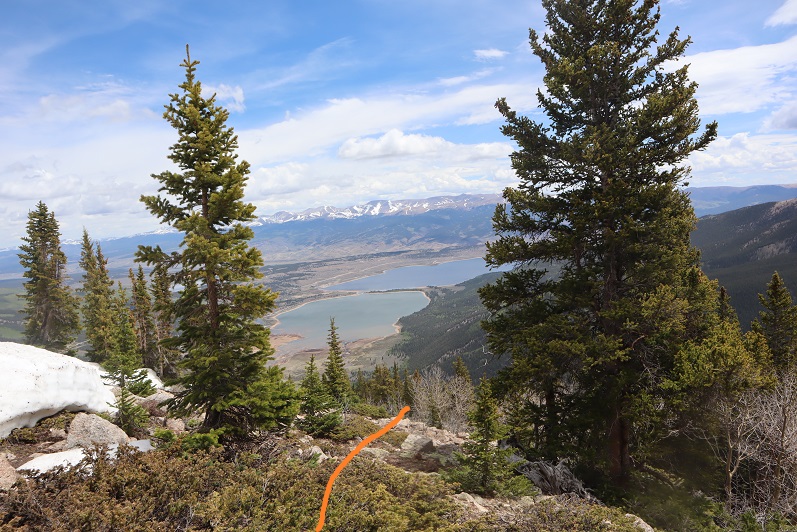
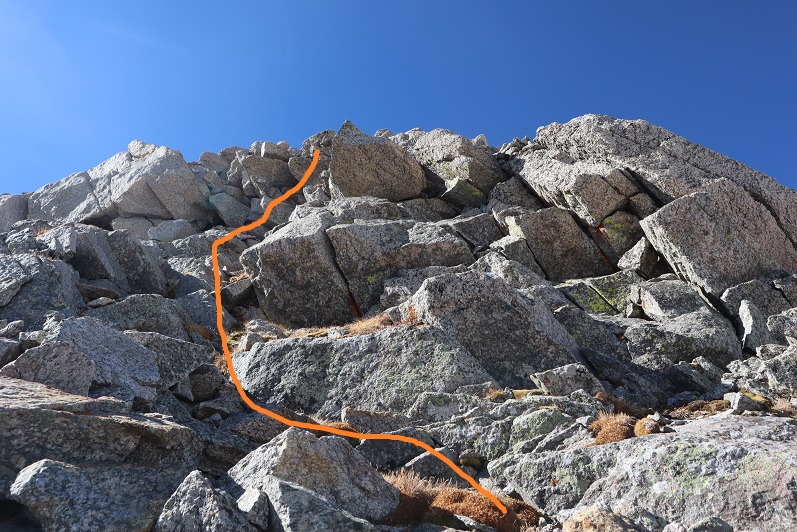
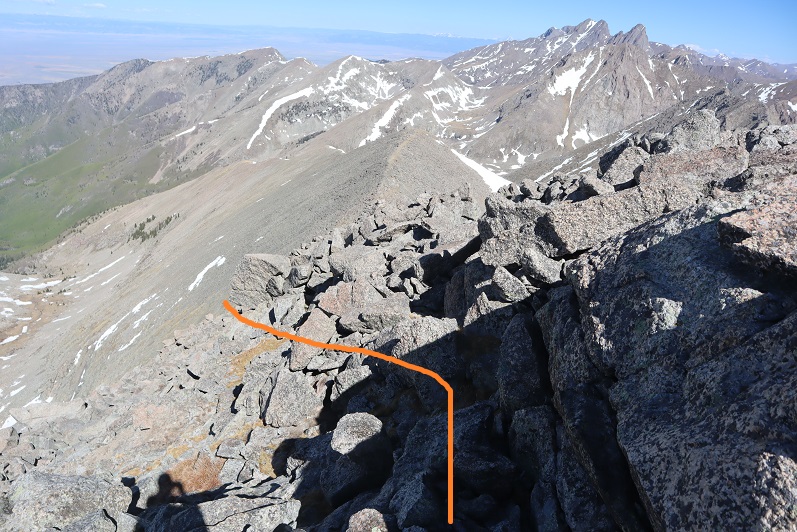
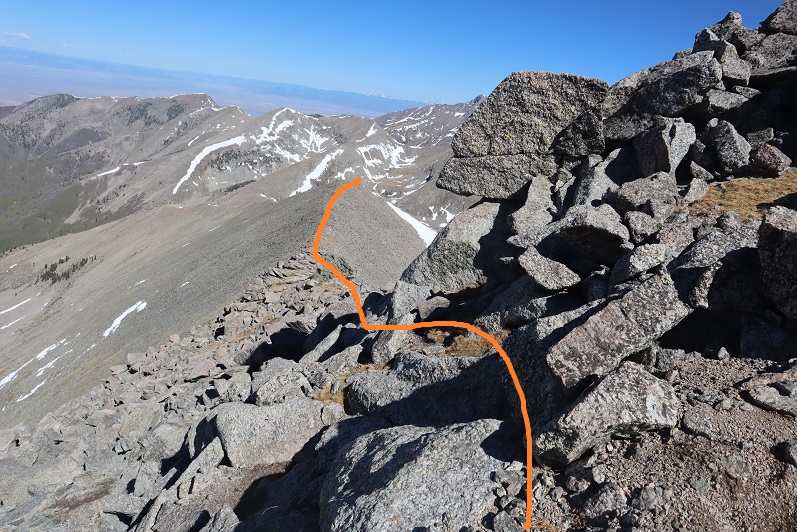
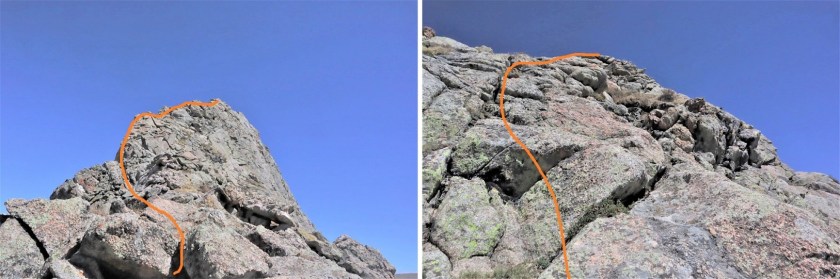
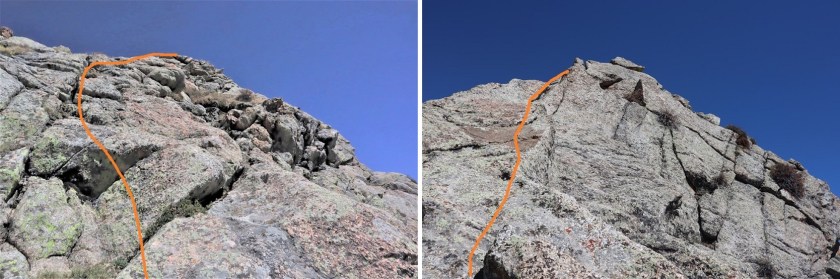
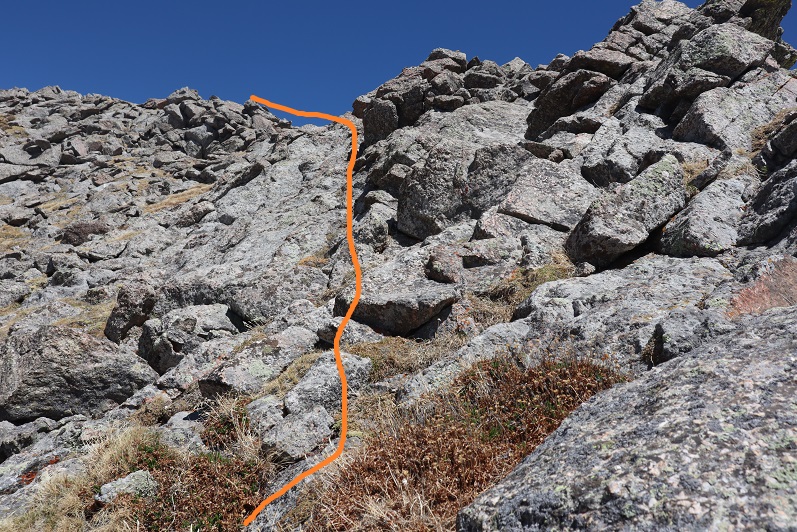
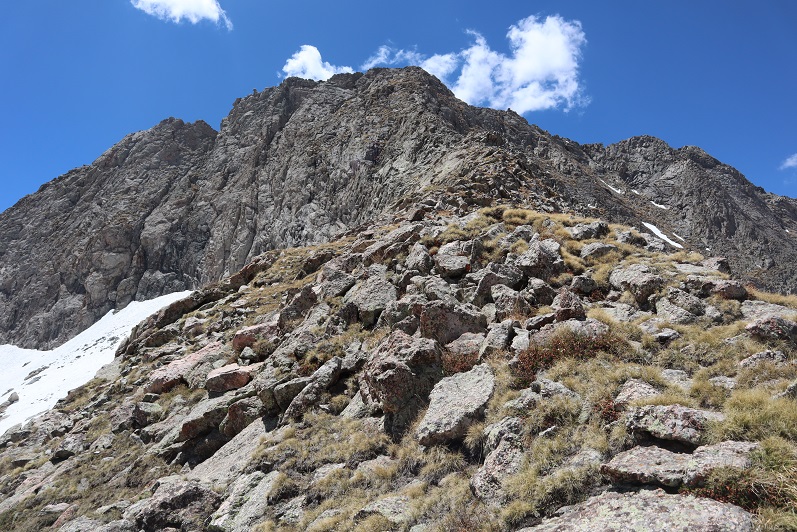
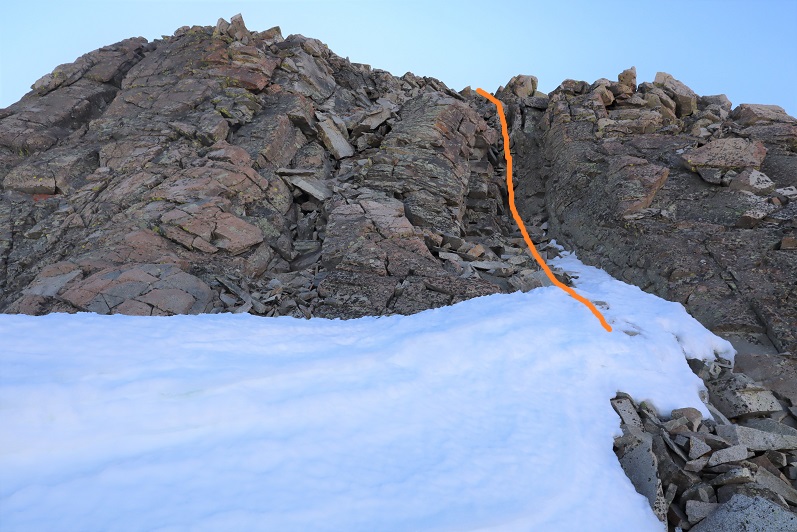
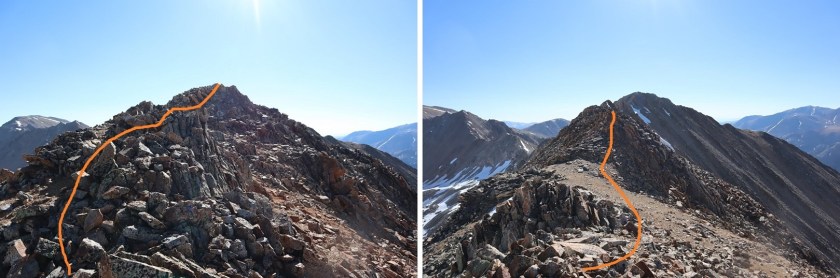
It looks like there might be a class 2 path here along the right (south) side, but with the snow in key areas I wasn’t able to take that route. There was snow in this section, turning the rest of the hike into class 3 on loose rock. I had one rock the size of a microwave fall while I was testing it. Luckily, I was just testing and didn’t have any weight on the rock. It scared me though. A helmet would be a good idea. Note which areas actually “go”: The dirt gullies here make it look like there are trails where there are not. Here are pictures of how I navigated the ridge. This took quite a bit of careful route finding.
32

33

34

35

This is actually easier than it looks. Class 3, and I placed a cairn here so I’d remember how to get back (there are a lot of drastic drops in this area).

36

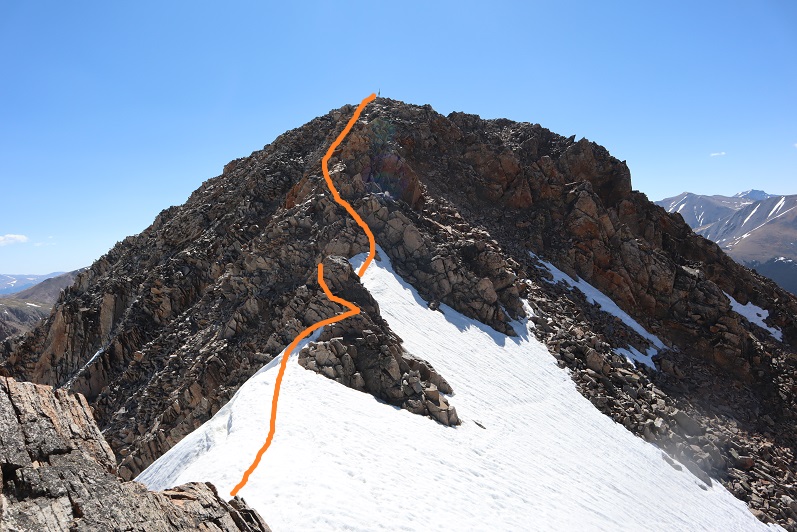
The last hurdle was unavoidable snow just before the summit. I tested the snow and honestly considered turning back. The snow was slippery and a fall would have took me a long way. In the end I strapped on my crampons and got out my ice axe, glad I’d brought both. I traversed these two areas (about 40 feet each) gingerly.
37

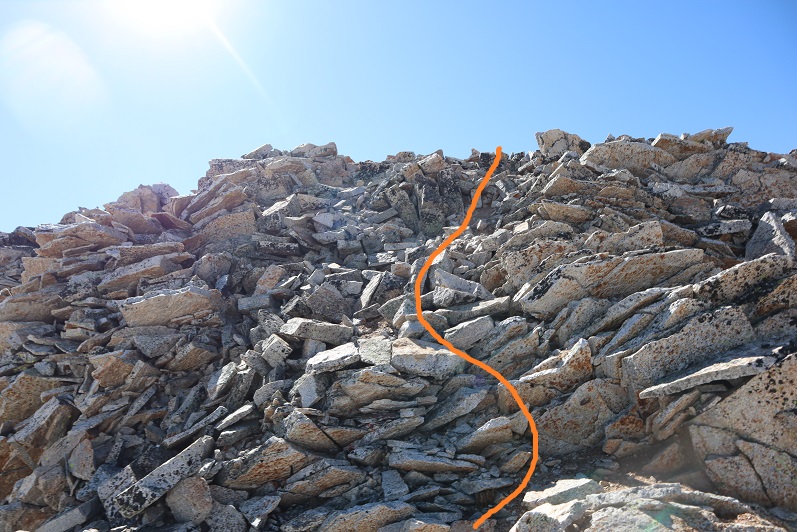
The last bit up to the summit was full of loose rock but was straightforward
38

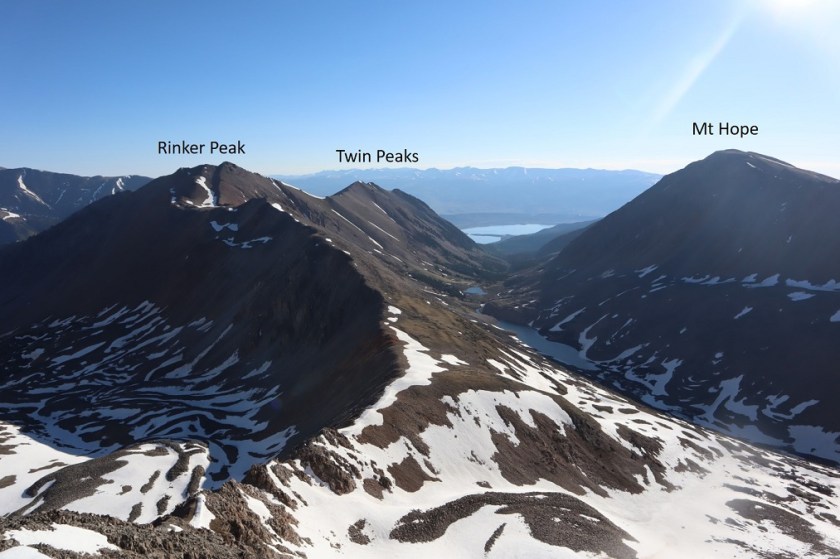
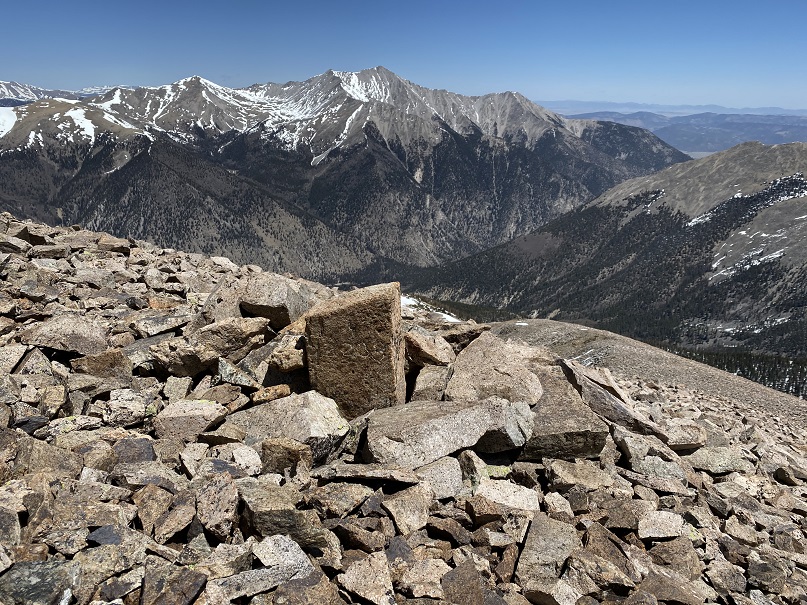
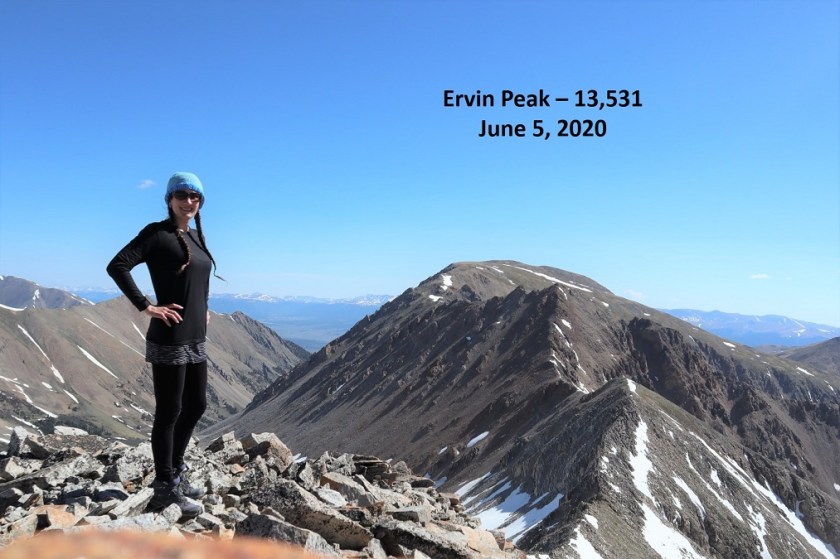
I summited Mt Ervin at 9:30am (that’s Mt Hope in the background)
39

Ervin Peak Summit:

I didn’t stay long on the summit. The day was warm and the snow was melting fast: I wanted to cross the snowy areas as quickly as possible to avoid slipping. I turned around and headed back the way I’d come.

40

41

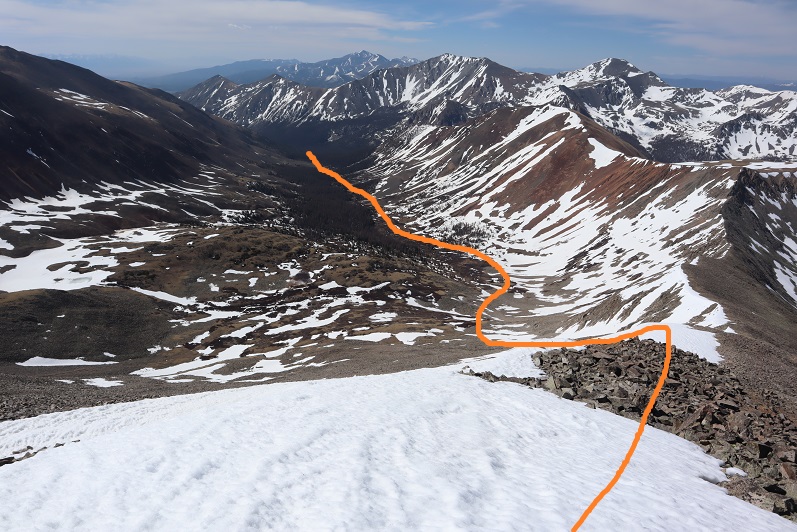
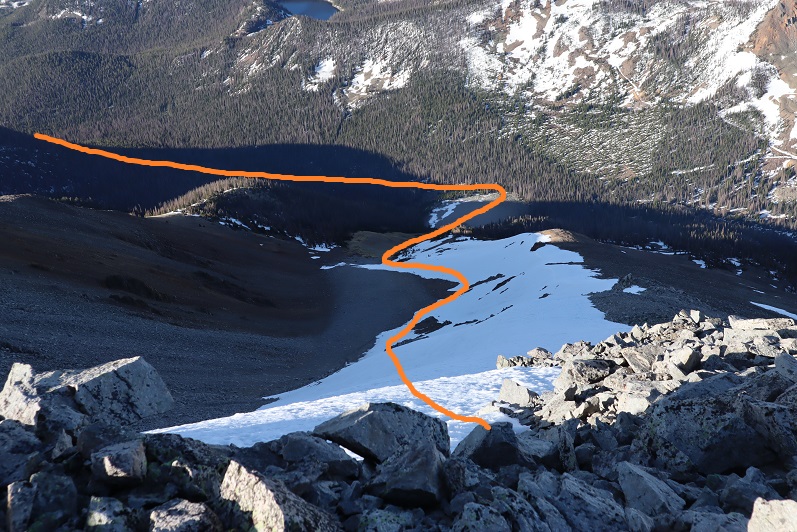
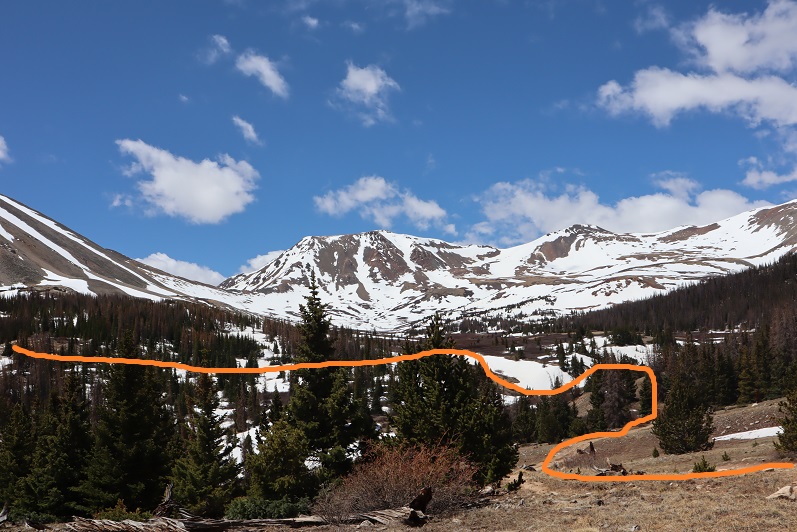
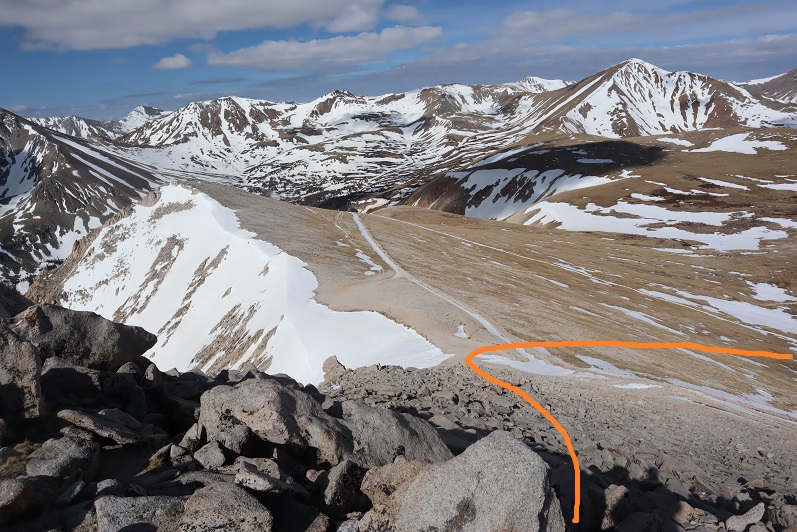
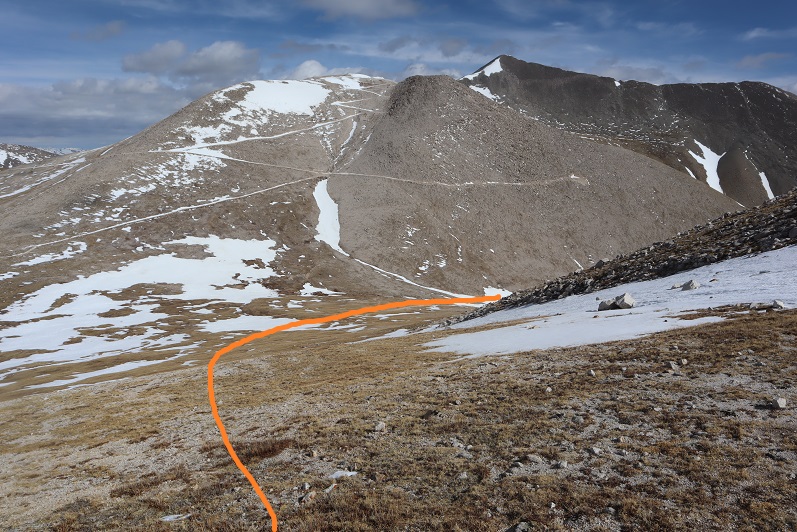
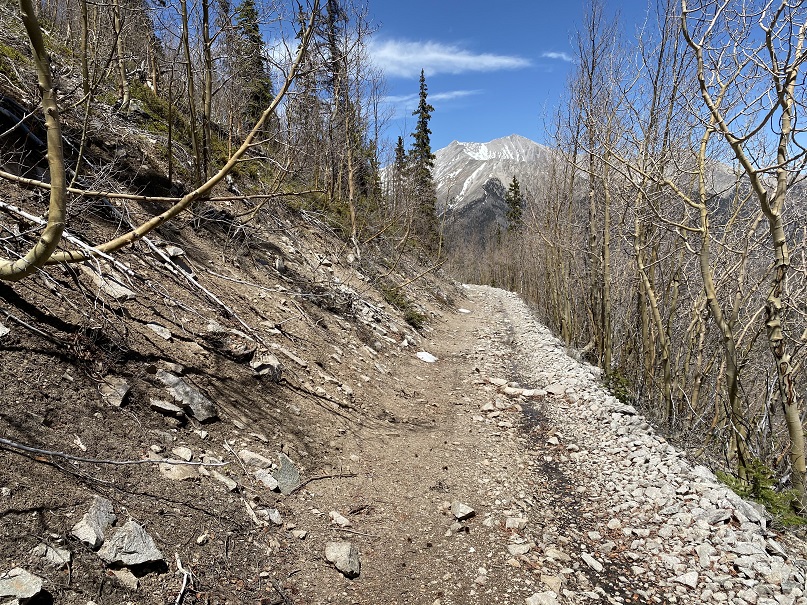
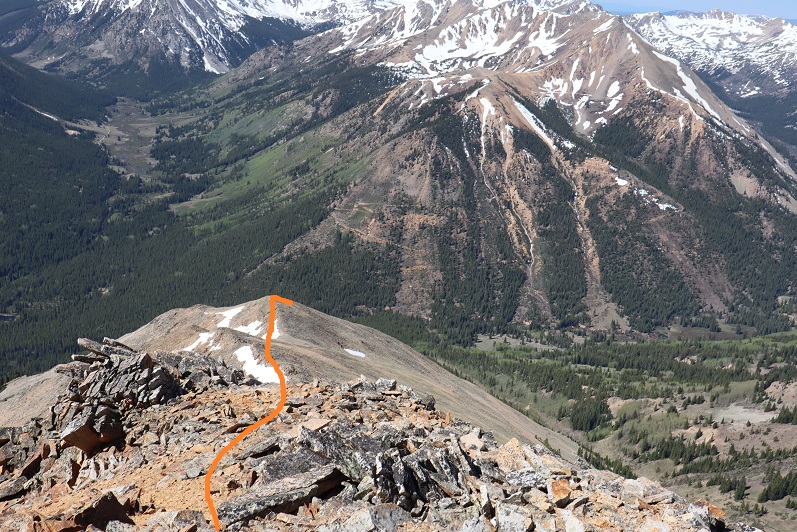
I was making this a loop, so when I hit the westernmost part of the ridge I turned and headed southwest down. This ridge was easy to navigate but full of loose, rolling rocks. It was slow going because I had to be careful with foot placement. This ridge kind of turns right as it goes. Here’s a hint: If it’s daylight, just keep heading towards the switchbacks that you can see in the middle of the picture below.
42

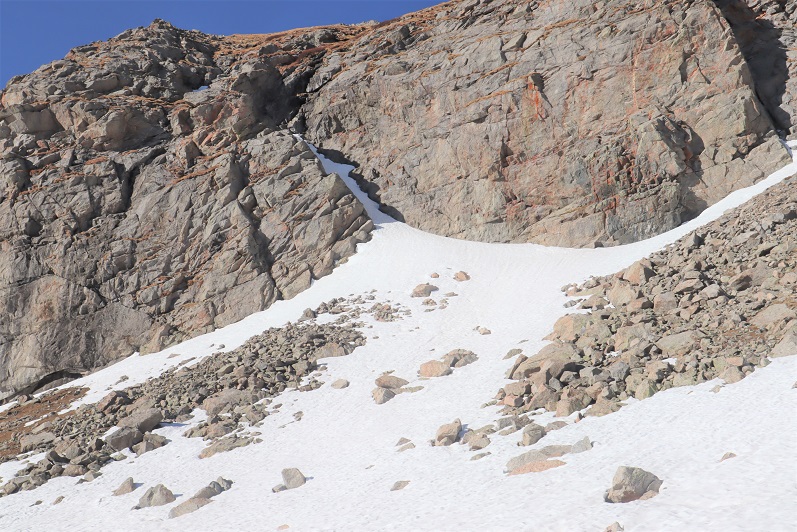
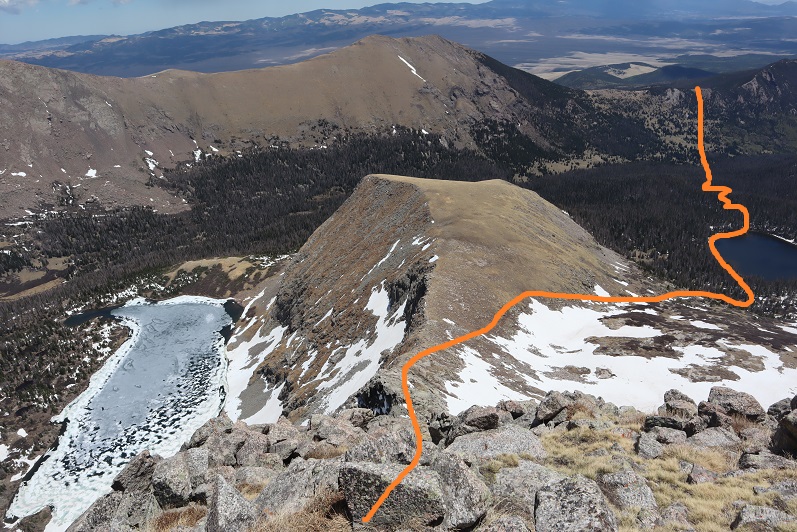
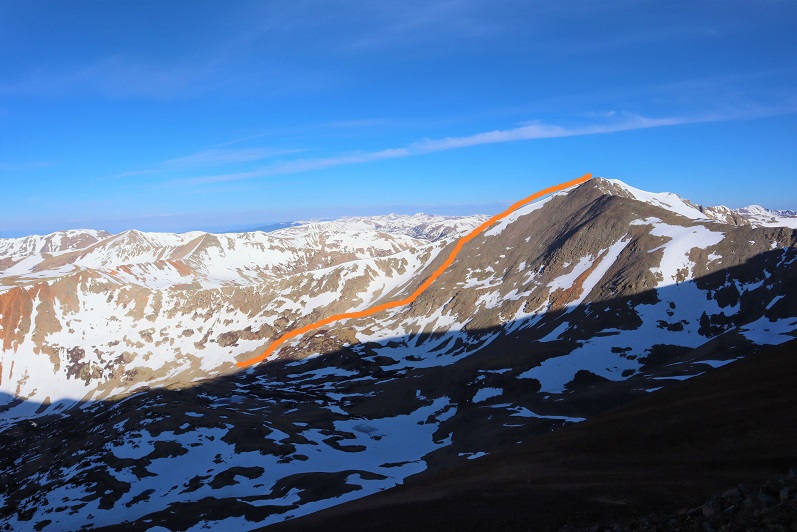
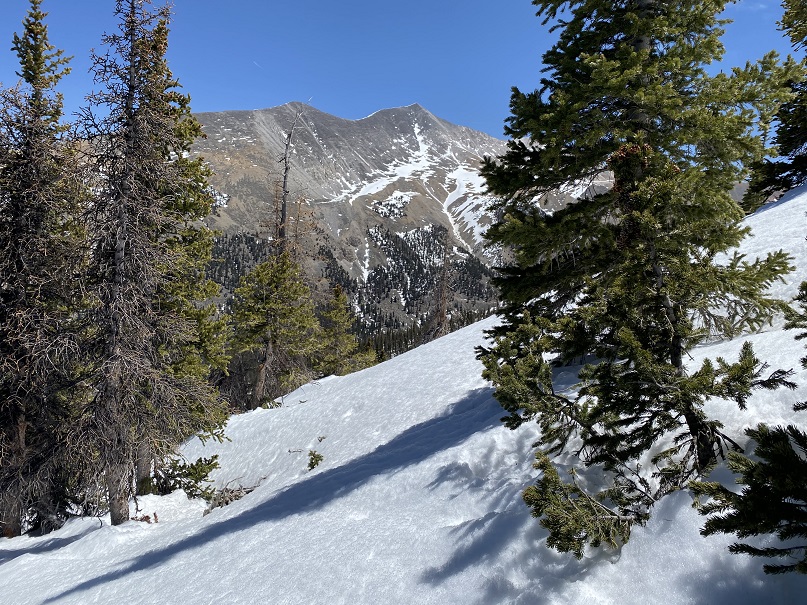
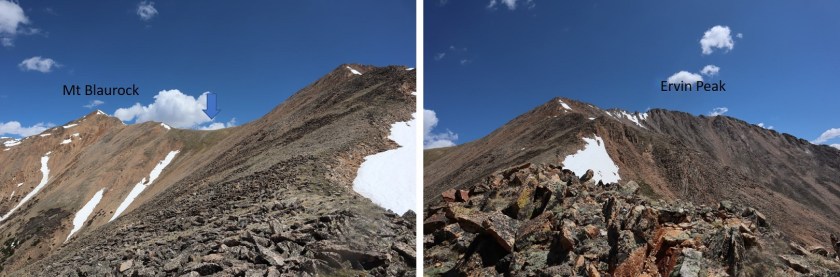
From about halfway down the ridge here’s looking back at Mt Blaurock and Ervin Peak. The blue arrow points to where you could hike from the landslide area straight to the saddle instead of taking the ridges up and down
43

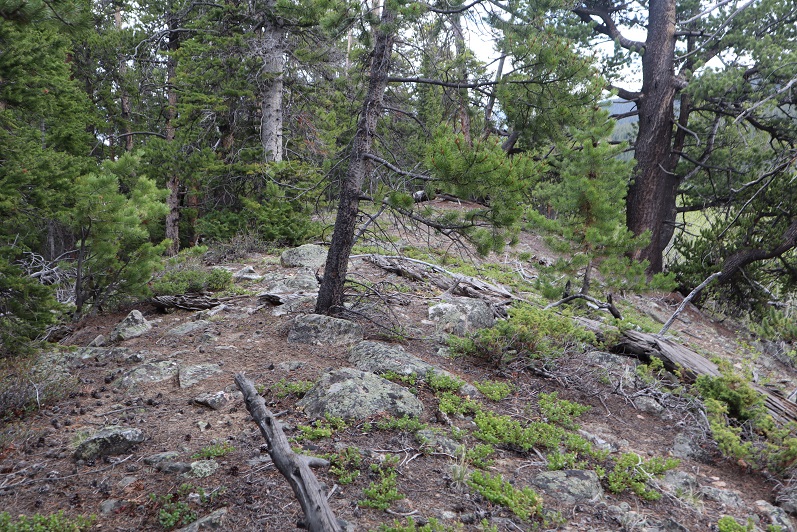
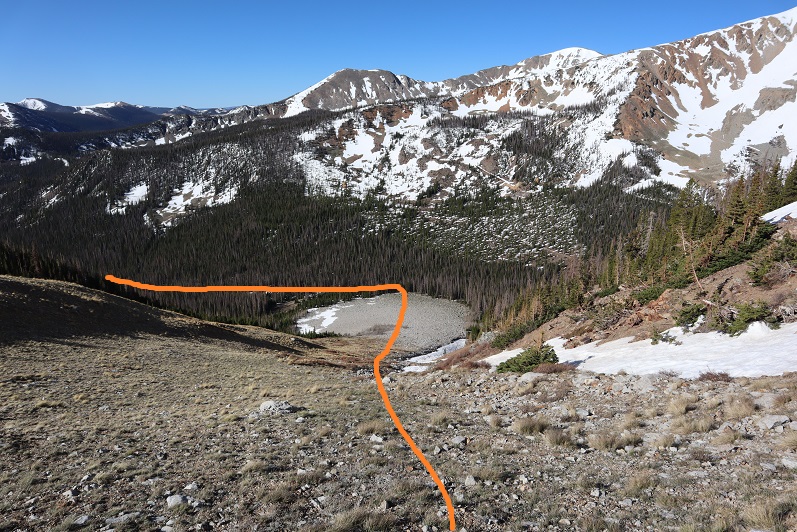
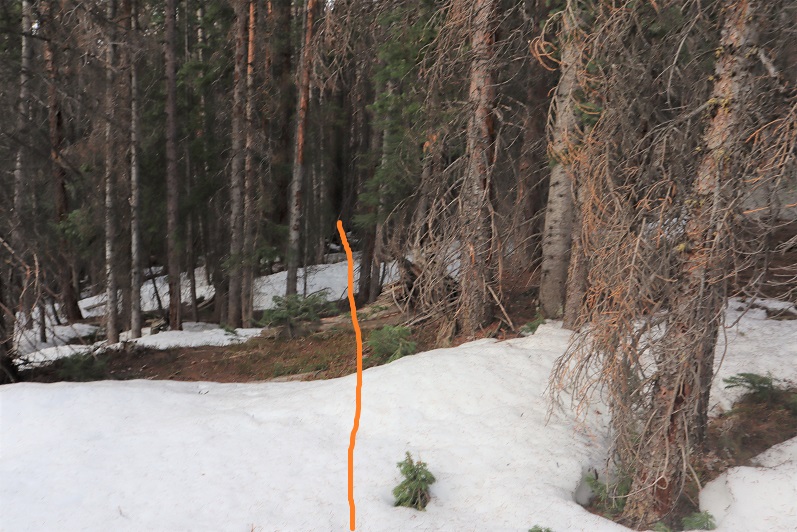
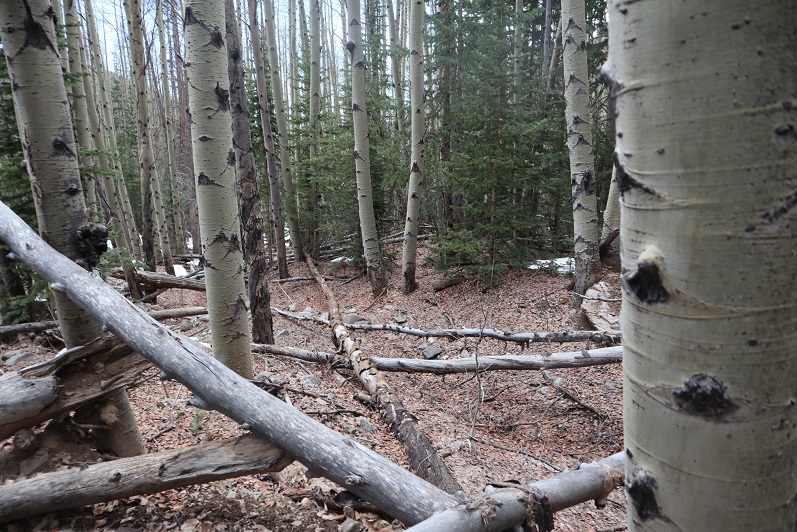
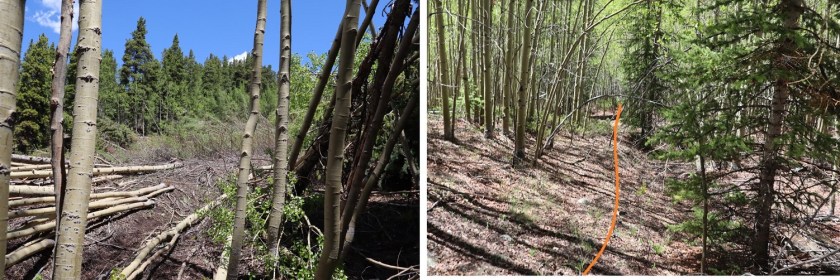
Here you can see you want to meet back up with the landslide area, and that to do so you’ll be bushwhacking through dense aspen. I could still see the switchbacks, but only just barely and only because the aspens aren’t completely full of leaves yet.

44

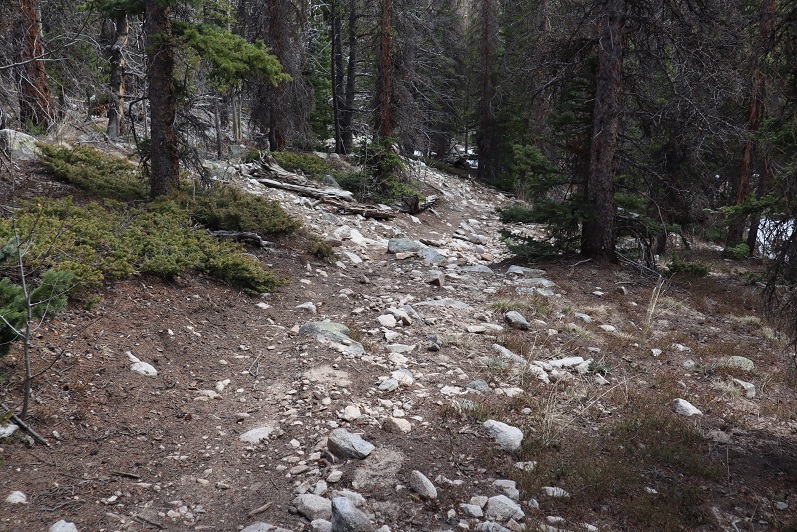
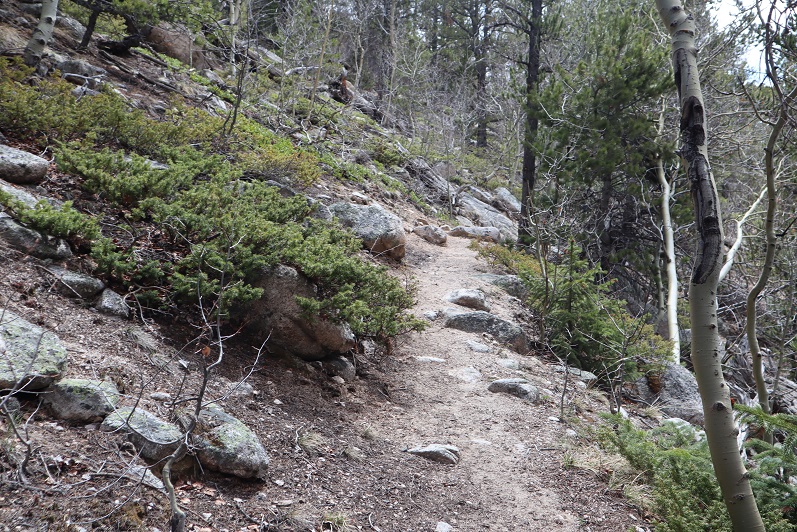
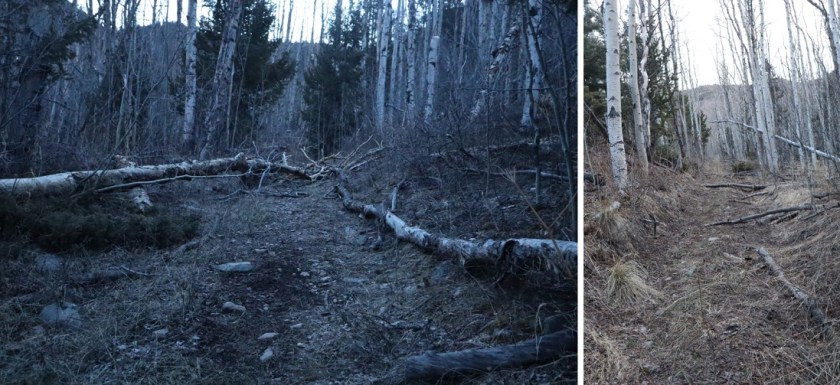
There were enough game trails here to follow not to make this too difficult. It would have been easier if I were 2 feet tall though, because those trails go under logs and through brush.

45

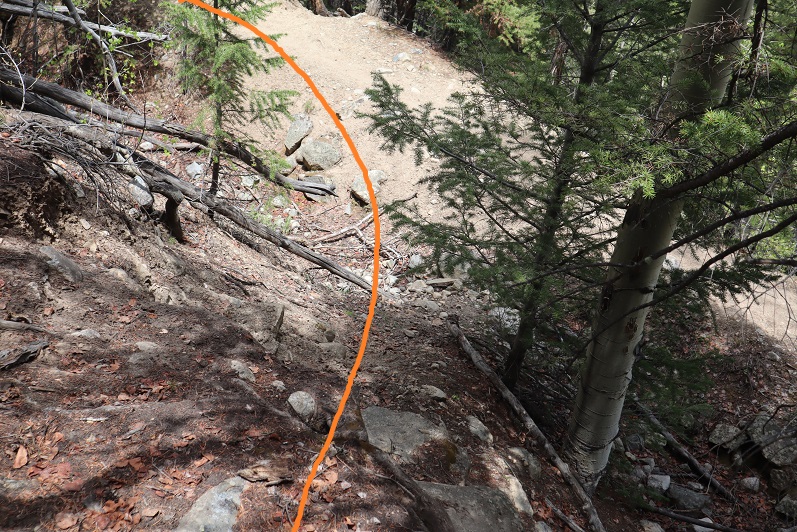
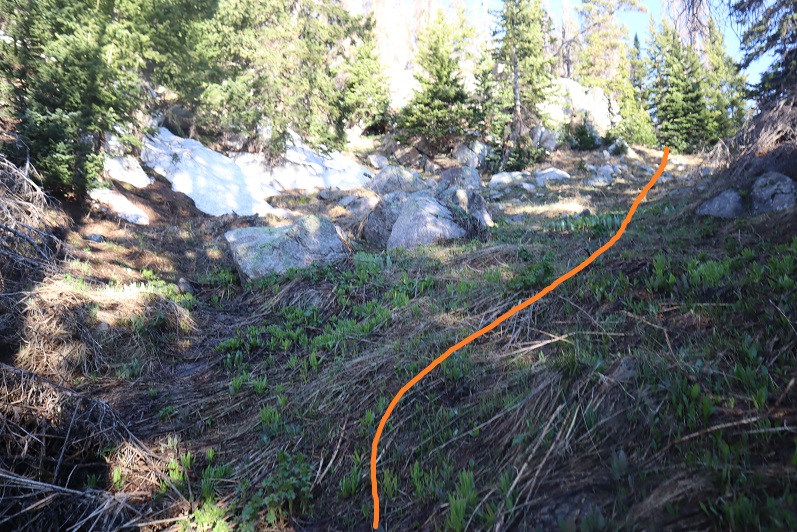
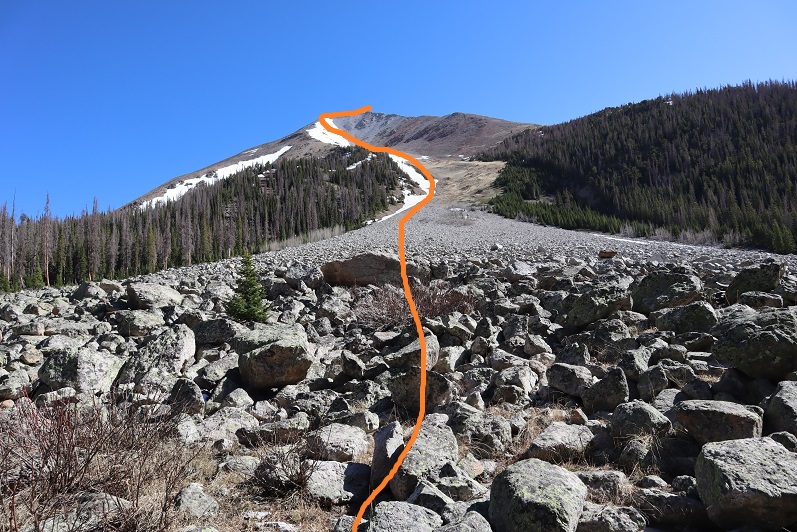
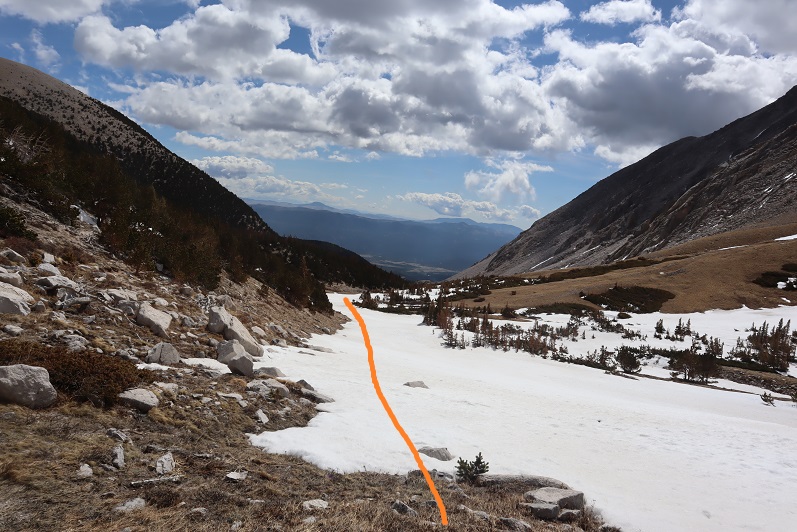
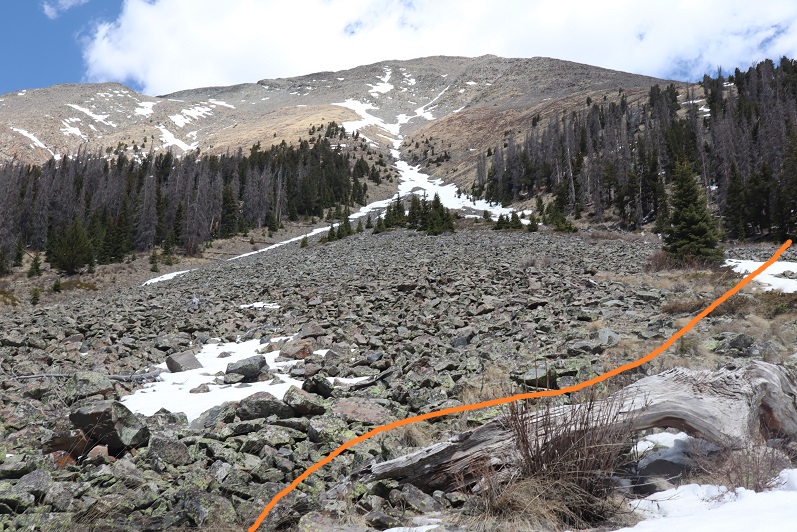
I made it back to the landslide area, took a picture of it in the daylight, and turned and headed south towards my parking space.
46

47

I made it back to my truck at 12pm, making this a 6 mile hike/climb with 3821’ of elevation gain in 8 hours, most of it spent route finding and watching for rolling rocks.

48

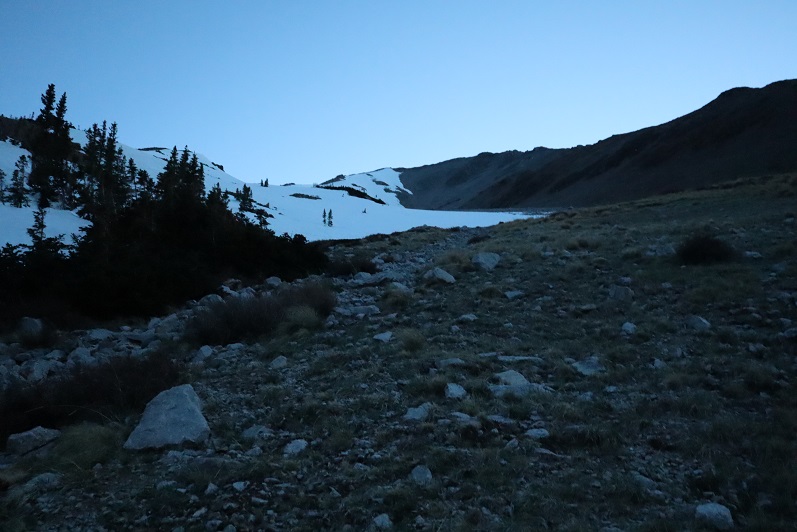
Here’s a picture of the saddle, should you choose to ascend that way

49

When I got home and started jotting down notes I realized today I’d hiked my 145th unique 13er, as well as my 145th unique bicentennial. Pretty cool!

Also, it’s time to retire my hiking boots, as they are no longer waterproof. They almost made it a year….

50

Rinker Peak – 13,789, Twin Peaks B – 13,333 & Twin Peaks Northeast – 13,270

1

RT Length: 10.5 Miles

Elevation Gain: 5471’

Wow, what a difference a couple of months make! I’d attempted Rinker Peak back in January but didn’t get very far. Today there was no snow on the ground at the Willis Gulch Trailhead and I was easily able to get a parking spot instead of parking on the side of the road. I gathered my gear and was on the trail by 3:30am.

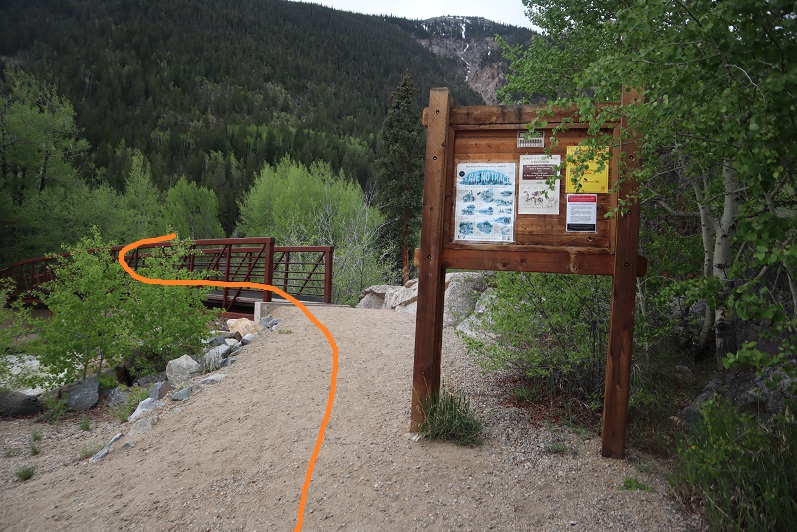
The trail begins at the south end of the parking area by crossing a bridge over Lake Creek and turning right.

2

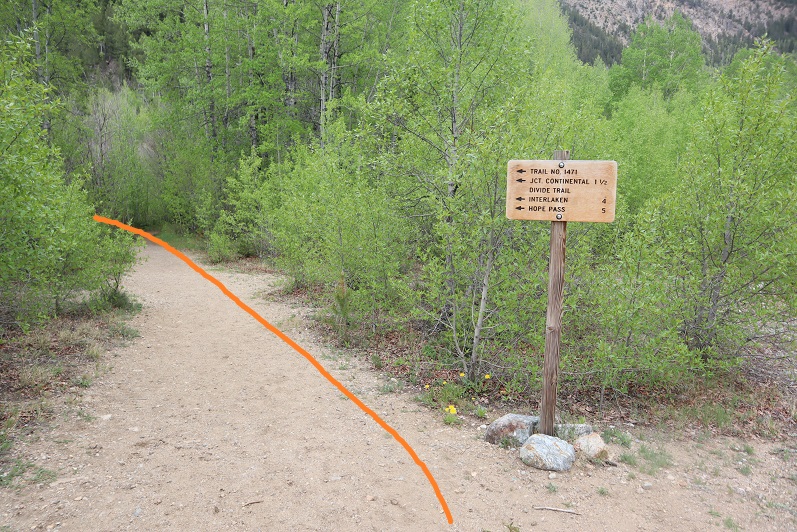
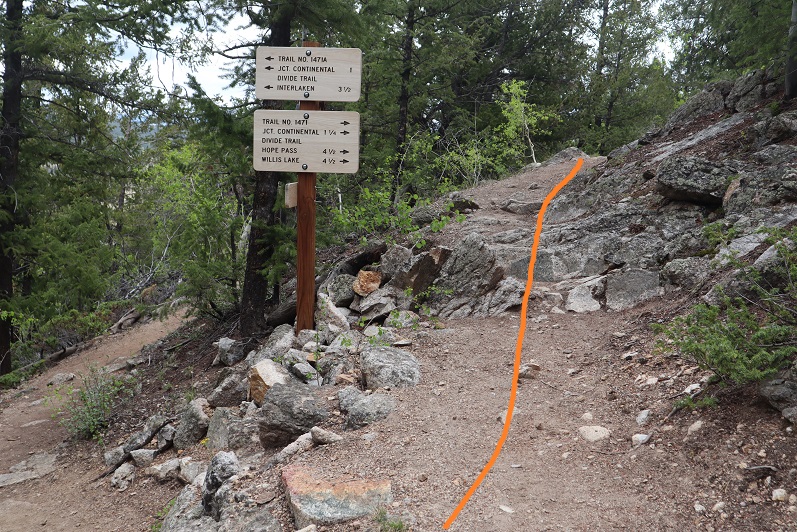
At this sign turn left and follow Trail No 1471

3

This will lead you through some Beaver Ponds on a nice trail. In the dark of the morning I heard a beaver sized splash about 4 feet away from me, stood in place for a second making noise, and for the next 15 minutes hit my trekking pole on every rock/tree I saw. I’m pretty sure it was a beaver, and the beaver didn’t care.

4

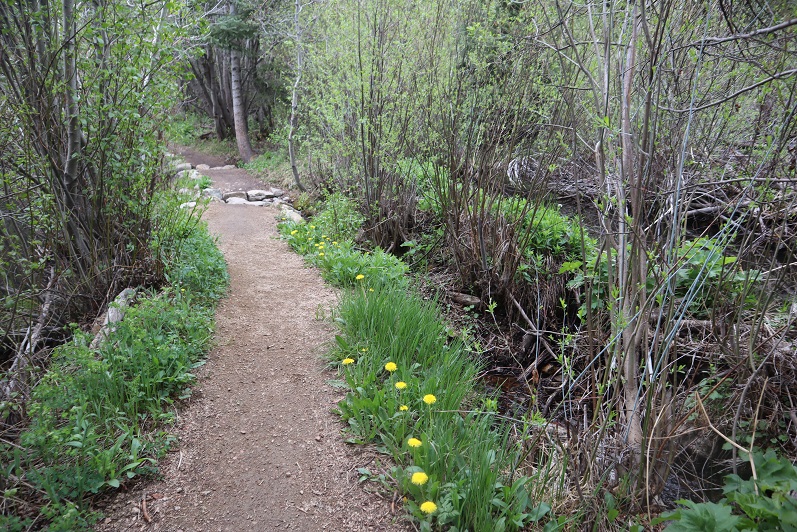
I followed the class 1 trail and stayed right at this junction to stay on Trail No 1471

5

After hiking for 1.3 miles I turned right off the trail and bushwhacked my way up to the top of the slope. And I mean bushwhacked.

6

This was harder to do than it sounds, and I’m glad I did it at this time of year (before the bushes have too many leaves). There was a 20% chance of rain here last night and it looked like this section of the mountain got it: The branches and groundcover were wet and slippery and the slope angle just enough to keep me on my toes. There were tons of trails here, but they were all game trails and frequently and abruptly stopped. I just kept heading southwest, doing my best to find the path of least resistance, thinking to myself this ‘wet’ is the reason I could never do a thru hike, as I’d never dry out. Give me snow any day! (Also, I truly do want to do a thru hike…). It was quite an experience running into so many spiderwebs in the dark…

7

At 9275’ and after about half a mile of hiking off trail I came to the top of this part of the mountain, a kind of ‘ridge under the trees’. I wouldn’t call it a ridge per se, but from here if I would continue heading southwest I would have started losing elevation, so I turned left (south).

8

I followed this ridge south and then west as it rounded to treeline. There wasn’t a trail and I only saw 1 cairn all day (on the ridge)

9

I came to an area with a lot of downed trees (which was fun to navigate at night, easy during the day)

10

And headed straight up the mountain to treeline, passing through pine trees, dense aspens, and some loose rock piles

11

12

The rocks were large but many were loose. Be careful of your footing here: I don’t think any rocks will tumble down, but they will roll out from under you.

13

This brought me to treeline, where I found what looked like maybe an old structure (or windbreak) covered in snow so I couldn’t really tell. There were also rusted cans scattered all over and an old coffee pot. That means there had to be a better trail to get to this point than the one I’d taken, as it was obvious this area was once used more frequently.

14

This was basically treeline, but there was just enough snow that I skirted it for a bit to make it to the ridge.

15

16

The ridge is straightforward. I thought the top would be Twin Peaks Northeast (it’s not).

17

There are a couple of goat trails on the left side of the ridge, and one area where I had to dip down to the right to avoid a gully

18

19

There’s a cairn at the top. I reached the ridge after 3.75 miles of hiking

20

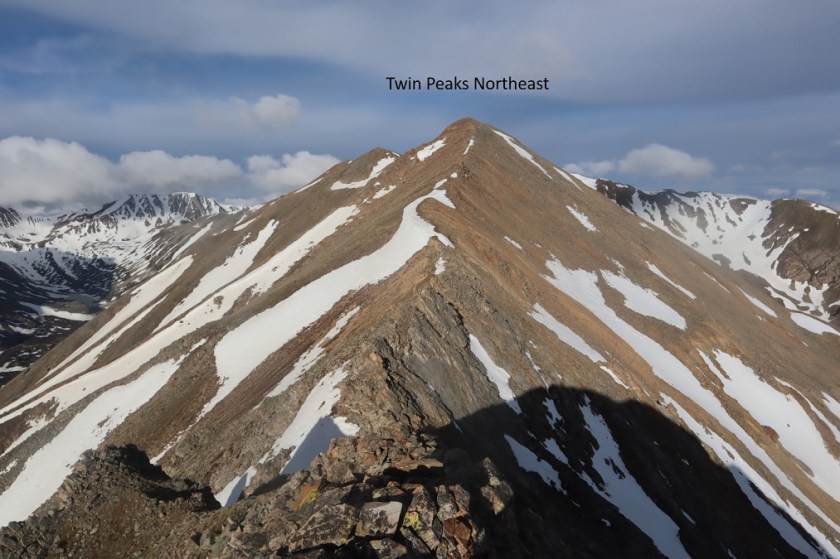
And from the top of the ridge you can see Twin Peaks Northeast

21

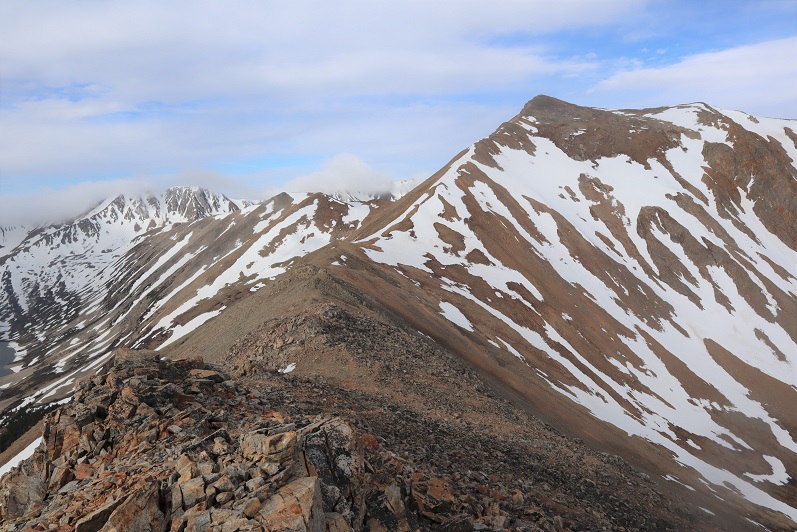
From here there are a lot of ups and downs to the rest of this hike. This is a class 2 ridge, and nothing too difficult presents itself. I went right here

22

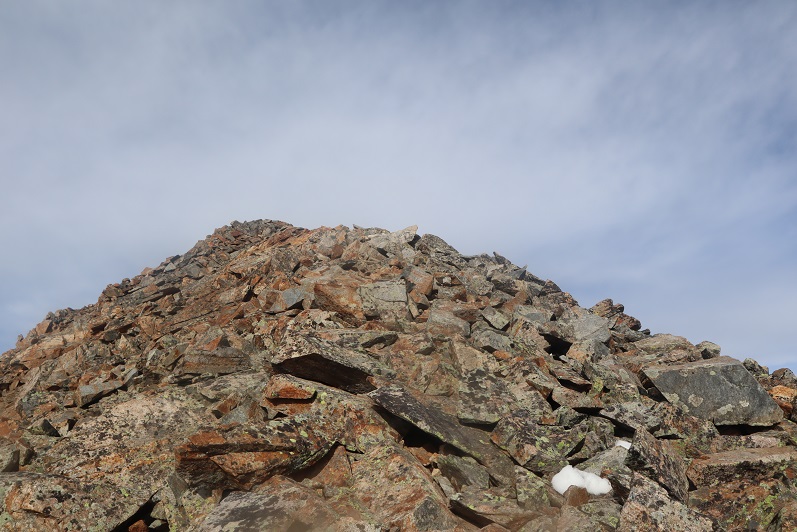
But mostly just followed the ridge. I made it to the top of Twin Peaks Northeast at 7:38am, after 4 miles of hiking. It was windy and thus cold, and here I put on my outer layer and balaclava and extra gloves. I got selfies here and at the next peak but I’ll spare you those and just let you see the videos, as these are unranked peaks.

23

Twin Peaks Northeast:

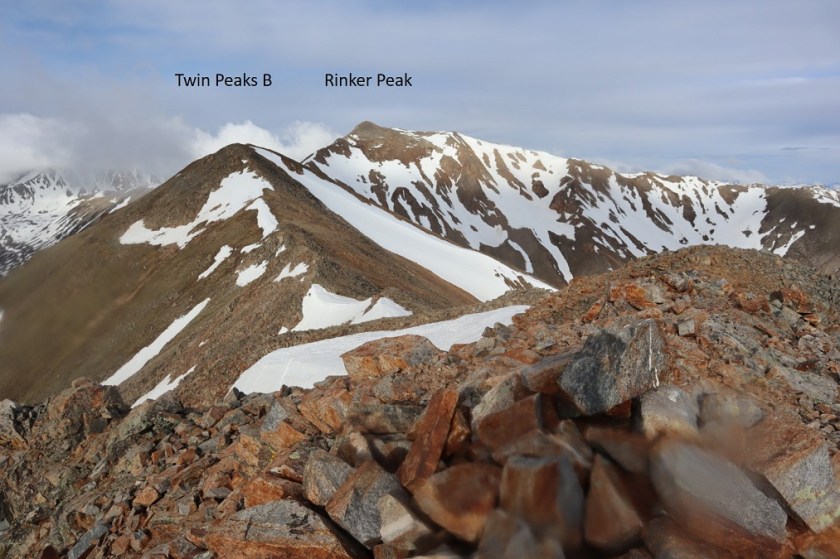
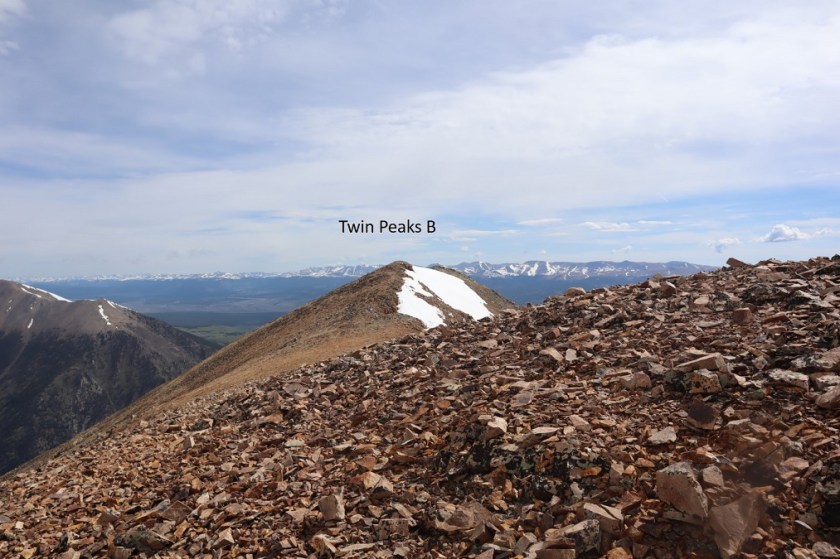
A storm was coming in, or at least it looked like clouds were rapidly forming, so I had to make a decision: Should I continue along the ridge or turn back? In the end I decided to continue to Twin Peaks and make the decision at that point. This is a long ridge, and requires commitment on the weathers part. I continued southwest along the ridge to Twin Peaks. The hardest part of this ridge was over and it was a simple trek (or it would have been simple without all that wind!!!). I made it to Twin Peaks B at 7:50am after 4.5 miles of hiking.

Twin Peaks B:

24

The weather seemed to be holding so I headed over to Rinker Peak. This was an easy class 2 ridge hike to the saddle

25

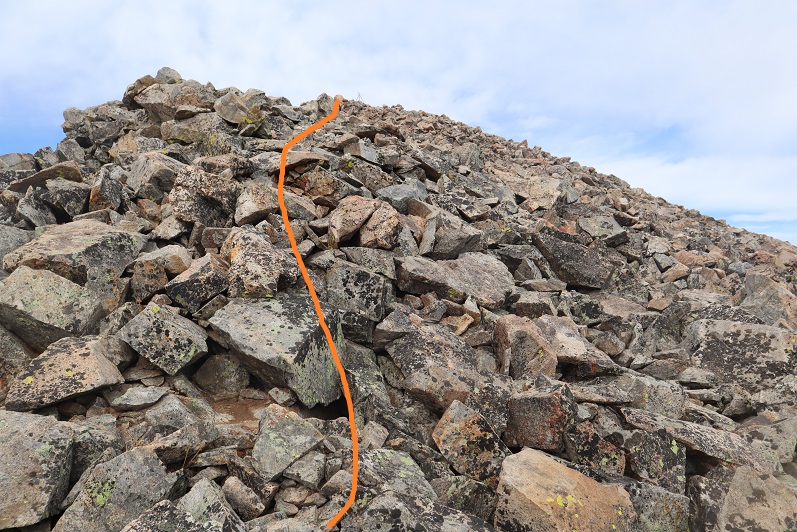
Here’s the route I took up to the summit of Rinker. Snow was (mostly) avoidable, and while I did some minor postholing, no traction was needed

26

27

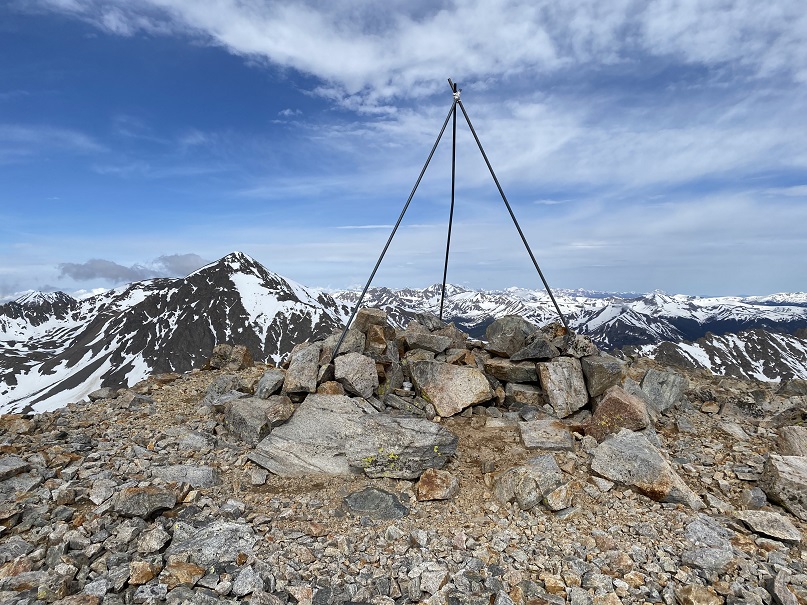
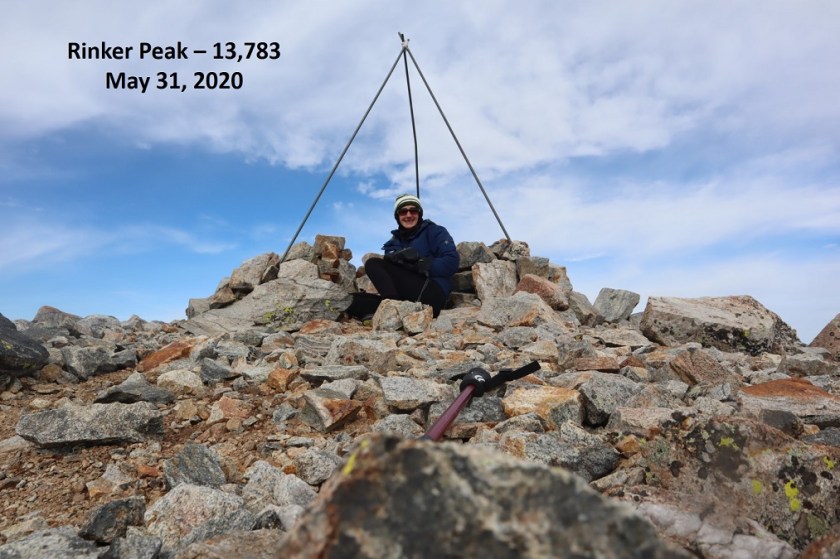
There was a tripod at the top, so if you brought up a tarp and rope you could have a nice shelter from the wind. I summited at 8:50am, glad I’d decided to continue this hike. It was 5.35 miles to this point and the weather was great.

28

29

Rinker Peak:

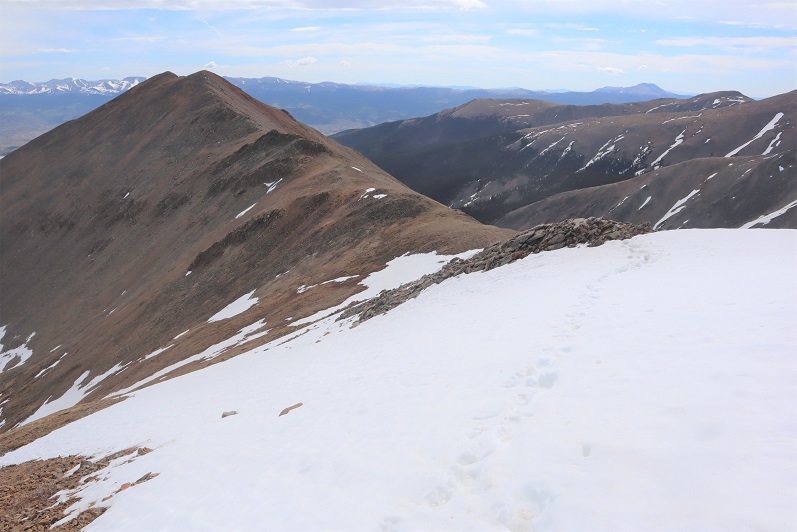
Here’s looking at the route to this point

30

And the route back along the ridge (there are goat trails in areas to follow here)

31

32

33

As on the way in, the only really tricky section (if you want to call it that) is between Twin Peaks Northeast and the point on the ridge to head back down

34

Go right around this rock

35

Left here (just before the saddle)

36

And this is the route to the top

37

Be careful of loose rock here

38

This will bring you back to the cairn

39

Just follow the ridge back to treeline

40

And back through the rocks, aspens, and pine trees

41

42

43

That will lead you to the ridge to follow below treeline

44

And eventually back to the trail

45

I passed the beaver pond in daylight (I didn’t see any beavers)

46

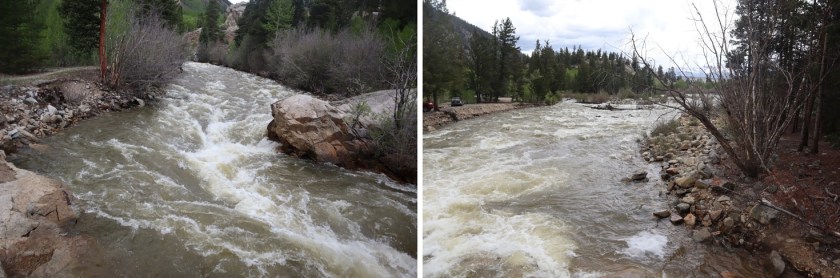
And crossed Lake Creek. It had more raging water than I’ve ever seen there before but to be fair, I’m usually in this area in winter and it’s mostly frozen.

47

I made it back to my truck at 1:30pm, making this a 10.5 mile hike with 5471’ of elevation gain in 10 hours. I didn’t see another person all day, even when I was on the class 1 trail. It started raining as I left the parking lot. Here’s the route to the ridge as seen from Twin Lakes

48

And my topo

49


Tijeras Peak – 13,612 & Music Mountain – 13,365

1

RT Length: 12 miles

Elevation Gain: 4587’

I’d intended to be on the trail by 4am, but the last 2.5 miles of 4WD road past Grape Creek TH to Music Pass TH took longer than I’d anticipated. It is indeed a 4WD road that requires some clearance. It was better than South Colony Lakes though. I brought snowshoes but decided to leave them in the truck. I was the only vehicle in the very large parking area when I left. I put on my helmet and was on my way by 4:30am.

2

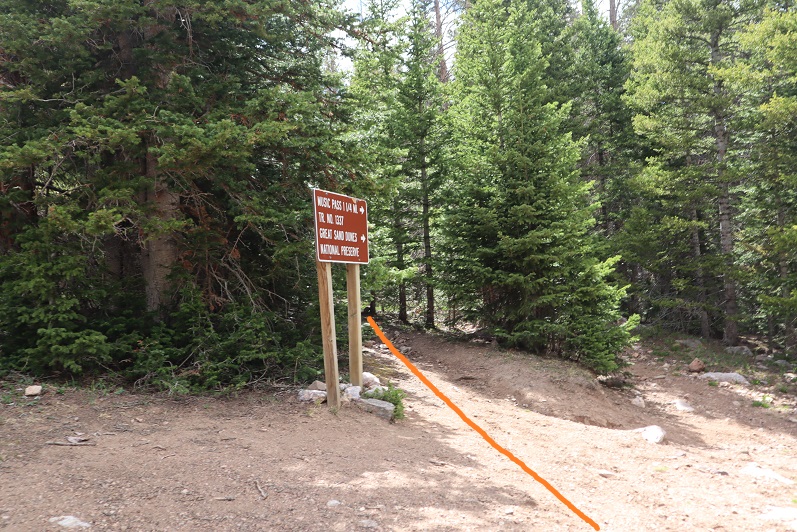
The trail starts at the west end of the parking area.

3

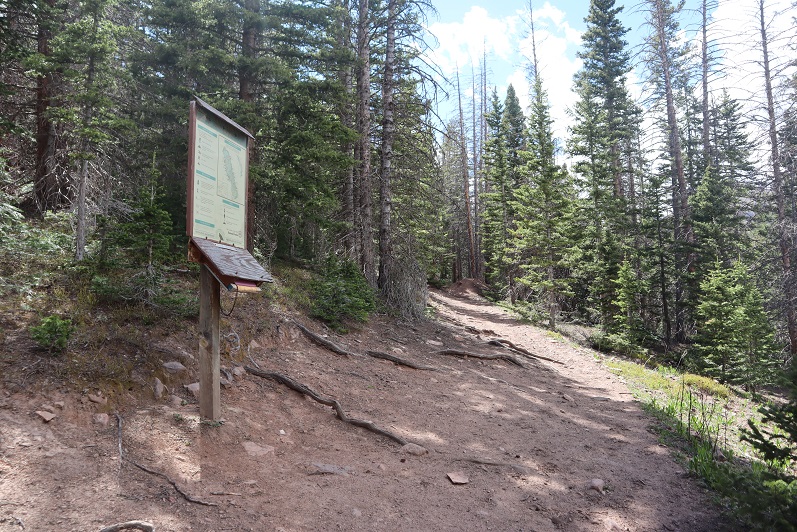
The trail is class 1 all the way to the Lower Sand Creek Lake. I came across a (full) trail register quickly

4

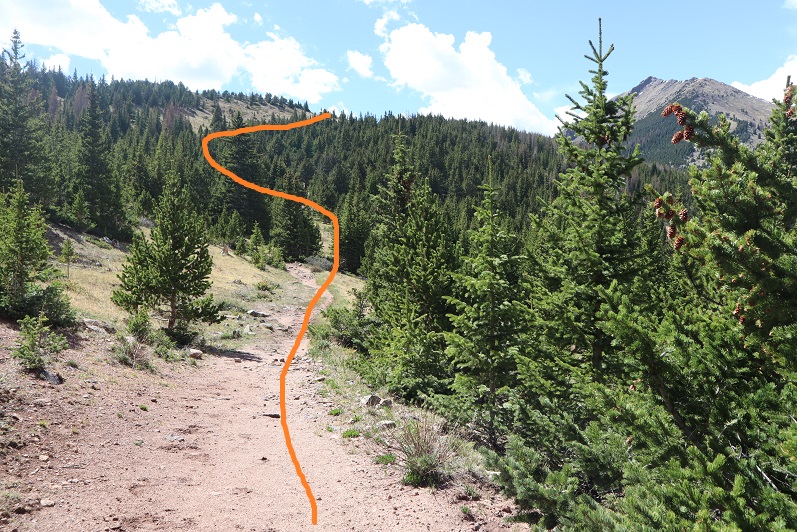
And continued on a well-maintained trail west 1.2 miles to Music Pass, where there was another (full) trail register.

5

6

From Music Pass there’s a great view of the entire route:

7

From Music Pass the trail loses 450’ in elevation as it brings you to the valley below.

8

Stay straight at the first junction (2 miles)

9

And turn left at the second (2.3 miles)

10

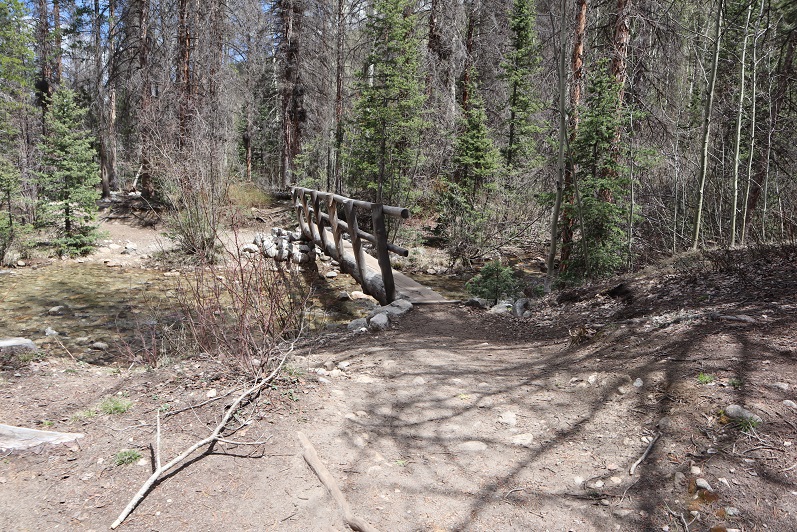
I quickly crossed Sand Creek on a bridge put together by fallen logs, and continued along the class 1 trail

11

The trail was easy to follow, but, ah, spring conditions. If there wasn’t water on the trail there was snow. More than once I regretted leaving my snowshoes in the truck: It was posthole city at 6am.

12

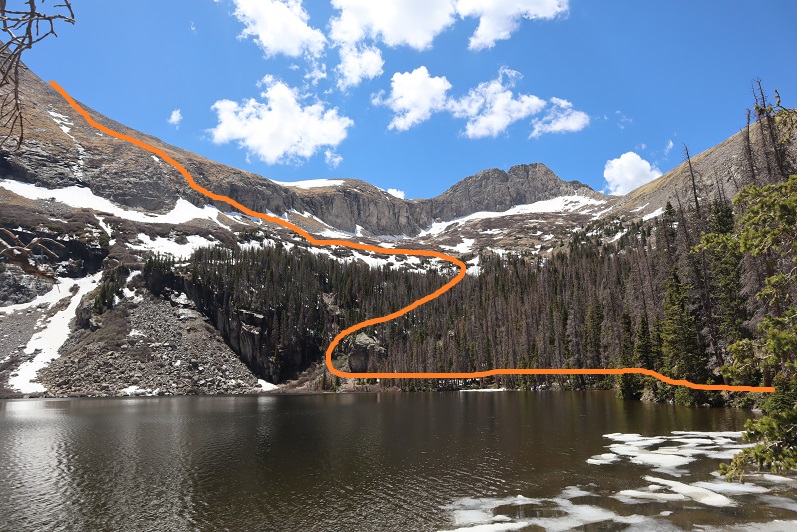
I swithchbacked up to the lake, where the trail ended (or was covered in too much snow to follow). I made it to the lake after 3.5 miles of hiking. My next objective was to skirt the north side of the lake and ascend the gully to make it into the upper basin. Here’s an overview of the route:

13

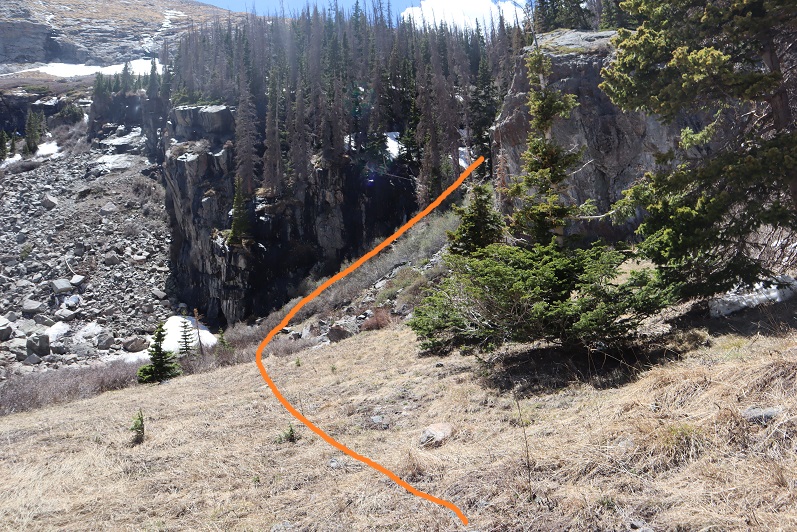
Here’s where I began the ascent. Note, that big rock to the left is basically a waterfall. On my way down it was nice letting the water sprinkle over me in the heat.  There is a gully to the right that is an actual waterfall with lots of flowing water. If it were winter or no flowing water it could be an alternate route to the basin.

14

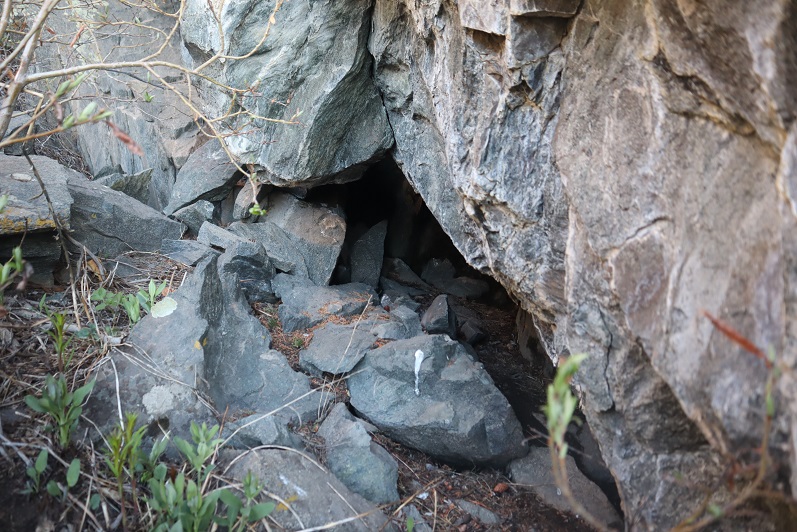
The rock to the right has a huge cave underneath it (big enough for several people to fit inside). It looked perfect for a mountain lion or bear den so I chose to hug the opposite rock more on my return.

15

The gully only goes for about half a mile before you turn left (south) and cross the basin

16

There was a lot of snow here, and it was impossible to avoid it. It was still early morning but there hadn’t been a freeze the night before so the snow was soft. Postholing was terrible and I knew it was only going to get worse so I chose to ascend via the first ramp I saw instead of inspecting the others. As I was postholing I aimed for this rock, which was visible above the willows.

17

I made it to the ramp, a bit displeased to find the snow just kept getting softer. Before making the decision to ascend I made sure I had an exit route. I knew if I ascended here the snow would be too soft to descend, most likely at about the time I reached the top. If I was going to continue I was going to need to make this a loop. I looked over to Music Mountain and the way down, took some pictures for further reference, looked at pictures of the route I’d taken from this morning, and consulted the sky (70% chance of thunderstorms after 4pm today, I so needed to be able to make it down well before then). I saw a viable route to descend via Music with avoidable snow and decided to go for it. Note: you only have two options to ascend and descend this loop, as it cliffs out everywhere else. Before committing know your options.  I strapped on my crampons, got out my ice axe, and went for it.

The snow was soft, so kicking in steps was easy (almost too easy at times and I had to re-make them when the snow turned to mush under my feet).

18

A view from inside, looking up and looking down

19

Eventually the snow ran out and I scrambled on rock/tundra to reach the top of the ledge. Here’s the route from the ledge to the summit

20

Note: This is NOT the only route. You could make this easier by hiking to the saddle and then turning left and hiking up the class 2 (possibly easy 3) ridge. I chose instead to go up the face and get in a little scrambling. As with a lot of scrambling routes, there is no exact route; you need to pick it and choose it carefully. Here’s how I went, once again, sticking to the center as much as possible.

21

22

23

The rocks were surprisingly stable, although there were several areas that looked as if they’d recently experienced a rockslide. I made it to the summit at 9:30am

24

Tijeras Peak:

There was a water bottle summit register at the top, and great views of the surrounding mountains.

25

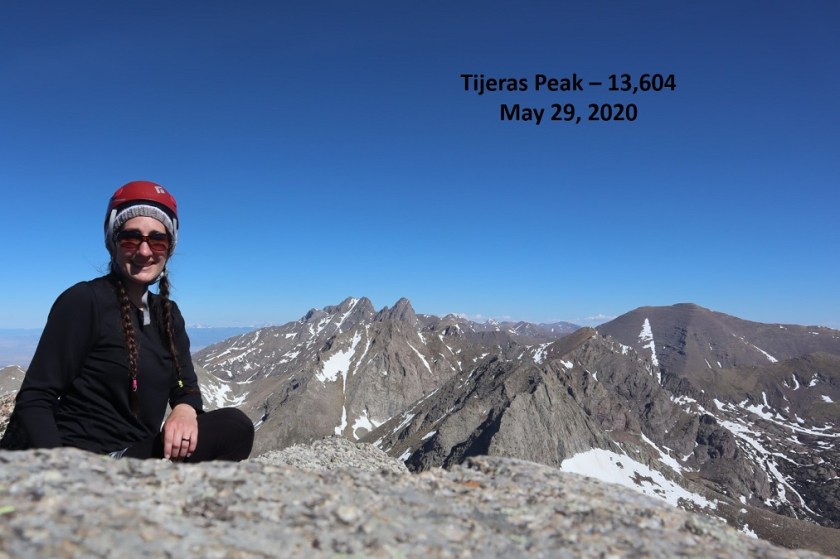
I turned northwest to head down the ridge of Tijeras towards its saddle with Music Mountain.

26

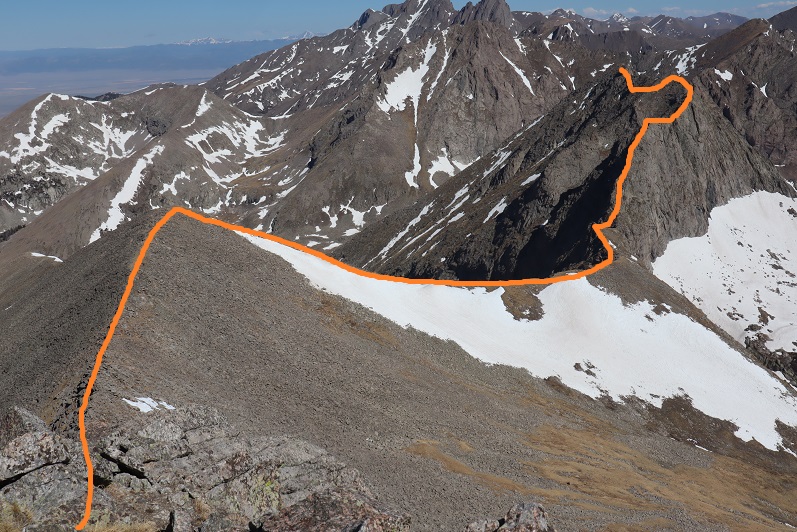
Here’s the route I took in a nutshell

27

For much of this ridge walk I stuck to the ridge, but there was a time I dipped to the left a little. This is not a simple ridge walk, and did require some scrambling. Nothing that gets your heart going like on the way up Tijeras, but scrambling nonetheless.

28

29

30

Here’s a look back up the ridge of Tijeras

31

Once down on the saddle the walk to the base of the Music Mountain climb was easy.

32

Here’s a look at my route down Tijeras and over to Music

33

Climbing up Music Mountain was the biggest challenge of my day. The entire route was scrambling that took committed attention to each and every move. Luckily the rock was solid and there were many hand/foot holds. Since I climb solo I was extremely careful and tested each hold several times before committing, which made the process slow. Also, I didn’t look down: This ridge was spicy. I began by going straight up the ridge and staying on that ridge through class 3 and 4 sections, only altering one time to use a gully because I felt the ridge was too dangerous (but I’m sure you can make it go all the way because I had no problem downclimbing the entire ridge). Here’s an overview

34

And step by step, straight up and over. It’s more committing than it looks

35

36

37

At the top of the first ridge I saw a lot more scrambling (and what looked like a knife edge from below but really wasn’t) and decided to divert the main ridge by finding a gully to climb instead. This is the area I had no trouble downclimbing.

38

39

And then more ridge work. I’m standing on one of three ‘highpoints’ on Music Mountain, taking a picture of the other two. This was the easiest part of the ridge

40

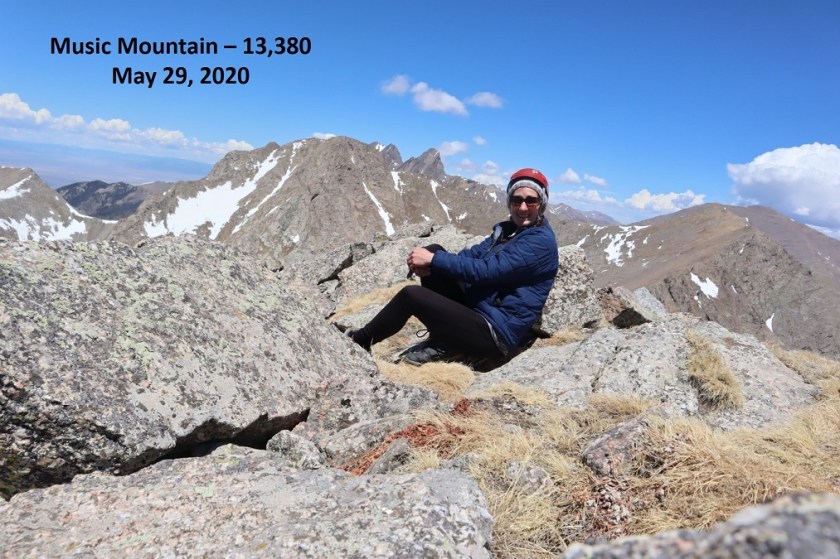
I couldn’t be sure which point was the actual summit of Music Mountain: There was no summit marker/cairn and all three points seemed to be the same height, so I just made sure to hike to the last one. On my way back I took altimeter measurements of all three. Surprisingly, the point in the middle measured highest, and the first point measured lowest. In any event, I hit all three and took a picture at the furthest point because it offered the best views

41

Music Mountain:

Time to head back. I took Music’s East Ridge down. those grassy ledges and rock faces are steep! Nothing compared to the previous ridges of the day, but they still took careful planning and foot placement. Nothing special to add here except watch out for the gullies and try to stick to the tundra or ridge when possible. Here’s the route I took down

42

And a look back up at the ridge

43

Here are the current options for gaining the ledges on Tijeras. I took the smaller one to the left

44

I made it back down the gully to the lake and followed the trail back to Music Pass

45

46

Re-summiting Music Pass was a bit of a buzz kill after such a long day, but this would still be high on my list of most beautiful places to hike. The mountains were absolutely gorgeous!

47

I made it up to Music Pass and opened the trail register to sign out, but when I did so no less than 10 miller moths flew out at me. I slammed the lid and said ‘no thank you’ and was on my way. There wasn’t really a place to sign out anyway, just a record of who’d been there. I didn’t bother signing out of the second register, not wanting the same experience.

I made it back to my truck at 3:15pm, making this a 12 mile hike with 4587’ of elevation gain in just under 12 hours.

48

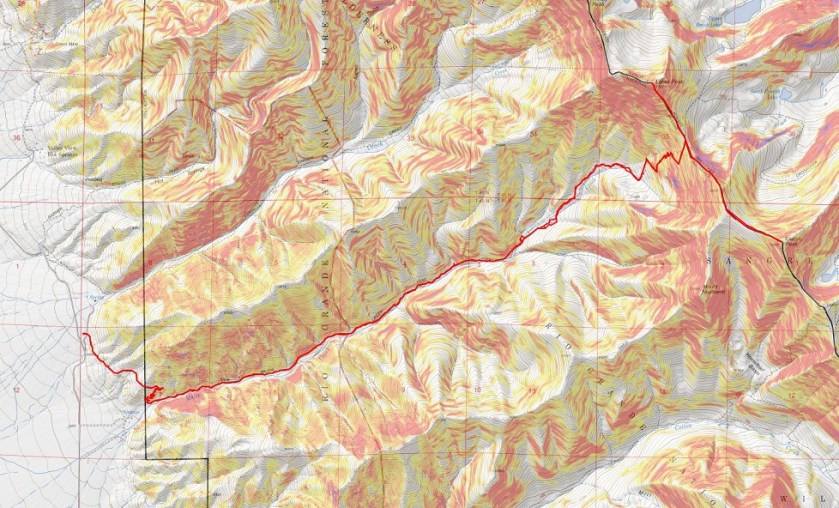
Here’s a topo of the route

49

I saw some wild horses on my way out… either that or the horses got out. In any event, we chatted for a bit until it started to rain. It seemed those thunder storms were going to happen today after all!

50


Carbonate Mountain A – 13,663, Cyclone Mountain A – 13,616, & Grizzly Mountain – 13,708

1

RT Length: 8.75 miles

Elevation Gain: 4090’

I made it to the 1 vehicle trailhead early the day before after hiking another peak in the area. I had a lot of time to kill before heading to bed for the night and enjoyed every minute.  The Cyclone Creek Trailhead is located at 10750’, where the Cyclone Creek and CR 240 meet. It’s located 8.25 miles after turning onto CR 240 from HWY 50. The road is 4WD (not too rough, any stock 4WD should be able to make it).

2

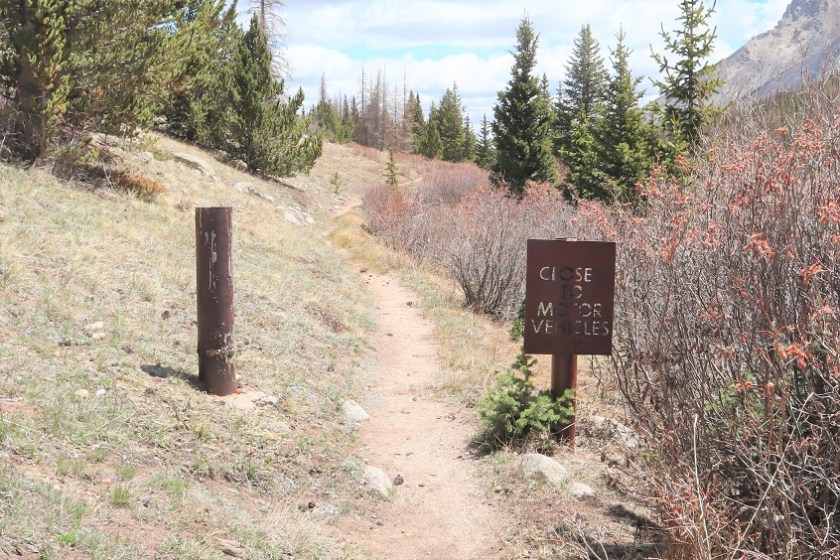
Since I made it here early I decided to check out the area. The trail starts just on the other side of the road, but isn’t marked well. In fact, the sign just says “closed to motorized vehicles”

3

I woke up at 2:45am and was on the trail by 3am. The trail started out decent, but quickly deteriorated and became difficult to follow.

4

After hiking for about half a mile I turned right (east) and headed up the side of the mountain. There was no trail here and it was dark so route finding was tricky, especially in the avalanche area (11,150’). I found a small stream and followed it until it went away, right at about treeline

5

Here the terrain became very, very steep (scree) and at times I crawled to continue moving forward. The wind was intense and cold, cold, cold. My nose started dripping like a faucet and yes, that’s snot you see on the lens at the bottom of the next few pictures. The scree gave way to some of the loosest talus/rubble I’ve ever experienced as I made my way towards the ridge thinking “there has to be a better way to ascend the ridge than what I’m doing, there just has to”. I probably would have altered my course a bit if it were daylight and I could see.

6

7

This ridge seemed to last forever, with a few small false summits

8

9

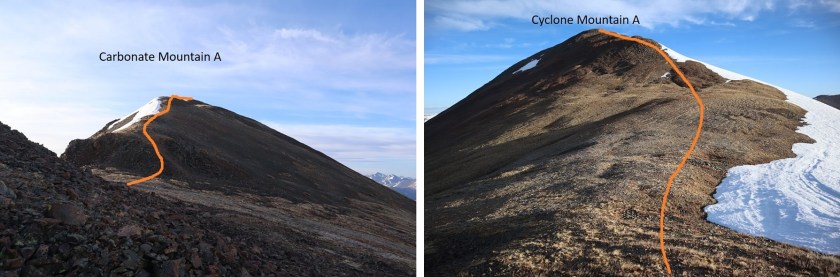
I’m not sure I’d ascend Carbonate this way again: I’d instead ascend the ridge to the right (start ascending directly from where I parked my truck). Here’s looking back at the way I ascended. The dotted line is how I’d do it if I were to do this again.

10

I summited Carbonate Mountain A to frigid winds that just wouldn’t quit. There was a summit register, but I didn’t even try to open it.

11

I couldn’t feel my lips or fingers and decided I’d just take a quick selfie with my camera and not stop to set the camera up for a better shot. This is also when I noticed the snot on my camera lens and cleaned it off…

12

I needed to keep moving and I needed the sun to warm things up and the wind to die down. The only thing I could control was my pace, so I kept moving. I followed the ridge north to Cyclone. The terrain was full of loose rocks but was straightforward

13

This was easier than it looked and didn’t take much time. Here’s looking back at the decent off Carbonate Mountain, and the ascent route up Cyclone Mountain

14

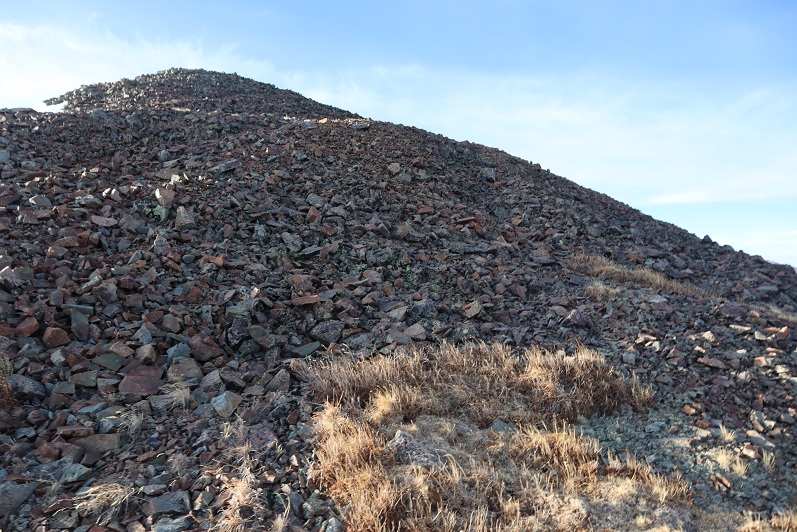
Somewhere along this route I stopped to put on my balaclava, and things immediately warmed up a bit. Here’s the talus filled final push up Cyclone

15

There was a summit register but it was open and empty. The wind hadn’t stopped but I was a tad bit warmer. I set up the camera, but only took one shot. This is what I got

16

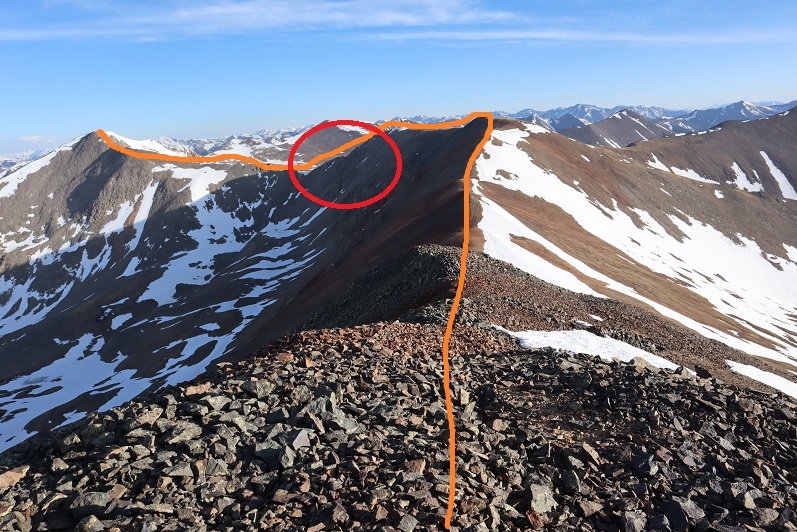
Here’s the route to Grizzly Mountain. I was especially concerned with the area circled in red, as that’s the scrambling section and I was worried it had some snow I couldn’t see from my view atop Mt Aetna yesterday.

17

It looked good from this angle. I kept going, looking for possible bail out routes should I need one. I descended Cyclone Mountain, which was once again composed of steep and loose rubble

18

The rest of the trek was on more stable ground as I headed towards the traverse.

19

Here’s looking back on Carbonate and Cyclone

20

From the beginning the traverse over to Grizzly Mountain doesn’t seem that intimidating

21

22

But as soon as you round the first corner things get interesting. I began by sticking to the ridge

23

But that quickly became impossible. The rock here is very, very loose, large, and ready to fall. There are tons of rock-filled gullies and route finding can be tricky. I stayed to the left of the ridge the entire time because the right side was full of varying amounts of snow. I definitely experienced some class 4 sections. Here’s the way I went:

24

25

Here things got spicy, as I encountered a gully with several options for descent. There seemed to be three possible lines. I felt the safest route was the middle route and aimed for the snow

26

It’s steeper than it looks. Here’s looking back at the route I took. I’m thinking it was about 35 feet of downclimbing

27

I continued to make my way down towards the snow filled saddle. Luckily it was firm and easy to cross. I breathed a big sigh of relief when I made it here, but the dangerous part wasn’t over yet

28

Here’s an overview of my way to the saddle (looking back on my route)

29

The rock was still loose and I had to be careful to triple check every hold so as not to dislodge a rock. I went slowly here, carefully choosing my route.

30

31

Here’s the final route up Grizzly. The terrain became more stable as I continued, but the rocks were always loose

32

33

34

35

36

I summited Grizzly Mountain at 9:30am.

37

Grizzly Mountain Summit:

Here’s a look back at the ridge traverse as seen from the summit of Grizzly Mountain

38

While on the traverse I’d studied my intended route down. I was able to avoid most of the snow to head down into the basin.

39

While avoiding the snow I instead descended on scree and loose rock: I wasn’t sure which was worse, the ascent up Carbonate or the descent down Grizzly. I took it slow to avoid rolling an ankle and headed towards the basin.   Here’s the route out:

40

I did have a little snow to contend with, but only for about 100 feet or so. The conditions were perfect to cross without traction.

41

Here’s a look at the rubble

42

And a look back at my descent route.

43

Once in the basin I knew I wanted to stay just to the right of the trees and follow the creek back to my truck. There was supposed to be a trail here, but I was unable to see it from above. Either that or it was under one of the dozens of small streams of water. What I hadn’t known until I’d made it down into the basin was the ‘dry’ area between the trees and the creek was actually a boggy mess! The mountains were melting out. It was impossible not to get my feet wet. For a while I tried hiking in the trees but the snow was just soft enough to make postholing miserable and snowshoes overkill. So I stayed in the marshy area, following game trails through the willows. I even saw two elk bounding away from me as I sloshed along.

44

45

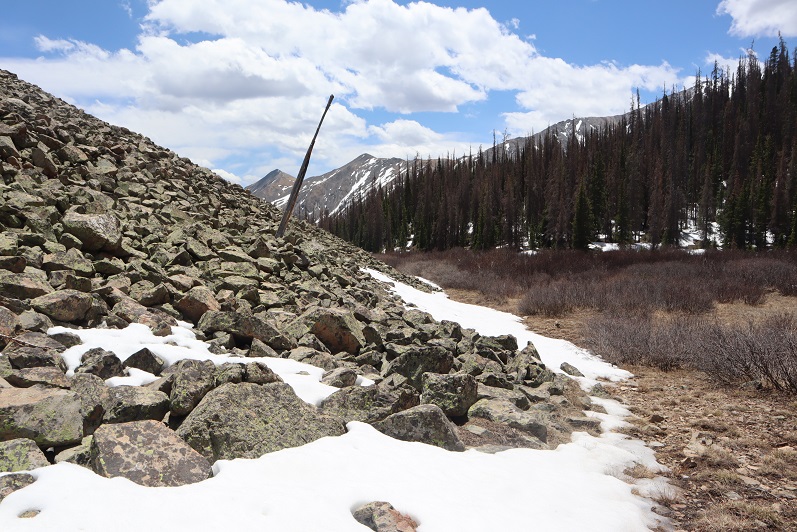
I passed an avalanche area (not the same one as in the morning) and rounded a small boulder field, always keeping the creek to my right

46

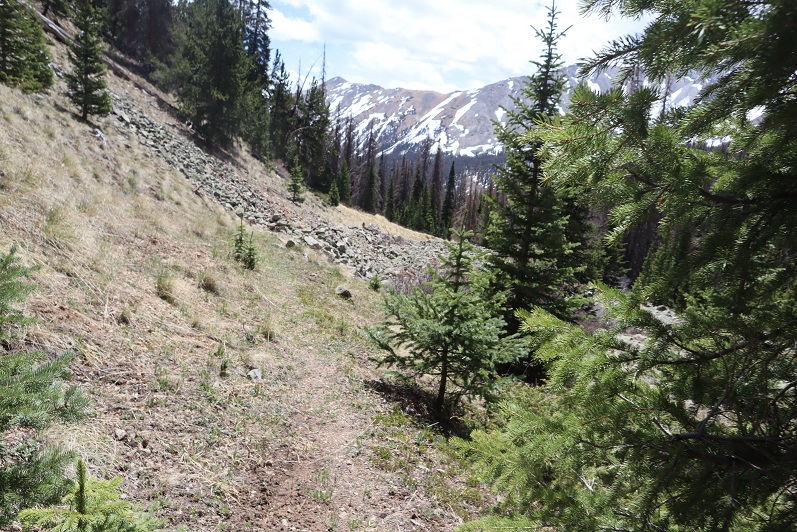
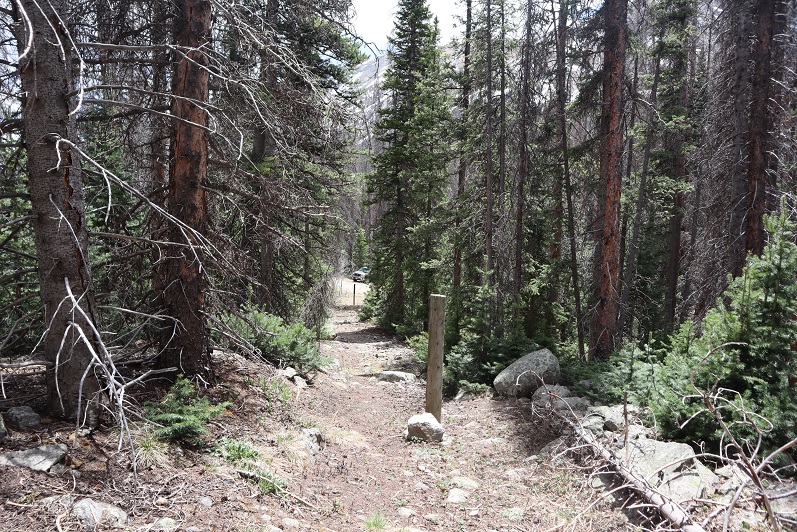
In this area I was almost done with the hike but somehow I came across an actual trail and followed it back to my truck.

47

48

I made it back to my truck at 1pm, making this an 8.75 mile hike with 4090’ of elevation gain in 10 hours.

Looking from Mt Aetna, here’s an overview of the route

49

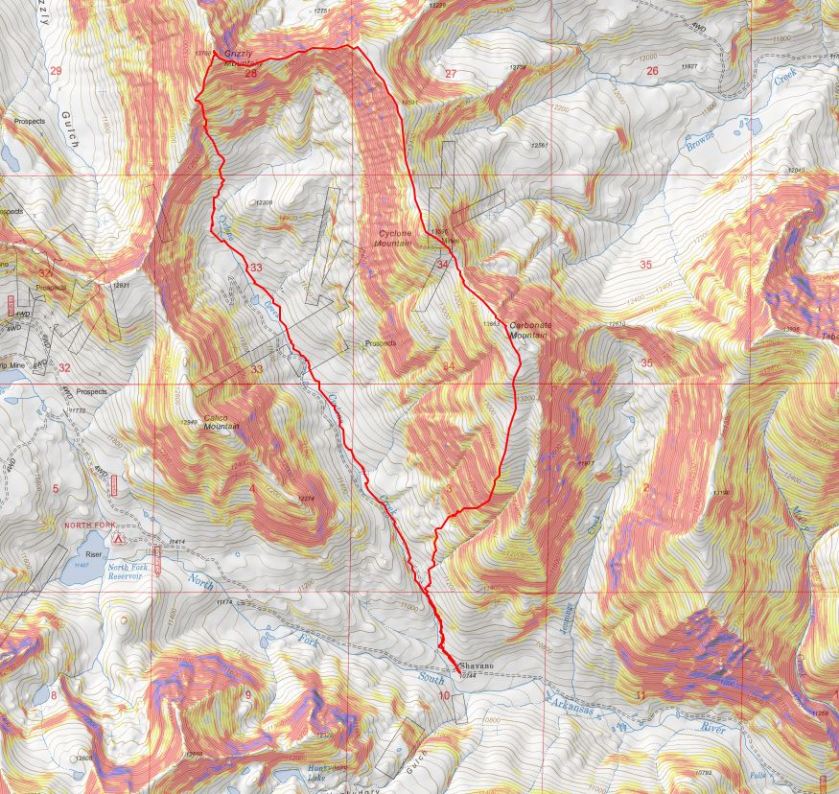
And my topo

50

Mt Aetna – 13,745

1

RT Length: 8 miles

Elevation Gain: 4103’

I’m not a fan of couloir climbs, but feel they are something I should practice. I intentionally chose to climb Mt Aetna when there wasn’t a ton of snow so I’d have the option of hiking on either snow or rock.

I left my house at midnight to a swirl of thousands of Miller moths. I’m not exaggerating; as I opened my garage door they swarmed my truck and at least 5 made it inside the cab with me. I spent the next few hours doing my best not to get frightened when one flew past my face.

The drive was uneventful, but I saw no less than 6 police vehicles in the short drive from 285 to the Boss Lake Trailhead (seemed excessive for such a remote area at this time of night). Memorial Day weekend should be interesting. I parked at the lower trailhead so I could add the 1.4 miles each way and hopefully some elevation gain: I’m still trying to keep my average at 10 miles per hike with 4000’ of elevation gain and I’m a little under that right now so every little bit helps.

2

I parked and was on the trail by 3:15am.

3

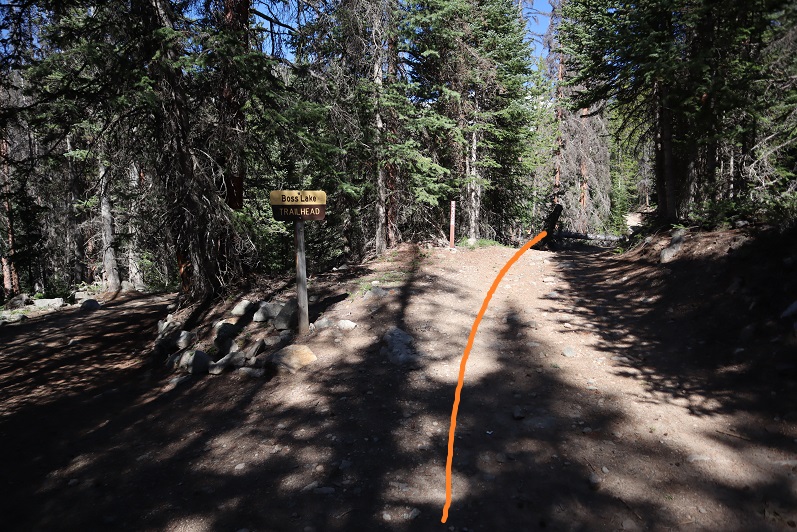
The 230 4WD road isn’t that bad to drive or to hike. I was glad I’d parked where I did because there were downed trees on the road before a little ways before the trailhead

4

At the trailhead sign I went right

5

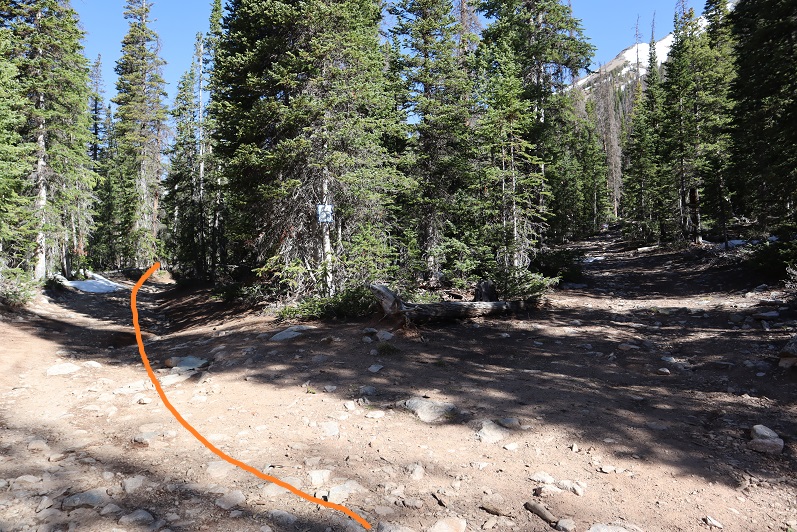
And at the fork in the road I went left (the road has a chain across it and a “no trespassing” sign to the right)

6

The trail follows the 230 4WD road for 2.5 miles from the lower parking area. At 2.5 miles if it were light out you could see Mt Aetna on your right. I could have driven the entire way to this spot if there hadn’t been downed trees in the way.

7

I turned right and crossed a boulder field. These rocks were loose and rolled. Since it was still dark I couldn’t see where I was going, so I headed northeast. As the sun started to come up it was obvious I had a lot of options for today’s summit. Here’s an outline of the route I took:

8

There is actually a lot more snow than it looks like from far away. I followed the gully about a third of the way on rocks and tundra until I had a decision to make: take the ridge to the left, the ridge to the right, ascend the scree just to the right of center, or put on crampons and go straight up the snow

9

10

I decided today was a good day to practice my couloir climbing. The snow was firm and I wasn’t the slightest bit tired yet. I strapped on my crampons, got out my ice axe (I brought along two proper ice axes this time but only needed one) and got to climbing.

11

I changed my intended route several times because the snow was steeper than it looked in some sections.

12

13

Once I made it to the ridge I found it was easier to keep my crampons on and walk along the snow than it was to walk on the loose rocks, so for as long as I could I stuck to the snow

14

Eventually the snow ran out and I followed the rocky but (mostly) dry ridge to the summit

15

16

17

I summited at 7am and kept thinking to myself “that was much easier than I’d anticipated: why don’t I like couloir climbs again?”

18

Mt Aetna Summit:

I stayed longer at the summit than I usually do, taking a good look at the nearby mountains I wanted to summit tomorrow, checking to see if the crux area was free from snow. It looked like it was, but a lot of the area seemed to be hit or miss with snow and too much was still in shadows to be completely sure.

19

20

Here’s the route I took down, keeping to the snow as much as possible.

21

22

Make no mistake, it’s steeper than it looks but the snow was still firm and I was able to walk down the entire way without turning to face the mountain.

23

What’s nice about this climb is you have a visual the entire way up and down of where you need to go.

24

I made it back to the road, turned left, and followed it back to the trailhead.

25

26

27

I made it back to my truck at 10am, making this an 8 mile hike/climb with 4103’ of elevation gain in 6 hours, 45 minutes.

28

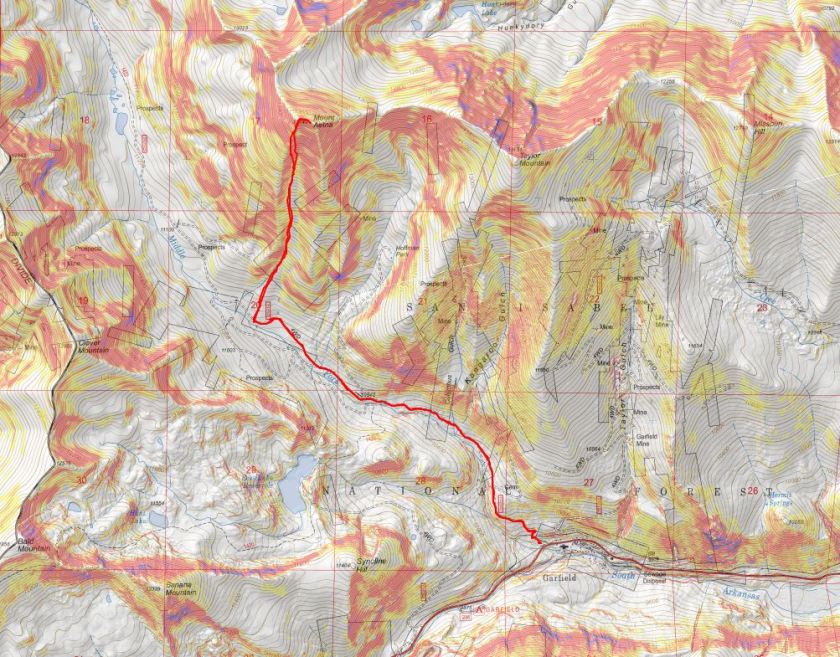
Here’s a topo map of my route.

29

Now I was off to the next trailhead. As soon as I came to an area with cell-service I pulled over to text my kids and see how they were doing (they were still sleeping). As I was sitting there an undercover cop pulled someone over for speeding right behind me. At first I only saw the flashing lights and thought I was in trouble for something. I sat there for a good 20 minutes and luckily for me, I was never approached and the police officer left before I did. But I got to see him again.

I turned onto CR 240 as I was headed to my next trailhead and saw two police vehicles parked on either side of the road. There were two police officers standing outside of their cars, stopping vehicles. I panicked and turned right into the (semi) residential area, drove for a bit, parked, and thought about my next move. Should I try to continue on to the trailhead, or turn around and go home? In the end I chose to continue to the trailhead: If I got stopped and ticketed or told to turn around at least I’d have beta for the next person.

I drove back the way I’d come and slowed down when I came to the police officers. I waved to them, and for some unexplainable reason, they waved me on! Woot! Maybe because I’d turned from the residential area and not the main highway they assumed I was a local? In any event, I drove the rough 4WD road to the next trailhead, found a place to park, made dinner, jotted down some trip notes, set out my gear for the next day, walked around the creek for a bit, knitted a hat for tomorrow, read a bit from a Colorado History book, had a few glasses of whiskey and went to bed early (tomorrow was going to be a long day). Oh, and I didn’t see one other vehicle drive down the road the entire time I was there, and it’s Friday to Memorial Day weekend at a well known dispersed camping area.

30

PT 13,712

1

RT Length: 18.69 miles

Elevation Gain: 5360’

I only woke up one time during the night, and that was just to put on my thermal top and hide under another layer of covers. When my alarm went off at 1:30am I started my coffee and decided it was too early to get out of my warm truck-bed, so I re-set my alarm and didn’t get up until 2:15am. I was on the trail by 2:30am.

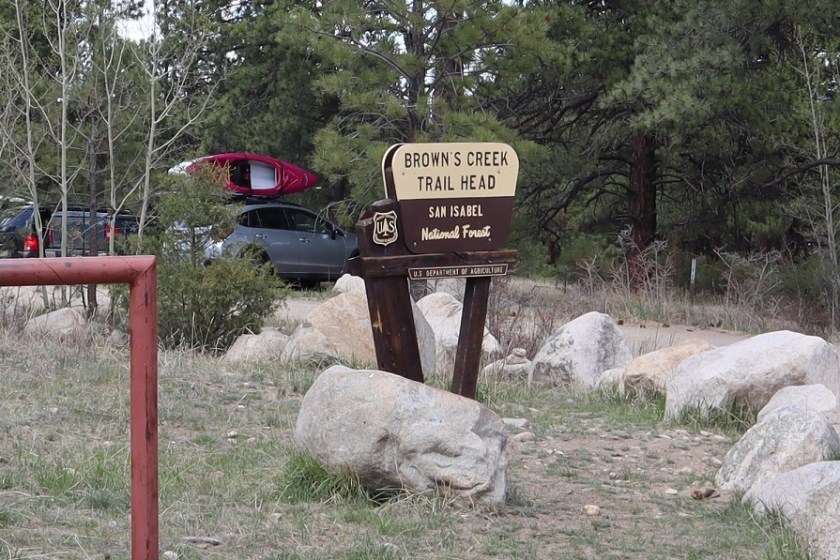
The road to Browns Creek Trailhead is an easy 2WD dirt road.

2

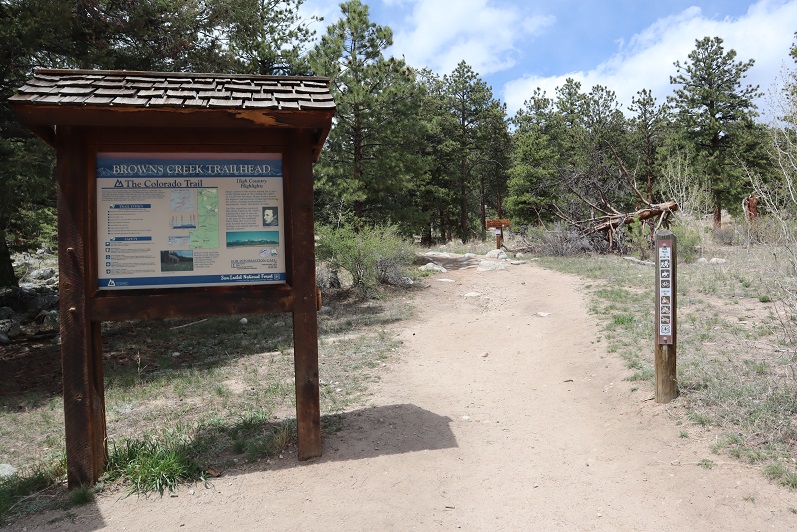
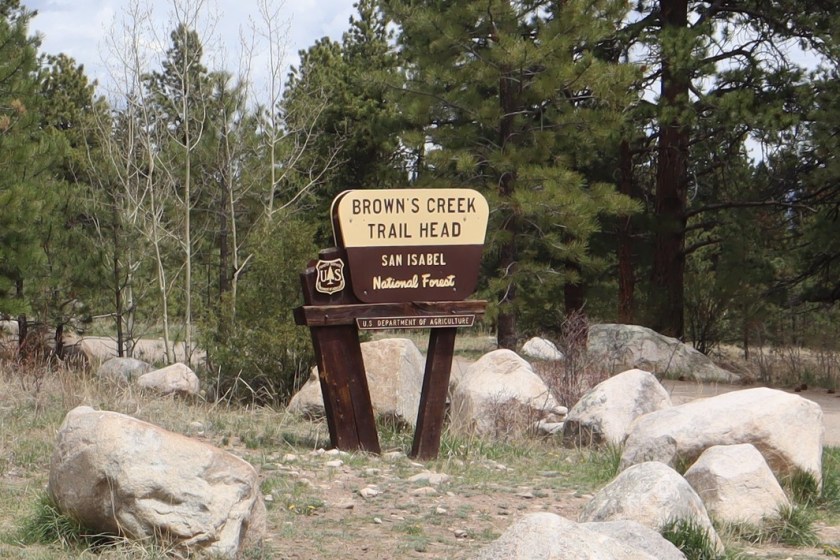
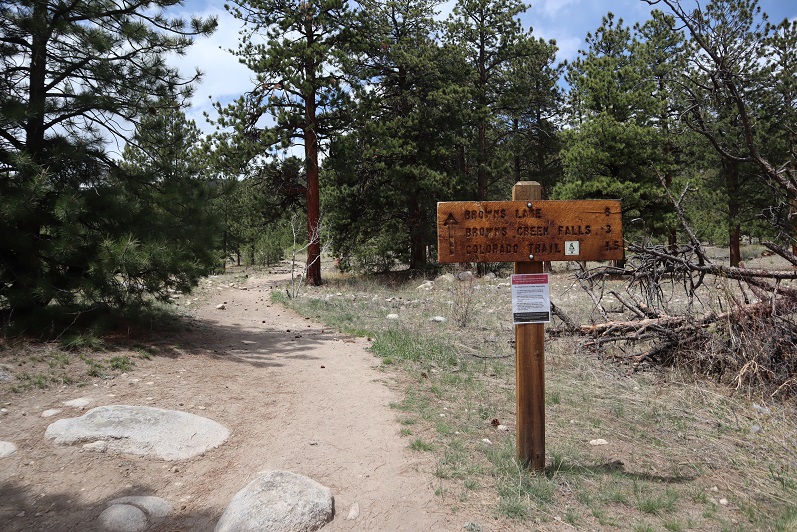
The trailhead had plenty of parking and restrooms (which are currently closed due to Covid-19: they had signs asking us to “recreate responsibly”). The trail starts at the north end of the parking lot, and follows trail 1429 west

3

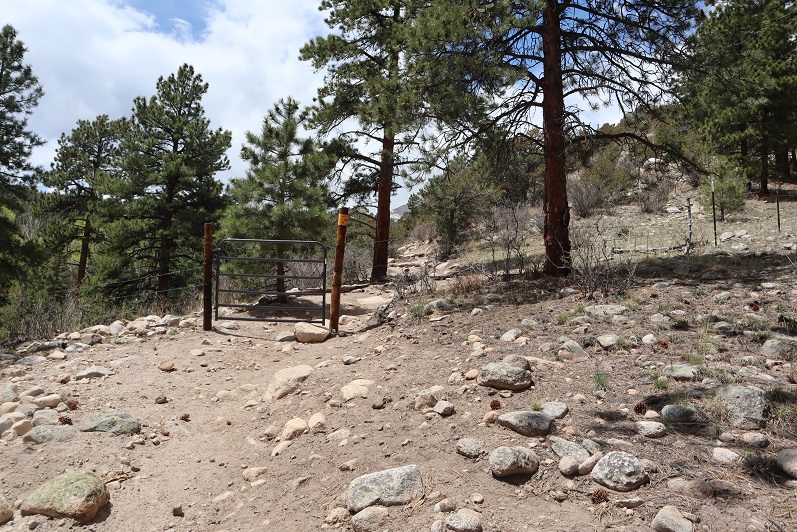
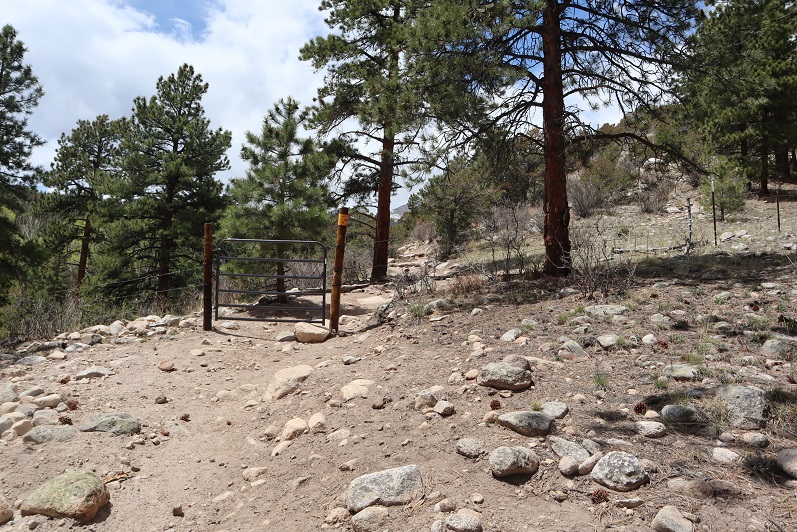
I passed through an unlocked gate

4

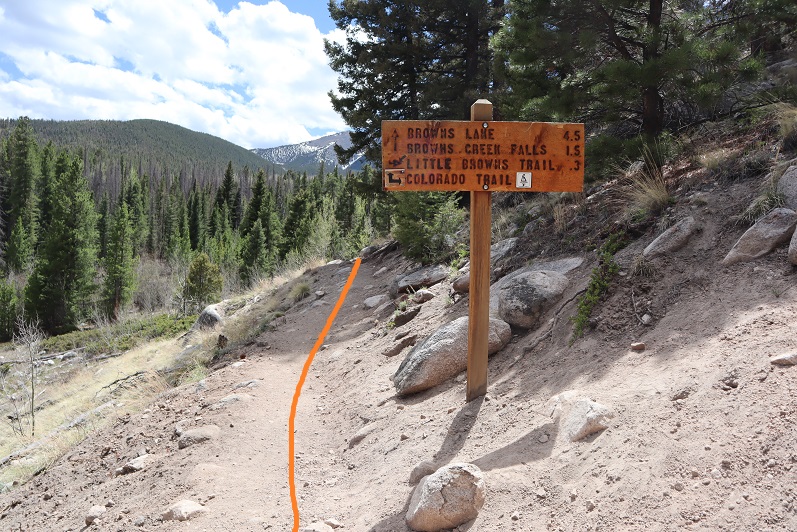
After hiking for 1.5 miles I came to a junction and continued west on trail 1429

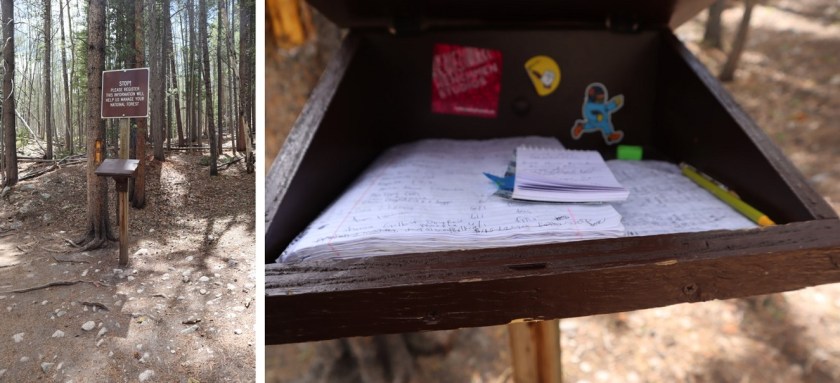
5

Shortly after the junction there was a hiking register with a spiral notebook inside that had every single page full. On my way back someone had left a small 3 x 5 notepad for people to write on inside. This must be a popular trail.  Here is also where I realized I’d left my creek crossing sandals in my truck. I hoped that didn’t come back to haunt me…

6

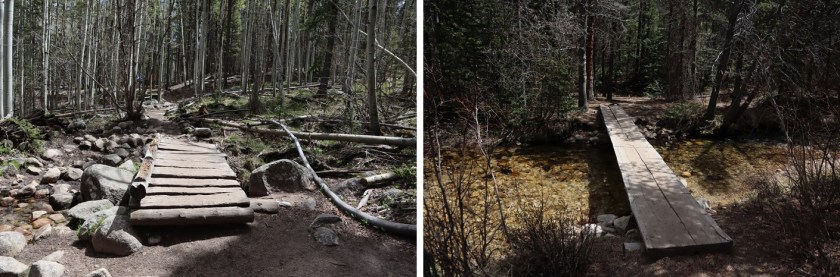
I crossed Browns Creek several times, always on a good footbridge

7

At 2.9 miles I crossed the last bridge and continued hiking along the class 1, well defined trail. Route finding was minimal.

8

9

10

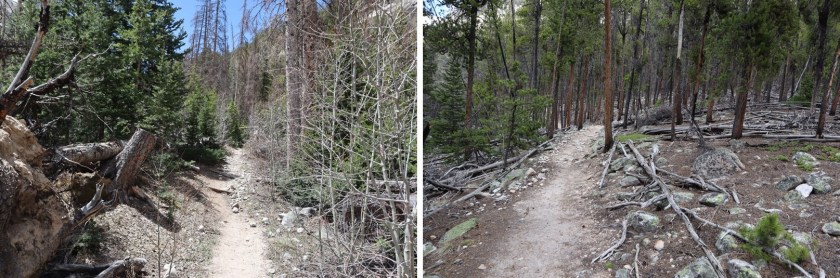
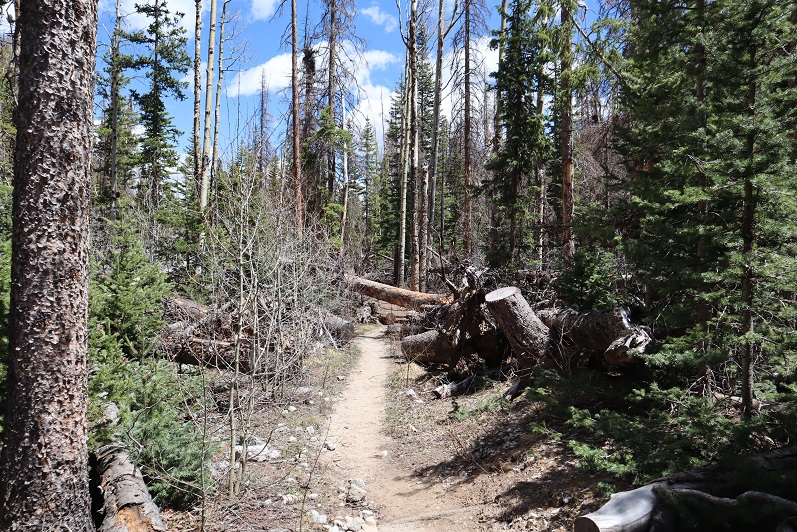
The trail parallels Browns Creek, which was difficult to see because of all the trees covering the water. It looks like there was a wildfire in the area some years ago, and the land is still recovering. The trail was mostly clear of trees however.

11

I was hiking this portion in the dark, and at one point I heard a rather loud twig snap off to my right. I did the only logical thing and used my trekking pole to make as much noise as I could, banging it loudly on every rock and tree I came across, and stopping every few yards for a while to turn around and scan the area with my flashlight. I never saw anything, but on my return noticed I’d been in an area with a lot of downed trees, as well as boulders that would make a great den for a large animal. Curiously, I also heard a loud noise in the daylight crossing the same area on my way back, but didn’t see anything.

After hiking for about 3 hours in the dark the sun finally started to rise.  My reward was hearing the birds wake up and wish each other a good morning. What’s even better is my presence didn’t seem to bother them

Birds:

After hiking for 6 miles I came to a small boulder field

12

On the other side of this boulder field is Browns Lake

13

This area is marshy and has a lot of willows. Unfortunately, I didn’t see any wildlife or signs of wildlife (besides the birds). I continued west along the trail

14

Until it turned into a 4WD dirt road

15

I followed the road for .6 of a mile before coming to a creek. This is where the route finding became tricky. I needed to leave the road and traverse the east side of the mountain and make my way towards the marsh area, cross the willows, and then enter back into the trees and find my way to treeline.

Yesterday while on the summit of Mount White I visually tried to get a good view of the route I wanted to take. This 1 mile section included lots of route finding. I’ll do my best to give you pictures so it’ll be easier for you (as you can see from my topo below, I had to do some route finding and backtrack a few times myself to figure out the correct path).

Here’s an overview:

I left the 4WD road after hiking a total of 7.5 miles (I was at 11600’). I hiked south to cross the creek. It is important you cross here because there’s a small gorge you want to avoid to the left (east)

16

17

There is no trail here, and yes, the willows suck.

18

Once you’ve crossed the stream, make your way up the banks to the top and then skirt the mountainside to the left

19

To the left is the small gorge you’re trying to avoid.

20

From here you don’t need to hike along the ridge because you’re really aiming for the marsh. The reason you’re hiking towards the center of the hillside and not the top or bottom is to avoid the gorge and some rock outcroppings closer to the marsh on your way in. There’s no need to hike all the way to the top because you’ll be heading back down anyway. Here is where the route finding got fun, and I needed to strap on my snowshoes. Here are a few visuals:

You’ll want to avoid the rocks to the left and head into the trees (no trail)

21

22

To avoid the large rocks (circled in red)

23

24

After avoiding the rocks you want to make your way down to the willows, skirt the willows, and re-enter the trees, making your way towards the gully. Here’s an overview of the entire route

25

This was harder than it looked, as the marsh was more like a bog, the willows were dense, and once back in the trees the snow and downed trees were cumbersome to say the least. I was very grateful I’d lugged my snowshoes this far. They were only needed for this one mile section, but I wouldn’t have been able to summit without them.

26

27

Once above treeline the route was much more obvious. I crossed a small runout/gully and began ascending the loose, rocky, scree filled slope. There are a few cairns here, none of them seem to follow the same path and all seemed arbitrary. Just head up. It looks like the rocks shift often, so pick your line carefully. Microspikes are helpful on the scree.

28

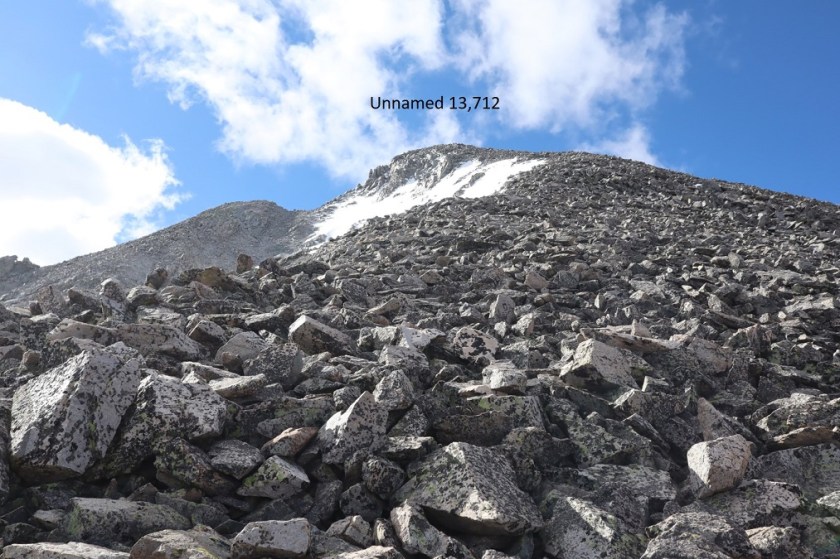
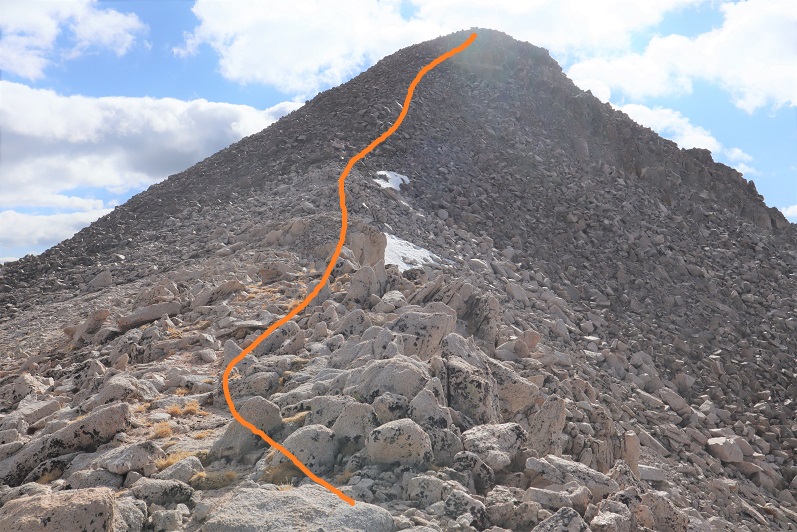
The scree eventually gave way to some tundra (I was aiming for the ridge: yes, that summit is 13,712, so no false summits today!!!)

29

And then more loose rocks (bowling ball and microwave size, none of which were stable)

30

31

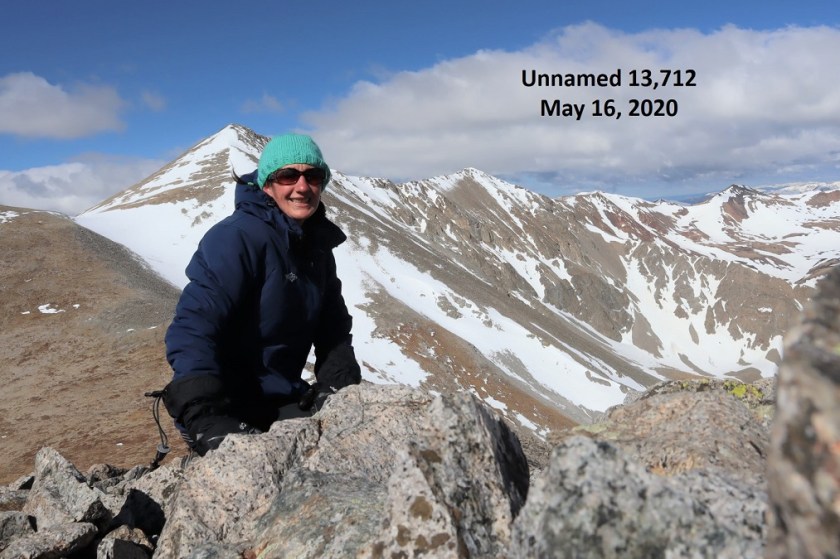
I summited at 9:10am. I’m not fond of this picture, but it’s what I’ve got

32

13712 Summit:

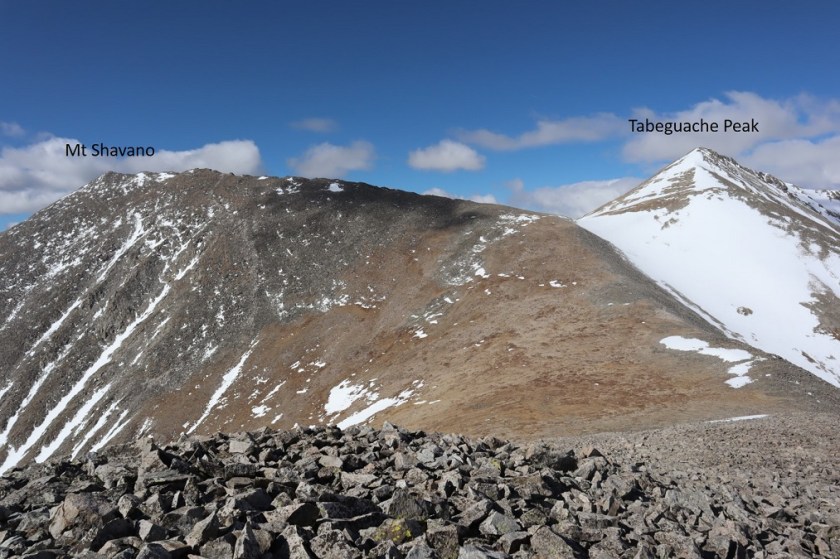
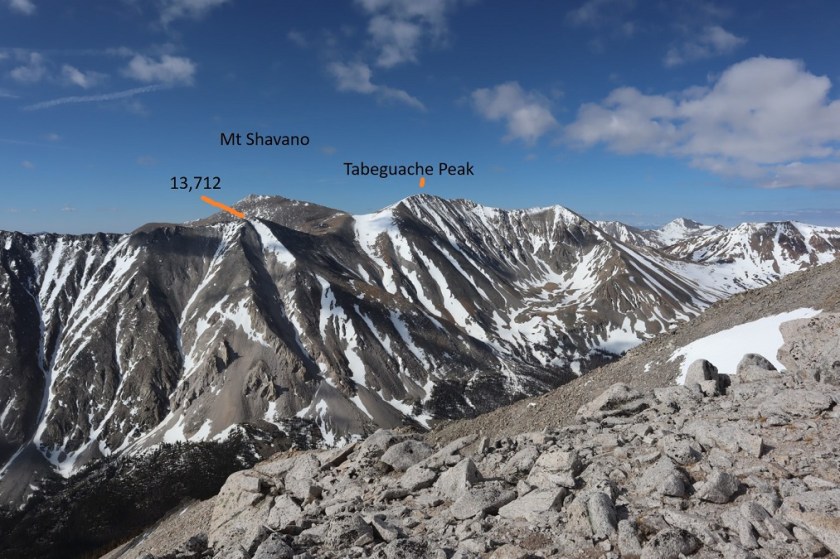
It was very, very windy on the summit. I was surprised to see just how close I was to Shavano and Tabeguache and noticed two climbers making their final ascent up the snow on Tabeguache.

33

I didn’t plan on summiting either of those peaks today however: The snow had been soft enough on my way in, and I needed to make it back down before it became any softer.

34

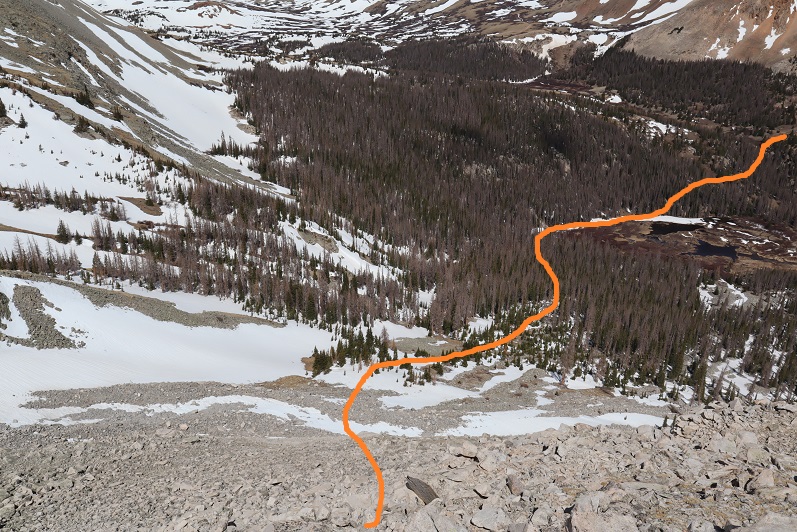
All along the ridge I looked for a safer way back down than the way I’d come up, but couldn’t seem to figure a better way: the marshy area was full of either snow, ice, or deep water I didn’t want to cross, so I did my best to retrace my steps back down. The snow made the mile a slog.

35

36

37

38

Here’s that boulder you’re trying to avoid on your way back

39

I made my way back to the creek, crossed it and headed back to the 4WD road, happy to be done with snowshoes for the day. While crossing the creek I’d accidentally stepped in it (both feet ended up getting wet when I lost balance because I was too hard-headed to take off my snowshoes first) and now my hiking shoes were soaking wet. Should be a fun 7.5 mile hike back to the trailhead! Here are some photos of the way back:

40

(also, whoever made this sign forgot the letter ‘d’: there’s obviously space for it, and upon closer inspection there was never a letter there to begin with)

41

42

43

44

45

As I passed Browns Lake and made my way closer and closer to the trailhead there were more and more people on the trail, and everyone seemed to have a dog (or two or three) and I even saw people riding horses. Indeed, this is a popular trail. On a positive note, I didn’t see dog-waste bags lining the trail. I did see someone fishing in the creek in an area made for horse crossing.

I made it back to my truck at 2:45pm, making this an 18.69 mile hike with 5360’ of elevation gain in 12 hours, 15 minutes.

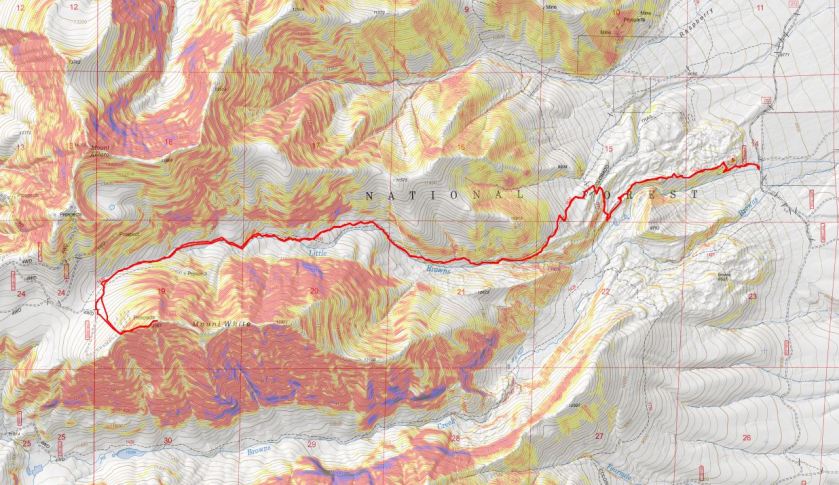
Here’s a topo map of my route

46

Mount White – 13,657

1

RT Length: 14.25 miles

Elevation Gain: 4945’

I arrived at Browns Creek Trailhead to one other vehicle in the lot. It didn’t look like they were sleeping in their car so I assumed they were either already on the trail or camping in the basin overnight. I didn’t pass anyone all day, so they must have been in Browns Creek (I was taking the Little Browns Creek approach). The road to Browns Creek Trailhead is an easy 2WD dirt road.

2

The trailhead had plenty of parking and restrooms (which are currently closed due to Covid-19: they had signs asking us to “recreate responsibly”). The trail starts at the north end of the parking lot, and follows trail 1429 west

3

4

I walked along the trail and quickly encountered a gate (not locked)

5

6

After hiking for 1.5 miles along a well maintained trail I came to a junction and turned right (north) and followed the Colorado Trial for a bit (not long) before continuing on trail 1430. There are well placed and visible signs at each junction.

7

For the first 5.25 miles of this hike it was an easy, class 1 trail that was both horse and bicycle friendly (I saw evidence of both)

8

9

10

The sun seemed to rise earlier than normal, and I was able to easily see where I was going. After 5.25 miles however, snow began to cover the trail at around 11,490’. This was punchy snow, and I couldn’t have crossed the area without snowshoes.

11

I strapped my snowshoes on and followed the ravine west.

12

13

There was one spot that was a little steep, but nothing I needed an ice axe for

14

It was clear there was a trail under the snow, as at times it would rise above the snow before sinking back down. Luckily it was still early and the snow was firm enough to navigate with snowshoes. I would not have been able to traverse this area without them, especially on the way back.

15

At 6.4 miles (12,670’) I left the trail to follow a 4WD road. I was supposed to take the road to the ridge, but what little snow there was here only seemed to be on the road itself, so instead I just hiked straight to the ridge

16

17

Once at the ridge I turned left (east) and hiked the third of a mile to the summit on rocky terrain. The was class 2.

18

19

There was a false summit (but it wasn’t too far from the actual summit)

20

21

I summited at 8:40am, after 4.5 hours of hiking and 7.2 miles

22

Mt White Summit:

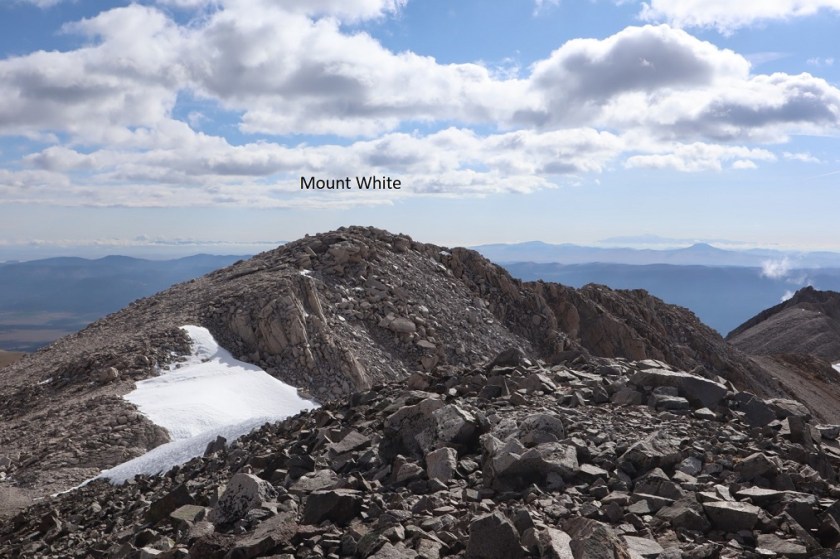
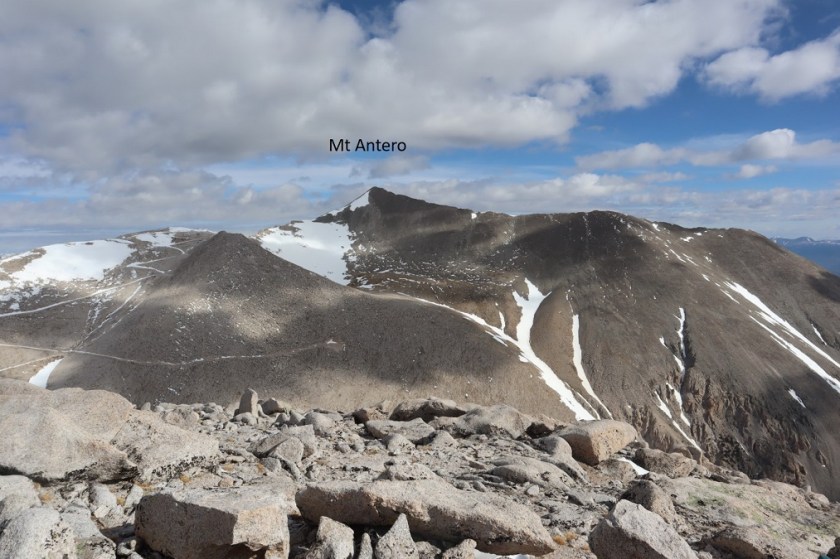
It was quite windy but I still spent a few minutes getting a good look at the conditions of the local mountains: I intended to summit Unnamed 13,712 tomorrow and wanted to get a good look at the route. To be honest, I wasn’t exactly sure how I was going to summit, so I took a bunch of photos to study later tonight along with a topo map. Check out some of the surrounding peaks:

23

24

Time to head back down the ridge

25

26

27

I made a new friend

28

And turned right (north) and headed down into the basin

29

It was still morning, yet when I hit the area with snow it was already very soft. I put my snowshoes back on and headed directly down the snow, back to the trail. I was very happy to have lugged my snowshoes all this way: they weren’t always needed, but it would have been a miserable trek without them, if not impossible.

30

31

32

33

35

36

After taking off my snowshoes I followed the class 1 trail back to the trailhead. Little Browns Creek was dry the entire way.

37

38

39

It looked like this area had seen a fire in the past few years, but the trail was clear of debris

40

I made it back to the trailhead at 12:30pm, making this a 14.25 mile hike with 4945’ of elevation gain in 8 hours, 30 minutes.

41

Here’s a topo map of my route:

42

It was my intention to stay here tonight so I cleaned up, made dinner, took off my shoes, and enjoyed eating by the creek with my feet in the water.  Well, I didn’t much enjoy the food (I have to force myself to eat after a hike) but it didn’t taste bad. It took me about 45 minutes to finish my spaghetti, but I’m proud to say I ate it all.

43

I did a physical check: I’d returned the boots I’d previously bought and wore my old boots today instead. They were full of holes but at least they didn’t rub my ankles raw (my ankles were still red and raw from last week, but nothing my old shoes and some rather large band aids couldn’t fix. Also, I’m in the market for good winter hiking boots). I had cell service, so I text my kids to see how their day was (my youngest rocked her online APUSH exam and was now headed to work), answered a few emails and checked the weather for tomorrow.

I was surprised at how many people were at the trailhead now. The parking lot was completely full. Everyone seemed to have kids or a dog. The creek was a great distraction for both.

After dinner I sat in the back of my truck with a glass of whiskey and my topo map, trying to figure out how I was going to summit PT 13,712 tomorrow. It might have been the alcohol talking, but I couldn’t help but think of how much I loved my new truck set-up! I had another hummingbird fly into the back: that’s twice in as many days camping out and I think it’s because they think my hanging lights are flowers. I was just glad the buzzing noise wasn’t a giant bumblebee. The mosquitoes started coming out around 3pm so I shut my tailgate.

It became cloudy and started to rain. I looked at the time: 4:30pm. I decided to read for a bit, and then get to bed early. I needed to be up around 1:30am to hike past the snow before it got too soft. I prepped my coffee for the morning so all I had to do was turn on the stove, set out my clothes for tomorrow, and closed and locked all my doors/windows. It was still warm and very light outside but I knew it would get rather cold tonight. I was pleased my blackout curtains did their job and despite the early hour I was able to fall fast asleep.

Boulder Mountain – 13,528 & Mt Mamma – 13,646

1

RT Length: 15 miles

Elevation Gain: 5607’

I realized I’d forgotten my camera about 10 minutes after leaving the house, and decided it wasn’t worth it to drive back and get it. That decision haunted me for the next hour. Luckily I still had my phone and it was supposed to be a warm day, so as long as it wasn’t too windy I’d still be able to take pictures.

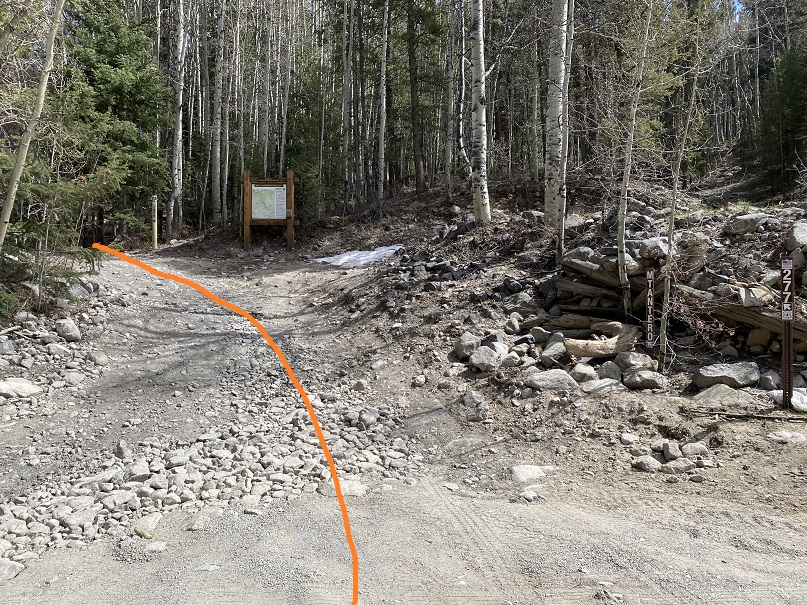
I arrived at the Baldwin Gulch trailhead, parked, and was on the trail by 4:30am. A little later than I’d wanted to start, but early just the same. The trail starts here, at the intersection of 162 (which parallels Chalk Creek) and 277.

2

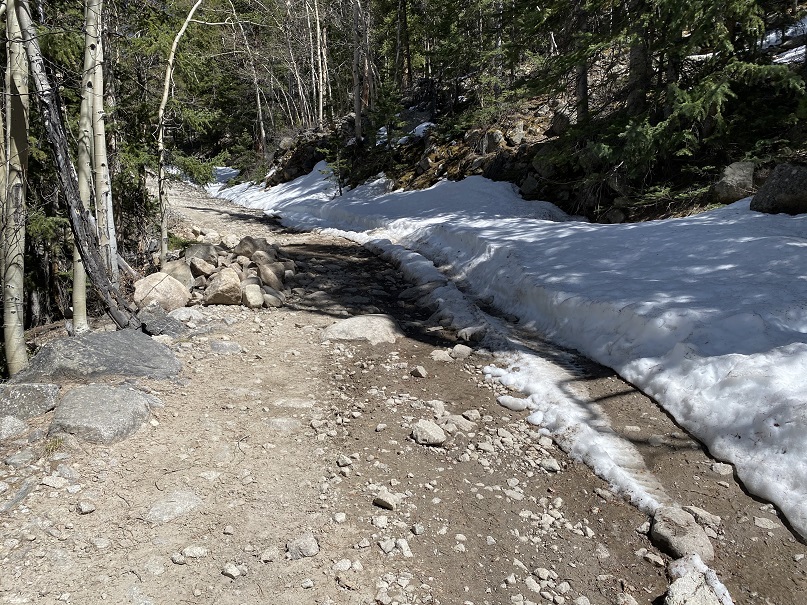
The 4WD road that is 277 was drivable, but I was glad I’d walked the 1.25 miles because there was no place to park a vehicle: all of the parking areas were covered in snow.

3

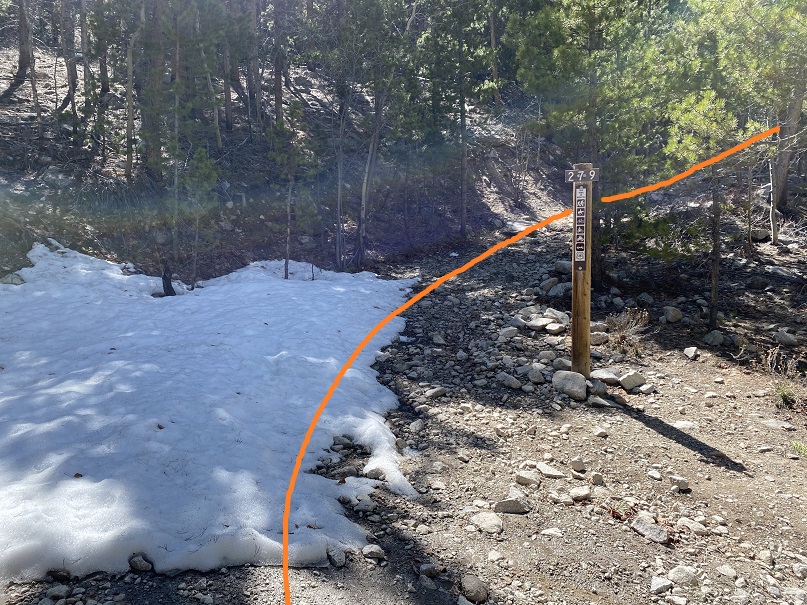
After hiking for 1.25 miles I turned right (west) onto 279 and followed another 4WD road. This road was not drivable.

4

5

At this time in the morning the snow was still solid and I could walk on top of it, but I knew it would be a slog-fest by the afternoon. There weren’t any footprints/snowshoe/ski/animal tracks on this entire road, so I knew no one had been here in while.

279 switchbacks around the east side of Boulder Mountain. Last week I’d attempted 13,626 and got a good view of how I wanted to summit Boulder: My goal was to hike along the road until I made it to the ridge, and then take the ridge up. However, as I was hiking the road looked ‘doable’ so instead of aiming for the ridge early I continued hiking on the road. I realized later this wasn’t the best option. I crossed a snow-filled gully at 11,700’ that did not look like it would be stable in the afternoon sun and followed the road until about 12,100’ when the road became too dangerous to traverse. The slope angle here was between 29-32* and luckily for me the snow was still fairly solid. I decided to leave the road and instead climb straight up to the ridge. Snowshoes and spikes were not needed, as the snow was still firm.

6

7

This was trickier than I’d anticipated, and I decided as I was climbing up I was not going to take the same way back down. I had several options for my descent and would make my final decision depending on further conditions. The route I took is in orange, the gully I wished to avoid is circled in red, and everything above the circle was avalanche prone. I didn’t want to walk on the road below the gully on my descent, or traverse across the gully again.

8

I felt much safer once I made it to the windswept ridge. It was a simple hike up the ridge to the summit on loose talus. Also, that’s not the summit.

9

I passed quite a few mines and a small, empty building

10

As I continued hiking up the ridge the true summit came into view

11

It was a straightforward hike to the summit. I summited at 8:15am. It was a little over 6 miles from where I parked my truck to the summit.  This summit gets a selfie because I left my camera at home…

12

Summit of Boulder Mountain:

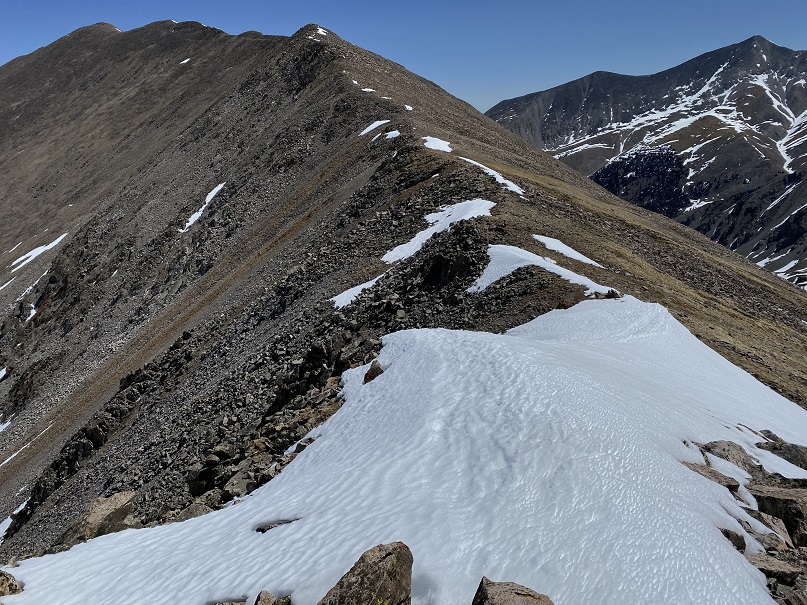
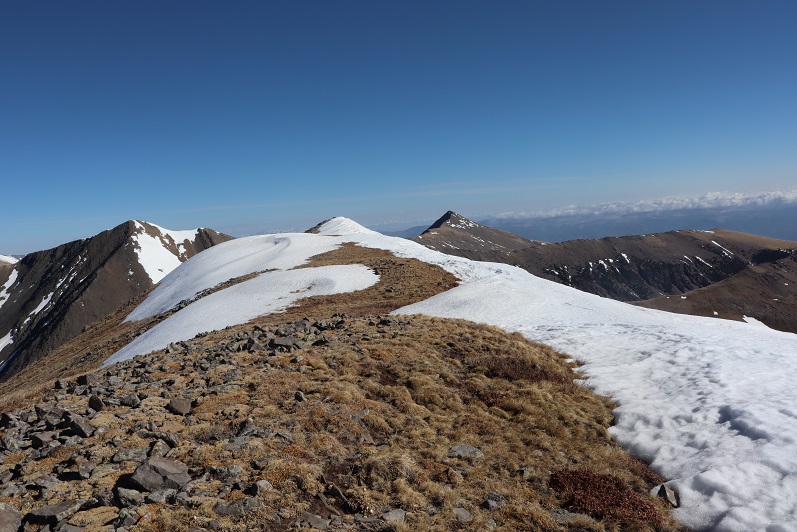
Here’s the view of the ridge over to Mt Mamma

13

The traverse was straightforward. I stuck to the ridgeline as much as possible to avoid the snow

14

It looked like there was a trail to my right, but when I tried to take it I found it was full of very loose talus. One slip would send me tumbling, so I stuck to the ridge.

15

While on the ridge I got a good look at the basin below and Baldwin Lake. Nope, I didn’t want to descend that way, as it looked too similar to the conditions I’d experienced last week on 13,626: The basins looked the same, and last week I found the basin to be impassable due to punchy snow. I didn’t want to get all the way to this basin just to have to turn around because the snow was dangerous and re-summit the ridge.

16

17

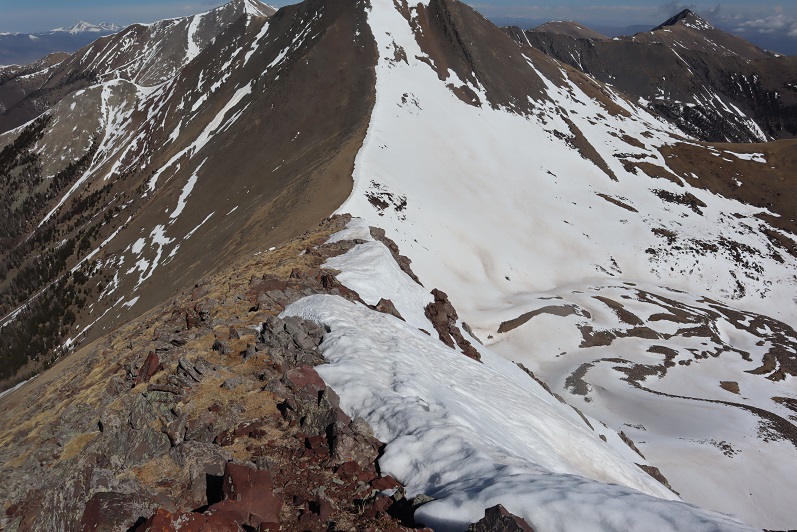
There were a few cornices to contend with on the ridge, but the snow was firm so they weren’t a problem to traverse. Sticking to the ridge is the way to go.

18

19

20

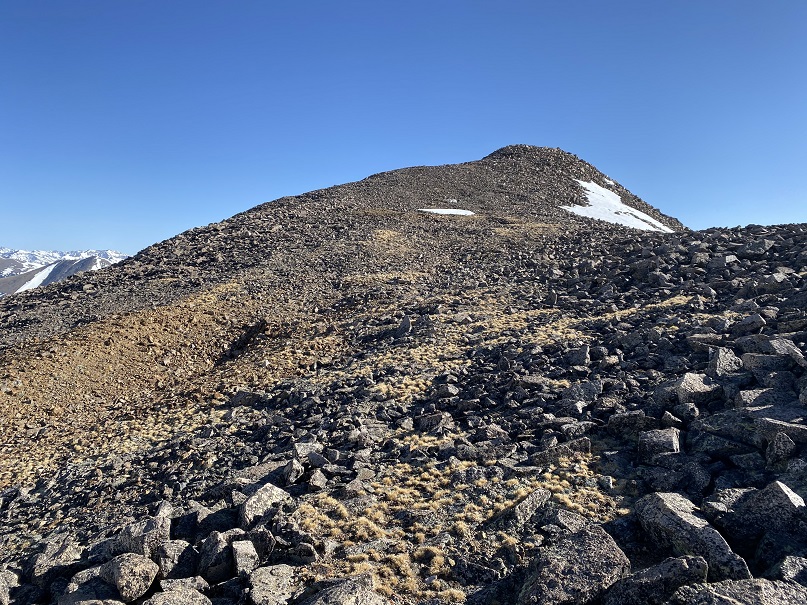
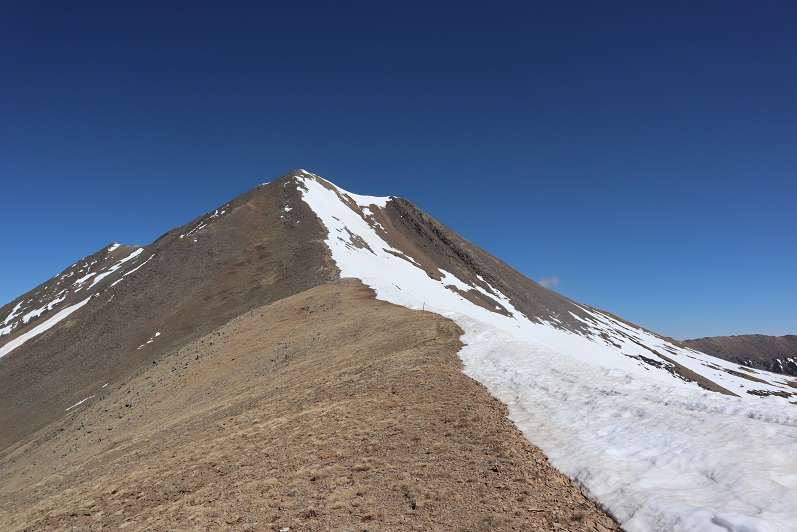
There was a bit of a saddle before the final push to Mt Mamma. I was glad there was a seemingly straight snow free line to the summit.

21

There were a few areas of snow to contend with, but nothing that kept me from hiking straight up

22

The rocks here were loose and rolled, so watch your step

23

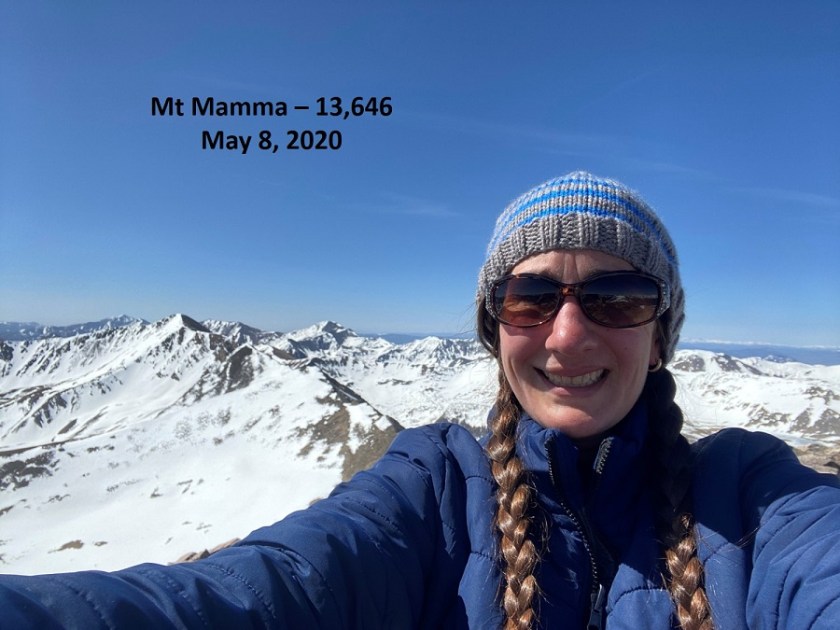
I summited Mt Mamma at 10am, after hiking for 8 miles. It took me about an hour and 45 minutes to complete the 1.8 mile traverse from Boulder to Mamma. Once again, no camera, so I got a selfie with my phone.

24

25

Summit of Mt Mamma:

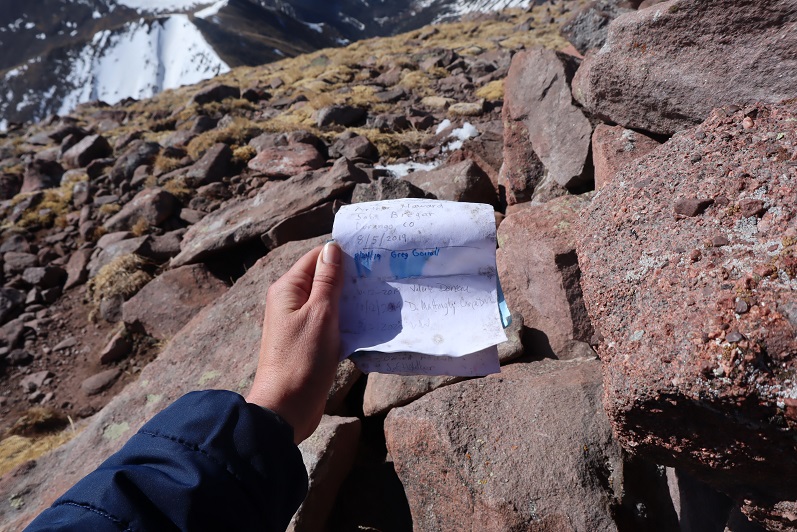
The summit had a register, with the last person to sign being from October 13 of last year. Also, the register needs a new pencil, so if you go up there soon be sure to bring one with you. The day was perfect: no winds and lots of sunshine. This is probably the best weather day I’ve had on a mountain so far this year. I decided to head back over to Boulder Mountain, as I did not want to get stuck in the basin.

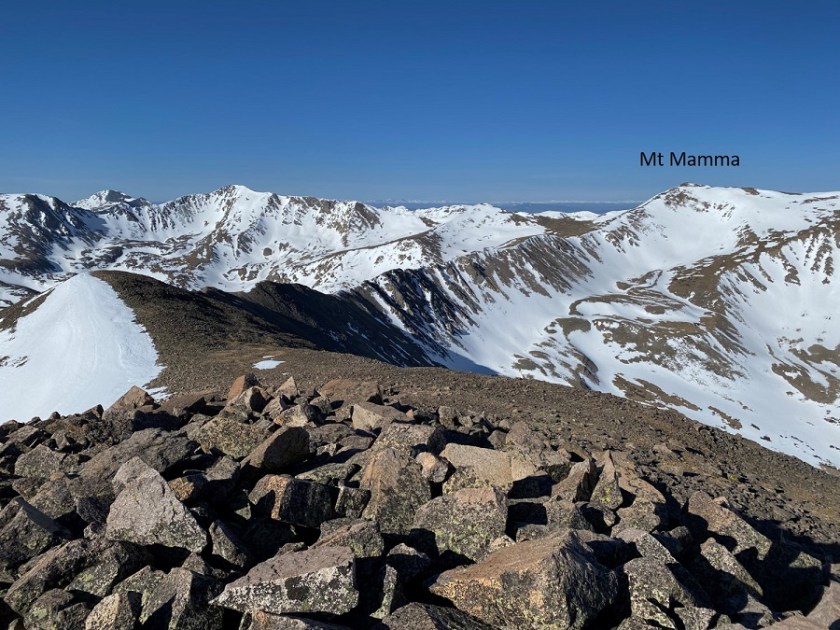
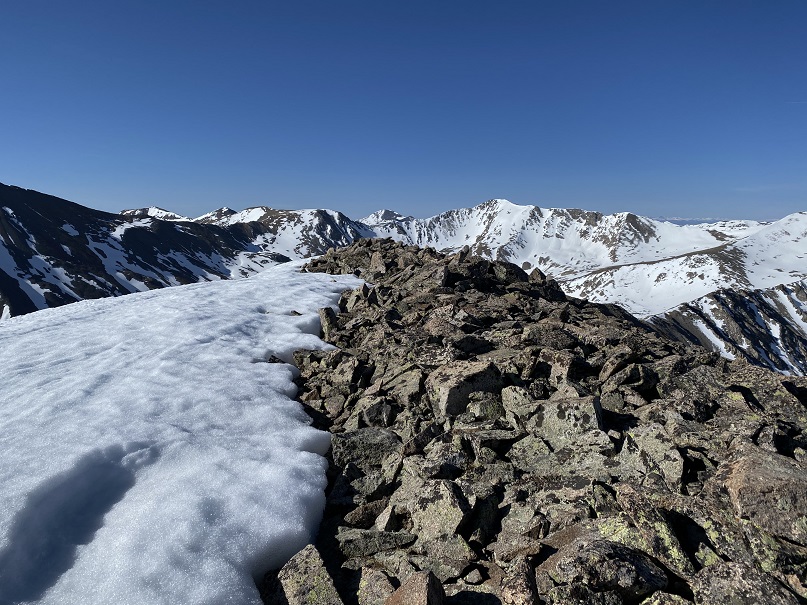
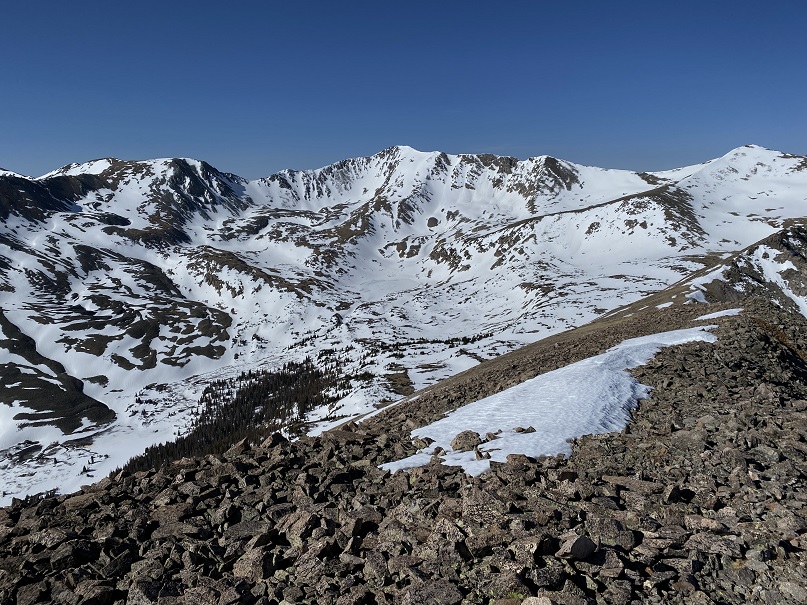
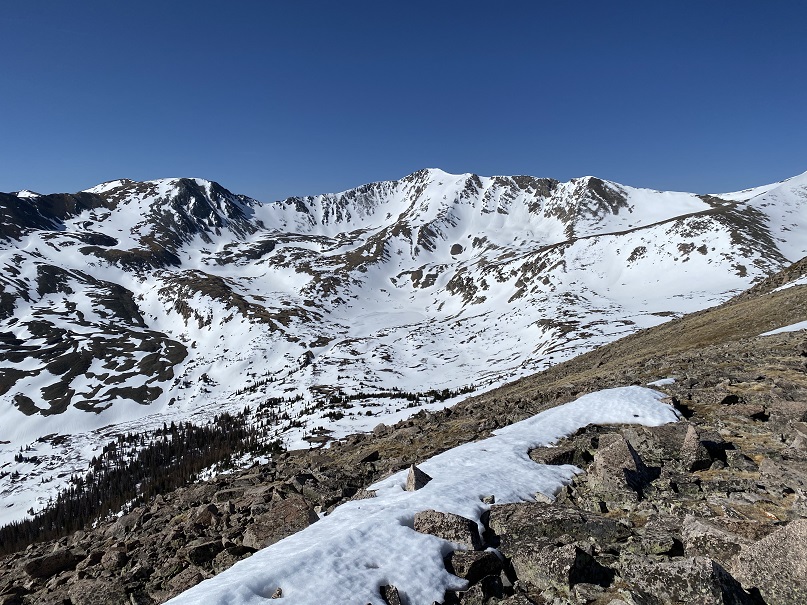
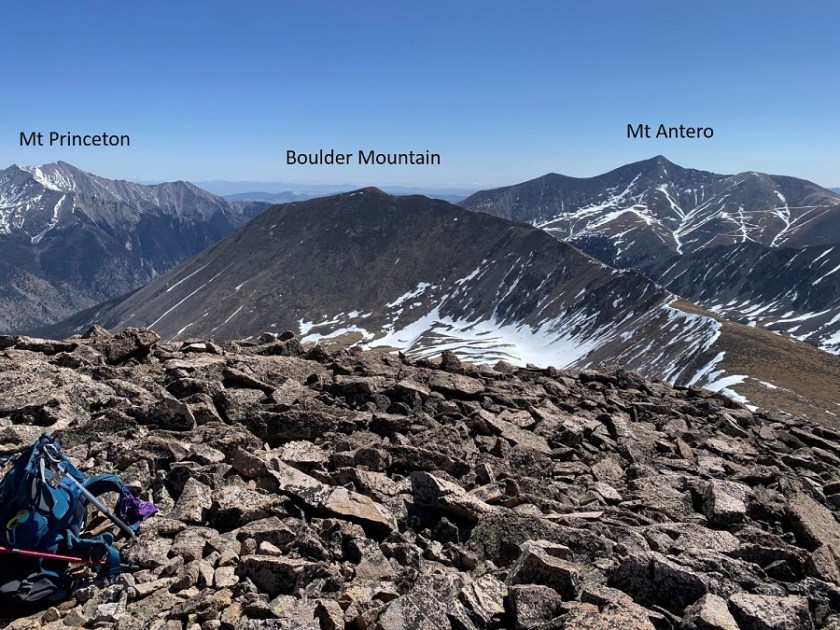
Here’s a look at some of the mountains visible from Mt Mamma on the route back

26

27

Time to head back towards Boulder Mountain

28

As you’re hiking down from Mt Mamma you can clearly see a trail on the west side of Boulder Mountain. Don’t take it: stick to the ridge. I’m pretty sure the trail is a goat trail, not a human trail. It’s very loose and a fall would send you a long way down the mountainside. I saw mountain goats grazing in Deer Canyon to my left.

29

The ridge was still almost completely snow free, but the areas with snow were turning to mush quickly.

30

I re-summited Boulder Mountain

31

And decided to take the ridge as far as I could back down.

32

33

I passed a stone with some numbers engraved on it

34

And kept following the ridge, keeping to the left of the snow. From my view last week I knew the ridge would be dry all the way to treeline

35

Here’s a look back up at the ridge

36

There were cairns here (some not so traditional) so I knew I was on some sort of a trail

37

I looked over at the route I’d taken in and knew it had been a good idea not to take it back: I could tell by just looking at the snow it wasn’t stable. The ridge was indeed snow free/snow avoidable until treeline

38

But once I got to treeline I encountered unexpected deep, slushy snow. I knew I couldn’t go back the way I’d come and to be honest, this snow caught me off guard. I could tell I only had a couple hundred feet to deal with, so put on my snowshoes and zig-zagged my way carefully through the snow towards the road I knew would be below.

39

40

It was touch and go at times, and more than once I asked myself if this really was the safest way, but when I made it back to the road I knew I’d made the right decision. The snow stopped about 200 feet before the road (which is why I’d thought it would be snow free from the ridge to the road; thankfully I only had a couple hundred feet of snow to contend with).

41

42

Once on the road I breathed a sign of relief but kept on my snowshoes. I knew there would be just enough snow to need them for a while yet. Every time I encountered snow on the road I postholed. It was indeed a long slog back to the snow-free 277 4WD road. On a positive note, the pine trees smelled amazing!

43

44

From last week’s trek up 13,626/Mt Princeton here’s a view of Boulder Mountain and my route. My ascent is solid, my decent is dotted. You can clearly see the gully you want to avoid: the road traverses it and should be avoided in snow.

45

I made it back to my truck at 3:15pm, making this a 15 mile hike with 5607’ of elevation gain in 11 hours, 45 minutes. Here’s my topo

446

I picked the wrong time of year to do this hike. It’s definitely not a spring hike, and still needs a few weeks to melt out. If I were to do this again I’d take the ridge up from the beginning and only take the road if it were in summer conditions. I’d take the basin by Baldwin Lake in more winter-like conditions. Beware of the gully area if you take the road, as it’s full of snow and looks prone to avalanching. I’m a little upset I didn’t get a picture of it on my way in for a visual, but I’d avoid the area if possible if there’s any snow at all.


Electric Peak A – 13,618 and Lakes Peak – 13,384

1

RT Length: 19 miles

Elevation Gain: 6661’

I feel like I was just here. Well, actually, last week I climbed Cottonwood Peak which is 2 miles away, so it stands to reason.

2

I got a picture of the shoes on the drive in this time… easy 2WD dirt road to the trailhead.

3

This time I got to spend the night. I arrived at the trailhead early (around 2pm) after my failed attempt at 13,636.

4

I was excited to discover I had cell service, and the first thing I did was order a new water bottle (I’d lost mine on my last hike). So, what to do with all this extra time? I really wanted to sleep, but I just…. Couldn’t. It was too hot outside. I know, right? Too hot, in the first week of May? But there you have it, I was roasting in the back of my truck, so I kept the windows open. The view was great. I’d parked near a copse of scrub oak.
5

I decided to write down some trip notes from the day and text a few people (since I had service). There was a nice breeze outside. I heard a loud buzzing noise, and had a hummingbird fly into my truck and back out again. So cool! Someone drove in with a rather large horse trailer and I thought I may have neighbors for the night, but they lived adjacent to the trailhead and just drove through.

Oh, I should eat.   But I wasn’t hungry. I forced myself to eat some tuna and a handful of pistachios. And I had 3 shots of whiskey. There, that should make me tired. But nope, I still couldn’t fall asleep.

So I set up everything for tomorrow and walked around a bit. When I got back to my truck a car was parked in front of mine, and I saw an older woman walking around. I said hi, and that I hadn’t heard her drive up. But that wasn’t her car. She lived across the street and was just checking the trail register. A man had signed it, saying he was headed towards Major Creek and should be back by 5. Well, now I wouldn’t be able to sleep until after 5. He didn’t show up by 5:30, and I decided to was exhausted by that time, so I fell asleep.

I only woke up once during the night, around 10:30pm, to barking. The barking didn’t stop all night, and I assumed it belonged to the lady I’d seen earlier in the day (ok, her dog). My alarm went off and I snoozed it for an hour (the dog was still barking), but eventually I left my warm bed and got ready for the day. I was on the trail by 3am, armed with 2 16oz bottles of water. The dog was still barking.

To expedite things I’d signed the trail register the night before, so today I was able to start hiking right away. The trail starts to the right (southeast) and hugs the mountainside.

6

7

Then the trail switchbacks down to Major Creek.

8

I must admit, this caught me off guard. Not the part about crossing Major Creek, but the part about losing 300’ of elevation to do so. In fact, I got out my map and compass several times to check that I was going the correct way. Unfortunately my compass wasn’t working correctly. It must have been the location, because I could clearly see the town lights to my right yet my compass was telling me I was headed in the wrong direction. In any event, yes, the trail does switchback all the way to Major Creek, and then quickly crosses it twice. I was easily able to rock hop across without getting wet.

9

10

The trail winded through brush and chaparral

11

12

Before entering Aspen groves

13

Here’s a look at the route

14

After a mile of hiking I could no longer hear the dog barking, and I started seeing discarded deer legs on the trail (and hanging in the trees) from hunters last fall. I even saw a dead mouse in the middle of the trail. Oh, how I was regretting binge watching Stranger Things last month! After hiking about 3 miles I heard a loud “Woof!”. I stood still for 3 seconds, trying to figure out if I’d really heard what I’d heard when I heard two more quick barks: “Woof! Woof!”. I thought to myself “What wild animal barks? Coyotes yip and howl and so do wolves”. I concluded it must have been a dog (a large dog) and continued hiking. Weird since I was the only one for miles…

There was one annoying aspect to this hike (besides all the horse poop): So far I wasn’t gaining any elevation. I’d lost 300’ going down to Major Creek, and from then on I kept hiking up and down small hills. I’d think I was gaining in elevation only to lose it again and head back down to the creek.

At 4.8 miles (10100’) I came across measurable snow on the trail, and at 5 miles I crossed a small creek and came to a camp.

15

It was obviously a horse camp and I figured the guy who lived adjacent to the trailhead spent a lot of time here (in the summer).

16

The trail had been nice up until this point. A few downed aspens here and there, but nothing major. However, it was obvious not many people used the trail after the camp area.

17

I just kept heading northeast, and every now and again I’d find the trail. And then the snow began. Around 10,900’ snowshoes became mandatory.

18

At 11,000’ I turned right (east) and rounded a boulder field. I put some surveyors tape on a tree so I could remember where I exited. I only barely skirted the boulder field, and then continued southeast through some trees and into a meadow.

19

20

21

There was a lot of evidence of elk and moose in the meadow. I think they may bed down here at certain times of the year. At the end of the meadow there were cairns and I turned left (northeast) and followed a much better trail up the mountainside.

22

At times this trail was covered in several feet of snow, and at times it was bare, but it was always easy to follow. Postholing wasn’t fun, so I put on my snowshoes for a bit, and kept them on until the snow subsided.

23

24

25

Making it to the saddle was easy

26

From here I chose to do Electric Peak first, mainly because it was the taller of the two ranked peaks, and a little longer of a hike. I turned right (southeast) at the saddle, and followed the saddle towards the peak. This is much easier than it looks.

27

28

However, this is not the peak

29

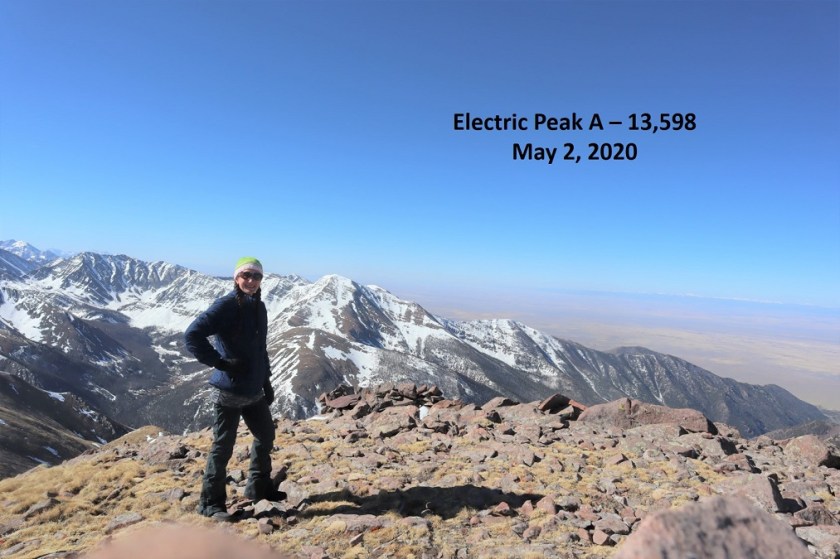
As with Cottonwood Peak just a few miles away, Electric Peak A has a hidden summit

30

Luckily it was an easy ridge walk, first starting out with tundra, and then moving to larger rocks (all pretty stable)

31

32

33

I summited at 9:15am

34

Electric Peak A

There was a summit register. I don’t normally sign these things, but since it was apparent I was the first person to summit since October of last year and it was warm enough for me to take off my gloves, I signed it.

35

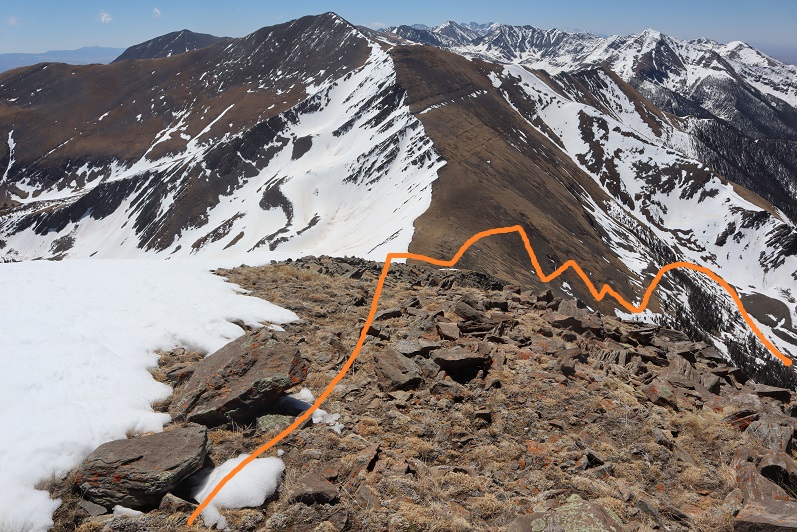
And turned to head back. I was a little worried about where the true summit to Lakes Peak was, considering all the false summits in this area. Originally I’d thought it was the peak to the left of the saddle, but now I was worried it was the peak behind that peak. I decided to get out my altimeter when I made it to the top of the false summit and do the math. Here’s a look at the ridge back

36

37

When I made it to just above the saddle I was very pleased to find out the peak before me was indeed Lakes Peak. I headed down to the saddle, and then up the ridge, being careful to stay just to the left of the snow

38

There was still a lot of snow in the basin to the east, but not much to the west. While hiking down I saw a boulder the size of a microwave break off and roll down the hillside, coming to rest in the basin. It was neat to see the trail it left behind.

39

The trek up Lakes Peak was full of very loose rock. I felt that at any minute I was going to cause a rockslide, so I placed my footing accordingly. By this time I was quite tired, so it was slow going.

40

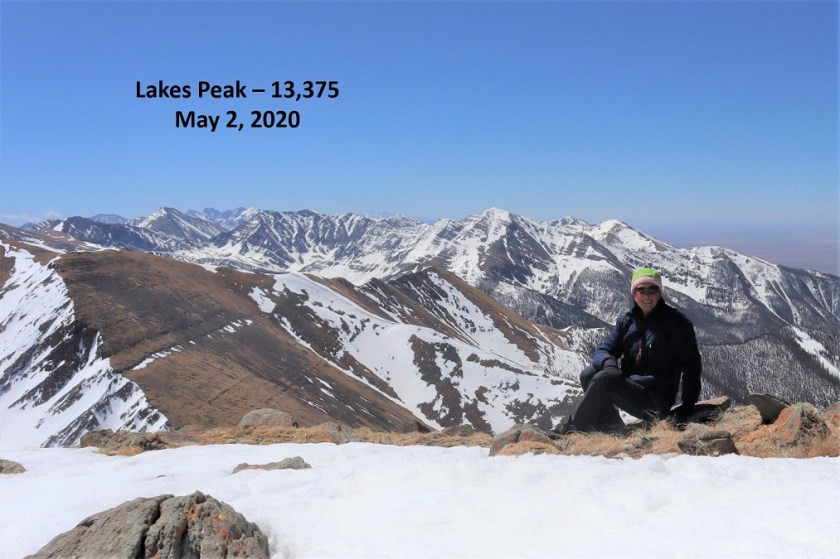
I summited Lakes Peak at 11:10am

41

Lakes Peak:

There was a summit register here too, but I couldn’t open it so I didn’t sign it. Also, the clouds were moving in quickly and I wanted to get below treeline. I turned to head back down the ridge

42

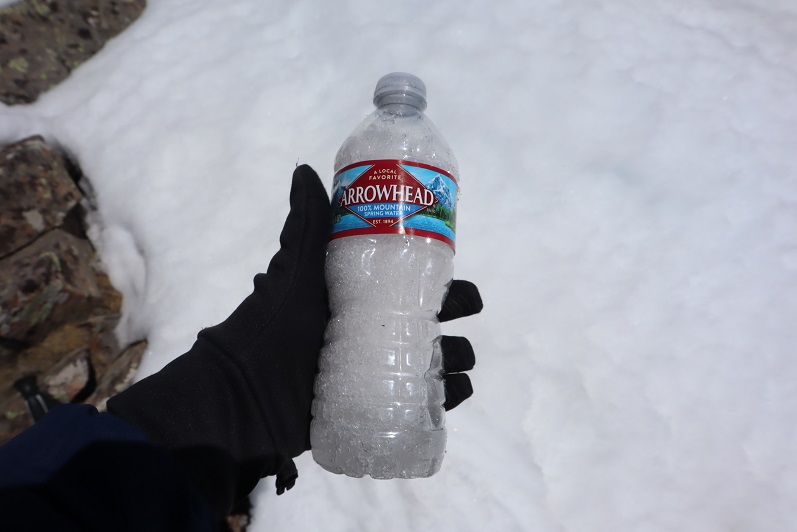
When I got to the saddle I stopped to fill one of my water bottles with snow. It was a hot day and I wanted to be prepared in case I needed more water: It was still 7 miles back.

43

From the saddle, here’s the route back (after you make it to the basin)

44

The snow at treeline to about 11,000’ was awful: Mushy stuff that I sank in with every step (with snowshoes on) for about 2 miles.

45

I made it back to the basin, found the cairn, and headed back over the boulder field, found the yellow surveyors tape I’d left, and headed southwest back down to Major Creek

46

No, it was not a fun trail to follow, even in the daylight

47

I passed the horse camp, and an old abandoned cabin at 9780’

48

The entire way back there were hundreds (thousands?) of dead trees littering the sides of the trail. It looked like an avalanche had come through, or the trees had all been killed off and the wind had blown them over. Speaking of wind! It didn’t stop! It kept getting stronger and stronger, and I feared one of the dead trees would fall over on me as I was hiking. I heard lots of creaking and swaying.

49

I’d been worried about the last 300’ of elevation gain climb from Major Creek up to the trailhead, but it ended up being easier than I’d thought, mostly because of the great cloud cover and wind cooling things off. I just took it slow and kept putting one foot in front of the other. The cactus blossoms were nice.

I made it back to the trailhead at 3:45pm, making this a 19 mile hike with 6661’ of elevation gain in 12 hours, 45 minutes.

50

OK, I’ll do my whining here: I bought a new pair of winter climbing boots last week and wore them for the first time yesterday. I didn’t think much of it, and my feet did well. Today however, not so much: my feet did fine on the way up, but on the way back I was limping. The new boots were just too tight around my shins and when I took off my shoes at my truck noticed large bruises (3 inches in diameter) and blisters on my ankles both inside and outside. I really, really like these shoes, as they kept my feet warm, but I’m worried they’re going to take a lot of breaking in. Tonight I’m going to put them by the fire and hit them with a hammer for a while, trying to loosen them up, after soaking my feet in a salt bath.

Cottonwood Peak A – 13,597

1

RT Length: 11.5 miles
Elevation Gain: 5110’

I got a bit of a later start on this one that I’d intended, as when my alarm went off at 12:30am I hit snooze and slept another hour or so (I’d already summited 7 peaks in the past 2 days and was a little tired). I made it to the Hot Springs Trailhead after first being led by GPS to the Hot Springs (which the sign indicated clothing optional: it was also closed due to Covid-19 fears).

The drive to the trailhead is easy 2WD on a dirt road.

2

There was 1 other vehicle parked there when I got there, which I thought was odd. It was a newer VW and didn’t look like it had been there overnight. I tried to be quiet in case someone was sleeping in their car but thought to myself “Great! Someone else is trenching the trail for me!”

The trail is a loop, and I was surprised to find out it was actually an established trail. The morning was getting better and better!

3

Just as an FYI, you cannot see the peak from the parking lot, but it was dark so that didn’t matter anyway. I signed the trail register (which was difficult due to the cold temperatures and ballpoint pen available). I wanted to summit Cottonwood Peak first, so I took the trail clockwise, starting to the left

4

The trail starts off wandering through chaparral

5

Here the trail was clearly marked and easy to follow.

6

I rustled a sleeping ptarmigan as the trail switched to scrub oak

7

Once I entered the aspens the trail started to deteriorate. What I’d been pleased to discover was a good trail became a trail in much need of maintenance. I was navigating over fallen trees for the rest of the hike, and it became increasingly obvious no one had used this trail since the Fall and no one would be trenching for me today.

8

Around 2.4 miles there was a great spot for a campsite (10130’)

9

What I found disturbing were the number of dead animals I encountered on this hike. There were deer remains everywhere (I’m pretty sure it was more than one deer, spread out over a few miles) and a lot of bird feathers. It let me know there was a predator in the area, I just wasn’t sure which kind?

10

I encountered the first real snow after about 2.6 miles. It was still early in the morning so I didn’t need traction, but I did posthole from time to time. Here the trail was difficult to see, as it was both covered in fallen trees/branches and snow.

11

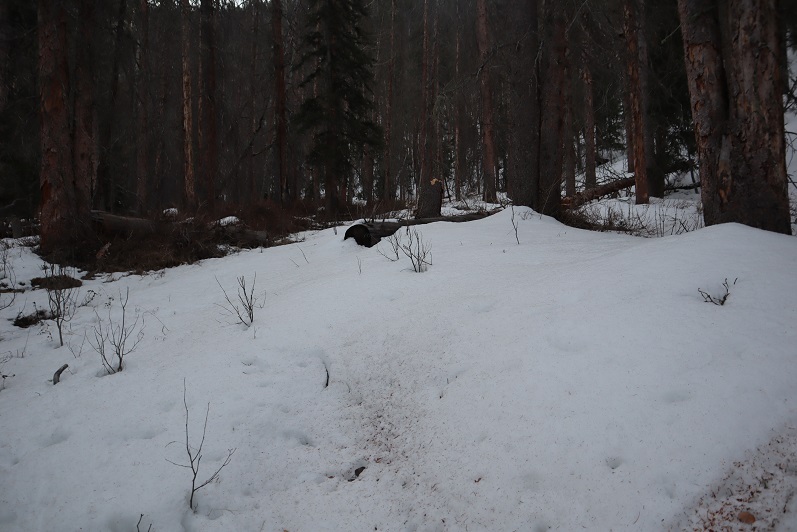
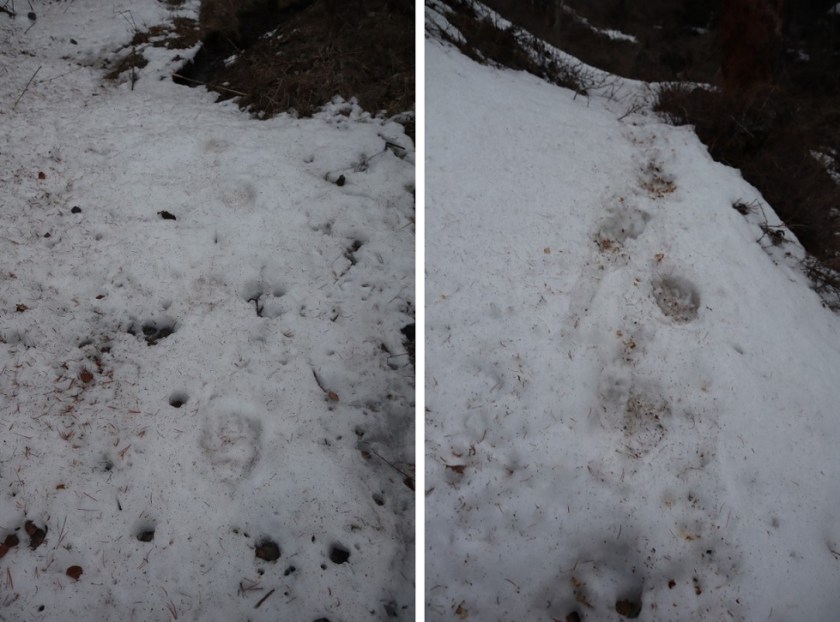
Here things got interesting: I came across bear tracks! They looked like they were from the day before, and since there was only one set of prints I knew it wasn’t a mama, and that it was just passing through. I followed prints along the trail for about a mile

12

Since the trail was difficult to follow and the snow was getting softer I found myself straddling the ravine and following the small stream around the mountain

13

It became increasingly apparent I was the only one to use this trail in a long time. I circled around to a gully, which would have been challenging if there’d been more snow. Instead it was a steady climb up, and when I had the option, I took the gully to the right, also easy to navigate

14

15

The second gully ended near treeline, and I became excited as I thought I could see the peak.

16

Of course in my mind I knew I was too close to treeline for that to be the peak, but surely it had to be just behind it? As I continued on I saw another peak behind the first one and figured that was the summit

17

Up, up, and up I continued, doing my best to avoid the snowy areas.

18

19

20

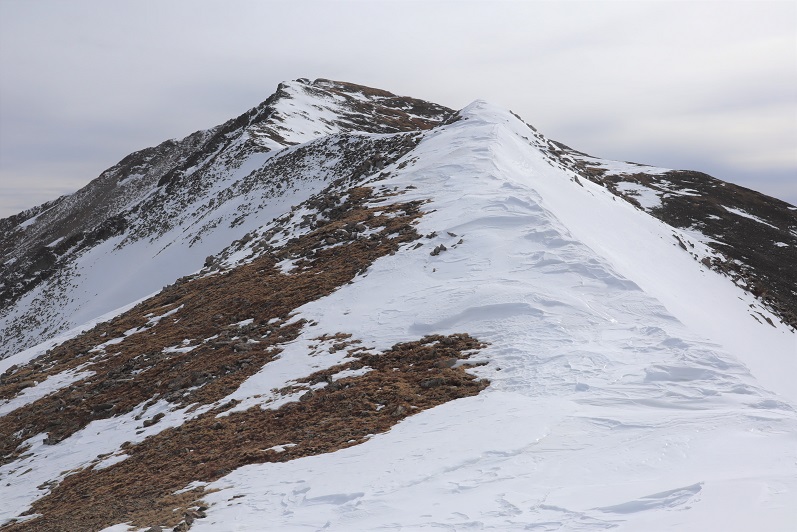
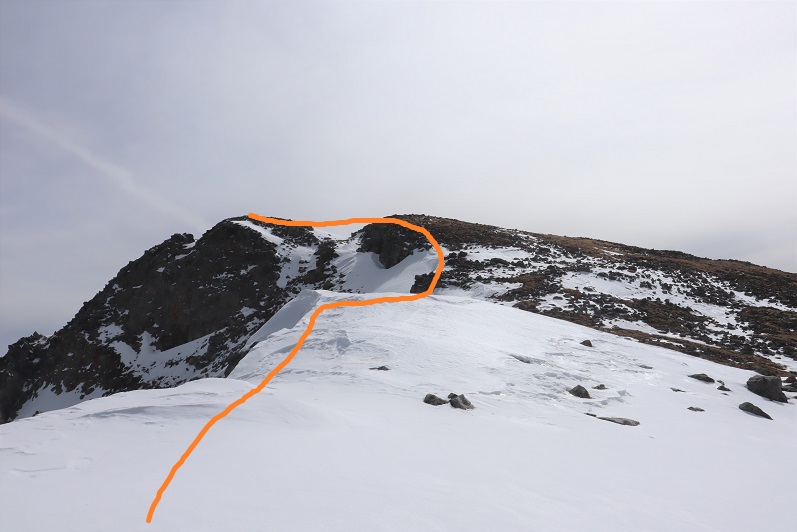
Imagine my surprise (and dismay) when I finally reached the top of the second peak and noticed I wasn’t anywhere near the summit: it was still quite far away

21

Not only was I still a good distance from the summit, but I would need my ice axe and snowshoes. Luckily, I had both. I sighed, broke down, and put them on. There was no way I was turning back now. The weather was great (the best day I’ve had all year) and while I’d already done 30 miles this weekend with 15K of elevation gain and was physically exhausted, I wasn’t quitting this close to the summit. I left my trekking pole here and continued on, ice axe in hand. The only way across the ridge was to walk directly on top of the cornices. Luckily the snow here seemed firm

22

23

24

25

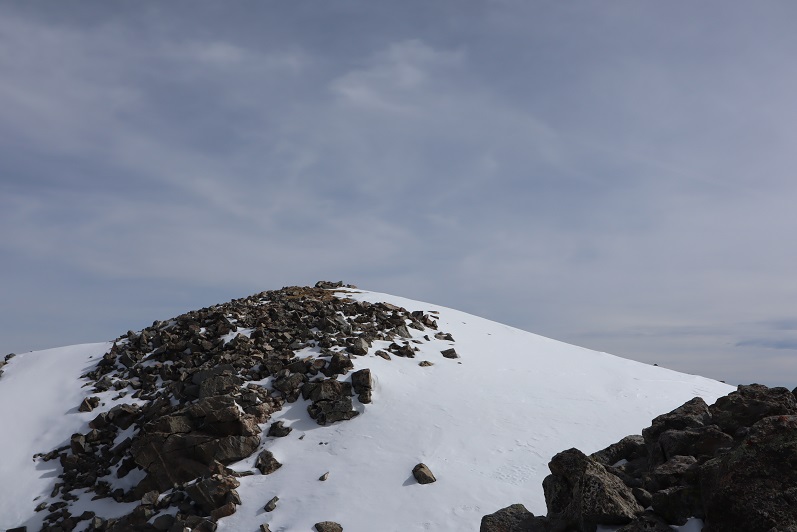
The last bit to the summit was easier than expected

26

27

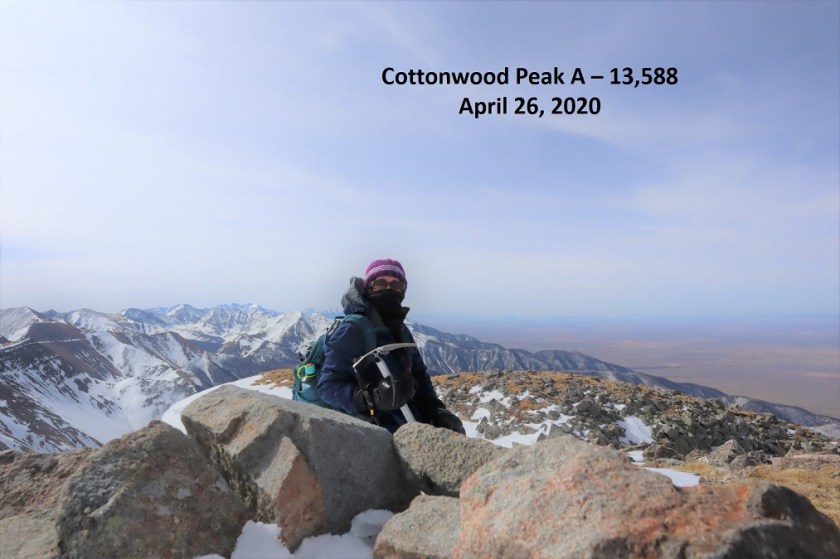
I summited at 9:30am

28
Summit Views:

There was even a summit tag on top

29

This hike is traditionally done as a loop along with Unnamed 13123B, so I went over to get a good look at the route

30

Hmmmm…. The route didn’t look that difficult. Actually, the ridge looked better than the one I’d just traversed, but it was a really nice day and the snow was warming up fast. I knew I could summit 13123, but I was unsure of the snow conditions on the route back below treeline if I were to make this a loop. I didn’t want to re-summit Cottonwood because a) I’d already done 5000+ feet of elevation today and b) the snow was getting softer by the minute on this side as well.
31

In the end I decided to go with the safer route and descend the way I’d summited, figuring that while the conditions wouldn’t be ideal, at least I knew what to expect.
I turned and headed back the way I’d come, first over a pretty cool cornice

32

And then back down the ridge

33

34

My favorite part was toe-heeling it across the cornices

35

Here’s the route back

36

37

I decided to keep my snowshoes on, and this time stuck to the areas with snow.

38

The snow was a terrible mush and I was glad I’d decided to return the way I knew, even if it meant postholing and navigating felled trees

39

I kept my snowshoes on for longer than needed, but they came in helpful when I hit the boggy areas where there was no discernable trail but a lot of willows/snow/downed trees

40

They were cumbersome in areas such as this:

41

On the way back I scared the same ptarmigan as this morning and saw a cactus in bloom

42

I made it back to my truck at 12:30pm, making this an 11.5 mile hike with 5110’ of elevation gain in 7 hours, 15 minutes. The VW was gone.

43

44
I was really happy with my decision not to make this a loop today, and look forward to trying the trail counter-clockwise next time, when there’s less snow…