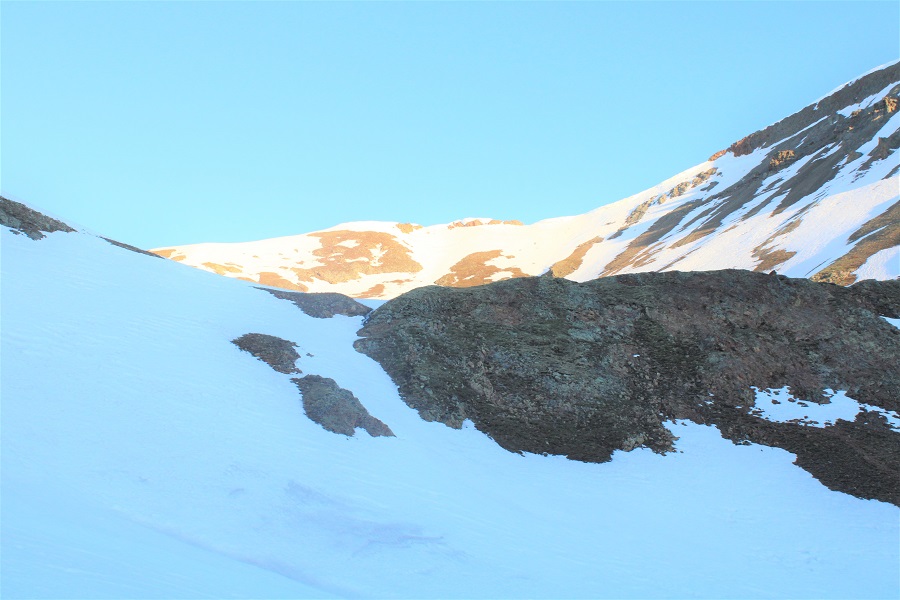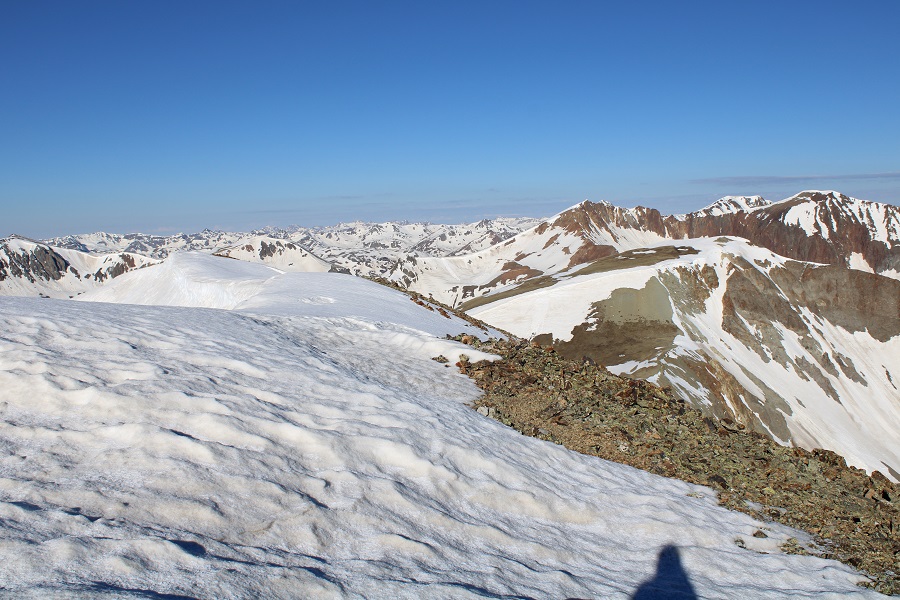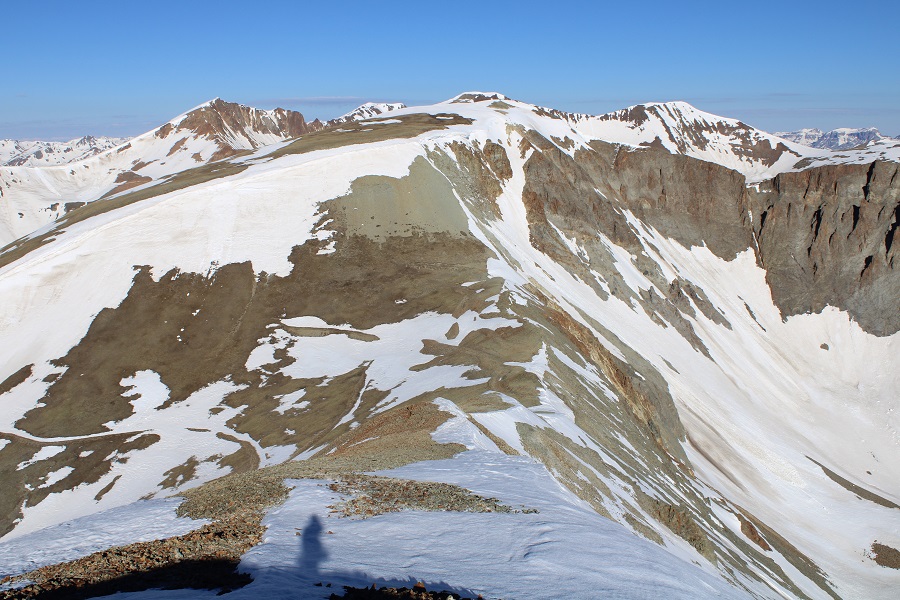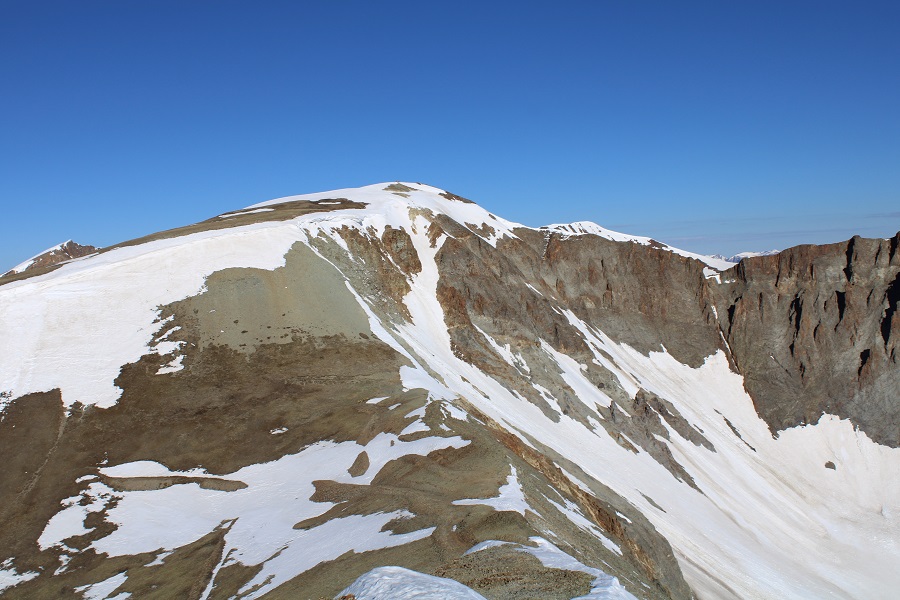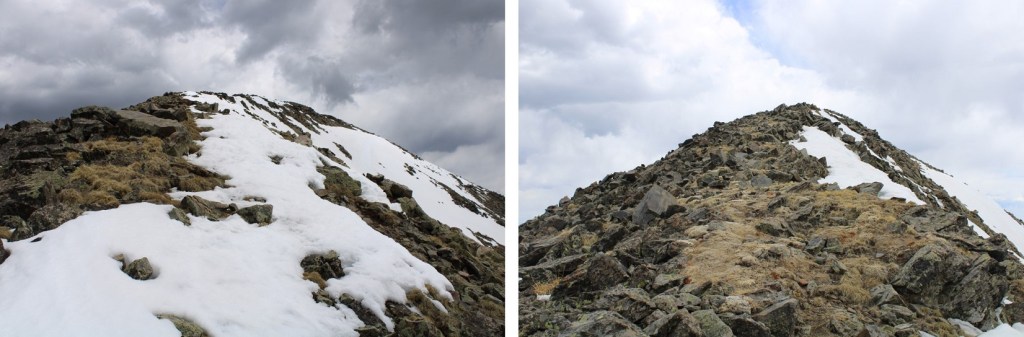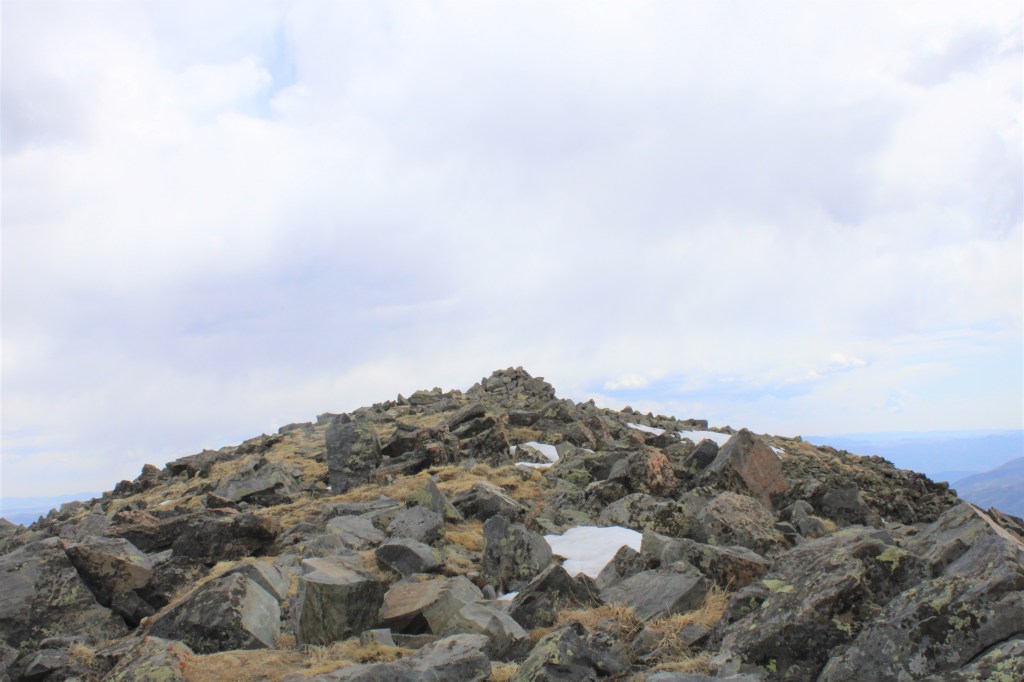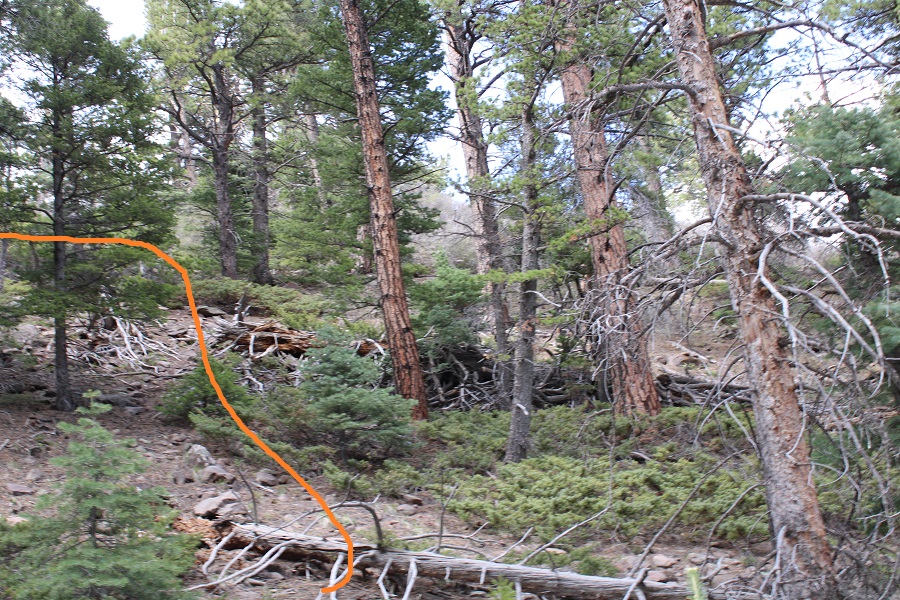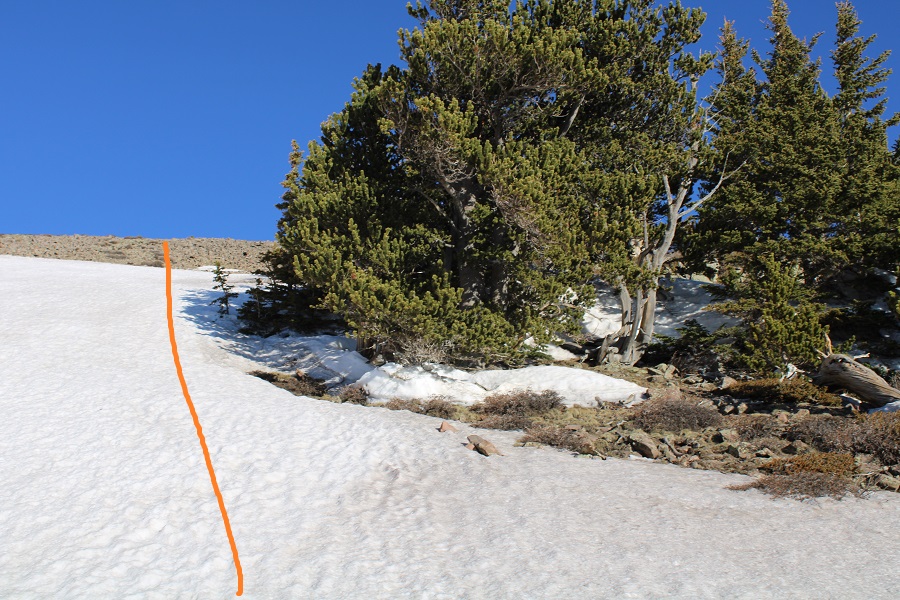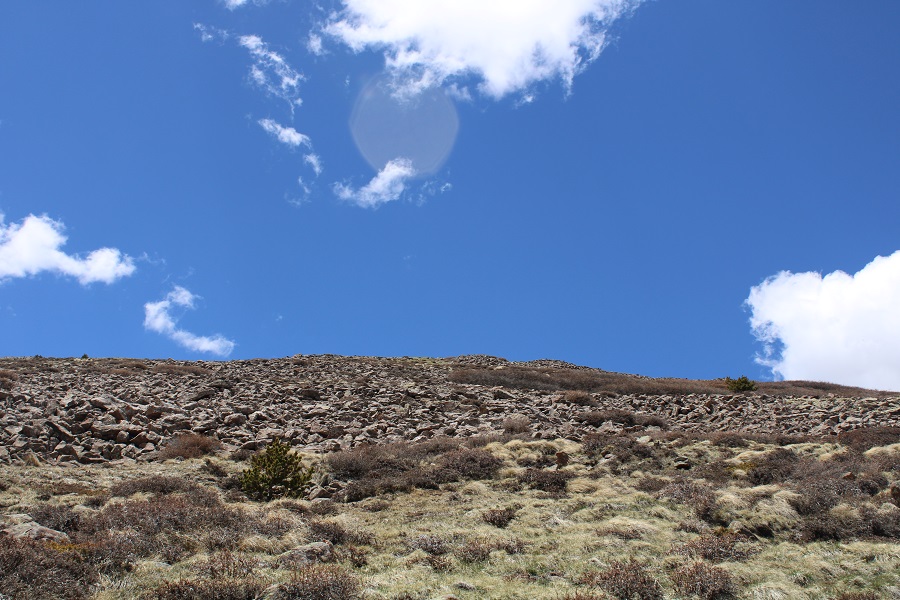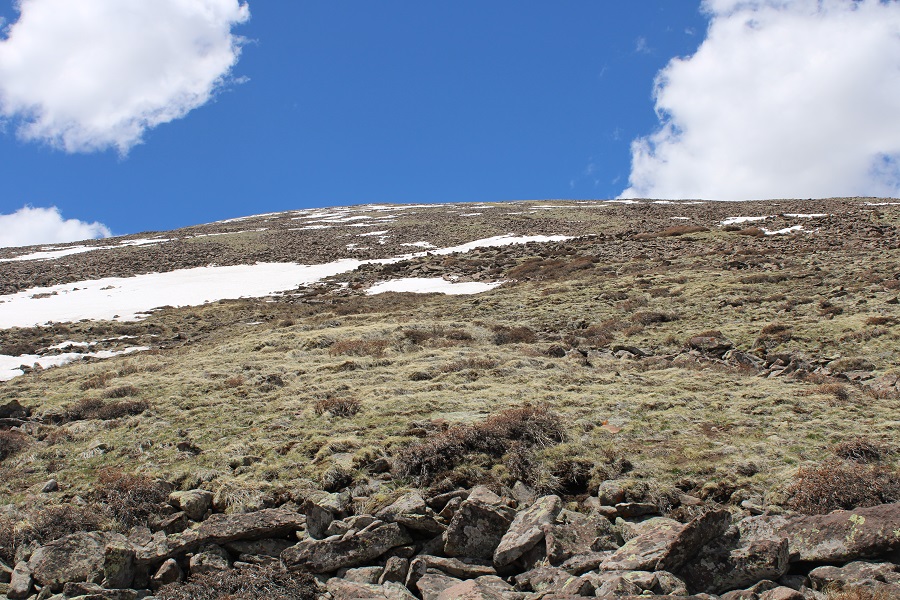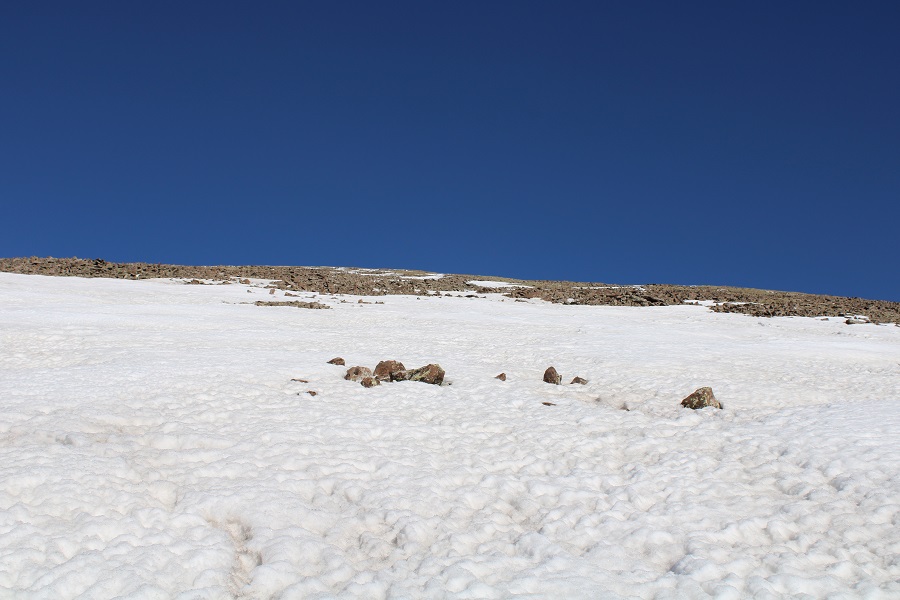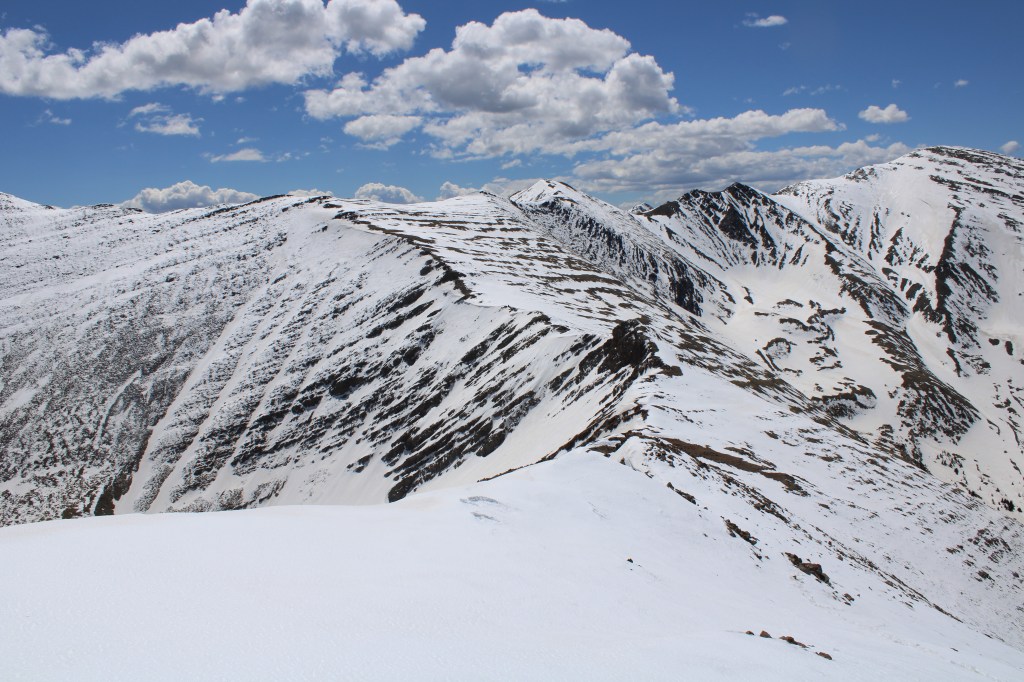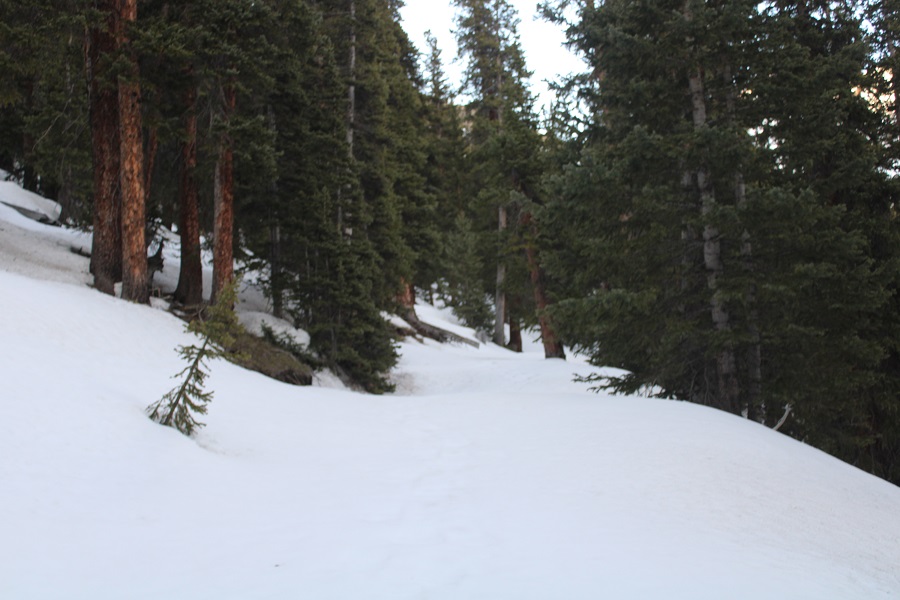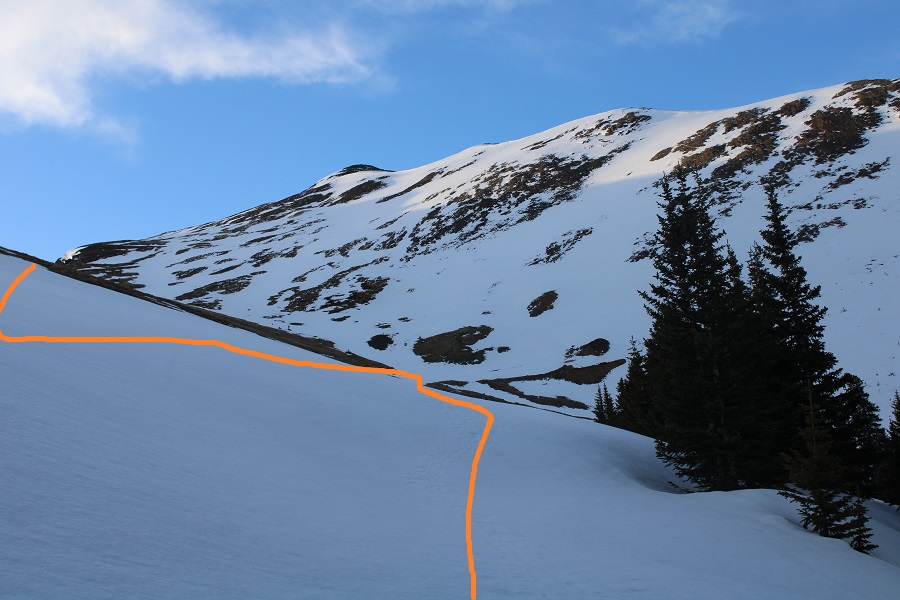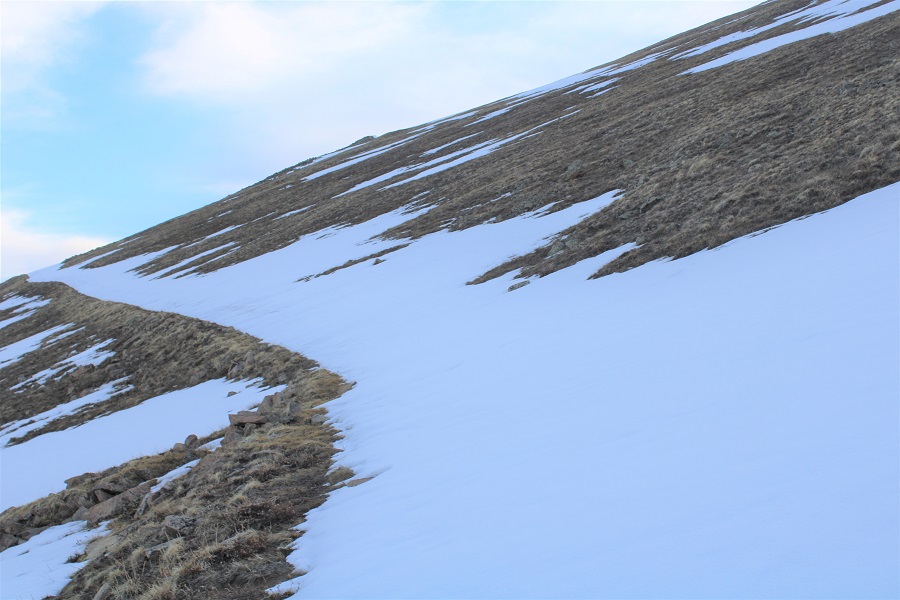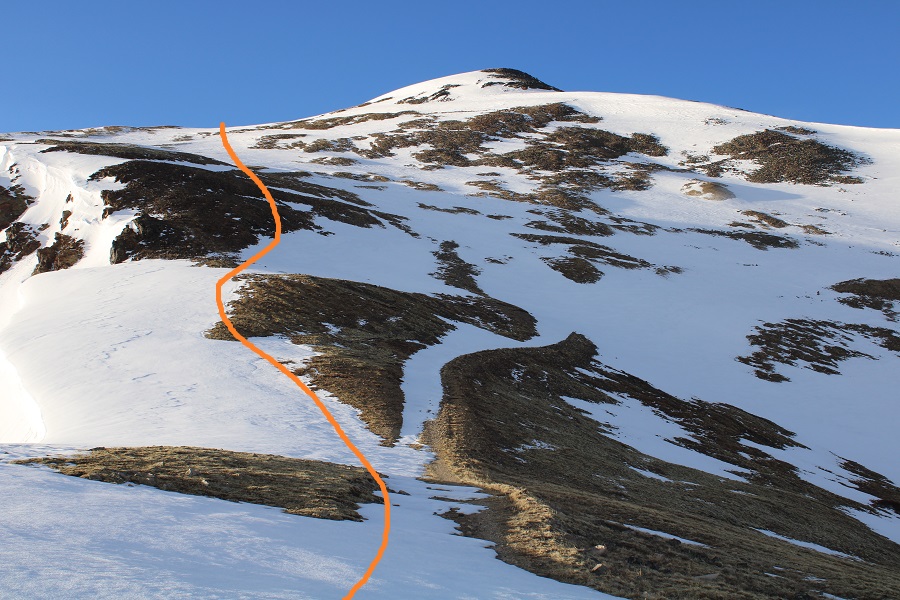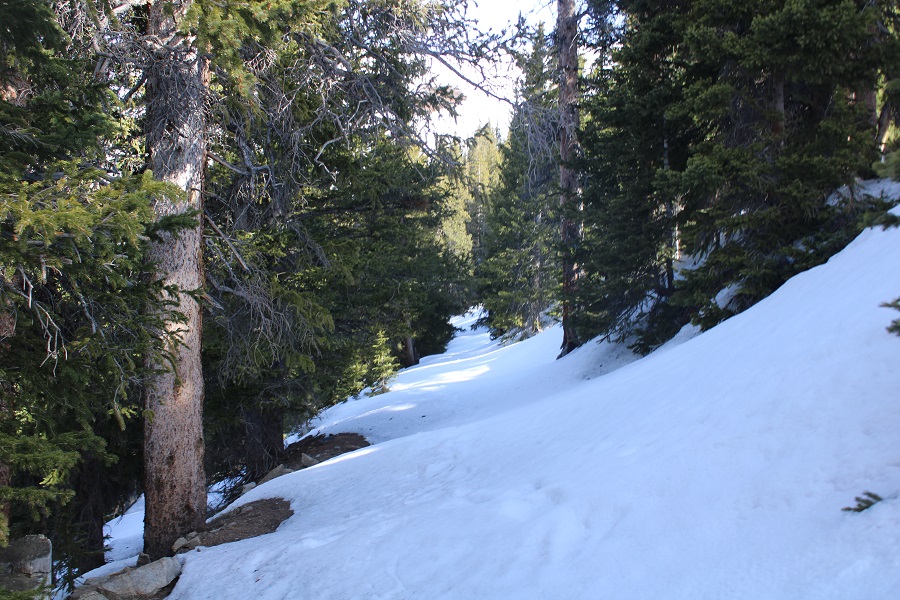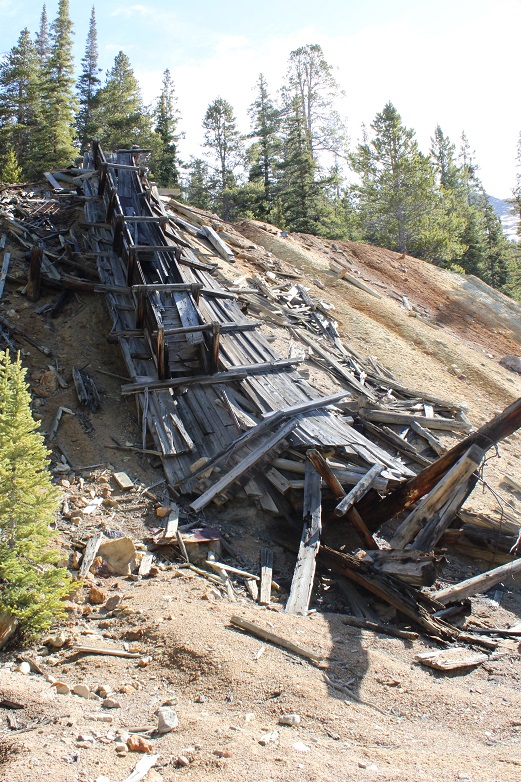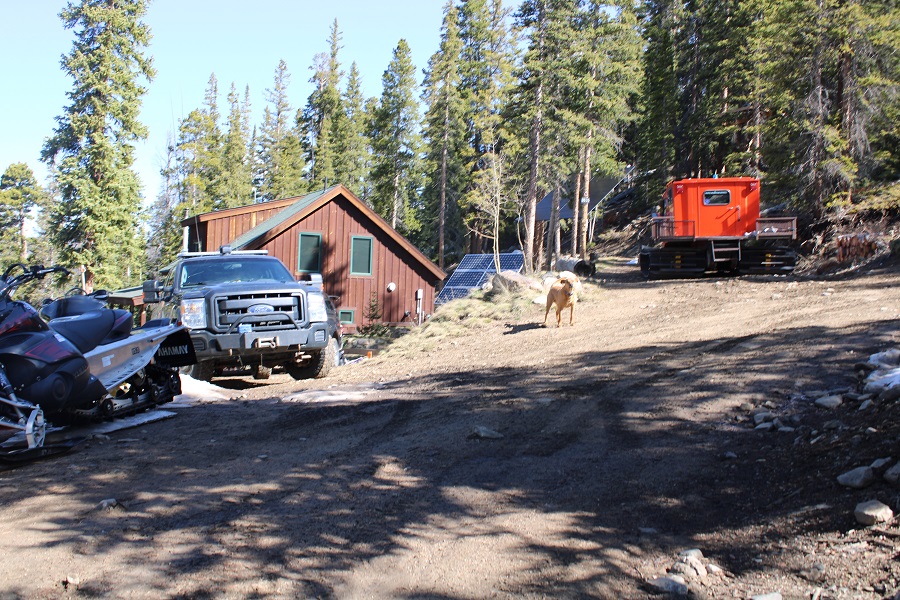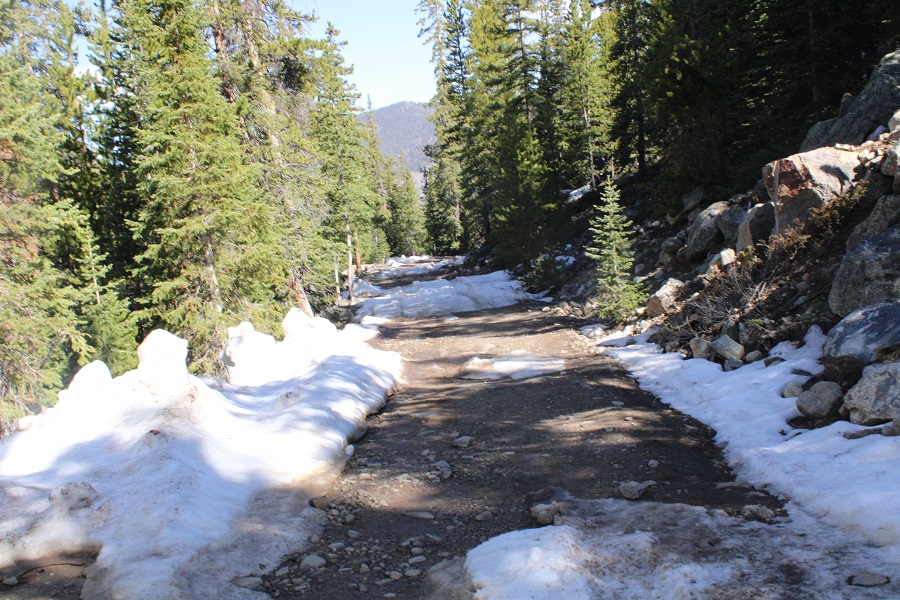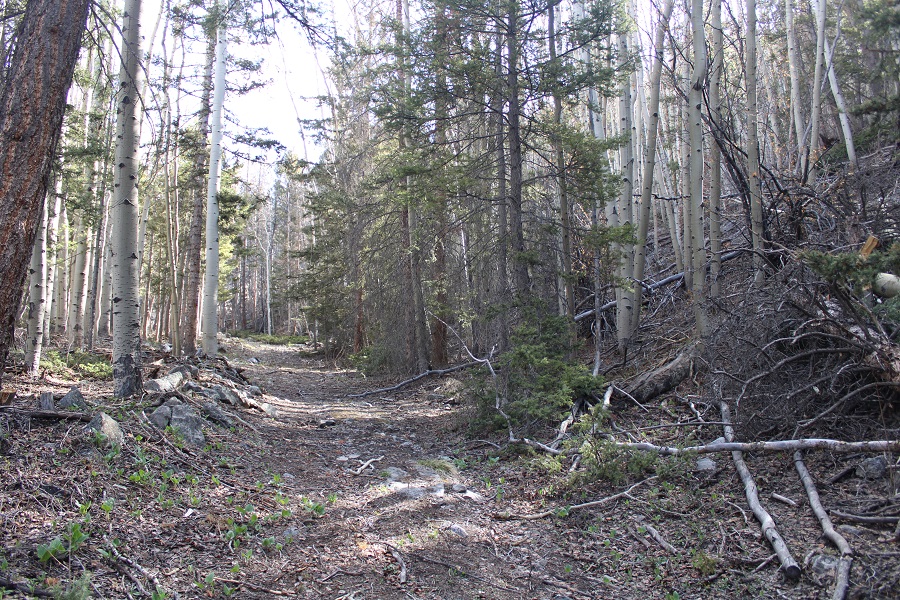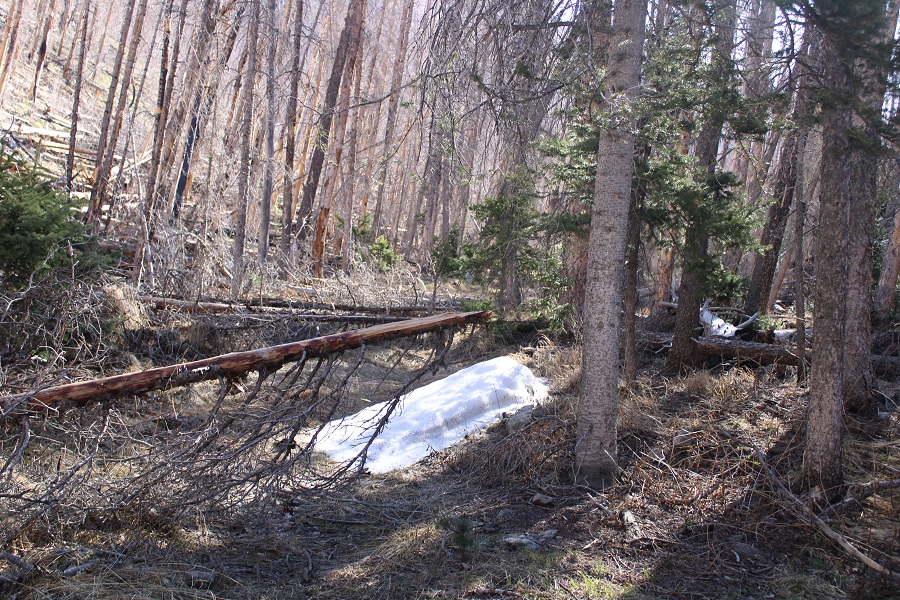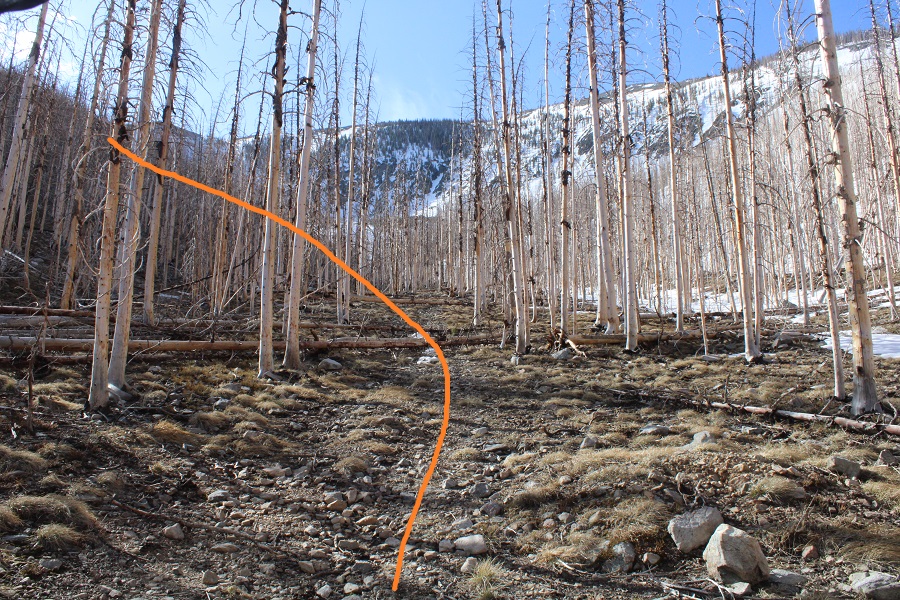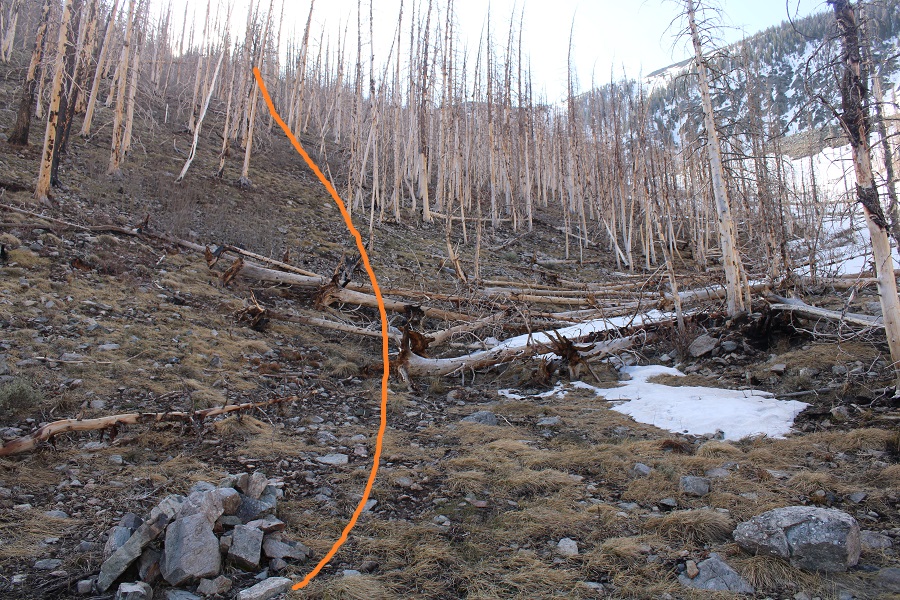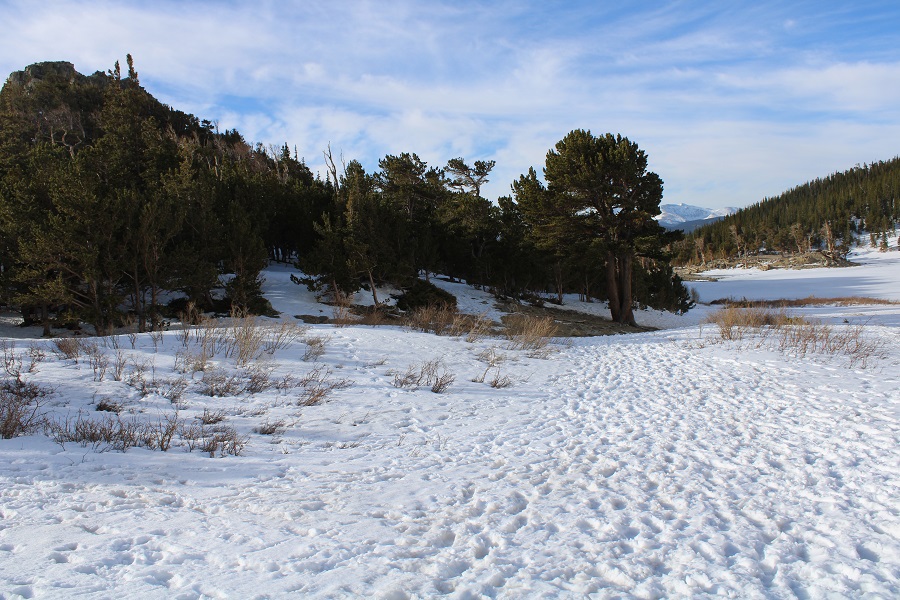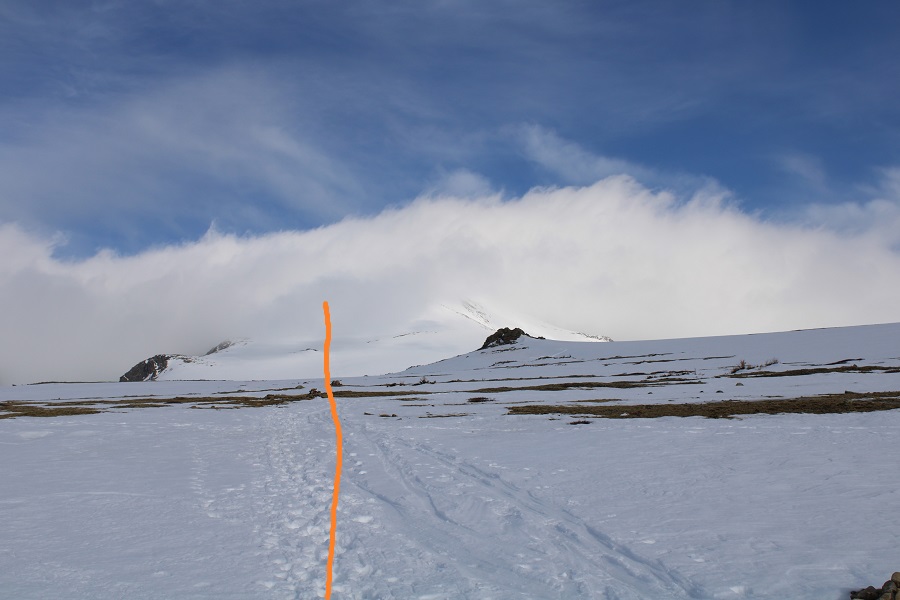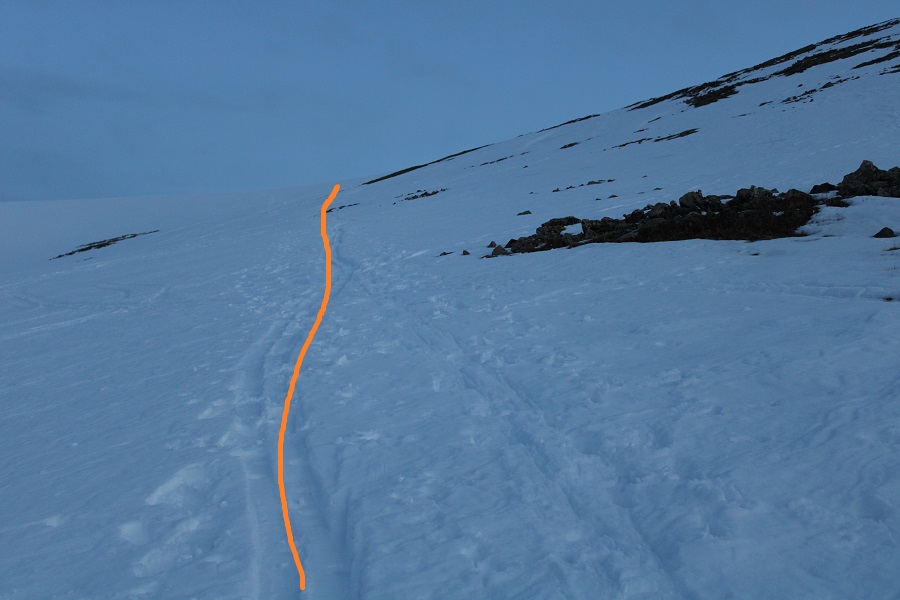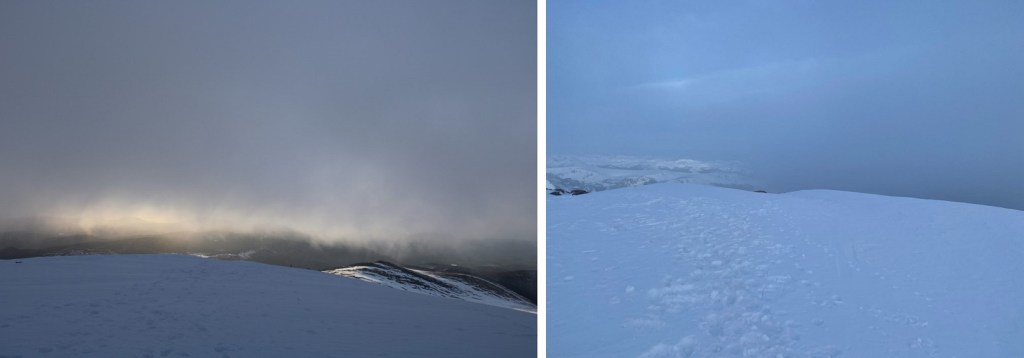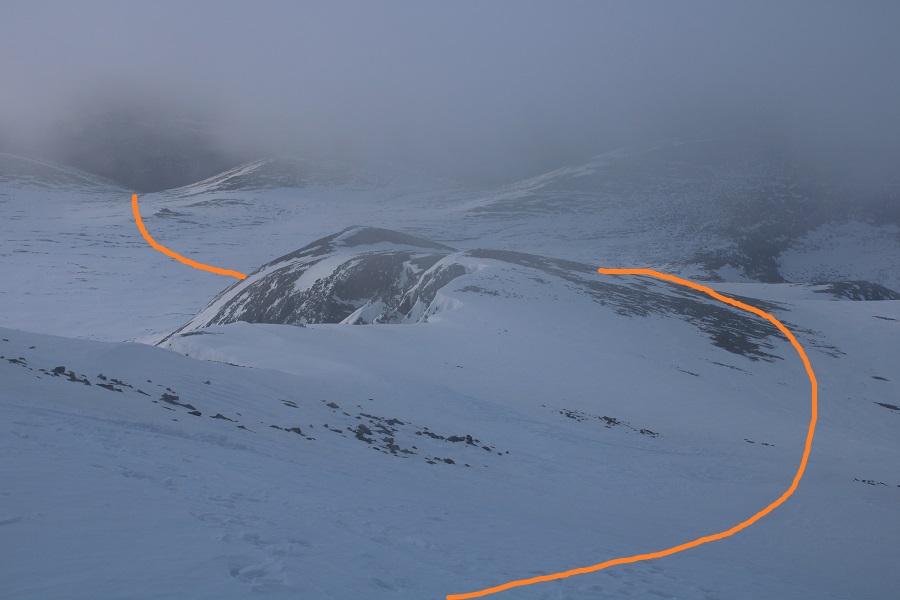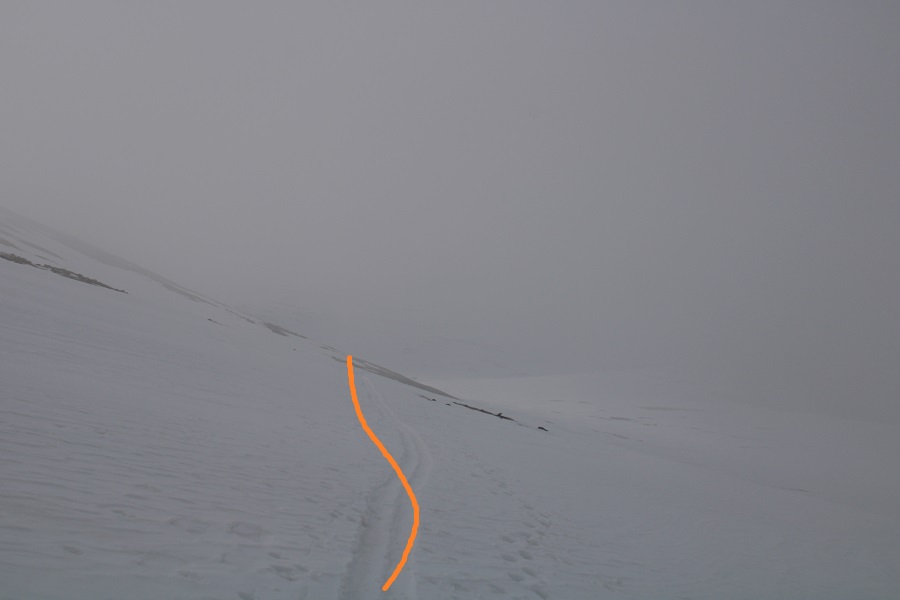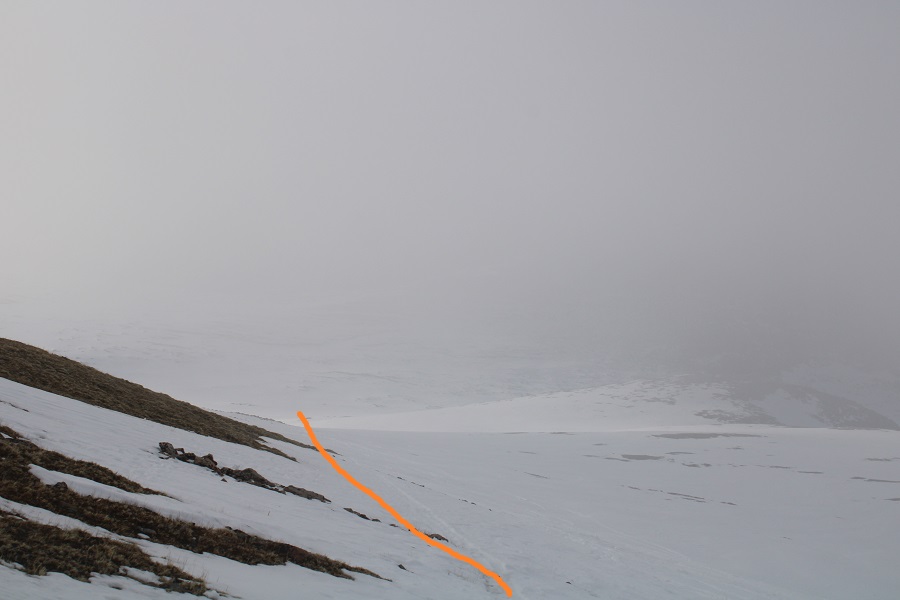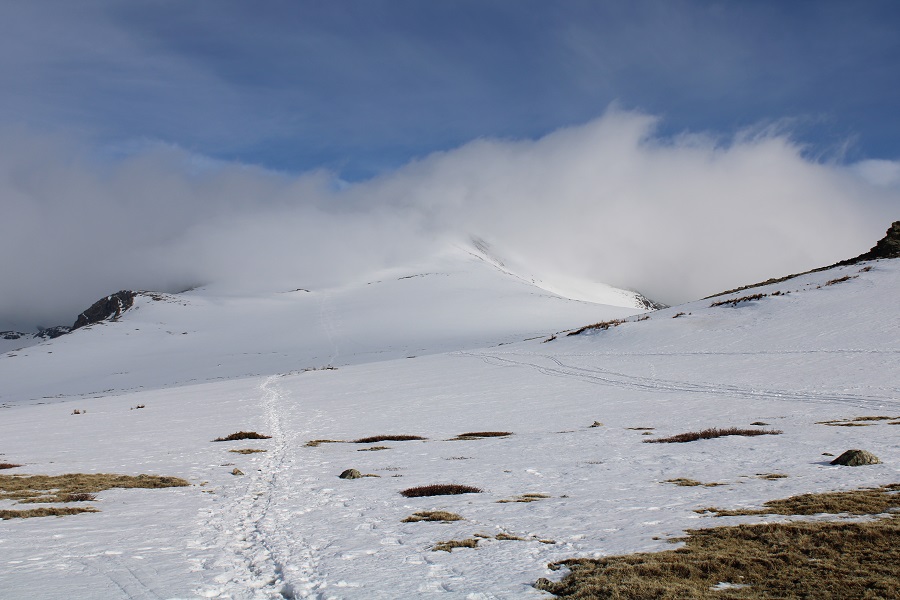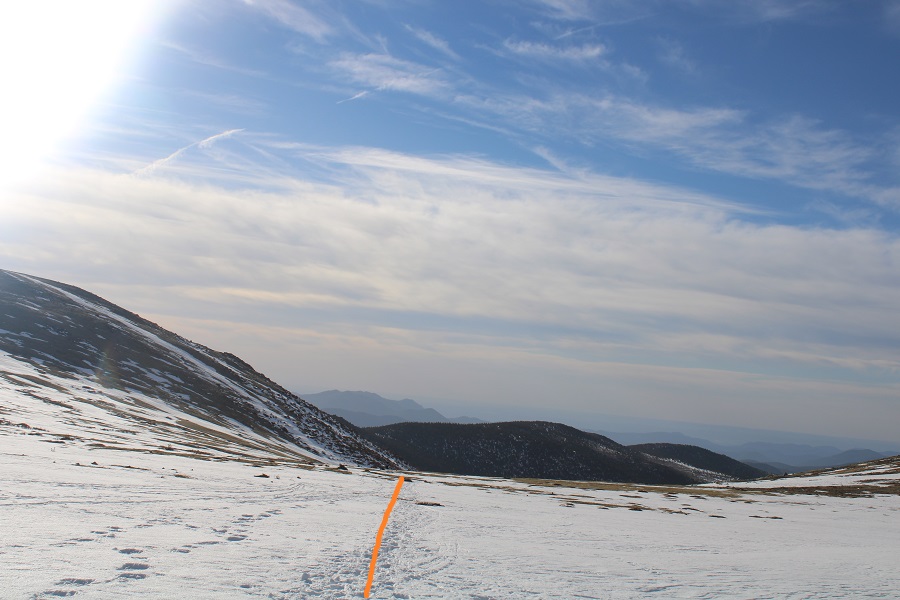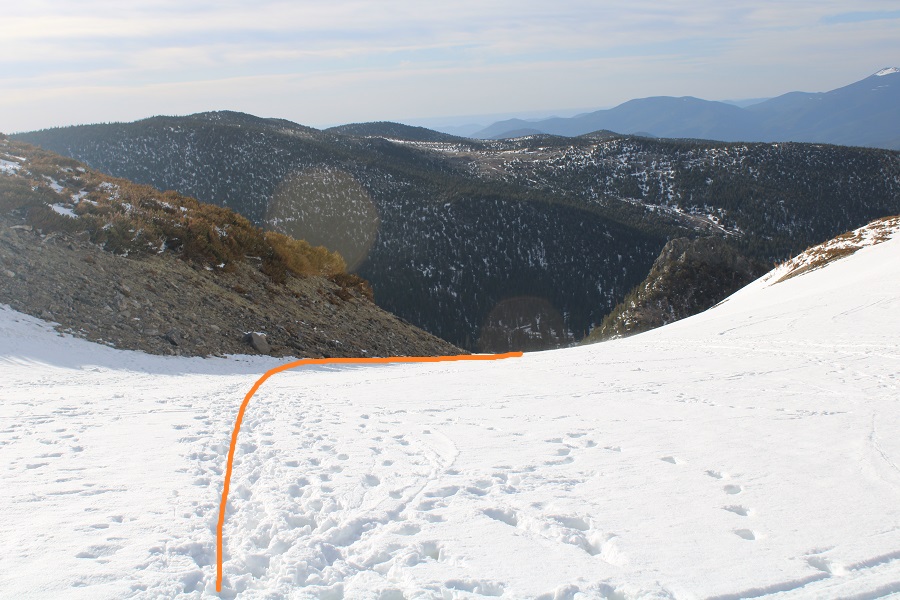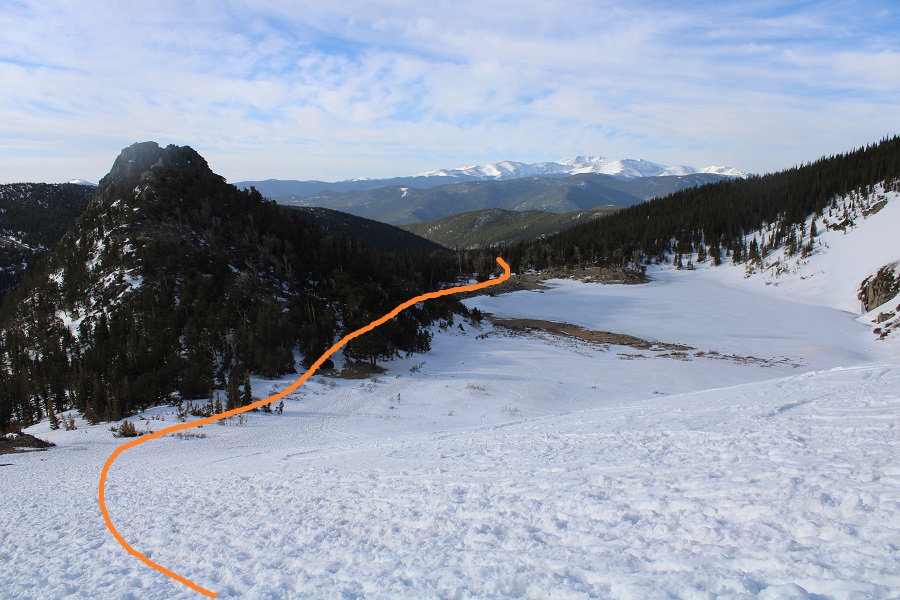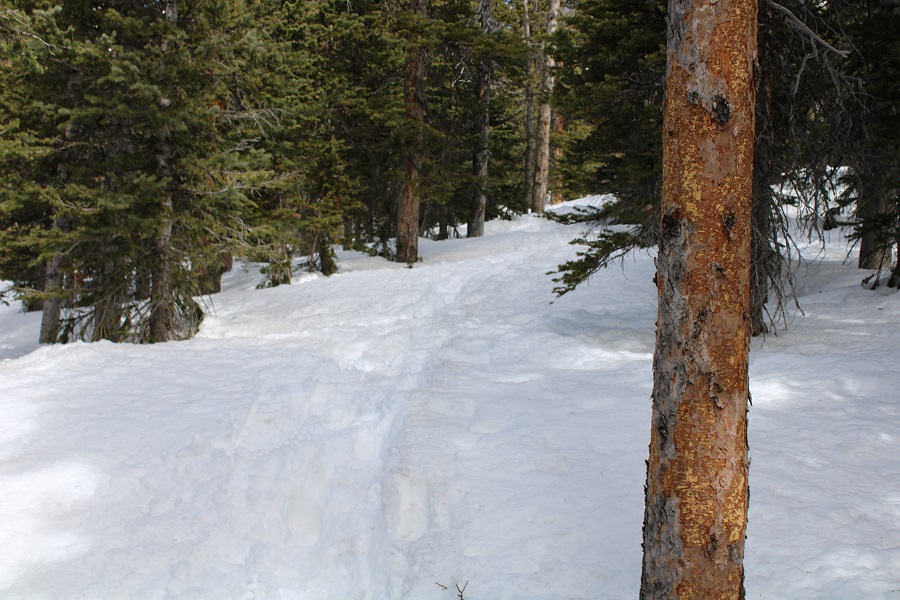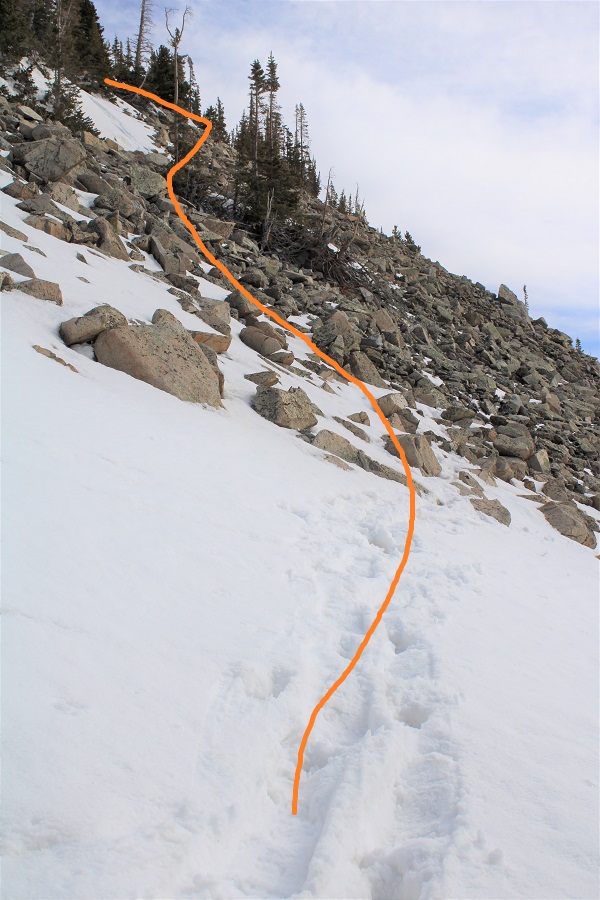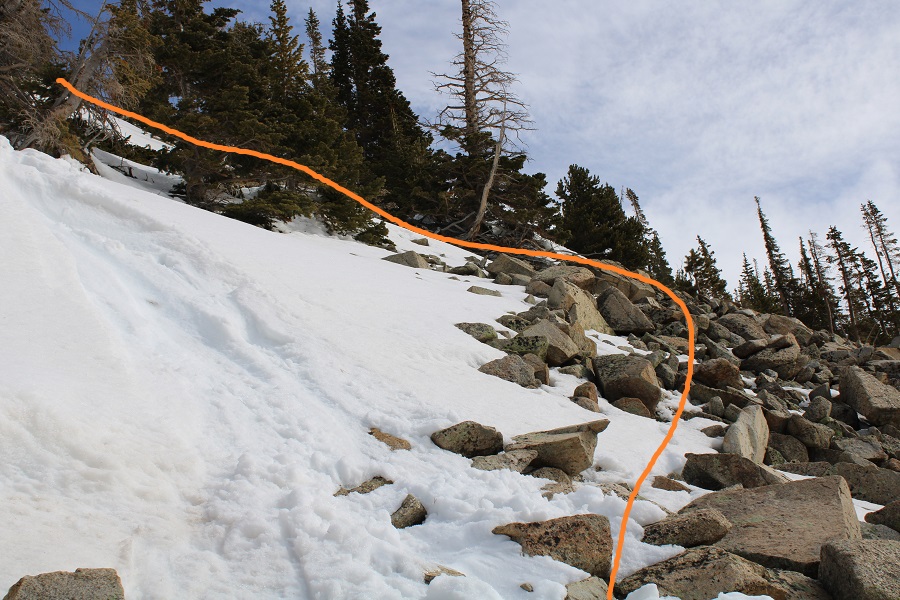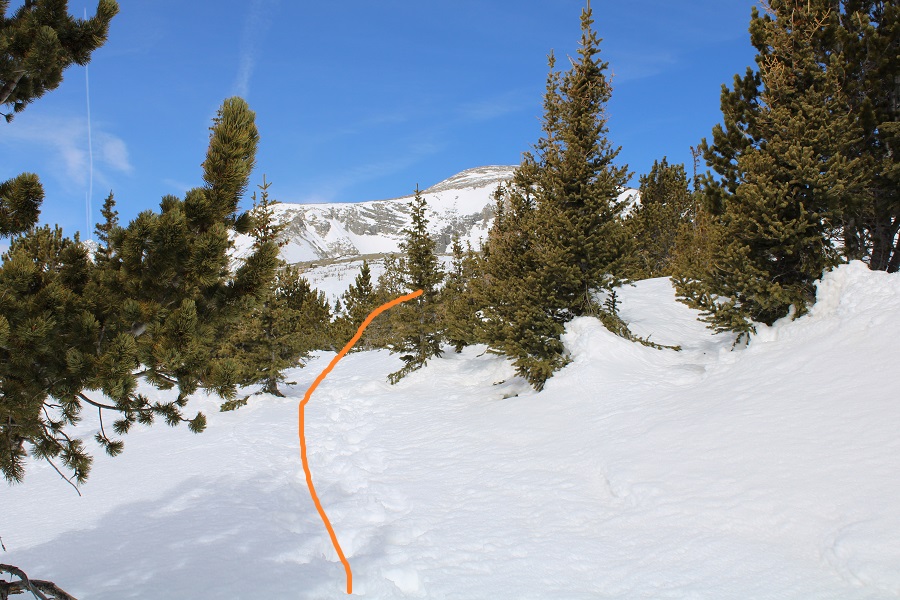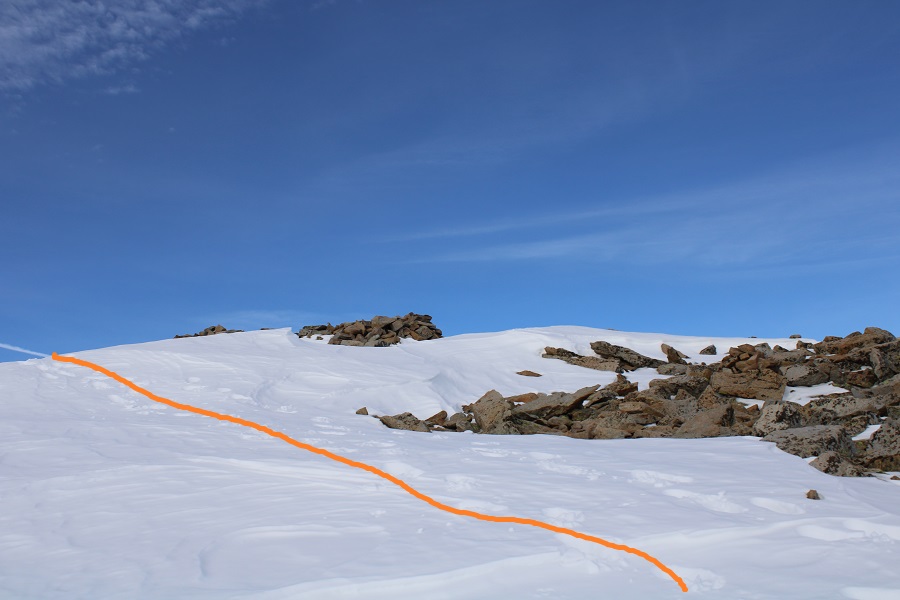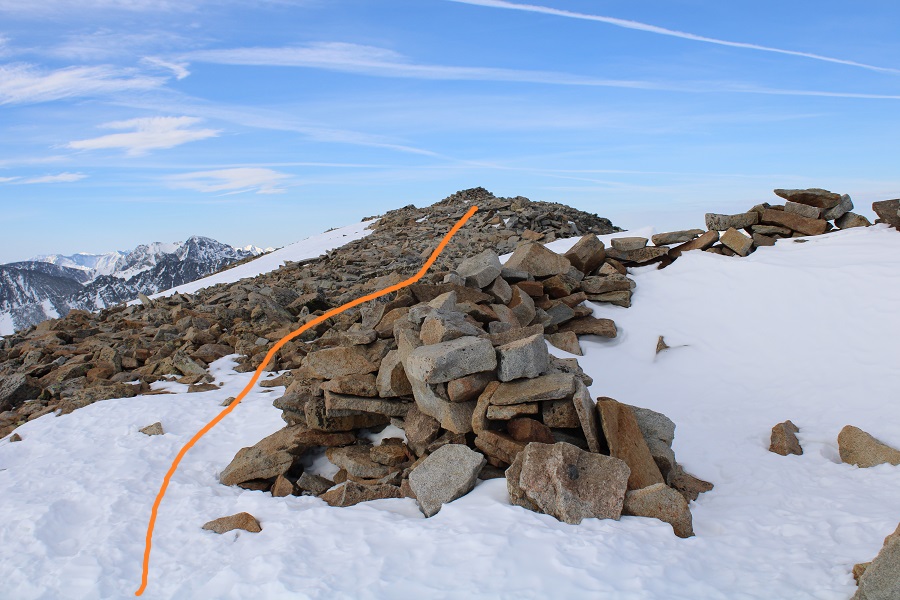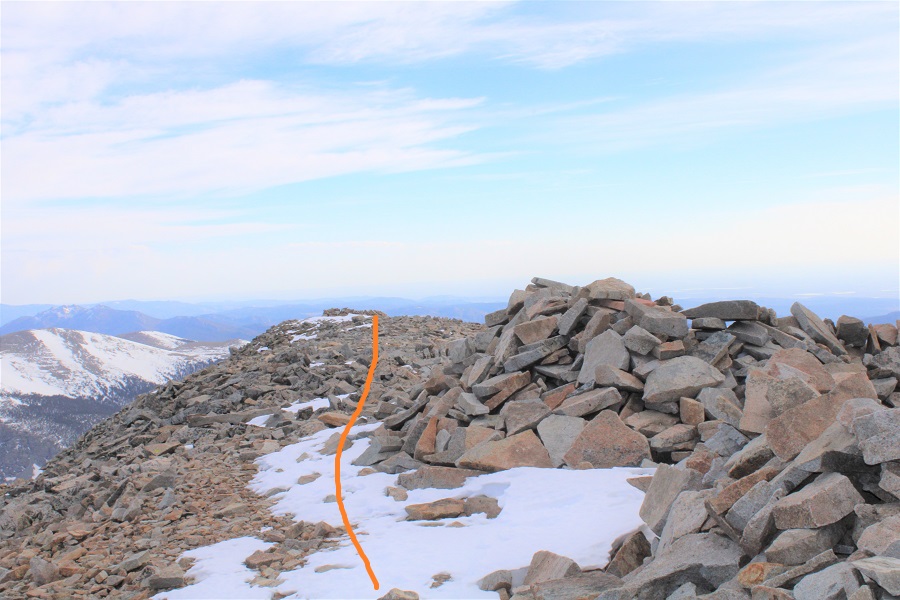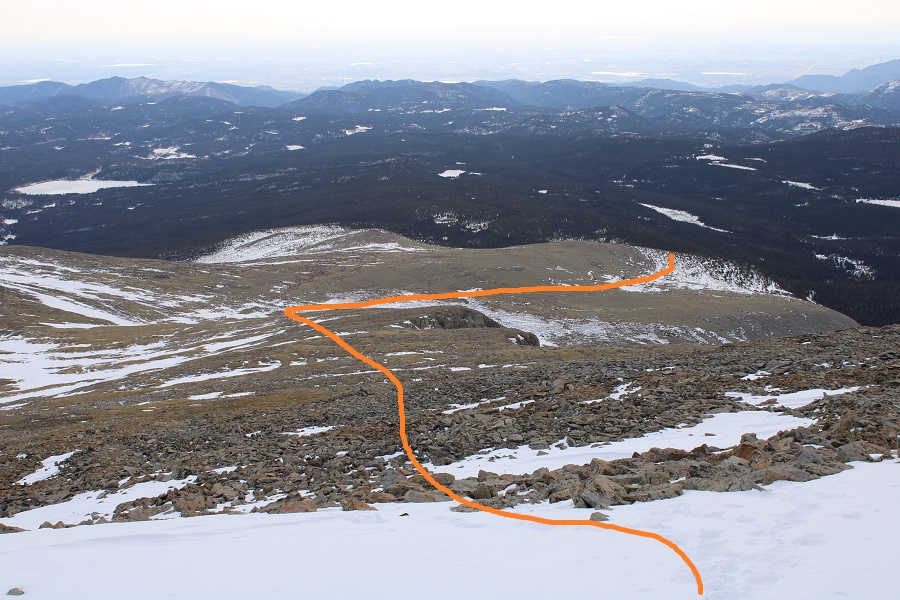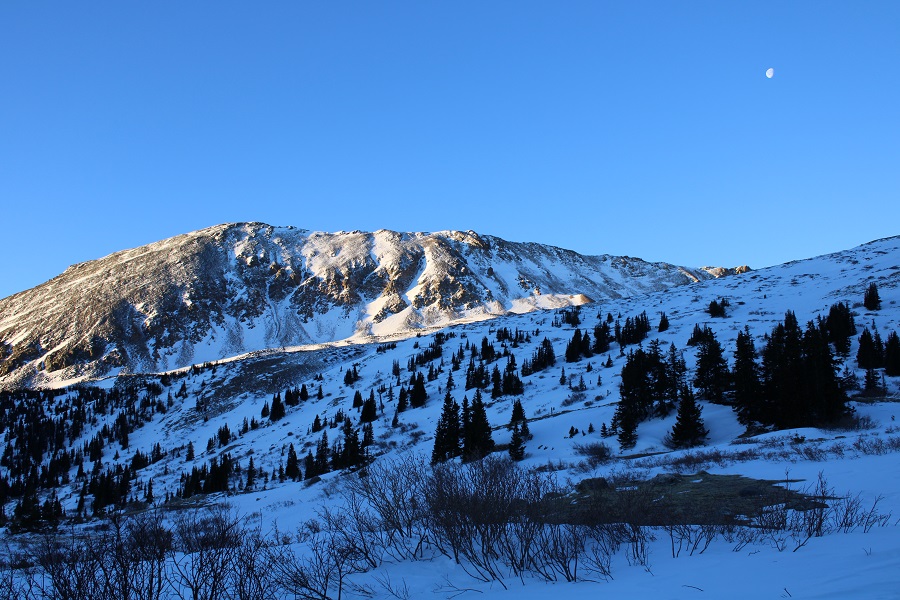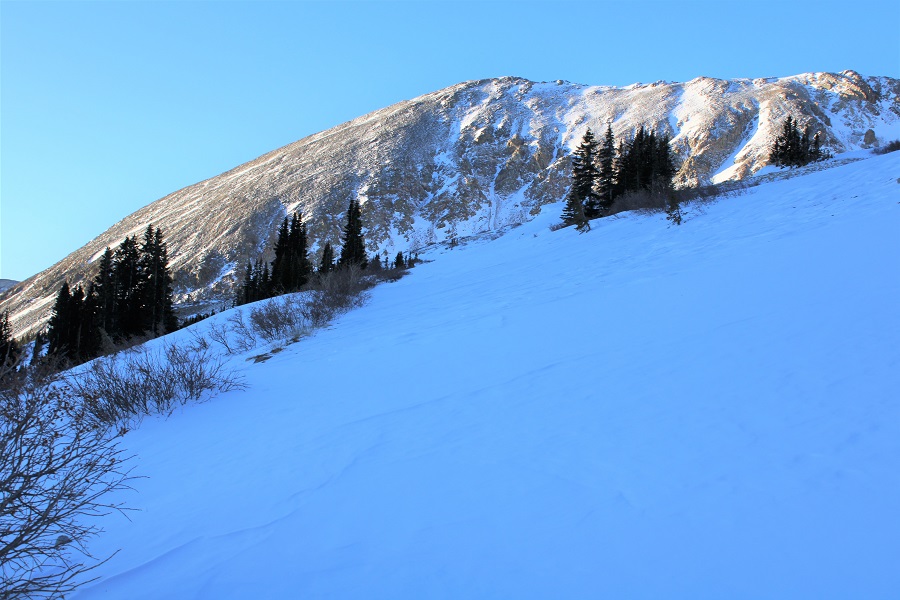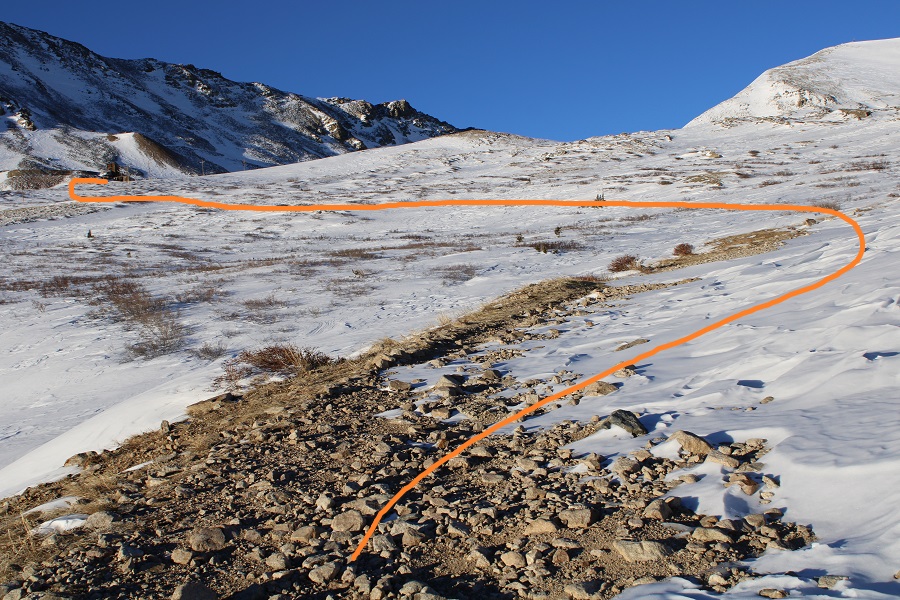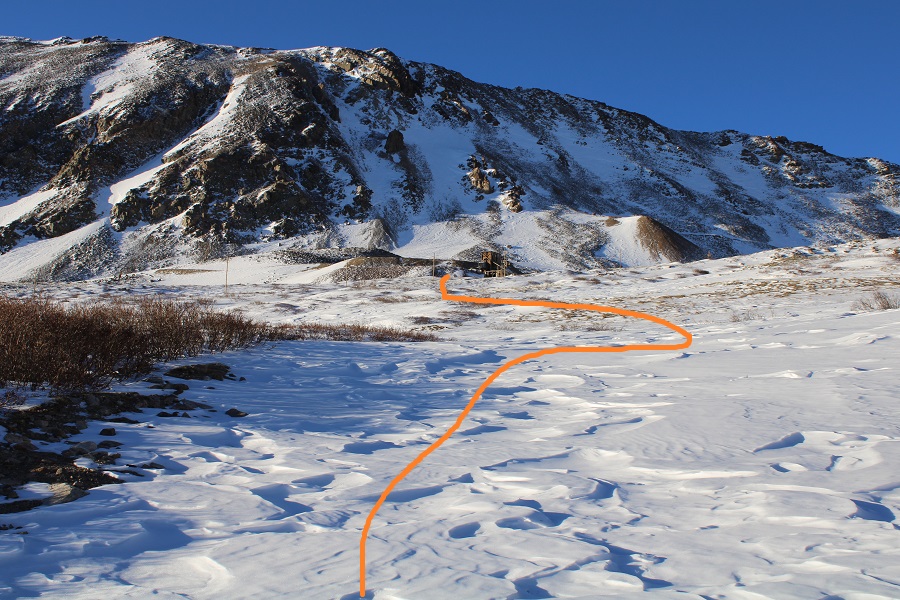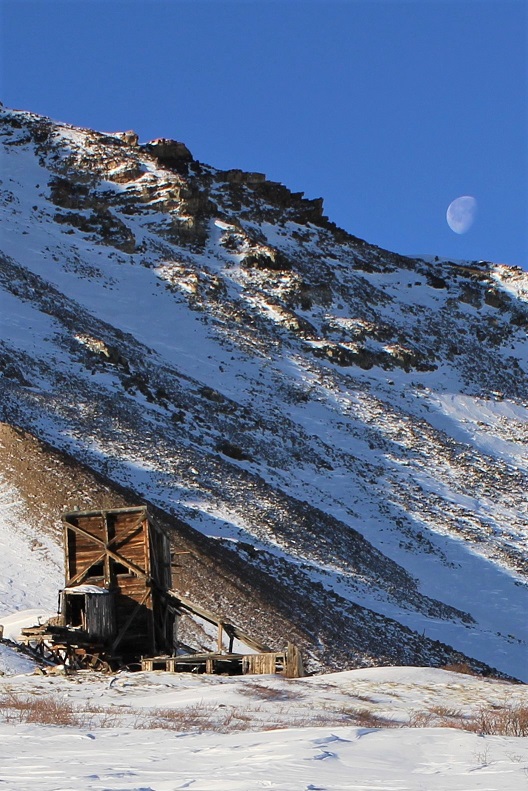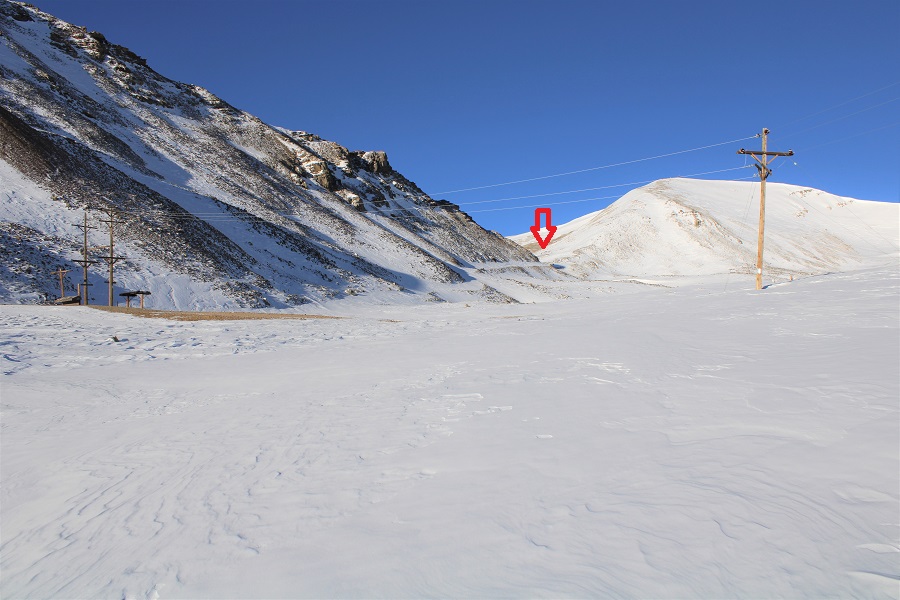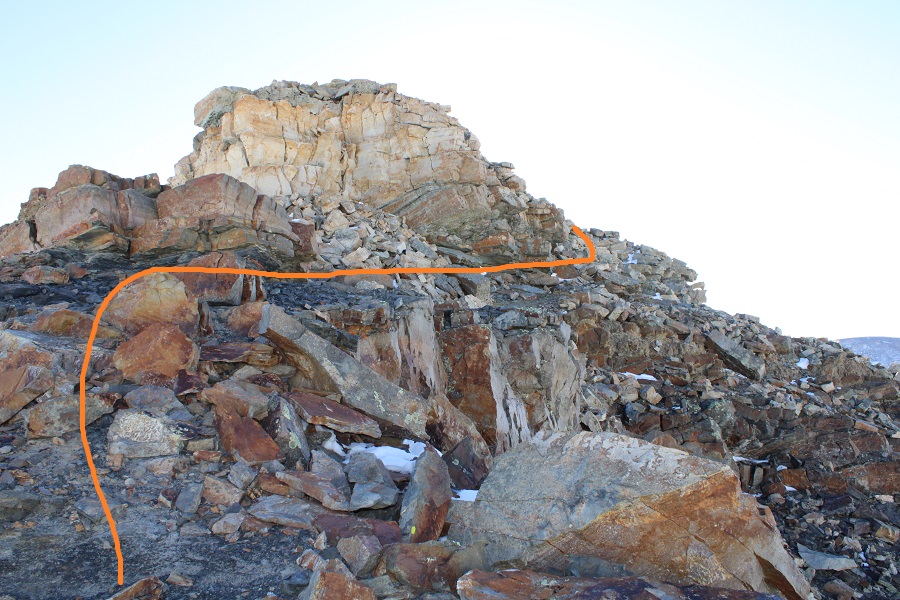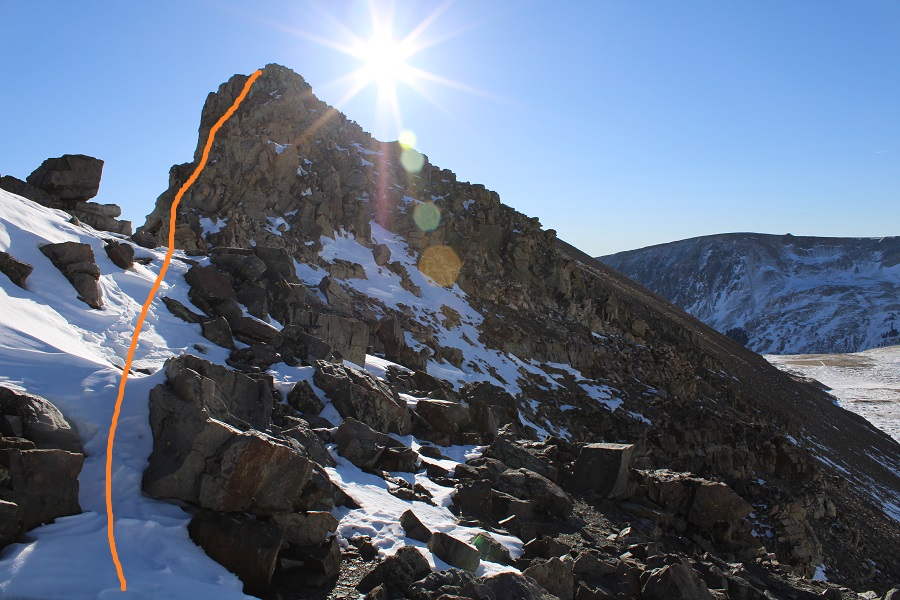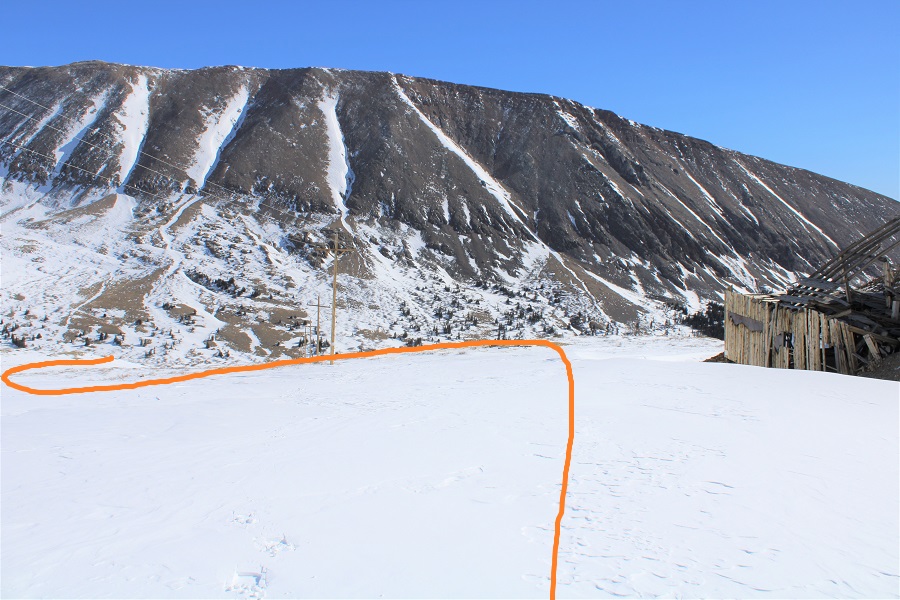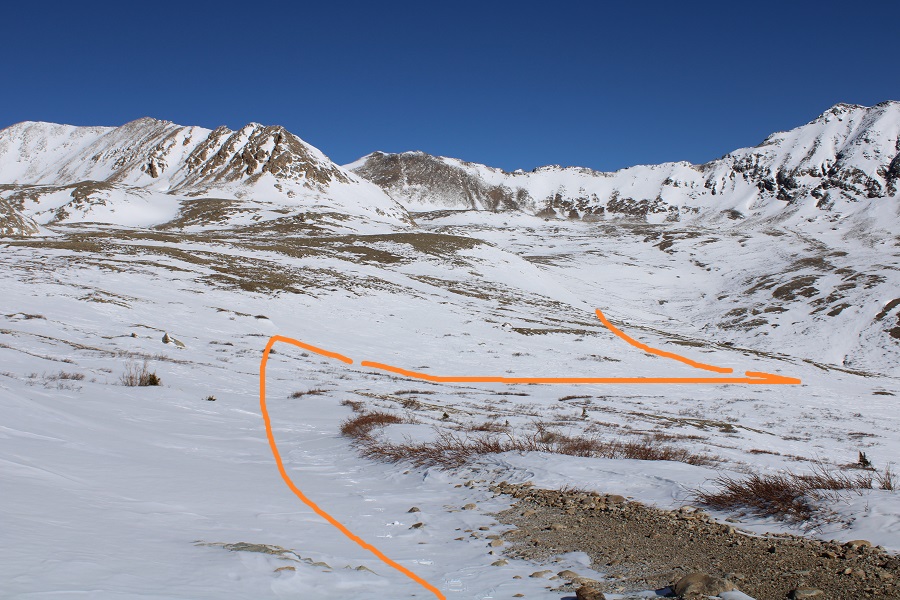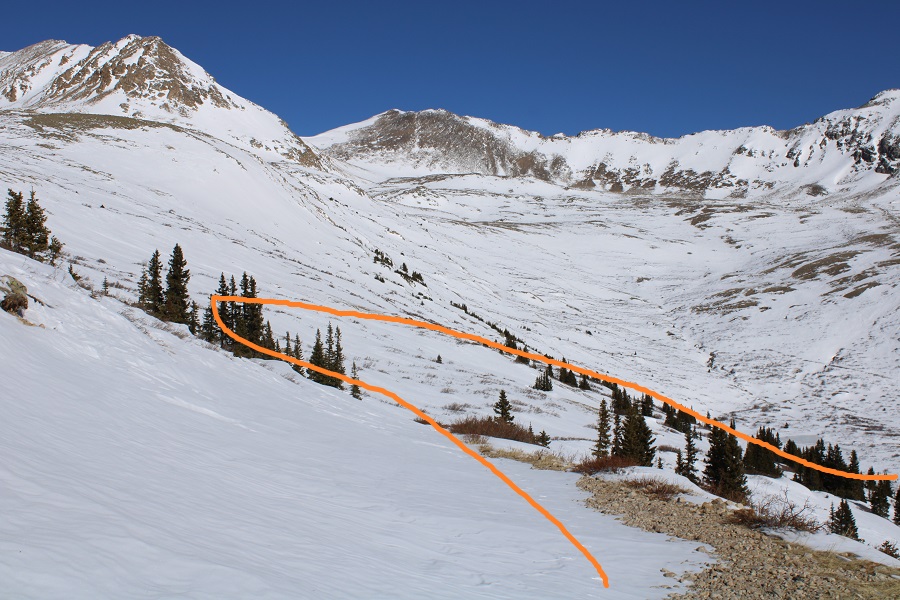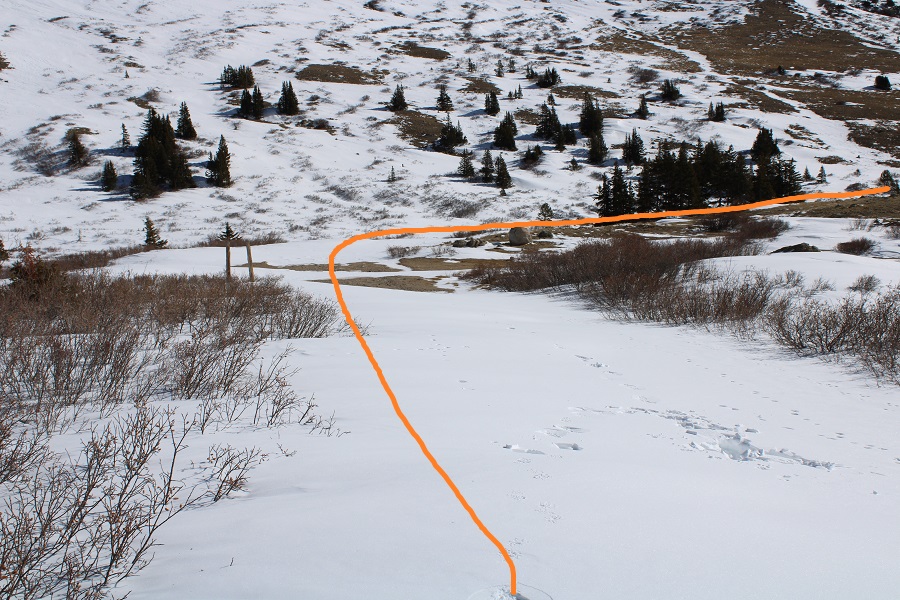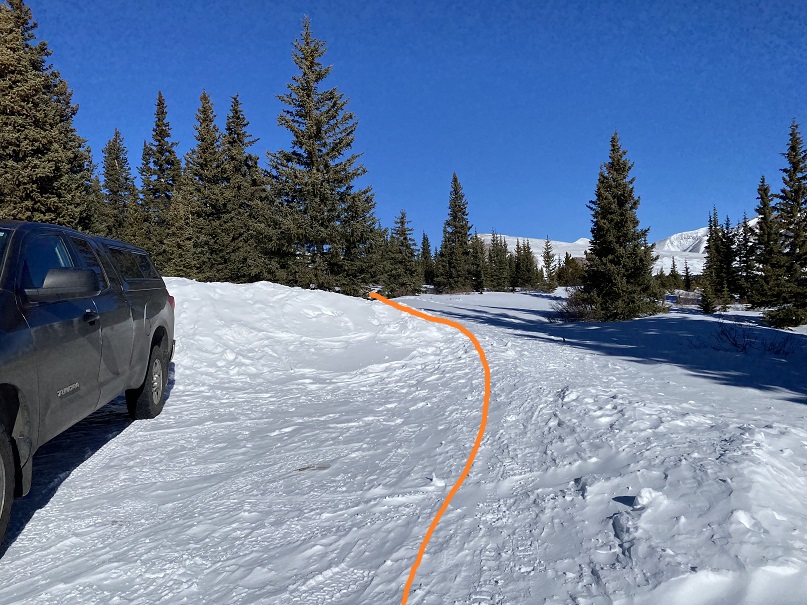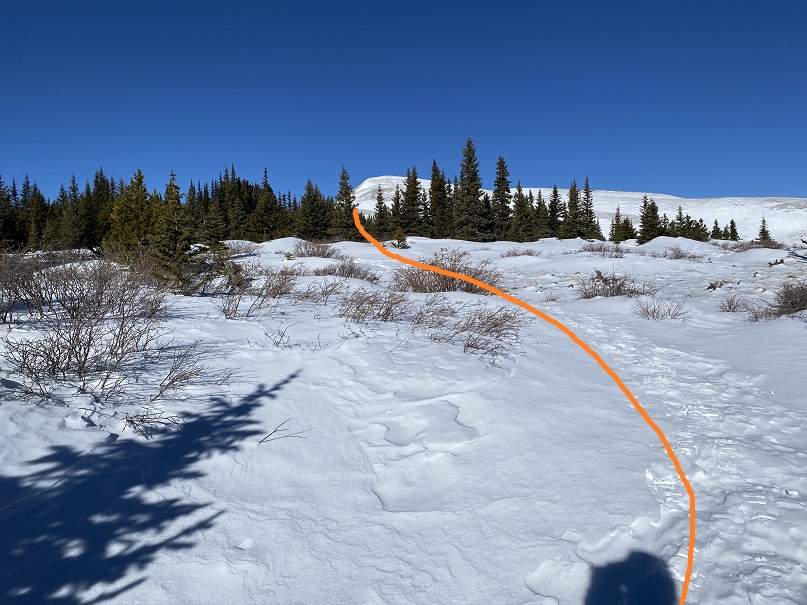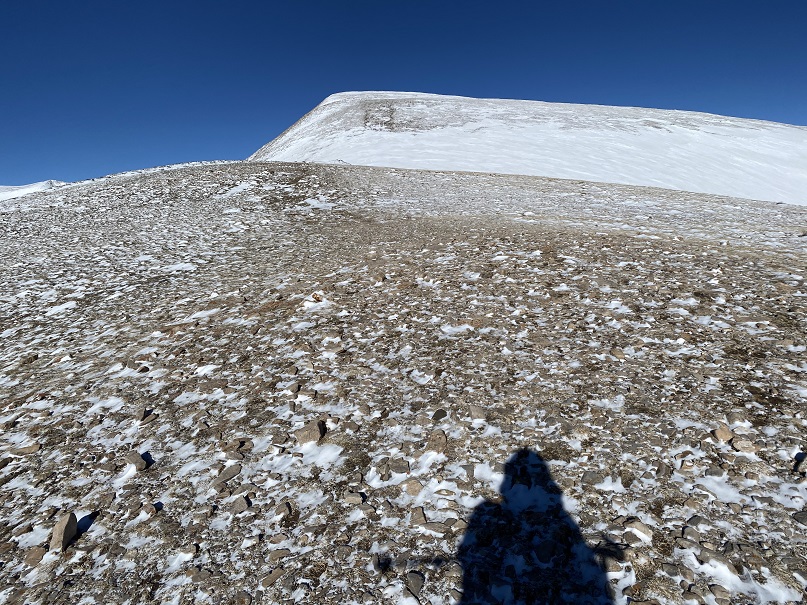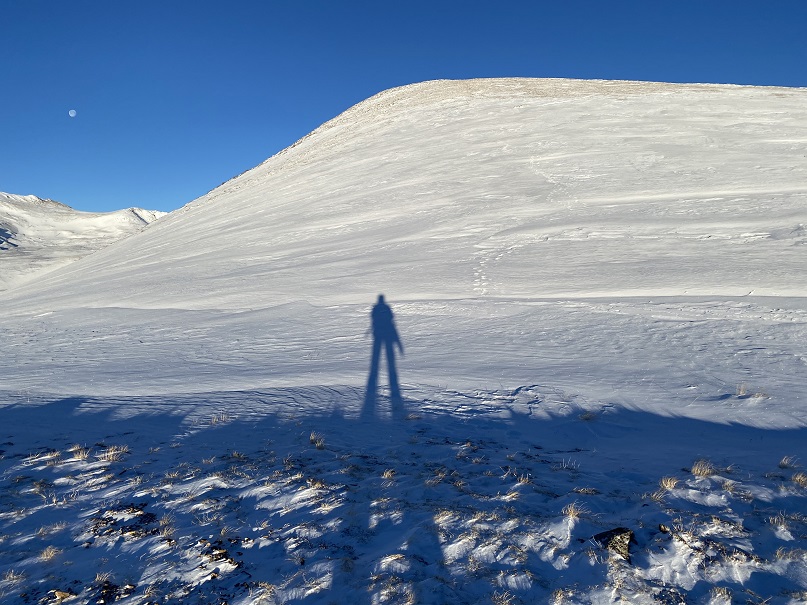
PT 13540 and PT 13403

RT Length: 8.95 miles

Elevation Gain: 4206’

CR 30 has had some work:  the road was much nicer to drive than it was last year.  No more potholes!  At least the firsts 11 miles or so.  The last 5 were still a little rough.

I parked near Cooper Creek and settled in for some dispersed camping.  There was a storm rolling in I and I got to listen to the thunder roll as I ate dinner (Pho, which was awesome) and read a little.  After a while campers set up across the way.  I went over and talked with them:  It was a father and son duo from Alabama, road-tripping because the son had just finished college.  Very cool father/son time. 
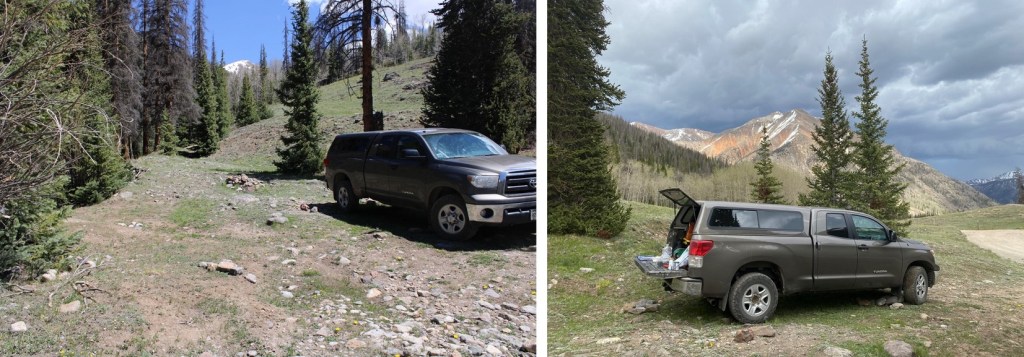
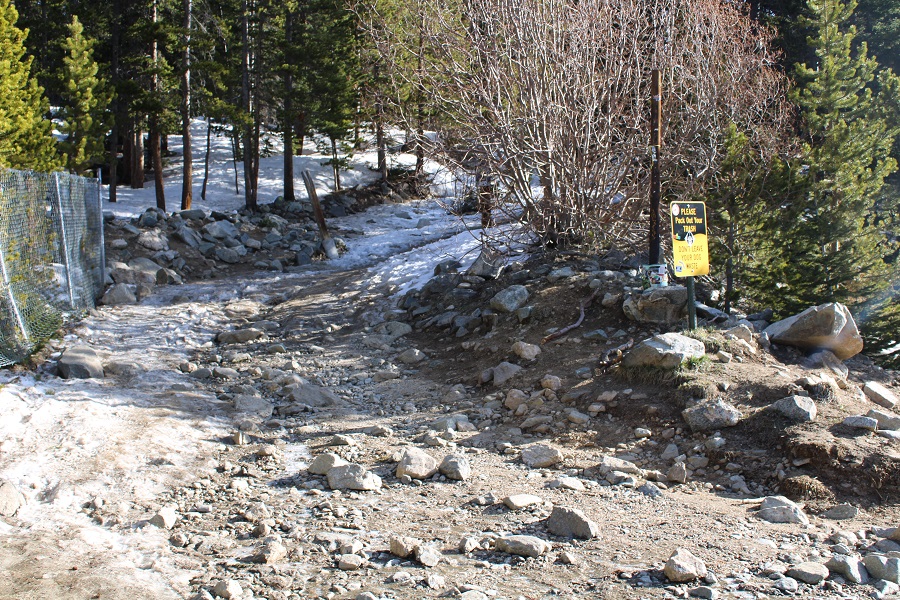
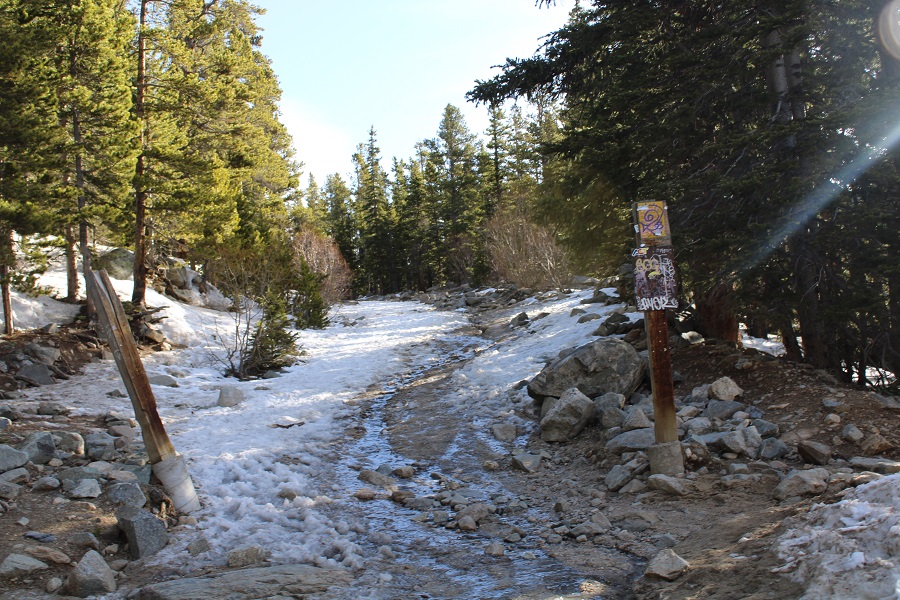
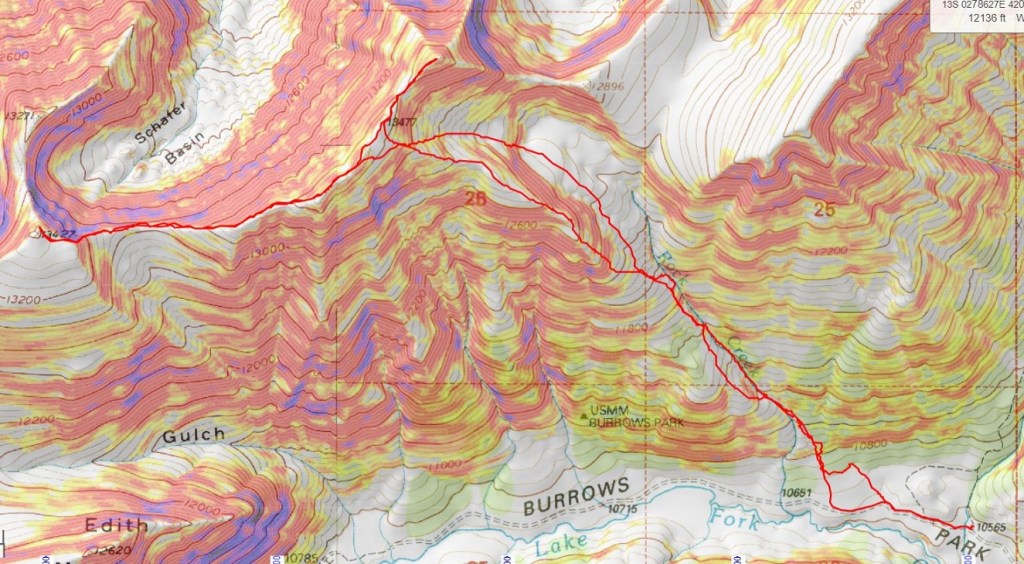
I made it an early night, sleeping until my alarm went off at 3am.  I hit snooze and was on the trail by 4am.  The route starts out following CR 30 west for about a third of a mile, then I left the road and followed the drainage/Rock Creek northwest.

The area where you leave the road is also the site of a recent avalanche:  a house was destroyed, and there are pieces of the house, roof, furniture, shoes, etc. strewn about the area for about 100 yards.
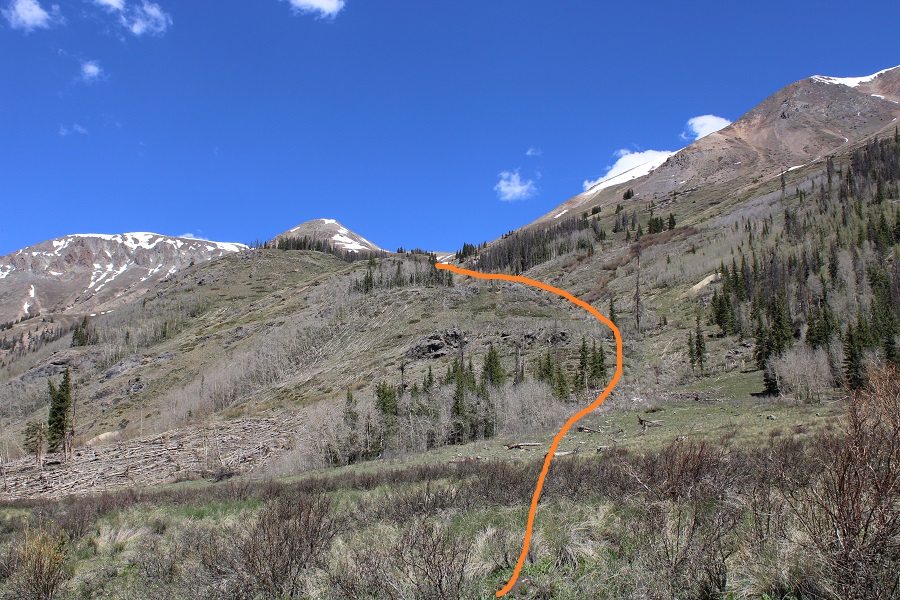
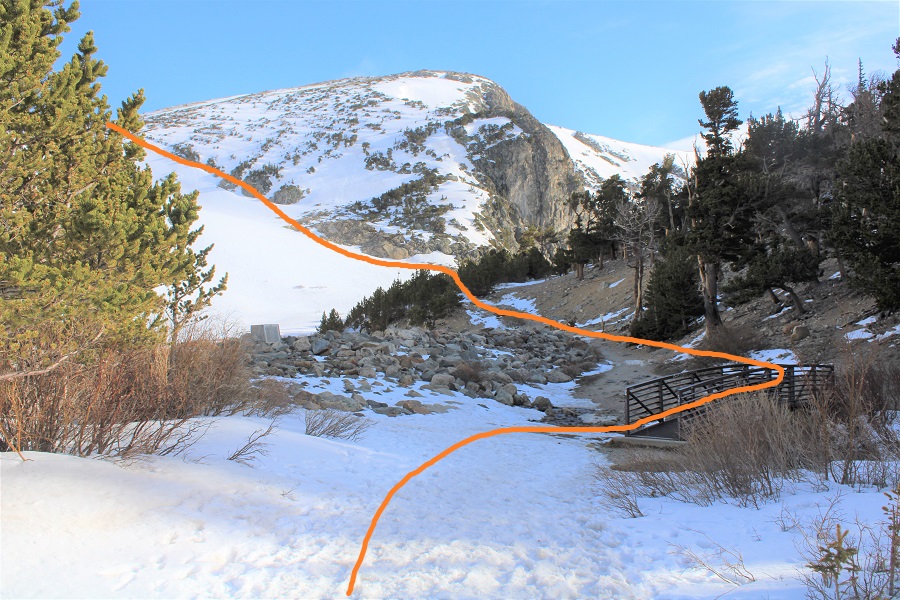
I followed Rock Creek into the upper basin, staying to the left of the creek (but hugging the creek the entire way).

Once in the basin I followed it as it curved northwest.
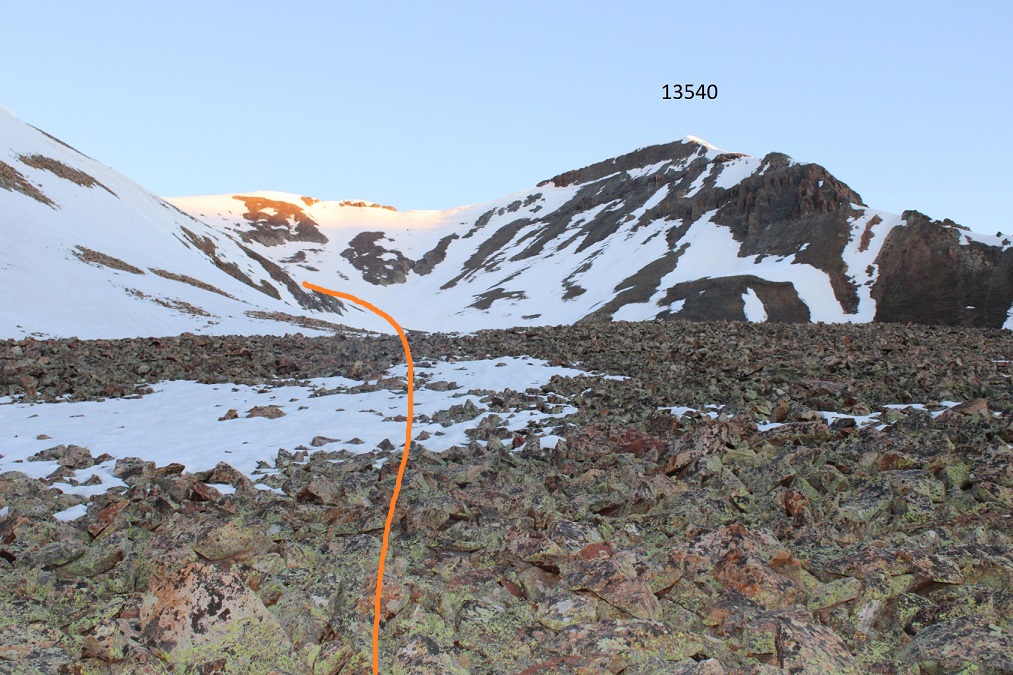
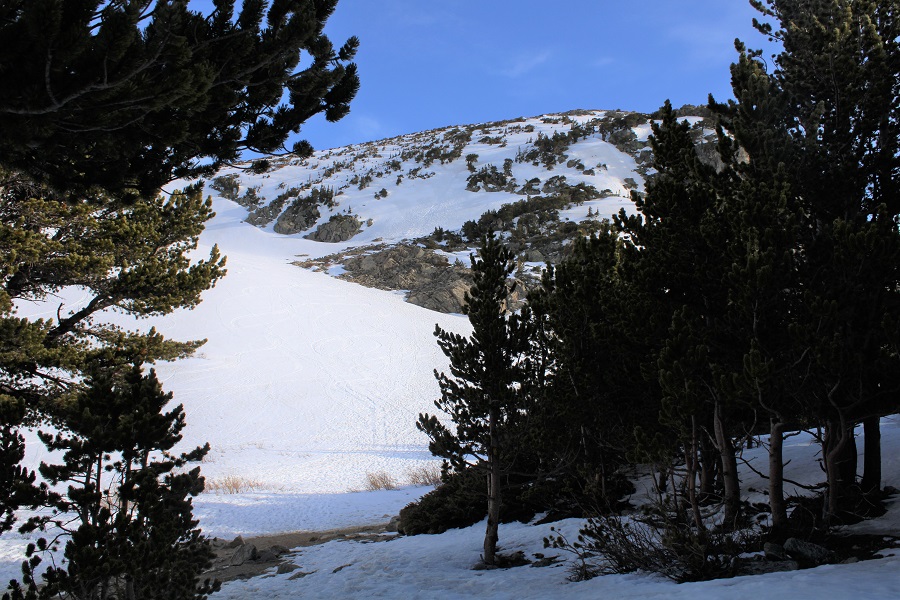
There was a lot more snow here than I’d expected:  I put on my microspikes and climbed into the upper basin.

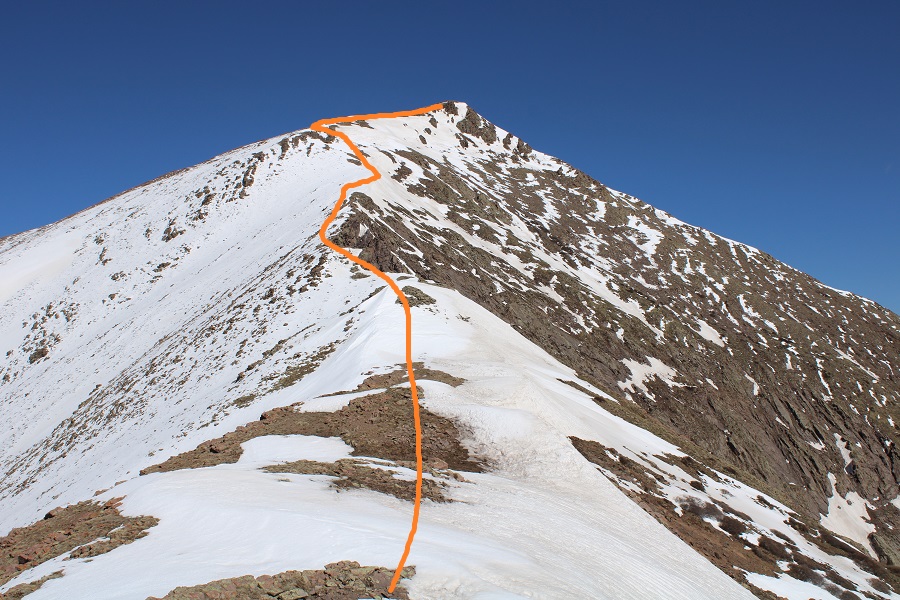
Once in the upper basin there was even more snow.  Microspikes were still ok at this time, but I knew I’d want to take a different route down, as the sun was going to warm up this snow quickly and there was no telling how deep I’d be postholing.  I aimed for the ridge, and once on the ridge, followed it west to a kind of saddle

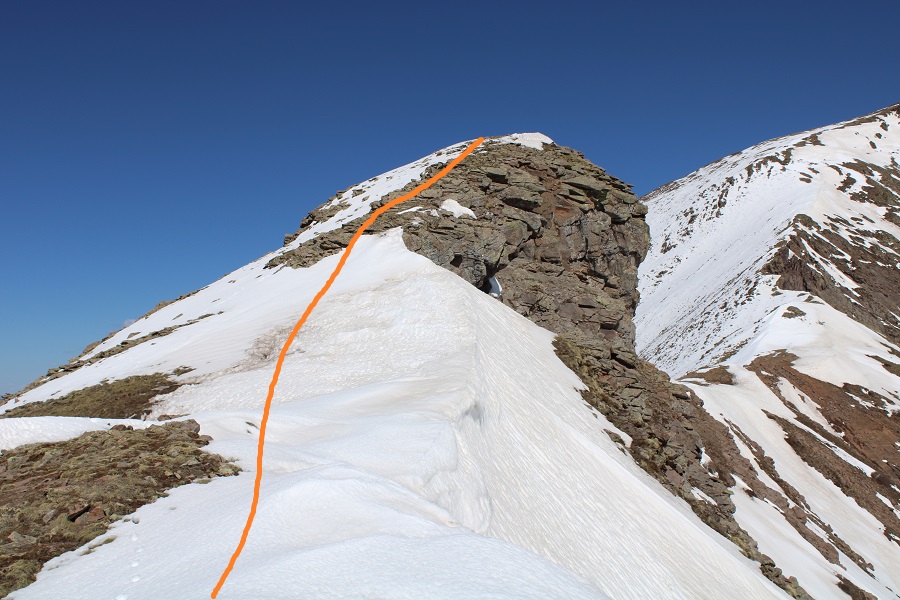
At the saddle I turned right and followed the ridge northeast to the summit of 13540.
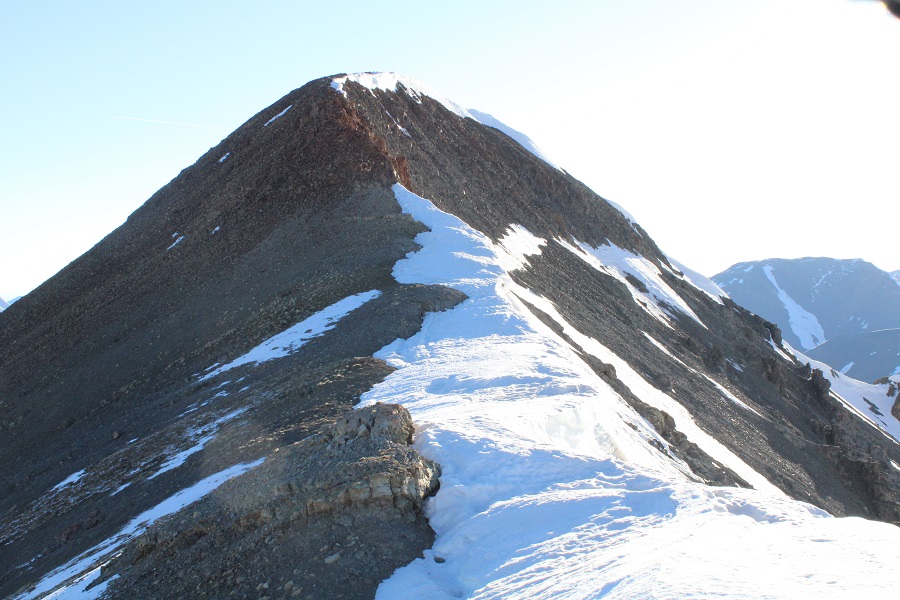
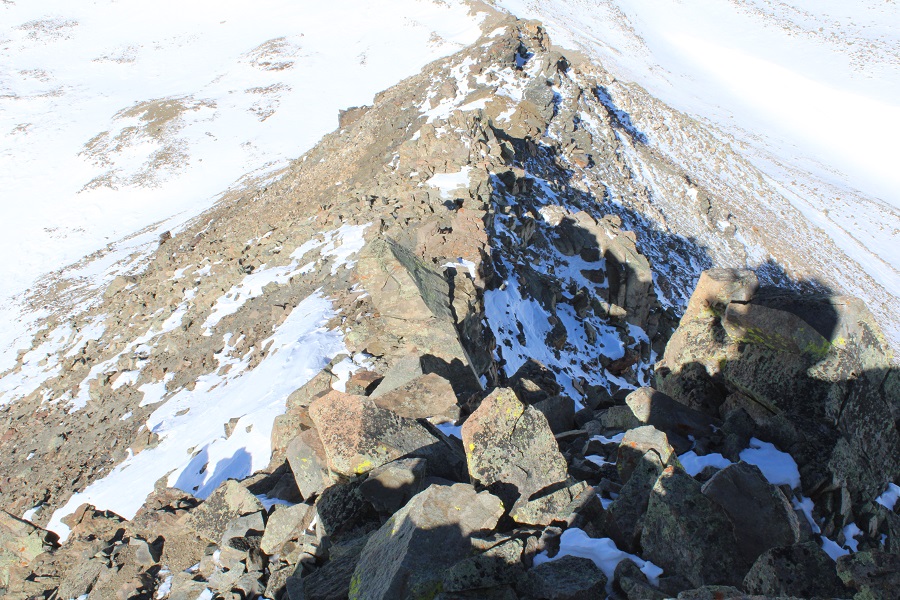
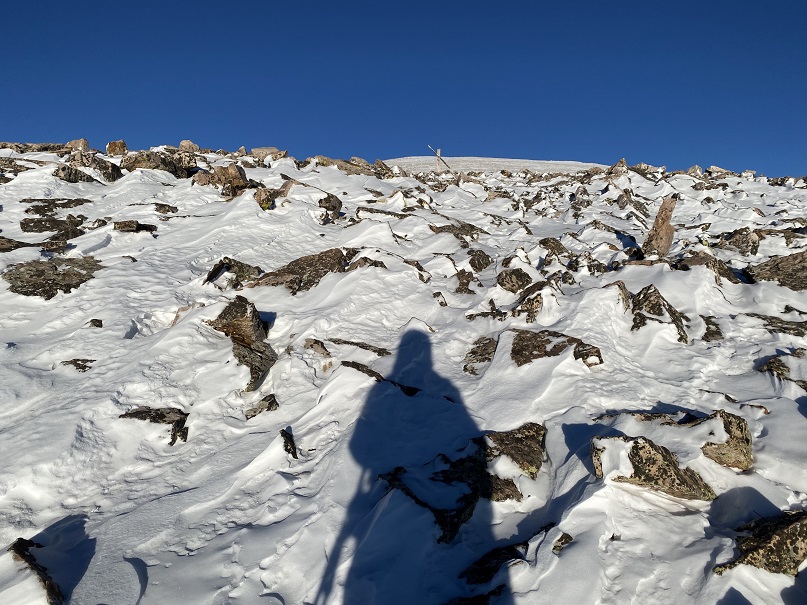
There was a class 2 rocky section to navigate.  I just went up and over this.
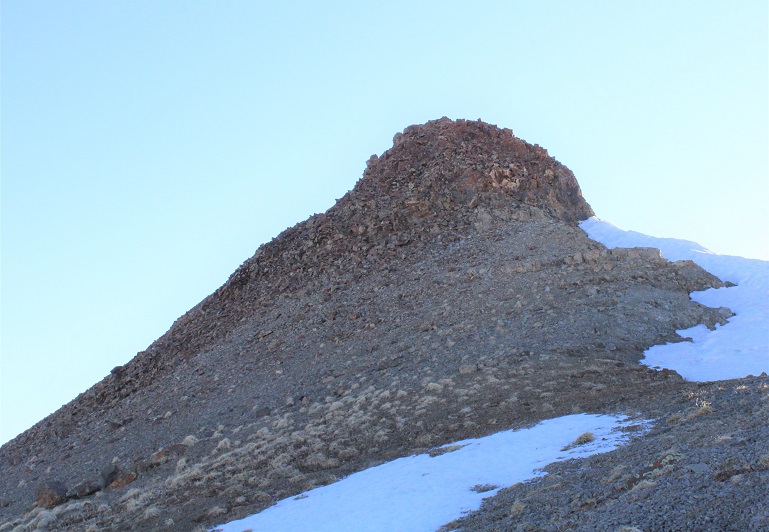
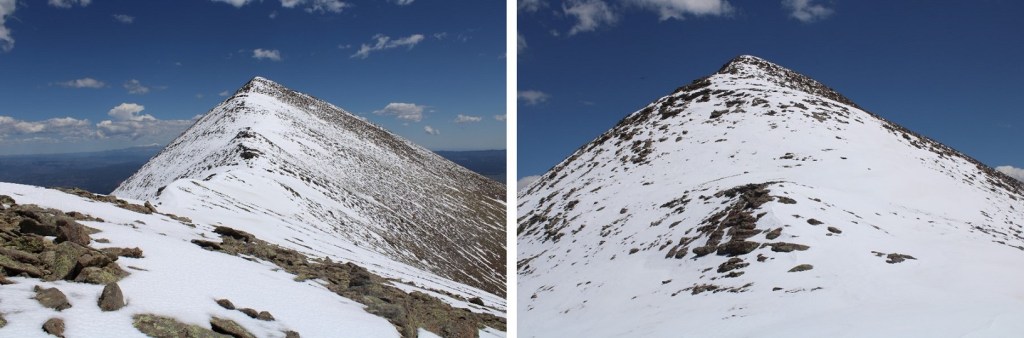
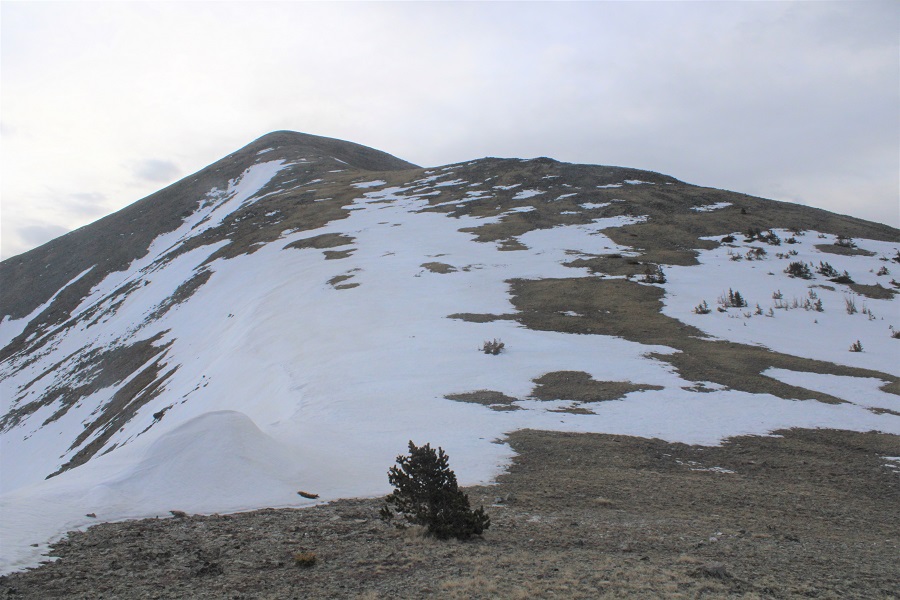
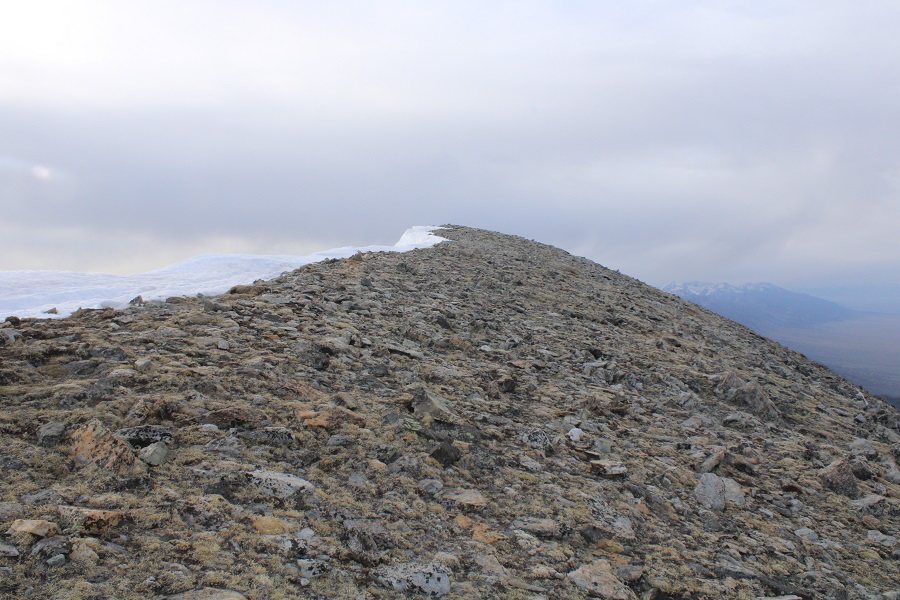
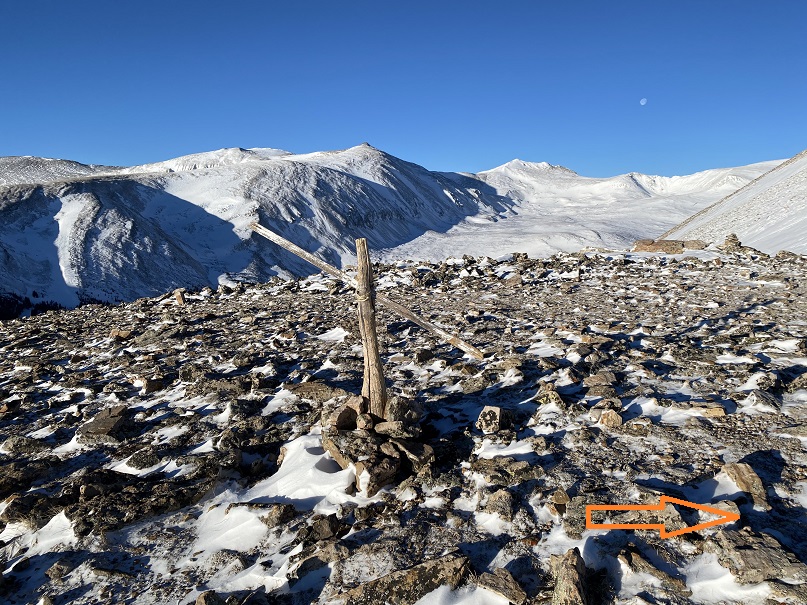
Here’s a look at the summit

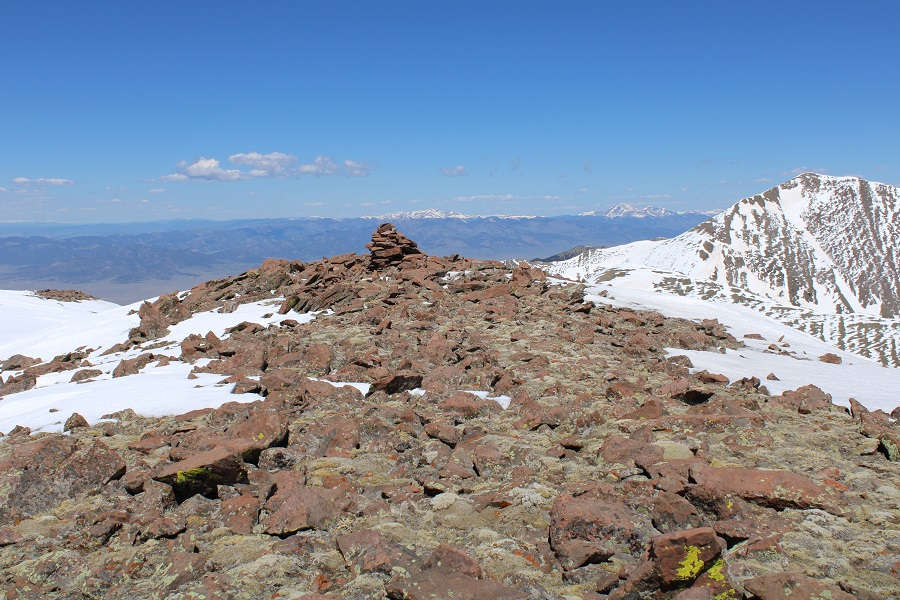
I summited PT 13540 at 7am
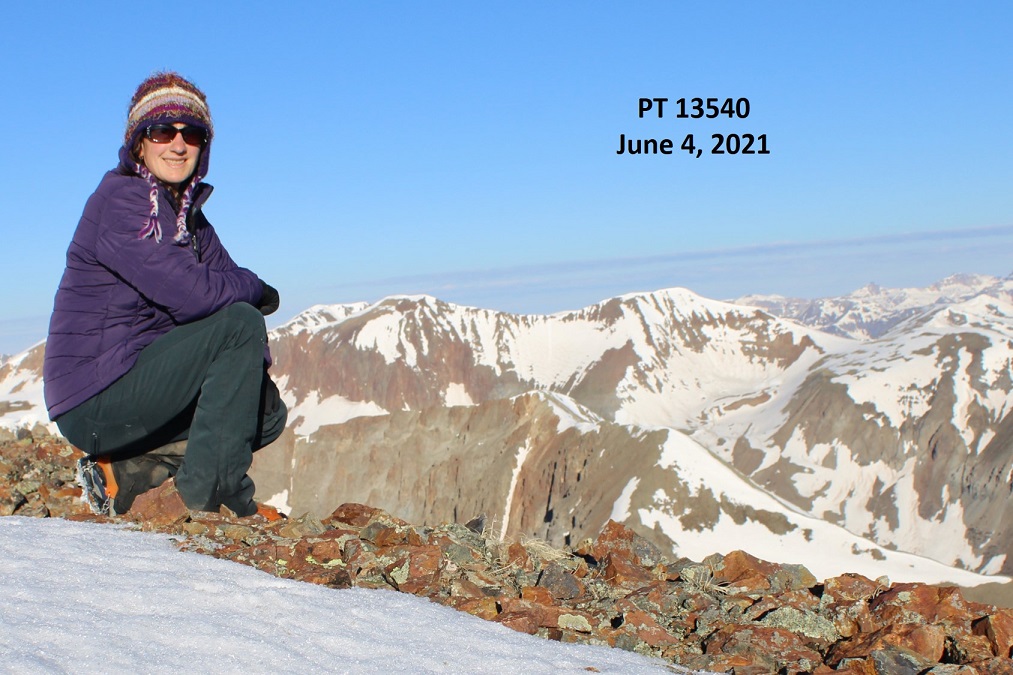
PT 13540: 

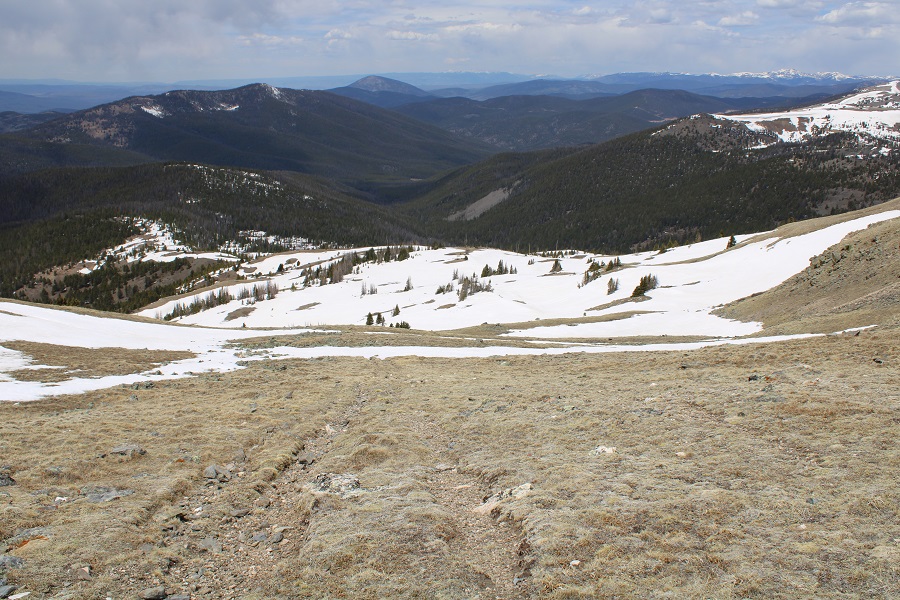
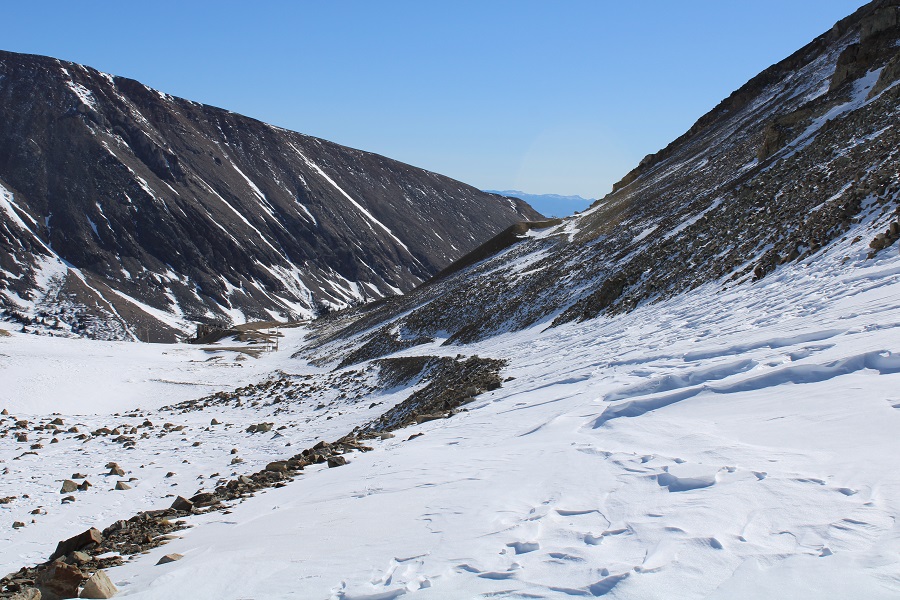
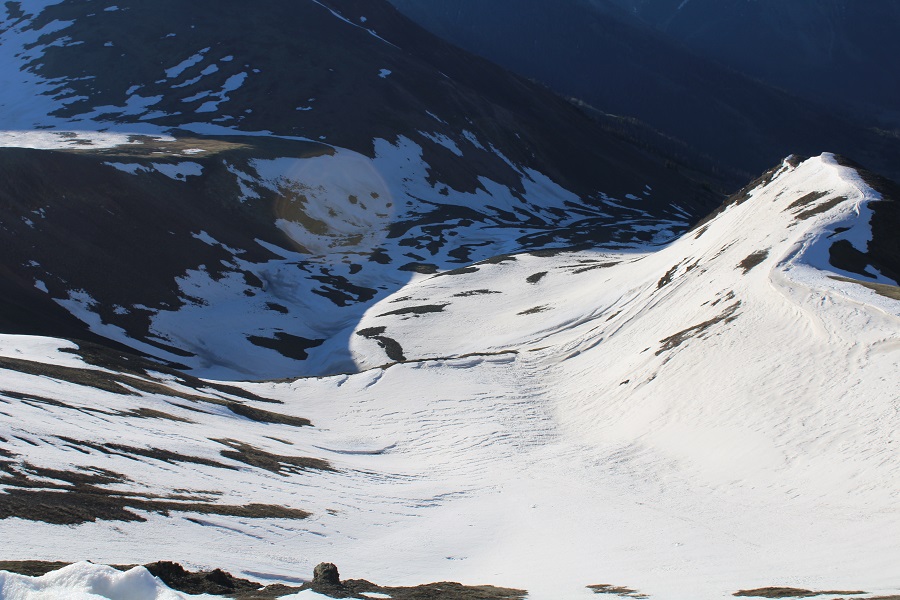
Here’s a look back down at the upper and lower basins. 
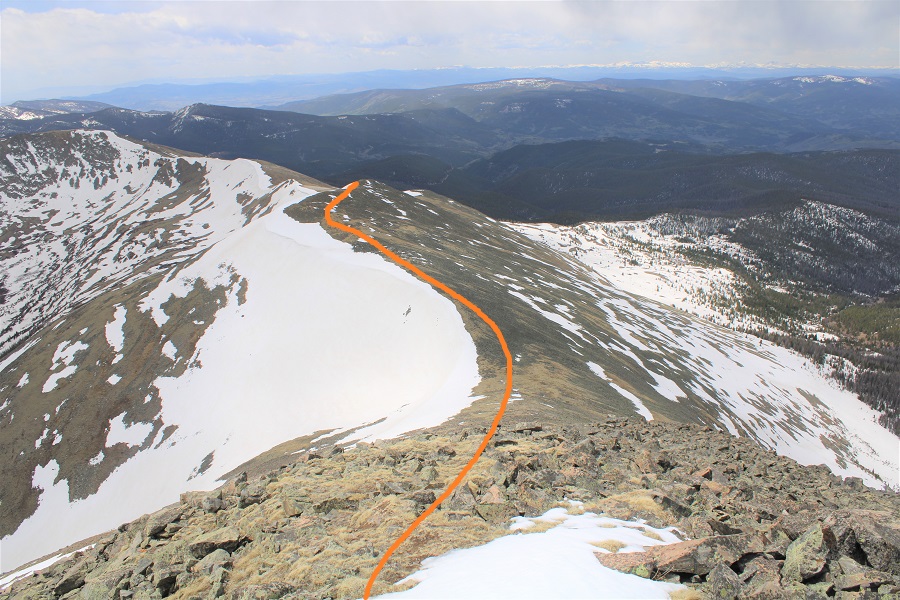
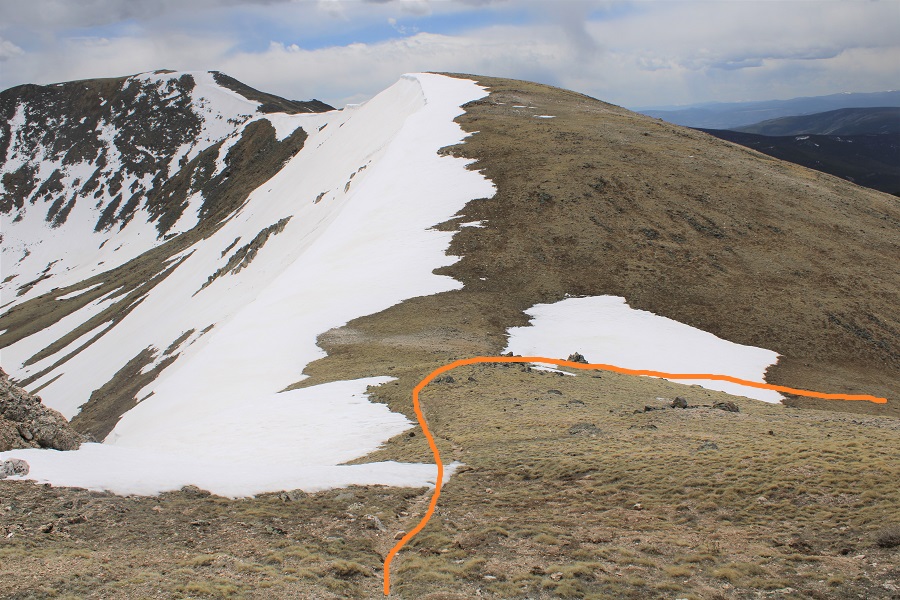
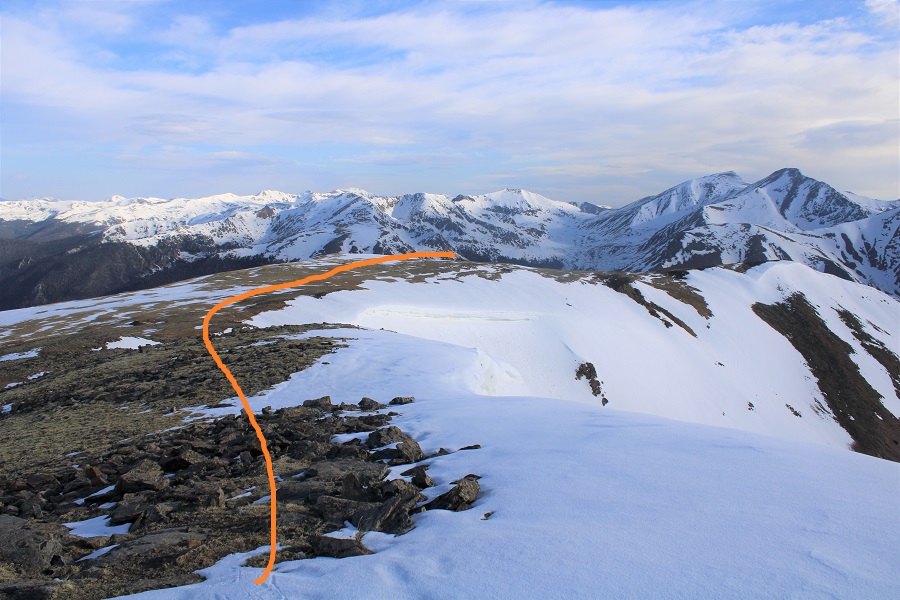
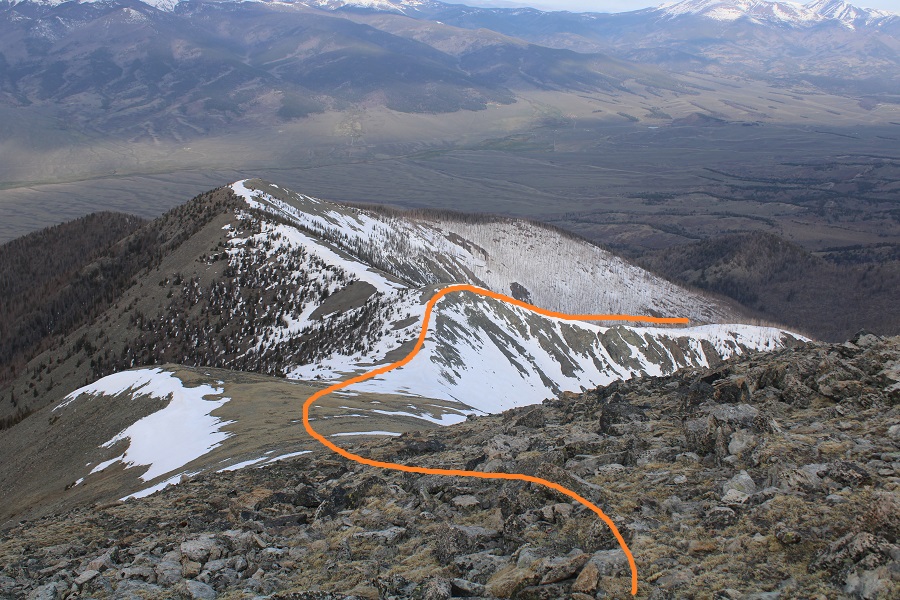
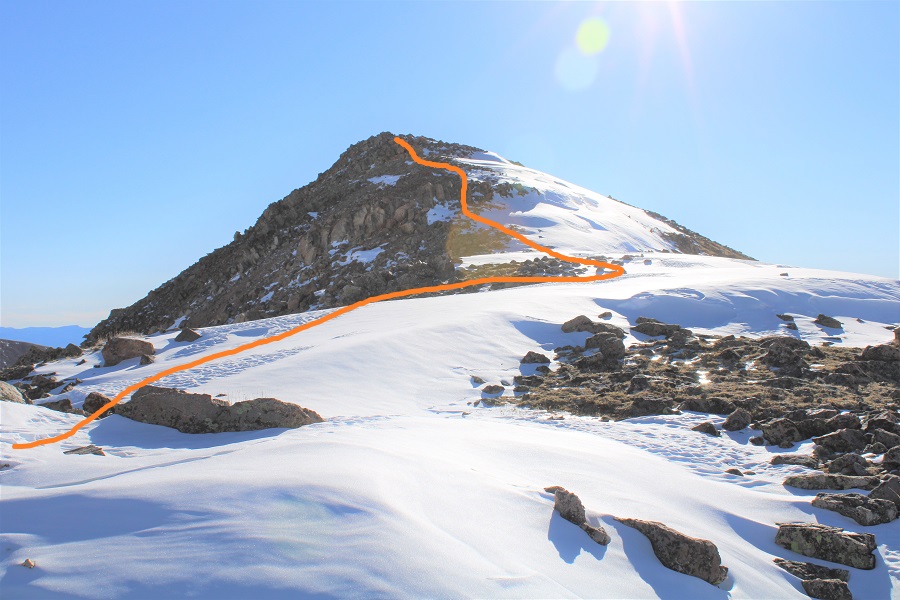
My next objective was PT 13427
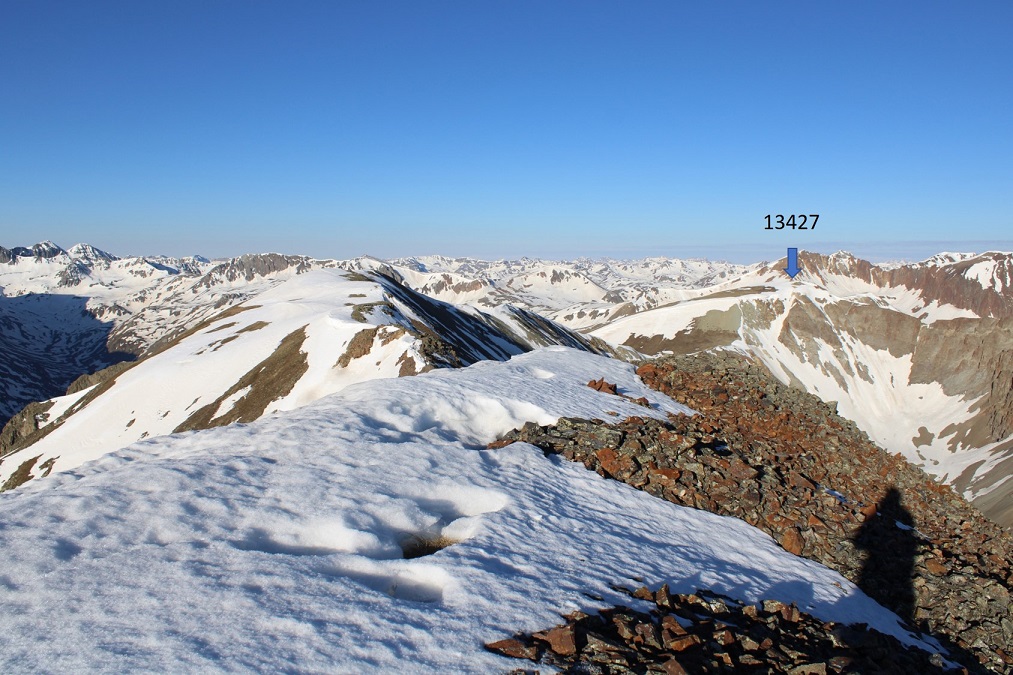
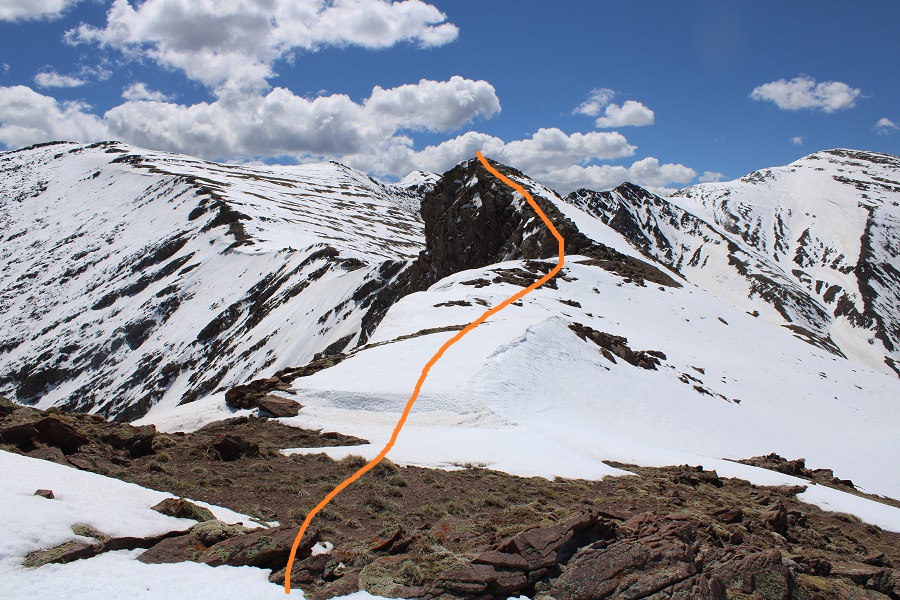
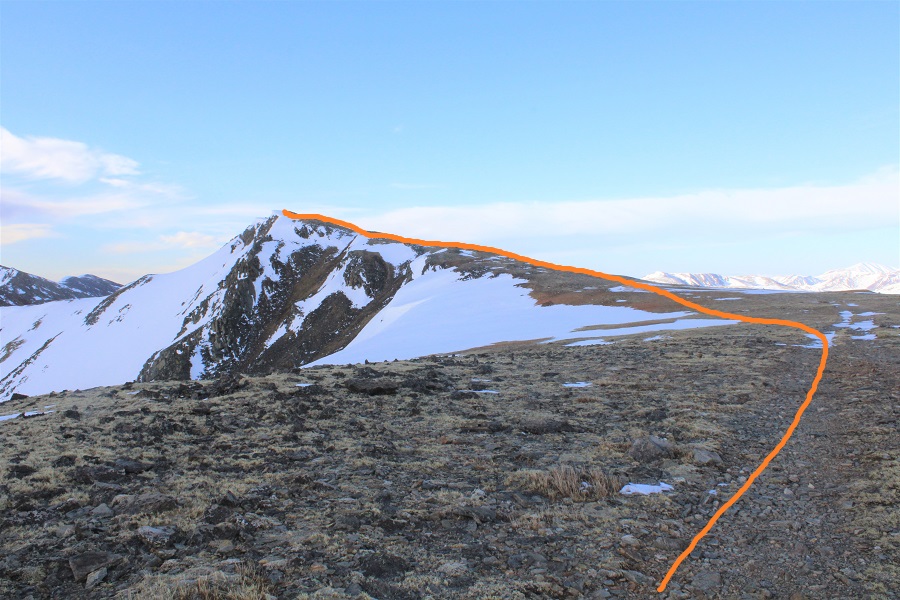
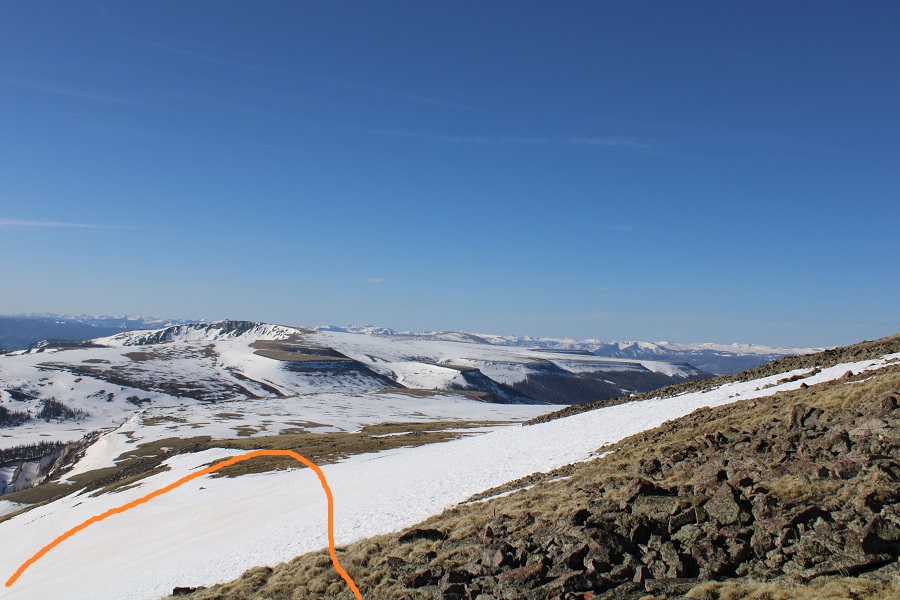
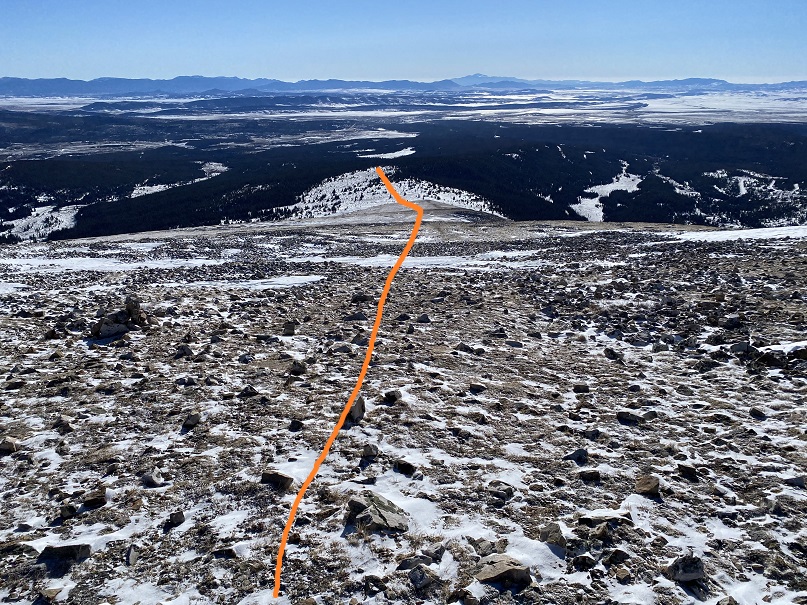
Here’s the route to get there
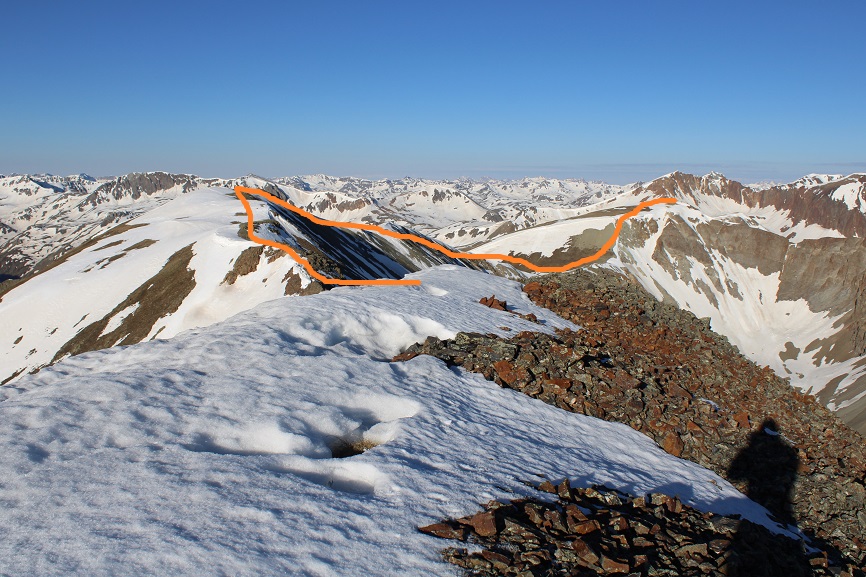
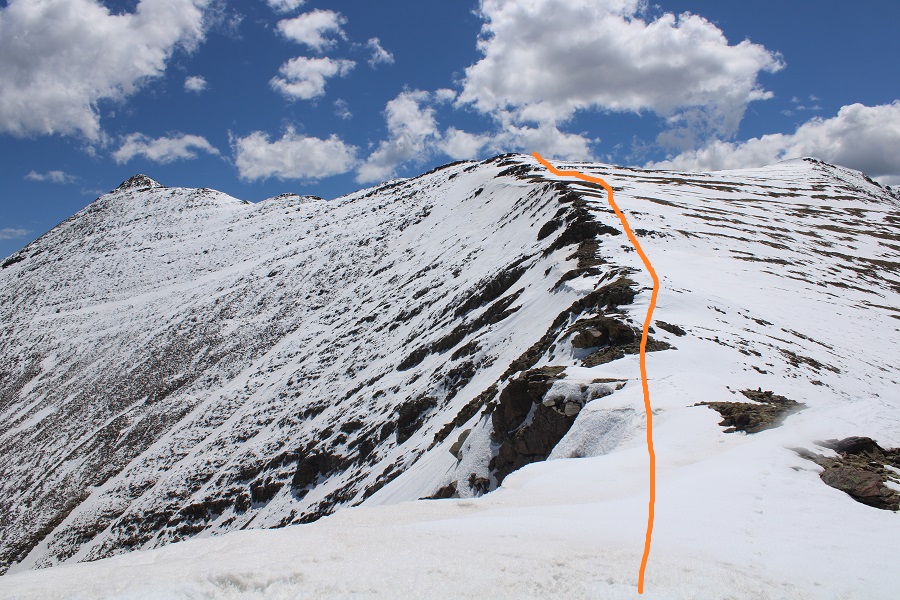
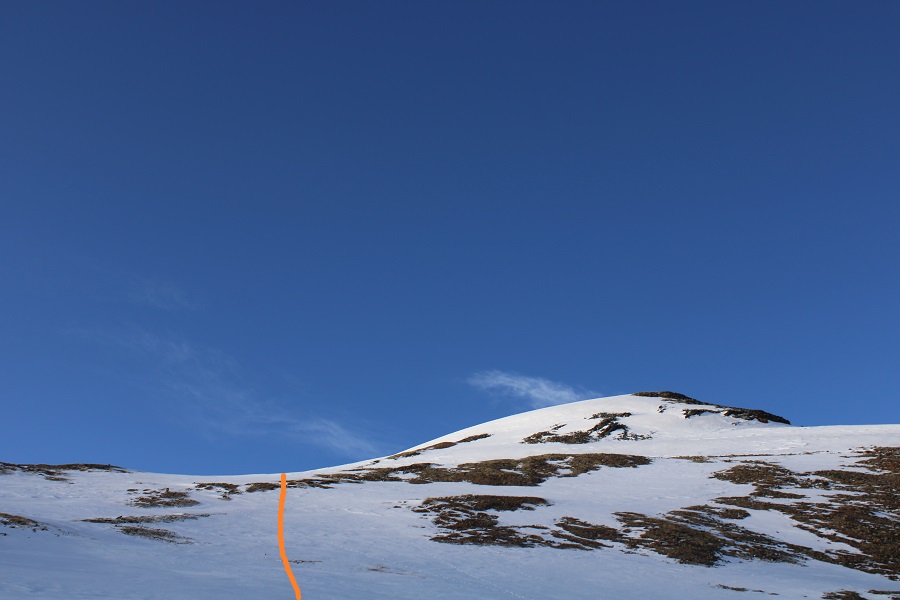
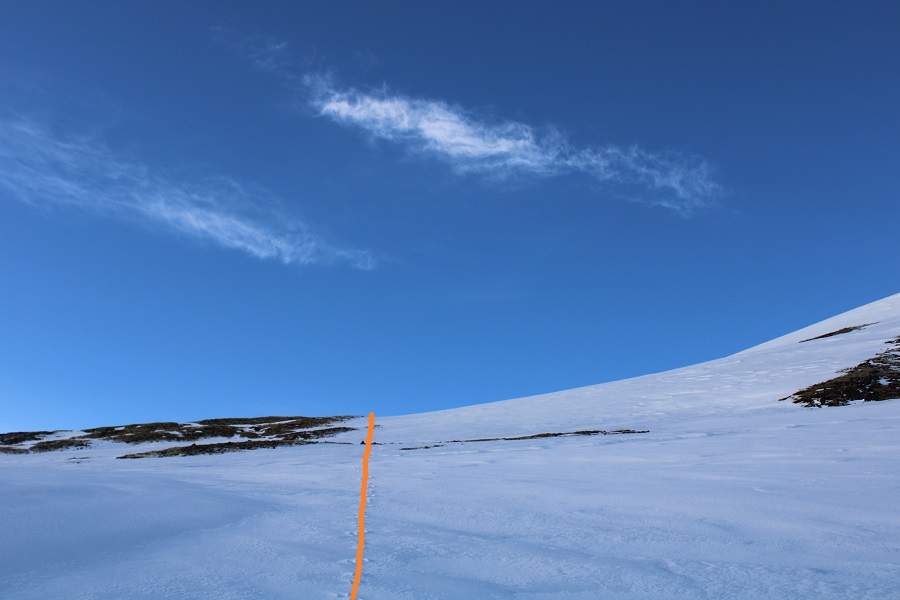
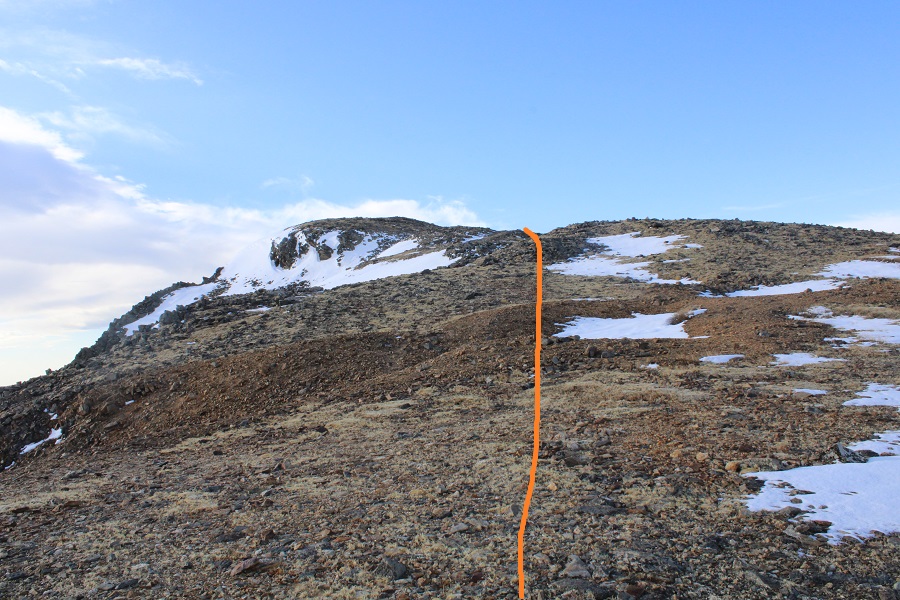
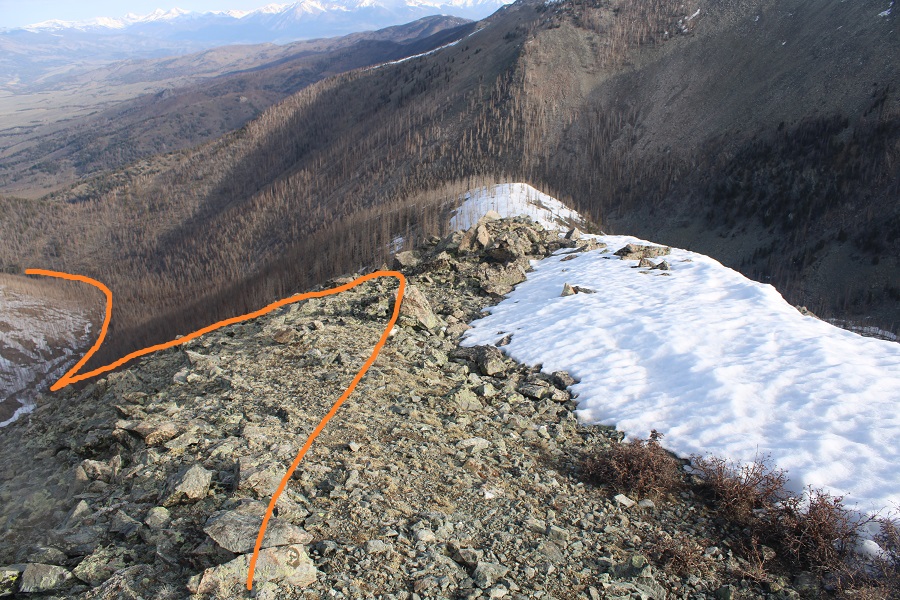
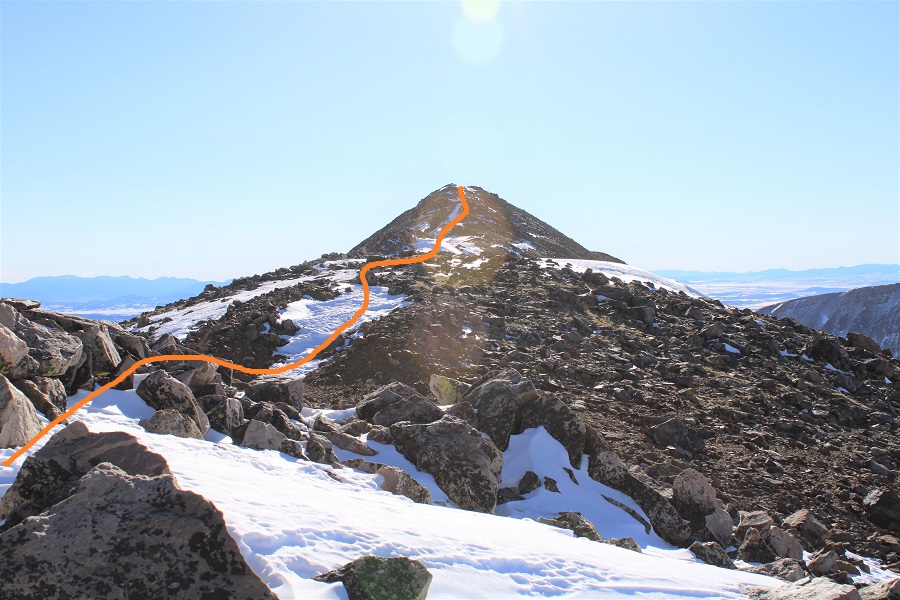
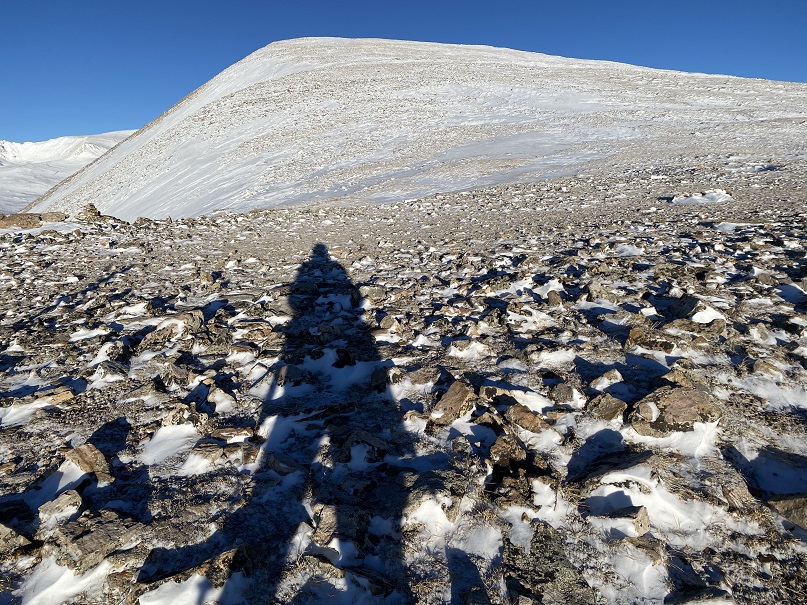
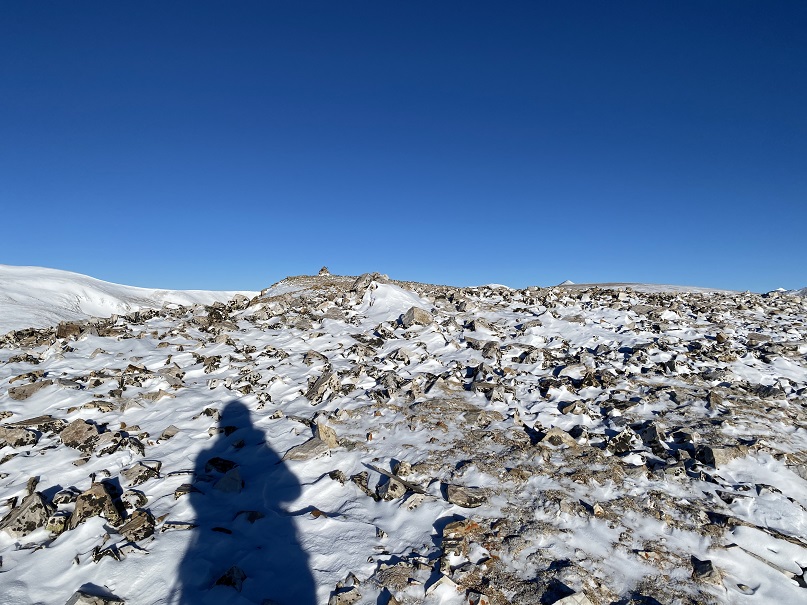
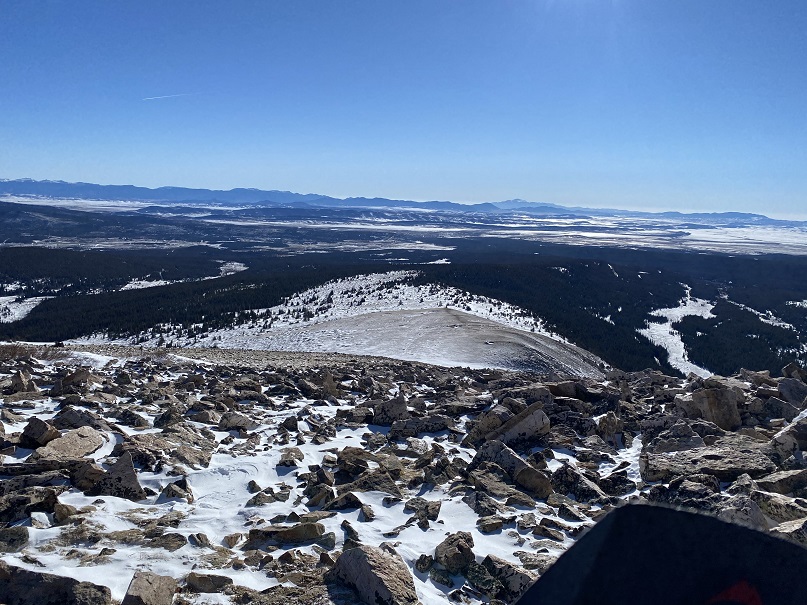
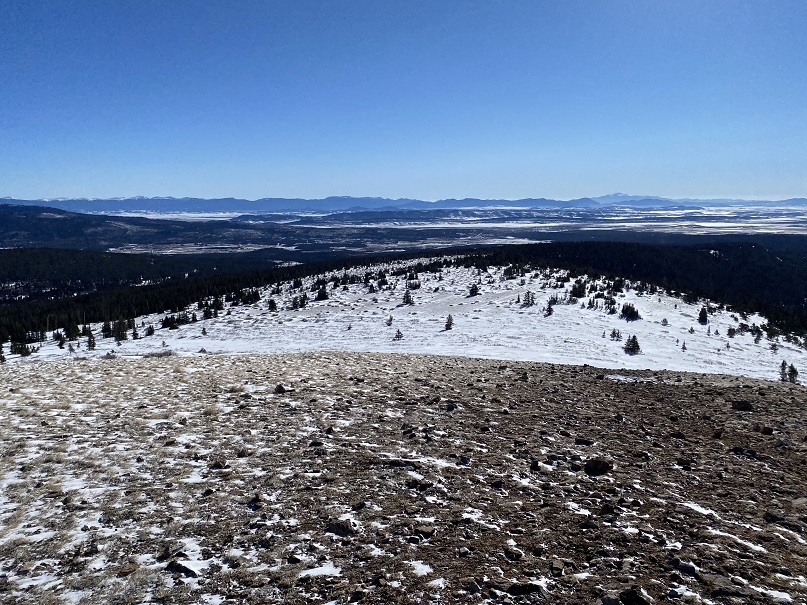
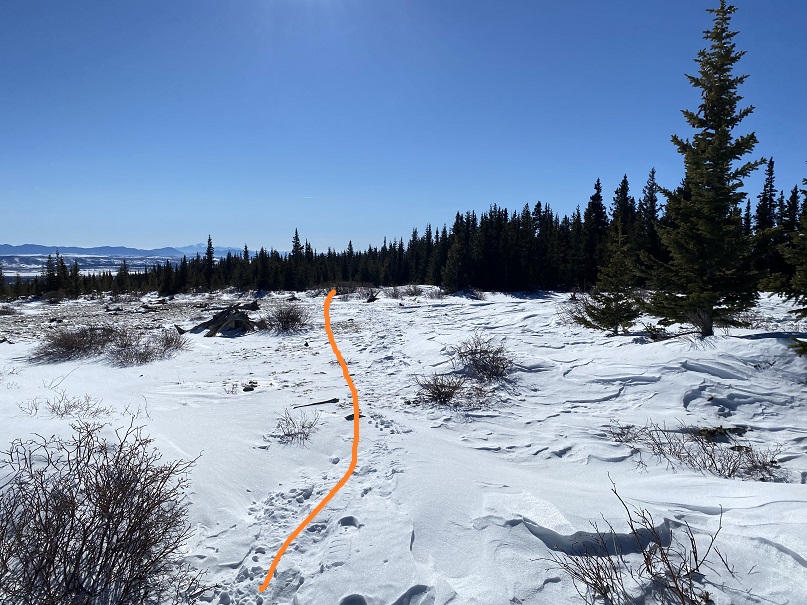
I turned and followed the ridge southeast.  Here are some step by step pictures
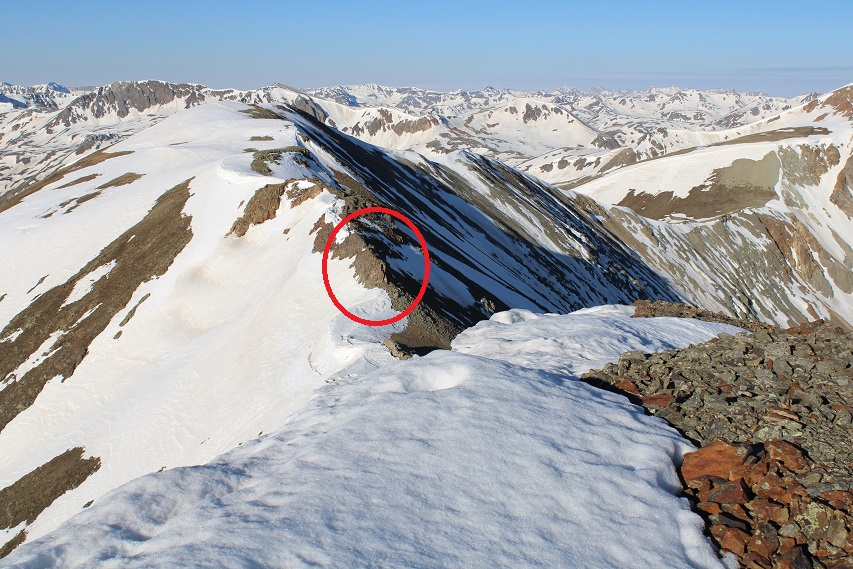
The area in the above picture, circled in red, is pictured below.  I skirted this to the right
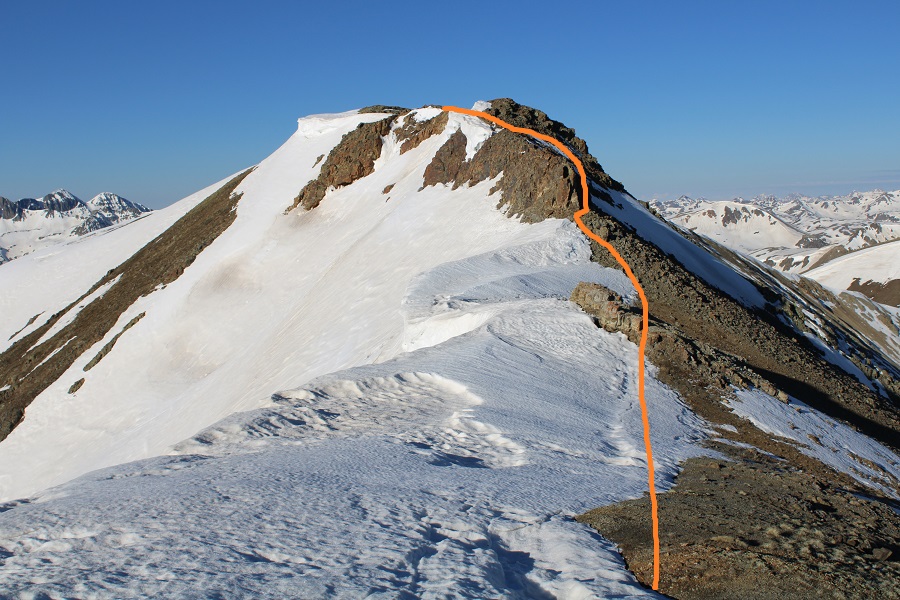
Then followed the ridge, glad I’d put on my microspikes
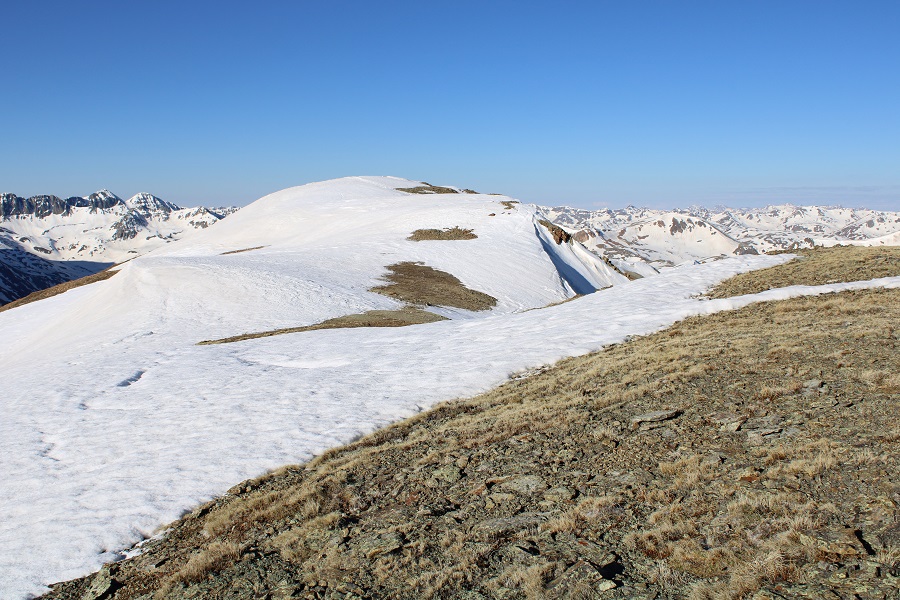
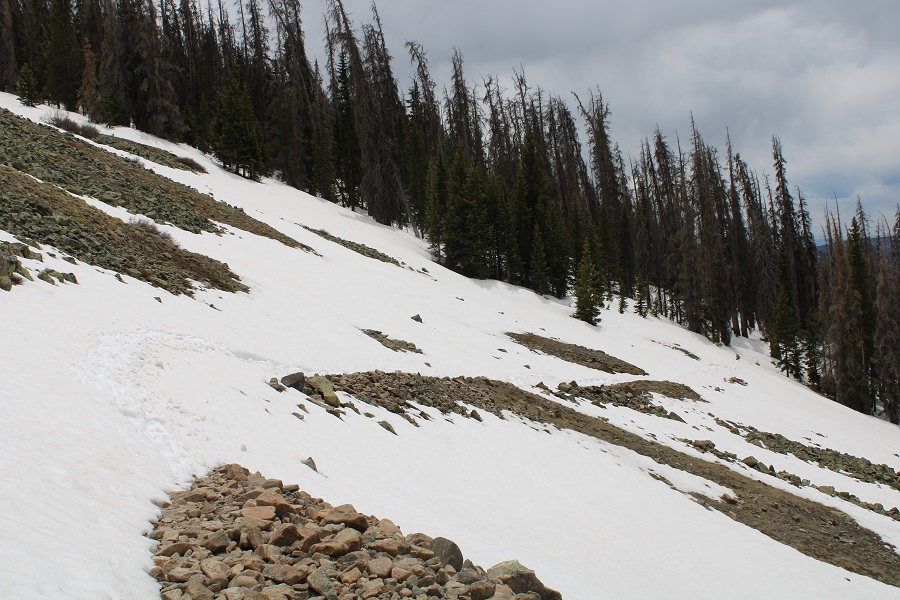
Eventually I came to an area where I started losing elevation.  The snow was largely avoidable by sticking to the left on the ridge.  I was a little worried about that cornice in front of me however
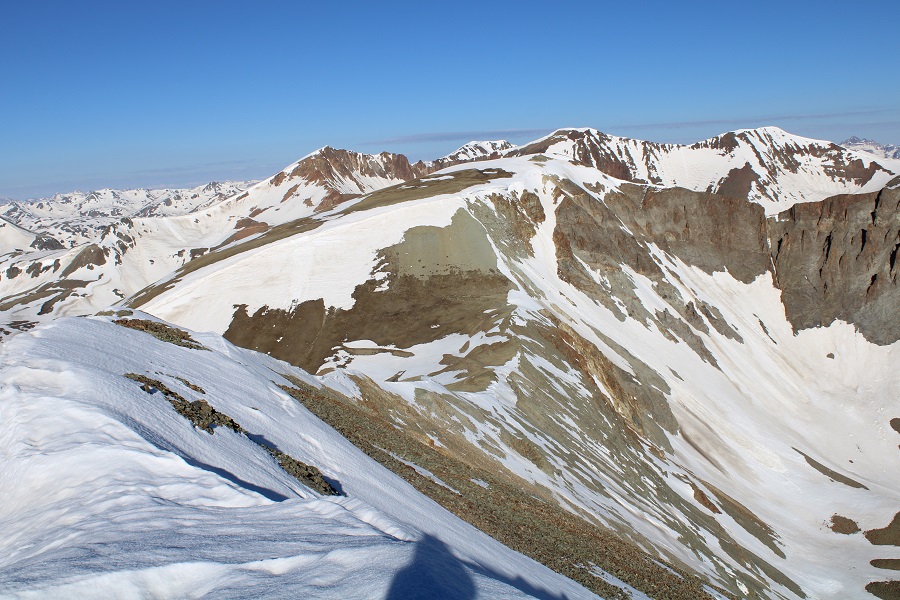
I lost about 475’ of elevation to the saddle
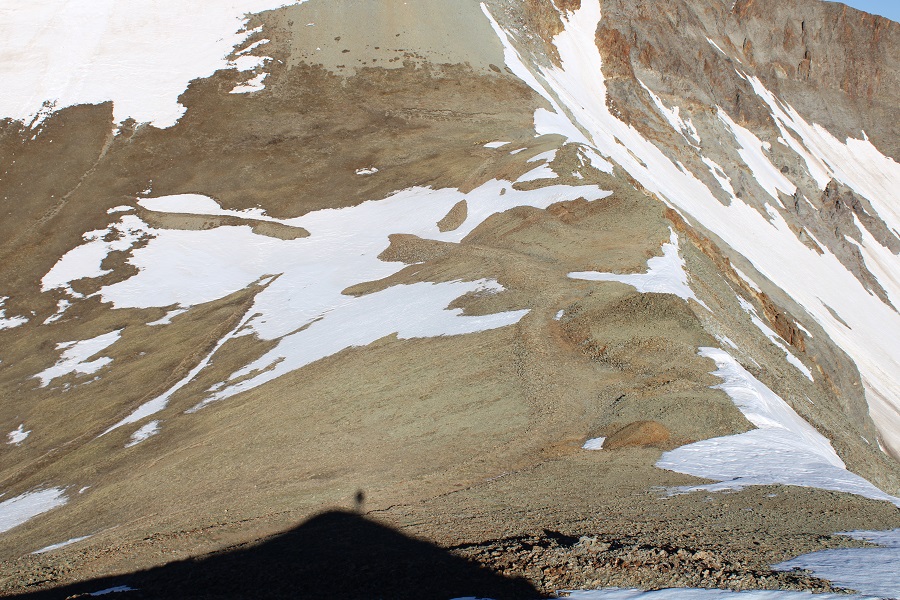
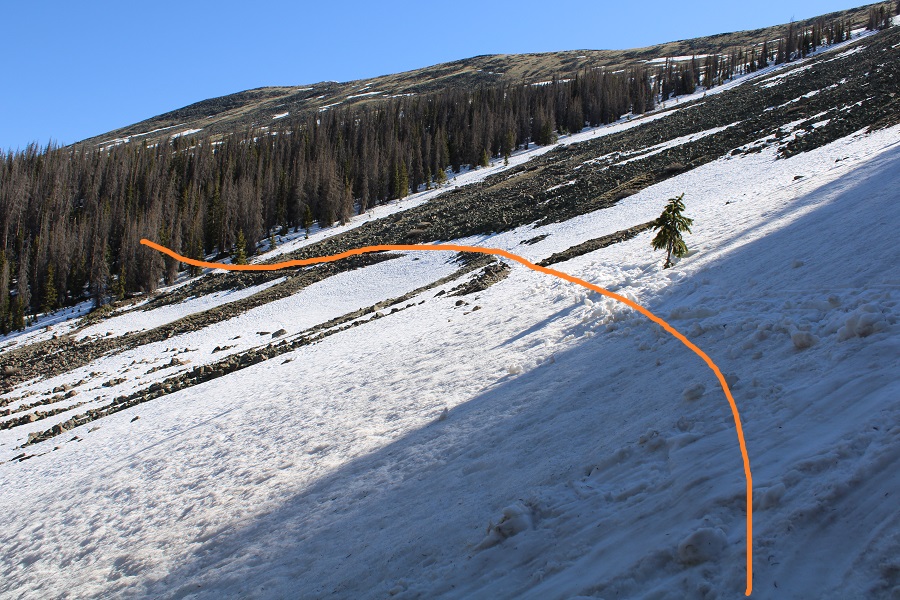
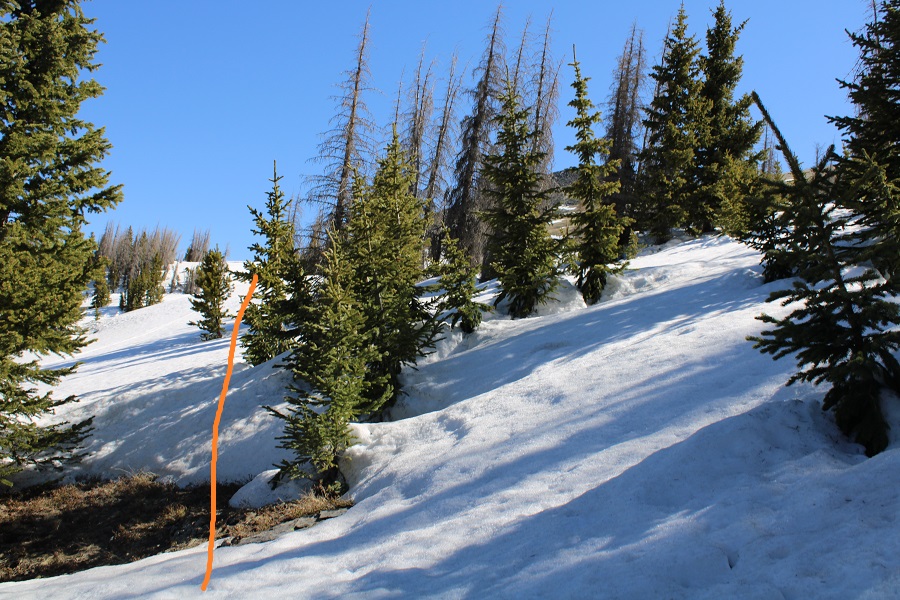
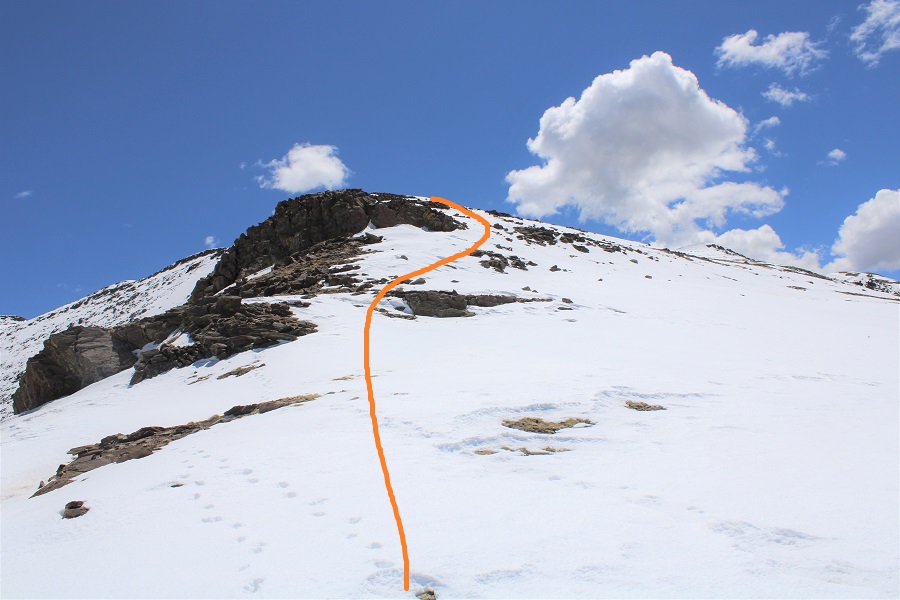
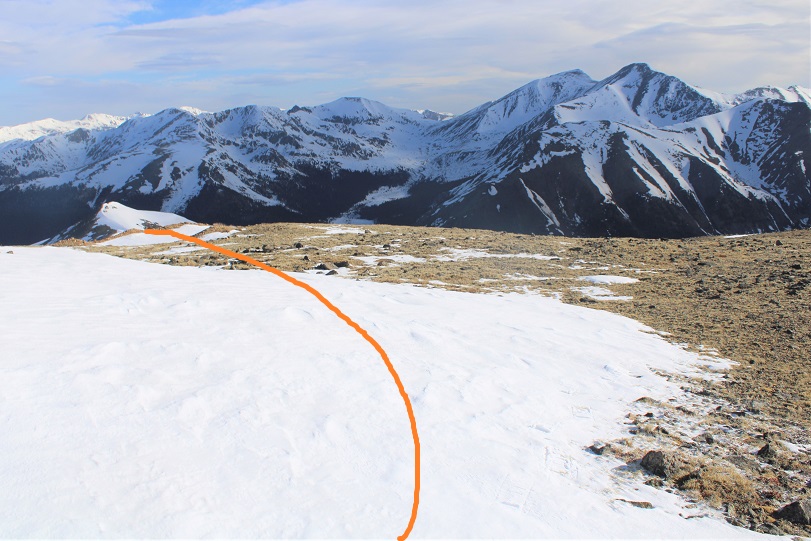
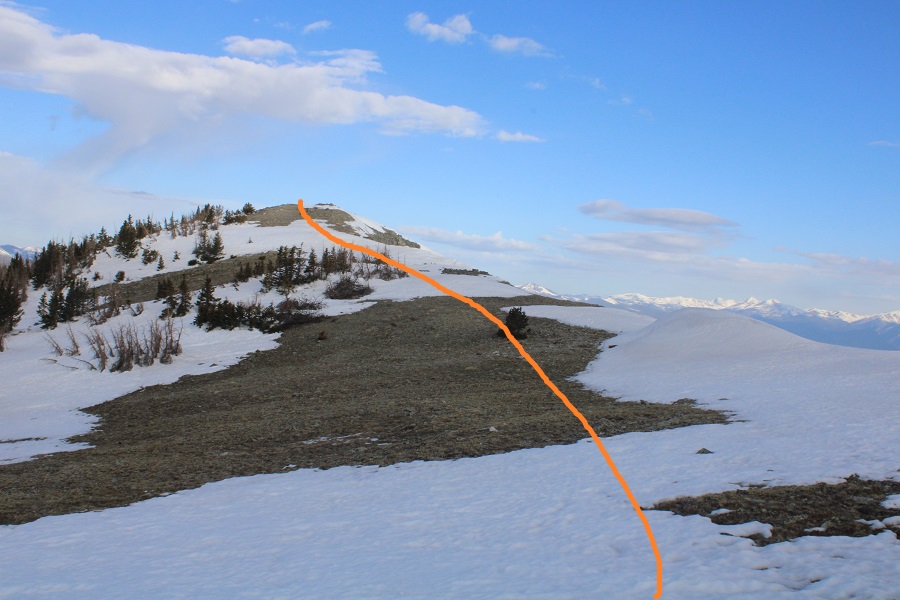
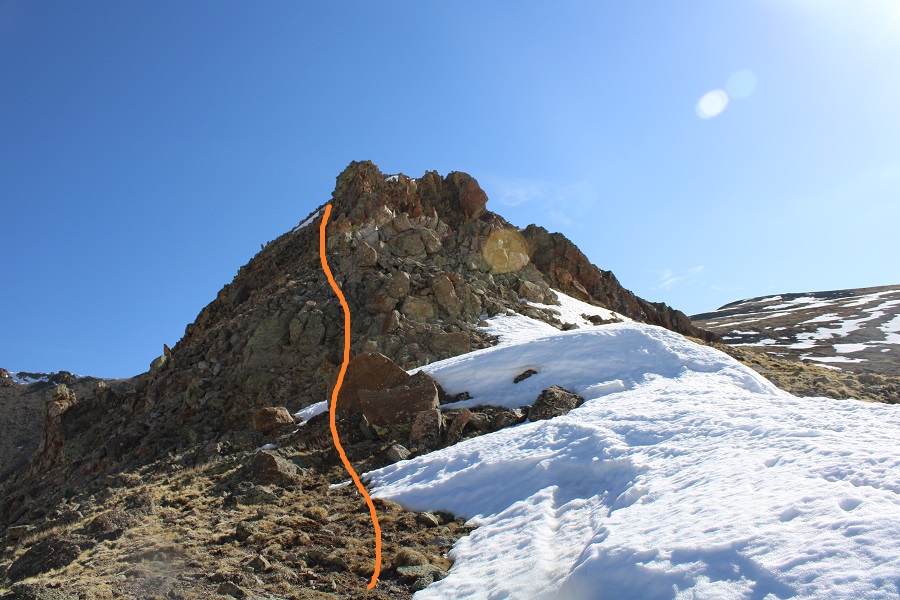
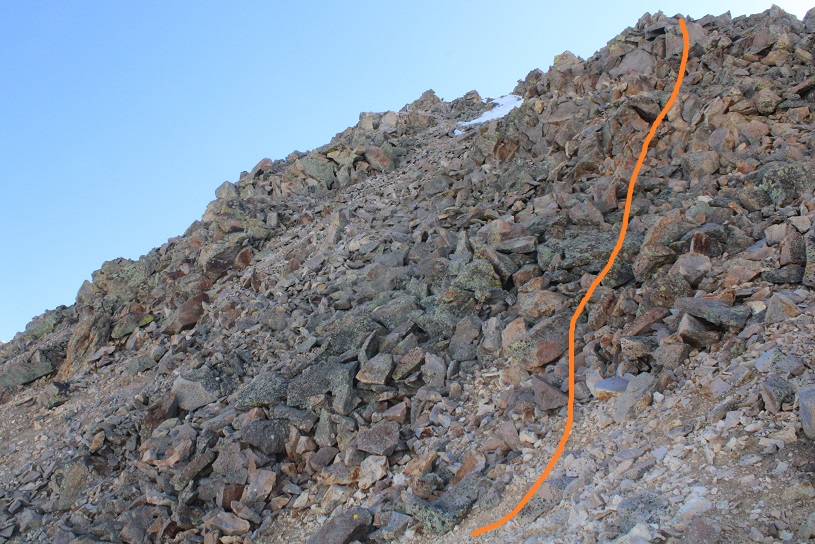
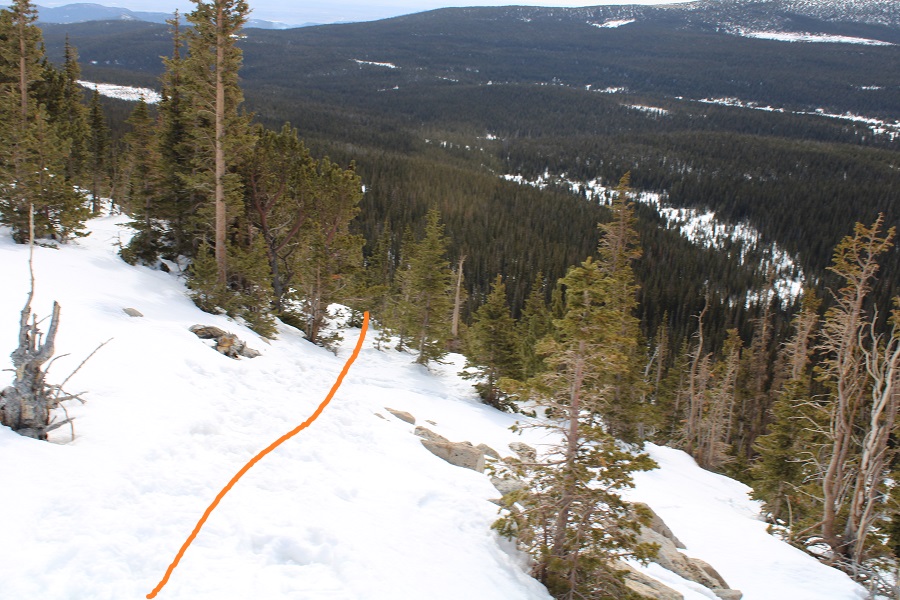
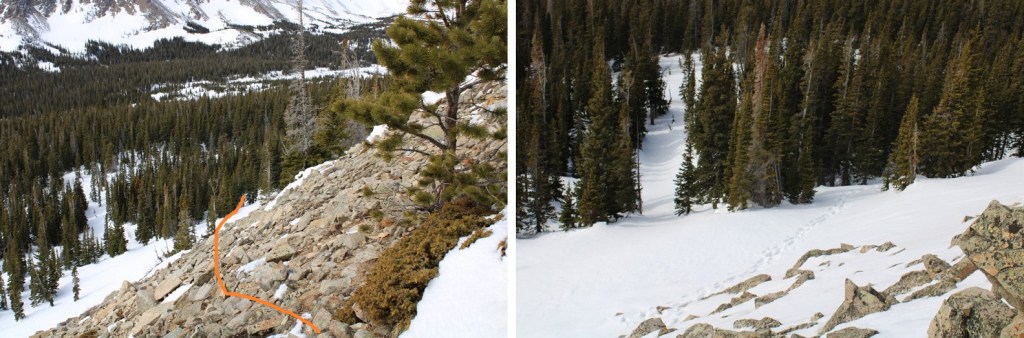
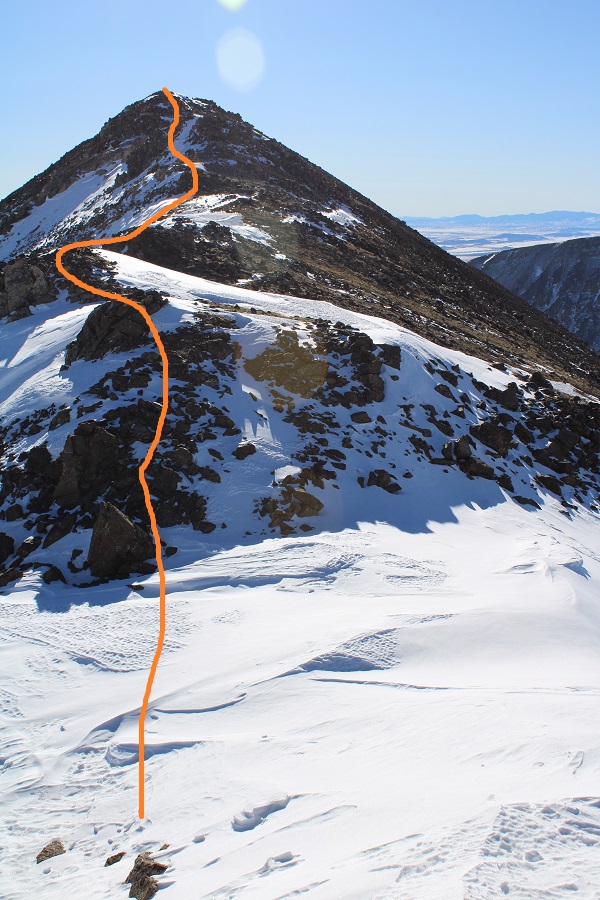
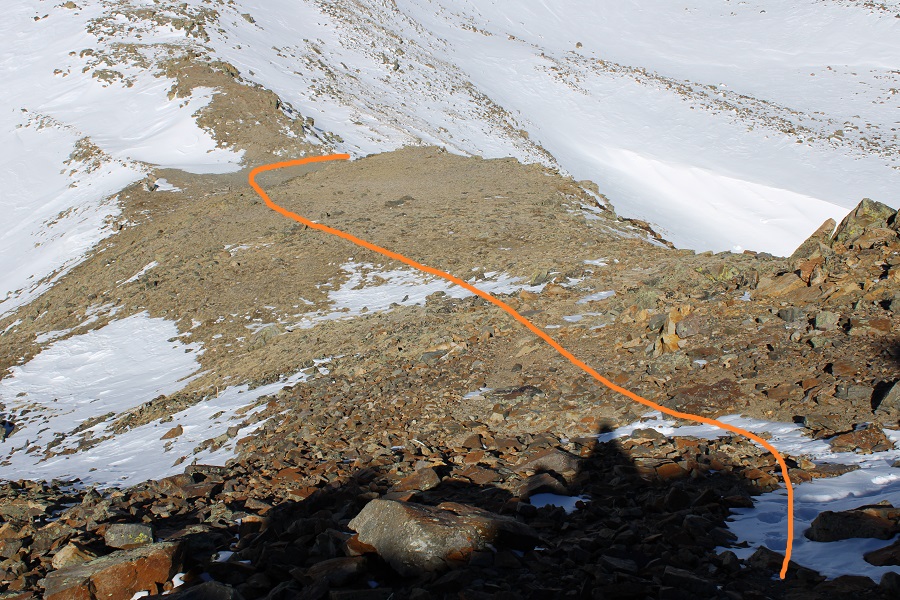
Then started up the east slope.  This area was covered in scree, and quite steep. I kept eyeing the cornice, trying to find the best way to ascend.  While I had snowshoes, I didn’t have crampons, so my microspikes would have to do if it came down to it.  Here’s the path I chose to take to the summit, looking for a stable but accessible part of the cornice to climb.

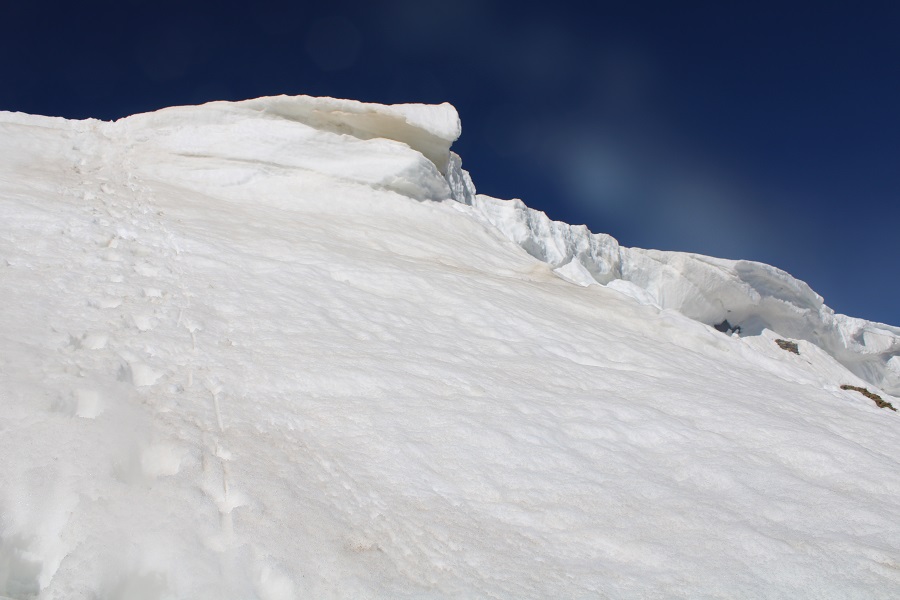
When I got to the cornice, I was able to kick in steps with just my microspikes, although, lacking in forward facing spikes, they needed a little creative help from my ice axe at times. 
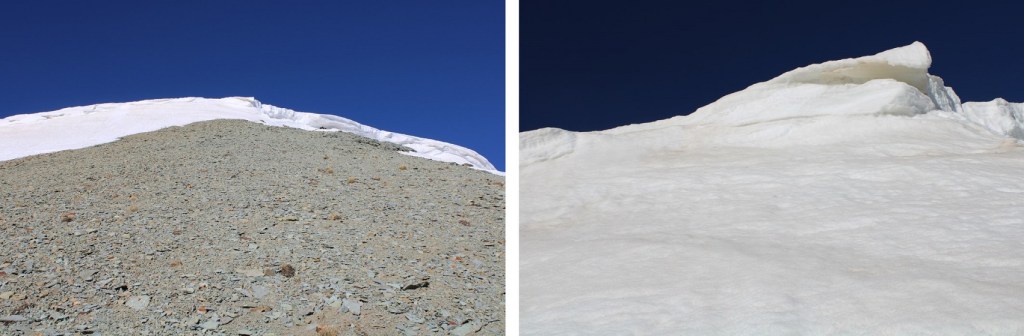
Towards the top I started postholing as the cornice leveled out, and had to slide on my belly the last few feet to make it to the tundra. Once over the cornice the summit was obvious, to the north
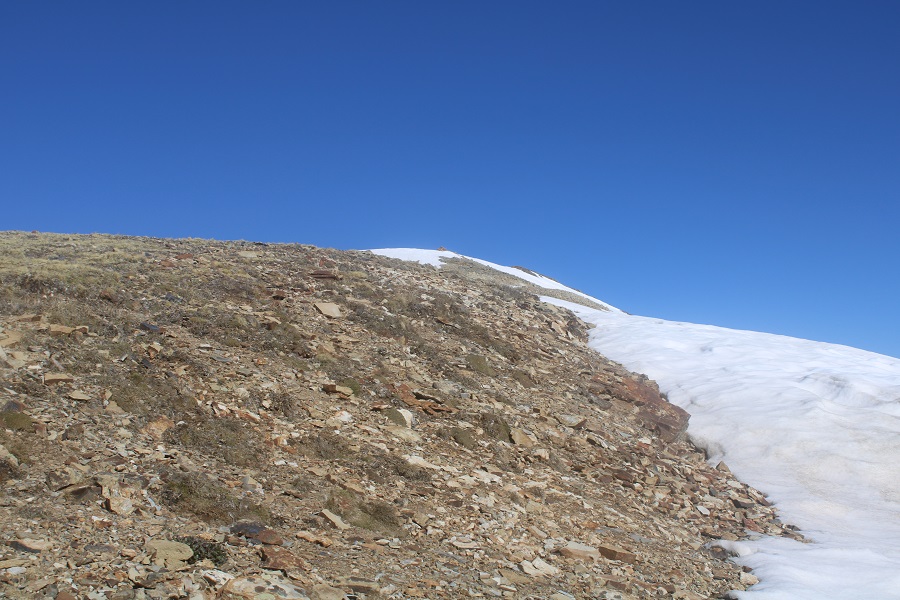
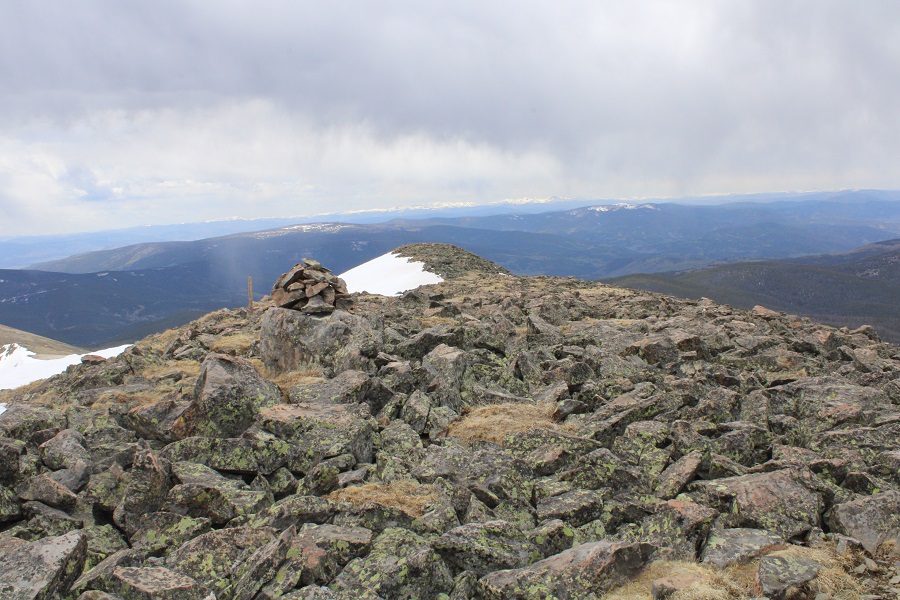
I summited PT 13427 at 8:30am
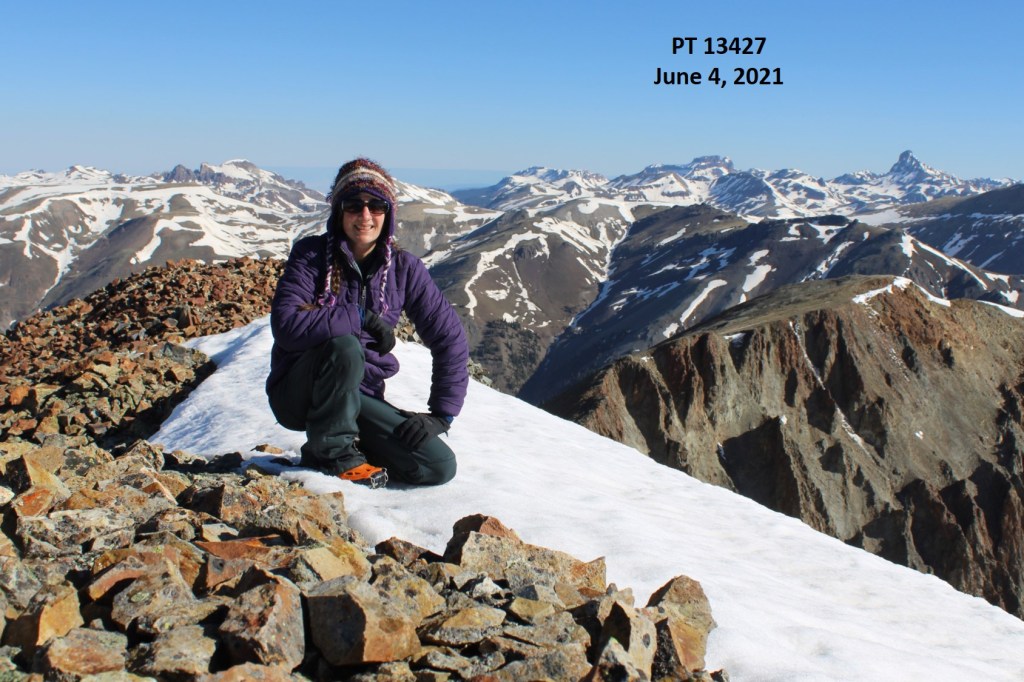
PT 13427:

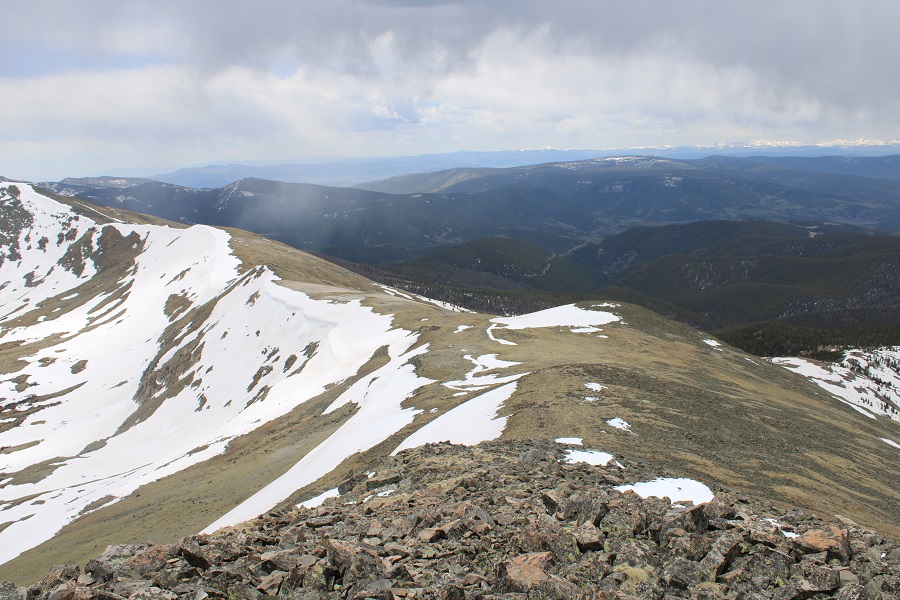
Here’s a look back on PT 13540

It was still morning, but the snow was softening up quickly.  I wanted to get back over that cornice asap. I turned and headed back towards the cornice
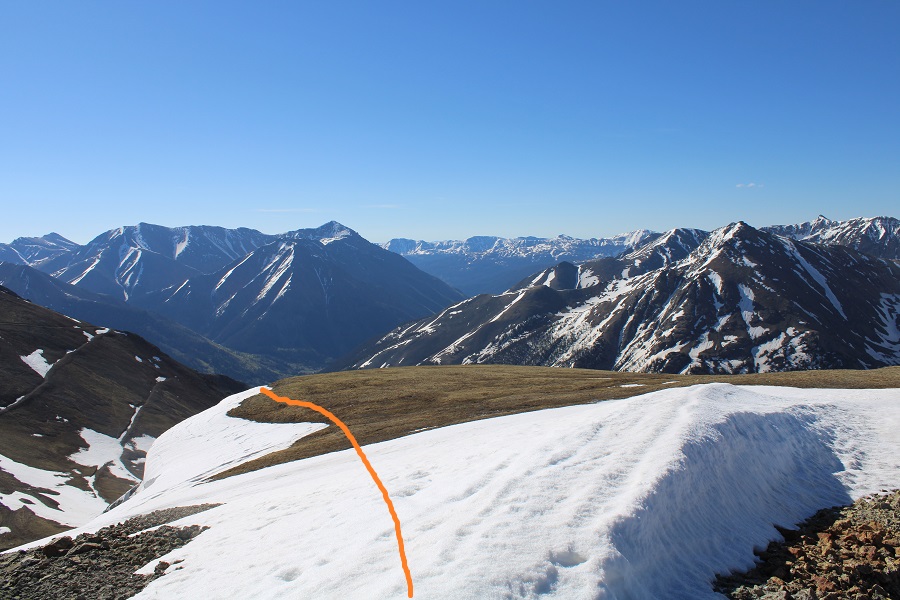
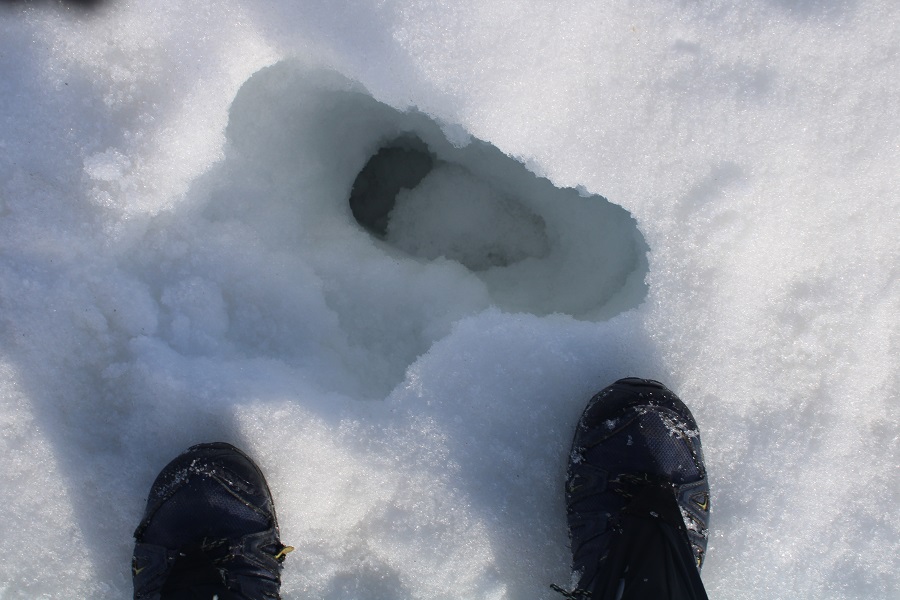
It was easy to find my entry/exit point, as I could still see the marks from where I army crawled a few minutes ago.
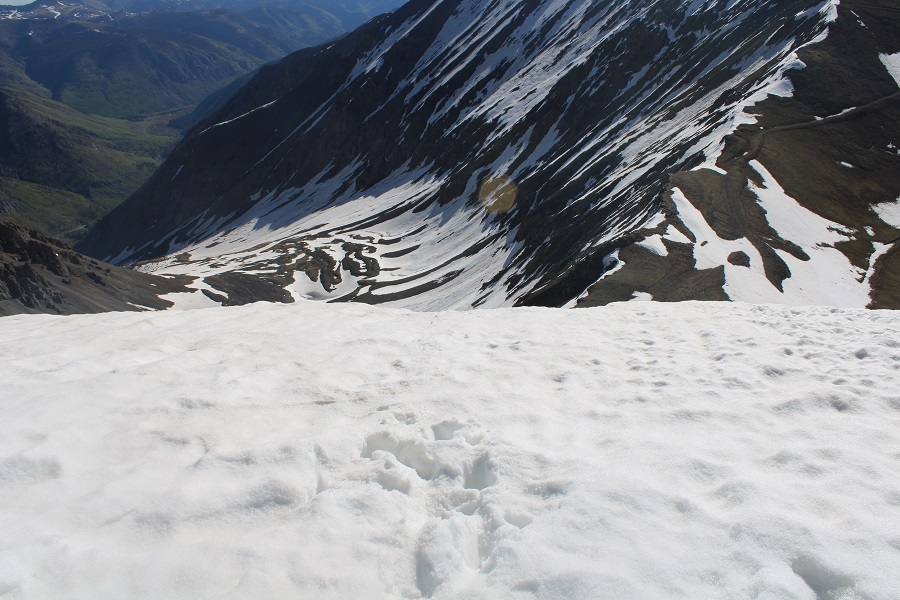
I did the same thing again, facing the mountain and using the steps I’d kicked in earlier.  It was rapidly warming up:  the tip of the cornice was now steadily reedripping water.
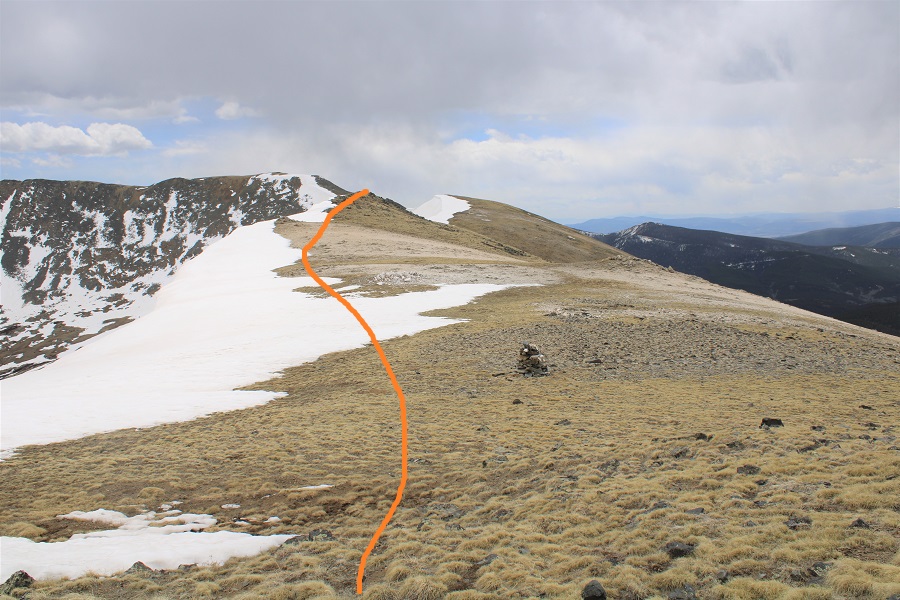
Here’s a look at the ridge back up towards PT 13540
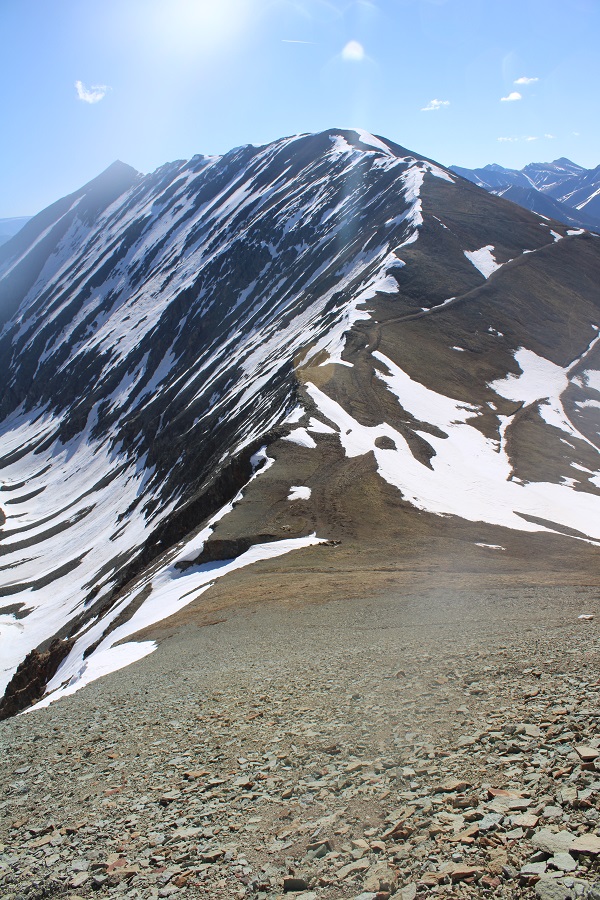
I slid down the scree and followed the ridge back. 

The snow was mostly avoidable until I made it to where the ridge kind of levels out for a while.  From then on it was posthole city
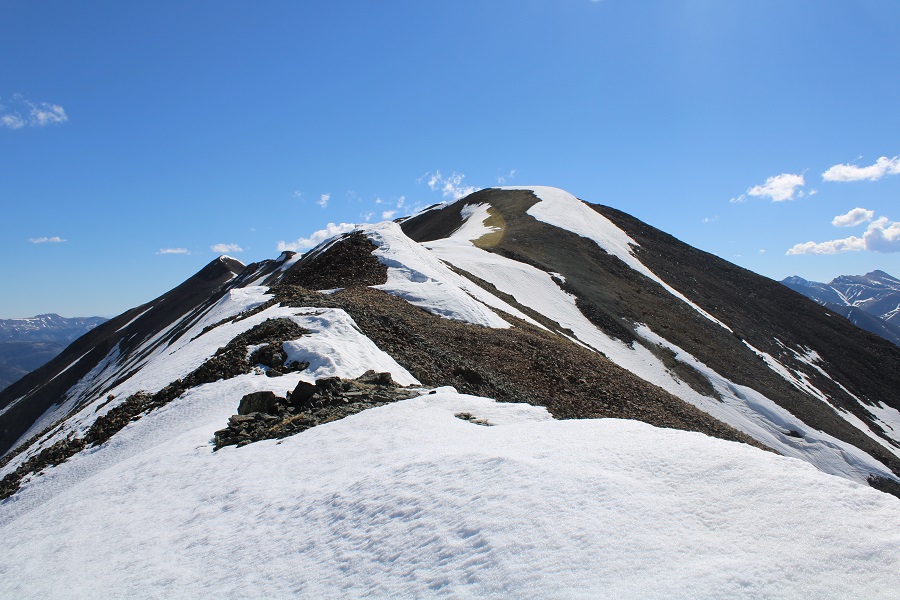
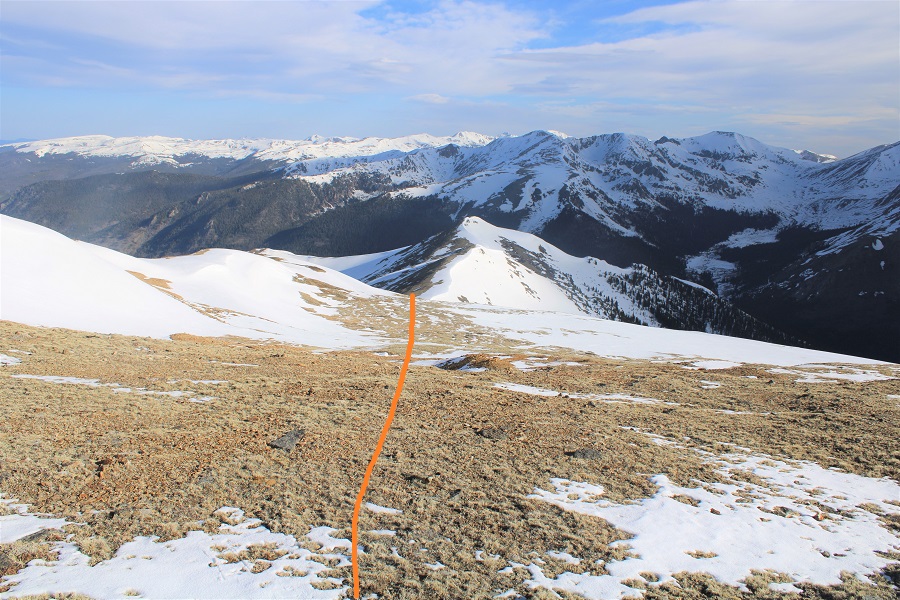
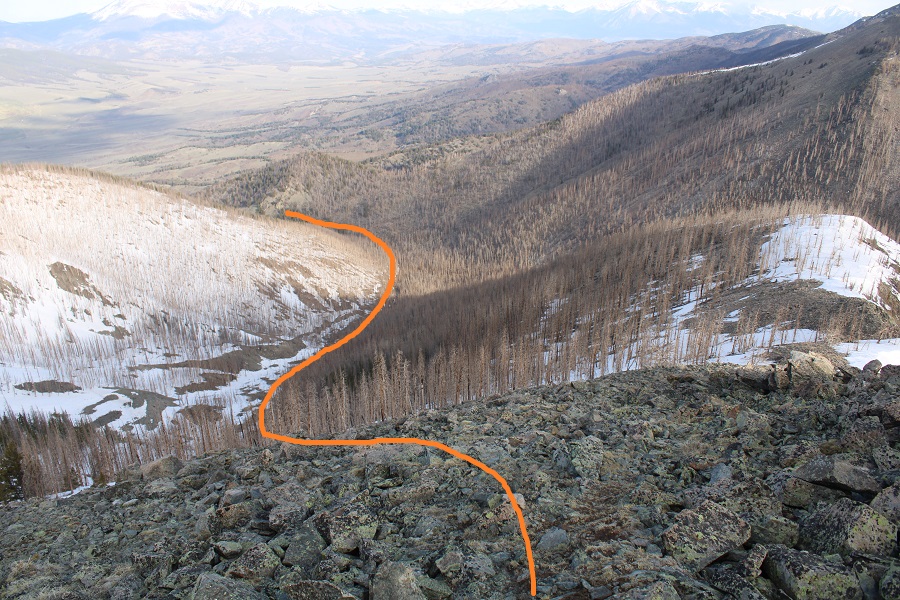
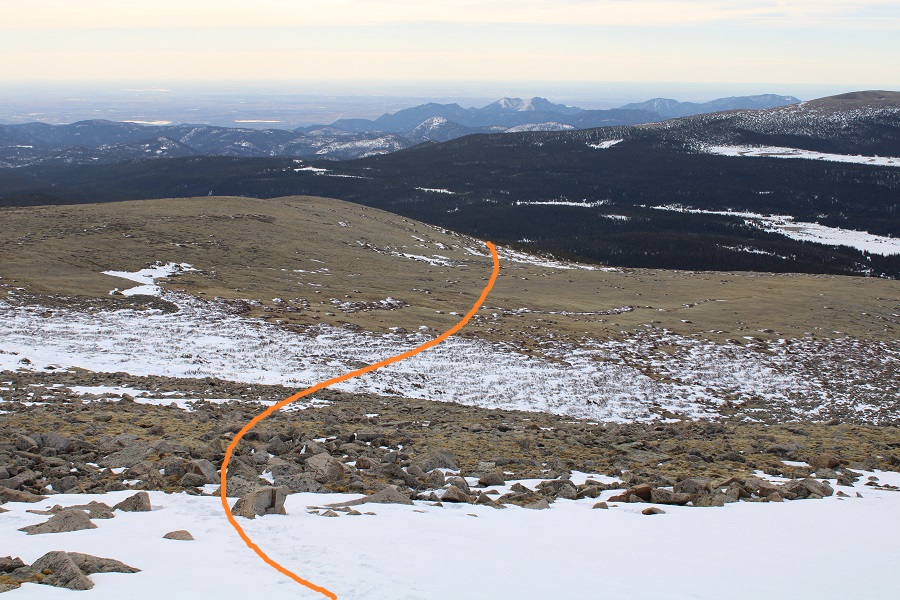
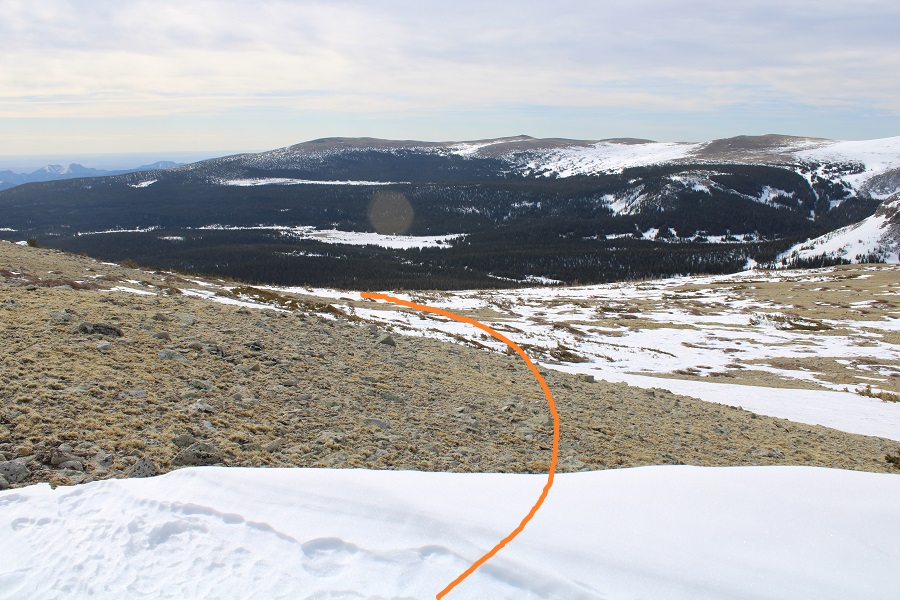
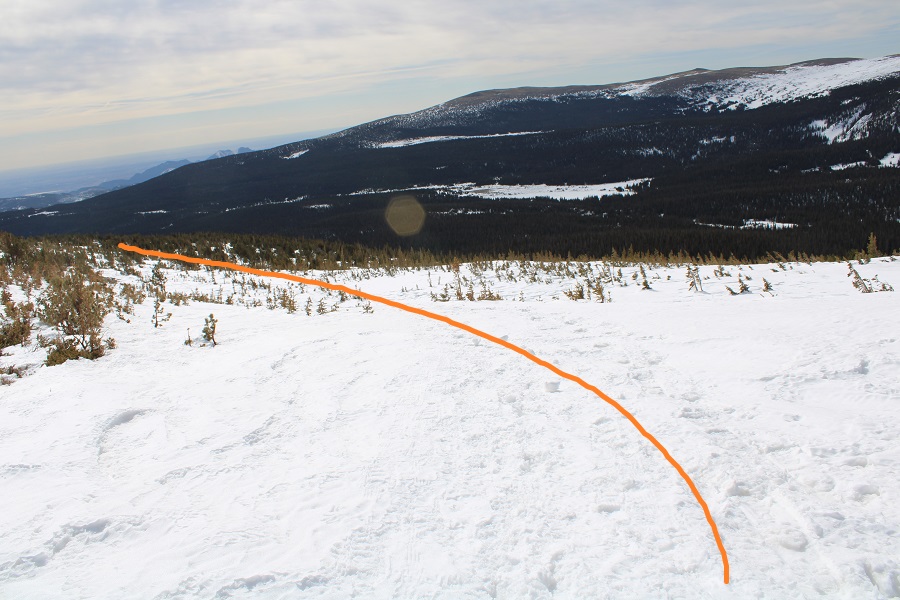
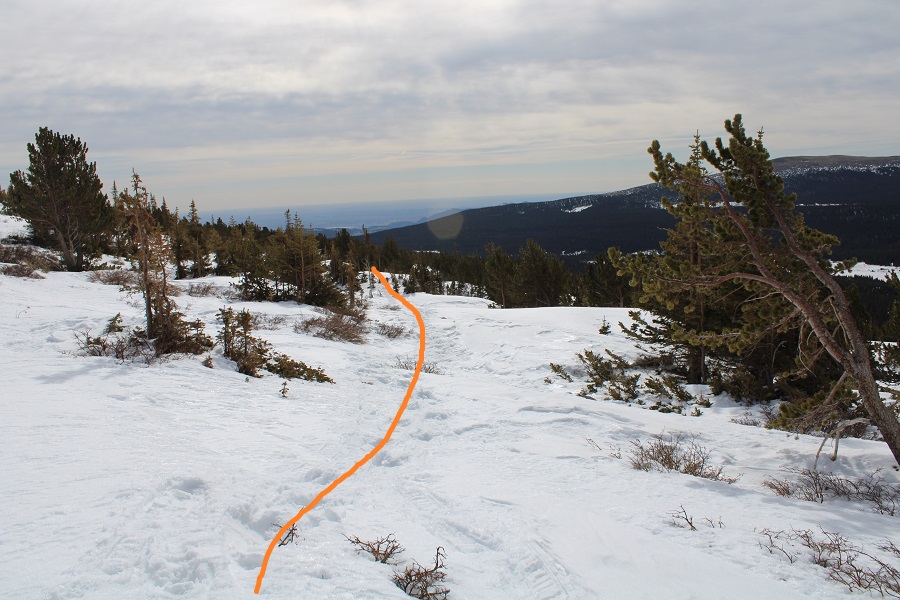
I knew there was no way I wanted to re-enter those basins, so I decided to take the southeast ridge down.  It parallels the basin, and while there was snow, a lot of it was avoidable.  Where it wasn’t I was postholing.  I had snowshoes, but was too stubborn to put them on.  Here’s the overall route out
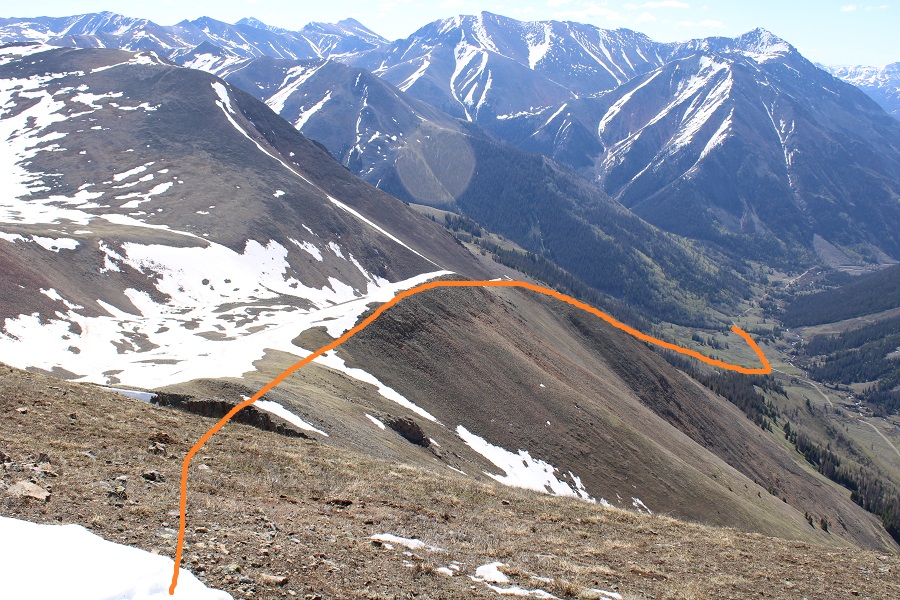
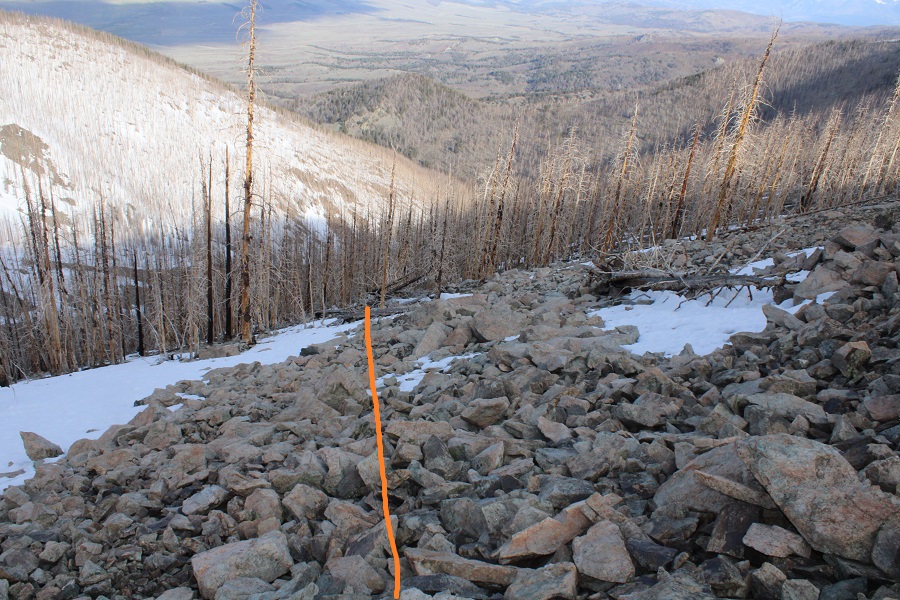
And step by step, first down the ridge
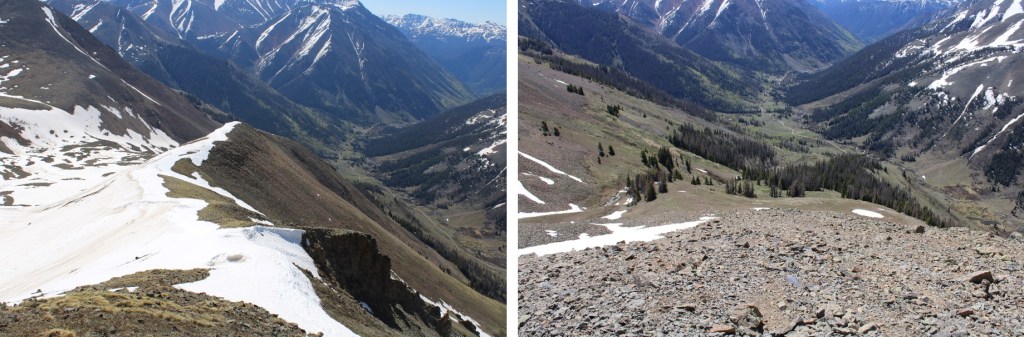
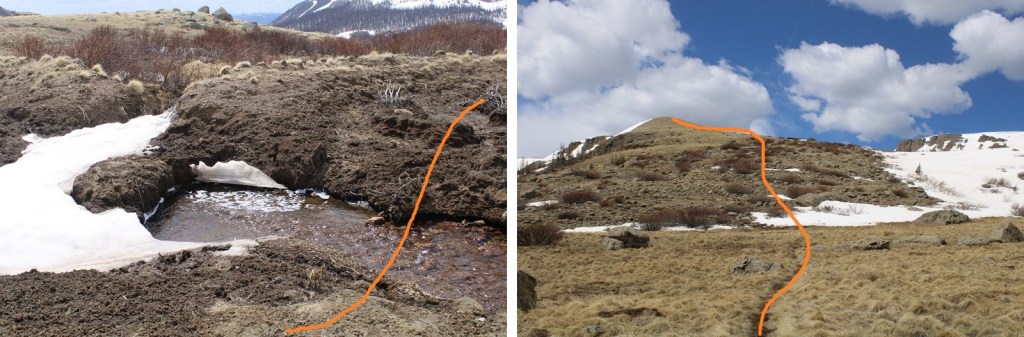
Then following Rock Creek back to CR 30
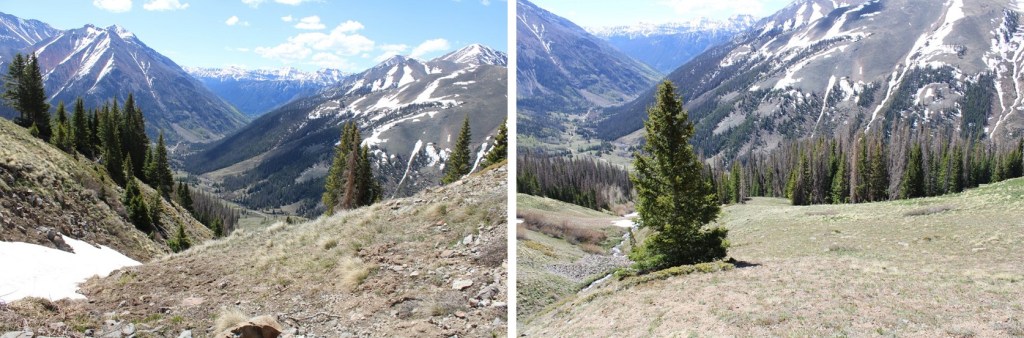
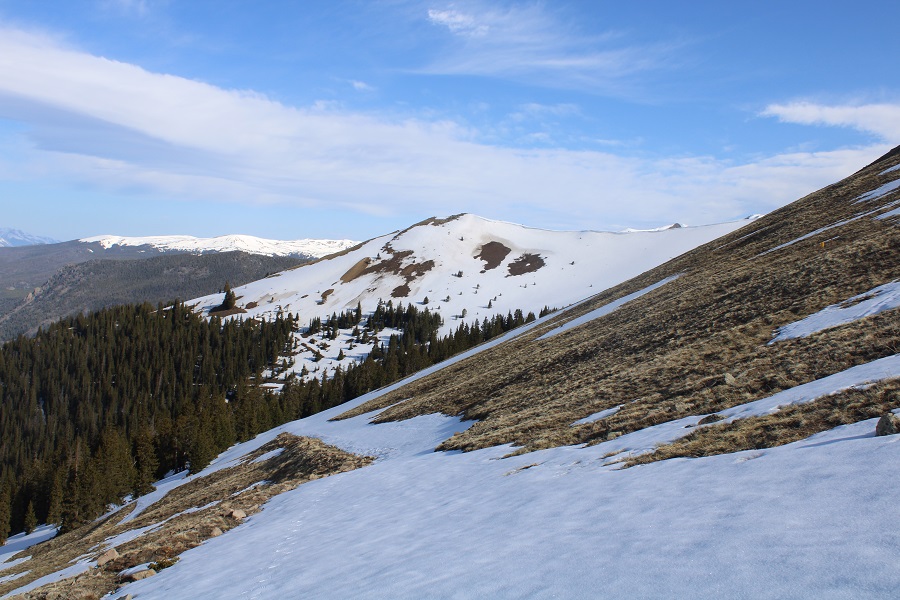
Here’s a picture looking up the ridge (in case you want to take the ridge up)
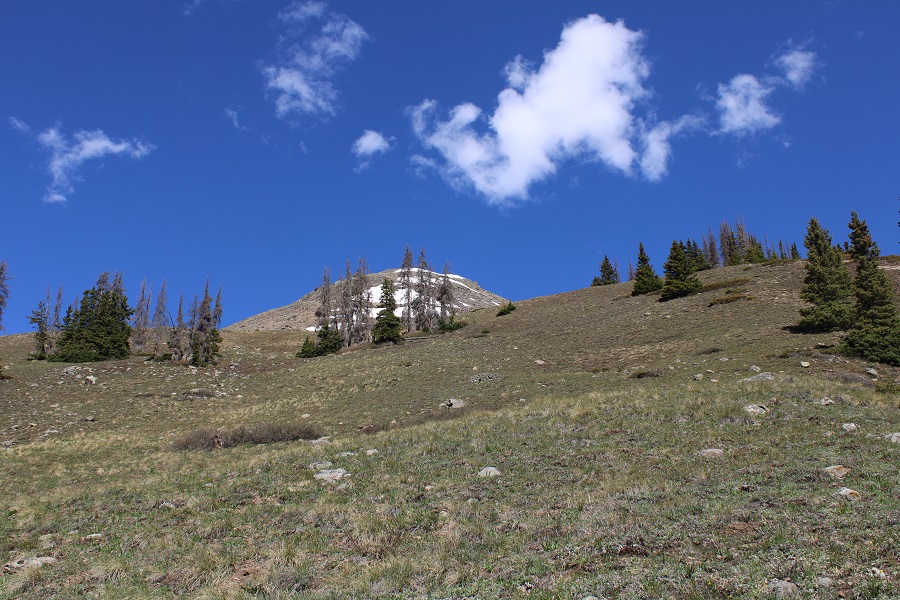
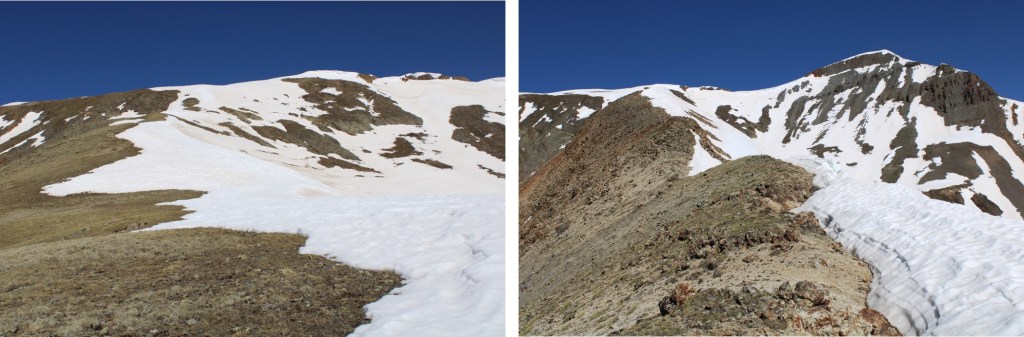
I came to the avalanche area, and it was then I realized a house had recently been destroyed (more on this in my next trip report on “C.T.” Peak). 

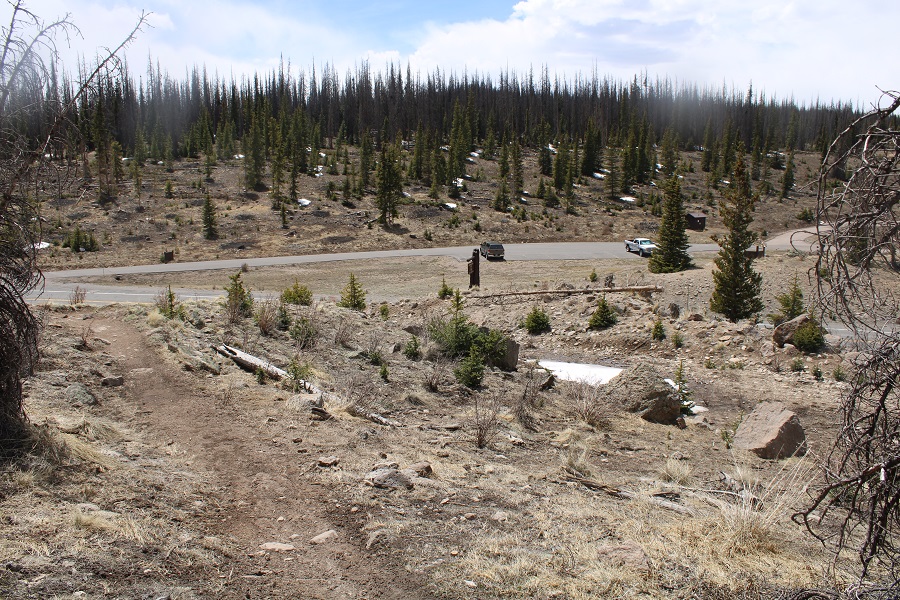
I made it back to the road and followed it back to my truck
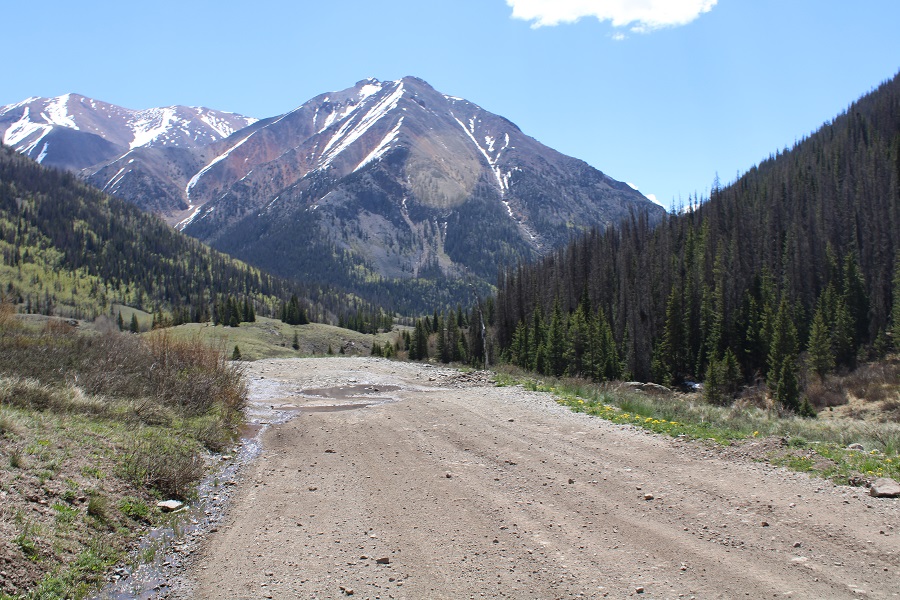
I made it back to my truck at 11:15am, making this an 8.95 mile hike with 4206’ of elevation gain in 7 hours, 15 minutes.
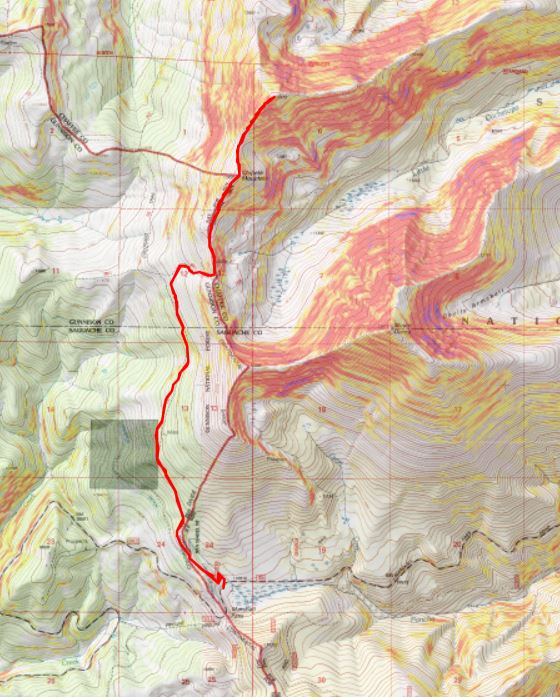
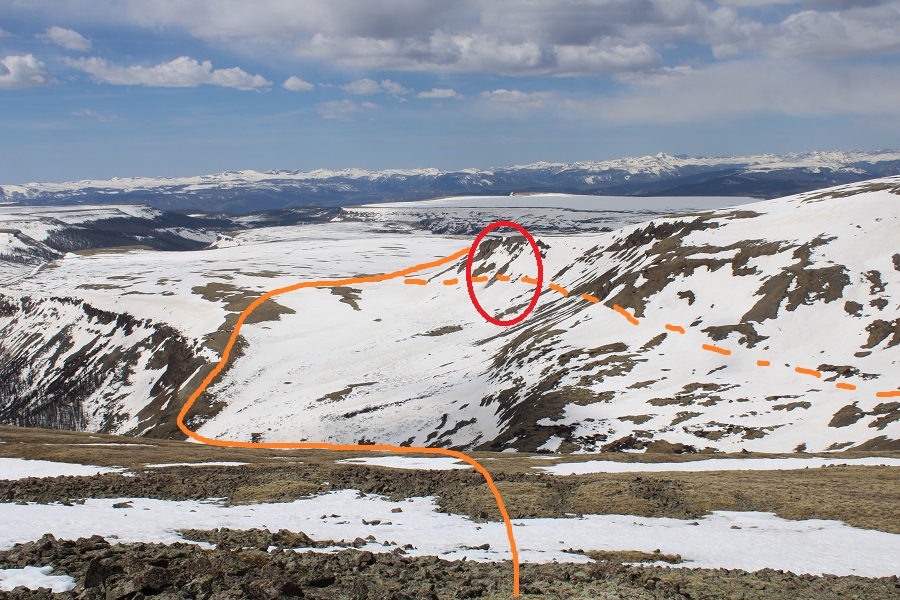
For reference, here’s a look at my route up to PT 13540 (solid line) and down (dotted line), as seen from the west ridge of “C.T” Peak.

It was still early:  I’d initially intended to add “C.T” Peak on today as well, but didn’t want to re-enter the basin with the way the snow was warming up, so I switched my plans and was going to do that peak tomorrow.  Instead, I got out a book my daughter just finished reading and was eager for me to read as well so we could discuss it together.  I walked around Argentum, found some old structures hidden way up in the hills behind my campsite, relaxed, and sipped whiskey.  Dinner was a block of white cheddar cheese and some bacon.  I had new neighbors, so I welcomed them, and then made it an early night.  It rained.

Chipeta Mountain South – 12,850 and Chipeta Mountain – 13,472

RT Length:  10.58 miles

Elevation Gain:  3281’

This was my third attempt at Chipeta Mountain this year.  The first time I drove out the road was open but impassible due to snow.  The second time the road was clear, but the gate was closed.  I saw several videos/pictures of people on the pass this year, but later found out they were part of a mining operation and the only ones allowed to access the road.  The road formally opened on May 28.  Today was May 29.  It had already been a long morning:  I’d woken up at the Gibson Creek trailhead, intent on hiking a few 13ers in the area (also not my first attempt these peaks this year), but after about 1000’ of elevation and deteriorating snow conditions I decided to make today a ‘me day’.  I hiked back to my truck, chugged a beer, and came up with a new plan:  I was going to drive to Marshall Pass, see if it was open, spend a day relaxing, and then tackle Chipeta Mountain tomorrow. 
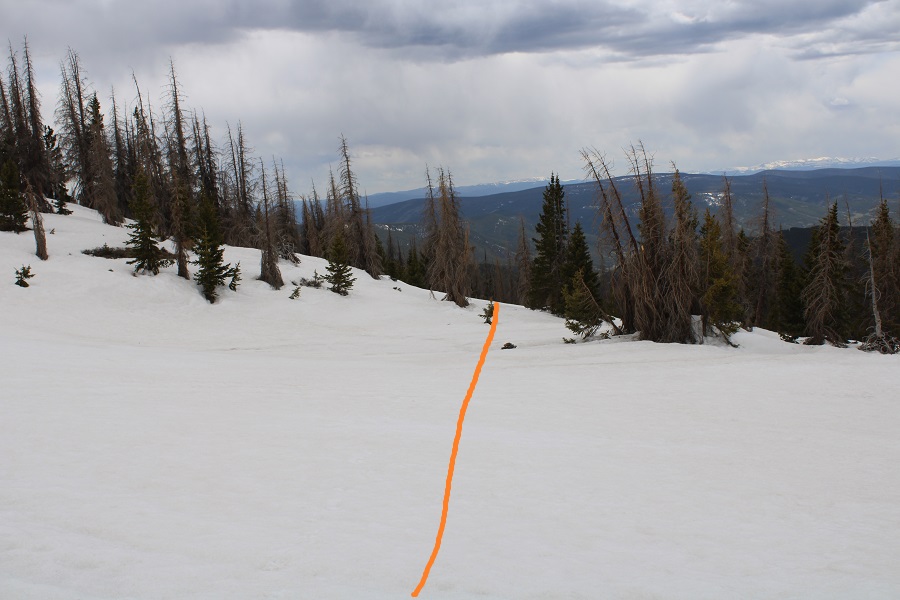
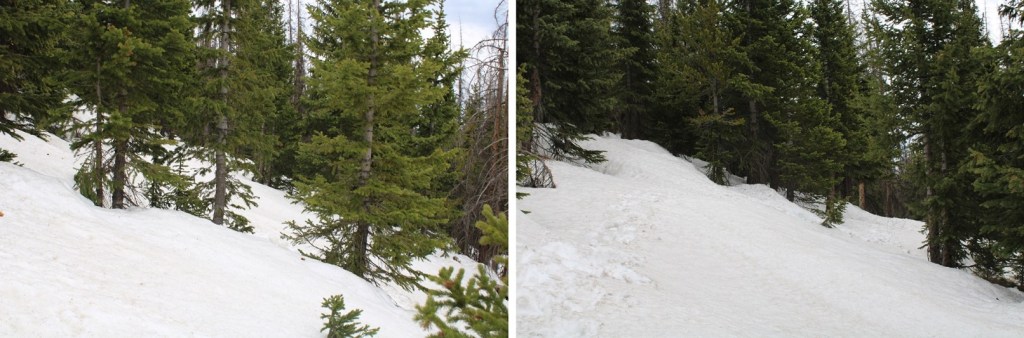
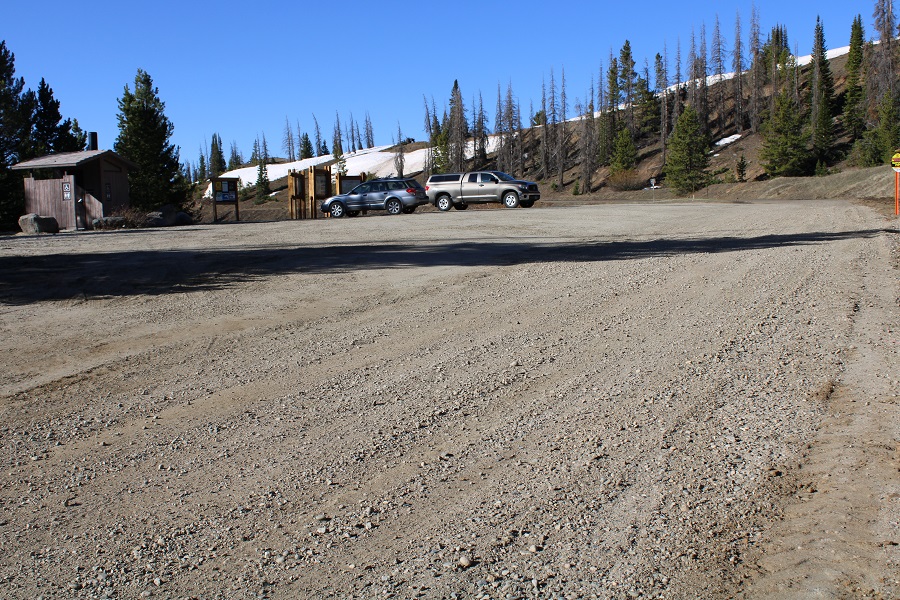
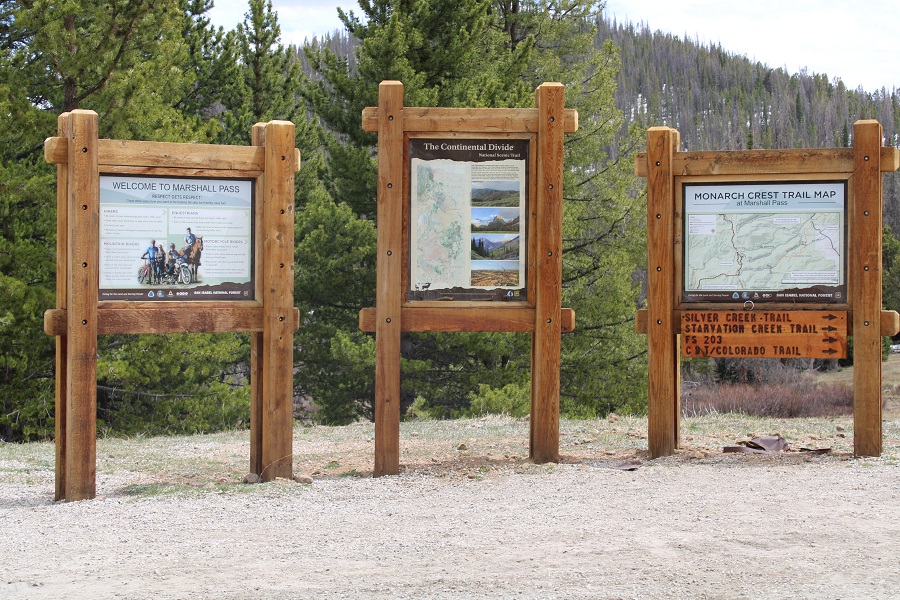
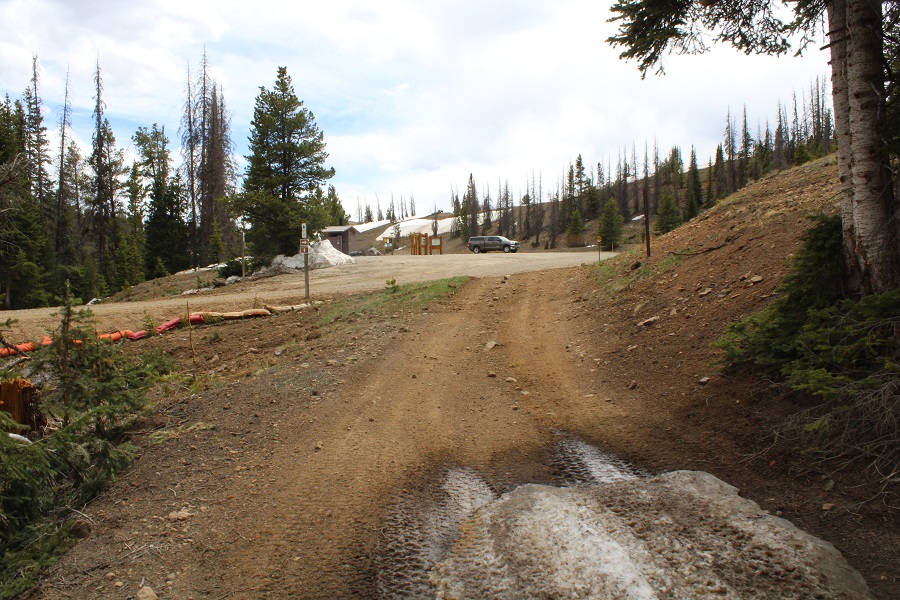
Marshall Pass was open and snow/mud free to the pass.  I was surprised at how few people were dispersed camping this Memorial Day weekend.  I parked near the bathrooms and information signs.

I checked the weather, and it wasn’t supposed to rain until 5pm tonight.  I did the math, figured I had plenty of time to get in a hike before weather set in, gathered my gear, and was on my way.  I was on the trail at 8am.  The usual trail from the trailhead has a sign saying it’s no longer in use, so I took the very short bypass and started along the road instead.  This is road 243G, located at the north end of the parking area.  If was a bit muddy to begin with.

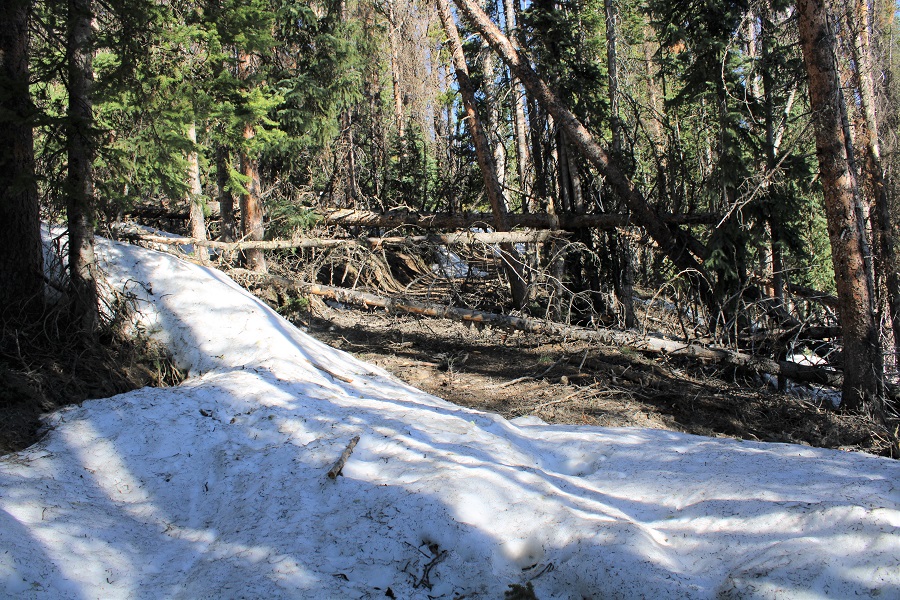
It was obvious from the start motorized vehicles hadn’t been on the trail yet this year, as there were numerous downed trees at the beginning (not much after a mile in, however).

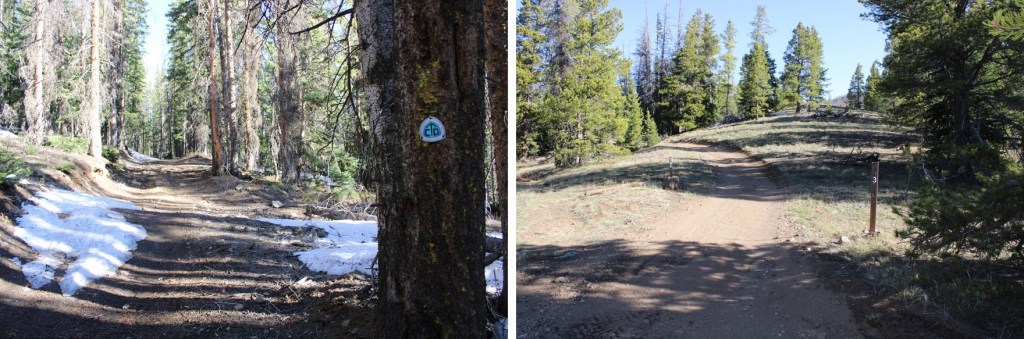
I was following the Continental Divide and Colorado Trails north, along the west side of the mountains. 

After hiking for 1.7 miles snow started covering the trail.  Luckily, this snow wasn’t quite mashed potato snow, and I could get by hiking over it with just microspikes (on the way in),

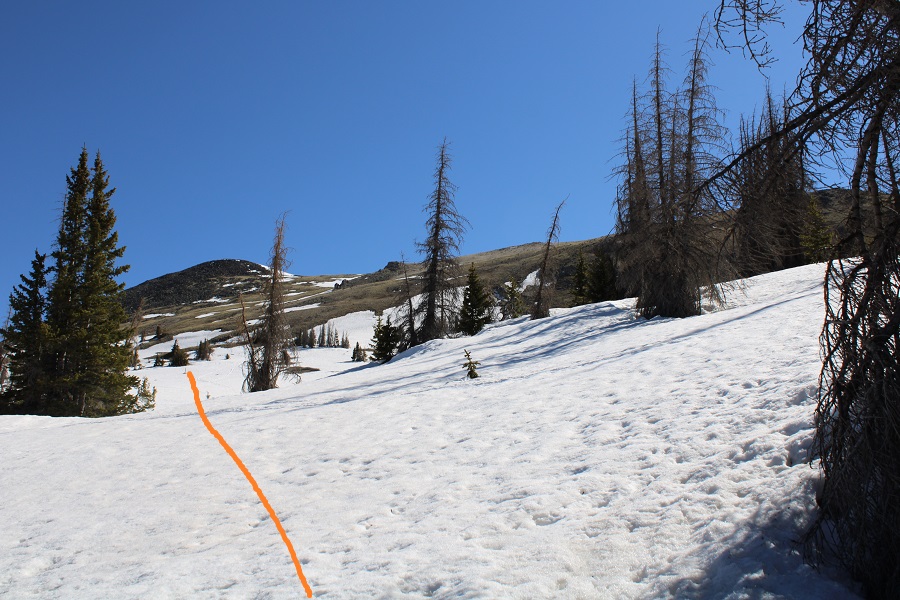
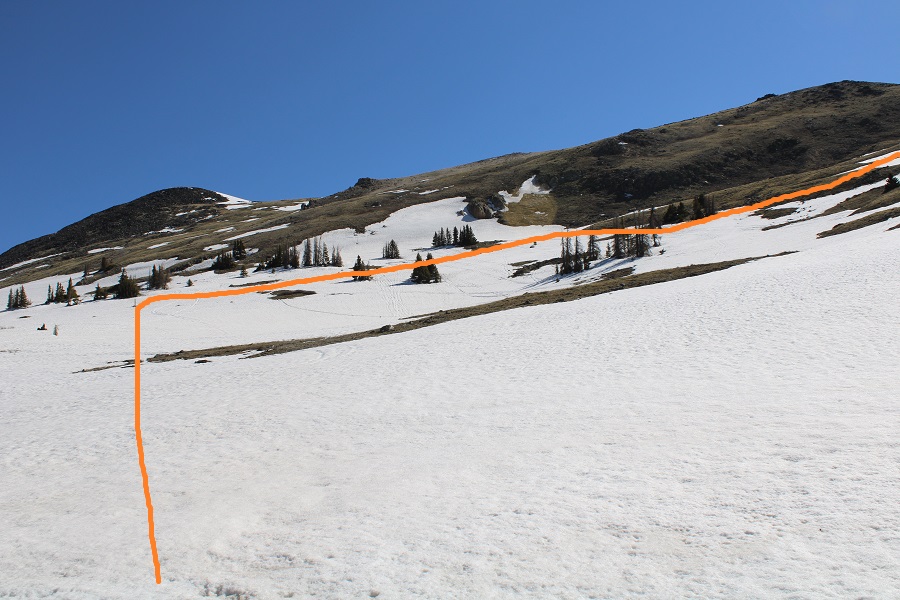
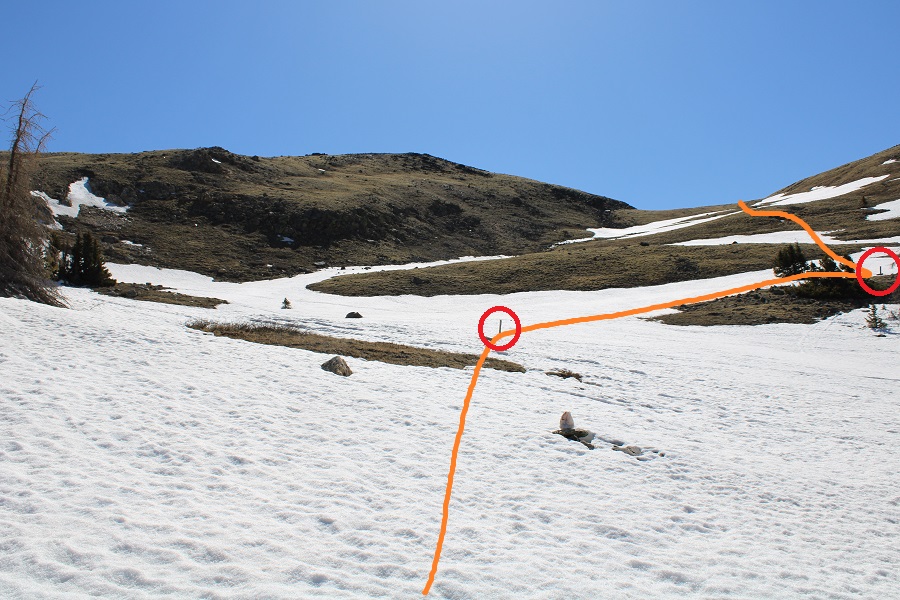
After hiking for a total of just over 3 miles I turned right and headed east up the slope.  A map will tell you this is trail 484.1, but since it was covered in snow I headed east,  and once I saw them, I followed the posts to the saddle.

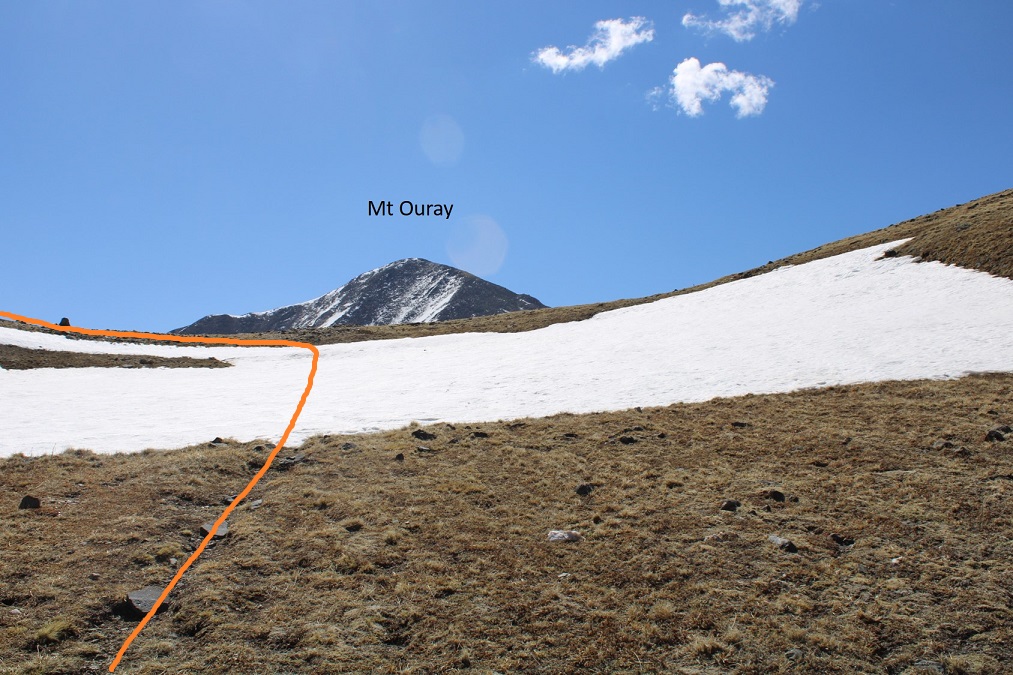
Once at the saddle I had a great view of Mt Ouray.  I turned left and headed north along the ridge.

Here an obvious trail picked up (the trail only lasted to the top of this hill).

From here you can see the rest of the hike:  it’s a straightforward ridge hike that starts out with tundra, and ends with a lot of loose rocks the size of tires.  Note:  The drop from South Chipeta Mountain to Chipeta Mountain is more drastic than this image would indicate.

Here are some step by step pictures of the ridge.

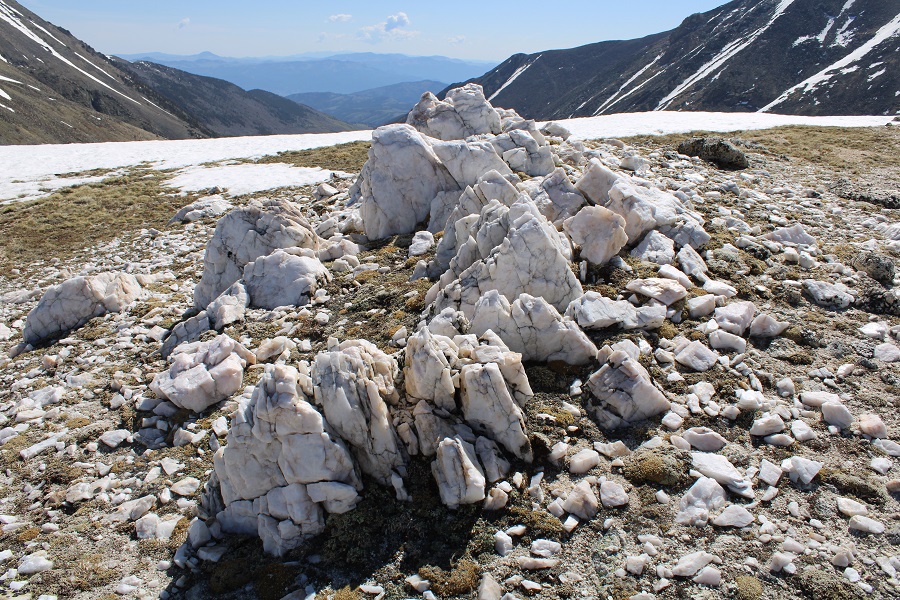
There’s a cool Quartz formation, with a lot of interesting rocks lying around

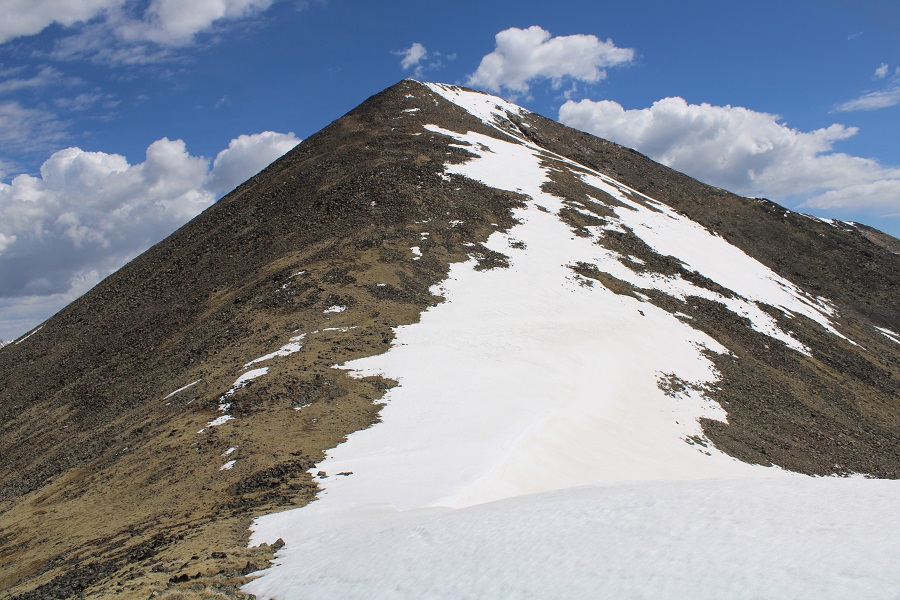
Then it’s on to South Chipeta Mountain

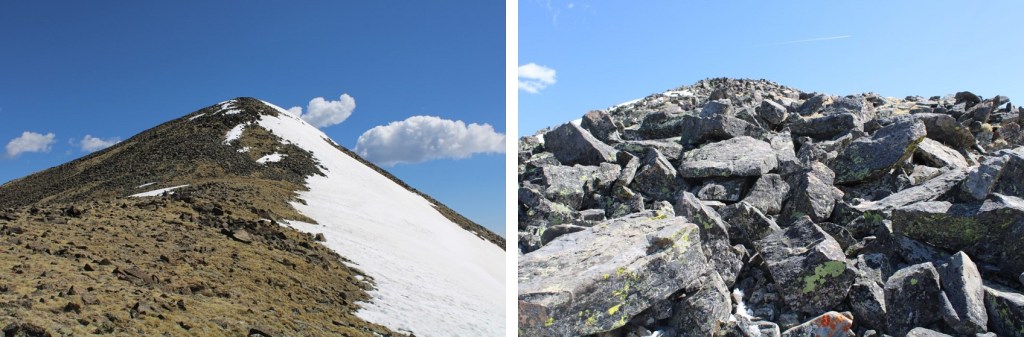
It’s rockier than it looks towards the top

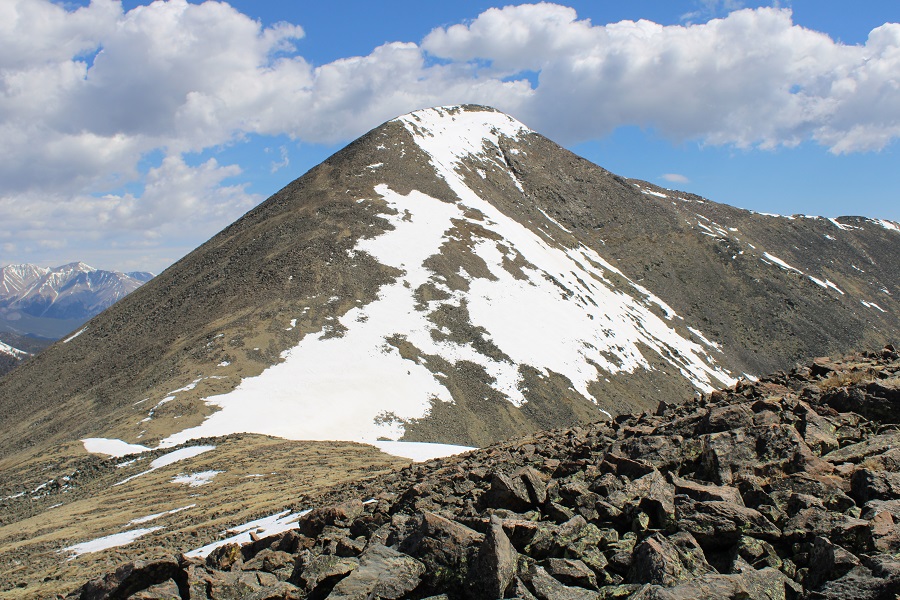
From the top of South Chipeta Mountain (12850) you can clearly see the route to Chipeta Mountain (13472).  From South Chipeta you will lose 200’ of elevation, and then gain 825’ of elevation to the summit of Chipeta Mountain. 

This is also a simple ridge hike, but it takes time and careful foot placement because the rocks aren’t stable and tend to roll.  Nothing above class 2 however.

Weather unexpectedly started coming in early as I neared the summit of Chipeta

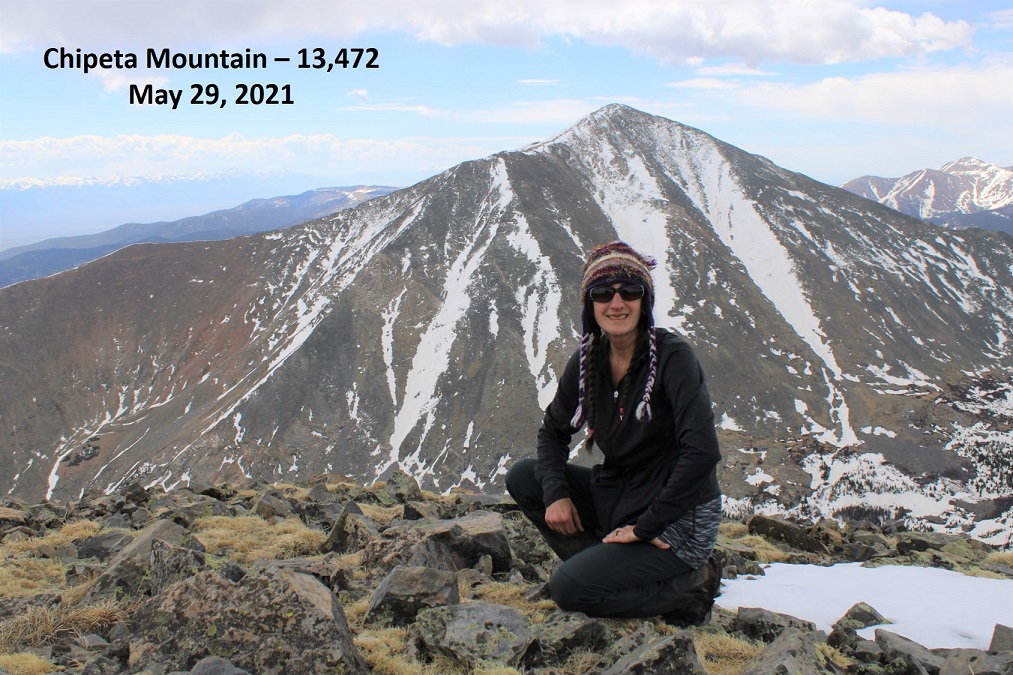
I summited Chipeta Mountain at 11:15am, after just over 3 hours of hiking

Chipeta Mountain: 

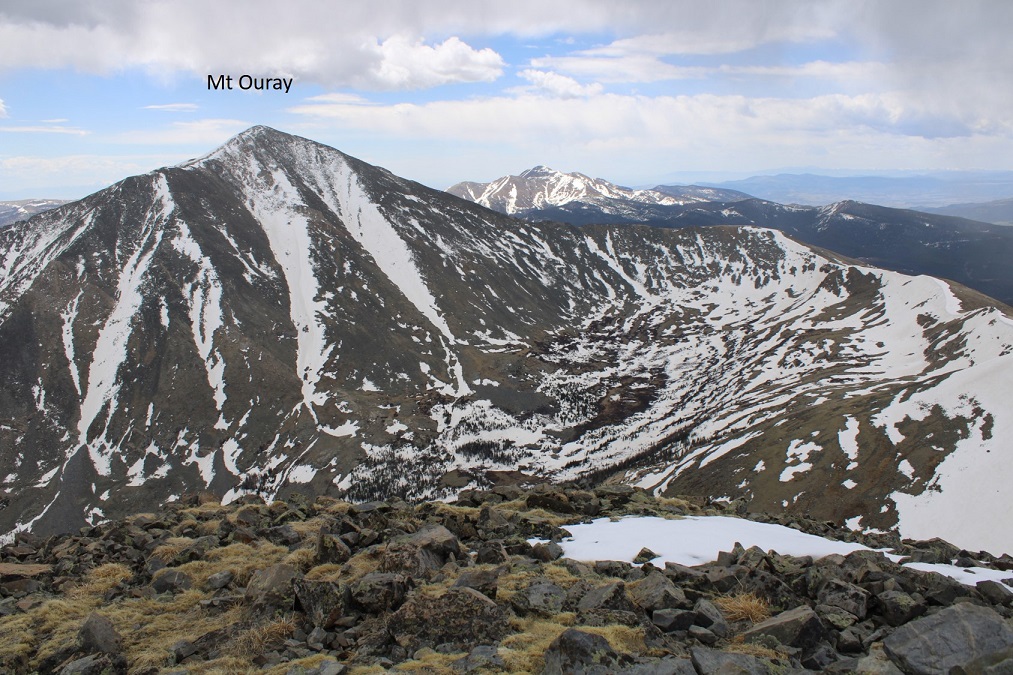
Here’s the view of Mt Ouray from the summit of Chipeta

I didn’t like the look of the clouds, and there was virga in the direction I was headed, so I didn’t stay on the summit long.  I retraced my steps back over South Chipeta Mountain to the saddle.

At the saddle I turned right and headed back down to the Continental Divide / Colorado Trail

At this point I needed snowshoes.  Strapped them on and followed my tracks from this morning south

I made it back to the trailhead at 2pm, making this a 10.58 mile hike with 3281’ of elevation gain in 6 hours.

I was still intent on taking a ‘me day’, so I decided to sleep in my vehicle here overnight.  Around 5pm a couple drove in, saying they were planning on backpacking part of the CDT/Colorado Trail.  The had along their dog, and a ferret on a leash (the woman had a ferret fanny pack as well, for when needed).  I asked them if they had snowshoes?  The woman slapped the man across the chest and said “See? I told you so!”  They didn’t have snowshoes but headed out anyway. When I woke up at 5am their vehicle was gone, so I’m guessing they didn’t end up staying the night, which was a good idea, considering there was a storm coming in.  I’m not sure what a wet ferret smells like, but it’s probably not ideal.

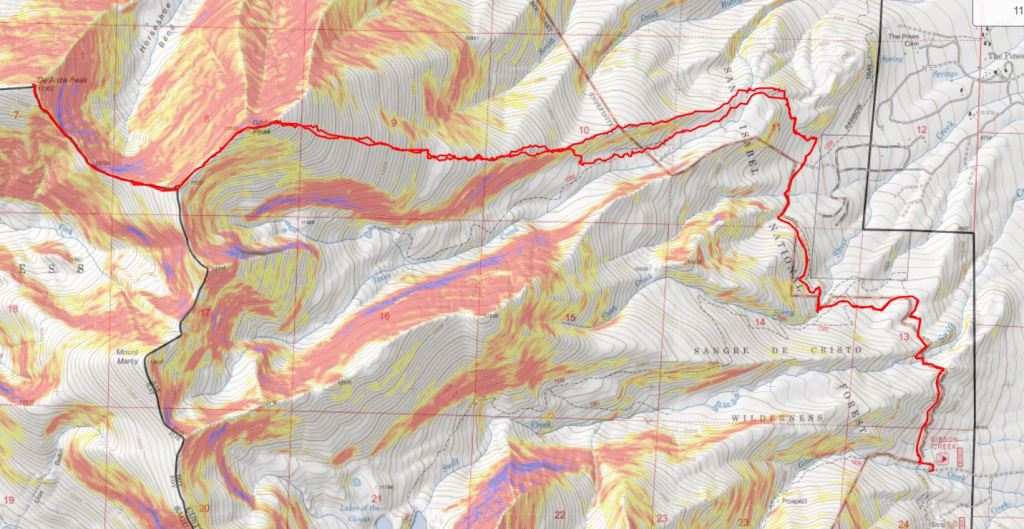
Gibbs Peak – 13,577 and De Anza Peak – 13,362

RT Length:  20.02 miles

Elevation Gain: 7343’

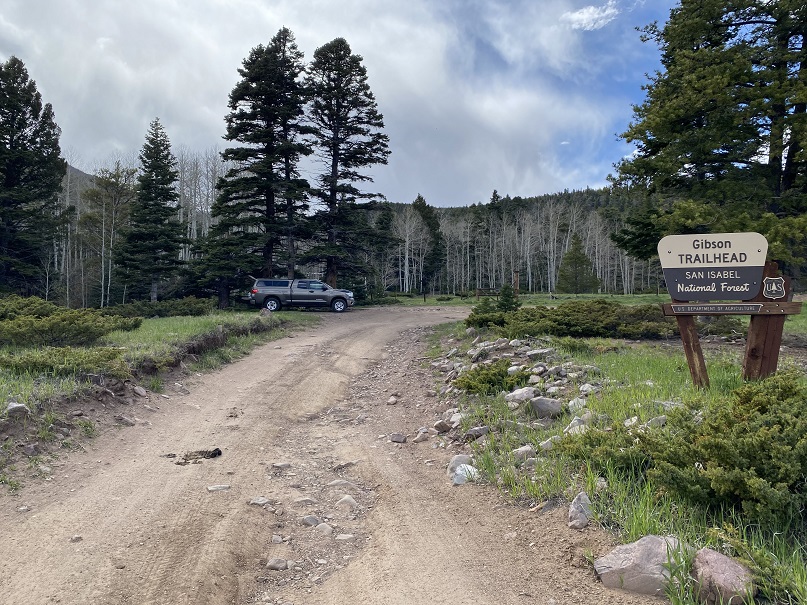
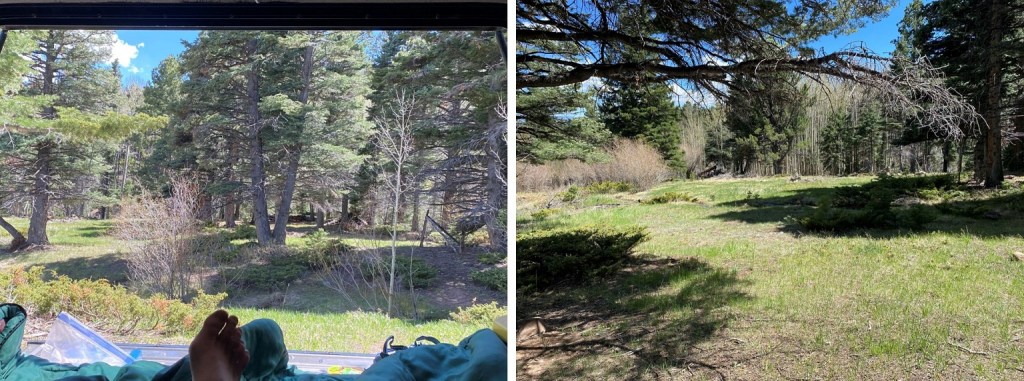
I drove to the Gibson Creek trailhead the night before, concerned I wasn’t going to get a spot to park on Memorial Day weekend.  Imagine my surprise when I was the only one there.  Two more vehicles would join me later, but I was genuinely amazed the trailhead wasn’t more crowded: there’s great dispersed camping here.

Bonus:  no mosquitoes!  I spent the next few hours relaxing, making dinner, sipping whiskey, and reading, before making it an early night.  

(It was, in fact, a long night, full of nightmares.  I’ll spare you the details, but let’s just say they involved frantic mothers holding their decapitated babies, pleading for help and saying there was a horrible accident, and a demon that took over the body of a frail child: the demon needed to die, but doing so hurt the child.  Not fun when you’re camping all alone.  I woke up around 2am and knew if I went back to bed my nightmare would continue, so I tried to think about other, happier things before starting out on my hike in the dark.  What’s happier you ask?  I have 3 kids.  I told myself when I got a divorce in 2012 I wasn’t going to date seriously until my youngest was 18 and had graduated High School.  Well, she graduated this week, and is off to college, so I spent the next hour trying not to think about the nightmare I’d just had, and instead thinking about what I was going to do about dating, whether or not I really want to at this point, and realized I haven’t ‘dated’ since the 90s, and it’s certainly changed.  It’s weird to be 40 years old and an empty nester.  So, how y’all dating now?)
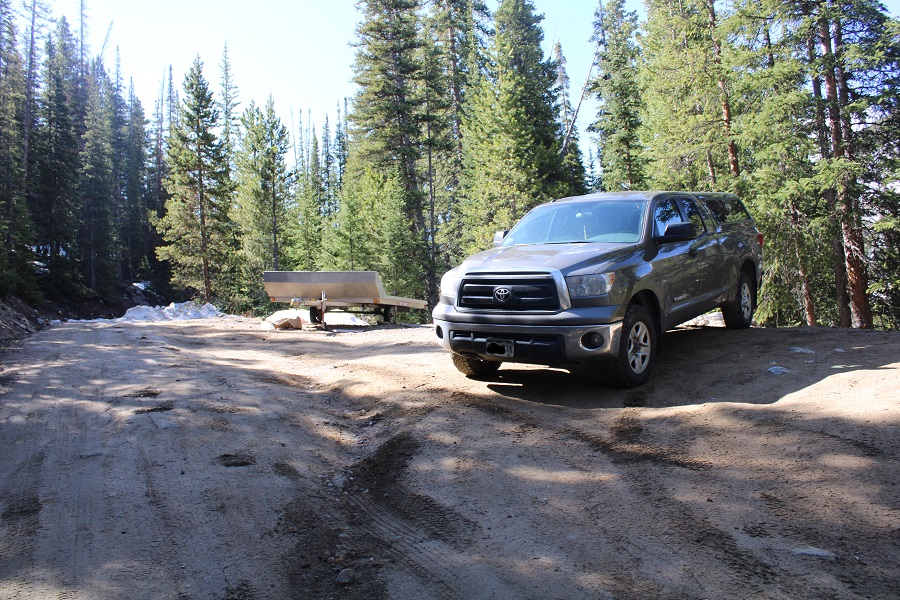
But I digress.  Knowing it was going to be a long day, I was on the trail at 3am.

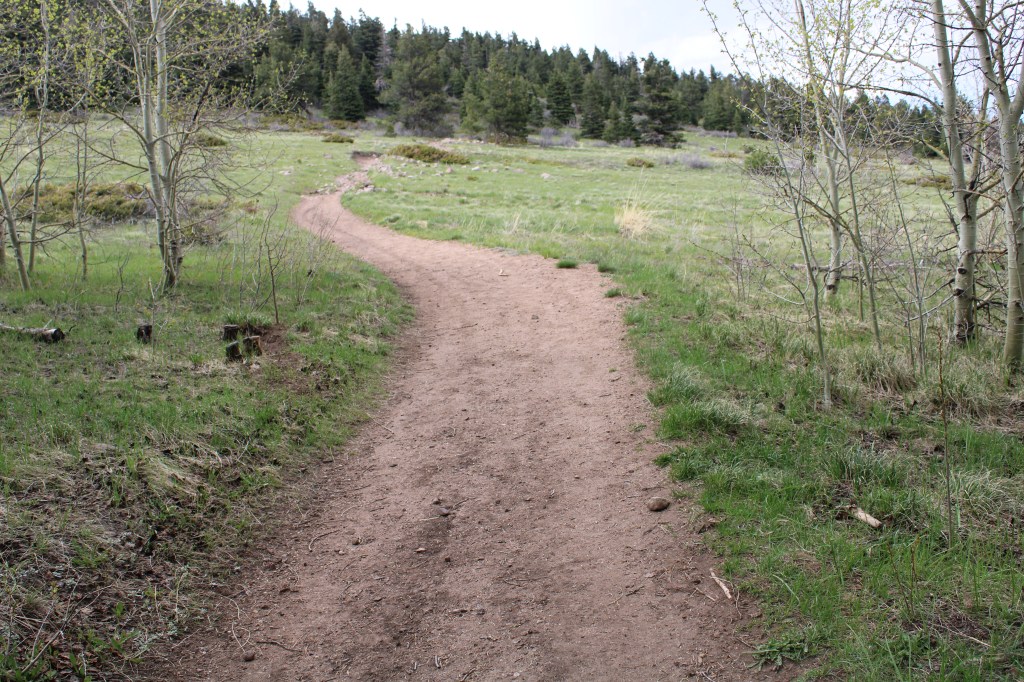
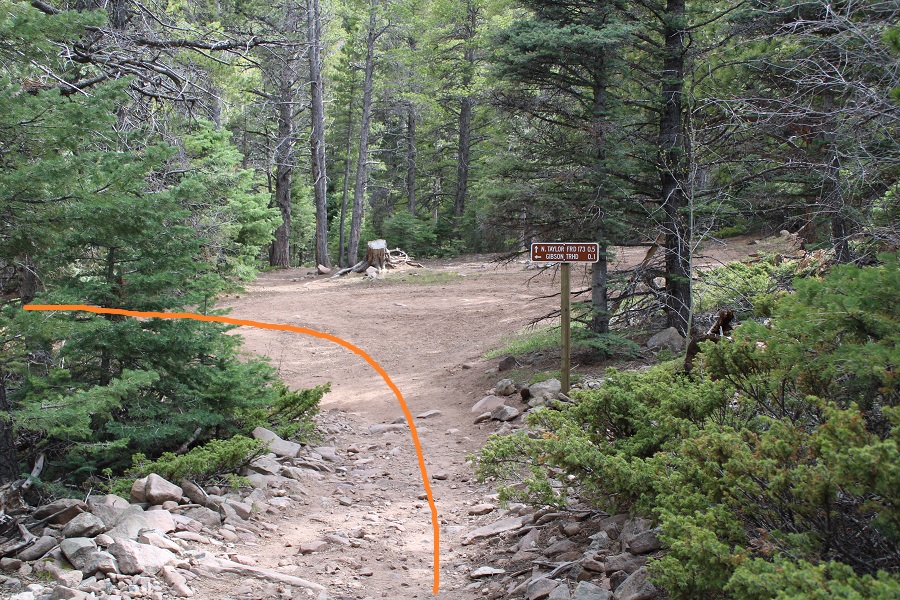
The trail starts at the north end of the parking area, and heads west for .1 miles before turning right and following Rainbow Trail 1336 north.

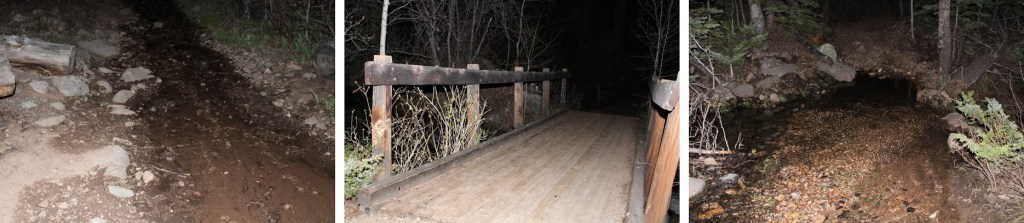
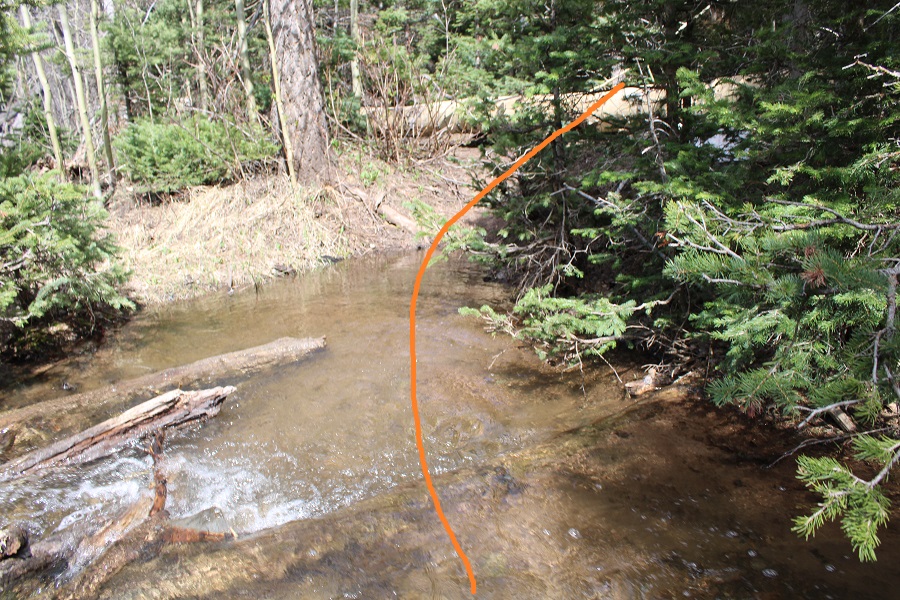
I followed Rainbow Trail as it wound around the east side of the mountain for 3.25 miles, crossing several creeks along the way.  One creek crossing even had two bridges to make the crossing easier (the other areas had shallow enough water where bridges weren’t necessary).  There was about a mile of the trail deep in spring conditions, with runoff covering the trail.

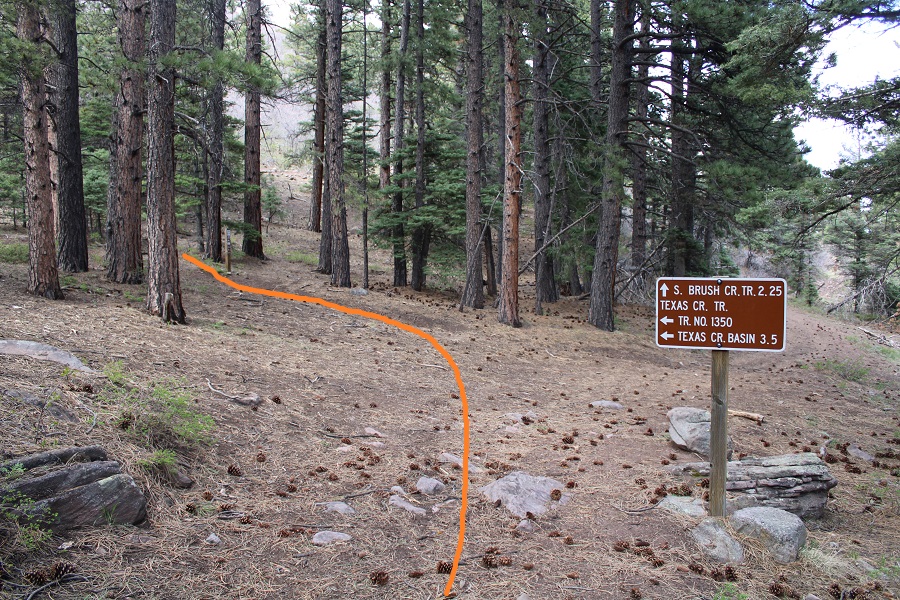
After 3.25 miles I came to a junction, and took Trail No. 1350 left (west) towards Texas Creek Basin. This is where my flashlight went out and I was glad the sun was starting to rise. 

Note:  Trail 1350 is not a maintained trail.  I was hiking it in the dark at this point, and there were so many downed trees I kept getting off route trying to go around them (going over them wasn’t always practical).  It wasn’t much better in the daylight.  I decided to gain the ridge as quickly as I could, and follow it west to treeline.

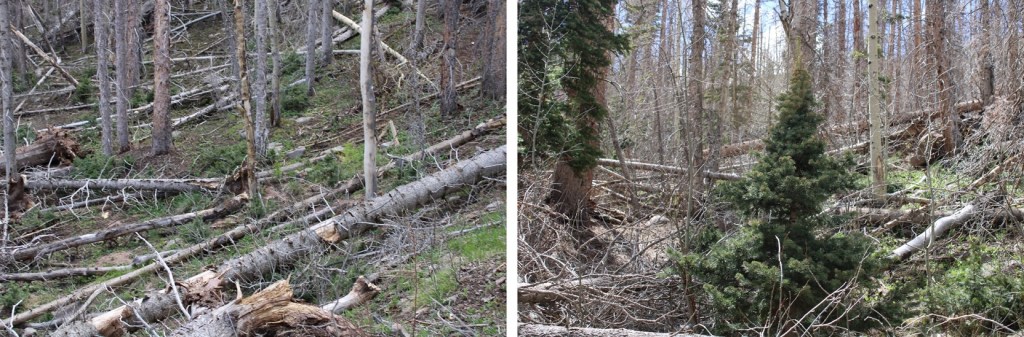
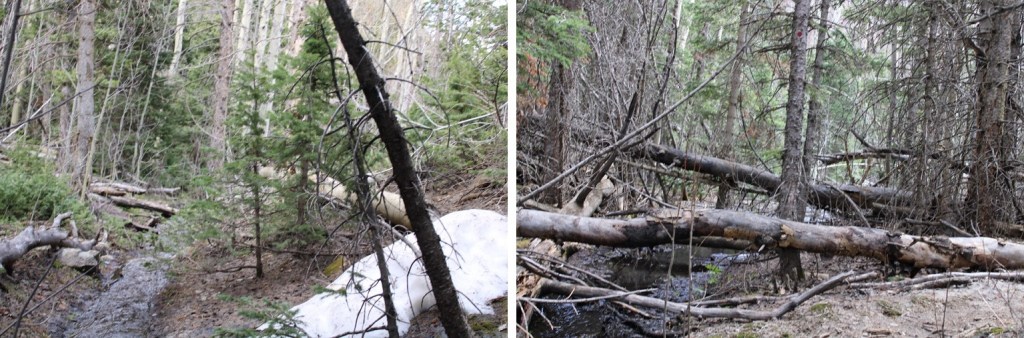
It took me 2.75 miles, and 2000’ of elevation gain to make it to treeline.  It was here I experienced the worst and most extensive bushwhacking I’ve ever encountered.  It was like hiking up through avalanche debris (although it was obvious the wind had knocked the trees down).  The ridge was either dense with new growth, or a jungle gym of downed trees.  I would not recommend this route, and I told myself I’d take Texas Creek on the way down (note:  I later realized I would not recommend the Texas Creek route either).  There was a small but raging creek to ford early on, and then it was straight up the ridge.
After hiking for a total of 6.75 miles I came upon 100 yards of mashed potato snow.  I strapped on my snowshoes and kept heading west towards treeline.   The snow kept starting and stopping again.  On my way up I kept my snowshoes on.  On my way down I misremembered how long the snow section was and kept taking the snowshoes off, just to need them again.

Once at treeline there was a small amount of snow to navigate, and then I was able to avoid most of the snow to the summit.

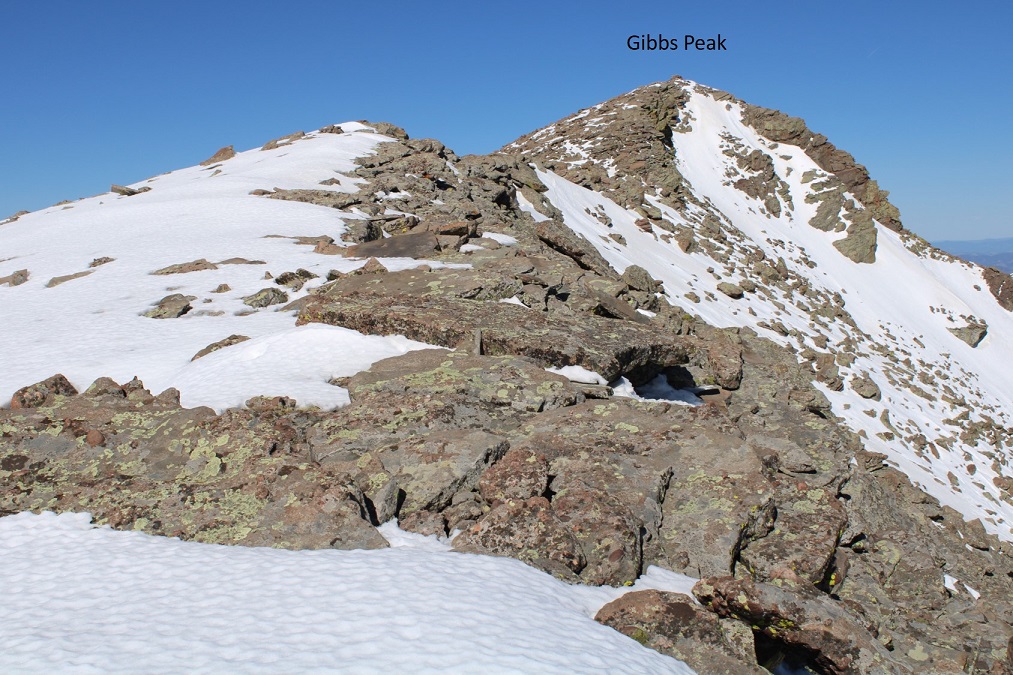
One good thing about the hike above treeline:  there are no false summits to Gibbs Peak.  What you see is what you get.  As long as you keep heading west and gaining elevation, you’ll make it to the summit.

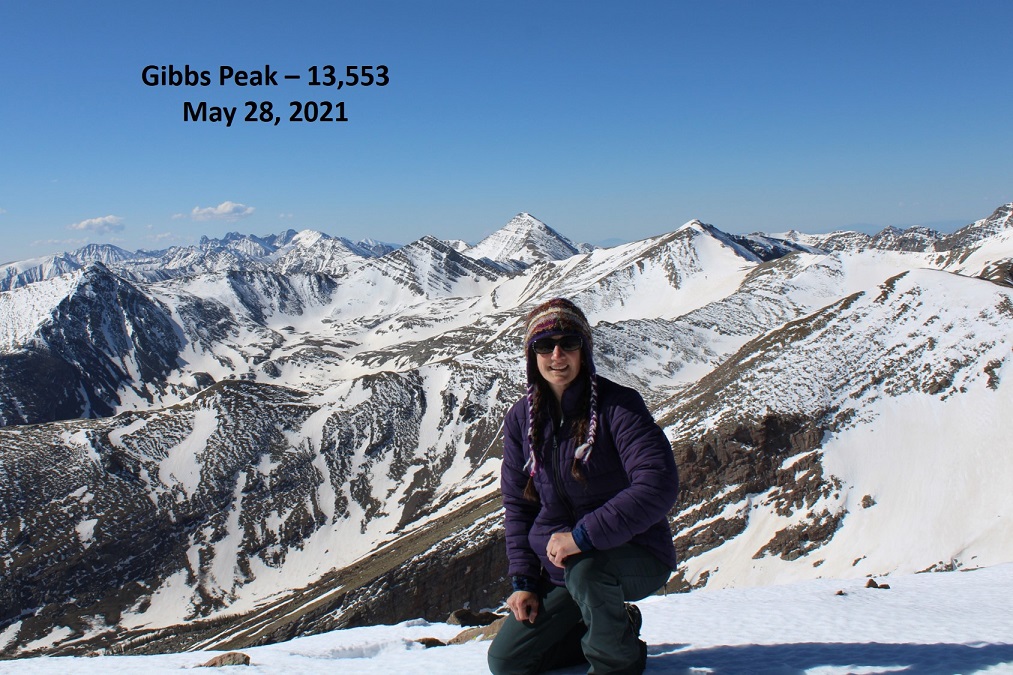
I made it to the summit of Gibbs Peak at 9am, after 6 hours and 8.25 miles of hiking.

Gibbs Peak:

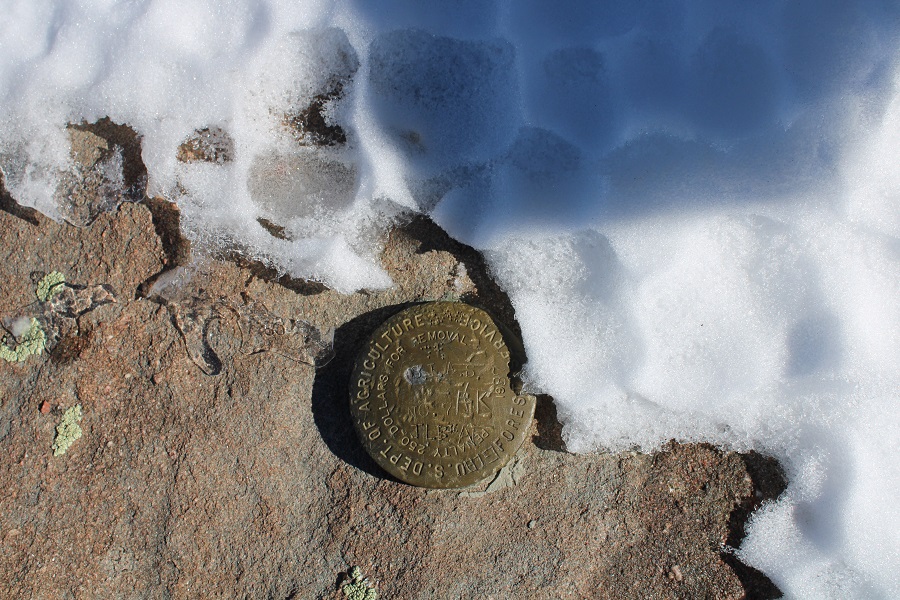
There was a benchmark on the summit.  I took off my pack and realized I’d lost my water bottle somewhere.  That’s what I get for not strapping it in.  No matter, there was plenty of snow if needed.  I’d have to look for my water bottle on my way back down.

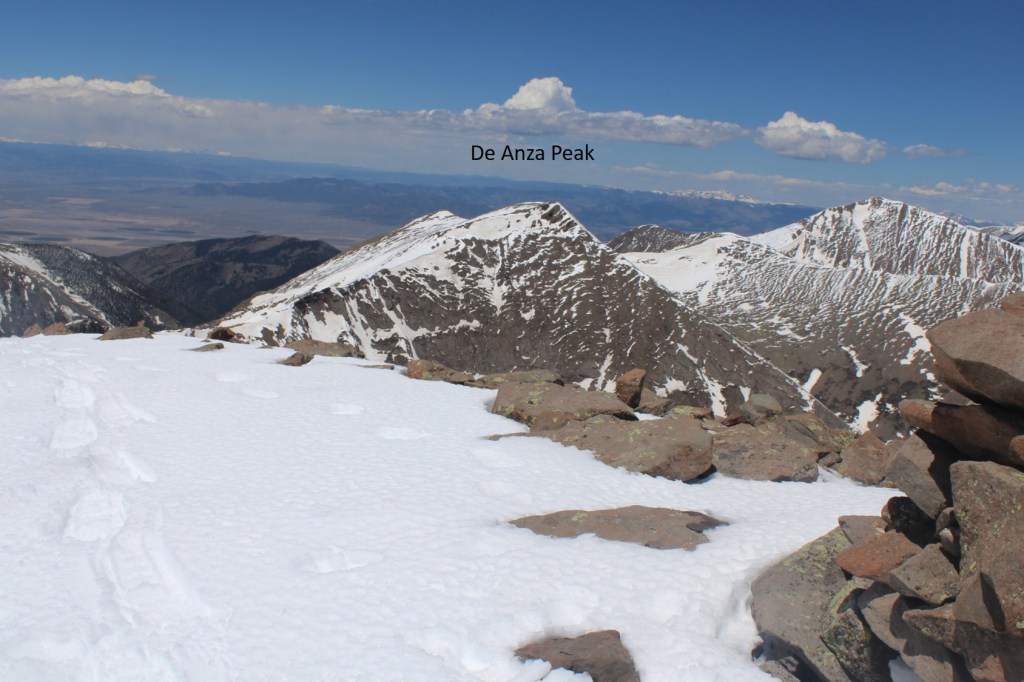
There wasn’t a summit register, so I left one.  I had a great view of De Anza Peak to the northwest. 

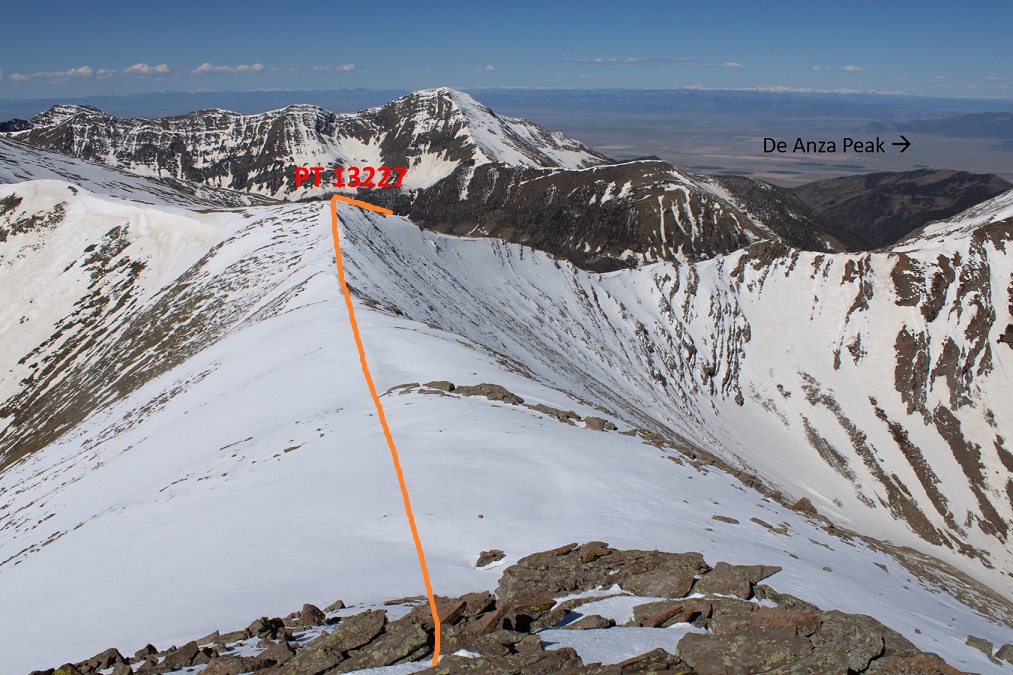
In order to get to De Anza Peak I had to head southwest to point 13227, and then northwest to the summit of De Anza.

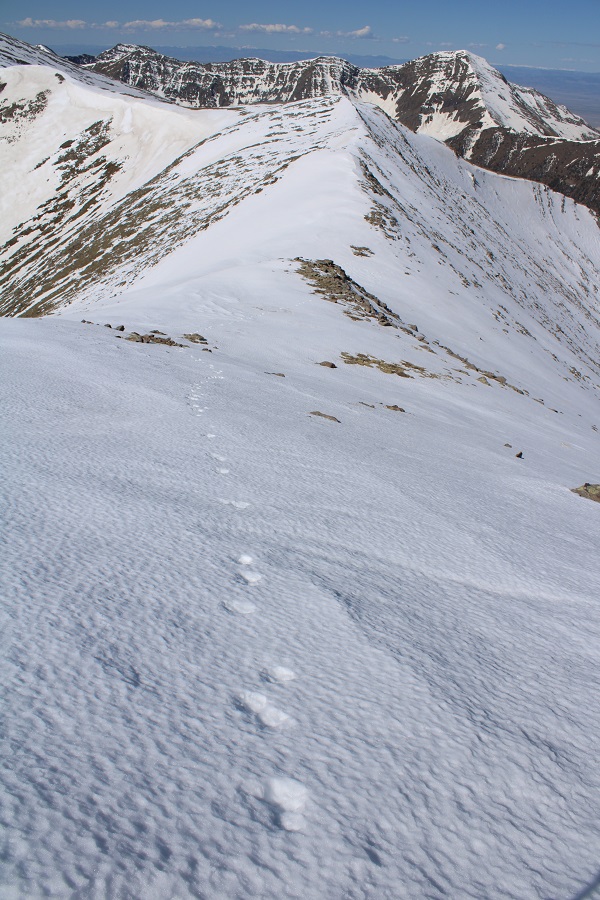
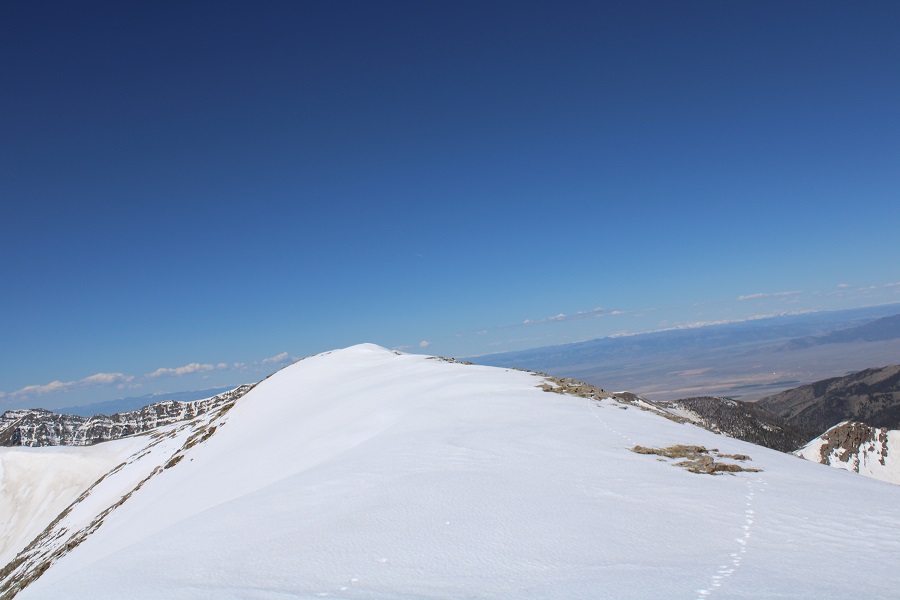
This part of the hike was actually quite fun, as I was now losing elevation, getting a little bit of a break, and following animal tracks the entire way.  

When I made it to PT 13227 I turned right and headed followed the ridge northwest.  You can’t tell from these pictures, but I was actually downclimbing a bunch of rocky areas.  On the way back I stuck to the areas covered with snow, as climbing up the rocks, especially in snowshoes, was a little too spicy for me without a helmet.

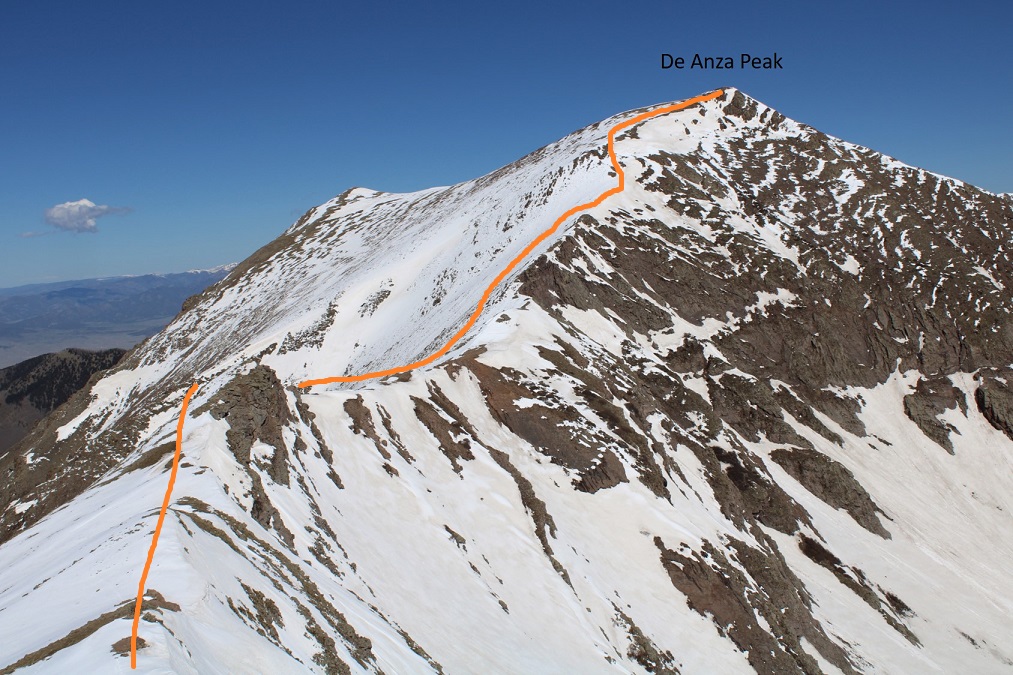
There was still more elevation to lose however.  Here’s an overall view of the route to the summit

From this point on I needed snowshoes, as I began postholing up to my waist.  I strapped them on and followed the ridge.  Here are some step by step pictures.  I went straight up and over this hump

Then mostly stuck to the ridge, aiming for the gullies to my left just before the summit

Once up the short (30-40 feet or so) gullies I followed the windswept ridge to the summit

I summited De Anza Peak at 10:40am

De Anza Peak:  

Here’s looking back at the route from Gibbs Peak

I left a summit register and started back.  While it looks like a simple ridge hike back to Gibbs Peak, the areas without snow are actually rock formations, and I needed to skirt them on my way back. 

I made it back down to the saddle, and went up and over the bump in the ridge again

Then skirted the rocks to the right, staying on the areas with snow

Then it was a simple ridge hike back to the summit of Gibbs Peak

I re-summited Gibbs Peak, then followed the ridge east back to treeline.  I looked for my lost water bottle, but was unable to find it.  (If you find it, it’s yours!)

This time, when I entered the trees, I stayed right.  It was my intention to avoid all the bushwhacking I’d one on the way in by taking trail 1350 out.  I once again encountered the mashed potato snow at treeline

And at 10,600’ I descended towards Texas Creek. 

I was highly disappointed to find this area was no better than the way I’d taken on my way in.  In fact, it may have been worse:  at least when I was on the ridge, I had a sense of direction. Now I was unable to find a distinguishable trail, so I followed the creek east out of the basin. 

At one point I realized the creek was actually the trail, or what used to be the trail. 

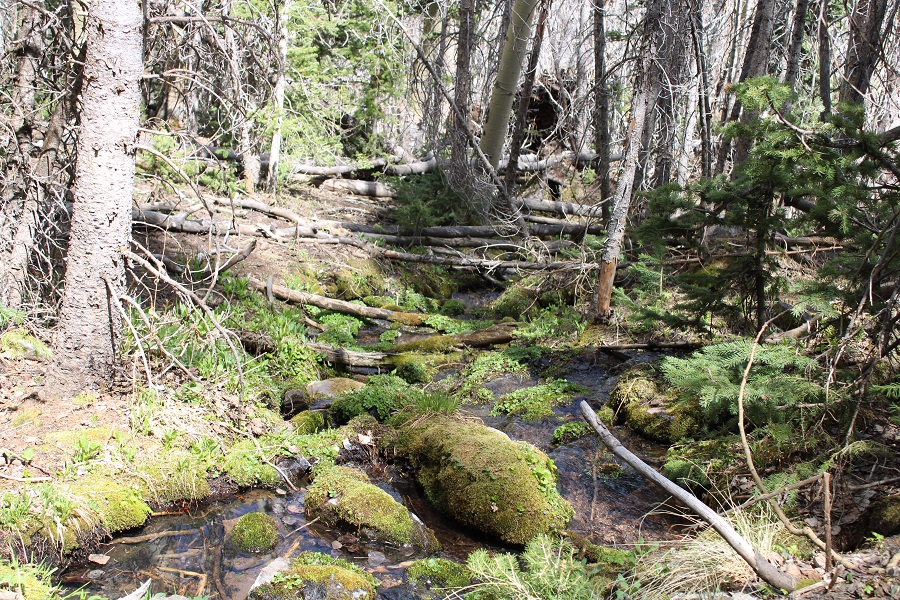
Eventually the trail became a bit more distinct, although still covered in water and downed trees.  Just know if you’re following the creek east, you’re going in the right direction. 

I had to eventually cross the creek, and to do so I needed to take off my shoes.  I crossed the creek, and here the trail picked up again.  From the creek crossing Trail 1350 was much easier to follow; there wasn’t any water on the trail, but there were still downed trees. 

From the creek crossing it was just over a half mile to the Rainbow Trail / Trail 1350 junction, where I picked up the Rainbow Trail again and followed it back to the trailhead.

I made it back to my truck at 5pm, making this a 20.02 mile hike with 7343’ of elevation gain in 14 hours. 

So, which approach is better, the ridge or the creek?  If I had to go with one, I’d say the ridge, just because I had a better sense of direction.  Both were miserable. 

Santa Fe Peak – 13,180

RT Length:  9.36 miles

Elevation Gain:  2894’

I needed a quick hike today before picking my mom up from the airport, and since this one is kind of close to I70 and the weather was nice I decided to go for it.  I kind of wanted to do this as a loop with a few other 13ers in the area, but any excuse to get out and get another hike in the same area is good enough for me (I’ll be back).

I’ve heard a lot about the town of Montezuma and its lack of parking.  Yes, there is a lack of parking.  So, my advice is to do this hike on a weekday, or arrive early (or both) to secure a legal parking spot.  Please respect private property owners’ rights. 

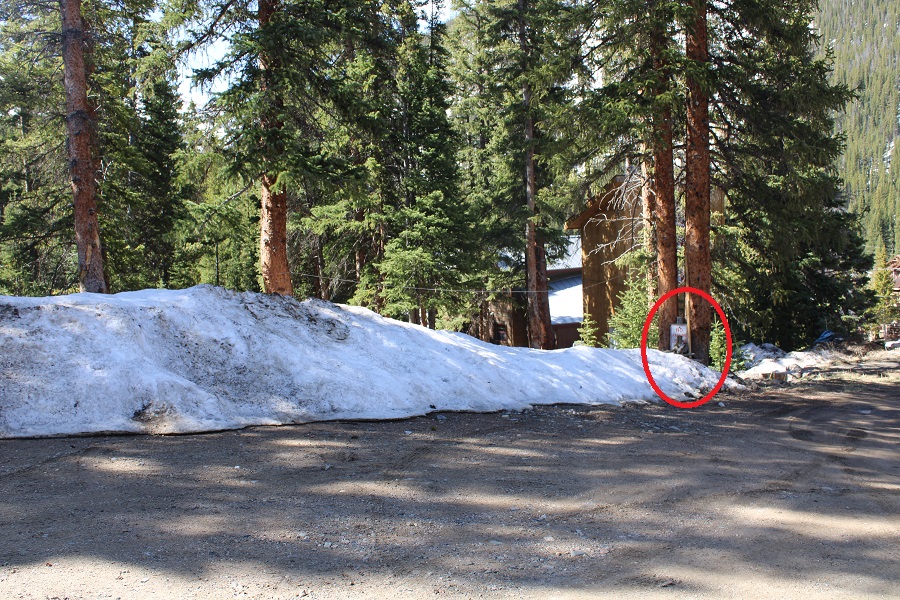
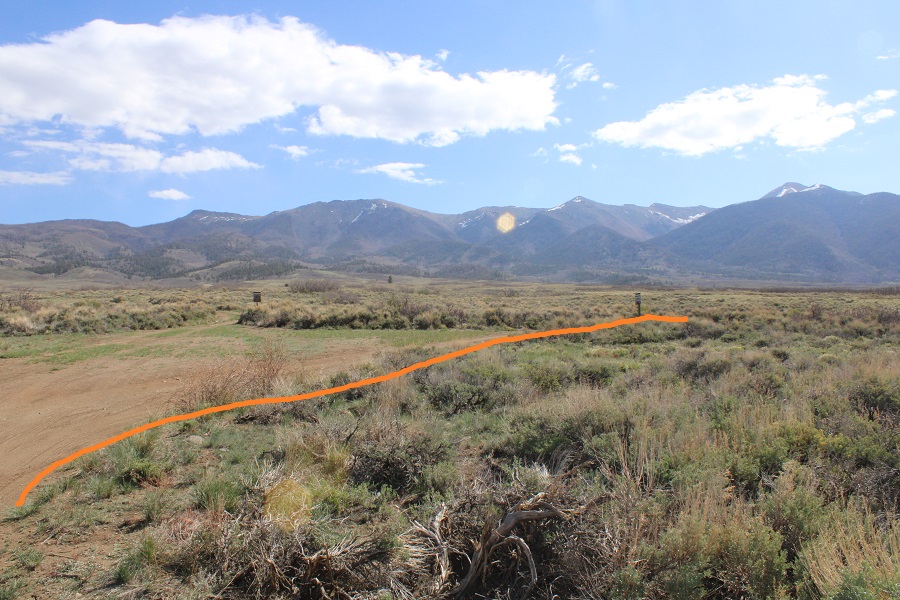
When driving through Montezuma, and turning down 3rd street, on your right you’ll see this area, that looks inviting to park.  DON’T PARK HERE!  It’s private property.  There are signs (covered in snow no doubt most of the time) asking you not to park in this area.  I’ve circled one in red.  Note, when you drive in, the sign is behind you, so it’s difficult to see. When I left the owner of the property was watching me from his window.  It’s probably a game to him.  So, don’t park here.

Instead, continue about 10 yards pasts this sign for 4WD road 264.  (Also note, the black and white sign says ‘highway legal’ vehicles only. 

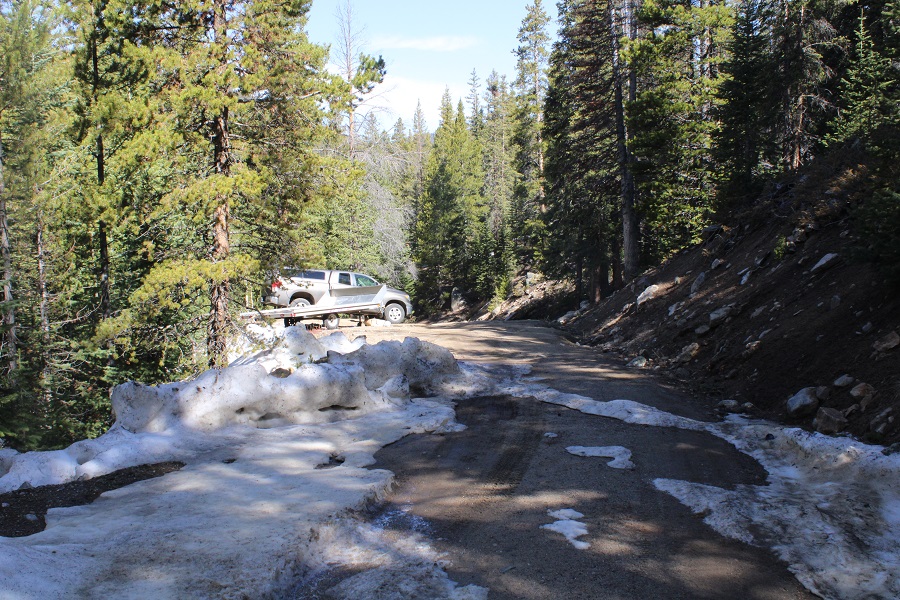
Here you will find a small pull-off area where you can park.  Only about 3-4 vehicles can park here if you all pull in nicely, so if you’re first, set the example.  This is Public Land.  From here on out, it goes back and forth between public and private land, and it can get confusing.  The road also narrows and there are a lot of downed trees in the area, so it’s not really worth it to try to drive further.  Especially in winter conditions (like today).

Just an FYI:  There’s a house/structure around 10,800’.  They plow the road themselves, but it’s still ‘iffy’ to drive to that point, and they currently have an unfriendly dog.  I wouldn’t drive past the staging area, even if you feel you can.

After some careful maneuvering (my 4WD is still out and there were some deep ruts) I backed into a spot, gathered my gear, and was on my way at 5am.  It was around 37 degrees outside, and the snow hadn’t consolidated overnight, so almost immediately I started post holing.

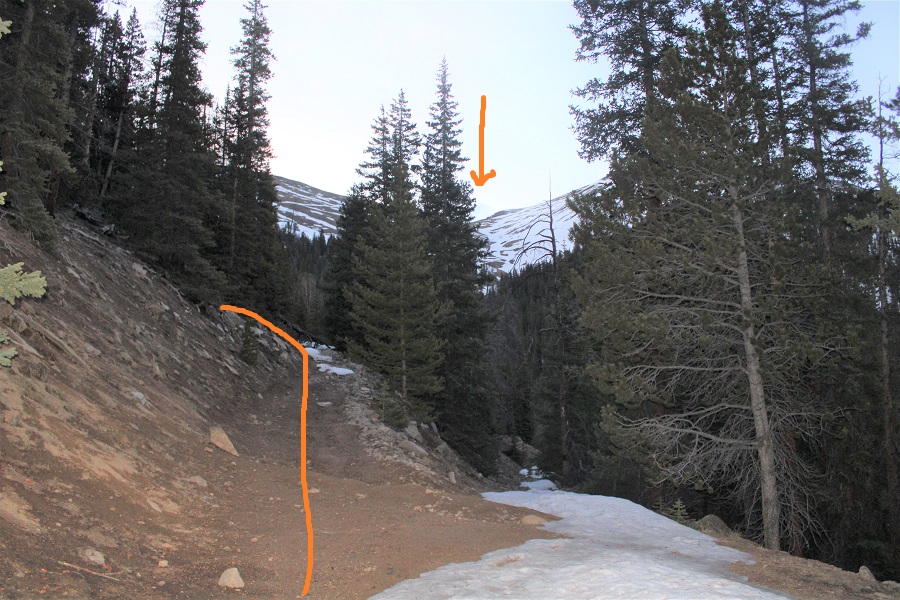
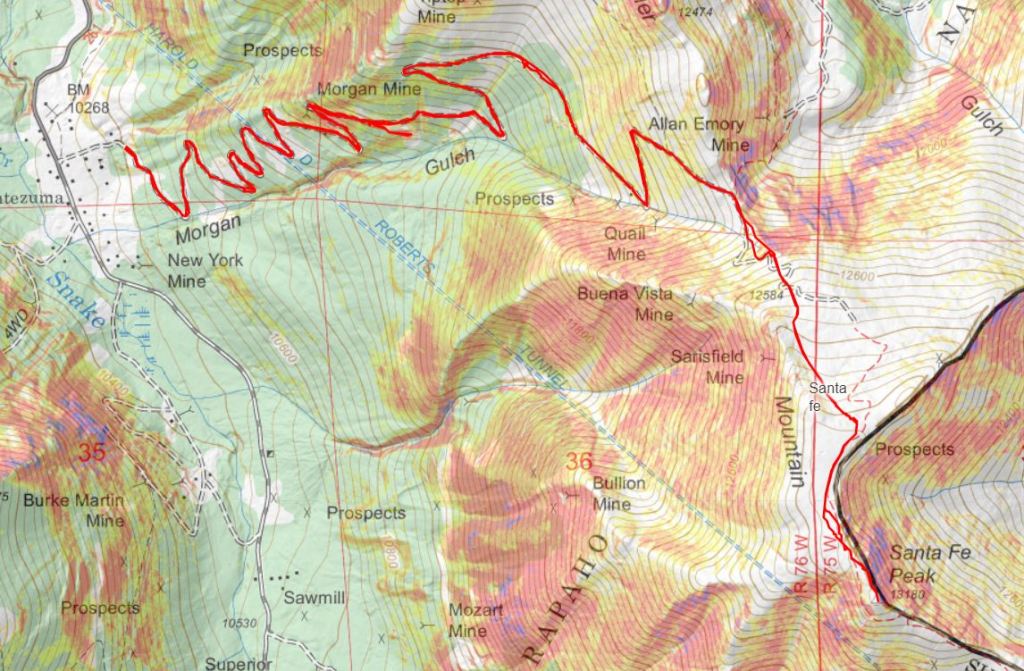
I’m stubborn, so it took me 1.5 miles to put on my snowshoes.  I should have put them on right away. I followed 4WD road 264 for 3.7 miles to the saddle of Morgan Peak and Santa Fe Peak

Once at the saddle there was still a road, but it was difficult to discern with the snow, so I just headed southeast to the ridge

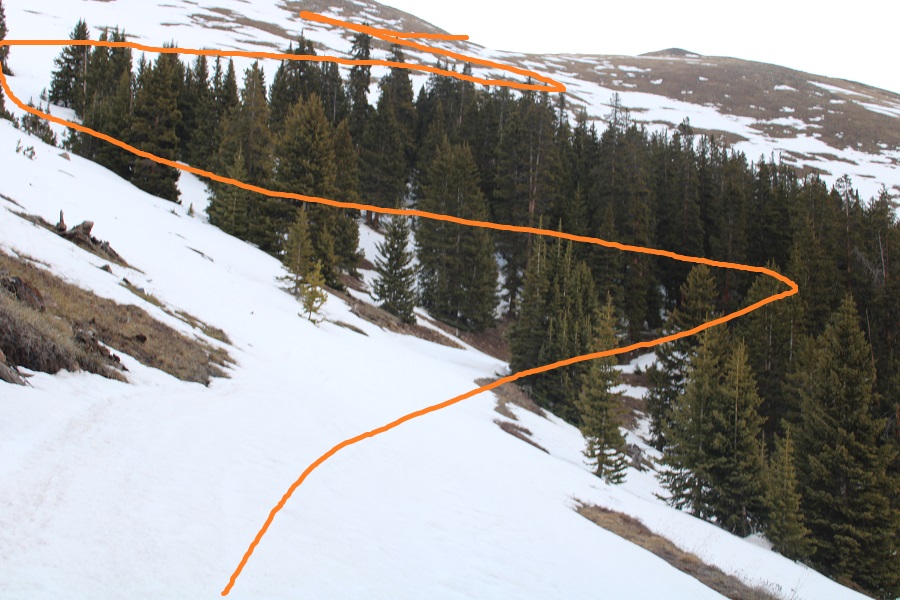
Here are some step by step pictures

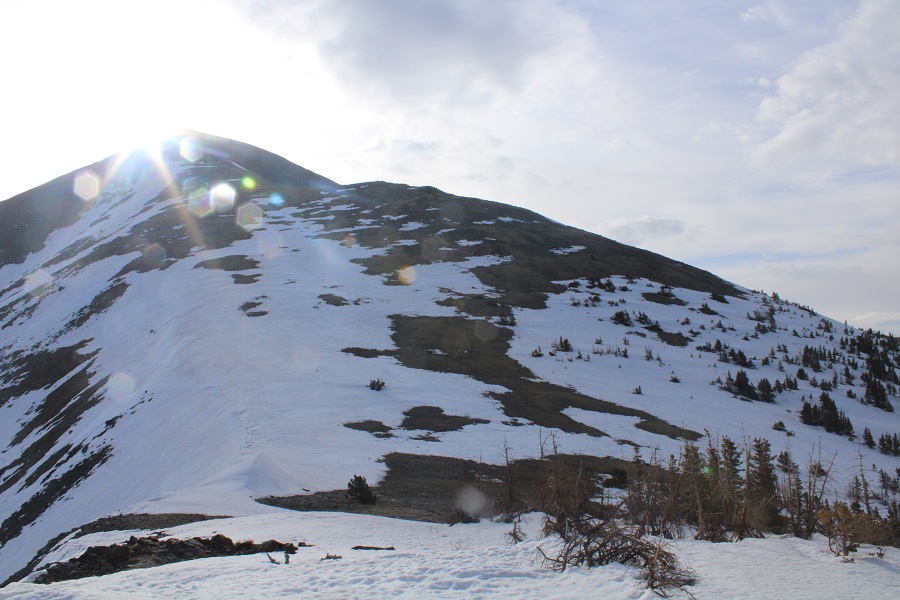
Once on the ridge I could see Santa Fe Peak.  I’d need to go right and follow the ridge southwest to reach the summit.  The wind picked up here, and all that postholing I did earlier came back to haunt me:  the snow I’d obtained in my socks from postholing had melted and now was freezing back into ice again:  my socks and toes as a direct result were now frozen. 

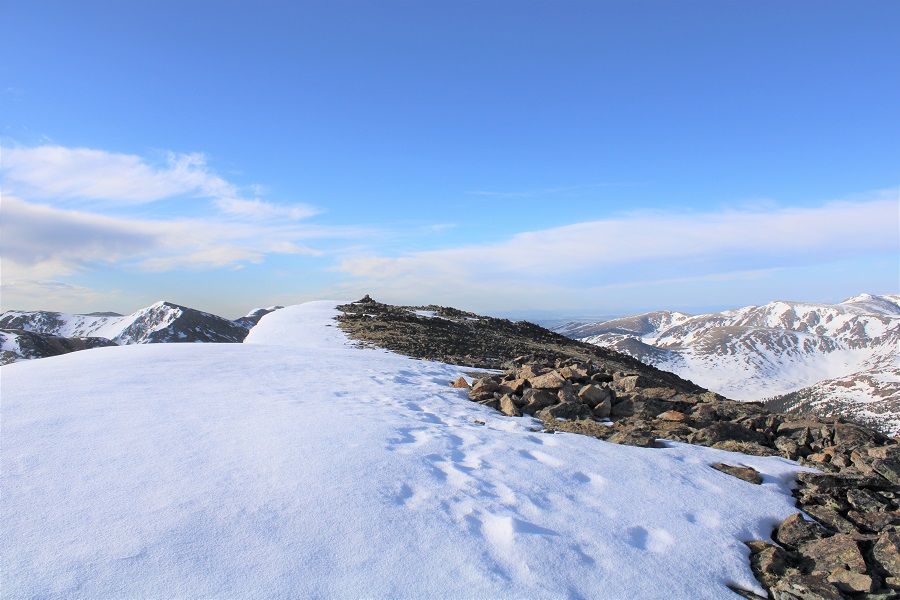
The ridge was easy to follow, and windblown.

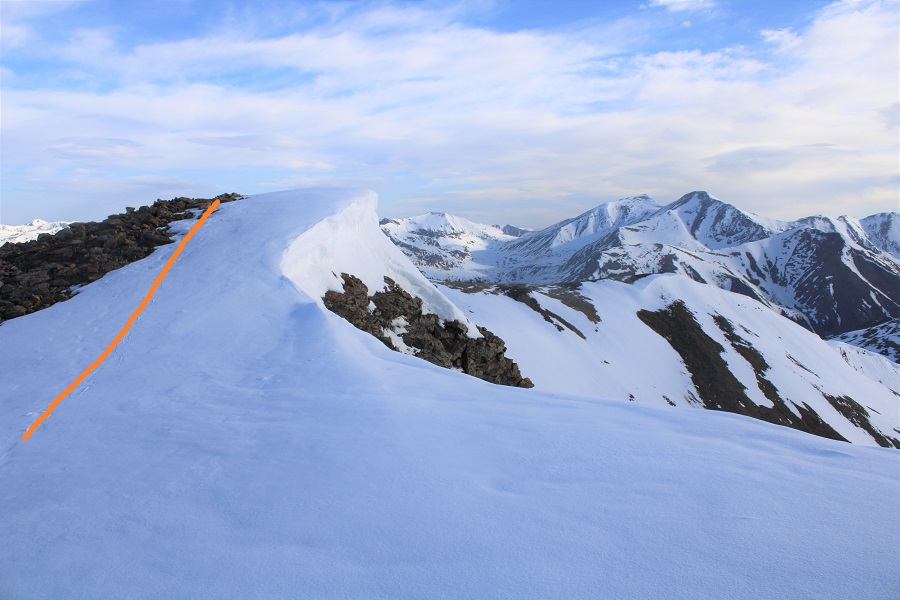
There was one cornice, but it was easily avoidable, and made for a kind of ‘false summit’ (pic on the way back). 

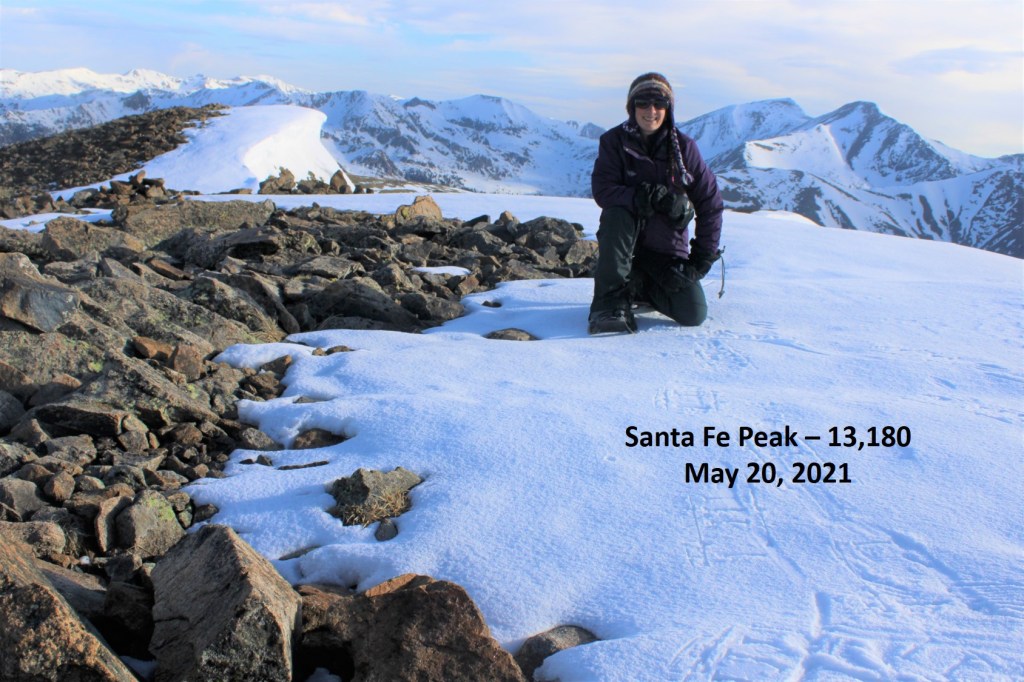
I summited Santa Fe Peak at 7:30am

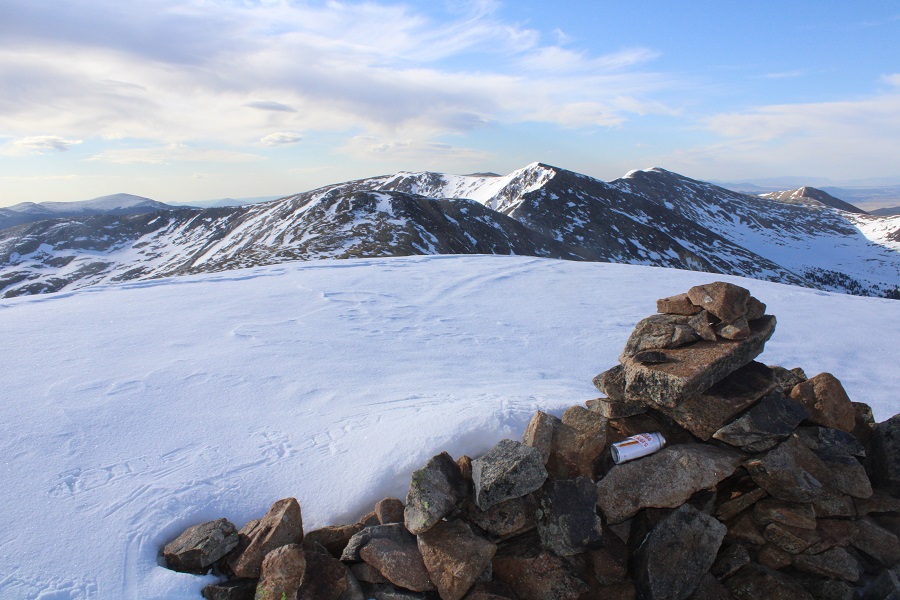
Santa Fe Peak:

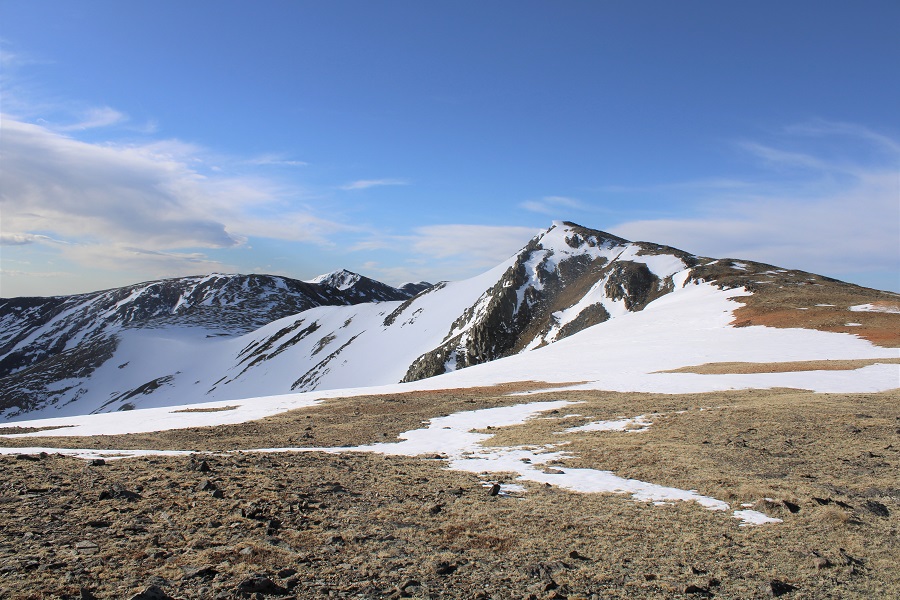
I didn’t see a summit register, so I left one.  Here’s a look back on the other 13ers in the area.  If it wasn’t so windy… if my socks and toes weren’t solid ice, and if I didn’t have to pick up my mom from the airport I’d be making this a loop, as the conditions looked perfect (sigh).

I turned and retraced my steps back over the cornice, along the ridge, to the saddle

It was interesting: I could see tire tracks, but due to downed trees on the road in, it’s probably been a while since vehicles have been up here

From the saddle I followed the 4WD road back to the trailhead, glad I’d decided to put my snowshoes on, as I came across my morning post-holing adventures

When I finally took the snowshoes off, I accidentally took a wrong turn, and ended up at the old Morgan Mine.  I took a quick picture and re-traced my steps (probably private property so I didn’t investigate further than a quick photo).

When I made it to a bend in the road around 10,800’ I could see the residence/office (etc.) and immediately a dog rushed out and started barking at me.  This is right where the Harold Roberts Tunnel is (short information on what that is and why it’s cool here).

I’d heard about this dog, and was a little bit apprehensive.  However, I held my trekking pole in my right hand, and my Ruger in my left hand inside my coat pocket.  I’d hate to actually hurt an animal, but if it attacked, I was ready.  Luckily, this dog was all bark and no bite:  It barked viciously, but never left his/her side of the road.  I kept walking like I was supposed to be there, and nothing came of the encounter. 

I continued following the road back to my truck.

I made it back to my truck at 9:30am, making this a 9.36 mile hike with 2894’ of elevation gain in 4.5 hours.

As I drove out, I stopped to get pictures of the trailhead, parking/no parking areas, etc.  for a trip report.  The owner of the house nearest the parking area stood in his window and watched me the entire time with a scowl on his face.   

Hunts Peak – 13,071

RT Length:  6.79 miles

Elevation Gain: 3528’

I’d attempted this peak last week (along with 2 others), but the gate had been closed just off the highway, just as the gates for the other two peaks had been.  I was super bummed, and since all 3 of my potential peaks for the day had been shut down, I went home.  (I leave my plan a, b, and c on the counter and if they all fail I go home because I solo and want to make sure someone knows where I’m at when I’m adventuring). 

The gate to Hunts Peak said it was subject to seasonal closures, but didn’t have a reopen date.  All the other gates said they were closed due to Sage Grouse mating/nesting/hatching season, and opening on May 15th, so I crossed my fingers the gate would be open today (May 16th). 

I didn’t have a plan b today (mainly because I had a short window:  my youngest has prom tonight), so I was thrilled to find the gate open. 

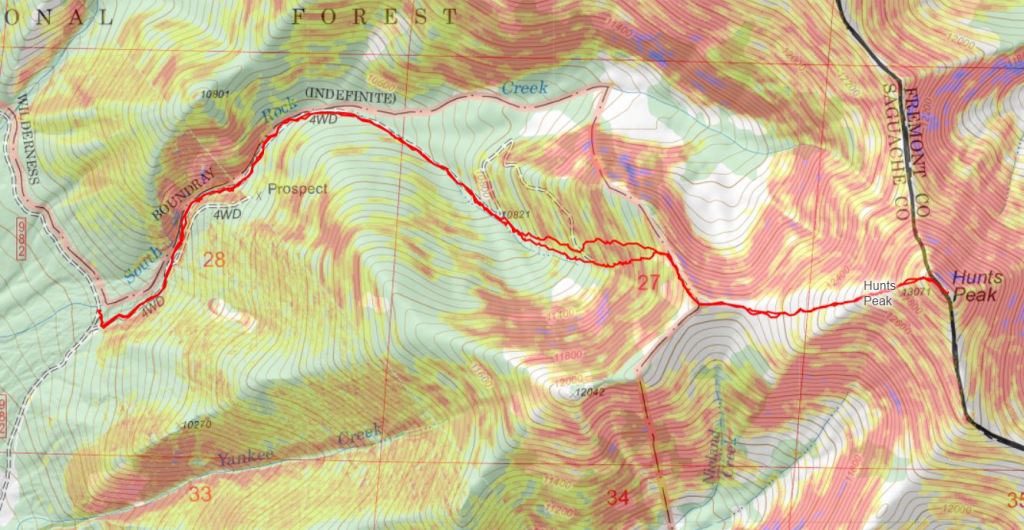
From 285 it’s a 3.65 mile drive east on 980 to the good campsite. There are a few potential turn offs, but stay on 980.

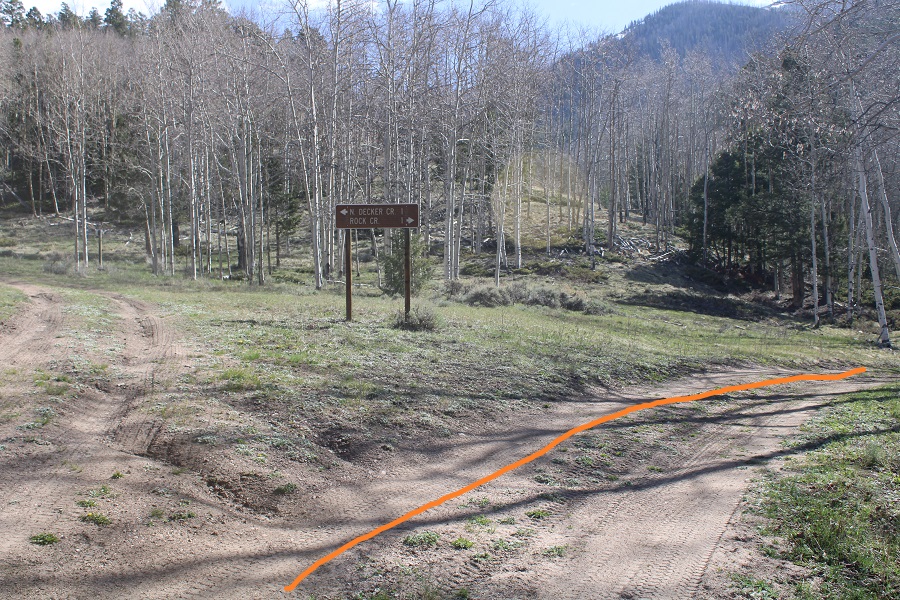
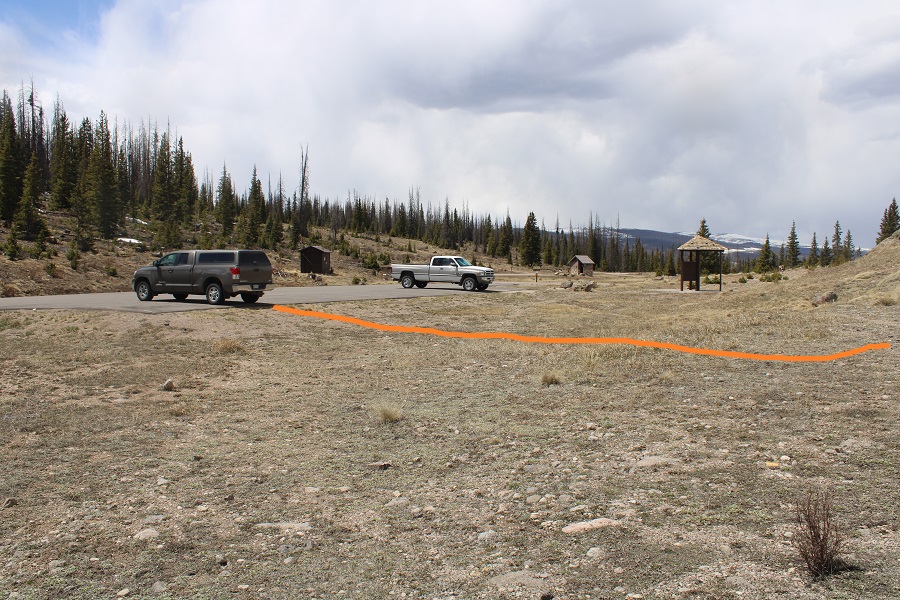
At the junction of 980 and 982 you can either camp, or drive the .6 miles southeast and park just before the trailhead.  Here’s the sign where the camping area is, and a view of the camping area (on the right).

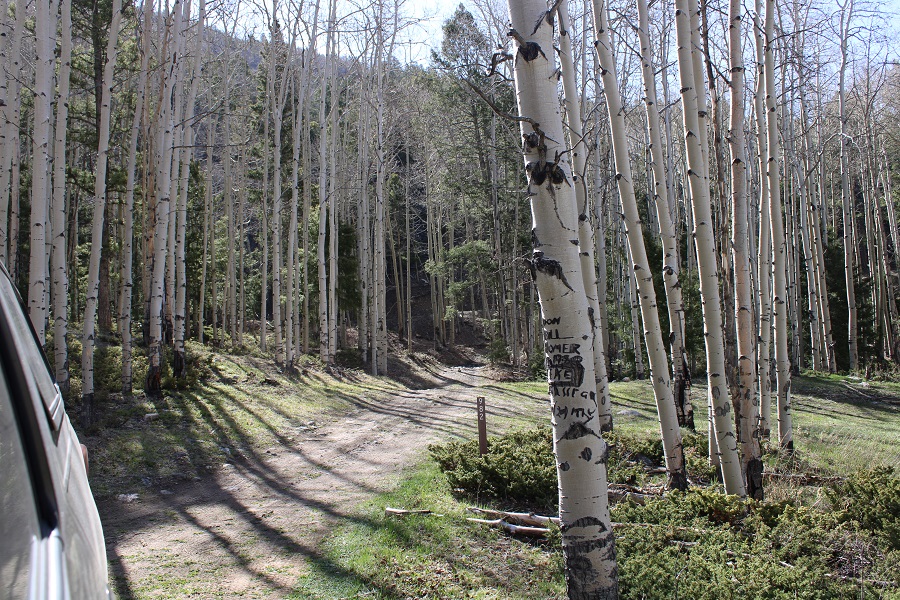
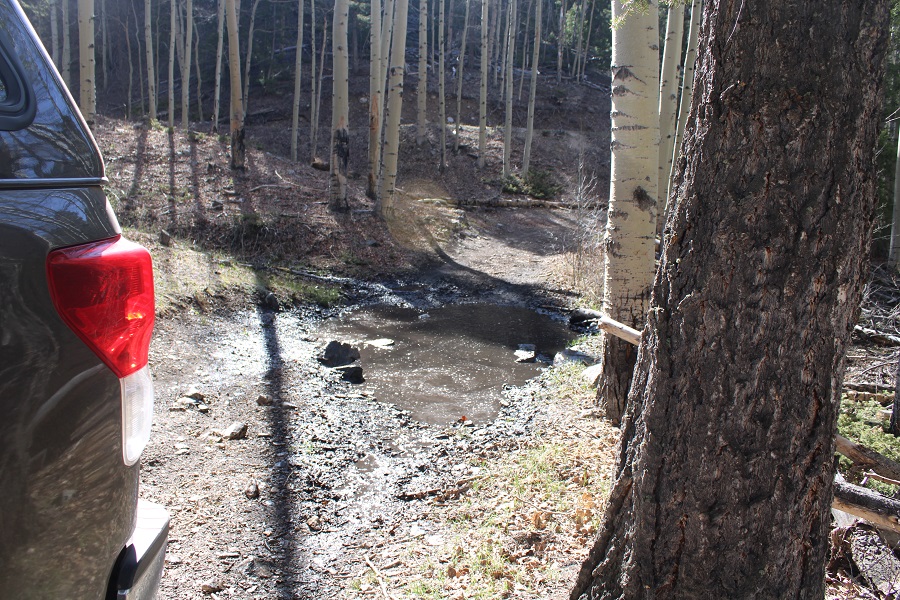
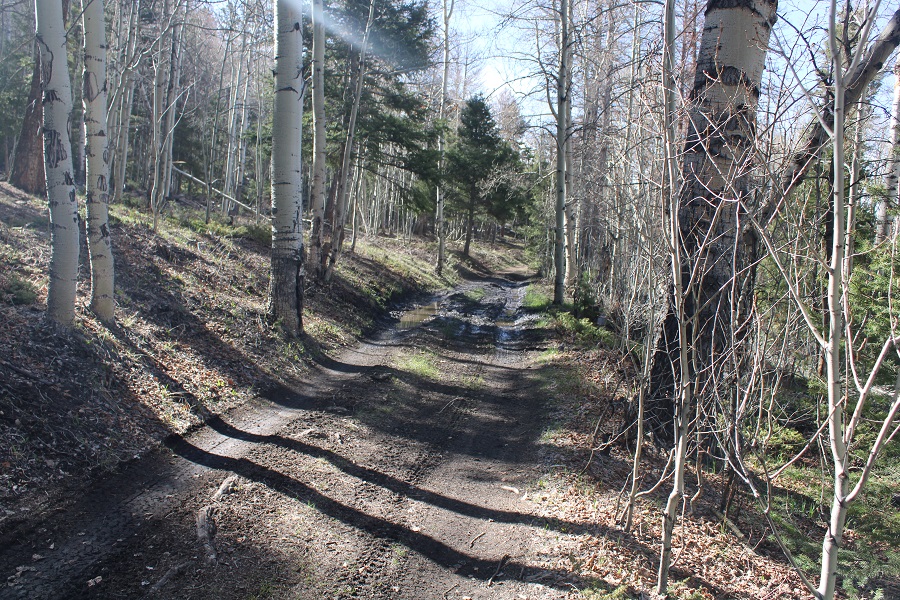
Notes about this section if you choose to drive further:  it’s narrow, there isn’t a spot to turn around/let someone pass, it can be muddy, and only 2 vehicles will fit at the parking area at the hill above the trailhead, so choose wisely depending on the day of the week you’re there and the time of day you’re entering.  I have a 4WD vehicle, but didn’t need to put it into 4WD (good thing too, because my 4WD is currently out and I have a new truck on order that unfortunately won’t be here until the middle of summer:  this seriously messes with my mountaineering plans!). Here are some pictures of the road

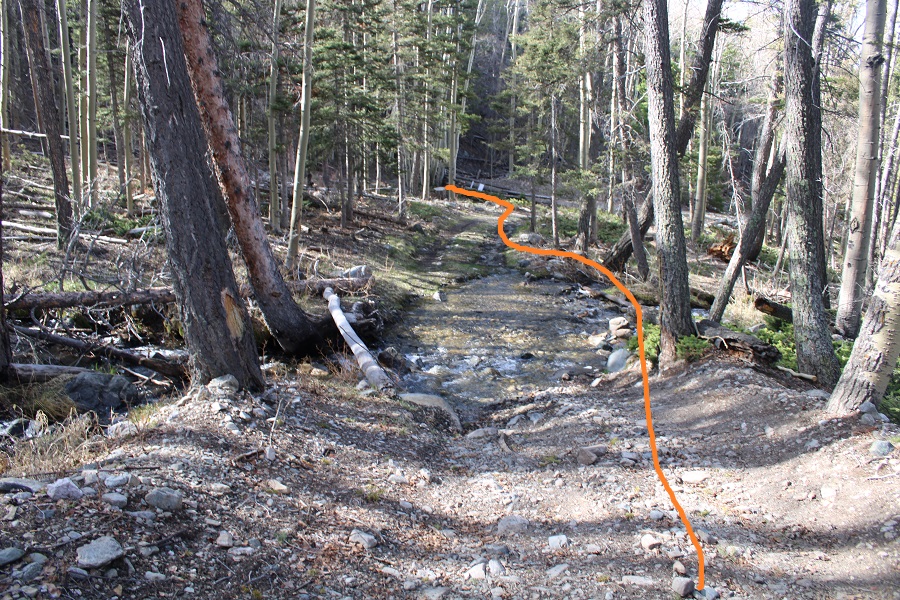
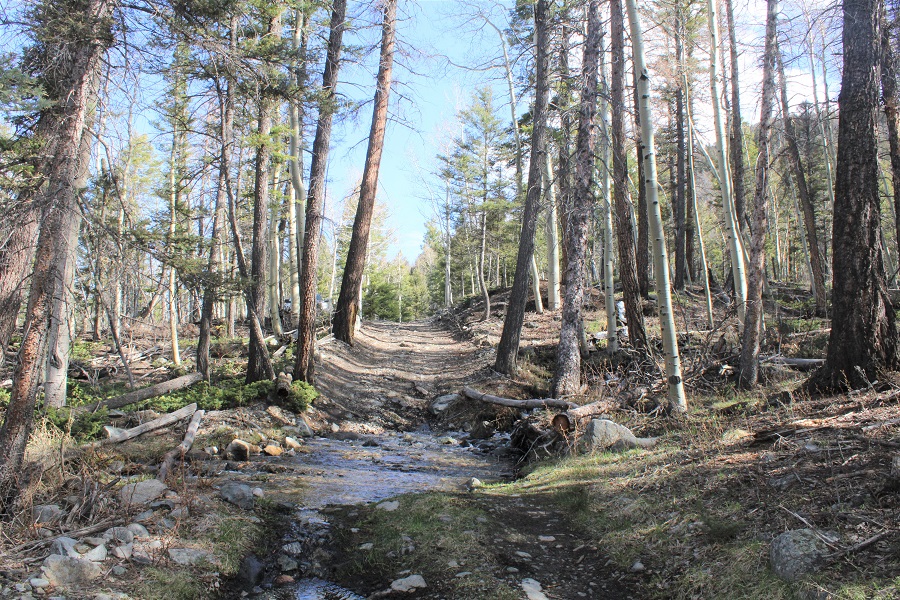
I parked my truck just before the second stream crossing at the top of a small hill.  I’d advise doing this, especially if you don’t have 4WD (when I arrived it was dark and I didn’t want to chance it in my truck’s current condition).  I parked and was on the trail around 4:40am.  This was by far the warmest start to a hike I’ve had so far this year:  45 degrees at the trailhead!  I opted not to put on my snow pants and was on my way (something I’d regret later).  It was a short distance to the trailhead, and the creek was easy to cross.

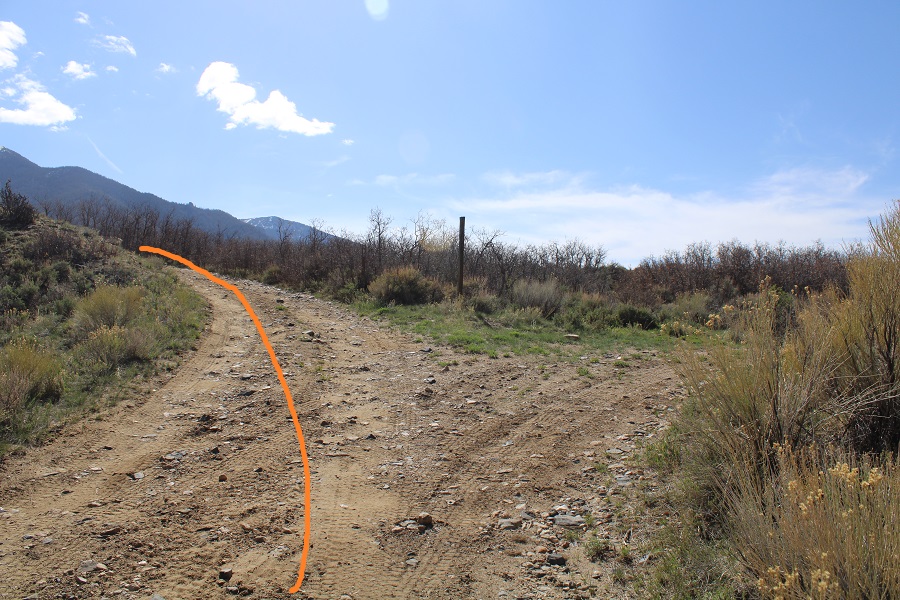
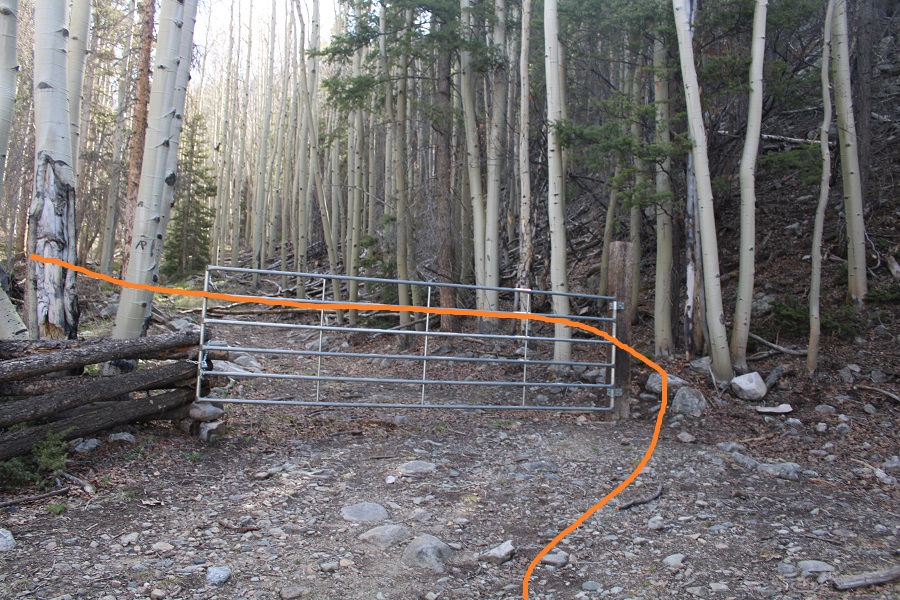
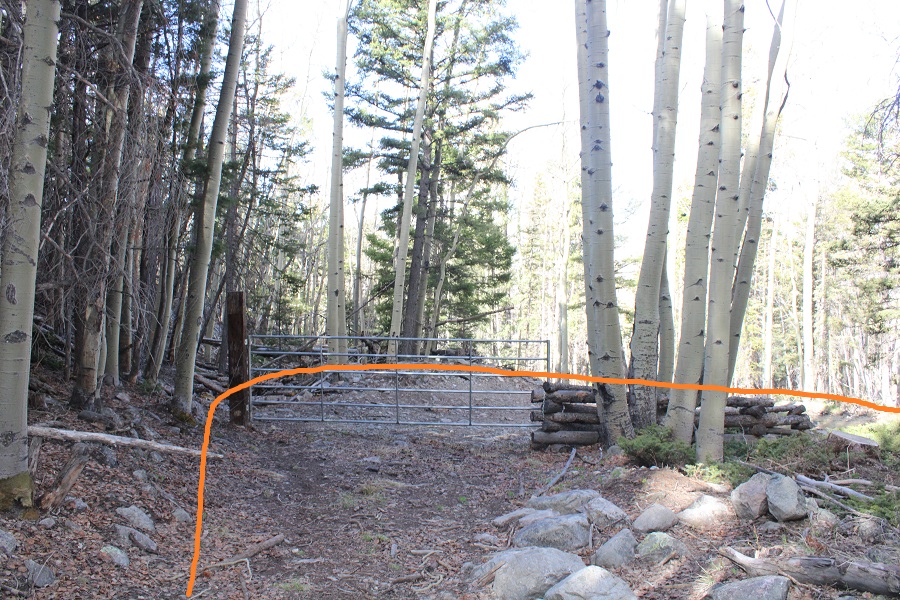
I walked around the closed gate and followed the old road.

The road was easy to follow northeast

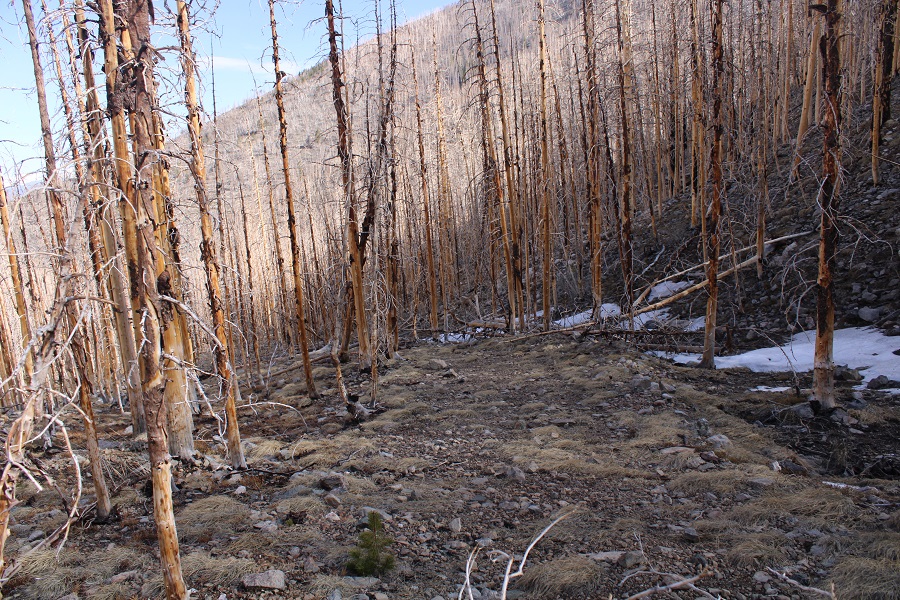
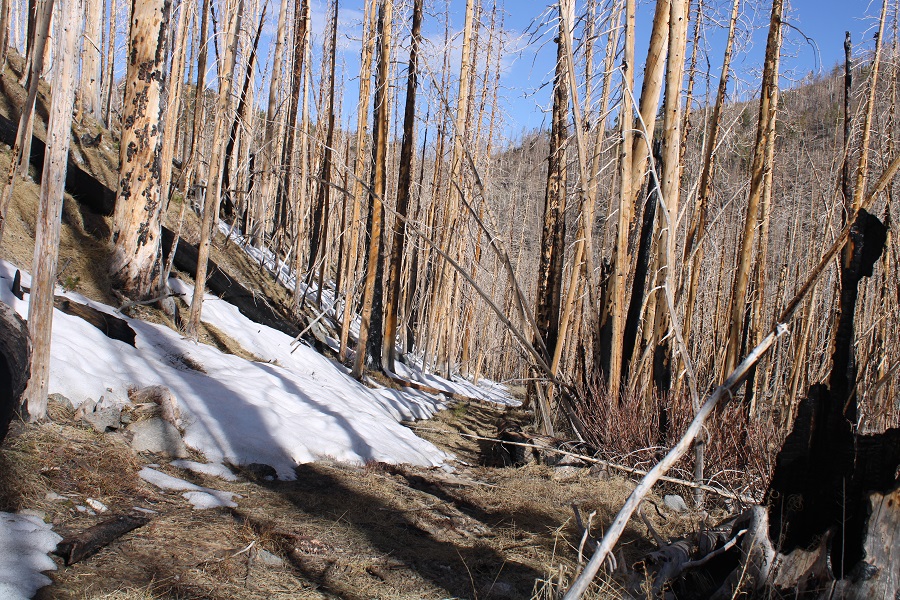
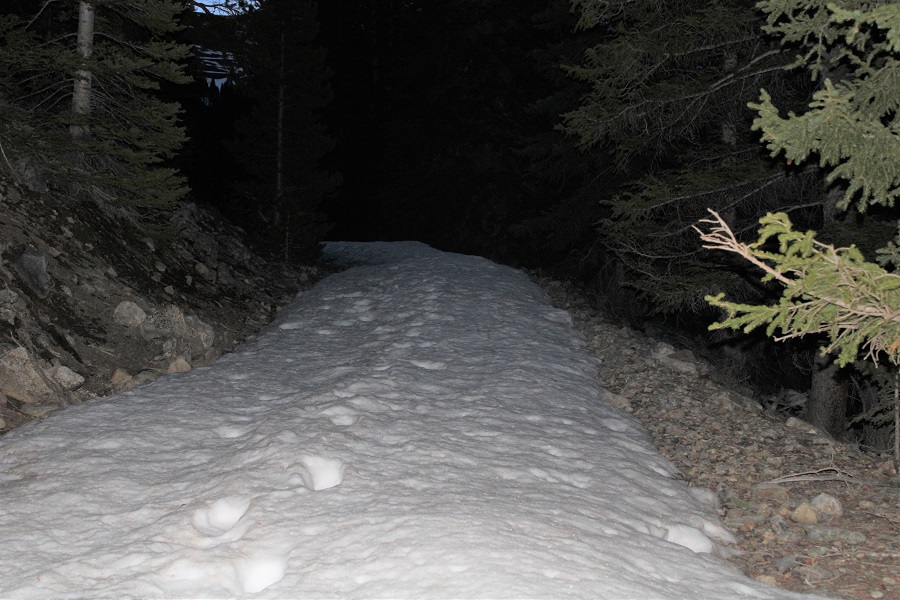
It was obvious this road hasn’t been used by vehicles since the fire, because there were downed trees all over the road.  There was a little bit of snow as well, but totally manageable without traction.

Eventually the ‘road’ fizzled out.  I followed the contour of South Rock Creek and then the mountainside as it headed east.   In the daylight the route to the ridge is easy to see

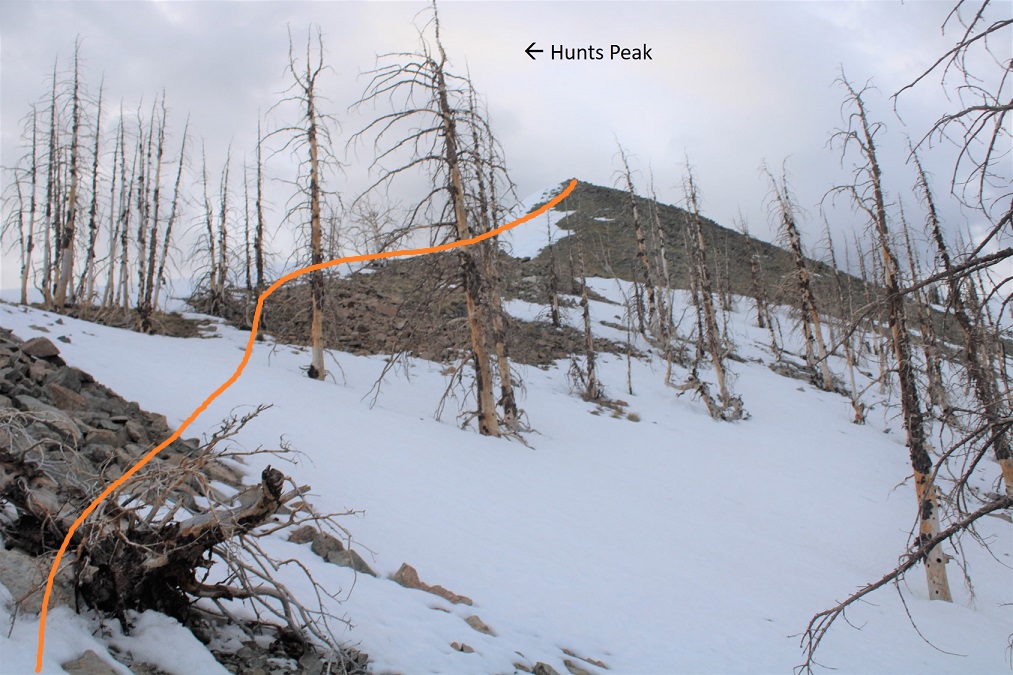
I followed the drainage as far as I could, then headed east to gain the ridge.  This was steep, but the bushwhacking was minimal due to the fire

I gained the ridge, and followed it southeast over this hump

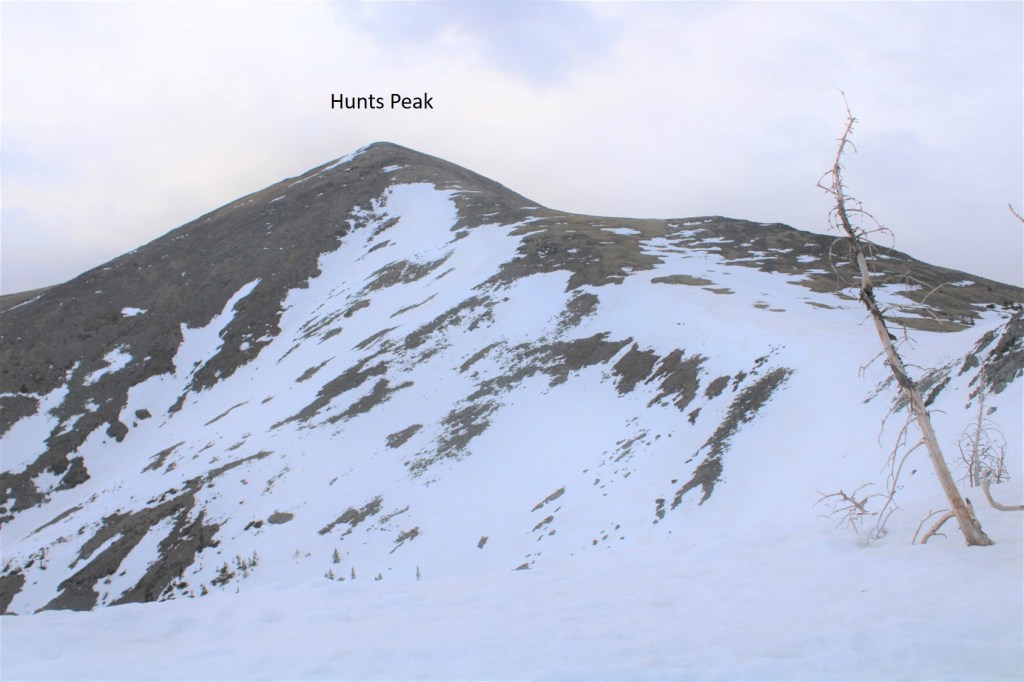
I had a good view of Hunts Peak at this point

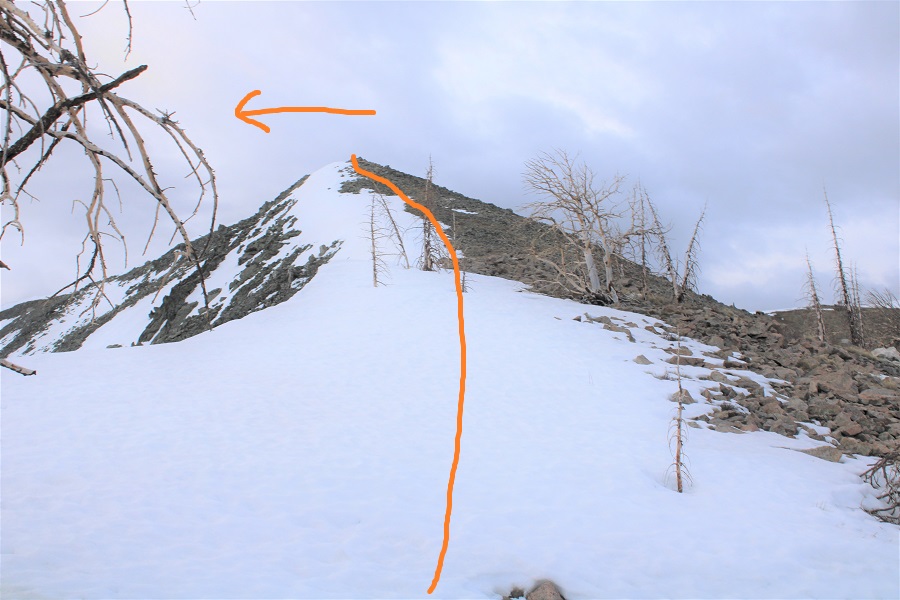
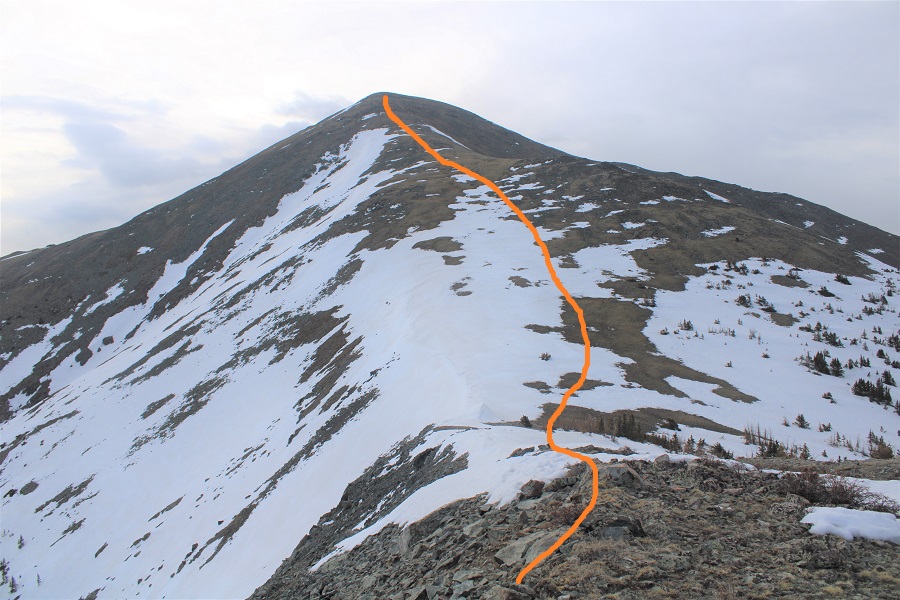
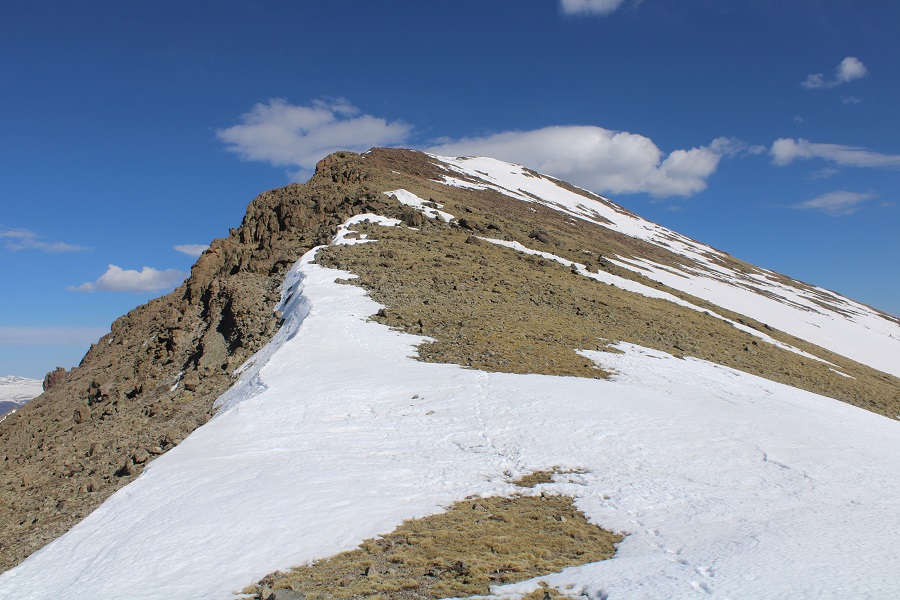
The rest of the route was straightforward:  I went southeast over the hump, and then followed the ridge east to the summit

It was easy to avoid most of the snow, and what was unavoidable was consolidated

There was a short trek southeast to the actual summit

I summited Hunts Peak at 7:10am

Hunts Peak:

It was very cold and very windy.  I regretted not wearing my snow pants now.  Pulsing my fingers, I descended the way I’d hiked in.  Advice here:  the ridges look similar, especially if you’re summiting in the early morning/dark.  Be sure of your route down!  Here’s the route back

Back over the bump

Here was where I encountered the most snow of the day.  It was mostly consolidated, with the odd postholing up to my thigh

Now it was back down the ridge and down the gully, back to the old 4WD road.

Once back on the 4WD road it was easy to follow it back to the gate, keeping South Rock Creek to my right

At the gate I turned right and followed the road back to my truck.

I made it back to my truck at 9am, making this a 6.79 mile hike with 3582’ of elevation gain in 4 hours, 20 minutes.

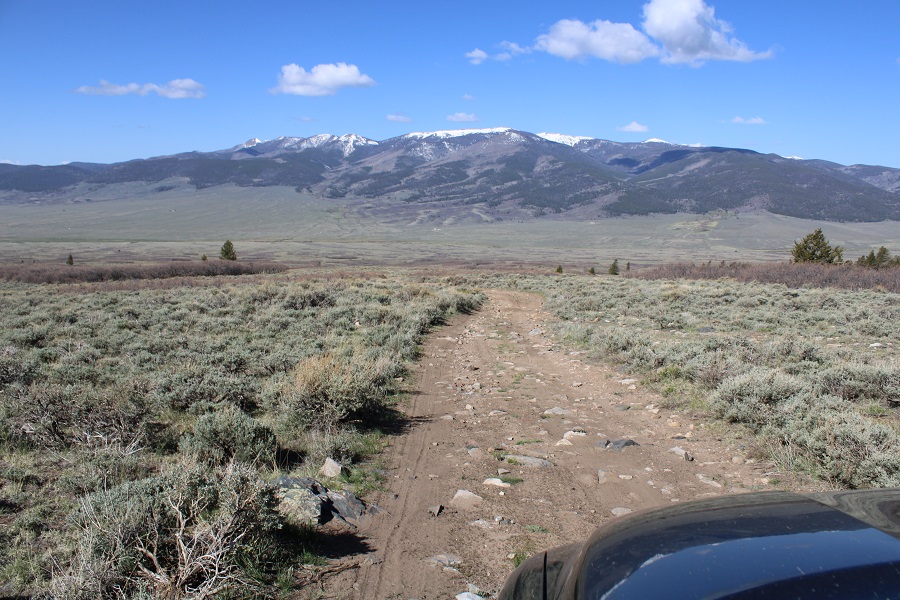
Here’s the easy part of the dirt road on the way out.  I didn’t see another person/vehicle/grouse all day.  I did see a few antelope though.  

Unnamed 13,162 – Unnamed 13, 510

RT Length:  17 miles

Elevation Gain: 4750’

On my way to the Spring Creek Pass Trailhead I was the only one driving on the road.  Probably because it was 1am.  I did have to slow down for a moose who wanted to jaunt back and forth across the center line, and a herd of elk I surprised as I drove by (they’d been lying down by the side of the road).  I made it to the trailhead before 1:30am and decided to get some sleep before starting out.  My truck was the only vehicle in the lot.  I love my heater.

I was on the trail at 4:30am.  There are several ways to get to the snow mesa.  Last time I was here I took the snowmobile route

This time I decided to take the Colorado Trail/Continental Divide Trail/813 trail.  This is the one I’d recommend without snow on the trail.  If there’s a groomed snowmobile track, take that instead. The trailhead is directly across from where I parked my truck.

From the trailhead it’s a nice uphill hike for about 2 miles to the mesa, heading east and southeast.  Here’s an overview of where you’re headed

And what the trail looks like

You’ll know you’re getting close to the mesa when you parallel a gully to your right.

Be careful here in winter conditions:  the cornices fall.  Luckily for me, today there was a lot less snow than last year.  I didn’t need traction to ascend into the mesa.  From below, you can see a Colorado Trail marker.  Aim for the marker.  This is also where my flashlight ran out of batteries.  I was glad it was starting to get light out.

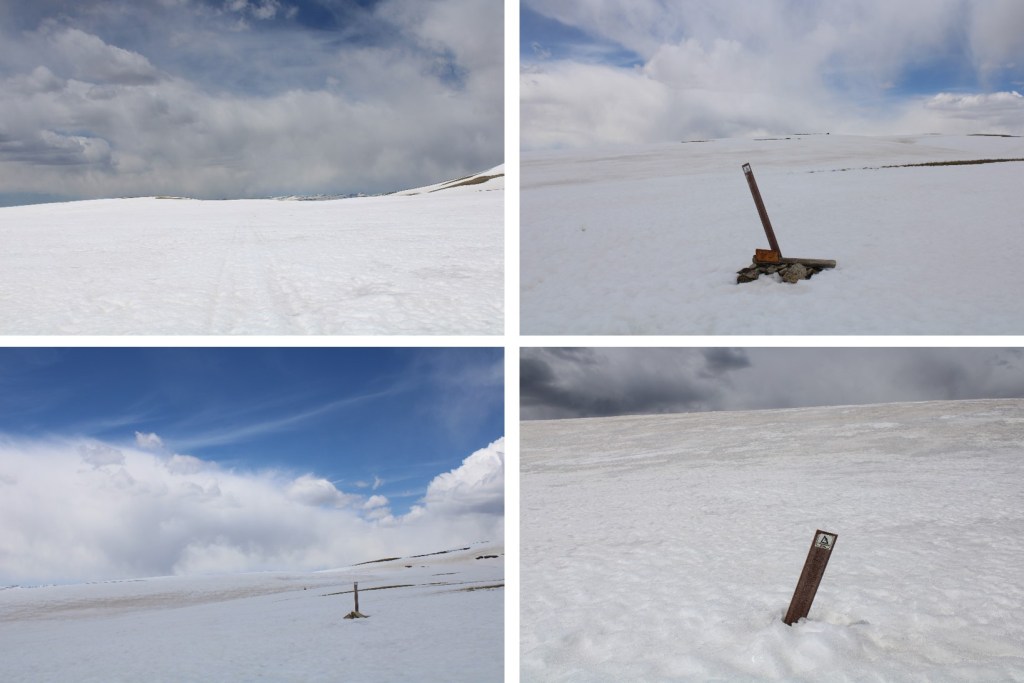
Once on the mesa I followed the Colorado Trail / Continental Divide Trail markers for 3.3 miles.  These markers are great most of the time. In the summer the trail is well defined and not needed.  When I was here last they were covered in snow and useless.  Today they were nice benchmarks, keeping me on track since there were no tracks.  In the morning, the snow was firm (not so by noon).  The trail initially  looks flat, but you’re really losing and gaining elevation all the time.  This was especially frustrating on the way back.

After a total of 5.1 miles since the trailhead I came upon a junction and continued heading north on 813.  Note:  The trail looked doable when I started.   If doing this in winter conditions, I’d recommend taking the lower route (the one I took back, via 787). However, I wanted to stay high to avoid losing and re-gaining elevation, and I had all the necessary gear (snowshoes, crampons, ice axe, etc.) so I decided to go for it.  Also, from the junction vantage point, all looked good. Here’s the route I took

Unbeknownst to me, there was a slide area directly on the trail.  This area is prone to cornice falls/slides.  I felt comfortable crossing the area so early in the morning, but wouldn’t advise taking this route later in the day.  I knew immediately I wanted to take a different route back.

Here’s a look back on the slide area

After the slide area there was another solid area of snow.  I decided to descend a bit to make this more manageable.  I brought out my ice axe and traction here.

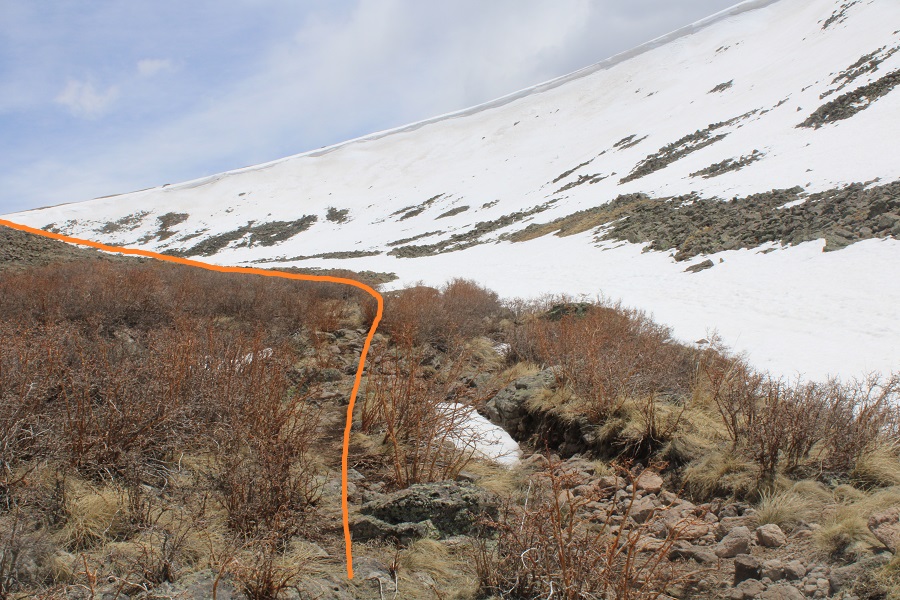
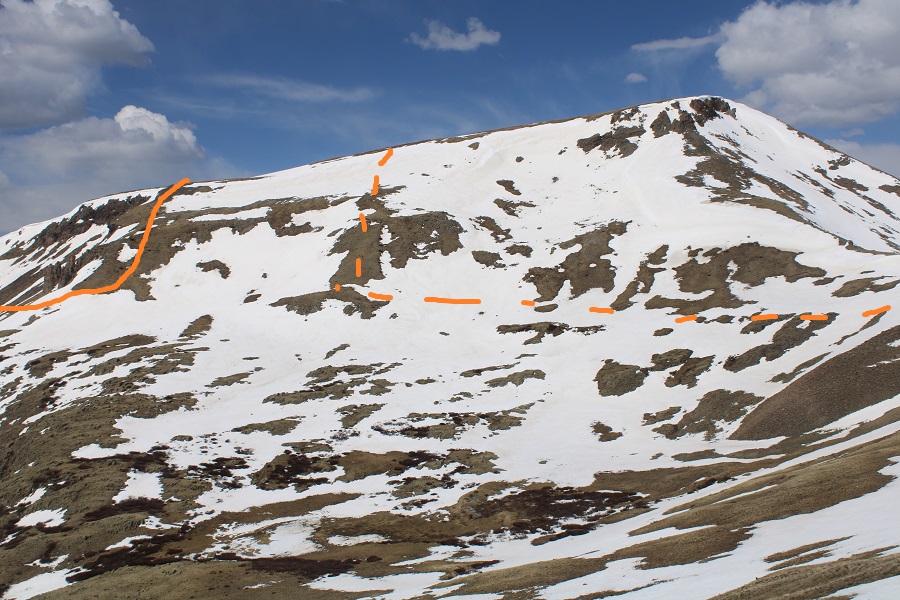
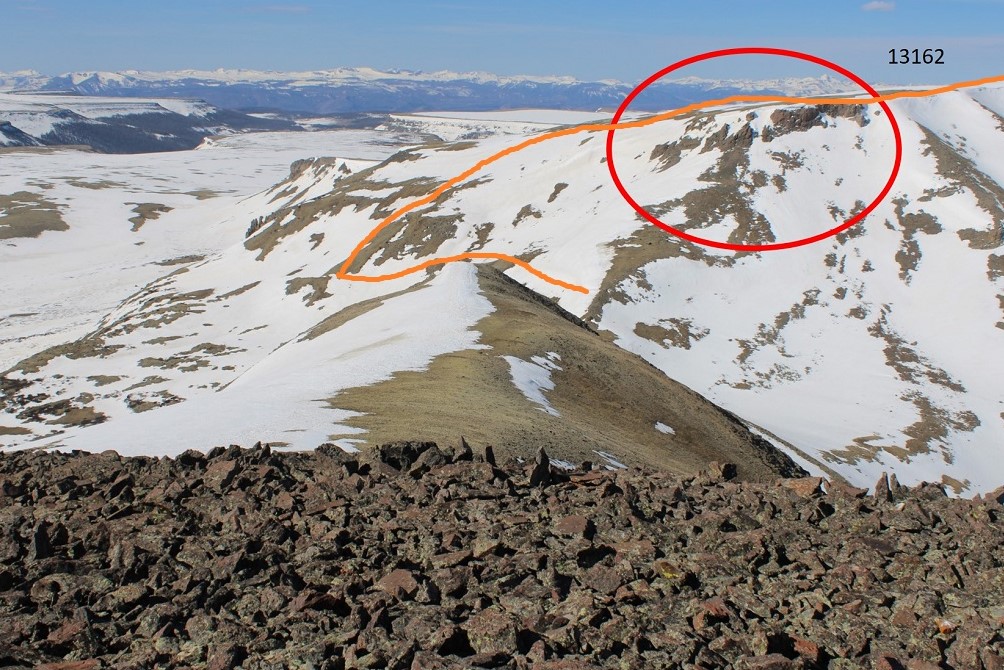
I was still ‘following’ the trail (under snow), and as soon as I started heading north it was time to head up the east side of PT 13162.  Here’s what that looks like (as seen later in the day from point 13020).  Solid line is path up, dotted line is the route I took down and across to the 13162/13510 saddle.  I was just doing my best to avoid the snow.

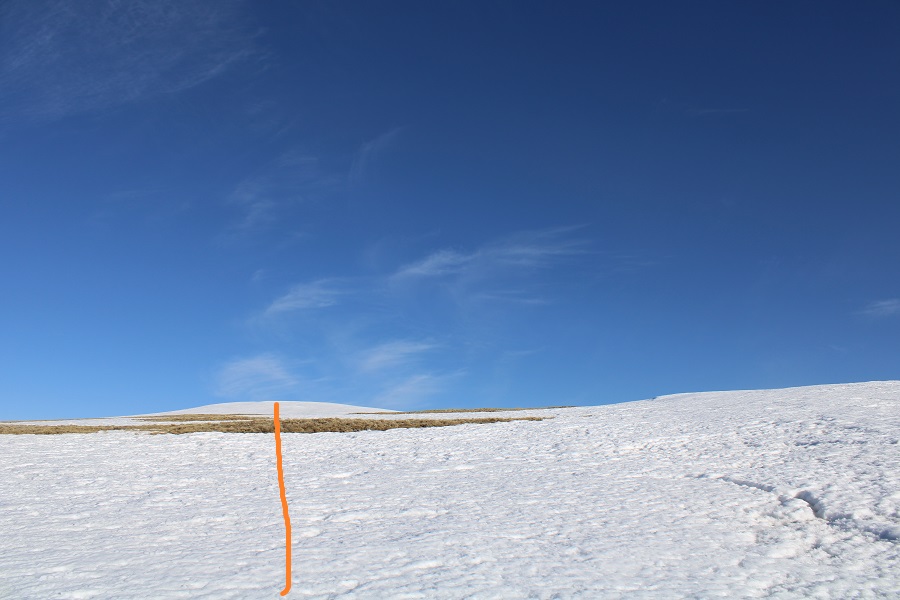
When not covered in snow this area is covered in tundra.  It’s steep, but an easy ascent.

I just kept heading west, until I was at the ‘ridge’, where I started heading northwest to the summit


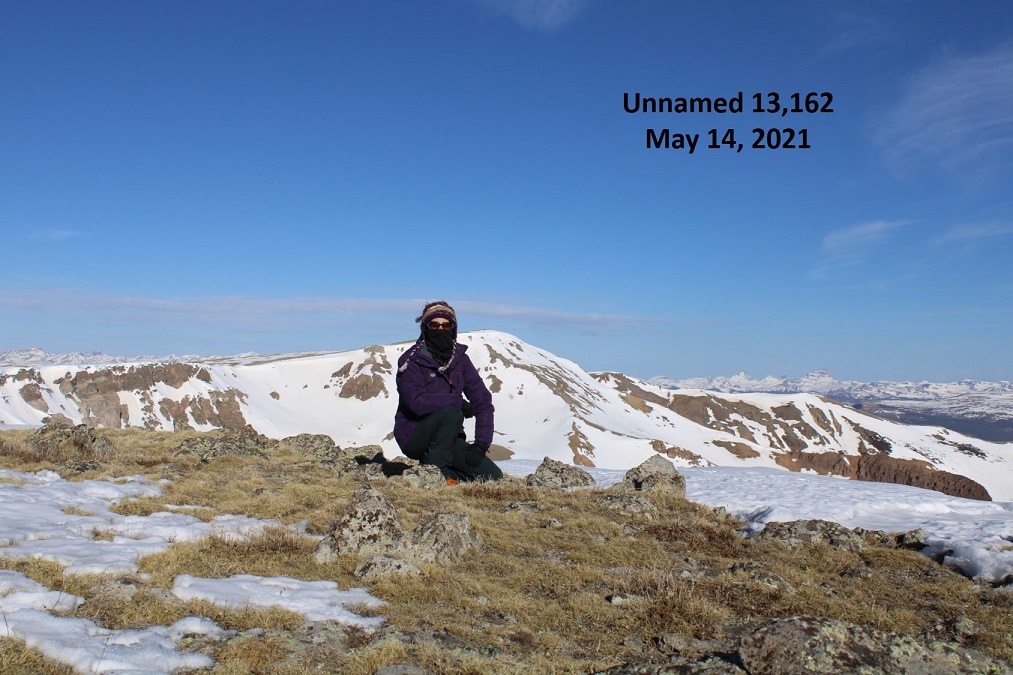
I summited Unnamed 13162 at 7:45am

Summit of 13162: 

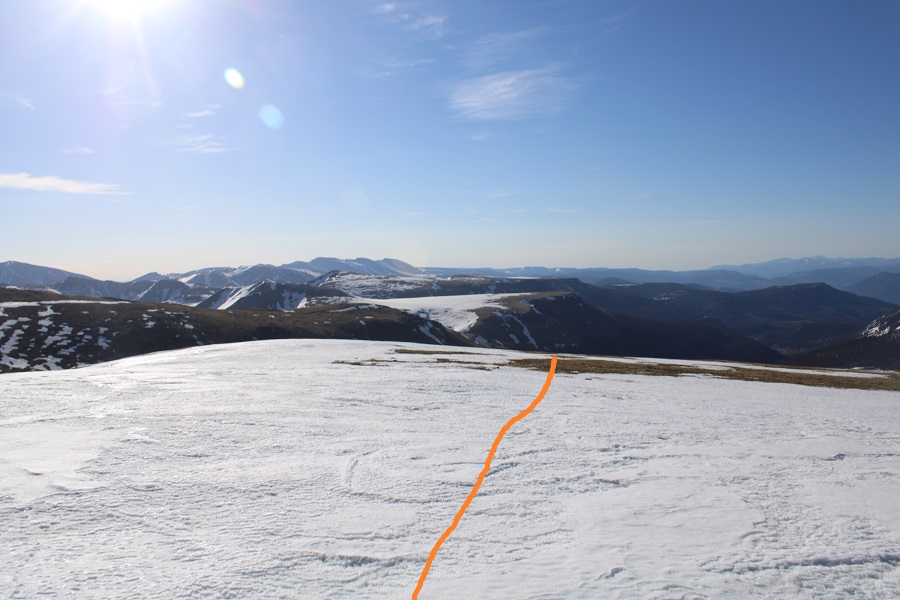
From here I could see the summit of 13,510 to the northeast.  It looks like it should be a simple ridge hike to get there, but unfortunately, there’s a steep section in the way, so I re-traced my steps back to scenic trail 813.

There was one section I was worried about after the 13162/13510 saddle.  I was hoping I could just go straight over the area, and not around. (Note, when I first wrote this report, I thought what I labeled below was PT 13020, but it’s actually further east… in the same general direction, but it’s actually the small peak just above the saddle in this picture).

Ok, back to trail 813 and to the saddle of 13162/13510

Here’s the rest of the route to 13510

I made it to the saddle and the rocky area looked climbable.  It didn’t get any harder than difficult class 2.  The gullies in this area were either snow free, or the snow was avoidable. I stuck to the ridge, dipping to the left (west) when necessary.

The rock here was loose, but once again, difficult class 2

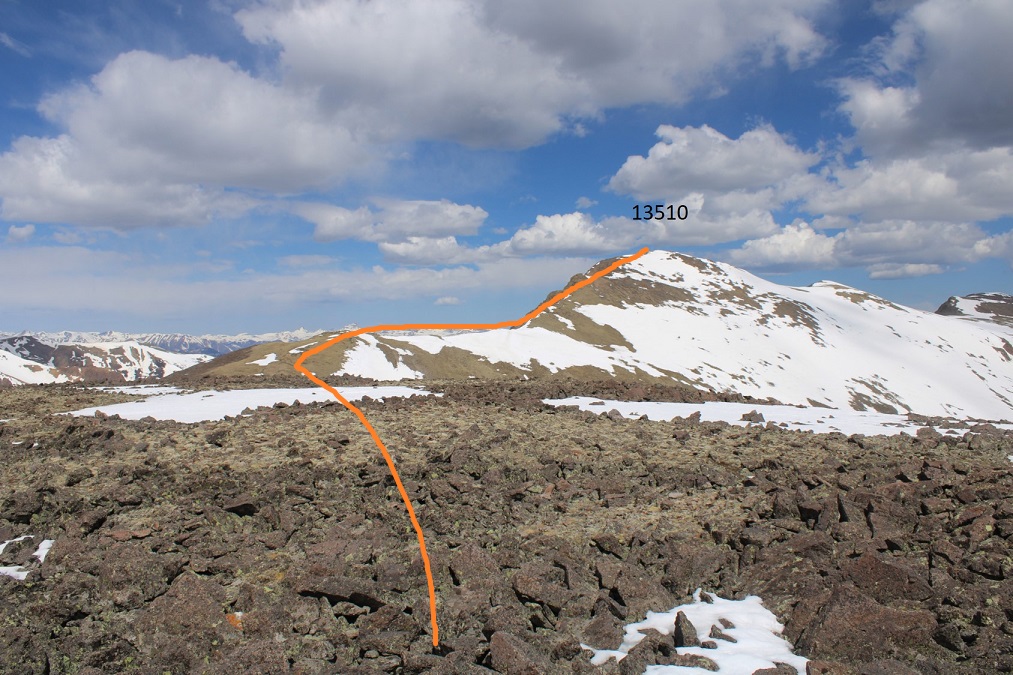
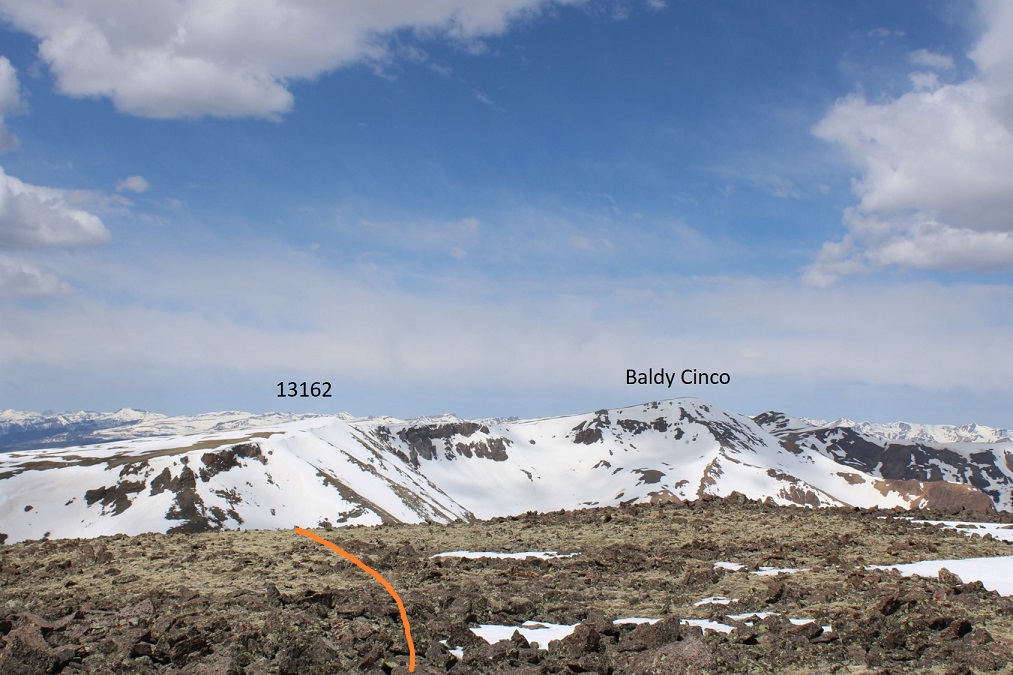
I gained the ridge and looked back at 13162.  I’ve circled the area I was trying to avoid on my way down, and detailed my route down.

The rest of the route to 13510 was an easy ridge hike.  The snow was either consolidated or avoidable.

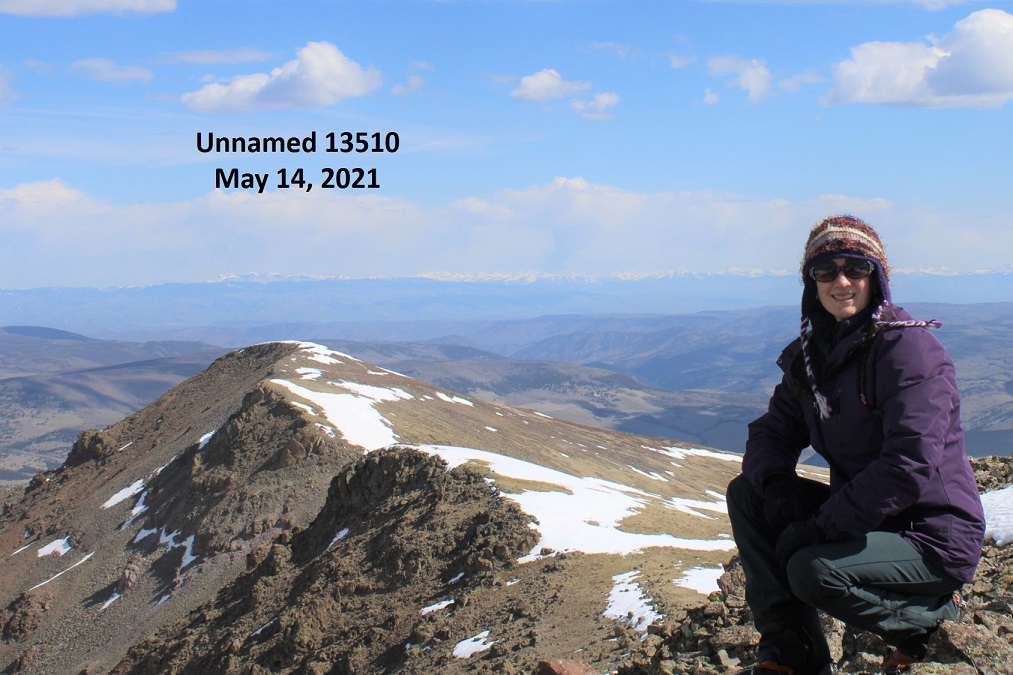
I summited PT 13510 at 9:40am

Summit of 13510: 

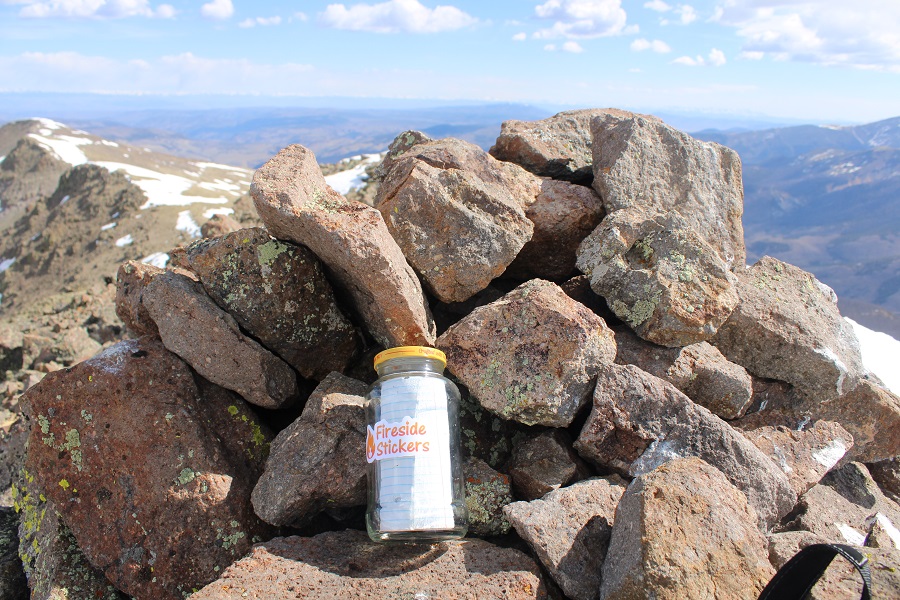
Interestingly, there had been a summit register on 13162, but there wasn’t one on 13510, so I left one.  There were also a lot of crow droppings.  I even saw a few flying around.

From the summit of 13510 I had a clear view of PT 13020 (unranked).  I decided to go for it before heading back down.  Here’s the route

Here’s looking back on the route I took from 13510

Time to head back.  I didn’t want to take the way I’d hiked in back out because of deteriorating snow conditions and possible slide activity. Instead, I hiked directly down into the basin, heading southwest.  Here’s a view of the route I took down from 13020, as seen from my way to 13162.  I just did my best to avoid the areas of snow when possible (and the willows at the bottom).

From the summit of 13020, here’s the route back to Trail 787

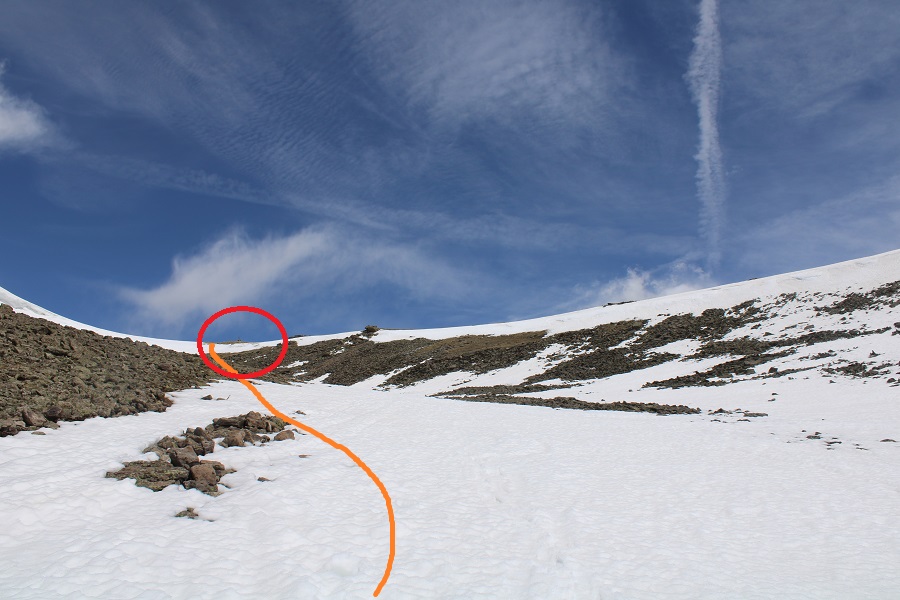
Here I’ve outlined the route I took in (dotted line) and the route I took out (solid line).  Trail 787 was dry on the ridge/elevation gain back to the snow mesa.  I could see it from the summit, and aimed there, doing my best to avoid snow on the way down. I’ve circled the small slide area.

The snow wasn’t totally avoidable however, and I did posthole through the section of willows.  From down in the basin, here’s a look back at my route down.

I hopped a small creek, then took trail 787 southwest to the snow mesa and the Colorado/Continental Divide/813 trail.

Here’s another look at the slide area.  It’s small, but the trail goes right through it.  Also note the cornices above.

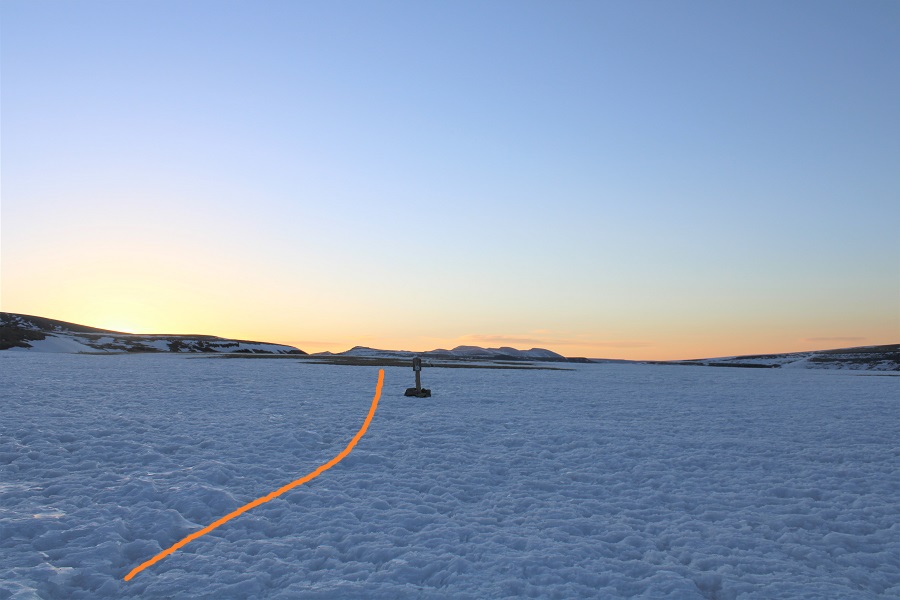
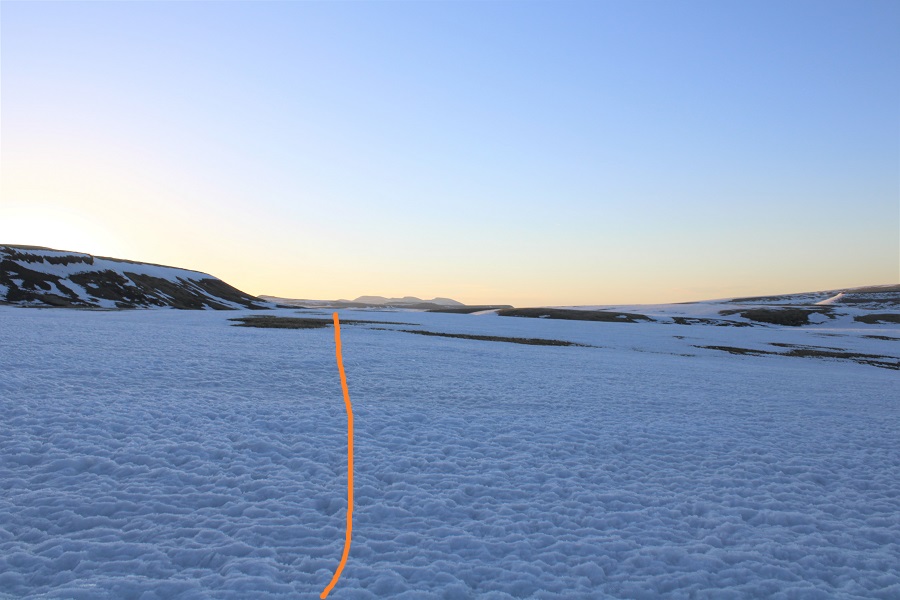
Once on the mesa I followed the trail posts across the snow. The snow had softened up considerably, so I had to put on my snowshoes.  Even with them I was postholing up to my knees.  It was a very long 3.3 miles back.

Here’s a look at the decent route off the snow mesa.

And the trail back to the trailhead.  At this point the snow was mostly avoidable, so I took off my snowshoes.

I made it back to the trailhead at 2pm, making this a 17 mile hike with 4750’ of elevation gain in 9.5 hours

When I got back to my truck I was a little disappointed, as Strava hadn’t engaged.  Luckily, most of this route was done on established trails, so it was easy to hand draw this topo route (just note it is hand drawn, and I don’t have a GPX file to share for this one).

On to the next trailhead!

James Peak – 13,272

RT Length: 7.84 miles

Elevation Gain: 2974’

I needed a win.  The past 7 (yes, 7) trailheads I’ve tried to access have been closed due to snow, Sage Grouse mating / nesting season, and/or calving season.  Note:  these were trailheads to obscure 13ers, so there wasn’t a lot of information on them in the first place, especially for this time of year.   One trailhead was open, but not passable due to snow.  I tried it again the next week, thinking the snow would have melted out by then.  It had, but now the gate was closed.  Ugh. 

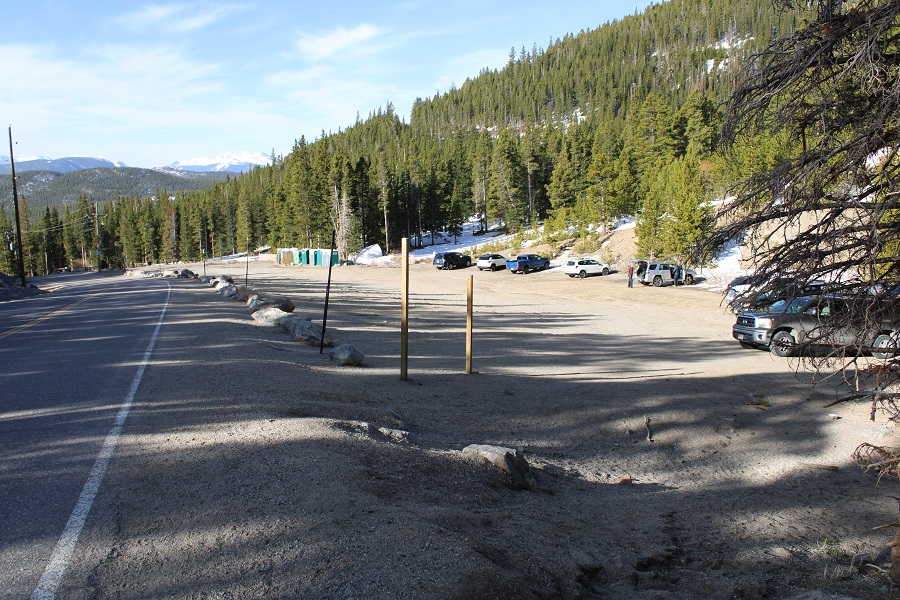
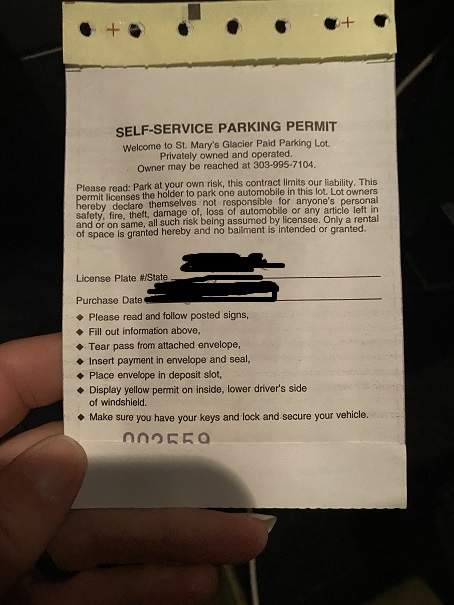
So, even though there was a $5 parking fee, like I said, I needed a win.  I arrived at the St Mary’s Glacier/James Peak trailhead at 3:30am, the first vehicle in the lot. I paid the $5 at the self-pay station (located near the porta potties) and was on the trail before 4am. 

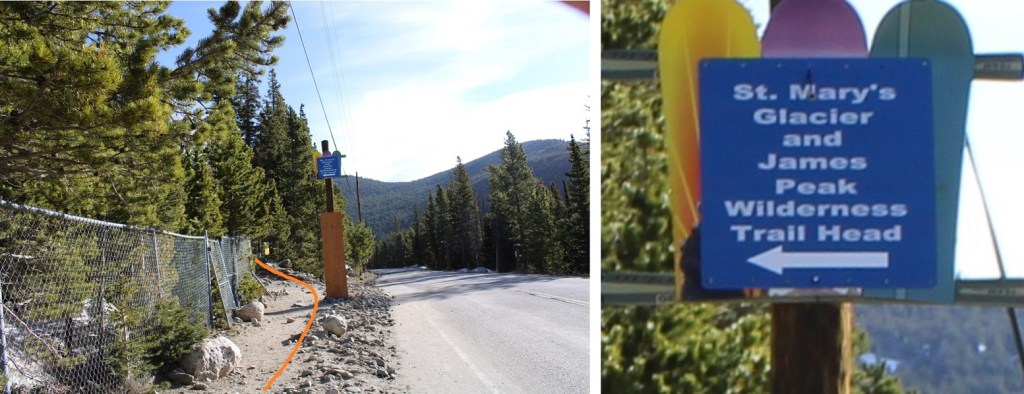
The trail starts at the north end of the parking area, and follows the road shortly before turning left and heading into the trees. There’s good signage here.

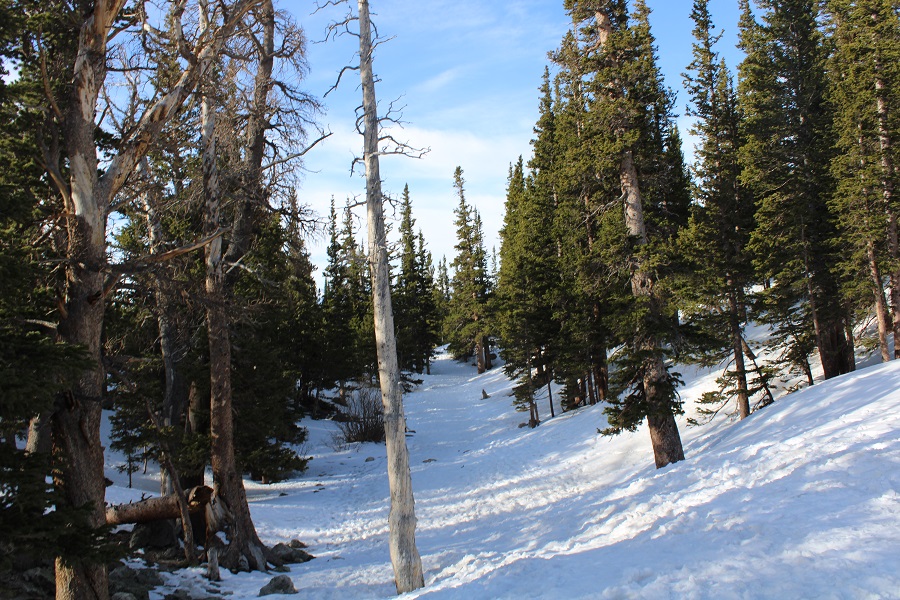
The trail started out a mixture of rocks, ice and snow, and eventually became mostly ice-snow.  I quickly put on my microspikes and wore them for the rest of the day.

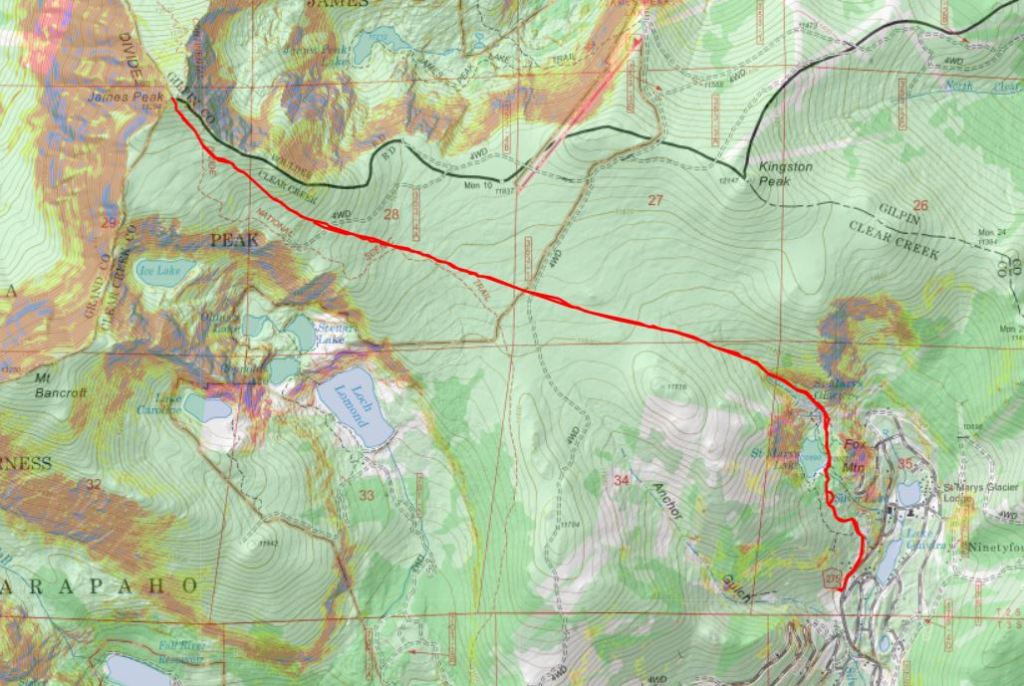
After hiking for .75 miles I came to St Mary’s Lake. It’s covered in snow right now, and to the left of this picture.  St Mary’s Glacier is directly in front.  Here’s the route I took, crossing the bridge, skirting the lake, and then heading up the slope.

Here are some step by step photos to the top of the slope.

Once at the top I came to a plateau, and could see James Peak in front of me.  Well, I couldn’t really in the morning, as it was still dark, but I could tell it was a clear morning by the shooting starts I kept seeing (that was about to change).  At the top of the slope, just head northeast. 

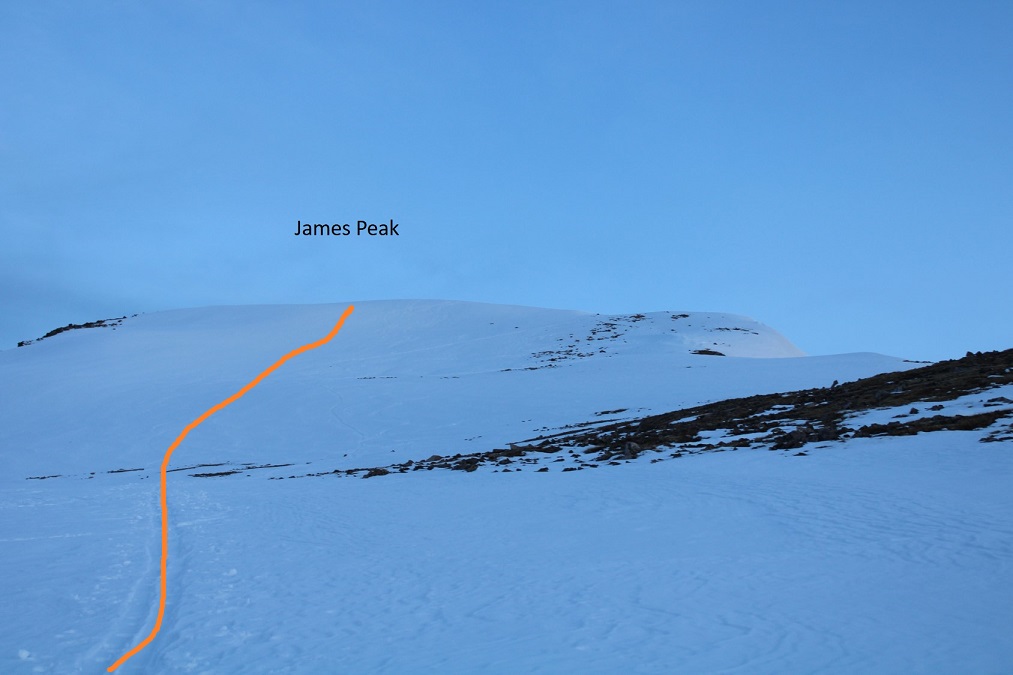
This is where the wind started.   The wind never stopped, and in fact just got more intense as the morning went on.  I put on my balaclava and headed northeast. Here are some step by step pictures

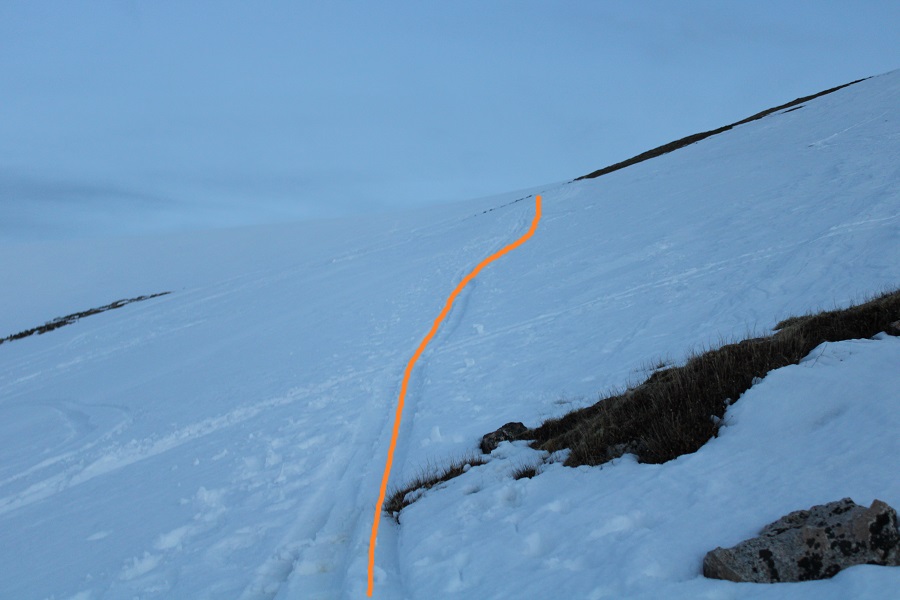
The very last part of this hike included turning north and heading up this slope.  I did not need crampons/ice axe on my way up (microspikes were fine) but I did use my ice axe on the way down.  This could have been prevented by zig-zagging the slope (dotted line), but I felt it was better to get in some glissading practice.

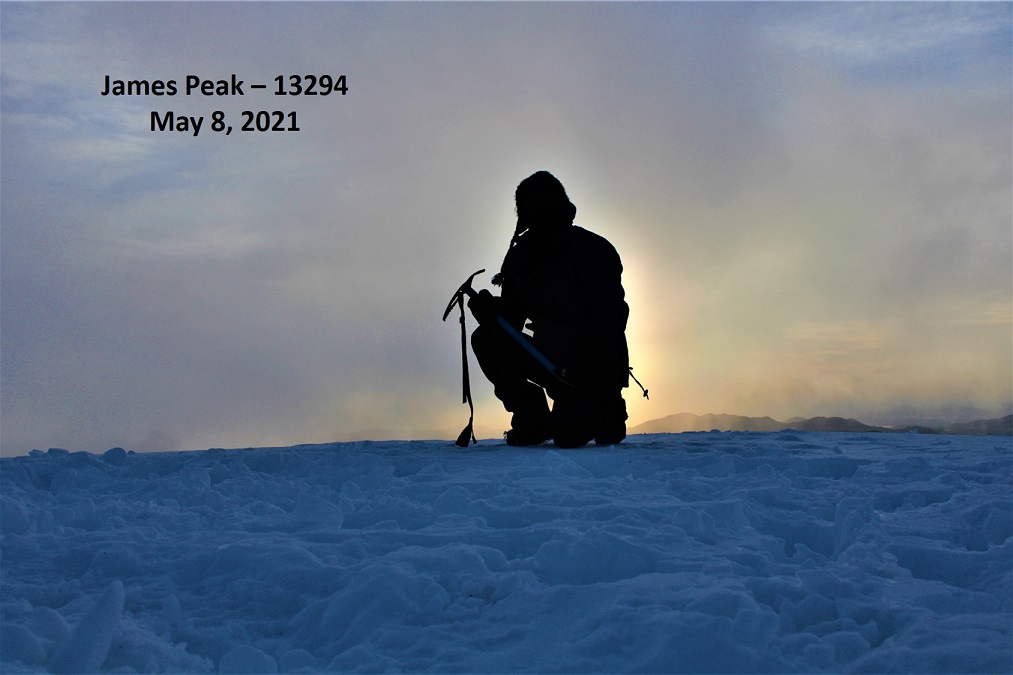
I summited James Peak at 6:25am

James Peak: 

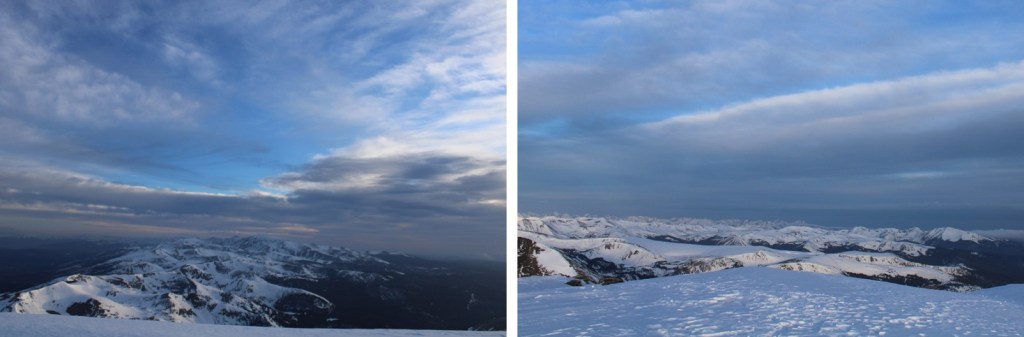
I was surprised at how fast the clouds were coming in:  The wind was stronger here on the summit, and soon I lost most visibility.

I headed back the way I’d come, careful to follow my footprints as it was getting increasingly difficult to see.  I faced the mountain and used my ice axe for the initial descent, then turned and glissaded for a bit. Here’s an overall view of the route back down to the lake

And step by step, once I got out of the clouds

The wind never stopped, but the clouds stayed up by the summit, making it for a clear morning down below (by afternoon it was snowing).

It was still morning, but the snow was already turning to slush, and the steps I’d put in earlier were now ice.  I kept slipping and couldn’t figure out why?  I had on my microspikes, but they weren’t catching me like they usually do (it wasn’t until I made it back to the truck and took the spikes off I realized in the dark I’d put one on inside out, and the spikes were facing the sole of my boot.  Whoops!).  Here are some photos of the way down the slope and back to St Mary’s Lake

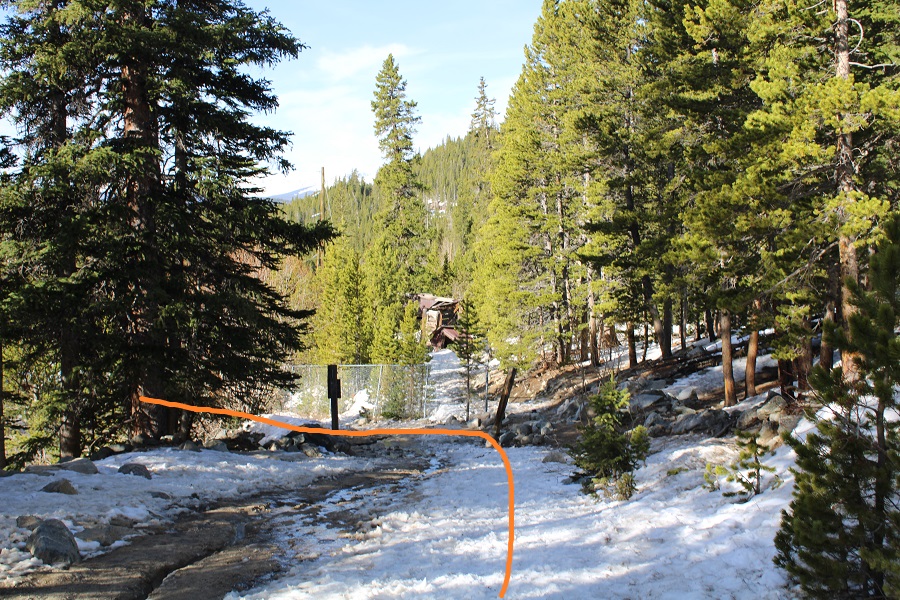
And over the bridge, back on the trail that led to the street.

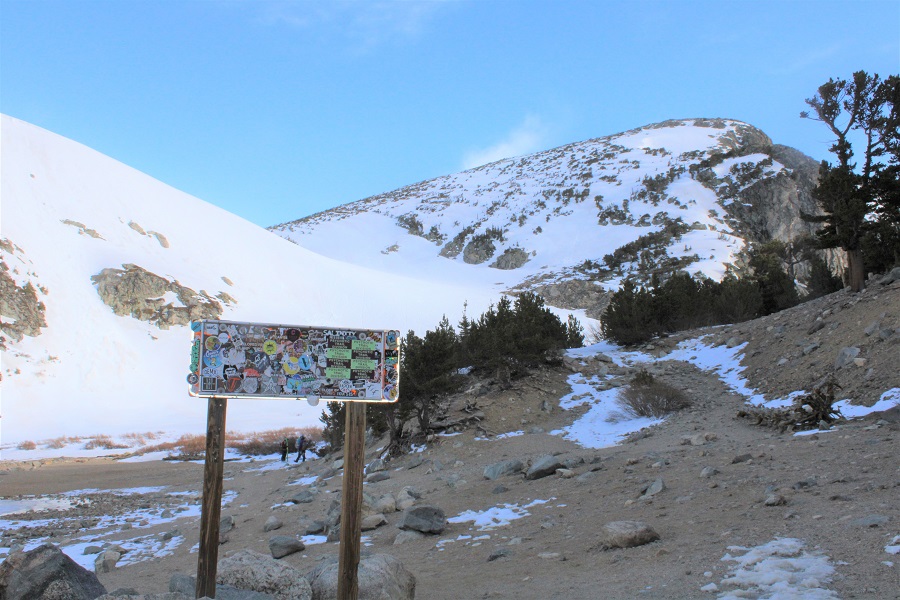
There was a sign near the bridge.  I’m guessing it said “St Marys Glacier” or “James Peak Trail”, or something like that, but it was covered in stickers and useless.  I thought to myself I should have brought some 14er Fireside Stickers.  Oh well, I’ll be back to make this a ridge hike, or at a minimum get some 12ers in the area:  I’ll bring stickers then.

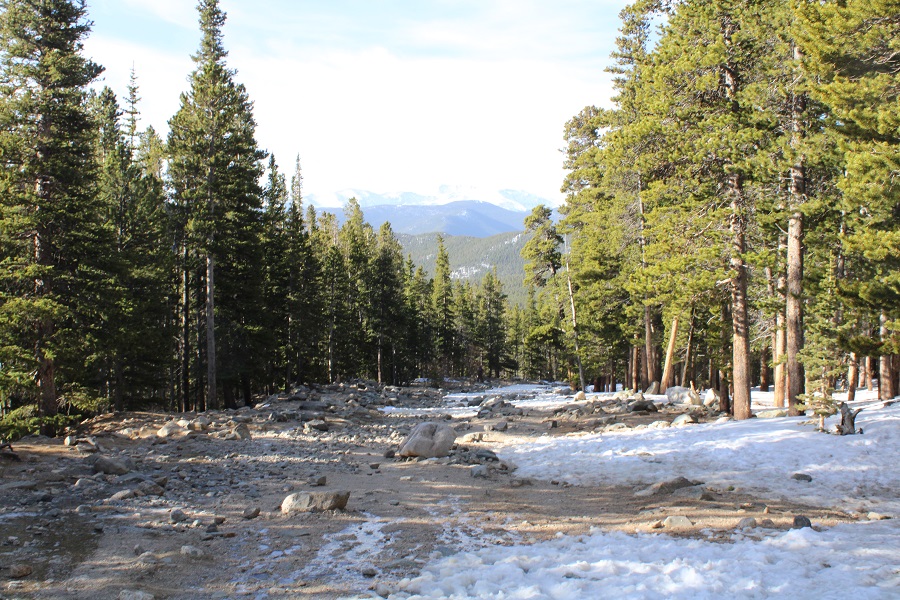
It was less than a mile on the trail back to the parking area. Note:  Some parts of the trail were slick, as skiers and snowboarders have smoothed down the trail. 

I made it back to my truck at 8am, making this a 7.84 mile hike with 2974’ of elevation gain in 4 hours.

Mt Audubon – 13,223

RT Length:  13.07

Elevation Gain:  3285’

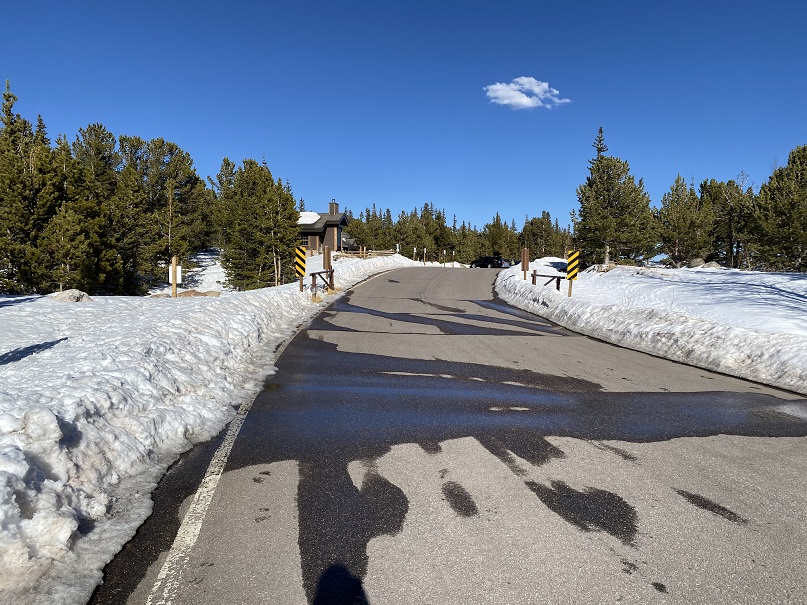
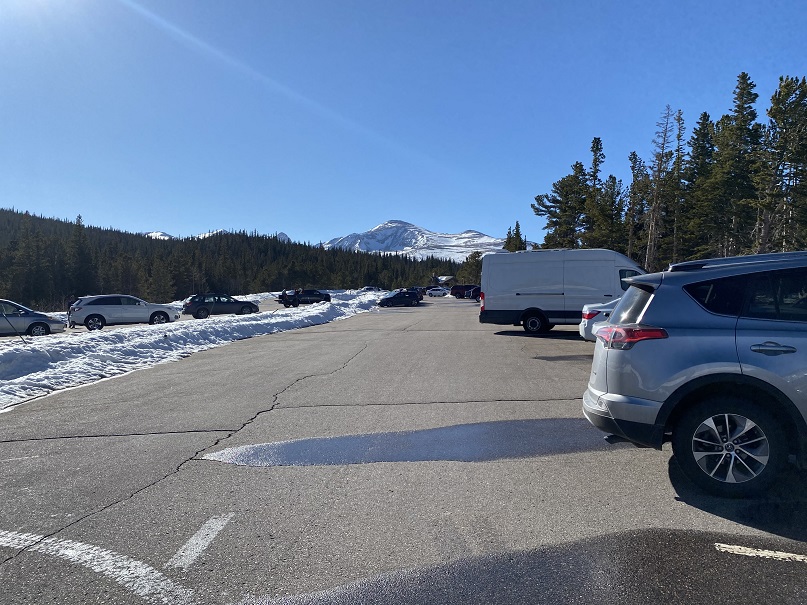
The last time I attempted this peak (earlier this winter) I arrived in the dark while it was snowing.  I was unable to find the parking area (it was covered in snow) and turned around and drove home before the hike even began.  This time I decided to arrive during the day, and I was a bit embarrassed I’d turned around last time:  the parking area is huge and hard to miss (unless the entrance is covered in over a foot of snow).  Here’s a picture of the entrance

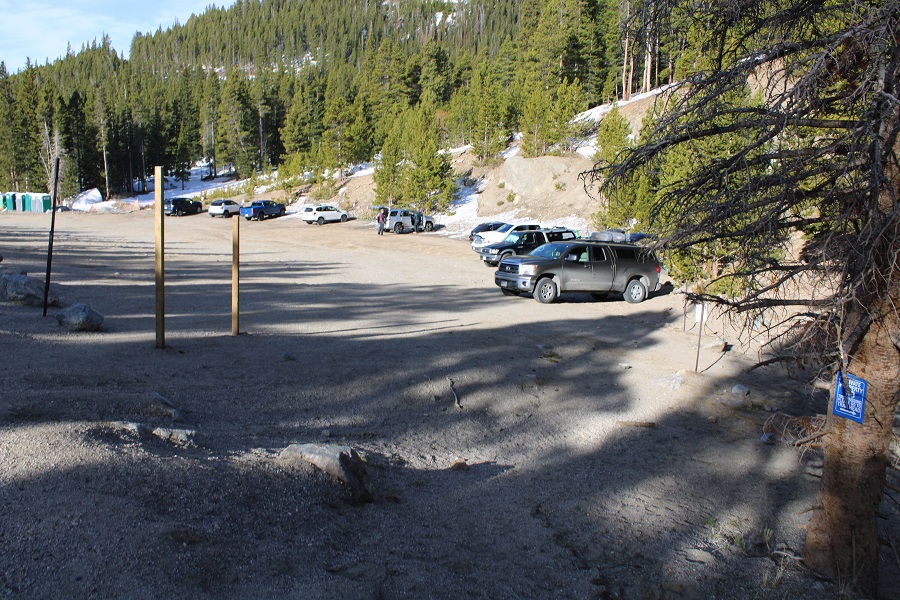
This is the parking area.  There are bathrooms here and an information center.  I’m guessing 75 vehicles can park here.

I parked at the east end of the parking lot and took a look around.  Not a bad backyard view for the night.

I spent the next two hours relaxing.  I love making it to the trailhead the night before and just enjoying the quiet time.  I watched the birds fly up and down the trees, looking for insects.  I people watched, sat and watched the clouds, admired my view of Mt Audubon, and got out some whiskey and read for a bit.  I also ate 3 snack sized bags of chips.  I went to bed earlier than I would have if I’d been at home, but as always when I sleep in the back of my truck, I slept soundly.

Soundly that is, until 3am.  That’s when I heard a couple walk back to their vehicle, which had (unfortunately) been parked right next to mine.  They started the car, and chatted for a bit before taking off.  I thought it was a weird time to make it back to their car, and wondered why they’d been so loud?  There were obviously several people boondocking in their vehicles, trying to sleep. I lay there for the next hour, wanting to get up to pee but not wanting to leave my nice, comfy bed until it was time to do so (we’ve all been there, right?).  At 4am I was up and on the trail by 4:15am.

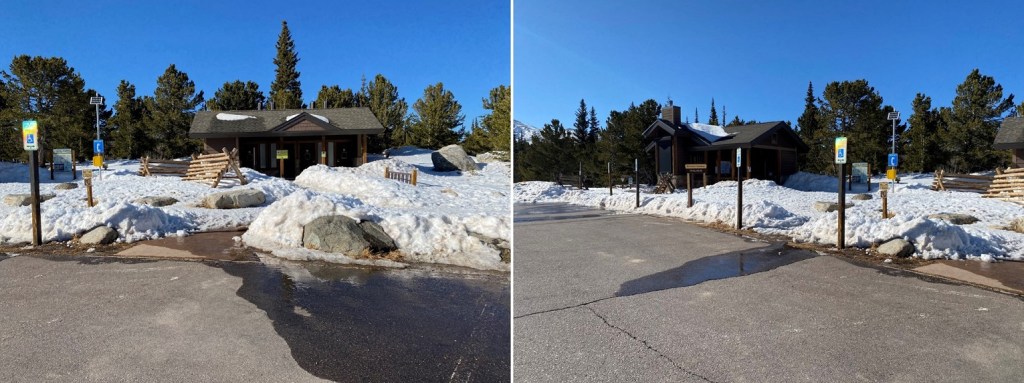
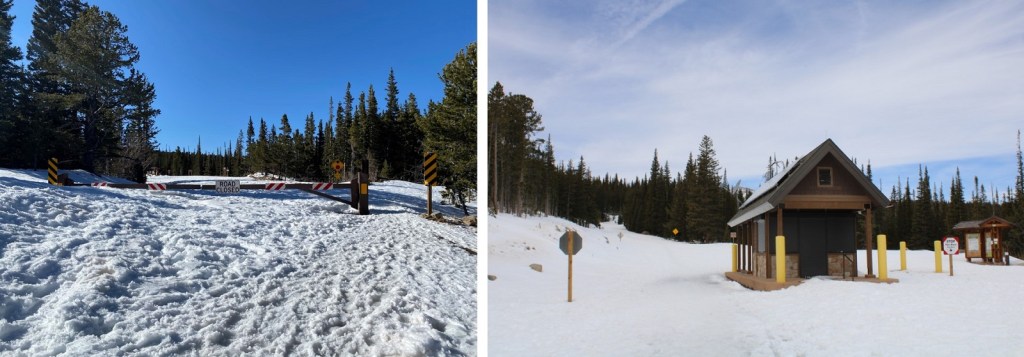
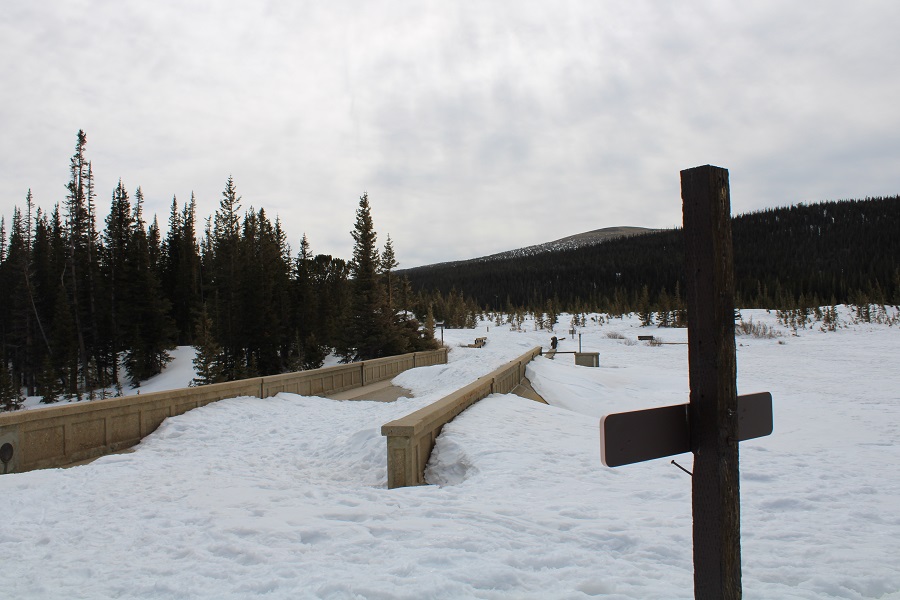
I started at the winter closure, marked by this gate and entrance station.

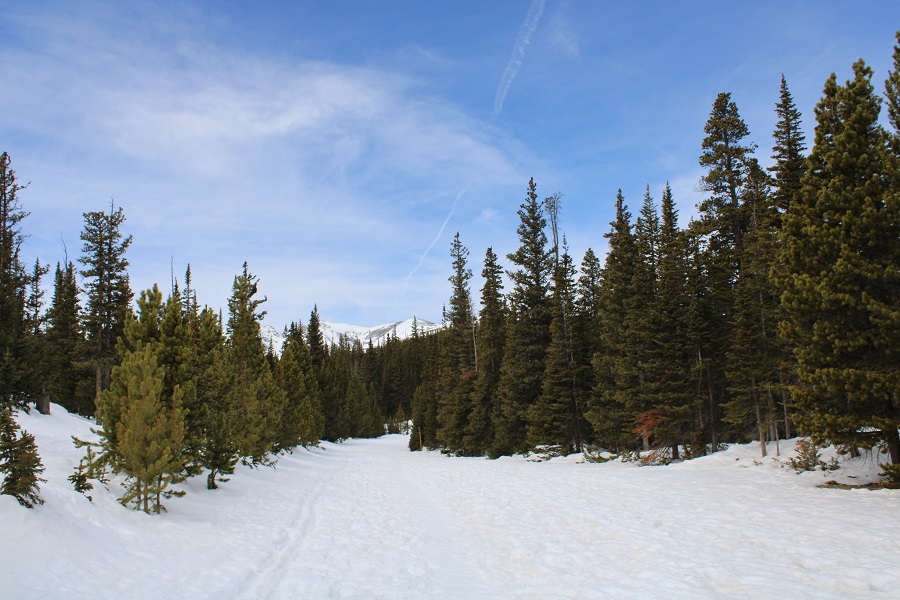
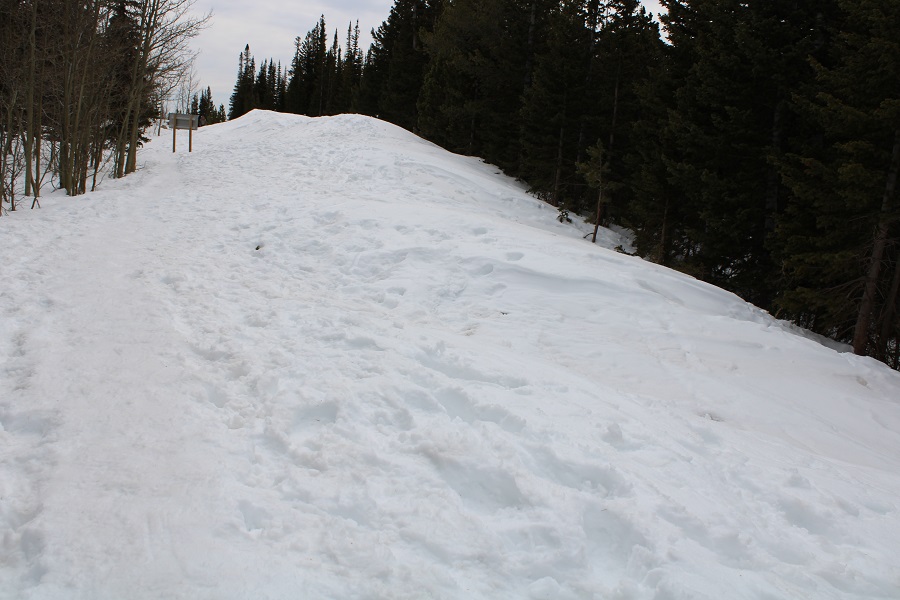
I followed the road, and a well packed trail, for 3.3 miles to the Mitchell Lake Trailhead.  At times the snow on the road was well over my head, and I wondered how long it will take to melt out for summer visitors?

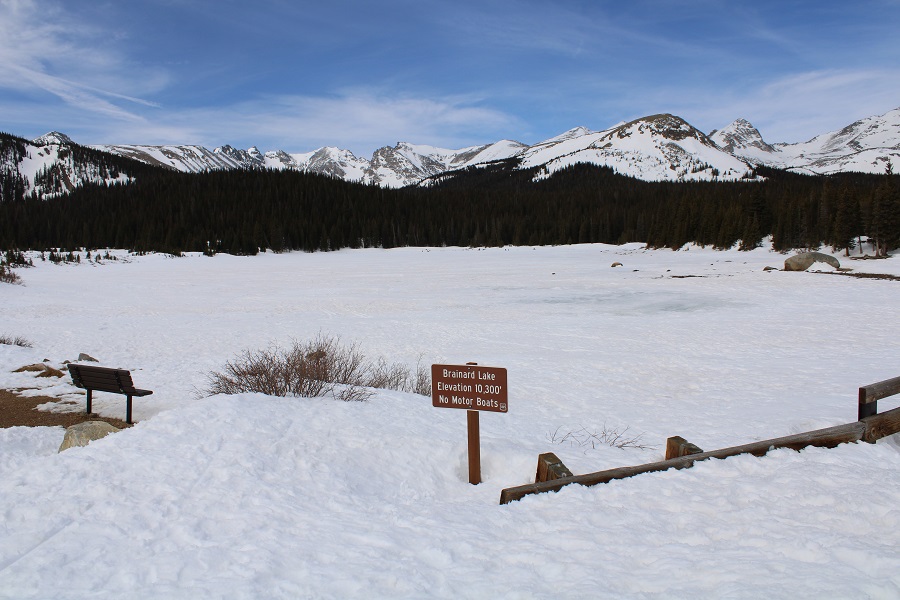
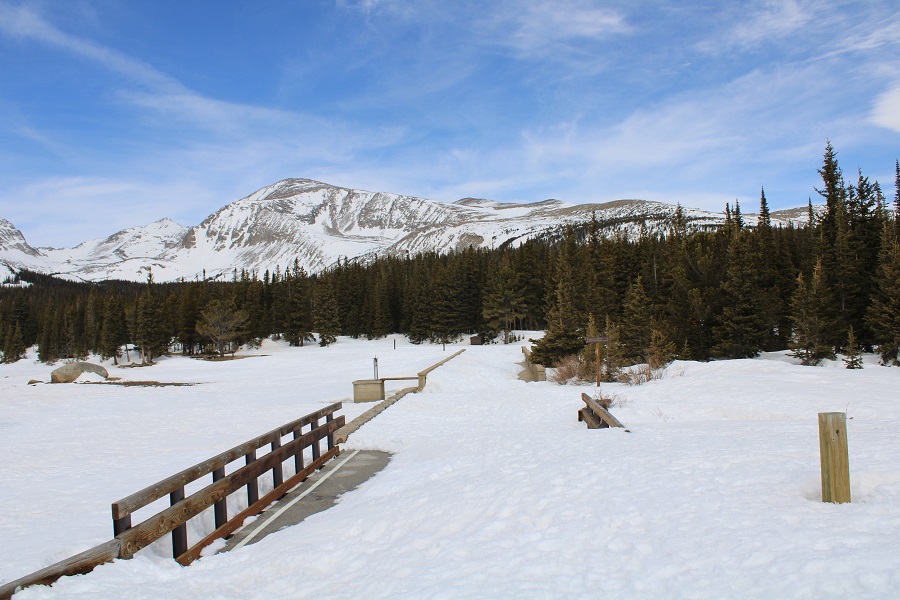
I made it to Brainard Lake and continued following the road

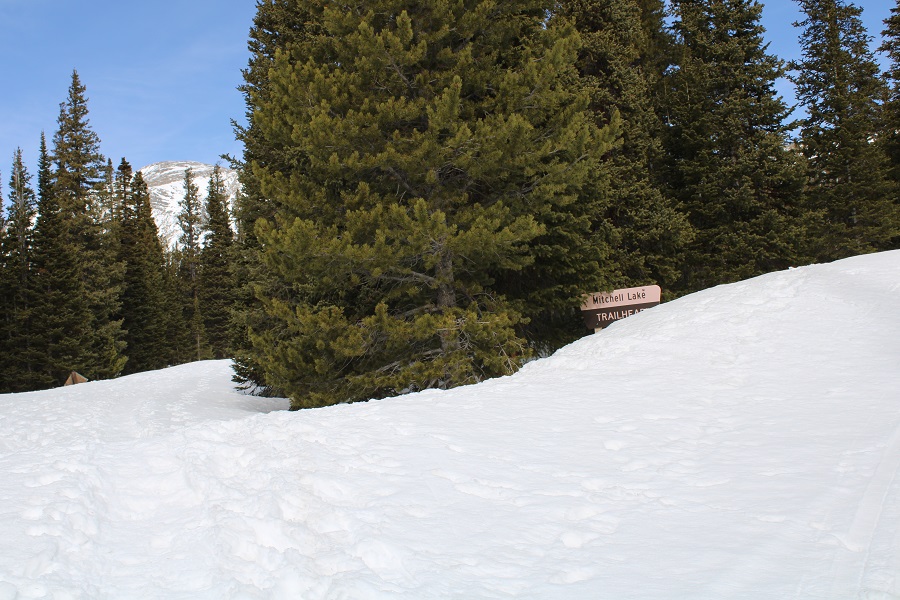
The Mitchell Lake Trailhead still had quite a bit of snow as well

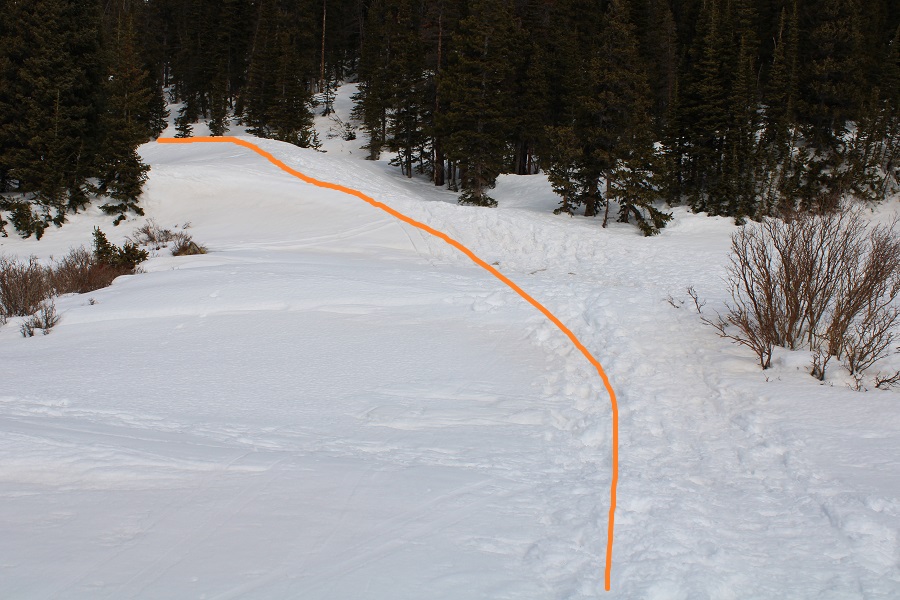
Here’s where the nicely packed down trail ended, and the post-holing began.  Obviously, there’s a lot of snow here.

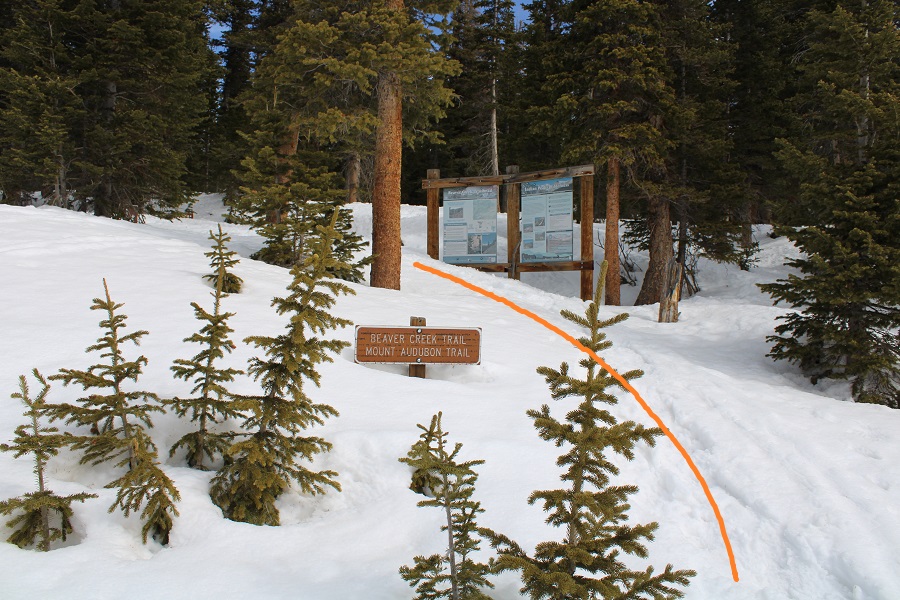
I was happy there was a semi-noticeable trail however, as I’d expected to be trenching today.  I wasn’t trenching, but I was postholing quite a bit.  The temperature had only reached a low of 37 degrees last night, making the snow too firm to trench with snowshoes, but easy to post hole through without.  I followed the trail as it headed northeast towards the ridge.

Just below the ridge the trail stopped near a rocky area and I had to rock-hop up to the ridge.  It looked like whoever used this trail yesterday had purposely glissaded down in snowshoes, ruining any chance I had of using their tracks.  I easily avoided their slide by going to the right, and then catching up with several other tracks that led to the upper basin/ridge.

This is where I encountered the most snow of the day.   I continued northwest to treeline, staying just below the ridge

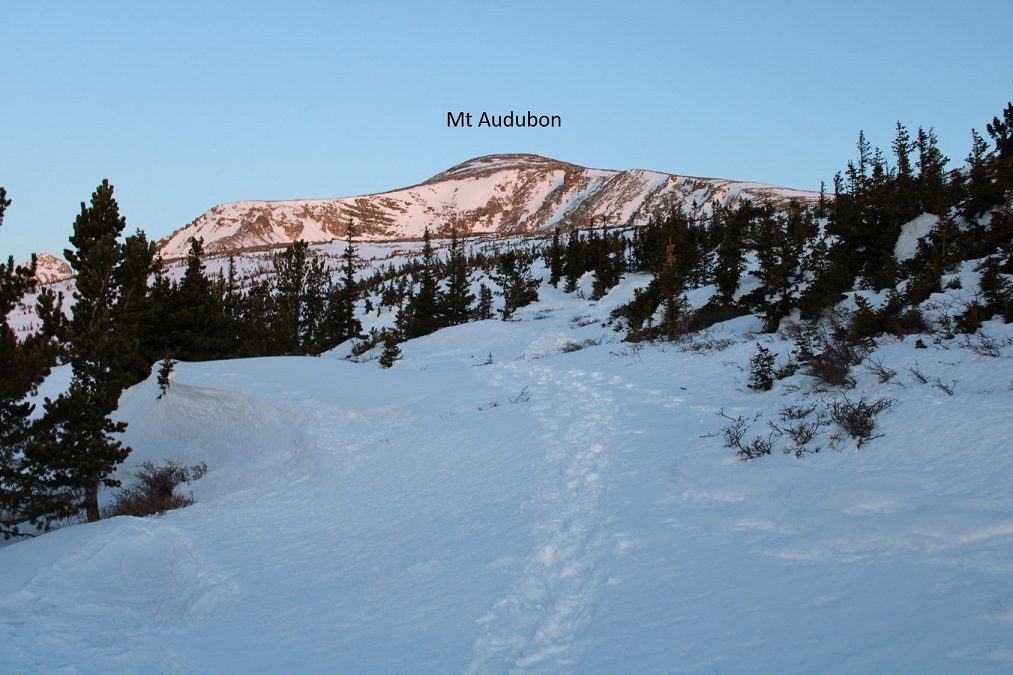
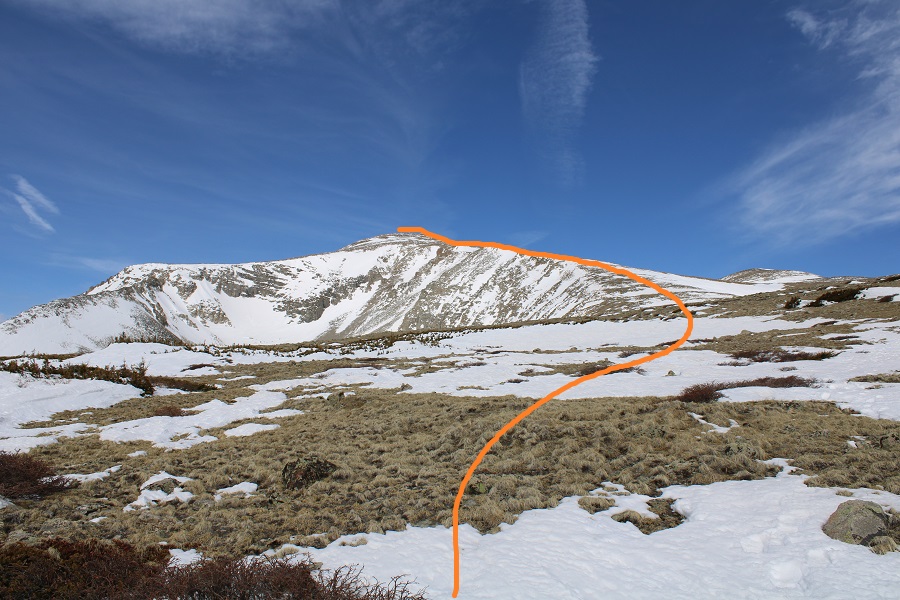
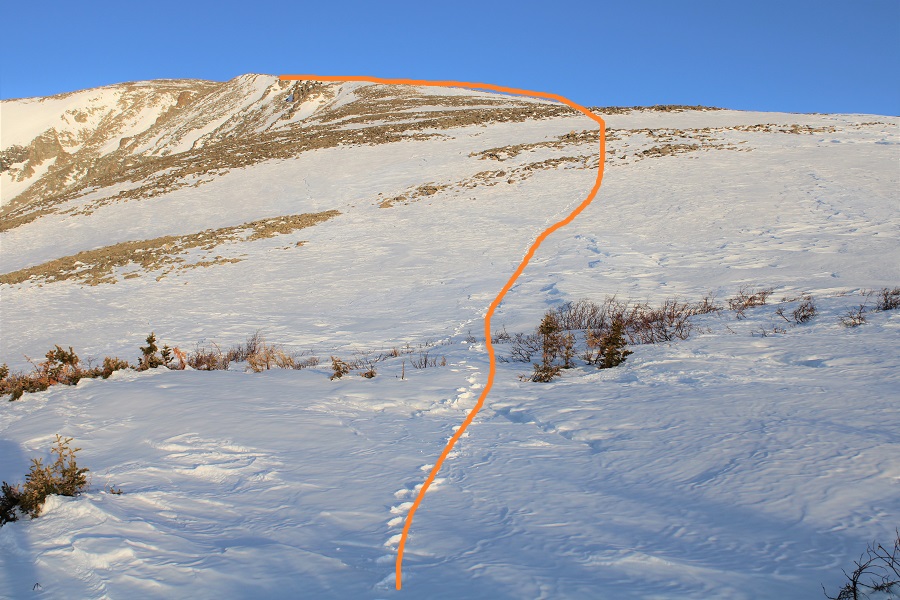
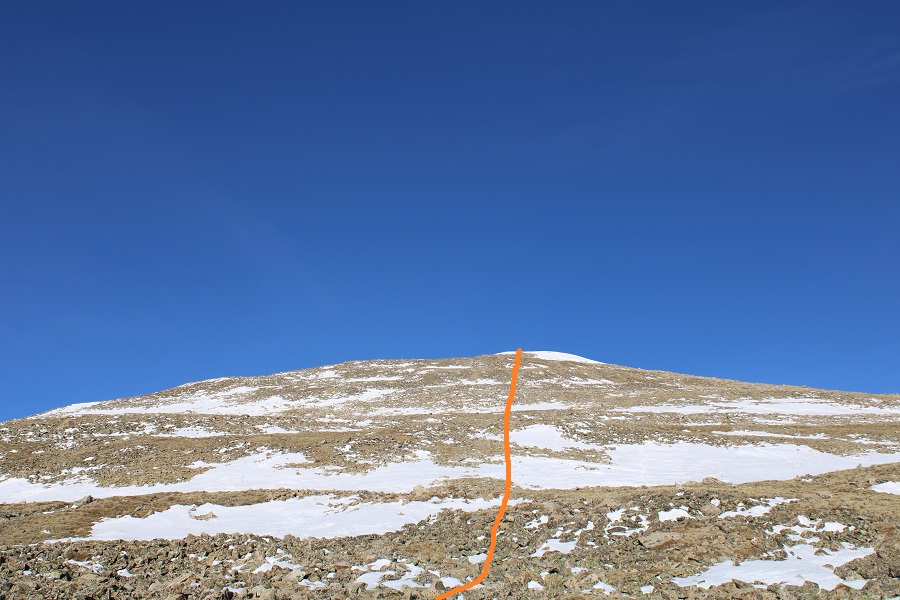
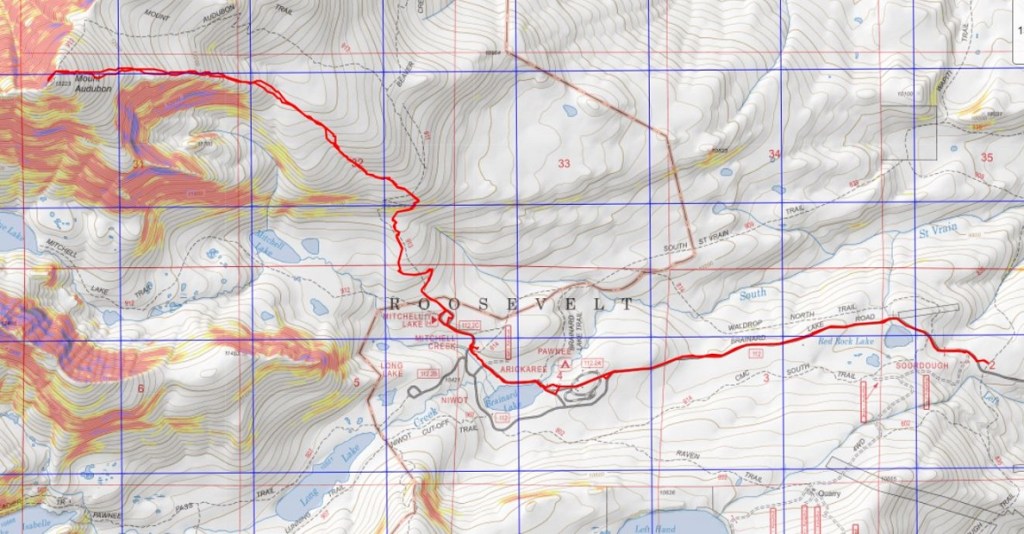
Here’s an overall view of the route I took to the summit of Audubon (note:  in the summer there’s a trail that takes a different route more to the north, which was indistinguishable to me at this time of year due to the snow, so I followed the east ridge instead)

This was a simple ridge hike.  It seemed like the ridge kept going on and on, but I was never tired/winded because it was a gentle slope, mixed with some unavoidable areas of snow, and a little bit of minor rock hopping.

Just when I thought I’d reached the summit (there was a wind break) I noticed the true summit was about 20 yards southwest.

I followed this small ridge to the summit.  This is when the wind that had been nonexistent but predicted for today materialized. 

I summited Mt Audubon at 8:20am.  It was Easter Sunday, so I’d decided to hike wearing Easter Bunny ears.  The wind was so intense it blew them off my head and I put them away right after this photo (you can see them in my hands as I’m takin the video).   I didn’t attempt a second shot.

Mt Audubon Summit

Surprisingly, I didn’t get any good photos while on the summit:  It was windy and cold and all I could think about was getting out of this wind and back home (it was Easter, after all, and I wanted to spend it with my kids).  A balaclava would have been helpful, but putting it on at this point overkill, as I just needed to get off the summit and out of the wind. I re-traced my steps back to the false summit

And back down the ridge to treeline. 

While I was on the ridge I could see someone dressed in all black, meandering in the distance.  This person (and it was obviously a person) was walking without a rhyme or reason, wasn‘t carrying a pack, and eventually hiked out of my sight.  Though I looked, I never came across their tracks on my way down, and wondered how they got there and what was going on with them?  It was obvious they hadn’t summited Mt Audubon today, so why were they out there?

You’d think it would have been easy to just follow my tracks back down, but there were such large segments without snow I often lost my tracks and hiked down without coming across them (most of the time). I just kept aiming here.  Also, the willows sucked (but were avoidable if you want to go around:  I went straight through them).

Then stayed right of the ridge as I made to back to treeline, finding my old tracks in the snow.

These led me back down the ridge, to the ‘trail’

I was worried the sun would have warmed up the snow, but I was still fine in microspikes.  In fact, the snow was of a similar consistency as it had been in the morning, or I would have put on my snowshoes to solidify a trench. As it was, I just stepped in my morning tracks and was fine.

Back at the trailhead I followed the road back to the winter closure

I made it back to my truck, and a trailhead full of vehicles, at 11:15am, making this a 13.07 mile hike with 3285’ of elevation gain in 7 hours. 

London Mountain – 13,194

RT Length:  10.63 miles

Elevation Gain: 2305’

I was looking for another quick summit this week, and was halfway to the trailhead before I remembered the road to Mosquito pass would most likely be snowed in, adding about 5 miles to the hike.  Oh well, I should still be able to make it an early day.  I made it to where the road for Mosquito Pass and 12 meet and due to previous experience with this road in winter decided to park at this junction.  I could have driven about a mile up Mosquito Pass road, but eventually the drifts would have made it necessary to find a place to park.  By parking below I’d be getting in some extra mileage (if not much elevation gain). 

I parked, gathered my gear, and headed up Mosquito Pass road at 6am.

I was excited to try out my new camera.  I tend to go through cameras quickly, as I put them through a ton of use in extreme conditions.  The last time I purchased a camera I bought one that was less expensive, reasoning since I buy them so often I’d like to spend less money.  I found out the hard way cameras that are point and shoot don’t operate well when it’s less than 30 degrees outside. 

The past few weeks I’ve been using a stylus with my iPhone, but I’ve found when it’s extremely cold out even the stylus doesn’t work (although warming the stylus up in my mouth sometimes helps).  After my climbing accident at Garden of the Gods last week where I not only came out road-rashed and bruised but also I crushed my stylus, I decided to just purchase another DSLR.  Yes, they’re heavy, but they withstand the cold.

I hiked along the dirt road for 2.5 miles.  The conditions were varying, and I was glad to have worn my microspikes.

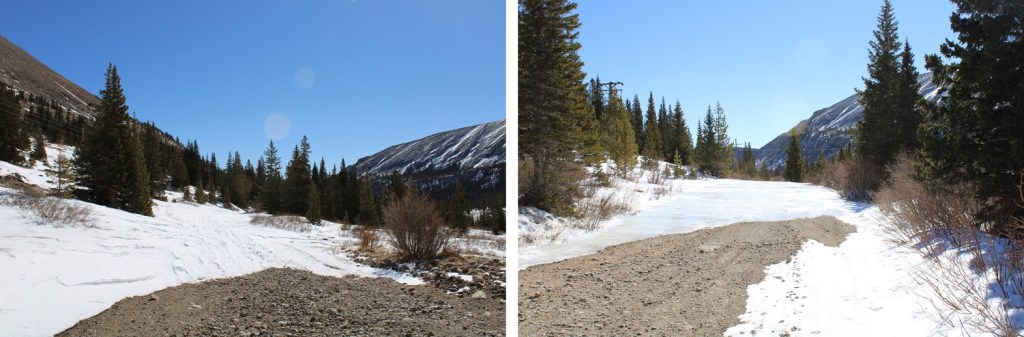
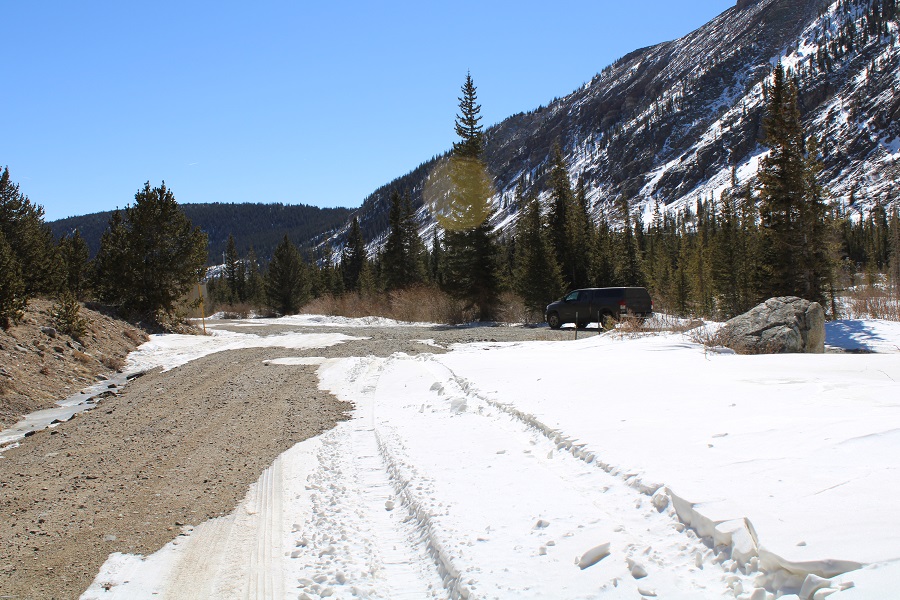
About a mile in was the furthest anyone has been able to drive recently

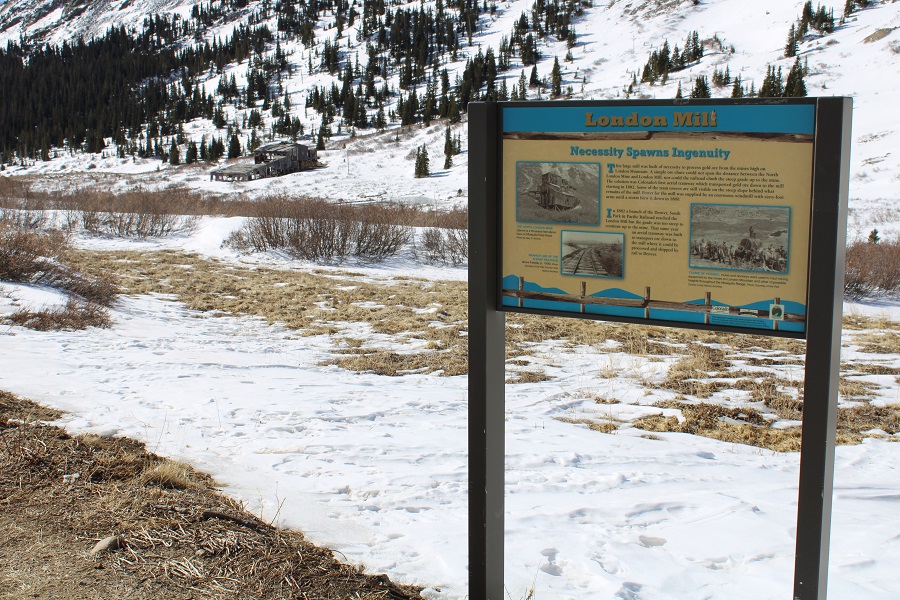
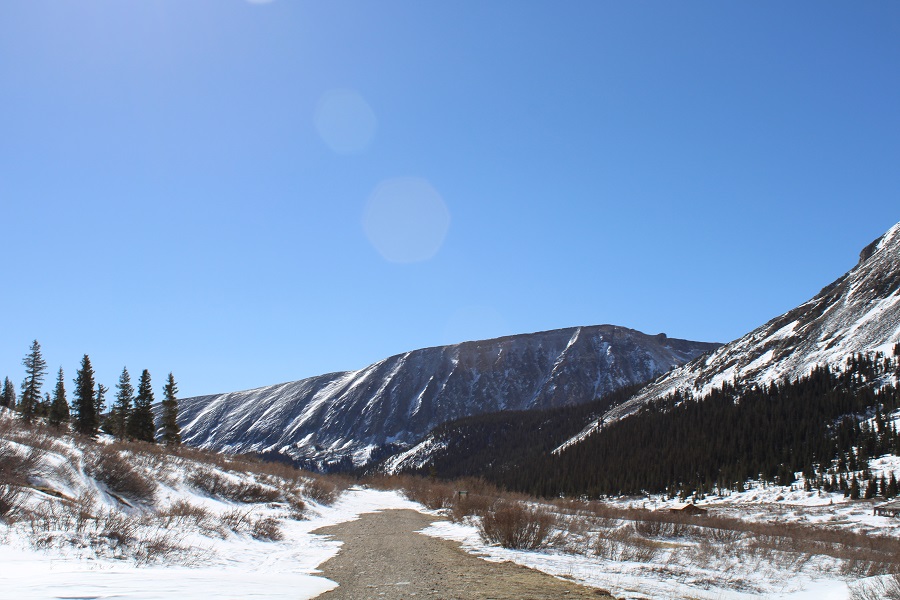
I passed North London Mill

After passing North London Mill I turned left at the junction

It was here the sun began to rise and I started trying out my new camera

It was also here I started postholing more than I could stand.  I decided to put on my snowshoes, and wore them until I made it to the Mosquito/London saddle

I followed the road up to London Mine

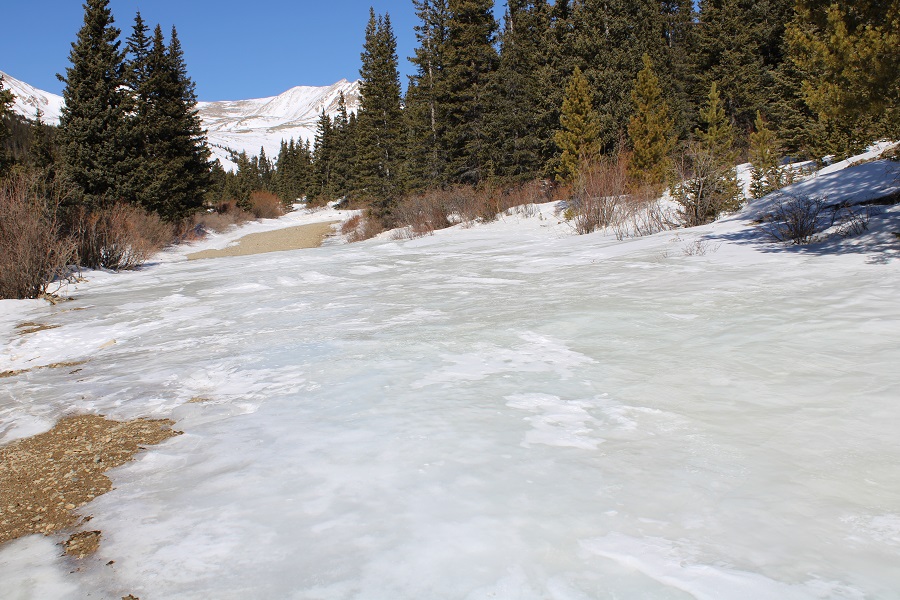
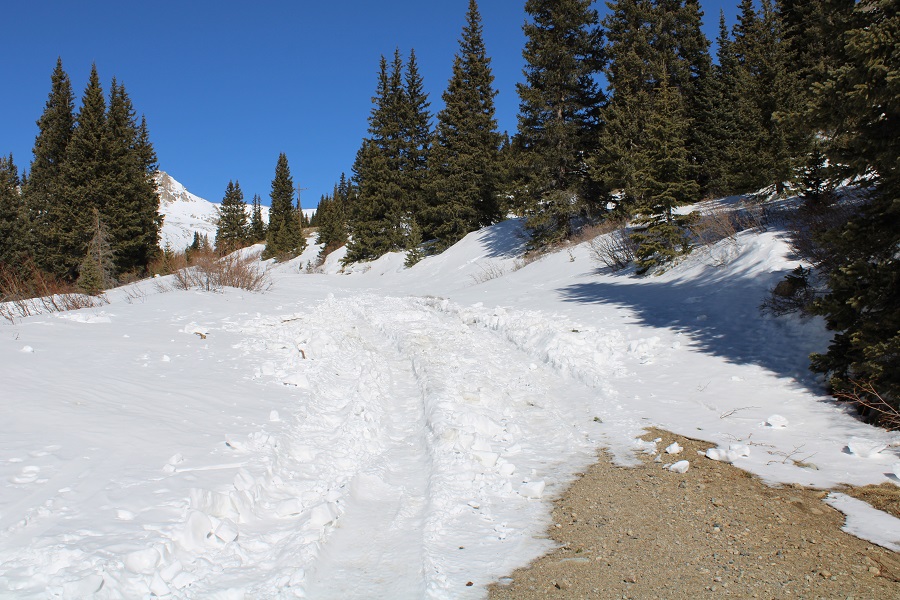
At times the road was completely covered in drifts

The road was covered in snow as I got closer to the mine, so I just had to kind of wing it.

The moon was just going behind the ridge as I reached the mine

I continued past the mine, heading west

And followed the road to the saddle.  From a distance this road looks mild, but I’ve taken this route in winter before, and the drifts can get pretty steep and go down quite a ways into the drainage (the pictures don’t do the drop offs justice).  It’s a good idea to have traction and an ice axe for this part in winter

I made it to the London/Mosquito saddle and took off my snowshoes, turned left, and followed London’s ridge southeast.

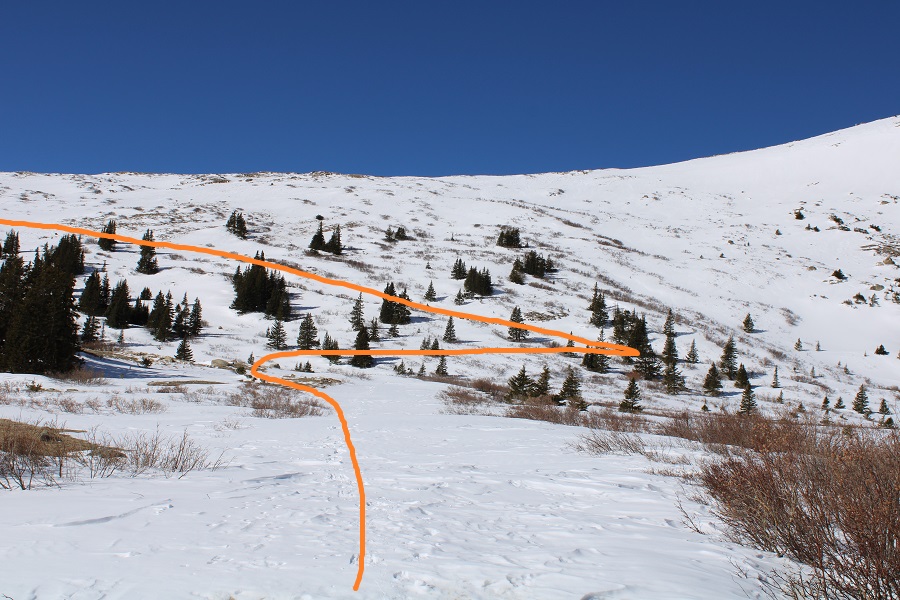
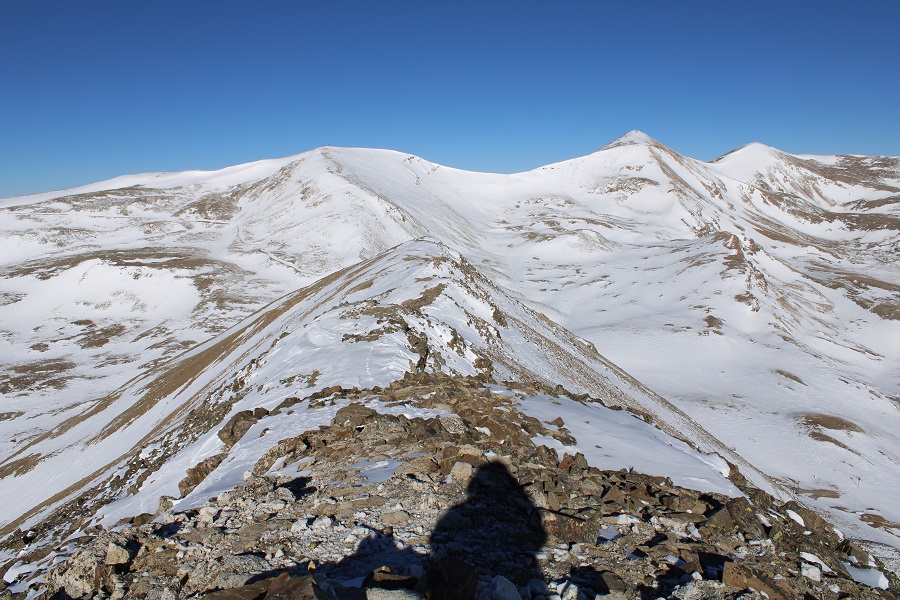
This ridge goes for almost exactly a mile.  After initially skirting to the right, I was able to stick to the ridge proper the entire time, and only postholed a few times in the snow.  This is all class 2, with the snow making it an easy class 3 in just a few areas.  Also, I didn’t remember it until I got back home and looked at my pictures, but the one drawback of this camera are the sun spots when directly facing the sun.  I know what causes them, I just need to be more diligent in the future against preventing them.  Here’s the ridge route, with a bunch of false summits:

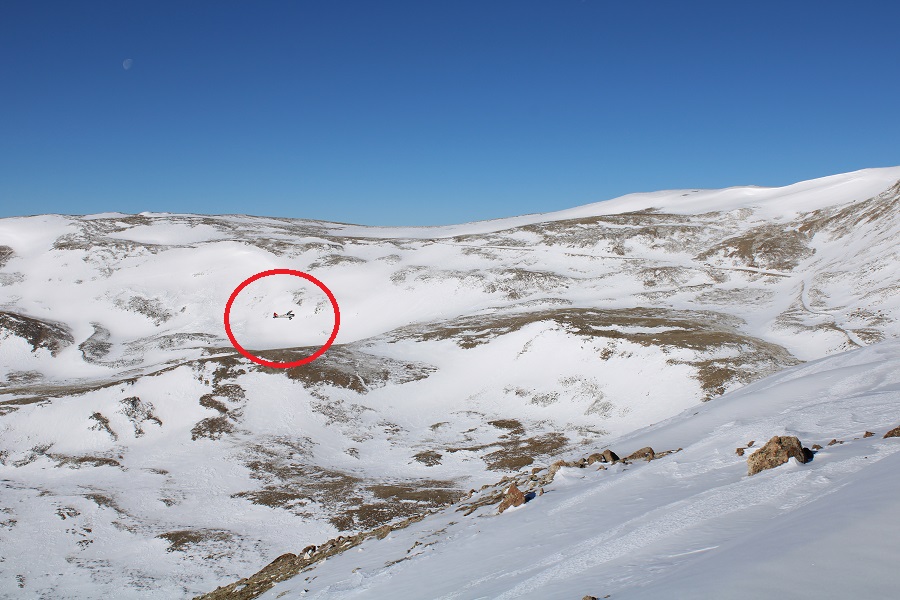
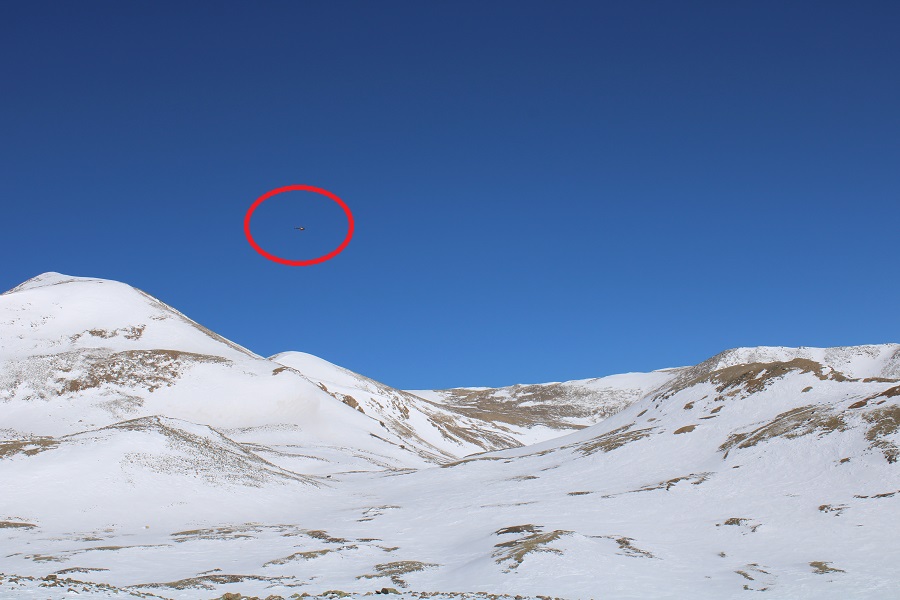
About halfway along the ridge I heard a loud buzzing, looked around, and saw a biplane flying very low.  I watched it go around the mountains and through the passes.  So cool!  I wanted to wave, but didn’t think they could see me, and also worried they might think I needed help if I did. 

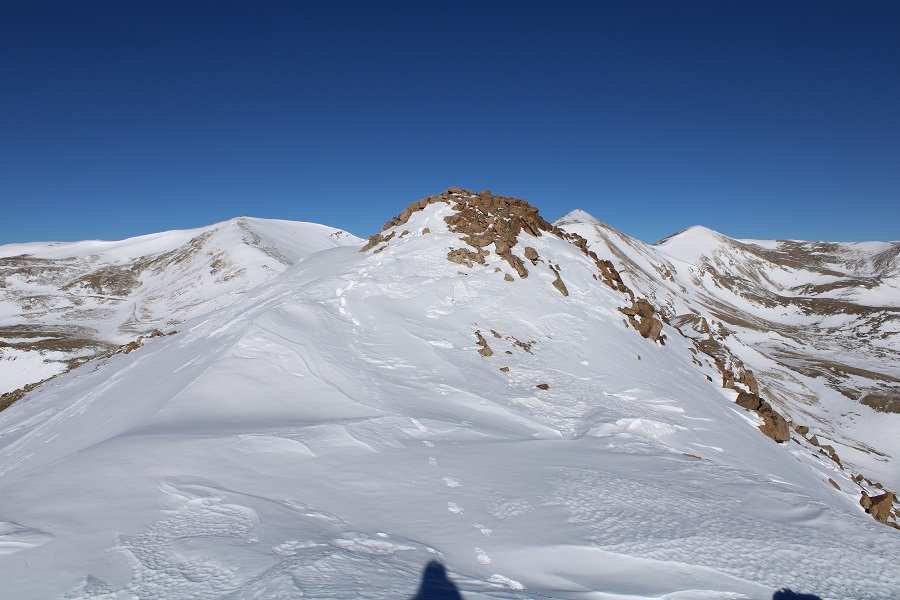
Here’s the final trek to the summit

I summited London Mountain at 8:30am

London Mountain Summit

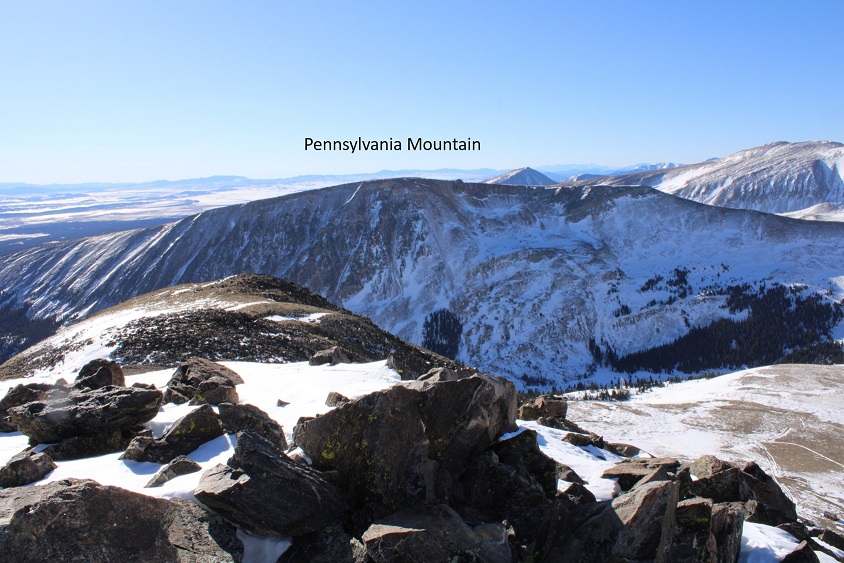
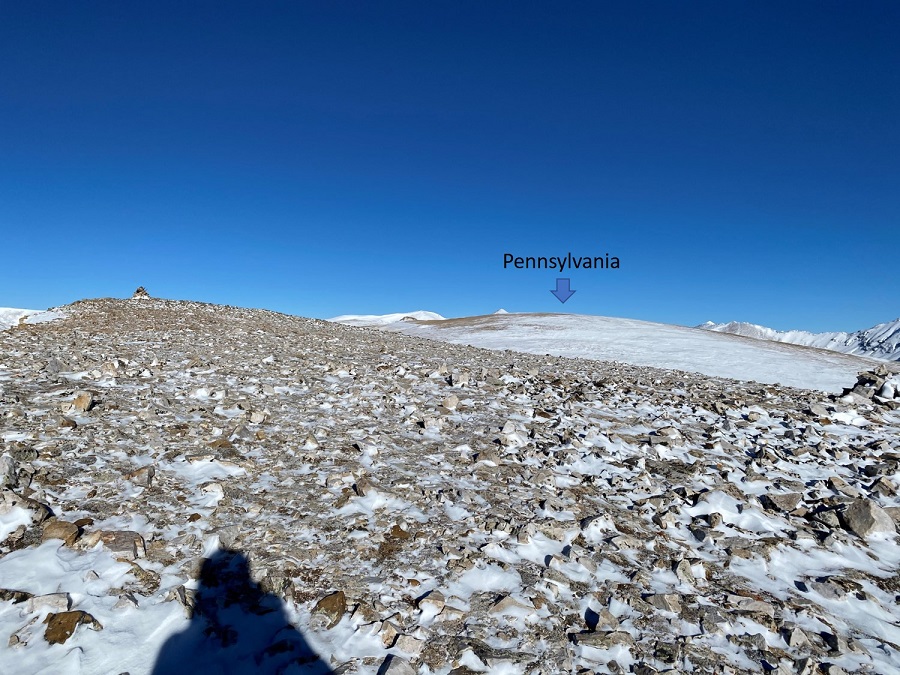
I had a good view of Monday’s summit:  Pennsylvania Mountain

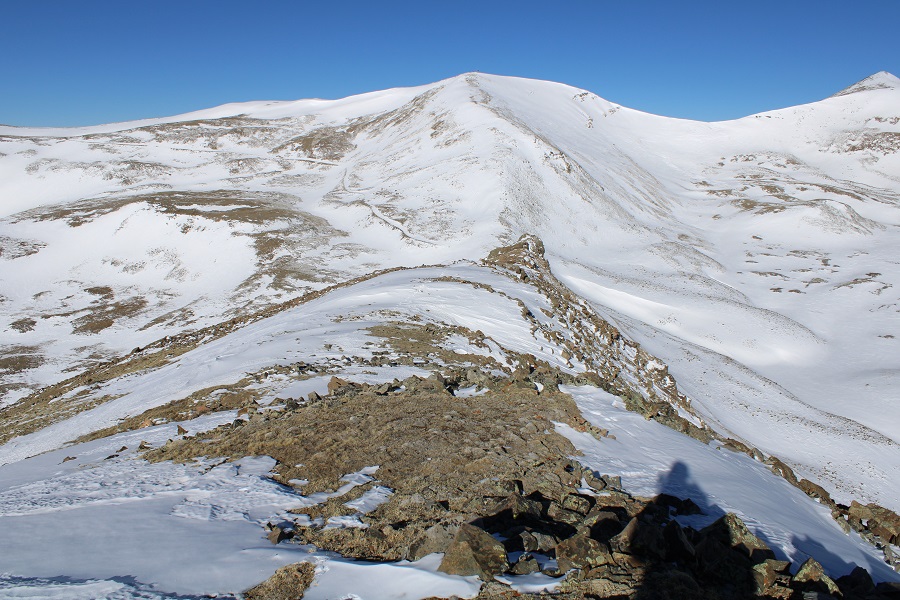
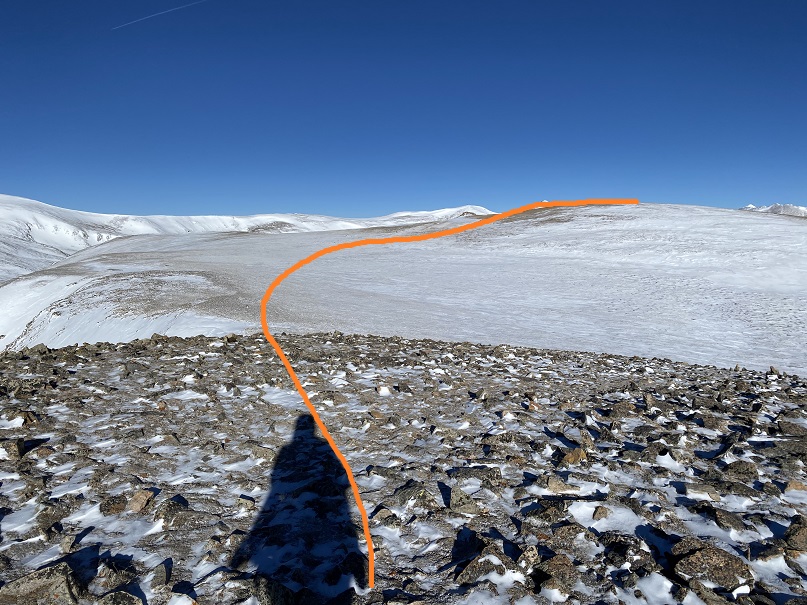
Here’s the trek back down the ridge

Yes, this is all class 2/easy class 3 to avoid snow

And back towards the mine

Here I heard another loud buzzing and saw a helicopter fly overhead.  It didn’t look like a rescue helicopter.

Here’s the path the road takes back down

I made it back to where I’d put on my snowshoes, took them off, and turned right onto 12 and followed it back to my truck.  About halfway back my microspikes broke, both of them, so I guess it’s time to get out the needle nose pliers again.  I made echoing clanking sounds as the chains scraped the dirt as I walked the rest of the way back.

I made it back to my truck at 10:45am, making this a 10.63 mile hike with 2305’ of elevation gain in 4 hours, 45 minutes

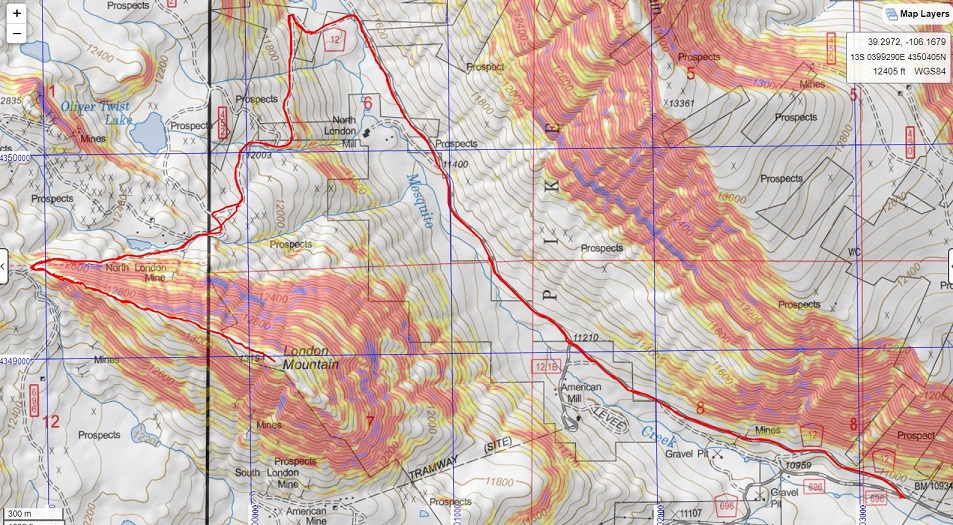
Here’s a topo map of my route:

Pennsylvania Mountain – 13,013

RT Length:  5.35 miles

Elevation Gain:  1509’

I had a lot of work to get done today, but the weather was really nice and I was itching to get out and hike something above 10K, so I picked a peak I could do relatively quickly.  In fact, I think the drive to the trailhead was longer than the hike.  I arrived at the Pennsylvania Mountain Trailhead at 6am and got out my gear.  There are a few turns to navigate to get too the trailhead.  Pro tip:  When I’m unsure if I’ll have cell service on my drive out (thus being able to pull up Google Maps, etc.) I create a road map using CalTopo and add it to my GPX coordinates for the day.  This way I can follow a GPX track back to the main road when I’m done with my hike and don’t need to worry about memorizing or printing out directions. 

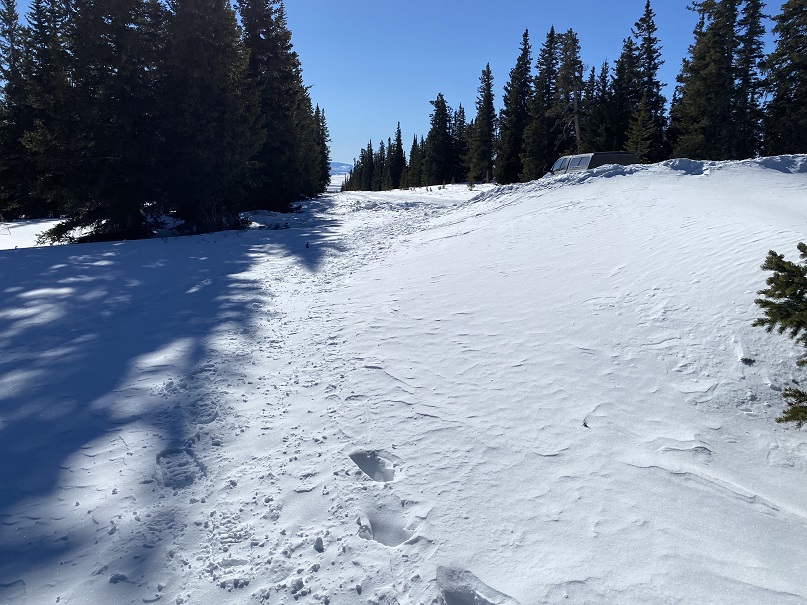
I parked at the end of a plowed dirt road in a residential area.  The trail starts to the right

I began with my snowshoes on, and kept them on until making it out of the trees.  I’m sure there’s a trail here in summer, but in winter there wasn’t a solid trail (but there were a lot of ski tracks).  I headed northwest through the trees and willows to treeline.

Once at treeline the route was obvious.  I started climbing the east ridge

The only downside? There were a few false summits

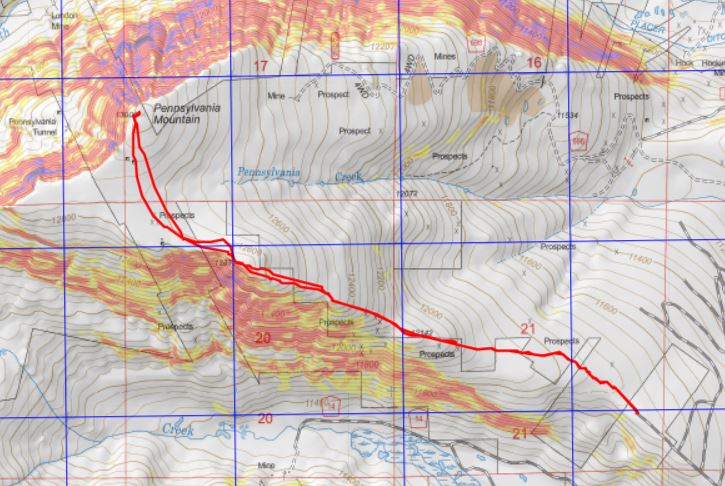
This was the last one however, and included a small decrease in elevation and a plateau before increasing in elevation again.  Here’s the overall route.  It’s really more of a hill at this point than a peak

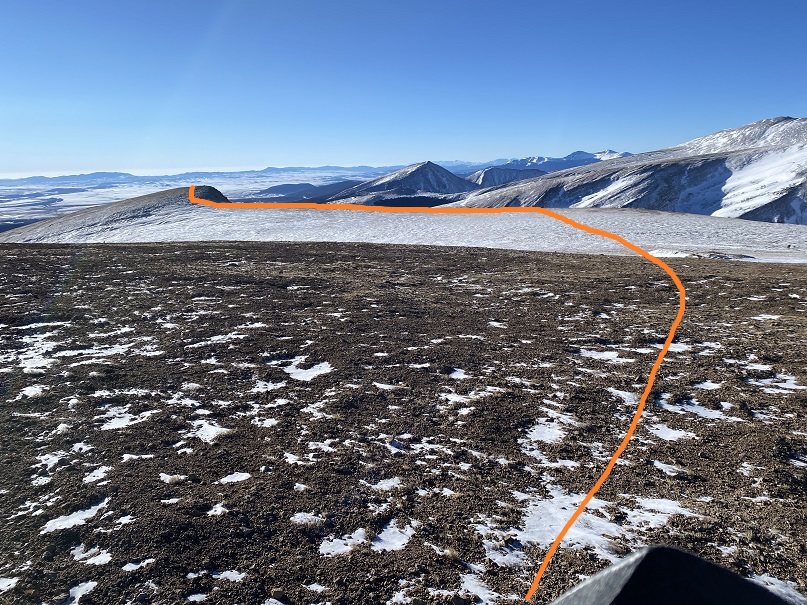
It’s best to stick to the ridge so you don’t lose too much elevation.  Here I saw a small herd of elk.  They’re in the photos, but too far away to really make out.  I headed northwest towards a mining claim and rock outcropping

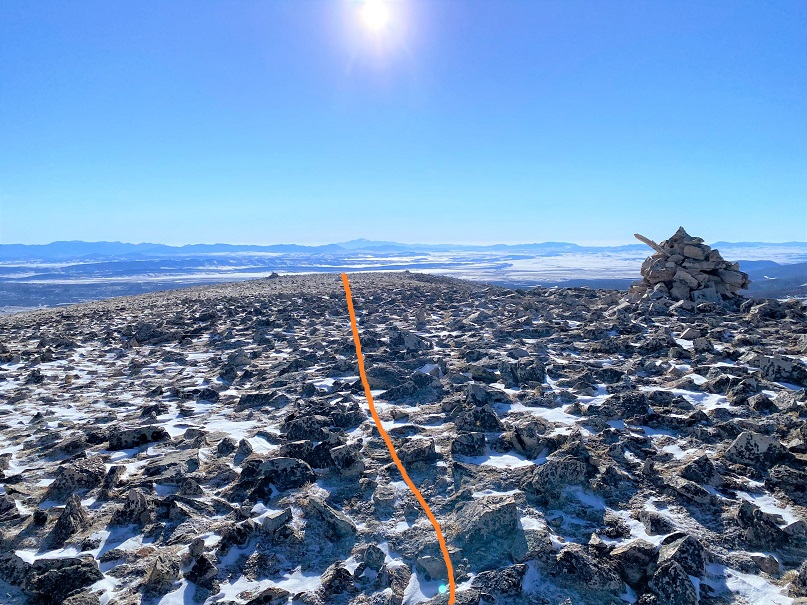
Here’s the final push to the summit

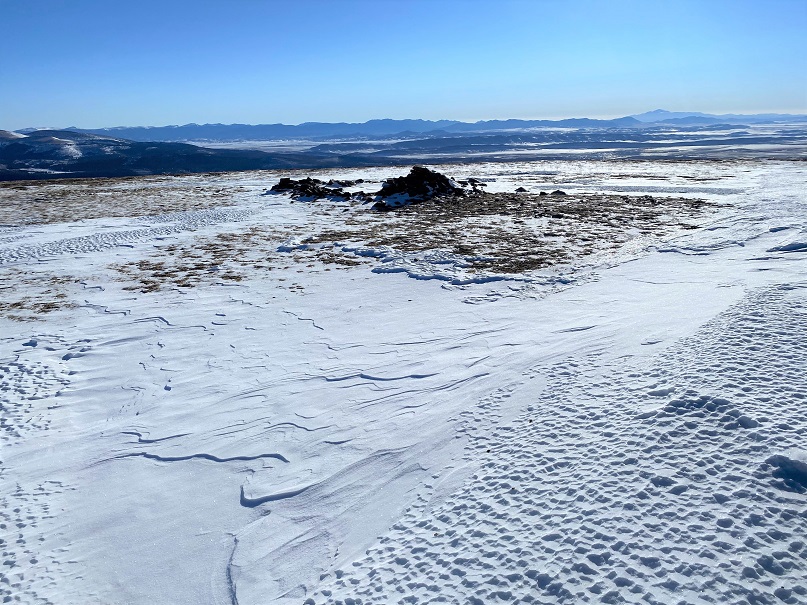
The summit was relatively flat. It was difficult to determine exactly where the true summit was.  There was a wind break and a cairns, but they didn’t seem to be at the true high point.  I decided to just walk around all over the summit.

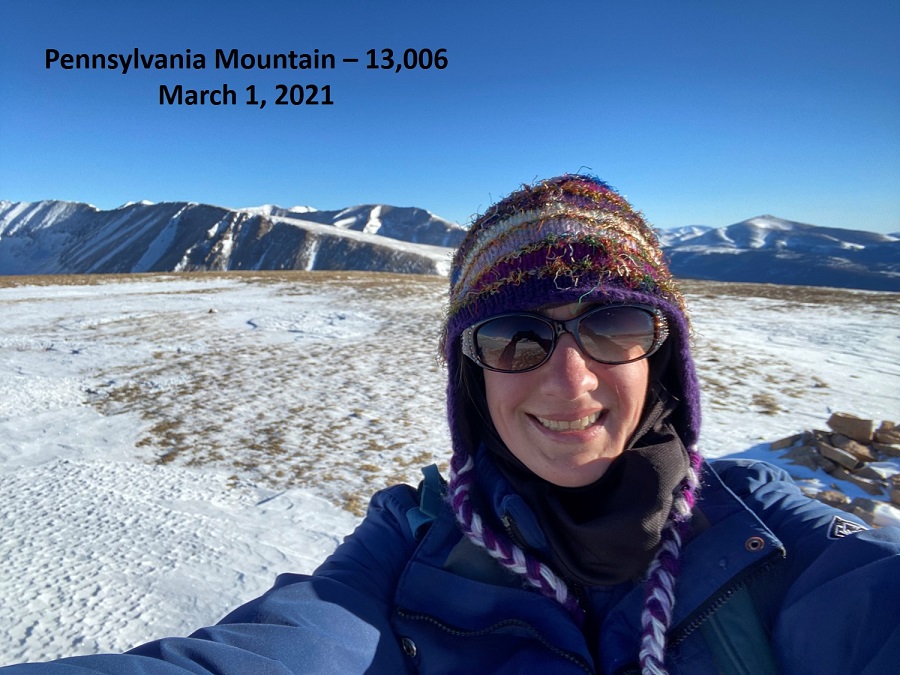
Summit Selfie

Summit of Pennsylvania Mountain

This had been a quick hike so far, and the day was beautiful.  I wanted to stay longer on the summit, but I had to get to work.  I turned around and headed back the way I’d hiked in

I stopped by the mine on the way back. There wasn’t much left of the structure

Then I aimed for the knob in the ridge

And then headed back down all those small, false summits

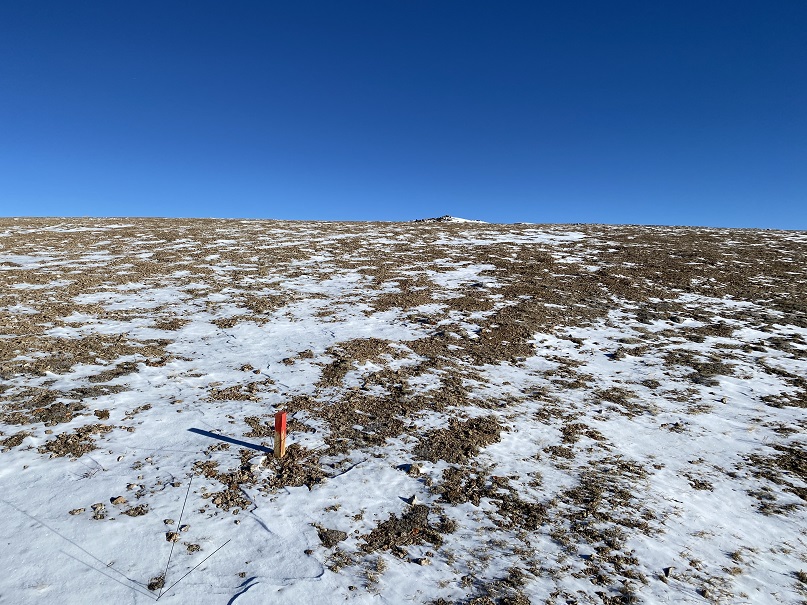
There were numbered markers scattered all over the hillside.  I think they have something to do with the mining claims

Back near treeline I put my snowshoes back on and headed through the trees and willows to the parking area. 

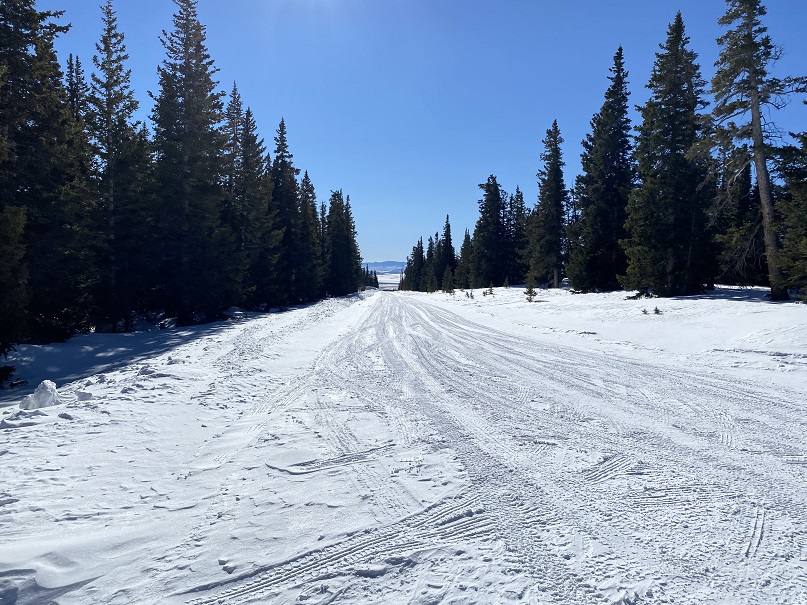
Here’s a look at the road out

I made it back to my truck at 8am, making this a 5.35 mile hike with 1509’ of elevation gain in 2 hours.

This was a very nice and short, mild winter hike.