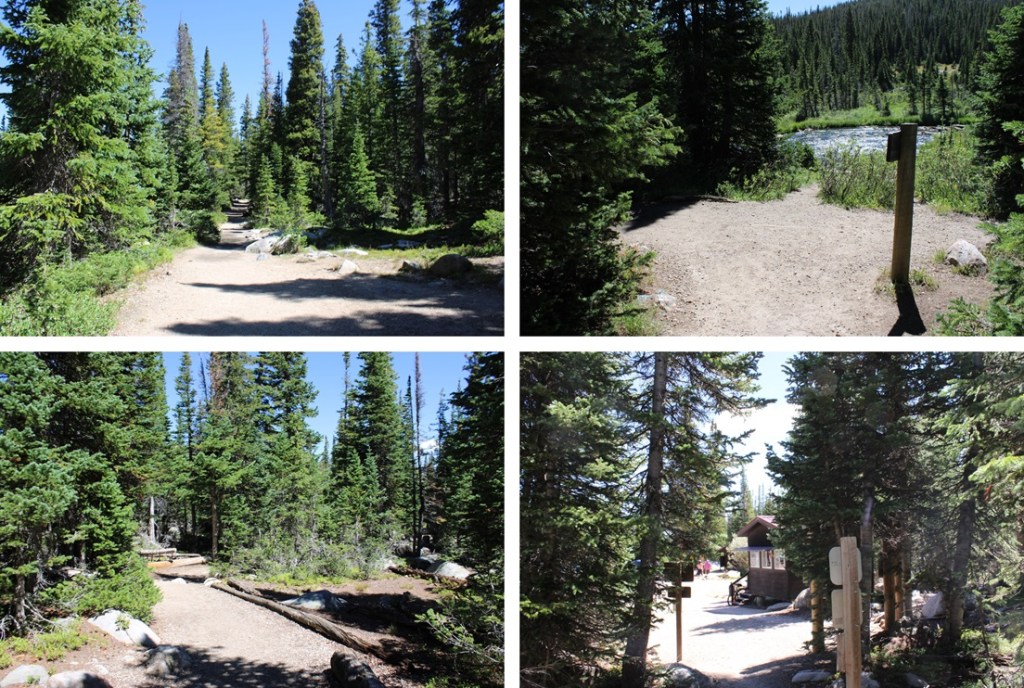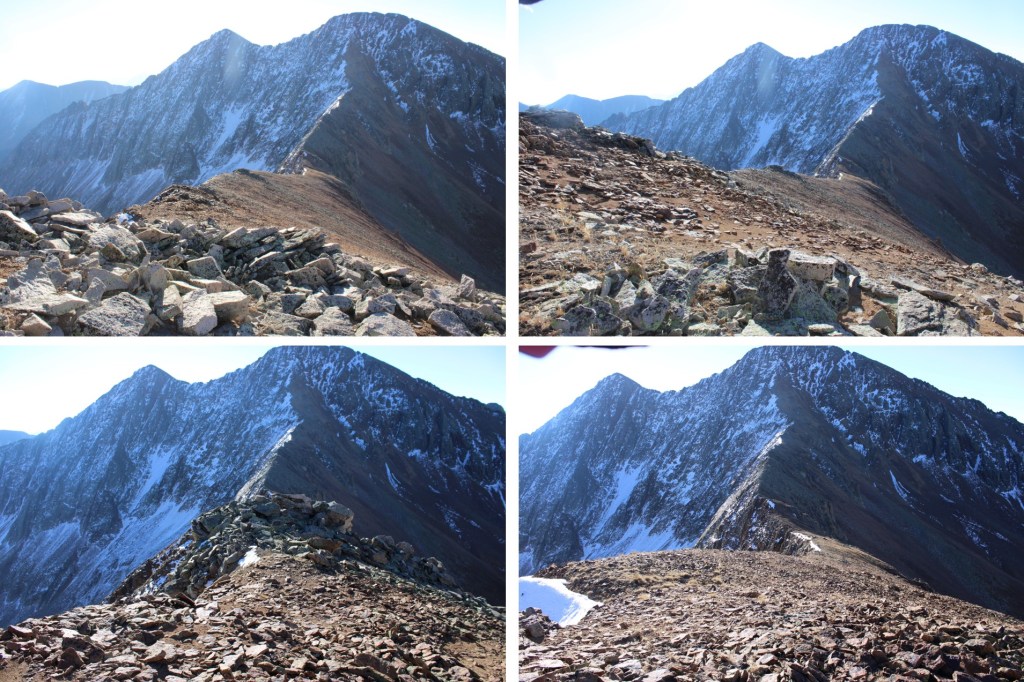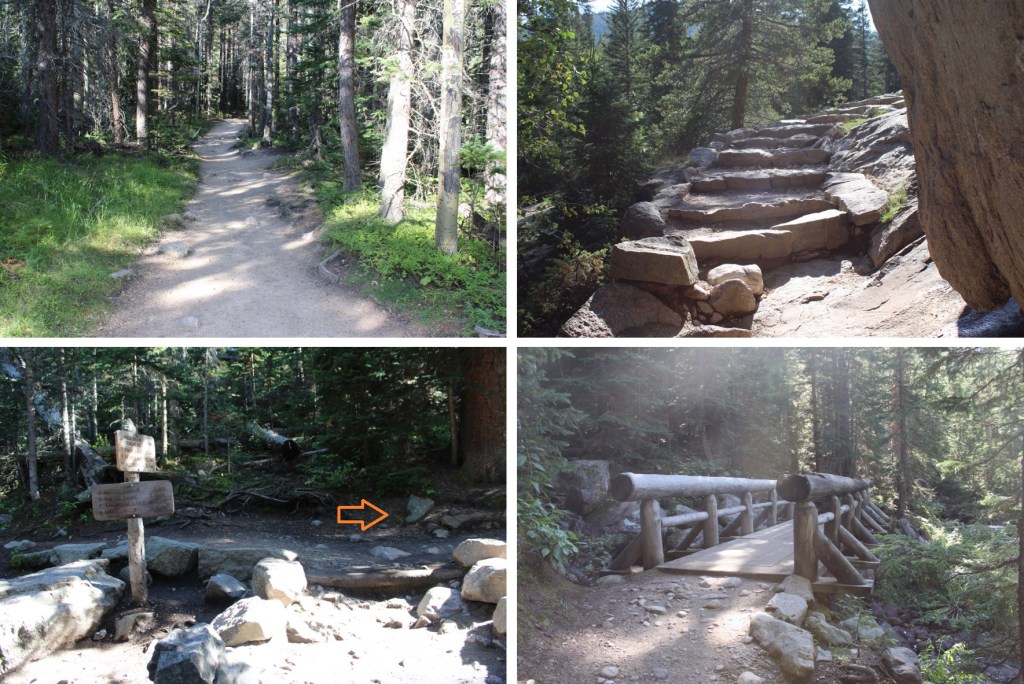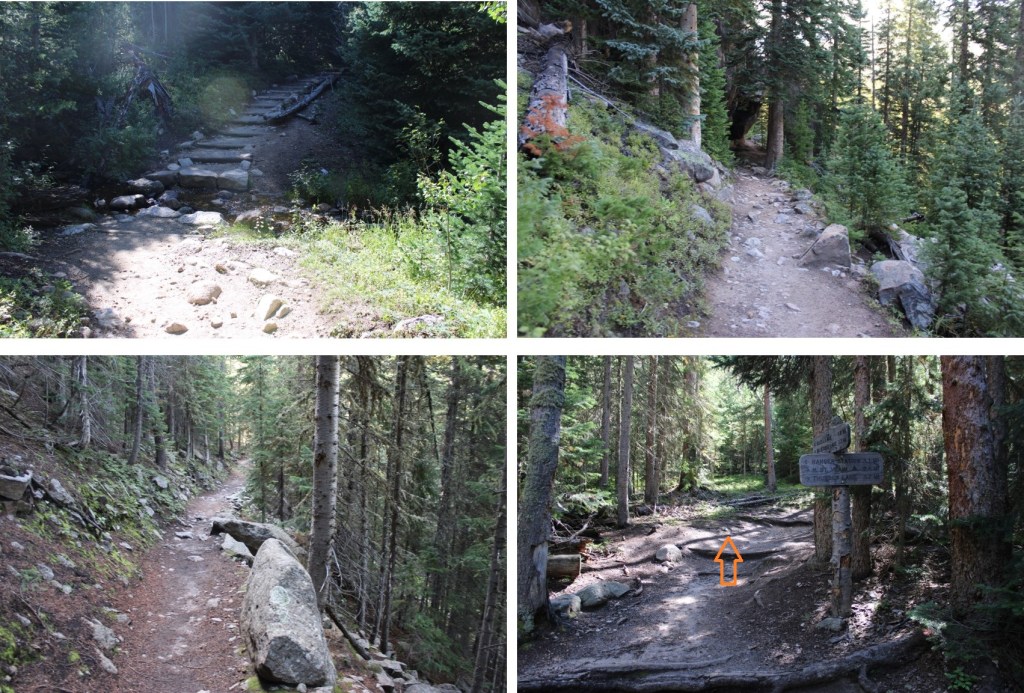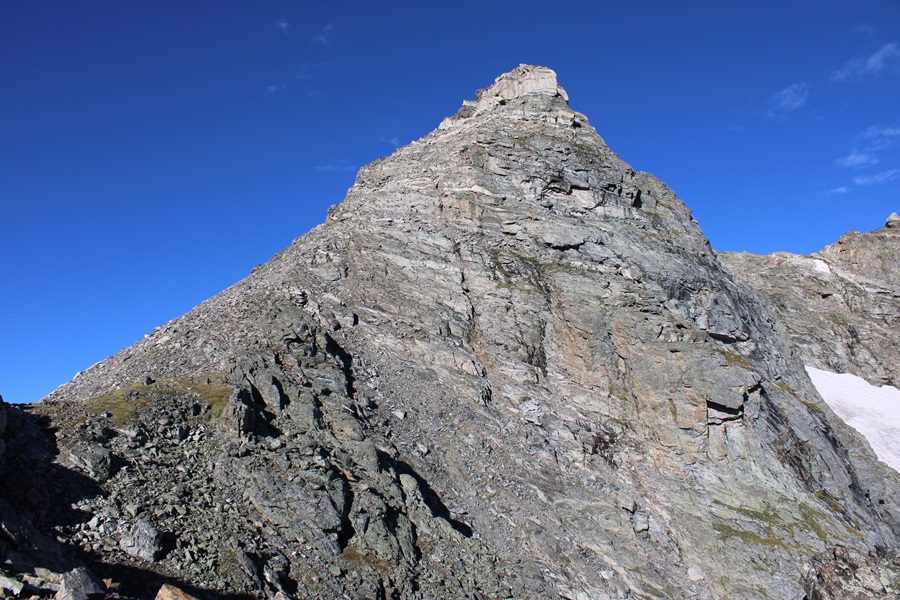
Navajo Peak – 13,419′

RT Length: 14.52 miles

Elevation Gain: 3346’

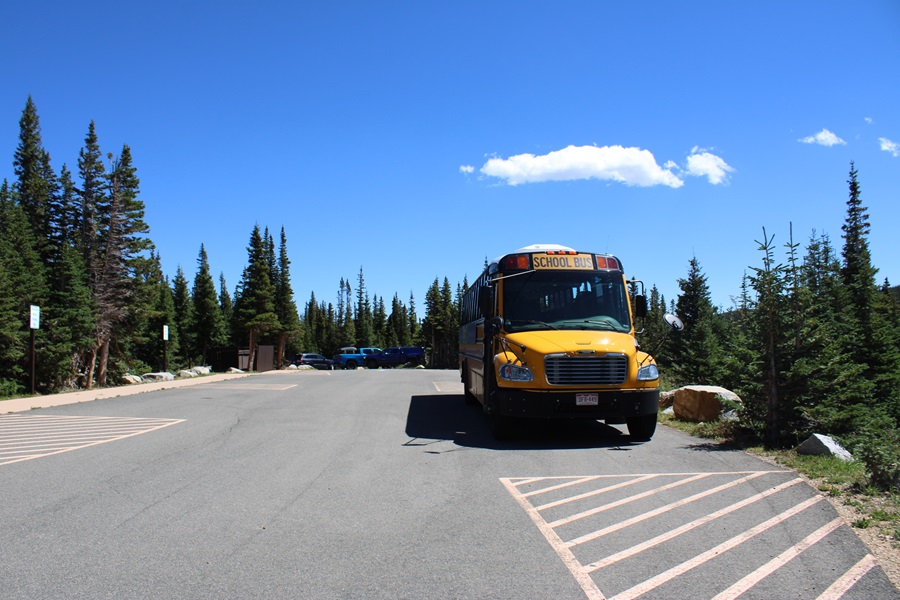
This hike starts from the Long Lake Trailhead inside Brainard Lakes Recreation Area.   This area is permitted.  There are basically two options for permits (I’m summarizing) either timed entry between 8am-5pm, or an overnight permit.  Overnight parking permits aren’t granted unless you have an Indian Peaks Wilderness overnight permit first.  Both permits go on sale at the same time.  Since I wanted to start before 8:30am, I needed to first get an IPW permit, then try to get an overnight parking permit. 

I was able to secure an IPW overnight permit for the weekend but had difficulty securing overnight permits to park inside of Brainard Lake.  Eventually I was able to get two 1-night (overnight) permits, one for Long Lake Trailhead and the other for Niwot Campground.  I tried to get two consecutive in the same area, but they weren’t available for the dates I was allotted my IPW permit. 

When I checked in at the Brainard Lakes Recreation area, they didn’t like what I had done (secured two one night permits at different sites), and decided a better option was to grant me a two night permit for Brainard Lake.  I’d have rather parked for two nights at Long Lake or Mitchell Lake, or even what I had done originally, which was one for Long Lake and the other for Niwot.  But they weren’t having that, so my mileage was increased by a couple of miles for this hike, since Brainard Lake is over a mile from the trailheads.  Also, after you’re inside the park, they have other ‘security checkpoints’ where you need to show you’re your permits again, and they also patrol the parking lots hourly to make sure your permit is valid.  Have I mentioned I’m not a fan of the permit system?  I’ve yet to see one that works smoothly, especially for mountaineers who are concerned with weather and start times.

As I was hiking early in the morning the next day, being flashed with bicycle lights from behind me at 4:30am, I realized there’s another option around the permit system: ride your bike from the winter closure to the trailhead.  I don’t own a bike, but this is definitely an option for the future… if I ever get a bike.

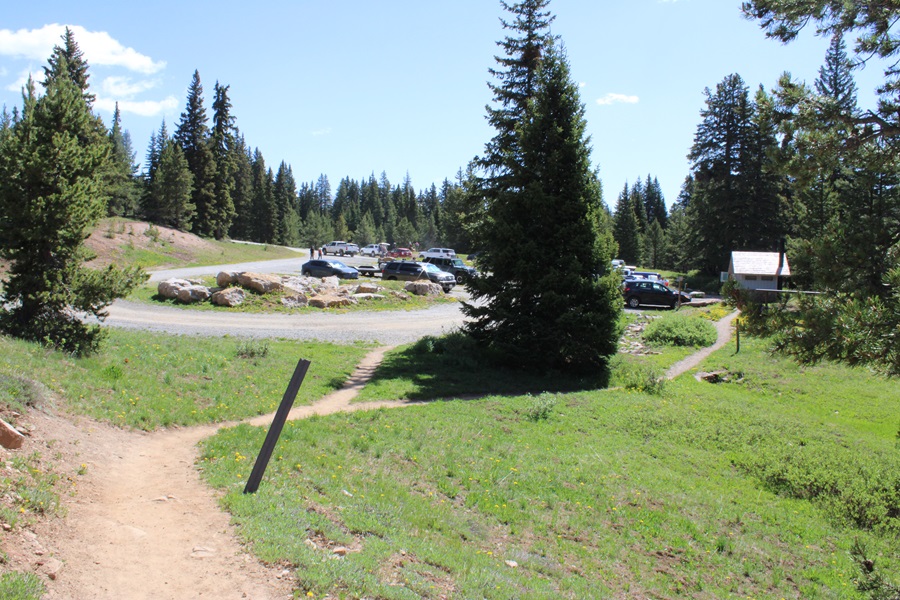
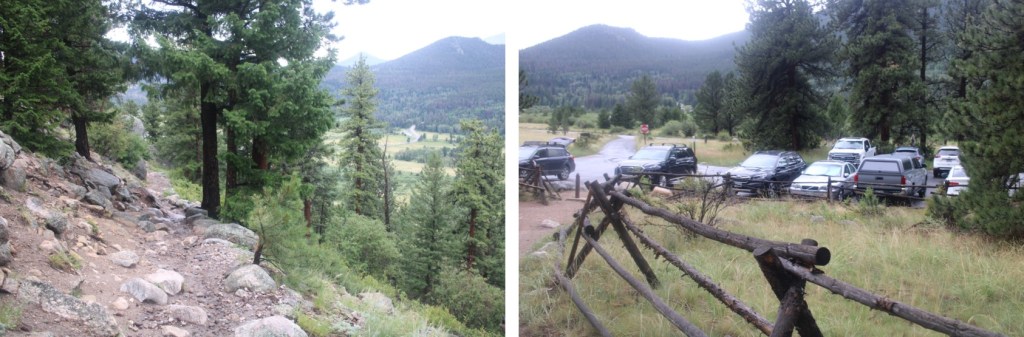
In any event, after minimal drama and parking a little further away than I’d have liked (but hey, it was better than parking at the winter closure…) I was on the trail at 4:30am, starting at the Brainard Lakes parking lot.  My first step was to follow the road for 1.3 miles to the Long Lake Trailhead.

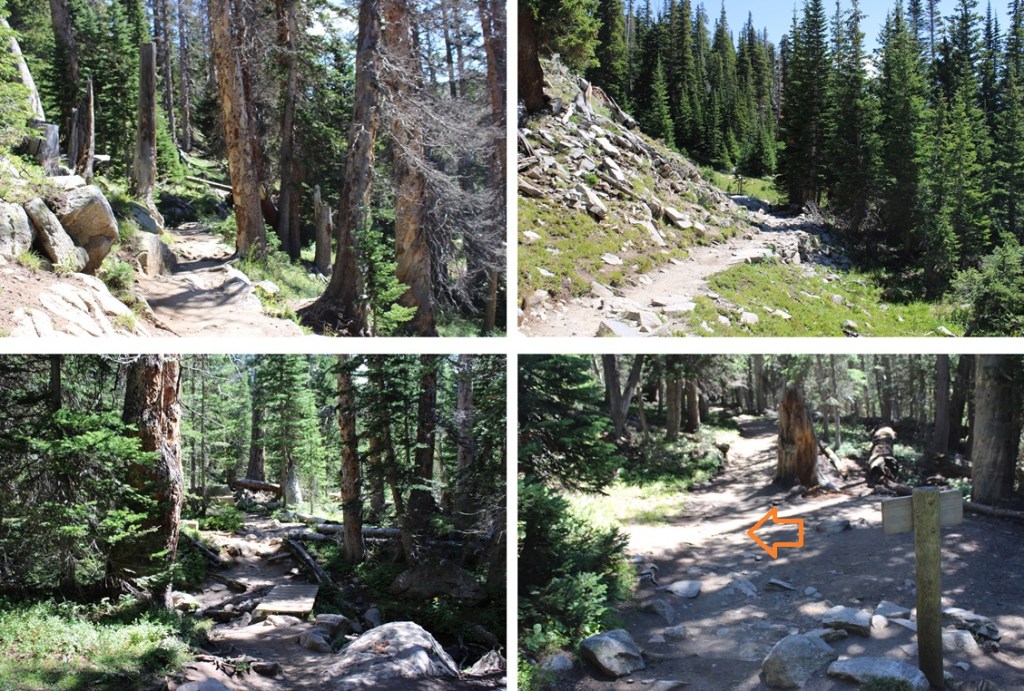
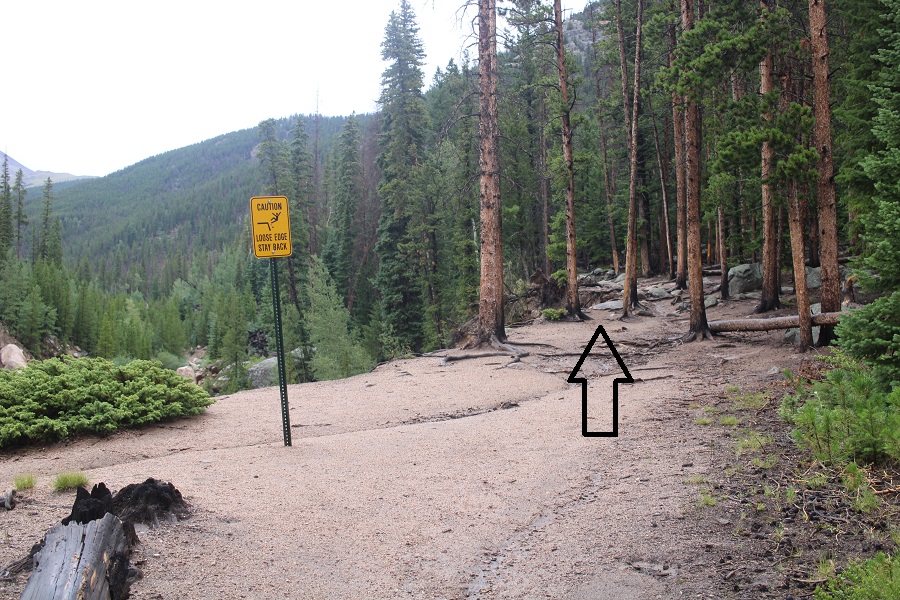
Once at the Long Lake Trailhead, I followed Pawnee Pass Trail west
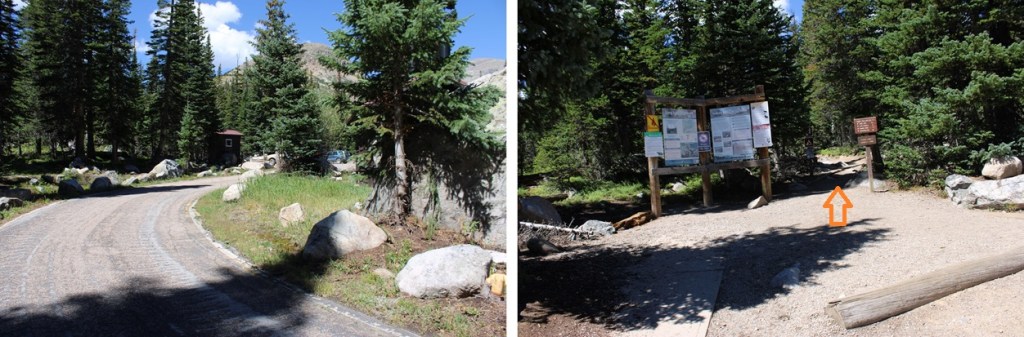
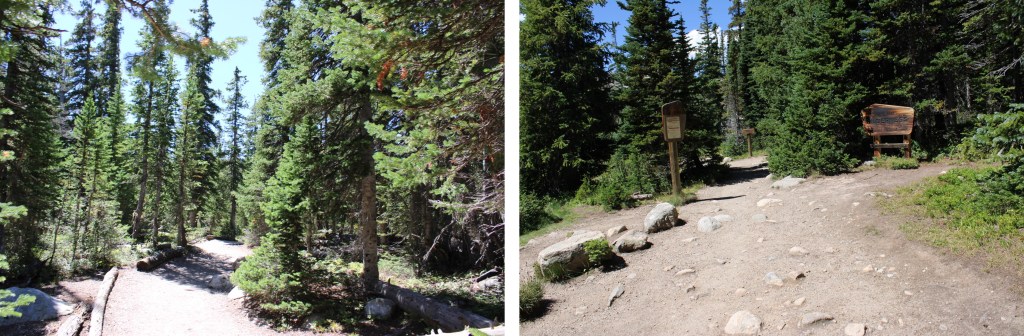
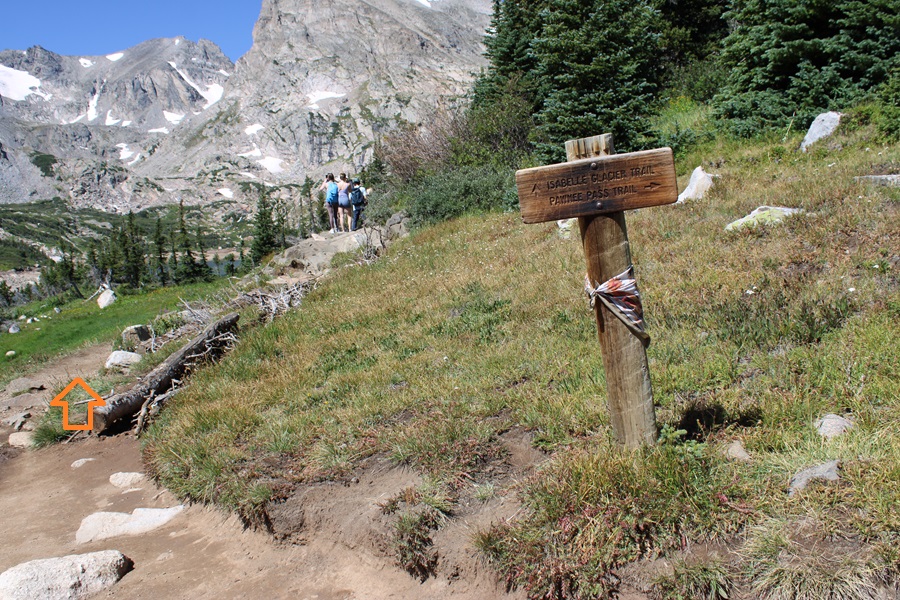
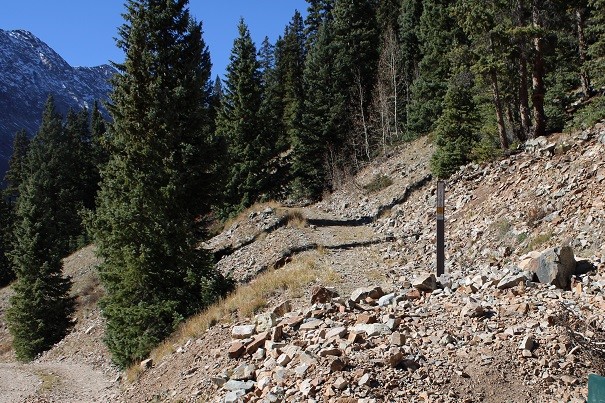
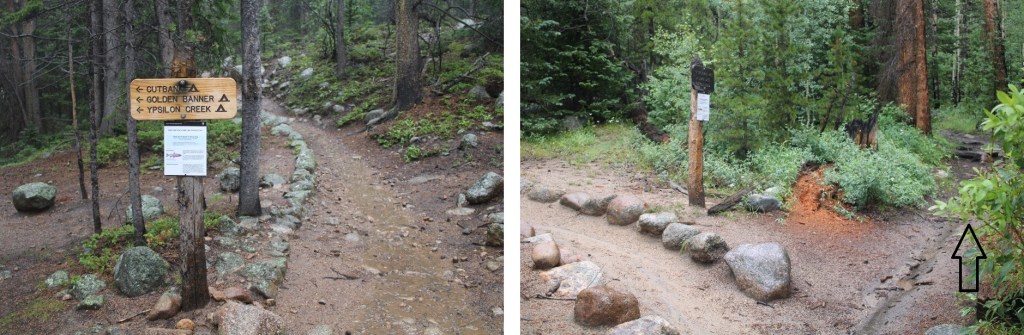
After hiking about 1.5 miles from the Long Lake Trailhead, I came to a junction and went right, following the Isabelle Glacier Trail
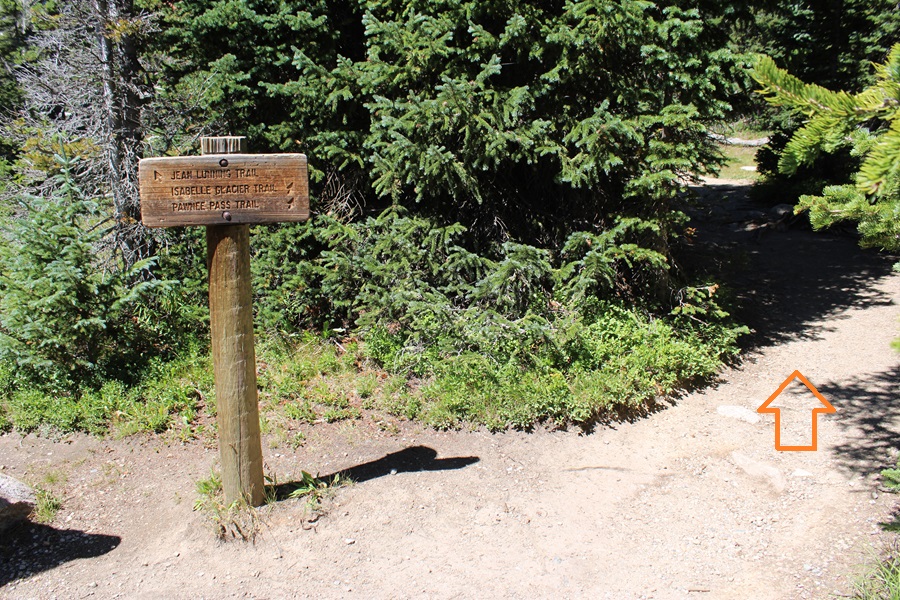
At the next junction I went right again, to continue along the Isabelle Glacier Trail. 
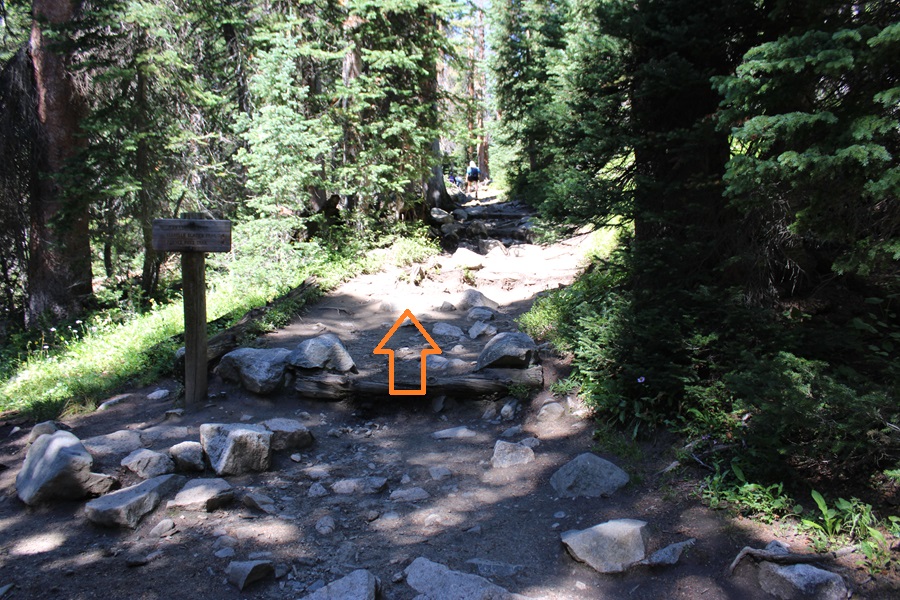
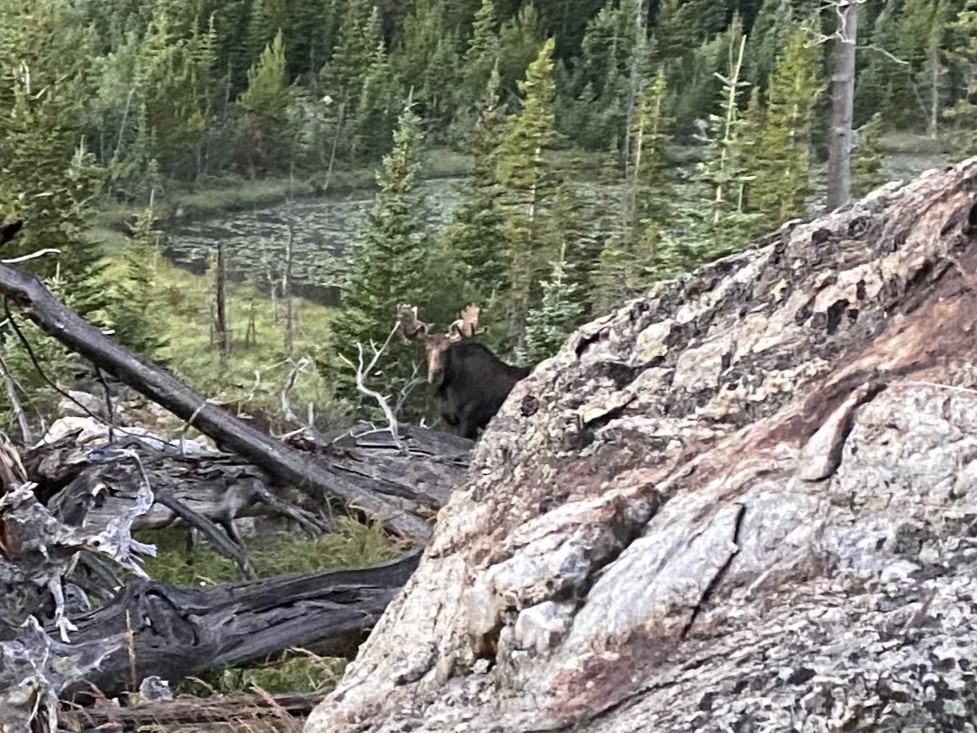
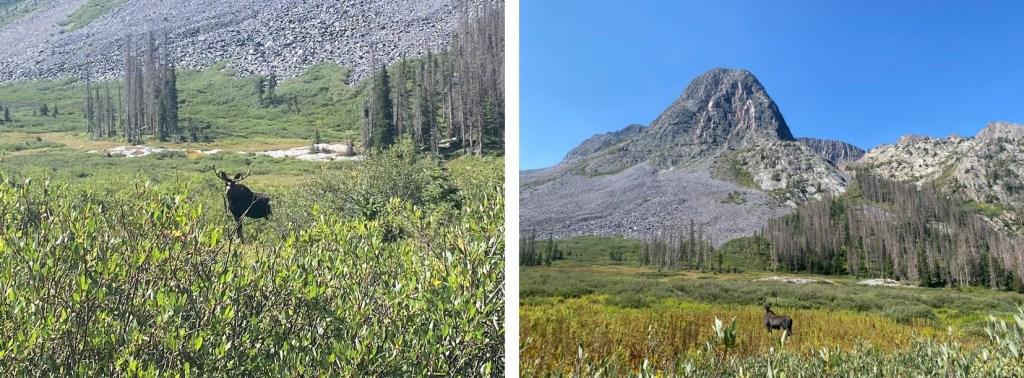
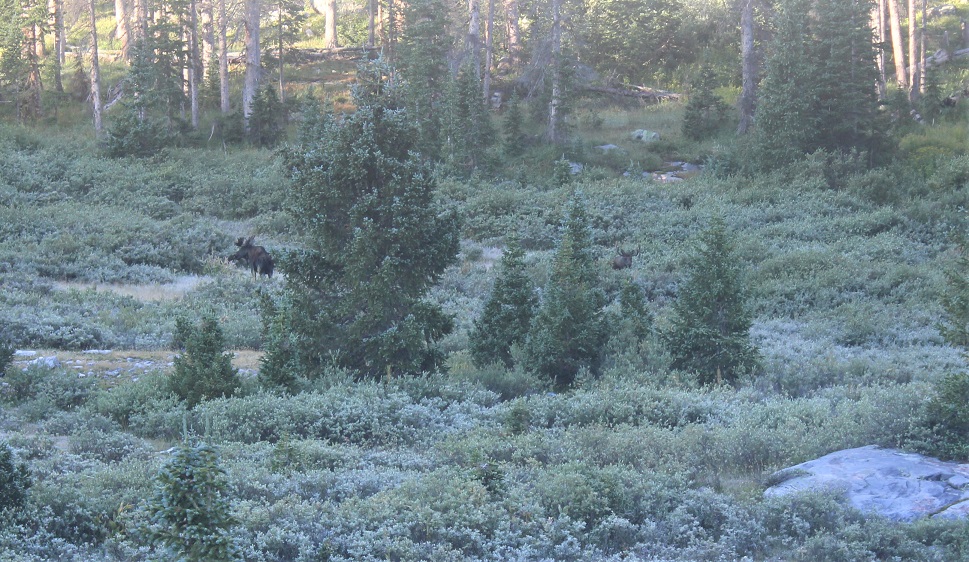
At the next junction, I came upon two bull moose.  When they saw me they snorted and grunted, so I hid behind a tree for 20 minutes until they’d made their way up the hillside, casually munching on willows as they went. I’ve been charged by moose in the past, and while other than the grunting and snorting (which could have meant “It’s too early to be awake”), I kept my distance.  Once they moved, I continued following Isabelle Glacier Trail
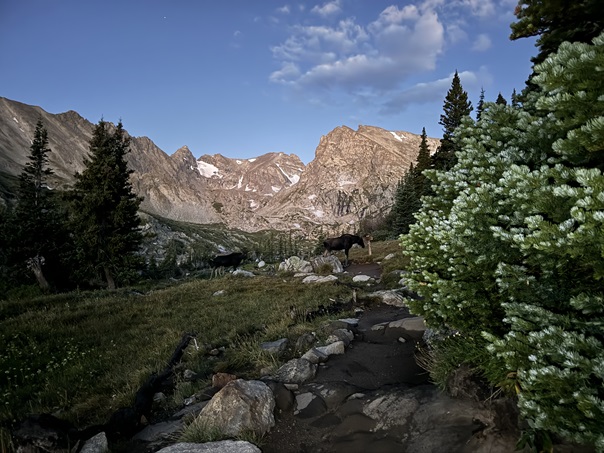
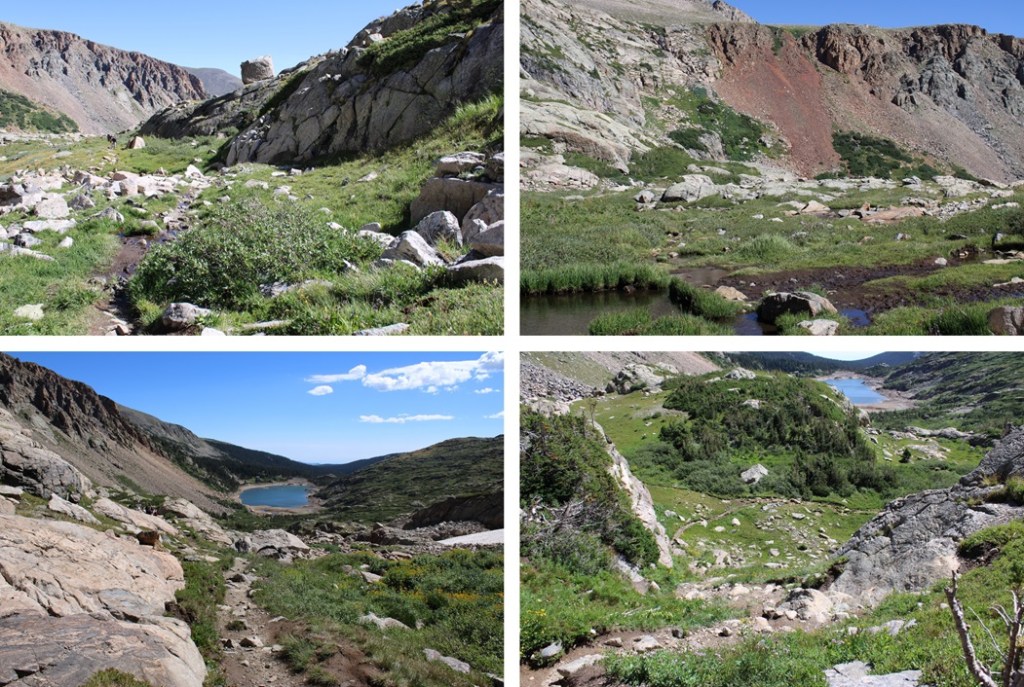
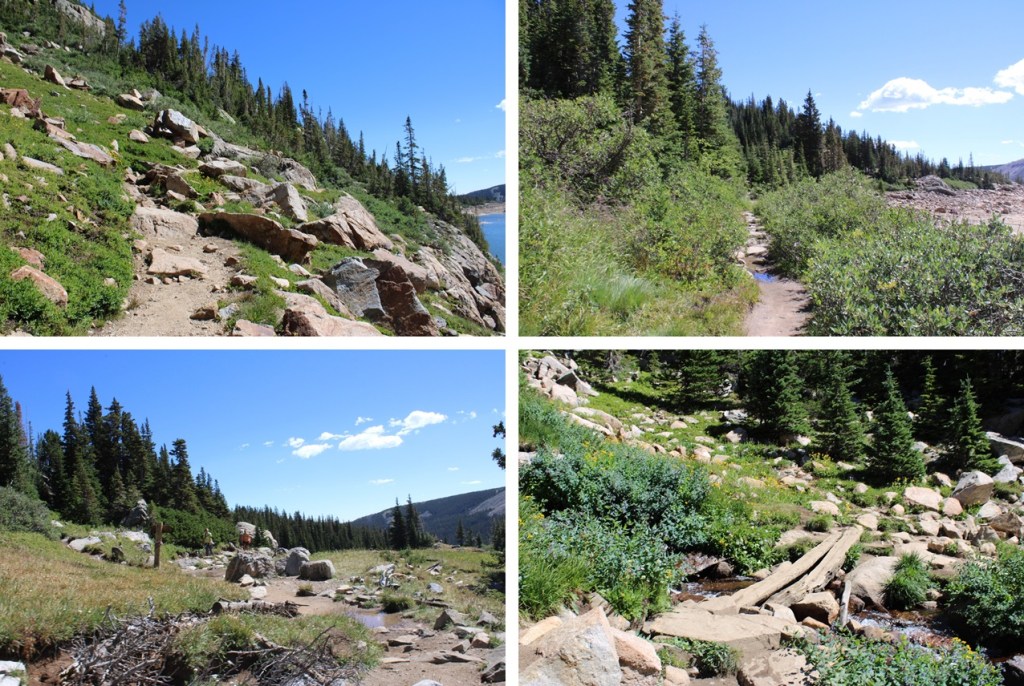
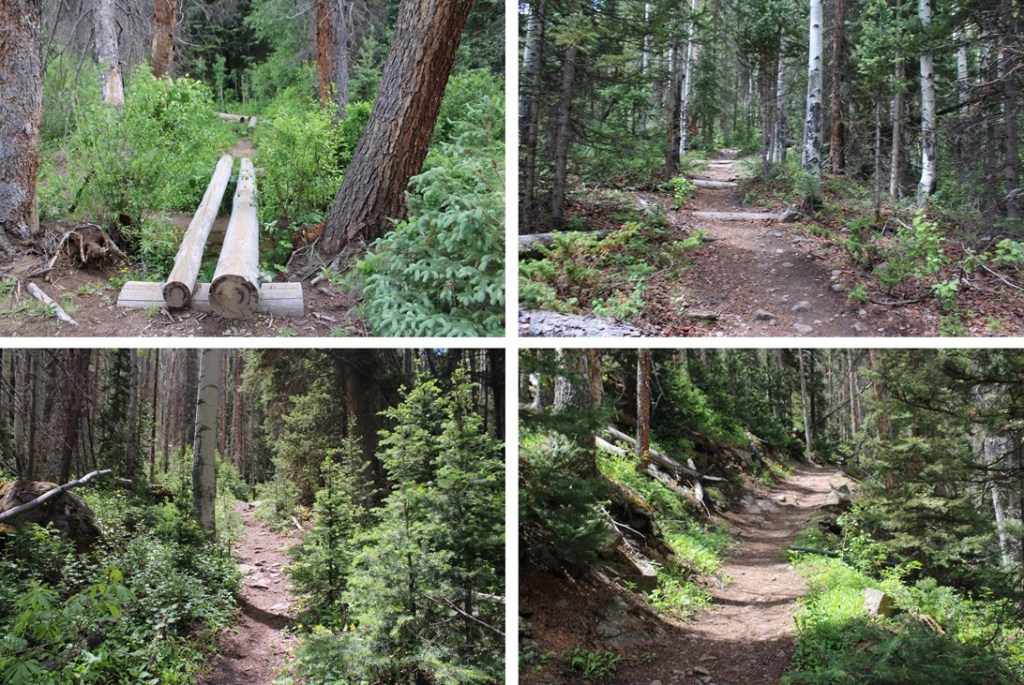
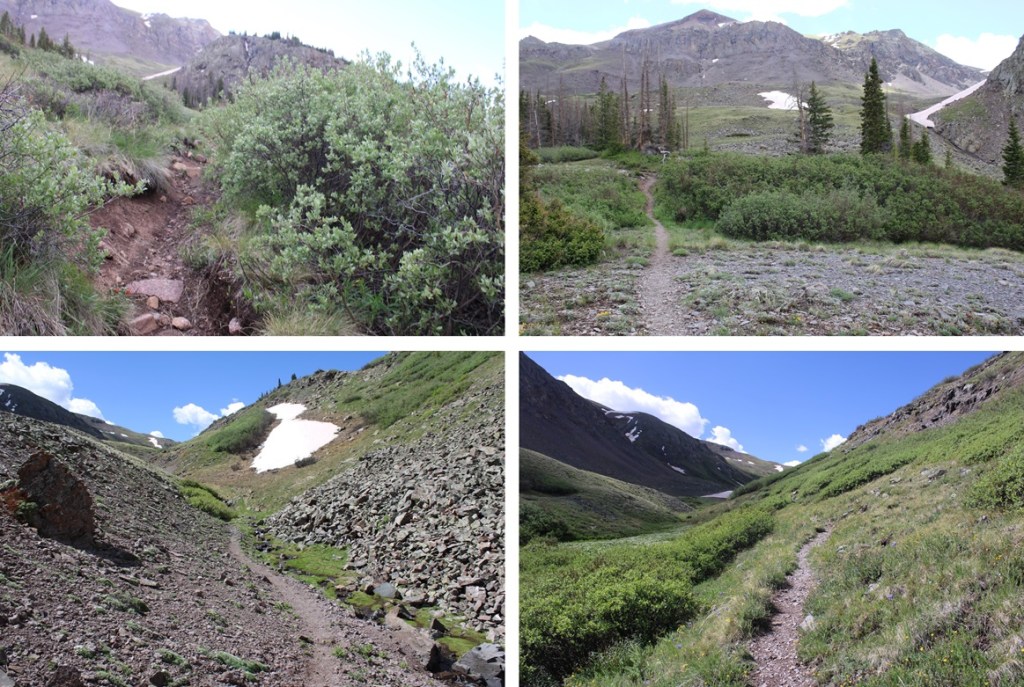
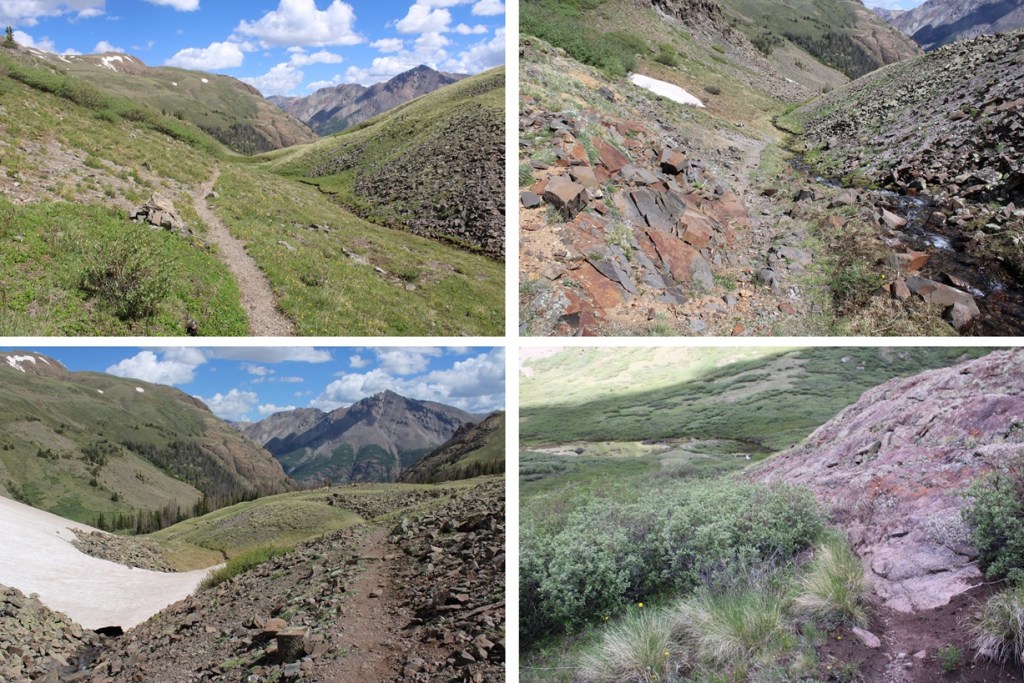
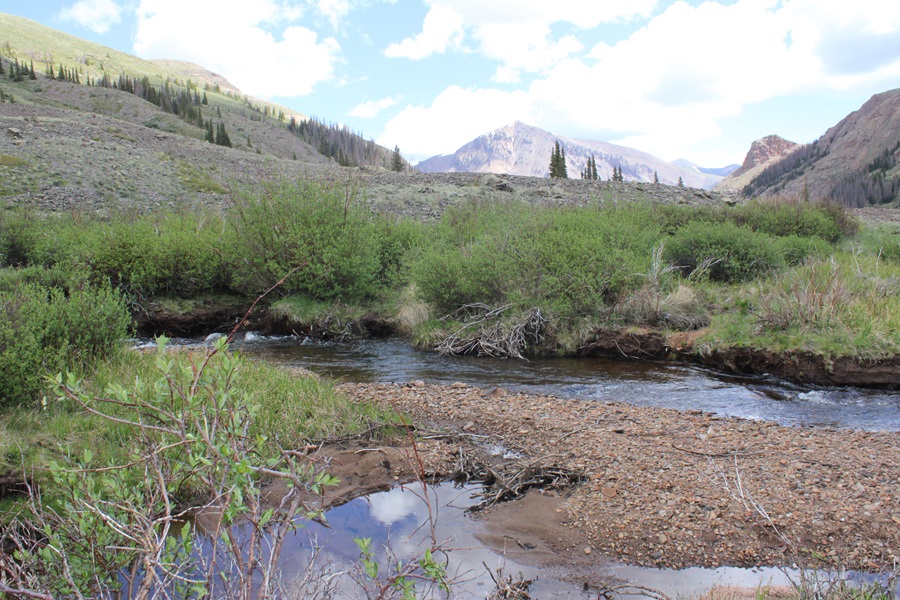
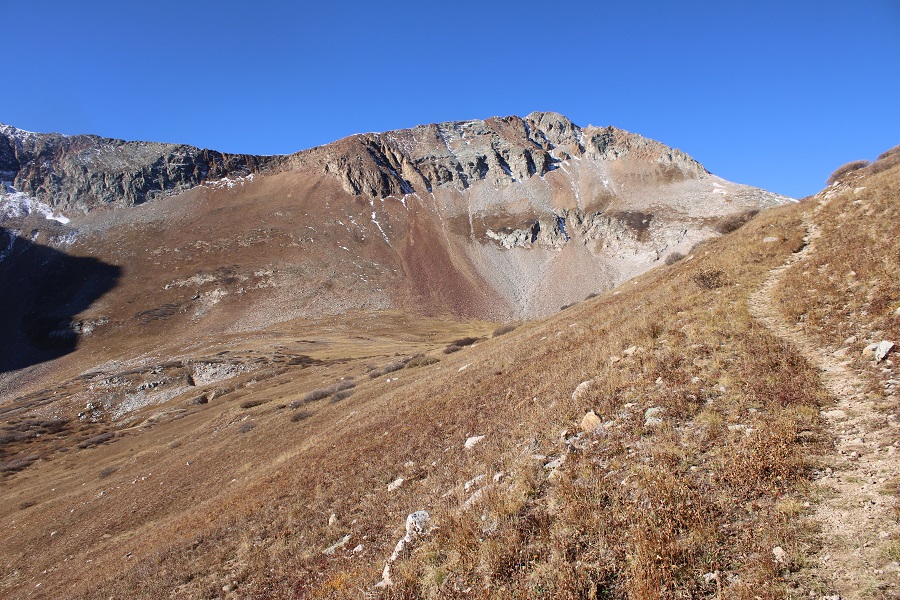
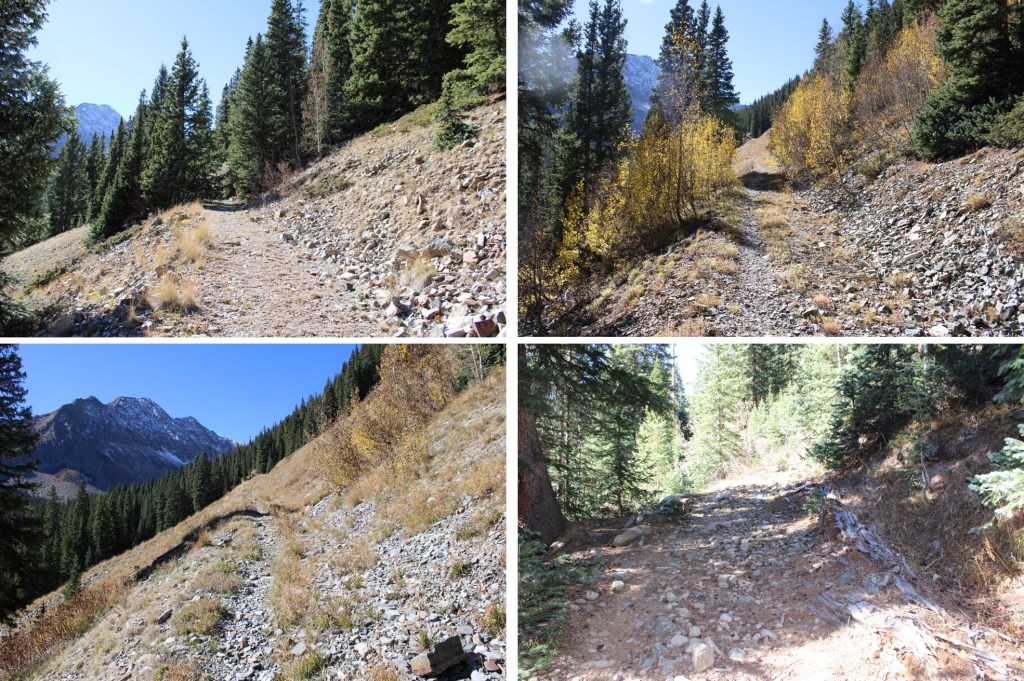
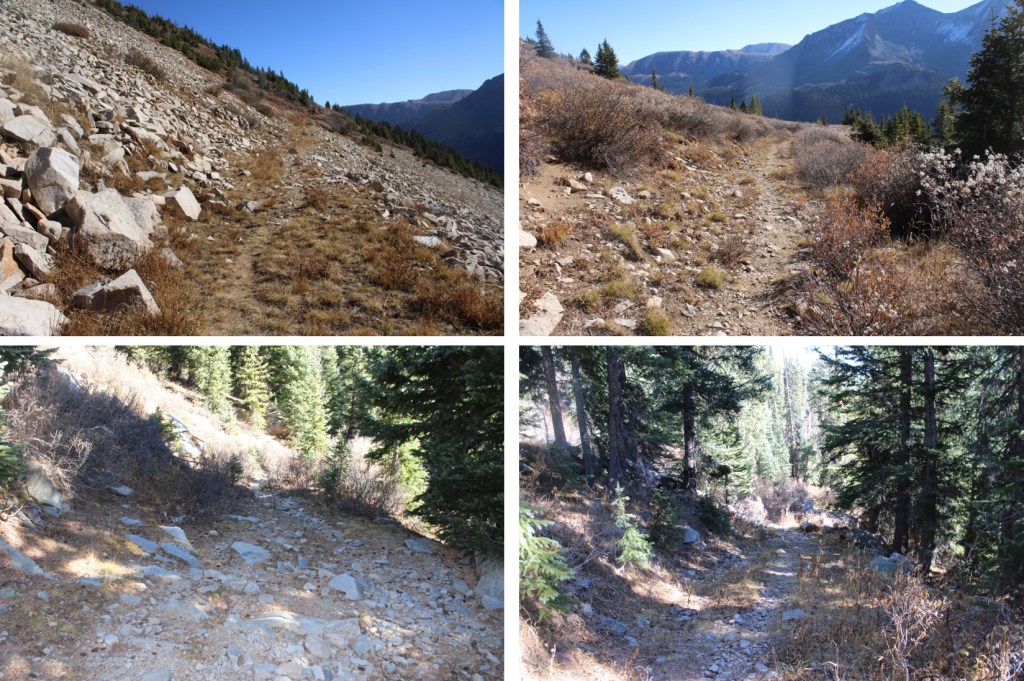
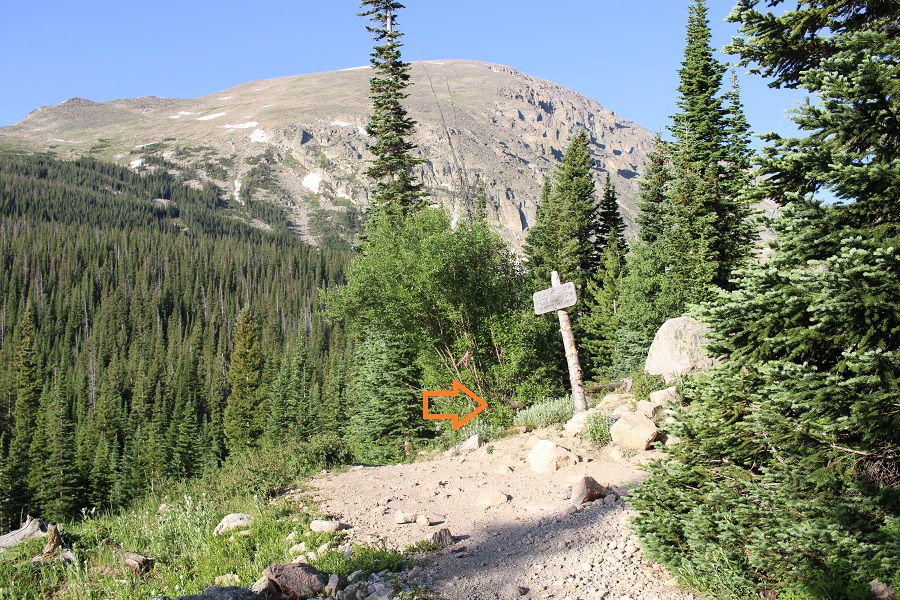
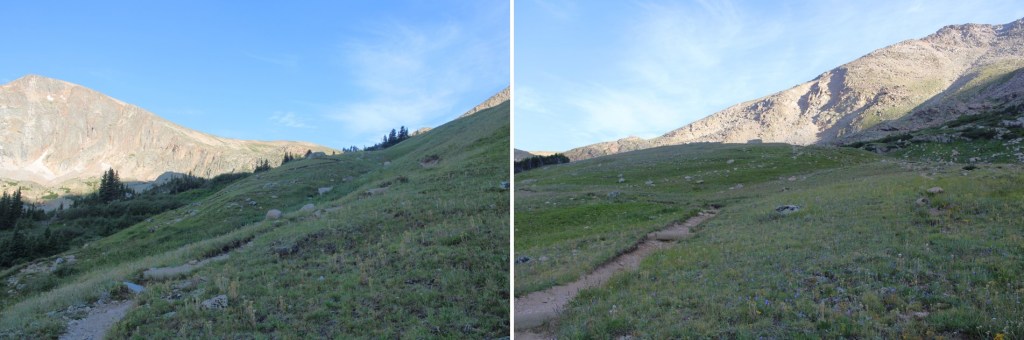
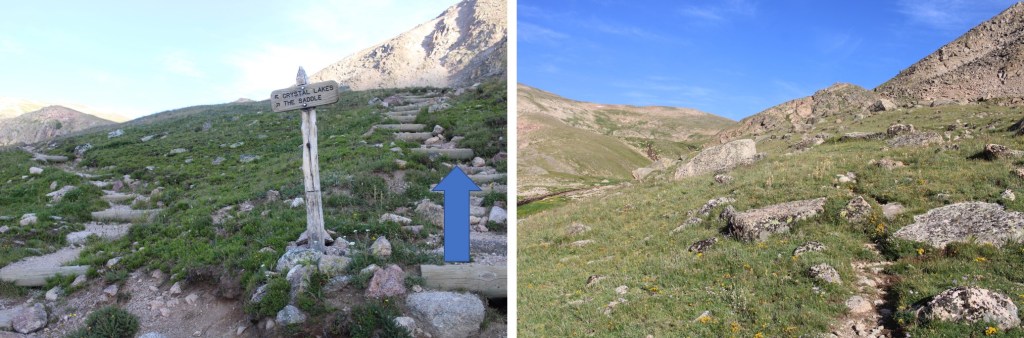
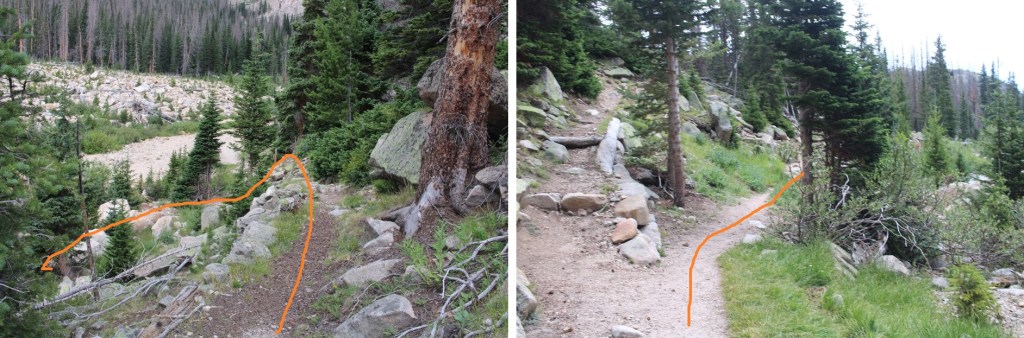
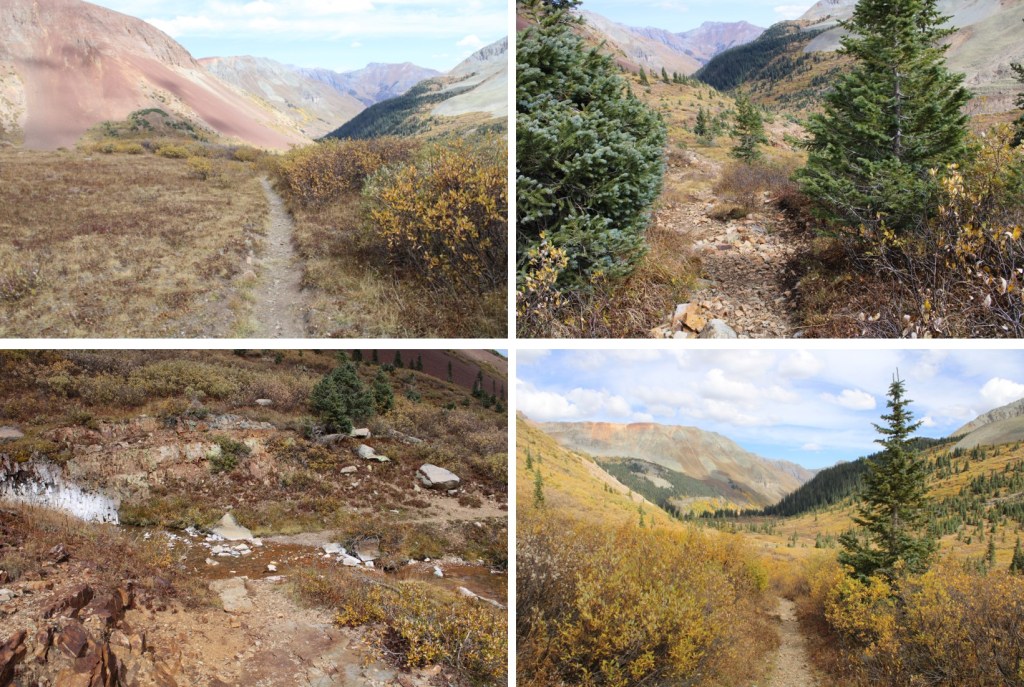
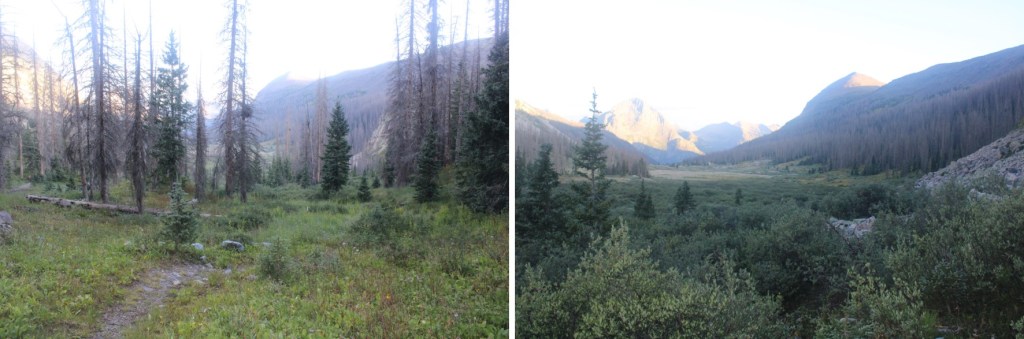
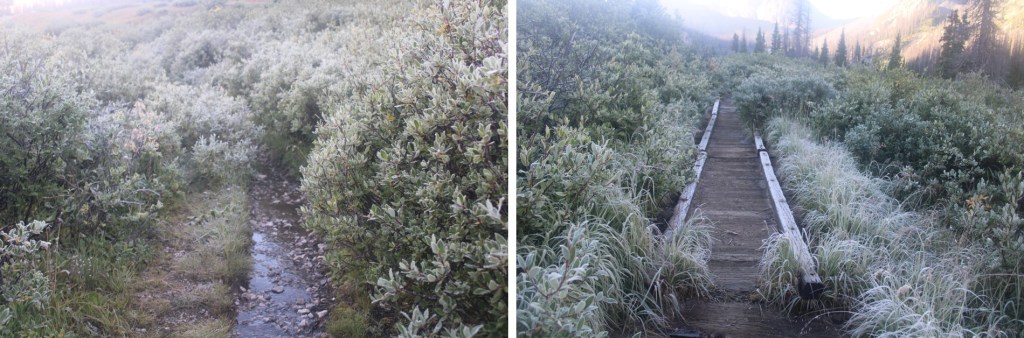
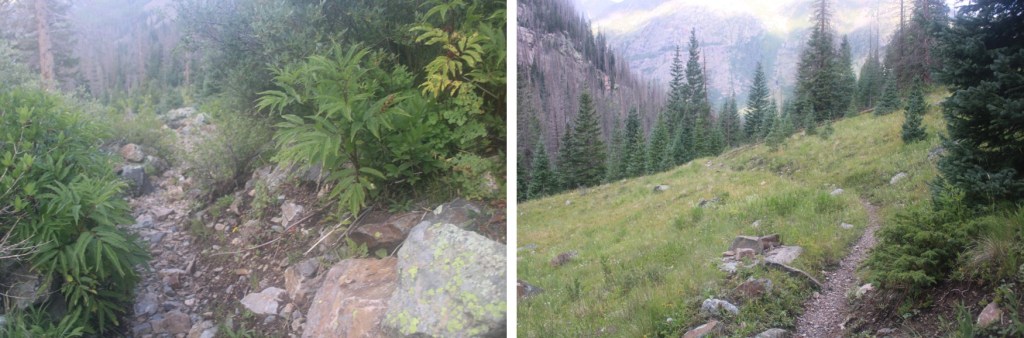
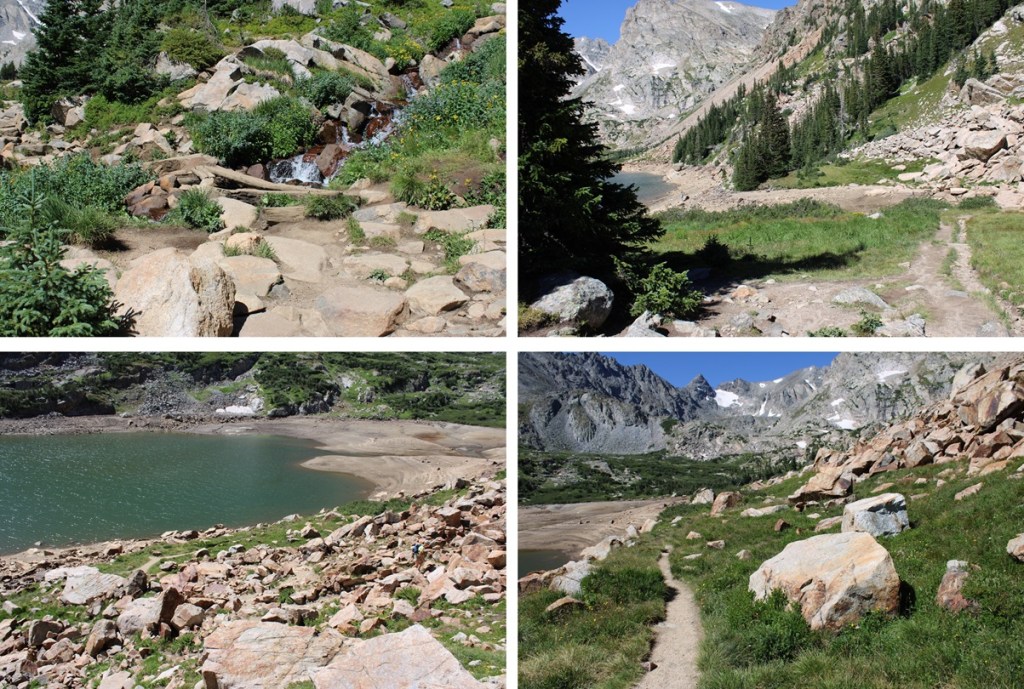
I followed this trail all the way past Isabelle Lake, west/southwest, through rocky areas and willows, towards Navajo and Apache Peaks.  This is a class 1 trail, but the willows, rocks, and creeks overtake it at times. 
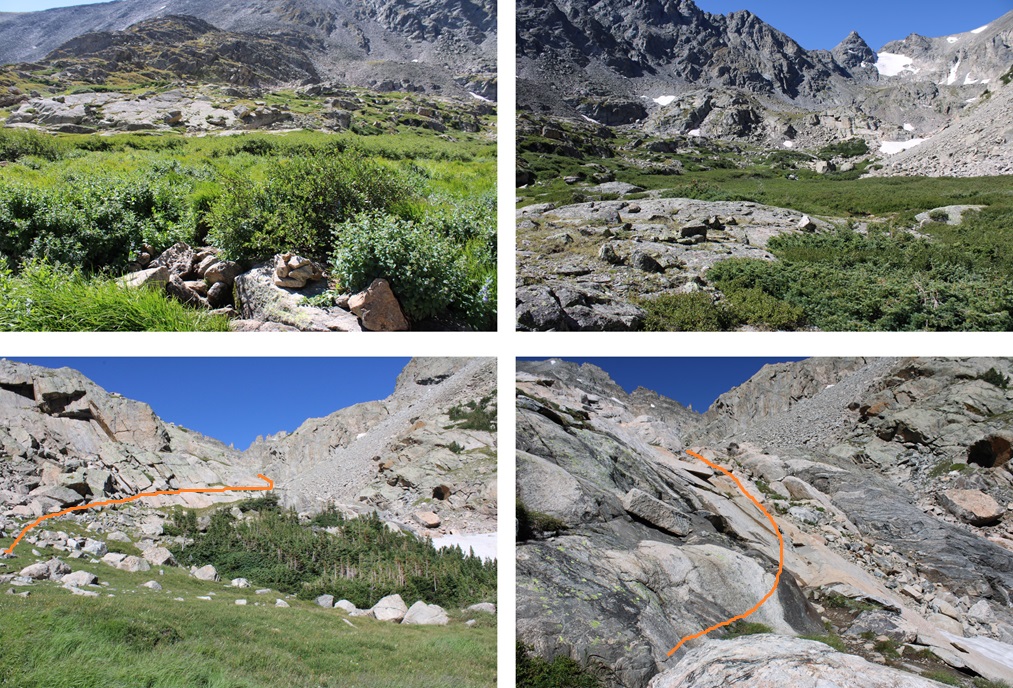
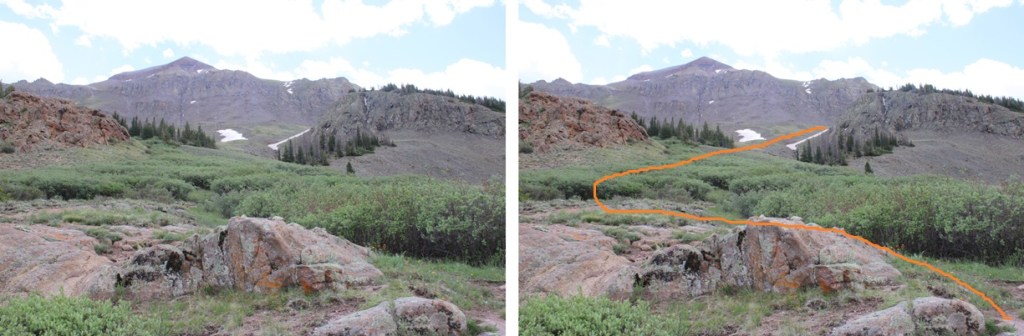
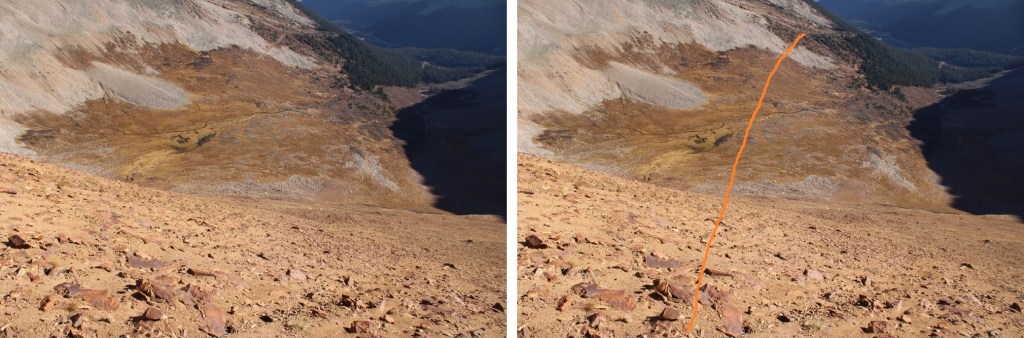
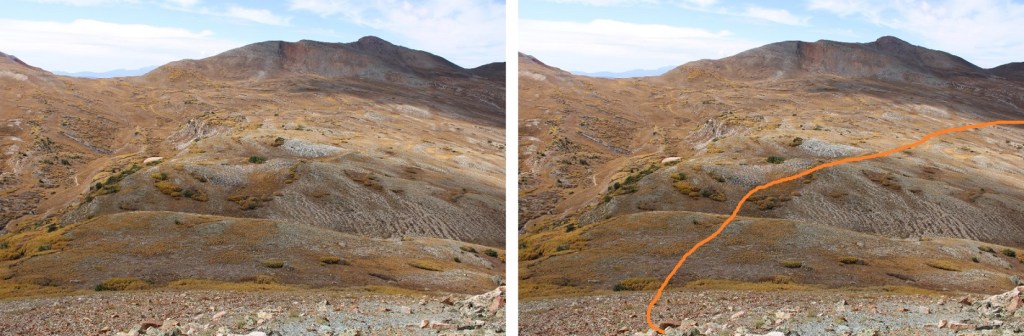
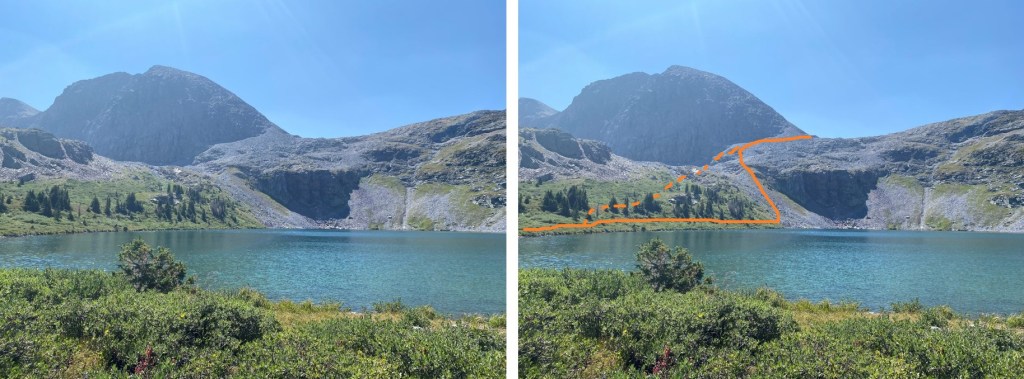
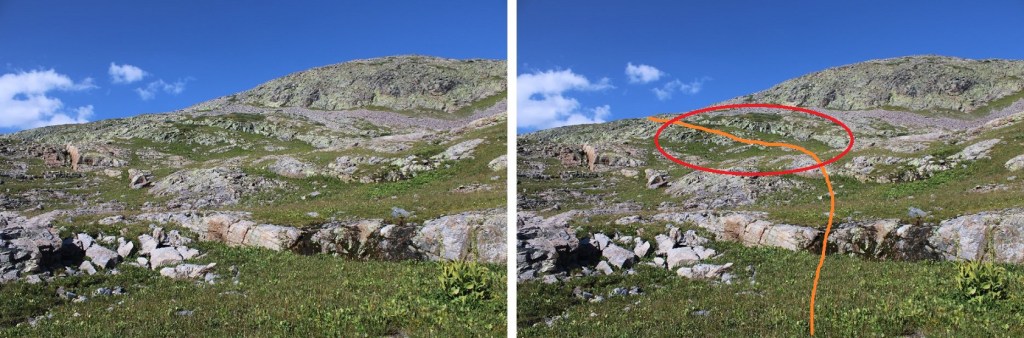
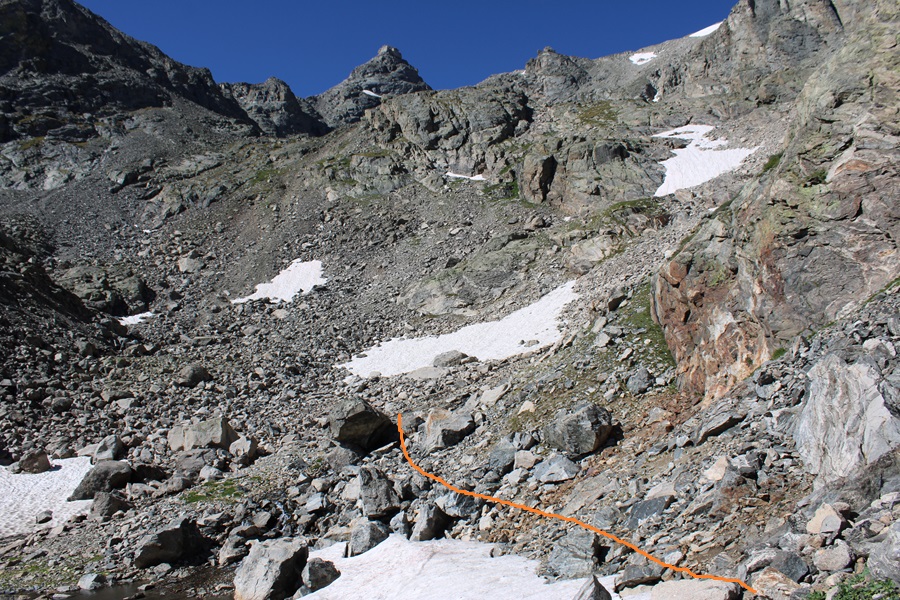
I came to the last pond before the glacier, and left the trail to head southwest into the upper basin.  Here’s the route I took
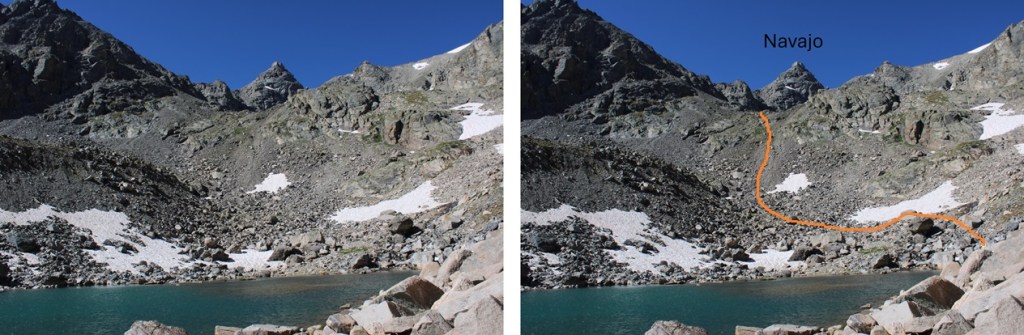
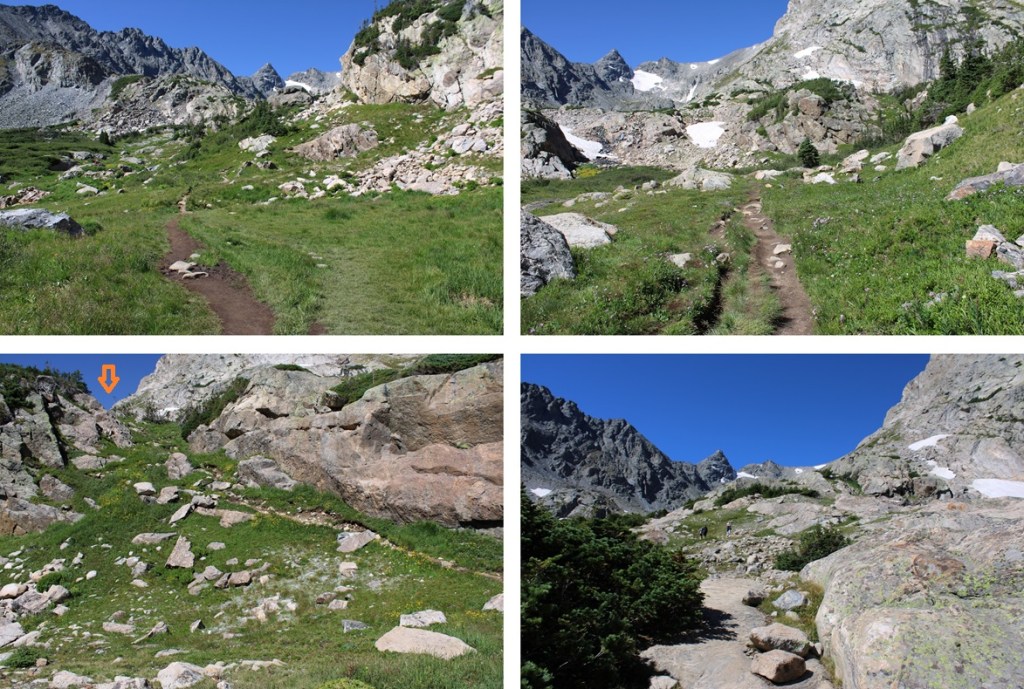
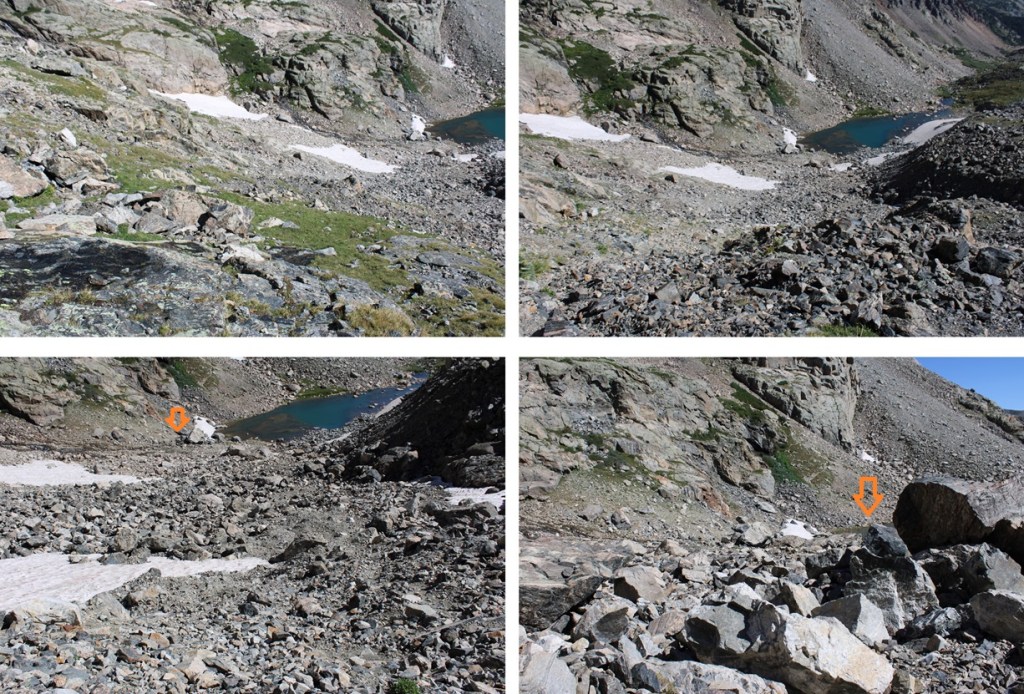
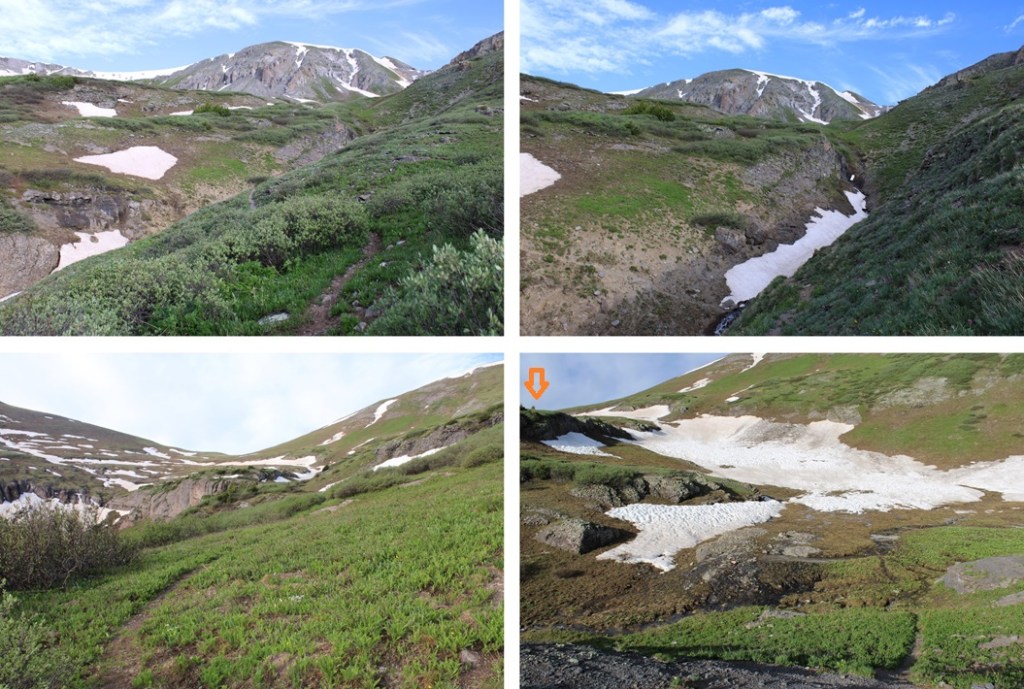
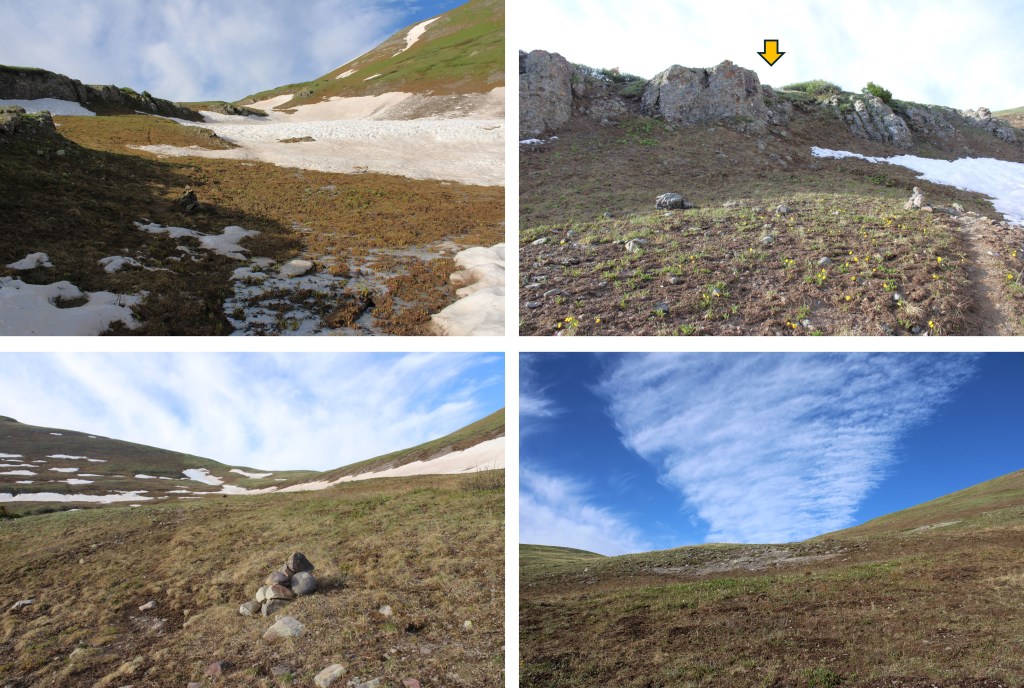
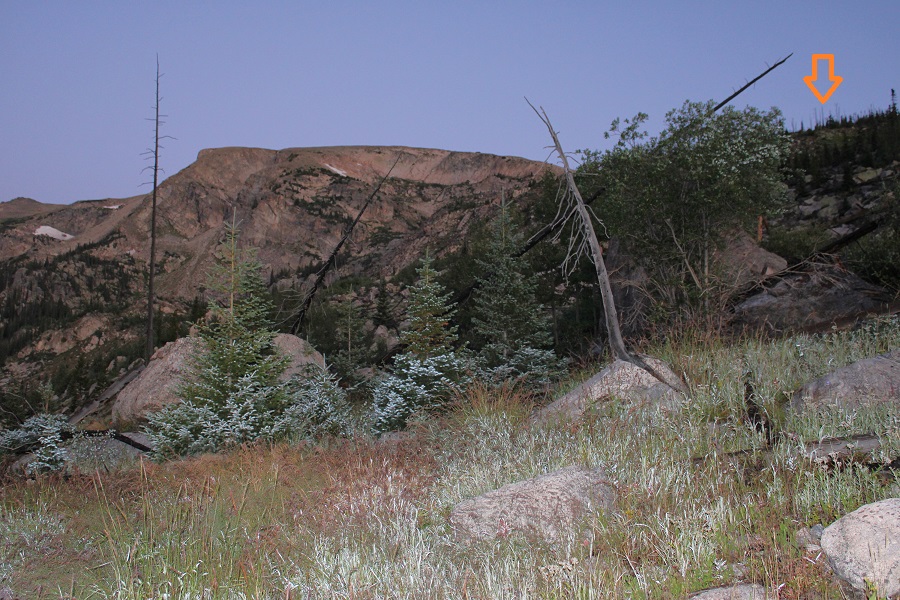
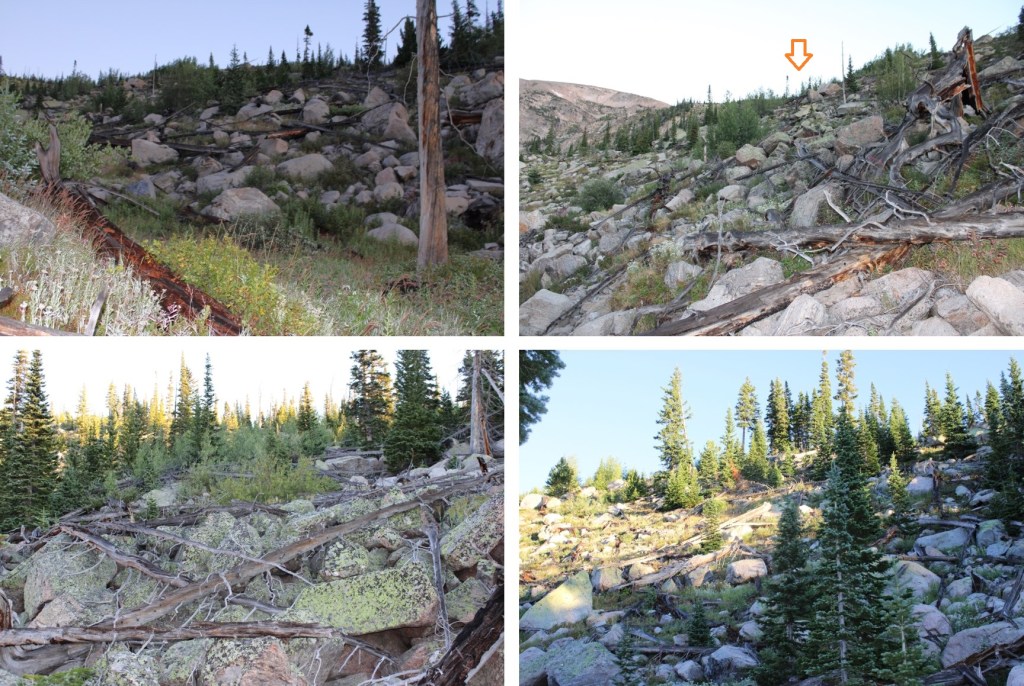
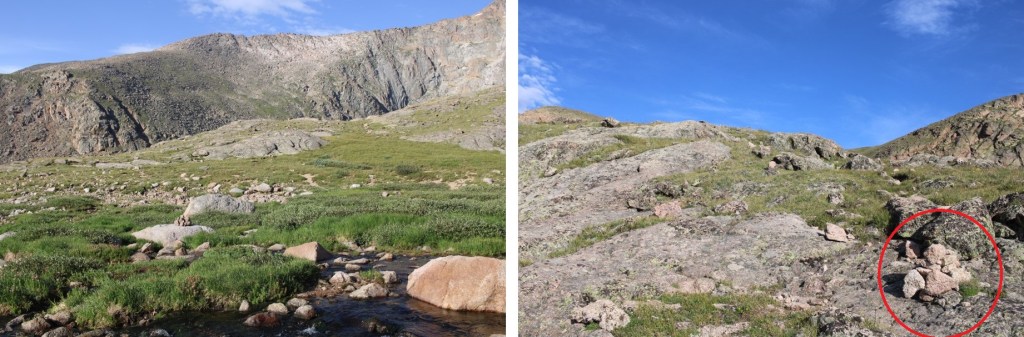
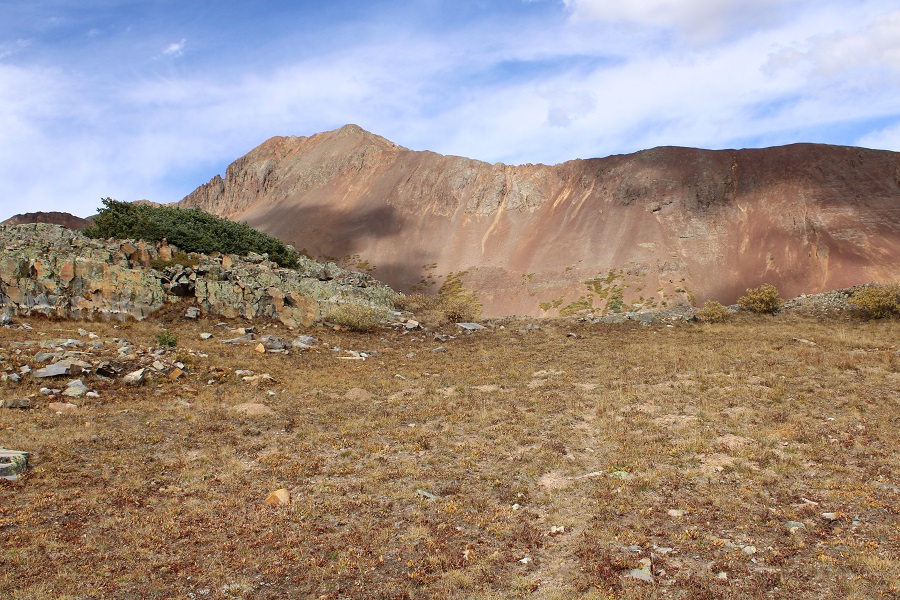
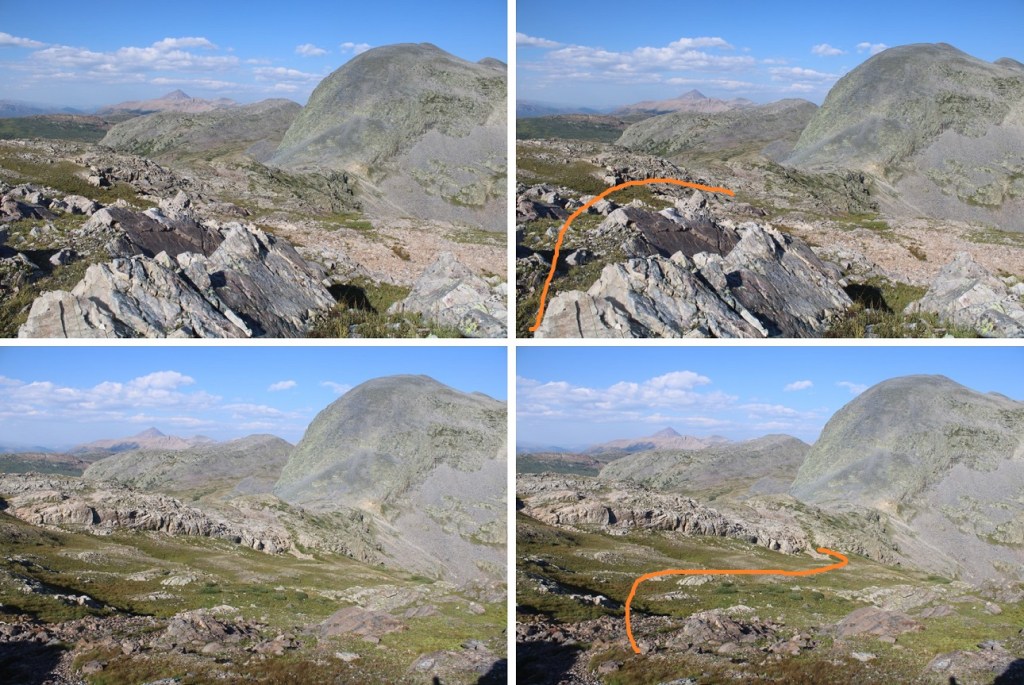
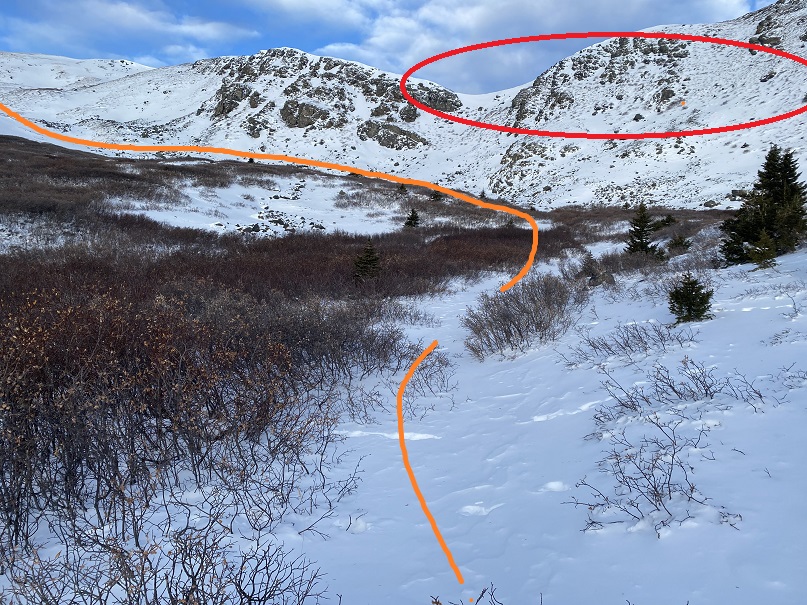
And some step by step pictures.  First, I had to leave the trail.  I crossed over the snow still skirting the lake, and headed towards the large boulder in the distance
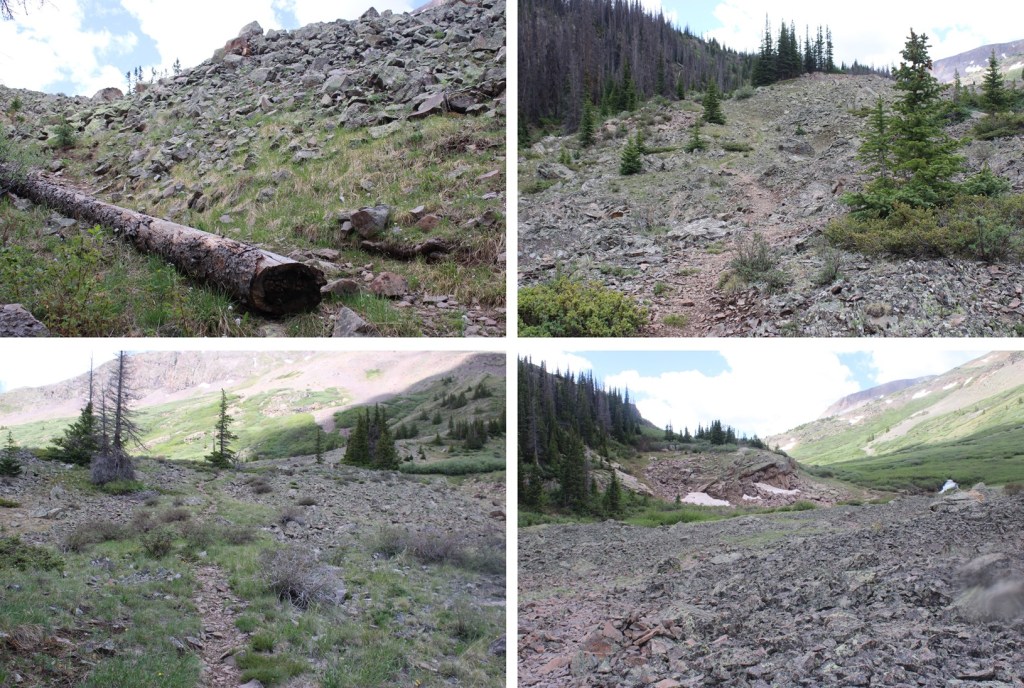
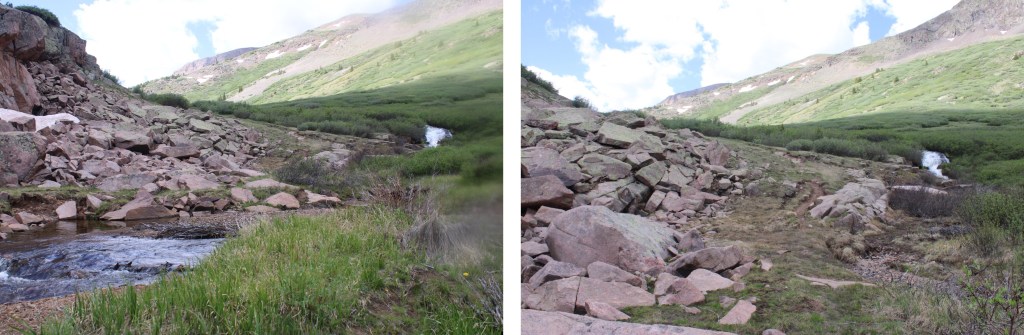
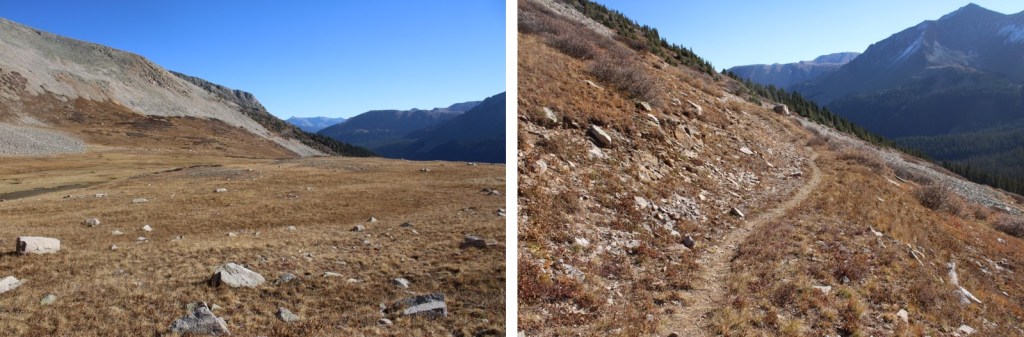
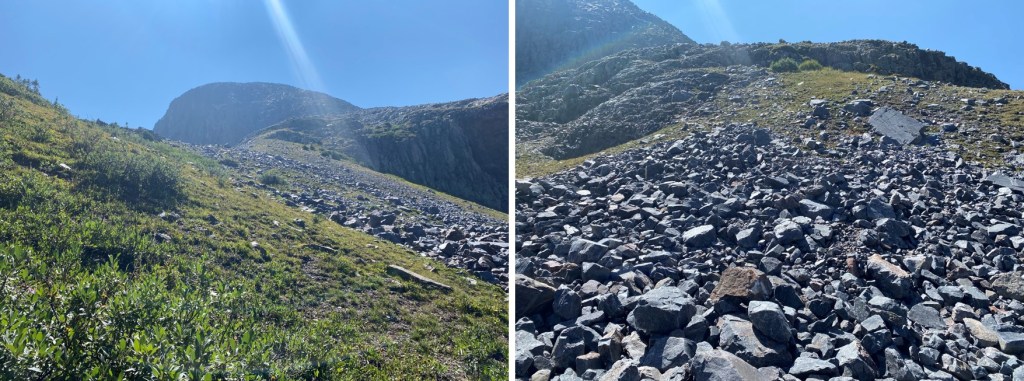
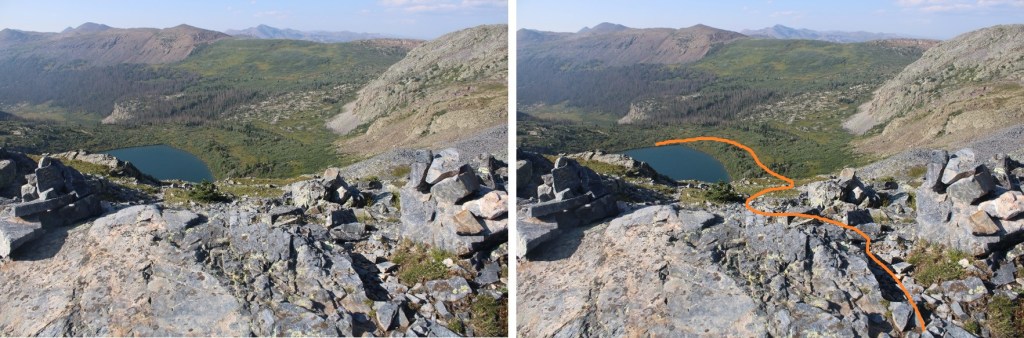
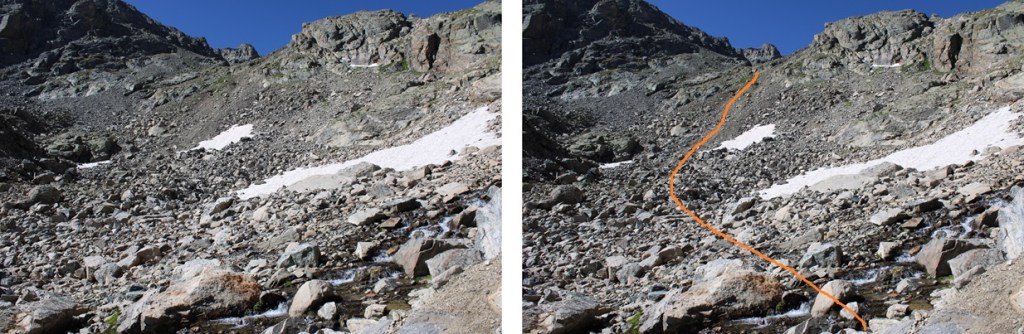
I then crossed the creek, crossed the boulders (some were loose, most were not) and headed for the scree.  Luckily, it had rained last night, so the scree was easy to grip.
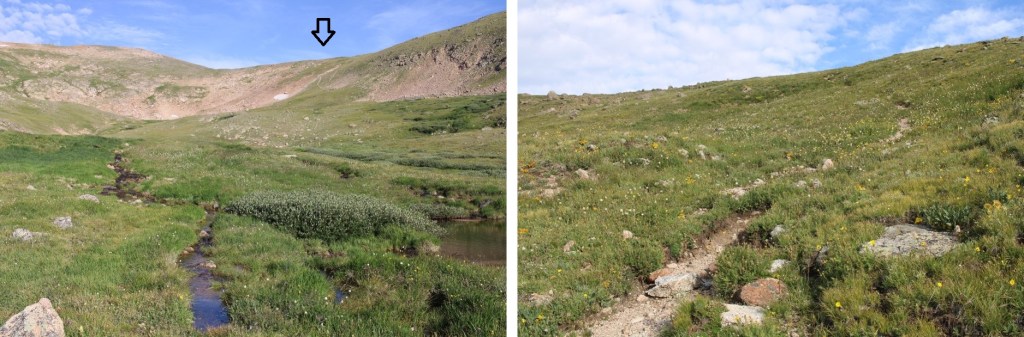
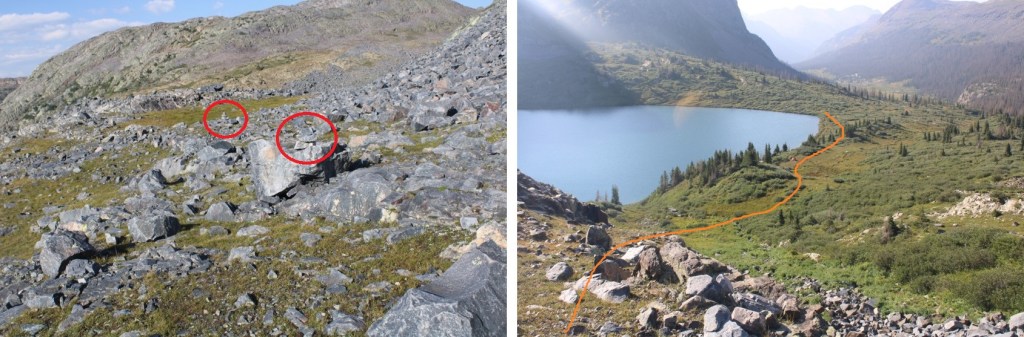
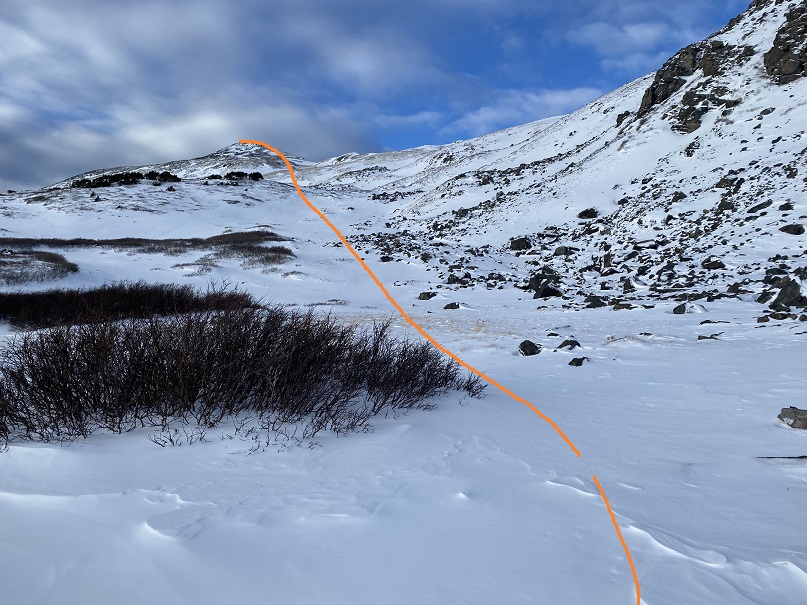
At the top of the scree I was greeted with tundra.  I kept following it, heading southwest
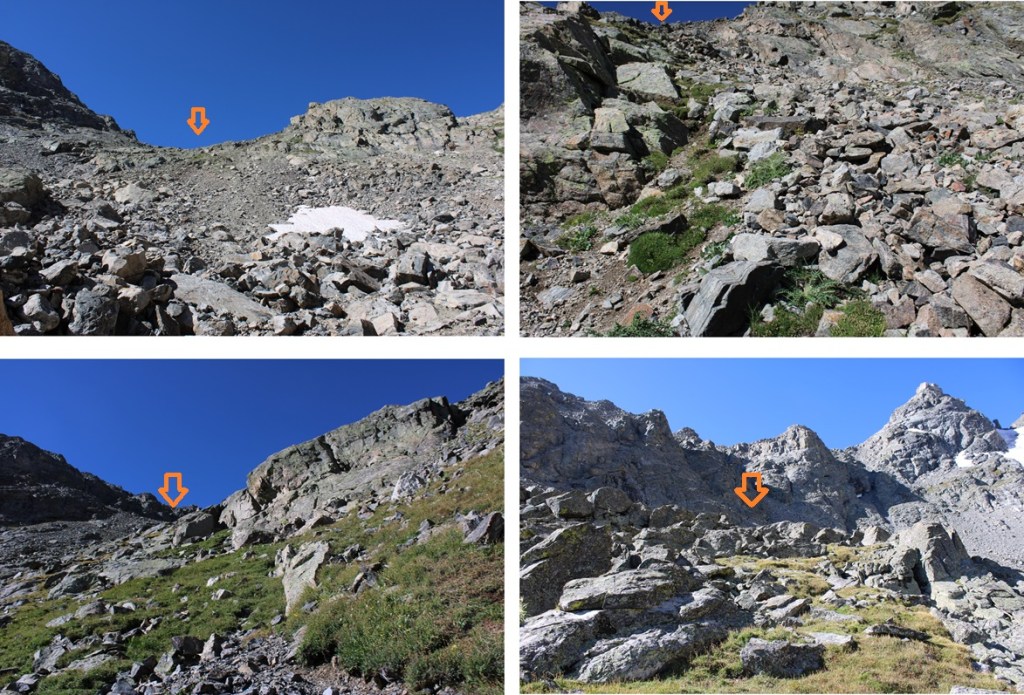
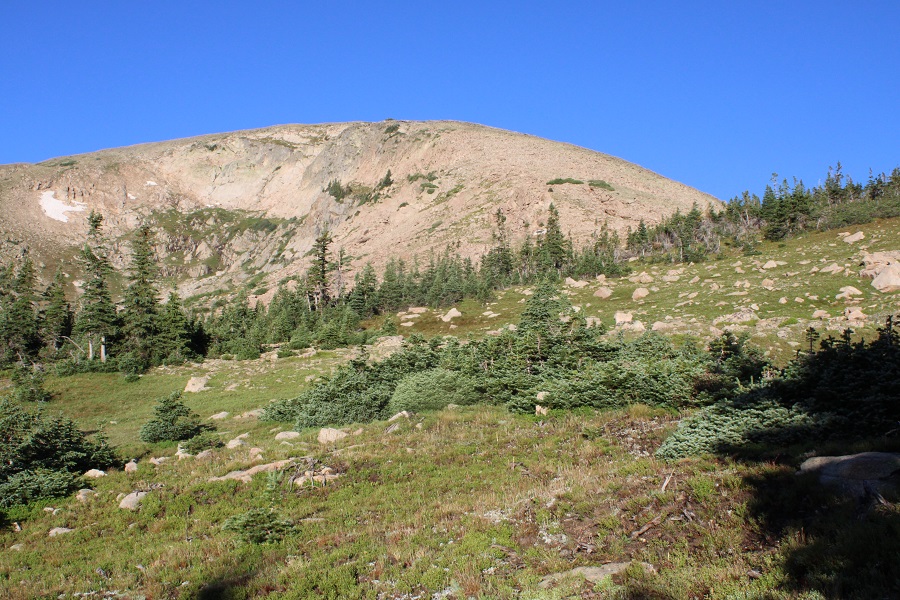
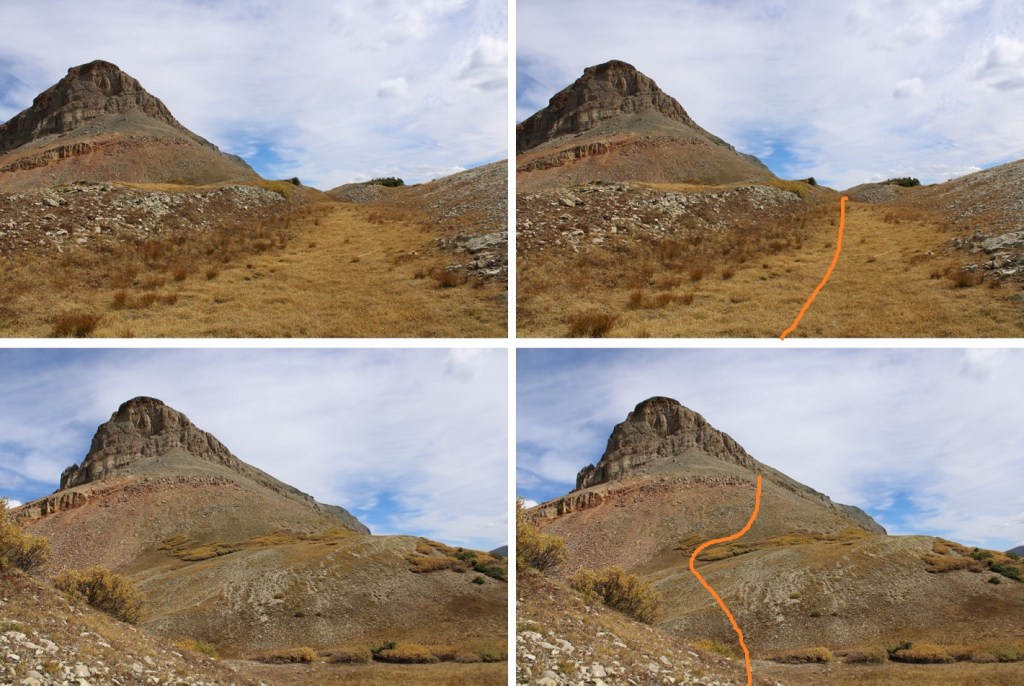
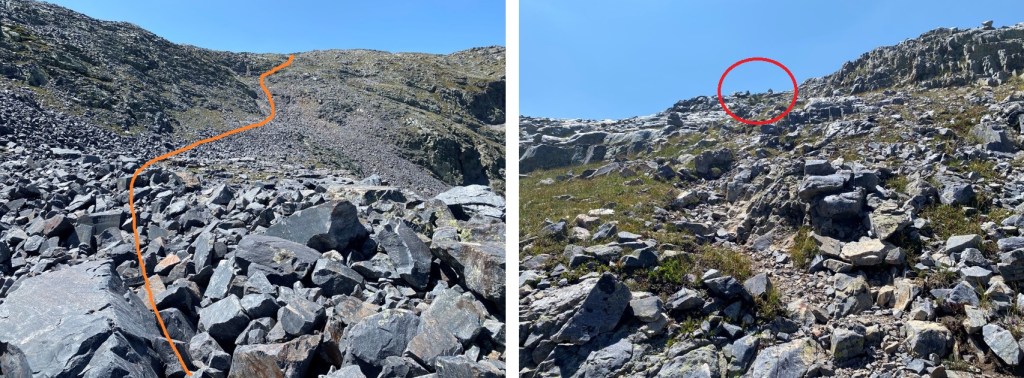
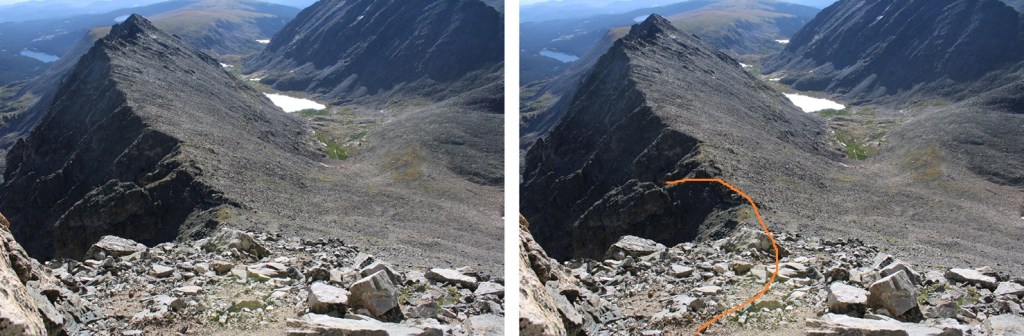
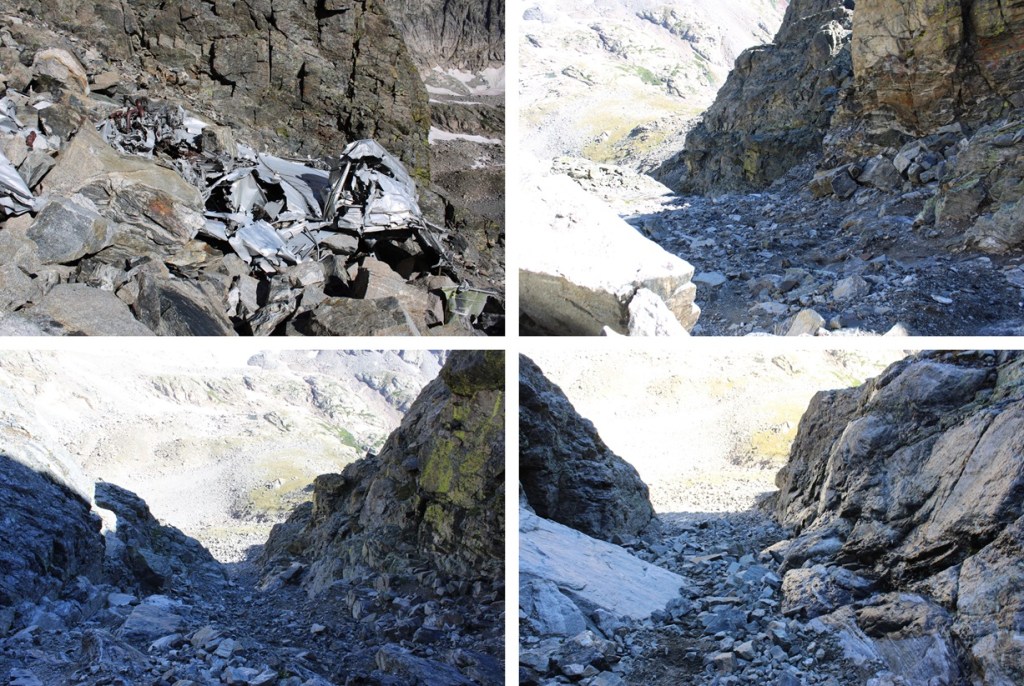
Now in the upper basin, I had a great view of the gully I wanted to take to ascend the ridge.  If you look around, you’ll see remnants of a plane crash that happened in the 1950s.  The higher you go up this gully, airplane gully as many like to call it, the more debris you’ll see.  This is the route I took up the gully.

I made my way southwest over some boulders towards the gully, until I found a scree path.  A few thoughts on this gully:  Besides the fact this was the only part of the hike I experienced insanely intense winds all day, it was easy to navigate, there were social/game trails to follow, it wasn’t very loose, and the scree was solid.  In short, it’s probably one of the easiest gullies I’ve ever ascended, and if they were all like this, I probably wouldn’t mind them so much.  I headed south until I saw an obvious “y” in the gully, and went right.  It’s easy to know where you turn right because you’ll see parts of the airplane to the right.
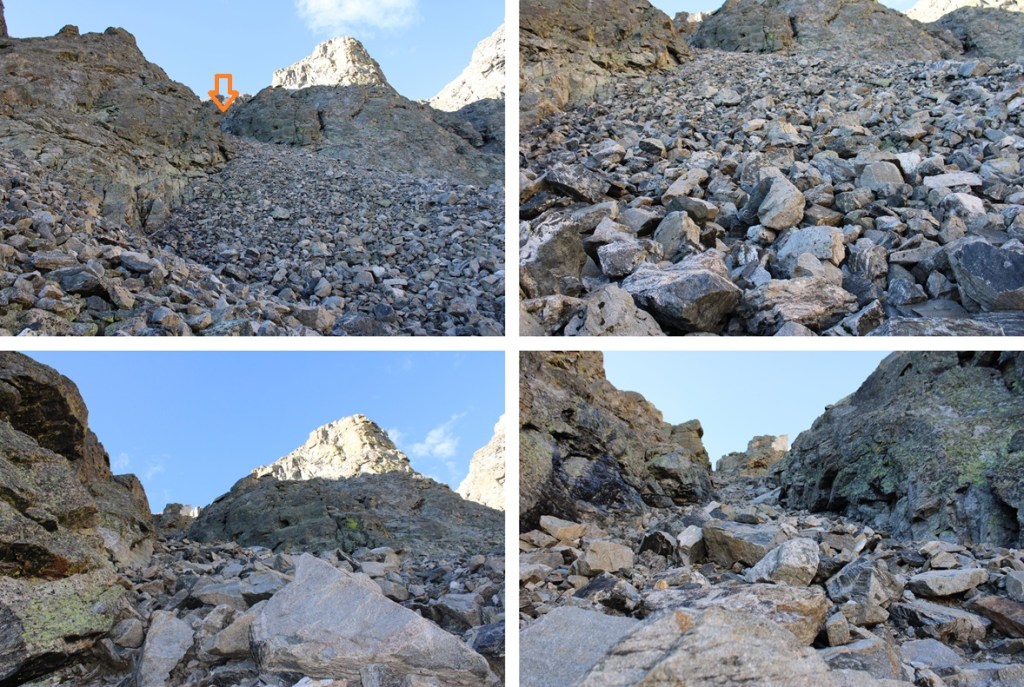
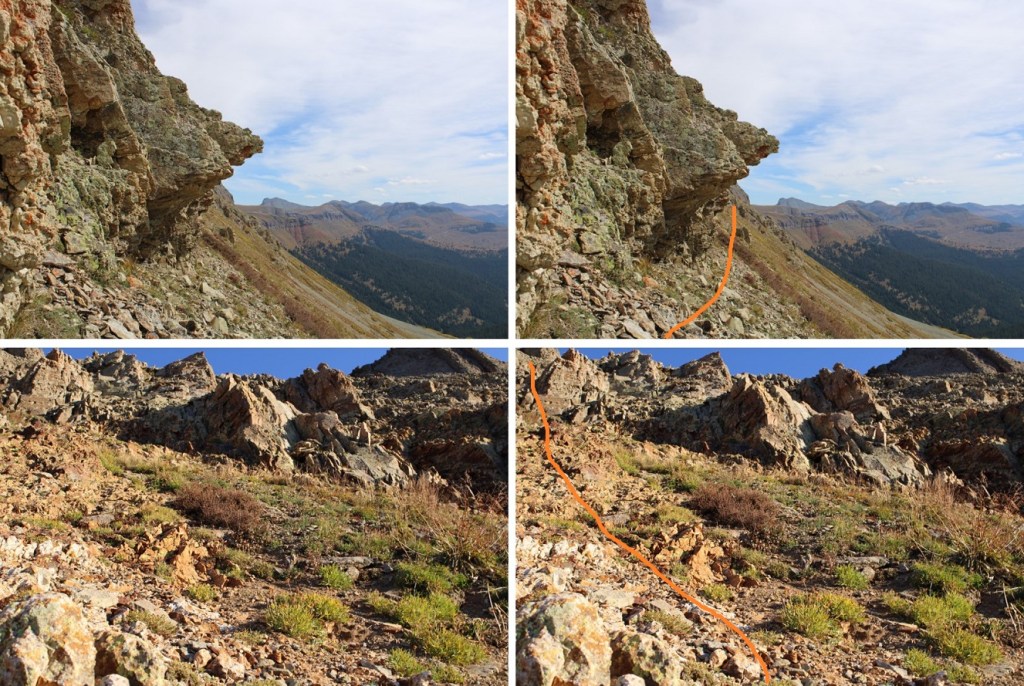
I went to the left of the airplane debris, then followed climbers right of the gully to the ridge (although both sides will get you there, just use the terrain you like best).

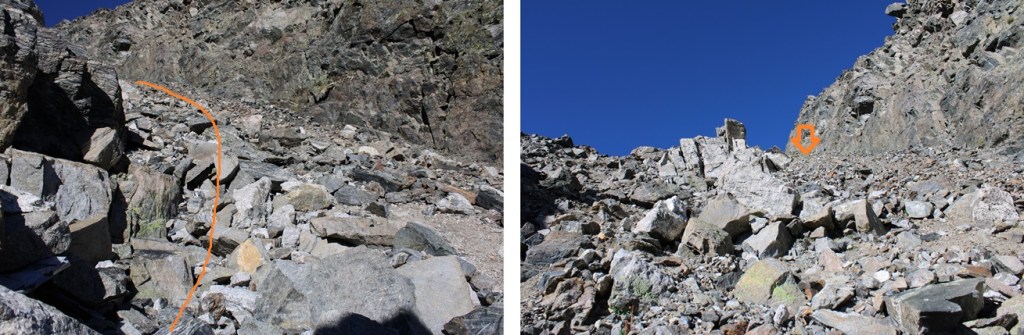
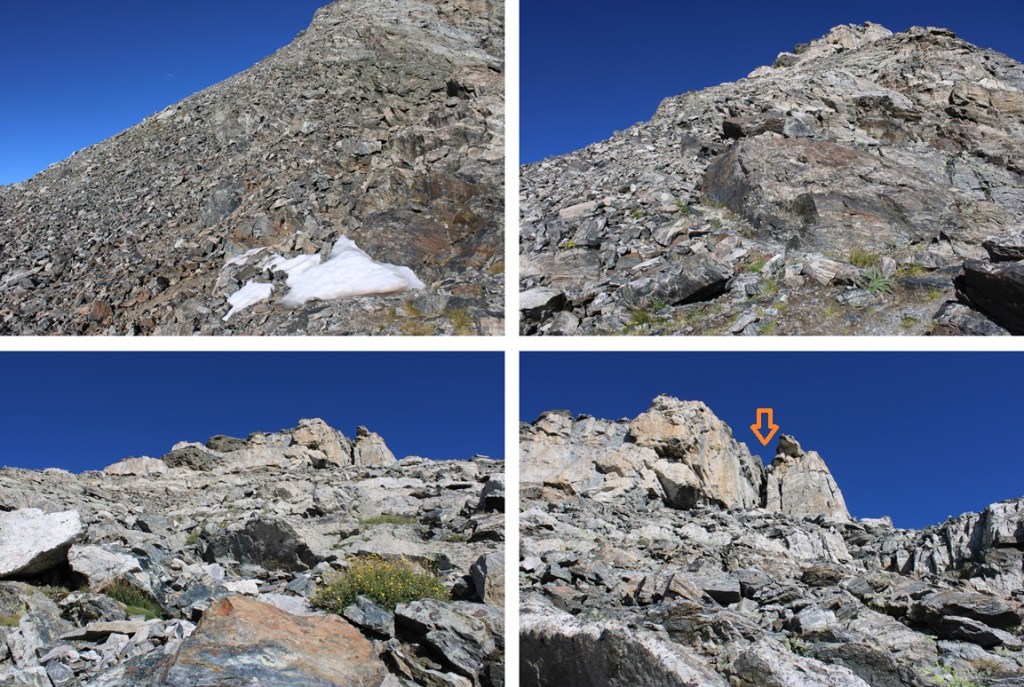
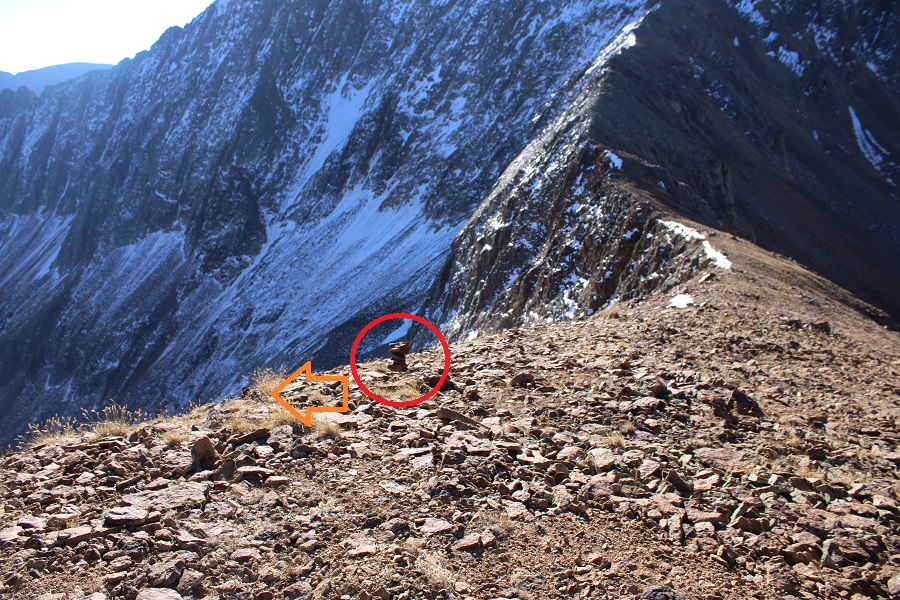
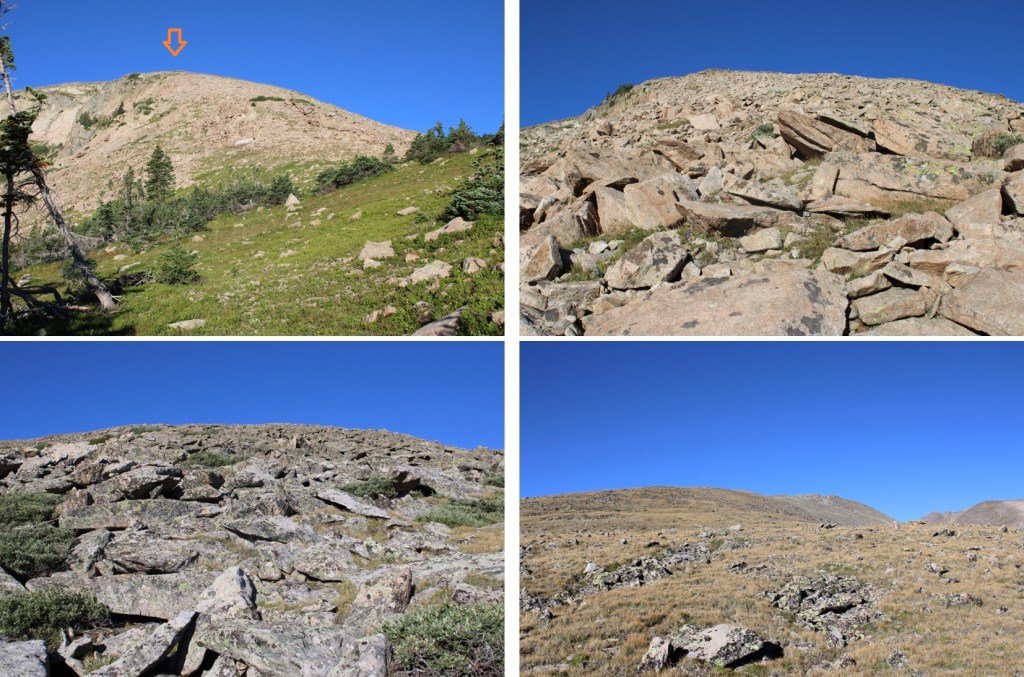
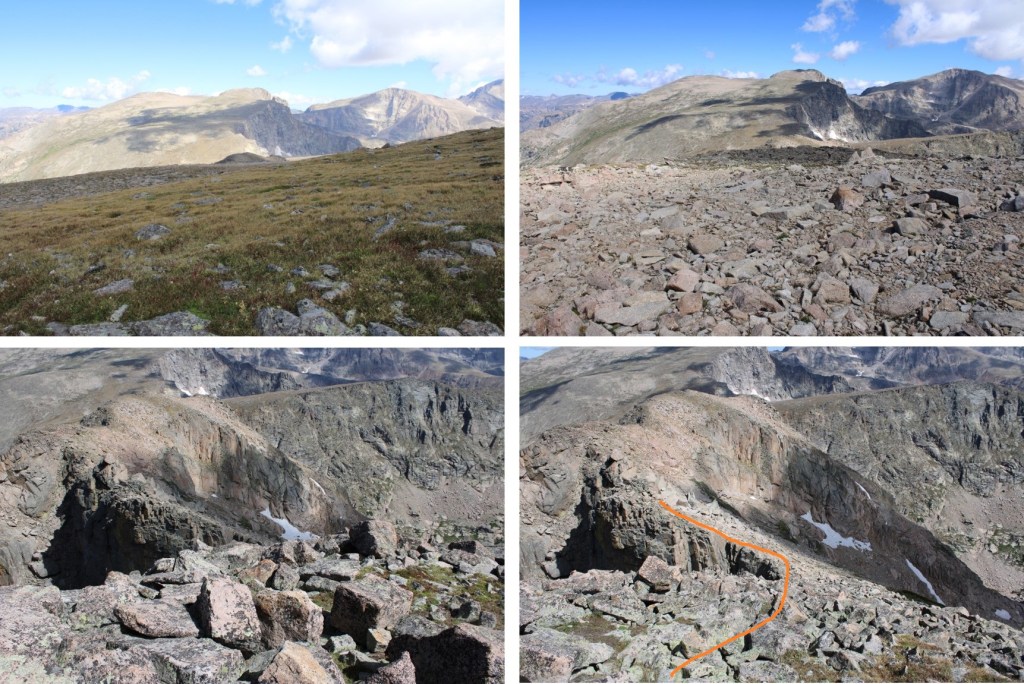
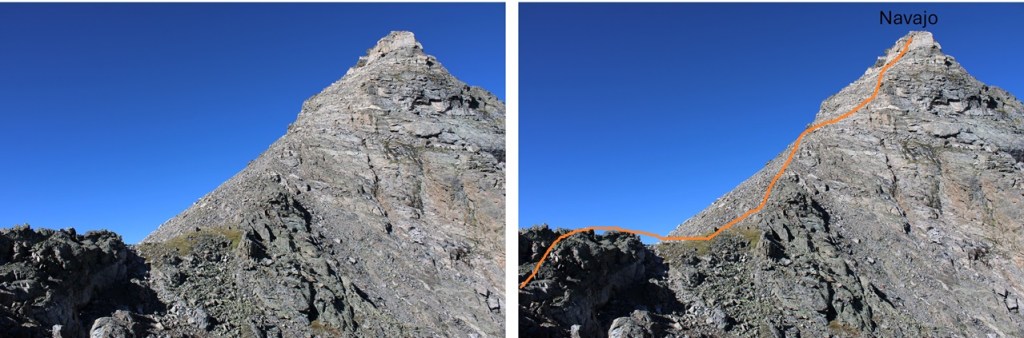
At the top of the gully, I could see the rest of my route to the summit of Navajo Peak.  Until the chimney at the end, the rest of the route is class 2.  If you find yourself in class 3 territory, you’re making it too difficult. 
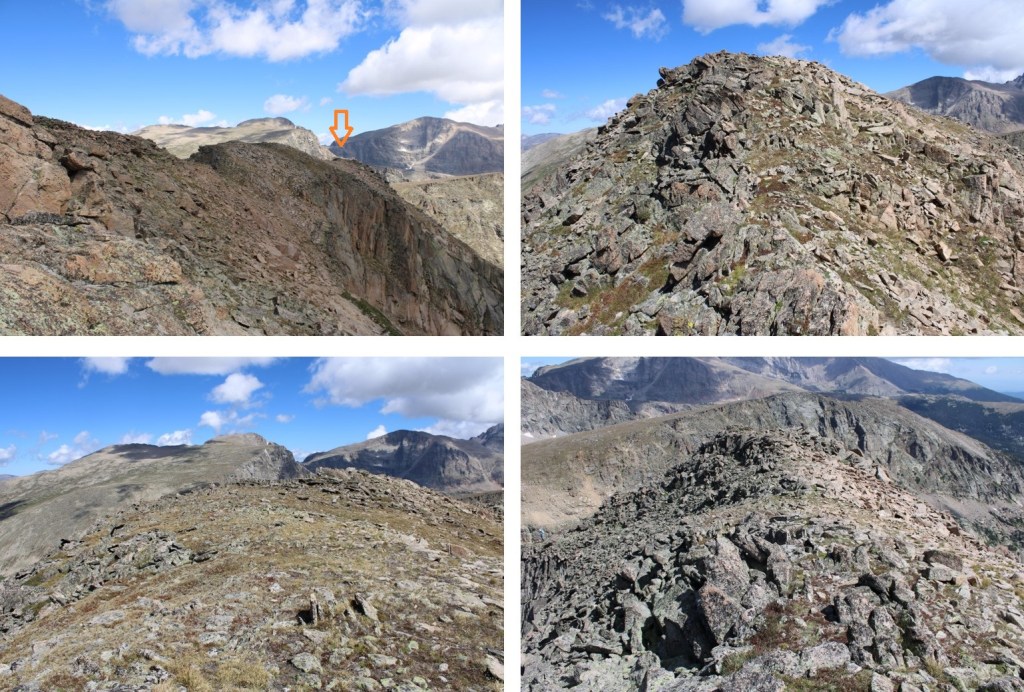
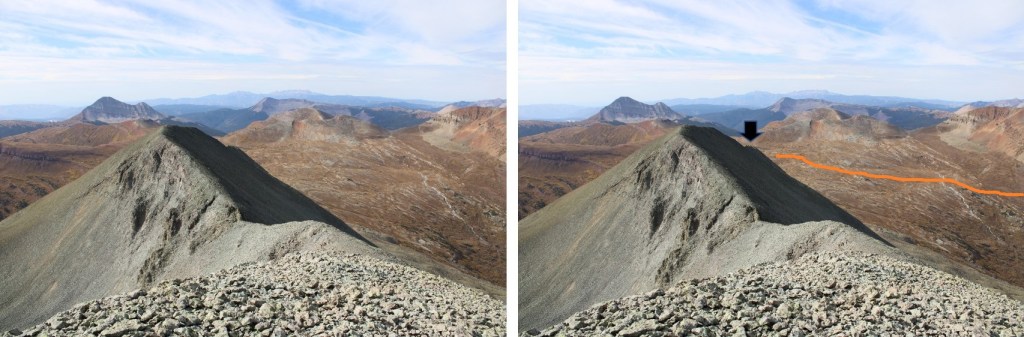
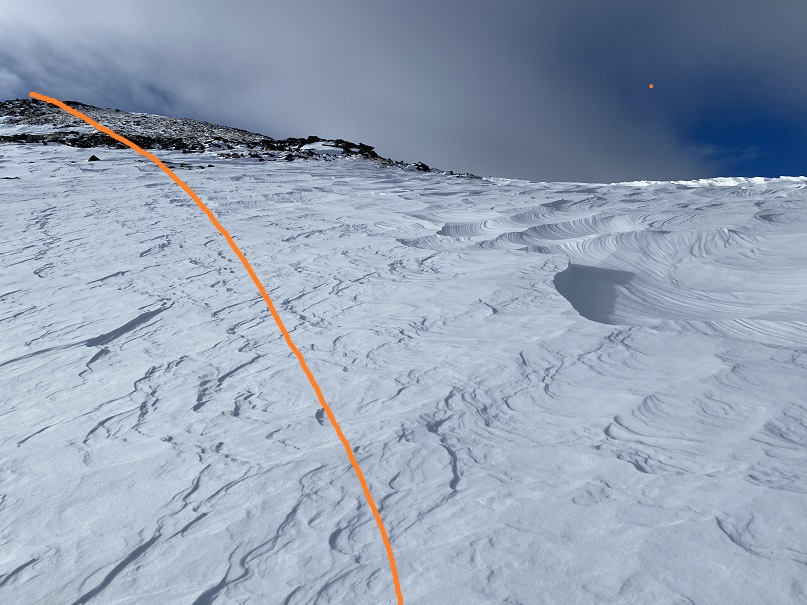
From the top of the gully I turned left and followed the saddle across a small ridge
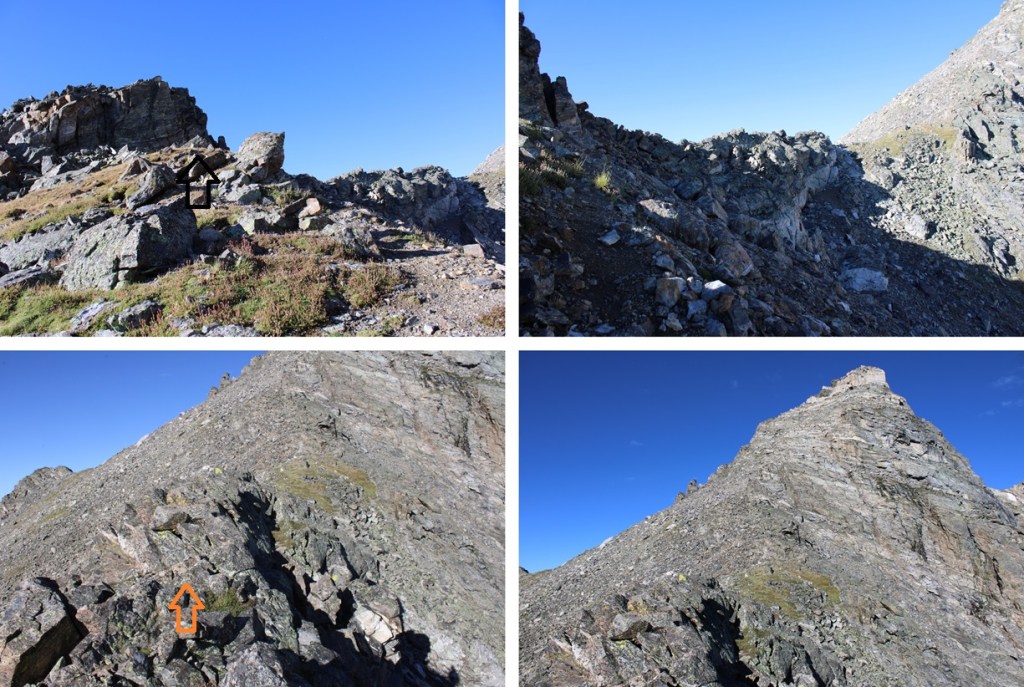
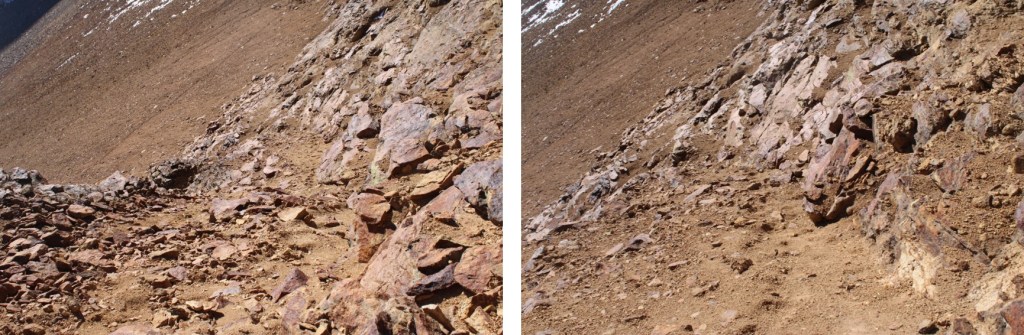
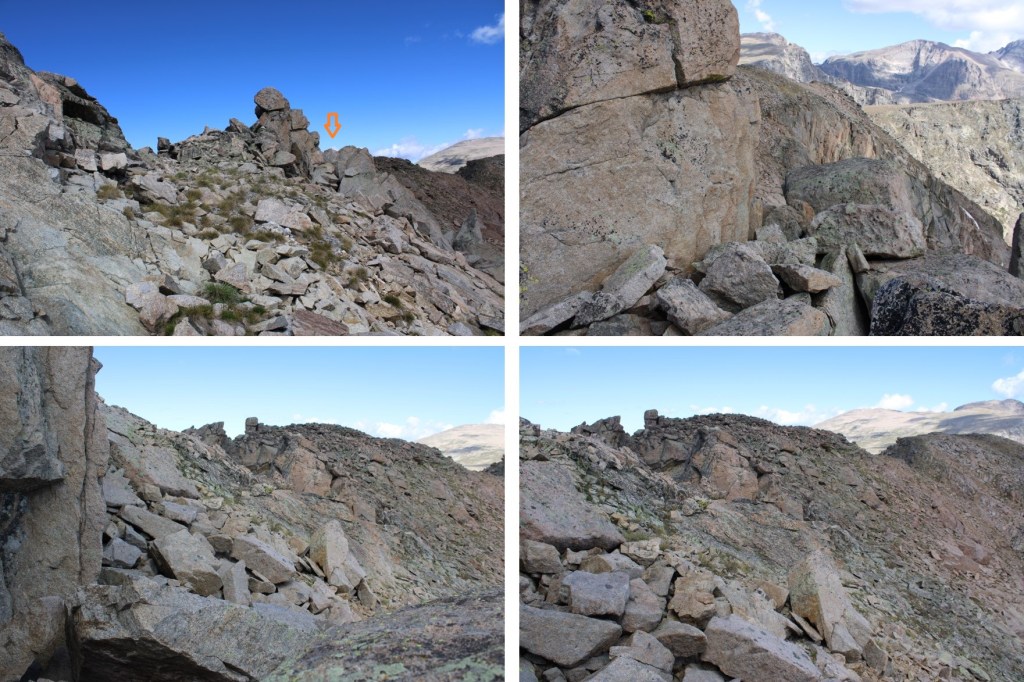
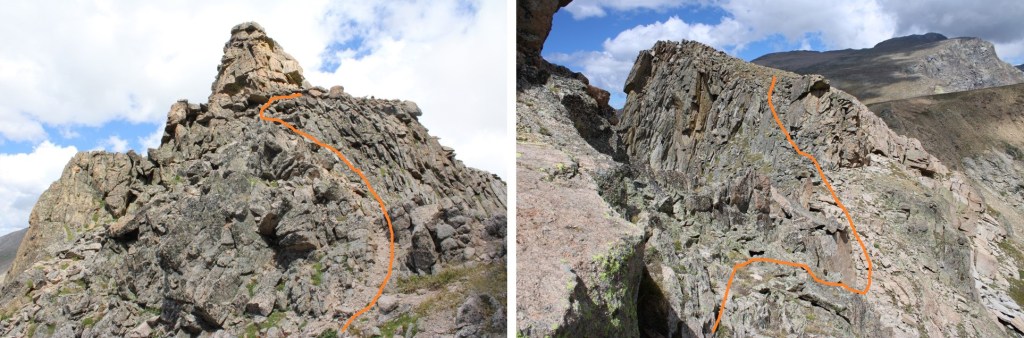
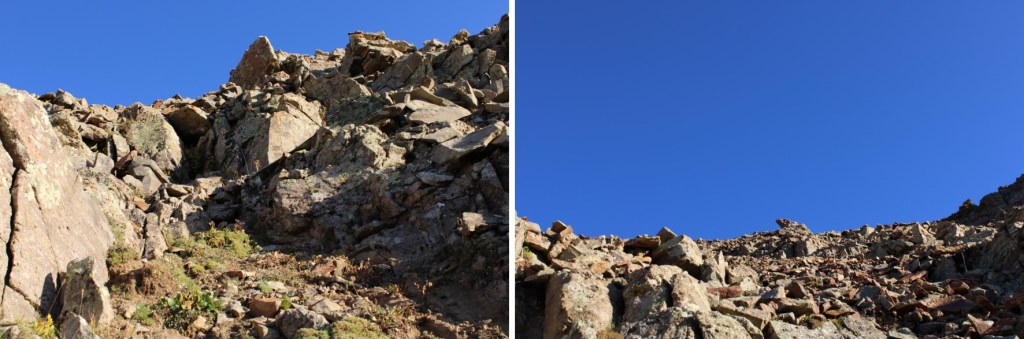
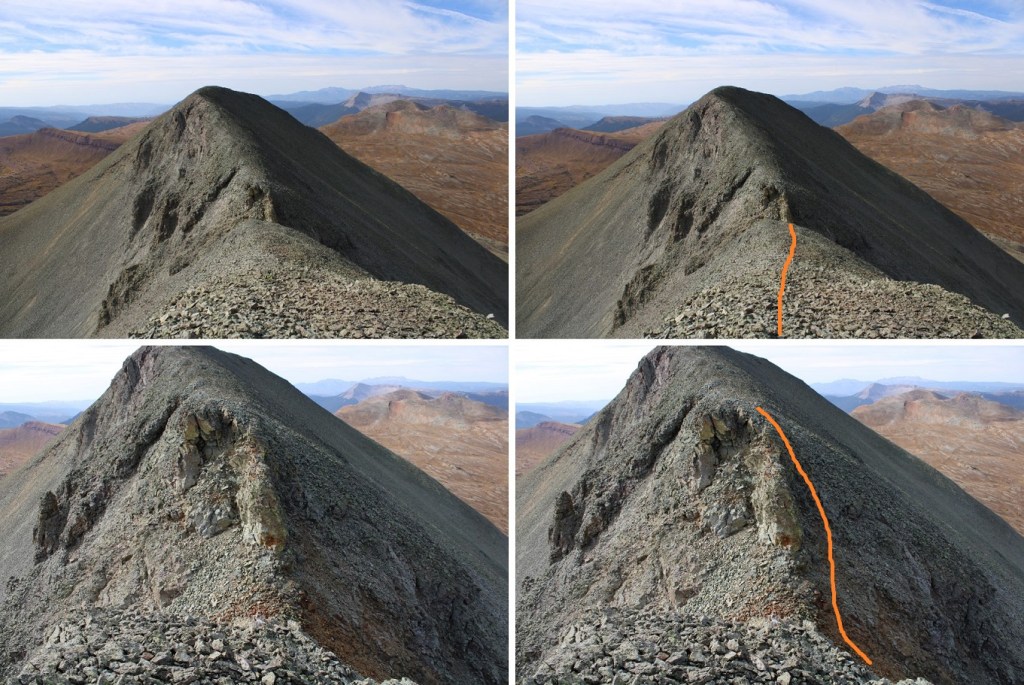
From here the rest of the route looks daunting, but there are tons of game trails that will get you to the right spot.  Aim for the very right edge of the rock formation, where you’ll see a chimney.  Once again, this should all be class 2.
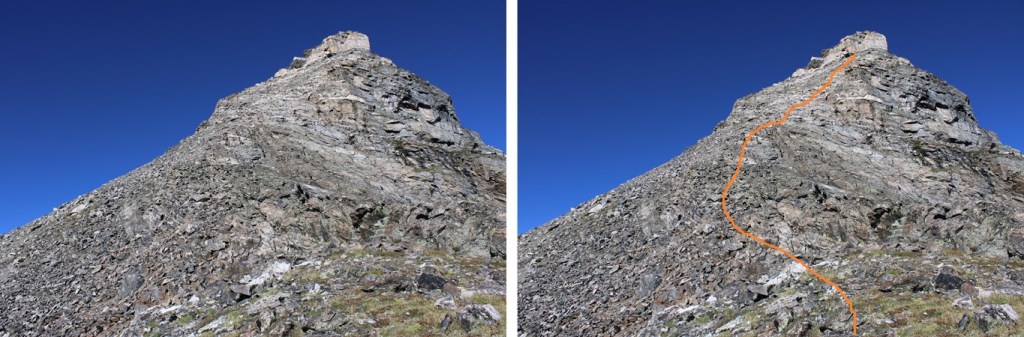
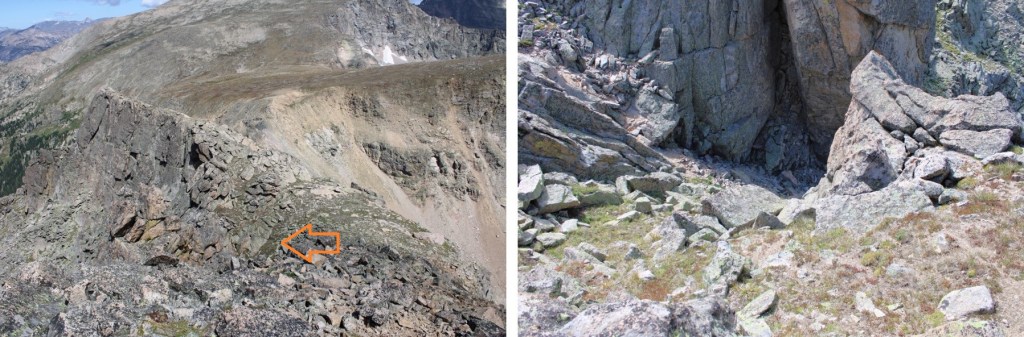
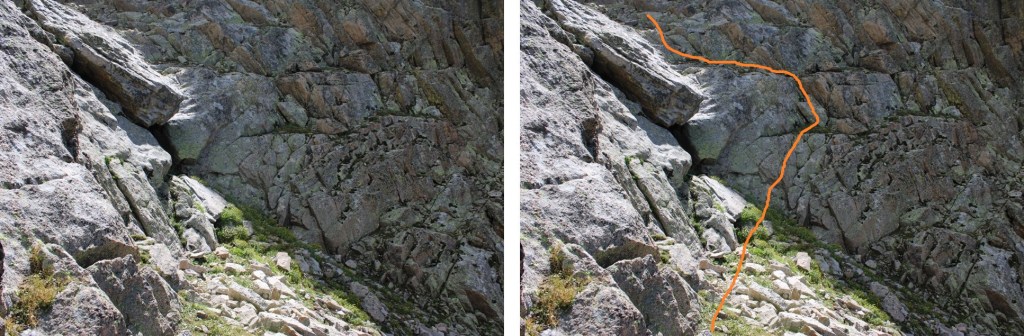
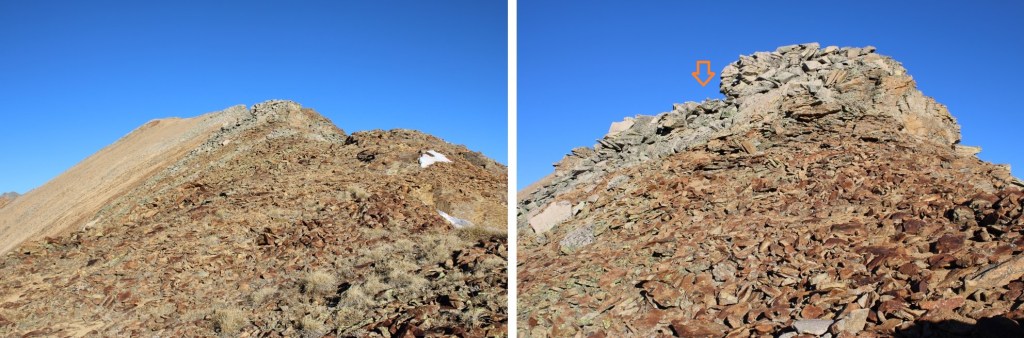
Here’s a look at that chimney.  I found this chimney to be difficult class 3, easy class 4, so if you’re looking for a good practice chimney, this would be it. There isn’t a lot of exposure, and I was able to find adequate hand/footholds if I stretched a bit.  At the top of the chimney, exit left.

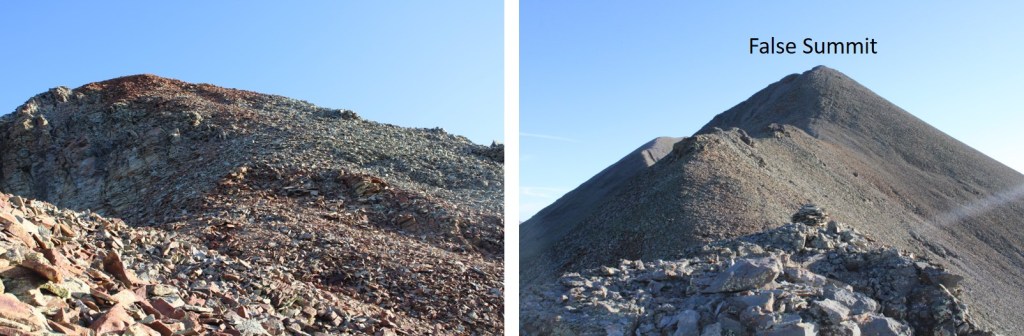
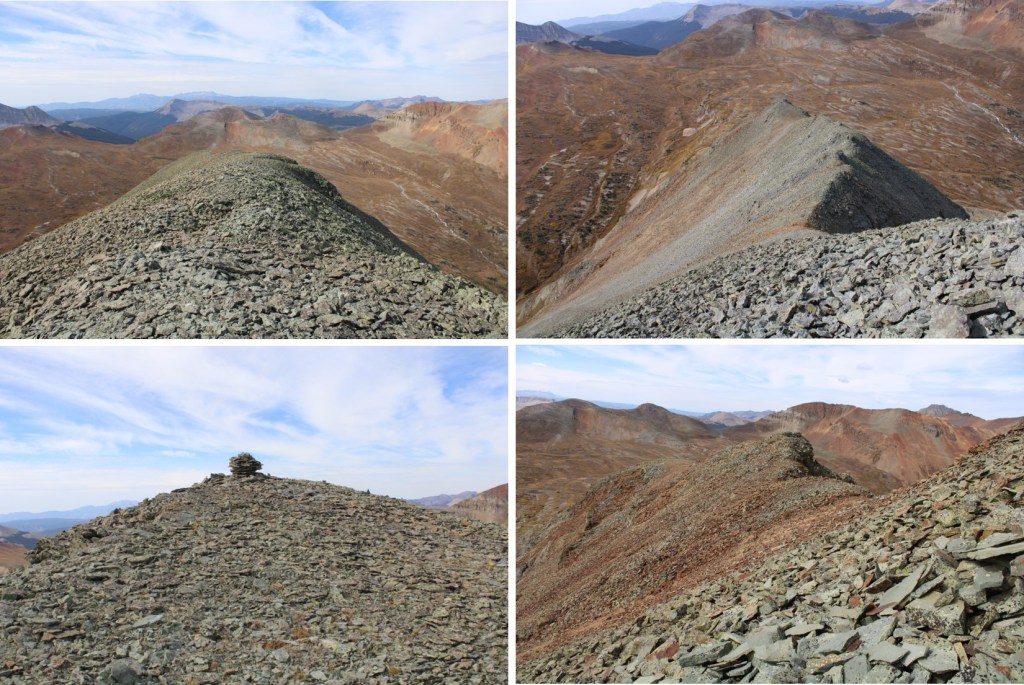
At the top of the chimney I turned left, and climbed over boulders a short distance to the summit
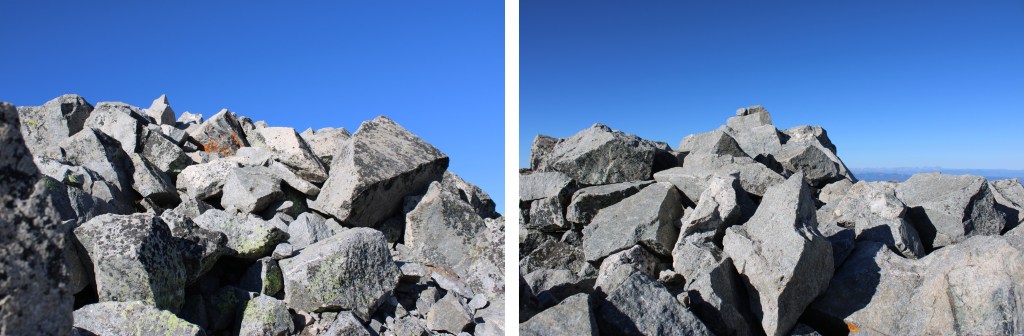
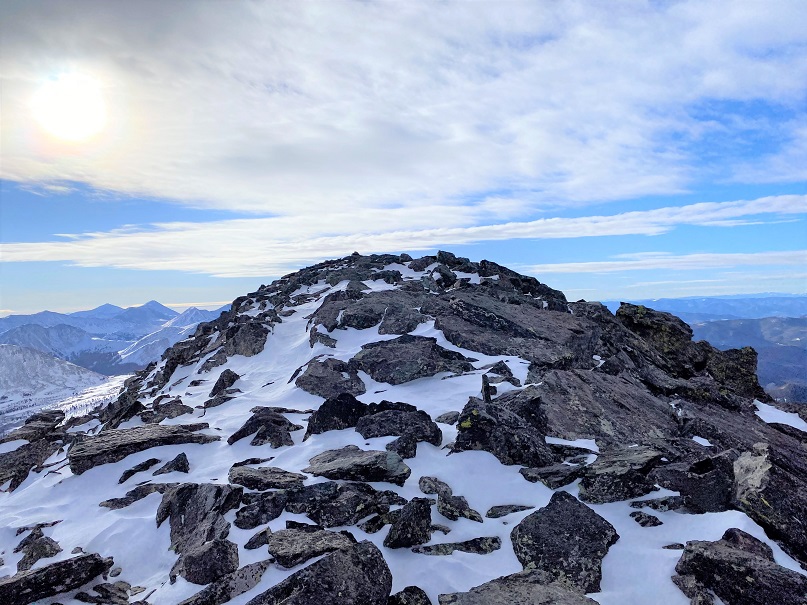
I summited Navajo Peak at 8:30am
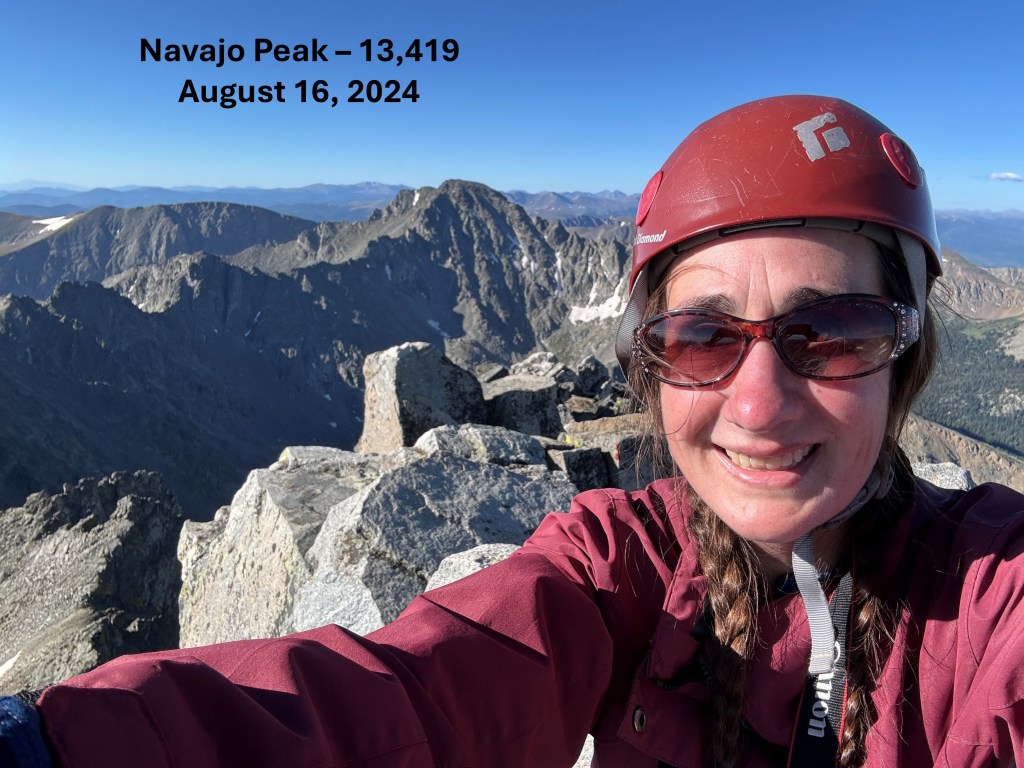
Navajo Peak:

This was an out and back hike for me, so I turned around and headed back towards the chimney.

I descended the chimney, and made my way back down to the saddle.

Then headed back down airplane gully
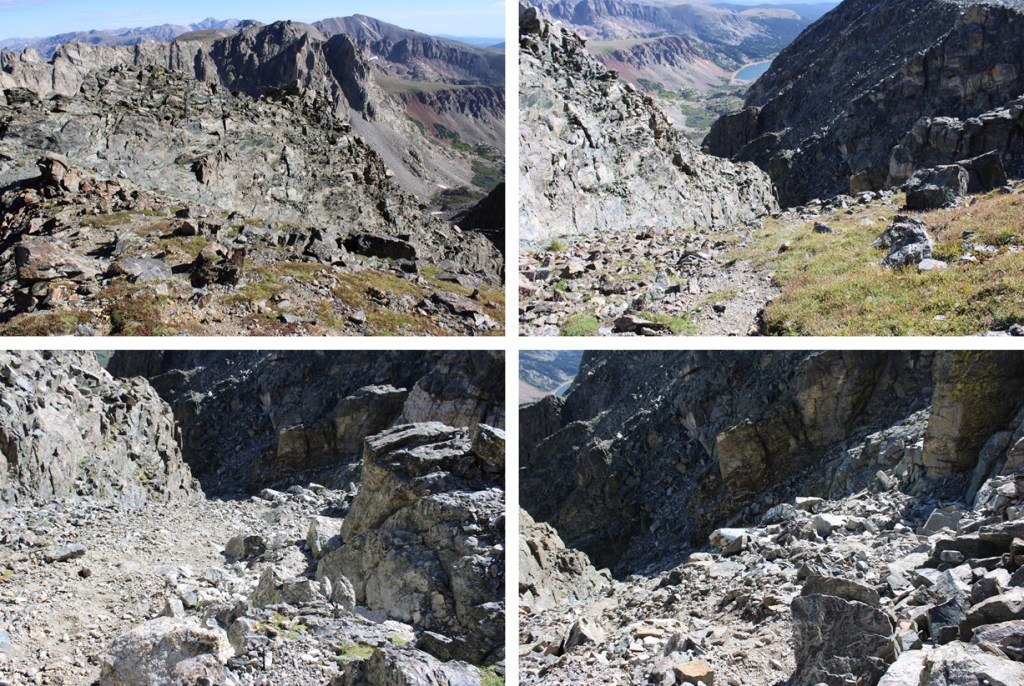
Passing the crash site, and continuing to follow the gully north
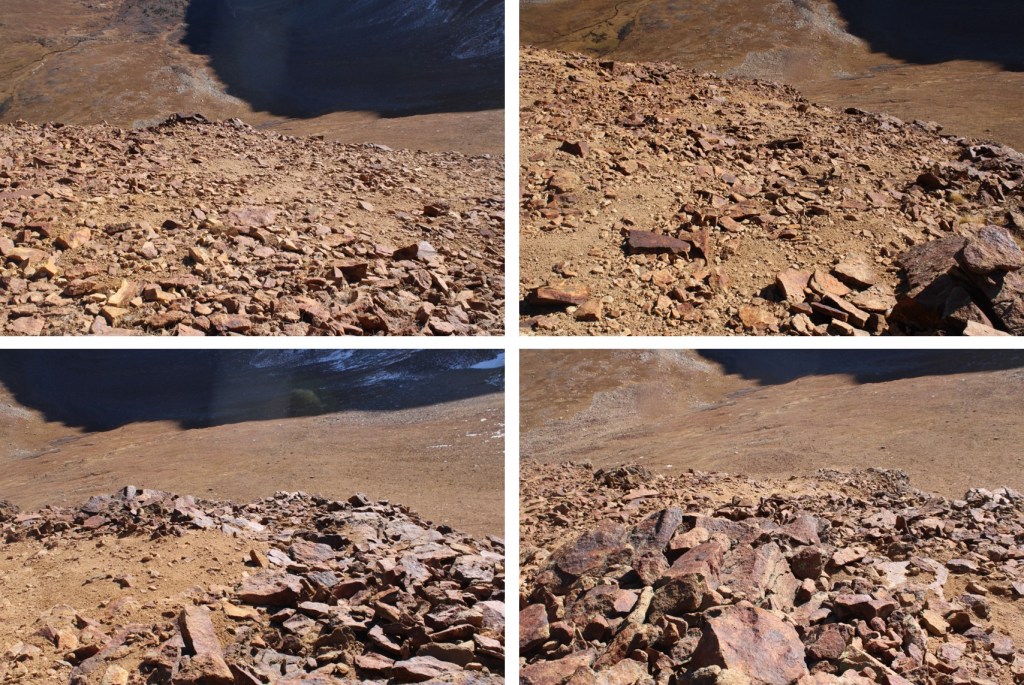
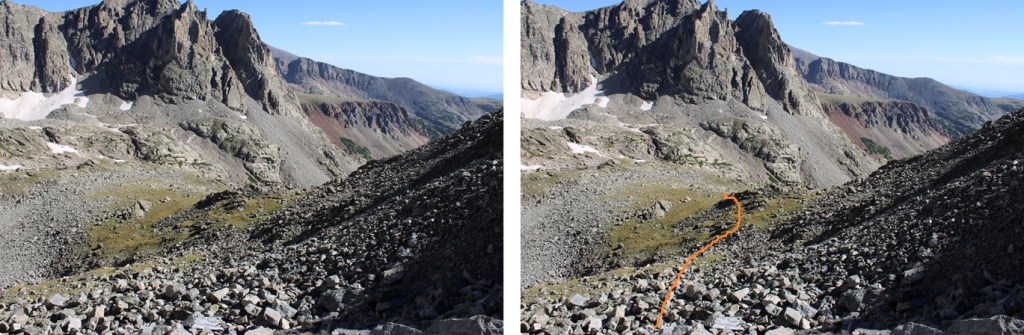
At the base of the gully, I rock hopped towards the tundra I could see in the distance
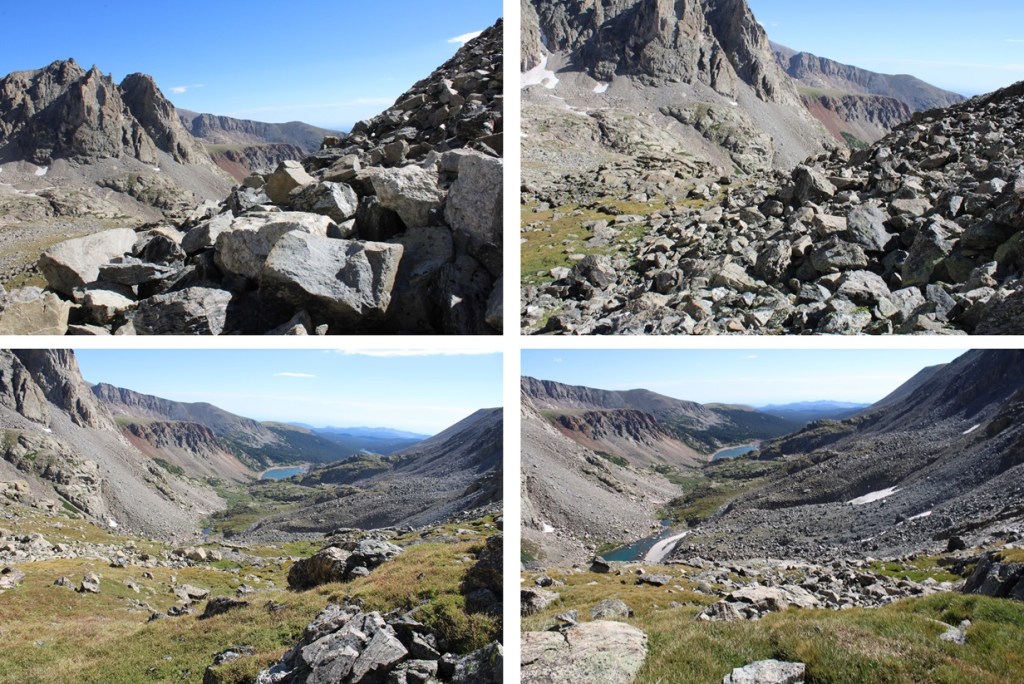
I could now see Isabelle Glacier trail in the distance, and descended down into the lower basin towards the trail. 

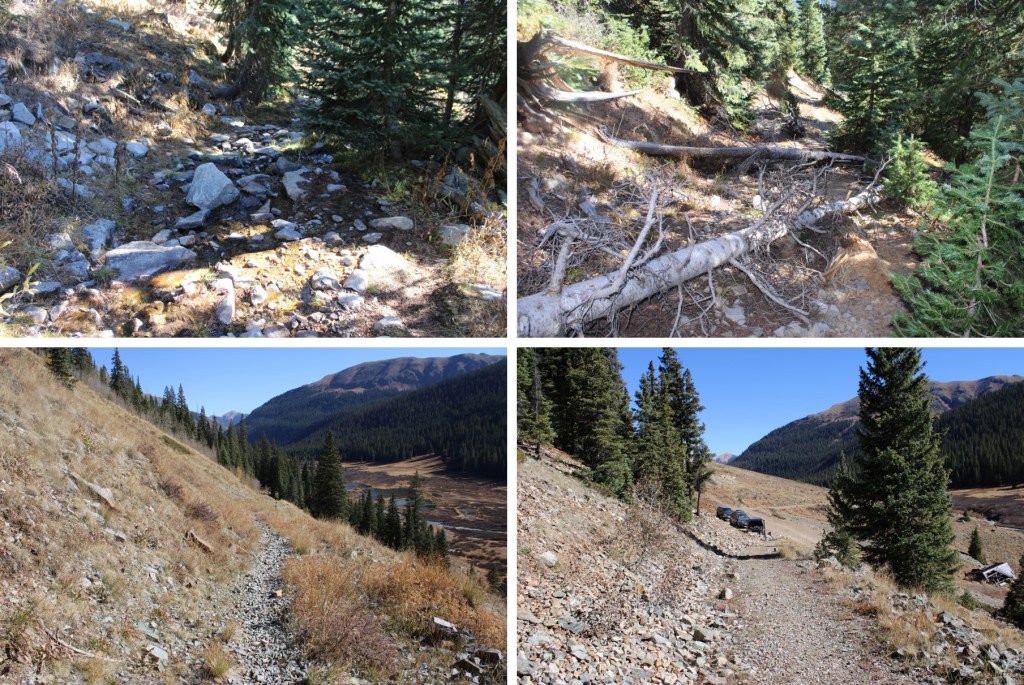
Back on the Isabelle Glacier trail, I followed it east back to the Long Lake Trailhead.
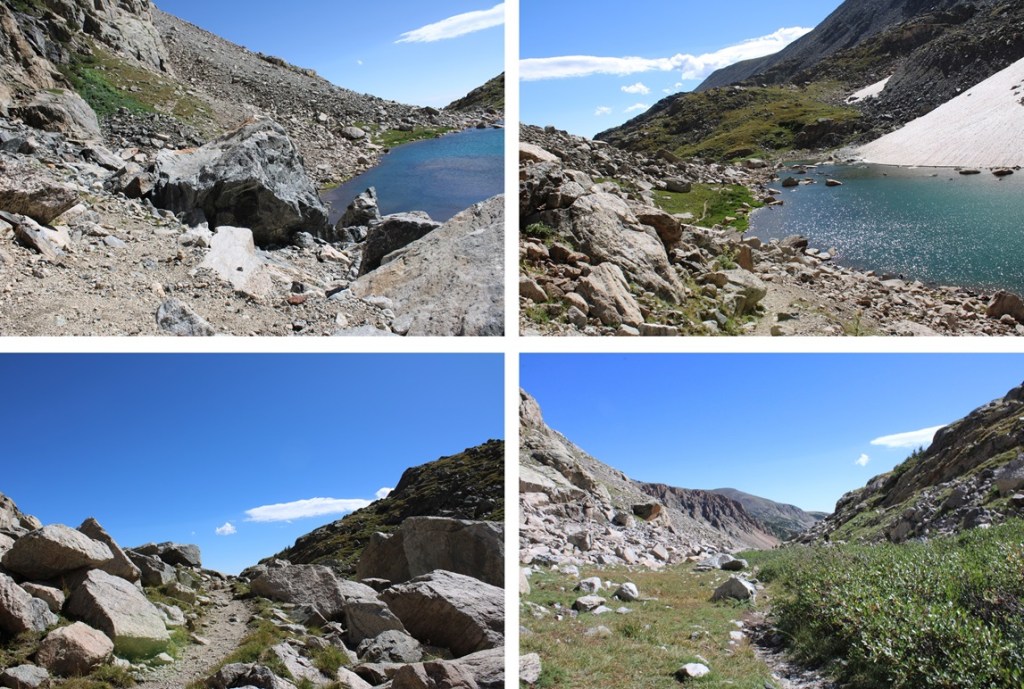
Back at the Long Lake Trailhead, I followed the road 1.3 miles back to Brainard Lake
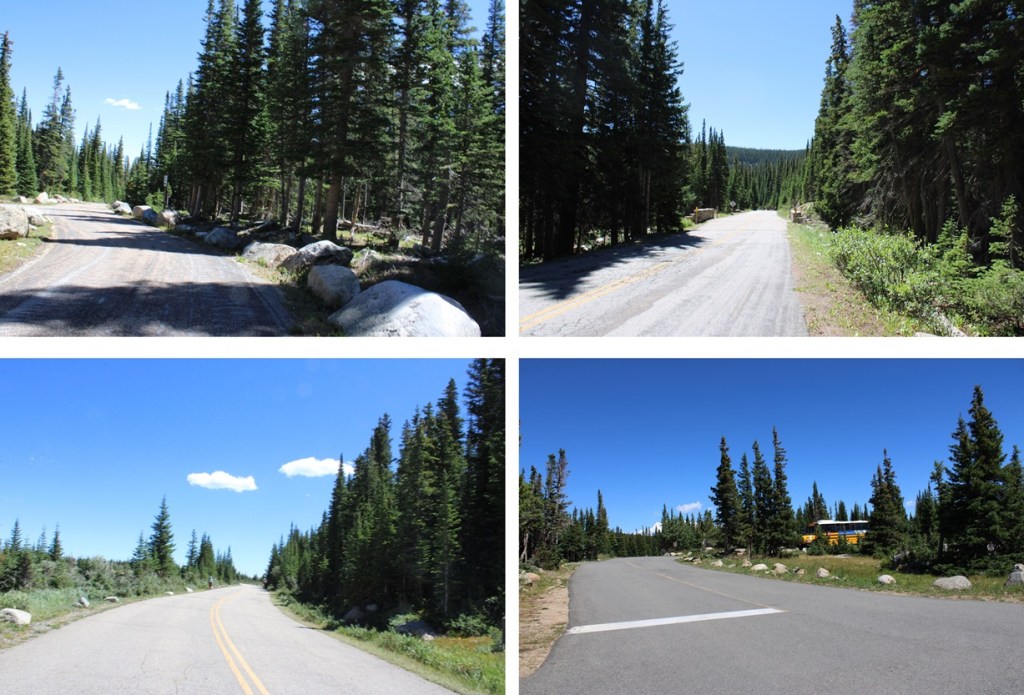
I made it back to the trailhead at 12:30pm, making this a 14.52 mile hike with 3346’ of elevation gain in 7.5 hours

PT 13003

RT Length:  17.1 miles

Elevation Gain: 4750’

I really wish I would have linked up this peak with PT 13164 when I did it in 2019, but then it wasn’t a known ranked 13er.  In any event, today was a long day, so I was getting an early start so I could drive back home for work the next morning.

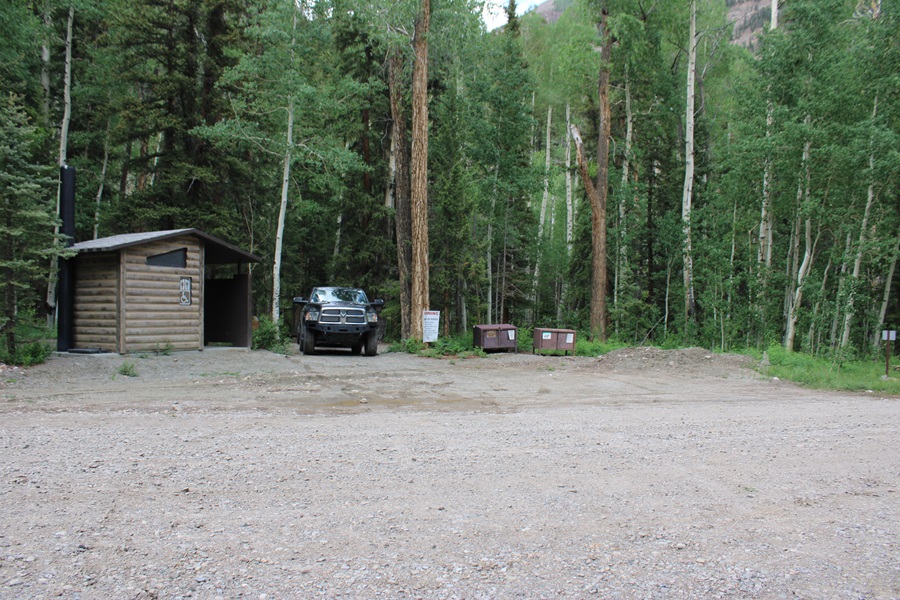
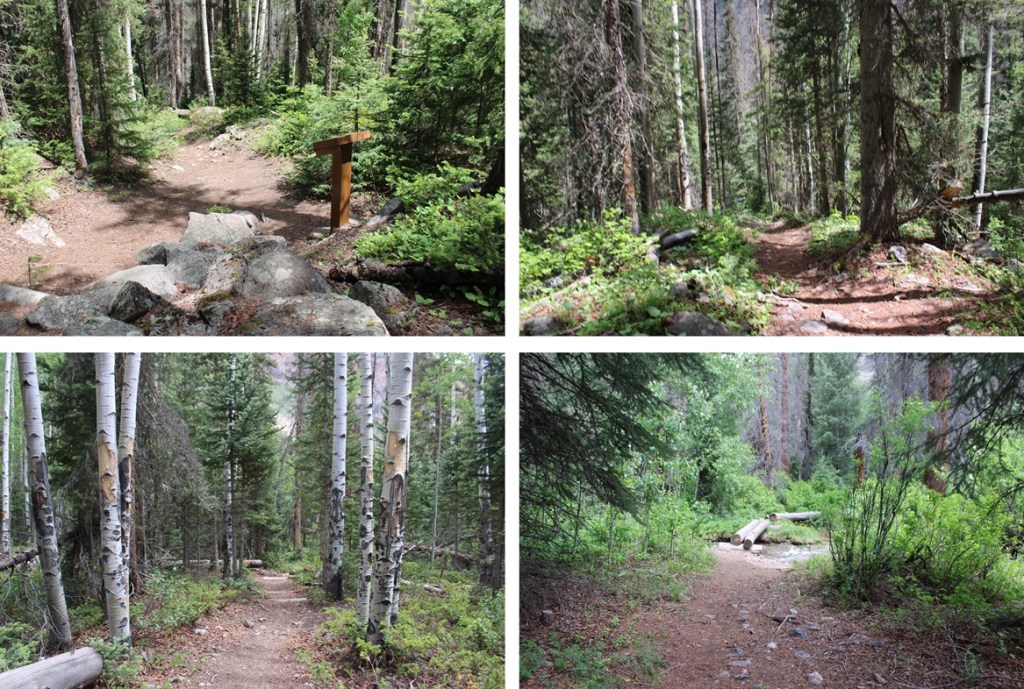
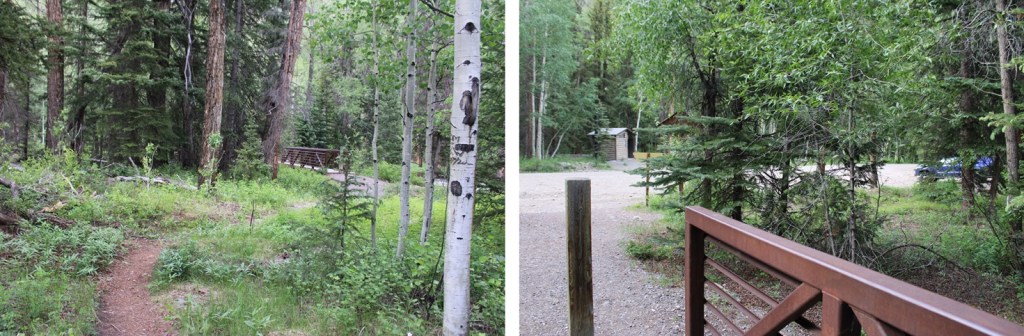
I parked at the Cataract Gulch Trailhead and was on the trail at 3:30am.  The trailhead has several parking spaces, dispersed campsites, and bathrooms.

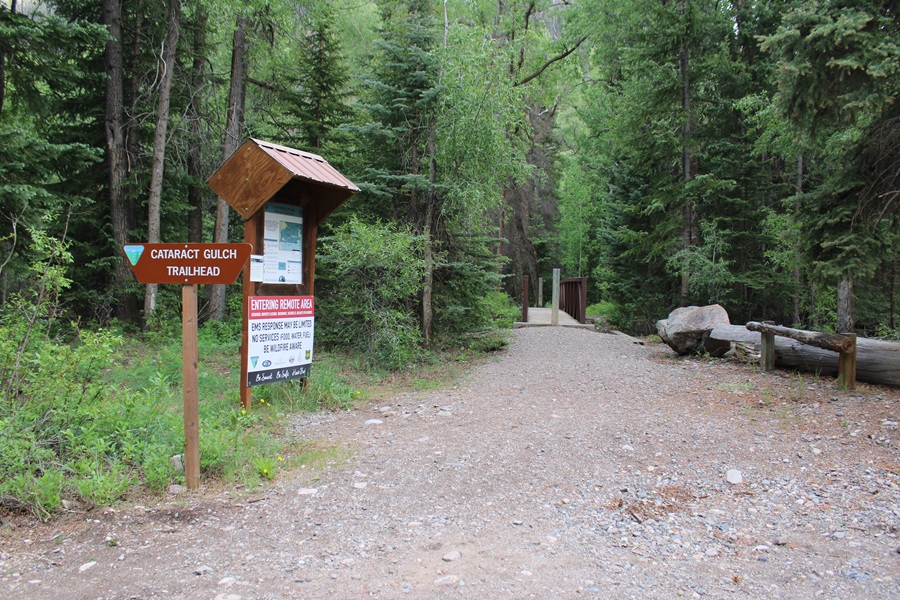
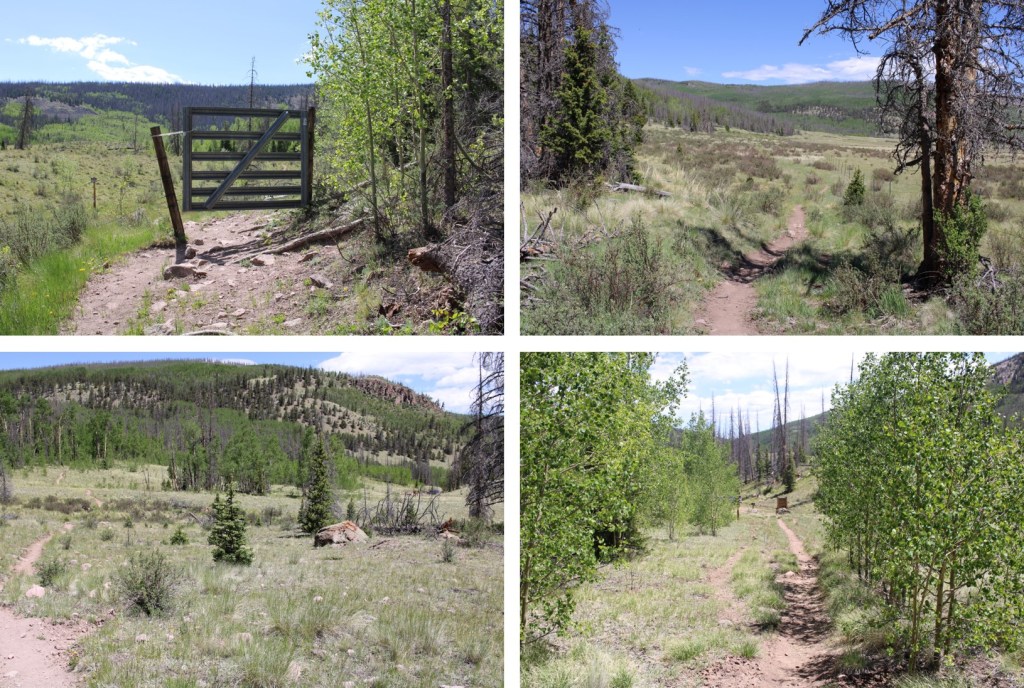
The trailhead is clearly marked, and easy to find. 

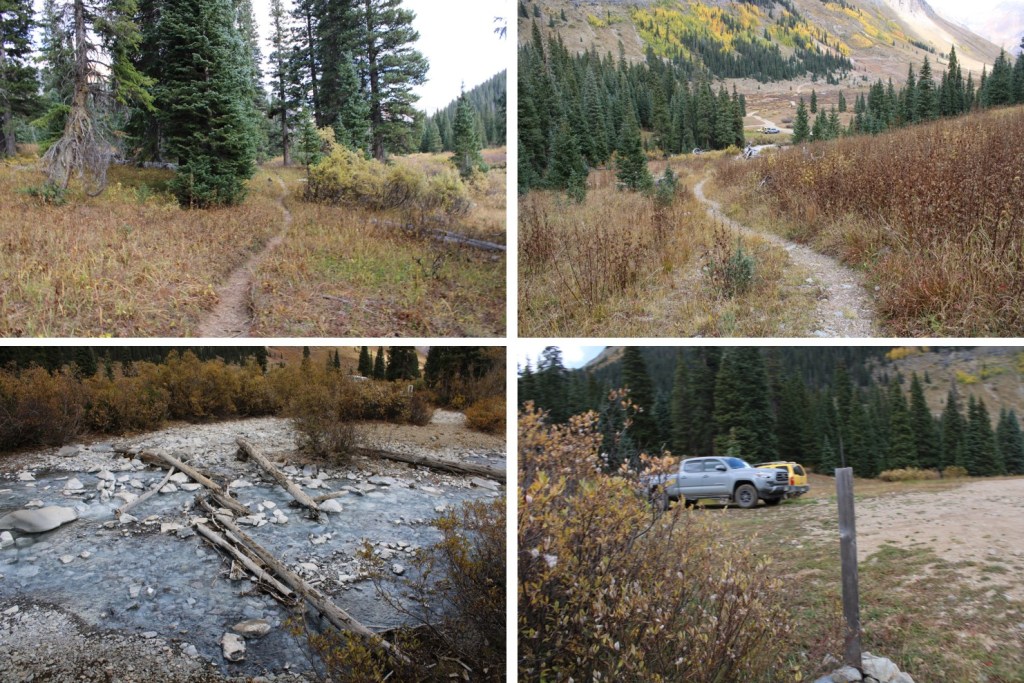
I followed the class 1 Cataract Gulch Trail south, towards Cataract Gulch. 

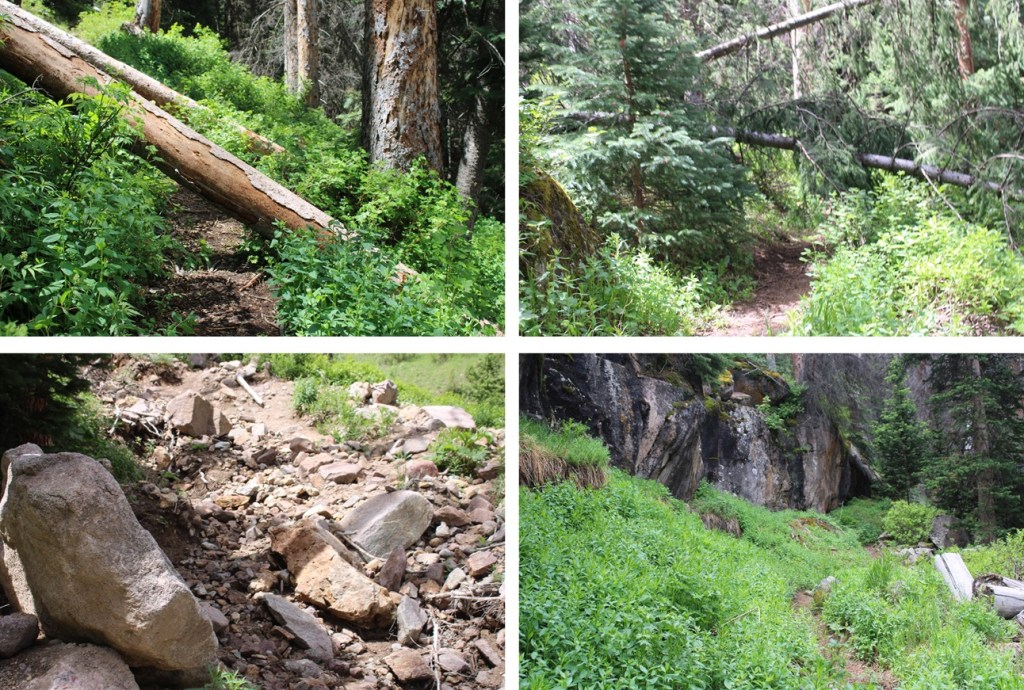
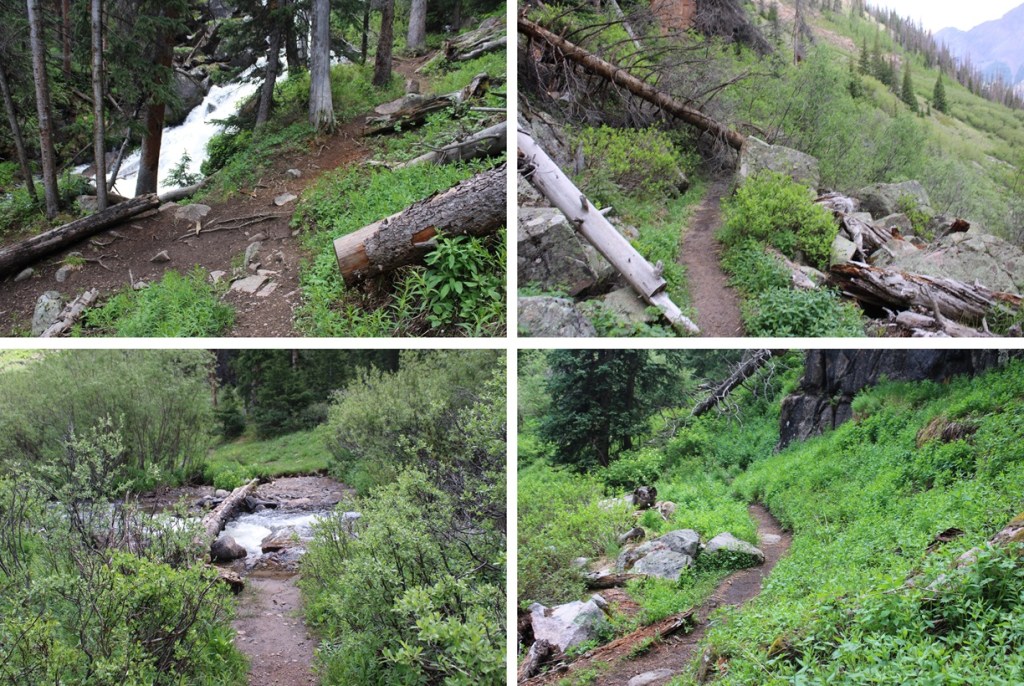
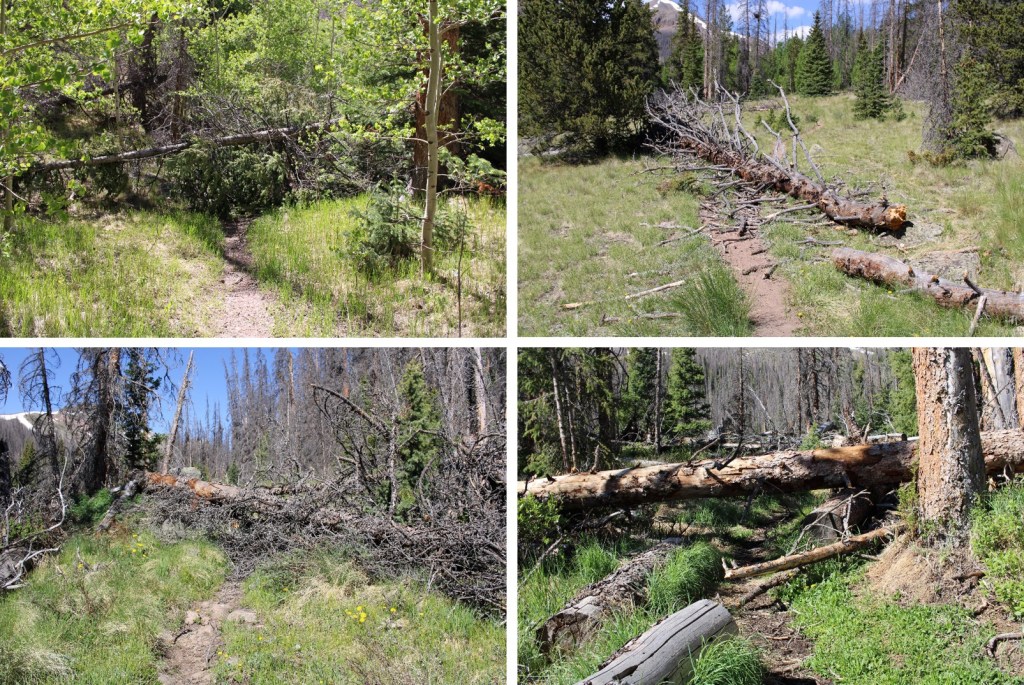
There were several downed trees on the trail, but it was easy to navigate.

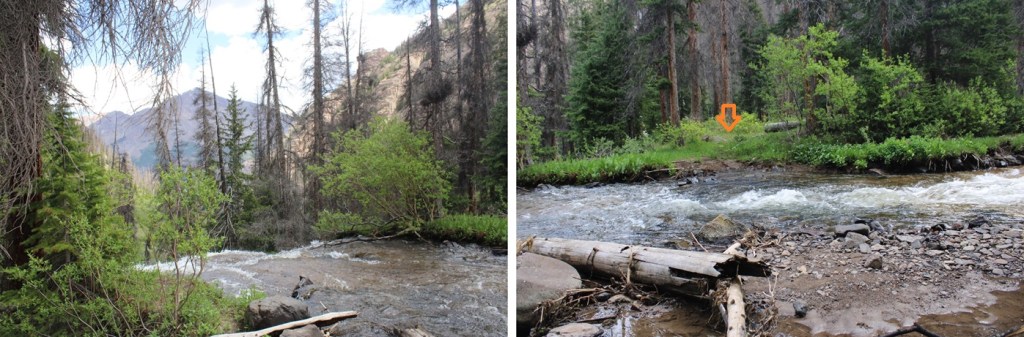
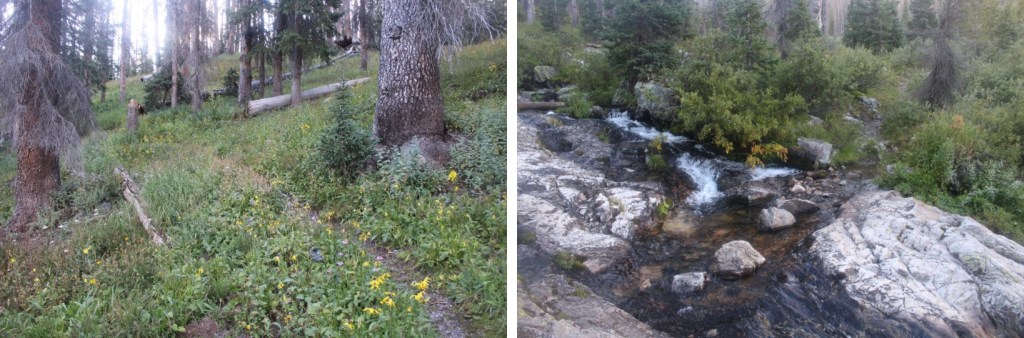
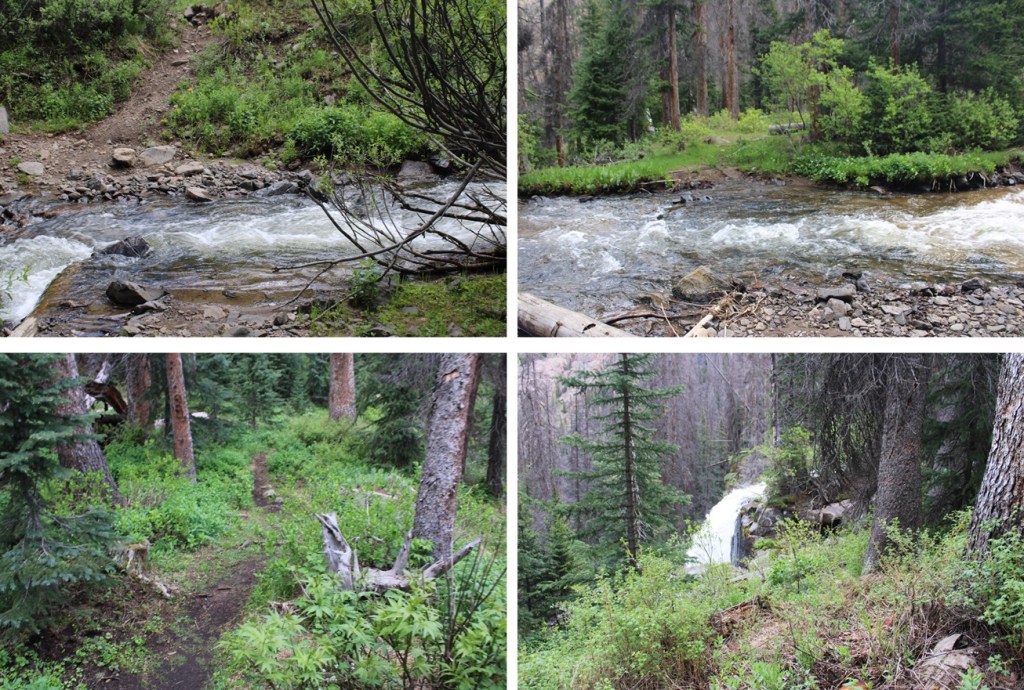
Just before reaching the waterfall about 2.5 miles up the trail, I crossed the creek on a couple of logs.

This is where many people get lost.  I headed up the slope, and there was a large tree blocking the path.  I went left, navigated willows and some boulders, then regained the trail.

I could now see the waterfall clearly.  A lot of people continue straight here, towards the waterfall, following the social trails.  Instead, look for a trail to the right that goes up and behind the waterfall.

Next, to cross the creek.  I crossed directly above the waterfall.  Probably about 10 feet from where it drops off.   At night I knew where to cross because there are little reflecting circles on the trees across from the water that glow when you shine your flashlight across them.  The water was running high today, and I didn’t want to go over the edge, so I crossed carefully.  The water was up just past my knees. 

I picked up the trail on the other side, and quickly came to a second creek crossing. 

I picked up the trail again on the other side, and ascended through a cairned, rocky area. 

This led me to my final creek crossing of the morning. 

I crossed the creek one more time, and picked up the trail on the other side.  It led me up and around to the left, behind boulders and through a small canyon.

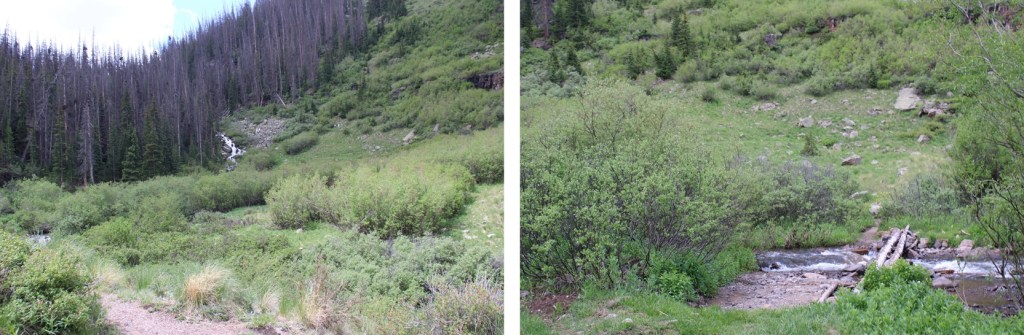
I was now headed south towards Cataract Lake.  There’s a pretty good trail here, but every once in a while it gets overgrown.  The trail slopes slightly downward as it goes across the tundra and through the willows. There are posts to help guide you if you lose the trail. I was headed here:

I passed Cataract Lake to my left, and a small lake to my right.  Here the trail picked up with the Colorado Trail, and I followed it right, west, towards Cuba Gulch.

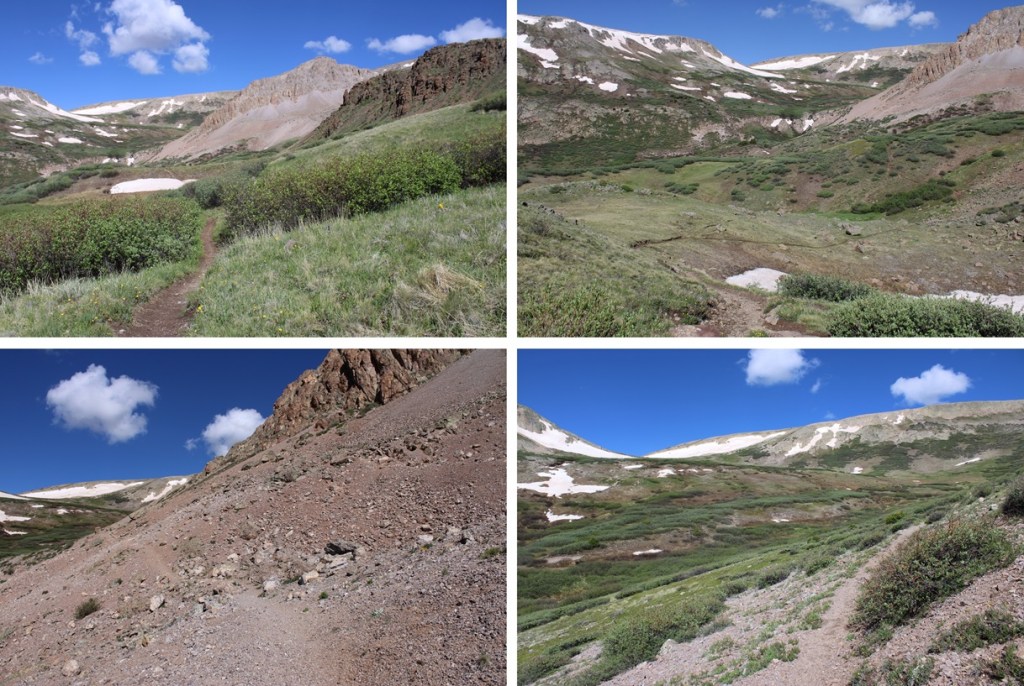
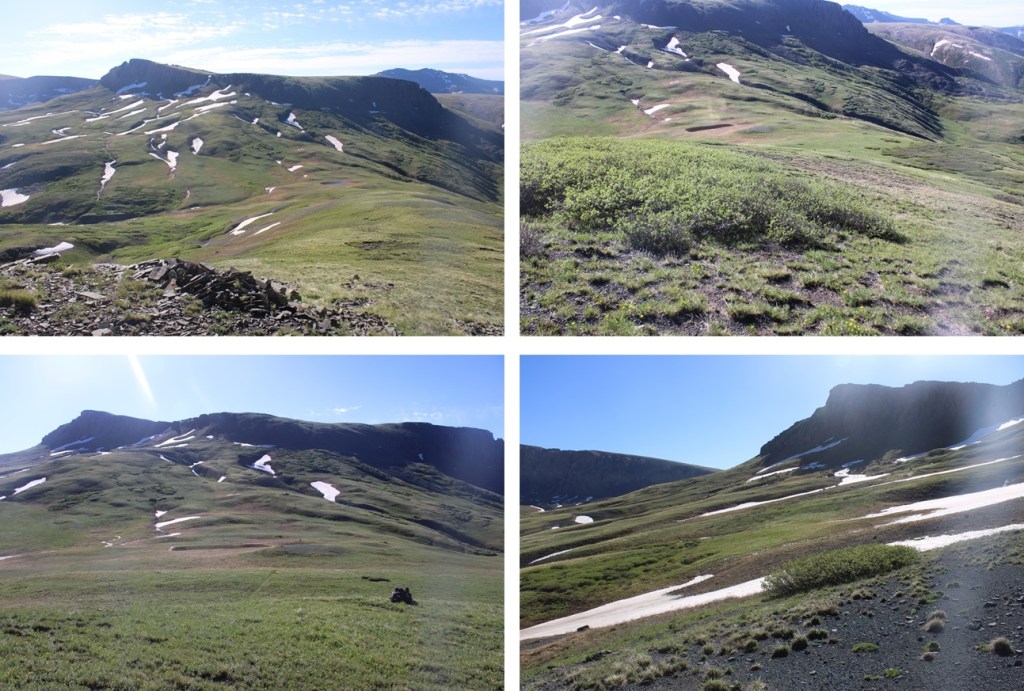
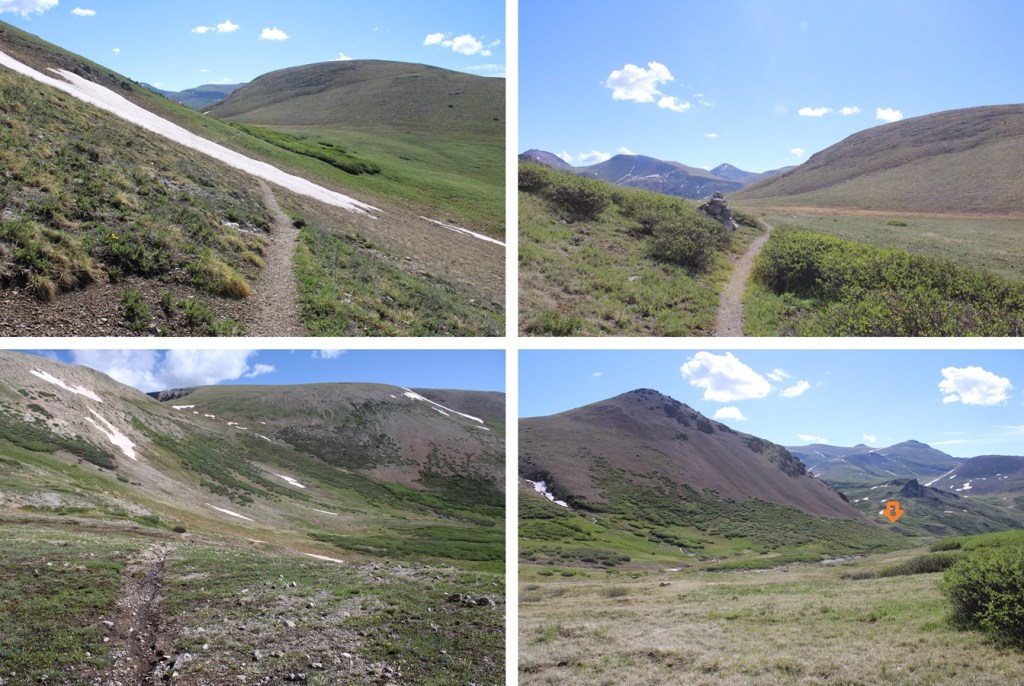
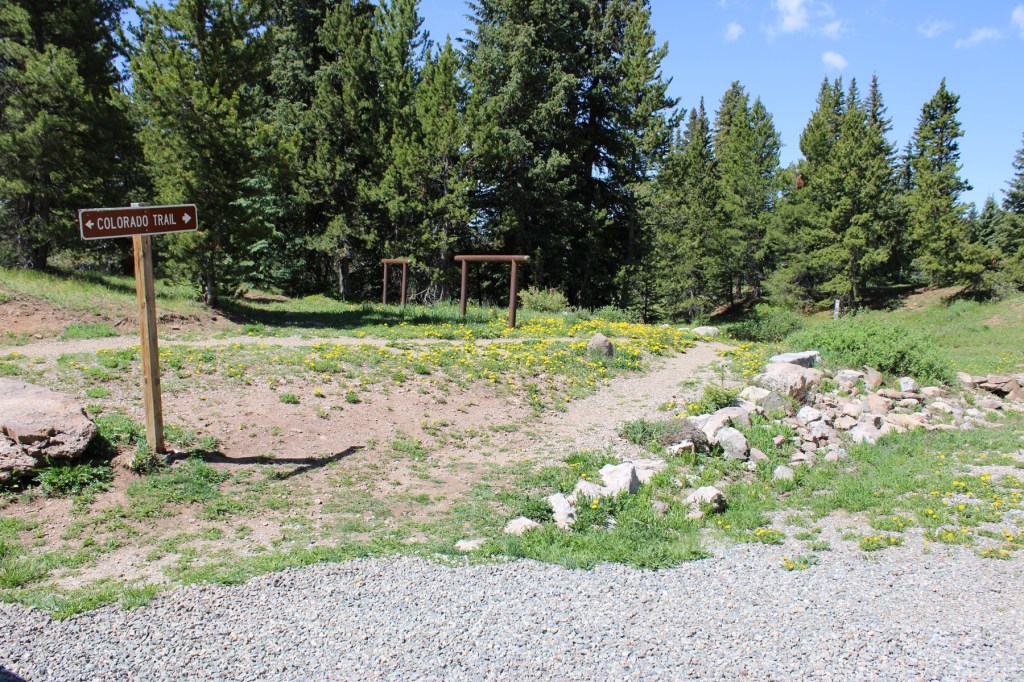
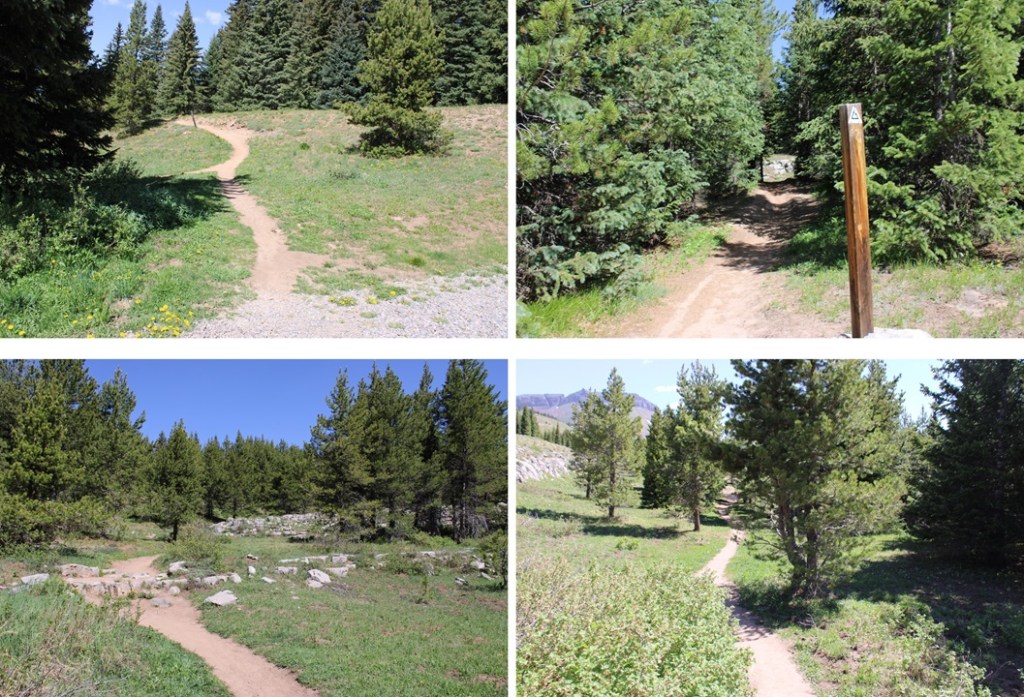
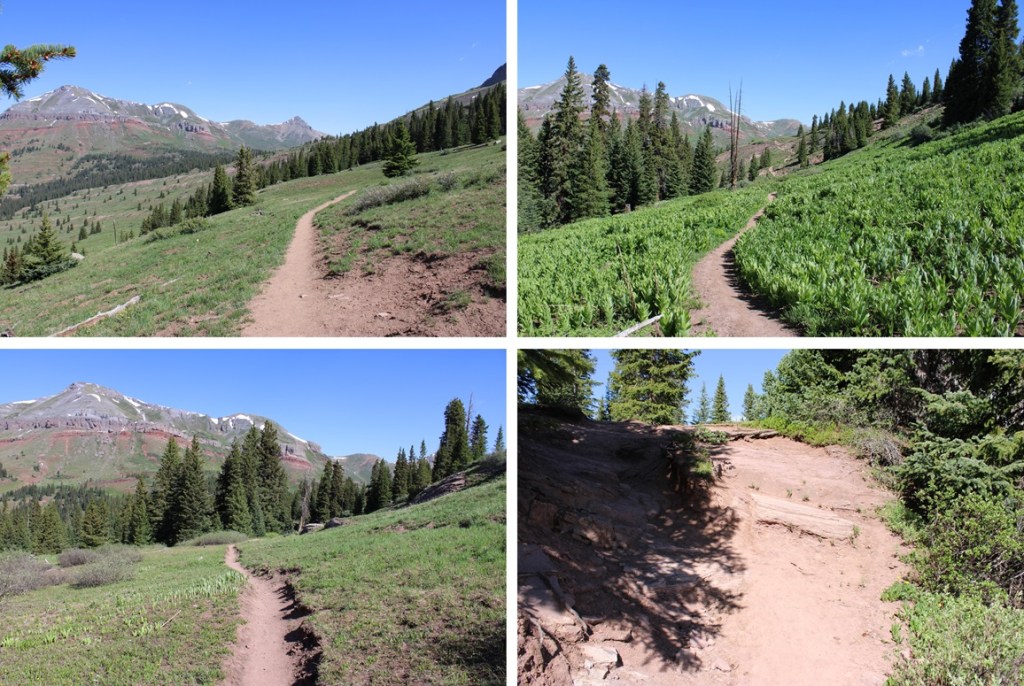
I stayed on the Colorado Trail (East Fork Middle Pole Trail) for most of the rest of the hike.  Here are some pictures of the trail.

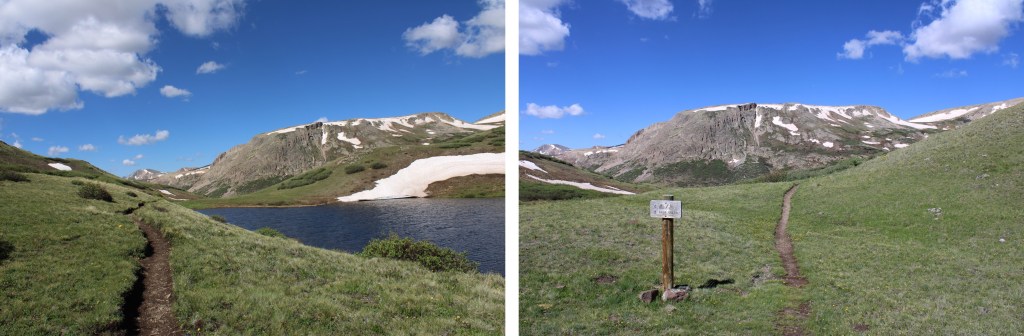
The trail meanders it’s way to a saddle:

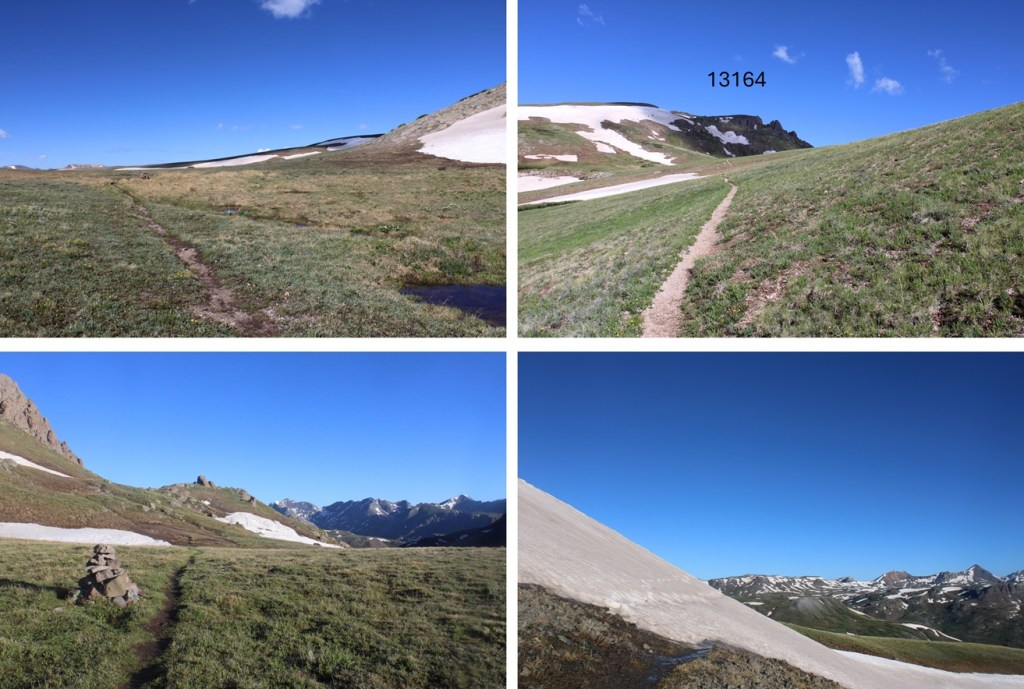
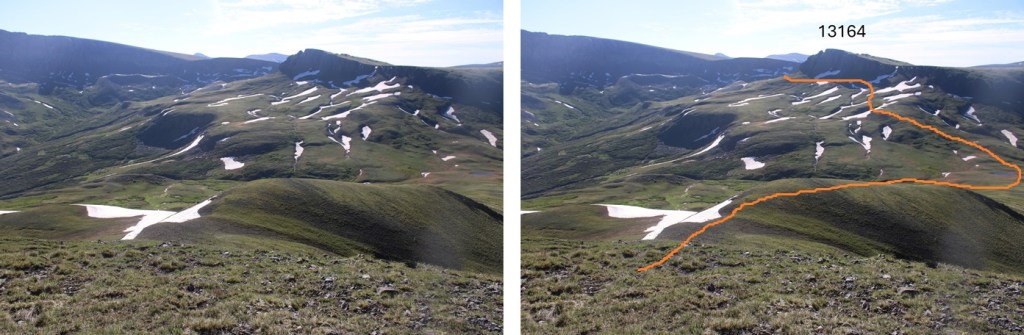
I skirted around the north side of 13164, navigating through a could of ice patches. 

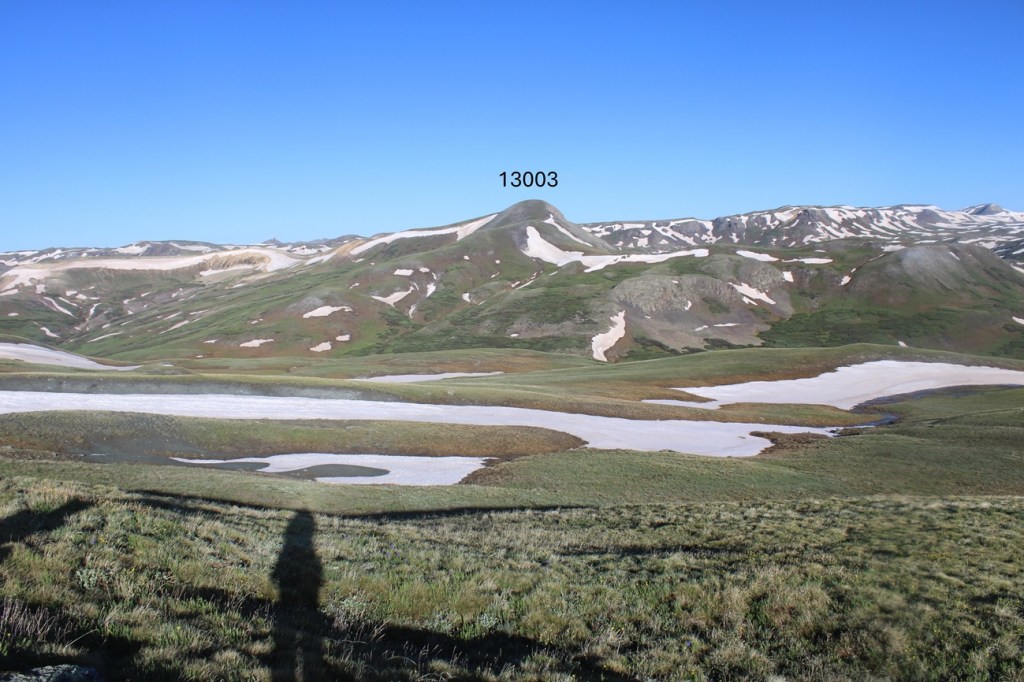
Now on the north side of 13164, I could see 13003 to the west. 

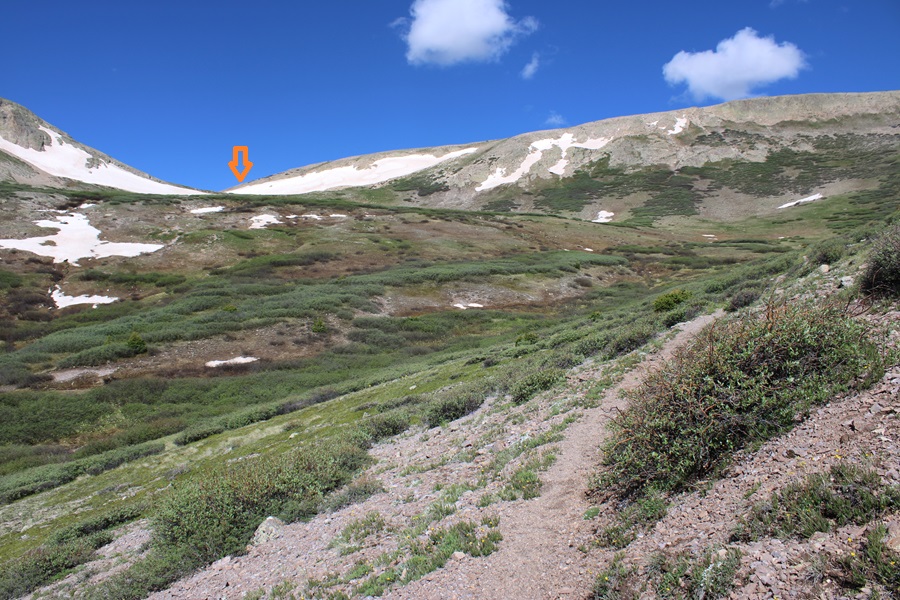
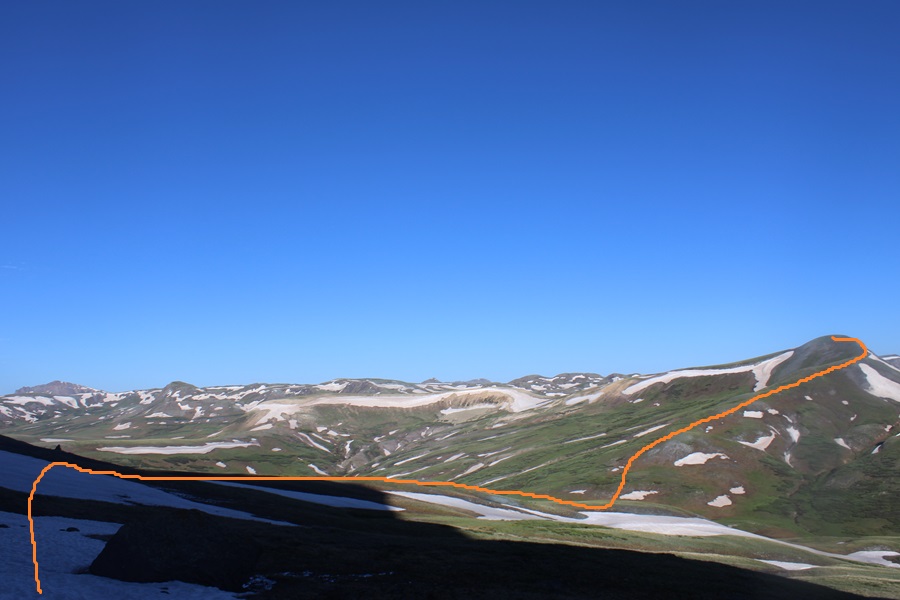
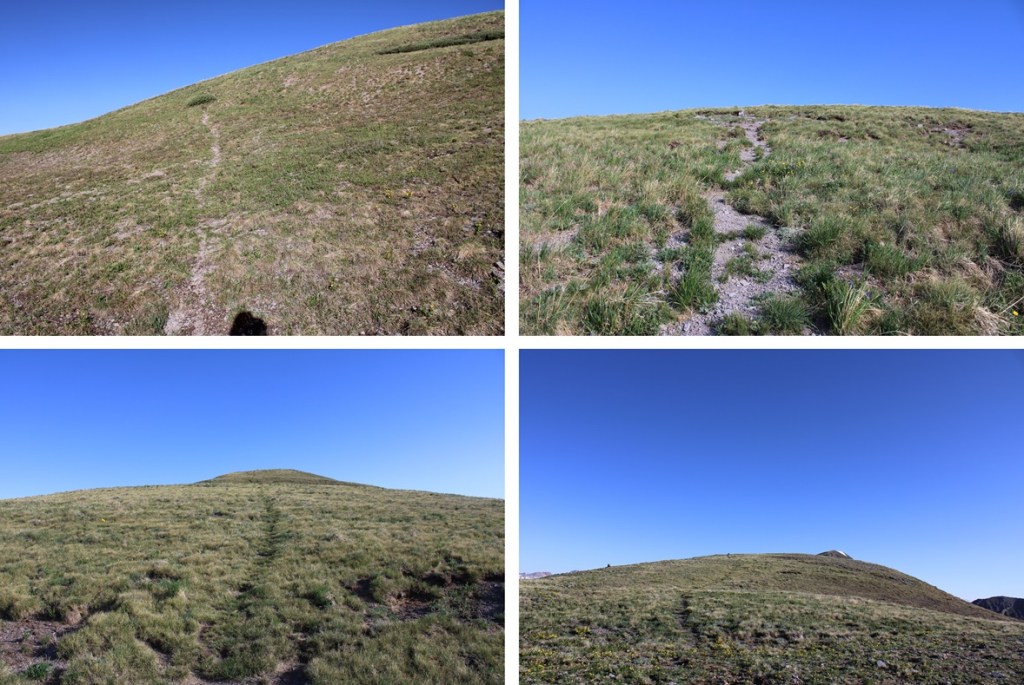
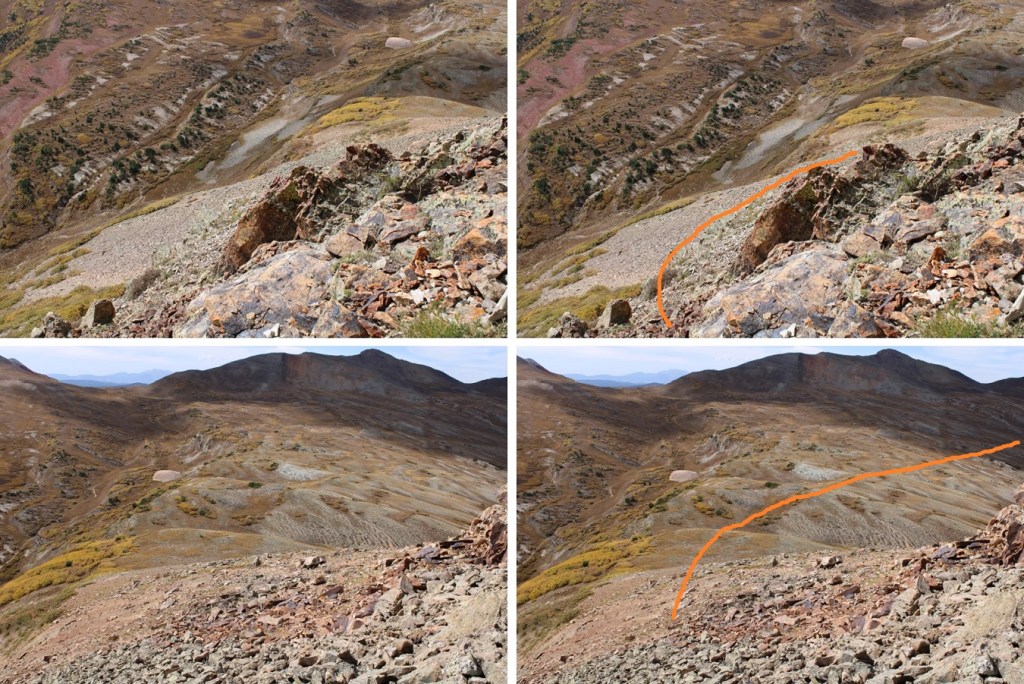
I stayed on the Colorado Trail until I hit the saddle of 13164 and 13003, losing about 500’ of elevation, then left the trail and took the tundra covered ridge to the summit.  This is the route I took.

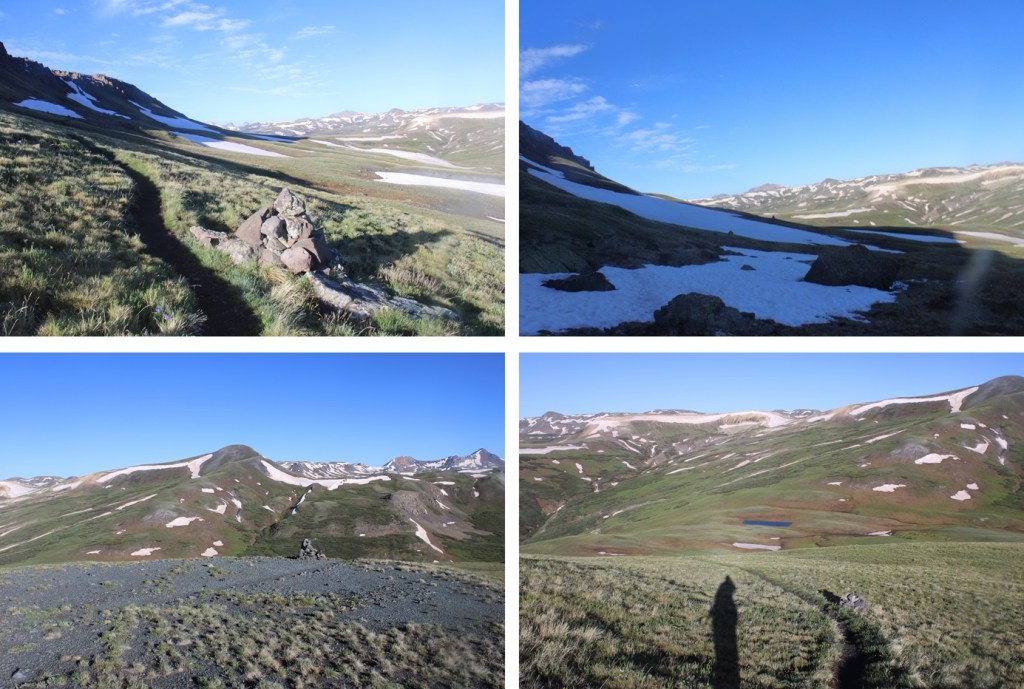
I made my way to the saddle

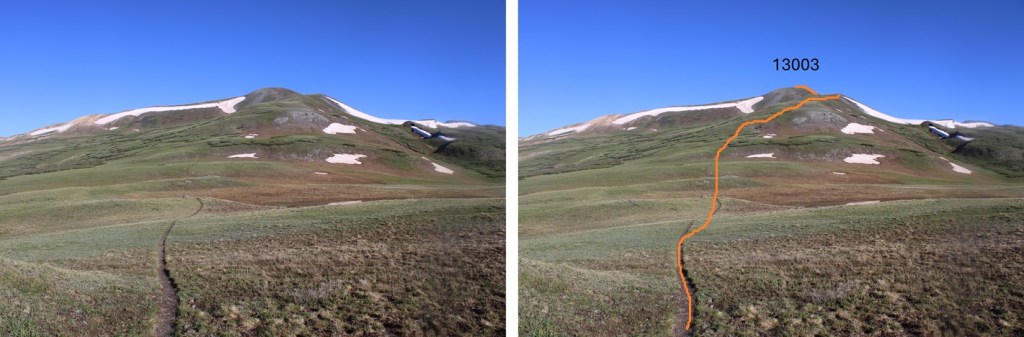
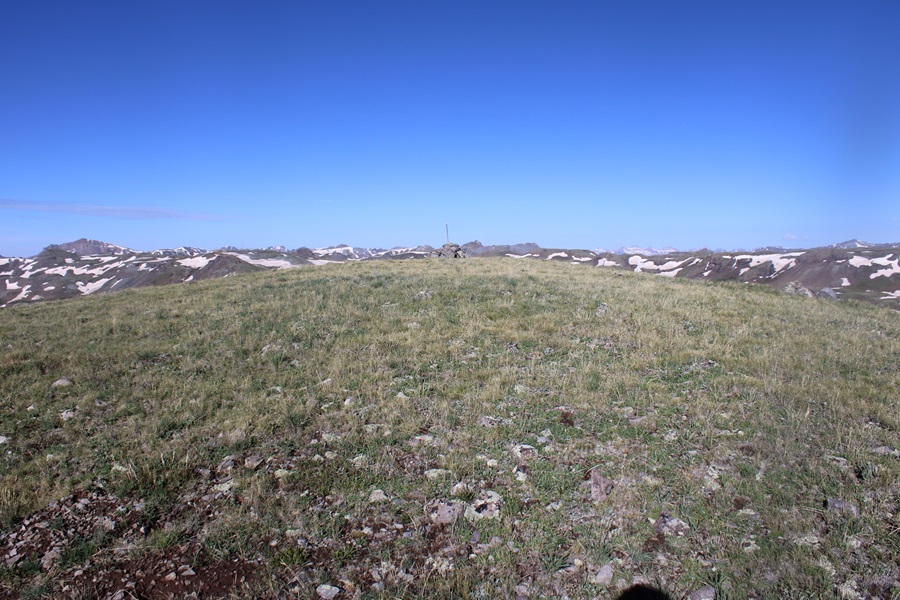
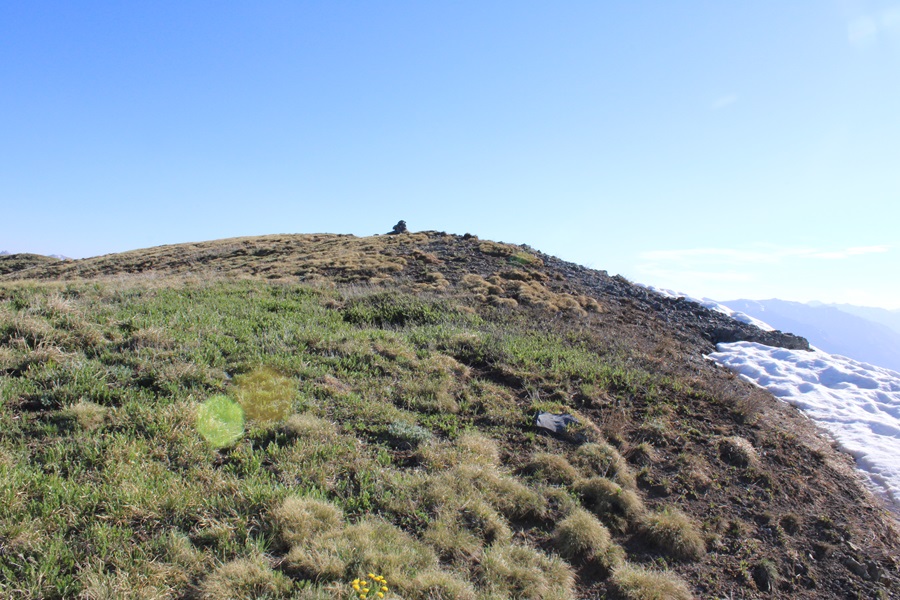
Then hiked the ridge to the summit

I summited PT 13003 at 8:15am

PT 13003:

This was an out and back hike for me, so I turned around and retraced my steps.  Here’s my route back down the saddle, skirting around the left side of PT 13164, following the Colorado Trail.

I then continued following the trail as it wound back to the Cataract Gulch Trail

Past the lakes and through the upper basin, I kept following the trail, aiming for Sunshine Peak to the north.

I crossed the creek

Then descended through the rocky basin

I crossed the creek twice more, and then followed the trail back down around the waterfall and back to the trailhead.

I made it back to the trailhead at 12pm, making this a 17.1 mile hike with 4750’ of elevation gain in 8.5 hours.  Note:  My Strava glitched about 2 miles into this hike, so I drew in my route for this peak on the topo map.  This was easy because most of the route was on a trail, so it auto populated.  My phone and watch gave me 19.1 miles for the hike, but I got 17.1 miles when I drew the map in CalTopo. 

Also, every time I’ve been to Cataract Gulch I’ve seen moose. Today was no exception.

On to the next trailhead!

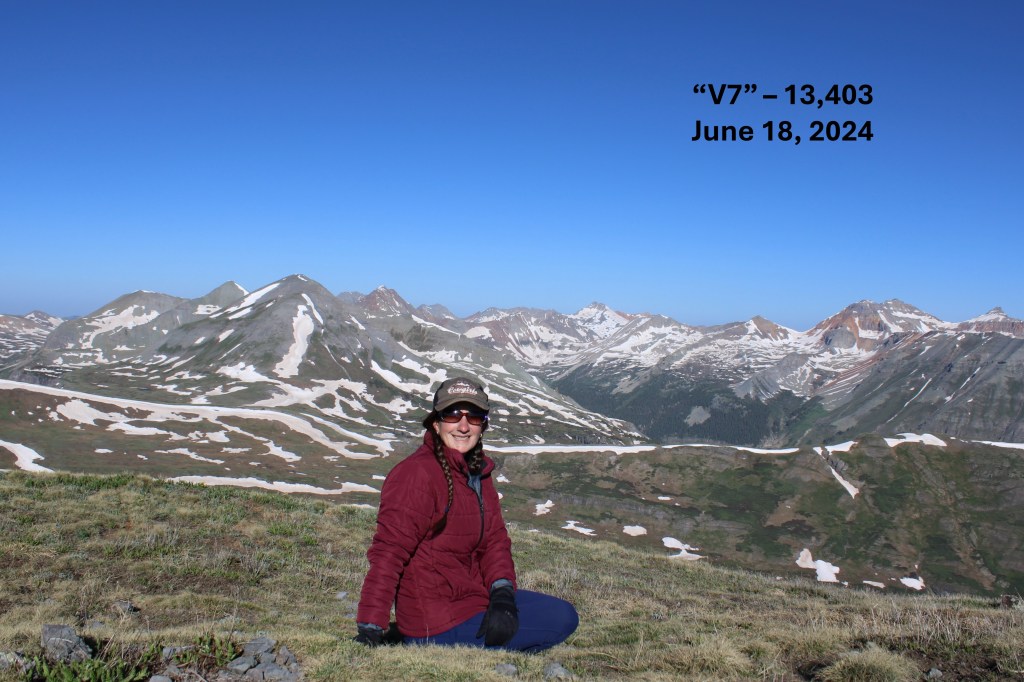
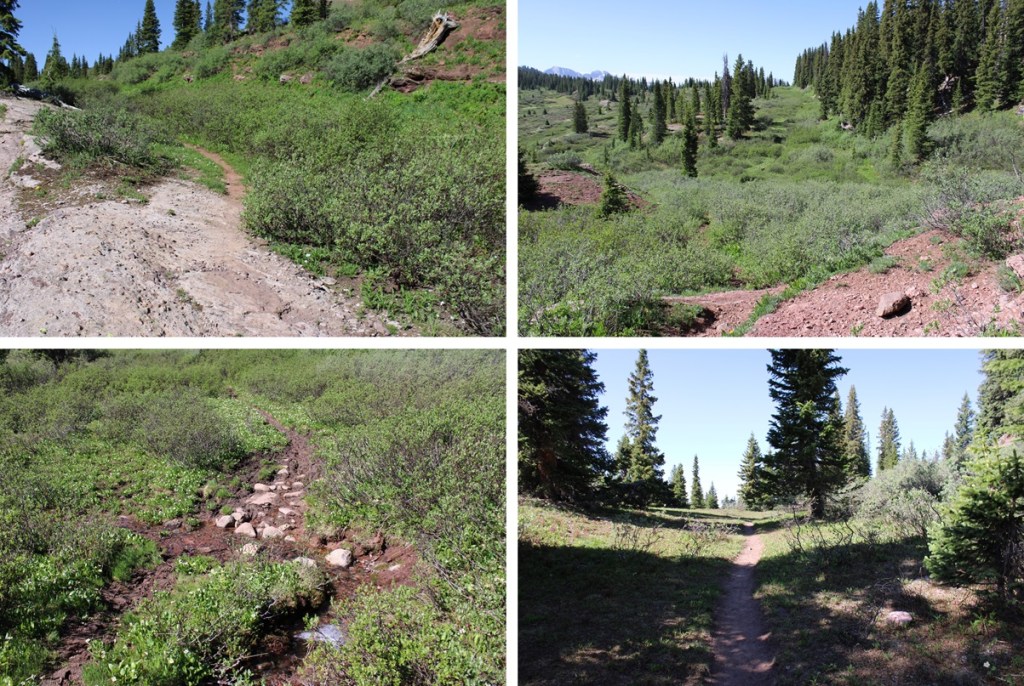
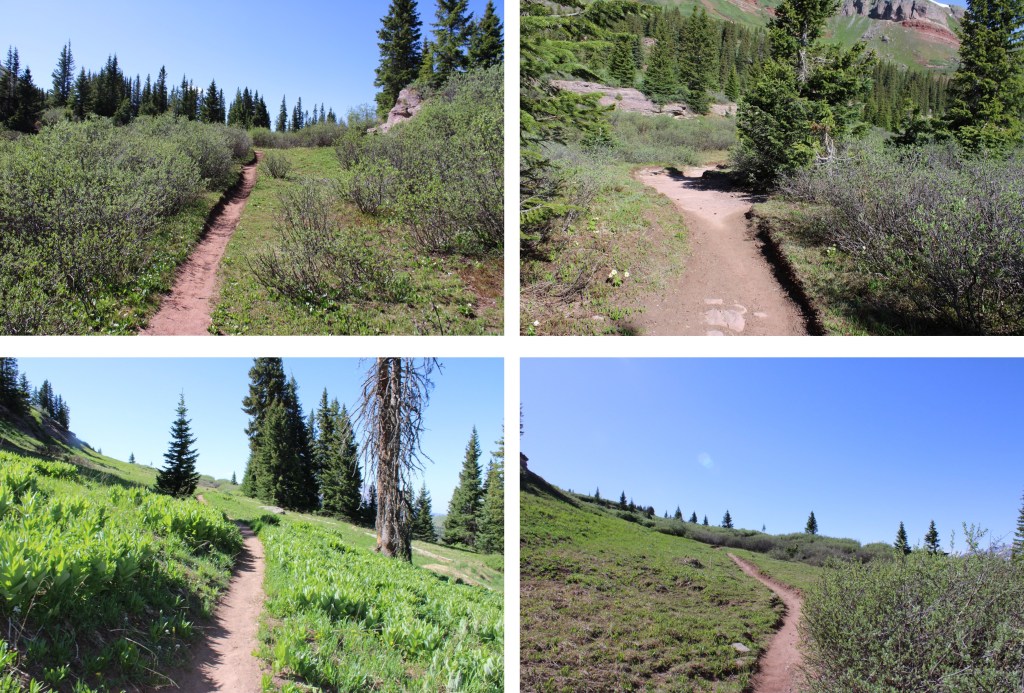
“V7” – 13,043

RT Length: 13.78 miles

Elevation Gain: 3029’

I don’t know why more people don’t hike this peak.  It’s class 1 98% of the time, the trailhead is easily accessible, the views are amazing, and there’s abundant wildlife.  In any event, I’m recommending it to trail runners especially because it looks like good terrain for trail running.   I felt this peak was almost too easy.

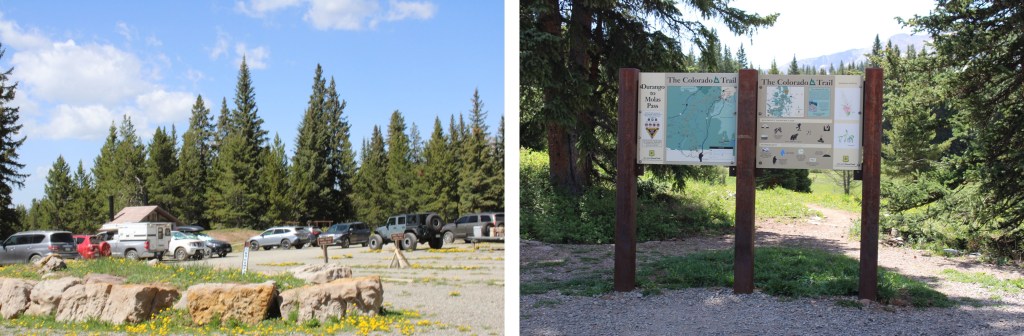
I started at the Colorado Trail Segment 25 Trailhead near Little Molas Lake.  There are several dispersed campsites here, public restrooms (although the women’s side was closed for the season), and tons of parking. 

The trail is easily marked, and starts at the south end of the parking area

I followed this well-defined trail for just under 3.5 miles as it wove in and out of treeline.  (Note, between miles 2-5 of this hike I gained and also lost a lot of elevation).

After hiking for just under 3.5 miles I found myself at the base of PT 12,864.  The Colorado Trail continues to the left, but if you look closely, at the top of the rock formation here there is also a trail to the right.  I left the Colorado Trail and took the trail to the right.

While not named, this is also a well-established trail.  By the looks of all the tire tracks, it’s popular for the mountain bikers.  It took me up and down and around to the north, towards Putnam Basin.

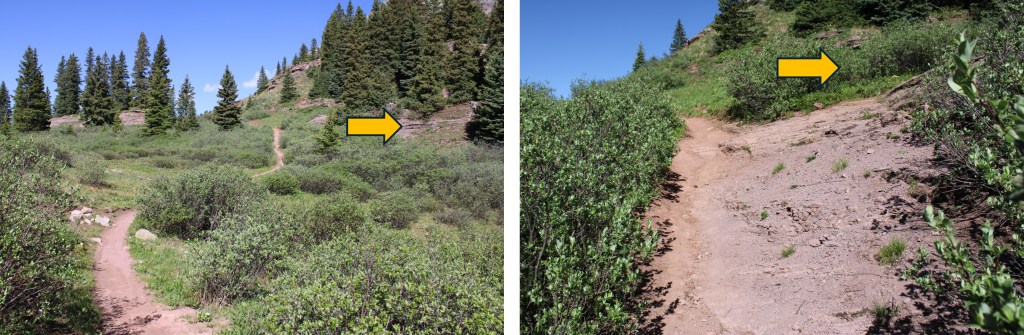
Just before the basin were a few campsites, and a creek to cross. There are a few social trails in the area due to the campsites, so if you’re given the option, go left.

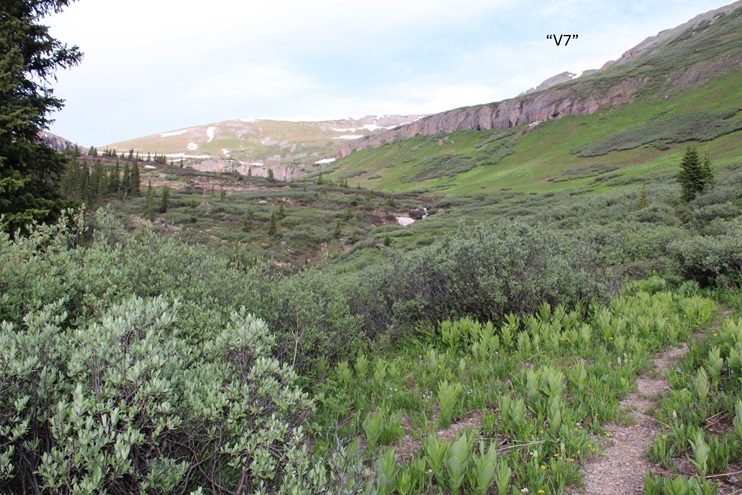
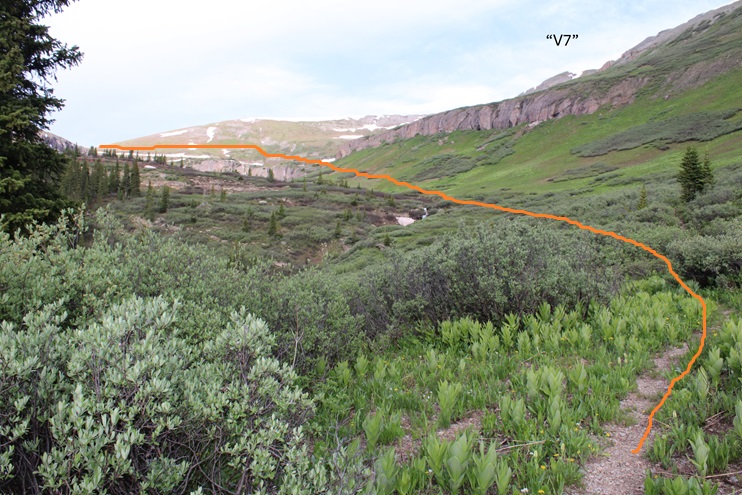
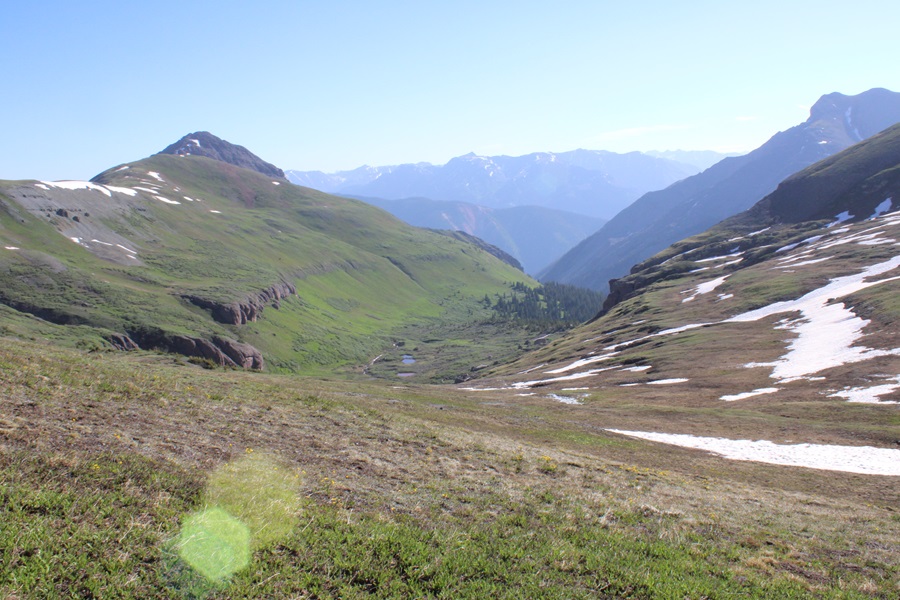
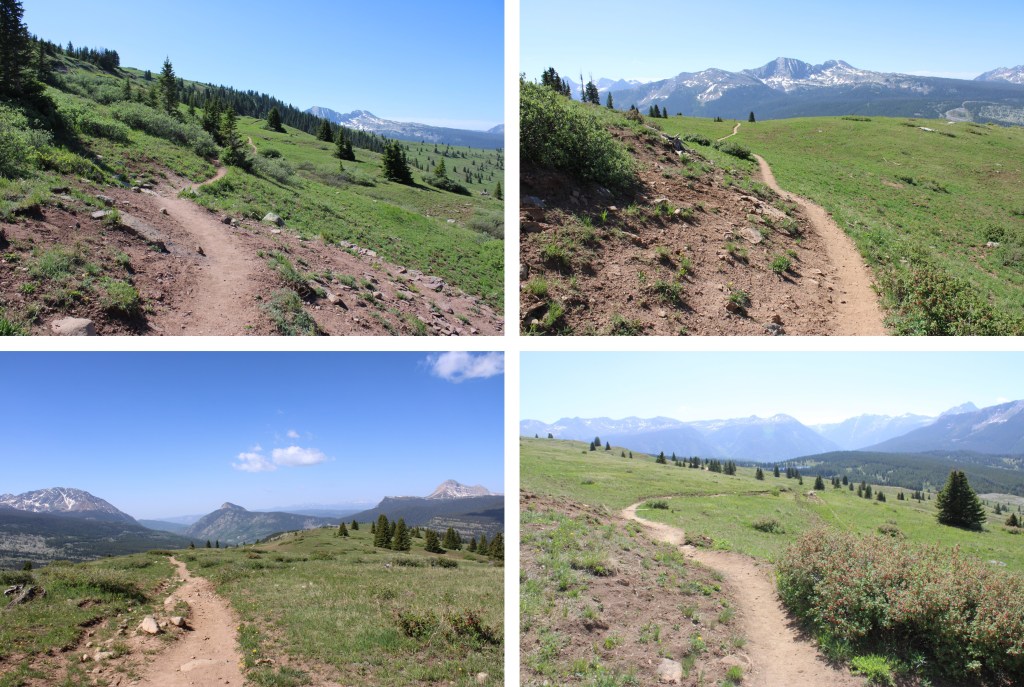
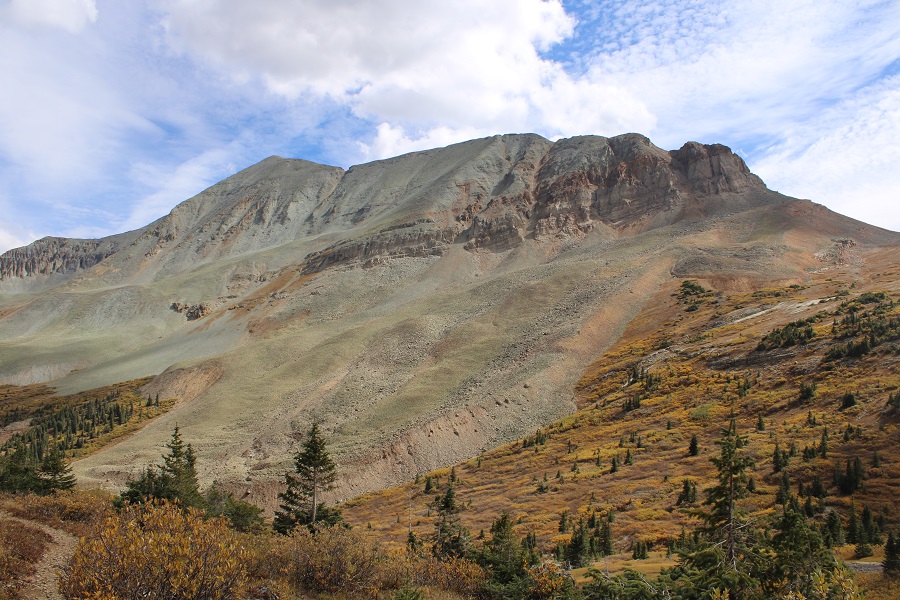
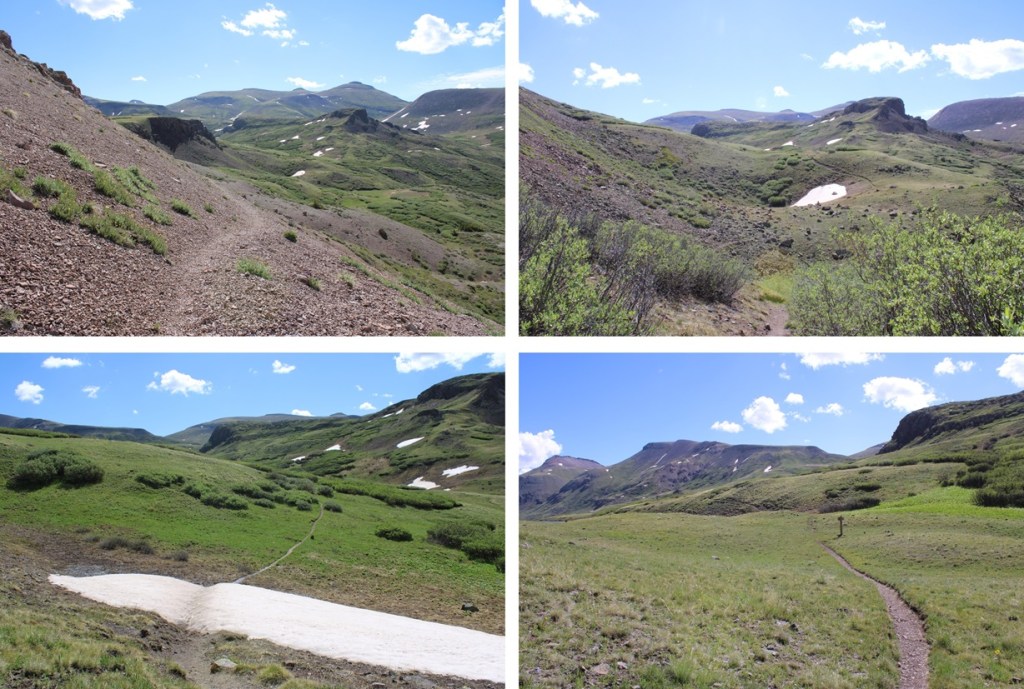
Now at the base of Putnam Basin, I had a clear view of the route ahead of me.  No more losing elevation, I would just be gaining for the rest of the hike.  This is still on a class 1 trail, all the way to the saddle.

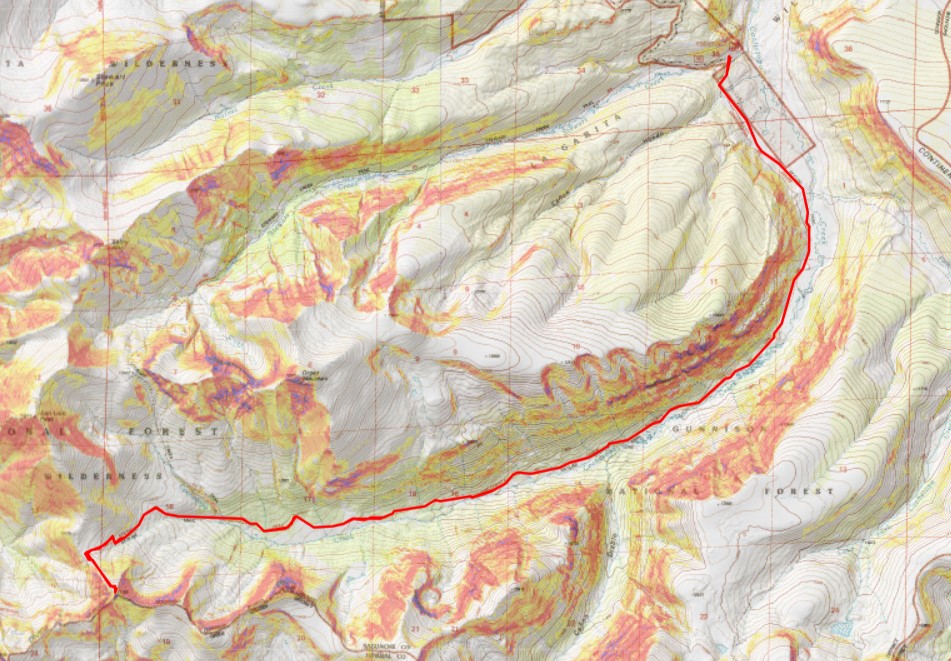
This is the route I took

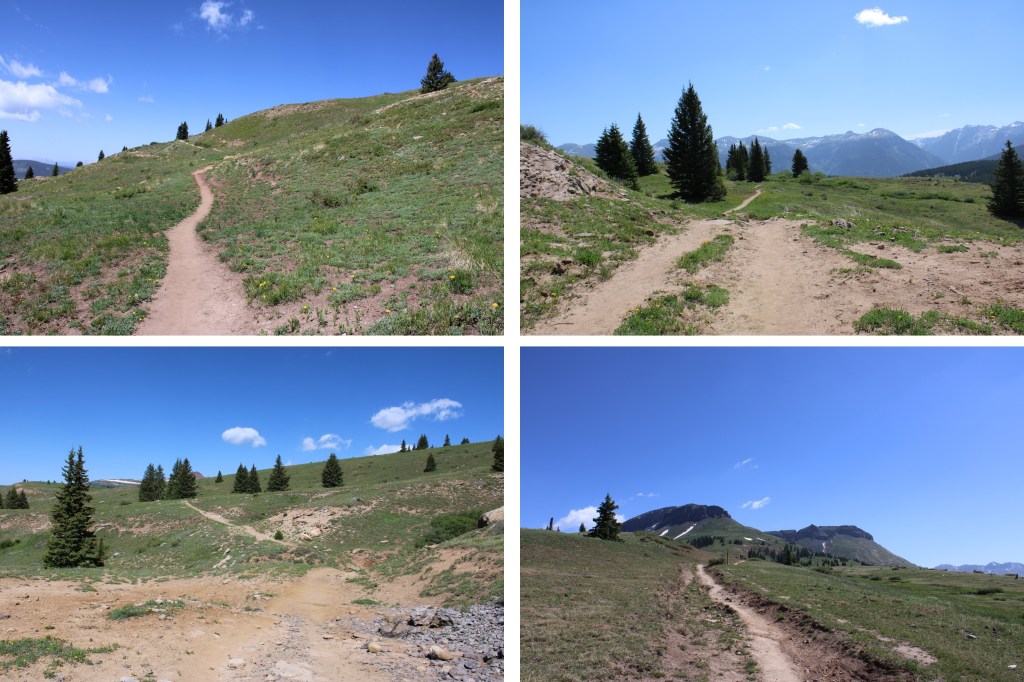
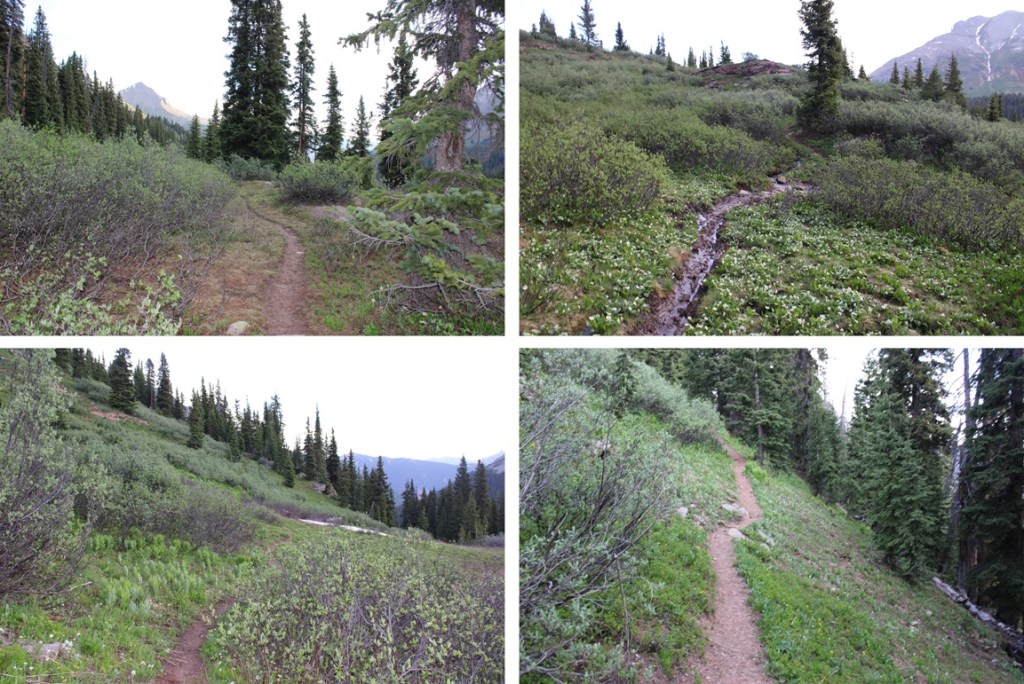
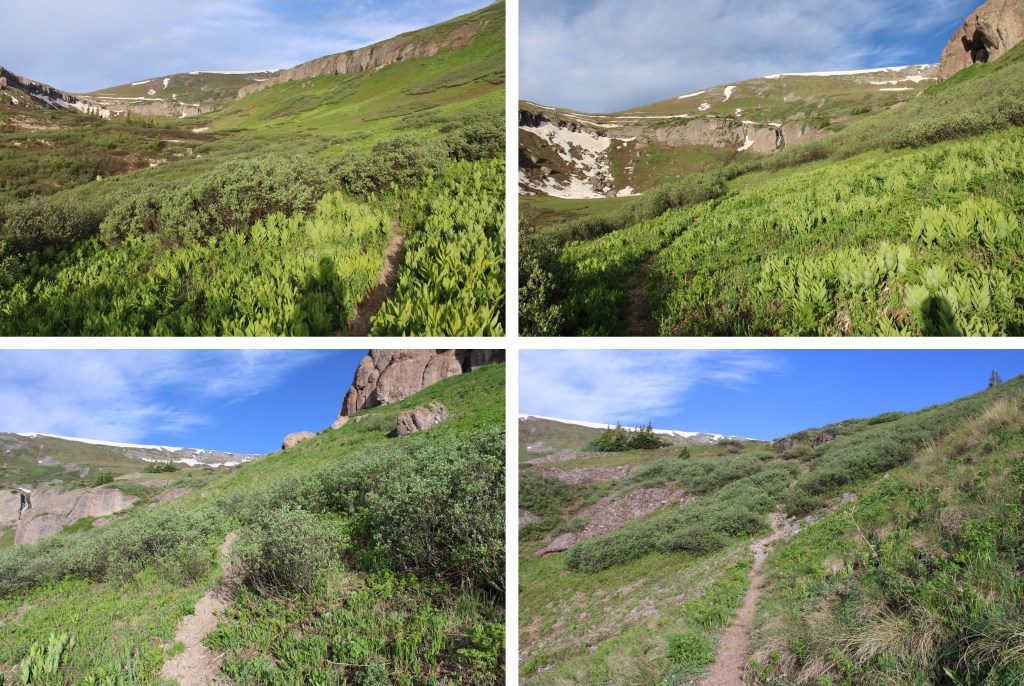
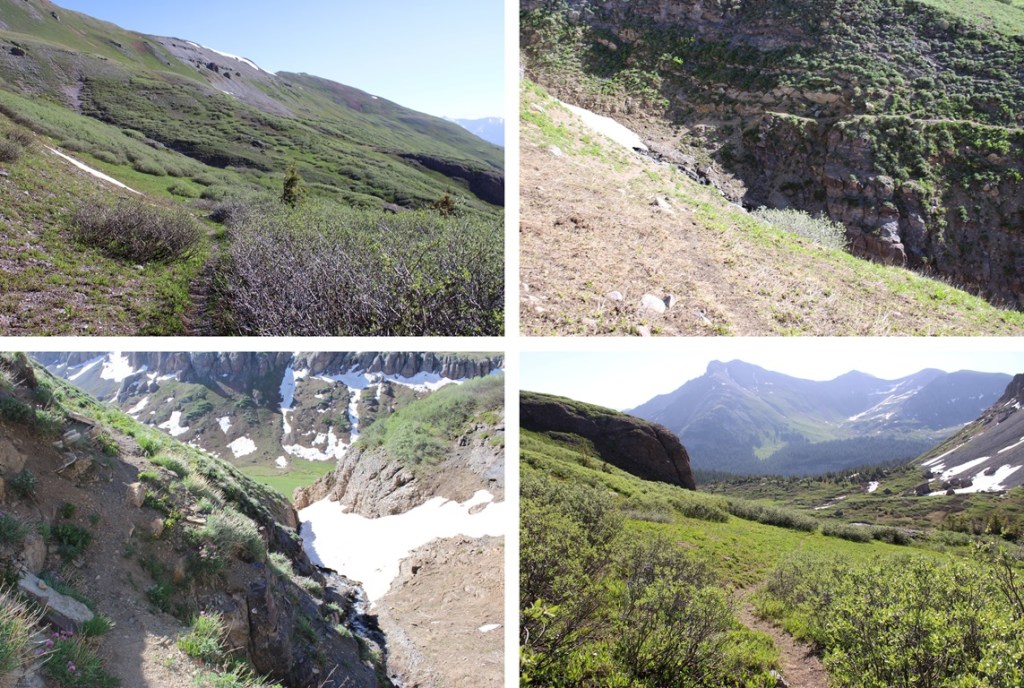
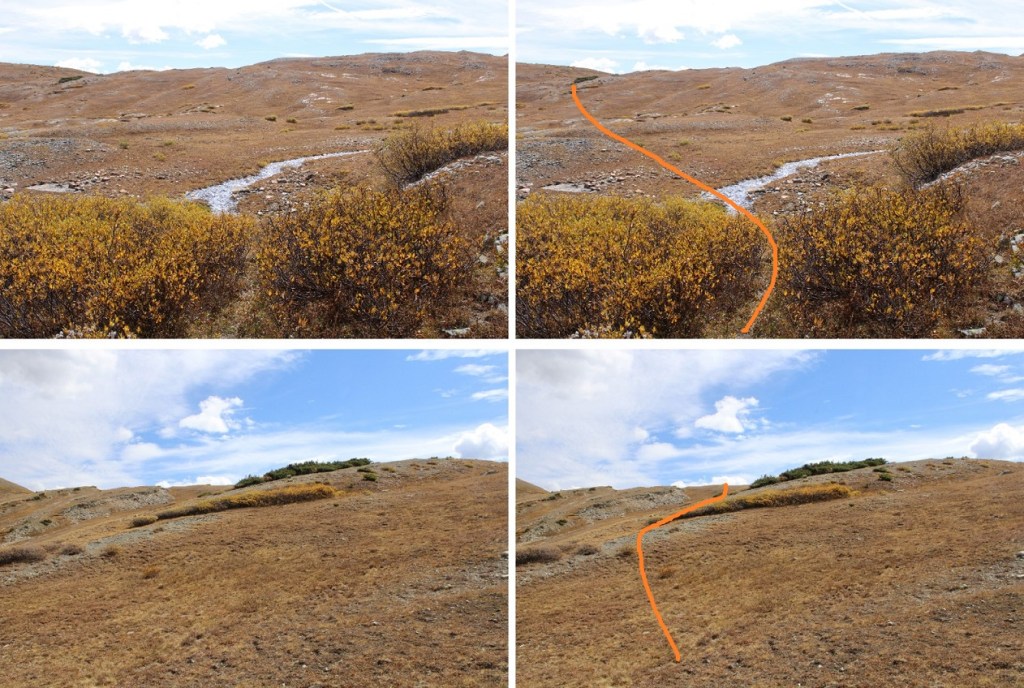
And some step by step pictures of the route:

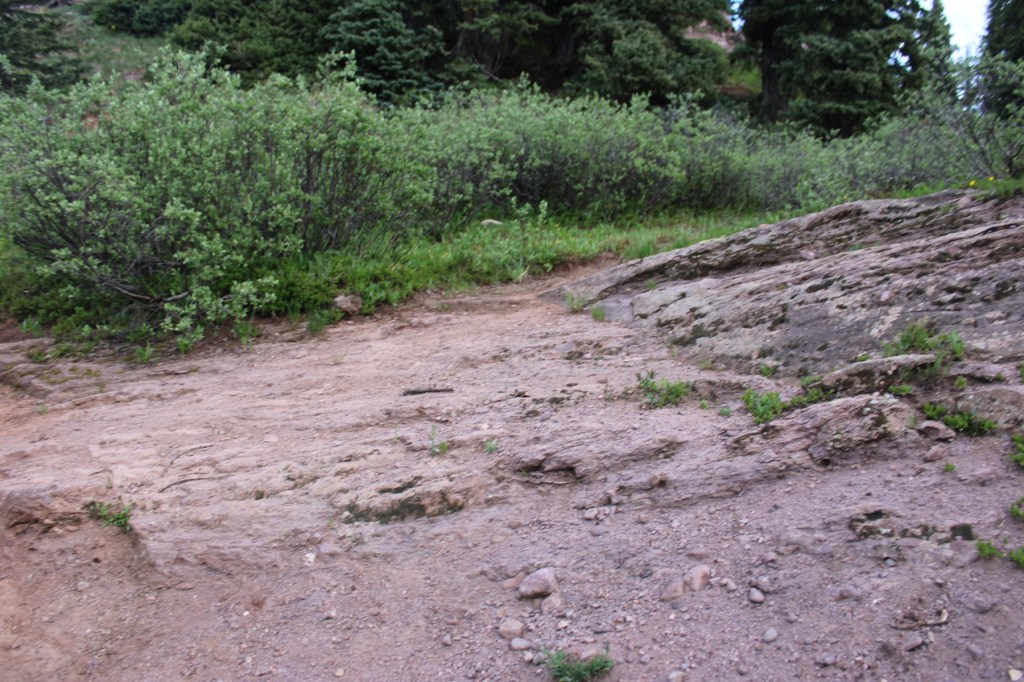
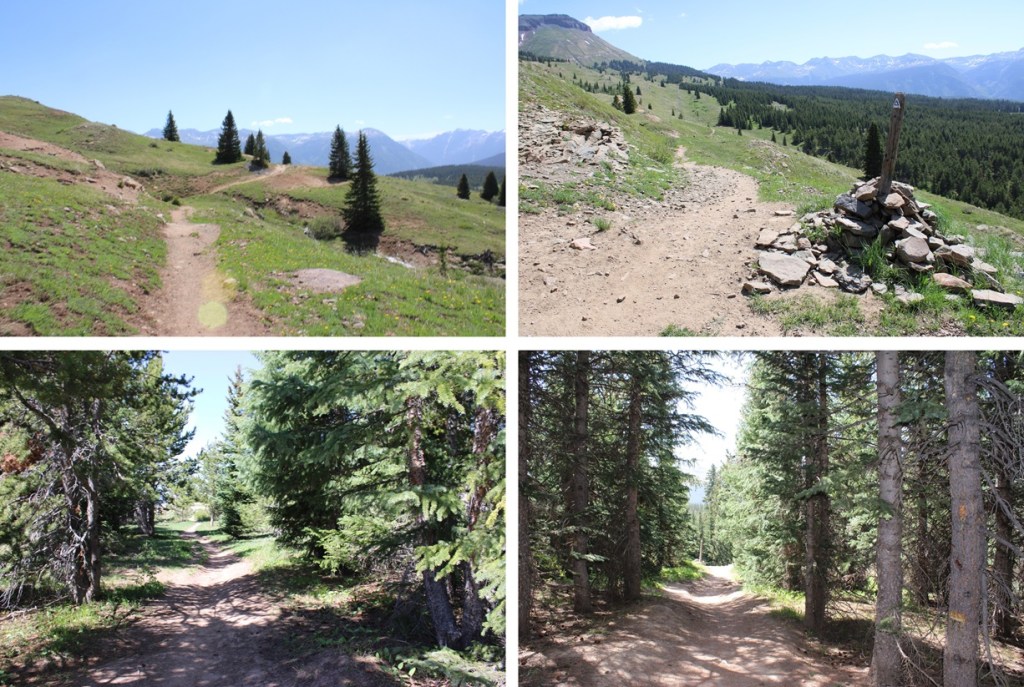
Just before the ledge that brought me to the saddle there was some snow on the route, so I had to get a little creative.  It’s all straightforward though, and there are several cairns to follow if you cannot see the trail.  I just aimed for the saddle.

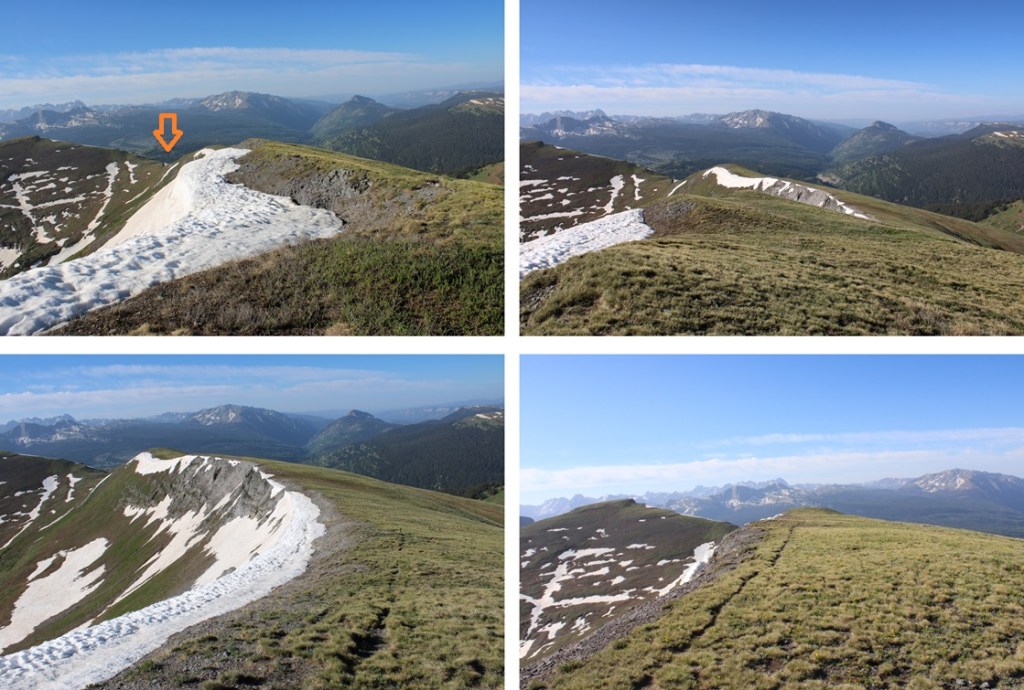
Once at the saddle, I turned right and followed the ridge north to the summit.  If you’re lucky, you’ll find a game trail that leads all the way to the summit.  Just make sure you stay on the ridge proper, as there’s a trail that goes to the left as well that will skirt “V7” and bring you towards Twin Sisters.  The ridge is tundra the entire time. 

I summited “V7” at 7:45am

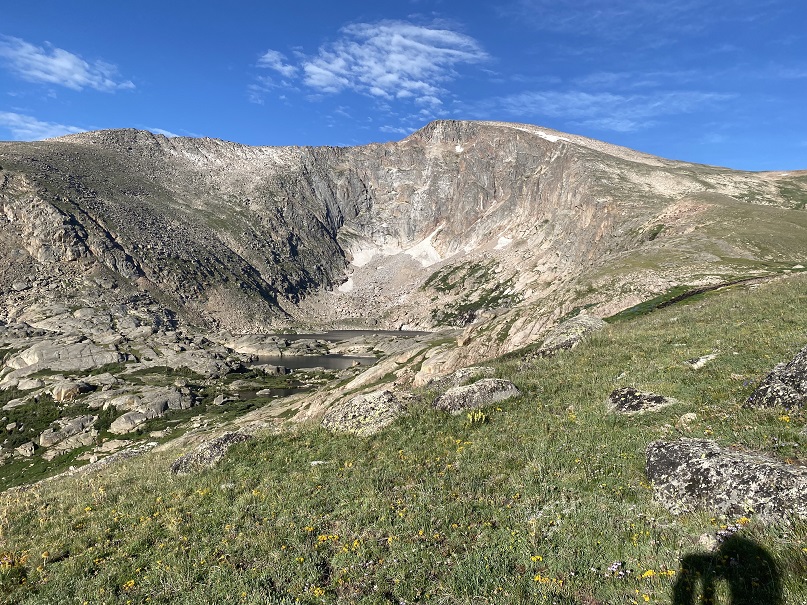
“V7”:

Now to head back down.  This was an out and back hike for me, so I turned around and followed my route in.  I followed the ridge and headed south, back to the saddle.

Here’s a view from the saddle of Putnam Basin.

At the saddle I turned left, and headed northeast, following the cairns back to the trail

I picked up the trail again, and followed it down the basin, sticking to the left side of the basin/creek.

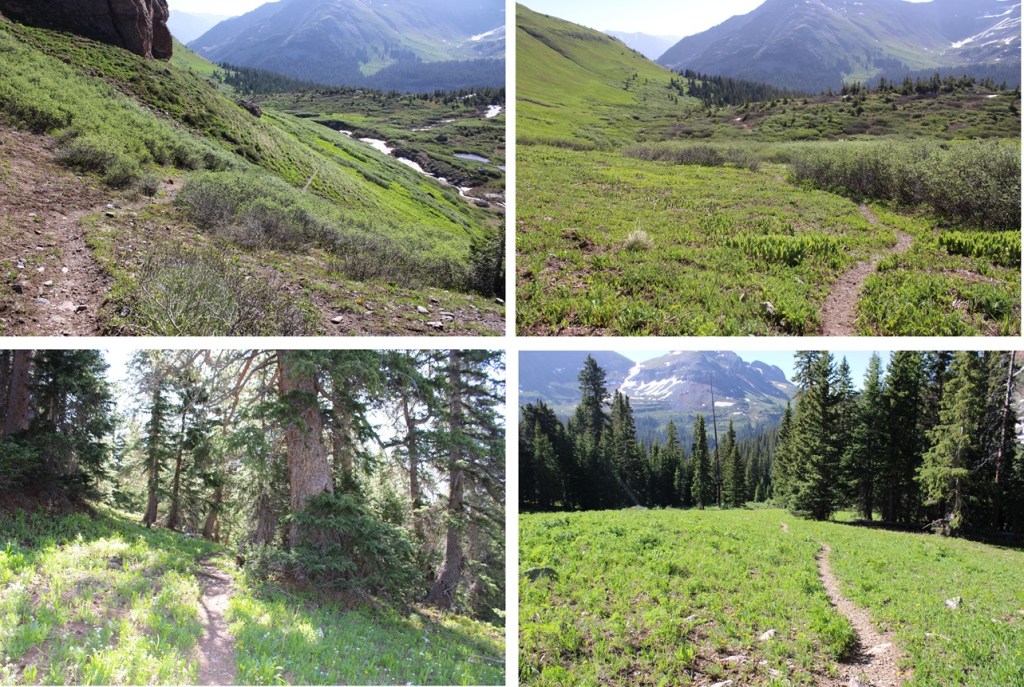
I’d seen quite a few deer that morning.  Mostly from afar, but deer nonetheless.  As I was nearing the camping area near the base of the basin I saw one running towards me in a funny way, and realized quickly it wasn’t a deer, but a bear.  As soon as the bear noticed me, it jumped 90 degrees, and started running the other way.  I kind of got a picture, but it’s fuzzy, as the bear was quick.

I started wondering what the bear had been running from?  About 20 feet later, I realized what it was: I spied a mama moose with her calf. 

I hid behind a tree to watch them while giving them space.  I love watching moose calves, especially the really young ones.  They tend to bounce around everywhere, turning in circles, braying, and excited about life in general.  After this video the calf got really jumpy, but I’d already turned around and started hiking away so as not to bother them. 

Mama moose with calf:

I passed the camping area, and continued following the trail, now headed south (and uphill).

I made it to the Colorado Trail cutoff, turned left, and followed it 3.5 miles back to the trailhead.

I made it back to the trailhead at 10:30am, making this a 13.78 mile hike with 3029’ of elevation gain in 5 hours 15 minutes.
On to the next trailhead!

V9 – 13,244

RT Length: 6.96 miles

Elevation Gain: 2657’

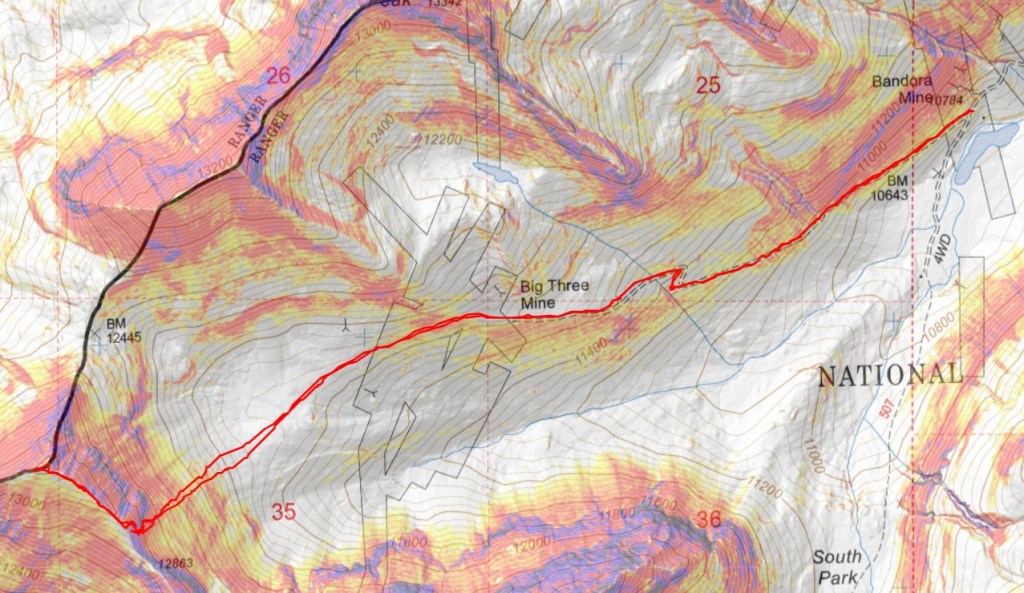
I started this hike from the Bandora Mine site.  There’s room for about 3 or 4 vehicles to park at this trailhead. 

The day before I saw a beaver tail-splash a coyote. Last night I saw that same beaver tail-splash a moose.  This guy means business! 

I was on the trail at 6:15am the next morning.  I took the trail to Lake Hope, which started just to the south of the parking area.

I took this class 1 trail southwest to treeline, which was about 1.75 miles.

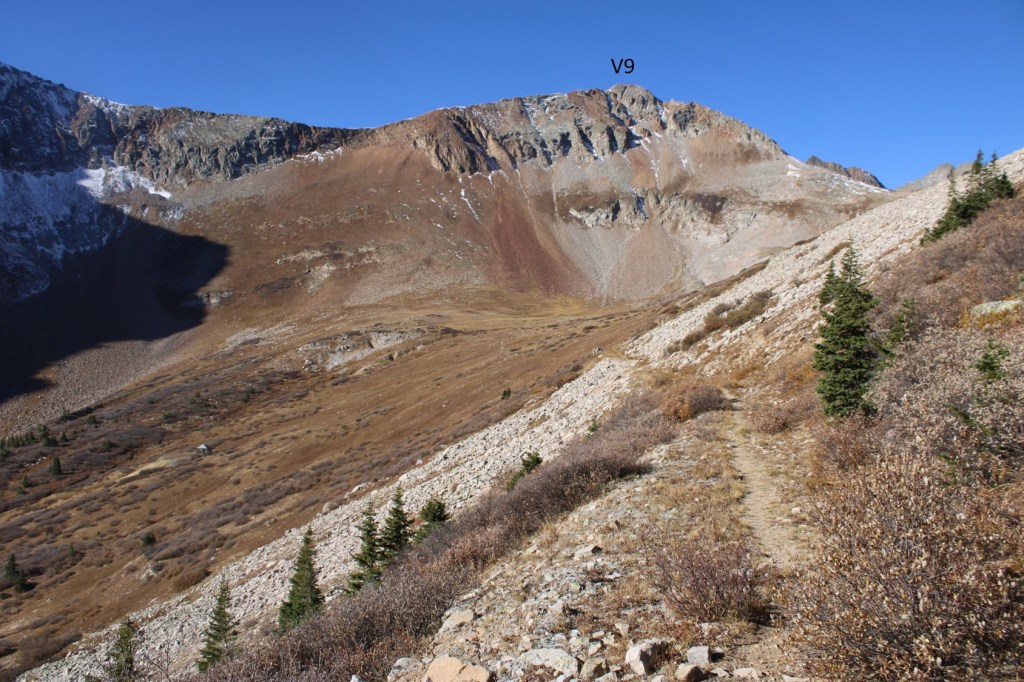
At treeline, I could clearly see V9

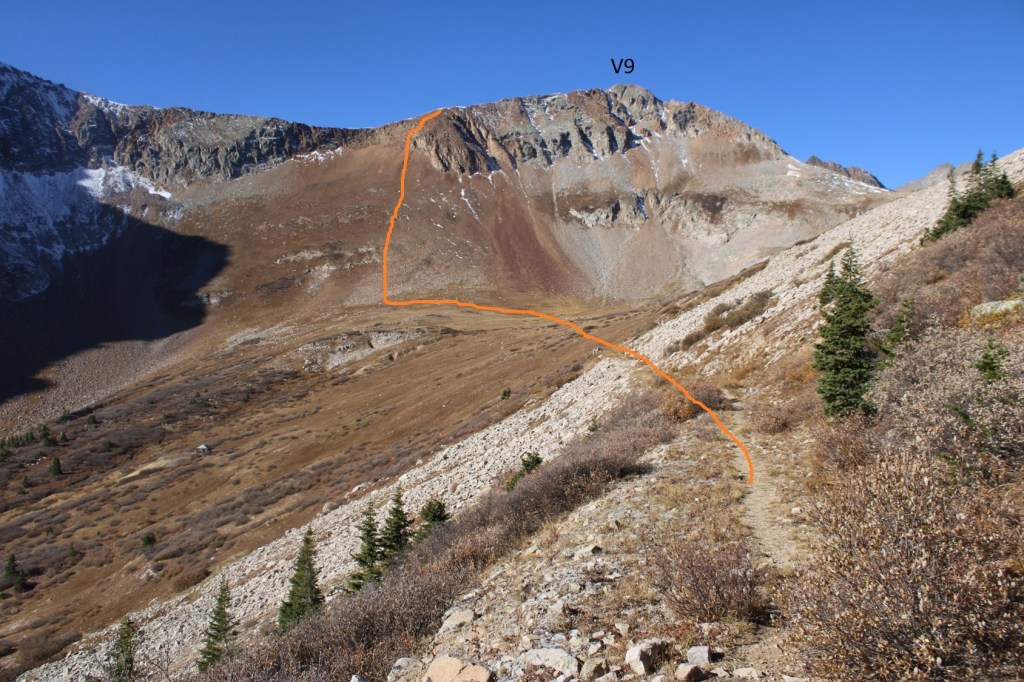
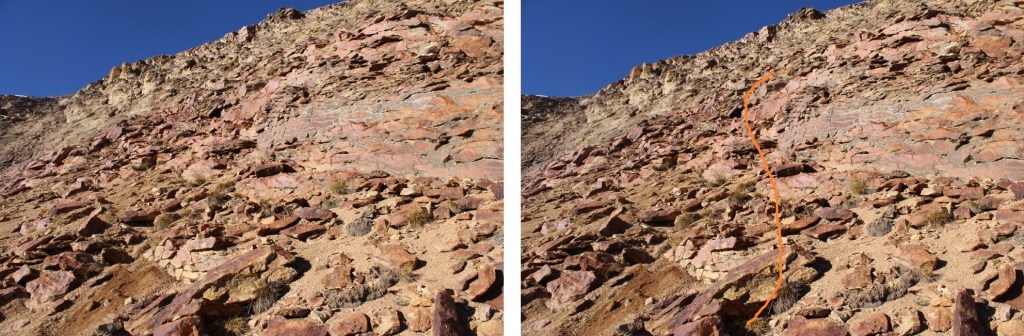
This is the overall route I took to the ridge

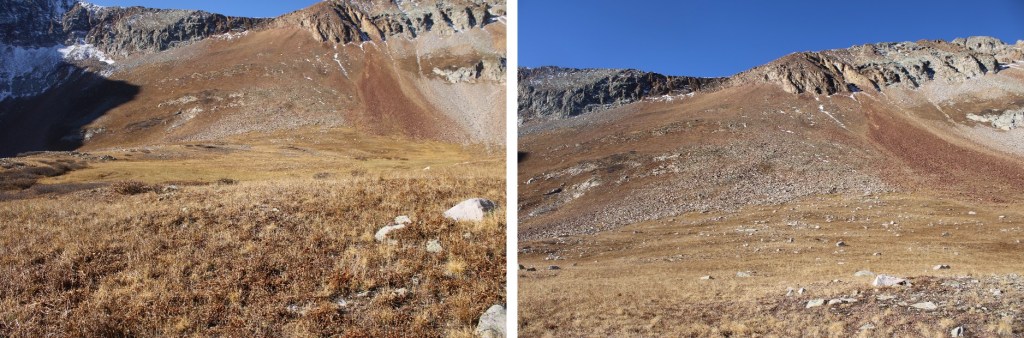
With careful route finding, this can all be kept at class 2+.  First, I headed down the basin to the base of the slope.

From there it was 730’ of elevation gain up rocky talus to the rocky area just below the ridge.  Microspikes helped for traction.

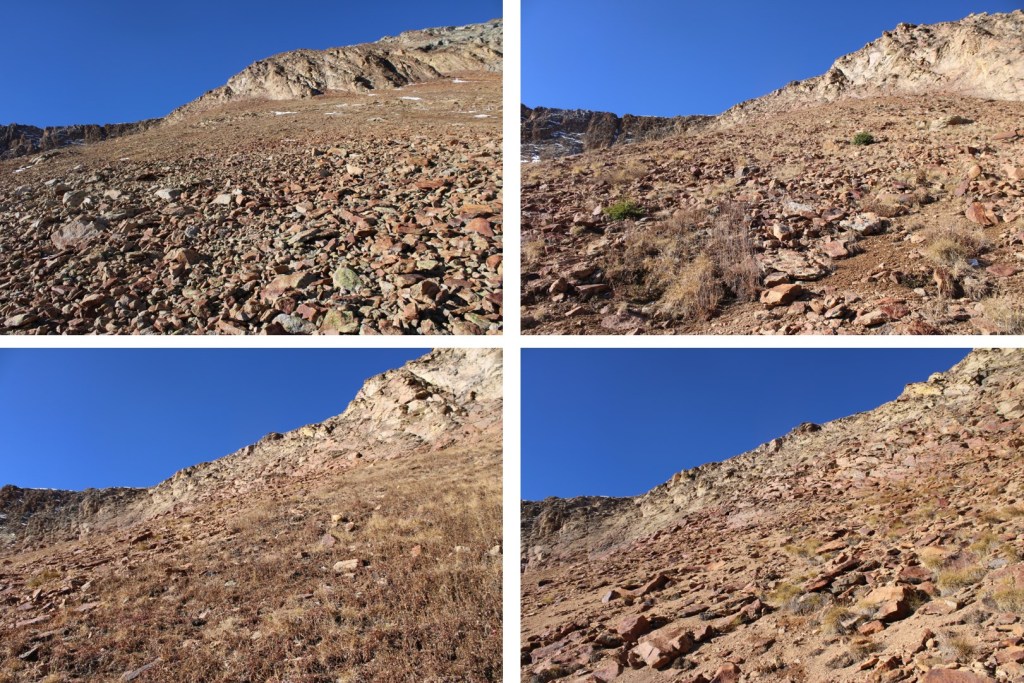
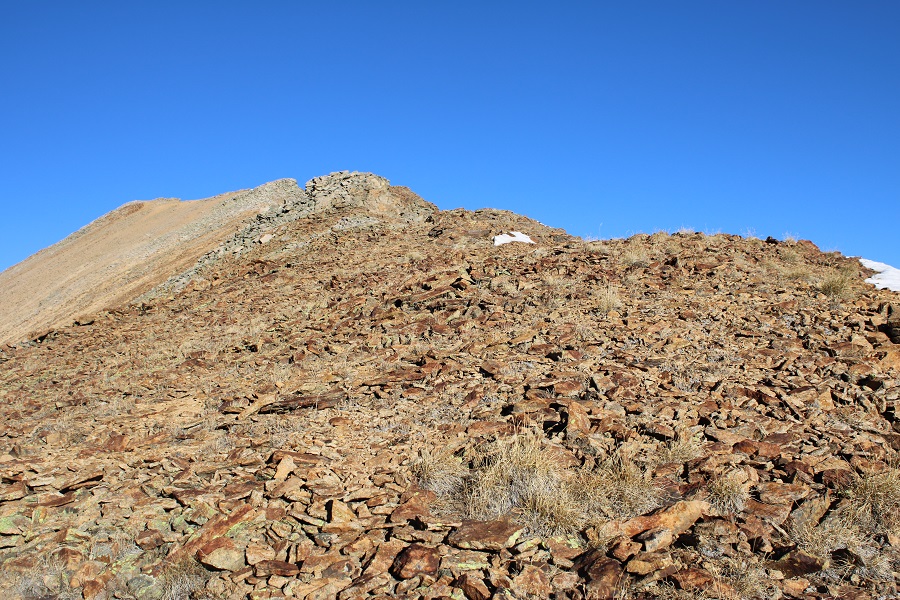
This is where it becomes choose your own adventure. The goal is to gain the ridge.  There’s a lot of class 3 scrambling options to gain the ridge, but I was able to keep it class 2+ by finding lines of scree on the rocks to use.  The scree was mostly sand on top of rocks, but it gave me traction to use and a path to follow. Initially I started going straight up, following the scree

I noticed a scree ramp to my right, and took that until it ended.

Once it ended, I turned left and followed scree paths to the ridge

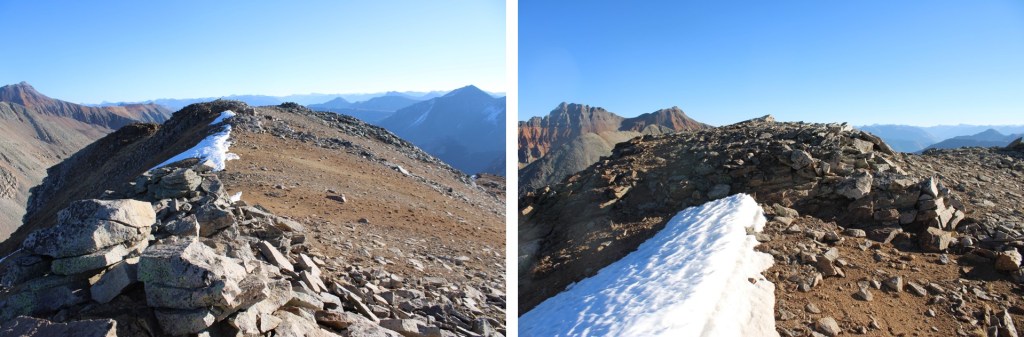
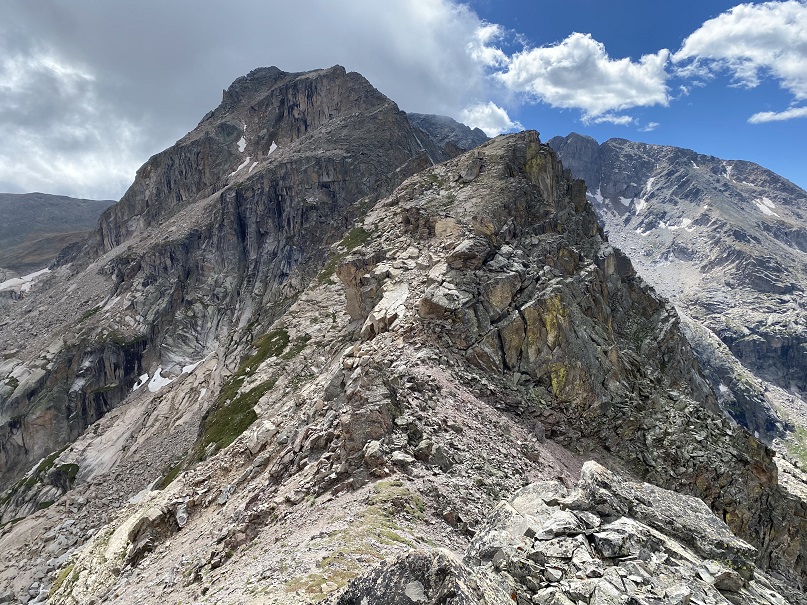
Once on the ridge, I put a small cairn to indicate where I should descend on my way back. I turned right and saw the summit of V9 to the northwest

It was an easy class 2 ridge hike on talus to get there.

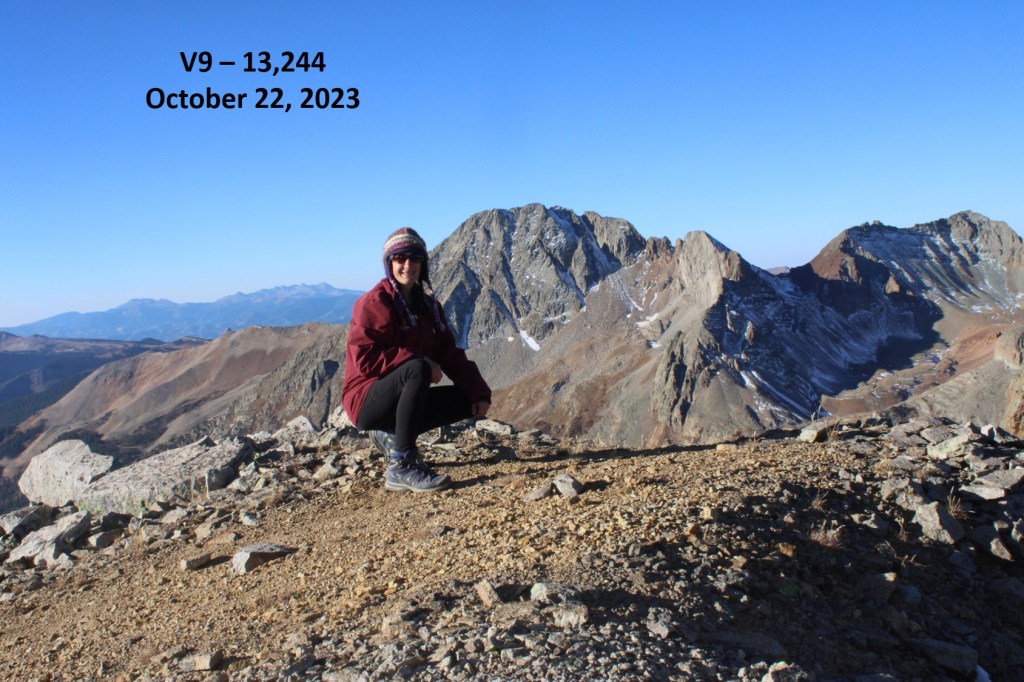
I wasn’t sure where the actual summit was, as it’s rather flat with several “bumps” that all look to be the same height.  So I walked all around each of what looked like the highpoints and took a video from the middle.  I summited V9 at 8:45am

V9:

This was an out and back hike for me, so I made my way back down the ridge to where I’d placed my cairn.

At the cairn I turned left, and headed back towards the scree ramp

I followed the ramp until it ended

And then followed scree trails to the base of the rocks

Next I made my way down the slope and back to the Lake Hope Trail

Back on the trail, I followed it northeast back to the Bandora Mine

I made it back to the Bandora Mine at 10:45am, making this a 6.96 mile hike with 2657’ of elevation gain. 

On to the next trailhead!

Mahana Peak – 12,643 and Isolation Peak – 13,114

RT Length:  21.79 miles

Elevation Gain:  5665’

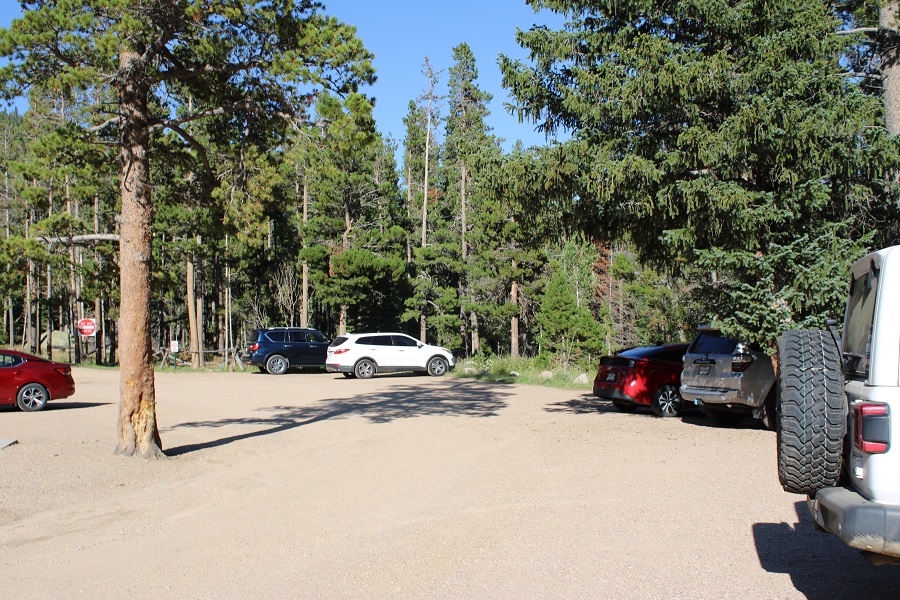
I parked at the Wild Basin Trailhead inside Rocky Mountain National Park and was on the trail at 4am. There’s plenty of parking here, but they have timed entry from 9am-2pm every day. 

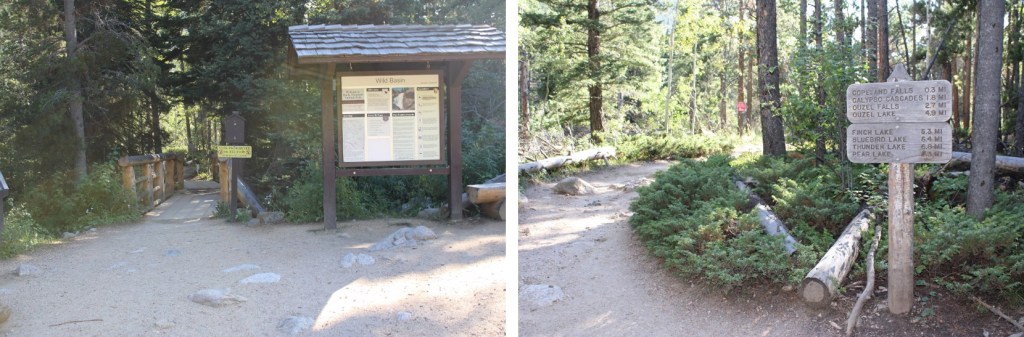
The trailhead starts at the south end of the parking area

I followed the signs for Ouzel Lake/Bluebird Lake.  This class 1 trail is really well marked, so it’s difficult to get lost if you read the signs.  I passed several waterfalls (Copeland Falls, Calypso Falls, and Ouzel Falls).

After hiking for 4.75 miles I came to the junction for Ouzel Lake and Bluebird Lake.  I turned right onto the Bluebird Lake Trail.

I didn’t stay on this trail long however.  Maybe about 10 yards or so. Then I left the trail and headed northeast to gain the ridge

This is where I startled a moose.  He was about 15 feet away from me when I saw him, so I quickly ducked behind a large boulder.  Usually, moose run away when they see you, or ignore you, but this guy seemed interested in me.  I’ve seen probably over a hundred moose in Colorado, and I’ve only been charged once.  This guy looked like he wanted to charge me, so I remained hidden.  For a solid 15 minutes, every time I peeked out from behind the boulder, he was still staring at the boulder I’d hidden behind.  I know moose have poor eyesight, so while he knew I was still there, he was probably trying to figure out if I were a threat or not.  (That’s Chickadee Pond in the background).

Eventually I crawled away on my hands and knees so he couldn’t see me in the brush, and continued my way up the ridge.  This included a lot of bushwhacking through downed trees.  A lot of downed trees.

Once I made it to the ridge, I followed it west to treeline

The route from here was straightforward.  I stayed o the ridge, following it west.  The terrain started out as loose rocks, then changed to tundra.

When you get to the tundra, don’t be fooled:  this is a false summit.  Stay to the left of it

This is the true summit of Manaha Peak.  It’s easy class 2 to get there

I summited Mahana Peak at 9am

Mahana Peak:

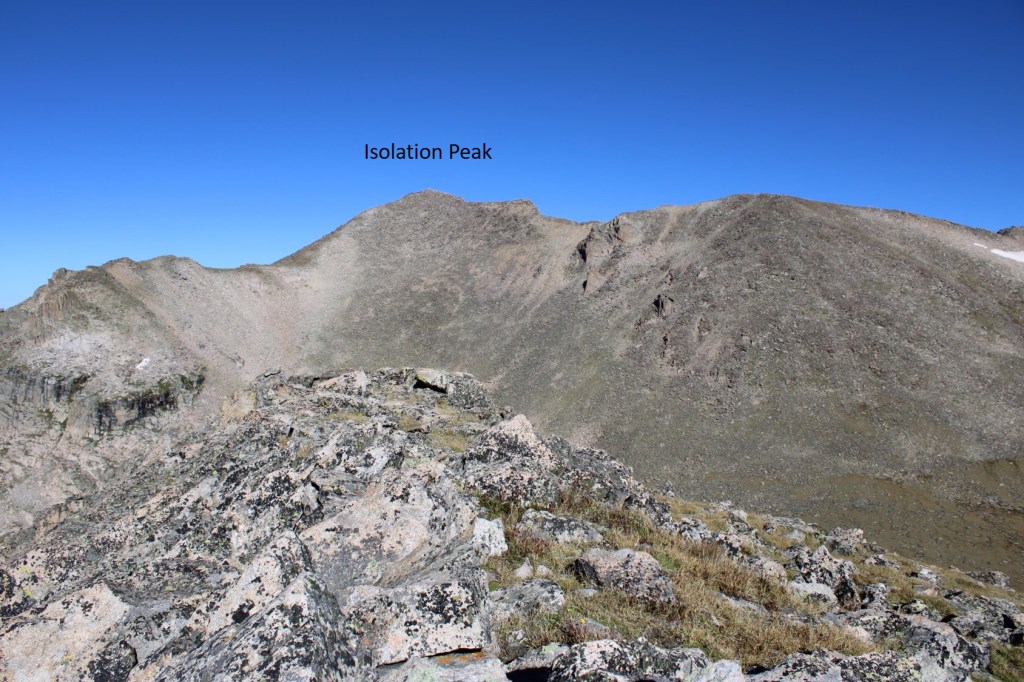
From Mahana Peak, I could see Isolation Peak to the northwest

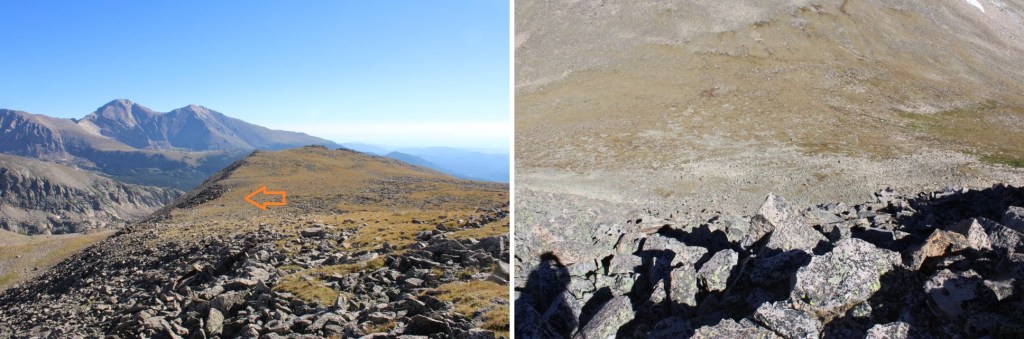
To get there, I headed northeast along the ridge until I came to a low point, and then headed northwest towards the ridge.

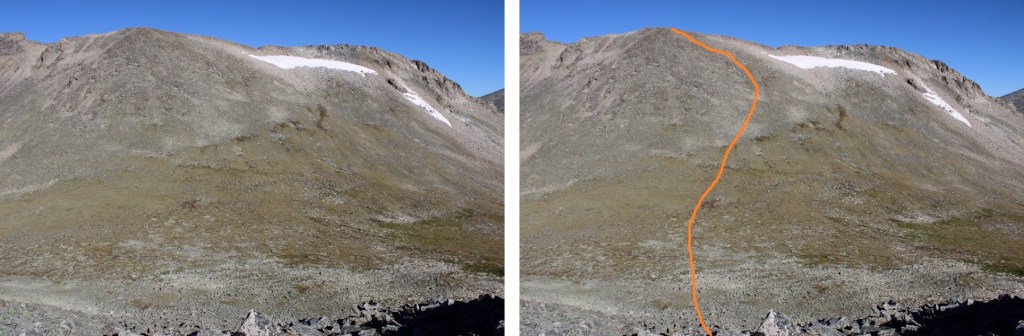
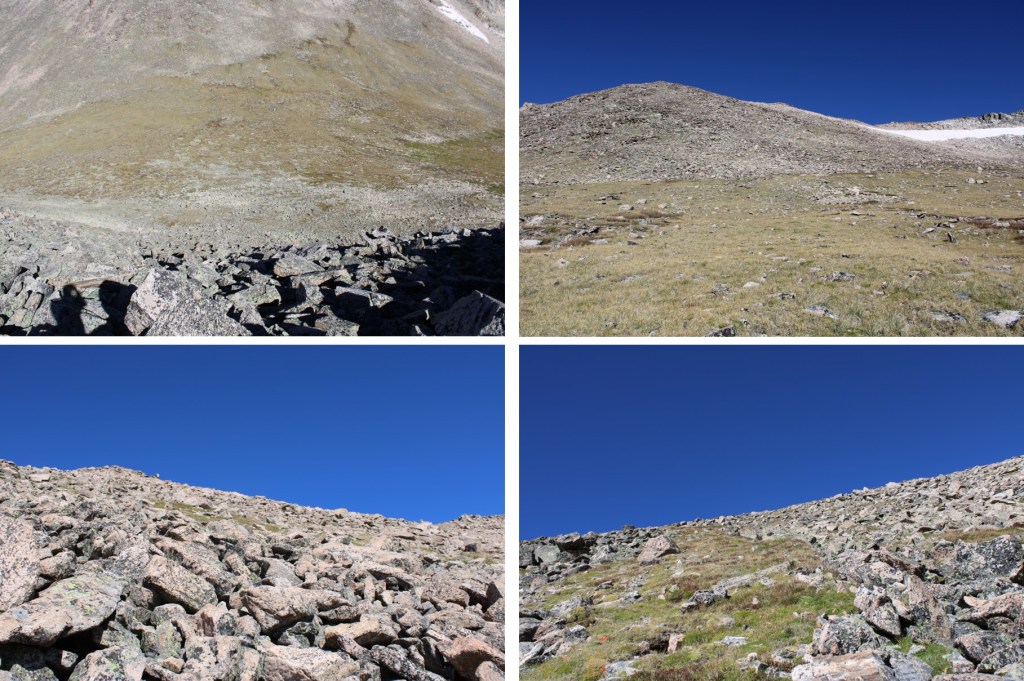
This is the overall route I took to gain the ridge of Isolation Peak.  If you look carefully, you will see a green band of grass that makes the route easy to follow.  I descended on rocky terrain, then was greeted with tundra, then rocky tundra as I ascended.

Once on the ridge, I turned left and could see Isolation Peak to the southwest. This was a class 2 hike, sticking to game trails either directly on or to the left of the ridge, until the last 10 feet or so, when it was a quick class 3 scramble to the summit

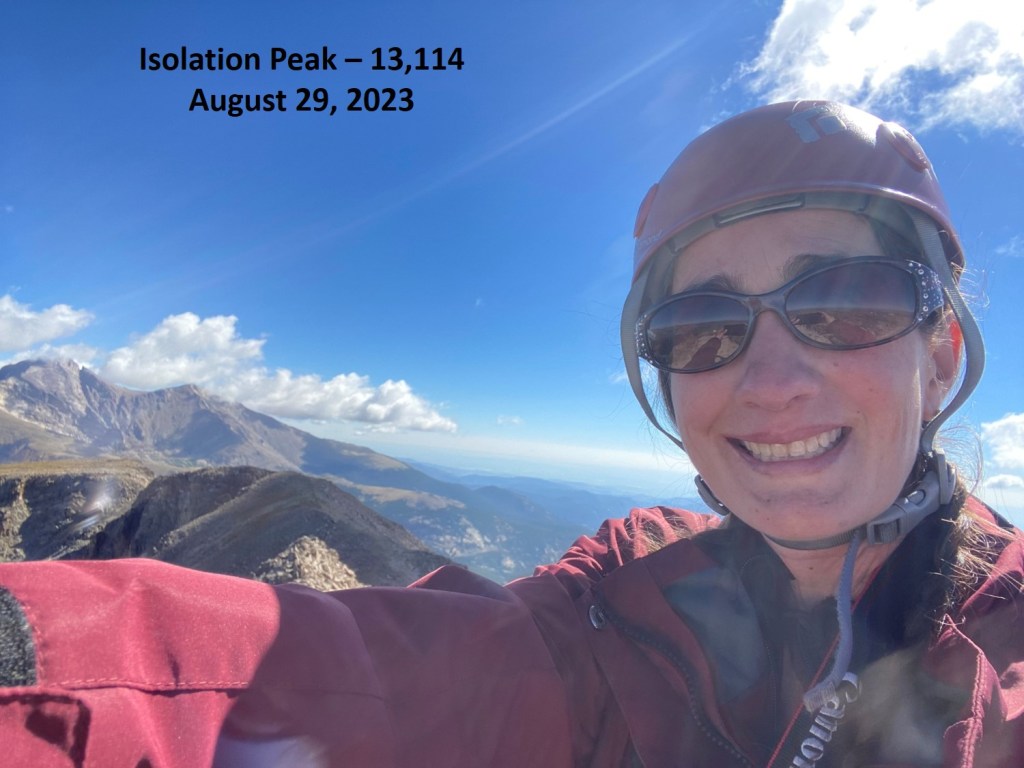
I’m pretty sure this block is the summit.  I sat on it, but briefly.  Pictures/video were difficult.  The summit rocks didn’t feel stable, and I could see through them to air below if I looked down. 

I summited Isolation Peak at 10:30am

Isolation Peak:

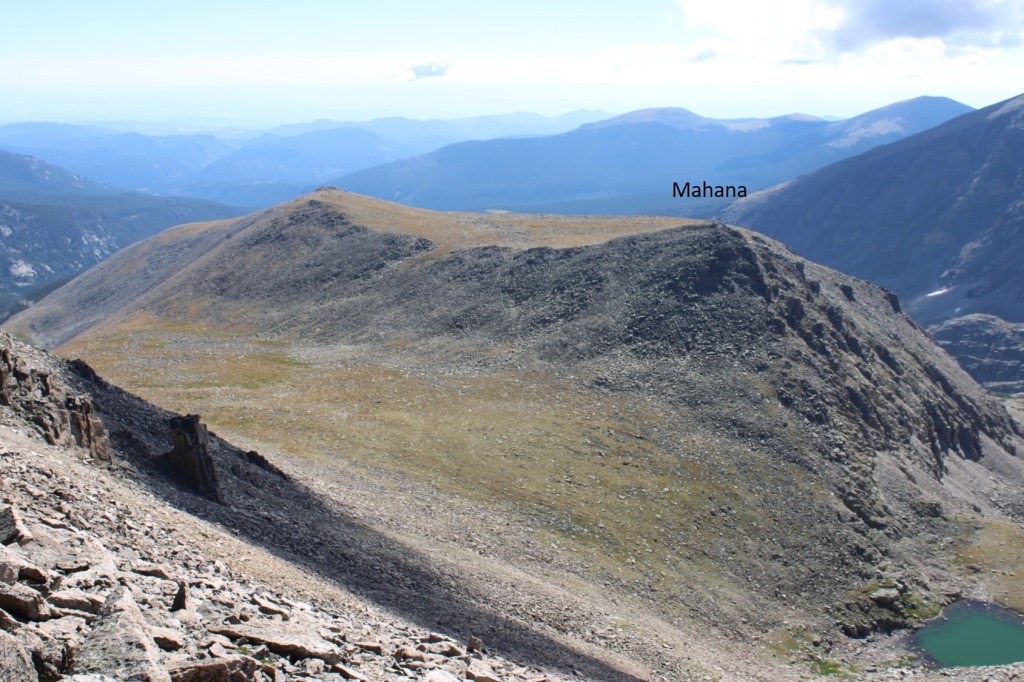
Here’s looking back at Mahana Peak from Isolation Peak

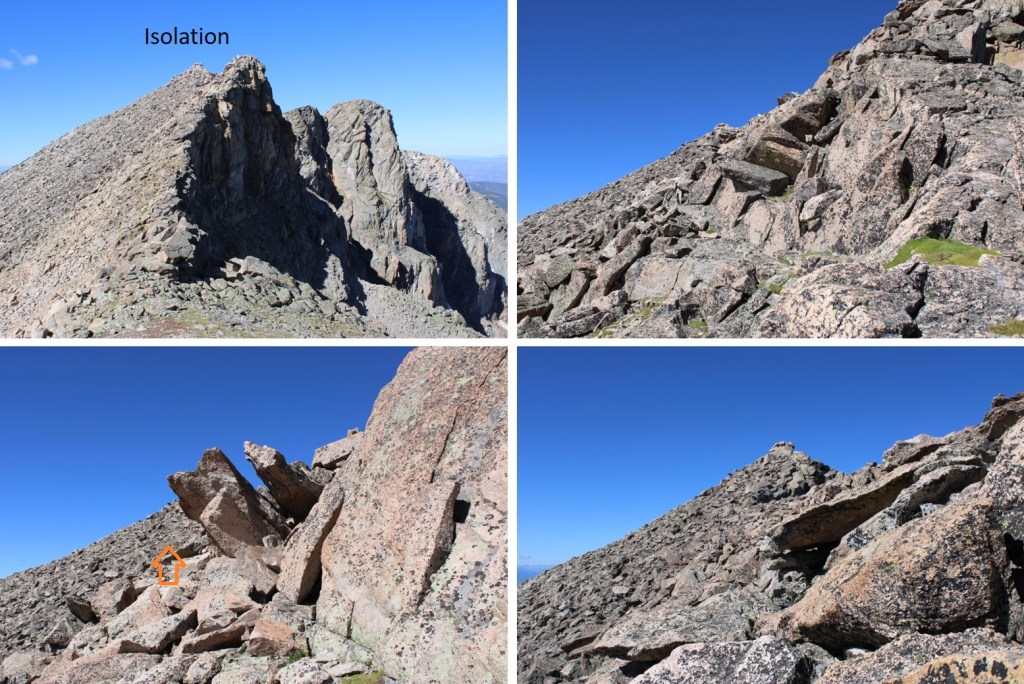
If you’re not up for class 3-4 scrambling, now’s the time to head back the way you came in, towards Mahana.  It’s the fastest route.  If you’re up for some scrambling, strap on your helmet if you haven’t already, and head northeast along the ridge.  Some of this ridge I’d consider choose your own adventure.  This is the route I took, keeping it class 3, with some easy class 4 scrambling (down chimneys/gullies).

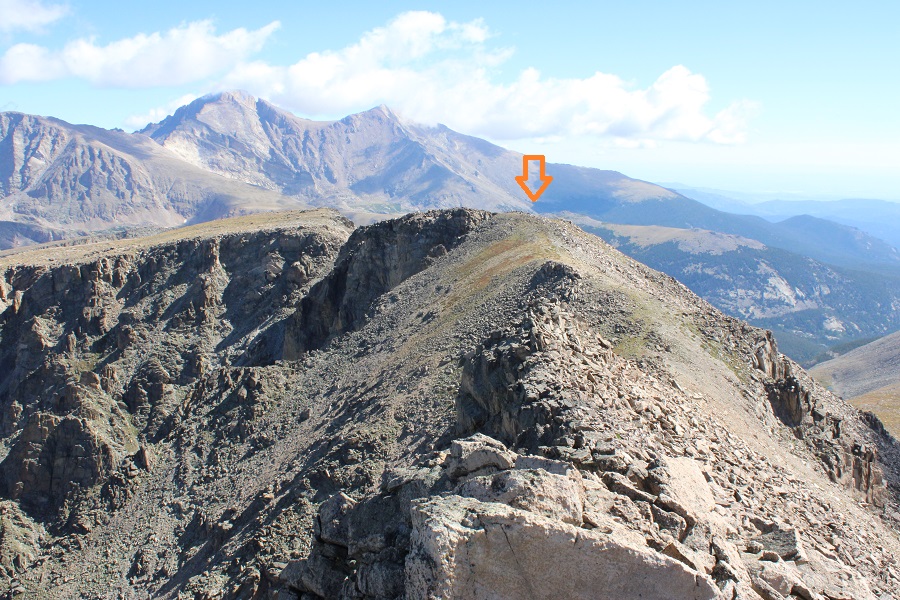
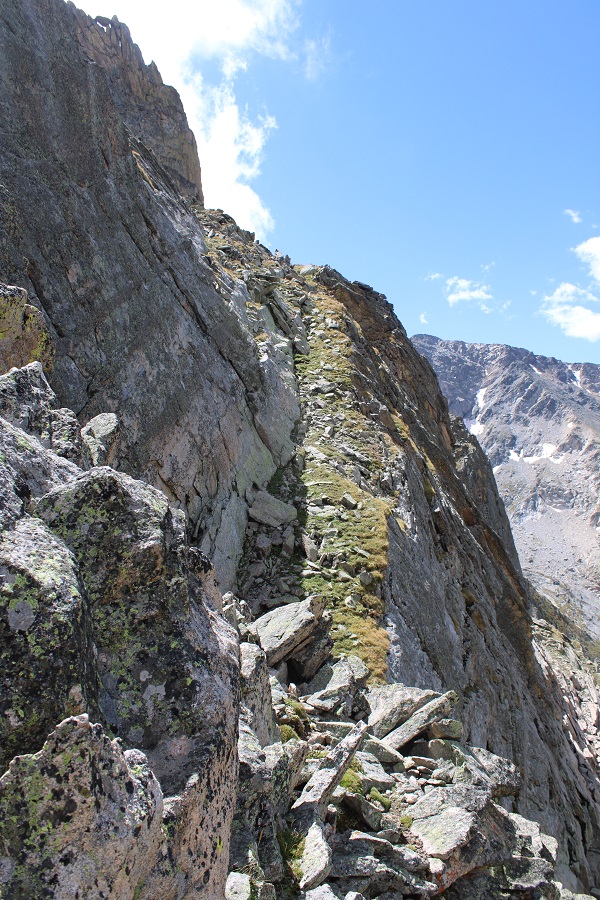
I was now back to where I ascended the ridge, and followed the ridge northeast.  There is a lot of elevation gain and loss on this descent

I went to the right of this boulder.  Getting through was sketchy class 3.  The boulders were large, but there was a lot of empty space between them, and they didn’t feel solid. 

My next objective was to make it here (this was class 2, sticking to the ridge)

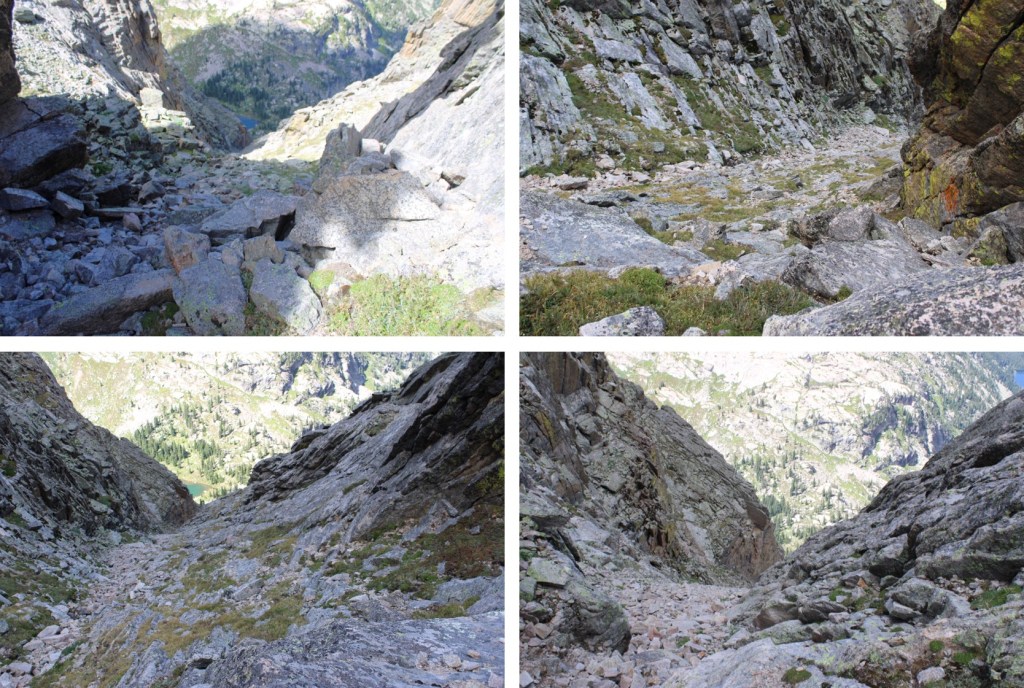
This is where it got a bit tricky.  I turned left, and descended into a rather large and steep gully.  I spent a lot of time in this gully route finding, and my advice is to stick to the gully proper until you make it down to 12160’.  You’re trying to go below this rock formation, which goes a lot further down than you’d think.

I turned left, and descended into the gully

I came to a place that looked like it cliffed out, but it was really just a drop onto a boulder, then a 7-foot downclimb. 

Here’s looking back up at the gully

And a look at the final drop.  The boulder in the middle was essential to the descent.

This was at about 12160’, where I stopped descending the gully, and looked for a grassy ledge climbers right. 

I made it to the ledge, descended another grassy ledge, then reascended a grassy ledge to re-gain the ridge

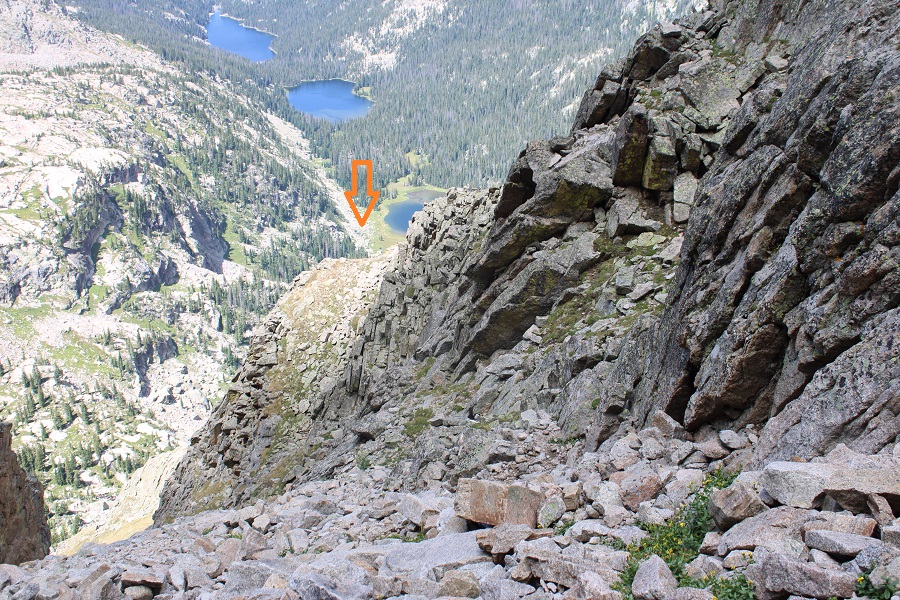
For those of you doing this the opposite way, here’s a look back at the grassy ledge I descended.  You can see why I had to drop down so low in the gully, with the sheer cliff face to navigate.

Here’s how I got around the next few obstacles

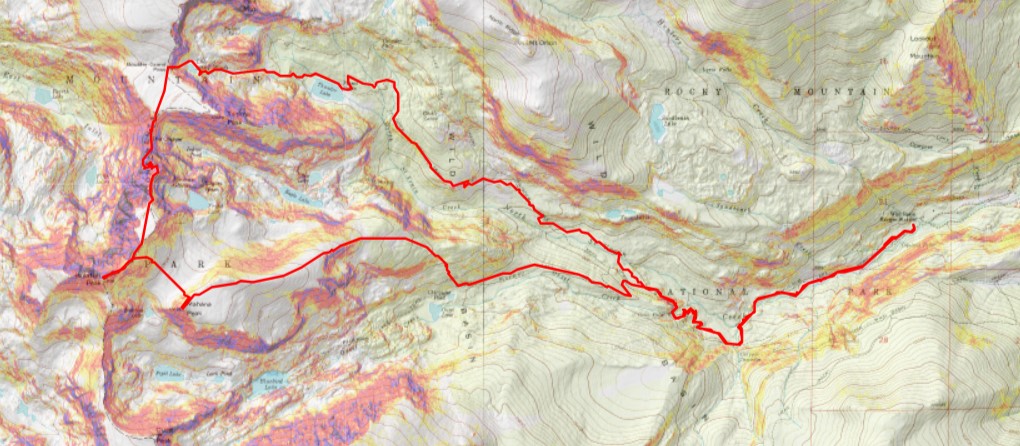
And that was it for the climbing for today.  I kept my helmet on because I still had a scree-gully to descend, but all the class 3 and 4 stuff was done.  I’d wanted to head over to Mt Alice today too, but clouds were forming and I didn’t think it was a good idea.  I headed towards Boulder-Grand Pass, turned right, and descended the gully towards Lake of Many Winds.  From the pass, it was 9.5 miles back to the trailhead.

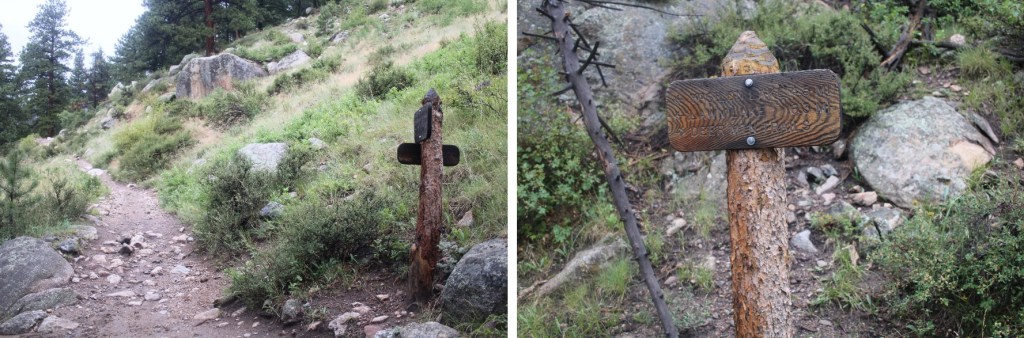
A good trail picks up here, and leads all the way back to the Wild Basin Trailhead.  Here you can see Thunder Lake.  This trail becomes the Thunder Lake Trail, skirting the lake to the left.  This is a class 1 trail.  Once again, it’s very well marked, with signs indicating the route back to the Wild Basin Trailhead

I made it back to the trailhead at 4:45pm, making this a 21.79 mile hike with 5665’ of elevation gain in 12 hours, 45 minutes, at least according to CalTopo.  Strava gave me drastically different numbers

On to the next trailhead!

13166

RT Length:  17.29 miles

Elevation Gain:  3120’

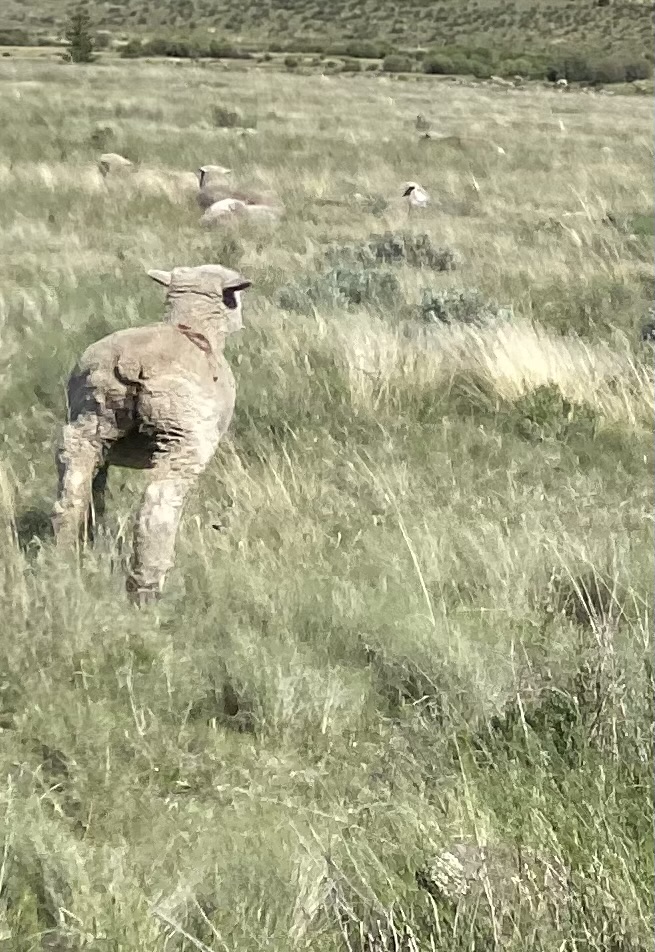
I drove to the Eddiesville trailhead the night before, hoping to get a good look at current conditions in the mountains.  On the way in I saw an old, 1980s brown Tacoma parked on the side of the road, and a man sitting on a rock, watching a herd of sheep.  All the sheep were facing the opposite way (I’ve become a pro at animal butt shots at this point).

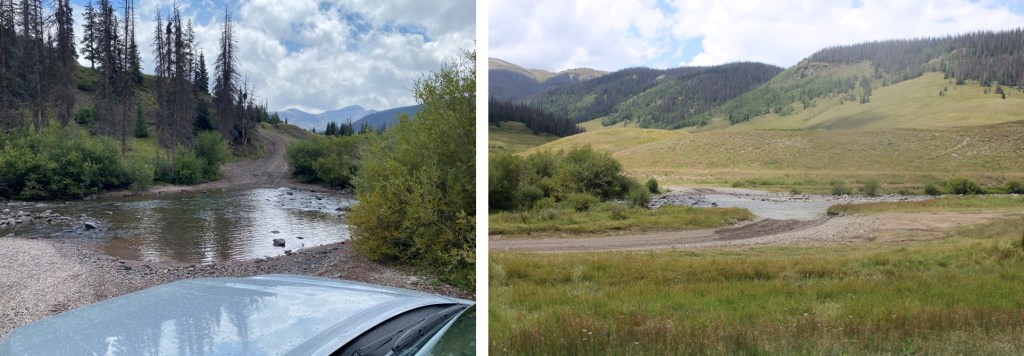
Both creek crossings were manageable, and all the downed trees had been cleared off the dirt road.

There was only one other vehicle in the parking area, which fits about 10 vehicles if everyone parks nicely.  No mosquitoes, but tons of flies (they didn’t bite, they were just annoying).

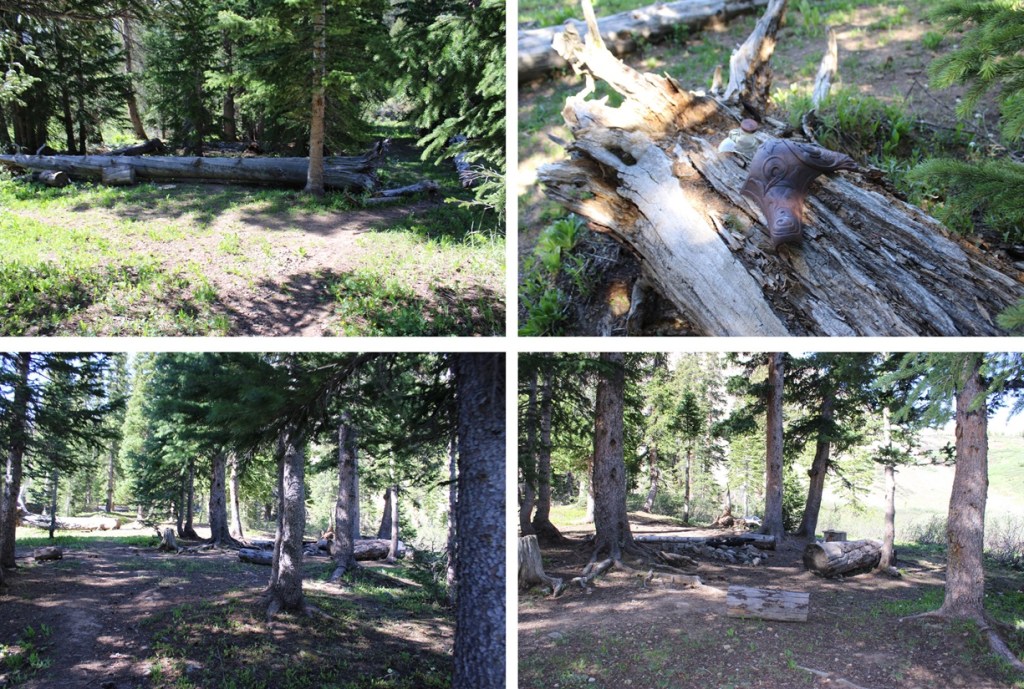
I threw 3 socks full of moth balls under my truck, wondering where the 4th one went (maybe a marmot absconded with it?) and went to bed.  I was on the trail at 4am. The trail starts at the south end of the parking area, and follows the Colorado Trail. 

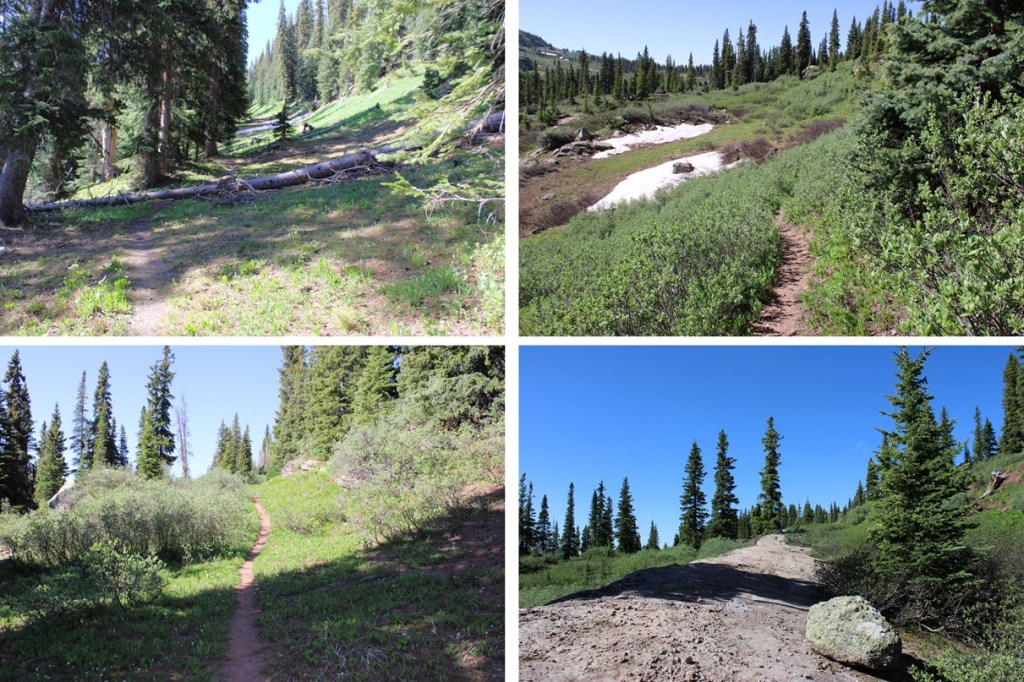
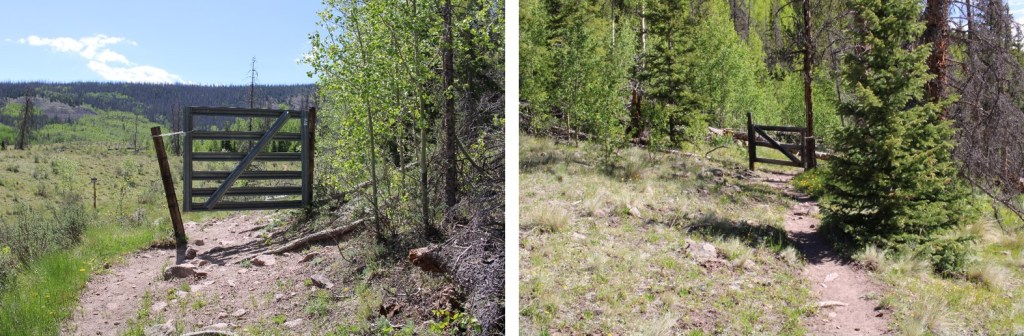
I followed the Colorado Trail for 8.25 miles, all the way to the San Luis Peak/13166 saddle.  This was a very well-marked trail, which made it difficult to get lost.  Also, there weren’t many trail intersections, also making it easy not to get lost.  I crossed several small creeks and downed trees on my way, and passed through two gates (latched, not locked). 

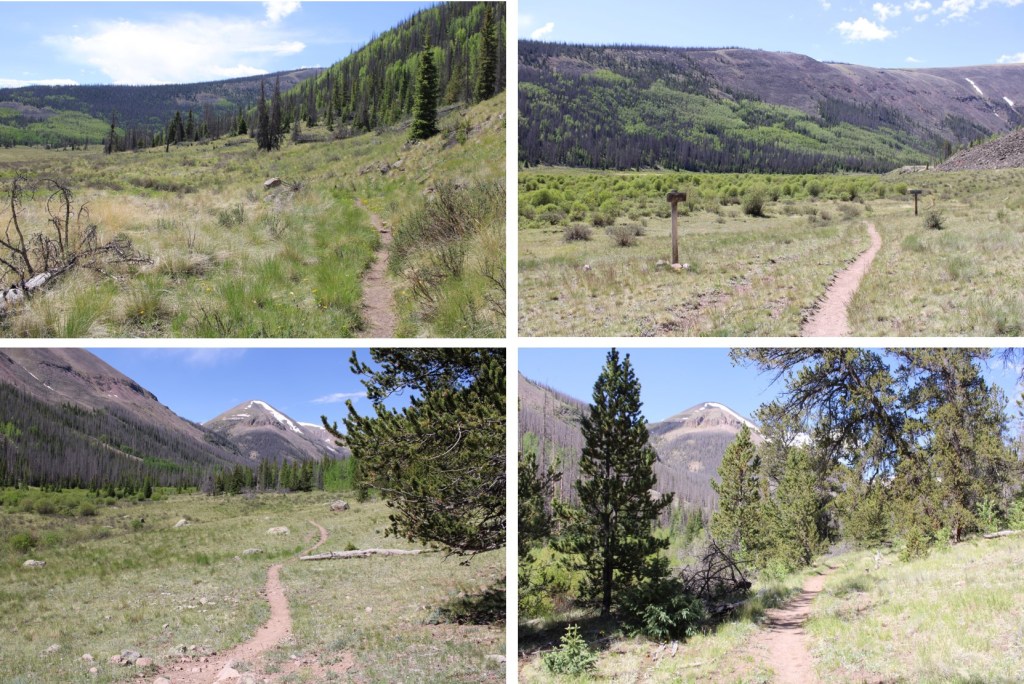
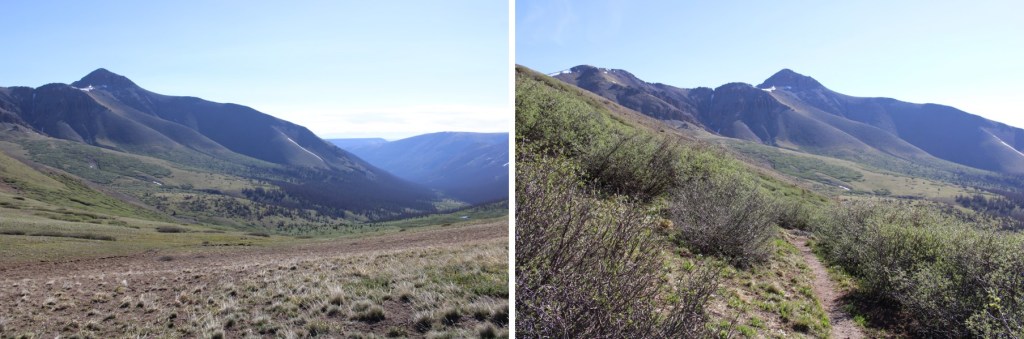
Here are some pictures of the terrain, which followed Cochetopa creek up the basin.

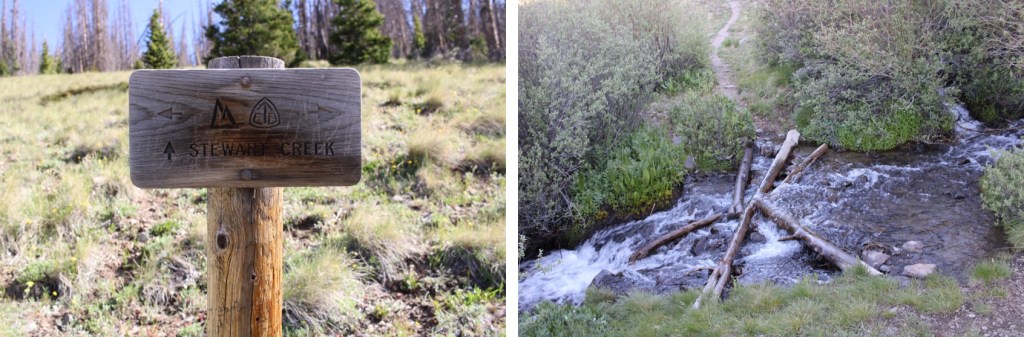
After hiking for 7 miles, I crossed Stewart Creek

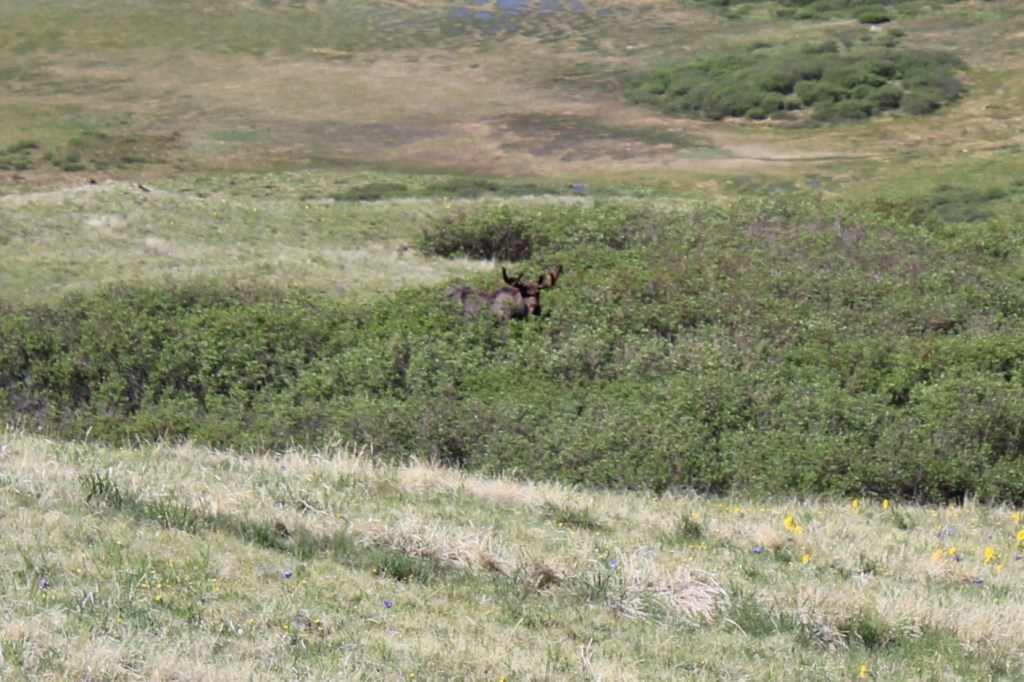
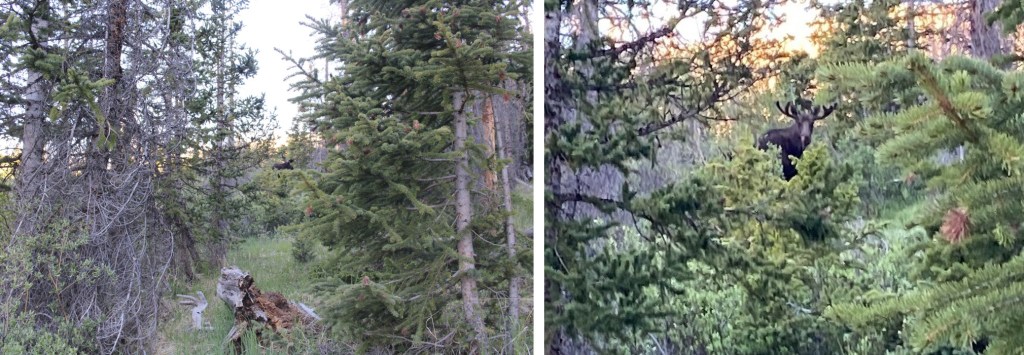
and saw a moose.  I have him his space, even though he was directly on the trail.

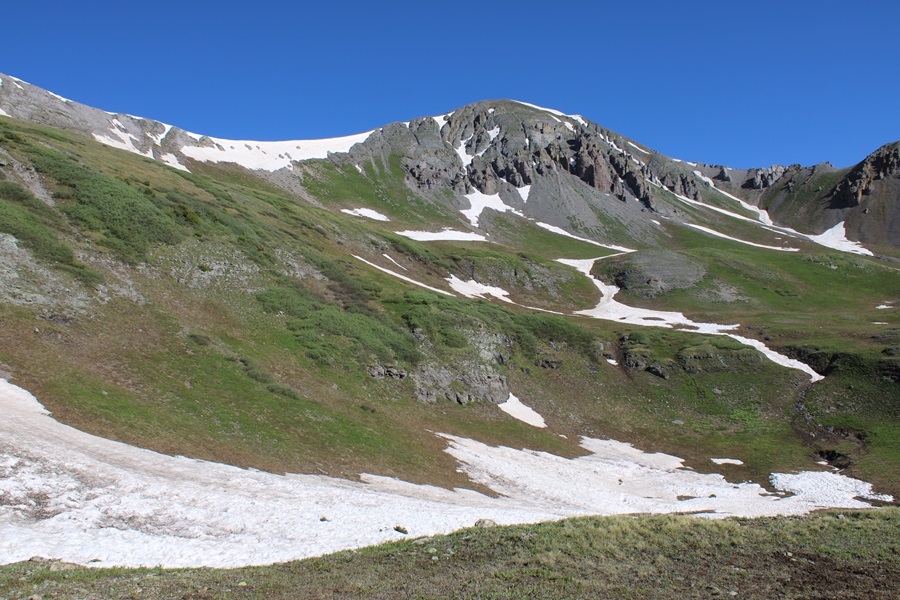
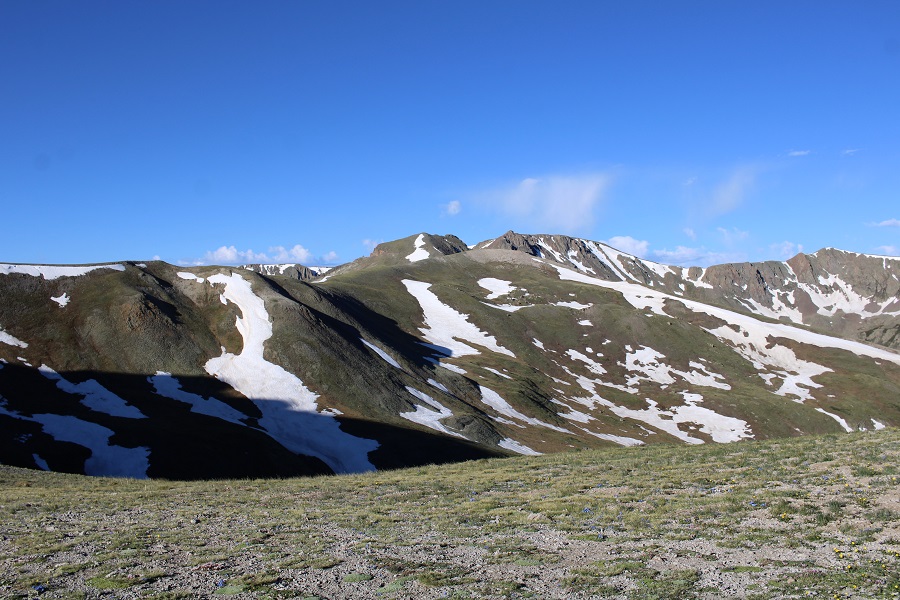
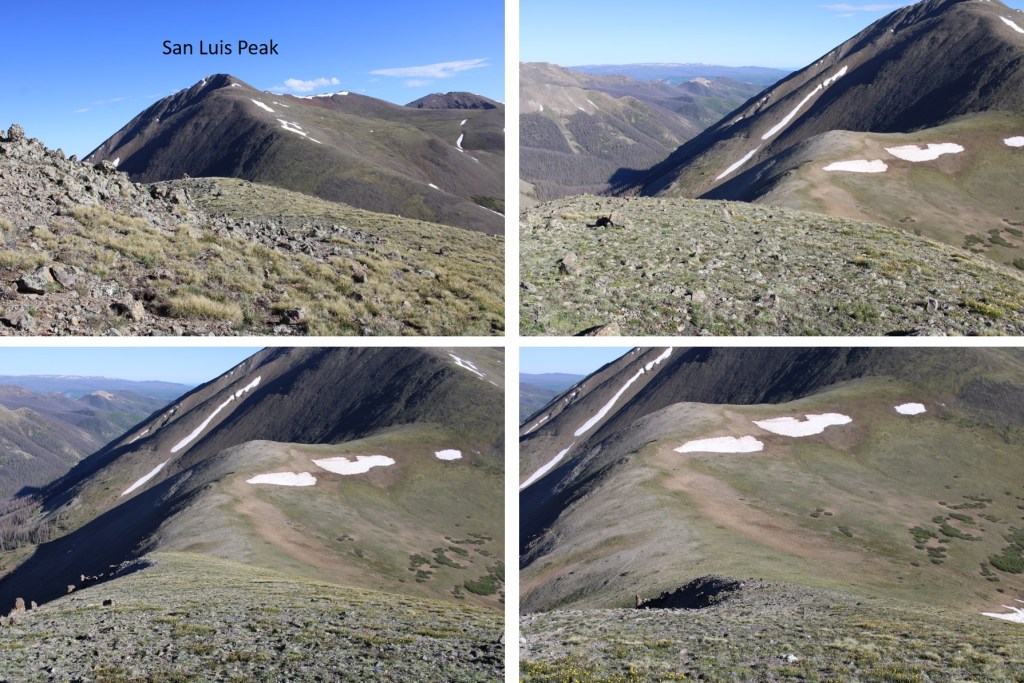
I was now above treeline, and could see the 13166/San Luis Peak saddle. 

The Colorado Trail nicely brought me there.

For those of you looking for the current conditions for San Luis pass, here they are.  Still areas of snow on the trail, but passable.

At the saddle, I disturbed a small herd of deer. 

Deer:

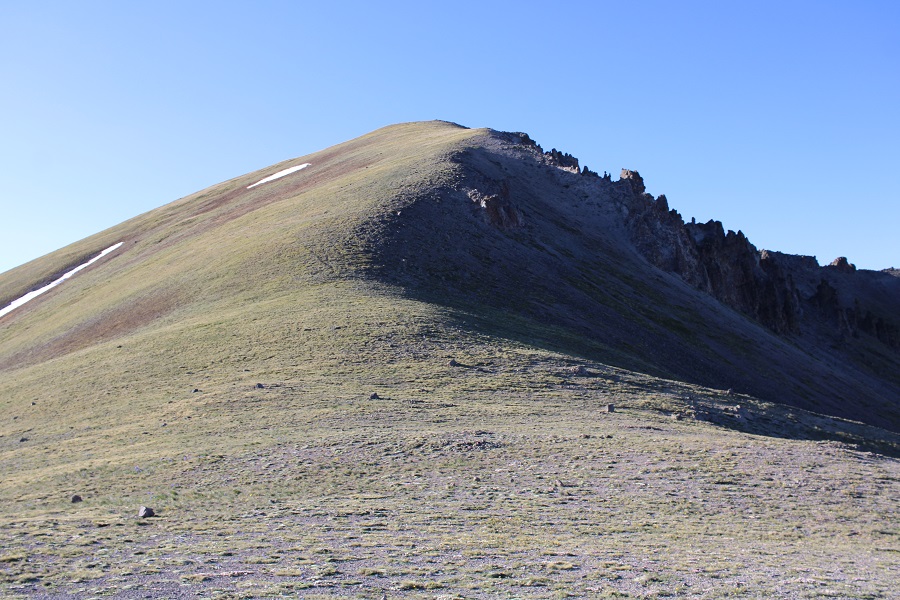
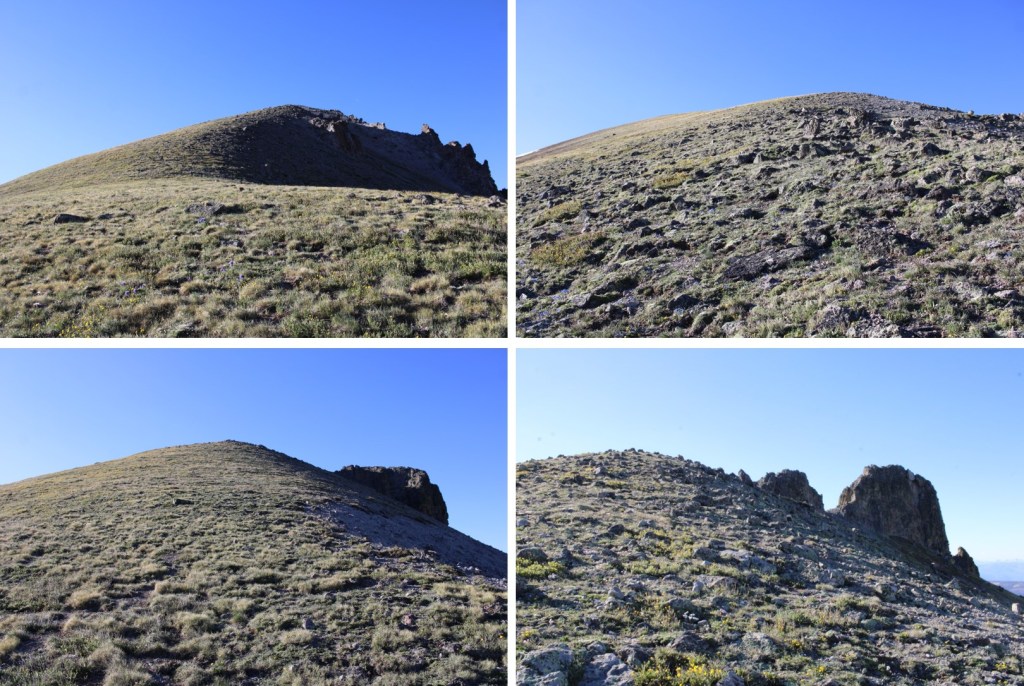
From the saddle, I turned left and headed southeast, gaining 525 feet of elevation towards the summit.  This was easy tundra to navigate.

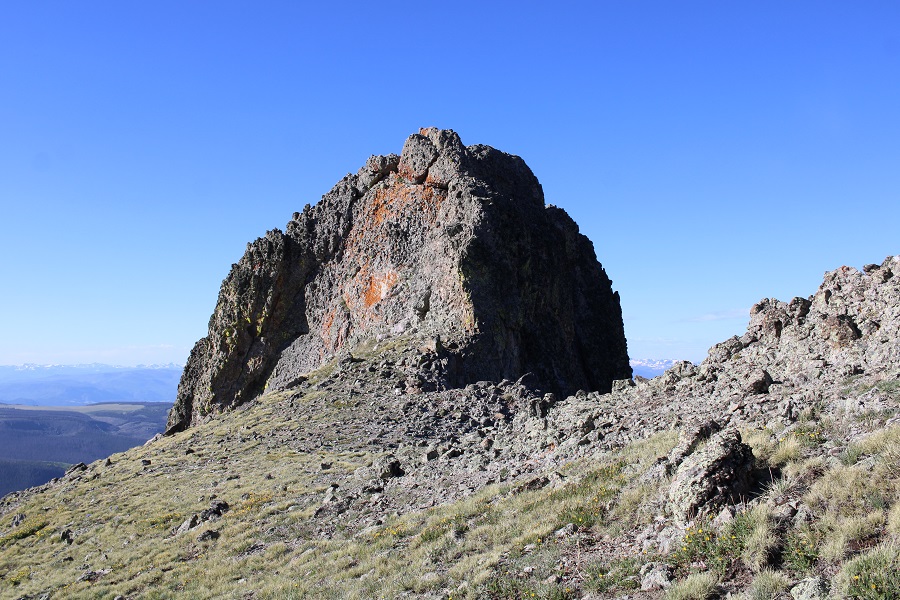
Until I saw this.  Hmmm… I was going to have to go and investigate.  I headed to the east side of the formation, dropped all my gear except my camera, and headed up.  Sorry, no helmet, as I wasn’t aware this was more than a class 2 hike. 

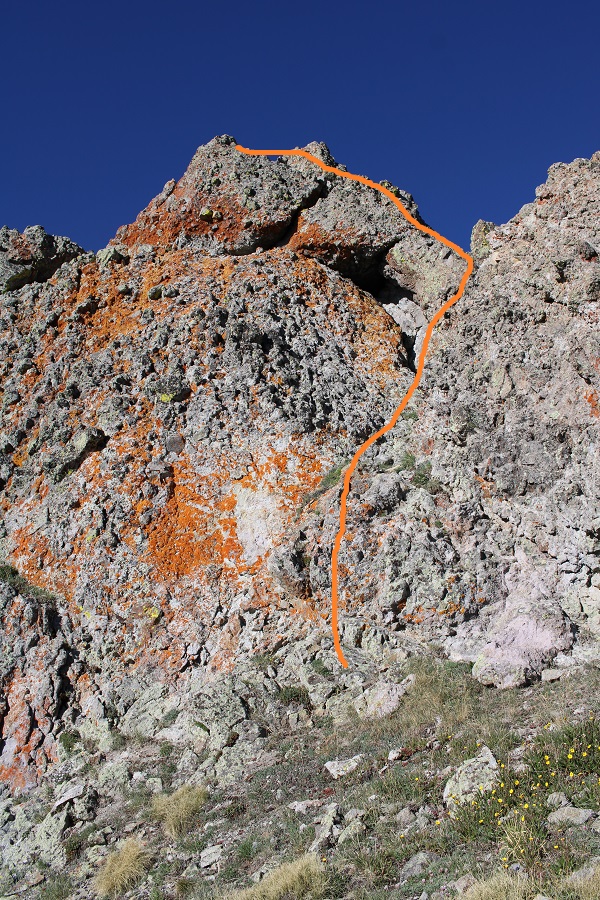
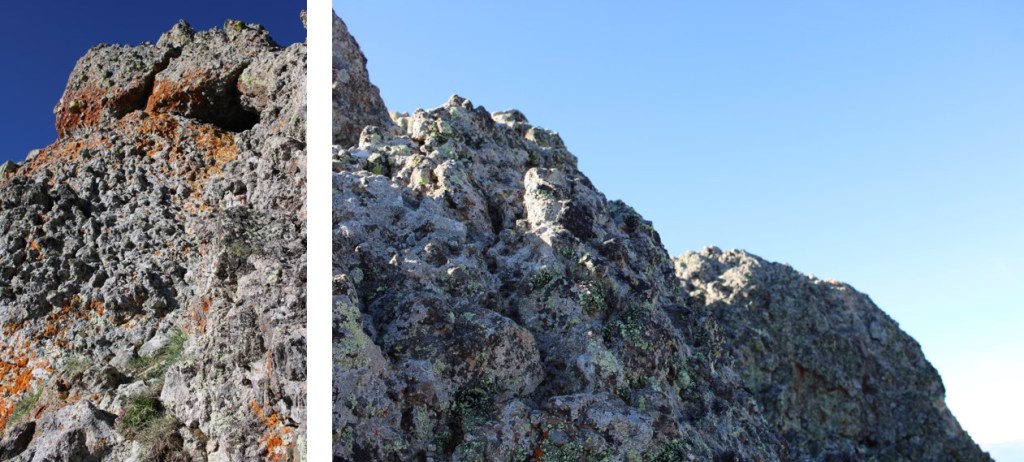
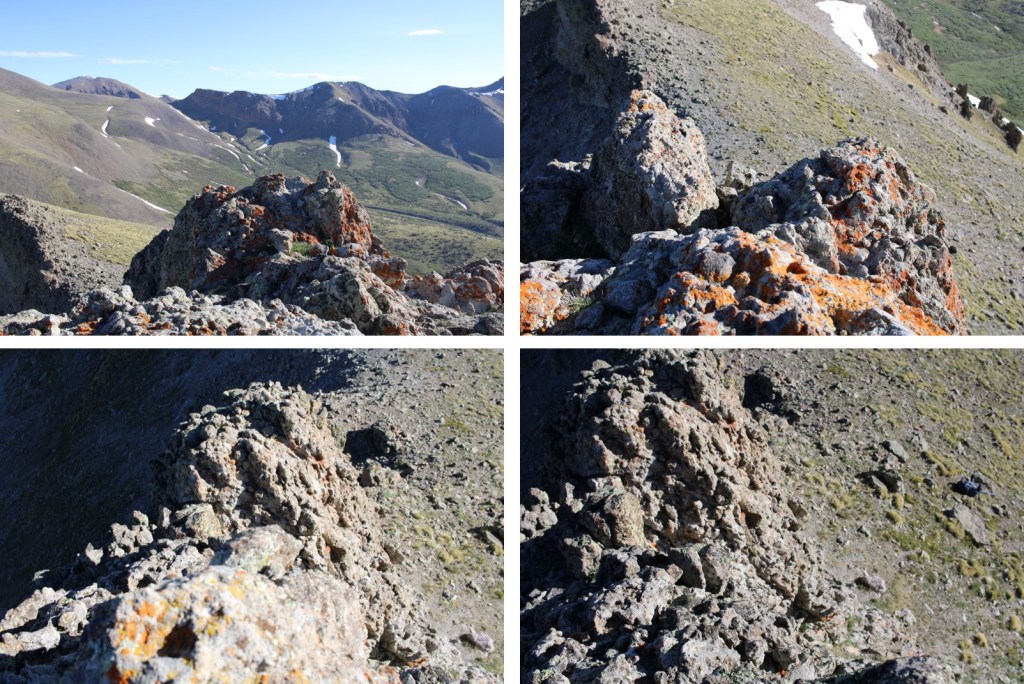
This was easier than it initially looked, nothing worse than rainbow climbing at the gym. The rock was all grippy, sturdy, and had lots of hand/footholds.  The rock was solid, like in the Crestones, but with more and larger hand holds. I’d call this 30 feet of vertical climbing exposed class 3.

Here’s the route I took up, following the orange rock to the ridge, turning left, and crawling on hands and knees to the summit because it was windy (and exposed, and I didn’t have a helmet, etc.).

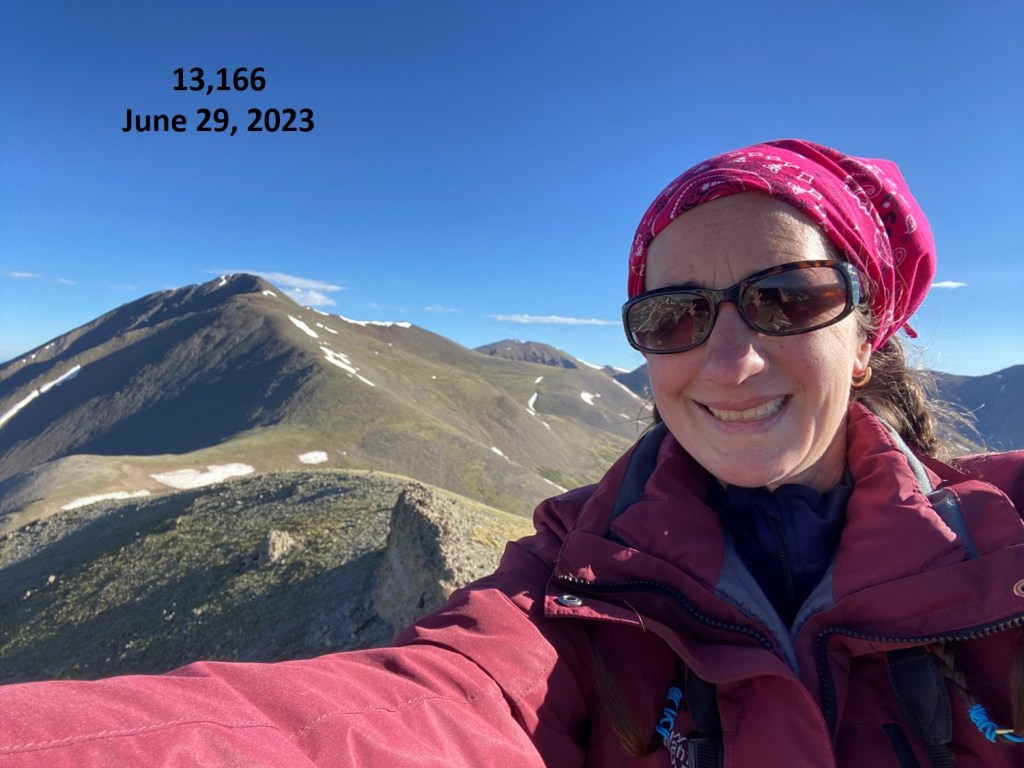
I summited 13,166 at 8am

13166:

Now to head back down.  I actually just did this feet first, no need to turn and face the wall.  There are plenty of hand and foot placements to use for support.

Back on firm ground, I grabbed my gear, and headed back to the saddle.

Back on the Colorado Trail, I followed it back to the trailhead

Oh, and I saw another moose.  This one was curious, and kept walking towards me, so I didn’t stay long.

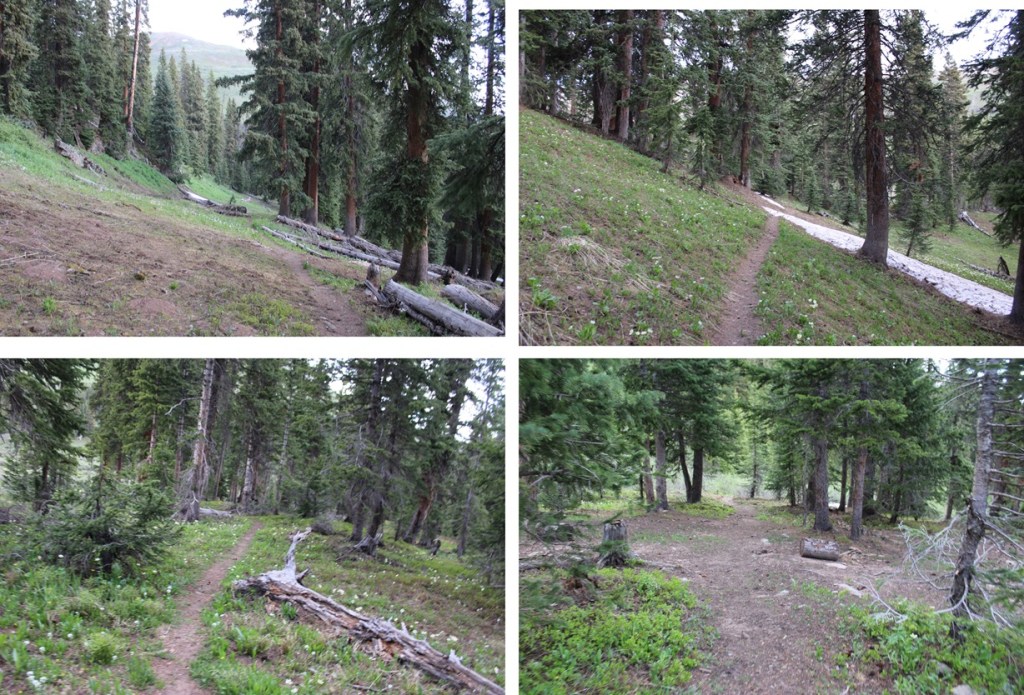
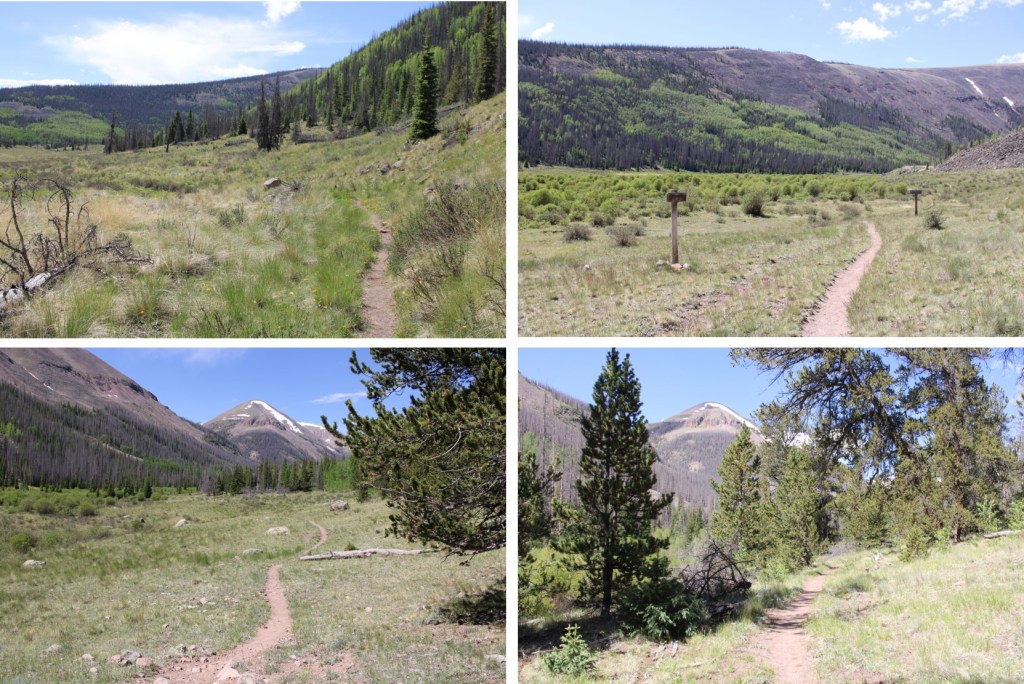
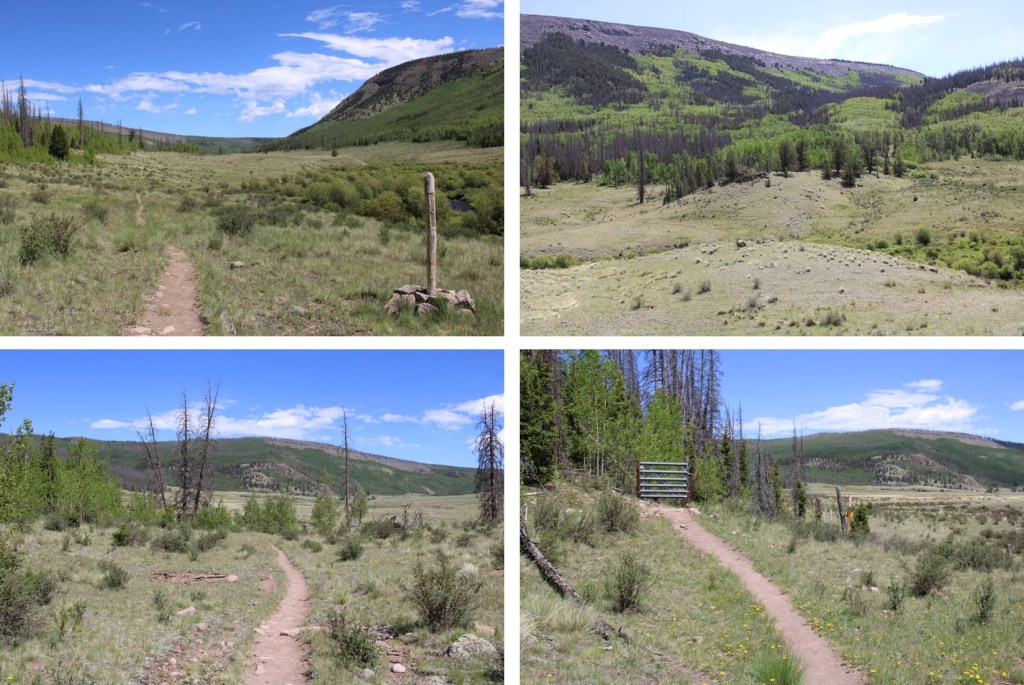
Here are some pictures the rest of the way back to the trailhead

Back at the trailhead, I noticed a chipmunk under my truck, seated atop a sock full of moth balls.  So I’m guessing they don’t work with chipmunks.  Oh well, at least it wasn’t a marmot.  I made it back to my truck at 11am, making this a 17.29 mile hike with 3120’ in elevation gain in 7 hours. 

I’d say “on to the next trailhead!” but I’m staying here.

Fairchild Mountain – 13,509 – Hagues Peak – 13,56 – Mummy Mountain – 13,420

RT Length:  24.7 miles

Elevation Gain:  6931’

I made it to the Lawn Lake trailhead exhausted.  It’s been a fun month, but not one in which I’ve gotten much sleep.  I was on the trail at 4:30am. 

I followed the class 1, Lawn Lake Trail, for 5.7 miles

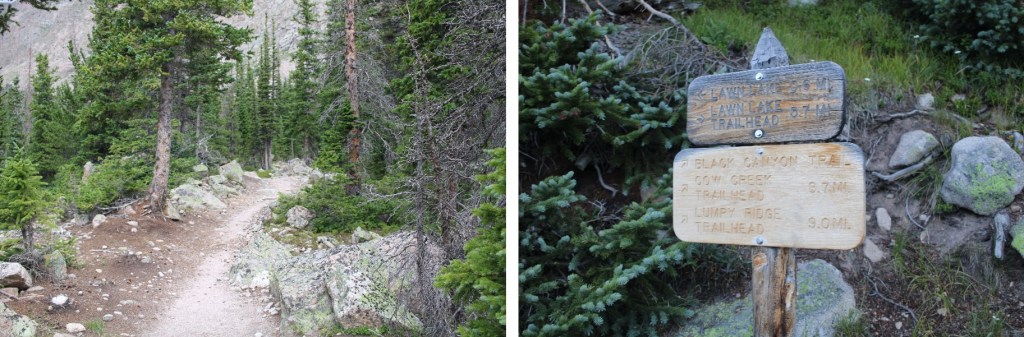
After hiking for 5.7 miles I came to a junction with the Black Canyon Trail, and took the Black Canyon Trail past Lawn Lake, and all the way to the Fairchild/Hagues Saddle.

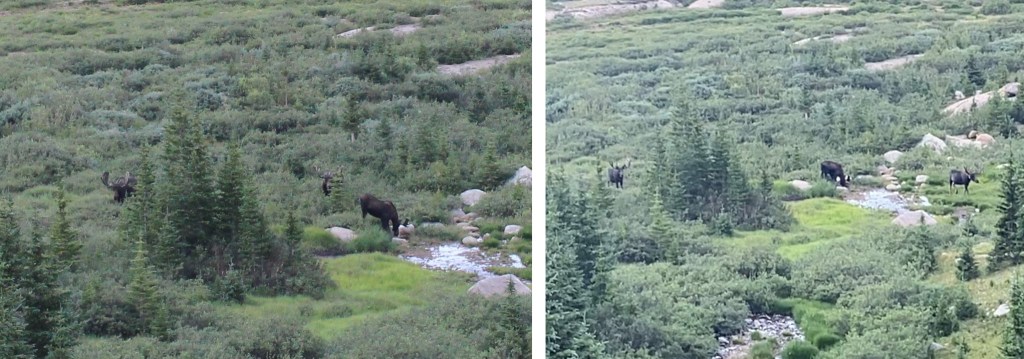
Just after passing the lake I came across 3 bull moose enjoying breakfast. I took a few pictures and gave them their space

Bull Moose at Lawn Lake:

I continued following the class 1 trail up to the saddle

I crossed a small stream.  You can clearly see the trail on the other side.  The trail became faint in areas, but there were cairns and the trail became easier to see near the saddle. 

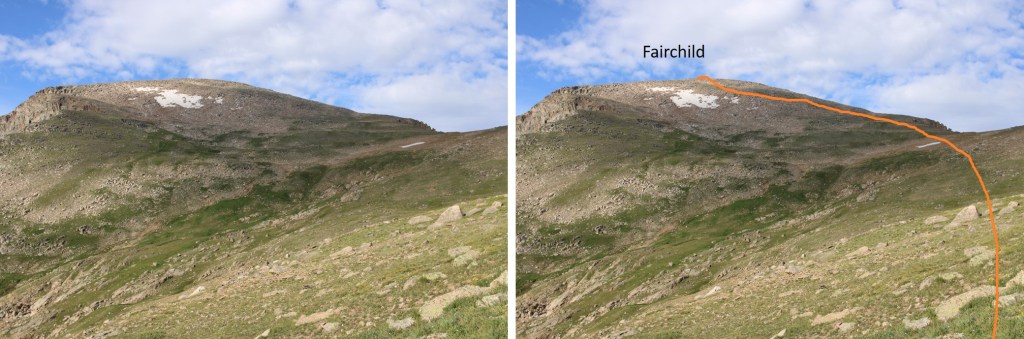
Just before making it to the saddle, I turned left and this is the route I took to the summit of Fairchild, following the ridge southwest

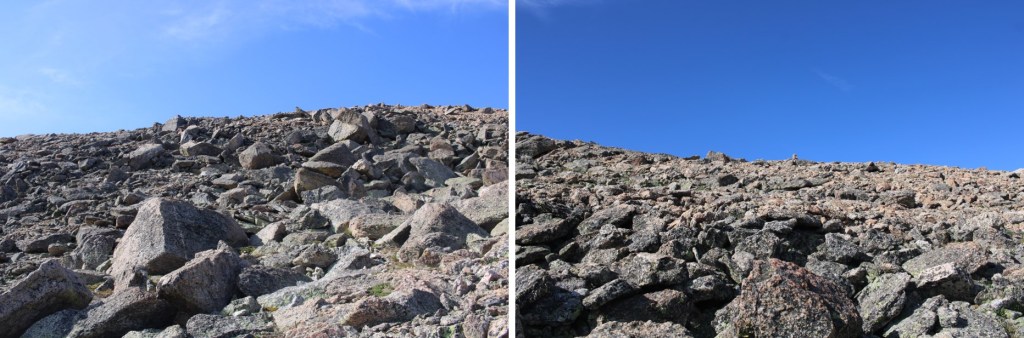
Here are some close up pictures.  Note, the boulders become very large near the top.  They’re all stable, but larger than vehicles.  My hiking shoes gripped the rocks nicely, but they would be treacherous if they’d been wet.

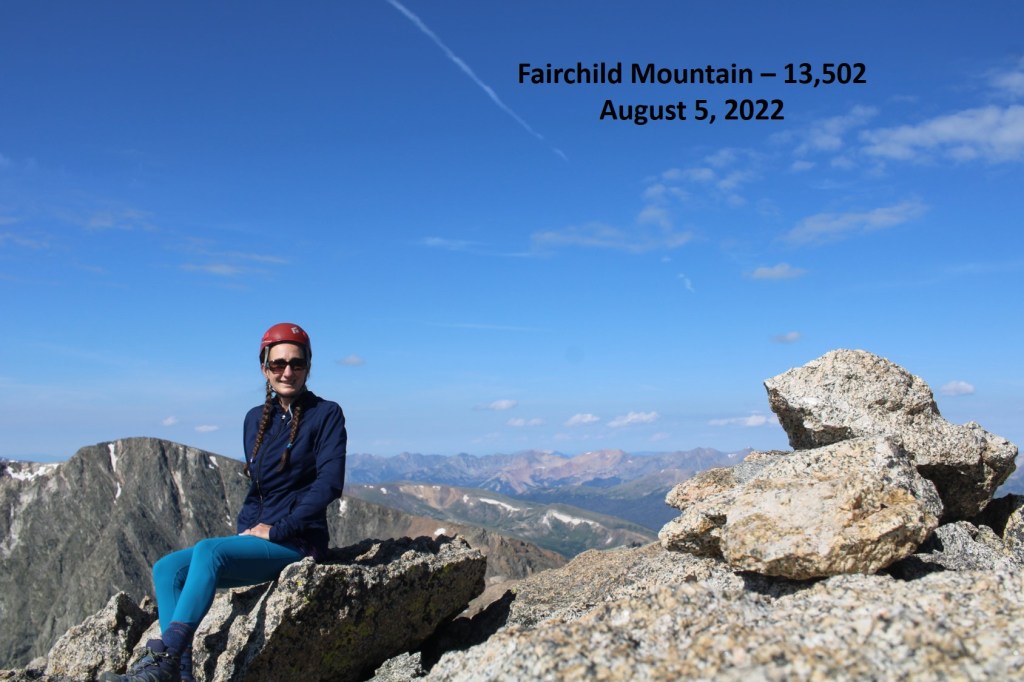
I summited Fairchild Mountain at 9:45am

Fairchild Mountain:

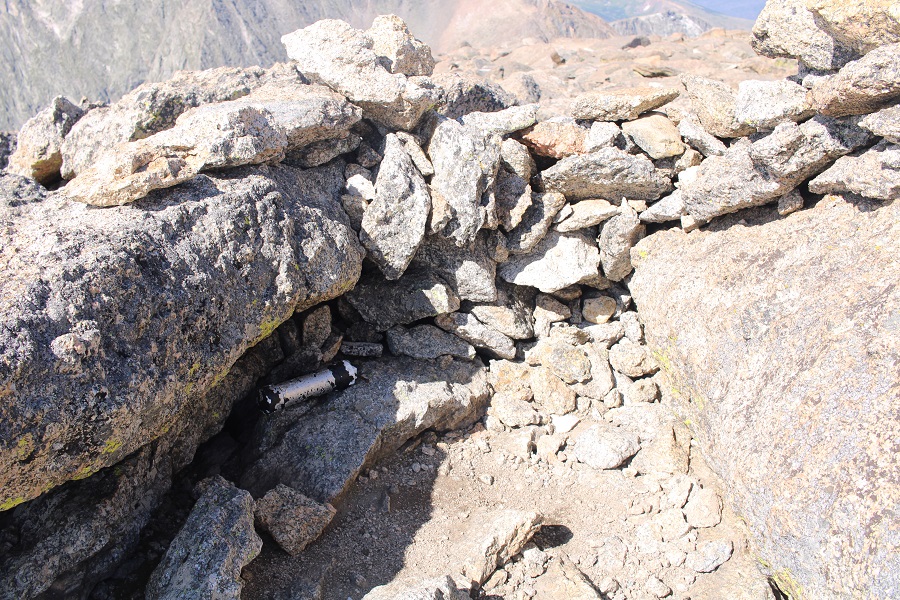
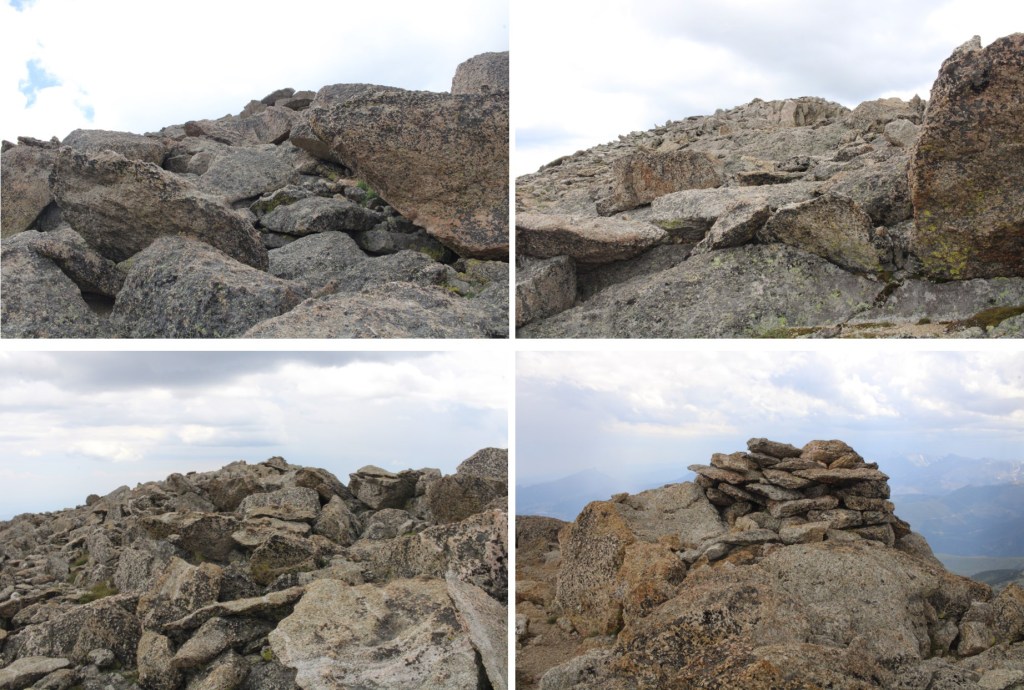
There was a plastic tube summit register I couldn’t open, and a rock wind break at the summit. 

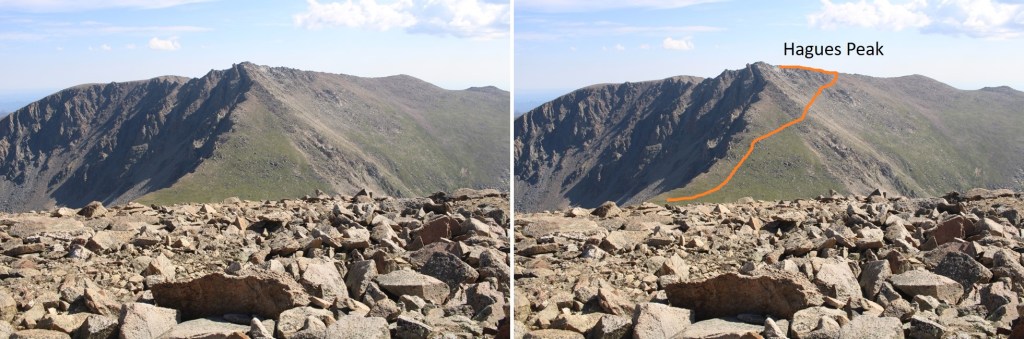
From Fairchild, I looked back at the saddle and could see Hagues Peak, and my route.  Now is a good time to get a visual of the way you want to summit, as it’s difficult to see from the saddle/below.  This is the route I took, which kept it low class 3, but mostly class 2.

I made my way back to the Hagues/Fairchild saddle

And then followed the ridge until I made it to 12700’. 

I then headed northeast towards the ridge, staying on class 2 terrain.  Here are some close ups of my route

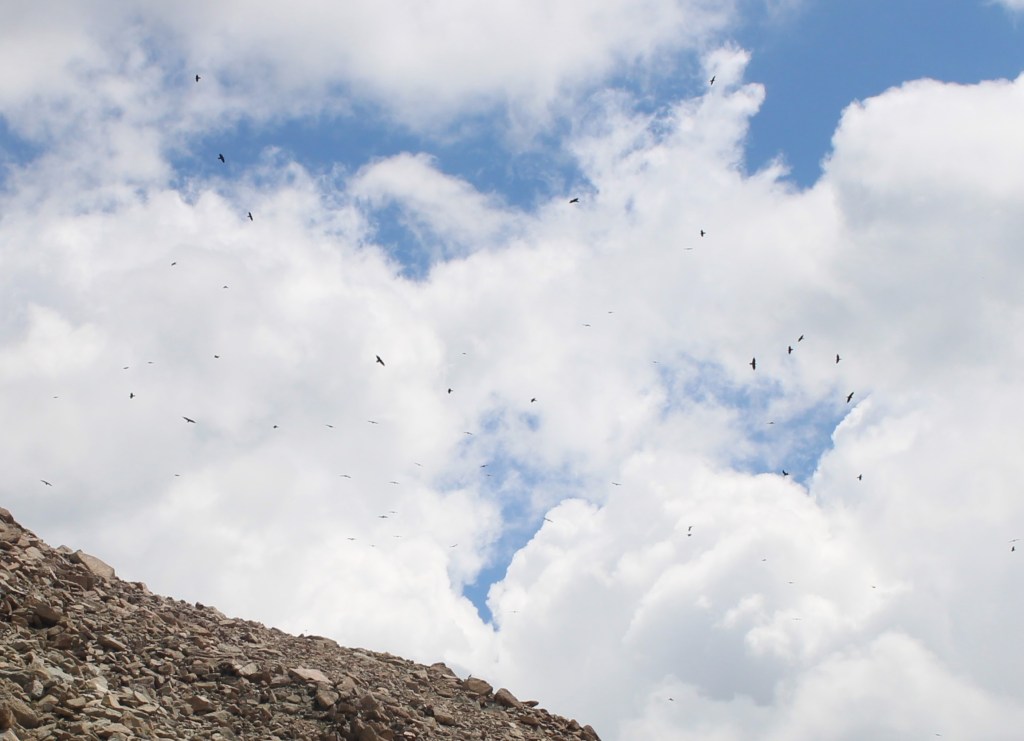
Also, there were more moths than I’d ever seen this far above treeline, and dozens of crows taking advantage of the situation

I gained access to the ridge with a few easy class 3 maneuvers.

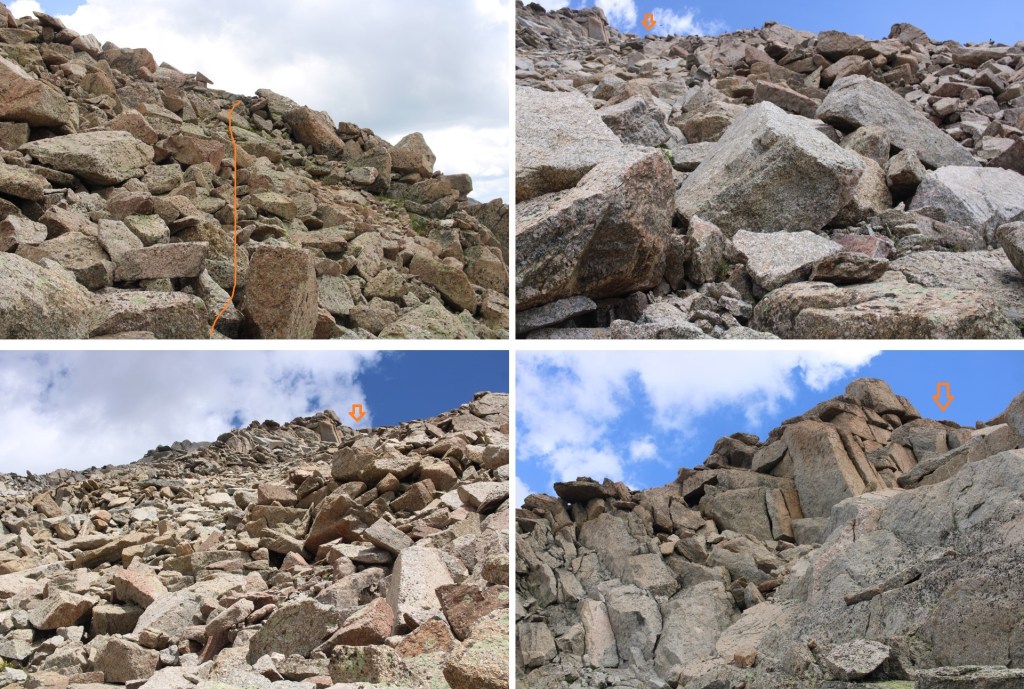
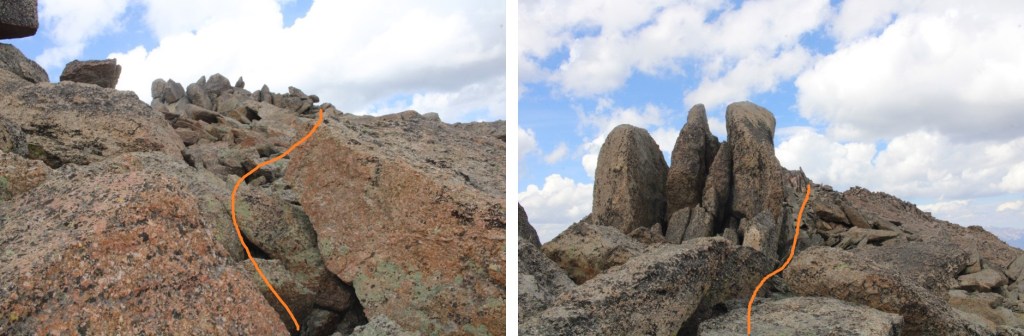
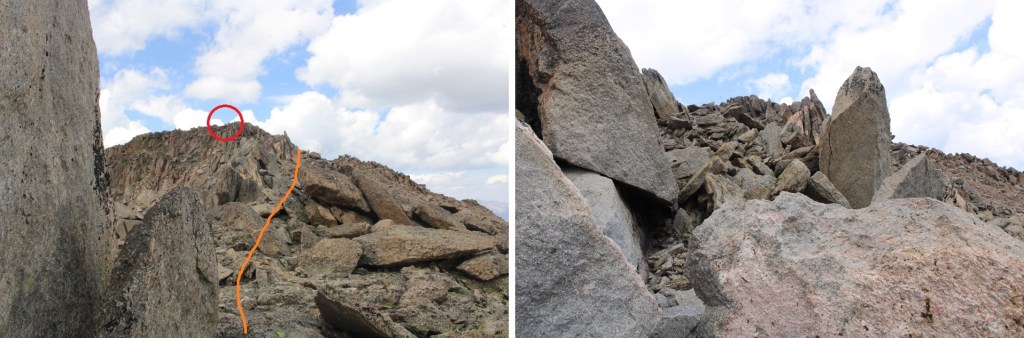
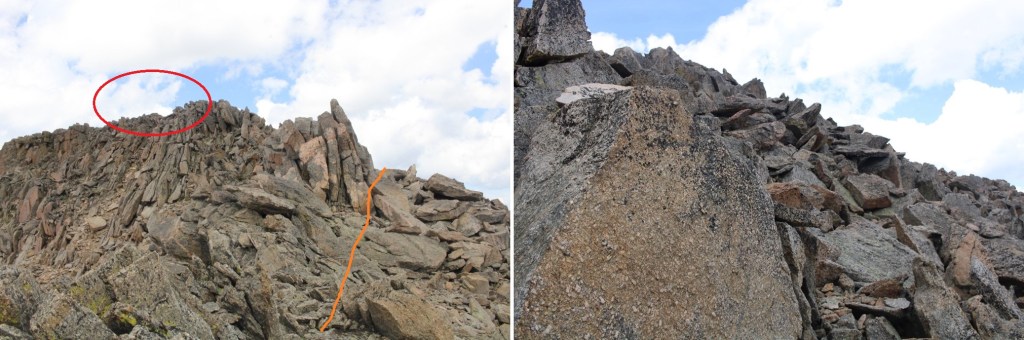
One on the ridge, I turned left and followed it through more easy class 3 terrain west to the summit.  If there’s an option, always go right around the boulders.

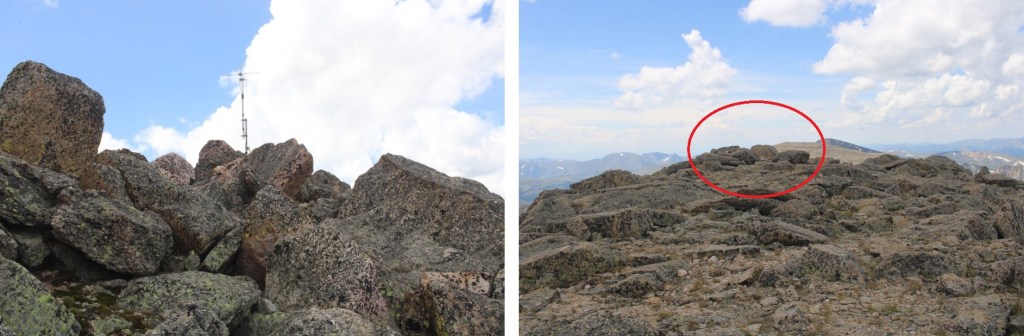
The summit is circled in red

It’s just a little further southwest past the tower

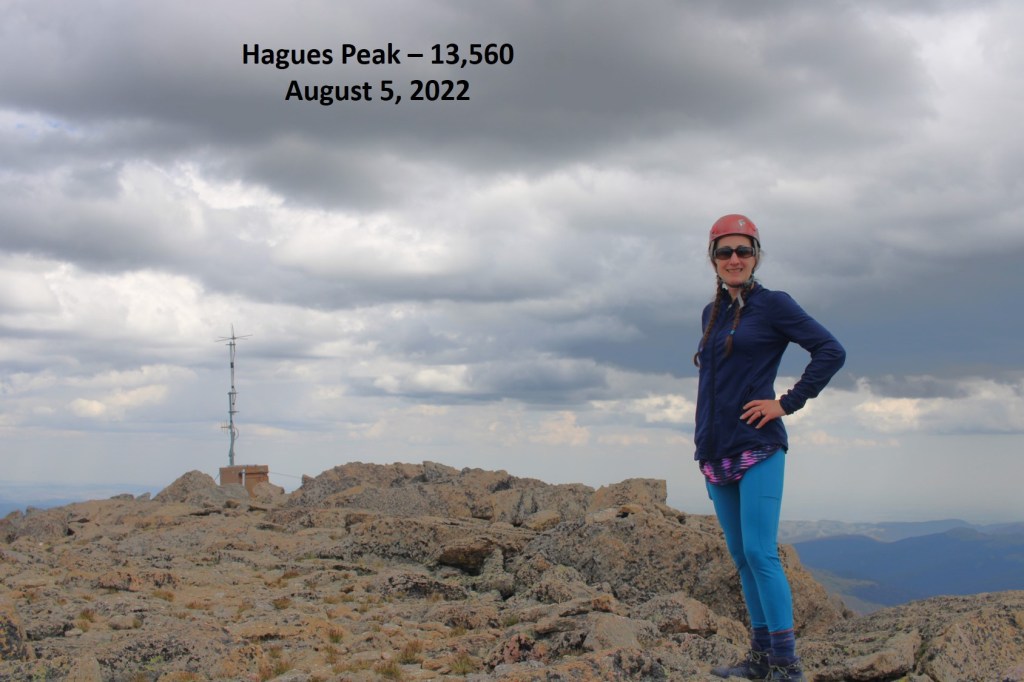
I summited Hagues Peak at 12:25pm

Hauges Peak:

There were several benchmarks/elevation markers, and another summit tube (full of various loose pieces of paper, so I didn’t bother signing one).

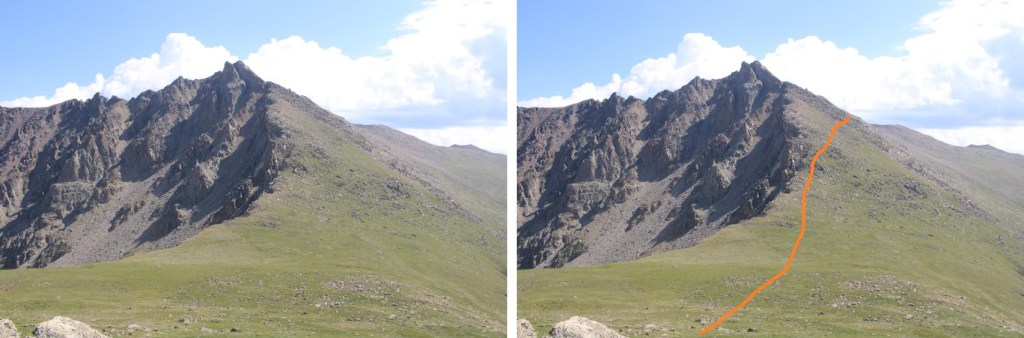
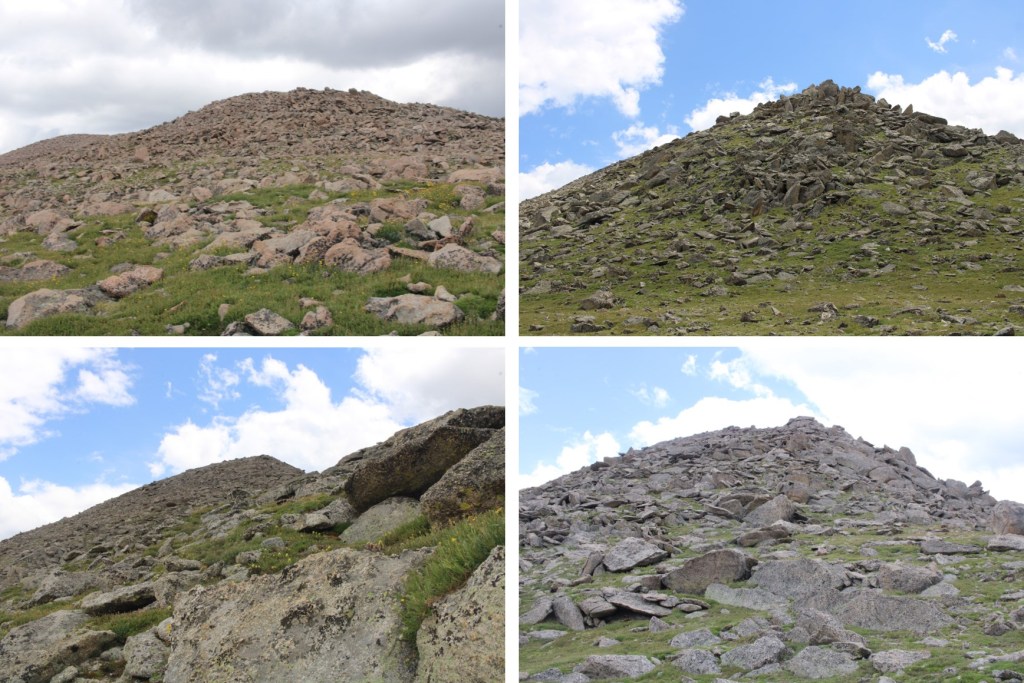
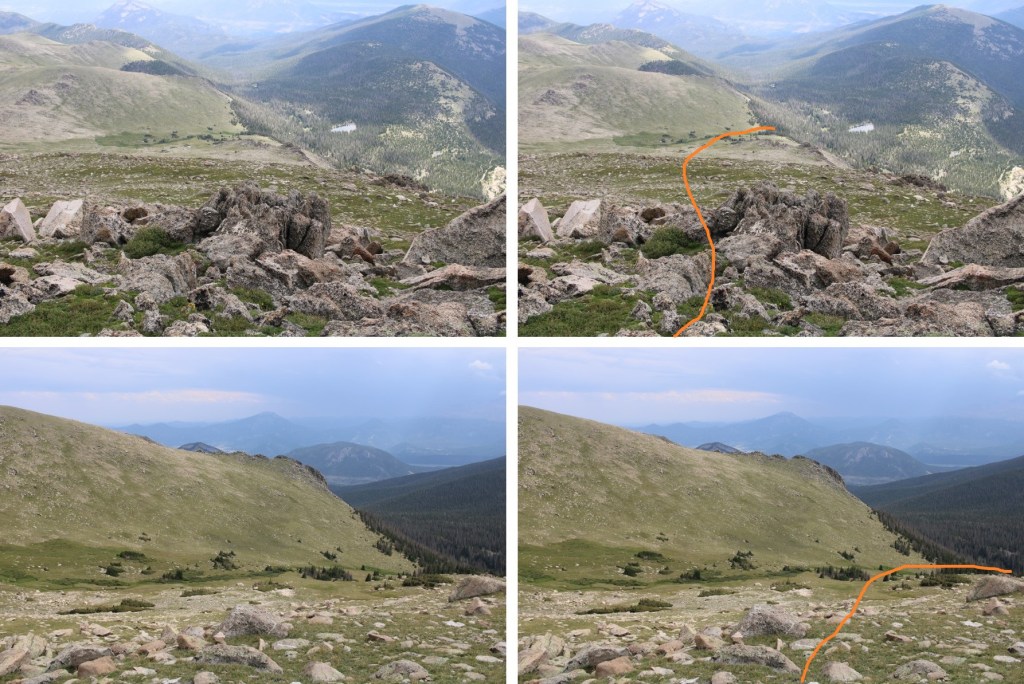
Next on the agenda for the day was Mummy Mountain. I turned and headed back down the ridge the way I’d summited, and then crossed PT 13302, and headed up Mummy Mountain.  Here’s my overall route

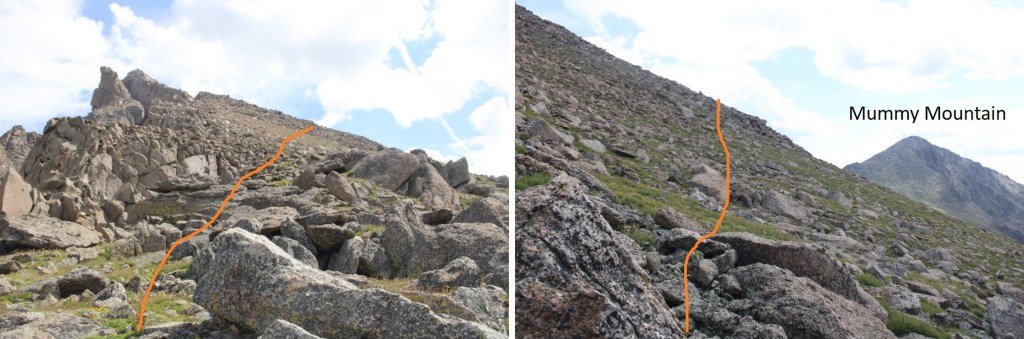
And some step by step pictures

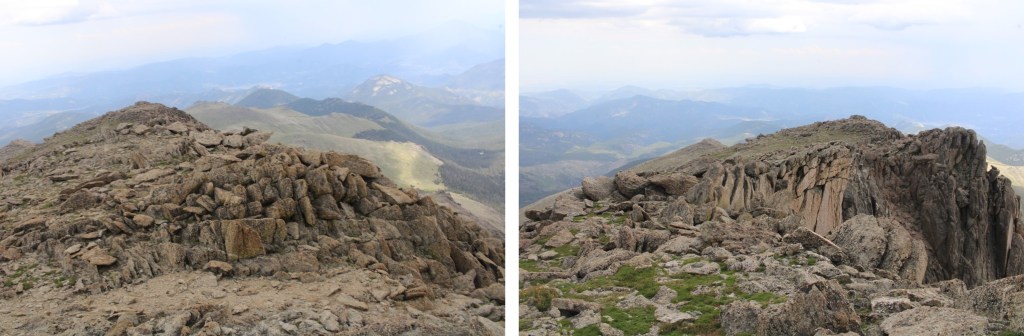
The terrain became rocky near the top, but this all remained class 2

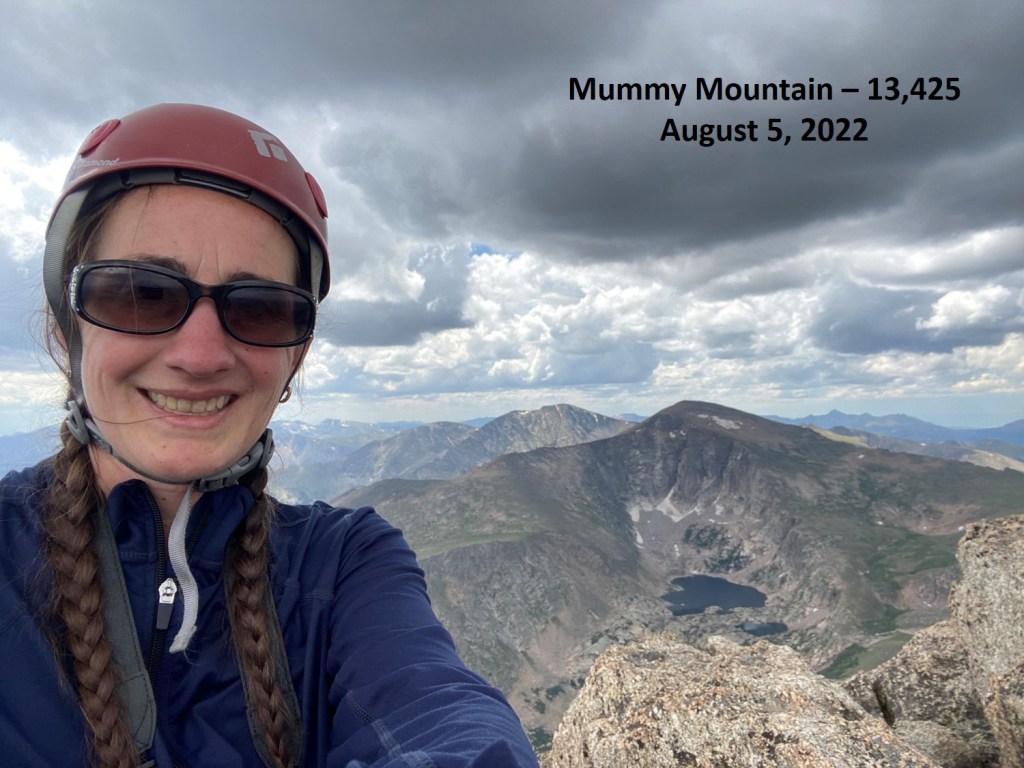
I summited Mummy Mountain at 2pm

Mummy Mountain:

The weather had held out so far, but on the summit of Mummy Mountain I heard my first clap of thunder in the distance, and wanted to get back down to treeline as soon as possible.  I followed the ridge southeast on class 2 terrain.

I aimed for the drainage, and followed it until I made it back to the Black Canyon Trail

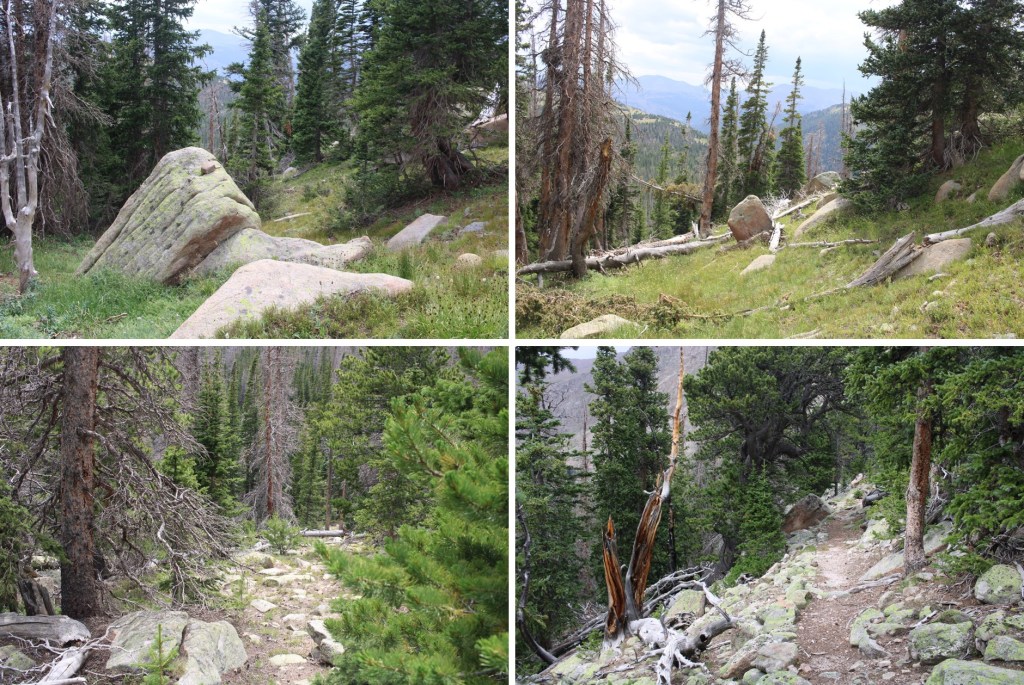
I followed the Black Canyon Trail North until the junction with the Lawn Lake Trail

There I took the Lawn Lake Trail back to the trailhead.  It rained the entire way.  Not the fun, misty rain, but buckets of large water droplets.  The sky thundered all around, after large flashes of lightning. 

I made it back to my truck at 5:30pm, making this a 24.7 mile hike with 6931’ of elevation gain in 13 hours.

On to the next trailhead!

Twin Sisters West – 13,374 and Twin Sisters East – 13,432

RT Length:  10.32 miles

Elevation Gain:  4101’

The Rico-Silverton Trailhead past South Mineral Creek has to be one of my favorite trailheads to spend the night.  The 4WD road in isn’t very 4WD (except for the creek crossings), and there are rarely any people there.  Also, no marmots. I was woken up in the middle of the night by a rustling sound I thought was a rodent in my truck, but ended up realizing it was just my elbow brushing a bag of chips. 

It was another cold night, but I was ready to go at 5:45am.  It was still dark, but I’ve taken this trail numerous times, so I knew which way to go. 

The trail starts at the south end of the parking area, and immediately crosses the creek

I followed this class 1 trail all the way to treeline, crossing the creek several times along the way.

Another perk of hiking here is a mama moose owns this basin.  Every year for the past few years I’ve seem mama, mama and baby, or mama and yearling in this basin.  It’s been neat to see mama get bigger, and baby(ies) as well.  This yearling seems to be female, as she didn’t have antlers.  I saw these two just as it was beginning to get light out, so the pictures didn’t turn out well.  As soon as they noticed me they headed south, slowly making their way over the pass.

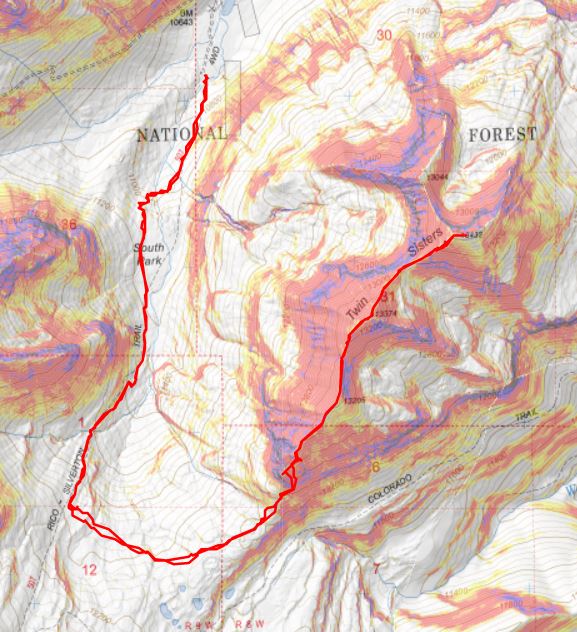
I hiked the Rico-Silverton Trail for 2.2 miles, to about 11925’, and then left the trail to follow the contour of the upper basin east, towards the south side of Twin Sisters.  This is the route I took

And some step-by-step pictures:

There are some faint game trails here, but they aren’t really needed, as long as you’re heading for the base of the mountain

Once there, I found a clear path through the willows and ascended the talus

I was surprised when I heard coyotes yipping during the day:  I usually only hear them at night

Coyotes:

Following this line brought me to the base of the rock outcroppings.  I put on my microspikes, and followed where the slabs met talus until I found the gullies.

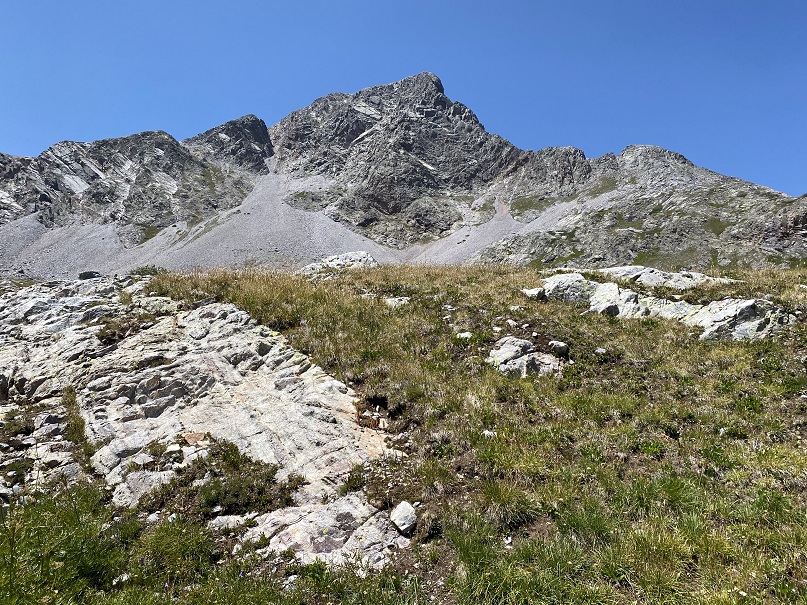
All of the gullies go, but, as I found out on my way back down, find the first one and stick with it (turn left and follow it to the ridge).  You’re aiming for the ridge, which means hiking northwest.  Microspikes were extremely helpful here.  This shouldn’t be more difficult than class 2+

It’s going to be a chossy-talus-scree-filled mess, but it’ll go

Once on the ridge, I followed it northeast, staying on the ridge.  There’s a false summit here.  I kept my spikes on, but they were overkill.  The rock here was talus, and annoying, but firm.

Hitting the false summit was a bit of a downer, but the hike had been easy thus far, so it was kind of expected.  I continued following the ridge.  There’s a quick chasm to cross in the circled area.  It can be kept at 2+. I dipped down to the left about 30 feet, then re-ascended and started climbing towards the summit

Form here it was a simple ridge hike to the summit

I summited Twin Sisters West at 8:40am

Twin Sisters West:

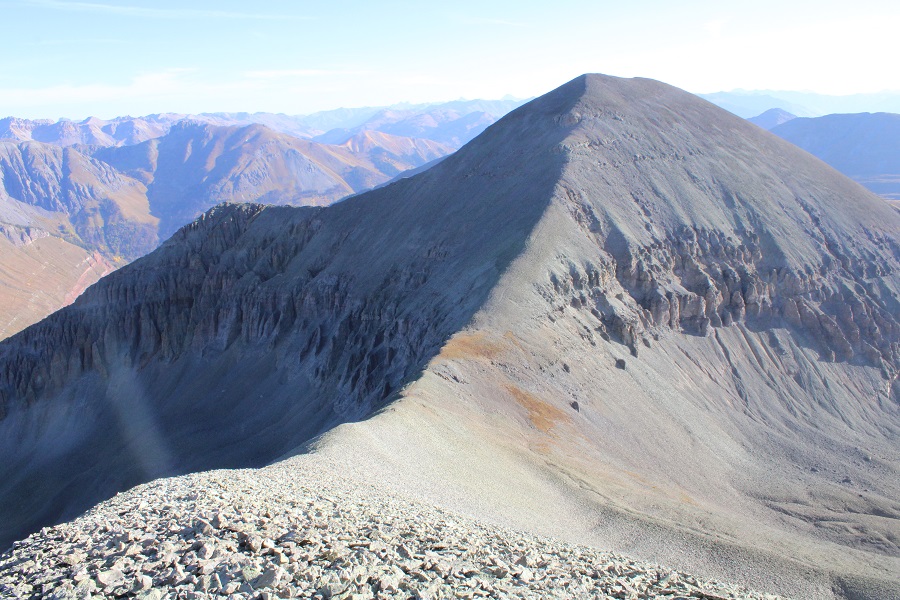
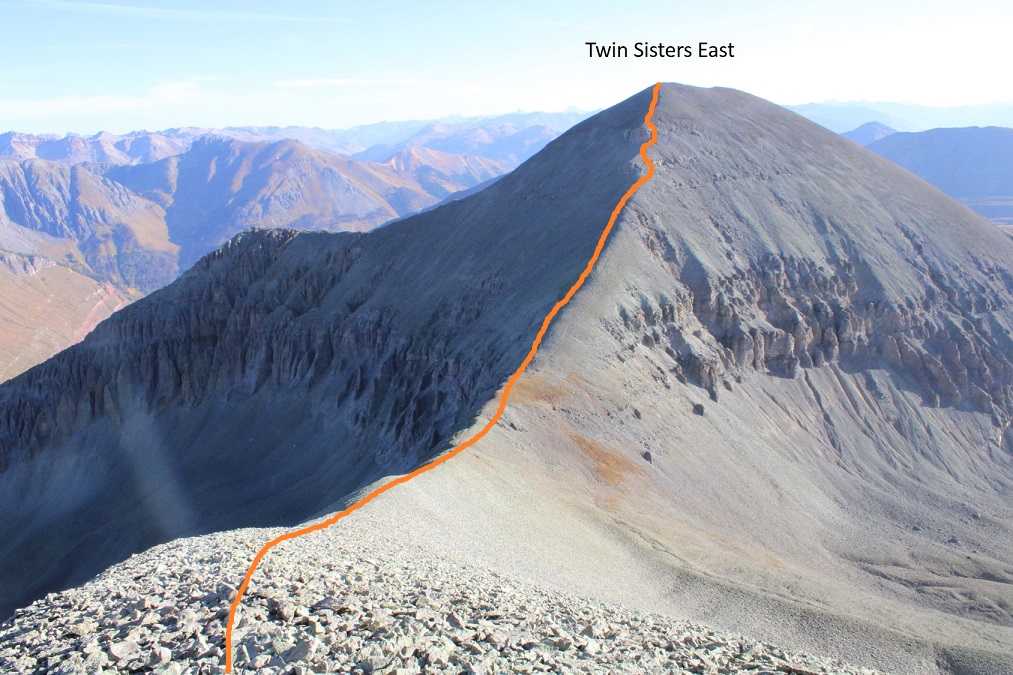
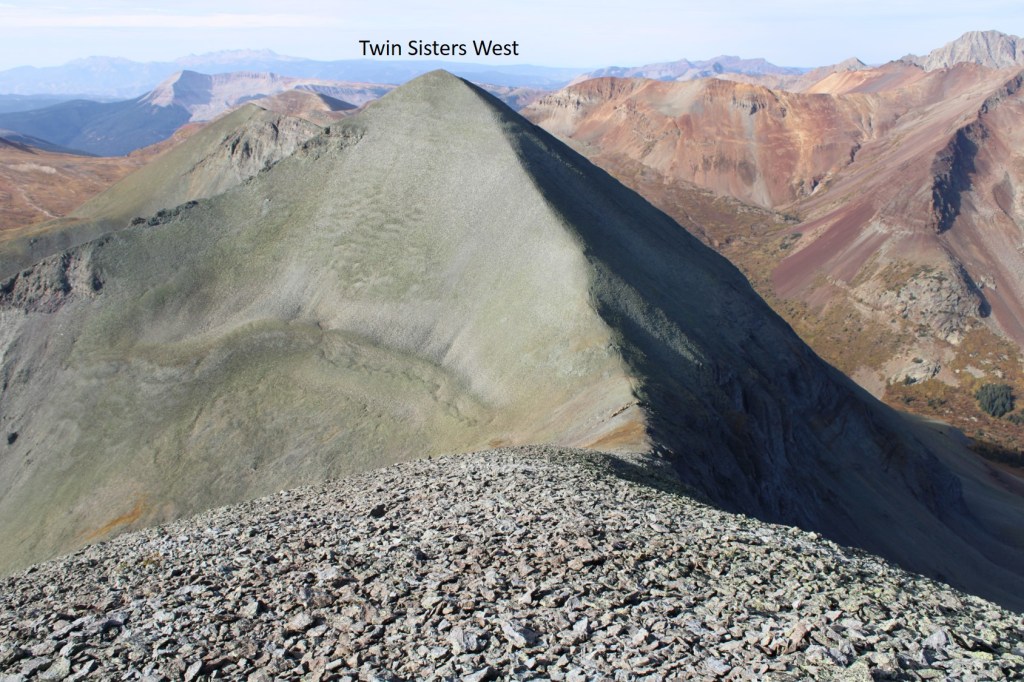
From the summit of ‘west’ it was easy to see the route to Twin Sisters East: I just needed to follow the ridge

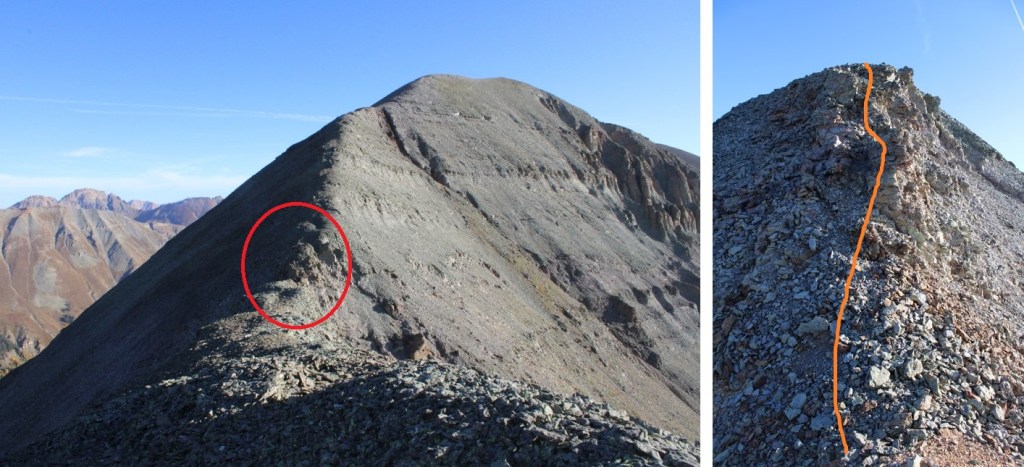
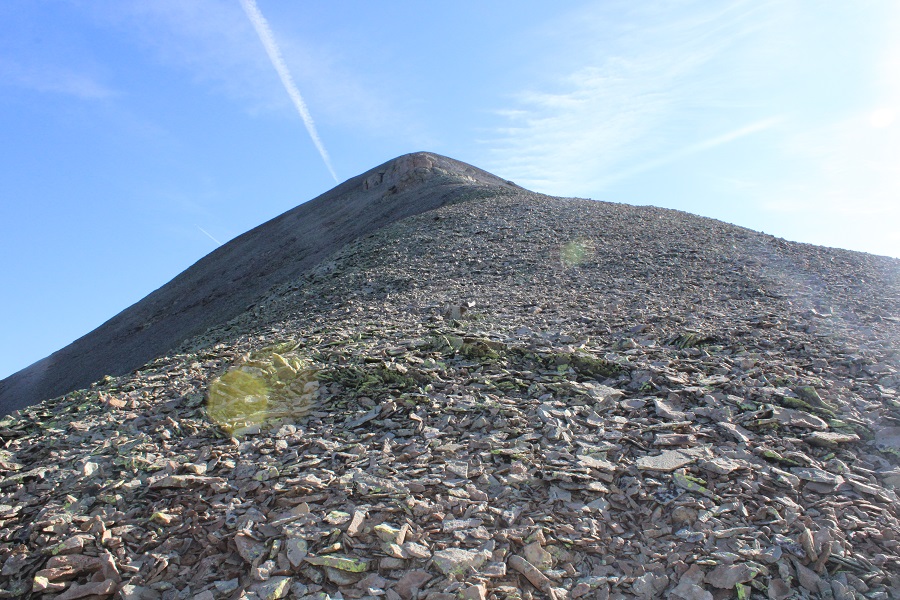
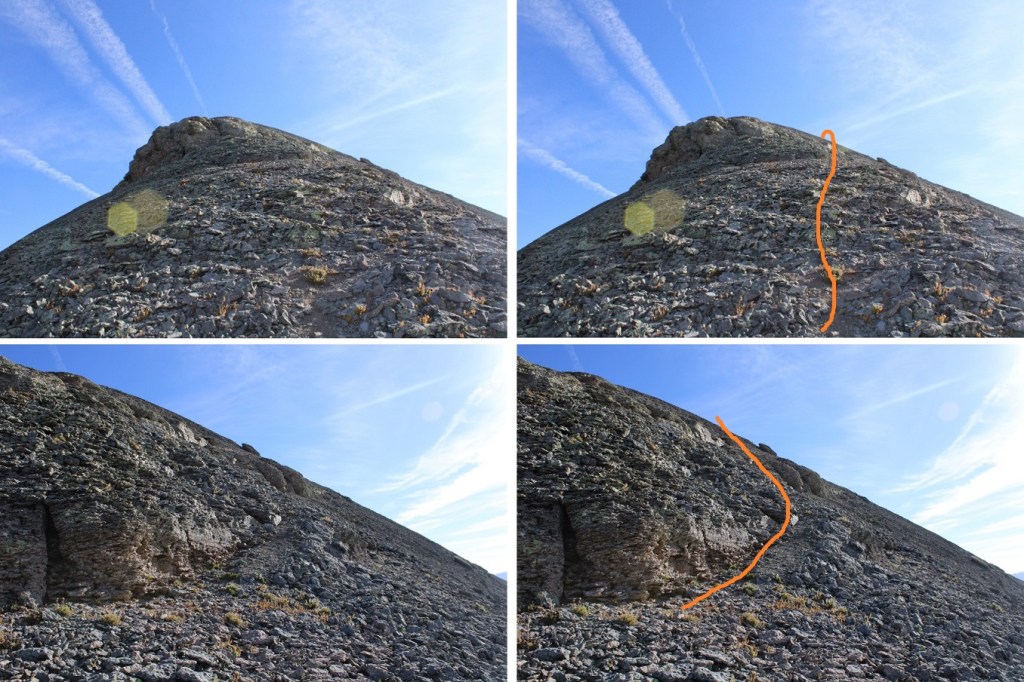
There were no big surprises on this one.  There were some game trails to the right, but they didn’t seem prudent.  I just followed the ridge, and then closely navigated the rock problems, which were all class 2.  This is the route I took

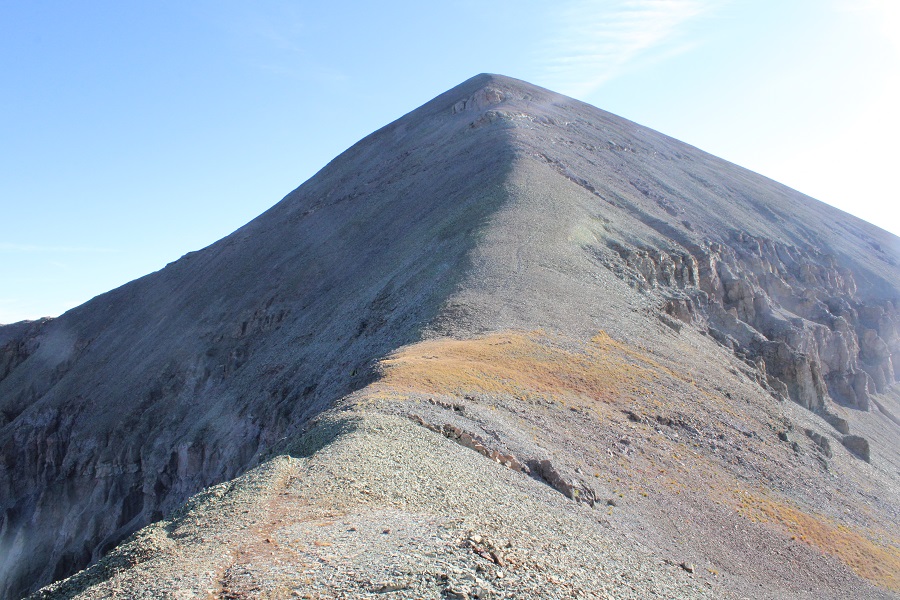
And some closer pictures

The summit was relatively flat.  I wasn’t sure where the exact summit was, so I waked the entire length, just to realize the summit was at the top of the ridge

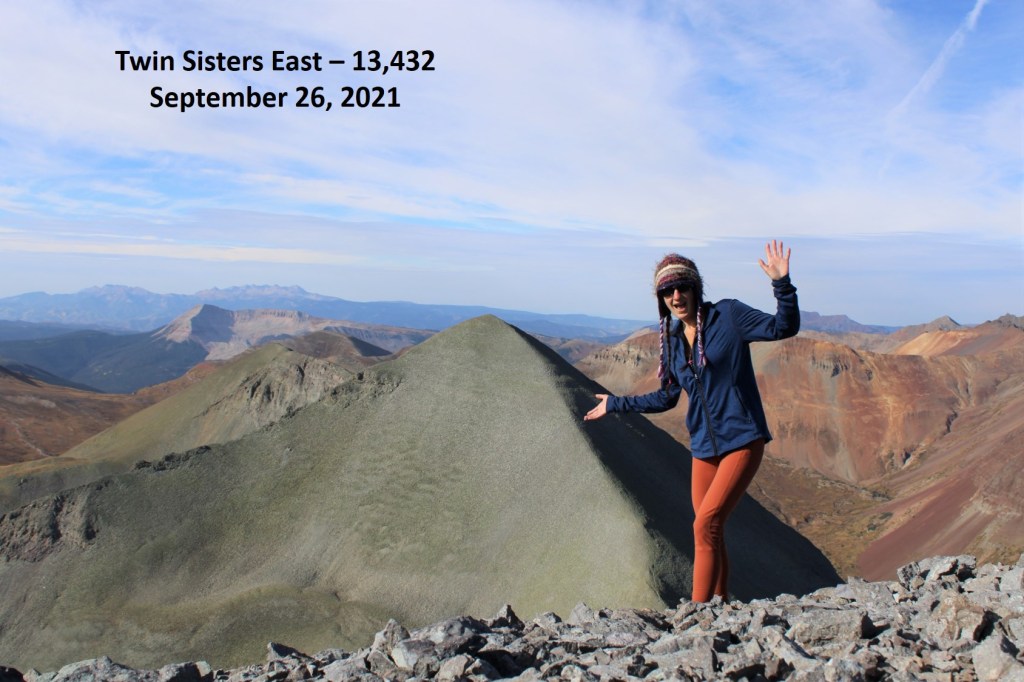
I summited Twin Sisters East at 9:20am

Twin Sisters East: 

Because I’d done most of my hiking in while it was dark, I decided to make this an out and back trip so I could get better pictures of the trek i.  So, I retraced my steps back to Twin Sisters West. This was a simple ridge hike

From Twin Sisters West I continued following the ridge southwest.  It’s important to follow this ridge all the way to the end (black arrow).  Also, here’s an overview of the route around the basin.  Fun fact:  the white area isn’t water, but rock from a dry stream bed.  I’m sure at some point in the year it holds water, but I’ve only seen it dry.

Here’s a close up of the ridge problem

And following the ridge to the end

Once at the end of the ridge, I turned left and scree surfed/carefully navigated my way down the gullies

At the base of the gullies I turned right, and headed out of the basin

There were faint game trails here

That led me back to the Rico-Silverton Trail, which I took north back to my truck

I made it back to my truck at 12:30pm, making this a 10.32 mile hike with 4101’ of elevation gain in 6 hours, 45 minutes.

On to the next trailhead!

Mt Oso – 13,689

RT Length:  33.61 miles

Elevation Gain: 9833’

This trip changed so many times before it even began.  I have an actual job, with responsibilities, meetings, etc.  I drove down to Durango Wednesday night, slept in the cab of my truck at a Walmart (the topper is still on order), got “the knock” at 10:30pm, moved, then woke up and worked/had meetings in my truck the next day. Then I drove to Hunchback Pass through Silverton (my favorite way to get to Hunchback pass).  It started raining as soon as I hit the dirt road, and didn’t stop.  There was a 60% chance of rain today, but I was still hoping to find a window and hike either 5 or 10 miles to a camping spot (depending on when it got dark, weather, etc.). 

The road over Stony Pass was sketchy in the rain.  Miles did great, but there were a few times I was worried the mud was too deep to get through.  I was a bit worried about the river crossings too, but Miles once again had no trouble.  

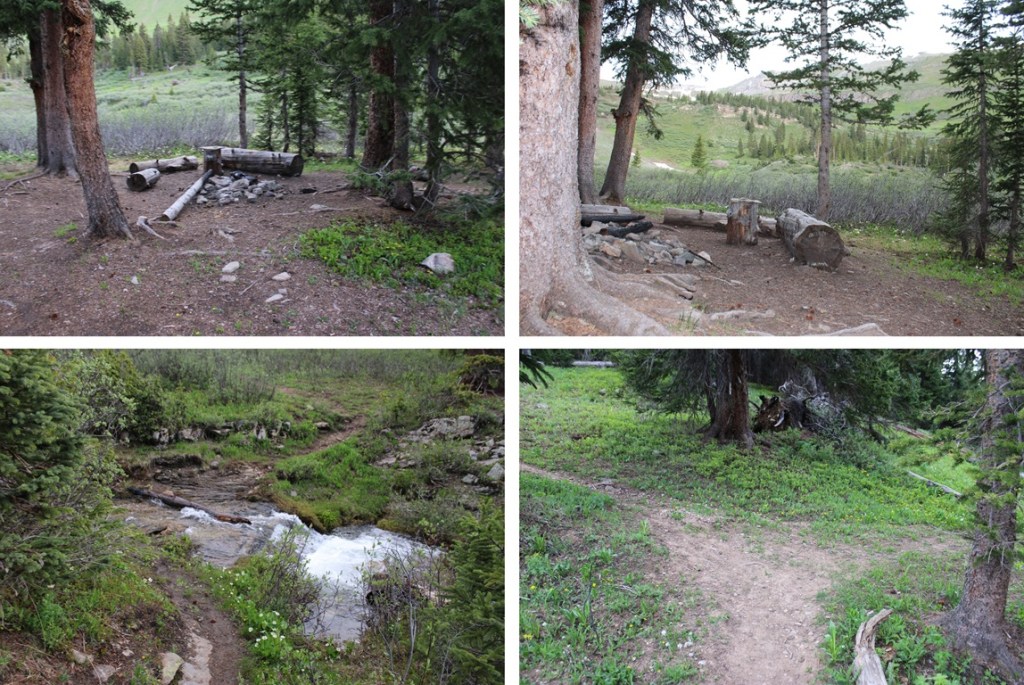
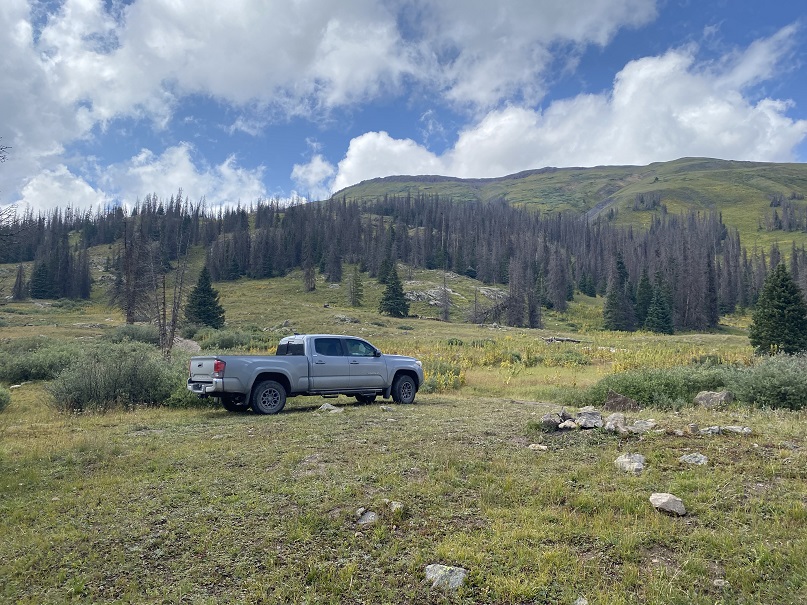
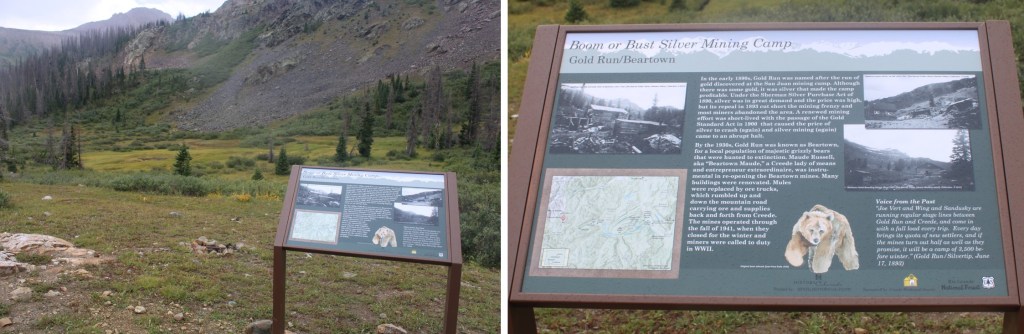
I’ve been to this area 3 or 4 times, and know the perfect place to park:  It’s a pullout at 11230’, just before you hit the trees (again), and before getting to Beartown.  My truck can make it further, but from past experience I know it’s going to get Colorado pinstripes from the willows and I have the opportunity to scrape the frame a couple of times as well. I love my truck, so I parked here, about 1.3 miles from the trailhead, in a flat spot with a campfire ring at 11235’.

I parked and waited for the rain to stop.  The rain turned to graupel, then rain again, then hail.  I could see the clouds coming over Hunchback Pass, and they weren’t getting any prettier.  Wave after wave of new sets of clouds kept cycling in.  After waiting for a few hours, I decided to just get some sleep.  I know many of you would start out in the rain, but with my Raynaud’s I can’t risk it:  If I get wet/cold that’s it for me, as I cannot warm up.  I woke up every hour to check on the weather. The rain didn’t stop/clouds didn’t clear until 4:30am.  That was a 15 hour rain delay that was seriously messing with my summiting plans.

I put on my rain gear to ward off water on the trail dripping from plants, and was on the trail before 5am. 

Day 1 went like this: 

  • Gained 1275’ over 2.8 miles (to Hunchback Pass)
  • Lost 2350’ over 5 miles (to Rock Creek Junction)
  • Gained 2503’ over 6.4 miles (to pass over Rock Lake)
  • Lost 500’ over .5 miles (From pass across basin)
  • Gained 1150’ over 1 mile (from basin to Oso/Soso saddle/to Oso Summit)
  • Woot! Summit!
  • Lost 1150’ over 1 mile (back to basin)
  • Gained 500’ over .5 miles (back to saddle)
  • Made it back to Rock Lake (losing about 600’ more)

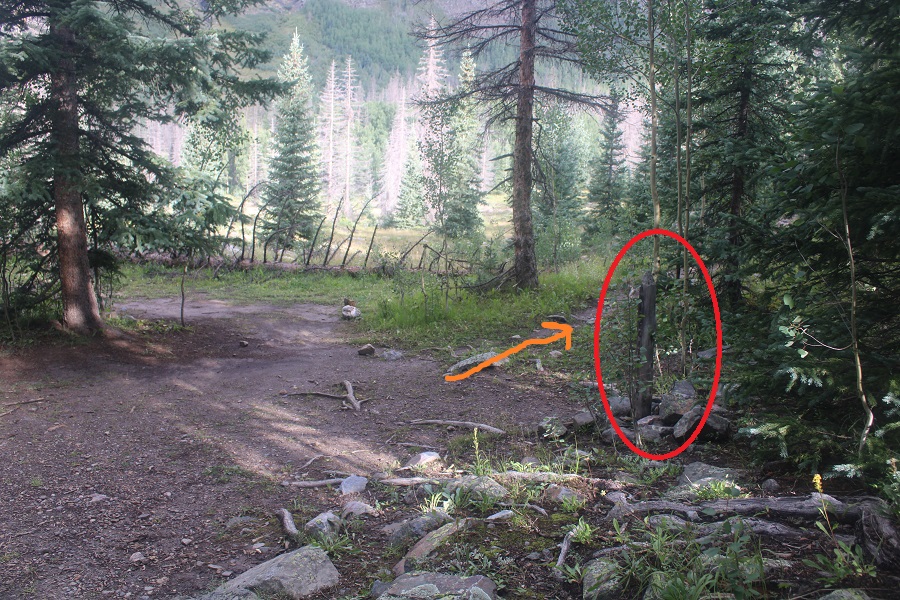
Ok, so, let’s start from the beginning:  From my parking space at 11235’, it was an easy hike to the trailhead, passing through Beartown. There were two other 4WD vehicles parked here, a 4Runner and a Tacoma like mine, unmodified, so you know it’s doable (choose wisely). 

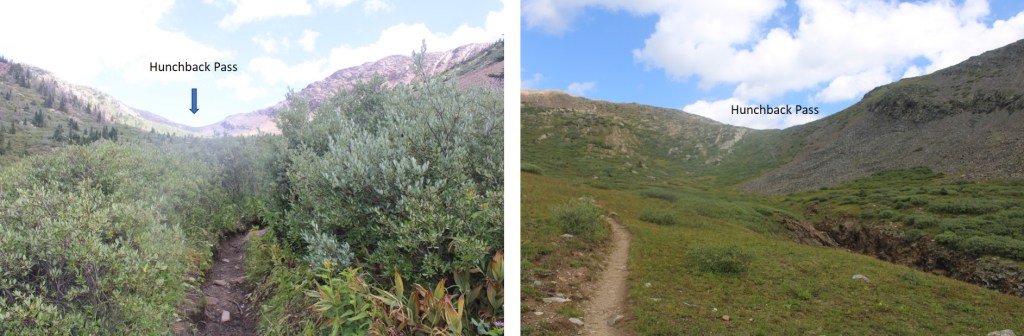
Once at the trailhead (813) I followed the Vallecito Trail up to Hunchback Pass

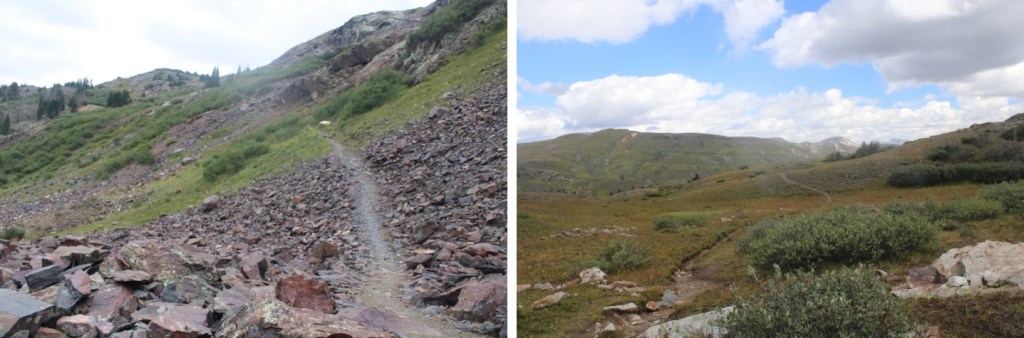
And then I headed south through the basin, following the trail down for 5 miles as it lost 2350’ in elevation

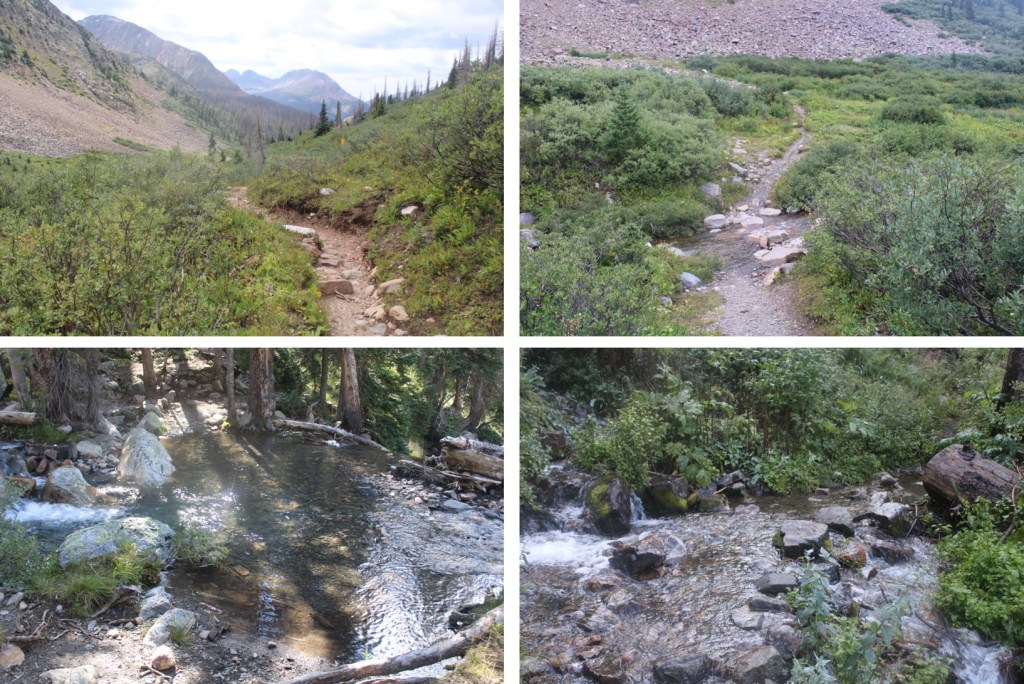
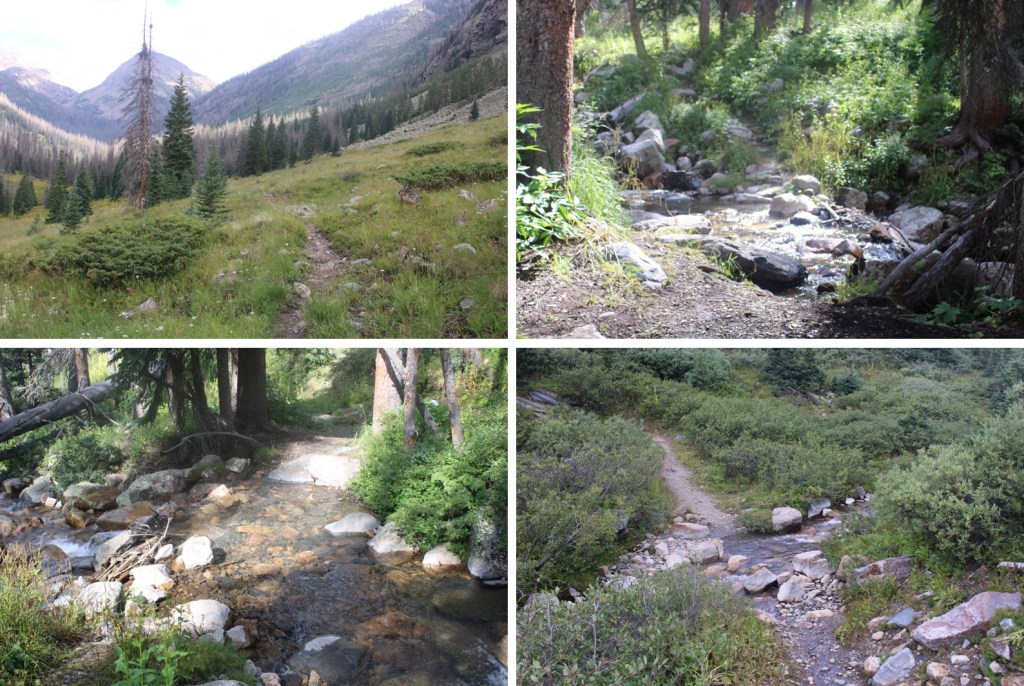
There were willows here, and I was glad to have on my rain pants.  There were a few stream crossings, all easily crossable.

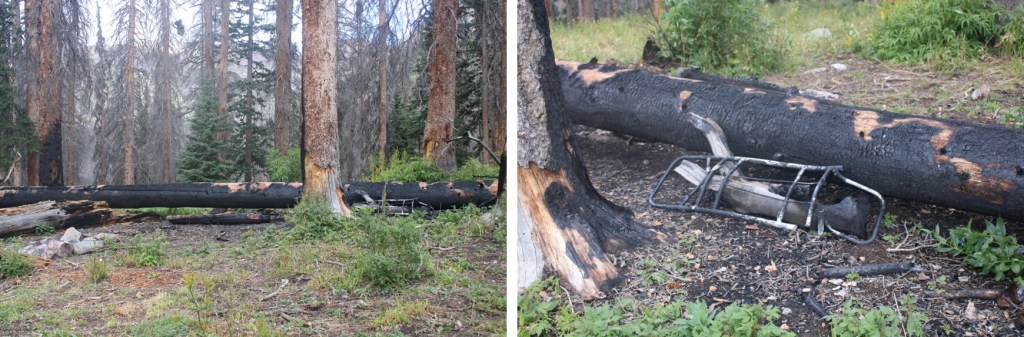
I saw evidence of someone’s fire getting out of control: looks like they lost their pack in the process.   I wonder how they put it out?  In case you’re wondering, yes, the ground was cold and the fire was out (I’m sure the 15 hours of rain last night had helped).
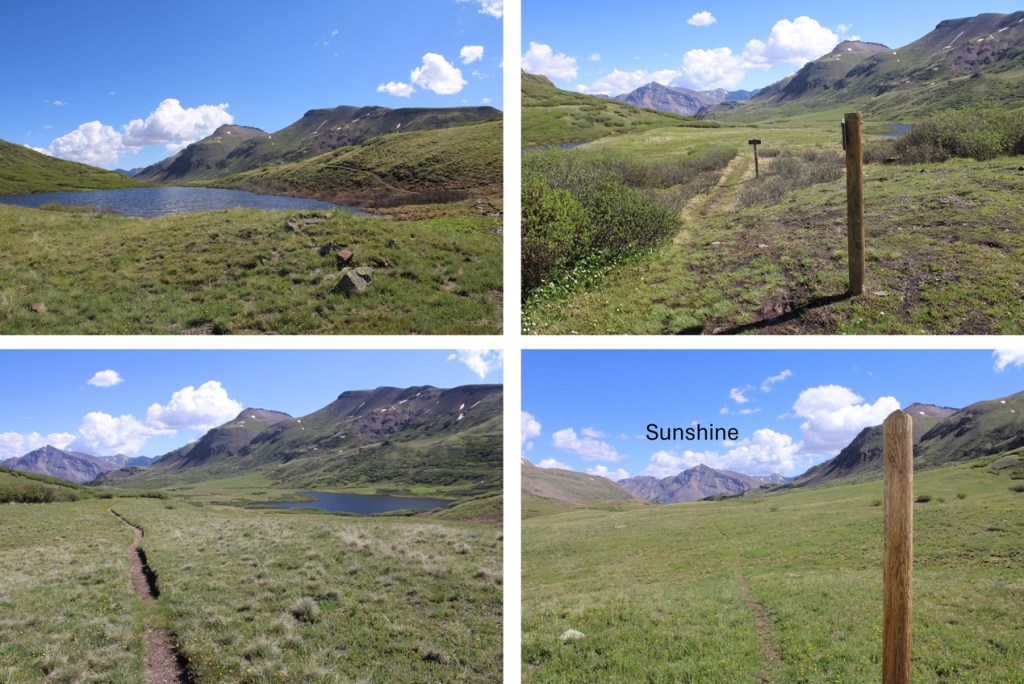
After hiking for a total of 7.8 miles (from where I parked) I made it to the Rock Creek Junction, and followed that trail southeast for another 5 miles up to Rock Lake. This trail was also class 1, and easy to follow.

Just before making it to Rock Lake I passed through a basin

In this basin was a bull moose.  I didn’t worry too much about him, because he was hundreds of yards away from me, on the opposite side of the basin.  I continued on the trail, but once he noticed me, he raced towards me and stopped a few yards away. He charged me (it was a bluff). I knew not to make eye contact with him, which was what he wanted. I could actually feel him willing me to look at him.  I kept my head straight and walked the trail with a purpose, ignoring him.  He continued snorting and pawing at the ground and shifting his head from side to side. Then he paralleled me for about 50 yards, walking about 5 yards to the west of me. When he was done, he trotted away and took in a view of the mountains.

As he trotted away I breathed a sigh of relief, and continued on the trail, exiting the basin and making my way to Rock Lake.

I arrived at the lake at 11am and decided to set up my campsite for the night.  I didn’t see anyone else here.

It was still early in the day, so after a quick snack I left my heavier gear and just brought the essentials:  I planned to summit Mt Oso today. To do that, I skirted Rock Lake to the east and ascended the rocks

As I made it to the rocky area, I came across a cairned trail, and followed that trail southwest.  Note, I took the solid line up, the dotted line down. The dotted line was easier, but both ‘went’.  You can’t tell from below, but there’s a grassy area by the dotted line that helped me avoid the willows (pictures on my way down).

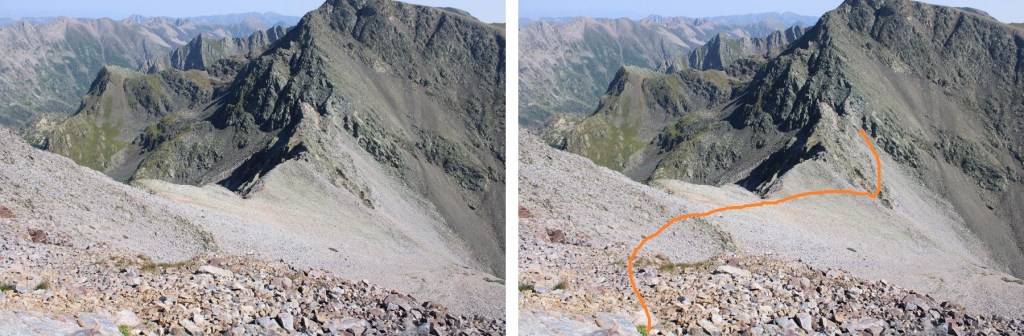
Here’s the cairned route, with the ‘exit cairns’ circled in red

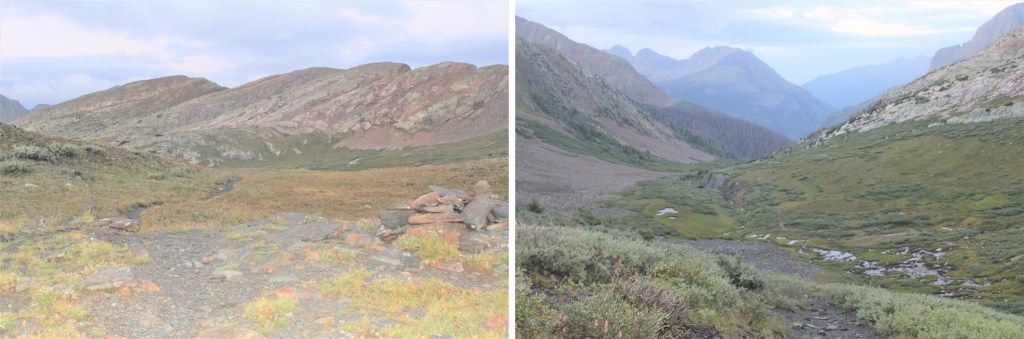
Here’s where I left the trail.  If you continue following the cairns, you’ll go down to Half Moon Lake. I was headed towards Mt Oso, so I left the cairns and continued heading up (west).

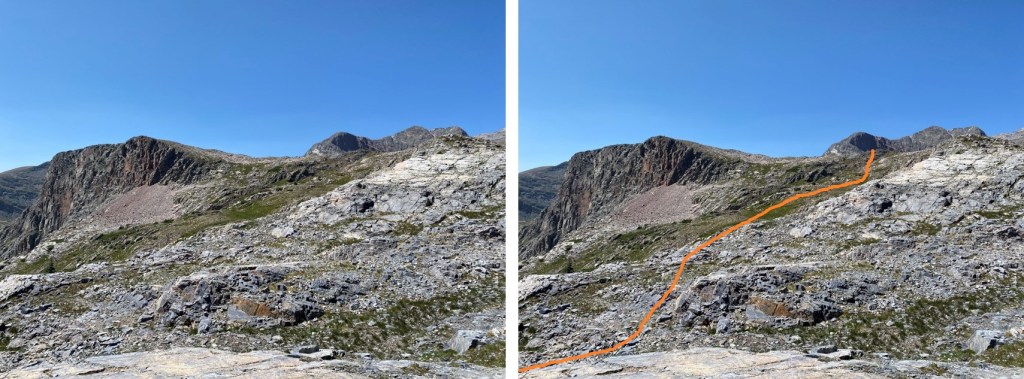
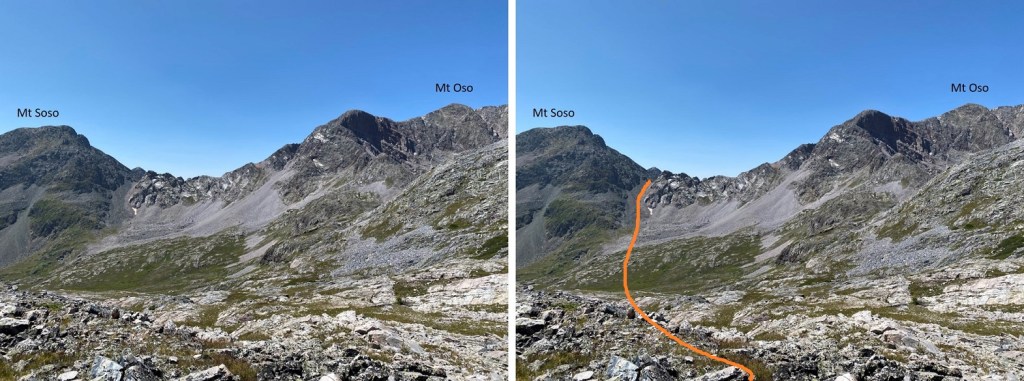
Time for more elevation loss, and gain.  I was headed for the Mt Soso/Mt Oso saddle. This required me to lose 500’ through this basin, and then ascend the gully.

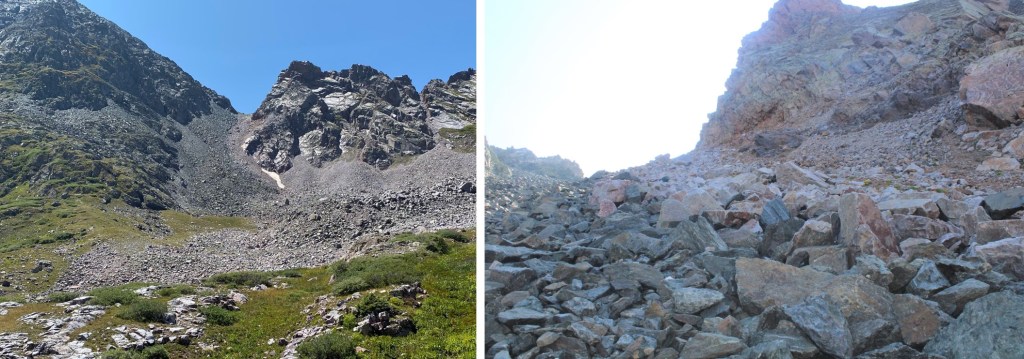
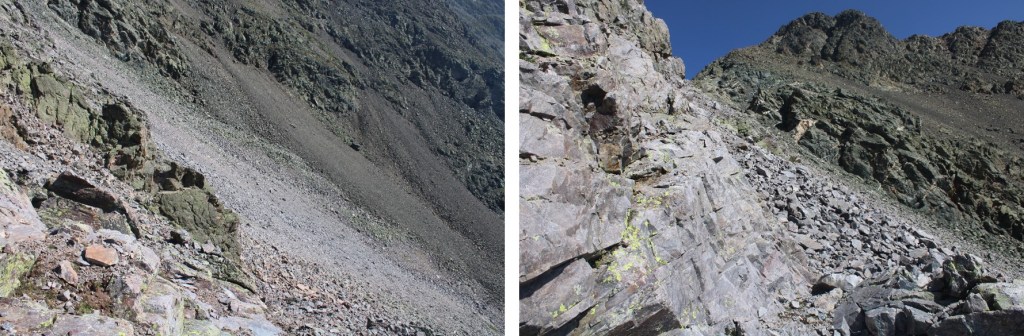
The basin was easy to cross. There were small streams and some willows to navigate, but the route was obvious (and choose your own adventure:  just keep heading towards the gully/saddle). The gully was a mix of large, loose boulders, smaller loose rocks, and scree. 

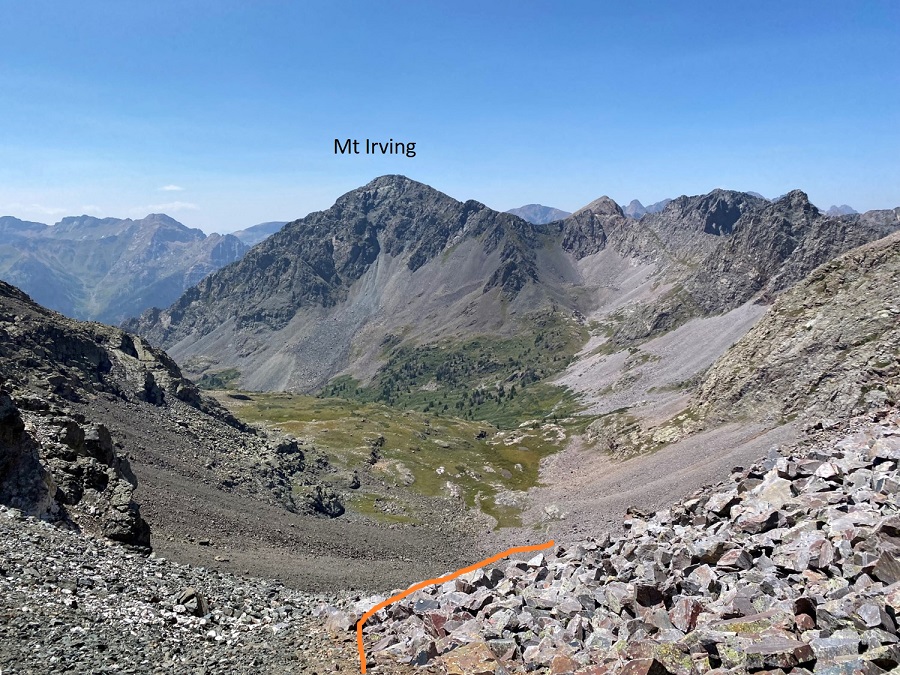
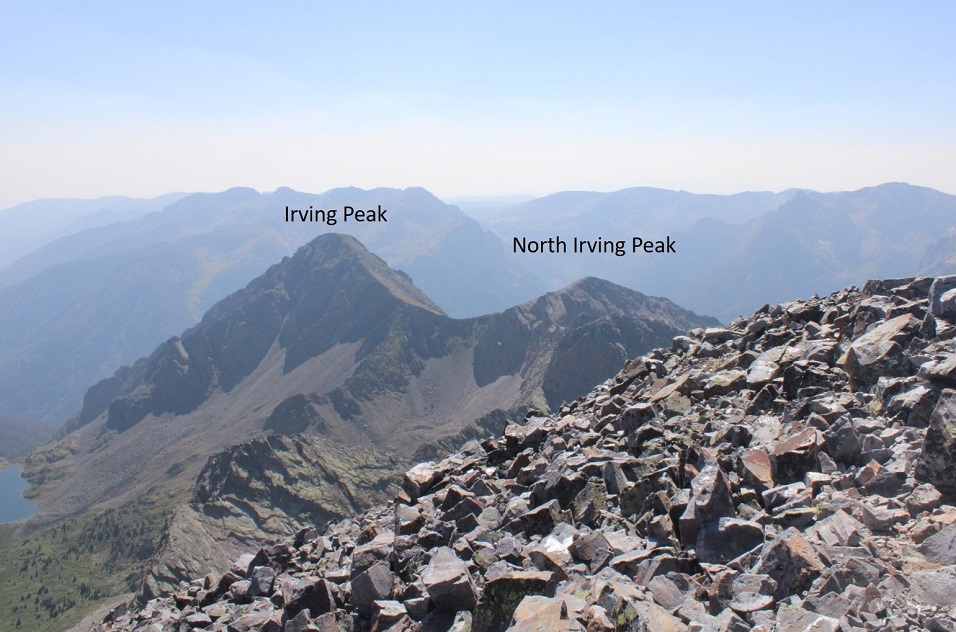
Once at the top of the gully/saddle, it was once again time to lose elevation.  Being here also gave me a great view of Mt Irving.  I descended the gully to the northwest, staying on the scree at the base of the rock outcroppings, rounding them, and losing 175’ in elevation.

Stay low here.  You’re going to want to stay high, but you’re aiming for a green rock band to cross.  It’s lower than you’d like it to be (around 12600’)

There’s a little bit of scrambling to get over the rock band. I was able to keep it as easy class 3 by taking this route

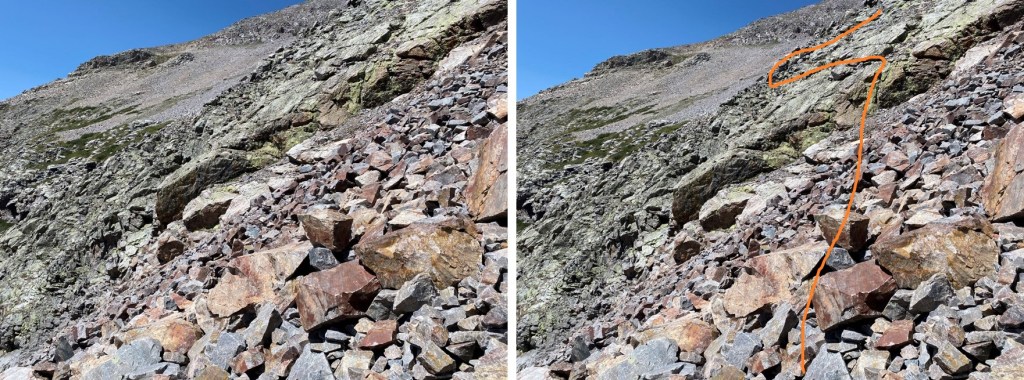
Once across the green rock outcropping, it was time to gain the ridge.  I turned and headed north.  The rocks here were large and loose, with some scree mixed in.

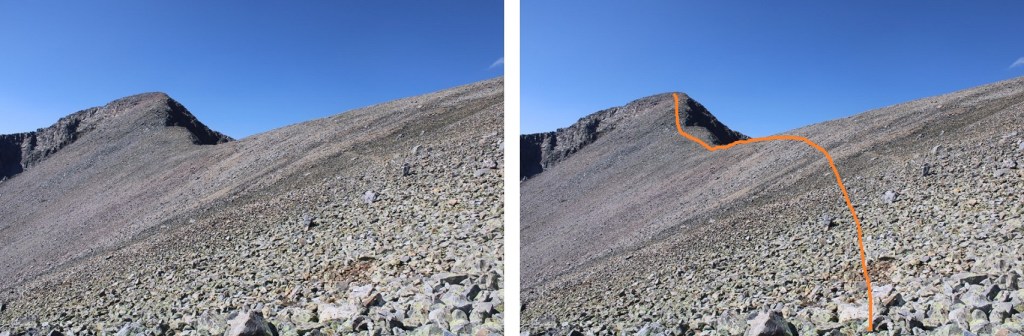
I went low just before ascending the ridge, following a scree/game trail

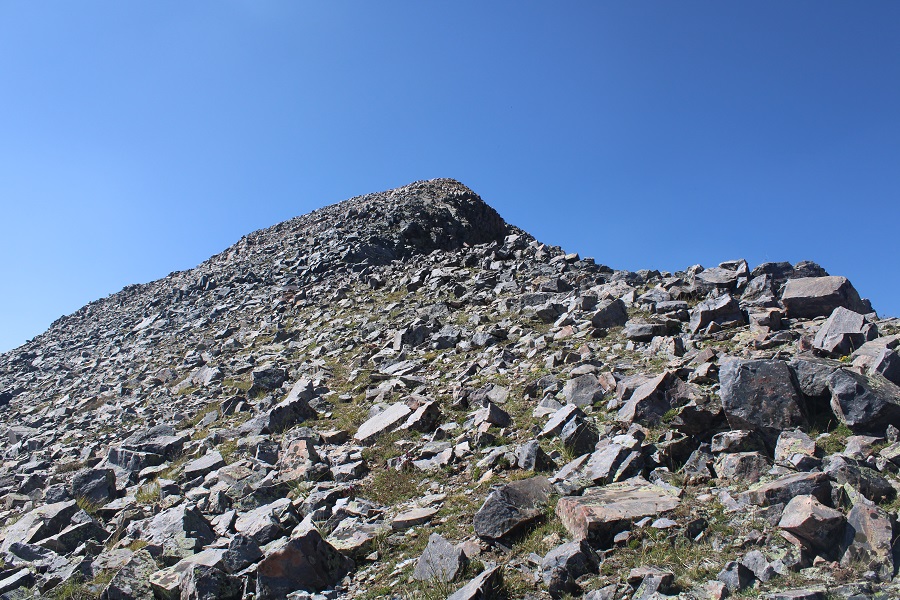
And then followed the ridge to the summit

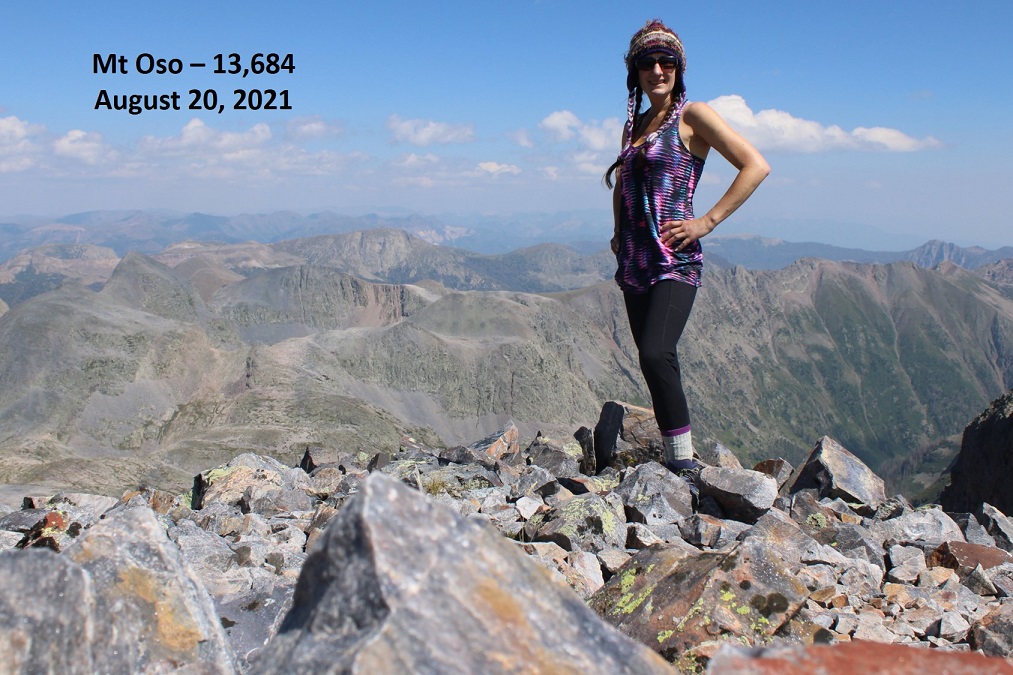
Summit of Mt Oso

Mt Oso: 

There was a large, military grade summit register, with a moving dedication inside, as well as some ceramic bowls (I’m sure that’s not what they actually are, ad that they have a purpose?).

I looked over at Irving and North Irving.  I did the math in my head, and there was no way I had time to loose the 1500’ of elevation, then regain 1300’ to summit Irving, plus hike back with all those ups and downs to Rock Lake before sunset.  It’s important I’m in my sleeping bag before the sun goes down, which limits my hiking time. Oh well, just one peak for this trip.

So, I turned and headed back towards the Oso/Soso saddle

Back at the saddle I retraced my steps down the gully, back across the basin, and up to the next ridge, finding a grassy bank to ascend

The route looks much different heading back, so be sure to study it on the way in.  Stay just below this cliff band

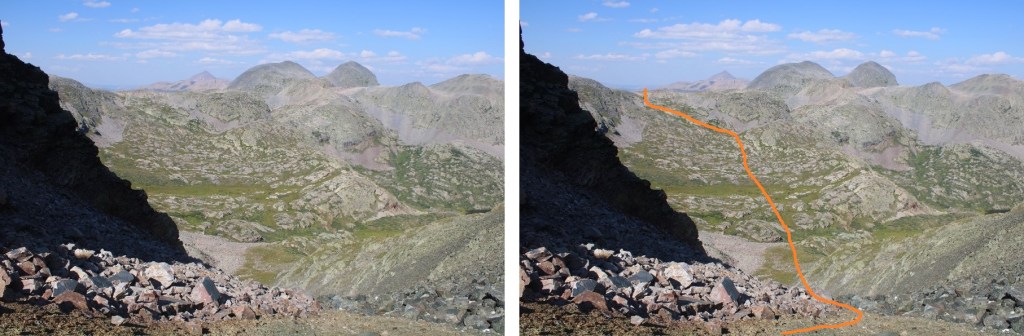
And now to head back down to the trail

You know you’re back on trail when you see cairns

Back down to Rock Lake. Here’s an overall view of the route I took down, and check it out:  another camper!  I walked by his tent, and apologized for doing so, but told him he was camped in the only area without willows…

There are lots of cairns here to guide you back down.

I made it back to my campsite as the wind started picking up.  I was glad I’d made the decision to head back.  I jotted down some notes, and looked at my tracker:  I’d done 18 miles today, with almost 7500’ of elevation. I sat in my tent for a while, glad I’d decided to bring a tent, listening to the wind howl outside.  I eventually fell asleep, and woke up to frost inside my tent. Lovely.  I quicky broke camp and headed back down into the basin.  Everything was covered in a thinl layer of frost.

Oh, did I mention the trails were mucky? It was from all of that rain yesterday.  The entire way in, and out, I was walking on water/mud/avoiding puddles, glad I was wearing new hiking boots that were still waterproof. 

On my way out of the basin I decided not to take any chances, and wore my helmet. Towards the end of the basin I spotted the moose again. This time he had a friend, and didn’t seem to care I was there. I’ve seen over 20 moose in Colorado while hiking, and this was the first aggressive one I’ve come across. It’s interesting today he had no interest in me, while yesterday he was overly intrigued/agitated I was there.

I followed the Rock Creek Trail back down to the Vallecito Trail

Then took the Vallecito Trail back up to Hunchback Pass

And then back to the trailhead, the road, and my truck

When I made it back to my truck, my tracker told me I’d hiked 33.61 miles with 9833’ of elevation gain. 

Now, for the hour and a half drive back to Silverton! Oh, also, side note:  If you’re driving these back roads, make sure you know where you’re going!  It’s easy to get lost back here.  I met a man in a jeep as I was hiking back to my truck who was totally turned around.  He wanted to know how much further down the 4WD road to the ‘real’ road.  I had to tell him he wasn’t going in the right direction (this road is a dead end) and that Silverton was many, many miles away.  An easy way to not get lost out there without cell service is to load your track onto CalTopo, then add a line and trace the roads you wish to take, then use that track your drive. 

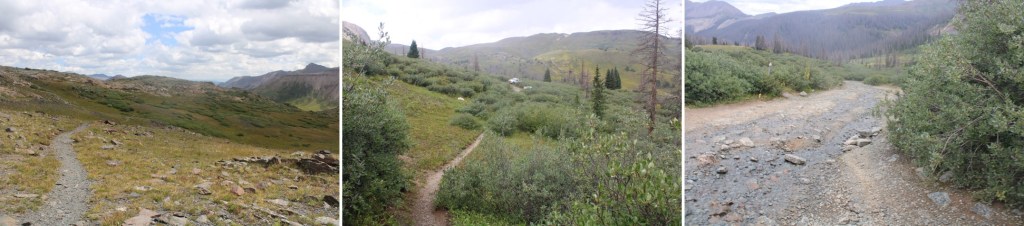
Just for fun, here are some pictures of the road out…

Fitzpatrick Peak – 13,112

RT Length: 14.65 miles

Elevation Gain: 3169’

I drove through the night and arrived at St Elmo at 4am.  I love driving, especially at this time of year:  once the summer campers are gone I don’t see another vehicle from the time I hit HWY 24 until I make it to my destination (besides the predictable police officers, stationed on the side of the road  in their usual places – It’s gotta be tough for them this time of year, and cold.  Thank you for your service).  The 2WD road in was a bit slick so I took it slow.
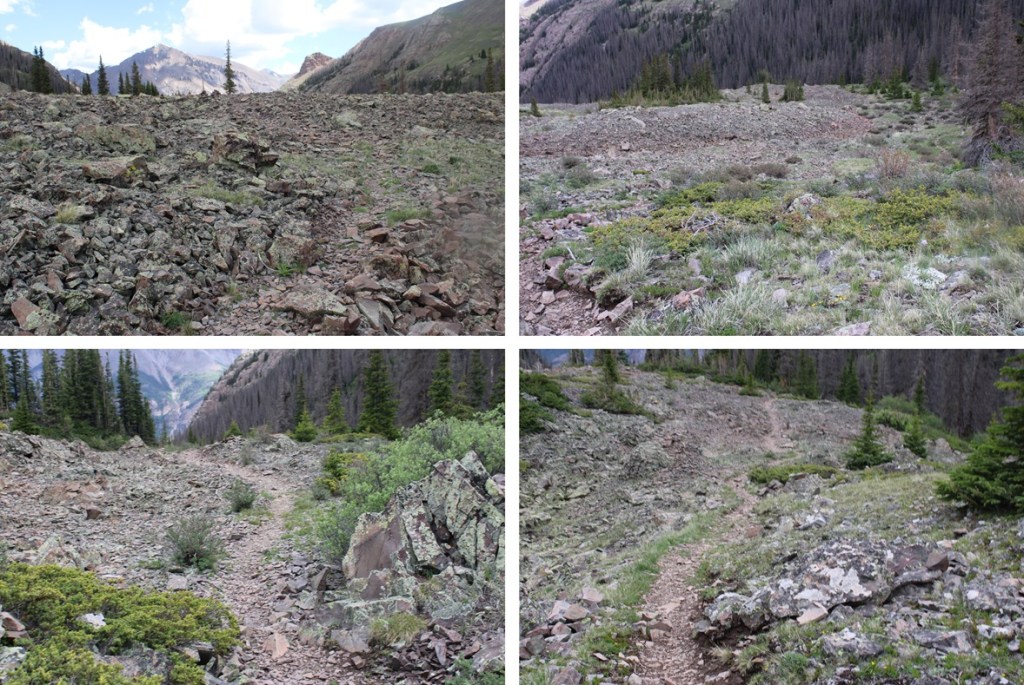
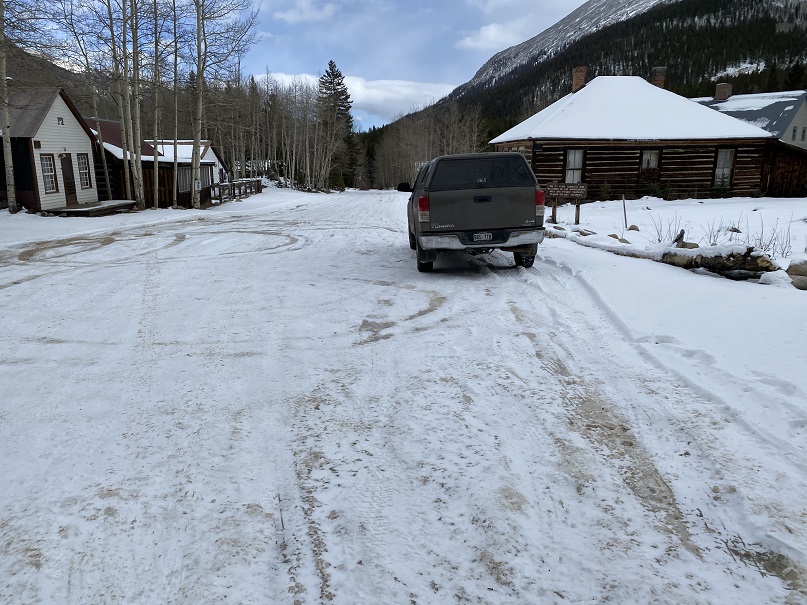
The usual place I like to park (on the east side of town) had vehicles and trailers parked erratically in most of the spaces.  It looked like they’d been parked there for quite a long time, so I drove through town, looking for a place to park closer to where I wanted to start.  I figured I could always turn back if needed and squeeze-in.  There were dozens of ‘no parking’ signs all through town, leading up to 267, but I was able to find a 20 foot space right near the start of the trail that didn’t have a ‘no parking’ sign (there were signs on the opposite side of the road, but not here, so I took pictures and crossed my fingers this was a ‘legal’ place to park). I decided to take my chances and park, mainly because it was cold, and  I wasn’t entirely sure I was hiking for very long this morning (I would most likely be back by 8am at this point, before anyone would question my questionable parking situation). I was having a really hard time motivating myself to hike today.  As I drove to the trailhead the temperature outside plummeted, and was a balmy 7 degrees outside when I arrived.  The forecast said a low of 30. 
I know myself pretty well, so I have a rule that says I at least attempt a hike (except for that one time when the temperature was -36 degrees at the South Mt Elbert trailhead.  I turned around that time… after sitting for 30 minutes at the trailhead waiting for the temperature to increase.  When it didn’t, I was more worried about re-starting my vehicle after turning it off than I was about my own personal safety and left.  Otherwise, I always attempt).  Usually, once I start hiking I don’t want to stop.  Hiking always makes me feel better, and I never regret a hike, even if I need to turn back.  Also, the further I go the less likely I am to turn back.  So, I went through the act of putting on my essential cold weather gear, telling myself I’d work at it and only turn back if I was worried about frostbite (etc).  Don’t we all love a balaclava?

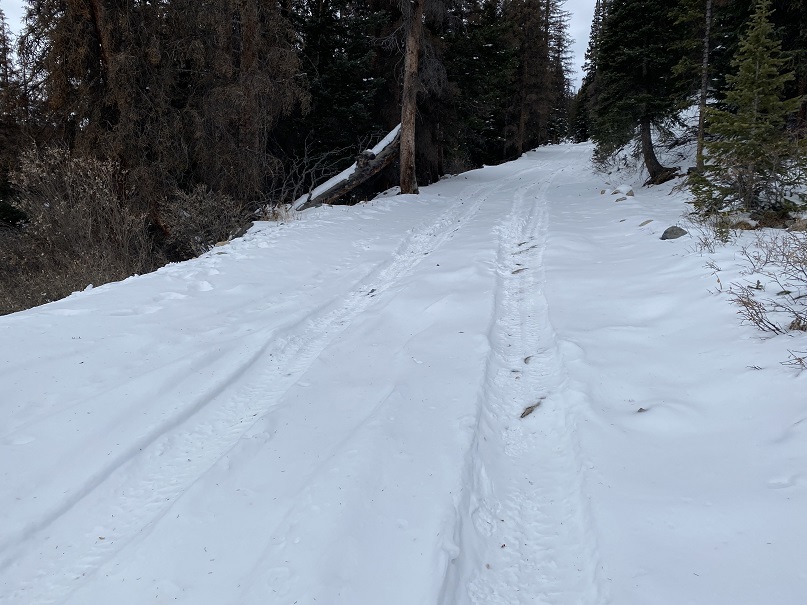
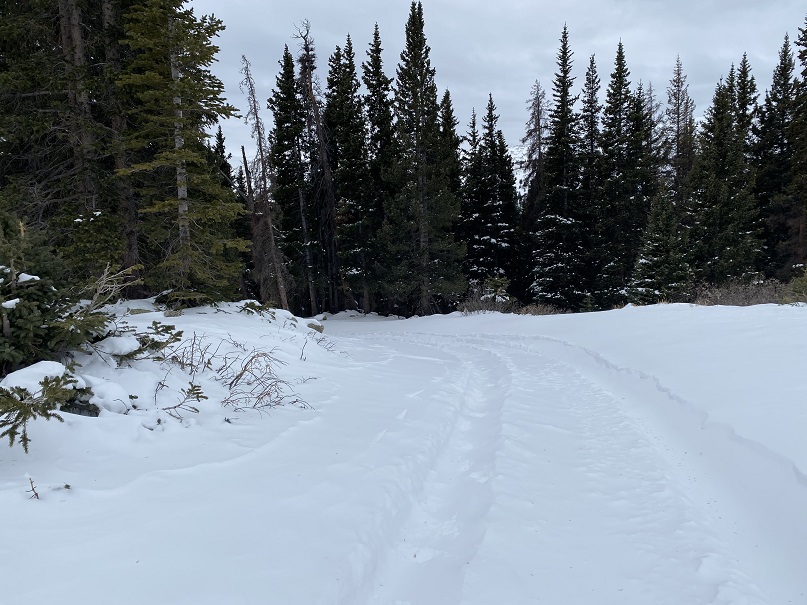
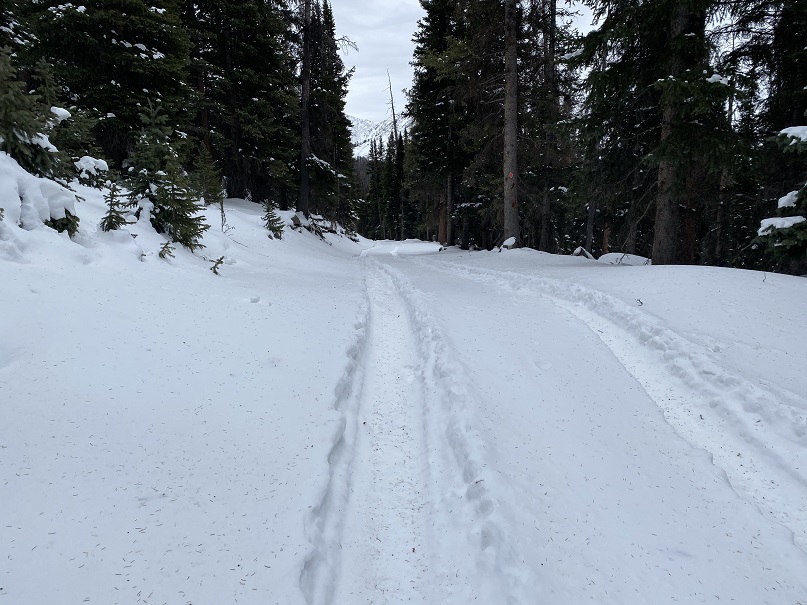
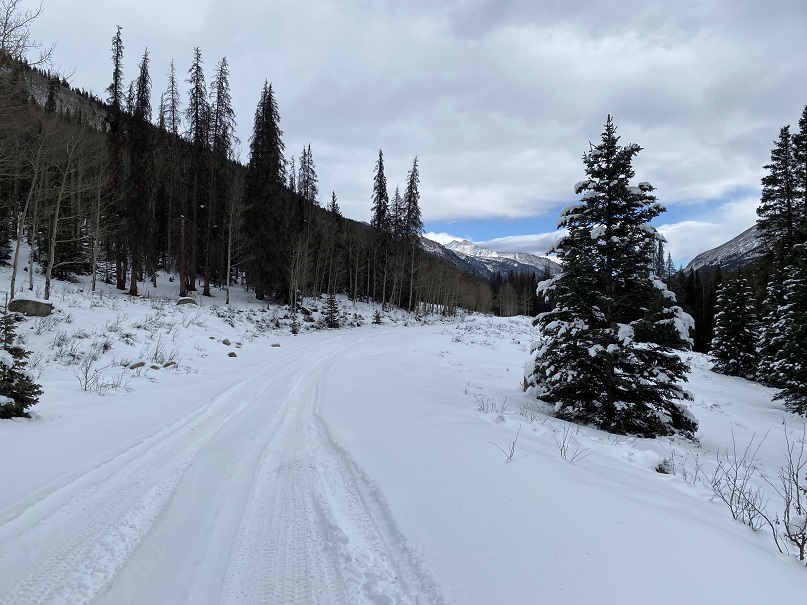
I was on the trail (in all my winter gear) at 4:30am.  The trail starts out following Trail/Road 267 west

This road goes all the way to Tincup Pass, and by the looks of it, a 4WD vehicle had driven the entire way recently.  High five to this individual, as they have some serious chutzpah. I was glad I’d parked below however, as I wasn’t sure how my truck would have done on the ice.

This trail parallels North Fork Chalk Creek.  As I was hiking my feet were frozen.  My fingers were frozen.  I couldn’t feel my nose.  I kept telling myself I should turn back.  But I also kept telling myself I wanted to get a good hike in today, as the alternative was to drive home and hit the treadmill:  I’d just make sure I got in at least 5 miles out and back.  Ok, 10 if possible? And how could I get as much elevation gain as possible while avoiding those torrential winds?  If mileage/elevation isn’t possible while hiking I hit the treadmill when I get home, but I’d much rather make my miles/elevation in the mountains.   It was supposed to be very windy above treeline today, but if I kept moving I could keep my toes ‘warm’.  They had to warm up eventually, right?  So, I kept going.  I jumped a few times in the dark at the sound of running water (water running over trailside waterfalls).  I know that sounds weird, but it was always unexpected, specially today as otherwise it was very quite this morning.

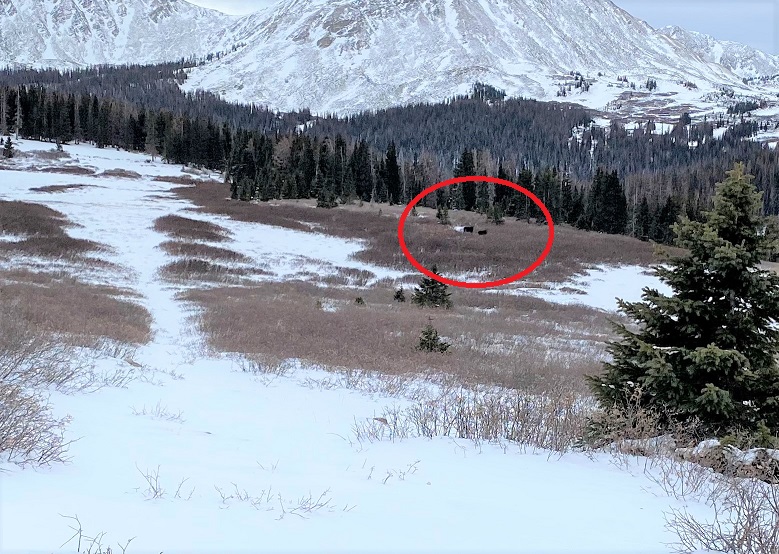
I followed the road for 5.15 miles, staying right here to stay on the road. As I hiked I saw quite a few moose tracks.  It looked like a mama and baby were in the area, so I was on the lookout.  I saw tire tracks, but no human footprints.

From here the incline started as I followed the road up the mountainside

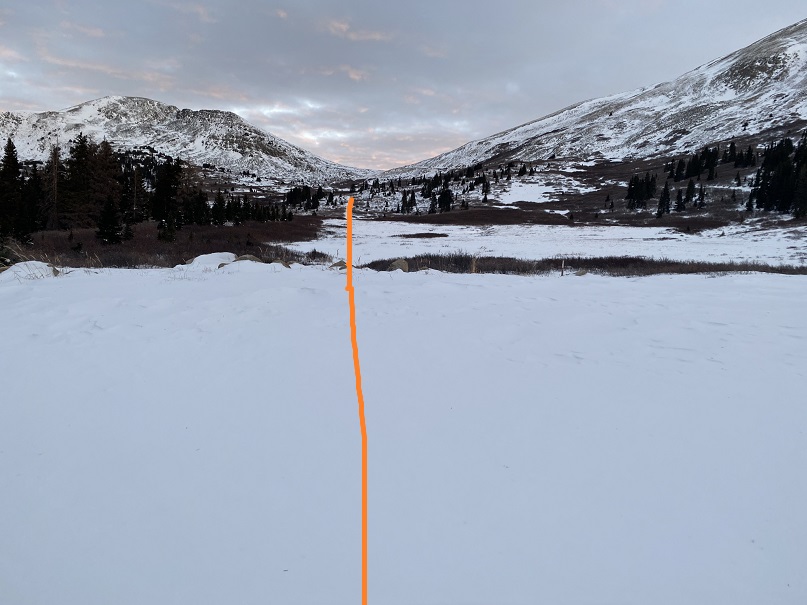
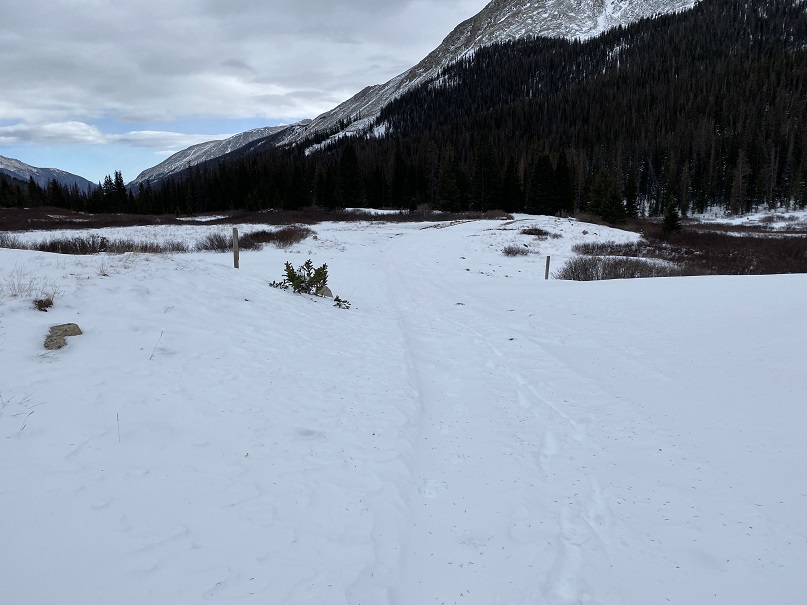
After hiking for 5.15 miles I was in the basin.  My spirits had lifted, and I was now excited to be out hiking today.   The winds had put drifts onto the 4WD road, so I decided to put on my snowshoes and head towards Tincup pass on foot. 

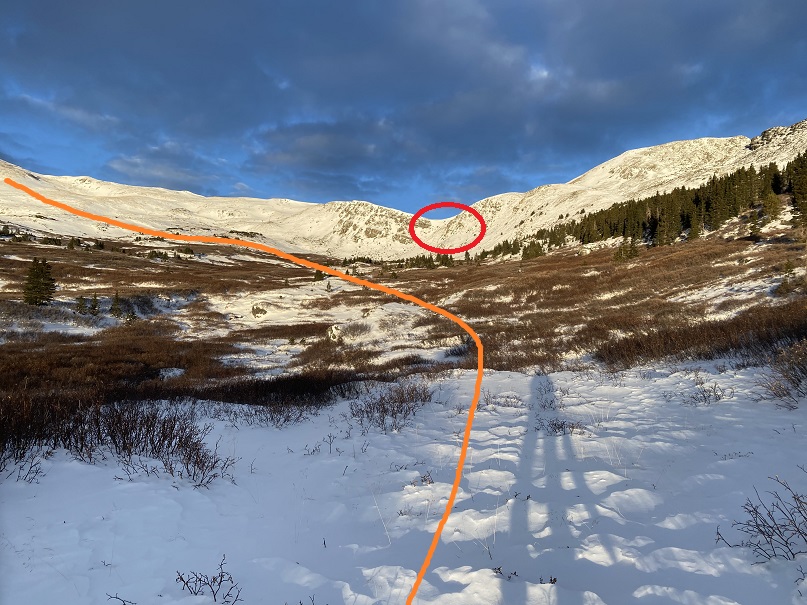
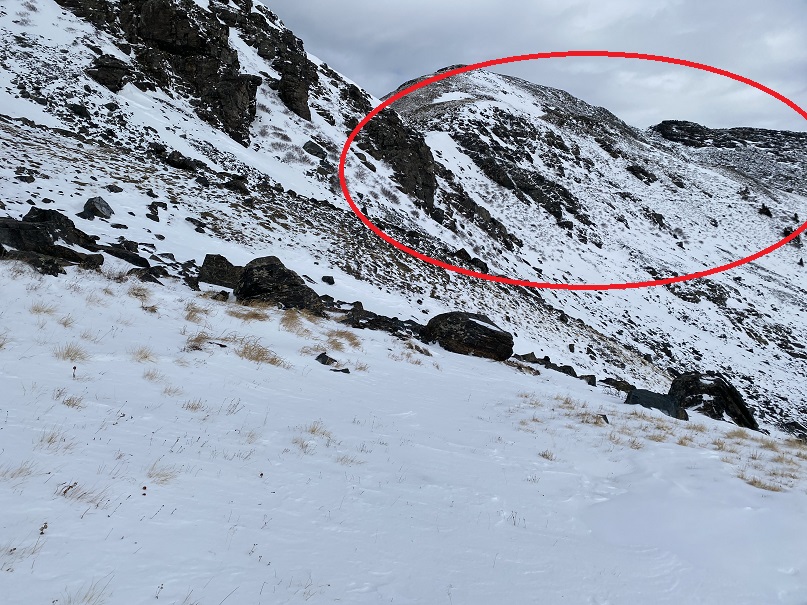
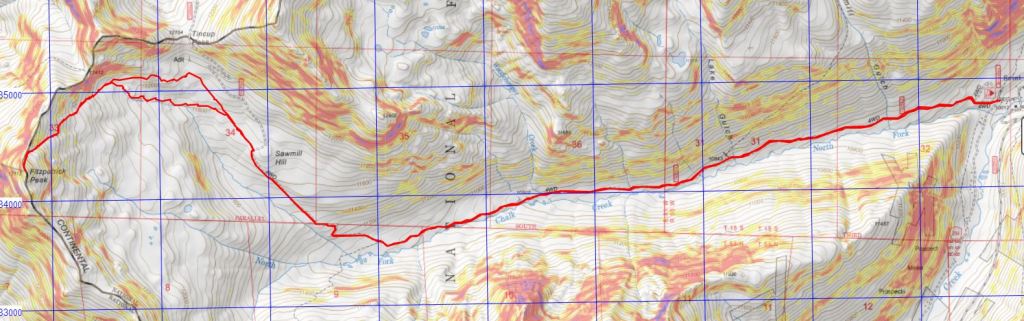
As I hiked I changed today’s hiking plans.  Originally I’d planned to hike Emma Burr, but I could see by looking at the clouds the winds were intense above treeline, and the snow was coming in much earlier than predicted (4pm was when they were slated to start, but by the looks of it, it would be snowing before noon).  I had several options today, and chose instead to summit Fitzpatrick Peak.  I believe this is traditionally done by gaining Tincup pass and following the ridge (thus getting in a 12er as well), but my visual of the winds told me my Raynaud’s would balk at a windy and cold ridge hike today.  So, instead I decided to make this a visual hike and hike up the west side of Fitzpatrick Peak, staying below the ridge and thus avoiding the brunt of the wind.  Here’s my overall route.  In red I’ve circled an obvious trail, but it led to a cornice I didn’t feel comfortable attempting today. 

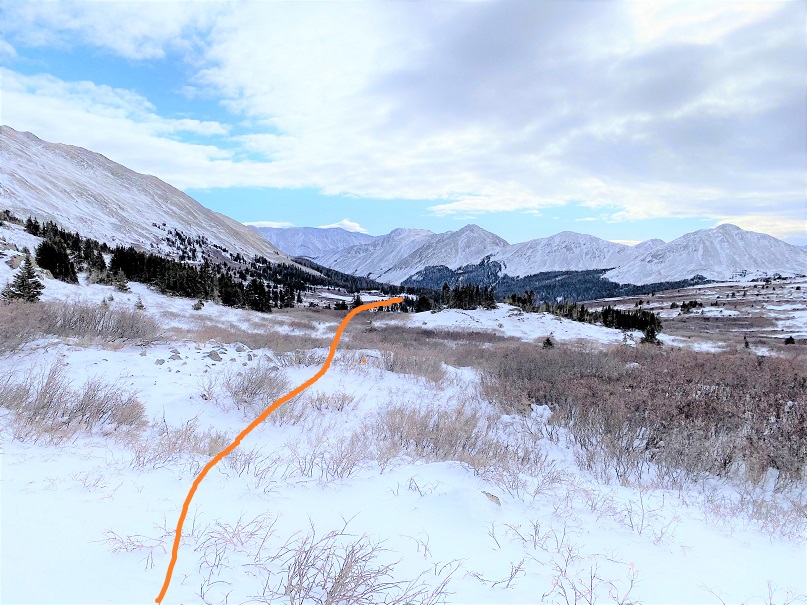
On the way in I went through the willows, and don’t recommend this.  I followed moose tracks, winding in and out as they did to find the best path.  On my way back I stayed higher and found more solid ground (dotted line).  I’d recommend staying high.

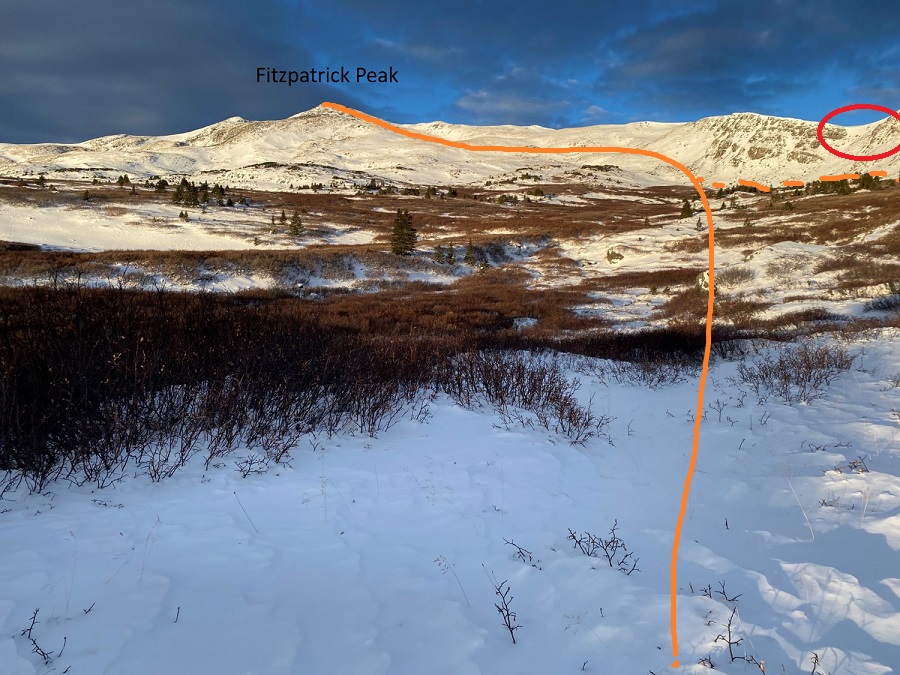
This is a very visual, not a technical hike.  Here are some close up pictures (once again, one of the summer routes is circled, and you can see why I chose to stay low, as there’s a cornice at the end of the route, and cliffs above the exit point around the cornice).

I gained the ridge at the last possible point.  Here I encountered fierce winds and sastrugi.  It had been a good idea to stay low for so long.

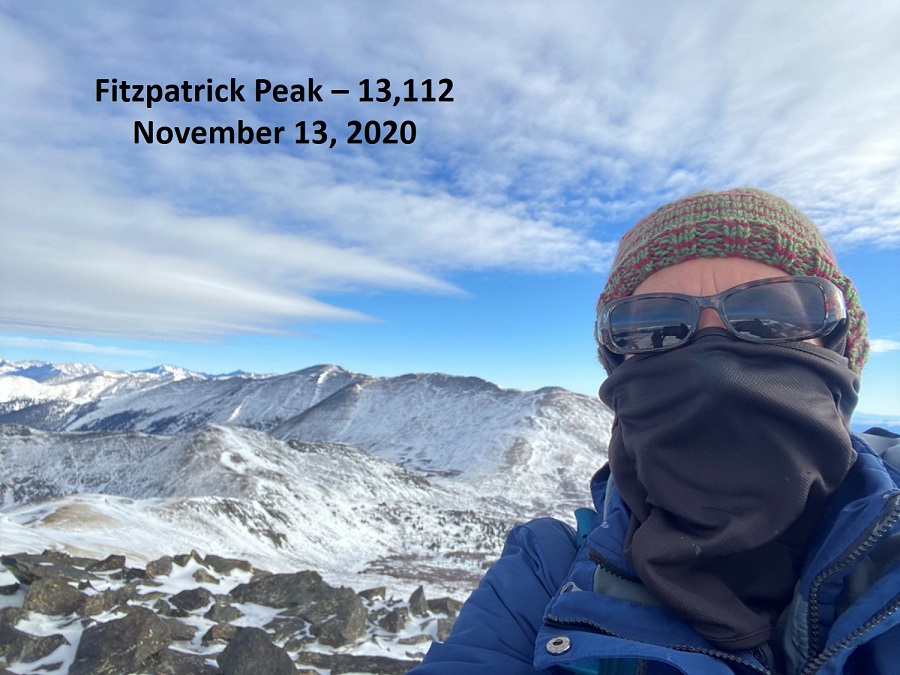
I summited Fitzpatrick Peak at 8:35am.  Note:  I recently bought a stylus (well, 5 for $3, gotta love Amazon) and it’s changed my life!  I no longer need to take off my gloves to take a picture with my cell phone.  This is a major bonus when your camera battery dies due to cold, but your phone still works.  The only downside?  It’s still selfies at summits (trust me, I hate these more than you do). 

Fitzpatrick Peak: 

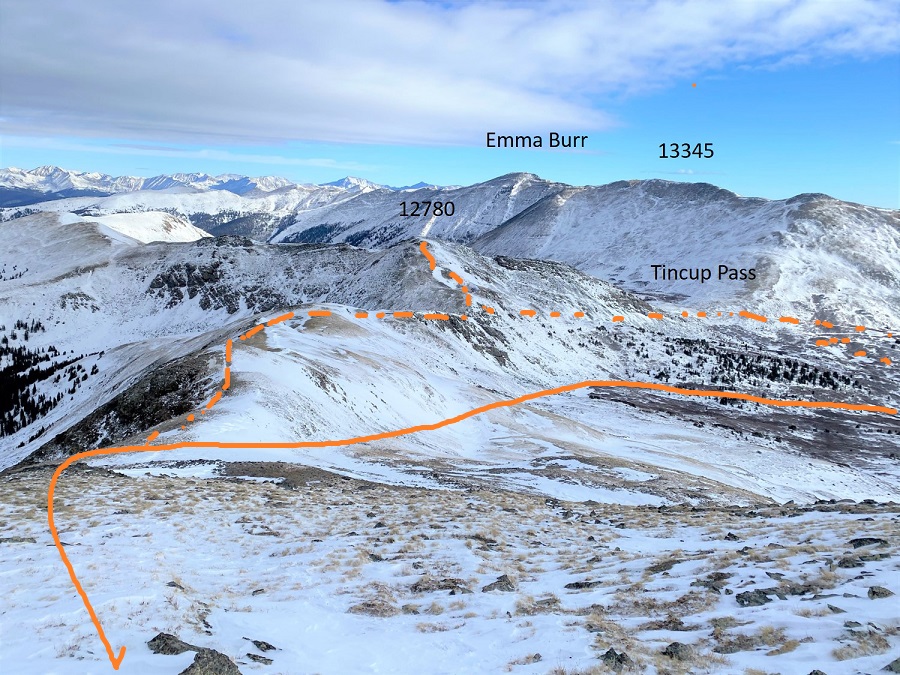
Time to head back.  The winds were seriously intense, and, even though I missed out on a 12er and several other 13ers, I still believed I’d made a good choice in the peak I hiked today and my approach in doing so.  Here’s a look at the way back, with a look at Emma Burr, as well as the 12er, Tincup Pass, and alternate routes/4WD roads.  My route is solid orange, alternates are dotted.

The winds were intense and I could see the snow coming in (early), so I didn’t stay long on the summit.  Here’s the route down, one of the alternate routes I’d avoided circled in red.  I stayed higher this time, mostly because I really wanted a picture of me at Tincup Pass with all this snow, but as I hiked on the weather quickly deteriorated.  The clouds came in faster, and it started to snow.  So I decided to just aim for the trail I’d hiked in on and get out before the storm hit.


As I was hiking out I saw two moose!  They weren’t right along the trail, but I was confident I’d been following their tracts earlier.

They were both males (not a mama and baby), one that looked mature, and the other probably a 2-3 year old (his antlers were lacking, but present) and while they didn’t run away (which is usually what happens when I see moose) they did stare at me, and turn their bodies as I walked by.  To avoid conflict I didn’t make eye contact, and tried to be as respectable as possible.  These photos are terrible because I wasn’t aiming/zooming in, etc., but snapping as I hiked past…. and they were on my cell phone (my good camera had a frozen battery and wasn’t functional).  It’s been quite a banner year for me for moose sightings.  I think I’m up to 7 or 8, when it’s usually around 3 or 4.   

I think it’s interesting the males seems to join together.  I’ve never seen two females together (unless mother and baby).  I’ve seen males and females alone, a male and female together, and up to 3 males together at a time, but never two females.

I was now back at the 4WD road.  Here I took off my snowshoes, as they were no longer needed (they were a bit overkill towards the summit, but it hadn’t been worth it to take them off for such a short trek)

It was now snowing.  Not a lot, but enough to tell me to book it back to the truck.  The weather had certainly come in much quicker today than anticipated.  I was pleased with my choice of Fitzpatrick Peak as an alternate today:  the weather on Emma Burr looked menacing at this point.  I followed the 4WD road back

This time, appreciating the streams whose noise had startled me in the dark, and doubly appreciating the lack of snowmobiles:  Last time I was here they zoomed by every 5 minutes or so, and it was obvious they were on a tour and didn’t know how to navigate their vehicles:  I did a lot of jumping out of the way.  Today it was a nice, peaceful hike, and I didn’t see another person all day. 

I made it back to my truck at 11:30am, making this a 14.65 mile hike with 3169’ of elevation gain in 7 hours. 

It was now 36 degrees, and while my hike hadn’t turned out as I’d intended (Emma Burr was my initial goal) I was so glad I’d decided to get out of my truck in 7 degree weather and hike!  Added bonus:  Apparently I’d parked legally:  no ticket on my dashboard and my truck was still there when I got back, so I’m assuming it was a legal place to park (with so many ‘illegal’ places, a nice ‘you CAN park here’ sign would be nice…)