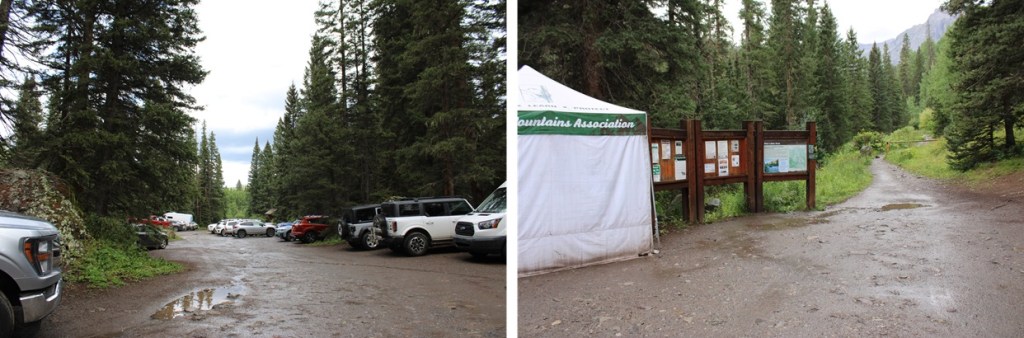
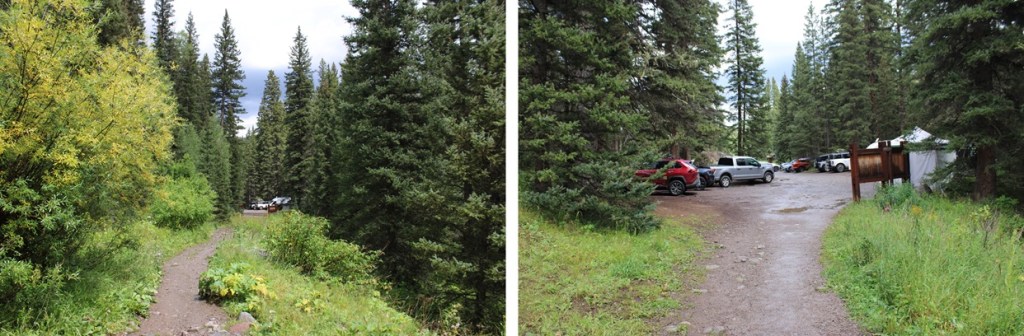
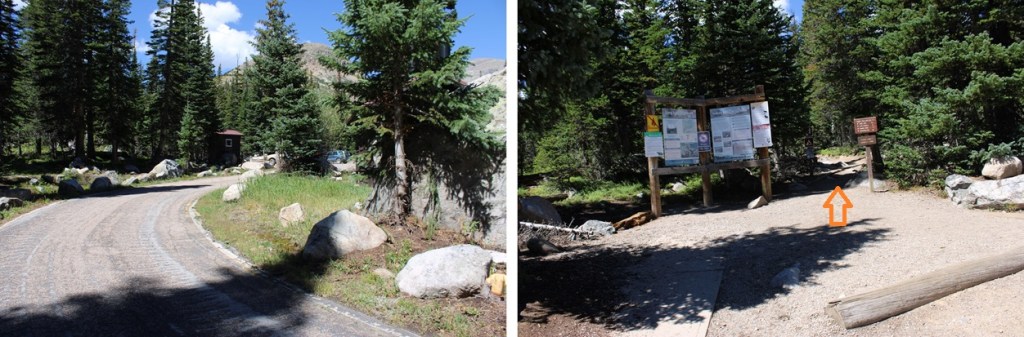
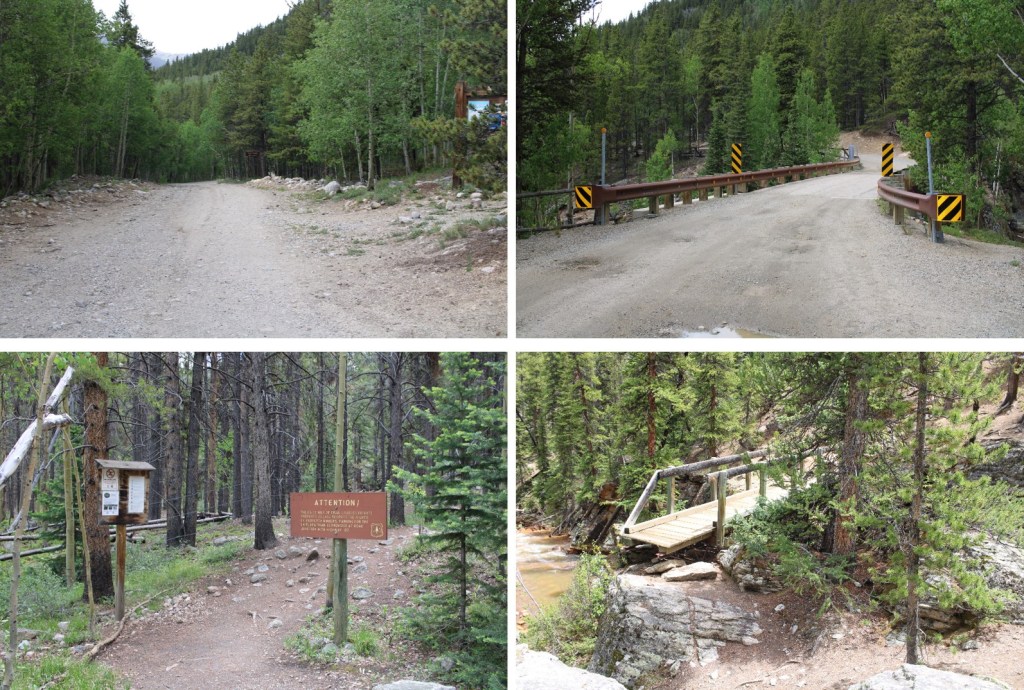
There were only two other vehicles in the lot when I parked at the Blue Lakes Trailhead. It was raining, so I waited for the rain to stop, and was on the trail at 5am. The trailhead starts at the south end of the parking area, and is clearly marked.
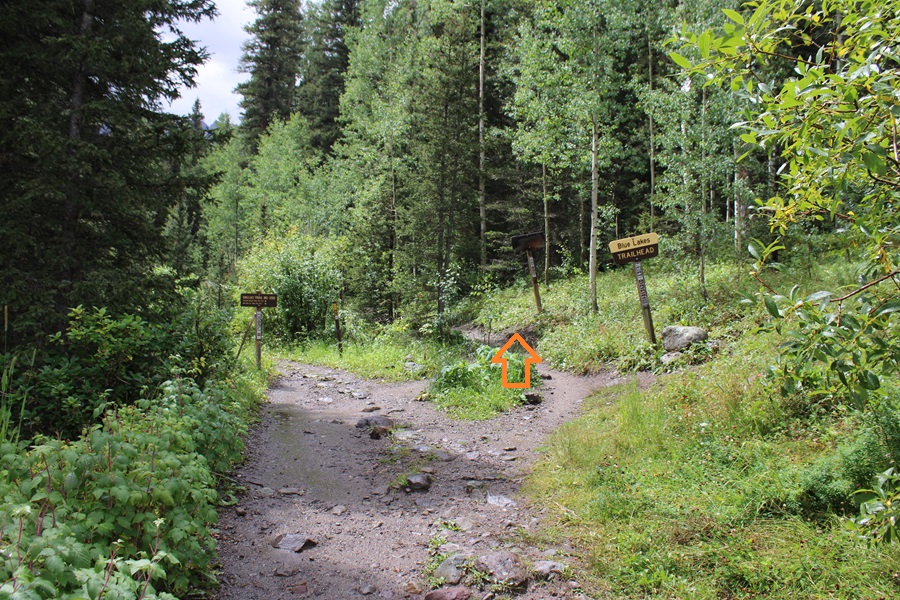
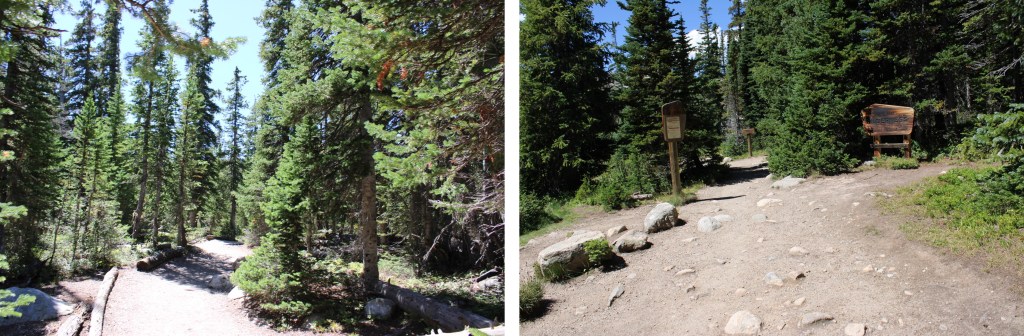
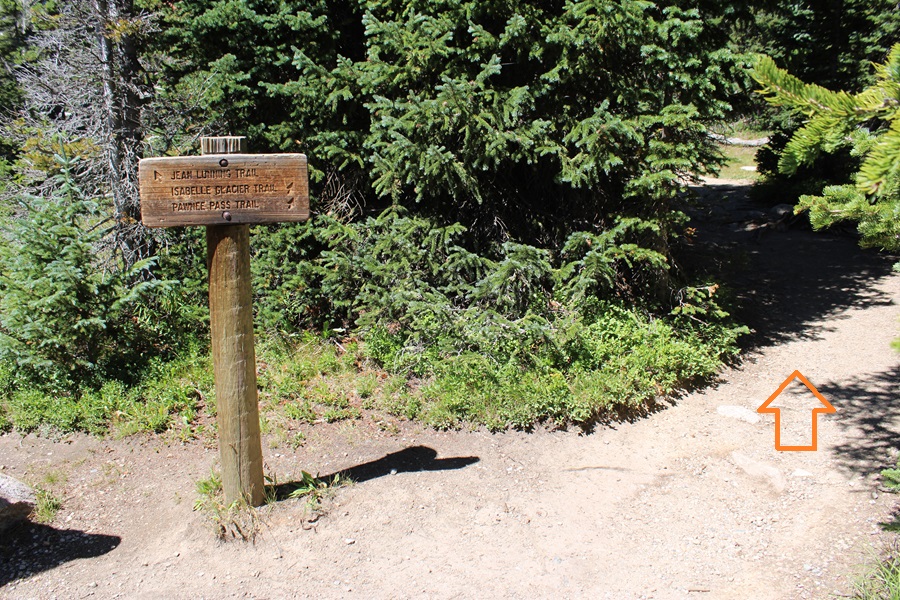
Immediately after the trailhead there’s a junction. I went right, taking the Blue Lakes Trail.
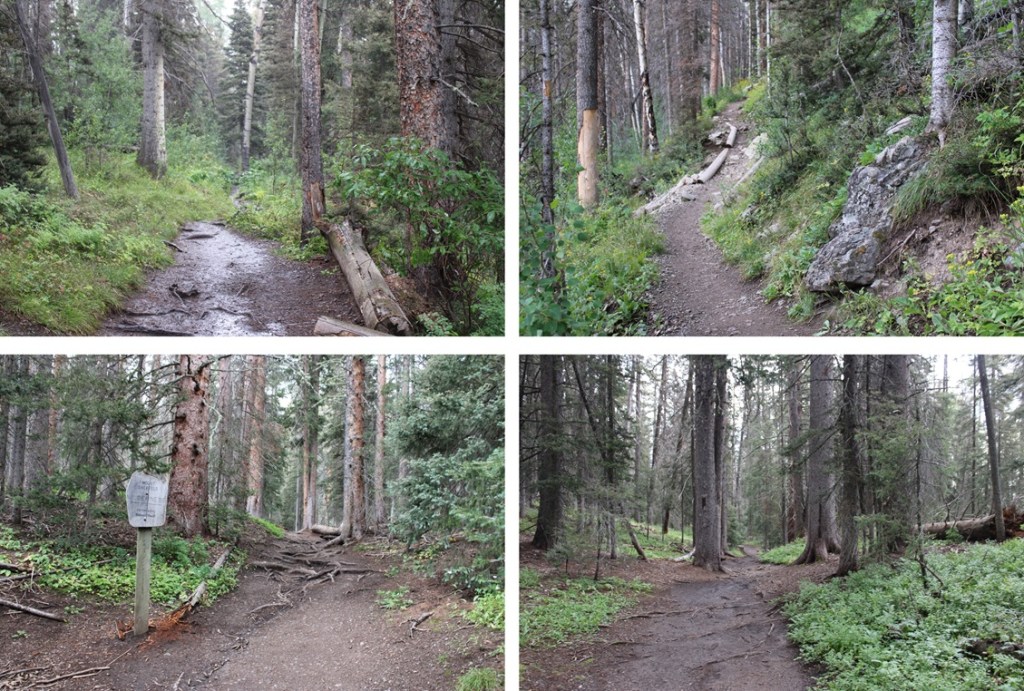
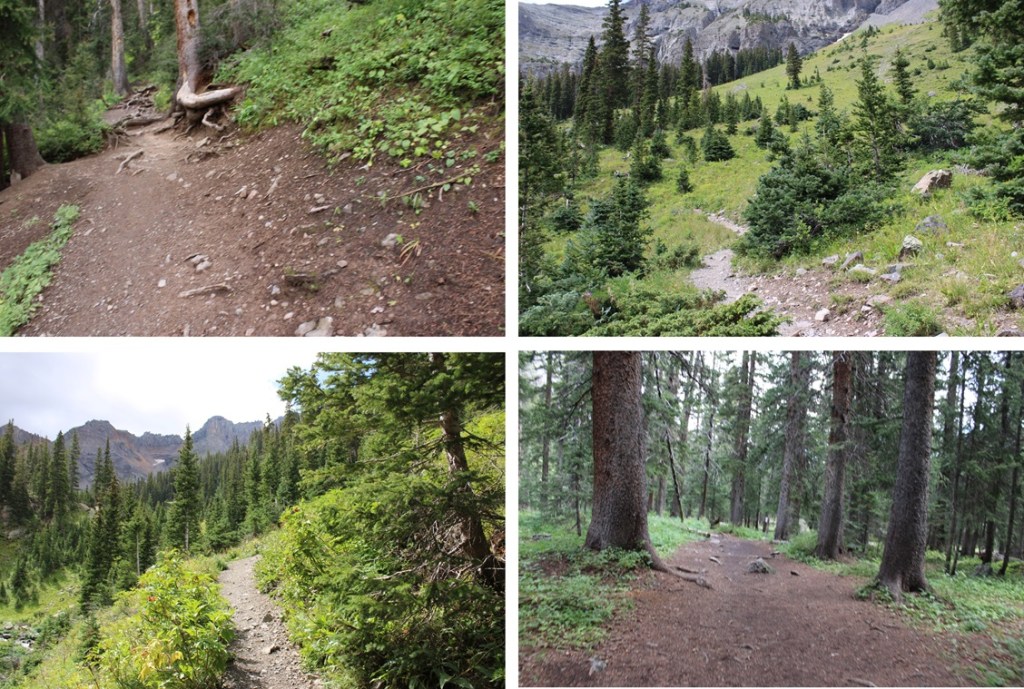
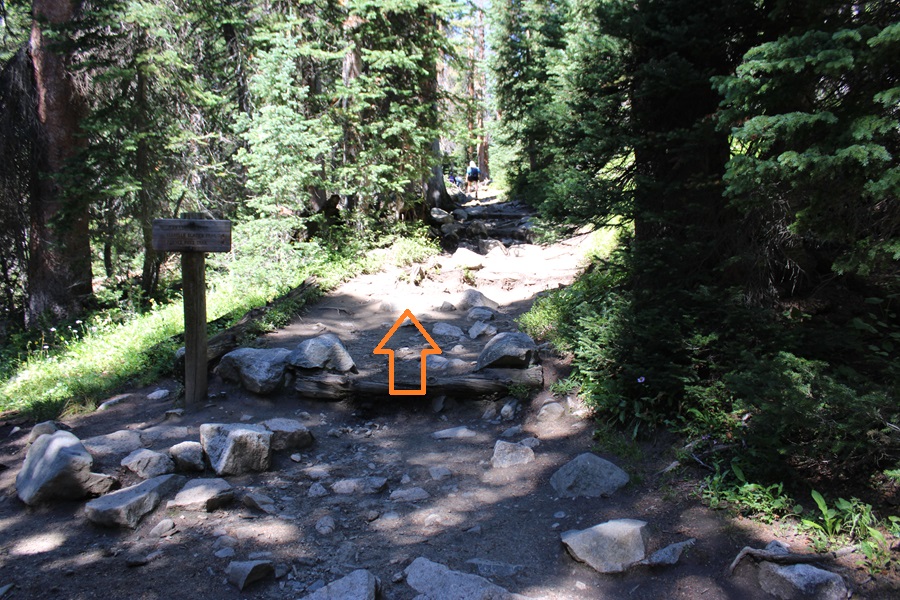
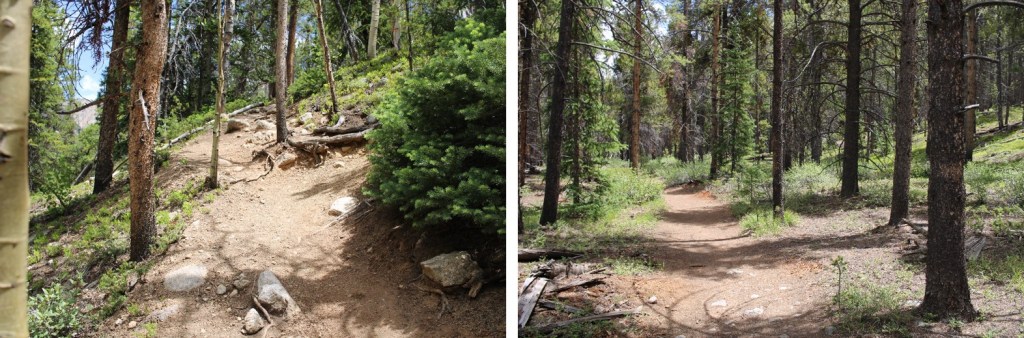
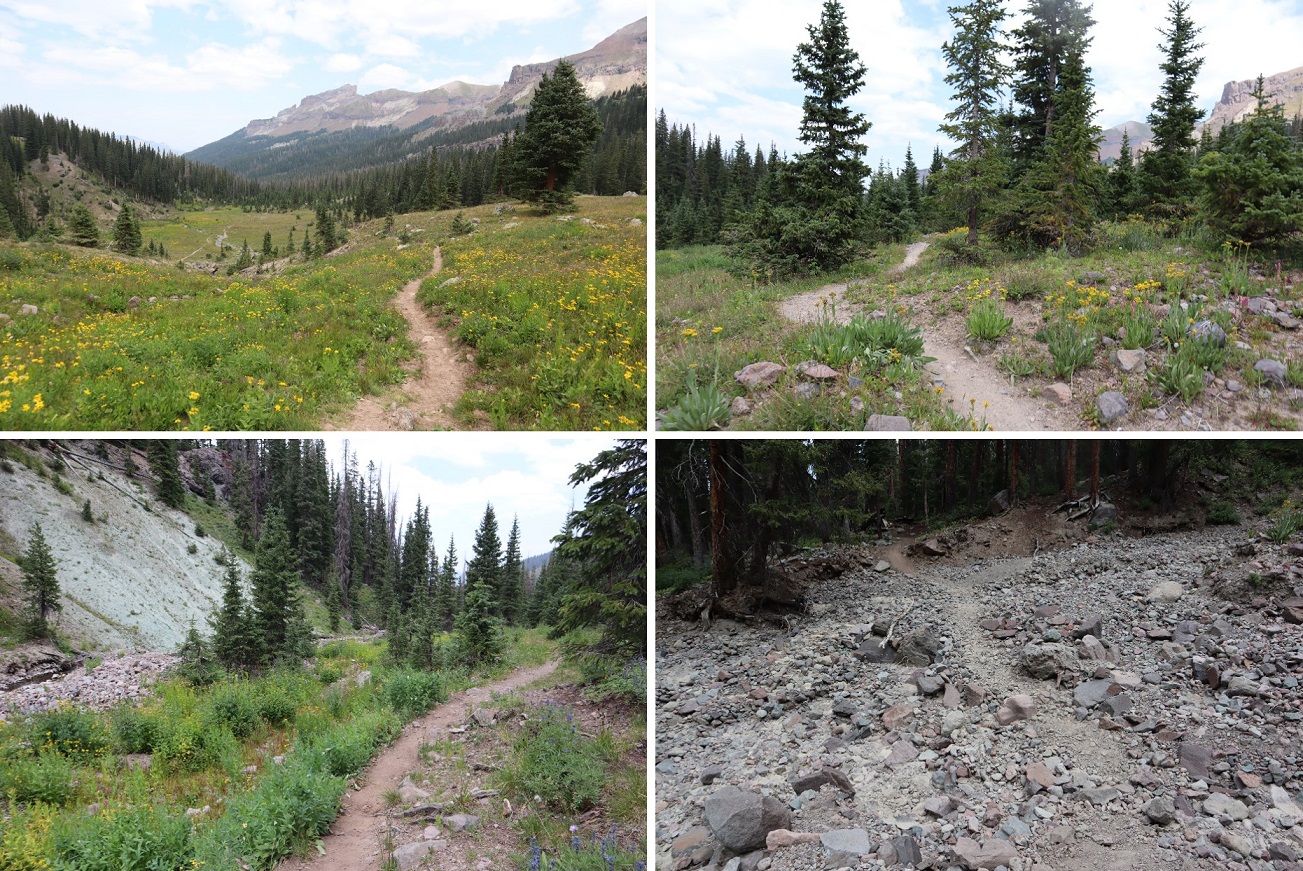
This was the only junction until I made it to Blue Lakes. I followed the trail 3.5 miles to Blue Lakes. About 2.5 miles into the hike it started raining again, and I had to take shelter for a bit under a tree. However, the trail was class 1, and easy to follow the entire way.
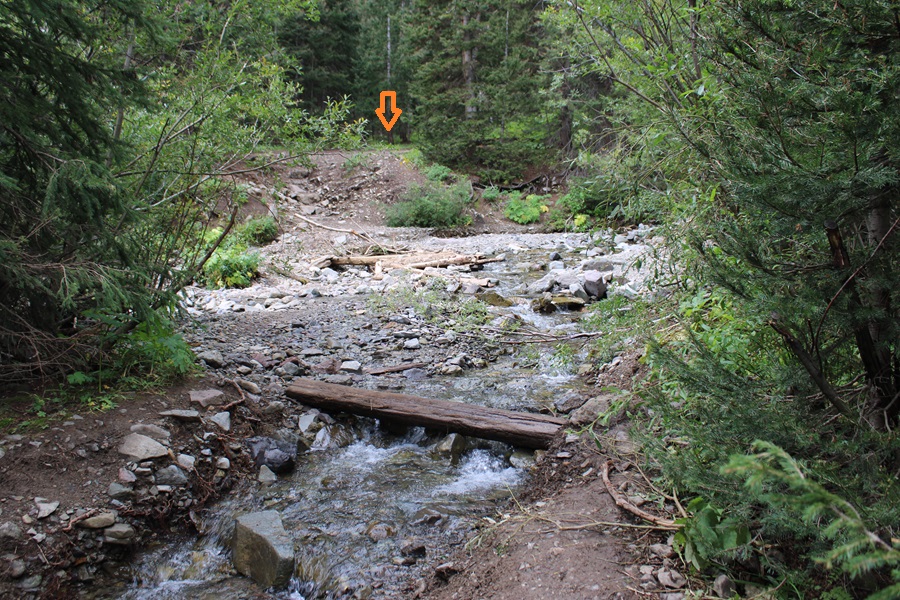
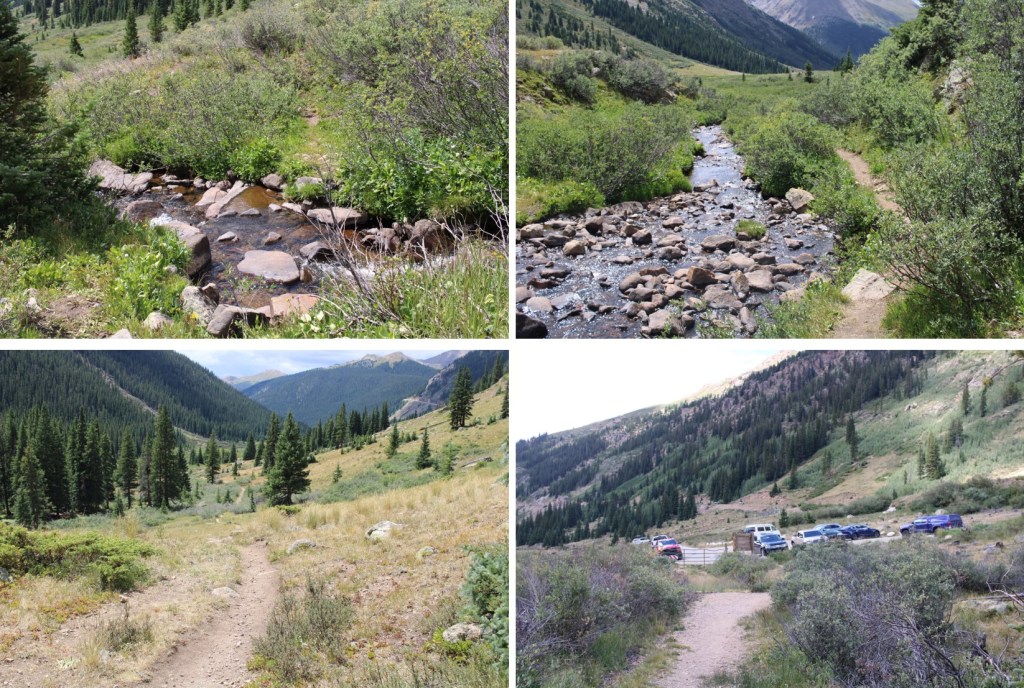
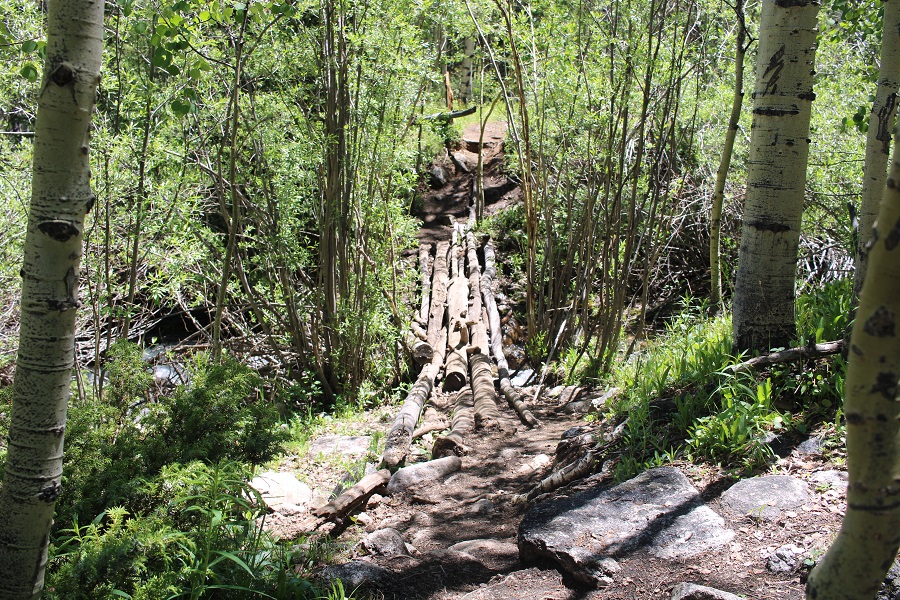
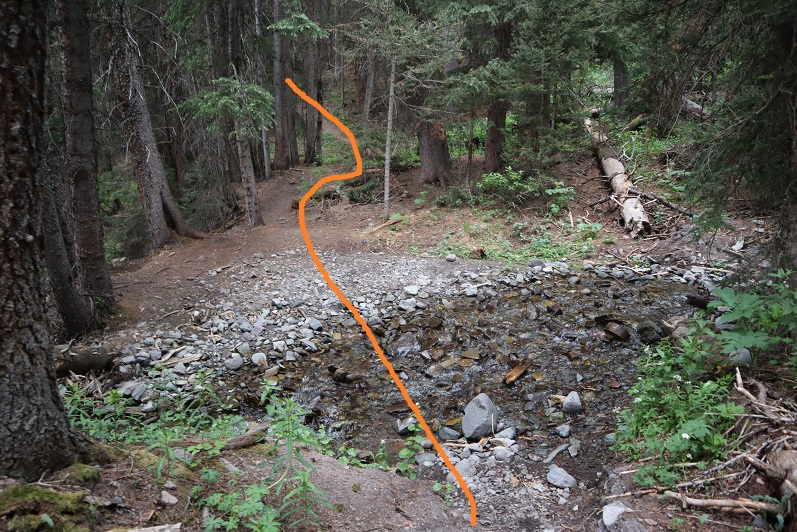
There was an easy creek crossing
And then I continued my way up to Blue Lakes
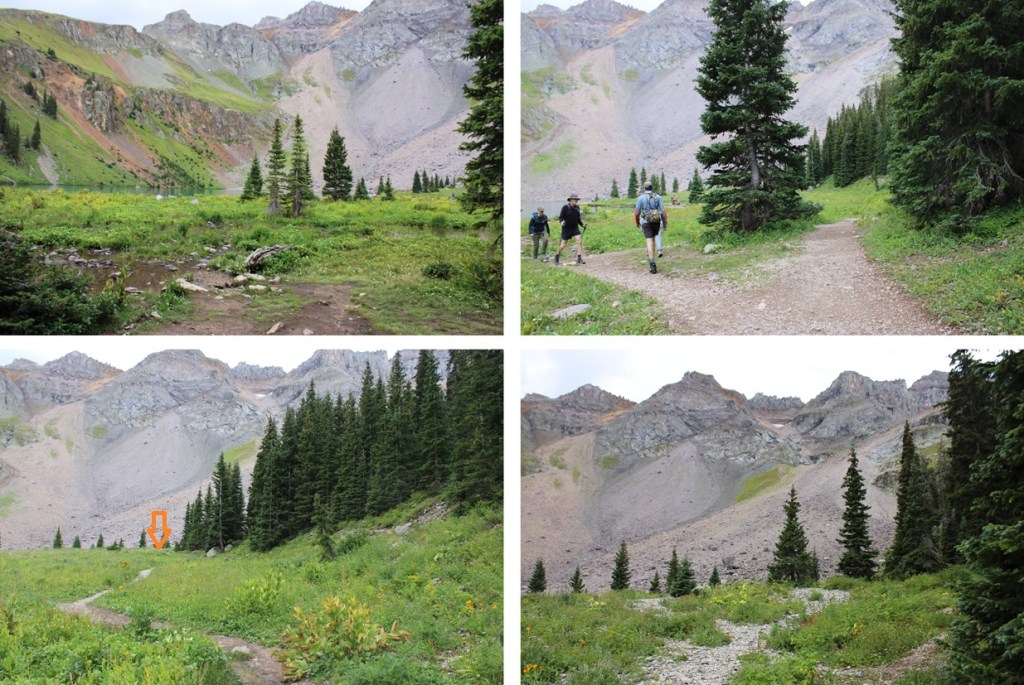
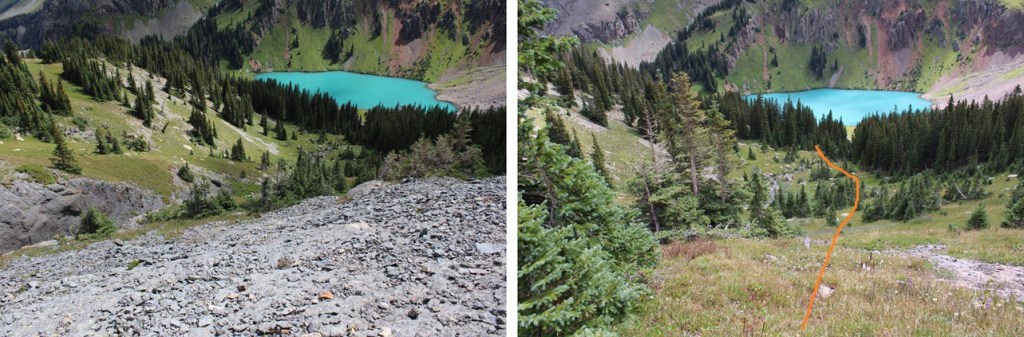
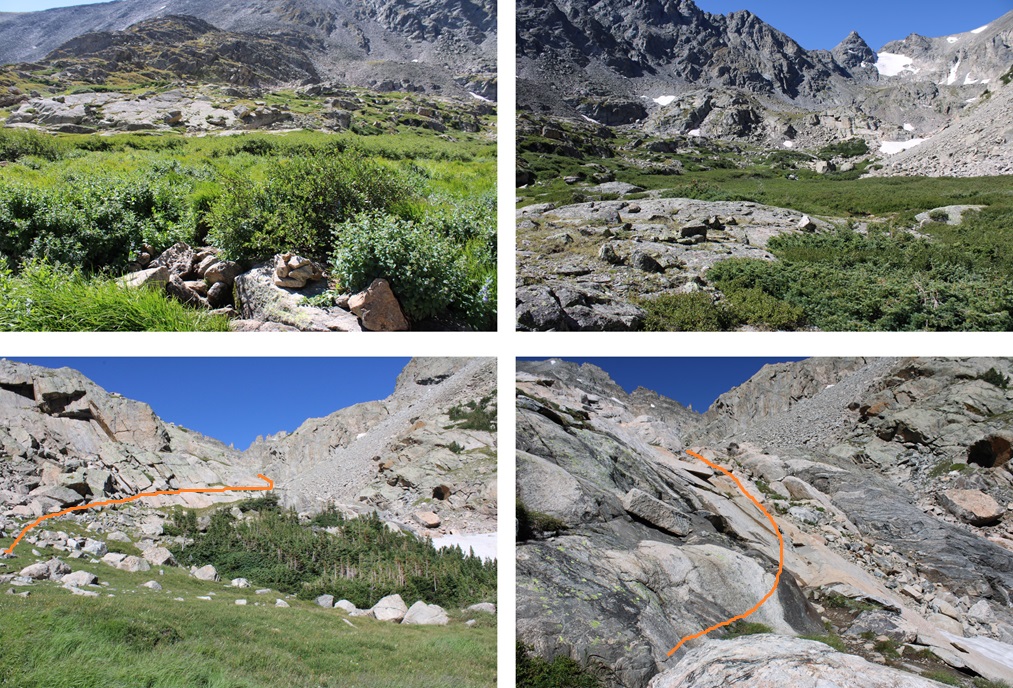
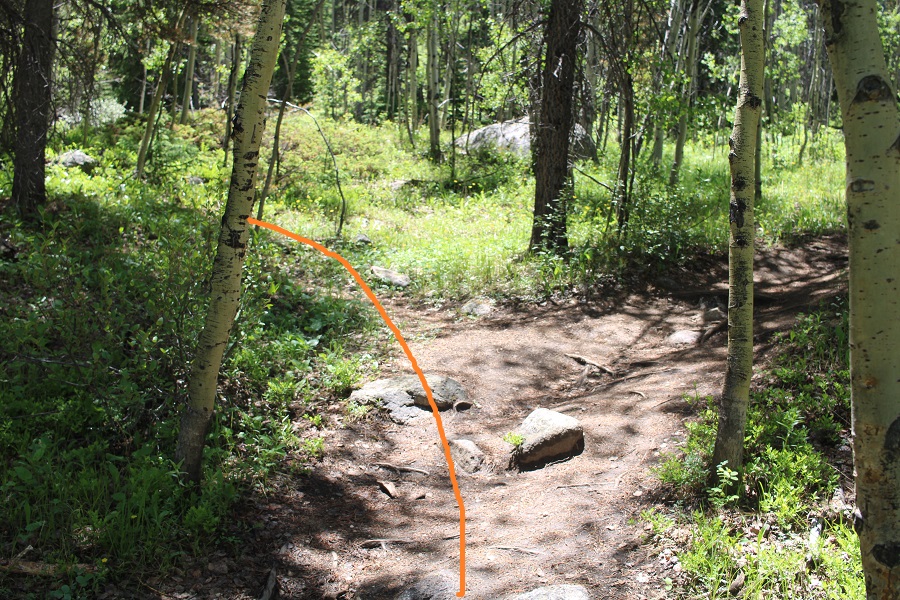
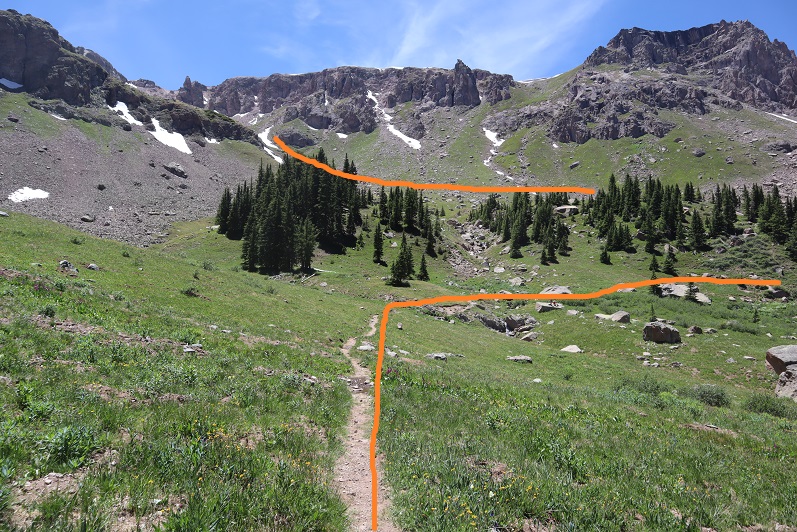
Once I arrived at Blue Lakes, there were several social trails to campsites. I stayed on the trail closest to the lake, skirting the west side, towards a creek flowing into Blue Lakes.
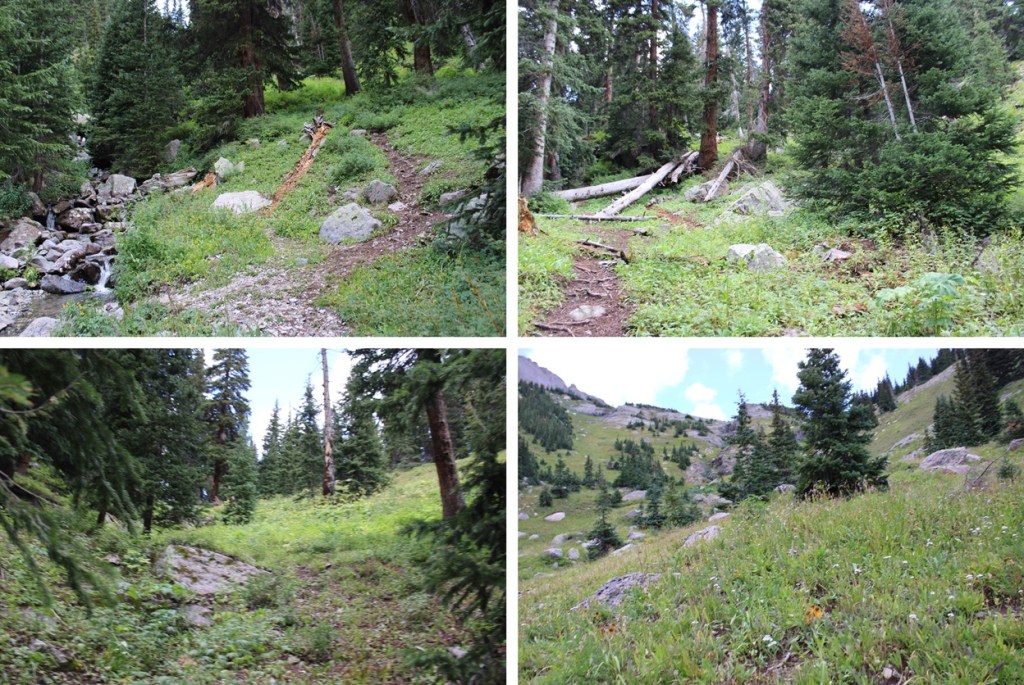
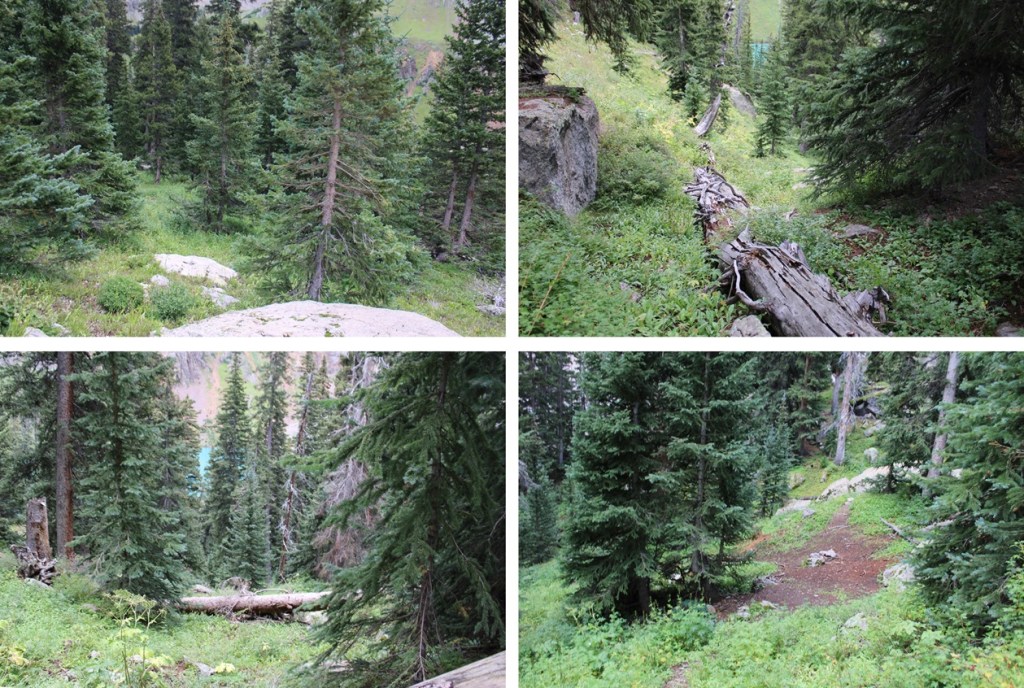
At the last campsite before the creek, I followed the drainage on the right side of the creek up to treeline.
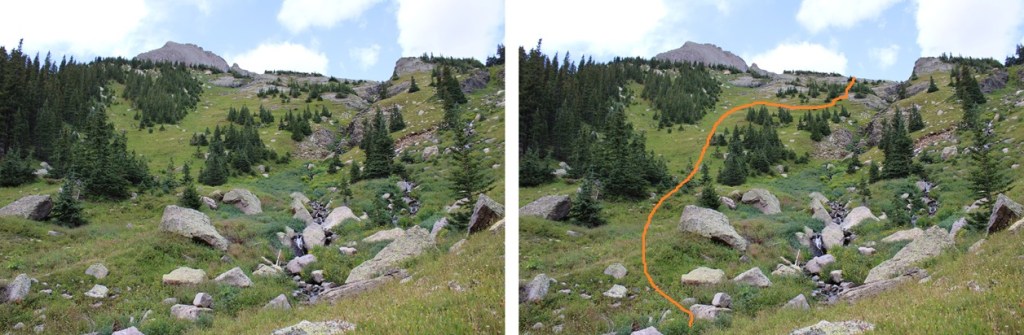
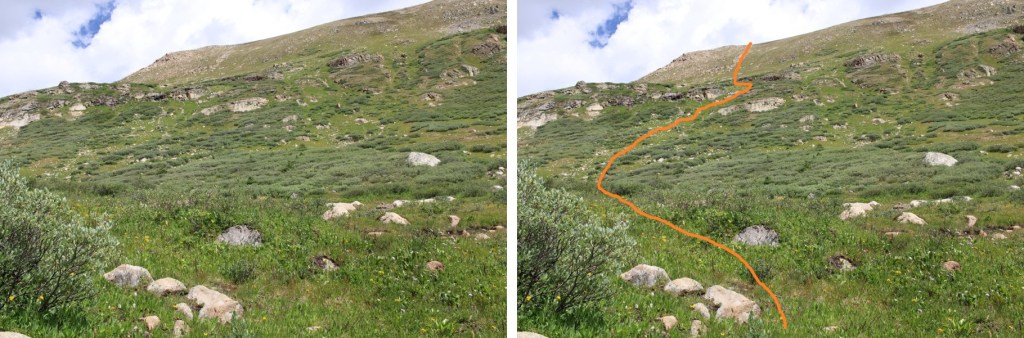
Once at treeline, or at least very close in a wide open space, I crossed the creek and headed west up the slope, keeping the creek to my right.
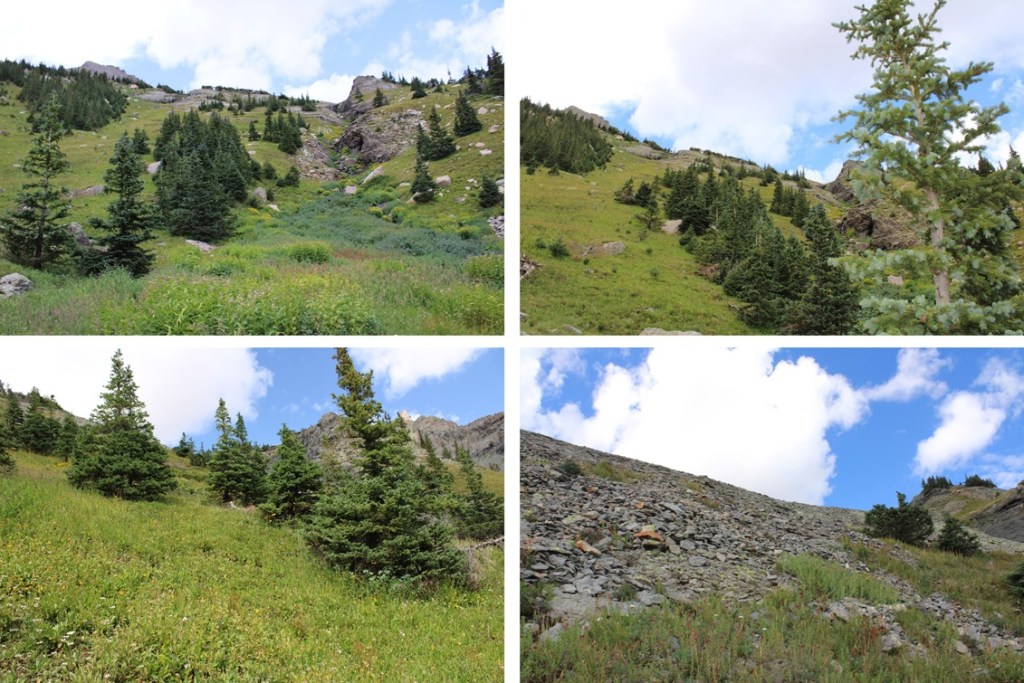
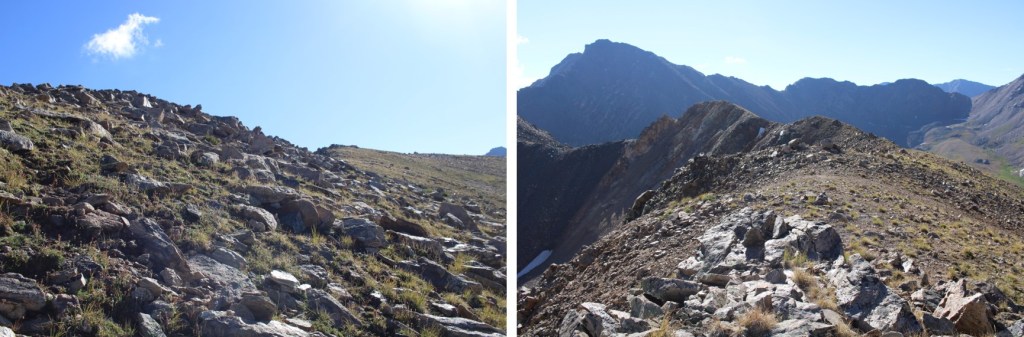
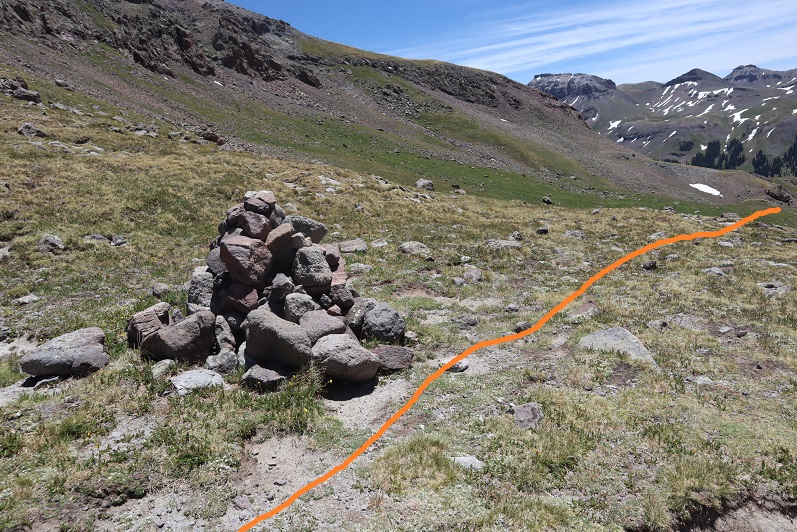
At the top of the slope I continued heading west, staying on the tundra. You can go right and use the talus, but it’s going to be a LONG day of talus, and I’d rather use the tundra when available.
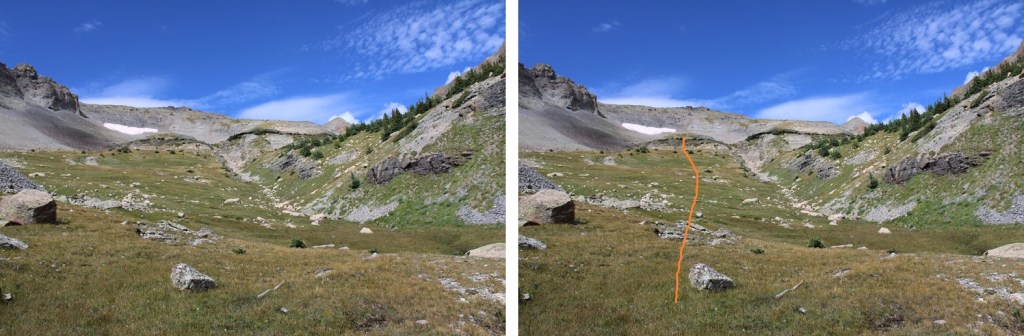
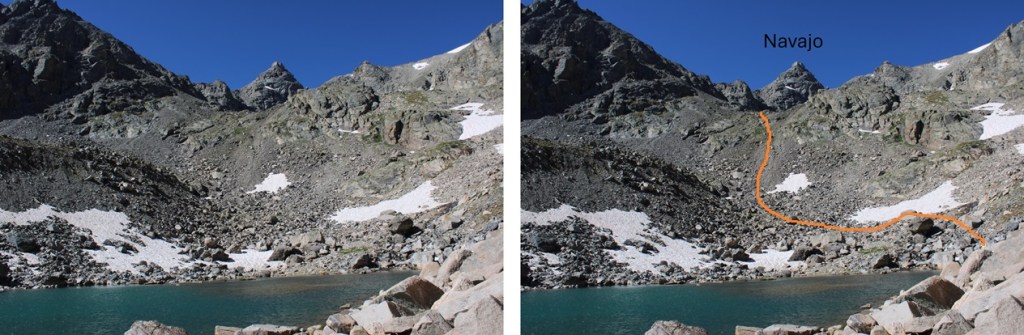
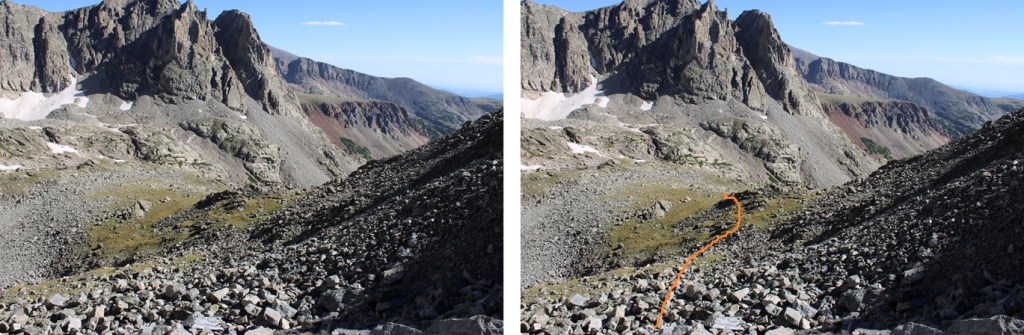
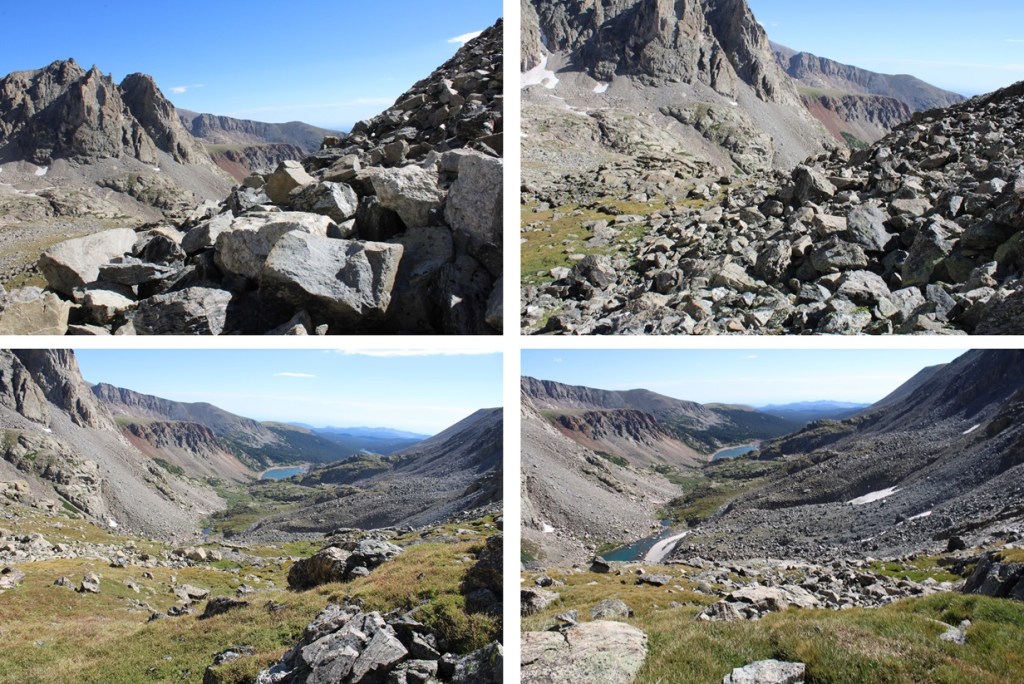
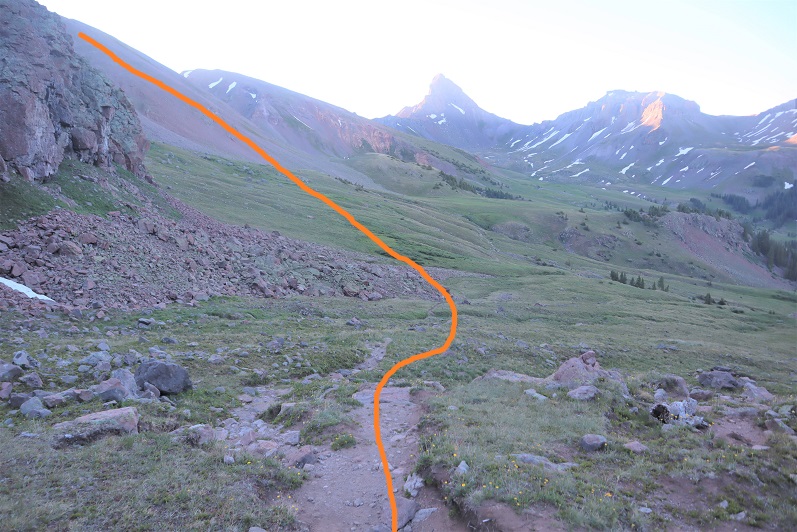
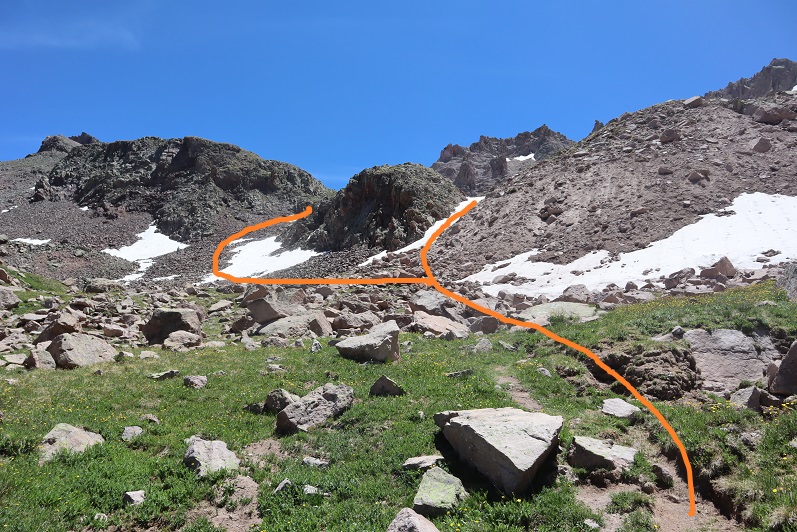
At about 12330’, I went right and dropped about 50 feet down to the talus. There is a game trail here on the talus that will bring you to the upper basin.
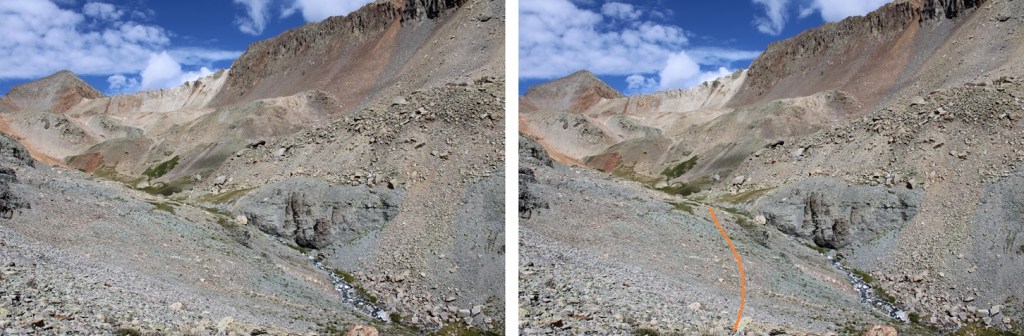
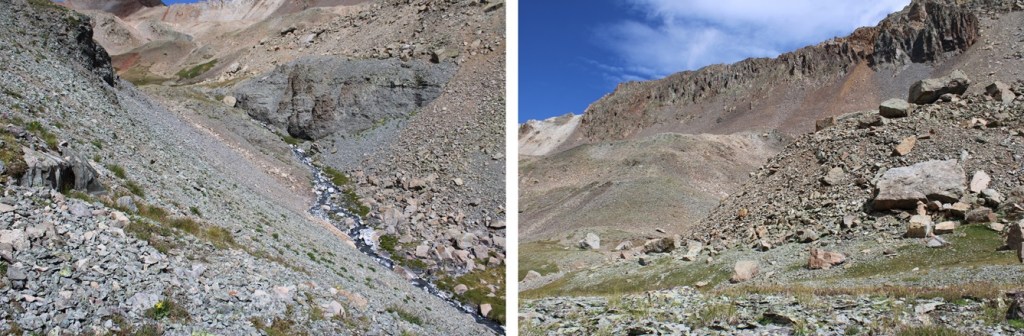
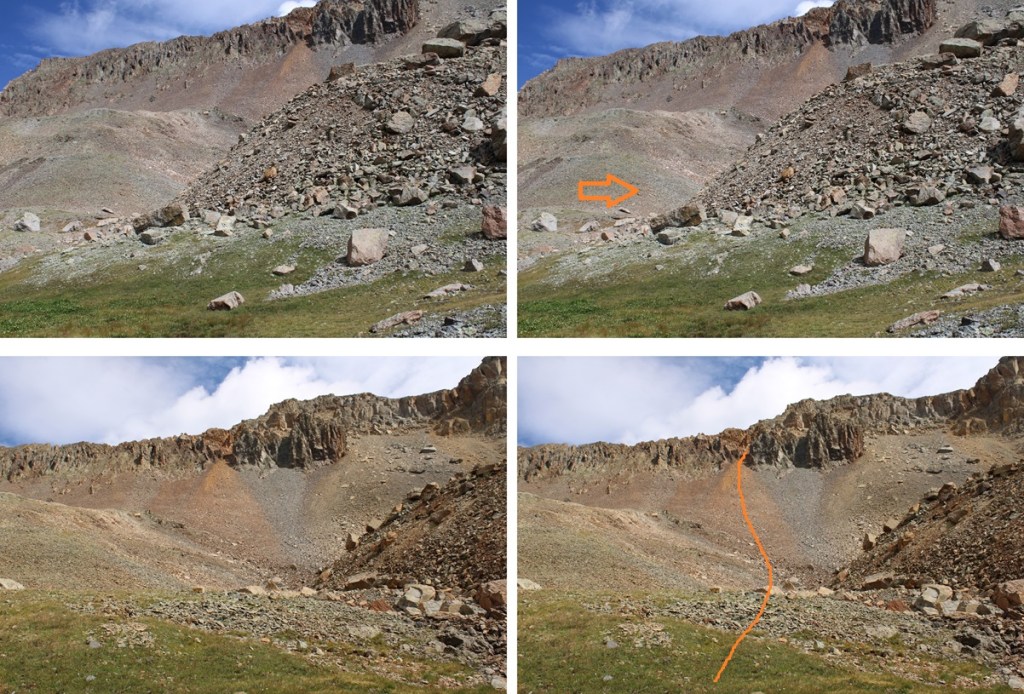
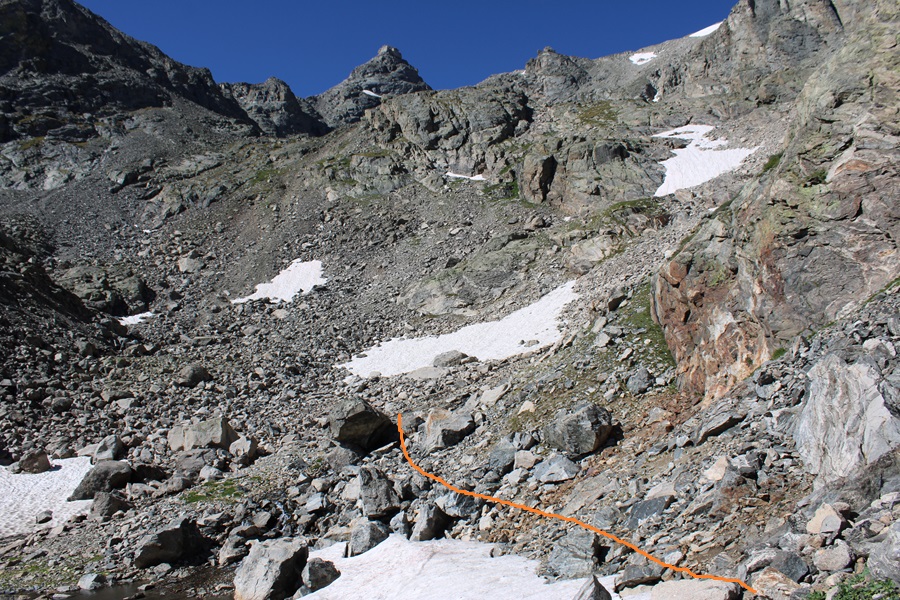
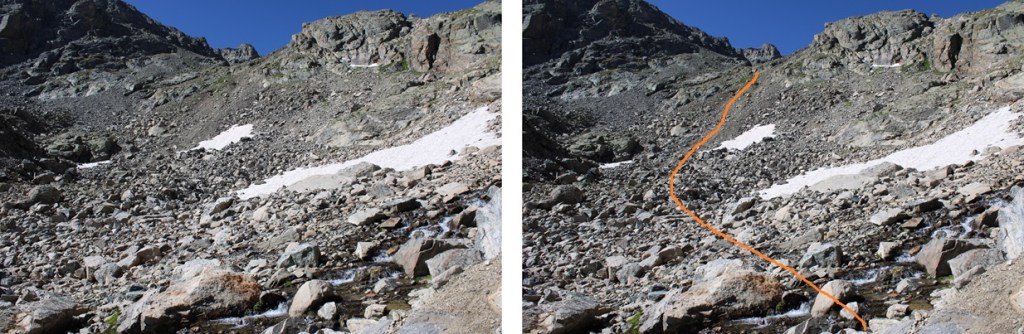
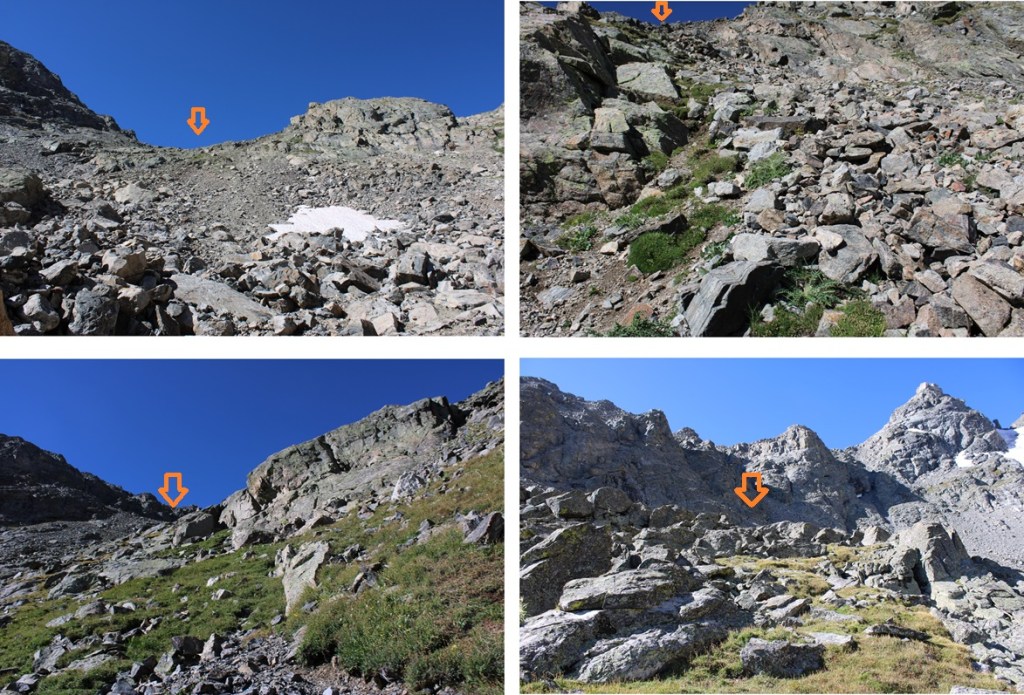
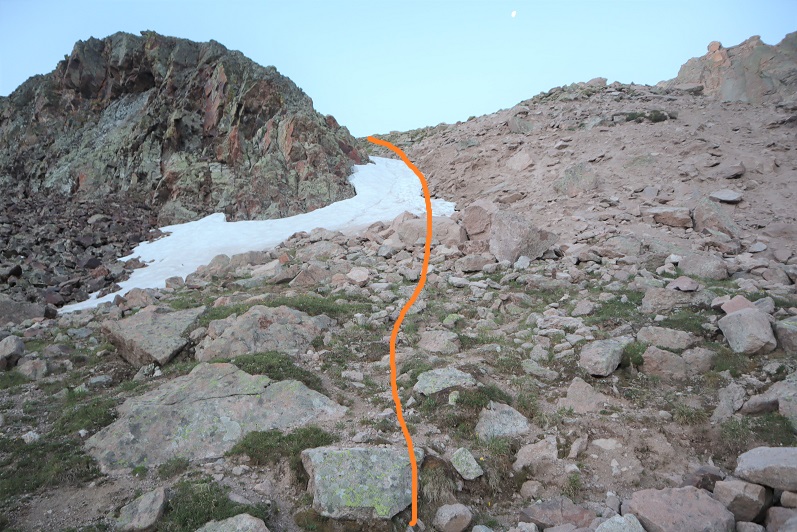
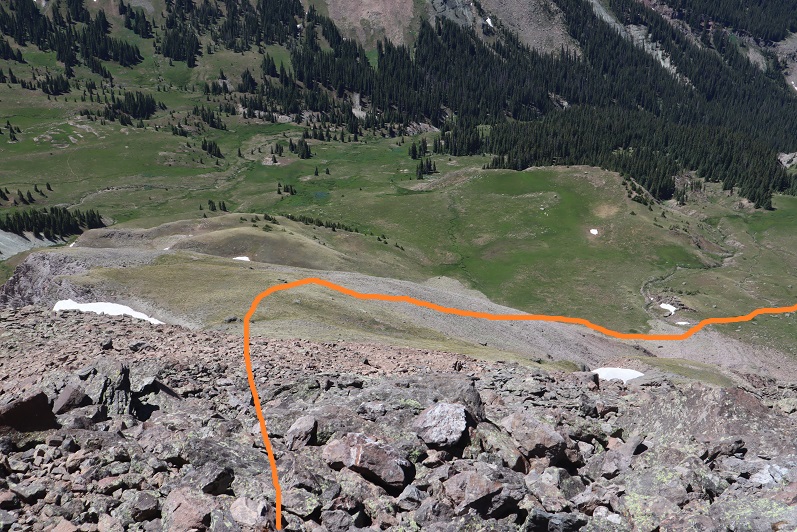
Once in the upper basin, there will be an obvious drainage to the right. I went through the drainage, rock hopped for a bit, and then ascended 600’ of the worst talus ever to a gully. I put on my helmet and started up. Here’s the overall route:
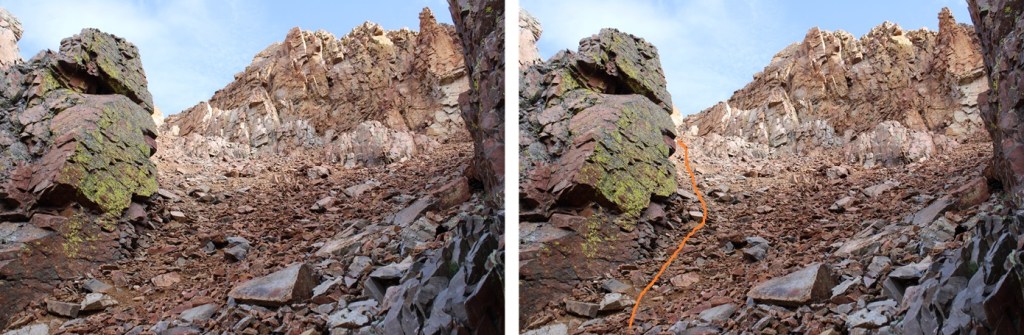
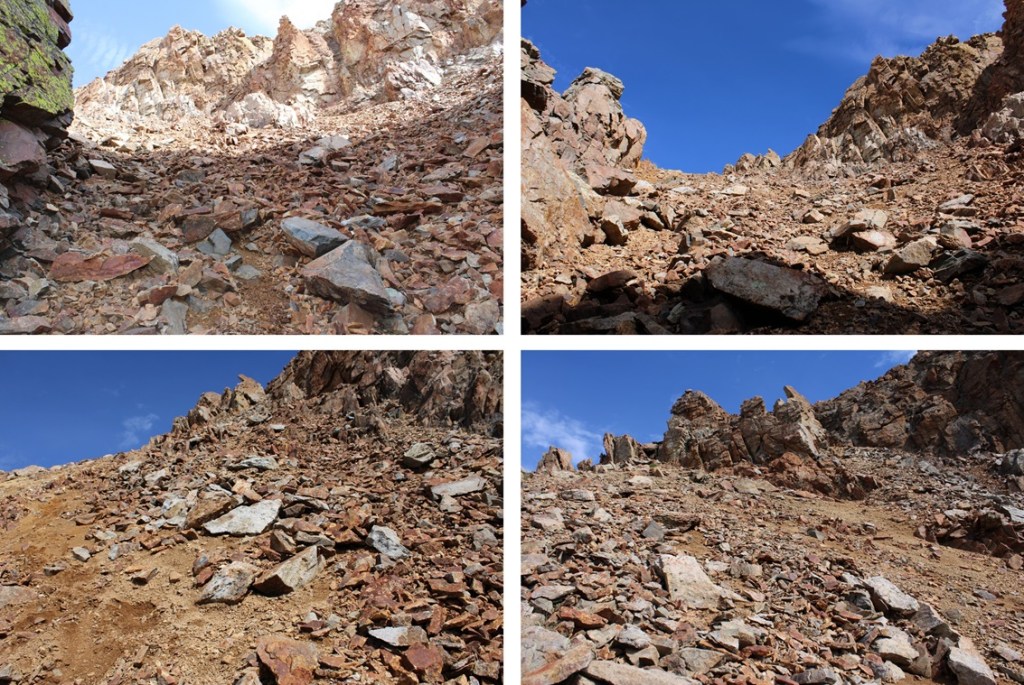
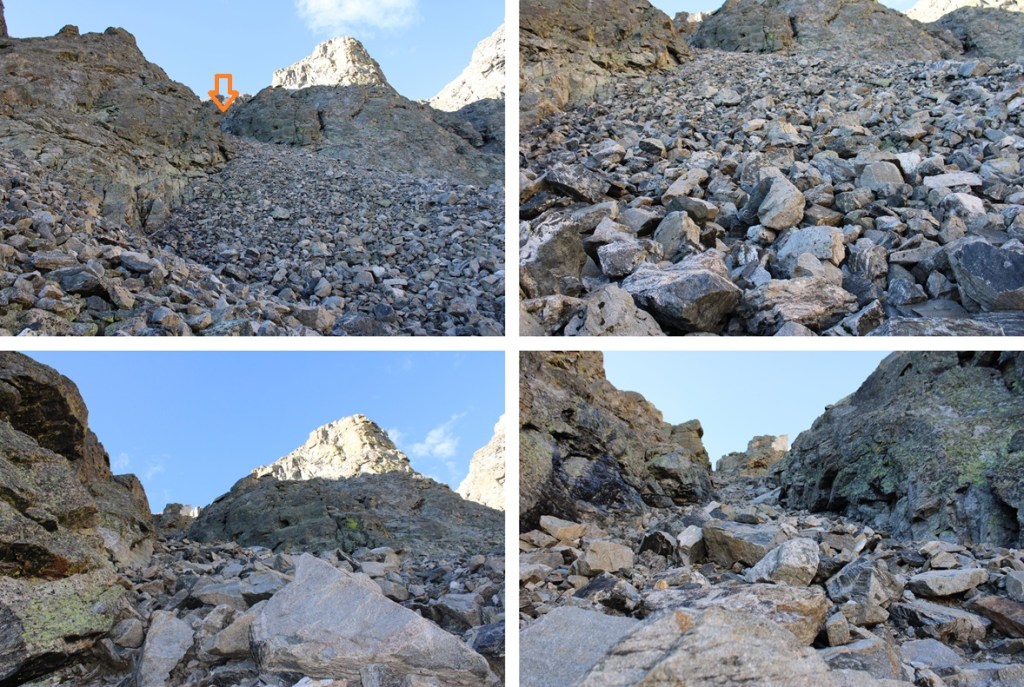
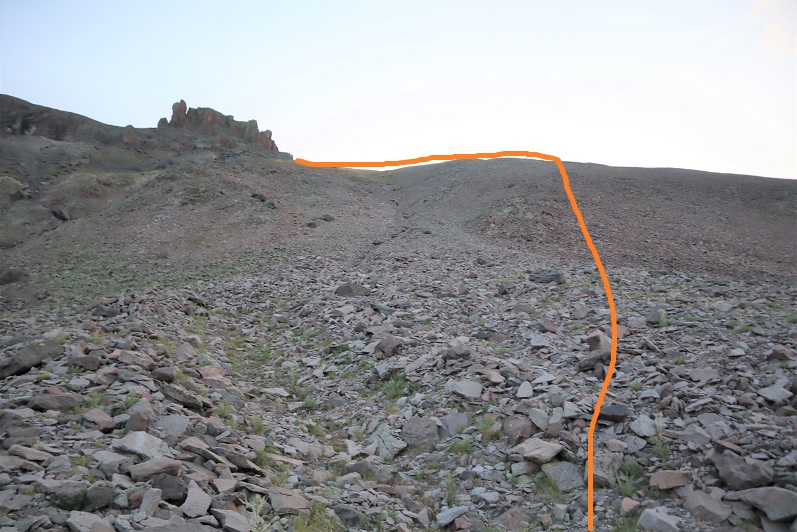
As I ascended further up the gully, the talus became looser, but there were also areas of sand mixed with scree. The rain that morning had turned the sand into a thicker substance, which gave me some much needed traction. When you enter the gully, stay to the LEFT. I tried to stay to the right because it looked more stable, but found I was unable to cross over to the left when the time came, because I was now in an hourglass, and traversing it meant rocks above and below me would give way in a rockslide towards the base of the gully, like a funnel (or an hourglass). After the first few attempts at traversing from up high and sliding several feet before stopping, I downclimbed and re-traced my steps up this part of the gully, sticking to climbers left. Also, if you’re doing this with other people (in your group or not) stay clear when someone is in the gully, and even if you don’t think anyone is below you on your descent, yell to see if anyone is there. Large rocks will fall as you ascend and descend (there’s nothing you can really do to prevent it).
Keep heading left, until the scree ends
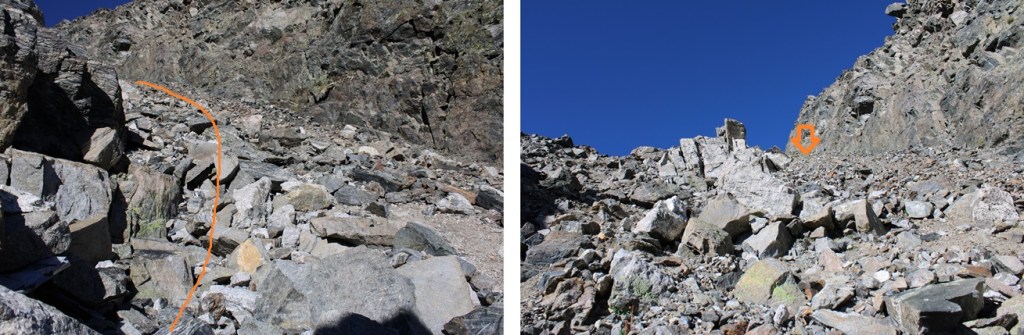
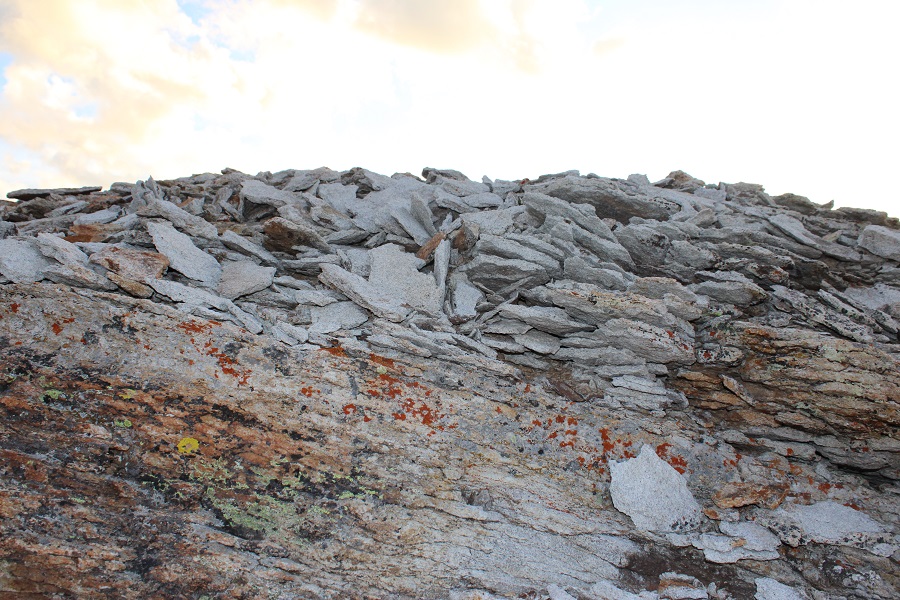
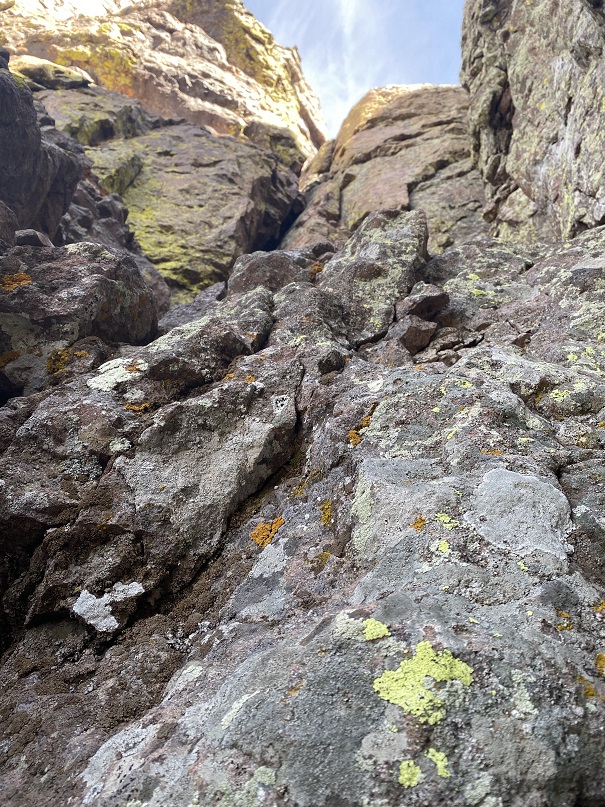
Once the scree ends, if you haven’t already, now is the time to put on your helmet. The rest of the summit is class 3 and class 4 on the loosest terrain I’ve ever experienced. NOTHING is stable. Trust nothing above, in front of, or below you without attempting holds several times to make sure they are solid. There is large kitty litter on solid rocks, loose talus, and rock slabs that look stable but are hanging precariously, especially from above.
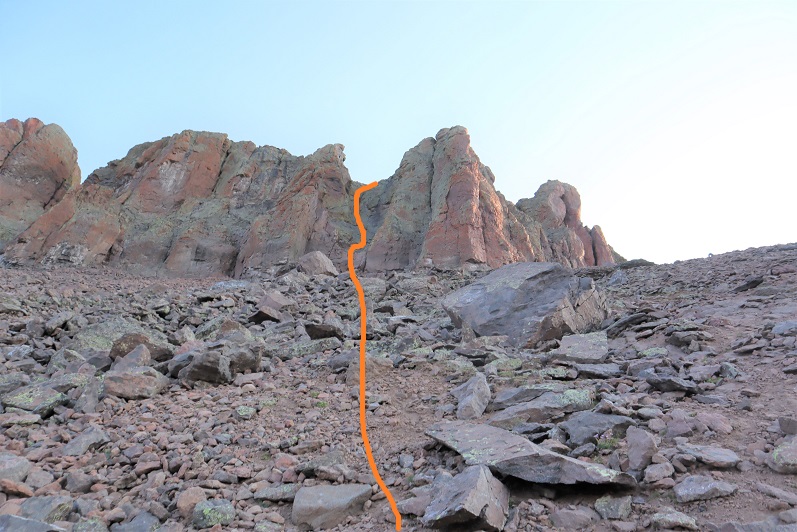
From the top of the gully I headed east, to follow the ridge. Here’s the route I took:
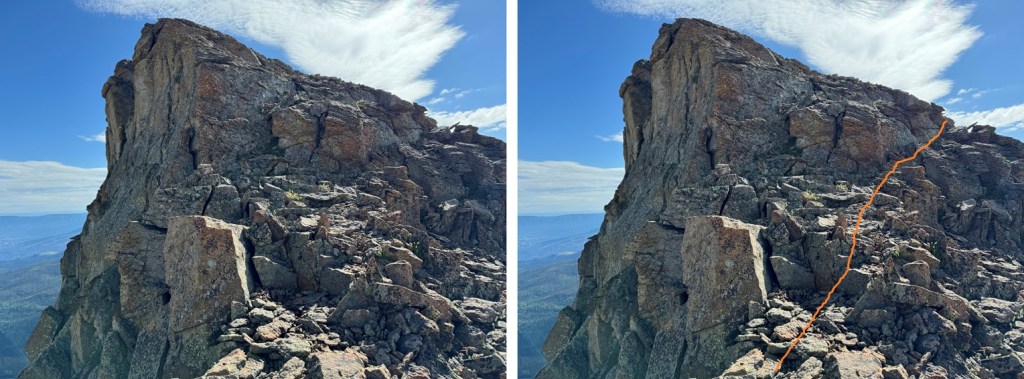
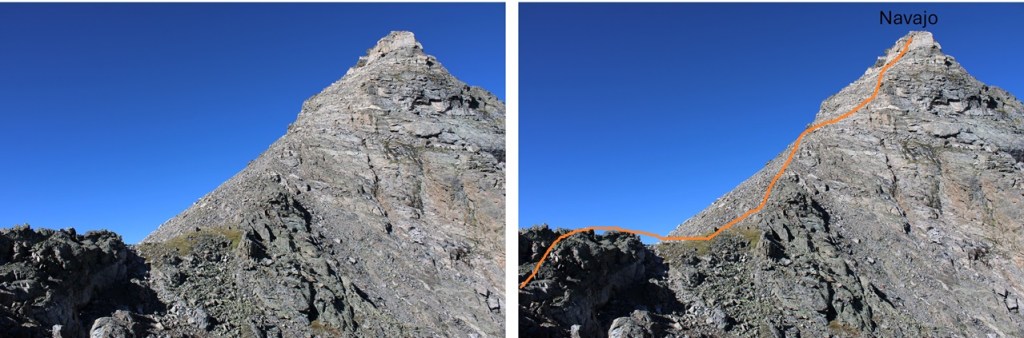
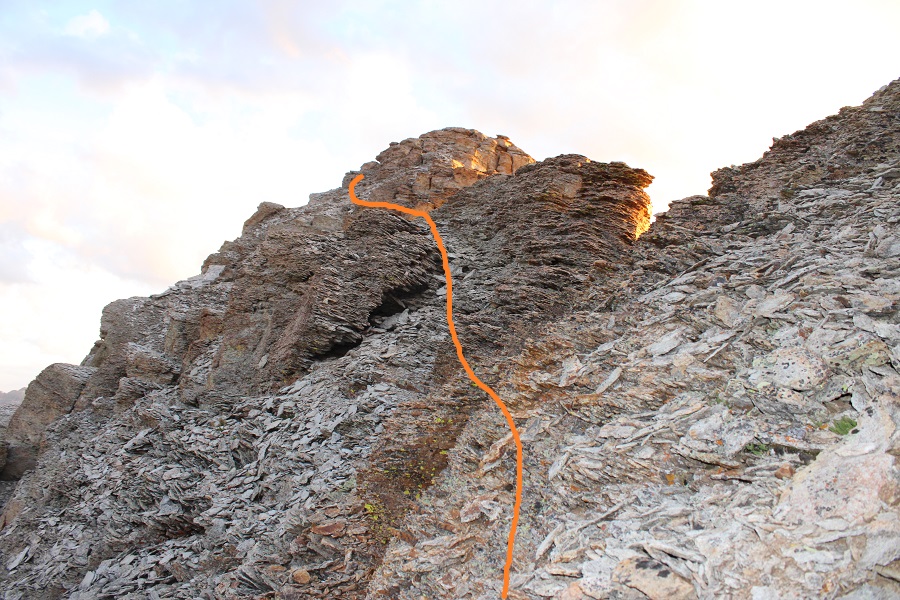
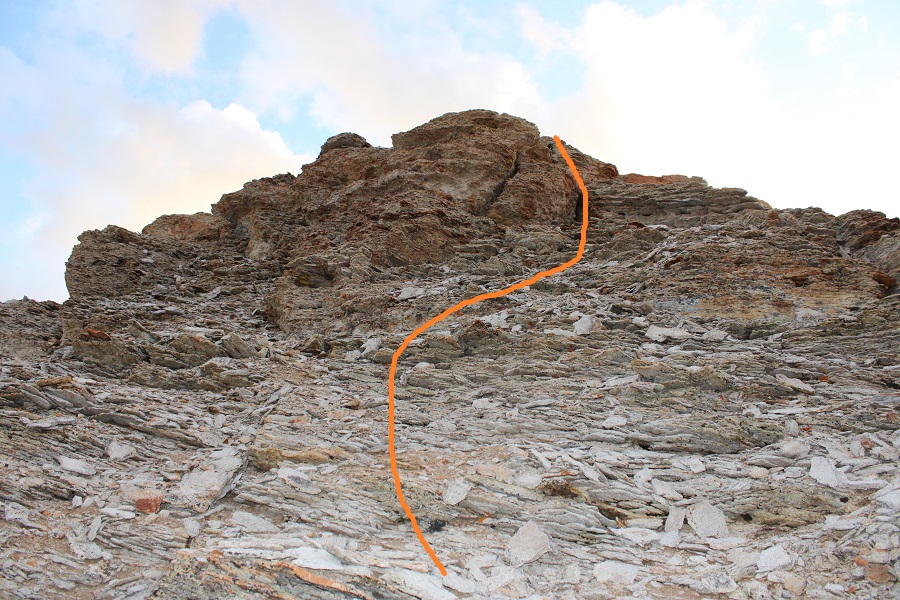
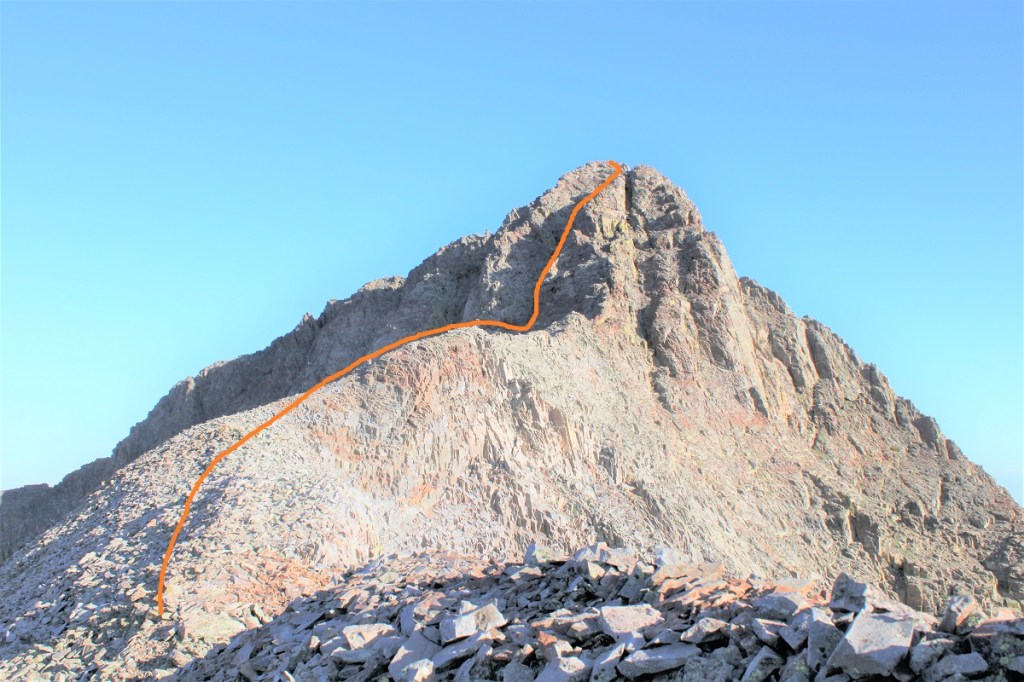
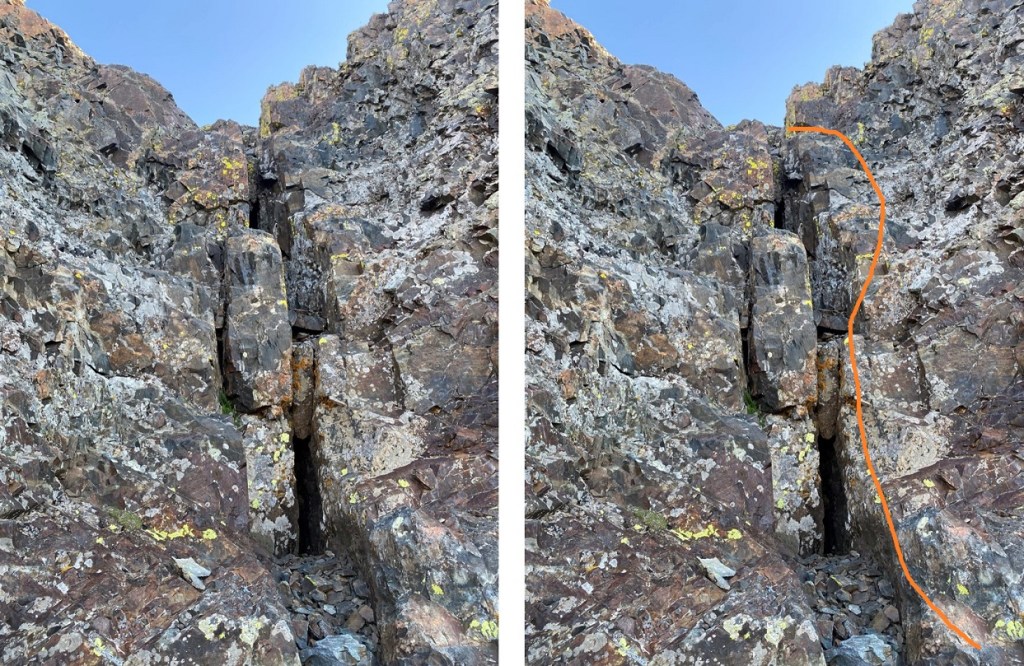
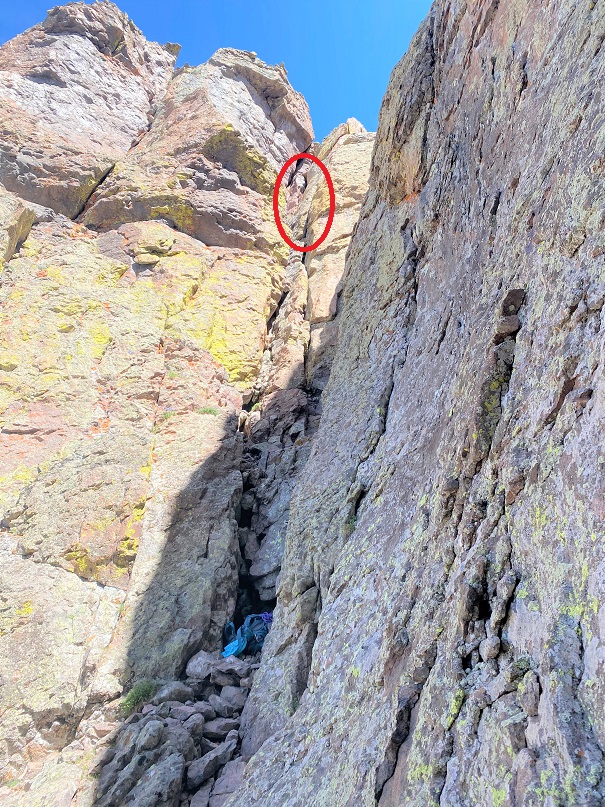
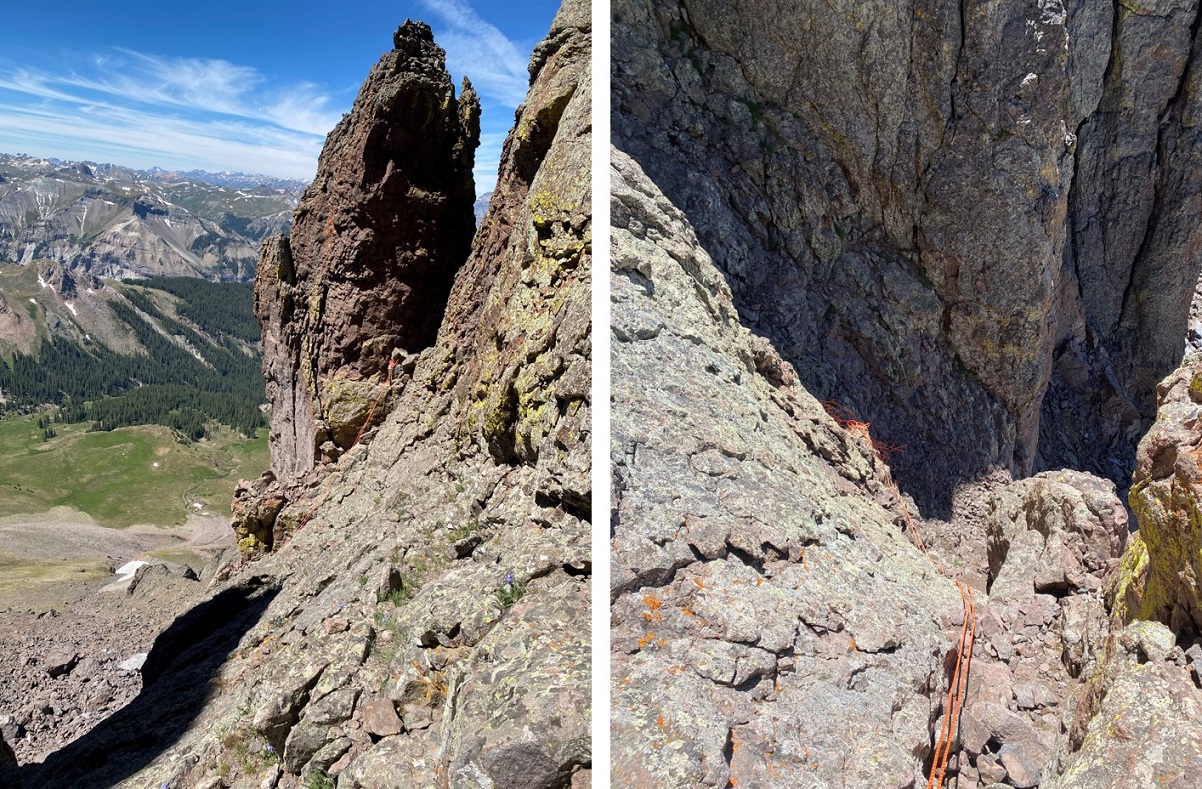
You should now have a good view of the class 4 chimney to the summit. This is a very loose chimney, and it stops halfway and starts again. Even the large boulders are loose, so be careful with hand and footholds until you’re sure it won’t move. I started out by climbing straight up the center, until I came to a “y” where both sides looked perilous. I decided the right side looked more protected. The were both loose, sometimes with just large wobbly boulders stacked on top of each other to climb, and sometimes what looked like 10 foot boulders sitting atop rocks the size of a microwave. Between the two chimneys, there’s probably 40 feet of climbing. I wouldn’t trust an anchor here: to many of the boulders are loose. (There weren’t any anchors set up).
Here’s the overall route I took:
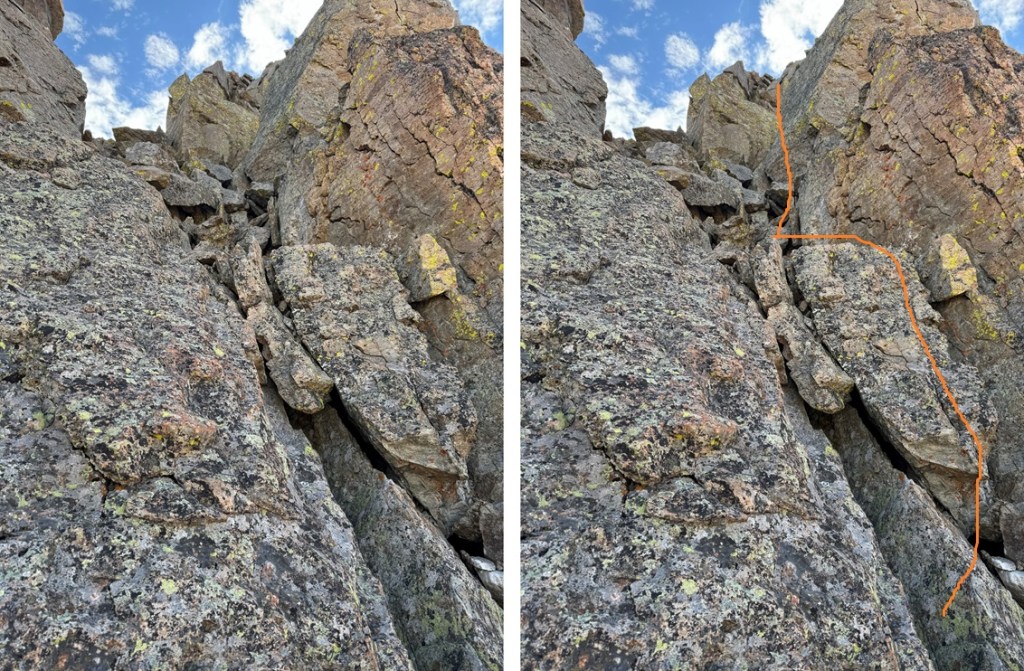
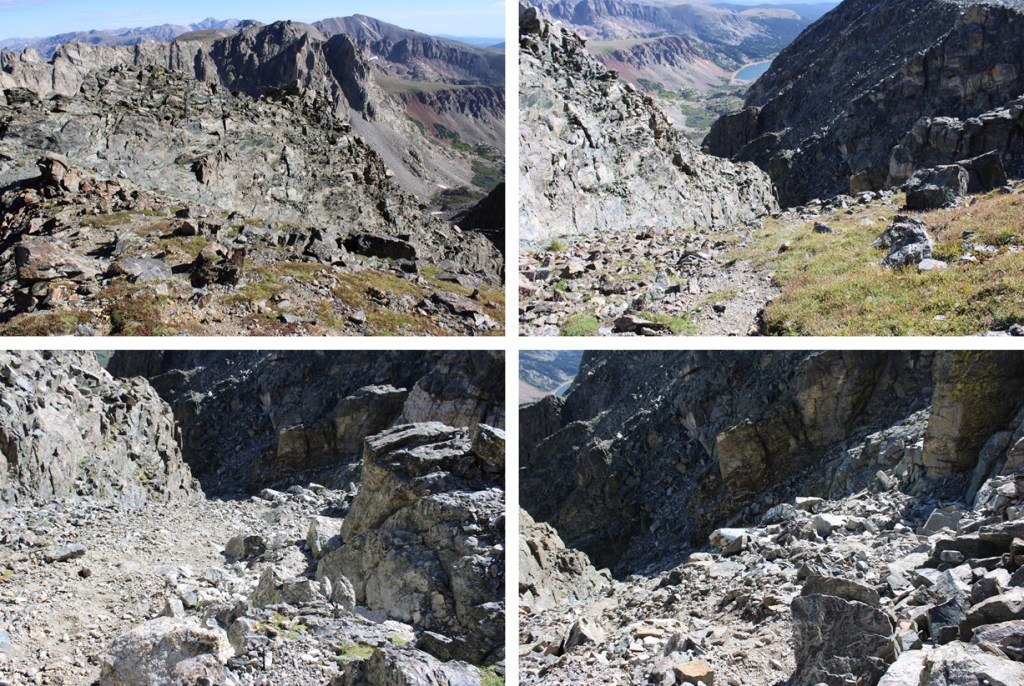
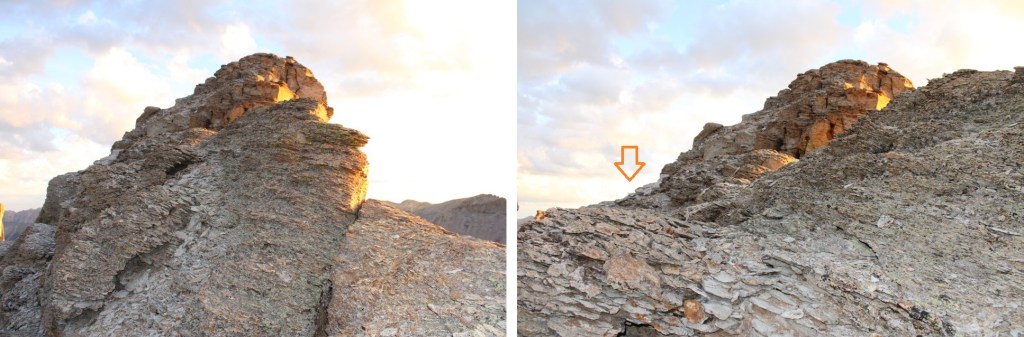
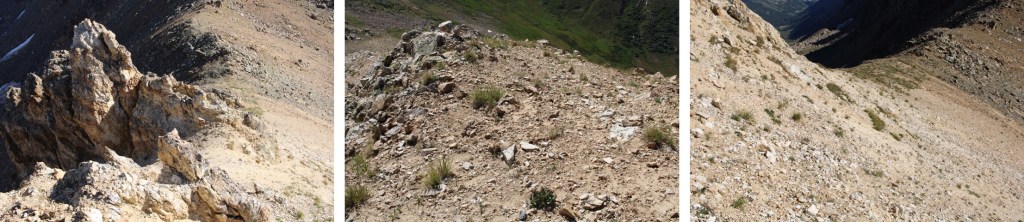
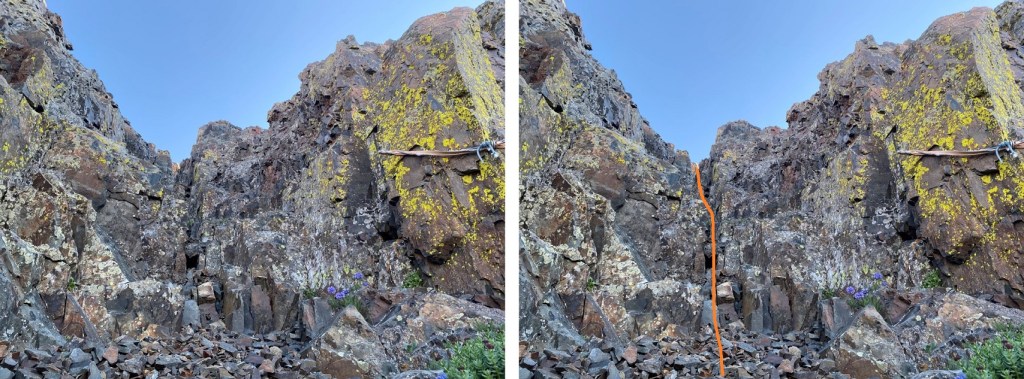
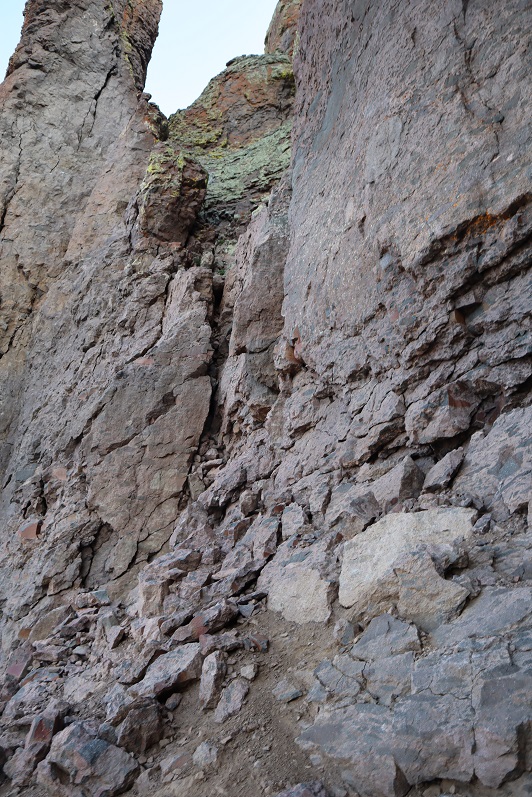
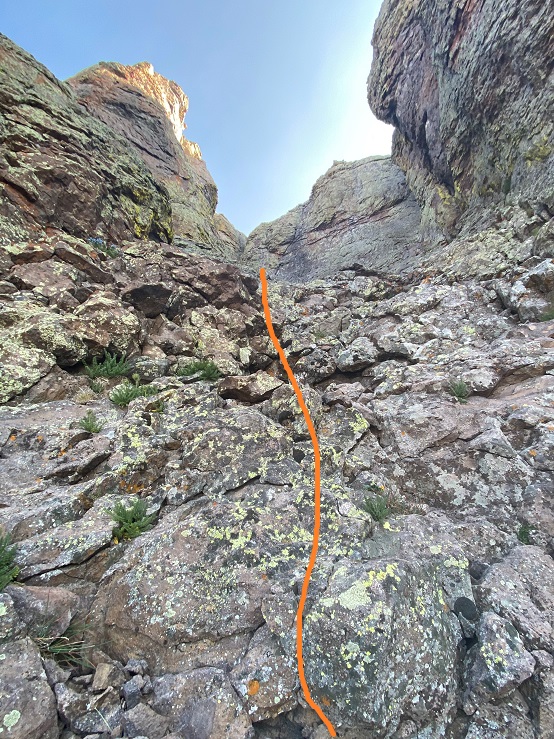
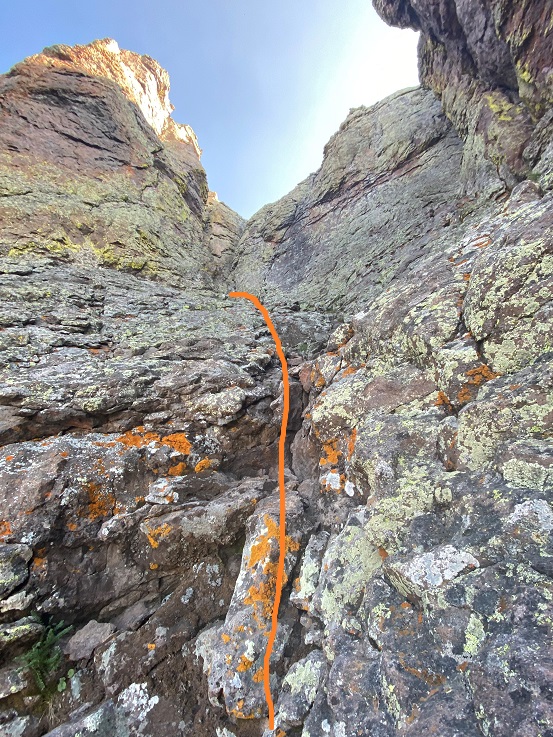
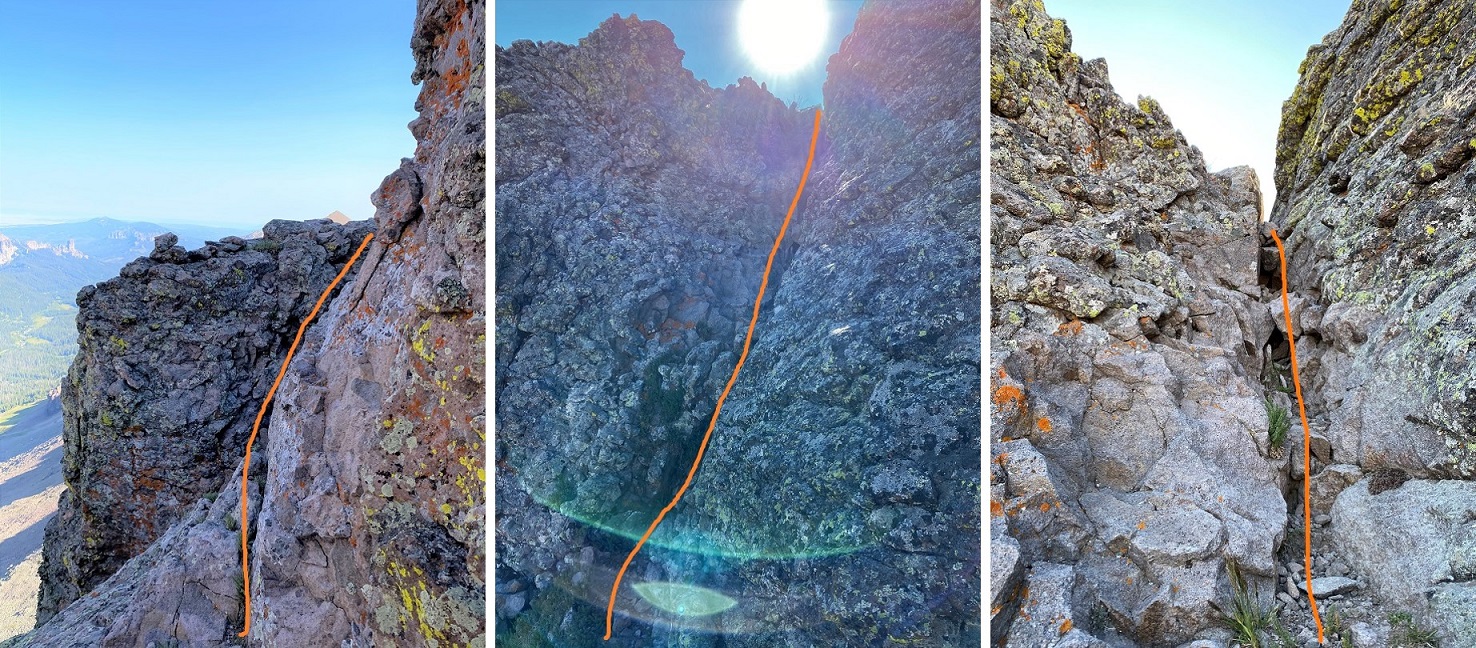
And some closer pictures of the chimney(s)
Chimney 1:
Chimney 2
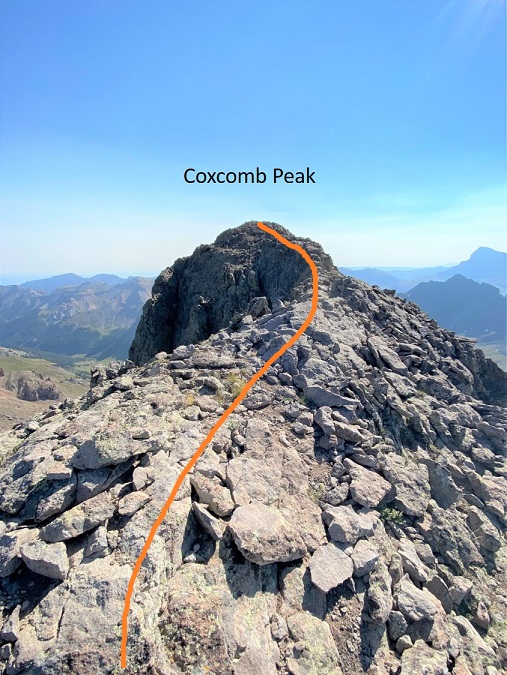
From the top of the second chimney to the east you can see the route you scramble up to the summit
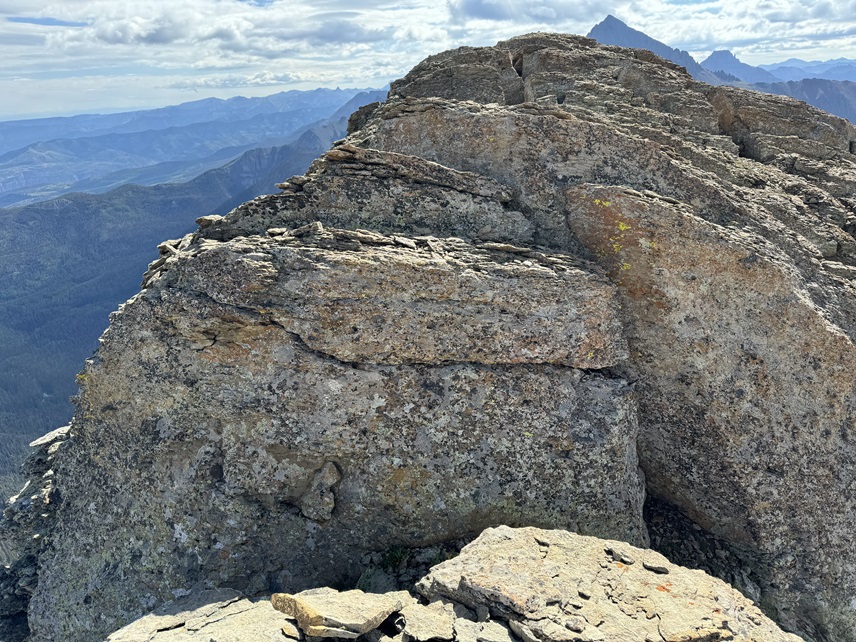
But wait! There’s more! Keep heading east, and climb down and then up this rock slab covered in kitty litter. It’s not tall, maybe 7 feet, but another fun surprise!
And then it’s a quick walk to the actual summit, on… you guessed it, more talus!
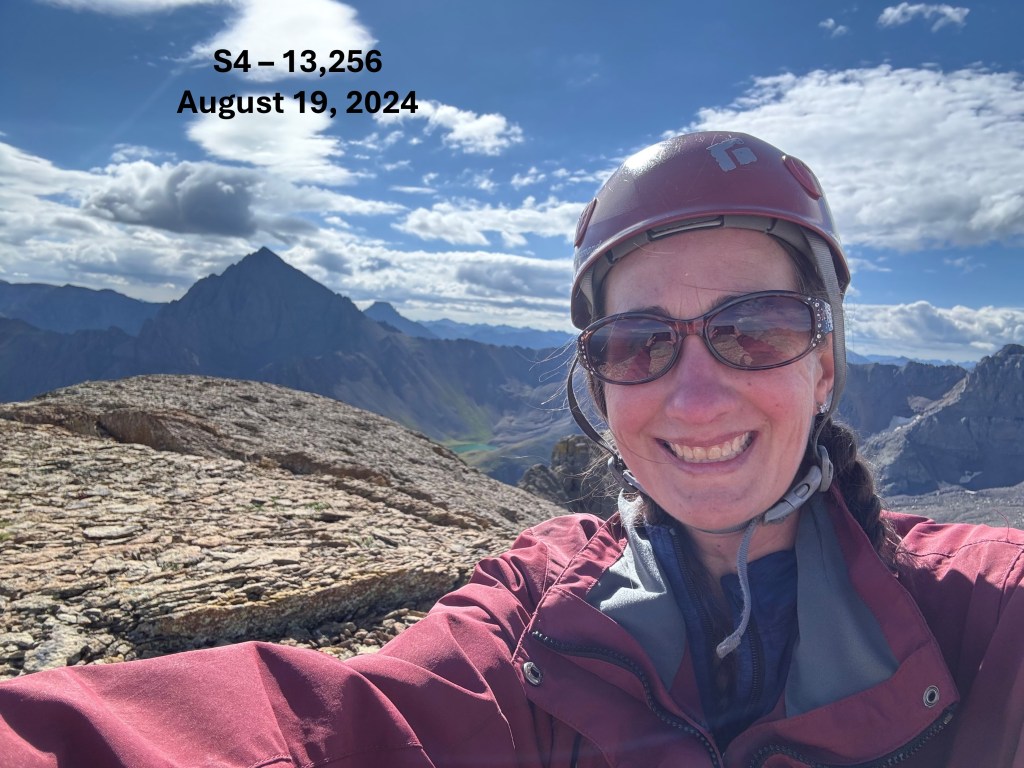
I summited S4 at 9:40am
S4:
And now to head back. I re-traced my steps to the chimney(s)
Safely down the chimney(s), I made my way back to the top of the gully.
Here are some pictures of the descent down the gully
And the route down into the basin
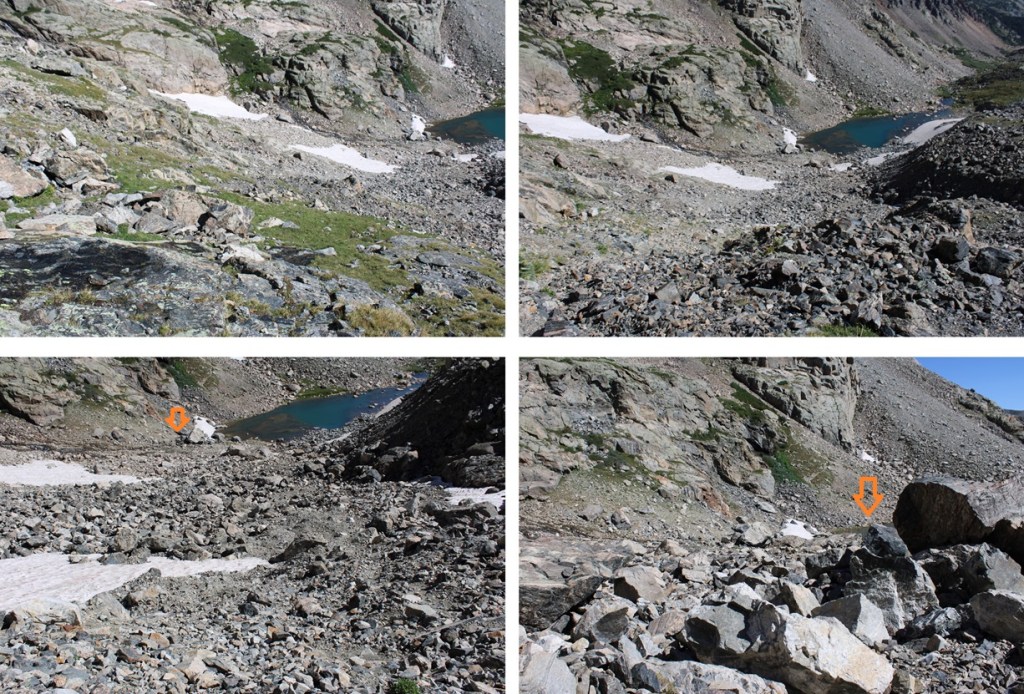
Once in the rocky basin, I stayed to the right of the creek and descended on the talus to the tundra towards Blue Lakes.
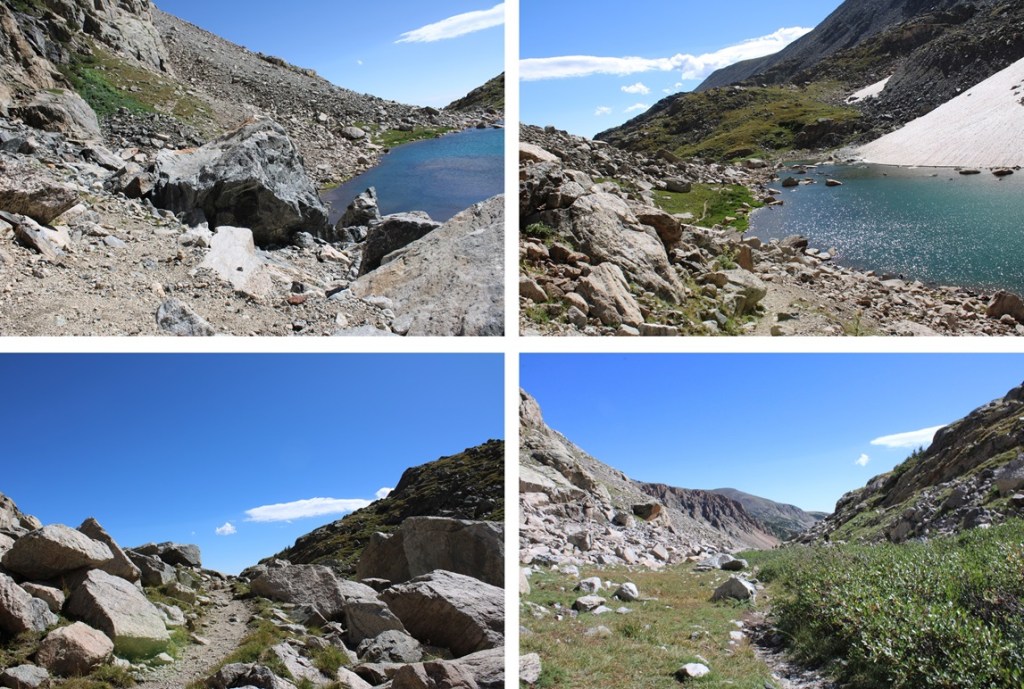
I headed east back to treeline and crossed the creek
Then headed north back towards the Blue Lakes Trail
And followed the trail in the rain all the way back to the trailhead
I made it back to the trailhead at 12:30pm, making this an 11.57 mile hike with 4082’ of elevation gain in 7.5 hours
This hike starts from the Long Lake Trailhead inside Brainard Lakes Recreation Area. This area is permitted. There are basically two options for permits (I’m summarizing) either timed entry between 8am-5pm, or an overnight permit. Overnight parking permits aren’t granted unless you have an Indian Peaks Wilderness overnight permit first. Both permits go on sale at the same time. Since I wanted to start before 8:30am, I needed to first get an IPW permit, then try to get an overnight parking permit.
I was able to secure an IPW overnight permit for the weekend but had difficulty securing overnight permits to park inside of Brainard Lake. Eventually I was able to get two 1-night (overnight) permits, one for Long Lake Trailhead and the other for Niwot Campground. I tried to get two consecutive in the same area, but they weren’t available for the dates I was allotted my IPW permit.
When I checked in at the Brainard Lakes Recreation area, they didn’t like what I had done (secured two one night permits at different sites), and decided a better option was to grant me a two night permit for Brainard Lake. I’d have rather parked for two nights at Long Lake or Mitchell Lake, or even what I had done originally, which was one for Long Lake and the other for Niwot. But they weren’t having that, so my mileage was increased by a couple of miles for this hike, since Brainard Lake is over a mile from the trailheads. Also, after you’re inside the park, they have other ‘security checkpoints’ where you need to show you’re your permits again, and they also patrol the parking lots hourly to make sure your permit is valid. Have I mentioned I’m not a fan of the permit system? I’ve yet to see one that works smoothly, especially for mountaineers who are concerned with weather and start times.
As I was hiking early in the morning the next day, being flashed with bicycle lights from behind me at 4:30am, I realized there’s another option around the permit system: ride your bike from the winter closure to the trailhead. I don’t own a bike, but this is definitely an option for the future… if I ever get a bike.
In any event, after minimal drama and parking a little further away than I’d have liked (but hey, it was better than parking at the winter closure…) I was on the trail at 4:30am, starting at the Brainard Lakes parking lot. My first step was to follow the road for 1.3 miles to the Long Lake Trailhead.
Once at the Long Lake Trailhead, I followed Pawnee Pass Trail west
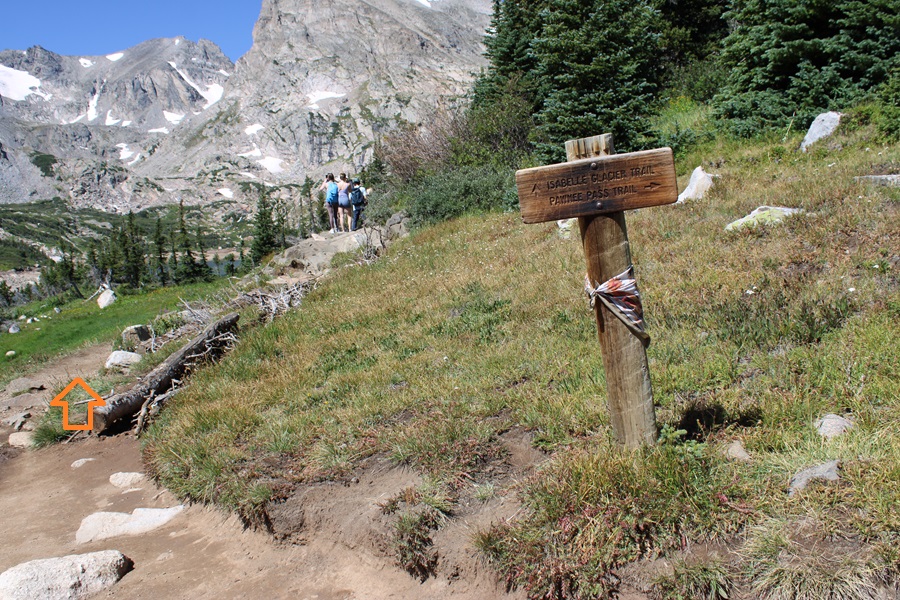
After hiking about 1.5 miles from the Long Lake Trailhead, I came to a junction and went right, following the Isabelle Glacier Trail
At the next junction I went right again, to continue along the Isabelle Glacier Trail.
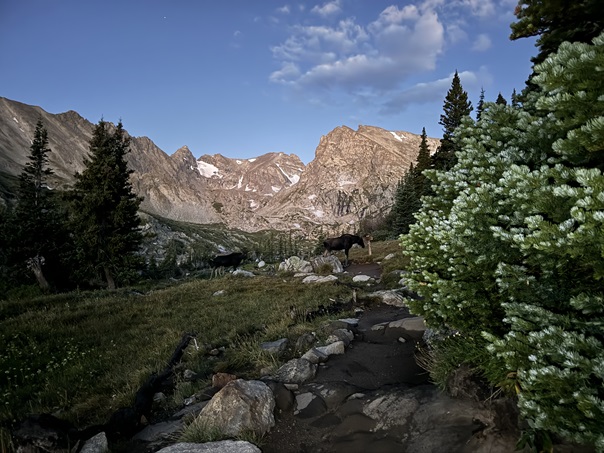
At the next junction, I came upon two bull moose. When they saw me they snorted and grunted, so I hid behind a tree for 20 minutes until they’d made their way up the hillside, casually munching on willows as they went. I’ve been charged by moose in the past, and while other than the grunting and snorting (which could have meant “It’s too early to be awake”), I kept my distance. Once they moved, I continued following Isabelle Glacier Trail
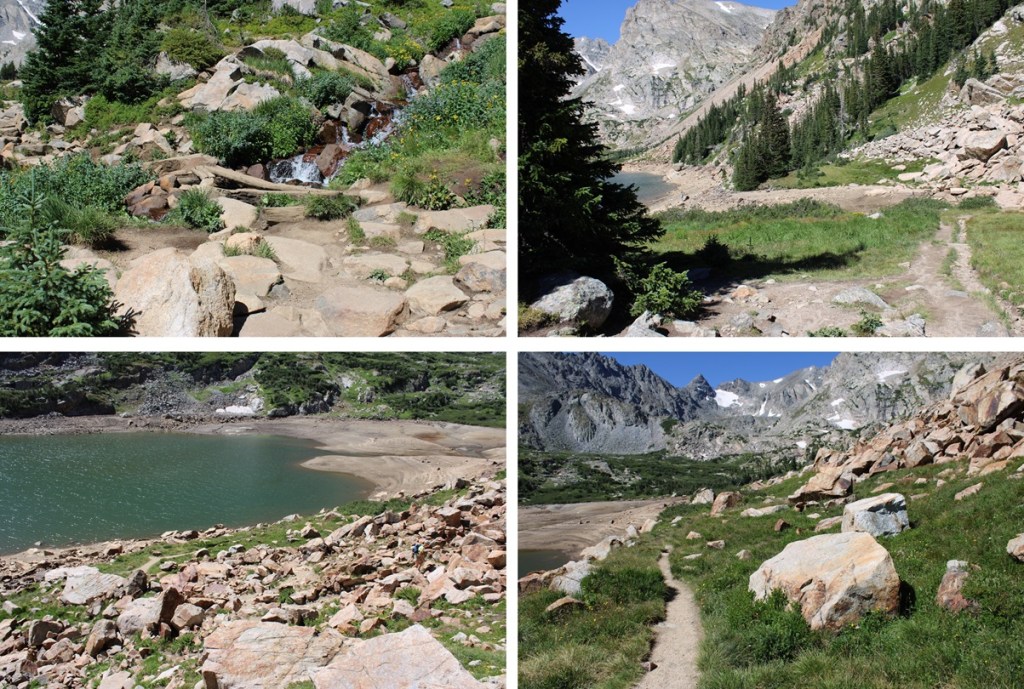
I followed this trail all the way past Isabelle Lake, west/southwest, through rocky areas and willows, towards Navajo and Apache Peaks. This is a class 1 trail, but the willows, rocks, and creeks overtake it at times.
I came to the last pond before the glacier, and left the trail to head southwest into the upper basin. Here’s the route I took
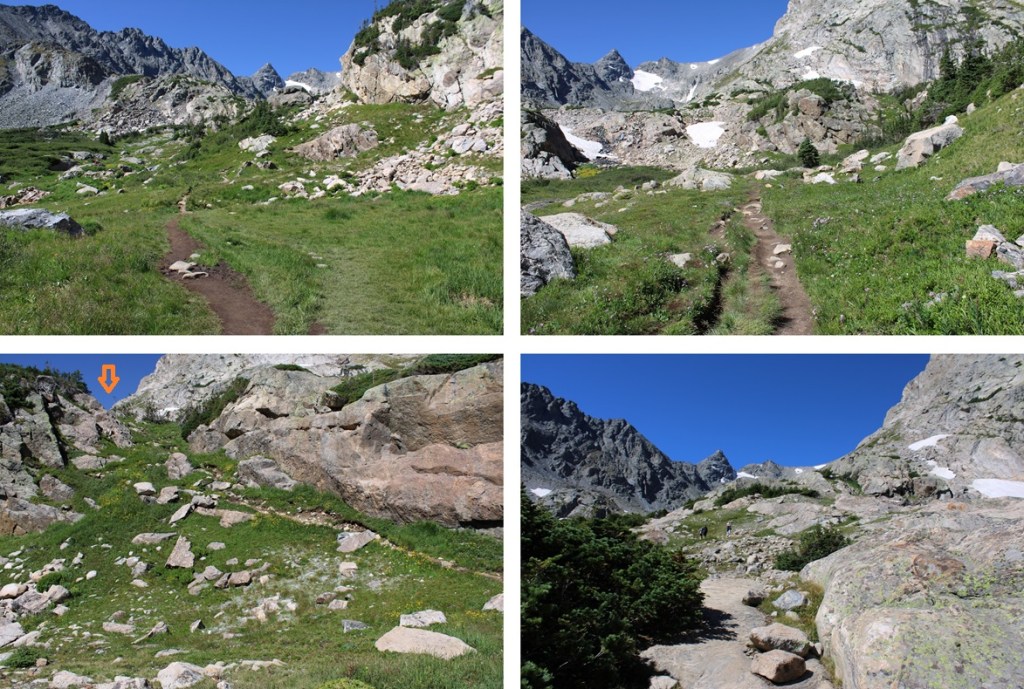
And some step by step pictures. First, I had to leave the trail. I crossed over the snow still skirting the lake, and headed towards the large boulder in the distance
I then crossed the creek, crossed the boulders (some were loose, most were not) and headed for the scree. Luckily, it had rained last night, so the scree was easy to grip.
At the top of the scree I was greeted with tundra. I kept following it, heading southwest
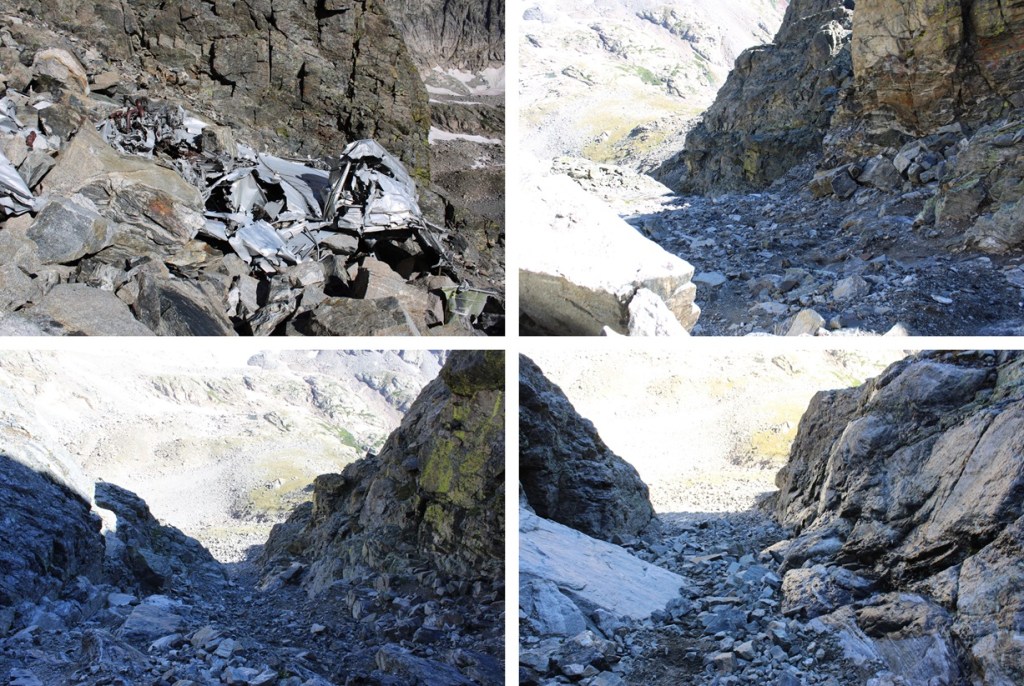
Now in the upper basin, I had a great view of the gully I wanted to take to ascend the ridge. If you look around, you’ll see remnants of a plane crash that happened in the 1950s. The higher you go up this gully, airplane gully as many like to call it, the more debris you’ll see. This is the route I took up the gully.
I made my way southwest over some boulders towards the gully, until I found a scree path. A few thoughts on this gully: Besides the fact this was the only part of the hike I experienced insanely intense winds all day, it was easy to navigate, there were social/game trails to follow, it wasn’t very loose, and the scree was solid. In short, it’s probably one of the easiest gullies I’ve ever ascended, and if they were all like this, I probably wouldn’t mind them so much. I headed south until I saw an obvious “y” in the gully, and went right. It’s easy to know where you turn right because you’ll see parts of the airplane to the right.
I went to the left of the airplane debris, then followed climbers right of the gully to the ridge (although both sides will get you there, just use the terrain you like best).
At the top of the gully, I could see the rest of my route to the summit of Navajo Peak. Until the chimney at the end, the rest of the route is class 2. If you find yourself in class 3 territory, you’re making it too difficult.
From the top of the gully I turned left and followed the saddle across a small ridge
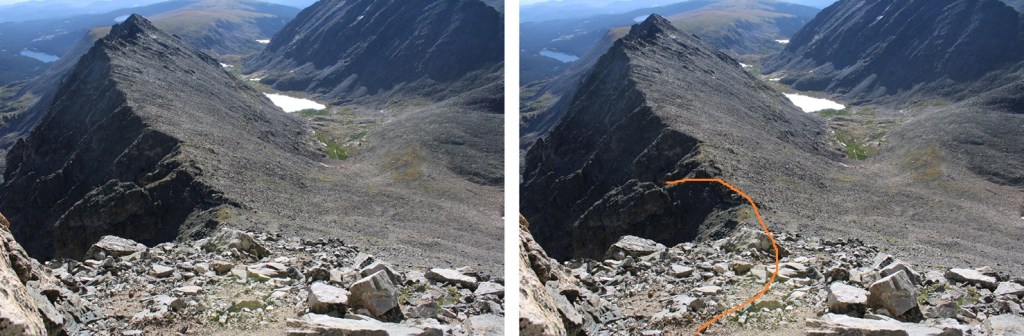
From here the rest of the route looks daunting, but there are tons of game trails that will get you to the right spot. Aim for the very right edge of the rock formation, where you’ll see a chimney. Once again, this should all be class 2.
Here’s a look at that chimney. I found this chimney to be difficult class 3, easy class 4, so if you’re looking for a good practice chimney, this would be it. There isn’t a lot of exposure, and I was able to find adequate hand/footholds if I stretched a bit. At the top of the chimney, exit left.
At the top of the chimney I turned left, and climbed over boulders a short distance to the summit
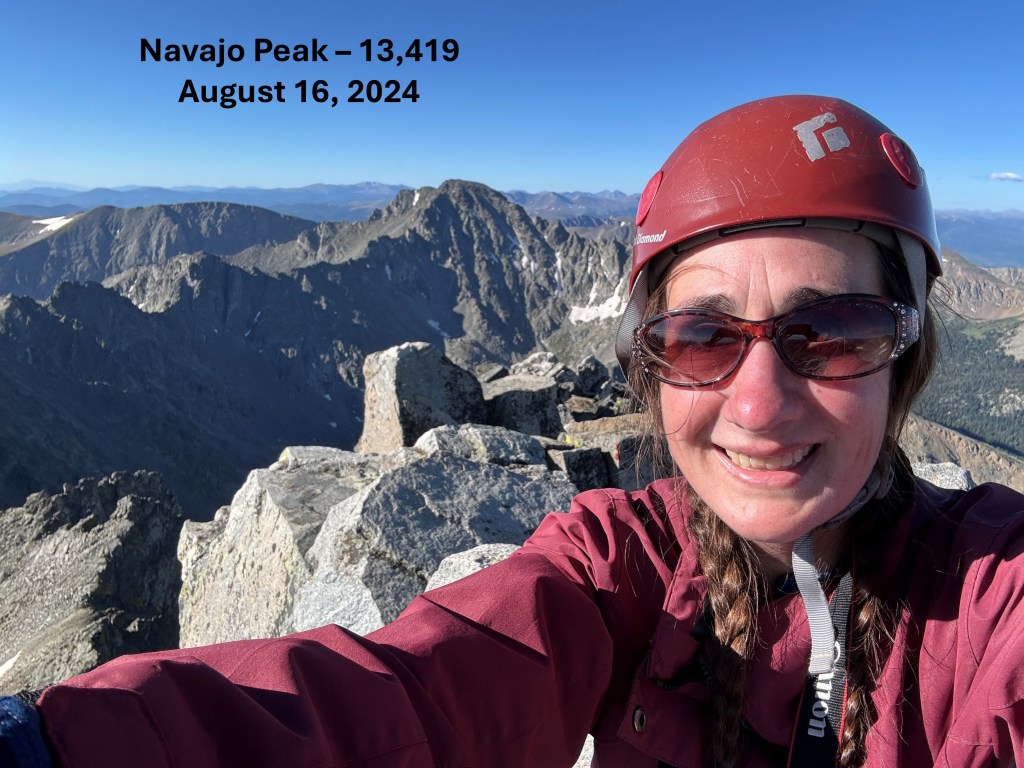
I summited Navajo Peak at 8:30am
Navajo Peak:
This was an out and back hike for me, so I turned around and headed back towards the chimney.
I descended the chimney, and made my way back down to the saddle.
Then headed back down airplane gully
Passing the crash site, and continuing to follow the gully north
At the base of the gully, I rock hopped towards the tundra I could see in the distance
I could now see Isabelle Glacier trail in the distance, and descended down into the lower basin towards the trail.
Back on the Isabelle Glacier trail, I followed it east back to the Long Lake Trailhead.
Back at the Long Lake Trailhead, I followed the road 1.3 miles back to Brainard Lake
I made it back to the trailhead at 12:30pm, making this a 14.52 mile hike with 3346’ of elevation gain in 7.5 hours
I drove up the night before, and parked at Red Mountain Pass. There’s a dispersed campsite you can see from the road that I like, so I parked there. There are a few more sites further up.
Knowing the area was supposed to get rain and storms starting at 9am, I was up and on the trail at 4:30am. I followed Road 823 to the junction with Black Bear Pass.
At the junction with Black Bear Pass, I turned left and followed Road 622 through Porphyry Gulch
It was 2.6 miles from Red Mountain Pass to the upper trailhead, on an easy 4WD shelf road with few passing areas. When I got to the upper trailhead, I was surprised to find someone had set up camp in the upper parking lot/turn around area. Normally, there’s room for 7 cars here, but these people took up at least 4 spots. When the ant train of 4WDs come up later today, they are not going to be happy.
The trail starts to the left of the parking area, and is initially well defined.
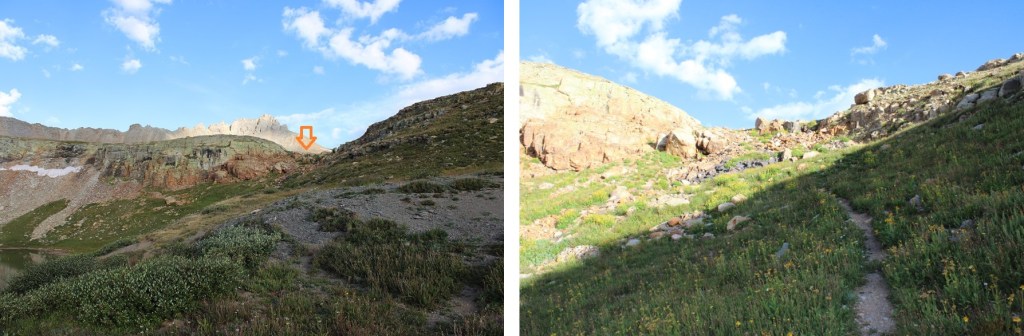
In the dark, the trail was difficult to find for a bit. I was aiming for these rocks
Just behind these rocks, a nice trail picks up to the right, and brings you to Bullion King Lake.
Here’s where the trail ended. I skirted the lake to the right, and started heading northeast into Porphyry Basin
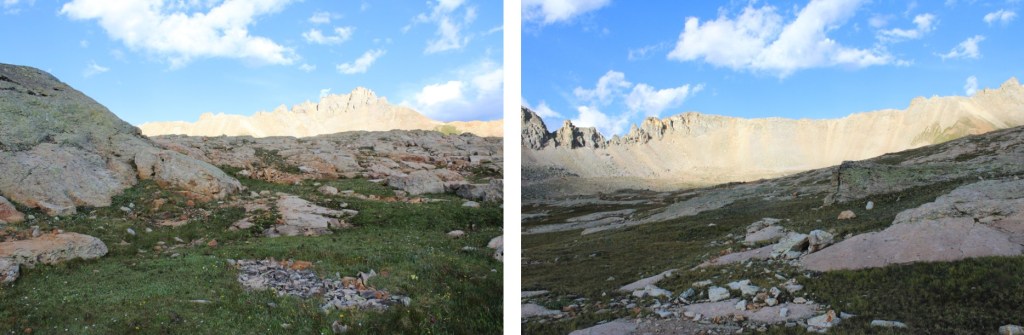
There’s no need to climb all the way to the top here. I skirted to the left, and continued heading northwest. If you look around, you’ll see remnants of old mining equipment and structures in the area, but they’re all flattened at this point.
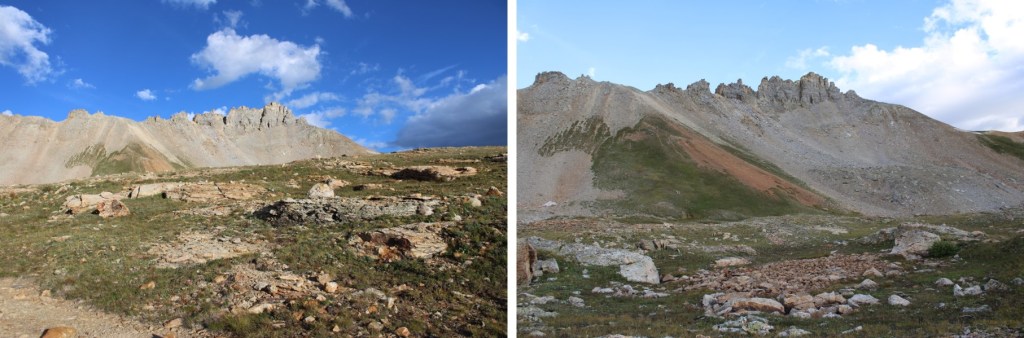
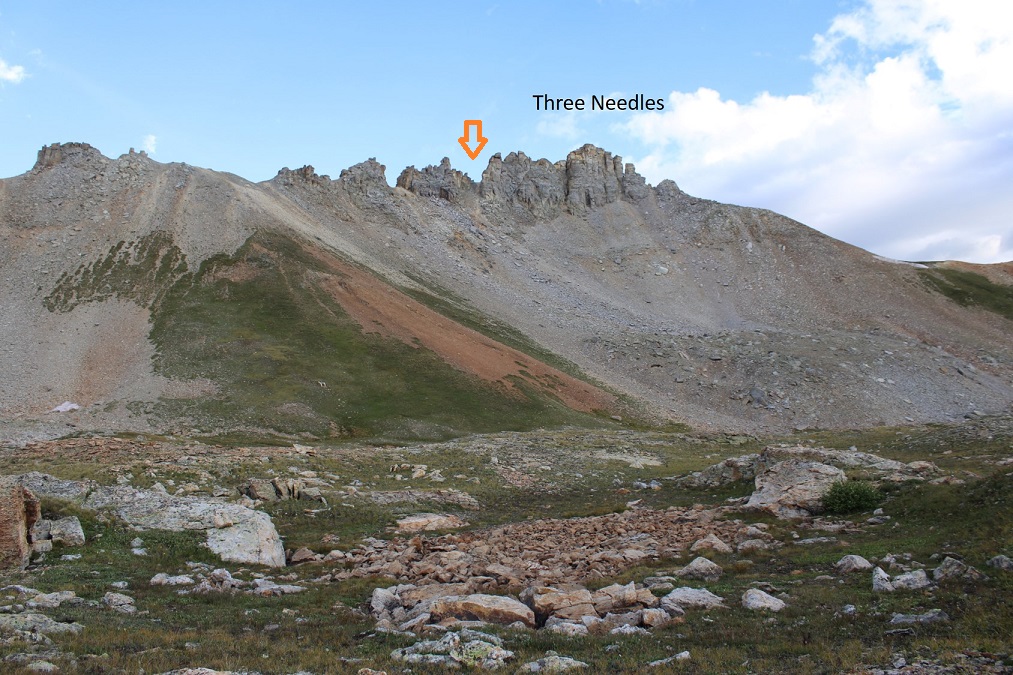
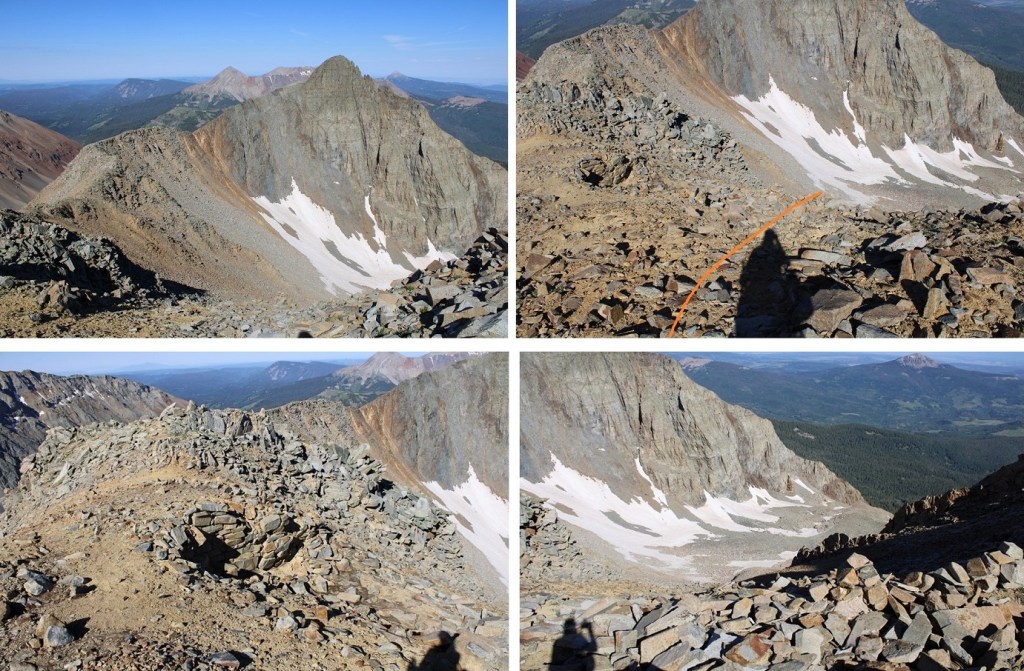
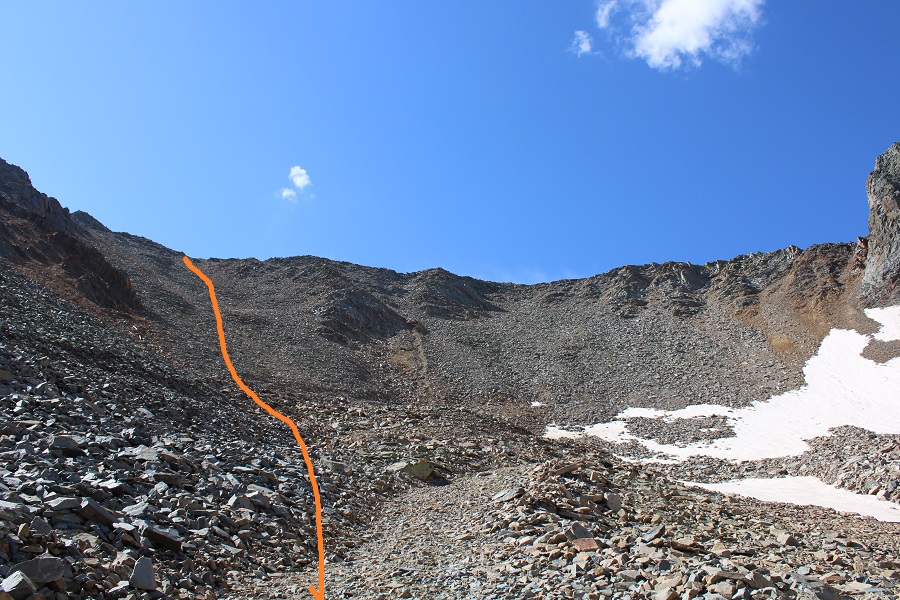
Here is where I strapped on my helmet and microspikes. I could clearly see Three Needles in front of me. I went straight up this gully.
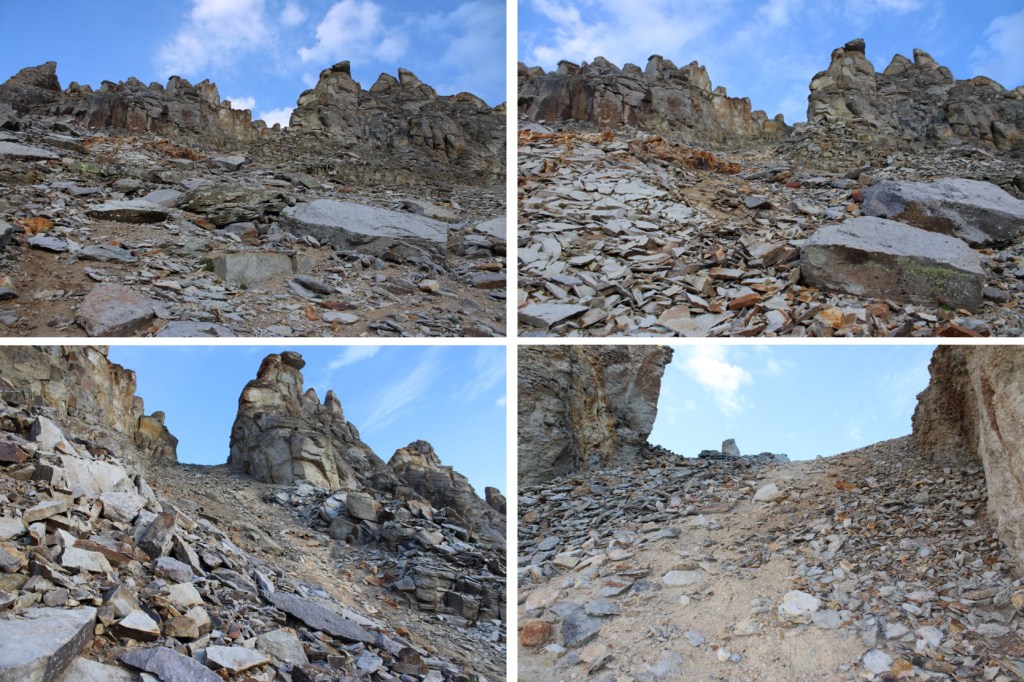
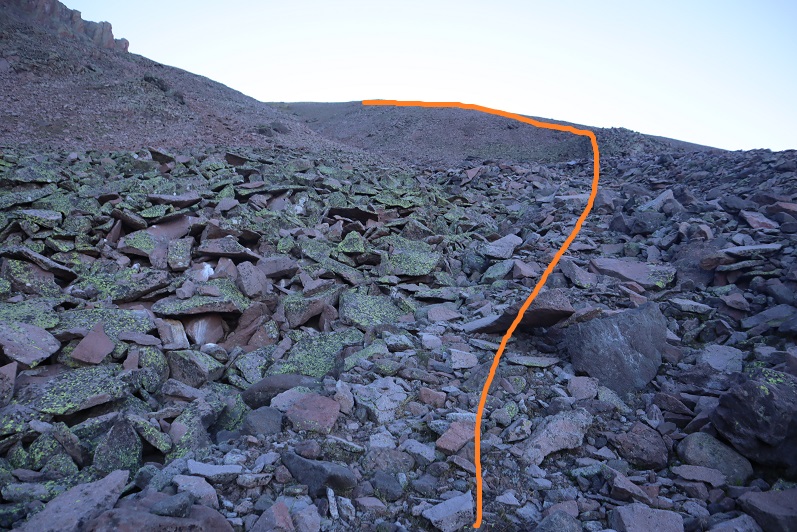
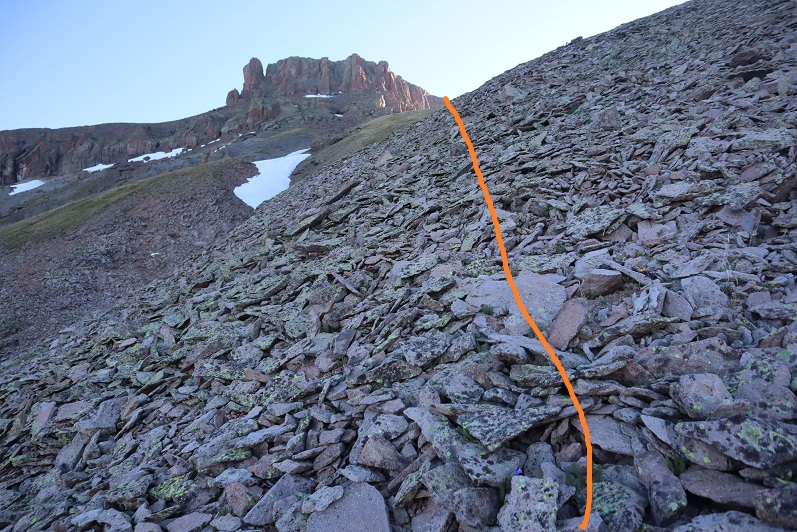
The gully was full of shale and scree. It was loose, and hard to get stable footing. I was glad to have on my microspikes. It looks like the terrain shifts every year, as well as every time it rains. Towards the top there are game trails, but they were more needed down below. Here are some pictures of the gully
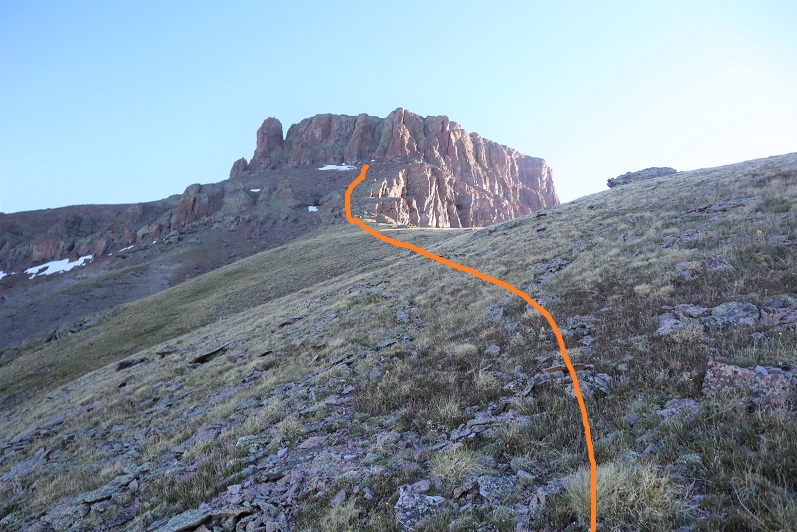
At the top of the gully, I turned right, and followed the scree
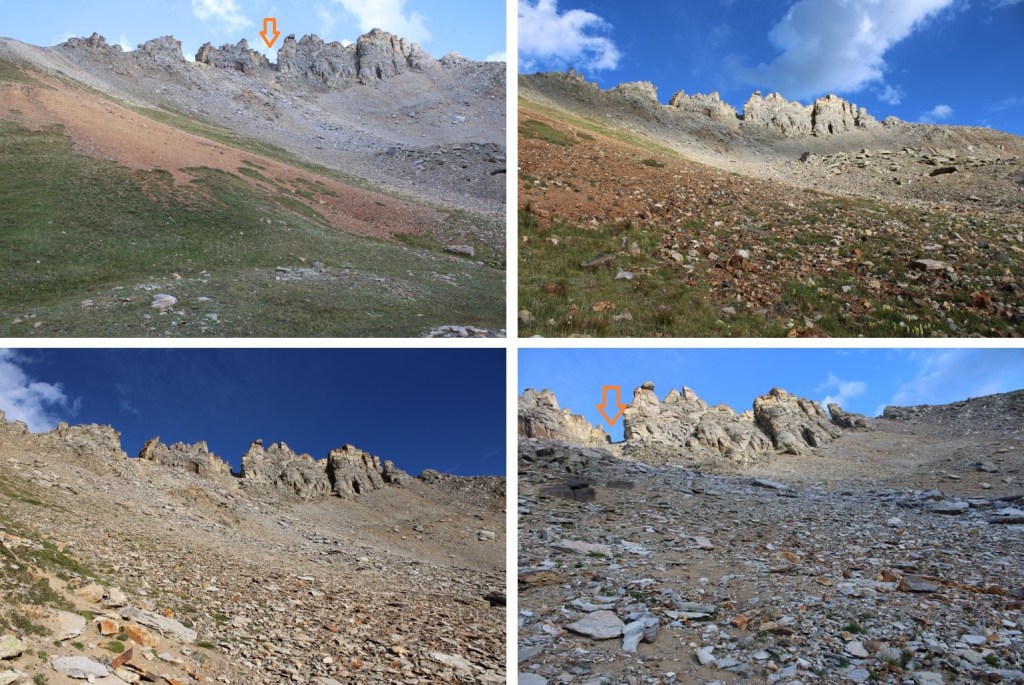
I was headed here
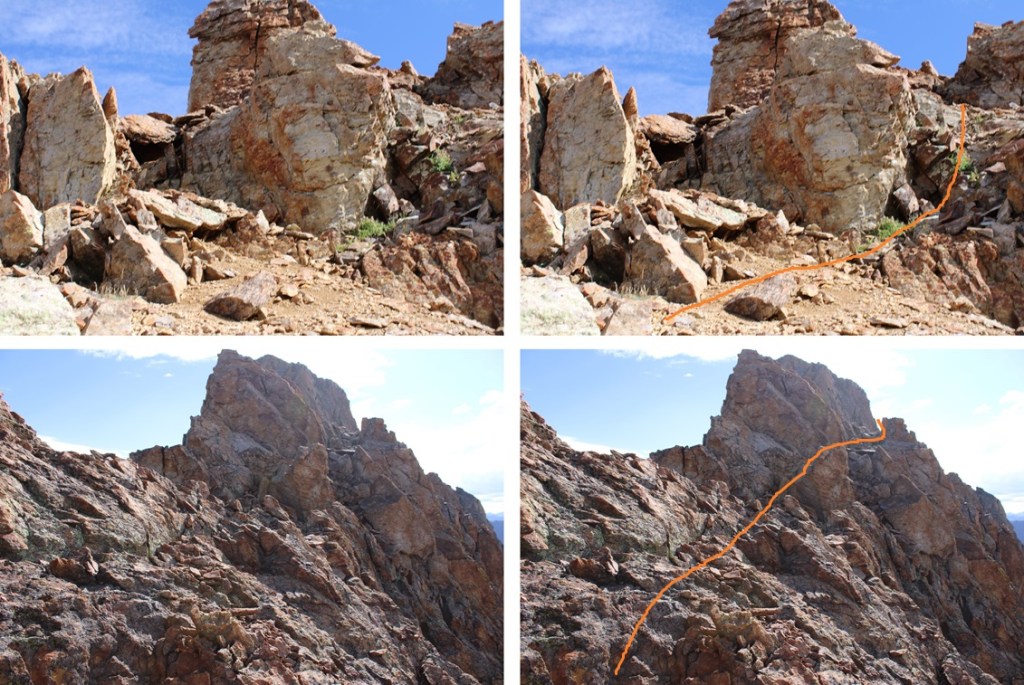
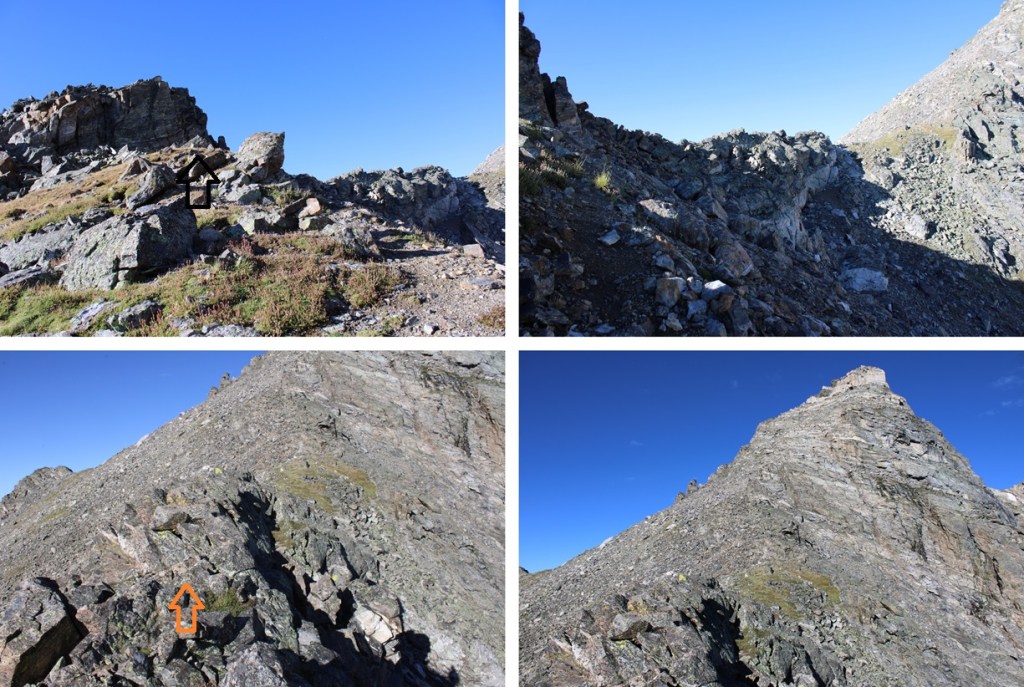
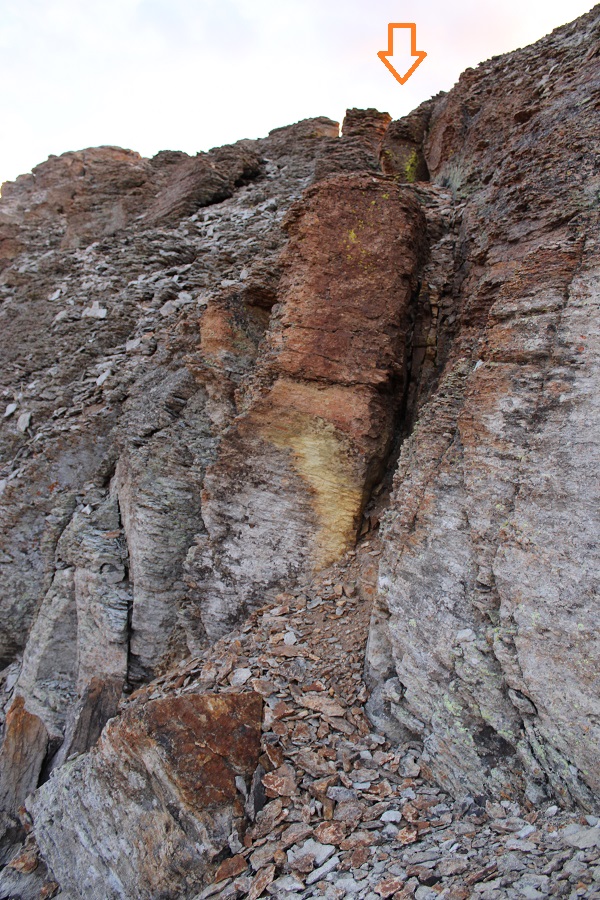
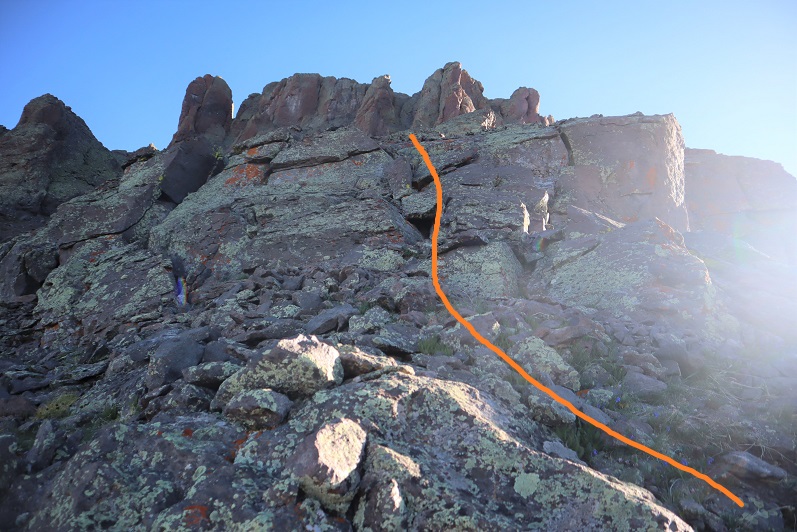
I looked for a weak point to ascend, and found this chimney. I didn’t climb up the chimney, but you certainly could
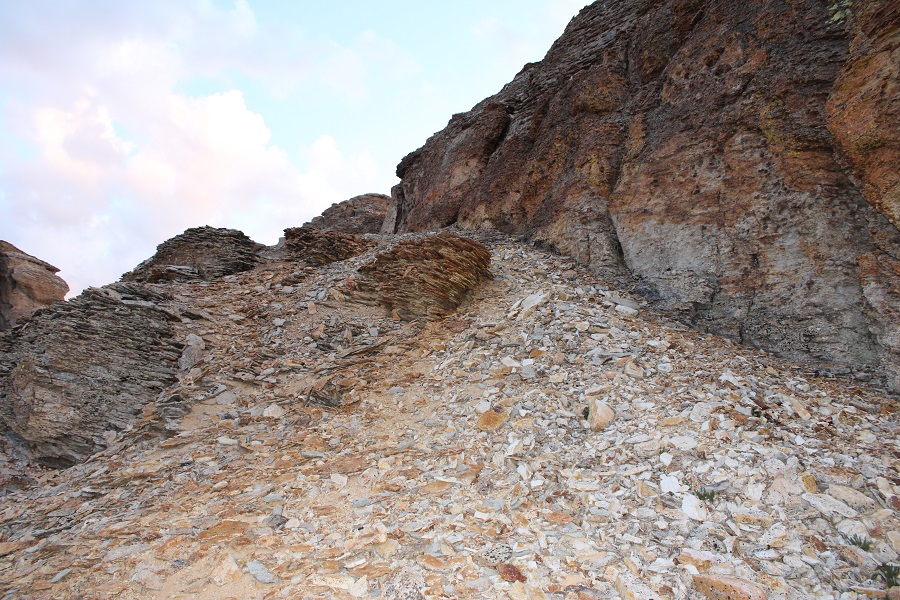
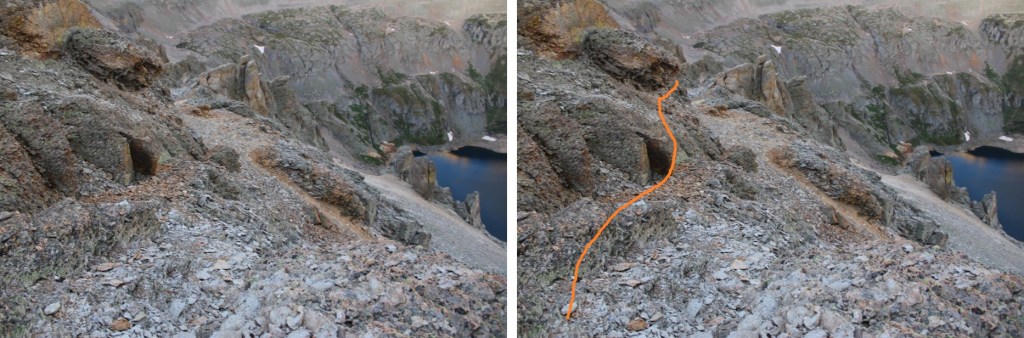
Instead, to the right of the chimney I found a narrow ledge. Yay! Being short is finally working out for me when it comes to scrambling! I climbed up to the right of the chimney, they traversed left to the ridge.
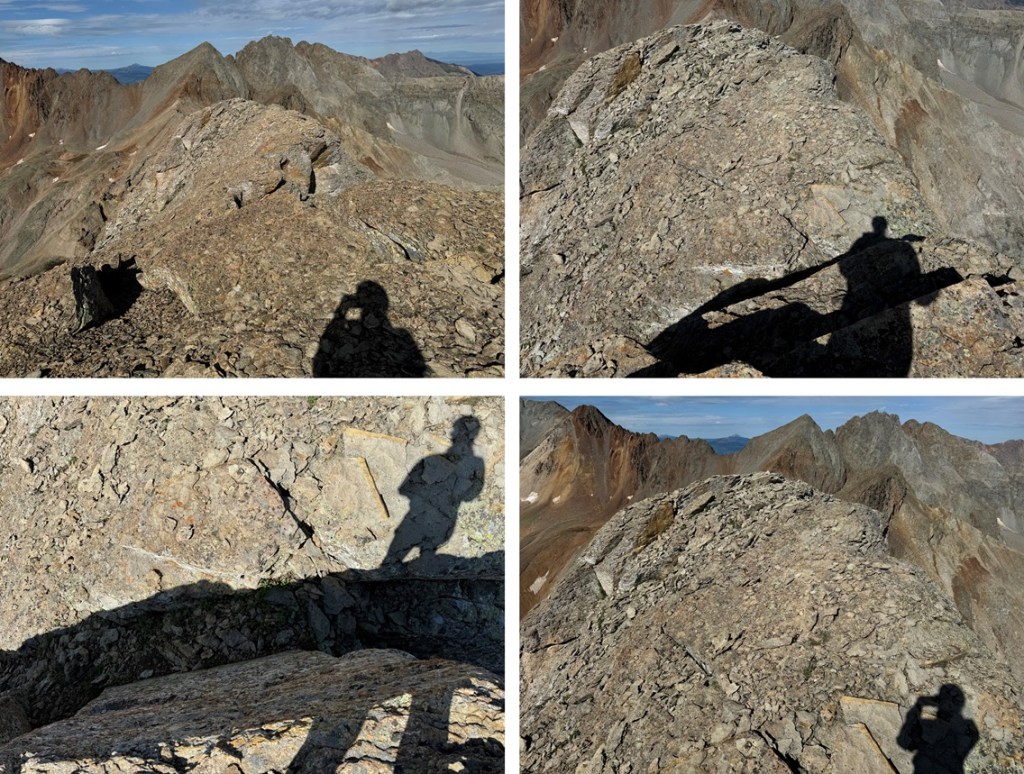
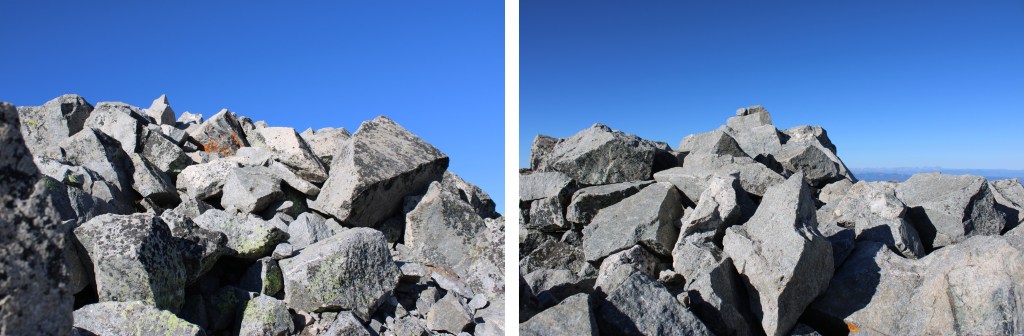
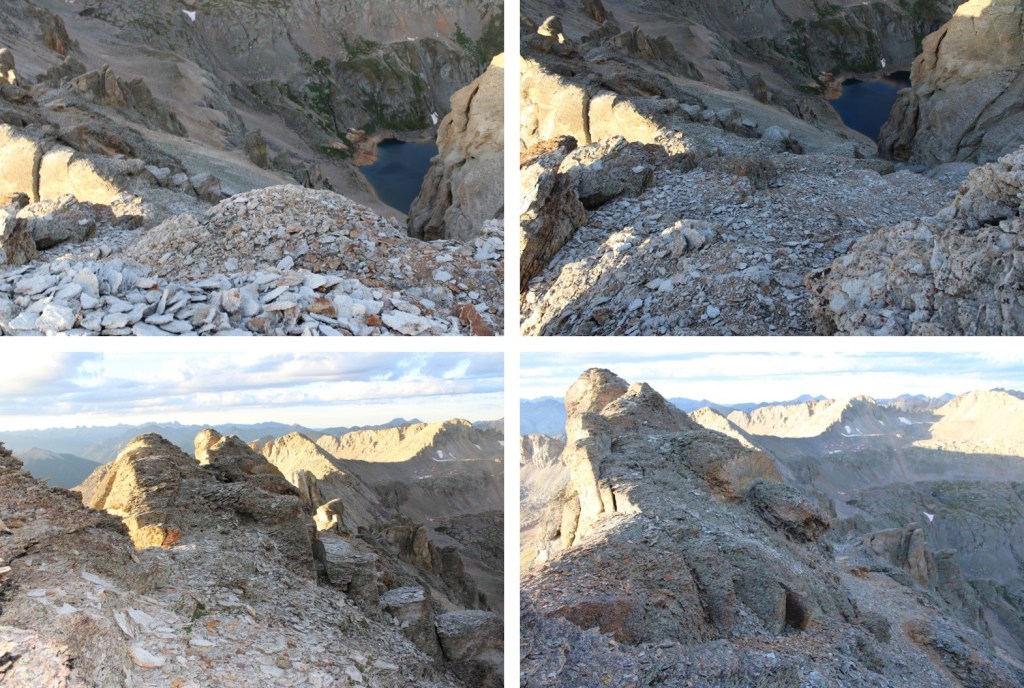
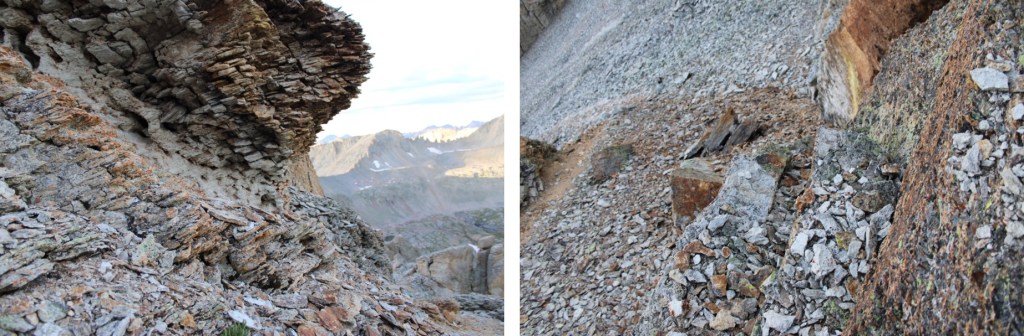
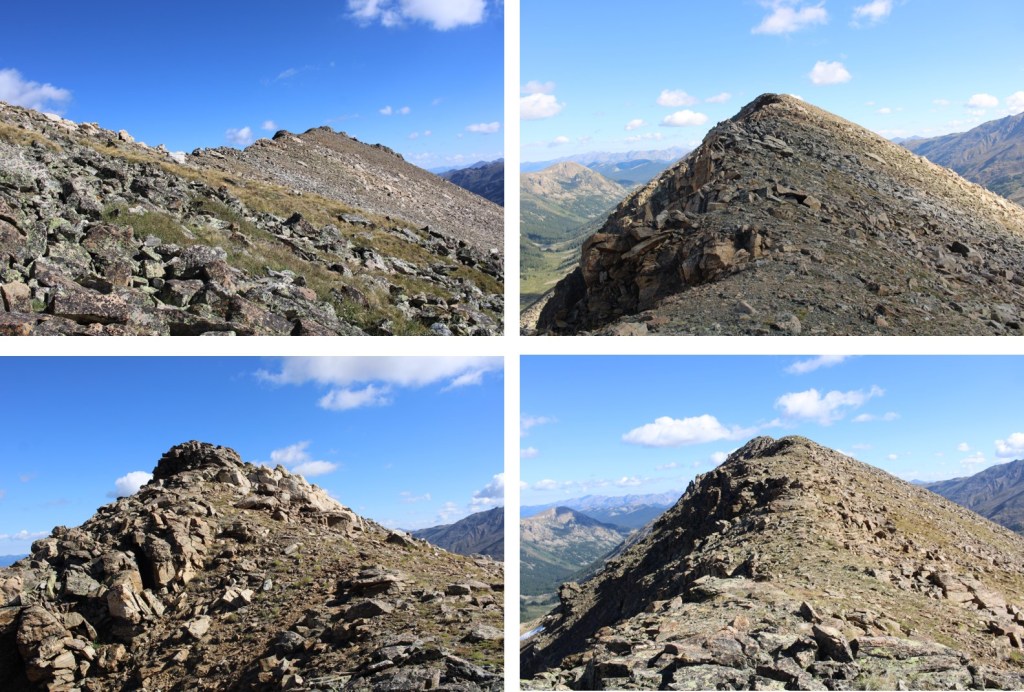
The ridge was short but full of kitty litter and talus. It never got worse than easy class 3, but it was loose.
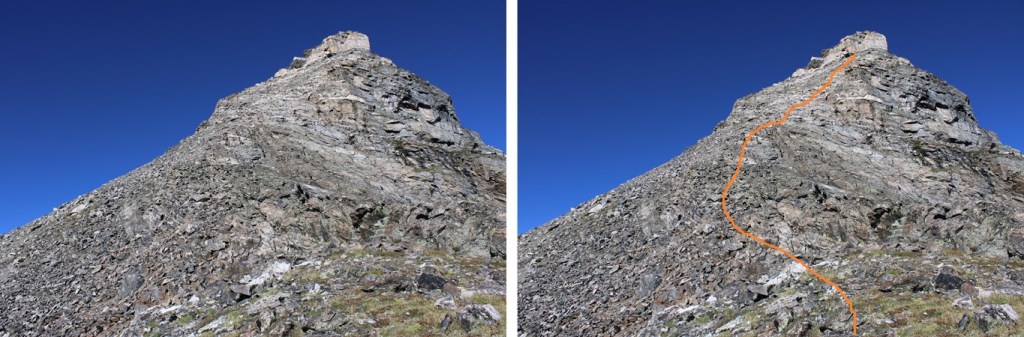
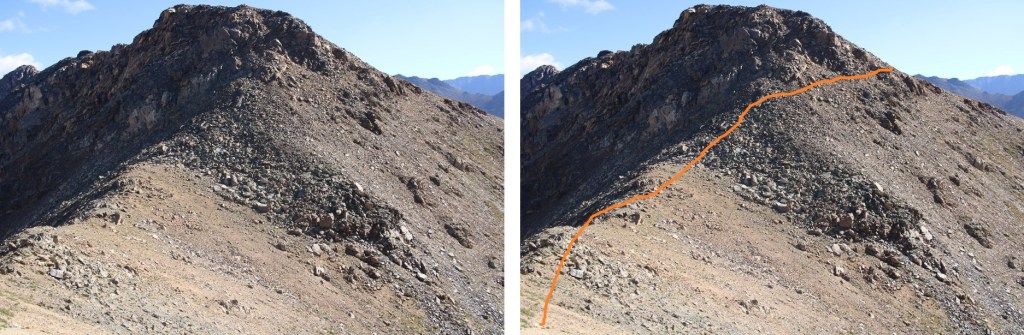
This is the overall route I took to the summit
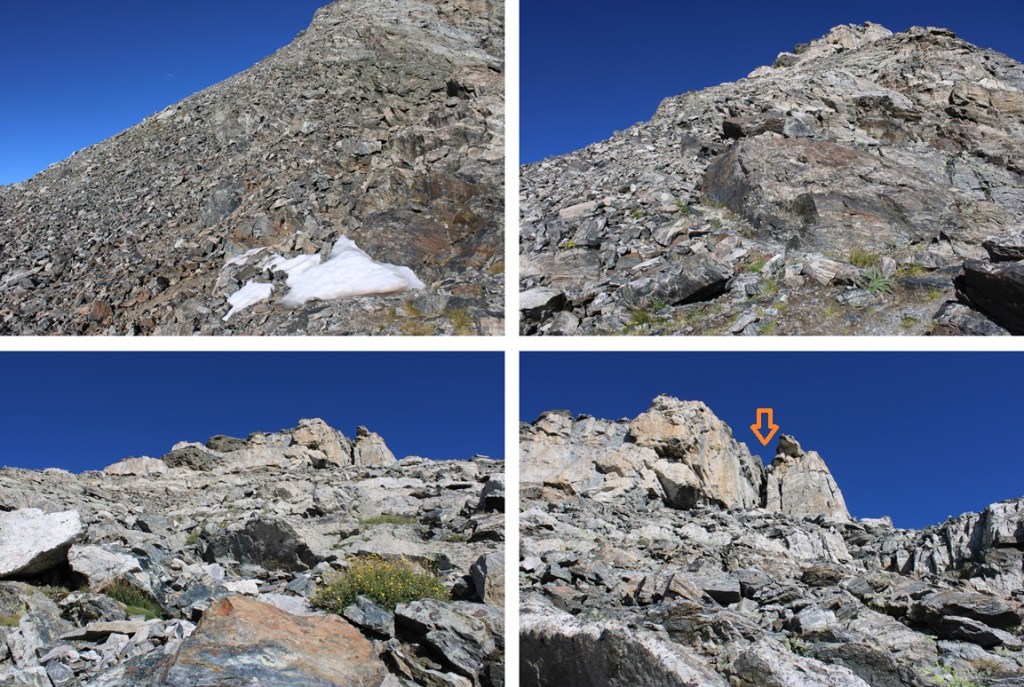
And some step-by-step pictures
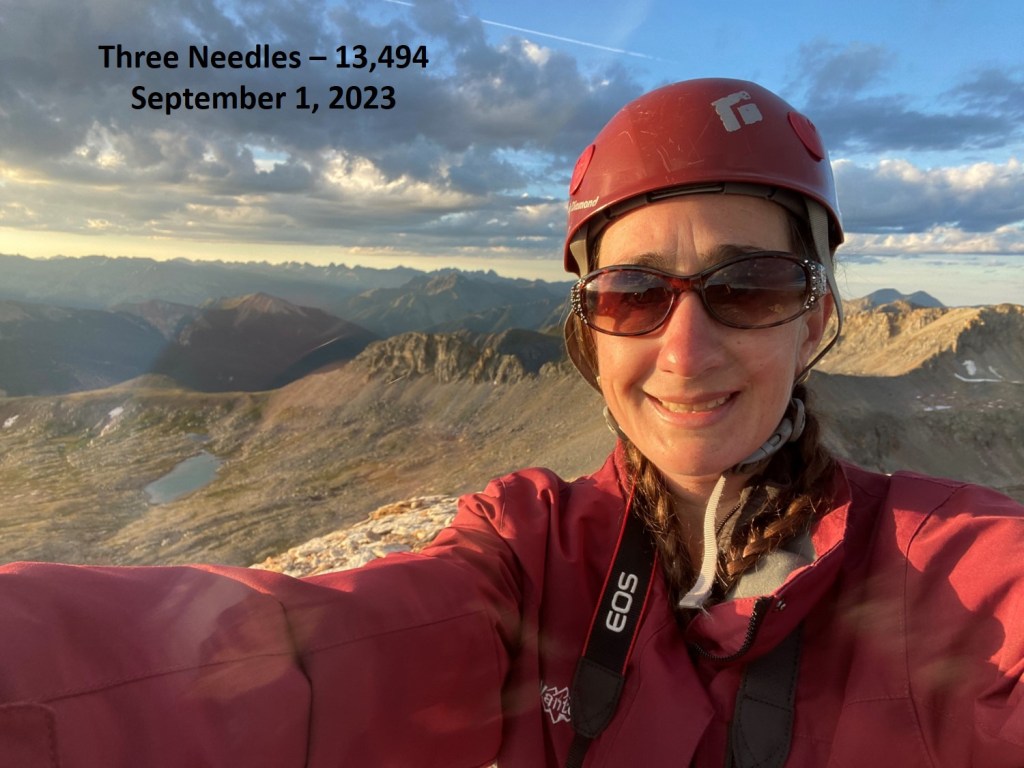
I summited Three Needles at 6:45am
Three Needles:
I had cell service, so I checked the weather, and even though I could see dark clouds and virga in the moonlight this morning, it looked like the weather had been pushed back until later in the day. So I decided to sit on the summit for a bit, and enjoy the cell service and sunrise.
This was an out and back hike for me, so I retraced my steps to the access gully
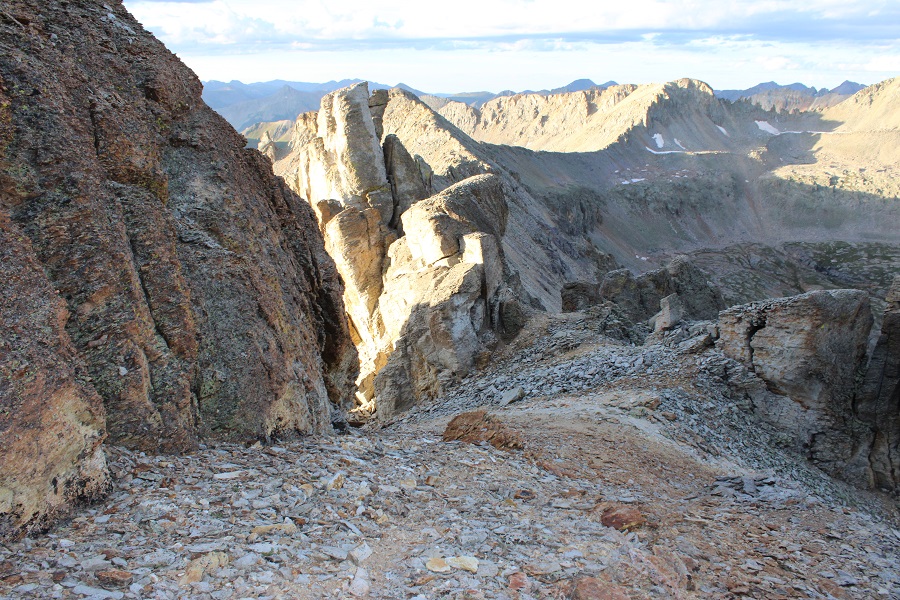
Once again, I did not descend the chimney, but ducked under a rock ledge to the left, then headed down
At the bottom of the chimney I turned left, and headed back to the access gully
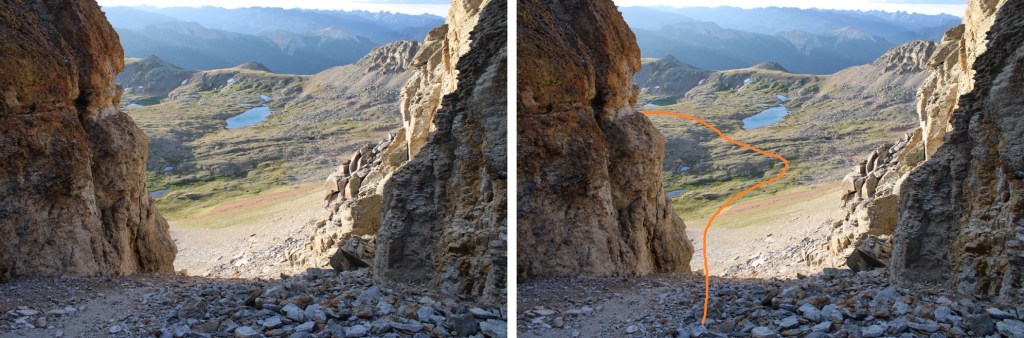
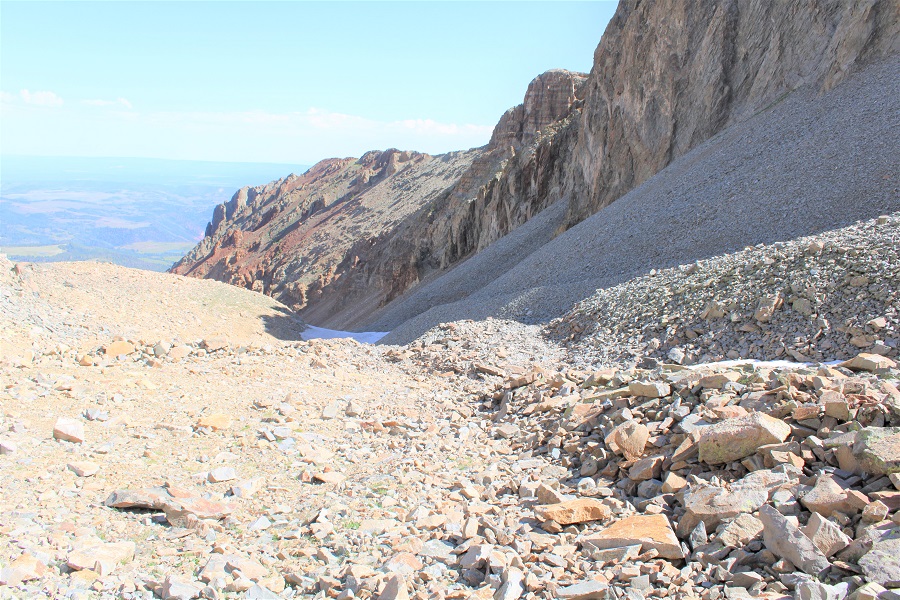
From the top of the gully, I could see my route out of the basin
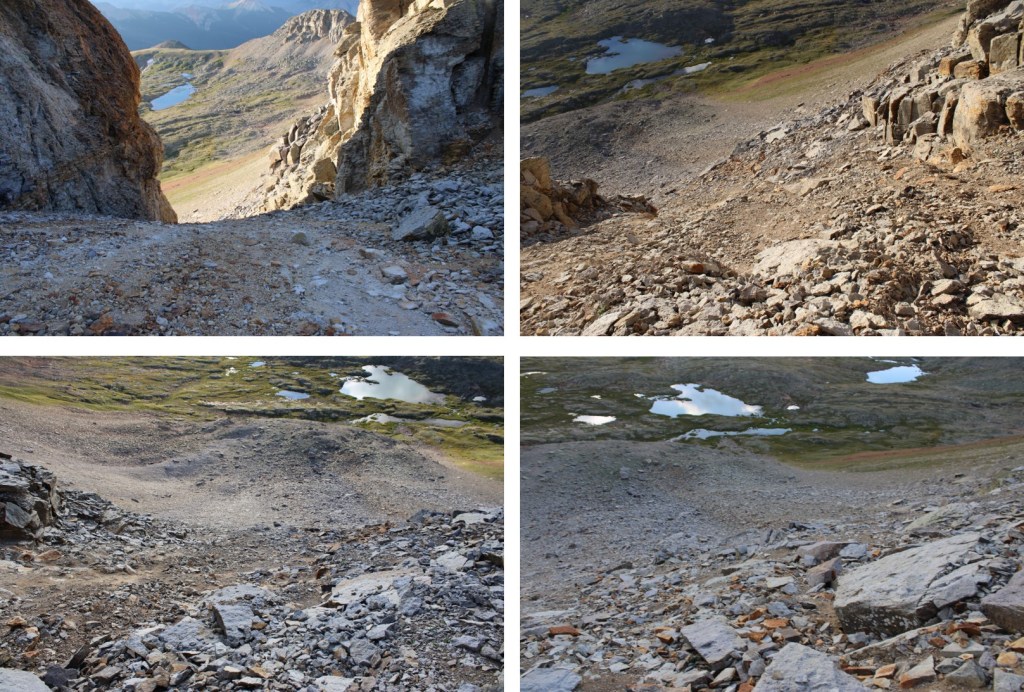
The gully was much easier to navigate heading down, but still very loose.
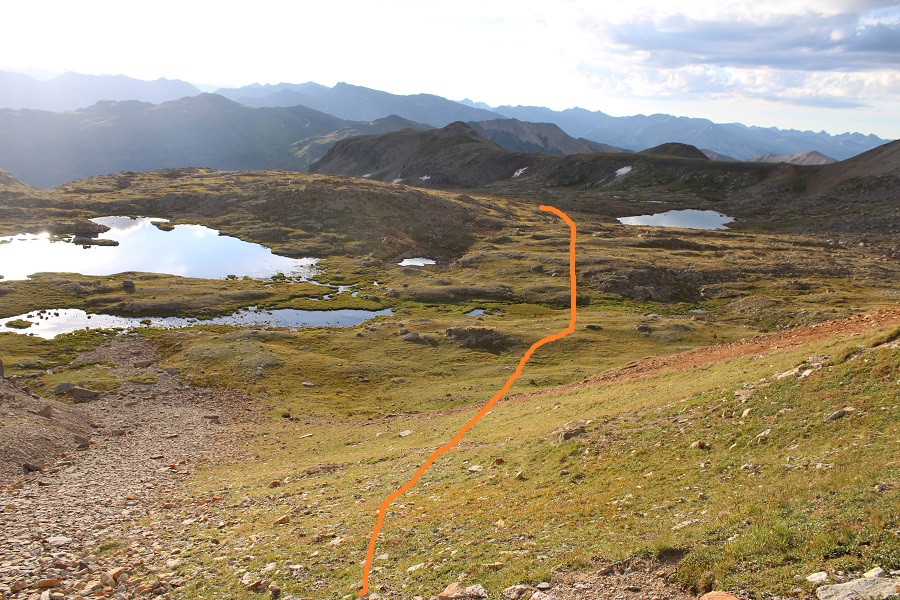
Now to make my way back to Bullion King Lake
And pick up the trail on the other side that lead me back to the 4WD road
Back at the upper trailhead, I followed the 4WD road back to Red Mountain Pass
I made it back to Red Mountain Pass at 9am, making this an 8.82 mile hike with 2420’ of elevation gain in 4.5 hours.
Full disclosure, I did these peaks in two days. The first day I got thunder stormed out just before the access gully of PT 13291, and had to turn around. I came back 2 days later to finish the summit.
I stayed overnight at the North Fork Lake Creek Trailhead, and was on the trail at 5am the next morning. The parking area has room for about 15 vehicles if everyone parks nicely, as well as some overflow spots on the short drive in.
The trail starts at the north end of the parking area, close to a locked gate. It’s trail number 1483.
I followed this class 1 trail for 3 miles north into the basin
When I came to a creek, I crossed it and turned left.
Here there is a faint trail for a few yards, and then it fades out. I headed northwest into the upper basin.
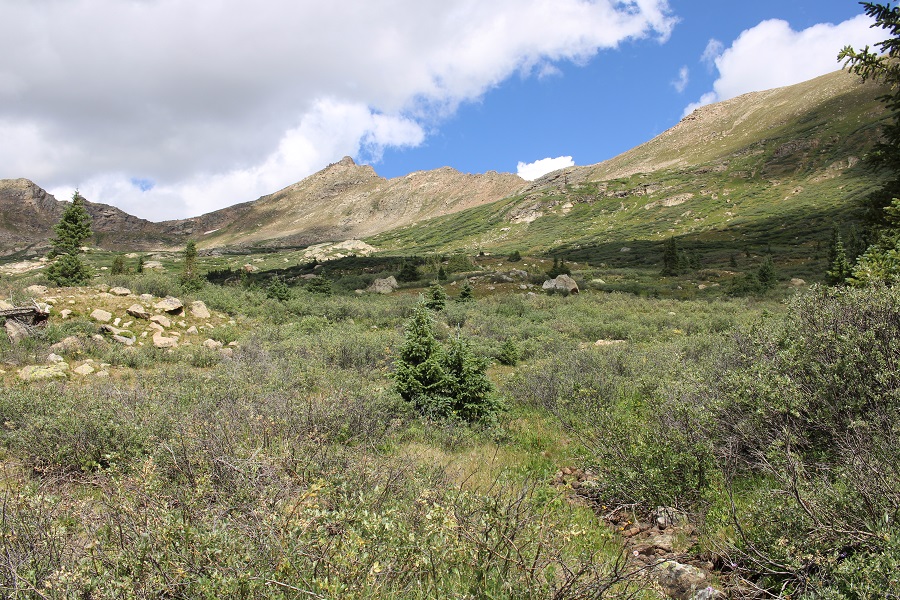
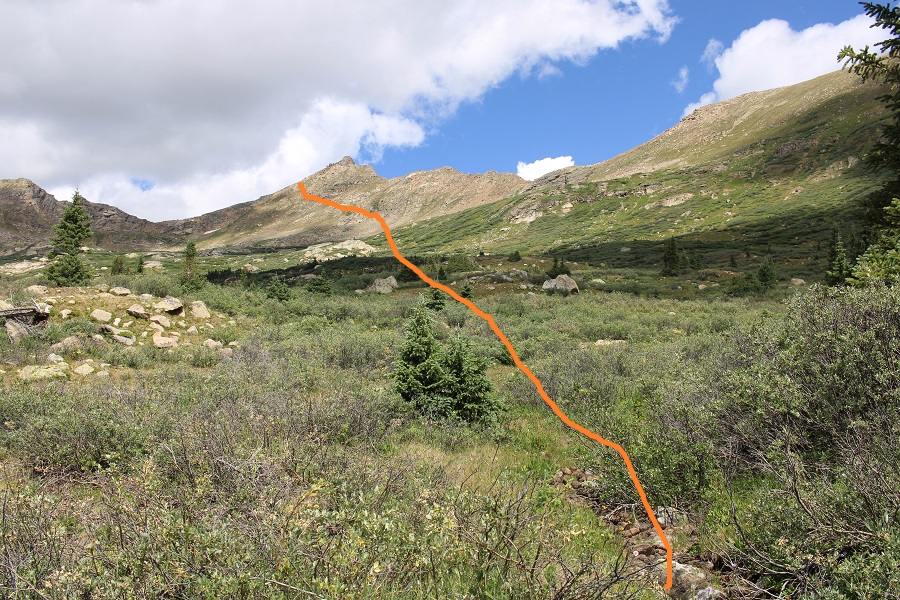
Here’s an overall view of my route to the ridge
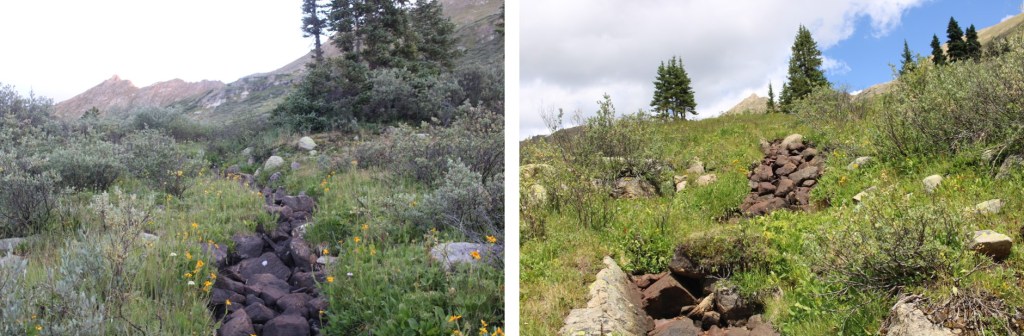
While there was no trail in the basin, I was easily able to follow dried up creek beds through the willows. Staying on the dry rocks kept me mostly away from the willows, and became a great path to follow.
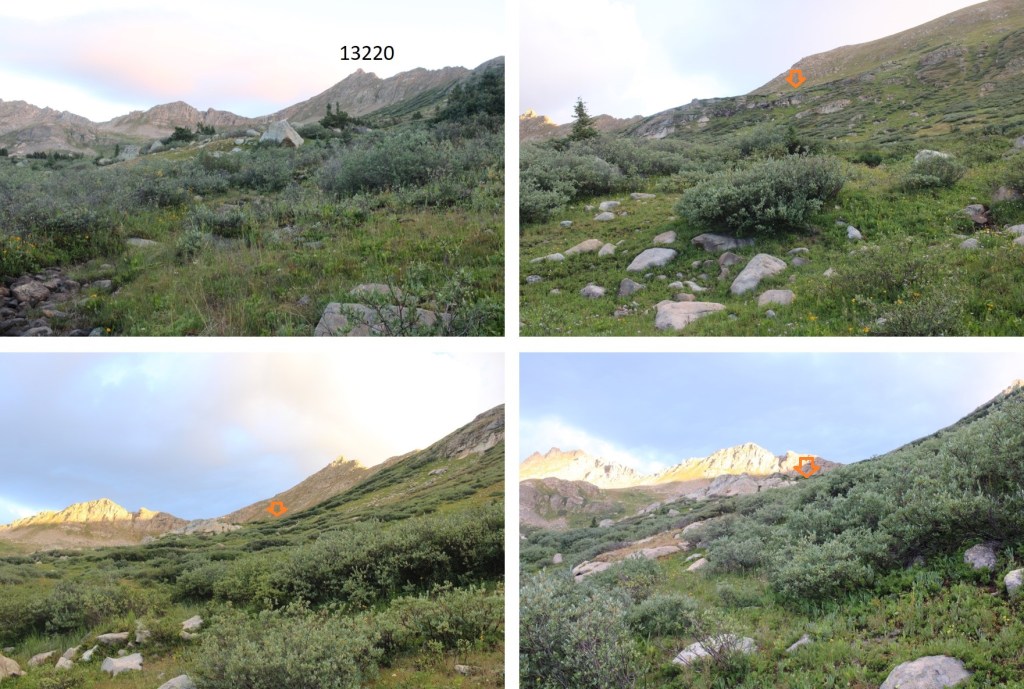
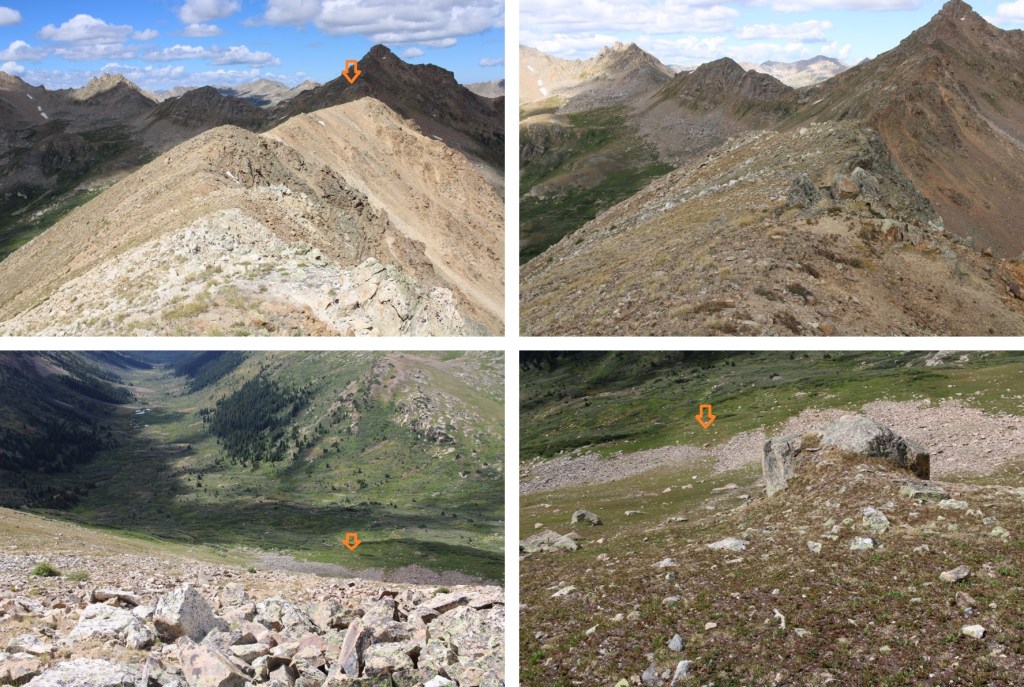
Once I got past the willows, I aimed for the ridge. Specifically, this boulder first.
After making it to the boulder, a game trail picked up and took me to the ridge
Once making it to the ridge, I turned right, and followed it northeast to the summit. This was all class 2.
Here are some pictures of this short ridge
I turned right at the top of the small gully, and walked to the summit
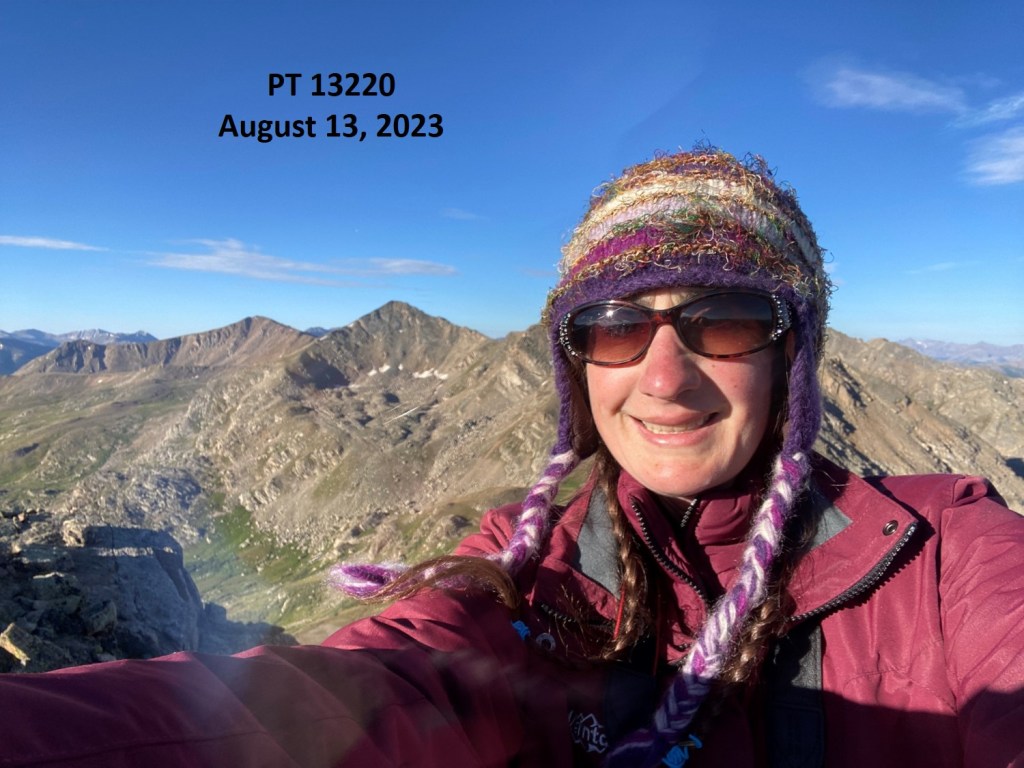
I summited PT 13220 at 7:45am
PT 13320:
PT 13291 was to the northeast, but to get there I was going to retrace my steps down the ridge first. I headed back to the ridge.
I picked up the game trail again, and skirted the rocky section that was on my left, and re-gained the ridge on a grassy slope. Here’s my overall route
Once on the ridge again, I skirted this rocky section to the right. Resist the temptation to ascend any higher until you get to the tundra and it will stay class 2. Otherwise, you can go up the rocks at any point for some class 3 or 4 fun.
Now it was a class 2 stroll along the ridge as I headed east.
When I got to this point I put on my microspikes, turned right, and dropped down to navigate the formations. This was class 2+, but the loose scree and exposure added a layer of fun.
This was my next obstacle. My first thought was to go right up the center of the gully, but I ended up scouting around and found it was much easier, and still class 2, to skirt around and gain the ridge from the right side.
Back on rocky tundra, I now followed the ridge direct north. This was all class 2.
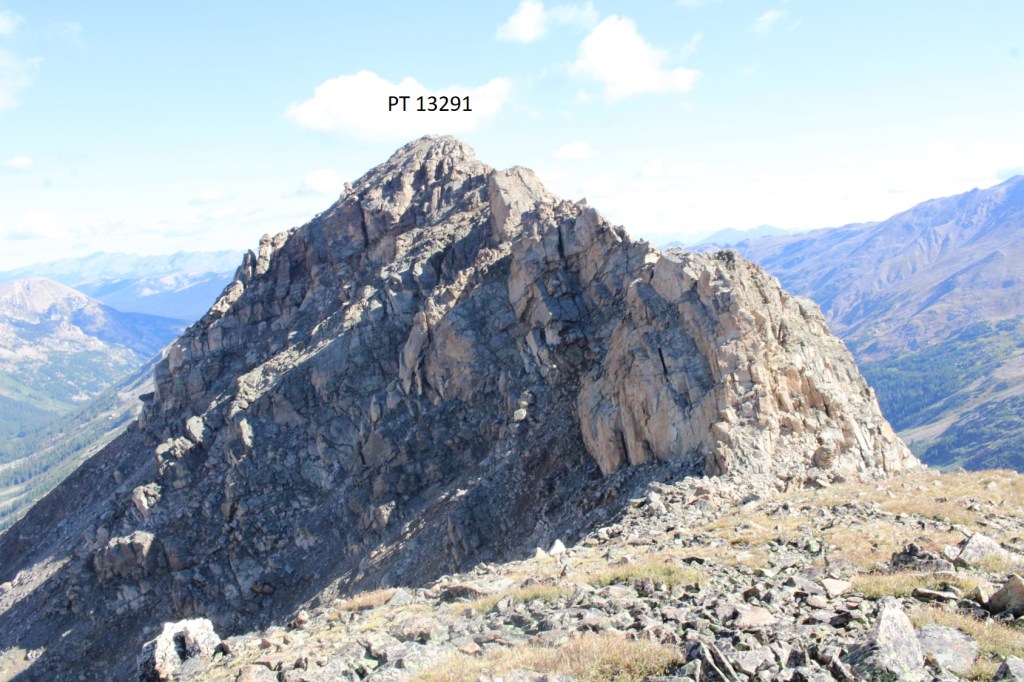
At the top of the ridge I got my first good view of PT 13291. Unfortunately, the first day I was here I had to stop at this point due to time constraints and an impending thunderstorm. It sucked to turn around, but it was something I had to do.
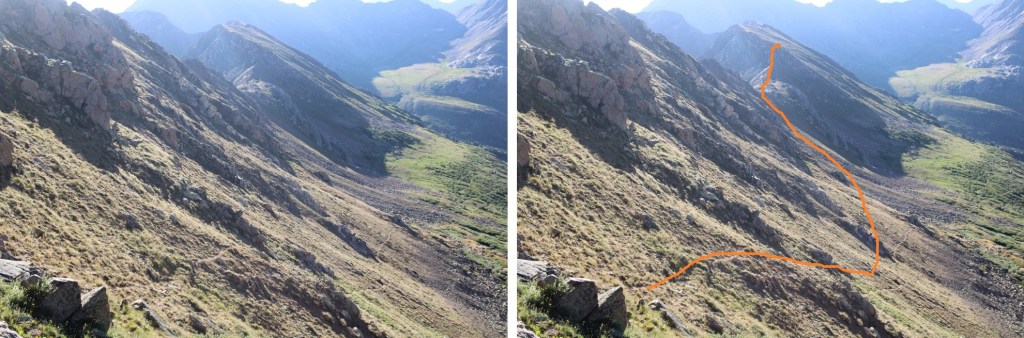
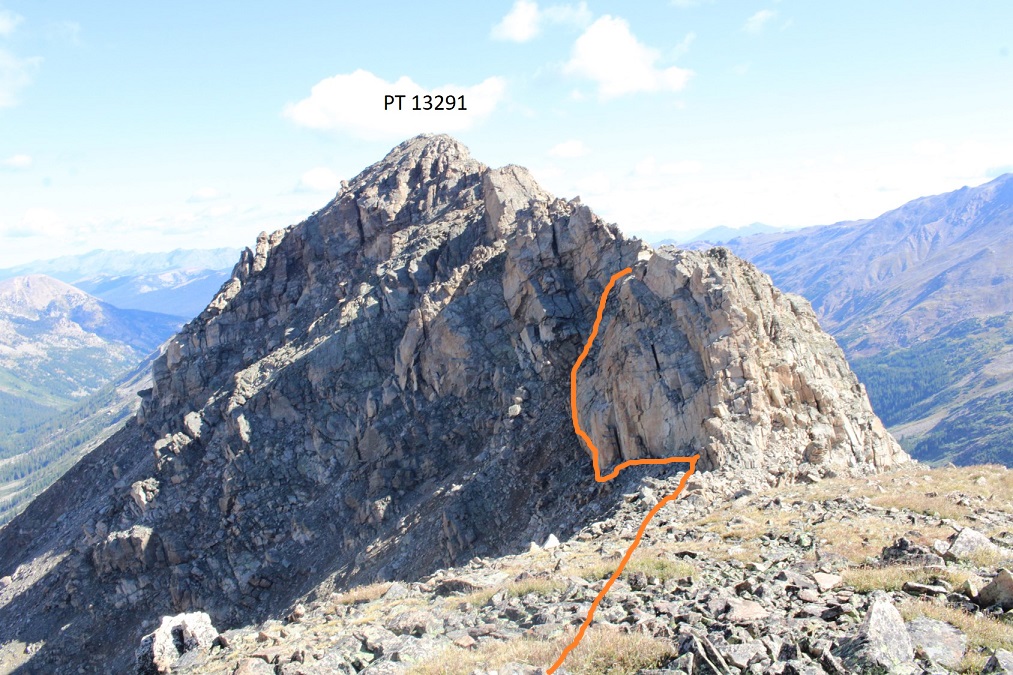
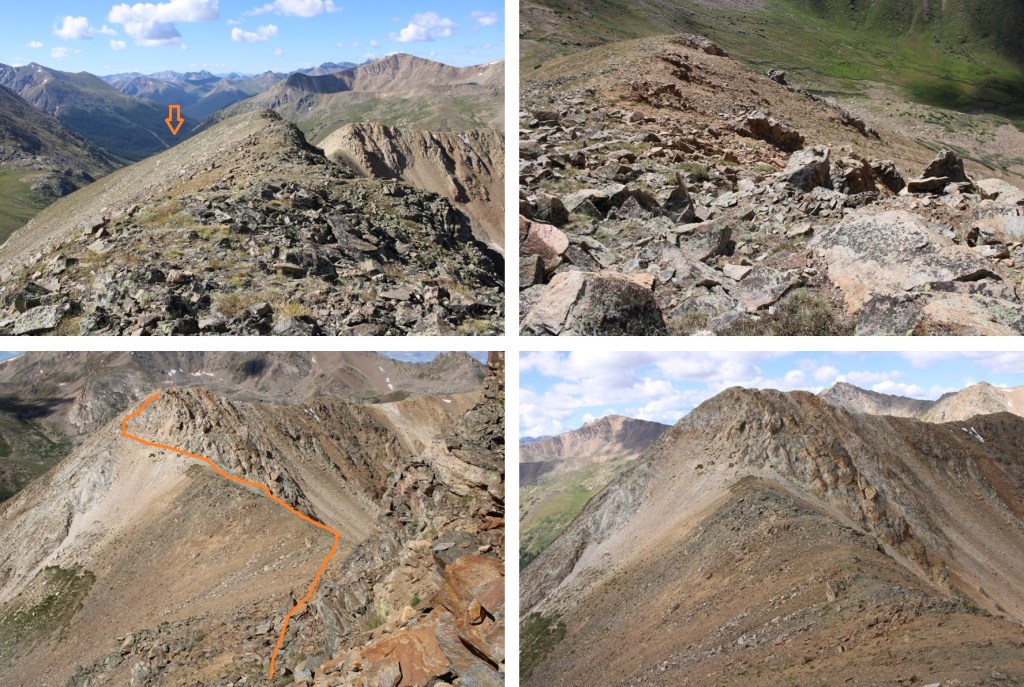
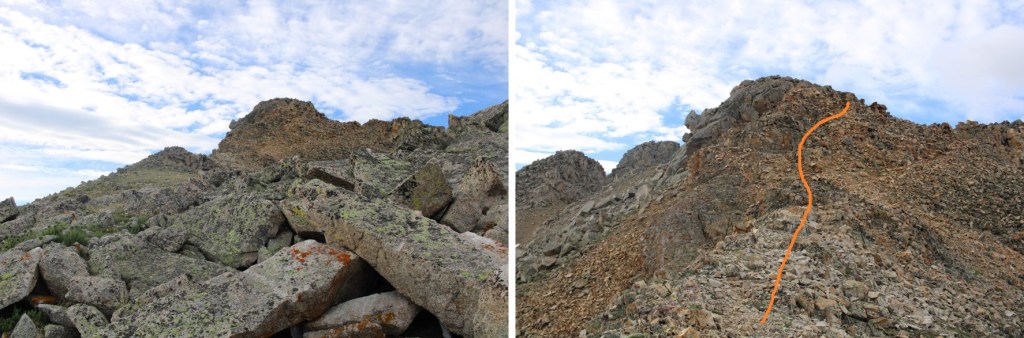
The next time I was here, two days later, this is the overall route I took to get past the steep rock in front of me. Also, this is a good time to put on your helmet if you haven’t already done so.
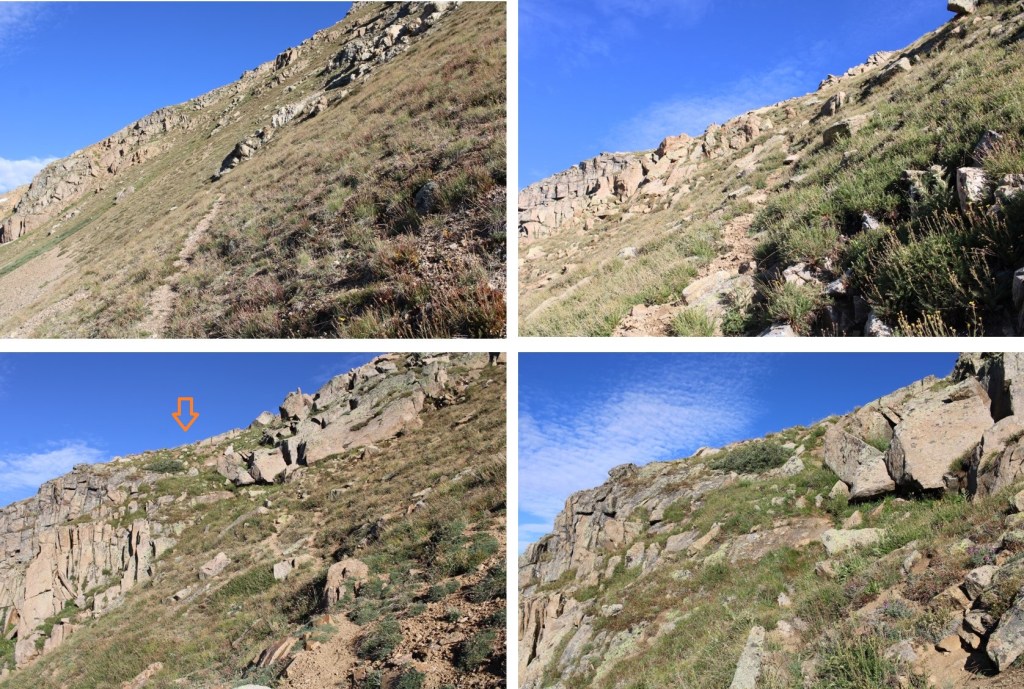
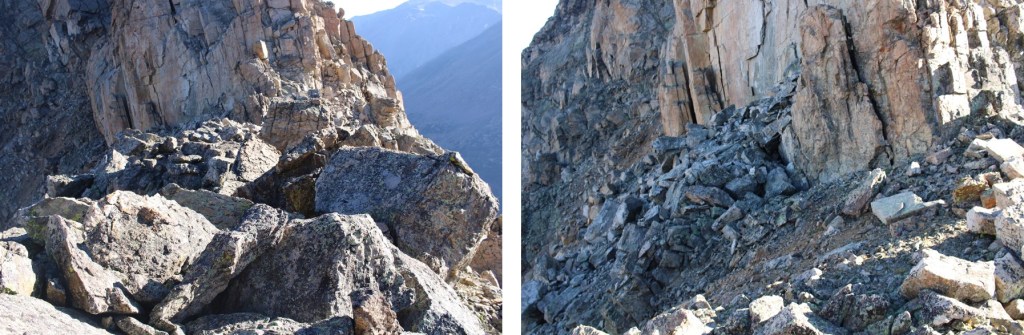
This looks loose and fraught with exposure, but the route is actually pretty solid and wider than it looks from a distance. I started out rock-hoping on stable boulders, then descended west about 100 feet, staying as close as I could to the rock wall, to the base of a gully
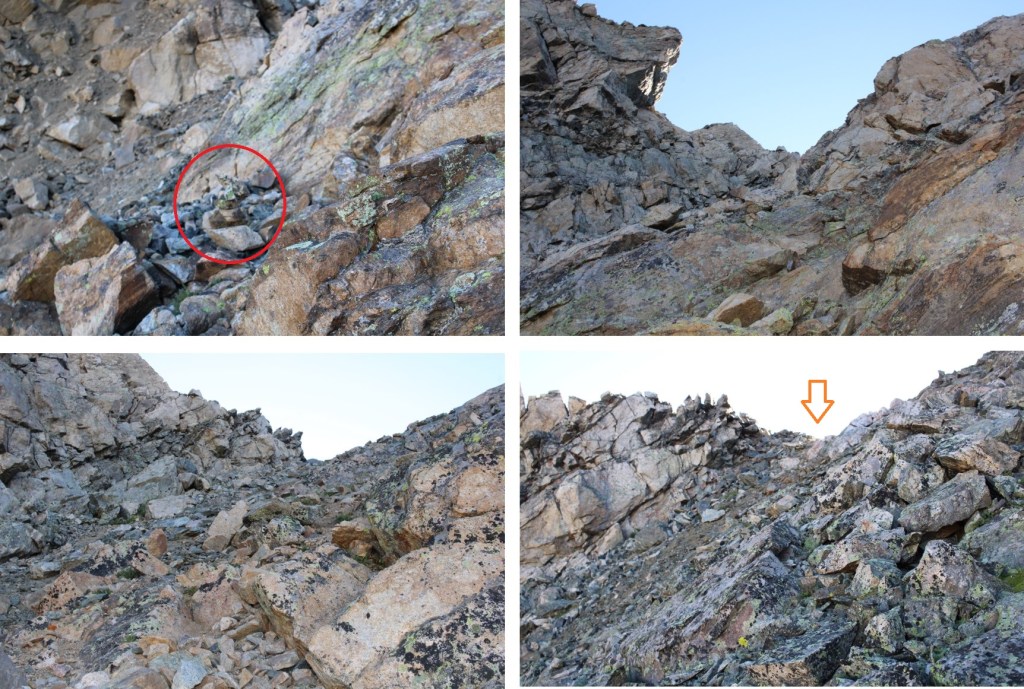
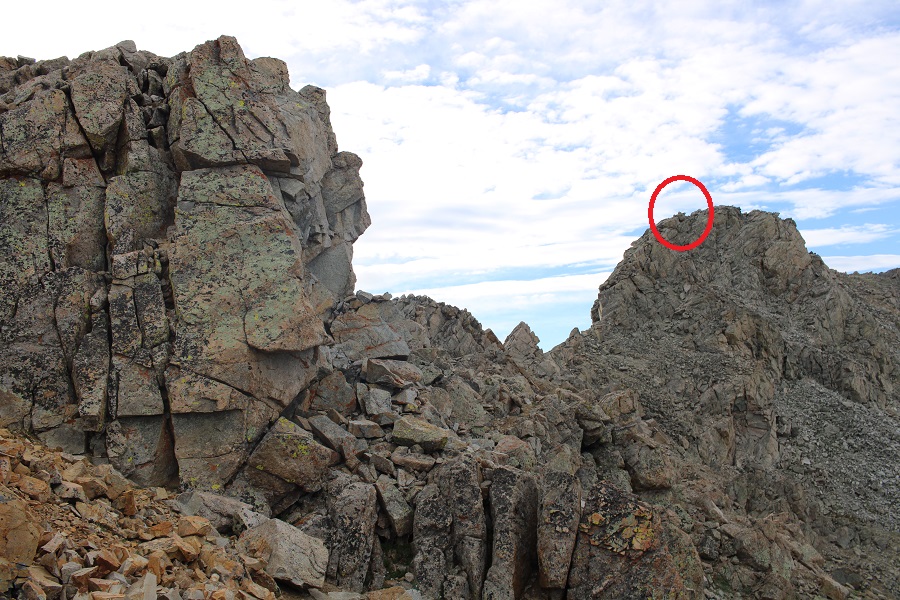
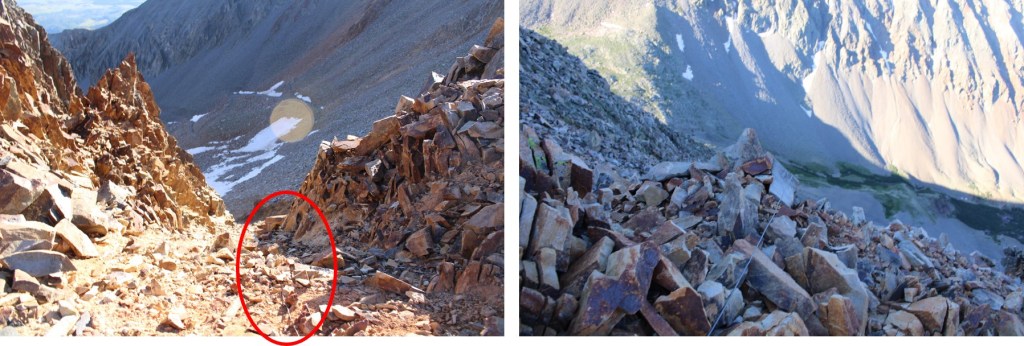
At the base of the gully, I turned right and ascended the 100-foot gully. Climbers left was extremely loose, but the right side was steep but stable rock. I chose to stay on the stable rock. There is a cairn (circled) at the base of the gully, indicating where to ascend.
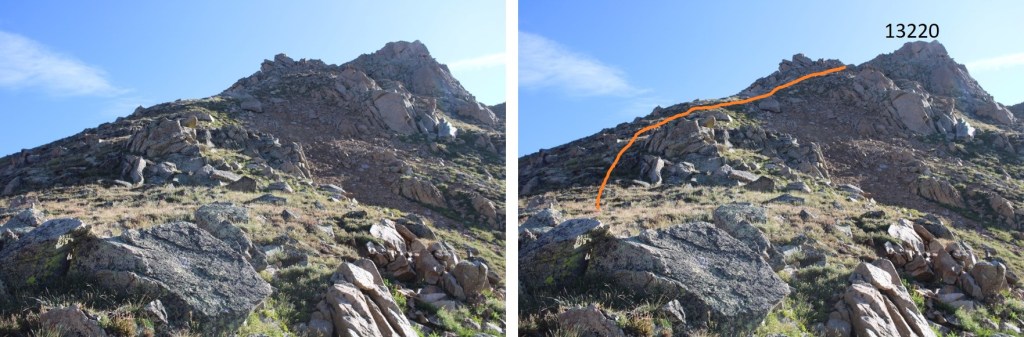
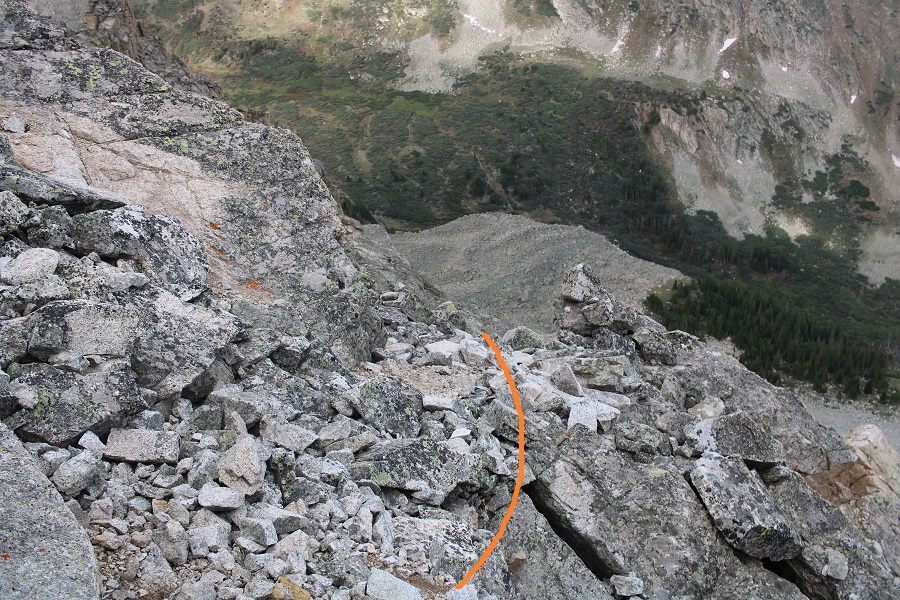
Here’s a view from 13220 of the gully I went up to access 13291.
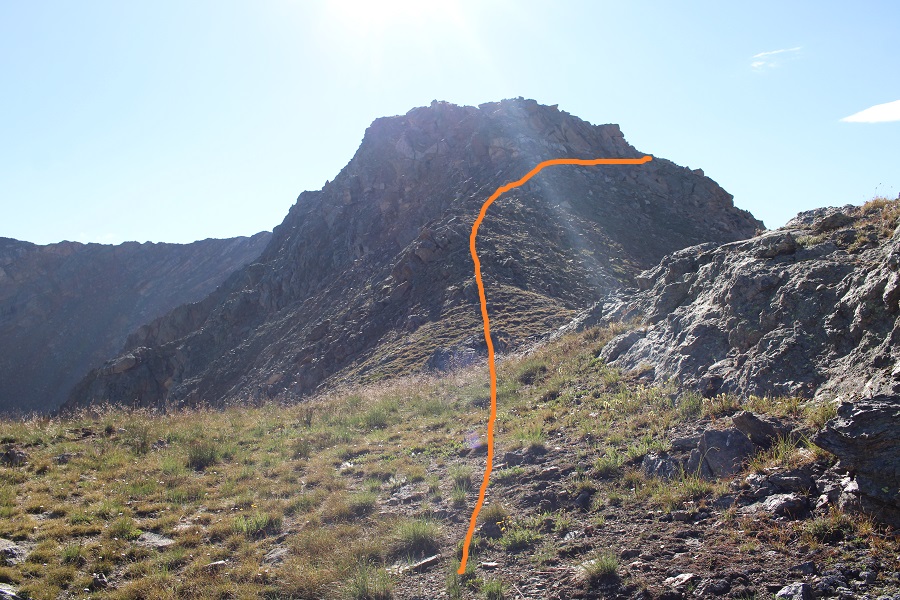
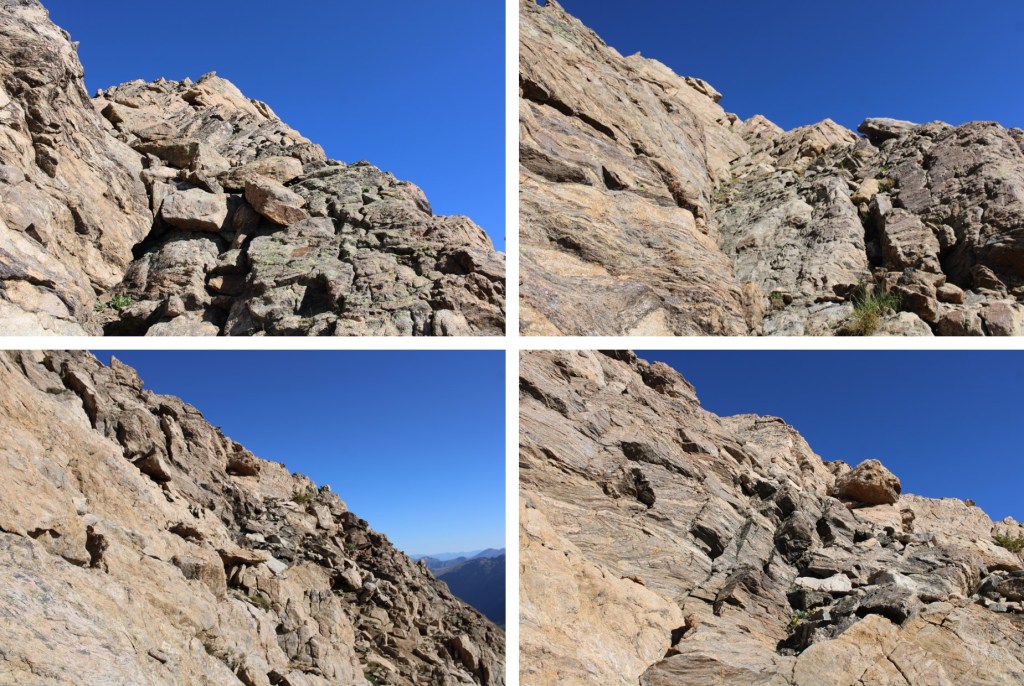
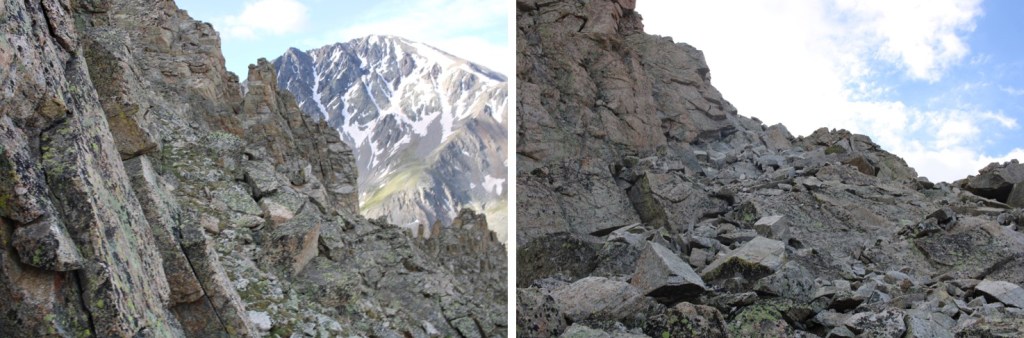
Now for the fun part! It was time to scale the east side to the summit. This is choose your own adventure. I stayed on the east side the entire time. The ridge proper looks like it goes at class 4. I stayed more to the east while climbing.
This is the overall route I took, dropping down about 25 feet, aiming for a break in the rocks, and then heading up the east side, keeping it mostly class 3, but once again, it’s choose your own adventure.
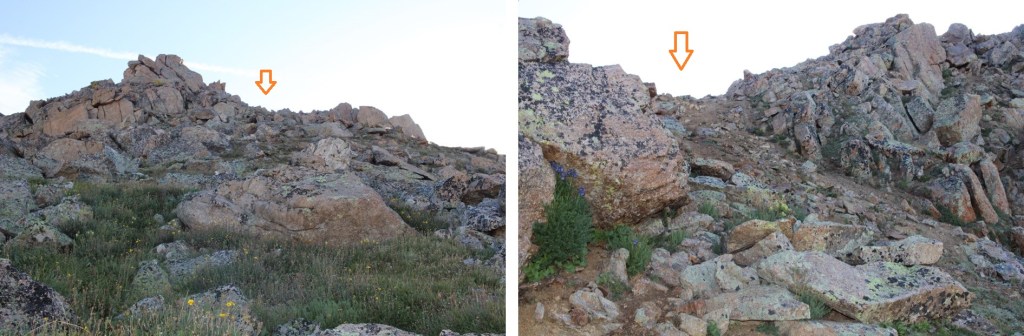
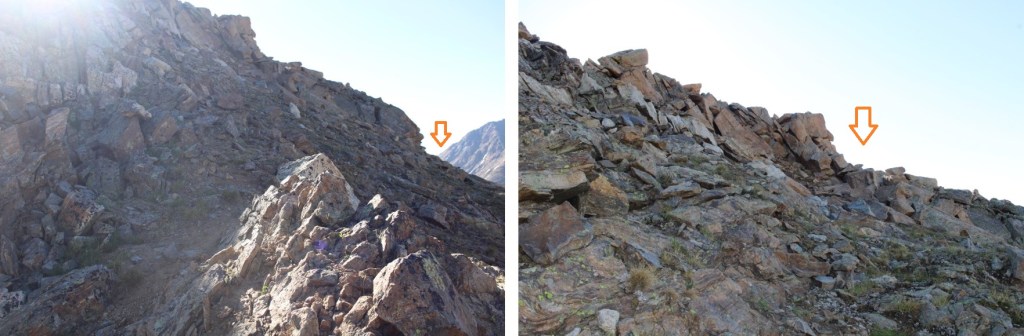
Here are some pictures of the terrain to the summit. I dropped my pack to make for easier climbing. It also made it easier to find my way back, as I just aimed for my pack below.
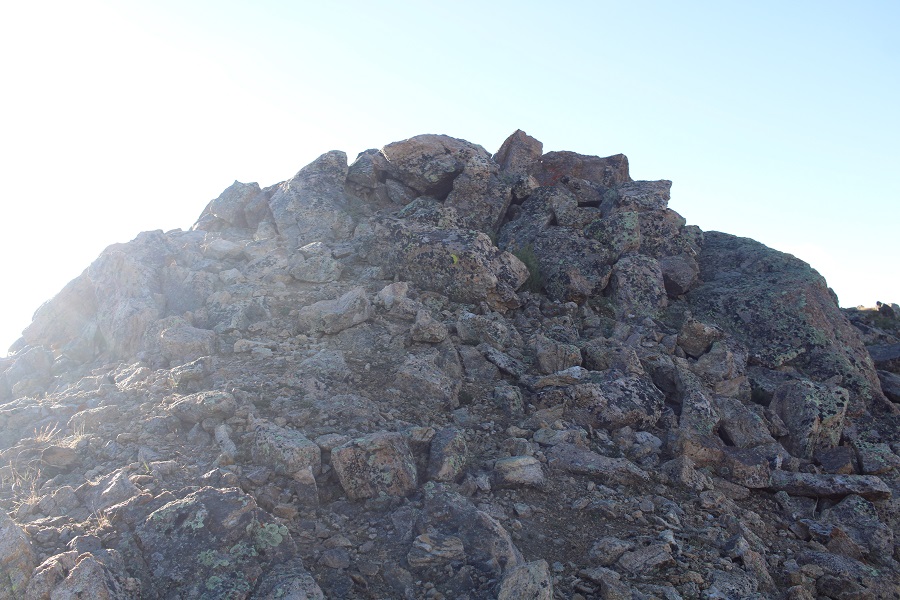
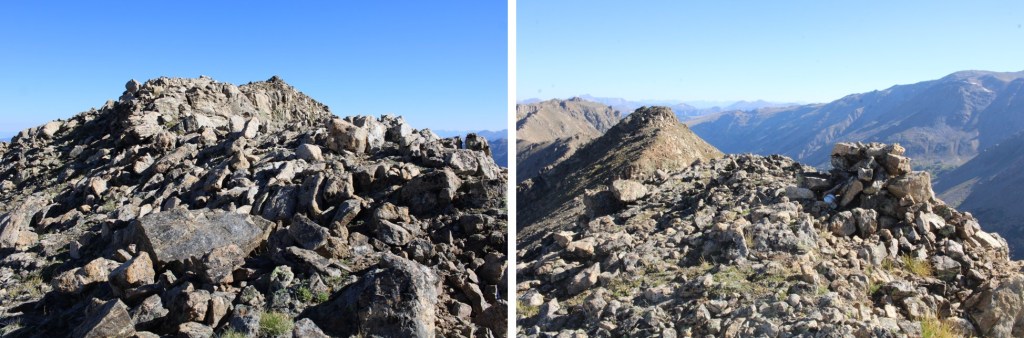
Now the summit was in sight. There was a short class 4 chimney to climb with solid hand/footholds.
And then a rocky walk to the summit. There was a summit register, but it was closed so tight I couldn’t open it.
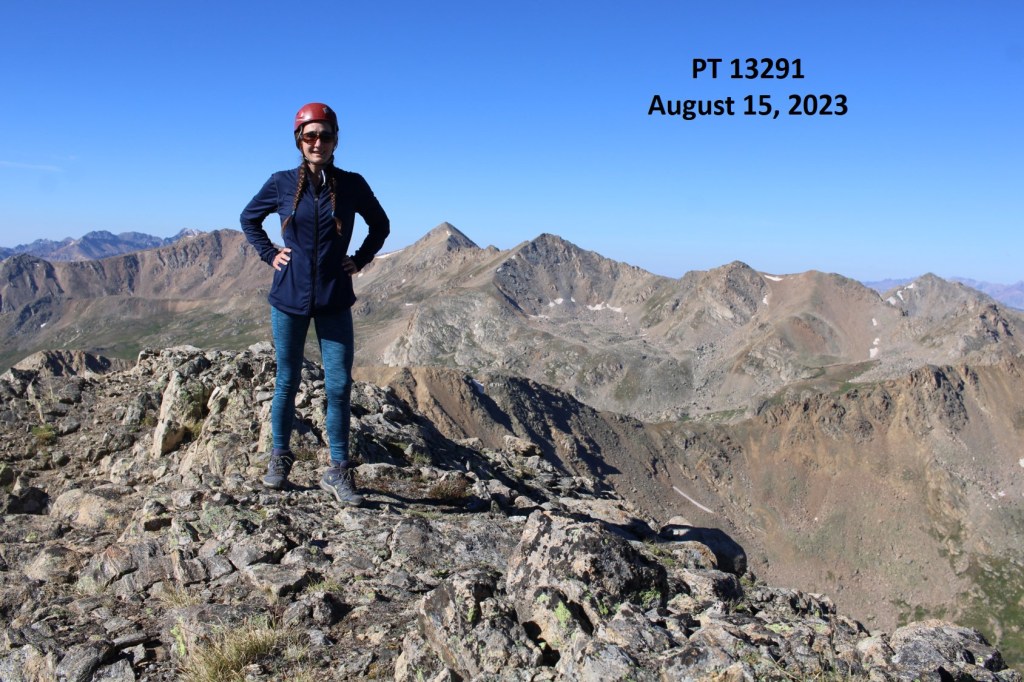
PT 13291
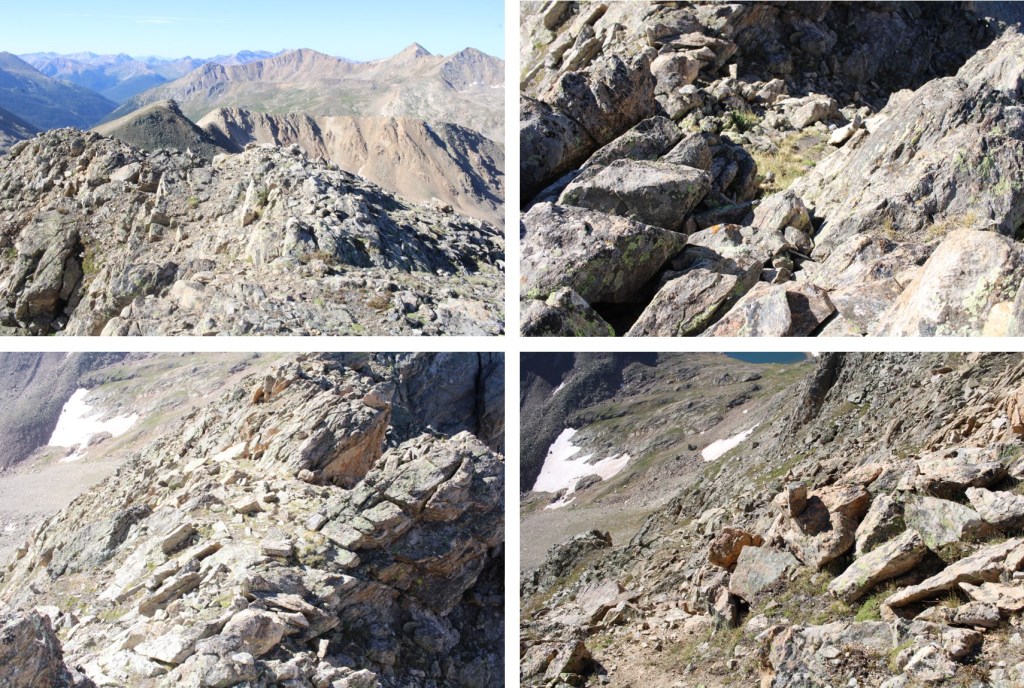
Now to head back down. I descended the chimney, and headed back towards my pack.
Then it was up to the gully, down the gully, and around the west side to head back to the saddle.
Back up to the ridge
And then I followed the ridge, descending it to the left, and curving around the south side. It’s a good idea to have your microspikes on for this part. It’s class 2+, but the rocks are loose and the angle is steep.
I followed the ridge until I made it to just before where I’d accessed the gully from 13220. Instead of heading down that way, I descended south into the basin below. This was the same way I’d ascended earlier that morning. This would be a good option if just doing 13291. It’s class 2, and led me into the basin. I aimed for the thinnest section of rock below. The entire time I was hiking down, I was looking for the dry creeks that led me in, knowing they’d eventually bring me back to the creek crossing and the trail. They were easy to spot from above.
Once in the basin, I followed the dry creeks to the trail
Here’s a look back on my route down from the ridge (and how I hiked in that morning). Taking the dry creeks keeps you away from most of the willows.
Back on the trail, I followed it south back towards the trailhead
Doing the math by combing my two days of hiking, the total for the route in one day should be about 11.89 miles with 3560’ of elevation gain.
I’d been crying all day, so when I made it to the trailhead I was quite the mess. My eyes were swollen, my nose was red, and I was tired. My 23-year-old daughter coaches color guard, and last week, one of her team members was murdered. I’m not going to go into the details of what happened (news article here), but my daughter wanted to be at the viewing and also at the funeral to support her students. I wanted to be there to support my daughter. She was determined to make sure she talked with each and every one of her students individually, which meant we were there a long time. I watched high-schooler after high-schooler break down in front of the (open) casket, crying, some uncontrollably. There was a slide show of the best moments of her 17 years scrolling, with several pictures including my daughter. When all of the guard members were there, they held hands and stood in a semi-circle around the casket, grieving together. This was one of the hardest things I’ve had to witness in my life, and I was just on the sidelines. I was mad, angry, hurt, confused, and so many other emotions I can’t put into words, for everyone involved. I cried excessively during the entire funeral, my arm around my daughters’ shoulder, trying to comfort her as well. I dropped my daughter off at the airport (she’d been in Georgia for the summer, and flew back for the funeral), and drove to the trailhead. I needed a hike, as I had a lot to process.
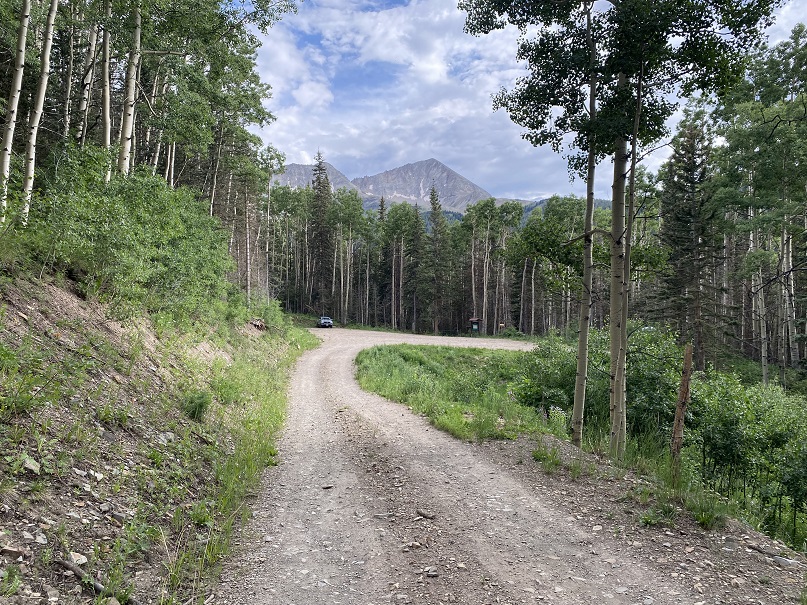
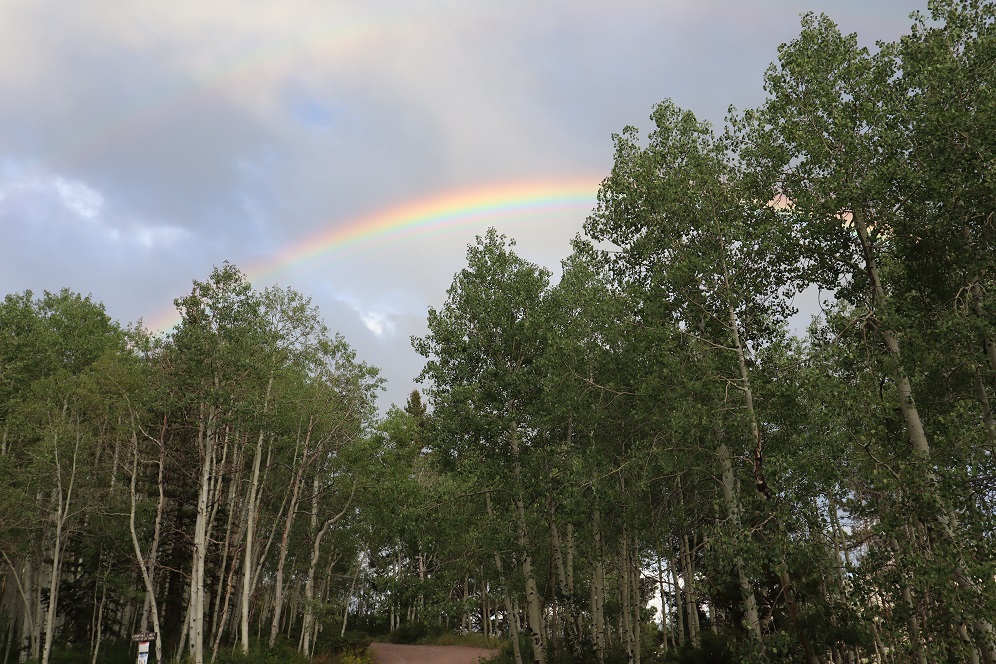
When I got to the La Plata Gulch Trailhead it was raining, but after a few minutes a rainbow came out. I needed that rainbow. I also needed sleep.
I went to bed early, and was on the trail at 4:30am. The trail begins by following the La Plata Gulch Trail
After following the trail for 1.3 miles, and after the second bridge crossing, there was a faint trail I took to the left
I followed this faint trail until I came to a third creek
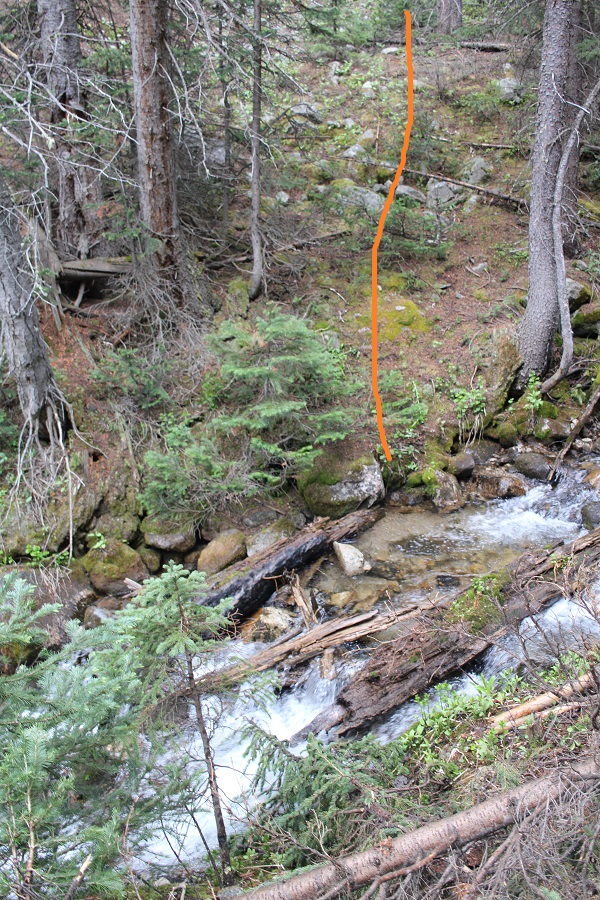
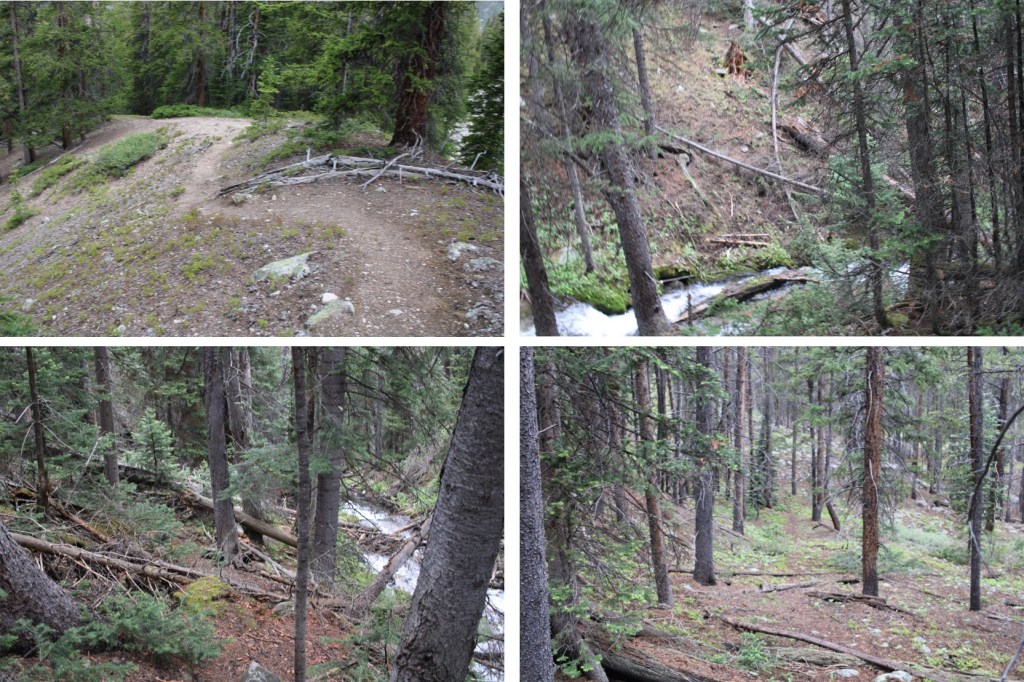
At the creek the trail stopped, so I turned right and followed the creek. It’s important not to cross the creek too soon!
The creek had a lot of deadfall, but there is a faint trail that can be navigated. I followed it until just after I saw this large rock formation on the left, at about 10630’.
AFTER this rock formation I crossed the creek, and made my way to a small ridge
I followed this ridge to treeline
At treeline, to my left I could see my route to gain the ridge.
This is the route I took… up an obvious gully.
I started out rock-hopping on unstable rocks, which gave way to a scree and raspberry bush filled gully, which gave way to tundra.
I followed the tundra southwest
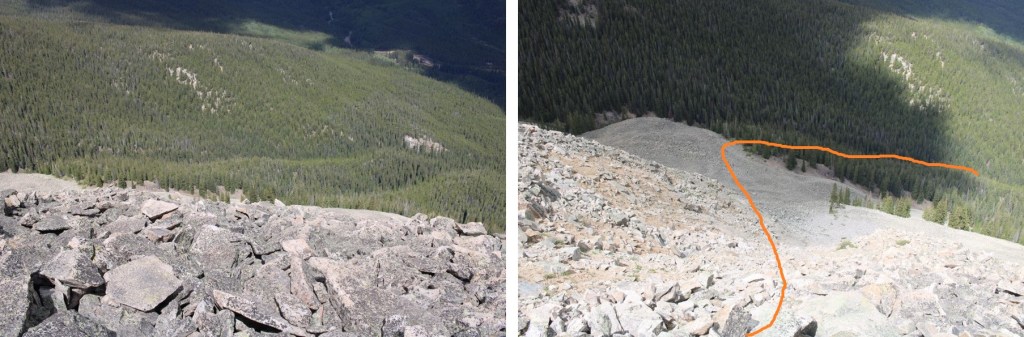
This is where the hike gets interesting. I’ll show you the route I took that worked (I tried a couple of different things that didn’t, so I have a messy GPX file). First, I put on my helmet for some rock hopping
Then, I went straight up the face of this
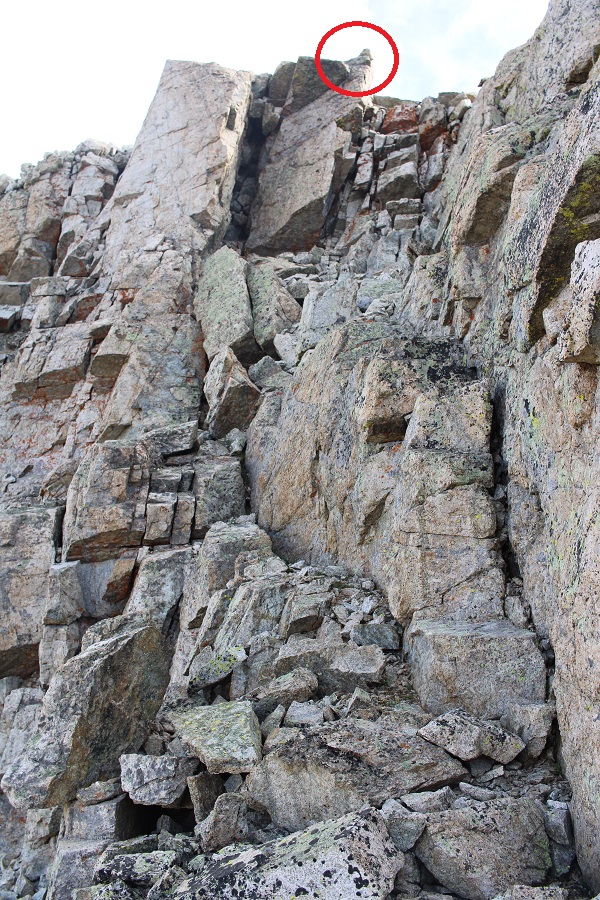
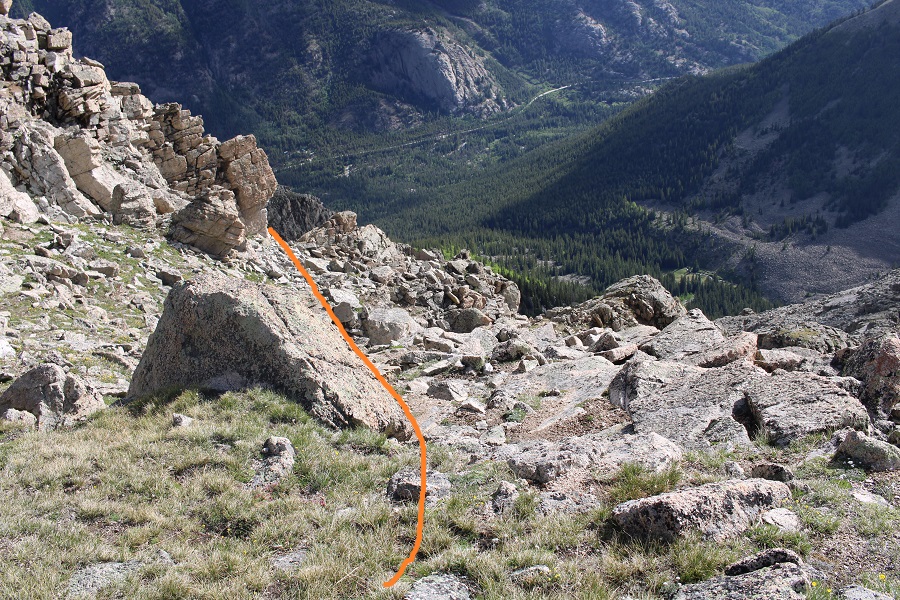
And then class 3’d this ridge to the right. Notice the cairn in the red circle? I erroneously assumed this was the summit of Ellingwood Point, but it isn’t. In any event, DO NOT aim for that cairn.
Instead, you’ll encounter some class 3-4 scrambling as you go under the ridge, losing about 50 feet of elevation.
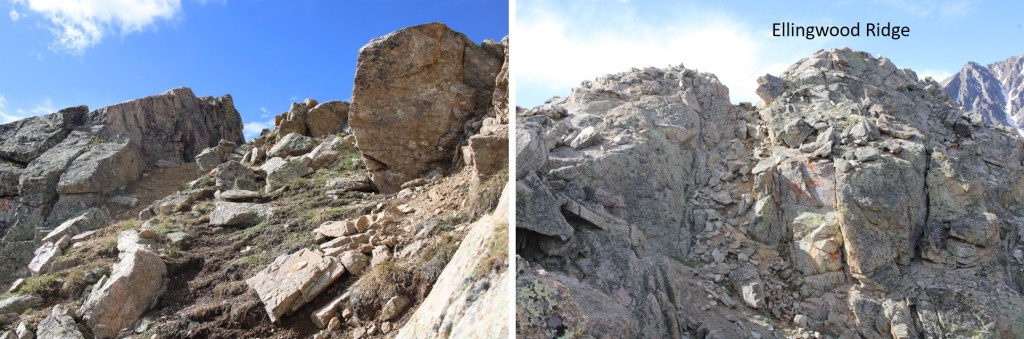
I descended down what I felt was a class 4 chimney, before turning left and finding a somewhat grassy ramp that turned to rocks and took me back to the ridge
Just before reaching the ridge, I saw another cairn, and what I thought would be the summit of Ellingwood Ride. This is also not the accepted summit. DO NOT follow this cairn.
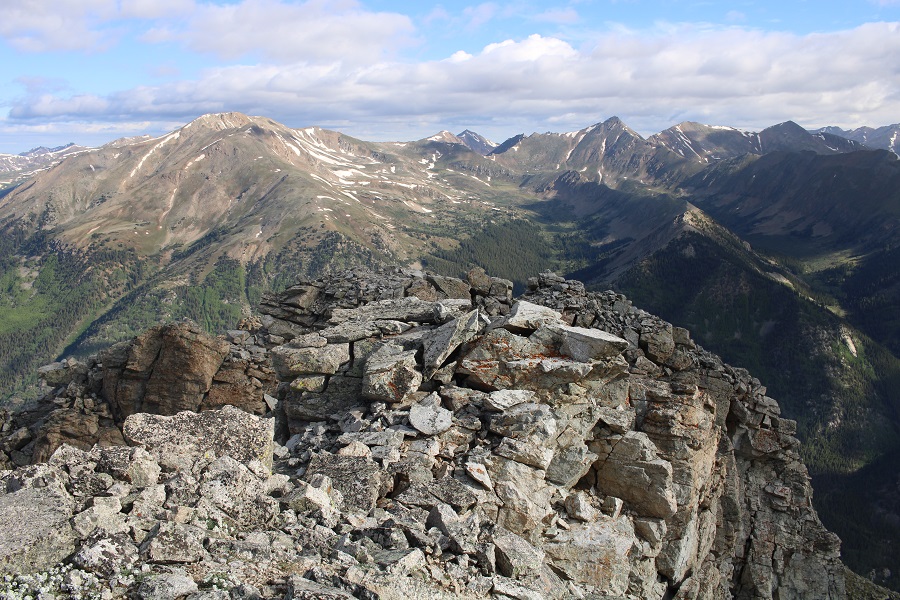
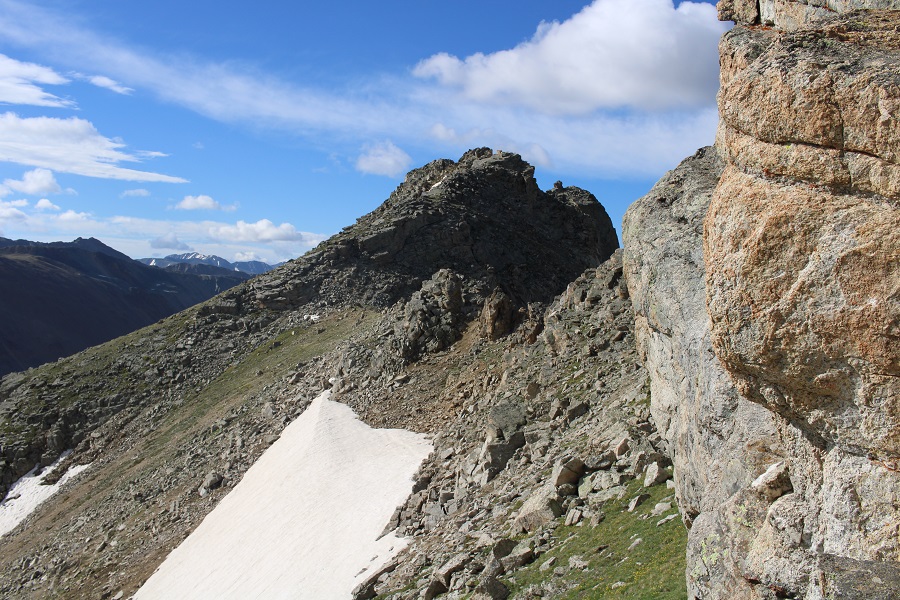
However, when I made it to this point I could clearly see it was about level with the OTHER point I wasn’t supposed to summit (here’s looking back)
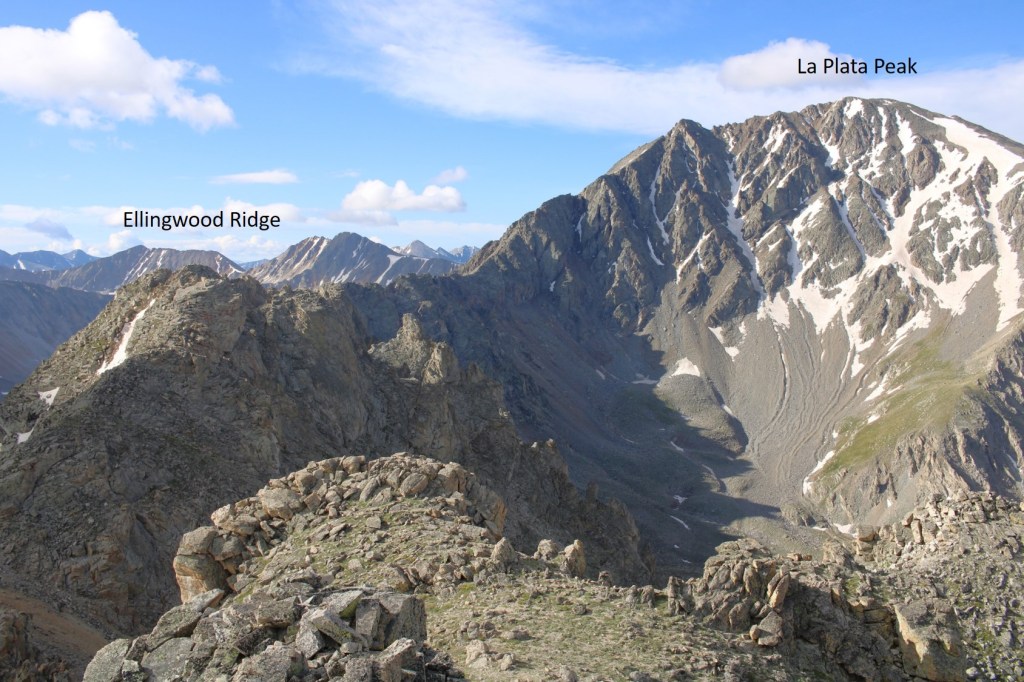
When I turned and looked south, I could see the true summit of Ellingwood Point.
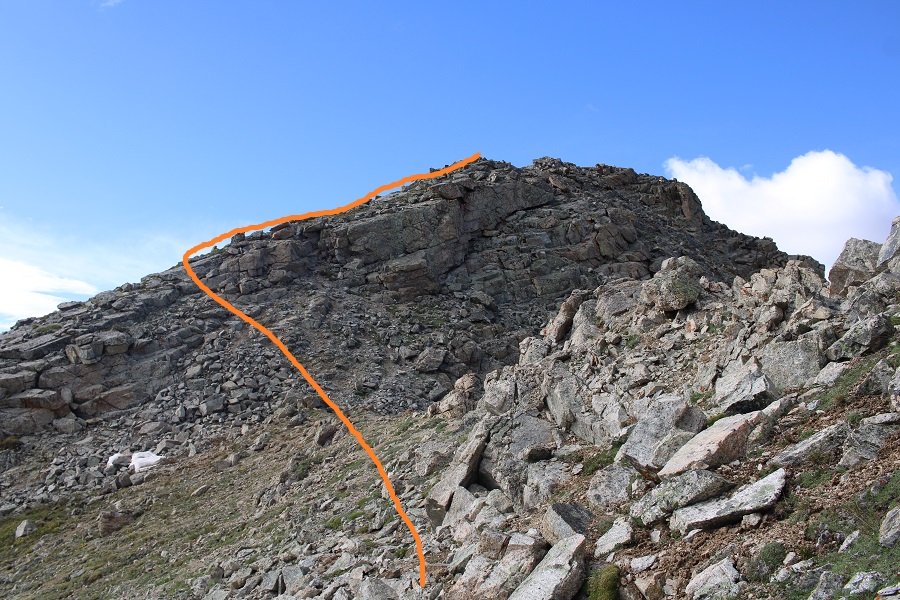
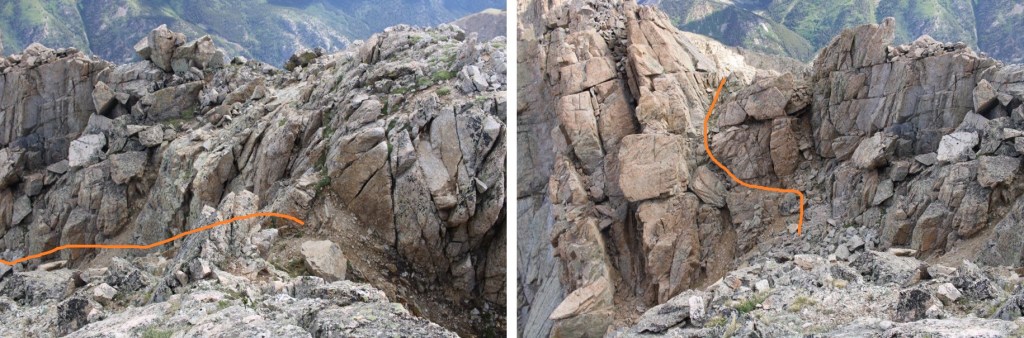
The route wasn’t straightforward. I made my way down, and over to the ridge. I then lost 115’ of elevation as I made my way towards Ellingwood Point. Here’s my overall route
Here are some step-by-step pictures
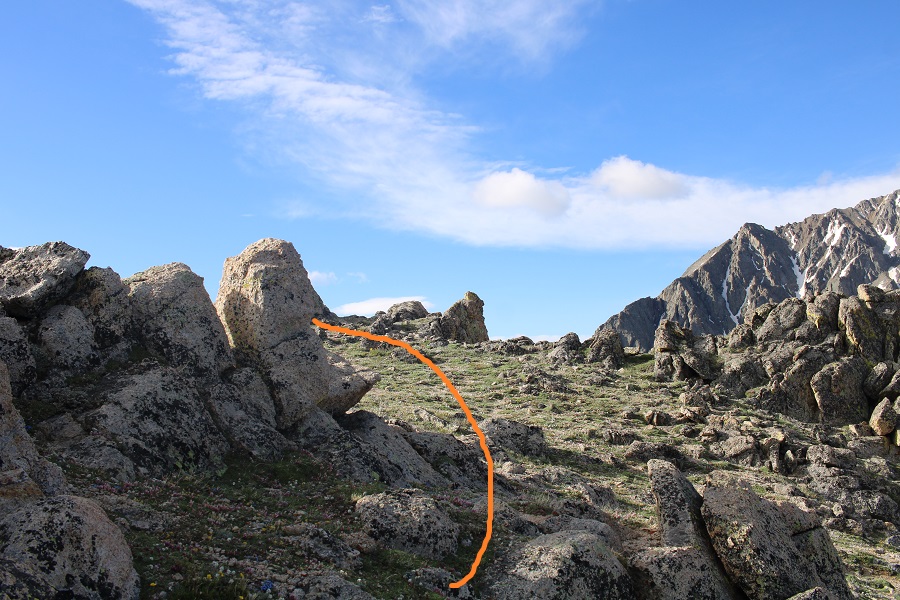
Make sure you choose the correct gully to descend! It’s not the first gully you encounter, but the second that ‘goes’
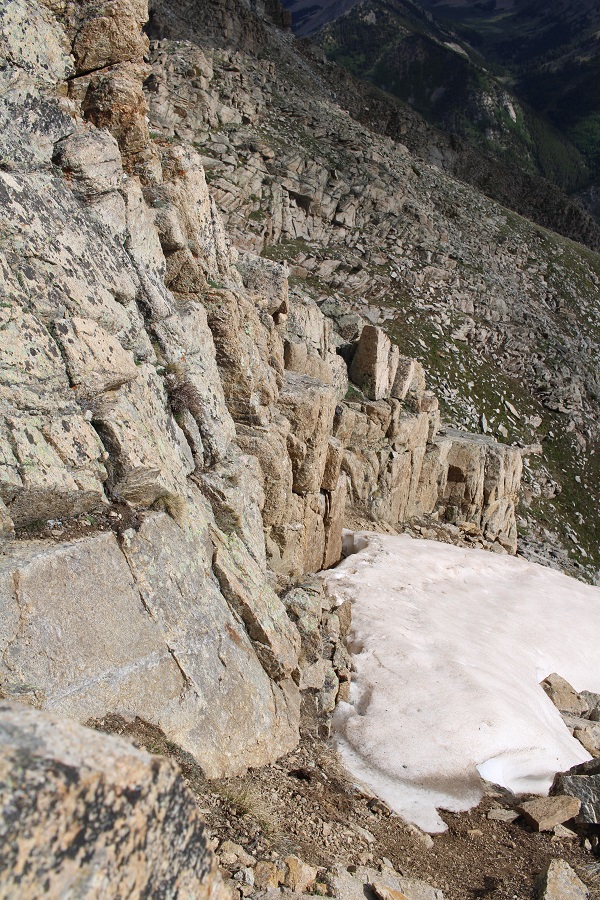
Then I turned right and made my way towards the saddle, staying above the snow
At the saddle it was choose your own adventure up
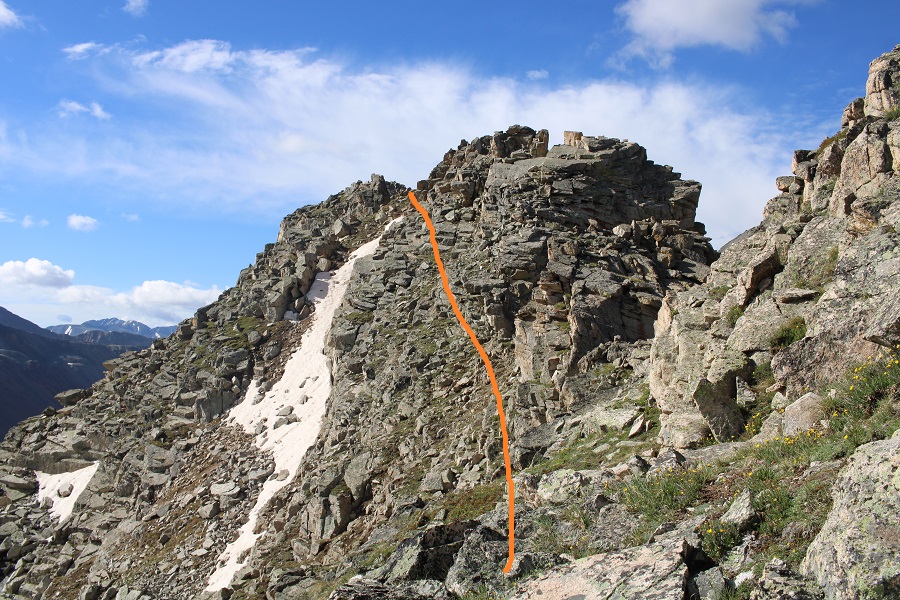
I think the traditional route is to take the gully up, but it was covered in snow, so I made my way on the rocks until it was safe to use the gully, quite near the top. This is the route I took
I did encounter a little bit of snow towards the top, but I was able to navigate around it. Once at the top of the gully, I descended some class 3 terrain, and re-ascended another short gully
There was a small cairn there, letting me know I was at the summit
I summited Ellingwood Ridge at 9am
Ellingwood Ridge:
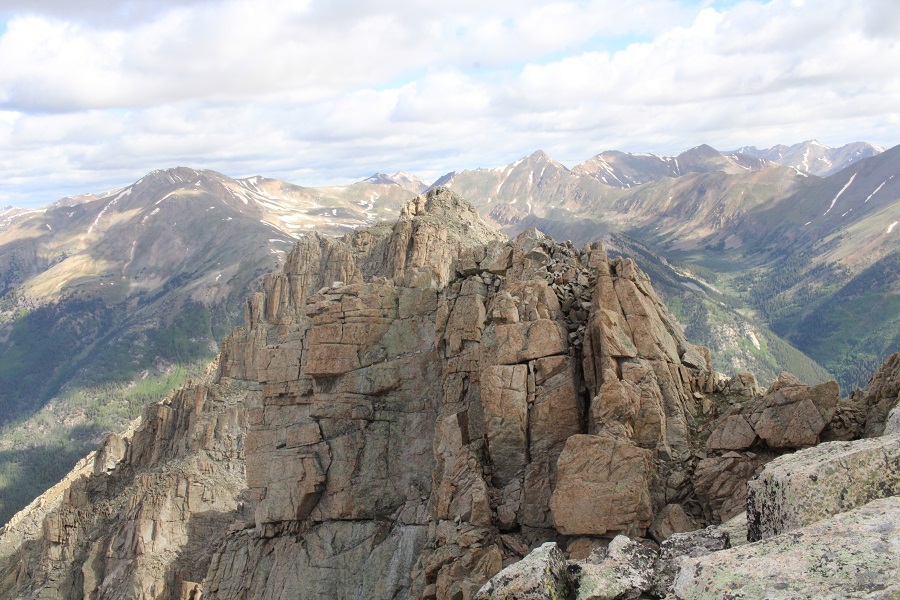
Here’s looking north at the route I took in. As you can see, it’s difficult to tell where the ‘true’ summit is.
I was making this an out and back, mainly because there was a storm headed my way, so I turned and retraced my steps. Here are some visuals of the harder areas to ‘figure out’
Looking down the gully, I stuck to the wall and did just fine
Then I made my way back down the ridge, keeping to the right, and heading back up that second gully, which is more obvious going this way, as it’s the only one that ‘goes’
At the top of the gully I once again lost elevation and navigated the west side of the mountain
Here’s looking up at that class 4 gully
And the ridge back to the tundra
The tundra to the rocky gully
And the gully to the ridge
As soon as I hit the ridge it started raining. I followed the ridge to the stream crossing, then followed the stream back to the trail
Once on the trail, it was easy to follow it back to the trailhead
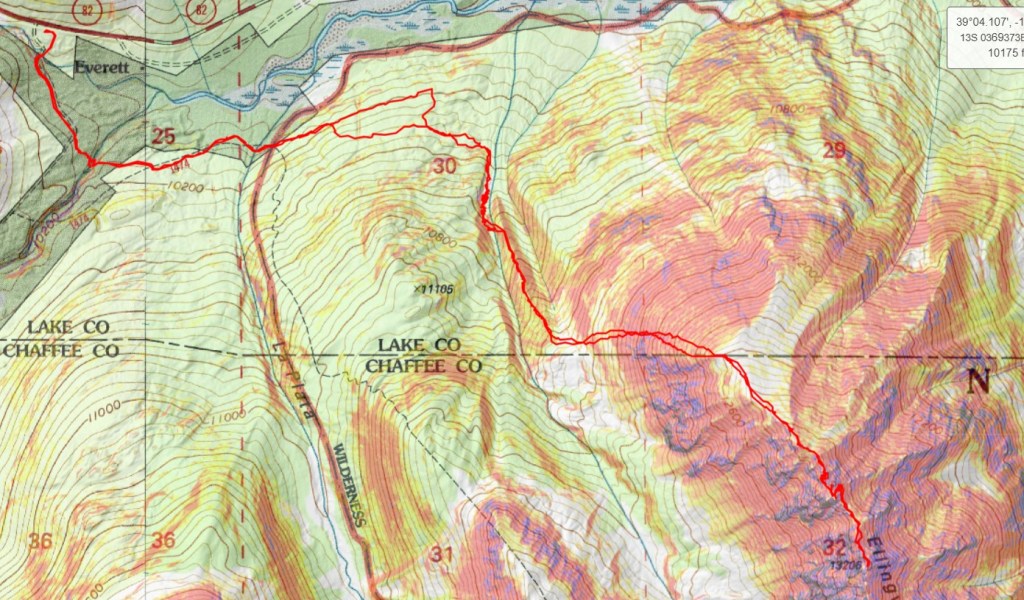
I made it back to my truck at 12:30pm, making this a 9.9 mile hike with 3622’ of elevation gain in 8 hours.
While I unpacked quite a bit emotionally, I didn’t come up with any answers on the hike, except that it’s important to listen when people tell us something is wrong, and to love each other, as you never know what the other person is going through. I can’t combat the evil in this world, but I can appreciate and acknowledge, and even contribute to the good. I raised a daughter who chose to go out of her way to be there for her students, when it would have been easy to say something like “I’m all the way in Georgia”, “I don’t do well with death”, “I can’t afford the trip” or “I don’t do well with funerals” and not show up. She showed up and she supported her students as they grieved, and even shared some of her favorite memories of Riley with her parents. That’s something to be proud of.
I’d already been away from home a few days before this trip, so I stopped at Ouray Hot Springs to get in a quick workout and a shower (they only charge $4 for a shower, which might be nice if you’re hiking around Ouray and want to freshen up every few days). The only downside? The parking was terrible, even on a weekday in the morning.
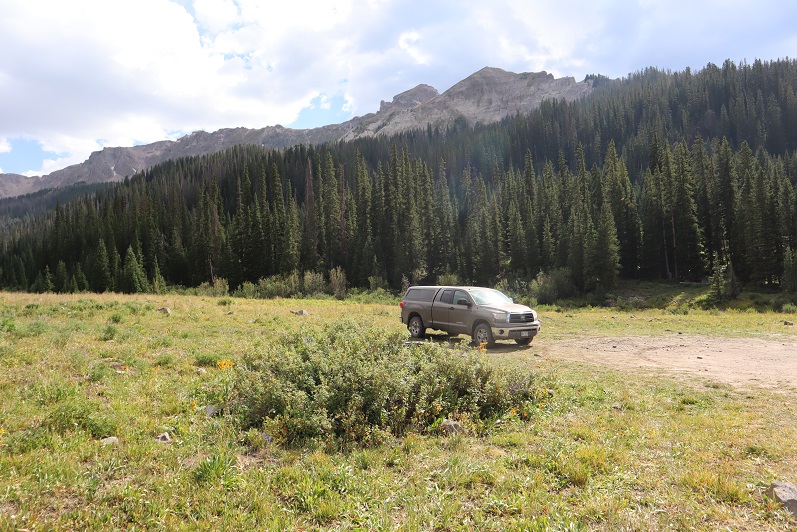
After cleaning up I drove to the Rock of Ages Trailhead. The drive in was a bit bumpier than I remembered, but also fun, because I was seeing what Miles (my new Tacoma) can do. He handled the stream crossing and ruts in the 4WD road without needing to be put into 4WD.
I made it to the trailhead and was the only one in the lot (another good thing about arriving on a Thursday).
I walked around for a bit, and immediately realized the mosquitoes were going to be a problem. I’ve ordered a topper for Miles, but it’ll take up to 3 months to get here, so until then I’m sleeping in the back seat of the cab (It’s a tight fit but luckily I’m small). I made the decision to get to bed as soon as possible. I ended up waking up several times during the night because I was so warm, but at least waking up ended one of my nightmares: a dream about sharks in a swimming pool swallowing children whole.
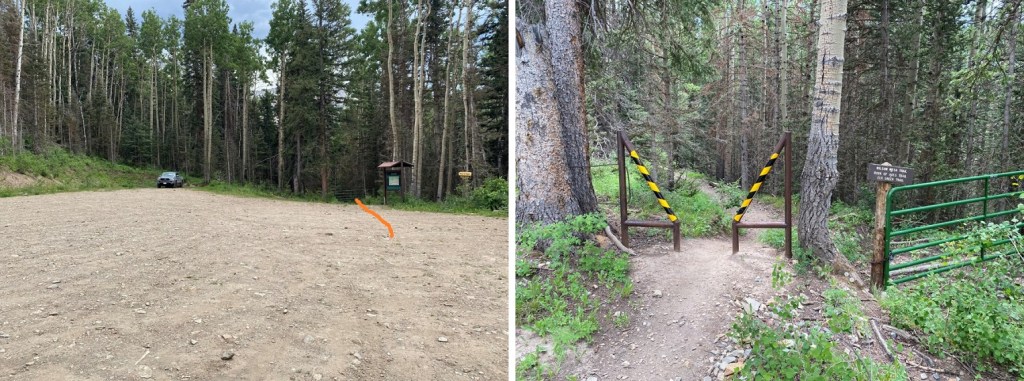
Ok. So, I woke up and was on the trail at 4:15am. The route starts at the south end of the parking area, and follows a well-defined trail south.
I quickly came to a gate, and walked around it.
Next, I saw this sign to my right, and continued on the trail
I followed the trail to treeline.
Shortly after making it to treeline I came to the Elk Creek Trail junction. From here there are several options, but your main goal is to make it into the basin. You can follow Elk Creek Trail and lose some elevation, then follow a faint road into the basin. Or, you could continue along the Rock of Ages trail and eventually hook up with the 4WD road that enters the basin from above (a bit chossy, but I chose to take it on the way out). On my way in it was dark, I couldn’t see any of these ‘routes’, and I chose to just head straight into the basin.
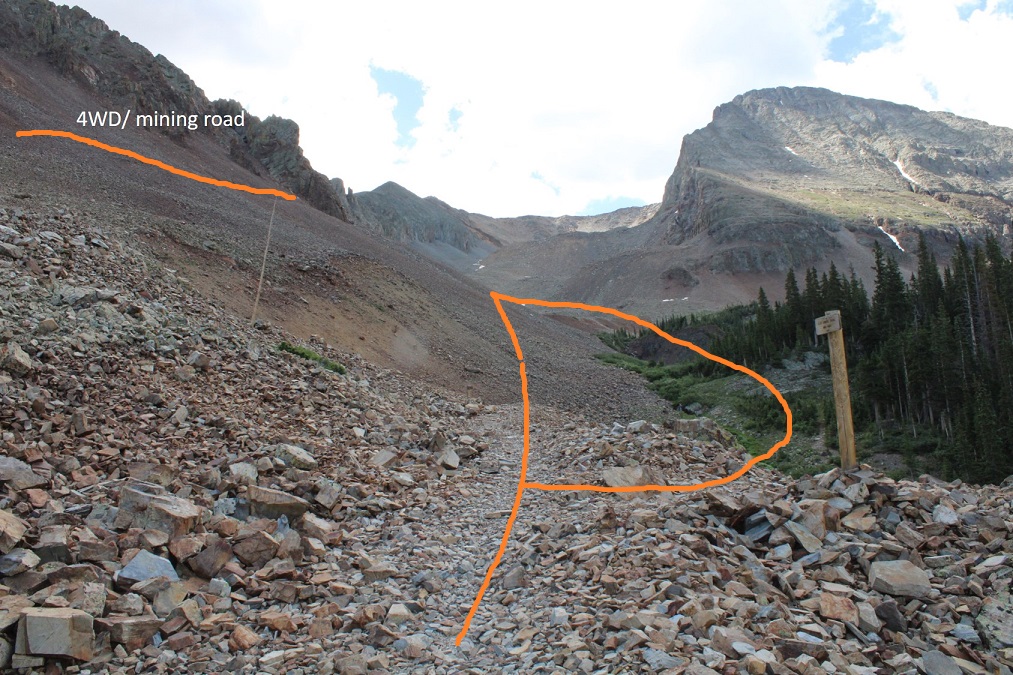
If you take the mining road, here’s what the entrance looks like from the Rock of Ages trail. It’s about half a mile past the Elk Creek Trail junction, on your right.
If you take the upper road, this is what the junction from the trail to the road looks like
In any event, I made my way into the basin. Here are the routes. To the left you can see the mining road, and to the right you can see the abandoned dirt road. They both lead to the same place. (On my way in I didn’t see either of these roads and just headed south through the basin).
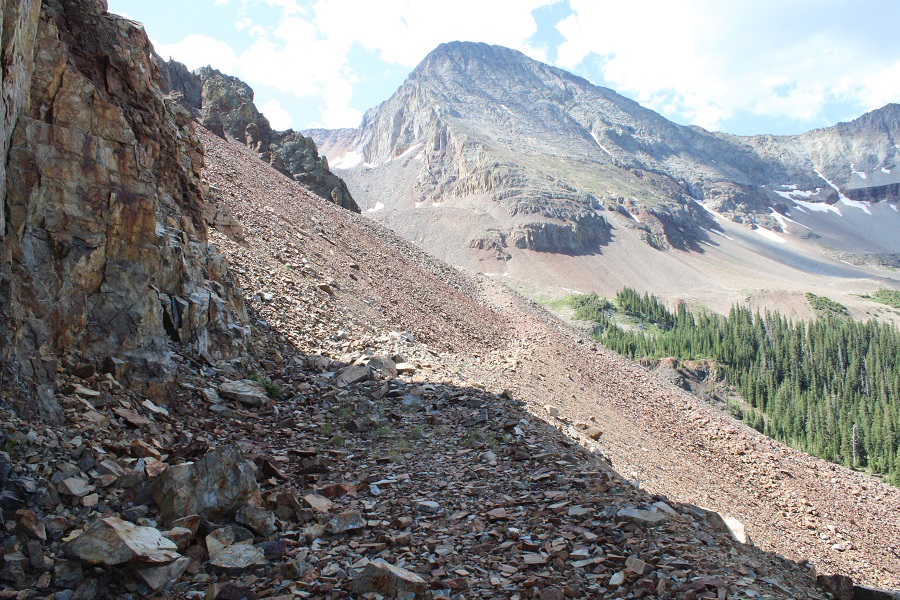
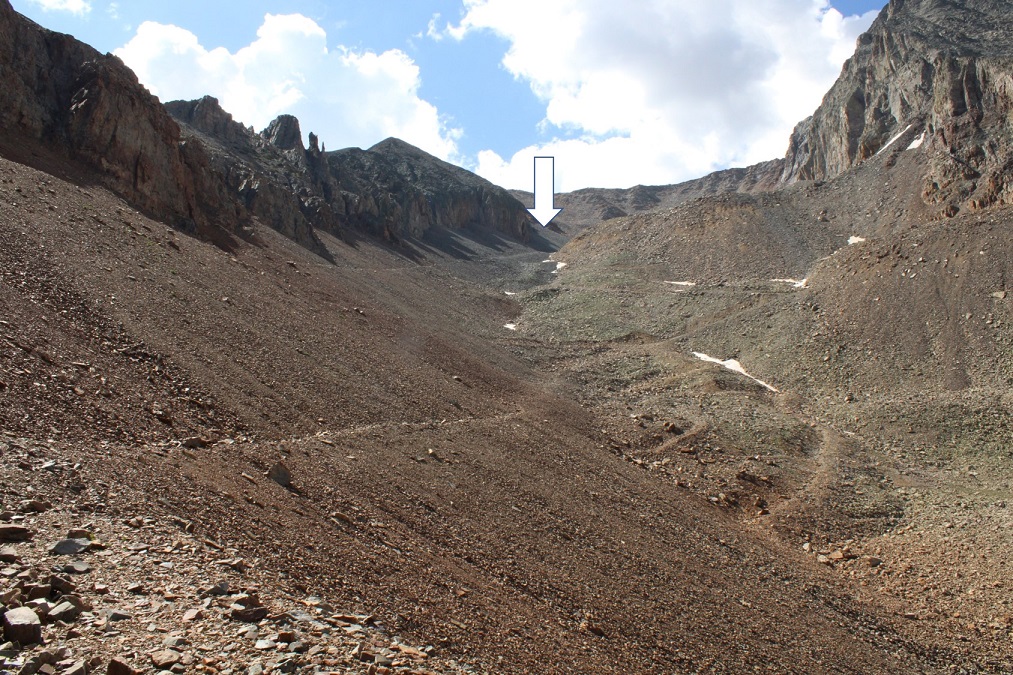
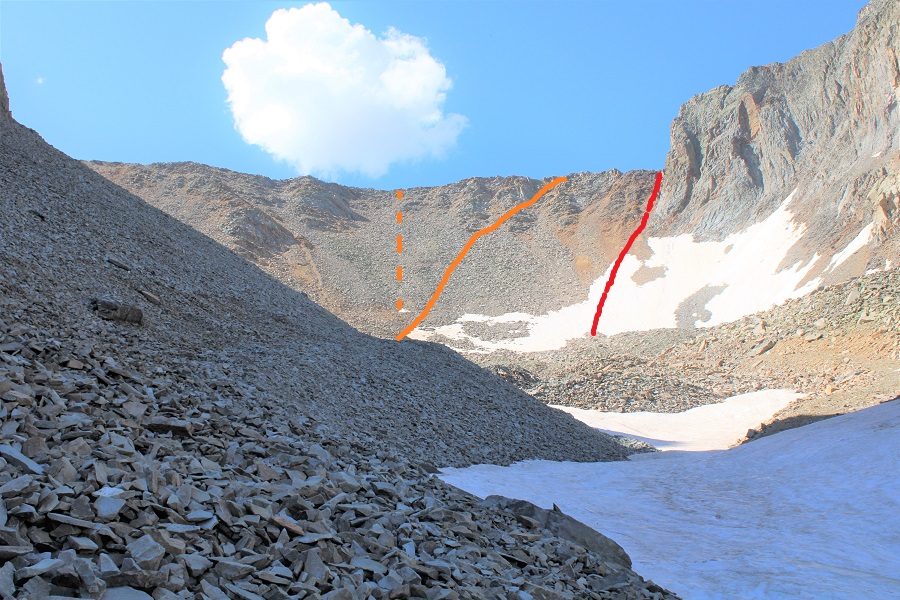
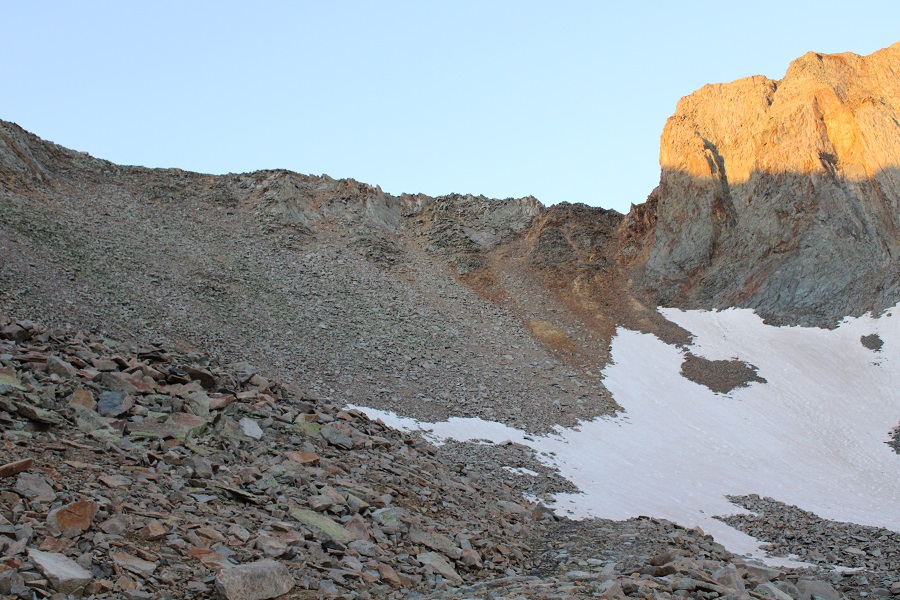
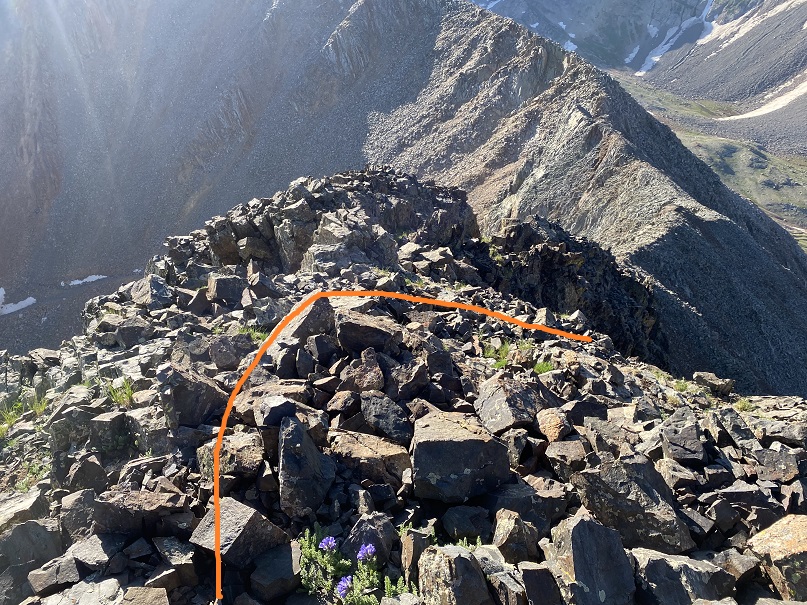
Once in the upper basin you want to gain the ridge. This sounds easier than it turned out to be. It’s “choose your own adventure”, and on the way up I chose wrong. I ended up getting into some class 4 scrambling, which was unnecessary. It’s my advice to do PT 13540 first, and gain the ridge to the left (southeast). However, all areas here ‘go’, if you’re willing to do some scrambling. When I made it to the ridge I found thick wire cording going where the red line is (I’m guessing that could be used as leverage if needed: it wasn’t moving anywhere). I ascended via the orange line. The dotted orange line is probably a better route. The best route is my descent route (pictured later).
I’ll spare you the scree-y and large-loose-rocky gully details of ascending the ridge. Once on the ridge I turned right and followed the ridge southwest towards Fowler. The ridge was all class 2
If you haven’t already, now is a good time to put on your helmet. Here’s a picture of that cable I was telling you about. It goes up and over both sides of the saddle.
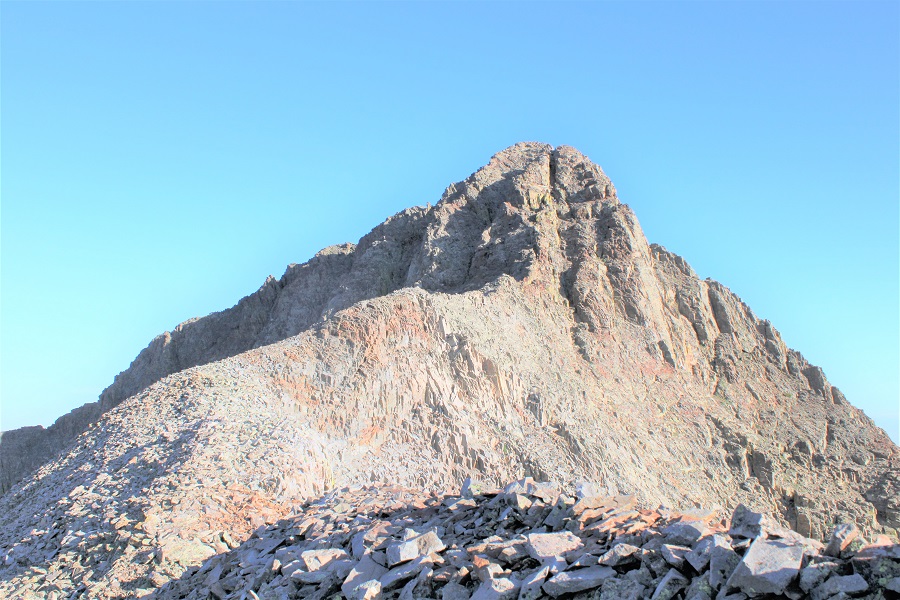
Here’s an overall view of the rest of the route to summit Fowler.
And step by step: It started out chossy as I ascended the ridge
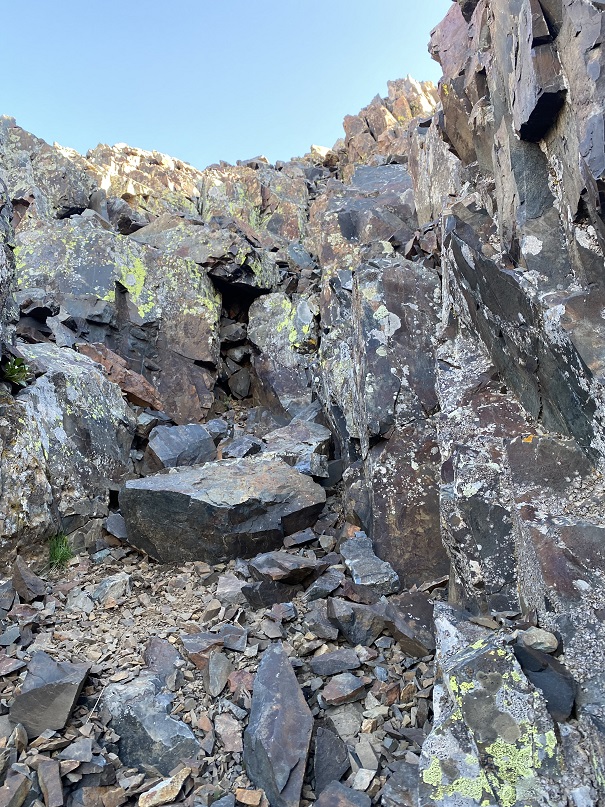
I made my way to the gully to the left/middle. This area had more solid rock, but it was littered with scree/rubble. At the base of the gully I took off my pack and decided to go up with just my cell phone (and a summit register in my pocket, just in case).
This is the class 4 part of the climb, and lasted for about 120 feet of vertical gain. I started by going straight up the gully. Here’s my route:
Step 1: ascend the chimney. I went to the right of the chimney, and found adequate hand/foot holds.
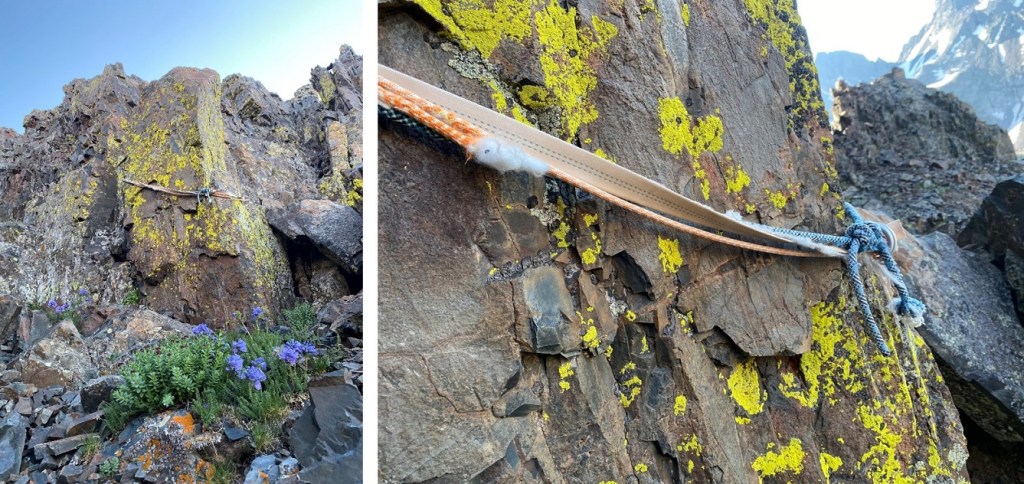
Step 2: Once above the chimney I stayed to the center of the gully. This is also where I saw an anchor set up (circled in red).
If you decide to rappel here, bring a new anchor, as this one looks like it’s been here for a while, and what’s been added to it doesn’t look recent either.
Step 3: From the anchor I continued straight up the gully (still class 4)
Step 4: Here’s a view of the last bit of the gully, before topping out. This felt class 3
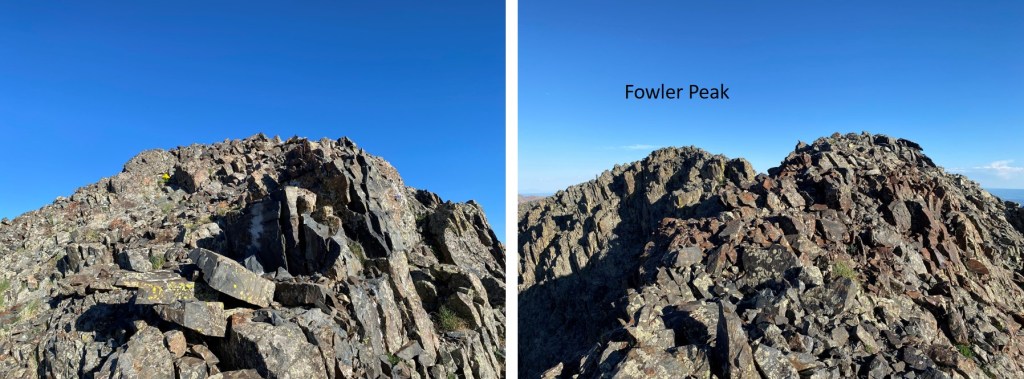
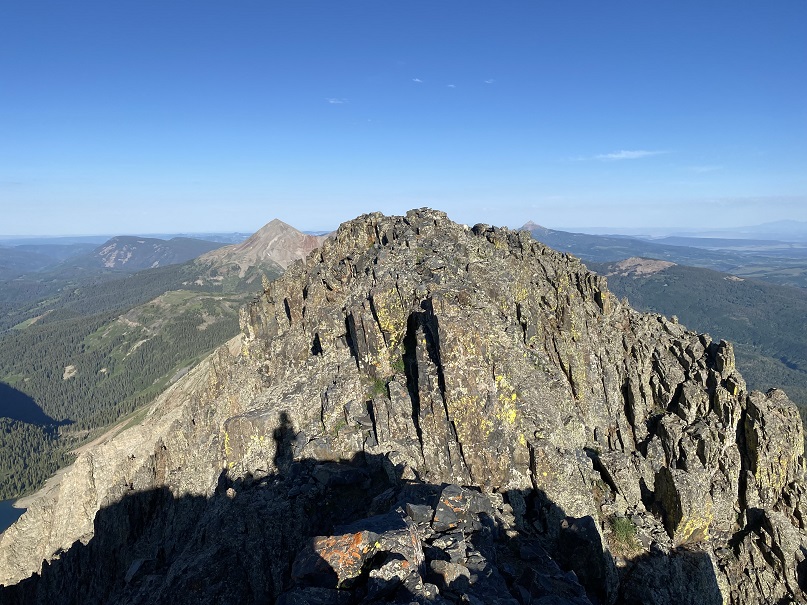
At the top of the gully I turned left and headed towards the summit. It was a bit of a false summit, but all class 2/easy 3
I summited Fowler Peak at 7:45am
Fowler Peak:
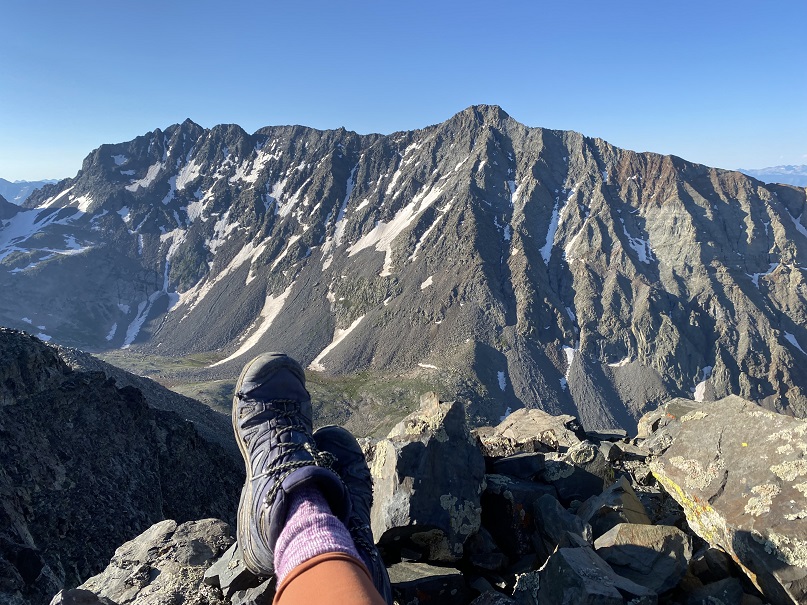
I sat and enjoyed my views of the Wilson/El Diente Traverse for a few minutes before heading back.
There was a summit register, but it was one of those tube ones. It hadn’t been closed properly and all the papers inside were wet, so I left it and also added a new register with dry paper to write on. And a new pencil. Here are some pictures of the trek back to the saddle
Back down the gully
To my stashed gear and back to the ridge.
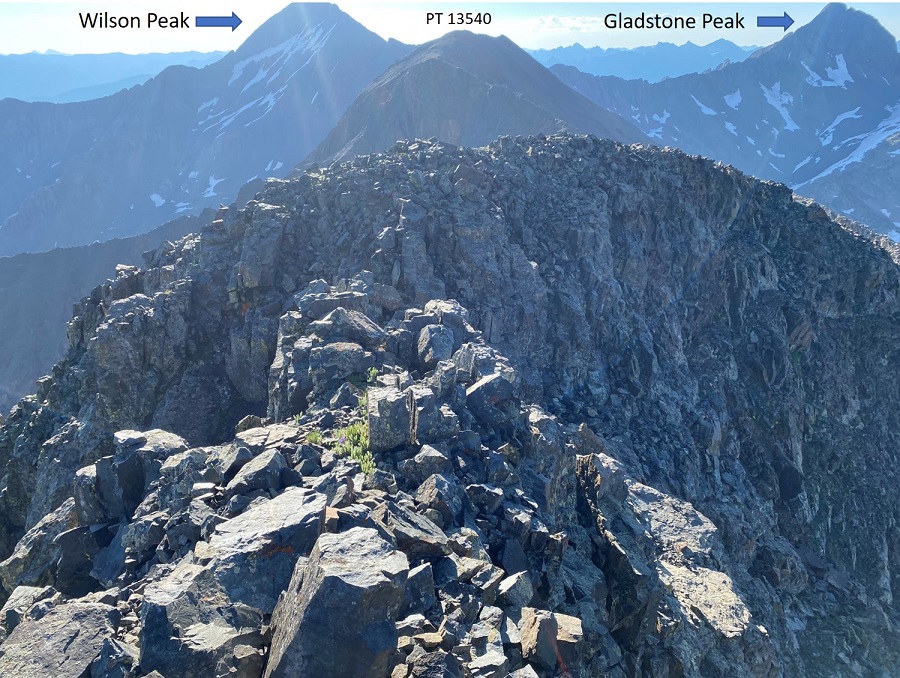
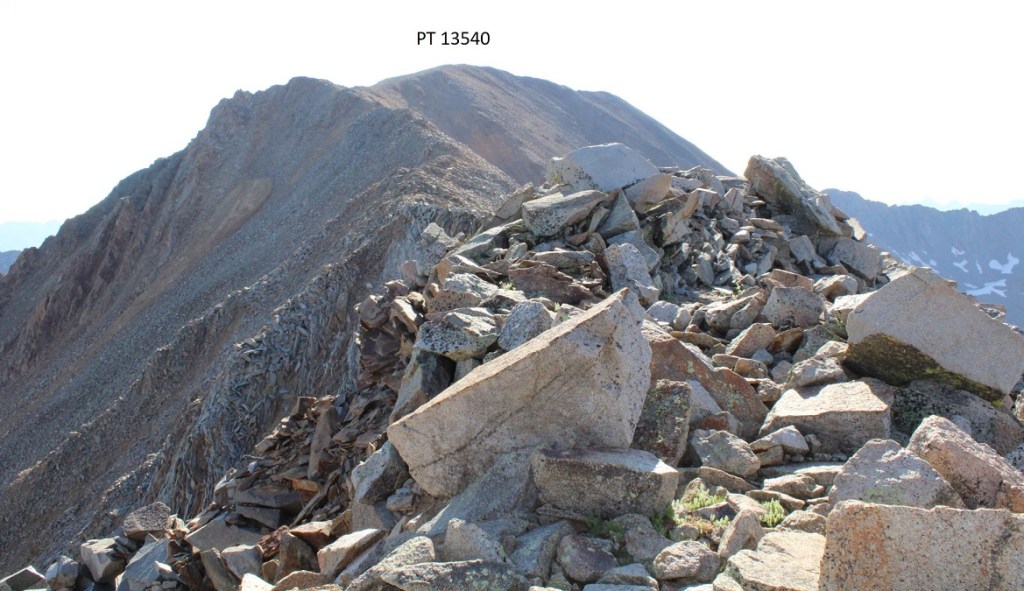
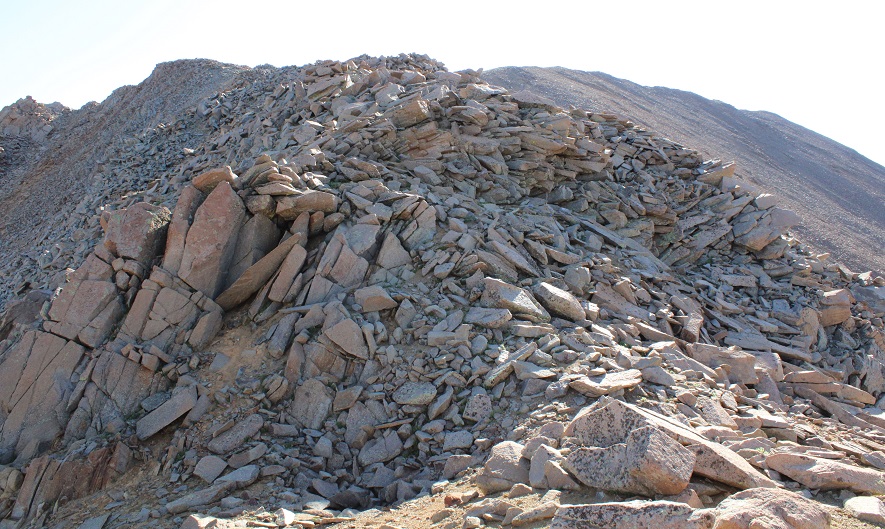
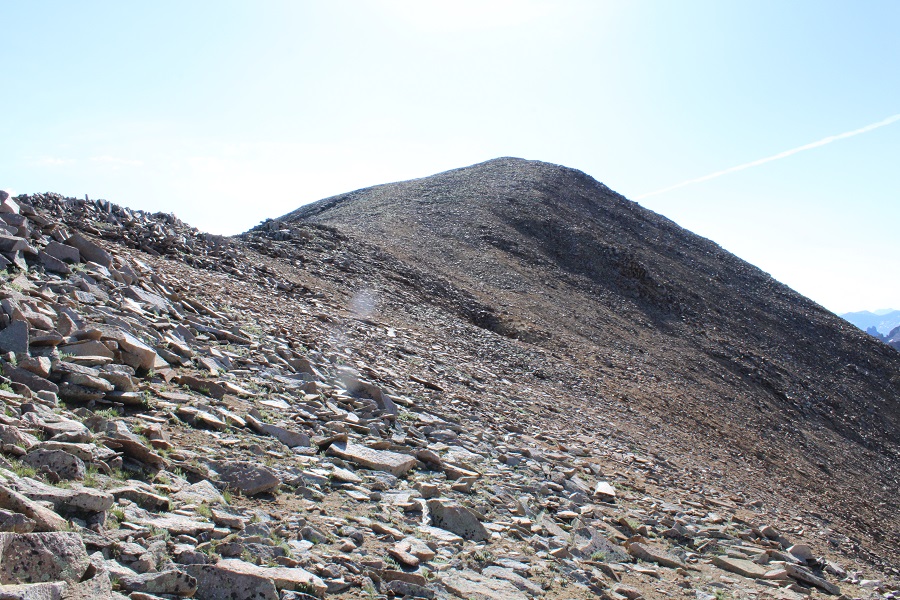
I followed the ridge over to PT 13540. This was a simple ridge hike, if a bit loose. Lots of rocks here. I stuck mostly to the ridge the entire time, only dipping to the right a few times when necessary.
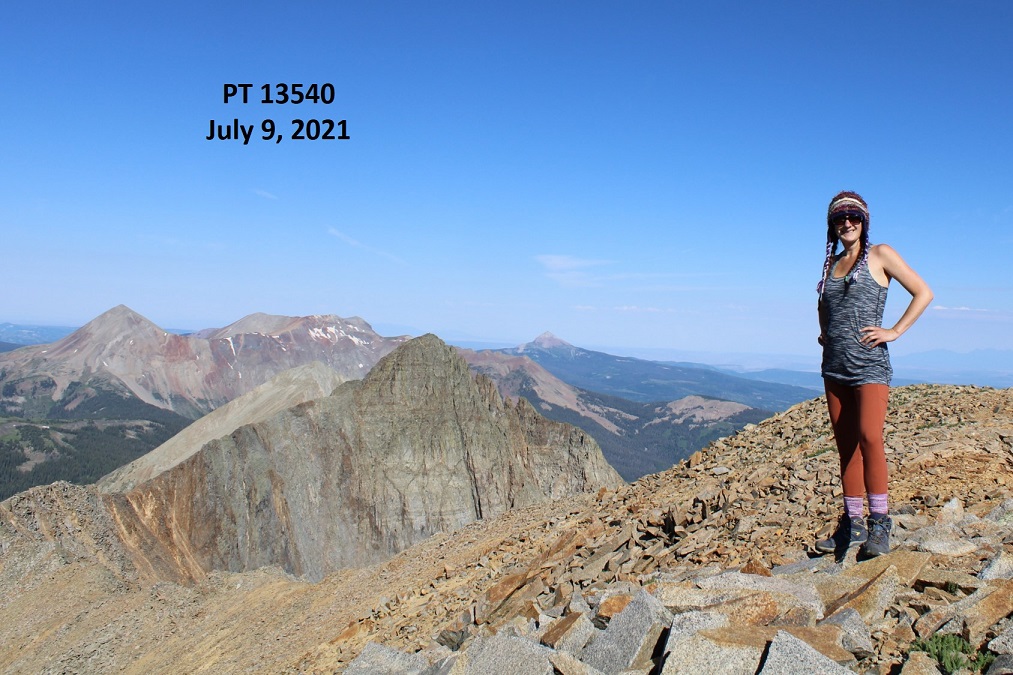
I summited PT 13540 at 9am
PT 13540:
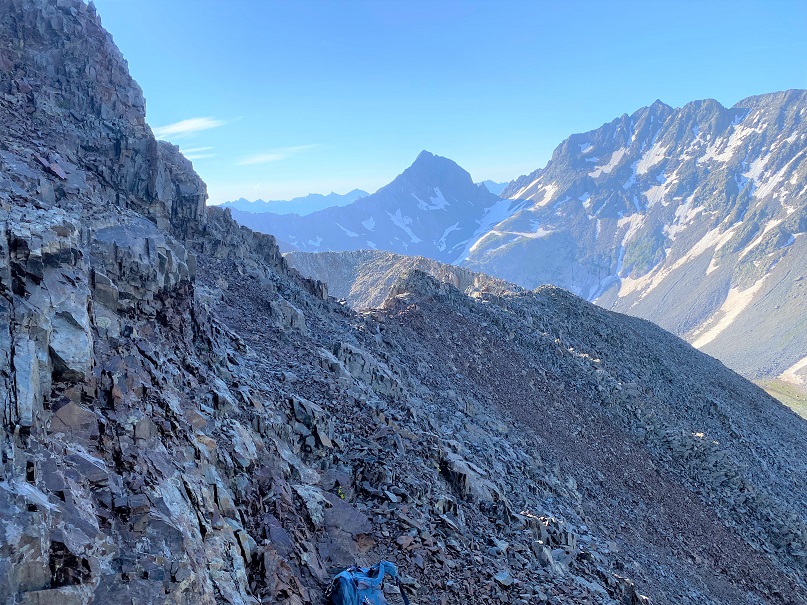
I worked my way back towards the Fowler/PT 13540 saddle
Once at the saddle there was what looked to be a boarded-up mine. In fact, it looked like everything here had been blown up at some point, except this area, which was strategically filled with large rocks (but may have been blown up too). I passed it and headed northeast back to the old mining road
This area was steep, and I did some scree surfing, but it was much easier to navigate when compared to the route I took to ascend the ridge. I saw tons of mining trash here: lots of old cans and pieces of mining equipment, most of which were in small pieces, all made out of cast iron. This was the most intact item I came across
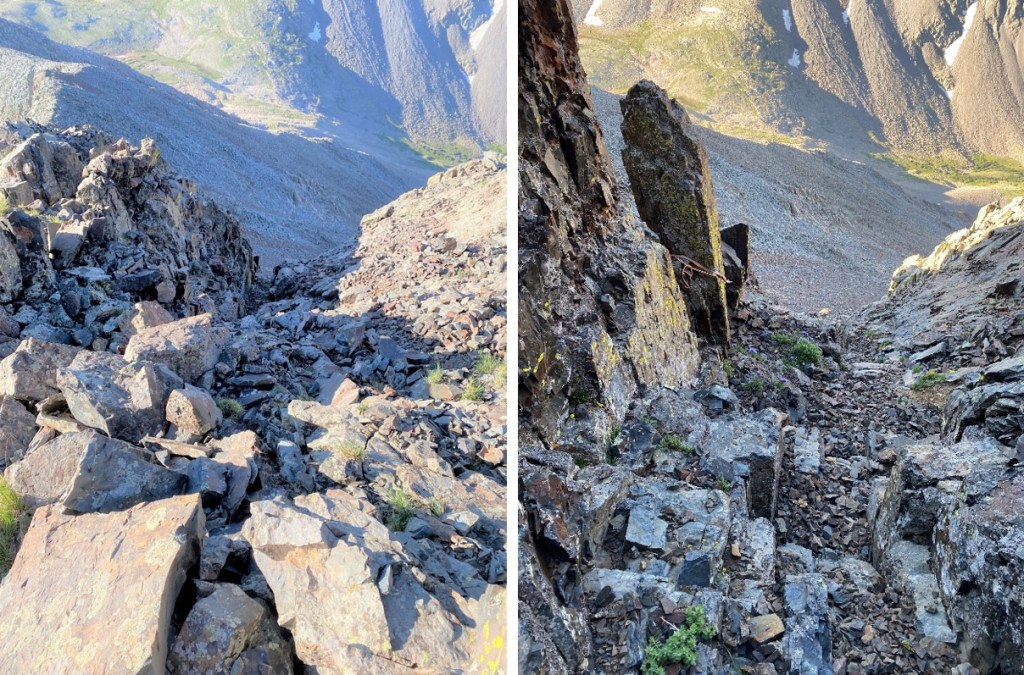
Here’s the route I took down from the ridge (I’d recommend ascending this way as well)
Once back on the road you once again have options to exit the basin. You can stay high, to the right/east, and follow the old mining road, or you can stay low and left/west, and follow an old dirt road.
Here’s a better look at both roads. Both take you out of the basin, and back to Elk Creek Trail / Rock of Ages trail (If you take the mining road all the way to the Rock of Ages trail, turn left and follow it to the Elk Creek Trail junction, and then continue following the Rock of Ages trail).
Once back on the trail I followed it through the trees northwest, back to the trailhead.
I made it back to my truck at 11:15am, making this a 10.53 mile hike with 3985’ of elevation gain in 7 hours.
It was still early, and quite warm, and the mosquitoes hadn’t magically disappeared overnight. I had a friend meeting me here at 6pm to hike Wilson Peak tomorrow, so I’d planned on staying at the trailhead until he got there, then heading to bed. I’d brought a lot of things to do, but they all required sitting down, and once I did that the mosquitoes swarmed me. It was like one would find me and sing its song to its friends and there’d be dozens to shoo away.
If I was outside I needed to have a jacket on, but it was hot! I tried sitting in my truck with the air conditioning on, but that wasn’t going to work for 7 hours straight. It was kind of funny watching the mosquitoes (and flies!!!) swarm my truck: they seemed to know I was in there with the air conditioning on.
So, I entertained myself for the next 7 hours by reading. I got out my current book (On the Road by Jack Kerouac) and read while steadily walking around the trailhead in circles. Continuously moving seemed to keep the mosquitoes at bay. Luckily, the trailhead has a large parking area and I was the only one there. Every few hours I’d take a break in my truck, and then get out and read again. I would have started a campfire to shoo the bugs away, but they’re currently banned. I can’t wait to get the topper on my truck! It would have solved the mosquito/heat problem.
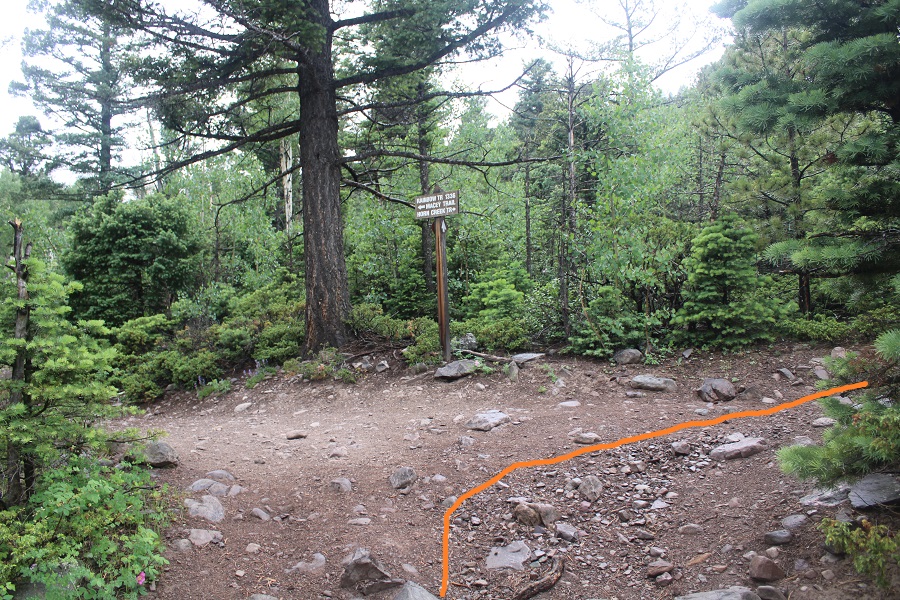
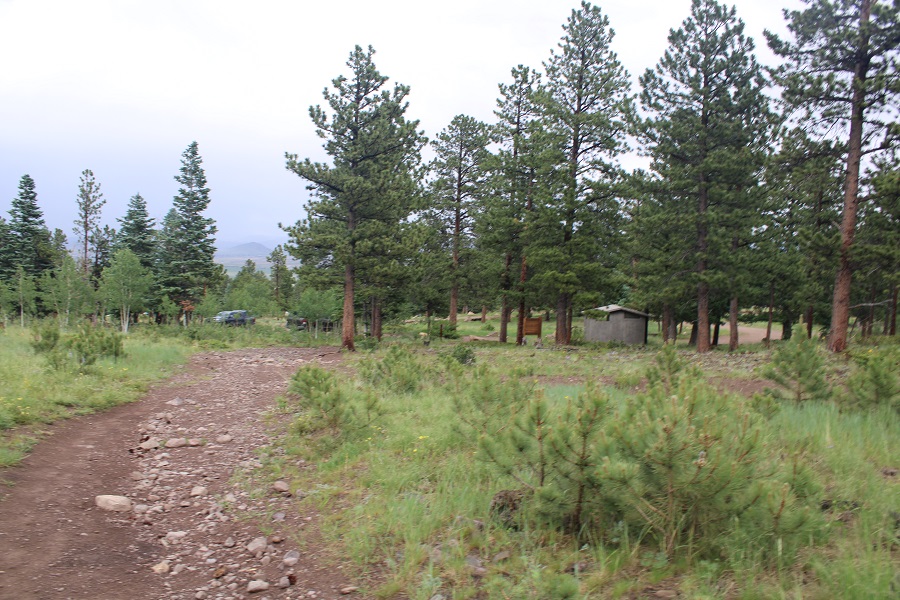
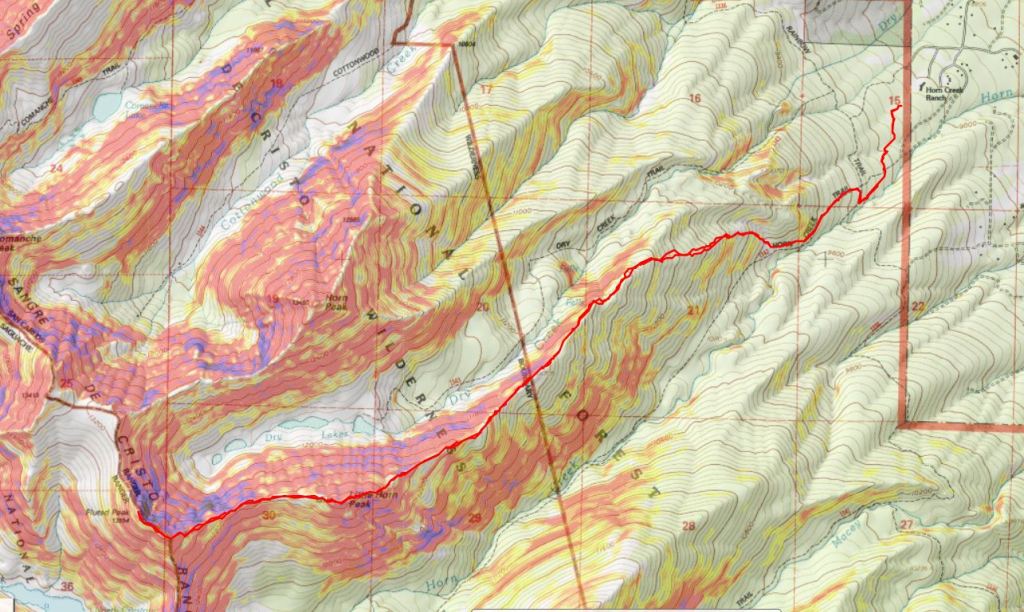
I parked at the Horn Creek Trailhead, the only vehicle in the lot. I’m always surprised at how few people take advantage of the free dispersed camping sites we have in Colorado, especially ones like this with a bathroom. Eager to summit and get back to treeline before the incoming storm, I gathered my gear and was on the trail at 4:30am. The trail starts by following the Rainbow Trail southwest for just over half a mile
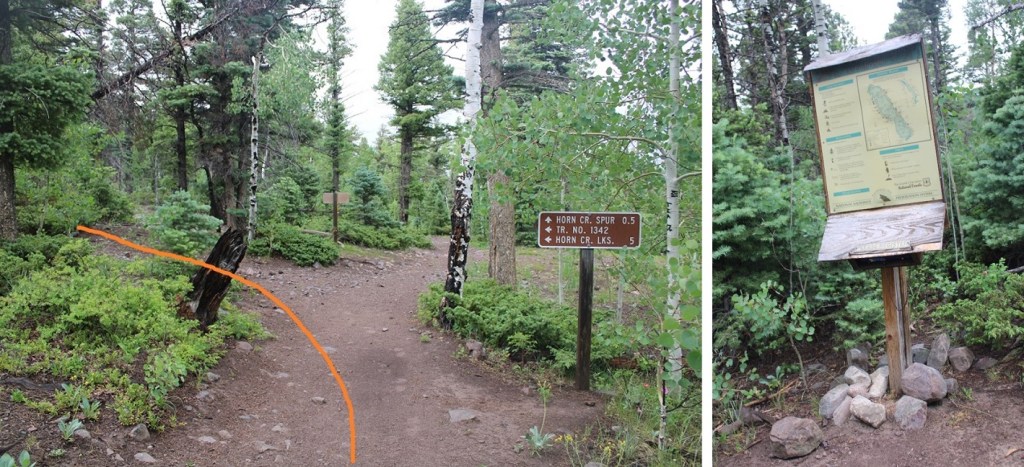
Then I turned right onto Horn Creek Trail
I followed Horn Creek Trail for a short distance, about a tenth of a mile, before turning left at the junction towards Horn Creek Lakes. Here there’s a register, that looks to be kept up.
I stayed on this trail for half a mile, before leaving the trail at 9590’ and heading north and then west up the ridge. There is no trail here. I left a small cairn to indicate where I left the trail, but I don’t expect it to be there long, as it was small.
Route finding here can be a bit tricky, but the goal is to gain the ridge. I did this by heading west, through the pine and aspen trees. Every once in a while, I’d come across a game trail. They all fizzled out however. This area is easy to navigate, as there aren’t too many downed trees. I was able to avoid most of them.
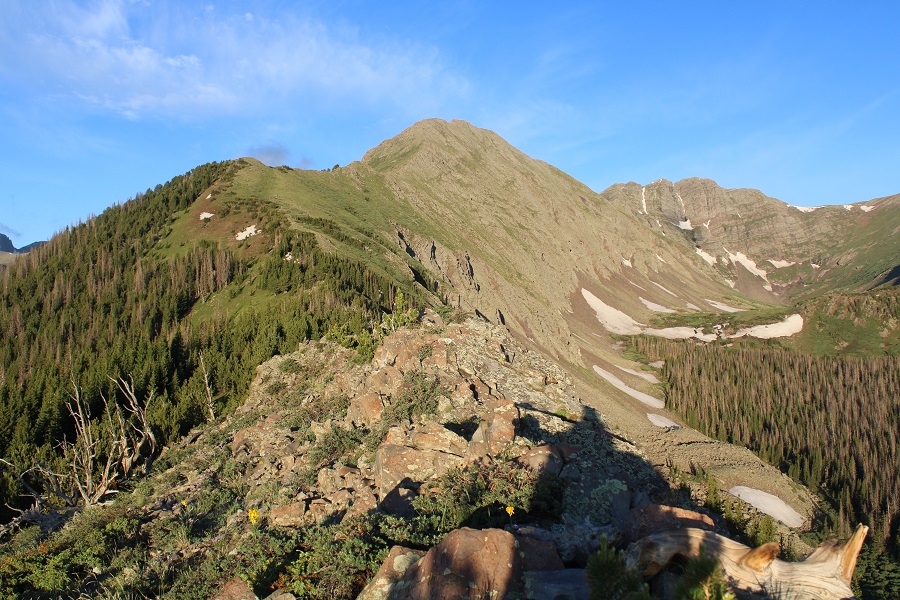
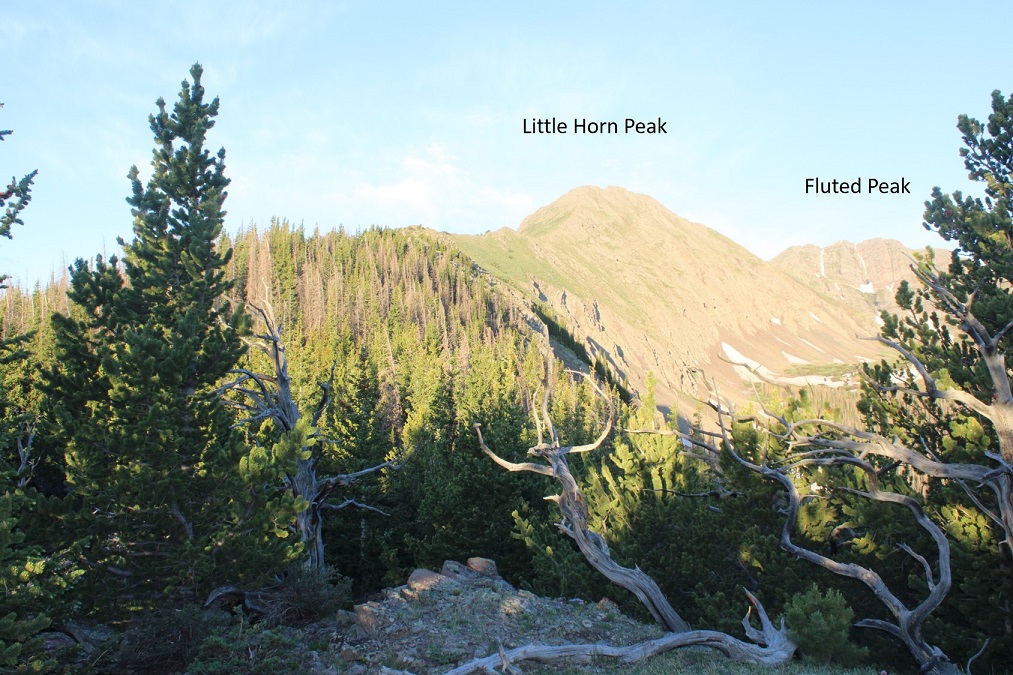
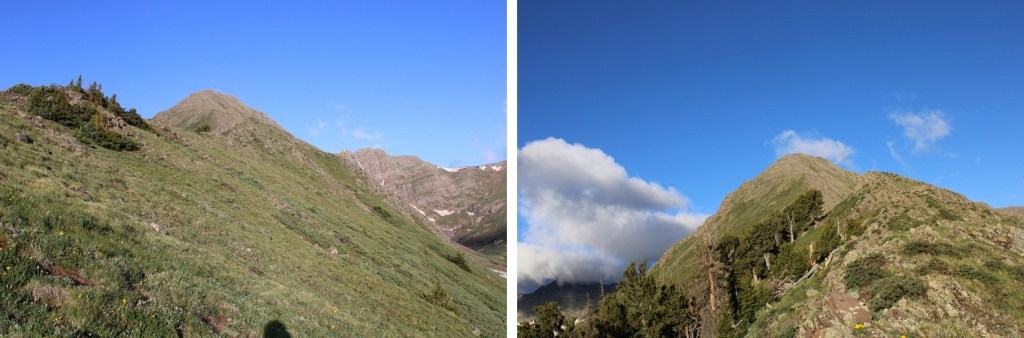
Once I was on the ridge, I followed it southwest to treeline. This is a long ridge, and it seemed to take forever to make it to treeline. Here’s my first glimpse of Little Horn Peak
Like I said, this is a long ridge
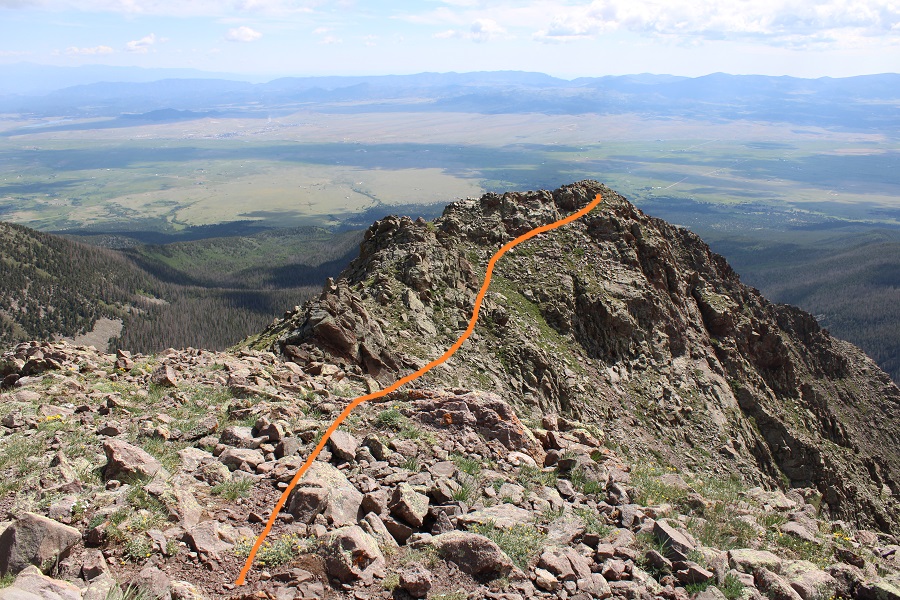
The class 3 fun starts at the top of the ridge, which is a false summit. From here you can see Little Horn Peak’s true summit
My trekking pole isn’t collapsible, so I left it at the start of the class 3 section, put on my helmet, and started heading straight over the ridge. The class 3 section is consistent for another half mile to the summit.
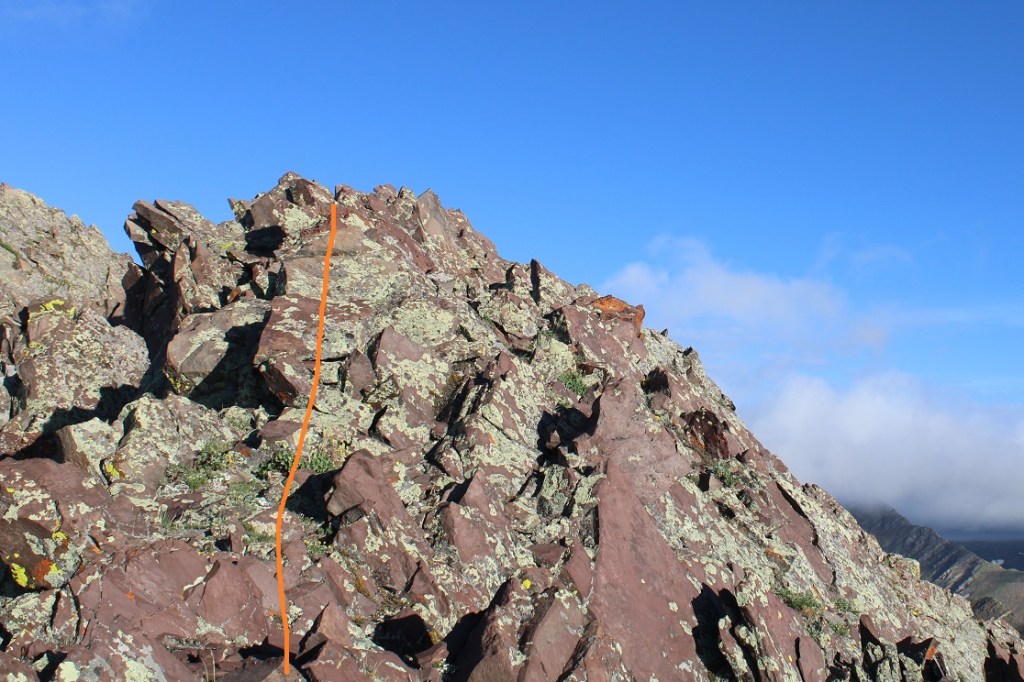
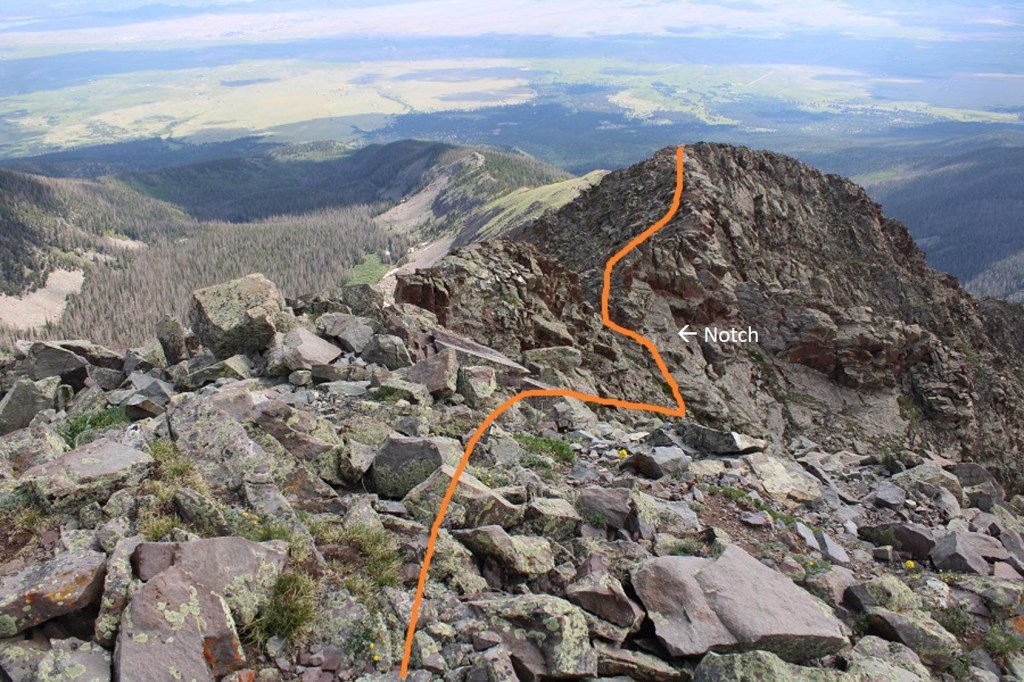
Start out by going straight over the ridge. There is some exposure here.
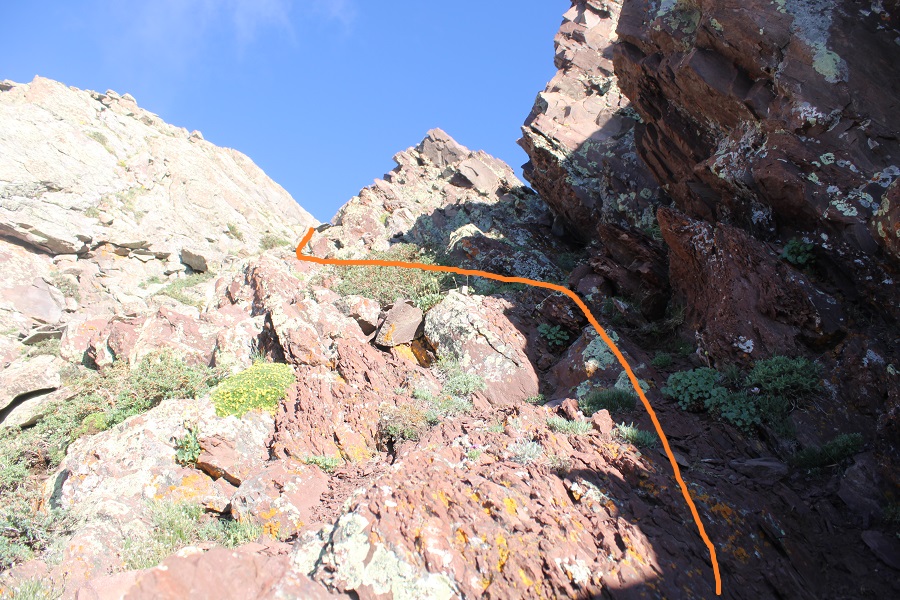
Then you’ll dip down to the right. Look for a notch, go through it, and now you’re on the left side of the ridge.
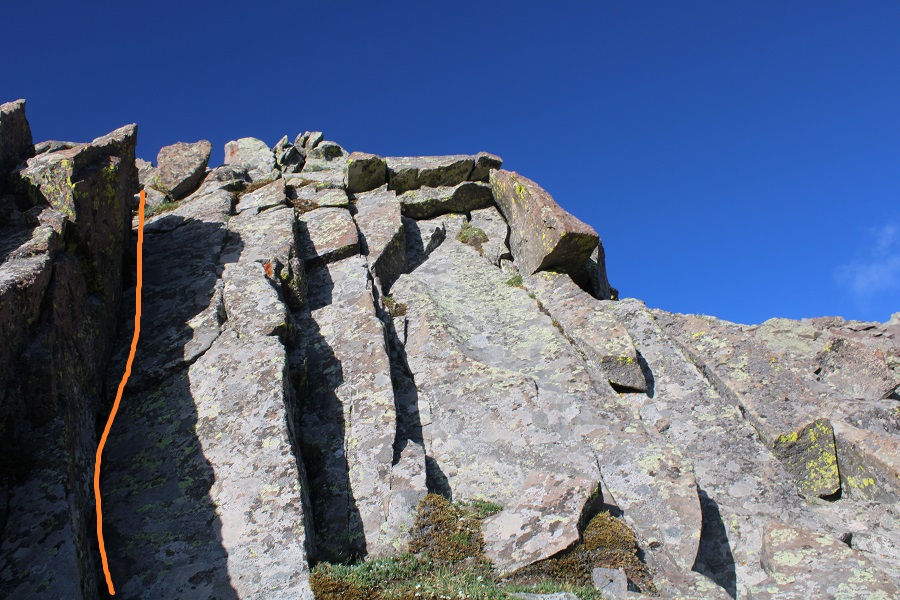
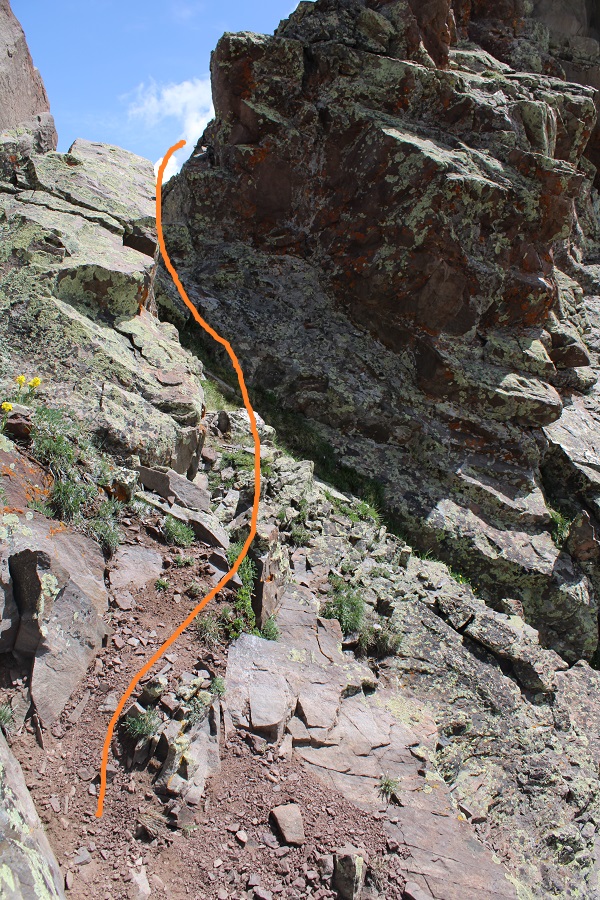
Go up the gully and cross back over to the right side of the ridge
There’s a section of rock to upclimb. This was difficult class 3 / easy class 4 (and much more difficult and committing on the way back down later in the day).
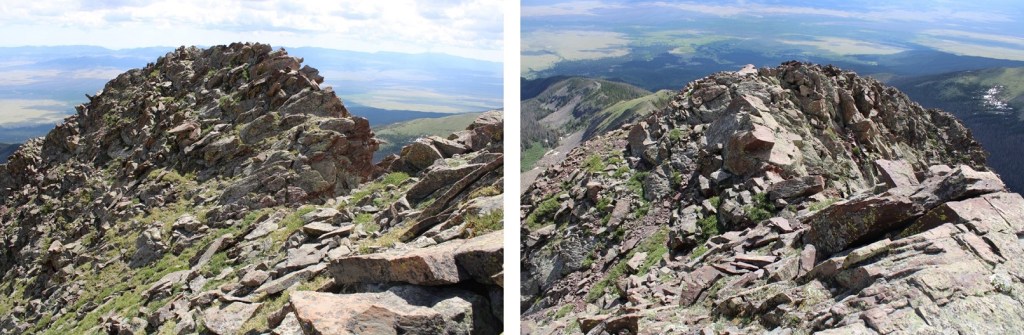
From the top of this section I could see the summit. I stayed on the left side of the ridge from this point on, staying on class 2 terrain.
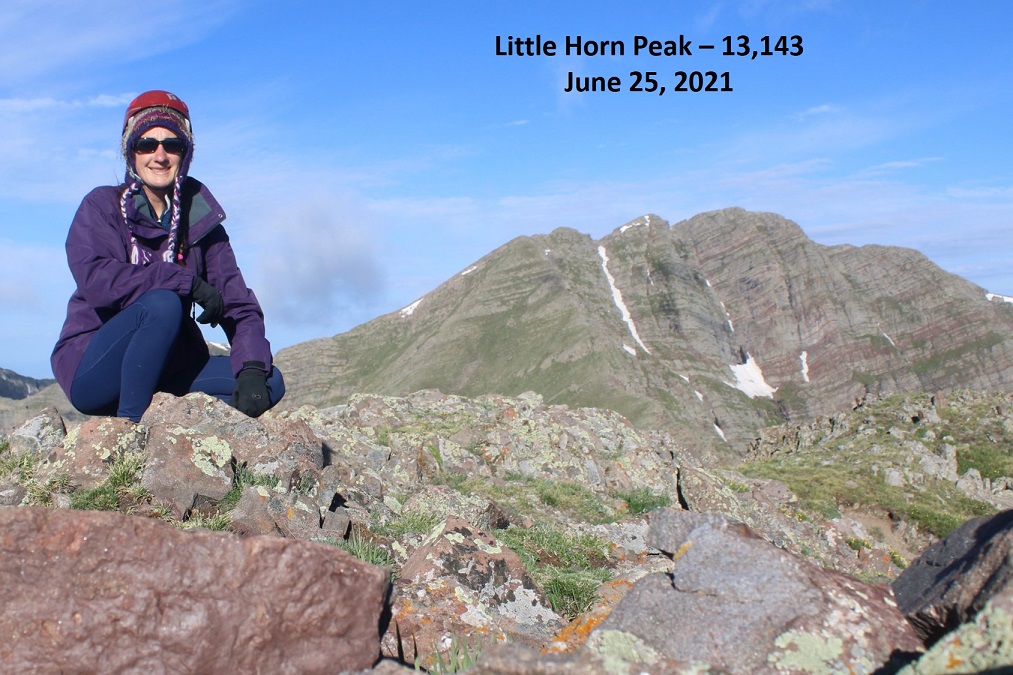
I summited Little Horn Peak at 7:45am
Little Horn Peak:
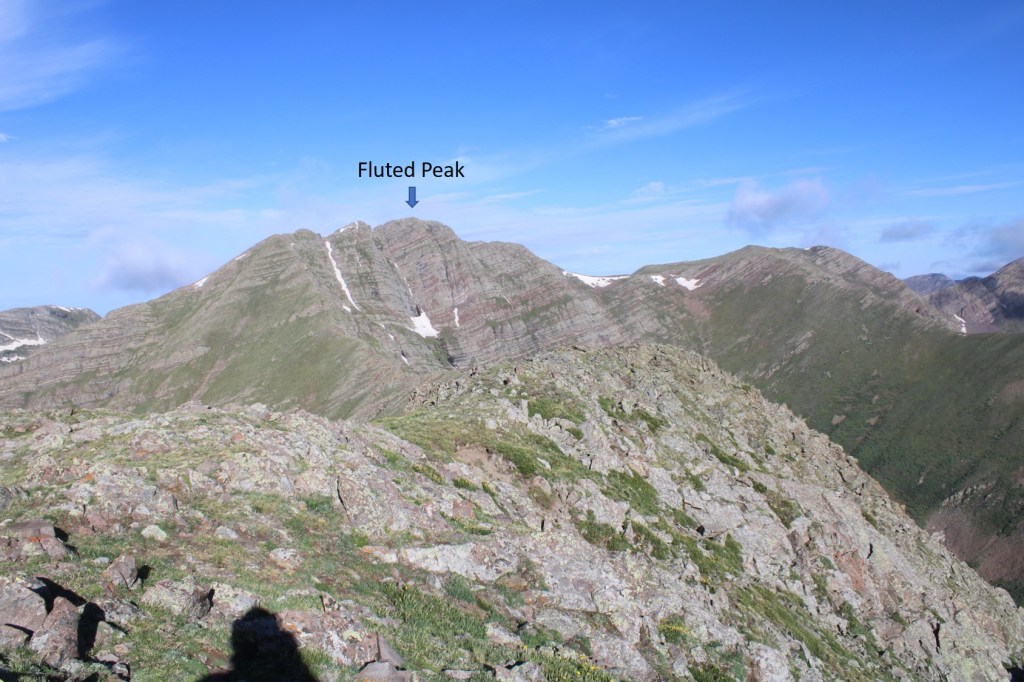
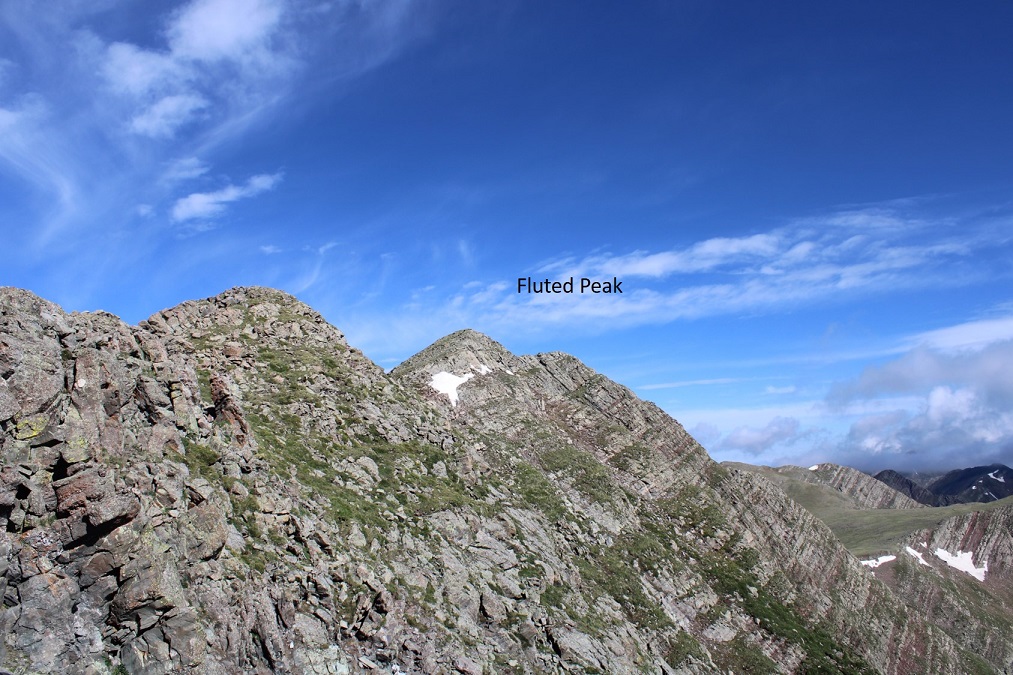
That was it for the class 3 section of the hike. The ridge over to Fluted Peak is class 2 (with the option to go up a class 3 chimney, but it’s avoidable). Here’s Fluted Peak to the west.
This was a simple ridge hike to the saddle. You can’t see them very well in this photo, but there was a mama bighorn sheep with her baby walking up the ridge. The baby couldn’t have been more than a month old.
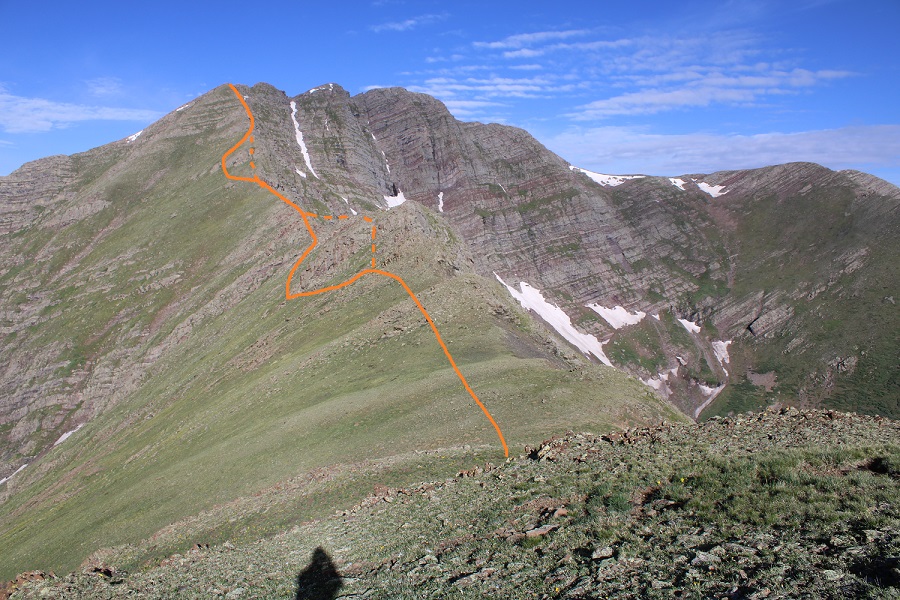
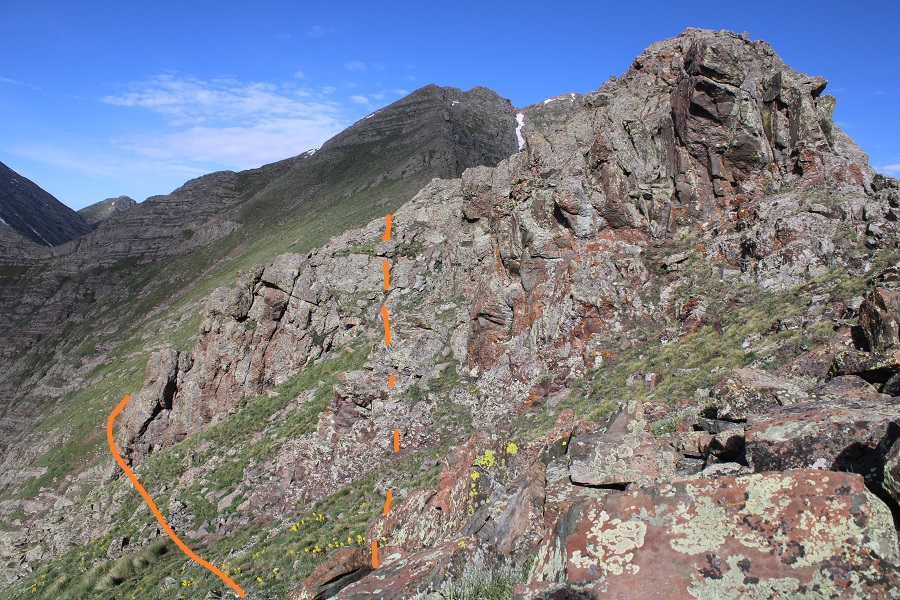
From the saddle, here’s how you keep this a class 2 hike (dotted lines show the class 3 route)
Here’s the first obstacle (class 2 solid, class 3 dotted):
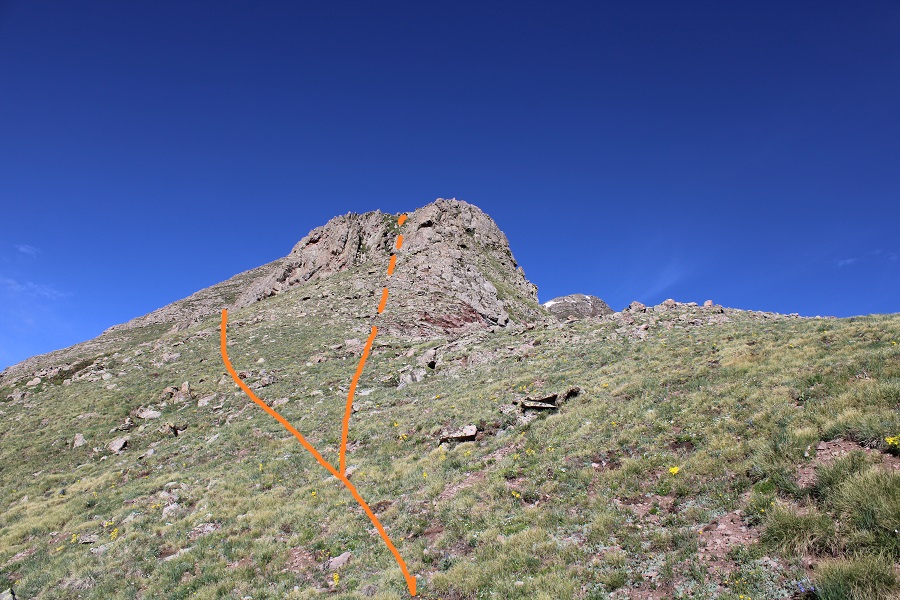
And the second (class 2 solid, class 3 chimney dotted):
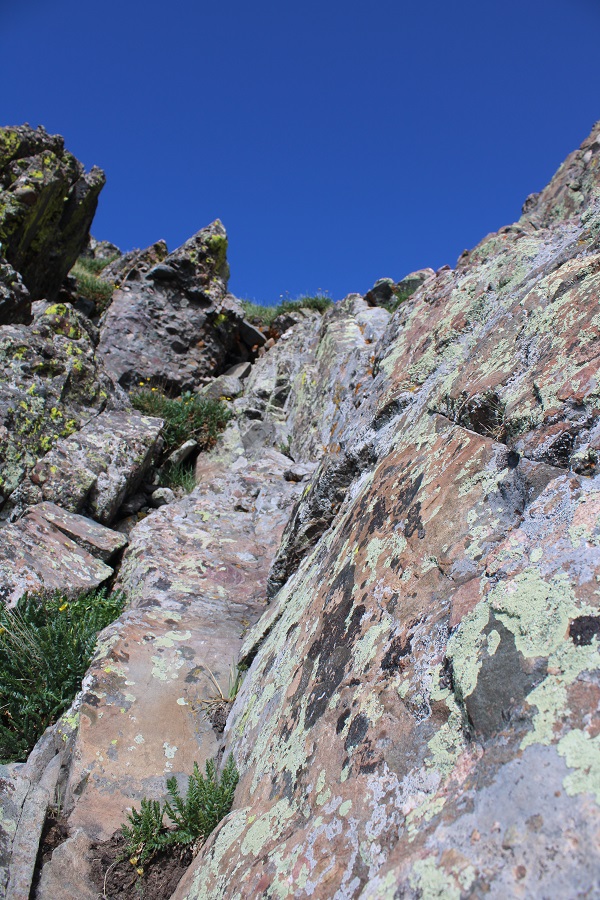
Here’s that chimney up close
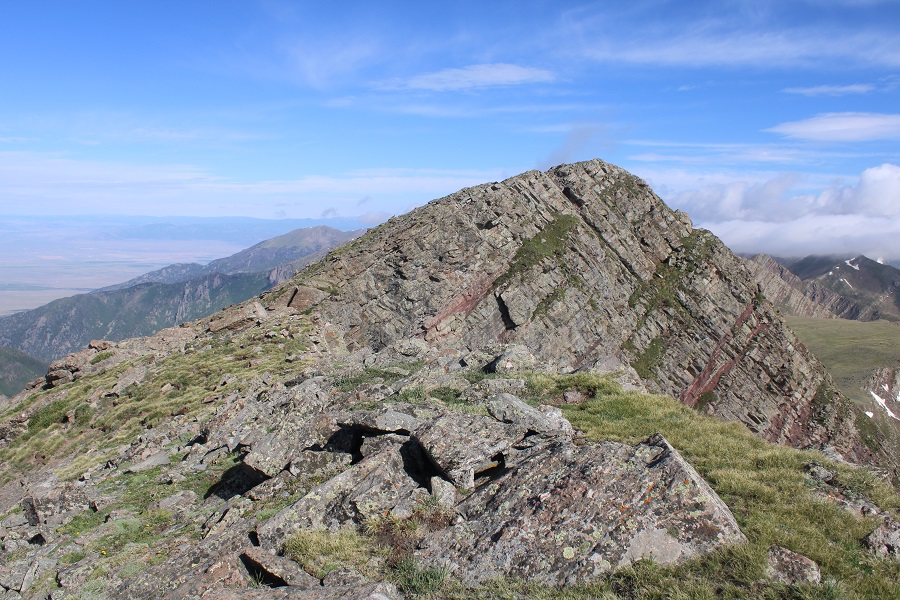
After the chimney, it’s straightforward class 2 to the top of the ridge to the first false summit.
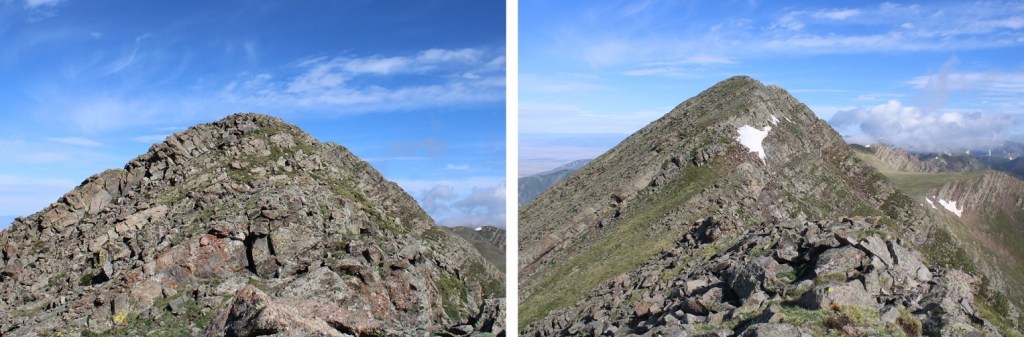
Fluted Peak is actually here
There are two quick false summits to go up and over
And then the final summit
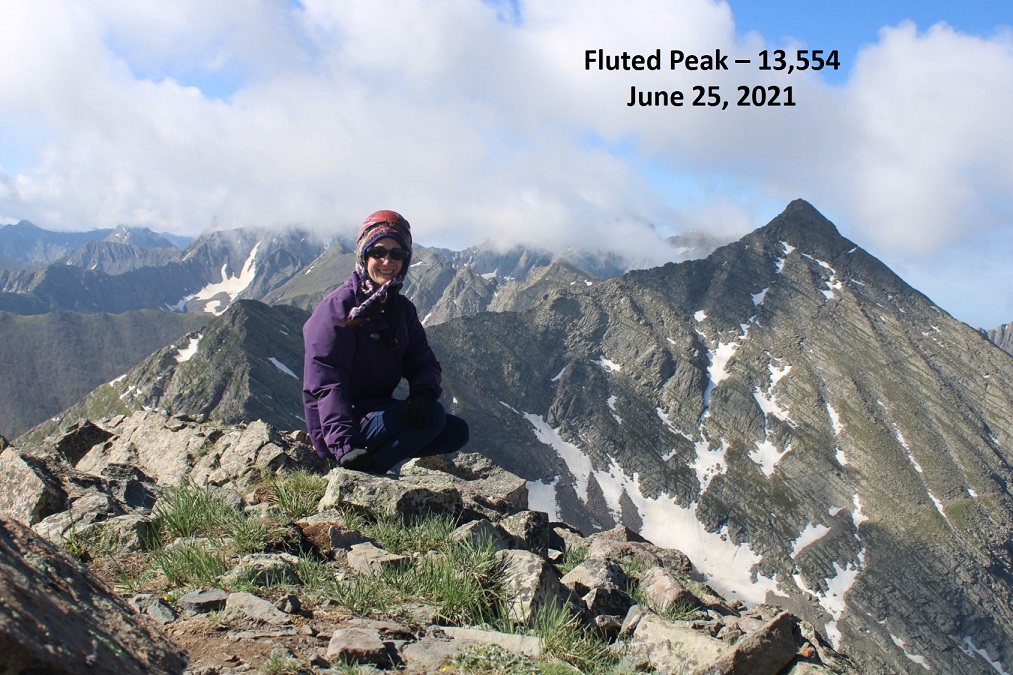
I summited Fluted Peak at 9am
Fluted Peak:
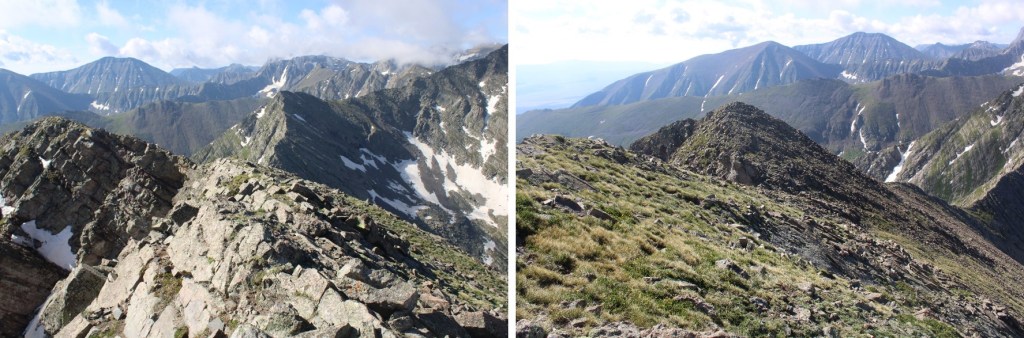
The clouds were coming in fast, so I decided to re-trace my steps and head back to Little Horn Peak (I’ve already summited Horn Peak, so there was no need to make this a loop today). I headed back to the ridge
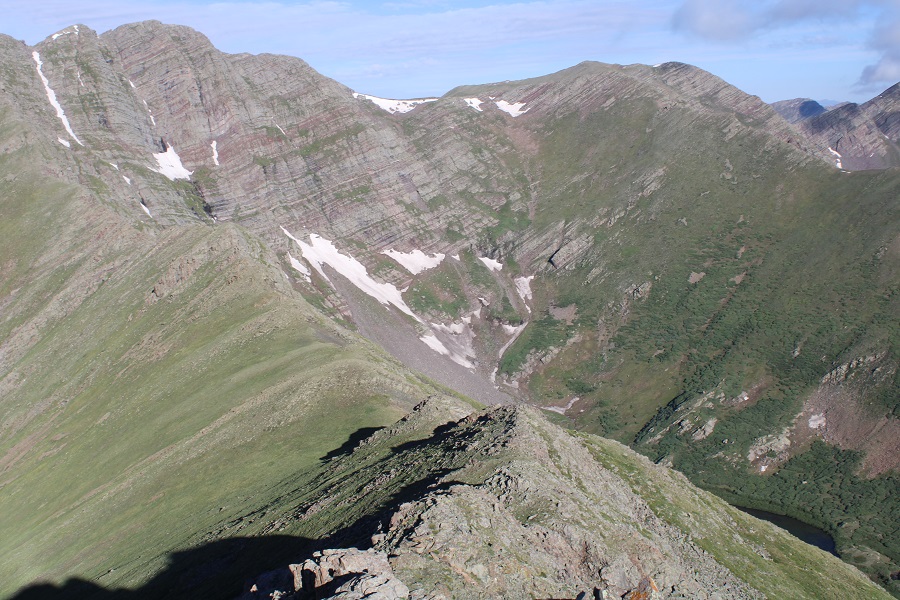
Here’s a picture of Little Horn Peak from the Fluted Peak Ridge
It all stayed class 2 until I made it to the summit of Little Horn Peak
From there It was class 3 again until I made it to the ridge.
Here’s a closer look at that notch
And the last bit of scrambling to the ridge
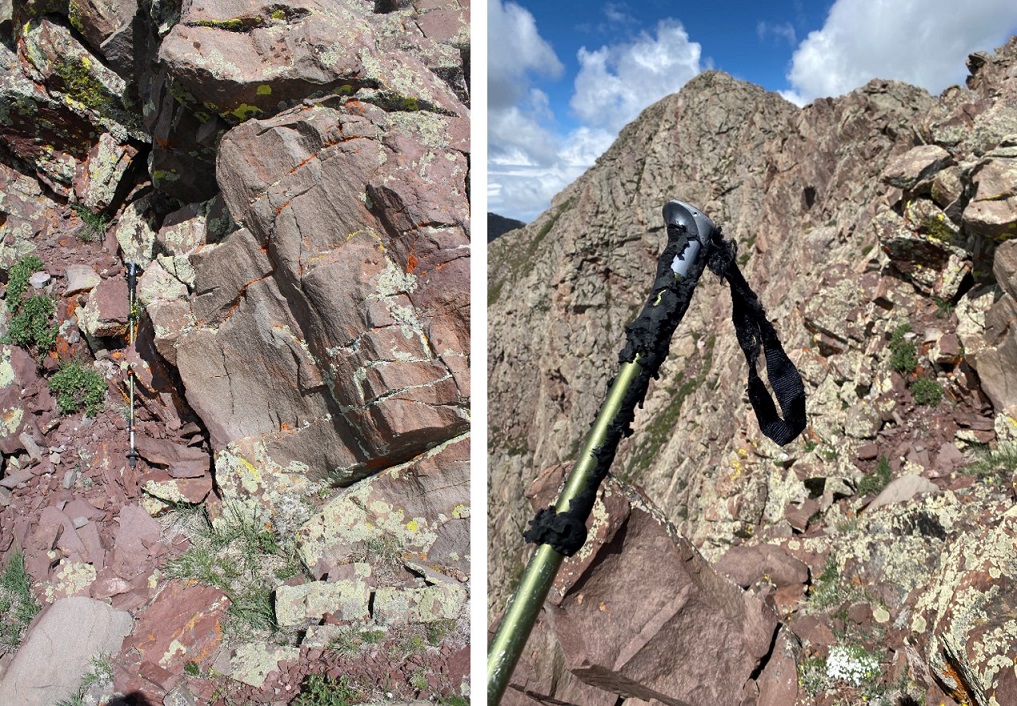
I made it to the ridge and looked around for my trekking pole. It wasn’t where I’d left it. Instead, it was about 15 feet away, at the entrance to a marmot burrow. I picked it up and found some marmot had turned it into a snack. Just adding more photographic evidence to prove the case “Marmots can’t be trusted with trekking poles”.
I sighed, took off my helmet, and headed back down the ridge (yes, I brought the trekking pole down).
Once back at treeline I turned back for a last view as it started raining.
The rain quickly turned to hail and I had to put my camera away. Here are some pictures of below treeline, in-between bouts of rain/hail. I just kept descending northeast, and when the ridge ended I continued east towards Horn Creek Trail. Once again, I’d pick up game trails and then lose them. A little advice: you should be able to hear Horn Creek flowing below you to your right if you’re going in the correct direction.
Back on the trail I followed it to the trailhead.
I made it back to the trailhead at 1pm, making this a 12.35 mile hike with 5504’ of elevation gain in 8.5 hours. That had been a fun day of scrambling!
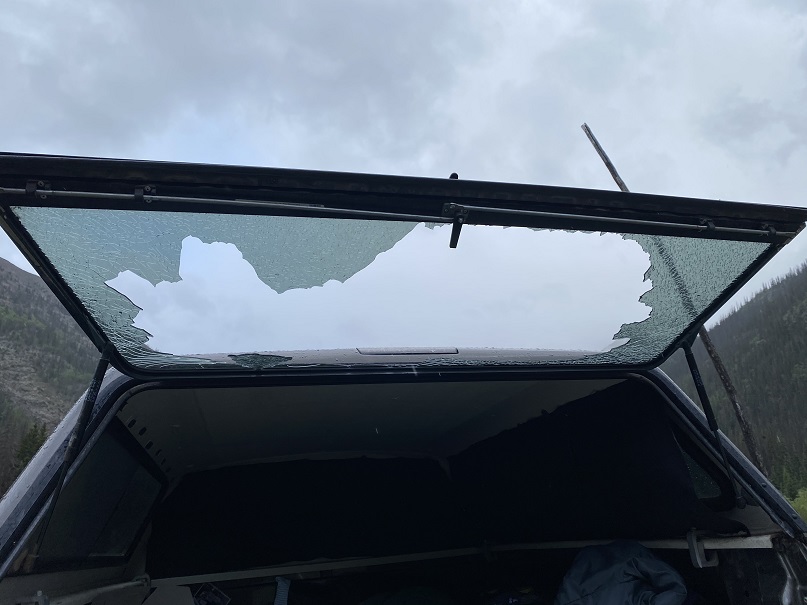
I dried off and headed to the next trailhead. When I got there it was still raining, so I decided to make dinner inside the topper of my truck. I finished, cleaned up, and was sitting down to write notes in my journal when I heard a loud “BANG!”
I looked up, and the back window to my topper crumpled and broke into thousands of pieces. I honestly thought I’d been shot at, and turned around but didn’t see a bullet hole anywhere. Next, I gingerly opened the window, crawled out of the truck and took a look around: no one in sight (but it was still raining).
I assessed the damage, and realized I needed to take care of this asap, so I put on gloves and cleaned up all the broken glass I could, still getting some small slivers of glass embedded in my fingers. Next, I drove to where I could get cell reception, and found the nearest place that would be open the next day to fix the broken glass was 5 minutes from my home, and 6 hours from where I was right now. I sighed: It looked like I had a long night ahead of me.
It turned out the auto glass store couldn’t help me, and told me to go to where I’d originally bought the topper. They couldn’t help me for another 4-6 weeks (and $600), but referred me to another glass shop that didn’t open until Monday. So, a quick trip to Walmart to pick up some duct tape and a tarp and I was able to create a makeshift door that does nothing to keep animals/intruders out, but has done a decent job keeping out the rain. I’m still not sure why the window broke: I was told sometimes there’s just a flaw in the glass. That sounds bogus, but I’m getting a new one soon anyway, and I’ve learned not to get windows in my next topper (I don’t use them anyway). I’m actually more upset I lost out on two days of hiking.
I’ve been up in my head about this peak since my failed attempt last month. Last time I’d turned around because I wasn’t 100% sure I was in the right area and I was afraid of cliffing out. All of the information I had on Coxcomb was conflicting (some called areas class 3 and others class 5, etc.) and none of the pictures I had from others lined up with what I was seeing. After going back home and researching more I realized I had been in the correct area, and now I was ready to try again.
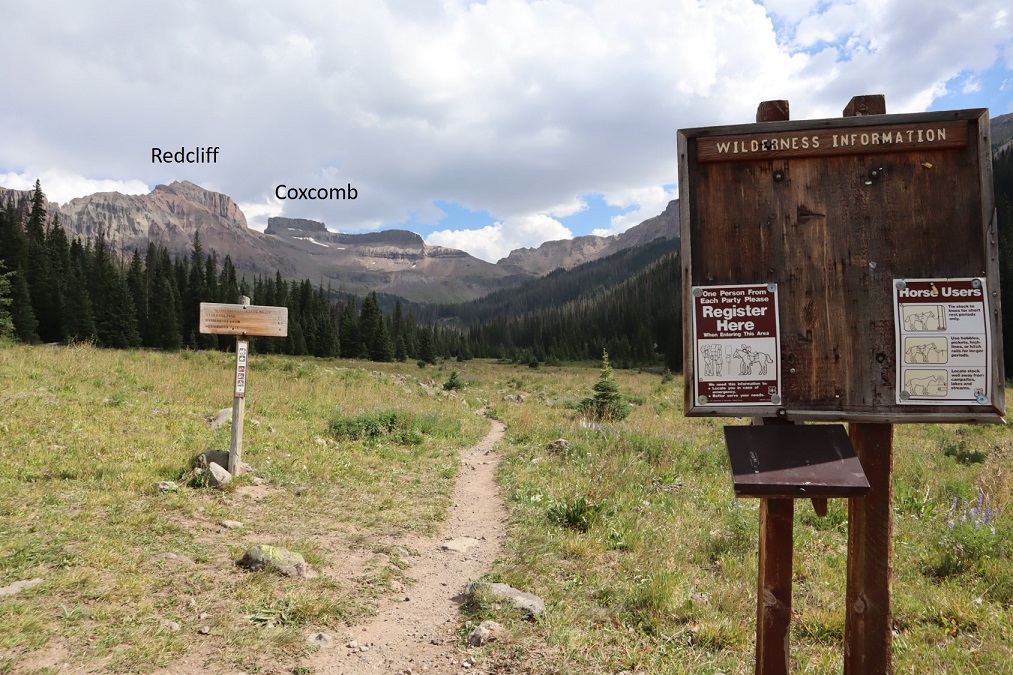
I drove to the Wetterhorn Trailhead and was surprised to see no one else parked in the lot. The last time I was here there were several other vehicles. I got out, walked around, and signed the trail register so I wouldn’t need to in the morning. It was cloudy and windy but on the plus side there were no mosquitoes.
I tried to pump myself up for the hike tomorrow, but was still having trouble mentally. I told myself to just enjoy the hike and focus on learning something, even if I didn’t summit (again). I got out the book I’m (still) reading: Death in Yosemite, and noted I was still on the ‘death while climbing’ chapter. It may sound macabre, but reading about how other, more experienced climbers have died while climbing puts climbing into perspective for me: gravity never sleeps, and I can never be too careful (which is another reason why I turned around last time). I like to review potential mistakes so I don’t make them.
A group of three (shirtless) guys in their early 20s walked by, carrying gear and pads. I stopped them to see where they were headed and they told me they were just out bouldering. Hmmmm… I didn’t think the area was good for bouldering, but I wished them luck.
I made sure to get to bed early, and wouldn’t you know it, I heard a mouse moving around under/inside my truck as I was trying to sleep. I guess those mothballs don’t work. Also, I believe it was the same mouse as last week: it’s most likely been living in my truck, building a nest, etc. I was going to need to get some traps asap.
I woke up and was on the trail at 4:30am, taking the same route as last time. There’s an obvious trailhead with a register.
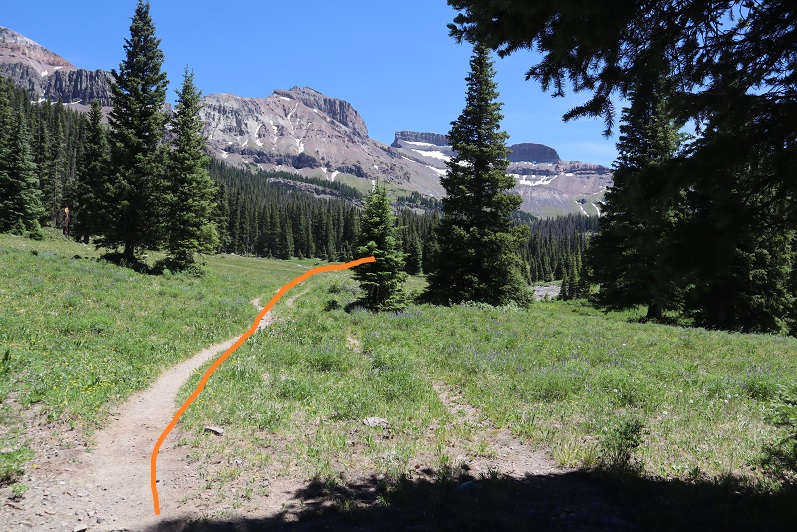
I followed the class 1 trail for 3.4 miles up to the top of the pass, and then lost 450’ of elevation as I descended into the basin.
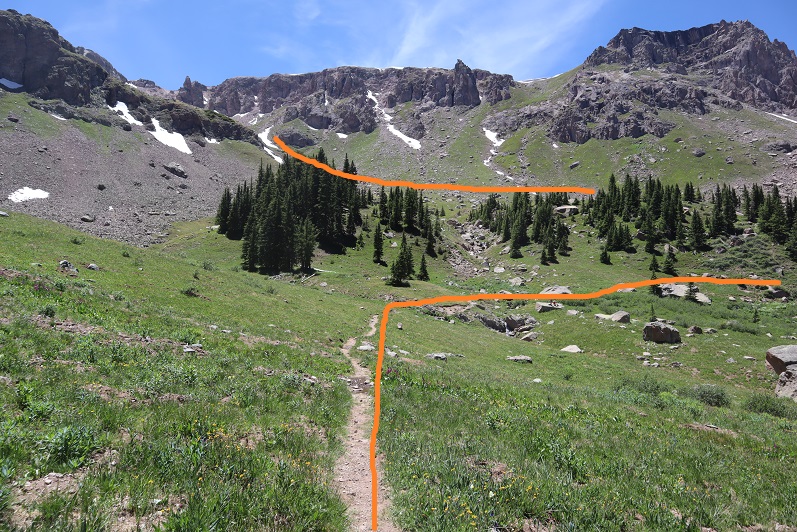
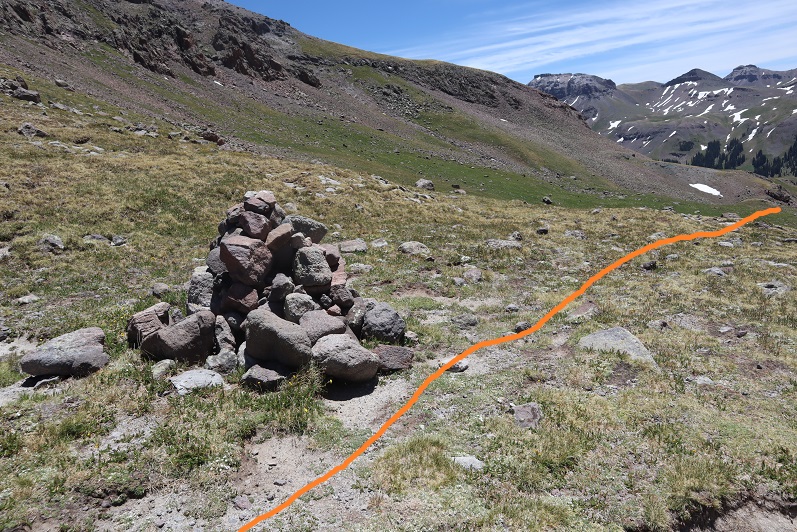
I’ve heard of others who’ve stayed high here instead of going into the basin, and from my perspective, the rubble and talus and scree aren’t worth it: I’m ok losing a little elevation, and I’m actually convinced it saves time. Once in the basin I left the trail, crossed the basin and followed the ridge up to the base of Coxcomb
There was a little bit of scrambling to get to the base
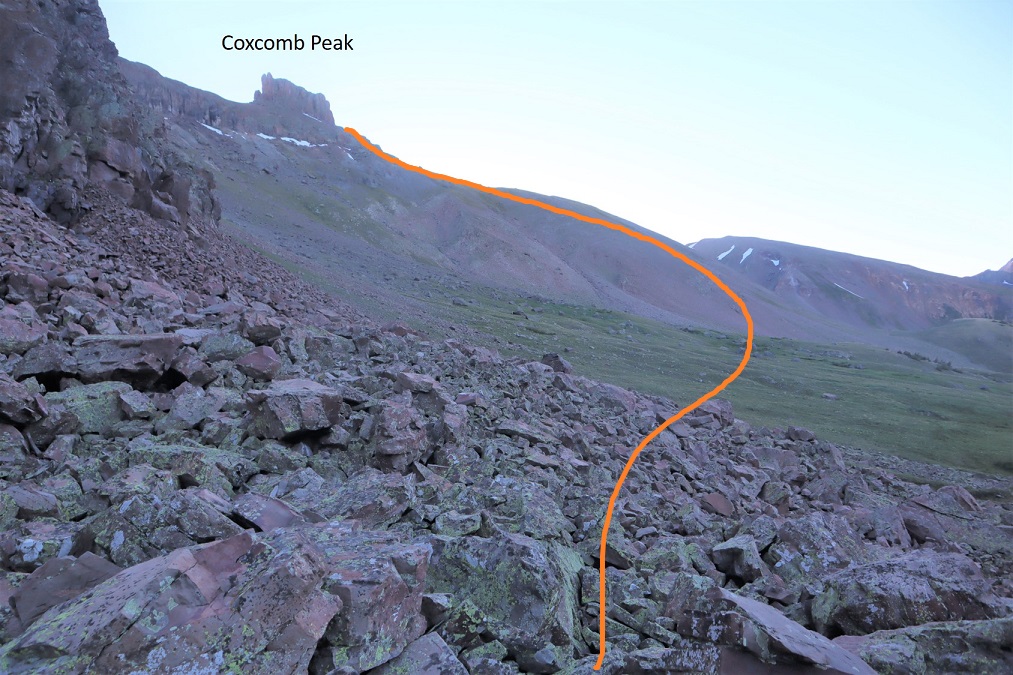
Here’s an overall view of the route up
Once there I was happy to see the rocks I’d placed in the chimney were still where I’d put them. I sat down, put on my helmet, and mentally prepared myself to begin. Here’s the first chimney
I made my way over to the chimney and tried to climb up. No dice. I love to boulder, but I haven’t been since COVID started due to the gym being closed and now requiring masks (say what you will, but I cannot work out with a mask on. I respect the rules however, and thus choose not to go). All this to say I’m a little rusty when it comes to my bouldering skills.
Ok, so if I couldn’t just climb up I’d do what I did last time: I took off my pack, attached a rope to the pack and my harness, and tried climbing up without a pack. The rock was cold and my fingers were stiff and I tried and tried but was unable to climb up the chimney. What was wrong? I’d been able to do it last time! Ugh. That was when I realized last time I’d worn climbing shoes. I guess they did make a difference. Oh well, I was just going to need to get creative. I tried once again, this time angling myself sideways, putting my thigh into a crack, shimmying around, and pressing into the side of the rock with my inner thigh and hoisting myself up. This took me halfway up the chimney. From there I was able to hoist myself up and use my arms to do the rest. I made it to the top of the chimney, hauled up my gear, and prepared for the second part for the climb. The red circle is where I ‘sat’
The next section was easy class 3. I re-coiled my rope, put on my pack, and made my way to the base of the next chimney
This is where I’d gotten stuck last time. This time however, I was sure I was in the correct spot. I initially tried to climb this with my pack on, realized that wasn’t going to happen (the pack was too heavy and put me off balance) and decided to try climbing this chimney without my pack. The red circle is where I took off my pack.
Here’s what the climb looks like from there. Knowing I wouldn’t be able to climb this with my gear, but also knowing I needed my gear to descend I decided to once again tie the rope to my harness and loop it around my pack. I was very careful to make sure my rope didn’t get tangled, and I had an exit strategy in case the whole ‘rope around the pack thing’ didn’t work in this area. I wouldn’t recommend this tactic unless you put a lot of thought and planning into its execution, as so many things can go wrong in this scenario. Here’s a look at the beginning of the route
I made it halfway up and stopped.
At the halfway point I hauled up my gear to where I was positioned. I figured this would lessen the chances of my pack getting stuck when I hauled it all the way up, and also gave me a chance to test whether or not hauling the pack would work in an area where I still felt I could downclimb safely. This tactic proved successful, so I continued on.
From the halfway point, here’s looking up at the rest of the route
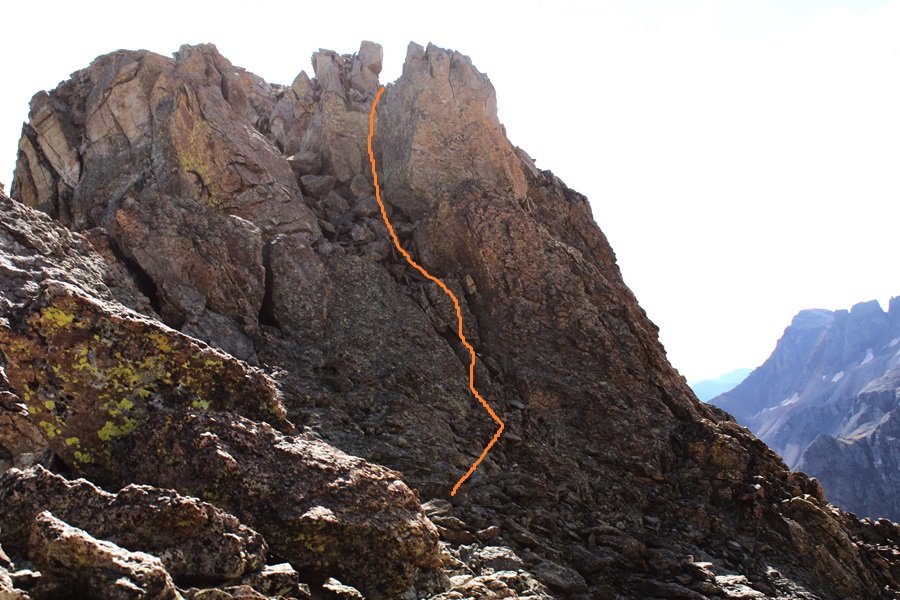
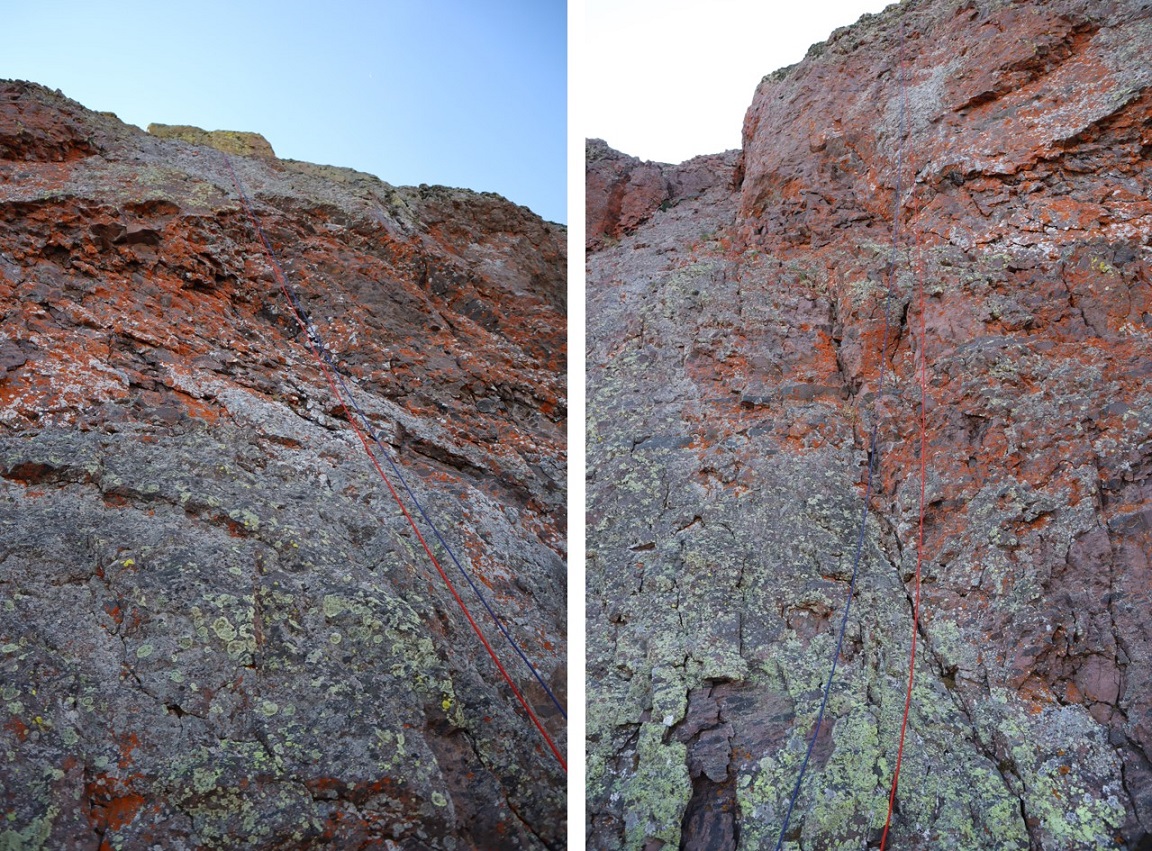
This is a class 5.2 chimney that requires some stemming/fun/creative moves to ascend. At one point I even used a crack climbing technique to get a good hold with my arm vertically and hoist myself up. This is the point I wasn’t able to make it past last time, but after talking with others who’d successfully climbed this area I felt confident I’d be able to as well. There are some sketchy moves, but plenty of opportunities for stemming/hand holds to make the ascent doable. I was terrified but just told myself not to look down, to focus ahead, and soon enough I’d made it out of the chimney. Here’s the route I took
Once at the top of the chimney I turned and hauled up my gear, feeling pretty pleased with myself for making it this far. I recoiled my rope and put it in my pack.
I’ve heard it’s class 3 after this point to exit the chimney, but it felt class 2 to me
Last time I’d been worried I was in the wrong gully. Since I hike solo I’m extra careful, and probably turn back more often than I should when uncomfortable. One of the reasons I’d turned back here last time was I was worried if I ascended the wrong gully I’d be cliffed out. It turns out that wouldn’t have been the case, so if you’re worried about cliffing out in this area don’t be: all chimneys exit in the same area, and it’s solid. Here’s looking back
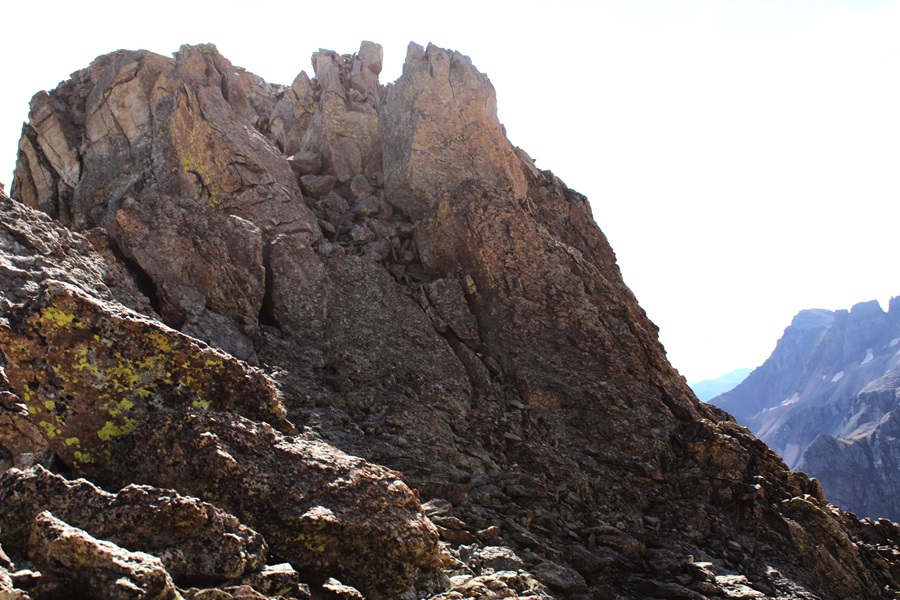
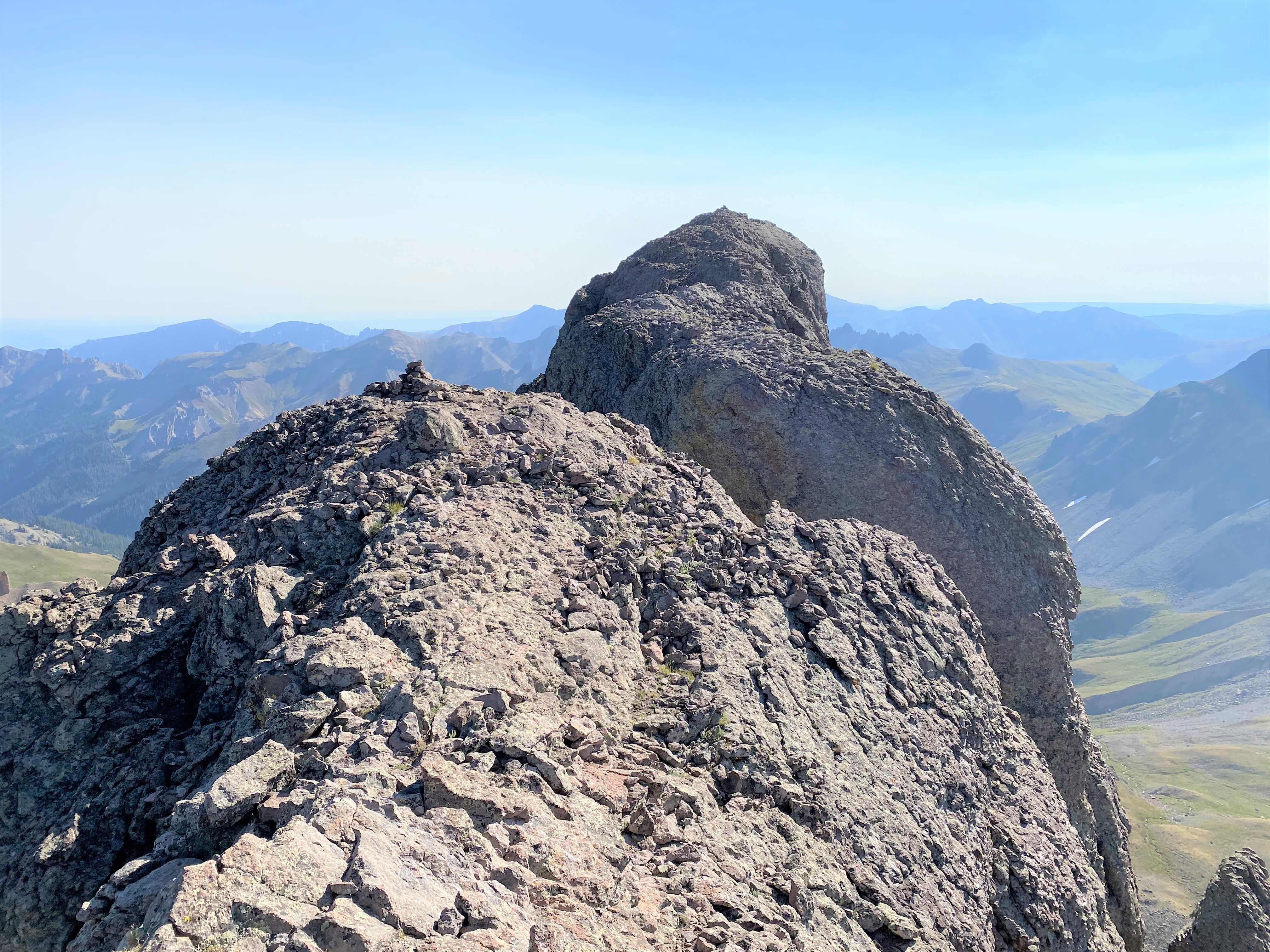
And forward towards the summit of Coxcomb
There was still one more obstacle before reaching the summit: a 25 foot notch I’d need to rappel before upclimbing to the summit.
I got out my rope, attached it to my gear and the anchor (which looked solid so I didn’t replace the webbing) and rappelled down into the notch. This is committing because it’s class 5.6 to climb back up. I’m not a climber, and I knew I wouldn’t be able to upclimb this section on my own: forward was the only way from here on out. This last bit included rappelling down, then climbing out of the notch
Here’s a look back up at this section from inside the notch
I once again retrieved and recoiled my rope, and got ready for the final pitch to the summit. I went north, following the cairns, and climbed up an easy chimney
From there it was an easy walk to the summit
I summited Coxcomb Peak at 9:30am. There was a summit register in a powerade bottle that should probably be replaced. I didn’t open it, but it looked like the papers were smushed in there.
Coxcomb:
I was thrilled I’d made it this far, but I still had the 170’ rappel to accomplish. I went to work, looking for the webbing and anchor set up. It was easy to find and still looked good, so I decided to use what was already there.
I tied my two ropes together with a double fisherman’s knot and threw my ropes. It was quite windy, and the wind was coming at me, so it took a couple of tries to make sure the ropes made it all the way to the ground. This was quite frustrating, but worth the extra effort to make sure it was done correctly. Next, I tested the rope, watched my knot to make sure it was secure, unclipped my safety, and started the rappel. Everything went smoothly. I even noticed 2 more anchors set up below where I’d rappelled, so if you brought just one rope it would have been enough (the webbing looked old though, and should probably be replaced).
My feet touched the ground and I gave out a “Woot!” I was so excited! I’d done it!!! I’d solo’d Coxcomb Peak, a peak I wasn’t sure I’d ever be able to climb, let alone solo. I gave myself a minute to let it sink in, and then went about retrieving my ropes.
I had two ropes, one purple, one orange. I always pull the darker one. I pulled the purple one and was thrilled when it moved. I pulled it about 10 feet when it stopped. Hmmm. Ok, maybe it got stuck? So I pulled the orange rope back a few feet, and then tried the purple one again. Once again, it got stuck. I whipped the ropes and they moved as far as I could see, so one of the ropes must have been stuck up at the very top. I spent the next hour doing everything I could think of to retrieve those ropes, to no avail. In the end I made the very difficult decision to leave them there. I did put a note in the trail register on the way down and I posted to some climbing social media sites about their whereabouts, so at this point I’m fairly confident they’ve been retrieved. It hurt to leave them there, not only because of LNT, but also because this is the first time I’ve used them (besides the initial breaking in).
Here’s the rappel
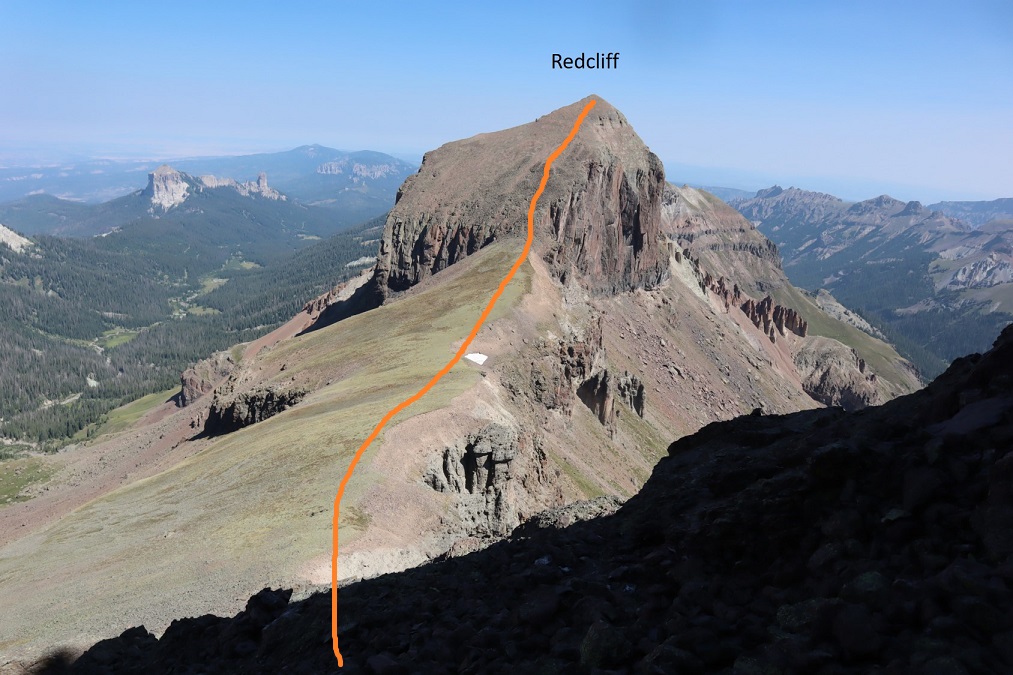
I sighed heavily and turned to hike up Redcliff.
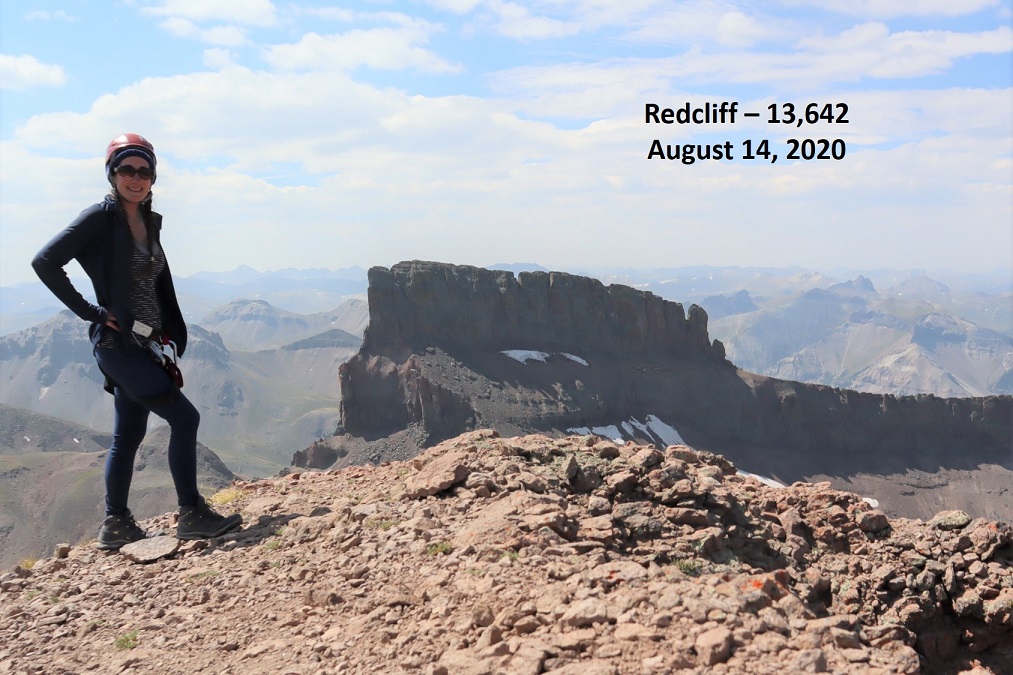
This was a very short, simple, and straightforward climb. I summited Redcliff at 11:15am
Redcliff:
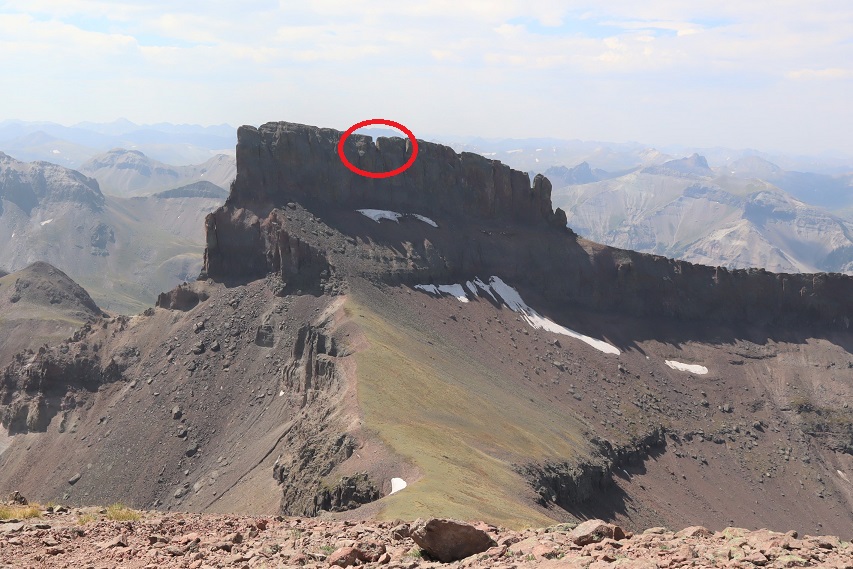
Here’s looking back at Coxcomb. I’ve circled the notch that needs to be rappelled down and then climbed back up
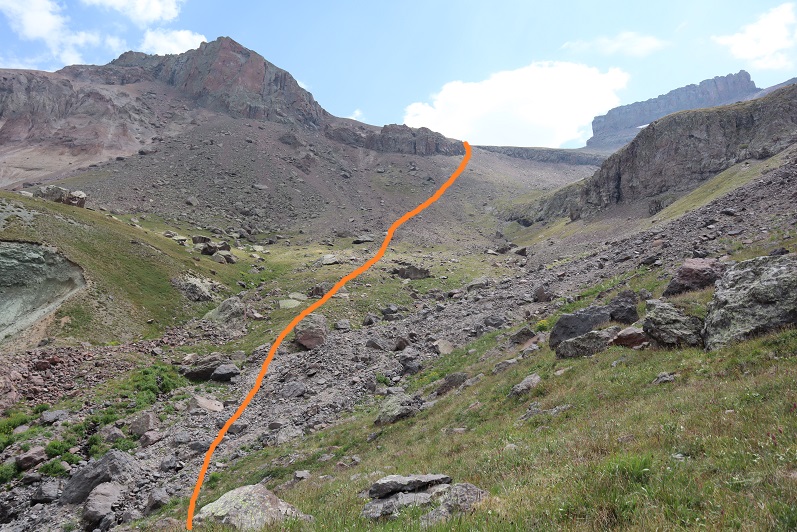
I turned and headed back to the Coxcomb/Redcliff saddle, and then descended west into the basin
There wasn’t a well stablished trail here, but the route was easy enough to figure out. I just aimed for the visible class 1 trail below I’d taken on my way in this morning
Here’s looking back at the route from the saddle to the trail
And a look at the hike out
I made it back to the now full trailhead and my truck at 1:10pm, making this a 13.24 mile hike with 4654’ of elevation gain in 8 hours, 40 minutes.
I was thrilled with today’s success, and even though I’d lost two new climbing ropes I drove to the next trailhead on a bit of a high.
NOTE: I’ve since summited this peak successfully. that trip report can be found here.
I told myself as soon as someone posted a successful summit for either Coxcomb or Peak 15 I’d attempt it as soon as the weather was good (they’re my last 2 class 5 bicentennials). A conditions report was posted for Coxcomb where the couple summited but the woman had to be belayed up. I’ve done several class 5 peaks solo, and I’ve talked to two men who’ve done Coxcomb solo, so I felt confident I could summit this peak solo as well. Now I’m not so sure.
The weather was perfect and I had the day off. The only problem? I needed 2 60 meter ropes for the final rappel, and I only had 1 50 meter rope. I went to REI and Mountain Chalet and bought 2 new ropes (REI only had 1, but on the positive side I got to use my dividend).
Then I spent the afternoon practicing my double fisherman’s knot. That’s how you tie two ropes together so they don’t come undone.
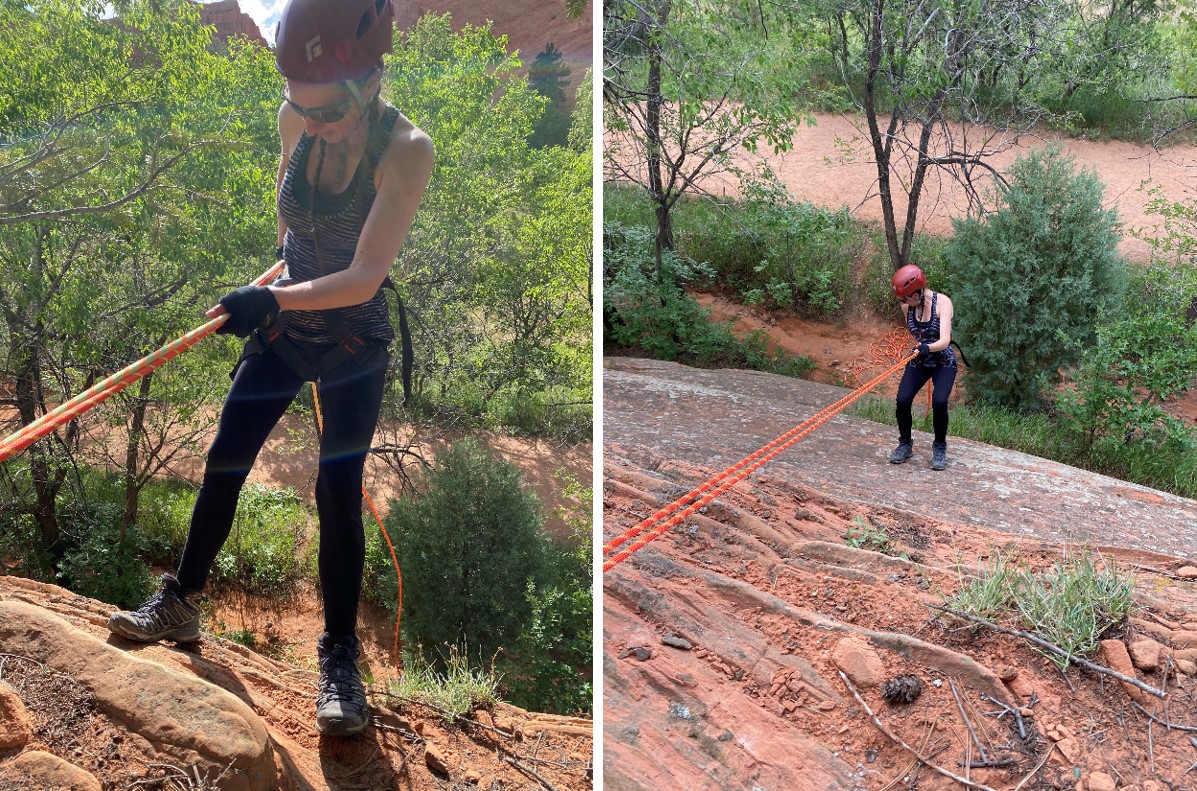
Confident I had the knot down, I wanted to practice rappelling with the two ropes, and I also wanted to break them in before using them for the first time in a scary situation (yes, a 175 foot rappel is committing, and can be scary, especially if you haven’t rappelled all season). I decided to go to Red Rock Open Space to break them in.
Success! I practiced setting up the anchor, tying the ropes together, and rappelling on easy terrain at least 9 times to break the ropes in. Yes, they were heavy to carry, and coiling them was no fun, but everything went smoothly. The weather forecast for the weekend was phenomenal: sunny skies with no chance of rain. I decided to drive to the trailhead the next afternoon and attempt Coxcomb peak the following day.
Most of the drive in to the trailhead was on a 2wd dirt road.
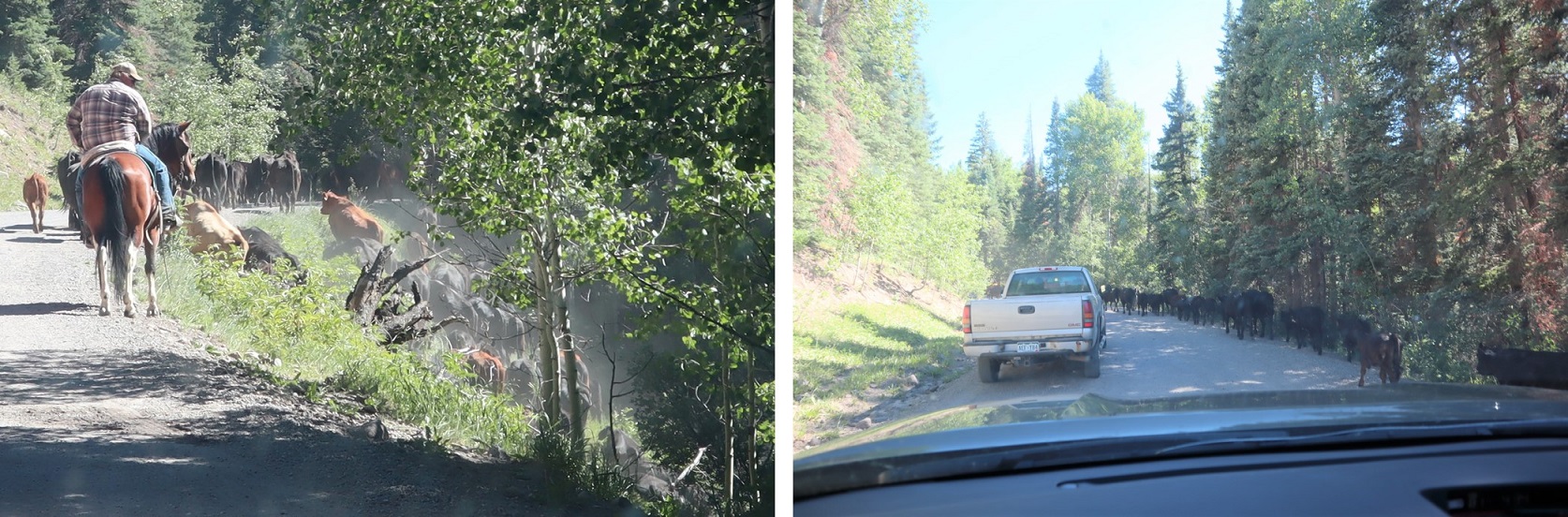
Then all of the sudden I came upon stopped vehicles along the road. A rancher was moving a herd of cattle, and the first vehicle in line didn’t feel comfortable driving alongside the moving herd so he decided to stop and park his car until the herd had moved (despite the rancher continually waving him on: the cattle would have been fine if he’d just drove slowly past). I wasn’t in a hurry so I wasn’t too bothered by the extra time spend sightseeing cattle. A lot of the other drivers were though.
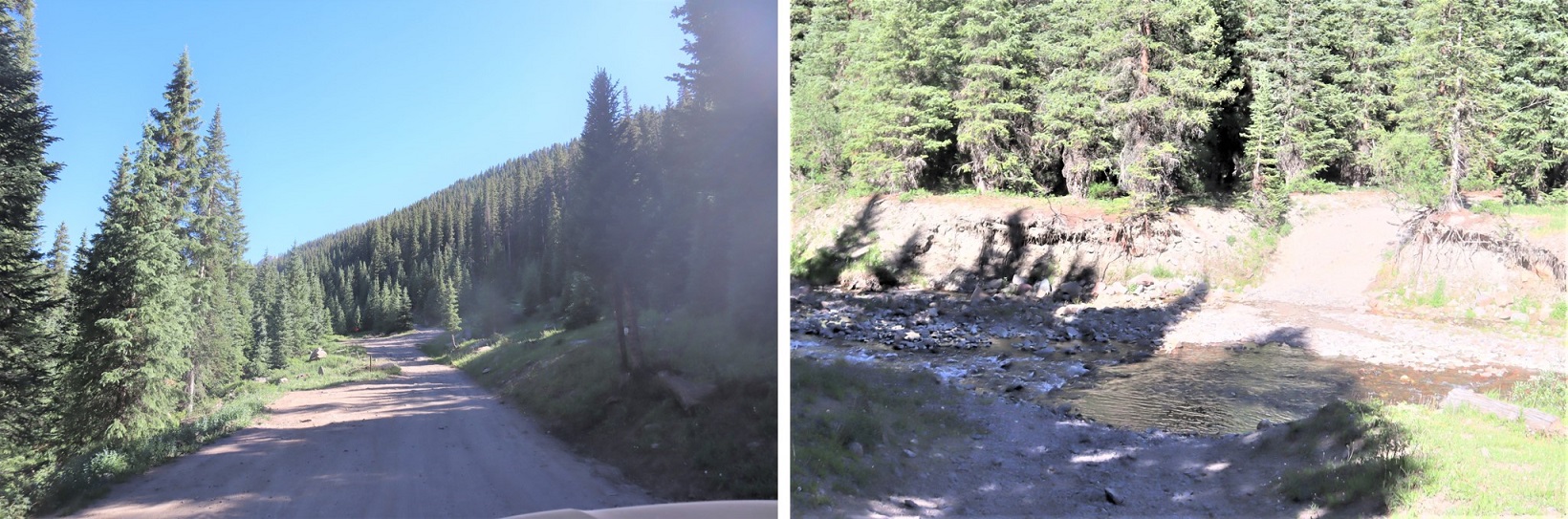
The last 2 miles to the trailhead were 4WD and included a fun creek crossing.
I made it to the trailhead, parked my truck, and got out and took a look around.
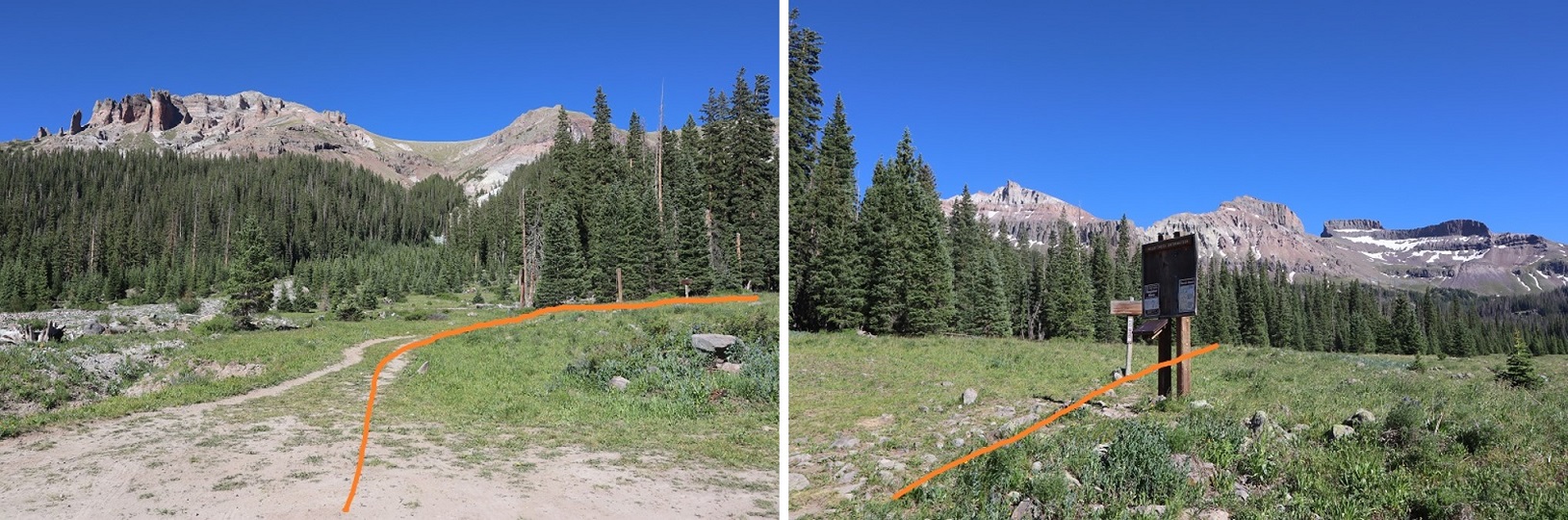
I wanted to get a visual of the route for tomorrow’s hike. I took some pictures of the trail entrance, trail register, and the way I wanted to head out tomorrow. Then I ate my dinner, did a little knitting, and generally enjoyed the view as I relaxed in the bed of my truck.
The next morning I was on the trail at 4:40am, armed with my helmet, harness, 3 climbing ropes (2 60 meter ropes and one 30 meter half rope) and my climbing shoes. My pack was completely filled, and I’m guessing it weighed 40lbs. I only took the essentials.
The trail starts at the east end of the parking area and heads south.
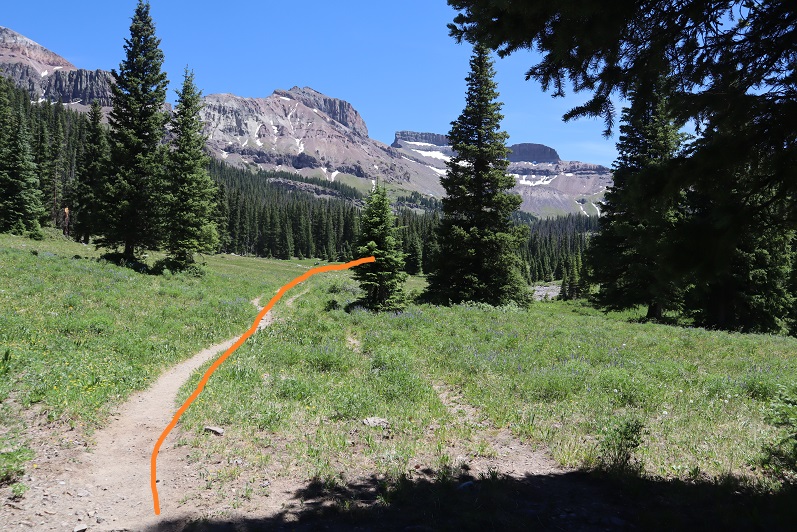
I followed the class 1 trail for 2 miles until I came to a steep section
At the pass the trail diverged into two and then kind of ended. I could tell I just needed to get around the small outcropping. I decided to go up right and descend on the left on my way back down. Both sides were easy.
The trail picked up again after I climbed this area.
After 3.3 miles of hiking I came to the top of the pass.
From here I continued following the class 1 trail, losing 400’ in elevation as I went
At the bottom of the pass I left he trail and headed east
My goal was to gain the ridge and follow it to the base of Coxcomb Peak
The ridge was full of loose talus
The talus eventually gave way to a little bit of tundra
Then I came to a rocky class 3 section
Which brought me to the base of the crux of Coxcomb. Wow! The approach had been much easier than expected. The entrance to the climb starts at the small gully. I’ve seen a few reports on how to climb this area, and every report rated the difficulty different. Some gave it class 3 (it’s NOT class 3, but there could have been a rock slide since that person posted conditions), some gave it class 4, and some class 5. The couple that summited last week said this was the most difficult part of their climb.
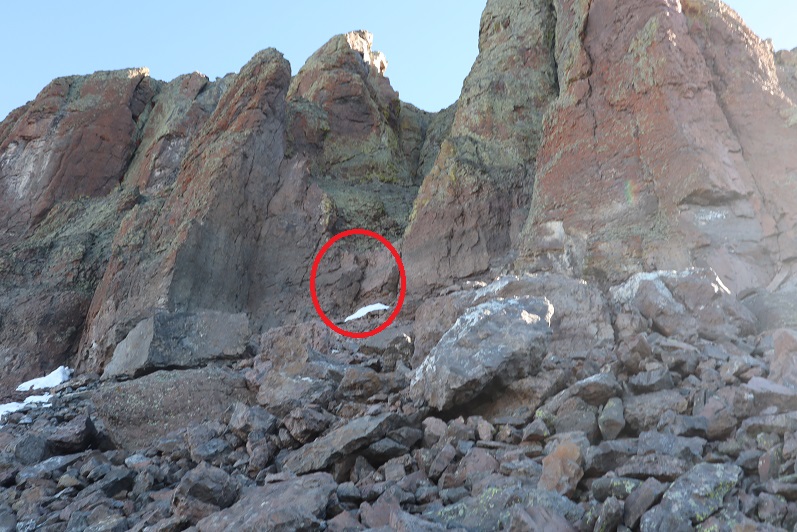
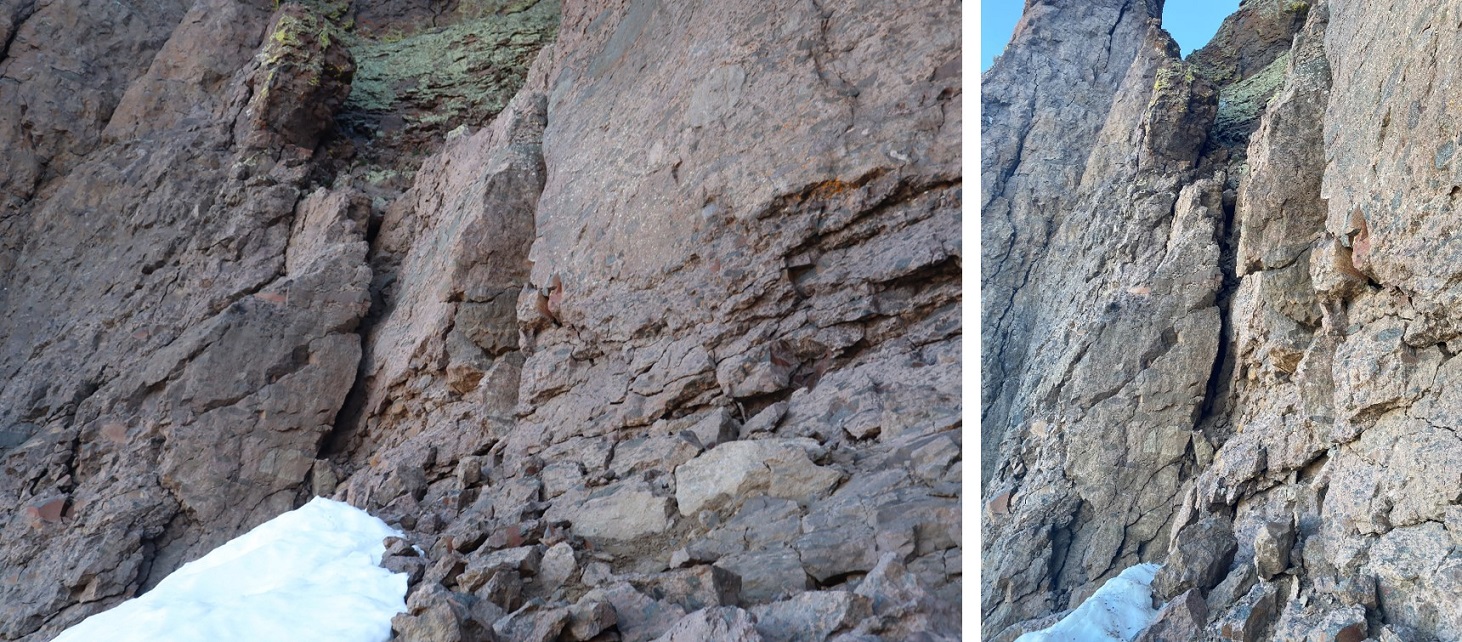
I walked up to the gully and tried to devise a plan. I decided to put on my climbing shoes and just go for it. I tried to ascend, but there just weren’t enough foot/hand holds. I tried and tried and tried. Then I tried ascending to the left but those rocks are loose and kept crumbling in my hands. I wasn’t about to put any physical weight on them. I tried the gully again, and then the rocks to the left again. I spent over an hour trying to figure this problem out! If I were only a few inches taller this wouldn’t have been an issue. Hmph. I sat down to think. Here’s a close-up of the gully
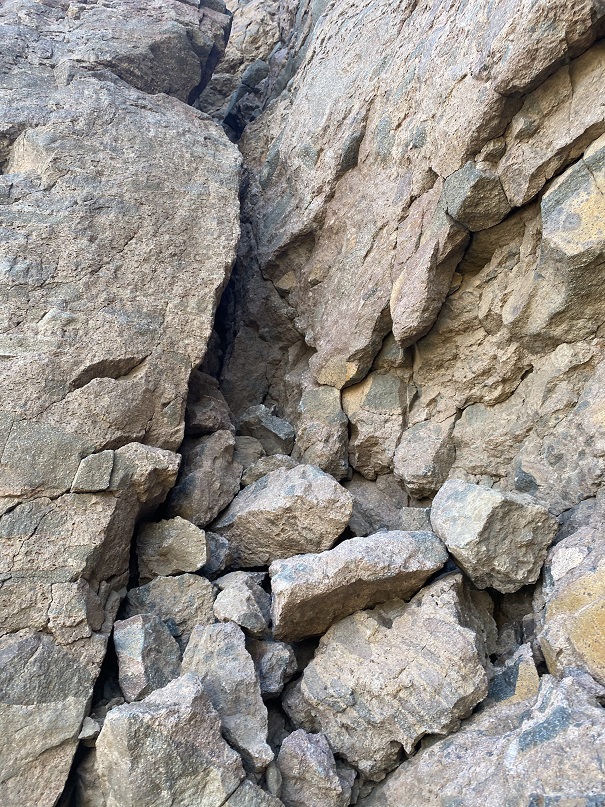
All I needed were a few more footholds. That’s when it came to me: there were rocks all around! I’d just fill the gully as far as I could and use those rocks as stepping stones. I dropped my pack and spent the next 45 minutes or so filling the small gully with rocks. I even put in a chockstone for a handhold. When I felt I’d done enough I tried climbing a few feet to see if the rocks were stable. Success!
I put my pack back on and started to climb but my pack was heavy. It made me top heavy and I couldn’t pull myself over. Drat! I sat back down to think. I could see a rappel set up at the top of the gully. I decided to take my 30 meter short rope, attach it to my backpack and my harness as well, leave my backpack below, and climb up the gully without gear. Then I’d use the rope to pull up my pack. If I wasn’t able to pull my pack up I knew I could just rappel back down with the sling already in place and the rope I’d attached to my harness (I was glad I’d brought the 3rd rope!).
I looped the rope around the straps of my pack, attached the other end to my harness, and easily climbed up the gully. Success! Wow, I felt great! That had been the crux of the route for the couple who were here last week, so I now felt confident I’d be able to make this summit. I hauled up my pack, which took quite a bit of upper arm strength and balance not to fall back down the gully as I was lifting the pack up.
I coiled up my rope, attached it to my pack, and continued on. The next section was class 3, and only lasted about 50 feet or so
This brought me to a class 4 section I had to upclimb. I was able to do this wearing my pack
I’d made it to the base of the chimney area, also rated class 4.
From my research I’d learned to take the ‘easier’ chimney to the left. Um, this did not look easy! I spent a lot of time determining if I was even in the correct area, and backtracked a little just to make sure. Yep, this was it. I decided to just start climbing. Boy, was this tiring work! My pack made climbing so much more difficult, but I wasn’t giving up. I made it about half way up the chimney and wasn’t able to stem with my pack on. I decided to retreat and try again.
Taking off my pack had worked last time, so I decided to try that again. I rigged the rope the same way I had last time and started up. Wow! This was so much easier! I made it about ¾ of the way up the chimney when the hand/foot holds gave out. This was definitely difficult class 4 (if not class 5). The pictures I’d seen of others climbing this part made it look so much easier! They looked like they just walked up this section. They’d been roped in, and about a foot taller than I am, but still, it didn’t seem fair. From here I just needed to stem for about 20 more feet which would put me in the upper gully, and then I’d need to exit via the right side. The problem? I couldn’t see any anchors set up, or even any places to set an anchor, and without a visual of the last part of the gully I didn’t feel comfortable committing to this part of the climb, not knowing if I’d be able to rappel down. I knew if I went any further I would not be able to climb back down, so rappelling was my only option. It was here I made the decision to call the climb for the day. I just didn’t feel like I could commit to continuing on without putting myself in unnecessary danger. I kept thinking how infrequent this mountain is climbed and how I’d be stuck for weeks, if not months (or longer) if I wasn’t able to downclimb.
Note: On my drive home I came up with the idea of tying all my ropes together, carrying an empty pack up, and then hauling the ropes up behind me. The only downside to this scenario is if the ropes got caught on something while I’m trying to haul them up (a very real possibility). I need to do more research and find out if there is a sling set up in the gully, or if I just need to commit. Also, I need to practice stemming in a climbing gym with a full pack. That’s not going to be easy…
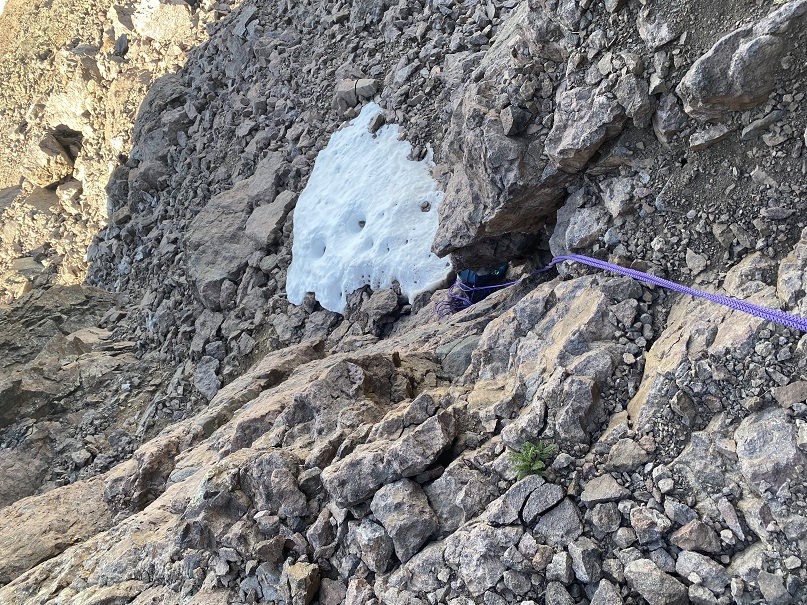
Here’s how far I made it up the chimney.
I made it back to my backpack and set up a rappel to head back down. At least I was getting some use out of my 60 meter ropes today.
Here’s a picture of the route
I rappelled back down, changed back into my hiking boots, and retraced my steps back down the ridge and back to the trail.
I followed the trail back up the pass, cursing the weight of my pack the entire way
As I was coming back down I noticed blood along the trail, and a few guys with horses down below.
I made it to the bottom of the pass and the oldest man there talked with me for a bit (he looked like a grandpa out with his grandsons). He wanted to know if there was more snow further along the trail. The blood I’d seen had been from one of his horses: it had spooked on the rocks and snow and flipped over backwards when it lost its footing. It had injured its hoof. I was confused as to why they were even contemplating continuing on? They had an injured animal! The man agreed with me and I’m pretty sure he decided to head back. A little further along the trail I met up with a woman who said when the group had passed by their campsite earlier this morning one of their horses stepped on their dog (the horseback riders horse stepped on the horseback riders dog) and caused an awful commotion. And one of the boys had lost his jacket. So the group wasn’t having a great day.
Here’s my route back down the mountain to my truck
The entire route down I ruminated on the days experiences and tried to think if I could have done anything differently. I also considered the need for a climbing partner on this route: someone taller than me who could belay me from the top. This idea doesn’t sound appealing, but it is the safest option. In the end I decided I needed more stemming practice, and I need to actually speak with people who’ve accomplished this route.
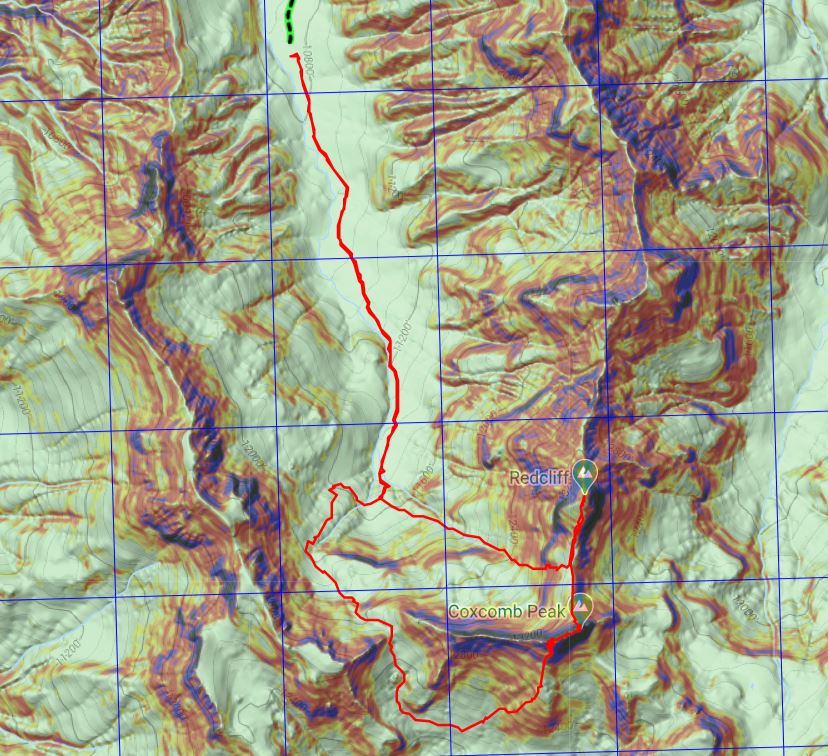
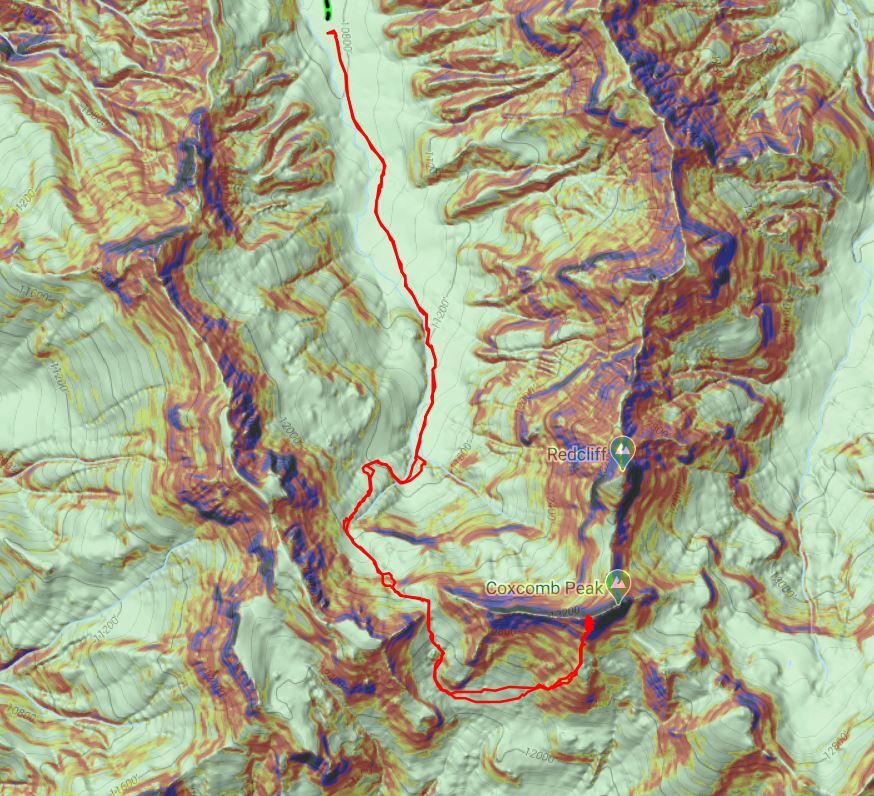
I made it back to my truck at 2:40pm, making this a 17.4 mile hike with 5544’ of elevation gain in 10 hours. Here’s a topo of my route
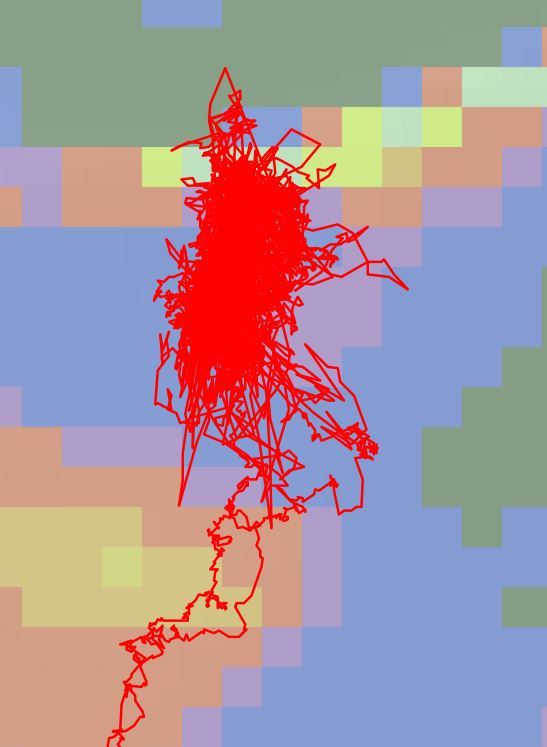
And just for fun here’s a close-up of my problem solving skills. I worked this problem for a long time!
When I pulled up my gpx file I found I made it to 13,560’, which means I was less than 100 feet from the summit when I turned back. Ouch. On to the next trailhead!
After climbing Mt Emma I drove from Yankee Boy Basin to Telluride and parked at the Eiler Creek Trailhead. There were already a few cars there when I arrived, and two more drove up and parked before the day was out. This was a busy 4th of July weekend!
After today’s hike and lightning scare I decided to check the weather again for tomorrow’s hike. The forecast indicated a slight chance of rain beginning at 10am, with thunder beginning at 1pm. OK, so I needed to be below treeline by 10am to avoid the rain. Thunder/Lightning shouldn’t be a problem. I set my alarm for 3:30am. As I was going over topo maps for tomorrow’s hike my friends from yesterday drove by. I waved, they stopped, and we talked for a bit about our days adventures under a nice rainbow.
They had tents to set up and I needed to get to bed early so we said our goodbyes, I ate the rest of my sandwich for dinner, and after a glass of Skrewball I went soundly to bed. I was on the trail at 4am. The Eider Creek Trailhead is located at the north end of the parking area, and immediately splits into two trails. Take the trail to the left.
Just after this split is a nice camping spot, no more than a few yards from the parking area
I followed the class 1 Eider Creek Trail, staying right at the first junction
And left at the second to stay on the Eider Creek Trail.
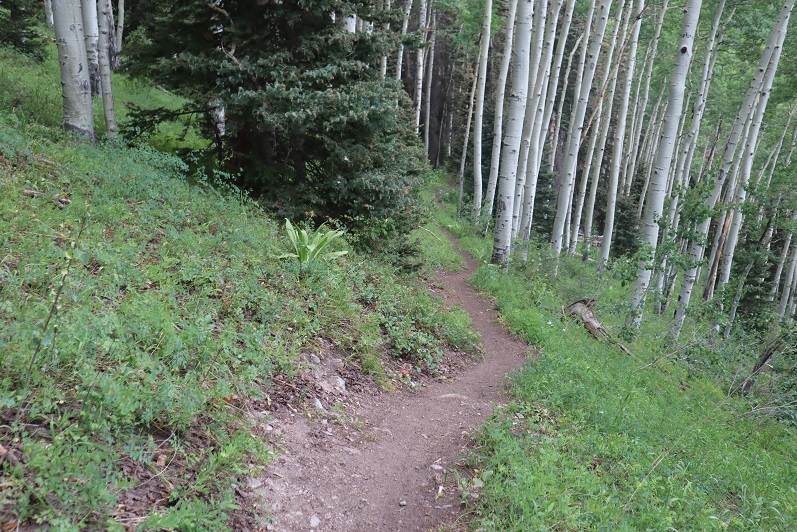
This trail was very easy to follow and well marked with signs.
There was one creek crossing that was easy to rock hop across (and a rather large tree you could traverse if you preferred, but I thought it overkill).
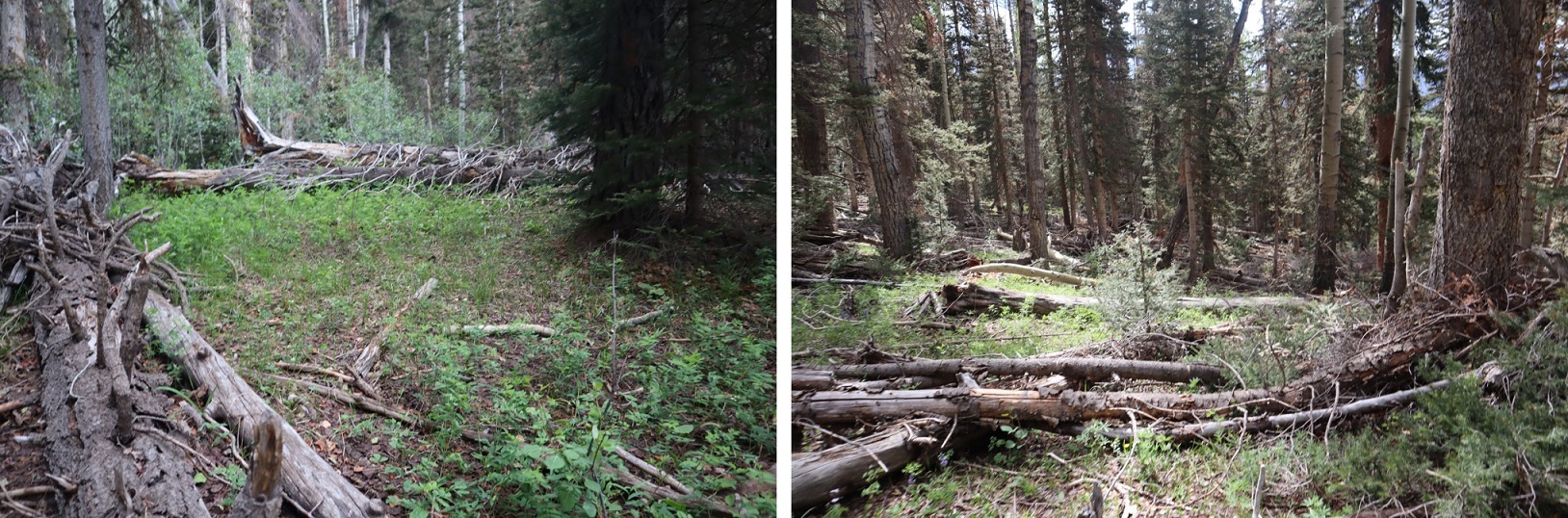
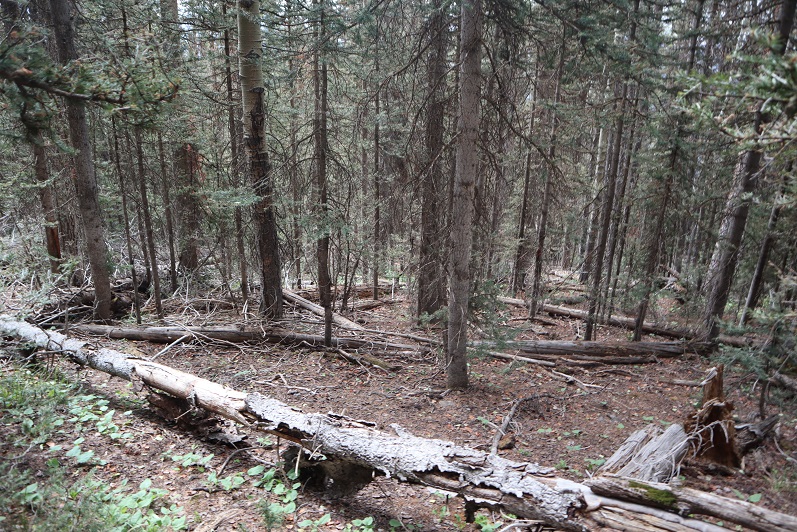
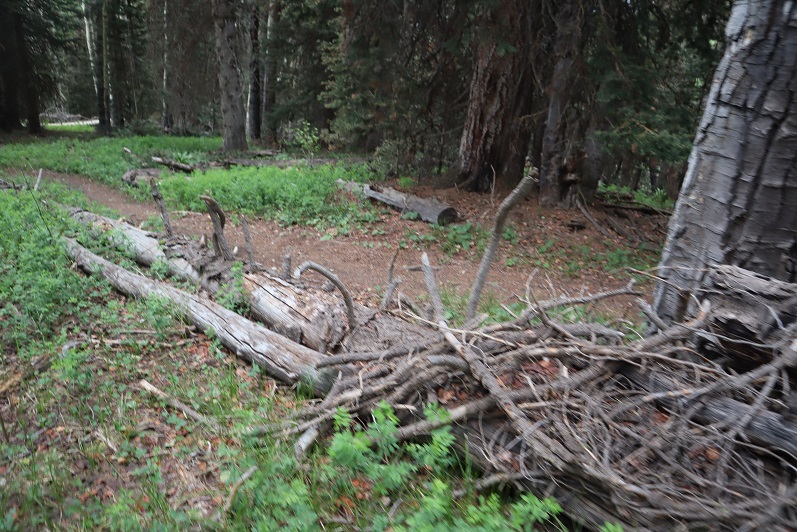
I stayed on the Eider Creek Trail for 3 miles and then left the trail, turned right and headed north through an area filled with downed trees. This was tons of fun to navigate in the dark.
Luckily this area was short, only lasting about 100 yards, before I came to a clearing.
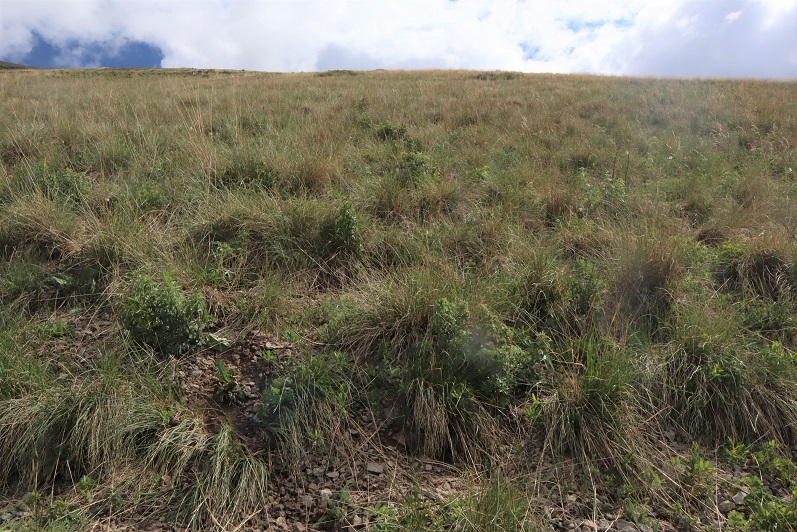
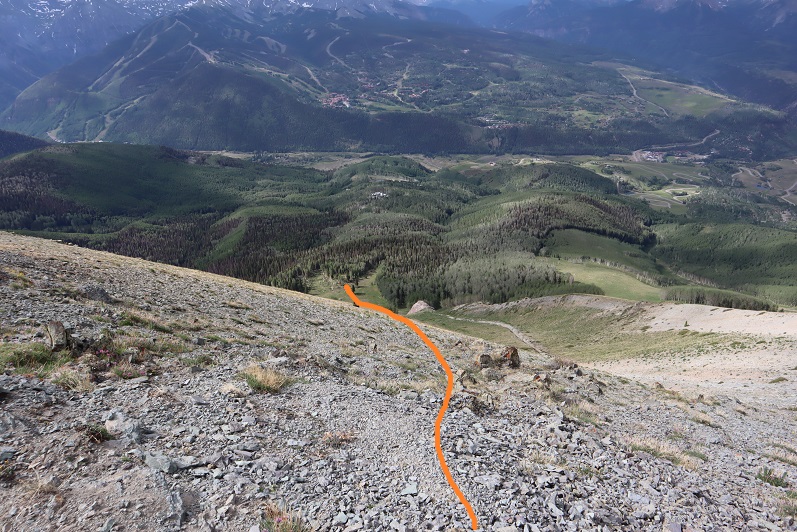
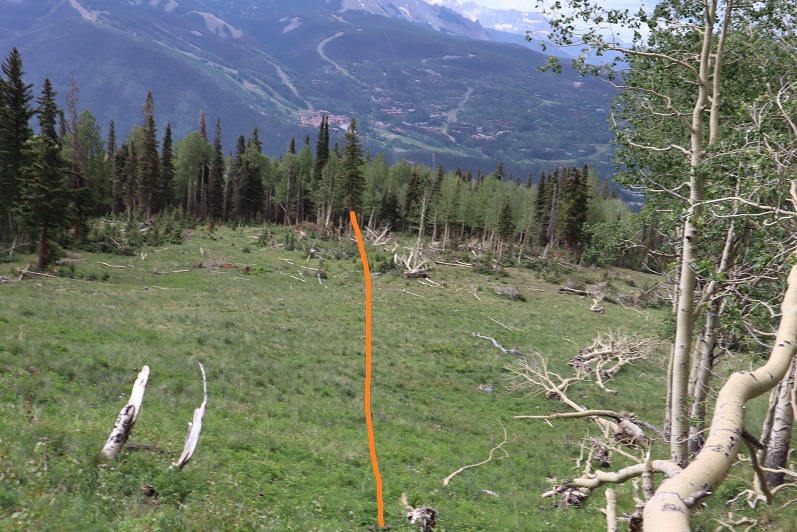
From the clearing I needed to gain the ridge. There are several ways to do this, and both the gully on the left and the gully on the right ‘go’. I took the one on the left, hugging the aspen trees and then ascending via tundra and clumps of bunch grass. This was by far the most difficult part of the hike: the terrain is much steeper than it looks, gaining 1650’ in less than 2 miles. It seemed never-ending.
Once on the ridge I turned left and followed the ridge northwest
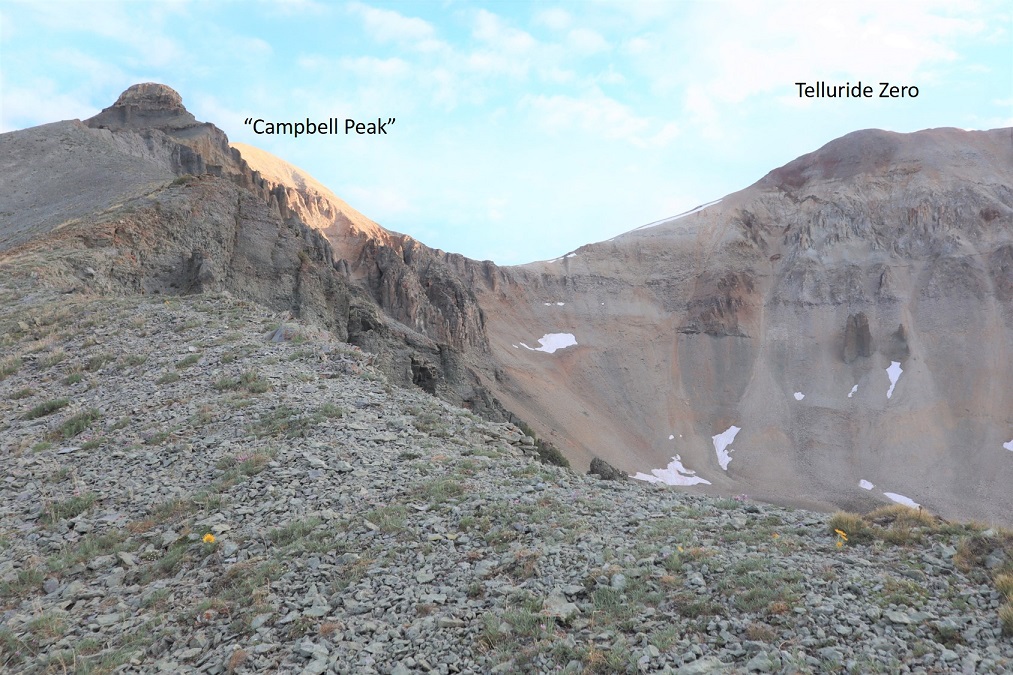
From the ridge you can see both Campbell Peak (behind the obstacle) and Telluride Zero Peak
The obstacle took a little bit of maneuvering. Yes, you go right over the top, and this is class 3. I put on my helmet. These are the steps I took:
After ascending this little wall I was greeted with the crux of the route. Here’s how I climbed this point, first going to the right, and then left up the center. I placed some cairns here in key areas
The chimney has a lot of hand/foot holds, but beware: most of them are loose.
Once on top of the chimney I could see Campbell Peak. The rocks were loose but this was class 2 all the way to Campbell Peak
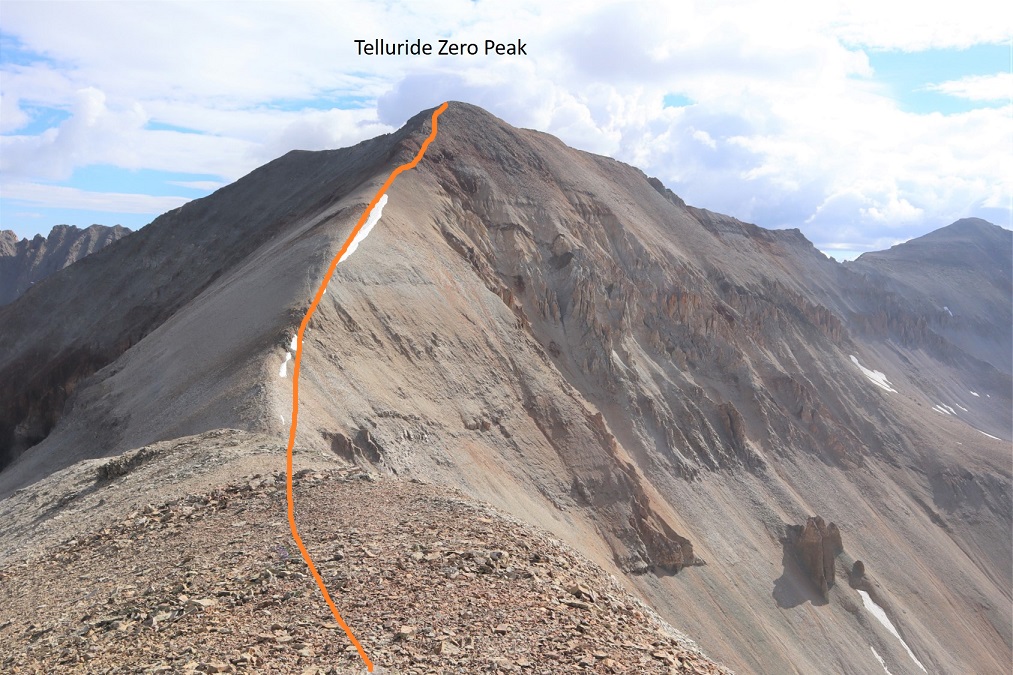
From Campbell Peak it’s an easy ridge hike to Telluride Zero, losing 200’ of elevation and gaining 750’ in just under a mile
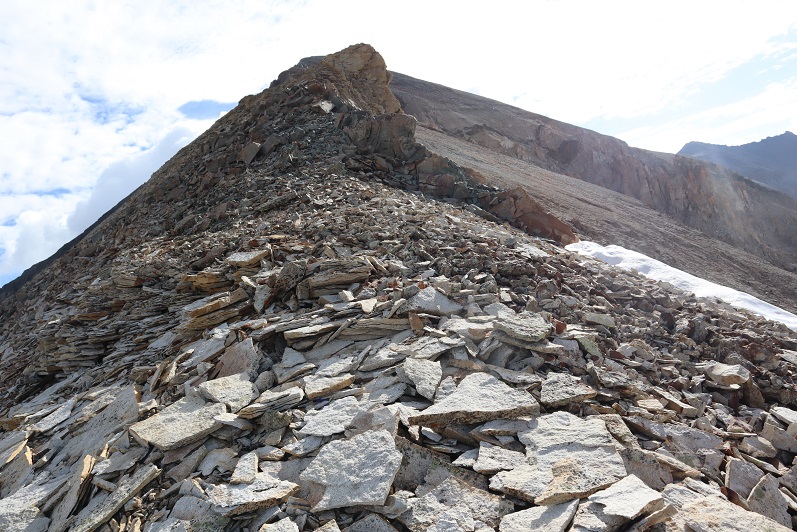
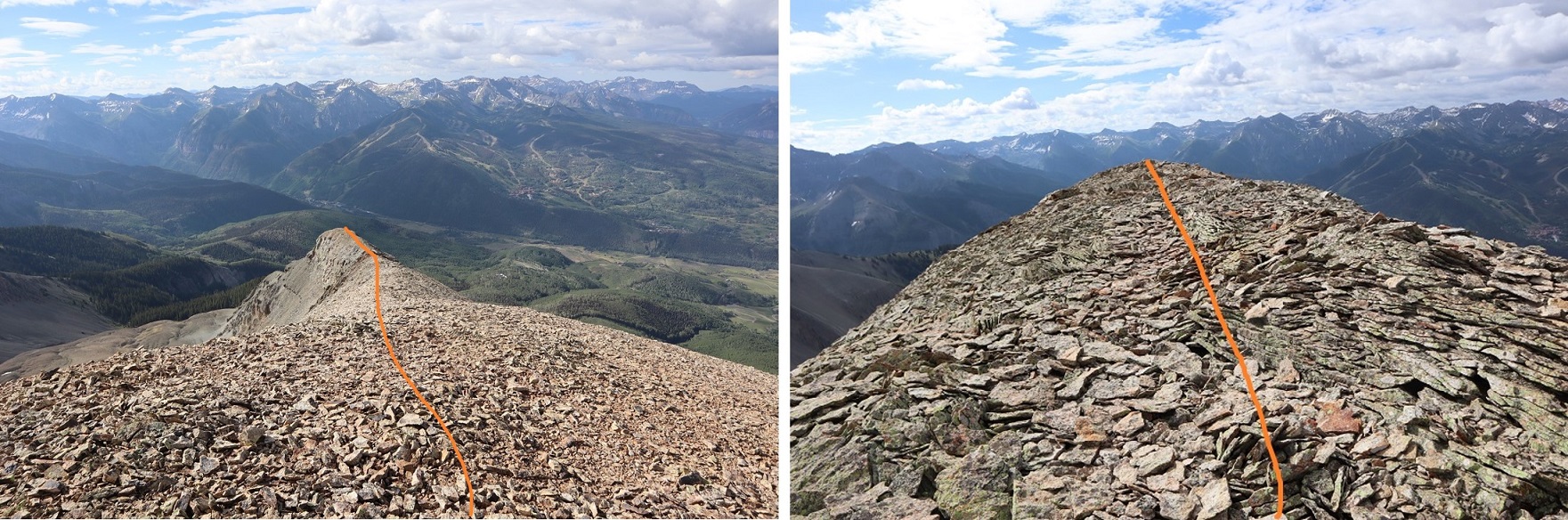
This was a simple ridge hike, if a bit chossy. I stayed on the ridge direct for 95% of this part, and only dipped down when obvious to the right.
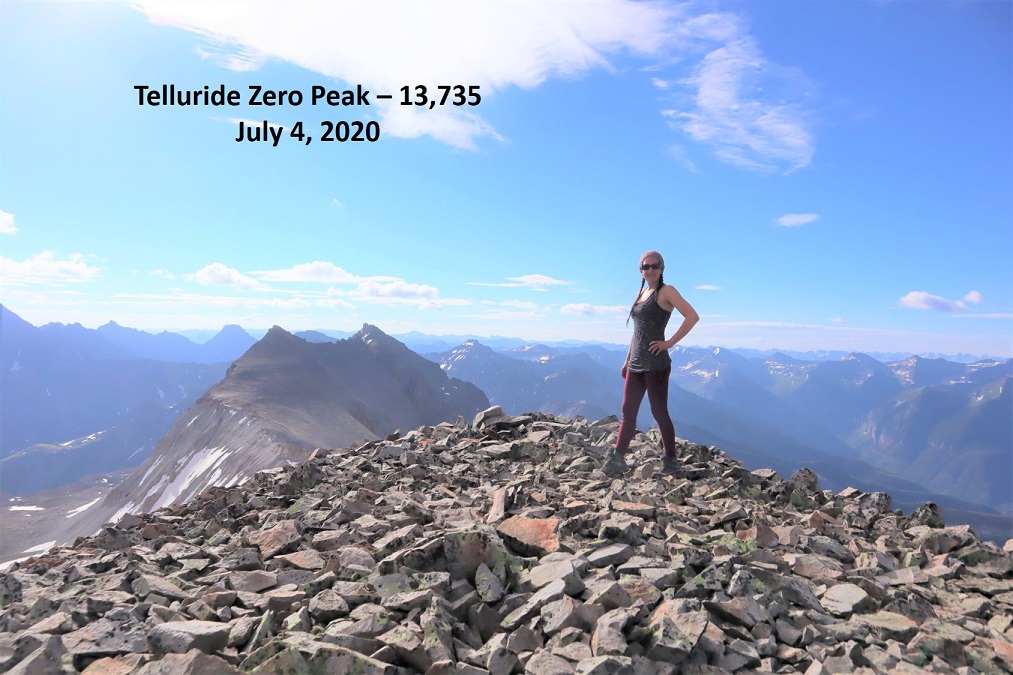
I summited Tellurize Zero Peak at 8:15am
Telluride Zero Peak:
It was a beautiful morning, so I stayed a little longer than usual on the summit, taking in the views.
Here’s the route back to Campbell Peak
And then down to the class 3 section. To get there, aim for the area that looks like a dropoff. I placed a few cairns here as well.
Here’s how to work your way back down the chimney. Here I threw my trekking pole down so I could use both hands to downclimb.
Once down the chimney I hiked down the little wall and followed the ridge to the gully. There are several gullies here: be sure to take the right one. I remembered the gully I took in because of the large rock outcropping on the other side of some aspen trees.
I was about a quarter of the way down the gully when I heard it: a loud clap of thunder to my right. I turned my head and saw a dark skies where just minutes ago there’d been blue, a flash of lightning, and heard another clap.
Where had that come from? It had been nice and sunny all morning. This storm must have built up on the other side of the ridge as I’d been hiking down the gully. I looked at my watch: 9:30am. Seriously? A thunderstorm at 9:30am? Rain had been forecasted as a possibility after 10am, but thunder wasn’t supposed to be a possibility until well after noon. This was just great. Another lesson from mother nature: mountains make their own weather. The storm looked close, and it looked to be building fast. There was nowhere for me to hide above treeline so I made a beeline for the trees.
This took an agonizing amount of time, as the storm kept getting fiercer and the terrain kept getting steeper. I could see the thunderclouds developing before my eyes. I had to be careful with each step not to twist an ankle, but wanted to get out of there as fast as possible. I made it to the end of the gully and sprinted through an open field towards the nearest trees I could find as thunder rolled all around me. Yes, I know how dumb that sounds in an electrical storm but that was my best option at the time: to get under the relative safety of the trees.
I made it to the trees, hiked about 10 yards into them for good measure, and stopped to catch my breath as the skies opened up and I started getting rained on.
I was now ‘safely’ in the trees, but had entered in a different area than I’d exited. I got out my map and compass and decided to head SSE through the deadfall, towards where the trail should be. I was thrilled when I finally stumbled upon the trail.
The trail was easy to follow back to the trailhead. The only downside? It rained the entire time. The thunder sounded kind of cool though. I felt bad for my friends attempting Dallas: this storm wasn’t giving up and I was fairly sure it would have been a miracle for them to have summited before it hit.
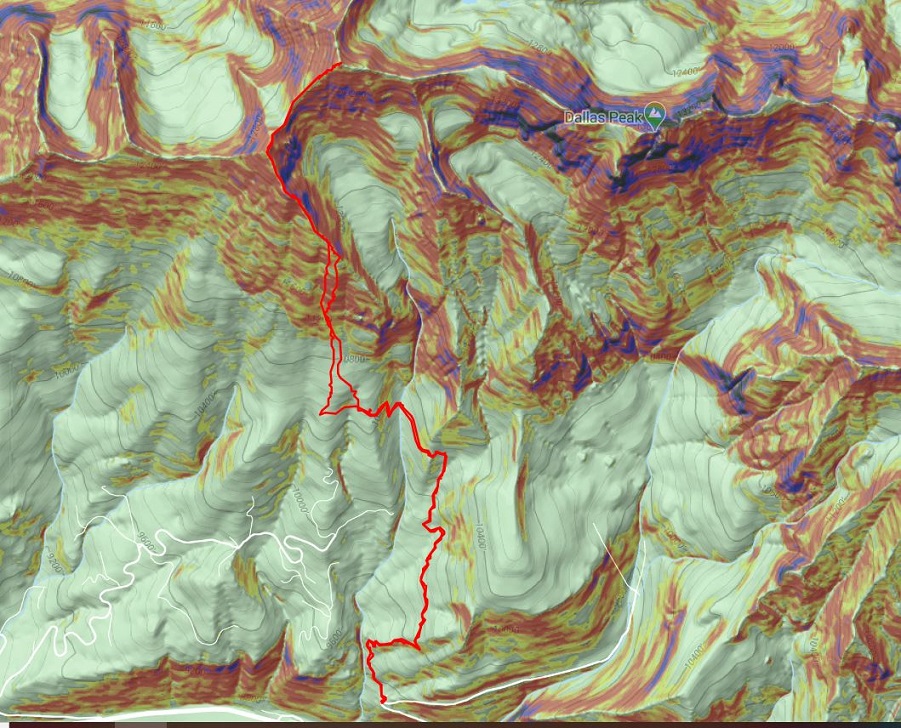
I made it back to my truck at 11:15am, making this a 12.06 mile hike with 5417’ of elevation gain in 7 hours, 15 minutes. Here’s a topo map of my route
As I drove back through Telluride I saw a herd of about 75 elk grazing in a soccer field. Colorado is so cool! I drove the 6.5 hours home and made my kids hamburgers for the 4th of July and watched the city fireworks from our front porch. It rained the entire way.





































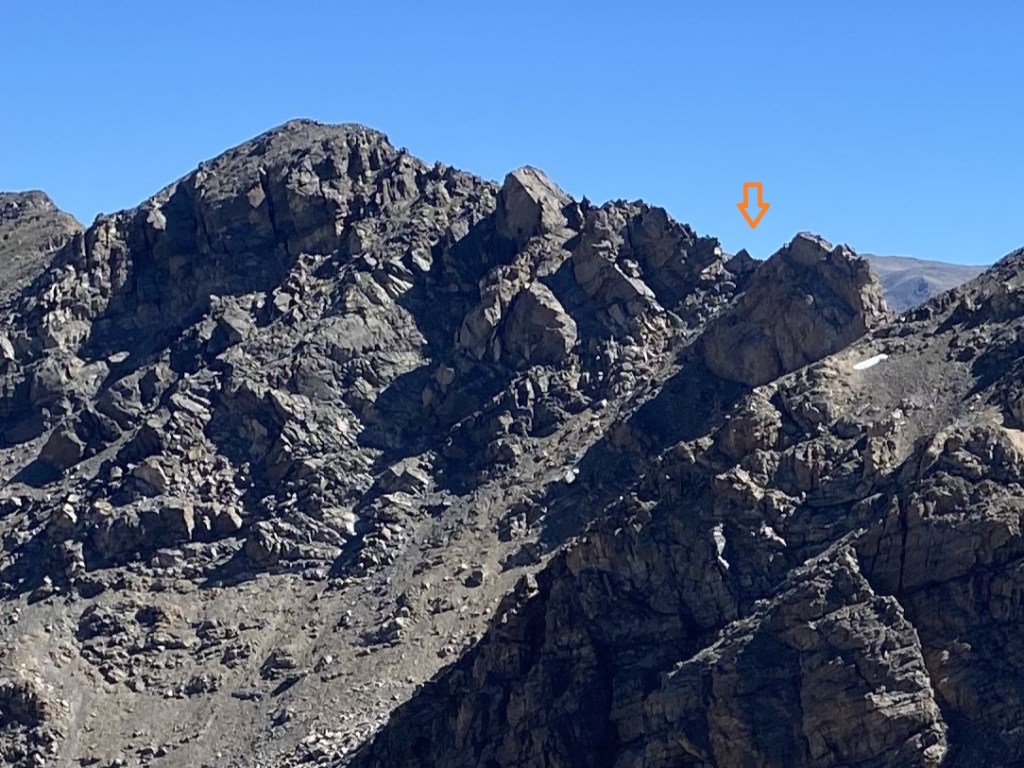
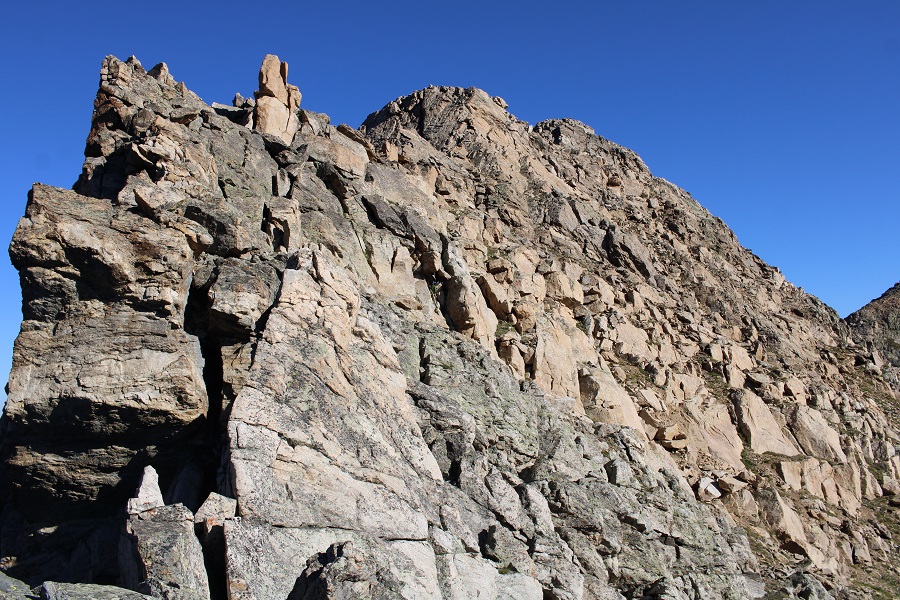
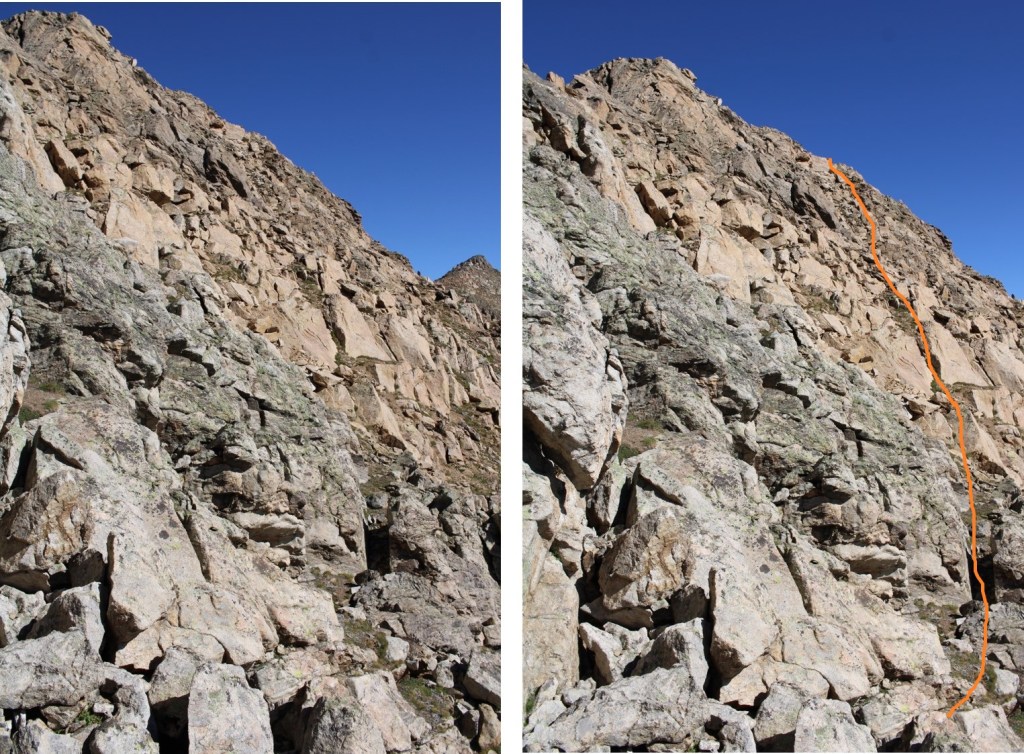
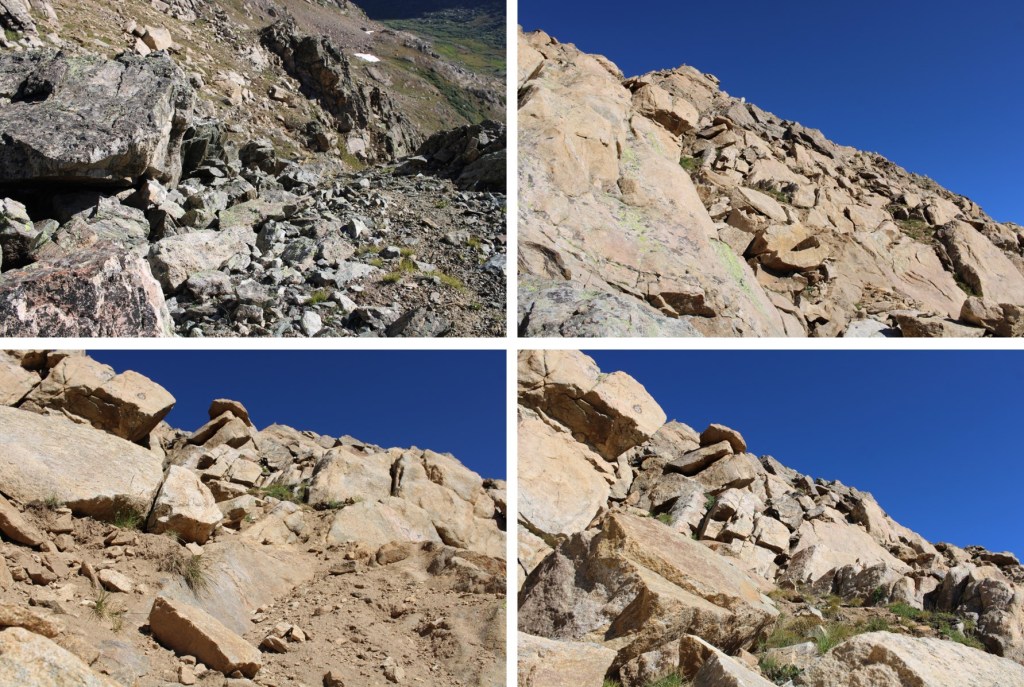





































































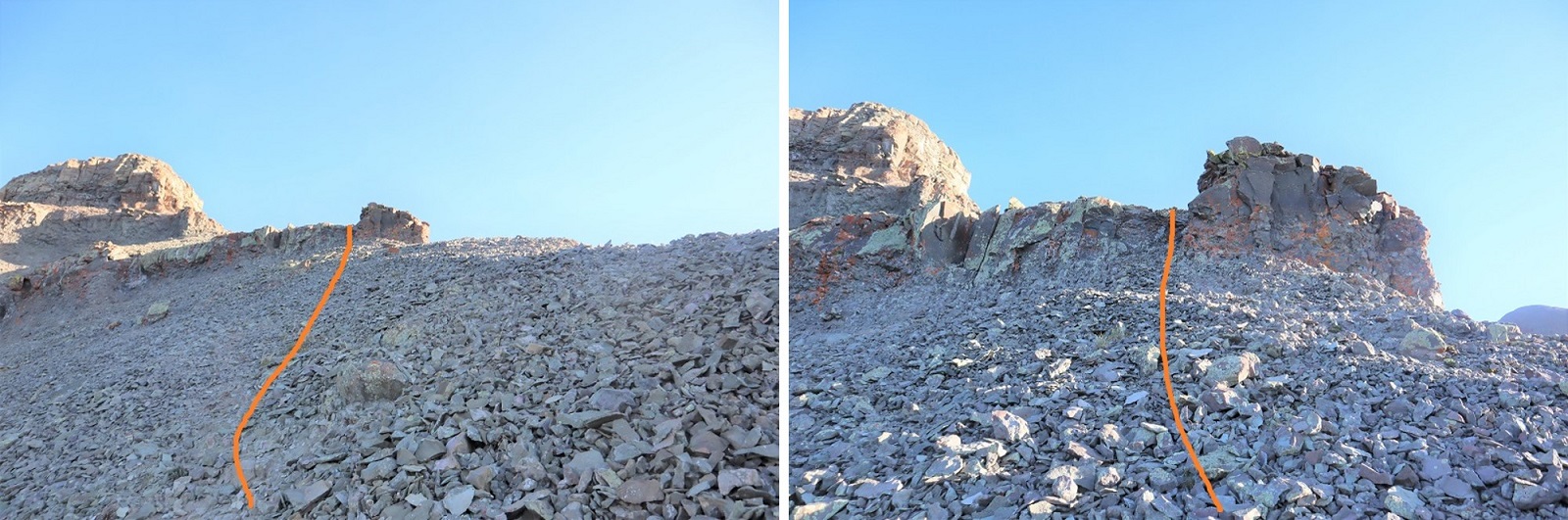
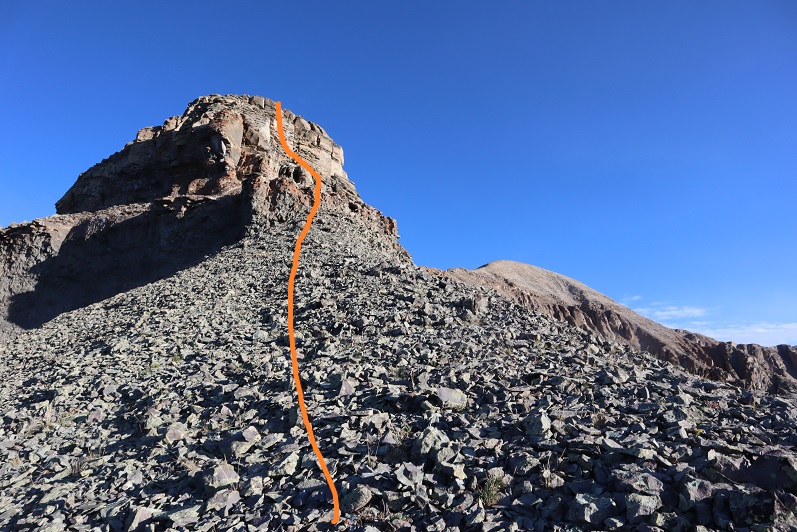

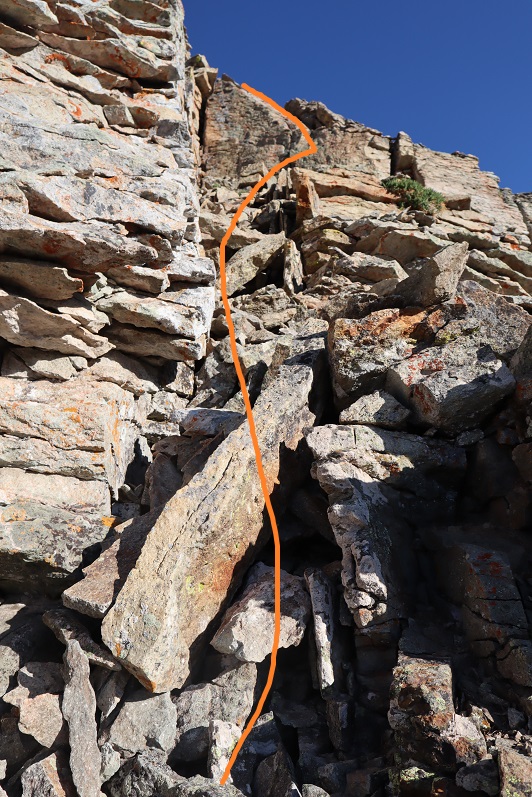

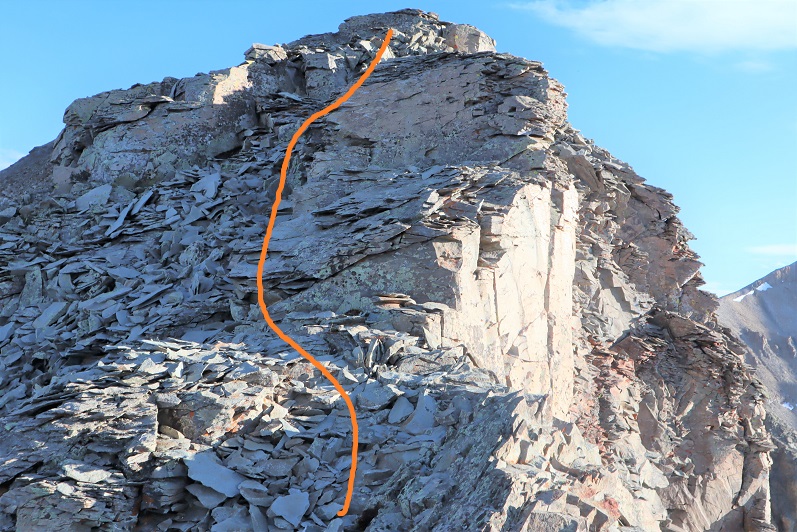







 Wild Wanderer