We pulled up to the South Mt Elbert trailhead at 5am and were ready to go soon after. There were about 5 vehicles already in the lot, and we were now worried we’d started too late and eager to get started
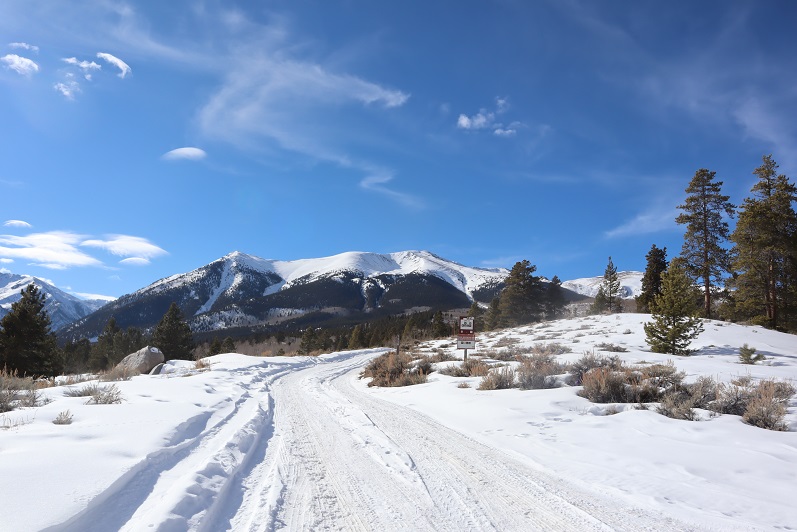
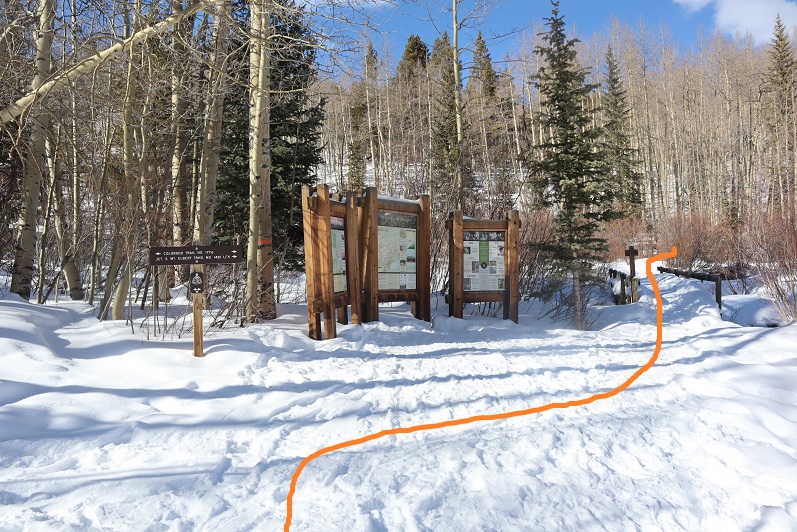
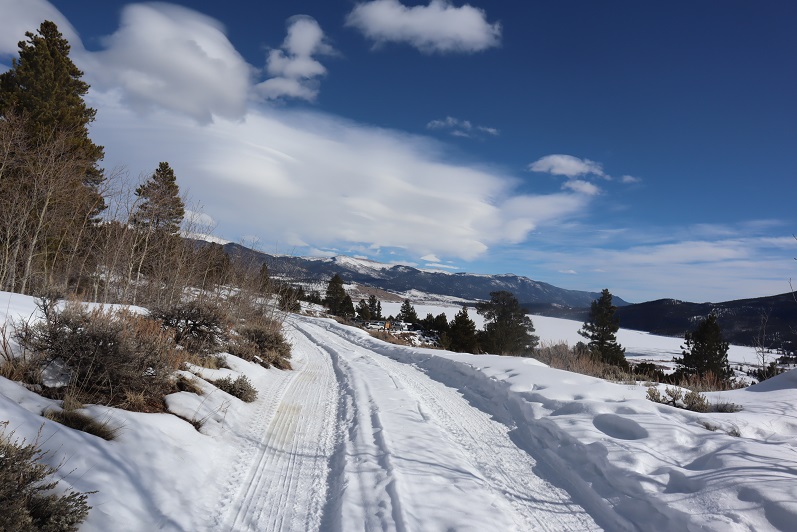
On our last (failed) attempt of Mt Elbert in winter we took the trail, but this time we hiked in microspikes along the 4WD road/Colorado Trail for 1.75 miles to the upper trailhead. I would recommend hiking the road instead of the trail.
The road was passable for about a mile in 4WD vehicle, and then it became solely a hiking trail. I was glad I’d parked at the lower trailhead.
At the upper trailhead we turned right, crossed the bridge, and continued along the Colorado Trail for another quarter mile
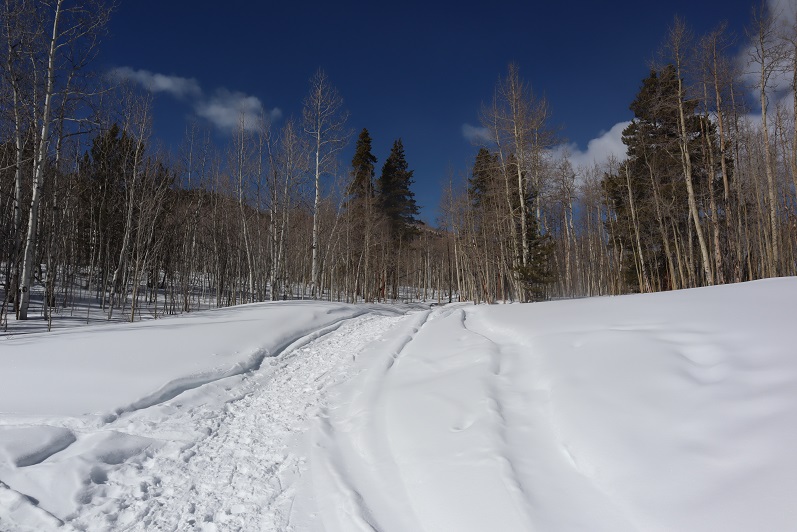
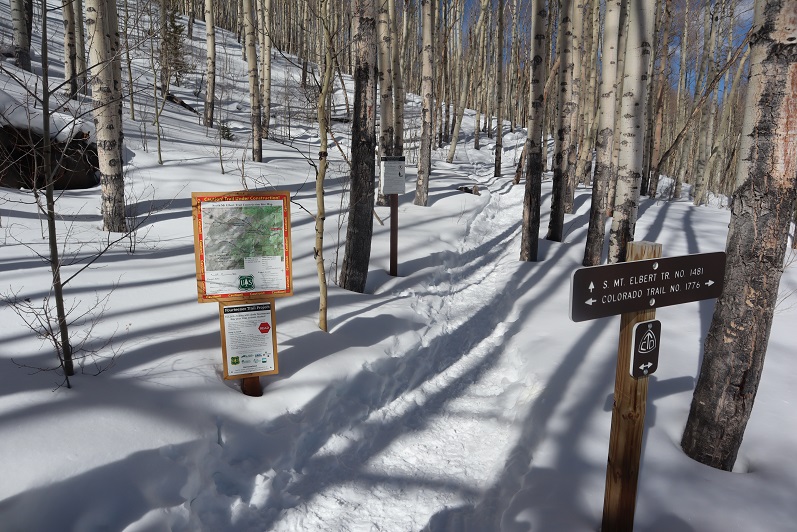
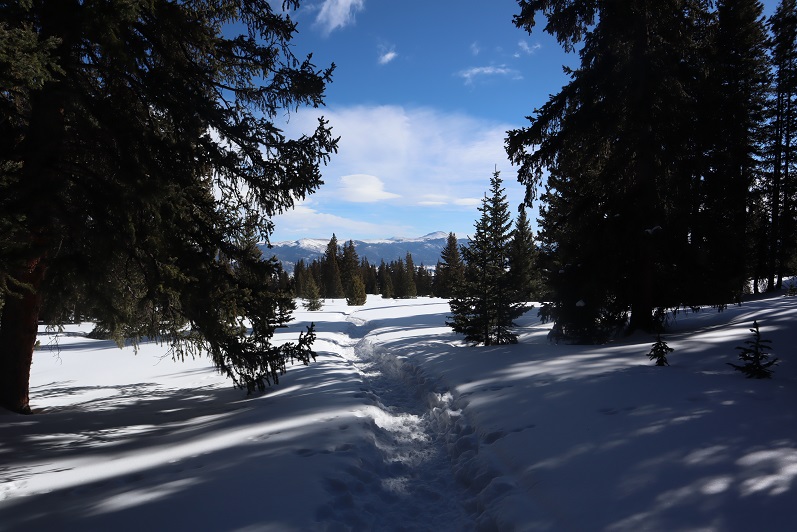
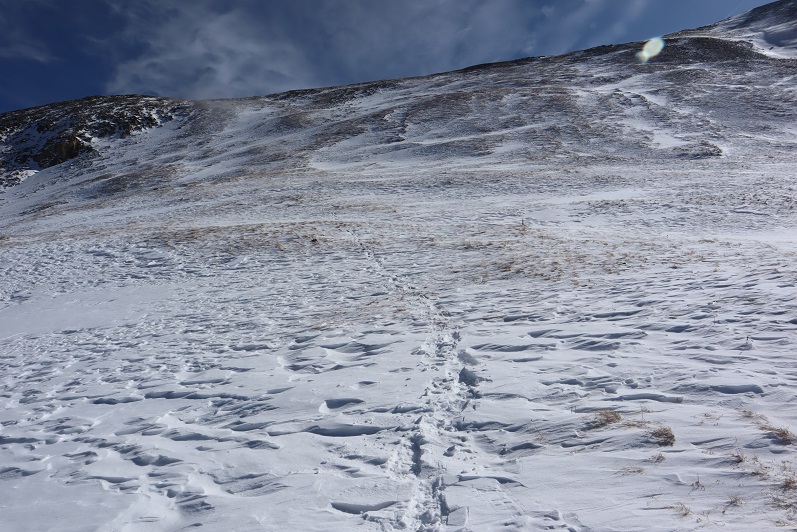
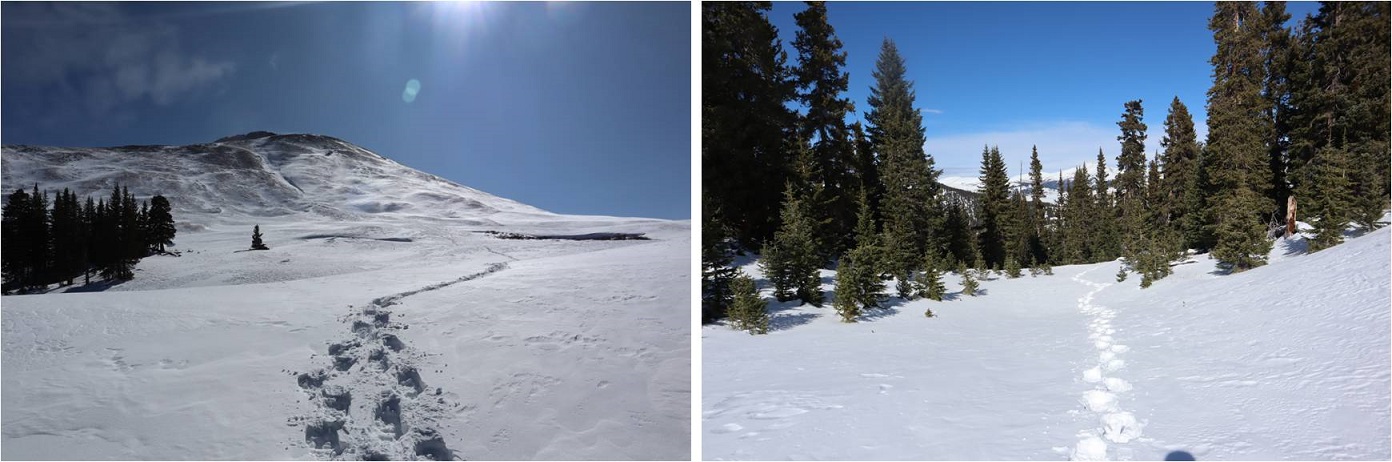
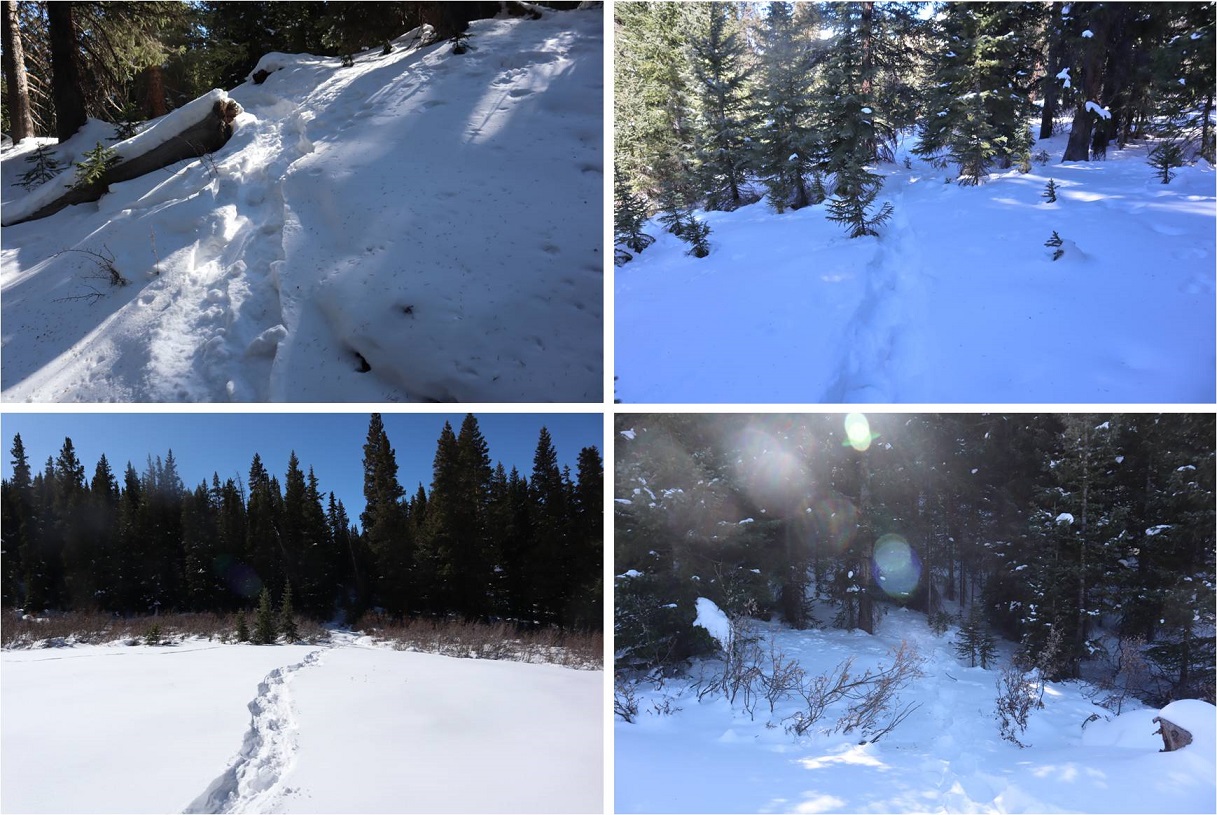
This trail is really well marked, and the trench was nice and solid
After a quarter mile we came to the Colorado Trail/South Mt Elbert Trail junction and continued on the South Mt Elbert Trail
This well maintained trail took us to treeline
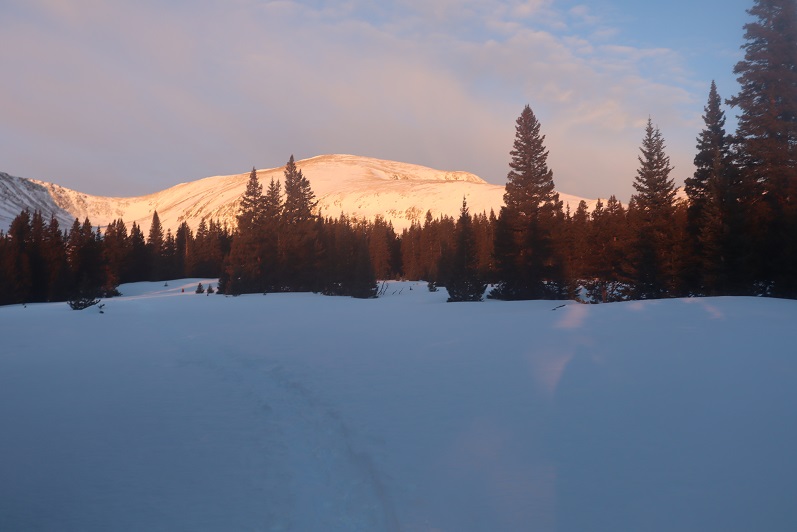
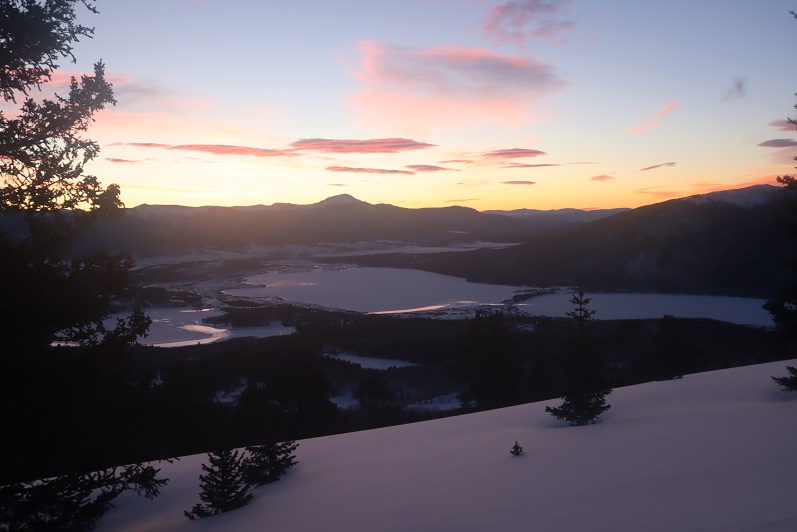
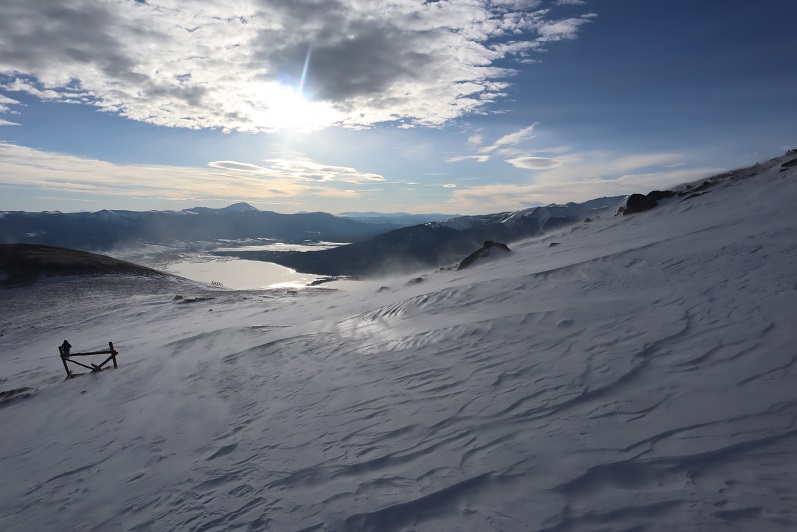
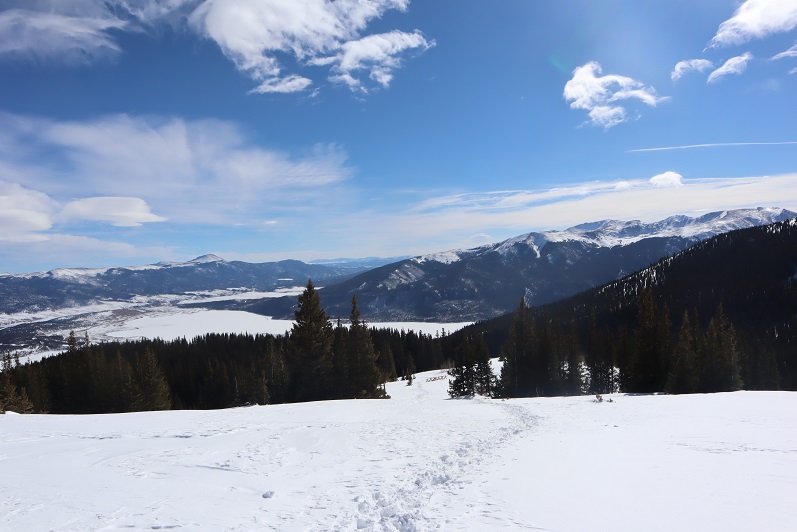
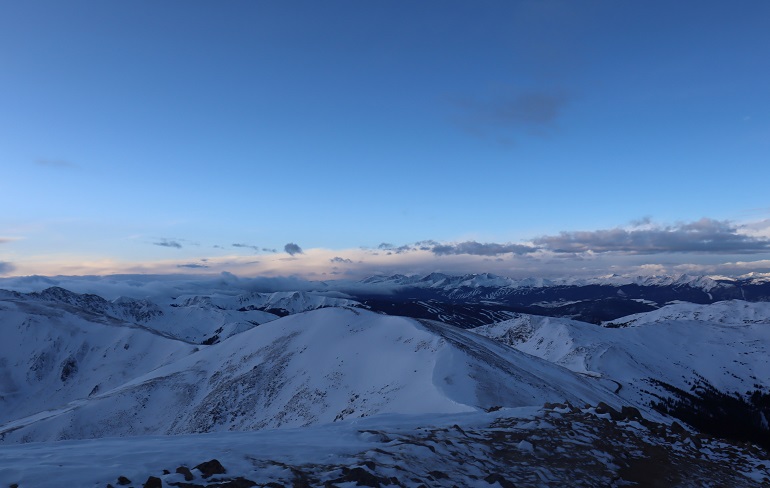
Here there was a lot more snow so we decided it was time to put on our snowshoes. The sun was also rising and we could put away the flashlight. Here’s looking back at Mt Elbert Forebay and Twin lakes
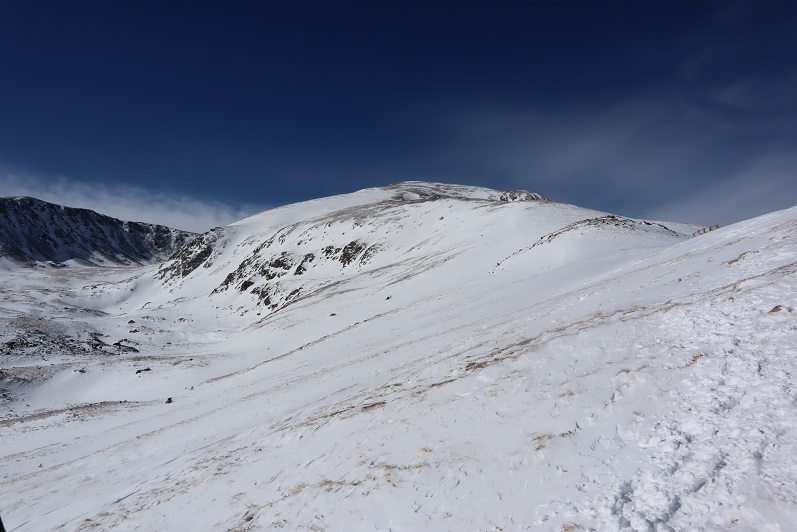
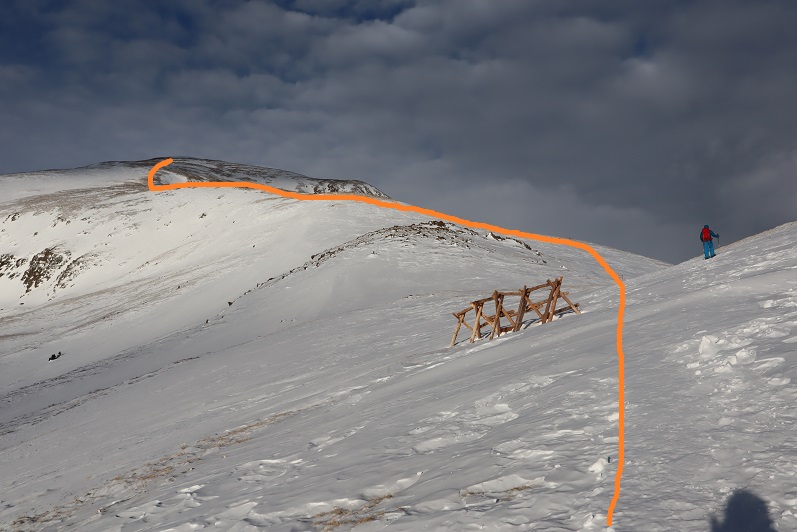
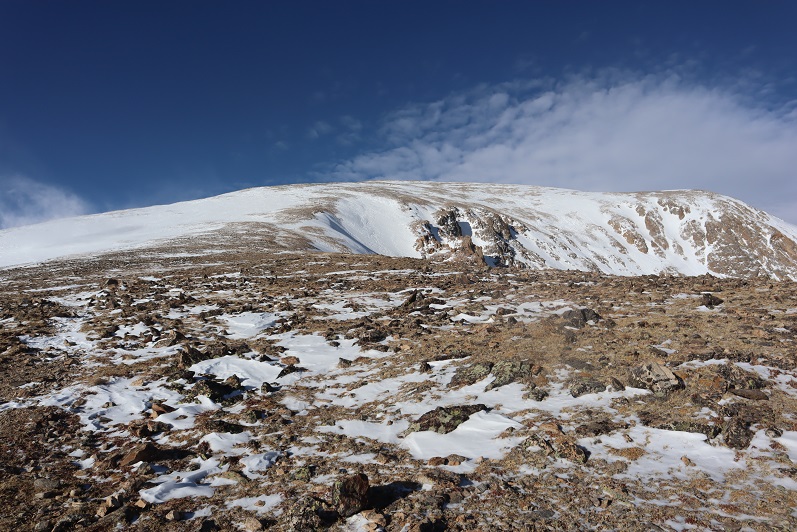
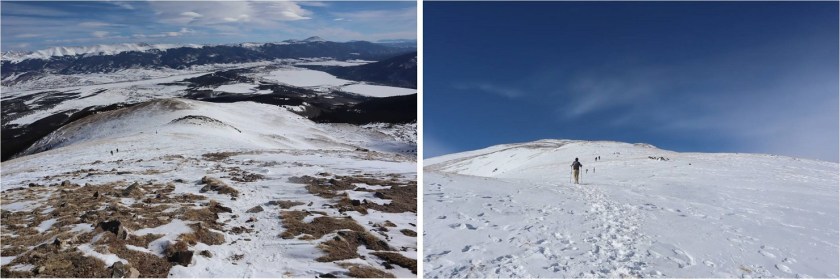
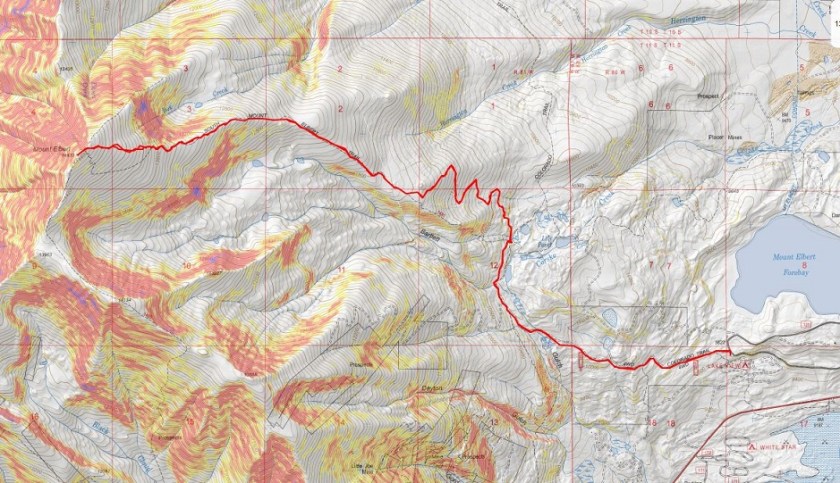
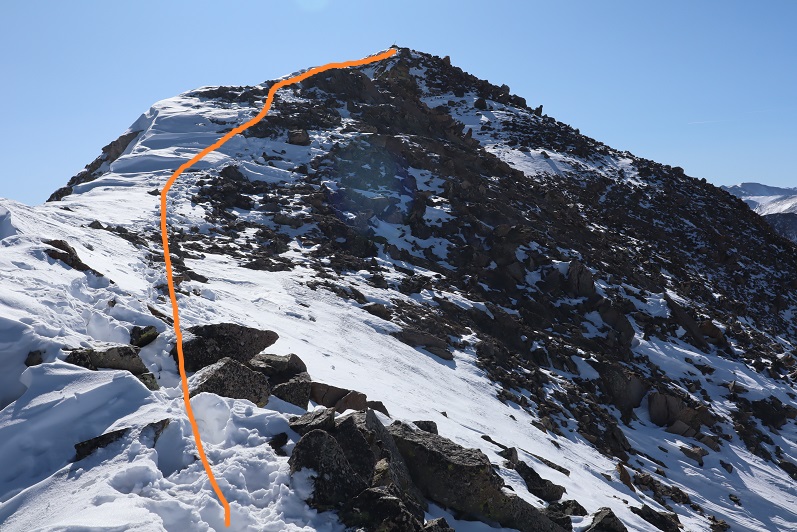
From treeline here’s the route up Mt Elbert.
Not long after making it to treeline we passed a hiker and wondered where everyone else was who’d been parked at the trailhead? There were at least 5 other vehicles there, and we only saw this one hiker along the ridge. Seemed curious.
The wind picked up as we hiked up the ridge. The forecast said 15-20mph winds, but we felt they were much higher here
Snowshoes were useful until about halfway up the ridge, and then they weren’t really needed. I kept mine on because the wind had picked up and I didn’t want to take off my gloves to take off my snowshoes. Steffen offered to help, but I was worried I’d need to put them back on again and honestly didn’t mind hiking wearing them, so I kept them on.
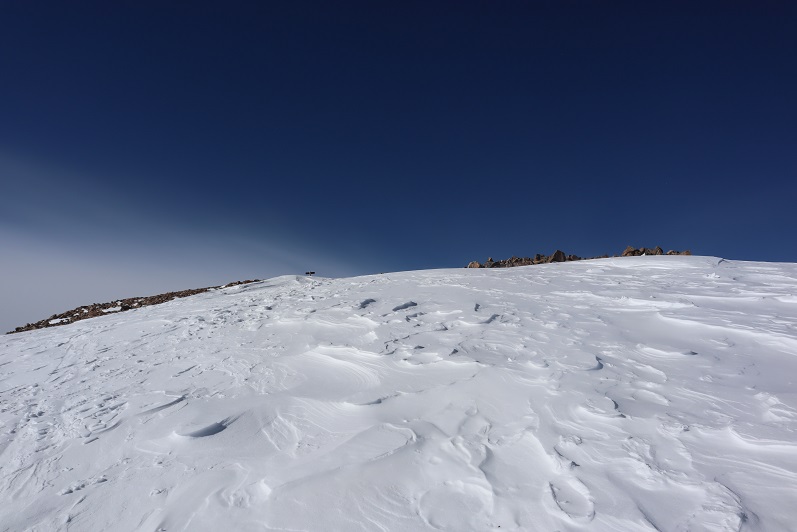
This was a simple ridge hike. I don’t do well with breaks (my feet lose function so I can’t stop) and since there weren’t any obstacles I hiked ahead of Steffen at a slow and steady pace while he took breaks as needed. I kept looking behind me to make sure he was still on track. I was excited to see the sign on top, indicating the summit was near.
At the saddle I decided to slow down and wait for Steffen so we could summit together. The only problem? It was super windy. So windy the wind kept knocking me down. So I decided to crouch down behind this rock and take in the Massive view while I waited for Steffen to catch up. Luckily he wasn’t too far behind
When he made it to the small saddle we turned and headed towards the summit together
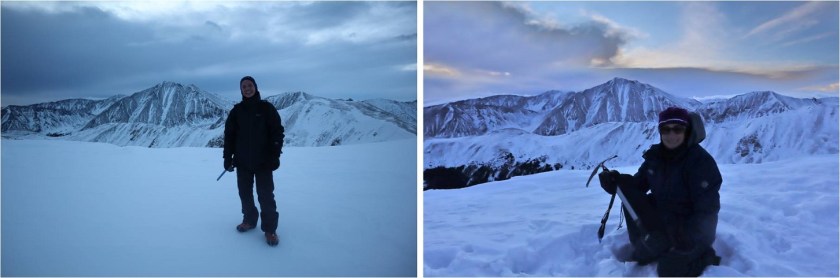
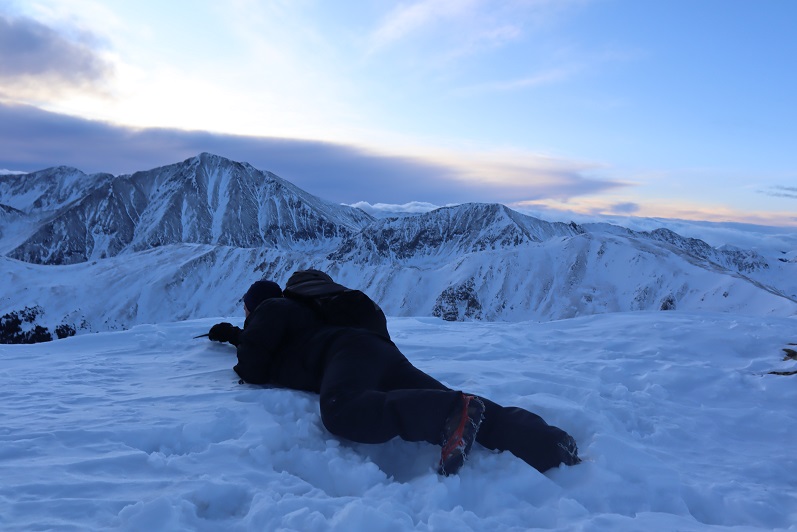
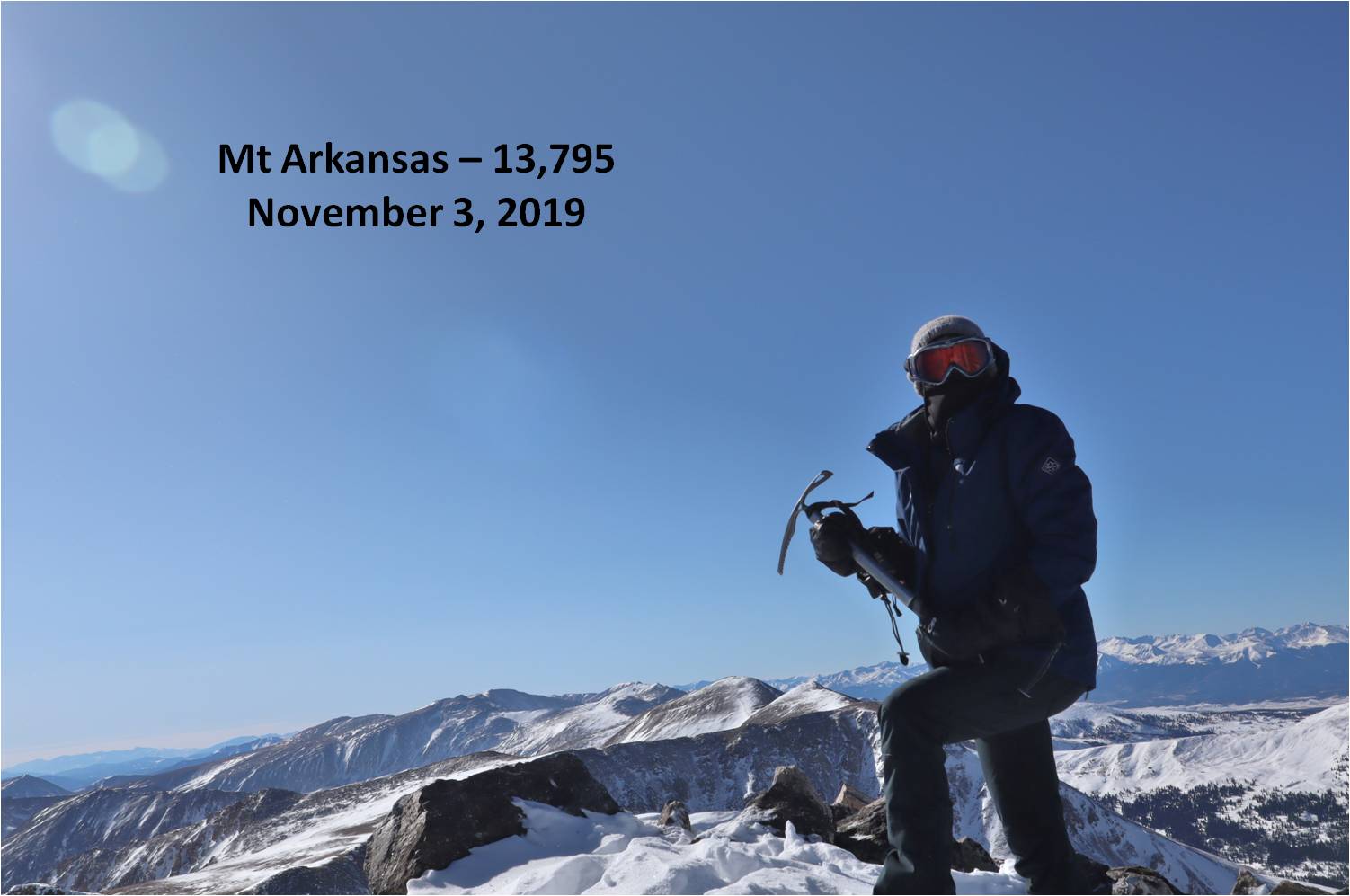
It was a blue skies kind of day, but extremely windy on top. I’m proud of Steffen: this is his second 14er, and second in winter. It was weird having someone else there to take my picture: I had to crouch down because I kept getting blown over.
We didn’t stay long on the summit due to the wind. Steffen teaches skydiving, and was pretty sure the winds were closer to 50+mph than 20mph. It was nice having someone else there to verify the wind speed and let me know I wasn’t crazy for thinking it was higher than forecasted. The winds lessened as we hiked down the ridge. Here’s the way we took back
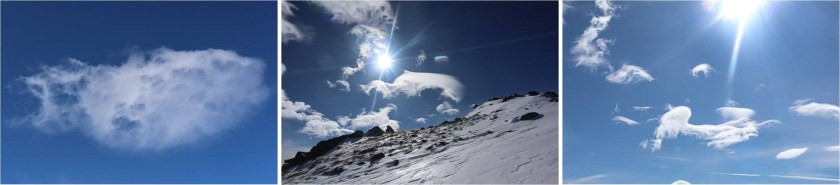
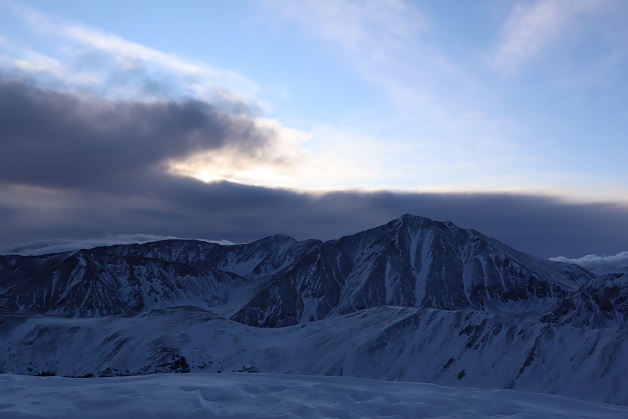
Along with the wind came some pretty cool clouds. I took off my snowshoes for most of the ridge descent.
About halfway down the ridge we began seeing other hikers. Tons of other hikers. They were like ants, marching their way up the mountain, and must have been sleeping in their vehicles when we made it to the trailhead.
Once we made it back to the snow we both put our snowshoes back on: we were postholing and it soon became evident the return route would be miserable without them. We were glad we’d started when we did: in a couple of hours this would be posthole city.
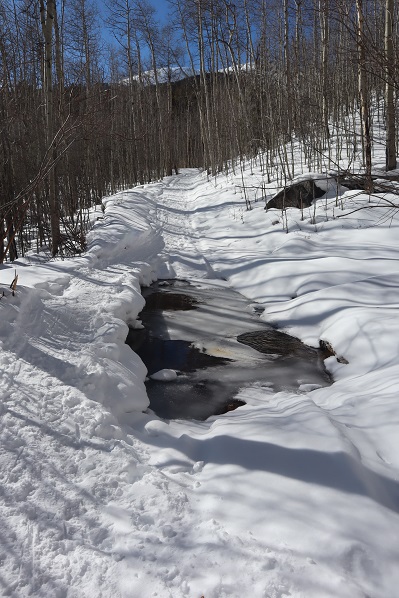
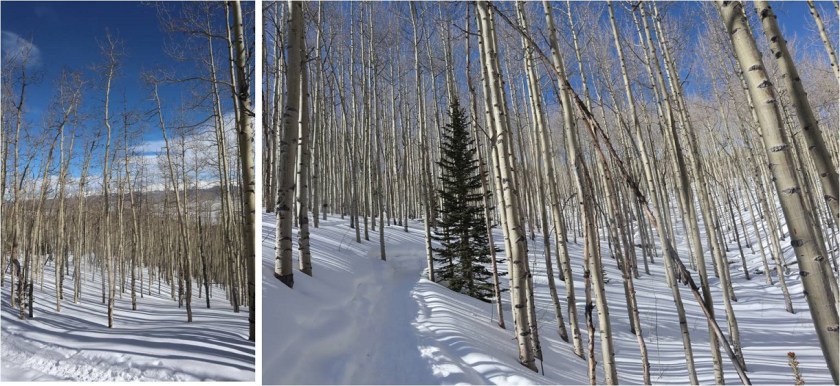
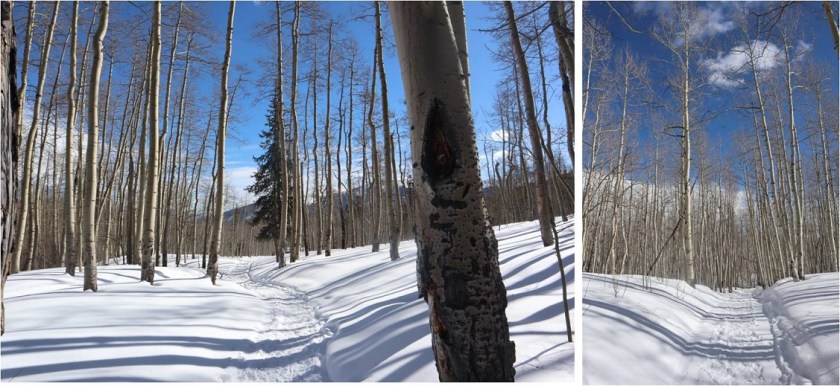
The route back was just as easy to follow as the route in, but with the added bonus of sunlight we had some pretty amazing views of the aspens
We made it back to the trailhead at 1:50pm, making this a 13.25 mile hike with 4934’ of elevation gain in 9 hours 40 minutes.
As seems to always be the case, my plans changed last minute. The weather’s been so cold and windy lately I’ve been highpointing closer to home, sticking mainly to 9K and 10K peaks with less snow and warmer temperatures. I’m helping someone learn how to route find, but he has a minor heel injury. Instead of hiking today closer to home he wanted to rest it for next week. So I did a quick search and the best forecast I could find for a peak on my list showed 0-6 degree low/high temperature with 30mph gustss at the summit. This would put wind chill in the negative 20s. I debated back and forth and finally just decided to go for it: I could always turn back, but there would be trenching involved, so at least I’d get in a good workout.
I’d wanted to be on the trail by 5:30am but I drove to the wrong trailhead. Actually, Google didn’t take me to a trailhead at all, and when I checked my map realized I was about a quarter mile away but needed to drive for a bit to make it to the correct place. No worries though, because it was still dark outside and snowing, and I was hoping the snow would let up before I started.
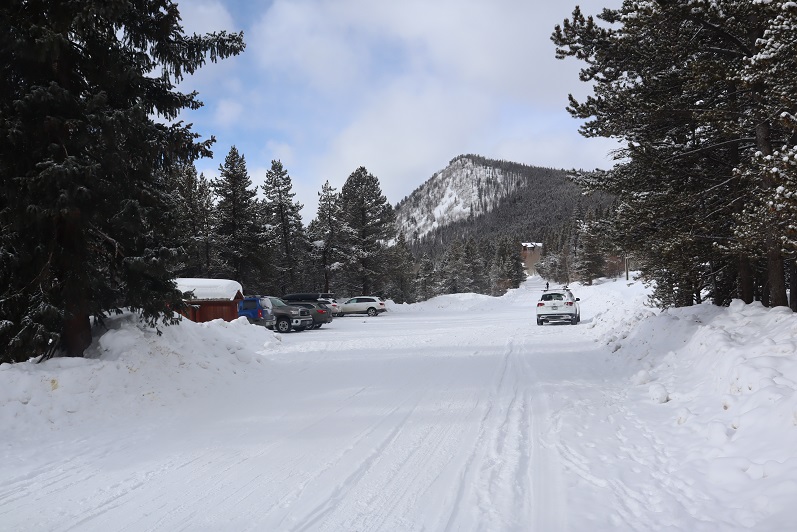
When I made it to the French Gulch Trailhead it was still snowing, and a balmy 9 degrees outside. The road to the trailhead was plowed and packed down. I decided against putting on my snowshoes right away and attached them to my pack instead. I did put on my microspikes.
At 6:15am I started to the left of the trailhead sign, following the 4WD road past the closed gate.
It was snowing lightly and I could see the full moon through the clouds. It was a cool, quiet morning. I followed the road until I came to the turnoff for Little French Gulch. Here I turned left and donned my snowshoes: I was going to need them!
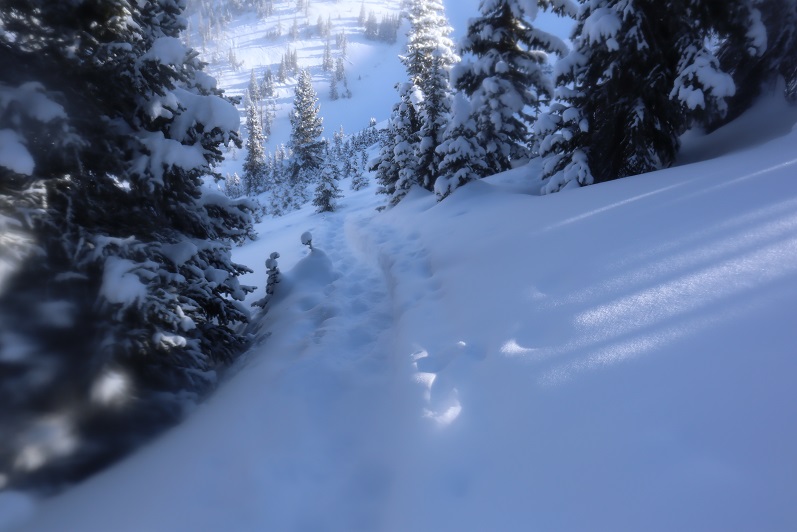
While the road had been pretty packed down the previous trench on the Little French Gulch trail had been filled with several inches of fresh snow. In most areas I could tell where the trail went, but the entire time I had to re-trench the trail. I tried to see how deep the snow here was by probing it with my trekking pole, but the pole went all the way down and never hit dirt, so I’m guessing there was at least 5 feet of snow on the ground.
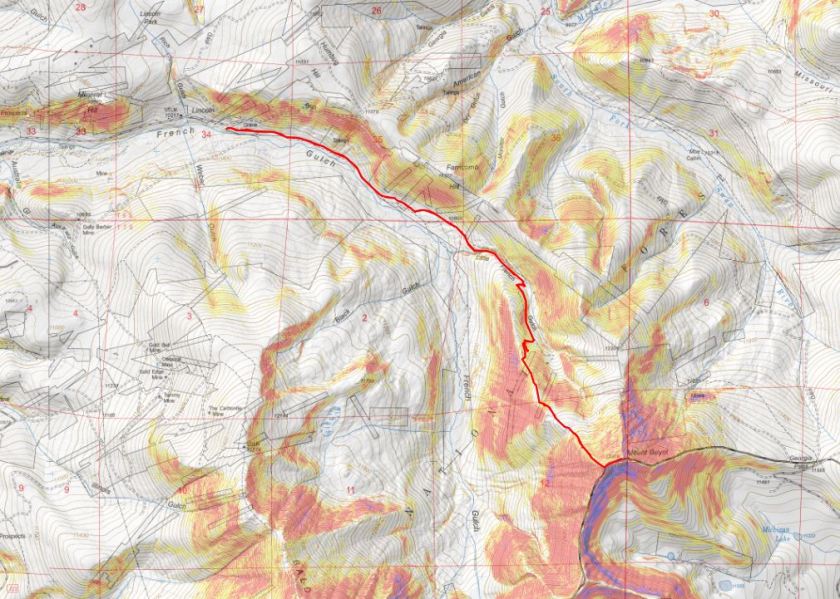
Last night, while looking at a topo map, I’d planned to leave the trail and head straight up the ridge just after the Little French Gulch turnoff. I realized this morning there was no way that was going to happen: the snow was deeper here than it looks, and the first step I took I sank up to my waist in snow while wearing my snowshoes. Nope.
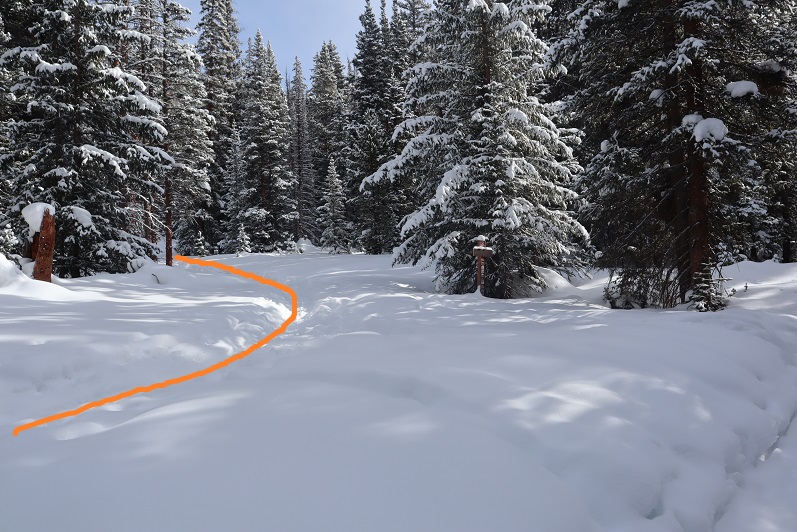
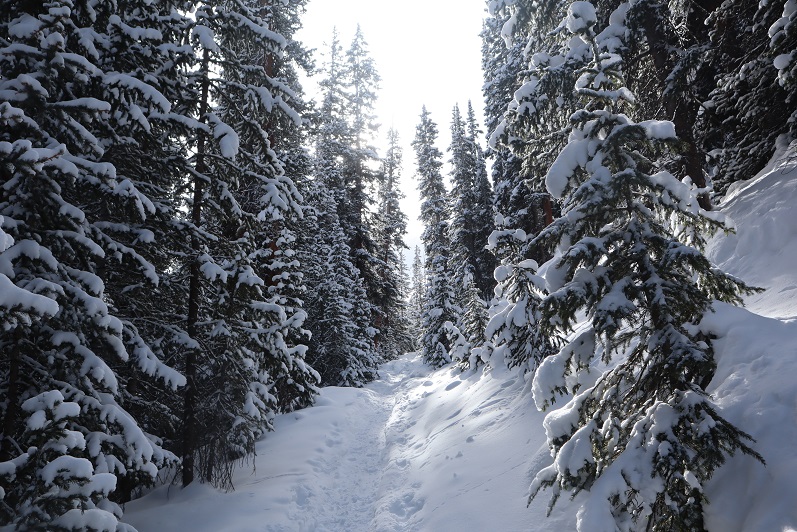
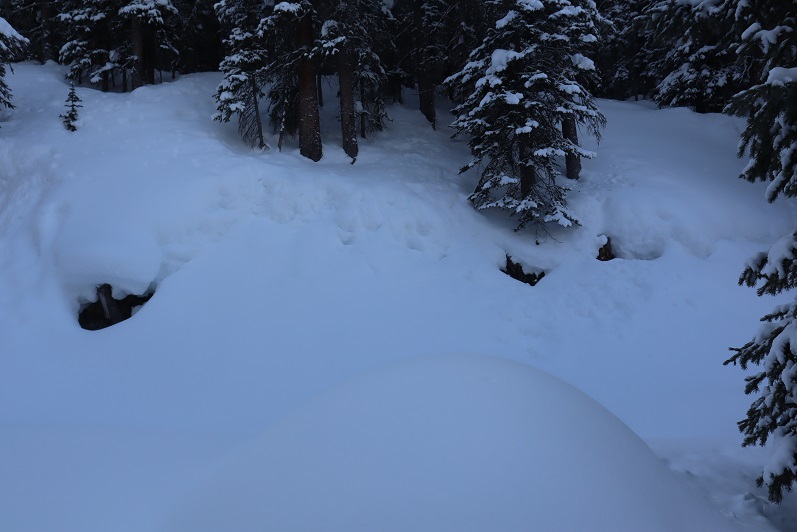
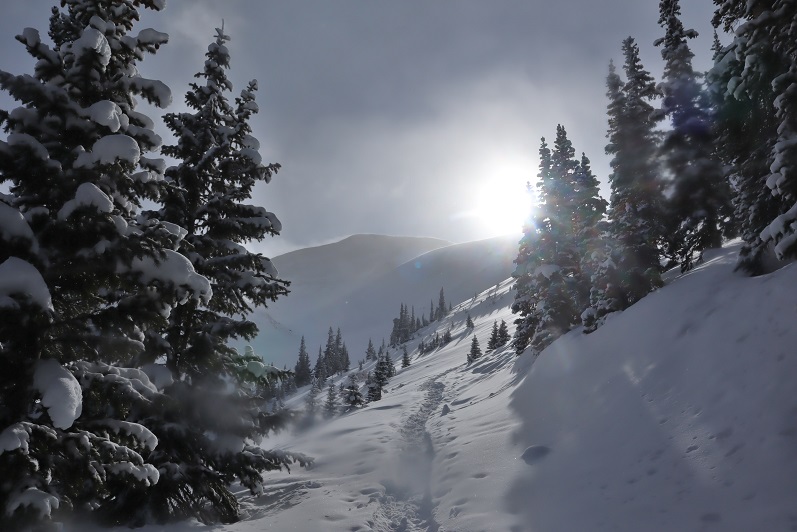
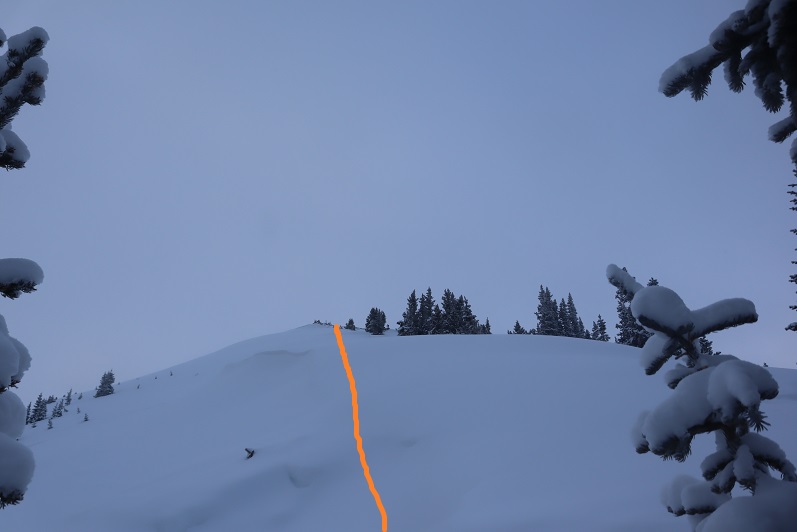
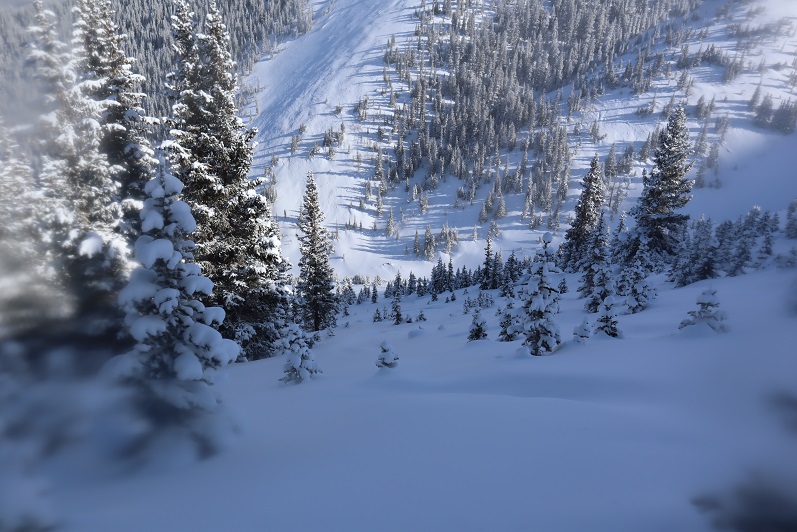
So instead I followed the trail to just below treeline, where I turned right (west) and headed up to the ridge, switchbacking as I went. (Side note: I took many of these pictures on my way back down. The snow was sugary and often times I’d trench up to my waist and my camera would get covered in snow. It was so cold I was unable to get the snow off the lens, so the pictures are a little blurry).
To avoid any avalanche danger I tried to stick to the trees, close to the ski area
It stopped snowing just as I made it to the ridge. I turned left (south) and followed the ridge. Here the snow was rather deep and sugary, and the wind picked up dramatically.
Once on the ridge the summit was obscured with clouds. Here the snow ranged from bare ground to several feet deep. I kept on my snowshoes.
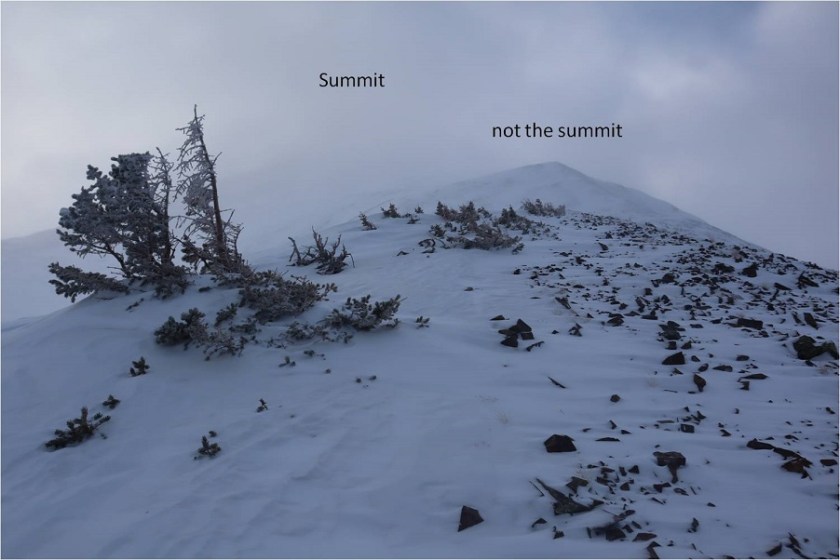
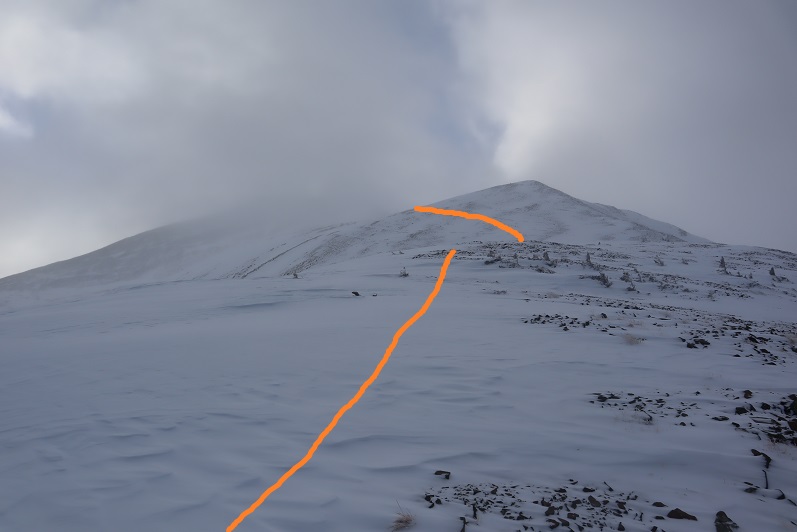
Instead of going over the bump I skirted it to the left (it’s a false summit that would be more obvious without the clouds)
There were several snow covered ‘trails’. I chose one of the higher ones.
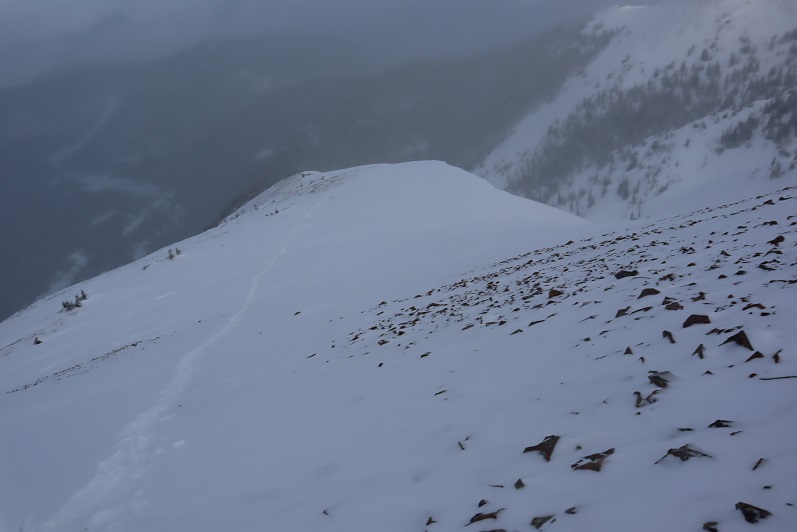
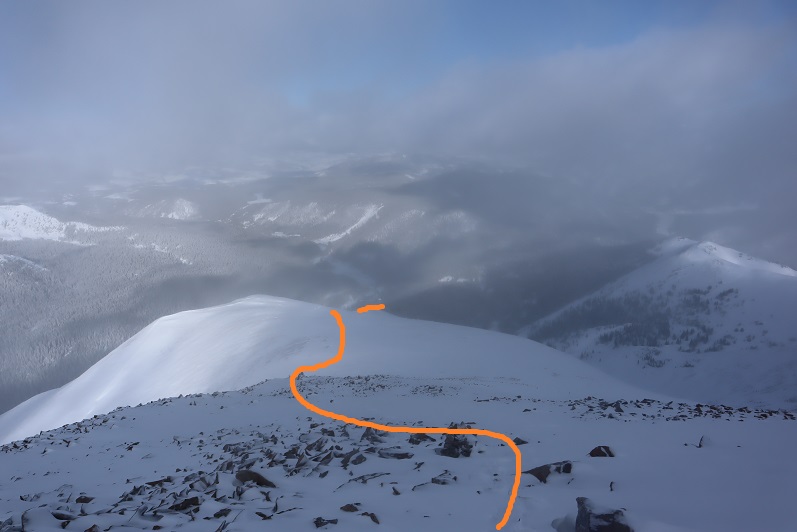
Looking back down the ridge
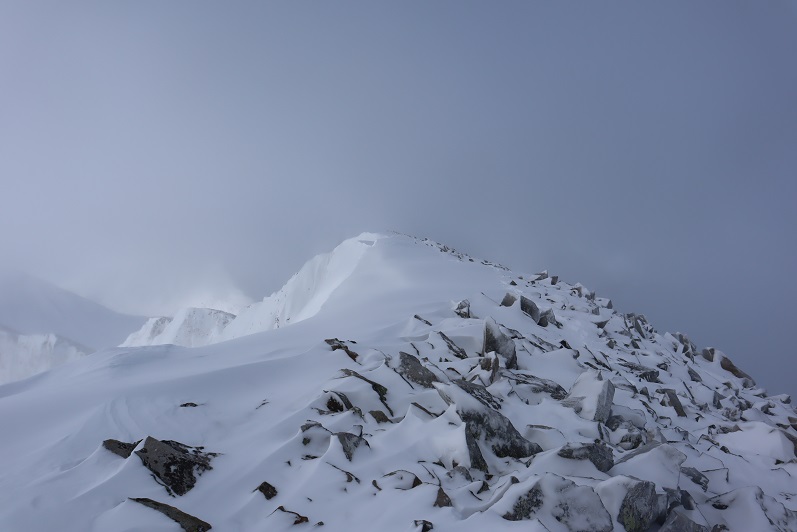
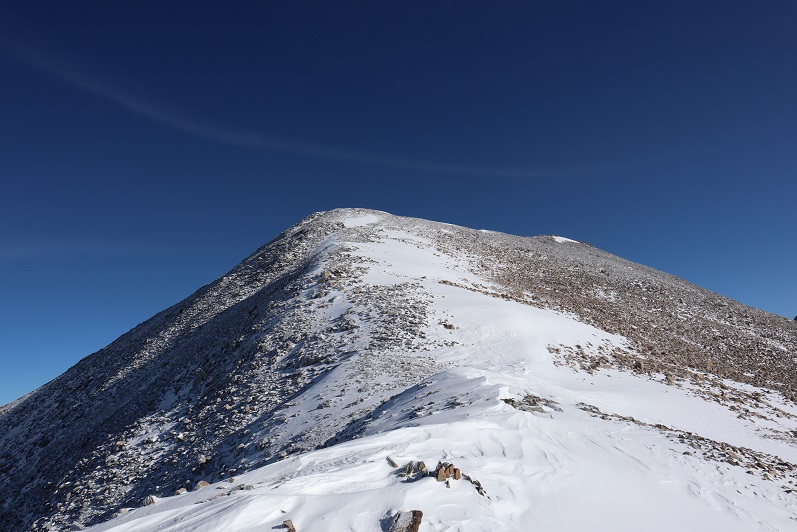
And at the rest of the route to the summit
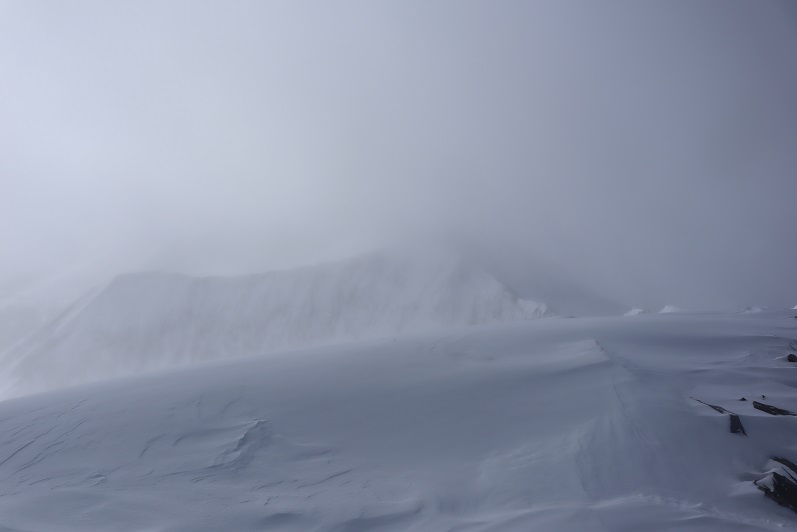
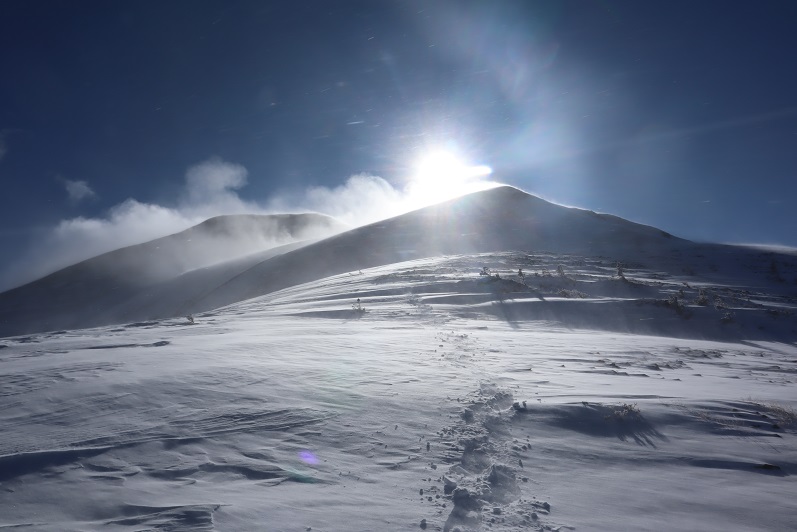
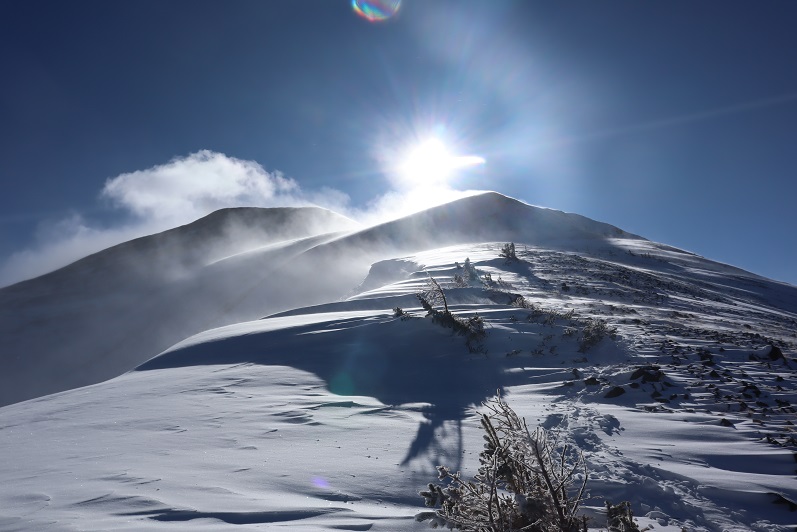
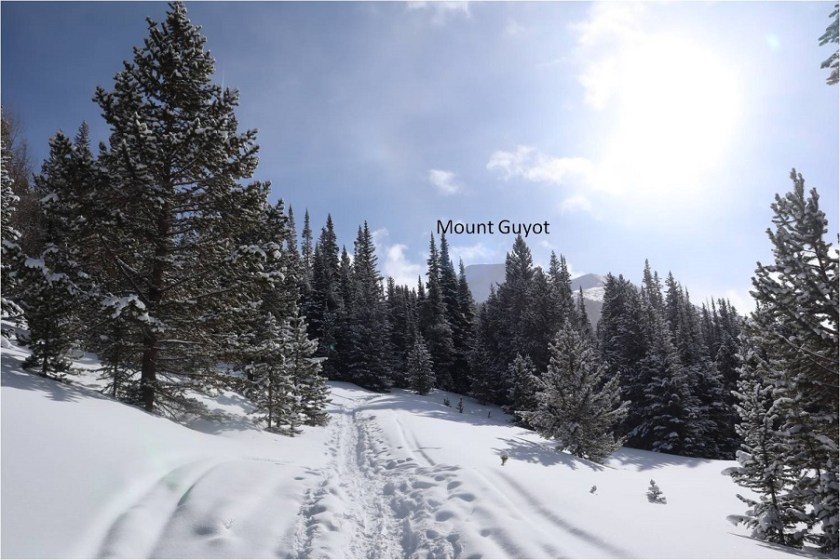
While the snow had stopped and the clouds had lifted, snow was being blown from Bard Peak, turning into clouds, and blowing over Mount Guyot.
The wind was intense and I couldn’t see very far ahead of me due to ice crystals in the air. I considered turning back several times more than I’d like to admit, but I wasn’t beyond cold (yet) and I decided to keep going. My toes still felt fine, and my fingers were holding up. The ridge to the summit was mostly windswept, with a few areas of deep snow. I kept my snowshoes on because I didn’t have the dexterity in my fingers to take them off, and I knew if I did I wouldn’t be able to put them back on again. This meant my final push to the summit ridge was slow, as I was basically carefully rock-hopping in snowshoes, trying not to twist an ankle. Cold doesn’t begin to describe the weather: I thought to myself how I was glad I was solo today: everyone else I know would have turned back, and if I were with someone I would have had to turn back as well (with my Raynaud’s I have to keep moving and not take breaks, especially in the cold/wind). I went straight up the ridge, sticking to the snow when possible to avoid the rocks.
At the top of the ridge I turned left (east) and carefully made my way to the summit
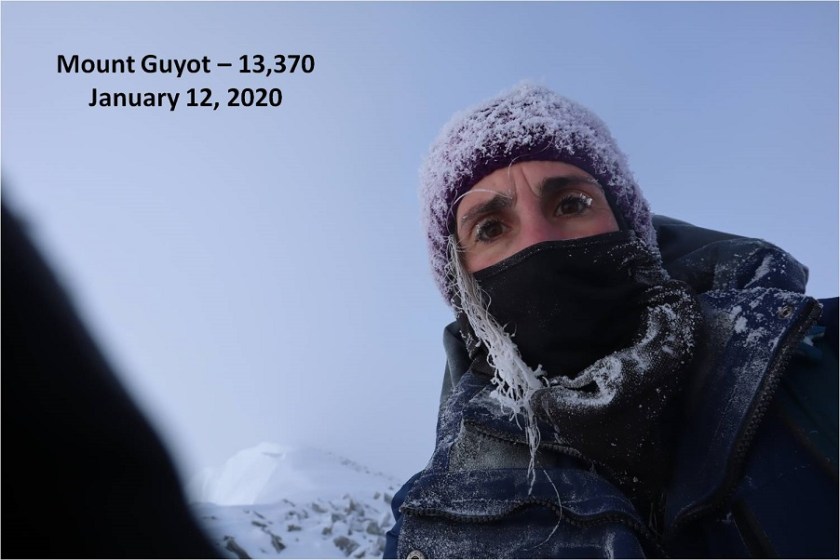
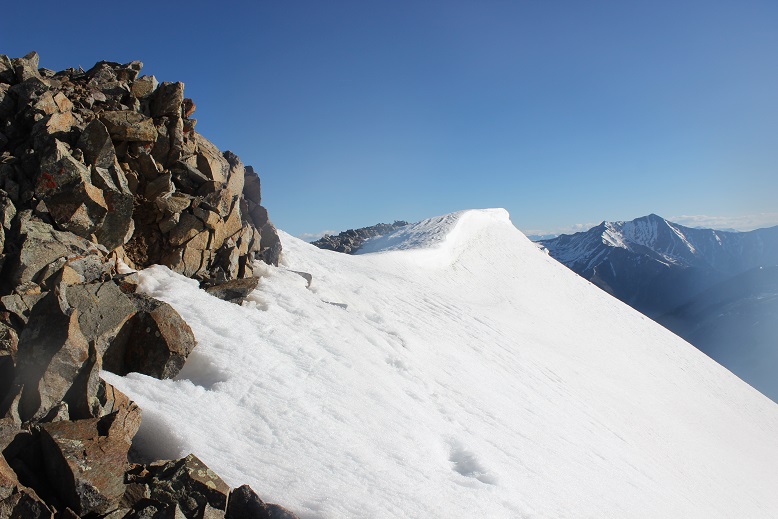
This area was fraught with cornices. In my snowshoes I tried to stick to the area of snow closest to the rocks, walking on the rocks when necessary to avoid the cornices. It was cloudy when I made it to the summit, and I was cold. Frigid even. I kept pumping my fingers back and forth. I could feel the ice on my face, in my eyelashes, and on my hair. Yes, frigid was a good way to describe the weather. I had sunglasses and ski goggles but couldn’t put them on because I had no dexterity in my fingers and told myself the sun wasn’t that bright anyway. In no way was I risking taking off my gloves to get a photo of myself and I wanted out of this weather as soon as possible so I tried to take a selfie with my camera by just turning it around. For some reason, I got a video instead (still not sure how this happens: I should spend more time learning how to use my camera)
Summit Video:
I was finally able to get a picture (with my gloves in the way). I wasn’t about to try and get another photo.
There weren’t great summit views today.
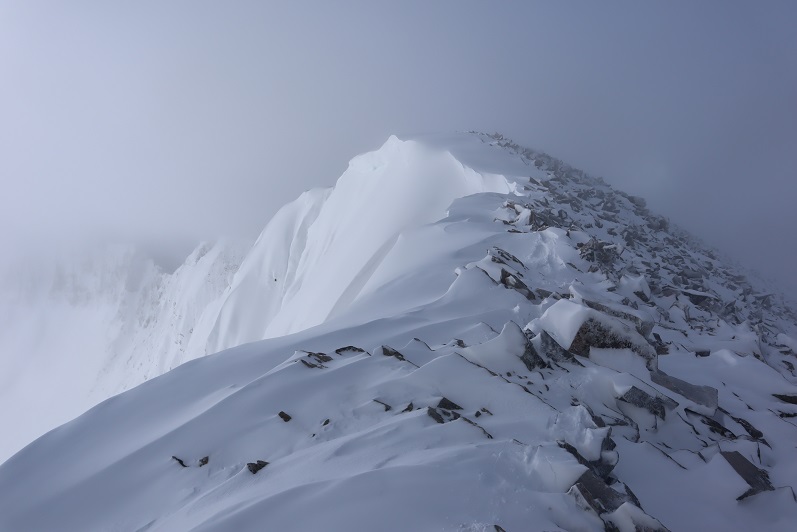
I turned and headed back across the ridge. Check out those cornices!
Looking down the ridge
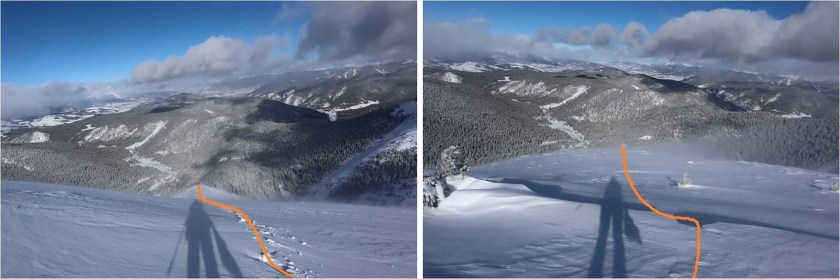
Most of my tracks were gone on my way back down.
I didn’t think it was possible, but the wind picked up even more on the way back down the ridge. 30mph winds seemed a low estimate for what I was experiencing now. Brrrr!
I was so excited when I made it back to treeline and out of the wind! Well, excited until I found the wind had covered most of my tracks and I had to re-trench them on the way back down. The snow was soft and I frequently postholed up to my waist, causing me to twist and turn to get up, covering my snowshoes, clothes, etc. (and camera) with snow in the process.
After a few dozen yards the trail was once again easy to follow back down to the gulch
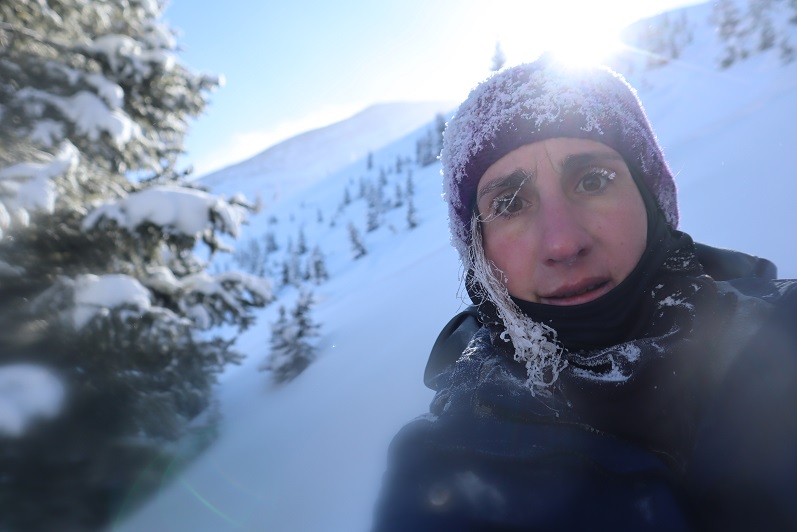
I’d honestly thought it would warm up when I made it back below treeline, but it didn’t. I’m kind of digging the frosted eyelash look…
I continued on the trail and came across some backcountry skiers with their dog. They thanked me for trenching the trail, and did a great job of smoothing it down with their skis. I wished them luck, thanked them for smoothing my tracks down, and was on my way. They gave me an odd look: I smiled back, but I’m sure I looked a mess!
Back on the road I kept my snowshoes on just because I didn’t want to take off my gloves. It was still so cold out! There were now several cars in the parking area
I made it back to my truck at 11:45am, making this an 8 mile hike with 3115 feet of elevation gain in 5 hours, 30 minutes.
I was really glad I’d decided to hike above treeline today. I’d been a little put off due to the forecast, and I’d had to seriously push myself during the hike, but it had been worth the experience. It reminded me again when I have the option to go hiking or not, the answer is to at least give it a try.
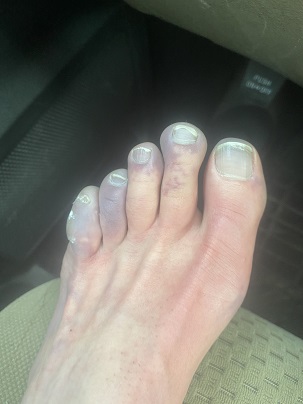
When I made it back to my truck I took off my snowshoes and hopped into the cab and turned on the heater to warm up. The temperature outside read 12 degrees. Slowly, I re-warmed my hands and once my fingers were moving normally again I took off my shoes, socks, and outer jackets/layers. I was happy to see my toes looked ‘normal’! The ice in my hair was the worst: it dripped onto my neck/shoulders as it gradually warmed and melted. I put on sandals and started my drive home. About 10 minutes later my foot started throbbing. I pulled over and drat! My toes were blue! I turned over my foot and the entire pad was blue as well. So much for “operation no blue toes” this year. I was so frustrated! They’d seemed fine when I got back to my truck, why were they hurting and blue now? After about 30 minutes they were back to ‘normal’ again, going from blue to a waxy red and eventually back to white. No permanent damage, just a Raynaud’s attack (they only last about 30 minutes or so, and can happen in any weather, just most likely when cold). One way to prevent them is to stop hiking in the winter, and that’s not going to happen, so I’m going to have to learn to live with the attacks or suck it up and take the medication (I’m not a fan of drugs, so this isn’t likely to happen either). At least they’re not affected while I’m hiking.
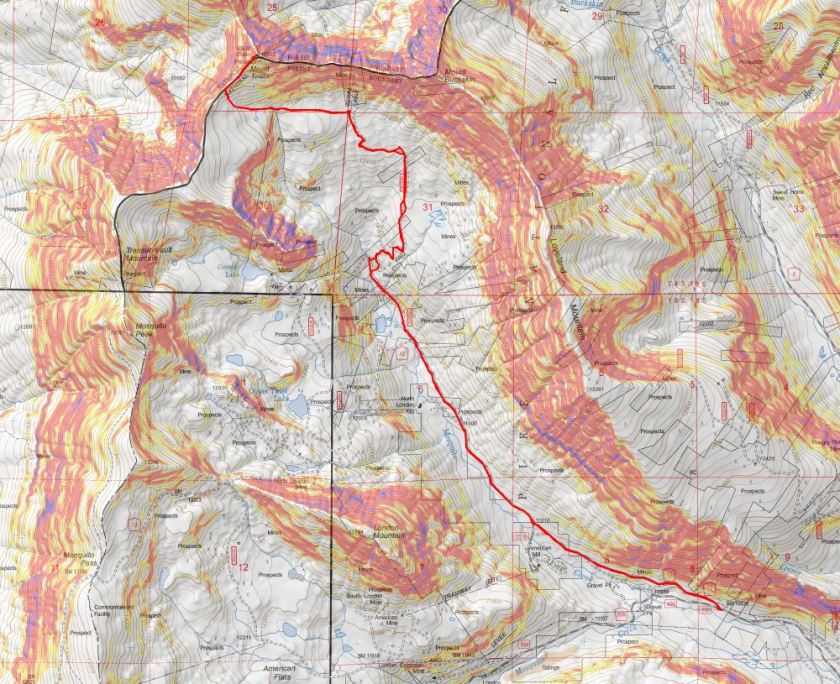
My flight actually made it in on time and I drove from DIA to the Mosquito Creek trailhead starting at around 11pm. I70 was closed for rock mitigation so I used 285 instead (and passed fire trucks rescuing drivers from vehicles that had slid off the road). I was a bit worried about the conditions of the roads since it’d snowed yesterday, but I had no trouble making it to Alma. From there the 2WD dirt road was icy but drivable.
I saw signs indicating Mosquito Pass was open, but I was headed to the Mosquito Creek Trailhead. I turned off the 2WD road onto the 4WD road and drove up about 20 yards before deciding to turn my truck back around and just park at the junction. I didn’t feel comfortable driving my truck through the snow on the road, and I knew it would most likely just get worse as the day warmed up. So I parked my truck and since it was only 1:30am I decided to try and get some rest before starting the hike.
I set up my sleeping bag(s) in the cab, ate a few pieces of turkey jerky I’d made with Thanksgiving leftovers from last week, downed a few shots of whiskey and I went to sleep. My alarm was set for 5:30am, and although it was 12 degrees outside and the wind was howling I was warm inside my sleeping bag inside the cab of my truck. When the alarm rang at 5:30am and it hadn’t even begun to turn light and that wind sounded less than fun I made the decision to re-set my alarm for 6am and got in another half hour of sleep before starting the trail at 6:15am.
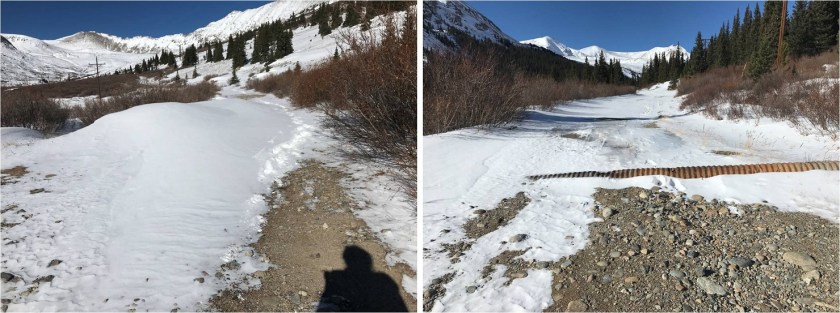
I was immediately glad I’d decided to park where I had. Just following the road the conditions ranged from bare dirt to 6 inches of ice to 4 feet of snow. There were quite a few drifts covering the road I wouldn’t have felt comfortable driving my truck through. There was a constant wind coming through the lower basin, changing the drifts as it went.
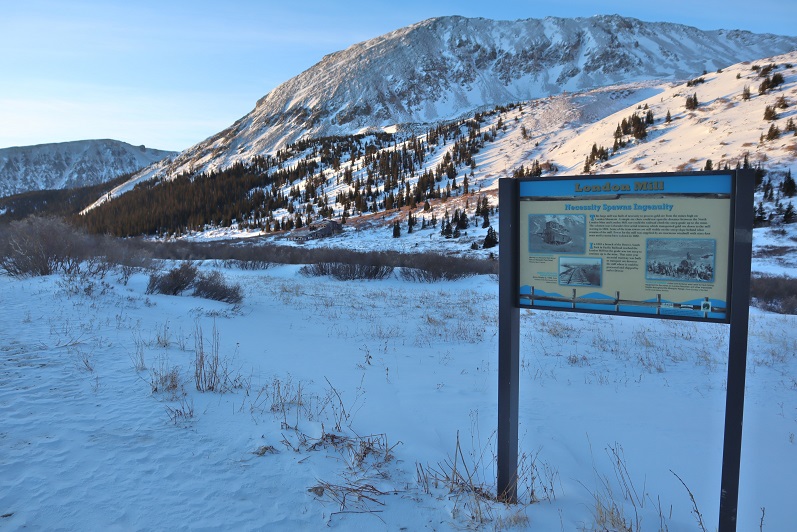
I wore my microspikes from the time I left my truck until I made it back, but didn’t need snowshoes until I reached the London Mill.
After the London Mill the snow picked up on the 4WD road and I was postholing up to my knees, even with my snowshoes on. It was slow going and very tiring. Here’s a look at the rest of the route
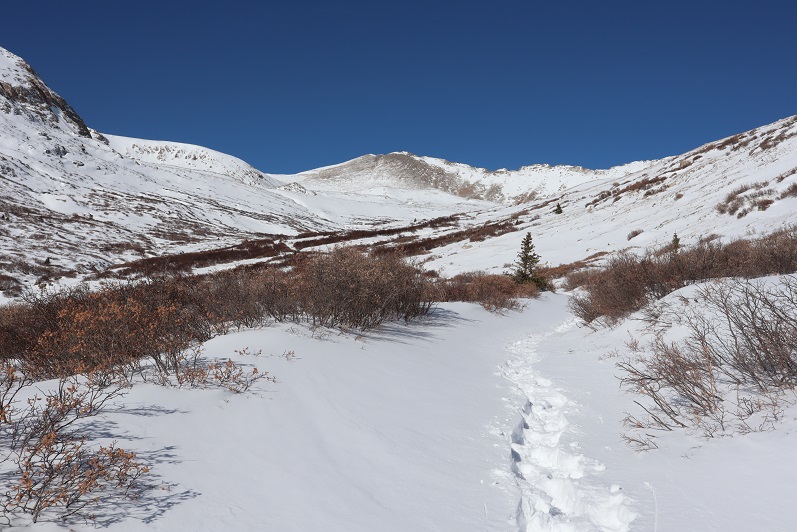
I followed road 656 into the upper basin.
There wasn’t a ton of snow, but there was enough to completely cover the road in areas.
Once I was in the upper basin the wind stopped but the snow levels were still uneven. I made my way towards the aerial cable. I could see what was left of it littering the mountain even from hundreds of yards away. Here the road stopped.
I turned left and headed west
My goal was to gain the ridge. It was a straightforward snowshoe with no large rocks/obstacles to overcome.
It’s steeper than it looks, but I didn’t need to put the risers up on my snowshoes.
Once on the ridge the wind picked up again, but it wasn’t giving me a headache like I’d had on Mt Flora.
Side note: for those of you who remember the curious headache/nausea that caused me to turn back after summiting Mt Flora instead of hiking the ridge, I found out what happened (and no, it hadn’t been the wind). Before hiking Flora I’d woken up in the middle of the night and needed a quick drink, so I went to the fridge and half dazed with my eyes squinted closed to block out the fridge light found some iced tea in the back and chugged it straight from the container. It had tasted awful, but I hadn’t thought much of it. I travel to China for work and bring home loose leaf tea, which my kids love to make. Sometimes it has a curious taste/texture. The next day I’d had a terrible headache accompanied with nausea while hiking above treeline and attributed it to the constant wind. Well, a few days later I was cleaning out my fridge and when I found the tea in the back of the fridge I noticed what I’d thought had been leaves had actually been mold: Big clumps of mold floating in the tea and covering the sides of the container. Thinking of how I’d swallowed a good cup or more of that stuff made me nauseous all over again, and I felt lucky a headache was all that had happened. The container was beyond cleaning so I threw it away. Needless to say, I will be looking much closer at my late night drinks in the future.
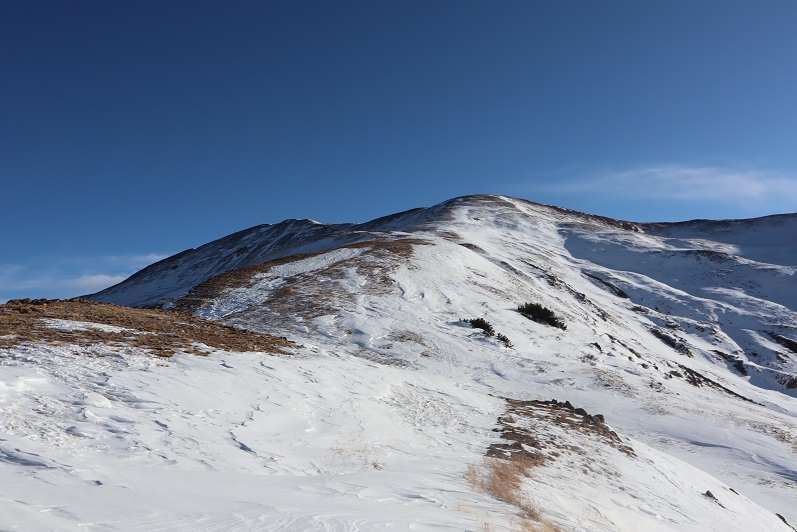
I followed the ridge north. There were a few cornices forming on the ridge making snowshoes helpful and just enough rocks to slow me down.
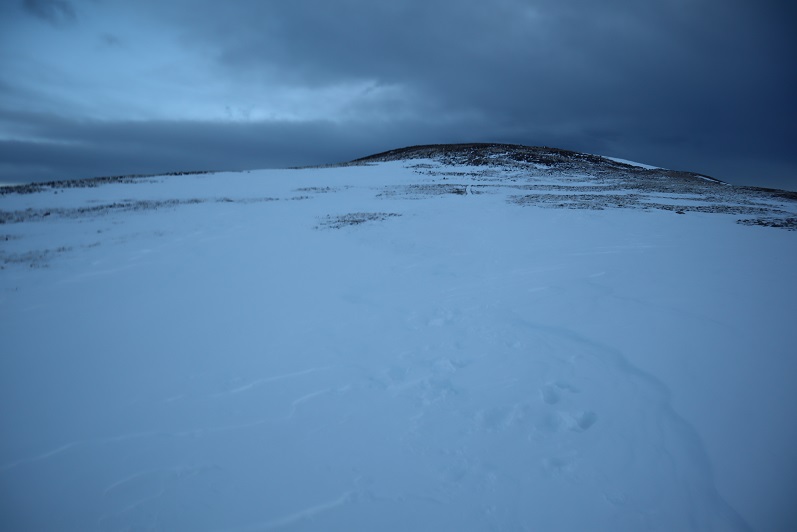
Towards the top the wind really picked up and you could actually see the cold. I kept on my snowshoes even though they were overkill. I just didn’t want to take them off to put them on again in the cold and wind.
As I got closer to the top I noticed a plaque to the left of the summit and went to get a closer view
The actual summit was just to the right (east) of the plaque
I summited at 10:20am
Summit Video:
I hadn’t seen my daughter all week because I’d been in Florida for work, so I decided to just head back the way I’d come instead of heading over to hike Treasurevault, Mosquito, etc. It was my goal to be back home when she got home from school, so I turned around and headed back down the ridge
I followed my tracks back down the ridge
Back through the basin and to the 4WD road.
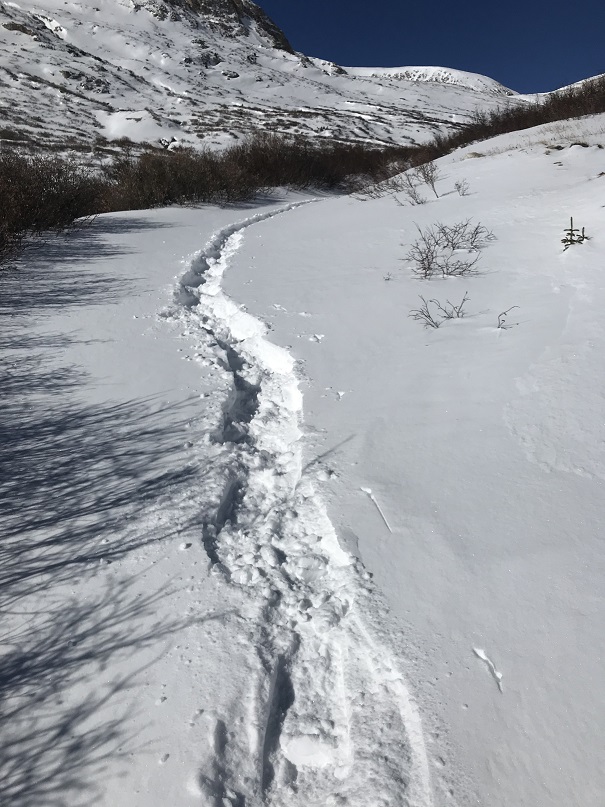
Most of my tracks were gone in the upper basin, but once I made it back to the road they were easy to follow. I did my best to make a trench, but it could use a few more people on the route.
I was once again glad I’d decided not to drive the road up.
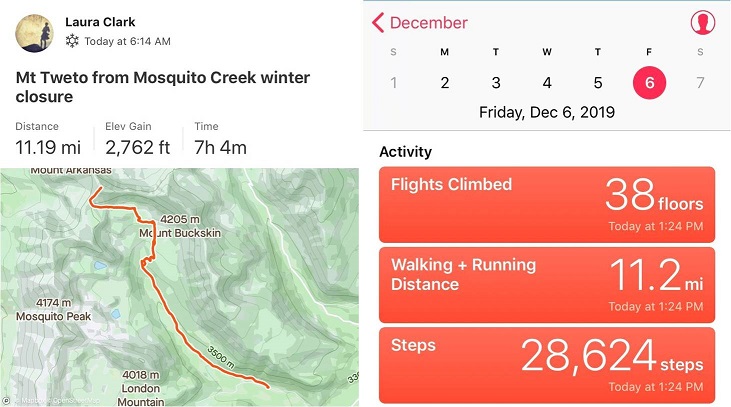
I started this hike at 6:15am and finished at 1:15pm, making this an 11.2 mile hike with 2762’ of elevation gain in 7 hours. I didn’t see another person hiking all day.
I made it home in just enough time to take a shower before my daughter came home from school. She was a little sheepish when she walked in; the kitchen was a mess with dishes in the sink and on the counter and opened packages and mail all over the place. She’d thought she had another few hours to clean up before I arrived. I was just happy to see her. We chatted and cleaned up the kitchen together before making dinner and heading to the ice rink.
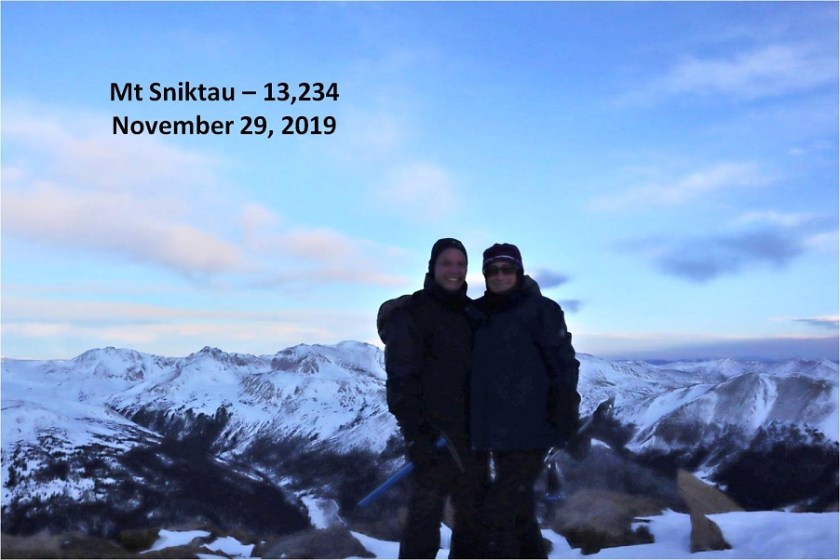
I’ve already climbed Mt Sniktau before so this isn’t much of a trip report but more journaling. A detailed trip report of Mt Sniktau can be found here.
Steffen asked me to take him hiking a 13er and to be honest the weather everywhere in the state was terrible for today. We’re talking 50+ mph winds and snow. Lots of snow. In fact, Mt Sniktau had snow forecasted to begin at 11am, so I figured we should start early. He met at my house at 3am and we carpooled there. I drove, and found it odd to have someone else to talk with in the car. There was rock mitigation work along I70 which seemed to come out of nowhere but I was glad they were working on the problem (large boulders landed on the road, blocking an entire lane).
We arrived at the London Pass trailhead at 5:45am, the only ones parked in the lot, and spent some time in the truck putting on our snowshoes and gear. It was dark so I couldn’t tell if we needed snowshoes or not, but figured it best to put them on when it was warm and take them off if necessary. Another vehicle pulled into the lot and a man started hiking a little before we did. We started on the trail a little after 6am.
There was a faint trail in the snow up the ridge, and after about 100 yards there was enough light to see we didn’t need snowshoes so we took them off. We quickly caught up to and passed the hiker in front of us, who was intent on “Cupid” and maybe Grizzly. We wished him luck and followed the ridge.
The forecast called for snow and it looked like it was rolling in. Luckily we were always in sight of the trailhead so I wasn’t too worried about the weather.
Steffen was doing great physically but was having minor difficulties breathing so we took breaks every now and then so he could catch his breath. He was a champ though and did a great job keeping up and not complaining. We followed the ridge to the summit.
There’s a large cornice on the top of Mt Sniktau Steffen had fun playing on, which terrified me a little…
Looking at the weather over Grays and Torreys we decided it was time to head back
Along the way I taught Steffen a little about how to self arrest with an ice axe and he spent some time practicing. This is a really good skill to know how to use when climbing in winter conditions. Remember to keep those spikes up!
We didn’t see another hiker the entire day, which seemed odd for this peak. It’s a popular one even on bad weather days because the trailhead is accessible and this is an ‘easy’ 13er.
We made it back to the truck at 8:30am, making this a 3.7 mile hike with 1494’ of elevation gain in 2.5 hours. The weather had been a bit gloomy but not too windy and as an added bonus we missed the snow!
On our way home we discovered why no one else was out hiking Mt Sniktau today: I70 was closed where the rock mitigation was this morning and there were backups for miles and miles and miles in both directions as drivers exited and had to find an alternate route. It didn’t look like anyone was going skiing/snowshoeing/hiking here today, and to make it worse this was a holiday weekend. It was a good thing we left so early: we were lucky to have missed the traffic!
I got a late start on this one but I didn’t mind much. I made it to the Freemont Pass South trailhead just before 6am, surprised to see two other vehicles already parked there. I’m not sure we made the best use of our parking spaces
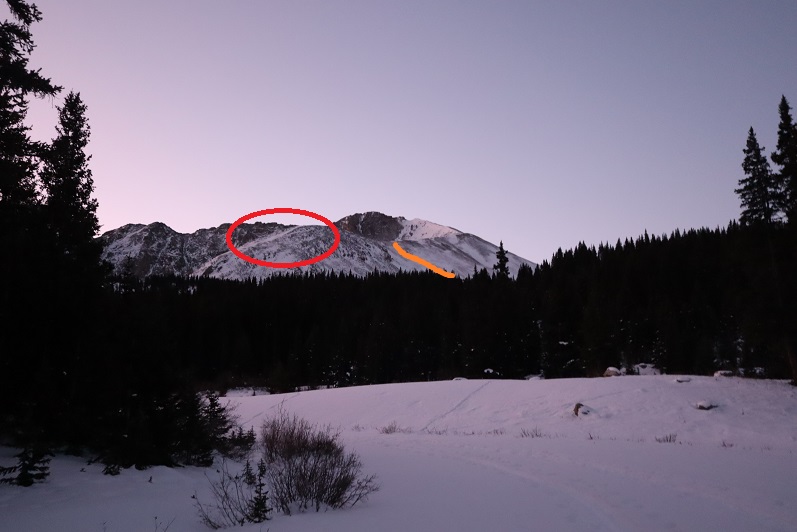
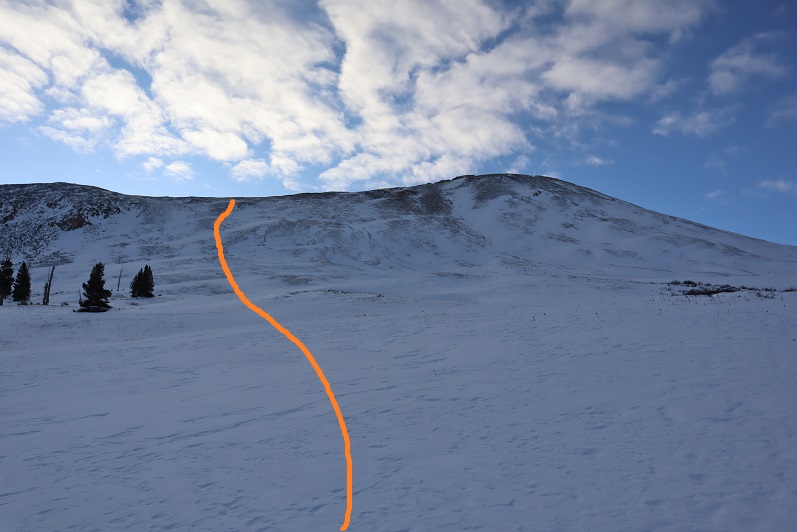
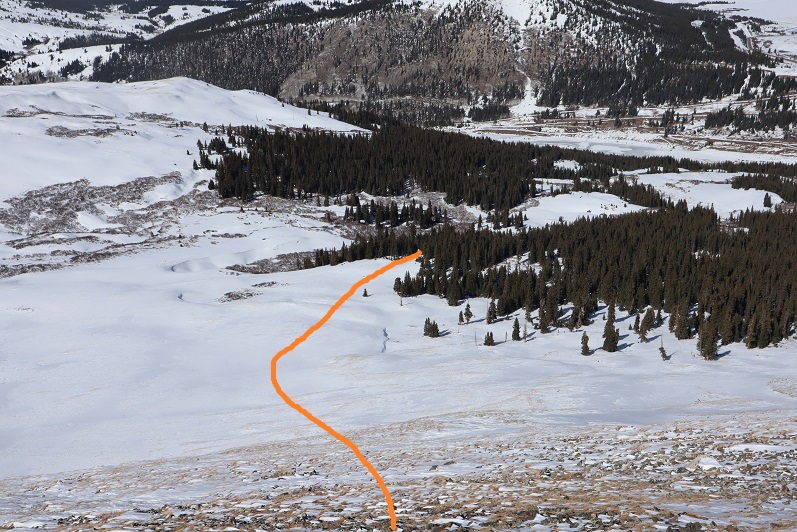
When I looked up at the mountain I could see headlamps. Wow! It’s not often I’m not the first person out. That’s what happens when you sleep in. They were taking a different route to the ridge than I planned on taking, and I wondered if they knew something I didn’t? You can’t really see them, but they’re circled here. The orange line is how I gained the ridge
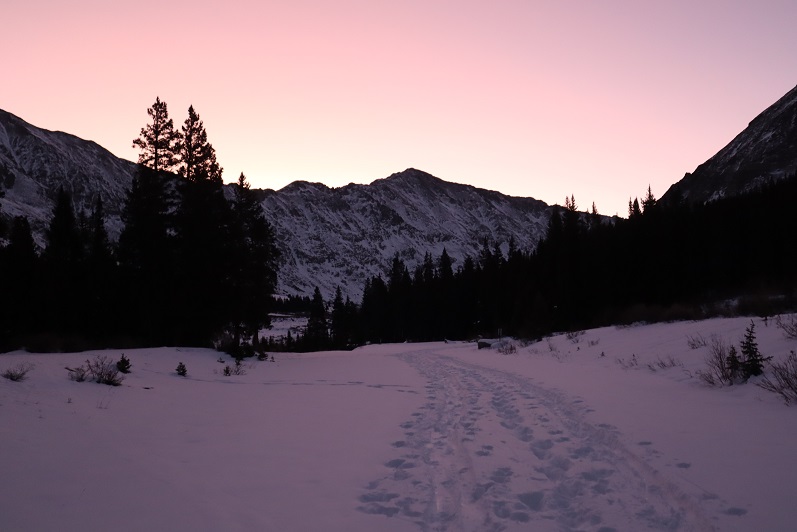
I put on my microspikes under my snowshoes and headed out. As the sun started to rise I followed the road as it wound southwest, switchbacking a couple of times
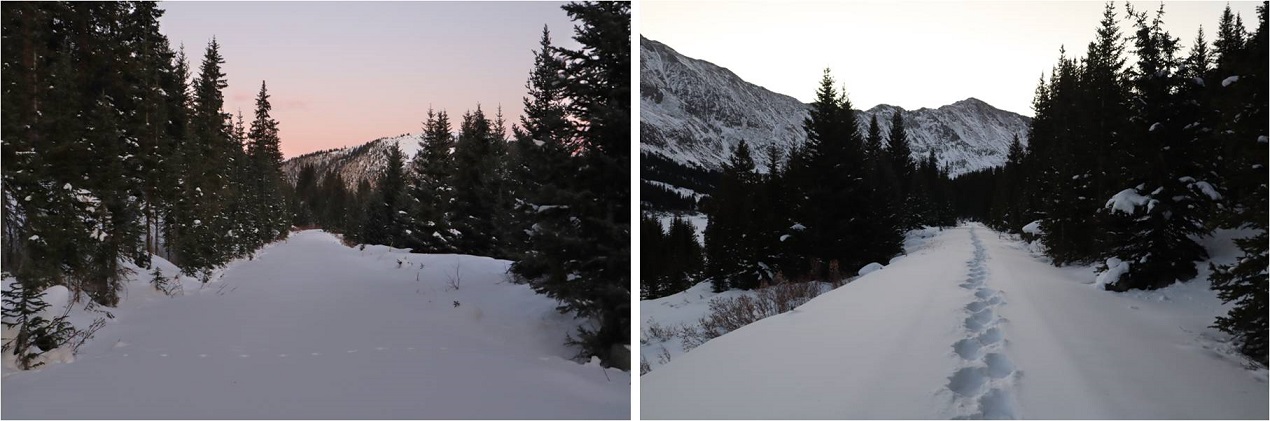
There were plenty of tracks on the road until I came to a straightaway. All tracks went left (east) but my instructions said to go right, so I got to be the first one on the new snow!
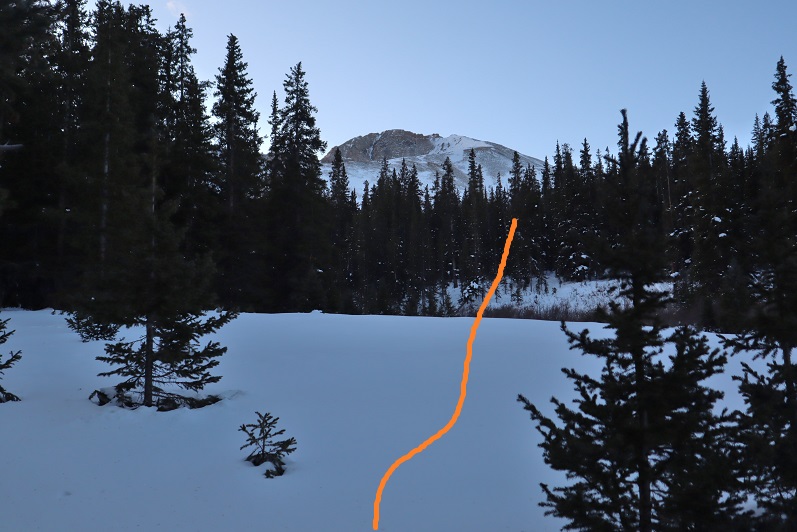
After about a quarter mile I turned left and entered the trees
There was no trail here but I could see the mountain. I trenched my way south, sometimes coming across ski tracks or old game trails
Eventually I made it to treeline and had no difficulty figuring out the route before me. There were some large snow drifts towards the end of the basin I wanted to avoid so I decided to gain the ridge early. The snow here was soft and sugary and I was once again glad I’d worn snowshoes.
Here’s the path I took up the ridge
It’s steeper than it looks. Once on top of the ridge I ran into the tracks of the hikers I’d seen that morning. None of the tracks headed back down so they must still be on the mountain. I turned southwest and started up the ridge
The snow here wasn’t consistent. In some places there wasn’t any snow, and in others it was consolidated. I saw just enough postholing tracks from the hikers above me to convince me to keep my snowshoes on.
I followed the ridge to a small saddle and ascended the hill.
I completely thought I was nearing the end of this climb and kept looking for the other hikers. They should have been way ahead of me. Why hadn’t I seen them yet? I kept feeling like I was getting closer and closer to the end, which meant they should have been on their way back by now. At the top of that hill there was a pole. This pole is important, as it signifies the correct route to take back down. It’s good to make a mental note of where this is. I went right here
This is where the fun began. Once again, I totally assumed this was the summit (it wasn’t). I went up and over
And saw this
No worries… that must be the summit (it wasn’t). It was an easy class 2 hike though, until I came to a short class 4 section here, which was interesting in snowshoes
At the top of the class 4 section my heart sank: I still had a long ways to the actual summit, and it looked like all class 3+ from here. I couldn’t see the other hikers anywhere and I was getting seriously worried because all tracks still pointed up.
I looked for the class 2 section as an alternate, but there was so much snow it wasn’t a viable option. If I was going to continue I was going to have to climb class 3 in the snow. That wasn’t going to be possible with my snowshoes on. I seriously considered turning back. This would be an easy hike with no snow, one I could do quickly next summer. I debated my chances of success in the current conditions.
I decided since it was a nice day I’d take it one step at a time and turn back if necessary. The snowshoes weren’t necessary so I sat down to take them off and stash them while I summited. Just as I was kicking them off (I didn’t want to take my gloves off so there was a bit of a struggle) I saw the group of hikers coming towards me. No, they hadn’t been slow, it had just been a much longer ridge than I’d anticipated and they’d been behind rocks when I’d made it within final view of the actual summit. I waited for them to pass me. I had a hard time making conversation (my mouth was frozen and it was difficult to make words) but we had a quick chat. They said the headwall on the way they’d come up hadn’t been fun. I wished them luck and we were on our separate ways. I was so glad I’d decided to put on my spikes under my snowshoes! It was worth it not to need to take off my gloves. The wind wasn’t too terrible, but I’d need all the feeling in my fingers I could get for some class 3 scrambling.
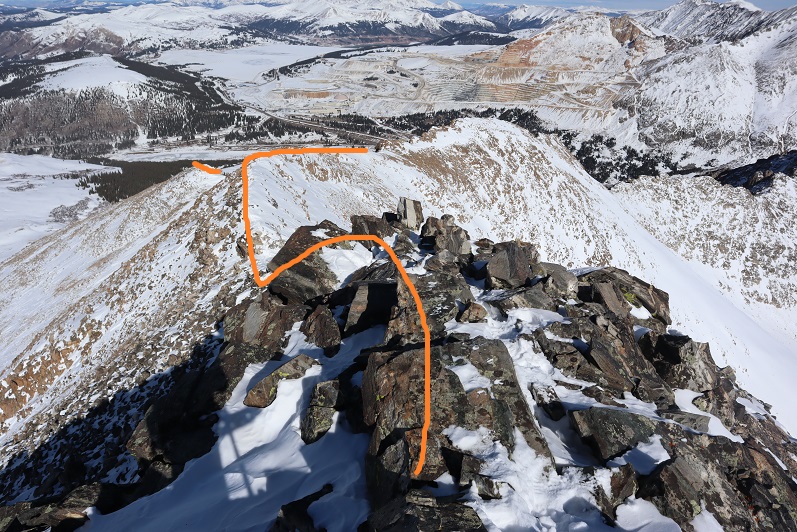
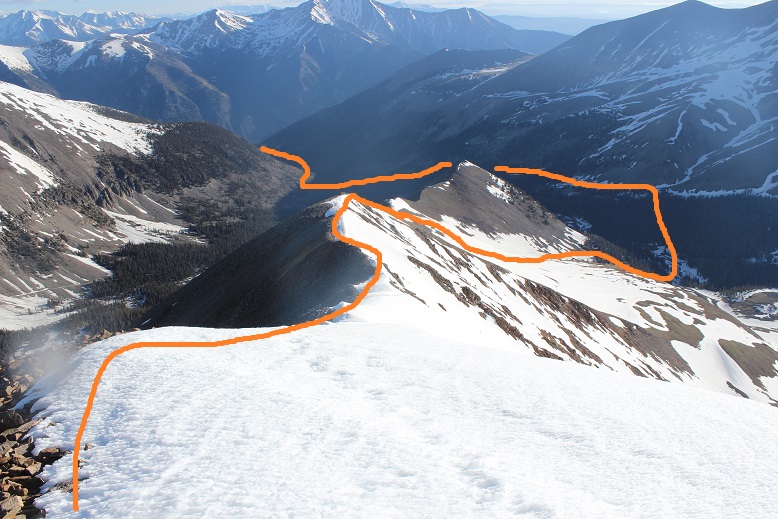
This last route on the ridge mainly sticks to the ridge, but it does dip down a few times to the right. Here’s the route I took
It looked like the group ahead of me had gone a little higher in places than I did but I felt their route looked class 4 and felt more comfortable staying a bit lower. I was never more than 30 or so feet below the ridge and most of the time I was right on top. The last push to the summit was on class 2 rocks
There was a big cairn indicating the summit. I was thrilled I’d decided not to turn back! That had been easier than I’d anticipated.
Here’s my summit photo
It is much harder to work a camera with large gloves on than you’d think. If you have a few minutes to spare you can watch one of my attempts (I couldn’t figure out why it wasn’t working. Turns out it was on video mode). This sort of stuff happens frequently and wastes time on the summit. I tend to give up quickly and go with the first shot I take, especially when it’s cold and time has more meaning.
Summit Post
Here’s a look back down the ridge
The trail down the ridge was pretty similar to the way up. Here’s a look at the tricky sections
Remember how I said that pole was important? Here’s why: You don’t follow this ridge all the way down. You’ll eventually turn left and follow a different ridge
The wind was starting to pick up, and some of the trenches forming were body-sized because of the sugary snow
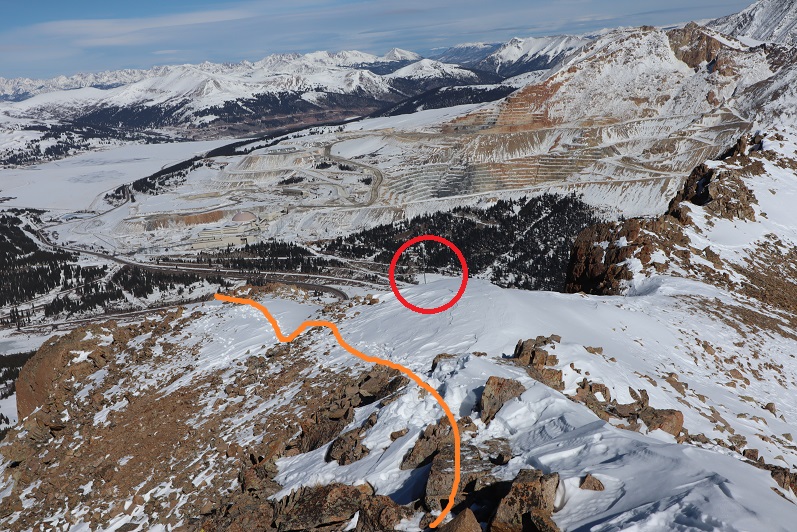
The pole is circled here in red. Follow the ridge to the left, don’t go straight or it will take you to point 12923.
From here I followed the ridge to just before the headwall
Looking back things started to get windy
I turned left and headed down the side of the mountain. Down was much easier than up.
Here’s my exit route back into the trees
My tracks were mostly gone in a lot of the basin but I could see where they picked up near treeline
Once at treeline I just followed my tracks back to my truck, doing my best to form a nice trench
I made it back to my truck at 12:30pm, making this a 6 mile hike with 2759’ of elevation gain in 6 and a half hours. The hike had felt longer distance wise than it was, and I it felt shorter time wise. I guess I kind of went into a zone when crossing the ridge and lost track of time.
It’s officially High School Football season which means late Thursday/Friday night games. Luckily for me my daughter performs at half time and can drive herself home so I was able to get in 2 hours of sleep before waking up at midnight to drive to the trailhead.
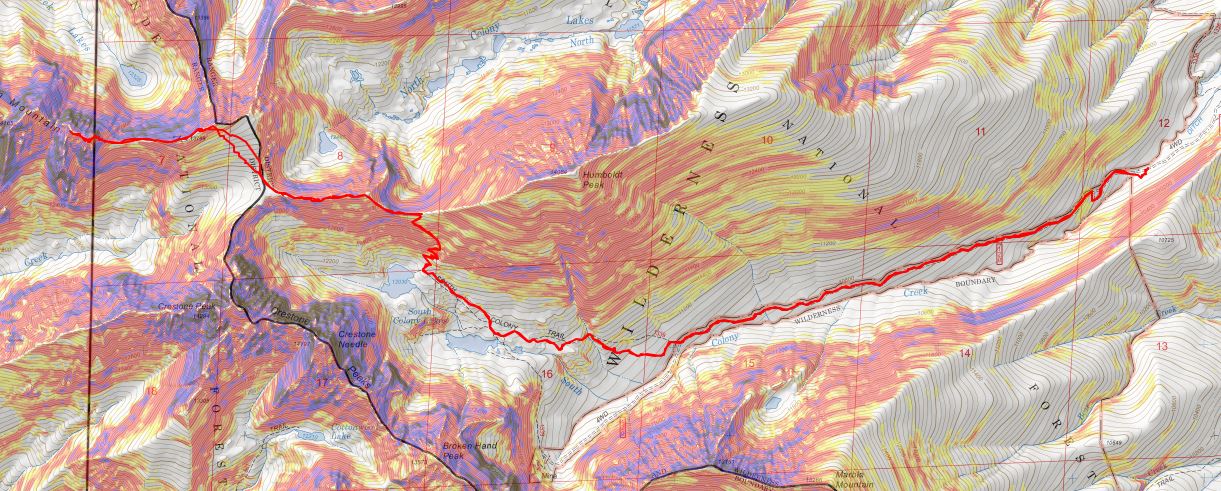
And what a drive it was! This is my 6th or 7th time at the South Colony Lakes Trailhead, and the last 3 miles were the worst I’ve ever seen them. The drainpipe was actually one of the easier parts. Because of the rough road I drove a little slower than I normally would and wasn’t on the trail until 2:30am. (Sorry, these pictures are of the easier areas, as I needed both hands on the wheel to navigate the tougher ones).
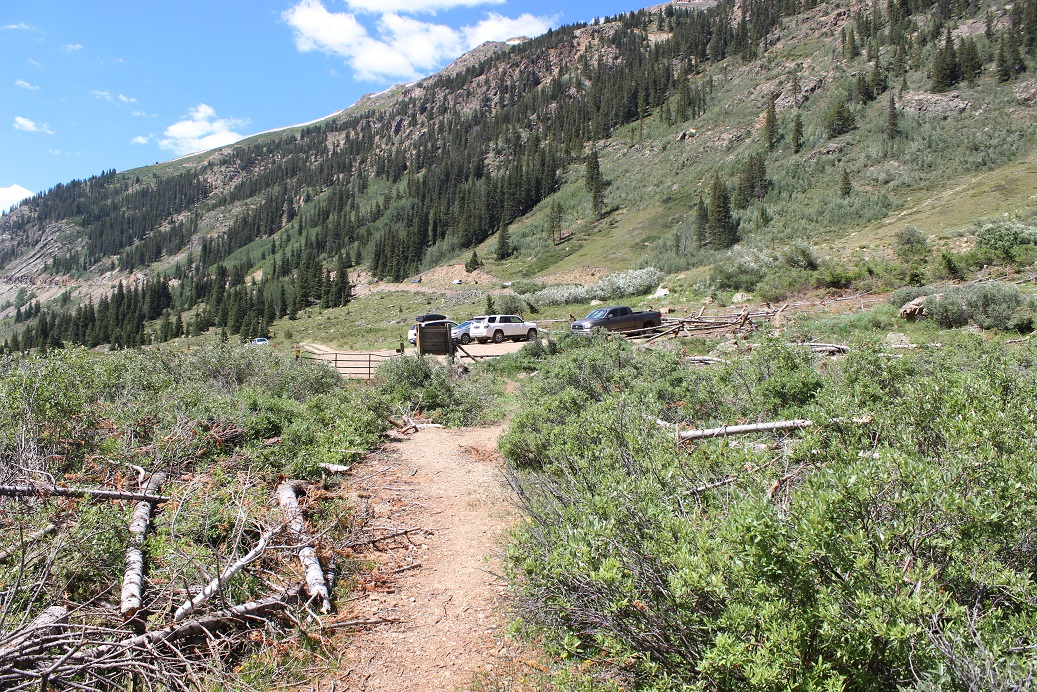
One side of the parking lot was completely full: I was the first to park on the opposite side.
I followed the South Colony Lakes trail, which starts at the west end of the parking area
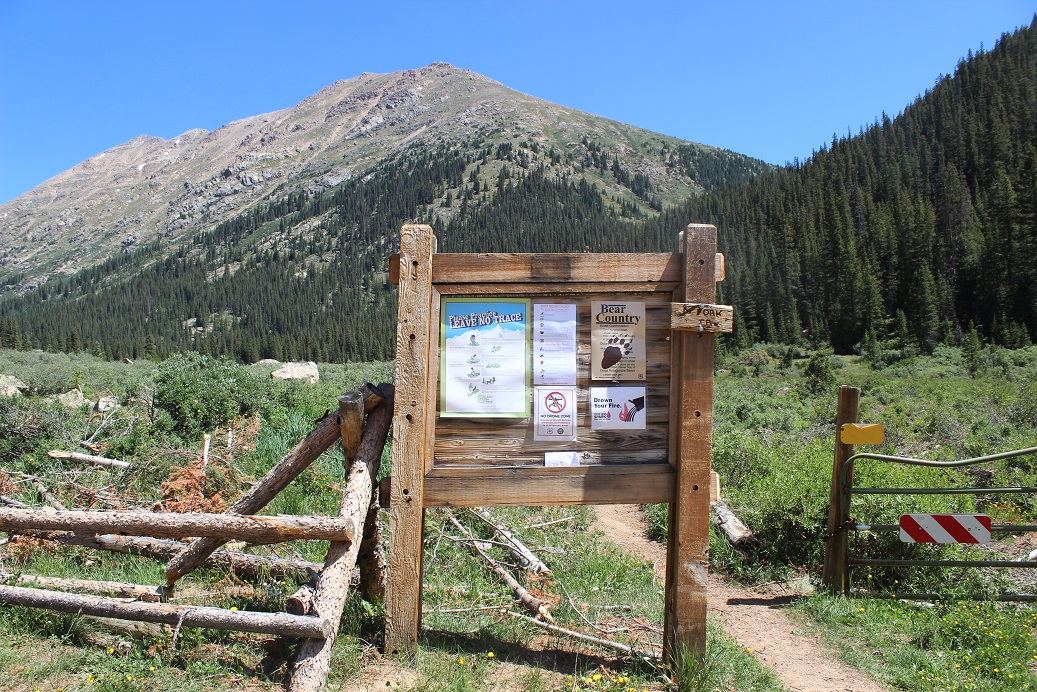
There’s a register to sign and then immediately I crossed a bridge and headed left (west) along an old 4WD road that’s no longer maintained.
There were a few mud puddles here and some running water, but nothing that actually got my boots wet.
After hiking for 2.6 miles I came to this junction and went right to follow the Humboldt Peak / South Colony Trail.
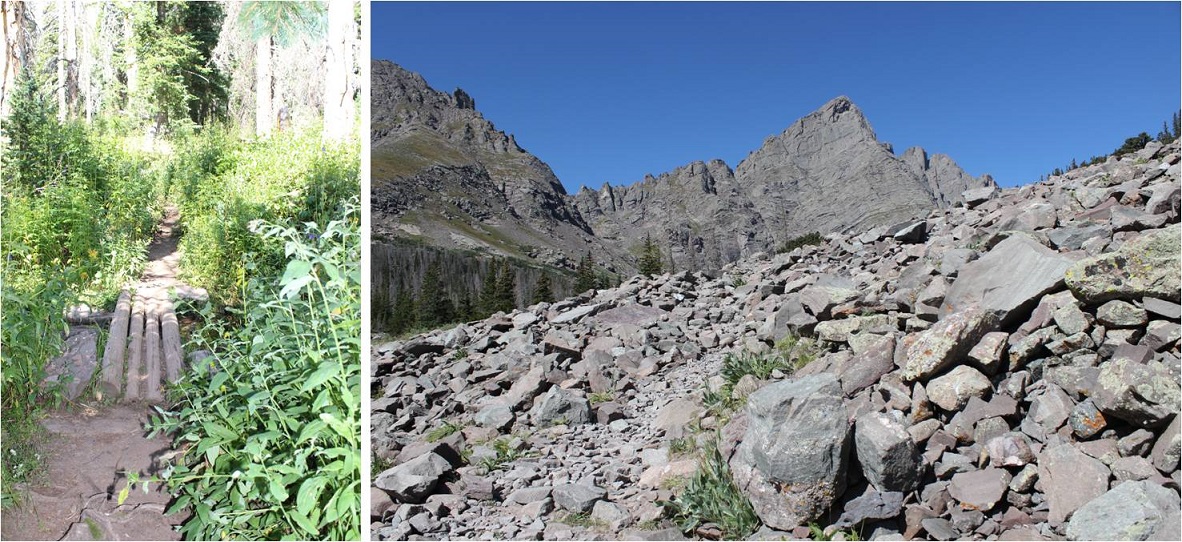
Here the road ends and it actually becomes a trail, crossing a few minor bridges and a small boulder area
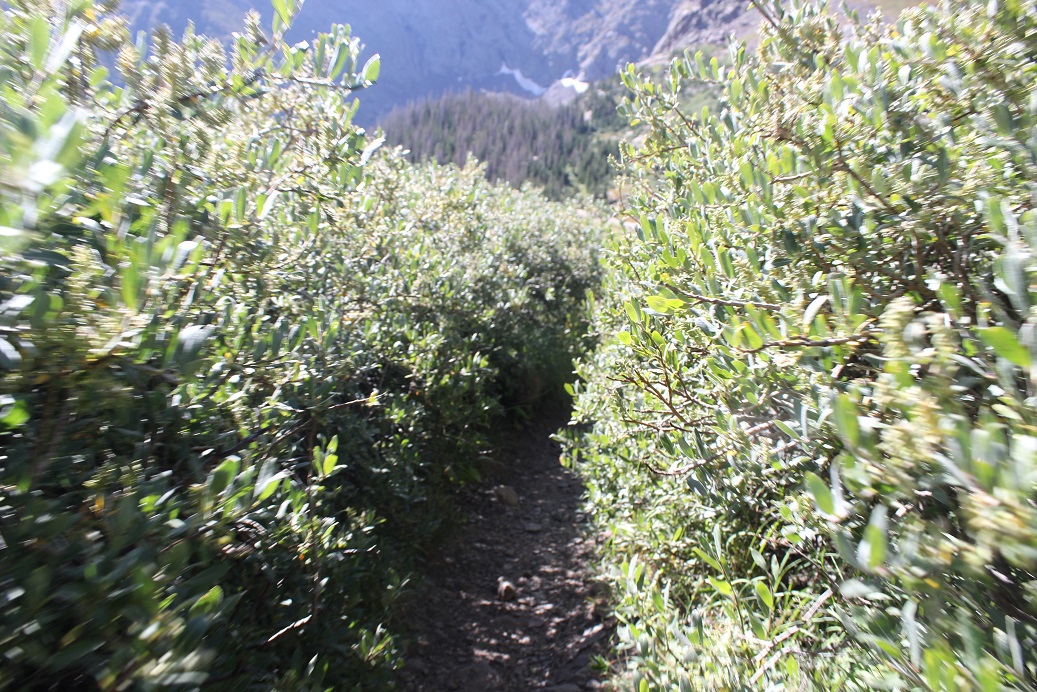
before entering the South Colony Lakes Basin. Here the willows were overgrown and made the trail ‘fun’ to follow at night (spiderwebs).
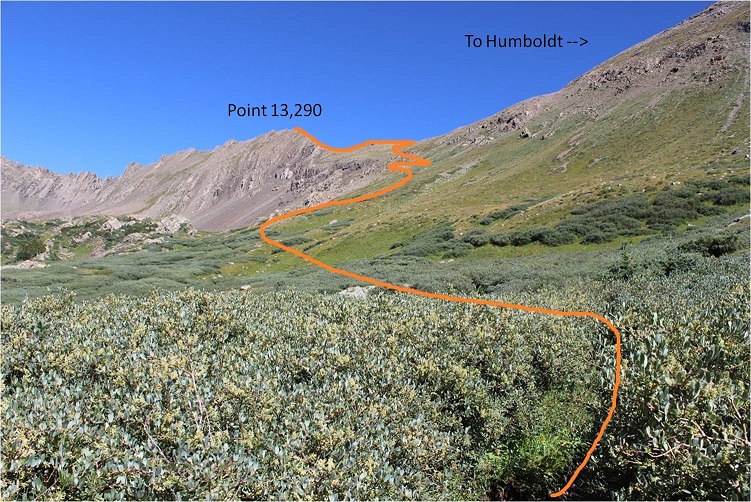
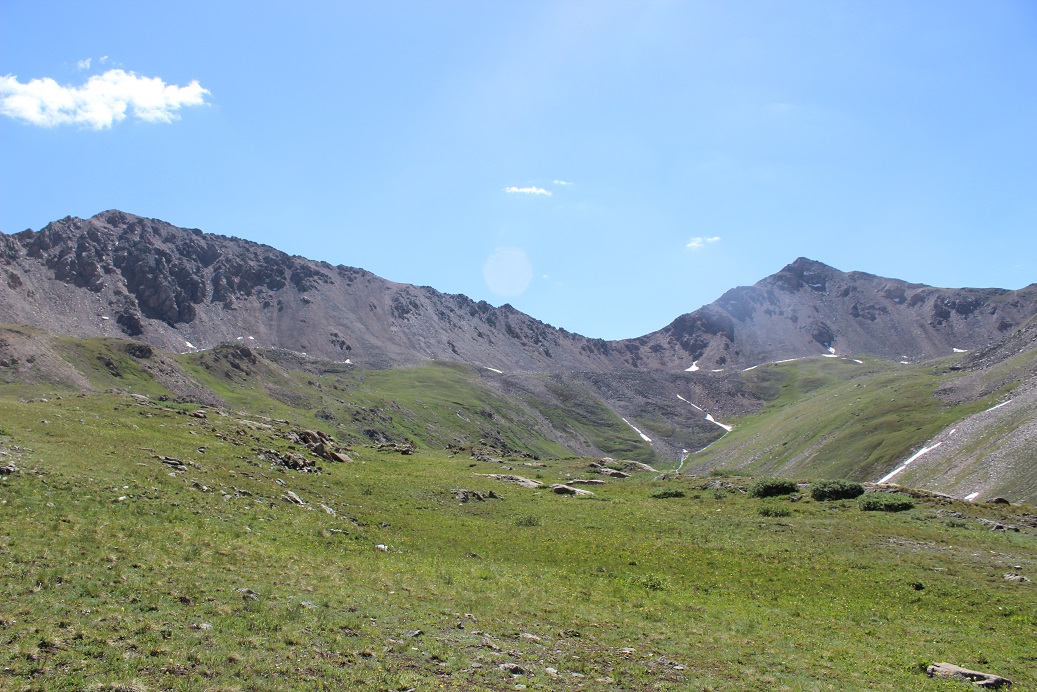
In the daylight it’s easy to see where you’re headed: Follow the well defined Humboldt Trail to the saddle of PT 13,290 and Humboldt
Making it to the saddle was straightforward, but here the trail ended. I turned west (left)and continued on towards point 13,290
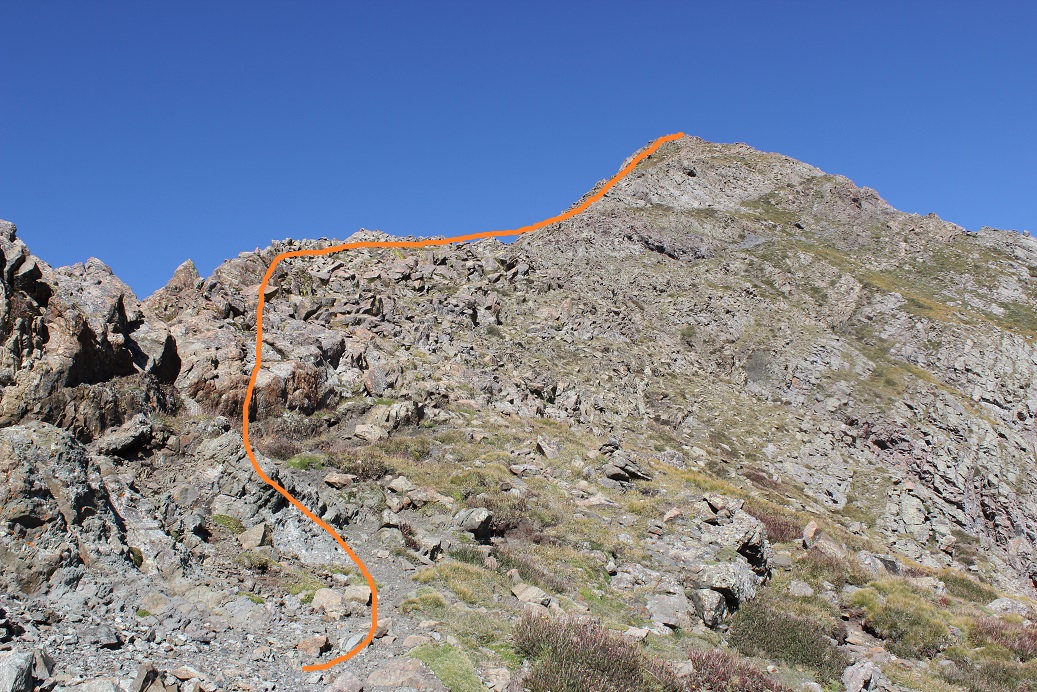
I followed the ridge to the top of the point
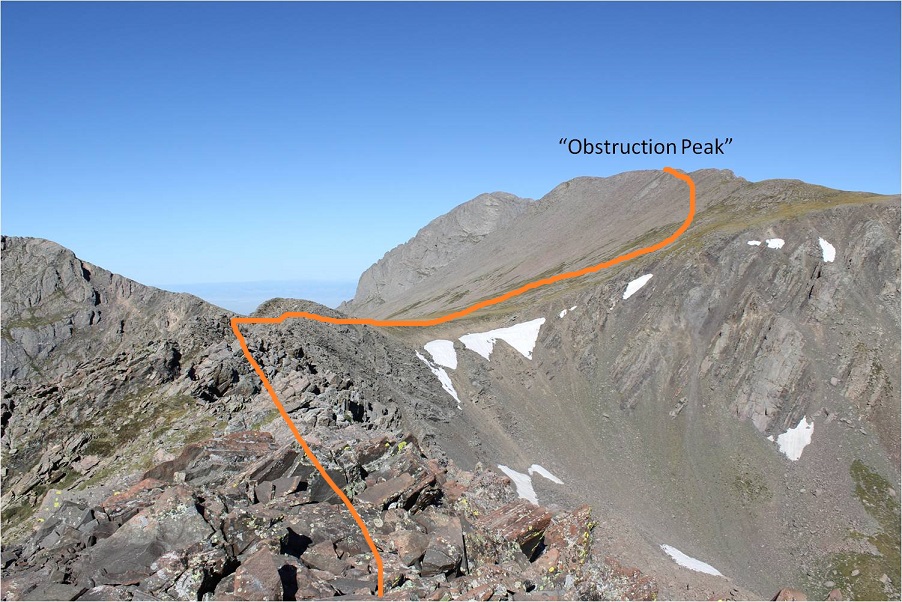
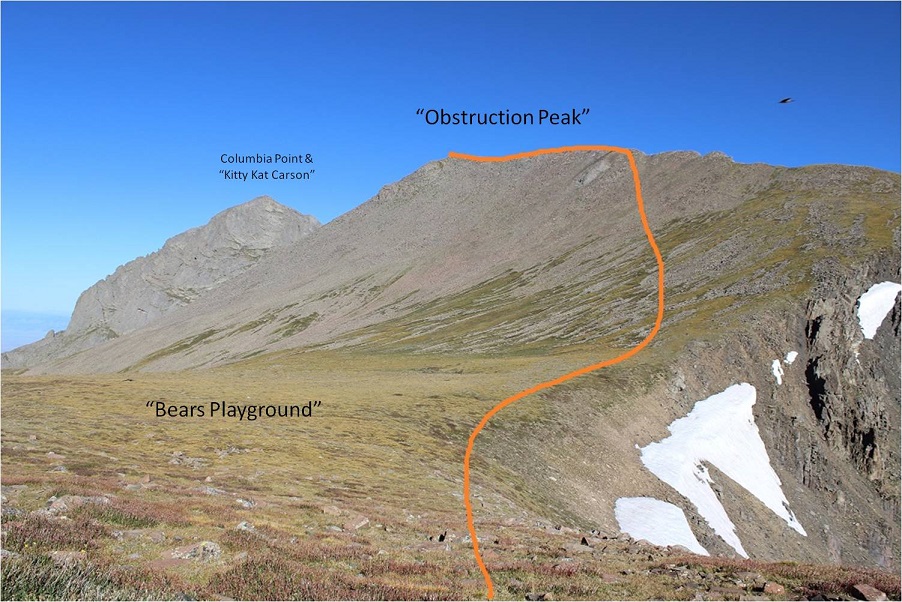
From here you can see the rest of the route up to “Obstruction Peak”, but I couldn’t because it was still dark
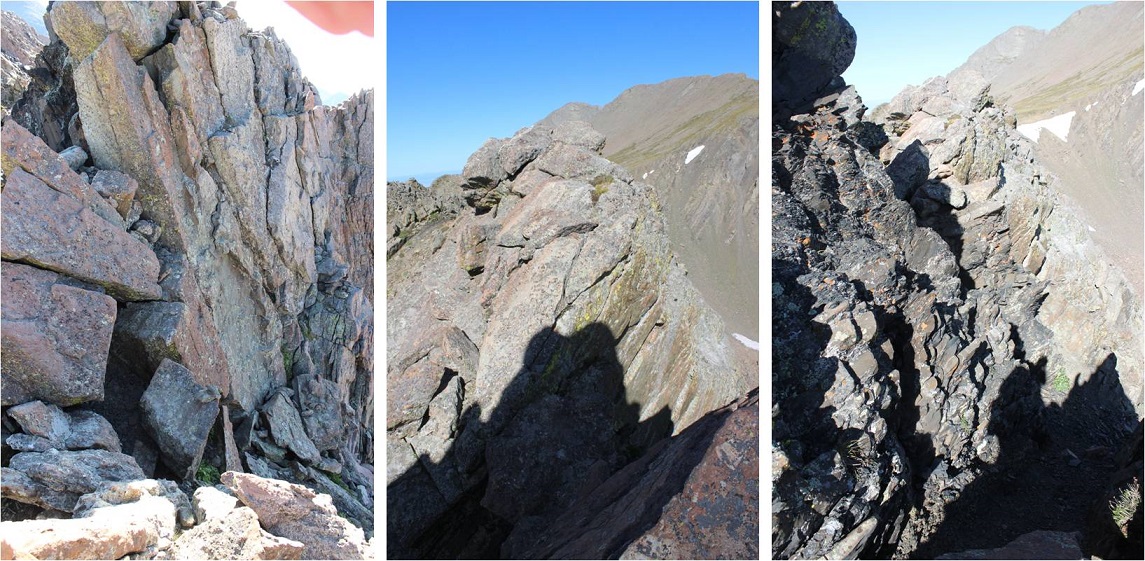
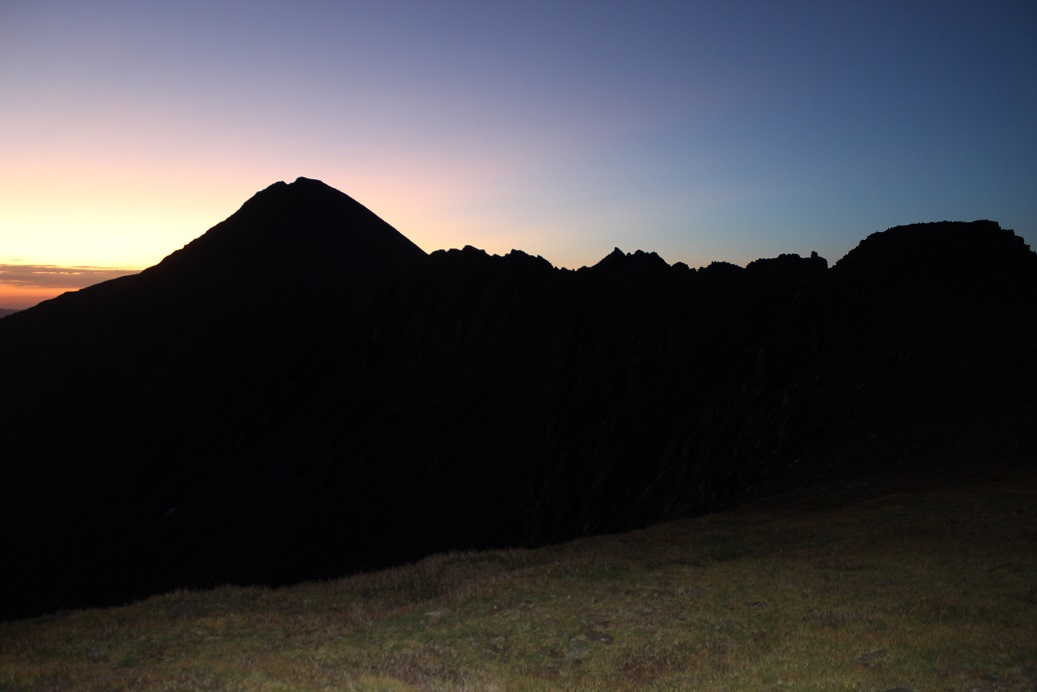
This ridge is NOT fun to cross in the dark. I wasn’t able to see much of what was ahead of me, which made route finding tricky. I also couldn’t tell how much exposure there was, which was positive at times. I mentally wished for my helmet and just stuck to the ridge, doing my best to anticipate the proper route and backtracking and trying again when necessary. On my way back I could clearly see a class 2+ path, but in the dark it was slow going.
Here’s the ridge
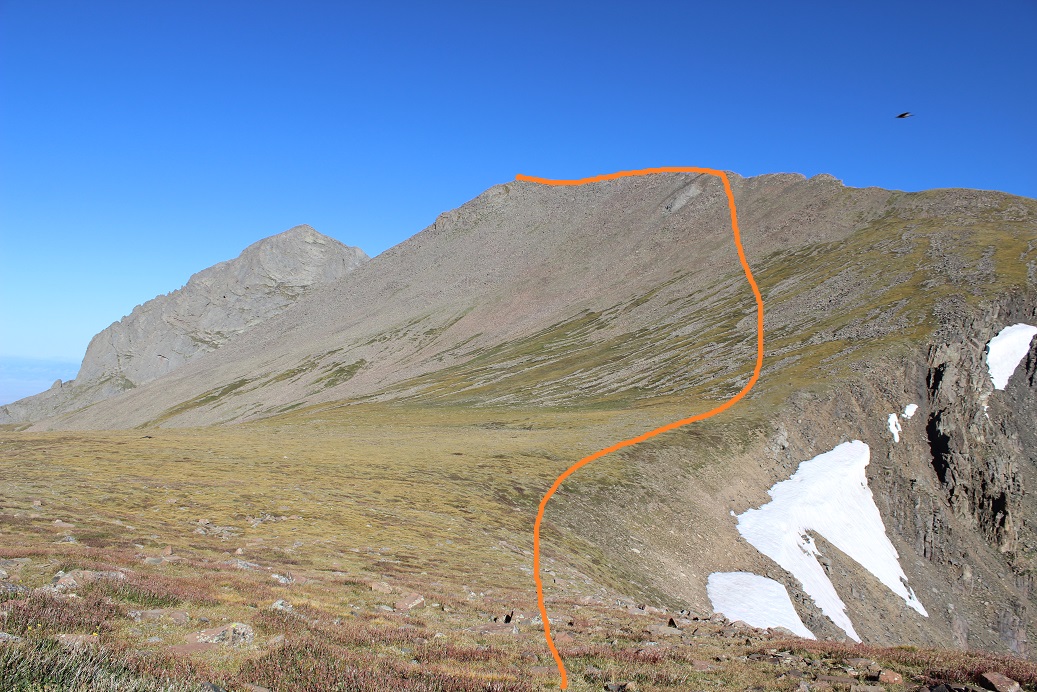
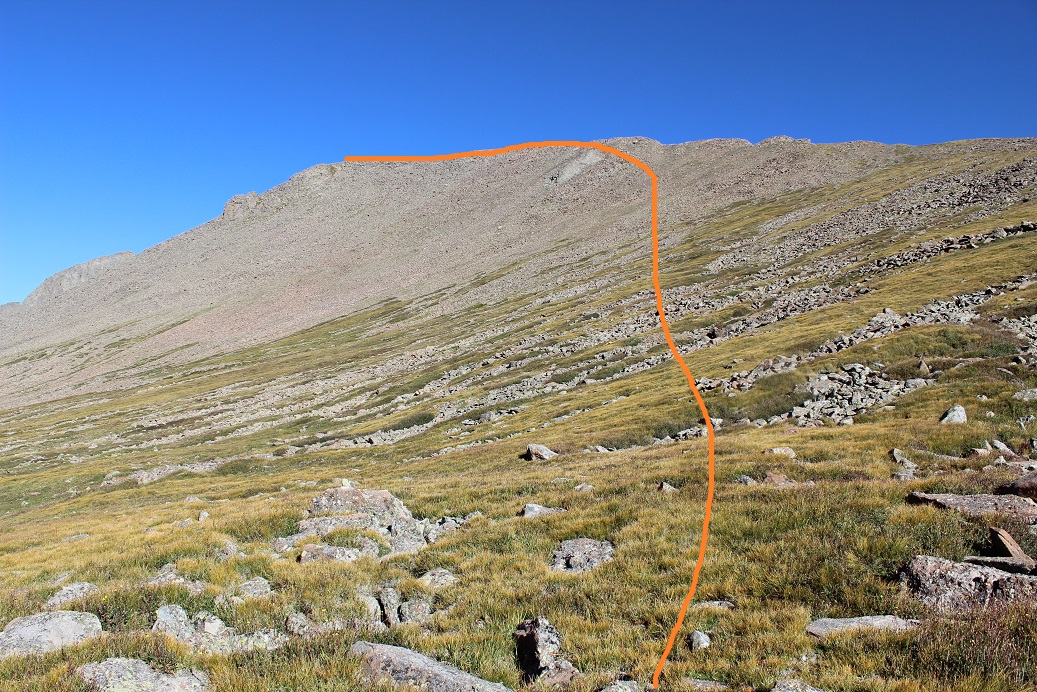
After crossing the ridge I crossed a relatively flat area known as “Bears Playground” and headed northwest up towards “Obstruction Peak” first over tundra and then rocky areas
It was actually difficult to tell exactly where the summit of “Obstruction Peak” was so I decided to make it to the ridge early and just walk across the entire ridge. I’m pretty sure the true summit is at the most westerly point.
I summited at 6:45am
“Obstruction Peak”:
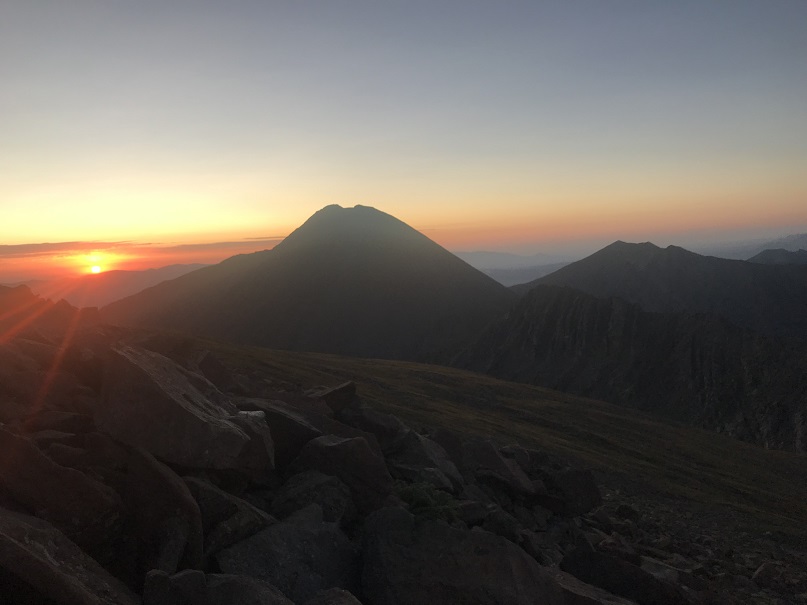
As I turned and looked east I could see the sunrise
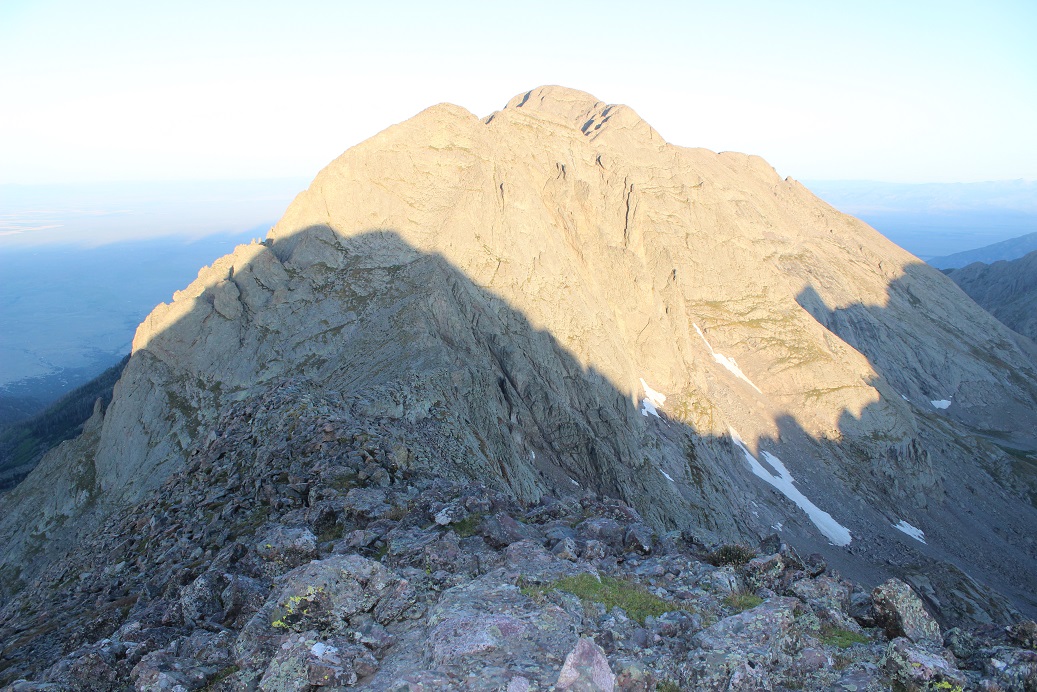
From the summit of “Obstruction Peak” the path to “Kitty Kat Carson” and “Colombia Point” was clear
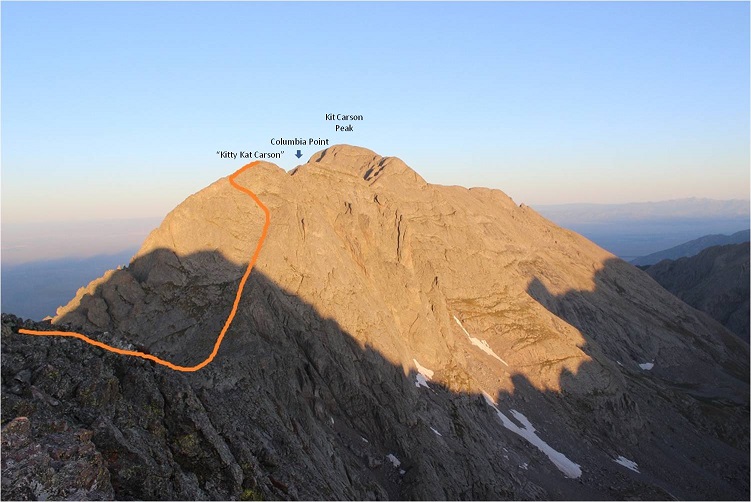
I hiked down “Obstruction Peak” towards “Kitty Kat Carson”. The ridge down was rocky but stable
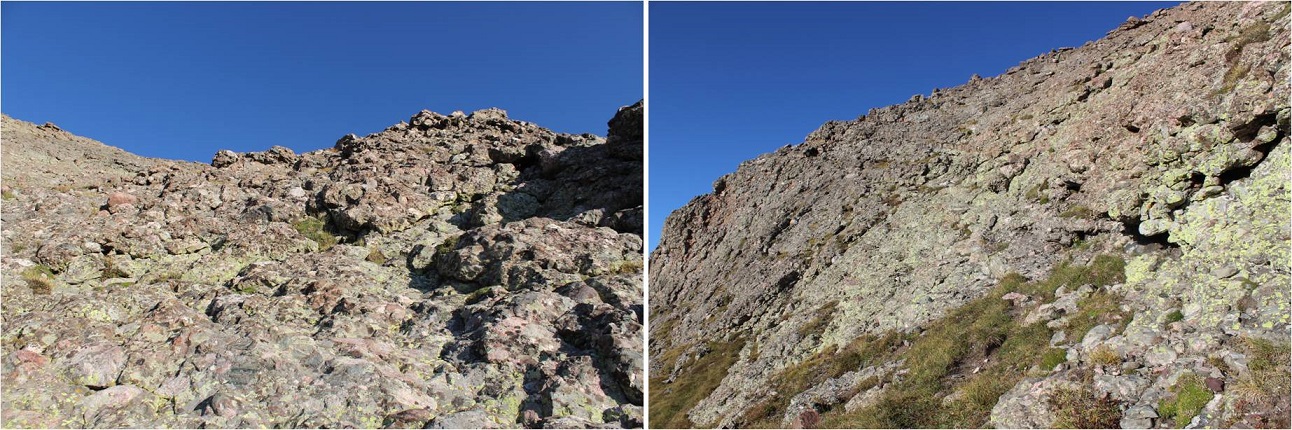
Once at the saddle “Kitty Kat Carson” looked imposing, but wasn’t too much of a challenge. There were a lot of cairns here, especially towards the top, which made them useless. I stayed to the right for most of the ridge, and then headed left to summit
The terrain here was classic Crestone: lots of steep, grippy rock
I summited “Kitty Kat Carson” at 7:28am
“Kitty Kat Carson”:
It took me less than 10 minutes to traverse from “Kitty Kat Carson” over to Columbia Point, losing about 50’ in elevation and then regaining it back. This was all class 2+ climbing
I summited Columbia Point at 7:39am
Columbia Point:
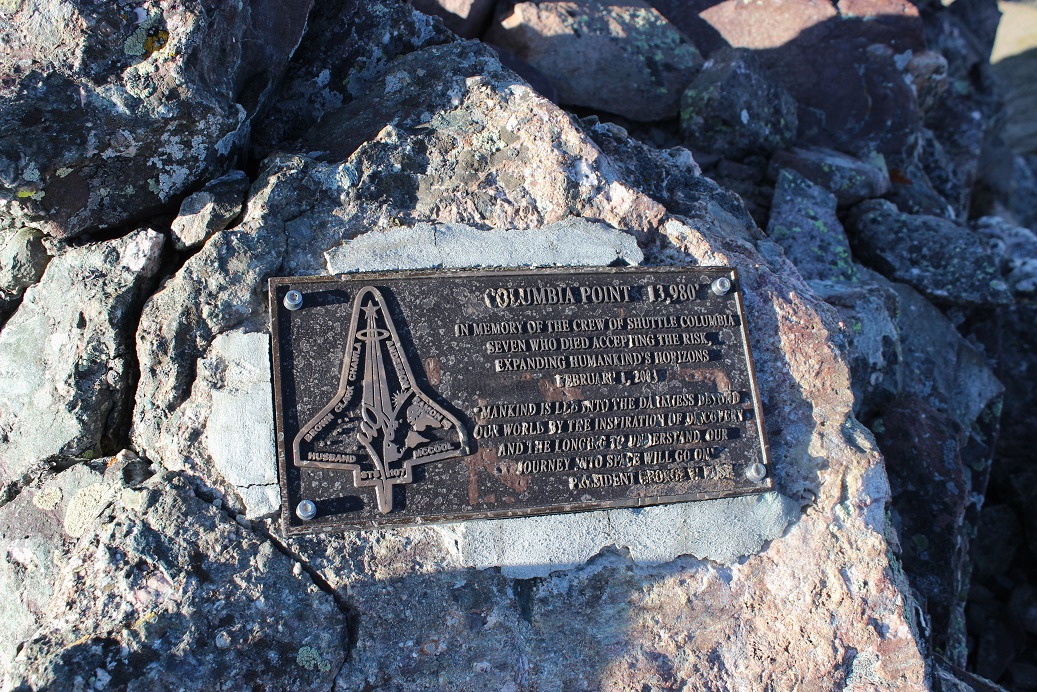
There’s a plaque at the summit commemorating the crew of the shuttle Columbia
Here’s looking back on “Kitty Kat Carson”
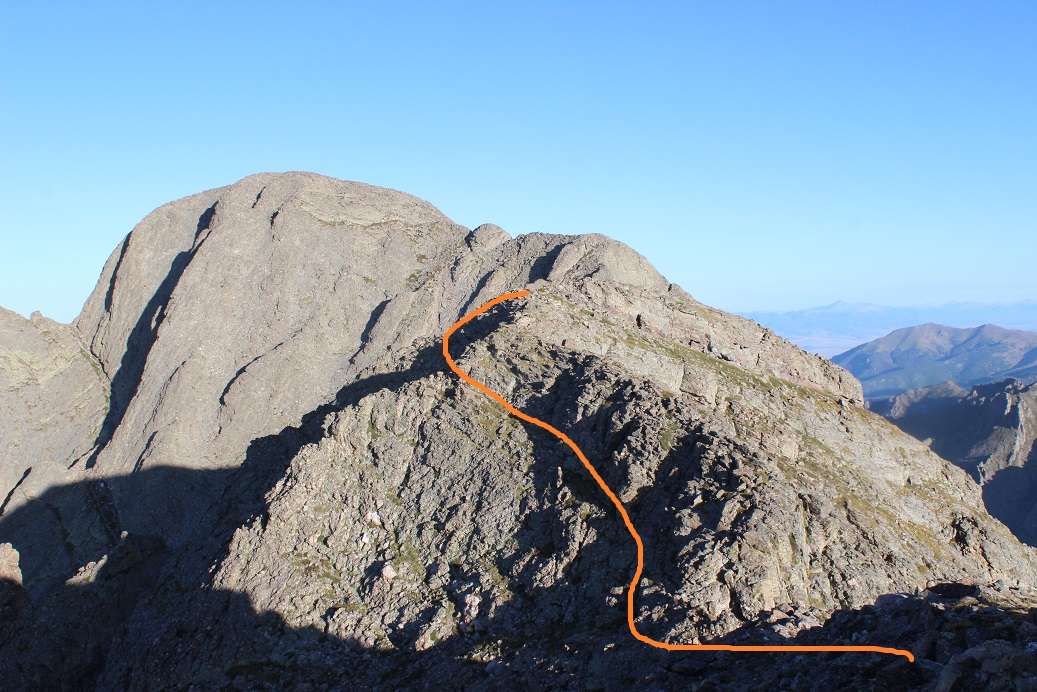
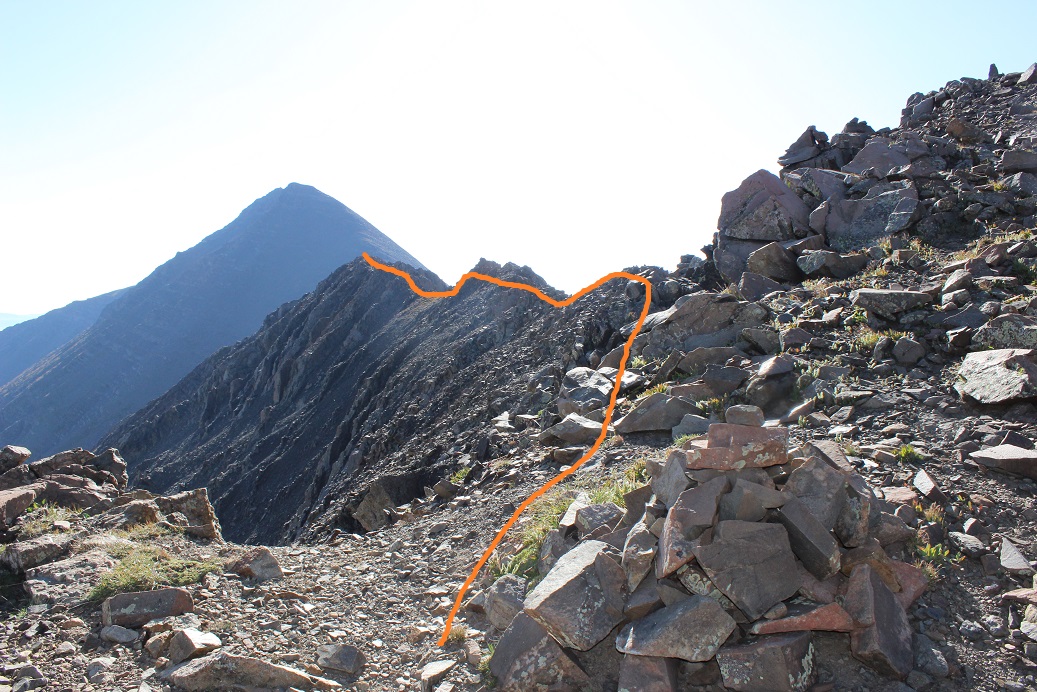
Time to head back. Here’s the route towards “Kitty Kat Carson”
And down the saddle and back up to “Obstruction Peak”
Once at “Obstruction Peak” I made my way back down Bears Playground and over to the ridge. That had been quite a time in the dark!
I was so glad to be able to see the route in the daylight. I didn’t need to stick to the ridge the entire time, and mainly stuck to the left/north when I wasn’t on top of the ridge. I found this was a rather quick traverse when I could see what was in front of me.
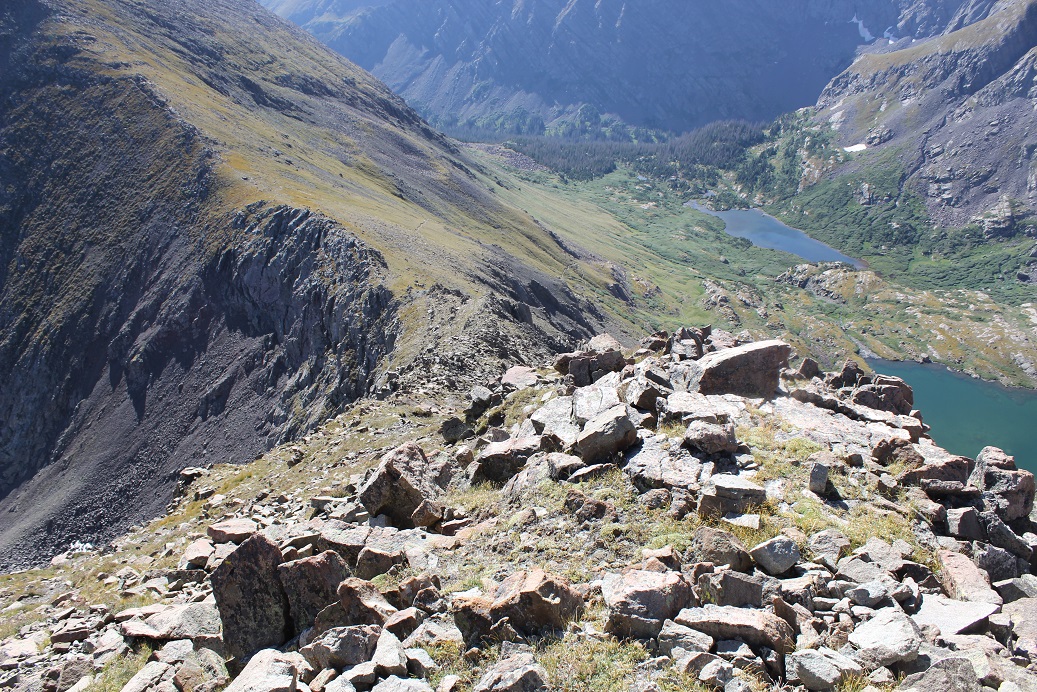
What took longer than I’d remembered was the hike down from Point 13290 and back to the Humboldt Saddle
Here’s the route to the South Colony Lakes area
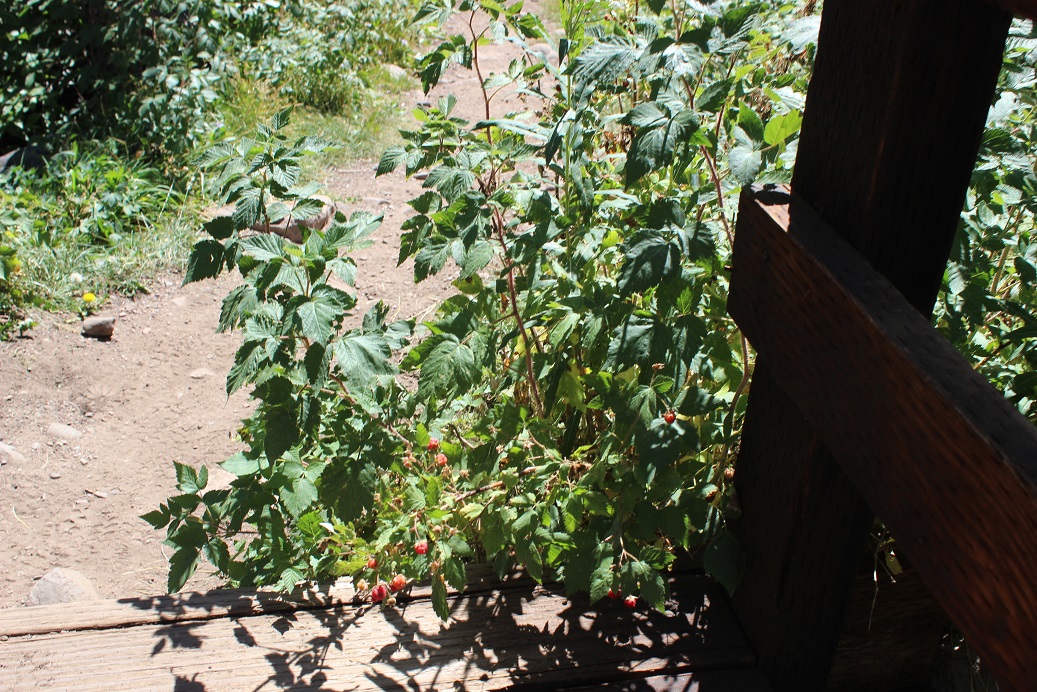
The hike back was rather uneventful. I saw over a dozen hikers and was reminded how popular the 14er trails are. I stopped and talked to several people intent on Humboldt, and even saw a few friends intent on some of the other 14ers. I was in a rush though: I had to be home by 2pm to take my daughter camping, which meant I had to make it back to the trailhead no later than 11:35am. It was a beautiful day and I wasn’t carrying a full pack so I was able to hike pretty quickly. I made it to the bridge crossing and saw some raspberries.
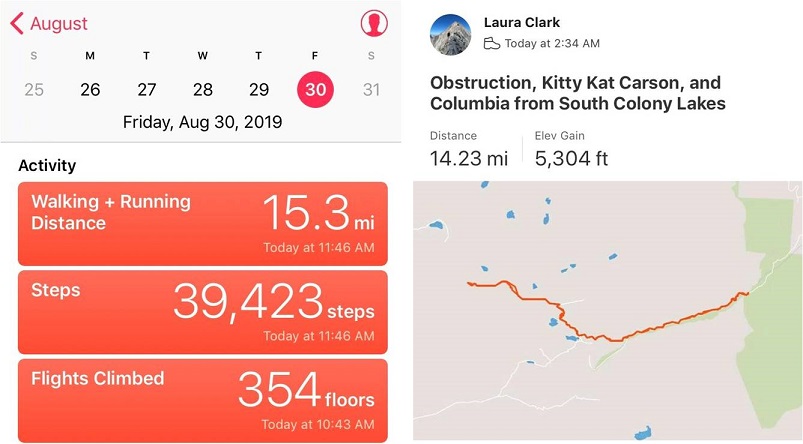
I decided to try one: it was sour, and unfortunately not as good as the ones from Purgatory, so I only ate one and left the rest for woodland creatures to enjoy. I made it back to the trailhead at 11:30am, making this a 14.5 mile hike with 5304’ in elevation gain in just under 9 hours. The best part (besides making it home at 1:58pm)? No mosquitoes!!!
I chose this route mainly because I haven’t used the North Lake Creek Trailhead before, and since all the other routes started from trailheads I’ve already used I wanted to try something new. I began at 3am, and when I arrived at the trailhead my truck was the only vehicle in the lot.
The trail begins at the east side of the parking area, heading north-northwest. There had been a recent avalanche in this area but the debris had been cleared off the path and in the dark I couldn’t even tell there had been an avalanche.
After about 1/10 of a mile I turned right at this boulder.
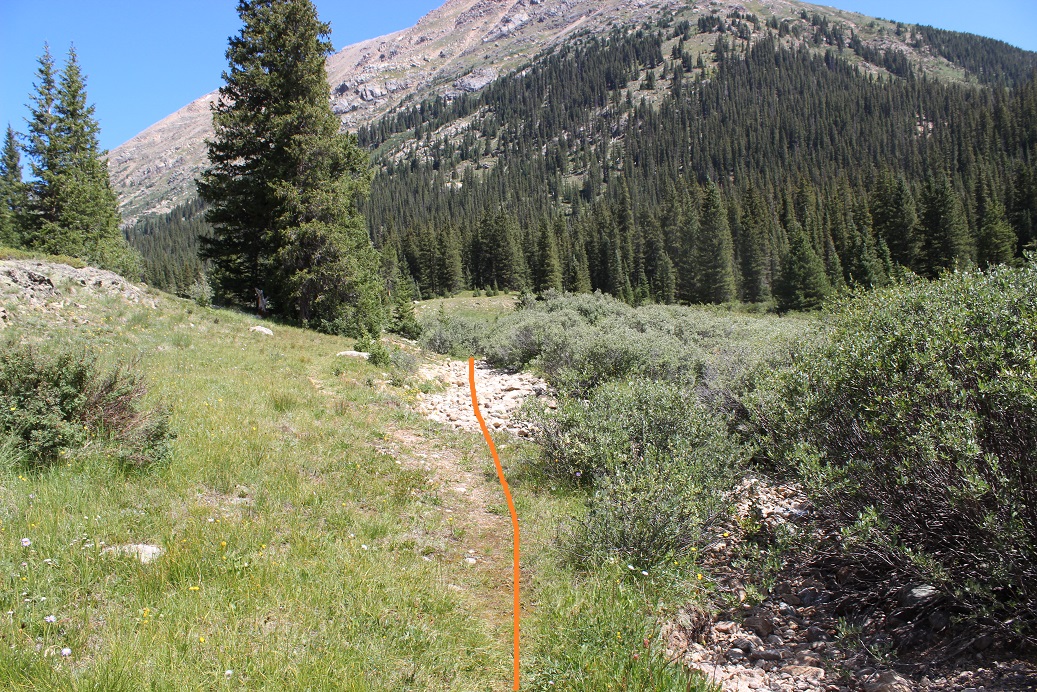
There is no distinct trail here, but if you continue northeast you’ll eventually run into what could have been a trail at one time (or a dried up creek bed).
This led me to a creek crossing that was just deep enough to make it necessary for me to take off my shoes.
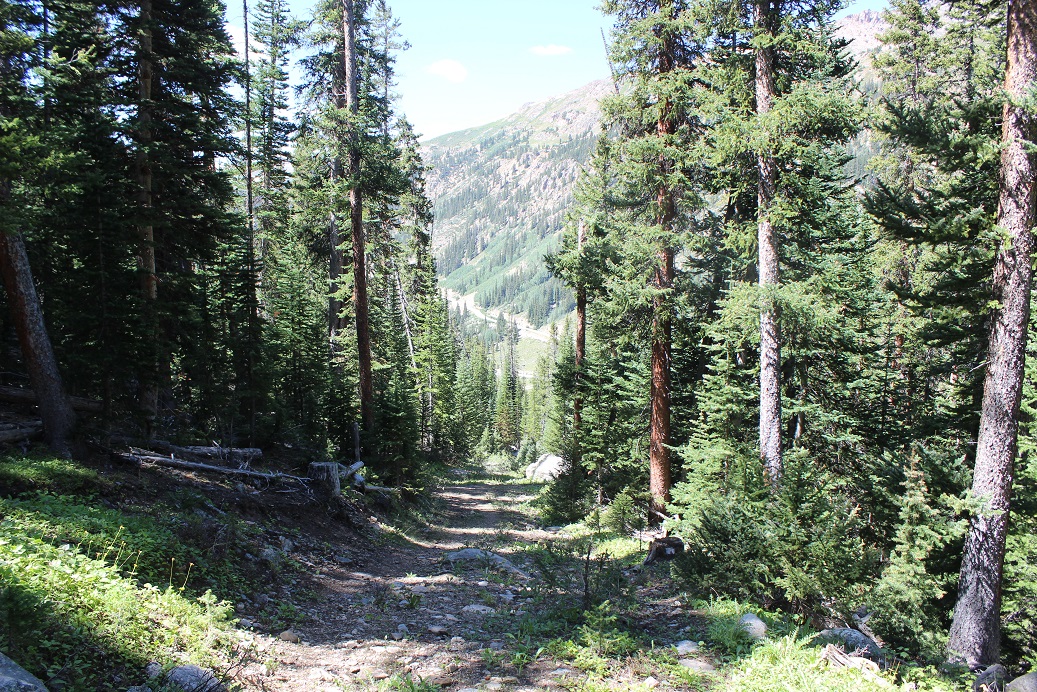
There was another crossing just after this one, but it was small and easy to cross. From here I followed an overgrown 4WD dirt road switchbacking up the mountainside.
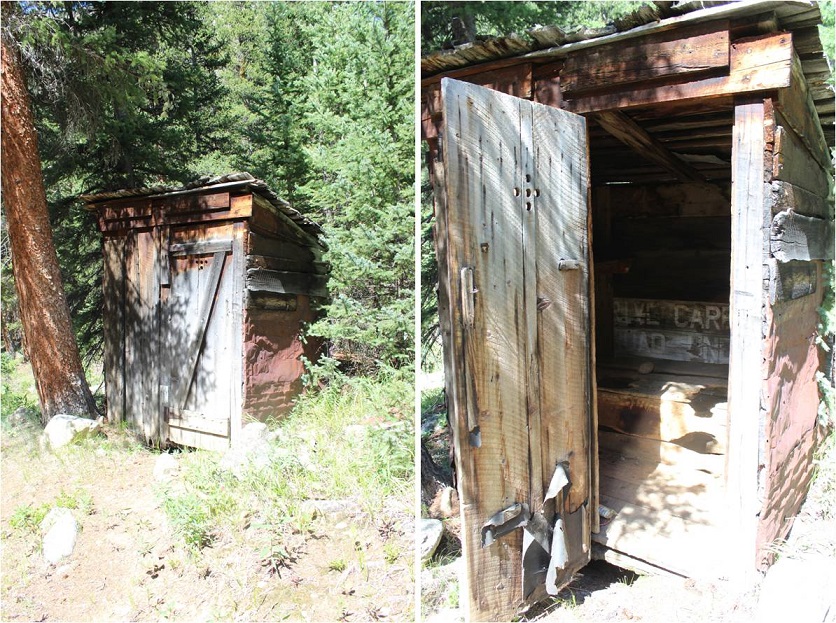
Curiously there was an old outhouse right alongside the trail, which looked useable.
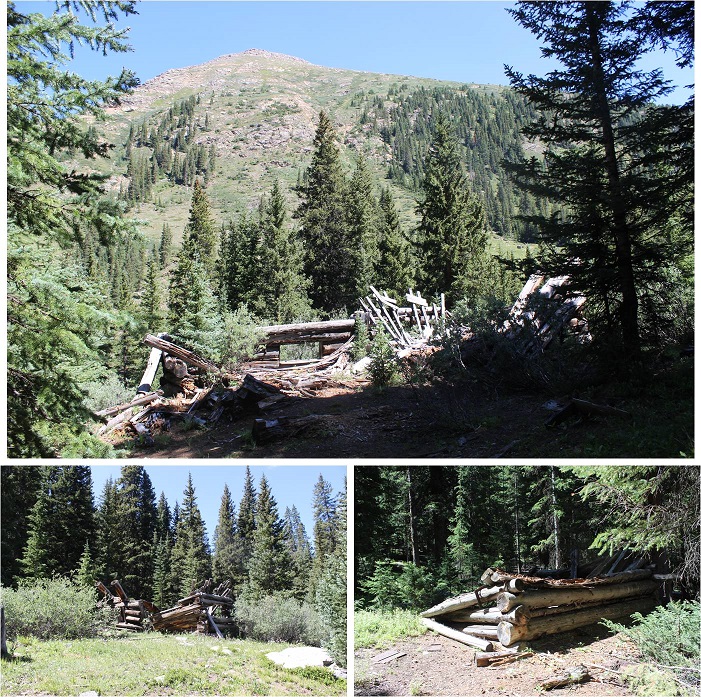
The 4WD road led to a smaller trail that led to a bunch of dilapidated cabins (I’m guessing there were 3?) and here is where the trail ended.
From here the goal is to head down the hillside that’s behind this cabin (a few dozen yards), cross the creek, and continue west.
However, I was doing this in the dark on my way in and it proved to be more difficult that it sounds, especially the creek crossing. I was unable to find a crossing in the dark due to avalanche debris in all the wrong places, so I once again sat down, took off my shoes, put on my sandals, and crossed the creek. On my way back I noticed snow bridges that were no longer usable, but also a few areas to cross on the rocks.
This part of the hike was actually a challenge in the dark, but simple in the daylight. There was no defined trail here, but many game/social trails. I tried to follow a trail alongside the creek, but there just wasn’t one that was continuous. What made this difficult in the dark were the overgrown grass and downed trees everywhere.
However, if you just follow the creek (staying about 10 yards to the north of it) it will lead you up and out of Lackawanna Gulch and into an unnamed basin. Every once in a while I’d come across what looked like a proper trail, and even a cairn or two, but the trail always ended (usually at a tree or bush or over a cliffside).
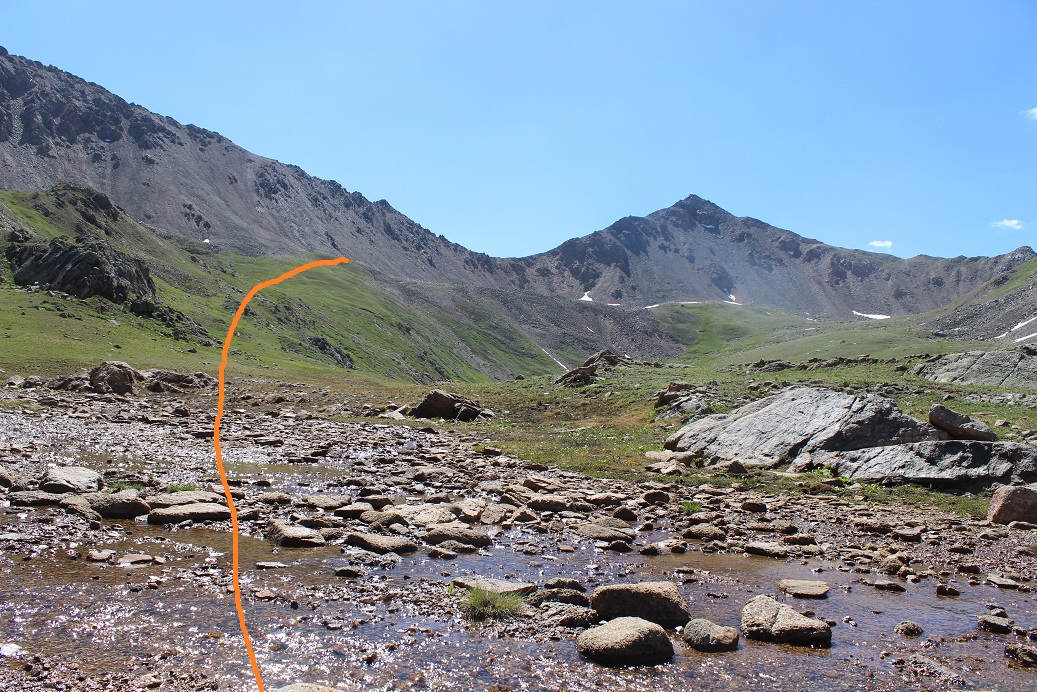
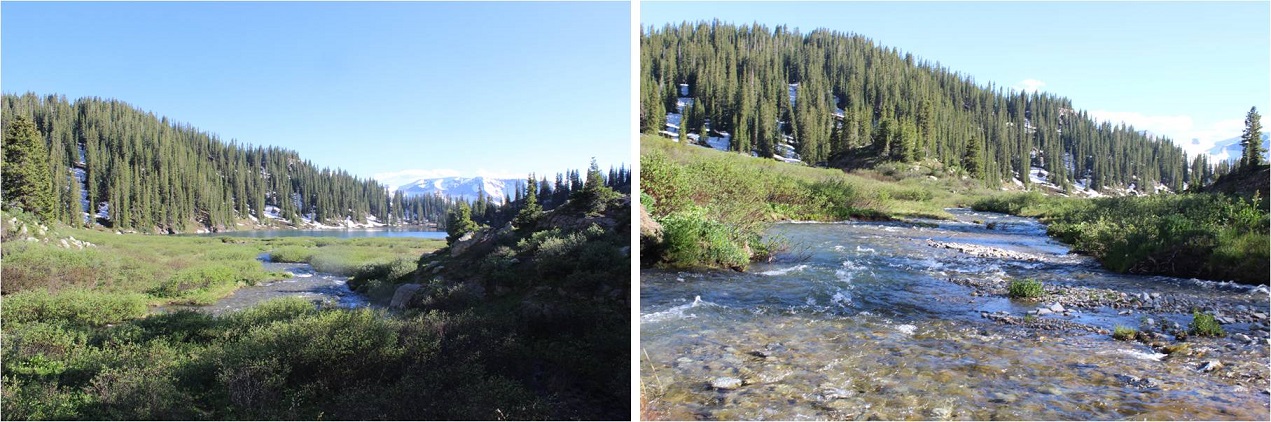
Here’s your path through the basin. You’re aiming for a low ridge at the end of the basin. Once again, there are lots of trails here, but I’m pretty sure they’re all game trails. Also, the willows aren’t that high and the ground was mushy with water. This wasn’t fun to cross in the dark, but at least there weren’t any trees to contend with. In the daylight it was beautiful.
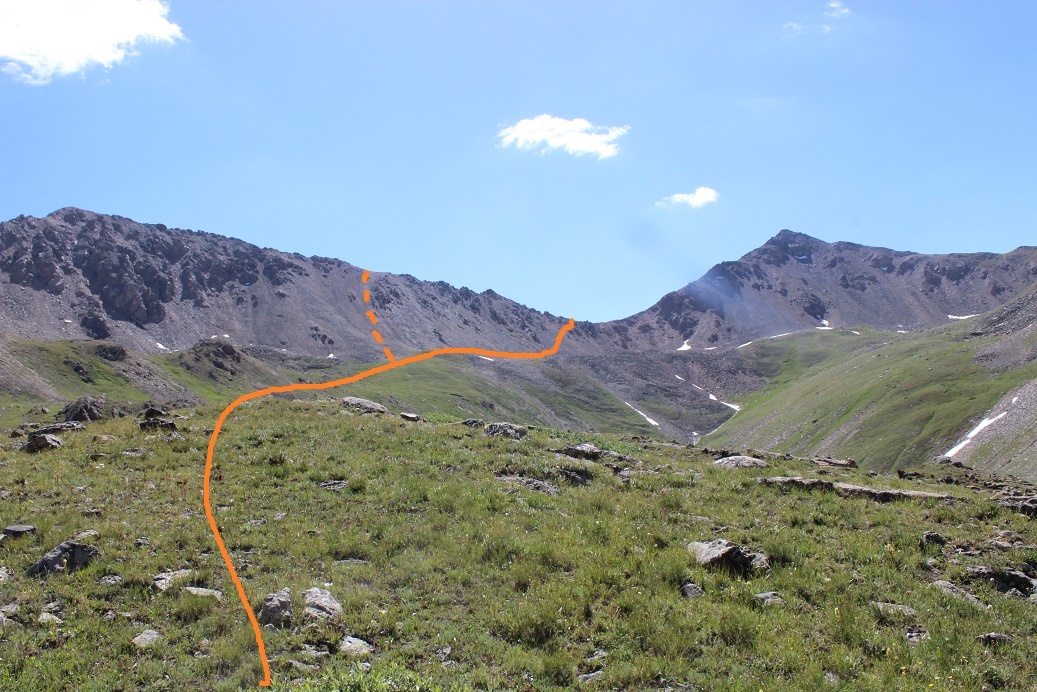
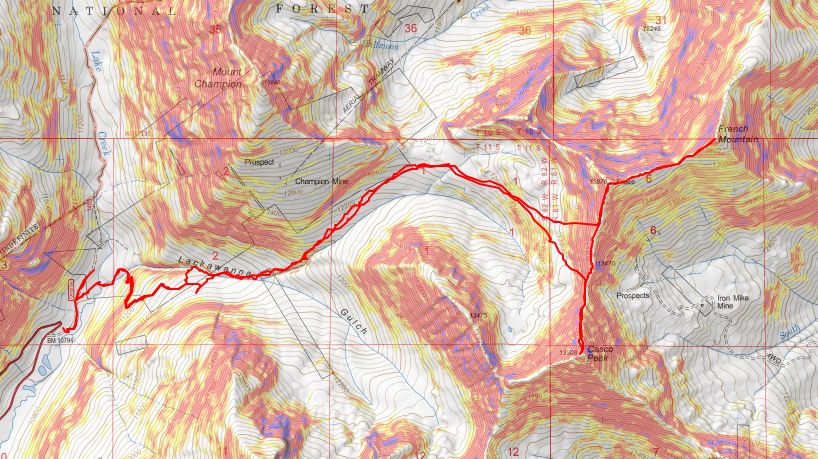
I was fully expecting to see some sort of wildlife, especially with all the hoofprints and game trails I was coming across, but alas, nope. From the north end of the basin I continued east on a low lying ridge towards Casco Peak. Knowing there was a lot of loose rock above me I was aiming for the lowest point on the ridge for my ascent. You can basically gain the ridge from anywhere. I took the solid line up, dotted line down.
Before gaining the ridge I passed through some muddy/wet areas
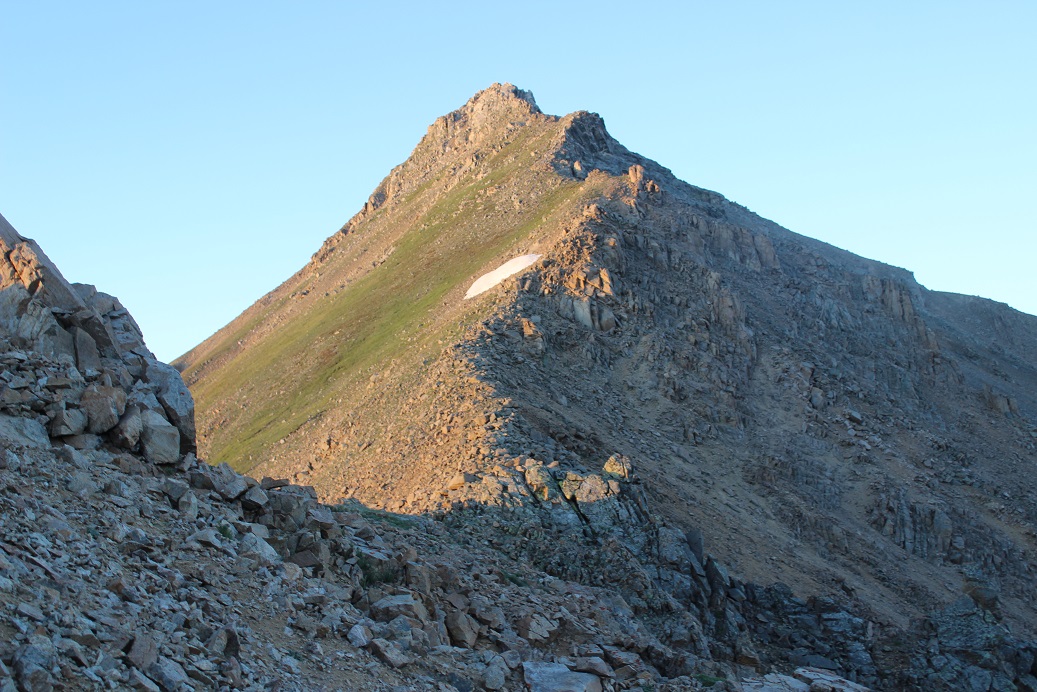
Here’s what it looked like as I was nearing Casco Peak
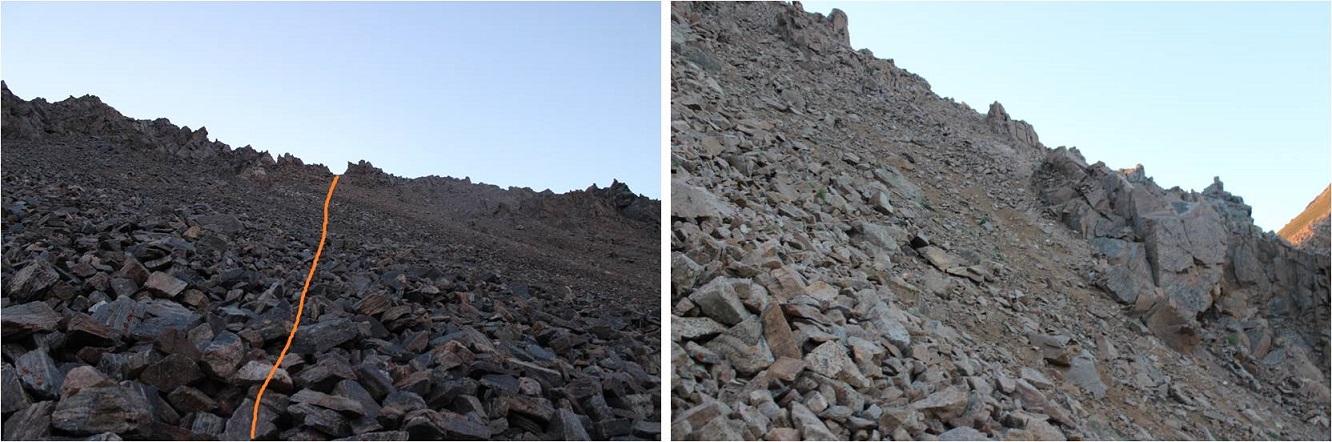
I couldn’t see much but the sun was beginning to rise, which was helpful. I could tell the scree was pretty bad in some areas, but it looked like there was talus ahead (which I prefer to scree for an ascent) so I headed for the lowest point in the ridge and began the climb. The talus eventually turned to scree just before the ridge.
Ridge gained I turned right (south) and looked at the rest of the route before me
This wasn’t technical in the slightest. I just stuck to the ridge until I came to the base of the summit. Here it became a short class 2+ trek to the top.
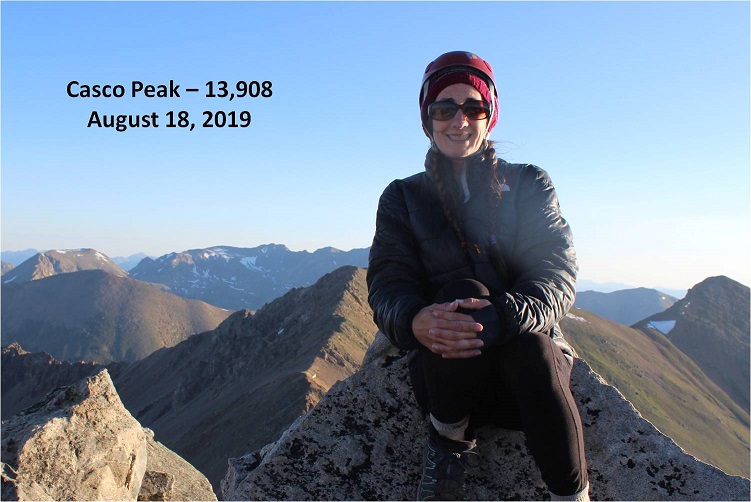
I summited Casco Peak at 7am
Casco:
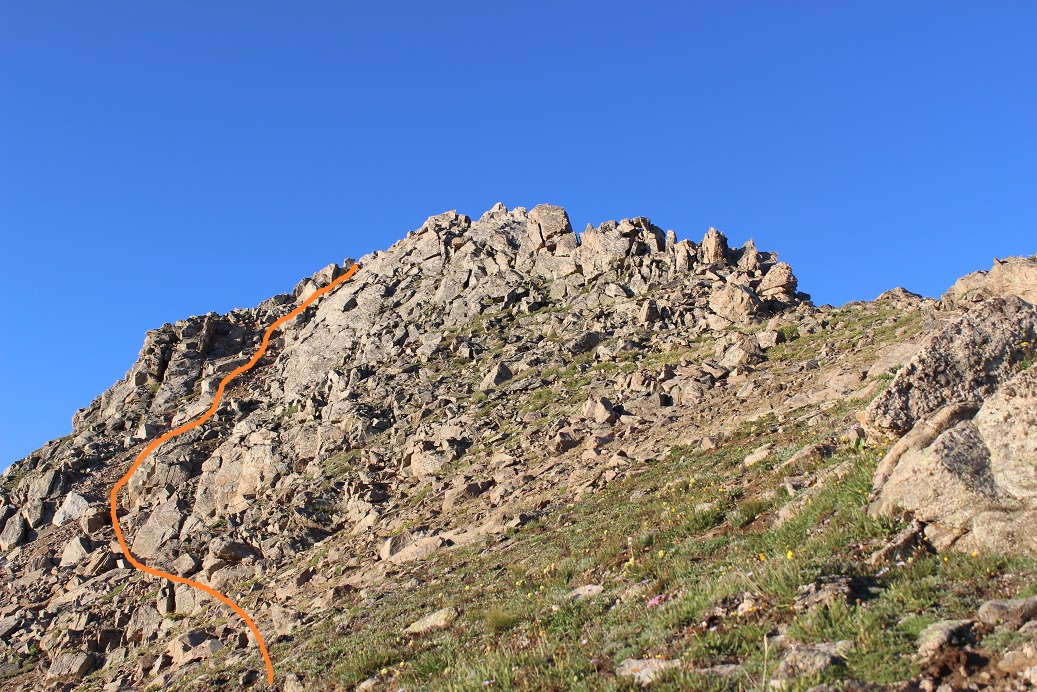
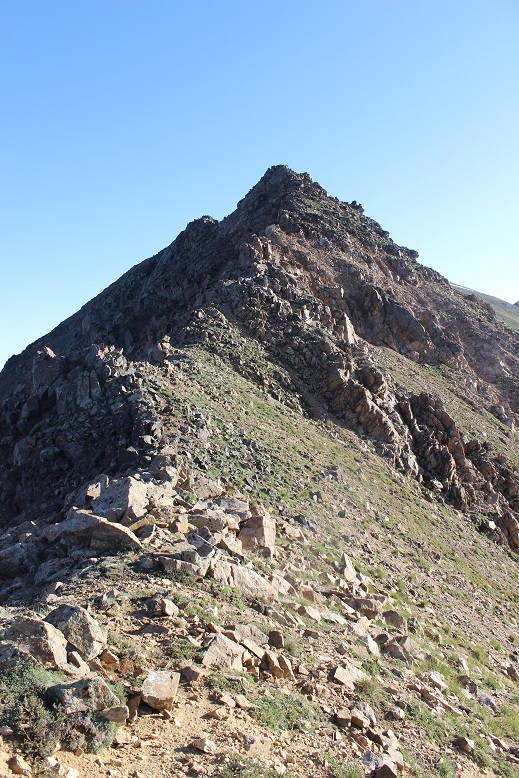
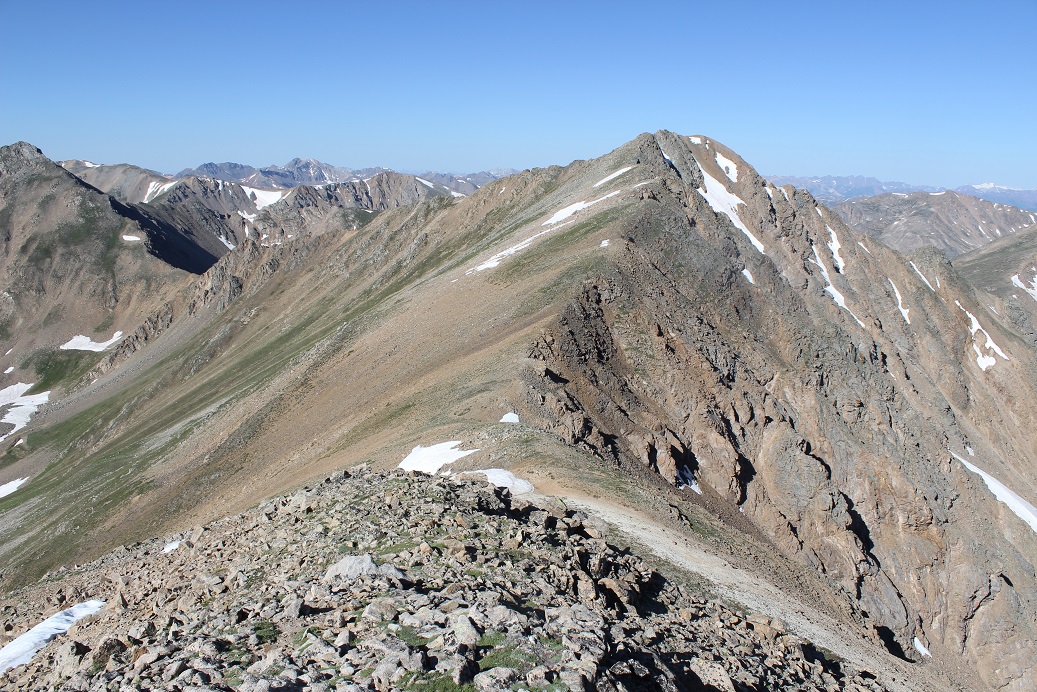
From here the route to Frasco looked straightforward, but let me tell you, that section north of the saddle (named Fiascol) was a rough and loose ridge
Here’s your first look at the ridge
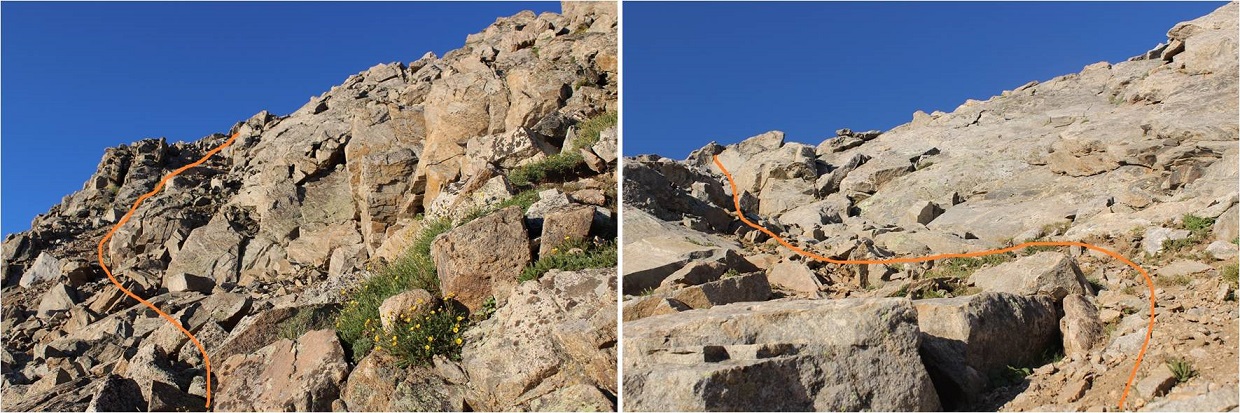
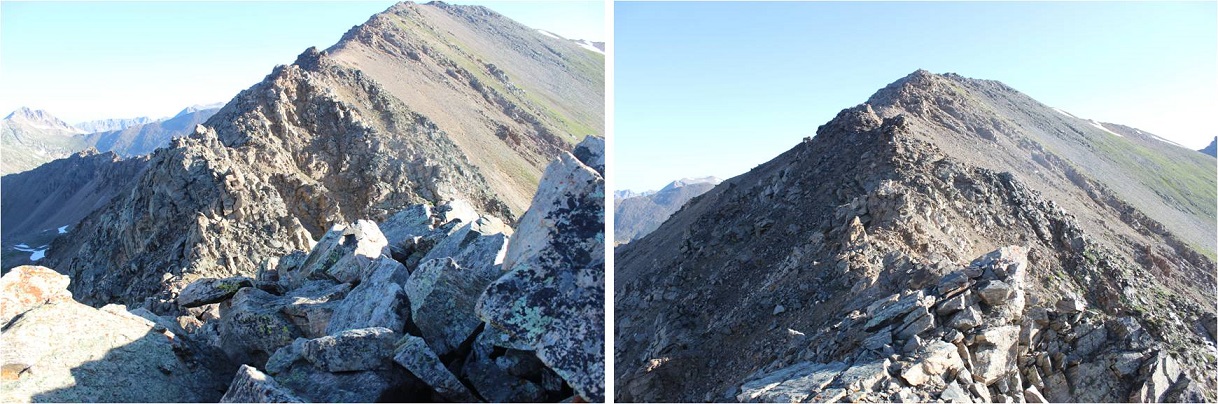
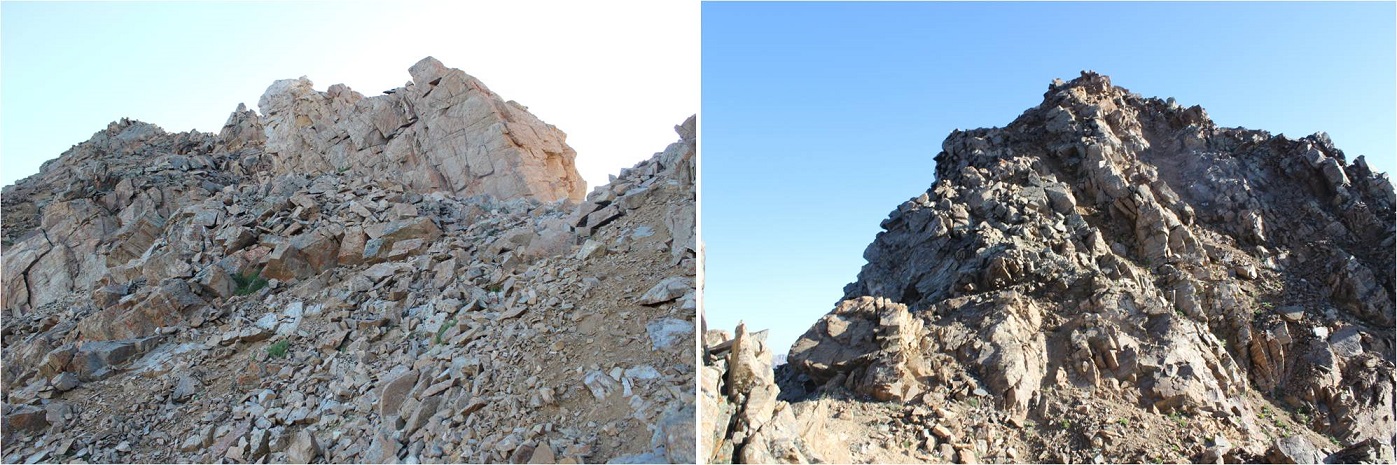
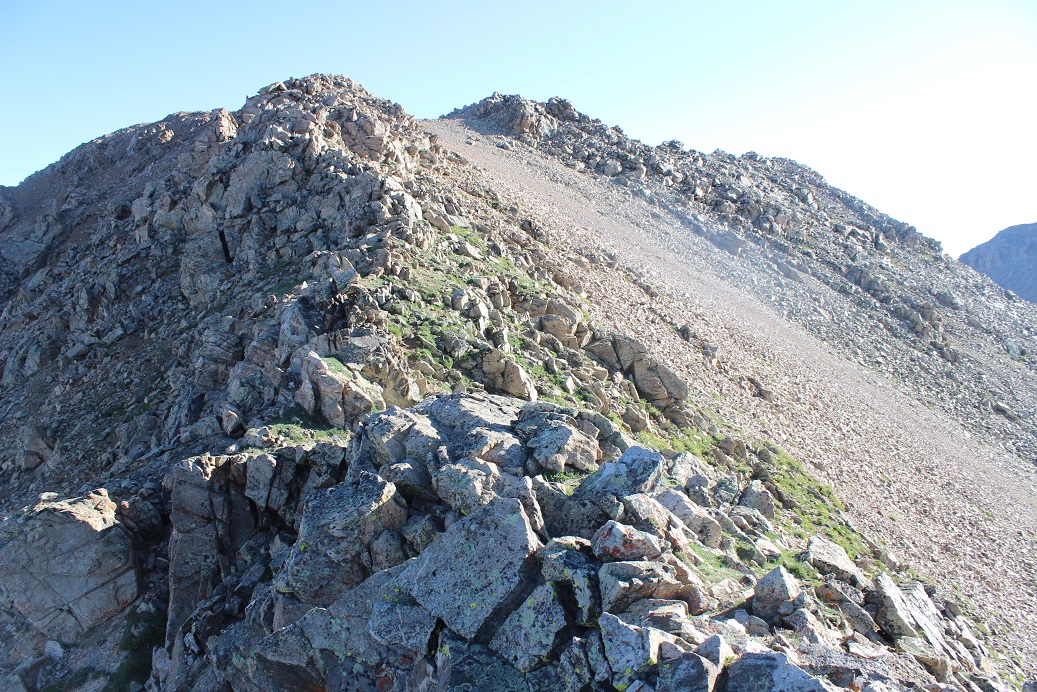
This is a class 2+ ridge that looks harder than it is. It took careful footing but wasn’t actually technical. I mainly stayed to the top of the ridge, dropping to the left or right as needed. Most of the time if I had to drop off the ridge it didn’t matter if I went left or right: both ways went. Here are some close ups of the route
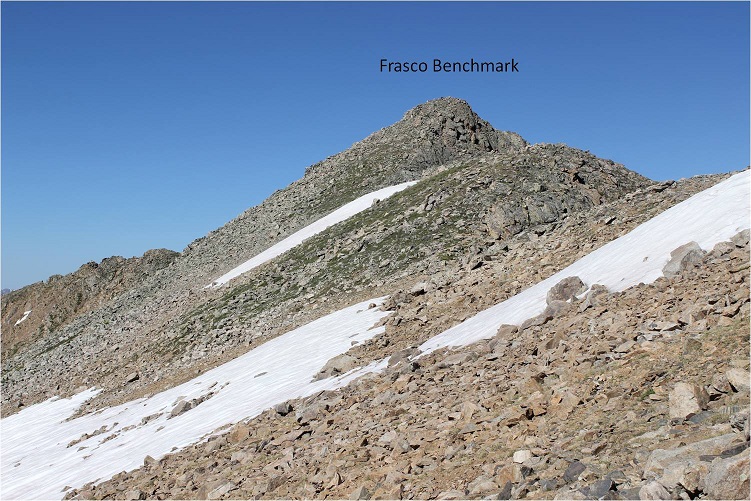
The final push to the top of Frasco is actually longer than it looks, with a small false summit
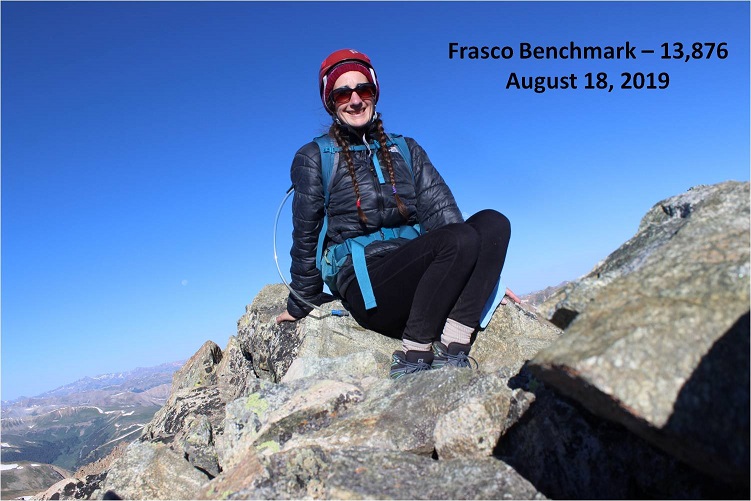
I summited Frasco Benchmark at 8:30am
Frasco:
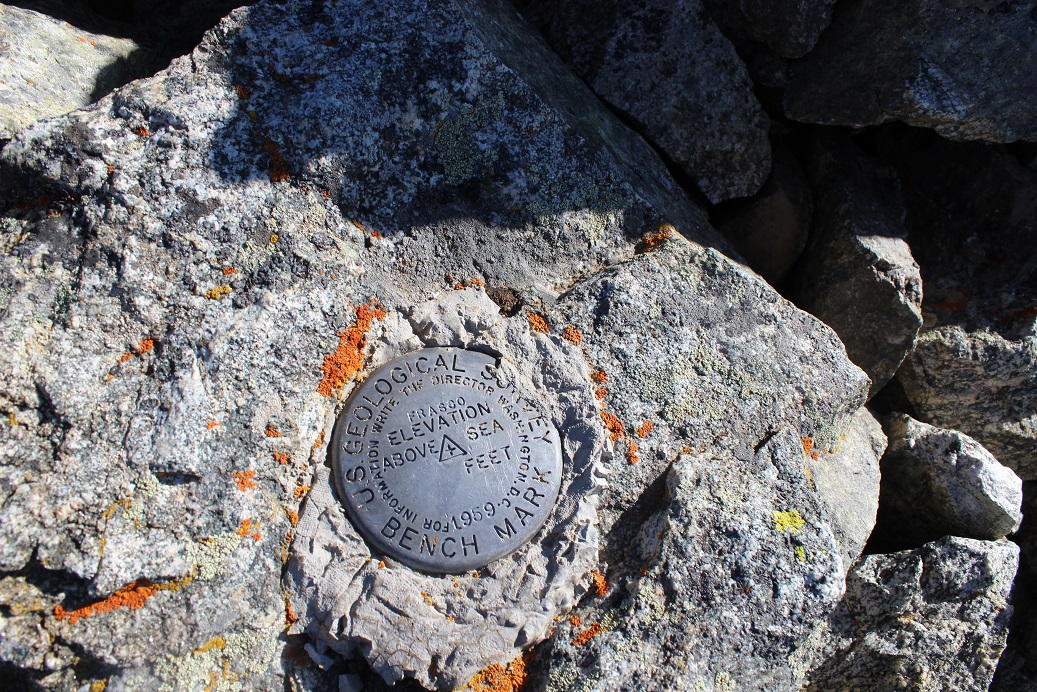
This summit had a summit marker (curious, the unranked peak had a marker, yet neither of the ranked ones did?).
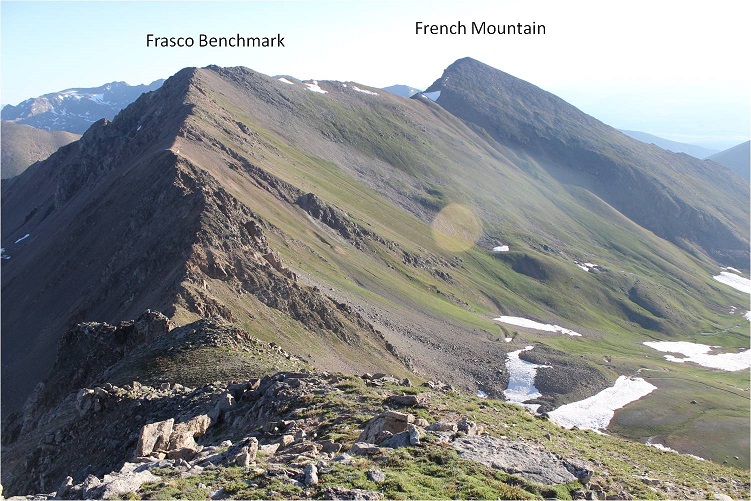
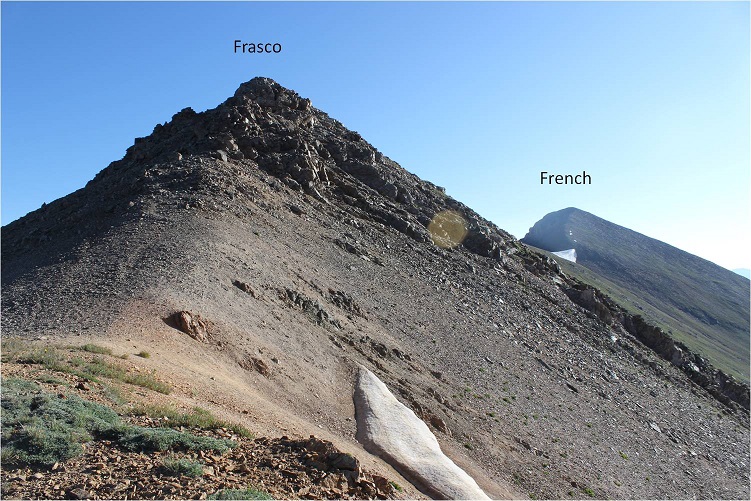
To get to French Mountain from Frasco is straightforward: just follow the ridge (named Friscol). I was surprised at how narrow the beginning part of this traverse was.
I descended 250’ to the Frasco/French saddle, stayed left (north) to avoid a snow patch
and then ascended 320’ to the summit of French Mountain.
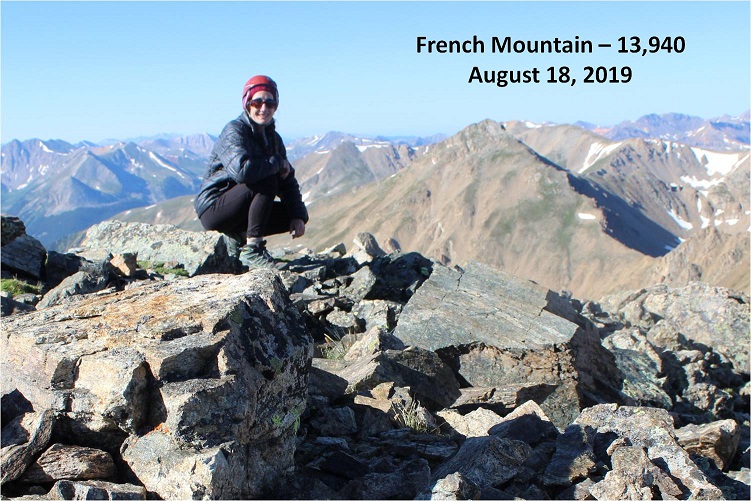
I summited French Mountain at 9am
French:
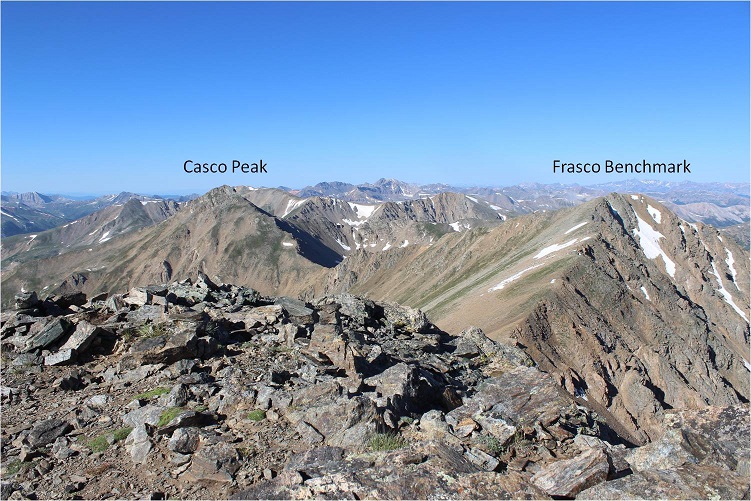
From French, here’s a look back on the route from Casco to Frasco to French
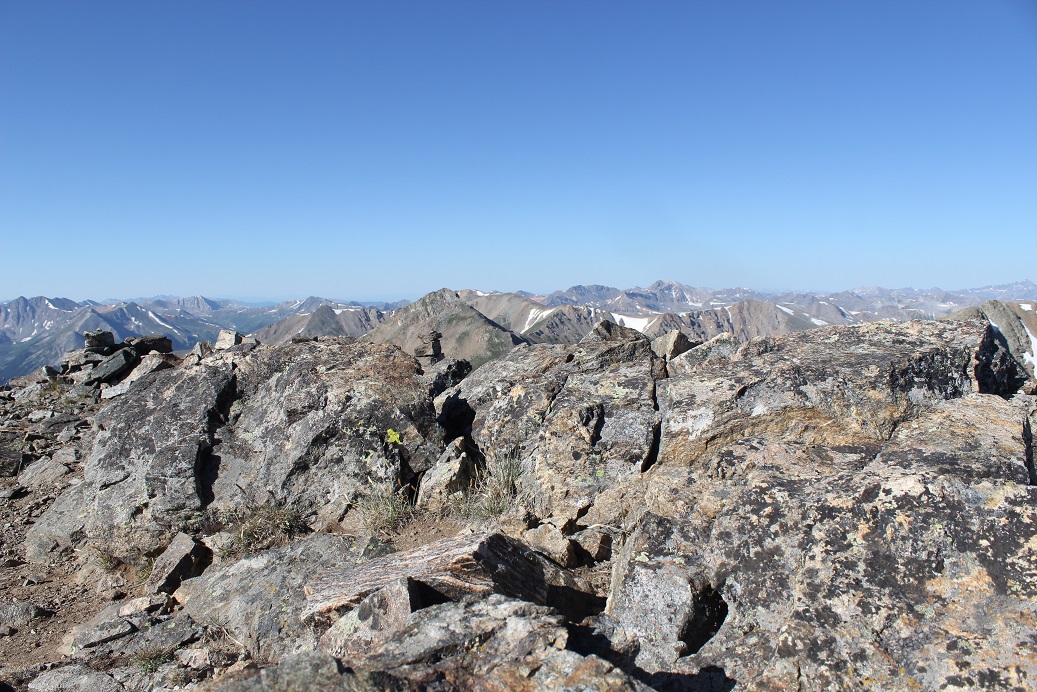
It was a beautiful day so I sat for a bit on the summit, enjoying the views before starting my way back.
Here’s a look at the look to Frasco from French
I mainly stuck to the ridgeline. Around the French/Frasco saddle I saw a ptarmigan and a caterpillar I thought was living pretty high
Here are the areas of avoidable snow on the ascent of Frasco from French
After summiting Frasco a second time it was time to head back towards the Casco/Frasco saddle for my descent. Also, it wasn’t lost on me how much easier the route looked coming up from the Halfmoon Creek area: the scree was almost nonexistent on that side when compared to the Lackawanna Gulch side. The decent along the ridge to the saddle was uneventful.
However, I didn’t go all the way to the saddle: Instead I chose to descend earlier because I liked the scree here better.
Here’s a look at the route back down the basin and towards the creek
The scree here was the kind of scree you want to descend, not ascend. It allows you to scree surf, but doesn’t allow for much traction. I put on my microspikes and headed down the slope, sliding one foot in front of the other. I got a quick video: quick because it wasn’t safe to take a video while scree surfing, but I was basically moving down the hillside with the sliding scree. You can see why this wouldn’t be fun to climb up.
Scree:
Here’s a look back up that scree slope from the bottom
and a look at the route out of the basin
Also, the flowers here didn’t disappoint
As I exited the basin and descended into the Lackawanna Gulch I couldn’t help but think how much easier route finding was in the daylight. I wasn’t concerned as much with where I was because I had visuals that told me I was ‘close enough’ to where I needed to be. I could tell the difference between game trails and actual trails (which is much harder than you’d think in the dark).
The hike back was beautiful! I loved seeing the cabins, flowers, trees, and creeks in the daylight. I took off my hiking boots and put on sandals for the last creek crossing. The cold water felt wonderful on my feet! I decided to keep my on sandals for the rest of the trek to my truck (maybe a quarter mile).
When I made it back to my truck at noon my feet were still wet. This was a 10.5 mile hike with 4549’ in elevation gain completed in 9 hours.
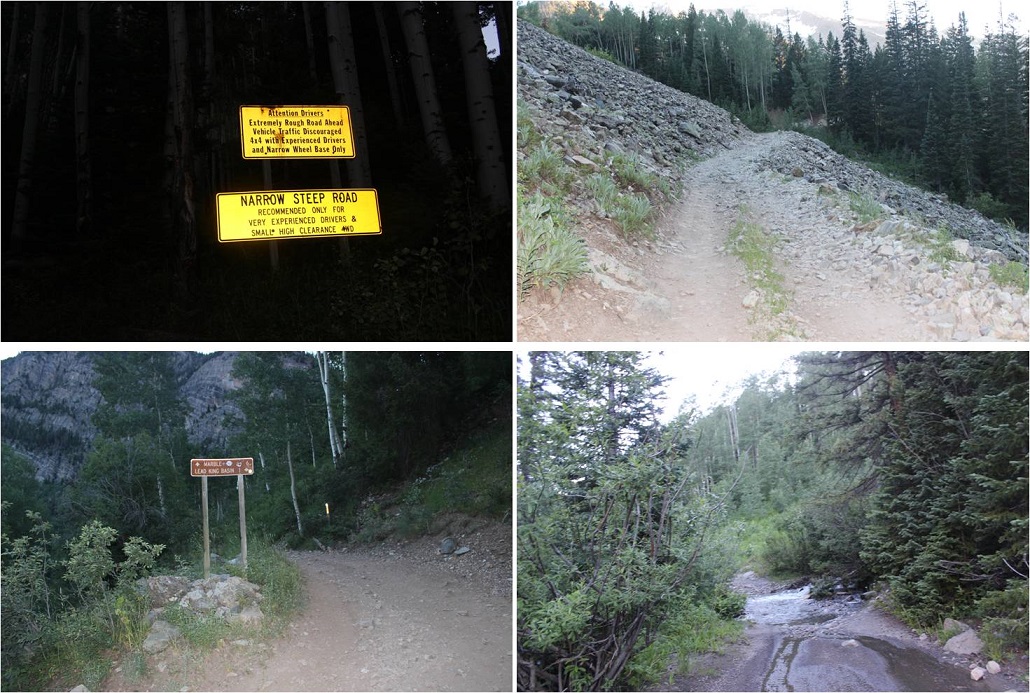
After my failed attempt last week I decided to do more research and try Hagerman again today. I learned the upper road to Lead King Basin had an avalanche about 1 mile after the stream crossing (very close to where I’d parked) so I decided to take the lower road from Marble to Crystal instead. I’d heard a lot of conflicting reports on this road, but when I searched it online I found this video, which was very helpful.
The road itself wasn’t that difficult with a 4WD (I wouldn’t attempt in a 2WD), and my Tundra handled it just fine. The only problems I can foresee would be passing other vehicles. Luckily there are a lot of small turnout areas on this road, especially before and after the committing areas. I drove in at night to ensure I wouldn’t need to pass oncoming vehicles, which I knew would be problematic in my big truck, no matter the size of the other vehicle.
Since I drove in when it was dark I wasn’t able to see the Crystal Mill, but I expected to see it on my way out the next day.
I made it to Crystal around 10pm on a Thursday night and all the lights in the ‘city’ were out. As I passed the Crystal Mill I saw a sign saying Lead King Basin was closed, so I dimmed my lights and parked at the east end of town, mentally calculating the extra mileage and what time I needed to start in the morning. Looks like I was getting about 3.5 hours of sleep.
As I was preparing to go to bed (my lights were out) I saw the lights go on in the second story windows of a cabin across the street. The two story 18th century style wood cabin had two tiny windows upstairs, covered in lace curtains. The light from the windows was glowing pale blue, and I saw the silhouette of a woman walking around. She was wearing a long nightgown and her hair was pinned up in a bun. The woman slowly walked around the room, picking up objects and setting them back down. Then the lights went out.
I set my alarm for 2am. When I woke up I crawled from the back seat into my front seat and started putting on my shoes. I didn’t need to turn on any lights because the full moon was shining bright enough to allow me to see. I saw a fox run down the center of the road, and then noticed the lights in the second story window of the house across the street turn on. Once again I saw the silhouette of a woman walking around. She was wearing a long nightgown and her hair was pinned up in a bun. She slowly walked around the room, picking up objects and setting them back down. Then the lights went out.
Whoa. That was spooky. I knew I hadn’t woken her up because I hadn’t made any noise, opened any doors, turned on any lights, etc. I was going to have to investigate that house in the daylight upon my return because that was just… weird. I mean, what are the chances she was up at 10pm and 2am, just like I was? Also, how many women still wear nightgowns to bed?
Ok, so I was on the trail at 2:15am. It was a 2 mile hike to Lead King Basin along a 4WD road that didn’t offer many turnouts, but was indeed open and my truck could have made it just fine to the trailhead. Oh well, I was getting in 4 extra miles today.
The trailhead was about 2 miles from Crystal. I didn’t see any of this in the dark (these signs seriously need reflective elements to them for us who start before daylight).
There’s a nice junction where you turn left to head up and around the north end of Lead King Basin to Geneva Lake
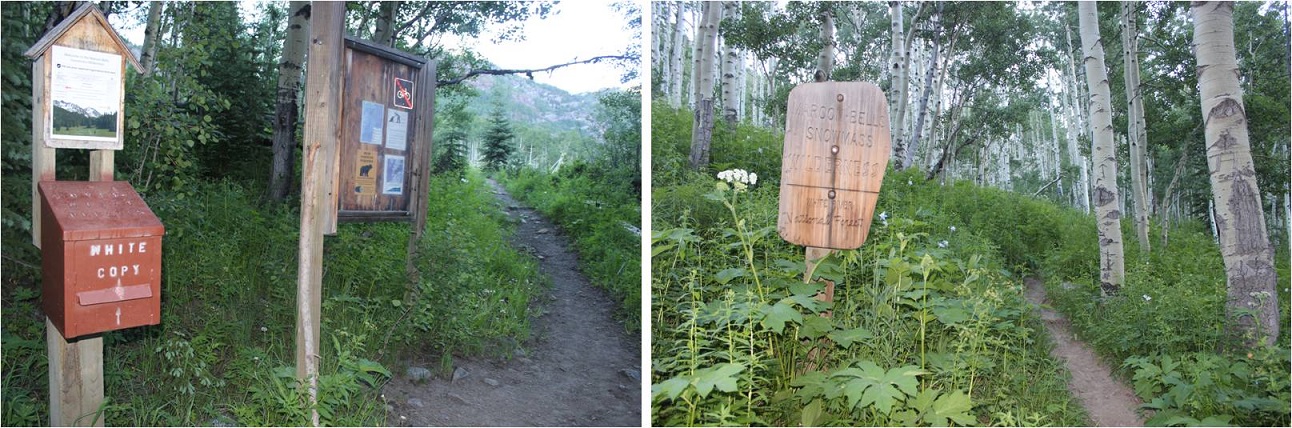
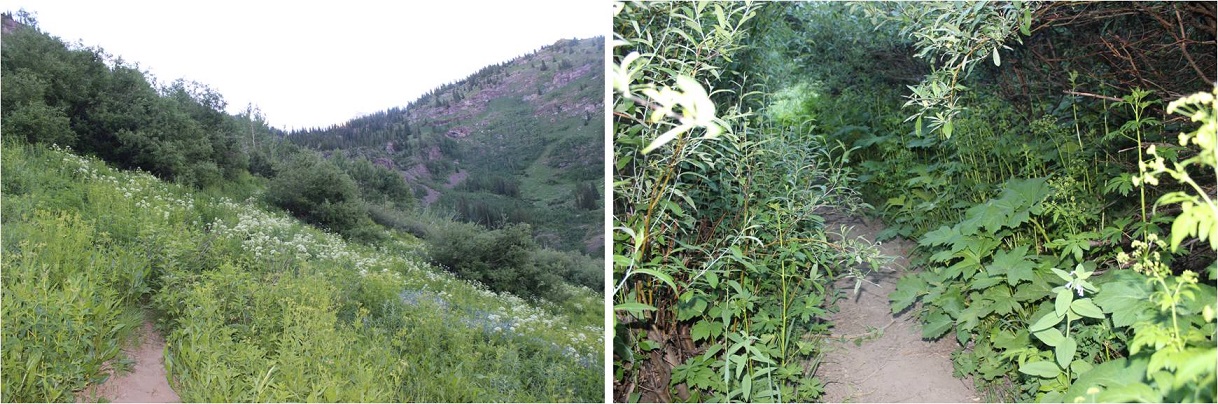
Here the trail was quite overgrown with flowers, plants, and trees. I thought to myself how it felt a little like being in a rainforest, and how much fun the flowered areas would be on my way back (I’m not a fan of flying-stinging insects, so I was being sarcastic). On the positive side: no mosquitoes!
It was in this area I saw my first ever porcupine on the trail. I see them along the side of the road when I’m driving to trailheads quite a bit, and one time I heard one under my truck at the Grizzly Gulch trailhead and had to fend it off in the middle of the night, but this was the first one I’d encountered on the trail.
He was just sitting there, staring at me. So I talked to him to get him to move. He turned around and waddled ahead of me, staying directly in the middle of the trail. I didn’t really want to follow a porcupine to the lake, so I talked a little louder to him. He scurried into the bushes and I immediately realized the error of my ways: now I couldn’t see him and didn’t know where he was. I didn’t want to experience porcupine quills and all that entails, so I nicely talked to the porcupine in a sing-song voice as I passed where I’d last seen him, crossing my fingers I hadn’t made him mad/scared and that he wasn’t sitting in the bushes: poised to shoot.
Mission “pass the porcupine” accomplished I continued on to the lake. The moon was full and bright so I conserved flashlight battery and hiked by the moonlight. Just as I made it to the lake I heard a faint barking in the distance. I was worried there was a lost dog out there somewhere (hey, it’s happened) but as I rounded the bend to the lake the barking got louder, and then I saw a flashlight turn on. The owner was pointing the flashlight in the direction opposite of me, and the dog was starting to bark really loud. I yelled up at them “It’s just a hiker!” I received no response, but the dog stopped barking and the flashlight turned off. It was about 4:45am. I immediately felt more secure hiking in the dark: I was pretty sure there wasn’t another animal in the area, as that dog would have been alerted to it.
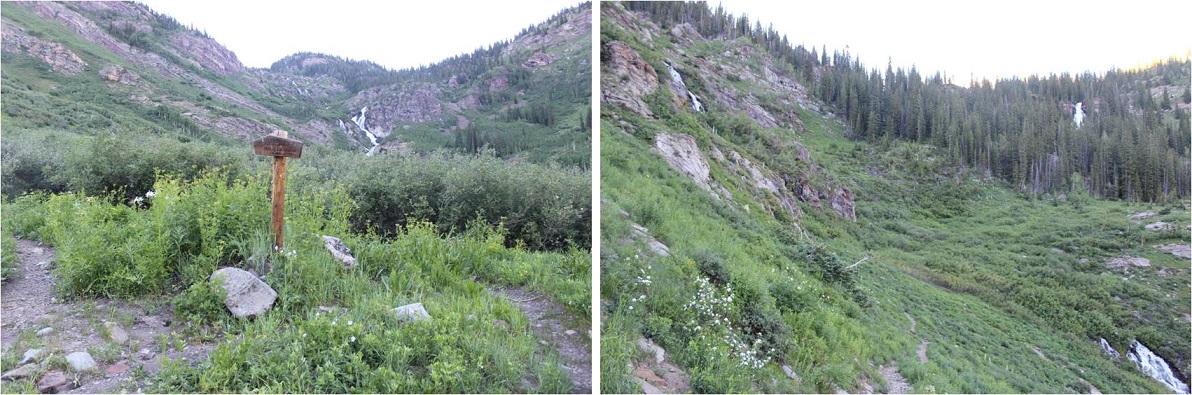
Just north of the lake the trail continues north and then there’s a stream crossing. There were tons of areas to cross here, and all required taking off my shoes. At times the water was knee deep (I’m 5’4”), but mostly it was just high on my shins. Also, it was cold. When I was done my water shoes were quite muddy so I left them on a rock to dry and to pick up later.
This is where my trip report diverges from some of the more popular field guides. I took the 1st west side gully to the southwest ridge.
I crossed the creek and headed north for about 100 yards, looking for a gully to my right (west gully). I’d seen pictures of the access gullies on the east that were still full of snow, so by taking the west side I was hoping to avoid any snow filled gullies. I wasn’t disappointed. Here’s the gully I took:
This gully was steep and loose. I did not feel comfortable sticking to the scree in the middle, so I stuck to the right side where the rocks were larger.
My goal was to gain the ridge as quickly as possible, aiming for this small saddle
Here’s looking back on the route
From the small saddle you can see Hagerman Peak
I turned left (north) and faced a class 3 section and headed up and over the ridge.
At the top of this point I could see the rest of the route before me
It’s important to note if you’re attempting this ridge to start early and make sure you have a large weather window. This ridge is very committing. I went at it slowly and carefully. The rocks here crumble: I’d find a hand hold, grip, and the rock would crumble in my hands. I had to make sure to test out each hold several times before using it to secure myself. Luckily, the ridge was snow free.
This is definitely a ridge you take by… sticking to the ridge. I was able to go directly up and over most areas, dipping to the left or right just a couple of times. As I ascended the rocks stopped crumbling and started tipping a bit (nothing fell, but not much was stable). Here’s the final push to the summit.
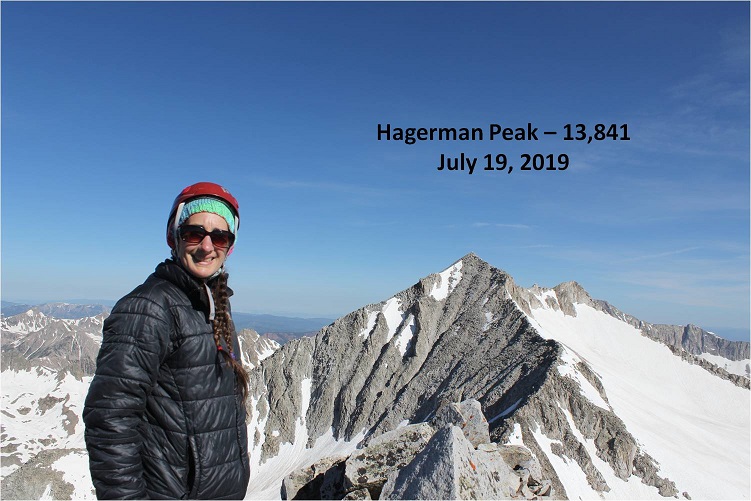
I made it to the summit at 9:10am
Hagerman:
I started the ridge at 7:15am and ended at 9:10am, making this a 2 hour ridge to cross. Here’s looking back at the route
The day was absolutely beautiful and it was still early morning so I considered traversing over to nearby 14er Snowmass Mountain. I’d done a lot of research and came up pretty empty with details, but I knew it could be done. I spent quite a bit of time looking around at possible paths before deciding if I was going to attempt traversing or not. I looked at Snowmass Mountain’s east side: nope, that was a no go. Tons of snow and no way I could see to begin from the summit. Next I looked to the left (west). A lot less snow but the shadows weren’t helping much.
I stopped and did a lot of thinking here. I knew the traverse was possible. The rock looked loose, but I could also see goat trails (or maybe those were gullies…). I was confident I could find traction in the dirt. I mentally calculated how much time I had, the weather, and looked for exit strategies in case I got to a place where I couldn’t continue. I decided both time and weather were in my favor today so I decided to go for it.
Note: This may not be the safest way to traverse from Hagerman to 14er Snowmass Mountain. For me and my abilities, it was the safest way on this particular day.
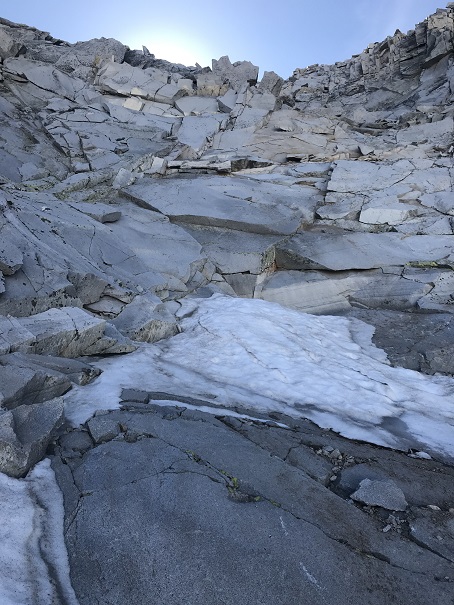
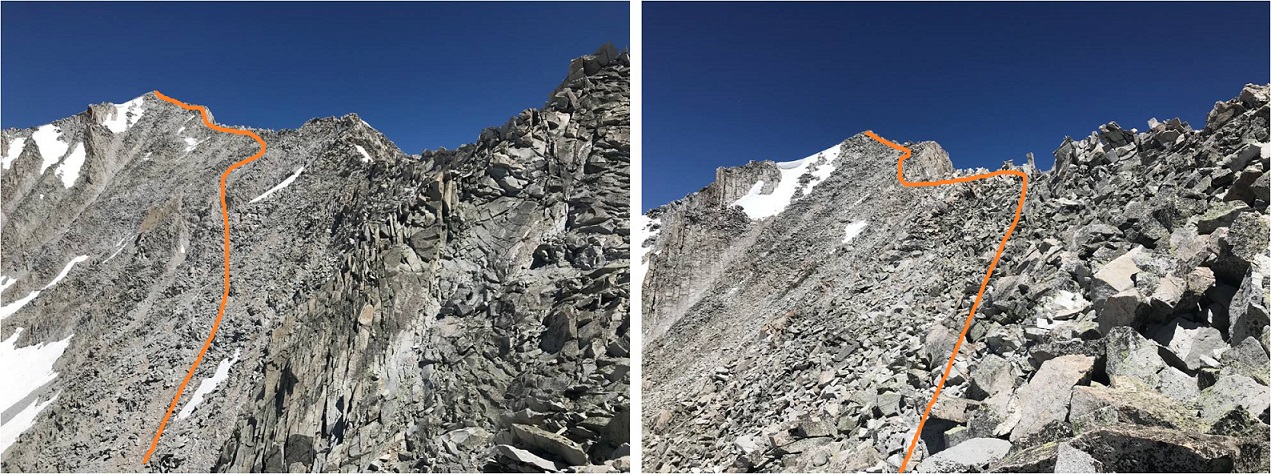
The first move committed me to the traverse: I down climbed about 50 feet of… this. I’m not sure I could have climbed back up this wall. (Ok, I could have or I wouldn’t have climbed down, but it would have been a lot of work).
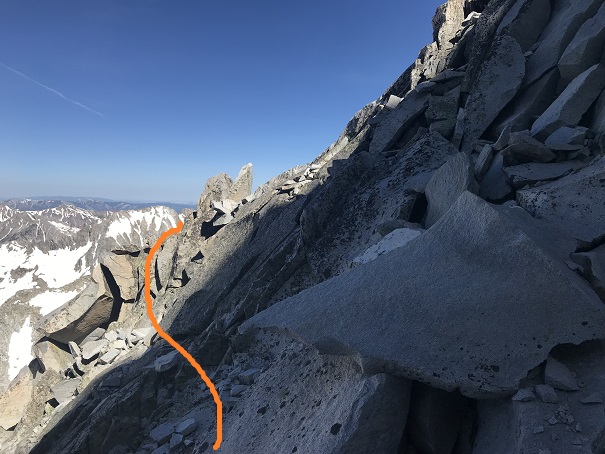
I turned and looked towards Snowmass Mountain. This is what I saw. So I headed northeast and rounded the corner.
I was taking this one section at a time, focusing on what was directly in front of me but glancing up at the rest of the route every so often to make sure I was on course. I found myself trying to stick to the ridge, but that is not the way to do this traverse: you need to drop down much lower than you want to. Every time I tried to regain elevation I was forced to head back down.
My advice is to descend lower than the saddle, and then take the scree line up to where the trail connects with the east route. The best terrain was consistently 100-200 feet below the ridge.
Once you connect with the ridge where the east route links up you can easily follow the cairns to the summit.
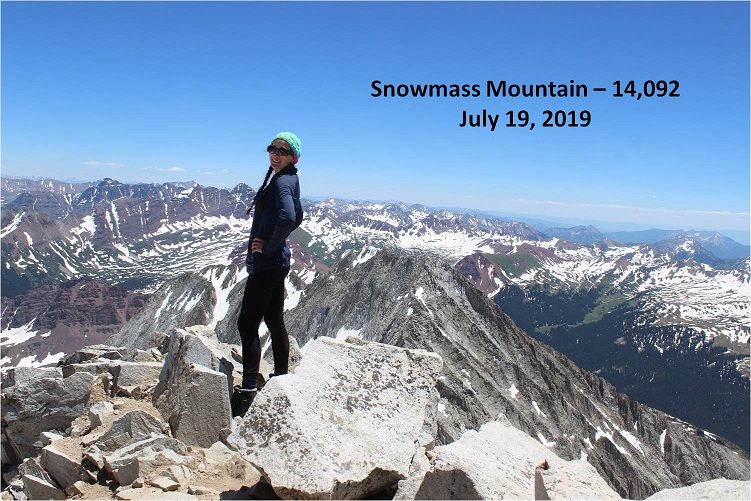
This was a very slow climb. Everything was loose and what wasn’t loose was scree. I took extra time to be careful with each and every step, and kept the entire route in view as often as possible. I most likely made this take longer than necessary, but I stayed safe. I made it to the summit of Snowmass Mountain at 12:50pm, making this a traverse that took over 3.5 hours to complete. Here’s looking back at the route
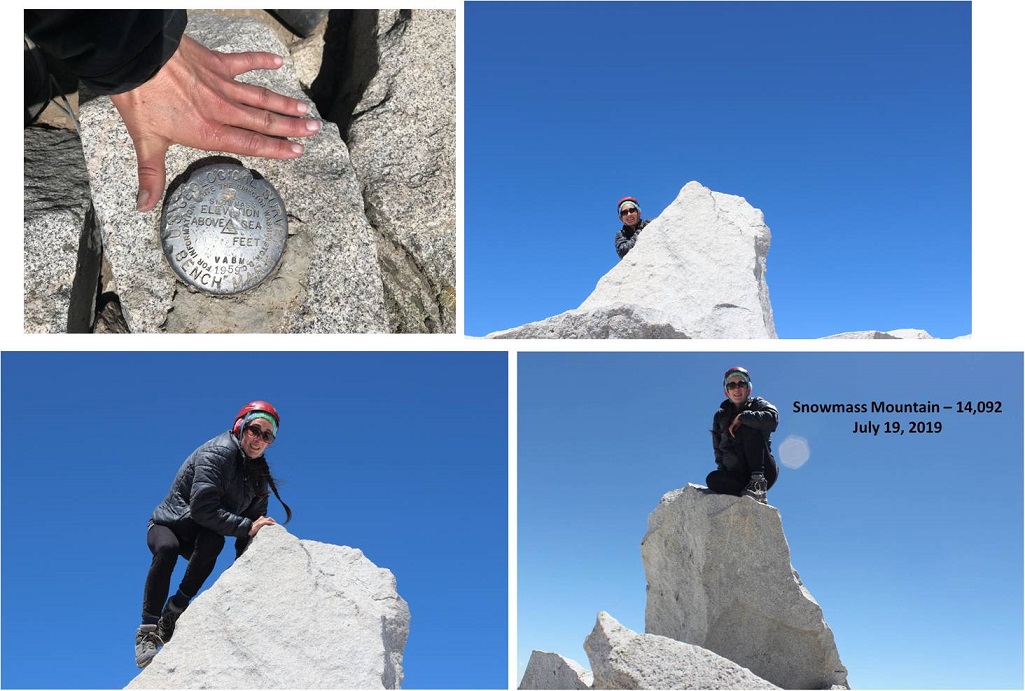
Summit photo
Summit Video
I spent a lot of time on this bluebird day taking pictures. It’s harder than you think to set an automatic timer and then scramble up to the summit block. It took a few tries… and the ones that actually turned out were fuzzy, so I gave up.
After spending much more time on the summit than necessary I needed to make the decision of how I was going to head back down. I’d been hoping, similar to the west side of Hagerman, that the west side of Snowmass Mountain would be free from snow. No such luck. There was still snow in the gullies.
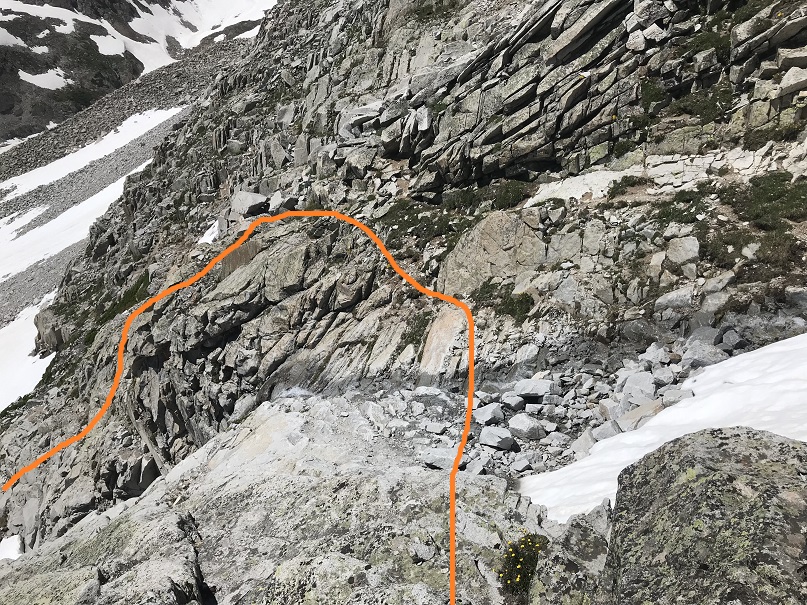
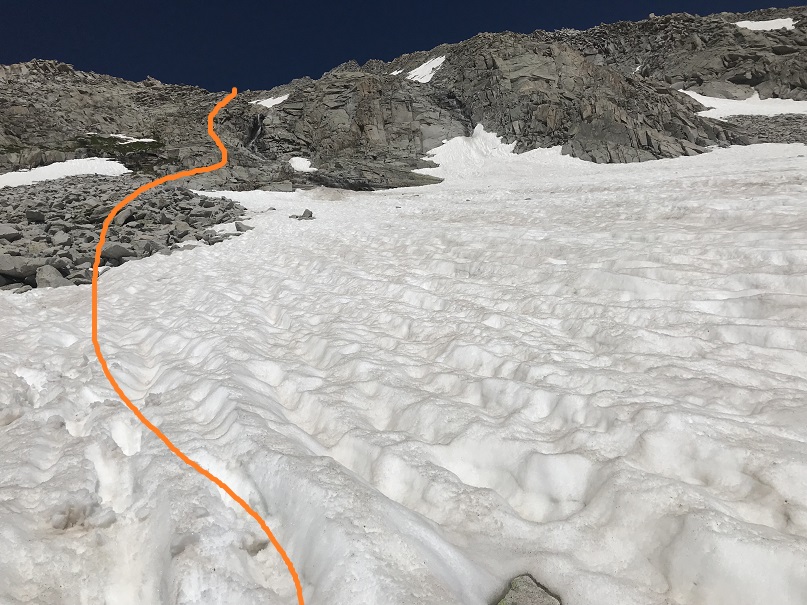
I did not want to do the traverse back to Hagerman because that and another 3 hour traverse would have been exhausting. I could tell the gullies on the west side of Snowmass Mountain ended/cliffed out in a waterfall area, but I could also see bare rock I could traverse either north or south to connect up where I needed to be. I decided to head down Snowmass Mountain’s west side, but for safety I would slightly alter the traditional route. It was too late in the day to safely take the gullies, so I was going to take the rock rib that wasn’t a rib but a bunch of loose rock that bulged from the mountainside. Here’s the route I took
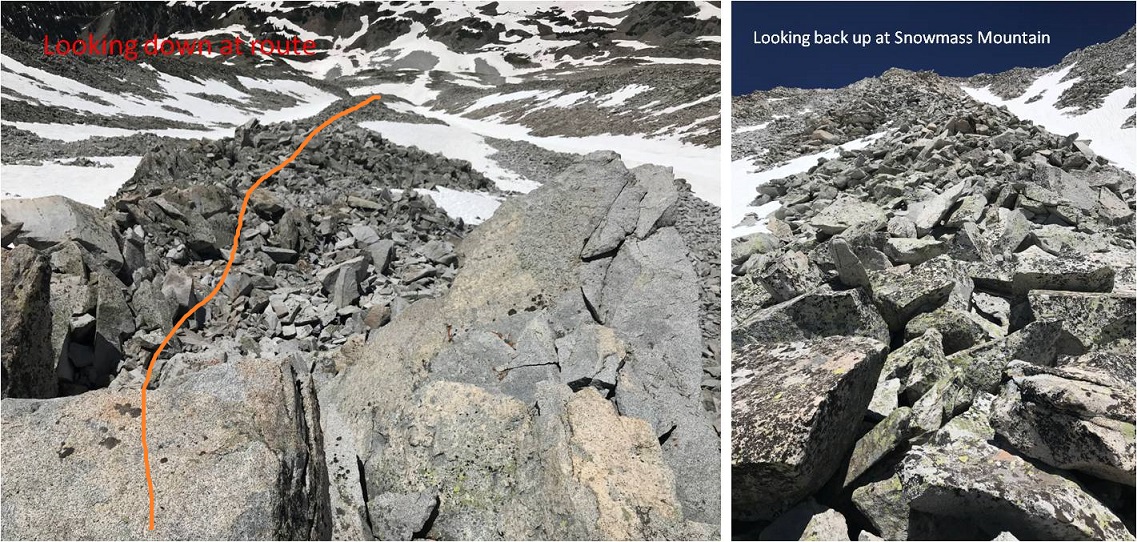
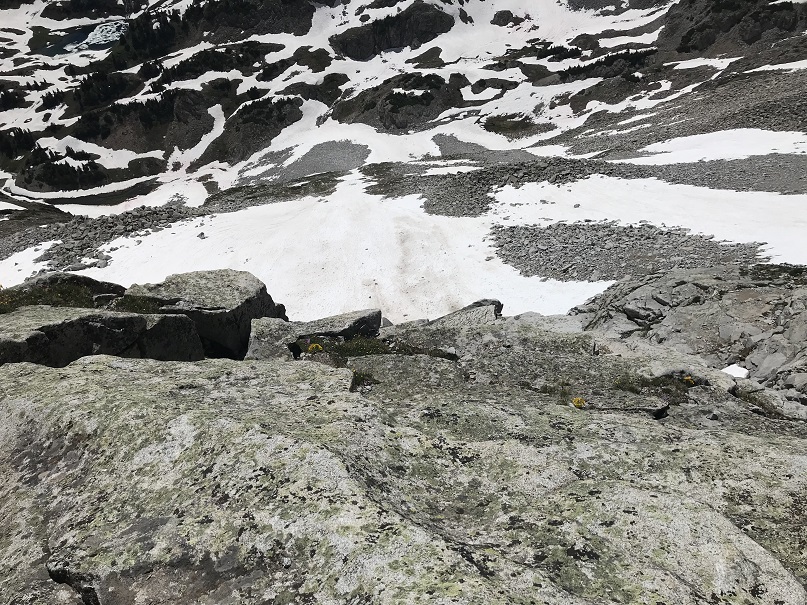
Do not let these photos fool you: this is where I encountered the loosest rock of the day. These rocks are the size of refrigerators and tables. Every 3rd rock would tip, and I would think to myself: “That’s a lot of rock to tip!” Luckily not one rock actually tipped/fell/tumbled/caused a rock slide.
This was a very slow process but eventually I made it to the waterfall area. My feet were starting to hurt at this point from all the rock work.
The snow ended just at the waterfall and surprisingly I crossed the waterfall pretty easily here and headed down. I made it down to this area at 3:30pm.
The snow started up again after the waterfalls
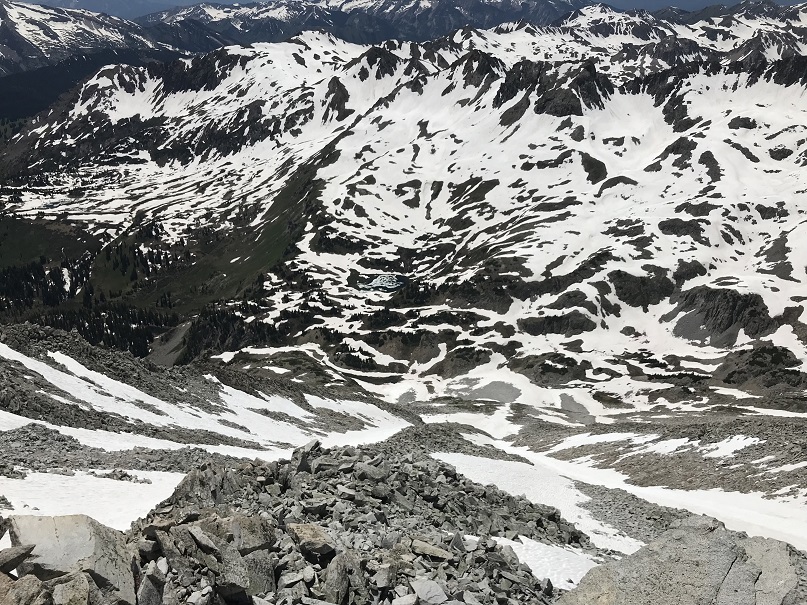
From here I looked down at the basin, and unfortunately there was a lot of snow covering the trail I was supposed to take back to Geneva Lake. That snow was going to be several feet of mush at this time of day so I decided to traverse south along the mountainside, looking for a safer route down.
I made it here and unfortunately cliffed out yet again… but I could see where I needed to be: That goat trail should get me down.
After searching around for a bit I was able to find a way off this spot by circling the area to the north and down the small cliff
From here I followed the goat trail that went down a forested gully and came out ready to exit and head towards Geneva Lake.
The area through the trees to the stream crossing was wet.
At the stream crossing I reconnected with my water shoes. They were now dry but had been scattered and were now no longer sitting on the rock together but in the grass a few feet apart. I changed out of my shoes into my water shoes and crossed the creek
I’m ashamed to say the creek ate my water shoes. Seriously. The banks were quite muddy and during the last two steps my water shoes got sucked off my feet and into the muck. I spent 20 minutes trying to dig them out with my ice axe, but no dice. I couldn’t find them. They were buried in the banks of the stream. Ugh. From here I sat and put on my shoes and new, dry socks. I looked back at the route I’d taken to Hagerman.
My feet were hurting, and I still had 4 miles to go. Time to hit the trail. I skirted the lake and headed back towards Lead King Basin.
One great part of this hike was being able to see the waterfalls. And, since it was so late in the day: no bees!
At the base of the waterfalls the trail was running with quite a bit of water.
In the daylight I could see the upper 4WD trail to Lead King Basin
This is where my feet really started burning. I was surprised, since I’ve done more challenging hikes with greater mileage/elevation gain than this one, yet my feet were very sore. I made it past the Lead King Basin trailhead as the sun set and each step I took hurt more than the last. I wanted to cry. I’ve never felt foot pain like this. Also, I’d been hoping to stop in Carbondale tonight to get Subway for dinner, but it looked like I wasn’t going to make it back in time for that to happen.
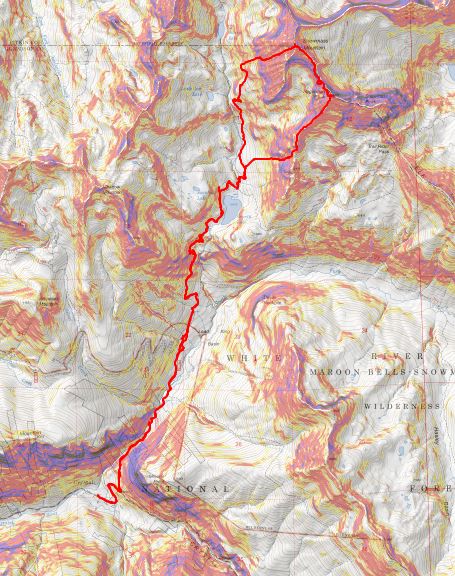
It seemed as if it were taking forever to reach Crystal. I eventually came across a sign that said “Private Property next 2.5 miles” and mentally freaked out for a second. There was NO WAY it was 2.5 miles to Crystal! Not only could I physically not make it 2.5 more miles (My feet! My feet!!!) but I was pretty sure it had been 2 miles to the upper trailhead. Had I been wrong and it’d been 4? Ugh, I needed rest and I needed calories because my mind was playing tricks on me. Luckily it was only half a mile past that sign to the town of Crystal. I finished this hike at 8:45pm, making this a 15.5 mile hike/climb with 6211’ in elevation gain in 18.5 hours.
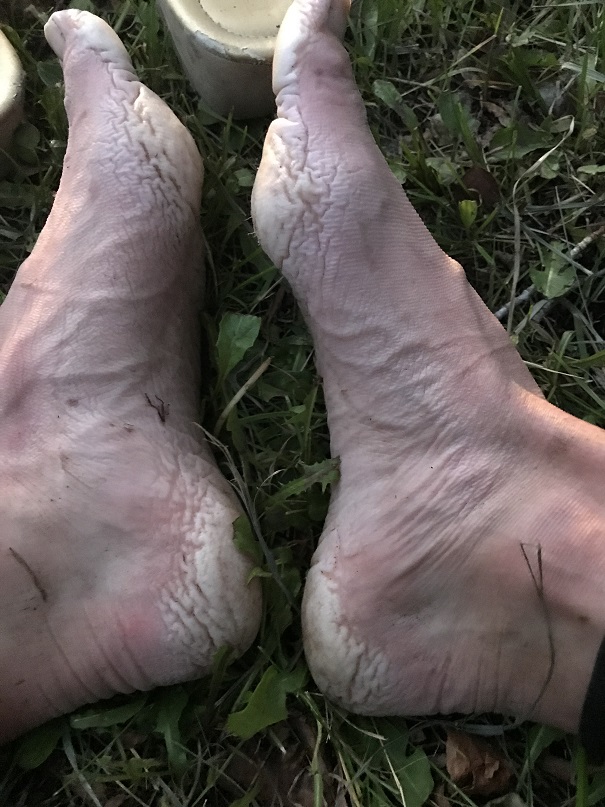
Read on for gross feet pictures and segue into the next hike…
I limped to my truck and sat down by a small access creek about 1 foot wide on the side of the road. I took off my shoes and gasped: Yuck! My feet had never looked like that before! The heels and pads were completely swollen and red/gray, and very painful to the touch (no blisters though).
I decided to wash them off in the water. I placed them both in at the same time and immediately felt relief, and then 2 seconds later started screaming because they started burning as if I’d placed them into a pot of boiling water. My feet turned bright red and were rendered useless. Seriously.
I couldn’t walk the 5 feet to my truck so I sat there for half an hour in the wet creek bank and thought about what I was going to do. I was supposed to drive to the next trailhead for my hike tomorrow, but doing the math if I left now I would get there and only have 1 hour to sleep before starting again. This hike had taken much longer than anticipated. I’d only had 3 hours of sleep last night so it was a bad idea to try to drive and then hike at this point. Also… my feet. I wasn’t sure they’d function tomorrow. They needed time to dry out. But long distance runners/thru hikers have this stuff happen, right? They just tape them up and hike/run anyway. I decided I was really, really tired and should sleep before attempting anything. I’d adjust my schedule as needed.
I had pain killers but decided not to take them: I wanted to be sure of an accurate pain level when I woke up so I could plan my day accordingly. Unfortunately, I never really made it to bed. I crawled into the cab of my truck, thankful I hadn’t rolled up my sleeping bag this morning. I tried to nap but even though I was exhausted I couldn’t get myself to fall asleep. After 2 hours I gave up and decided to drive home, with the added bonus of doing so in the dark late at night so I most likely wouldn’t need to pass anyone on the shelf road out. My feet had dried out a bit and were raw but less sore. They still overreacted every time I tried to use them. My right foot was healthier than my left; I couldn’t press down on the pedal very hard, so I drove slowly, but I made it.
Oh, and since I’d returned in the dark I never got to see the Crystal Mill, or get a good look at that old house with the lady in the windows…
After 2 hours of sleep I woke up at 9:30pm to drive to the Halfmoon/Tigiwon/Fall Creek Trailhead. My kids think I’m nuts, but starting early when hiking above treeline really has its advantages. I was afraid of encountering afternoon thunderstorms, as there was a 50% chance after noon, and while I didn’t know if I’d be encountering any snow it was likely and would soften up during the day so I wanted an early start. The 2WD dirt road in was a little rough but easy to navigate. I arrived at the trailhead at 2:15am and took one of the last available parking spots.
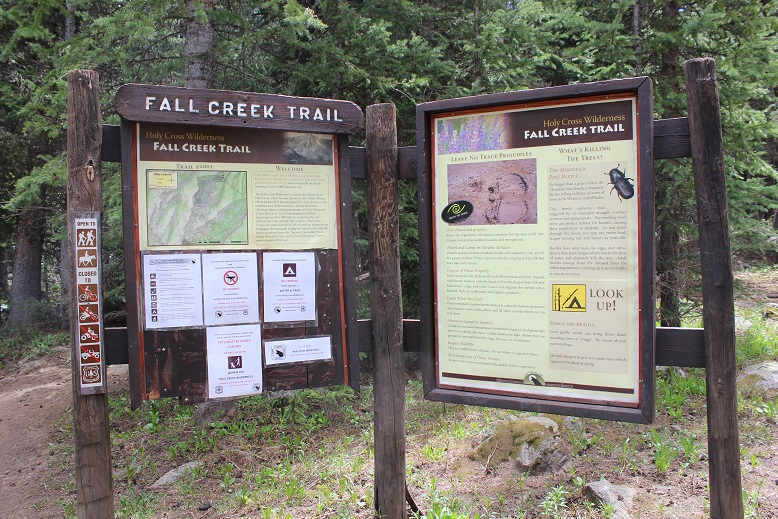
There’s a ton of signage at this trailhead and multiple routes up to the same peak(s). I chose to take the Fall Creek Trail, heading south.
This trail is well established and well maintained. The first half mile or so was dry
And then the trail was completely covered in several inches of water. I took off my boots to cross the waterfall area (about 1.5 miles into the trail)
At 2.4 miles I came to a trail junction for Lake Constantine and Notch Mountain Trail, taking Notch Mountain Trail west.
This trail switchbacked up the side of the mountain for another mile or so, and where there wasn’t water there was snow
At 11,750’ I came to the base of the slope up to the ridge, and needed snowshoes
In the dark I could only see a few feet in front of me and there was a lot of snow, so here I lost the defined trail and just hiked straight up the ridge. Snowshoes were very helpful here! It’s also steeper than it looks
About 150’ from the ridge the snow stopped and I was able to follow a snow free trail to the ridge
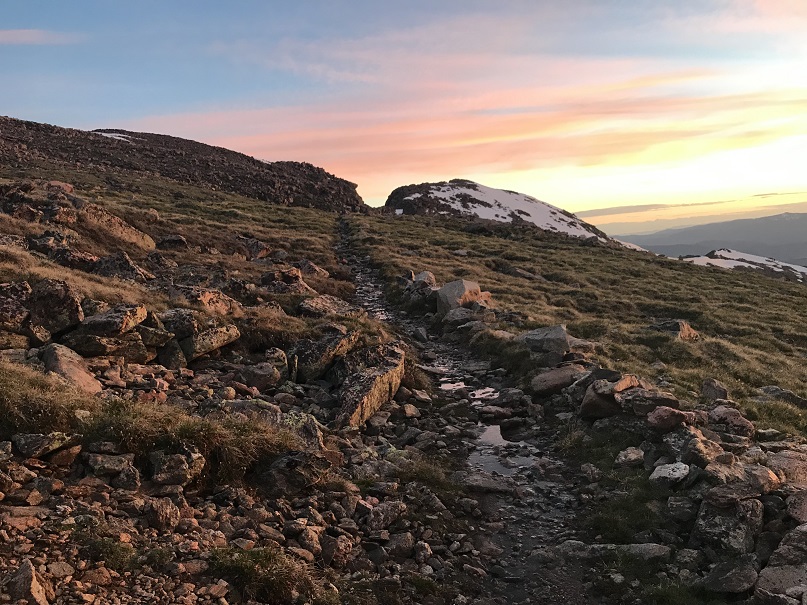
The sun was beginning to rise, and I love sitting and watching sunrises, so as soon as I reached the ridge I ascended a small (and unranked) slope to sit and enjoy the view
The sunrise didn’t disappoint!
The best view was behind me though, of 14er Mt of the Holy Cross. Wow! It’s beautiful in the morning light.
After enjoying the sunrise I walked over to the ridge shelter and was excited to find it unlocked (well, it had a lock but the lock wasn’t securing the door).
The shelter’s actually quite roomy, with a fireplace (not that there’s any firewood above treeline) and a great view of Mt of the Holy Cross. This would be a nice place to shelter if a storm hit the ridge.
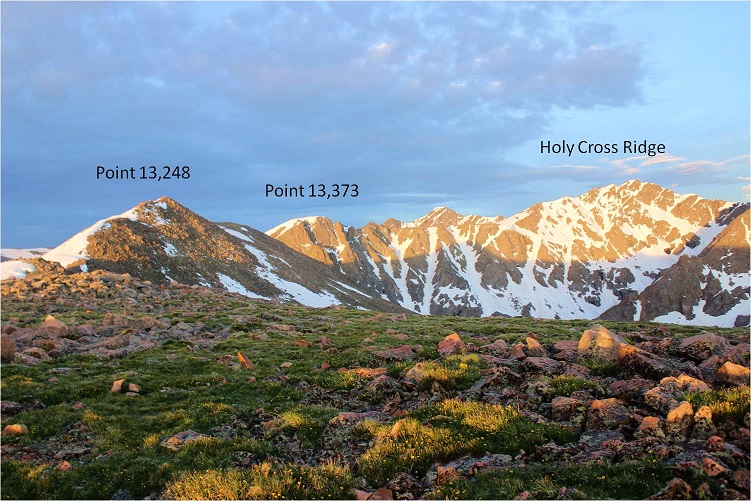
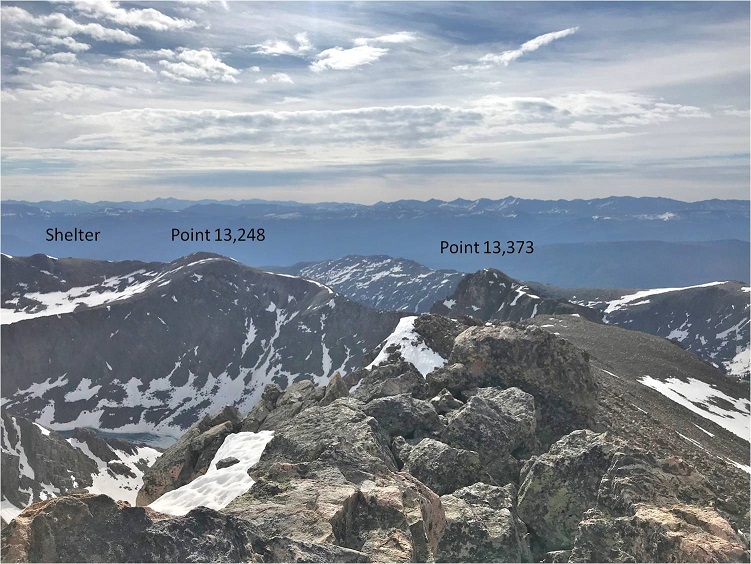
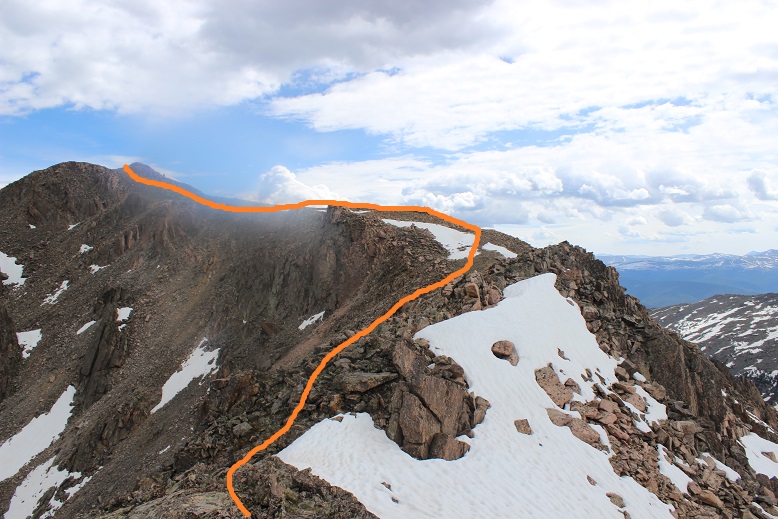
From the cabin I could see much of the rest of the route: Up Point 13,248, over to Point 13,373, and across to Holy Cross Ridge
The hike over to Point 13,248 was full of large rocks and hollow snow: the kind where you step on it and sink in a hole between the rocks up to your waist. After the first few postholes I stuck to the rocks
I summited Point 13,248 at 6:20am
Point 13,248
Here’s looking back at the shelter
And here’s the route before me. It didn’t look like the sun wanted to peak out above the clouds this morning
Here’s where I got a little nervous. The ridge looked like it was covered in more snow than I’d anticipated.
But when I made my way down there (losing about 600 feet in elevation along the way) the ridge was snow free enough to walk across. Well, not really walk, but more like scramble up and down on the rocks. Sticking to the ridge worked well.
I was a bit worried about the large patches of snow I saw, hoping they weren’t hollow like the snow I’d encountered higher up on the ridge. Luckily, the snow here was solid
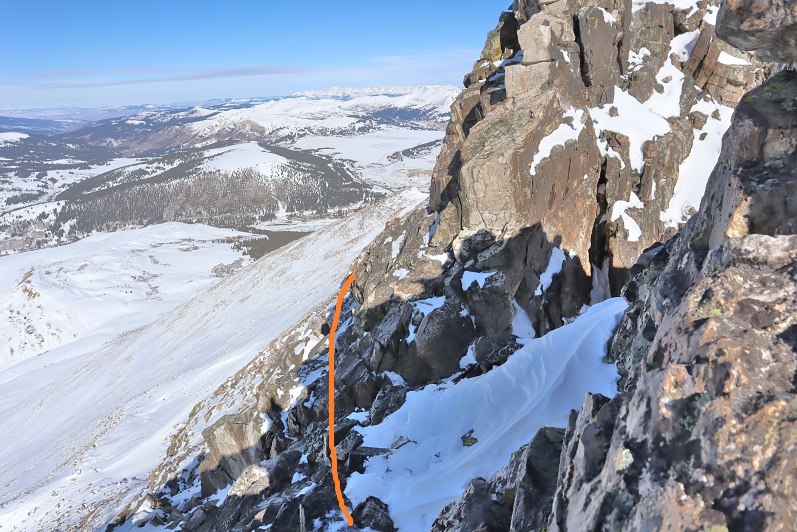
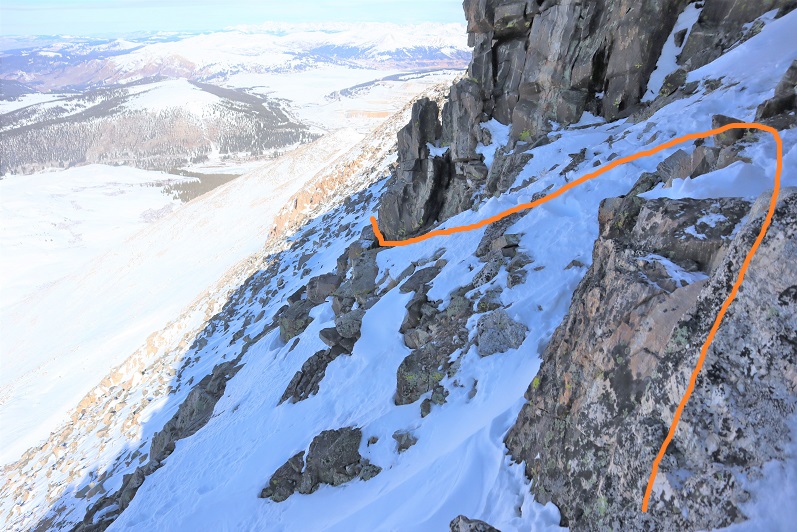
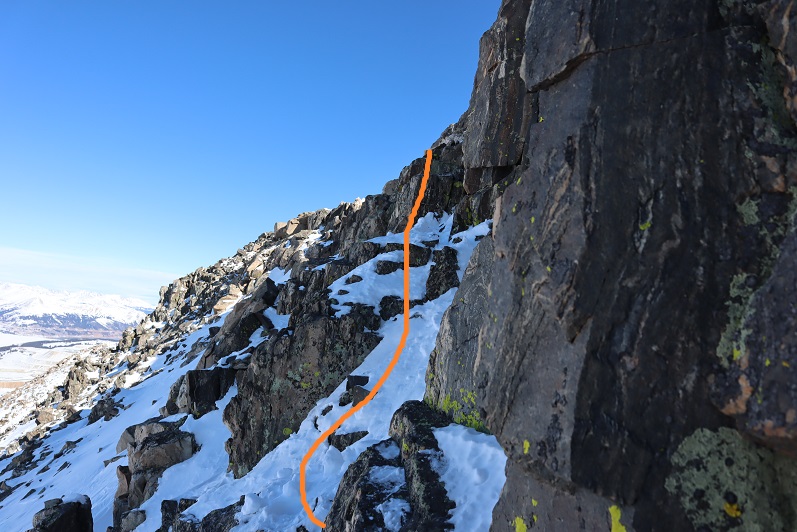
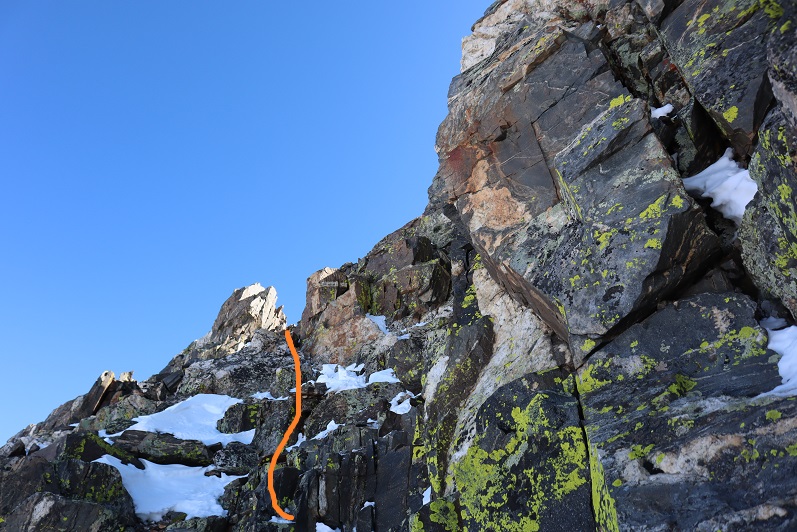
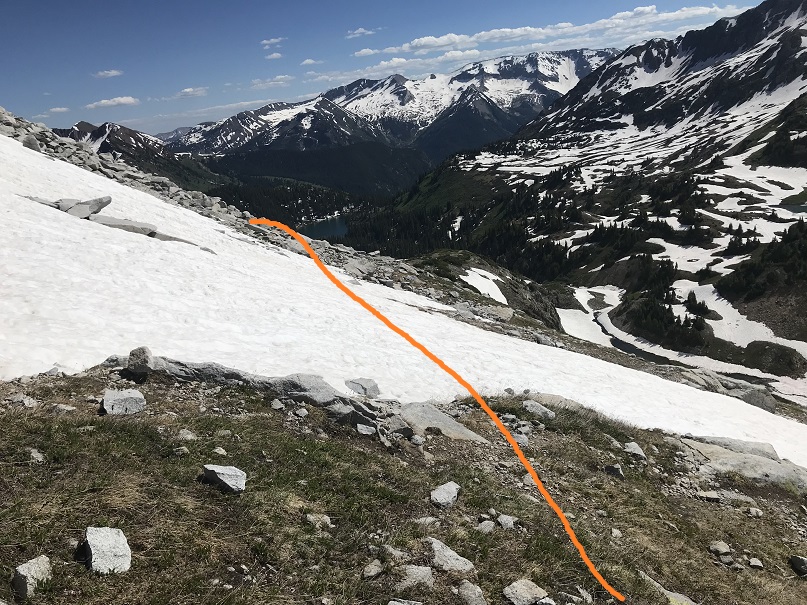
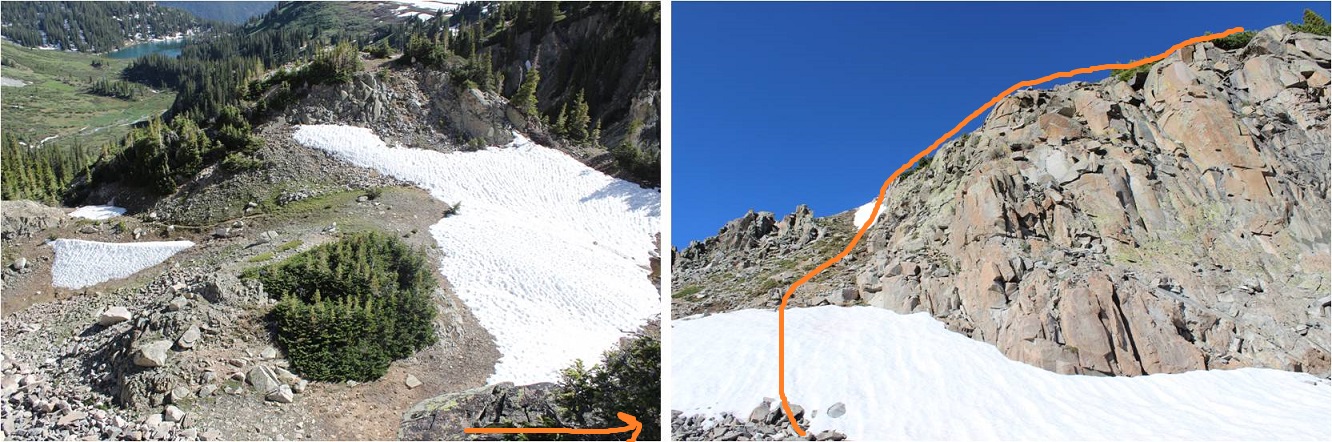
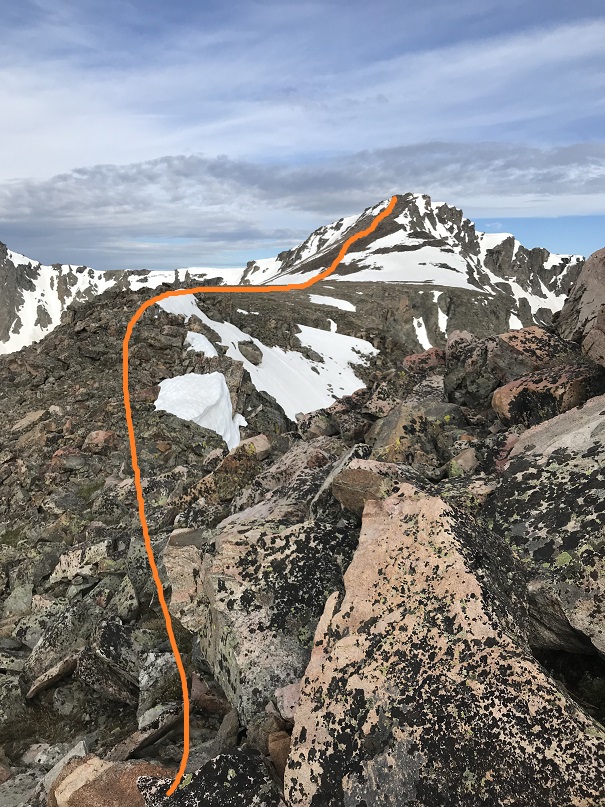
This is also where the crux of the route began. The solid line is the route I took up, and the dotted one is the route I took on the way down.
On my way up I went straight across the slope and then up the ridge
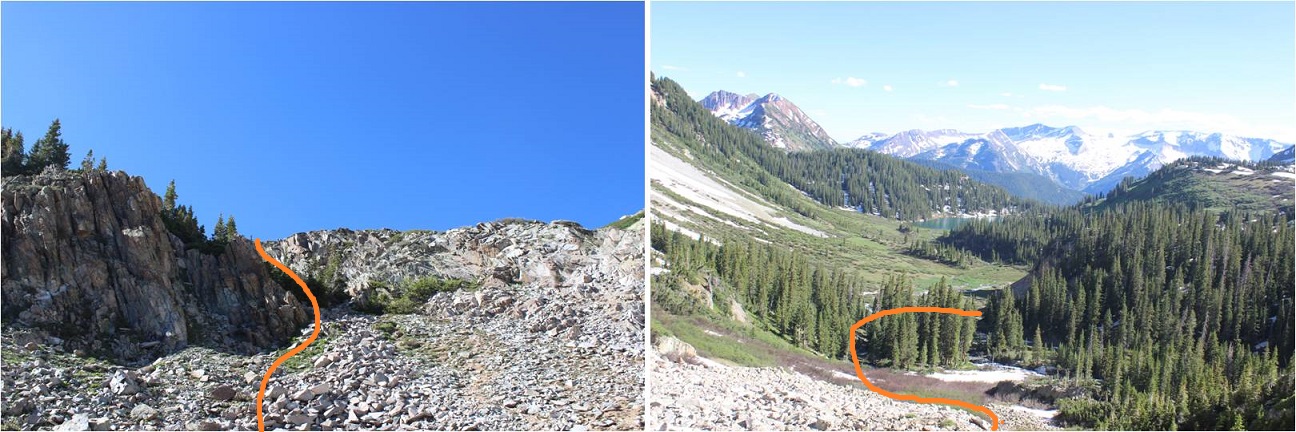
If I were to do this again I’d take the route I took down up as well. I didn’t initially because the rocks looked loose and unstable, but on my way down I found them to be stable and easy to climb through. I needed my ice axe and crampons for this part (on the way up and down) because the snow was steep. The traverse across the slope on my way in was sketchy, as every few feet or so I’d hit an air pocket and sink to my waist. I went slowly, seriously worried at some point I was going to slip and fall. Once I’d traversed the slope I needed to gain the ridge. This was steep as well. I couldn’t have done this without my ice axe and crampons
I breathed a sigh of relief when I finally gained Point 13,373. That had been more difficult than anticipated. I took a look back at Point 13,248
And at the rest of the route before me
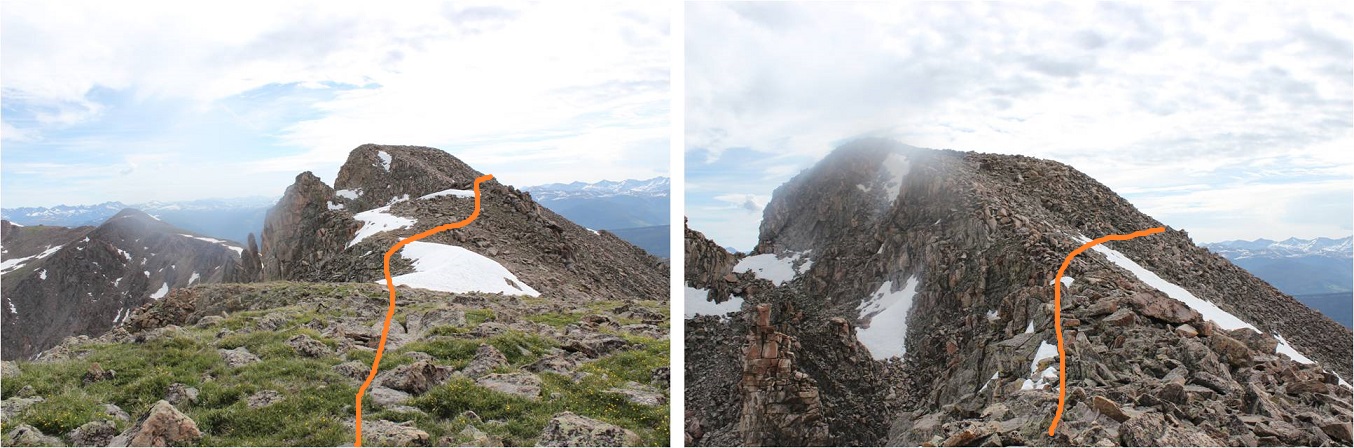
I descended a bit, and then traversed a flat area before ascending once again. The last few hundred feet go up and down in elevation quite a bit, creating a few small false summits. My advice is not to go straight up the ridge, but circle the mountain to the left (west), gaining in elevation as you go
There were several large patches of snow to traverse here as well, and just my luck, the sun started to peek out from behind the clouds, making these crossings tricky as well
I summited at 8:30am
Holy Cross Ridge:
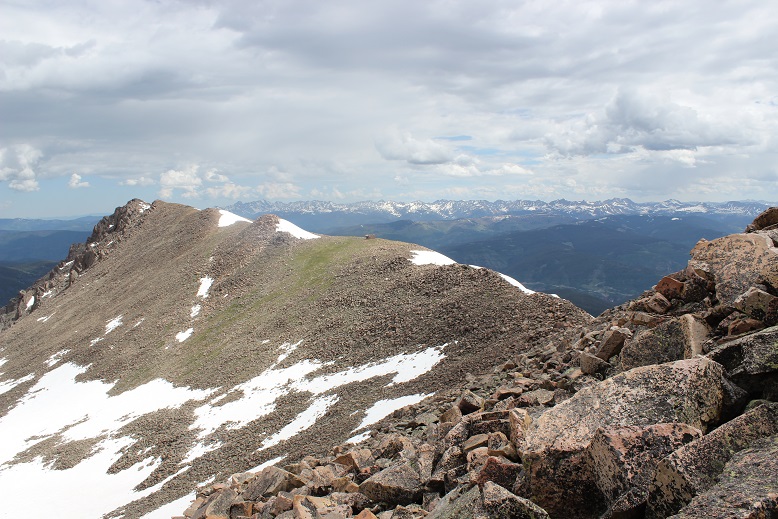
Here’s looking back on the route I took along the ridge
Ok, the sun was really warming things up and I was debating how safe the route back down Point 13,373 was going to be with soft snow. The ridge to Mt of the Holy Cross looked quite easy, and I considered just making this a loop, but I really wanted pictures of the route I took in, meaning I was going back the same way. Time to head back.
This time instead of going directly over the top of Point 13,373 I skirted the mountain to the right (east)
This put me at a great place to descend, so I once again put on my crampons and got out my ice axe and garden tool
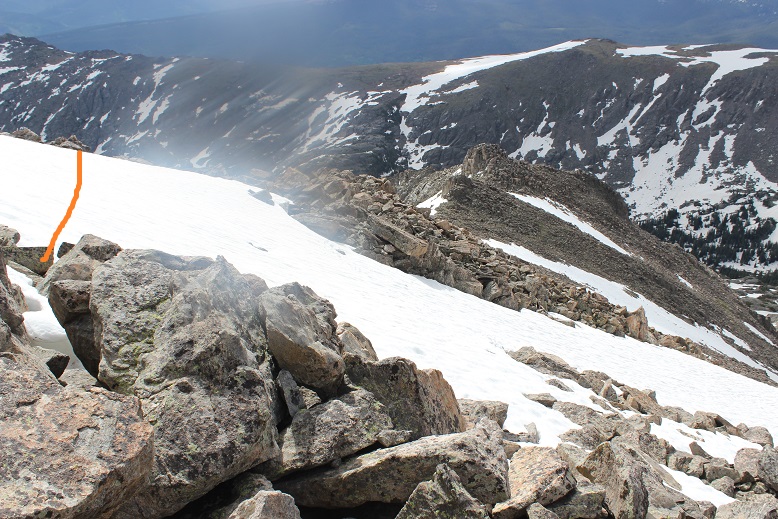
The snow had indeed softened up, but was now perfect for kicking in steps. I felt much more comfortable traversing down than I had up, and the best part was the rocks I thought had been loose were really much larger and stable than they’d looked from across the ridge. Here’s the route I took down
And now the fun part: re-ascending point 13,248
I skirted the summit of this one as well, sticking to the left and then heading back to the shelter
Once at the shelter I met a couple eating lunch and taking a break. They’d intended on hiking the ridge today as well but were turning back due to weather/conditions. I thought this was a great idea, and noted it did look like we were indeed going to get some thunderstorms today after all.
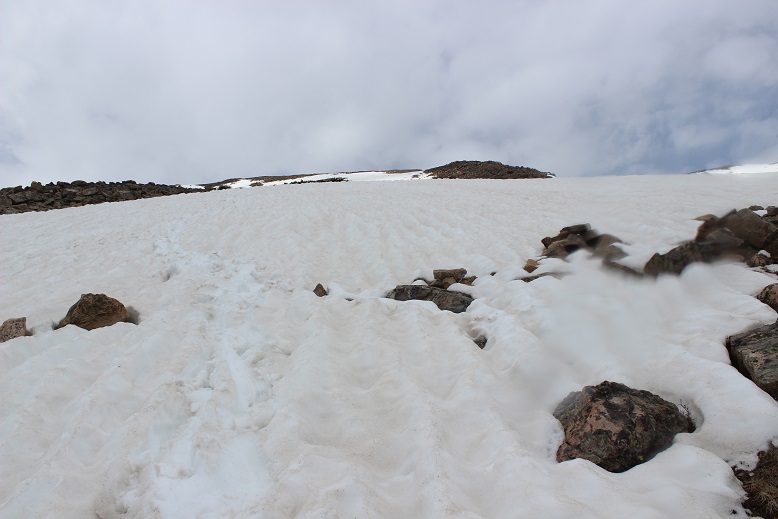
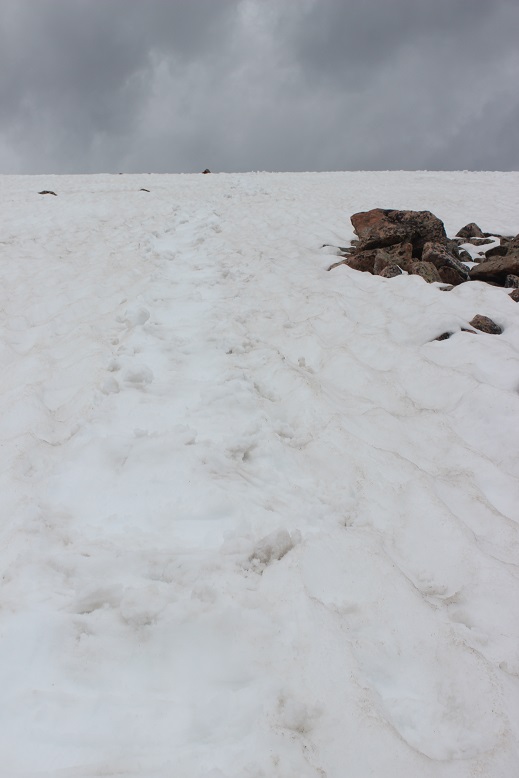
I made it back to the switchbacks and when I came to snow put back on my snowshoes. This section looks short, but it’s actually a long and steep descent (which is made ‘easier’ with the switchbacks I couldn’t see under the snow, so I just headed straight down).
The sun had warmed up the snow, and what had been solid on my way in was now the consistency of a slushie. Each step I took I sank in the snow past my knees, and my trekking pole and ice axe were useless. I was sliding everywhere, and finally gave up and glissaded down. The couple behind me kept getting their feet stuck in the snow between rocks. The conditions were terrible, and I mentally high-fived myself for an early start: I wouldn’t have been able to descend Point 13,373 at this time of day.
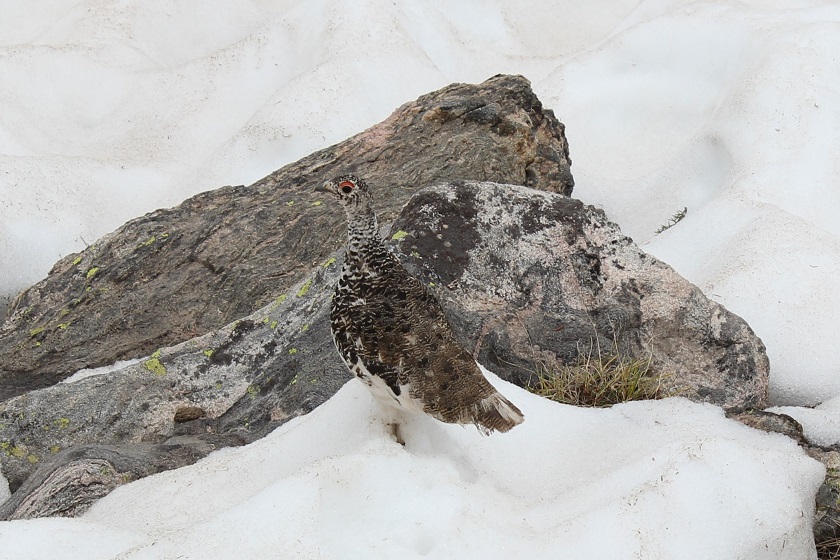
Oh, and I saw a ptarmigan. I love those guys!
Snow stopped at about 11,700’ and everything was wet again, including my feet. The slushy snow had gotten inside my boots and my feet were soaked through. Changing socks wouldn’t have helped because my boots were wet as well. I didn’t even bother taking off my boots for the creek/waterfall crossings because they were already soaking wet
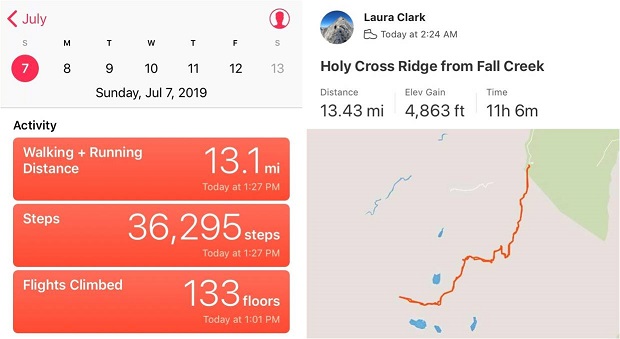
I made it back to my truck at 1:30pm, making this a 13.5 mile hike with 4863’ in elevation gain in 11 hours.
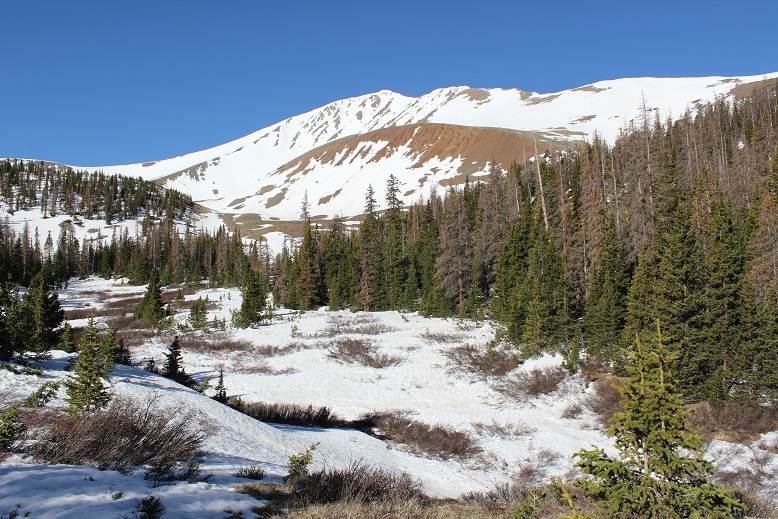
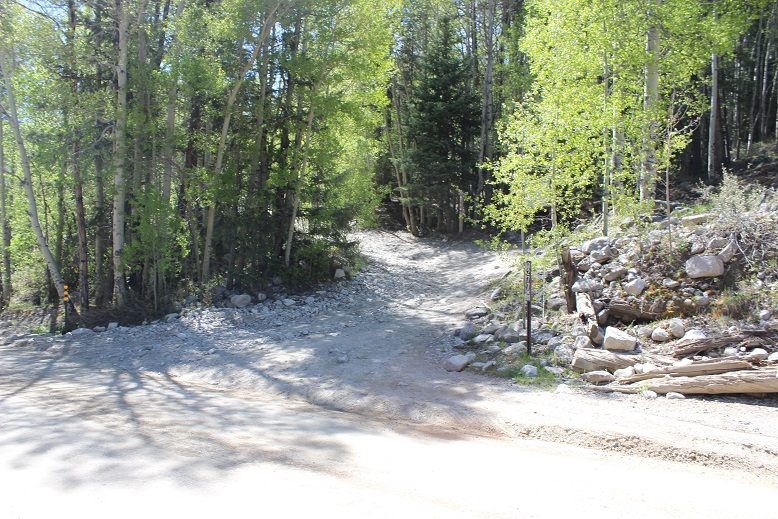
Today became a ‘Surprise! You’re free to hike!’ day at the last minute, which I quickly took advantage of because I was unable to get out last weekend. Luckily the weather cooperated as well. The 2WD road in to the Baldwin Gulch Trailhead was completely clear and dry all the way to the lower 2WD trailhead.
In the dark I could hear and kind of see Chalk Creek. It sounded like it was raging and looked dangerously close to reaching its banks in some areas. I seriously wondered if it would start to overflow later in the day. I’ve driven up the 4WD #277 road before, and even if it was open I didn’t much want to drive it again, so I parked along the side of the road (in the dark not seeing the lot just before the trailhead) and got my gear ready.
I was on the trail just after 3am.
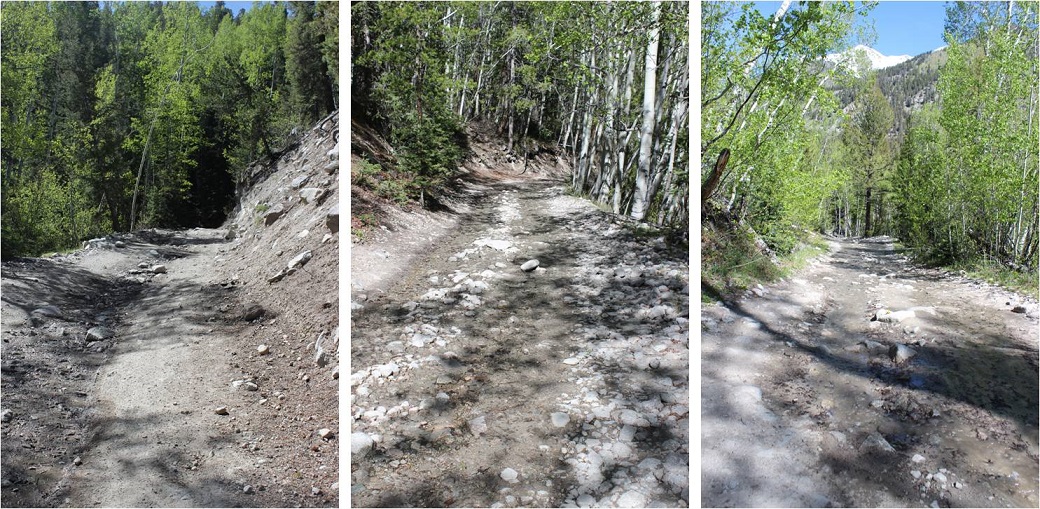
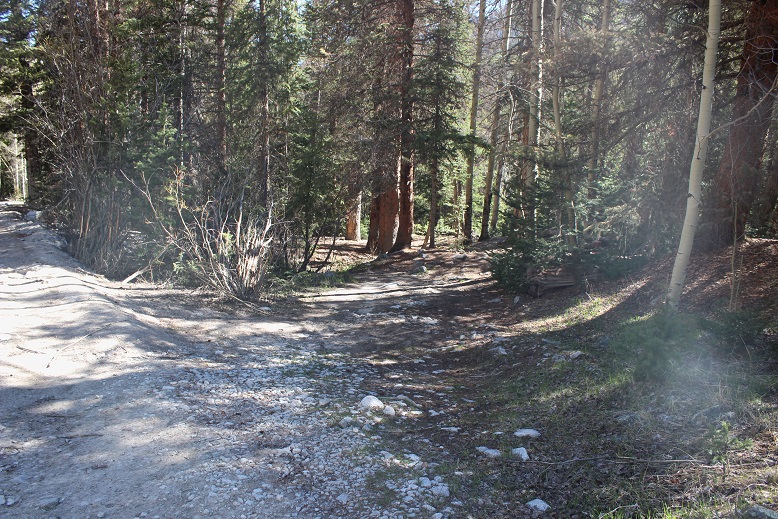
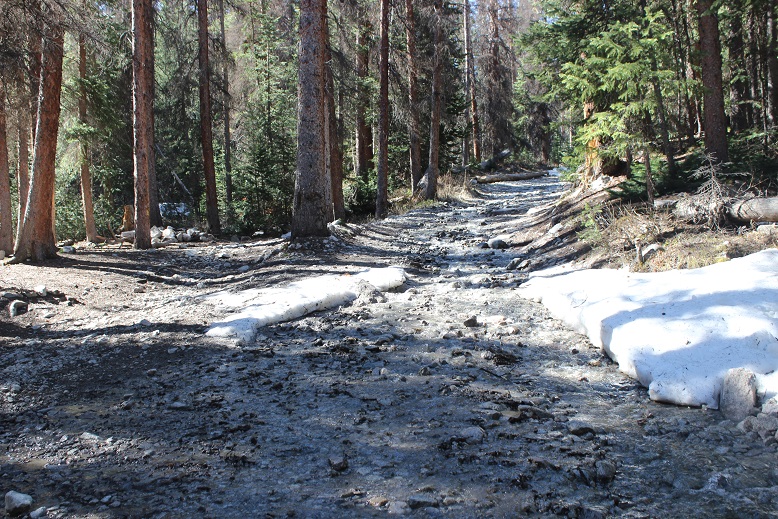
The #277 Baldwin 4WD road was worse than I remember it from 2017 and I was immediately glad I’d chosen to park at the 2WD area. The road was in full spring conditions, with a river of water running directly down the road.
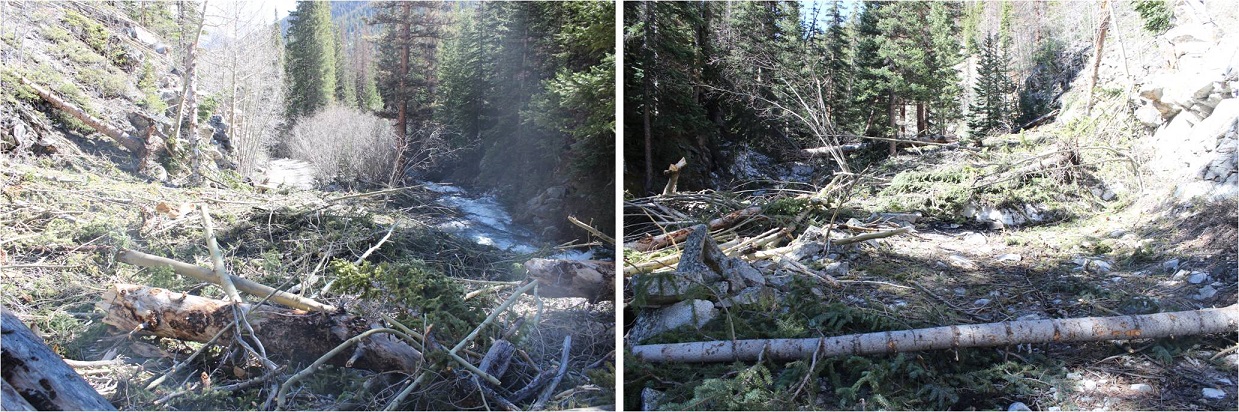
After following the road for about 2 miles I came across avalanche debris blocking the way. It wasn’t too difficult to navigate around, even in the dark, but it looks like it’s going to be there for a while and vehicles can’t cross the area.
If you do decide to drive up the 4WD road there are 2 camping spots with parking for 1 car each before you get to the avy debris. The last spot is located at 10,530’. It’s also the last place to turn around before the debris. I’d just recommend parking at the bottom and hiking in though, as it’s an easy hike.
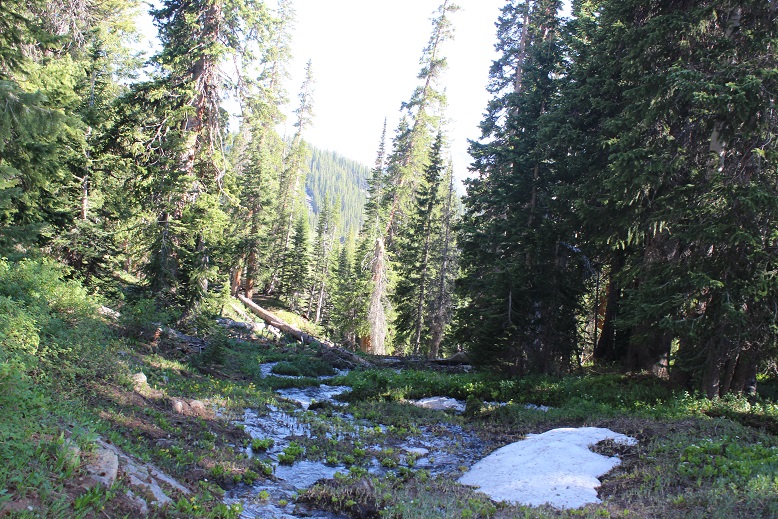
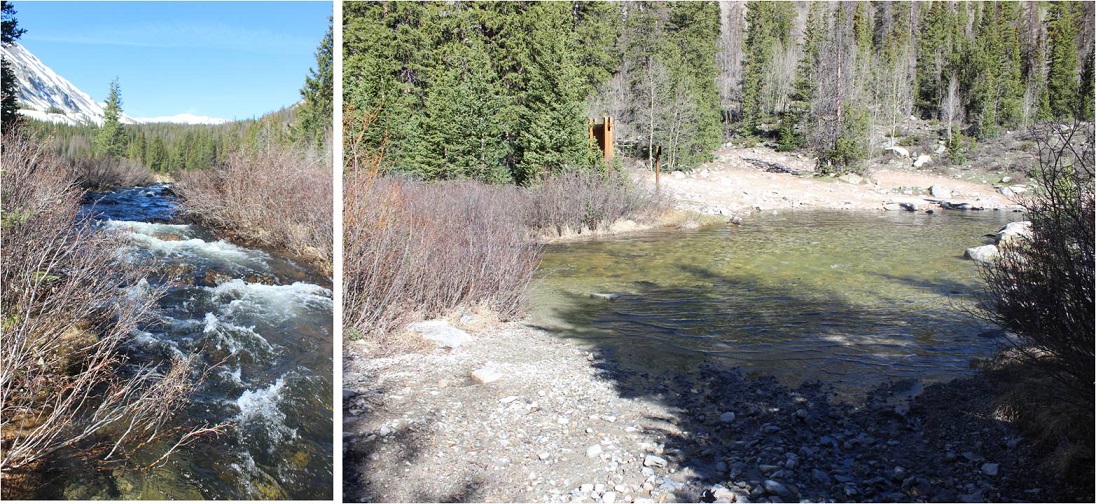
After the avy debris the water on the road really picked up. It seemed the creek was overflowing its banks here and I easily crossed through a couple inches of water for hundreds of feet
There was also evidence of moose in the area along the trail, but it didn’t look too recent. I made it to the first Baldwin Creek crossing while it was still dark. I couldn’t see how deep the creek was, but my plan had initially been to rock hop across the creek on the boulders to the left. I got about halfway across and had second thoughts: the rocks were slippery and some were under quickly flowing water. I was going to have to jump to make the last few and would most likely end up in the creek in the process. So I backtracked and thought about what to do.
I don’t feel safe crossing streams barefoot, and I hadn’t brought extra shoes/sandals/socks, so if I was going to ford the creek I was going to have to complete the rest of the hike in wet shoes with soggy socks. This did not sound appealing, and I knew soggy socks would turn into ice socks when I got further up in elevation. I gave my summit a 50% chance of happening if I forded the creek but knew if I stopped now that number dropped to 0%. I decided to go for it. In the dark I studied the water and looked for the safest area to cross. This ended up being close to the mouth of the creek. I put my electronics in my pack, adjusted my trekking pole, and took a step in the water. Woot! My foot stayed dry! The rocks were not as slippery as I’d imagined, but I was still careful and gingerly crossed the stream. I took three more steps before my hiking shoes slowly started filling up with water.
I made it to the other side of the creek without incident. The only casualty was my wet feet. I kept hearing squish-squish with each step I took. This was not going to be enjoyable. Oh well, on I went.
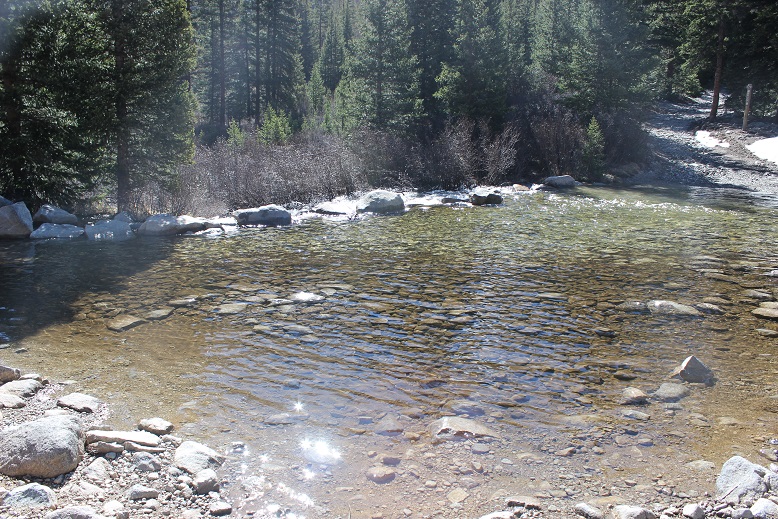
It wasn’t long before I came to the second creek crossing, and since my feet were already wet I didn’t hesitate and just walked through this one as well.
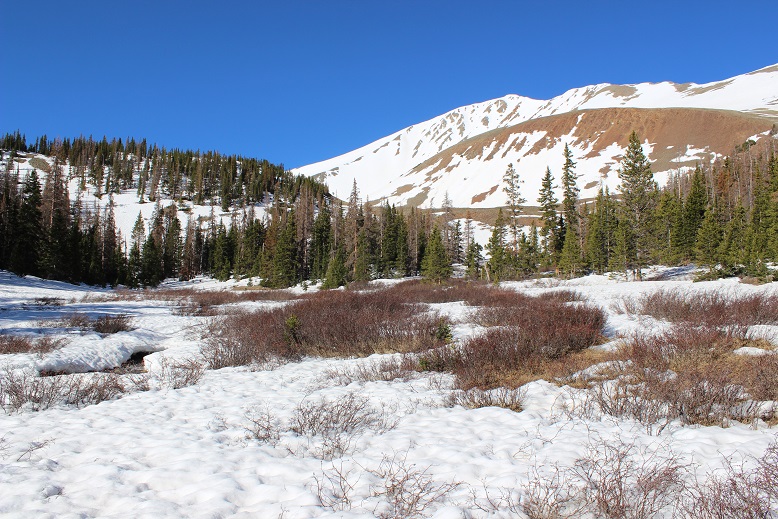
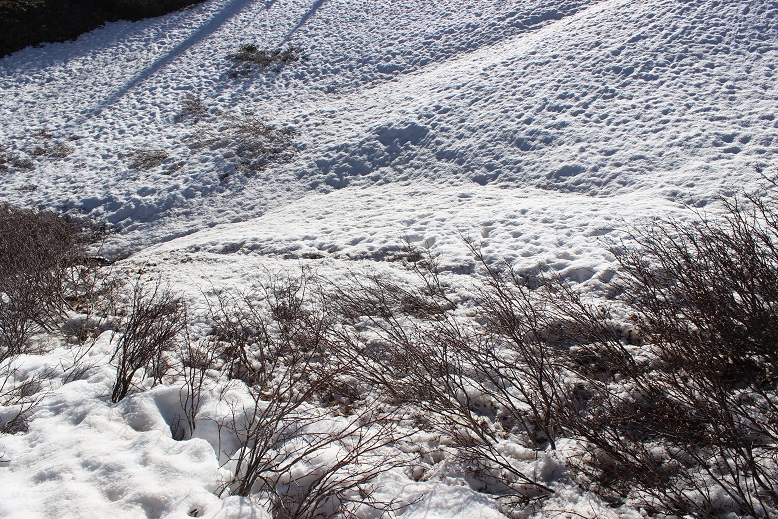
This is where the snow started. Since it was still early morning it was consolidated and I was able to walk on top of the snow. As I continued up the trail I encountered more and more snow.
About a mile after the first Baldwin Creek crossing I turned right and entered the trees, aiming for where I mentally knew the willows area should be. I immediately sank up to my waist in snow, but I’m stubborn, so I had to sink about 10 more times in the next 10 more steps to break down and put on my snowshoes. From then on out I didn’t posthole (much). Oh, and my wet toes were beginning to freeze inside my wet socks.
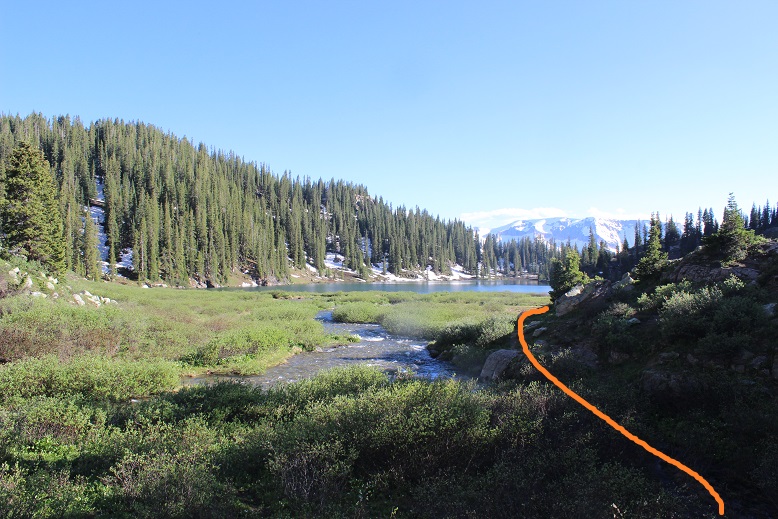
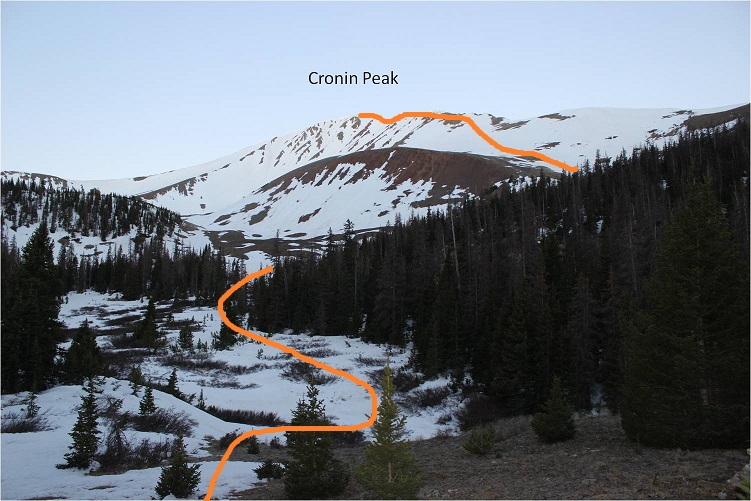
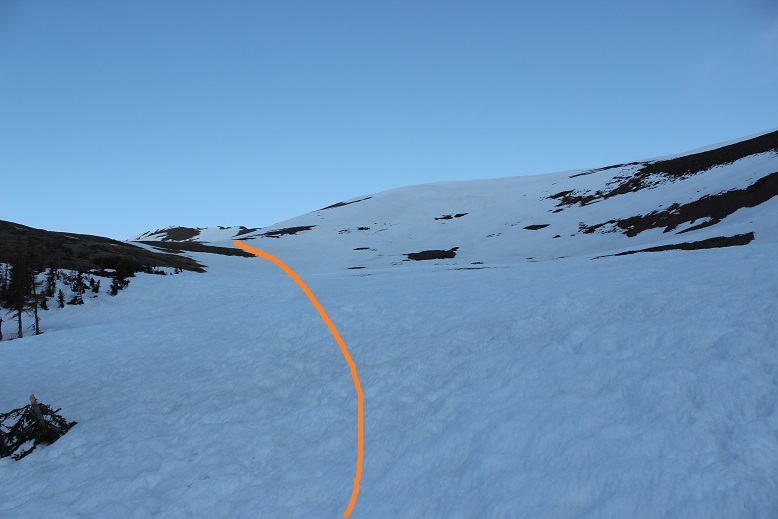
I didn’t feel like I walked very far before I was in a clearing and could see the willows and the rest of the path before me. The sun was also starting to rise, which was nice. Here’s the route I took, staying out of the trees and going straight up the gully
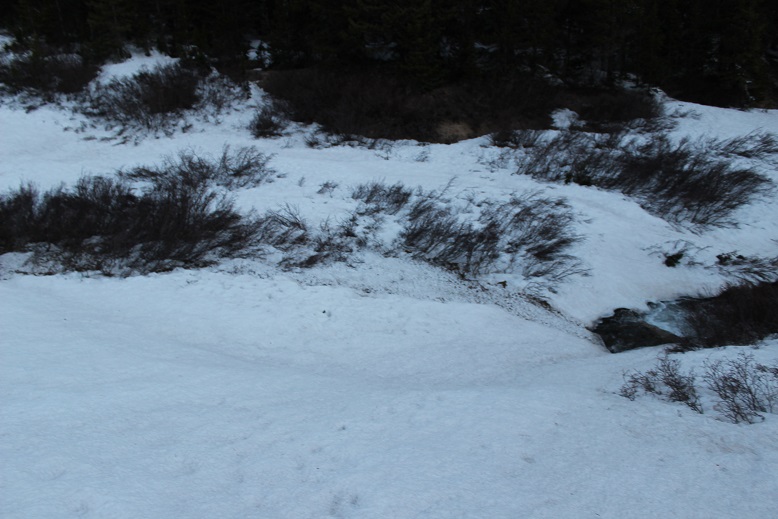
Luckily there was a small snow bridge over the creek in this area, so I didn’t need to get my feet wet again. I could hear the water rushing underneath, and asked myself if the snow bridge would still hold me this afternoon on my way back?
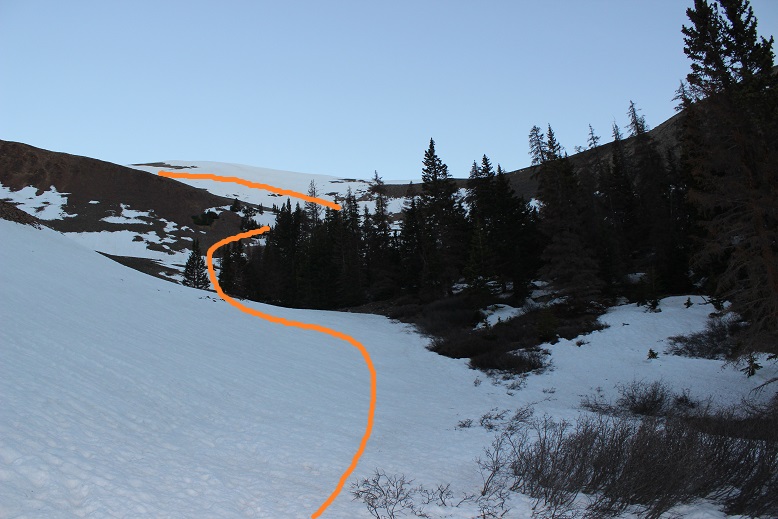
After crossing the stream I navigated around the trees, sticking to the left (southwest). As it rounded I turned west and followed the gully on consolidated snow.
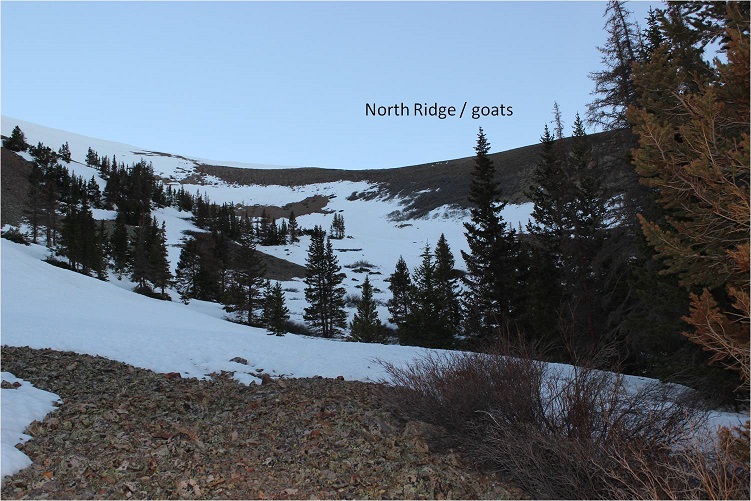
There are a few options from this point to gain the ridge and summit Cronin. One is to take the north ridge, but the scree here didn’t look appealing. Also, there were goats enjoying their breakfast and I didn’t want to disturb them (but it was mainly the scree that made the decision for me).
So I continued following the gully up and to the left (west)
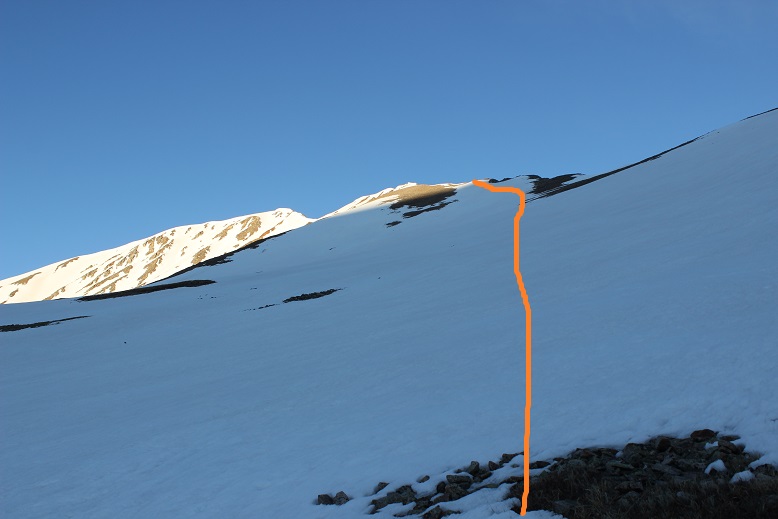
I still had options for gaining the ridge, and decided the safest option was to kind of parallel the ridge as I gained elevation. Here’s the path I took to gain the ridge
My socks were now frozen. I could feel the ice between my toes, but surprisingly they weren’t cold. I decided not to question it and kept going. Gaining the ridge wasn’t difficult, but the snow was starting to soften up.
I gained the ridge close to the false summit, and could see the rest of the trail in front of me. There was just enough snow to walk on and goat tracks to follow.
From the false summit there’s a little bit of a downclimb and I’d been told it included some tricky footwork, but the snow obscured any difficulties. I postholed here once or twice up to my waist, even with snowshoes on.
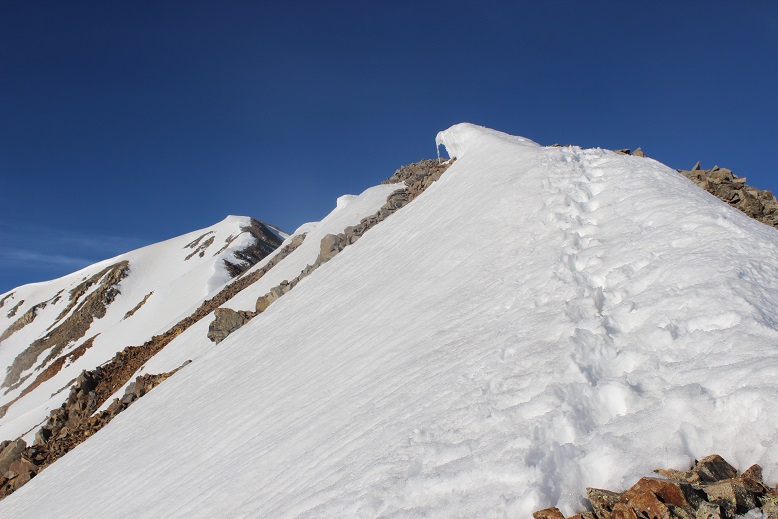
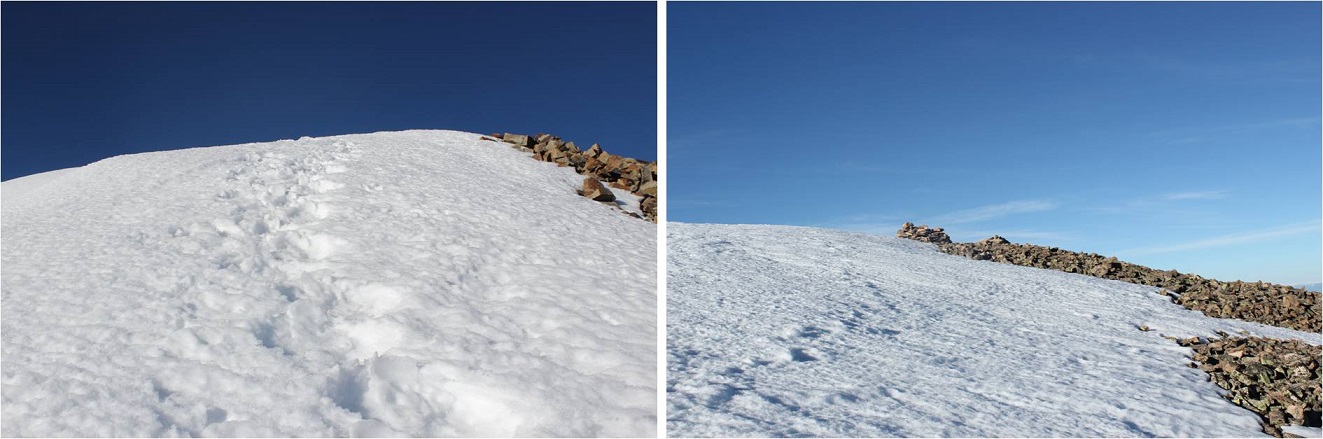
The ridge was one long but squatty cornice. I stayed to the right on the snow and walked where the snow met the dirt.
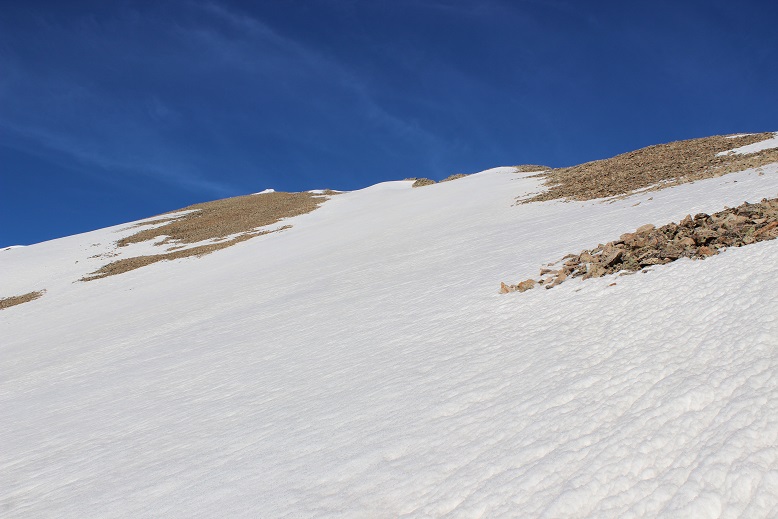
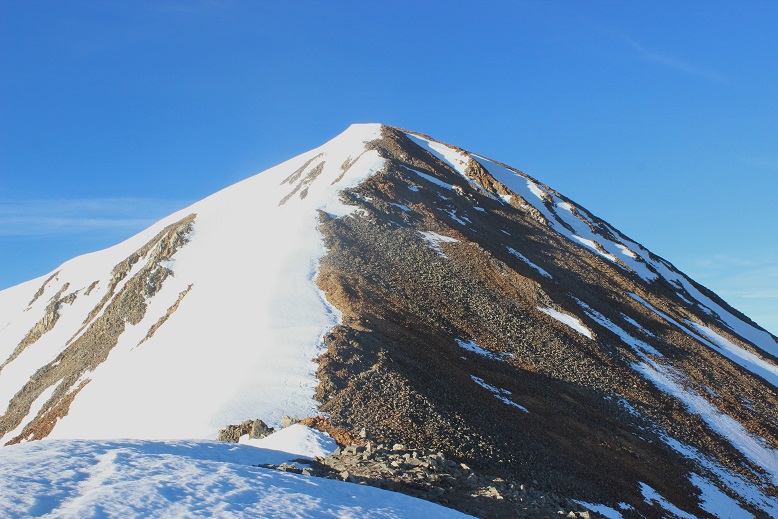
On the final push to the summit the snow got increasingly softer but was still navigable.
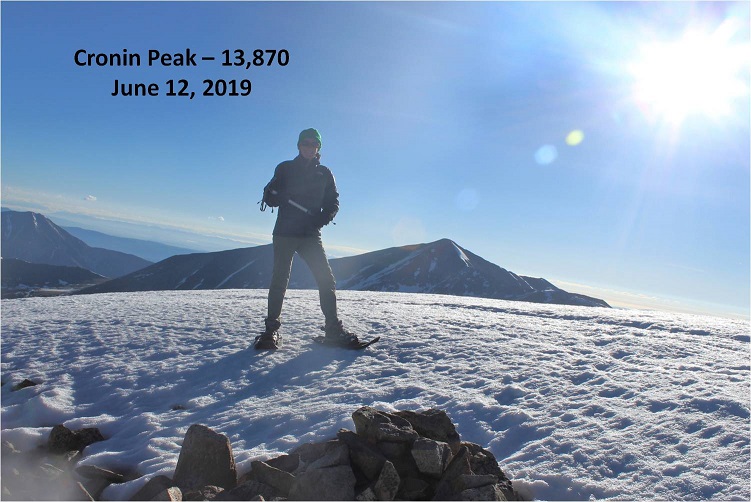
I summited at 7am, and set up my camera with my new gorillapod (which isn’t at all what I’d expected: poor quality but gets the job done).
(For some reason I said Casco, but I was on Cronin. Whoops! Oh well… my fingers were too frozen to try a second time.)
Check out Antero
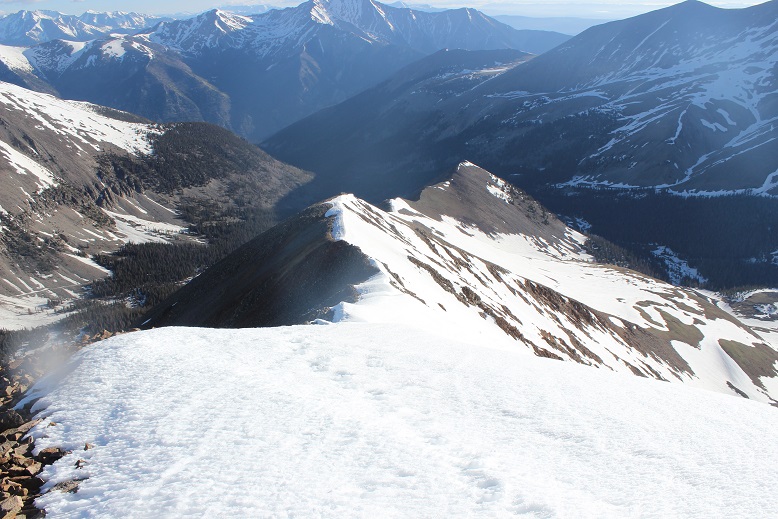
It was windy and my feet were now solid blocks of ice, so I didn’t stay long on the summit. I turned to look back at the way I’d come
Here’s the route I took back
The snow was warming up quickly so I got out my ice axe. It helped me through some quick sketchy sections
The most difficult part of the day was just beginning. This snow section here below the ridge was rapidly warming and became slippery. I had to walk slowly to prevent slipping, yet wanted to make it down before the sun warmed up the snow even more. I couldn’t believe how soft the snow was for 7:30am!
I made it to the top of the gully area, said hi to the goats, and breathed a sigh of relief: I hadn’t slipped once!
Here’s a look back at the route
And a look down the gully
I made it back to the willows, following the tracks I’d made on the way in. My feet had finally defrosted and I was squishing again. From here I decided while I was hiking through the trees I would aim for the ridge directly in front of me
I made my way to the snow bridge and looked back at the mountain. Cronin looks better in daylight!
The snow bridge still held my weight
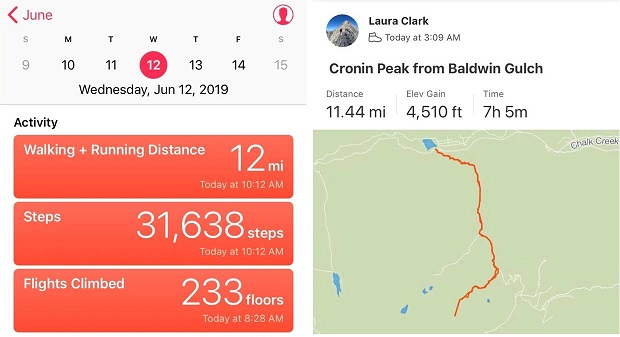
Once in the trees I walked northeast until I made it back to the road. I’d overshot my entry point by a few yards, but was pleased with my navigation skills. My toes had almost dried by the time I made it to the first creek crossing. Both creek crossings were much easier in the light of day, and with the added bonus of previous experience I just walked across them both. I followed the road back to my truck, taking pictures in the daylight of the fun I’d had in the morning, my feet squishing the entire way. I made it back to my truck at 10am, making this an 11.5 mile hike with 4510’ in elevation gain in 7 hours.
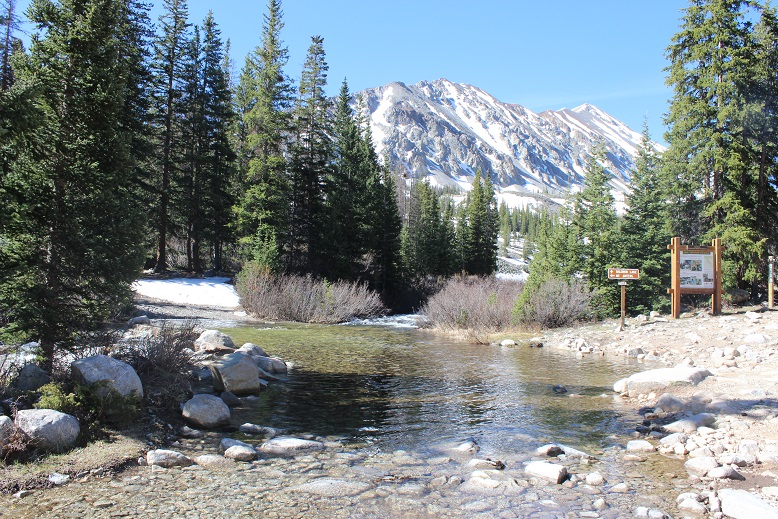
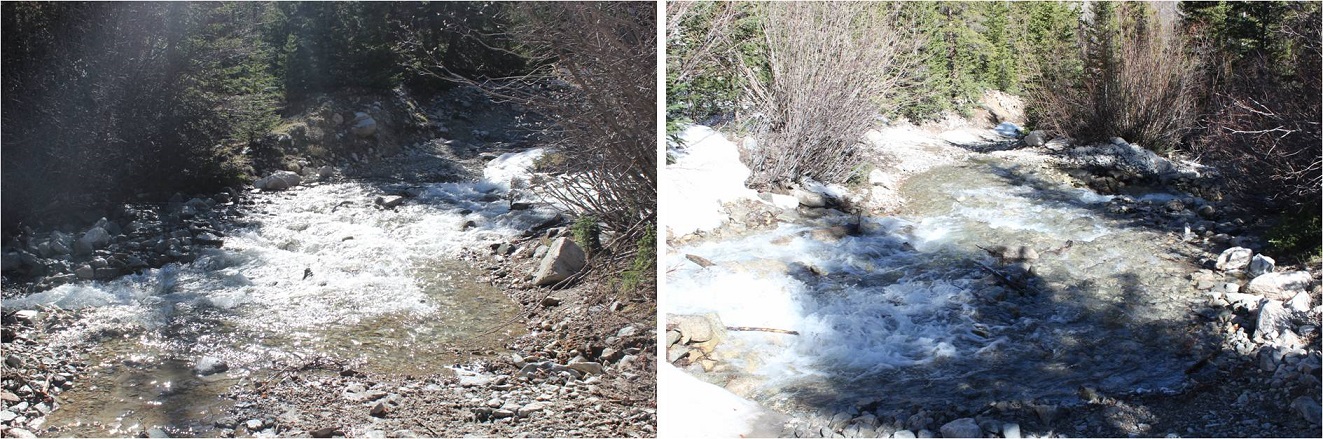
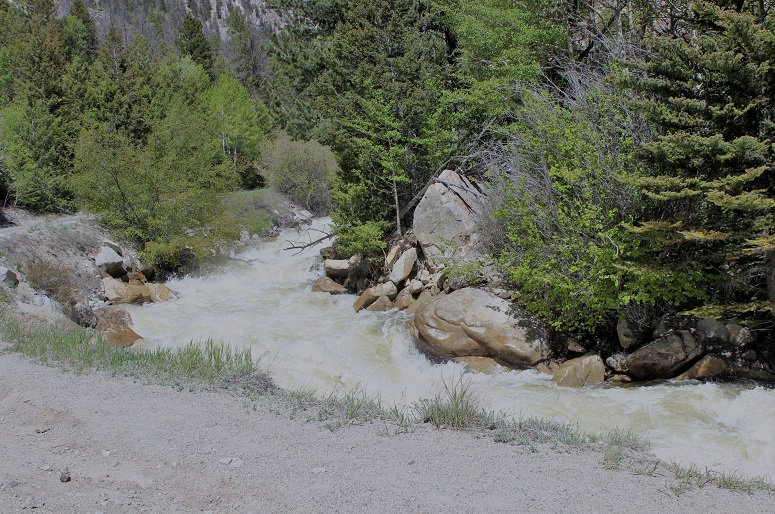
Chalk Creek hadn’t overflowed its banks, but it was raging! Here’s a picture from further down the road





































































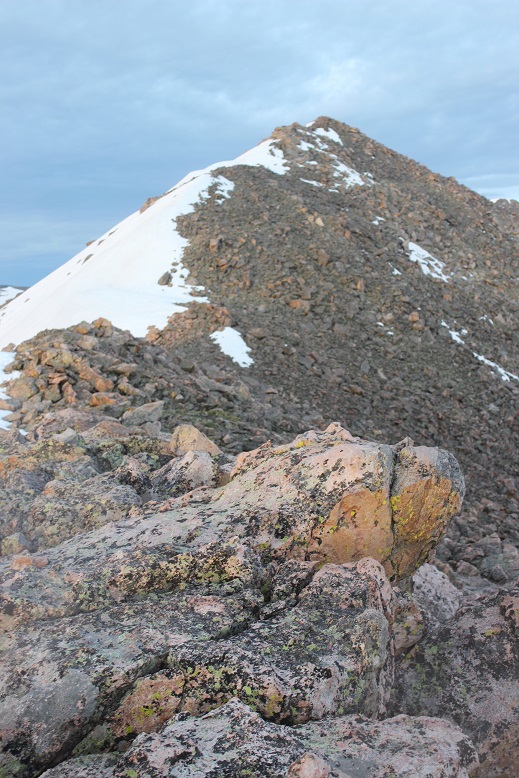

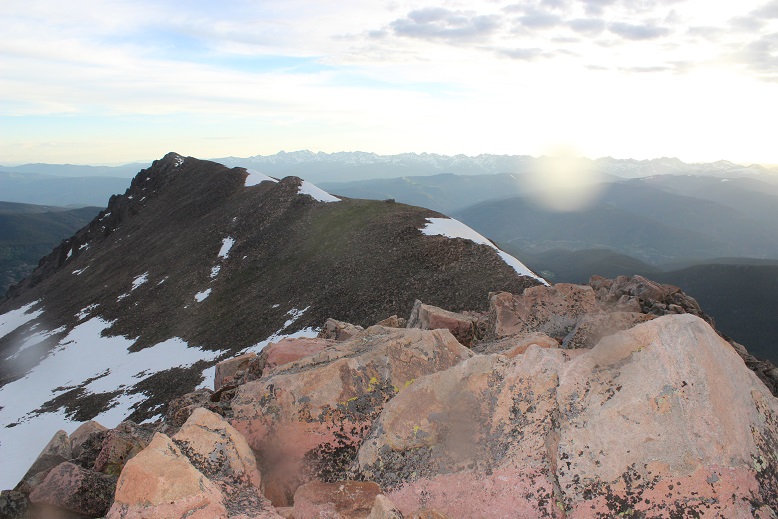

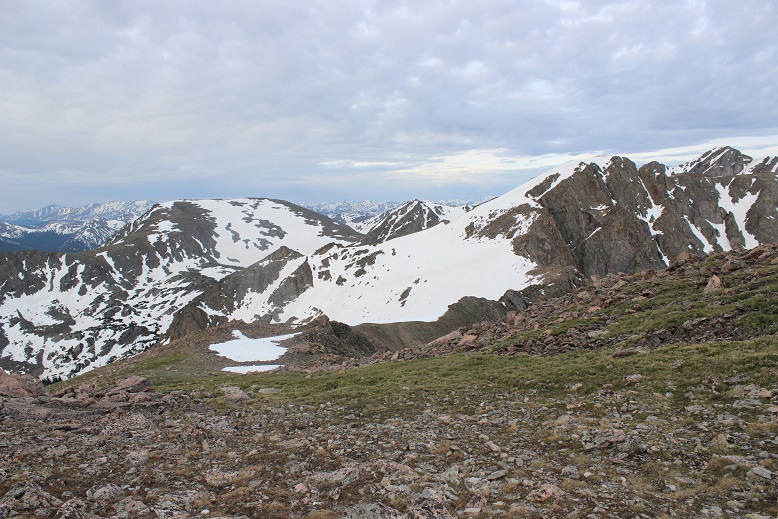


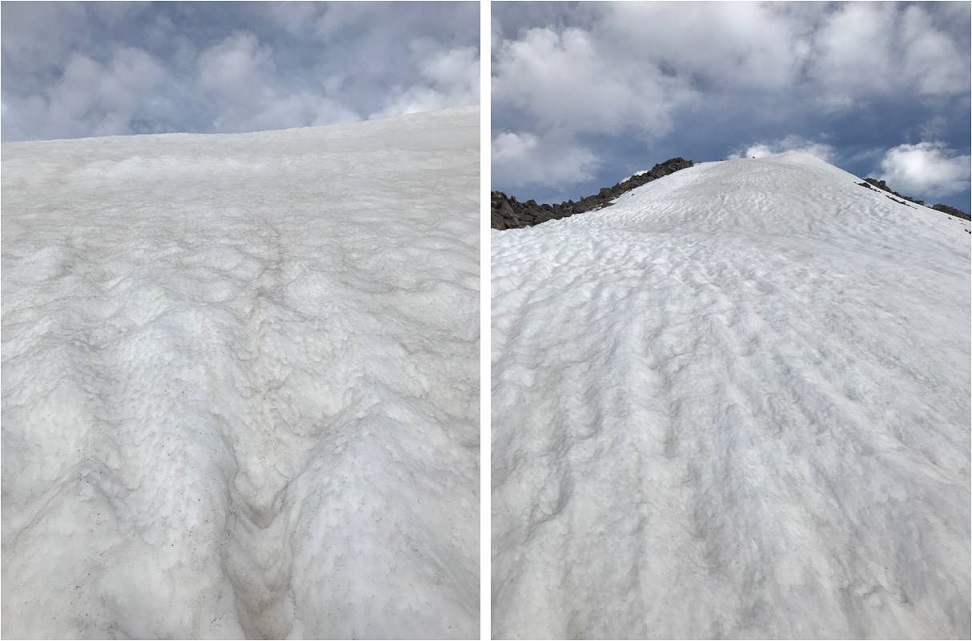

















 Wild Wanderer