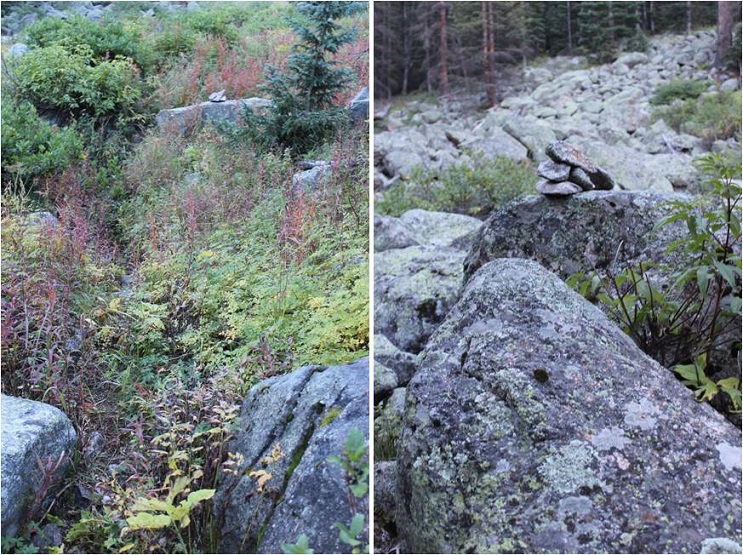
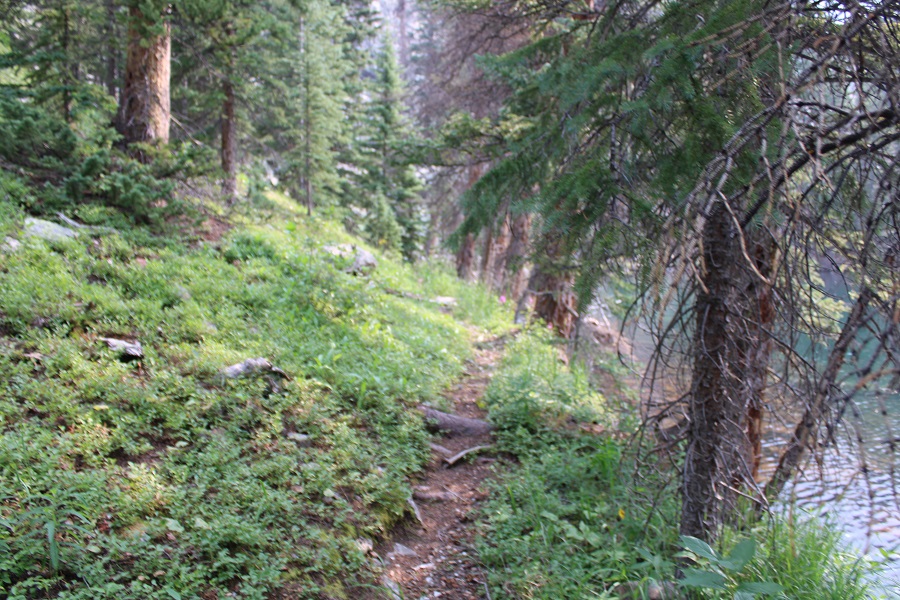
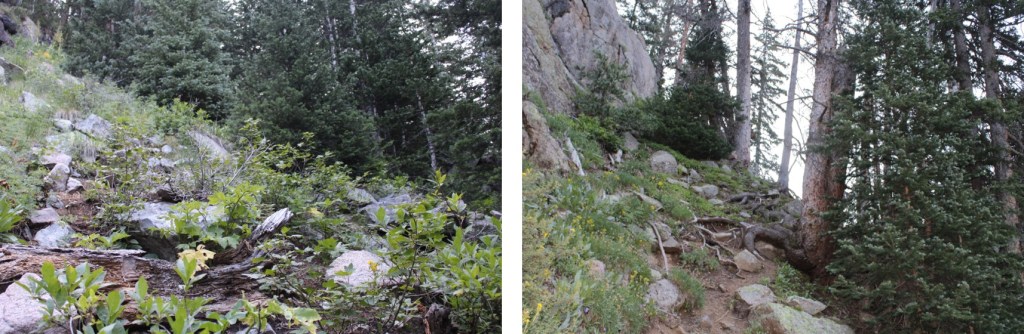
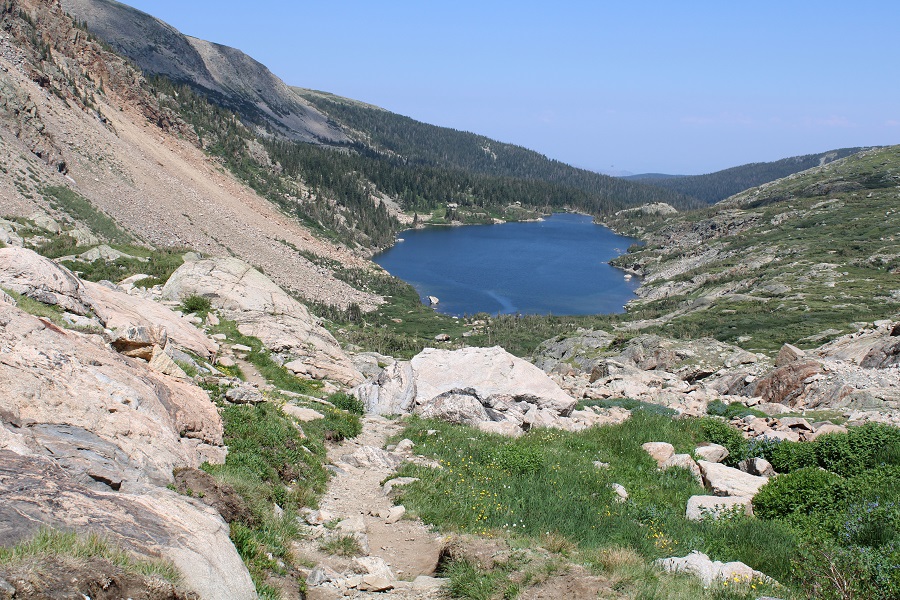
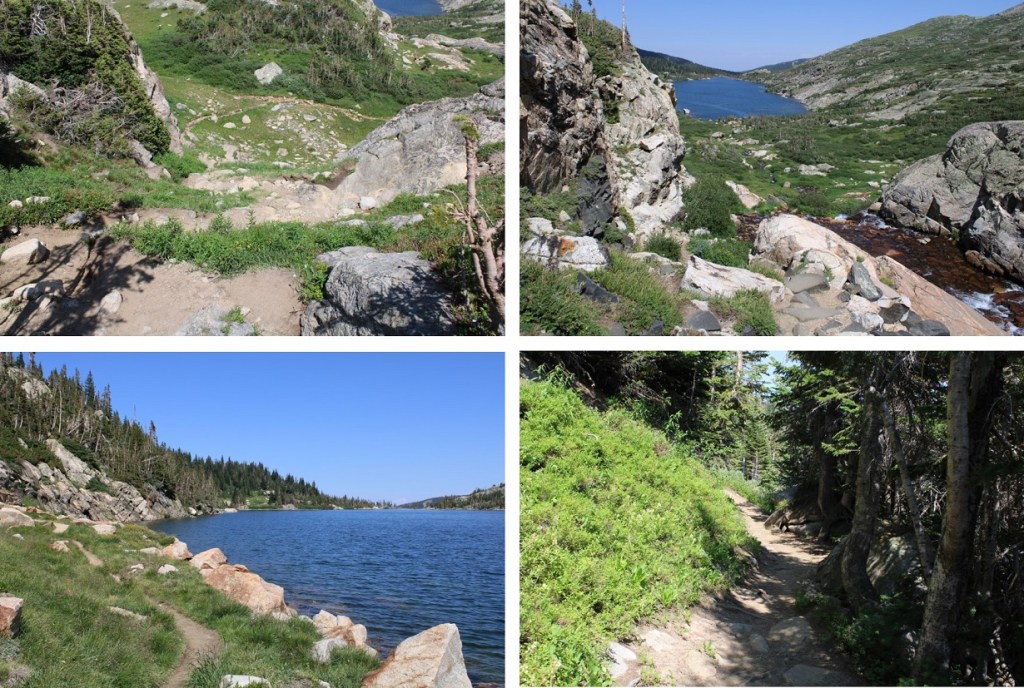
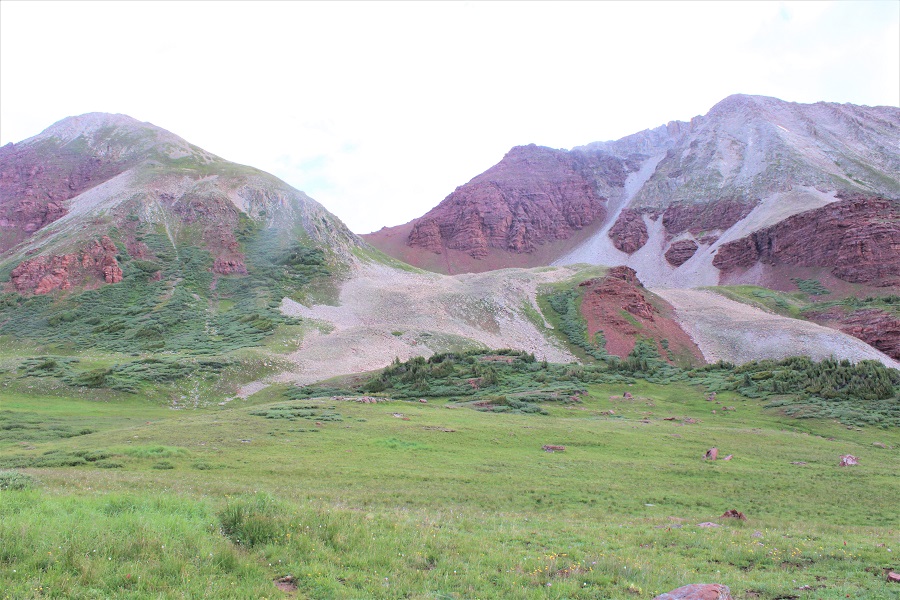
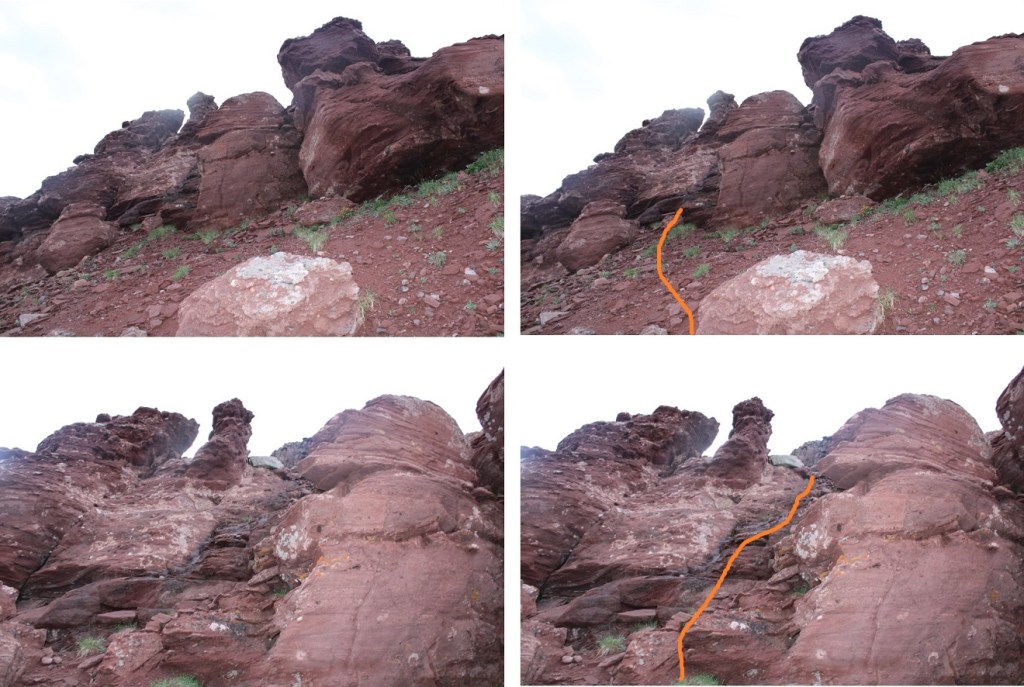
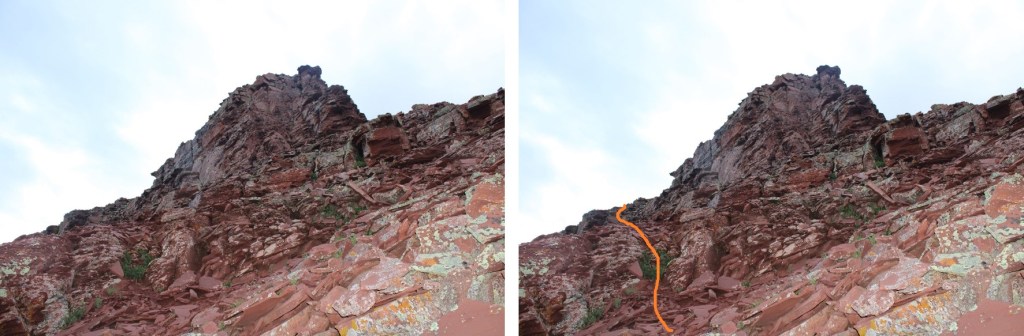
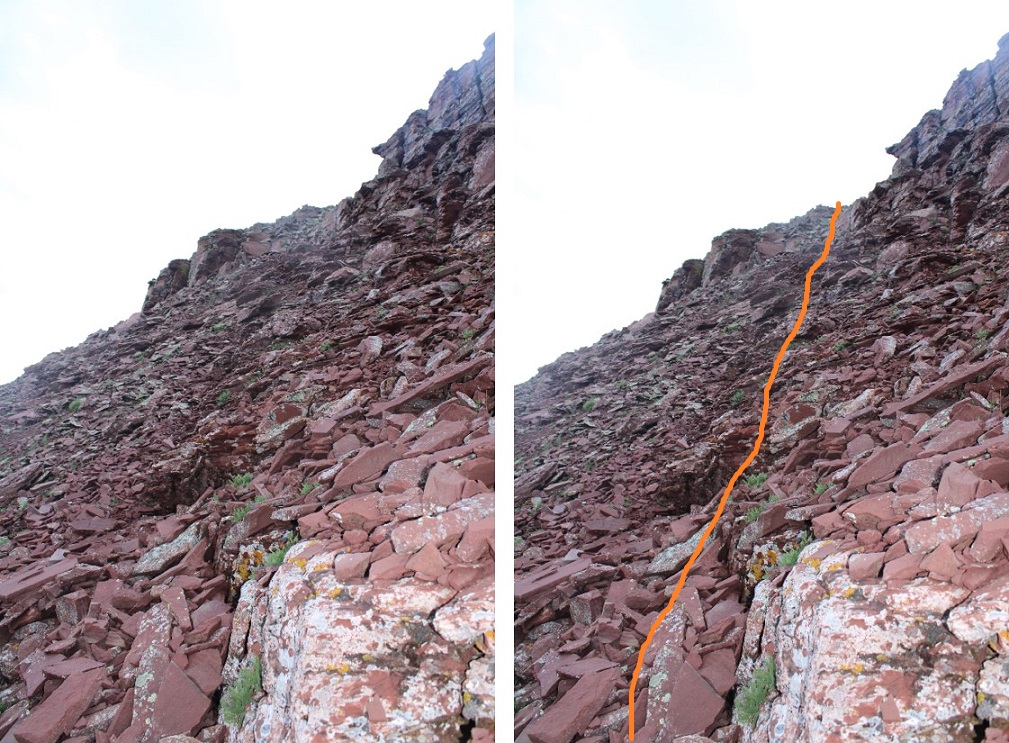
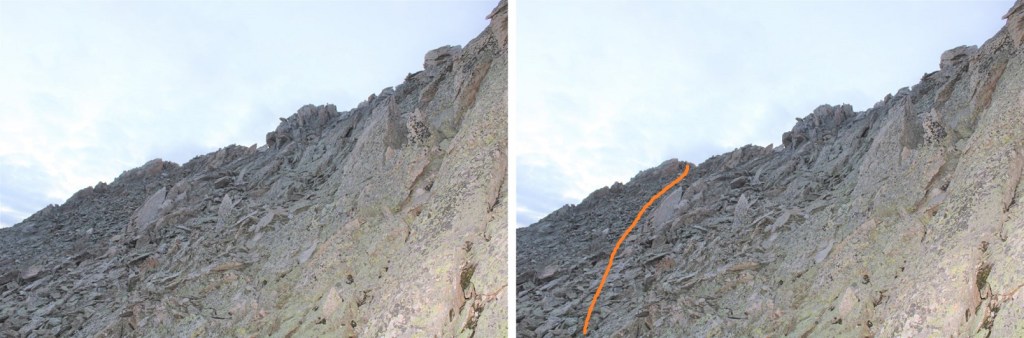
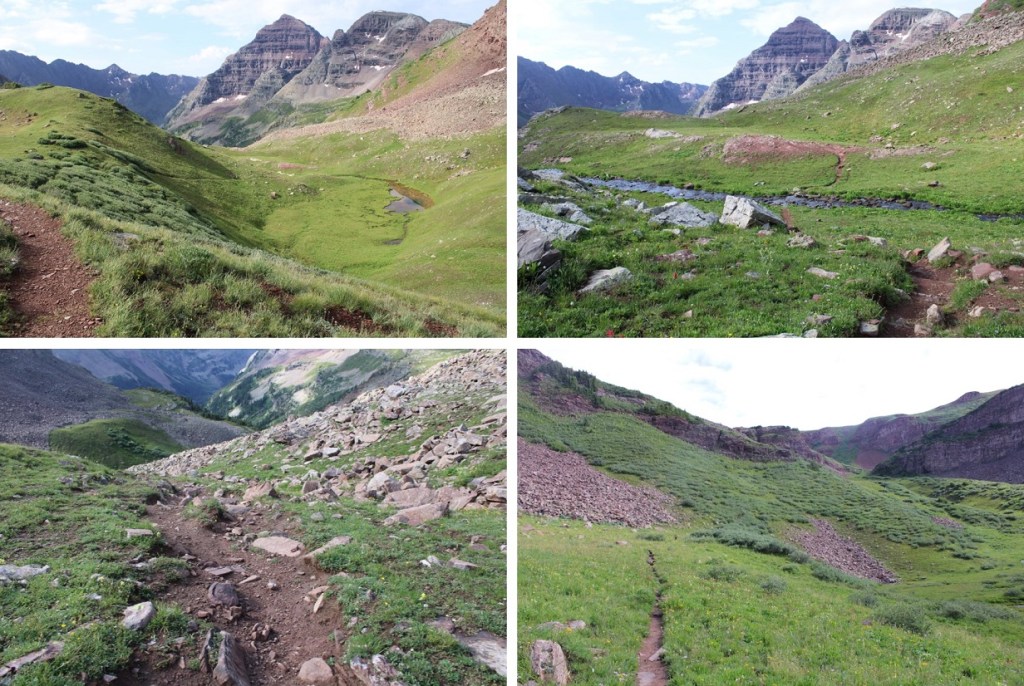
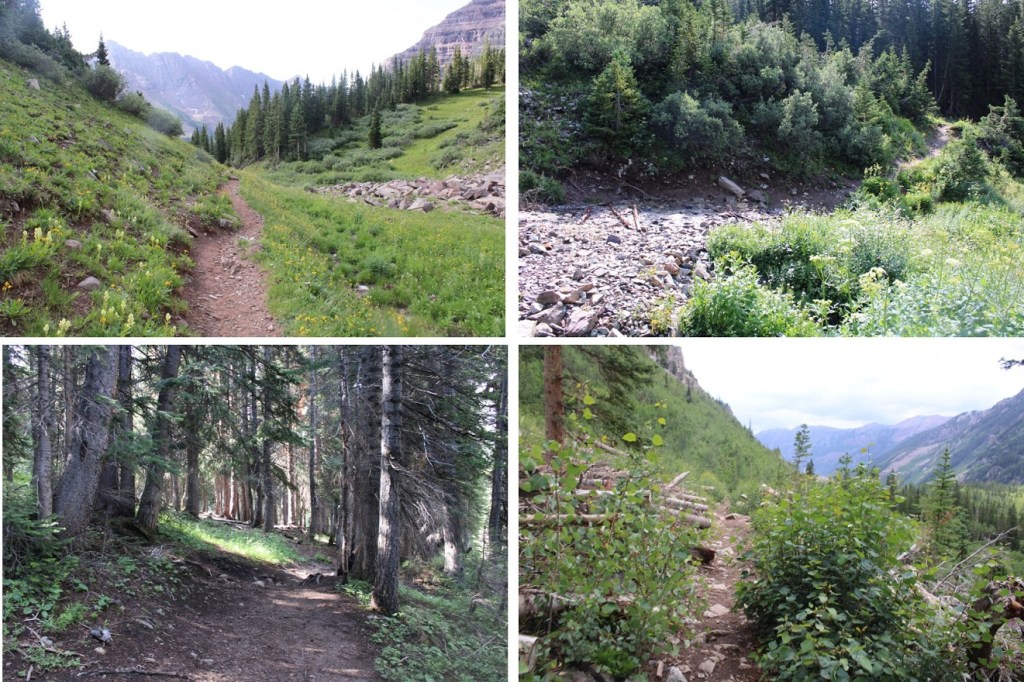
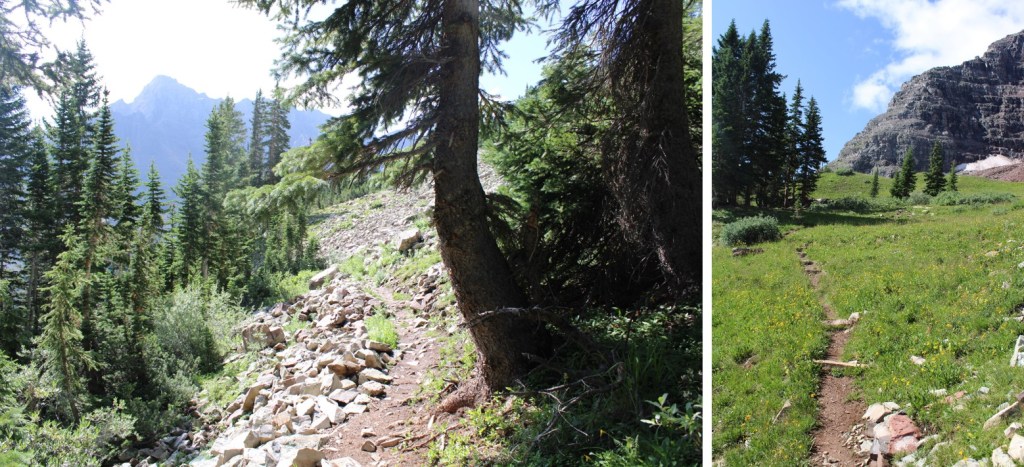
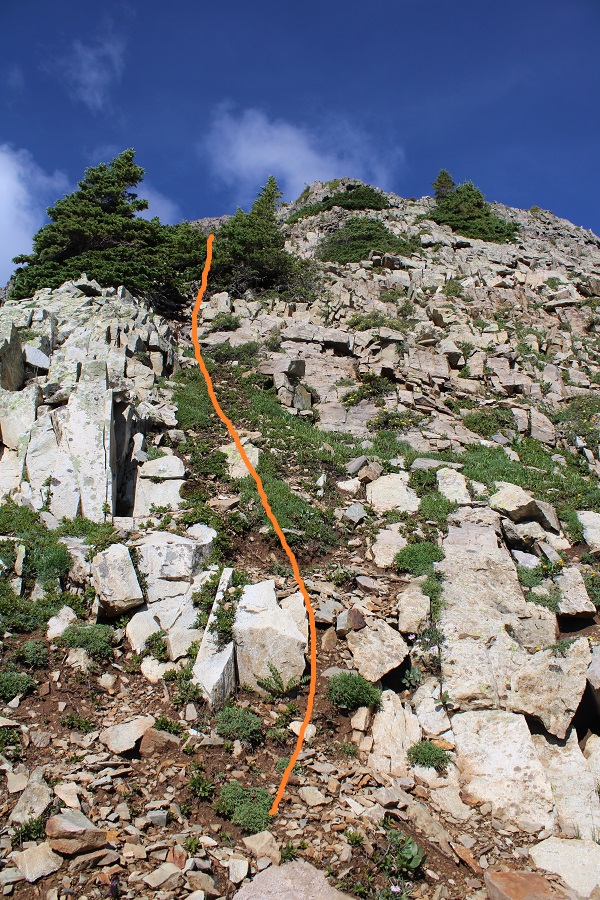
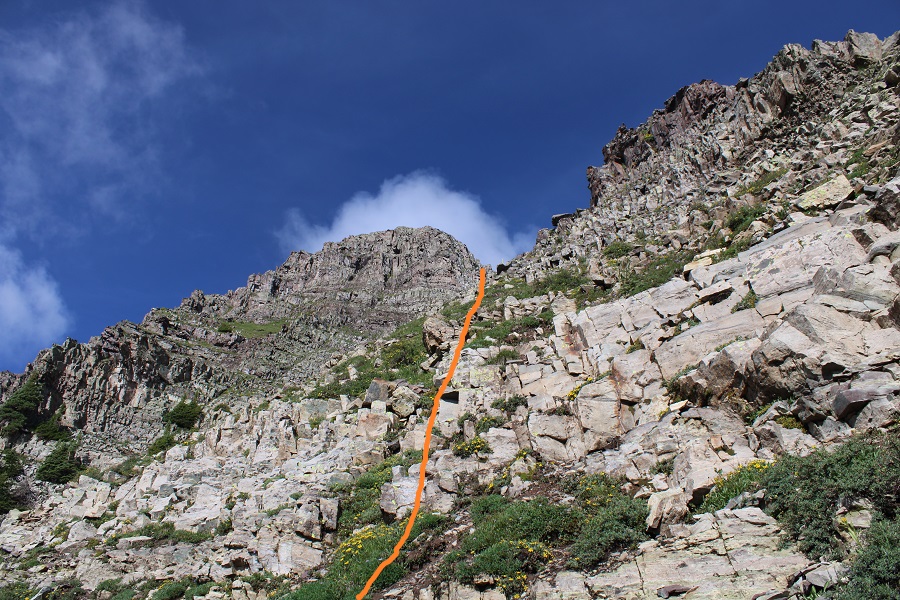
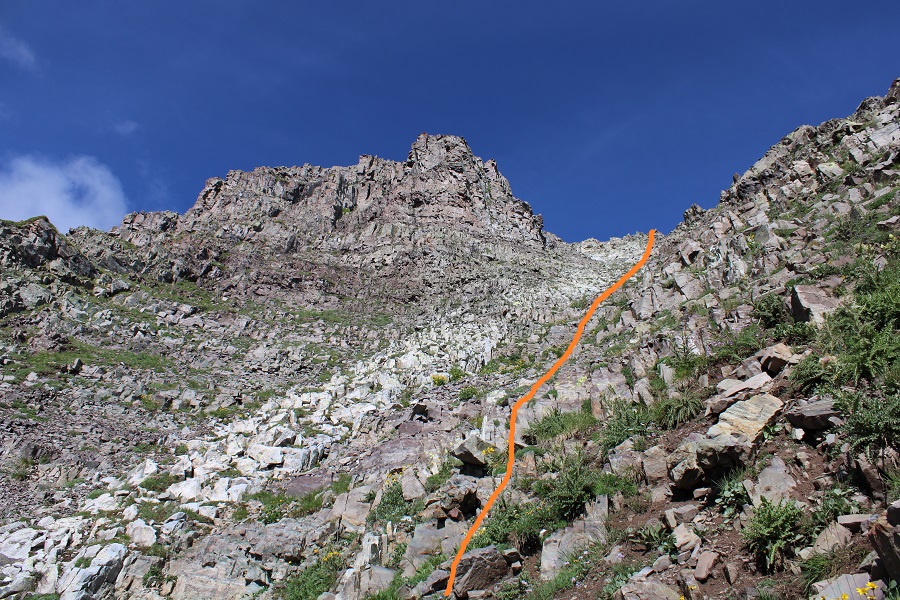
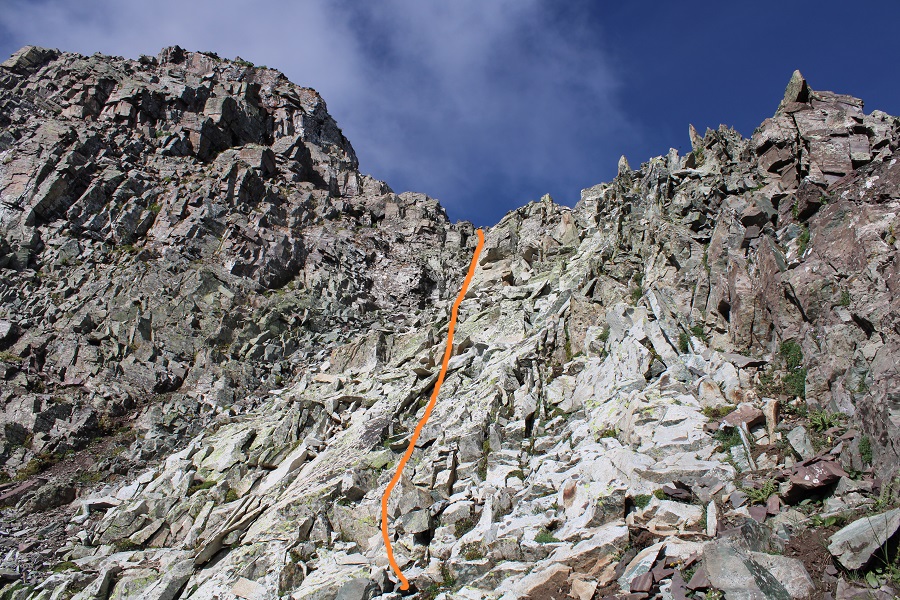
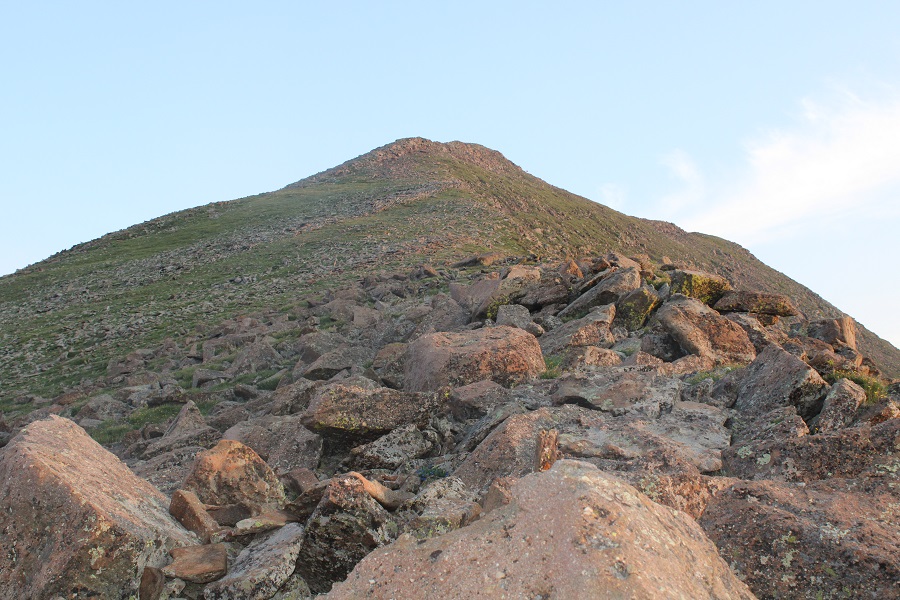
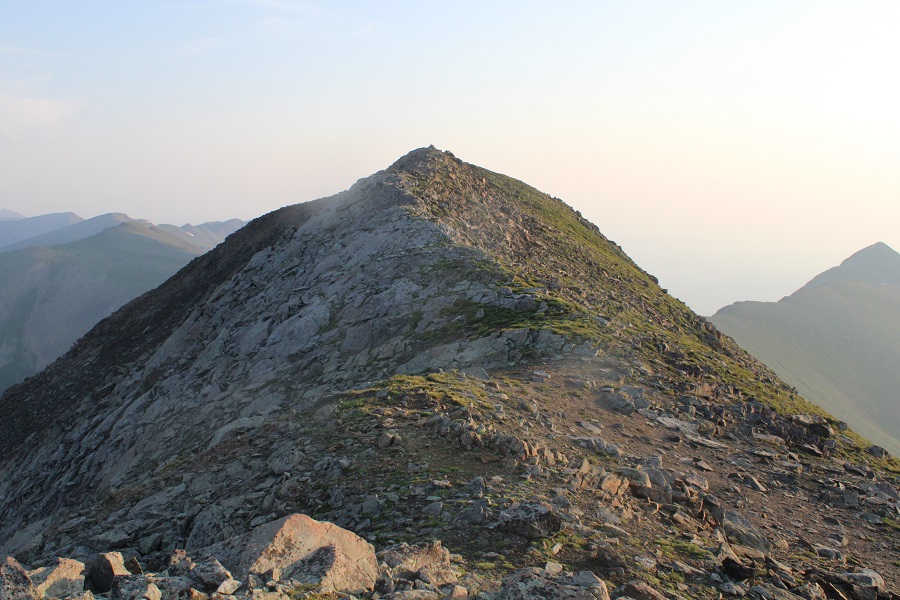
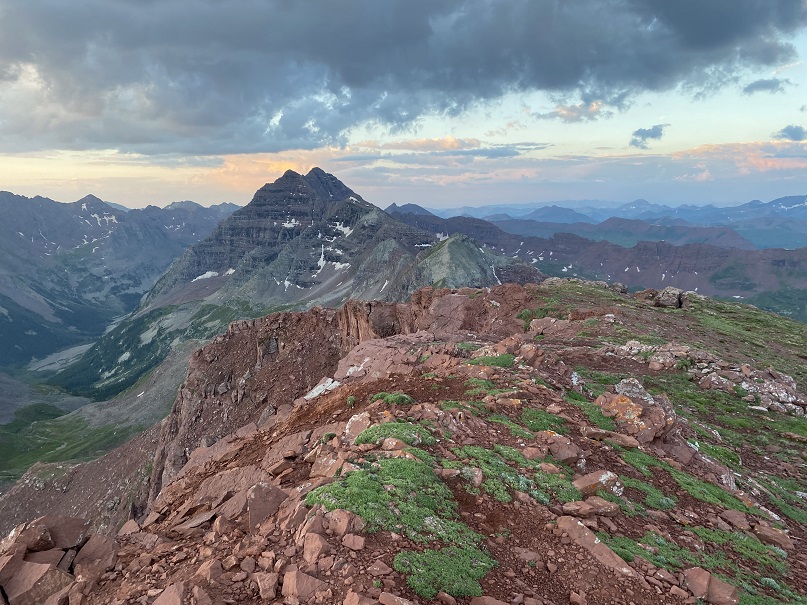
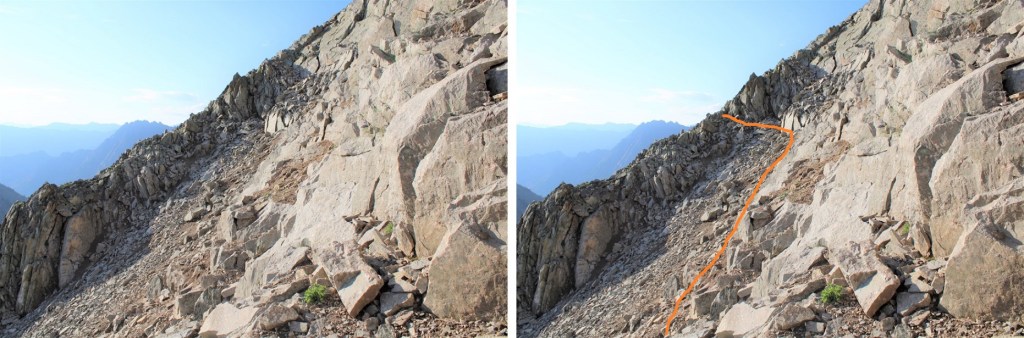
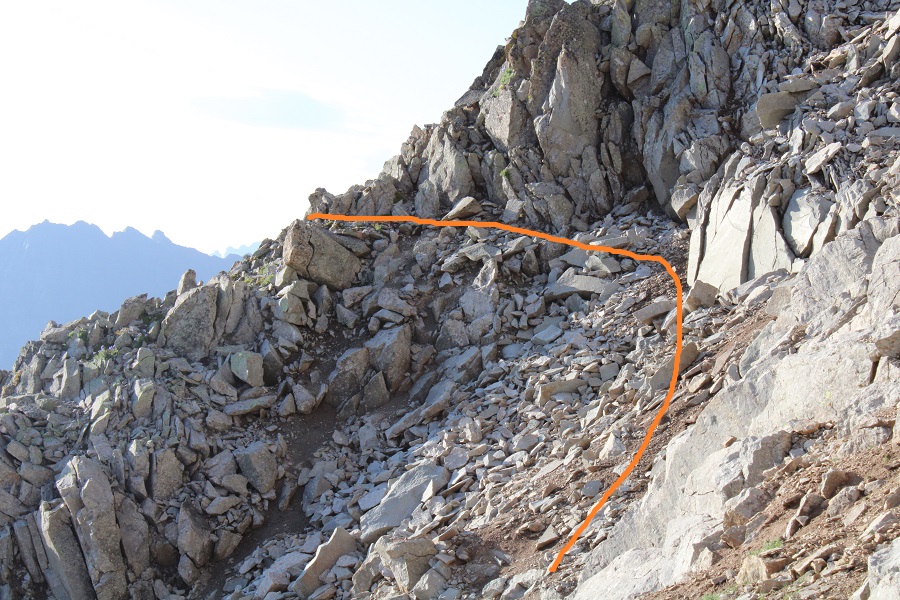
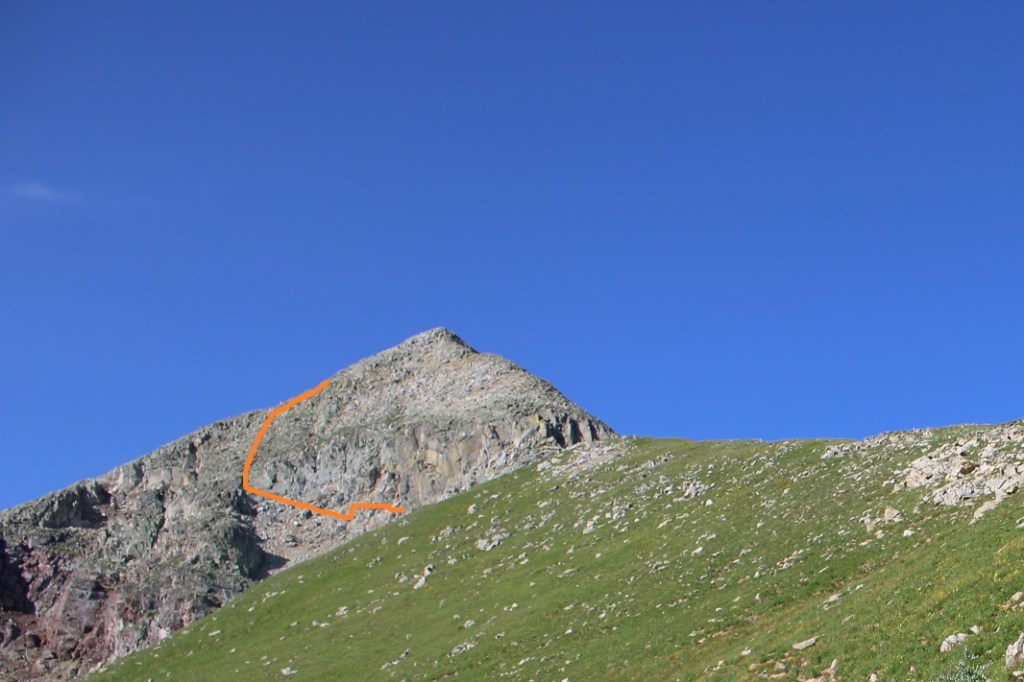
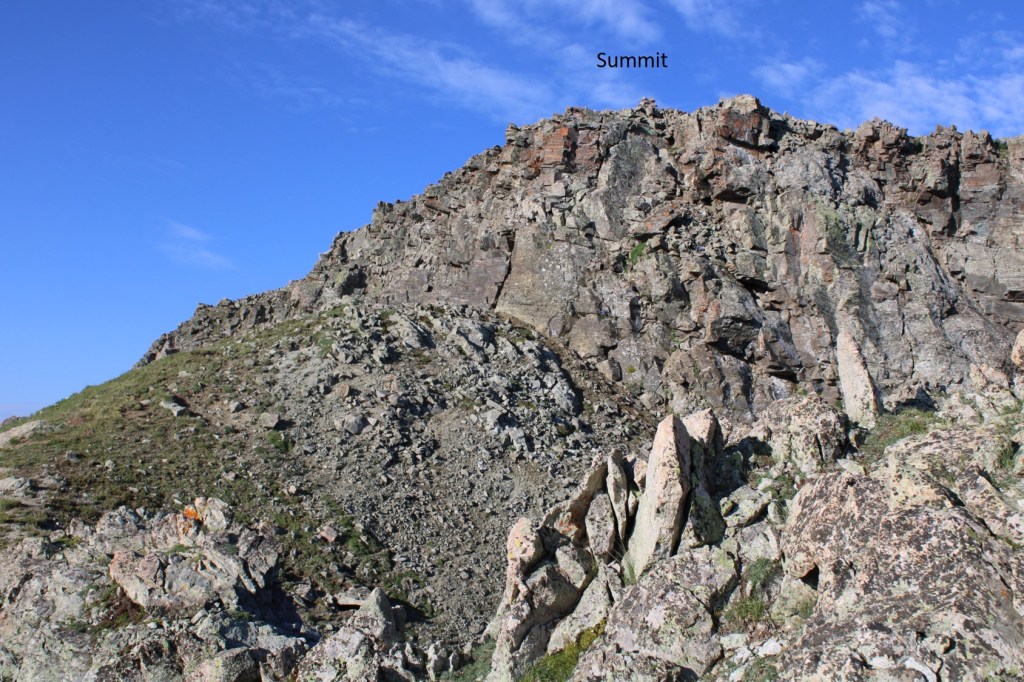
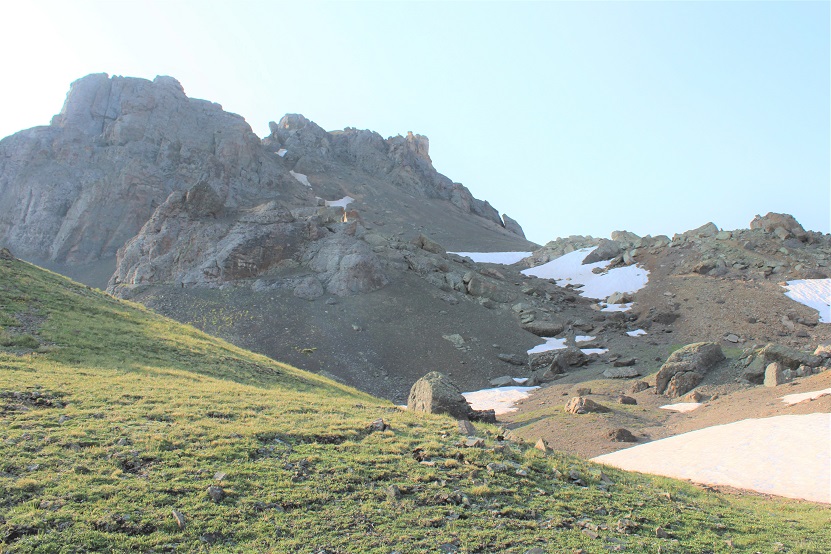
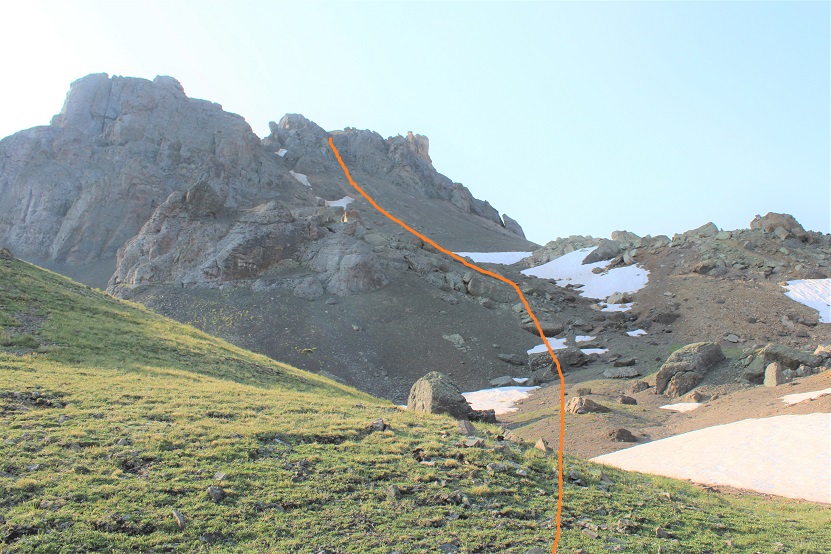
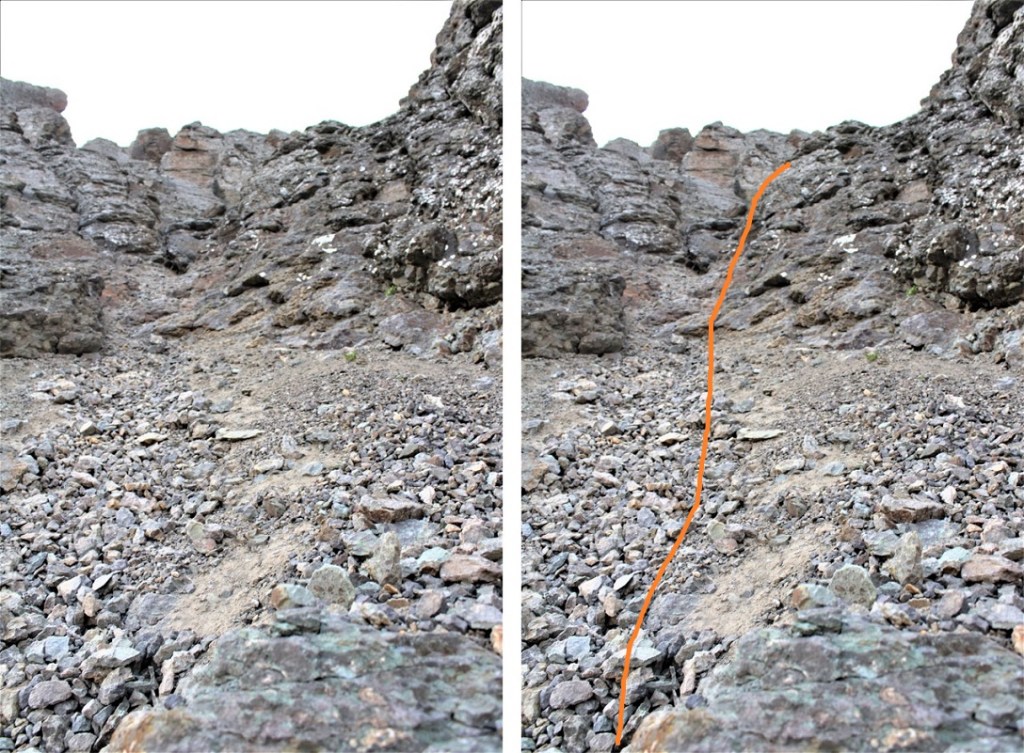
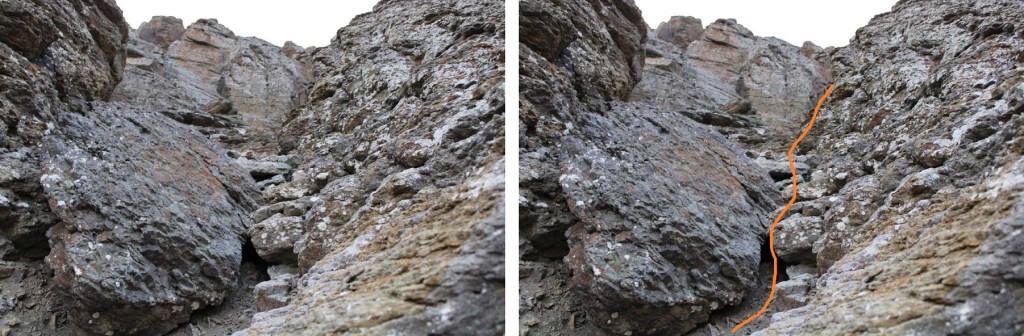
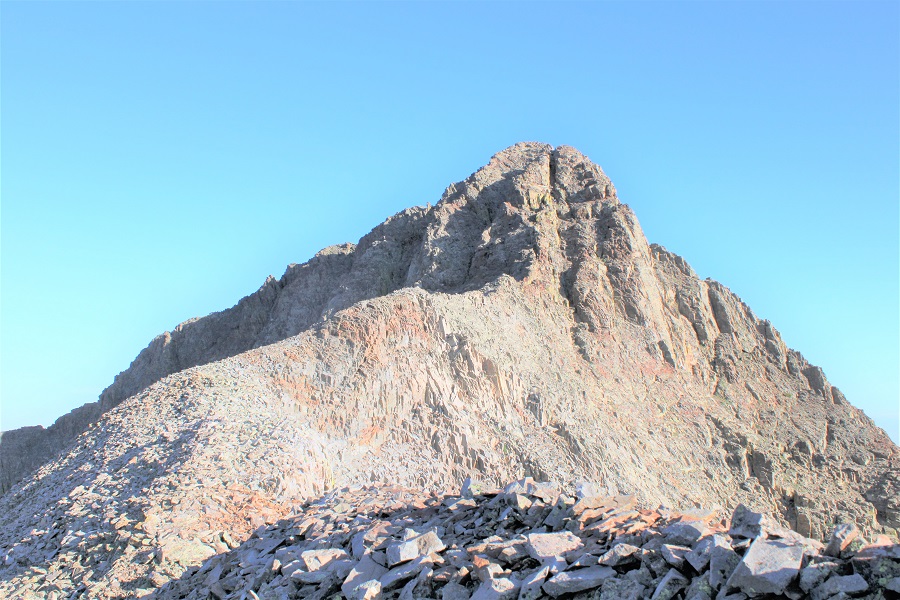
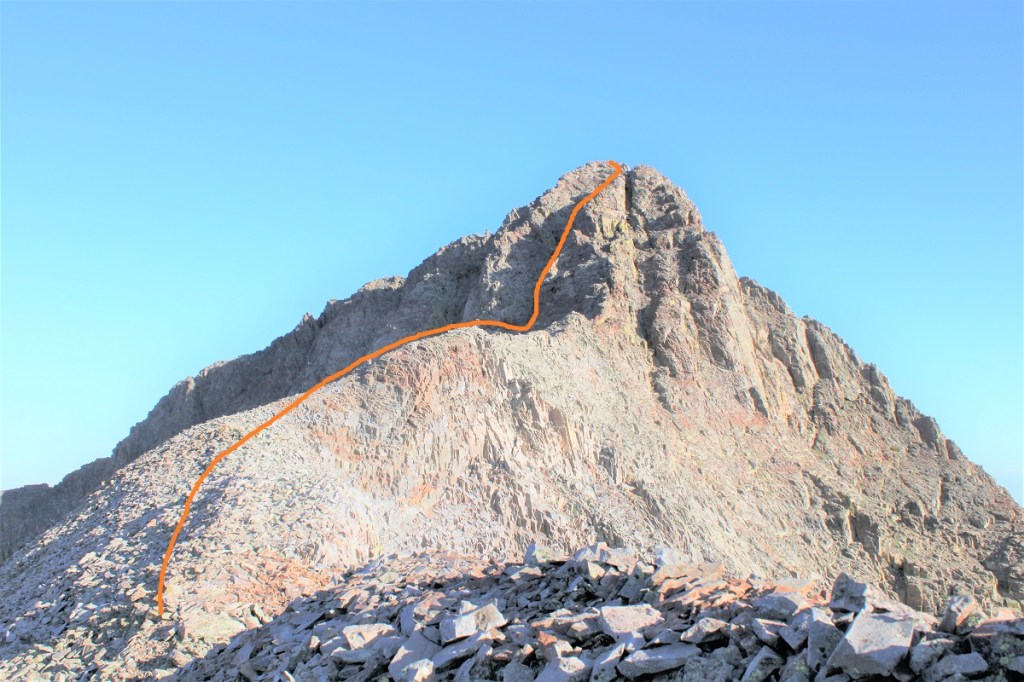
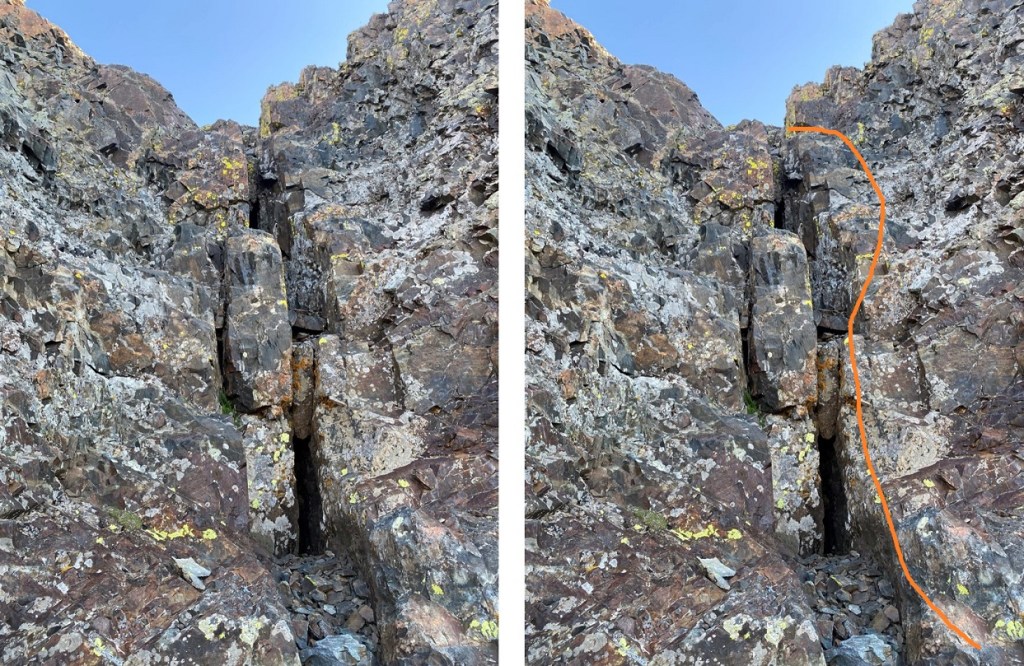
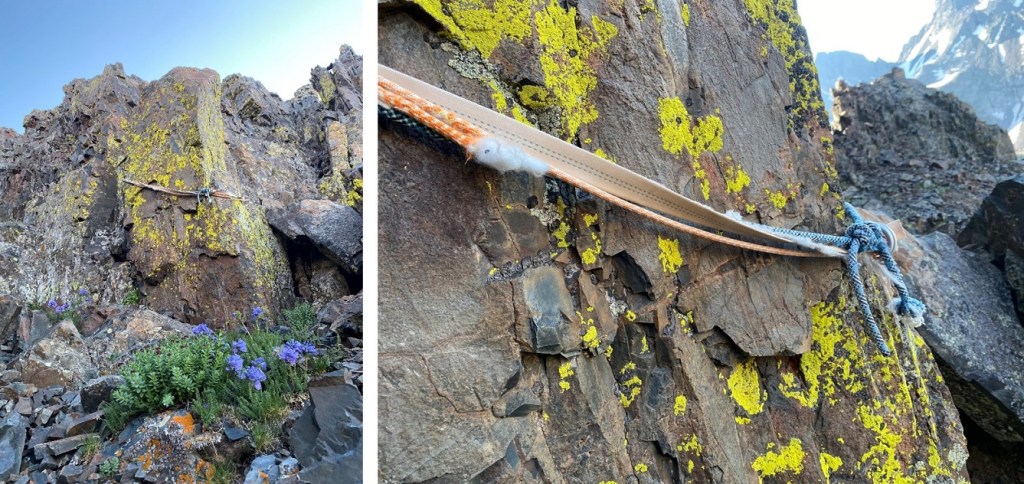
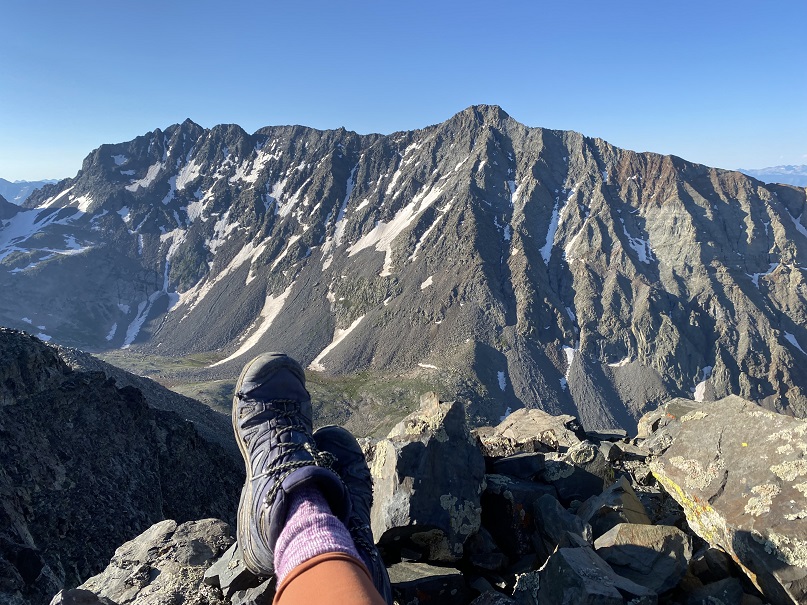
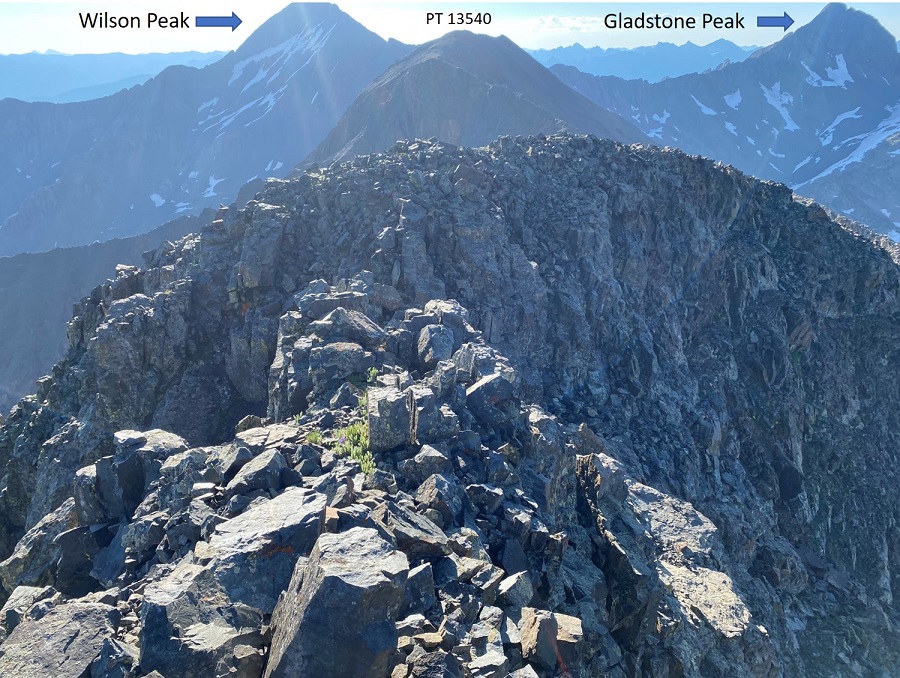
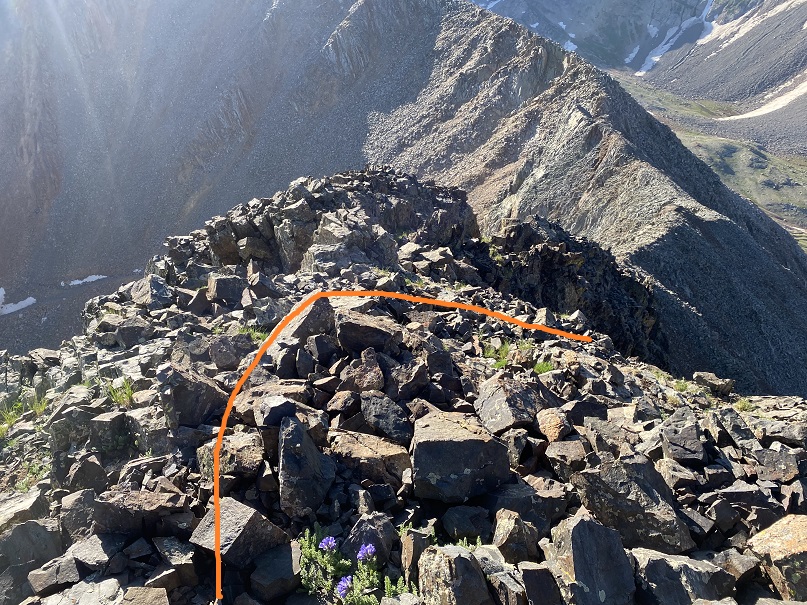
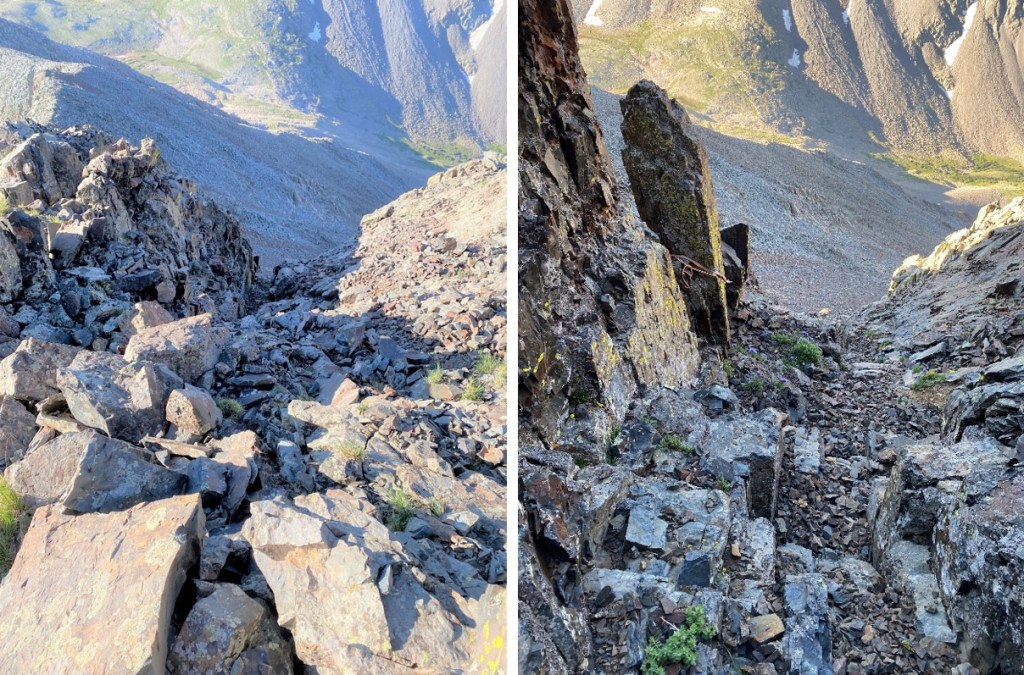
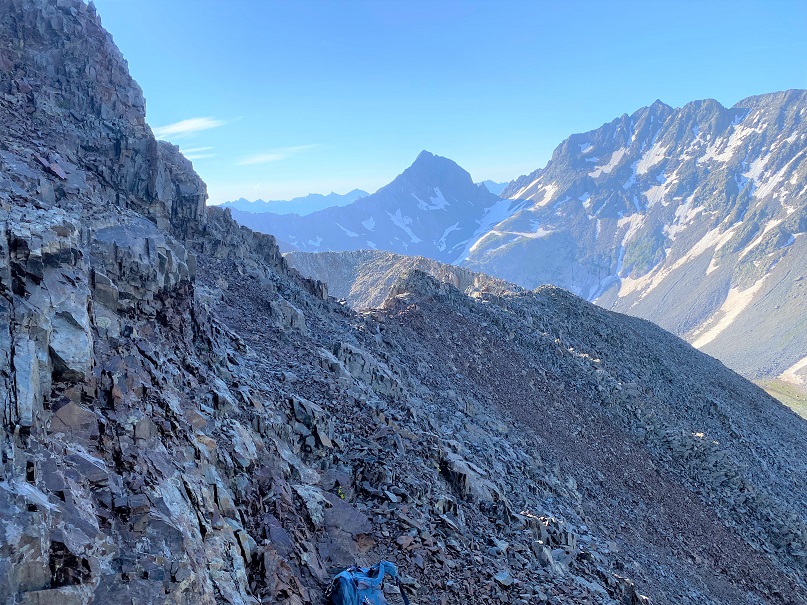
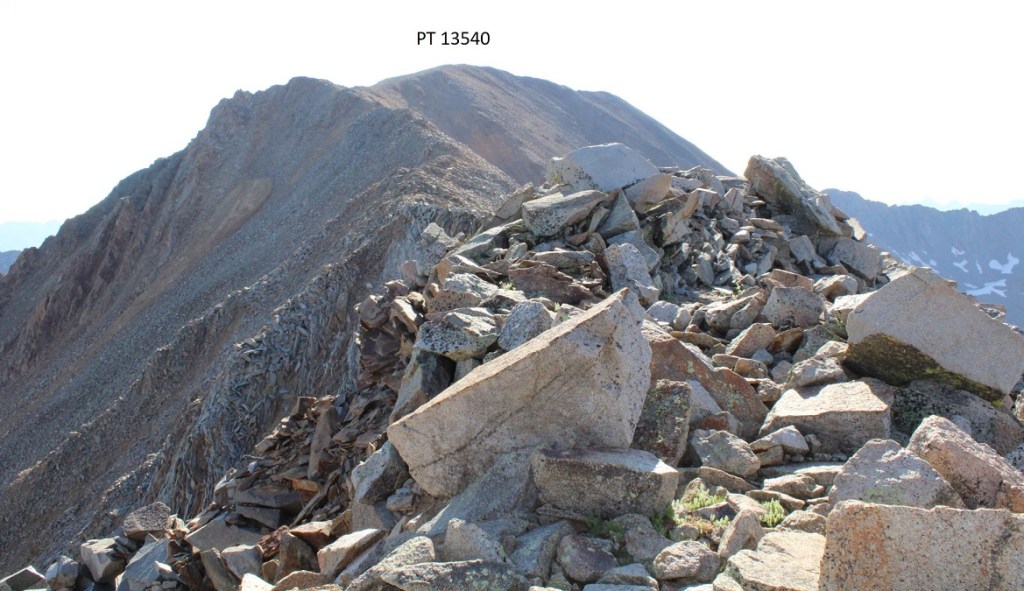
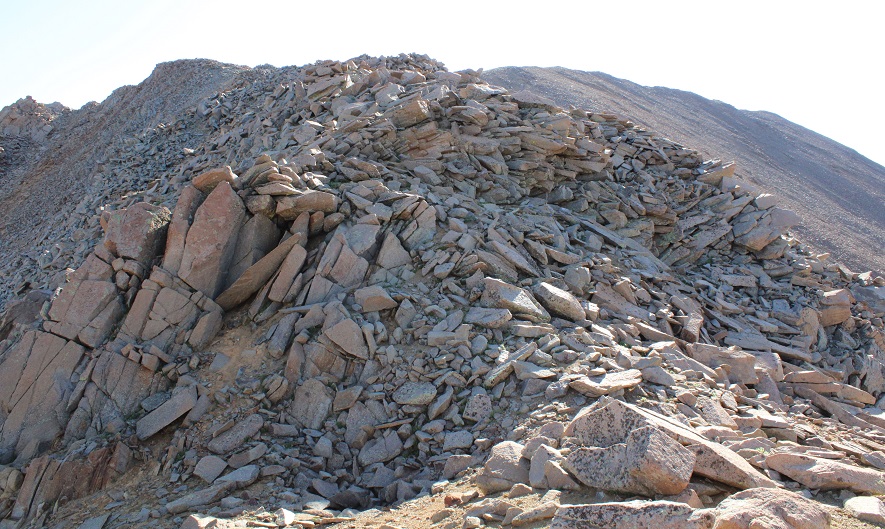
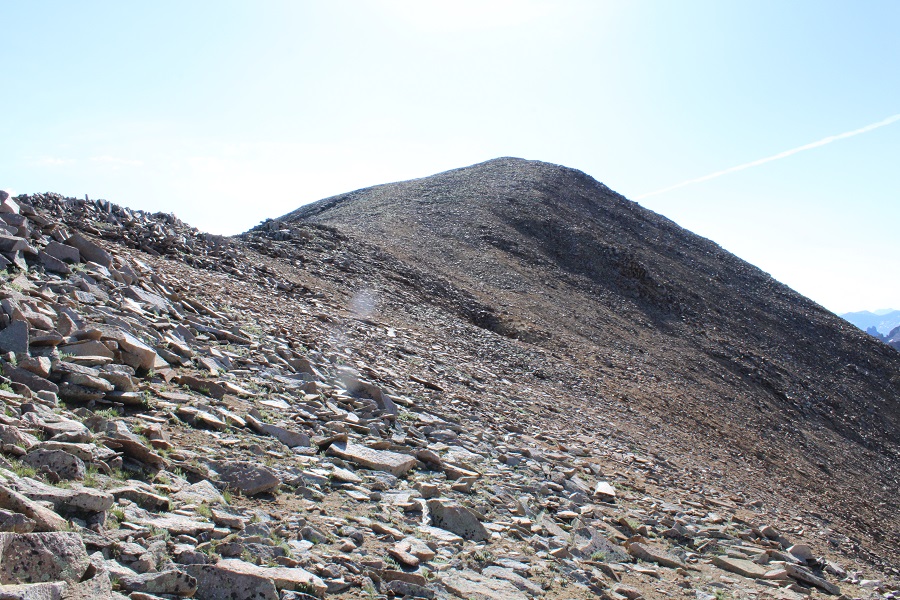
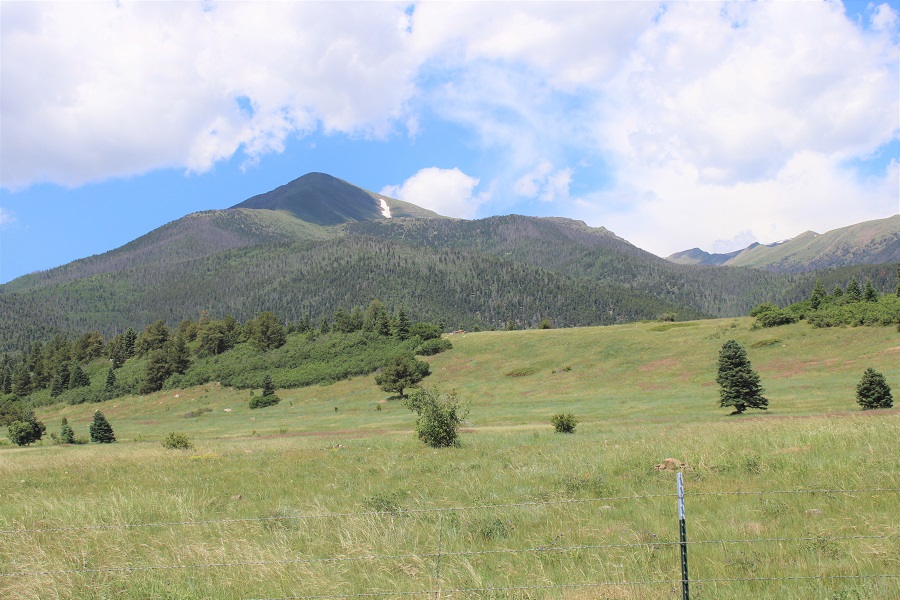
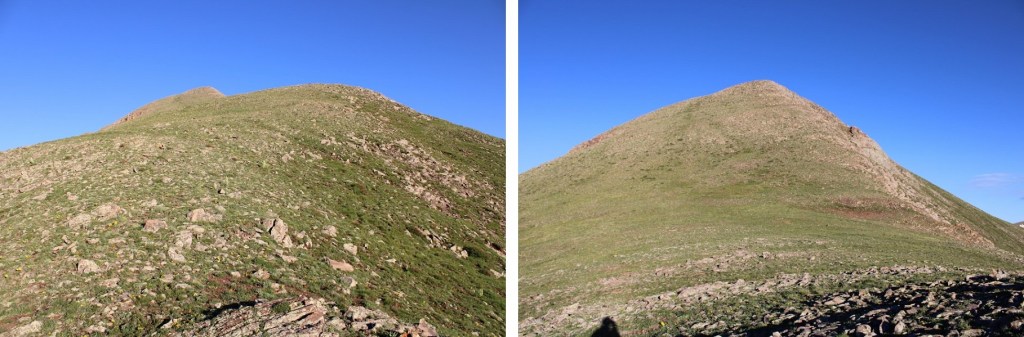
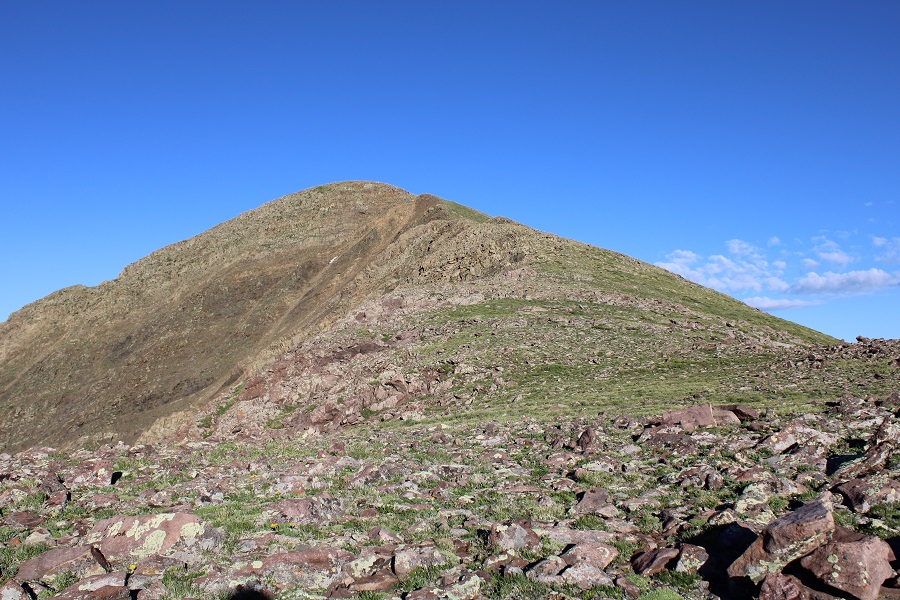
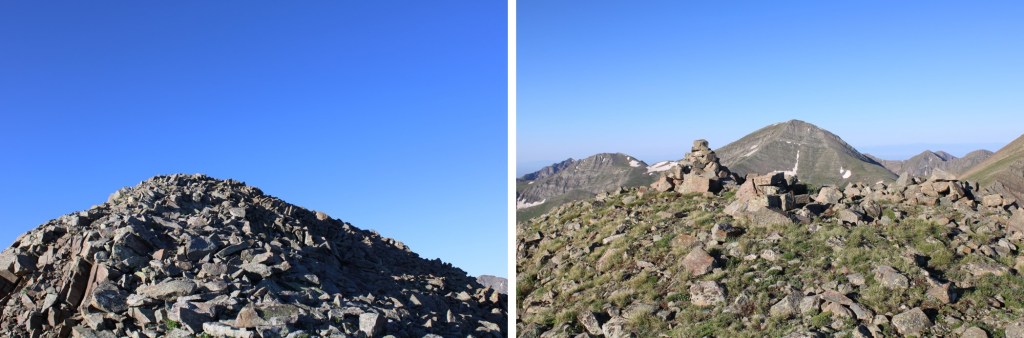
PT 13543, PT 13533 & Little Baldy Mountain – 12982

RT Length:  19.45 miles

Elevation Gain: 5950’

Route: Horn Creek Trailhead via Macey Trail

I was here last week and summited PT 13541 via Horn Lakes Trail, and to put it nicely, it was awful!  Once the trail ended at the creek crossing (Dry creek, which was flowing fast), I was met with hundreds of feet of 8-foot-tall willows to navigate, standing in about 18 inches of standing water.
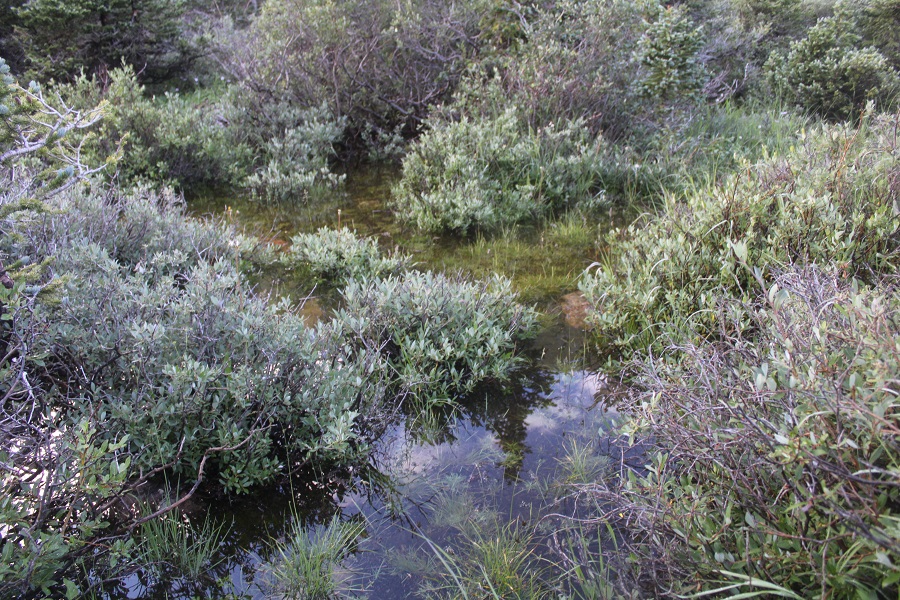
There was no way I could recommend that route, so I went about trying to figure out another one. While this route is a bit longer, bonus: no willows in water!!!

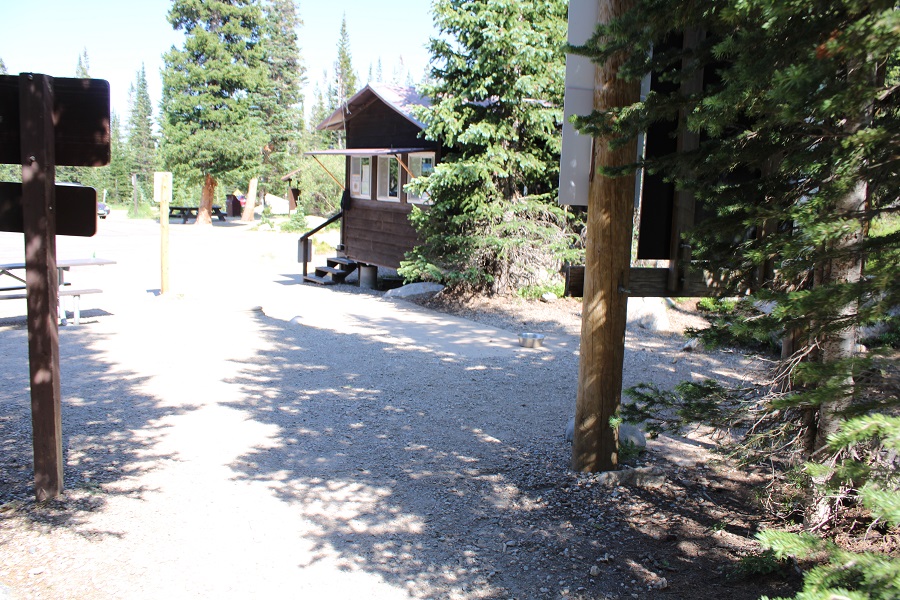
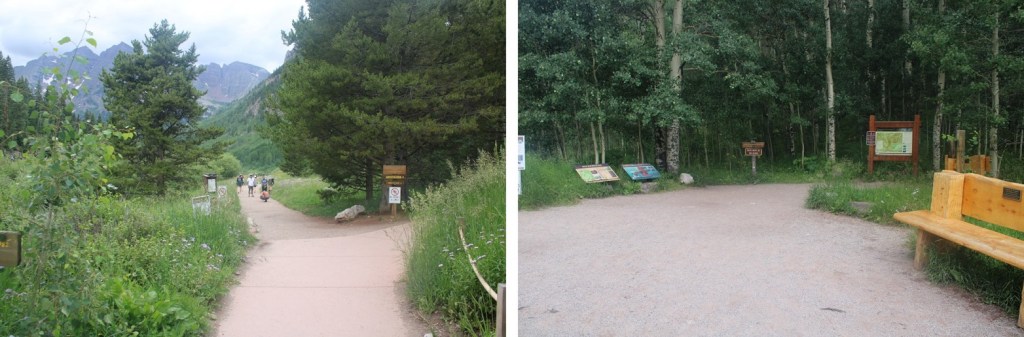
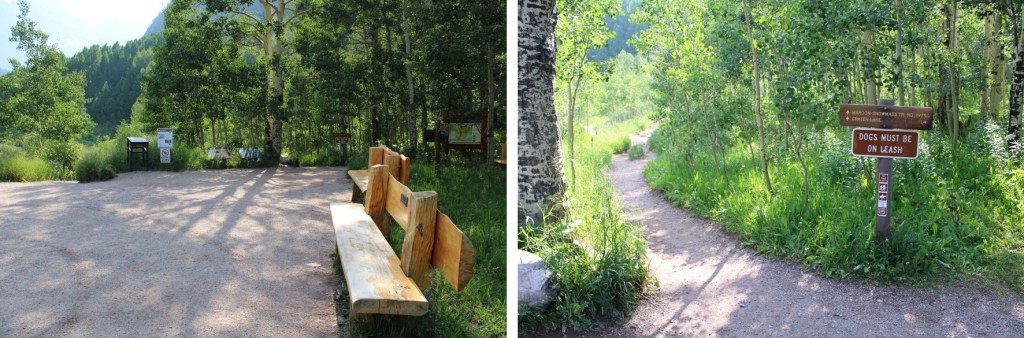
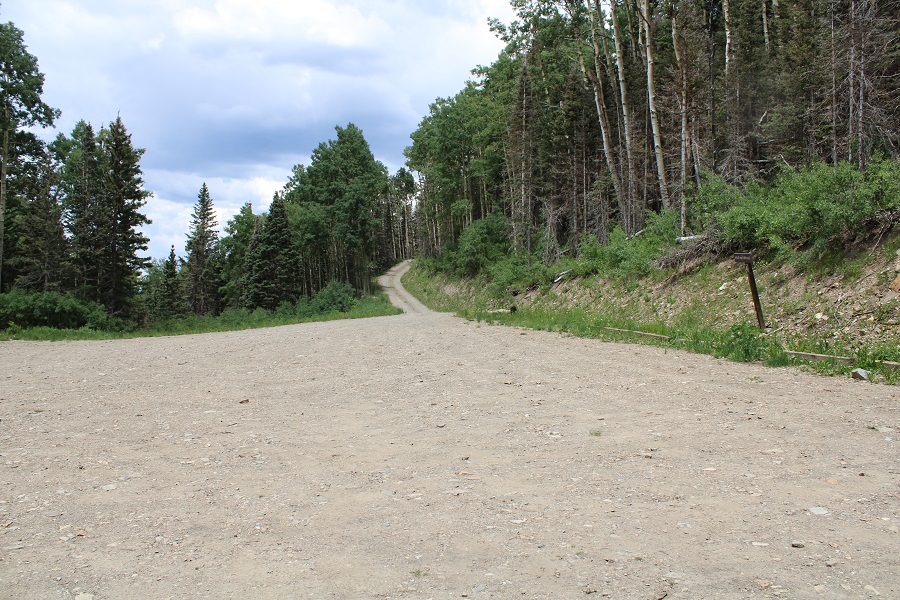
I parked at the Horn Creek Trailhead and was on the trail at 4:30am.  The trailhead was full of vehicles (last week I was the only vehicle in the lot). The trail starts at the west end of the parking area, which holds about 20 vehicles. There are information maps here and a clean restroom. Dispersed camping is allowed for 14 days, and there are horse corrals.
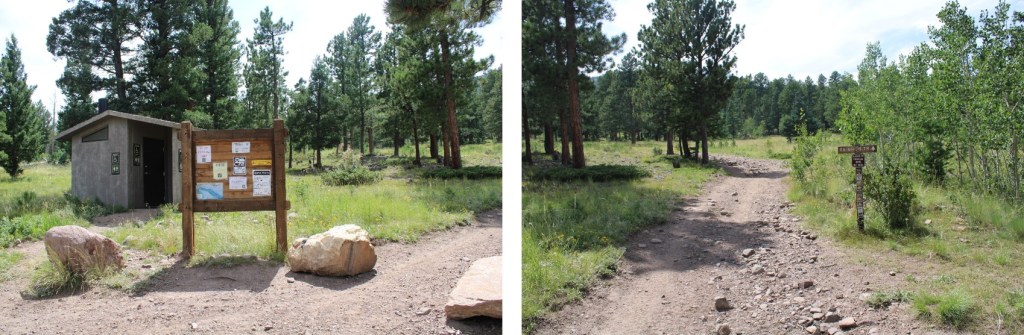
I followed the Rainbow Trail for just under half a mile to this junction, then turned left and continued following Rainbow Trail / Macey Trail.

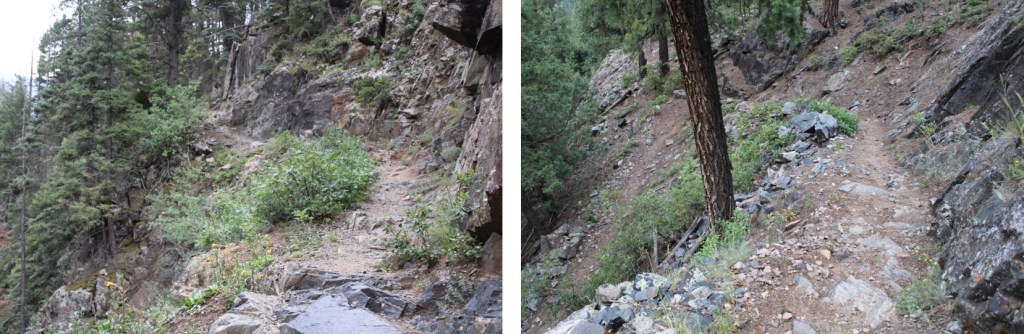
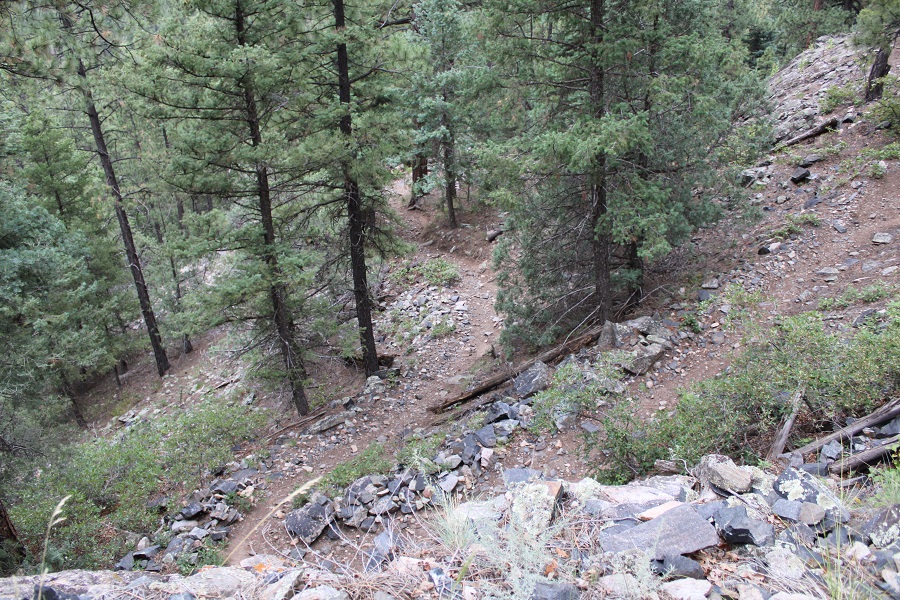
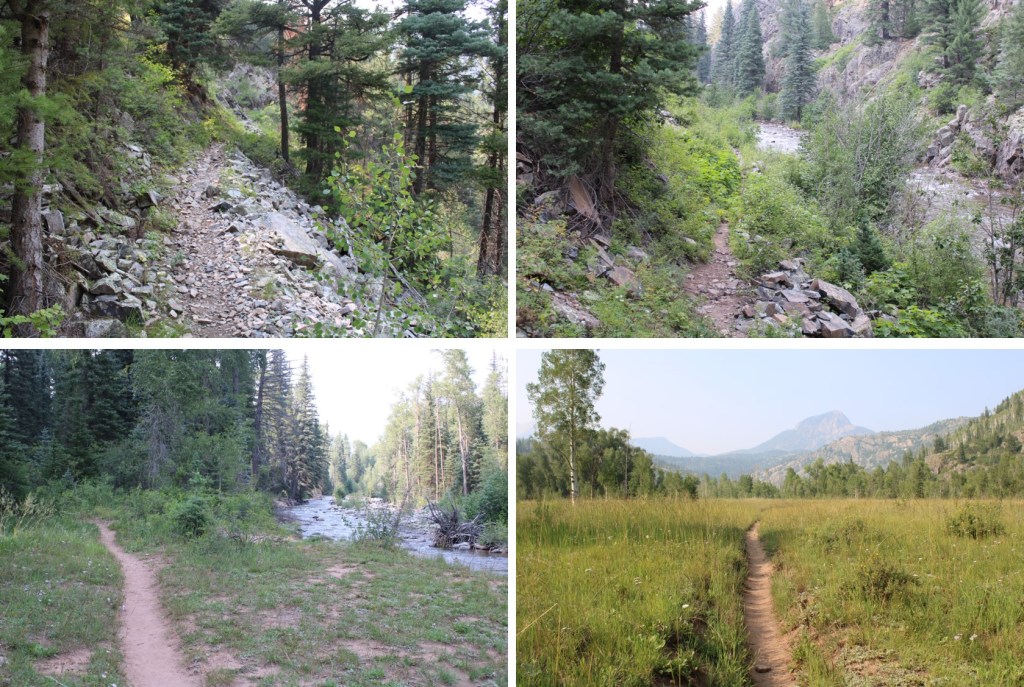
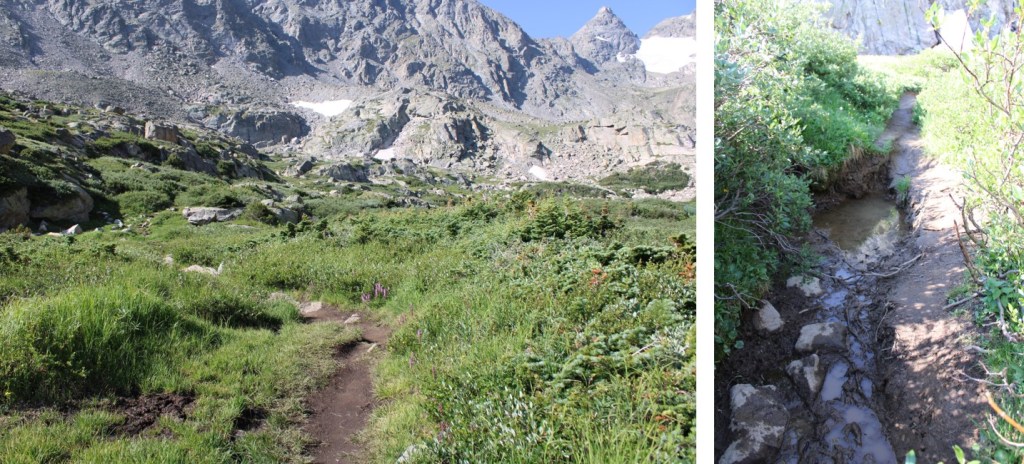
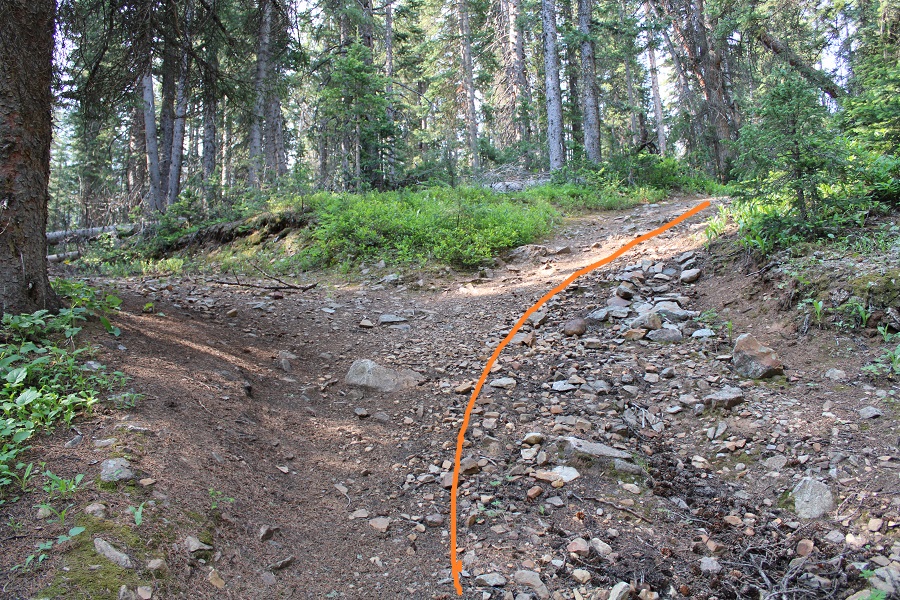
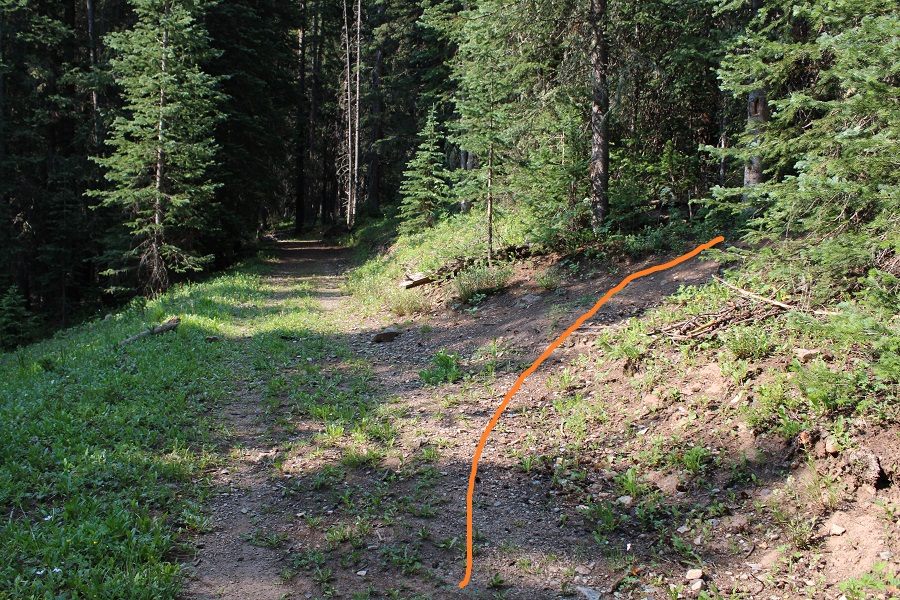
This trail is very well defined:  it’s used for OHVs.  I followed the trail as it hugged the side of the mountain, heading south
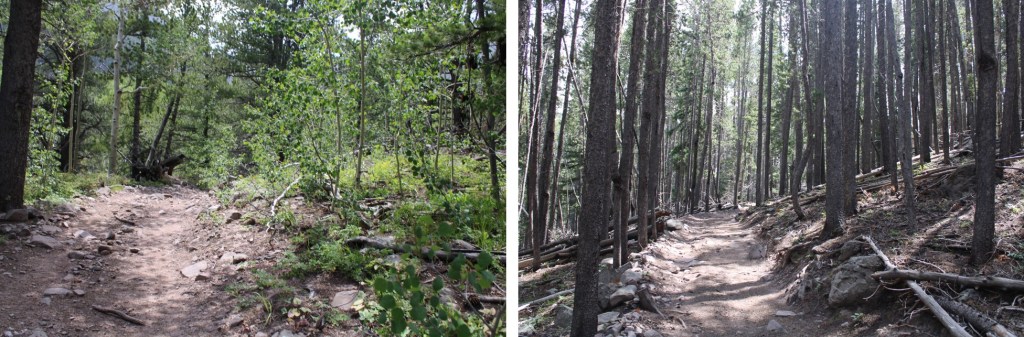
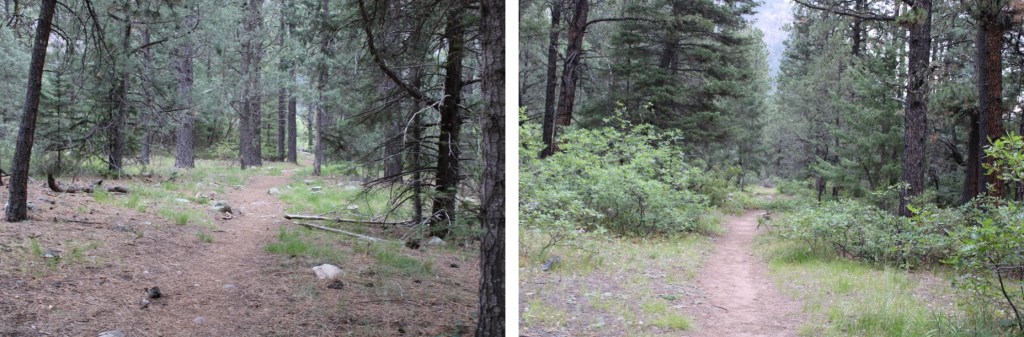
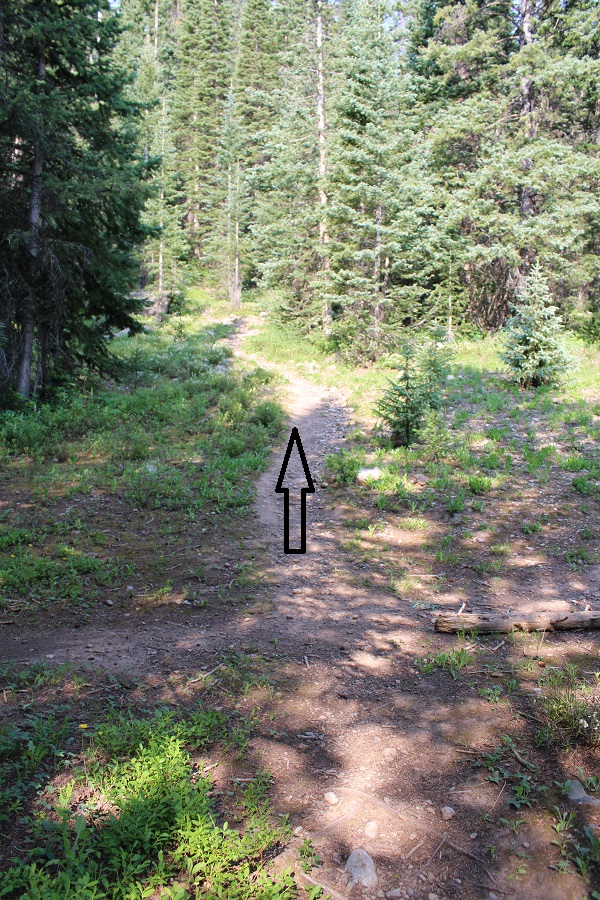
After hiking for a total of 3.3 miles I came to another junction, and took the Macey Trail west. This trail is a little more narrow, but still class 1.
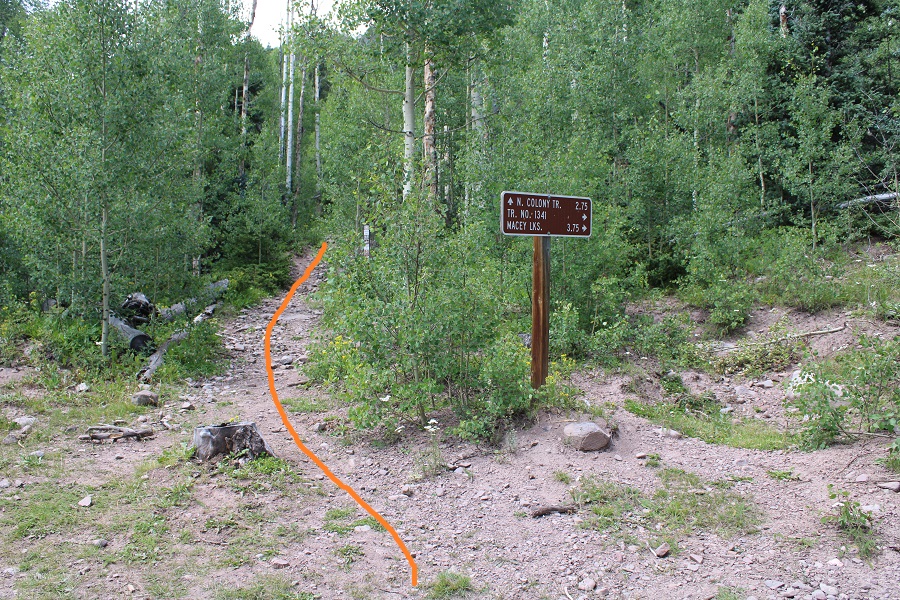
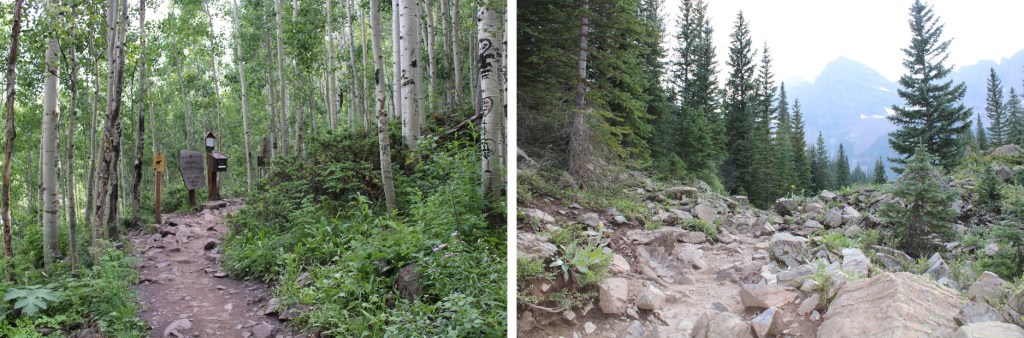
There’s a trail register a ways after the junction. I signed it and continued on.
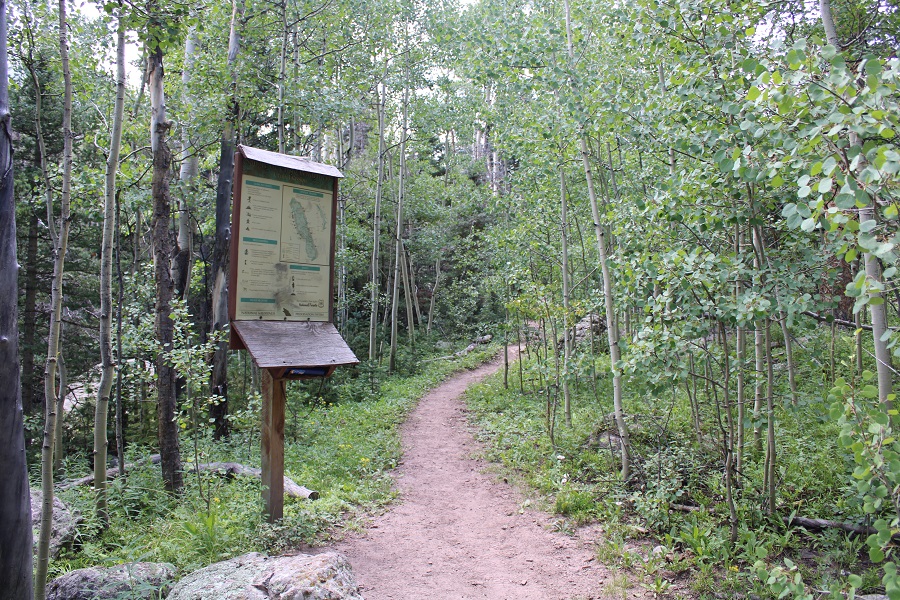
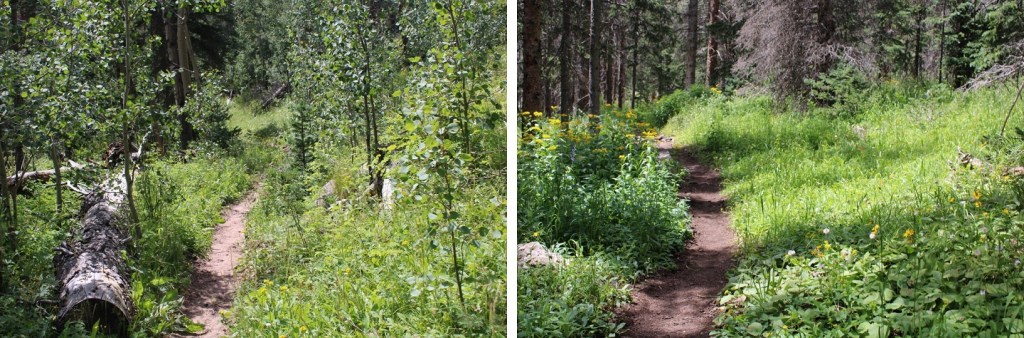
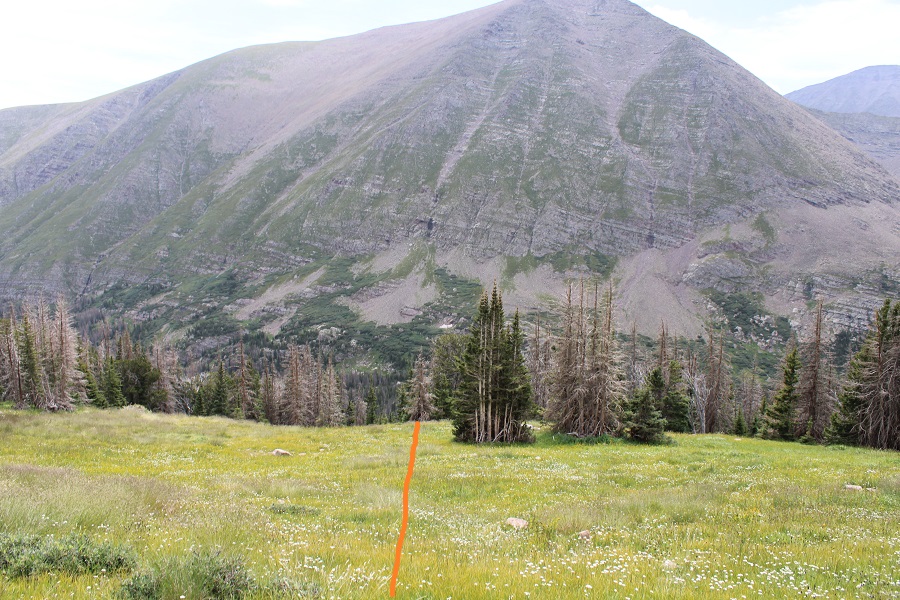
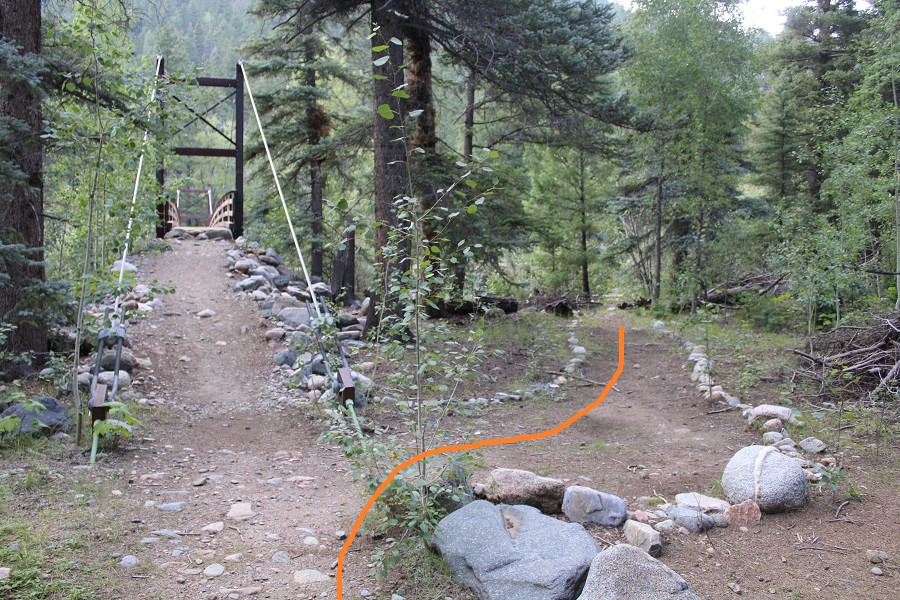
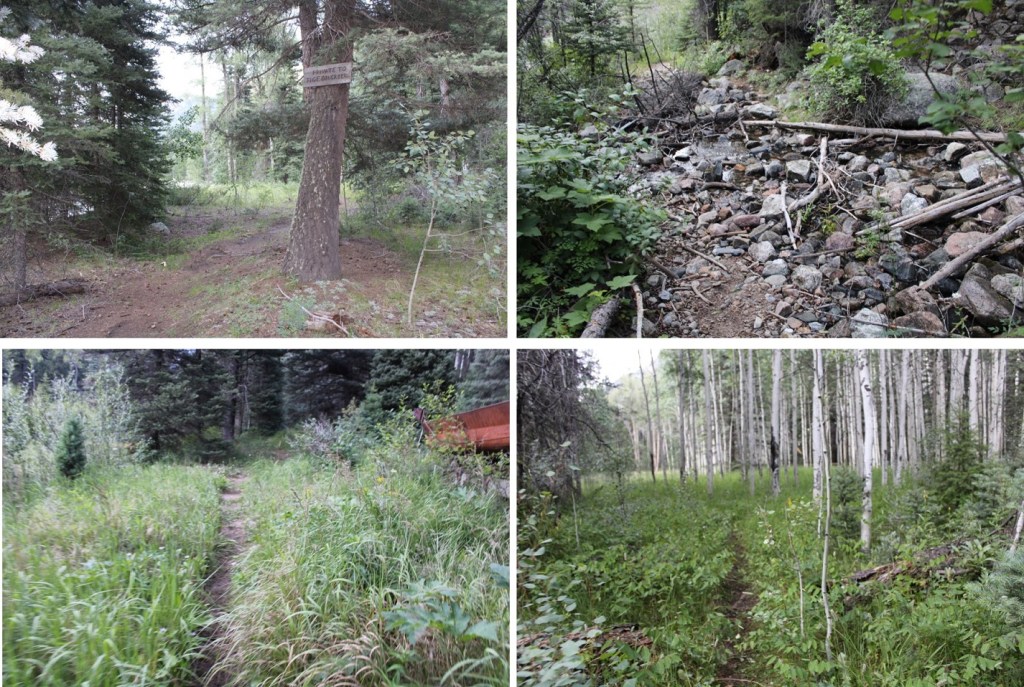
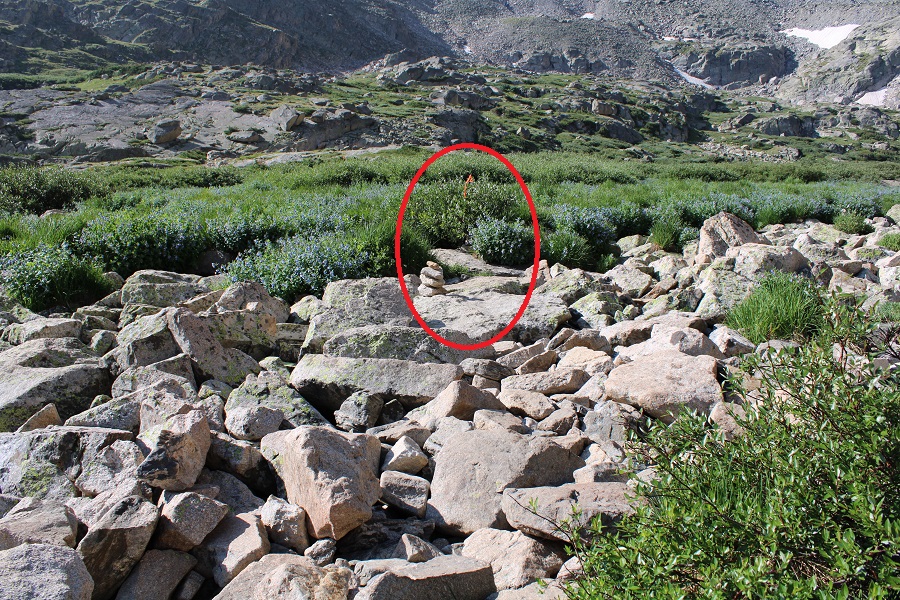
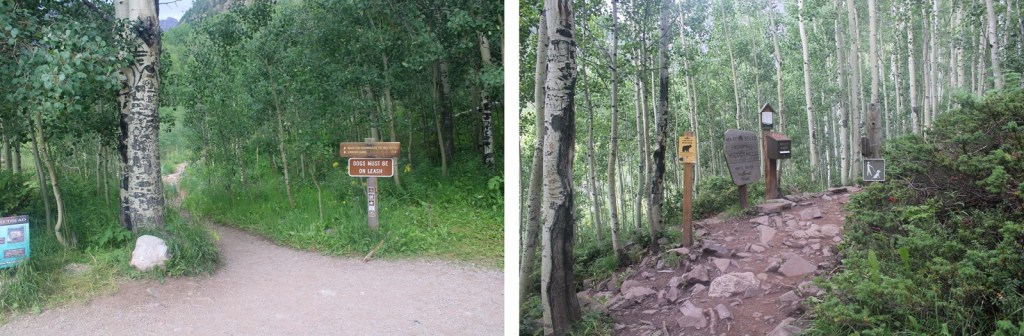
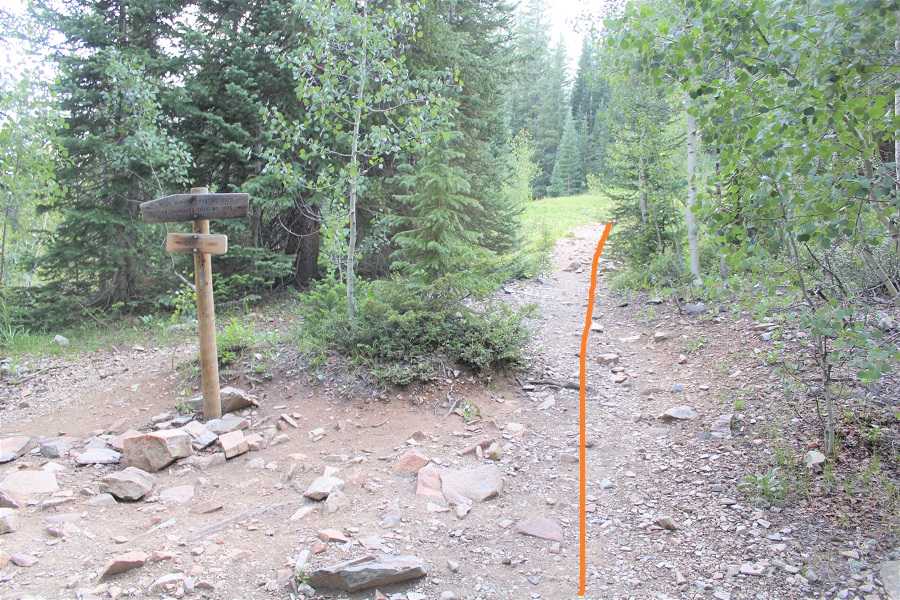
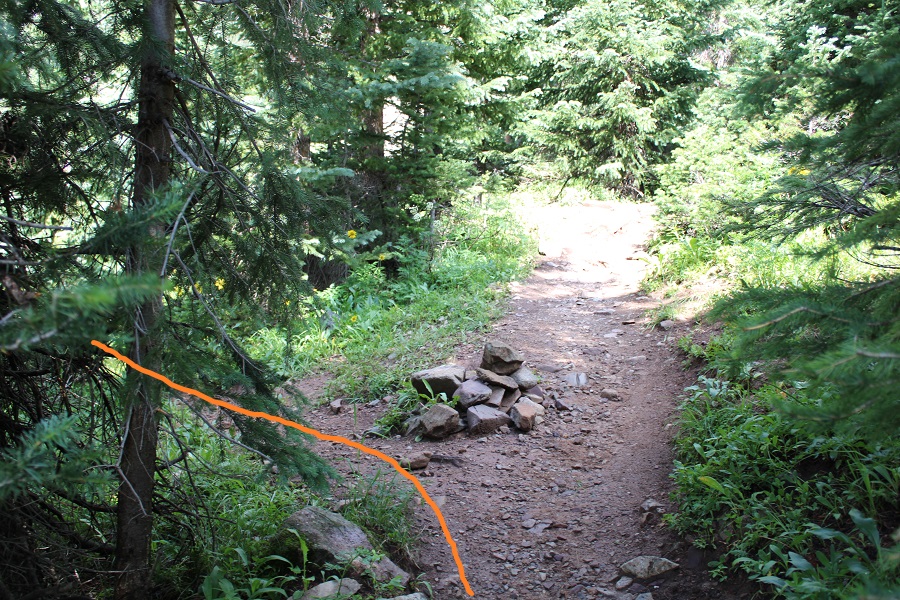
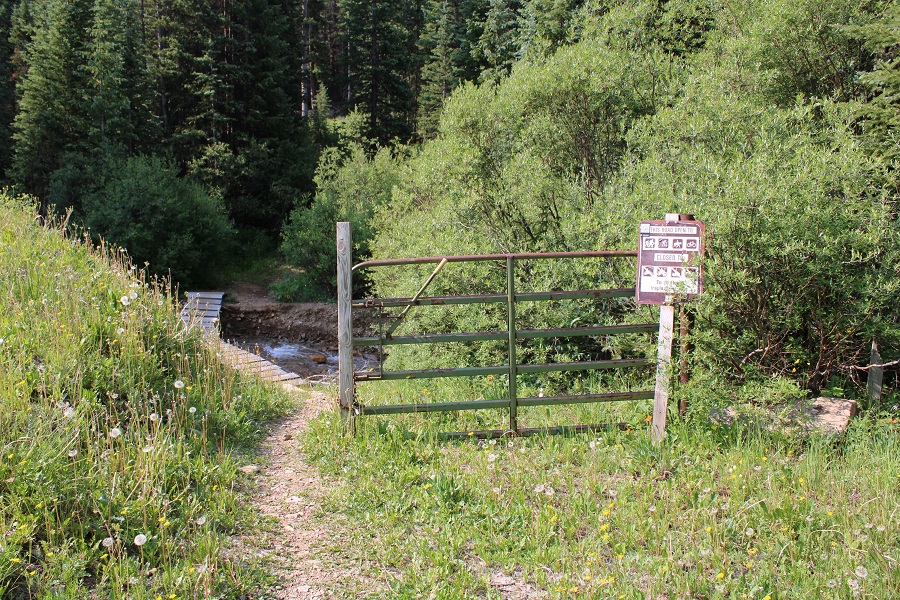
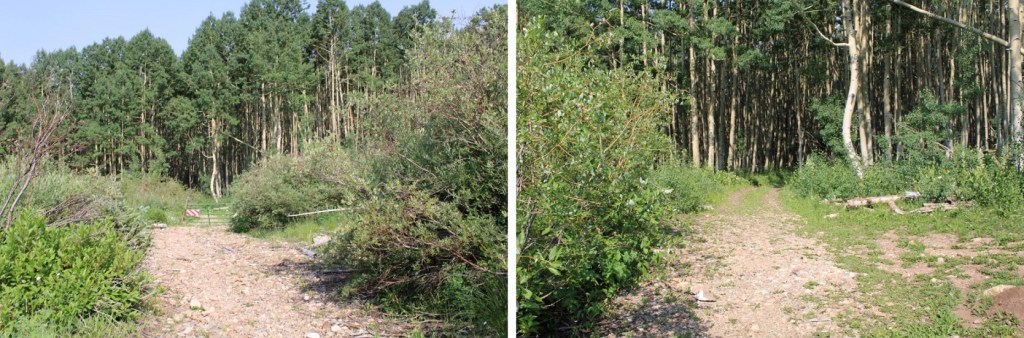
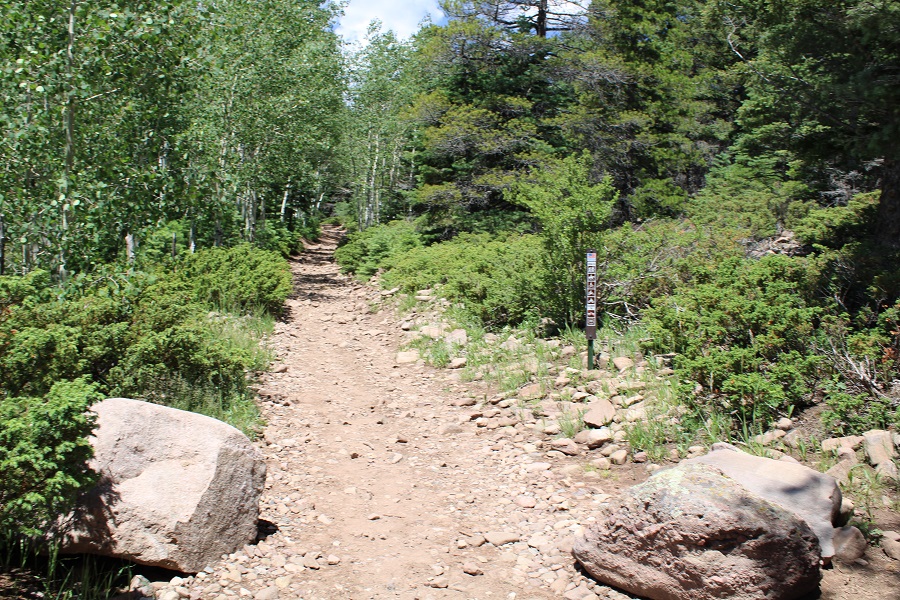
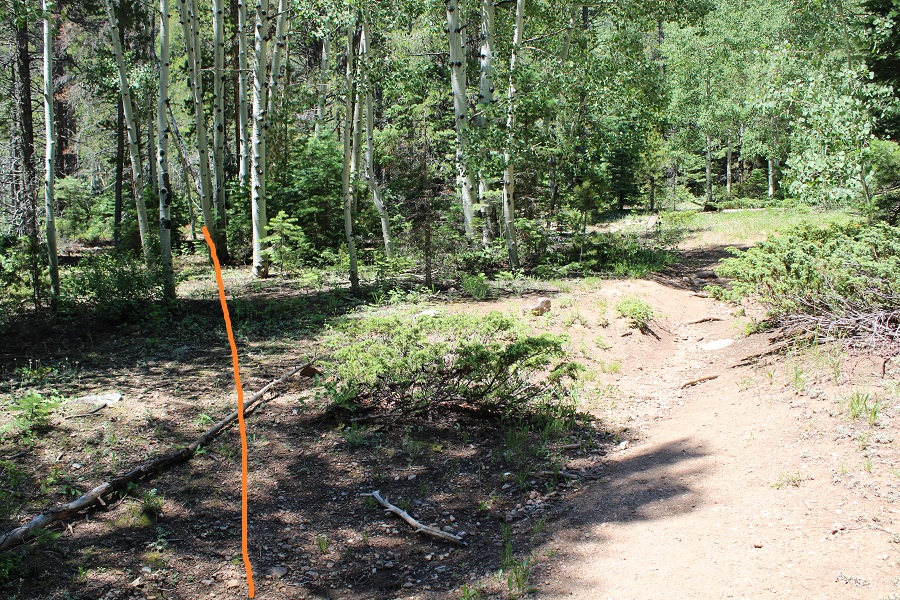
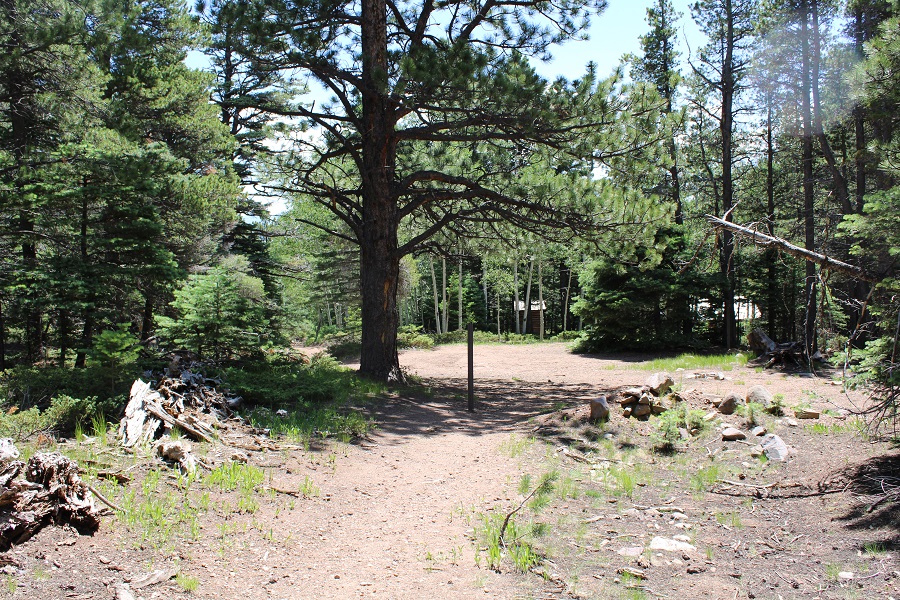
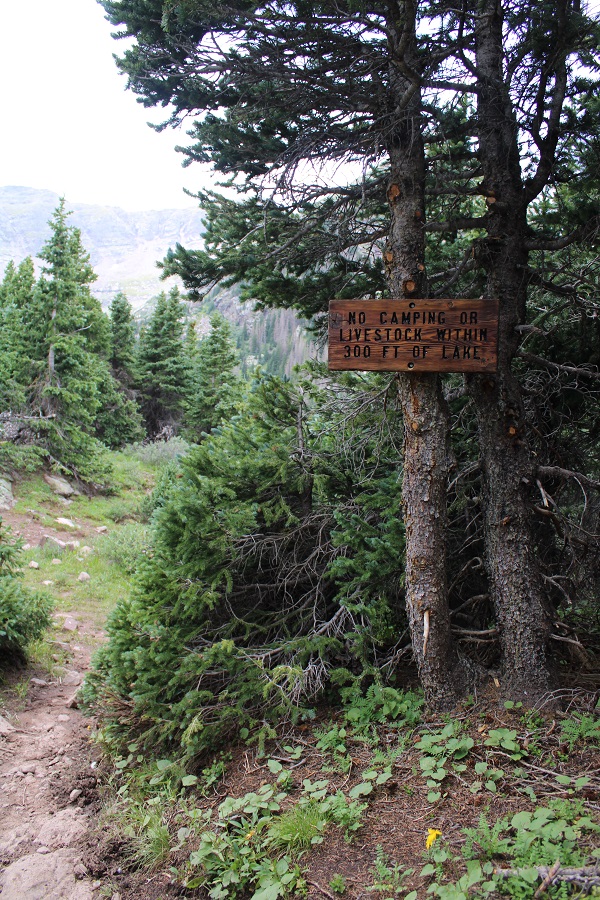
Just after Macey Falls, and just before making it to the first Macey Lake, I left the trail and headed northwest.  I’d hiked 6.5 miles total to this point. I’m guessing this is a camping area, because I left the trail at this marker (seen on the right side of the trail).

If you see this sign, you’ve gone a couple of yards too far.
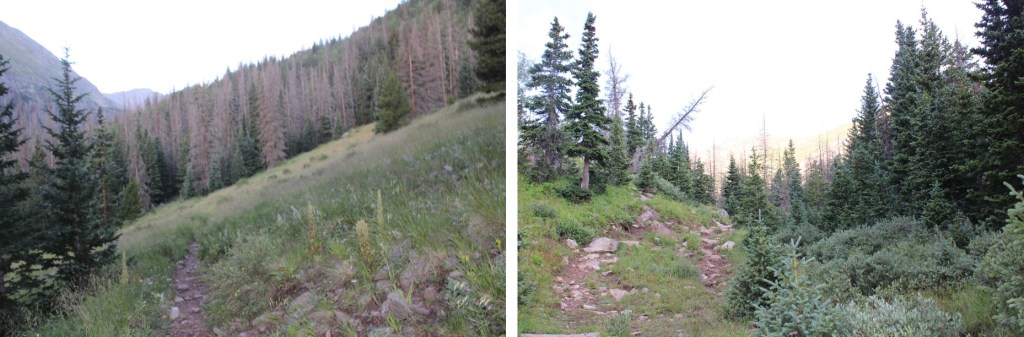
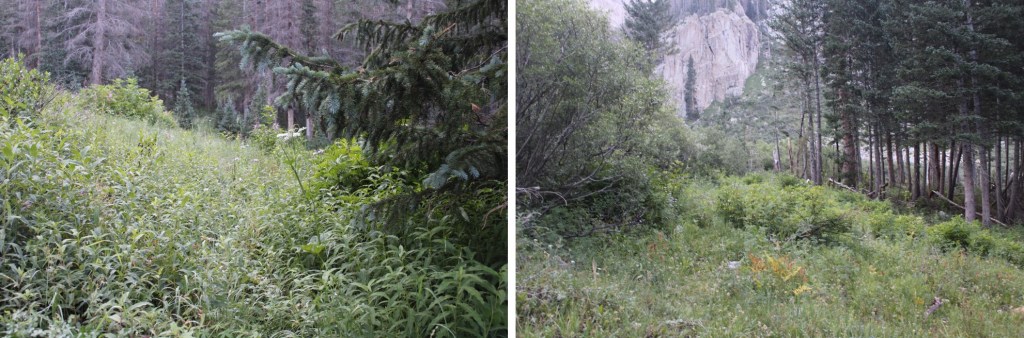
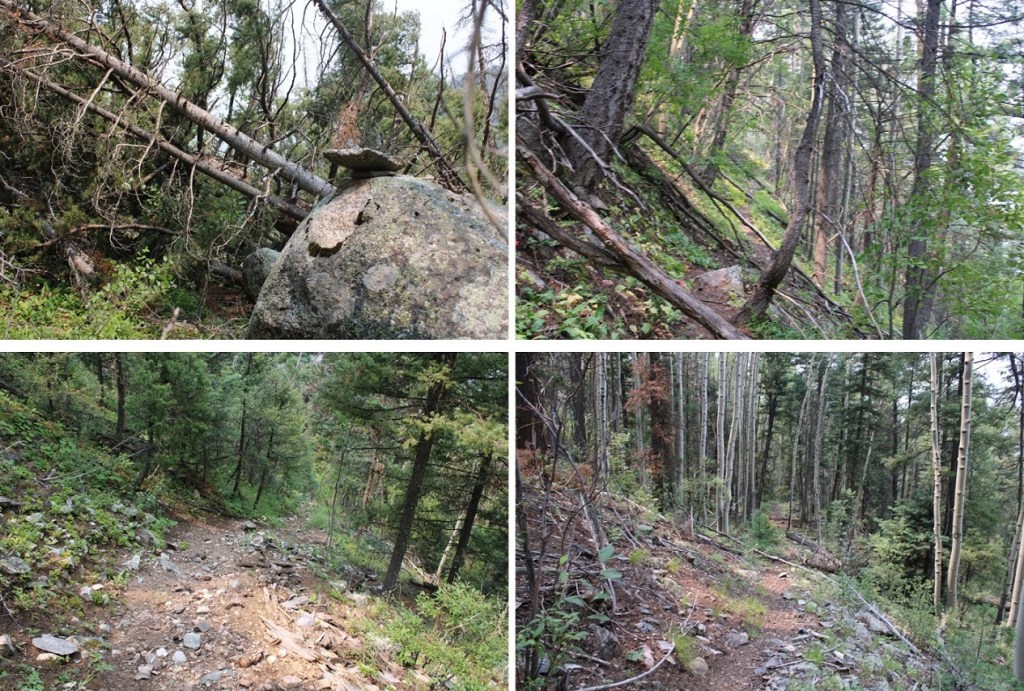
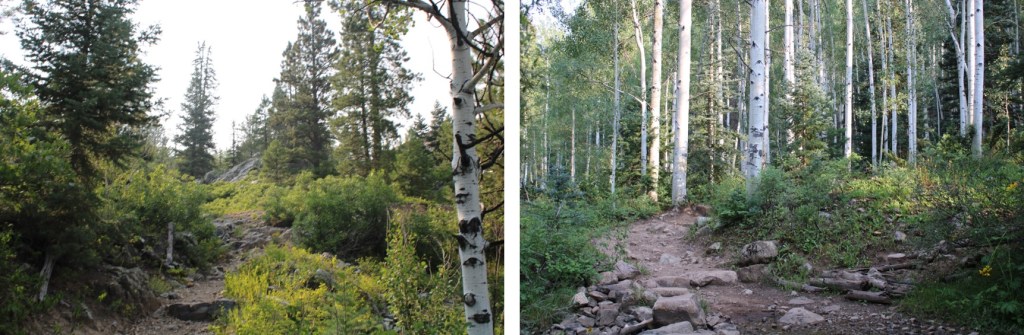
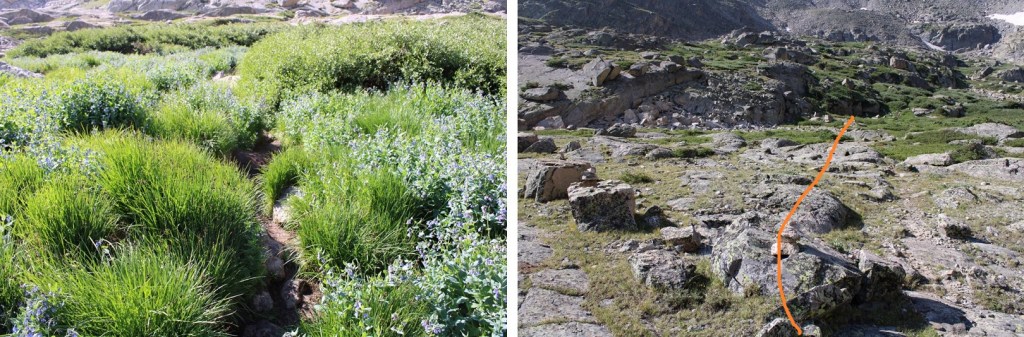
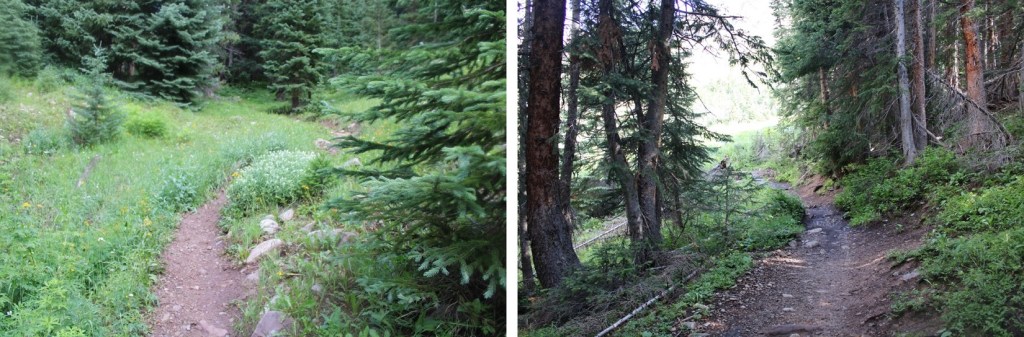
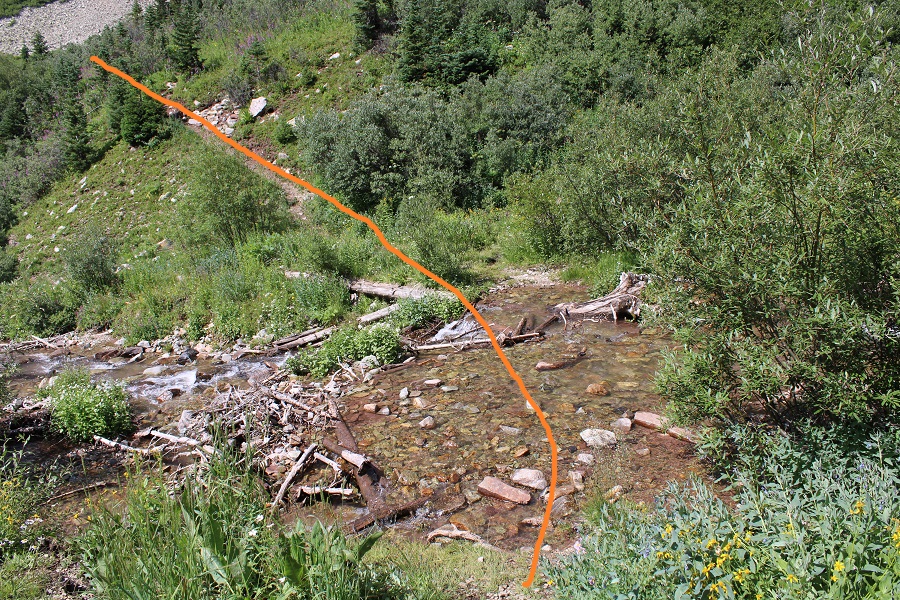
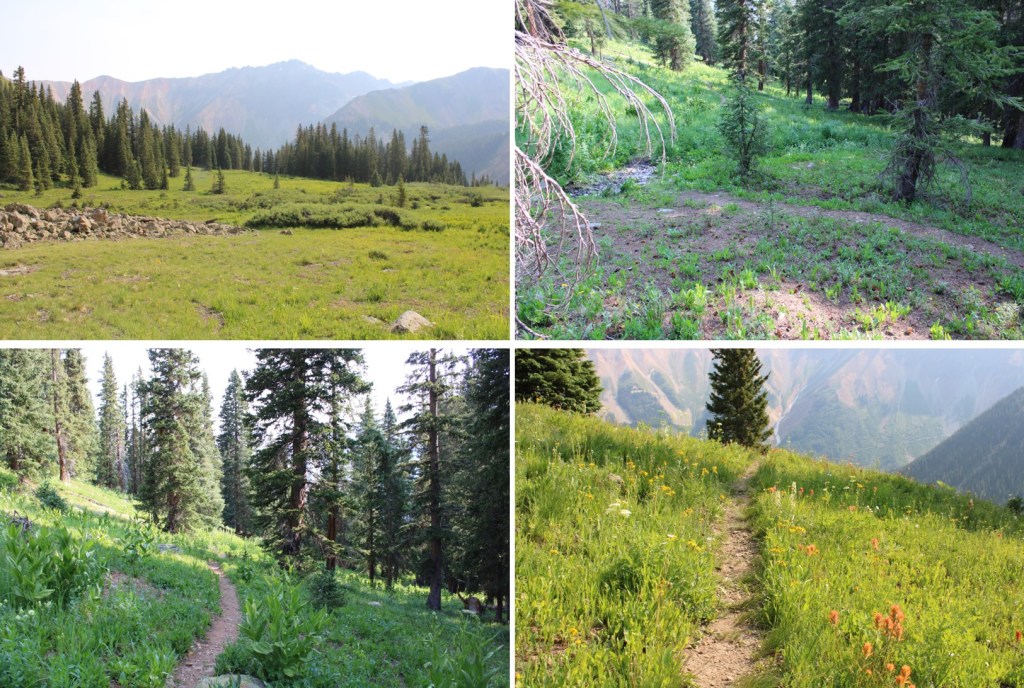
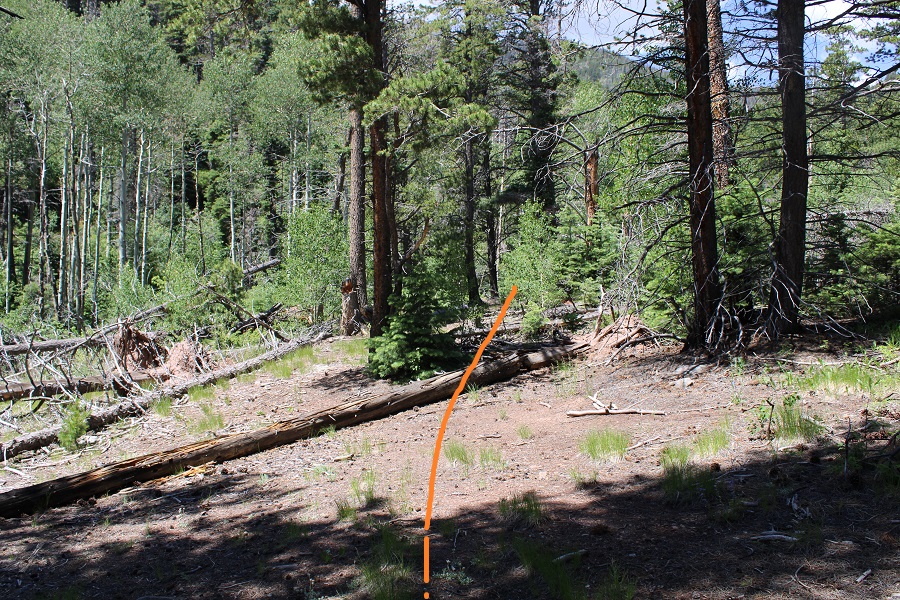
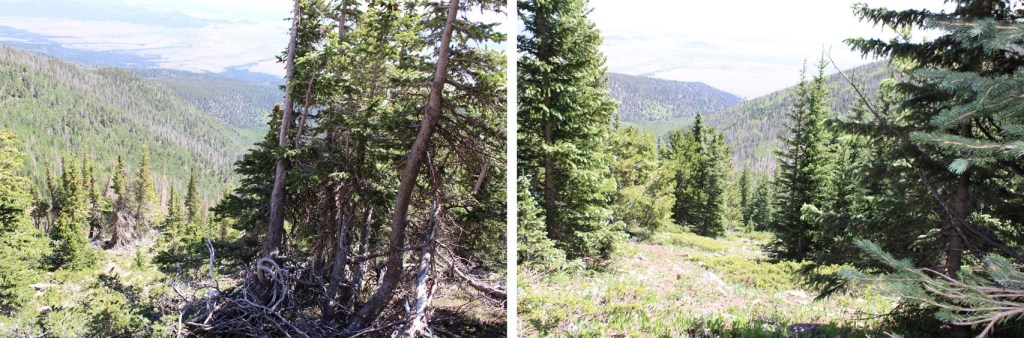
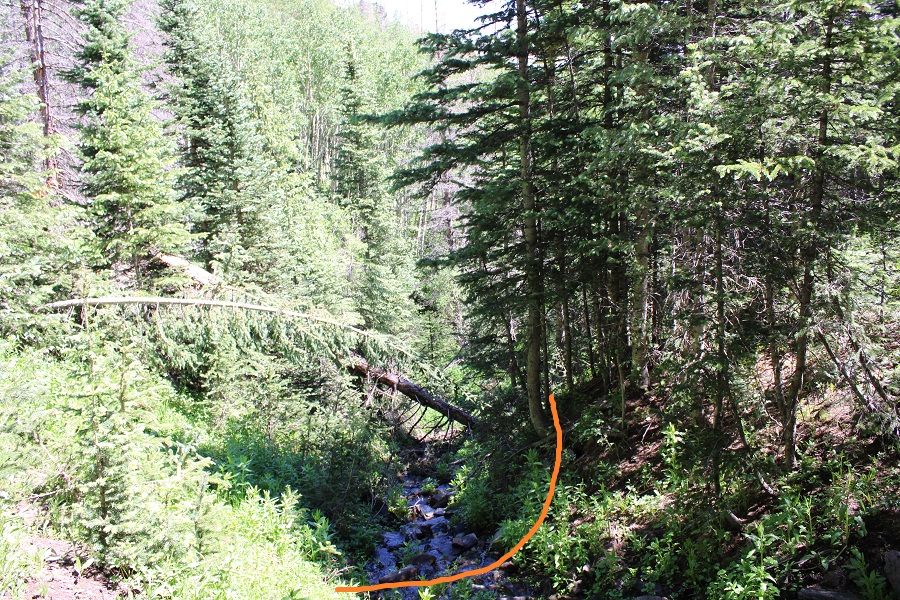
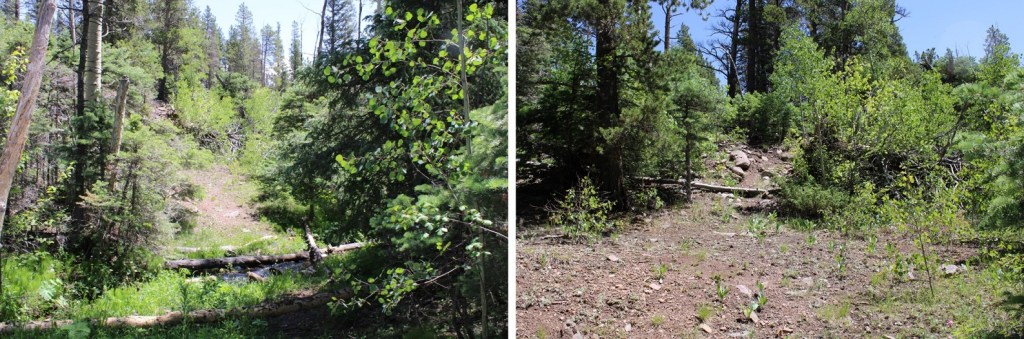
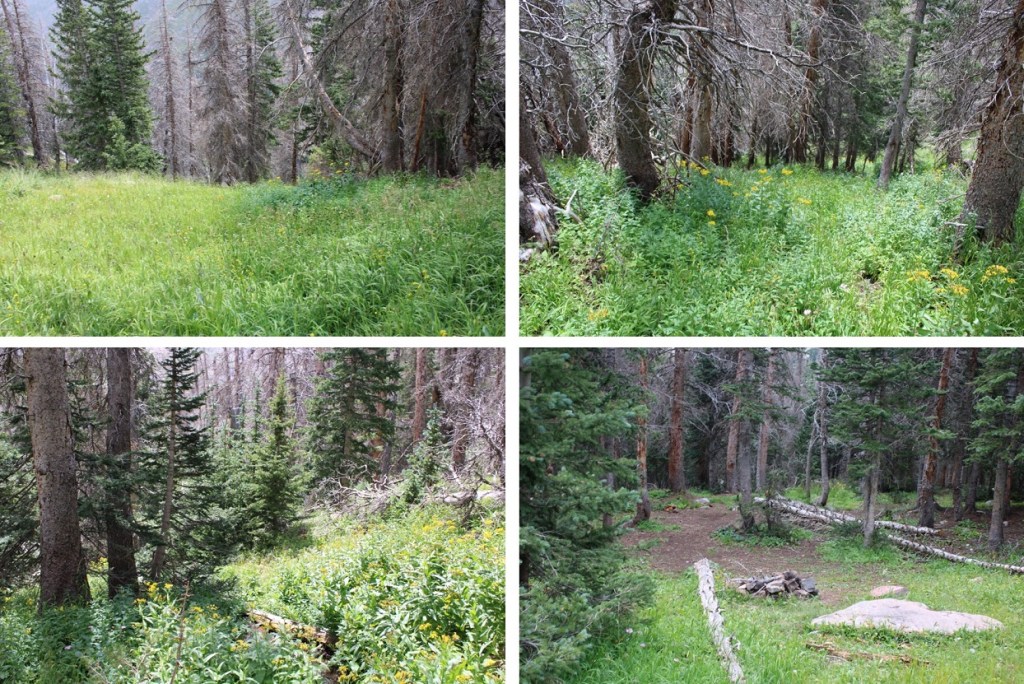
I bushwhacked northeast to treeline, about half a mile. This wasn’t too bad: there were downed trees, but not too many. I was mostly pushing my way through thigh-high flowers and grasses. I started out by skirting a small pond to the right.
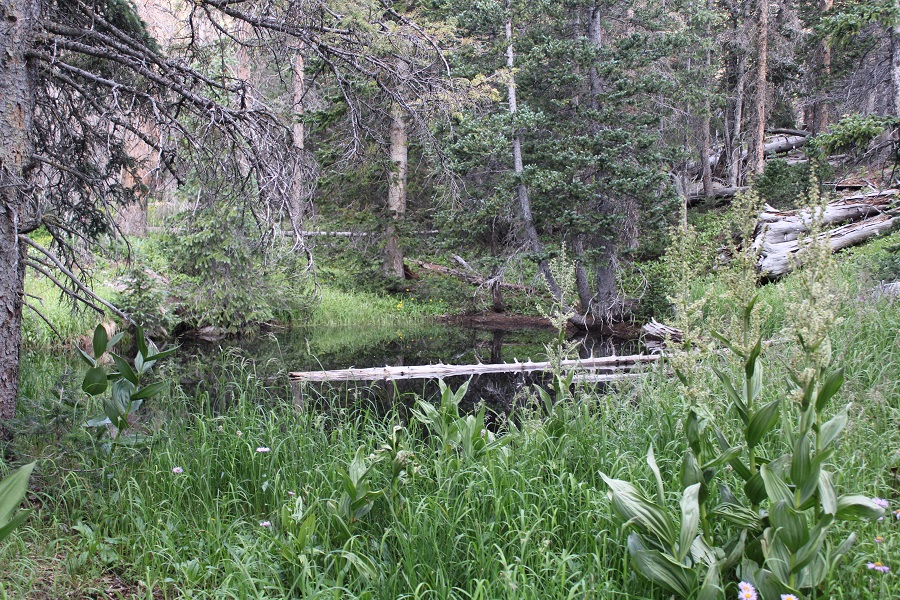
And then hiking up through grasses, flowers, and trees.  The elevation gain was moderate and I never came across a large obstacle (cliff, water, drainage, huge boulder, etc.)
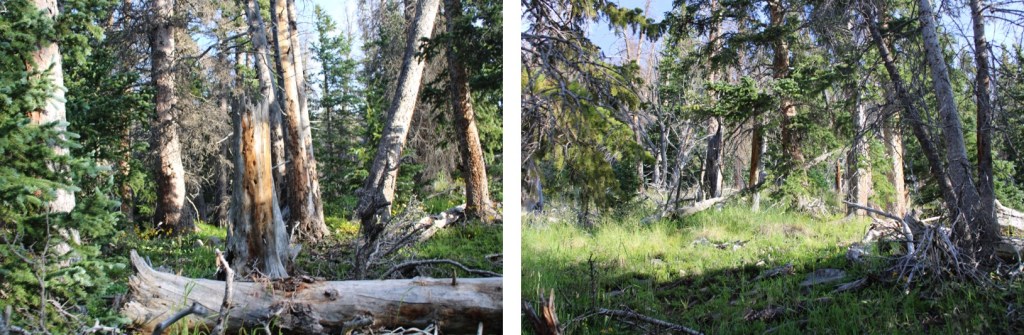
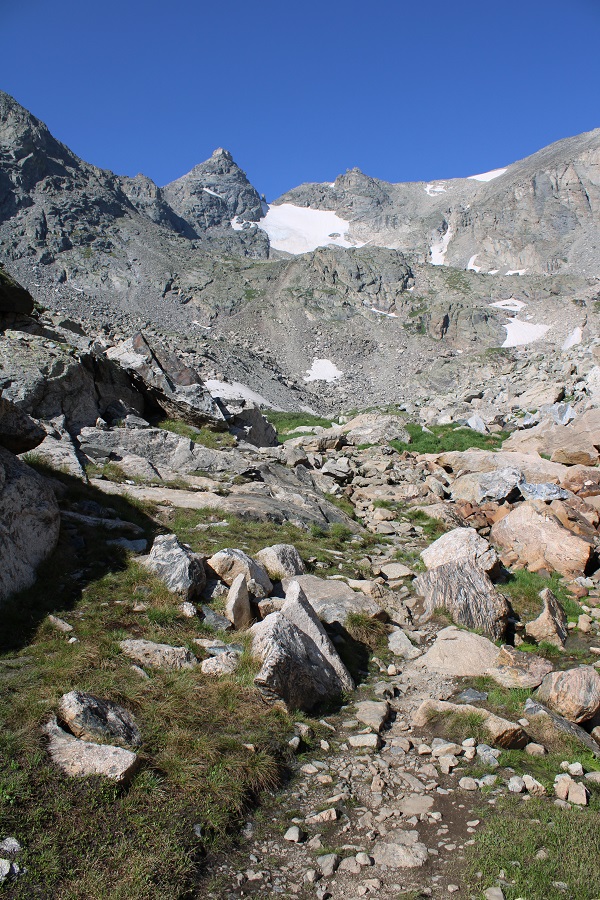
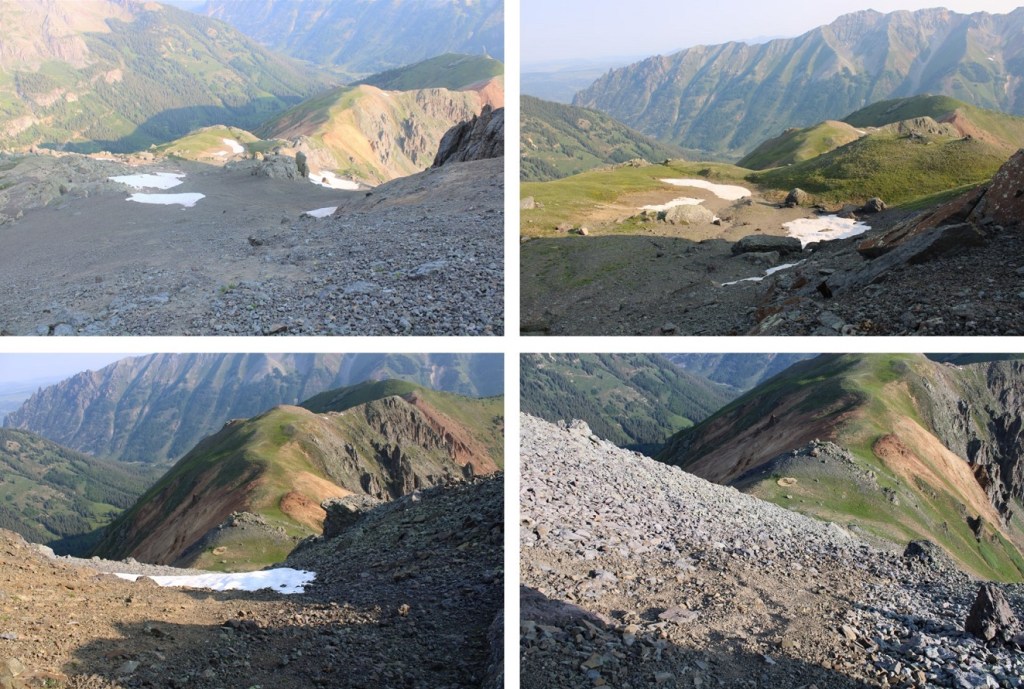
After about half a mile I was at treeline, and could clearly see the ridge
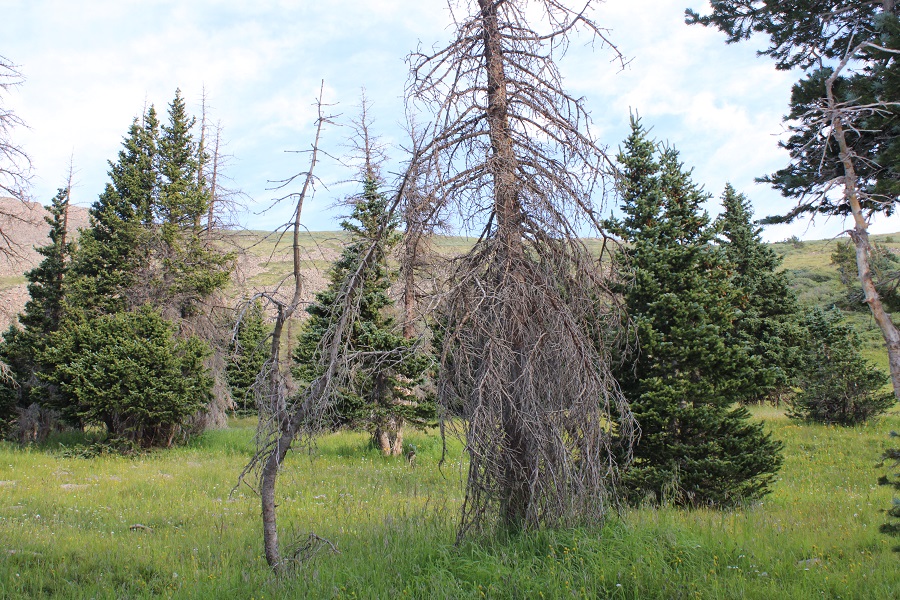
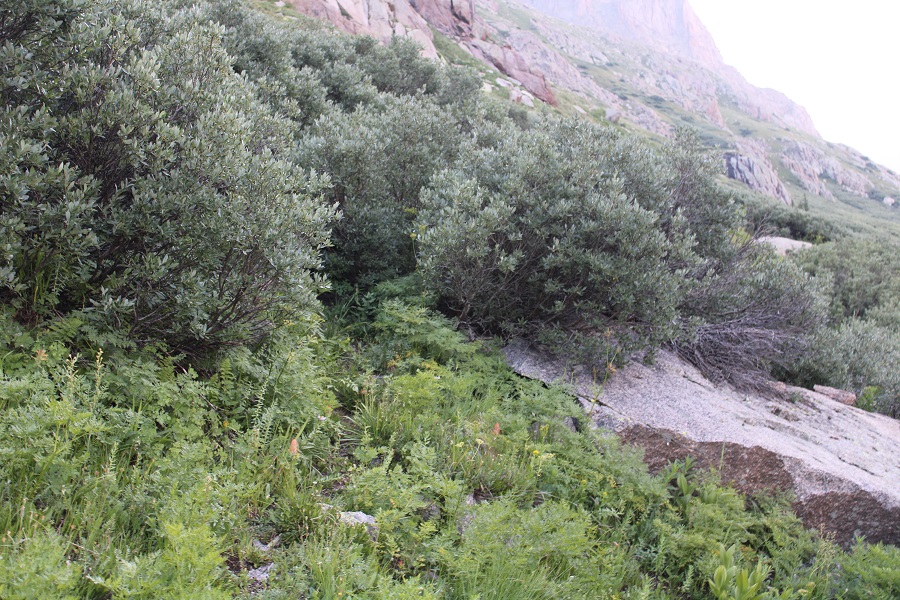
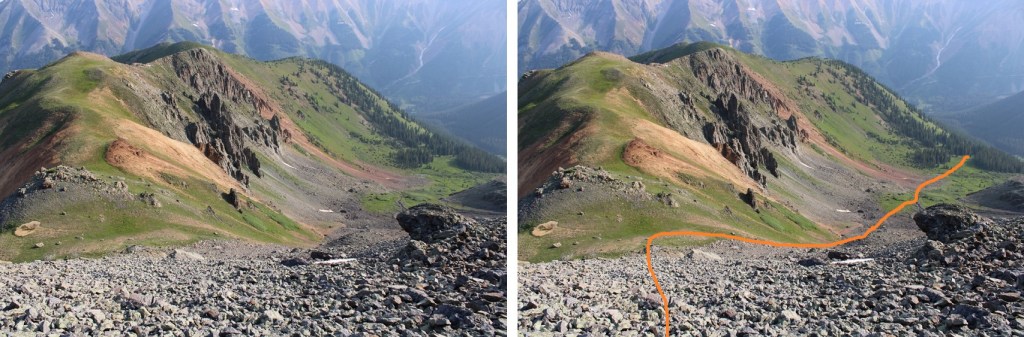
I made my way to the ridge, staying mostly on tundra and rocks.   The willows are small and completely avoidable.
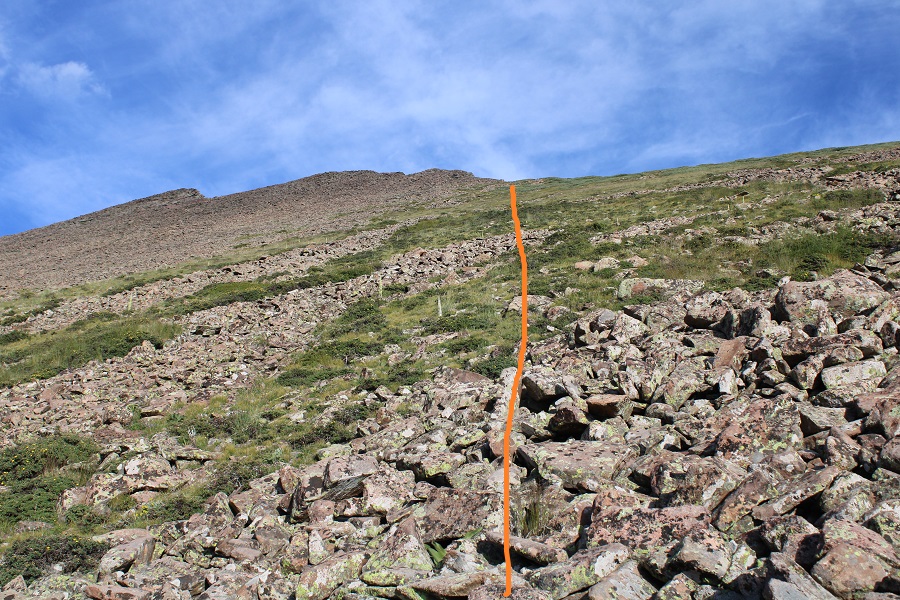
Once on the ridge I turned left, and followed it southwest
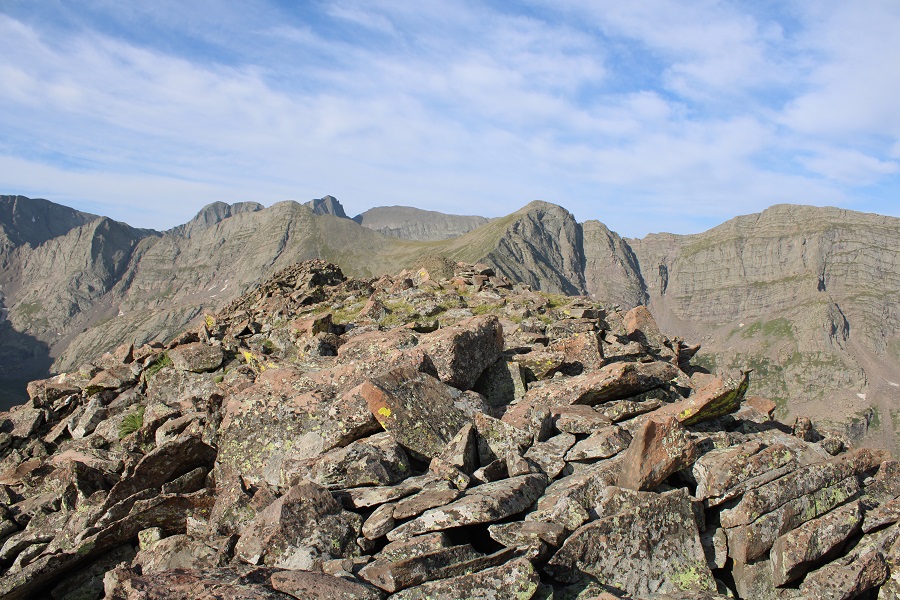
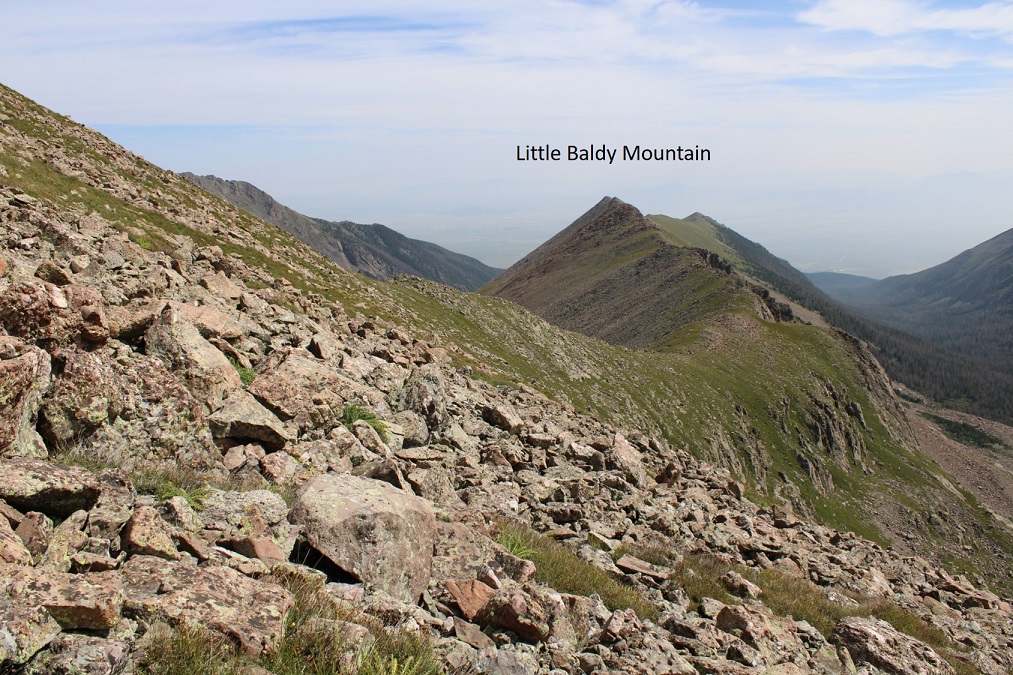
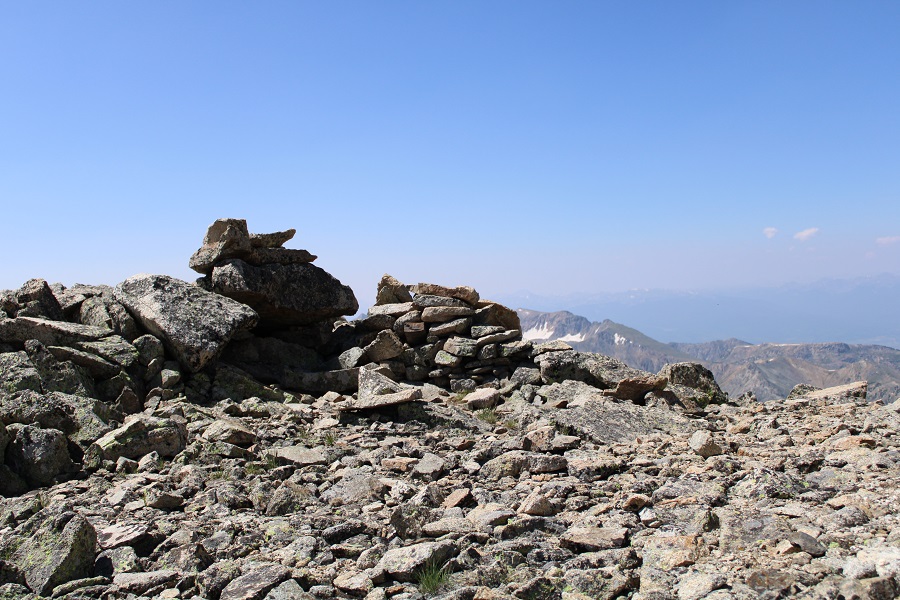
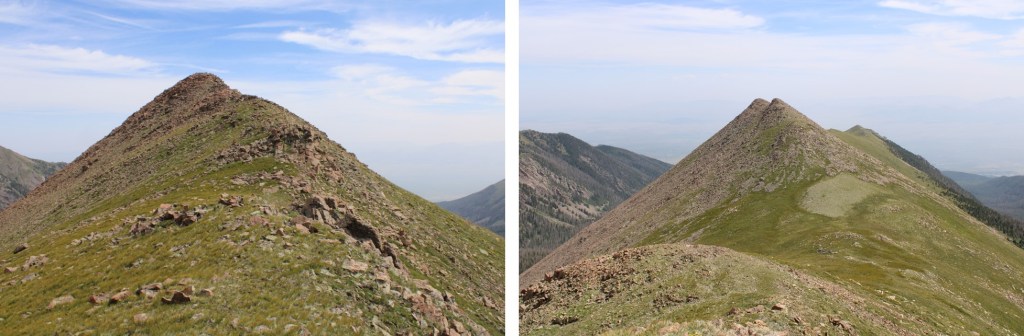
The ridge has a lot of ups and downs.  I crossed over two small bumps (kind of like ears), then lost 150’ of elevation and gained it again to the true summit of Little Baldy Mountain.  This is the best way to describe where Little Baldy Mountain is (an unranked 12er).  There is a cairn on the first hump, but it’s the second cairn you’re looking for (if it really even matters? It is unranked.  Just follow the ridge and you’ll hit it).
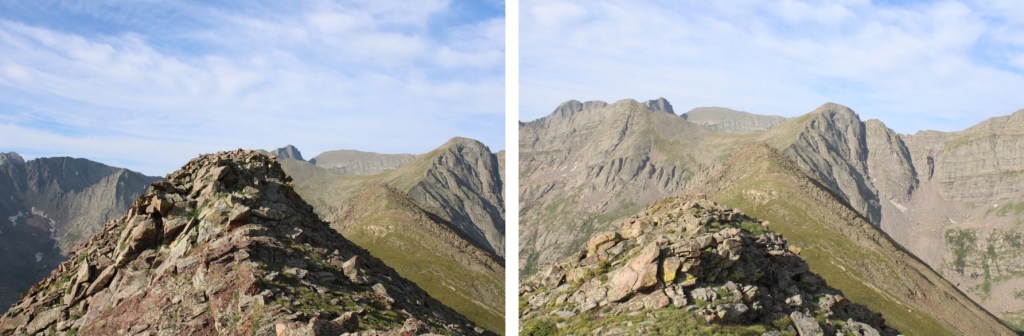
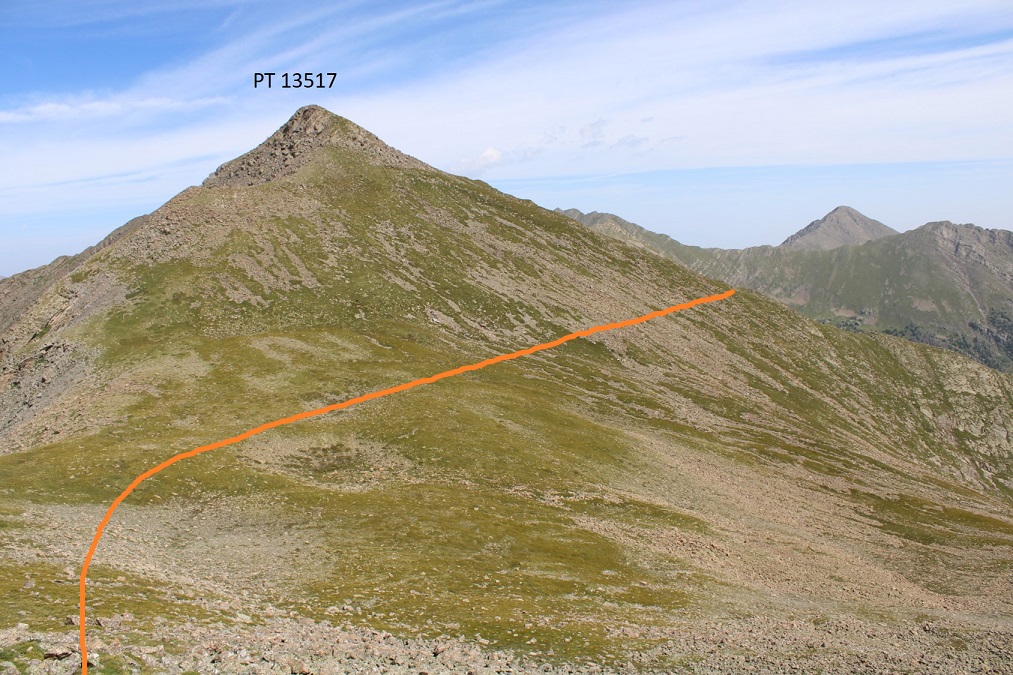
The ridge is a bit rocky, with some tundra thrown in, and all class 2. Here you can see the route to PT 13517 and 13541

Here’s an overview of the route I took.  I summited PT 13517 first, then took the ridge to PT 13541, and then went saddle to saddle. 
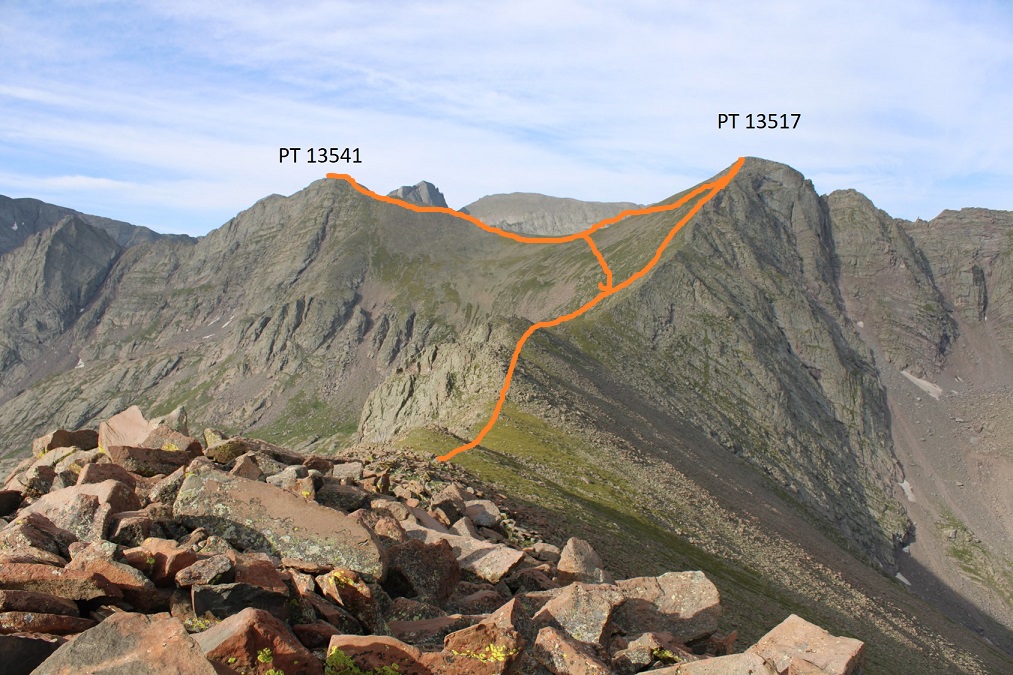
Here are some step by step photos. First, the ridge to PT 13517
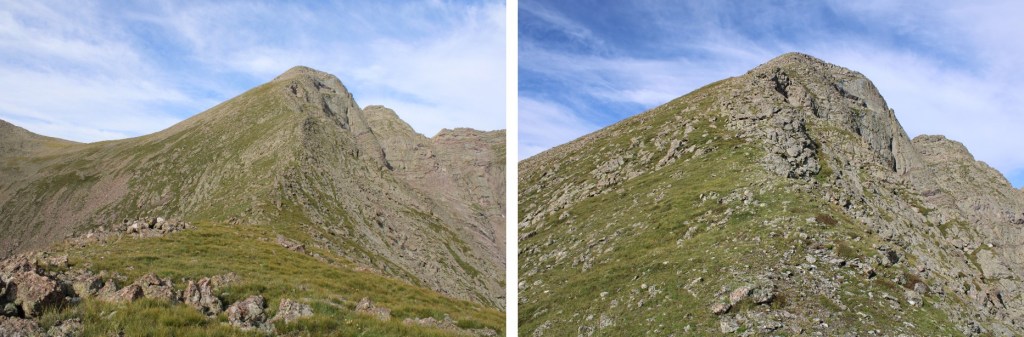
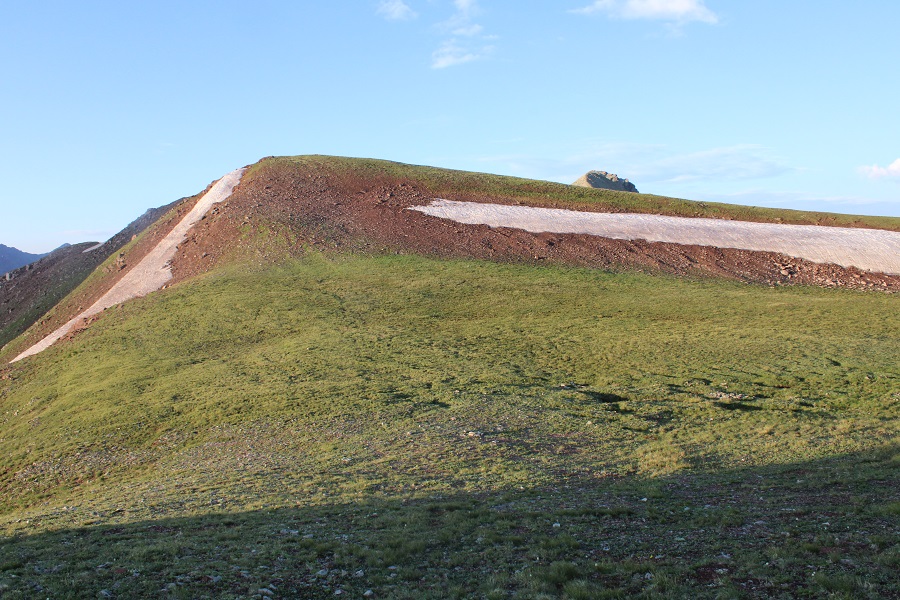
The ridge was mostly tundra, but became rocky at the end.  All of the rock above treeline feels like Crestone rock:  conglomerate with lots of hand holds. The only difference is these are rocks, and not slabs. This stays class 2
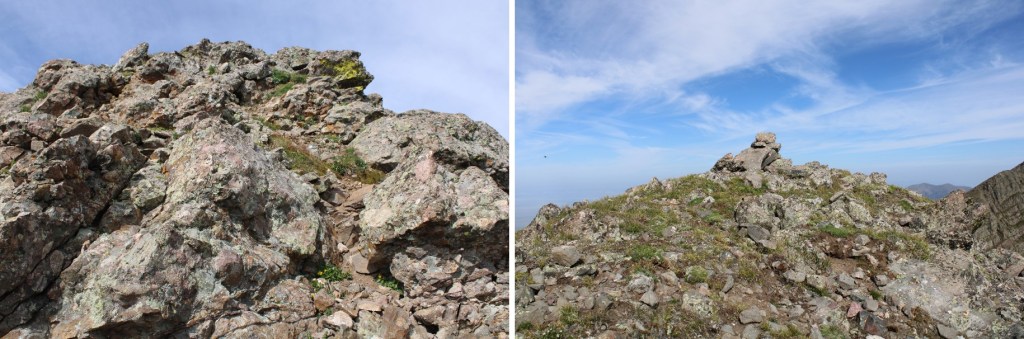
I summited PT 13517 (unranked) at 9:15am

PT 13517:

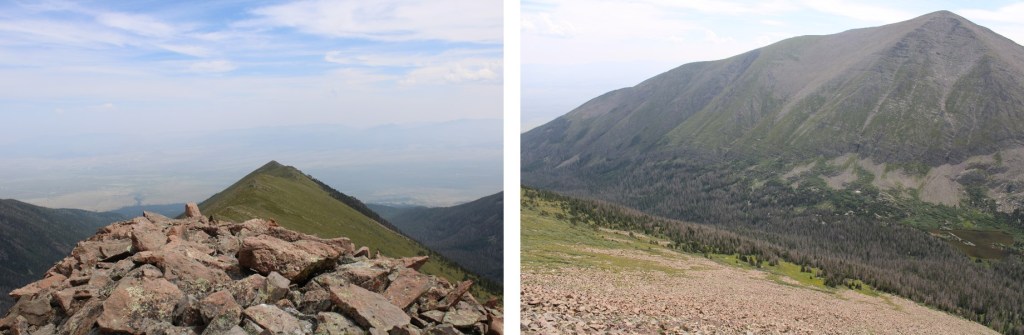
Here’s looking back at the ridge and the route in
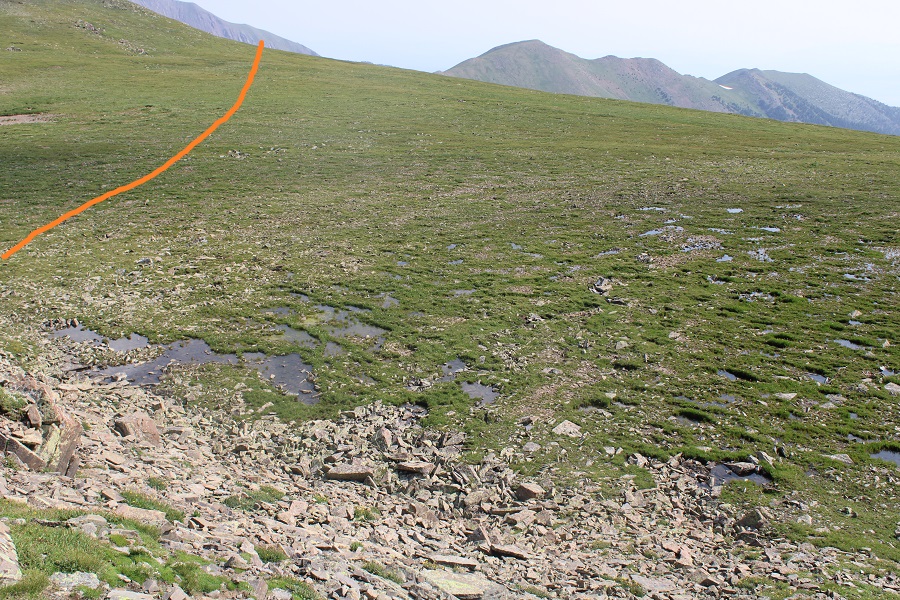
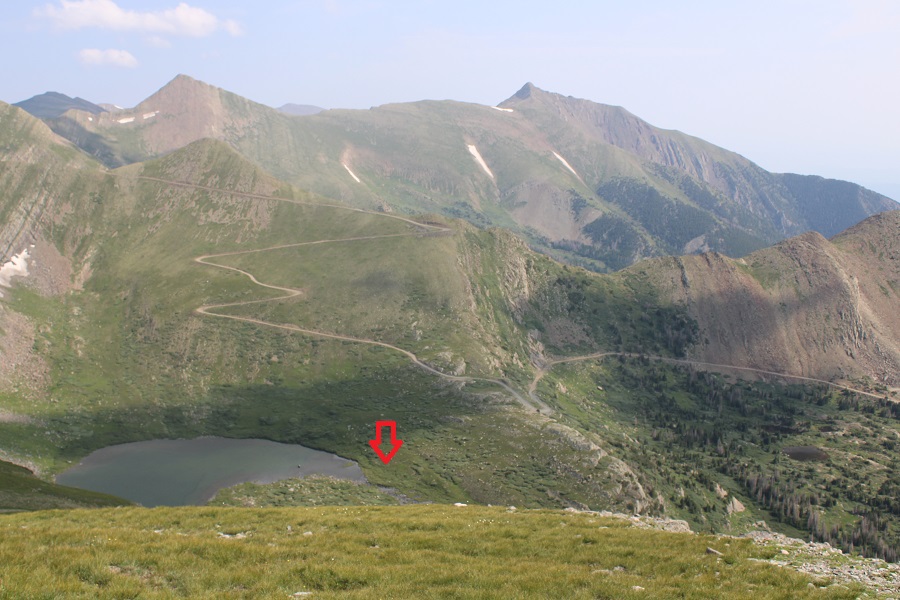
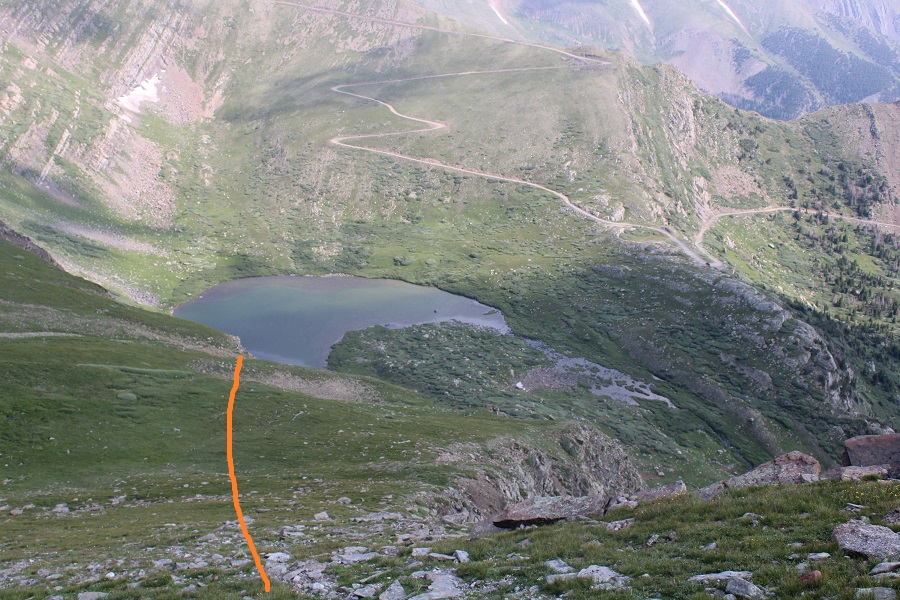
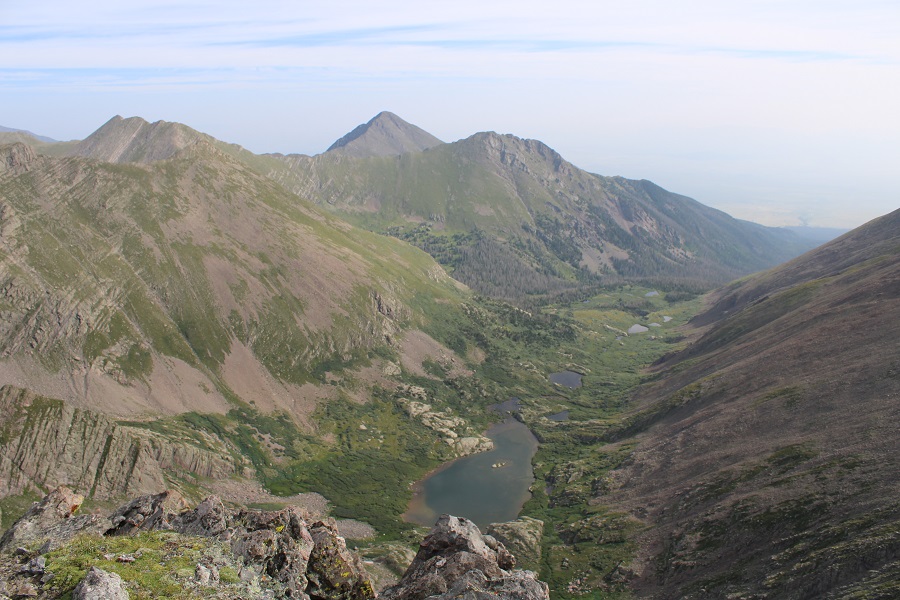
Here’s looking back at the Horn Creek approach: Look at all that water and willows!!!
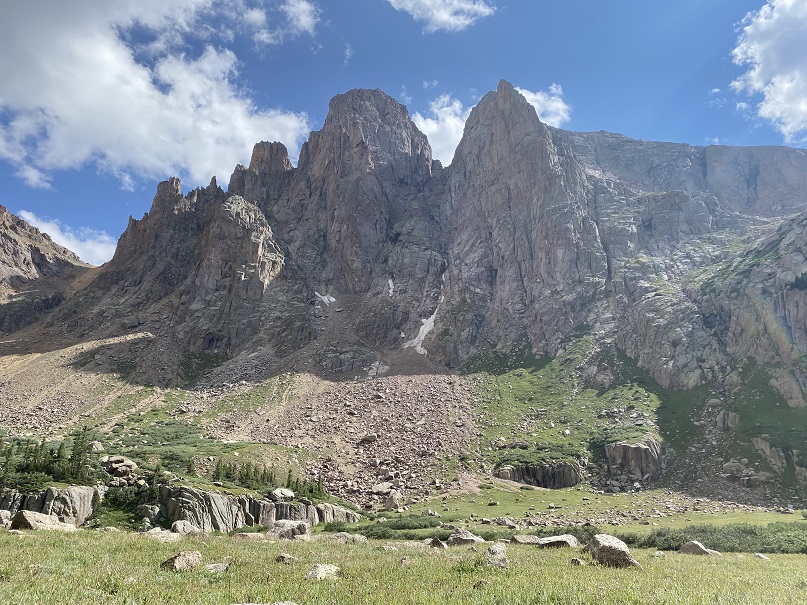
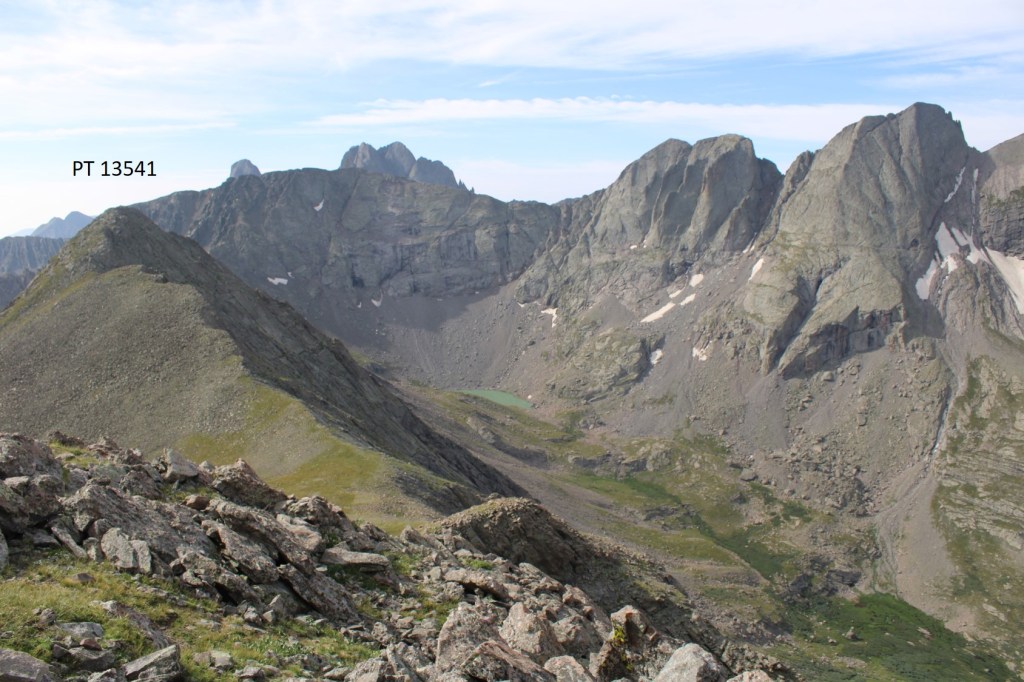
Now to head over to the ranked peak of the day: PT 13541. Check out those Crestones!
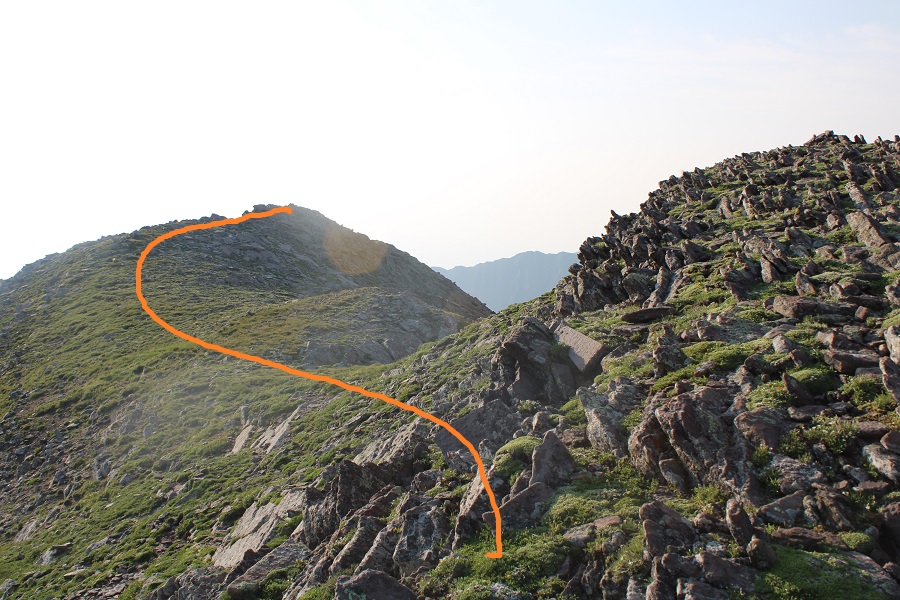
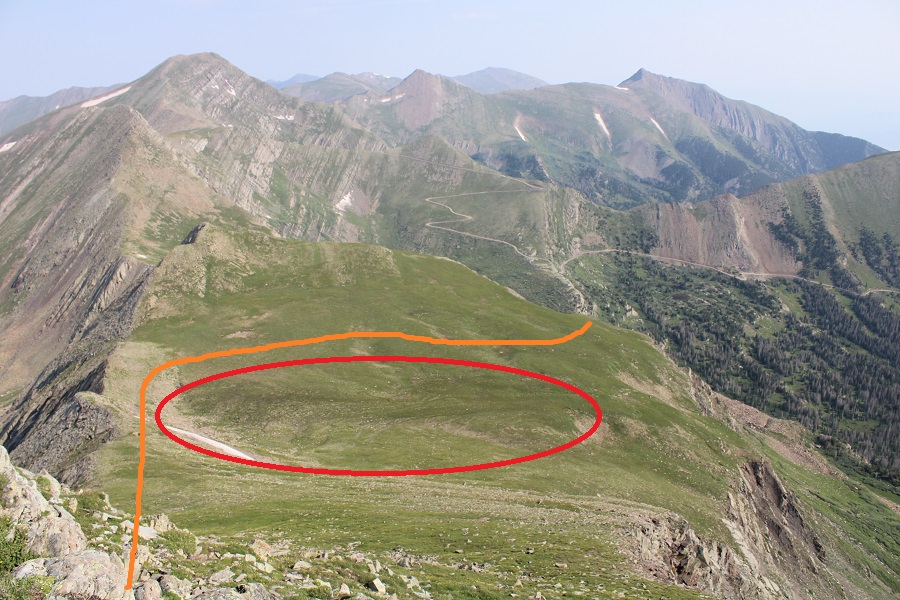
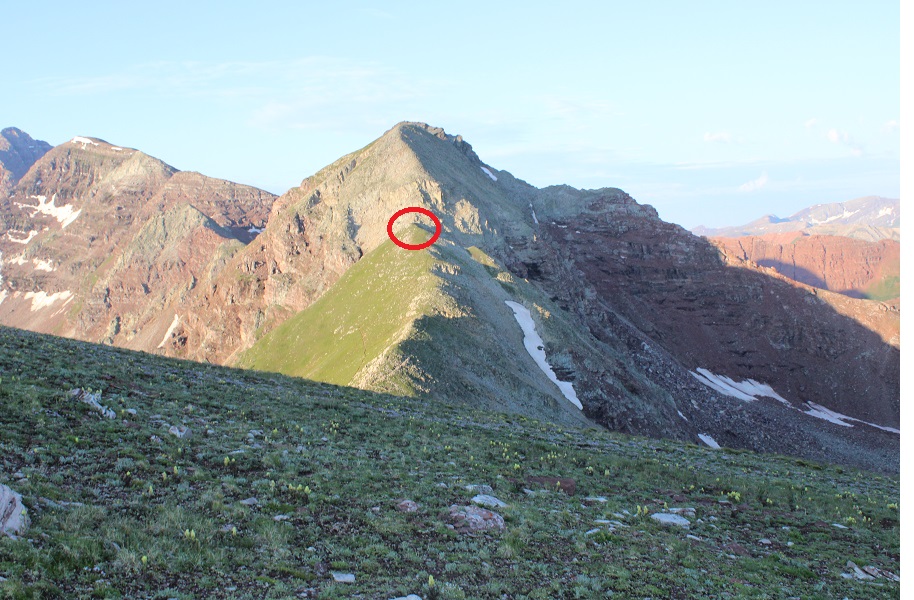
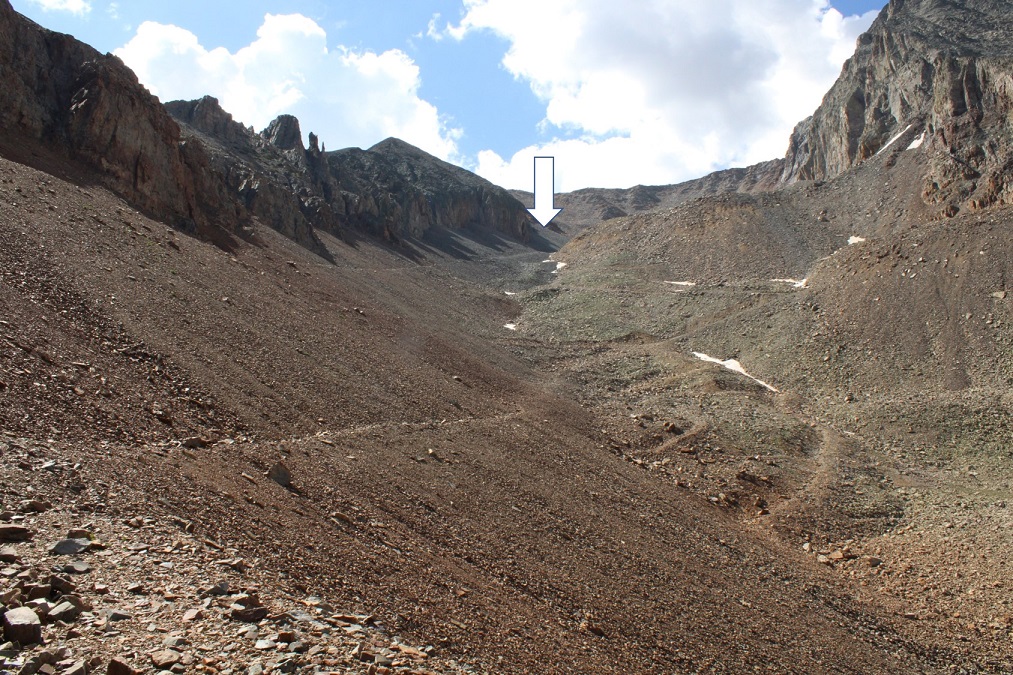
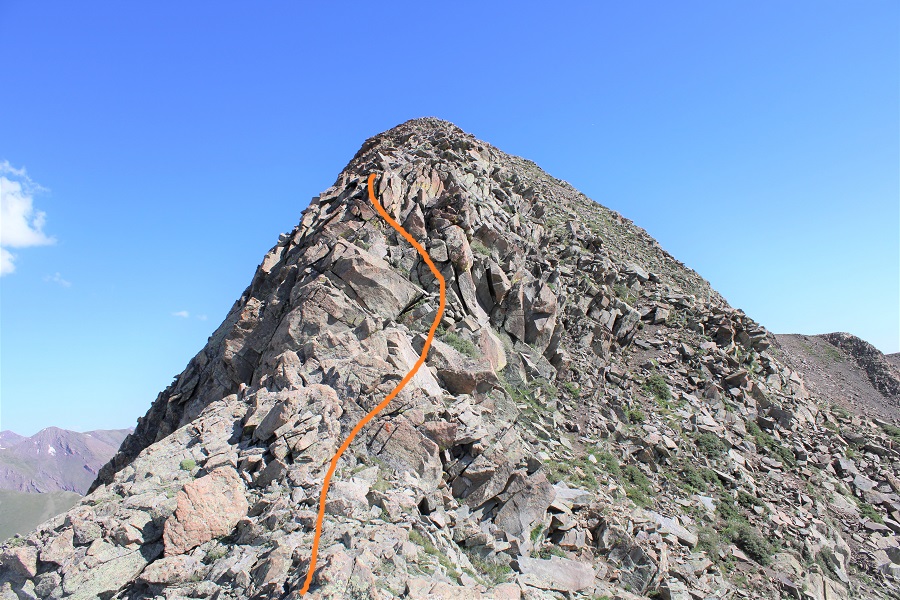
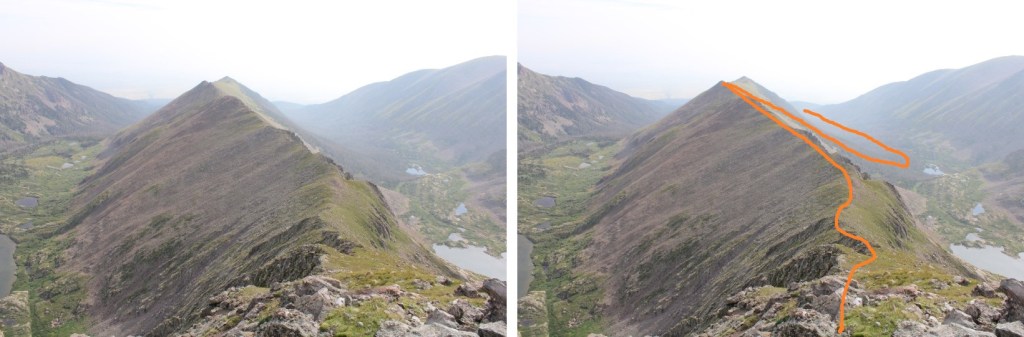
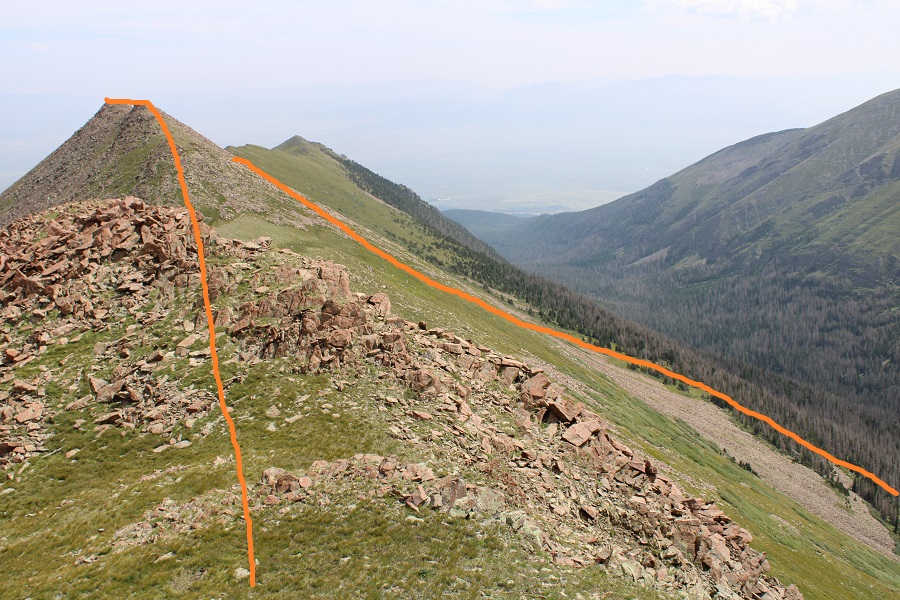
The trek over to 13541 was straightforward, and a simple ridge hike until the last bit or so (circled in red)

I hiked down to the saddle and enjoyed the views for a bit. Doesn’t Kit Carson Peak look like a cooked (or uncooked) turkey from this angle?

From the saddle, here’s looking up at 13517
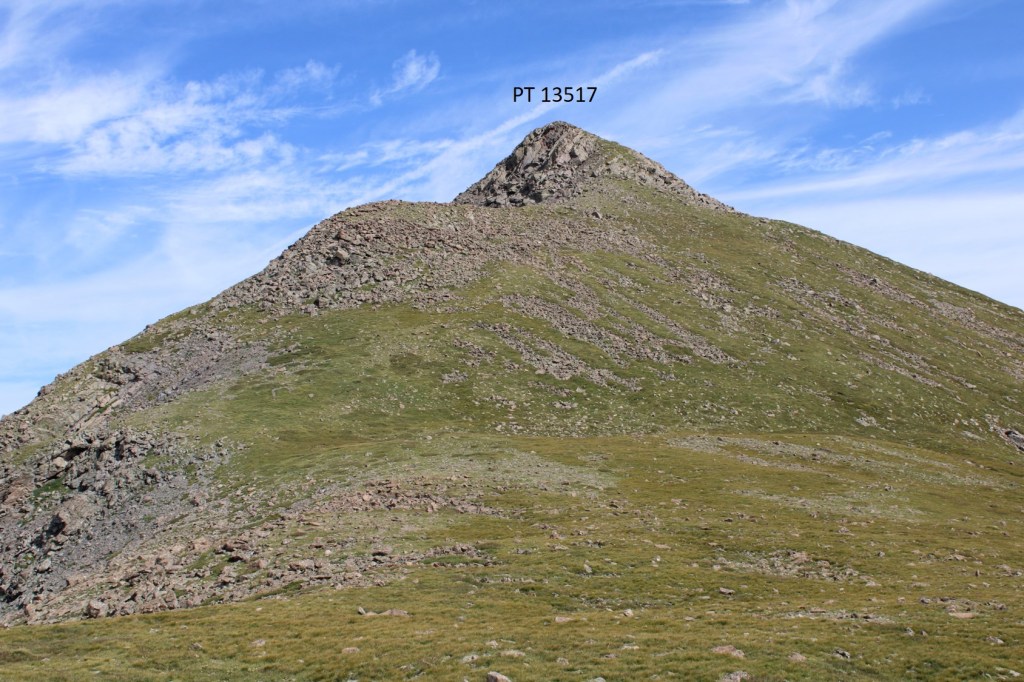
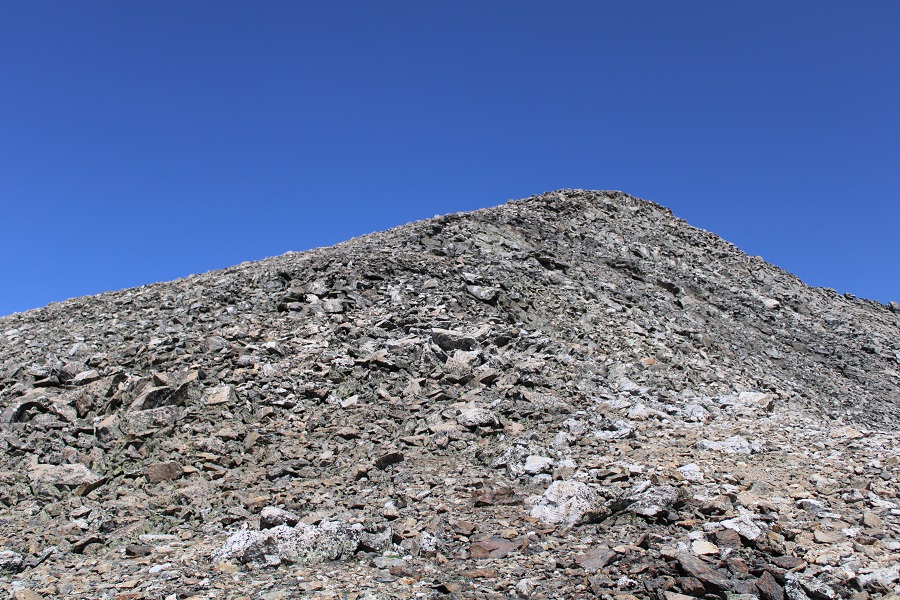
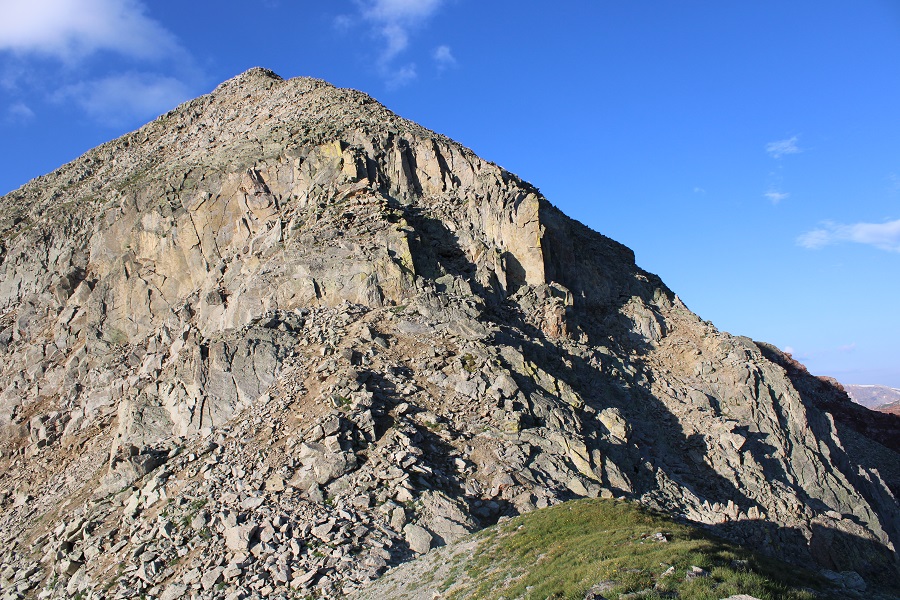
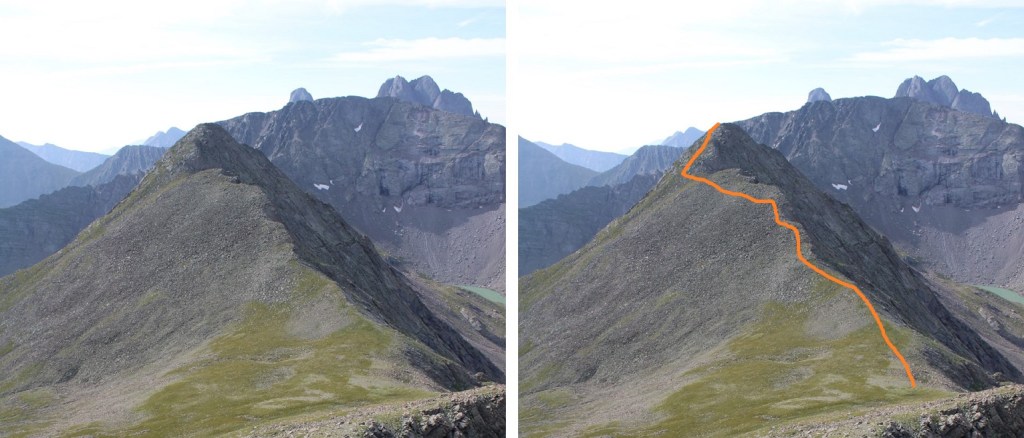
Most of this ridge to PT 13541 is just a tundra hike, until the end, where it becomes rocky and there are some steep drop offs to avoid. Here’s an overall view of the route: A little more than half way up the ridge I left the ridge and skirted the mountain to the left to head towards the summit
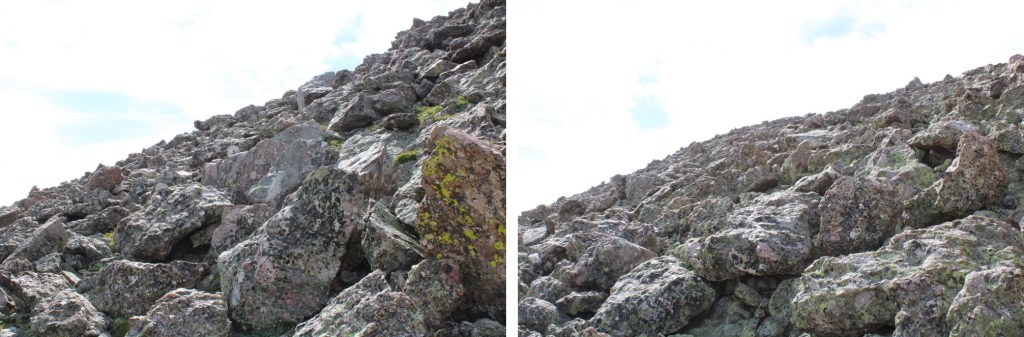
The ridge gets a little rocky, but this stays class 2
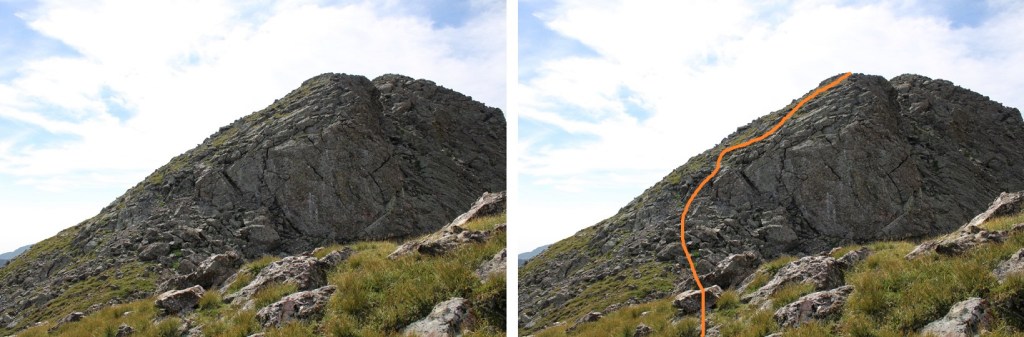
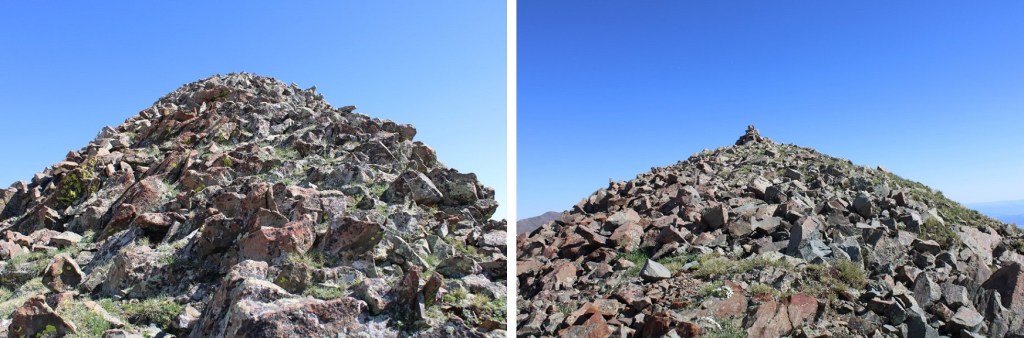
Just when you think you’re at the summit…
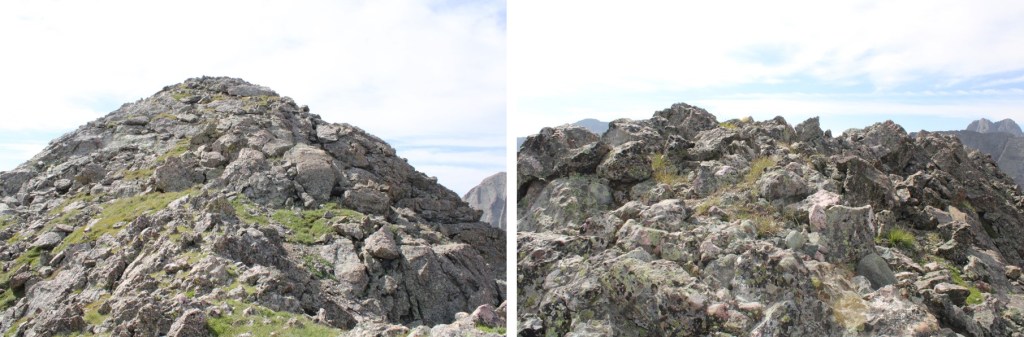
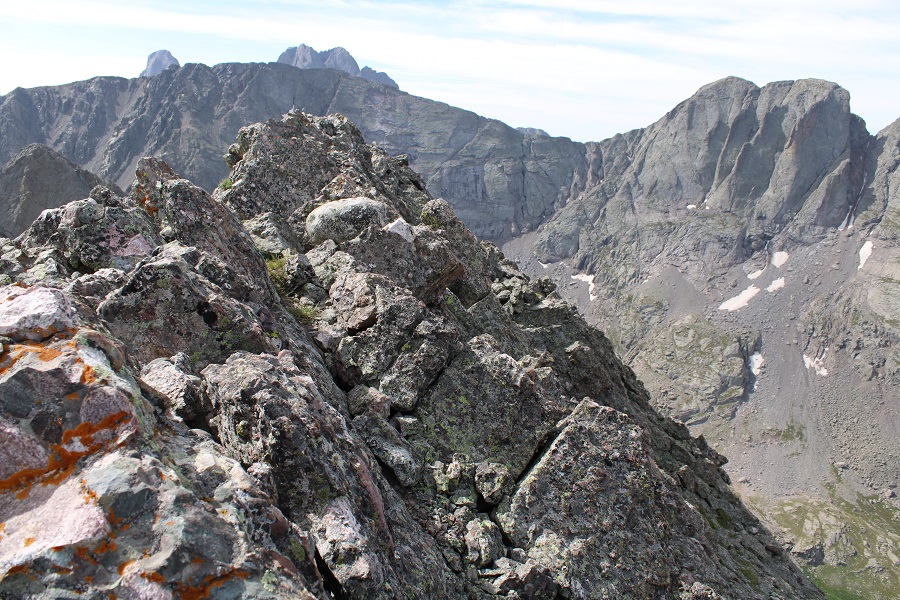
You’re close, but not there yet.  I had my helmet with me but decided it wasn’t really necessary. I dropped my gear and headed towards the true summit. This was easy class 3, with plenty of hand/footholds.

You can stay on top of the ridge the entire time, or dip down to the right.  The summit is in the middle of this short ridge
I summited PT 13541 at 9:55am I didn’t feel safe setting up my camera, so I took a selfie
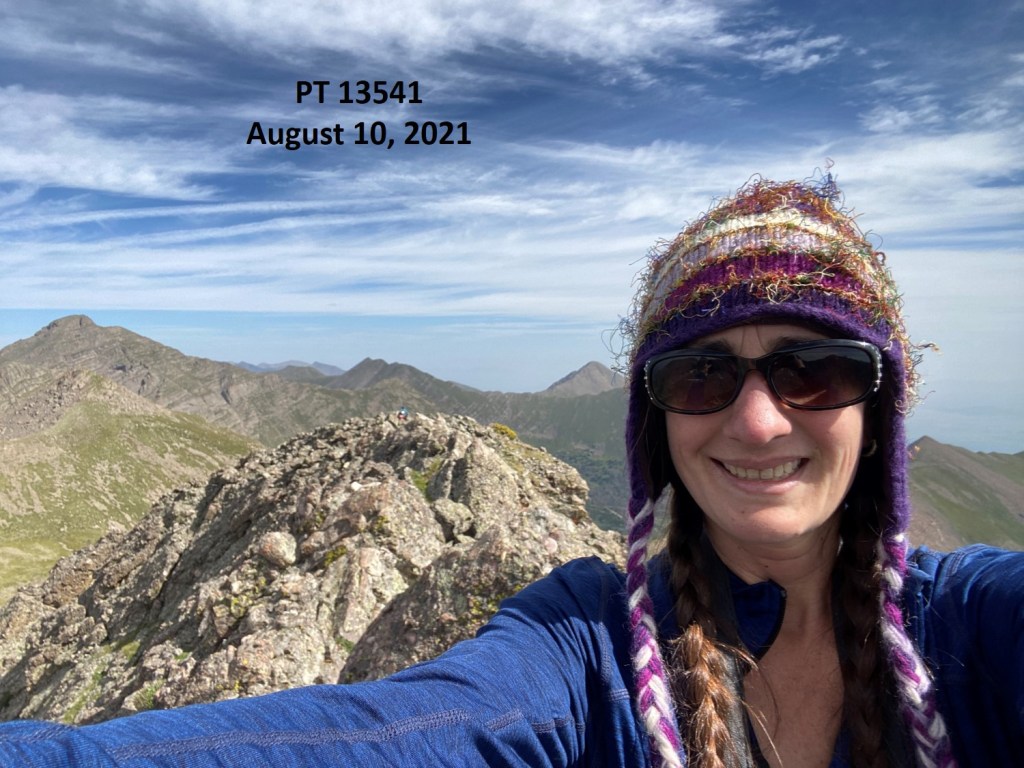
PT 13541: 

I left a summit register, and then went back to get my gear.
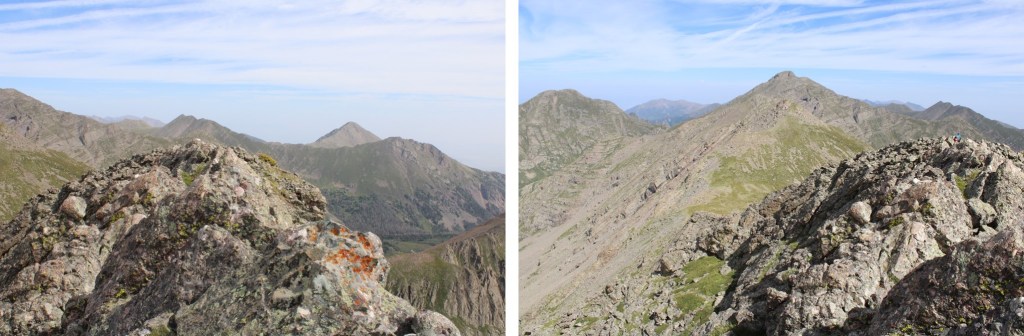
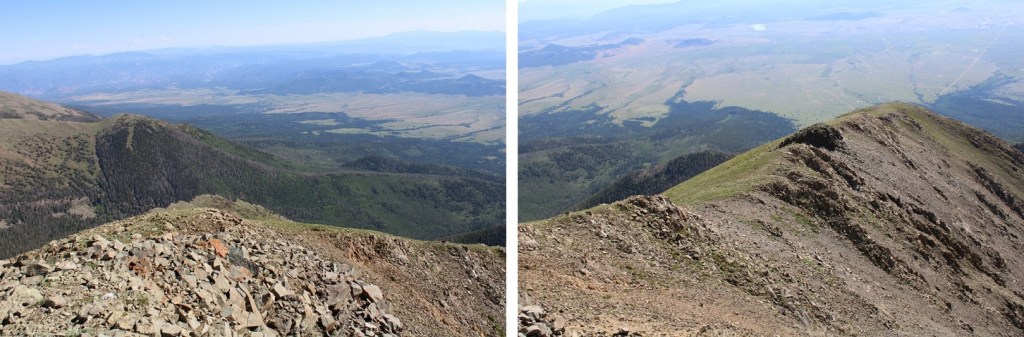
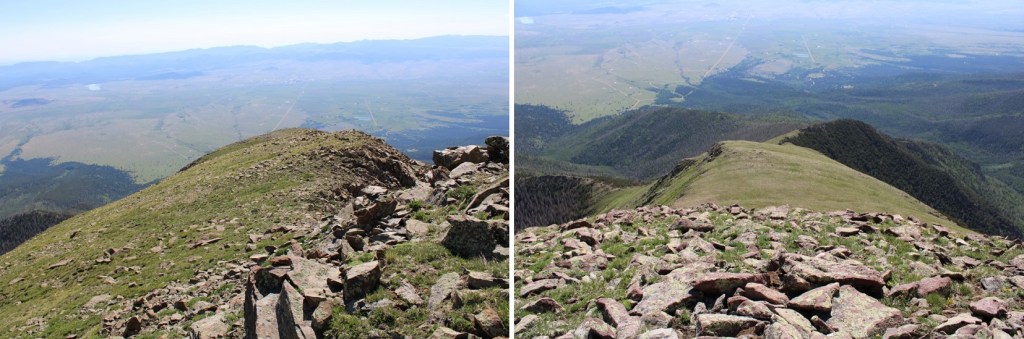
It was a really nice day, so I enjoyed my time here for a while. I took a ton of fun photos, and did some visual research for another peak I still need to figure out how to climb in the area (next week???). When it was time to head back, I made my way back to the 13517/13541 saddle the way I’d come, then traversed over to the 13517/Little Baldy Mountain saddle.  This was all class 2 on tundra and talus
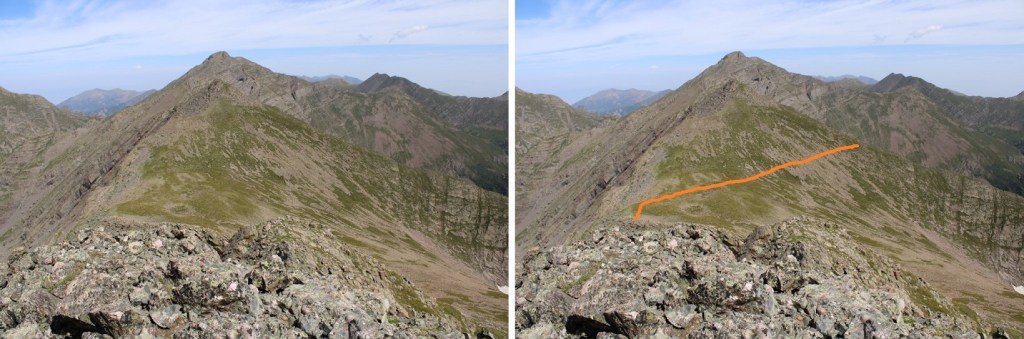
Here are some more visuals: 
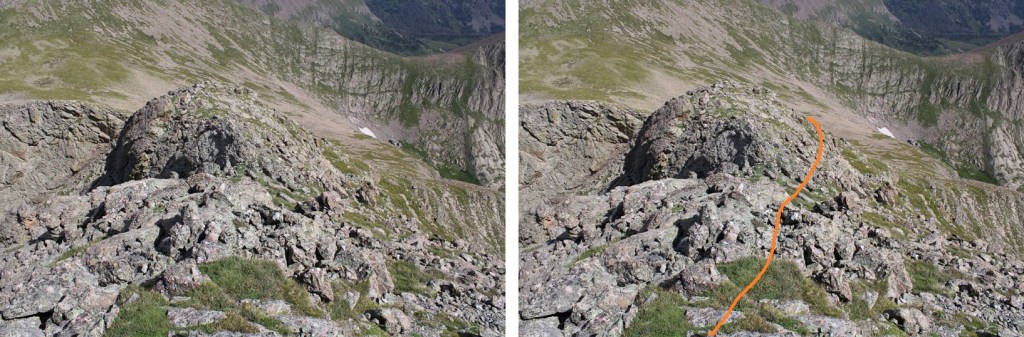
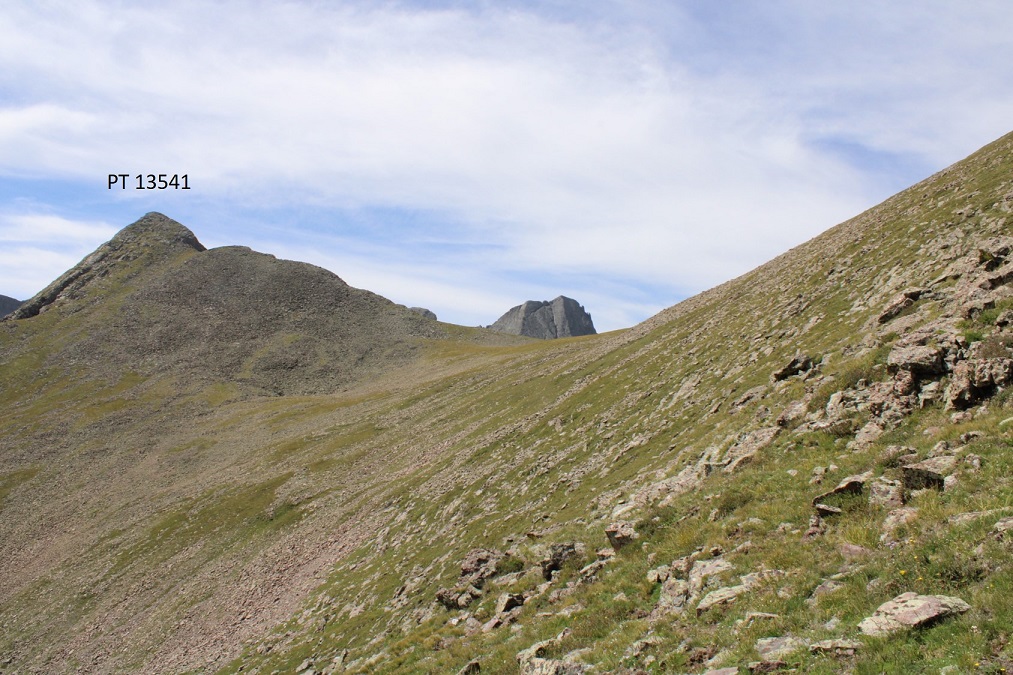
From the saddle, here’s looking back at PT 13541
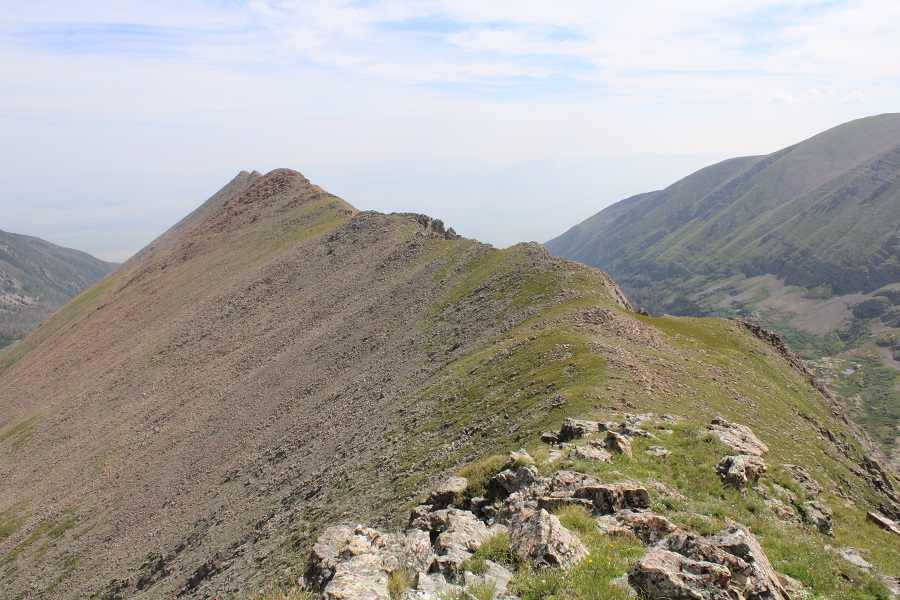
Once at the saddle I followed the ridge back up and over Little Baldy Mountain and the two small humps
After the second rocky hump I left the ridge and descended southeast, back towards Macey Lakes
Once in the trees I just kept aiming southeast until I made it back to the trail (Macey Trail 1341)
Now on the trail, I followed it back to the Rainbow Trail
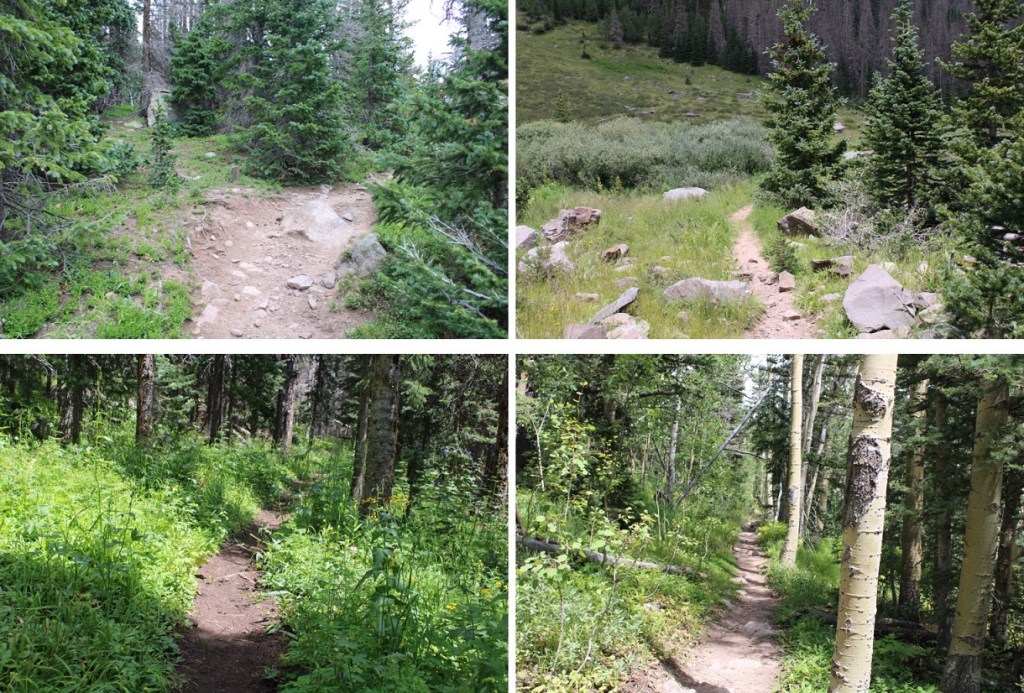
And then followed the Rainbow Trail back to the trailhead
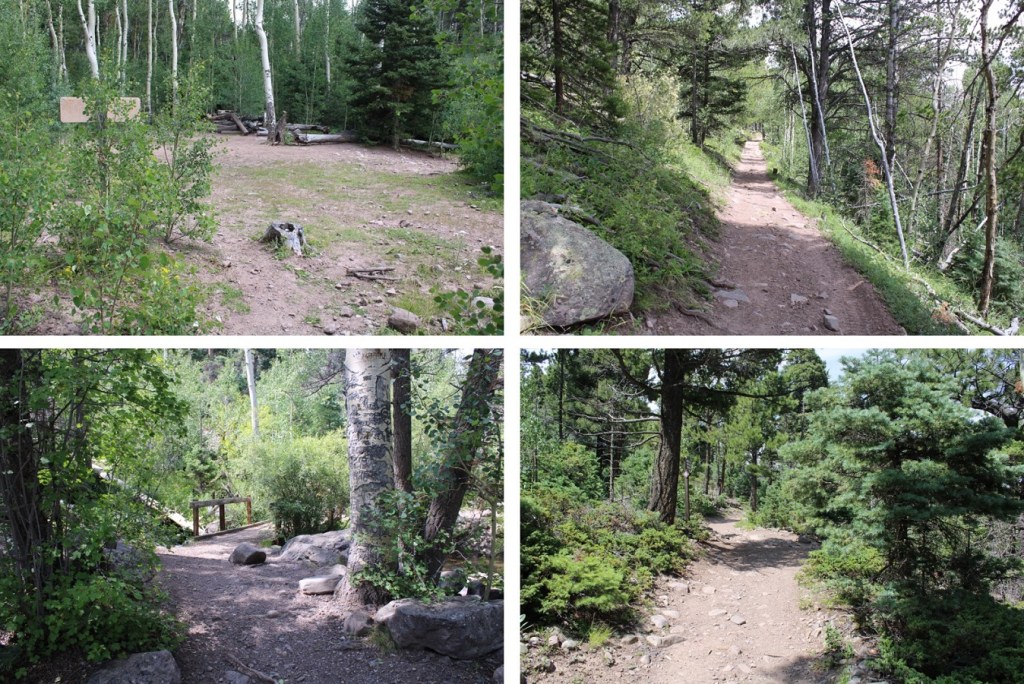
I made it back to my truck at 2:30pm, making this a 19.45 mile hike with 5950’ of elevation gain in 10 hours.
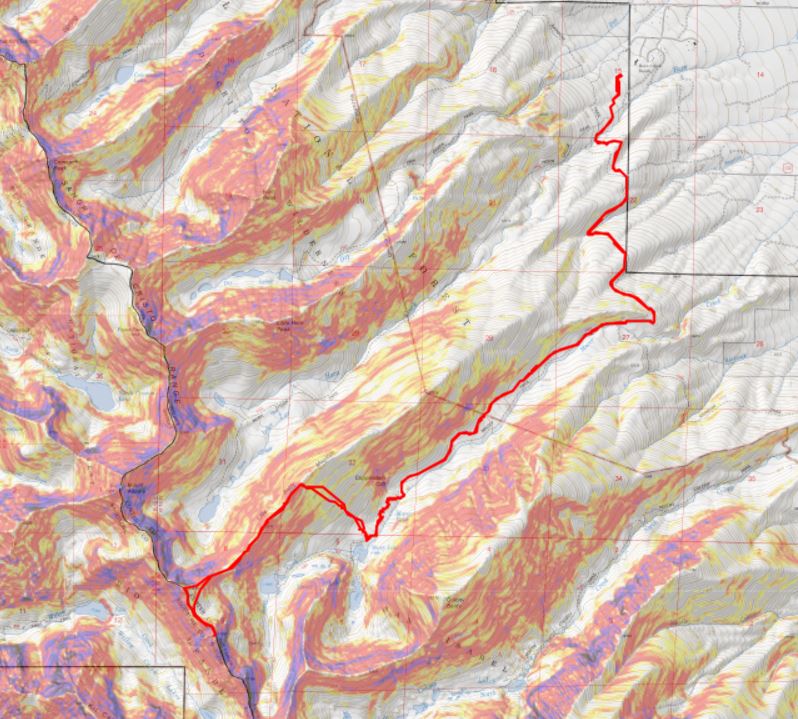
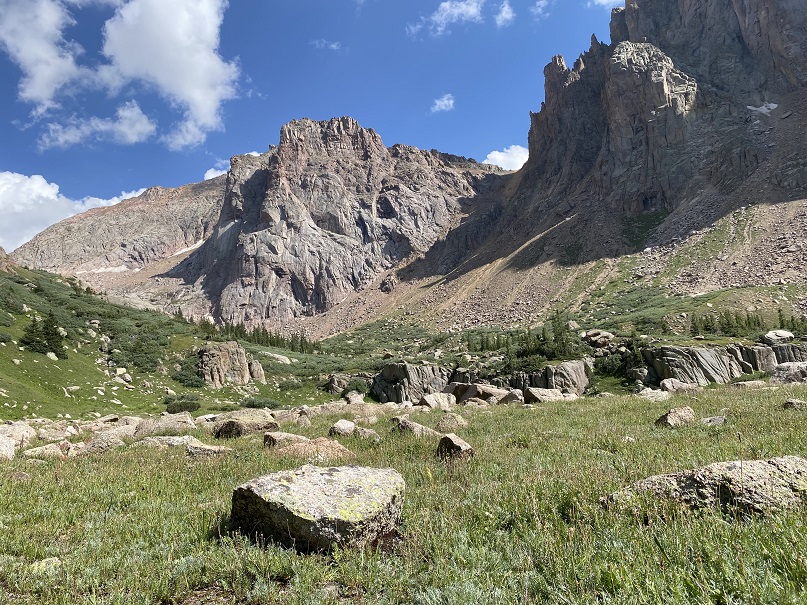
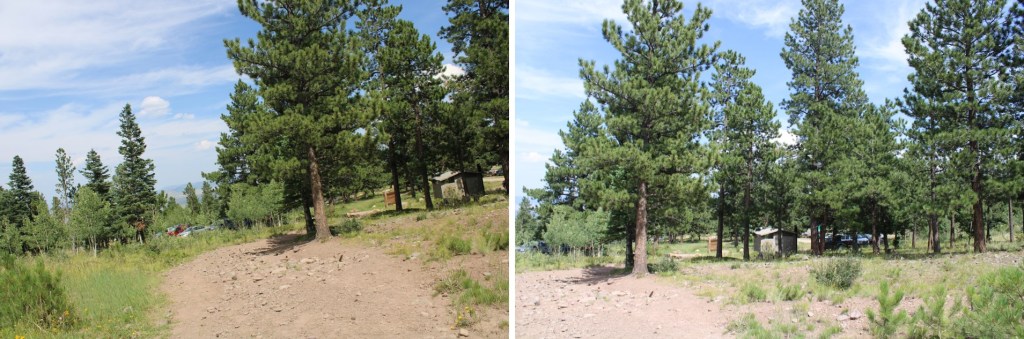
Chicago Basin / Ruby Basin Approach from Purgatory Trailhead

RT Length: 41 miles (per CalTopo)

RT Elevation Gain: 9146’

Mileage (per CalTopo track):

  • Purgatory to Animas River: 4.62 miles
  • Purgatory to Chicago Basin Turnoff:  10.5 miles
  • Purgatory to Needleton: 11.5 miles
  • Purgatory to Ruby Basin:  20.25 miles

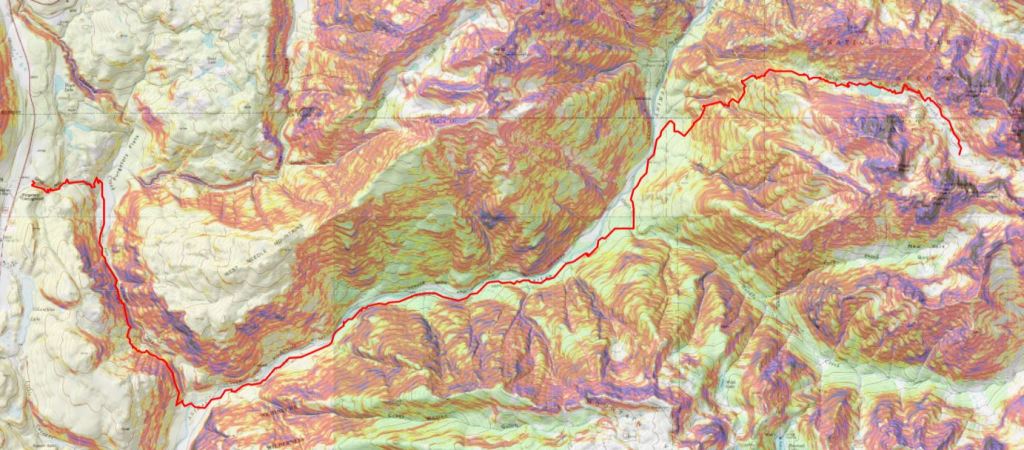
I’ve done this approach several times, but always in the dark. I decided to put together a detailed route description for those looking to head to Ruby Basin, or those interested in what it looks like hiking from Purgatory to the Chicago Basin cutoff.  I feel this route has improved over the years, but unfortunately now has more downed trees blocking the trail, making route finding interesting at times.

I arrived at 2pm on a Thursday afternoon and the parking area was full.  They’re doing a lot of construction/new housing in the area, and there were a ton of visitors to the lake.  I actually had to wait about 15 minutes for someone to leave before acquiring a spot.  It might have been the time of day, but come prepared (I’ve never had trouble finding a spot before, but I usually arrive in the middle of the night).

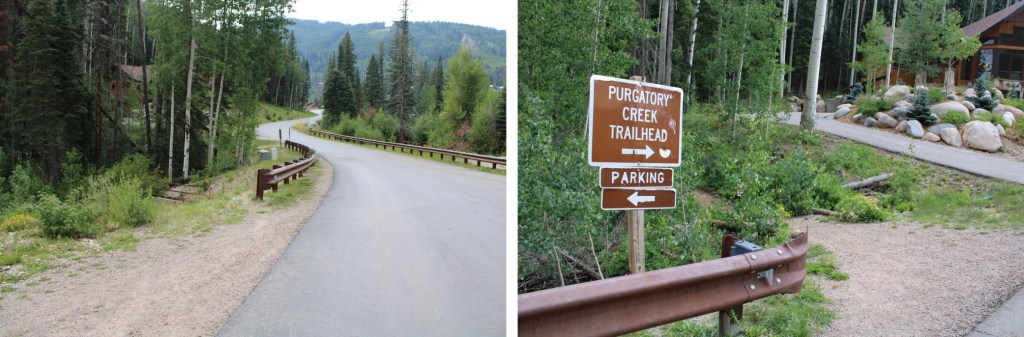
The trailhead is clearly marked, and starts at the west end of the parking area

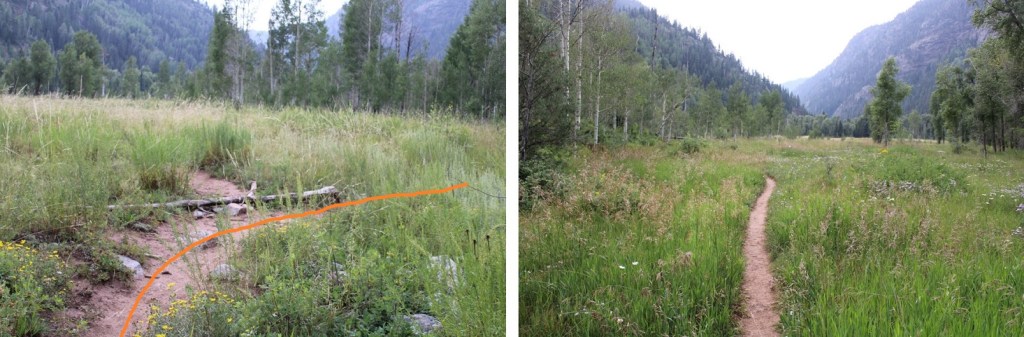
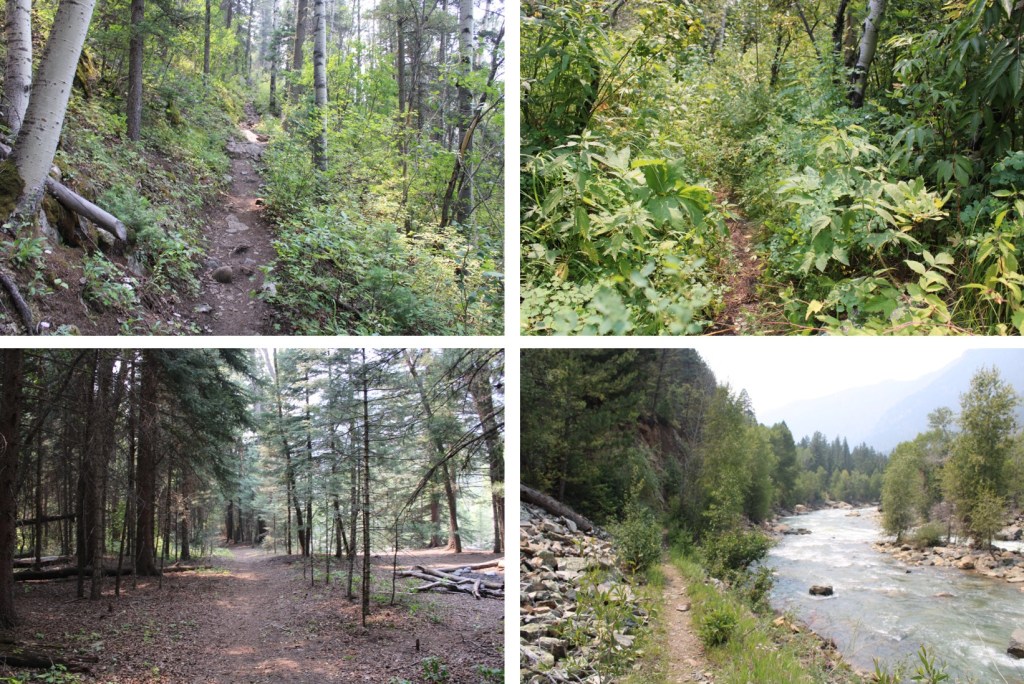
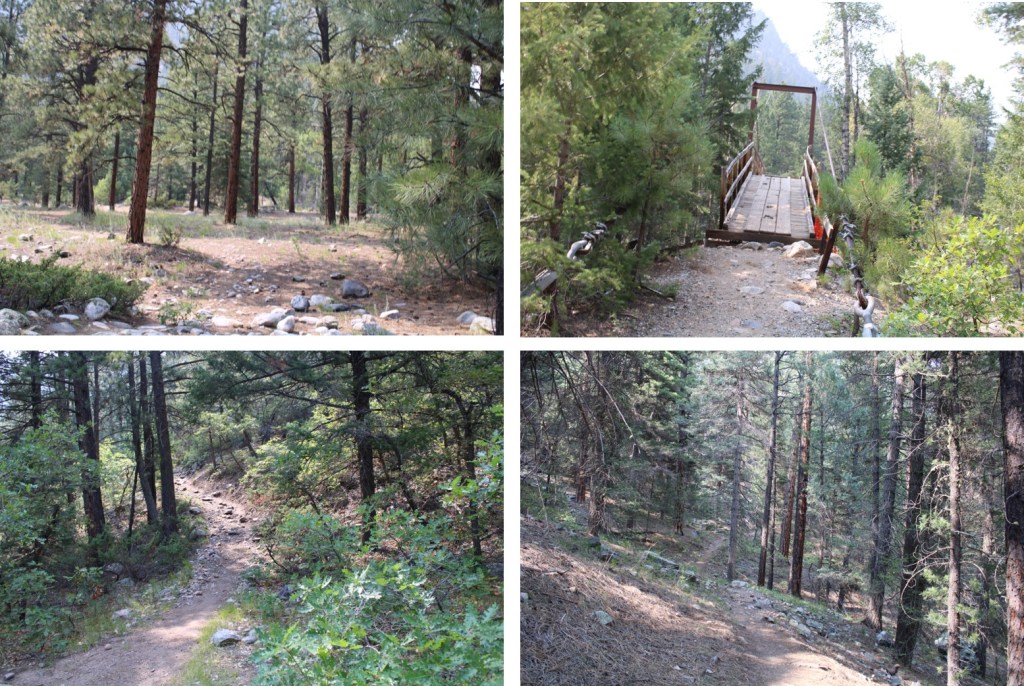
From here, the trail is class 1 as it heads east for 1.3 miles, and then turns right and follows Cascade Creek south to the Animas River. This part of the trail is nice on the way in, as you lose about 1200’ of elevation, but can be frustrating on the way out.  I’d recommend hiking this part out in the cooler part of the day (or night). Here are some pictures of the trek down to Cascade Creek

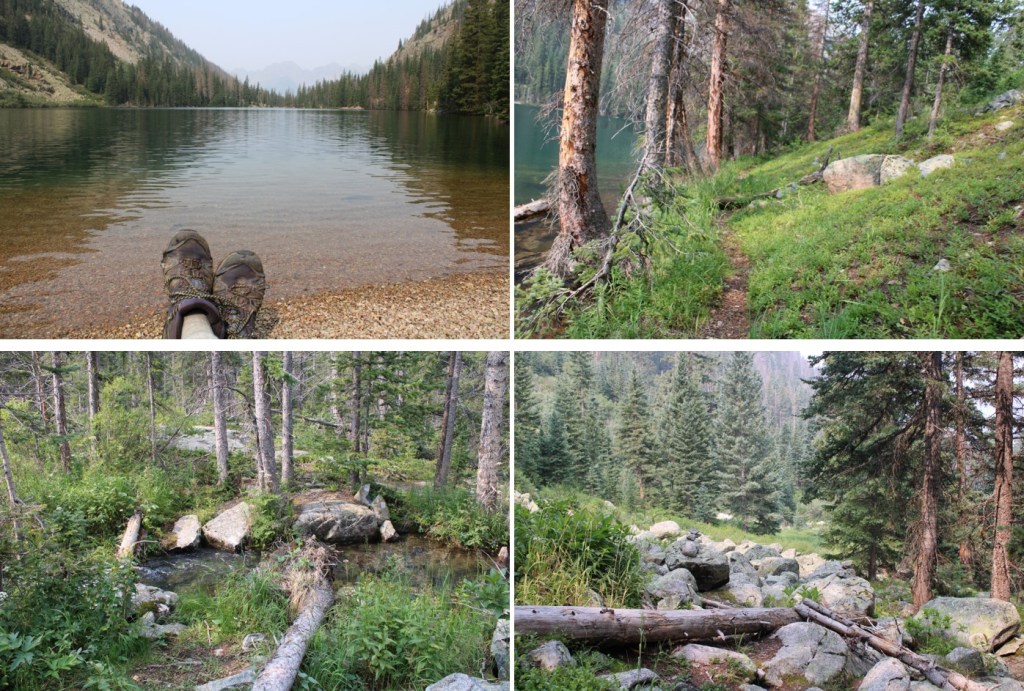
And from the creek to the Animas River.  Here the trail will gain and lose elevation multiple times before descending to the river.  In the late summer and early fall you’ll find wild blueberries, raspberries, strawberries, and lots of foliage here.

Just before getting to the Animas River the trail descends 400’ to a flat area

Here there are picnic tables and camping spots, and finding the exact trail can be confusing.  If you get lost, just head west towards the river

There is a very large and very obvious bridge to cross.   This is also a good place to filter water (either on your way in or out). CalTopo told me I hiked 4.62 miles to this point.

As you’re crossing the bridge you can see where Cascade Creek and Animas River meet

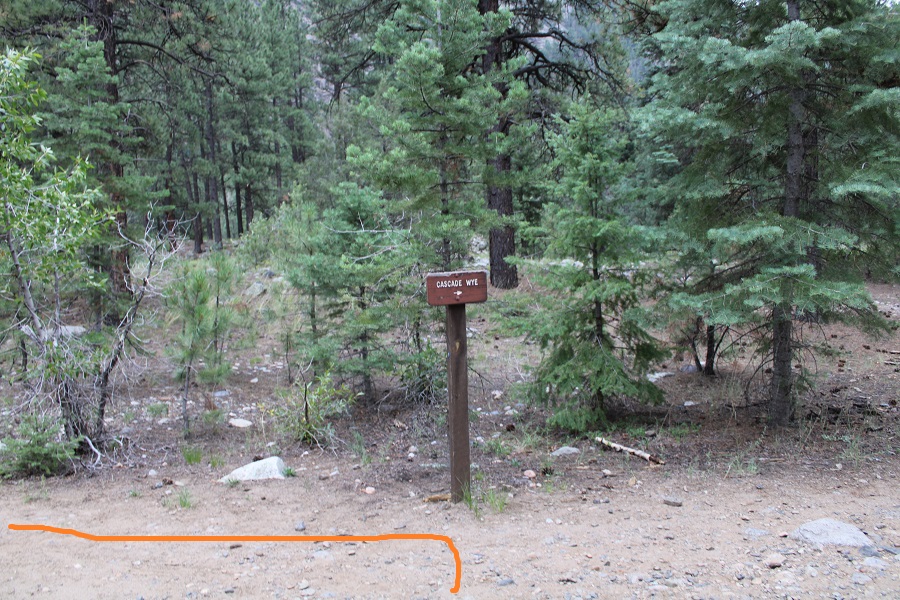
As soon as you cross the bridge, you’ll see this sign.  Go LEFT here

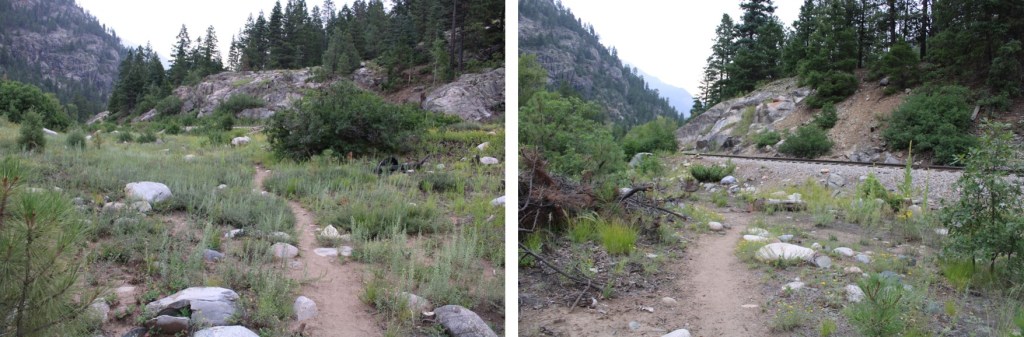
And follow the trail to the railroad tracks

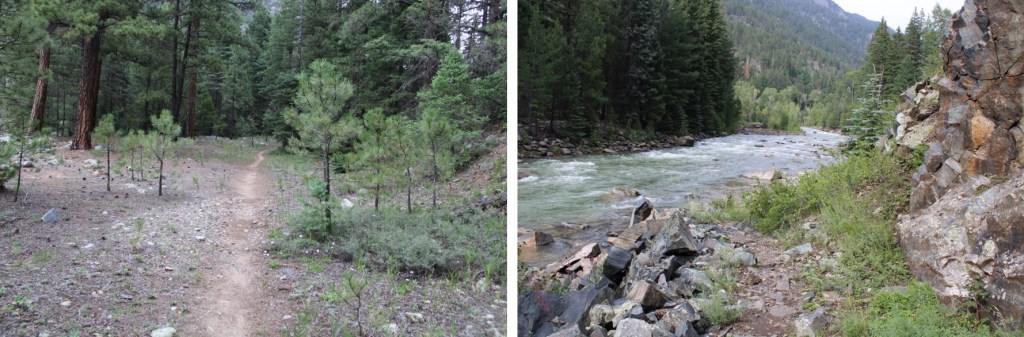
There will be an obvious place to cross the tracks. Funny story:  when I was crossing the tracks this time and taking pictures the train blew its whistle from what felt like very close.  I’m sure they do that to warn people to get away from the tracks at the crossing (I also heard it on my way back).  If you hear the whistle, you have less than a minute to remove yourself from the tracks before the train arrives.  Cross the tracks and continue on the class 1 trail as it hugs the Animas River and the Mountainside

From here the trail stays pretty level as it follows the Animas River.  If it’s rained recently, you’ll want rain gear, as the foliage covers the trail in many areas and you’ll get very wet.  There are many places to camp along this stretch. 

From the Animas River Crossing, it’s just under 6 miles to the cutoff for Chicago Basin (or 10.5 miles total from Purgatory).   Here you’ll cross Needle Creek on another sturdy bridge.  This is also another good place to filter water.

If you’re headed to Chicago Basin, there are obvious signs that will guide you there.

If you’re headed towards Needleton/Ruby Basin (etc.), continue following the trail north for another mile.

There’s new signage here. Please note, this is a public trail through private property.  If you need to filter water, cross the bridge, filter, and then come back. 

Here’s where the trail gets fun!  Don’t cross the bridge. Instead, follow the trail to the right

You’ll follow this trail for just under half a mile until you get to an Aspen Grove.  This is a good place to spend the night before the elevation gain begins.  You’ll have hiked a total of (almost) 12 miles to this point.

Here you’ll turn right, and follow an obvious trail up the hillside

This is where the elevation gain starts and doesn’t quit. 

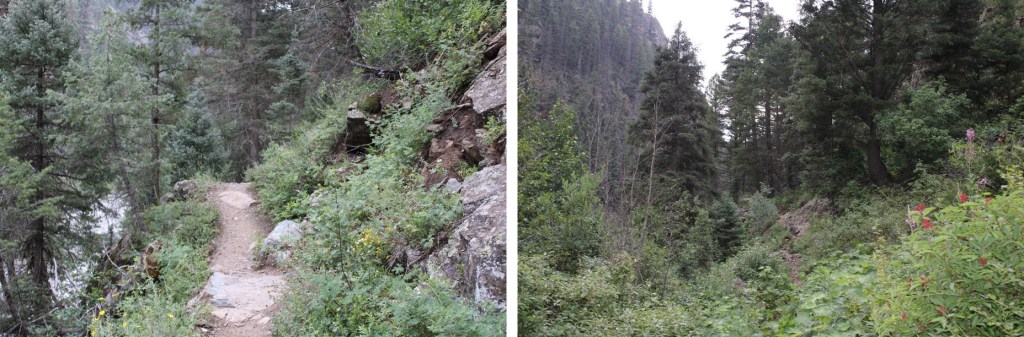
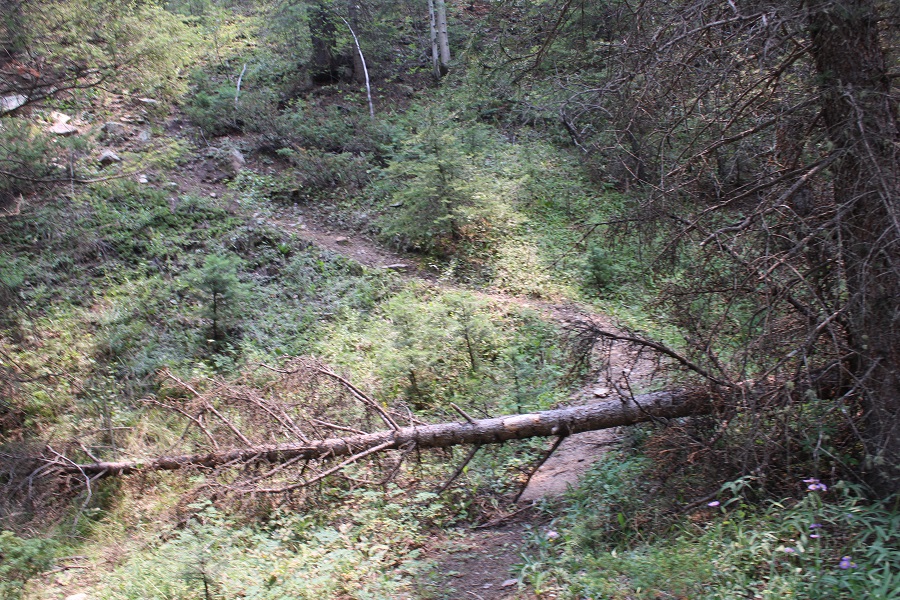
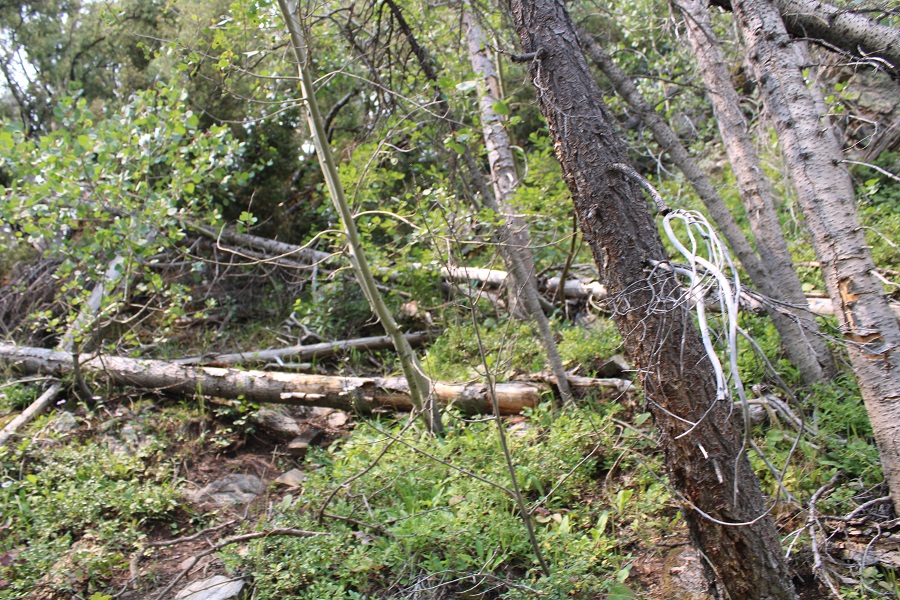
There are a lot of newly downed trees in this area, without an established workaround. Most of the trail is easy to follow, so if there’s a large downed tree in your path (and there will be), just try to be logical about where the trail should go, get around the tree, and you should be able to pick it back up again. This is tons of fun in the dark, and much easier when it’s daylight. 

Another fun part:  after gaining and gaining and gaining in elevation, at around 10,330’ you’ll LOSE about 200’ of elevation, quite quickly.  Pictures looking down don’t do it justice, so here’s LOOKING BACK UP at the elevation you’ll lose

At this point the trail becomes a little more difficult to follow, but there is a trail and cairns.  You’re hugging the mountain, following Ruby Creek east. Once again, this part of the trail is overgrown, so if it’s been raining, you’ll want to wear your rain gear to avoid getting soaked from the dew on the plants.

You’ll pass through a rocky area, with raspberry bushes and cairns to guide you

After hiking for 17 miles, and at 10800’ of elevation, you’ll arrive at Ruby Lake.  Cross where the stream and lake meet, and skirt the north side of the creek. 

There are also a few nice camping spots here, and the ability to filter water

Be sure to stay close to the water’s edge here, as there’s a trail and it’s much nicer on your feet than rock hopping.   There are cairns here as well.

The goal now is to ascend into the upper basin.  There is a trail here, but once again, a lot of downed trees and very overgrown with grass, flowers, etc. Keep heading east, staying below the rocks to your left.

At about 10900’ the trail abruptly ascends into the upper basin by aiming north. 

Where you’ll be greeted with:  Willows!  It is now your job to navigate through these willows to Ruby Basin. I promise you, there are trails here that ‘go’.  They’re goat trails and anything above your waist will be gnarly, meaning you should plan on getting whacked in the face with willow branches, but trails are here.  It’s important to find the entrance to the trail, and then go with your gut. Obvious cairns are circled in red.  You’re aiming for the orange arrow:

Here’s what the entrance to the trail looks like

When you make it to that orange arrow, the rest of the trail into the basin will become obvious

Pick your place to camp. There’s always plenty of water here flowing through the basin.  The marmots will chew up anything not hung up, which is difficult in this treeless basin.  I’ve seen Mountain Goats and Moose here a few times.  This is a great starting place for several 13ers in the area. If you’d like my GPX file for the route send me an email wild.wanderer@aol.com

Here’s a view of the Ruby Basin from the east side of the basin, looking west at how you enter the basin.

Here’s the topo route

And just for fun, a compilation of pictures of the route out.

Apache Peak – 13,450

RT Length:  13.66 miles

Elevation Gain:  4127’

I’m not a fan of the timed permit system, and once again, I was reminded why (feel free to scroll down to avoid the drama/whining, just be sure you have ALL the correct passes you need when you purchase online). 

The night before this hike I was able to secure a dropped permit.  I was looking up available permits on my phone, saw one for tomorrow, and snatched it up.  It was an overnight parking permit that started the day of the hike.  Usually I start hikes around 3-4am, and this permit started later, but at least I’d get into the park.  Since it was an overnight permit it would give me a long time to hike, and I figured I’d just end my hike later than normal.  With any luck, no one would be at the gate that early and I’d sail on by.

No such luck.  The attendant checked my paperwork and told me I had to wait until 8am to check in.  So, at 8am I was back at the gate, checking in.  The attendant looked at my overnight pass and asked me where I was spending the night?  I said I was just day hiking, but it was the only parking permit I could get.  She got upset with me, and told me I ‘stole’ this permit from someone else who already had an overnight camping permit, and I needed an overnight camping permit to use this pass. 

Wait, you need 2 separate permits to be here?  “Yes”, she replied, “sometimes 3, and you made it difficult for someone else to stay that already has one of the other two permits, which they needed to order moths ago.” 

I refrained from letting her know I’d picked up a permit at the last minute, so I hadn’t ‘stolen’ it, and how crazy it was to need multiple permits to hike in one area, and asked her what my options were?  She was ready for this question, as she gets it All. THE.  TIME.  In fact, she already had permits printed and marked up for this exact purpose.  The website verbiage creates a lot of inconsistencies, so most people she talked to had the ‘wrong’ permit when they arrived at the Brainard Lakes entrance.  The website also gives out passes with similar names to other parks (such as Maroon Bells), but the permit names mean different things to different parks.  She gave me a day permit and told me I needed to be out by 5pm.  This wasn’t ideal, but I was getting in, so I took it, thanked her, and was on my way. 

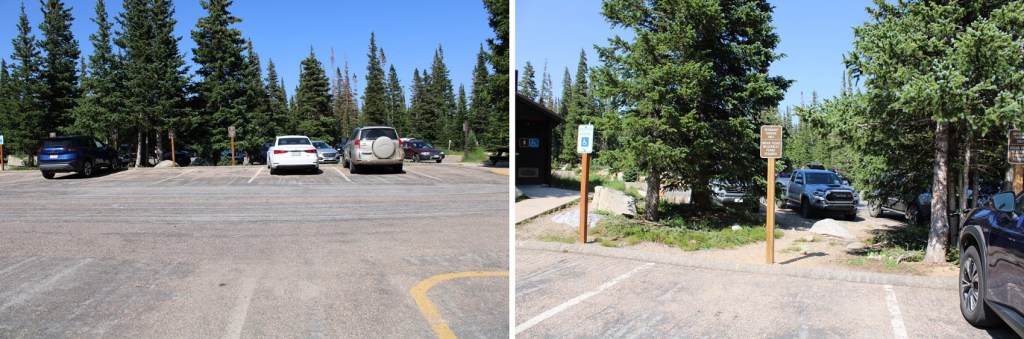
Once they let me in, I had to park in the specific lot they gave me a pass for.  I parked in the Long Lake parking area.  The parking spaces were further labeled according to pass (overnight versus day), and there were rangers stationed at the trailheads, checking permits on vehicles.  This means no parking at the Brainard Lake area if you have a Long Lake Trailhead permit.  Plan on hiking (not driving) if you want to see other areas of the park.

Ok.  Rant over. The weather was scheduled to be perfect today, and I was ready to hike!

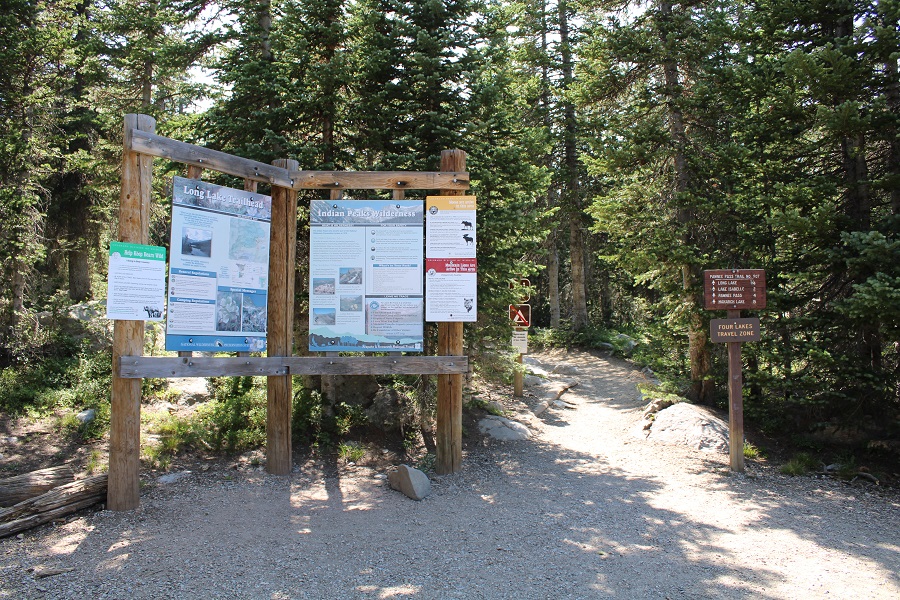
I was on the trail at 8:15am.  The trail starts at the west end of the parking area. 

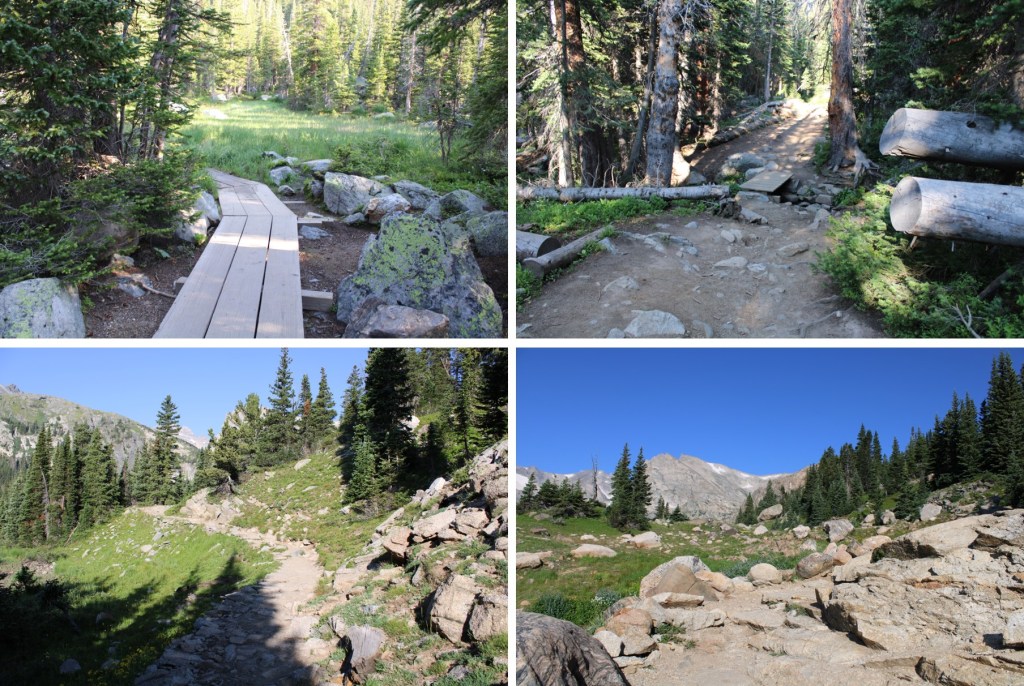
This is a well-marked, class 1 trail

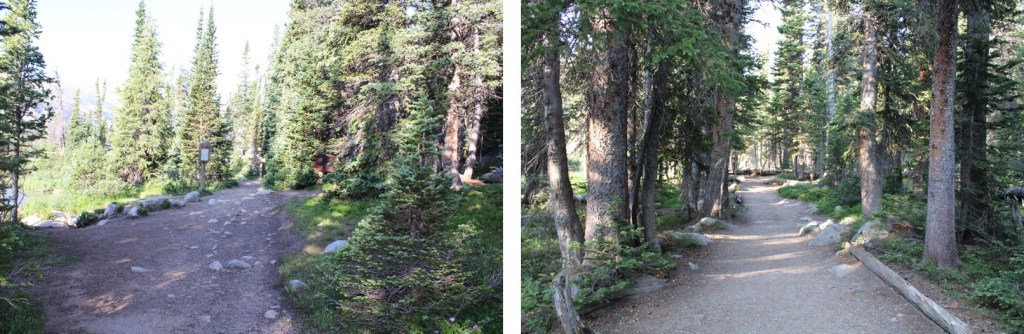
After about a quarter mile of hiking I came to a junction and followed it to the right, following the Pawnee Pass Trail

At the next junction I once again went right

And continued following the class 1 trail

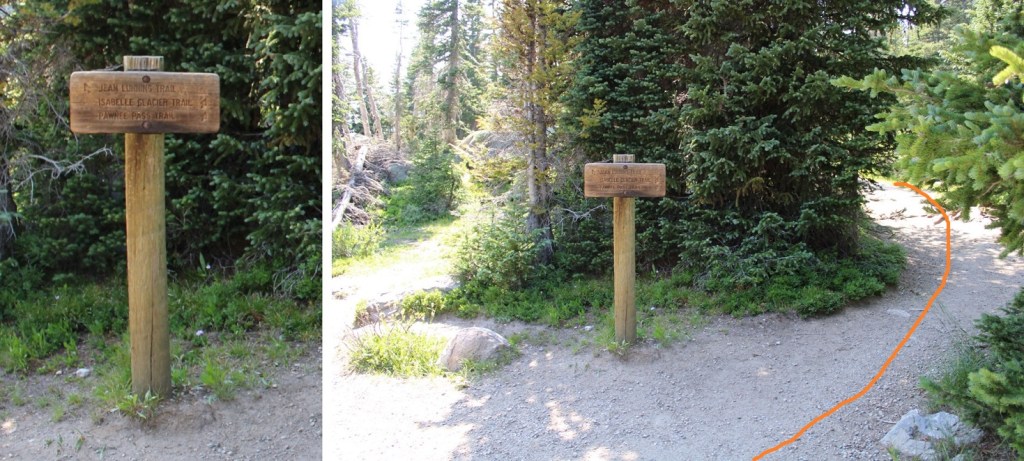
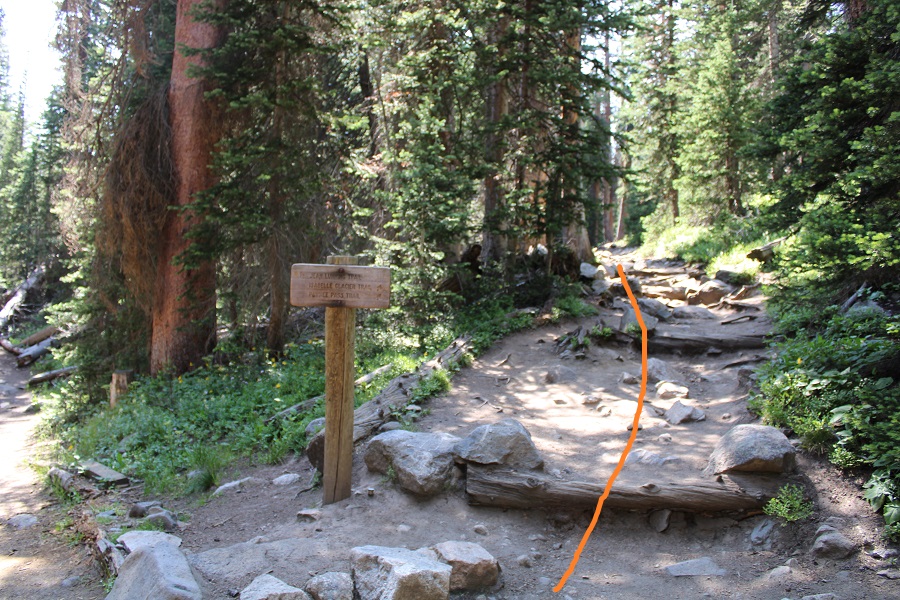
At the third junction I went left, following the Isabelle Glacier Trail

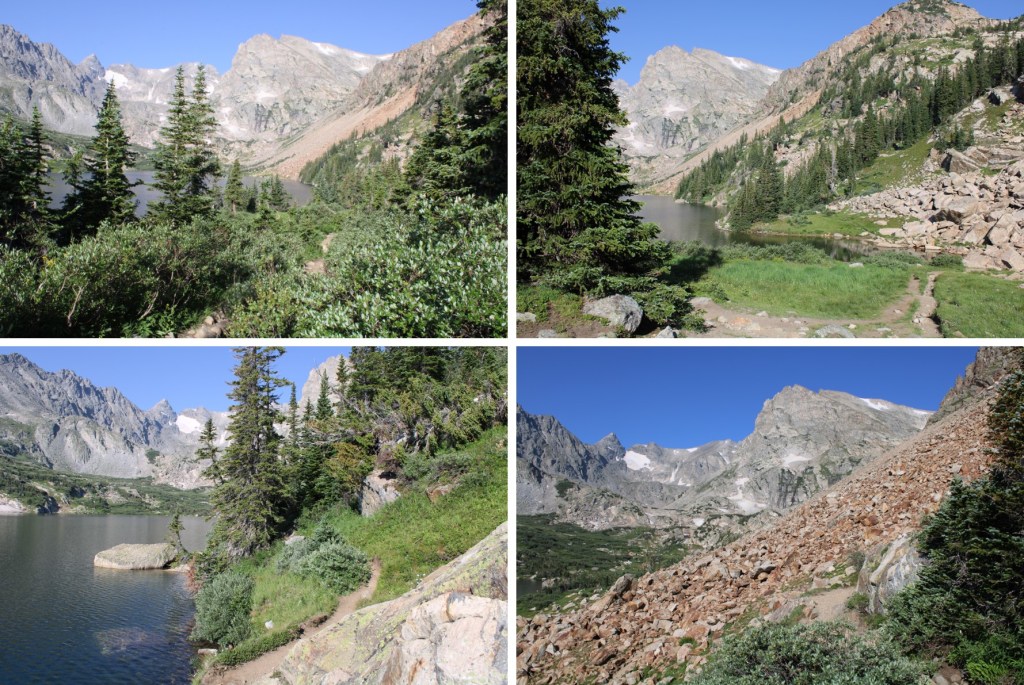
This part of the trail had me skirting the north side of Lake Isabelle

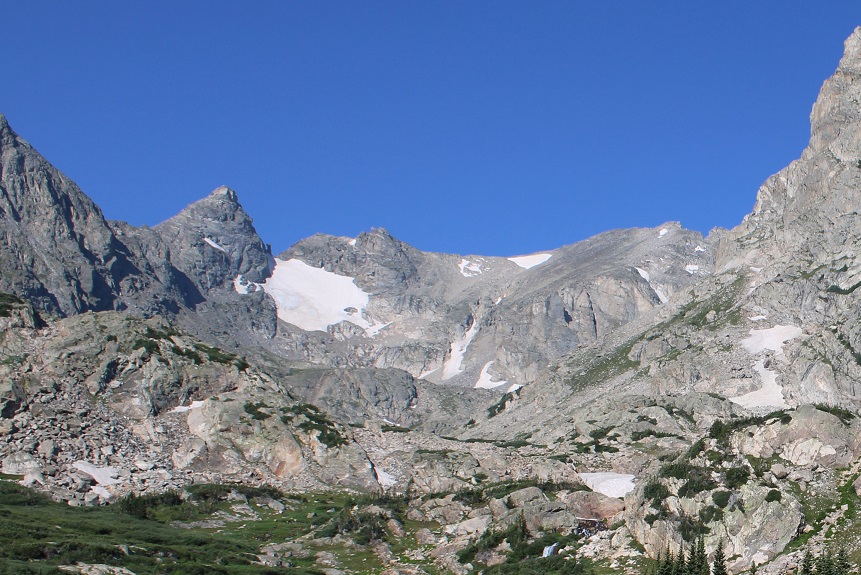
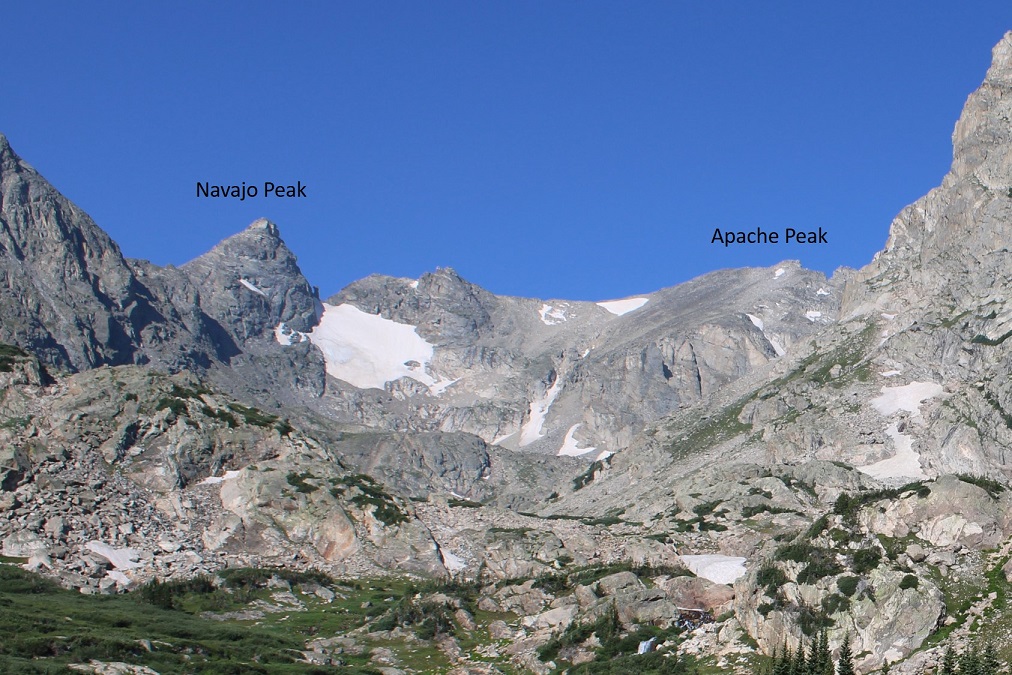
From here you have a good view of Navajo and Apache Peaks

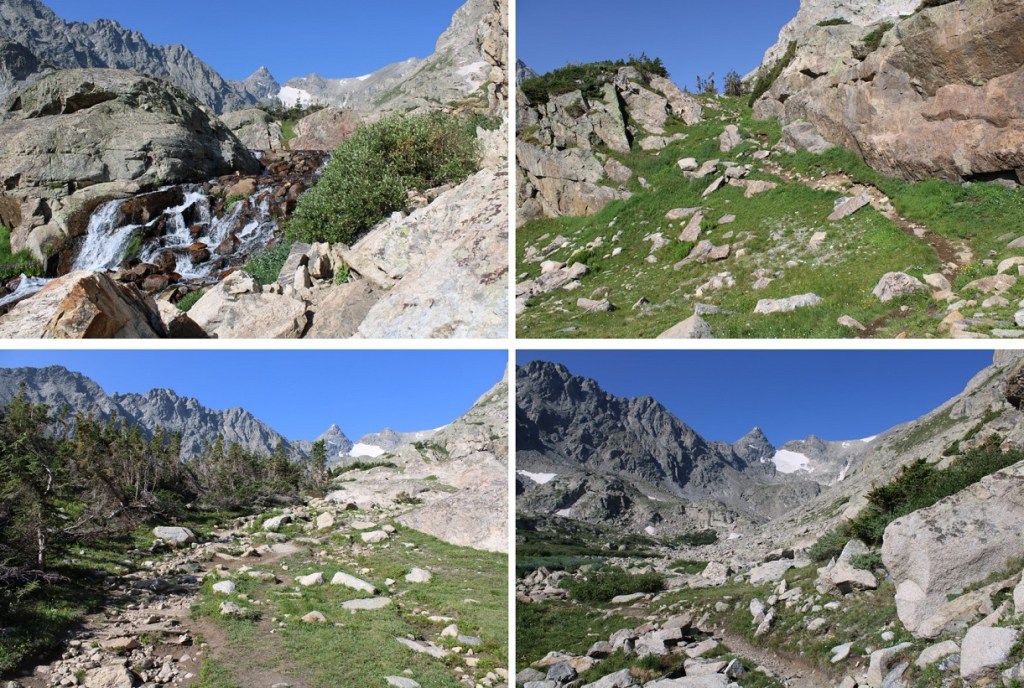
I continued following the trail west

After hiking for 3.5 miles the trail headed south/southwest, through the willows. 

The trail here was muddy, and full of bugs.  I choked on a gnat.

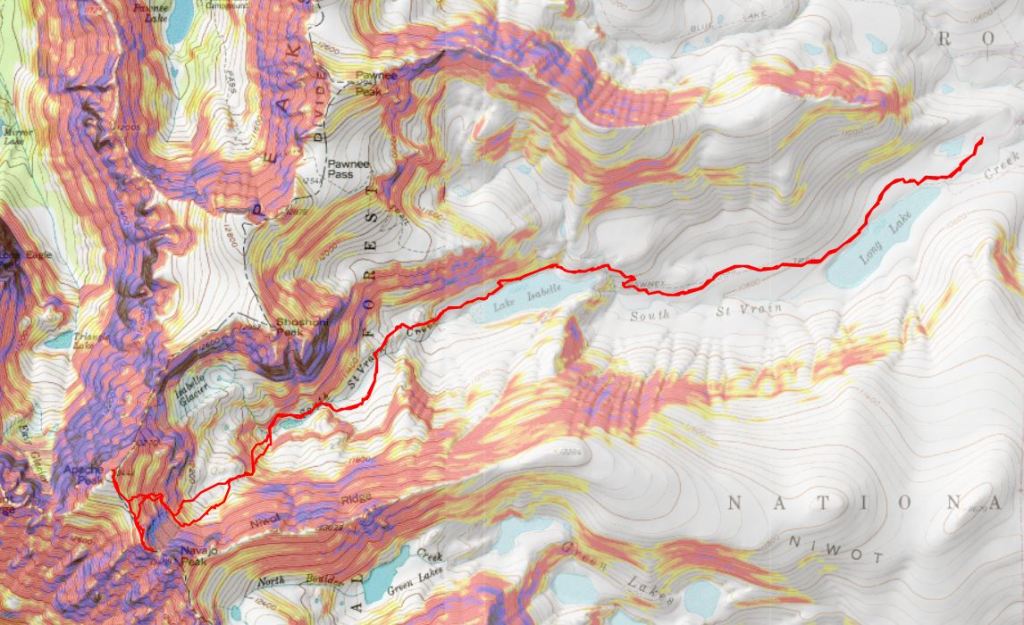
After about 4 miles of hiking, I continued west.  Here’s a visual of how I made it to the last little lake (unnamed).  The rock crossing would be slippery if wet.

Here’s a visual of the route to the upper basin.  I skirted the lake to the right, crossed South St Vrain Creek, and ascended the scree into the upper basin.

Here are some step by step pictures.  The creek was flowing, but I was able to cross without getting my shoes wet.

I then headed south to the ridge

Once I reached the tundra, I followed it west into the basin

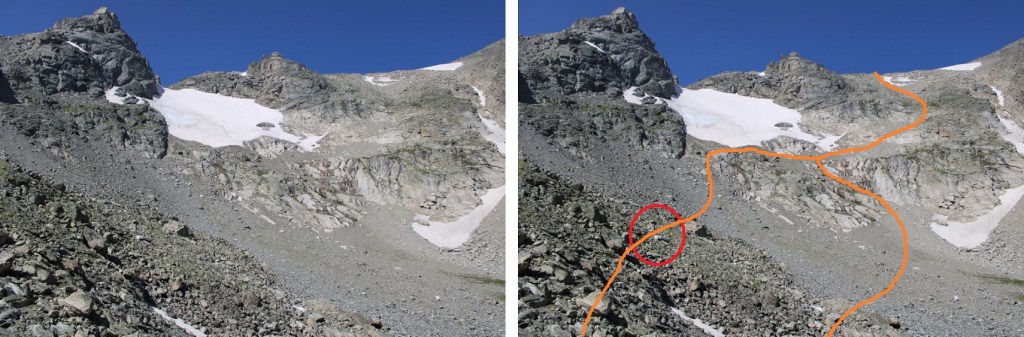
This is where I had a decision to make.  I’d initially wanted to hike both Navajo and Apache Peaks today, but since I now had time constraints, I didn’t think I’d have enough time to do both.  I’d wanted to start with Navajo and see the plane wreckage, then head over to Apache.  But I ‘needed’ Apache before Navajo (Apache is taller, and a tricentennial, so higher on my list of peaks I want to climb).  I decided to head over to the plane wreckage, then skirt the mountainside above the waterfalls and ascend Apache’s east ridge.  On the way down, I took a more direct route.  Here’s a visual of the loop.  The plane wreckage is circled in red.

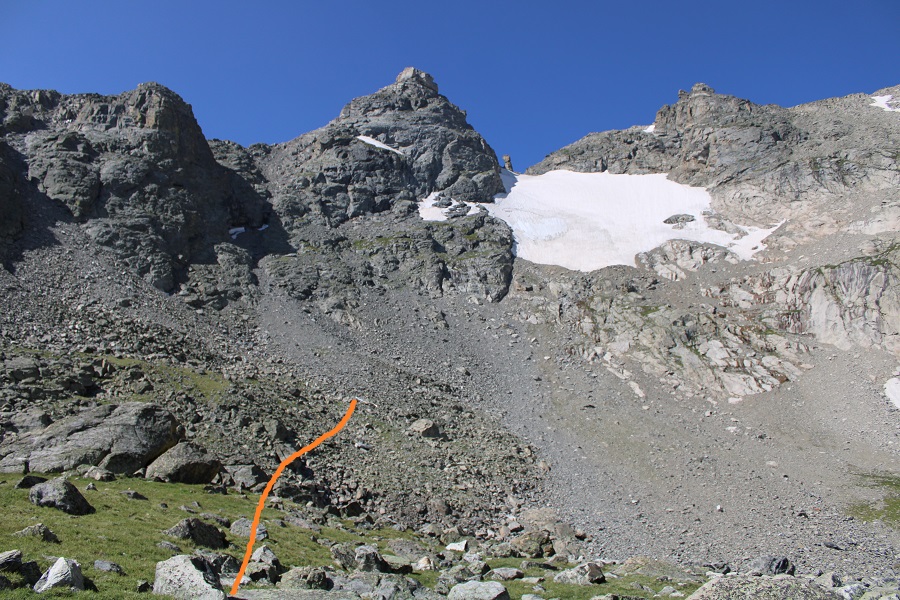
I headed south to the plane wreckage.  

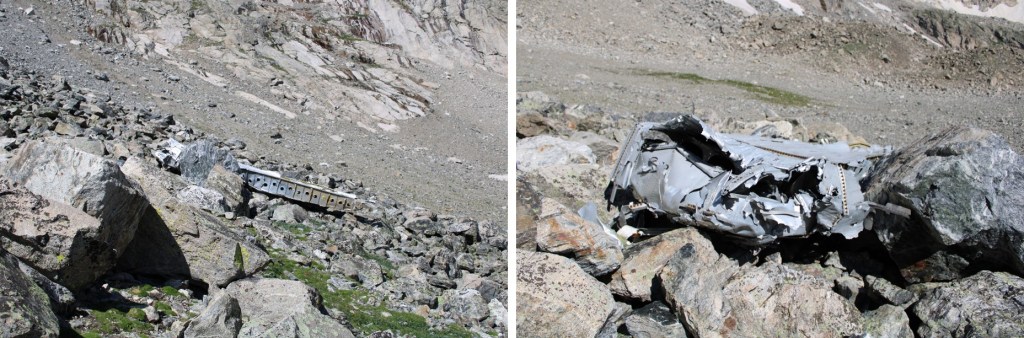
The C-47 went down on January 21, 1948.  It was en route from Denver to Grand Junction, and crashed during bad weather.  Most of the wreckage is up high on the Niwot Ridge (nicknamed “airplane gully”), but some of it can be seen in the basin as well.  This site is considered a historical aviation archeology site, so the wreckage cannot be removed.   

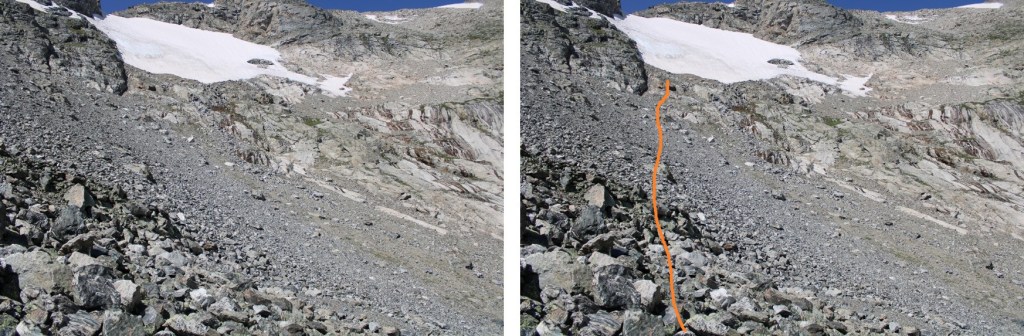
From the plane wreckage at around 12,200’ I headed southwest, aiming for the base of the snow

Once there I turned right and headed northeast on the scree.  I was aiming for the green patch of tundra.  When I hit that, I planed on turning and heading west to the ridge.

Getting to the tundra proved a little tricky.  There was a fun slab to maneuver (there were small cairns here, circled in red)

I then aimed for the greenery, and followed it to the ridge

This is choose your own adventure.  I followed the larger rocky areas up, and the scree down.

There was a wind shelter at the top of the ridge.

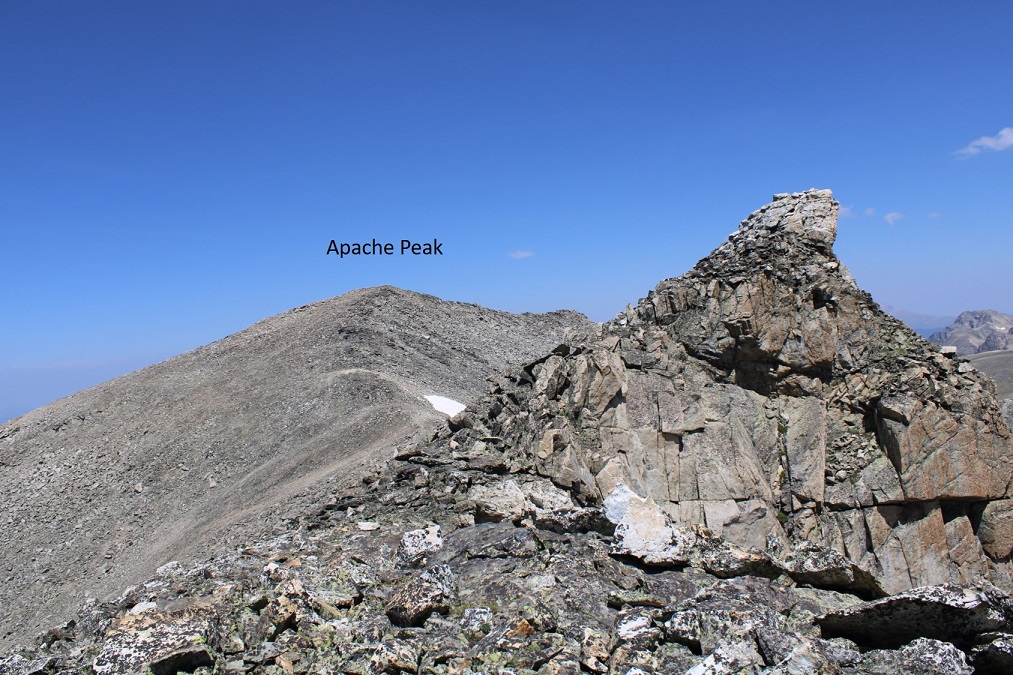
I turned right, and followed the ridge northwest to the summit of Apache.   This was a straightforward ridge hike on large shale.

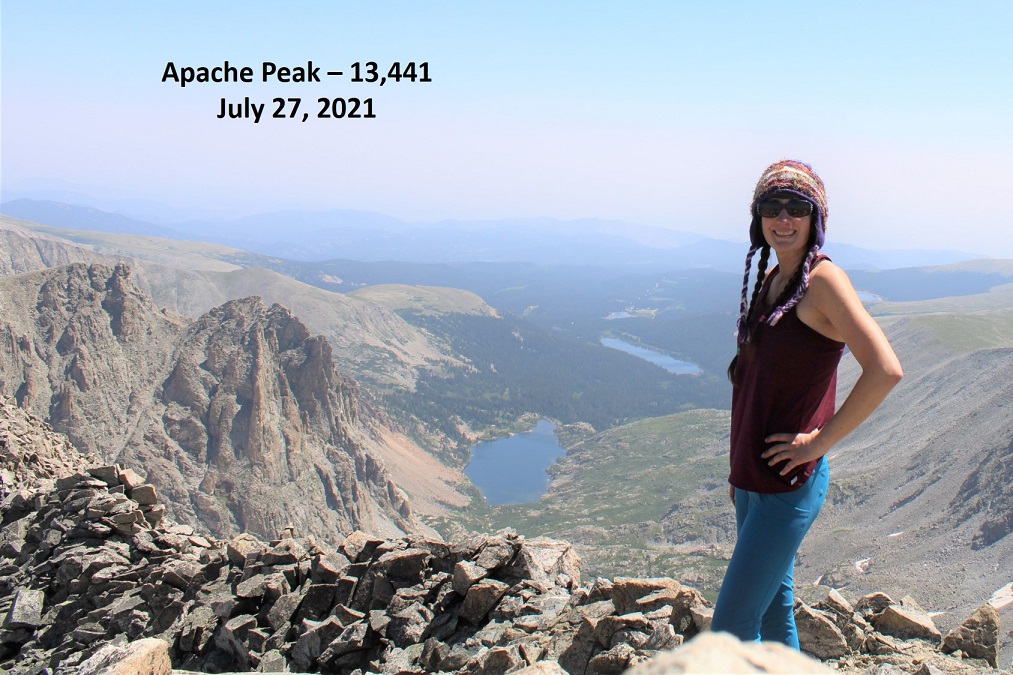
I summited Apache Peak at 11:45am

Apache Peak:  

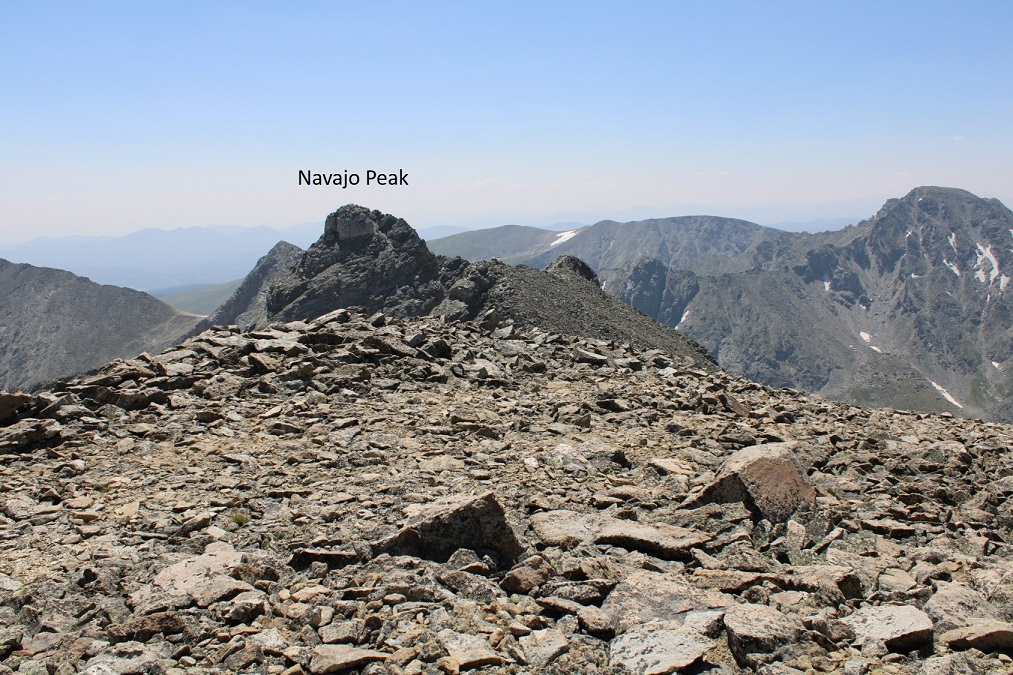
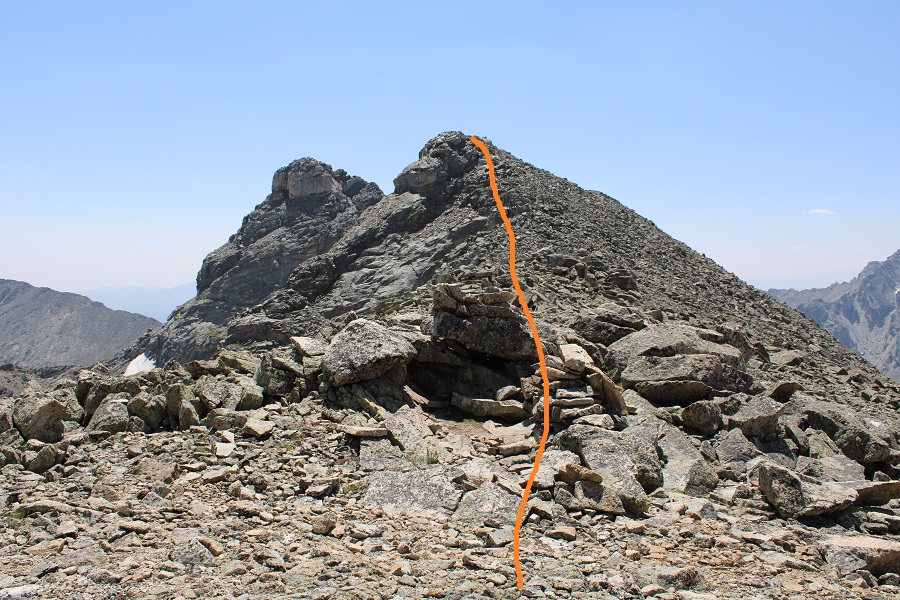
I left a summit register, and headed back down to the saddle.  I could see Navajo Peak to the southeast

Once back at the saddle I looked at the time.  I knew I didn’t have time to hike Navajo today, but I decided to follow the ridge for a bit and see what it (and Dicker’s Peck) looked like from the end of the ridge.  So, I continued following the ridge southeast.

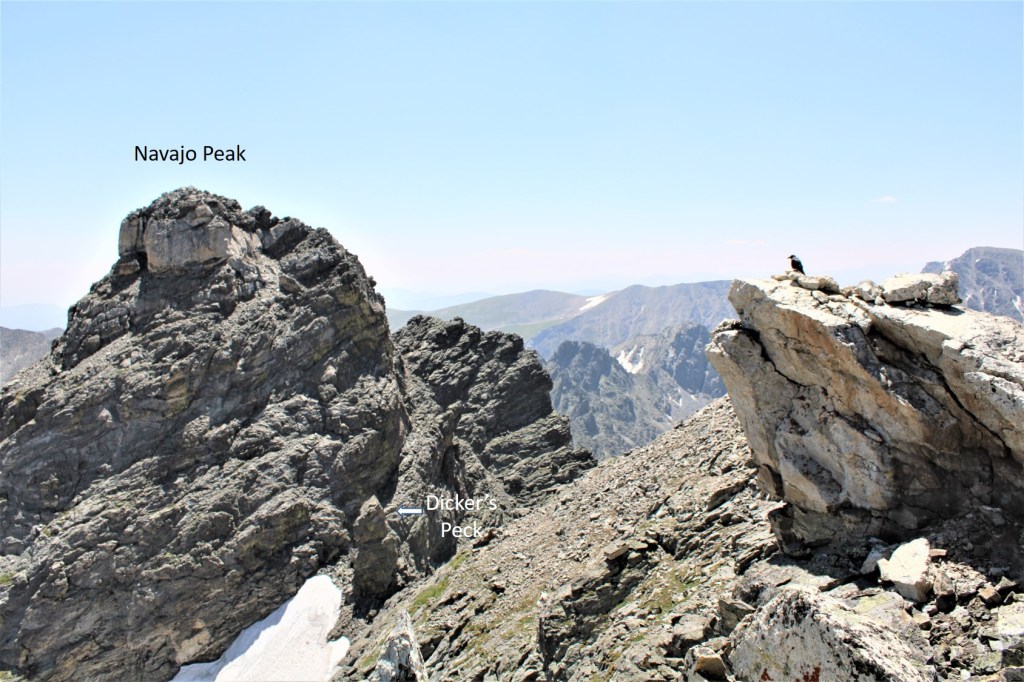
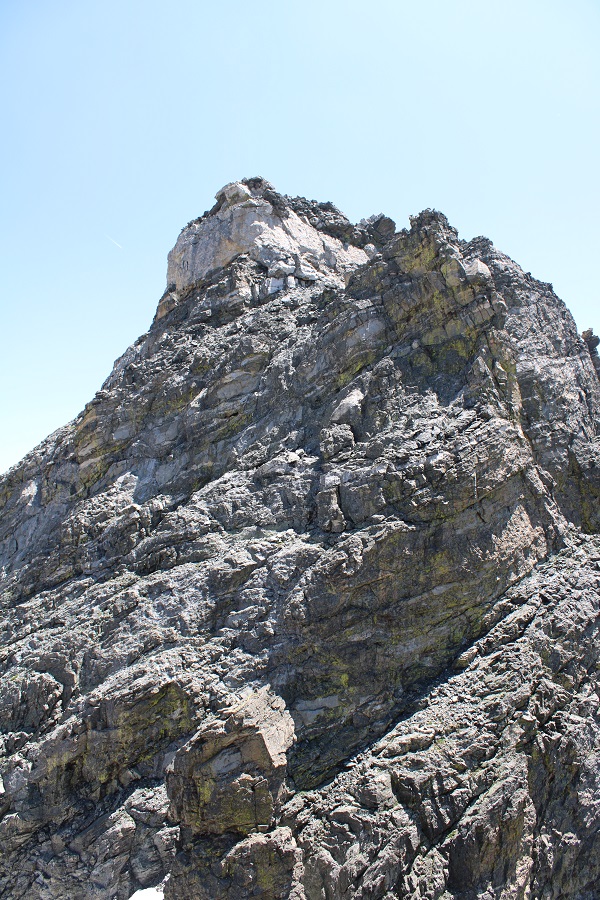
I climbed to the top of both highpoints along the ridge, made friends with a crow, and got a good view of Dicker’s Peck.  It looks like it has a new anchor at the top.

I continued on to the edge of the ridge, got one final view of Navajo and Dicker’s Peck (the route is snow free from the ridge), and turned and headed back to the wind shelter.

I took a more direct route down this time, following the scree

I made it back to the rock slab, and navigated down.

I then followed the scree down the basin

Here’s looking back at my descent route

And some pictures of the route back to Lake Isabelle.  It looked like a trail crew was putting in a new trail on the north side of the creek here.

A look at Lake Isabelle.  The trail out goes to the left of the lake

From Lake Isabelle it was an easy, class 1 walk out

I made it back to the Long Lake parking area, where park employees were stationed, ready to check passes.

I hopped into my truck and turned on the air conditioner.  It was 4pm, making this a 13.66 mile hike with 4127’ of elevation gain in 8 hours.  I’ll be back, but I think I’ll wait until the timed entry system expires for the year…
PT 13336 and PT 13015

RT Length:  16.3 miles

Elevation Gain:  5815’

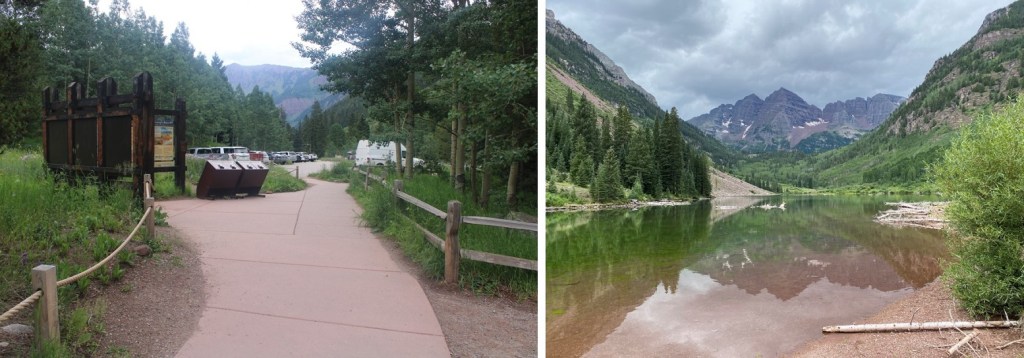
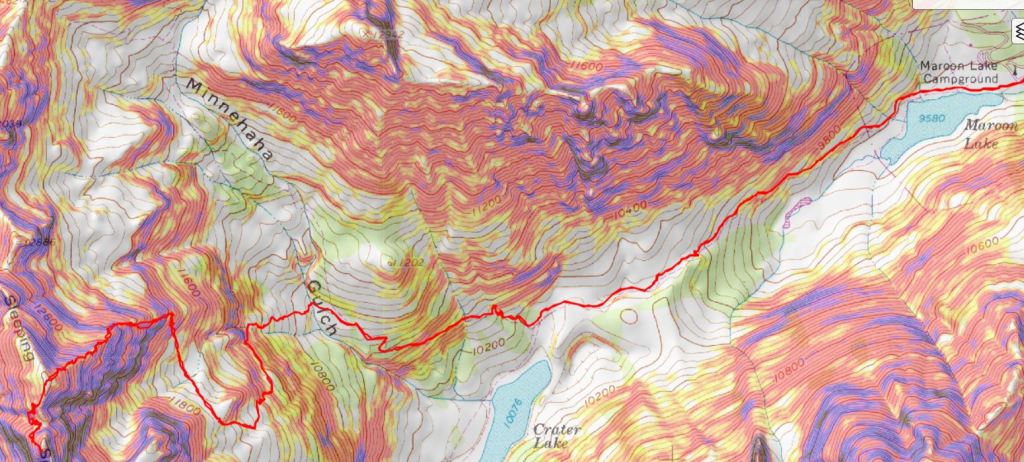
I decided to hike these peaks from the Maroon Bells area because I had a pass and was already there.  I knew today was going to be a straightforward but long day, and it was supposed to storm in the morning, so I was up extra early and on the trail at 2am.  I started at the Maroon Lake trailhead, and passed a few deer grazing in the dark.   I skirted Maroon Lake to the right, and continued on the trail towards Crater Lake.

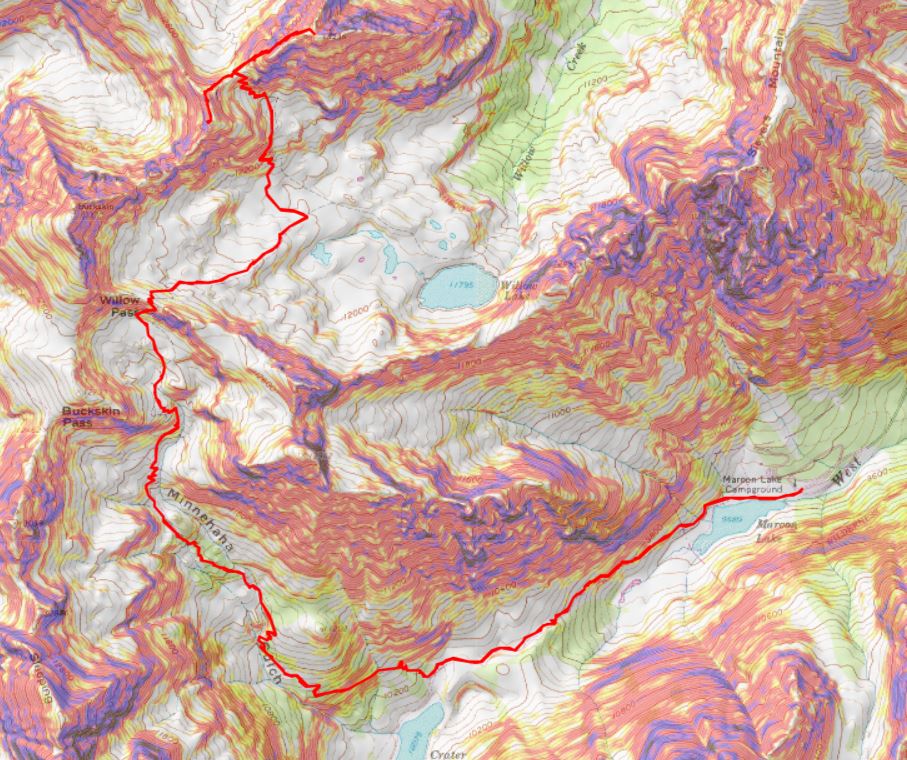
At the first junction I continued straight, and followed Maroon Snowmass Trail 1975 up into Minnehaha Gulch. 

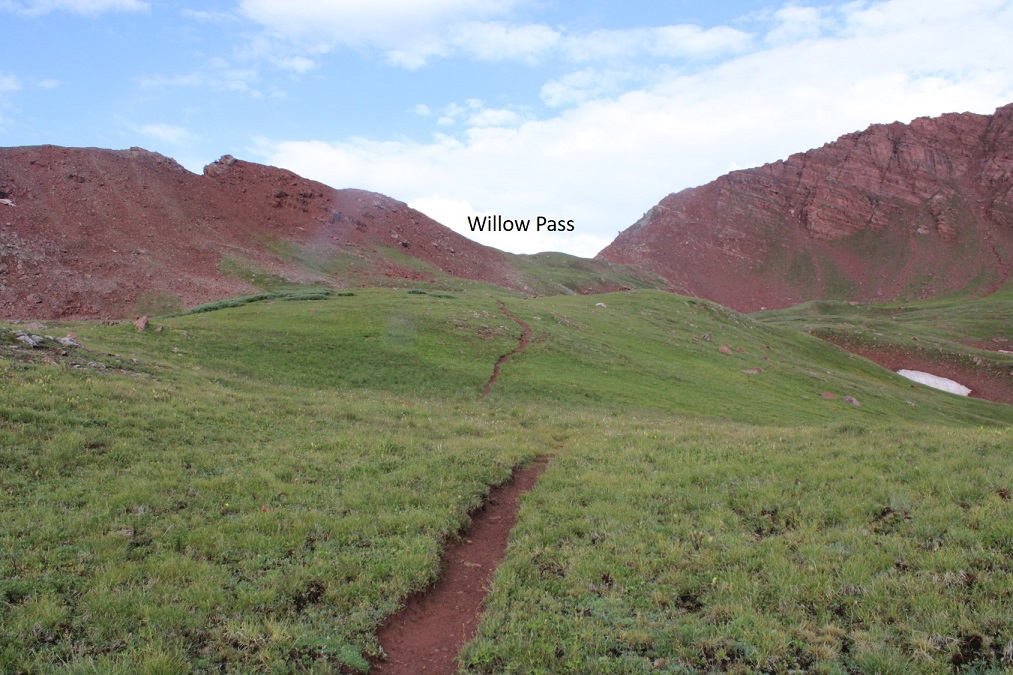
I continued on this trail all the way to Willow Pass.

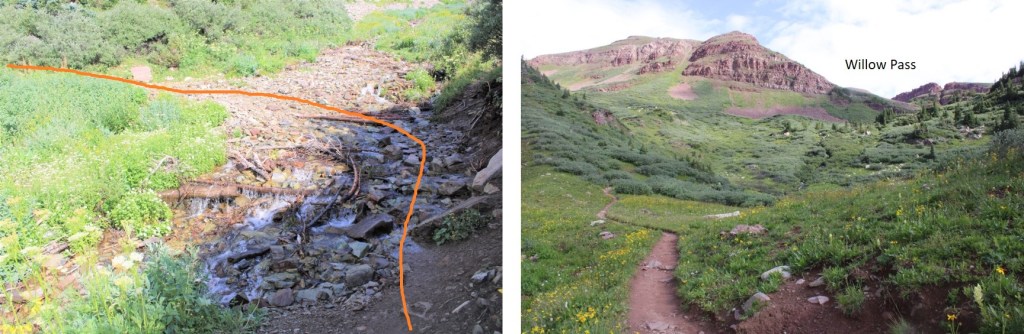
This is a class 1 trail that crosses a creek, then heads north through the basin.

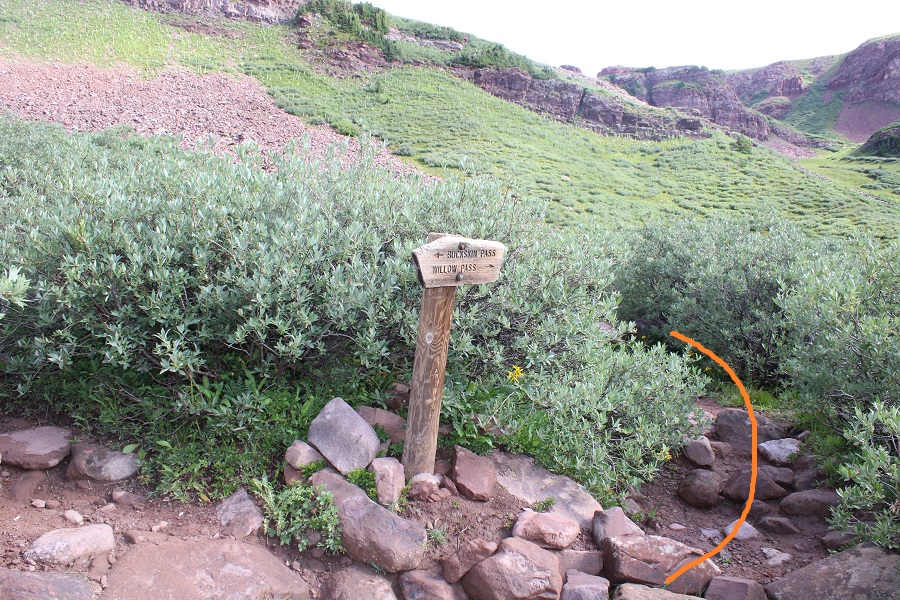
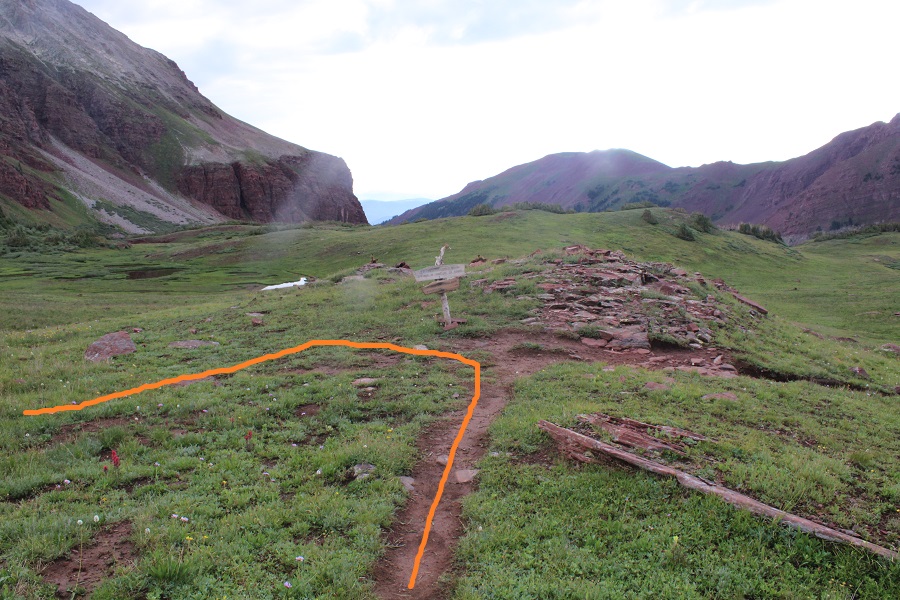
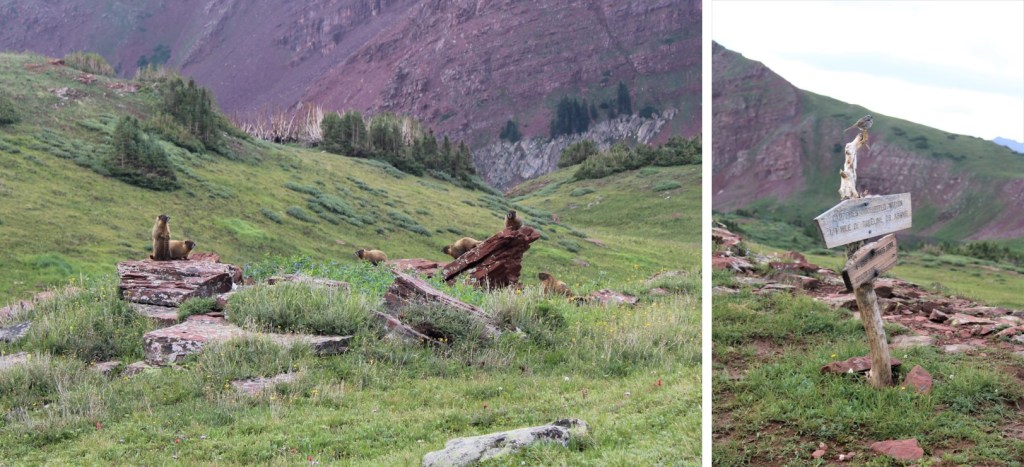
Stay right at this sign

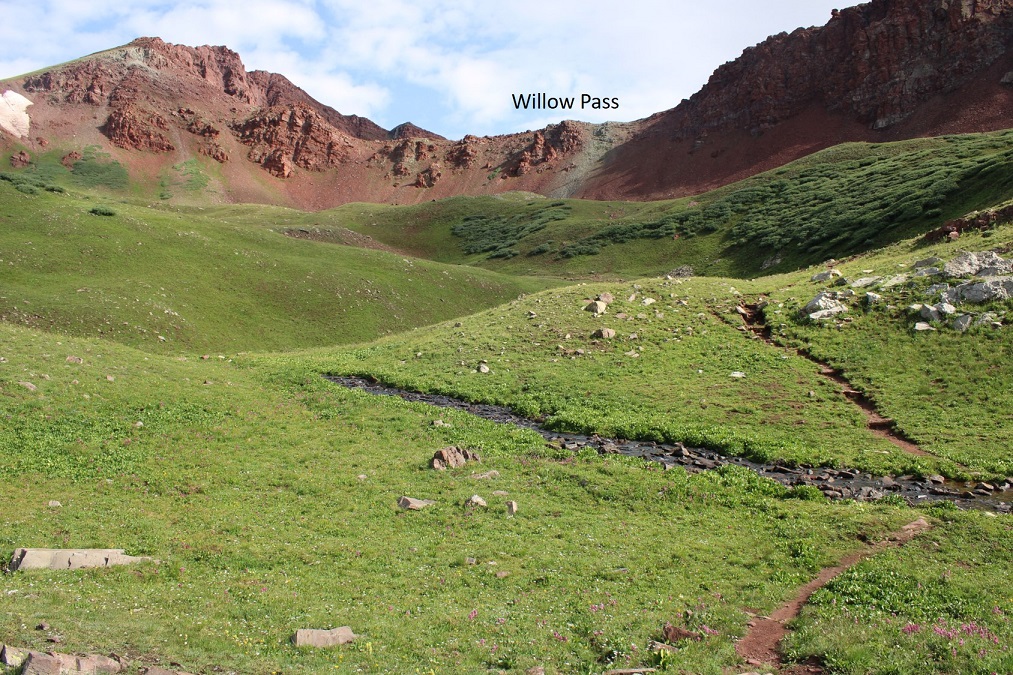
And follow the trail to Willow Pass.

CalTopo tells me I hiked 5 miles from the parking area to Willow Pass.  From Willow Pass you can see today’s peaks

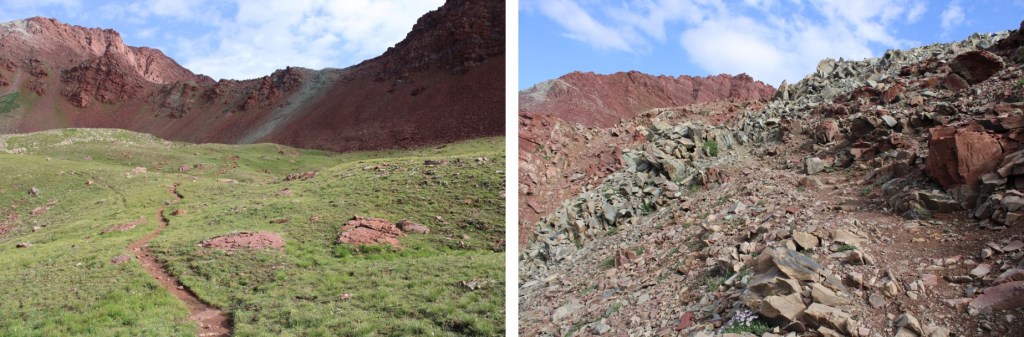
From Willow Pass I descended 560’ into the basin

I came to the Junction for East Snowmass Trail/Willow Lake, and turned left, following the East Snowmass Trail.  

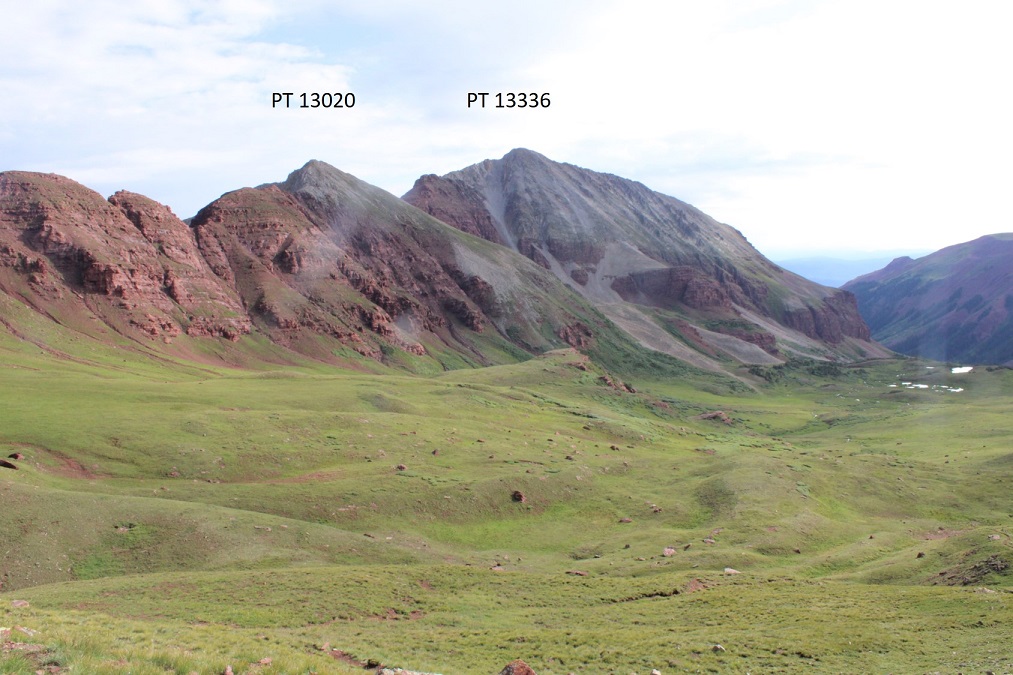
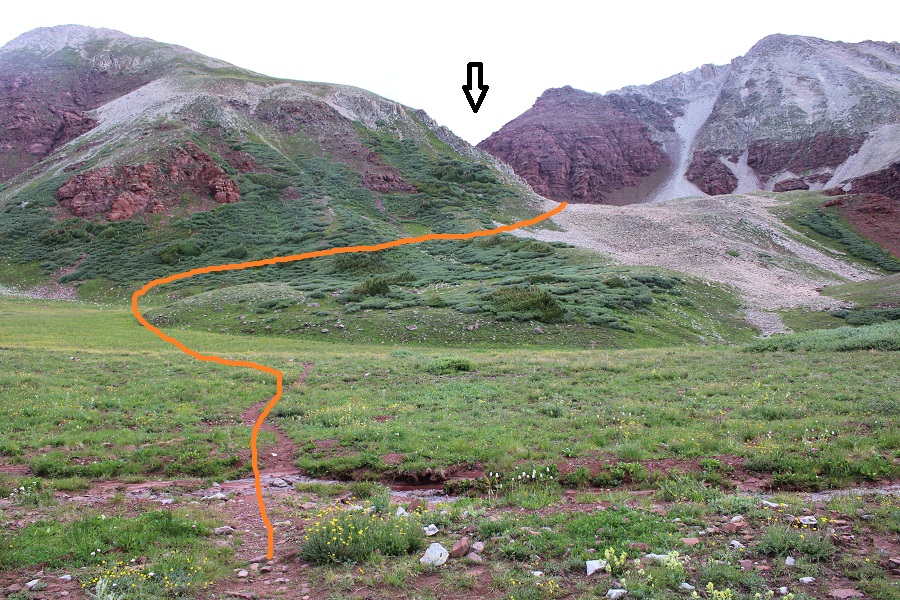
I was now following the trail towards the saddle of PT 13336 and PT 13020

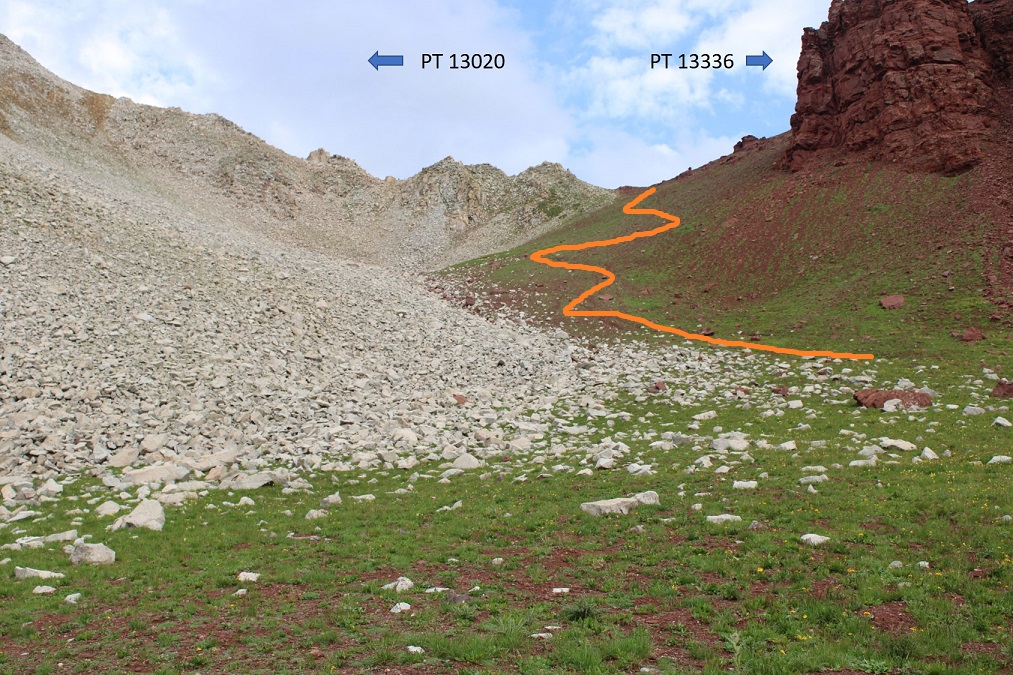
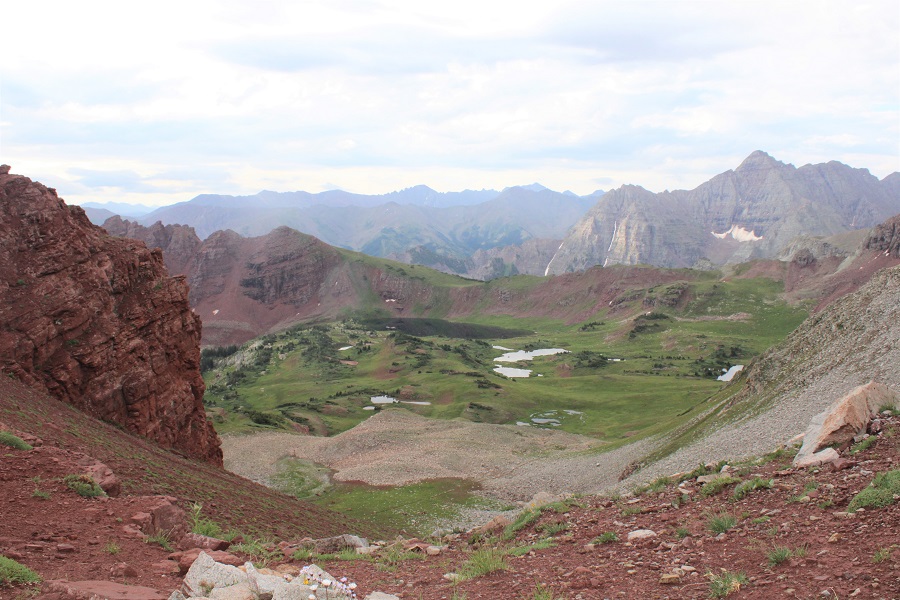
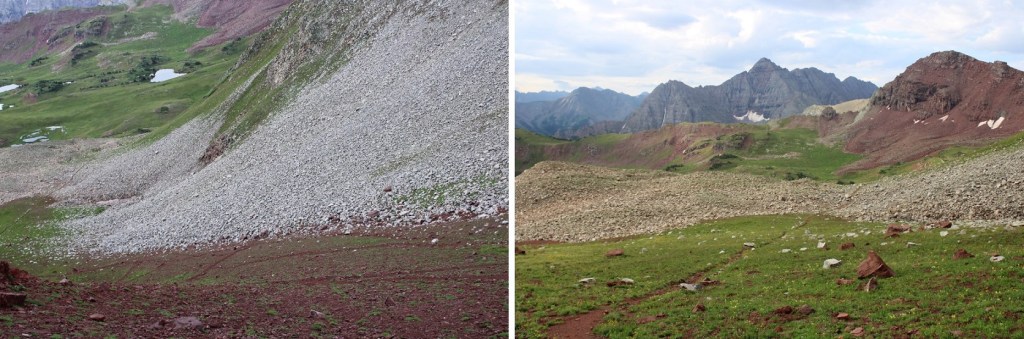
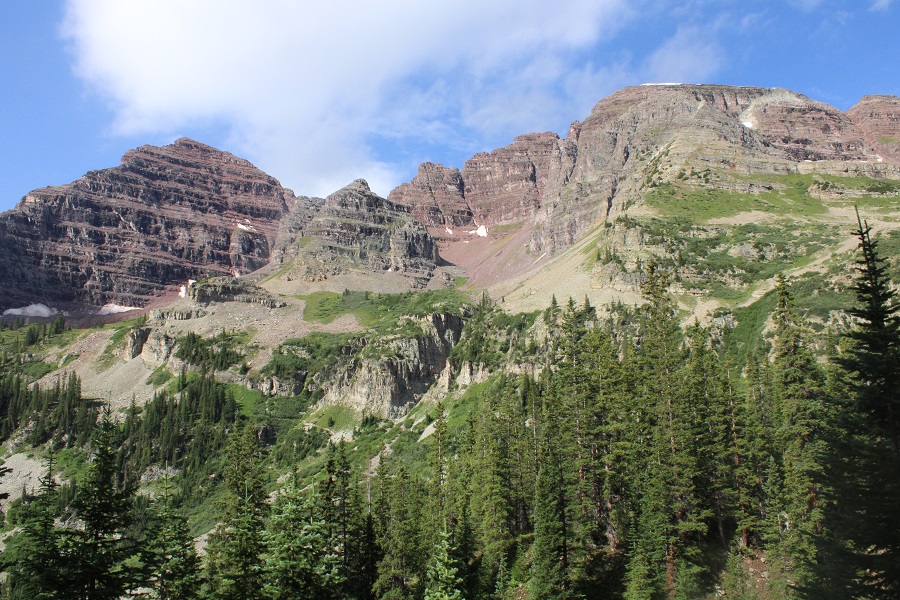
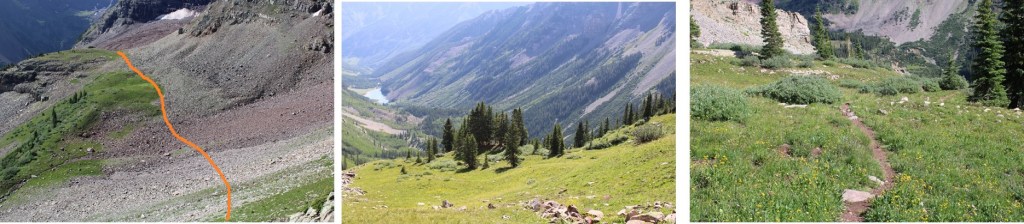
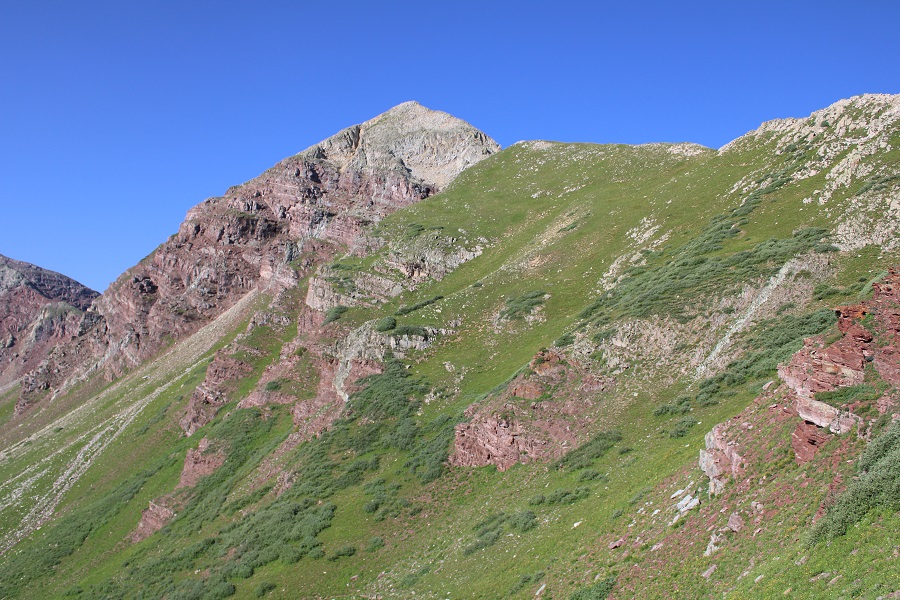
The upper basin was really neat, as I could see two different types of rocks, one coming from each mountain.  The color contrast was interesting.  The trail was still class 1 to the saddle, staying on the tundra/red dirt.

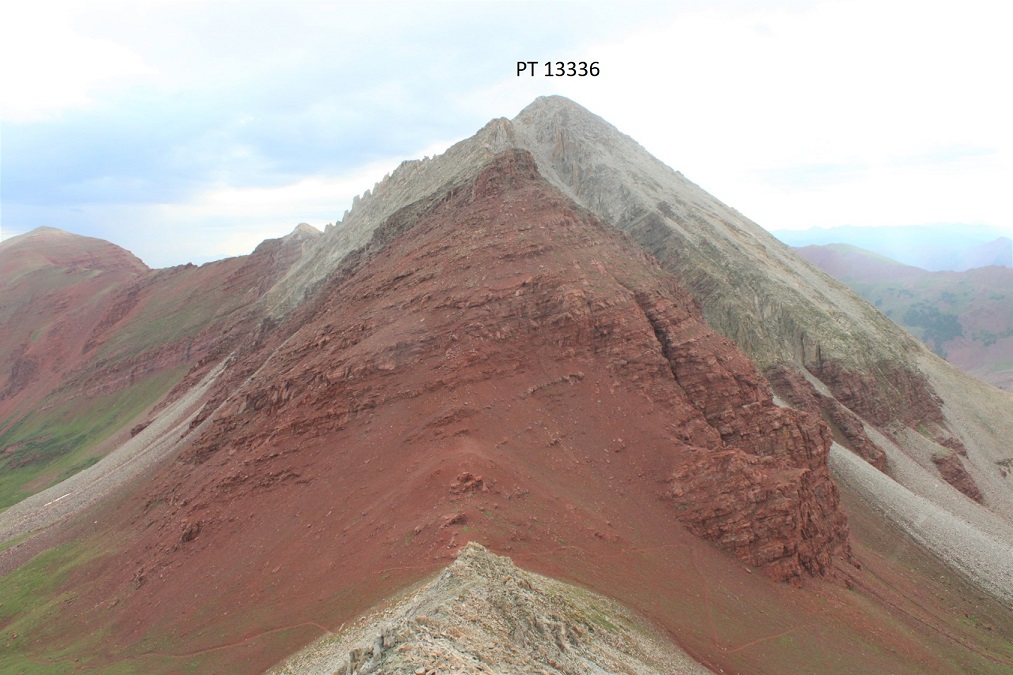
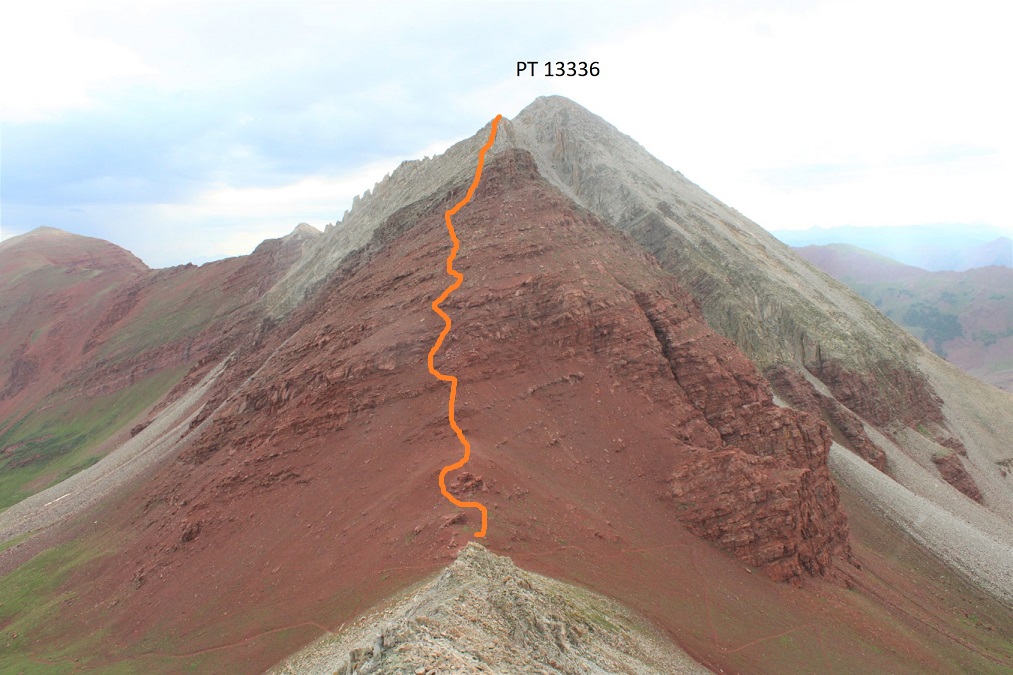
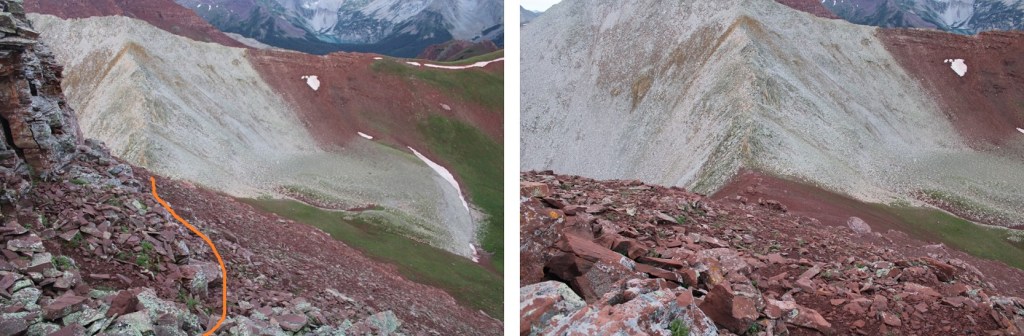
Once at the saddle it’s a good idea to put your helmet on.  I decided to tackle PT 13336 first.  This is class 3, and takes place on loose rock.  You may want to put on your microspikes for added traction.  The red dirt was mushy because it had recently rained, but it was still loose.  Here’s the route I took, as seen from higher up on PT 13020 later in the morning:

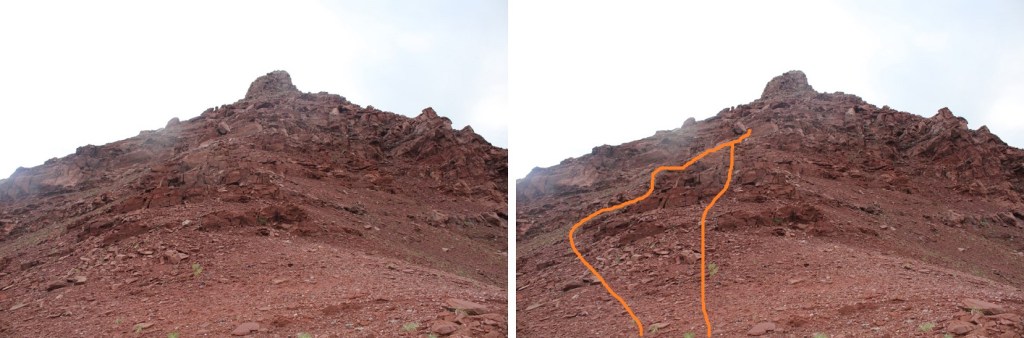
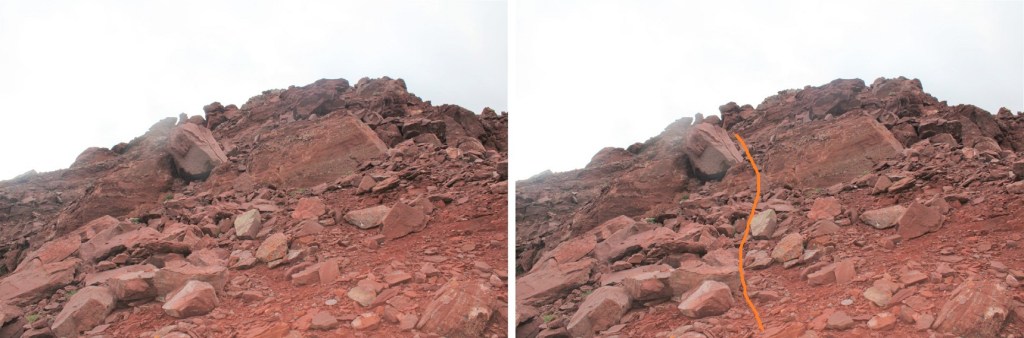
And here are some step by step pictures of the route:

Easily walk around the first two obstacles to keep this part class 2

Next, you can either skirt the next obstacle to the left to keep this class 2, or go straight up and over if you like class 3

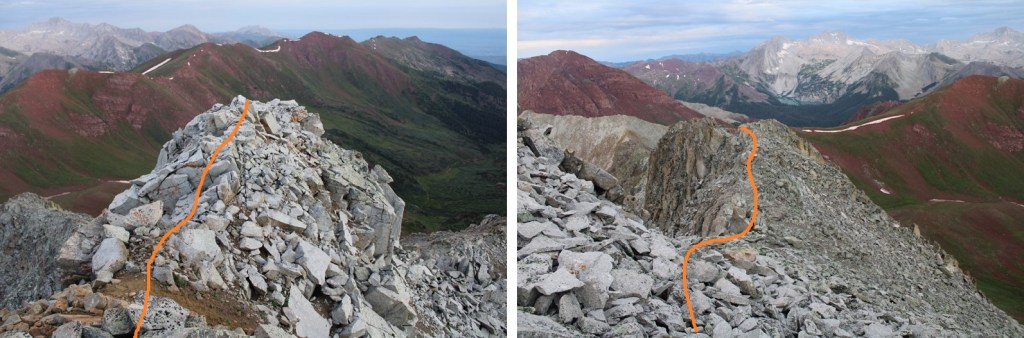
Now, keeping the ridge in front of you, the route becomes class 3.  Head between these two boulders and ease a little left

Look for a break in the rock formation and scramble up

You can now clearly see the ridge.  Keep the ridge to your right, and skirt the north side of the ridge.  There is no need to go up and over the ridge at this point.

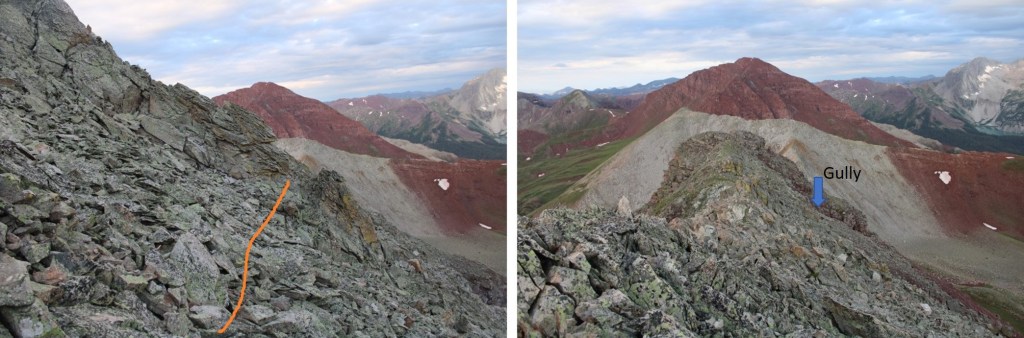
The rock here is loose, and only gets looser. Follow the loose rock up a sort of side gully.

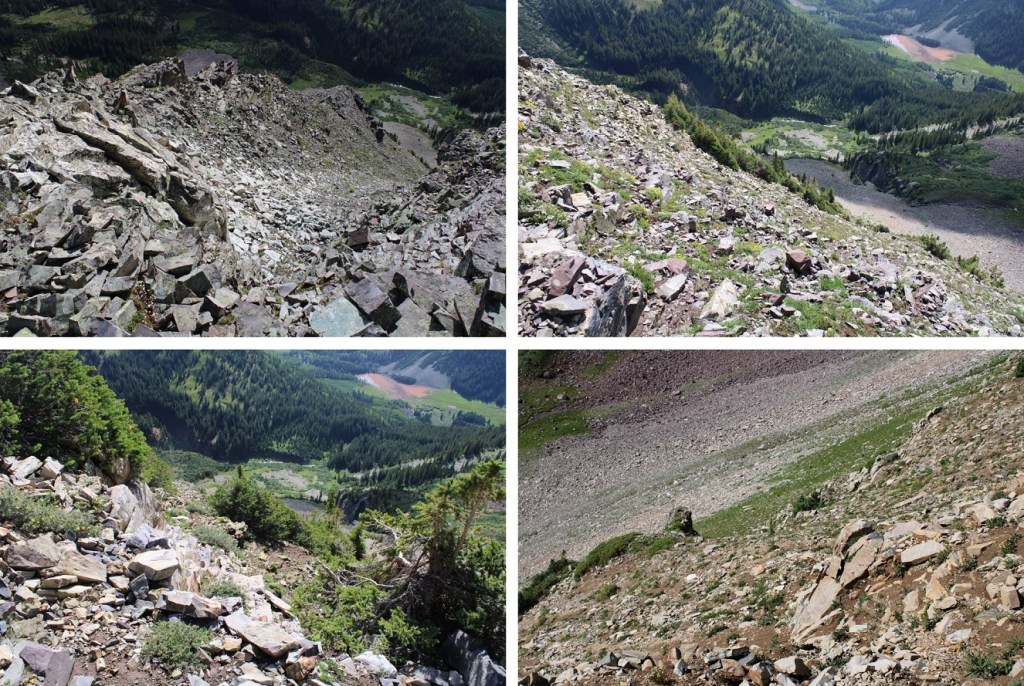
At the top of this rubble the rock changes.  It’s no longer the loose Maroon rock:  it now becomes the loose Snowmass rock.  This rock is very slippery when wet, and even when not, so take care.  These rocks are not stable.  Just assume they all move.  Cross this gully high.  There is still no need to gain the ridge, you can stay just a bit below

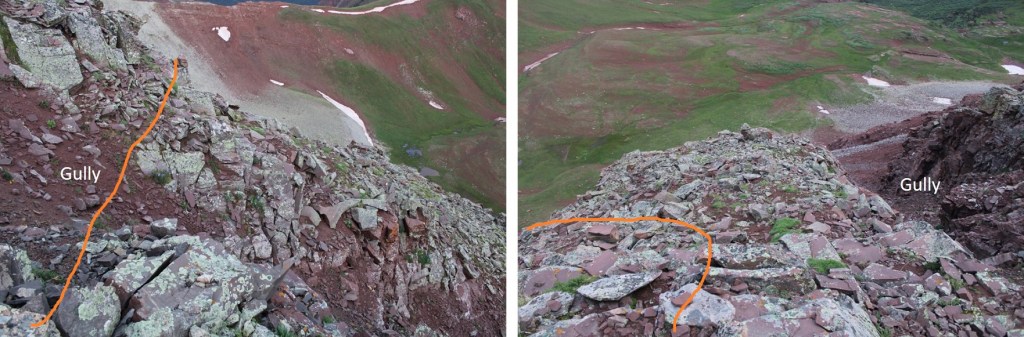
I have a feeling the terrain here shifts often, so pick your way carefully.  I traversed the ledge by staying about 50 feet below the ridge, and then gaining the ridge through a gully

At the top of the ridge you can see the true summit of PT 13336.  The terrain stays just as loose as before.

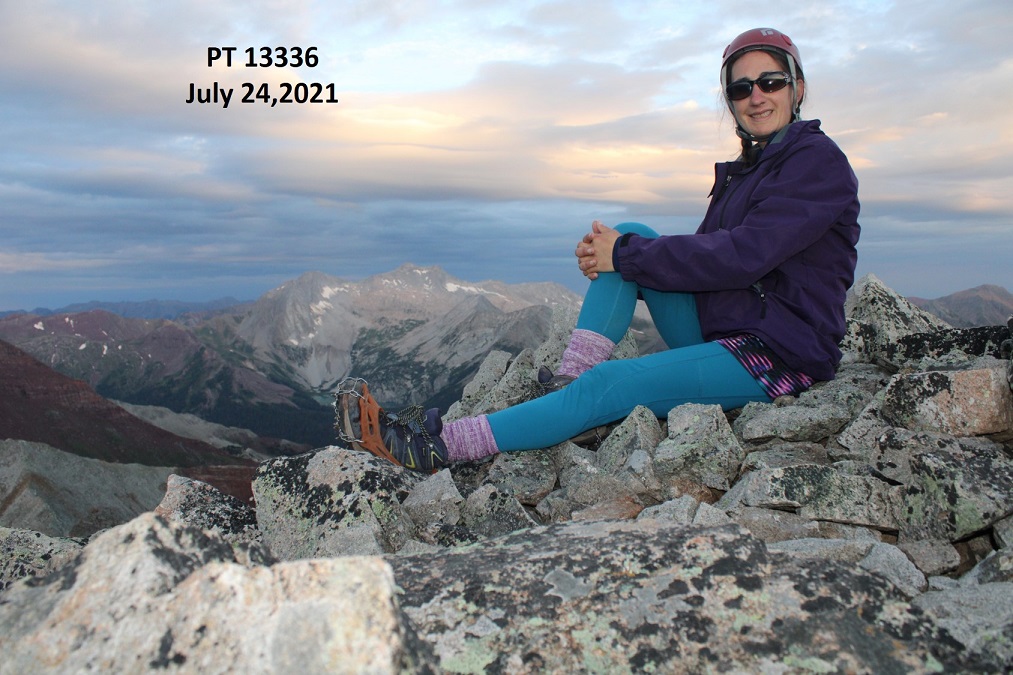
I summited PT 13336 at 6:10am

PT 13336: 

Here are some pictures of the way back to the saddle

Across the gully

And down the maroon scree

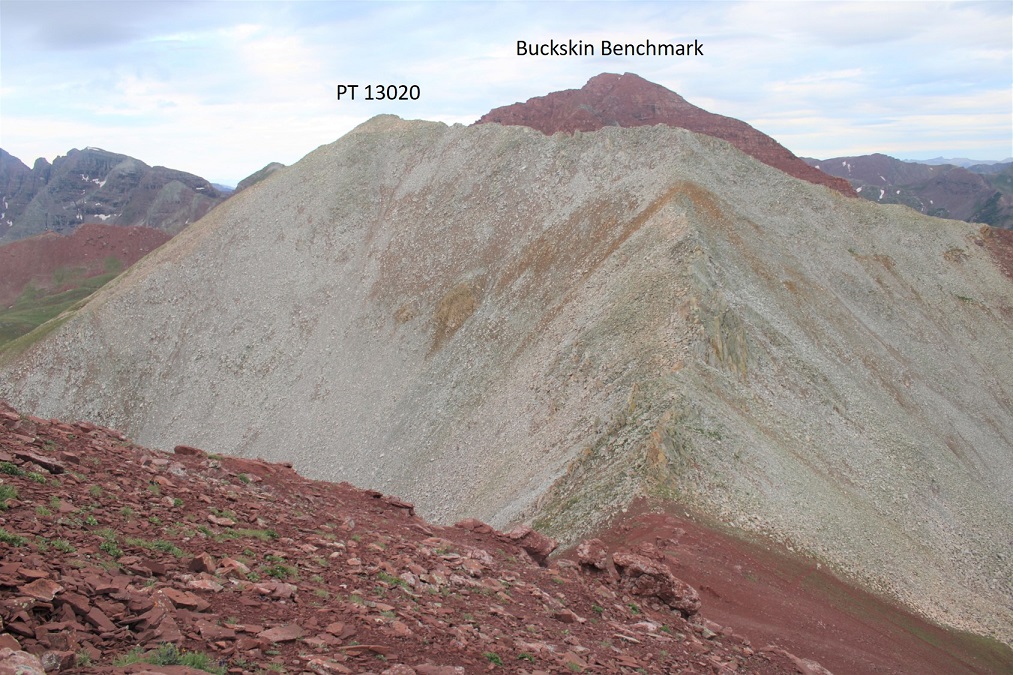
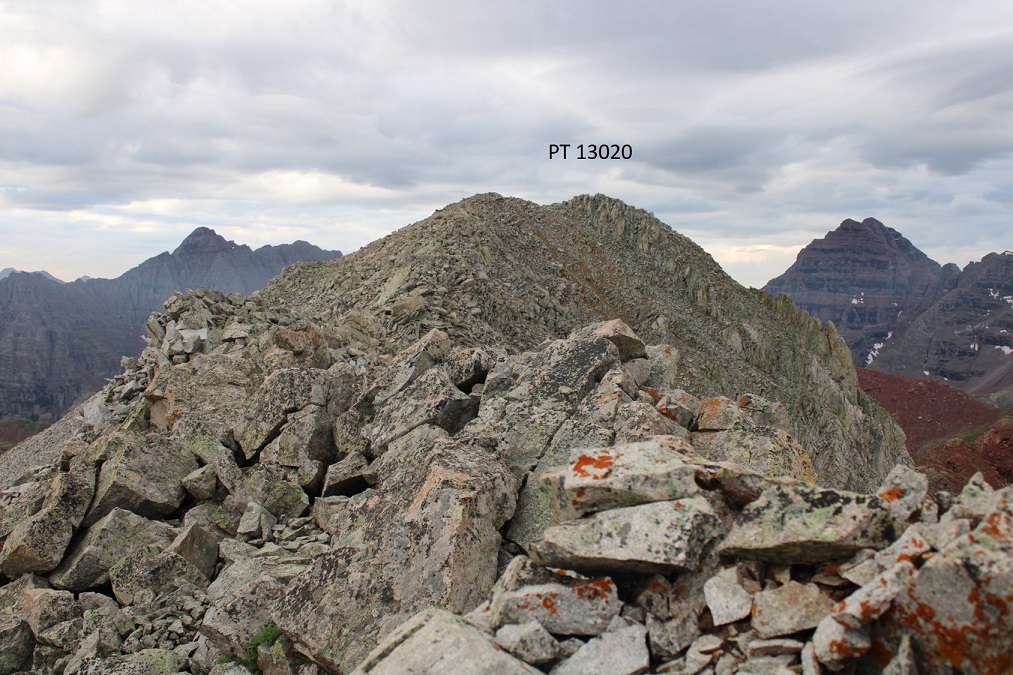
From here you can see the summit of PT 13020 and Buckskin Benchmark

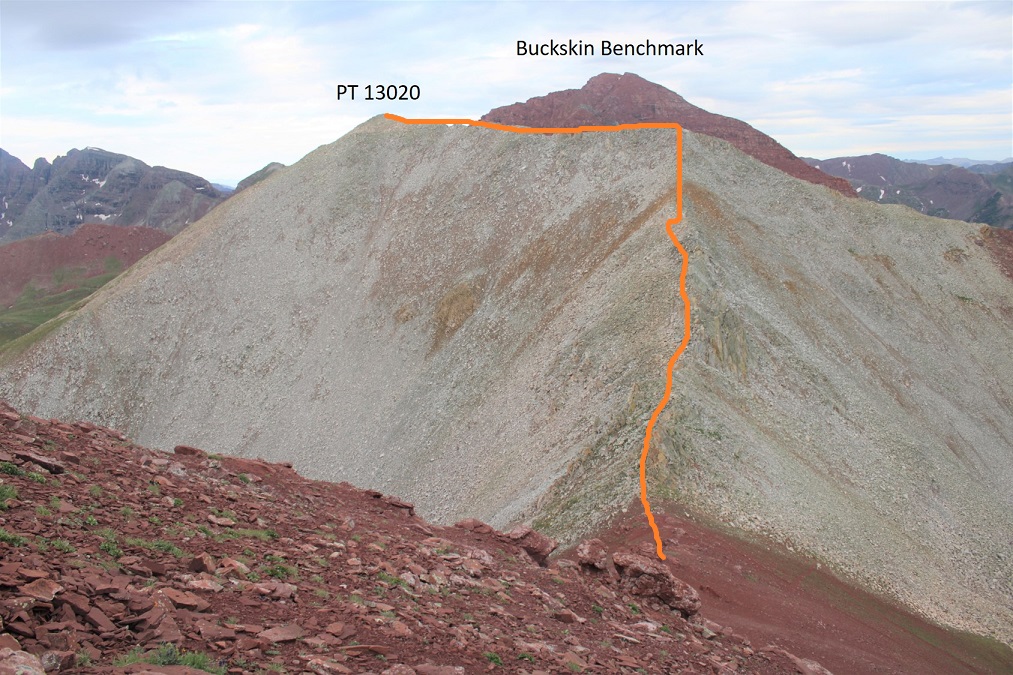
It was a simple ridge hike, with just a few fun moves to the summit of PT 13020.  Here’s the overall route

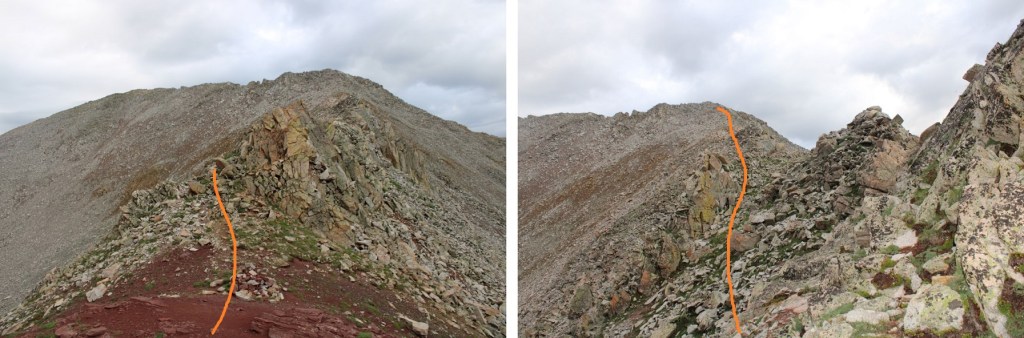
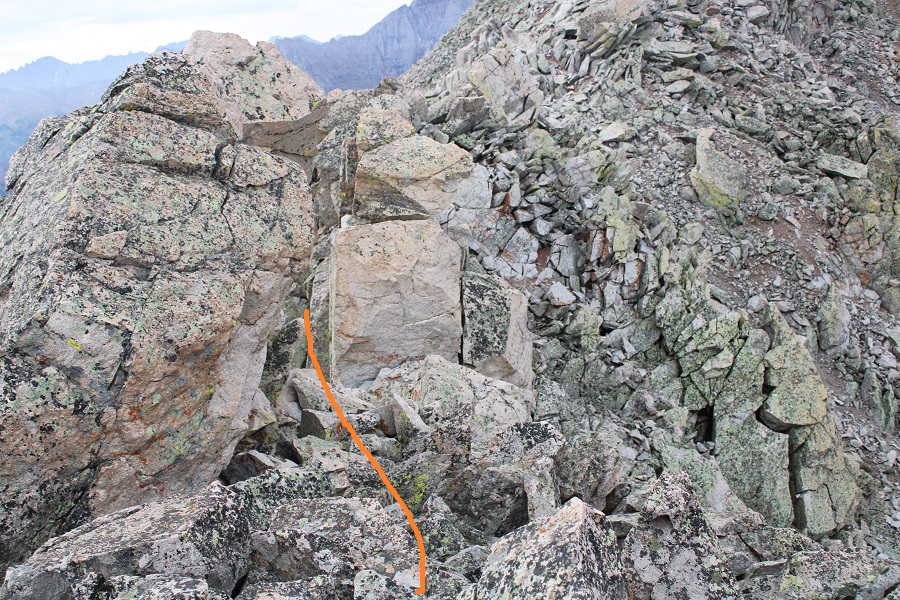
And some step by step pictures. To gain the upper ridge, I skirted the rock formations to the left, but still stayed as close to the ridge as possible.

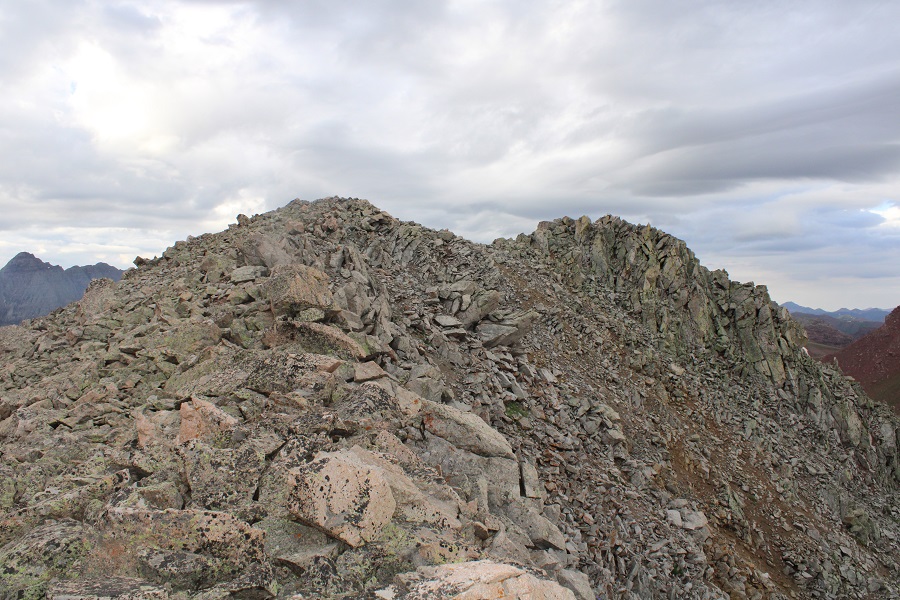
Once on the upper ridge I followed it to the summit of PT 13020, only dipping down to the left once through a gap in the rocks to keep this class 2

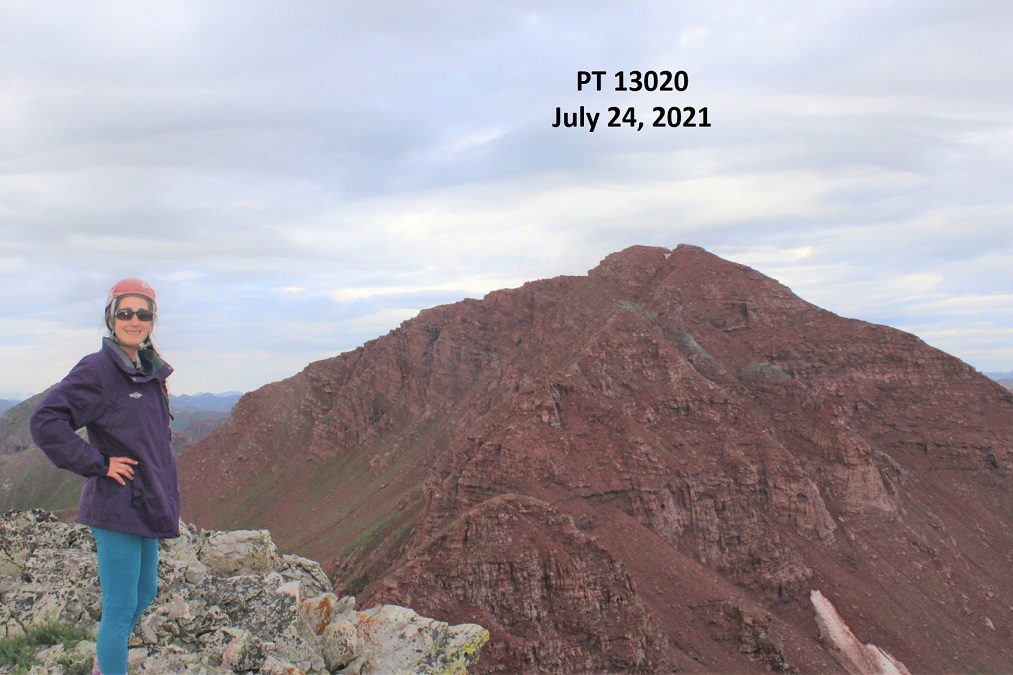
I summited PT 13020 at 7:20am. 

PT 13020:  

It was starting to rain, so I headed back down the ridge to the saddle.

Once at the saddle, I followed the class 1 trail back to Willow Pass

There was a large family of marmots at the Willow Lake/East Snowmass/Willow Pass Junction.  As I approached, several jumped underneath the grass, not wanting to be photographed.  I turned and headed southwest towards Willow Pass

And from Willow Pass I followed the trail back to the Maroon Lake Trailhead

I made it back to the trailhead at 10:45am, making this a 16.3 mile hike with 5815’ of elevation gain in 9 hours, 45 minutes

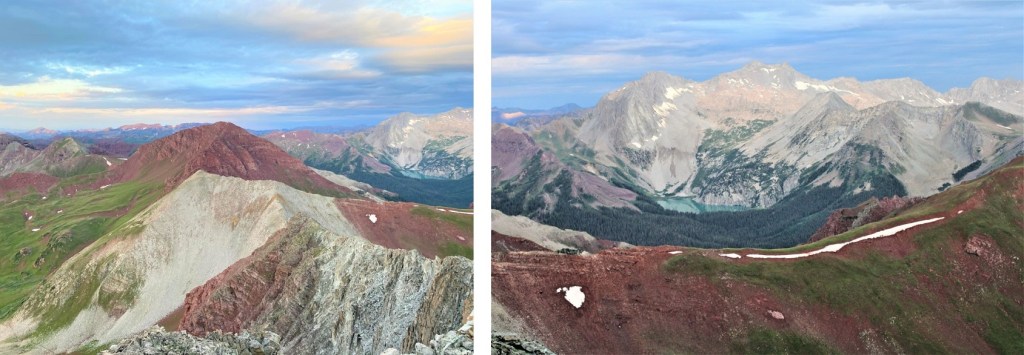
And, just because I have room for one more picture, can we all take a minute to appreciate jut how beautiful this area is?

Sleeping Sexton – 13,460

RT Length:  12.7 miles

Elevation Gain:  5156’

This was actually my second attempt on Sleeping Sexton:  I was here last week but got turned around at the false summit due to getting ‘buzzed’.  I figured it was for the best however, because I had done some serious route finding that morning and now I could provide a clear and useful GPX file for the route, instead of one with a lot of attempts that didn’t lead anywhere.

I made it to the Maroon Bells welcome station, and this time the attendant recognized me.  We chatted for a bit, as he was interested in some of the summits I was doing.  Then he referred me to talk with someone at their offices in town, and we’re basically best friends now.

It was raining when I arrived, but people were walking around Maroon Lake anyway. 

I was on the trail at 2:15am. 

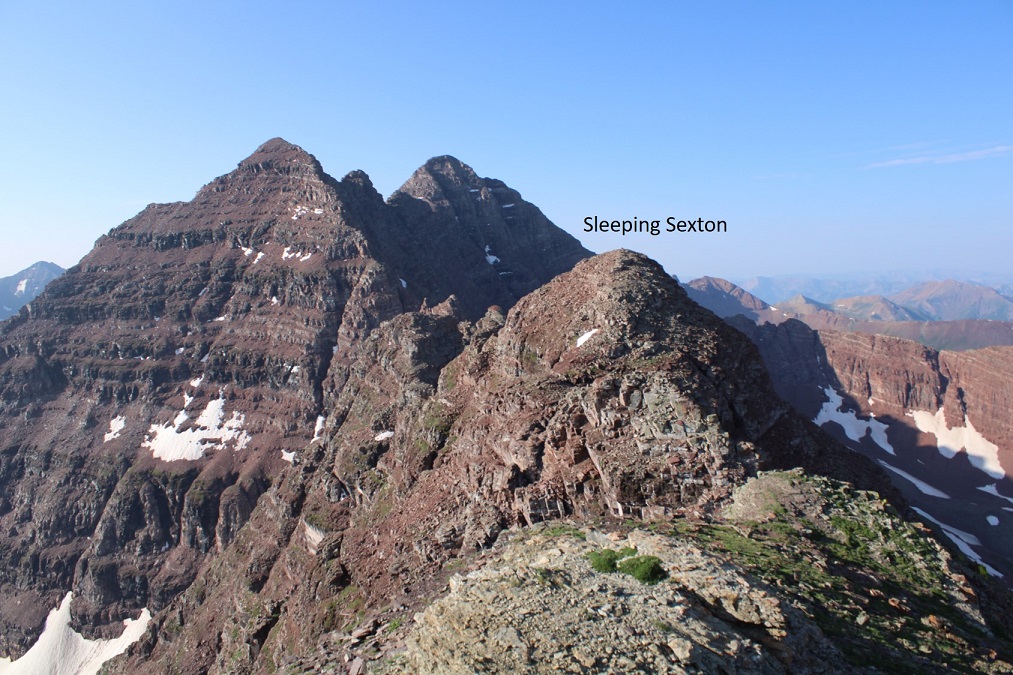
From the parking area, here’s an overview of the route above treeline to the false summit

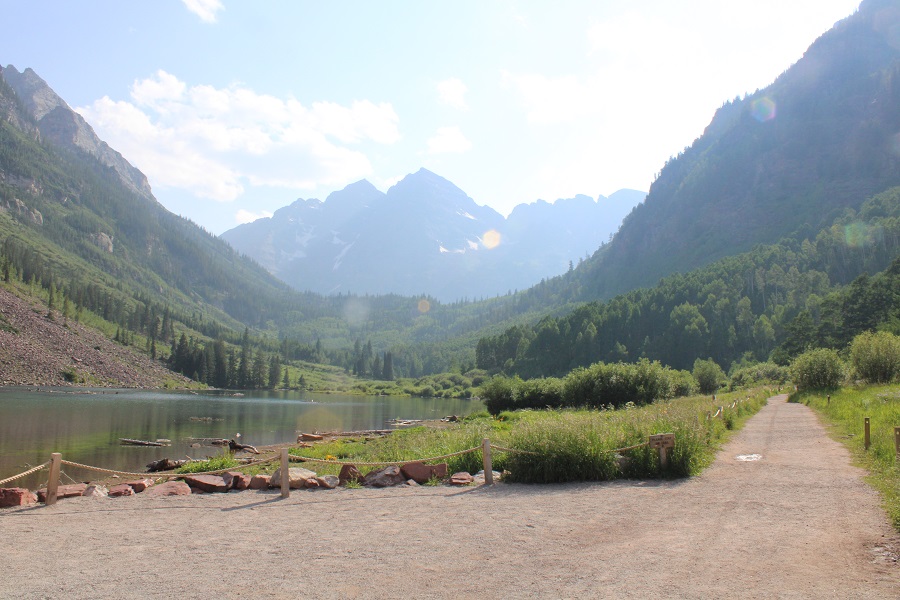
The trail starts by skirting Maroon Lake, then taking the Crater Lake trail southwest.

There was a full moon out, so I didn’t need my flashlight.

At the junction for Crater Lake I continued following trail 1975 northwest. This is the trail you take if you’re doing the Northeast route for North Maroon Peak.  There are camping spots just before the next junction.

The trail continues to be a well defined, class 1 trail.  At about 10775’ there’s another junction.  If you’ve hiked North Maroon Peak before, you’ll recognize this trail.  I turned left here and crossed the creek, following the North Maroon Peak Trail (still class 1)

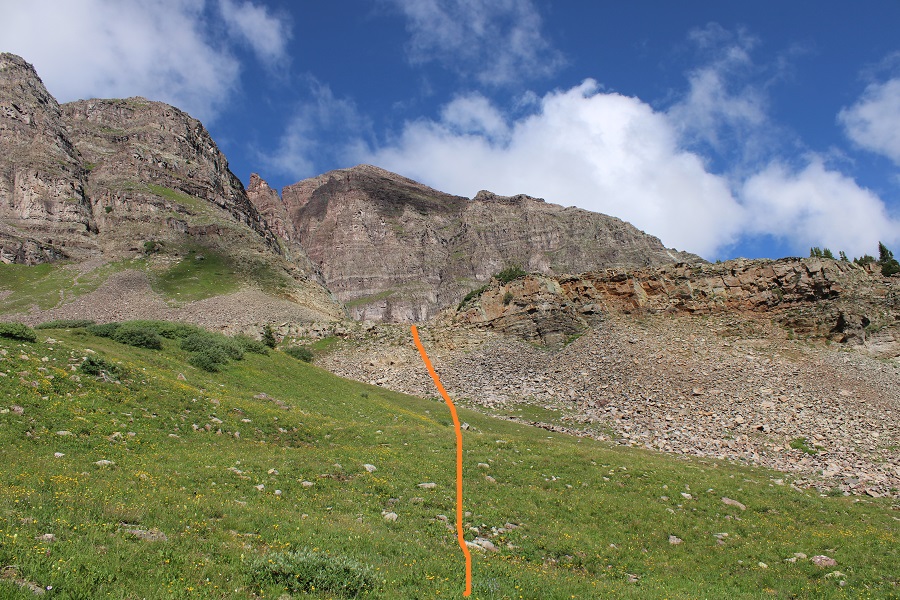
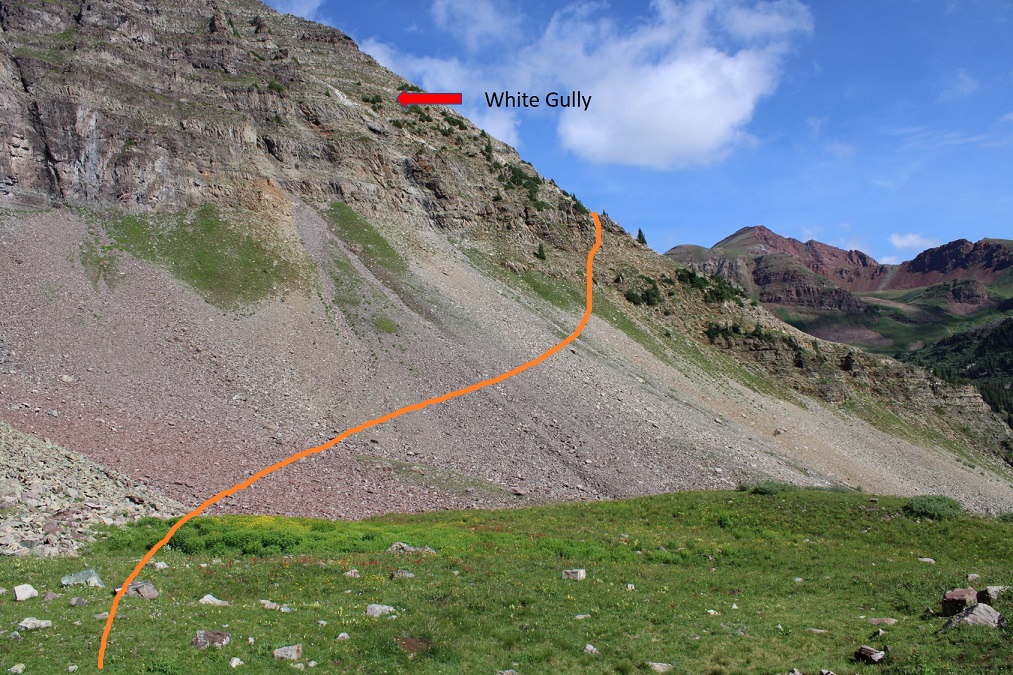
Here’s an overview of the trek to the false summit (or ‘the crown’) from the creek crossing.  I followed the North Maroon Peak’s Northeast Ridge Route until I made it to tundra, at about 11,600’.  I then left the trail and headed northwest, behind this outcropping, to the base of the white gully. I then trekked up the ridge and followed the white gully until it ended. Here’s a basic overview.

Here are some step by step photos of the way I accessed the white gully:  I followed the North Maroon Trail to treeline

At 11,600’ I left the North Maroon Trail and headed northwest

Here you can see the base of the white gully.  I didn’t want to climb straight up the gully, as it was very steep.  Instead, I accessed the ridge, and followed the ridge to the white gully.  (I did this after spending a lot of time last week trying to see if the smaller gullies ‘went’ to access the white gully, and turned back every time because I didn’t have rope.  I believe it’s much easier to access the ridge first and then head up).

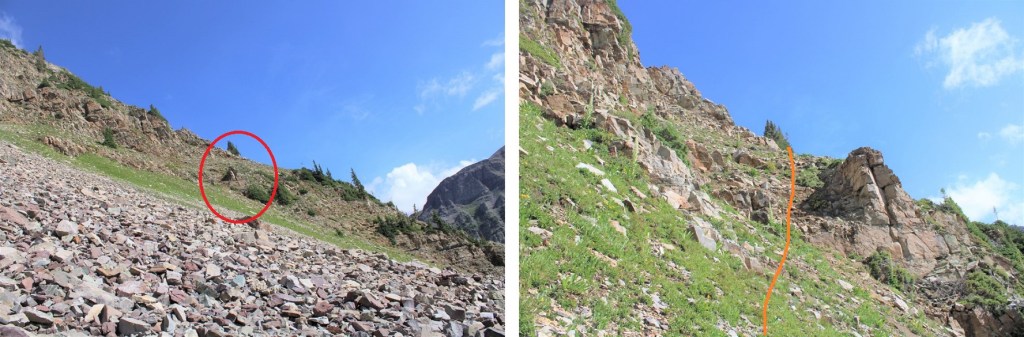
Here’s exactly where I entered and exited the ridge.  I found this to be class 2 and direct access.  Now’s a great time to put on your helmet if you haven’t already done so.

Once on the ridge I followed it west, staying in-between the ridge and the white gully (to the right of the gully, but left of the ridge).  If you look for them, you’ll find game trails here (you may have to duck under some branches to use them though).

Once near the white gully, I found the terrain to the right to be more stable than the white gully itself, especially on my way down.

Topping out of the white gully felt class 3

From here it became ‘choose your own adventure’ as I followed the ridge southwest. I started out rounding the ridge’s north side, and then went back and forth between north and south sides of the ridge a few times.  There are cairns here, and nothing is more difficult than class 4.  In fact, if you’re extra careful/spend a lot of time route finding, you can probably keep this at mostly class 3. Here’s the route I took:

From the top of the white gully I rounded the corner and made my way back to the ridge.  It had rained the night before, so I had to be extra careful with every foot placement (wet = slippery)

Once back on the ridge I followed it for a ways

Before hitting a bit of a shelf and crossing over to the south side of the ridge

I followed the ridge to the false summit / ‘the crown’

From the false summit you can see the true summit of Sleeping Sexton

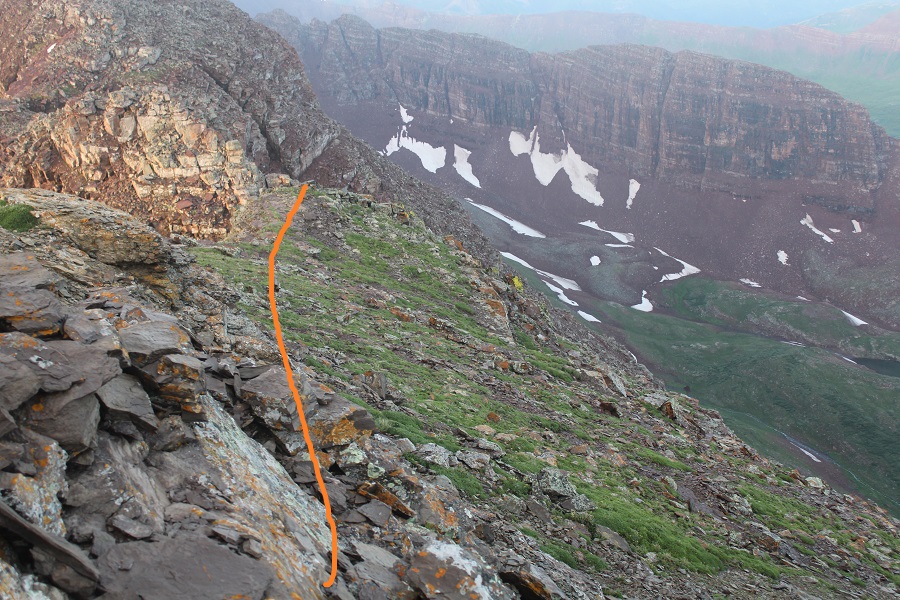
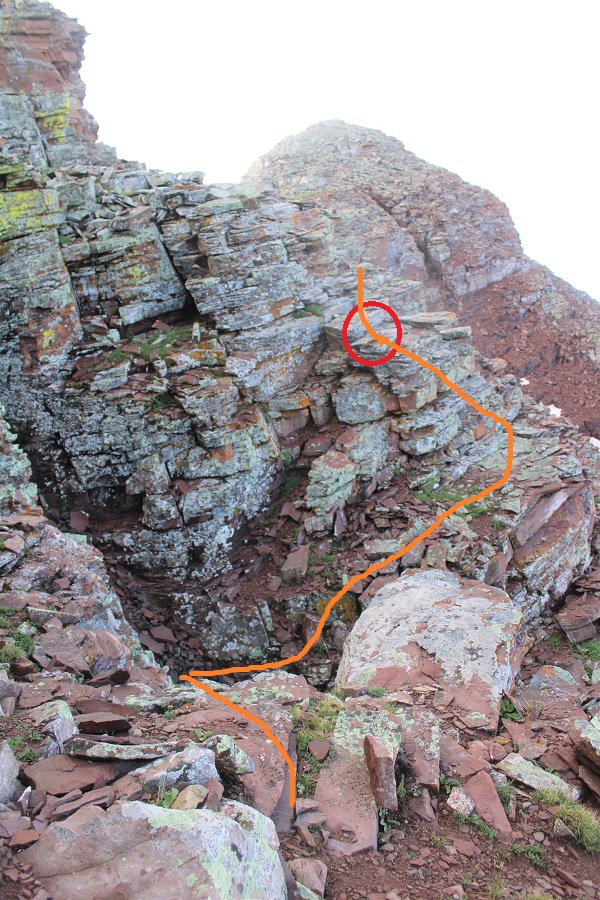
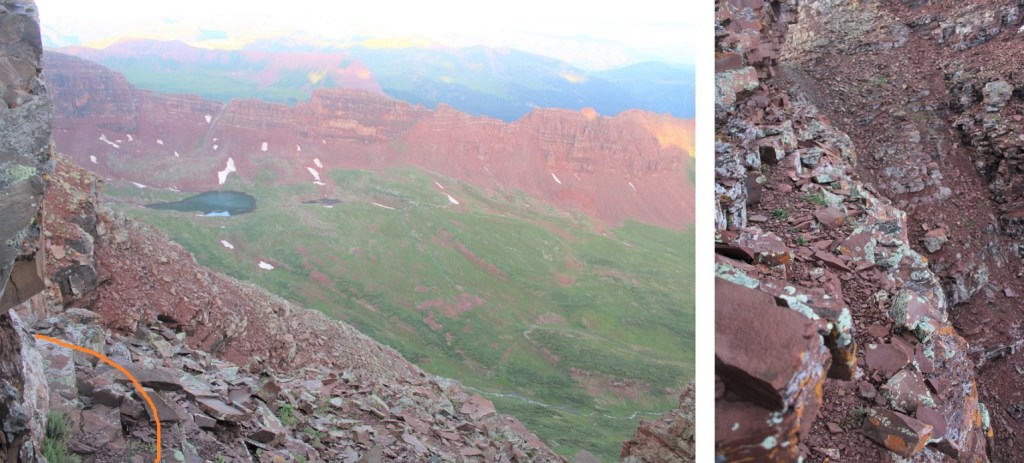
And now, the fun route finding begins!  I descended the false summit 125’ and crossed a gully.  There were cairns here to help in the crossing (circled in red). These are steep and go at class 3/4

After crossing the first gully I descended once again, another 160’

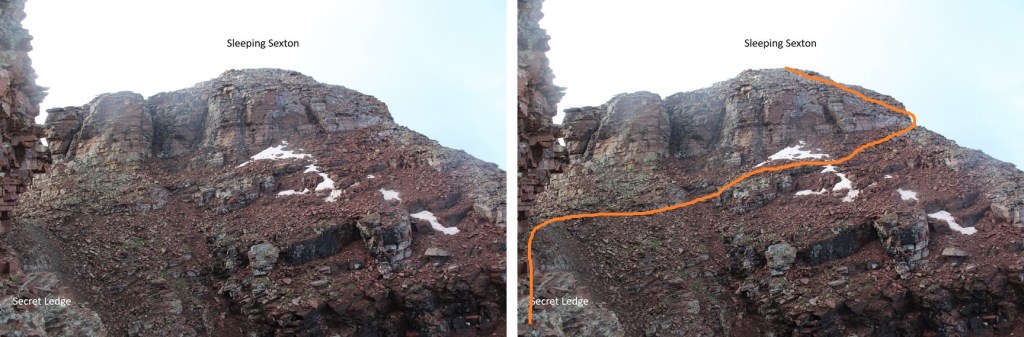
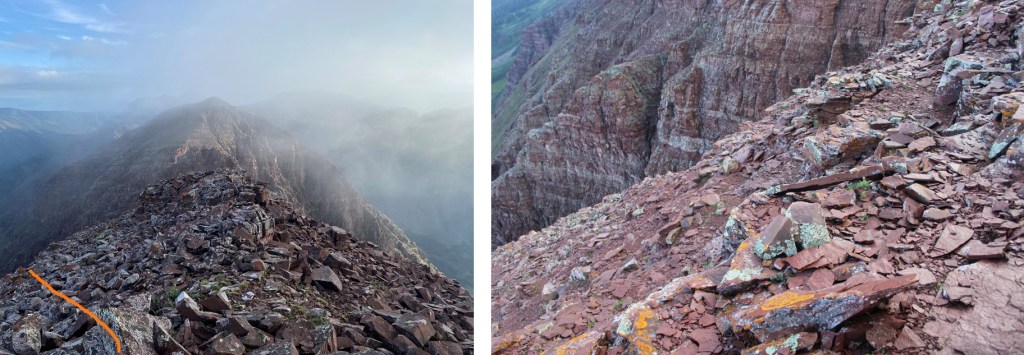
I was now at 13,130’, and parallel with the saddle between Sleeping Sexton and the false summit.  I followed the contour of the mountain to the ‘secret ledge’. Here’s what that looks like heading in

I crossed the ledge to the ‘saddle’, then skirted the side of the mountain and headed up to the summit

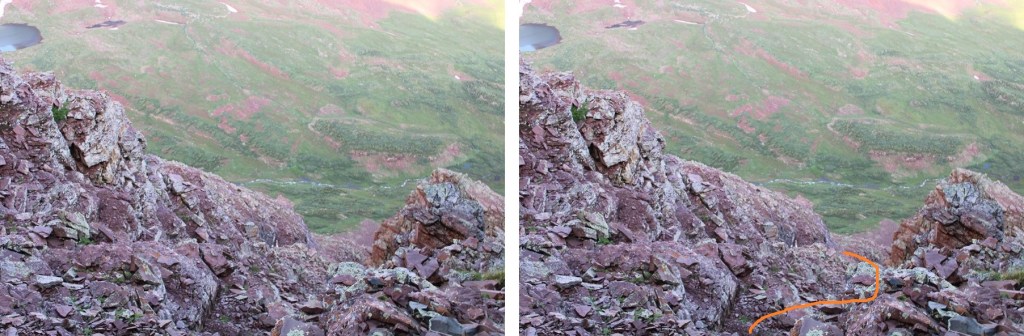
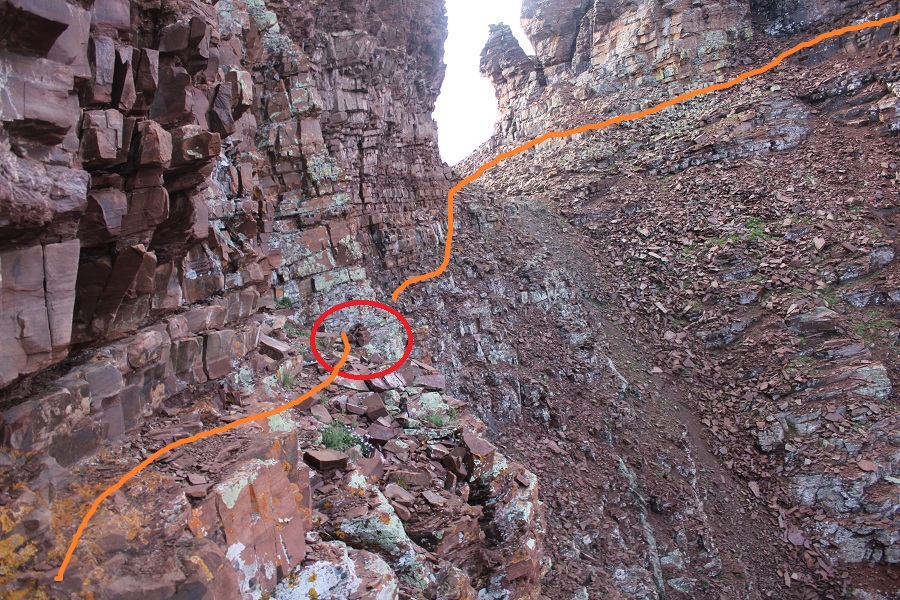
The ledge is not as bad as it looks.  There’s a cairn here (circled in red) DO NOT DESCEND HERE.  Instead, use it as a reference point and stay level with it (especially on your way back) and continue following the ledge. If you do this, it stays class 2 to the saddle.

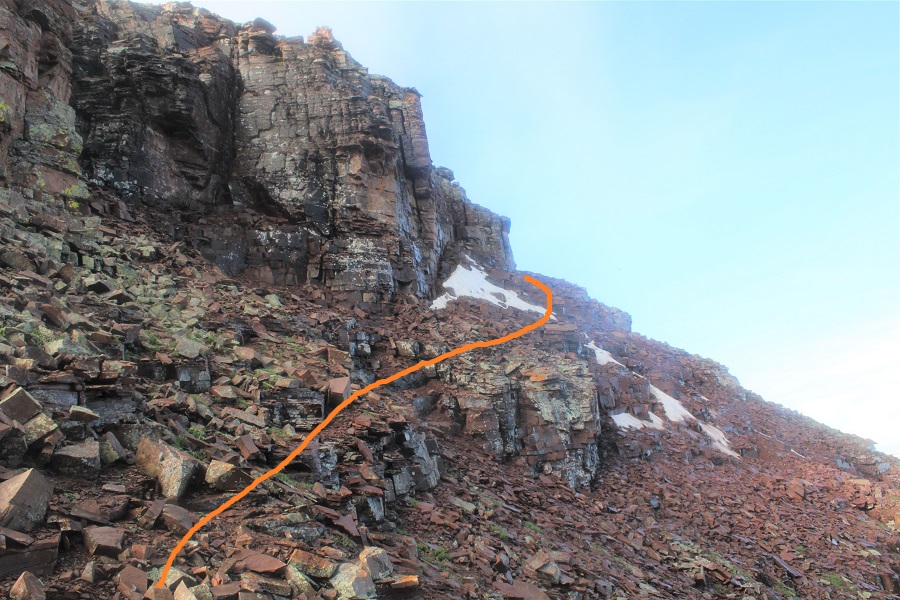
From there it was an easy trek to the summit, first skirting the mountainside

And then ascending the ridge

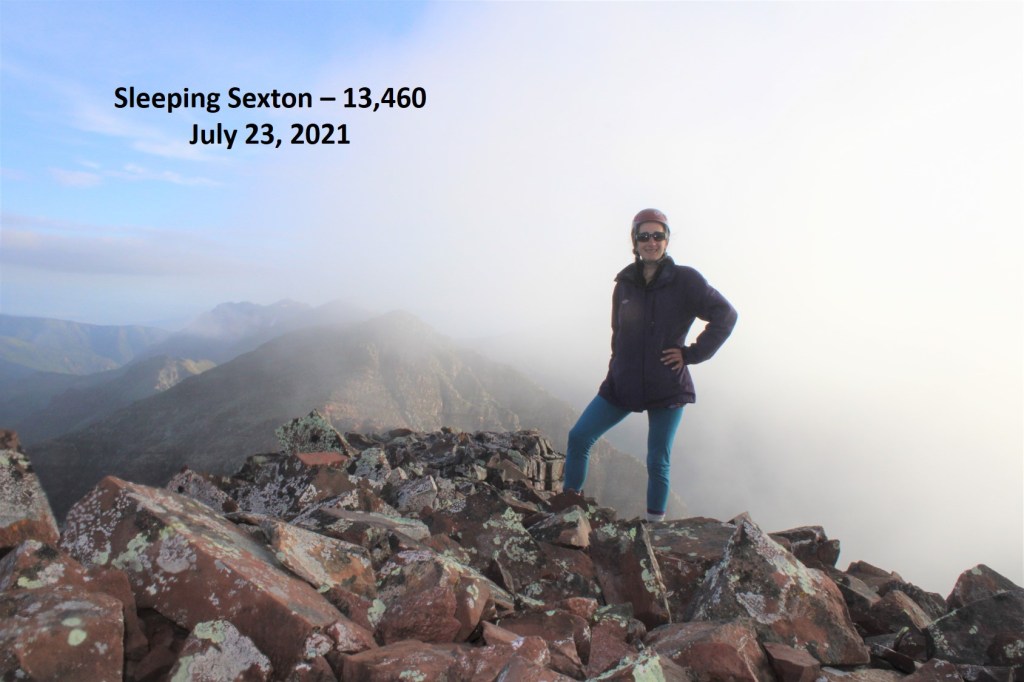
I summited Sleeping Sexton at 6:45am, just as the weather started rolling in

Sleeping Sexton: 

Since the weather wasn’t cooperating I didn’t stay long.  I turned and headed back the way I’d hiked in.  Here’s looking back at the false summit / ‘the crown’

And a view making it back to the ledge

Here are some more images of that ledge, looking back.  Remember to look for the cairn, and stay level with it.

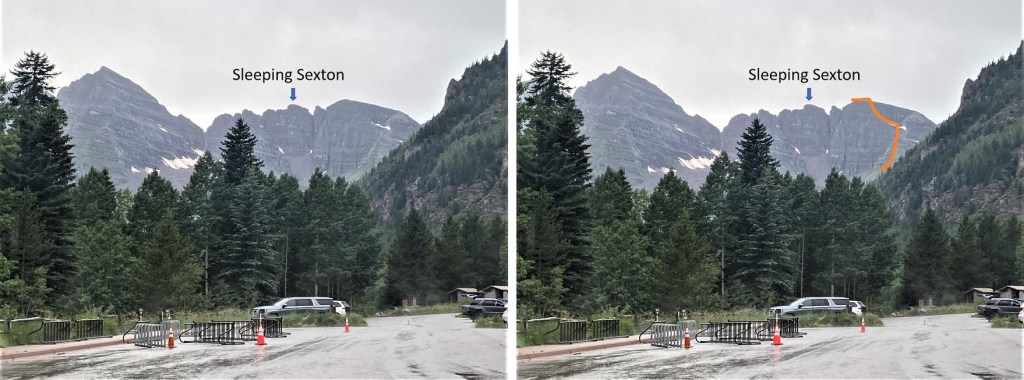
For reference, here’s the size of the route.  The route can clearly be seen over my shoulder (to the left)

I rounded the corner, and ascended the gully, aiming for the cairns

Crossed the next gully

And gained the ridge to the false summit / ‘the crown’

I actually stayed here for a bit because I had cell service.  I let my family know I was ok, and downloaded the weather forecast for the next day.  However, eventually the clouds told me to get going.

Clouds rolling in: 

Here are some pictures of my way back to the white gully

Back down the white gully to the ridge

And from the ridge back to the trail

Once back on the trail it was an easy, class 1 hike back to the parking area.

I made it back to my truck at 11:30am, making this a 12.7 mile hike with 5156’ of elevation gain in 9 hours, 15 minutes. 

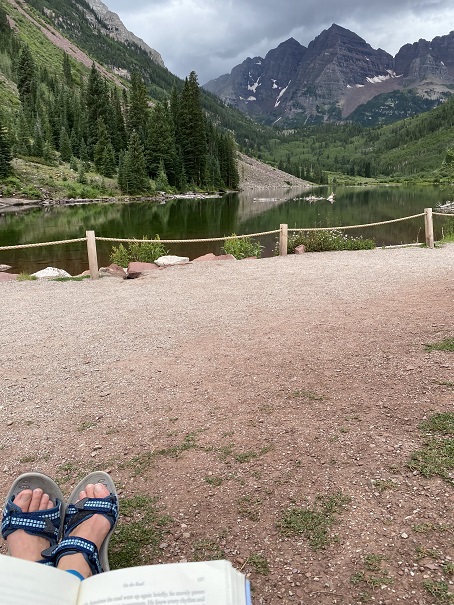
It was still early in the day, so I ate lunch by Maroon Lake, read for a bit, looked at topo maps for tomorrow, and jotted down notes in my journal before making it an early night.  Oh, I forgot to mention the goats:  They were the same two goats I saw last week, and if for no other reason than them, wear your helmet until you make it back onto the class 1 trail:  They were kicking rocks down the gullies the entire time I was there. 

Rito Alto Peak – 13,794, Hermit Peak – 13,350 and Eureka Mountain – 13,507

RT Length:  12.2 miles

Elevation Gain: 4551’

I’ve hiked Rito Alto Peak before, but due to an early snowstorm had to skip Hermit and Eureka.  Today I was going back for those two (but hit Rito Alto again as well because I didn’t get good photographs).

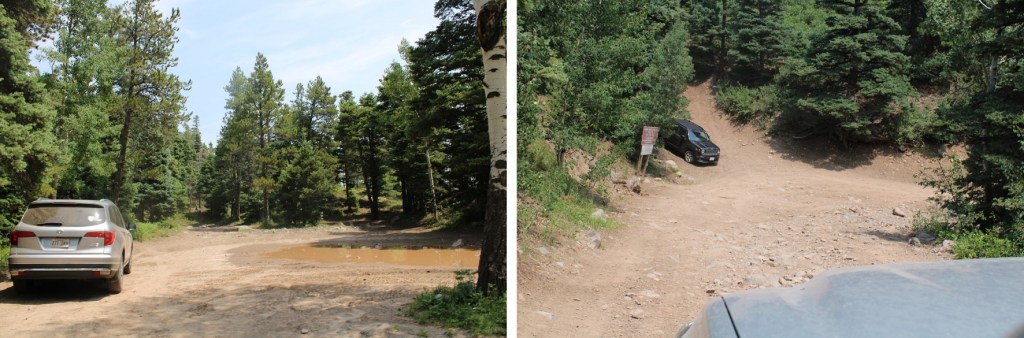
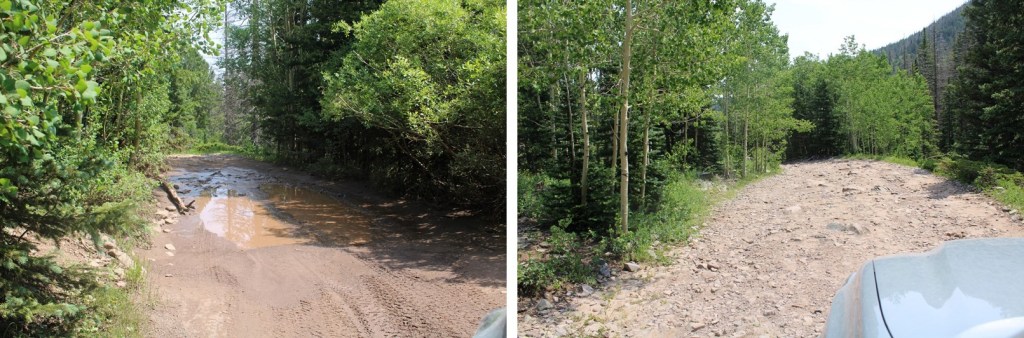
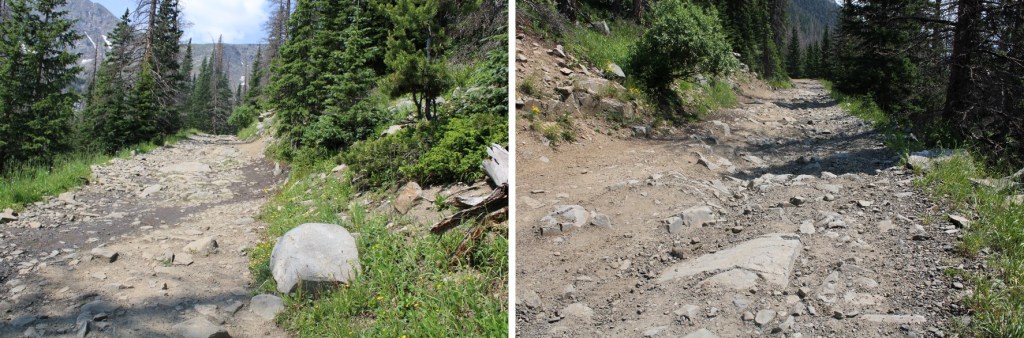
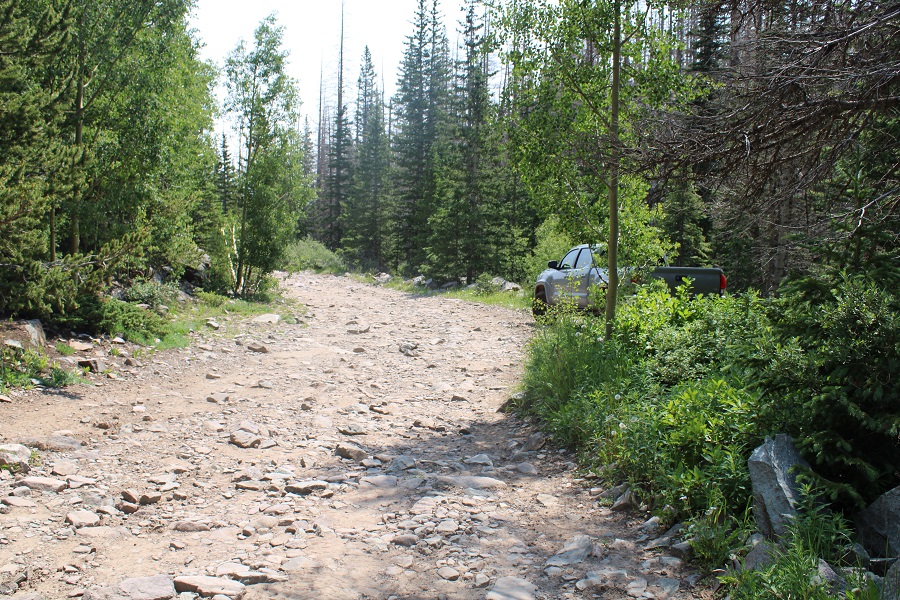
If you love your vehicle, park at around 9000’.  Seriously.  This road is a lot worse than it was the last time I was here, and even then it was pretty bad.  Here’s the parking area(s) around 9000’

I have a new Tacoma, and wanted to see what it could do, so I continued driving further.  You’ll definitely want both high clearance and 4WD to continue.

If you can make it past 10,500’ you can make it all the way to the pass.  I stopped and parked at a camping area at 10,800’ because that was where I’d parked last time.  I gathered my gear and was on the trail at 4:30am.

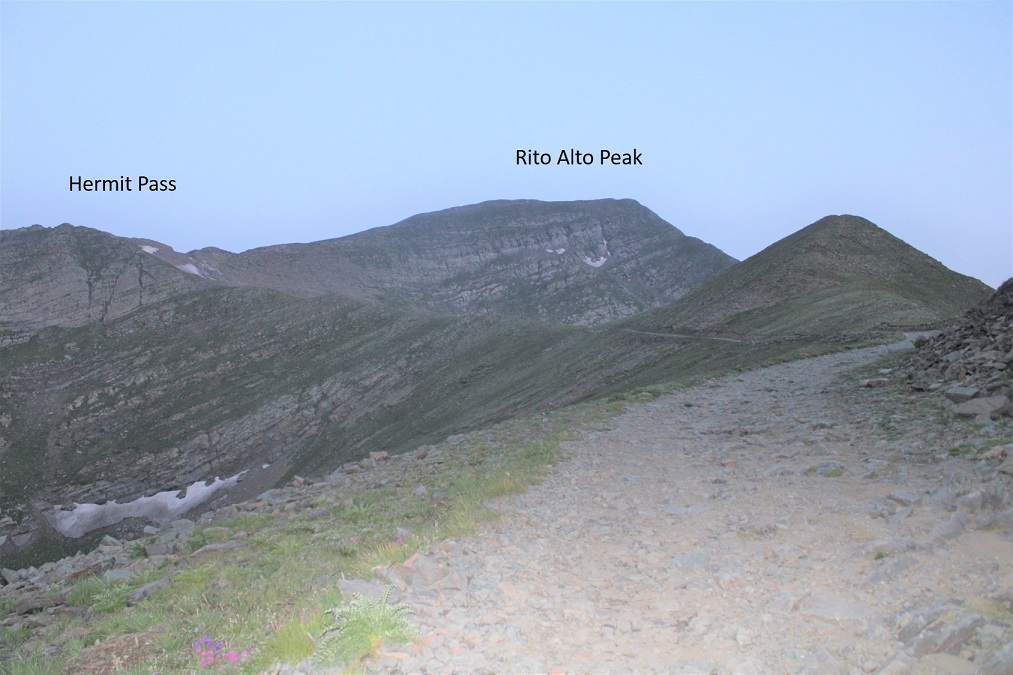
I followed the 4WD road west towards Hermit Pass.

It was early morning, and I could hear the coyotes calling to each other.  This lasted for about 10 minutes.  I was actually a little concerned when they stopped yipping.

Coyotes: 

From my parking spot I hiked 4.2 miles to Hermit Pass

As the sun rose, I could already tell I wouldn’t be getting great pictures today: the haze from the fires wasn’t going to cooperate.

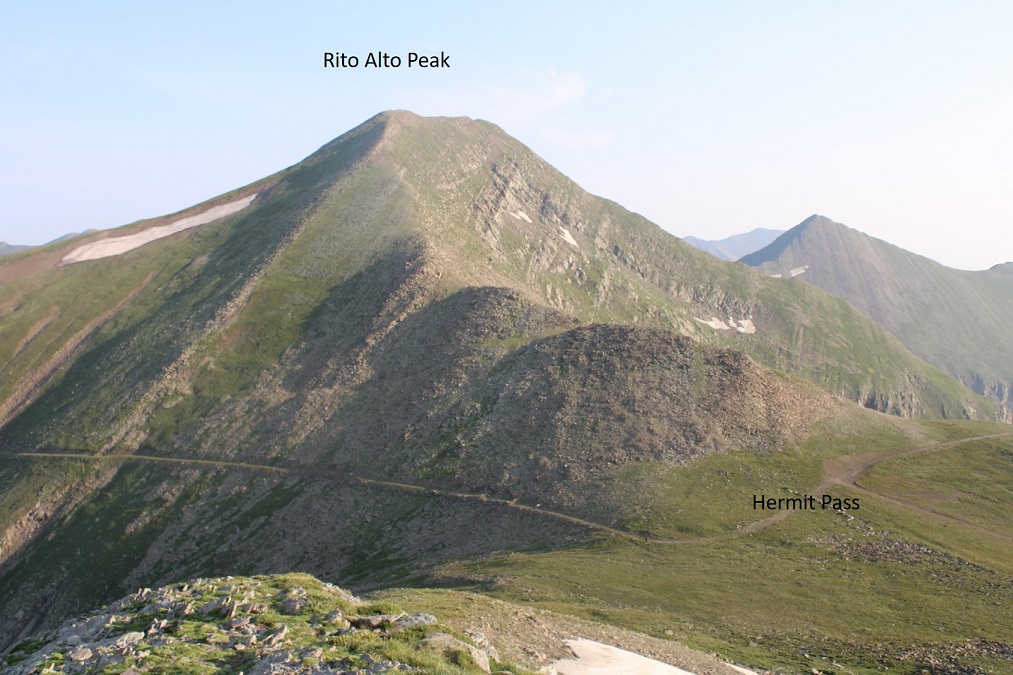
I made it to Hermit Pass, turned right, and followed the ridge northeast to the summit of Rito Alto Peak.  This ridge has a lot of large rocks, mixed with tundra.  The rocks have the Crestone-grip and most don’t roll. 

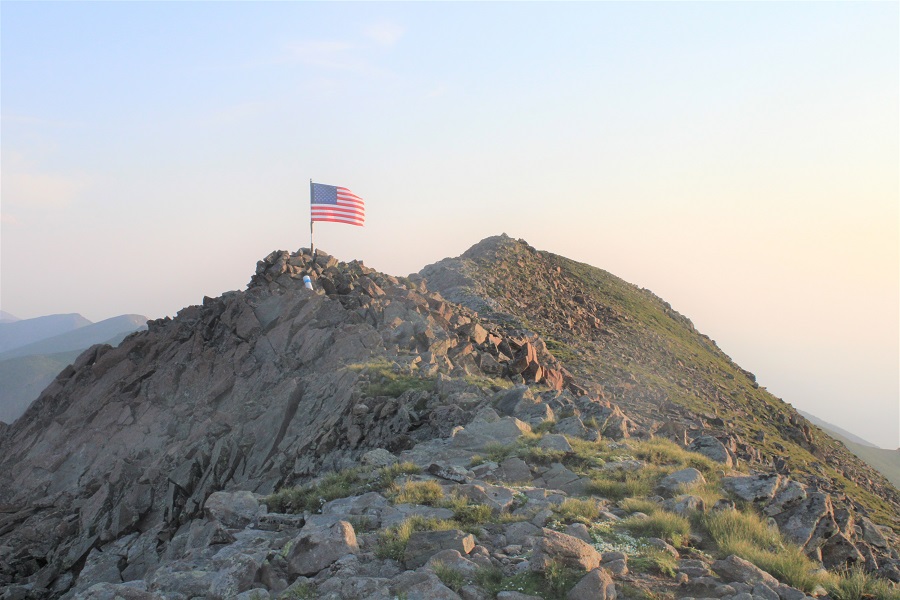
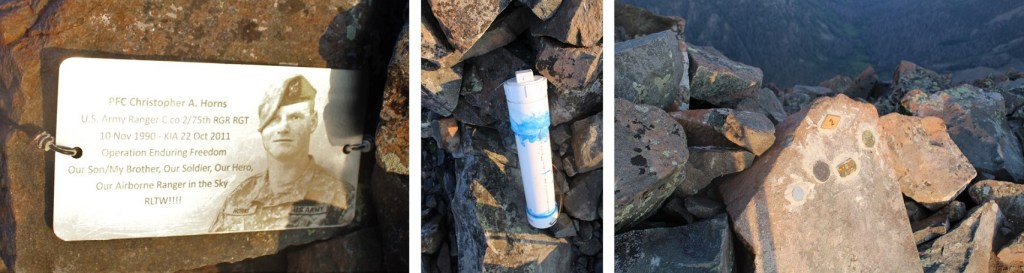
Just before the summit there’s a ‘false summit’ with a memorial to Christopher Horns.  They’ve replaced the flag since the last time I was here, and added a large summit register tube.

I continued heading north to the summit of Rito Alto Peak. 

I summited Rito Alto Peak at 6:45am.  Note, there was a very small summit register here, in a jar that looked to be about 1.5 inches  in diameter:  like one of those sample jam jars.  I left it where it was.

Rito Alto Peak: 

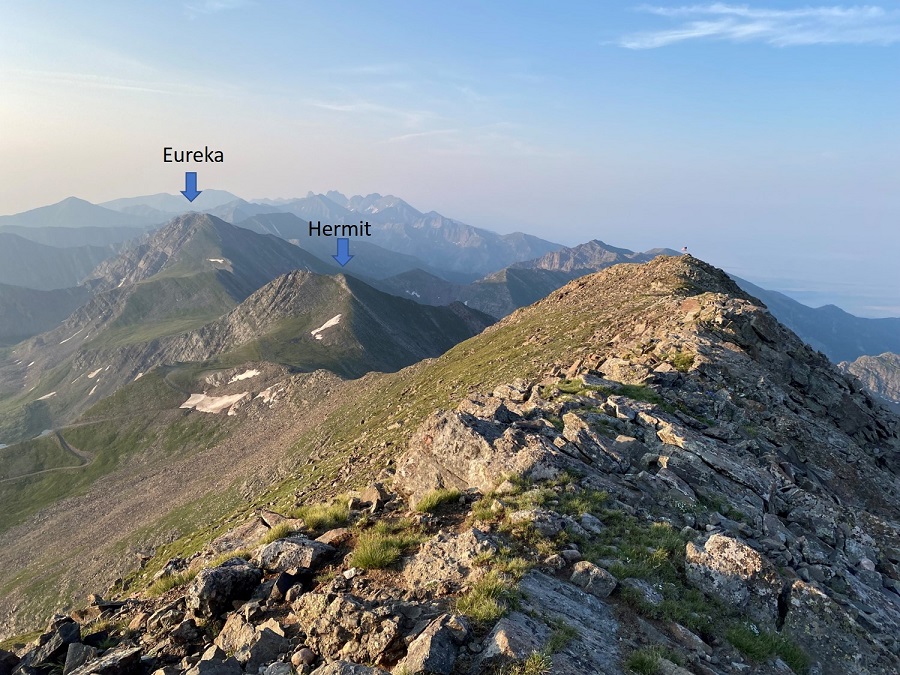
From the summit I had a good view of the other peaks I intended to summit today (if not a good view of the area overall).

I turned and headed back towards Hermit Pass.

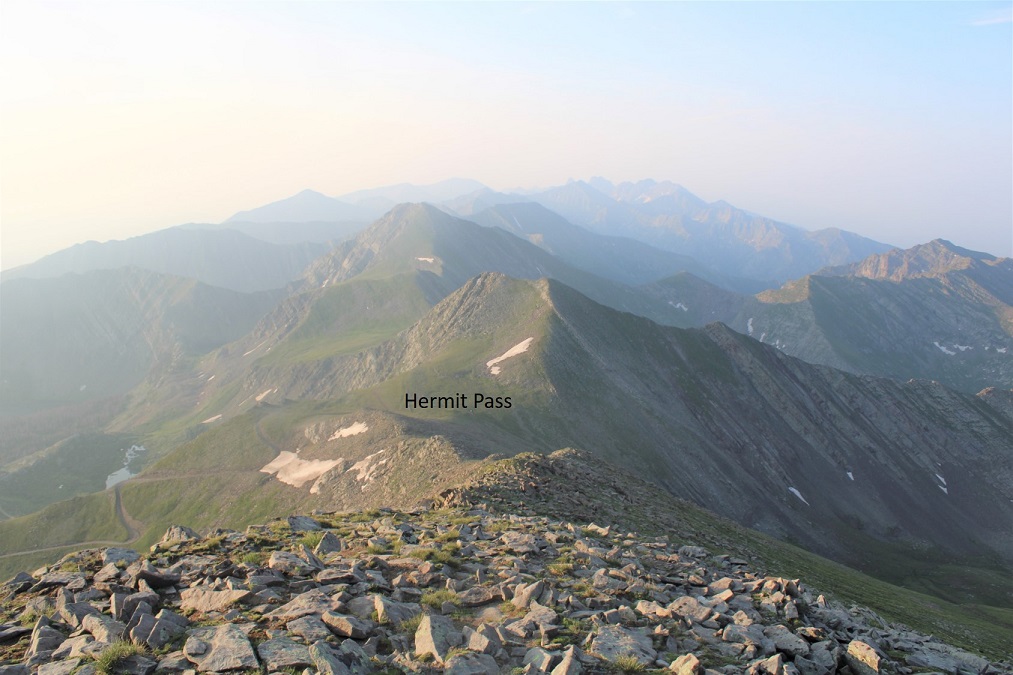
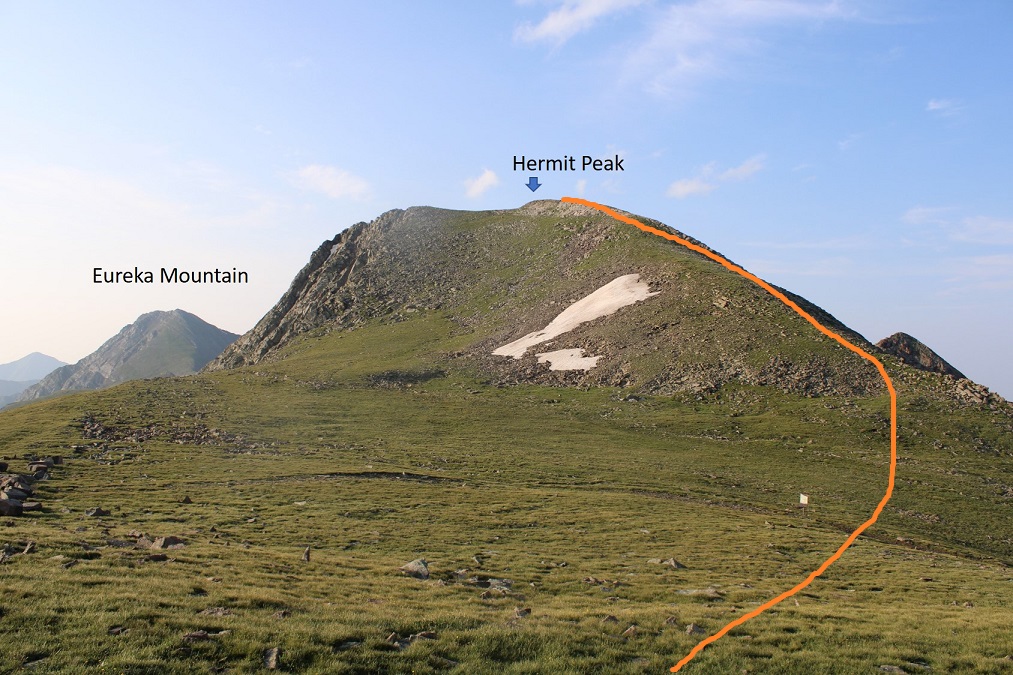
Once at Hermit Pass I chose the path of least resistance to the summit of Hermit Peak, making this a ridge hike.   The true summit is hard to determine, as both the east and west ‘highpoints’ look like the summit, and indeed, both have cairns.  CalTopo says the true summit is to the right (west).

Here are some pictures of the ridge hike, mostly on tundra to the summit of Hermit Peak

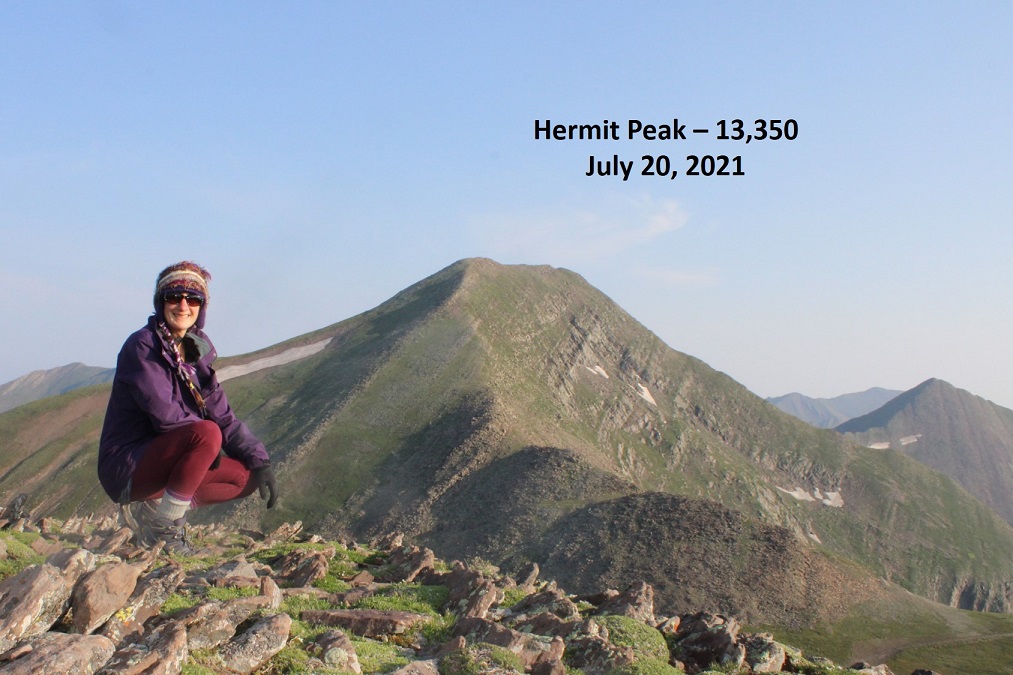
I summited Hermit Peak at 7:40am

Hermit Peak:

Here’s looking back at Rito Alto Peak

And now, on to Eureka.  I first crossed over to the east side of Hermit Peak (which also had a cairn)

Here’s looking back at Hermit Peak from the cairn on the other side

Here’s looking back from that point at the Hermit Pass Road I took hiking in

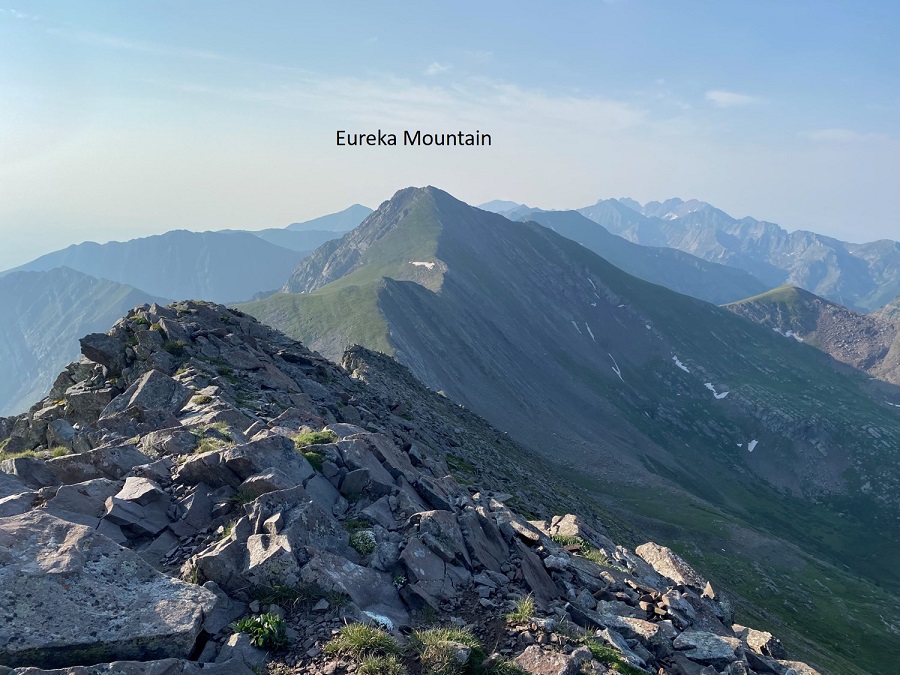
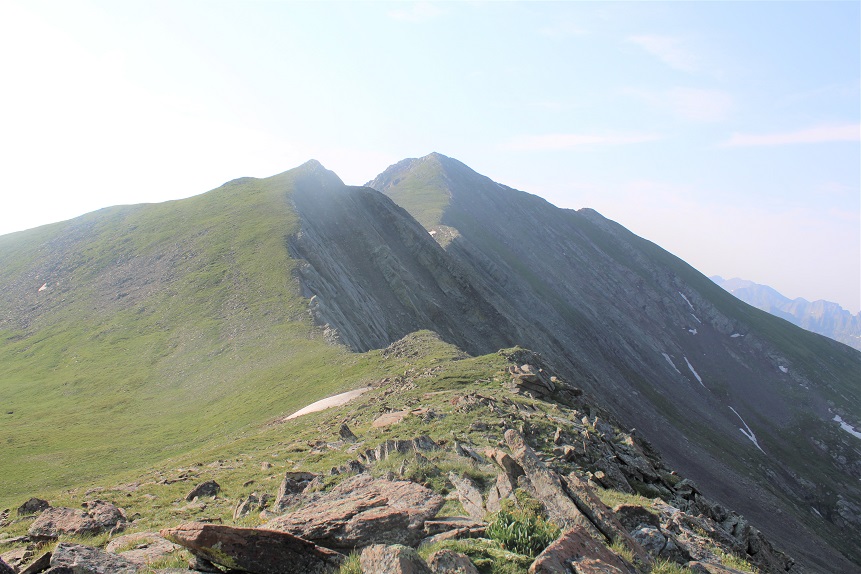
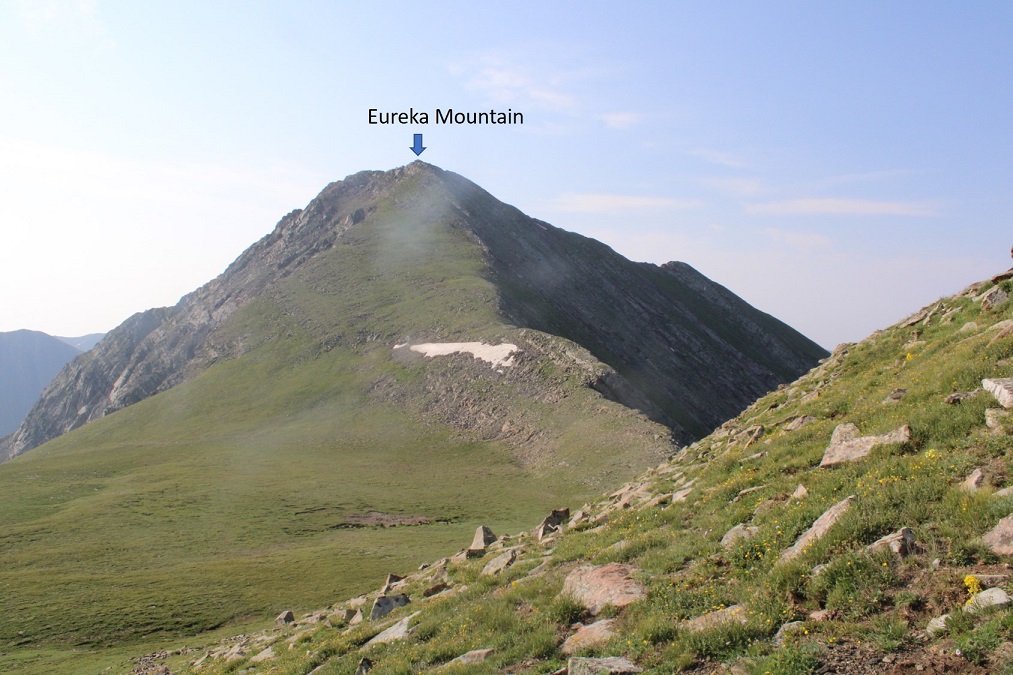
And from that point looking southwest to Eureka.  As you can see, this is another ridge hike

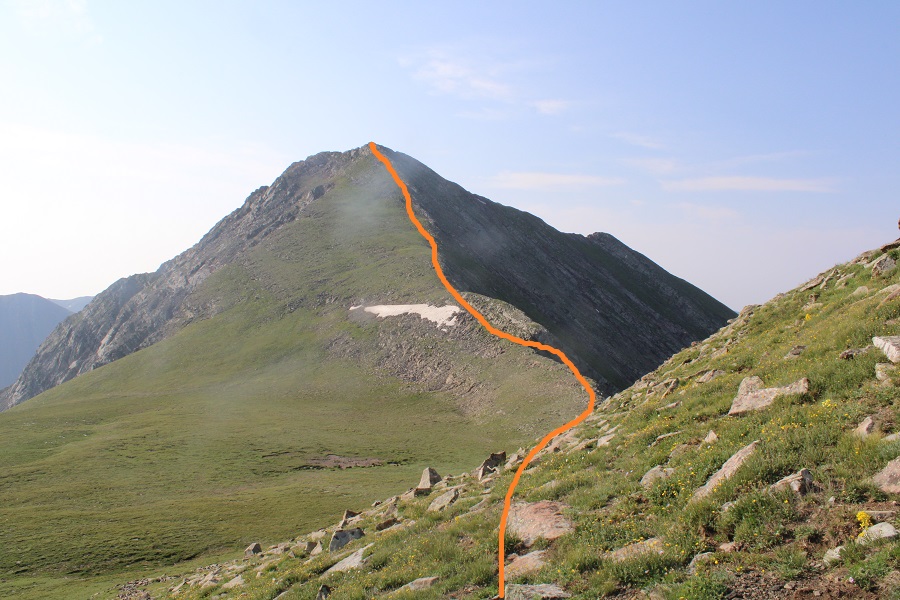
While it might look sketchy, this ridge stays at class 2. First, I descended about 650’ down the ridge

Then ascended 300’

And descended another 150’ before gaining 550’ to reach the summit of Eureka Mountain.  Note the true summit here is also to the west (this will be hard to determine when you’re up there, as it looks like it should be the point further east). 

The hike is a tundra/rock ridge hike until the last 20 feet or so.  Here’s the route I took, staying above the snow but below a rock formation on the ridge.  You could also just go straight up the south face.

Just before the summit there was a little (very easy) scrambling

I summited Eureka Mountain at 9am.  It was a small summit, so I sat on it but didn’t stand.  I took a selfie instead of setting up my camera.

Eureka Mountain: 

From here you can see, looking east, how it looks like that might be the summit. I wanted to be sure, so I hiked over there (sketchy class 2)

This area was actually lower, but gave me a good view of the true (small) summit of Eureka

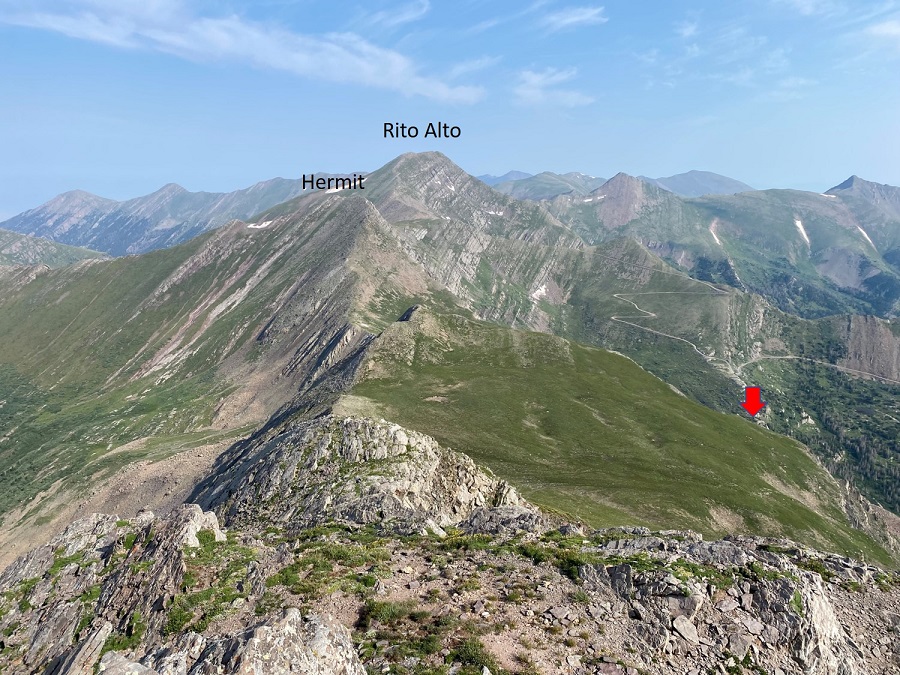
I made my way back to the true summit and headed back down the ridge the way I came, eventually heading towards the red arrow.

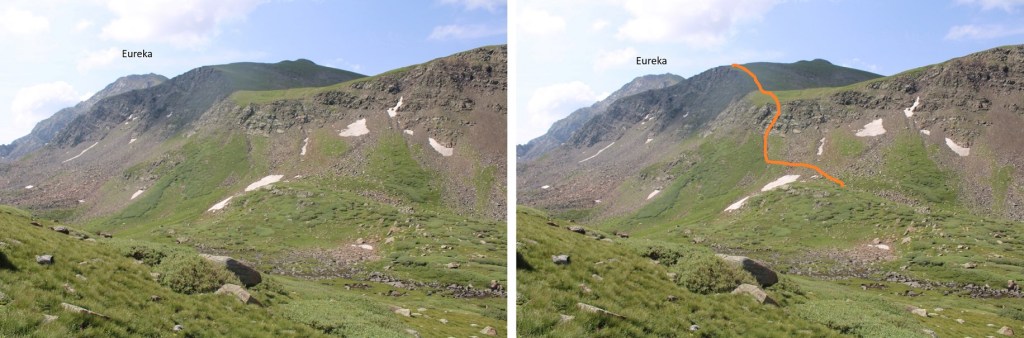
I stayed on the ridge to avoid the marshy area, which didn’t look like a fun time.  Once above the marshy area I cut across the tundra to the east side of the mountain

Here’s a closer look at the wet area, and my route across

As I skirted the ridge, I could see my intended route back to the road.  I was aiming north, towards the smallest outlet of Horseshoe Lake.  Once I made it there I would cross the stream and I hike up the hillside, back to the road.

First, I had to descend a gully.  This was difficult class 2 at the hardest.  There will be pictures later:  make sure to descend the correct gully to make this easier.

Here’s the route I took down the gully, towards Horseshoe Lake, and back to the road.  There were some willows to navigate near Horseshoe Lake, but once again, all class 2.

From the road, here’s a view of the path I took down the gully.  If it’s daylight when you’re hiking in, spend some time visually memorizing the route.

Back on Hermit Pass Road, I followed it east back to my truck

The wildflowers were on point

I made it back to my truck at 11:15am, making this a 12.2 mile hike with 4551’ of elevation gain in 6 hours, 45 min.

The drive down wasn’t any better than the drive up, but Miles got his first real 4WD workout, and had fun splashing through the mud!

Buckskin Benchmark – 13,370 and PT 13039

RT Length:  18 miles

Elevation Gain: 5800’

I’ve said it before, and I’ll say it again:  I’m NOT a fan of the permit system. Even though I was on their website exactly when permits were released, I wasn’t able to get an overnight permit for Maroon Bells on a date I could go, so I had to get three back-to-back permits instead.  When I pulled up at the gate my paperwork confused the attendant.  He didn’t know what type of a parking pass to give me, but settled on an overnight pass that expired in two days time.  He then asked me to park in the further lot, as the closer lot was intended for day use. 

I balked at this:  I’d wanted a 2 night pass, but because of the reservation system I couldn’t get one.  Instead, I paid 3 times what those who were able to score a longer permit were paying for the same amount of time in the park.  I felt if I was paying that much more, the least they could do was give me a better parking spot.  Also, while annoying, the main reason I don’t like the permit system isn’t because of stuff like this:  it’s because it encourages bad decision making among people who feel they need to hike/continue when dangerous because it’s difficult to get a permit, etc.  One of the reasons I left California in 2006 was because of the permit system, and all the fees associated with said system. I hate seeing it brought to Colorado.

Ok, rant over.  I was on the trail around 5:30pm.  It was my intention to camp around 11,000’ and start early the next morning.  For those of you who haven’t hiked the Maroon Bells area before, the trail is obvious:

I followed the trail west, staying right at the junction for Crater Lake

And continued up the hillside to my camping spot at 11,100’.  I was surprised no one else was camping here, as it’s the perfect spot. 

I’ll spare you the details of the next day’s hike, as I came back to this spot, spent the night, and started from here the next morning.  I’d gotten to bed early after a long day of hiking, and woke up to sunlight.  I looked at my phone and it showed 5:30!  Ack!  I initially thought I’d slept through my alarm, and started rolling up my sleeping bag.  About 30 seconds later I realized I’d only been sleeping about an hour, so I happily went back to bed and slept soundly until 3:30am the next morning. I left my new water filter bag inside my tent and was on my way.

I was on the trail by 3:45am, heading northeast along the well-defined trail through Minnehaha Gulch. I crossed a stream and continued along the trail, not really ‘feeling it’ today.  I was more tired than I should have been, and wasn’t feeling very motivated.

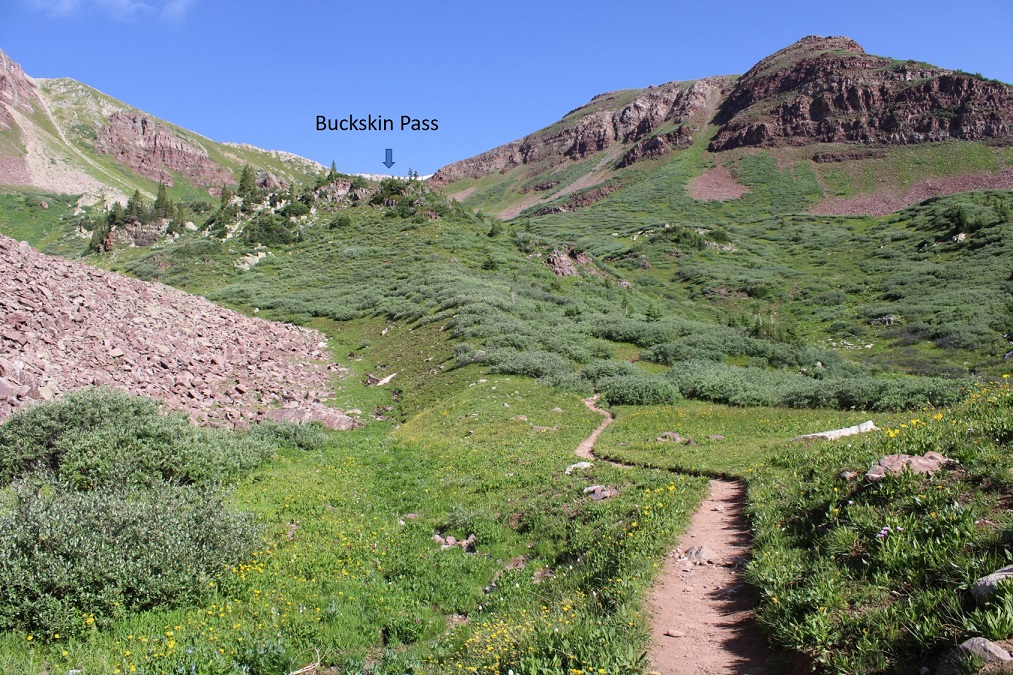
I followed the trail all the way to Buckskin Pass

Once at Buckskin Pass, I turned right and headed north towards Buckskin Benchmark

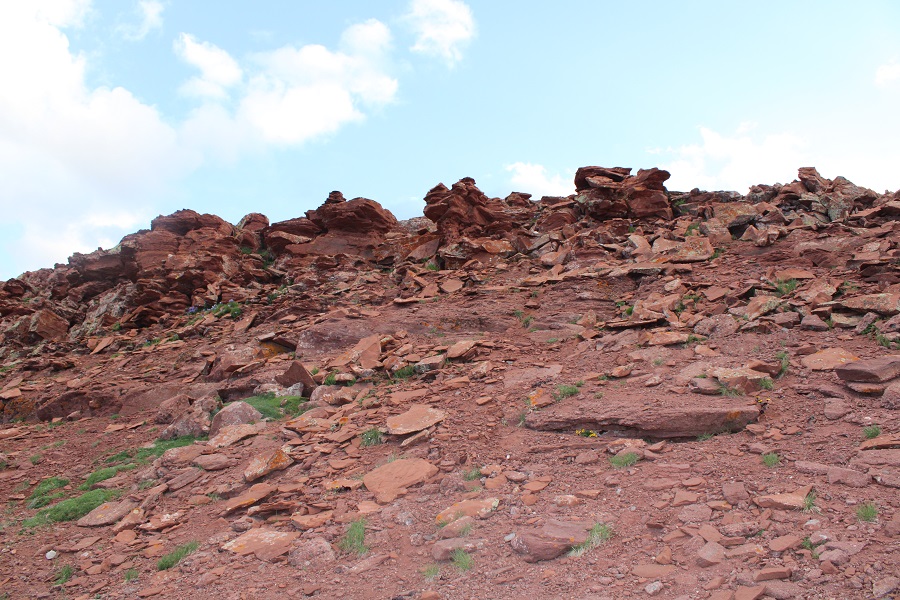
This was an easy, class 2 hike, mostly on tundra

Towards the top it got a little rocky, but stayed class 2.  I saw several ptarmigans here, and a few crows

Right about now the sun was starting to rise, along with my motivation. 

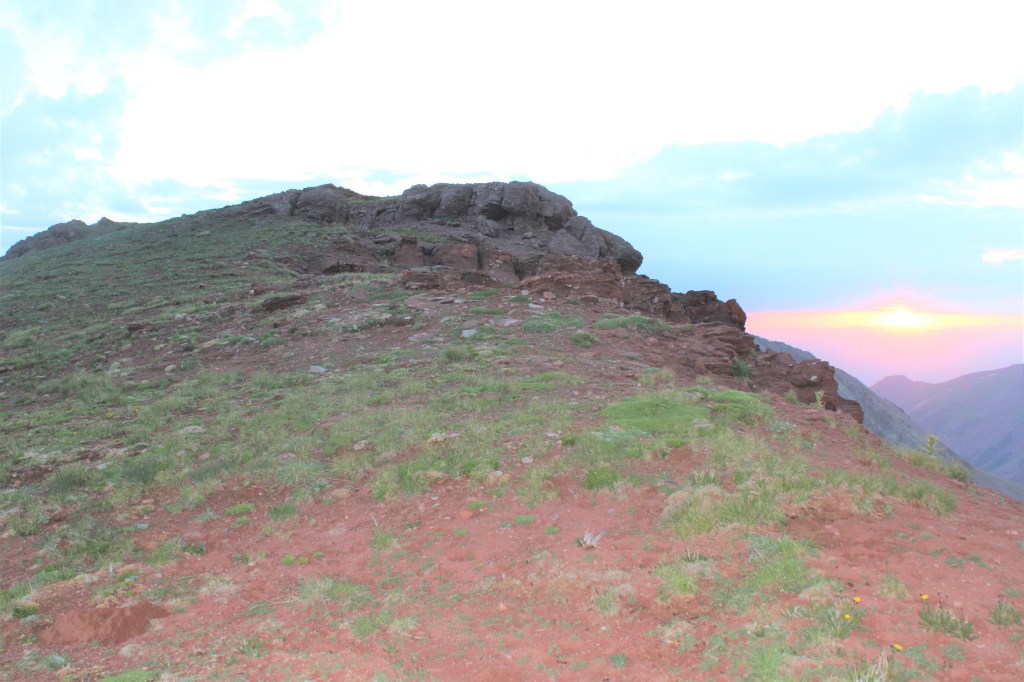
Here’s the last bit to the summit.  It stays class 2 if you keep left

I summited Buckskin Benchmark at 6am

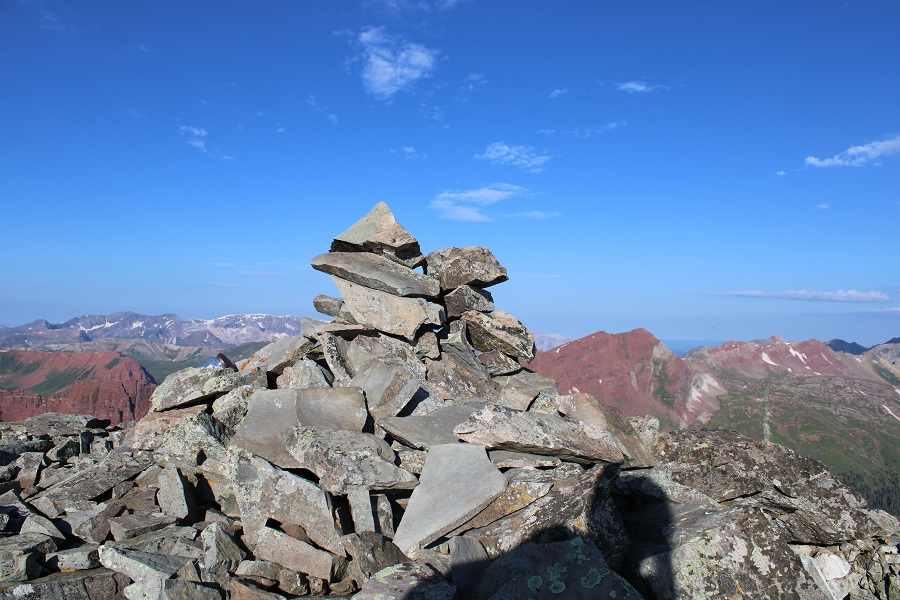
Buckskin Benchmark: 

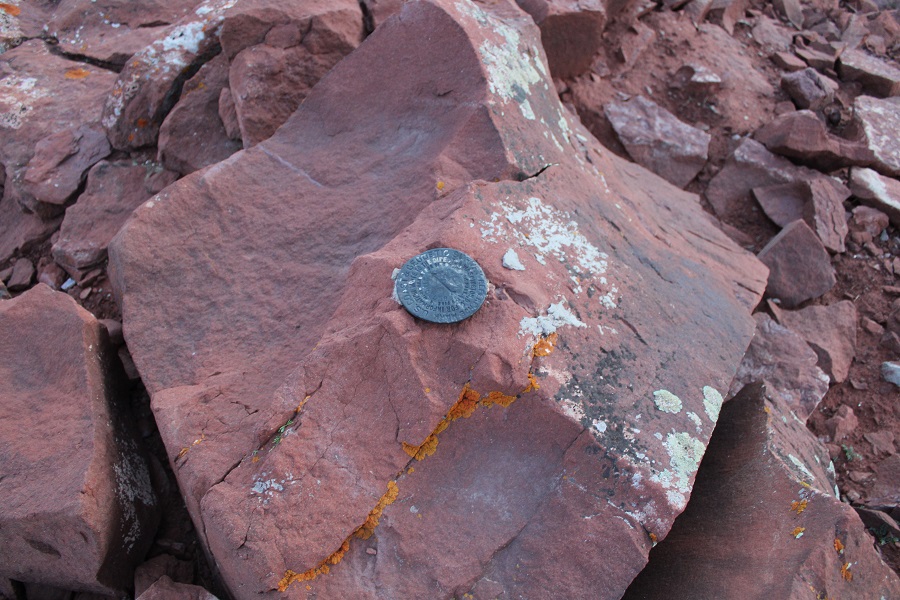
The benchmark

The views from up here were amazing!  My spirits lifted, I actually ate a snack, and headed back down to Buckskin Pass. 

On my way down I made some mountain goat friends (those are Snowmass and Capitol peaks in the background)

My next peak was PT 13039

It was a tundra walk back to Buckskin Pass

And a trail hike up to the point circled in red

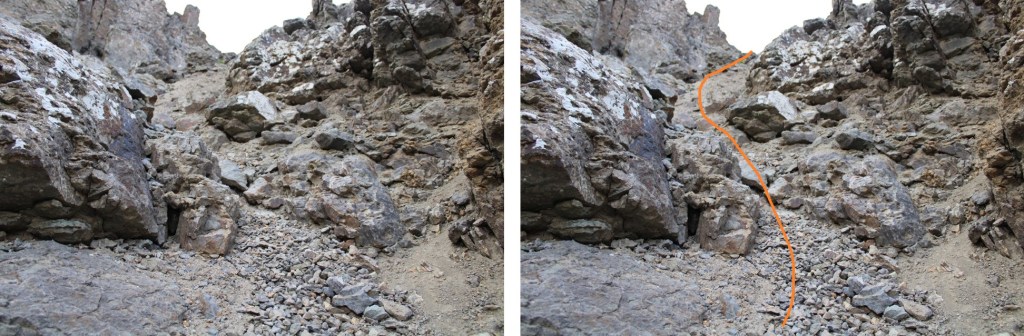
This is where it got interesting.  I wanted to go straight up and over the face, but it seems as if there have been several slides in the area, and nothing went at class 2.  This was supposed to be a class 2 hike, so I looked for a better way. My advice here is NOT to go directly up one of these gullies (you probably can, but they all looked sketchy/prone to slides).

Instead, dip down to the left.  This area stays class 2. 

Here’s what my route looks like from below

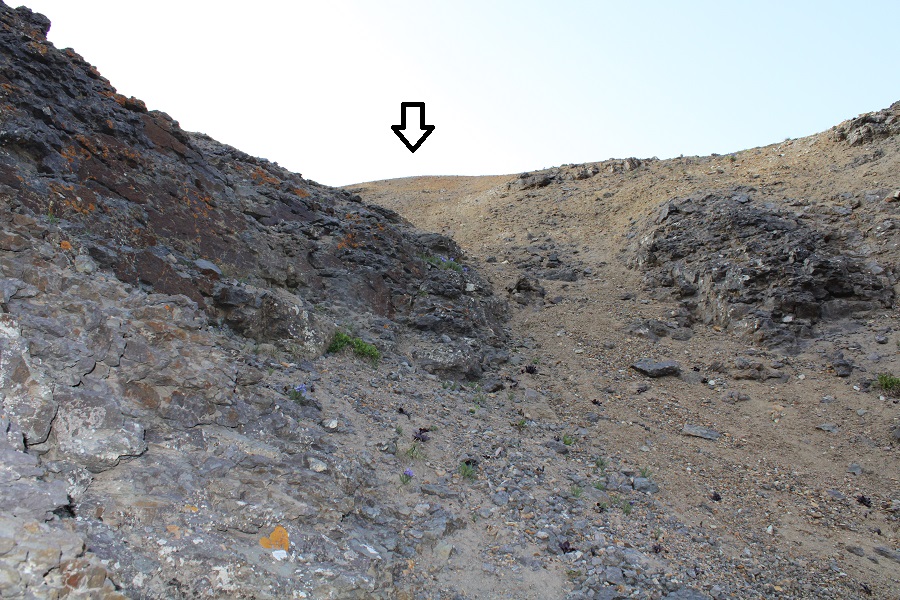
Once I was past this area, I turned right and headed southwest to the ridge (still class 2).

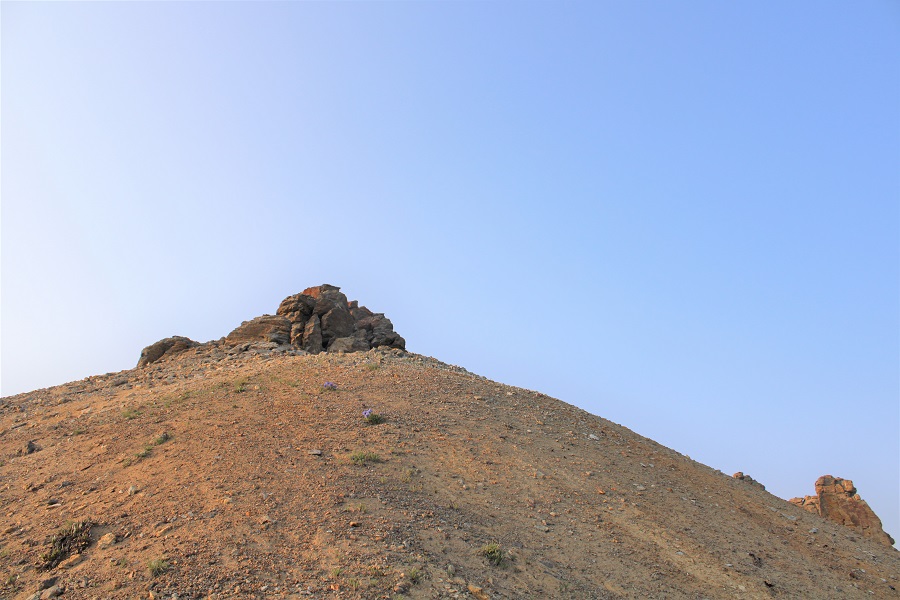
Then I followed the ridge south.  I could clearly see the cairn indicating the top of 13039

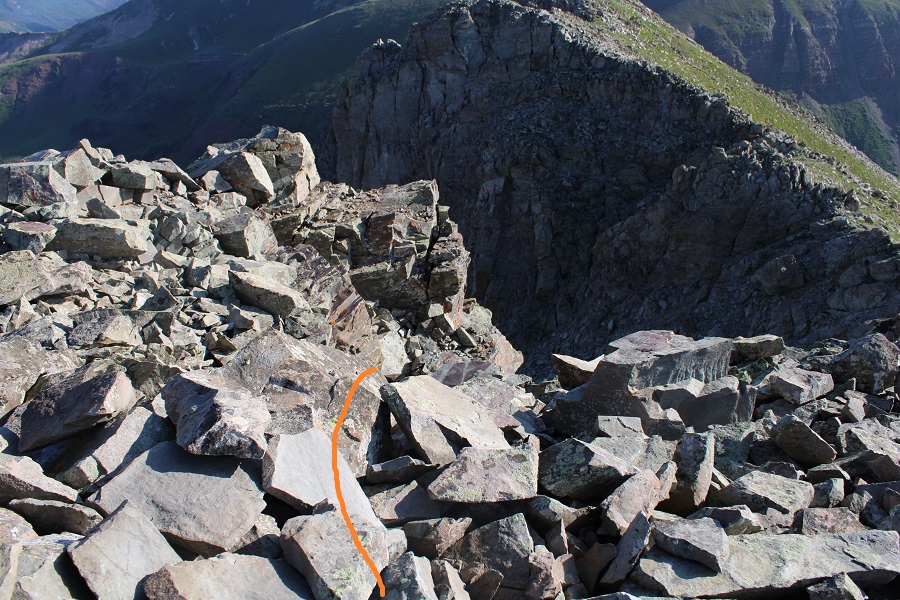
At the edge of the ridge is where it got spicy.  It turned form a class 2 hike into a class 4 climb.  I looked around for an alternate route, and realized the only way up to the summit was to climb the 30-40 feet or so up the chimney/gully to the summit block

I was a little disappointed because I’d left my helmet back in my tent.  I debated if I should continue or not, and in the end I figured I did enough class 4 climbing yesterday without incident and was warmed up:  I should be fine today.  Also, I’d recommend wearing a helmet.   I dropped my gear and headed up with just my camera.  Here’s the route I took

I made it about halfway up the chimney, and once again had second thoughts.  I continued on however, because I knew the worst was behind me and either way I’d have to downclimb that area again. Here’s another angle

I summited PT 13039 at 7:45am

PT 13039:

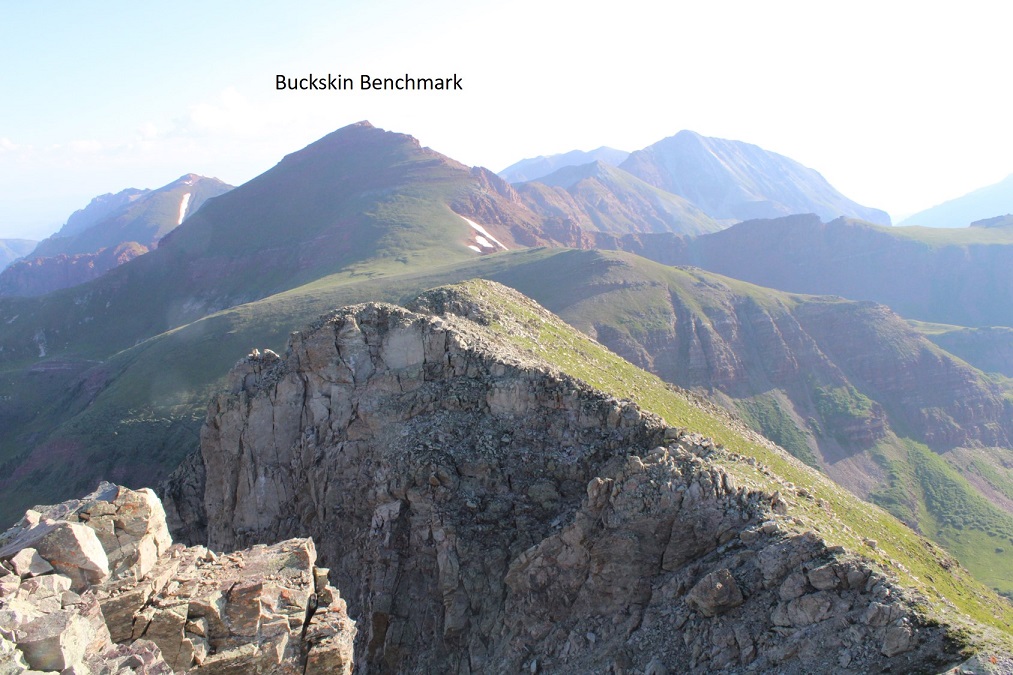
Here’s looking back at Buckskin Benchmark

From the summit you can see where I left my gear. 

I turned and exited the way I came

The initial downclimb was steep and committing.  I turned and faced the rock for this part.

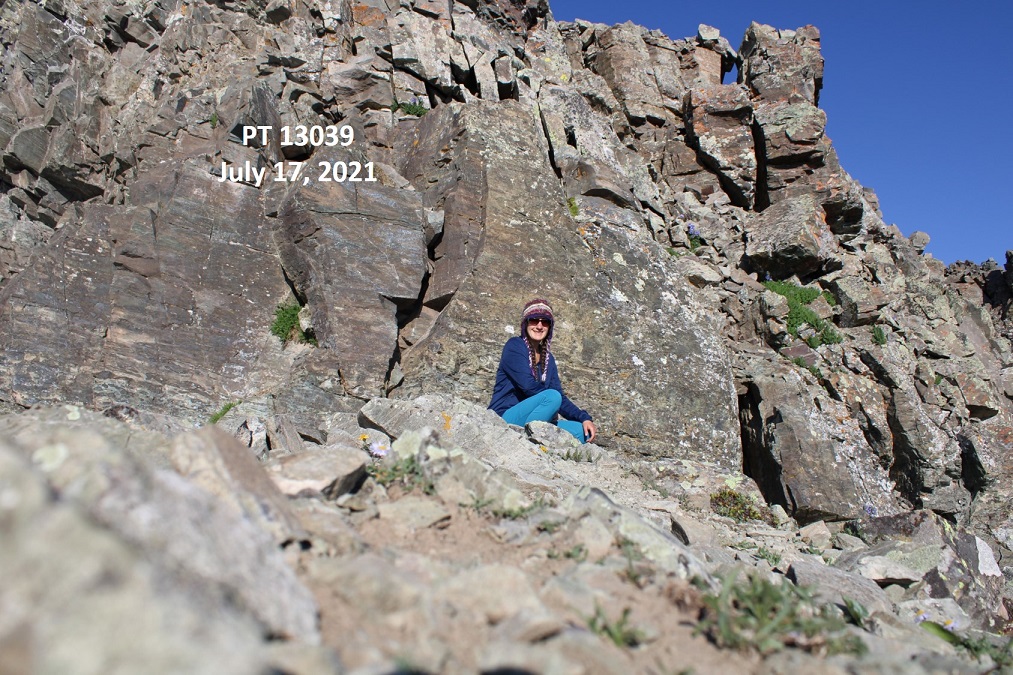
I made it about halfway down and realized I hadn’t taken a picture of myself on the summit, but I wasn’t willing to re-summit again.  I figured I’d just get a photo at the bottom. 

I made my way back down the ridge

And back to Buckskin Pass

From the pass it was an easy, class 1 hike back to my campsite.

Side note:  there are also good camping sites at 11,500’.  Once at my campsite I was disappointed to find my water filter had leaked water all over the bottom of my tent.  I dried it out the best I could, packed up my gear, and headed down.

Also, the wildflowers were on point today

Here are some pictures from the trek out

Once I made it back to the Crater Lake area I started seeing tons of people on the trail.  They travelled in groups, and were spaced about 15 minutes apart (I’m guessing this is due to the bussing times). I met one lady who asked me how fat it was to Crater Lake, and when I told her it was another mile or so she looked like I’d just told her it was another 20 miles.  She was exhausted, and I’m pretty sure she turned around (the round trip hike to Crater Lake is about 4 miles).  There were several groups being led by guides, which leads me to believe guiding companies may be buying up the permits.

I made it back to the parking lot, cleaned up, and headed out.

I had another entire day of hiking yesterday, so my stats are estimates based on CalTopo math:  Today’s hike was 18 miles with 5800’ of elevation gain. 

V3 – 13,545

RT Length:  8.29 miles

Elevation Gain: 3542’

Ophir Pass Road is a serious 4WD road, but the trailhead for this peak can be accessed from the Ophir city side with just a high clearance vehicle.  There were a few small water crossings, but 4WD was never needed.

I parked in a parking area about 1.3 miles east of the town of Ophir, on Ophir Pass Road, in the Iron Spring area.  All the parking spots were taken but 1, and every vehicle was parked there overnight.  This is a popular spot to park to backpack/hike in the area. 

The mosquitoes were out here as well, so I made it an early night and got some sleep.  I was up and on the trail by 3:45am.  The trail starts on a blocked 4WD road to the south of the parking area.

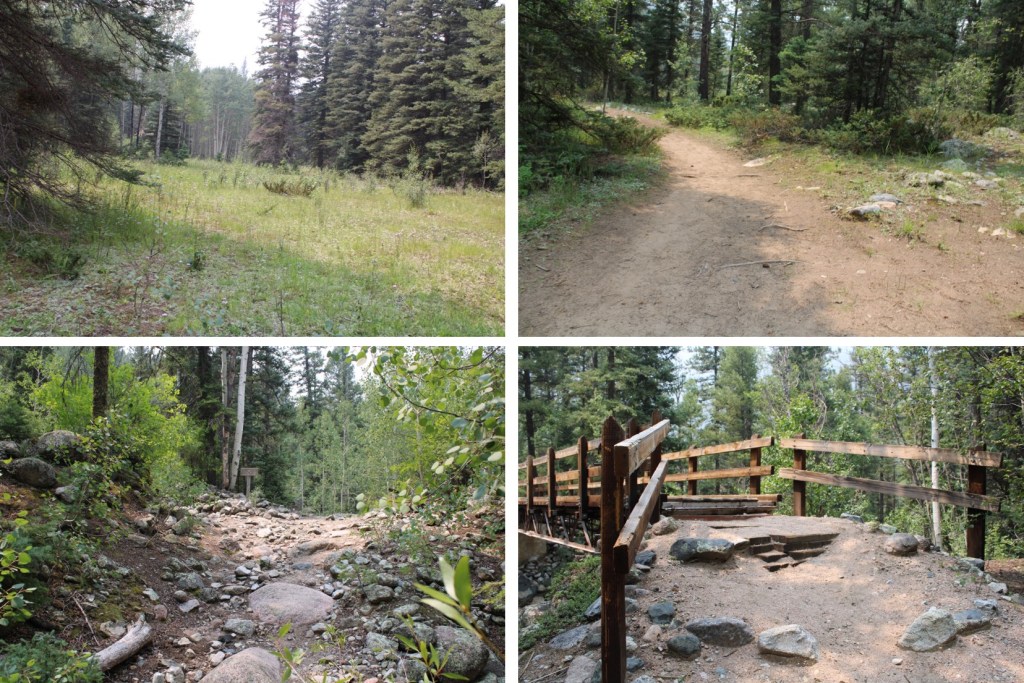
I followed this road southeast and then south, through gates, aspen trees and two stream crossings with easily crossable bridges

After the second stream crossing, I passed below some power lines, turned left to follow the trail, and started gaining elevation.

The hike below treeline was nice, and the trails were class 1, but there were no trail signs or numbers, and several trail crossings.  I’ll do my best to describe the correct route.

I followed a well-defined path south.

At the first fork in the road, I turned right

At the second fork I turned right again, off the road and onto a trail (I’d hiked a total of 1.15 miles at this point)

I hiked west for a few yards, and then came across a trail junction.  I continued heading straight

I was now on the trail that heads south/southwest up the hillside.  This is also where I ran into a porcupine.  Porcupines don’t run, but we noticed each other while we were about 3 feet away from each other:  He quickly turned and waddled away in the dark, showing me his full backside of quills as he did so. 

I continued on this well defined trail

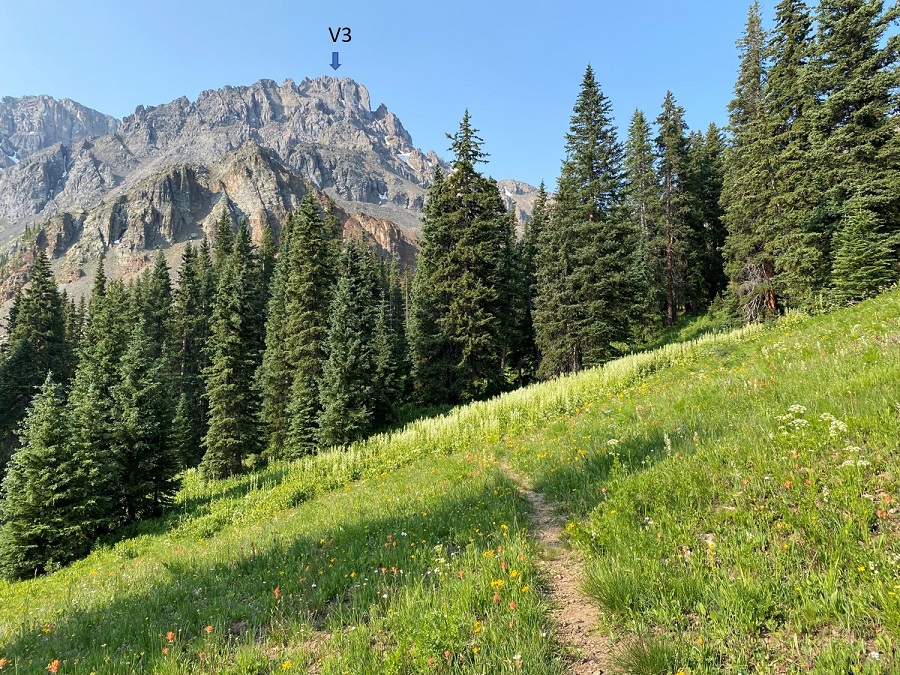
Here’s your first glimpse of V3.  Look carefully, the arrow points to the exact summit, which you won’t see again until you’re there.

After hiking for a total of 2.25 miles and 11350’ I came to a small water crossing over the trail, and a meadow to my right. I left the trail and headed through the meadow.  It was still dark, and there was a camper with a bright headlamp getting ready for the day.  He was confused why I was ‘off trail’ and tried to direct me back to the proper trail.  I assured him I was going in the right direction, apologized for walking so close to his campsite, and nicely told him I didn’t expect to find a trail to the summit.

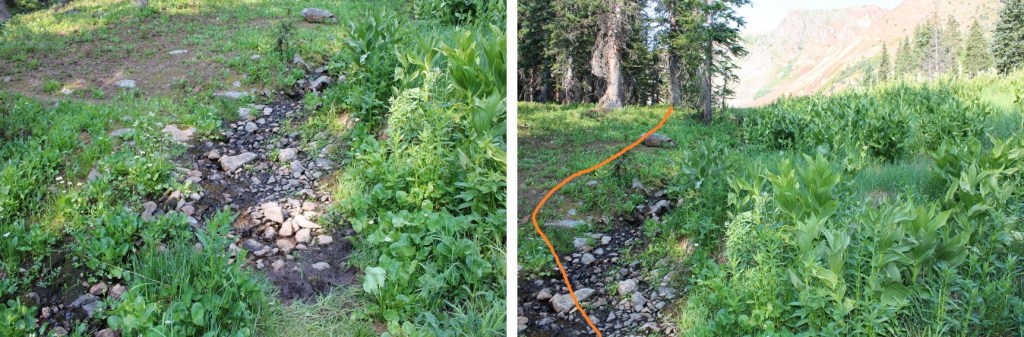
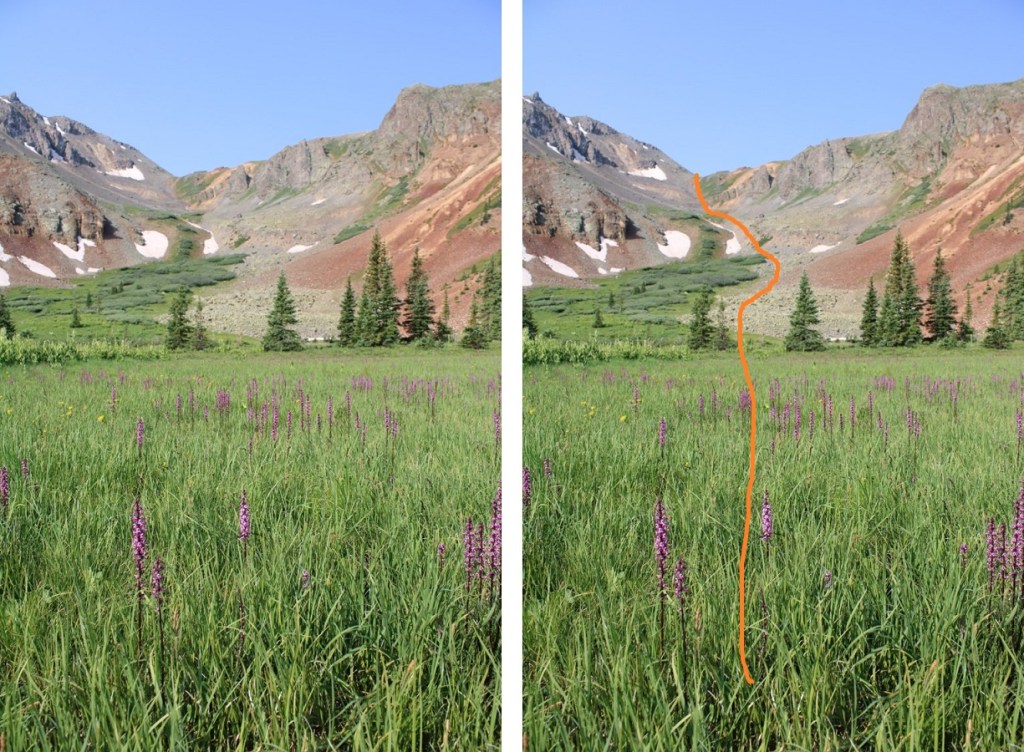
I was now in a meadow and basin.  There were wildflowers I couldn’t yet see in the dark, and willows I kept encountering.  I found out the hard way to stay right to avoid the willows.  The path is obvious in the daylight.  Here’s the route I took.

And some step-by-step pictures of my way to the saddle, first hopping across a small stream

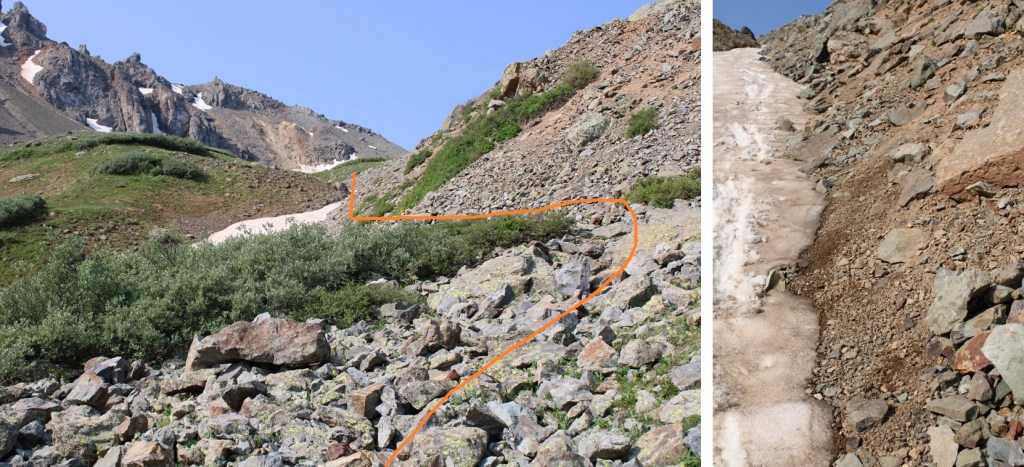
Staying right to avoid the willows and ascending a small gully that still had snow.  Microspikes were helpful here, both on the scree and snow.

At the top of the gully, I was now in a rocky upper basin.  I crossed a boulderfield and headed towards the saddle.

Here’s a look at the last bit of hiking to the saddle

Once on the saddle I turned left and followed the ridge southeast, staying to the left of the snow.

At the top of this area you can see the crux of the route.  Now is a good time to put on your microspikes and helmet, if you haven’t already.  It’s much steeper than it looks, and the scree isn’t manageable without microspikes (trust me on this one).

Here’s your intended route:

You’re aiming for this gully.  The scree here is steep; a 45 degree angle for an extended amount of time. 

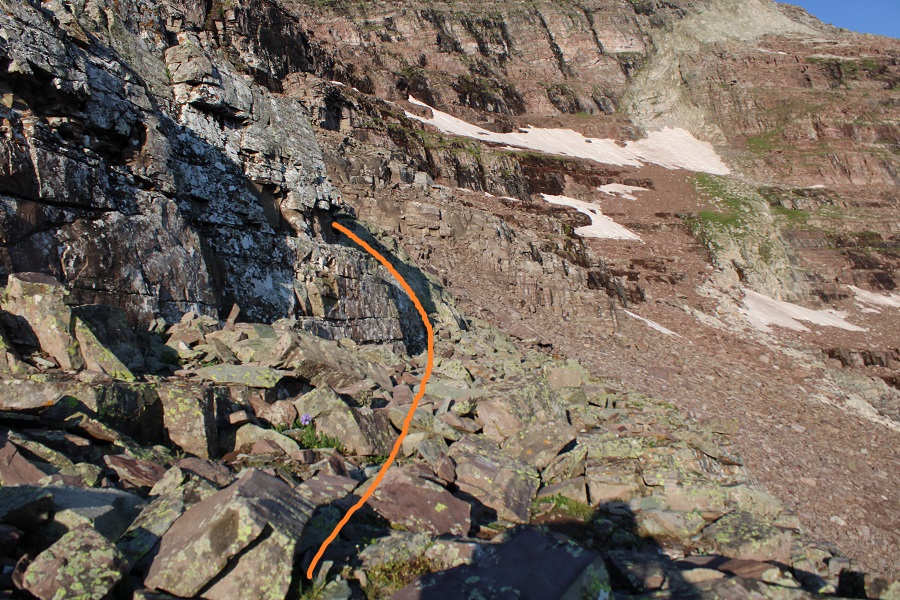
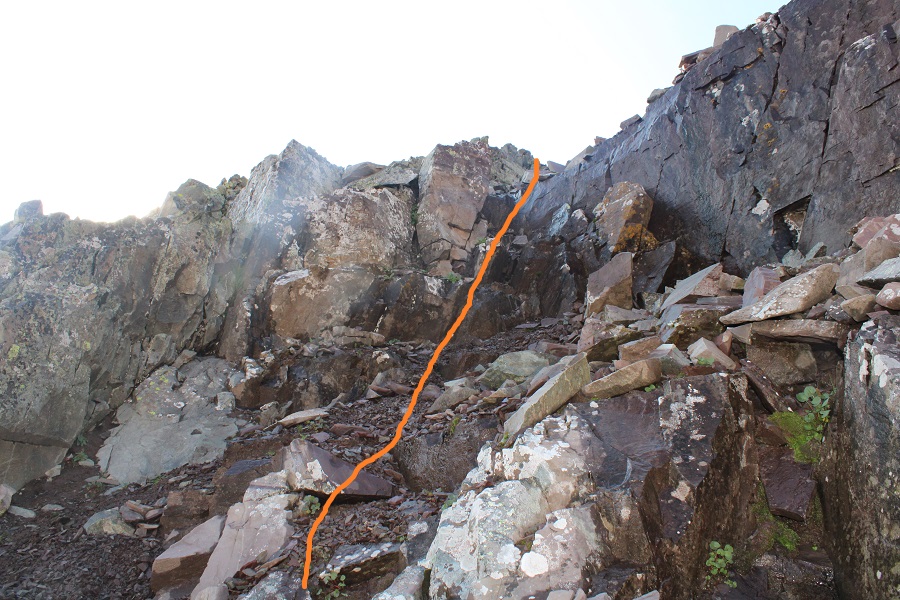
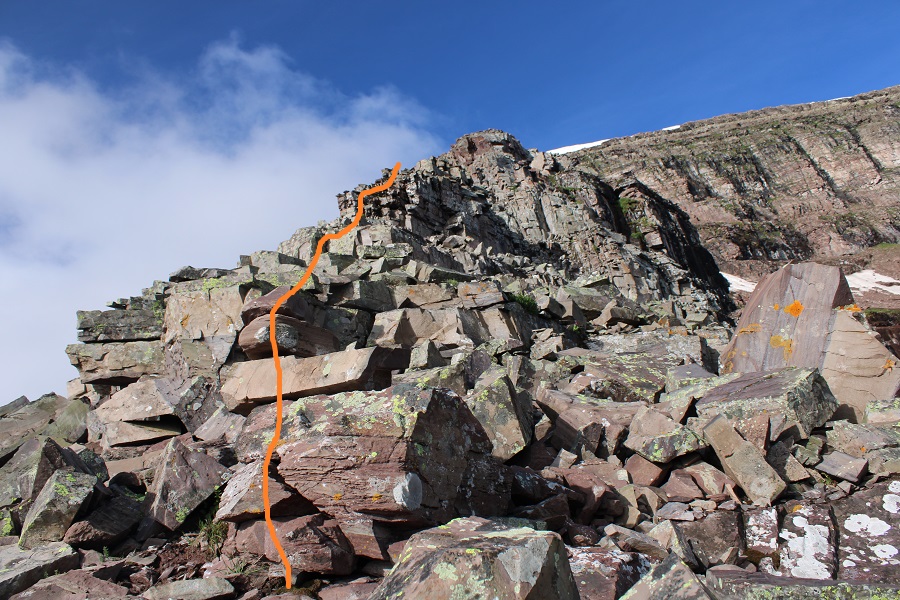
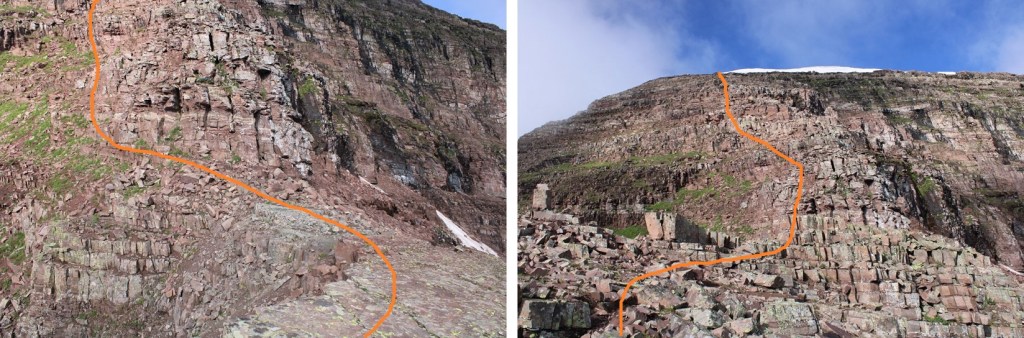
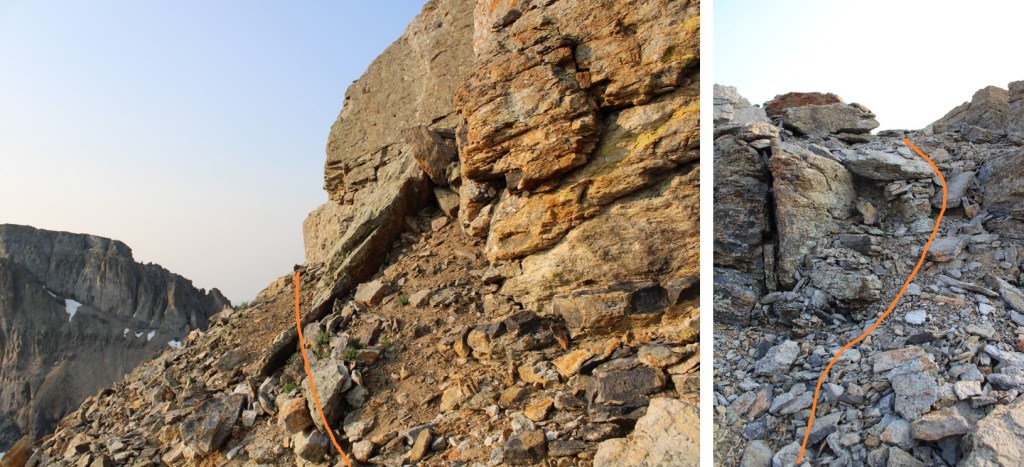
Once at the base of the gully the class 4 climbing begins.  The route is obvious, curving around to the right.  There is really only one way to go:  follow the trail set out for you from the fallen scree.  Also note:  the scree and rocks here are loose. Very loose.  I wouldn’t attempt to upclimb or downclimb this area with another person:  take turns the entire way up and down.  You will be causing screevalanches on climbers below you. 

Here are some pictures from the inside of the gully. Pictures do not do the steepness justice (although the pictures down give you a better perspective).  When heading up, continue climbing southeast.

Here’s a look at the exit of the gully

At this point it became even steeper.  I did not have on my microspikes, lost grip, and slid on my stomach backwards for a full 12 feet.  I seriously thought I was going to slide all the way back down that gully.  I braced myself, and without taking off my pack located my microspikes in my backpack pocket and gingerly put them on while trying to balance without much traction. It was much easier to upclimb once I put on my spikes.  Here is where I aimed

I then turned right, and hiked south towards the summit block. 

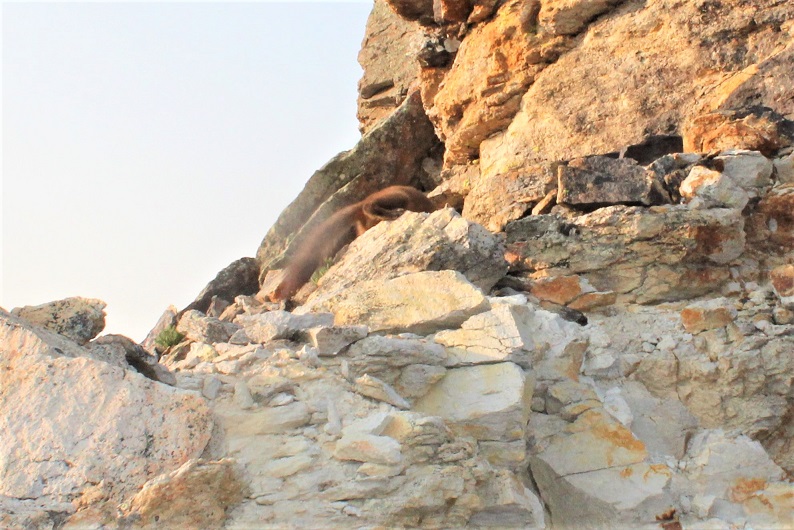
I made it to the base of the summit block and was surprised to see a pine marten.  He sat there and looked at me.  I tried to get a picture, but he quickly turned around and all I got was a picture of his tail and backside.  Why are all of my wildlife pictures of animal butts?

Ok, now, don’t let this summit block scare you:  yes, you can upclimb it, but you can also skirt it to the left and follow it around and have a class 2 trek to the summit, which is what I did.

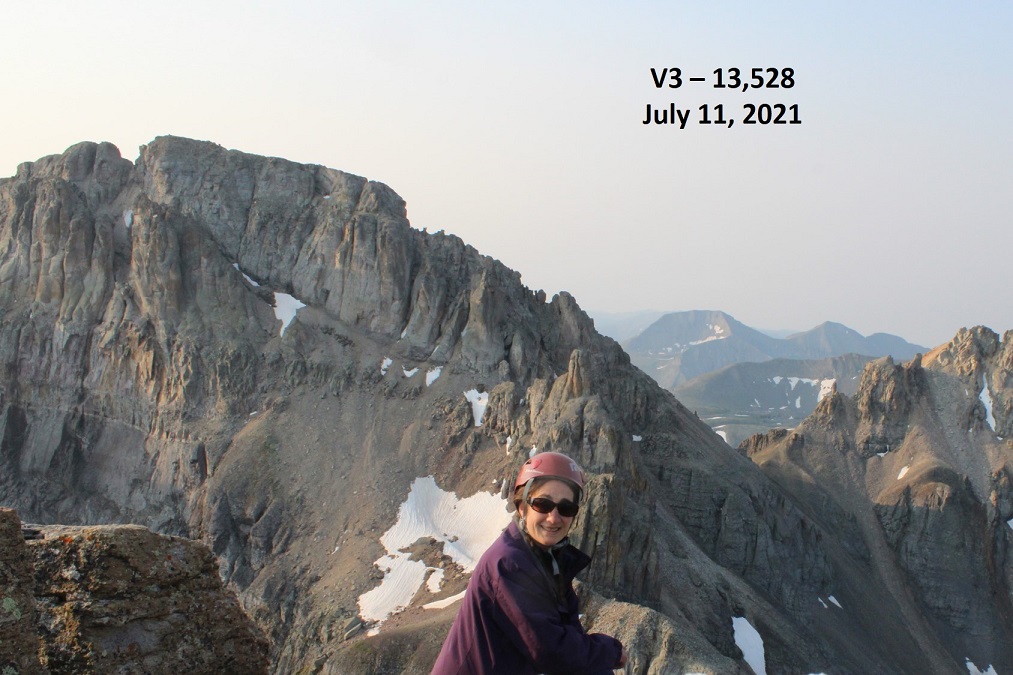
I summited V3 at 7:15am.  There was a lot of smoke in the air from far away fires this morning.

V3:

I was surprised there wasn’t a summit register, so I left one.  It was obvious this peak does not get a lot of visitors. 

I kept my microspikes on for the trek back down, which seemed easier than the trek up.  Here are some pictures of the way back down the gully.  Once again, do this one person at a time, and when you’re done, head far away from the gully, as the rocks will slide and they will pick up speed as they do so. 

Once out of the gully, the scree-surfing will begin.  It’s always fun when you can ride the same pile of rocks all the way down the hillside.

Scree Surfing:

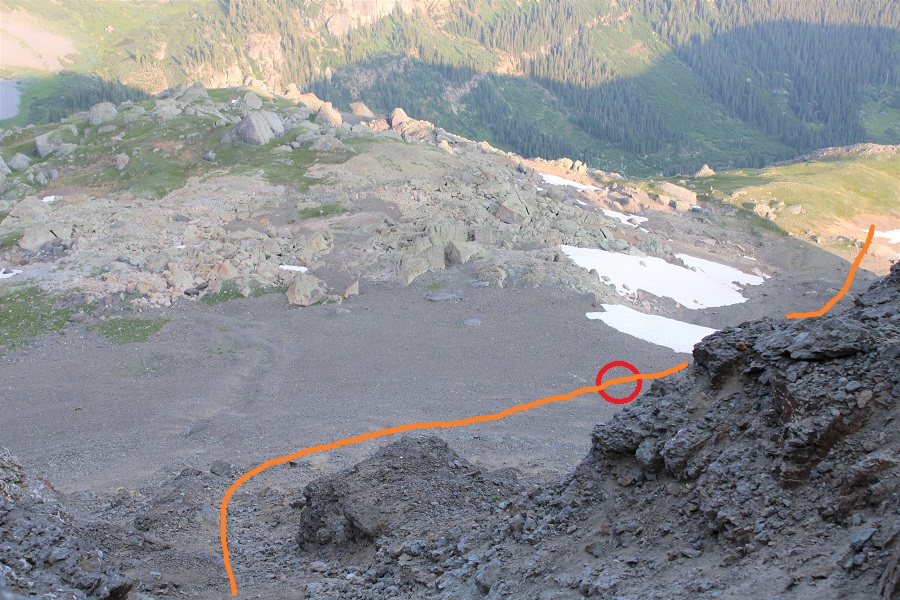
Here’s where you’re aiming.  If you’re doing this with another person, you should be standing far away from the rockslide area while they’re ascending/descending.  I’ve circled a good place to stand out of the way.

And now to hike down the ridge to the saddle, and exit the basin.

I made it back to the meadow, marveled again the wildflowers, and saw the group of campers were almost done taking down camp (I guess the man I talked to this morning was part of a larger group).  I made it to the trail, turned left, and followed it back to the trailhead.

I made it back to my truck at 9:45am, making this an 8.29 mile hike with 3542’ of elevation gain in 6 hours. 

Fowler Peak – 13,498 and PT 13544

RT Length: 10.53 miles

Elevation Gain: 3985’

I’d already been away from home a few days before this trip, so I stopped at Ouray Hot Springs to get in a quick workout and a shower (they only charge $4 for a shower, which might be nice if you’re hiking around Ouray and want to freshen up every few days).  The only downside?  The parking was terrible, even on a weekday in the morning. 

After cleaning up I drove to the Rock of Ages Trailhead. The drive in was a bit bumpier than I remembered, but also fun, because I was seeing what Miles (my new Tacoma) can do.  He handled the stream crossing and ruts in the 4WD road without needing to be put into 4WD.

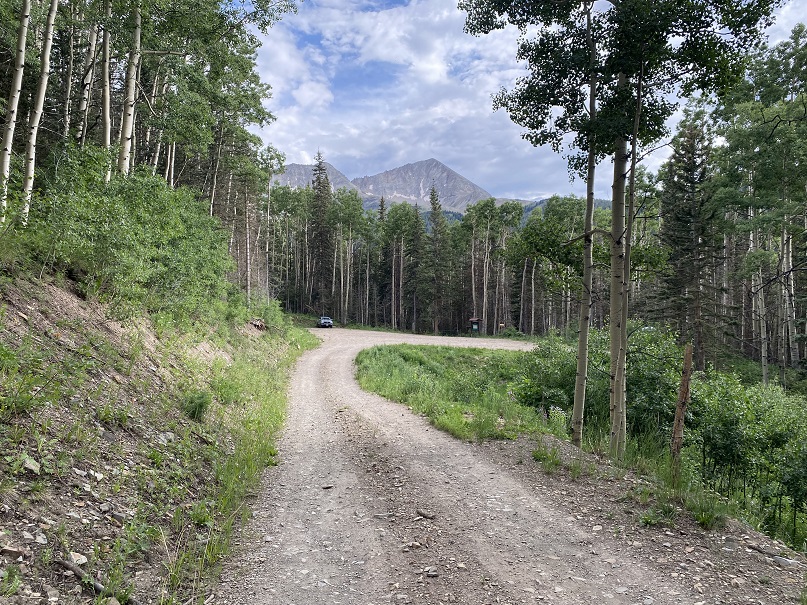
I made it to the trailhead and was the only one in the lot (another good thing about arriving on a Thursday). 

I walked around for a bit, and immediately realized the mosquitoes were going to be a problem.  I’ve ordered a topper for Miles, but it’ll take up to 3 months to get here, so until then I’m sleeping in the back seat of the cab  (It’s a tight fit but luckily I’m small).  I made the decision to get to bed as soon as possible.  I ended up waking up several times during the night because I was so warm, but at least waking up ended one of my nightmares:  a dream about sharks in a swimming pool swallowing children whole. 

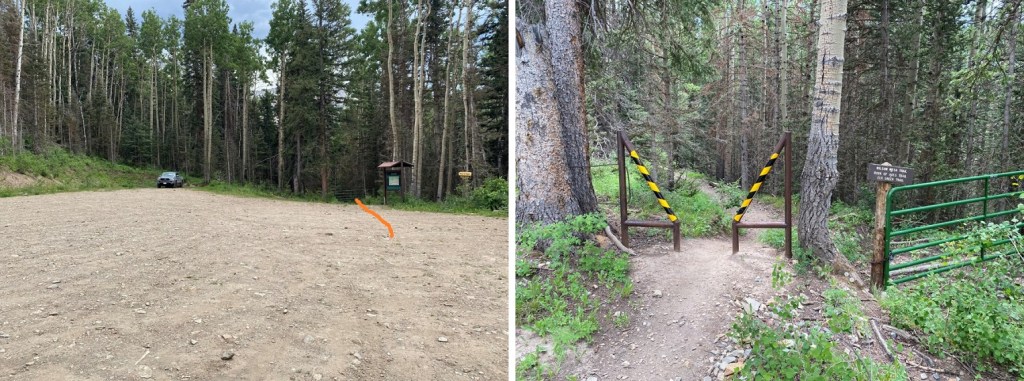
Ok.  So, I woke up and was on the trail at 4:15am. The route starts at the south end of the parking area, and follows a well-defined trail south.

I quickly came to a gate, and walked around it.

Next, I saw this sign to my right, and continued on the trail

I followed the trail to treeline. 

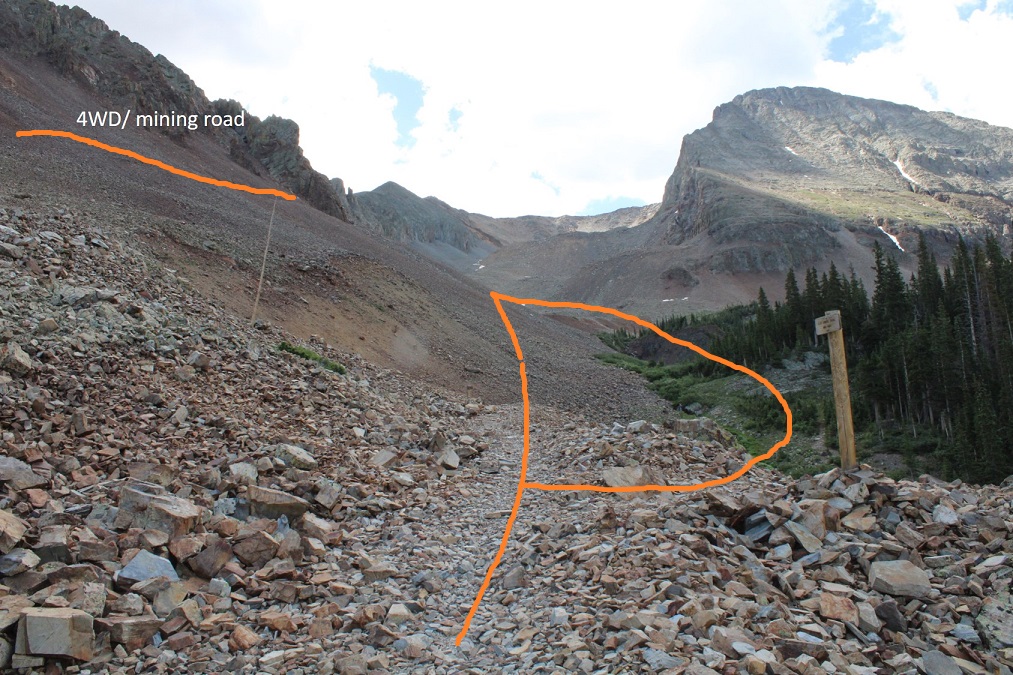
Shortly after making it to treeline I came to the Elk Creek Trail junction. From here there are several options, but your main goal is to make it into the basin.  You can follow Elk Creek Trail and lose some elevation, then follow a faint road into the basin.  Or, you could continue along the Rock of Ages trail and eventually hook up with the 4WD road that enters the basin from above (a bit chossy, but I chose to take it on the way out).  On my way in it was dark, I couldn’t see any of these ‘routes’, and I chose to just head straight into the basin.

If you take the mining road, here’s what the entrance looks like from the Rock of Ages trail.  It’s about half a mile past the Elk Creek Trail junction, on your right.

If you take the upper road, this is what the junction from the trail to the road looks like

In any event, I made my way into the basin. Here are the routes.  To the left you can see the mining road, and to the right you can see the abandoned dirt road.  They both lead to the same place.  (On my way in I didn’t see either of these roads and just headed south through the basin).

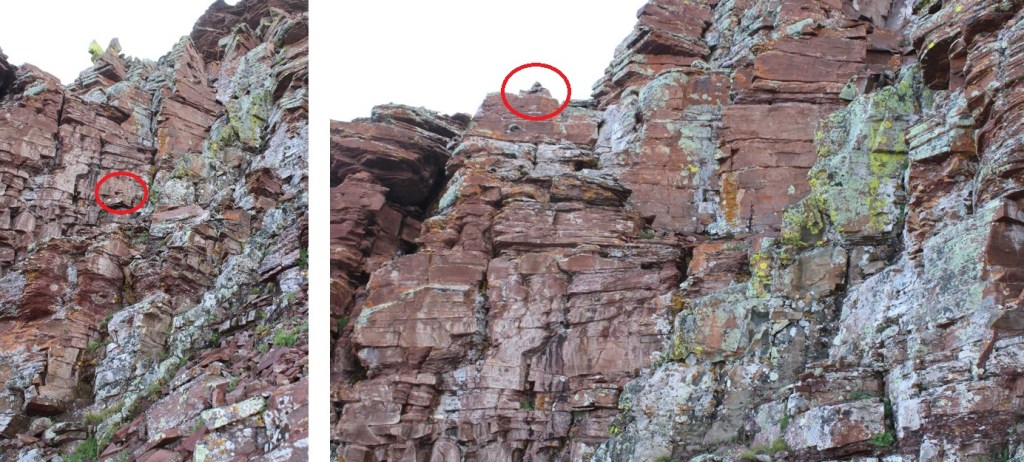
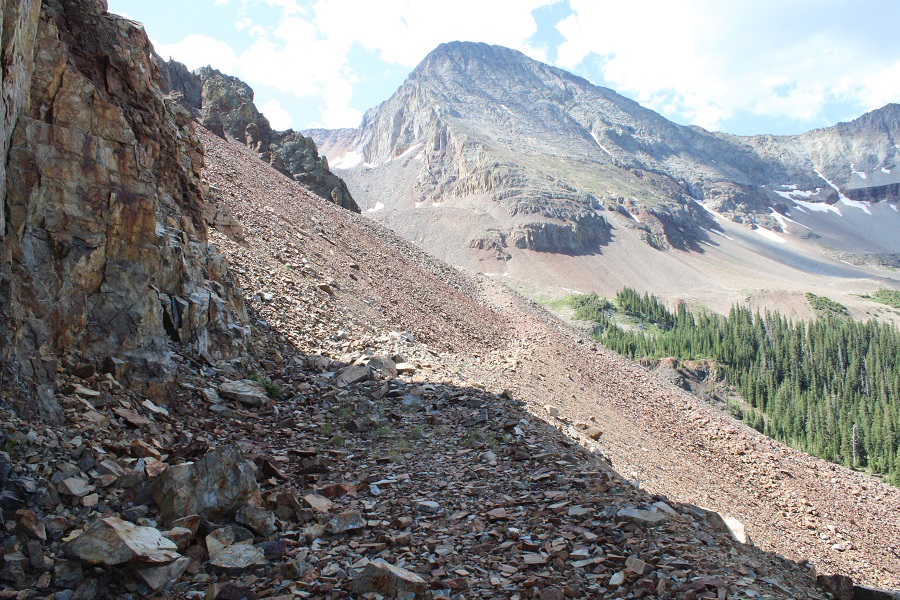
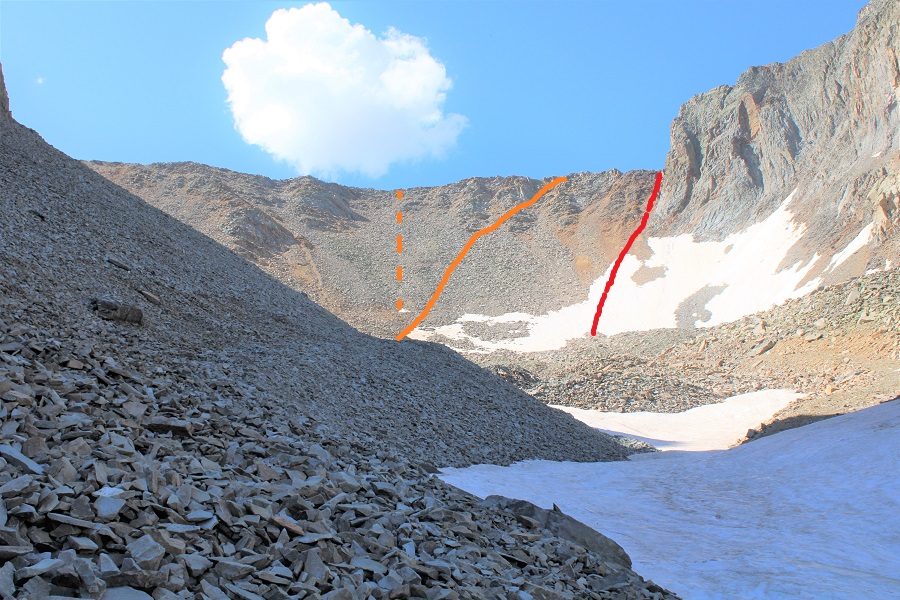
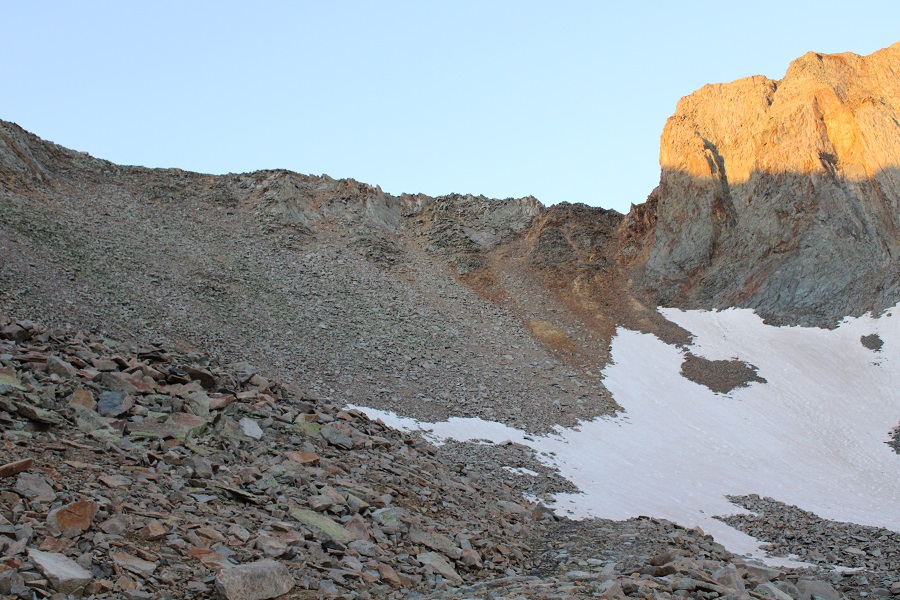
Once in the upper basin you want to gain the ridge.  This sounds easier than it turned out to be. It’s “choose your own adventure”, and on the way up I chose wrong. I ended up getting into some class 4 scrambling, which was unnecessary.  It’s my advice to do PT 13540 first, and gain the ridge to the left (southeast).  However, all areas here ‘go’, if you’re willing to do some scrambling.  When I made it to the ridge I found thick wire cording going where the red line is (I’m guessing that could be used as leverage if needed:  it wasn’t moving anywhere). I ascended via the orange line.  The dotted orange line is probably a better route. The best route is my descent route (pictured later).

I’ll spare you the scree-y and large-loose-rocky gully details of ascending the ridge.  Once on the ridge I turned right and followed the ridge southwest towards Fowler.  The ridge was all class 2

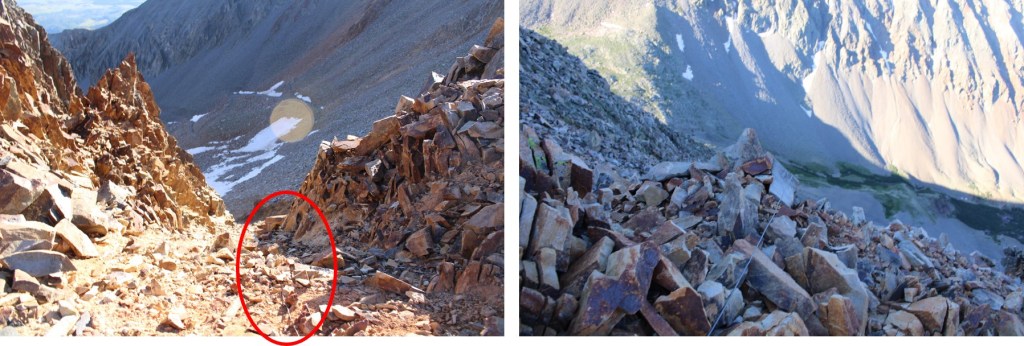
If you haven’t already, now is a good time to put on your helmet.  Here’s a picture of that cable I was telling you about.  It goes up and over both sides of the saddle.

Here’s an overall view of the rest of the route to summit Fowler.

And step by step:  It started out chossy as I ascended the ridge

I made my way to the gully to the left/middle.  This area had more solid rock, but it was littered with scree/rubble.  At the base of the gully I took off my pack and decided to go up with just my cell phone (and a summit register in my pocket, just in case).

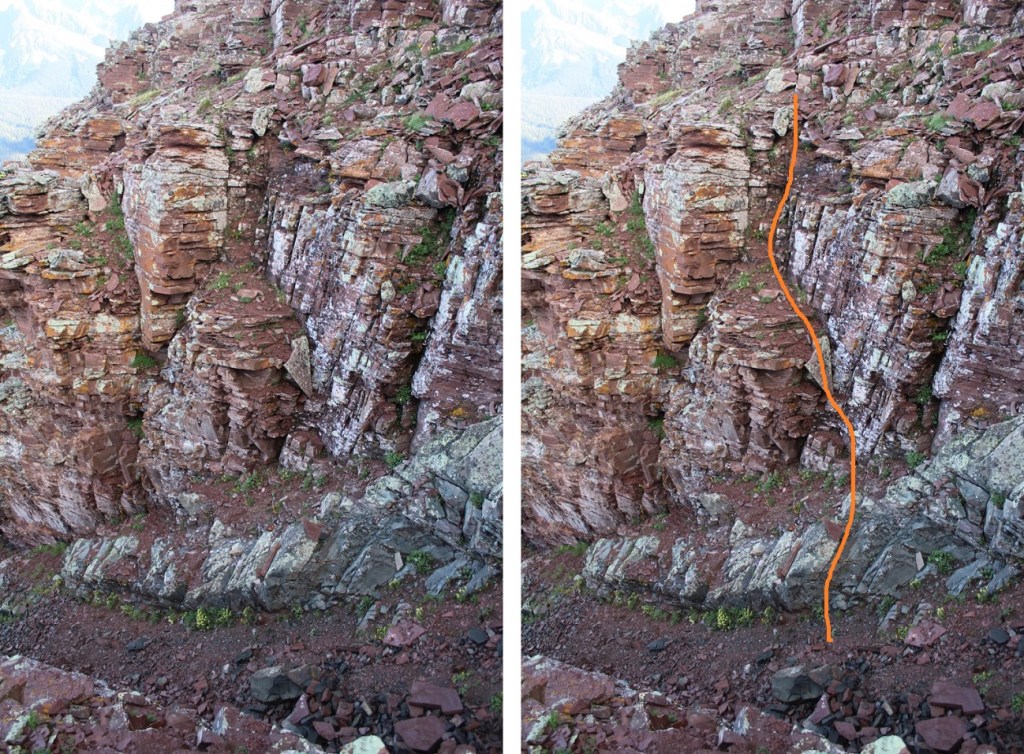
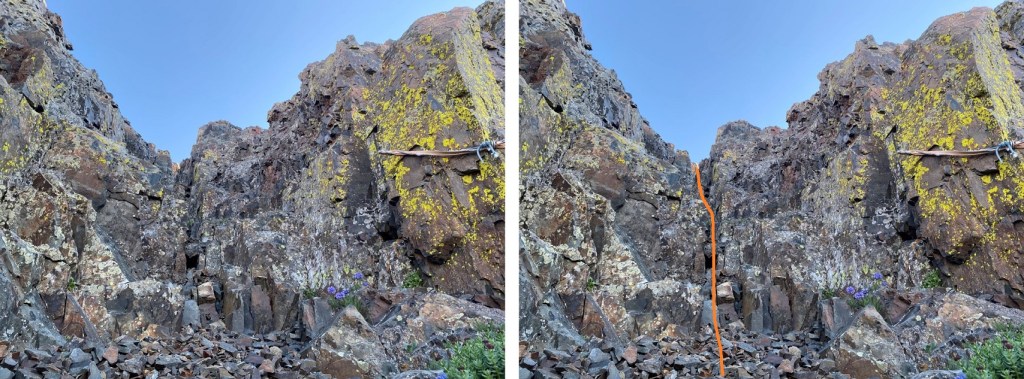
This is the class 4 part of the climb, and lasted for about 120 feet of vertical gain.  I started by going straight up the gully.  Here’s my route:

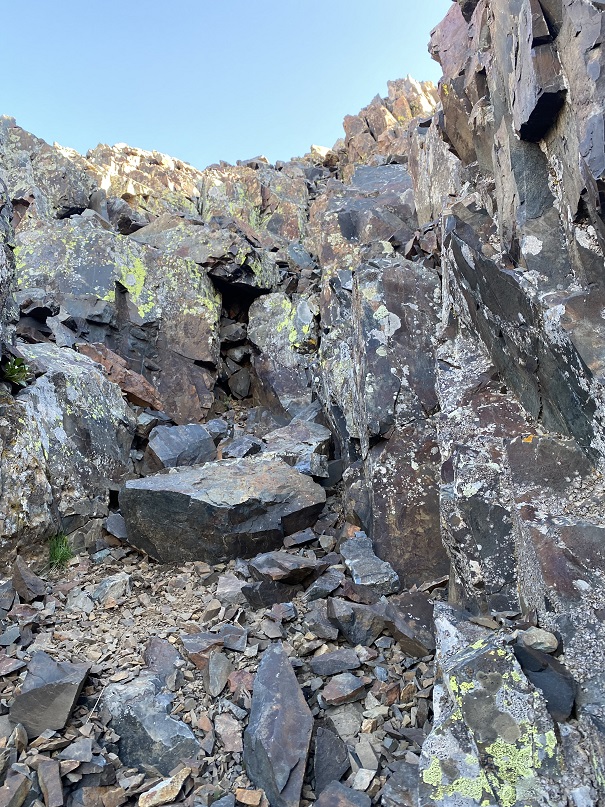
Step 1:  ascend the chimney.  I went to the right of the chimney, and found adequate hand/foot holds.

Step 2: Once above the chimney I stayed to the center of the gully.  This is also where I saw an anchor set up (circled in red).

If you decide to rappel here, bring a new anchor, as this one looks like it’s been here for a while, and what’s been added to it doesn’t look recent either.

Step 3: From the anchor I continued straight up the gully (still class 4)

Step 4: Here’s a view of the last bit of the gully, before topping out.  This felt class 3

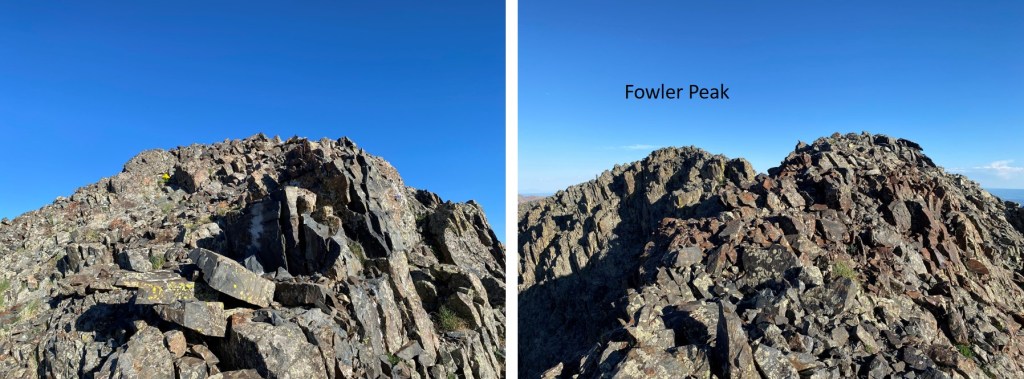
At the top of the gully I turned left and headed towards the summit.  It was a bit of a false summit, but all class 2/easy 3

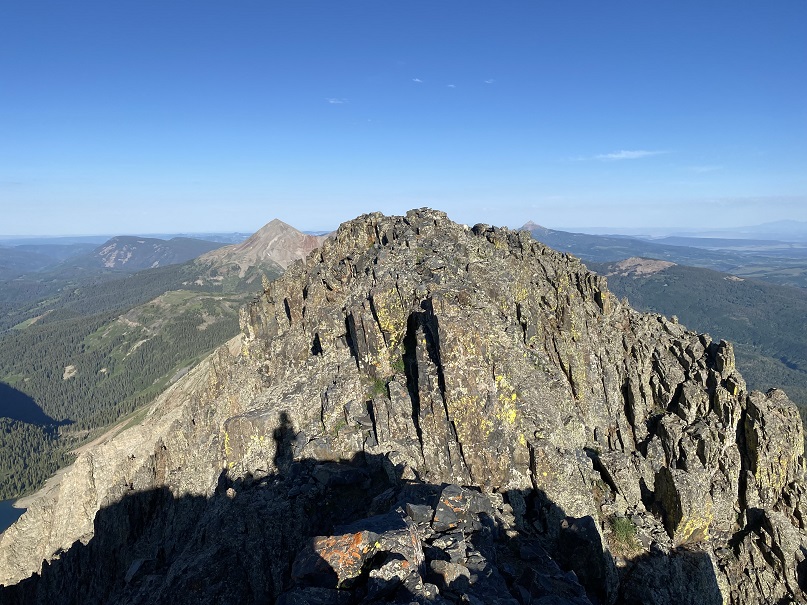
I summited Fowler Peak at 7:45am

Fowler Peak: 

I sat and enjoyed my views of the Wilson/El Diente Traverse for a few minutes before heading back.

There was a summit register, but it was one of those tube ones.  It hadn’t been closed properly and all the papers inside were wet, so I left it and also added a new register with dry paper to write on.  And a new pencil.  Here are some pictures of the trek back to the saddle

Back down the gully

To my stashed gear and back to the ridge.

I followed the ridge over to PT 13540.  This was a simple ridge hike, if a bit loose.  Lots of rocks here. I stuck mostly to the ridge the entire time, only dipping to the right a few times when necessary.

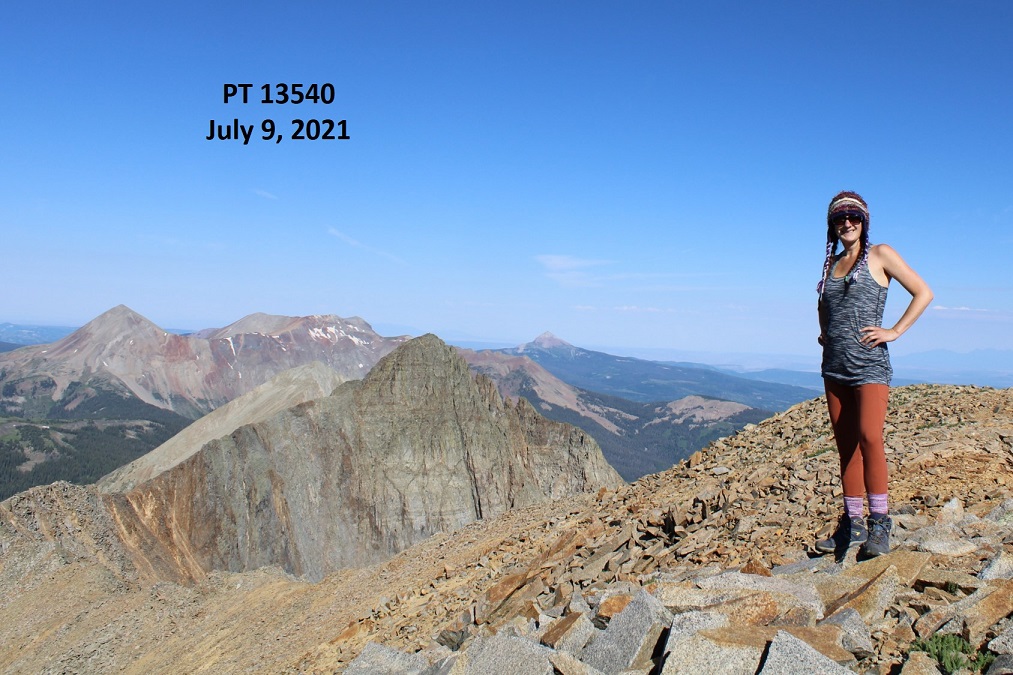
I summited PT 13540 at 9am

PT 13540:

I worked my way back towards the Fowler/PT 13540 saddle

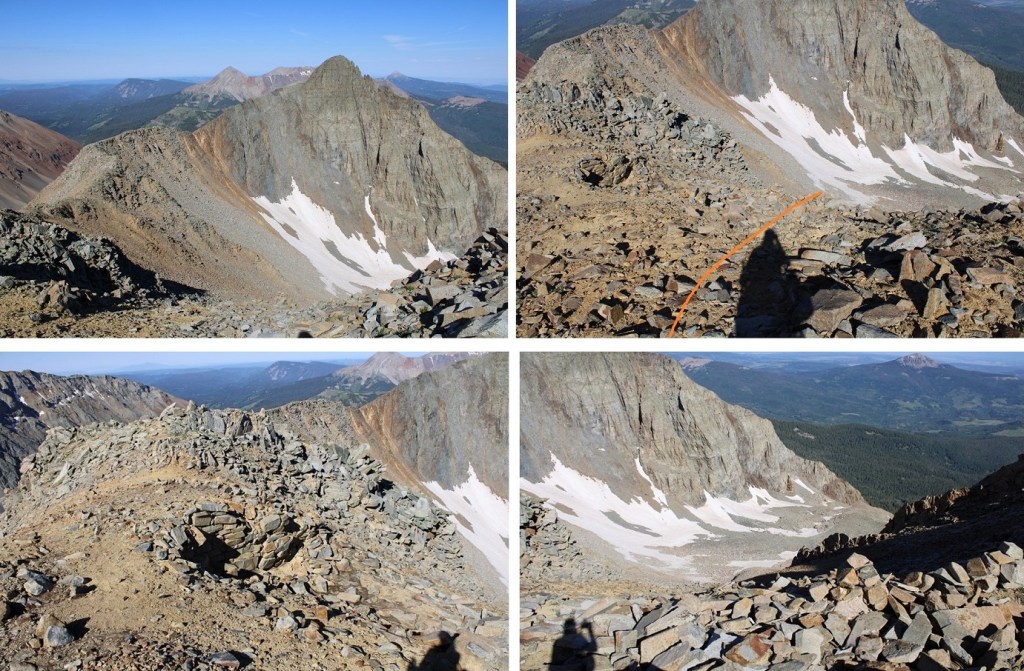
Once at the saddle there was what looked to be a boarded-up mine.  In fact, it looked like everything here had been blown up at some point, except this area, which was strategically filled with large rocks (but may have been blown up too).  I passed it and headed northeast back to the old mining road

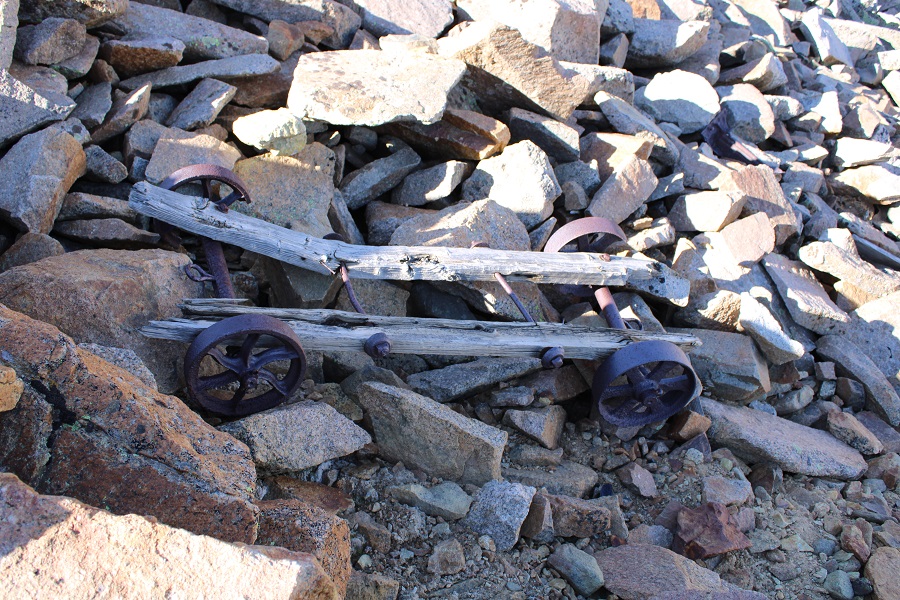
This area was steep, and I did some scree surfing, but it was much easier to navigate when compared to the route I took to ascend the ridge. I saw tons of mining trash here:  lots of old cans and pieces of mining equipment, most of which were in small pieces, all made out of cast iron.  This was the most intact item I came across

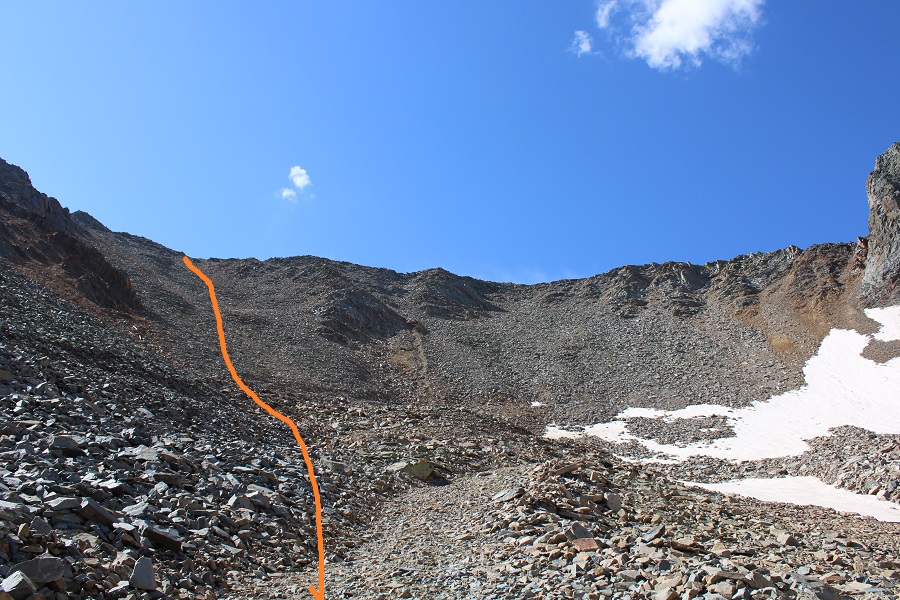
Here’s the route I took down from the ridge (I’d recommend ascending this way as well)

Once back on the road you once again have options to exit the basin.  You can stay high, to the right/east, and follow the old mining road, or you can stay low and left/west, and follow an old dirt road. 

Here’s a better look at both roads.  Both take you out of the basin, and back to Elk Creek Trail / Rock of Ages trail (If you take the mining road all the way to the Rock of Ages trail, turn left and follow it to the Elk Creek Trail junction, and then continue following the Rock of Ages trail).

Once back on the trail I followed it through the trees northwest, back to the trailhead. 

I made it back to my truck at 11:15am, making this a 10.53 mile hike with 3985’ of elevation gain in 7 hours.
It was still early, and quite warm, and the mosquitoes hadn’t magically disappeared overnight.  I had a friend meeting me here at 6pm to hike Wilson Peak tomorrow, so I’d planned on staying at the trailhead until he got there, then heading to bed.  I’d brought a lot of things to do, but they all required sitting down, and once I did that the mosquitoes swarmed me.  It was like one would find me and sing its song to its friends and there’d be dozens to shoo away. 

If I was outside I needed to have a jacket on, but it was hot! I tried sitting in my truck with the air conditioning on, but that wasn’t going to work for 7 hours straight.  It was kind of funny watching the mosquitoes (and flies!!!) swarm my truck:  they seemed to know I was in there with the air conditioning on. 

So, I entertained myself for the next 7 hours by reading.  I got out my current book (On the Road by Jack Kerouac) and read while steadily walking around the trailhead in circles.  Continuously moving seemed to keep the mosquitoes at bay.  Luckily, the trailhead has a large parking area and I was the only one there.  Every few hours I’d take a break in my truck, and then get out and read again.  I would have started a campfire to shoo the bugs away, but they’re currently banned.  I can’t wait to get the topper on my truck!  It would have solved the mosquito/heat problem.

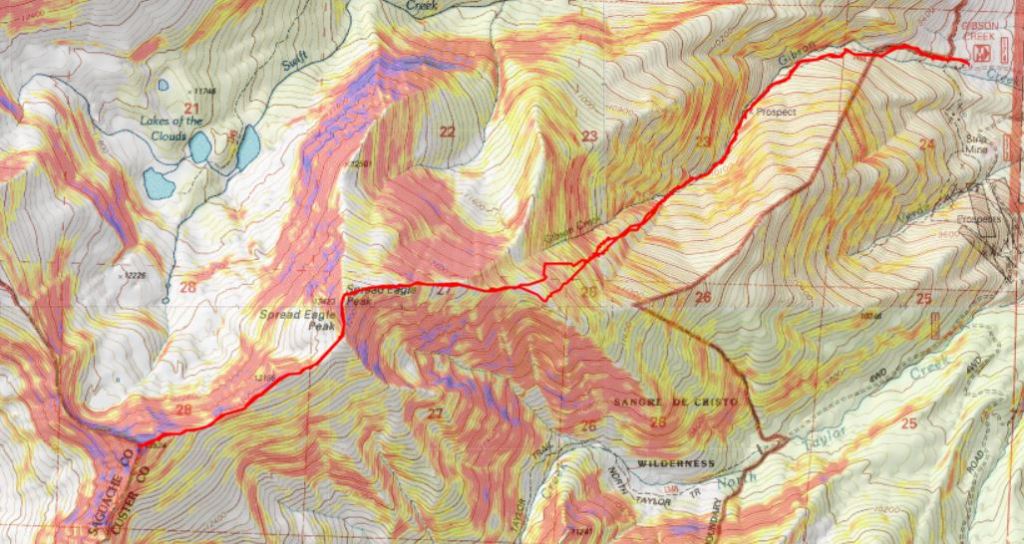
Spread Eagle Peak – 13,423 and Peak of the Clouds – 13,524

RT Length:  11.05 miles

Elevation Gain:  5461’

This was my 4th attempt at Peak of the Clouds.  Not because it’s a difficult peak, but because every time I was in the area I was thwarted by the elements; snow conditions, or a fast-moving storm coming in.  Today had a great weather forecast, so I figured today was my day.

Unlike my previous stays at the Gibson Creek trailhead, this time it was packed.  Probably because it was a Saturday over 4th of July weekend.  There were RVs set up everywhere, and every parking space in the lot was taken.  Knowing I was going to spend the night in my truck I just waited for someone to leave and then backed into their spot. 

I was sitting at the trailhead, just appreciating the sounds of the birds chirping and insects humming, and then the sun comes out and lights up each individual blade of grass and all I can think is how lucky I am this is my life.  It was a perfect night, and the last one I’d be spending in this particular vehicle, as my new truck was waiting for me at the lot and I was picking it up Monday.  I wanted to enjoy tonight.

I’d been gone for a few days, and I also wanted to get back home to see my kids, so I made it an early morning.  I was on the trail at 3:45am.  The trail starts at the north end of the parking area, and follows trail 1456 west.

The trail starts out nicely defined.  Stay straight at the Rainbow Trail Crossing.  This sign has been broken for years.  I wonder if they’ll ever replace/fix it?

Here’s where it gets tricky.  After hiking for .4 miles, and at 9400’, leave the trail and cross Gibson Creek.  It looks like there used to be a good trail here at one time, but it’s no longer well defined.  In fact, someone placed a tree trunk over the way you’re supposed to go.

After crossing Gibson Creek, the trail picks up again. 

The trail goes through various conditions, from being well-defined, to being covered with downed trees, to barely being a trail at all.  It also crosses Gibson Creek several times. 

The main thing is to just keep following Gibson Creek west/southwest

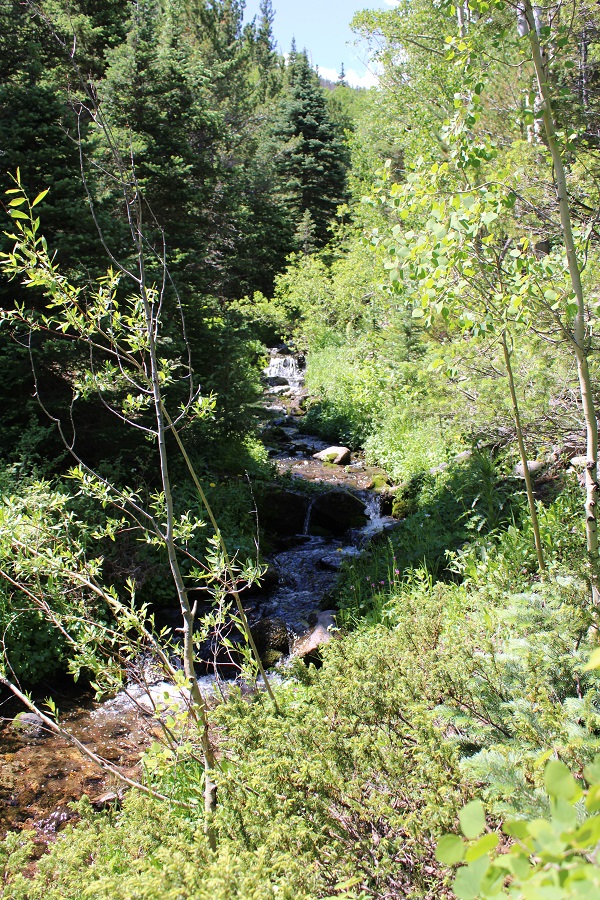
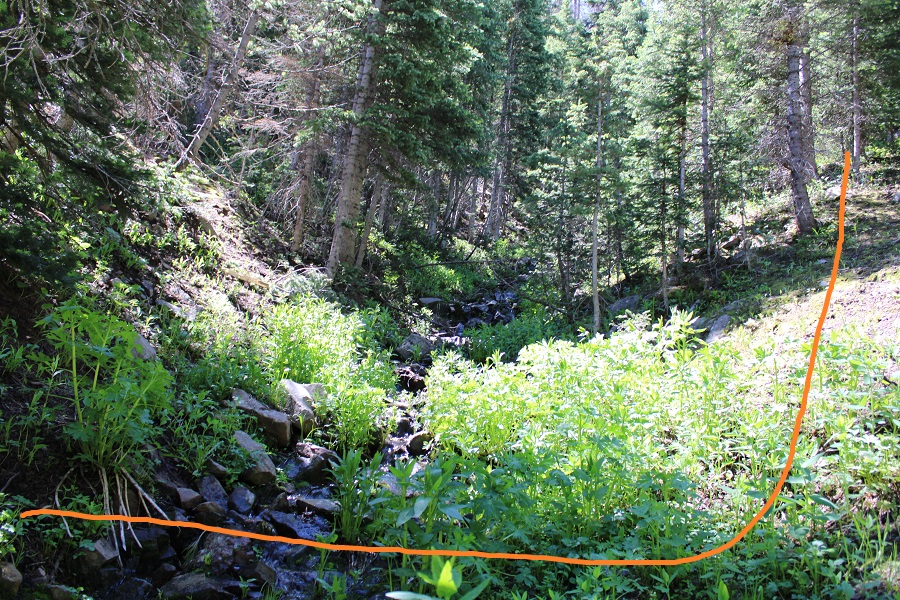
I followed the trail for about 2 miles, to when the trail abruptly ended where a tree had fallen over the trail.  Here I crossed the creek one last time, and bushwhacked southwest, up the mountain.  It’s important to note here something the topo map doesn’t show:  Apparently, somewhere Gibson Creek was to my right, but a much larger creek was to my left (this creek is not shown on the topo map, and could just be an error in CalTopo, as the creek was always to the south of me, but on the map it’s shown as being north).  Gibson Creek pretty much fizzled out here, so keep the creek you can see to your left as you ascend the hillside. 

This is a steep hillside with some bushwhacking involved.  It seemed to go on forever.  I took a different way down than I did up, and I’d recommend taking the way I went up, directly aiming southwest towards the ridge, as it avoids the large section of willows to the northwest. 

I made it to the ridge as the sun was coming up

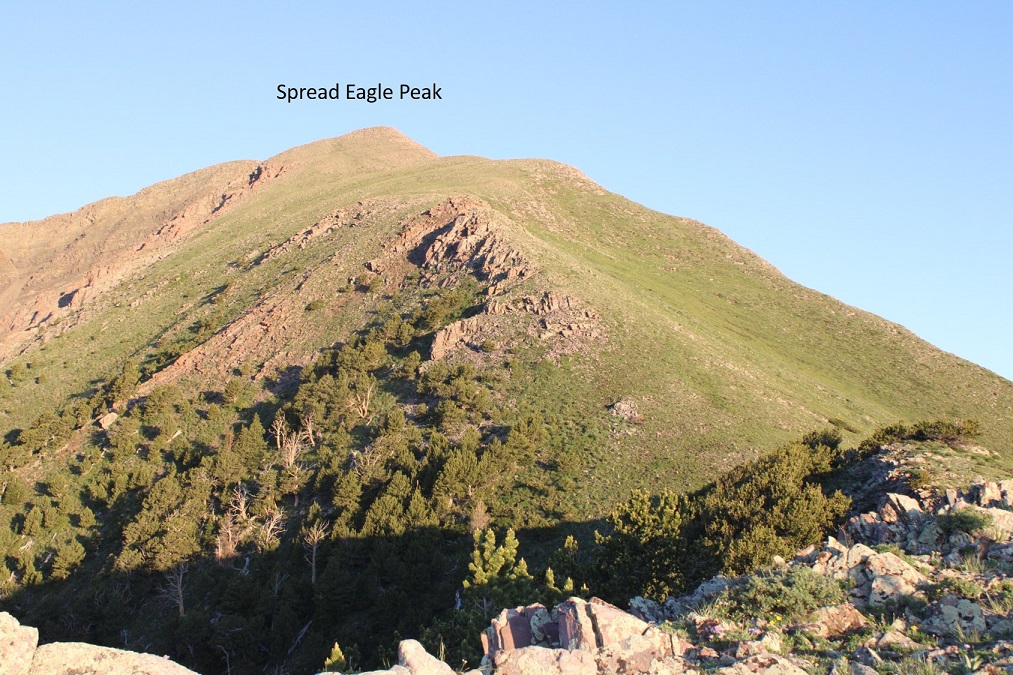
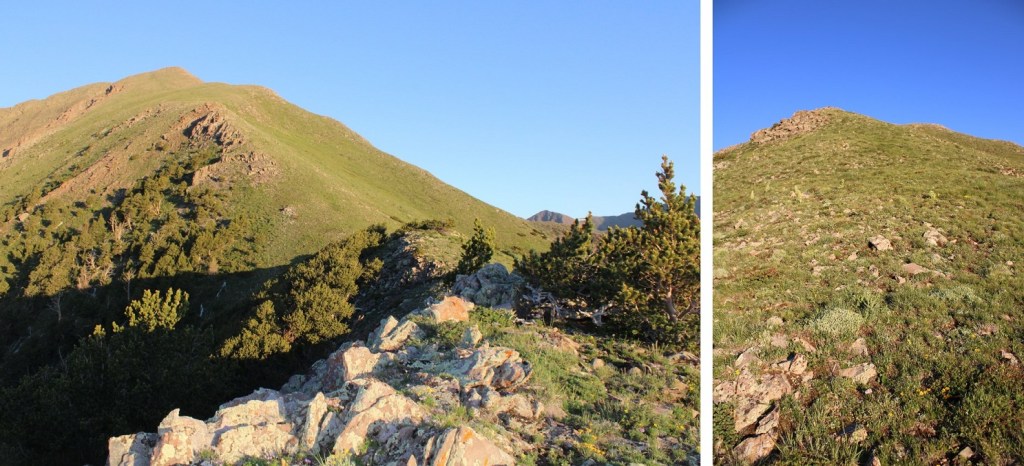
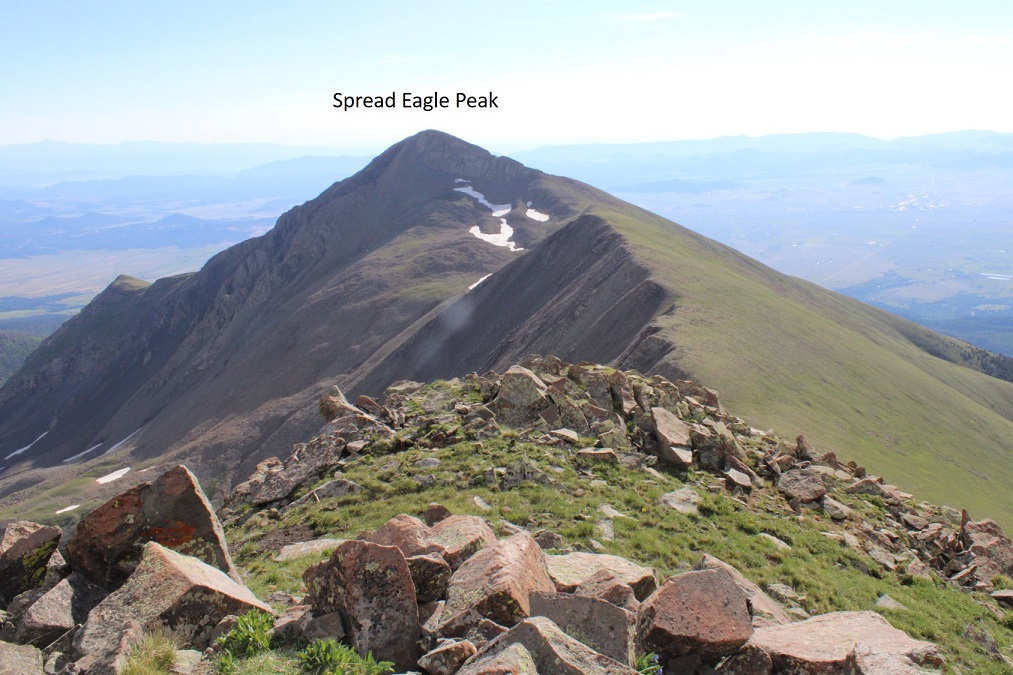
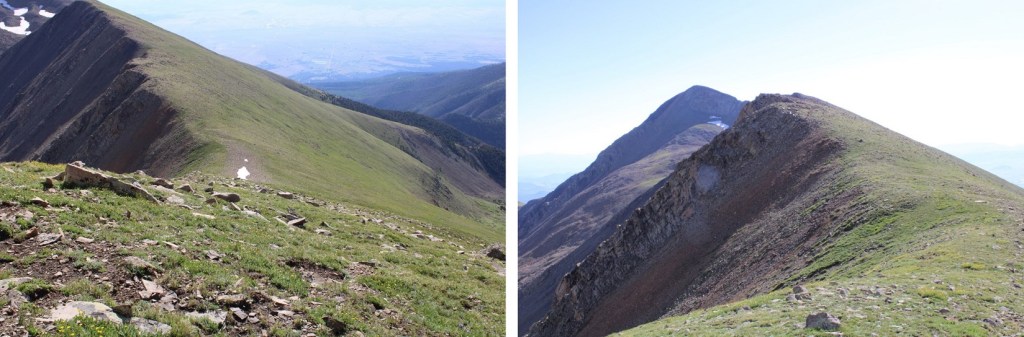
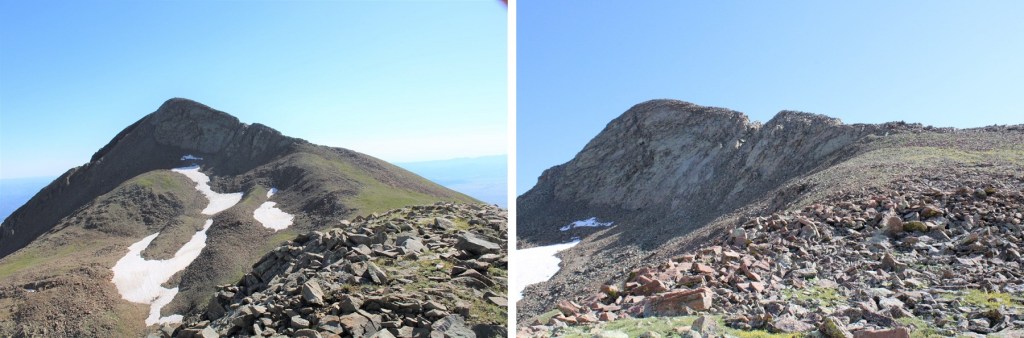
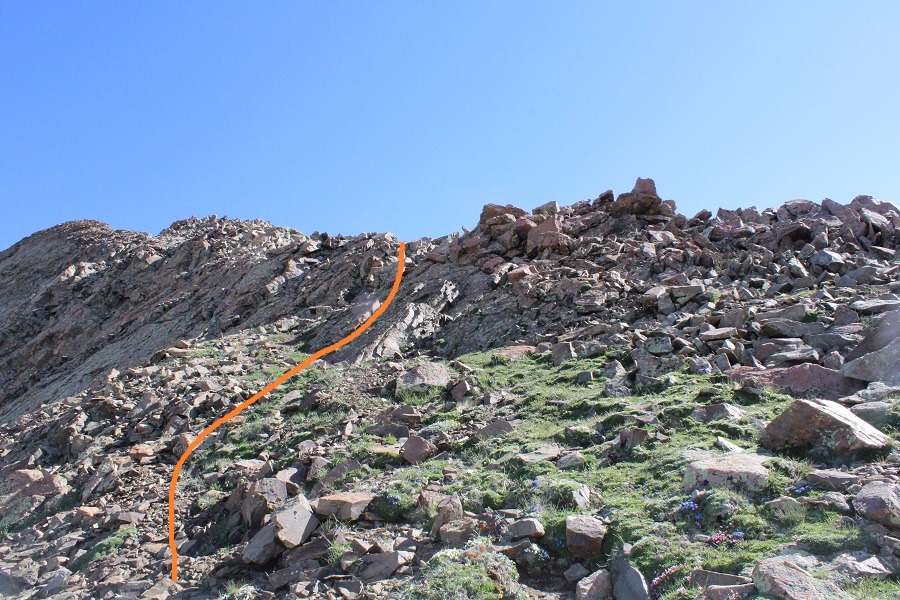
Once on the ridge, it’s a straightforward, class 2 ridge hike to the summit.

Here are some step-by-step pictures of the ridge

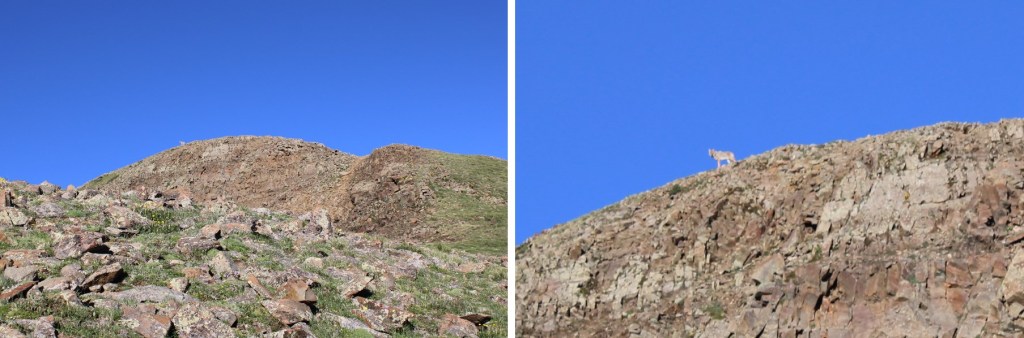
As I was nearing the summit, I looked towards the summit and thought I saw a bighorn sheep.  When I looked again I realized it was a coyote:  the biggest coyote I’ve ever seen!  He was chillin’ on the summit.

I summited Spread Eagle Peak at 7:15am.  The coyote was nowhere to be seen.

Spread Eagle Peak: 

It was an absolutely beautiful day!  I headed south, down the ridge to the Spread Eagle/Peak of the Clouds saddle.

This was a straightforward trek, with just one short class 3 move.  I stayed right and downclimbed this section.

Then followed the ridge to the saddle

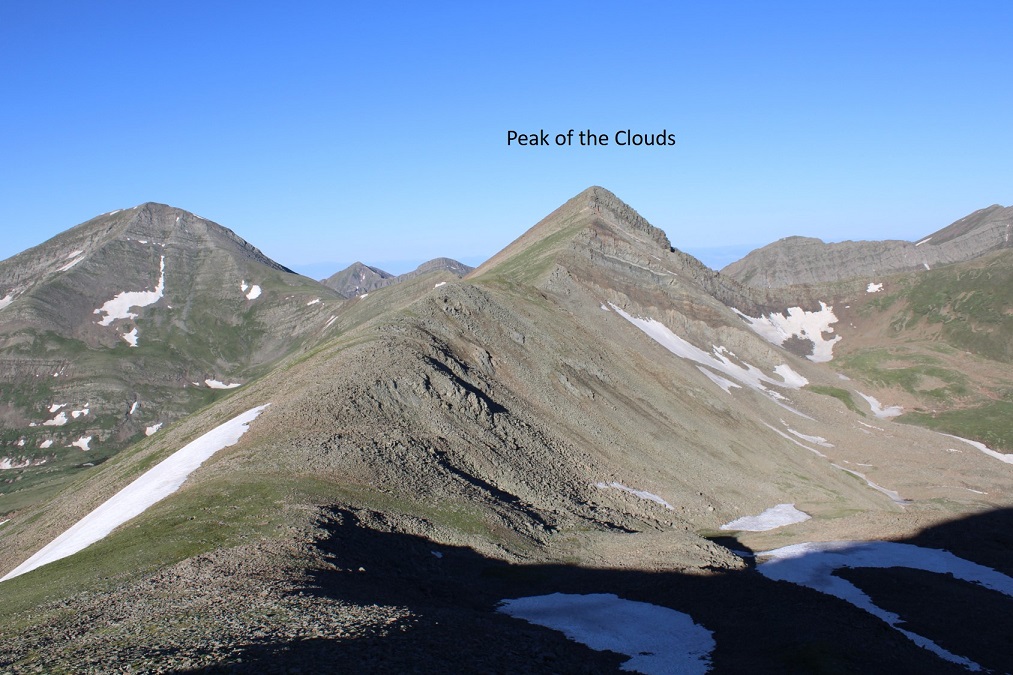
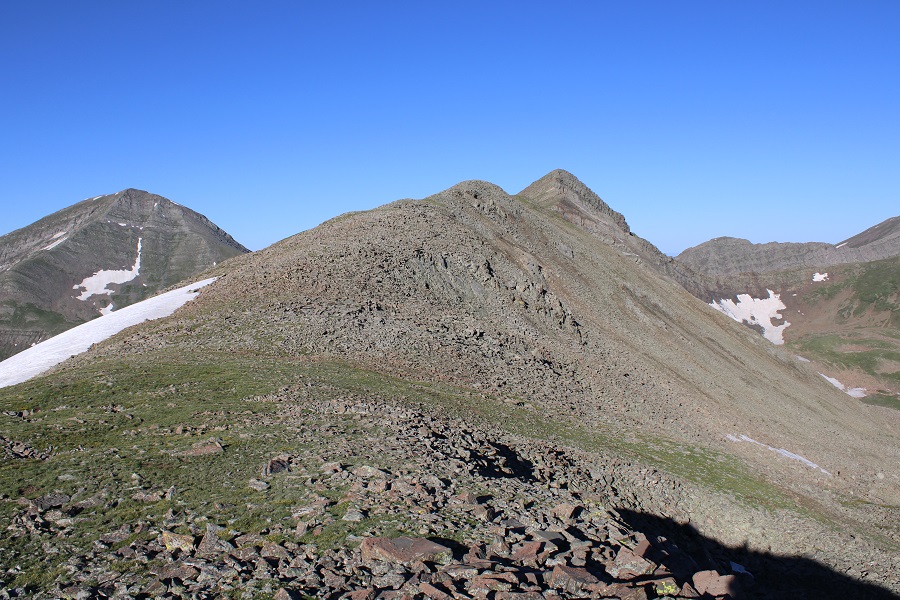
It was a simple, class 2 ridge hike to the summit of Peak of the Clouds

Here are some step-by-step pictures

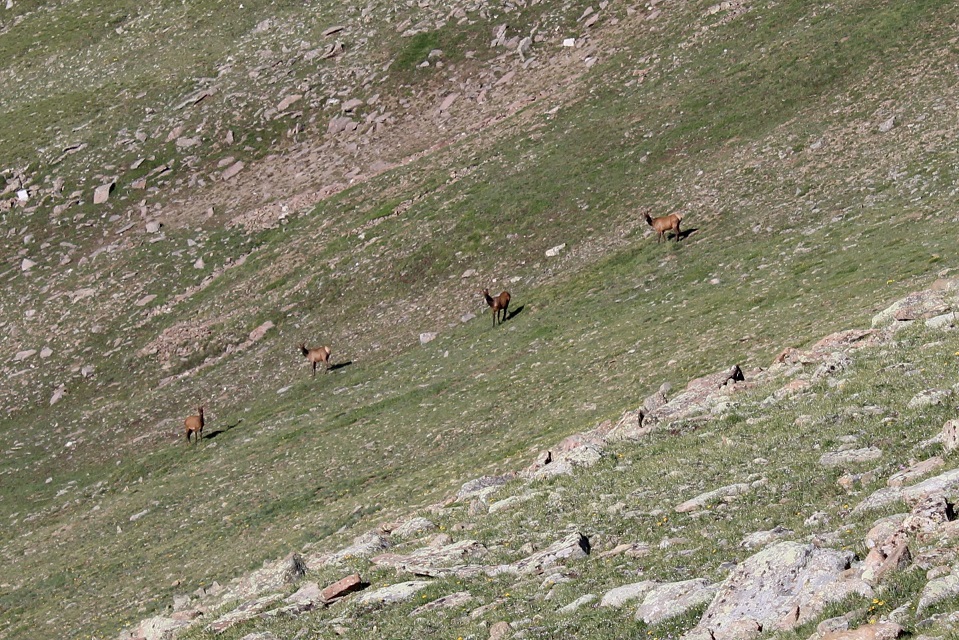
Here I saw some elk (they didn’t stay long)

Looking up at the ridge to Peak of the Clouds

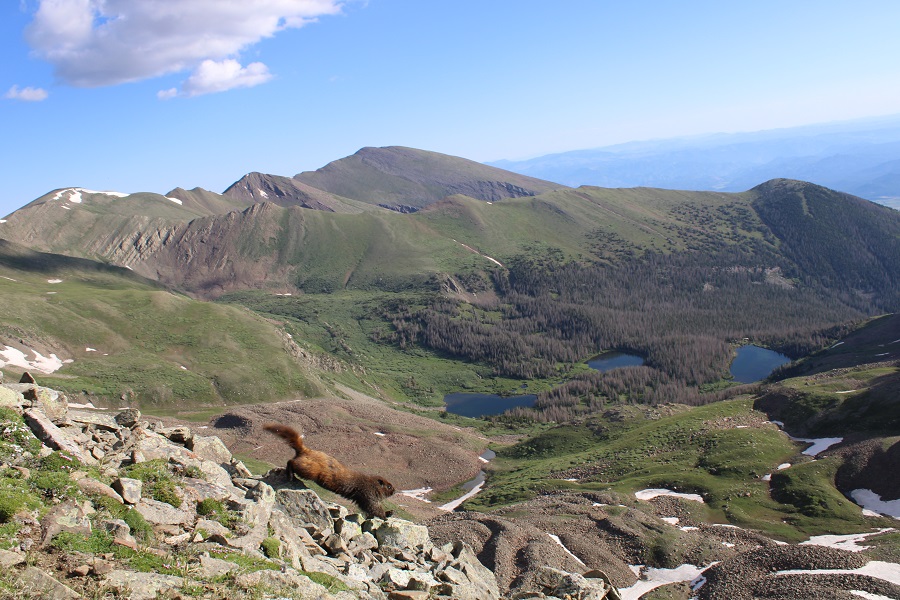
As I was hiking up, a marmot rushed down past me.  I wonder where he was going?

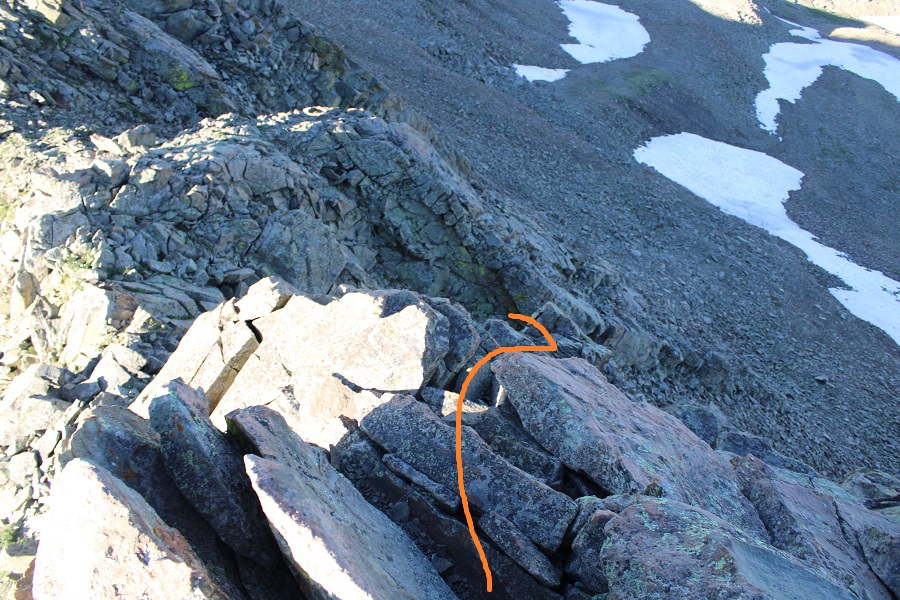
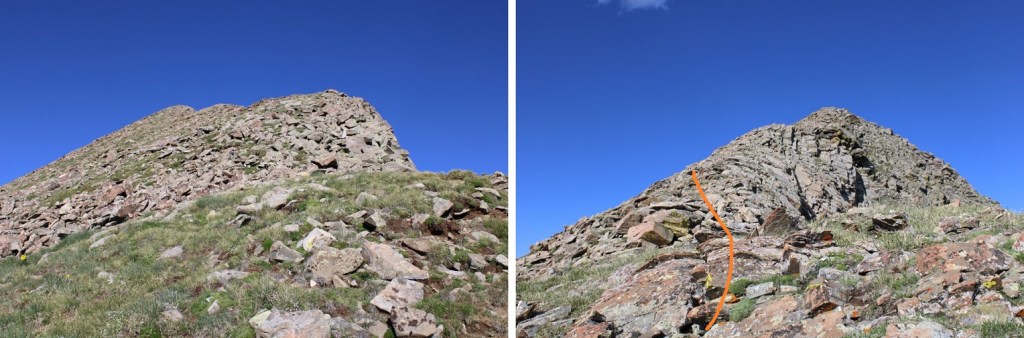
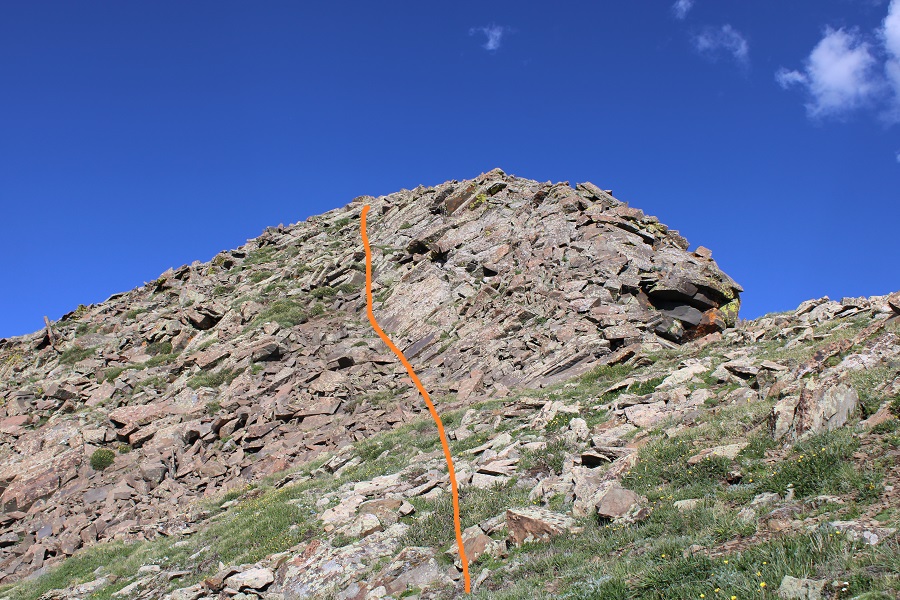
The last part of the ridge was rocky.  I stayed to the left.

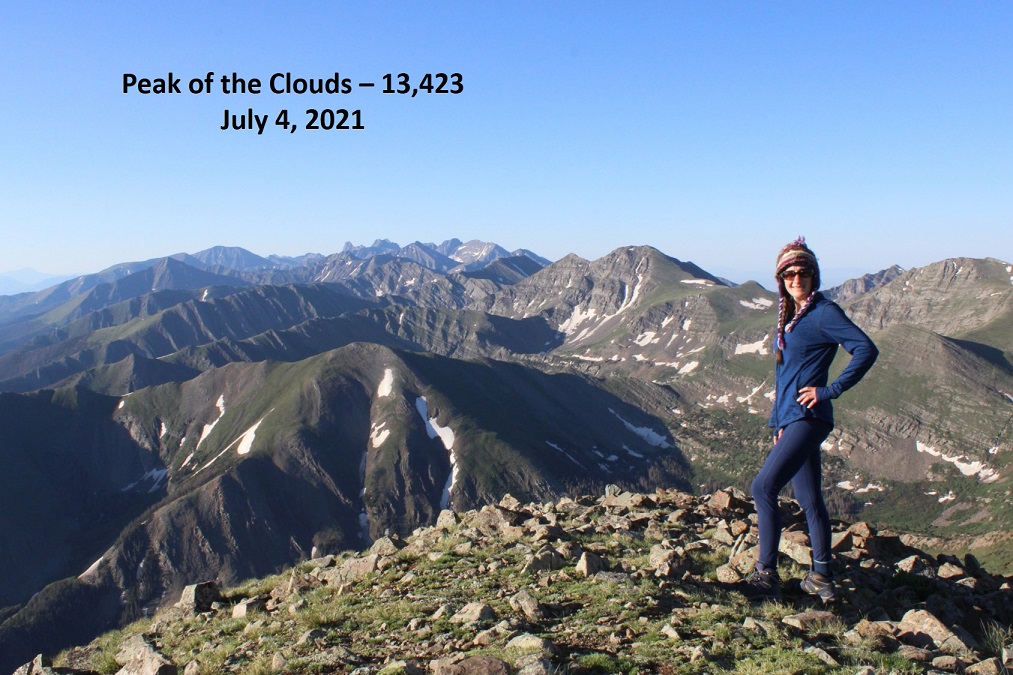
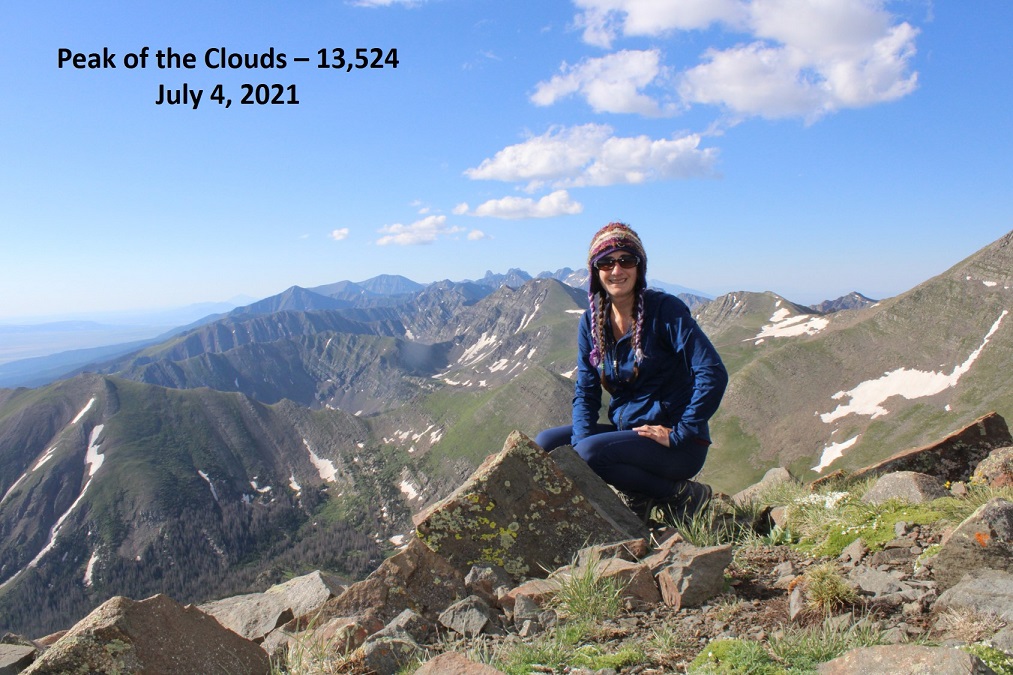
I summited Peak of the Cloud at 8:20am

Peak of the Clouds:

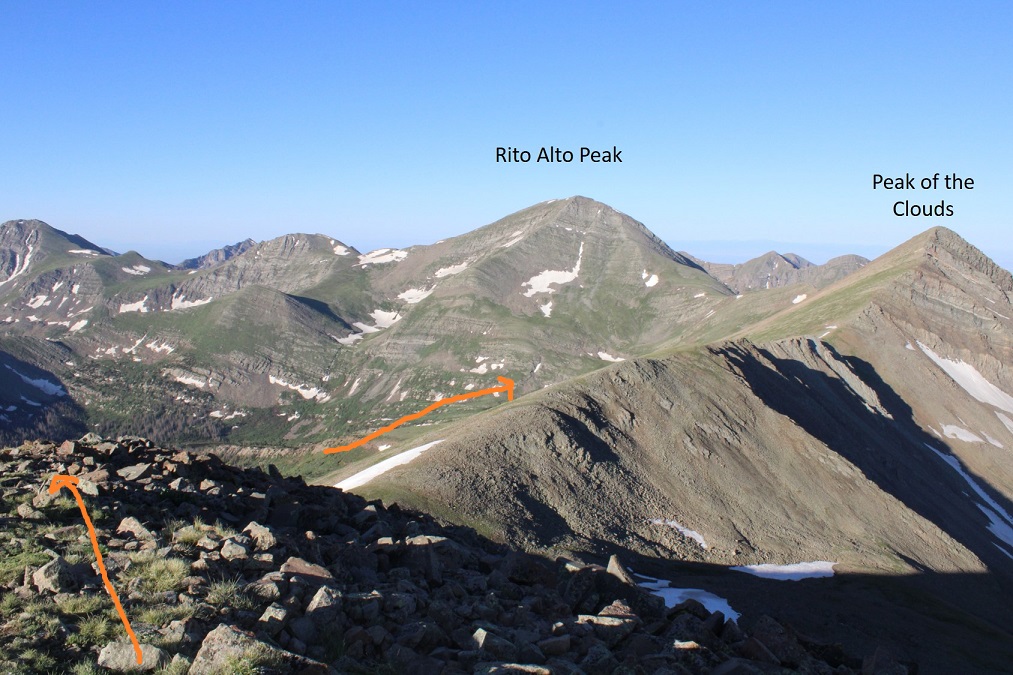
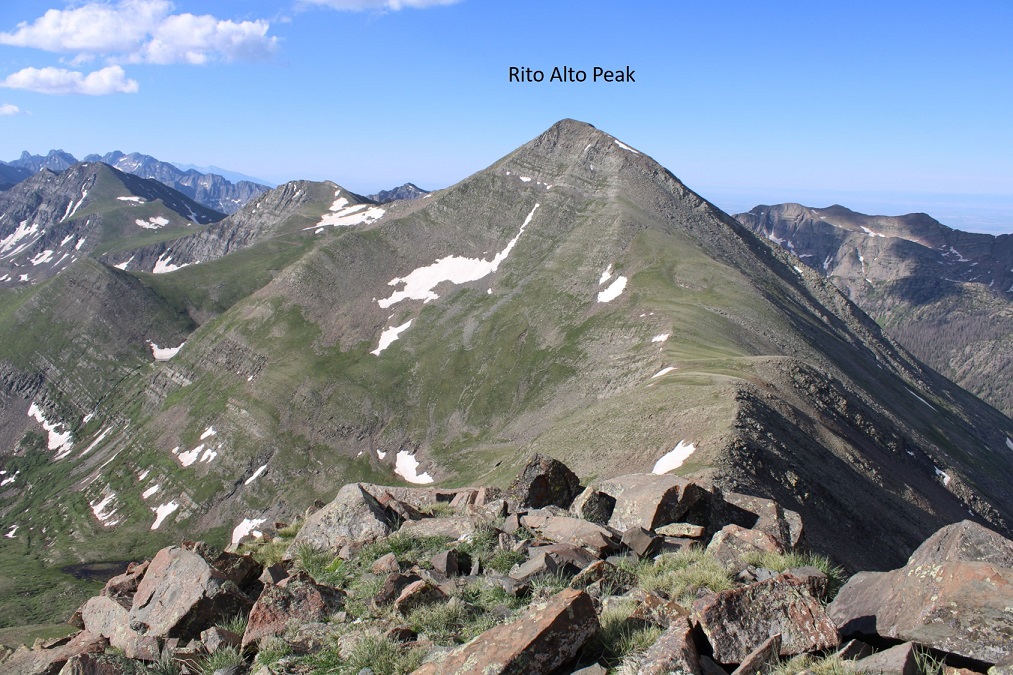
Here’s a look at the ridge to Rito Alto Peak (in case anyone is looking to do that one as well)

I sat for a minute and enjoyed my time on the summit.  It was a beautiful 4th of July in the Sangres!

I was making this an out and back trip today, so I turned and looked back at Spread Eagle Peak

Here are some step-by-step pictures back to the saddle

This is how I accessed the ridge

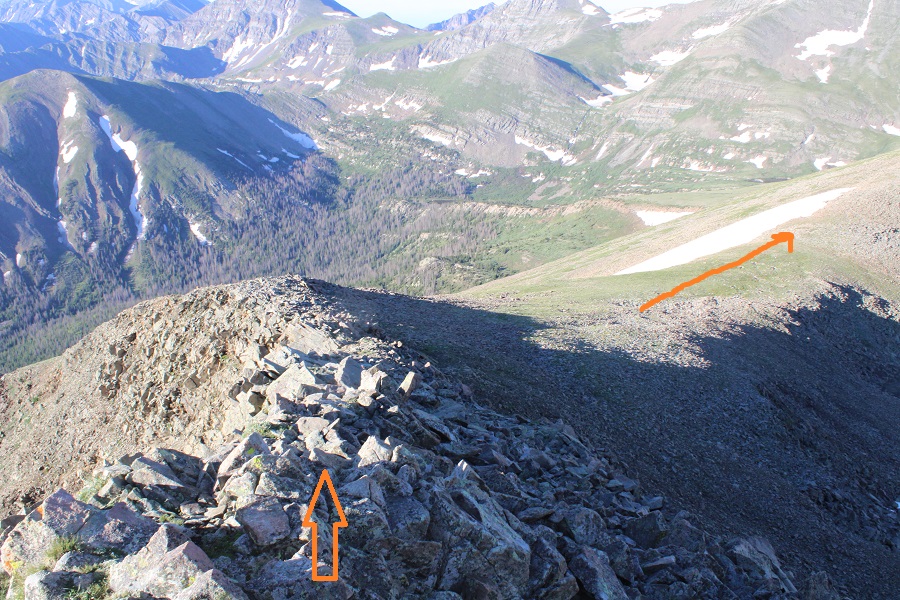
And then followed the ridge north

The short class 3 section was easier to upclimb than downclimb.

Then it was an easy ridge hike to the summit

I turned and headed east down the ridge, back to treeline.  I saw elk here as well.

Once near treeline I headed back toward Gibson Creek, but as I said before, I encountered a lot of willows and it was slow going.  I’d recommend following the ridge as it slopes up a bit and becomes treed, and then heading northeast.

Yes, there’s bushwhacking and route finding involved.

I made it back to the creek, and followed the trail back as it curved northeast towards the trailhead

I crossed Gibson Creek one last time, and was back on the well-marked trail.

I made it back to my truck at 11:45am, making this an 11.05 mile hike with 5461’ of elevation gain in 8 hours.  Now, time to drive home, wake up my daughters, and grill some steak!